window.__IS_SSR__=true
window.__INITIAL_STATE__={
"attachmentsReducer": {
"audio_0": {
"type": "attachments",
"id": "audio_0",
"imgSizes": {
"kqedFullSize": {
"file": "https://ww2.kqed.org/news/wp-content/themes/KQED-unified/img/audio_bgs/background0.jpg"
}
}
},
"audio_1": {
"type": "attachments",
"id": "audio_1",
"imgSizes": {
"kqedFullSize": {
"file": "https://ww2.kqed.org/news/wp-content/themes/KQED-unified/img/audio_bgs/background1.jpg"
}
}
},
"audio_2": {
"type": "attachments",
"id": "audio_2",
"imgSizes": {
"kqedFullSize": {
"file": "https://ww2.kqed.org/news/wp-content/themes/KQED-unified/img/audio_bgs/background2.jpg"
}
}
},
"audio_3": {
"type": "attachments",
"id": "audio_3",
"imgSizes": {
"kqedFullSize": {
"file": "https://ww2.kqed.org/news/wp-content/themes/KQED-unified/img/audio_bgs/background3.jpg"
}
}
},
"audio_4": {
"type": "attachments",
"id": "audio_4",
"imgSizes": {
"kqedFullSize": {
"file": "https://ww2.kqed.org/news/wp-content/themes/KQED-unified/img/audio_bgs/background4.jpg"
}
}
},
"placeholder": {
"type": "attachments",
"id": "placeholder",
"imgSizes": {
"thumbnail": {
"file": "https://cdn.kqed.org/wp-content/uploads/2024/12/KQED-Default-Image-816638274-2000x1333-1-160x107.jpg",
"width": 160,
"height": 107,
"mimeType": "image/jpeg"
},
"medium": {
"file": "https://cdn.kqed.org/wp-content/uploads/2024/12/KQED-Default-Image-816638274-2000x1333-1-800x533.jpg",
"width": 800,
"height": 533,
"mimeType": "image/jpeg"
},
"medium_large": {
"file": "https://cdn.kqed.org/wp-content/uploads/2024/12/KQED-Default-Image-816638274-2000x1333-1-768x512.jpg",
"width": 768,
"height": 512,
"mimeType": "image/jpeg"
},
"large": {
"file": "https://cdn.kqed.org/wp-content/uploads/2024/12/KQED-Default-Image-816638274-2000x1333-1-1020x680.jpg",
"width": 1020,
"height": 680,
"mimeType": "image/jpeg"
},
"1536x1536": {
"file": "https://cdn.kqed.org/wp-content/uploads/2024/12/KQED-Default-Image-816638274-2000x1333-1-1536x1024.jpg",
"width": 1536,
"height": 1024,
"mimeType": "image/jpeg"
},
"fd-lrg": {
"file": "https://cdn.kqed.org/wp-content/uploads/2024/12/KQED-Default-Image-816638274-2000x1333-1-1536x1024.jpg",
"width": 1536,
"height": 1024,
"mimeType": "image/jpeg"
},
"fd-med": {
"file": "https://cdn.kqed.org/wp-content/uploads/2024/12/KQED-Default-Image-816638274-2000x1333-1-1020x680.jpg",
"width": 1020,
"height": 680,
"mimeType": "image/jpeg"
},
"fd-sm": {
"file": "https://cdn.kqed.org/wp-content/uploads/2024/12/KQED-Default-Image-816638274-2000x1333-1-800x533.jpg",
"width": 800,
"height": 533,
"mimeType": "image/jpeg"
},
"post-thumbnail": {
"file": "https://cdn.kqed.org/wp-content/uploads/2024/12/KQED-Default-Image-816638274-2000x1333-1-672x372.jpg",
"width": 672,
"height": 372,
"mimeType": "image/jpeg"
},
"twentyfourteen-full-width": {
"file": "https://cdn.kqed.org/wp-content/uploads/2024/12/KQED-Default-Image-816638274-2000x1333-1-1038x576.jpg",
"width": 1038,
"height": 576,
"mimeType": "image/jpeg"
},
"xxsmall": {
"file": "https://cdn.kqed.org/wp-content/uploads/2024/12/KQED-Default-Image-816638274-2000x1333-1-160x107.jpg",
"width": 160,
"height": 107,
"mimeType": "image/jpeg"
},
"xsmall": {
"file": "https://cdn.kqed.org/wp-content/uploads/2024/12/KQED-Default-Image-816638274-2000x1333-1-672x372.jpg",
"width": 672,
"height": 372,
"mimeType": "image/jpeg"
},
"small": {
"file": "https://cdn.kqed.org/wp-content/uploads/2024/12/KQED-Default-Image-816638274-2000x1333-1-672x372.jpg",
"width": 672,
"height": 372,
"mimeType": "image/jpeg"
},
"xlarge": {
"file": "https://cdn.kqed.org/wp-content/uploads/2024/12/KQED-Default-Image-816638274-2000x1333-1-1020x680.jpg",
"width": 1020,
"height": 680,
"mimeType": "image/jpeg"
},
"full-width": {
"file": "https://cdn.kqed.org/wp-content/uploads/2024/12/KQED-Default-Image-816638274-2000x1333-1-1920x1280.jpg",
"width": 1920,
"height": 1280,
"mimeType": "image/jpeg"
},
"guest-author-32": {
"file": "https://cdn.kqed.org/wp-content/uploads/2025/01/KQED-Default-Image-816638274-1333x1333-1-160x160.jpg",
"width": 32,
"height": 32,
"mimeType": "image/jpeg"
},
"guest-author-50": {
"file": "https://cdn.kqed.org/wp-content/uploads/2025/01/KQED-Default-Image-816638274-1333x1333-1-160x160.jpg",
"width": 50,
"height": 50,
"mimeType": "image/jpeg"
},
"guest-author-64": {
"file": "https://cdn.kqed.org/wp-content/uploads/2025/01/KQED-Default-Image-816638274-1333x1333-1-160x160.jpg",
"width": 64,
"height": 64,
"mimeType": "image/jpeg"
},
"guest-author-96": {
"file": "https://cdn.kqed.org/wp-content/uploads/2025/01/KQED-Default-Image-816638274-1333x1333-1-160x160.jpg",
"width": 96,
"height": 96,
"mimeType": "image/jpeg"
},
"guest-author-128": {
"file": "https://cdn.kqed.org/wp-content/uploads/2025/01/KQED-Default-Image-816638274-1333x1333-1-160x160.jpg",
"width": 128,
"height": 128,
"mimeType": "image/jpeg"
},
"detail": {
"file": "https://cdn.kqed.org/wp-content/uploads/2025/01/KQED-Default-Image-816638274-1333x1333-1-160x160.jpg",
"width": 160,
"height": 160,
"mimeType": "image/jpeg"
},
"kqedFullSize": {
"file": "https://cdn.kqed.org/wp-content/uploads/2024/12/KQED-Default-Image-816638274-2000x1333-1.jpg",
"width": 2000,
"height": 1333
}
}
},
"science_1918027": {
"type": "attachments",
"id": "science_1918027",
"meta": {
"index": "attachments_1716263798",
"site": "science",
"id": "1918027",
"found": true
},
"parent": 1918025,
"imgSizes": {
"small": {
"file": "https://ww2.kqed.org/app/uploads/sites/35/2017/11/nsf_bldg_h2_wide-4552489090954d074159152de7089e3b0c2629e9-520x292.jpg",
"width": 520,
"mimeType": "image/jpeg",
"height": 292
},
"twentyfourteen-full-width": {
"file": "https://ww2.kqed.org/app/uploads/sites/35/2017/11/nsf_bldg_h2_wide-4552489090954d074159152de7089e3b0c2629e9-1038x576.jpg",
"width": 1038,
"mimeType": "image/jpeg",
"height": 576
},
"thumbnail": {
"file": "https://ww2.kqed.org/app/uploads/sites/35/2017/11/nsf_bldg_h2_wide-4552489090954d074159152de7089e3b0c2629e9-160x90.jpg",
"width": 160,
"mimeType": "image/jpeg",
"height": 90
},
"fd-sm": {
"file": "https://ww2.kqed.org/app/uploads/sites/35/2017/11/nsf_bldg_h2_wide-4552489090954d074159152de7089e3b0c2629e9-960x540.jpg",
"width": 960,
"mimeType": "image/jpeg",
"height": 540
},
"post-thumbnail": {
"file": "https://ww2.kqed.org/app/uploads/sites/35/2017/11/nsf_bldg_h2_wide-4552489090954d074159152de7089e3b0c2629e9-672x372.jpg",
"width": 672,
"mimeType": "image/jpeg",
"height": 372
},
"xsmall": {
"file": "https://ww2.kqed.org/app/uploads/sites/35/2017/11/nsf_bldg_h2_wide-4552489090954d074159152de7089e3b0c2629e9-375x211.jpg",
"width": 375,
"mimeType": "image/jpeg",
"height": 211
},
"kqedFullSize": {
"file": "https://ww2.kqed.org/app/uploads/sites/35/2017/11/nsf_bldg_h2_wide-4552489090954d074159152de7089e3b0c2629e9.jpg",
"width": 2969,
"height": 1670
},
"large": {
"file": "https://ww2.kqed.org/app/uploads/sites/35/2017/11/nsf_bldg_h2_wide-4552489090954d074159152de7089e3b0c2629e9-1020x574.jpg",
"width": 1020,
"mimeType": "image/jpeg",
"height": 574
},
"xlarge": {
"file": "https://ww2.kqed.org/app/uploads/sites/35/2017/11/nsf_bldg_h2_wide-4552489090954d074159152de7089e3b0c2629e9-1180x664.jpg",
"width": 1180,
"mimeType": "image/jpeg",
"height": 664
},
"guest-author-50": {
"file": "https://ww2.kqed.org/app/uploads/sites/35/2017/11/nsf_bldg_h2_wide-4552489090954d074159152de7089e3b0c2629e9-50x50.jpg",
"width": 50,
"mimeType": "image/jpeg",
"height": 50
},
"guest-author-96": {
"file": "https://ww2.kqed.org/app/uploads/sites/35/2017/11/nsf_bldg_h2_wide-4552489090954d074159152de7089e3b0c2629e9-96x96.jpg",
"width": 96,
"mimeType": "image/jpeg",
"height": 96
},
"medium": {
"file": "https://ww2.kqed.org/app/uploads/sites/35/2017/11/nsf_bldg_h2_wide-4552489090954d074159152de7089e3b0c2629e9-800x450.jpg",
"width": 800,
"mimeType": "image/jpeg",
"height": 450
},
"guest-author-64": {
"file": "https://ww2.kqed.org/app/uploads/sites/35/2017/11/nsf_bldg_h2_wide-4552489090954d074159152de7089e3b0c2629e9-64x64.jpg",
"width": 64,
"mimeType": "image/jpeg",
"height": 64
},
"guest-author-32": {
"file": "https://ww2.kqed.org/app/uploads/sites/35/2017/11/nsf_bldg_h2_wide-4552489090954d074159152de7089e3b0c2629e9-32x32.jpg",
"width": 32,
"mimeType": "image/jpeg",
"height": 32
},
"fd-lrg": {
"file": "https://ww2.kqed.org/app/uploads/sites/35/2017/11/nsf_bldg_h2_wide-4552489090954d074159152de7089e3b0c2629e9-1920x1080.jpg",
"width": 1920,
"mimeType": "image/jpeg",
"height": 1080
},
"fd-med": {
"file": "https://ww2.kqed.org/app/uploads/sites/35/2017/11/nsf_bldg_h2_wide-4552489090954d074159152de7089e3b0c2629e9-1180x664.jpg",
"width": 1180,
"mimeType": "image/jpeg",
"height": 664
},
"full-width": {
"file": "https://ww2.kqed.org/app/uploads/sites/35/2017/11/nsf_bldg_h2_wide-4552489090954d074159152de7089e3b0c2629e9-1920x1080.jpg",
"width": 1920,
"mimeType": "image/jpeg",
"height": 1080
},
"detail": {
"file": "https://ww2.kqed.org/app/uploads/sites/35/2017/11/nsf_bldg_h2_wide-4552489090954d074159152de7089e3b0c2629e9-150x150.jpg",
"width": 150,
"mimeType": "image/jpeg",
"height": 150
},
"medium_large": {
"file": "https://ww2.kqed.org/app/uploads/sites/35/2017/11/nsf_bldg_h2_wide-4552489090954d074159152de7089e3b0c2629e9-768x432.jpg",
"width": 768,
"mimeType": "image/jpeg",
"height": 432
},
"guest-author-128": {
"file": "https://ww2.kqed.org/app/uploads/sites/35/2017/11/nsf_bldg_h2_wide-4552489090954d074159152de7089e3b0c2629e9-128x128.jpg",
"width": 128,
"mimeType": "image/jpeg",
"height": 128
},
"xxsmall": {
"file": "https://ww2.kqed.org/app/uploads/sites/35/2017/11/nsf_bldg_h2_wide-4552489090954d074159152de7089e3b0c2629e9-240x135.jpg",
"width": 240,
"mimeType": "image/jpeg",
"height": 135
}
},
"publishDate": 1511979041,
"modified": 1511980793,
"caption": "National Science Foundation grants with the term \"climate change\" in the public summary are down 40 percent this year. Some scientists say they are avoiding the term, hoping to protect funding for their climate change research.",
"description": "National Science Foundation grants with the term \"climate change\" in the public summary are down 40 percent this year. Some scientists say they are avoiding the term, hoping to protect funding for their climate change research.",
"title": "National Science Foundation grants with the term \"climate change\" in the public summary are down 40 percent this year. Some scientists say they are avoiding the term, hoping to protect funding for their climate change research.",
"credit": "National Science Foundation",
"status": "inherit",
"isLoading": false,
"fetchFailed": false
},
"science_1917532": {
"type": "attachments",
"id": "science_1917532",
"meta": {
"index": "attachments_1716263798",
"site": "science",
"id": "1917532",
"found": true
},
"parent": 1917527,
"imgSizes": {
"small": {
"file": "https://ww2.kqed.org/app/uploads/sites/35/2017/11/air-pollution-13_Ed-Corn.Heidi-de-Marco-KHN-e1510093015788-520x347.jpg",
"width": 520,
"mimeType": "image/jpeg",
"height": 347
},
"twentyfourteen-full-width": {
"file": "https://ww2.kqed.org/app/uploads/sites/35/2017/11/air-pollution-13_Ed-Corn.Heidi-de-Marco-KHN-e1510093015788-1038x576.jpg",
"width": 1038,
"mimeType": "image/jpeg",
"height": 576
},
"thumbnail": {
"file": "https://ww2.kqed.org/app/uploads/sites/35/2017/11/air-pollution-13_Ed-Corn.Heidi-de-Marco-KHN-e1510093015788-160x107.jpg",
"width": 160,
"mimeType": "image/jpeg",
"height": 107
},
"fd-sm": {
"file": "https://ww2.kqed.org/app/uploads/sites/35/2017/11/air-pollution-13_Ed-Corn.Heidi-de-Marco-KHN-e1510093015788-960x641.jpg",
"width": 960,
"mimeType": "image/jpeg",
"height": 641
},
"post-thumbnail": {
"file": "https://ww2.kqed.org/app/uploads/sites/35/2017/11/air-pollution-13_Ed-Corn.Heidi-de-Marco-KHN-e1510093015788-672x372.jpg",
"width": 672,
"mimeType": "image/jpeg",
"height": 372
},
"xsmall": {
"file": "https://ww2.kqed.org/app/uploads/sites/35/2017/11/air-pollution-13_Ed-Corn.Heidi-de-Marco-KHN-e1510093015788-375x250.jpg",
"width": 375,
"mimeType": "image/jpeg",
"height": 250
},
"kqedFullSize": {
"file": "https://ww2.kqed.org/app/uploads/sites/35/2017/11/air-pollution-13_Ed-Corn.Heidi-de-Marco-KHN-e1510093015788.jpg",
"width": 1920,
"height": 1281
},
"large": {
"file": "https://ww2.kqed.org/app/uploads/sites/35/2017/11/air-pollution-13_Ed-Corn.Heidi-de-Marco-KHN-e1510093015788-1020x681.jpg",
"width": 1020,
"mimeType": "image/jpeg",
"height": 681
},
"xlarge": {
"file": "https://ww2.kqed.org/app/uploads/sites/35/2017/11/air-pollution-13_Ed-Corn.Heidi-de-Marco-KHN-e1510093015788-1180x787.jpg",
"width": 1180,
"mimeType": "image/jpeg",
"height": 787
},
"guest-author-50": {
"file": "https://ww2.kqed.org/app/uploads/sites/35/2017/11/air-pollution-13_Ed-Corn.Heidi-de-Marco-KHN-e1510093015788-50x50.jpg",
"width": 50,
"mimeType": "image/jpeg",
"height": 50
},
"guest-author-96": {
"file": "https://ww2.kqed.org/app/uploads/sites/35/2017/11/air-pollution-13_Ed-Corn.Heidi-de-Marco-KHN-e1510093015788-96x96.jpg",
"width": 96,
"mimeType": "image/jpeg",
"height": 96
},
"medium": {
"file": "https://ww2.kqed.org/app/uploads/sites/35/2017/11/air-pollution-13_Ed-Corn.Heidi-de-Marco-KHN-e1510093015788-800x534.jpg",
"width": 800,
"mimeType": "image/jpeg",
"height": 534
},
"guest-author-64": {
"file": "https://ww2.kqed.org/app/uploads/sites/35/2017/11/air-pollution-13_Ed-Corn.Heidi-de-Marco-KHN-e1510093015788-64x64.jpg",
"width": 64,
"mimeType": "image/jpeg",
"height": 64
},
"guest-author-32": {
"file": "https://ww2.kqed.org/app/uploads/sites/35/2017/11/air-pollution-13_Ed-Corn.Heidi-de-Marco-KHN-e1510093015788-32x32.jpg",
"width": 32,
"mimeType": "image/jpeg",
"height": 32
},
"fd-lrg": {
"file": "https://ww2.kqed.org/app/uploads/sites/35/2017/11/air-pollution-13_Ed-Corn.Heidi-de-Marco-KHN-e1510093015788-1920x1281.jpg",
"width": 1920,
"mimeType": "image/jpeg",
"height": 1281
},
"fd-med": {
"file": "https://ww2.kqed.org/app/uploads/sites/35/2017/11/air-pollution-13_Ed-Corn.Heidi-de-Marco-KHN-e1510093015788-1180x787.jpg",
"width": 1180,
"mimeType": "image/jpeg",
"height": 787
},
"full-width": {
"file": "https://ww2.kqed.org/app/uploads/sites/35/2017/11/air-pollution-13_Ed-Corn.Heidi-de-Marco-KHN-e1510093015788-1920x1281.jpg",
"width": 1920,
"mimeType": "image/jpeg",
"height": 1281
},
"detail": {
"file": "https://ww2.kqed.org/app/uploads/sites/35/2017/11/air-pollution-13_Ed-Corn.Heidi-de-Marco-KHN-e1510093015788-150x150.jpg",
"width": 150,
"mimeType": "image/jpeg",
"height": 150
},
"medium_large": {
"file": "https://ww2.kqed.org/app/uploads/sites/35/2017/11/air-pollution-13_Ed-Corn.Heidi-de-Marco-KHN-e1510093015788-768x512.jpg",
"width": 768,
"mimeType": "image/jpeg",
"height": 512
},
"guest-author-128": {
"file": "https://ww2.kqed.org/app/uploads/sites/35/2017/11/air-pollution-13_Ed-Corn.Heidi-de-Marco-KHN-e1510093015788-128x128.jpg",
"width": 128,
"mimeType": "image/jpeg",
"height": 128
},
"xxsmall": {
"file": "https://ww2.kqed.org/app/uploads/sites/35/2017/11/air-pollution-13_Ed-Corn.Heidi-de-Marco-KHN-e1510093015788-240x160.jpg",
"width": 240,
"mimeType": "image/jpeg",
"height": 160
}
},
"publishDate": 1510001489,
"modified": 1510001550,
"caption": "Ed Corn wears a mask as he sifts through the ashes of the home he shared with his paraplegic roommate in Santa Rosa’s Coffey Park neighborhood. “I can definitely taste the toxins in my throat and the back of my tongue,” he said.\n\n",
"description": null,
"title": "air-pollution-13_Ed- -Corn.Heidi- -de- -Marco KHN",
"credit": "Heidi de Marco/KHN",
"status": "inherit",
"isLoading": false,
"fetchFailed": false
},
"science_1915968": {
"type": "attachments",
"id": "science_1915968",
"meta": {
"index": "attachments_1716263798",
"site": "science",
"id": "1915968",
"found": true
},
"parent": 1915960,
"imgSizes": {
"small": {
"file": "https://ww2.kqed.org/app/uploads/sites/35/2017/09/crane-flat-flowers-bwhitehead-520x313.jpg",
"width": 520,
"mimeType": "image/jpeg",
"height": 313
},
"twentyfourteen-full-width": {
"file": "https://ww2.kqed.org/app/uploads/sites/35/2017/09/crane-flat-flowers-bwhitehead-1038x576.jpg",
"width": 1038,
"mimeType": "image/jpeg",
"height": 576
},
"thumbnail": {
"file": "https://ww2.kqed.org/app/uploads/sites/35/2017/09/crane-flat-flowers-bwhitehead-160x96.jpg",
"width": 160,
"mimeType": "image/jpeg",
"height": 96
},
"fd-sm": {
"file": "https://ww2.kqed.org/app/uploads/sites/35/2017/09/crane-flat-flowers-bwhitehead-960x578.jpg",
"width": 960,
"mimeType": "image/jpeg",
"height": 578
},
"post-thumbnail": {
"file": "https://ww2.kqed.org/app/uploads/sites/35/2017/09/crane-flat-flowers-bwhitehead-672x372.jpg",
"width": 672,
"mimeType": "image/jpeg",
"height": 372
},
"xsmall": {
"file": "https://ww2.kqed.org/app/uploads/sites/35/2017/09/crane-flat-flowers-bwhitehead-375x226.jpg",
"width": 375,
"mimeType": "image/jpeg",
"height": 226
},
"kqedFullSize": {
"file": "https://ww2.kqed.org/app/uploads/sites/35/2017/09/crane-flat-flowers-bwhitehead.jpg",
"width": 1912,
"height": 1152
},
"large": {
"file": "https://ww2.kqed.org/app/uploads/sites/35/2017/09/crane-flat-flowers-bwhitehead-1020x615.jpg",
"width": 1020,
"mimeType": "image/jpeg",
"height": 615
},
"xlarge": {
"file": "https://ww2.kqed.org/app/uploads/sites/35/2017/09/crane-flat-flowers-bwhitehead-1180x711.jpg",
"width": 1180,
"mimeType": "image/jpeg",
"height": 711
},
"guest-author-50": {
"file": "https://ww2.kqed.org/app/uploads/sites/35/2017/09/crane-flat-flowers-bwhitehead-50x50.jpg",
"width": 50,
"mimeType": "image/jpeg",
"height": 50
},
"guest-author-96": {
"file": "https://ww2.kqed.org/app/uploads/sites/35/2017/09/crane-flat-flowers-bwhitehead-96x96.jpg",
"width": 96,
"mimeType": "image/jpeg",
"height": 96
},
"medium": {
"file": "https://ww2.kqed.org/app/uploads/sites/35/2017/09/crane-flat-flowers-bwhitehead-800x482.jpg",
"width": 800,
"mimeType": "image/jpeg",
"height": 482
},
"guest-author-64": {
"file": "https://ww2.kqed.org/app/uploads/sites/35/2017/09/crane-flat-flowers-bwhitehead-64x64.jpg",
"width": 64,
"mimeType": "image/jpeg",
"height": 64
},
"guest-author-32": {
"file": "https://ww2.kqed.org/app/uploads/sites/35/2017/09/crane-flat-flowers-bwhitehead-32x32.jpg",
"width": 32,
"mimeType": "image/jpeg",
"height": 32
},
"fd-med": {
"file": "https://ww2.kqed.org/app/uploads/sites/35/2017/09/crane-flat-flowers-bwhitehead-1180x711.jpg",
"width": 1180,
"mimeType": "image/jpeg",
"height": 711
},
"detail": {
"file": "https://ww2.kqed.org/app/uploads/sites/35/2017/09/crane-flat-flowers-bwhitehead-150x150.jpg",
"width": 150,
"mimeType": "image/jpeg",
"height": 150
},
"medium_large": {
"file": "https://ww2.kqed.org/app/uploads/sites/35/2017/09/crane-flat-flowers-bwhitehead-768x463.jpg",
"width": 768,
"mimeType": "image/jpeg",
"height": 463
},
"guest-author-128": {
"file": "https://ww2.kqed.org/app/uploads/sites/35/2017/09/crane-flat-flowers-bwhitehead-128x128.jpg",
"width": 128,
"mimeType": "image/jpeg",
"height": 128
},
"xxsmall": {
"file": "https://ww2.kqed.org/app/uploads/sites/35/2017/09/crane-flat-flowers-bwhitehead-240x145.jpg",
"width": 240,
"mimeType": "image/jpeg",
"height": 145
}
},
"publishDate": 1506344562,
"modified": 1506344692,
"caption": "Camas and western bistort bloom in Crane Flat, one of Yosemite National Park's 3,000 meadows.\n",
"description": null,
"title": "crane-flat-flowers-bwhitehead",
"credit": "Brian Whitehead/NPS",
"status": "inherit",
"isLoading": false,
"fetchFailed": false
},
"science_1915605": {
"type": "attachments",
"id": "science_1915605",
"meta": {
"index": "attachments_1716263798",
"site": "science",
"id": "1915605",
"found": true
},
"parent": 1915418,
"imgSizes": {
"small": {
"file": "https://ww2.kqed.org/app/uploads/sites/35/2017/09/blobid2_1505344307065-520x293.jpg",
"width": 520,
"mimeType": "image/jpeg",
"height": 293
},
"thumbnail": {
"file": "https://ww2.kqed.org/app/uploads/sites/35/2017/09/blobid2_1505344307065-160x90.jpg",
"width": 160,
"mimeType": "image/jpeg",
"height": 90
},
"fd-sm": {
"file": "https://ww2.kqed.org/app/uploads/sites/35/2017/09/blobid2_1505344307065-960x540.jpg",
"width": 960,
"mimeType": "image/jpeg",
"height": 540
},
"post-thumbnail": {
"file": "https://ww2.kqed.org/app/uploads/sites/35/2017/09/blobid2_1505344307065-672x372.jpg",
"width": 672,
"mimeType": "image/jpeg",
"height": 372
},
"xsmall": {
"file": "https://ww2.kqed.org/app/uploads/sites/35/2017/09/blobid2_1505344307065-375x211.jpg",
"width": 375,
"mimeType": "image/jpeg",
"height": 211
},
"kqedFullSize": {
"file": "https://ww2.kqed.org/app/uploads/sites/35/2017/09/blobid2_1505344307065.jpg",
"width": 1000,
"height": 563
},
"guest-author-50": {
"file": "https://ww2.kqed.org/app/uploads/sites/35/2017/09/blobid2_1505344307065-50x50.jpg",
"width": 50,
"mimeType": "image/jpeg",
"height": 50
},
"guest-author-96": {
"file": "https://ww2.kqed.org/app/uploads/sites/35/2017/09/blobid2_1505344307065-96x96.jpg",
"width": 96,
"mimeType": "image/jpeg",
"height": 96
},
"medium": {
"file": "https://ww2.kqed.org/app/uploads/sites/35/2017/09/blobid2_1505344307065-800x450.jpg",
"width": 800,
"mimeType": "image/jpeg",
"height": 450
},
"guest-author-64": {
"file": "https://ww2.kqed.org/app/uploads/sites/35/2017/09/blobid2_1505344307065-64x64.jpg",
"width": 64,
"mimeType": "image/jpeg",
"height": 64
},
"guest-author-32": {
"file": "https://ww2.kqed.org/app/uploads/sites/35/2017/09/blobid2_1505344307065-32x32.jpg",
"width": 32,
"mimeType": "image/jpeg",
"height": 32
},
"detail": {
"file": "https://ww2.kqed.org/app/uploads/sites/35/2017/09/blobid2_1505344307065-150x150.jpg",
"width": 150,
"mimeType": "image/jpeg",
"height": 150
},
"medium_large": {
"file": "https://ww2.kqed.org/app/uploads/sites/35/2017/09/blobid2_1505344307065-768x432.jpg",
"width": 768,
"mimeType": "image/jpeg",
"height": 432
},
"guest-author-128": {
"file": "https://ww2.kqed.org/app/uploads/sites/35/2017/09/blobid2_1505344307065-128x128.jpg",
"width": 128,
"mimeType": "image/jpeg",
"height": 128
},
"xxsmall": {
"file": "https://ww2.kqed.org/app/uploads/sites/35/2017/09/blobid2_1505344307065-240x135.jpg",
"width": 240,
"mimeType": "image/jpeg",
"height": 135
}
},
"publishDate": 1505421900,
"modified": 1526924202,
"caption": null,
"description": "A combination of rising seas, high tides and storm surges already make the Bay Area vulnerable to flooding.",
"title": "blobid2_1505344307065",
"credit": "U.C. Berkeley",
"status": "inherit",
"isLoading": false,
"fetchFailed": false
},
"science_1915118": {
"type": "attachments",
"id": "science_1915118",
"meta": {
"index": "attachments_1716263798",
"site": "science",
"id": "1915118",
"found": true
},
"parent": 1915117,
"imgSizes": {
"small": {
"file": "https://ww2.kqed.org/app/uploads/sites/35/2017/08/DSC_0762-520x347.jpeg",
"width": 520,
"mimeType": "image/jpeg",
"height": 347
},
"twentyfourteen-full-width": {
"file": "https://ww2.kqed.org/app/uploads/sites/35/2017/08/DSC_0762-1038x576.jpeg",
"width": 1038,
"mimeType": "image/jpeg",
"height": 576
},
"thumbnail": {
"file": "https://ww2.kqed.org/app/uploads/sites/35/2017/08/DSC_0762-160x107.jpeg",
"width": 160,
"mimeType": "image/jpeg",
"height": 107
},
"fd-sm": {
"file": "https://ww2.kqed.org/app/uploads/sites/35/2017/08/DSC_0762-960x641.jpeg",
"width": 960,
"mimeType": "image/jpeg",
"height": 641
},
"post-thumbnail": {
"file": "https://ww2.kqed.org/app/uploads/sites/35/2017/08/DSC_0762-672x372.jpeg",
"width": 672,
"mimeType": "image/jpeg",
"height": 372
},
"xsmall": {
"file": "https://ww2.kqed.org/app/uploads/sites/35/2017/08/DSC_0762-375x250.jpeg",
"width": 375,
"mimeType": "image/jpeg",
"height": 250
},
"kqedFullSize": {
"file": "https://ww2.kqed.org/app/uploads/sites/35/2017/08/DSC_0762.jpeg",
"width": 1106,
"height": 738
},
"large": {
"file": "https://ww2.kqed.org/app/uploads/sites/35/2017/08/DSC_0762-1020x681.jpeg",
"width": 1020,
"mimeType": "image/jpeg",
"height": 681
},
"guest-author-50": {
"file": "https://ww2.kqed.org/app/uploads/sites/35/2017/08/DSC_0762-50x50.jpeg",
"width": 50,
"mimeType": "image/jpeg",
"height": 50
},
"guest-author-96": {
"file": "https://ww2.kqed.org/app/uploads/sites/35/2017/08/DSC_0762-96x96.jpeg",
"width": 96,
"mimeType": "image/jpeg",
"height": 96
},
"medium": {
"file": "https://ww2.kqed.org/app/uploads/sites/35/2017/08/DSC_0762-800x534.jpeg",
"width": 800,
"mimeType": "image/jpeg",
"height": 534
},
"guest-author-64": {
"file": "https://ww2.kqed.org/app/uploads/sites/35/2017/08/DSC_0762-64x64.jpeg",
"width": 64,
"mimeType": "image/jpeg",
"height": 64
},
"guest-author-32": {
"file": "https://ww2.kqed.org/app/uploads/sites/35/2017/08/DSC_0762-32x32.jpeg",
"width": 32,
"mimeType": "image/jpeg",
"height": 32
},
"detail": {
"file": "https://ww2.kqed.org/app/uploads/sites/35/2017/08/DSC_0762-150x150.jpeg",
"width": 150,
"mimeType": "image/jpeg",
"height": 150
},
"medium_large": {
"file": "https://ww2.kqed.org/app/uploads/sites/35/2017/08/DSC_0762-768x512.jpeg",
"width": 768,
"mimeType": "image/jpeg",
"height": 512
},
"guest-author-128": {
"file": "https://ww2.kqed.org/app/uploads/sites/35/2017/08/DSC_0762-128x128.jpeg",
"width": 128,
"mimeType": "image/jpeg",
"height": 128
},
"xxsmall": {
"file": "https://ww2.kqed.org/app/uploads/sites/35/2017/08/DSC_0762-240x160.jpeg",
"width": 240,
"mimeType": "image/jpeg",
"height": 160
}
},
"publishDate": 1504131108,
"modified": 1504131734,
"caption": "An American pika hopping through rocks in summertime. ",
"description": null,
"title": "pika",
"credit": "Alison Henry",
"status": "inherit",
"isLoading": false,
"fetchFailed": false
},
"science_1892622": {
"type": "attachments",
"id": "science_1892622",
"meta": {
"index": "attachments_1716263798",
"site": "science",
"id": "1892622",
"found": true
},
"parent": 1892612,
"imgSizes": {
"small": {
"file": "https://ww2.kqed.org/app/uploads/sites/35/2017/07/IMG_1726-e1501190022498-520x337.jpg",
"width": 520,
"mimeType": "image/jpeg",
"height": 337
},
"twentyfourteen-full-width": {
"file": "https://ww2.kqed.org/app/uploads/sites/35/2017/07/IMG_1726-e1501190022498-1038x576.jpg",
"width": 1038,
"mimeType": "image/jpeg",
"height": 576
},
"thumbnail": {
"file": "https://ww2.kqed.org/app/uploads/sites/35/2017/07/IMG_1726-e1501190022498-160x104.jpg",
"width": 160,
"mimeType": "image/jpeg",
"height": 104
},
"fd-sm": {
"file": "https://ww2.kqed.org/app/uploads/sites/35/2017/07/IMG_1726-e1501190022498-960x621.jpg",
"width": 960,
"mimeType": "image/jpeg",
"height": 621
},
"post-thumbnail": {
"file": "https://ww2.kqed.org/app/uploads/sites/35/2017/07/IMG_1726-e1501190022498-672x372.jpg",
"width": 672,
"mimeType": "image/jpeg",
"height": 372
},
"xsmall": {
"file": "https://ww2.kqed.org/app/uploads/sites/35/2017/07/IMG_1726-e1501190022498-375x243.jpg",
"width": 375,
"mimeType": "image/jpeg",
"height": 243
},
"kqedFullSize": {
"file": "https://ww2.kqed.org/app/uploads/sites/35/2017/07/IMG_1726-e1501190022498.jpg",
"width": 3264,
"height": 2113
},
"large": {
"file": "https://ww2.kqed.org/app/uploads/sites/35/2017/07/IMG_1726-e1501190022498-1020x660.jpg",
"width": 1020,
"mimeType": "image/jpeg",
"height": 660
},
"xlarge": {
"file": "https://ww2.kqed.org/app/uploads/sites/35/2017/07/IMG_1726-e1501190022498-1180x764.jpg",
"width": 1180,
"mimeType": "image/jpeg",
"height": 764
},
"guest-author-50": {
"file": "https://ww2.kqed.org/app/uploads/sites/35/2017/07/IMG_1726-e1501190022498-50x50.jpg",
"width": 50,
"mimeType": "image/jpeg",
"height": 50
},
"guest-author-96": {
"file": "https://ww2.kqed.org/app/uploads/sites/35/2017/07/IMG_1726-e1501190022498-96x96.jpg",
"width": 96,
"mimeType": "image/jpeg",
"height": 96
},
"medium": {
"file": "https://ww2.kqed.org/app/uploads/sites/35/2017/07/IMG_1726-e1501190022498-800x518.jpg",
"width": 800,
"mimeType": "image/jpeg",
"height": 518
},
"guest-author-64": {
"file": "https://ww2.kqed.org/app/uploads/sites/35/2017/07/IMG_1726-e1501190022498-64x64.jpg",
"width": 64,
"mimeType": "image/jpeg",
"height": 64
},
"guest-author-32": {
"file": "https://ww2.kqed.org/app/uploads/sites/35/2017/07/IMG_1726-e1501190022498-32x32.jpg",
"width": 32,
"mimeType": "image/jpeg",
"height": 32
},
"fd-lrg": {
"file": "https://ww2.kqed.org/app/uploads/sites/35/2017/07/IMG_1726-e1501190022498-1920x1243.jpg",
"width": 1920,
"mimeType": "image/jpeg",
"height": 1243
},
"fd-med": {
"file": "https://ww2.kqed.org/app/uploads/sites/35/2017/07/IMG_1726-e1501190022498-1180x764.jpg",
"width": 1180,
"mimeType": "image/jpeg",
"height": 764
},
"full-width": {
"file": "https://ww2.kqed.org/app/uploads/sites/35/2017/07/IMG_1726-e1501190022498-1920x1243.jpg",
"width": 1920,
"mimeType": "image/jpeg",
"height": 1243
},
"detail": {
"file": "https://ww2.kqed.org/app/uploads/sites/35/2017/07/IMG_1726-e1501190022498-150x150.jpg",
"width": 150,
"mimeType": "image/jpeg",
"height": 150
},
"medium_large": {
"file": "https://ww2.kqed.org/app/uploads/sites/35/2017/07/IMG_1726-e1501190022498-768x497.jpg",
"width": 768,
"mimeType": "image/jpeg",
"height": 497
},
"guest-author-128": {
"file": "https://ww2.kqed.org/app/uploads/sites/35/2017/07/IMG_1726-e1501190022498-128x128.jpg",
"width": 128,
"mimeType": "image/jpeg",
"height": 128
},
"xxsmall": {
"file": "https://ww2.kqed.org/app/uploads/sites/35/2017/07/IMG_1726-e1501190022498-240x155.jpg",
"width": 240,
"mimeType": "image/jpeg",
"height": 155
}
},
"publishDate": 1501189981,
"modified": 1501190042,
"caption": "By late July 2017, the water temperature in Lake Tahoe had reached 68 degrees--5 degrees above average water temperature for this time of year.",
"description": null,
"title": "IMG_1726",
"credit": "Lindsey Hoshaw",
"status": "inherit",
"isLoading": false,
"fetchFailed": false
},
"science_1881437": {
"type": "attachments",
"id": "science_1881437",
"meta": {
"index": "attachments_1716263798",
"site": "science",
"id": "1881437",
"found": true
},
"parent": 0,
"imgSizes": {
"small": {
"file": "https://ww2.kqed.org/app/uploads/sites/35/2017/07/Al_Gore-e1500935517339-520x382.jpg",
"width": 520,
"mimeType": "image/jpeg",
"height": 382
},
"twentyfourteen-full-width": {
"file": "https://ww2.kqed.org/app/uploads/sites/35/2017/07/Al_Gore-e1500935517339-1038x576.jpg",
"width": 1038,
"mimeType": "image/jpeg",
"height": 576
},
"thumbnail": {
"file": "https://ww2.kqed.org/app/uploads/sites/35/2017/07/Al_Gore-e1500935517339-160x117.jpg",
"width": 160,
"mimeType": "image/jpeg",
"height": 117
},
"fd-sm": {
"file": "https://ww2.kqed.org/app/uploads/sites/35/2017/07/Al_Gore-e1500935517339-960x704.jpg",
"width": 960,
"mimeType": "image/jpeg",
"height": 704
},
"post-thumbnail": {
"file": "https://ww2.kqed.org/app/uploads/sites/35/2017/07/Al_Gore-e1500935517339-672x372.jpg",
"width": 672,
"mimeType": "image/jpeg",
"height": 372
},
"xsmall": {
"file": "https://ww2.kqed.org/app/uploads/sites/35/2017/07/Al_Gore-e1500935517339-375x275.jpg",
"width": 375,
"mimeType": "image/jpeg",
"height": 275
},
"kqedFullSize": {
"file": "https://ww2.kqed.org/app/uploads/sites/35/2017/07/Al_Gore-e1500935517339.jpg",
"width": 3017,
"height": 2214
},
"large": {
"file": "https://ww2.kqed.org/app/uploads/sites/35/2017/07/Al_Gore-e1500935517339-1020x749.jpg",
"width": 1020,
"mimeType": "image/jpeg",
"height": 749
},
"xlarge": {
"file": "https://ww2.kqed.org/app/uploads/sites/35/2017/07/Al_Gore-e1500935517339-1180x866.jpg",
"width": 1180,
"mimeType": "image/jpeg",
"height": 866
},
"guest-author-50": {
"file": "https://ww2.kqed.org/app/uploads/sites/35/2017/07/Al_Gore-e1500935517339-50x50.jpg",
"width": 50,
"mimeType": "image/jpeg",
"height": 50
},
"guest-author-96": {
"file": "https://ww2.kqed.org/app/uploads/sites/35/2017/07/Al_Gore-e1500935517339-96x96.jpg",
"width": 96,
"mimeType": "image/jpeg",
"height": 96
},
"medium": {
"file": "https://ww2.kqed.org/app/uploads/sites/35/2017/07/Al_Gore-e1500935517339-800x587.jpg",
"width": 800,
"mimeType": "image/jpeg",
"height": 587
},
"guest-author-64": {
"file": "https://ww2.kqed.org/app/uploads/sites/35/2017/07/Al_Gore-e1500935517339-64x64.jpg",
"width": 64,
"mimeType": "image/jpeg",
"height": 64
},
"guest-author-32": {
"file": "https://ww2.kqed.org/app/uploads/sites/35/2017/07/Al_Gore-e1500935517339-32x32.jpg",
"width": 32,
"mimeType": "image/jpeg",
"height": 32
},
"fd-lrg": {
"file": "https://ww2.kqed.org/app/uploads/sites/35/2017/07/Al_Gore-e1500935517339-1920x1409.jpg",
"width": 1920,
"mimeType": "image/jpeg",
"height": 1409
},
"fd-med": {
"file": "https://ww2.kqed.org/app/uploads/sites/35/2017/07/Al_Gore-e1500935517339-1180x866.jpg",
"width": 1180,
"mimeType": "image/jpeg",
"height": 866
},
"full-width": {
"file": "https://ww2.kqed.org/app/uploads/sites/35/2017/07/Al_Gore-e1500935517339-1920x1409.jpg",
"width": 1920,
"mimeType": "image/jpeg",
"height": 1409
},
"detail": {
"file": "https://ww2.kqed.org/app/uploads/sites/35/2017/07/Al_Gore-e1500935517339-150x150.jpg",
"width": 150,
"mimeType": "image/jpeg",
"height": 150
},
"medium_large": {
"file": "https://ww2.kqed.org/app/uploads/sites/35/2017/07/Al_Gore-e1500935517339-768x564.jpg",
"width": 768,
"mimeType": "image/jpeg",
"height": 564
},
"guest-author-128": {
"file": "https://ww2.kqed.org/app/uploads/sites/35/2017/07/Al_Gore-e1500935517339-128x128.jpg",
"width": 128,
"mimeType": "image/jpeg",
"height": 128
},
"xxsmall": {
"file": "https://ww2.kqed.org/app/uploads/sites/35/2017/07/Al_Gore-e1500935517339-240x176.jpg",
"width": 240,
"mimeType": "image/jpeg",
"height": 176
}
},
"publishDate": 1500926291,
"modified": 1500926381,
"caption": "Al Gore promotes his new film 'An Inconvenient Sequel' during a sold out performance at San Francisco's Commonwealth Club.",
"description": null,
"title": "Al_Gore",
"credit": null,
"status": "inherit",
"isLoading": false,
"fetchFailed": false
},
"science_1865946": {
"type": "attachments",
"id": "science_1865946",
"meta": {
"index": "attachments_1716263798",
"site": "science",
"id": "1865946",
"found": true
},
"parent": 1865833,
"imgSizes": {
"small": {
"file": "https://ww2.kqed.org/app/uploads/sites/35/2017/07/iStock-636808240-520x347.jpg",
"width": 520,
"mimeType": "image/jpeg",
"height": 347
},
"twentyfourteen-full-width": {
"file": "https://ww2.kqed.org/app/uploads/sites/35/2017/07/iStock-636808240-1038x576.jpg",
"width": 1038,
"mimeType": "image/jpeg",
"height": 576
},
"thumbnail": {
"file": "https://ww2.kqed.org/app/uploads/sites/35/2017/07/iStock-636808240-160x107.jpg",
"width": 160,
"mimeType": "image/jpeg",
"height": 107
},
"fd-sm": {
"file": "https://ww2.kqed.org/app/uploads/sites/35/2017/07/iStock-636808240-960x640.jpg",
"width": 960,
"mimeType": "image/jpeg",
"height": 640
},
"post-thumbnail": {
"file": "https://ww2.kqed.org/app/uploads/sites/35/2017/07/iStock-636808240-672x372.jpg",
"width": 672,
"mimeType": "image/jpeg",
"height": 372
},
"xsmall": {
"file": "https://ww2.kqed.org/app/uploads/sites/35/2017/07/iStock-636808240-375x250.jpg",
"width": 375,
"mimeType": "image/jpeg",
"height": 250
},
"kqedFullSize": {
"file": "https://ww2.kqed.org/app/uploads/sites/35/2017/07/iStock-636808240.jpg",
"width": 2120,
"height": 1414
},
"large": {
"file": "https://ww2.kqed.org/app/uploads/sites/35/2017/07/iStock-636808240-1020x680.jpg",
"width": 1020,
"mimeType": "image/jpeg",
"height": 680
},
"xlarge": {
"file": "https://ww2.kqed.org/app/uploads/sites/35/2017/07/iStock-636808240-1180x787.jpg",
"width": 1180,
"mimeType": "image/jpeg",
"height": 787
},
"guest-author-50": {
"file": "https://ww2.kqed.org/app/uploads/sites/35/2017/07/iStock-636808240-50x50.jpg",
"width": 50,
"mimeType": "image/jpeg",
"height": 50
},
"guest-author-96": {
"file": "https://ww2.kqed.org/app/uploads/sites/35/2017/07/iStock-636808240-96x96.jpg",
"width": 96,
"mimeType": "image/jpeg",
"height": 96
},
"medium": {
"file": "https://ww2.kqed.org/app/uploads/sites/35/2017/07/iStock-636808240-800x534.jpg",
"width": 800,
"mimeType": "image/jpeg",
"height": 534
},
"guest-author-64": {
"file": "https://ww2.kqed.org/app/uploads/sites/35/2017/07/iStock-636808240-64x64.jpg",
"width": 64,
"mimeType": "image/jpeg",
"height": 64
},
"guest-author-32": {
"file": "https://ww2.kqed.org/app/uploads/sites/35/2017/07/iStock-636808240-32x32.jpg",
"width": 32,
"mimeType": "image/jpeg",
"height": 32
},
"fd-lrg": {
"file": "https://ww2.kqed.org/app/uploads/sites/35/2017/07/iStock-636808240-1920x1281.jpg",
"width": 1920,
"mimeType": "image/jpeg",
"height": 1281
},
"fd-med": {
"file": "https://ww2.kqed.org/app/uploads/sites/35/2017/07/iStock-636808240-1180x787.jpg",
"width": 1180,
"mimeType": "image/jpeg",
"height": 787
},
"full-width": {
"file": "https://ww2.kqed.org/app/uploads/sites/35/2017/07/iStock-636808240-1920x1281.jpg",
"width": 1920,
"mimeType": "image/jpeg",
"height": 1281
},
"detail": {
"file": "https://ww2.kqed.org/app/uploads/sites/35/2017/07/iStock-636808240-150x150.jpg",
"width": 150,
"mimeType": "image/jpeg",
"height": 150
},
"medium_large": {
"file": "https://ww2.kqed.org/app/uploads/sites/35/2017/07/iStock-636808240-768x512.jpg",
"width": 768,
"mimeType": "image/jpeg",
"height": 512
},
"guest-author-128": {
"file": "https://ww2.kqed.org/app/uploads/sites/35/2017/07/iStock-636808240-128x128.jpg",
"width": 128,
"mimeType": "image/jpeg",
"height": 128
},
"xxsmall": {
"file": "https://ww2.kqed.org/app/uploads/sites/35/2017/07/iStock-636808240-240x160.jpg",
"width": 240,
"mimeType": "image/jpeg",
"height": 160
}
},
"publishDate": 1500571151,
"modified": 1531501145,
"caption": "Arctic Icebergs Greenland in the arctic sea. ",
"description": null,
"title": "Arctic Icebergs Greenland in the arctic sea.",
"credit": "iStock",
"status": "inherit",
"isLoading": false,
"fetchFailed": false
},
"science_1859215": {
"type": "attachments",
"id": "science_1859215",
"meta": {
"index": "attachments_1716263798",
"site": "science",
"id": "1859215",
"found": true
},
"parent": 1859207,
"imgSizes": {
"small": {
"file": "https://ww2.kqed.org/app/uploads/sites/35/2017/07/Climate_Central-520x355.jpg",
"width": 520,
"mimeType": "image/jpeg",
"height": 355
},
"thumbnail": {
"file": "https://ww2.kqed.org/app/uploads/sites/35/2017/07/Climate_Central-160x109.jpg",
"width": 160,
"mimeType": "image/jpeg",
"height": 109
},
"post-thumbnail": {
"file": "https://ww2.kqed.org/app/uploads/sites/35/2017/07/Climate_Central-672x372.jpg",
"width": 672,
"mimeType": "image/jpeg",
"height": 372
},
"xsmall": {
"file": "https://ww2.kqed.org/app/uploads/sites/35/2017/07/Climate_Central-375x256.jpg",
"width": 375,
"mimeType": "image/jpeg",
"height": 256
},
"kqedFullSize": {
"file": "https://ww2.kqed.org/app/uploads/sites/35/2017/07/Climate_Central.jpg",
"width": 720,
"height": 492
},
"guest-author-50": {
"file": "https://ww2.kqed.org/app/uploads/sites/35/2017/07/Climate_Central-50x50.jpg",
"width": 50,
"mimeType": "image/jpeg",
"height": 50
},
"guest-author-96": {
"file": "https://ww2.kqed.org/app/uploads/sites/35/2017/07/Climate_Central-96x96.jpg",
"width": 96,
"mimeType": "image/jpeg",
"height": 96
},
"guest-author-64": {
"file": "https://ww2.kqed.org/app/uploads/sites/35/2017/07/Climate_Central-64x64.jpg",
"width": 64,
"mimeType": "image/jpeg",
"height": 64
},
"detail": {
"file": "https://ww2.kqed.org/app/uploads/sites/35/2017/07/Climate_Central-150x150.jpg",
"width": 150,
"mimeType": "image/jpeg",
"height": 150
},
"guest-author-32": {
"file": "https://ww2.kqed.org/app/uploads/sites/35/2017/07/Climate_Central-32x32.jpg",
"width": 32,
"mimeType": "image/jpeg",
"height": 32
},
"guest-author-128": {
"file": "https://ww2.kqed.org/app/uploads/sites/35/2017/07/Climate_Central-128x128.jpg",
"width": 128,
"mimeType": "image/jpeg",
"height": 128
},
"xxsmall": {
"file": "https://ww2.kqed.org/app/uploads/sites/35/2017/07/Climate_Central-240x164.jpg",
"width": 240,
"mimeType": "image/jpeg",
"height": 164
}
},
"publishDate": 1500426255,
"modified": 1500426283,
"caption": "How monthly temperatures differ from the 1951-1980 average. So far, 2017 ranks behind only 2016 for the temperature for the first six months of the year.",
"description": null,
"title": "Climate_Central",
"credit": "NASA",
"status": "inherit",
"isLoading": false,
"fetchFailed": false
},
"science_1680336": {
"type": "attachments",
"id": "science_1680336",
"meta": {
"index": "attachments_1716263798",
"site": "science",
"id": "1680336",
"found": true
},
"parent": 1680335,
"imgSizes": {
"small": {
"file": "https://ww2.kqed.org/app/uploads/sites/35/2017/05/1680335-thumb-520x390.jpg",
"width": 520,
"mimeType": "image/jpeg",
"height": 390
},
"twentyfourteen-full-width": {
"file": "https://ww2.kqed.org/app/uploads/sites/35/2017/05/1680335-thumb-800x576.jpg",
"width": 800,
"mimeType": "image/jpeg",
"height": 576
},
"thumbnail": {
"file": "https://ww2.kqed.org/app/uploads/sites/35/2017/05/1680335-thumb-160x120.jpg",
"width": 160,
"mimeType": "image/jpeg",
"height": 120
},
"post-thumbnail": {
"file": "https://ww2.kqed.org/app/uploads/sites/35/2017/05/1680335-thumb-672x372.jpg",
"width": 672,
"mimeType": "image/jpeg",
"height": 372
},
"xsmall": {
"file": "https://ww2.kqed.org/app/uploads/sites/35/2017/05/1680335-thumb-375x281.jpg",
"width": 375,
"mimeType": "image/jpeg",
"height": 281
},
"kqedFullSize": {
"file": "https://ww2.kqed.org/app/uploads/sites/35/2017/05/1680335-thumb.jpg",
"width": 800,
"height": 600
},
"guest-author-50": {
"file": "https://ww2.kqed.org/app/uploads/sites/35/2017/05/1680335-thumb-50x50.jpg",
"width": 50,
"mimeType": "image/jpeg",
"height": 50
},
"guest-author-96": {
"file": "https://ww2.kqed.org/app/uploads/sites/35/2017/05/1680335-thumb-96x96.jpg",
"width": 96,
"mimeType": "image/jpeg",
"height": 96
},
"medium": {
"file": "https://ww2.kqed.org/app/uploads/sites/35/2017/05/1680335-thumb-800x600.jpg",
"width": 800,
"mimeType": "image/jpeg",
"height": 600
},
"guest-author-64": {
"file": "https://ww2.kqed.org/app/uploads/sites/35/2017/05/1680335-thumb-64x64.jpg",
"width": 64,
"mimeType": "image/jpeg",
"height": 64
},
"guest-author-32": {
"file": "https://ww2.kqed.org/app/uploads/sites/35/2017/05/1680335-thumb-32x32.jpg",
"width": 32,
"mimeType": "image/jpeg",
"height": 32
},
"detail": {
"file": "https://ww2.kqed.org/app/uploads/sites/35/2017/05/1680335-thumb-150x150.jpg",
"width": 150,
"mimeType": "image/jpeg",
"height": 150
},
"medium_large": {
"file": "https://ww2.kqed.org/app/uploads/sites/35/2017/05/1680335-thumb-768x576.jpg",
"width": 768,
"mimeType": "image/jpeg",
"height": 576
},
"guest-author-128": {
"file": "https://ww2.kqed.org/app/uploads/sites/35/2017/05/1680335-thumb-128x128.jpg",
"width": 128,
"mimeType": "image/jpeg",
"height": 128
},
"xxsmall": {
"file": "https://ww2.kqed.org/app/uploads/sites/35/2017/05/1680335-thumb-240x180.jpg",
"width": 240,
"mimeType": "image/jpeg",
"height": 180
}
},
"publishDate": 1496180968,
"modified": 1496180968,
"caption": null,
"description": null,
"title": "Thumbnail for 1680335",
"credit": null,
"status": "inherit",
"isLoading": false,
"fetchFailed": false
},
"science_1831037": {
"type": "attachments",
"id": "science_1831037",
"meta": {
"index": "attachments_1716263798",
"site": "science",
"id": "1831037",
"found": true
},
"parent": 1830945,
"imgSizes": {
"small": {
"file": "https://ww2.kqed.org/app/uploads/sites/35/2017/07/Observed_overnightlows-520x376.jpg",
"width": 520,
"mimeType": "image/jpeg",
"height": 376
},
"thumbnail": {
"file": "https://ww2.kqed.org/app/uploads/sites/35/2017/07/Observed_overnightlows-160x116.jpg",
"width": 160,
"mimeType": "image/jpeg",
"height": 116
},
"post-thumbnail": {
"file": "https://ww2.kqed.org/app/uploads/sites/35/2017/07/Observed_overnightlows-672x372.jpg",
"width": 672,
"mimeType": "image/jpeg",
"height": 372
},
"xsmall": {
"file": "https://ww2.kqed.org/app/uploads/sites/35/2017/07/Observed_overnightlows-375x271.jpg",
"width": 375,
"mimeType": "image/jpeg",
"height": 271
},
"kqedFullSize": {
"file": "https://ww2.kqed.org/app/uploads/sites/35/2017/07/Observed_overnightlows.jpg",
"width": 720,
"height": 520
},
"guest-author-50": {
"file": "https://ww2.kqed.org/app/uploads/sites/35/2017/07/Observed_overnightlows-50x50.jpg",
"width": 50,
"mimeType": "image/jpeg",
"height": 50
},
"guest-author-96": {
"file": "https://ww2.kqed.org/app/uploads/sites/35/2017/07/Observed_overnightlows-96x96.jpg",
"width": 96,
"mimeType": "image/jpeg",
"height": 96
},
"guest-author-64": {
"file": "https://ww2.kqed.org/app/uploads/sites/35/2017/07/Observed_overnightlows-64x64.jpg",
"width": 64,
"mimeType": "image/jpeg",
"height": 64
},
"detail": {
"file": "https://ww2.kqed.org/app/uploads/sites/35/2017/07/Observed_overnightlows-150x150.jpg",
"width": 150,
"mimeType": "image/jpeg",
"height": 150
},
"guest-author-32": {
"file": "https://ww2.kqed.org/app/uploads/sites/35/2017/07/Observed_overnightlows-32x32.jpg",
"width": 32,
"mimeType": "image/jpeg",
"height": 32
},
"guest-author-128": {
"file": "https://ww2.kqed.org/app/uploads/sites/35/2017/07/Observed_overnightlows-128x128.jpg",
"width": 128,
"mimeType": "image/jpeg",
"height": 128
},
"xxsmall": {
"file": "https://ww2.kqed.org/app/uploads/sites/35/2017/07/Observed_overnightlows-240x173.jpg",
"width": 240,
"mimeType": "image/jpeg",
"height": 173
}
},
"publishDate": 1499800643,
"modified": 1499801093,
"caption": "Overnight lows on Saturday morning in the Phoenix area stayed in the 90s.\n",
"description": null,
"title": "Observed_overnightlows",
"credit": "NOAA",
"status": "inherit",
"isLoading": false,
"fetchFailed": false
},
"science_1806819": {
"type": "attachments",
"id": "science_1806819",
"meta": {
"index": "attachments_1716263798",
"site": "science",
"id": "1806819",
"found": true
},
"parent": 1806818,
"imgSizes": {
"small": {
"file": "https://ww2.kqed.org/app/uploads/sites/35/2017/07/gettyimages-603966130_wide-eefa9902b5c673d66dd251468fe9361013d6b46a-520x293.jpg",
"width": 520,
"mimeType": "image/jpeg",
"height": 293
},
"twentyfourteen-full-width": {
"file": "https://ww2.kqed.org/app/uploads/sites/35/2017/07/gettyimages-603966130_wide-eefa9902b5c673d66dd251468fe9361013d6b46a-1038x576.jpg",
"width": 1038,
"mimeType": "image/jpeg",
"height": 576
},
"thumbnail": {
"file": "https://ww2.kqed.org/app/uploads/sites/35/2017/07/gettyimages-603966130_wide-eefa9902b5c673d66dd251468fe9361013d6b46a-160x90.jpg",
"width": 160,
"mimeType": "image/jpeg",
"height": 90
},
"fd-sm": {
"file": "https://ww2.kqed.org/app/uploads/sites/35/2017/07/gettyimages-603966130_wide-eefa9902b5c673d66dd251468fe9361013d6b46a-960x540.jpg",
"width": 960,
"mimeType": "image/jpeg",
"height": 540
},
"post-thumbnail": {
"file": "https://ww2.kqed.org/app/uploads/sites/35/2017/07/gettyimages-603966130_wide-eefa9902b5c673d66dd251468fe9361013d6b46a-672x372.jpg",
"width": 672,
"mimeType": "image/jpeg",
"height": 372
},
"xsmall": {
"file": "https://ww2.kqed.org/app/uploads/sites/35/2017/07/gettyimages-603966130_wide-eefa9902b5c673d66dd251468fe9361013d6b46a-375x211.jpg",
"width": 375,
"mimeType": "image/jpeg",
"height": 211
},
"kqedFullSize": {
"file": "https://ww2.kqed.org/app/uploads/sites/35/2017/07/gettyimages-603966130_wide-eefa9902b5c673d66dd251468fe9361013d6b46a-e1499289186581.jpg",
"width": 1920,
"height": 1080
},
"large": {
"file": "https://ww2.kqed.org/app/uploads/sites/35/2017/07/gettyimages-603966130_wide-eefa9902b5c673d66dd251468fe9361013d6b46a-1020x574.jpg",
"width": 1020,
"mimeType": "image/jpeg",
"height": 574
},
"xlarge": {
"file": "https://ww2.kqed.org/app/uploads/sites/35/2017/07/gettyimages-603966130_wide-eefa9902b5c673d66dd251468fe9361013d6b46a-1180x664.jpg",
"width": 1180,
"mimeType": "image/jpeg",
"height": 664
},
"guest-author-50": {
"file": "https://ww2.kqed.org/app/uploads/sites/35/2017/07/gettyimages-603966130_wide-eefa9902b5c673d66dd251468fe9361013d6b46a-50x50.jpg",
"width": 50,
"mimeType": "image/jpeg",
"height": 50
},
"guest-author-96": {
"file": "https://ww2.kqed.org/app/uploads/sites/35/2017/07/gettyimages-603966130_wide-eefa9902b5c673d66dd251468fe9361013d6b46a-96x96.jpg",
"width": 96,
"mimeType": "image/jpeg",
"height": 96
},
"medium": {
"file": "https://ww2.kqed.org/app/uploads/sites/35/2017/07/gettyimages-603966130_wide-eefa9902b5c673d66dd251468fe9361013d6b46a-800x450.jpg",
"width": 800,
"mimeType": "image/jpeg",
"height": 450
},
"guest-author-64": {
"file": "https://ww2.kqed.org/app/uploads/sites/35/2017/07/gettyimages-603966130_wide-eefa9902b5c673d66dd251468fe9361013d6b46a-64x64.jpg",
"width": 64,
"mimeType": "image/jpeg",
"height": 64
},
"guest-author-32": {
"file": "https://ww2.kqed.org/app/uploads/sites/35/2017/07/gettyimages-603966130_wide-eefa9902b5c673d66dd251468fe9361013d6b46a-32x32.jpg",
"width": 32,
"mimeType": "image/jpeg",
"height": 32
},
"fd-lrg": {
"file": "https://ww2.kqed.org/app/uploads/sites/35/2017/07/gettyimages-603966130_wide-eefa9902b5c673d66dd251468fe9361013d6b46a-1920x1080.jpg",
"width": 1920,
"mimeType": "image/jpeg",
"height": 1080
},
"fd-med": {
"file": "https://ww2.kqed.org/app/uploads/sites/35/2017/07/gettyimages-603966130_wide-eefa9902b5c673d66dd251468fe9361013d6b46a-1180x664.jpg",
"width": 1180,
"mimeType": "image/jpeg",
"height": 664
},
"full-width": {
"file": "https://ww2.kqed.org/app/uploads/sites/35/2017/07/gettyimages-603966130_wide-eefa9902b5c673d66dd251468fe9361013d6b46a-1920x1080.jpg",
"width": 1920,
"mimeType": "image/jpeg",
"height": 1080
},
"detail": {
"file": "https://ww2.kqed.org/app/uploads/sites/35/2017/07/gettyimages-603966130_wide-eefa9902b5c673d66dd251468fe9361013d6b46a-150x150.jpg",
"width": 150,
"mimeType": "image/jpeg",
"height": 150
},
"medium_large": {
"file": "https://ww2.kqed.org/app/uploads/sites/35/2017/07/gettyimages-603966130_wide-eefa9902b5c673d66dd251468fe9361013d6b46a-768x432.jpg",
"width": 768,
"mimeType": "image/jpeg",
"height": 432
},
"guest-author-128": {
"file": "https://ww2.kqed.org/app/uploads/sites/35/2017/07/gettyimages-603966130_wide-eefa9902b5c673d66dd251468fe9361013d6b46a-128x128.jpg",
"width": 128,
"mimeType": "image/jpeg",
"height": 128
},
"xxsmall": {
"file": "https://ww2.kqed.org/app/uploads/sites/35/2017/07/gettyimages-603966130_wide-eefa9902b5c673d66dd251468fe9361013d6b46a-240x135.jpg",
"width": 240,
"mimeType": "image/jpeg",
"height": 135
}
},
"publishDate": 1499279786,
"modified": 1499289165,
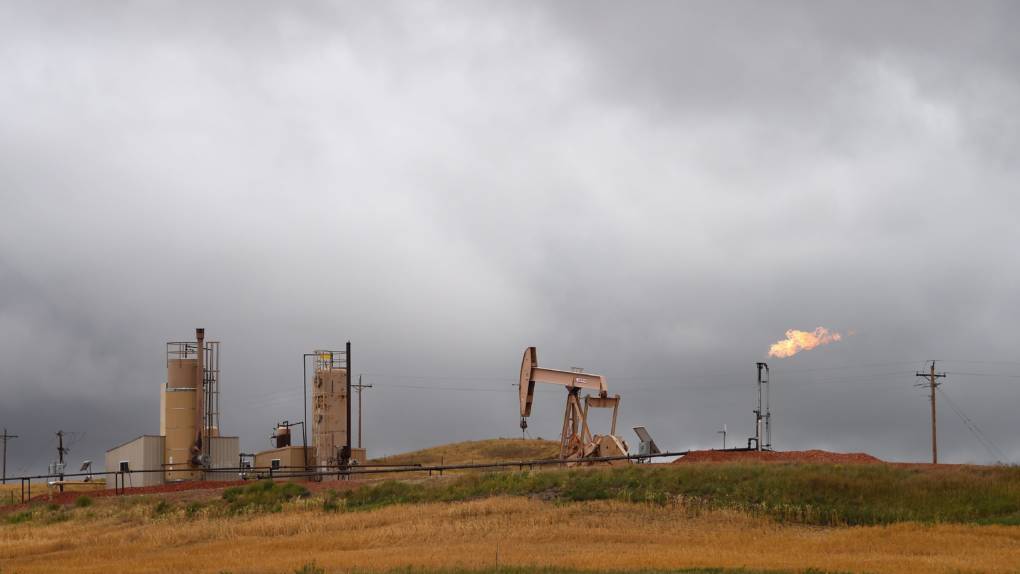
"caption": "Pump jacks and a gas flare are seen near Williston, N.D., in 2016",
"description": "Pump jacks and a gas flare are seen near Williston, N.D., in 2016",
"title": "Pump jacks and a gas flare are seen near Williston, N.D., in 2016.",
"credit": "Robyn Beck/AFP/Getty Images",
"status": "inherit",
"isLoading": false,
"fetchFailed": false
}
},
"audioPlayerReducer": {
"postId": "stream_live",
"isPaused": true,
"isPlaying": false,
"pfsActive": false,
"pledgeModalIsOpen": true,
"playerDrawerIsOpen": false,
"liveAudioPlayStartedAt": 0,
"liveAudioPlayContext": ""
},
"authorsReducer": {
"byline_science_1918025": {
"type": "authors",
"id": "byline_science_1918025",
"meta": {
"override": true
},
"slug": "byline_science_1918025",
"name": "Rebecca Hersher\u003c/br>NPR",
"isLoading": false
},
"byline_science_1917527": {
"type": "authors",
"id": "byline_science_1917527",
"meta": {
"override": true
},
"slug": "byline_science_1917527",
"name": "\u003ca href=\"http://www.climatecentral.org/what-we-do/people/john-upton\" target=\"_blank\" rel=\"noopener\">John Upton\u003c/a>, Climate Central\u003c/br>\u003ca href=\"https://californiahealthline.org/news/author/barbara-feder-ostrov/\" target=\"_blank\" rel=\"noopener\">Barbara Feder Ostrov\u003c/a>, California Healthline",
"isLoading": false
},
"byline_science_1915960": {
"type": "authors",
"id": "byline_science_1915960",
"meta": {
"override": true
},
"slug": "byline_science_1915960",
"name": "\u003ca href=\"https://www.newsdeeply.com/water/contributor/matt-weiser\" target=\"_blank\" rel=\"noopener noreferrer\">Matt Weiser\u003c/a>\u003c/br>\u003ca href=\"https://www.newsdeeply.com/water/\" target=\"_blank\">Water Deeply\u003c/a>",
"isLoading": false
},
"byline_science_1892612": {
"type": "authors",
"id": "byline_science_1892612",
"meta": {
"override": true
},
"slug": "byline_science_1892612",
"name": "Associated Press",
"isLoading": false
},
"byline_science_1865833": {
"type": "authors",
"id": "byline_science_1865833",
"meta": {
"override": true
},
"slug": "byline_science_1865833",
"name": "Nathan Rott\u003c/br>NPR",
"isLoading": false
},
"byline_science_1859207": {
"type": "authors",
"id": "byline_science_1859207",
"meta": {
"override": true
},
"slug": "byline_science_1859207",
"name": "\u003ca href=\"http://www.climatecentral.org/what-we-do/people/andrea-thompson\" target=\"_blank\" rel=\"noopener noreferrer\">Andrea Thompson\u003c/a>\u003c/br>Climate Central",
"isLoading": false
},
"byline_science_1842649": {
"type": "authors",
"id": "byline_science_1842649",
"meta": {
"override": true
},
"slug": "byline_science_1842649",
"name": "\u003ca href=\"http://www.climatecentral.org/what-we-do/people/brian-kahn\">Brian Kahn\u003c/a>\u003c/br>Climate Central",
"isLoading": false
},
"byline_science_1830945": {
"type": "authors",
"id": "byline_science_1830945",
"meta": {
"override": true
},
"slug": "byline_science_1830945",
"name": "\u003ca href=\"http://www.climatecentral.org/what-we-do/people/andrea-thompson\" target=\"_blank\">Andrea Thompson\u003c/a>\u003c/br>Climate Central",
"isLoading": false
},
"byline_science_1806818": {
"type": "authors",
"id": "byline_science_1806818",
"meta": {
"override": true
},
"slug": "byline_science_1806818",
"name": "Camila Domonoske\u003c/br>NPR",
"isLoading": false
},
"cmiller": {
"type": "authors",
"id": "221",
"meta": {
"index": "authors_1716337520",
"id": "221",
"found": true
},
"name": "Craig Miller",
"firstName": "Craig",
"lastName": "Miller",
"slug": "cmiller",
"email": "craig@voxterra.net",
"display_author_email": false,
"staff_mastheads": [
"science"
],
"title": "Editor Emeritus, Science",
"bio": "Craig is a former KQED Science editor, specializing in weather, climate, water & energy issues, with a little seismology thrown in just to shake things up. Prior to that, he launched and led the station's award-winning multimedia project, Climate Watch. Craig is also an accomplished writer/producer of television documentaries, with a focus on natural resource issues.",
"avatar": "https://secure.gravatar.com/avatar/b91661df645e001a9cafe0861fa685f9?s=600&d=blank&r=g",
"twitter": "voxterra",
"facebook": null,
"instagram": null,
"linkedin": null,
"sites": [
{
"site": "news",
"roles": [
"author"
]
},
{
"site": "futureofyou",
"roles": [
"editor"
]
},
{
"site": "stateofhealth",
"roles": [
"author"
]
},
{
"site": "science",
"roles": [
"editor"
]
},
{
"site": "quest",
"roles": [
"editor"
]
}
],
"headData": {
"title": "Craig Miller | KQED",
"description": "Editor Emeritus, Science",
"ogImgSrc": "https://secure.gravatar.com/avatar/b91661df645e001a9cafe0861fa685f9?s=600&d=blank&r=g",
"twImgSrc": "https://secure.gravatar.com/avatar/b91661df645e001a9cafe0861fa685f9?s=600&d=blank&r=g"
},
"isLoading": false,
"link": "/author/cmiller"
},
"lindseyhoshaw": {
"type": "authors",
"id": "5432",
"meta": {
"index": "authors_1716337520",
"id": "5432",
"found": true
},
"name": "Lindsey Hoshaw",
"firstName": "Lindsey",
"lastName": "Hoshaw",
"slug": "lindseyhoshaw",
"email": "lhoshaw@kqed.org",
"display_author_email": false,
"staff_mastheads": [],
"title": "KQED Contributor",
"bio": "Lindsey Hoshaw is a former interactive producer for KQED Science. Before joining KQED, Lindsey was a science correspondent for The New York Times, The Boston Globe, Forbes and Scientific American. On Twitter @lindseyhoshaw",
"avatar": "https://secure.gravatar.com/avatar/274b07694c998eaa8f26cfabaa941186?s=600&d=mm&r=g",
"twitter": "lindseyhoshaw",
"facebook": "lindsey.hoshaw.9",
"instagram": null,
"linkedin": null,
"sites": [
{
"site": "arts",
"roles": [
"author"
]
},
{
"site": "news",
"roles": [
"subscriber"
]
},
{
"site": "futureofyou",
"roles": [
"editor"
]
},
{
"site": "bayareabites",
"roles": [
"contributor"
]
},
{
"site": "stateofhealth",
"roles": [
"author"
]
},
{
"site": "science",
"roles": [
"edit_theme_options",
"subscriber"
]
},
{
"site": "quest",
"roles": [
"edit_post_subscriptions",
"edit_usergroups",
"unfiltered_html",
"unfiltered_upload",
"leadcoordinator",
"editor"
]
},
{
"site": "food",
"roles": []
}
],
"headData": {
"title": "Lindsey Hoshaw | KQED",
"description": "KQED Contributor",
"ogImgSrc": "https://secure.gravatar.com/avatar/274b07694c998eaa8f26cfabaa941186?s=600&d=mm&r=g",
"twImgSrc": "https://secure.gravatar.com/avatar/274b07694c998eaa8f26cfabaa941186?s=600&d=mm&r=g"
},
"isLoading": false,
"link": "/author/lindseyhoshaw"
},
"lesleymcclurg": {
"type": "authors",
"id": "11229",
"meta": {
"index": "authors_1716337520",
"id": "11229",
"found": true
},
"name": "Lesley McClurg",
"firstName": "Lesley",
"lastName": "McClurg",
"slug": "lesleymcclurg",
"email": "lmcclurg@KQED.org",
"display_author_email": false,
"staff_mastheads": [
"news",
"science"
],
"title": "KQED Health Correspondent",
"bio": "Lesley McClurg is a health correspondent and fill-in host whose work is regularly rebroadcast on NPR and PBS programs. She’s earned multiple regional Emmy awards, a national and a regional Edward R. Murrow award, and was named Best Beat Reporter by the Association of Health Care Journalists. The Society of Professional Journalists has recognized her work several times, and the Society of Environmental Journalists spotlighted her coverage of California’s historic drought.\r\n\r\nBefore joining KQED in 2016, Lesley covered food and sustainability for Capital Public Radio, environmental issues for Colorado Public Radio, and reported for KUOW and KCTS 9 in Seattle. Away from the newsroom, she loves skiing with her daughter, mountain biking with her partner, and playing with Ollie, the family’s goldendoodle. On deadline, she runs almost entirely on chocolate chips.\r\n\r\n ",
"avatar": "https://secure.gravatar.com/avatar/bab49e972ea10c774fe0f5e29dba1722b158f7c0d58a360923d1389d380b2978?s=600&d=blank&r=g",
"twitter": "lesleywmcclurg",
"bluesky": null,
"facebook": null,
"instagram": null,
"linkedin": null,
"sites": [
{
"site": "arts",
"roles": [
"author"
]
},
{
"site": "news",
"roles": [
"editor"
]
},
{
"site": "futureofyou",
"roles": [
"editor"
]
},
{
"site": "stateofhealth",
"roles": [
"author"
]
},
{
"site": "science",
"roles": [
"editor"
]
},
{
"site": "quest",
"roles": [
"subscriber"
]
},
{
"site": "forum",
"roles": [
"administrator"
]
},
{
"site": "liveblog",
"roles": [
"author"
]
}
],
"headData": {
"title": "Lesley McClurg | KQED",
"description": "KQED Health Correspondent",
"ogImgSrc": "https://secure.gravatar.com/avatar/bab49e972ea10c774fe0f5e29dba1722b158f7c0d58a360923d1389d380b2978?s=600&d=blank&r=g",
"twImgSrc": "https://secure.gravatar.com/avatar/bab49e972ea10c774fe0f5e29dba1722b158f7c0d58a360923d1389d380b2978?s=600&d=blank&r=g"
},
"isLoading": false,
"link": "/author/lesleymcclurg"
}
},
"pagesReducer": {
"science_tag_climate-change": {
"type": "terms",
"id": "science_194",
"meta": {
"index": "terms_1716263798",
"site": "science",
"id": "194",
"score": 7.946677
},
"featImg": null,
"name": "climate change",
"description": null,
"taxonomy": "tag",
"headData": {
"twImgId": null,
"twTitle": null,
"ogTitle": null,
"ogImgId": null,
"twDescription": null,
"description": null,
"title": "climate change Archives | KQED Science",
"ogDescription": null
},
"ttid": 198,
"slug": "climate-change",
"isLoading": false,
"title": "climate change",
"pageMeta": {
"site": "science",
"WpPageTemplate": "page-topic-editorial",
"currentPage": 47
},
"blocks": [
{
"blockName": "kqed/post-list",
"attrs": {
"layout": "cardArticle2",
"query": "posts/science?tag=climate-change",
"seeMore": false,
"paginated": true,
"page": 47
}
},
{
"blockName": "kqed/ad"
}
]
}
},
"pfsSessionReducer": {},
"postsReducer": {
"stream_live": {
"type": "live",
"id": "stream_live",
"audioUrl": "https://streams.kqed.org/kqedradio",
"title": "Live Stream",
"excerpt": "Live Stream information currently unavailable.",
"link": "/radio",
"featImg": "",
"label": {
"name": "KQED Live",
"link": "/"
}
},
"stream_kqedNewscast": {
"type": "posts",
"id": "stream_kqedNewscast",
"audioUrl": "https://www.kqed.org/.stream/anon/radio/RDnews/newscast.mp3?_=1",
"title": "KQED Newscast",
"featImg": "",
"label": {
"name": "88.5 FM",
"link": "/"
}
},
"science_1918025": {
"type": "posts",
"id": "science_1918025",
"meta": {
"index": "posts_1716263798",
"site": "science",
"id": "1918025",
"score": null,
"sort": [
1511981039000
]
},
"parent": 0,
"labelTerm": {
"site": "science"
},
"blocks": [],
"publishDate": 1511981039,
"format": "standard",
"title": "Climate Scientists Watch Their Words, Hoping To Stave Off Funding Cuts",
"headTitle": "Climate Scientists Watch Their Words, Hoping To Stave Off Funding Cuts | KQED",
"content": "\u003cp>Scientists appear to be self-censoring by omitting the term “climate change” in public grant summaries.\u003c/p>\n\u003cp>An NPR analysis of grants awarded by the National Science Foundation found a steadily decreasing number with the phrase “climate change” in the title or summary, resulting in a sharp drop in the term’s use in 2017. At the same time, the use of alternative terms such as “extreme weather” appears to be rising slightly.\u003c/p>\n\u003caside class=\"pullquote alignright\">Many scientists find themselves in an uncomfortable position. They are caught between environmental advocates looking to recruit allies and right-wing activists who demonize researchers and denigrate their work.\u003c/aside>\n\u003cp>The change in language appears to be driven in part by the Trump administration’s open hostility to the topic of climate change. Earlier this year, President Trump \u003ca href=\"https://www.npr.org/sections/thetwo-way/2017/06/01/530748899/watch-live-trump-announces-decision-on-paris-climate-agreement\">pulled the U.S. out of the Paris climate accord\u003c/a>, and the President’s \u003ca href=\"https://www.documentcloud.org/documents/4311386-Trump-2018-ProposedBudget-Appendix.html\">2018 budget proposal\u003c/a> singled out climate change research programs for elimination.\u003c/p>\n\u003cp>Meanwhile, the Environmental Protection Agency has been systematically removing references to climate change from its official website. Both the EPA’s leader, Scott Pruitt, and Secretary of Energy Rick Perry have said they do not accept the scientific consensus that humans are causing the planet to get warmer.\u003c/p>\n\u003cp>As a result, many scientists find themselves in an uncomfortable position. They are caught between environmental advocates looking to recruit allies and right-wing activists who demonize researchers and denigrate their work.\u003c/p>\n\u003cp>[ad fullwidth]\u003c/p>\n\u003cp>“In the scientific community, we’re very cautious people,” says \u003ca href=\"https://www.depts.ttu.edu/politicalscience/Faculty/Hayhoe_Katharine.php\">Katharine Hayhoe\u003c/a>, the director of the Climate Science Center at Texas Tech. “We tend to be quite averse to notoriety and conflict, so I absolutely have seen self-censorship among my colleagues. [They’ll say] ‘Well, maybe I shouldn’t say it that way, because whatever funding organization or politician or agency won’t appreciate it.'”\u003c/p>\n\u003cp>The NSF data appears to bear out the change in language. While the number of grants with the term “climate change” in the public summary has dropped, the number of grants with the terms “environmental change” or “extreme weather” has increased slightly. That suggests that, even if research topics remain the same, the words scientists use to describe them may change.\u003c/p>\n\u003cfigure id=\"attachment_1918026\" class=\"wp-caption aligncenter\" style=\"max-width: 800px\">\u003cimg loading=\"lazy\" decoding=\"async\" class=\"size-medium wp-image-1918026\" src=\"https://ww2.kqed.org/science/wp-content/uploads/sites/35/2017/11/nsf-grants-seamus-promo_wide-0bea498b15493d7381f43d940c81c196ce6493c1-800x450.png\" alt=\"\" width=\"800\" height=\"450\" srcset=\"https://cdn.kqed.org/wp-content/uploads/sites/35/2017/11/nsf-grants-seamus-promo_wide-0bea498b15493d7381f43d940c81c196ce6493c1-800x450.png 800w, https://cdn.kqed.org/wp-content/uploads/sites/35/2017/11/nsf-grants-seamus-promo_wide-0bea498b15493d7381f43d940c81c196ce6493c1-160x90.png 160w, https://cdn.kqed.org/wp-content/uploads/sites/35/2017/11/nsf-grants-seamus-promo_wide-0bea498b15493d7381f43d940c81c196ce6493c1-768x432.png 768w, https://cdn.kqed.org/wp-content/uploads/sites/35/2017/11/nsf-grants-seamus-promo_wide-0bea498b15493d7381f43d940c81c196ce6493c1-1020x574.png 1020w, https://cdn.kqed.org/wp-content/uploads/sites/35/2017/11/nsf-grants-seamus-promo_wide-0bea498b15493d7381f43d940c81c196ce6493c1-1180x664.png 1180w, https://cdn.kqed.org/wp-content/uploads/sites/35/2017/11/nsf-grants-seamus-promo_wide-0bea498b15493d7381f43d940c81c196ce6493c1-960x540.png 960w, https://cdn.kqed.org/wp-content/uploads/sites/35/2017/11/nsf-grants-seamus-promo_wide-0bea498b15493d7381f43d940c81c196ce6493c1-240x135.png 240w, https://cdn.kqed.org/wp-content/uploads/sites/35/2017/11/nsf-grants-seamus-promo_wide-0bea498b15493d7381f43d940c81c196ce6493c1-375x211.png 375w, https://cdn.kqed.org/wp-content/uploads/sites/35/2017/11/nsf-grants-seamus-promo_wide-0bea498b15493d7381f43d940c81c196ce6493c1-520x293.png 520w, https://cdn.kqed.org/wp-content/uploads/sites/35/2017/11/nsf-grants-seamus-promo_wide-0bea498b15493d7381f43d940c81c196ce6493c1.png 1461w\" sizes=\"(max-width: 800px) 100vw, 800px\">\u003cfigcaption class=\"wp-caption-text\">Grants funded by the National Science Foundation have seen a drop in the use of the phrase “climate change” in public summaries. \u003ccite>(Source: National Science Foundation Credit: Katie Park and Rebecca Hersher/NPR)\u003c/cite>\u003c/figcaption>\u003c/figure>\n\u003cp>“Scientists I know are increasingly using terms like ‘global change’, ‘environmental change’, and ‘extreme weather’, rather than explicitly saying ‘climate change’,” \u003ca href=\"http://harvardforest.fas.harvard.edu/researchers/8560\">Jonathan Thompson\u003c/a>, the senior ecologist at the Harvard Forest, wrote in an email to NPR. Thompson has been the lead investigator on multiple research projects funded by the NSF in recent years. “This seems to be born out of an abundance of caution to limit their exposure to any political landmines in what is already an extremely competitive process,” he wrote.\u003c/p>\n\u003cp>Four other climate researchers acknowledged that they had personally removed the term “climate change” from funding proposals or public summaries in the last year, or had advised graduate students who had done so. All were concerned that if they disclosed their names, it could negatively impact their future funding competitiveness.\u003c/p>\n\u003cp>\u003cstrong>Internal pressure\u003c/strong>\u003c/p>\n\u003cp>The National Science Foundation is widely regarded to be among the most independent bodies funding federal research, so it’s particularly notable when politics seeps into statements by agency officials.\u003c/p>\n\u003cp>Earlier this year, the head of the NSF geosciences directorate, William Easterling, fielded a question from a climate scientist about the language used to describe NSF priorities. “Let me just be perfectly honest, the appetite of NSF right now is doing as little as it needs to to, you know, poke the bear, and yet stand by our scientific principles,” Easterling said, according to a \u003ca href=\"https://www.aip.org/fyi/2017/new-nsf-geosciences-head-charts-course-turbulent-budget-climate\">report by the American Institute of Physics\u003c/a>, a trade group for physicists and engineers.\u003c/p>\n\u003cp>The term climate change, Easterling noted, is “a polarizing icon, for better for worse — obviously for worse, from a scientist’s perspective.”\u003c/p>\n\u003cp>Multiple scientists said Easterling’s comments were one reason they felt it prudent to avoid using the term “climate change” in grant proposals if they could. NSF spokesperson Aya Collins wrote in an email to NPR, “NSF takes no position on the language used by researchers to describe physical processes and outcomes if the merit review process judges the language to be appropriate.”\u003c/p>\n\u003cp>But after a research project has been approved, some scientists say NSF program officers encourage scientists to avoid using the term “climate change” in the public title and description that gets published on the NSF website.\u003c/p>\n\u003cp>Not everyone sees that as a problem, given the political environment. “Every interaction I’ve had with NSF program officers about using the words ‘climate change’ under the current administration is not anything I’d consider a negative form of censorship,” says \u003ca href=\"http://www.bu.edu/earth/people/faculty/michael-dietze/\">Michael Dietze\u003c/a>, a climate scientist at Boston University.\u003c/p>\n\u003cp>“I think we have staff [at NSF] who are genuinely trying to protect U.S. science and U.S. scientists in a hostile environment,” Dietze adds.\u003c/p>\n\u003cp>There is evidence that other agencies are making similar decisions. Earlier this year, a project coordinator at a Department of Energy lab \u003ca href=\"https://www.nature.com/news/us-energy-agency-asked-scientists-to-scrub-references-to-climate-change-1.22513\">emailed a researcher \u003c/a>at Northeastern University asking her to adjust the language a public abstract for research funded by the DOE. The email, which circulated widely among scientists on social media, read in part:\u003c/p>\n\u003cblockquote>\u003cp>“I have been asked to contact you to update the wording in your proposal abstract to remove words such as ‘global warming’ or ‘climate change’. This is being asked as we have to meet the President’s budget language restrictions and don’t want to make any changes without your knowledge or consent.”\u003c/p>\u003c/blockquote>\n\u003cp>As the DOE email suggests, White House rhetoric can have immediate effects on how scientists describe their research. It’s unclear what language the email is referring to, but, among other things, President Trump’s budget proposes $50 million in cuts to the EPA’s Air, Climate and Energy program and rebranding it to remove the word “climate.”\u003c/p>\n\u003cp>At the NSF, it remains unclear whether there is a real threat to research branded “climate”. Even scientists who said they have avoided the term “climate change” in grant proposals say they haven’t seen evidence of direct political meddling in the NSF process for determining who wins funding. That is echoed by \u003ca href=\"https://www.aip.org/staff/mitch-ambrose\">Mitch Ambrose\u003c/a>, a policy analyst for the American Institute of Physics. “I haven’t seen any evidence that the Trump administration has issued any specific guidance to NSF,” he says.\u003c/p>\n\u003cp>[contextly_sidebar id=”bUJYroGTwP5MS8A6IW93BeE5oghA6vH5″]Spokespeople for the House Science and Technology Committee, which oversees the NSF, and the White House Office of Science and Technology did not respond to requests for comment.\u003c/p>\n\u003cp>\u003cstrong>Words matter\u003c/strong>\u003c/p>\n\u003cp>This is not the first time scientists have resorted to euphemism to protect their research. Early studies of human sexuality referred to “\u003ca href=\"https://www.ncbi.nlm.nih.gov/pubmed/955170\">fertility-related behavior\u003c/a>.” Stem cell research was referred to by some Bush-era researchers as “\u003ca href=\"https://www.npr.org/news/specials/cloning/faq_blanknav.html\">therapeutic cloning\u003c/a>.”\u003c/p>\n\u003cp>The web of alternative language can be confusing to policymakers and frustrating for universities and other institutions that support science. Some are concerned that the language scientists use to describe climate change research may lead to similar problems. And, anecdotally, some scientists worry that political pressure may be driving young scientists away from climate studies.\u003c/p>\n\u003cp>“Some people have shifted away from climate research altogether,” in recent years says \u003ca href=\"http://ceoas.oregonstate.edu/profile/mote/\">Philip Mote\u003c/a>, the director of the Oregon Climate Change Research Institute at Oregon State University. The perception of censorship and fierce competition for funding could lead talented students to more lucrative fields such as software development.\u003c/p>\n\u003cp>Avoiding the term “climate change” could also lead to a more fractured scientific community. Climate change research is an inherently interdisciplinary field and shared terminology allows people to collaborate, either through interagency groups or through university departments that reflect the larger trends in available funding.\u003c/p>\n\u003cp>“If we all have to go off in different directions to keep the science moving forward, we lose that community,” says Dietze. “We won’t gather and work together.”\u003c/p>\n\u003cp>And all of that could translate into problems for average citizens. \u003ca href=\"https://cfpub.epa.gov/ncea/global/recordisplay.cfm?deid=322482\">Cities\u003c/a>, some of them already dealing with rising sea levels and more severe storms, rely on the federal government for information about climate change. Water resource managers and emergency officials look to federal climate programs for long-term data. And insurers are using climate change data to determine rates for homeowners.\u003c/p>\n\u003cp>“This is the biggest environmental challenge in human history,” says Mote. “Absent political winds, I don’t think researchers would avoid using the term ‘climate change’ to describe it.”\u003c/p>\n\u003chr>\n\u003cp>[ad floatright]\u003c/p>\n\u003cp>\u003cem>NPR’s Sarah McCammon contributed to this report.\u003c/em>\u003c/p>\n\u003cdiv class=\"fullattribution\">Copyright 2017 NPR. To see more, visit http://www.npr.org/.\u003cimg decoding=\"async\" src=\"https://www.google-analytics.com/__utm.gif?utmac=UA-5828686-4&utmdt=Climate+Scientists+Watch+Their+Words%2C+Hoping+To+Stave+Off+Funding+Cuts&utme=8(APIKey)9(MDAxOTAwOTE4MDEyMTkxMDAzNjczZDljZA004)\">\u003c/div>\n\n",
"stats": {
"hasVideo": false,
"hasChartOrMap": false,
"hasAudio": false,
"hasPolis": false,
"wordCount": 1555,
"hasGoogleForm": false,
"hasGallery": false,
"hasHearkenModule": false,
"iframeSrcs": [],
"paragraphCount": 33
},
"modified": 1704928285,
"excerpt": "After years of budget and political pressure, some climate scientists are changing the way they describe their research, and avoiding the term \"climate change.\"",
"headData": {
"twImgId": "",
"twTitle": "",
"ogTitle": "",
"ogImgId": "",
"twDescription": "",
"description": "After years of budget and political pressure, some climate scientists are changing the way they describe their research, and avoiding the term "climate change."",
"title": "Climate Scientists Watch Their Words, Hoping To Stave Off Funding Cuts | KQED",
"ogDescription": "",
"schema": {
"@context": "https://schema.org",
"@type": "Article",
"headline": "Climate Scientists Watch Their Words, Hoping To Stave Off Funding Cuts",
"datePublished": "2017-11-29T10:43:59-08:00",
"dateModified": "2024-01-10T15:11:25-08:00",
"image": "https://cdn.kqed.org/wp-content/uploads/2020/02/KQED-OG-Image@1x.png"
}
},
"guestAuthors": [],
"slug": "climate-scientists-watch-their-words-hoping-to-stave-off-funding-cuts",
"status": "publish",
"nprApiLink": "http://api.npr.org/query?id=564043596&apiKey=MDAxOTAwOTE4MDEyMTkxMDAzNjczZDljZA004",
"nprStoryDate": "Wed, 29 Nov 2017 05:19:00 -0500",
"nprLastModifiedDate": "Wed, 29 Nov 2017 10:48:45 -0500",
"nprHtmlLink": "https://www.npr.org/sections/thetwo-way/2017/11/29/564043596/climate-scientists-watch-their-words-hoping-to-stave-off-funding-cuts?ft=nprml&f=564043596",
"nprAudio": "https://ondemand.npr.org/anon.npr-mp3/npr/me/2017/11/20171129_me_climate_scientists_watch_their_words_hoping_to_stave_off_funding_cuts.mp3?orgId=1&topicId=1007&d=206&p=3&story=564043596&ft=nprml&f=564043596",
"nprImageAgency": "NPR",
"nprAudioM3u": "http://api.npr.org/m3u/1567133979-d13354.m3u?orgId=1&topicId=1007&d=206&p=3&story=564043596&ft=nprml&f=564043596",
"nprStoryId": "564043596",
"nprByline": "Rebecca Hersher\u003c/br>NPR",
"sticky": false,
"nprImageCredit": "Katie Park and Rebecca Hersher",
"nprRetrievedStory": "1",
"nprPubDate": "Wed, 29 Nov 2017 09:47:00 -0500",
"path": "/science/1918025/climate-scientists-watch-their-words-hoping-to-stave-off-funding-cuts",
"audioUrl": "https://ondemand.npr.org/anon.npr-mp3/npr/me/2017/11/20171129_me_climate_scientists_watch_their_words_hoping_to_stave_off_funding_cuts.mp3?orgId=1&topicId=1007&d=206&p=3&story=564043596&ft=nprml&f=564043596",
"audioTrackLength": null,
"parsedContent": [
{
"type": "contentString",
"content": "\u003cdiv class=\"post-body\">\u003cp>\u003cp>Scientists appear to be self-censoring by omitting the term “climate change” in public grant summaries.\u003c/p>\n\u003cp>An NPR analysis of grants awarded by the National Science Foundation found a steadily decreasing number with the phrase “climate change” in the title or summary, resulting in a sharp drop in the term’s use in 2017. At the same time, the use of alternative terms such as “extreme weather” appears to be rising slightly.\u003c/p>\n\u003caside class=\"pullquote alignright\">Many scientists find themselves in an uncomfortable position. They are caught between environmental advocates looking to recruit allies and right-wing activists who demonize researchers and denigrate their work.\u003c/aside>\n\u003cp>The change in language appears to be driven in part by the Trump administration’s open hostility to the topic of climate change. Earlier this year, President Trump \u003ca href=\"https://www.npr.org/sections/thetwo-way/2017/06/01/530748899/watch-live-trump-announces-decision-on-paris-climate-agreement\">pulled the U.S. out of the Paris climate accord\u003c/a>, and the President’s \u003ca href=\"https://www.documentcloud.org/documents/4311386-Trump-2018-ProposedBudget-Appendix.html\">2018 budget proposal\u003c/a> singled out climate change research programs for elimination.\u003c/p>\n\u003cp>Meanwhile, the Environmental Protection Agency has been systematically removing references to climate change from its official website. Both the EPA’s leader, Scott Pruitt, and Secretary of Energy Rick Perry have said they do not accept the scientific consensus that humans are causing the planet to get warmer.\u003c/p>\n\u003cp>As a result, many scientists find themselves in an uncomfortable position. They are caught between environmental advocates looking to recruit allies and right-wing activists who demonize researchers and denigrate their work.\u003c/p>\n\u003cp>\u003c/p>\u003c/div>",
"attributes": {
"named": {},
"numeric": []
}
},
{
"type": "component",
"content": "",
"name": "ad",
"attributes": {
"named": {
"label": "fullwidth"
},
"numeric": [
"fullwidth"
]
}
},
{
"type": "contentString",
"content": "\u003cdiv class=\"post-body\">\u003cp>\u003c/p>\n\u003cp>“In the scientific community, we’re very cautious people,” says \u003ca href=\"https://www.depts.ttu.edu/politicalscience/Faculty/Hayhoe_Katharine.php\">Katharine Hayhoe\u003c/a>, the director of the Climate Science Center at Texas Tech. “We tend to be quite averse to notoriety and conflict, so I absolutely have seen self-censorship among my colleagues. [They’ll say] ‘Well, maybe I shouldn’t say it that way, because whatever funding organization or politician or agency won’t appreciate it.'”\u003c/p>\n\u003cp>The NSF data appears to bear out the change in language. While the number of grants with the term “climate change” in the public summary has dropped, the number of grants with the terms “environmental change” or “extreme weather” has increased slightly. That suggests that, even if research topics remain the same, the words scientists use to describe them may change.\u003c/p>\n\u003cfigure id=\"attachment_1918026\" class=\"wp-caption aligncenter\" style=\"max-width: 800px\">\u003cimg loading=\"lazy\" decoding=\"async\" class=\"size-medium wp-image-1918026\" src=\"https://ww2.kqed.org/science/wp-content/uploads/sites/35/2017/11/nsf-grants-seamus-promo_wide-0bea498b15493d7381f43d940c81c196ce6493c1-800x450.png\" alt=\"\" width=\"800\" height=\"450\" srcset=\"https://cdn.kqed.org/wp-content/uploads/sites/35/2017/11/nsf-grants-seamus-promo_wide-0bea498b15493d7381f43d940c81c196ce6493c1-800x450.png 800w, https://cdn.kqed.org/wp-content/uploads/sites/35/2017/11/nsf-grants-seamus-promo_wide-0bea498b15493d7381f43d940c81c196ce6493c1-160x90.png 160w, https://cdn.kqed.org/wp-content/uploads/sites/35/2017/11/nsf-grants-seamus-promo_wide-0bea498b15493d7381f43d940c81c196ce6493c1-768x432.png 768w, https://cdn.kqed.org/wp-content/uploads/sites/35/2017/11/nsf-grants-seamus-promo_wide-0bea498b15493d7381f43d940c81c196ce6493c1-1020x574.png 1020w, https://cdn.kqed.org/wp-content/uploads/sites/35/2017/11/nsf-grants-seamus-promo_wide-0bea498b15493d7381f43d940c81c196ce6493c1-1180x664.png 1180w, https://cdn.kqed.org/wp-content/uploads/sites/35/2017/11/nsf-grants-seamus-promo_wide-0bea498b15493d7381f43d940c81c196ce6493c1-960x540.png 960w, https://cdn.kqed.org/wp-content/uploads/sites/35/2017/11/nsf-grants-seamus-promo_wide-0bea498b15493d7381f43d940c81c196ce6493c1-240x135.png 240w, https://cdn.kqed.org/wp-content/uploads/sites/35/2017/11/nsf-grants-seamus-promo_wide-0bea498b15493d7381f43d940c81c196ce6493c1-375x211.png 375w, https://cdn.kqed.org/wp-content/uploads/sites/35/2017/11/nsf-grants-seamus-promo_wide-0bea498b15493d7381f43d940c81c196ce6493c1-520x293.png 520w, https://cdn.kqed.org/wp-content/uploads/sites/35/2017/11/nsf-grants-seamus-promo_wide-0bea498b15493d7381f43d940c81c196ce6493c1.png 1461w\" sizes=\"(max-width: 800px) 100vw, 800px\">\u003cfigcaption class=\"wp-caption-text\">Grants funded by the National Science Foundation have seen a drop in the use of the phrase “climate change” in public summaries. \u003ccite>(Source: National Science Foundation Credit: Katie Park and Rebecca Hersher/NPR)\u003c/cite>\u003c/figcaption>\u003c/figure>\n\u003cp>“Scientists I know are increasingly using terms like ‘global change’, ‘environmental change’, and ‘extreme weather’, rather than explicitly saying ‘climate change’,” \u003ca href=\"http://harvardforest.fas.harvard.edu/researchers/8560\">Jonathan Thompson\u003c/a>, the senior ecologist at the Harvard Forest, wrote in an email to NPR. Thompson has been the lead investigator on multiple research projects funded by the NSF in recent years. “This seems to be born out of an abundance of caution to limit their exposure to any political landmines in what is already an extremely competitive process,” he wrote.\u003c/p>\n\u003cp>Four other climate researchers acknowledged that they had personally removed the term “climate change” from funding proposals or public summaries in the last year, or had advised graduate students who had done so. All were concerned that if they disclosed their names, it could negatively impact their future funding competitiveness.\u003c/p>\n\u003cp>\u003cstrong>Internal pressure\u003c/strong>\u003c/p>\n\u003cp>The National Science Foundation is widely regarded to be among the most independent bodies funding federal research, so it’s particularly notable when politics seeps into statements by agency officials.\u003c/p>\n\u003cp>Earlier this year, the head of the NSF geosciences directorate, William Easterling, fielded a question from a climate scientist about the language used to describe NSF priorities. “Let me just be perfectly honest, the appetite of NSF right now is doing as little as it needs to to, you know, poke the bear, and yet stand by our scientific principles,” Easterling said, according to a \u003ca href=\"https://www.aip.org/fyi/2017/new-nsf-geosciences-head-charts-course-turbulent-budget-climate\">report by the American Institute of Physics\u003c/a>, a trade group for physicists and engineers.\u003c/p>\n\u003cp>The term climate change, Easterling noted, is “a polarizing icon, for better for worse — obviously for worse, from a scientist’s perspective.”\u003c/p>\n\u003cp>Multiple scientists said Easterling’s comments were one reason they felt it prudent to avoid using the term “climate change” in grant proposals if they could. NSF spokesperson Aya Collins wrote in an email to NPR, “NSF takes no position on the language used by researchers to describe physical processes and outcomes if the merit review process judges the language to be appropriate.”\u003c/p>\n\u003cp>But after a research project has been approved, some scientists say NSF program officers encourage scientists to avoid using the term “climate change” in the public title and description that gets published on the NSF website.\u003c/p>\n\u003cp>Not everyone sees that as a problem, given the political environment. “Every interaction I’ve had with NSF program officers about using the words ‘climate change’ under the current administration is not anything I’d consider a negative form of censorship,” says \u003ca href=\"http://www.bu.edu/earth/people/faculty/michael-dietze/\">Michael Dietze\u003c/a>, a climate scientist at Boston University.\u003c/p>\n\u003cp>“I think we have staff [at NSF] who are genuinely trying to protect U.S. science and U.S. scientists in a hostile environment,” Dietze adds.\u003c/p>\n\u003cp>There is evidence that other agencies are making similar decisions. Earlier this year, a project coordinator at a Department of Energy lab \u003ca href=\"https://www.nature.com/news/us-energy-agency-asked-scientists-to-scrub-references-to-climate-change-1.22513\">emailed a researcher \u003c/a>at Northeastern University asking her to adjust the language a public abstract for research funded by the DOE. The email, which circulated widely among scientists on social media, read in part:\u003c/p>\n\u003cblockquote>\u003cp>“I have been asked to contact you to update the wording in your proposal abstract to remove words such as ‘global warming’ or ‘climate change’. This is being asked as we have to meet the President’s budget language restrictions and don’t want to make any changes without your knowledge or consent.”\u003c/p>\u003c/blockquote>\n\u003cp>As the DOE email suggests, White House rhetoric can have immediate effects on how scientists describe their research. It’s unclear what language the email is referring to, but, among other things, President Trump’s budget proposes $50 million in cuts to the EPA’s Air, Climate and Energy program and rebranding it to remove the word “climate.”\u003c/p>\n\u003cp>At the NSF, it remains unclear whether there is a real threat to research branded “climate”. Even scientists who said they have avoided the term “climate change” in grant proposals say they haven’t seen evidence of direct political meddling in the NSF process for determining who wins funding. That is echoed by \u003ca href=\"https://www.aip.org/staff/mitch-ambrose\">Mitch Ambrose\u003c/a>, a policy analyst for the American Institute of Physics. “I haven’t seen any evidence that the Trump administration has issued any specific guidance to NSF,” he says.\u003c/p>\n\u003cp>\u003c/p>\u003cp>\u003c/p>\u003cp>Spokespeople for the House Science and Technology Committee, which oversees the NSF, and the White House Office of Science and Technology did not respond to requests for comment.\u003c/p>\n\u003cp>\u003cstrong>Words matter\u003c/strong>\u003c/p>\n\u003cp>This is not the first time scientists have resorted to euphemism to protect their research. Early studies of human sexuality referred to “\u003ca href=\"https://www.ncbi.nlm.nih.gov/pubmed/955170\">fertility-related behavior\u003c/a>.” Stem cell research was referred to by some Bush-era researchers as “\u003ca href=\"https://www.npr.org/news/specials/cloning/faq_blanknav.html\">therapeutic cloning\u003c/a>.”\u003c/p>\n\u003cp>The web of alternative language can be confusing to policymakers and frustrating for universities and other institutions that support science. Some are concerned that the language scientists use to describe climate change research may lead to similar problems. And, anecdotally, some scientists worry that political pressure may be driving young scientists away from climate studies.\u003c/p>\n\u003cp>“Some people have shifted away from climate research altogether,” in recent years says \u003ca href=\"http://ceoas.oregonstate.edu/profile/mote/\">Philip Mote\u003c/a>, the director of the Oregon Climate Change Research Institute at Oregon State University. The perception of censorship and fierce competition for funding could lead talented students to more lucrative fields such as software development.\u003c/p>\n\u003cp>Avoiding the term “climate change” could also lead to a more fractured scientific community. Climate change research is an inherently interdisciplinary field and shared terminology allows people to collaborate, either through interagency groups or through university departments that reflect the larger trends in available funding.\u003c/p>\n\u003cp>“If we all have to go off in different directions to keep the science moving forward, we lose that community,” says Dietze. “We won’t gather and work together.”\u003c/p>\n\u003cp>And all of that could translate into problems for average citizens. \u003ca href=\"https://cfpub.epa.gov/ncea/global/recordisplay.cfm?deid=322482\">Cities\u003c/a>, some of them already dealing with rising sea levels and more severe storms, rely on the federal government for information about climate change. Water resource managers and emergency officials look to federal climate programs for long-term data. And insurers are using climate change data to determine rates for homeowners.\u003c/p>\n\u003cp>“This is the biggest environmental challenge in human history,” says Mote. “Absent political winds, I don’t think researchers would avoid using the term ‘climate change’ to describe it.”\u003c/p>\n\u003chr>\n\u003cp>\u003c/p>\u003c/div>",
"attributes": {
"named": {},
"numeric": []
}
},
{
"type": "component",
"content": "",
"name": "ad",
"attributes": {
"named": {
"label": "floatright"
},
"numeric": [
"floatright"
]
}
},
{
"type": "contentString",
"content": "\u003cdiv class=\"post-body\">\u003cp>\u003c/p>\n\u003cp>\u003cem>NPR’s Sarah McCammon contributed to this report.\u003c/em>\u003c/p>\n\u003cdiv class=\"fullattribution\">Copyright 2017 NPR. To see more, visit http://www.npr.org/.\u003cimg decoding=\"async\" src=\"https://www.google-analytics.com/__utm.gif?utmac=UA-5828686-4&utmdt=Climate+Scientists+Watch+Their+Words%2C+Hoping+To+Stave+Off+Funding+Cuts&utme=8(APIKey)9(MDAxOTAwOTE4MDEyMTkxMDAzNjczZDljZA004)\">\u003c/div>\n\n\u003c/div>\u003c/p>",
"attributes": {
"named": {},
"numeric": []
}
}
],
"link": "/science/1918025/climate-scientists-watch-their-words-hoping-to-stave-off-funding-cuts",
"authors": [
"byline_science_1918025"
],
"categories": [
"science_31",
"science_40"
],
"tags": [
"science_182",
"science_194",
"science_3370"
],
"featImg": "science_1918027",
"label": "science"
},
"science_1917527": {
"type": "posts",
"id": "science_1917527",
"meta": {
"index": "posts_1716263798",
"site": "science",
"id": "1917527",
"score": null,
"sort": [
1510086246000
]
},
"parent": 0,
"labelTerm": {
"site": "science"
},
"blocks": [],
"publishDate": 1510086246,
"format": "image",
"title": "Breathing Fire: Californians' Health Is a Casualty of Climate-Fueled Blazes",
"headTitle": "Breathing Fire: Californians’ Health Is a Casualty of Climate-Fueled Blazes | KQED",
"content": "\u003cp>\u003cspan style=\"font-size: 4.6875em;float: left;line-height: 0.733em;padding: 0.05em 0.1em 0 0;font-family: times, serif, georgia\">A\u003c/span>s the deadliest fires in California history swept through leafy neighborhoods in Santa Rosa, Kathleen Sarmento fled her home in the dark, drove to an evacuation center and began setting up a medical triage unit. Patients with burns and other severe injuries were dispatched to hospitals. She set about treating many people whose symptoms resulted from exposure to polluted air and heavy smoke.\u003c/p>\n\u003cp>“People were coming in with headaches. I had one. My eyes were burning,” said Sarmento, the director of nursing at Santa Rosa Community Health, which provides health care for those who cannot afford it. But respiratory problems — coughs and shortness of breath — were among the biggest risks. “We made sure everyone had a mask.”\u003c/p>\n\u003cp>More than half of the evacuees at the shelter that October night were elderly, some from nursing homes who needed oxygen 24/7. Sarmento scrambled to find regulators for oxygen tanks that were otherwise useless. It was a chaotic night — but what came to worry her most were the weeks and months ahead.\u003c/p>\n\u003cp>[contextly_sidebar id=”Xlg0O9oyLXkaXQvm4ibSW3KwbYbGKbmz”]“It looked like it was snowing for days,” Sarmento said of the falling ash. “People really need to take the smoke seriously. You’ve got cars exploding, tires burning. There has to be some long- term effect” on people’s health.\u003c/p>\n\u003cp>From Puget Sound to Disneyland and east over the Rockies, Americans have coughed and wheezed, rushed to emergency rooms and shut themselves indoors this year as pollution from wildfires darkened skies and rained soot across the landscape. Even to healthy people, it can make breathing a miserable, chest-heaving experience. To the elderly, the young and the frail, the pollution can be disabling or deadly.\u003c/p>\n\u003cp>[ad fullwidth]\u003c/p>\n\u003cp>Even though the nation has greatly improved air quality over the last 40 years through environmental regulations and technological improvements, the increasing frequency of large wildfires now undermines that progress, releasing copious pollutants that spread far and wide through the air and linger long after the fires are extinguished.\u003c/p>\n\u003cp>Scientists say climate change, degraded ecosystems and the fickleness of the weather have been amplifying fires in forests, grasslands and neighborhoods throughout the West. Nine times more western forestland is burning in large fires each year on average now than 30 years ago, according to \u003ca href=\"http://www.pnas.org/content/113/42/11770.abstract\" target=\"_blank\" rel=\"noopener\">calculations by two leading scientists\u003c/a>.\u003c/p>\n\u003cfigure id=\"attachment_1917533\" class=\"wp-caption aligncenter\" style=\"max-width: 6068px\">\u003ca href=\"https://ww2.kqed.org/science/wp-content/uploads/sites/35/2017/11/Colette-Hatch-Santa-Rosa.Heidi-de-Marco-KHN.jpg\">\u003cimg loading=\"lazy\" decoding=\"async\" class=\"size-full wp-image-1917533\" src=\"https://ww2.kqed.org/science/wp-content/uploads/sites/35/2017/11/Colette-Hatch-Santa-Rosa.Heidi-de-Marco-KHN.jpg\" alt=\"\" width=\"6068\" height=\"4050\">\u003c/a>\u003cfigcaption class=\"wp-caption-text\">Colette Hatch has a lung disease and uses a nebulizer daily. Three weeks after the fires started, she still won’t open her windows and sleeps with an air purifier. “I still have a dry cough, a dry throat,” she says. \u003ccite>(Heidi de Marco/KHN)\u003c/cite>\u003c/figcaption>\u003c/figure>\n\u003cp>The blazes create smoke waves — pulses of pollution containing everything from charred plastic residue to soot to other small particles that lodge deep in the lungs. They can trigger short-term ailments, such as coughing; worsen chronic diseases, such as asthma; and lead to long-term damage, including cancer.\u003c/p>\n\u003cp>The effect of the fires in Northern California’s wine country, which destroyed thousands of homes and killed 43 people, went well beyond the burn zone. The smoke choked the San Francisco Bay Area, home to 7 million people in nine counties, for days.\u003c/p>\n\u003cp>Colette Hatch, 75, of Santa Rosa, who suffers from lung disease and uses a nebulizer daily, evacuated to her daughter’s home in Sunnyvale, in Silicon Valley, when the fires came. But even nearly 100 miles away, Hatch said she struggled to breathe, coughing so hard she couldn’t sleep.\u003c/p>\n\u003cp>Wafting beyond Oakland and Livermore in the East Bay, the smoke headed into California’s agricultural heartland, the Sacramento and San Joaquin valleys.\u003c/p>\n\u003cp>Known collectively as the Central Valley, it stretches for hundreds of miles roughly north to south, bracketed by mountain ranges that trap some of the dirtiest air in America. Increasingly, wildfires like the ones in Northern California’s wine country funnel smoke into the chute, significantly raising the pollution levels in places as far away as Fresno.\u003c/p>\n\u003cfigure id=\"attachment_1917547\" class=\"wp-caption alignright\" style=\"max-width: 3264px\">\u003ca href=\"https://ww2.kqed.org/science/wp-content/uploads/sites/35/2017/11/Prescribed-Burn.John-Upton.jpg\">\u003cimg loading=\"lazy\" decoding=\"async\" class=\"size-full wp-image-1917547\" src=\"https://ww2.kqed.org/science/wp-content/uploads/sites/35/2017/11/Prescribed-Burn.John-Upton.jpg\" alt=\"\" width=\"3264\" height=\"2448\" srcset=\"https://cdn.kqed.org/wp-content/uploads/sites/35/2017/11/Prescribed-Burn.John-Upton.jpg 3264w, https://cdn.kqed.org/wp-content/uploads/sites/35/2017/11/Prescribed-Burn.John-Upton-160x120.jpg 160w, https://cdn.kqed.org/wp-content/uploads/sites/35/2017/11/Prescribed-Burn.John-Upton-800x600.jpg 800w, https://cdn.kqed.org/wp-content/uploads/sites/35/2017/11/Prescribed-Burn.John-Upton-768x576.jpg 768w, https://cdn.kqed.org/wp-content/uploads/sites/35/2017/11/Prescribed-Burn.John-Upton-1020x765.jpg 1020w, https://cdn.kqed.org/wp-content/uploads/sites/35/2017/11/Prescribed-Burn.John-Upton-1920x1440.jpg 1920w, https://cdn.kqed.org/wp-content/uploads/sites/35/2017/11/Prescribed-Burn.John-Upton-1180x885.jpg 1180w, https://cdn.kqed.org/wp-content/uploads/sites/35/2017/11/Prescribed-Burn.John-Upton-960x720.jpg 960w, https://cdn.kqed.org/wp-content/uploads/sites/35/2017/11/Prescribed-Burn.John-Upton-240x180.jpg 240w, https://cdn.kqed.org/wp-content/uploads/sites/35/2017/11/Prescribed-Burn.John-Upton-375x281.jpg 375w, https://cdn.kqed.org/wp-content/uploads/sites/35/2017/11/Prescribed-Burn.John-Upton-520x390.jpg 520w\" sizes=\"(max-width: 3264px) 100vw, 3264px\">\u003c/a>\u003cfigcaption class=\"wp-caption-text\">Firefighter Josh Bien ignites the forest floor during a prescribed burn in Sierra National Park. \u003ccite>(John Upton/Climate Central)\u003c/cite>\u003c/figcaption>\u003c/figure>\n\u003cp>Climate Central, a research and journalism nonprofit, examined air district data from California’s Sacramento and San Joaquin valleys. \u003ca href=\"http://www.climatecentral.org/news/report-wildfires-undermining-air-pollution-progress-21753\" target=\"_blank\" rel=\"noopener\">The analysis\u003c/a> showed that while the number of heavily polluted days is falling overall each year on average — those days are occurring more frequently during the peak fire season. The researchers, who share their work with editorially independent journalists, say wildfire smoke is to blame.\u003c/p>\n\u003cp>Monitors in the San Joaquin Valley and San Francisco Bay Area showed levels spiked in October as the wine country fires sullied skies.\u003c/p>\n\u003cp>With large wildfires on the rise, smoke and the attendant breathing ailments seemed everywhere this year. In September, smoke from fires burning in California, the Pacific Northwest and Montana pushed as far east as Pennsylvania. Smoke triggered emergency declarations in Washington state and California. The Evergreen State was experiencing few fires of its own in July when it was hit by smoke waves that poured across the Canadian border. And smoke returned to much of the northwest in August and September as fires \u003ca href=\"http://vis.ecowest.org/interactive/wildfires.php#year=2017&firekey=waowf-000351&f=all&h=0\" target=\"_blank\" rel=\"noopener\">broke out in the Cascades\u003c/a> and \u003ca href=\"http://vis.ecowest.org/interactive/wildfires.php#year=2017&firekey=ormhf-000176&f=all&h=0\" target=\"_blank\" rel=\"noopener\">the Columbia Gorge\u003c/a>.\u003c/p>\n\u003cp>“I remember waking up one morning and the sky was orangey-red and there was ash falling out of the sky,” said \u003ca href=\"http://deohs.washington.edu/faculty/hess_jeremy\" target=\"_blank\" rel=\"noopener\">Jeremy Hess\u003c/a>, a researcher and physician at the University of Washington in Seattle. “This summer was very busy for us in the emergency department and we were often over capacity. If it wasn’t the smoke, it was the heat,” Hess said.\u003c/p>\n\u003cp>\u003cstrong>As World Warms, Environment and Health Suffer\u003c/strong>\u003c/p>\n\u003cp>The blazes came after \u003ca href=\"http://www.mercurynews.com/2017/09/01/bay-area-weather-scorching-temperatures-will-produce-hottest-days-in-a-decade/\" target=\"_blank\" rel=\"noopener\">record-breaking late summer heat\u003c/a> dried out grass that had flourished following \u003ca href=\"http://www.pressdemocrat.com/news/6861398-181/just-like-that-santa-rosa?gallery=6866230&artslide=0\" target=\"_blank\" rel=\"noopener\">record-breaking winter rains\u003c/a> — both forms of extreme weather that are worsened by global warming. In addition, a high pressure system over the Pacific fanned the flames by driving unusually hot and powerful seasonal winds into Northern California from the dry highlands of Nevada.\u003c/p>\n\u003cp>The immediate precipitant may have been sparks from power lines, although \u003ca href=\"http://www.pressdemocrat.com/news/7567756-181/north-bay-fires-a-complex?artslide=0\" target=\"_blank\" rel=\"noopener\">investigations into the causes\u003c/a> are ongoing. But a changing climate helped fuel the blazes.\u003c/p>\n\u003cfigure id=\"attachment_1917529\" class=\"wp-caption alignleft\" style=\"max-width: 451px\">\u003ca href=\"https://ww2.kqed.org/science/wp-content/uploads/sites/35/2017/11/Trees-killed-by-drought.John-Upton.jpg\">\u003cimg loading=\"lazy\" decoding=\"async\" class=\" wp-image-1917529\" src=\"https://ww2.kqed.org/science/wp-content/uploads/sites/35/2017/11/Trees-killed-by-drought.John-Upton.jpg\" alt=\"\" width=\"451\" height=\"300\" srcset=\"https://cdn.kqed.org/wp-content/uploads/sites/35/2017/11/Trees-killed-by-drought.John-Upton.jpg 5184w, https://cdn.kqed.org/wp-content/uploads/sites/35/2017/11/Trees-killed-by-drought.John-Upton-160x107.jpg 160w, https://cdn.kqed.org/wp-content/uploads/sites/35/2017/11/Trees-killed-by-drought.John-Upton-800x533.jpg 800w, https://cdn.kqed.org/wp-content/uploads/sites/35/2017/11/Trees-killed-by-drought.John-Upton-768x512.jpg 768w, https://cdn.kqed.org/wp-content/uploads/sites/35/2017/11/Trees-killed-by-drought.John-Upton-1020x680.jpg 1020w, https://cdn.kqed.org/wp-content/uploads/sites/35/2017/11/Trees-killed-by-drought.John-Upton-1920x1280.jpg 1920w, https://cdn.kqed.org/wp-content/uploads/sites/35/2017/11/Trees-killed-by-drought.John-Upton-1180x787.jpg 1180w, https://cdn.kqed.org/wp-content/uploads/sites/35/2017/11/Trees-killed-by-drought.John-Upton-960x640.jpg 960w, https://cdn.kqed.org/wp-content/uploads/sites/35/2017/11/Trees-killed-by-drought.John-Upton-240x160.jpg 240w, https://cdn.kqed.org/wp-content/uploads/sites/35/2017/11/Trees-killed-by-drought.John-Upton-375x250.jpg 375w, https://cdn.kqed.org/wp-content/uploads/sites/35/2017/11/Trees-killed-by-drought.John-Upton-520x347.jpg 520w\" sizes=\"(max-width: 451px) 100vw, 451px\">\u003c/a>\u003cfigcaption class=\"wp-caption-text\">Trees killed by the effects of drought in the Sierra National Forest. \u003ccite>(John Upton/Climate Central)\u003c/cite>\u003c/figcaption>\u003c/figure>\n\u003cp>“Climate change was not the cause but it’s definitely an ingredient,” said \u003ca href=\"http://www.ldeo.columbia.edu/user/williams\" target=\"_blank\" rel=\"noopener\">Park Williams\u003c/a>, a climate and ecology researcher at Columbia University’s Lamont-Doherty Earth Observatory. And that means worse is to come.\u003c/p>\n\u003cp>Williams said there was a clear connection between the nearly 2 degrees Fahrenheit overall increase in global temperature since the late 1800s and the severity of these and other fires. (Warming in the West has been outpacing the global average in recent decades because of natural cycles.)\u003c/p>\n\u003cp>“Fire really responds strongly to even that small of a change of temperature,” said Williams, whose assessment of global warming’s role in the wine country fires is shared by other experts.\u003c/p>\n\u003cp>Environmentally, the fires are a double whammy: They destroy trees that help to slow global warming by absorbing heat-trapping carbon dioxide as they grow. They also release carbon dioxide stored within, as well as black carbon that melts snow and ice.\u003c/p>\n\u003cp>Research \u003ca href=\"http://www.sciencedirect.com/science/article/pii/S0378112715001796\" target=\"_blank\" rel=\"noopener\">indicated in 2015 that large fires had helped turn \u003c/a>California’s forests and other lands into polluters, releasing more carbon to the atmosphere than they suck back in. The state’s wildlands released more heat-trapping pollution from 2001 through 2010 than Vermont’s entire economy. Rising temperatures aren’t the only cause — the forests are overloaded with fuel following more than a century of aggressive firefighting.\u003c/p>\n\u003cp>While public attention has tended to focus on other health risks from climate change such as heat stroke in summer and the spread of mosquito-borne diseases northward, the effects of smoke pollution have been gaining more attention following dramatic and widespread wildfires.\u003c/p>\n\u003cfigure id=\"attachment_1917553\" class=\"wp-caption aligncenter\" style=\"max-width: 1024px\">\u003ca href=\"https://ww2.kqed.org/science/wp-content/uploads/sites/35/2017/11/San-Fran-in-Smoke.Amy-Graff-SFGATE.jpg\">\u003cimg loading=\"lazy\" decoding=\"async\" class=\"size-full wp-image-1917553\" src=\"https://ww2.kqed.org/science/wp-content/uploads/sites/35/2017/11/San-Fran-in-Smoke.Amy-Graff-SFGATE.jpg\" alt=\"\" width=\"1024\" height=\"768\" srcset=\"https://cdn.kqed.org/wp-content/uploads/sites/35/2017/11/San-Fran-in-Smoke.Amy-Graff-SFGATE.jpg 1024w, https://cdn.kqed.org/wp-content/uploads/sites/35/2017/11/San-Fran-in-Smoke.Amy-Graff-SFGATE-160x120.jpg 160w, https://cdn.kqed.org/wp-content/uploads/sites/35/2017/11/San-Fran-in-Smoke.Amy-Graff-SFGATE-800x600.jpg 800w, https://cdn.kqed.org/wp-content/uploads/sites/35/2017/11/San-Fran-in-Smoke.Amy-Graff-SFGATE-768x576.jpg 768w, https://cdn.kqed.org/wp-content/uploads/sites/35/2017/11/San-Fran-in-Smoke.Amy-Graff-SFGATE-1020x765.jpg 1020w, https://cdn.kqed.org/wp-content/uploads/sites/35/2017/11/San-Fran-in-Smoke.Amy-Graff-SFGATE-960x720.jpg 960w, https://cdn.kqed.org/wp-content/uploads/sites/35/2017/11/San-Fran-in-Smoke.Amy-Graff-SFGATE-240x180.jpg 240w, https://cdn.kqed.org/wp-content/uploads/sites/35/2017/11/San-Fran-in-Smoke.Amy-Graff-SFGATE-375x281.jpg 375w, https://cdn.kqed.org/wp-content/uploads/sites/35/2017/11/San-Fran-in-Smoke.Amy-Graff-SFGATE-520x390.jpg 520w\" sizes=\"(max-width: 1024px) 100vw, 1024px\">\u003c/a>\u003cfigcaption class=\"wp-caption-text\">Smoky air in San Francisco during the North Bay fires. \u003ccite>(Amy Graff/SFGate)\u003c/cite>\u003c/figcaption>\u003c/figure>\n\u003cp>The most dangerous pollution from wildfires is fine soot — “really small particles that we know can get into the lungs,” said \u003ca href=\"https://www.colorado.edu/geography/colleen-reid-0\" target=\"_blank\" rel=\"noopener\">Colleen Reid\u003c/a>, a geographer at the University of Colorado who researches climate change and human health. It’s known as PM2.5, meaning “particulate matter” that’s less than 2.5 microns wide, only visible using microscopes.\u003c/p>\n\u003cp>It can nestle into lung tissue and pass into the bloodstream, contributing to an array of health problems including infections and, potentially, heart attacks.\u003c/p>\n\u003cp>Symptoms related to smoke waves may not be diagnosed right away, making it hard to recognize the role a fire may have played in an illness or death. Reid led an analysis \u003ca href=\"https://ehp.niehs.nih.gov/14-09277/\" target=\"_blank\" rel=\"noopener\">published a year ago\u003c/a> based on hundreds of studies into fire pollution’s health effects. The clearest links shown in the studies were between PM2.5 and asthma and other breathing problems; links to heart disease were less conclusive.\u003c/p>\n\u003cp>Researchers from leading American universities\u003ca href=\"https://www.ncbi.nlm.nih.gov/pubmed/27648592\" target=\"_blank\" rel=\"noopener\"> examined fire pollution \u003c/a>across the West, finding that two of every three counties in the region suffered at least one smoke wave from 2004 through 2009. When they correlated those findings with medical data, they found a 7 percent jump in breathing-related hospitalizations after smoke levels were most extreme.\u003c/p>\n\u003cfigure id=\"attachment_1917531\" class=\"wp-caption alignright\" style=\"max-width: 6963px\">\u003ca href=\"https://ww2.kqed.org/science/wp-content/uploads/sites/35/2017/11/air-pollution-9.-Coffey-Park-neighborhood-of-Santa-Rosa.Heidi-de-Marco-KHN.jpg\">\u003cimg loading=\"lazy\" decoding=\"async\" class=\"size-full wp-image-1917531\" src=\"https://ww2.kqed.org/science/wp-content/uploads/sites/35/2017/11/air-pollution-9.-Coffey-Park-neighborhood-of-Santa-Rosa.Heidi-de-Marco-KHN.jpg\" alt=\"\" width=\"6963\" height=\"4647\" srcset=\"https://cdn.kqed.org/wp-content/uploads/sites/35/2017/11/air-pollution-9.-Coffey-Park-neighborhood-of-Santa-Rosa.Heidi-de-Marco-KHN.jpg 6963w, https://cdn.kqed.org/wp-content/uploads/sites/35/2017/11/air-pollution-9.-Coffey-Park-neighborhood-of-Santa-Rosa.Heidi-de-Marco-KHN-160x107.jpg 160w, https://cdn.kqed.org/wp-content/uploads/sites/35/2017/11/air-pollution-9.-Coffey-Park-neighborhood-of-Santa-Rosa.Heidi-de-Marco-KHN-800x534.jpg 800w, https://cdn.kqed.org/wp-content/uploads/sites/35/2017/11/air-pollution-9.-Coffey-Park-neighborhood-of-Santa-Rosa.Heidi-de-Marco-KHN-768x513.jpg 768w, https://cdn.kqed.org/wp-content/uploads/sites/35/2017/11/air-pollution-9.-Coffey-Park-neighborhood-of-Santa-Rosa.Heidi-de-Marco-KHN-1020x681.jpg 1020w, https://cdn.kqed.org/wp-content/uploads/sites/35/2017/11/air-pollution-9.-Coffey-Park-neighborhood-of-Santa-Rosa.Heidi-de-Marco-KHN-1920x1281.jpg 1920w, https://cdn.kqed.org/wp-content/uploads/sites/35/2017/11/air-pollution-9.-Coffey-Park-neighborhood-of-Santa-Rosa.Heidi-de-Marco-KHN-1180x788.jpg 1180w, https://cdn.kqed.org/wp-content/uploads/sites/35/2017/11/air-pollution-9.-Coffey-Park-neighborhood-of-Santa-Rosa.Heidi-de-Marco-KHN-960x641.jpg 960w, https://cdn.kqed.org/wp-content/uploads/sites/35/2017/11/air-pollution-9.-Coffey-Park-neighborhood-of-Santa-Rosa.Heidi-de-Marco-KHN-240x160.jpg 240w, https://cdn.kqed.org/wp-content/uploads/sites/35/2017/11/air-pollution-9.-Coffey-Park-neighborhood-of-Santa-Rosa.Heidi-de-Marco-KHN-375x250.jpg 375w, https://cdn.kqed.org/wp-content/uploads/sites/35/2017/11/air-pollution-9.-Coffey-Park-neighborhood-of-Santa-Rosa.Heidi-de-Marco-KHN-520x347.jpg 520w\" sizes=\"(max-width: 6963px) 100vw, 6963px\">\u003c/a>\u003cfigcaption class=\"wp-caption-text\">Remnants from the fire in the Coffey Park neighborhood of Santa Rosa, Calif., on Oct. 27, 2017. \u003ccite>(Heidi de Marco/KHN)\u003c/cite>\u003c/figcaption>\u003c/figure>\n\u003cp>“An acute fire lasting, for example, days to weeks, may not show up as an immediate problem but as health problems that may occur over a time span of weeks or months,” said Loretta Mickley, a Harvard researcher who worked on the study.\u003c/p>\n\u003cp>\u003cstrong>This Summer in California\u003c/strong>\u003c/p>\n\u003cp>Elva Hernandez, 51, has lived in the San Joaquin Valley most of her life. She’s suffered from asthma since she was 10. This summer she was stuck inside her house for several weeks as smoke waves suffocated her neighborhood in the small town of Kerman, Calif., near Fresno.\u003c/p>\n\u003cp>“The smell, all the dust, the smoke, the smog, everything, it’s just — you can’t breathe,” said Hernandez, a stay-at-home mom whose husband analyzes lab samples at a hospital. “You can’t live your life normally.”\u003c/p>\n\u003cp>The San Joaquin Valley is home to 4 million people, many of them poor. One in six children suffers from asthma. Poor people often are most affected by air pollution, partly because they tend to live in more drafty housing in more polluted neighborhoods.\u003c/p>\n\u003cp>But enforcement of federal regulations dating to the Nixon administration has been reducing air pollution from fossil fuels and fertilizers in the valley, requiring cleaner engines for trucks and the replacement of outdated equipment on farms.\u003c/p>\n\u003cp>“We’ve been seeing a lot of positive trends,” said Jon Klassen, manager of the air monitoring team at the San Joaquin Valley Air Pollution Control District. At the same time, “there’s a lot more emissions coming from these fires. They’re uncontrollable. They’re very difficult to deal with.”\u003c/p>\n\u003caside class=\"pullquote alignright\">‘We’re trying to ensure that we have healthy, resilient forests that are net sinks of carbon.’\u003ccite>Russ Henly, California Natural Resources Agency\u003c/cite>\u003c/aside>\n\u003cp>Research looking at air pollution levels helps explain why people like Hernandez are suffering more during fire seasons. The Climate Central analysis of San Joaquin Valley air data showed that while the number of days each year on which levels of PM2.5 exceeded federal standards declined by about 45 percent overall from 2000 to 2016, they increased by almost a third during the peak summer fire season.\u003c/p>\n\u003cp>In the Sacramento Valley to the north, summer fire season pollution has been responsible for about 40 percent of the days when federal standards for PM2.5 pollution were exceeded in recent years. That’s up from less than a tenth of them earlier this century, the researchers found.\u003c/p>\n\u003cp>Wildfires also release toxic material and chemicals that react in the atmosphere to form ozone pollution, which can hang over neighborhoods as haze. Ozone irritates lungs and throats, triggers shortness of breath and aggravates diseases like bronchitis, emphysema, and asthma.\u003c/p>\n\u003cp>Hernandez’s asthma doctor, Praveen Buddiga, who operates his own practice in nearby Fresno, treated patients with oxygen and medicine during September fires in the Sierra Nevada mountains, which straddle California and Nevada. He did so again following the wine country fires in October. For asthmatics, the onslaughts of fire pollution are “like pouring a little salt into the wounds,” he said.\u003c/p>\n\u003cp>Buddiga suggests his patients limit their time outside, drive with windows rolled up and wear masks when smoke waves hit. Better yet, he advises them to leave the area if possible until the smoke clears.\u003c/p>\n\u003cfigure id=\"attachment_1917530\" class=\"wp-caption aligncenter\" style=\"max-width: 1150px\">\u003ca href=\"https://ww2.kqed.org/science/wp-content/uploads/sites/35/2017/11/2016.07.11-Stanislaus-National-Forrest-still-photography-014.Jason-Steinberg.jpg\">\u003cimg loading=\"lazy\" decoding=\"async\" class=\"size-full wp-image-1917530\" src=\"https://ww2.kqed.org/science/wp-content/uploads/sites/35/2017/11/2016.07.11-Stanislaus-National-Forrest-still-photography-014.Jason-Steinberg.jpg\" alt=\"\" width=\"1150\" height=\"768\" srcset=\"https://cdn.kqed.org/wp-content/uploads/sites/35/2017/11/2016.07.11-Stanislaus-National-Forrest-still-photography-014.Jason-Steinberg.jpg 1150w, https://cdn.kqed.org/wp-content/uploads/sites/35/2017/11/2016.07.11-Stanislaus-National-Forrest-still-photography-014.Jason-Steinberg-160x107.jpg 160w, https://cdn.kqed.org/wp-content/uploads/sites/35/2017/11/2016.07.11-Stanislaus-National-Forrest-still-photography-014.Jason-Steinberg-800x534.jpg 800w, https://cdn.kqed.org/wp-content/uploads/sites/35/2017/11/2016.07.11-Stanislaus-National-Forrest-still-photography-014.Jason-Steinberg-768x513.jpg 768w, https://cdn.kqed.org/wp-content/uploads/sites/35/2017/11/2016.07.11-Stanislaus-National-Forrest-still-photography-014.Jason-Steinberg-1020x681.jpg 1020w, https://cdn.kqed.org/wp-content/uploads/sites/35/2017/11/2016.07.11-Stanislaus-National-Forrest-still-photography-014.Jason-Steinberg-960x641.jpg 960w, https://cdn.kqed.org/wp-content/uploads/sites/35/2017/11/2016.07.11-Stanislaus-National-Forrest-still-photography-014.Jason-Steinberg-240x160.jpg 240w, https://cdn.kqed.org/wp-content/uploads/sites/35/2017/11/2016.07.11-Stanislaus-National-Forrest-still-photography-014.Jason-Steinberg-375x250.jpg 375w, https://cdn.kqed.org/wp-content/uploads/sites/35/2017/11/2016.07.11-Stanislaus-National-Forrest-still-photography-014.Jason-Steinberg-520x347.jpg 520w\" sizes=\"(max-width: 1150px) 100vw, 1150px\">\u003c/a>\u003cfigcaption class=\"wp-caption-text\">Stands of trees killed by the 2013 Rim Fire in Stanislaus National Forest. \u003ccite>(Jason Steinberg/Climate Central)\u003c/cite>\u003c/figcaption>\u003c/figure>\n\u003cp>But risks can be difficult to gauge for patients and experts who want to offer precautions. Scientists who sampled pollution from wildfires using a NASA jet \u003ca href=\"http://onlinelibrary.wiley.com/doi/10.1002/2016JD026315/abstract\" target=\"_blank\" rel=\"noopener\">reported in June\u003c/a> that fire pollution is being “significantly underestimated” by the federal government. While fleets of mobile air monitors are deployed near fires to help government agencies project the movement of smoke waves, the network of permanent monitors is sparse.\u003c/p>\n\u003cp>“We have no real good way of communicating to people, ‘Hey, the wildfire smoke is really bad in these spots, and this is where you take precautions,’” said Rob Carlmark, a weathercaster with ABC10 in Sacramento whose audience stretches from Bay Area cities to Lake Tahoe at the Nevada border. Absent local smoke pollution data, he tells viewers, “The best smoke detector is your nose.”\u003c/p>\n\u003cp>\u003cstrong>Lighting Up to Protect Lungs — and the Planet\u003c/strong>\u003c/p>\n\u003cp>Josh Bien wore a heavy pack and held a hoe in one hand. Using the other, the firefighter dripped a burning mixture of diesel fuel and gasoline on the forest floor from a spouted canister. Saplings and beds of pine needles sizzled and burned around him in a national forest in the Sierra Nevada, an hour’s drive east of Fresno.\u003c/p>\n\u003cp>Like smoke from suburban fires in the San Francisco Bay Area, that from large wildfires in the forest of this 600-mile mountain range can travel into the Central Valley. A spate of large fires in August and September created heavy smoke that suffocated foothills towns and drove people like Elva Hernandez indoors.\u003c/p>\n\u003cp>Devastating forest fire seasons in recent years \u003ca href=\"https://www.fs.usda.gov/treesearch/pubs/53771\" target=\"_blank\" rel=\"noopener\">have prompted research\u003c/a> pointing to the need for more prescribed burns like this one. They’re set and managed by firefighters and foresters and guided by computer models that predict the spread of fires and their smoke. They’re aimed at removing highly flammable undergrowth and spare the mature trees.\u003c/p>\n\u003caside class=\"pullquote alignright\">‘The challenge we still face is how to get out of decades of managing forests in ways that increase, rather than decrease, fire risk.’\u003ccite>Chris Field, ecology professor at Stanford University\u003c/cite>\u003c/aside>\n\u003cp>“You can either do it on your terms,” said Adam Hernandez, a prescribed fire and fuels management officer with the U.S. Forest Service, as gray smoke billowed around, “or you wait for that wildfire to come and it does it on its terms — and then you’re in a bad way.”\u003c/p>\n\u003cp>Small fires used to burn regularly through the understories of the Sierra Nevada’s forests, started by lightning and native tribes. That changed after the Native Americans were forced from the mountain range, followed by more than a century of logging and aggressive firefighting. Those activities replaced stands of large, fire-resistant trees with thickets of smaller ones, building up fuel for enormous blazes.\u003c/p>\n\u003cp>“When you have some of these extreme wildfires, you’re creating more harmful emissions,” said Jonathan Long, an ecologist with the U.S. Forest Service. Extreme fires burn larger areas and their flames jump from forest floors to incinerate canopies, producing heavy black smoke and killing mature trees. “We think taking the medicine in small doses is a lot healthier.”\u003c/p>\n\u003cp>The excessive undergrowth amplified the impact of California’s recent drought — there was too little water for so many trees. More than 100 million trees may have died across the Sierra Nevada in recent years. The dead trees can provide nesting cavities and their logs create important habitat for wildlife, but some scientists fear they may also intensify fires after they topple into desiccated piles.\u003c/p>\n\u003cp>The federal government has been striking agreements with state agencies to use more prescribed burns and take other steps to better manage forests. In January, California \u003ca href=\"http://fire.ca.gov/fcat/downloads/California%20Forest%20Carbon%20Plan%20Draft%20for%20Public%20Review_Jan17.pdf\" target=\"_blank\" rel=\"noopener\">released an ambitious draft plan\u003c/a> to restore forests over the decades to come — through a focus on prescribed burns — with the goal of reducing pollution from wildfires.\u003c/p>\n\u003cp>“We’re trying to ensure that we have healthy, resilient forests that are net sinks of carbon so that they’re storing more carbon than they’re releasing,” said Russ Henly, a California Natural Resources Agency official who helped draft the plan. By 2020, the plan seeks to double the amount of land treated using prescribed burns to 35,000 acres a year.\u003c/p>\n\u003cp>With so many local, state and federal agencies overseeing environmental rules and owning land in California, the state says coordination will be key. For example, the San Joaquin Valley Air Pollution Control District can prevent national parks and other landowners from conducting prescribed burns when pollution levels will be affected — which is most of the time.\u003c/p>\n\u003cp>Mindful of the growing danger of big blazes, the air district has become more accommodating of prescribed fires. Still, finding the money to pay for the work remains a challenge.\u003c/p>\n\u003cp>Some members of Congress have pushed logging as a way to ease forest fires, though that approach could have the opposite effect: Trees valued by loggers tend to be the largest and most fire-resistant. Troublesome small trees and dead ones have little value other than as fuel for power plants, and even then they’re generally too expensive to gather. Low natural gas prices have been forcing the closure of biomass power plants, which are fueled with wood.\u003c/p>\n\u003cp>Even if the money is found to improve forest management, climate change will likely limit the progress from improved forest management, said Christopher Field, an ecology professor at Stanford University. The fire season will continue to lengthen. Landscapes will continue to dry out. “The challenge we still face is how to get out of decades of managing forests in ways that increase, rather than decrease, fire risk,” he said.\u003c/p>\n\u003cp>Field oversaw a survey dealing with Sierra Nevada forests completed by 75 academics, government officials and nonprofit and industry employees. While most agreed that prescribed burns and other approaches can lock carbon into the mountain’s ecosystems, they warned it will be difficult to overcome the losses from wildfires as temperatures rise.\u003c/p>\n\u003cp>California doesn’t include carbon losses from forest fires when it tallies its progress toward reducing climate pollution. But amid the burning, logging and clearing of tropical forests from Indonesia to the Amazon and the Congo, destructive fires in the forestlands of a U.S. state that has some of the world’s most ambitious climate goals are contributing to the problem.\u003c/p>\n\u003cp>[ad floatright]\u003c/p>\n\u003cp>And, in the process, they are making people sick.\u003cbr>\n\u003cem>\u003cbr>\nThis story was produced through a partnership between \u003ca href=\"http://www.climatecentral.org/\" target=\"_blank\" rel=\"noopener\">Climate Central \u003c/a>and \u003ca href=\"https://khn.org/\" target=\"_blank\" rel=\"noopener\">Kaiser Health News\u003c/a> with support from the \u003ca href=\"https://west.stanford.edu/\" target=\"_blank\" rel=\"noopener\">Bill Lane Center for the American West \u003c/a>at Stanford University. \u003c/em>\u003c/p>\n\n",
"stats": {
"hasVideo": false,
"hasChartOrMap": false,
"hasAudio": false,
"hasPolis": false,
"wordCount": 3293,
"hasGoogleForm": false,
"hasGallery": false,
"hasHearkenModule": false,
"iframeSrcs": [],
"paragraphCount": 62
},
"modified": 1704928304,
"excerpt": "Large wildfires are releasing pollution that’s undermining decades of progress in cleaning the air, sickening Americans.",
"headData": {
"twImgId": "",
"twTitle": "",
"ogTitle": "",
"ogImgId": "",
"twDescription": "",
"description": "Large wildfires are releasing pollution that’s undermining decades of progress in cleaning the air, sickening Americans.",
"title": "Breathing Fire: Californians' Health Is a Casualty of Climate-Fueled Blazes | KQED",
"ogDescription": "",
"schema": {
"@context": "https://schema.org",
"@type": "Article",
"headline": "Breathing Fire: Californians' Health Is a Casualty of Climate-Fueled Blazes",
"datePublished": "2017-11-07T12:24:06-08:00",
"dateModified": "2024-01-10T15:11:44-08:00",
"image": "https://cdn.kqed.org/wp-content/uploads/2020/02/KQED-OG-Image@1x.png"
}
},
"guestAuthors": [],
"slug": "breathing-fire-californians-health-is-a-casualty-of-climate-fueled-blazes",
"status": "publish",
"nprByline": "\u003ca href=\"http://www.climatecentral.org/what-we-do/people/john-upton\" target=\"_blank\" rel=\"noopener\">John Upton\u003c/a>, Climate Central\u003c/br>\u003ca href=\"https://californiahealthline.org/news/author/barbara-feder-ostrov/\" target=\"_blank\" rel=\"noopener\">Barbara Feder Ostrov\u003c/a>, California Healthline",
"sticky": false,
"path": "/science/1917527/breathing-fire-californians-health-is-a-casualty-of-climate-fueled-blazes",
"audioTrackLength": null,
"parsedContent": [
{
"type": "contentString",
"content": "\u003cdiv class=\"post-body\">\u003cp>\u003cp>\u003cspan style=\"font-size: 4.6875em;float: left;line-height: 0.733em;padding: 0.05em 0.1em 0 0;font-family: times, serif, georgia\">A\u003c/span>s the deadliest fires in California history swept through leafy neighborhoods in Santa Rosa, Kathleen Sarmento fled her home in the dark, drove to an evacuation center and began setting up a medical triage unit. Patients with burns and other severe injuries were dispatched to hospitals. She set about treating many people whose symptoms resulted from exposure to polluted air and heavy smoke.\u003c/p>\n\u003cp>“People were coming in with headaches. I had one. My eyes were burning,” said Sarmento, the director of nursing at Santa Rosa Community Health, which provides health care for those who cannot afford it. But respiratory problems — coughs and shortness of breath — were among the biggest risks. “We made sure everyone had a mask.”\u003c/p>\n\u003cp>More than half of the evacuees at the shelter that October night were elderly, some from nursing homes who needed oxygen 24/7. Sarmento scrambled to find regulators for oxygen tanks that were otherwise useless. It was a chaotic night — but what came to worry her most were the weeks and months ahead.\u003c/p>\n\u003cp>\u003c/p>\u003cp>\u003c/p>\u003cp>“It looked like it was snowing for days,” Sarmento said of the falling ash. “People really need to take the smoke seriously. You’ve got cars exploding, tires burning. There has to be some long- term effect” on people’s health.\u003c/p>\n\u003cp>From Puget Sound to Disneyland and east over the Rockies, Americans have coughed and wheezed, rushed to emergency rooms and shut themselves indoors this year as pollution from wildfires darkened skies and rained soot across the landscape. Even to healthy people, it can make breathing a miserable, chest-heaving experience. To the elderly, the young and the frail, the pollution can be disabling or deadly.\u003c/p>\n\u003cp>\u003c/p>\u003c/div>",
"attributes": {
"named": {},
"numeric": []
}
},
{
"type": "component",
"content": "",
"name": "ad",
"attributes": {
"named": {
"label": "fullwidth"
},
"numeric": [
"fullwidth"
]
}
},
{
"type": "contentString",
"content": "\u003cdiv class=\"post-body\">\u003cp>\u003c/p>\n\u003cp>Even though the nation has greatly improved air quality over the last 40 years through environmental regulations and technological improvements, the increasing frequency of large wildfires now undermines that progress, releasing copious pollutants that spread far and wide through the air and linger long after the fires are extinguished.\u003c/p>\n\u003cp>Scientists say climate change, degraded ecosystems and the fickleness of the weather have been amplifying fires in forests, grasslands and neighborhoods throughout the West. Nine times more western forestland is burning in large fires each year on average now than 30 years ago, according to \u003ca href=\"http://www.pnas.org/content/113/42/11770.abstract\" target=\"_blank\" rel=\"noopener\">calculations by two leading scientists\u003c/a>.\u003c/p>\n\u003cfigure id=\"attachment_1917533\" class=\"wp-caption aligncenter\" style=\"max-width: 6068px\">\u003ca href=\"https://ww2.kqed.org/science/wp-content/uploads/sites/35/2017/11/Colette-Hatch-Santa-Rosa.Heidi-de-Marco-KHN.jpg\">\u003cimg loading=\"lazy\" decoding=\"async\" class=\"size-full wp-image-1917533\" src=\"https://ww2.kqed.org/science/wp-content/uploads/sites/35/2017/11/Colette-Hatch-Santa-Rosa.Heidi-de-Marco-KHN.jpg\" alt=\"\" width=\"6068\" height=\"4050\">\u003c/a>\u003cfigcaption class=\"wp-caption-text\">Colette Hatch has a lung disease and uses a nebulizer daily. Three weeks after the fires started, she still won’t open her windows and sleeps with an air purifier. “I still have a dry cough, a dry throat,” she says. \u003ccite>(Heidi de Marco/KHN)\u003c/cite>\u003c/figcaption>\u003c/figure>\n\u003cp>The blazes create smoke waves — pulses of pollution containing everything from charred plastic residue to soot to other small particles that lodge deep in the lungs. They can trigger short-term ailments, such as coughing; worsen chronic diseases, such as asthma; and lead to long-term damage, including cancer.\u003c/p>\n\u003cp>The effect of the fires in Northern California’s wine country, which destroyed thousands of homes and killed 43 people, went well beyond the burn zone. The smoke choked the San Francisco Bay Area, home to 7 million people in nine counties, for days.\u003c/p>\n\u003cp>Colette Hatch, 75, of Santa Rosa, who suffers from lung disease and uses a nebulizer daily, evacuated to her daughter’s home in Sunnyvale, in Silicon Valley, when the fires came. But even nearly 100 miles away, Hatch said she struggled to breathe, coughing so hard she couldn’t sleep.\u003c/p>\n\u003cp>Wafting beyond Oakland and Livermore in the East Bay, the smoke headed into California’s agricultural heartland, the Sacramento and San Joaquin valleys.\u003c/p>\n\u003cp>Known collectively as the Central Valley, it stretches for hundreds of miles roughly north to south, bracketed by mountain ranges that trap some of the dirtiest air in America. Increasingly, wildfires like the ones in Northern California’s wine country funnel smoke into the chute, significantly raising the pollution levels in places as far away as Fresno.\u003c/p>\n\u003cfigure id=\"attachment_1917547\" class=\"wp-caption alignright\" style=\"max-width: 3264px\">\u003ca href=\"https://ww2.kqed.org/science/wp-content/uploads/sites/35/2017/11/Prescribed-Burn.John-Upton.jpg\">\u003cimg loading=\"lazy\" decoding=\"async\" class=\"size-full wp-image-1917547\" src=\"https://ww2.kqed.org/science/wp-content/uploads/sites/35/2017/11/Prescribed-Burn.John-Upton.jpg\" alt=\"\" width=\"3264\" height=\"2448\" srcset=\"https://cdn.kqed.org/wp-content/uploads/sites/35/2017/11/Prescribed-Burn.John-Upton.jpg 3264w, https://cdn.kqed.org/wp-content/uploads/sites/35/2017/11/Prescribed-Burn.John-Upton-160x120.jpg 160w, https://cdn.kqed.org/wp-content/uploads/sites/35/2017/11/Prescribed-Burn.John-Upton-800x600.jpg 800w, https://cdn.kqed.org/wp-content/uploads/sites/35/2017/11/Prescribed-Burn.John-Upton-768x576.jpg 768w, https://cdn.kqed.org/wp-content/uploads/sites/35/2017/11/Prescribed-Burn.John-Upton-1020x765.jpg 1020w, https://cdn.kqed.org/wp-content/uploads/sites/35/2017/11/Prescribed-Burn.John-Upton-1920x1440.jpg 1920w, https://cdn.kqed.org/wp-content/uploads/sites/35/2017/11/Prescribed-Burn.John-Upton-1180x885.jpg 1180w, https://cdn.kqed.org/wp-content/uploads/sites/35/2017/11/Prescribed-Burn.John-Upton-960x720.jpg 960w, https://cdn.kqed.org/wp-content/uploads/sites/35/2017/11/Prescribed-Burn.John-Upton-240x180.jpg 240w, https://cdn.kqed.org/wp-content/uploads/sites/35/2017/11/Prescribed-Burn.John-Upton-375x281.jpg 375w, https://cdn.kqed.org/wp-content/uploads/sites/35/2017/11/Prescribed-Burn.John-Upton-520x390.jpg 520w\" sizes=\"(max-width: 3264px) 100vw, 3264px\">\u003c/a>\u003cfigcaption class=\"wp-caption-text\">Firefighter Josh Bien ignites the forest floor during a prescribed burn in Sierra National Park. \u003ccite>(John Upton/Climate Central)\u003c/cite>\u003c/figcaption>\u003c/figure>\n\u003cp>Climate Central, a research and journalism nonprofit, examined air district data from California’s Sacramento and San Joaquin valleys. \u003ca href=\"http://www.climatecentral.org/news/report-wildfires-undermining-air-pollution-progress-21753\" target=\"_blank\" rel=\"noopener\">The analysis\u003c/a> showed that while the number of heavily polluted days is falling overall each year on average — those days are occurring more frequently during the peak fire season. The researchers, who share their work with editorially independent journalists, say wildfire smoke is to blame.\u003c/p>\n\u003cp>Monitors in the San Joaquin Valley and San Francisco Bay Area showed levels spiked in October as the wine country fires sullied skies.\u003c/p>\n\u003cp>With large wildfires on the rise, smoke and the attendant breathing ailments seemed everywhere this year. In September, smoke from fires burning in California, the Pacific Northwest and Montana pushed as far east as Pennsylvania. Smoke triggered emergency declarations in Washington state and California. The Evergreen State was experiencing few fires of its own in July when it was hit by smoke waves that poured across the Canadian border. And smoke returned to much of the northwest in August and September as fires \u003ca href=\"http://vis.ecowest.org/interactive/wildfires.php#year=2017&firekey=waowf-000351&f=all&h=0\" target=\"_blank\" rel=\"noopener\">broke out in the Cascades\u003c/a> and \u003ca href=\"http://vis.ecowest.org/interactive/wildfires.php#year=2017&firekey=ormhf-000176&f=all&h=0\" target=\"_blank\" rel=\"noopener\">the Columbia Gorge\u003c/a>.\u003c/p>\n\u003cp>“I remember waking up one morning and the sky was orangey-red and there was ash falling out of the sky,” said \u003ca href=\"http://deohs.washington.edu/faculty/hess_jeremy\" target=\"_blank\" rel=\"noopener\">Jeremy Hess\u003c/a>, a researcher and physician at the University of Washington in Seattle. “This summer was very busy for us in the emergency department and we were often over capacity. If it wasn’t the smoke, it was the heat,” Hess said.\u003c/p>\n\u003cp>\u003cstrong>As World Warms, Environment and Health Suffer\u003c/strong>\u003c/p>\n\u003cp>The blazes came after \u003ca href=\"http://www.mercurynews.com/2017/09/01/bay-area-weather-scorching-temperatures-will-produce-hottest-days-in-a-decade/\" target=\"_blank\" rel=\"noopener\">record-breaking late summer heat\u003c/a> dried out grass that had flourished following \u003ca href=\"http://www.pressdemocrat.com/news/6861398-181/just-like-that-santa-rosa?gallery=6866230&artslide=0\" target=\"_blank\" rel=\"noopener\">record-breaking winter rains\u003c/a> — both forms of extreme weather that are worsened by global warming. In addition, a high pressure system over the Pacific fanned the flames by driving unusually hot and powerful seasonal winds into Northern California from the dry highlands of Nevada.\u003c/p>\n\u003cp>The immediate precipitant may have been sparks from power lines, although \u003ca href=\"http://www.pressdemocrat.com/news/7567756-181/north-bay-fires-a-complex?artslide=0\" target=\"_blank\" rel=\"noopener\">investigations into the causes\u003c/a> are ongoing. But a changing climate helped fuel the blazes.\u003c/p>\n\u003cfigure id=\"attachment_1917529\" class=\"wp-caption alignleft\" style=\"max-width: 451px\">\u003ca href=\"https://ww2.kqed.org/science/wp-content/uploads/sites/35/2017/11/Trees-killed-by-drought.John-Upton.jpg\">\u003cimg loading=\"lazy\" decoding=\"async\" class=\" wp-image-1917529\" src=\"https://ww2.kqed.org/science/wp-content/uploads/sites/35/2017/11/Trees-killed-by-drought.John-Upton.jpg\" alt=\"\" width=\"451\" height=\"300\" srcset=\"https://cdn.kqed.org/wp-content/uploads/sites/35/2017/11/Trees-killed-by-drought.John-Upton.jpg 5184w, https://cdn.kqed.org/wp-content/uploads/sites/35/2017/11/Trees-killed-by-drought.John-Upton-160x107.jpg 160w, https://cdn.kqed.org/wp-content/uploads/sites/35/2017/11/Trees-killed-by-drought.John-Upton-800x533.jpg 800w, https://cdn.kqed.org/wp-content/uploads/sites/35/2017/11/Trees-killed-by-drought.John-Upton-768x512.jpg 768w, https://cdn.kqed.org/wp-content/uploads/sites/35/2017/11/Trees-killed-by-drought.John-Upton-1020x680.jpg 1020w, https://cdn.kqed.org/wp-content/uploads/sites/35/2017/11/Trees-killed-by-drought.John-Upton-1920x1280.jpg 1920w, https://cdn.kqed.org/wp-content/uploads/sites/35/2017/11/Trees-killed-by-drought.John-Upton-1180x787.jpg 1180w, https://cdn.kqed.org/wp-content/uploads/sites/35/2017/11/Trees-killed-by-drought.John-Upton-960x640.jpg 960w, https://cdn.kqed.org/wp-content/uploads/sites/35/2017/11/Trees-killed-by-drought.John-Upton-240x160.jpg 240w, https://cdn.kqed.org/wp-content/uploads/sites/35/2017/11/Trees-killed-by-drought.John-Upton-375x250.jpg 375w, https://cdn.kqed.org/wp-content/uploads/sites/35/2017/11/Trees-killed-by-drought.John-Upton-520x347.jpg 520w\" sizes=\"(max-width: 451px) 100vw, 451px\">\u003c/a>\u003cfigcaption class=\"wp-caption-text\">Trees killed by the effects of drought in the Sierra National Forest. \u003ccite>(John Upton/Climate Central)\u003c/cite>\u003c/figcaption>\u003c/figure>\n\u003cp>“Climate change was not the cause but it’s definitely an ingredient,” said \u003ca href=\"http://www.ldeo.columbia.edu/user/williams\" target=\"_blank\" rel=\"noopener\">Park Williams\u003c/a>, a climate and ecology researcher at Columbia University’s Lamont-Doherty Earth Observatory. And that means worse is to come.\u003c/p>\n\u003cp>Williams said there was a clear connection between the nearly 2 degrees Fahrenheit overall increase in global temperature since the late 1800s and the severity of these and other fires. (Warming in the West has been outpacing the global average in recent decades because of natural cycles.)\u003c/p>\n\u003cp>“Fire really responds strongly to even that small of a change of temperature,” said Williams, whose assessment of global warming’s role in the wine country fires is shared by other experts.\u003c/p>\n\u003cp>Environmentally, the fires are a double whammy: They destroy trees that help to slow global warming by absorbing heat-trapping carbon dioxide as they grow. They also release carbon dioxide stored within, as well as black carbon that melts snow and ice.\u003c/p>\n\u003cp>Research \u003ca href=\"http://www.sciencedirect.com/science/article/pii/S0378112715001796\" target=\"_blank\" rel=\"noopener\">indicated in 2015 that large fires had helped turn \u003c/a>California’s forests and other lands into polluters, releasing more carbon to the atmosphere than they suck back in. The state’s wildlands released more heat-trapping pollution from 2001 through 2010 than Vermont’s entire economy. Rising temperatures aren’t the only cause — the forests are overloaded with fuel following more than a century of aggressive firefighting.\u003c/p>\n\u003cp>While public attention has tended to focus on other health risks from climate change such as heat stroke in summer and the spread of mosquito-borne diseases northward, the effects of smoke pollution have been gaining more attention following dramatic and widespread wildfires.\u003c/p>\n\u003cfigure id=\"attachment_1917553\" class=\"wp-caption aligncenter\" style=\"max-width: 1024px\">\u003ca href=\"https://ww2.kqed.org/science/wp-content/uploads/sites/35/2017/11/San-Fran-in-Smoke.Amy-Graff-SFGATE.jpg\">\u003cimg loading=\"lazy\" decoding=\"async\" class=\"size-full wp-image-1917553\" src=\"https://ww2.kqed.org/science/wp-content/uploads/sites/35/2017/11/San-Fran-in-Smoke.Amy-Graff-SFGATE.jpg\" alt=\"\" width=\"1024\" height=\"768\" srcset=\"https://cdn.kqed.org/wp-content/uploads/sites/35/2017/11/San-Fran-in-Smoke.Amy-Graff-SFGATE.jpg 1024w, https://cdn.kqed.org/wp-content/uploads/sites/35/2017/11/San-Fran-in-Smoke.Amy-Graff-SFGATE-160x120.jpg 160w, https://cdn.kqed.org/wp-content/uploads/sites/35/2017/11/San-Fran-in-Smoke.Amy-Graff-SFGATE-800x600.jpg 800w, https://cdn.kqed.org/wp-content/uploads/sites/35/2017/11/San-Fran-in-Smoke.Amy-Graff-SFGATE-768x576.jpg 768w, https://cdn.kqed.org/wp-content/uploads/sites/35/2017/11/San-Fran-in-Smoke.Amy-Graff-SFGATE-1020x765.jpg 1020w, https://cdn.kqed.org/wp-content/uploads/sites/35/2017/11/San-Fran-in-Smoke.Amy-Graff-SFGATE-960x720.jpg 960w, https://cdn.kqed.org/wp-content/uploads/sites/35/2017/11/San-Fran-in-Smoke.Amy-Graff-SFGATE-240x180.jpg 240w, https://cdn.kqed.org/wp-content/uploads/sites/35/2017/11/San-Fran-in-Smoke.Amy-Graff-SFGATE-375x281.jpg 375w, https://cdn.kqed.org/wp-content/uploads/sites/35/2017/11/San-Fran-in-Smoke.Amy-Graff-SFGATE-520x390.jpg 520w\" sizes=\"(max-width: 1024px) 100vw, 1024px\">\u003c/a>\u003cfigcaption class=\"wp-caption-text\">Smoky air in San Francisco during the North Bay fires. \u003ccite>(Amy Graff/SFGate)\u003c/cite>\u003c/figcaption>\u003c/figure>\n\u003cp>The most dangerous pollution from wildfires is fine soot — “really small particles that we know can get into the lungs,” said \u003ca href=\"https://www.colorado.edu/geography/colleen-reid-0\" target=\"_blank\" rel=\"noopener\">Colleen Reid\u003c/a>, a geographer at the University of Colorado who researches climate change and human health. It’s known as PM2.5, meaning “particulate matter” that’s less than 2.5 microns wide, only visible using microscopes.\u003c/p>\n\u003cp>It can nestle into lung tissue and pass into the bloodstream, contributing to an array of health problems including infections and, potentially, heart attacks.\u003c/p>\n\u003cp>Symptoms related to smoke waves may not be diagnosed right away, making it hard to recognize the role a fire may have played in an illness or death. Reid led an analysis \u003ca href=\"https://ehp.niehs.nih.gov/14-09277/\" target=\"_blank\" rel=\"noopener\">published a year ago\u003c/a> based on hundreds of studies into fire pollution’s health effects. The clearest links shown in the studies were between PM2.5 and asthma and other breathing problems; links to heart disease were less conclusive.\u003c/p>\n\u003cp>Researchers from leading American universities\u003ca href=\"https://www.ncbi.nlm.nih.gov/pubmed/27648592\" target=\"_blank\" rel=\"noopener\"> examined fire pollution \u003c/a>across the West, finding that two of every three counties in the region suffered at least one smoke wave from 2004 through 2009. When they correlated those findings with medical data, they found a 7 percent jump in breathing-related hospitalizations after smoke levels were most extreme.\u003c/p>\n\u003cfigure id=\"attachment_1917531\" class=\"wp-caption alignright\" style=\"max-width: 6963px\">\u003ca href=\"https://ww2.kqed.org/science/wp-content/uploads/sites/35/2017/11/air-pollution-9.-Coffey-Park-neighborhood-of-Santa-Rosa.Heidi-de-Marco-KHN.jpg\">\u003cimg loading=\"lazy\" decoding=\"async\" class=\"size-full wp-image-1917531\" src=\"https://ww2.kqed.org/science/wp-content/uploads/sites/35/2017/11/air-pollution-9.-Coffey-Park-neighborhood-of-Santa-Rosa.Heidi-de-Marco-KHN.jpg\" alt=\"\" width=\"6963\" height=\"4647\" srcset=\"https://cdn.kqed.org/wp-content/uploads/sites/35/2017/11/air-pollution-9.-Coffey-Park-neighborhood-of-Santa-Rosa.Heidi-de-Marco-KHN.jpg 6963w, https://cdn.kqed.org/wp-content/uploads/sites/35/2017/11/air-pollution-9.-Coffey-Park-neighborhood-of-Santa-Rosa.Heidi-de-Marco-KHN-160x107.jpg 160w, https://cdn.kqed.org/wp-content/uploads/sites/35/2017/11/air-pollution-9.-Coffey-Park-neighborhood-of-Santa-Rosa.Heidi-de-Marco-KHN-800x534.jpg 800w, https://cdn.kqed.org/wp-content/uploads/sites/35/2017/11/air-pollution-9.-Coffey-Park-neighborhood-of-Santa-Rosa.Heidi-de-Marco-KHN-768x513.jpg 768w, https://cdn.kqed.org/wp-content/uploads/sites/35/2017/11/air-pollution-9.-Coffey-Park-neighborhood-of-Santa-Rosa.Heidi-de-Marco-KHN-1020x681.jpg 1020w, https://cdn.kqed.org/wp-content/uploads/sites/35/2017/11/air-pollution-9.-Coffey-Park-neighborhood-of-Santa-Rosa.Heidi-de-Marco-KHN-1920x1281.jpg 1920w, https://cdn.kqed.org/wp-content/uploads/sites/35/2017/11/air-pollution-9.-Coffey-Park-neighborhood-of-Santa-Rosa.Heidi-de-Marco-KHN-1180x788.jpg 1180w, https://cdn.kqed.org/wp-content/uploads/sites/35/2017/11/air-pollution-9.-Coffey-Park-neighborhood-of-Santa-Rosa.Heidi-de-Marco-KHN-960x641.jpg 960w, https://cdn.kqed.org/wp-content/uploads/sites/35/2017/11/air-pollution-9.-Coffey-Park-neighborhood-of-Santa-Rosa.Heidi-de-Marco-KHN-240x160.jpg 240w, https://cdn.kqed.org/wp-content/uploads/sites/35/2017/11/air-pollution-9.-Coffey-Park-neighborhood-of-Santa-Rosa.Heidi-de-Marco-KHN-375x250.jpg 375w, https://cdn.kqed.org/wp-content/uploads/sites/35/2017/11/air-pollution-9.-Coffey-Park-neighborhood-of-Santa-Rosa.Heidi-de-Marco-KHN-520x347.jpg 520w\" sizes=\"(max-width: 6963px) 100vw, 6963px\">\u003c/a>\u003cfigcaption class=\"wp-caption-text\">Remnants from the fire in the Coffey Park neighborhood of Santa Rosa, Calif., on Oct. 27, 2017. \u003ccite>(Heidi de Marco/KHN)\u003c/cite>\u003c/figcaption>\u003c/figure>\n\u003cp>“An acute fire lasting, for example, days to weeks, may not show up as an immediate problem but as health problems that may occur over a time span of weeks or months,” said Loretta Mickley, a Harvard researcher who worked on the study.\u003c/p>\n\u003cp>\u003cstrong>This Summer in California\u003c/strong>\u003c/p>\n\u003cp>Elva Hernandez, 51, has lived in the San Joaquin Valley most of her life. She’s suffered from asthma since she was 10. This summer she was stuck inside her house for several weeks as smoke waves suffocated her neighborhood in the small town of Kerman, Calif., near Fresno.\u003c/p>\n\u003cp>“The smell, all the dust, the smoke, the smog, everything, it’s just — you can’t breathe,” said Hernandez, a stay-at-home mom whose husband analyzes lab samples at a hospital. “You can’t live your life normally.”\u003c/p>\n\u003cp>The San Joaquin Valley is home to 4 million people, many of them poor. One in six children suffers from asthma. Poor people often are most affected by air pollution, partly because they tend to live in more drafty housing in more polluted neighborhoods.\u003c/p>\n\u003cp>But enforcement of federal regulations dating to the Nixon administration has been reducing air pollution from fossil fuels and fertilizers in the valley, requiring cleaner engines for trucks and the replacement of outdated equipment on farms.\u003c/p>\n\u003cp>“We’ve been seeing a lot of positive trends,” said Jon Klassen, manager of the air monitoring team at the San Joaquin Valley Air Pollution Control District. At the same time, “there’s a lot more emissions coming from these fires. They’re uncontrollable. They’re very difficult to deal with.”\u003c/p>\n\u003caside class=\"pullquote alignright\">‘We’re trying to ensure that we have healthy, resilient forests that are net sinks of carbon.’\u003ccite>Russ Henly, California Natural Resources Agency\u003c/cite>\u003c/aside>\n\u003cp>Research looking at air pollution levels helps explain why people like Hernandez are suffering more during fire seasons. The Climate Central analysis of San Joaquin Valley air data showed that while the number of days each year on which levels of PM2.5 exceeded federal standards declined by about 45 percent overall from 2000 to 2016, they increased by almost a third during the peak summer fire season.\u003c/p>\n\u003cp>In the Sacramento Valley to the north, summer fire season pollution has been responsible for about 40 percent of the days when federal standards for PM2.5 pollution were exceeded in recent years. That’s up from less than a tenth of them earlier this century, the researchers found.\u003c/p>\n\u003cp>Wildfires also release toxic material and chemicals that react in the atmosphere to form ozone pollution, which can hang over neighborhoods as haze. Ozone irritates lungs and throats, triggers shortness of breath and aggravates diseases like bronchitis, emphysema, and asthma.\u003c/p>\n\u003cp>Hernandez’s asthma doctor, Praveen Buddiga, who operates his own practice in nearby Fresno, treated patients with oxygen and medicine during September fires in the Sierra Nevada mountains, which straddle California and Nevada. He did so again following the wine country fires in October. For asthmatics, the onslaughts of fire pollution are “like pouring a little salt into the wounds,” he said.\u003c/p>\n\u003cp>Buddiga suggests his patients limit their time outside, drive with windows rolled up and wear masks when smoke waves hit. Better yet, he advises them to leave the area if possible until the smoke clears.\u003c/p>\n\u003cfigure id=\"attachment_1917530\" class=\"wp-caption aligncenter\" style=\"max-width: 1150px\">\u003ca href=\"https://ww2.kqed.org/science/wp-content/uploads/sites/35/2017/11/2016.07.11-Stanislaus-National-Forrest-still-photography-014.Jason-Steinberg.jpg\">\u003cimg loading=\"lazy\" decoding=\"async\" class=\"size-full wp-image-1917530\" src=\"https://ww2.kqed.org/science/wp-content/uploads/sites/35/2017/11/2016.07.11-Stanislaus-National-Forrest-still-photography-014.Jason-Steinberg.jpg\" alt=\"\" width=\"1150\" height=\"768\" srcset=\"https://cdn.kqed.org/wp-content/uploads/sites/35/2017/11/2016.07.11-Stanislaus-National-Forrest-still-photography-014.Jason-Steinberg.jpg 1150w, https://cdn.kqed.org/wp-content/uploads/sites/35/2017/11/2016.07.11-Stanislaus-National-Forrest-still-photography-014.Jason-Steinberg-160x107.jpg 160w, https://cdn.kqed.org/wp-content/uploads/sites/35/2017/11/2016.07.11-Stanislaus-National-Forrest-still-photography-014.Jason-Steinberg-800x534.jpg 800w, https://cdn.kqed.org/wp-content/uploads/sites/35/2017/11/2016.07.11-Stanislaus-National-Forrest-still-photography-014.Jason-Steinberg-768x513.jpg 768w, https://cdn.kqed.org/wp-content/uploads/sites/35/2017/11/2016.07.11-Stanislaus-National-Forrest-still-photography-014.Jason-Steinberg-1020x681.jpg 1020w, https://cdn.kqed.org/wp-content/uploads/sites/35/2017/11/2016.07.11-Stanislaus-National-Forrest-still-photography-014.Jason-Steinberg-960x641.jpg 960w, https://cdn.kqed.org/wp-content/uploads/sites/35/2017/11/2016.07.11-Stanislaus-National-Forrest-still-photography-014.Jason-Steinberg-240x160.jpg 240w, https://cdn.kqed.org/wp-content/uploads/sites/35/2017/11/2016.07.11-Stanislaus-National-Forrest-still-photography-014.Jason-Steinberg-375x250.jpg 375w, https://cdn.kqed.org/wp-content/uploads/sites/35/2017/11/2016.07.11-Stanislaus-National-Forrest-still-photography-014.Jason-Steinberg-520x347.jpg 520w\" sizes=\"(max-width: 1150px) 100vw, 1150px\">\u003c/a>\u003cfigcaption class=\"wp-caption-text\">Stands of trees killed by the 2013 Rim Fire in Stanislaus National Forest. \u003ccite>(Jason Steinberg/Climate Central)\u003c/cite>\u003c/figcaption>\u003c/figure>\n\u003cp>But risks can be difficult to gauge for patients and experts who want to offer precautions. Scientists who sampled pollution from wildfires using a NASA jet \u003ca href=\"http://onlinelibrary.wiley.com/doi/10.1002/2016JD026315/abstract\" target=\"_blank\" rel=\"noopener\">reported in June\u003c/a> that fire pollution is being “significantly underestimated” by the federal government. While fleets of mobile air monitors are deployed near fires to help government agencies project the movement of smoke waves, the network of permanent monitors is sparse.\u003c/p>\n\u003cp>“We have no real good way of communicating to people, ‘Hey, the wildfire smoke is really bad in these spots, and this is where you take precautions,’” said Rob Carlmark, a weathercaster with ABC10 in Sacramento whose audience stretches from Bay Area cities to Lake Tahoe at the Nevada border. Absent local smoke pollution data, he tells viewers, “The best smoke detector is your nose.”\u003c/p>\n\u003cp>\u003cstrong>Lighting Up to Protect Lungs — and the Planet\u003c/strong>\u003c/p>\n\u003cp>Josh Bien wore a heavy pack and held a hoe in one hand. Using the other, the firefighter dripped a burning mixture of diesel fuel and gasoline on the forest floor from a spouted canister. Saplings and beds of pine needles sizzled and burned around him in a national forest in the Sierra Nevada, an hour’s drive east of Fresno.\u003c/p>\n\u003cp>Like smoke from suburban fires in the San Francisco Bay Area, that from large wildfires in the forest of this 600-mile mountain range can travel into the Central Valley. A spate of large fires in August and September created heavy smoke that suffocated foothills towns and drove people like Elva Hernandez indoors.\u003c/p>\n\u003cp>Devastating forest fire seasons in recent years \u003ca href=\"https://www.fs.usda.gov/treesearch/pubs/53771\" target=\"_blank\" rel=\"noopener\">have prompted research\u003c/a> pointing to the need for more prescribed burns like this one. They’re set and managed by firefighters and foresters and guided by computer models that predict the spread of fires and their smoke. They’re aimed at removing highly flammable undergrowth and spare the mature trees.\u003c/p>\n\u003caside class=\"pullquote alignright\">‘The challenge we still face is how to get out of decades of managing forests in ways that increase, rather than decrease, fire risk.’\u003ccite>Chris Field, ecology professor at Stanford University\u003c/cite>\u003c/aside>\n\u003cp>“You can either do it on your terms,” said Adam Hernandez, a prescribed fire and fuels management officer with the U.S. Forest Service, as gray smoke billowed around, “or you wait for that wildfire to come and it does it on its terms — and then you’re in a bad way.”\u003c/p>\n\u003cp>Small fires used to burn regularly through the understories of the Sierra Nevada’s forests, started by lightning and native tribes. That changed after the Native Americans were forced from the mountain range, followed by more than a century of logging and aggressive firefighting. Those activities replaced stands of large, fire-resistant trees with thickets of smaller ones, building up fuel for enormous blazes.\u003c/p>\n\u003cp>“When you have some of these extreme wildfires, you’re creating more harmful emissions,” said Jonathan Long, an ecologist with the U.S. Forest Service. Extreme fires burn larger areas and their flames jump from forest floors to incinerate canopies, producing heavy black smoke and killing mature trees. “We think taking the medicine in small doses is a lot healthier.”\u003c/p>\n\u003cp>The excessive undergrowth amplified the impact of California’s recent drought — there was too little water for so many trees. More than 100 million trees may have died across the Sierra Nevada in recent years. The dead trees can provide nesting cavities and their logs create important habitat for wildlife, but some scientists fear they may also intensify fires after they topple into desiccated piles.\u003c/p>\n\u003cp>The federal government has been striking agreements with state agencies to use more prescribed burns and take other steps to better manage forests. In January, California \u003ca href=\"http://fire.ca.gov/fcat/downloads/California%20Forest%20Carbon%20Plan%20Draft%20for%20Public%20Review_Jan17.pdf\" target=\"_blank\" rel=\"noopener\">released an ambitious draft plan\u003c/a> to restore forests over the decades to come — through a focus on prescribed burns — with the goal of reducing pollution from wildfires.\u003c/p>\n\u003cp>“We’re trying to ensure that we have healthy, resilient forests that are net sinks of carbon so that they’re storing more carbon than they’re releasing,” said Russ Henly, a California Natural Resources Agency official who helped draft the plan. By 2020, the plan seeks to double the amount of land treated using prescribed burns to 35,000 acres a year.\u003c/p>\n\u003cp>With so many local, state and federal agencies overseeing environmental rules and owning land in California, the state says coordination will be key. For example, the San Joaquin Valley Air Pollution Control District can prevent national parks and other landowners from conducting prescribed burns when pollution levels will be affected — which is most of the time.\u003c/p>\n\u003cp>Mindful of the growing danger of big blazes, the air district has become more accommodating of prescribed fires. Still, finding the money to pay for the work remains a challenge.\u003c/p>\n\u003cp>Some members of Congress have pushed logging as a way to ease forest fires, though that approach could have the opposite effect: Trees valued by loggers tend to be the largest and most fire-resistant. Troublesome small trees and dead ones have little value other than as fuel for power plants, and even then they’re generally too expensive to gather. Low natural gas prices have been forcing the closure of biomass power plants, which are fueled with wood.\u003c/p>\n\u003cp>Even if the money is found to improve forest management, climate change will likely limit the progress from improved forest management, said Christopher Field, an ecology professor at Stanford University. The fire season will continue to lengthen. Landscapes will continue to dry out. “The challenge we still face is how to get out of decades of managing forests in ways that increase, rather than decrease, fire risk,” he said.\u003c/p>\n\u003cp>Field oversaw a survey dealing with Sierra Nevada forests completed by 75 academics, government officials and nonprofit and industry employees. While most agreed that prescribed burns and other approaches can lock carbon into the mountain’s ecosystems, they warned it will be difficult to overcome the losses from wildfires as temperatures rise.\u003c/p>\n\u003cp>California doesn’t include carbon losses from forest fires when it tallies its progress toward reducing climate pollution. But amid the burning, logging and clearing of tropical forests from Indonesia to the Amazon and the Congo, destructive fires in the forestlands of a U.S. state that has some of the world’s most ambitious climate goals are contributing to the problem.\u003c/p>\n\u003cp>\u003c/p>\u003c/div>",
"attributes": {
"named": {},
"numeric": []
}
},
{
"type": "component",
"content": "",
"name": "ad",
"attributes": {
"named": {
"label": "floatright"
},
"numeric": [
"floatright"
]
}
},
{
"type": "contentString",
"content": "\u003cdiv class=\"post-body\">\u003cp>\u003c/p>\n\u003cp>And, in the process, they are making people sick.\u003cbr>\n\u003cem>\u003cbr>\nThis story was produced through a partnership between \u003ca href=\"http://www.climatecentral.org/\" target=\"_blank\" rel=\"noopener\">Climate Central \u003c/a>and \u003ca href=\"https://khn.org/\" target=\"_blank\" rel=\"noopener\">Kaiser Health News\u003c/a> with support from the \u003ca href=\"https://west.stanford.edu/\" target=\"_blank\" rel=\"noopener\">Bill Lane Center for the American West \u003c/a>at Stanford University. \u003c/em>\u003c/p>\n\n\u003c/div>\u003c/p>",
"attributes": {
"named": {},
"numeric": []
}
}
],
"link": "/science/1917527/breathing-fire-californians-health-is-a-casualty-of-climate-fueled-blazes",
"authors": [
"byline_science_1917527"
],
"categories": [
"science_31",
"science_35",
"science_39",
"science_40"
],
"tags": [
"science_194",
"science_3370",
"science_3476",
"science_113"
],
"featImg": "science_1917532",
"label": "science"
},
"science_1915960": {
"type": "posts",
"id": "science_1915960",
"meta": {
"index": "posts_1716263798",
"site": "science",
"id": "1915960",
"score": null,
"sort": [
1506348666000
]
},
"guestAuthors": [],
"slug": "many-california-meadows-will-vanish-heres-why-it-matters",
"title": "Many California Meadows Will Vanish, Here's Why It Matters",
"publishDate": 1506348666,
"format": "standard",
"headTitle": "Many California Meadows Will Vanish, Here’s Why It Matters | KQED",
"labelTerm": {},
"content": "\u003cp>Mountain meadows are starting to get some respect. For over a century, meadows were the first alpine environments targeted for development, grazing and farming, because they tend to be flat and packed with rich soil and nutritious plants. But we’re starting to understand that meadows have a much more important role to play for society at large.\u003c/p>\n\u003cp>\u003cspan class=\"s1\">Meadows, it turns out, are water banks. As winter snows melt, the runoff flows into meadows, where deep organic soil holds the moisture like a sponge and then releases it slowly. This helps minimize downstream flooding during spring. Meadows release that runoff over a longer period, helping stretch valuable water supplies through the long, dry summer months.\u003c/span>\u003c/p>\n\u003cp>\u003ca class=\"preview-link\" href=\"https://www.newsdeeply.com/water/community/2017/02/03/work-grows-to-restore-mountain-meadows-as-water-banks\" target=\"_blank\" rel=\"noopener noreferrer\">\u003cspan class=\"s2\">[contextly_sidebar id=”rMy85ZSPDVf9YcAoxVojPBzo568cUzDy”]Efforts are underway\u003c/span>\u003c/a> to restore meadows, which have lost some of their water-holding ability as they’ve been compacted and eroded by grazing, logging and other activity. Unfortunately, a new threat has emerged: climate change.\u003c/p>\n\u003cp>\u003cspan class=\"s1\">A \u003ca class=\"preview-link\" href=\"http://www.ucmerced.edu/news/2017/study-critical-sierra-meadows-being-overtaken-forest\" target=\"_blank\" rel=\"noopener noreferrer\">\u003cspan class=\"s2\">new study\u003c/span>\u003c/a> by researchers at University of California, Merced, found that Sierra Nevada meadows are shrinking due to encroachment by trees—primarily lodgepole pines. And not just some meadows, but virtually all meadows throughout the Sierra Nevada.\u003c/span>\u003c/p>\n\u003cp>\u003cspan class=\"s1\">Warmer temperatures are likely to blame, according to the study, creating conditions more favorable to trees. As a result, lodgepole pines are creeping into areas that have been historically meadow environments, sinking deeper roots that create a new year-round water drain on meadow environments.\u003c/span>\u003c/p>\n\u003cp>[ad fullwidth]\u003c/p>\n\u003cp>\u003cspan class=\"s1\">And the future doesn’t look good. As temperatures warm further due to climate change, more trees are expected to encroach on meadows. The authors reach a startling conclusion: By the end of this century, the average meadow will shift entirely to forest. Eventually, meadows may only be found in sparse locations at high elevation, where lodgepole pines can’t thrive.\u003c/span>\u003c/p>\n\u003cp>\u003cspan class=\"s1\">What are the implications for biodiversity, for water supply and flood prevention? A lot of these answers aren’t yet known. But to find out more, Water Deeply recently talked to Lara Kueppers, a co-author of the study and a research scientist at the Sierra Nevada Research Institute, based at \u003cspan class=\"caps\">U.C.\u003c/span> Merced.\u003c/span>\u003c/p>\n\u003cfigure id=\"attachment_1915969\" class=\"wp-caption alignright\" style=\"max-width: 318px\">\u003ca href=\"https://ww2.kqed.org/science/wp-content/uploads/sites/35/2017/09/Lara_Kueppers.jpg\">\u003cimg loading=\"lazy\" decoding=\"async\" class=\" wp-image-1915969\" src=\"https://ww2.kqed.org/science/wp-content/uploads/sites/35/2017/09/Lara_Kueppers.jpg\" alt=\"\" width=\"318\" height=\"410\" srcset=\"https://cdn.kqed.org/wp-content/uploads/sites/35/2017/09/Lara_Kueppers.jpg 597w, https://cdn.kqed.org/wp-content/uploads/sites/35/2017/09/Lara_Kueppers-160x206.jpg 160w, https://cdn.kqed.org/wp-content/uploads/sites/35/2017/09/Lara_Kueppers-240x309.jpg 240w, https://cdn.kqed.org/wp-content/uploads/sites/35/2017/09/Lara_Kueppers-375x482.jpg 375w, https://cdn.kqed.org/wp-content/uploads/sites/35/2017/09/Lara_Kueppers-520x669.jpg 520w\" sizes=\"(max-width: 318px) 100vw, 318px\">\u003c/a>\u003cfigcaption class=\"wp-caption-text\">Lara Kueppers is a research scientist at the Sierra Nevada Research Institute, based at U.C. Merced, and co-author of a new study about disappearing meadows in the Sierra Nevada. \u003ccite>(Lawrence Berkeley National Laboratory)\u003c/cite>\u003c/figcaption>\u003c/figure>\n\u003cp>\u003cstrong>\u003cspan class=\"s1\">Water Deeply: What’s unique about this study?\u003c/span>\u003c/strong>\u003c/p>\n\u003cp>\u003cspan class=\"s1\">Lara Kueppers: I think the main thing is the extent of ground-based observations that we did. When you are in the field observing just a single meadow or a small number of meadows, you can sort of draw conclusions about those few meadows you looked at. But we were really after a large area and wanting to understand: Is this phenomenon something that’s widespread across a big section of the Sierra? So we surveyed meadows across a pretty broad area, from Sequoia-Kings Canyon National Park on up to the Lake Tahoe area.\u003c/span>\u003c/p>\n\u003cp>\u003cspan class=\"s1\">The other way people try and cover a lot of ground is usually by using satellite images. But we were interested in the number of trees that were coming into these meadows that might be smaller and difficult to detect remotely. So being on the ground enabled us to do that.\u003c/span>\u003c/p>\n\u003cp>\u003cspan class=\"s1\">I think in the end we surveyed over 340 meadows. Not all with the same level of intensity.\u003c/span>\u003c/p>\n\u003cp>\u003cspan class=\"s1\">\u003cb>Water Deeply:\u003c/b> \u003cb>Are meadows really likely to disappear by the end of the century?\u003c/b>\u003c/span>\u003c/p>\n\u003cp>\u003cspan class=\"s1\">Kueppers: The conclusion isn’t that all meadows will disappear. The conclusion is that the average meadow will disappear. Basically, what we were finding is that many meadows are experiencing encroachment. There are some that aren’t, however, and those may continue to be resistant to encroachment in the future.\u003c/span>\u003c/p>\n\u003cp>\u003cspan class=\"s1\">So, for example, in some meadows at higher elevations, where lodgepole pine isn’t abundant, you don’t see the same kind of encroachment as you do at lower elevations. But anyone who hikes in the backcountry of the Sierra has surely noticed trees creeping into meadows, if you return over time.\u003c/span>\u003c/p>\n\u003cp>\u003cspan class=\"s1\">That’s why we say the “average” meadow, because a lot of those meadows that are out there are experiencing encroachment. It may not be full encroachment by the end of the century, but it will have experienced some encroachment.\u003c/span>\u003c/p>\n\u003cfigure id=\"attachment_1915973\" class=\"wp-caption aligncenter\" style=\"max-width: 1920px\">\u003ca href=\"https://ww2.kqed.org/science/wp-content/uploads/sites/35/2017/09/4940052096_3e1f0c9e83_o-e1506346506112.jpg\">\u003cimg loading=\"lazy\" decoding=\"async\" class=\"size-full wp-image-1915973\" src=\"https://ww2.kqed.org/science/wp-content/uploads/sites/35/2017/09/4940052096_3e1f0c9e83_o-e1506346506112.jpg\" alt=\"\" width=\"1920\" height=\"1280\" srcset=\"https://cdn.kqed.org/wp-content/uploads/sites/35/2017/09/4940052096_3e1f0c9e83_o-e1506346506112.jpg 1920w, https://cdn.kqed.org/wp-content/uploads/sites/35/2017/09/4940052096_3e1f0c9e83_o-e1506346506112-160x107.jpg 160w, https://cdn.kqed.org/wp-content/uploads/sites/35/2017/09/4940052096_3e1f0c9e83_o-e1506346506112-800x533.jpg 800w, https://cdn.kqed.org/wp-content/uploads/sites/35/2017/09/4940052096_3e1f0c9e83_o-e1506346506112-768x512.jpg 768w, https://cdn.kqed.org/wp-content/uploads/sites/35/2017/09/4940052096_3e1f0c9e83_o-e1506346506112-1020x680.jpg 1020w, https://cdn.kqed.org/wp-content/uploads/sites/35/2017/09/4940052096_3e1f0c9e83_o-e1506346506112-1180x787.jpg 1180w, https://cdn.kqed.org/wp-content/uploads/sites/35/2017/09/4940052096_3e1f0c9e83_o-e1506346506112-960x640.jpg 960w, https://cdn.kqed.org/wp-content/uploads/sites/35/2017/09/4940052096_3e1f0c9e83_o-e1506346506112-240x160.jpg 240w, https://cdn.kqed.org/wp-content/uploads/sites/35/2017/09/4940052096_3e1f0c9e83_o-e1506346506112-375x250.jpg 375w, https://cdn.kqed.org/wp-content/uploads/sites/35/2017/09/4940052096_3e1f0c9e83_o-e1506346506112-520x347.jpg 520w\" sizes=\"(max-width: 1920px) 100vw, 1920px\">\u003c/a>\u003cfigcaption class=\"wp-caption-text\">Crescent Meadow in Sequoia National Park. \u003ccite>(Henry Huey/flickr)\u003c/cite>\u003c/figcaption>\u003c/figure>\n\u003cp>\u003cstrong>\u003cspan class=\"s1\">Water Deeply: Your results show that climate change is a major reason for meadow shrinkage. How did you reach that conclusion?\u003c/span>\u003c/strong>\u003c/p>\n\u003cp>Kueppers: If by climate change you mean human-caused climate change, we actually didn’t examine that question. What we were focused on is figuring out what are the causes of encroachment we see in terms of specific factors. So we looked at landscape factors like topographic position, elevation, what are the tree species around the meadow. Then we also looked at climate factors.\u003c/p>\n\u003cp>We found that climate factors are important drivers of the patterns we’re seeing, but we didn’t really try to quantify whether past human-caused climate change was complicit in that. We don’t really conclude the encroachment we’ve seen so far has been caused by human-caused climate change. Our conclusion is that climate is an important driver of encroachment. And then we said, let’s look to the future and projections of climate change.\u003c/p>\n\u003cp>Given what we know about factors that seem to lead to tree recruitment in these meadows, that’s what led us to the conclusion that future climate change is going to be a really strong contributor to encroachment. For example, temperature is one of the important factors that explains variability in the number of [tree] recruits in a meadow in any given year. So when we look at future temperatures increasing, we see that drives an increase in the number of trees in the meadows.\u003c/p>\n\u003cp>\u003cb>Water Deeply:\u003c/b> \u003cb>How does snowpack affect meadow encroachment?\u003c/b>\u003c/p>\n\u003cp>Kueppers: High snowpack actually promotes encroachment. We think that’s in part because, if there’s low snowpack, over winter these young trees can be exposed to very cold temperatures, and that can be detrimental to their ability to grow and survive. So when you have high snowpack, the really young juvenile trees are buried in snow, and protected over the winter. Then they can emerge and grow really strong in the summer.\u003c/p>\n\u003caside class=\"pullquote alignright\">Meadows collect snowmelt, store it and release it slowly during the spring and summer.\u003c/aside>\n\u003cp>The other thing snowpack is important for is a sustainable source of water in the drier meadows during spring and summer. These meadows are collecting meltwater, not just from the meadow itself but from the surrounding watershed, because the meadows are in topographically low locations. Again, when these trees are young and getting established, if the meadow dries out they’re going to have a hard time making it through the summer. But if there’s a high snowpack, there’s that sustained input of water and they’re less liable to dry out.\u003c/p>\n\u003cp>\u003cb>Water Deeply:\u003c/b> \u003cb>How big of a role do meadows play in water storage?\u003c/b>\u003c/p>\n\u003cp>\u003cspan class=\"s1\">Kueppers: They’re an integral part of the hydrology of the High Sierra. A big role that many meadows play is sort of as a regulator in the water system. They collect snowmelt from the surrounding slopes and they store it and sort of release it slowly over the spring and summer season. They can absorb a large amount of water and then release it. Some is coming from surface runoff, but other water is coming underground through cracks in the rock and then emerging in the meadows.\u003c/span>\u003c/p>\n\u003cp>The soil, especially in the wettest part of meadows, is very organically rich. That’s because, over time as these grasses and other sedges and wildflowers that are well adapted to the meadows grow and die, the organic matter decomposes very slowly because there’s so much water around. So this organic matter just builds up, and more organic-rich soil can hold more water. And they release that water slowly over the summer.\u003c/p>\n\u003cp>\u003cstrong>Water Deeply: What are the water-supply implications of shrinking meadows?\u003c/strong>\u003c/p>\n\u003cp>Kueppers: We don’t fully know what the full-sum impact might be. There are a couple different ways that trees encroaching into meadows could alter hydrology. One explanation we have would be that trees typically use more water than the meadow grasses and wildlife. As a consequence, as trees become more abundant and larger, they would use more of the water coming into meadows, which means less water would flow downstream.\u003c/p>\n\u003cp>Another is that as the meadows dry, if the trees are using more of the water, there would be faster decomposition of organic matter, and that organic matter wouldn’t necessarily be replaced in kind by the trees.\u003c/p>\n\u003cp>\u003cspan class=\"s1\">If there are fewer roots with the trees than there were with the grasses and forbs, then the amount of organic matter flowing might not keep up with the losses from the drying conditions. So you would lose that sponginess in the soil, and it would weaken its ability to absorb and release that water over time.\u003c/span>\u003c/p>\n\u003cp>\u003cstrong>\u003cspan class=\"s1\">Water Deeply: Will the Sierra look different in future?\u003c/span>\u003c/strong>\u003c/p>\n\u003cp>\u003cspan class=\"s1\">Kueppers: I think there will still be some meadows. There will still be areas that remain wet. You just might have to look harder. You probably will have to go higher to get to them. Maybe not over our lifetimes, but in our children’s lifetimes. Luckily for us, changes happen very slowly. So while we can see signs of this process underway, at least all of us can still enjoy the meadows for what they are right now.\u003c/span>\u003c/p>\n\u003cp>\u003cstrong>\u003cspan class=\"s1\">Water Deeply: What can we do to reverse this trend of meadow loss?\u003c/span>\u003c/strong>\u003c/p>\n\u003cp class=\"fin\">\u003cspan class=\"s1\">Kueppers: Our simple modeling exercise suggests that supporting solutions to climate change is a really important part of slowing meadow encroachment, because the critical factor driving encroachment overtime is the temperature increase. Another thing we can do is really limit the direct effects on meadows, such as trampling by grazing animals, because that just contributes to impacts on these meadows.\u003c/span>\u003c/p>\n\u003cp>[ad floatright]\u003c/p>\n\u003cp class=\"fin\">\u003ci>\u003cspan style=\"font-weight: 400\">This article originally appeared on \u003c/span>\u003c/i>\u003ca href=\"https://mail.kqed.org/owa/redir.aspx?C=9e4bb0e1a7d74f24ba4684ef2533053d&URL=https%3a%2f%2fwww.newsdeeply.com%2fwater\">\u003ci>\u003cspan style=\"font-weight: 400\">Water Deeply\u003c/span>\u003c/i>\u003c/a>\u003ci>\u003cspan style=\"font-weight: 400\">, and you can find it \u003c/span>\u003c/i>\u003ca href=\"https://www.newsdeeply.com/water/community/2017/09/25/why-disappearing-sierra-nevada-meadows-are-bad-news-for-water\" target=\"_blank\" rel=\"noopener noreferrer\">\u003ci>\u003cspan style=\"font-weight: 400\">here\u003c/span>\u003c/i>\u003c/a>\u003ci>\u003cspan style=\"font-weight: 400\">. For important news about the California drought, you can \u003c/span>\u003c/i>\u003ca href=\"http://waterdeeply.us5.list-manage.com/subscribe?u=8b78e9a34ff7443ec1e8c62c6&id=2947becb78\">\u003ci>\u003cspan style=\"font-weight: 400\">sign up\u003c/span>\u003c/i>\u003c/a>\u003ci>\u003cspan style=\"font-weight: 400\"> to the Water Deeply email list.\u003c/span>\u003c/i>\u003c/p>\n\n",
"blocks": [],
"excerpt": "Meadows play an important role in water storage and flood prevention. But a new study shows that warming temperatures and resulting tree encroachment could doom these landscapes, except at very high elevations.",
"status": "publish",
"parent": 0,
"modified": 1725578228,
"stats": {
"hasAudio": false,
"hasVideo": false,
"hasChartOrMap": false,
"iframeSrcs": [],
"hasGoogleForm": false,
"hasGallery": false,
"hasHearkenModule": false,
"hasPolis": false,
"paragraphCount": 34,
"wordCount": 1786
},
"headData": {
"title": "Many California Meadows Will Vanish, Here's Why It Matters | KQED",
"description": "Meadows play an important role in water storage and flood prevention. But a new study shows that warming temperatures and resulting tree encroachment could doom these landscapes, except at very high elevations.",
"ogTitle": "",
"ogDescription": "",
"ogImgId": "",
"twTitle": "",
"twDescription": "",
"twImgId": "",
"schema": {
"@context": "https://schema.org",
"@type": "Article",
"headline": "Many California Meadows Will Vanish, Here's Why It Matters",
"datePublished": "2017-09-25T07:11:06-07:00",
"dateModified": "2024-09-05T16:17:08-07:00",
"image": "https://cdn.kqed.org/wp-content/uploads/2020/02/KQED-OG-Image@1x.png"
}
},
"source": "Water Deeply",
"sticky": false,
"nprByline": "\u003ca href=\"https://www.newsdeeply.com/water/contributor/matt-weiser\" target=\"_blank\" rel=\"noopener noreferrer\">Matt Weiser\u003c/a>\u003c/br>\u003ca href=\"https://www.newsdeeply.com/water/\" target=\"_blank\">Water Deeply\u003c/a>",
"path": "/science/1915960/many-california-meadows-will-vanish-heres-why-it-matters",
"audioTrackLength": null,
"parsedContent": [
{
"type": "contentString",
"content": "\u003cdiv class=\"post-body\">\u003cp>\u003cp>Mountain meadows are starting to get some respect. For over a century, meadows were the first alpine environments targeted for development, grazing and farming, because they tend to be flat and packed with rich soil and nutritious plants. But we’re starting to understand that meadows have a much more important role to play for society at large.\u003c/p>\n\u003cp>\u003cspan class=\"s1\">Meadows, it turns out, are water banks. As winter snows melt, the runoff flows into meadows, where deep organic soil holds the moisture like a sponge and then releases it slowly. This helps minimize downstream flooding during spring. Meadows release that runoff over a longer period, helping stretch valuable water supplies through the long, dry summer months.\u003c/span>\u003c/p>\n\u003cp>\u003ca class=\"preview-link\" href=\"https://www.newsdeeply.com/water/community/2017/02/03/work-grows-to-restore-mountain-meadows-as-water-banks\" target=\"_blank\" rel=\"noopener noreferrer\">\u003cspan class=\"s2\">\u003c/p>\u003cp>\u003c/p>\u003cp>Efforts are underway\u003c/span>\u003c/a> to restore meadows, which have lost some of their water-holding ability as they’ve been compacted and eroded by grazing, logging and other activity. Unfortunately, a new threat has emerged: climate change.\u003c/p>\n\u003cp>\u003cspan class=\"s1\">A \u003ca class=\"preview-link\" href=\"http://www.ucmerced.edu/news/2017/study-critical-sierra-meadows-being-overtaken-forest\" target=\"_blank\" rel=\"noopener noreferrer\">\u003cspan class=\"s2\">new study\u003c/span>\u003c/a> by researchers at University of California, Merced, found that Sierra Nevada meadows are shrinking due to encroachment by trees—primarily lodgepole pines. And not just some meadows, but virtually all meadows throughout the Sierra Nevada.\u003c/span>\u003c/p>\n\u003cp>\u003cspan class=\"s1\">Warmer temperatures are likely to blame, according to the study, creating conditions more favorable to trees. As a result, lodgepole pines are creeping into areas that have been historically meadow environments, sinking deeper roots that create a new year-round water drain on meadow environments.\u003c/span>\u003c/p>\n\u003cp>\u003c/p>\u003c/div>",
"attributes": {
"named": {},
"numeric": []
}
},
{
"type": "component",
"content": "",
"name": "ad",
"attributes": {
"named": {
"label": "fullwidth"
},
"numeric": [
"fullwidth"
]
}
},
{
"type": "contentString",
"content": "\u003cdiv class=\"post-body\">\u003cp>\u003c/p>\n\u003cp>\u003cspan class=\"s1\">And the future doesn’t look good. As temperatures warm further due to climate change, more trees are expected to encroach on meadows. The authors reach a startling conclusion: By the end of this century, the average meadow will shift entirely to forest. Eventually, meadows may only be found in sparse locations at high elevation, where lodgepole pines can’t thrive.\u003c/span>\u003c/p>\n\u003cp>\u003cspan class=\"s1\">What are the implications for biodiversity, for water supply and flood prevention? A lot of these answers aren’t yet known. But to find out more, Water Deeply recently talked to Lara Kueppers, a co-author of the study and a research scientist at the Sierra Nevada Research Institute, based at \u003cspan class=\"caps\">U.C.\u003c/span> Merced.\u003c/span>\u003c/p>\n\u003cfigure id=\"attachment_1915969\" class=\"wp-caption alignright\" style=\"max-width: 318px\">\u003ca href=\"https://ww2.kqed.org/science/wp-content/uploads/sites/35/2017/09/Lara_Kueppers.jpg\">\u003cimg loading=\"lazy\" decoding=\"async\" class=\" wp-image-1915969\" src=\"https://ww2.kqed.org/science/wp-content/uploads/sites/35/2017/09/Lara_Kueppers.jpg\" alt=\"\" width=\"318\" height=\"410\" srcset=\"https://cdn.kqed.org/wp-content/uploads/sites/35/2017/09/Lara_Kueppers.jpg 597w, https://cdn.kqed.org/wp-content/uploads/sites/35/2017/09/Lara_Kueppers-160x206.jpg 160w, https://cdn.kqed.org/wp-content/uploads/sites/35/2017/09/Lara_Kueppers-240x309.jpg 240w, https://cdn.kqed.org/wp-content/uploads/sites/35/2017/09/Lara_Kueppers-375x482.jpg 375w, https://cdn.kqed.org/wp-content/uploads/sites/35/2017/09/Lara_Kueppers-520x669.jpg 520w\" sizes=\"(max-width: 318px) 100vw, 318px\">\u003c/a>\u003cfigcaption class=\"wp-caption-text\">Lara Kueppers is a research scientist at the Sierra Nevada Research Institute, based at U.C. Merced, and co-author of a new study about disappearing meadows in the Sierra Nevada. \u003ccite>(Lawrence Berkeley National Laboratory)\u003c/cite>\u003c/figcaption>\u003c/figure>\n\u003cp>\u003cstrong>\u003cspan class=\"s1\">Water Deeply: What’s unique about this study?\u003c/span>\u003c/strong>\u003c/p>\n\u003cp>\u003cspan class=\"s1\">Lara Kueppers: I think the main thing is the extent of ground-based observations that we did. When you are in the field observing just a single meadow or a small number of meadows, you can sort of draw conclusions about those few meadows you looked at. But we were really after a large area and wanting to understand: Is this phenomenon something that’s widespread across a big section of the Sierra? So we surveyed meadows across a pretty broad area, from Sequoia-Kings Canyon National Park on up to the Lake Tahoe area.\u003c/span>\u003c/p>\n\u003cp>\u003cspan class=\"s1\">The other way people try and cover a lot of ground is usually by using satellite images. But we were interested in the number of trees that were coming into these meadows that might be smaller and difficult to detect remotely. So being on the ground enabled us to do that.\u003c/span>\u003c/p>\n\u003cp>\u003cspan class=\"s1\">I think in the end we surveyed over 340 meadows. Not all with the same level of intensity.\u003c/span>\u003c/p>\n\u003cp>\u003cspan class=\"s1\">\u003cb>Water Deeply:\u003c/b> \u003cb>Are meadows really likely to disappear by the end of the century?\u003c/b>\u003c/span>\u003c/p>\n\u003cp>\u003cspan class=\"s1\">Kueppers: The conclusion isn’t that all meadows will disappear. The conclusion is that the average meadow will disappear. Basically, what we were finding is that many meadows are experiencing encroachment. There are some that aren’t, however, and those may continue to be resistant to encroachment in the future.\u003c/span>\u003c/p>\n\u003cp>\u003cspan class=\"s1\">So, for example, in some meadows at higher elevations, where lodgepole pine isn’t abundant, you don’t see the same kind of encroachment as you do at lower elevations. But anyone who hikes in the backcountry of the Sierra has surely noticed trees creeping into meadows, if you return over time.\u003c/span>\u003c/p>\n\u003cp>\u003cspan class=\"s1\">That’s why we say the “average” meadow, because a lot of those meadows that are out there are experiencing encroachment. It may not be full encroachment by the end of the century, but it will have experienced some encroachment.\u003c/span>\u003c/p>\n\u003cfigure id=\"attachment_1915973\" class=\"wp-caption aligncenter\" style=\"max-width: 1920px\">\u003ca href=\"https://ww2.kqed.org/science/wp-content/uploads/sites/35/2017/09/4940052096_3e1f0c9e83_o-e1506346506112.jpg\">\u003cimg loading=\"lazy\" decoding=\"async\" class=\"size-full wp-image-1915973\" src=\"https://ww2.kqed.org/science/wp-content/uploads/sites/35/2017/09/4940052096_3e1f0c9e83_o-e1506346506112.jpg\" alt=\"\" width=\"1920\" height=\"1280\" srcset=\"https://cdn.kqed.org/wp-content/uploads/sites/35/2017/09/4940052096_3e1f0c9e83_o-e1506346506112.jpg 1920w, https://cdn.kqed.org/wp-content/uploads/sites/35/2017/09/4940052096_3e1f0c9e83_o-e1506346506112-160x107.jpg 160w, https://cdn.kqed.org/wp-content/uploads/sites/35/2017/09/4940052096_3e1f0c9e83_o-e1506346506112-800x533.jpg 800w, https://cdn.kqed.org/wp-content/uploads/sites/35/2017/09/4940052096_3e1f0c9e83_o-e1506346506112-768x512.jpg 768w, https://cdn.kqed.org/wp-content/uploads/sites/35/2017/09/4940052096_3e1f0c9e83_o-e1506346506112-1020x680.jpg 1020w, https://cdn.kqed.org/wp-content/uploads/sites/35/2017/09/4940052096_3e1f0c9e83_o-e1506346506112-1180x787.jpg 1180w, https://cdn.kqed.org/wp-content/uploads/sites/35/2017/09/4940052096_3e1f0c9e83_o-e1506346506112-960x640.jpg 960w, https://cdn.kqed.org/wp-content/uploads/sites/35/2017/09/4940052096_3e1f0c9e83_o-e1506346506112-240x160.jpg 240w, https://cdn.kqed.org/wp-content/uploads/sites/35/2017/09/4940052096_3e1f0c9e83_o-e1506346506112-375x250.jpg 375w, https://cdn.kqed.org/wp-content/uploads/sites/35/2017/09/4940052096_3e1f0c9e83_o-e1506346506112-520x347.jpg 520w\" sizes=\"(max-width: 1920px) 100vw, 1920px\">\u003c/a>\u003cfigcaption class=\"wp-caption-text\">Crescent Meadow in Sequoia National Park. \u003ccite>(Henry Huey/flickr)\u003c/cite>\u003c/figcaption>\u003c/figure>\n\u003cp>\u003cstrong>\u003cspan class=\"s1\">Water Deeply: Your results show that climate change is a major reason for meadow shrinkage. How did you reach that conclusion?\u003c/span>\u003c/strong>\u003c/p>\n\u003cp>Kueppers: If by climate change you mean human-caused climate change, we actually didn’t examine that question. What we were focused on is figuring out what are the causes of encroachment we see in terms of specific factors. So we looked at landscape factors like topographic position, elevation, what are the tree species around the meadow. Then we also looked at climate factors.\u003c/p>\n\u003cp>We found that climate factors are important drivers of the patterns we’re seeing, but we didn’t really try to quantify whether past human-caused climate change was complicit in that. We don’t really conclude the encroachment we’ve seen so far has been caused by human-caused climate change. Our conclusion is that climate is an important driver of encroachment. And then we said, let’s look to the future and projections of climate change.\u003c/p>\n\u003cp>Given what we know about factors that seem to lead to tree recruitment in these meadows, that’s what led us to the conclusion that future climate change is going to be a really strong contributor to encroachment. For example, temperature is one of the important factors that explains variability in the number of [tree] recruits in a meadow in any given year. So when we look at future temperatures increasing, we see that drives an increase in the number of trees in the meadows.\u003c/p>\n\u003cp>\u003cb>Water Deeply:\u003c/b> \u003cb>How does snowpack affect meadow encroachment?\u003c/b>\u003c/p>\n\u003cp>Kueppers: High snowpack actually promotes encroachment. We think that’s in part because, if there’s low snowpack, over winter these young trees can be exposed to very cold temperatures, and that can be detrimental to their ability to grow and survive. So when you have high snowpack, the really young juvenile trees are buried in snow, and protected over the winter. Then they can emerge and grow really strong in the summer.\u003c/p>\n\u003caside class=\"pullquote alignright\">Meadows collect snowmelt, store it and release it slowly during the spring and summer.\u003c/aside>\n\u003cp>The other thing snowpack is important for is a sustainable source of water in the drier meadows during spring and summer. These meadows are collecting meltwater, not just from the meadow itself but from the surrounding watershed, because the meadows are in topographically low locations. Again, when these trees are young and getting established, if the meadow dries out they’re going to have a hard time making it through the summer. But if there’s a high snowpack, there’s that sustained input of water and they’re less liable to dry out.\u003c/p>\n\u003cp>\u003cb>Water Deeply:\u003c/b> \u003cb>How big of a role do meadows play in water storage?\u003c/b>\u003c/p>\n\u003cp>\u003cspan class=\"s1\">Kueppers: They’re an integral part of the hydrology of the High Sierra. A big role that many meadows play is sort of as a regulator in the water system. They collect snowmelt from the surrounding slopes and they store it and sort of release it slowly over the spring and summer season. They can absorb a large amount of water and then release it. Some is coming from surface runoff, but other water is coming underground through cracks in the rock and then emerging in the meadows.\u003c/span>\u003c/p>\n\u003cp>The soil, especially in the wettest part of meadows, is very organically rich. That’s because, over time as these grasses and other sedges and wildflowers that are well adapted to the meadows grow and die, the organic matter decomposes very slowly because there’s so much water around. So this organic matter just builds up, and more organic-rich soil can hold more water. And they release that water slowly over the summer.\u003c/p>\n\u003cp>\u003cstrong>Water Deeply: What are the water-supply implications of shrinking meadows?\u003c/strong>\u003c/p>\n\u003cp>Kueppers: We don’t fully know what the full-sum impact might be. There are a couple different ways that trees encroaching into meadows could alter hydrology. One explanation we have would be that trees typically use more water than the meadow grasses and wildlife. As a consequence, as trees become more abundant and larger, they would use more of the water coming into meadows, which means less water would flow downstream.\u003c/p>\n\u003cp>Another is that as the meadows dry, if the trees are using more of the water, there would be faster decomposition of organic matter, and that organic matter wouldn’t necessarily be replaced in kind by the trees.\u003c/p>\n\u003cp>\u003cspan class=\"s1\">If there are fewer roots with the trees than there were with the grasses and forbs, then the amount of organic matter flowing might not keep up with the losses from the drying conditions. So you would lose that sponginess in the soil, and it would weaken its ability to absorb and release that water over time.\u003c/span>\u003c/p>\n\u003cp>\u003cstrong>\u003cspan class=\"s1\">Water Deeply: Will the Sierra look different in future?\u003c/span>\u003c/strong>\u003c/p>\n\u003cp>\u003cspan class=\"s1\">Kueppers: I think there will still be some meadows. There will still be areas that remain wet. You just might have to look harder. You probably will have to go higher to get to them. Maybe not over our lifetimes, but in our children’s lifetimes. Luckily for us, changes happen very slowly. So while we can see signs of this process underway, at least all of us can still enjoy the meadows for what they are right now.\u003c/span>\u003c/p>\n\u003cp>\u003cstrong>\u003cspan class=\"s1\">Water Deeply: What can we do to reverse this trend of meadow loss?\u003c/span>\u003c/strong>\u003c/p>\n\u003cp class=\"fin\">\u003cspan class=\"s1\">Kueppers: Our simple modeling exercise suggests that supporting solutions to climate change is a really important part of slowing meadow encroachment, because the critical factor driving encroachment overtime is the temperature increase. Another thing we can do is really limit the direct effects on meadows, such as trampling by grazing animals, because that just contributes to impacts on these meadows.\u003c/span>\u003c/p>\n\u003cp>\u003c/p>\u003c/div>",
"attributes": {
"named": {},
"numeric": []
}
},
{
"type": "component",
"content": "",
"name": "ad",
"attributes": {
"named": {
"label": "floatright"
},
"numeric": [
"floatright"
]
}
},
{
"type": "contentString",
"content": "\u003cdiv class=\"post-body\">\u003cp>\u003c/p>\n\u003cp class=\"fin\">\u003ci>\u003cspan style=\"font-weight: 400\">This article originally appeared on \u003c/span>\u003c/i>\u003ca href=\"https://mail.kqed.org/owa/redir.aspx?C=9e4bb0e1a7d74f24ba4684ef2533053d&URL=https%3a%2f%2fwww.newsdeeply.com%2fwater\">\u003ci>\u003cspan style=\"font-weight: 400\">Water Deeply\u003c/span>\u003c/i>\u003c/a>\u003ci>\u003cspan style=\"font-weight: 400\">, and you can find it \u003c/span>\u003c/i>\u003ca href=\"https://www.newsdeeply.com/water/community/2017/09/25/why-disappearing-sierra-nevada-meadows-are-bad-news-for-water\" target=\"_blank\" rel=\"noopener noreferrer\">\u003ci>\u003cspan style=\"font-weight: 400\">here\u003c/span>\u003c/i>\u003c/a>\u003ci>\u003cspan style=\"font-weight: 400\">. For important news about the California drought, you can \u003c/span>\u003c/i>\u003ca href=\"http://waterdeeply.us5.list-manage.com/subscribe?u=8b78e9a34ff7443ec1e8c62c6&id=2947becb78\">\u003ci>\u003cspan style=\"font-weight: 400\">sign up\u003c/span>\u003c/i>\u003c/a>\u003ci>\u003cspan style=\"font-weight: 400\"> to the Water Deeply email list.\u003c/span>\u003c/i>\u003c/p>\n\n\u003c/div>\u003c/p>",
"attributes": {
"named": {},
"numeric": []
}
}
],
"link": "/science/1915960/many-california-meadows-will-vanish-heres-why-it-matters",
"authors": [
"byline_science_1915960"
],
"categories": [
"science_31",
"science_35",
"science_40"
],
"tags": [
"science_194",
"science_110"
],
"featImg": "science_1915968",
"label": "source_science_1915960"
},
"science_1915418": {
"type": "posts",
"id": "science_1915418",
"meta": {
"index": "posts_1716263798",
"site": "science",
"id": "1915418",
"score": null,
"sort": [
1505088031000
]
},
"guestAuthors": [],
"slug": "design-teams-attack-growing-threat-for-bay-area-flooding-rising-seas",
"title": "Design Teams Attack Growing Threat for Bay Area Flooding: Rising Seas",
"publishDate": 1505088031,
"format": "aside",
"headTitle": "Design Teams Attack Growing Threat for Bay Area Flooding: Rising Seas | KQED",
"labelTerm": {
"term": 5376,
"site": "science"
},
"content": "\u003cp>[audio src=https://www.kqed.org/.stream/anon/radio/science/2017/09/ScienceResilientDesignMiller170911.mp3 program=\"KQED Science\" title=\"Design Teams Attack Growing Threat for Bay Area Flooding: Rising Seas\" image=\"https://ww2.kqed.org/science/wp-content/uploads/sites/35/2017/09/IMG_6520.jpg\"]\u003c/p>\n\u003cp>Ten teams of experts will hit the ground this week in a yearlong blitz to bolster the Bay Area against rising seas and other potentially catastrophic risks posed by the changing climate.\u003c/p>\n\u003cp>The project, dubbed \u003ca href=\"http://www.resilientbayarea.org/\">Resilient by Design\u003c/a>, was inspired by a similar planning challenge to rebuild east coast locations ravaged by \u003ca href=\"http://www.cnn.com/2013/07/13/world/americas/hurricane-sandy-fast-facts/index.html\">“Superstorm” Sandy\u003c/a> in October of 2012.\u003c/p>\n\u003cp>“We’ve realized that our current systems aren’t set up to address what we know is happening,” says Amanda Brown-Stevens, a land use advocate who is heading up the project. “So we want the teams to think outside the box.”\u003c/p>\n\u003caside class=\"pullquote alignright\">‘In this country we tend to focus on disaster relief — putting in a lot of money after disasters happen. We don’t invest a lot in preparing for the future.’\u003ccite>Amanda Brown-Stevens, Resilient by Design\u003c/cite>\u003c/aside>\n\u003cp>The teams — some with nerdy-but-clever names like “Public Sediment” — comprise multi-disciplinary experts from local institutions and as far away as Australia. The final 10 teams were winnowed down from 51 that applied to be part of the program.\u003c/p>\n\u003cp>[ad fullwidth]\u003c/p>\n\u003cp>“It’s gonna be a very intense couple months,” says \u003ca href=\"https://caffeet.wordpress.com/claire-bonham-carter-director-of-sustainable-development-design-planning-aecom/\">Claire Bonham-Carter\u003c/a>, a member of one of the winning teams, dubbed the \u003ca href=\"http://www.resilientbayarea.org/the-all-bay-collective/\">All Bay Collective\u003c/a>.\u003c/p>\n\u003cp>With funding from the Rockefeller Foundation and others, teams will spend the next several weeks touring potential flooding hotspots, from San Leandro’s wastewater treatment plant, to Highway 37, the thin strand of road that connects Marin County with points east, at the north end of the bay.\u003c/p>\n\u003cp>Representatives from communities where each of the sites are located will be in on the ground floor, essentially presenting the teams with some of their most worrisome trouble spots.\u003c/p>\n\u003cp>[contextly_sidebar id=”BoTlVcMONah8EcWl4ucfY0IgBmFJg6Dc”]Then the teams will go to work on creative solutions to protect those areas from future flood threats, “knowing that storm surges are getting stronger and flooding is getting more pervasive and then making sure teams are also thinking about seismic vulnerabilities, which are also exacerbated in theses storms,” as Brown-Stevens envisions it.\u003c/p>\n\u003cp>Scientists have advised public planners to prepare for sea levels 18-24 inches higher by mid-century and perhaps four feet higher by 2100. But even at current levels, last winter’s relentless storms and high tides exposed local vulnerabilities. At least five times last winter, Caltrans had to close all or part of Highway 37 because of flooding from heavy rains. At the height of the season, overflowing reservoirs threatened tens of thousands in Santa Clara and Butte Counties.\u003c/p>\n\u003cp>This isn’t the first time international design teams have converged on the Bay Area to attack the problem of rising seas. Nearly ten years ago, the state’s Bay Conservation and Development Commission sponsored the \u003ca href=\"http://www.aiacc.org/2016/11/10/rising-tides-international-competition/\">Rising Tides\u003c/a> design competition, but none of the ideas were actually implemented. Resilient by Design organizers are hoping that this time will be different.\u003c/p>\n\u003cfigure id=\"attachment_1915498\" class=\"wp-caption alignright\" style=\"max-width: 598px\">\u003ca href=\"https://ww2.kqed.org/science/wp-content/uploads/sites/35/2017/09/Hwy-37-Flooding-Feb-8-2017-044.jpg\">\u003cimg loading=\"lazy\" decoding=\"async\" class=\"size-full wp-image-1915498\" src=\"https://ww2.kqed.org/science/wp-content/uploads/sites/35/2017/09/Hwy-37-Flooding-Feb-8-2017-044.jpg\" alt=\"\" width=\"598\" height=\"372\" srcset=\"https://cdn.kqed.org/wp-content/uploads/sites/35/2017/09/Hwy-37-Flooding-Feb-8-2017-044.jpg 598w, https://cdn.kqed.org/wp-content/uploads/sites/35/2017/09/Hwy-37-Flooding-Feb-8-2017-044-160x100.jpg 160w, https://cdn.kqed.org/wp-content/uploads/sites/35/2017/09/Hwy-37-Flooding-Feb-8-2017-044-240x149.jpg 240w, https://cdn.kqed.org/wp-content/uploads/sites/35/2017/09/Hwy-37-Flooding-Feb-8-2017-044-375x233.jpg 375w, https://cdn.kqed.org/wp-content/uploads/sites/35/2017/09/Hwy-37-Flooding-Feb-8-2017-044-520x323.jpg 520w\" sizes=\"(max-width: 598px) 100vw, 598px\">\u003c/a>\u003cfigcaption class=\"wp-caption-text\">Flooding on Highway 37 last February shut down this road through Novato for about two weeks. \u003ccite>(Caltrans)\u003c/cite>\u003c/figcaption>\u003c/figure>\n\u003cp>“We’re really hoping that at the end of this process we’ll have ten incredible, innovative and implementable designs that are set up for success,” says Brown-Stevens.\u003c/p>\n\u003cp>“Set up for success” doesn’t necessarily mean funded, but organizers say the teams will have access to financial advisors and be ready with practical funding approaches by the end of the challenge, next May.\u003c/p>\n\u003cp>A director of sustainable development with the international design firm \u003ca href=\"http://www.aecom.com/us/about-aecom/\">AECOM\u003c/a>, Bonham-Carter is still feeling the competitive edge from the team selection round. Asked if she has a dream project in mind, she replies, “That would be giving away the crown jewels.”\u003c/p>\n\u003cp>She and teammate \u003ca href=\"https://www.cca.edu/academics/faculty/janettekim\">Janette Kim\u003c/a>, assistant professor of architecture at the California College of the Arts, both say they’re excited by the inclusive approach the competition is taking, involving communities in the actual design process, rather than leaving the task to experts and then asking communities to approve and fund it.\u003c/p>\n\u003cp>“We’re looking for big ideas that are grounded in a path to implementation,” says Brown-Stevens. With an eye to recent disasters in Texas and the Southeastern U.S., she adds, “In this country we tend to focus on disaster relief — putting in a lot of money after disasters happen. We don’t invest a lot in preparing for the future.”\u003c/p>\n\u003cp>\u003c/p>\n\u003cp>If the program pans out as organizers hope, that paradigm might be in for a big shift.\u003c/p>\n\n",
"blocks": [],
"excerpt": "In a yearlong design blitz, experts take on the challenge of how to protect the San Francisco Bay shoreline. Will it work?",
"status": "publish",
"parent": 0,
"modified": 1727135788,
"stats": {
"hasAudio": true,
"hasVideo": false,
"hasChartOrMap": false,
"iframeSrcs": [],
"hasGoogleForm": false,
"hasGallery": false,
"hasHearkenModule": false,
"hasPolis": false,
"paragraphCount": 18,
"wordCount": 824
},
"headData": {
"title": "Design Teams Attack Growing Threat for Bay Area Flooding: Rising Seas | KQED",
"description": "In a yearlong design blitz, experts take on the challenge of how to protect the San Francisco Bay shoreline. Will it work?",
"ogTitle": "",
"ogDescription": "",
"ogImgId": "",
"twTitle": "",
"twDescription": "",
"twImgId": "",
"schema": {
"@context": "https://schema.org",
"@type": "Article",
"headline": "Design Teams Attack Growing Threat for Bay Area Flooding: Rising Seas",
"datePublished": "2017-09-10T17:00:31-07:00",
"dateModified": "2024-09-23T16:56:28-07:00",
"image": "https://cdn.kqed.org/wp-content/uploads/2020/02/KQED-OG-Image@1x.png"
}
},
"sticky": false,
"path": "/science/1915418/design-teams-attack-growing-threat-for-bay-area-flooding-rising-seas",
"audioTrackLength": null,
"parsedContent": [
{
"type": "contentString",
"content": "\u003cdiv class=\"post-body\">\u003cp>\u003cp>\u003c/p>\u003c/div>",
"attributes": {
"named": {},
"numeric": []
}
},
{
"type": "component",
"content": "",
"name": "audio",
"attributes": {
"named": {
"src": "https://www.kqed.org/.stream/anon/radio/science/2017/09/ScienceResilientDesignMiller170911.mp3",
"program": "KQED Science",
"title": "Design Teams Attack Growing Threat for Bay Area Flooding: Rising Seas",
"image": "https://ww2.kqed.org/science/wp-content/uploads/sites/35/2017/09/IMG_6520.jpg",
"label": ""
},
"numeric": []
}
},
{
"type": "contentString",
"content": "\u003cdiv class=\"post-body\">\u003cp>\u003c/p>\n\u003cp>Ten teams of experts will hit the ground this week in a yearlong blitz to bolster the Bay Area against rising seas and other potentially catastrophic risks posed by the changing climate.\u003c/p>\n\u003cp>The project, dubbed \u003ca href=\"http://www.resilientbayarea.org/\">Resilient by Design\u003c/a>, was inspired by a similar planning challenge to rebuild east coast locations ravaged by \u003ca href=\"http://www.cnn.com/2013/07/13/world/americas/hurricane-sandy-fast-facts/index.html\">“Superstorm” Sandy\u003c/a> in October of 2012.\u003c/p>\n\u003cp>“We’ve realized that our current systems aren’t set up to address what we know is happening,” says Amanda Brown-Stevens, a land use advocate who is heading up the project. “So we want the teams to think outside the box.”\u003c/p>\n\u003caside class=\"pullquote alignright\">‘In this country we tend to focus on disaster relief — putting in a lot of money after disasters happen. We don’t invest a lot in preparing for the future.’\u003ccite>Amanda Brown-Stevens, Resilient by Design\u003c/cite>\u003c/aside>\n\u003cp>The teams — some with nerdy-but-clever names like “Public Sediment” — comprise multi-disciplinary experts from local institutions and as far away as Australia. The final 10 teams were winnowed down from 51 that applied to be part of the program.\u003c/p>\n\u003cp>\u003c/p>\u003c/div>",
"attributes": {
"named": {},
"numeric": []
}
},
{
"type": "component",
"content": "",
"name": "ad",
"attributes": {
"named": {
"label": "fullwidth"
},
"numeric": [
"fullwidth"
]
}
},
{
"type": "contentString",
"content": "\u003cdiv class=\"post-body\">\u003cp>\u003c/p>\n\u003cp>“It’s gonna be a very intense couple months,” says \u003ca href=\"https://caffeet.wordpress.com/claire-bonham-carter-director-of-sustainable-development-design-planning-aecom/\">Claire Bonham-Carter\u003c/a>, a member of one of the winning teams, dubbed the \u003ca href=\"http://www.resilientbayarea.org/the-all-bay-collective/\">All Bay Collective\u003c/a>.\u003c/p>\n\u003cp>With funding from the Rockefeller Foundation and others, teams will spend the next several weeks touring potential flooding hotspots, from San Leandro’s wastewater treatment plant, to Highway 37, the thin strand of road that connects Marin County with points east, at the north end of the bay.\u003c/p>\n\u003cp>Representatives from communities where each of the sites are located will be in on the ground floor, essentially presenting the teams with some of their most worrisome trouble spots.\u003c/p>\n\u003cp>\u003c/p>\u003cp>\u003c/p>\u003cp>Then the teams will go to work on creative solutions to protect those areas from future flood threats, “knowing that storm surges are getting stronger and flooding is getting more pervasive and then making sure teams are also thinking about seismic vulnerabilities, which are also exacerbated in theses storms,” as Brown-Stevens envisions it.\u003c/p>\n\u003cp>Scientists have advised public planners to prepare for sea levels 18-24 inches higher by mid-century and perhaps four feet higher by 2100. But even at current levels, last winter’s relentless storms and high tides exposed local vulnerabilities. At least five times last winter, Caltrans had to close all or part of Highway 37 because of flooding from heavy rains. At the height of the season, overflowing reservoirs threatened tens of thousands in Santa Clara and Butte Counties.\u003c/p>\n\u003cp>This isn’t the first time international design teams have converged on the Bay Area to attack the problem of rising seas. Nearly ten years ago, the state’s Bay Conservation and Development Commission sponsored the \u003ca href=\"http://www.aiacc.org/2016/11/10/rising-tides-international-competition/\">Rising Tides\u003c/a> design competition, but none of the ideas were actually implemented. Resilient by Design organizers are hoping that this time will be different.\u003c/p>\n\u003cfigure id=\"attachment_1915498\" class=\"wp-caption alignright\" style=\"max-width: 598px\">\u003ca href=\"https://ww2.kqed.org/science/wp-content/uploads/sites/35/2017/09/Hwy-37-Flooding-Feb-8-2017-044.jpg\">\u003cimg loading=\"lazy\" decoding=\"async\" class=\"size-full wp-image-1915498\" src=\"https://ww2.kqed.org/science/wp-content/uploads/sites/35/2017/09/Hwy-37-Flooding-Feb-8-2017-044.jpg\" alt=\"\" width=\"598\" height=\"372\" srcset=\"https://cdn.kqed.org/wp-content/uploads/sites/35/2017/09/Hwy-37-Flooding-Feb-8-2017-044.jpg 598w, https://cdn.kqed.org/wp-content/uploads/sites/35/2017/09/Hwy-37-Flooding-Feb-8-2017-044-160x100.jpg 160w, https://cdn.kqed.org/wp-content/uploads/sites/35/2017/09/Hwy-37-Flooding-Feb-8-2017-044-240x149.jpg 240w, https://cdn.kqed.org/wp-content/uploads/sites/35/2017/09/Hwy-37-Flooding-Feb-8-2017-044-375x233.jpg 375w, https://cdn.kqed.org/wp-content/uploads/sites/35/2017/09/Hwy-37-Flooding-Feb-8-2017-044-520x323.jpg 520w\" sizes=\"(max-width: 598px) 100vw, 598px\">\u003c/a>\u003cfigcaption class=\"wp-caption-text\">Flooding on Highway 37 last February shut down this road through Novato for about two weeks. \u003ccite>(Caltrans)\u003c/cite>\u003c/figcaption>\u003c/figure>\n\u003cp>“We’re really hoping that at the end of this process we’ll have ten incredible, innovative and implementable designs that are set up for success,” says Brown-Stevens.\u003c/p>\n\u003cp>“Set up for success” doesn’t necessarily mean funded, but organizers say the teams will have access to financial advisors and be ready with practical funding approaches by the end of the challenge, next May.\u003c/p>\n\u003cp>A director of sustainable development with the international design firm \u003ca href=\"http://www.aecom.com/us/about-aecom/\">AECOM\u003c/a>, Bonham-Carter is still feeling the competitive edge from the team selection round. Asked if she has a dream project in mind, she replies, “That would be giving away the crown jewels.”\u003c/p>\n\u003cp>She and teammate \u003ca href=\"https://www.cca.edu/academics/faculty/janettekim\">Janette Kim\u003c/a>, assistant professor of architecture at the California College of the Arts, both say they’re excited by the inclusive approach the competition is taking, involving communities in the actual design process, rather than leaving the task to experts and then asking communities to approve and fund it.\u003c/p>\n\u003cp>“We’re looking for big ideas that are grounded in a path to implementation,” says Brown-Stevens. With an eye to recent disasters in Texas and the Southeastern U.S., she adds, “In this country we tend to focus on disaster relief — putting in a lot of money after disasters happen. We don’t invest a lot in preparing for the future.”\u003c/p>\n\u003cp>\u003c/p>\n\u003cp>If the program pans out as organizers hope, that paradigm might be in for a big shift.\u003c/p>\n\n\u003c/div>\u003c/p>",
"attributes": {
"named": {},
"numeric": []
}
}
],
"link": "/science/1915418/design-teams-attack-growing-threat-for-bay-area-flooding-rising-seas",
"authors": [
"221"
],
"programs": [
"science_5376"
],
"categories": [
"science_46",
"science_31",
"science_89",
"science_40",
"science_2873",
"science_5141",
"science_3423"
],
"tags": [
"science_194",
"science_3370",
"science_2114",
"science_206"
],
"featImg": "science_1915605",
"label": "science_5376"
},
"science_1915117": {
"type": "posts",
"id": "science_1915117",
"meta": {
"index": "posts_1716263798",
"site": "science",
"id": "1915117",
"score": null,
"sort": [
1504166427000
]
},
"parent": 0,
"labelTerm": {
"site": "science"
},
"blocks": [],
"publishDate": 1504166427,
"format": "standard",
"title": "Climate Change Spells Extinction for Pikas of Lake Tahoe",
"headTitle": "Climate Change Spells Extinction for Pikas of Lake Tahoe | KQED",
"content": "\u003cp>One of north Lake Tahoe’s cutest residents, the American pika, has disappeared. UC Santa Cruz researchers have discovered an extinction spanning from Tahoe City to Truckee, the largest pika die-off in the modern era.\u003c/p>\n\u003cp>A new \u003ca href=\"http://journals.plos.org/plosone/article?id=10.1371/journal.pone.0181834\" target=\"_blank\" rel=\"noopener noreferrer\">study, \u003c/a>published in \u003cem>PLOS One\u003c/em>, shows how the effects of climate change are playing out in real time. For six years, a team led by biologist Joseph Stewart scouted without luck for the small high-altitude mammals in a 65-square-mile area of the Sierra Nevada.\u003c/p>\n\u003cp>Stewart said they found signs that pikas once flourished in the region as late as 1991, but today the animals are strangely missing.\u003c/p>\n\u003cp>“The loss of pikas from this large area of otherwise suitable habitat echoes prehistoric range collapses that happened when temperatures increased after the last ice age,” said Stewart. “This time, however, we’re seeing the effects of climate change unfold on a scale of decades as opposed to millennia.”\u003c/p>\n\u003cp>Pikas are squeaky rabbit relatives about the size of a hamster. All summer long they hop from talus fields to meadows, carrying bouquets of wildflowers and grass to their high altitude homes storing up enough food for winter. Pikas have a thick fur coats and a furnace-like metabolism that helps during frigid days, but makes them vulnerable to hot summers.\u003c/p>\n\u003cfigure id=\"attachment_1915122\" class=\"wp-caption aligncenter\" style=\"max-width: 800px\">\u003cimg loading=\"lazy\" decoding=\"async\" class=\"wp-image-1915122 size-medium\" src=\"https://ww2.kqed.org/science/wp-content/uploads/sites/35/2017/08/pikaHayingPenstamon_beckaBarkley2010-800x574.jpg\" alt=\"\" width=\"800\" height=\"574\" srcset=\"https://cdn.kqed.org/wp-content/uploads/sites/35/2017/08/pikaHayingPenstamon_beckaBarkley2010-800x574.jpg 800w, https://cdn.kqed.org/wp-content/uploads/sites/35/2017/08/pikaHayingPenstamon_beckaBarkley2010-160x115.jpg 160w, https://cdn.kqed.org/wp-content/uploads/sites/35/2017/08/pikaHayingPenstamon_beckaBarkley2010-768x551.jpg 768w, https://cdn.kqed.org/wp-content/uploads/sites/35/2017/08/pikaHayingPenstamon_beckaBarkley2010-1020x732.jpg 1020w, https://cdn.kqed.org/wp-content/uploads/sites/35/2017/08/pikaHayingPenstamon_beckaBarkley2010-1180x846.jpg 1180w, https://cdn.kqed.org/wp-content/uploads/sites/35/2017/08/pikaHayingPenstamon_beckaBarkley2010-960x689.jpg 960w, https://cdn.kqed.org/wp-content/uploads/sites/35/2017/08/pikaHayingPenstamon_beckaBarkley2010-240x172.jpg 240w, https://cdn.kqed.org/wp-content/uploads/sites/35/2017/08/pikaHayingPenstamon_beckaBarkley2010-375x269.jpg 375w, https://cdn.kqed.org/wp-content/uploads/sites/35/2017/08/pikaHayingPenstamon_beckaBarkley2010-520x373.jpg 520w, https://cdn.kqed.org/wp-content/uploads/sites/35/2017/08/pikaHayingPenstamon_beckaBarkley2010.jpg 1252w\" sizes=\"(max-width: 800px) 100vw, 800px\">\u003cfigcaption class=\"wp-caption-text\">American pikas spend summers carrying mouthfuls of grass and wildflowers to their homes tucked between rocks. \u003ccite>(Chris Ray)\u003c/cite>\u003c/figcaption>\u003c/figure>\n\u003cp>Researchers believe they simply can’t survive when it gets hot. When temperatures spike, pikas hide underground to avoid overheating. Unfortunately, long hours underground mean they’re not collecting food, which limits survival and reproduction.\u003c/p>\n\u003cp>[ad fullwidth]\u003c/p>\n\u003cp>Stewart predicts habitat that’s suitable for pikas will decrease by 97 percent in the Lake Tahoe region by 2050, which will leave a void in the food chain. Pikas are important prey for owls, hawks, coyotes and weasels.\u003c/p>\n\u003cfigure id=\"attachment_1915135\" class=\"wp-caption aligncenter\" style=\"max-width: 640px\">\u003cimg loading=\"lazy\" decoding=\"async\" class=\"wp-image-1915135 size-large\" src=\"https://ww2.kqed.org/science/wp-content/uploads/sites/35/2017/08/figureedited-1020x1020.jpg\" alt=\"\" width=\"640\" height=\"640\" srcset=\"https://cdn.kqed.org/wp-content/uploads/sites/35/2017/08/figureedited-1020x1020.jpg 1020w, https://cdn.kqed.org/wp-content/uploads/sites/35/2017/08/figureedited-160x160.jpg 160w, https://cdn.kqed.org/wp-content/uploads/sites/35/2017/08/figureedited-800x800.jpg 800w, https://cdn.kqed.org/wp-content/uploads/sites/35/2017/08/figureedited-768x768.jpg 768w, https://cdn.kqed.org/wp-content/uploads/sites/35/2017/08/figureedited-1180x1180.jpg 1180w, https://cdn.kqed.org/wp-content/uploads/sites/35/2017/08/figureedited-960x960.jpg 960w, https://cdn.kqed.org/wp-content/uploads/sites/35/2017/08/figureedited-240x240.jpg 240w, https://cdn.kqed.org/wp-content/uploads/sites/35/2017/08/figureedited-375x375.jpg 375w, https://cdn.kqed.org/wp-content/uploads/sites/35/2017/08/figureedited-520x520.jpg 520w, https://cdn.kqed.org/wp-content/uploads/sites/35/2017/08/figureedited-32x32.jpg 32w, https://cdn.kqed.org/wp-content/uploads/sites/35/2017/08/figureedited-50x50.jpg 50w, https://cdn.kqed.org/wp-content/uploads/sites/35/2017/08/figureedited-64x64.jpg 64w, https://cdn.kqed.org/wp-content/uploads/sites/35/2017/08/figureedited-96x96.jpg 96w, https://cdn.kqed.org/wp-content/uploads/sites/35/2017/08/figureedited-128x128.jpg 128w, https://cdn.kqed.org/wp-content/uploads/sites/35/2017/08/figureedited-150x150.jpg 150w, https://cdn.kqed.org/wp-content/uploads/sites/35/2017/08/figureedited.jpg 1462w\" sizes=\"(max-width: 640px) 100vw, 640px\">\u003cfigcaption class=\"wp-caption-text\">Temperatures recorded from weather station in Tahoe City, Ca. \u003ccite>(UC Santa Cruz)\u003c/cite>\u003c/figcaption>\u003c/figure>\n\u003cp>Two other recent studies show that pikas have disappeared from the \u003ca href=\"https://www.researchgate.net/publication/318725184_A_Surprising_Discovery_of_American_Pika_Sites_in_the_Northwestern_Great_Basin\" target=\"_blank\" rel=\"noopener noreferrer\">Black Rock Range\u003c/a> in Nevada and from \u003ca href=\"https://academic.oup.com/jmammal/article/97/6/1495/2628942/Pika-Ochotona-princeps-losses-from-two-isolated\" target=\"_blank\" rel=\"noopener noreferrer\">Zion National Park\u003c/a> in Utah. Researchers believe the die-off in Zion happened sometime between 2011 and 2015.\u003c/p>\n\u003cp>In recent years, efforts to protect pikas on the endangered species list have failed both on the state and federal level.\u003c/p>\n\u003cp>\u003c/p>\n\u003cp> \u003c/p>\n\n",
"stats": {
"hasVideo": false,
"hasChartOrMap": false,
"hasAudio": false,
"hasPolis": false,
"wordCount": 392,
"hasGoogleForm": false,
"hasGallery": false,
"hasHearkenModule": false,
"iframeSrcs": [],
"paragraphCount": 11
},
"modified": 1704928406,
"excerpt": "Researchers say the American pika has disappeared from a large area of the Sierra Nevada mountains.",
"headData": {
"twImgId": "",
"twTitle": "",
"ogTitle": "",
"ogImgId": "",
"twDescription": "",
"description": "Researchers say the American pika has disappeared from a large area of the Sierra Nevada mountains.",
"title": "Climate Change Spells Extinction for Pikas of Lake Tahoe | KQED",
"ogDescription": "",
"schema": {
"@context": "https://schema.org",
"@type": "Article",
"headline": "Climate Change Spells Extinction for Pikas of Lake Tahoe",
"datePublished": "2017-08-31T01:00:27-07:00",
"dateModified": "2024-01-10T15:13:26-08:00",
"image": "https://cdn.kqed.org/wp-content/uploads/2020/02/KQED-OG-Image@1x.png"
}
},
"guestAuthors": [],
"slug": "climate-change-spells-extinction-for-pikas-of-lake-tahoe",
"status": "publish",
"sticky": false,
"path": "/science/1915117/climate-change-spells-extinction-for-pikas-of-lake-tahoe",
"audioTrackLength": null,
"parsedContent": [
{
"type": "contentString",
"content": "\u003cdiv class=\"post-body\">\u003cp>\u003cp>One of north Lake Tahoe’s cutest residents, the American pika, has disappeared. UC Santa Cruz researchers have discovered an extinction spanning from Tahoe City to Truckee, the largest pika die-off in the modern era.\u003c/p>\n\u003cp>A new \u003ca href=\"http://journals.plos.org/plosone/article?id=10.1371/journal.pone.0181834\" target=\"_blank\" rel=\"noopener noreferrer\">study, \u003c/a>published in \u003cem>PLOS One\u003c/em>, shows how the effects of climate change are playing out in real time. For six years, a team led by biologist Joseph Stewart scouted without luck for the small high-altitude mammals in a 65-square-mile area of the Sierra Nevada.\u003c/p>\n\u003cp>Stewart said they found signs that pikas once flourished in the region as late as 1991, but today the animals are strangely missing.\u003c/p>\n\u003cp>“The loss of pikas from this large area of otherwise suitable habitat echoes prehistoric range collapses that happened when temperatures increased after the last ice age,” said Stewart. “This time, however, we’re seeing the effects of climate change unfold on a scale of decades as opposed to millennia.”\u003c/p>\n\u003cp>Pikas are squeaky rabbit relatives about the size of a hamster. All summer long they hop from talus fields to meadows, carrying bouquets of wildflowers and grass to their high altitude homes storing up enough food for winter. Pikas have a thick fur coats and a furnace-like metabolism that helps during frigid days, but makes them vulnerable to hot summers.\u003c/p>\n\u003cfigure id=\"attachment_1915122\" class=\"wp-caption aligncenter\" style=\"max-width: 800px\">\u003cimg loading=\"lazy\" decoding=\"async\" class=\"wp-image-1915122 size-medium\" src=\"https://ww2.kqed.org/science/wp-content/uploads/sites/35/2017/08/pikaHayingPenstamon_beckaBarkley2010-800x574.jpg\" alt=\"\" width=\"800\" height=\"574\" srcset=\"https://cdn.kqed.org/wp-content/uploads/sites/35/2017/08/pikaHayingPenstamon_beckaBarkley2010-800x574.jpg 800w, https://cdn.kqed.org/wp-content/uploads/sites/35/2017/08/pikaHayingPenstamon_beckaBarkley2010-160x115.jpg 160w, https://cdn.kqed.org/wp-content/uploads/sites/35/2017/08/pikaHayingPenstamon_beckaBarkley2010-768x551.jpg 768w, https://cdn.kqed.org/wp-content/uploads/sites/35/2017/08/pikaHayingPenstamon_beckaBarkley2010-1020x732.jpg 1020w, https://cdn.kqed.org/wp-content/uploads/sites/35/2017/08/pikaHayingPenstamon_beckaBarkley2010-1180x846.jpg 1180w, https://cdn.kqed.org/wp-content/uploads/sites/35/2017/08/pikaHayingPenstamon_beckaBarkley2010-960x689.jpg 960w, https://cdn.kqed.org/wp-content/uploads/sites/35/2017/08/pikaHayingPenstamon_beckaBarkley2010-240x172.jpg 240w, https://cdn.kqed.org/wp-content/uploads/sites/35/2017/08/pikaHayingPenstamon_beckaBarkley2010-375x269.jpg 375w, https://cdn.kqed.org/wp-content/uploads/sites/35/2017/08/pikaHayingPenstamon_beckaBarkley2010-520x373.jpg 520w, https://cdn.kqed.org/wp-content/uploads/sites/35/2017/08/pikaHayingPenstamon_beckaBarkley2010.jpg 1252w\" sizes=\"(max-width: 800px) 100vw, 800px\">\u003cfigcaption class=\"wp-caption-text\">American pikas spend summers carrying mouthfuls of grass and wildflowers to their homes tucked between rocks. \u003ccite>(Chris Ray)\u003c/cite>\u003c/figcaption>\u003c/figure>\n\u003cp>Researchers believe they simply can’t survive when it gets hot. When temperatures spike, pikas hide underground to avoid overheating. Unfortunately, long hours underground mean they’re not collecting food, which limits survival and reproduction.\u003c/p>\n\u003cp>\u003c/p>\u003c/div>",
"attributes": {
"named": {},
"numeric": []
}
},
{
"type": "component",
"content": "",
"name": "ad",
"attributes": {
"named": {
"label": "fullwidth"
},
"numeric": [
"fullwidth"
]
}
},
{
"type": "contentString",
"content": "\u003cdiv class=\"post-body\">\u003cp>\u003c/p>\n\u003cp>Stewart predicts habitat that’s suitable for pikas will decrease by 97 percent in the Lake Tahoe region by 2050, which will leave a void in the food chain. Pikas are important prey for owls, hawks, coyotes and weasels.\u003c/p>\n\u003cfigure id=\"attachment_1915135\" class=\"wp-caption aligncenter\" style=\"max-width: 640px\">\u003cimg loading=\"lazy\" decoding=\"async\" class=\"wp-image-1915135 size-large\" src=\"https://ww2.kqed.org/science/wp-content/uploads/sites/35/2017/08/figureedited-1020x1020.jpg\" alt=\"\" width=\"640\" height=\"640\" srcset=\"https://cdn.kqed.org/wp-content/uploads/sites/35/2017/08/figureedited-1020x1020.jpg 1020w, https://cdn.kqed.org/wp-content/uploads/sites/35/2017/08/figureedited-160x160.jpg 160w, https://cdn.kqed.org/wp-content/uploads/sites/35/2017/08/figureedited-800x800.jpg 800w, https://cdn.kqed.org/wp-content/uploads/sites/35/2017/08/figureedited-768x768.jpg 768w, https://cdn.kqed.org/wp-content/uploads/sites/35/2017/08/figureedited-1180x1180.jpg 1180w, https://cdn.kqed.org/wp-content/uploads/sites/35/2017/08/figureedited-960x960.jpg 960w, https://cdn.kqed.org/wp-content/uploads/sites/35/2017/08/figureedited-240x240.jpg 240w, https://cdn.kqed.org/wp-content/uploads/sites/35/2017/08/figureedited-375x375.jpg 375w, https://cdn.kqed.org/wp-content/uploads/sites/35/2017/08/figureedited-520x520.jpg 520w, https://cdn.kqed.org/wp-content/uploads/sites/35/2017/08/figureedited-32x32.jpg 32w, https://cdn.kqed.org/wp-content/uploads/sites/35/2017/08/figureedited-50x50.jpg 50w, https://cdn.kqed.org/wp-content/uploads/sites/35/2017/08/figureedited-64x64.jpg 64w, https://cdn.kqed.org/wp-content/uploads/sites/35/2017/08/figureedited-96x96.jpg 96w, https://cdn.kqed.org/wp-content/uploads/sites/35/2017/08/figureedited-128x128.jpg 128w, https://cdn.kqed.org/wp-content/uploads/sites/35/2017/08/figureedited-150x150.jpg 150w, https://cdn.kqed.org/wp-content/uploads/sites/35/2017/08/figureedited.jpg 1462w\" sizes=\"(max-width: 640px) 100vw, 640px\">\u003cfigcaption class=\"wp-caption-text\">Temperatures recorded from weather station in Tahoe City, Ca. \u003ccite>(UC Santa Cruz)\u003c/cite>\u003c/figcaption>\u003c/figure>\n\u003cp>Two other recent studies show that pikas have disappeared from the \u003ca href=\"https://www.researchgate.net/publication/318725184_A_Surprising_Discovery_of_American_Pika_Sites_in_the_Northwestern_Great_Basin\" target=\"_blank\" rel=\"noopener noreferrer\">Black Rock Range\u003c/a> in Nevada and from \u003ca href=\"https://academic.oup.com/jmammal/article/97/6/1495/2628942/Pika-Ochotona-princeps-losses-from-two-isolated\" target=\"_blank\" rel=\"noopener noreferrer\">Zion National Park\u003c/a> in Utah. Researchers believe the die-off in Zion happened sometime between 2011 and 2015.\u003c/p>\n\u003cp>In recent years, efforts to protect pikas on the endangered species list have failed both on the state and federal level.\u003c/p>\n\u003cp>\u003c/p>\n\u003cp> \u003c/p>\n\n\u003c/div>\u003c/p>",
"attributes": {
"named": {},
"numeric": []
}
}
],
"link": "/science/1915117/climate-change-spells-extinction-for-pikas-of-lake-tahoe",
"authors": [
"11229"
],
"categories": [
"science_2874",
"science_31",
"science_35",
"science_40"
],
"tags": [
"science_194",
"science_260",
"science_3370",
"science_5185"
],
"featImg": "science_1915118",
"label": "science"
},
"science_1892612": {
"type": "posts",
"id": "science_1892612",
"meta": {
"index": "posts_1716263798",
"site": "science",
"id": "1892612",
"score": null,
"sort": [
1501188798000
]
},
"parent": 0,
"labelTerm": {},
"blocks": [],
"publishDate": 1501188798,
"format": "image",
"title": "Lake Tahoe is Warming at 14 Times the Normal Rate",
"headTitle": "Lake Tahoe is Warming at 14 Times the Normal Rate | KQED",
"content": "\u003cp>An annual report on Lake Tahoe says the United States’ largest alpine lake is still warming at 14 times the historic average.\u003c/p>\n\u003cp>The finding is in Thursday’s \u003ca href=\"https://www.ucdavis.edu/news/tahoe-state-lake-report-2016-released\" target=\"_blank\" rel=\"noopener noreferrer\">yearly report\u003c/a> by \u003ca href=\"https://www.ucdavis.edu/\" target=\"_blank\" rel=\"noopener noreferrer\">UC Davis\u003c/a> on the condition of Lake Tahoe, which straddles the California and Nevada borders.\u003c/p>\n\u003cp>Researchers say the giant lake is still warming by half of a degree Fahrenheit each year, continuing a four-year trend driven by climate change.\u003c/p>\n\u003cp>The yearly report cites other signs of climate change at Lake Tahoe, including a first spring snow melt at the lake that started 19 days earlier in March than it did in 1961.\u003c/p>\n\u003cp>The university researchers say climate change is contributing to the growth of algae in the lake in summer, reducing the lake’s famous clarity.\u003c/p>\n\u003cp>[ad fullwidth]\u003c/p>\u003cp>\u003c/p>\n",
"stats": {
"hasVideo": false,
"hasChartOrMap": false,
"hasAudio": false,
"hasPolis": false,
"wordCount": 133,
"hasGoogleForm": false,
"hasGallery": false,
"hasHearkenModule": false,
"iframeSrcs": [],
"paragraphCount": 7
},
"modified": 1704928471,
"excerpt": "A new study says the United States' largest alpine lake is warming at 14 times the historic average, due to climate change.",
"headData": {
"twImgId": "",
"twTitle": "",
"ogTitle": "",
"ogImgId": "",
"twDescription": "",
"description": "A new study says the United States' largest alpine lake is warming at 14 times the historic average, due to climate change.",
"title": "Lake Tahoe is Warming at 14 Times the Normal Rate | KQED",
"ogDescription": "",
"schema": {
"@context": "https://schema.org",
"@type": "Article",
"headline": "Lake Tahoe is Warming at 14 Times the Normal Rate",
"datePublished": "2017-07-27T13:53:18-07:00",
"dateModified": "2024-01-10T15:14:31-08:00",
"image": "https://cdn.kqed.org/wp-content/uploads/2020/02/KQED-OG-Image@1x.png"
}
},
"guestAuthors": [],
"slug": "lake-tahoe-is-warming-at-14-times-the-normal-rate",
"status": "publish",
"nprByline": "Associated Press",
"sticky": false,
"source": "Associated Press",
"path": "/science/1892612/lake-tahoe-is-warming-at-14-times-the-normal-rate",
"audioTrackLength": null,
"parsedContent": [
{
"type": "contentString",
"content": "\u003cdiv class=\"post-body\">\u003cp>\u003cp>An annual report on Lake Tahoe says the United States’ largest alpine lake is still warming at 14 times the historic average.\u003c/p>\n\u003cp>The finding is in Thursday’s \u003ca href=\"https://www.ucdavis.edu/news/tahoe-state-lake-report-2016-released\" target=\"_blank\" rel=\"noopener noreferrer\">yearly report\u003c/a> by \u003ca href=\"https://www.ucdavis.edu/\" target=\"_blank\" rel=\"noopener noreferrer\">UC Davis\u003c/a> on the condition of Lake Tahoe, which straddles the California and Nevada borders.\u003c/p>\n\u003cp>Researchers say the giant lake is still warming by half of a degree Fahrenheit each year, continuing a four-year trend driven by climate change.\u003c/p>\n\u003cp>The yearly report cites other signs of climate change at Lake Tahoe, including a first spring snow melt at the lake that started 19 days earlier in March than it did in 1961.\u003c/p>\n\u003cp>The university researchers say climate change is contributing to the growth of algae in the lake in summer, reducing the lake’s famous clarity.\u003c/p>\n\u003cp>\u003c/p>\u003c/div>",
"attributes": {
"named": {},
"numeric": []
}
},
{
"type": "component",
"content": "",
"name": "ad",
"attributes": {
"named": {
"label": "fullwidth"
},
"numeric": [
"fullwidth"
]
}
},
{
"type": "contentString",
"content": "\u003cdiv class=\"post-body\">\u003cp>\u003c/p>\u003cp>\u003c/p>\n\u003c/div>\u003c/p>",
"attributes": {
"named": {},
"numeric": []
}
}
],
"link": "/science/1892612/lake-tahoe-is-warming-at-14-times-the-normal-rate",
"authors": [
"byline_science_1892612"
],
"categories": [
"science_31",
"science_35",
"science_40",
"science_98"
],
"tags": [
"science_194",
"science_3370",
"science_5185"
],
"featImg": "science_1892622",
"label": "source_science_1892612"
},
"science_1867146": {
"type": "posts",
"id": "science_1867146",
"meta": {
"index": "posts_1716263798",
"site": "science",
"id": "1867146",
"score": null,
"sort": [
1500930491000
]
},
"parent": 0,
"labelTerm": {
"site": "science"
},
"blocks": [],
"publishDate": 1500930491,
"format": "standard",
"title": "Al Gore Lauds State's Climate Policies During S.F. Visit",
"headTitle": "Al Gore Lauds State’s Climate Policies During S.F. Visit | KQED",
"content": "\u003cp>The former vice president and \u003ca href=\"http://www.nobelprize.org/nobel_prizes/peace/laureates/2007/\">Nobel Peace Prize recipient\u003c/a> Al Gore greeted a boisterous San Francisco audience around midday today at the Commonwealth Club. Gore is in town to promote his new documentary “\u003ca href=\"http://www.imdb.com/title/tt6322922/\">An Inconvenient Sequel: Truth to Power.\u003c/a>”\u003c/p>\n\u003cp>The film highlights what he calls, the real energy revolution. He’s optimistic sustainable trends can help fend off the dark warnings he made a decade ago in his first film “\u003ca href=\"https://www.algore.com/library/an-inconvenient-truth-dvd\" target=\"_blank\" rel=\"noopener noreferrer\">An Inconvenient Truth\u003c/a>.”\u003c/p>\n\u003cp>As the lights dimmed on a packed crowd, the new films’ trailer opened with Gore thundering, “It is right to save humanity! It is wrong to pollute planet Earth. It is right to give hope to future generations.”\u003c/p>\n\u003caside class=\"pullquote alignright\">‘California has shown that when you show leadership on climate, it helps the economy.’\u003ccite>Former Vice President Al Gore\u003c/cite>\u003c/aside>\n\u003cp>The film follows Gore around the globe while he reports on the calamities of climate change but also illustrates places where renewable energy is taking hold. A key moment illustrates his role in convincing India to sign onto the \u003ca href=\"http://unfccc.int/paris_agreement/items/9485.php\" target=\"_blank\" rel=\"noopener noreferrer\">2016 Paris Climate Agreement\u003c/a>.\u003c/p>\n\u003cp>The film is interspersed with clips from President Donald Trump actively questioning the existence of global warming. There’s a cut of Trump on the campaign trail bellowing, “Our plan will end the EPA.”\u003c/p>\n\u003cp>[ad fullwidth]\u003c/p>\n\u003cp>The sold out crowd was delighted when Commonwealth Club emcee \u003ca href=\"https://climateone.org/people/greg-dalton\" target=\"_blank\" rel=\"noopener noreferrer\">Greg Dalton\u003c/a> stumbled over Trump’s name, Gore joked, “you almost choked on that”. The room filled with snickers.\u003c/p>\n\u003cp>When Dalton asked Gore about Trump pulling out of the Paris agreement, the former vice president lowered his eyes, “I was very worried,” Gore said. “I thought there was a chance he would come to his senses, but I was wrong. When he made his speech I was deeply concerned that other countries might use it as an excuse to pull out of the agreement.”\u003c/p>\n\u003cp>Gore said he was surprised and relieved that wasn’t the case. “It’s almost as if they [other countries] were saying ‘We’ll show you Donald Trump.'”\u003c/p>\n\u003cp>Gore praised California’s environmental efforts both at the event and this morning while speaking on KQED’s morning talk show “\u003ca href=\"https://ww2.kqed.org/forum/2017/07/21/al-gore-spotlights-new-climate-challenges-with-an-inconvenient-sequel/\" target=\"_blank\" rel=\"noopener noreferrer\">Forum\u003c/a>.” He commended California’s ‘political defiance’ under the Trump administration.\u003c/p>\n\u003cp>“California has shown that when you show leadership on climate, it helps the economy,” adding, “we’re going to win this in spite of Donald Trump.”\u003c/p>\n\u003cp>He highlighted several local examples like Jerry Brown’s extension last week on the state’s \u003ca href=\"https://www.arb.ca.gov/cc/capandtrade/capandtrade.htm\" target=\"_blank\" rel=\"noopener noreferrer\">Cap-and-Trade Program\u003c/a>, and the commitment from both Apple and Google to honor the tenets of the Paris climate agreement regardless of what’s happening at the White House.\u003c/p>\n\u003cp>“All over the world we are seeing that the sustainability revolution and the renewable energy and efficiency actually represents the brightest potential for creating tens of millions of new jobs and restoring some dynamism for sustainable growth,” said Gore.\u003c/p>\n\u003cp>The former vice president ended on a note of optimism. “We’re gonna win this,” Gore said about fighting climate change. “The question is whether we win this in time.”\u003c/p>\n\u003cp>The crowd stood and cheered as they clutched copies of the film’s companion book ‘\u003ca href=\"https://www.amazon.com/Inconvenient-Sequel-Truth-Power/dp/1635651085/ref=sr_1_1?ie=UTF8&qid=1500929325&sr=8-1&keywords=truth+to+power\" target=\"_blank\" rel=\"noopener noreferrer\">Truth to Power\u003c/a>‘ as Gore waved and walked off stage.\u003c/p>\n\u003cp>\u003c/p>\n\u003cp>\u003cem>“An Inconvenient Sequel” is showing at \u003ca href=\"https://sfjff.org/films/film-guide/an-inconvenient-sequel-truth-to-power\">7:30 tonight at the Castro theater\u003c/a> as part of the Jewish Film Festival.\u003c/em>\u003c/p>\n\n",
"stats": {
"hasVideo": false,
"hasChartOrMap": false,
"hasAudio": false,
"hasPolis": false,
"wordCount": 609,
"hasGoogleForm": false,
"hasGallery": false,
"hasHearkenModule": false,
"iframeSrcs": [],
"paragraphCount": 17
},
"modified": 1704928483,
"excerpt": "Al Gore greeted a packed house at San Francisco's Commonwealth Club Monday to promote his new documentary “An Inconvenient Sequel,” about the threats climate change poses to humanity.\r\n\r\n\r\n\r\n",
"headData": {
"twImgId": "",
"twTitle": "",
"ogTitle": "",
"ogImgId": "",
"twDescription": "",
"description": "Al Gore greeted a packed house at San Francisco's Commonwealth Club Monday to promote his new documentary “An Inconvenient Sequel,” about the threats climate change poses to humanity.\r\n\r\n\r\n\r\n",
"title": "Al Gore Lauds State's Climate Policies During S.F. Visit | KQED",
"ogDescription": "",
"schema": {
"@context": "https://schema.org",
"@type": "Article",
"headline": "Al Gore Lauds State's Climate Policies During S.F. Visit",
"datePublished": "2017-07-24T14:08:11-07:00",
"dateModified": "2024-01-10T15:14:43-08:00",
"image": "https://cdn.kqed.org/wp-content/uploads/2020/02/KQED-OG-Image@1x.png"
}
},
"guestAuthors": [],
"slug": "al-gore-lauds-states-climate-policies-during-s-f-visit",
"status": "publish",
"sticky": false,
"path": "/science/1867146/al-gore-lauds-states-climate-policies-during-s-f-visit",
"audioTrackLength": null,
"parsedContent": [
{
"type": "contentString",
"content": "\u003cdiv class=\"post-body\">\u003cp>\u003cp>The former vice president and \u003ca href=\"http://www.nobelprize.org/nobel_prizes/peace/laureates/2007/\">Nobel Peace Prize recipient\u003c/a> Al Gore greeted a boisterous San Francisco audience around midday today at the Commonwealth Club. Gore is in town to promote his new documentary “\u003ca href=\"http://www.imdb.com/title/tt6322922/\">An Inconvenient Sequel: Truth to Power.\u003c/a>”\u003c/p>\n\u003cp>The film highlights what he calls, the real energy revolution. He’s optimistic sustainable trends can help fend off the dark warnings he made a decade ago in his first film “\u003ca href=\"https://www.algore.com/library/an-inconvenient-truth-dvd\" target=\"_blank\" rel=\"noopener noreferrer\">An Inconvenient Truth\u003c/a>.”\u003c/p>\n\u003cp>As the lights dimmed on a packed crowd, the new films’ trailer opened with Gore thundering, “It is right to save humanity! It is wrong to pollute planet Earth. It is right to give hope to future generations.”\u003c/p>\n\u003caside class=\"pullquote alignright\">‘California has shown that when you show leadership on climate, it helps the economy.’\u003ccite>Former Vice President Al Gore\u003c/cite>\u003c/aside>\n\u003cp>The film follows Gore around the globe while he reports on the calamities of climate change but also illustrates places where renewable energy is taking hold. A key moment illustrates his role in convincing India to sign onto the \u003ca href=\"http://unfccc.int/paris_agreement/items/9485.php\" target=\"_blank\" rel=\"noopener noreferrer\">2016 Paris Climate Agreement\u003c/a>.\u003c/p>\n\u003cp>The film is interspersed with clips from President Donald Trump actively questioning the existence of global warming. There’s a cut of Trump on the campaign trail bellowing, “Our plan will end the EPA.”\u003c/p>\n\u003cp>\u003c/p>\u003c/div>",
"attributes": {
"named": {},
"numeric": []
}
},
{
"type": "component",
"content": "",
"name": "ad",
"attributes": {
"named": {
"label": "fullwidth"
},
"numeric": [
"fullwidth"
]
}
},
{
"type": "contentString",
"content": "\u003cdiv class=\"post-body\">\u003cp>\u003c/p>\n\u003cp>The sold out crowd was delighted when Commonwealth Club emcee \u003ca href=\"https://climateone.org/people/greg-dalton\" target=\"_blank\" rel=\"noopener noreferrer\">Greg Dalton\u003c/a> stumbled over Trump’s name, Gore joked, “you almost choked on that”. The room filled with snickers.\u003c/p>\n\u003cp>When Dalton asked Gore about Trump pulling out of the Paris agreement, the former vice president lowered his eyes, “I was very worried,” Gore said. “I thought there was a chance he would come to his senses, but I was wrong. When he made his speech I was deeply concerned that other countries might use it as an excuse to pull out of the agreement.”\u003c/p>\n\u003cp>Gore said he was surprised and relieved that wasn’t the case. “It’s almost as if they [other countries] were saying ‘We’ll show you Donald Trump.'”\u003c/p>\n\u003cp>Gore praised California’s environmental efforts both at the event and this morning while speaking on KQED’s morning talk show “\u003ca href=\"https://ww2.kqed.org/forum/2017/07/21/al-gore-spotlights-new-climate-challenges-with-an-inconvenient-sequel/\" target=\"_blank\" rel=\"noopener noreferrer\">Forum\u003c/a>.” He commended California’s ‘political defiance’ under the Trump administration.\u003c/p>\n\u003cp>“California has shown that when you show leadership on climate, it helps the economy,” adding, “we’re going to win this in spite of Donald Trump.”\u003c/p>\n\u003cp>He highlighted several local examples like Jerry Brown’s extension last week on the state’s \u003ca href=\"https://www.arb.ca.gov/cc/capandtrade/capandtrade.htm\" target=\"_blank\" rel=\"noopener noreferrer\">Cap-and-Trade Program\u003c/a>, and the commitment from both Apple and Google to honor the tenets of the Paris climate agreement regardless of what’s happening at the White House.\u003c/p>\n\u003cp>“All over the world we are seeing that the sustainability revolution and the renewable energy and efficiency actually represents the brightest potential for creating tens of millions of new jobs and restoring some dynamism for sustainable growth,” said Gore.\u003c/p>\n\u003cp>The former vice president ended on a note of optimism. “We’re gonna win this,” Gore said about fighting climate change. “The question is whether we win this in time.”\u003c/p>\n\u003cp>The crowd stood and cheered as they clutched copies of the film’s companion book ‘\u003ca href=\"https://www.amazon.com/Inconvenient-Sequel-Truth-Power/dp/1635651085/ref=sr_1_1?ie=UTF8&qid=1500929325&sr=8-1&keywords=truth+to+power\" target=\"_blank\" rel=\"noopener noreferrer\">Truth to Power\u003c/a>‘ as Gore waved and walked off stage.\u003c/p>\n\u003cp>\u003c/p>\n\u003cp>\u003cem>“An Inconvenient Sequel” is showing at \u003ca href=\"https://sfjff.org/films/film-guide/an-inconvenient-sequel-truth-to-power\">7:30 tonight at the Castro theater\u003c/a> as part of the Jewish Film Festival.\u003c/em>\u003c/p>\n\n\u003c/div>\u003c/p>",
"attributes": {
"named": {},
"numeric": []
}
}
],
"link": "/science/1867146/al-gore-lauds-states-climate-policies-during-s-f-visit",
"authors": [
"5432"
],
"categories": [
"science_31",
"science_33",
"science_35",
"science_37",
"science_40"
],
"tags": [
"science_194",
"science_134"
],
"featImg": "science_1881437",
"label": "science"
},
"science_1865833": {
"type": "posts",
"id": "science_1865833",
"meta": {
"index": "posts_1716263798",
"site": "science",
"id": "1865833",
"score": null,
"sort": [
1500571333000
]
},
"parent": 0,
"labelTerm": {},
"blocks": [],
"publishDate": 1500571333,
"format": "standard",
"title": "Climate Scientist Says He Was Demoted for Speaking Out on Climate Change",
"headTitle": "Climate Scientist Says He Was Demoted for Speaking Out on Climate Change | KQED",
"content": "\u003cp>A former head policy adviser at the Interior Department is accusing the Trump Administration of reassigning him to a lesser position for speaking out about the dangers of climate change.\u003c/p>\n\u003cp>Joel Clement, a scientist who was director of the Interior Department’s Office of Policy Analysis for much of the Obama Administration, was recently reassigned to work to an “accounting office,” the agency’s Office of Natural Resources and Revenue.\u003c/p>\n\u003cp>[contextly_sidebar id=”yV3FisnIYMThkAHx6DWQqxuF45oPszH1″]In an \u003ca href=\"https://www.washingtonpost.com/opinions/im-a-scientist-the-trump-administration-reassigned-me-for-speaking-up-about-climate-change/2017/07/19/389b8dce-6b12-11e7-9c15-177740635e83_story.html?utm_term=.d6ba6061ea46\">op-ed\u003c/a> published Wednesday in \u003cem>The Washington Post\u003c/em>, he wrote that he believes he was retaliated against for “speaking out publicly about the dangers that climate change poses to Alaska Native communities.” He says that he’s turning whistleblower on an administration that “chooses silence over science.”\u003c/p>\n\u003cp>In his former role, Clement advised the Obama Administration on Arctic issues. He authorized a \u003ca href=\"https://www.doi.gov/sites/doi.gov/files/migrated/ppa/upload/Managing-for-the-Future-in-a-Rapidly-Changing-Arctic-2013.pdf\">report\u003c/a> to Obama in 2013 that warned the Arctic is warming faster than any other region on Earth and that the implications of the change would include “rapid coastal erosion threatening villages and facilities, loss of wildlife habitat, ecosystem instability… and unpredictable impacts on subsistence activities and critical social needs.”\u003c/p>\n\u003cp>Clement wrote in the op-ed that in the months preceding his reassignment, he had raised the issue with White House officials, senior Interior officials and the international community.\u003c/p>\n\u003cp>[ad fullwidth]\u003c/p>\n\u003cp>“It is clear to me that the administration was so uncomfortable with this work, and my disclosures, that I was reassigned with the intent to coerce me into leaving the federal government,” he wrote.\u003c/p>\n\u003cp>Interior Secretary Ryan Zinke told lawmakers last month that he aims to reduce the workforce of his agency by \u003ca href=\"http://www.npr.org/2017/06/27/534597219/president-trump-looks-to-slash-nearly-4-000-interior-department-jobs\">4,000 employees\u003c/a> to achieve a “balanced budget.” And to achieve those cuts, he said the agency would rely on buyouts, attrition and reassignments.\u003c/p>\n\u003cp>At an earlier event, Zinke \u003ca href=\"https://www.eenews.net/eenewspm/2017/06/20/stories/1060056320\">told reporters\u003c/a> the agency was about to enter “probably the greatest reorganization in the history of the Department of the Interior.”\u003c/p>\n\u003cp>Around the same time, there were reports that a massive reshuffling of senior Interior Department officials was underway. Clement \u003ca href=\"http://www.ktoo.org/2017/06/19/interior-secretary-reassigns-top-climate-policy-adviser/\">was confirmed to be one of them\u003c/a>.\u003c/p>\n\u003cp>His op-ed appears to be his first public comment since the reassignment. In it, Clement says he’s hoping for a thorough investigation into the Interior Department’s actions. “The threat to these Alaska Native communities is not theoretical. This is not a policy debate,” he writes. “Retaliation against me for those disclosures is unlawful.”\u003c/p>\n\u003cp>The Interior Department has not responded to a request for comment.\u003c/p>\n\u003cp>The impacts of climate change are already being felt in Alaska’s coastal communities. Residents of the island community of Shishmaref, Alaska, \u003ca href=\"http://www.npr.org/sections/thetwo-way/2016/08/18/490519540/threatened-by-rising-seas-an-alaskan-village-decides-to-relocate\">voted to relocate\u003c/a> last year because of rising sea levels.\u003c/p>\n\u003cp>The tiny village of Newtok \u003ca href=\"http://www.npr.org/2017/01/10/509176361/alaskan-village-citing-climate-change-seeks-disaster-relief-in-order-to-relocate\">asked the Obama Administration\u003c/a> for disaster relief resources to help relocate their entire community, but their request was denied.\u003c/p>\n\u003cp>The Trump Administration has downplayed the effects and threat of climate change.\u003c/p>\n\u003cp>Many mentions of it have been removed from government websites. Funding for climate research has been stripped from proposed budgets. In early June, President Trump announced that the U.S. would withdraw from the Paris Climate accords.\u003c/p>\n\u003cp>\u003c/p>\n\u003cp>During his confirmation hearings, \u003ca href=\"http://www.npr.org/sections/thetwo-way/2017/01/17/510335071/trump-pick-to-head-interior-department-says-climate-change-is-not-a-hoax\">Zinke told lawmakers\u003c/a> that he believes the climate is changing and that man is an influence, but that he thinks there’s debate on “what that influence is [and] what can we do about it.”\u003c/p>\n\u003cdiv class=\"fullattribution\">Copyright 2017 NPR. To see more, visit http://www.npr.org/.\u003cimg decoding=\"async\" src=\"https://www.google-analytics.com/__utm.gif?utmac=UA-5828686-4&utmdt=Climate+Scientist+Says+He+Was+Demoted+For+Speaking+Out+On+Climate+Change&utme=8(APIKey)9(MDAxOTAwOTE4MDEyMTkxMDAzNjczZDljZA004)\">\u003c/div>\n\n",
"stats": {
"hasVideo": false,
"hasChartOrMap": false,
"hasAudio": false,
"hasPolis": false,
"wordCount": 599,
"hasGoogleForm": false,
"hasGallery": false,
"hasHearkenModule": false,
"iframeSrcs": [],
"paragraphCount": 18
},
"modified": 1704928510,
"excerpt": "Joel Clement, who was director of the Interior Department's Office of Policy Analysis during the Obama administration, says in a newspaper op-ed that he was reassigned to an \"accounting office.\"",
"headData": {
"twImgId": "",
"twTitle": "",
"ogTitle": "",
"ogImgId": "",
"twDescription": "",
"description": "Joel Clement, who was director of the Interior Department's Office of Policy Analysis during the Obama administration, says in a newspaper op-ed that he was reassigned to an "accounting office."",
"title": "Climate Scientist Says He Was Demoted for Speaking Out on Climate Change | KQED",
"ogDescription": "",
"schema": {
"@context": "https://schema.org",
"@type": "Article",
"headline": "Climate Scientist Says He Was Demoted for Speaking Out on Climate Change",
"datePublished": "2017-07-20T10:22:13-07:00",
"dateModified": "2024-01-10T15:15:10-08:00",
"image": "https://cdn.kqed.org/wp-content/uploads/2020/02/KQED-OG-Image@1x.png"
}
},
"guestAuthors": [],
"slug": "climate-scientist-says-he-was-demoted-for-speaking-out-on-climate-change",
"status": "publish",
"nprApiLink": "http://api.npr.org/query?id=538216232&apiKey=MDAxOTAwOTE4MDEyMTkxMDAzNjczZDljZA004",
"nprStoryDate": "Wed, 19 Jul 2017 23:13:00 -0400",
"nprLastModifiedDate": "Wed, 19 Jul 2017 23:14:04 -0400",
"nprHtmlLink": "http://www.npr.org/sections/thetwo-way/2017/07/19/538216232/climate-scientist-says-he-was-demoted-for-speaking-out-on-climate-change?ft=nprml&f=538216232",
"nprImageAgency": "Getty Images",
"source": "NPR",
"nprStoryId": "538216232",
"sourceUrl": "http://www.npr.org/",
"nprByline": "Nathan Rott\u003c/br>NPR",
"sticky": false,
"nprImageCredit": "Mario Tama",
"nprRetrievedStory": "1",
"nprPubDate": "Wed, 19 Jul 2017 23:13:00 -0400",
"path": "/science/1865833/climate-scientist-says-he-was-demoted-for-speaking-out-on-climate-change",
"audioTrackLength": null,
"parsedContent": [
{
"type": "contentString",
"content": "\u003cdiv class=\"post-body\">\u003cp>\u003cp>A former head policy adviser at the Interior Department is accusing the Trump Administration of reassigning him to a lesser position for speaking out about the dangers of climate change.\u003c/p>\n\u003cp>Joel Clement, a scientist who was director of the Interior Department’s Office of Policy Analysis for much of the Obama Administration, was recently reassigned to work to an “accounting office,” the agency’s Office of Natural Resources and Revenue.\u003c/p>\n\u003cp>\u003c/p>\u003cp>\u003c/p>\u003cp>In an \u003ca href=\"https://www.washingtonpost.com/opinions/im-a-scientist-the-trump-administration-reassigned-me-for-speaking-up-about-climate-change/2017/07/19/389b8dce-6b12-11e7-9c15-177740635e83_story.html?utm_term=.d6ba6061ea46\">op-ed\u003c/a> published Wednesday in \u003cem>The Washington Post\u003c/em>, he wrote that he believes he was retaliated against for “speaking out publicly about the dangers that climate change poses to Alaska Native communities.” He says that he’s turning whistleblower on an administration that “chooses silence over science.”\u003c/p>\n\u003cp>In his former role, Clement advised the Obama Administration on Arctic issues. He authorized a \u003ca href=\"https://www.doi.gov/sites/doi.gov/files/migrated/ppa/upload/Managing-for-the-Future-in-a-Rapidly-Changing-Arctic-2013.pdf\">report\u003c/a> to Obama in 2013 that warned the Arctic is warming faster than any other region on Earth and that the implications of the change would include “rapid coastal erosion threatening villages and facilities, loss of wildlife habitat, ecosystem instability… and unpredictable impacts on subsistence activities and critical social needs.”\u003c/p>\n\u003cp>Clement wrote in the op-ed that in the months preceding his reassignment, he had raised the issue with White House officials, senior Interior officials and the international community.\u003c/p>\n\u003cp>\u003c/p>\u003c/div>",
"attributes": {
"named": {},
"numeric": []
}
},
{
"type": "component",
"content": "",
"name": "ad",
"attributes": {
"named": {
"label": "fullwidth"
},
"numeric": [
"fullwidth"
]
}
},
{
"type": "contentString",
"content": "\u003cdiv class=\"post-body\">\u003cp>\u003c/p>\n\u003cp>“It is clear to me that the administration was so uncomfortable with this work, and my disclosures, that I was reassigned with the intent to coerce me into leaving the federal government,” he wrote.\u003c/p>\n\u003cp>Interior Secretary Ryan Zinke told lawmakers last month that he aims to reduce the workforce of his agency by \u003ca href=\"http://www.npr.org/2017/06/27/534597219/president-trump-looks-to-slash-nearly-4-000-interior-department-jobs\">4,000 employees\u003c/a> to achieve a “balanced budget.” And to achieve those cuts, he said the agency would rely on buyouts, attrition and reassignments.\u003c/p>\n\u003cp>At an earlier event, Zinke \u003ca href=\"https://www.eenews.net/eenewspm/2017/06/20/stories/1060056320\">told reporters\u003c/a> the agency was about to enter “probably the greatest reorganization in the history of the Department of the Interior.”\u003c/p>\n\u003cp>Around the same time, there were reports that a massive reshuffling of senior Interior Department officials was underway. Clement \u003ca href=\"http://www.ktoo.org/2017/06/19/interior-secretary-reassigns-top-climate-policy-adviser/\">was confirmed to be one of them\u003c/a>.\u003c/p>\n\u003cp>His op-ed appears to be his first public comment since the reassignment. In it, Clement says he’s hoping for a thorough investigation into the Interior Department’s actions. “The threat to these Alaska Native communities is not theoretical. This is not a policy debate,” he writes. “Retaliation against me for those disclosures is unlawful.”\u003c/p>\n\u003cp>The Interior Department has not responded to a request for comment.\u003c/p>\n\u003cp>The impacts of climate change are already being felt in Alaska’s coastal communities. Residents of the island community of Shishmaref, Alaska, \u003ca href=\"http://www.npr.org/sections/thetwo-way/2016/08/18/490519540/threatened-by-rising-seas-an-alaskan-village-decides-to-relocate\">voted to relocate\u003c/a> last year because of rising sea levels.\u003c/p>\n\u003cp>The tiny village of Newtok \u003ca href=\"http://www.npr.org/2017/01/10/509176361/alaskan-village-citing-climate-change-seeks-disaster-relief-in-order-to-relocate\">asked the Obama Administration\u003c/a> for disaster relief resources to help relocate their entire community, but their request was denied.\u003c/p>\n\u003cp>The Trump Administration has downplayed the effects and threat of climate change.\u003c/p>\n\u003cp>Many mentions of it have been removed from government websites. Funding for climate research has been stripped from proposed budgets. In early June, President Trump announced that the U.S. would withdraw from the Paris Climate accords.\u003c/p>\n\u003cp>\u003c/p>\n\u003cp>During his confirmation hearings, \u003ca href=\"http://www.npr.org/sections/thetwo-way/2017/01/17/510335071/trump-pick-to-head-interior-department-says-climate-change-is-not-a-hoax\">Zinke told lawmakers\u003c/a> that he believes the climate is changing and that man is an influence, but that he thinks there’s debate on “what that influence is [and] what can we do about it.”\u003c/p>\n\u003cdiv class=\"fullattribution\">Copyright 2017 NPR. To see more, visit http://www.npr.org/.\u003cimg decoding=\"async\" src=\"https://www.google-analytics.com/__utm.gif?utmac=UA-5828686-4&utmdt=Climate+Scientist+Says+He+Was+Demoted+For+Speaking+Out+On+Climate+Change&utme=8(APIKey)9(MDAxOTAwOTE4MDEyMTkxMDAzNjczZDljZA004)\">\u003c/div>\n\n\u003c/div>\u003c/p>",
"attributes": {
"named": {},
"numeric": []
}
}
],
"link": "/science/1865833/climate-scientist-says-he-was-demoted-for-speaking-out-on-climate-change",
"authors": [
"byline_science_1865833"
],
"categories": [
"science_31",
"science_40"
],
"tags": [
"science_194",
"science_3253",
"science_3370"
],
"featImg": "science_1865946",
"label": "source_science_1865833"
},
"science_1859207": {
"type": "posts",
"id": "science_1859207",
"meta": {
"index": "posts_1716263798",
"site": "science",
"id": "1859207",
"score": null,
"sort": [
1500426317000
]
},
"parent": 0,
"labelTerm": {},
"blocks": [],
"publishDate": 1500426317,
"format": "standard",
"title": "So Far, 2017 Is 2nd-Hottest Year on Record",
"headTitle": "So Far, 2017 Is 2nd-Hottest Year on Record | KQED",
"content": "\u003cp>At the halfway point of the year, 2017 remains the second-hottest year to date—a surprise given the demise of the \u003ca href=\"https://www.climate.gov/news-features/blogs/enso/what-el-ni%C3%B1o%E2%80%93southern-oscillation-enso-nutshell\" target=\"_blank\" rel=\"noopener noreferrer\">El Niño\u003c/a> that helped boost temperatures to record levels last year.\u003c/p>\n\u003cp>The continued near-record warmth is a marker of just how much global temperatures have risen thanks to the \u003ca href=\"http://www.climatecentral.org/news/greenhouse-gases-atmosphere-21618\">greenhouse gases accumulating\u003c/a> in the atmosphere from fossil fuel use.\u003c/p>\n\u003caside class=\"pullquote alignright\">Odds are good that 2017 will end as the 2nd-hottest year on record—so far.\u003c/aside>\n\u003cp>“Personally, I wasn’t expecting it to be as warm as it has been,” Ahira Sanchez-Lugo, a \u003ca href=\"http://www.noaa.gov/\" target=\"_blank\" rel=\"noopener noreferrer\">National Oceanic and Atmospheric Administration\u003c/a> climate scientist, said in an email. “After the decline of the strong El Niño I was expecting the values to drop a bit and rank among the top five warmest years. This year has been extremely remarkable.”\u003c/p>\n\u003cp>The odds are good that 2017 will stay in second place through the end of the year, and it is even more likely that it will remain in at least the top three hottest years.\u003c/p>\n\u003cp>NOAA released its \u003ca href=\"https://www.ncdc.noaa.gov/sotc/global/201706\">global temperature data\u003c/a> for June on Tuesday, and ranked June as the third warmest in its records. The four-warmest Junes in its records have all happened in the past four years. (NASA, which released its June numbers on Friday, ranked June as the \u003ca href=\"https://data.giss.nasa.gov/gistemp/news/20170714/\">fourth hottest\u003c/a>. The two agencies handle the data slightly differently, which can lead to small differences in their rankings, though they strongly agree on recent warming.)\u003c/p>\n\u003cp>[ad fullwidth]\u003c/p>\n\u003cp>The hotspots around the world for June included central Asia and western and central Europe. A searing heat wave in western Europe that helped fuel deadly wildfires in Portugal was made \u003ca href=\"http://www.climatecentral.org/news/warming-tipped-june-heat-wave-21585\">up to 10 times more likely\u003c/a> because of Earth’s rising temperature, according to a recent study done in partnership with Climate Central.\u003c/p>\n\u003cp>The U.S. Southwest was another stand-out, with a heat wave that pushed temperatures so high they \u003ca href=\"http://www.climatecentral.org/news/phoenix-heat-wave-planes-takeoff-21558\">prevented some airplanes from taking off\u003c/a> at Phoenix’s airport.\u003c/p>\n\u003cp>Every month of the year so far, including June, has ranked in the top three hottest for that month. Overall, the first six months of the year were 1.64°F (0.91°C) above the 20th century average of 56.3°F (13.5°C), according to NOAA. They were 0.29°F (0.16°C) behind the same period in 2016, which turned out to be hottest year on record, but ahead of 2015 by 0.09°F (0.05°C).\u003c/p>\n\u003cp>According to NASA, the first six months were 1.64°F above the 1951-1980 average.\u003c/p>\n\u003cp>The Paris Climate agreement, which President Trump has pledged to \u003ca href=\"http://www.climatecentral.org/news/donald-trump-exit-paris-agreement-21500\">pull the U.S. out of\u003c/a>, set a goal of limiting warming to under 2°C (3.6°F) above pre-industrial levels by the end of this century (and to aim for an even more ambitious 1.5°C (2.7°F)). To make the global temperatures more relevant to that measure, Climate Central re-analyzed the numbers by averaging together NASA and NOAA’s data and comparing them to the average for 1881-1910. June 2017 was 1.81°F (1.01°C) above that average, showing how little wiggle room is left to keep temperatures under that level.\u003c/p>\n\u003cp>While there were several spots that have seen record-warm years so far—including Mexico, parts of eastern Russia and China and western Europe—the heat is fairly broadly spread around the globe.\u003c/p>\n\u003cp>Five of the six continents had a top 10 warmest January-June, with South America hitting the No. 2 spot for that period (tying with 2010 and behind only 2015, according to NOAA.\u003c/p>\n\u003cp>Gavin Schmidt, director of NASA’s Goddard Institute for Space Studies, said that there was a 57 percent chance that 2017 would remain the second-hottest year on record through December, and even higher odds that it will end up in the top three. Sanchez-Lugo said that if the rest of the months of the year rank in the top two, 2017 will clinch the No. 2 spot; if they rank in the top three, it will fall to No. 3.\u003c/p>\n\u003cp>Wherever its final rank ends up, 2017 will almost certainly be hot enough to knock 1998—the only remaining 20th century year among the top 10 warmest—down another spot, to No. 9 in NOAA’s rankings.\u003c/p>\n\u003cp>At the time, 1998’s heat was exceptional, and was fueled in part by a major El Niño, which tends to raise global temperatures. But as Earth’s temperature has steadily risen because of heat-trapping greenhouse gases, an El Niño isn’t necessary to \u003ca href=\"http://www.climatecentral.org/news/extreme-heat-norm-within-decade-21622\">reach those heights anymore\u003c/a>.\u003c/p>\n\u003cp>In fact, years with La Niñas (which tend to cool global temperatures) are today warmer than El Niño years several decades ago. 2017 actually started out with a La Niña, albeit a weak one, but it is 0.38°F (0.21°C) ahead of 1998, Sanchez-Lugo, said.\u003c/p>\n\u003cp>If the streak of very warm years continues, “I wouldn’t be surprised if the next two to three years we would see ’98 drop out of the top 10 warmest years on record,” she said.\u003c/p>\n\u003cp>\u003c/p>\n\u003cp>\u003ca href=\"http://www.climatecentral.org/\">\u003cspan style=\"font-weight: 400\">Climate Central\u003c/span>\u003c/a> \u003ci>\u003cspan style=\"font-weight: 400\">is an independent organization that researches and reports on climate change.\u003c/span>\u003c/i>\u003c/p>\n\n",
"stats": {
"hasVideo": false,
"hasChartOrMap": false,
"hasAudio": false,
"hasPolis": false,
"wordCount": 930,
"hasGoogleForm": false,
"hasGallery": false,
"hasHearkenModule": false,
"iframeSrcs": [],
"paragraphCount": 20
},
"modified": 1704928521,
"excerpt": "Halfway through 2017, the year is the second hottest on record, even without an El Niño to help boost its temperature.",
"headData": {
"twImgId": "",
"twTitle": "",
"ogTitle": "",
"ogImgId": "",
"twDescription": "",
"description": "Halfway through 2017, the year is the second hottest on record, even without an El Niño to help boost its temperature.",
"title": "So Far, 2017 Is 2nd-Hottest Year on Record | KQED",
"ogDescription": "",
"schema": {
"@context": "https://schema.org",
"@type": "Article",
"headline": "So Far, 2017 Is 2nd-Hottest Year on Record",
"datePublished": "2017-07-18T18:05:17-07:00",
"dateModified": "2024-01-10T15:15:21-08:00",
"image": "https://cdn.kqed.org/wp-content/uploads/2020/02/KQED-OG-Image@1x.png"
}
},
"guestAuthors": [],
"slug": "so-far-2017-is-2nd-hottest-year-on-record",
"status": "publish",
"sourceUrl": "http://www.climatecentral.org/",
"nprByline": "\u003ca href=\"http://www.climatecentral.org/what-we-do/people/andrea-thompson\" target=\"_blank\" rel=\"noopener noreferrer\">Andrea Thompson\u003c/a>\u003c/br>Climate Central",
"sticky": false,
"source": "Climate Central",
"path": "/science/1859207/so-far-2017-is-2nd-hottest-year-on-record",
"audioTrackLength": null,
"parsedContent": [
{
"type": "contentString",
"content": "\u003cdiv class=\"post-body\">\u003cp>\u003cp>At the halfway point of the year, 2017 remains the second-hottest year to date—a surprise given the demise of the \u003ca href=\"https://www.climate.gov/news-features/blogs/enso/what-el-ni%C3%B1o%E2%80%93southern-oscillation-enso-nutshell\" target=\"_blank\" rel=\"noopener noreferrer\">El Niño\u003c/a> that helped boost temperatures to record levels last year.\u003c/p>\n\u003cp>The continued near-record warmth is a marker of just how much global temperatures have risen thanks to the \u003ca href=\"http://www.climatecentral.org/news/greenhouse-gases-atmosphere-21618\">greenhouse gases accumulating\u003c/a> in the atmosphere from fossil fuel use.\u003c/p>\n\u003caside class=\"pullquote alignright\">Odds are good that 2017 will end as the 2nd-hottest year on record—so far.\u003c/aside>\n\u003cp>“Personally, I wasn’t expecting it to be as warm as it has been,” Ahira Sanchez-Lugo, a \u003ca href=\"http://www.noaa.gov/\" target=\"_blank\" rel=\"noopener noreferrer\">National Oceanic and Atmospheric Administration\u003c/a> climate scientist, said in an email. “After the decline of the strong El Niño I was expecting the values to drop a bit and rank among the top five warmest years. This year has been extremely remarkable.”\u003c/p>\n\u003cp>The odds are good that 2017 will stay in second place through the end of the year, and it is even more likely that it will remain in at least the top three hottest years.\u003c/p>\n\u003cp>NOAA released its \u003ca href=\"https://www.ncdc.noaa.gov/sotc/global/201706\">global temperature data\u003c/a> for June on Tuesday, and ranked June as the third warmest in its records. The four-warmest Junes in its records have all happened in the past four years. (NASA, which released its June numbers on Friday, ranked June as the \u003ca href=\"https://data.giss.nasa.gov/gistemp/news/20170714/\">fourth hottest\u003c/a>. The two agencies handle the data slightly differently, which can lead to small differences in their rankings, though they strongly agree on recent warming.)\u003c/p>\n\u003cp>\u003c/p>\u003c/div>",
"attributes": {
"named": {},
"numeric": []
}
},
{
"type": "component",
"content": "",
"name": "ad",
"attributes": {
"named": {
"label": "fullwidth"
},
"numeric": [
"fullwidth"
]
}
},
{
"type": "contentString",
"content": "\u003cdiv class=\"post-body\">\u003cp>\u003c/p>\n\u003cp>The hotspots around the world for June included central Asia and western and central Europe. A searing heat wave in western Europe that helped fuel deadly wildfires in Portugal was made \u003ca href=\"http://www.climatecentral.org/news/warming-tipped-june-heat-wave-21585\">up to 10 times more likely\u003c/a> because of Earth’s rising temperature, according to a recent study done in partnership with Climate Central.\u003c/p>\n\u003cp>The U.S. Southwest was another stand-out, with a heat wave that pushed temperatures so high they \u003ca href=\"http://www.climatecentral.org/news/phoenix-heat-wave-planes-takeoff-21558\">prevented some airplanes from taking off\u003c/a> at Phoenix’s airport.\u003c/p>\n\u003cp>Every month of the year so far, including June, has ranked in the top three hottest for that month. Overall, the first six months of the year were 1.64°F (0.91°C) above the 20th century average of 56.3°F (13.5°C), according to NOAA. They were 0.29°F (0.16°C) behind the same period in 2016, which turned out to be hottest year on record, but ahead of 2015 by 0.09°F (0.05°C).\u003c/p>\n\u003cp>According to NASA, the first six months were 1.64°F above the 1951-1980 average.\u003c/p>\n\u003cp>The Paris Climate agreement, which President Trump has pledged to \u003ca href=\"http://www.climatecentral.org/news/donald-trump-exit-paris-agreement-21500\">pull the U.S. out of\u003c/a>, set a goal of limiting warming to under 2°C (3.6°F) above pre-industrial levels by the end of this century (and to aim for an even more ambitious 1.5°C (2.7°F)). To make the global temperatures more relevant to that measure, Climate Central re-analyzed the numbers by averaging together NASA and NOAA’s data and comparing them to the average for 1881-1910. June 2017 was 1.81°F (1.01°C) above that average, showing how little wiggle room is left to keep temperatures under that level.\u003c/p>\n\u003cp>While there were several spots that have seen record-warm years so far—including Mexico, parts of eastern Russia and China and western Europe—the heat is fairly broadly spread around the globe.\u003c/p>\n\u003cp>Five of the six continents had a top 10 warmest January-June, with South America hitting the No. 2 spot for that period (tying with 2010 and behind only 2015, according to NOAA.\u003c/p>\n\u003cp>Gavin Schmidt, director of NASA’s Goddard Institute for Space Studies, said that there was a 57 percent chance that 2017 would remain the second-hottest year on record through December, and even higher odds that it will end up in the top three. Sanchez-Lugo said that if the rest of the months of the year rank in the top two, 2017 will clinch the No. 2 spot; if they rank in the top three, it will fall to No. 3.\u003c/p>\n\u003cp>Wherever its final rank ends up, 2017 will almost certainly be hot enough to knock 1998—the only remaining 20th century year among the top 10 warmest—down another spot, to No. 9 in NOAA’s rankings.\u003c/p>\n\u003cp>At the time, 1998’s heat was exceptional, and was fueled in part by a major El Niño, which tends to raise global temperatures. But as Earth’s temperature has steadily risen because of heat-trapping greenhouse gases, an El Niño isn’t necessary to \u003ca href=\"http://www.climatecentral.org/news/extreme-heat-norm-within-decade-21622\">reach those heights anymore\u003c/a>.\u003c/p>\n\u003cp>In fact, years with La Niñas (which tend to cool global temperatures) are today warmer than El Niño years several decades ago. 2017 actually started out with a La Niña, albeit a weak one, but it is 0.38°F (0.21°C) ahead of 1998, Sanchez-Lugo, said.\u003c/p>\n\u003cp>If the streak of very warm years continues, “I wouldn’t be surprised if the next two to three years we would see ’98 drop out of the top 10 warmest years on record,” she said.\u003c/p>\n\u003cp>\u003c/p>\n\u003cp>\u003ca href=\"http://www.climatecentral.org/\">\u003cspan style=\"font-weight: 400\">Climate Central\u003c/span>\u003c/a> \u003ci>\u003cspan style=\"font-weight: 400\">is an independent organization that researches and reports on climate change.\u003c/span>\u003c/i>\u003c/p>\n\n\u003c/div>\u003c/p>",
"attributes": {
"named": {},
"numeric": []
}
}
],
"link": "/science/1859207/so-far-2017-is-2nd-hottest-year-on-record",
"authors": [
"byline_science_1859207"
],
"categories": [
"science_31",
"science_35",
"science_40"
],
"tags": [
"science_194",
"science_3370",
"science_3428"
],
"featImg": "science_1859215",
"label": "source_science_1859207"
},
"science_1842649": {
"type": "posts",
"id": "science_1842649",
"meta": {
"index": "posts_1716263798",
"site": "science",
"id": "1842649",
"score": null,
"sort": [
1500052999000
]
},
"parent": 0,
"labelTerm": {},
"blocks": [],
"publishDate": 1500052999,
"format": "aside",
"title": "Greenhouse Gases Quickly Change the Atmosphere, Report Finds",
"headTitle": "Greenhouse Gases Quickly Change the Atmosphere, Report Finds | KQED",
"content": "\u003cp>Humanity’s grand \u003ca href=\"http://www.climatecentral.org/news/carbon-dioxide-all-time-monthly-high-21507\">experiment in the atmosphere\u003c/a> continues, and a new report documents just how far it’s gone.\u003c/p>\n\u003cp>On Tuesday, the National Oceanic and Atmospheric Administration released its \u003ca href=\"https://www.esrl.noaa.gov/gmd/aggi/aggi.html\">annual index of 20 key greenhouse gases\u003c/a>. It shows that their direct influence on the climate has risen 140 percent since 1750, with 40 percent of that rise coming in just the past 26 years. That increase is almost entirely due to human activities and has caused the planet to warm 1.8°F (1°C) above pre-industrial temperatures.\u003c/p>\n\u003caside class=\"pullquote alignright\">Carbon dioxide is responsible for 54 percent of the overall increase in climate warming seen since 1990.\u003c/aside>\n\u003cp>The index takes greenhouse gas measurements from about 80 ships and observatories around the world—gathered in all their parts per million and parts per billion glory—and boils them down into a simple numerical index. This year’s number: 1.4.\u003c/p>\n\u003cp>It’s a simple number that contains multitudes. For example, carbon dioxide is responsible for 54 percent of the overall increase in climate warming seen since 1990. The four other major greenhouse gases in the index, which include nitrous oxide, methane and two types of chlorofluorocarbons, are responsible for 42 percent of the increase with 15 minor greenhouse gases accounting for the missing 4 percent.\u003c/p>\n\u003cfigure id=\"attachment_1842657\" class=\"wp-caption alignright\" style=\"max-width: 800px\">\u003ca href=\"https://ww2.kqed.org/science/wp-content/uploads/sites/35/2017/07/mauna-loa-observatory_wide-38711aea834e72dcfc44eb93d7e2c184e88d361d-s1300-c85.jpg\">\u003cimg loading=\"lazy\" decoding=\"async\" class=\"size-medium wp-image-1842657\" src=\"https://ww2.kqed.org/science/wp-content/uploads/sites/35/2017/07/mauna-loa-observatory_wide-38711aea834e72dcfc44eb93d7e2c184e88d361d-s1300-c85-800x450.jpg\" alt=\"\" width=\"800\" height=\"450\" srcset=\"https://cdn.kqed.org/wp-content/uploads/sites/35/2017/07/mauna-loa-observatory_wide-38711aea834e72dcfc44eb93d7e2c184e88d361d-s1300-c85-800x450.jpg 800w, https://cdn.kqed.org/wp-content/uploads/sites/35/2017/07/mauna-loa-observatory_wide-38711aea834e72dcfc44eb93d7e2c184e88d361d-s1300-c85-160x90.jpg 160w, https://cdn.kqed.org/wp-content/uploads/sites/35/2017/07/mauna-loa-observatory_wide-38711aea834e72dcfc44eb93d7e2c184e88d361d-s1300-c85-768x432.jpg 768w, https://cdn.kqed.org/wp-content/uploads/sites/35/2017/07/mauna-loa-observatory_wide-38711aea834e72dcfc44eb93d7e2c184e88d361d-s1300-c85-1020x574.jpg 1020w, https://cdn.kqed.org/wp-content/uploads/sites/35/2017/07/mauna-loa-observatory_wide-38711aea834e72dcfc44eb93d7e2c184e88d361d-s1300-c85-1180x664.jpg 1180w, https://cdn.kqed.org/wp-content/uploads/sites/35/2017/07/mauna-loa-observatory_wide-38711aea834e72dcfc44eb93d7e2c184e88d361d-s1300-c85-960x540.jpg 960w, https://cdn.kqed.org/wp-content/uploads/sites/35/2017/07/mauna-loa-observatory_wide-38711aea834e72dcfc44eb93d7e2c184e88d361d-s1300-c85-240x135.jpg 240w, https://cdn.kqed.org/wp-content/uploads/sites/35/2017/07/mauna-loa-observatory_wide-38711aea834e72dcfc44eb93d7e2c184e88d361d-s1300-c85-375x211.jpg 375w, https://cdn.kqed.org/wp-content/uploads/sites/35/2017/07/mauna-loa-observatory_wide-38711aea834e72dcfc44eb93d7e2c184e88d361d-s1300-c85-520x292.jpg 520w, https://cdn.kqed.org/wp-content/uploads/sites/35/2017/07/mauna-loa-observatory_wide-38711aea834e72dcfc44eb93d7e2c184e88d361d-s1300-c85.jpg 1300w\" sizes=\"(max-width: 800px) 100vw, 800px\">\u003c/a>\u003cfigcaption class=\"wp-caption-text\">Mauna Loa Observatory in Hawaii. \u003ccite>(Jonathan Kingston/National Geographic/Getty Images)\u003c/cite>\u003c/figcaption>\u003c/figure>\n\u003cp>Carbon dioxide has risen rapidly in the atmosphere, with 2016 marking the \u003ca href=\"http://www.climatecentral.org/news/carbon-dioxide-record-rates-21242\">second-largest annual increase\u003c/a> ever observed at the Mauna Loa Observatory, the world’s main measuring station.\u003c/p>\n\u003cp>[ad fullwidth]\u003c/p>\n\u003cp>This May, monthly carbon dioxide peaked at \u003ca href=\"http://www.climatecentral.org/news/carbon-dioxide-all-time-monthly-high-21507\">409.65 parts per million\u003c/a>. That’s a record high and a mark unseen in human history. If emissions continue on their current trend, the atmosphere will hit a state \u003ca href=\"http://www.climatecentral.org/news/climate-change-unseen-50-million-years-21312\">unseen in 50 million years\u003c/a>.\u003c/p>\n\u003cp>A bright spot in the report is the decline of chlorofluorocarbons’ warming influence on the planet. The chemicals were commonly used as refrigerants until the Montreal Protocol banned them in 1989. The treaty came about because they deplete the protective ozone layer, but phasing them out has also helped reduce their warming impact on the climate.\u003c/p>\n\u003cp>Even with their decrease, there are still a lot of greenhouse gases swirling in the atmosphere and trapping more energy on the planet’s surface. \u003ca href=\"http://www.michaelmann.net/\">Michael Mann\u003c/a>, a Penn State climate researcher, said the change in the amount of energy being trapped by all the extra greenhouse gases is roughly the equivalent of adding a Christmas tree light to every square yard around the world since 1982.\u003c/p>\n\u003cp>“(It) might seem small but it’s not. That alone is enough to raise Earth’s temperature by roughly 1.5°F,” he said in an email.\u003c/p>\n\u003cp>Aerosols — light reflecting particles — and the slow nature of the earth’s climate to reach equilibrium are the main reason the planet hasn’t warmed that much since 1982, the first year in Mann’s calculation.\u003c/p>\n\u003cp>Carbon emissions have held steady the past three years after rising nearly every year since the Industrial Revolution. That plateau still means humans are putting tons upon tons of carbon dioxide and other greenhouse gases in the atmosphere, further altering it.\u003c/p>\n\u003cp>The world only has a \u003ca href=\"http://www.climatecentral.org/news/two-decades-until-carbon-budget-is-eaten-through-18051\">finite amount of greenhouse gases\u003c/a> it can safely put in the atmosphere. Researchers recently warned that emissions need to begin \u003ca href=\"https://www.washingtonpost.com/news/energy-environment/wp/2017/06/29/these-experts-say-we-have-until-2020-to-get-climate-change-under-control-and-theyre-the-optimists/\">declining in the next three years\u003c/a> in order to have a chance of limiting global warming to within 3.6°F (2°C) of pre-industrial temperatures.\u003c/p>\n\u003cp>The 1.8°F (1°C) of warming fueled by greenhouse gas pollution has already \u003ca href=\"http://sealevel.climatecentral.org/\">caused seas to rise\u003c/a> nearly a foot, \u003ca href=\"http://www.climatecentral.org/news/arctic-crazy-warm-sea-ice-21599\">Arctic sea ice to vanish\u003c/a> at a quickening pace and made some \u003ca href=\"https://wwa.climatecentral.org/\">extreme weather more likely and extreme\u003c/a>.\u003c/p>\n\u003cp>Low-lying small island states and coral ecosystems could vanish \u003ca href=\"http://www.climatecentral.org/news/the-forgotten-un-climate-goal-19701\">if warming hits 2.3°F (1.5°C)\u003c/a>. Passing the 3.6°F (2°C) threshold would put humanity outside the “safe” range of warming outlined by policymakers and scientists.\u003c/p>\n\u003cp>\u003c/p>\n\u003cp>\u003ca href=\"http://www.climatecentral.org/\">\u003cspan style=\"font-weight: 400\">Climate Central\u003c/span>\u003c/a> \u003ci>\u003cspan style=\"font-weight: 400\">is an independent organization that researches and reports on climate change.\u003c/span>\u003c/i>\u003c/p>\n\n",
"stats": {
"hasVideo": false,
"hasChartOrMap": false,
"hasAudio": false,
"hasPolis": false,
"wordCount": 722,
"hasGoogleForm": false,
"hasGallery": false,
"hasHearkenModule": false,
"iframeSrcs": [],
"paragraphCount": 17
},
"modified": 1704928540,
"excerpt": "A new report shows that greenhouse gases' influence on the climate has increased 40 percent since 1990.",
"headData": {
"twImgId": "",
"twTitle": "",
"ogTitle": "",
"ogImgId": "",
"twDescription": "",
"description": "A new report shows that greenhouse gases' influence on the climate has increased 40 percent since 1990.",
"title": "Greenhouse Gases Quickly Change the Atmosphere, Report Finds | KQED",
"ogDescription": "",
"schema": {
"@context": "https://schema.org",
"@type": "Article",
"headline": "Greenhouse Gases Quickly Change the Atmosphere, Report Finds",
"datePublished": "2017-07-14T10:23:19-07:00",
"dateModified": "2024-01-10T15:15:40-08:00",
"image": "https://cdn.kqed.org/wp-content/uploads/2020/02/KQED-OG-Image@1x.png"
}
},
"guestAuthors": [],
"slug": "greenhouse-gases-quickly-change-the-atmosphere-report-finds",
"status": "publish",
"sourceUrl": "http://www.climatecentral.org/",
"nprByline": "\u003ca href=\"http://www.climatecentral.org/what-we-do/people/brian-kahn\">Brian Kahn\u003c/a>\u003c/br>Climate Central",
"sticky": false,
"source": "Climate Central",
"path": "/science/1842649/greenhouse-gases-quickly-change-the-atmosphere-report-finds",
"audioTrackLength": null,
"parsedContent": [
{
"type": "contentString",
"content": "\u003cdiv class=\"post-body\">\u003cp>\u003cp>Humanity’s grand \u003ca href=\"http://www.climatecentral.org/news/carbon-dioxide-all-time-monthly-high-21507\">experiment in the atmosphere\u003c/a> continues, and a new report documents just how far it’s gone.\u003c/p>\n\u003cp>On Tuesday, the National Oceanic and Atmospheric Administration released its \u003ca href=\"https://www.esrl.noaa.gov/gmd/aggi/aggi.html\">annual index of 20 key greenhouse gases\u003c/a>. It shows that their direct influence on the climate has risen 140 percent since 1750, with 40 percent of that rise coming in just the past 26 years. That increase is almost entirely due to human activities and has caused the planet to warm 1.8°F (1°C) above pre-industrial temperatures.\u003c/p>\n\u003caside class=\"pullquote alignright\">Carbon dioxide is responsible for 54 percent of the overall increase in climate warming seen since 1990.\u003c/aside>\n\u003cp>The index takes greenhouse gas measurements from about 80 ships and observatories around the world—gathered in all their parts per million and parts per billion glory—and boils them down into a simple numerical index. This year’s number: 1.4.\u003c/p>\n\u003cp>It’s a simple number that contains multitudes. For example, carbon dioxide is responsible for 54 percent of the overall increase in climate warming seen since 1990. The four other major greenhouse gases in the index, which include nitrous oxide, methane and two types of chlorofluorocarbons, are responsible for 42 percent of the increase with 15 minor greenhouse gases accounting for the missing 4 percent.\u003c/p>\n\u003cfigure id=\"attachment_1842657\" class=\"wp-caption alignright\" style=\"max-width: 800px\">\u003ca href=\"https://ww2.kqed.org/science/wp-content/uploads/sites/35/2017/07/mauna-loa-observatory_wide-38711aea834e72dcfc44eb93d7e2c184e88d361d-s1300-c85.jpg\">\u003cimg loading=\"lazy\" decoding=\"async\" class=\"size-medium wp-image-1842657\" src=\"https://ww2.kqed.org/science/wp-content/uploads/sites/35/2017/07/mauna-loa-observatory_wide-38711aea834e72dcfc44eb93d7e2c184e88d361d-s1300-c85-800x450.jpg\" alt=\"\" width=\"800\" height=\"450\" srcset=\"https://cdn.kqed.org/wp-content/uploads/sites/35/2017/07/mauna-loa-observatory_wide-38711aea834e72dcfc44eb93d7e2c184e88d361d-s1300-c85-800x450.jpg 800w, https://cdn.kqed.org/wp-content/uploads/sites/35/2017/07/mauna-loa-observatory_wide-38711aea834e72dcfc44eb93d7e2c184e88d361d-s1300-c85-160x90.jpg 160w, https://cdn.kqed.org/wp-content/uploads/sites/35/2017/07/mauna-loa-observatory_wide-38711aea834e72dcfc44eb93d7e2c184e88d361d-s1300-c85-768x432.jpg 768w, https://cdn.kqed.org/wp-content/uploads/sites/35/2017/07/mauna-loa-observatory_wide-38711aea834e72dcfc44eb93d7e2c184e88d361d-s1300-c85-1020x574.jpg 1020w, https://cdn.kqed.org/wp-content/uploads/sites/35/2017/07/mauna-loa-observatory_wide-38711aea834e72dcfc44eb93d7e2c184e88d361d-s1300-c85-1180x664.jpg 1180w, https://cdn.kqed.org/wp-content/uploads/sites/35/2017/07/mauna-loa-observatory_wide-38711aea834e72dcfc44eb93d7e2c184e88d361d-s1300-c85-960x540.jpg 960w, https://cdn.kqed.org/wp-content/uploads/sites/35/2017/07/mauna-loa-observatory_wide-38711aea834e72dcfc44eb93d7e2c184e88d361d-s1300-c85-240x135.jpg 240w, https://cdn.kqed.org/wp-content/uploads/sites/35/2017/07/mauna-loa-observatory_wide-38711aea834e72dcfc44eb93d7e2c184e88d361d-s1300-c85-375x211.jpg 375w, https://cdn.kqed.org/wp-content/uploads/sites/35/2017/07/mauna-loa-observatory_wide-38711aea834e72dcfc44eb93d7e2c184e88d361d-s1300-c85-520x292.jpg 520w, https://cdn.kqed.org/wp-content/uploads/sites/35/2017/07/mauna-loa-observatory_wide-38711aea834e72dcfc44eb93d7e2c184e88d361d-s1300-c85.jpg 1300w\" sizes=\"(max-width: 800px) 100vw, 800px\">\u003c/a>\u003cfigcaption class=\"wp-caption-text\">Mauna Loa Observatory in Hawaii. \u003ccite>(Jonathan Kingston/National Geographic/Getty Images)\u003c/cite>\u003c/figcaption>\u003c/figure>\n\u003cp>Carbon dioxide has risen rapidly in the atmosphere, with 2016 marking the \u003ca href=\"http://www.climatecentral.org/news/carbon-dioxide-record-rates-21242\">second-largest annual increase\u003c/a> ever observed at the Mauna Loa Observatory, the world’s main measuring station.\u003c/p>\n\u003cp>\u003c/p>\u003c/div>",
"attributes": {
"named": {},
"numeric": []
}
},
{
"type": "component",
"content": "",
"name": "ad",
"attributes": {
"named": {
"label": "fullwidth"
},
"numeric": [
"fullwidth"
]
}
},
{
"type": "contentString",
"content": "\u003cdiv class=\"post-body\">\u003cp>\u003c/p>\n\u003cp>This May, monthly carbon dioxide peaked at \u003ca href=\"http://www.climatecentral.org/news/carbon-dioxide-all-time-monthly-high-21507\">409.65 parts per million\u003c/a>. That’s a record high and a mark unseen in human history. If emissions continue on their current trend, the atmosphere will hit a state \u003ca href=\"http://www.climatecentral.org/news/climate-change-unseen-50-million-years-21312\">unseen in 50 million years\u003c/a>.\u003c/p>\n\u003cp>A bright spot in the report is the decline of chlorofluorocarbons’ warming influence on the planet. The chemicals were commonly used as refrigerants until the Montreal Protocol banned them in 1989. The treaty came about because they deplete the protective ozone layer, but phasing them out has also helped reduce their warming impact on the climate.\u003c/p>\n\u003cp>Even with their decrease, there are still a lot of greenhouse gases swirling in the atmosphere and trapping more energy on the planet’s surface. \u003ca href=\"http://www.michaelmann.net/\">Michael Mann\u003c/a>, a Penn State climate researcher, said the change in the amount of energy being trapped by all the extra greenhouse gases is roughly the equivalent of adding a Christmas tree light to every square yard around the world since 1982.\u003c/p>\n\u003cp>“(It) might seem small but it’s not. That alone is enough to raise Earth’s temperature by roughly 1.5°F,” he said in an email.\u003c/p>\n\u003cp>Aerosols — light reflecting particles — and the slow nature of the earth’s climate to reach equilibrium are the main reason the planet hasn’t warmed that much since 1982, the first year in Mann’s calculation.\u003c/p>\n\u003cp>Carbon emissions have held steady the past three years after rising nearly every year since the Industrial Revolution. That plateau still means humans are putting tons upon tons of carbon dioxide and other greenhouse gases in the atmosphere, further altering it.\u003c/p>\n\u003cp>The world only has a \u003ca href=\"http://www.climatecentral.org/news/two-decades-until-carbon-budget-is-eaten-through-18051\">finite amount of greenhouse gases\u003c/a> it can safely put in the atmosphere. Researchers recently warned that emissions need to begin \u003ca href=\"https://www.washingtonpost.com/news/energy-environment/wp/2017/06/29/these-experts-say-we-have-until-2020-to-get-climate-change-under-control-and-theyre-the-optimists/\">declining in the next three years\u003c/a> in order to have a chance of limiting global warming to within 3.6°F (2°C) of pre-industrial temperatures.\u003c/p>\n\u003cp>The 1.8°F (1°C) of warming fueled by greenhouse gas pollution has already \u003ca href=\"http://sealevel.climatecentral.org/\">caused seas to rise\u003c/a> nearly a foot, \u003ca href=\"http://www.climatecentral.org/news/arctic-crazy-warm-sea-ice-21599\">Arctic sea ice to vanish\u003c/a> at a quickening pace and made some \u003ca href=\"https://wwa.climatecentral.org/\">extreme weather more likely and extreme\u003c/a>.\u003c/p>\n\u003cp>Low-lying small island states and coral ecosystems could vanish \u003ca href=\"http://www.climatecentral.org/news/the-forgotten-un-climate-goal-19701\">if warming hits 2.3°F (1.5°C)\u003c/a>. Passing the 3.6°F (2°C) threshold would put humanity outside the “safe” range of warming outlined by policymakers and scientists.\u003c/p>\n\u003cp>\u003c/p>\n\u003cp>\u003ca href=\"http://www.climatecentral.org/\">\u003cspan style=\"font-weight: 400\">Climate Central\u003c/span>\u003c/a> \u003ci>\u003cspan style=\"font-weight: 400\">is an independent organization that researches and reports on climate change.\u003c/span>\u003c/i>\u003c/p>\n\n\u003c/div>\u003c/p>",
"attributes": {
"named": {},
"numeric": []
}
}
],
"link": "/science/1842649/greenhouse-gases-quickly-change-the-atmosphere-report-finds",
"authors": [
"byline_science_1842649"
],
"categories": [
"science_29",
"science_31",
"science_35",
"science_40"
],
"tags": [
"science_1852",
"science_194",
"science_306"
],
"featImg": "science_1680336",
"label": "source_science_1842649"
},
"science_1830945": {
"type": "posts",
"id": "science_1830945",
"meta": {
"index": "posts_1716263798",
"site": "science",
"id": "1830945",
"score": null,
"sort": [
1499801573000
]
},
"parent": 0,
"labelTerm": {},
"blocks": [],
"publishDate": 1499801573,
"format": "aside",
"title": "Wildfires Blaze During Record High Temps in the West",
"headTitle": "Wildfires Blaze During Record High Temps in the West | KQED",
"content": "\u003cp>From Phoenix to Boise, high temperature records fell like dominoes over the weekend as an impressive heat wave engulfed the western U.S., helping to fuel several wildfires.\u003c/p>\n\u003cp>While heat waves are a regular part of summer weather, the steady warming of the planet means those heat waves are getting ever hotter, making record heat more and more likely.\u003c/p>\n\u003cp>https://twitter.com/NWSVegas/status/883494539377471488\u003c/p>\n\u003cp>The heat came courtesy of a ridge of high pressure that moved in over the West, with the peak temperatures, including several records, occurring on Friday and Saturday:\u003c/p>\n\u003cul>\n\u003cli>\u003ca href=\"https://twitter.com/NWSVegas/status/883494539377471488\">Las Vegas hit 116°F\u003c/a> on Friday, besting the record set in 1989 of 114°F. The city had a record-long streak of 23 days with highs above 105°F.\u003c/li>\n\u003cli>On Saturday, Reno, Nev., \u003ca href=\"https://twitter.com/NWSReno/status/883866632686358533\">bested its old record\u003c/a> of 99°F with a temperature of 104°F.\u003c/li>\n\u003cli>\u003ca href=\"https://twitter.com/NWSLosAngeles/status/883853371408625665\">Los Angeles broke a record\u003c/a> that had stood for 131 years, with the temperature downtown hitting 98°F (the old record was 95°F).\u003c/li>\n\u003cli>Temperatures in \u003ca href=\"https://twitter.com/NWSPhoenix/status/883548052371496961\">Phoenix soared to 118°F\u003c/a> on Friday, besting the old record of 115°F set in 1905, and marking the third day of 2017 where temperatures were at or above that level, the second most on record.\u003c/li>\n\u003cli>In \u003ca href=\"https://twitter.com/NWSSaltLakeCity/status/883801710854115328\">Salt Lake City\u003c/a>, the temperature reached a record 104°F on Saturday. The city had three record highs in just four days last week.\u003c/li>\n\u003cli>The \u003ca href=\"https://twitter.com/NWSBoise/status/883839437297332224\">Boise airport\u003c/a> also saw 104°F on Saturday, besting the record of 103°F set in 1968.\u003c/li>\n\u003c/ul>\n\u003cp>Daytime highs weren’t the only concern, as overnight lows stayed downright hot in some places, particularly in the Phoenix area. The temperature from Friday night to Saturday morning only reached as low as \u003ca href=\"https://twitter.com/NWSPhoenix/status/883773931618021376\">95°F in Scottsdale\u003c/a>, a record. (It was still 106°F at 1 a.m. that night.)\u003c/p>\n\u003cfigure id=\"attachment_1831037\" class=\"wp-caption aligncenter\" style=\"max-width: 720px\">\u003ca href=\"https://ww2.kqed.org/science/wp-content/uploads/sites/35/2017/07/Observed_overnightlows.jpg\">\u003cimg loading=\"lazy\" decoding=\"async\" class=\"wp-image-1831037 size-full\" src=\"https://ww2.kqed.org/science/wp-content/uploads/sites/35/2017/07/Observed_overnightlows.jpg\" alt=\"\" width=\"720\" height=\"520\" srcset=\"https://cdn.kqed.org/wp-content/uploads/sites/35/2017/07/Observed_overnightlows.jpg 720w, https://cdn.kqed.org/wp-content/uploads/sites/35/2017/07/Observed_overnightlows-160x116.jpg 160w, https://cdn.kqed.org/wp-content/uploads/sites/35/2017/07/Observed_overnightlows-240x173.jpg 240w, https://cdn.kqed.org/wp-content/uploads/sites/35/2017/07/Observed_overnightlows-375x271.jpg 375w, https://cdn.kqed.org/wp-content/uploads/sites/35/2017/07/Observed_overnightlows-520x376.jpg 520w\" sizes=\"(max-width: 720px) 100vw, 720px\">\u003c/a>\u003cfigcaption class=\"wp-caption-text\">Overnight lows on Saturday morning in the Phoenix area stayed in the 90s. \u003ccite>(NOAA)\u003c/cite>\u003c/figcaption>\u003c/figure>\n\u003cp>The heat and accompanying dry conditions can also set the stage for wildfires, as was the case during this heat wave, which saw several wildfires ignited and grow across the region.\u003c/p>\n\u003cp>[ad fullwidth]\u003c/p>\n\u003cp>The \u003ca href=\"https://inciweb.nwcg.gov/incident/5339/\">Whittier fire\u003c/a>, which started on Saturday in the Santa Ynez Mountains in Southern California, has burned more than 10,000 acres, while the nearby \u003ca href=\"http://www.fire.ca.gov/current_incidents/incidentdetails/Index/1628\">Alamo fire\u003c/a> has burned nearly 29,000 acres and forced several thousand people to evacuate.\u003c/p>\n\u003cp>The ridge of high pressure is moving eastward this week, bringing sweltering temperatures—and the threat of wildfires—to the northern and central Plains before shifting back to bake the West again at the end of the week.\u003c/p>\n\u003cp>At that point it could strengthen, meteorologist Guy Walton \u003ca href=\"http://www.guyonclimate.com/2017/07/09/summer-heat-diary-june-9-10-2017/\">wrote on his blog\u003c/a>, keeping the West good and toasty for the next week or two.\u003c/p>\n\u003cp>\u003ca href=\"http://www.climatecentral.org/gallery/graphics/small-change-in-average-big-change-in-extremes\">Extreme heat\u003c/a> is one of the hallmarks of global warming; as the average temperature of the planet rises, record heat becomes much more likely than record cold. And cities in the Southwest — where most of the region’s population lives — are some of the fastest-warming in the country.\u003c/p>\n\u003cp>While no formal attribution study has been conducted to see how much more likely a heat wave like this has become with warming, a recent study found that heat records were made both \u003ca href=\"http://www.climatecentral.org/news/how-global-warming-affects-extreme-weather-21382\">more likely and more severe\u003c/a> for about 80 percent of the area of the globe that had good enough observational data.\u003c/p>\n\u003cp>With temperatures continuing to rise—and no substantial effort yet to curtail the greenhouse gas emissions driving that rise—the world at large stands to see more such extreme heat in the future. Another recent study found that \u003ca href=\"http://www.climatecentral.org/news/half-world-deadly-heat-waves-2100-21554\">half of the world’s population\u003c/a> could be exposed to heat that reaches deadly levels by the end of the century even with the most stringent reductions in greenhouse gases.\u003c/p>\n\u003cp>https://twitter.com/photos4u2c/status/883909747874963456\u003c/p>\n\u003cp>These kind of heat waves pose threats to public health, local economies and infrastructure. The increased use of air conditioning can tax the electric grid, while the heat can damage crops and curtail outdoor activities, such as construction. During a June heat wave, \u003ca href=\"http://www.climatecentral.org/news/phoenix-heat-wave-planes-takeoff-21558\">planes in Phoenix couldn’t take off\u003c/a> because higher temperatures lead to thinner air, making it more difficult for planes to get off the ground.\u003c/p>\n\u003cp>And searing heat can be deadly to already vulnerable populations, such as the elderly, small children and those suffering from illnesses. High overnight temperatures are a particular concern when it comes to the health effects of heat waves, because they prevent the body from cooling down and recovering from the heat of the day.\u003c/p>\n\u003cp>\u003ca href=\"http://wxshift.com/news/summer-nights-heating-up\">Nighttime lows have risen\u003c/a> across the Southwest since 1970, ranging from an increase of 1.7°F on average in California to 3°F in New Mexico.\u003c/p>\n\u003cp>\u003c/p>\n\u003cp>\u003ca href=\"http://www.climatecentral.org/\">\u003cspan style=\"font-weight: 400\">Climate Central\u003c/span>\u003c/a> \u003ci>\u003cspan style=\"font-weight: 400\">is an independent organization that researches and reports on climate change.\u003c/span>\u003c/i>\u003c/p>\n\n",
"stats": {
"hasVideo": false,
"hasChartOrMap": false,
"hasAudio": false,
"hasPolis": false,
"wordCount": 835,
"hasGoogleForm": false,
"hasGallery": false,
"hasHearkenModule": false,
"iframeSrcs": [],
"paragraphCount": 17
},
"modified": 1704928552,
"excerpt": "A scorcher of a heat wave broke temperature records across the West and helped fuel new wildfires.",
"headData": {
"twImgId": "",
"twTitle": "",
"ogTitle": "",
"ogImgId": "",
"twDescription": "",
"description": "A scorcher of a heat wave broke temperature records across the West and helped fuel new wildfires.",
"title": "Wildfires Blaze During Record High Temps in the West | KQED",
"ogDescription": "",
"schema": {
"@context": "https://schema.org",
"@type": "Article",
"headline": "Wildfires Blaze During Record High Temps in the West",
"datePublished": "2017-07-11T12:32:53-07:00",
"dateModified": "2024-01-10T15:15:52-08:00",
"image": "https://cdn.kqed.org/wp-content/uploads/2020/02/KQED-OG-Image@1x.png"
}
},
"guestAuthors": [],
"slug": "wildfires-blaze-during-record-high-temps-in-the-west",
"status": "publish",
"sourceUrl": "http://www.climatecentral.org/",
"nprByline": "\u003ca href=\"http://www.climatecentral.org/what-we-do/people/andrea-thompson\" target=\"_blank\">Andrea Thompson\u003c/a>\u003c/br>Climate Central",
"sticky": false,
"source": "Climate Central",
"path": "/science/1830945/wildfires-blaze-during-record-high-temps-in-the-west",
"audioTrackLength": null,
"parsedContent": [
{
"type": "contentString",
"content": "\u003cdiv class=\"post-body\">\u003cp>\u003cp>From Phoenix to Boise, high temperature records fell like dominoes over the weekend as an impressive heat wave engulfed the western U.S., helping to fuel several wildfires.\u003c/p>\n\u003cp>While heat waves are a regular part of summer weather, the steady warming of the planet means those heat waves are getting ever hotter, making record heat more and more likely.\u003c/p>\u003c/p>\u003c/div>",
"attributes": {
"named": {},
"numeric": []
}
},
{
"type": "component",
"content": "",
"name": "singleTwitterStatus",
"attributes": {
"named": {
"id": "883494539377471488"
},
"numeric": []
}
},
{
"type": "contentString",
"content": "\u003cdiv class=\"post-body\">\u003cp>\n\u003cp>The heat came courtesy of a ridge of high pressure that moved in over the West, with the peak temperatures, including several records, occurring on Friday and Saturday:\u003c/p>\n\u003cul>\n\u003cli>\u003ca href=\"https://twitter.com/NWSVegas/status/883494539377471488\">Las Vegas hit 116°F\u003c/a> on Friday, besting the record set in 1989 of 114°F. The city had a record-long streak of 23 days with highs above 105°F.\u003c/li>\n\u003cli>On Saturday, Reno, Nev., \u003ca href=\"https://twitter.com/NWSReno/status/883866632686358533\">bested its old record\u003c/a> of 99°F with a temperature of 104°F.\u003c/li>\n\u003cli>\u003ca href=\"https://twitter.com/NWSLosAngeles/status/883853371408625665\">Los Angeles broke a record\u003c/a> that had stood for 131 years, with the temperature downtown hitting 98°F (the old record was 95°F).\u003c/li>\n\u003cli>Temperatures in \u003ca href=\"https://twitter.com/NWSPhoenix/status/883548052371496961\">Phoenix soared to 118°F\u003c/a> on Friday, besting the old record of 115°F set in 1905, and marking the third day of 2017 where temperatures were at or above that level, the second most on record.\u003c/li>\n\u003cli>In \u003ca href=\"https://twitter.com/NWSSaltLakeCity/status/883801710854115328\">Salt Lake City\u003c/a>, the temperature reached a record 104°F on Saturday. The city had three record highs in just four days last week.\u003c/li>\n\u003cli>The \u003ca href=\"https://twitter.com/NWSBoise/status/883839437297332224\">Boise airport\u003c/a> also saw 104°F on Saturday, besting the record of 103°F set in 1968.\u003c/li>\n\u003c/ul>\n\u003cp>Daytime highs weren’t the only concern, as overnight lows stayed downright hot in some places, particularly in the Phoenix area. The temperature from Friday night to Saturday morning only reached as low as \u003ca href=\"https://twitter.com/NWSPhoenix/status/883773931618021376\">95°F in Scottsdale\u003c/a>, a record. (It was still 106°F at 1 a.m. that night.)\u003c/p>\n\u003cfigure id=\"attachment_1831037\" class=\"wp-caption aligncenter\" style=\"max-width: 720px\">\u003ca href=\"https://ww2.kqed.org/science/wp-content/uploads/sites/35/2017/07/Observed_overnightlows.jpg\">\u003cimg loading=\"lazy\" decoding=\"async\" class=\"wp-image-1831037 size-full\" src=\"https://ww2.kqed.org/science/wp-content/uploads/sites/35/2017/07/Observed_overnightlows.jpg\" alt=\"\" width=\"720\" height=\"520\" srcset=\"https://cdn.kqed.org/wp-content/uploads/sites/35/2017/07/Observed_overnightlows.jpg 720w, https://cdn.kqed.org/wp-content/uploads/sites/35/2017/07/Observed_overnightlows-160x116.jpg 160w, https://cdn.kqed.org/wp-content/uploads/sites/35/2017/07/Observed_overnightlows-240x173.jpg 240w, https://cdn.kqed.org/wp-content/uploads/sites/35/2017/07/Observed_overnightlows-375x271.jpg 375w, https://cdn.kqed.org/wp-content/uploads/sites/35/2017/07/Observed_overnightlows-520x376.jpg 520w\" sizes=\"(max-width: 720px) 100vw, 720px\">\u003c/a>\u003cfigcaption class=\"wp-caption-text\">Overnight lows on Saturday morning in the Phoenix area stayed in the 90s. \u003ccite>(NOAA)\u003c/cite>\u003c/figcaption>\u003c/figure>\n\u003cp>The heat and accompanying dry conditions can also set the stage for wildfires, as was the case during this heat wave, which saw several wildfires ignited and grow across the region.\u003c/p>\n\u003cp>\u003c/p>\u003c/div>",
"attributes": {
"named": {},
"numeric": []
}
},
{
"type": "component",
"content": "",
"name": "ad",
"attributes": {
"named": {
"label": "fullwidth"
},
"numeric": [
"fullwidth"
]
}
},
{
"type": "contentString",
"content": "\u003cdiv class=\"post-body\">\u003cp>\u003c/p>\n\u003cp>The \u003ca href=\"https://inciweb.nwcg.gov/incident/5339/\">Whittier fire\u003c/a>, which started on Saturday in the Santa Ynez Mountains in Southern California, has burned more than 10,000 acres, while the nearby \u003ca href=\"http://www.fire.ca.gov/current_incidents/incidentdetails/Index/1628\">Alamo fire\u003c/a> has burned nearly 29,000 acres and forced several thousand people to evacuate.\u003c/p>\n\u003cp>The ridge of high pressure is moving eastward this week, bringing sweltering temperatures—and the threat of wildfires—to the northern and central Plains before shifting back to bake the West again at the end of the week.\u003c/p>\n\u003cp>At that point it could strengthen, meteorologist Guy Walton \u003ca href=\"http://www.guyonclimate.com/2017/07/09/summer-heat-diary-june-9-10-2017/\">wrote on his blog\u003c/a>, keeping the West good and toasty for the next week or two.\u003c/p>\n\u003cp>\u003ca href=\"http://www.climatecentral.org/gallery/graphics/small-change-in-average-big-change-in-extremes\">Extreme heat\u003c/a> is one of the hallmarks of global warming; as the average temperature of the planet rises, record heat becomes much more likely than record cold. And cities in the Southwest — where most of the region’s population lives — are some of the fastest-warming in the country.\u003c/p>\n\u003cp>While no formal attribution study has been conducted to see how much more likely a heat wave like this has become with warming, a recent study found that heat records were made both \u003ca href=\"http://www.climatecentral.org/news/how-global-warming-affects-extreme-weather-21382\">more likely and more severe\u003c/a> for about 80 percent of the area of the globe that had good enough observational data.\u003c/p>\n\u003cp>With temperatures continuing to rise—and no substantial effort yet to curtail the greenhouse gas emissions driving that rise—the world at large stands to see more such extreme heat in the future. Another recent study found that \u003ca href=\"http://www.climatecentral.org/news/half-world-deadly-heat-waves-2100-21554\">half of the world’s population\u003c/a> could be exposed to heat that reaches deadly levels by the end of the century even with the most stringent reductions in greenhouse gases.\u003c/p>\u003c/p>\u003c/div>",
"attributes": {
"named": {},
"numeric": []
}
},
{
"type": "component",
"content": "",
"name": "singleTwitterStatus",
"attributes": {
"named": {
"id": "883909747874963456"
},
"numeric": []
}
},
{
"type": "contentString",
"content": "\u003cdiv class=\"post-body\">\u003cp>\n\u003cp>These kind of heat waves pose threats to public health, local economies and infrastructure. The increased use of air conditioning can tax the electric grid, while the heat can damage crops and curtail outdoor activities, such as construction. During a June heat wave, \u003ca href=\"http://www.climatecentral.org/news/phoenix-heat-wave-planes-takeoff-21558\">planes in Phoenix couldn’t take off\u003c/a> because higher temperatures lead to thinner air, making it more difficult for planes to get off the ground.\u003c/p>\n\u003cp>And searing heat can be deadly to already vulnerable populations, such as the elderly, small children and those suffering from illnesses. High overnight temperatures are a particular concern when it comes to the health effects of heat waves, because they prevent the body from cooling down and recovering from the heat of the day.\u003c/p>\n\u003cp>\u003ca href=\"http://wxshift.com/news/summer-nights-heating-up\">Nighttime lows have risen\u003c/a> across the Southwest since 1970, ranging from an increase of 1.7°F on average in California to 3°F in New Mexico.\u003c/p>\n\u003cp>\u003c/p>\n\u003cp>\u003ca href=\"http://www.climatecentral.org/\">\u003cspan style=\"font-weight: 400\">Climate Central\u003c/span>\u003c/a> \u003ci>\u003cspan style=\"font-weight: 400\">is an independent organization that researches and reports on climate change.\u003c/span>\u003c/i>\u003c/p>\n\n\u003c/div>\u003c/p>",
"attributes": {
"named": {},
"numeric": []
}
}
],
"link": "/science/1830945/wildfires-blaze-during-record-high-temps-in-the-west",
"authors": [
"byline_science_1830945"
],
"categories": [
"science_31",
"science_35",
"science_40"
],
"tags": [
"science_194",
"science_3811",
"science_3428"
],
"featImg": "science_1831037",
"label": "source_science_1830945"
},
"science_1806818": {
"type": "posts",
"id": "science_1806818",
"meta": {
"index": "posts_1716263798",
"site": "science",
"id": "1806818",
"score": null,
"sort": [
1499280103000
]
},
"parent": 0,
"labelTerm": {
"site": "science"
},
"blocks": [],
"publishDate": 1499280103,
"format": "standard",
"title": "EPA Can't Keep Delaying Obama-Era Methane Rules, Says Appeals Court",
"headTitle": "EPA Can’t Keep Delaying Obama-Era Methane Rules, Says Appeals Court | KQED",
"content": "\u003cp>An appeals court in Washington, D.C., has blocked an attempt by the Environmental Protection Agency to delay Obama-era methane regulations, rejecting claims by the EPA that the oil and gas industry wasn’t allowed to comment on the rules.\u003c/p>\n\u003cp>The agency could choose to rewrite the rules, but it overstepped in trying to delay them for years, the U.S. Court of Appeals for the D.C. Circuit decided.\u003c/p>\n\u003cp>The regulations in question are designed to prevent leaks at oil and gas facilities. Methane, which is released in natural gas leaks, is a \u003ca href=\"http://www.npr.org/2017/01/02/507100296/methanes-on-the-rise-but-regulations-to-stop-gas-leaks-still-debated\">potent greenhouse gas\u003c/a>, contributing to global warming; other leaked substances are \u003ca href=\"https://www.epa.gov/controlling-air-pollution-oil-and-natural-gas-industry/basic-information-about-oil-and-natural-gas\">harmful for human health\u003c/a>.\u003c/p>\n\u003cp>During the Obama administration, the EPA crafted new rules, and the first deadlines for reporting and compliance were set for this summer. But then the Trump administration announced a \u003ca href=\"https://www.epa.gov/controlling-air-pollution-oil-and-natural-gas-industry/actions-and-notices-about-oil-and-natural-gas\">temporary stay\u003c/a> on the rules — first for 90 days, then for two years.\u003c/p>\n\u003cp>[contextly_sidebar id=”dIiNBwfnjN5A4JLfH72IoQl1bIGVRBjZ”]Scott Pruitt, the administrator of the EPA, has \u003ca href=\"http://www.npr.org/sections/thetwo-way/2017/03/09/519425866/epa-chief-scott-pruitt-questions-basic-facts-about-climate-change\">expressed doubt\u003c/a> over fundamental facts about climate change, like the central role that greenhouse gas emissions play in global warming. Before being confirmed, he promised to aggressively roll back regulations at the agency, and observers say he’s been \u003ca href=\"https://www.nytimes.com/2017/07/01/us/politics/trump-epa-chief-pruitt-regulations-climate-change.html\">effective in fulfilling that promise\u003c/a>.\u003c/p>\n\u003cp>[ad fullwidth]\u003c/p>\n\u003cp>But the judges in the D.C. Court of Appeals ruled 2-1 that this time, Pruitt’s rollback was erroneous.\u003c/p>\n\u003cp>The EPA claimed that the stay was necessary because the oil and gas industry hadn’t been given the opportunity to have input on some elements of the rules changes.\u003c/p>\n\u003cp>Several environmental nonprofits disagreed, and sued.\u003c/p>\n\u003cp>\u003ca href=\"https://www.cadc.uscourts.gov/internet/opinions.nsf/A86B20D79BEB893E85258152005CA1B2/%24file/17-1145-1682465.pdf\">The judges ruled\u003c/a> that oil and gas companies could have commented on the provisions in question — in fact, that they \u003cem>had \u003c/em>commented about them, in writing, at the Obama-era EPA’s request.\u003c/p>\n\u003cp>In one case, the Trump administration pointed to an option for exempting pumps from regulation. Like the other provisions the EPA challenged, it hadn’t appeared in the proposed rule but did appear in the final rule, which meant the oil and gas industry didn’t get the chance to have any input on it, Pruitt’s agency argued.\u003c/p>\n\u003cp>The appeals court pointed out that the provision was actually suggested by the American Petroleum Institute, during the Obama administration’s comment process … which is why it didn’t show up in the first proposal.\u003c/p>\n\u003cp>“Even a brief scan of the record demonstrates the inaccuracy of EPA’s statements,” the judges wrote.\u003c/p>\n\u003cp>The agency also said that because it wasn’t a final decision on the rule — just a two-year stay while the EPA “reconsidered” the regulation — there was nothing a court could do about it. The judges weren’t persuaded, saying that such a lengthy delay is “tantamount to amending or revoking a rule.”\u003c/p>\n\u003cp>Another set of federal methane regulations — covering emissions on federal or tribal lands — \u003ca href=\"http://www.npr.org/sections/thetwo-way/2017/05/10/527786637/senators-reject-effort-to-roll-back-greenhouse-gas-emissions-rule\">narrowly survived a challenge in the Senate\u003c/a> in May. An effort to roll back the regulations failed 49-51, with Republican Sens. John McCain, Lindsey Graham and Susan Collins joining Democrats to keep the methane measure in place.\u003c/p>\n\u003cp>As NPR’s Christopher Joyce \u003ca href=\"http://www.npr.org/2017/01/02/507100296/methanes-on-the-rise-but-regulations-to-stop-gas-leaks-still-debated\">reported earlier this year\u003c/a>, the concentration of methane gas in the atmosphere was relatively constant for years but has been increasing noticeably within the last decade.\u003c/p>\n\u003cp>There are multiple sources: sewers, manure pits, livestock, rice fields, natural wetlands. The oil and gas industry emphasizes that the biggest sources are agricultural and natural — while environmental scientist Rob Jackson told NPR that the contributions from fossil fuel industry appear to be rising.\u003c/p>\n\u003cp>\u003c/p>\n\u003cp>Industry representatives note that there are voluntary efforts to reduce leaks as well. After all, it’s not just greenhouses gas emissions or air quality that’s at stake. “Methane is a commodity,” Christopher notes, “and leaked methane is money lost.”\u003c/p>\n\u003cdiv class=\"fullattribution\">Copyright 2017 NPR. To see more, visit http://www.npr.org/.\u003cimg decoding=\"async\" src=\"https://www.google-analytics.com/__utm.gif?utmac=UA-5828686-4&utmdt=Appeals+Court+Says+EPA+Can%27t+Keep+Delaying+Obama-Era+Methane+Rules&utme=8(APIKey)9(MDAxOTAwOTE4MDEyMTkxMDAzNjczZDljZA004)\">\u003c/div>\n\n",
"stats": {
"hasVideo": false,
"hasChartOrMap": false,
"hasAudio": false,
"hasPolis": false,
"wordCount": 678,
"hasGoogleForm": false,
"hasGallery": false,
"hasHearkenModule": false,
"iframeSrcs": [],
"paragraphCount": 19
},
"modified": 1704928577,
"excerpt": "The U.S. Court of Appeals for D.C. notes the EPA can choose to rewrite a rule designed to prevent leaks from natural gas facilities. But it can't just put it off for two years, the judges decided.",
"headData": {
"twImgId": "",
"twTitle": "",
"ogTitle": "",
"ogImgId": "",
"twDescription": "",
"description": "The U.S. Court of Appeals for D.C. notes the EPA can choose to rewrite a rule designed to prevent leaks from natural gas facilities. But it can't just put it off for two years, the judges decided.",
"title": "EPA Can't Keep Delaying Obama-Era Methane Rules, Says Appeals Court | KQED",
"ogDescription": "",
"schema": {
"@context": "https://schema.org",
"@type": "Article",
"headline": "EPA Can't Keep Delaying Obama-Era Methane Rules, Says Appeals Court",
"datePublished": "2017-07-05T11:41:43-07:00",
"dateModified": "2024-01-10T15:16:17-08:00",
"image": "https://cdn.kqed.org/wp-content/uploads/2020/02/KQED-OG-Image@1x.png"
}
},
"guestAuthors": [],
"slug": "epa-cant-keep-delaying-obama-era-methane-rules-says-appeals-court",
"status": "publish",
"nprApiLink": "http://api.npr.org/query?id=535509920&apiKey=MDAxOTAwOTE4MDEyMTkxMDAzNjczZDljZA004",
"nprByline": "Camila Domonoske\u003c/br>NPR",
"nprStoryDate": "Tue, 04 Jul 2017 14:55:00 -0400",
"nprLastModifiedDate": "Tue, 04 Jul 2017 14:56:00 -0400",
"sticky": false,
"nprHtmlLink": "http://www.npr.org/sections/thetwo-way/2017/07/04/535509920/appeals-court-says-epa-cant-keep-delaying-obama-era-methane-rules?ft=nprml&f=535509920",
"nprImageAgency": "AFP/Getty Images",
"nprImageCredit": "Robyn Beck",
"nprStoryId": "535509920",
"nprRetrievedStory": "1",
"nprPubDate": "Tue, 04 Jul 2017 14:55:00 -0400",
"path": "/science/1806818/epa-cant-keep-delaying-obama-era-methane-rules-says-appeals-court",
"audioTrackLength": null,
"parsedContent": [
{
"type": "contentString",
"content": "\u003cdiv class=\"post-body\">\u003cp>\u003cp>An appeals court in Washington, D.C., has blocked an attempt by the Environmental Protection Agency to delay Obama-era methane regulations, rejecting claims by the EPA that the oil and gas industry wasn’t allowed to comment on the rules.\u003c/p>\n\u003cp>The agency could choose to rewrite the rules, but it overstepped in trying to delay them for years, the U.S. Court of Appeals for the D.C. Circuit decided.\u003c/p>\n\u003cp>The regulations in question are designed to prevent leaks at oil and gas facilities. Methane, which is released in natural gas leaks, is a \u003ca href=\"http://www.npr.org/2017/01/02/507100296/methanes-on-the-rise-but-regulations-to-stop-gas-leaks-still-debated\">potent greenhouse gas\u003c/a>, contributing to global warming; other leaked substances are \u003ca href=\"https://www.epa.gov/controlling-air-pollution-oil-and-natural-gas-industry/basic-information-about-oil-and-natural-gas\">harmful for human health\u003c/a>.\u003c/p>\n\u003cp>During the Obama administration, the EPA crafted new rules, and the first deadlines for reporting and compliance were set for this summer. But then the Trump administration announced a \u003ca href=\"https://www.epa.gov/controlling-air-pollution-oil-and-natural-gas-industry/actions-and-notices-about-oil-and-natural-gas\">temporary stay\u003c/a> on the rules — first for 90 days, then for two years.\u003c/p>\n\u003cp>\u003c/p>\u003cp>\u003c/p>\u003cp>Scott Pruitt, the administrator of the EPA, has \u003ca href=\"http://www.npr.org/sections/thetwo-way/2017/03/09/519425866/epa-chief-scott-pruitt-questions-basic-facts-about-climate-change\">expressed doubt\u003c/a> over fundamental facts about climate change, like the central role that greenhouse gas emissions play in global warming. Before being confirmed, he promised to aggressively roll back regulations at the agency, and observers say he’s been \u003ca href=\"https://www.nytimes.com/2017/07/01/us/politics/trump-epa-chief-pruitt-regulations-climate-change.html\">effective in fulfilling that promise\u003c/a>.\u003c/p>\n\u003cp>\u003c/p>\u003c/div>",
"attributes": {
"named": {},
"numeric": []
}
},
{
"type": "component",
"content": "",
"name": "ad",
"attributes": {
"named": {
"label": "fullwidth"
},
"numeric": [
"fullwidth"
]
}
},
{
"type": "contentString",
"content": "\u003cdiv class=\"post-body\">\u003cp>\u003c/p>\n\u003cp>But the judges in the D.C. Court of Appeals ruled 2-1 that this time, Pruitt’s rollback was erroneous.\u003c/p>\n\u003cp>The EPA claimed that the stay was necessary because the oil and gas industry hadn’t been given the opportunity to have input on some elements of the rules changes.\u003c/p>\n\u003cp>Several environmental nonprofits disagreed, and sued.\u003c/p>\n\u003cp>\u003ca href=\"https://www.cadc.uscourts.gov/internet/opinions.nsf/A86B20D79BEB893E85258152005CA1B2/%24file/17-1145-1682465.pdf\">The judges ruled\u003c/a> that oil and gas companies could have commented on the provisions in question — in fact, that they \u003cem>had \u003c/em>commented about them, in writing, at the Obama-era EPA’s request.\u003c/p>\n\u003cp>In one case, the Trump administration pointed to an option for exempting pumps from regulation. Like the other provisions the EPA challenged, it hadn’t appeared in the proposed rule but did appear in the final rule, which meant the oil and gas industry didn’t get the chance to have any input on it, Pruitt’s agency argued.\u003c/p>\n\u003cp>The appeals court pointed out that the provision was actually suggested by the American Petroleum Institute, during the Obama administration’s comment process … which is why it didn’t show up in the first proposal.\u003c/p>\n\u003cp>“Even a brief scan of the record demonstrates the inaccuracy of EPA’s statements,” the judges wrote.\u003c/p>\n\u003cp>The agency also said that because it wasn’t a final decision on the rule — just a two-year stay while the EPA “reconsidered” the regulation — there was nothing a court could do about it. The judges weren’t persuaded, saying that such a lengthy delay is “tantamount to amending or revoking a rule.”\u003c/p>\n\u003cp>Another set of federal methane regulations — covering emissions on federal or tribal lands — \u003ca href=\"http://www.npr.org/sections/thetwo-way/2017/05/10/527786637/senators-reject-effort-to-roll-back-greenhouse-gas-emissions-rule\">narrowly survived a challenge in the Senate\u003c/a> in May. An effort to roll back the regulations failed 49-51, with Republican Sens. John McCain, Lindsey Graham and Susan Collins joining Democrats to keep the methane measure in place.\u003c/p>\n\u003cp>As NPR’s Christopher Joyce \u003ca href=\"http://www.npr.org/2017/01/02/507100296/methanes-on-the-rise-but-regulations-to-stop-gas-leaks-still-debated\">reported earlier this year\u003c/a>, the concentration of methane gas in the atmosphere was relatively constant for years but has been increasing noticeably within the last decade.\u003c/p>\n\u003cp>There are multiple sources: sewers, manure pits, livestock, rice fields, natural wetlands. The oil and gas industry emphasizes that the biggest sources are agricultural and natural — while environmental scientist Rob Jackson told NPR that the contributions from fossil fuel industry appear to be rising.\u003c/p>\n\u003cp>\u003c/p>\n\u003cp>Industry representatives note that there are voluntary efforts to reduce leaks as well. After all, it’s not just greenhouses gas emissions or air quality that’s at stake. “Methane is a commodity,” Christopher notes, “and leaked methane is money lost.”\u003c/p>\n\u003cdiv class=\"fullattribution\">Copyright 2017 NPR. To see more, visit http://www.npr.org/.\u003cimg decoding=\"async\" src=\"https://www.google-analytics.com/__utm.gif?utmac=UA-5828686-4&utmdt=Appeals+Court+Says+EPA+Can%27t+Keep+Delaying+Obama-Era+Methane+Rules&utme=8(APIKey)9(MDAxOTAwOTE4MDEyMTkxMDAzNjczZDljZA004)\">\u003c/div>\n\n\u003c/div>\u003c/p>",
"attributes": {
"named": {},
"numeric": []
}
}
],
"link": "/science/1806818/epa-cant-keep-delaying-obama-era-methane-rules-says-appeals-court",
"authors": [
"byline_science_1806818"
],
"categories": [
"science_31",
"science_33",
"science_35",
"science_40"
],
"tags": [
"science_505",
"science_194",
"science_2080",
"science_784",
"science_1712"
],
"featImg": "science_1806819",
"label": "science"
}
},
"podcastsReducer": {
"isFetching": false,
"fetchFailed": false,
"hasFetched": false,
"podcasts": {}
},
"radioProgramsReducer": {
"isFetching": false,
"fetchFailed": false,
"hasFetched": false,
"radioPrograms": {}
},
"radioSearchSegmentsReducer": {},
"programsReducer": {
"all-things-considered": {
"id": "all-things-considered",
"title": "All Things Considered",
"info": "Every weekday, \u003cem>All Things Considered\u003c/em> hosts Robert Siegel, Audie Cornish, Ari Shapiro, and Kelly McEvers present the program's trademark mix of news, interviews, commentaries, reviews, and offbeat features. Michel Martin hosts on the weekends.",
"airtime": "MON-FRI 1pm-2pm, 4:30pm-6:30pm\u003cbr />SAT-SUN 5pm-6pm",
"imageSrc": "https://cdn.kqed.org/wp-content/uploads/2024/04/All-Things-Considered-Podcast-Tile-360x360-1.jpg",
"officialWebsiteLink": "https://www.npr.org/programs/all-things-considered/",
"meta": {
"site": "news",
"source": "npr"
},
"link": "/radio/program/all-things-considered"
},
"american-suburb-podcast": {
"id": "american-suburb-podcast",
"title": "American Suburb: The Podcast",
"tagline": "The flip side of gentrification, told through one town",
"info": "Gentrification is changing cities across America, forcing people from neighborhoods they have long called home. Call them the displaced. Now those priced out of the Bay Area are looking for a better life in an unlikely place. American Suburb follows this migration to one California town along the Delta, 45 miles from San Francisco. But is this once sleepy suburb ready for them?",
"imageSrc": "https://cdn.kqed.org/wp-content/uploads/2024/04/American-Suburb-Podcast-Tile-703x703-1.jpg",
"officialWebsiteLink": "/news/series/american-suburb-podcast",
"meta": {
"site": "news",
"source": "kqed",
"order": 19
},
"link": "/news/series/american-suburb-podcast/",
"subscribe": {
"npr": "https://rpb3r.app.goo.gl/RBrW",
"apple": "https://itunes.apple.com/WebObjects/MZStore.woa/wa/viewPodcast?mt=2&id=1287748328",
"tuneIn": "https://tunein.com/radio/American-Suburb-p1086805/",
"rss": "https://ww2.kqed.org/news/series/american-suburb-podcast/feed/podcast",
"google": "https://podcasts.google.com/feed/aHR0cHM6Ly9mZWVkcy5tZWdhcGhvbmUuZm0vS1FJTkMzMDExODgxNjA5"
}
},
"baycurious": {
"id": "baycurious",
"title": "Bay Curious",
"tagline": "Exploring the Bay Area, one question at a time",
"info": "KQED’s new podcast, Bay Curious, gets to the bottom of the mysteries — both profound and peculiar — that give the Bay Area its unique identity. And we’ll do it with your help! You ask the questions. You decide what Bay Curious investigates. And you join us on the journey to find the answers.",
"imageSrc": "https://cdn.kqed.org/wp-content/uploads/2024/04/Bay-Curious-Podcast-Tile-703x703-1.jpg",
"imageAlt": "KQED Bay Curious",
"officialWebsiteLink": "/news/series/baycurious",
"meta": {
"site": "news",
"source": "kqed",
"order": 3
},
"link": "/podcasts/baycurious",
"subscribe": {
"apple": "https://podcasts.apple.com/us/podcast/bay-curious/id1172473406",
"npr": "https://www.npr.org/podcasts/500557090/bay-curious",
"rss": "https://ww2.kqed.org/news/category/bay-curious-podcast/feed/podcast",
"amazon": "https://music.amazon.com/podcasts/9a90d476-aa04-455d-9a4c-0871ed6216d4/bay-curious",
"stitcher": "https://www.stitcher.com/podcast/kqed/bay-curious",
"spotify": "https://open.spotify.com/show/6O76IdmhixfijmhTZLIJ8k"
}
},
"bbc-world-service": {
"id": "bbc-world-service",
"title": "BBC World Service",
"info": "The day's top stories from BBC News compiled twice daily in the week, once at weekends.",
"airtime": "MON-FRI 9pm-10pm, TUE-FRI 1am-2am",
"imageSrc": "https://cdn.kqed.org/wp-content/uploads/2024/04/BBC-World-Service-Podcast-Tile-360x360-1.jpg",
"officialWebsiteLink": "https://www.bbc.co.uk/sounds/play/live:bbc_world_service",
"meta": {
"site": "news",
"source": "BBC World Service"
},
"link": "/radio/program/bbc-world-service",
"subscribe": {
"apple": "https://itunes.apple.com/us/podcast/global-news-podcast/id135067274?mt=2",
"tuneIn": "https://tunein.com/radio/BBC-World-Service-p455581/",
"rss": "https://podcasts.files.bbci.co.uk/p02nq0gn.rss"
}
},
"californiareport": {
"id": "californiareport",
"title": "The California Report",
"tagline": "California, day by day",
"info": "KQED’s statewide radio news program providing daily coverage of issues, trends and public policy decisions.",
"imageSrc": "https://cdn.kqed.org/wp-content/uploads/2024/04/The-California-Report-Podcast-Tile-703x703-1.jpg",
"imageAlt": "KQED The California Report",
"officialWebsiteLink": "/californiareport",
"meta": {
"site": "news",
"source": "kqed",
"order": 8
},
"link": "/californiareport",
"subscribe": {
"apple": "https://podcasts.apple.com/us/podcast/kqeds-the-california-report/id79681292",
"amazon": "https://music.amazon.com/podcasts/26099305-72af-4542-9dde-ac1807fe36d5/kqed-s-the-california-report",
"npr": "https://www.npr.org/podcasts/432285393/the-california-report",
"stitcher": "https://www.stitcher.com/podcast/kqedfm-kqeds-the-california-report-podcast-8838",
"rss": "https://ww2.kqed.org/news/tag/tcram/feed/podcast"
}
},
"californiareportmagazine": {
"id": "californiareportmagazine",
"title": "The California Report Magazine",
"tagline": "Your state, your stories",
"info": "Every week, The California Report Magazine takes you on a road trip for the ears: to visit the places and meet the people who make California unique. The in-depth storytelling podcast from the California Report.",
"airtime": "FRI 4:30pm-5pm, 6:30pm-7pm, 11pm-11:30pm",
"imageSrc": "https://cdn.kqed.org/wp-content/uploads/2024/04/The-California-Report-Magazine-Podcast-Tile-703x703-1.jpg",
"imageAlt": "KQED The California Report Magazine",
"officialWebsiteLink": "/californiareportmagazine",
"meta": {
"site": "news",
"source": "kqed",
"order": 10
},
"link": "/californiareportmagazine",
"subscribe": {
"apple": "https://podcasts.apple.com/us/podcast/the-california-report-magazine/id1314750545",
"google": "https://podcasts.google.com/feed/aHR0cHM6Ly9mZWVkcy5tZWdhcGhvbmUuZm0vS1FJTkM3NjkwNjk1OTAz",
"npr": "https://www.npr.org/podcasts/564733126/the-california-report-magazine",
"stitcher": "https://www.stitcher.com/podcast/kqed/the-california-report-magazine",
"rss": "https://ww2.kqed.org/news/tag/tcrmag/feed/podcast"
}
},
"city-arts": {
"id": "city-arts",
"title": "City Arts & Lectures",
"info": "A one-hour radio program to hear celebrated writers, artists and thinkers address contemporary ideas and values, often discussing the creative process. Please note: tapes or transcripts are not available",
"imageSrc": "https://ww2.kqed.org/radio/wp-content/uploads/sites/50/2018/05/cityartsandlecture-300x300.jpg",
"officialWebsiteLink": "https://www.cityarts.net/",
"airtime": "SUN 1pm-2pm, TUE 10pm, WED 1am",
"meta": {
"site": "news",
"source": "City Arts & Lectures"
},
"link": "https://www.cityarts.net",
"subscribe": {
"tuneIn": "https://tunein.com/radio/City-Arts-and-Lectures-p692/",
"rss": "https://www.cityarts.net/feed/"
}
},
"closealltabs": {
"id": "closealltabs",
"title": "Close All Tabs",
"tagline": "Your irreverent guide to the trends redefining our world",
"info": "Close All Tabs breaks down how digital culture shapes our world through thoughtful insights and irreverent humor.",
"imageSrc": "https://cdn.kqed.org/wp-content/uploads/2025/02/CAT_2_Tile-scaled.jpg",
"imageAlt": "KQED Close All Tabs",
"officialWebsiteLink": "/podcasts/closealltabs",
"meta": {
"site": "news",
"source": "kqed",
"order": 1
},
"link": "/podcasts/closealltabs",
"subscribe": {
"apple": "https://podcasts.apple.com/us/podcast/close-all-tabs/id214663465",
"rss": "https://feeds.megaphone.fm/KQINC6993880386",
"amazon": "https://music.amazon.com/podcasts/92d9d4ac-67a3-4eed-b10a-fb45d45b1ef2/close-all-tabs",
"spotify": "https://open.spotify.com/show/6LAJFHnGK1pYXYzv6SIol6?si=deb0cae19813417c"
}
},
"code-switch-life-kit": {
"id": "code-switch-life-kit",
"title": "Code Switch / Life Kit",
"info": "\u003cem>Code Switch\u003c/em>, which listeners will hear in the first part of the hour, has fearless and much-needed conversations about race. Hosted by journalists of color, the show tackles the subject of race head-on, exploring how it impacts every part of society — from politics and pop culture to history, sports and more.\u003cbr />\u003cbr />\u003cem>Life Kit\u003c/em>, which will be in the second part of the hour, guides you through spaces and feelings no one prepares you for — from finances to mental health, from workplace microaggressions to imposter syndrome, from relationships to parenting. The show features experts with real world experience and shares their knowledge. Because everyone needs a little help being human.\u003cbr />\u003cbr />\u003ca href=\"https://www.npr.org/podcasts/510312/codeswitch\">\u003cem>Code Switch\u003c/em> offical site and podcast\u003c/a>\u003cbr />\u003ca href=\"https://www.npr.org/lifekit\">\u003cem>Life Kit\u003c/em> offical site and podcast\u003c/a>\u003cbr />",
"airtime": "SUN 9pm-10pm",
"imageSrc": "https://cdn.kqed.org/wp-content/uploads/2024/04/Code-Switch-Life-Kit-Podcast-Tile-360x360-1.jpg",
"meta": {
"site": "radio",
"source": "npr"
},
"link": "/radio/program/code-switch-life-kit",
"subscribe": {
"apple": "https://podcasts.apple.com/podcast/1112190608?mt=2&at=11l79Y&ct=nprdirectory",
"google": "https://podcasts.google.com/feed/aHR0cHM6Ly93d3cubnByLm9yZy9yc3MvcG9kY2FzdC5waHA_aWQ9NTEwMzEy",
"spotify": "https://open.spotify.com/show/3bExJ9JQpkwNhoHvaIIuyV",
"rss": "https://feeds.npr.org/510312/podcast.xml"
}
},
"commonwealth-club": {
"id": "commonwealth-club",
"title": "Commonwealth Club of California Podcast",
"info": "The Commonwealth Club of California is the nation's oldest and largest public affairs forum. As a non-partisan forum, The Club brings to the public airwaves diverse viewpoints on important topics. The Club's weekly radio broadcast - the oldest in the U.S., dating back to 1924 - is carried across the nation on public radio stations and is now podcasting. Our website archive features audio of our recent programs, as well as selected speeches from our long and distinguished history. This podcast feed is usually updated twice a week and is always un-edited.",
"airtime": "THU 10pm, FRI 1am",
"imageSrc": "https://cdn.kqed.org/wp-content/uploads/2024/04/Commonwealth-Club-Podcast-Tile-360x360-1.jpg",
"officialWebsiteLink": "https://www.commonwealthclub.org/podcasts",
"meta": {
"site": "news",
"source": "Commonwealth Club of California"
},
"link": "/radio/program/commonwealth-club",
"subscribe": {
"apple": "https://itunes.apple.com/us/podcast/commonwealth-club-of-california-podcast/id976334034?mt=2",
"google": "https://podcasts.google.com/feed/aHR0cDovL3d3dy5jb21tb253ZWFsdGhjbHViLm9yZy9hdWRpby9wb2RjYXN0L3dlZWtseS54bWw",
"tuneIn": "https://tunein.com/radio/Commonwealth-Club-of-California-p1060/"
}
},
"forum": {
"id": "forum",
"title": "Forum",
"tagline": "The conversation starts here",
"info": "KQED’s live call-in program discussing local, state, national and international issues, as well as in-depth interviews.",
"airtime": "MON-FRI 9am-11am, 10pm-11pm",
"imageSrc": "https://cdn.kqed.org/wp-content/uploads/2024/04/Forum-Podcast-Tile-703x703-1.jpg",
"imageAlt": "KQED Forum with Mina Kim and Alexis Madrigal",
"officialWebsiteLink": "/forum",
"meta": {
"site": "news",
"source": "kqed",
"order": 9
},
"link": "/forum",
"subscribe": {
"apple": "https://podcasts.apple.com/us/podcast/kqeds-forum/id73329719",
"google": "https://podcasts.google.com/feed/aHR0cHM6Ly9mZWVkcy5tZWdhcGhvbmUuZm0vS1FJTkM5NTU3MzgxNjMz",
"npr": "https://www.npr.org/podcasts/432307980/forum",
"stitcher": "https://www.stitcher.com/podcast/kqedfm-kqeds-forum-podcast",
"rss": "https://feeds.megaphone.fm/KQINC9557381633"
}
},
"freakonomics-radio": {
"id": "freakonomics-radio",
"title": "Freakonomics Radio",
"info": "Freakonomics Radio is a one-hour award-winning podcast and public-radio project hosted by Stephen Dubner, with co-author Steve Levitt as a regular guest. It is produced in partnership with WNYC.",
"imageSrc": "https://ww2.kqed.org/news/wp-content/uploads/sites/10/2018/05/freakonomicsRadio.png",
"officialWebsiteLink": "http://freakonomics.com/",
"airtime": "SUN 1am-2am, SAT 3pm-4pm",
"meta": {
"site": "radio",
"source": "WNYC"
},
"link": "/radio/program/freakonomics-radio",
"subscribe": {
"npr": "https://rpb3r.app.goo.gl/4s8b",
"apple": "https://itunes.apple.com/us/podcast/freakonomics-radio/id354668519",
"tuneIn": "https://tunein.com/podcasts/WNYC-Podcasts/Freakonomics-Radio-p272293/",
"rss": "https://feeds.feedburner.com/freakonomicsradio"
}
},
"fresh-air": {
"id": "fresh-air",
"title": "Fresh Air",
"info": "Hosted by Terry Gross, \u003cem>Fresh Air from WHYY\u003c/em> is the Peabody Award-winning weekday magazine of contemporary arts and issues. One of public radio's most popular programs, Fresh Air features intimate conversations with today's biggest luminaries.",
"airtime": "MON-FRI 7pm-8pm",
"imageSrc": "https://cdn.kqed.org/wp-content/uploads/2024/04/Fresh-Air-Podcast-Tile-360x360-1.jpg",
"officialWebsiteLink": "https://www.npr.org/programs/fresh-air/",
"meta": {
"site": "radio",
"source": "npr"
},
"link": "/radio/program/fresh-air",
"subscribe": {
"npr": "https://rpb3r.app.goo.gl/4s8b",
"apple": "https://itunes.apple.com/WebObjects/MZStore.woa/wa/viewPodcast?s=143441&mt=2&id=214089682&at=11l79Y&ct=nprdirectory",
"tuneIn": "https://tunein.com/radio/Fresh-Air-p17/",
"rss": "https://feeds.npr.org/381444908/podcast.xml"
}
},
"here-and-now": {
"id": "here-and-now",
"title": "Here & Now",
"info": "A live production of NPR and WBUR Boston, in collaboration with stations across the country, Here & Now reflects the fluid world of news as it's happening in the middle of the day, with timely, in-depth news, interviews and conversation. Hosted by Robin Young, Jeremy Hobson and Tonya Mosley.",
"airtime": "MON-THU 11am-12pm",
"imageSrc": "https://cdn.kqed.org/wp-content/uploads/2024/04/Here-And-Now-Podcast-Tile-360x360-1.jpg",
"officialWebsiteLink": "http://www.wbur.org/hereandnow",
"meta": {
"site": "news",
"source": "npr"
},
"link": "/radio/program/here-and-now",
"subsdcribe": {
"apple": "https://itunes.apple.com/WebObjects/MZStore.woa/wa/viewPodcast?mt=2&id=426698661",
"tuneIn": "https://tunein.com/radio/Here--Now-p211/",
"rss": "https://feeds.npr.org/510051/podcast.xml"
}
},
"hidden-brain": {
"id": "hidden-brain",
"title": "Hidden Brain",
"info": "Shankar Vedantam uses science and storytelling to reveal the unconscious patterns that drive human behavior, shape our choices and direct our relationships.",
"imageSrc": "https://ww2.kqed.org/radio/wp-content/uploads/sites/50/2018/05/hiddenbrain.jpg",
"officialWebsiteLink": "https://www.npr.org/series/423302056/hidden-brain",
"airtime": "SUN 7pm-8pm",
"meta": {
"site": "news",
"source": "NPR"
},
"link": "/radio/program/hidden-brain",
"subscribe": {
"apple": "https://itunes.apple.com/us/podcast/hidden-brain/id1028908750?mt=2",
"tuneIn": "https://tunein.com/podcasts/Science-Podcasts/Hidden-Brain-p787503/",
"rss": "https://feeds.npr.org/510308/podcast.xml"
}
},
"how-i-built-this": {
"id": "how-i-built-this",
"title": "How I Built This with Guy Raz",
"info": "Guy Raz dives into the stories behind some of the world's best known companies. How I Built This weaves a narrative journey about innovators, entrepreneurs and idealists—and the movements they built.",
"imageSrc": "https://ww2.kqed.org/news/wp-content/uploads/sites/10/2018/05/howIBuiltThis.png",
"officialWebsiteLink": "https://www.npr.org/podcasts/510313/how-i-built-this",
"airtime": "SUN 7:30pm-8pm",
"meta": {
"site": "news",
"source": "npr"
},
"link": "/radio/program/how-i-built-this",
"subscribe": {
"npr": "https://rpb3r.app.goo.gl/3zxy",
"apple": "https://itunes.apple.com/us/podcast/how-i-built-this-with-guy-raz/id1150510297?mt=2",
"tuneIn": "https://tunein.com/podcasts/Arts--Culture-Podcasts/How-I-Built-This-p910896/",
"rss": "https://feeds.npr.org/510313/podcast.xml"
}
},
"hyphenacion": {
"id": "hyphenacion",
"title": "Hyphenación",
"tagline": "Where conversation and cultura meet",
"info": "What kind of no sabo word is Hyphenación? For us, it’s about living within a hyphenation. Like being a third-gen Mexican-American from the Texas border now living that Bay Area Chicano life. Like Xorje! Each week we bring together a couple of hyphenated Latinos to talk all about personal life choices: family, careers, relationships, belonging … everything is on the table. ",
"imageSrc": "https://cdn.kqed.org/wp-content/uploads/2025/03/Hyphenacion_FinalAssets_PodcastTile.png",
"imageAlt": "KQED Hyphenación",
"officialWebsiteLink": "/podcasts/hyphenacion",
"meta": {
"site": "news",
"source": "kqed",
"order": 15
},
"link": "/podcasts/hyphenacion",
"subscribe": {
"apple": "https://podcasts.apple.com/us/podcast/hyphenaci%C3%B3n/id1191591838",
"spotify": "https://open.spotify.com/show/2p3Fifq96nw9BPcmFdIq0o?si=39209f7b25774f38",
"youtube": "https://www.youtube.com/c/kqedarts",
"amazon": "https://music.amazon.com/podcasts/6c3dd23c-93fb-4aab-97ba-1725fa6315f1/hyphenaci%C3%B3n",
"rss": "https://feeds.megaphone.fm/KQINC2275451163"
}
},
"jerrybrown": {
"id": "jerrybrown",
"title": "The Political Mind of Jerry Brown",
"tagline": "Lessons from a lifetime in politics",
"info": "The Political Mind of Jerry Brown brings listeners the wisdom of the former Governor, Mayor, and presidential candidate. Scott Shafer interviewed Brown for more than 40 hours, covering the former governor's life and half-century in the political game – and Brown has some lessons he'd like to share. ",
"imageSrc": "https://cdn.kqed.org/wp-content/uploads/2024/04/The-Political-Mind-of-Jerry-Brown-Podcast-Tile-703x703-1.jpg",
"imageAlt": "KQED The Political Mind of Jerry Brown",
"officialWebsiteLink": "/podcasts/jerrybrown",
"meta": {
"site": "news",
"source": "kqed",
"order": 18
},
"link": "/podcasts/jerrybrown",
"subscribe": {
"npr": "https://www.npr.org/podcasts/790253322/the-political-mind-of-jerry-brown",
"apple": "https://itunes.apple.com/us/podcast/id1492194549",
"rss": "https://ww2.kqed.org/news/series/jerrybrown/feed/podcast/",
"tuneIn": "http://tun.in/pjGcK",
"stitcher": "https://www.stitcher.com/podcast/kqed/the-political-mind-of-jerry-brown",
"spotify": "https://open.spotify.com/show/54C1dmuyFyKMFttY6X2j6r?si=K8SgRCoISNK6ZbjpXrX5-w",
"amazon": "https://music.amazon.com/podcasts/44420f75-3b0e-4301-ab3b-16da6b09e543/the-political-mind-of-jerry-brown"
}
},
"latino-usa": {
"id": "latino-usa",
"title": "Latino USA",
"airtime": "MON 1am-2am, SUN 6pm-7pm",
"info": "Latino USA, the radio journal of news and culture, is the only national, English-language radio program produced from a Latino perspective.",
"imageSrc": "https://ww2.kqed.org/radio/wp-content/uploads/sites/50/2018/04/latinoUsa.jpg",
"officialWebsiteLink": "http://latinousa.org/",
"meta": {
"site": "news",
"source": "npr"
},
"link": "/radio/program/latino-usa",
"subscribe": {
"npr": "https://rpb3r.app.goo.gl/xtTd",
"apple": "https://itunes.apple.com/WebObjects/MZStore.woa/wa/viewPodcast?s=143441&mt=2&id=79681317&at=11l79Y&ct=nprdirectory",
"tuneIn": "https://tunein.com/radio/Latino-USA-p621/",
"rss": "https://feeds.npr.org/510016/podcast.xml"
}
},
"marketplace": {
"id": "marketplace",
"title": "Marketplace",
"info": "Our flagship program, helmed by Kai Ryssdal, examines what the day in money delivered, through stories, conversations, newsworthy numbers and more. Updated Monday through Friday at about 3:30 p.m. PT.",
"airtime": "MON-FRI 4pm-4:30pm, MON-WED 6:30pm-7pm",
"imageSrc": "https://cdn.kqed.org/wp-content/uploads/2024/04/Marketplace-Podcast-Tile-360x360-1.jpg",
"officialWebsiteLink": "https://www.marketplace.org/",
"meta": {
"site": "news",
"source": "American Public Media"
},
"link": "/radio/program/marketplace",
"subscribe": {
"apple": "https://itunes.apple.com/WebObjects/MZStore.woa/wa/viewPodcast?s=143441&mt=2&id=201853034&at=11l79Y&ct=nprdirectory",
"tuneIn": "https://tunein.com/radio/APM-Marketplace-p88/",
"rss": "https://feeds.publicradio.org/public_feeds/marketplace-pm/rss/rss"
}
},
"masters-of-scale": {
"id": "masters-of-scale",
"title": "Masters of Scale",
"info": "Masters of Scale is an original podcast in which LinkedIn co-founder and Greylock Partner Reid Hoffman sets out to describe and prove theories that explain how great entrepreneurs take their companies from zero to a gazillion in ingenious fashion.",
"airtime": "Every other Wednesday June 12 through October 16 at 8pm (repeats Thursdays at 2am)",
"imageSrc": "https://cdn.kqed.org/wp-content/uploads/2024/04/Masters-of-Scale-Podcast-Tile-360x360-1.jpg",
"officialWebsiteLink": "https://mastersofscale.com/",
"meta": {
"site": "radio",
"source": "WaitWhat"
},
"link": "/radio/program/masters-of-scale",
"subscribe": {
"apple": "http://mastersofscale.app.link/",
"rss": "https://rss.art19.com/masters-of-scale"
}
},
"mindshift": {
"id": "mindshift",
"title": "MindShift",
"tagline": "A podcast about the future of learning and how we raise our kids",
"info": "The MindShift podcast explores the innovations in education that are shaping how kids learn. Hosts Ki Sung and Katrina Schwartz introduce listeners to educators, researchers, parents and students who are developing effective ways to improve how kids learn. We cover topics like how fed-up administrators are developing surprising tactics to deal with classroom disruptions; how listening to podcasts are helping kids develop reading skills; the consequences of overparenting; and why interdisciplinary learning can engage students on all ends of the traditional achievement spectrum. This podcast is part of the MindShift education site, a division of KQED News. KQED is an NPR/PBS member station based in San Francisco. You can also visit the MindShift website for episodes and supplemental blog posts or tweet us \u003ca href=\"https://twitter.com/MindShiftKQED\">@MindShiftKQED\u003c/a> or visit us at \u003ca href=\"/mindshift\">MindShift.KQED.org\u003c/a>",
"imageSrc": "https://cdn.kqed.org/wp-content/uploads/2024/04/Mindshift-Podcast-Tile-703x703-1.jpg",
"imageAlt": "KQED MindShift: How We Will Learn",
"officialWebsiteLink": "/mindshift/",
"meta": {
"site": "news",
"source": "kqed",
"order": 12
},
"link": "/podcasts/mindshift",
"subscribe": {
"apple": "https://podcasts.apple.com/us/podcast/mindshift-podcast/id1078765985",
"google": "https://podcasts.google.com/feed/aHR0cHM6Ly9mZWVkcy5tZWdhcGhvbmUuZm0vS1FJTkM1NzY0NjAwNDI5",
"npr": "https://www.npr.org/podcasts/464615685/mind-shift-podcast",
"stitcher": "https://www.stitcher.com/podcast/kqed/stories-teachers-share",
"spotify": "https://open.spotify.com/show/0MxSpNYZKNprFLCl7eEtyx"
}
},
"morning-edition": {
"id": "morning-edition",
"title": "Morning Edition",
"info": "\u003cem>Morning Edition\u003c/em> takes listeners around the country and the world with multi-faceted stories and commentaries every weekday. Hosts Steve Inskeep, David Greene and Rachel Martin bring you the latest breaking news and features to prepare you for the day.",
"airtime": "MON-FRI 3am-9am",
"imageSrc": "https://cdn.kqed.org/wp-content/uploads/2024/04/Morning-Edition-Podcast-Tile-360x360-1.jpg",
"officialWebsiteLink": "https://www.npr.org/programs/morning-edition/",
"meta": {
"site": "news",
"source": "npr"
},
"link": "/radio/program/morning-edition"
},
"onourwatch": {
"id": "onourwatch",
"title": "On Our Watch",
"tagline": "Deeply-reported investigative journalism",
"info": "For decades, the process for how police police themselves has been inconsistent – if not opaque. In some states, like California, these proceedings were completely hidden. After a new police transparency law unsealed scores of internal affairs files, our reporters set out to examine these cases and the shadow world of police discipline. On Our Watch brings listeners into the rooms where officers are questioned and witnesses are interrogated to find out who this system is really protecting. Is it the officers, or the public they've sworn to serve?",
"imageSrc": "https://cdn.kqed.org/wp-content/uploads/2024/04/On-Our-Watch-Podcast-Tile-703x703-1.jpg",
"imageAlt": "On Our Watch from NPR and KQED",
"officialWebsiteLink": "/podcasts/onourwatch",
"meta": {
"site": "news",
"source": "kqed",
"order": 11
},
"link": "/podcasts/onourwatch",
"subscribe": {
"apple": "https://podcasts.apple.com/podcast/id1567098962",
"google": "https://podcasts.google.com/feed/aHR0cHM6Ly9mZWVkcy5ucHIub3JnLzUxMDM2MC9wb2RjYXN0LnhtbD9zYz1nb29nbGVwb2RjYXN0cw",
"npr": "https://rpb3r.app.goo.gl/onourwatch",
"spotify": "https://open.spotify.com/show/0OLWoyizopu6tY1XiuX70x",
"tuneIn": "https://tunein.com/radio/On-Our-Watch-p1436229/",
"stitcher": "https://www.stitcher.com/show/on-our-watch",
"rss": "https://feeds.npr.org/510360/podcast.xml"
}
},
"on-the-media": {
"id": "on-the-media",
"title": "On The Media",
"info": "Our weekly podcast explores how the media 'sausage' is made, casts an incisive eye on fluctuations in the marketplace of ideas, and examines threats to the freedom of information and expression in America and abroad. For one hour a week, the show tries to lift the veil from the process of \"making media,\" especially news media, because it's through that lens that we see the world and the world sees us",
"airtime": "SUN 2pm-3pm, MON 12am-1am",
"imageSrc": "https://ww2.kqed.org/radio/wp-content/uploads/sites/50/2018/04/onTheMedia.png",
"officialWebsiteLink": "https://www.wnycstudios.org/shows/otm",
"meta": {
"site": "news",
"source": "wnyc"
},
"link": "/radio/program/on-the-media",
"subscribe": {
"apple": "https://itunes.apple.com/us/podcast/on-the-media/id73330715?mt=2",
"tuneIn": "https://tunein.com/radio/On-the-Media-p69/",
"rss": "http://feeds.wnyc.org/onthemedia"
}
},
"pbs-newshour": {
"id": "pbs-newshour",
"title": "PBS NewsHour",
"info": "Analysis, background reports and updates from the PBS NewsHour putting today's news in context.",
"airtime": "MON-FRI 3pm-4pm",
"imageSrc": "https://cdn.kqed.org/wp-content/uploads/2024/04/PBS-News-Hour-Podcast-Tile-360x360-1.jpg",
"officialWebsiteLink": "https://www.pbs.org/newshour/",
"meta": {
"site": "news",
"source": "pbs"
},
"link": "/radio/program/pbs-newshour",
"subscribe": {
"apple": "https://itunes.apple.com/us/podcast/pbs-newshour-full-show/id394432287?mt=2",
"tuneIn": "https://tunein.com/radio/PBS-NewsHour---Full-Show-p425698/",
"rss": "https://www.pbs.org/newshour/feeds/rss/podcasts/show"
}
},
"perspectives": {
"id": "perspectives",
"title": "Perspectives",
"tagline": "KQED's series of daily listener commentaries since 1991",
"info": "KQED's series of daily listener commentaries since 1991.",
"imageSrc": "https://cdn.kqed.org/wp-content/uploads/2025/01/Perspectives_Tile_Final.jpg",
"imageAlt": "KQED Perspectives",
"officialWebsiteLink": "/perspectives/",
"meta": {
"site": "radio",
"source": "kqed",
"order": 14
},
"link": "/perspectives",
"subscribe": {
"apple": "https://podcasts.apple.com/us/podcast/id73801135",
"npr": "https://www.npr.org/podcasts/432309616/perspectives",
"rss": "https://ww2.kqed.org/perspectives/category/perspectives/feed/",
"google": "https://podcasts.google.com/feed/aHR0cHM6Ly93dzIua3FlZC5vcmcvcGVyc3BlY3RpdmVzL2NhdGVnb3J5L3BlcnNwZWN0aXZlcy9mZWVkLw"
}
},
"planet-money": {
"id": "planet-money",
"title": "Planet Money",
"info": "The economy explained. Imagine you could call up a friend and say, Meet me at the bar and tell me what's going on with the economy. Now imagine that's actually a fun evening.",
"airtime": "SUN 3pm-4pm",
"imageSrc": "https://ww2.kqed.org/radio/wp-content/uploads/sites/50/2018/04/planetmoney.jpg",
"officialWebsiteLink": "https://www.npr.org/sections/money/",
"meta": {
"site": "news",
"source": "npr"
},
"link": "/radio/program/planet-money",
"subscribe": {
"npr": "https://rpb3r.app.goo.gl/M4f5",
"apple": "https://itunes.apple.com/us/podcast/planet-money/id290783428?mt=2",
"tuneIn": "https://tunein.com/podcasts/Business--Economics-Podcasts/Planet-Money-p164680/",
"rss": "https://feeds.npr.org/510289/podcast.xml"
}
},
"politicalbreakdown": {
"id": "politicalbreakdown",
"title": "Political Breakdown",
"tagline": "Politics from a personal perspective",
"info": "Political Breakdown is a new series that explores the political intersection of California and the nation. Each week hosts Scott Shafer and Marisa Lagos are joined with a new special guest to unpack politics -- with personality — and offer an insider’s glimpse at how politics happens.",
"airtime": "THU 6:30pm-7pm",
"imageSrc": "https://cdn.kqed.org/wp-content/uploads/2024/04/Political-Breakdown-2024-Podcast-Tile-703x703-1.jpg",
"imageAlt": "KQED Political Breakdown",
"officialWebsiteLink": "/podcasts/politicalbreakdown",
"meta": {
"site": "radio",
"source": "kqed",
"order": 5
},
"link": "/podcasts/politicalbreakdown",
"subscribe": {
"apple": "https://podcasts.apple.com/us/podcast/political-breakdown/id1327641087",
"amazon": "https://music.amazon.com/podcasts/e0c2d153-ad36-4c8d-901d-f1da6a724824/political-breakdown",
"npr": "https://www.npr.org/podcasts/572155894/political-breakdown",
"stitcher": "https://www.stitcher.com/podcast/kqed/political-breakdown",
"spotify": "https://open.spotify.com/show/07RVyIjIdk2WDuVehvBMoN",
"rss": "https://ww2.kqed.org/news/tag/political-breakdown/feed/podcast"
}
},
"possible": {
"id": "possible",
"title": "Possible",
"info": "Possible is hosted by entrepreneur Reid Hoffman and writer Aria Finger. Together in Possible, Hoffman and Finger lead enlightening discussions about building a brighter collective future. The show features interviews with visionary guests like Trevor Noah, Sam Altman and Janette Sadik-Khan. Possible paints an optimistic portrait of the world we can create through science, policy, business, art and our shared humanity. It asks: What if everything goes right for once? How can we get there? Each episode also includes a short fiction story generated by advanced AI GPT-4, serving as a thought-provoking springboard to speculate how humanity could leverage technology for good.",
"airtime": "SUN 2pm",
"imageSrc": "https://cdn.kqed.org/wp-content/uploads/2024/04/Possible-Podcast-Tile-360x360-1.jpg",
"officialWebsiteLink": "https://www.possible.fm/",
"meta": {
"site": "news",
"source": "Possible"
},
"link": "/radio/program/possible",
"subscribe": {
"apple": "https://podcasts.apple.com/us/podcast/possible/id1677184070",
"spotify": "https://open.spotify.com/show/730YpdUSNlMyPQwNnyjp4k"
}
},
"pri-the-world": {
"id": "pri-the-world",
"title": "PRI's The World: Latest Edition",
"info": "Each weekday, host Marco Werman and his team of producers bring you the world's most interesting stories in an hour of radio that reminds us just how small our planet really is.",
"airtime": "MON-FRI 2pm-3pm",
"imageSrc": "https://cdn.kqed.org/wp-content/uploads/2024/04/The-World-Podcast-Tile-360x360-1.jpg",
"officialWebsiteLink": "https://www.pri.org/programs/the-world",
"meta": {
"site": "news",
"source": "PRI"
},
"link": "/radio/program/pri-the-world",
"subscribe": {
"apple": "https://itunes.apple.com/us/podcast/pris-the-world-latest-edition/id278196007?mt=2",
"tuneIn": "https://tunein.com/podcasts/News--Politics-Podcasts/PRIs-The-World-p24/",
"rss": "http://feeds.feedburner.com/pri/theworld"
}
},
"radiolab": {
"id": "radiolab",
"title": "Radiolab",
"info": "A two-time Peabody Award-winner, Radiolab is an investigation told through sounds and stories, and centered around one big idea. In the Radiolab world, information sounds like music and science and culture collide. Hosted by Jad Abumrad and Robert Krulwich, the show is designed for listeners who demand skepticism, but appreciate wonder. WNYC Studios is the producer of other leading podcasts including Freakonomics Radio, Death, Sex & Money, On the Media and many more.",
"airtime": "SUN 12am-1am, SAT 2pm-3pm",
"imageSrc": "https://ww2.kqed.org/radio/wp-content/uploads/sites/50/2018/04/radiolab1400.png",
"officialWebsiteLink": "https://www.wnycstudios.org/shows/radiolab/",
"meta": {
"site": "science",
"source": "WNYC"
},
"link": "/radio/program/radiolab",
"subscribe": {
"apple": "https://itunes.apple.com/us/podcast/radiolab/id152249110?mt=2",
"tuneIn": "https://tunein.com/radio/RadioLab-p68032/",
"rss": "https://feeds.wnyc.org/radiolab"
}
},
"reveal": {
"id": "reveal",
"title": "Reveal",
"info": "Created by The Center for Investigative Reporting and PRX, Reveal is public radios first one-hour weekly radio show and podcast dedicated to investigative reporting. Credible, fact based and without a partisan agenda, Reveal combines the power and artistry of driveway moment storytelling with data-rich reporting on critically important issues. The result is stories that inform and inspire, arming our listeners with information to right injustices, hold the powerful accountable and improve lives.Reveal is hosted by Al Letson and showcases the award-winning work of CIR and newsrooms large and small across the nation. In a radio and podcast market crowded with choices, Reveal focuses on important and often surprising stories that illuminate the world for our listeners.",
"airtime": "SAT 4pm-5pm",
"imageSrc": "https://ww2.kqed.org/radio/wp-content/uploads/sites/50/2018/04/reveal300px.png",
"officialWebsiteLink": "https://www.revealnews.org/episodes/",
"meta": {
"site": "news",
"source": "npr"
},
"link": "/radio/program/reveal",
"subscribe": {
"apple": "https://itunes.apple.com/us/podcast/reveal/id886009669",
"tuneIn": "https://tunein.com/radio/Reveal-p679597/",
"rss": "http://feeds.revealradio.org/revealpodcast"
}
},
"rightnowish": {
"id": "rightnowish",
"title": "Rightnowish",
"tagline": "Art is where you find it",
"info": "Rightnowish digs into life in the Bay Area right now… ish. Journalist Pendarvis Harshaw takes us to galleries painted on the sides of liquor stores in West Oakland. We'll dance in warehouses in the Bayview, make smoothies with kids in South Berkeley, and listen to classical music in a 1984 Cutlass Supreme in Richmond. Every week, Pen talks to movers and shakers about how the Bay Area shapes what they create, and how they shape the place we call home.",
"imageSrc": "https://cdn.kqed.org/wp-content/uploads/2024/04/Rightnowish-Podcast-Tile-500x500-1.jpg",
"imageAlt": "KQED Rightnowish with Pendarvis Harshaw",
"officialWebsiteLink": "/podcasts/rightnowish",
"meta": {
"site": "arts",
"source": "kqed",
"order": 16
},
"link": "/podcasts/rightnowish",
"subscribe": {
"npr": "https://www.npr.org/podcasts/721590300/rightnowish",
"rss": "https://ww2.kqed.org/arts/programs/rightnowish/feed/podcast",
"apple": "https://podcasts.apple.com/us/podcast/rightnowish/id1482187648",
"stitcher": "https://www.stitcher.com/podcast/kqed/rightnowish",
"google": "https://podcasts.google.com/feed/aHR0cHM6Ly9mZWVkcy5tZWdhcGhvbmUuZm0vS1FJTkMxMjU5MTY3NDc4",
"spotify": "https://open.spotify.com/show/7kEJuafTzTVan7B78ttz1I"
}
},
"science-friday": {
"id": "science-friday",
"title": "Science Friday",
"info": "Science Friday is a weekly science talk show, broadcast live over public radio stations nationwide. Each week, the show focuses on science topics that are in the news and tries to bring an educated, balanced discussion to bear on the scientific issues at hand. Panels of expert guests join host Ira Flatow, a veteran science journalist, to discuss science and to take questions from listeners during the call-in portion of the program.",
"airtime": "FRI 11am-1pm",
"imageSrc": "https://cdn.kqed.org/wp-content/uploads/2024/04/Science-Friday-Podcast-Tile-360x360-1.jpg",
"officialWebsiteLink": "https://www.wnycstudios.org/shows/science-friday",
"meta": {
"site": "news",
"source": "npr"
},
"link": "/radio/program/science-friday",
"subscribe": {
"apple": "https://itunes.apple.com/WebObjects/MZStore.woa/wa/viewPodcast?s=143441&mt=2&id=73329284&at=11l79Y&ct=nprdirectory",
"tuneIn": "https://tunein.com/radio/Science-Friday-p394/",
"rss": "http://feeds.wnyc.org/science-friday"
}
},
"snap-judgment": {
"id": "snap-judgment",
"title": "Snap Judgment",
"tagline": "Real stories with killer beats",
"info": "The Snap Judgment radio show and podcast mixes real stories with killer beats to produce cinematic, dramatic radio. Snap's musical brand of storytelling dares listeners to see the world through the eyes of another. This is storytelling... with a BEAT!! Snap first aired on public radio stations nationwide in July 2010. Today, Snap Judgment airs on over 450 public radio stations and is brought to the airwaves by KQED & PRX.",
"airtime": "SAT 1pm-2pm, 9pm-10pm",
"imageSrc": "https://cdn.kqed.org/wp-content/uploads/2024/05/Snap-Judgment-Podcast-Tile-703x703-1.jpg",
"imageAlt": "KQED Snap Judgment",
"officialWebsiteLink": "https://snapjudgment.org",
"meta": {
"site": "arts",
"source": "kqed",
"order": 4
},
"link": "https://snapjudgment.org",
"subscribe": {
"apple": "https://podcasts.apple.com/us/podcast/snap-judgment/id283657561",
"npr": "https://www.npr.org/podcasts/449018144/snap-judgment",
"stitcher": "https://www.pandora.com/podcast/snap-judgment/PC:241?source=stitcher-sunset",
"spotify": "https://open.spotify.com/show/3Cct7ZWmxHNAtLgBTqjC5v",
"rss": "https://snap.feed.snapjudgment.org/"
}
},
"soldout": {
"id": "soldout",
"title": "SOLD OUT: Rethinking Housing in America",
"tagline": "A new future for housing",
"info": "Sold Out: Rethinking Housing in America",
"imageSrc": "https://cdn.kqed.org/wp-content/uploads/2024/04/Sold-Out-Podcast-Tile-703x703-1.jpg",
"imageAlt": "KQED Sold Out: Rethinking Housing in America",
"officialWebsiteLink": "/podcasts/soldout",
"meta": {
"site": "news",
"source": "kqed",
"order": 13
},
"link": "/podcasts/soldout",
"subscribe": {
"npr": "https://www.npr.org/podcasts/911586047/s-o-l-d-o-u-t-a-new-future-for-housing",
"apple": "https://podcasts.apple.com/us/podcast/introducing-sold-out-rethinking-housing-in-america/id1531354937",
"rss": "https://feeds.megaphone.fm/soldout",
"spotify": "https://open.spotify.com/show/38dTBSk2ISFoPiyYNoKn1X",
"stitcher": "https://www.stitcher.com/podcast/kqed/sold-out-rethinking-housing-in-america",
"tunein": "https://tunein.com/radio/SOLD-OUT-Rethinking-Housing-in-America-p1365871/"
}
},
"spooked": {
"id": "spooked",
"title": "Spooked",
"tagline": "True-life supernatural stories",
"info": "",
"imageSrc": "https://cdn.kqed.org/wp-content/uploads/2024/10/Spooked-Podcast-Tile-703x703-1.jpg",
"imageAlt": "KQED Spooked",
"officialWebsiteLink": "https://spookedpodcast.org/",
"meta": {
"site": "news",
"source": "kqed",
"order": 7
},
"link": "https://spookedpodcast.org/",
"subscribe": {
"apple": "https://podcasts.apple.com/us/podcast/spooked/id1279361017",
"npr": "https://www.npr.org/podcasts/549547848/snap-judgment-presents-spooked",
"spotify": "https://open.spotify.com/show/76571Rfl3m7PLJQZKQIGCT",
"rss": "https://feeds.simplecast.com/TBotaapn"
}
},
"tech-nation": {
"id": "tech-nation",
"title": "Tech Nation Radio Podcast",
"info": "Tech Nation is a weekly public radio program, hosted by Dr. Moira Gunn. Founded in 1993, it has grown from a simple interview show to a multi-faceted production, featuring conversations with noted technology and science leaders, and a weekly science and technology-related commentary.",
"airtime": "FRI 10pm",
"imageSrc": "https://cdn.kqed.org/wp-content/uploads/2024/04/Tech-Nation-Radio-Podcast-Tile-360x360-1.jpg",
"officialWebsiteLink": "http://technation.podomatic.com/",
"meta": {
"site": "science",
"source": "Tech Nation Media"
},
"link": "/radio/program/tech-nation",
"subscribe": {
"rss": "https://technation.podomatic.com/rss2.xml"
}
},
"ted-radio-hour": {
"id": "ted-radio-hour",
"title": "TED Radio Hour",
"info": "The TED Radio Hour is a journey through fascinating ideas, astonishing inventions, fresh approaches to old problems, and new ways to think and create.",
"airtime": "SUN 3pm-4pm, SAT 10pm-11pm",
"imageSrc": "https://ww2.kqed.org/radio/wp-content/uploads/sites/50/2018/04/tedRadioHour.jpg",
"officialWebsiteLink": "https://www.npr.org/programs/ted-radio-hour/?showDate=2018-06-22",
"meta": {
"site": "news",
"source": "npr"
},
"link": "/radio/program/ted-radio-hour",
"subscribe": {
"npr": "https://rpb3r.app.goo.gl/8vsS",
"apple": "https://itunes.apple.com/WebObjects/MZStore.woa/wa/viewPodcast?s=143441&mt=2&id=523121474&at=11l79Y&ct=nprdirectory",
"tuneIn": "https://tunein.com/radio/TED-Radio-Hour-p418021/",
"rss": "https://feeds.npr.org/510298/podcast.xml"
}
},
"thebay": {
"id": "thebay",
"title": "The Bay",
"tagline": "Local news to keep you rooted",
"info": "Host Devin Katayama walks you through the biggest story of the day with reporters and newsmakers.",
"imageSrc": "https://cdn.kqed.org/wp-content/uploads/2024/04/The-Bay-Podcast-Tile-703x703-1.jpg",
"imageAlt": "KQED The Bay",
"officialWebsiteLink": "/podcasts/thebay",
"meta": {
"site": "radio",
"source": "kqed",
"order": 2
},
"link": "/podcasts/thebay",
"subscribe": {
"apple": "https://podcasts.apple.com/us/podcast/the-bay/id1350043452",
"amazon": "https://music.amazon.com/podcasts/d800ea4c-7a2c-42f2-b861-edaf78a5db0b/the-bay",
"npr": "https://www.npr.org/podcasts/586725995/the-bay",
"stitcher": "https://www.stitcher.com/podcast/kqed/the-bay",
"spotify": "https://open.spotify.com/show/4BIKBKIujizLHlIlBNaAqQ",
"rss": "https://feeds.megaphone.fm/KQINC8259786327"
}
},
"thelatest": {
"id": "thelatest",
"title": "The Latest",
"tagline": "Trusted local news in real time",
"info": "",
"imageSrc": "https://cdn.kqed.org/wp-content/uploads/2025/05/The-Latest-2025-Podcast-Tile-703x703-1.jpg",
"imageAlt": "KQED The Latest",
"officialWebsiteLink": "/thelatest",
"meta": {
"site": "news",
"source": "kqed",
"order": 6
},
"link": "/thelatest",
"subscribe": {
"apple": "https://podcasts.apple.com/us/podcast/the-latest-from-kqed/id1197721799",
"npr": "https://www.npr.org/podcasts/1257949365/the-latest-from-k-q-e-d",
"spotify": "https://open.spotify.com/show/5KIIXMgM9GTi5AepwOYvIZ?si=bd3053fec7244dba",
"rss": "https://feeds.megaphone.fm/KQINC9137121918"
}
},
"theleap": {
"id": "theleap",
"title": "The Leap",
"tagline": "What if you closed your eyes, and jumped?",
"info": "Stories about people making dramatic, risky changes, told by award-winning public radio reporter Judy Campbell.",
"imageSrc": "https://cdn.kqed.org/wp-content/uploads/2024/04/The-Leap-Podcast-Tile-703x703-1.jpg",
"imageAlt": "KQED The Leap",
"officialWebsiteLink": "/podcasts/theleap",
"meta": {
"site": "news",
"source": "kqed",
"order": 17
},
"link": "/podcasts/theleap",
"subscribe": {
"apple": "https://podcasts.apple.com/us/podcast/the-leap/id1046668171",
"npr": "https://www.npr.org/podcasts/447248267/the-leap",
"stitcher": "https://www.stitcher.com/podcast/kqed/the-leap",
"spotify": "https://open.spotify.com/show/3sSlVHHzU0ytLwuGs1SD1U",
"rss": "https://ww2.kqed.org/news/programs/the-leap/feed/podcast"
}
},
"the-moth-radio-hour": {
"id": "the-moth-radio-hour",
"title": "The Moth Radio Hour",
"info": "Since its launch in 1997, The Moth has presented thousands of true stories, told live and without notes, to standing-room-only crowds worldwide. Moth storytellers stand alone, under a spotlight, with only a microphone and a roomful of strangers. The storyteller and the audience embark on a high-wire act of shared experience which is both terrifying and exhilarating. Since 2008, The Moth podcast has featured many of our favorite stories told live on Moth stages around the country. For information on all of our programs and live events, visit themoth.org.",
"airtime": "SAT 8pm-9pm and SUN 11am-12pm",
"imageSrc": "https://ww2.kqed.org/radio/wp-content/uploads/sites/50/2018/04/theMoth.jpg",
"officialWebsiteLink": "https://themoth.org/",
"meta": {
"site": "arts",
"source": "prx"
},
"link": "/radio/program/the-moth-radio-hour",
"subscribe": {
"apple": "https://itunes.apple.com/us/podcast/the-moth-podcast/id275699983?mt=2",
"tuneIn": "https://tunein.com/radio/The-Moth-p273888/",
"rss": "http://feeds.themoth.org/themothpodcast"
}
},
"the-new-yorker-radio-hour": {
"id": "the-new-yorker-radio-hour",
"title": "The New Yorker Radio Hour",
"info": "The New Yorker Radio Hour is a weekly program presented by the magazine's editor, David Remnick, and produced by WNYC Studios and The New Yorker. Each episode features a diverse mix of interviews, profiles, storytelling, and an occasional burst of humor inspired by the magazine, and shaped by its writers, artists, and editors. This isn't a radio version of a magazine, but something all its own, reflecting the rich possibilities of audio storytelling and conversation. Theme music for the show was composed and performed by Merrill Garbus of tUnE-YArDs.",
"airtime": "SAT 10am-11am",
"imageSrc": "https://cdn.kqed.org/wp-content/uploads/2024/04/The-New-Yorker-Podcast-Tile-360x360-1.jpg",
"officialWebsiteLink": "https://www.wnycstudios.org/shows/tnyradiohour",
"meta": {
"site": "arts",
"source": "WNYC"
},
"link": "/radio/program/the-new-yorker-radio-hour",
"subscribe": {
"apple": "https://itunes.apple.com/us/podcast/id1050430296",
"tuneIn": "https://tunein.com/podcasts/WNYC-Podcasts/New-Yorker-Radio-Hour-p803804/",
"rss": "https://feeds.feedburner.com/newyorkerradiohour"
}
},
"the-sam-sanders-show": {
"id": "the-sam-sanders-show",
"title": "The Sam Sanders Show",
"info": "One of public radio's most dynamic voices, Sam Sanders helped launch The NPR Politics Podcast and hosted NPR's hit show It's Been A Minute. Now, the award-winning host returns with something brand new, The Sam Sanders Show. Every week, Sam Sanders and friends dig into the culture that shapes our lives: what's driving the biggest trends, how artists really think, and even the memes you can't stop scrolling past. Sam is beloved for his way of unpacking the world and bringing you up close to fresh currents and engaging conversations. The Sam Sanders Show is smart, funny and always a good time.",
"airtime": "FRI 12-1pm AND SAT 11am-12pm",
"imageSrc": "https://cdn.kqed.org/wp-content/uploads/2025/11/The-Sam-Sanders-Show-Podcast-Tile-400x400-1.jpg",
"officialWebsiteLink": "https://www.kcrw.com/shows/the-sam-sanders-show/latest",
"meta": {
"site": "arts",
"source": "KCRW"
},
"link": "https://www.kcrw.com/shows/the-sam-sanders-show/latest",
"subscribe": {
"rss": "https://feed.cdnstream1.com/zjb/feed/download/ac/28/59/ac28594c-e1d0-4231-8728-61865cdc80e8.xml"
}
},
"the-splendid-table": {
"id": "the-splendid-table",
"title": "The Splendid Table",
"info": "\u003cem>The Splendid Table\u003c/em> hosts our nation's conversations about cooking, sustainability and food culture.",
"imageSrc": "https://cdn.kqed.org/wp-content/uploads/2024/04/The-Splendid-Table-Podcast-Tile-360x360-1.jpg",
"officialWebsiteLink": "https://www.splendidtable.org/",
"airtime": "SUN 10-11 pm",
"meta": {
"site": "radio",
"source": "npr"
},
"link": "/radio/program/the-splendid-table"
},
"this-american-life": {
"id": "this-american-life",
"title": "This American Life",
"info": "This American Life is a weekly public radio show, heard by 2.2 million people on more than 500 stations. Another 2.5 million people download the weekly podcast. It is hosted by Ira Glass, produced in collaboration with Chicago Public Media, delivered to stations by PRX The Public Radio Exchange, and has won all of the major broadcasting awards.",
"airtime": "SAT 12pm-1pm, 7pm-8pm",
"imageSrc": "https://ww2.kqed.org/radio/wp-content/uploads/sites/50/2018/04/thisAmericanLife.png",
"officialWebsiteLink": "https://www.thisamericanlife.org/",
"meta": {
"site": "news",
"source": "wbez"
},
"link": "/radio/program/this-american-life",
"subscribe": {
"apple": "https://itunes.apple.com/WebObjects/MZStore.woa/wa/viewPodcast?s=143441&mt=2&id=201671138&at=11l79Y&ct=nprdirectory",
"rss": "https://www.thisamericanlife.org/podcast/rss.xml"
}
},
"tinydeskradio": {
"id": "tinydeskradio",
"title": "Tiny Desk Radio",
"info": "We're bringing the best of Tiny Desk to the airwaves, only on public radio.",
"airtime": "SUN 8pm and SAT 9pm",
"imageSrc": "https://cdn.kqed.org/wp-content/uploads/2025/04/300x300-For-Member-Station-Logo-Tiny-Desk-Radio-@2x.png",
"officialWebsiteLink": "https://www.npr.org/series/g-s1-52030/tiny-desk-radio",
"meta": {
"site": "news",
"source": "npr"
},
"link": "/radio/program/tinydeskradio",
"subscribe": {
"rss": "https://feeds.npr.org/g-s1-52030/rss.xml"
}
},
"wait-wait-dont-tell-me": {
"id": "wait-wait-dont-tell-me",
"title": "Wait Wait... Don't Tell Me!",
"info": "Peter Sagal and Bill Kurtis host the weekly NPR News quiz show alongside some of the best and brightest news and entertainment personalities.",
"airtime": "SUN 10am-11am, SAT 11am-12pm, SAT 6pm-7pm",
"imageSrc": "https://cdn.kqed.org/wp-content/uploads/2024/04/Wait-Wait-Podcast-Tile-300x300-1.jpg",
"officialWebsiteLink": "https://www.npr.org/programs/wait-wait-dont-tell-me/",
"meta": {
"site": "news",
"source": "npr"
},
"link": "/radio/program/wait-wait-dont-tell-me",
"subscribe": {
"npr": "https://rpb3r.app.goo.gl/Xogv",
"apple": "https://itunes.apple.com/WebObjects/MZStore.woa/wa/viewPodcast?s=143441&mt=2&id=121493804&at=11l79Y&ct=nprdirectory",
"tuneIn": "https://tunein.com/radio/Wait-Wait-Dont-Tell-Me-p46/",
"rss": "https://feeds.npr.org/344098539/podcast.xml"
}
},
"weekend-edition-saturday": {
"id": "weekend-edition-saturday",
"title": "Weekend Edition Saturday",
"info": "Weekend Edition Saturday wraps up the week's news and offers a mix of analysis and features on a wide range of topics, including arts, sports, entertainment, and human interest stories. The two-hour program is hosted by NPR's Peabody Award-winning Scott Simon.",
"airtime": "SAT 5am-10am",
"imageSrc": "https://cdn.kqed.org/wp-content/uploads/2024/04/Weekend-Edition-Podcast-Tile-360x360-1.jpg",
"officialWebsiteLink": "https://www.npr.org/programs/weekend-edition-saturday/",
"meta": {
"site": "news",
"source": "npr"
},
"link": "/radio/program/weekend-edition-saturday"
},
"weekend-edition-sunday": {
"id": "weekend-edition-sunday",
"title": "Weekend Edition Sunday",
"info": "Weekend Edition Sunday features interviews with newsmakers, artists, scientists, politicians, musicians, writers, theologians and historians. The program has covered news events from Nelson Mandela's 1990 release from a South African prison to the capture of Saddam Hussein.",
"airtime": "SUN 5am-10am",
"imageSrc": "https://cdn.kqed.org/wp-content/uploads/2024/04/Weekend-Edition-Podcast-Tile-360x360-1.jpg",
"officialWebsiteLink": "https://www.npr.org/programs/weekend-edition-sunday/",
"meta": {
"site": "news",
"source": "npr"
},
"link": "/radio/program/weekend-edition-sunday"
}
},
"racesReducer": {},
"racesGenElectionReducer": {},
"racesGenElection2026Reducer": {},
"radioSchedulesReducer": {},
"listsReducer": {
"posts/science?tag=climate-change": {
"isFetching": false,
"latestQuery": {
"from": 552,
"size": 12
},
"vitalsOnly": false,
"totalRequested": 12,
"isLoading": false,
"isLoadingMore": true,
"total": {
"value": 634,
"relation": "eq"
},
"items": [
"science_1918025",
"science_1917527",
"science_1915960",
"science_1915418",
"science_1915117",
"science_1892612",
"science_1867146",
"science_1865833",
"science_1859207",
"science_1842649",
"science_1830945",
"science_1806818"
],
"complete": true
}
},
"recallGuideReducer": {
"intros": {},
"policy": {},
"candidates": {}
},
"savedArticleReducer": {
"articles": [],
"status": {}
},
"newslettersReducer": {
"isFetching": false,
"fetchFailed": false,
"hasFetched": false,
"newsletters": {},
"isSubscribing": false,
"isUnsubscribing": false,
"subscribedNewsletters": {}
},
"termsReducer": {
"about": {
"name": "About",
"type": "terms",
"id": "about",
"slug": "about",
"link": "/about",
"taxonomy": "site"
},
"arts": {
"name": "Arts & Culture",
"grouping": [
"arts",
"pop",
"trulyca"
],
"description": "KQED Arts provides daily in-depth coverage of the Bay Area's music, art, film, performing arts, literature and arts news, as well as cultural commentary and criticism.",
"type": "terms",
"id": "arts",
"slug": "arts",
"link": "/arts",
"taxonomy": "site"
},
"artschool": {
"name": "Art School",
"parent": "arts",
"type": "terms",
"id": "artschool",
"slug": "artschool",
"link": "/artschool",
"taxonomy": "site"
},
"bayareabites": {
"name": "KQED food",
"grouping": [
"food",
"bayareabites",
"checkplease"
],
"parent": "food",
"type": "terms",
"id": "bayareabites",
"slug": "bayareabites",
"link": "/food",
"taxonomy": "site"
},
"bayareahiphop": {
"name": "Bay Area Hiphop",
"type": "terms",
"id": "bayareahiphop",
"slug": "bayareahiphop",
"link": "/bayareahiphop",
"taxonomy": "site"
},
"campaign21": {
"name": "Campaign 21",
"type": "terms",
"id": "campaign21",
"slug": "campaign21",
"link": "/campaign21",
"taxonomy": "site"
},
"careers": {
"name": "Careers",
"type": "terms",
"id": "careers",
"slug": "careers",
"link": "/careers",
"taxonomy": "site"
},
"checkplease": {
"name": "KQED food",
"grouping": [
"food",
"bayareabites",
"checkplease"
],
"parent": "food",
"type": "terms",
"id": "checkplease",
"slug": "checkplease",
"link": "/food",
"taxonomy": "site"
},
"education": {
"name": "Education",
"grouping": [
"education"
],
"type": "terms",
"id": "education",
"slug": "education",
"link": "/education",
"taxonomy": "site"
},
"elections": {
"name": "Elections",
"type": "terms",
"id": "elections",
"slug": "elections",
"link": "/elections",
"taxonomy": "site"
},
"events": {
"name": "Events",
"type": "terms",
"id": "events",
"slug": "events",
"link": "/events",
"taxonomy": "site"
},
"event": {
"name": "Event",
"alias": "events",
"type": "terms",
"id": "event",
"slug": "event",
"link": "/event",
"taxonomy": "site"
},
"filmschoolshorts": {
"name": "Film School Shorts",
"type": "terms",
"id": "filmschoolshorts",
"slug": "filmschoolshorts",
"link": "/filmschoolshorts",
"taxonomy": "site"
},
"food": {
"name": "KQED food",
"grouping": [
"food",
"bayareabites",
"checkplease"
],
"type": "terms",
"id": "food",
"slug": "food",
"link": "/food",
"taxonomy": "site"
},
"forum": {
"name": "Forum",
"relatedContentQuery": "posts/forum?",
"parent": "news",
"type": "terms",
"id": "forum",
"slug": "forum",
"link": "/forum",
"taxonomy": "site"
},
"futureofyou": {
"name": "Future of You",
"grouping": [
"science",
"futureofyou"
],
"parent": "science",
"type": "terms",
"id": "futureofyou",
"slug": "futureofyou",
"link": "/futureofyou",
"taxonomy": "site"
},
"jpepinheart": {
"name": "KQED food",
"relatedContentQuery": "posts/food,bayareabites,checkplease",
"parent": "food",
"type": "terms",
"id": "jpepinheart",
"slug": "jpepinheart",
"link": "/food",
"taxonomy": "site"
},
"liveblog": {
"name": "Live Blog",
"type": "terms",
"id": "liveblog",
"slug": "liveblog",
"link": "/liveblog",
"taxonomy": "site"
},
"livetv": {
"name": "Live TV",
"parent": "tv",
"type": "terms",
"id": "livetv",
"slug": "livetv",
"link": "/livetv",
"taxonomy": "site"
},
"lowdown": {
"name": "The Lowdown",
"relatedContentQuery": "posts/lowdown?",
"parent": "news",
"type": "terms",
"id": "lowdown",
"slug": "lowdown",
"link": "/lowdown",
"taxonomy": "site"
},
"mindshift": {
"name": "Mindshift",
"parent": "news",
"description": "MindShift explores the future of education by highlighting the innovative – and sometimes counterintuitive – ways educators and parents are helping all children succeed.",
"type": "terms",
"id": "mindshift",
"slug": "mindshift",
"link": "/mindshift",
"taxonomy": "site"
},
"news": {
"name": "News",
"grouping": [
"news",
"forum"
],
"type": "terms",
"id": "news",
"slug": "news",
"link": "/news",
"taxonomy": "site"
},
"newsletters": {
"name": "newsletters",
"type": "terms",
"id": "newsletters",
"slug": "newsletters",
"link": "/newsletters",
"taxonomy": "site"
},
"perspectives": {
"name": "Perspectives",
"parent": "radio",
"type": "terms",
"id": "perspectives",
"slug": "perspectives",
"link": "/perspectives",
"taxonomy": "site"
},
"podcasts": {
"name": "Podcasts",
"type": "terms",
"id": "podcasts",
"slug": "podcasts",
"link": "/podcasts",
"taxonomy": "site"
},
"pop": {
"name": "Pop",
"parent": "arts",
"type": "terms",
"id": "pop",
"slug": "pop",
"link": "/pop",
"taxonomy": "site"
},
"pressroom": {
"name": "Pressroom",
"type": "terms",
"id": "pressroom",
"slug": "pressroom",
"link": "/pressroom",
"taxonomy": "site"
},
"quest": {
"name": "Quest",
"parent": "science",
"type": "terms",
"id": "quest",
"slug": "quest",
"link": "/quest",
"taxonomy": "site"
},
"radio": {
"name": "Radio",
"grouping": [
"forum",
"perspectives"
],
"description": "Listen to KQED Public Radio – home of Forum and The California Report – on 88.5 FM in San Francisco, 89.3 FM in Sacramento, 88.3 FM in Santa Rosa and 88.1 FM in Martinez.",
"type": "terms",
"id": "radio",
"slug": "radio",
"link": "/radio",
"taxonomy": "site"
},
"root": {
"name": "KQED",
"image": "https://ww2.kqed.org/app/uploads/2020/02/KQED-OG-Image@1x.png",
"imageWidth": 1200,
"imageHeight": 630,
"headData": {
"title": "KQED | News, Radio, Podcasts, TV | Public Media for Northern California",
"description": "KQED provides public radio, television, and independent reporting on issues that matter to the Bay Area. We’re the NPR and PBS member station for Northern California."
},
"type": "terms",
"id": "root",
"slug": "root",
"link": "/root",
"taxonomy": "site"
},
"science": {
"name": "Science",
"grouping": [
"science",
"futureofyou"
],
"description": "KQED Science brings you award-winning science and environment coverage from the Bay Area and beyond.",
"type": "terms",
"id": "science",
"slug": "science",
"link": "/science",
"taxonomy": "site"
},
"stateofhealth": {
"name": "State of Health",
"parent": "science",
"type": "terms",
"id": "stateofhealth",
"slug": "stateofhealth",
"link": "/stateofhealth",
"taxonomy": "site"
},
"support": {
"name": "Support",
"type": "terms",
"id": "support",
"slug": "support",
"link": "/support",
"taxonomy": "site"
},
"thedolist": {
"name": "The Do List",
"parent": "arts",
"type": "terms",
"id": "thedolist",
"slug": "thedolist",
"link": "/thedolist",
"taxonomy": "site"
},
"trulyca": {
"name": "Truly CA",
"grouping": [
"arts",
"pop",
"trulyca"
],
"parent": "arts",
"type": "terms",
"id": "trulyca",
"slug": "trulyca",
"link": "/trulyca",
"taxonomy": "site"
},
"tv": {
"name": "TV",
"type": "terms",
"id": "tv",
"slug": "tv",
"link": "/tv",
"taxonomy": "site"
},
"voterguide": {
"name": "Voter Guide",
"parent": "elections",
"alias": "elections",
"type": "terms",
"id": "voterguide",
"slug": "voterguide",
"link": "/voterguide",
"taxonomy": "site"
},
"guiaelectoral": {
"name": "Guia Electoral",
"parent": "elections",
"alias": "elections",
"type": "terms",
"id": "guiaelectoral",
"slug": "guiaelectoral",
"link": "/guiaelectoral",
"taxonomy": "site"
},
"science_tag_climate-change": {
"isLoading": true
},
"science_194": {
"type": "terms",
"id": "science_194",
"meta": {
"index": "terms_1716263798",
"site": "science",
"id": "194",
"found": true
},
"relationships": {},
"featImg": null,
"name": "climate change",
"description": null,
"taxonomy": "tag",
"headData": {
"twImgId": null,
"twTitle": null,
"ogTitle": null,
"ogImgId": null,
"twDescription": null,
"description": null,
"title": "climate change Archives | KQED Science",
"ogDescription": null
},
"ttid": 198,
"slug": "climate-change",
"isLoading": false,
"link": "/science/tag/climate-change"
},
"source_science_1915960": {
"type": "terms",
"id": "source_science_1915960",
"meta": {
"override": true
},
"name": "Water Deeply",
"isLoading": false
},
"source_science_1892612": {
"type": "terms",
"id": "source_science_1892612",
"meta": {
"override": true
},
"name": "Associated Press",
"isLoading": false
},
"source_science_1865833": {
"type": "terms",
"id": "source_science_1865833",
"meta": {
"override": true
},
"name": "NPR",
"link": "http://www.npr.org/",
"isLoading": false
},
"source_science_1859207": {
"type": "terms",
"id": "source_science_1859207",
"meta": {
"override": true
},
"name": "Climate Central",
"link": "http://www.climatecentral.org/",
"isLoading": false
},
"source_science_1842649": {
"type": "terms",
"id": "source_science_1842649",
"meta": {
"override": true
},
"name": "Climate Central",
"link": "http://www.climatecentral.org/",
"isLoading": false
},
"source_science_1830945": {
"type": "terms",
"id": "source_science_1830945",
"meta": {
"override": true
},
"name": "Climate Central",
"link": "http://www.climatecentral.org/",
"isLoading": false
},
"science_31": {
"type": "terms",
"id": "science_31",
"meta": {
"index": "terms_1716263798",
"site": "science",
"id": "31",
"found": true
},
"relationships": {},
"featImg": null,
"name": "Climate",
"description": null,
"taxonomy": "category",
"headData": {
"twImgId": null,
"twTitle": null,
"ogTitle": null,
"ogImgId": null,
"twDescription": null,
"description": null,
"title": "Climate Archives | KQED Science",
"ogDescription": null
},
"ttid": 33,
"slug": "climate",
"isLoading": false,
"link": "/science/category/climate"
},
"science_40": {
"type": "terms",
"id": "science_40",
"meta": {
"index": "terms_1716263798",
"site": "science",
"id": "40",
"found": true
},
"relationships": {},
"featImg": null,
"name": "News",
"description": null,
"taxonomy": "category",
"headData": {
"twImgId": null,
"twTitle": null,
"ogTitle": null,
"ogImgId": null,
"twDescription": null,
"description": null,
"title": "News Archives | KQED Science",
"ogDescription": null
},
"ttid": 42,
"slug": "news",
"isLoading": false,
"link": "/science/category/news"
},
"science_182": {
"type": "terms",
"id": "science_182",
"meta": {
"index": "terms_1716263798",
"site": "science",
"id": "182",
"found": true
},
"relationships": {},
"featImg": null,
"name": "climate",
"description": null,
"taxonomy": "tag",
"headData": {
"twImgId": null,
"twTitle": null,
"ogTitle": null,
"ogImgId": null,
"twDescription": null,
"description": null,
"title": "climate Archives | KQED Science",
"ogDescription": null
},
"ttid": 186,
"slug": "climate-2",
"isLoading": false,
"link": "/science/tag/climate-2"
},
"science_3370": {
"type": "terms",
"id": "science_3370",
"meta": {
"index": "terms_1716263798",
"site": "science",
"id": "3370",
"found": true
},
"relationships": {},
"featImg": null,
"name": "featured",
"description": null,
"taxonomy": "tag",
"headData": {
"twImgId": null,
"twTitle": null,
"ogTitle": null,
"ogImgId": null,
"twDescription": null,
"description": null,
"title": "featured Archives | KQED Science",
"ogDescription": null
},
"ttid": 3370,
"slug": "featured",
"isLoading": false,
"link": "/science/tag/featured"
},
"science_35": {
"type": "terms",
"id": "science_35",
"meta": {
"index": "terms_1716263798",
"site": "science",
"id": "35",
"found": true
},
"relationships": {},
"featImg": null,
"name": "Environment",
"description": null,
"taxonomy": "category",
"headData": {
"twImgId": null,
"twTitle": null,
"ogTitle": null,
"ogImgId": null,
"twDescription": null,
"description": null,
"title": "Environment Archives | KQED Science",
"ogDescription": null
},
"ttid": 37,
"slug": "environment",
"isLoading": false,
"link": "/science/category/environment"
},
"science_39": {
"type": "terms",
"id": "science_39",
"meta": {
"index": "terms_1716263798",
"site": "science",
"id": "39",
"found": true
},
"relationships": {},
"featImg": null,
"name": "Health",
"description": null,
"taxonomy": "category",
"headData": {
"twImgId": null,
"twTitle": null,
"ogTitle": null,
"ogImgId": null,
"twDescription": null,
"description": null,
"title": "Health Archives | KQED Science",
"ogDescription": null
},
"ttid": 41,
"slug": "health",
"isLoading": false,
"link": "/science/category/health"
},
"science_3476": {
"type": "terms",
"id": "science_3476",
"meta": {
"index": "terms_1716263798",
"site": "science",
"id": "3476",
"found": true
},
"relationships": {},
"featImg": null,
"name": "North Bay Fires",
"description": null,
"taxonomy": "tag",
"headData": {
"twImgId": null,
"twTitle": null,
"ogTitle": null,
"ogImgId": null,
"twDescription": null,
"description": null,
"title": "North Bay Fires Archives | KQED Science",
"ogDescription": null
},
"ttid": 3476,
"slug": "north-bay-fires",
"isLoading": false,
"link": "/science/tag/north-bay-fires"
},
"science_113": {
"type": "terms",
"id": "science_113",
"meta": {
"index": "terms_1716263798",
"site": "science",
"id": "113",
"found": true
},
"relationships": {},
"featImg": null,
"name": "wildfire",
"description": null,
"taxonomy": "tag",
"headData": {
"twImgId": null,
"twTitle": null,
"ogTitle": null,
"ogImgId": null,
"twDescription": null,
"description": null,
"title": "wildfire Archives | KQED Science",
"ogDescription": null
},
"ttid": 117,
"slug": "wildfire",
"isLoading": false,
"link": "/science/tag/wildfire"
},
"science_110": {
"type": "terms",
"id": "science_110",
"meta": {
"index": "terms_1716263798",
"site": "science",
"id": "110",
"found": true
},
"relationships": {},
"featImg": null,
"name": "water supply",
"description": null,
"taxonomy": "tag",
"headData": {
"twImgId": null,
"twTitle": null,
"ogTitle": null,
"ogImgId": null,
"twDescription": null,
"description": null,
"title": "water supply Archives | KQED Science",
"ogDescription": null
},
"ttid": 114,
"slug": "water-supply",
"isLoading": false,
"link": "/science/tag/water-supply"
},
"science_5376": {
"type": "terms",
"id": "science_5376",
"meta": {
"index": "terms_1716263798",
"site": "science",
"id": "5376",
"found": true
},
"relationships": {},
"name": "Science Podcast",
"slug": "science-podcast",
"taxonomy": "program",
"description": null,
"featImg": null,
"headData": {
"title": "Science Podcast | KQED Science",
"description": null,
"ogTitle": null,
"ogDescription": null,
"ogImgId": null,
"twTitle": null,
"twDescription": null,
"twImgId": null
},
"ttid": 5376,
"isLoading": false,
"link": "/science/program/science-podcast"
},
"science_46": {
"type": "terms",
"id": "science_46",
"meta": {
"index": "terms_1716263798",
"site": "science",
"id": "46",
"found": true
},
"relationships": {},
"featImg": null,
"name": "Audio",
"description": null,
"taxonomy": "category",
"headData": {
"twImgId": null,
"twTitle": null,
"ogTitle": null,
"ogImgId": null,
"twDescription": null,
"description": null,
"title": "Audio Archives | KQED Science",
"ogDescription": null
},
"ttid": 48,
"slug": "audio",
"isLoading": false,
"link": "/science/category/audio"
},
"science_89": {
"type": "terms",
"id": "science_89",
"meta": {
"index": "terms_1716263798",
"site": "science",
"id": "89",
"found": true
},
"relationships": {},
"featImg": null,
"name": "Engineering",
"description": null,
"taxonomy": "category",
"headData": {
"twImgId": null,
"twTitle": null,
"ogTitle": null,
"ogImgId": null,
"twDescription": null,
"description": null,
"title": "Engineering Archives | KQED Science",
"ogDescription": null
},
"ttid": 92,
"slug": "engineering",
"isLoading": false,
"link": "/science/category/engineering"
},
"science_2873": {
"type": "terms",
"id": "science_2873",
"meta": {
"index": "terms_1716263798",
"site": "science",
"id": "2873",
"found": true
},
"relationships": {},
"featImg": null,
"name": "Oceans",
"description": null,
"taxonomy": "category",
"headData": {
"twImgId": null,
"twTitle": null,
"ogTitle": null,
"ogImgId": null,
"twDescription": null,
"description": null,
"title": "Oceans Archives | KQED Science",
"ogDescription": null
},
"ttid": 2873,
"slug": "oceans",
"isLoading": false,
"link": "/science/category/oceans"
},
"science_5141": {
"type": "terms",
"id": "science_5141",
"meta": {
"index": "terms_1716263798",
"site": "science",
"id": "5141",
"found": true
},
"relationships": {},
"featImg": null,
"name": "Podcast",
"description": null,
"taxonomy": "category",
"headData": {
"twImgId": null,
"twTitle": null,
"ogTitle": null,
"ogImgId": null,
"twDescription": null,
"description": null,
"title": "Podcast Archives | KQED Science",
"ogDescription": null
},
"ttid": 5141,
"slug": "podcast",
"isLoading": false,
"link": "/science/category/podcast"
},
"science_3423": {
"type": "terms",
"id": "science_3423",
"meta": {
"index": "terms_1716263798",
"site": "science",
"id": "3423",
"found": true
},
"relationships": {},
"featImg": null,
"name": "Science Podcast",
"description": null,
"taxonomy": "category",
"headData": {
"twImgId": null,
"twTitle": null,
"socialTitle": "Bay Area Science: Stories & Insights with KQED's Science Podcasts",
"ogTitle": null,
"ogImgId": null,
"twDescription": null,
"description": "Our captivating podcasts take you on a journey through the Bay Area's vibrant scientific landscape. Discover groundbreaking research & hear expert insights.",
"title": "Bay Area Science: Stories & Insights with KQED's Science Podcasts",
"ogDescription": null
},
"ttid": 3423,
"slug": "science-podcast",
"isLoading": false,
"link": "/science/category/science-podcast"
},
"science_2114": {
"type": "terms",
"id": "science_2114",
"meta": {
"index": "terms_1716263798",
"site": "science",
"id": "2114",
"found": true
},
"relationships": {},
"featImg": null,
"name": "flooding",
"description": null,
"taxonomy": "tag",
"headData": {
"twImgId": null,
"twTitle": null,
"ogTitle": null,
"ogImgId": null,
"twDescription": null,
"description": null,
"title": "flooding Archives | KQED Science",
"ogDescription": null
},
"ttid": 2125,
"slug": "flooding",
"isLoading": false,
"link": "/science/tag/flooding"
},
"science_206": {
"type": "terms",
"id": "science_206",
"meta": {
"index": "terms_1716263798",
"site": "science",
"id": "206",
"found": true
},
"relationships": {},
"featImg": null,
"name": "sea level rise",
"description": null,
"taxonomy": "tag",
"headData": {
"twImgId": null,
"twTitle": null,
"ogTitle": null,
"ogImgId": null,
"twDescription": null,
"description": null,
"title": "sea level rise Archives | KQED Science",
"ogDescription": null
},
"ttid": 210,
"slug": "sea-level-rise",
"isLoading": false,
"link": "/science/tag/sea-level-rise"
},
"science_2874": {
"type": "terms",
"id": "science_2874",
"meta": {
"index": "terms_1716263798",
"site": "science",
"id": "2874",
"found": true
},
"relationships": {},
"featImg": null,
"name": "Animals",
"description": null,
"taxonomy": "category",
"headData": {
"twImgId": null,
"twTitle": null,
"ogTitle": null,
"ogImgId": null,
"twDescription": null,
"description": null,
"title": "Animals Archives | KQED Science",
"ogDescription": null
},
"ttid": 2874,
"slug": "animals",
"isLoading": false,
"link": "/science/category/animals"
},
"science_260": {
"type": "terms",
"id": "science_260",
"meta": {
"index": "terms_1716263798",
"site": "science",
"id": "260",
"found": true
},
"relationships": {},
"featImg": null,
"name": "extinction",
"description": null,
"taxonomy": "tag",
"headData": {
"twImgId": null,
"twTitle": null,
"ogTitle": null,
"ogImgId": null,
"twDescription": null,
"description": null,
"title": "extinction Archives | KQED Science",
"ogDescription": null
},
"ttid": 264,
"slug": "extinction",
"isLoading": false,
"link": "/science/tag/extinction"
},
"science_5185": {
"type": "terms",
"id": "science_5185",
"meta": {
"index": "terms_1716263798",
"site": "science",
"id": "5185",
"found": true
},
"relationships": {},
"featImg": null,
"name": "Lake Tahoe",
"description": null,
"taxonomy": "tag",
"headData": {
"twImgId": null,
"twTitle": null,
"ogTitle": null,
"ogImgId": null,
"twDescription": null,
"description": null,
"title": "Lake Tahoe Archives | KQED Science",
"ogDescription": null
},
"ttid": 5185,
"slug": "lake-tahoe",
"isLoading": false,
"link": "/science/tag/lake-tahoe"
},
"science_98": {
"type": "terms",
"id": "science_98",
"meta": {
"index": "terms_1716263798",
"site": "science",
"id": "98",
"found": true
},
"relationships": {},
"featImg": null,
"name": "Water",
"description": null,
"taxonomy": "category",
"headData": {
"twImgId": null,
"twTitle": null,
"ogTitle": null,
"ogImgId": null,
"twDescription": null,
"description": null,
"title": "Water Archives | KQED Science",
"ogDescription": null
},
"ttid": 102,
"slug": "water",
"isLoading": false,
"link": "/science/category/water"
},
"science_33": {
"type": "terms",
"id": "science_33",
"meta": {
"index": "terms_1716263798",
"site": "science",
"id": "33",
"found": true
},
"relationships": {},
"featImg": null,
"name": "Energy",
"description": null,
"taxonomy": "category",
"headData": {
"twImgId": null,
"twTitle": null,
"ogTitle": null,
"ogImgId": null,
"twDescription": null,
"description": null,
"title": "Energy Archives | KQED Science",
"ogDescription": null
},
"ttid": 35,
"slug": "energy",
"isLoading": false,
"link": "/science/category/energy"
},
"science_37": {
"type": "terms",
"id": "science_37",
"meta": {
"index": "terms_1716263798",
"site": "science",
"id": "37",
"found": true
},
"relationships": {},
"featImg": null,
"name": "Events",
"description": null,
"taxonomy": "category",
"headData": {
"twImgId": null,
"twTitle": null,
"ogTitle": null,
"ogImgId": null,
"twDescription": null,
"description": null,
"title": "Events Archives | KQED Science",
"ogDescription": null
},
"ttid": 39,
"slug": "events",
"isLoading": false,
"link": "/science/category/events"
},
"science_134": {
"type": "terms",
"id": "science_134",
"meta": {
"index": "terms_1716263798",
"site": "science",
"id": "134",
"found": true
},
"relationships": {},
"featImg": null,
"name": "energy",
"description": null,
"taxonomy": "tag",
"headData": {
"twImgId": null,
"twTitle": null,
"ogTitle": null,
"ogImgId": null,
"twDescription": null,
"description": null,
"title": "energy Archives | KQED Science",
"ogDescription": null
},
"ttid": 138,
"slug": "energy-2",
"isLoading": false,
"link": "/science/tag/energy-2"
},
"science_3253": {
"type": "terms",
"id": "science_3253",
"meta": {
"index": "terms_1716263798",
"site": "science",
"id": "3253",
"found": true
},
"relationships": {},
"featImg": null,
"name": "climate science",
"description": null,
"taxonomy": "tag",
"headData": {
"twImgId": null,
"twTitle": null,
"ogTitle": null,
"ogImgId": null,
"twDescription": null,
"description": null,
"title": "climate science Archives | KQED Science",
"ogDescription": null
},
"ttid": 3253,
"slug": "climate-science",
"isLoading": false,
"link": "/science/tag/climate-science"
},
"science_3428": {
"type": "terms",
"id": "science_3428",
"meta": {
"index": "terms_1716263798",
"site": "science",
"id": "3428",
"found": true
},
"relationships": {},
"featImg": null,
"name": "temperature",
"description": null,
"taxonomy": "tag",
"headData": {
"twImgId": null,
"twTitle": null,
"ogTitle": null,
"ogImgId": null,
"twDescription": null,
"description": null,
"title": "temperature Archives | KQED Science",
"ogDescription": null
},
"ttid": 3428,
"slug": "temperature",
"isLoading": false,
"link": "/science/tag/temperature"
},
"science_29": {
"type": "terms",
"id": "science_29",
"meta": {
"index": "terms_1716263798",
"site": "science",
"id": "29",
"found": true
},
"relationships": {},
"featImg": null,
"name": "Chemistry",
"description": null,
"taxonomy": "category",
"headData": {
"twImgId": null,
"twTitle": null,
"ogTitle": null,
"ogImgId": null,
"twDescription": null,
"description": null,
"title": "Chemistry Archives | KQED Science",
"ogDescription": null
},
"ttid": 31,
"slug": "chemistry",
"isLoading": false,
"link": "/science/category/chemistry"
},
"science_1852": {
"type": "terms",
"id": "science_1852",
"meta": {
"index": "terms_1716263798",
"site": "science",
"id": "1852",
"found": true
},
"relationships": {},
"featImg": null,
"name": "atmosphere",
"description": null,
"taxonomy": "tag",
"headData": {
"twImgId": null,
"twTitle": null,
"ogTitle": null,
"ogImgId": null,
"twDescription": null,
"description": null,
"title": "atmosphere Archives | KQED Science",
"ogDescription": null
},
"ttid": 1863,
"slug": "atmosphere",
"isLoading": false,
"link": "/science/tag/atmosphere"
},
"science_306": {
"type": "terms",
"id": "science_306",
"meta": {
"index": "terms_1716263798",
"site": "science",
"id": "306",
"found": true
},
"relationships": {},
"featImg": null,
"name": "greenhouse gases",
"description": null,
"taxonomy": "tag",
"headData": {
"twImgId": null,
"twTitle": null,
"ogTitle": null,
"ogImgId": null,
"twDescription": null,
"description": null,
"title": "greenhouse gases Archives | KQED Science",
"ogDescription": null
},
"ttid": 311,
"slug": "greenhouse-gases",
"isLoading": false,
"link": "/science/tag/greenhouse-gases"
},
"science_3811": {
"type": "terms",
"id": "science_3811",
"meta": {
"index": "terms_1716263798",
"site": "science",
"id": "3811",
"found": true
},
"relationships": {},
"featImg": null,
"name": "notheat",
"description": null,
"taxonomy": "tag",
"headData": {
"twImgId": null,
"twTitle": null,
"ogTitle": null,
"ogImgId": null,
"twDescription": null,
"description": null,
"title": "notheat Archives | KQED Science",
"ogDescription": null
},
"ttid": 3811,
"slug": "notheat",
"isLoading": false,
"link": "/science/tag/notheat"
},
"science_505": {
"type": "terms",
"id": "science_505",
"meta": {
"index": "terms_1716263798",
"site": "science",
"id": "505",
"found": true
},
"relationships": {},
"featImg": null,
"name": "air pollution",
"description": null,
"taxonomy": "tag",
"headData": {
"twImgId": null,
"twTitle": null,
"ogTitle": null,
"ogImgId": null,
"twDescription": null,
"description": null,
"title": "air pollution Archives | KQED Science",
"ogDescription": null
},
"ttid": 511,
"slug": "air-pollution",
"isLoading": false,
"link": "/science/tag/air-pollution"
},
"science_2080": {
"type": "terms",
"id": "science_2080",
"meta": {
"index": "terms_1716263798",
"site": "science",
"id": "2080",
"found": true
},
"relationships": {},
"featImg": null,
"name": "EPA",
"description": null,
"taxonomy": "tag",
"headData": {
"twImgId": null,
"twTitle": null,
"ogTitle": null,
"ogImgId": null,
"twDescription": null,
"description": null,
"title": "EPA Archives | KQED Science",
"ogDescription": null
},
"ttid": 2091,
"slug": "epa",
"isLoading": false,
"link": "/science/tag/epa"
},
"science_784": {
"type": "terms",
"id": "science_784",
"meta": {
"index": "terms_1716263798",
"site": "science",
"id": "784",
"found": true
},
"relationships": {},
"featImg": null,
"name": "methane",
"description": null,
"taxonomy": "tag",
"headData": {
"twImgId": null,
"twTitle": null,
"ogTitle": null,
"ogImgId": null,
"twDescription": null,
"description": null,
"title": "methane Archives | KQED Science",
"ogDescription": null
},
"ttid": 791,
"slug": "methane",
"isLoading": false,
"link": "/science/tag/methane"
},
"science_1712": {
"type": "terms",
"id": "science_1712",
"meta": {
"index": "terms_1716263798",
"site": "science",
"id": "1712",
"found": true
},
"relationships": {},
"featImg": null,
"name": "oil and gas production",
"description": null,
"taxonomy": "tag",
"headData": {
"twImgId": null,
"twTitle": null,
"ogTitle": null,
"ogImgId": null,
"twDescription": null,
"description": null,
"title": "oil and gas production Archives | KQED Science",
"ogDescription": null
},
"ttid": 1722,
"slug": "oil-and-gas-production",
"isLoading": false,
"link": "/science/tag/oil-and-gas-production"
}
},
"userPermissionsReducer": {
"wpLoggedIn": false
},
"eventsReducer": {},
"fssReducer": {},
"tvDailyScheduleReducer": {},
"tvWeeklyScheduleReducer": {},
"tvPrimetimeScheduleReducer": {},
"tvMonthlyScheduleReducer": {},
"userAccountReducer": {
"user": {
"email": null,
"emailStatus": "EMAIL_UNVALIDATED",
"loggedStatus": "LOGGED_OUT",
"loggingChecked": false,
"articles": [],
"firstName": null,
"lastName": null,
"phoneNumber": null,
"fetchingMembership": false,
"membershipError": false,
"memberships": [
{
"id": null,
"startDate": null,
"firstName": null,
"lastName": null,
"familyNumber": null,
"memberNumber": null,
"memberSince": null,
"expirationDate": null,
"pfsEligible": false,
"isSustaining": false,
"membershipLevel": "Prospect",
"membershipStatus": "Non Member",
"lastGiftDate": null,
"renewalDate": null,
"lastDonationAmount": null
}
]
},
"authModal": {
"isOpen": false,
"view": "LANDING_VIEW"
},
"error": null
},
"youthMediaReducer": {},
"checkPleaseReducer": {
"filterData": {
"region": {
"key": "Restaurant Region",
"filters": [
"Any Region"
]
},
"cuisine": {
"key": "Restaurant Cuisine",
"filters": [
"Any Cuisine"
]
}
},
"restaurantDataById": {},
"restaurantIdsSorted": [],
"error": null
},
"userAgentReducer": {
"userAgent": "Mozilla/5.0 AppleWebKit/537.36 (KHTML, like Gecko; compatible; ClaudeBot/1.0; +claudebot@anthropic.com)",
"isBot": true
},
"requestOutcomesReducer": {
"notFound": []
}
}