window.__IS_SSR__=true
window.__INITIAL_STATE__={
"attachmentsReducer": {
"audio_0": {
"type": "attachments",
"id": "audio_0",
"imgSizes": {
"kqedFullSize": {
"file": "https://ww2.kqed.org/news/wp-content/themes/KQED-unified/img/audio_bgs/background0.jpg"
}
}
},
"audio_1": {
"type": "attachments",
"id": "audio_1",
"imgSizes": {
"kqedFullSize": {
"file": "https://ww2.kqed.org/news/wp-content/themes/KQED-unified/img/audio_bgs/background1.jpg"
}
}
},
"audio_2": {
"type": "attachments",
"id": "audio_2",
"imgSizes": {
"kqedFullSize": {
"file": "https://ww2.kqed.org/news/wp-content/themes/KQED-unified/img/audio_bgs/background2.jpg"
}
}
},
"audio_3": {
"type": "attachments",
"id": "audio_3",
"imgSizes": {
"kqedFullSize": {
"file": "https://ww2.kqed.org/news/wp-content/themes/KQED-unified/img/audio_bgs/background3.jpg"
}
}
},
"audio_4": {
"type": "attachments",
"id": "audio_4",
"imgSizes": {
"kqedFullSize": {
"file": "https://ww2.kqed.org/news/wp-content/themes/KQED-unified/img/audio_bgs/background4.jpg"
}
}
},
"placeholder": {
"type": "attachments",
"id": "placeholder",
"imgSizes": {
"thumbnail": {
"file": "https://cdn.kqed.org/wp-content/uploads/2024/12/KQED-Default-Image-816638274-2000x1333-1-160x107.jpg",
"width": 160,
"height": 107,
"mimeType": "image/jpeg"
},
"medium": {
"file": "https://cdn.kqed.org/wp-content/uploads/2024/12/KQED-Default-Image-816638274-2000x1333-1-800x533.jpg",
"width": 800,
"height": 533,
"mimeType": "image/jpeg"
},
"medium_large": {
"file": "https://cdn.kqed.org/wp-content/uploads/2024/12/KQED-Default-Image-816638274-2000x1333-1-768x512.jpg",
"width": 768,
"height": 512,
"mimeType": "image/jpeg"
},
"large": {
"file": "https://cdn.kqed.org/wp-content/uploads/2024/12/KQED-Default-Image-816638274-2000x1333-1-1020x680.jpg",
"width": 1020,
"height": 680,
"mimeType": "image/jpeg"
},
"1536x1536": {
"file": "https://cdn.kqed.org/wp-content/uploads/2024/12/KQED-Default-Image-816638274-2000x1333-1-1536x1024.jpg",
"width": 1536,
"height": 1024,
"mimeType": "image/jpeg"
},
"fd-lrg": {
"file": "https://cdn.kqed.org/wp-content/uploads/2024/12/KQED-Default-Image-816638274-2000x1333-1-1536x1024.jpg",
"width": 1536,
"height": 1024,
"mimeType": "image/jpeg"
},
"fd-med": {
"file": "https://cdn.kqed.org/wp-content/uploads/2024/12/KQED-Default-Image-816638274-2000x1333-1-1020x680.jpg",
"width": 1020,
"height": 680,
"mimeType": "image/jpeg"
},
"fd-sm": {
"file": "https://cdn.kqed.org/wp-content/uploads/2024/12/KQED-Default-Image-816638274-2000x1333-1-800x533.jpg",
"width": 800,
"height": 533,
"mimeType": "image/jpeg"
},
"post-thumbnail": {
"file": "https://cdn.kqed.org/wp-content/uploads/2024/12/KQED-Default-Image-816638274-2000x1333-1-672x372.jpg",
"width": 672,
"height": 372,
"mimeType": "image/jpeg"
},
"twentyfourteen-full-width": {
"file": "https://cdn.kqed.org/wp-content/uploads/2024/12/KQED-Default-Image-816638274-2000x1333-1-1038x576.jpg",
"width": 1038,
"height": 576,
"mimeType": "image/jpeg"
},
"xxsmall": {
"file": "https://cdn.kqed.org/wp-content/uploads/2024/12/KQED-Default-Image-816638274-2000x1333-1-160x107.jpg",
"width": 160,
"height": 107,
"mimeType": "image/jpeg"
},
"xsmall": {
"file": "https://cdn.kqed.org/wp-content/uploads/2024/12/KQED-Default-Image-816638274-2000x1333-1-672x372.jpg",
"width": 672,
"height": 372,
"mimeType": "image/jpeg"
},
"small": {
"file": "https://cdn.kqed.org/wp-content/uploads/2024/12/KQED-Default-Image-816638274-2000x1333-1-672x372.jpg",
"width": 672,
"height": 372,
"mimeType": "image/jpeg"
},
"xlarge": {
"file": "https://cdn.kqed.org/wp-content/uploads/2024/12/KQED-Default-Image-816638274-2000x1333-1-1020x680.jpg",
"width": 1020,
"height": 680,
"mimeType": "image/jpeg"
},
"full-width": {
"file": "https://cdn.kqed.org/wp-content/uploads/2024/12/KQED-Default-Image-816638274-2000x1333-1-1920x1280.jpg",
"width": 1920,
"height": 1280,
"mimeType": "image/jpeg"
},
"guest-author-32": {
"file": "https://cdn.kqed.org/wp-content/uploads/2025/01/KQED-Default-Image-816638274-1333x1333-1-160x160.jpg",
"width": 32,
"height": 32,
"mimeType": "image/jpeg"
},
"guest-author-50": {
"file": "https://cdn.kqed.org/wp-content/uploads/2025/01/KQED-Default-Image-816638274-1333x1333-1-160x160.jpg",
"width": 50,
"height": 50,
"mimeType": "image/jpeg"
},
"guest-author-64": {
"file": "https://cdn.kqed.org/wp-content/uploads/2025/01/KQED-Default-Image-816638274-1333x1333-1-160x160.jpg",
"width": 64,
"height": 64,
"mimeType": "image/jpeg"
},
"guest-author-96": {
"file": "https://cdn.kqed.org/wp-content/uploads/2025/01/KQED-Default-Image-816638274-1333x1333-1-160x160.jpg",
"width": 96,
"height": 96,
"mimeType": "image/jpeg"
},
"guest-author-128": {
"file": "https://cdn.kqed.org/wp-content/uploads/2025/01/KQED-Default-Image-816638274-1333x1333-1-160x160.jpg",
"width": 128,
"height": 128,
"mimeType": "image/jpeg"
},
"detail": {
"file": "https://cdn.kqed.org/wp-content/uploads/2025/01/KQED-Default-Image-816638274-1333x1333-1-160x160.jpg",
"width": 160,
"height": 160,
"mimeType": "image/jpeg"
},
"kqedFullSize": {
"file": "https://cdn.kqed.org/wp-content/uploads/2024/12/KQED-Default-Image-816638274-2000x1333-1.jpg",
"width": 2000,
"height": 1333
}
}
},
"science_1948719": {
"type": "attachments",
"id": "science_1948719",
"meta": {
"index": "attachments_1716263798",
"site": "science",
"id": "1948719",
"found": true
},
"parent": 1948712,
"imgSizes": {
"twentyfourteen-full-width": {
"file": "https://ww2.kqed.org/app/uploads/sites/35/2019/10/Climate-Emissions-California-1038x576.jpg",
"width": 1038,
"mimeType": "image/jpeg",
"height": 576
},
"thumbnail": {
"file": "https://ww2.kqed.org/app/uploads/sites/35/2019/10/Climate-Emissions-California-160x106.jpg",
"width": 160,
"mimeType": "image/jpeg",
"height": 106
},
"post-thumbnail": {
"file": "https://ww2.kqed.org/app/uploads/sites/35/2019/10/Climate-Emissions-California-672x372.jpg",
"width": 672,
"mimeType": "image/jpeg",
"height": 372
},
"kqedFullSize": {
"file": "https://ww2.kqed.org/app/uploads/sites/35/2019/10/Climate-Emissions-California.jpg",
"width": 1920,
"height": 1276
},
"large": {
"file": "https://ww2.kqed.org/app/uploads/sites/35/2019/10/Climate-Emissions-California-1020x678.jpg",
"width": 1020,
"mimeType": "image/jpeg",
"height": 678
},
"complete_open_graph": {
"file": "https://ww2.kqed.org/app/uploads/sites/35/2019/10/Climate-Emissions-California-1200x798.jpg",
"width": 1200,
"mimeType": "image/jpeg",
"height": 798
},
"full-width": {
"file": "https://ww2.kqed.org/app/uploads/sites/35/2019/10/Climate-Emissions-California-1920x1276.jpg",
"width": 1920,
"mimeType": "image/jpeg",
"height": 1276
},
"medium": {
"file": "https://ww2.kqed.org/app/uploads/sites/35/2019/10/Climate-Emissions-California-800x532.jpg",
"width": 800,
"mimeType": "image/jpeg",
"height": 532
},
"medium_large": {
"file": "https://ww2.kqed.org/app/uploads/sites/35/2019/10/Climate-Emissions-California-768x510.jpg",
"width": 768,
"mimeType": "image/jpeg",
"height": 510
}
},
"publishDate": 1570496158,
"modified": 1570496499,
"caption": "Environmental activist with mask of German Chancellor Angela Merkel in Frankfurt, where she was expected to open the International Auto Show Sept. 12. In California, drivers' love of SUVs and other gas guzzling vehicles is one reason the state is not on pace to meet its climate goals.",
"description": null,
"title": "Climate-Emissions-California",
"credit": "YANN SCHREIBER/AFP/Getty Images",
"status": "inherit",
"isLoading": false,
"fetchFailed": false
},
"science_1948672": {
"type": "attachments",
"id": "science_1948672",
"meta": {
"index": "attachments_1716263798",
"site": "science",
"id": "1948672",
"found": true
},
"parent": 1948659,
"imgSizes": {
"twentyfourteen-full-width": {
"file": "https://ww2.kqed.org/app/uploads/sites/35/2019/10/GettyImages-1004100802-1038x576.jpg",
"width": 1038,
"mimeType": "image/jpeg",
"height": 576
},
"thumbnail": {
"file": "https://ww2.kqed.org/app/uploads/sites/35/2019/10/GettyImages-1004100802-160x107.jpg",
"width": 160,
"mimeType": "image/jpeg",
"height": 107
},
"post-thumbnail": {
"file": "https://ww2.kqed.org/app/uploads/sites/35/2019/10/GettyImages-1004100802-672x372.jpg",
"width": 672,
"mimeType": "image/jpeg",
"height": 372
},
"kqedFullSize": {
"file": "https://ww2.kqed.org/app/uploads/sites/35/2019/10/GettyImages-1004100802.jpg",
"width": 2048,
"height": 1365
},
"large": {
"file": "https://ww2.kqed.org/app/uploads/sites/35/2019/10/GettyImages-1004100802-1020x680.jpg",
"width": 1020,
"mimeType": "image/jpeg",
"height": 680
},
"complete_open_graph": {
"file": "https://ww2.kqed.org/app/uploads/sites/35/2019/10/GettyImages-1004100802-1200x800.jpg",
"width": 1200,
"mimeType": "image/jpeg",
"height": 800
},
"full-width": {
"file": "https://ww2.kqed.org/app/uploads/sites/35/2019/10/GettyImages-1004100802-1920x1280.jpg",
"width": 1920,
"mimeType": "image/jpeg",
"height": 1280
},
"medium": {
"file": "https://ww2.kqed.org/app/uploads/sites/35/2019/10/GettyImages-1004100802-800x533.jpg",
"width": 800,
"mimeType": "image/jpeg",
"height": 533
},
"medium_large": {
"file": "https://ww2.kqed.org/app/uploads/sites/35/2019/10/GettyImages-1004100802-768x512.jpg",
"width": 768,
"mimeType": "image/jpeg",
"height": 512
}
},
"publishDate": 1570470958,
"modified": 1594928229,
"caption": "Inmate firefighters battle the Ferguson fire in Jerseydale, California, on July 22, 2018. ",
"description": null,
"title": "GettyImages-1004100802",
"credit": "Noah Bergern/AFP/Getty Images",
"status": "inherit",
"isLoading": false,
"fetchFailed": false
},
"science_1948499": {
"type": "attachments",
"id": "science_1948499",
"meta": {
"index": "attachments_1716263798",
"site": "science",
"id": "1948499",
"found": true
},
"parent": 1948491,
"imgSizes": {
"twentyfourteen-full-width": {
"file": "https://ww2.kqed.org/app/uploads/sites/35/2019/10/RS39307_IMG_7867-qut-1038x576.jpg",
"width": 1038,
"mimeType": "image/jpeg",
"height": 576
},
"thumbnail": {
"file": "https://ww2.kqed.org/app/uploads/sites/35/2019/10/RS39307_IMG_7867-qut-160x120.jpg",
"width": 160,
"mimeType": "image/jpeg",
"height": 120
},
"post-thumbnail": {
"file": "https://ww2.kqed.org/app/uploads/sites/35/2019/10/RS39307_IMG_7867-qut-672x372.jpg",
"width": 672,
"mimeType": "image/jpeg",
"height": 372
},
"kqedFullSize": {
"file": "https://ww2.kqed.org/app/uploads/sites/35/2019/10/RS39307_IMG_7867-qut.jpg",
"width": 1920,
"height": 1440
},
"large": {
"file": "https://ww2.kqed.org/app/uploads/sites/35/2019/10/RS39307_IMG_7867-qut-1020x765.jpg",
"width": 1020,
"mimeType": "image/jpeg",
"height": 765
},
"complete_open_graph": {
"file": "https://ww2.kqed.org/app/uploads/sites/35/2019/10/RS39307_IMG_7867-qut-1200x900.jpg",
"width": 1200,
"mimeType": "image/jpeg",
"height": 900
},
"full-width": {
"file": "https://ww2.kqed.org/app/uploads/sites/35/2019/10/RS39307_IMG_7867-qut-1920x1440.jpg",
"width": 1920,
"mimeType": "image/jpeg",
"height": 1440
},
"medium": {
"file": "https://ww2.kqed.org/app/uploads/sites/35/2019/10/RS39307_IMG_7867-qut-800x600.jpg",
"width": 800,
"mimeType": "image/jpeg",
"height": 600
},
"medium_large": {
"file": "https://ww2.kqed.org/app/uploads/sites/35/2019/10/RS39307_IMG_7867-qut-768x576.jpg",
"width": 768,
"mimeType": "image/jpeg",
"height": 576
}
},
"publishDate": 1570137483,
"modified": 1570221632,
"caption": "'Brandon,' who often suffers from overheating at his workplace in the Inland Empire, in his backyard in Fontana, California.",
"description": null,
"title": "RS39307_IMG_7867-qut",
"credit": "Molly Peterson/KQED",
"status": "inherit",
"isLoading": false,
"fetchFailed": false
},
"science_1948488": {
"type": "attachments",
"id": "science_1948488",
"meta": {
"index": "attachments_1716263798",
"site": "science",
"id": "1948488",
"found": true
},
"parent": 1948486,
"imgSizes": {
"twentyfourteen-full-width": {
"file": "https://ww2.kqed.org/app/uploads/sites/35/2019/10/IMG_1-1038x576.jpg",
"width": 1038,
"mimeType": "image/jpeg",
"height": 576
},
"thumbnail": {
"file": "https://ww2.kqed.org/app/uploads/sites/35/2019/10/IMG_1-160x120.jpg",
"width": 160,
"mimeType": "image/jpeg",
"height": 120
},
"post-thumbnail": {
"file": "https://ww2.kqed.org/app/uploads/sites/35/2019/10/IMG_1-672x372.jpg",
"width": 672,
"mimeType": "image/jpeg",
"height": 372
},
"kqedFullSize": {
"file": "https://ww2.kqed.org/app/uploads/sites/35/2019/10/IMG_1.jpg",
"width": 2048,
"height": 1536
},
"large": {
"file": "https://ww2.kqed.org/app/uploads/sites/35/2019/10/IMG_1-1020x765.jpg",
"width": 1020,
"mimeType": "image/jpeg",
"height": 765
},
"complete_open_graph": {
"file": "https://ww2.kqed.org/app/uploads/sites/35/2019/10/IMG_1-1200x900.jpg",
"width": 1200,
"mimeType": "image/jpeg",
"height": 900
},
"full-width": {
"file": "https://ww2.kqed.org/app/uploads/sites/35/2019/10/IMG_1-1920x1440.jpg",
"width": 1920,
"mimeType": "image/jpeg",
"height": 1440
},
"medium": {
"file": "https://ww2.kqed.org/app/uploads/sites/35/2019/10/IMG_1-800x600.jpg",
"width": 800,
"mimeType": "image/jpeg",
"height": 600
},
"medium_large": {
"file": "https://ww2.kqed.org/app/uploads/sites/35/2019/10/IMG_1-768x576.jpg",
"width": 768,
"mimeType": "image/jpeg",
"height": 576
}
},
"publishDate": 1570135024,
"modified": 1570205576,
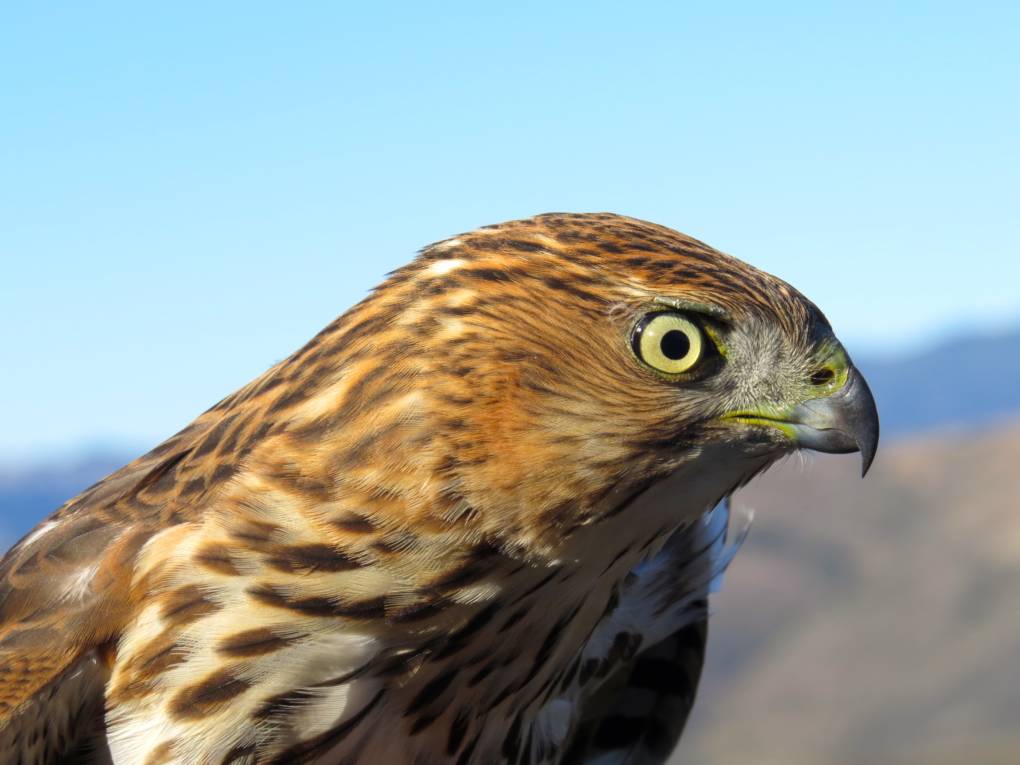
"caption": "A sharp-shinned hawk, one of the birds of the Mojave Desert. ",
"description": null,
"title": "IMG_1",
"credit": "Courtesy of Sean Peterson",
"status": "inherit",
"isLoading": false,
"fetchFailed": false
},
"science_1948211": {
"type": "attachments",
"id": "science_1948211",
"meta": {
"index": "attachments_1716263798",
"site": "science",
"id": "1948211",
"found": true
},
"parent": 1928267,
"imgSizes": {
"twentyfourteen-full-width": {
"file": "https://ww2.kqed.org/app/uploads/sites/35/2018/09/212375-1038x576.jpg",
"width": 1038,
"mimeType": "image/jpeg",
"height": 576
},
"thumbnail": {
"file": "https://ww2.kqed.org/app/uploads/sites/35/2018/09/212375-160x90.jpg",
"width": 160,
"mimeType": "image/jpeg",
"height": 90
},
"post-thumbnail": {
"file": "https://ww2.kqed.org/app/uploads/sites/35/2018/09/212375-672x372.jpg",
"width": 672,
"mimeType": "image/jpeg",
"height": 372
},
"kqedFullSize": {
"file": "https://ww2.kqed.org/app/uploads/sites/35/2018/09/212375.jpg",
"width": 2048,
"height": 1150
},
"large": {
"file": "https://ww2.kqed.org/app/uploads/sites/35/2018/09/212375-1020x573.jpg",
"width": 1020,
"mimeType": "image/jpeg",
"height": 573
},
"complete_open_graph": {
"file": "https://ww2.kqed.org/app/uploads/sites/35/2018/09/212375-1200x674.jpg",
"width": 1200,
"mimeType": "image/jpeg",
"height": 674
},
"full-width": {
"file": "https://ww2.kqed.org/app/uploads/sites/35/2018/09/212375-1920x1078.jpg",
"width": 1920,
"mimeType": "image/jpeg",
"height": 1078
},
"medium": {
"file": "https://ww2.kqed.org/app/uploads/sites/35/2018/09/212375-800x449.jpg",
"width": 800,
"mimeType": "image/jpeg",
"height": 449
},
"medium_large": {
"file": "https://ww2.kqed.org/app/uploads/sites/35/2018/09/212375-768x431.jpg",
"width": 768,
"mimeType": "image/jpeg",
"height": 431
}
},
"publishDate": 1569847240,
"modified": 1569847365,
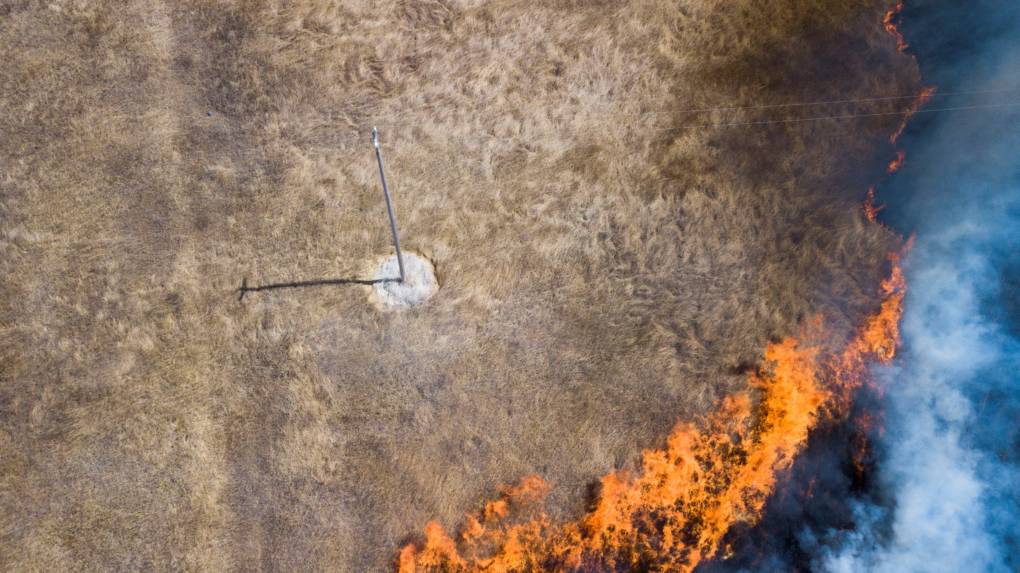
"caption": "A utility pole, treated with long-lasting fire retardant fluids, avoids damage during a controlled burn.",
"description": null,
"title": "212375",
"credit": "Image courtesy of Jesse D. Acosta",
"status": "inherit",
"isLoading": false,
"fetchFailed": false
},
"science_1948151": {
"type": "attachments",
"id": "science_1948151",
"meta": {
"index": "attachments_1716263798",
"site": "science",
"id": "1948151",
"found": true
},
"parent": 1948150,
"imgSizes": {
"twentyfourteen-full-width": {
"file": "https://ww2.kqed.org/app/uploads/sites/35/2019/09/San-joaquin-river-1038x576.jpg",
"width": 1038,
"mimeType": "image/jpeg",
"height": 576
},
"thumbnail": {
"file": "https://ww2.kqed.org/app/uploads/sites/35/2019/09/San-joaquin-river-160x90.jpg",
"width": 160,
"mimeType": "image/jpeg",
"height": 90
},
"post-thumbnail": {
"file": "https://ww2.kqed.org/app/uploads/sites/35/2019/09/San-joaquin-river-672x372.jpg",
"width": 672,
"mimeType": "image/jpeg",
"height": 372
},
"kqedFullSize": {
"file": "https://ww2.kqed.org/app/uploads/sites/35/2019/09/San-joaquin-river.jpg",
"width": 1920,
"height": 1080
},
"large": {
"file": "https://ww2.kqed.org/app/uploads/sites/35/2019/09/San-joaquin-river-1020x574.jpg",
"width": 1020,
"mimeType": "image/jpeg",
"height": 574
},
"complete_open_graph": {
"file": "https://ww2.kqed.org/app/uploads/sites/35/2019/09/San-joaquin-river-1200x675.jpg",
"width": 1200,
"mimeType": "image/jpeg",
"height": 675
},
"full-width": {
"file": "https://ww2.kqed.org/app/uploads/sites/35/2019/09/San-joaquin-river-1920x1080.jpg",
"width": 1920,
"mimeType": "image/jpeg",
"height": 1080
},
"medium": {
"file": "https://ww2.kqed.org/app/uploads/sites/35/2019/09/San-joaquin-river-800x450.jpg",
"width": 800,
"mimeType": "image/jpeg",
"height": 450
},
"medium_large": {
"file": "https://ww2.kqed.org/app/uploads/sites/35/2019/09/San-joaquin-river-768x432.jpg",
"width": 768,
"mimeType": "image/jpeg",
"height": 432
}
},
"publishDate": 1569620241,
"modified": 1569620327,
"caption": "Scientists are studying how Devils Postpile National Monument, where the San Joaquin River meanders, could be a climate change refuge.",
"description": null,
"title": "San-joaquin-river",
"credit": "Lauren Sommer/KQED",
"status": "inherit",
"isLoading": false,
"fetchFailed": false
},
"science_1947887": {
"type": "attachments",
"id": "science_1947887",
"meta": {
"index": "attachments_1716263798",
"site": "science",
"id": "1947887",
"found": true
},
"parent": 1947882,
"imgSizes": {
"twentyfourteen-full-width": {
"file": "https://ww2.kqed.org/app/uploads/sites/35/2019/09/Chinook_salmon_32849474990-1-1038x576.jpg",
"width": 1038,
"mimeType": "image/jpeg",
"height": 576
},
"thumbnail": {
"file": "https://ww2.kqed.org/app/uploads/sites/35/2019/09/Chinook_salmon_32849474990-1-160x120.jpg",
"width": 160,
"mimeType": "image/jpeg",
"height": 120
},
"post-thumbnail": {
"file": "https://ww2.kqed.org/app/uploads/sites/35/2019/09/Chinook_salmon_32849474990-1-672x372.jpg",
"width": 672,
"mimeType": "image/jpeg",
"height": 372
},
"kqedFullSize": {
"file": "https://ww2.kqed.org/app/uploads/sites/35/2019/09/Chinook_salmon_32849474990-1.jpg",
"width": 1200,
"height": 900
},
"large": {
"file": "https://ww2.kqed.org/app/uploads/sites/35/2019/09/Chinook_salmon_32849474990-1-1020x765.jpg",
"width": 1020,
"mimeType": "image/jpeg",
"height": 765
},
"complete_open_graph": {
"file": "https://ww2.kqed.org/app/uploads/sites/35/2019/09/Chinook_salmon_32849474990-1-1200x900.jpg",
"width": 1200,
"mimeType": "image/jpeg",
"height": 900
},
"medium": {
"file": "https://ww2.kqed.org/app/uploads/sites/35/2019/09/Chinook_salmon_32849474990-1-800x600.jpg",
"width": 800,
"mimeType": "image/jpeg",
"height": 600
},
"medium_large": {
"file": "https://ww2.kqed.org/app/uploads/sites/35/2019/09/Chinook_salmon_32849474990-1-768x576.jpg",
"width": 768,
"mimeType": "image/jpeg",
"height": 576
}
},
"publishDate": 1569275942,
"modified": 1569275975,
"caption": "A Chinook salmon on the Feather River. ",
"description": null,
"title": "Chinook_salmon_32849474990-1",
"credit": "Photo by California Department of Fish & Wildlife, Wikimedia Commons",
"status": "inherit",
"isLoading": false,
"fetchFailed": false
},
"science_1947906": {
"type": "attachments",
"id": "science_1947906",
"meta": {
"index": "attachments_1716263798",
"site": "science",
"id": "1947906",
"found": true
},
"parent": 1947901,
"imgSizes": {
"twentyfourteen-full-width": {
"file": "https://ww2.kqed.org/app/uploads/sites/35/2019/09/Michael_Mann_The_Madhouse_Effect_How_Climate_Change_Denial_Is_Threatening_Our_Planet_Destroying_Our_Politics_and_Driving_Us_Crazy_CSICon_2016-1038x576.jpg",
"width": 1038,
"mimeType": "image/jpeg",
"height": 576
},
"thumbnail": {
"file": "https://ww2.kqed.org/app/uploads/sites/35/2019/09/Michael_Mann_The_Madhouse_Effect_How_Climate_Change_Denial_Is_Threatening_Our_Planet_Destroying_Our_Politics_and_Driving_Us_Crazy_CSICon_2016-160x152.jpg",
"width": 160,
"mimeType": "image/jpeg",
"height": 152
},
"post-thumbnail": {
"file": "https://ww2.kqed.org/app/uploads/sites/35/2019/09/Michael_Mann_The_Madhouse_Effect_How_Climate_Change_Denial_Is_Threatening_Our_Planet_Destroying_Our_Politics_and_Driving_Us_Crazy_CSICon_2016-672x372.jpg",
"width": 672,
"mimeType": "image/jpeg",
"height": 372
},
"kqedFullSize": {
"file": "https://ww2.kqed.org/app/uploads/sites/35/2019/09/Michael_Mann_The_Madhouse_Effect_How_Climate_Change_Denial_Is_Threatening_Our_Planet_Destroying_Our_Politics_and_Driving_Us_Crazy_CSICon_2016-e1569279776260.jpg",
"width": 1925,
"height": 1831
},
"large": {
"file": "https://ww2.kqed.org/app/uploads/sites/35/2019/09/Michael_Mann_The_Madhouse_Effect_How_Climate_Change_Denial_Is_Threatening_Our_Planet_Destroying_Our_Politics_and_Driving_Us_Crazy_CSICon_2016-1020x970.jpg",
"width": 1020,
"mimeType": "image/jpeg",
"height": 970
},
"complete_open_graph": {
"file": "https://ww2.kqed.org/app/uploads/sites/35/2019/09/Michael_Mann_The_Madhouse_Effect_How_Climate_Change_Denial_Is_Threatening_Our_Planet_Destroying_Our_Politics_and_Driving_Us_Crazy_CSICon_2016-1200x1141.jpg",
"width": 1200,
"mimeType": "image/jpeg",
"height": 1141
},
"full-width": {
"file": "https://ww2.kqed.org/app/uploads/sites/35/2019/09/Michael_Mann_The_Madhouse_Effect_How_Climate_Change_Denial_Is_Threatening_Our_Planet_Destroying_Our_Politics_and_Driving_Us_Crazy_CSICon_2016-1920x1826.jpg",
"width": 1920,
"mimeType": "image/jpeg",
"height": 1826
},
"medium": {
"file": "https://ww2.kqed.org/app/uploads/sites/35/2019/09/Michael_Mann_The_Madhouse_Effect_How_Climate_Change_Denial_Is_Threatening_Our_Planet_Destroying_Our_Politics_and_Driving_Us_Crazy_CSICon_2016-800x761.jpg",
"width": 800,
"mimeType": "image/jpeg",
"height": 761
},
"medium_large": {
"file": "https://ww2.kqed.org/app/uploads/sites/35/2019/09/Michael_Mann_The_Madhouse_Effect_How_Climate_Change_Denial_Is_Threatening_Our_Planet_Destroying_Our_Politics_and_Driving_Us_Crazy_CSICon_2016-768x730.jpg",
"width": 768,
"mimeType": "image/jpeg",
"height": 730
}
},
"publishDate": 1569279759,
"modified": 1569279795,
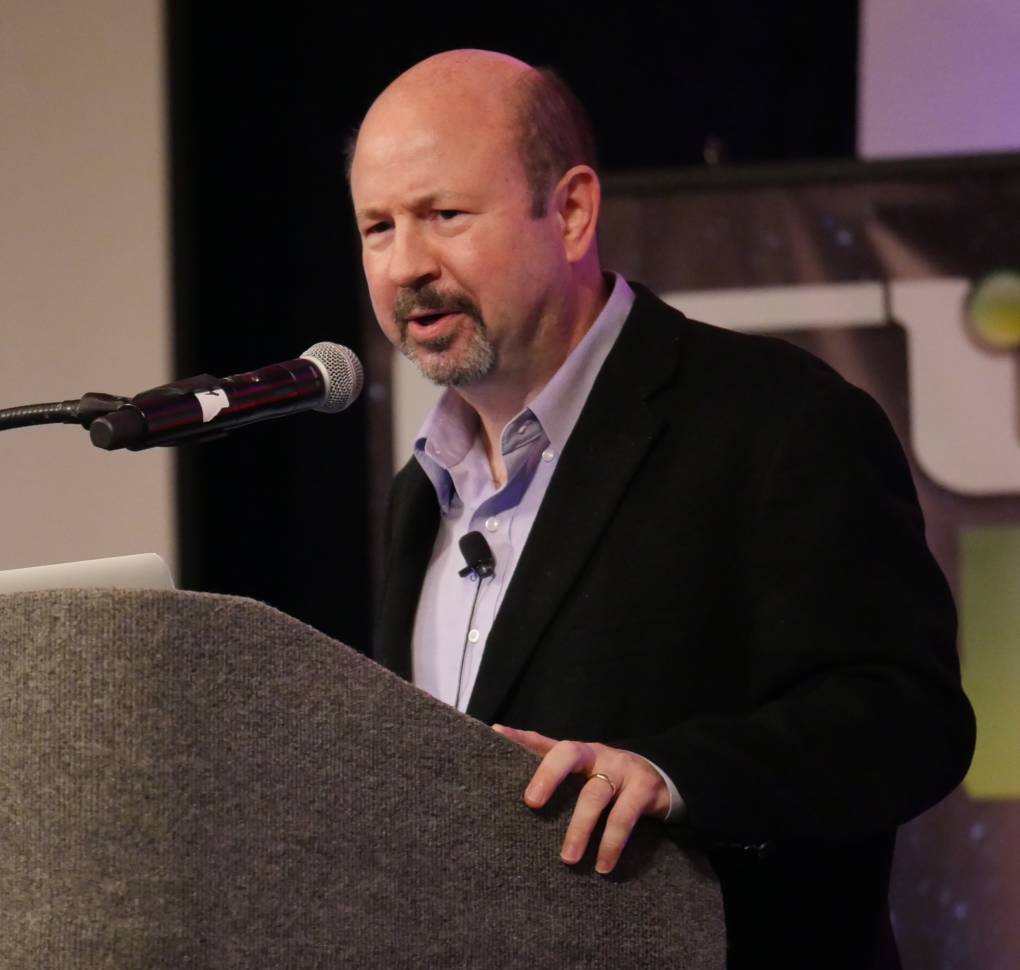
"caption": "Michael Mann The Madhouse Effect How Climate Change Denial Is Threatening Our Planet Destroying Our Politics and Driving Us Crazy CSICon 2016",
"description": null,
"title": "Michael_Mann_The_Madhouse_Effect_How_Climate_Change_Denial_Is_Threatening_Our_Planet_Destroying_Our_Politics_and_Driving_Us_Crazy_CSICon_2016",
"credit": "Wikimedia Commons",
"status": "inherit",
"isLoading": false,
"fetchFailed": false
},
"science_1947899": {
"type": "attachments",
"id": "science_1947899",
"meta": {
"index": "attachments_1716263798",
"site": "science",
"id": "1947899",
"found": true
},
"parent": 1947893,
"imgSizes": {
"twentyfourteen-full-width": {
"file": "https://ww2.kqed.org/app/uploads/sites/35/2019/09/RS3750_SaltPond120119-1038x576.jpg",
"width": 1038,
"mimeType": "image/jpeg",
"height": 576
},
"thumbnail": {
"file": "https://ww2.kqed.org/app/uploads/sites/35/2019/09/RS3750_SaltPond120119-160x120.jpg",
"width": 160,
"mimeType": "image/jpeg",
"height": 120
},
"post-thumbnail": {
"file": "https://ww2.kqed.org/app/uploads/sites/35/2019/09/RS3750_SaltPond120119-672x372.jpg",
"width": 672,
"mimeType": "image/jpeg",
"height": 372
},
"kqedFullSize": {
"file": "https://ww2.kqed.org/app/uploads/sites/35/2019/09/RS3750_SaltPond120119.jpg",
"width": 2048,
"height": 1536
},
"large": {
"file": "https://ww2.kqed.org/app/uploads/sites/35/2019/09/RS3750_SaltPond120119-1020x765.jpg",
"width": 1020,
"mimeType": "image/jpeg",
"height": 765
},
"complete_open_graph": {
"file": "https://ww2.kqed.org/app/uploads/sites/35/2019/09/RS3750_SaltPond120119-1200x900.jpg",
"width": 1200,
"mimeType": "image/jpeg",
"height": 900
},
"full-width": {
"file": "https://ww2.kqed.org/app/uploads/sites/35/2019/09/RS3750_SaltPond120119-1920x1440.jpg",
"width": 1920,
"mimeType": "image/jpeg",
"height": 1440
},
"medium": {
"file": "https://ww2.kqed.org/app/uploads/sites/35/2019/09/RS3750_SaltPond120119-800x600.jpg",
"width": 800,
"mimeType": "image/jpeg",
"height": 600
},
"medium_large": {
"file": "https://ww2.kqed.org/app/uploads/sites/35/2019/09/RS3750_SaltPond120119-768x576.jpg",
"width": 768,
"mimeType": "image/jpeg",
"height": 576
}
},
"publishDate": 1569278107,
"modified": 1569278145,
"caption": "Natural marsh on the left side, a salt pond being restored to marsh on the right.",
"description": null,
"title": "RS3750_SaltPond120119",
"credit": "Molly Samuel/KQED",
"status": "inherit",
"isLoading": false,
"fetchFailed": false
},
"science_1947862": {
"type": "attachments",
"id": "science_1947862",
"meta": {
"index": "attachments_1716263798",
"site": "science",
"id": "1947862",
"found": true
},
"parent": 1947752,
"imgSizes": {
"twentyfourteen-full-width": {
"file": "https://ww2.kqed.org/app/uploads/sites/35/2019/09/image-6-1038x576.jpg",
"width": 1038,
"mimeType": "image/jpeg",
"height": 576
},
"thumbnail": {
"file": "https://ww2.kqed.org/app/uploads/sites/35/2019/09/image-6-160x107.jpg",
"width": 160,
"mimeType": "image/jpeg",
"height": 107
},
"post-thumbnail": {
"file": "https://ww2.kqed.org/app/uploads/sites/35/2019/09/image-6-672x372.jpg",
"width": 672,
"mimeType": "image/jpeg",
"height": 372
},
"kqedFullSize": {
"file": "https://ww2.kqed.org/app/uploads/sites/35/2019/09/image-6.jpg",
"width": 1200,
"height": 801
},
"large": {
"file": "https://ww2.kqed.org/app/uploads/sites/35/2019/09/image-6-1020x681.jpg",
"width": 1020,
"mimeType": "image/jpeg",
"height": 681
},
"complete_open_graph": {
"file": "https://ww2.kqed.org/app/uploads/sites/35/2019/09/image-6-1200x801.jpg",
"width": 1200,
"mimeType": "image/jpeg",
"height": 801
},
"medium": {
"file": "https://ww2.kqed.org/app/uploads/sites/35/2019/09/image-6-800x534.jpg",
"width": 800,
"mimeType": "image/jpeg",
"height": 534
},
"medium_large": {
"file": "https://ww2.kqed.org/app/uploads/sites/35/2019/09/image-6-768x513.jpg",
"width": 768,
"mimeType": "image/jpeg",
"height": 513
}
},
"publishDate": 1569266764,
"modified": 1569267667,
"caption": "Governor Brown signs an agreement with China's Minister of Science and Technology, Wan Gang, to expand cooperation on low-carbon technology and renewables in June 2017. Brown today announced a new initiative with China to continue working on climate solutions.",
"description": null,
"title": "image-6",
"credit": "Courtesy of the office of Governor Edmund G. Brown Jr. ",
"status": "inherit",
"isLoading": false,
"fetchFailed": false
},
"science_1947801": {
"type": "attachments",
"id": "science_1947801",
"meta": {
"index": "attachments_1716263798",
"site": "science",
"id": "1947801",
"found": true
},
"parent": 1947795,
"imgSizes": {
"twentyfourteen-full-width": {
"file": "https://ww2.kqed.org/app/uploads/sites/35/2019/09/sugar-pine-seedlings-1038x576.jpg",
"width": 1038,
"mimeType": "image/jpeg",
"height": 576
},
"thumbnail": {
"file": "https://ww2.kqed.org/app/uploads/sites/35/2019/09/sugar-pine-seedlings-160x90.jpg",
"width": 160,
"mimeType": "image/jpeg",
"height": 90
},
"post-thumbnail": {
"file": "https://ww2.kqed.org/app/uploads/sites/35/2019/09/sugar-pine-seedlings-672x372.jpg",
"width": 672,
"mimeType": "image/jpeg",
"height": 372
},
"kqedFullSize": {
"file": "https://ww2.kqed.org/app/uploads/sites/35/2019/09/sugar-pine-seedlings.jpg",
"width": 1920,
"height": 1080
},
"large": {
"file": "https://ww2.kqed.org/app/uploads/sites/35/2019/09/sugar-pine-seedlings-1020x574.jpg",
"width": 1020,
"mimeType": "image/jpeg",
"height": 574
},
"complete_open_graph": {
"file": "https://ww2.kqed.org/app/uploads/sites/35/2019/09/sugar-pine-seedlings-1200x675.jpg",
"width": 1200,
"mimeType": "image/jpeg",
"height": 675
},
"full-width": {
"file": "https://ww2.kqed.org/app/uploads/sites/35/2019/09/sugar-pine-seedlings-1920x1080.jpg",
"width": 1920,
"mimeType": "image/jpeg",
"height": 1080
},
"medium": {
"file": "https://ww2.kqed.org/app/uploads/sites/35/2019/09/sugar-pine-seedlings-800x450.jpg",
"width": 800,
"mimeType": "image/jpeg",
"height": 450
},
"medium_large": {
"file": "https://ww2.kqed.org/app/uploads/sites/35/2019/09/sugar-pine-seedlings-768x432.jpg",
"width": 768,
"mimeType": "image/jpeg",
"height": 432
}
},
"publishDate": 1569027034,
"modified": 1569175694,
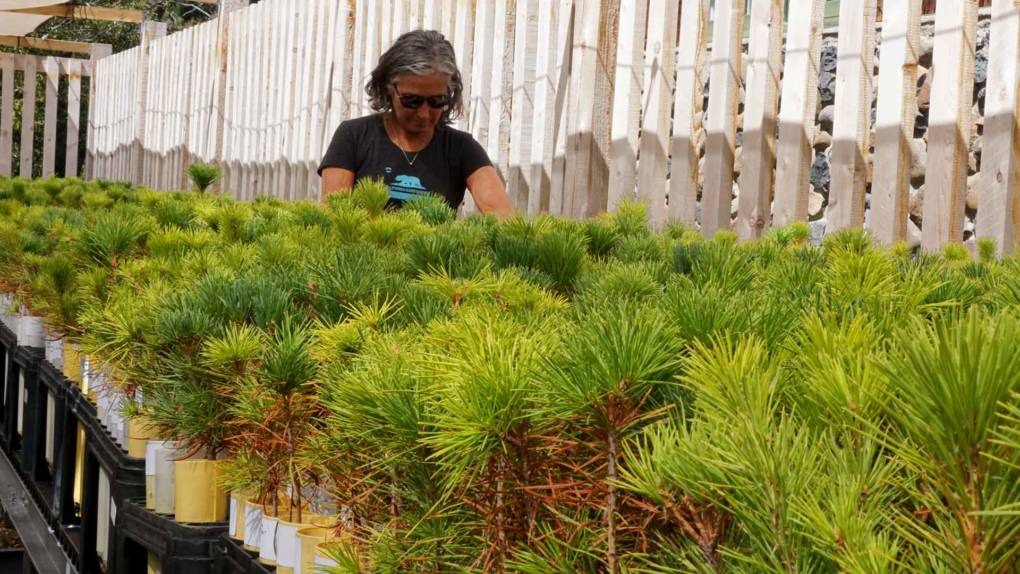
"caption": "Forest biologist Patricia Maloney is raising 10,000 sugar pine seedlings descended from trees that survived California's historic drought.",
"description": null,
"title": "sugar-pine-seedlings",
"credit": "Lauren Sommer/KQED",
"status": "inherit",
"isLoading": false,
"fetchFailed": false
},
"science_1947715": {
"type": "attachments",
"id": "science_1947715",
"meta": {
"index": "attachments_1716263798",
"site": "science",
"id": "1947715",
"found": true
},
"parent": 1947584,
"imgSizes": {
"twentyfourteen-full-width": {
"file": "https://ww2.kqed.org/app/uploads/sites/35/2019/09/Climate-Strike-Marchers-1038x576.jpg",
"width": 1038,
"mimeType": "image/jpeg",
"height": 576
},
"thumbnail": {
"file": "https://ww2.kqed.org/app/uploads/sites/35/2019/09/Climate-Strike-Marchers-160x117.jpg",
"width": 160,
"mimeType": "image/jpeg",
"height": 117
},
"post-thumbnail": {
"file": "https://ww2.kqed.org/app/uploads/sites/35/2019/09/Climate-Strike-Marchers-672x372.jpg",
"width": 672,
"mimeType": "image/jpeg",
"height": 372
},
"kqedFullSize": {
"file": "https://ww2.kqed.org/app/uploads/sites/35/2019/09/Climate-Strike-Marchers.jpg",
"width": 1920,
"height": 1402
},
"large": {
"file": "https://ww2.kqed.org/app/uploads/sites/35/2019/09/Climate-Strike-Marchers-1020x745.jpg",
"width": 1020,
"mimeType": "image/jpeg",
"height": 745
},
"complete_open_graph": {
"file": "https://ww2.kqed.org/app/uploads/sites/35/2019/09/Climate-Strike-Marchers-1200x876.jpg",
"width": 1200,
"mimeType": "image/jpeg",
"height": 876
},
"full-width": {
"file": "https://ww2.kqed.org/app/uploads/sites/35/2019/09/Climate-Strike-Marchers-1920x1402.jpg",
"width": 1920,
"mimeType": "image/jpeg",
"height": 1402
},
"medium": {
"file": "https://ww2.kqed.org/app/uploads/sites/35/2019/09/Climate-Strike-Marchers-800x584.jpg",
"width": 800,
"mimeType": "image/jpeg",
"height": 584
},
"medium_large": {
"file": "https://ww2.kqed.org/app/uploads/sites/35/2019/09/Climate-Strike-Marchers-768x561.jpg",
"width": 768,
"mimeType": "image/jpeg",
"height": 561
}
},
"publishDate": 1569007054,
"modified": 1569007090,
"caption": "Protesters march in San Francisco",
"description": null,
"title": "Climate-Strike-Marchers",
"credit": "Stephanie Lister/KQED",
"status": "inherit",
"isLoading": false,
"fetchFailed": false
}
},
"audioPlayerReducer": {
"postId": "stream_live",
"isPaused": true,
"isPlaying": false,
"pfsActive": false,
"pledgeModalIsOpen": true,
"playerDrawerIsOpen": false,
"liveAudioPlayStartedAt": 0,
"liveAudioPlayContext": ""
},
"authorsReducer": {
"byline_science_1948659": {
"type": "authors",
"id": "byline_science_1948659",
"meta": {
"override": true
},
"slug": "byline_science_1948659",
"name": "Bob Berwyn \u003cbr/>InsideClimate News \u003cbr>",
"isLoading": false
},
"byline_science_1947882": {
"type": "authors",
"id": "byline_science_1947882",
"meta": {
"override": true
},
"slug": "byline_science_1947882",
"name": "Jane Braxton Little \u003cbr/> Bay Nature \u003cbr>",
"isLoading": false
},
"byline_science_1947901": {
"type": "authors",
"id": "byline_science_1947901",
"meta": {
"override": true
},
"slug": "byline_science_1947901",
"name": "Brendan Fitzgerald \u003cbr/>Columbia Journalism Review\u003cbr>",
"isLoading": false
},
"byline_science_1947893": {
"type": "authors",
"id": "byline_science_1947893",
"meta": {
"override": true
},
"slug": "byline_science_1947893",
"name": "Moises Velasquez-Manoff \u003cbr/>Bay Nature\u003cbr>",
"isLoading": false
},
"jbrooks": {
"type": "authors",
"id": "80",
"meta": {
"index": "authors_1716337520",
"id": "80",
"found": true
},
"name": "Jon Brooks",
"firstName": "Jon",
"lastName": "Brooks",
"slug": "jbrooks",
"email": "jbrooks@kqed.org",
"display_author_email": true,
"staff_mastheads": [
"science"
],
"title": "Digital Editor",
"bio": "Jon Brooks is a former Digital Editor for KQED Science. He is the former editor of KQED’s daily news blog, News Fix. In 2014, he won a California Journalism Award for his coverage of ride services like Uber and Lyft and the taxi industry. A veteran blogger, he previously worked for Yahoo! in various news writing and editing roles. Jon is also a playwright whose work has been produced in San Francisco, New York, Italy, and around the U.S. He has written about film for his own blog and studied film at Boston University.",
"avatar": "https://secure.gravatar.com/avatar/98887f7ed1c876ed414d4c915e969584?s=600&d=blank&r=g",
"twitter": "jbrooksfoy",
"facebook": null,
"instagram": null,
"linkedin": null,
"sites": [
{
"site": "arts",
"roles": [
"Contributor",
"editor"
]
},
{
"site": "news",
"roles": [
"author"
]
},
{
"site": "futureofyou",
"roles": [
"administrator"
]
},
{
"site": "mindshift",
"roles": [
"editor"
]
},
{
"site": "stateofhealth",
"roles": [
"editor"
]
},
{
"site": "science",
"roles": [
"administrator"
]
},
{
"site": "quest",
"roles": [
"editor"
]
}
],
"headData": {
"title": "Jon Brooks | KQED",
"description": "Digital Editor",
"ogImgSrc": "https://secure.gravatar.com/avatar/98887f7ed1c876ed414d4c915e969584?s=600&d=blank&r=g",
"twImgSrc": "https://secure.gravatar.com/avatar/98887f7ed1c876ed414d4c915e969584?s=600&d=blank&r=g"
},
"isLoading": false,
"link": "/author/jbrooks"
},
"laurensommer": {
"type": "authors",
"id": "239",
"meta": {
"index": "authors_1716337520",
"id": "239",
"found": true
},
"name": "Lauren Sommer",
"firstName": "Lauren",
"lastName": "Sommer",
"slug": "laurensommer",
"email": "lsommer@kqed.org",
"display_author_email": false,
"staff_mastheads": [],
"title": "KQED Contributor",
"bio": "Lauren is a radio reporter formerly covering environment, water, and energy for KQED Science. As part of her day job, she has scaled Sierra Nevada peaks, run from charging elephant seals, and desperately tried to get her sea legs - all in pursuit of good radio. Her work has appeared on Marketplace, Living on Earth, Science Friday and NPR's Morning Edition and All Things Considered. You can find her on Twitter at \u003ca href=\"https://twitter.com/lesommer\">@lesommer\u003c/a>.",
"avatar": "https://secure.gravatar.com/avatar/33aa3772bb86c6ad45b8aca6a238bbdf?s=600&d=blank&r=g",
"twitter": null,
"facebook": null,
"instagram": null,
"linkedin": null,
"sites": [
{
"site": "news",
"roles": [
"author"
]
},
{
"site": "science",
"roles": [
"editor",
"manage_content_types",
"manage_taxonomies"
]
},
{
"site": "quest",
"roles": [
"editor"
]
}
],
"headData": {
"title": "Lauren Sommer | KQED",
"description": "KQED Contributor",
"ogImgSrc": "https://secure.gravatar.com/avatar/33aa3772bb86c6ad45b8aca6a238bbdf?s=600&d=blank&r=g",
"twImgSrc": "https://secure.gravatar.com/avatar/33aa3772bb86c6ad45b8aca6a238bbdf?s=600&d=blank&r=g"
},
"isLoading": false,
"link": "/author/laurensommer"
},
"kqedscience": {
"type": "authors",
"id": "6387",
"meta": {
"index": "authors_1716337520",
"id": "6387",
"found": true
},
"name": "KQED Science",
"firstName": "KQED",
"lastName": "Science",
"slug": "kqedscience",
"email": "kqedscience@gmail.com",
"display_author_email": false,
"staff_mastheads": [],
"title": null,
"bio": "KQED Science brings you award-winning science and environment coverage from the Bay Area and beyond by the flagship Northern California PBS and NPR affiliate.",
"avatar": "https://secure.gravatar.com/avatar/5a295ff49cf82a8c0f30937d3f788b2f?s=600&d=blank&r=g",
"twitter": null,
"facebook": null,
"instagram": null,
"linkedin": null,
"sites": [
{
"site": "science",
"roles": [
"contributor"
]
},
{
"site": "quest",
"roles": [
"editor"
]
},
{
"site": "food",
"roles": [
"contributor"
]
}
],
"headData": {
"title": "KQED Science | KQED",
"description": null,
"ogImgSrc": "https://secure.gravatar.com/avatar/5a295ff49cf82a8c0f30937d3f788b2f?s=600&d=blank&r=g",
"twImgSrc": "https://secure.gravatar.com/avatar/5a295ff49cf82a8c0f30937d3f788b2f?s=600&d=blank&r=g"
},
"isLoading": false,
"link": "/author/kqedscience"
},
"dventon": {
"type": "authors",
"id": "11088",
"meta": {
"index": "authors_1716337520",
"id": "11088",
"found": true
},
"name": "Danielle Venton",
"firstName": "Danielle",
"lastName": "Venton",
"slug": "dventon",
"email": "dventon@kqed.org",
"display_author_email": true,
"staff_mastheads": [
"science"
],
"title": "Science reporter",
"bio": "Danielle Venton is a reporter for KQED Science. She covers wildfires, space and oceans (though she is prone to sea sickness).\r\n\r\nBefore joining KQED in 2015, Danielle was a staff reporter at KRCB in Sonoma County and a freelancer. She studied science communication at UC Santa Cruz and formerly worked at CERN in Geneva, Switzerland where she wrote about computing. She lives in Sonoma County and enjoys backpacking.",
"avatar": "https://secure.gravatar.com/avatar/37b292b5c40c8d93959c4f48d73b5286f41b7abd8588277e941905a3ed4c801c?s=600&d=blank&r=g",
"twitter": "DanielleVenton",
"bluesky": null,
"facebook": null,
"instagram": null,
"linkedin": null,
"sites": [
{
"site": "arts",
"roles": [
"contributor"
]
},
{
"site": "news",
"roles": [
"editor"
]
},
{
"site": "futureofyou",
"roles": [
"editor"
]
},
{
"site": "science",
"roles": [
"editor"
]
},
{
"site": "liveblog",
"roles": [
"contributor"
]
}
],
"headData": {
"title": "Danielle Venton | KQED",
"description": "Science reporter",
"ogImgSrc": "https://secure.gravatar.com/avatar/37b292b5c40c8d93959c4f48d73b5286f41b7abd8588277e941905a3ed4c801c?s=600&d=blank&r=g",
"twImgSrc": "https://secure.gravatar.com/avatar/37b292b5c40c8d93959c4f48d73b5286f41b7abd8588277e941905a3ed4c801c?s=600&d=blank&r=g"
},
"isLoading": false,
"link": "/author/dventon"
},
"mpeterson": {
"type": "authors",
"id": "11223",
"meta": {
"index": "authors_1716337520",
"id": "11223",
"found": true
},
"name": "Molly Peterson",
"firstName": "Molly",
"lastName": "Peterson",
"slug": "mpeterson",
"email": "mpeterson@kqed.org",
"display_author_email": false,
"staff_mastheads": [],
"title": null,
"bio": "Molly Peterson reports for KQED science and news on climate change, catastrophe and risk. Previously she was environment correspondent at Southern California Public Radio. Her work has also appeared at The New York Times, The Guardian, on NPR, at High Country News, on Code Switch, and other national outlets. She has been honored with awards from Public Radio News Directors Incorporated, Investigative Reporters and Editors, the Society for Professional Journalists, the Los Angeles Press Club, and RTNDA Edward R. Murrow awards, among others.",
"avatar": "https://secure.gravatar.com/avatar/7908e2807131f776cc8165c649530b05?s=600&d=blank&r=g",
"twitter": "Mollydacious",
"facebook": null,
"instagram": "https://www.instagram.com/radiomolly/",
"linkedin": null,
"sites": [
{
"site": "news",
"roles": [
"subscriber"
]
},
{
"site": "futureofyou",
"roles": [
"editor"
]
},
{
"site": "science",
"roles": [
"editor"
]
}
],
"headData": {
"title": "Molly Peterson | KQED",
"description": null,
"ogImgSrc": "https://secure.gravatar.com/avatar/7908e2807131f776cc8165c649530b05?s=600&d=blank&r=g",
"twImgSrc": "https://secure.gravatar.com/avatar/7908e2807131f776cc8165c649530b05?s=600&d=blank&r=g"
},
"isLoading": false,
"link": "/author/mpeterson"
},
"parcuni": {
"type": "authors",
"id": "11368",
"meta": {
"index": "authors_1716337520",
"id": "11368",
"found": true
},
"name": "Peter Arcuni",
"firstName": "Peter",
"lastName": "Arcuni",
"slug": "parcuni",
"email": "parcuni@KQED.org",
"display_author_email": false,
"staff_mastheads": [
"science"
],
"title": "Reporter",
"bio": "Peter reports radio and online stories for \u003cem>KQED Science\u003c/em>. His work has also appeared on the \u003cem>The California Report\u003c/em> morning show and \u003cem>KQED News\u003c/em>. His production credits include \u003cem>The California Report, The California Report Magazine\u003c/em> and KQED's local news podcast \u003cem>The Bay\u003c/em>. Other credits include NPR's \u003cem>All Things Considered\u003c/em>, WNYC's \u003cem>Science Friday\u003c/em>, WBUR's \u003cem>Here & Now\u003c/em>, WIRED and SFGate. Peter graduated from Brown University and earned a master's degree in journalism from Stanford. He's covered everything from homelessness to wildfires, health, the environment, arts and Thanksgiving in San Quentin prison. In other lives, he played rock n roll music and studied neuroscience. You can email him at: parcuni@kqed.org",
"avatar": "https://secure.gravatar.com/avatar/d5032f6f27199d478af34ad2e1d98732?s=600&d=blank&r=g",
"twitter": "peterarcuni",
"facebook": null,
"instagram": null,
"linkedin": null,
"sites": [
{
"site": "news",
"roles": [
"editor"
]
},
{
"site": "science",
"roles": [
"editor"
]
}
],
"headData": {
"title": "Peter Arcuni | KQED",
"description": "Reporter",
"ogImgSrc": "https://secure.gravatar.com/avatar/d5032f6f27199d478af34ad2e1d98732?s=600&d=blank&r=g",
"twImgSrc": "https://secure.gravatar.com/avatar/d5032f6f27199d478af34ad2e1d98732?s=600&d=blank&r=g"
},
"isLoading": false,
"link": "/author/parcuni"
},
"aheidt": {
"type": "authors",
"id": "11520",
"meta": {
"index": "authors_1716337520",
"id": "11520",
"found": true
},
"name": "Amanda Heidt",
"firstName": "Amanda",
"lastName": "Heidt",
"slug": "aheidt",
"email": "aheidt@kqed.org",
"display_author_email": false,
"staff_mastheads": [],
"title": "KQED Contributor",
"bio": "Amanda Heidt was the 2018 Dr. Allen Fuhs KQED-CSUMB Fellow at KQED Science. Amanda came to KQED from Moss Landing Marine Laboratories, where her masters research uses molecular techniques to describe communities of meiofauna, small invertebrates living between grains of sand. She has a background in education, outreach, and science communication, fostered by a recent position with the Stanford Center for Ocean Solutions. She has a BS in Marine Science and a minor in Chemistry from the University of California, Santa Cruz. Her interests include climbing, diving, camping, baking, and reading. Find her on Twitter and Instagram @Scatter_Cushion.",
"avatar": "https://secure.gravatar.com/avatar/e646090632bd7fef75fff4616269ff8c?s=600&d=blank&r=g",
"twitter": "Scatter_Cushion",
"facebook": null,
"instagram": null,
"linkedin": null,
"sites": [
{
"site": "news",
"roles": [
"subscriber"
]
},
{
"site": "science",
"roles": []
}
],
"headData": {
"title": "Amanda Heidt | KQED",
"description": "KQED Contributor",
"ogImgSrc": "https://secure.gravatar.com/avatar/e646090632bd7fef75fff4616269ff8c?s=600&d=blank&r=g",
"twImgSrc": "https://secure.gravatar.com/avatar/e646090632bd7fef75fff4616269ff8c?s=600&d=blank&r=g"
},
"isLoading": false,
"link": "/author/aheidt"
},
"kevinstark": {
"type": "authors",
"id": "11608",
"meta": {
"index": "authors_1716337520",
"id": "11608",
"found": true
},
"name": "Kevin Stark",
"firstName": "Kevin",
"lastName": "Stark",
"slug": "kevinstark",
"email": "kstark@kqed.org",
"display_author_email": true,
"staff_mastheads": [
"science"
],
"title": "Senior Editor",
"bio": "Kevin is a senior editor for KQED Science, managing the station's health and climate desks. His journalism career began in the Pacific Northwest, and he later became a lead reporter for the San Francisco Public Press. His work has appeared in Pacific Standard magazine, the Energy News Network, the Center for Investigative Reporting's Reveal and WBEZ in Chicago. Kevin joined KQED in 2019, and has covered issues related to energy, wildfire, climate change and the environment.",
"avatar": "https://secure.gravatar.com/avatar/365aaa4b597d3a8374f67504ff0facd323d7906e8eb4be0a7efd2427408e802c?s=600&d=blank&r=g",
"twitter": "starkkev",
"bluesky": null,
"facebook": null,
"instagram": null,
"linkedin": null,
"sites": [
{
"site": "",
"roles": [
"editor"
]
},
{
"site": "news",
"roles": [
"editor"
]
},
{
"site": "science",
"roles": [
"administrator"
]
}
],
"headData": {
"title": "Kevin Stark | KQED",
"description": "Senior Editor",
"ogImgSrc": "https://secure.gravatar.com/avatar/365aaa4b597d3a8374f67504ff0facd323d7906e8eb4be0a7efd2427408e802c?s=600&d=blank&r=g",
"twImgSrc": "https://secure.gravatar.com/avatar/365aaa4b597d3a8374f67504ff0facd323d7906e8eb4be0a7efd2427408e802c?s=600&d=blank&r=g"
},
"isLoading": false,
"link": "/author/kevinstark"
}
},
"pagesReducer": {
"science_tag_climate-change": {
"type": "terms",
"id": "science_194",
"meta": {
"index": "terms_1716263798",
"site": "science",
"id": "194",
"score": 7.946657
},
"featImg": null,
"name": "climate change",
"description": null,
"taxonomy": "tag",
"headData": {
"twImgId": null,
"twTitle": null,
"ogTitle": null,
"ogImgId": null,
"twDescription": null,
"description": null,
"title": "climate change Archives | KQED Science",
"ogDescription": null
},
"ttid": 198,
"slug": "climate-change",
"isLoading": false,
"title": "climate change",
"pageMeta": {
"site": "science",
"WpPageTemplate": "page-topic-editorial",
"currentPage": 30
},
"blocks": [
{
"blockName": "kqed/post-list",
"attrs": {
"layout": "cardArticle2",
"query": "posts/science?tag=climate-change",
"seeMore": false,
"paginated": true,
"page": 30
}
},
{
"blockName": "kqed/ad"
}
]
}
},
"pfsSessionReducer": {},
"postsReducer": {
"stream_live": {
"type": "live",
"id": "stream_live",
"audioUrl": "https://streams.kqed.org/kqedradio",
"title": "Live Stream",
"excerpt": "Live Stream information currently unavailable.",
"link": "/radio",
"featImg": "",
"label": {
"name": "KQED Live",
"link": "/"
}
},
"stream_kqedNewscast": {
"type": "posts",
"id": "stream_kqedNewscast",
"audioUrl": "https://www.kqed.org/.stream/anon/radio/RDnews/newscast.mp3?_=1",
"title": "KQED Newscast",
"featImg": "",
"label": {
"name": "88.5 FM",
"link": "/"
}
},
"science_1948712": {
"type": "posts",
"id": "science_1948712",
"meta": {
"index": "posts_1716263798",
"site": "science",
"id": "1948712",
"score": null,
"sort": [
1570535923000
]
},
"parent": 0,
"labelTerm": {},
"blocks": [],
"publishDate": 1570535923,
"format": "standard",
"title": "Your SUV Is Really Messing With California's Climate Plans",
"headTitle": "Your SUV Is Really Messing With California’s Climate Plans | KQED",
"content": "\u003cp>A couple of years ago, environmental groups and state leaders cheered when California reported it had reached its 2020 emissions target four years \u003ca href=\"https://www.latimes.com/local/lanow/la-me-adv-california-climate-pollution-20180722-story.html\">early\u003c/a>.\u003c/p>\n\u003cp>But when it comes to meeting California’s ambitious 2030-and- beyond climate goals, it appears to be way too early to pop any celebratory champagne.\u003c/p>\n\u003cp>[pullquote]Emissions from the transportation sector soared to a record high, as more people drove more miles in larger, less-efficient trucks and SUVs. These gas guzzlers made up 57% of new vehicle registrations in the fourth quarter of 2018, up from 39% five years ago.[/pullquote] According to the latest report from the annual California Green Innovation Index, at its current rate of emissions reduction, the state is 31 years behind its 2030 goal, which it wouldn’t meet until 2061.\u003c/p>\n\u003cp>If California is to meet the 2030 target, a 40% reduction in greenhouse gases from 1990 levels, the state needs to cut emissions about three times faster than the current rate. The outlook for California reaching its 2050 goal — an 80% reduction compared to 1990 — is even bleaker. At its current pace, the state will overshoot that goal by a full century.\u003c/p>\n\u003cp>According to the latest report, by researchers at Beacon Economics and is not the state’s \u003ca href=\"https://ww2.arb.ca.gov/our-work/programs/ghg-inventory-program\" target=\"_blank\" rel=\"noopener\">official greenhouse gas inventory\u003c/a>, California reduced emissions by just over 1 percent from 2017 to 2018.\u003c/p>\n\u003cp>[ad fullwidth]\u003c/p>\n\u003cp>“We could be decades behind if we don’t implement an ambitious new set of innovative policies, and that’s a big if,” said Noel Perry, founder of Next 10, the nonpartisan, nonprofit organization that releases the report.\u003c/p>\n\u003cp>Perry called the numbers, which draw on nearly a decade’s worth of data, “a wakeup call.”\u003c/p>\n\u003cp>\u003cstrong>The Wildfire Issue\u003c/strong>\u003c/p>\n\u003cp>California wildfires in 2018 emitted an estimated 45.5 million metric tons of CO2, a 24% increase from 2017, when California wildfires released an estimated total of 26.7 million metric tons.\u003c/p>\n\u003cp>In 2018, wildfires in California produced “an estimated nine times more emissions than were reduced across the entire state’s economy the year prior,” according to the report.\u003c/p>\n\u003cp>The California Air Resources Board, which is in charge of implementing the state’s emissions reduction policies, is pushing back on the report’s inclusion of these emissions.\u003c/p>\n\u003cp>Stanley Young, a spokesman for the California Air Resources Board, said it is a “mistake to compare carbon released by wildfire with human-caused emissions” because carbon released by wildfires is part of the natural carbon cycle, while emissions from the burning of fossil fuels are the result of extracting carbon that otherwise would stay in the ground.\u003c/p>\n\u003cp>Still, Young acknowledged that the state’s 2030 goal is going to be a heavy lift.\u003c/p>\n\u003cp>In 2017, California published a \u003ca style=\"font-weight: bold\" href=\"https://ww3.arb.ca.gov/cc/scopingplan/scoping_plan_2017.pdf\">plan\u003c/a> to achieve reductions that are “cost-effective” and “technologically feasible,” said Young. But they are going to require “continued legislative and funding support,” he said.\u003c/p>\n\u003cp>He pointed to Gov. Gavin Newsom’s emissions \u003ca href=\"https://www.kqed.org/science/1945609/california-and-carmakers-reach-clean-vehicle-agreement-rebuking-trump-administration\">agreement\u003c/a> with four major car companies, and the state’s investment of hundreds of millions of dollars in revenue from its cap-and-trade program towards incentives for electric vehicles, as examples of “California’s full-throated commitment to transforming the transportation sector, where we face the biggest challenges.”\u003c/p>\n\u003cp>\u003cstrong>Policy Changes\u003c/strong>\u003c/p>\n\u003cp>To make the necessary reductions in emissions, Californians will need to make drastic changes in the way they get around, build homes, manufacture goods and consume energy.\u003c/p>\n\u003cp>“California historically has shown its ability to use policy and technology innovation to make dramatic shifts in carbon reductions,” Perry said. “We’ve seen that through renewable energy and also in energy efficiency. Although the news is sobering, if California were to galvanize together and create new regulations and new policies that help to drive the reduction of emissions, I think that it is quite possible that we can hit our ambitious policy goals.”\u003c/p>\n\u003cp>It’s not that California isn’t making progress. In fact, the state’s energy sector is slashing carbon emission, particularly from its electricity grid, at the same time the economy has been growing.\u003c/p>\n\u003cp>Since 1990, the state’s GDP increased by 41% while per capita planet-warming gas emissions fell by 25%, according to the report.\u003c/p>\n\u003cp>“We’re finally seeing a lot of research and development investment start to pay off,” said Adam Fowler, director of research at Beacon. “Renewable energy has reached a tipping point in terms of being increasingly cost competitive with fossil fuels, and that’s exciting.”\u003c/p>\n\u003cp>The problem is that emissions from other sectors are flat or, in the case of transportation, rising. Transportation-related carbon pollution remains the largest source of greenhouse gas emissions in California, mostly because of personal vehicles, the report says.\u003c/p>\n\u003cp>In 2017, emissions from the transportation sector soared to a record high, as more people drove more miles in larger, less-efficient trucks and SUVs. These vehicles made up 57% of new registrations in state in the fourth quarter of 2018, up from 39% five years ago.\u003c/p>\n\u003cp>“There has been a shift in consumer preference toward what have historically been less efficient vehicles,” Fowler said. “This is probably one of the most sobering points from the report. Breakthroughs in these hard to reach sectors are going to require ambitious policy setting to push our economic and climate goals forward.”\u003c/p>\n\u003cp>\u003c/p>\n\u003cp>Some other key takeaways from the report:\u003c/p>\n\u003cul>\n\u003cli>The state’s renewable energy sector is strong. In 2017, for the first time, a greater portion of California’s power mix came from renewable energy sources like wind and solar than from fossil fuels\u003c/li>\n\u003cli>Renewable resources like hydroelectric, solar and wind are increasingly replacing natural gas.\u003c/li>\n\u003cli>Electric vehicle sales are rising, with adoption up 37% in 2018 over the previous year. Still, while electric, hybrid, and even hydrogen vehicles are more popular, at the current pace, they will account for just 2% of all the cars registered on the road by the end of 2019.\u003c/li>\n\u003cli>Emissions from landfills continue to rise, jumping about 7% in 2017. At the same time, the state’s recycling rate declined. At this rate, California is not on track to meet its goal of a 75% recycling rate by the year 2020, Fowler said.\u003c/li>\n\u003c/ul>\n\n",
"stats": {
"hasVideo": false,
"hasChartOrMap": false,
"hasAudio": false,
"hasPolis": false,
"wordCount": 1084,
"hasGoogleForm": false,
"hasGallery": false,
"hasHearkenModule": false,
"iframeSrcs": [],
"paragraphCount": 27
},
"modified": 1704848251,
"excerpt": "Soaring emissions from vehicles are a big factor in limiting the state's greenhouse gas reductions, according to a new report. At the current pace, California is 31 years behind hitting its 2030 target.",
"headData": {
"twImgId": "",
"twTitle": "",
"ogTitle": "",
"ogImgId": "",
"twDescription": "",
"description": "Soaring emissions from vehicles are a big factor in limiting the state's greenhouse gas reductions, according to a new report. At the current pace, California is 31 years behind hitting its 2030 target.",
"title": "Your SUV Is Really Messing With California's Climate Plans | KQED",
"ogDescription": "",
"schema": {
"@context": "https://schema.org",
"@type": "Article",
"headline": "Your SUV Is Really Messing With California's Climate Plans",
"datePublished": "2019-10-08T04:58:43-07:00",
"dateModified": "2024-01-09T16:57:31-08:00",
"image": "https://cdn.kqed.org/wp-content/uploads/2020/02/KQED-OG-Image@1x.png"
}
},
"guestAuthors": [],
"slug": "your-suv-is-really-messing-with-the-states-climate-plans",
"status": "publish",
"sticky": false,
"source": "Climate",
"path": "/science/1948712/your-suv-is-really-messing-with-the-states-climate-plans",
"audioTrackLength": null,
"parsedContent": [
{
"type": "contentString",
"content": "\u003cdiv class=\"post-body\">\u003cp>\u003cp>A couple of years ago, environmental groups and state leaders cheered when California reported it had reached its 2020 emissions target four years \u003ca href=\"https://www.latimes.com/local/lanow/la-me-adv-california-climate-pollution-20180722-story.html\">early\u003c/a>.\u003c/p>\n\u003cp>But when it comes to meeting California’s ambitious 2030-and- beyond climate goals, it appears to be way too early to pop any celebratory champagne.\u003c/p>\n\u003cp>\u003c/p>\u003c/div>",
"attributes": {
"named": {},
"numeric": []
}
},
{
"type": "component",
"content": "Emissions from the transportation sector soared to a record high, as more people drove more miles in larger, less-efficient trucks and SUVs. These gas guzzlers made up 57% of new vehicle registrations in the fourth quarter of 2018, up from 39% five years ago.",
"name": "pullquote",
"attributes": {
"named": {
"label": ""
},
"numeric": []
}
},
{
"type": "contentString",
"content": "\u003cdiv class=\"post-body\">\u003cp> According to the latest report from the annual California Green Innovation Index, at its current rate of emissions reduction, the state is 31 years behind its 2030 goal, which it wouldn’t meet until 2061.\u003c/p>\n\u003cp>If California is to meet the 2030 target, a 40% reduction in greenhouse gases from 1990 levels, the state needs to cut emissions about three times faster than the current rate. The outlook for California reaching its 2050 goal — an 80% reduction compared to 1990 — is even bleaker. At its current pace, the state will overshoot that goal by a full century.\u003c/p>\n\u003cp>According to the latest report, by researchers at Beacon Economics and is not the state’s \u003ca href=\"https://ww2.arb.ca.gov/our-work/programs/ghg-inventory-program\" target=\"_blank\" rel=\"noopener\">official greenhouse gas inventory\u003c/a>, California reduced emissions by just over 1 percent from 2017 to 2018.\u003c/p>\n\u003cp>\u003c/p>\u003c/div>",
"attributes": {
"named": {},
"numeric": []
}
},
{
"type": "component",
"content": "",
"name": "ad",
"attributes": {
"named": {
"label": "fullwidth"
},
"numeric": [
"fullwidth"
]
}
},
{
"type": "contentString",
"content": "\u003cdiv class=\"post-body\">\u003cp>\u003c/p>\n\u003cp>“We could be decades behind if we don’t implement an ambitious new set of innovative policies, and that’s a big if,” said Noel Perry, founder of Next 10, the nonpartisan, nonprofit organization that releases the report.\u003c/p>\n\u003cp>Perry called the numbers, which draw on nearly a decade’s worth of data, “a wakeup call.”\u003c/p>\n\u003cp>\u003cstrong>The Wildfire Issue\u003c/strong>\u003c/p>\n\u003cp>California wildfires in 2018 emitted an estimated 45.5 million metric tons of CO2, a 24% increase from 2017, when California wildfires released an estimated total of 26.7 million metric tons.\u003c/p>\n\u003cp>In 2018, wildfires in California produced “an estimated nine times more emissions than were reduced across the entire state’s economy the year prior,” according to the report.\u003c/p>\n\u003cp>The California Air Resources Board, which is in charge of implementing the state’s emissions reduction policies, is pushing back on the report’s inclusion of these emissions.\u003c/p>\n\u003cp>Stanley Young, a spokesman for the California Air Resources Board, said it is a “mistake to compare carbon released by wildfire with human-caused emissions” because carbon released by wildfires is part of the natural carbon cycle, while emissions from the burning of fossil fuels are the result of extracting carbon that otherwise would stay in the ground.\u003c/p>\n\u003cp>Still, Young acknowledged that the state’s 2030 goal is going to be a heavy lift.\u003c/p>\n\u003cp>In 2017, California published a \u003ca style=\"font-weight: bold\" href=\"https://ww3.arb.ca.gov/cc/scopingplan/scoping_plan_2017.pdf\">plan\u003c/a> to achieve reductions that are “cost-effective” and “technologically feasible,” said Young. But they are going to require “continued legislative and funding support,” he said.\u003c/p>\n\u003cp>He pointed to Gov. Gavin Newsom’s emissions \u003ca href=\"https://www.kqed.org/science/1945609/california-and-carmakers-reach-clean-vehicle-agreement-rebuking-trump-administration\">agreement\u003c/a> with four major car companies, and the state’s investment of hundreds of millions of dollars in revenue from its cap-and-trade program towards incentives for electric vehicles, as examples of “California’s full-throated commitment to transforming the transportation sector, where we face the biggest challenges.”\u003c/p>\n\u003cp>\u003cstrong>Policy Changes\u003c/strong>\u003c/p>\n\u003cp>To make the necessary reductions in emissions, Californians will need to make drastic changes in the way they get around, build homes, manufacture goods and consume energy.\u003c/p>\n\u003cp>“California historically has shown its ability to use policy and technology innovation to make dramatic shifts in carbon reductions,” Perry said. “We’ve seen that through renewable energy and also in energy efficiency. Although the news is sobering, if California were to galvanize together and create new regulations and new policies that help to drive the reduction of emissions, I think that it is quite possible that we can hit our ambitious policy goals.”\u003c/p>\n\u003cp>It’s not that California isn’t making progress. In fact, the state’s energy sector is slashing carbon emission, particularly from its electricity grid, at the same time the economy has been growing.\u003c/p>\n\u003cp>Since 1990, the state’s GDP increased by 41% while per capita planet-warming gas emissions fell by 25%, according to the report.\u003c/p>\n\u003cp>“We’re finally seeing a lot of research and development investment start to pay off,” said Adam Fowler, director of research at Beacon. “Renewable energy has reached a tipping point in terms of being increasingly cost competitive with fossil fuels, and that’s exciting.”\u003c/p>\n\u003cp>The problem is that emissions from other sectors are flat or, in the case of transportation, rising. Transportation-related carbon pollution remains the largest source of greenhouse gas emissions in California, mostly because of personal vehicles, the report says.\u003c/p>\n\u003cp>In 2017, emissions from the transportation sector soared to a record high, as more people drove more miles in larger, less-efficient trucks and SUVs. These vehicles made up 57% of new registrations in state in the fourth quarter of 2018, up from 39% five years ago.\u003c/p>\n\u003cp>“There has been a shift in consumer preference toward what have historically been less efficient vehicles,” Fowler said. “This is probably one of the most sobering points from the report. Breakthroughs in these hard to reach sectors are going to require ambitious policy setting to push our economic and climate goals forward.”\u003c/p>\n\u003cp>\u003c/p>\n\u003cp>Some other key takeaways from the report:\u003c/p>\n\u003cul>\n\u003cli>The state’s renewable energy sector is strong. In 2017, for the first time, a greater portion of California’s power mix came from renewable energy sources like wind and solar than from fossil fuels\u003c/li>\n\u003cli>Renewable resources like hydroelectric, solar and wind are increasingly replacing natural gas.\u003c/li>\n\u003cli>Electric vehicle sales are rising, with adoption up 37% in 2018 over the previous year. Still, while electric, hybrid, and even hydrogen vehicles are more popular, at the current pace, they will account for just 2% of all the cars registered on the road by the end of 2019.\u003c/li>\n\u003cli>Emissions from landfills continue to rise, jumping about 7% in 2017. At the same time, the state’s recycling rate declined. At this rate, California is not on track to meet its goal of a 75% recycling rate by the year 2020, Fowler said.\u003c/li>\n\u003c/ul>\n\n\u003c/div>\u003c/p>",
"attributes": {
"named": {},
"numeric": []
}
}
],
"link": "/science/1948712/your-suv-is-really-messing-with-the-states-climate-plans",
"authors": [
"11608"
],
"categories": [
"science_31",
"science_33",
"science_40"
],
"tags": [
"science_194",
"science_4203",
"science_3840",
"science_134",
"science_3370"
],
"featImg": "science_1948719",
"label": "source_science_1948712"
},
"science_1948659": {
"type": "posts",
"id": "science_1948659",
"meta": {
"index": "posts_1716263798",
"site": "science",
"id": "1948659",
"score": null,
"sort": [
1570474597000
]
},
"parent": 0,
"labelTerm": {},
"blocks": [],
"publishDate": 1570474597,
"format": "standard",
"title": "Fire, Rock Slides, and Floods: UN Report Details Growing Warming Threat in the Mountains",
"headTitle": "Fire, Rock Slides, and Floods: UN Report Details Growing Warming Threat in the Mountains | KQED",
"content": "\u003cp>With ominous orange-gray smoke clouds seething on the western horizon, it’s easy to understand how Colorado’s highest city and other mountain communities are directly threatened by global warming. \u003cspan style=\"font-weight: 400\">[pullquote align='right' citation='Heidi Steltzer, biologist at Fort Lewis College']‘Concern, commitment and action on climate change should not depend on which places, species or people are impacted. Instead, they should be motivated by compassion.’[/pullquote]\u003c/span>\u003c/p>\n\u003cp>Mountain snowpack is shrinking and melting earlier in the spring. Warmer and longer summers dry out vegetation and increase the threat of wildfires in western mountain forests, where the fire season has \u003ca href=\"https://earthobservatory.nasa.gov/images/86268/longer-more-frequent-fire-seasons\">lengthened\u003c/a> by at least a month since 1979.\u003c/p>\n\u003cp>The growing wildfire risk is just part of an accelerating cycle of global warming impacts in the world’s mountain regions, according to a new Intergovernmental Panel on Climate Change \u003ca href=\"https://insideclimatenews.org/news/25092019/ipcc-cryosphere-ocean-report-climate-change-sea-level-rise-greenland-antarctica\">report\u003c/a> that includes a \u003ca href=\"https://report.ipcc.ch/srocc/pdf/SROCC_FinalDraft_Chapter2.pdf\">section\u003c/a> focused on mountains for the first time in more than 20 years.\u003c/p>\n\u003cp>“Snow cover duration has declined in nearly all regions, especially at lower elevations, on average by five days per decade,” the mountain chapter of the IPCC report says. On average across Western North America, the European Alps and High Mountain Asia, temperatures are warming by 0.54 degrees Fahrenheit per decade.\u003c/p>\n\u003cp>That’s melting glaciers and changing mountain river flows, disrupting plants and wildlife, and increasing the risk of extreme \u003ca href=\"https://insideclimatenews.org/news/26092018/climate-change-mountains-landslide-hazard-thawing-permafrost-rockfall-extreme-weather-glaciers-global-warming\">rockslides\u003c/a>, \u003ca href=\"https://insideclimatenews.org/news/08032019/avalanche-climate-change-risk-snow-storm-forecast-colorado-switzerland\">avalanches\u003c/a> and \u003ca href=\"https://insideclimatenews.org/news/06082018/global-warming-climate-change-floods-california-oroville-dam-scientists\">mountain floods\u003c/a> caused by rain falling on snow.\u003c/p>\n\u003cp>[ad fullwidth]\u003c/p>\n\u003cp>Taken together, global warming impacts represent an existential threat to millions of people in the Andes, the Himalaya, the European Alps, and the U.S. Mountain West including Alaska, said \u003ca href=\"https://twitter.com/heidimountains\">Heidi Steltzer\u003c/a>, a biologist at Fort Lewis College in Durango, Colorado, and a lead author of the mountain chapter.\u003c/p>\n\u003cp>“Shrinking glaciers and snow harm Indigenous Peoples and rural communities greatly. Concern, commitment and action on climate change should not depend on which places, species or people are impacted. Instead, they should be motivated by compassion,” Steltzer said.\u003c/p>\n\u003cp>\u003cstrong>Water Reliability \u003c/strong>\u003c/p>\n\u003cp>In Crested Butte, about 100 miles southwest of Leadville, hydrologist and physicist Rosemary Carroll studies how \u003ca href=\"https://insideclimatenews.org/news/07062016/unabated-global-warming-threatens-west-snowpack-water-rocky-mountains-sierra-nevada-drought\">disruptions\u003c/a> \u003ca href=\"https://insideclimatenews.org/news/07062016/unabated-global-warming-threatens-west-snowpack-water-rocky-mountains-sierra-nevada-drought\">to the water cycle\u003c/a> will affect local ranchers and ski areas, as well as drinking and agricultural water supplies hundreds of miles away.\u003c/p>\n\u003cp>The IPCC assessment found that global warming will change the timing and amount of runoff, “affecting water storage and delivery infrastructure around the world,” a finding backed by research focusing on the West.\u003c/p>\n\u003cp>A 2016 \u003ca href=\"https://agupubs.onlinelibrary.wiley.com/doi/full/10.1002/2016GL068798\">study\u003c/a> in six Western mountain ranges showed rising temperatures will shift the snow accumulation zone and runoff timing enough to have significant impacts on water cycles. And some towns in the Rockies and Sierra Nevada are at risk from \u003ca href=\"https://insideclimatenews.org/news/06082018/global-warming-climate-change-floods-california-oroville-dam-scientists\">dangerous flash floods\u003c/a> as global warming brings rain, rather than snow, to some mountain regions.\u003c/p>\n\u003cp>Carroll pointed out her living room window to a craggy ridgeline where she measures how water from melted snow trickles through rocks and meadows down to the East River, on to the Gunnison River and finally into the mighty Colorado.\u003c/p>\n\u003cp>“The new normal is that the snowpack is melting earlier and we have earlier runoff, and that’s a fact. There’s going to be less water for a given snowpack,” she said. Even in average snowfall years, global warming is reducing the amount of available water for irrigation and storage, she said.\u003c/p>\n\u003cp>Her research for the University of Nevada’s Desert Research Institute and the U.S. Department of Energy will help communities adapt as global warming disrupts flows from mountain streams. Around Crested Butte, the ski industry and local ranchers will feel the changes first.\u003c/p>\n\u003cp>But addressing those impacts isn’t as easy as just throwing a new report on the table. Translating science into action requires working with stakeholders from the start.\u003c/p>\n\u003cp>“Ranchers know what’s happening, they know that things are shifting, but they’re afraid the policy will shift in a way that they will carry the burden of the change. Since they have most of the water, they fear they will have to give up the most, and that it won’t be equitable,” she said.\u003c/p>\n\u003cp>The states that get their water from the Colorado River are already restructuring \u003ca href=\"https://insideclimatenews.org/news/31012019/colorado-river-water-crisis-climate-science-state-conservation-plans\">water-sharing agreements\u003c/a> to stave off shortages and trying to develop new storage plans to account for extreme wet and dry years.\u003c/p>\n\u003cp>\u003cstrong>Goodbye to Glaciers\u003c/strong>\u003c/p>\n\u003cp>Global warming will change nearly every mountain ecosystem, starting with the very visible meltdown of glaciers.\u003c/p>\n\u003cp>In the European Alps, \u003ca href=\"https://www.alpenverein.at/portal/news/aktuelle_news/2018/2018_04_06_gletscherbericht.php\">some glaciers retreated by as much 410 feet\u003c/a> last year — imagine the Empire State Building shrinking by a third. Globally, the world’s glaciers have lost 9 trillion tons of ice since 1961, raising sea level by about 1 inch, according to the \u003ca href=\"http://www.esa.int/Our_Activities/Observing_the_Earth/Glaciers_lose_nine_trillion_tonnes_of_ice_in_half_a_century\">European Space Agency\u003c/a>.\u003c/p>\n\u003cp>As glaciers melt, they create a series of risks: newly formed meltwater lakes can burst through their banks, flooding towns and farms below. And as the ice dwindles, that will significantly change the timing and amount of water available for hydropower production and agriculture.\u003c/p>\n\u003cp>[ad floatright]\u003c/p>\n\u003cp>Along with disrupting ecosystems and downstream communities that rely on glacier meltwater, global warming in the mountains will cause emotional and cultural loss as cherished landscapes vanish. In Switzerland, people recently held a memorial service for the \u003ca href=\"https://twitter.com/matthias_huss/status/1176117412997062656\">disappearing Pizol Glacier\u003c/a> as a way of dealing with that grief, a sometimes overlooked component of climate resilience.\u003c/p>\n\u003cdiv class=\"media media-element-container media-image_full\">\n\u003cp>The physical threats are real and growing, said Swiss glaciologist Matthias Huss.\u003c/p>\n\u003cp>If greenhouse gas emissions peak in the next few years and then start to decline, glaciers in the European Alps will lose two-thirds of their current ice. With continued high emissions, the glaciers will all but vanish, with only 5 percent of the current ice remaining, Huss and colleagues found in recent \u003ca href=\"https://www.the-cryosphere.net/13/1125/2019/\">study\u003c/a>.\u003c/p>\n\u003cp>“\u003ca href=\"https://insideclimatenews.org/news/26092018/climate-change-mountains-landslide-hazard-thawing-permafrost-rockfall-extreme-weather-glaciers-global-warming\">An increase in rockfall events\u003c/a>, and flooding from glacier lakes, also due to more extreme weather events, is likely,” Huss said. “I think European countries are prepared, and they have the financial means to adapt. It will be much more difficult for developing countries to adapt to the challenges in mountain regions.”\u003c/p>\n\u003cp>Extreme storms that destroy forests and damage roads and railroad lines could also become more frequent in the world’s mountains, although climate models aren’t yet localized enough to project such changes accurately, the IPCC assessment concluded.\u003c/p>\n\u003cp>It won’t be cheap to redesign and rebuild water infrastructure, Huss said. In some snow-dependent communities, the meltdown will also drive wrenching cultural and economic changes. But “one could also see this as a chance for major development toward a more sustainable way to live on our planet,” he said.\u003c/p>\n\u003cp>\u003cstrong>Adapting Food Crops\u003c/strong>\u003c/p>\n\u003cp>That’s what University of Colorado researcher Tsegay Wolde-Georgis was thinking when he led a \u003ca href=\"https://instaar.colorado.edu/news-events/instaar-news/apple-trees-in-atebes-cultivating-climate-resilience-in-an-ethiopian-villag/\">project\u003c/a> in the early 2000s to cultivate apple trees around Atebe, in the dry highlands of Ethiopia where he grew up.\u003c/p>\n\u003cp>Diversifying local food supplies will help make the region more resilient to global warming, he said. The new IPCC assessment affirms that global warming is driving dangerous changes in mountain environments that threaten food supplies. But along with warnings, the world needs action, he said.\u003c/p>\n\u003cp>“Everything is getting more extreme, and there is seasonal confusion,” he said. But there is enough scientific and traditional knowledge to find on-the-ground projects and do them, he said.\u003c/p>\n\u003cp>For the apple orchard, he adapted a traditional permaculture technique, using water-filled clay pots to efficiently irrigate the young trees. At the same time, residents enhanced the water-holding capacity of deforested hillsides by building terraces and planting vegetation.\u003c/p>\n\u003cp>Such regenerative agriculture is crucial for food security in developing countries, said Wolde-Georgis, who works with the \u003ca href=\"https://instaar.colorado.edu/research/programs/consortium-for-capacity-building/\">Consortium for Capacity Building\u003c/a>, part of the University of Colorado’s \u003ca href=\"https://instaar.colorado.edu/\">Institute of Alpine and Arctic Research\u003c/a>.\u003c/p>\n\u003cp>After decades of academic research and projects, he radiates the kind of practical wisdom that can help shape resilience to global warming. His eyes gleam as he recalls the look on a local priest’s face during the first apple harvest.\u003c/p>\n\u003cp>“It was the first time in his life he tasted an apple. When we plant apples, it’s mitigation [of the climate impact], but at the same time, we are solving problems. We have to find something that’s doable on the ground,” he said. In four years, the farmers planted 1,400 apple trees.\u003c/p>\n\u003cp>At the same time, communities worked to restore watersheds by building terraces and replanting clear-cut hillsides. Wolde-Georgis said the work was successful. Streams that had been dry by the end of December now hold water through the end of May.\u003c/p>\n\u003cp>On a larger scale, Wolde-Georgis helps build physical and information infrastructure to boost resilience, including new roads and railroads to help transport food when climate extremes cause crop failures.\u003c/p>\n\u003cp>Ethiopia and other developing countries also need more institutional science-based infrastructure to inform good governance across jurisdictional boundaries, he said. To meet the challenges ahead requires working in an atmosphere of trust and a spirit of collaboration, he said.\u003c/p>\n\u003cp>\u003cstrong>Disrupting Plants\u003c/strong>\u003c/p>\n\u003cp>At the Rocky Mountain Biological Lab in Gothic, Colorado, David Inouye’s cabin near a patch of shimmering gold aspens is marked by wisps of chimney smoke. For nearly 50 years, he’s been recording plant and animal activity while other observers tally snowfall and snowmelt data day by day — a scientific deep dive into time and space.\u003c/p>\n\u003cp>Compared to the 1970s, spring is coming earlier. There is more winter rain, and summers are longer and drier. It all adds up to disruption for mountain ecosystems, where most plants only have a few weeks to bloom. And the plants are tightly linked with pollinating insects in \u003ca href=\"https://insideclimatenews.org/news/15062018/climate-change-impacts-pollen-pollination-flowers-bees-butterflies-europe-heat-wave-global-warming-research\">a delicately timed cycle\u003c/a>.\u003c/p>\n\u003cp>“The ecology of this altitude is driven largely by how much snow we get in the winter and when that snow melts,” Inouye said. “As the climate changes, we’re tending to get less snow and warmer and earlier springs. A paradoxical consequence is that we’re getting more frost damage,” he said. The effects ripple through the ecosystem as global warming disrupts plants and seed production, which, in turn, means less food for small mammals and birds.\u003c/p>\n\u003cp>Graceful yellow glacier lilies are \u003ca href=\"https://esajournals.onlinelibrary.wiley.com/doi/10.1890/12-0255.1\">blooming 17 days earlier\u003c/a> than they did in the 1970s, but migrating hummingbirds that depend on the flower nectar aren’t keeping up. By the time they arrive, many of the plants have withered away, and if current trends continue, in two decades the hummingbirds will miss the first flowers entirely. Ecosystems could collapse as global warming continues to decouple \u003ca href=\"https://www.rmbl.org/article/science-story-june-2019/\">complex ecological relationships\u003c/a>, showing why global warming is a threat to biodiversity.\u003c/p>\n\u003cp>Another \u003ca href=\"https://onlinelibrary.wiley.com/doi/full/10.1111/j.1461-0248.2012.01766.x\">study\u003c/a> documented how earlier spring snowmelt makes mountain daisies bloom earlier, when they are more susceptible to frost. The research showed how the frost damage reduces the amount of nectar for a species of butterfly that depends on that particular flower for feeding during the egg-laying season.\u003c/p>\n\u003cp>“If they don’t get nectar, they can’t make eggs, and the population declines,” Inouye said.\u003c/p>\n\u003cp>\u003cstrong>Tipping Points\u003c/strong>\u003c/p>\n\u003cp>The research at the Rocky Mountain Biological Lab helps connect the dots in complex ecosystems and how global warming can make them unravel, said lab executive director Ian Billick.\u003c/p>\n\u003cp>“What people don’t realize is that we’re changing multiple things at the same time. People don’t realize how drastically things are going to change,” he said. Massive disturbance events linked with global warming like the early 2000s bark beetle outbreak that killed trees across millions of acres will happen again and again. Multiple stressors are driving mountain ecosystems past tipping points, leading to fundamental change, he said.\u003c/p>\n\u003cp>“Our agricultural productivity depends on these ecosystems functioning in a highly integrated way, so it’s like if you throw a screwdriver in the middle of an engine, the whole thing falls apart, and I think it’s like with ag, where these finely tuned things are going to fall apart.”\u003c/p>\n\u003cp>The IPCC report represents only the tiny tip of a “massive global change iceberg,” said Steltzer, the Colorado biologist and lead author of the mountain chapter.\u003c/p>\n\u003cp>“Nine-tenths is what we haven’t seen, measured and documented. We know things are changing for which we have no peer-reviewed scientific articles, and things are changing too fast to keep up,” she said. “There’s no reason to wait to act. We know enough.”\u003c/p>\n\u003cp>Just this past winter, both Europe and parts of the Rockies experienced \u003ca href=\"https://insideclimatenews.org/news/08032019/avalanche-climate-change-risk-snow-storm-forecast-colorado-switzerland\">unprecedented avalanche cycles\u003c/a> after record snowfalls, surprising scientists as well as public safety managers charged with keeping mountain roads open. Recently, mosquitoes that carry West Nile Virus have been appearing in the high mountains but remain largely untracked, along with other invasive species. And there are likely scores of other ecological cycles being disrupted that haven’t been studied at all, Inouye said.\u003c/p>\n\u003cp>The IPCC assessment also concluded that forest fires are likely to increase in mountain areas where summers become warmer and drier. “Coastal ranges of California, the Blue Mountains of Australia, Mt. Kenya, and mountains on the fringes of the Mediterranean Sea, already subject to frequent fire episodes, would be severely affected,” the assessment said.\u003c/p>\n\u003cp>A 2019 \u003ca href=\"https://agupubs.onlinelibrary.wiley.com/doi/full/10.1029/2019EF001210\">study\u003c/a> showed that the fivefold increase in the extent of California’s wildfires since the 1970s was “very likely driven by drying of fuels promoted by human‐induced warming.”\u003c/p>\n\u003cp>“Snow is decreasing, temperatures are warming, and mountains are changing in ways I never expected I’d live to see,” Steltzer said. “Policy-makers ask for data to show how bad it is. … Instead, they could ask how do we preserve the benefits of nature for each of us and all of us.”\u003c/p>\n\u003c/div>\n\u003cdiv class=\"media media-element-container media-image_full\">\u003c/div>\n\n",
"stats": {
"hasVideo": false,
"hasChartOrMap": false,
"hasAudio": false,
"hasPolis": false,
"wordCount": 2390,
"hasGoogleForm": false,
"hasGallery": false,
"hasHearkenModule": false,
"iframeSrcs": [],
"paragraphCount": 57
},
"modified": 1704848254,
"excerpt": "The melting of glaciers and loss of snow has a cascading effect for ecosystems, agriculture and billions of people downstream.",
"headData": {
"twImgId": "",
"twTitle": "",
"ogTitle": "",
"ogImgId": "",
"twDescription": "",
"description": "The melting of glaciers and loss of snow has a cascading effect for ecosystems, agriculture and billions of people downstream.",
"title": "Fire, Rock Slides, and Floods: UN Report Details Growing Warming Threat in the Mountains | KQED",
"ogDescription": "",
"schema": {
"@context": "https://schema.org",
"@type": "Article",
"headline": "Fire, Rock Slides, and Floods: UN Report Details Growing Warming Threat in the Mountains",
"datePublished": "2019-10-07T11:56:37-07:00",
"dateModified": "2024-01-09T16:57:34-08:00",
"image": "https://cdn.kqed.org/wp-content/uploads/2020/02/KQED-OG-Image@1x.png"
}
},
"guestAuthors": [],
"slug": "fire-rock-slides-and-floods-un-report-details-growing-warming-threat-in-the-mountains",
"status": "publish",
"nprByline": "Bob Berwyn \u003cbr/>InsideClimate News \u003cbr>",
"sticky": false,
"source": "Climate Change",
"path": "/science/1948659/fire-rock-slides-and-floods-un-report-details-growing-warming-threat-in-the-mountains",
"audioTrackLength": null,
"parsedContent": [
{
"type": "contentString",
"content": "\u003cdiv class=\"post-body\">\u003cp>\u003cp>With ominous orange-gray smoke clouds seething on the western horizon, it’s easy to understand how Colorado’s highest city and other mountain communities are directly threatened by global warming. \u003cspan style=\"font-weight: 400\">\u003c/p>\u003c/div>",
"attributes": {
"named": {},
"numeric": []
}
},
{
"type": "component",
"content": "‘Concern, commitment and action on climate change should not depend on which places, species or people are impacted. Instead, they should be motivated by compassion.’",
"name": "pullquote",
"attributes": {
"named": {
"align": "right",
"citation": "Heidi Steltzer, biologist at Fort Lewis College",
"label": ""
},
"numeric": []
}
},
{
"type": "contentString",
"content": "\u003cdiv class=\"post-body\">\u003cp>\u003c/span>\u003c/p>\n\u003cp>Mountain snowpack is shrinking and melting earlier in the spring. Warmer and longer summers dry out vegetation and increase the threat of wildfires in western mountain forests, where the fire season has \u003ca href=\"https://earthobservatory.nasa.gov/images/86268/longer-more-frequent-fire-seasons\">lengthened\u003c/a> by at least a month since 1979.\u003c/p>\n\u003cp>The growing wildfire risk is just part of an accelerating cycle of global warming impacts in the world’s mountain regions, according to a new Intergovernmental Panel on Climate Change \u003ca href=\"https://insideclimatenews.org/news/25092019/ipcc-cryosphere-ocean-report-climate-change-sea-level-rise-greenland-antarctica\">report\u003c/a> that includes a \u003ca href=\"https://report.ipcc.ch/srocc/pdf/SROCC_FinalDraft_Chapter2.pdf\">section\u003c/a> focused on mountains for the first time in more than 20 years.\u003c/p>\n\u003cp>“Snow cover duration has declined in nearly all regions, especially at lower elevations, on average by five days per decade,” the mountain chapter of the IPCC report says. On average across Western North America, the European Alps and High Mountain Asia, temperatures are warming by 0.54 degrees Fahrenheit per decade.\u003c/p>\n\u003cp>That’s melting glaciers and changing mountain river flows, disrupting plants and wildlife, and increasing the risk of extreme \u003ca href=\"https://insideclimatenews.org/news/26092018/climate-change-mountains-landslide-hazard-thawing-permafrost-rockfall-extreme-weather-glaciers-global-warming\">rockslides\u003c/a>, \u003ca href=\"https://insideclimatenews.org/news/08032019/avalanche-climate-change-risk-snow-storm-forecast-colorado-switzerland\">avalanches\u003c/a> and \u003ca href=\"https://insideclimatenews.org/news/06082018/global-warming-climate-change-floods-california-oroville-dam-scientists\">mountain floods\u003c/a> caused by rain falling on snow.\u003c/p>\n\u003cp>\u003c/p>\u003c/div>",
"attributes": {
"named": {},
"numeric": []
}
},
{
"type": "component",
"content": "",
"name": "ad",
"attributes": {
"named": {
"label": "fullwidth"
},
"numeric": [
"fullwidth"
]
}
},
{
"type": "contentString",
"content": "\u003cdiv class=\"post-body\">\u003cp>\u003c/p>\n\u003cp>Taken together, global warming impacts represent an existential threat to millions of people in the Andes, the Himalaya, the European Alps, and the U.S. Mountain West including Alaska, said \u003ca href=\"https://twitter.com/heidimountains\">Heidi Steltzer\u003c/a>, a biologist at Fort Lewis College in Durango, Colorado, and a lead author of the mountain chapter.\u003c/p>\n\u003cp>“Shrinking glaciers and snow harm Indigenous Peoples and rural communities greatly. Concern, commitment and action on climate change should not depend on which places, species or people are impacted. Instead, they should be motivated by compassion,” Steltzer said.\u003c/p>\n\u003cp>\u003cstrong>Water Reliability \u003c/strong>\u003c/p>\n\u003cp>In Crested Butte, about 100 miles southwest of Leadville, hydrologist and physicist Rosemary Carroll studies how \u003ca href=\"https://insideclimatenews.org/news/07062016/unabated-global-warming-threatens-west-snowpack-water-rocky-mountains-sierra-nevada-drought\">disruptions\u003c/a> \u003ca href=\"https://insideclimatenews.org/news/07062016/unabated-global-warming-threatens-west-snowpack-water-rocky-mountains-sierra-nevada-drought\">to the water cycle\u003c/a> will affect local ranchers and ski areas, as well as drinking and agricultural water supplies hundreds of miles away.\u003c/p>\n\u003cp>The IPCC assessment found that global warming will change the timing and amount of runoff, “affecting water storage and delivery infrastructure around the world,” a finding backed by research focusing on the West.\u003c/p>\n\u003cp>A 2016 \u003ca href=\"https://agupubs.onlinelibrary.wiley.com/doi/full/10.1002/2016GL068798\">study\u003c/a> in six Western mountain ranges showed rising temperatures will shift the snow accumulation zone and runoff timing enough to have significant impacts on water cycles. And some towns in the Rockies and Sierra Nevada are at risk from \u003ca href=\"https://insideclimatenews.org/news/06082018/global-warming-climate-change-floods-california-oroville-dam-scientists\">dangerous flash floods\u003c/a> as global warming brings rain, rather than snow, to some mountain regions.\u003c/p>\n\u003cp>Carroll pointed out her living room window to a craggy ridgeline where she measures how water from melted snow trickles through rocks and meadows down to the East River, on to the Gunnison River and finally into the mighty Colorado.\u003c/p>\n\u003cp>“The new normal is that the snowpack is melting earlier and we have earlier runoff, and that’s a fact. There’s going to be less water for a given snowpack,” she said. Even in average snowfall years, global warming is reducing the amount of available water for irrigation and storage, she said.\u003c/p>\n\u003cp>Her research for the University of Nevada’s Desert Research Institute and the U.S. Department of Energy will help communities adapt as global warming disrupts flows from mountain streams. Around Crested Butte, the ski industry and local ranchers will feel the changes first.\u003c/p>\n\u003cp>But addressing those impacts isn’t as easy as just throwing a new report on the table. Translating science into action requires working with stakeholders from the start.\u003c/p>\n\u003cp>“Ranchers know what’s happening, they know that things are shifting, but they’re afraid the policy will shift in a way that they will carry the burden of the change. Since they have most of the water, they fear they will have to give up the most, and that it won’t be equitable,” she said.\u003c/p>\n\u003cp>The states that get their water from the Colorado River are already restructuring \u003ca href=\"https://insideclimatenews.org/news/31012019/colorado-river-water-crisis-climate-science-state-conservation-plans\">water-sharing agreements\u003c/a> to stave off shortages and trying to develop new storage plans to account for extreme wet and dry years.\u003c/p>\n\u003cp>\u003cstrong>Goodbye to Glaciers\u003c/strong>\u003c/p>\n\u003cp>Global warming will change nearly every mountain ecosystem, starting with the very visible meltdown of glaciers.\u003c/p>\n\u003cp>In the European Alps, \u003ca href=\"https://www.alpenverein.at/portal/news/aktuelle_news/2018/2018_04_06_gletscherbericht.php\">some glaciers retreated by as much 410 feet\u003c/a> last year — imagine the Empire State Building shrinking by a third. Globally, the world’s glaciers have lost 9 trillion tons of ice since 1961, raising sea level by about 1 inch, according to the \u003ca href=\"http://www.esa.int/Our_Activities/Observing_the_Earth/Glaciers_lose_nine_trillion_tonnes_of_ice_in_half_a_century\">European Space Agency\u003c/a>.\u003c/p>\n\u003cp>As glaciers melt, they create a series of risks: newly formed meltwater lakes can burst through their banks, flooding towns and farms below. And as the ice dwindles, that will significantly change the timing and amount of water available for hydropower production and agriculture.\u003c/p>\n\u003cp>\u003c/p>\u003c/div>",
"attributes": {
"named": {},
"numeric": []
}
},
{
"type": "component",
"content": "",
"name": "ad",
"attributes": {
"named": {
"label": "floatright"
},
"numeric": [
"floatright"
]
}
},
{
"type": "contentString",
"content": "\u003cdiv class=\"post-body\">\u003cp>\u003c/p>\n\u003cp>Along with disrupting ecosystems and downstream communities that rely on glacier meltwater, global warming in the mountains will cause emotional and cultural loss as cherished landscapes vanish. In Switzerland, people recently held a memorial service for the \u003ca href=\"https://twitter.com/matthias_huss/status/1176117412997062656\">disappearing Pizol Glacier\u003c/a> as a way of dealing with that grief, a sometimes overlooked component of climate resilience.\u003c/p>\n\u003cdiv class=\"media media-element-container media-image_full\">\n\u003cp>The physical threats are real and growing, said Swiss glaciologist Matthias Huss.\u003c/p>\n\u003cp>If greenhouse gas emissions peak in the next few years and then start to decline, glaciers in the European Alps will lose two-thirds of their current ice. With continued high emissions, the glaciers will all but vanish, with only 5 percent of the current ice remaining, Huss and colleagues found in recent \u003ca href=\"https://www.the-cryosphere.net/13/1125/2019/\">study\u003c/a>.\u003c/p>\n\u003cp>“\u003ca href=\"https://insideclimatenews.org/news/26092018/climate-change-mountains-landslide-hazard-thawing-permafrost-rockfall-extreme-weather-glaciers-global-warming\">An increase in rockfall events\u003c/a>, and flooding from glacier lakes, also due to more extreme weather events, is likely,” Huss said. “I think European countries are prepared, and they have the financial means to adapt. It will be much more difficult for developing countries to adapt to the challenges in mountain regions.”\u003c/p>\n\u003cp>Extreme storms that destroy forests and damage roads and railroad lines could also become more frequent in the world’s mountains, although climate models aren’t yet localized enough to project such changes accurately, the IPCC assessment concluded.\u003c/p>\n\u003cp>It won’t be cheap to redesign and rebuild water infrastructure, Huss said. In some snow-dependent communities, the meltdown will also drive wrenching cultural and economic changes. But “one could also see this as a chance for major development toward a more sustainable way to live on our planet,” he said.\u003c/p>\n\u003cp>\u003cstrong>Adapting Food Crops\u003c/strong>\u003c/p>\n\u003cp>That’s what University of Colorado researcher Tsegay Wolde-Georgis was thinking when he led a \u003ca href=\"https://instaar.colorado.edu/news-events/instaar-news/apple-trees-in-atebes-cultivating-climate-resilience-in-an-ethiopian-villag/\">project\u003c/a> in the early 2000s to cultivate apple trees around Atebe, in the dry highlands of Ethiopia where he grew up.\u003c/p>\n\u003cp>Diversifying local food supplies will help make the region more resilient to global warming, he said. The new IPCC assessment affirms that global warming is driving dangerous changes in mountain environments that threaten food supplies. But along with warnings, the world needs action, he said.\u003c/p>\n\u003cp>“Everything is getting more extreme, and there is seasonal confusion,” he said. But there is enough scientific and traditional knowledge to find on-the-ground projects and do them, he said.\u003c/p>\n\u003cp>For the apple orchard, he adapted a traditional permaculture technique, using water-filled clay pots to efficiently irrigate the young trees. At the same time, residents enhanced the water-holding capacity of deforested hillsides by building terraces and planting vegetation.\u003c/p>\n\u003cp>Such regenerative agriculture is crucial for food security in developing countries, said Wolde-Georgis, who works with the \u003ca href=\"https://instaar.colorado.edu/research/programs/consortium-for-capacity-building/\">Consortium for Capacity Building\u003c/a>, part of the University of Colorado’s \u003ca href=\"https://instaar.colorado.edu/\">Institute of Alpine and Arctic Research\u003c/a>.\u003c/p>\n\u003cp>After decades of academic research and projects, he radiates the kind of practical wisdom that can help shape resilience to global warming. His eyes gleam as he recalls the look on a local priest’s face during the first apple harvest.\u003c/p>\n\u003cp>“It was the first time in his life he tasted an apple. When we plant apples, it’s mitigation [of the climate impact], but at the same time, we are solving problems. We have to find something that’s doable on the ground,” he said. In four years, the farmers planted 1,400 apple trees.\u003c/p>\n\u003cp>At the same time, communities worked to restore watersheds by building terraces and replanting clear-cut hillsides. Wolde-Georgis said the work was successful. Streams that had been dry by the end of December now hold water through the end of May.\u003c/p>\n\u003cp>On a larger scale, Wolde-Georgis helps build physical and information infrastructure to boost resilience, including new roads and railroads to help transport food when climate extremes cause crop failures.\u003c/p>\n\u003cp>Ethiopia and other developing countries also need more institutional science-based infrastructure to inform good governance across jurisdictional boundaries, he said. To meet the challenges ahead requires working in an atmosphere of trust and a spirit of collaboration, he said.\u003c/p>\n\u003cp>\u003cstrong>Disrupting Plants\u003c/strong>\u003c/p>\n\u003cp>At the Rocky Mountain Biological Lab in Gothic, Colorado, David Inouye’s cabin near a patch of shimmering gold aspens is marked by wisps of chimney smoke. For nearly 50 years, he’s been recording plant and animal activity while other observers tally snowfall and snowmelt data day by day — a scientific deep dive into time and space.\u003c/p>\n\u003cp>Compared to the 1970s, spring is coming earlier. There is more winter rain, and summers are longer and drier. It all adds up to disruption for mountain ecosystems, where most plants only have a few weeks to bloom. And the plants are tightly linked with pollinating insects in \u003ca href=\"https://insideclimatenews.org/news/15062018/climate-change-impacts-pollen-pollination-flowers-bees-butterflies-europe-heat-wave-global-warming-research\">a delicately timed cycle\u003c/a>.\u003c/p>\n\u003cp>“The ecology of this altitude is driven largely by how much snow we get in the winter and when that snow melts,” Inouye said. “As the climate changes, we’re tending to get less snow and warmer and earlier springs. A paradoxical consequence is that we’re getting more frost damage,” he said. The effects ripple through the ecosystem as global warming disrupts plants and seed production, which, in turn, means less food for small mammals and birds.\u003c/p>\n\u003cp>Graceful yellow glacier lilies are \u003ca href=\"https://esajournals.onlinelibrary.wiley.com/doi/10.1890/12-0255.1\">blooming 17 days earlier\u003c/a> than they did in the 1970s, but migrating hummingbirds that depend on the flower nectar aren’t keeping up. By the time they arrive, many of the plants have withered away, and if current trends continue, in two decades the hummingbirds will miss the first flowers entirely. Ecosystems could collapse as global warming continues to decouple \u003ca href=\"https://www.rmbl.org/article/science-story-june-2019/\">complex ecological relationships\u003c/a>, showing why global warming is a threat to biodiversity.\u003c/p>\n\u003cp>Another \u003ca href=\"https://onlinelibrary.wiley.com/doi/full/10.1111/j.1461-0248.2012.01766.x\">study\u003c/a> documented how earlier spring snowmelt makes mountain daisies bloom earlier, when they are more susceptible to frost. The research showed how the frost damage reduces the amount of nectar for a species of butterfly that depends on that particular flower for feeding during the egg-laying season.\u003c/p>\n\u003cp>“If they don’t get nectar, they can’t make eggs, and the population declines,” Inouye said.\u003c/p>\n\u003cp>\u003cstrong>Tipping Points\u003c/strong>\u003c/p>\n\u003cp>The research at the Rocky Mountain Biological Lab helps connect the dots in complex ecosystems and how global warming can make them unravel, said lab executive director Ian Billick.\u003c/p>\n\u003cp>“What people don’t realize is that we’re changing multiple things at the same time. People don’t realize how drastically things are going to change,” he said. Massive disturbance events linked with global warming like the early 2000s bark beetle outbreak that killed trees across millions of acres will happen again and again. Multiple stressors are driving mountain ecosystems past tipping points, leading to fundamental change, he said.\u003c/p>\n\u003cp>“Our agricultural productivity depends on these ecosystems functioning in a highly integrated way, so it’s like if you throw a screwdriver in the middle of an engine, the whole thing falls apart, and I think it’s like with ag, where these finely tuned things are going to fall apart.”\u003c/p>\n\u003cp>The IPCC report represents only the tiny tip of a “massive global change iceberg,” said Steltzer, the Colorado biologist and lead author of the mountain chapter.\u003c/p>\n\u003cp>“Nine-tenths is what we haven’t seen, measured and documented. We know things are changing for which we have no peer-reviewed scientific articles, and things are changing too fast to keep up,” she said. “There’s no reason to wait to act. We know enough.”\u003c/p>\n\u003cp>Just this past winter, both Europe and parts of the Rockies experienced \u003ca href=\"https://insideclimatenews.org/news/08032019/avalanche-climate-change-risk-snow-storm-forecast-colorado-switzerland\">unprecedented avalanche cycles\u003c/a> after record snowfalls, surprising scientists as well as public safety managers charged with keeping mountain roads open. Recently, mosquitoes that carry West Nile Virus have been appearing in the high mountains but remain largely untracked, along with other invasive species. And there are likely scores of other ecological cycles being disrupted that haven’t been studied at all, Inouye said.\u003c/p>\n\u003cp>The IPCC assessment also concluded that forest fires are likely to increase in mountain areas where summers become warmer and drier. “Coastal ranges of California, the Blue Mountains of Australia, Mt. Kenya, and mountains on the fringes of the Mediterranean Sea, already subject to frequent fire episodes, would be severely affected,” the assessment said.\u003c/p>\n\u003cp>A 2019 \u003ca href=\"https://agupubs.onlinelibrary.wiley.com/doi/full/10.1029/2019EF001210\">study\u003c/a> showed that the fivefold increase in the extent of California’s wildfires since the 1970s was “very likely driven by drying of fuels promoted by human‐induced warming.”\u003c/p>\n\u003cp>“Snow is decreasing, temperatures are warming, and mountains are changing in ways I never expected I’d live to see,” Steltzer said. “Policy-makers ask for data to show how bad it is. … Instead, they could ask how do we preserve the benefits of nature for each of us and all of us.”\u003c/p>\n\u003c/div>\n\u003cdiv class=\"media media-element-container media-image_full\">\u003c/div>\n\n\u003c/div>\u003c/p>",
"attributes": {
"named": {},
"numeric": []
}
}
],
"link": "/science/1948659/fire-rock-slides-and-floods-un-report-details-growing-warming-threat-in-the-mountains",
"authors": [
"byline_science_1948659"
],
"categories": [
"science_2874",
"science_31",
"science_33",
"science_35",
"science_3730"
],
"tags": [
"science_194",
"science_4203",
"science_3838",
"science_4122"
],
"featImg": "science_1948672",
"label": "source_science_1948659"
},
"science_1948491": {
"type": "posts",
"id": "science_1948491",
"meta": {
"index": "posts_1716263798",
"site": "science",
"id": "1948491",
"score": null,
"sort": [
1570468020000
]
},
"parent": 0,
"labelTerm": {},
"blocks": [],
"publishDate": 1570468020,
"format": "standard",
"title": "Overheated and Underpaid: A California Climate Change Story",
"headTitle": "Overheated and Underpaid: A California Climate Change Story | KQED",
"content": "\u003cp>\u003cem>This story is part of KQED Science’s ongoing coverage of the health impacts of extreme heat, which, driven by climate change, is increasingly impacting Californians. \u003c/em>\u003cem>Last year, reporter Molly Peterson gave sensors to 16 employees in order to \u003ca href=\"https://www.kqed.org/science/1934110/rising-heat-is-making-workers-sick\" target=\"_blank\" rel=\"noopener\">measure temperature and humidity inside their workplaces\u003c/a>. Here is an update on one of the workers, a man we’re identifying as “Brandon.” employer we haven’t named due to fear of retaliation.\u003c/em>\u003c/p>\n\u003cp>His mornings all start the same.\u003c/p>\n\u003cp>An hour before daybreak, he makes himself a green juice: pineapple, celery, cactus. He’s 51, and lately, he’s been trying to get healthier. He gets behind the wheel of an old compact car for a quick commute to the warehouse where he drives a forklift.\u003c/p>\n\u003cp>A thin band of windows wraps around one corner of the building. That’s where the managers sit. Where Brandon works, it’s uninsulated, with plenty of metal — and there are no windows.\u003c/p>\n\u003cp>[pullquote citation=\"'Brandon,' Inland Empire warehouse worker\"]‘It’s an inferno. It’s like hell. The people that are cool work inside the offices. But us, we work with the devil.’[/pullquote]He’s done this kind of work for almost a decade; it’s getting harder, and not just because of his age. “Yo pienso que mas caliente, mas caliente,” he says — “I think it’s getting hotter.”\u003c/p>\n\u003cp>Even in September, as summer fades into fall, the Inland Empire hits a hundred degrees. Since dawn the sun has pounded Brandon’s warehouse, with the metal containers at hundreds of loading docks, locked around the building like nursing piglets. They feed goods like kitchen mixers and patio furniture from overseas to consumers in California and beyond.\u003c/p>\n\u003cp>While he works, out at the parking lot the heat bakes his car; there’s no air conditioning in there, either. When he clocks out, he drives another 20 minutes back home with the windows down, and he’s back where he started.\u003c/p>\n\u003cp>It’s only at that point, 10 or 12 hours after his green juice, that he finds respite. In a darkened corner of his apartment, he stands under a fan mounted on the wall, with a big grin on his face.\u003c/p>\n\u003cp>“Right here. Oh, it’s fresh. It’s my cool area.”\u003c/p>\n\u003cp>In this tiny, tidy apartment, he knows the enemy. He and his wife keep the window shades pulled down tight against the sun. He sways under the fan, then falls back onto the bed.\u003c/p>\n\u003cp>“I feel the difference,” he says. “I even tell my wife, don’t bother me, I’m grabbing some fresh air now.”\u003c/p>\n\u003cp>[ad fullwidth]\u003c/p>\n\u003cp>\u003cstrong>‘It’s Like Hell’\u003c/strong>\u003c/p>\n\u003cp>Brandon’s right: It is getting hotter.\u003c/p>\n\u003cp>According to \u003ca href=\"https://cal-adapt.org/tools/extreme-heat/\" target=\"_blank\" rel=\"noopener\">Cal-Adapt\u003c/a>, which provides access to state scientific data, the temperature has hit 95 degrees about 50 days a year, on average, in the Inland Empire. In a couple of decades, even if greenhouse gas emissions level off, that number could almost double. If we keep dragging our feet on global warming, hot days in the Inland Empire could add up to more than four months a year by the end of the century.\u003c/p>\n\u003cp>[pullquote]‘The heat is not asking people for their papers.’[/pullquote]For Brandon, heat’s already a real threat. Last year, when at the request of KQED he wore a sensor to work during July and August, he experienced heat above 90 degrees about 40% of the time, enough to make him sick.\u003c/p>\n\u003cp>“I felt bad twice a week, I got headaches,” he said.\u003c/p>\n\u003cp>It doesn’t help that Brandon has high blood pressure, a condition that makes it harder to sweat. Other chronic conditions people have also make sweating more difficult: asthma, heart and lung problems. So do some medications taken for those illnesses. Brandon himself takes a pill each morning for hypertension.\u003c/p>\n\u003cp>When it’s really bad, his company will give out bottles of water, he says. When the temperature spiked above 100 degrees last month, the company offered workers gum; Brandon’s head was aching, so he asked for aspirin.\u003c/p>\n\u003cp>Employers are supposed to protect workers’ health and safety. But no federal rules limit heat indoors. There are no regulations, yet, in California either — no required rest breaks, water, or places to cool down.\u003c/p>\n\u003cp>Employers only have to report the very worst cases of heat sickness, when someone dies or goes to the hospital for more than a day.\u003c/p>\n\u003cp>Health researchers and workers like Brandon say falling ill from the heat is a lot more common, and more punishing, than the numbers show.\u003c/p>\n\u003cp>“The heat is ugly,” Brandon says. “It’s an inferno. It’s like hell. The people that are cool work inside the offices. But us, we work with the devil.”\u003c/p>\n\u003cp>State lawmakers agree it’s too hot. Three years ago, the governor signed a law that requires the Division of Occupational Safety and Health to make a rule protecting workers from indoor heat. Under a proposal circulating now, if it’s not feasible to prevent hot conditions, employers have to limit workers’ exposure or offer them protective cooling gear to wear on the job.\u003c/p>\n\u003cp>The rule was due in January, but state regulators may not finish it until next year.\u003c/p>\n\u003cp>All employees are covered by worker’s compensation insurance, according to Dr. Robert Harrison, who founded UC San Francisco’s occupational health clinic and formerly served on the state’s Occupational Safety & Health Standards Board\u003cstrong>.\u003c/strong> That means if workers get heat-sick, they can report their illness and go to a health care provider.\u003c/p>\n\u003cp>In practice, though, workers fear that if they get sick on the job, the boss might see them as a problem.\u003c/p>\n\u003cp>Last October, Brandon had made it through most of the day, driving his forklift in and out of steel containers, moving pallets of electronics and boxes of kitchen goods. But he recognized that familiar feeling of heat building up in his body, and he knew he would soon be sick.\u003c/p>\n\u003cp>He asked if he could leave to see his doctor. But a manager said no, the company’s policy was to call an ambulance.\u003c/p>\n\u003cp>That’s a situation workers often try to avoid.\u003c/p>\n\u003cp>\u003cstrong>An Expensive Ambulance Ride\u003c/strong>\u003c/p>\n\u003cp>Ambulance trips like the one offered Brandon can cost workers money.\u003c/p>\n\u003cp>Doctors underdiagnose heat sickness. When workers report symptoms like headaches and nausea, a doctor might pin them on a pre-existing condition, with no linkage to heat. As a result, the diagnosis code might indicate an old ailment had simply flared up.\u003c/p>\n\u003cp class=\"alignnone\">\u003cimg loading=\"lazy\" decoding=\"async\" class=\"alignleft wp-image-1934253\" src=\"https://ww2.kqed.org/science/wp-content/uploads/sites/35/2018/11/KQED_Heat_graphic-674x1200.jpg\" alt=\"\" width=\"280\" height=\"498\" srcset=\"https://cdn.kqed.org/wp-content/uploads/sites/35/2018/11/KQED_Heat_graphic-674x1200.jpg 674w, https://cdn.kqed.org/wp-content/uploads/sites/35/2018/11/KQED_Heat_graphic-160x285.jpg 160w, https://cdn.kqed.org/wp-content/uploads/sites/35/2018/11/KQED_Heat_graphic-240x427.jpg 240w, https://cdn.kqed.org/wp-content/uploads/sites/35/2018/11/KQED_Heat_graphic-375x668.jpg 375w, https://cdn.kqed.org/wp-content/uploads/sites/35/2018/11/KQED_Heat_graphic-520x926.jpg 520w, https://cdn.kqed.org/wp-content/uploads/sites/35/2018/11/KQED_Heat_graphic.jpg 750w\" sizes=\"(max-width: 280px) 100vw, 280px\">An emergency room doctor blamed Brandon’s symptoms on hypertension. That ER visit cost him $300, and his health insurance didn’t cover the rest of the bill: $3,000 more.\u003c/p>\n\u003cp>Brandon says he talked with his employers about the bill, and he asked them to cover it. “It wasn’t my idea [to go to the ER], I was going to go to my doctor,” he said.\u003c/p>\n\u003cp>They turned him down.\u003c/p>\n\u003cp>As of now, he hasn’t filed for worker’s compensation. From Brandon’s perspective, it’s a gamble. Insurers might deny his claim that heat sickness was a work-related injury, especially because the paperwork attributes it to a pre-existing condition. So he might not get paid. Meanwhile, he worries that the claim itself would put a target on his back, identifying him as a troublemaker with the bosses.\u003c/p>\n\u003cp>\u003cstrong>Pledging Allegiance, Feeling the Heat\u003c/strong>\u003c/p>\n\u003cp>The business of moving goods through the Inland Empire keeps growing.\u003c/p>\n\u003cp>Almost a century ago, this area was famous for oranges. Chinese, Japanese and Mexican workers earned pennies and breathed oily smoke from fires that kept the trees from freezing. During World War II, the Kaiser steel plant in Fontana where Brandon lives, employed thousands of union workers. It closed in the 1980s.\u003c/p>\n\u003cp>Nowadays the Inland Empire is rich in warehouse jobs. But they’re almost all nonunion.\u003c/p>\n\u003cp>Last year, the ports of Long Beach and Los Angeles together were the nation’s busiest; most of their cargo heads to Riverside and San Bernardino counties. On average, the region adds about a football field’s worth of warehouse space a day.\u003c/p>\n\u003cp>Jobs grow fast, here, too. Eighty-five thousand men and women now work in warehouses in the Inland Empire — mostly Latino, like Brandon. Some make as little as $12 an hour.\u003c/p>\n\u003cp>Brandon says his company can always find someone to take his place.\u003c/p>\n\u003cp>“What can we do?” he says. “They tell us: ‘If you don’t like it here, there’s the door, you can walk out.’ ”\u003c/p>\n\u003cp>Low-wage and immigrant workers say they fear retaliation. When they complain about heat, when they get sick, when they ask for aspirin, and definitely when they file for worker’s compensation.\u003c/p>\n\u003cp>A small American flag is clipped to the wall in Brandon’s kitchen, above the microwave. He’s a U.S. citizen; his naturalization ceremony was last year. For a long time he hoped pledging allegiance might help him get better conditions at work. He doesn’t think that anymore.\u003c/p>\n\u003cp>“If there are people who were born here, people who, because they were born here, know all their rights, maybe someone can listen to them,” he says. “If I put myself next to that person, they will listen more to him than to me. A hundred percent.”\u003c/p>\n\u003cp>Brandon stands well over 6 feet, and during heat season, he loses weight. What’s left is muscle — he’s a bear of a man.\u003c/p>\n\u003cp>“You might see me like a bear, but there, they ignore you, they make you smaller than you are, they don’t pay attention,” Brandon says.\u003c/p>\n\u003cp>Driving a forklift pays Brandon around $18 an hour, just about a \u003ca href=\"https://livingwage.mit.edu/metros/40140\" target=\"_blank\" rel=\"noopener\">living wage in this region\u003c/a>. The warehouse was sold last year, and the new owners cut his salary a buck.\u003c/p>\n\u003cp>“How long have I been working in the warehouse? Years. How long have I been in this country? Years. And it’s always the same.”\u003c/p>\n\u003cp>Brandon has also worked as a warehouse lumper, moving boxes by hand. He’s been a mover and worked in manufacturing. He knows heavy labor. He came to California from Michoacán, in Mexico, so he knows hot weather. Familiarity with heat and work isn’t enough. There are limits to how fast the human body can acclimate.\u003c/p>\n\u003cp>Even before people reach those limits, these conditions make work more dangerous. Heat makes people irritable. It causes more mistakes and accidents.\u003c/p>\n\u003cp>The best insulation against heat is money. Money can buy air conditioning, or medical care. But as heat intensifies, that protection starts to thin.\u003c/p>\n\u003cp>“The heat is not asking people for their papers,” says Brandon. “The heat reaches everyone the same. Do you hear me? The heat is fucking us all over.”\u003c/p>\n\u003cp>Brandon says nobody has to tell workers when heat becomes unsafe. They’ve been trying to tell anyone who would listen.\u003c/p>\n\u003cp>“Look at the climate,” he says. “It’s changing, it’s getting hotter. But what are they doing about it? The people at the top, the people in charge, they’re not looking for a solution for us.”\u003c/p>\n\u003cp>[ad floatright]\u003c/p>\n",
"stats": {
"hasVideo": false,
"hasChartOrMap": false,
"hasAudio": false,
"hasPolis": false,
"wordCount": 1974,
"hasGoogleForm": false,
"hasGallery": false,
"hasHearkenModule": false,
"iframeSrcs": [],
"paragraphCount": 58
},
"modified": 1704848257,
"excerpt": "As part of KQED Science’s ongoing coverage of the health impacts of extreme heat, Molly Peterson checks in with 'Brandon,' an Inland Empire warehouse employee who frequently works in 90-degree heat indoors.",
"headData": {
"twImgId": "",
"twTitle": "",
"ogTitle": "",
"ogImgId": "",
"twDescription": "",
"description": "As part of KQED Science’s ongoing coverage of the health impacts of extreme heat, Molly Peterson checks in with 'Brandon,' an Inland Empire warehouse employee who frequently works in 90-degree heat indoors.",
"title": "Overheated and Underpaid: A California Climate Change Story | KQED",
"ogDescription": "",
"schema": {
"@context": "https://schema.org",
"@type": "Article",
"headline": "Overheated and Underpaid: A California Climate Change Story",
"datePublished": "2019-10-07T10:07:00-07:00",
"dateModified": "2024-01-09T16:57:37-08:00",
"image": "https://cdn.kqed.org/wp-content/uploads/2020/02/KQED-OG-Image@1x.png"
}
},
"guestAuthors": [],
"slug": "overheated-and-underpaid-an-inland-empire-climate-change-story",
"status": "publish",
"sourceUrl": "kqed.org/heat",
"sticky": false,
"source": "Heat",
"path": "/science/1948491/overheated-and-underpaid-an-inland-empire-climate-change-story",
"audioTrackLength": null,
"parsedContent": [
{
"type": "contentString",
"content": "\u003cdiv class=\"post-body\">\u003cp>\u003cp>\u003cem>This story is part of KQED Science’s ongoing coverage of the health impacts of extreme heat, which, driven by climate change, is increasingly impacting Californians. \u003c/em>\u003cem>Last year, reporter Molly Peterson gave sensors to 16 employees in order to \u003ca href=\"https://www.kqed.org/science/1934110/rising-heat-is-making-workers-sick\" target=\"_blank\" rel=\"noopener\">measure temperature and humidity inside their workplaces\u003c/a>. Here is an update on one of the workers, a man we’re identifying as “Brandon.” employer we haven’t named due to fear of retaliation.\u003c/em>\u003c/p>\n\u003cp>His mornings all start the same.\u003c/p>\n\u003cp>An hour before daybreak, he makes himself a green juice: pineapple, celery, cactus. He’s 51, and lately, he’s been trying to get healthier. He gets behind the wheel of an old compact car for a quick commute to the warehouse where he drives a forklift.\u003c/p>\n\u003cp>A thin band of windows wraps around one corner of the building. That’s where the managers sit. Where Brandon works, it’s uninsulated, with plenty of metal — and there are no windows.\u003c/p>\n\u003cp>\u003c/p>\u003c/div>",
"attributes": {
"named": {},
"numeric": []
}
},
{
"type": "component",
"content": "‘It’s an inferno. It’s like hell. The people that are cool work inside the offices. But us, we work with the devil.’",
"name": "pullquote",
"attributes": {
"named": {
"citation": "'Brandon,' Inland Empire warehouse worker",
"label": ""
},
"numeric": []
}
},
{
"type": "contentString",
"content": "\u003cdiv class=\"post-body\">\u003cp>He’s done this kind of work for almost a decade; it’s getting harder, and not just because of his age. “Yo pienso que mas caliente, mas caliente,” he says — “I think it’s getting hotter.”\u003c/p>\n\u003cp>Even in September, as summer fades into fall, the Inland Empire hits a hundred degrees. Since dawn the sun has pounded Brandon’s warehouse, with the metal containers at hundreds of loading docks, locked around the building like nursing piglets. They feed goods like kitchen mixers and patio furniture from overseas to consumers in California and beyond.\u003c/p>\n\u003cp>While he works, out at the parking lot the heat bakes his car; there’s no air conditioning in there, either. When he clocks out, he drives another 20 minutes back home with the windows down, and he’s back where he started.\u003c/p>\n\u003cp>It’s only at that point, 10 or 12 hours after his green juice, that he finds respite. In a darkened corner of his apartment, he stands under a fan mounted on the wall, with a big grin on his face.\u003c/p>\n\u003cp>“Right here. Oh, it’s fresh. It’s my cool area.”\u003c/p>\n\u003cp>In this tiny, tidy apartment, he knows the enemy. He and his wife keep the window shades pulled down tight against the sun. He sways under the fan, then falls back onto the bed.\u003c/p>\n\u003cp>“I feel the difference,” he says. “I even tell my wife, don’t bother me, I’m grabbing some fresh air now.”\u003c/p>\n\u003cp>\u003c/p>\u003c/div>",
"attributes": {
"named": {},
"numeric": []
}
},
{
"type": "component",
"content": "",
"name": "ad",
"attributes": {
"named": {
"label": "fullwidth"
},
"numeric": [
"fullwidth"
]
}
},
{
"type": "contentString",
"content": "\u003cdiv class=\"post-body\">\u003cp>\u003c/p>\n\u003cp>\u003cstrong>‘It’s Like Hell’\u003c/strong>\u003c/p>\n\u003cp>Brandon’s right: It is getting hotter.\u003c/p>\n\u003cp>According to \u003ca href=\"https://cal-adapt.org/tools/extreme-heat/\" target=\"_blank\" rel=\"noopener\">Cal-Adapt\u003c/a>, which provides access to state scientific data, the temperature has hit 95 degrees about 50 days a year, on average, in the Inland Empire. In a couple of decades, even if greenhouse gas emissions level off, that number could almost double. If we keep dragging our feet on global warming, hot days in the Inland Empire could add up to more than four months a year by the end of the century.\u003c/p>\n\u003cp>\u003c/p>\u003c/div>",
"attributes": {
"named": {},
"numeric": []
}
},
{
"type": "component",
"content": "‘The heat is not asking people for their papers.’",
"name": "pullquote",
"attributes": {
"named": {
"label": ""
},
"numeric": []
}
},
{
"type": "contentString",
"content": "\u003cdiv class=\"post-body\">\u003cp>For Brandon, heat’s already a real threat. Last year, when at the request of KQED he wore a sensor to work during July and August, he experienced heat above 90 degrees about 40% of the time, enough to make him sick.\u003c/p>\n\u003cp>“I felt bad twice a week, I got headaches,” he said.\u003c/p>\n\u003cp>It doesn’t help that Brandon has high blood pressure, a condition that makes it harder to sweat. Other chronic conditions people have also make sweating more difficult: asthma, heart and lung problems. So do some medications taken for those illnesses. Brandon himself takes a pill each morning for hypertension.\u003c/p>\n\u003cp>When it’s really bad, his company will give out bottles of water, he says. When the temperature spiked above 100 degrees last month, the company offered workers gum; Brandon’s head was aching, so he asked for aspirin.\u003c/p>\n\u003cp>Employers are supposed to protect workers’ health and safety. But no federal rules limit heat indoors. There are no regulations, yet, in California either — no required rest breaks, water, or places to cool down.\u003c/p>\n\u003cp>Employers only have to report the very worst cases of heat sickness, when someone dies or goes to the hospital for more than a day.\u003c/p>\n\u003cp>Health researchers and workers like Brandon say falling ill from the heat is a lot more common, and more punishing, than the numbers show.\u003c/p>\n\u003cp>“The heat is ugly,” Brandon says. “It’s an inferno. It’s like hell. The people that are cool work inside the offices. But us, we work with the devil.”\u003c/p>\n\u003cp>State lawmakers agree it’s too hot. Three years ago, the governor signed a law that requires the Division of Occupational Safety and Health to make a rule protecting workers from indoor heat. Under a proposal circulating now, if it’s not feasible to prevent hot conditions, employers have to limit workers’ exposure or offer them protective cooling gear to wear on the job.\u003c/p>\n\u003cp>The rule was due in January, but state regulators may not finish it until next year.\u003c/p>\n\u003cp>All employees are covered by worker’s compensation insurance, according to Dr. Robert Harrison, who founded UC San Francisco’s occupational health clinic and formerly served on the state’s Occupational Safety & Health Standards Board\u003cstrong>.\u003c/strong> That means if workers get heat-sick, they can report their illness and go to a health care provider.\u003c/p>\n\u003cp>In practice, though, workers fear that if they get sick on the job, the boss might see them as a problem.\u003c/p>\n\u003cp>Last October, Brandon had made it through most of the day, driving his forklift in and out of steel containers, moving pallets of electronics and boxes of kitchen goods. But he recognized that familiar feeling of heat building up in his body, and he knew he would soon be sick.\u003c/p>\n\u003cp>He asked if he could leave to see his doctor. But a manager said no, the company’s policy was to call an ambulance.\u003c/p>\n\u003cp>That’s a situation workers often try to avoid.\u003c/p>\n\u003cp>\u003cstrong>An Expensive Ambulance Ride\u003c/strong>\u003c/p>\n\u003cp>Ambulance trips like the one offered Brandon can cost workers money.\u003c/p>\n\u003cp>Doctors underdiagnose heat sickness. When workers report symptoms like headaches and nausea, a doctor might pin them on a pre-existing condition, with no linkage to heat. As a result, the diagnosis code might indicate an old ailment had simply flared up.\u003c/p>\n\u003cp class=\"alignnone\">\u003cimg loading=\"lazy\" decoding=\"async\" class=\"alignleft wp-image-1934253\" src=\"https://ww2.kqed.org/science/wp-content/uploads/sites/35/2018/11/KQED_Heat_graphic-674x1200.jpg\" alt=\"\" width=\"280\" height=\"498\" srcset=\"https://cdn.kqed.org/wp-content/uploads/sites/35/2018/11/KQED_Heat_graphic-674x1200.jpg 674w, https://cdn.kqed.org/wp-content/uploads/sites/35/2018/11/KQED_Heat_graphic-160x285.jpg 160w, https://cdn.kqed.org/wp-content/uploads/sites/35/2018/11/KQED_Heat_graphic-240x427.jpg 240w, https://cdn.kqed.org/wp-content/uploads/sites/35/2018/11/KQED_Heat_graphic-375x668.jpg 375w, https://cdn.kqed.org/wp-content/uploads/sites/35/2018/11/KQED_Heat_graphic-520x926.jpg 520w, https://cdn.kqed.org/wp-content/uploads/sites/35/2018/11/KQED_Heat_graphic.jpg 750w\" sizes=\"(max-width: 280px) 100vw, 280px\">An emergency room doctor blamed Brandon’s symptoms on hypertension. That ER visit cost him $300, and his health insurance didn’t cover the rest of the bill: $3,000 more.\u003c/p>\n\u003cp>Brandon says he talked with his employers about the bill, and he asked them to cover it. “It wasn’t my idea [to go to the ER], I was going to go to my doctor,” he said.\u003c/p>\n\u003cp>They turned him down.\u003c/p>\n\u003cp>As of now, he hasn’t filed for worker’s compensation. From Brandon’s perspective, it’s a gamble. Insurers might deny his claim that heat sickness was a work-related injury, especially because the paperwork attributes it to a pre-existing condition. So he might not get paid. Meanwhile, he worries that the claim itself would put a target on his back, identifying him as a troublemaker with the bosses.\u003c/p>\n\u003cp>\u003cstrong>Pledging Allegiance, Feeling the Heat\u003c/strong>\u003c/p>\n\u003cp>The business of moving goods through the Inland Empire keeps growing.\u003c/p>\n\u003cp>Almost a century ago, this area was famous for oranges. Chinese, Japanese and Mexican workers earned pennies and breathed oily smoke from fires that kept the trees from freezing. During World War II, the Kaiser steel plant in Fontana where Brandon lives, employed thousands of union workers. It closed in the 1980s.\u003c/p>\n\u003cp>Nowadays the Inland Empire is rich in warehouse jobs. But they’re almost all nonunion.\u003c/p>\n\u003cp>Last year, the ports of Long Beach and Los Angeles together were the nation’s busiest; most of their cargo heads to Riverside and San Bernardino counties. On average, the region adds about a football field’s worth of warehouse space a day.\u003c/p>\n\u003cp>Jobs grow fast, here, too. Eighty-five thousand men and women now work in warehouses in the Inland Empire — mostly Latino, like Brandon. Some make as little as $12 an hour.\u003c/p>\n\u003cp>Brandon says his company can always find someone to take his place.\u003c/p>\n\u003cp>“What can we do?” he says. “They tell us: ‘If you don’t like it here, there’s the door, you can walk out.’ ”\u003c/p>\n\u003cp>Low-wage and immigrant workers say they fear retaliation. When they complain about heat, when they get sick, when they ask for aspirin, and definitely when they file for worker’s compensation.\u003c/p>\n\u003cp>A small American flag is clipped to the wall in Brandon’s kitchen, above the microwave. He’s a U.S. citizen; his naturalization ceremony was last year. For a long time he hoped pledging allegiance might help him get better conditions at work. He doesn’t think that anymore.\u003c/p>\n\u003cp>“If there are people who were born here, people who, because they were born here, know all their rights, maybe someone can listen to them,” he says. “If I put myself next to that person, they will listen more to him than to me. A hundred percent.”\u003c/p>\n\u003cp>Brandon stands well over 6 feet, and during heat season, he loses weight. What’s left is muscle — he’s a bear of a man.\u003c/p>\n\u003cp>“You might see me like a bear, but there, they ignore you, they make you smaller than you are, they don’t pay attention,” Brandon says.\u003c/p>\n\u003cp>Driving a forklift pays Brandon around $18 an hour, just about a \u003ca href=\"https://livingwage.mit.edu/metros/40140\" target=\"_blank\" rel=\"noopener\">living wage in this region\u003c/a>. The warehouse was sold last year, and the new owners cut his salary a buck.\u003c/p>\n\u003cp>“How long have I been working in the warehouse? Years. How long have I been in this country? Years. And it’s always the same.”\u003c/p>\n\u003cp>Brandon has also worked as a warehouse lumper, moving boxes by hand. He’s been a mover and worked in manufacturing. He knows heavy labor. He came to California from Michoacán, in Mexico, so he knows hot weather. Familiarity with heat and work isn’t enough. There are limits to how fast the human body can acclimate.\u003c/p>\n\u003cp>Even before people reach those limits, these conditions make work more dangerous. Heat makes people irritable. It causes more mistakes and accidents.\u003c/p>\n\u003cp>The best insulation against heat is money. Money can buy air conditioning, or medical care. But as heat intensifies, that protection starts to thin.\u003c/p>\n\u003cp>“The heat is not asking people for their papers,” says Brandon. “The heat reaches everyone the same. Do you hear me? The heat is fucking us all over.”\u003c/p>\n\u003cp>Brandon says nobody has to tell workers when heat becomes unsafe. They’ve been trying to tell anyone who would listen.\u003c/p>\n\u003cp>“Look at the climate,” he says. “It’s changing, it’s getting hotter. But what are they doing about it? The people at the top, the people in charge, they’re not looking for a solution for us.”\u003c/p>\n\u003cp>\u003c/p>\u003c/div>",
"attributes": {
"named": {},
"numeric": []
}
},
{
"type": "component",
"content": "",
"name": "ad",
"attributes": {
"named": {
"label": "floatright"
},
"numeric": [
"floatright"
]
}
},
{
"type": "contentString",
"content": "\u003cdiv class=\"post-body\">\u003cp>\u003c/p>\n\u003c/div>\u003c/p>",
"attributes": {
"named": {},
"numeric": []
}
}
],
"link": "/science/1948491/overheated-and-underpaid-an-inland-empire-climate-change-story",
"authors": [
"11223"
],
"categories": [
"science_31",
"science_35",
"science_39",
"science_40"
],
"tags": [
"science_194",
"science_3370",
"science_2184"
],
"featImg": "science_1948499",
"label": "source_science_1948491"
},
"science_1948486": {
"type": "posts",
"id": "science_1948486",
"meta": {
"index": "posts_1716263798",
"site": "science",
"id": "1948486",
"score": null,
"sort": [
1570206116000
]
},
"parent": 0,
"labelTerm": {},
"blocks": [],
"publishDate": 1570206116,
"format": "standard",
"title": "Century-Old Records Show Bird Species Have Seriously Declined in a Hotter Mojave Desert",
"headTitle": "Century-Old Records Show Bird Species Have Seriously Declined in a Hotter Mojave Desert | KQED",
"content": "\u003cp>It’s easy to imagine deserts as barren landscapes. Hot, punishing and absent of life. When we do think of life in the desert, it’s often cacti, snakes or other reptiles that come to mind. But turn your attention skyward, you’ll see birds play a role in desert ecosystems as well.\u003c/p>\n\u003cp>[pullquote]A new study finds climate change has caused a decline in the populations of 39 bird species compared to those surveyed by groundbreaking field biologist Joseph Grinnell. The common raven was the only species whose population increased over the last century.[/pullquote]Desert birds help pollinate flowers and disperse seeds, control insect outbreaks, and keep rodent populations in check. They also fill the silence with the sound of their calls.\u003c/p>\n\u003cp>As UC Berkeley ecologist Steven Beissinger puts it: “A desert without birds is half empty. A desert without birds is a quiet place.”\u003c/p>\n\u003cp>For 15 years, Beissinger and his colleagues at Berkeley’s Museum of Vertebrate Zoology have been\u003ca href=\"http://mvz.berkeley.edu/Grinnell/\" target=\"_blank\" rel=\"noopener\"> studying changes\u003c/a> in wildlife populations across California’s diverse landscapes. Their research found that nearly 30 percent of the 135 bird species that once flourished in the Mojave Desert have suffered significant declines over the past century. And more than 40 percent fewer species were observed, on average, across individual fields sites when compared with surveys from the museum’s archives — meaning even more birds have disappeared in pockets.\u003c/p>\n\u003cp>A \u003ca href=\"https://www.pnas.org/content/early/2019/09/30/1908791116\" target=\"_blank\" rel=\"noopener\">study\u003c/a> published this week in \u003cem>Proceedings of the National Academy of Sciences\u003c/em> links the disappearance of Mojave’s desert birds to heat stress from climate change, and helps explain why some species are more vulnerable than others.\u003c/p>\n\u003cp>[ad fullwidth]\u003c/p>\n\u003cp>The Mojave occupies nearly 50,000 square miles, mostly in southeastern California and Nevada, and it’s considered to be North America’s driest desert.\u003c/p>\n\u003cfigure id=\"attachment_1948511\" class=\"wp-caption alignright\" style=\"max-width: 800px\">\u003cimg loading=\"lazy\" decoding=\"async\" class=\"size-medium wp-image-1948511\" src=\"https://ww2.kqed.org/science/wp-content/uploads/sites/35/2019/10/IMG_5-800x600.jpg\" alt=\"\" width=\"800\" height=\"600\" srcset=\"https://cdn.kqed.org/wp-content/uploads/sites/35/2019/10/IMG_5-800x600.jpg 800w, https://cdn.kqed.org/wp-content/uploads/sites/35/2019/10/IMG_5-160x120.jpg 160w, https://cdn.kqed.org/wp-content/uploads/sites/35/2019/10/IMG_5-768x576.jpg 768w, https://cdn.kqed.org/wp-content/uploads/sites/35/2019/10/IMG_5-1020x765.jpg 1020w, https://cdn.kqed.org/wp-content/uploads/sites/35/2019/10/IMG_5-1200x900.jpg 1200w, https://cdn.kqed.org/wp-content/uploads/sites/35/2019/10/IMG_5-1920x1440.jpg 1920w, https://cdn.kqed.org/wp-content/uploads/sites/35/2019/10/IMG_5.jpg 2048w\" sizes=\"(max-width: 800px) 100vw, 800px\">\u003cfigcaption class=\"wp-caption-text\">Sunrise in the Mojave Desert, where average temperatures have increased roughly 2 degrees Celsius over the last century. \u003ccite>(Eric Riddell/UC Berkeley)\u003c/cite>\u003c/figcaption>\u003c/figure>\n\u003cp>Over the last 100 years, average temperatures in the Mojave have risen about 2 degrees Celsius. The extra heat means birds require more water to keep their core body temperatures low enough to survive.\u003c/p>\n\u003cp>“Simply put, what we’ve found is that birds don’t have enough water to keep themselves cool anymore,” said Eric Riddell, a physiological ecologist at UC Berkeley and the study’s lead author.\u003c/p>\n\u003cp>But not all species were affected equally. The American kestrel, prairie falcon, western meadowlark and violet-green swallow were among those whose populations have declined most. Populations of canyon wren, verdin, blue-gray gnatcatcher and ruby-crowned kinglet were more stable. The common raven was the only species whose population increased over the last century.\u003c/p>\n\u003cp>\u003cstrong>More Water Needed = Bigger Decline\u003c/strong>\u003c/p>\n\u003cp>Birds lower their temperature through a process of evaporative cooling, akin to perspiration in humans. But instead of sweating moisture, birds expel it in their breath. As they breath, moisture evaporates off their throats, releasing excess body heat and cooling them down. This cooling can be sped up by panting (similar to dogs) or vibrating their throat muscles in a gesture called gular fluttering.\u003c/p>\n\u003cp>But Riddell says different species need different amounts of water to meet the demands of evaporative cooling. This need for water is determined by characteristics like size, shape, feather density and color.\u003c/p>\n\u003cfigure id=\"attachment_1948513\" class=\"wp-caption alignright\" style=\"max-width: 800px\">\u003cimg loading=\"lazy\" decoding=\"async\" class=\"size-medium wp-image-1948513\" src=\"https://ww2.kqed.org/science/wp-content/uploads/sites/35/2019/10/IMG_10-800x600.jpg\" alt=\"\" width=\"800\" height=\"600\" srcset=\"https://cdn.kqed.org/wp-content/uploads/sites/35/2019/10/IMG_10-800x600.jpg 800w, https://cdn.kqed.org/wp-content/uploads/sites/35/2019/10/IMG_10-160x120.jpg 160w, https://cdn.kqed.org/wp-content/uploads/sites/35/2019/10/IMG_10-768x576.jpg 768w, https://cdn.kqed.org/wp-content/uploads/sites/35/2019/10/IMG_10-1020x765.jpg 1020w, https://cdn.kqed.org/wp-content/uploads/sites/35/2019/10/IMG_10-1200x900.jpg 1200w, https://cdn.kqed.org/wp-content/uploads/sites/35/2019/10/IMG_10-1920x1440.jpg 1920w, https://cdn.kqed.org/wp-content/uploads/sites/35/2019/10/IMG_10.jpg 2048w\" sizes=\"(max-width: 800px) 100vw, 800px\">\u003cfigcaption class=\"wp-caption-text\">A violet-green swallow in the California desert. Larger insectivores have been hit hard by hotter conditions in the Mojave. \u003ccite>(Courtesy of Sean Peterson)\u003c/cite>\u003c/figcaption>\u003c/figure>\n\u003cp>In general, Riddell says, larger birds will need more water to keep cool, as will darker birds, whose feathers absorb more heat.\u003c/p>\n\u003cp>To understand the relationship between climate change and bird decline, Riddell created computational models, or “virtual birds,” to measure how the water demand of different species changed with the temperature increases of the last century.\u003c/p>\n\u003cp>“What we found was that the more water that a certain species needed to cool off, the more that that species has declined over the last hundred years,” Riddell said.\u003c/p>\n\u003cp>Some of the species most affected were the larger insectivores and carnivorous birds, like hawks and raptors, which get most of their water not by drinking, but from what they eat. And those types of birds have particularly high cooling requirements, Riddell says.\u003c/p>\n\u003cp>In hotter climates, these species will need to eat more to stay cool. An insectivore, for example, might need to catch 70 more bugs per day to fulfill its water demand.\u003c/p>\n\u003cfigure id=\"attachment_1948490\" class=\"wp-caption alignright\" style=\"max-width: 800px\">\u003cimg loading=\"lazy\" decoding=\"async\" class=\"size-medium wp-image-1948490\" src=\"https://ww2.kqed.org/science/wp-content/uploads/sites/35/2019/10/IMG_12-800x618.png\" alt=\"\" width=\"800\" height=\"618\" srcset=\"https://cdn.kqed.org/wp-content/uploads/sites/35/2019/10/IMG_12-800x618.png 800w, https://cdn.kqed.org/wp-content/uploads/sites/35/2019/10/IMG_12-160x124.png 160w, https://cdn.kqed.org/wp-content/uploads/sites/35/2019/10/IMG_12-768x593.png 768w, https://cdn.kqed.org/wp-content/uploads/sites/35/2019/10/IMG_12-1020x788.png 1020w, https://cdn.kqed.org/wp-content/uploads/sites/35/2019/10/IMG_12-1200x927.png 1200w, https://cdn.kqed.org/wp-content/uploads/sites/35/2019/10/IMG_12-1920x1482.png 1920w\" sizes=\"(max-width: 800px) 100vw, 800px\">\u003cfigcaption class=\"wp-caption-text\">An increased need to hunt means some birds will face more exposure to the hotter climate. \u003ccite>(Eric Riddell/UC Berkeley)\u003c/cite>\u003c/figcaption>\u003c/figure>\n\u003cp>The increased need to hunt and forage means these species must expel more energy and face even more exposure to sun and heat. The end result is heat stress.\u003c/p>\n\u003cp>Riddell say birds that rely on seeds for their diet typically get their water by drinking from springs or pools found in desert oases. While the Mojave has been getting drier with climate change, the continued presence of at least some surface water appears to have mitigated population declines in certain herbivore species.\u003c/p>\n\u003cp>\u003cstrong>What 100 Year-Old Field Notes Tell Us\u003c/strong>\u003c/p>\n\u003cp>Riddell and Beissinger say the insights gained from their research would not be possible without the work of groundbreaking field biologist \u003ca href=\"http://mvz.berkeley.edu/Grinnell.html\" target=\"_blank\" rel=\"noopener\">Joseph Grinnell\u003c/a>, the first director of Berkeley’s Museum of Vertebrate Zoology, who headed the institution from 1908 until his death in 1939. Surveys of birds and mammals conducted by Grinnell and his colleagues, along with meticulously kept field field notes, have given researchers a baseline from which to measure changes over the past century.\u003c/p>\n\u003cp>Beissinger says he recognizes this cache as a “rare opportunity,” considering how many climate change studies must rely on data just three or four decades old.\u003c/p>\n\u003cp>“These field notebooks would be sort of like an (inventory) of what life was like in California and the West,” Beissigner said. “[Grinnell] recognized that the value of this would likely, as he wrote, not be known for a century … and that the student of the future would have an opportunity to see what the original faunal conditions were like in California. And we were that student of the future.”\u003c/p>\n\u003cp>Riddell says that a lot of climate change research is focused on forecasting the future.\u003c/p>\n\u003cp>“When we sit around and we talk about the effects of climate change, we’re often focused on the future, and we rarely think about what’s happened in the last hundred years,” he said. “We think that these birds are going to experience this in the future. This sort of lethal wall that they can’t get past and they’re all going to essentially drop from the sky. But what our research has shown is that even the climate change that’s already occurred is too hot for these birds and too much for them to deal with.”\u003c/p>\n\u003cp>The goal, Riddell says, is to better understand how and why climate change is affecting bird and other wildlife populations.\u003c/p>\n\u003cp>Riddell says some birds may be able to adapt. For example, there’s \u003ca href=\"https://www.pnas.org/content/114/49/12976\" target=\"_blank\" rel=\"noopener\">evidence to suggest\u003c/a> that some species may be shifting their nesting periods to earlier in the year in response to warming temperatures.\u003cstrong>\u003cbr>\n\u003c/strong>\u003c/p>\n\u003cp>Getting smaller is another way birds can combat heat stress. Smaller birds, Riddell says, will need less water to keep themselves cool. But, he says, there’s a limit.\u003c/p>\n\u003cp>“We found, depending on the climate scenario, that birds would have to shrink by as much as 35 to 50 percent over the next century, which is just not possible.” With deserts getting hotter and desert-like conditions becoming more common in western North America, he expects bird populations will continue to decline.\u003c/p>\n\u003cp>[ad floatright]\u003c/p>\n\u003cp>“So that means that when we go out to the Mojave or Joshua Tree or the Sonoran Desert, that over the next century we can expect to see far fewer birds as we’re walking around in the desert environment.”\u003c/p>\n\n",
"stats": {
"hasVideo": false,
"hasChartOrMap": false,
"hasAudio": false,
"hasPolis": false,
"wordCount": 1350,
"hasGoogleForm": false,
"hasGallery": false,
"hasHearkenModule": false,
"iframeSrcs": [],
"paragraphCount": 32
},
"modified": 1704848268,
"excerpt": "Over the past century, 39 species of birds in the Mojave Desert have suffered major population declines. A new study links the disappearance of desert birds to heat stress from climate change.",
"headData": {
"twImgId": "",
"twTitle": "",
"ogTitle": "",
"ogImgId": "",
"twDescription": "",
"description": "Over the past century, 39 species of birds in the Mojave Desert have suffered major population declines. A new study links the disappearance of desert birds to heat stress from climate change.",
"title": "Century-Old Records Show Bird Species Have Seriously Declined in a Hotter Mojave Desert | KQED",
"ogDescription": "",
"schema": {
"@context": "https://schema.org",
"@type": "Article",
"headline": "Century-Old Records Show Bird Species Have Seriously Declined in a Hotter Mojave Desert",
"datePublished": "2019-10-04T09:21:56-07:00",
"dateModified": "2024-01-09T16:57:48-08:00",
"image": "https://cdn.kqed.org/wp-content/uploads/2020/02/KQED-OG-Image@1x.png"
}
},
"guestAuthors": [],
"slug": "a-hotter-mojave-desert-means-a-lot-fewer-birds-how-we-know-and-why",
"status": "publish",
"sticky": false,
"source": "Climate",
"path": "/science/1948486/a-hotter-mojave-desert-means-a-lot-fewer-birds-how-we-know-and-why",
"audioTrackLength": null,
"parsedContent": [
{
"type": "contentString",
"content": "\u003cdiv class=\"post-body\">\u003cp>\u003cp>It’s easy to imagine deserts as barren landscapes. Hot, punishing and absent of life. When we do think of life in the desert, it’s often cacti, snakes or other reptiles that come to mind. But turn your attention skyward, you’ll see birds play a role in desert ecosystems as well.\u003c/p>\n\u003cp>\u003c/p>\u003c/div>",
"attributes": {
"named": {},
"numeric": []
}
},
{
"type": "component",
"content": "A new study finds climate change has caused a decline in the populations of 39 bird species compared to those surveyed by groundbreaking field biologist Joseph Grinnell. The common raven was the only species whose population increased over the last century.",
"name": "pullquote",
"attributes": {
"named": {
"label": ""
},
"numeric": []
}
},
{
"type": "contentString",
"content": "\u003cdiv class=\"post-body\">\u003cp>Desert birds help pollinate flowers and disperse seeds, control insect outbreaks, and keep rodent populations in check. They also fill the silence with the sound of their calls.\u003c/p>\n\u003cp>As UC Berkeley ecologist Steven Beissinger puts it: “A desert without birds is half empty. A desert without birds is a quiet place.”\u003c/p>\n\u003cp>For 15 years, Beissinger and his colleagues at Berkeley’s Museum of Vertebrate Zoology have been\u003ca href=\"http://mvz.berkeley.edu/Grinnell/\" target=\"_blank\" rel=\"noopener\"> studying changes\u003c/a> in wildlife populations across California’s diverse landscapes. Their research found that nearly 30 percent of the 135 bird species that once flourished in the Mojave Desert have suffered significant declines over the past century. And more than 40 percent fewer species were observed, on average, across individual fields sites when compared with surveys from the museum’s archives — meaning even more birds have disappeared in pockets.\u003c/p>\n\u003cp>A \u003ca href=\"https://www.pnas.org/content/early/2019/09/30/1908791116\" target=\"_blank\" rel=\"noopener\">study\u003c/a> published this week in \u003cem>Proceedings of the National Academy of Sciences\u003c/em> links the disappearance of Mojave’s desert birds to heat stress from climate change, and helps explain why some species are more vulnerable than others.\u003c/p>\n\u003cp>\u003c/p>\u003c/div>",
"attributes": {
"named": {},
"numeric": []
}
},
{
"type": "component",
"content": "",
"name": "ad",
"attributes": {
"named": {
"label": "fullwidth"
},
"numeric": [
"fullwidth"
]
}
},
{
"type": "contentString",
"content": "\u003cdiv class=\"post-body\">\u003cp>\u003c/p>\n\u003cp>The Mojave occupies nearly 50,000 square miles, mostly in southeastern California and Nevada, and it’s considered to be North America’s driest desert.\u003c/p>\n\u003cfigure id=\"attachment_1948511\" class=\"wp-caption alignright\" style=\"max-width: 800px\">\u003cimg loading=\"lazy\" decoding=\"async\" class=\"size-medium wp-image-1948511\" src=\"https://ww2.kqed.org/science/wp-content/uploads/sites/35/2019/10/IMG_5-800x600.jpg\" alt=\"\" width=\"800\" height=\"600\" srcset=\"https://cdn.kqed.org/wp-content/uploads/sites/35/2019/10/IMG_5-800x600.jpg 800w, https://cdn.kqed.org/wp-content/uploads/sites/35/2019/10/IMG_5-160x120.jpg 160w, https://cdn.kqed.org/wp-content/uploads/sites/35/2019/10/IMG_5-768x576.jpg 768w, https://cdn.kqed.org/wp-content/uploads/sites/35/2019/10/IMG_5-1020x765.jpg 1020w, https://cdn.kqed.org/wp-content/uploads/sites/35/2019/10/IMG_5-1200x900.jpg 1200w, https://cdn.kqed.org/wp-content/uploads/sites/35/2019/10/IMG_5-1920x1440.jpg 1920w, https://cdn.kqed.org/wp-content/uploads/sites/35/2019/10/IMG_5.jpg 2048w\" sizes=\"(max-width: 800px) 100vw, 800px\">\u003cfigcaption class=\"wp-caption-text\">Sunrise in the Mojave Desert, where average temperatures have increased roughly 2 degrees Celsius over the last century. \u003ccite>(Eric Riddell/UC Berkeley)\u003c/cite>\u003c/figcaption>\u003c/figure>\n\u003cp>Over the last 100 years, average temperatures in the Mojave have risen about 2 degrees Celsius. The extra heat means birds require more water to keep their core body temperatures low enough to survive.\u003c/p>\n\u003cp>“Simply put, what we’ve found is that birds don’t have enough water to keep themselves cool anymore,” said Eric Riddell, a physiological ecologist at UC Berkeley and the study’s lead author.\u003c/p>\n\u003cp>But not all species were affected equally. The American kestrel, prairie falcon, western meadowlark and violet-green swallow were among those whose populations have declined most. Populations of canyon wren, verdin, blue-gray gnatcatcher and ruby-crowned kinglet were more stable. The common raven was the only species whose population increased over the last century.\u003c/p>\n\u003cp>\u003cstrong>More Water Needed = Bigger Decline\u003c/strong>\u003c/p>\n\u003cp>Birds lower their temperature through a process of evaporative cooling, akin to perspiration in humans. But instead of sweating moisture, birds expel it in their breath. As they breath, moisture evaporates off their throats, releasing excess body heat and cooling them down. This cooling can be sped up by panting (similar to dogs) or vibrating their throat muscles in a gesture called gular fluttering.\u003c/p>\n\u003cp>But Riddell says different species need different amounts of water to meet the demands of evaporative cooling. This need for water is determined by characteristics like size, shape, feather density and color.\u003c/p>\n\u003cfigure id=\"attachment_1948513\" class=\"wp-caption alignright\" style=\"max-width: 800px\">\u003cimg loading=\"lazy\" decoding=\"async\" class=\"size-medium wp-image-1948513\" src=\"https://ww2.kqed.org/science/wp-content/uploads/sites/35/2019/10/IMG_10-800x600.jpg\" alt=\"\" width=\"800\" height=\"600\" srcset=\"https://cdn.kqed.org/wp-content/uploads/sites/35/2019/10/IMG_10-800x600.jpg 800w, https://cdn.kqed.org/wp-content/uploads/sites/35/2019/10/IMG_10-160x120.jpg 160w, https://cdn.kqed.org/wp-content/uploads/sites/35/2019/10/IMG_10-768x576.jpg 768w, https://cdn.kqed.org/wp-content/uploads/sites/35/2019/10/IMG_10-1020x765.jpg 1020w, https://cdn.kqed.org/wp-content/uploads/sites/35/2019/10/IMG_10-1200x900.jpg 1200w, https://cdn.kqed.org/wp-content/uploads/sites/35/2019/10/IMG_10-1920x1440.jpg 1920w, https://cdn.kqed.org/wp-content/uploads/sites/35/2019/10/IMG_10.jpg 2048w\" sizes=\"(max-width: 800px) 100vw, 800px\">\u003cfigcaption class=\"wp-caption-text\">A violet-green swallow in the California desert. Larger insectivores have been hit hard by hotter conditions in the Mojave. \u003ccite>(Courtesy of Sean Peterson)\u003c/cite>\u003c/figcaption>\u003c/figure>\n\u003cp>In general, Riddell says, larger birds will need more water to keep cool, as will darker birds, whose feathers absorb more heat.\u003c/p>\n\u003cp>To understand the relationship between climate change and bird decline, Riddell created computational models, or “virtual birds,” to measure how the water demand of different species changed with the temperature increases of the last century.\u003c/p>\n\u003cp>“What we found was that the more water that a certain species needed to cool off, the more that that species has declined over the last hundred years,” Riddell said.\u003c/p>\n\u003cp>Some of the species most affected were the larger insectivores and carnivorous birds, like hawks and raptors, which get most of their water not by drinking, but from what they eat. And those types of birds have particularly high cooling requirements, Riddell says.\u003c/p>\n\u003cp>In hotter climates, these species will need to eat more to stay cool. An insectivore, for example, might need to catch 70 more bugs per day to fulfill its water demand.\u003c/p>\n\u003cfigure id=\"attachment_1948490\" class=\"wp-caption alignright\" style=\"max-width: 800px\">\u003cimg loading=\"lazy\" decoding=\"async\" class=\"size-medium wp-image-1948490\" src=\"https://ww2.kqed.org/science/wp-content/uploads/sites/35/2019/10/IMG_12-800x618.png\" alt=\"\" width=\"800\" height=\"618\" srcset=\"https://cdn.kqed.org/wp-content/uploads/sites/35/2019/10/IMG_12-800x618.png 800w, https://cdn.kqed.org/wp-content/uploads/sites/35/2019/10/IMG_12-160x124.png 160w, https://cdn.kqed.org/wp-content/uploads/sites/35/2019/10/IMG_12-768x593.png 768w, https://cdn.kqed.org/wp-content/uploads/sites/35/2019/10/IMG_12-1020x788.png 1020w, https://cdn.kqed.org/wp-content/uploads/sites/35/2019/10/IMG_12-1200x927.png 1200w, https://cdn.kqed.org/wp-content/uploads/sites/35/2019/10/IMG_12-1920x1482.png 1920w\" sizes=\"(max-width: 800px) 100vw, 800px\">\u003cfigcaption class=\"wp-caption-text\">An increased need to hunt means some birds will face more exposure to the hotter climate. \u003ccite>(Eric Riddell/UC Berkeley)\u003c/cite>\u003c/figcaption>\u003c/figure>\n\u003cp>The increased need to hunt and forage means these species must expel more energy and face even more exposure to sun and heat. The end result is heat stress.\u003c/p>\n\u003cp>Riddell say birds that rely on seeds for their diet typically get their water by drinking from springs or pools found in desert oases. While the Mojave has been getting drier with climate change, the continued presence of at least some surface water appears to have mitigated population declines in certain herbivore species.\u003c/p>\n\u003cp>\u003cstrong>What 100 Year-Old Field Notes Tell Us\u003c/strong>\u003c/p>\n\u003cp>Riddell and Beissinger say the insights gained from their research would not be possible without the work of groundbreaking field biologist \u003ca href=\"http://mvz.berkeley.edu/Grinnell.html\" target=\"_blank\" rel=\"noopener\">Joseph Grinnell\u003c/a>, the first director of Berkeley’s Museum of Vertebrate Zoology, who headed the institution from 1908 until his death in 1939. Surveys of birds and mammals conducted by Grinnell and his colleagues, along with meticulously kept field field notes, have given researchers a baseline from which to measure changes over the past century.\u003c/p>\n\u003cp>Beissinger says he recognizes this cache as a “rare opportunity,” considering how many climate change studies must rely on data just three or four decades old.\u003c/p>\n\u003cp>“These field notebooks would be sort of like an (inventory) of what life was like in California and the West,” Beissigner said. “[Grinnell] recognized that the value of this would likely, as he wrote, not be known for a century … and that the student of the future would have an opportunity to see what the original faunal conditions were like in California. And we were that student of the future.”\u003c/p>\n\u003cp>Riddell says that a lot of climate change research is focused on forecasting the future.\u003c/p>\n\u003cp>“When we sit around and we talk about the effects of climate change, we’re often focused on the future, and we rarely think about what’s happened in the last hundred years,” he said. “We think that these birds are going to experience this in the future. This sort of lethal wall that they can’t get past and they’re all going to essentially drop from the sky. But what our research has shown is that even the climate change that’s already occurred is too hot for these birds and too much for them to deal with.”\u003c/p>\n\u003cp>The goal, Riddell says, is to better understand how and why climate change is affecting bird and other wildlife populations.\u003c/p>\n\u003cp>Riddell says some birds may be able to adapt. For example, there’s \u003ca href=\"https://www.pnas.org/content/114/49/12976\" target=\"_blank\" rel=\"noopener\">evidence to suggest\u003c/a> that some species may be shifting their nesting periods to earlier in the year in response to warming temperatures.\u003cstrong>\u003cbr>\n\u003c/strong>\u003c/p>\n\u003cp>Getting smaller is another way birds can combat heat stress. Smaller birds, Riddell says, will need less water to keep themselves cool. But, he says, there’s a limit.\u003c/p>\n\u003cp>“We found, depending on the climate scenario, that birds would have to shrink by as much as 35 to 50 percent over the next century, which is just not possible.” With deserts getting hotter and desert-like conditions becoming more common in western North America, he expects bird populations will continue to decline.\u003c/p>\n\u003cp>\u003c/p>\u003c/div>",
"attributes": {
"named": {},
"numeric": []
}
},
{
"type": "component",
"content": "",
"name": "ad",
"attributes": {
"named": {
"label": "floatright"
},
"numeric": [
"floatright"
]
}
},
{
"type": "contentString",
"content": "\u003cdiv class=\"post-body\">\u003cp>\u003c/p>\n\u003cp>“So that means that when we go out to the Mojave or Joshua Tree or the Sonoran Desert, that over the next century we can expect to see far fewer birds as we’re walking around in the desert environment.”\u003c/p>\n\n\u003c/div>\u003c/p>",
"attributes": {
"named": {},
"numeric": []
}
}
],
"link": "/science/1948486/a-hotter-mojave-desert-means-a-lot-fewer-birds-how-we-know-and-why",
"authors": [
"11368"
],
"categories": [
"science_2874",
"science_30",
"science_31",
"science_35",
"science_40",
"science_98"
],
"tags": [
"science_163",
"science_194",
"science_1461",
"science_4203",
"science_3370",
"science_438"
],
"featImg": "science_1948488",
"label": "source_science_1948486"
},
"science_1928267": {
"type": "posts",
"id": "science_1928267",
"meta": {
"index": "posts_1716263798",
"site": "science",
"id": "1928267",
"score": null,
"sort": [
1569884114000
]
},
"parent": 0,
"labelTerm": {},
"blocks": [],
"publishDate": 1569884114,
"format": "audio",
"title": "New Fire Retardant Acts Like 'Vaccine' Against Wildfires",
"headTitle": "New Fire Retardant Acts Like ‘Vaccine’ Against Wildfires | KQED",
"content": "\u003cp>California’s last two fire seasons were brutal. As the Legislature struggles to fund fire \u003ca href=\"https://www.kqed.org/science/1948013/california-lawmakers-plans-to-protect-homes-from-wildfire-fall-short\" target=\"_blank\" rel=\"noopener\">safety proposals\u003c/a>, and agencies spend more on firefighting crews, a team of scientists is proposing a novel solution: extinguishing fires before they start.\u003c/p>\n\u003cp>“This is something we do with vaccines all the time,” said Eric Appel, materials scientist at Stanford. “You have high-risk populations and you vaccinate them against the disease in the first place. As with many things, prevention is cheaper, easier and more effective than treatment.”\u003c/p>\n\u003cp>Appel is senior author on a recent \u003ca href=\"https://www.pnas.org/cgi/doi/10.1073/pnas.1907855116\" target=\"_blank\" rel=\"noopener\">study\u003c/a> published in \u003cem>Proceedings of the National Academy of Sciences\u003c/em>, reporting on the first field trials of a long-acting, environmentally benign fire retardant that he hopes will reshape the way fires are prevented and fought in California.\u003c/p>\n\u003cp>“Most people think that fires just sort of start willy nilly anywhere in the forest. But it turns out that that’s not really true.”\u003c/p>\n\u003cp>The study found that most wildfires start in the same locations, and that the retardant will protect an area for months.\u003c/p>\n\u003cp>“So what that means,” Appel says, “is that you would only need to treat a very small amount of land in order to prevent a majority of fires.”\u003c/p>\n\u003cp>\u003cstrong>The Spark of An Idea\u003c/strong>\u003c/p>\n\u003cp>For co-author Jesse Acosta, adjunct professor of Natural Resource Management at Cal Poly San Luis Obispo, a moment of inspiration came years ago, as he stood in the sweltering heat of Hawaii, working for the U.S. Forest Service in a Smokey Bear costume, trying to convince people to care about fire prevention.\u003c/p>\n\u003cp>\u003cspan style=\"font-weight: 400\">“I don’t know if it was the actual discomfort of the suit that made me think about things differently, or if it was some sort of late-night epiphany,” said the former Fire Prevention Forester, “but it became very clear to me very quickly that [outreach] was not effective in terms of preventing fires.”\u003c/span>\u003c/p>\n\u003cp>Likely, it was both, but it would take a move to Connecticut and a chance meeting with a colleague for the building blocks of a new approach to fall into place.\u003c/p>\n\u003cp>\u003cspan style=\"font-weight: 400\">At the time, \u003ca href=\"http://www.supramolecularbiomaterials.com/\">Eric Appel\u003c/a>, now a materials scientist at Stanford University, was studying medical drug delivery at MIT, \u003c/span>“answering the question of ‘H\u003cspan style=\"font-weight: 400\">ow do we keep these drug molecules stable and get them where they need to go and keep them where they need to be?'”\u003c/span>\u003c/p>\n\u003cp>The answer lead to the development of a “hydrogel” \u003cspan style=\"font-weight: 400\">made of\u003c/span>\u003cspan style=\"font-weight: 400\"> \u003c/span>\u003cspan style=\"font-weight: 400\">inexpensive, renewable and benign materials that could deliver medications in a human body and keep them stable over time. For example, an early application allowed people with diabetes to receive a single injection that supplied insulin over six months.\u003c/span>\u003c/p>\n\u003cp>\u003cspan style=\"font-weight: 400\">Hydrogels themselves may seem an unlikely hero: They’re pale, shapeless blobs reminiscent of thick shampoo or mayonnaise. You mix them up in buckets, foregoing a lab coat for rubber boots. But to Appel, their beauty lies in the thoughtfulness of their design.\u003c/span>\u003c/p>\n\u003cp>“\u003cspan style=\"font-weight: 400\">The gels we’re making are sophisticated and scalable. They form from simple components,” said Appel. “And they function like molecular Velcro,” meaning they can change their properties to allow them to be sprayed easily from a needle or nozzle.\u003c/span>\u003c/p>\n\u003cp>Acosta was aware of Appel’s hydrogels and thought about what might happen if you replaced medications with a “molecular cargo” of flame retardants.\u003c/p>\n\u003cp>\u003cspan style=\"font-weight: 400\">“It was around midnight when it finally dawned on me to use these hydrogels,” Acosta said\u003cstrong>,\u003c/strong> pointing out the many commonalities shared between what makes something safe for the human body and what makes something environmentally benign. \u003c/span>\u003cspan style=\"font-weight: 400\">“Let’s wrap up fire retardant in these hydrogels and see if they are able to stick to fuels and persist through weather.”\u003c/span>\u003c/p>\n\u003cp>https://youtu.be/ilhFV7DIbxo\u003c/p>\n\u003cp>\u003cstrong>Out of the Lab and Into the Fire\u003c/strong>\u003c/p>\n\u003cp>After this unlikely series of events, Appel, Acosta and collaborators received funding through Stanford’s \u003ca href=\"https://woods.stanford.edu/research/realizing-environmental-innovation-program\">Realizing Environmental Innovation Program\u003c/a>.\u003c/p>\n\u003cp>Appel and his collaborators began working with Cal Fire to identify where fires start each year. They found fires reproducibly start year-after-year in the same places, calculating that 84 percent of wildfires in California in the last 10 years have started at the same high-risk roadside spots or near utilities infrastructure.\u003c/p>\n\u003cp>Following the success of a\u003cspan style=\"font-weight: 400\"> \u003ca href=\"https://static1.squarespace.com/static/52f83177e4b045fae914ddf2/t/584257b446c3c4f2f7d665e2/1480742837825/Yu_Appel_PNAS.pdf\">pilot study\u003c/a> on small piles of pine shavings, this new study tests hydrogel performance on a larger scale. \u003c/span>\u003c/p>\n\u003cp>\u003cspan style=\"font-weight: 400\">They treated plots of native grass 10 feet long and 10 feet wide with their product and set both those and untreated control plots alight, watching how they burned. \u003c/span>\u003c/p>\n\u003cp>\u003cspan style=\"font-weight: 400\">“T\u003c/span>\u003cspan style=\"font-weight: 400\">hey just explode,” Appel said of the control plots. “It’s a pyromaniac’s best afternoon.”\u003c/span>\u003c/p>\n\u003cp>Appel and Acosta also wanted to address a major shortcoming of current retardants — that they are not meant to persist long beyond their initial application.\u003c/p>\n\u003cp>In fact, much of the millions of tons of retardant that planes drop onto fires each year are \u003cspan style=\"font-weight: 400\">rendered useless by subsequent dumps of water onto active fire-lines. Even heavy dews and fogs, common along the California coast, can decrease the retardants’ efficiency.\u003c/span>\u003c/p>\n\u003cp>\u003cspan style=\"font-weight: 400\">The hydrogel, by contrast, stays at full potency and continues delivering fire protection over months of the traditional fire season. The hydrogels also stand up to dew, fog, and moderate rain, although they are intentionally designed to wash away at the start of the wetter fall months.\u003c/span>\u003c/p>\n\u003cp>“You can put 20,000 gallons of this on an area for prevention, or 1 million gallons of the traditional formulation after a fire starts,” said study lead author Anthony Yu, a Ph.D. student in materials science and engineering at Stanford, in a media release.\u003c/p>\n\u003cp>\u003cstrong>The New Reality of Fire in California\u003c/strong>\u003c/p>\n\u003cp>According to Acosta, a policy of suppression and a cultural view that fire is villainous has pitted the country against a future where extreme fires are guaranteed. This is due to a massive buildup of fuel — dead trees, brush and chaparral — in an ecosystem that has historically required fires as a natural part of the landscape.\u003c/p>\n\u003cp>“Every fire we fight, every fire that happens, has the potential to be the Mendocino Complex or the Thomas Fire or the Carr Fire or the Ferguson Fire.”\u003c/p>\n\u003cp>And the economic costs of fighting fires have become enormous. Last year the federal government spent \u003ca href=\"https://www.nifc.gov/fireInfo/fireInfo_documents/SuppCosts.pdf\" target=\"_blank\" rel=\"noopener\">$3 billion\u003c/a> to put out blazes. Local agencies are also strapped. Fighting fires and defending one hot, 4-mile stretch along Highway 118 in Ventura County costs an average of $5.5 million annually.\u003c/p>\n\u003cp>The true importance of hydrogels, Acosta says, extends beyond their use as a long-term, environmentally benign treatment. By stopping fires from ever starting, it pushes the balance of power further into our favor.\u003c/p>\n\u003cp>“We can stop fighting these catastrophic fires in June and July, Acosta said, “and fight them on our terms with prescribed burns in cooler, wetter weather and during times when we have more money freed up for fighting fires.”\u003c/p>\n\u003cp>In the next week, crews will apply the long-term fire retardant to some of Highway 118 and two other stretches of road in San Diego County. These will be the first large projects of a company formed to promote the retardant, which is now sold as Fortify. Appel and Yu are listed as inventors on the Fortify patent. Appel is Chief Technical Advisor for the new company, Ladera Tech. Jesse Acosta is Chief Business Officer.\u003c/p>\n\u003cp>Wes Bolsen, president and CEO of \u003ca href=\"https://www.ladera.tech/team\" target=\"_blank\" rel=\"noopener\">Ladera\u003c/a>, estimates roadside treatments will cost Cal Fire and the California Department of Transportation between $20,000 and $200,000, depending on the mileage and other factors.\u003c/p>\n\u003cp>Bolsen says utilities have also expressed interest in the retardant.\u003c/p>\n\u003cp>Projects such as this may signal the first drop in a flood of new tools and methods aimed at developing a more holistic approach to accommodating fires in the state. Acosta feels hopeful because ultimately everyone he has worked with — from politicians to firefighters to loggers — are working toward a common goal.\u003c/p>\n\u003cp>“These new technological advances,” he said, “are giving us the power to make new and better decisions.”\u003c/p>\n\u003cp>One example of this is that Appel and Yu hope that their retardant won’t just help put out fires. The researchers hope products like this will help start controlled burns. Not only can it be used as a tool to limit the area burned, it can protect rare plants within it.\u003c/p>\n\u003cp>“If they’re out in an area, you can’t just burn through because you might damage those plants,” said Appel. “So these materials can actually be used to provide sort of a protective layer around those plants.”\u003c/p>\n\u003cp>[ad fullwidth]\u003c/p>\n\u003cp>[ad floatright]\u003c/p>\n",
"stats": {
"hasVideo": false,
"hasChartOrMap": false,
"hasAudio": false,
"hasPolis": false,
"wordCount": 1505,
"hasGoogleForm": false,
"hasGallery": false,
"hasHearkenModule": false,
"iframeSrcs": [],
"paragraphCount": 41
},
"modified": 1704848278,
"excerpt": "Stanford researchers say they have found a wildfire solution — a non-toxic, environmentally benign retardant that can persist throughout a fire season. ",
"headData": {
"twImgId": "",
"twTitle": "",
"ogTitle": "",
"ogImgId": "",
"twDescription": "",
"description": "Stanford researchers say they have found a wildfire solution — a non-toxic, environmentally benign retardant that can persist throughout a fire season. ",
"title": "New Fire Retardant Acts Like 'Vaccine' Against Wildfires | KQED",
"ogDescription": "",
"schema": {
"@context": "https://schema.org",
"@type": "Article",
"headline": "New Fire Retardant Acts Like 'Vaccine' Against Wildfires",
"datePublished": "2019-09-30T15:55:14-07:00",
"dateModified": "2024-01-09T16:57:58-08:00",
"image": "https://cdn.kqed.org/wp-content/uploads/2020/02/KQED-OG-Image@1x.png"
}
},
"guestAuthors": [],
"slug": "hydrogels-offer-proactive-approaches-to-fighting-fires",
"status": "publish",
"audioUrl": "https://www.kqed.org/.stream/anon/radio/science/2019/10/VentonHydrogels.mp3",
"sticky": false,
"audioTrackLength": 294,
"source": "Adapting to Wildfire",
"WpOldSlug": "__trashed-22",
"path": "/science/1928267/hydrogels-offer-proactive-approaches-to-fighting-fires",
"parsedContent": [
{
"type": "contentString",
"content": "\u003cdiv class=\"post-body\">\u003cp>\u003cp>California’s last two fire seasons were brutal. As the Legislature struggles to fund fire \u003ca href=\"https://www.kqed.org/science/1948013/california-lawmakers-plans-to-protect-homes-from-wildfire-fall-short\" target=\"_blank\" rel=\"noopener\">safety proposals\u003c/a>, and agencies spend more on firefighting crews, a team of scientists is proposing a novel solution: extinguishing fires before they start.\u003c/p>\n\u003cp>“This is something we do with vaccines all the time,” said Eric Appel, materials scientist at Stanford. “You have high-risk populations and you vaccinate them against the disease in the first place. As with many things, prevention is cheaper, easier and more effective than treatment.”\u003c/p>\n\u003cp>Appel is senior author on a recent \u003ca href=\"https://www.pnas.org/cgi/doi/10.1073/pnas.1907855116\" target=\"_blank\" rel=\"noopener\">study\u003c/a> published in \u003cem>Proceedings of the National Academy of Sciences\u003c/em>, reporting on the first field trials of a long-acting, environmentally benign fire retardant that he hopes will reshape the way fires are prevented and fought in California.\u003c/p>\n\u003cp>“Most people think that fires just sort of start willy nilly anywhere in the forest. But it turns out that that’s not really true.”\u003c/p>\n\u003cp>The study found that most wildfires start in the same locations, and that the retardant will protect an area for months.\u003c/p>\n\u003cp>“So what that means,” Appel says, “is that you would only need to treat a very small amount of land in order to prevent a majority of fires.”\u003c/p>\n\u003cp>\u003cstrong>The Spark of An Idea\u003c/strong>\u003c/p>\n\u003cp>For co-author Jesse Acosta, adjunct professor of Natural Resource Management at Cal Poly San Luis Obispo, a moment of inspiration came years ago, as he stood in the sweltering heat of Hawaii, working for the U.S. Forest Service in a Smokey Bear costume, trying to convince people to care about fire prevention.\u003c/p>\n\u003cp>\u003cspan style=\"font-weight: 400\">“I don’t know if it was the actual discomfort of the suit that made me think about things differently, or if it was some sort of late-night epiphany,” said the former Fire Prevention Forester, “but it became very clear to me very quickly that [outreach] was not effective in terms of preventing fires.”\u003c/span>\u003c/p>\n\u003cp>Likely, it was both, but it would take a move to Connecticut and a chance meeting with a colleague for the building blocks of a new approach to fall into place.\u003c/p>\n\u003cp>\u003cspan style=\"font-weight: 400\">At the time, \u003ca href=\"http://www.supramolecularbiomaterials.com/\">Eric Appel\u003c/a>, now a materials scientist at Stanford University, was studying medical drug delivery at MIT, \u003c/span>“answering the question of ‘H\u003cspan style=\"font-weight: 400\">ow do we keep these drug molecules stable and get them where they need to go and keep them where they need to be?'”\u003c/span>\u003c/p>\n\u003cp>The answer lead to the development of a “hydrogel” \u003cspan style=\"font-weight: 400\">made of\u003c/span>\u003cspan style=\"font-weight: 400\"> \u003c/span>\u003cspan style=\"font-weight: 400\">inexpensive, renewable and benign materials that could deliver medications in a human body and keep them stable over time. For example, an early application allowed people with diabetes to receive a single injection that supplied insulin over six months.\u003c/span>\u003c/p>\n\u003cp>\u003cspan style=\"font-weight: 400\">Hydrogels themselves may seem an unlikely hero: They’re pale, shapeless blobs reminiscent of thick shampoo or mayonnaise. You mix them up in buckets, foregoing a lab coat for rubber boots. But to Appel, their beauty lies in the thoughtfulness of their design.\u003c/span>\u003c/p>\n\u003cp>“\u003cspan style=\"font-weight: 400\">The gels we’re making are sophisticated and scalable. They form from simple components,” said Appel. “And they function like molecular Velcro,” meaning they can change their properties to allow them to be sprayed easily from a needle or nozzle.\u003c/span>\u003c/p>\n\u003cp>Acosta was aware of Appel’s hydrogels and thought about what might happen if you replaced medications with a “molecular cargo” of flame retardants.\u003c/p>\n\u003cp>\u003cspan style=\"font-weight: 400\">“It was around midnight when it finally dawned on me to use these hydrogels,” Acosta said\u003cstrong>,\u003c/strong> pointing out the many commonalities shared between what makes something safe for the human body and what makes something environmentally benign. \u003c/span>\u003cspan style=\"font-weight: 400\">“Let’s wrap up fire retardant in these hydrogels and see if they are able to stick to fuels and persist through weather.”\u003c/span>\u003c/p>\u003c/p>\u003cp>\u003cspan class='utils-parseShortcode-shortcodes-__youtubeShortcode__embedYoutube'>\n \u003cspan class='utils-parseShortcode-shortcodes-__youtubeShortcode__embedYoutubeInside'>\n \u003ciframe\n loading='lazy'\n class='utils-parseShortcode-shortcodes-__youtubeShortcode__youtubePlayer'\n type='text/html'\n src='//www.youtube.com/embed/ilhFV7DIbxo'\n title='//www.youtube.com/embed/ilhFV7DIbxo'\n allowfullscreen='true'\n style='border:0;'>\u003c/iframe>\n \u003c/span>\n \u003c/span>\u003c/p>\u003cp>\u003cp>\u003cstrong>Out of the Lab and Into the Fire\u003c/strong>\u003c/p>\n\u003cp>After this unlikely series of events, Appel, Acosta and collaborators received funding through Stanford’s \u003ca href=\"https://woods.stanford.edu/research/realizing-environmental-innovation-program\">Realizing Environmental Innovation Program\u003c/a>.\u003c/p>\n\u003cp>Appel and his collaborators began working with Cal Fire to identify where fires start each year. They found fires reproducibly start year-after-year in the same places, calculating that 84 percent of wildfires in California in the last 10 years have started at the same high-risk roadside spots or near utilities infrastructure.\u003c/p>\n\u003cp>Following the success of a\u003cspan style=\"font-weight: 400\"> \u003ca href=\"https://static1.squarespace.com/static/52f83177e4b045fae914ddf2/t/584257b446c3c4f2f7d665e2/1480742837825/Yu_Appel_PNAS.pdf\">pilot study\u003c/a> on small piles of pine shavings, this new study tests hydrogel performance on a larger scale. \u003c/span>\u003c/p>\n\u003cp>\u003cspan style=\"font-weight: 400\">They treated plots of native grass 10 feet long and 10 feet wide with their product and set both those and untreated control plots alight, watching how they burned. \u003c/span>\u003c/p>\n\u003cp>\u003cspan style=\"font-weight: 400\">“T\u003c/span>\u003cspan style=\"font-weight: 400\">hey just explode,” Appel said of the control plots. “It’s a pyromaniac’s best afternoon.”\u003c/span>\u003c/p>\n\u003cp>Appel and Acosta also wanted to address a major shortcoming of current retardants — that they are not meant to persist long beyond their initial application.\u003c/p>\n\u003cp>In fact, much of the millions of tons of retardant that planes drop onto fires each year are \u003cspan style=\"font-weight: 400\">rendered useless by subsequent dumps of water onto active fire-lines. Even heavy dews and fogs, common along the California coast, can decrease the retardants’ efficiency.\u003c/span>\u003c/p>\n\u003cp>\u003cspan style=\"font-weight: 400\">The hydrogel, by contrast, stays at full potency and continues delivering fire protection over months of the traditional fire season. The hydrogels also stand up to dew, fog, and moderate rain, although they are intentionally designed to wash away at the start of the wetter fall months.\u003c/span>\u003c/p>\n\u003cp>“You can put 20,000 gallons of this on an area for prevention, or 1 million gallons of the traditional formulation after a fire starts,” said study lead author Anthony Yu, a Ph.D. student in materials science and engineering at Stanford, in a media release.\u003c/p>\n\u003cp>\u003cstrong>The New Reality of Fire in California\u003c/strong>\u003c/p>\n\u003cp>According to Acosta, a policy of suppression and a cultural view that fire is villainous has pitted the country against a future where extreme fires are guaranteed. This is due to a massive buildup of fuel — dead trees, brush and chaparral — in an ecosystem that has historically required fires as a natural part of the landscape.\u003c/p>\n\u003cp>“Every fire we fight, every fire that happens, has the potential to be the Mendocino Complex or the Thomas Fire or the Carr Fire or the Ferguson Fire.”\u003c/p>\n\u003cp>And the economic costs of fighting fires have become enormous. Last year the federal government spent \u003ca href=\"https://www.nifc.gov/fireInfo/fireInfo_documents/SuppCosts.pdf\" target=\"_blank\" rel=\"noopener\">$3 billion\u003c/a> to put out blazes. Local agencies are also strapped. Fighting fires and defending one hot, 4-mile stretch along Highway 118 in Ventura County costs an average of $5.5 million annually.\u003c/p>\n\u003cp>The true importance of hydrogels, Acosta says, extends beyond their use as a long-term, environmentally benign treatment. By stopping fires from ever starting, it pushes the balance of power further into our favor.\u003c/p>\n\u003cp>“We can stop fighting these catastrophic fires in June and July, Acosta said, “and fight them on our terms with prescribed burns in cooler, wetter weather and during times when we have more money freed up for fighting fires.”\u003c/p>\n\u003cp>In the next week, crews will apply the long-term fire retardant to some of Highway 118 and two other stretches of road in San Diego County. These will be the first large projects of a company formed to promote the retardant, which is now sold as Fortify. Appel and Yu are listed as inventors on the Fortify patent. Appel is Chief Technical Advisor for the new company, Ladera Tech. Jesse Acosta is Chief Business Officer.\u003c/p>\n\u003cp>Wes Bolsen, president and CEO of \u003ca href=\"https://www.ladera.tech/team\" target=\"_blank\" rel=\"noopener\">Ladera\u003c/a>, estimates roadside treatments will cost Cal Fire and the California Department of Transportation between $20,000 and $200,000, depending on the mileage and other factors.\u003c/p>\n\u003cp>Bolsen says utilities have also expressed interest in the retardant.\u003c/p>\n\u003cp>Projects such as this may signal the first drop in a flood of new tools and methods aimed at developing a more holistic approach to accommodating fires in the state. Acosta feels hopeful because ultimately everyone he has worked with — from politicians to firefighters to loggers — are working toward a common goal.\u003c/p>\n\u003cp>“These new technological advances,” he said, “are giving us the power to make new and better decisions.”\u003c/p>\n\u003cp>One example of this is that Appel and Yu hope that their retardant won’t just help put out fires. The researchers hope products like this will help start controlled burns. Not only can it be used as a tool to limit the area burned, it can protect rare plants within it.\u003c/p>\n\u003cp>“If they’re out in an area, you can’t just burn through because you might damage those plants,” said Appel. “So these materials can actually be used to provide sort of a protective layer around those plants.”\u003c/p>\n\u003cp>\u003c/p>\u003c/div>",
"attributes": {
"named": {},
"numeric": []
}
},
{
"type": "component",
"content": "",
"name": "ad",
"attributes": {
"named": {
"label": "fullwidth"
},
"numeric": [
"fullwidth"
]
}
},
{
"type": "contentString",
"content": "\u003cdiv class=\"post-body\">\u003cp>\u003c/p>\n\u003cp>\u003c/p>\u003c/div>",
"attributes": {
"named": {},
"numeric": []
}
},
{
"type": "component",
"content": "",
"name": "ad",
"attributes": {
"named": {
"label": "floatright"
},
"numeric": [
"floatright"
]
}
},
{
"type": "contentString",
"content": "\u003cdiv class=\"post-body\">\u003cp>\u003c/p>\n\u003c/div>\u003c/p>",
"attributes": {
"named": {},
"numeric": []
}
}
],
"link": "/science/1928267/hydrogels-offer-proactive-approaches-to-fighting-fires",
"authors": [
"11520",
"11088"
],
"categories": [
"science_29",
"science_31",
"science_89",
"science_35",
"science_40",
"science_3730"
],
"tags": [
"science_194",
"science_4203",
"science_3370",
"science_113"
],
"featImg": "science_1948211",
"label": "source_science_1928267"
},
"science_1948150": {
"type": "posts",
"id": "science_1948150",
"meta": {
"index": "posts_1716263798",
"site": "science",
"id": "1948150",
"score": null,
"sort": [
1569826965000
]
},
"parent": 0,
"labelTerm": {},
"blocks": [],
"publishDate": 1569826965,
"format": "standard",
"title": "Where Animals and Plants Might Survive Climate Change",
"headTitle": "Where Animals and Plants Might Survive Climate Change | KQED",
"content": "\u003cp>Scientists are searching for pockets of ecological resistance in the face of climate change, places that seem to be warming less quickly than others due to unique natural conditions.\u003c/p>\n\u003cp>The hope is that as the earth continues to get hotter, these “climate refugia” could serve as strongholds for plants and animals\u003c/p>\n\u003cp>\u003ca href=\"http://kqed.org/climate\">\u003cimg loading=\"lazy\" decoding=\"async\" class=\"alignright wp-image-1947420\" src=\"https://ww2.kqed.org/science/wp-content/uploads/sites/35/2019/09/Covering-Climate-Now-Logo-1020x1019.png\" alt=\"\" width=\"240\" height=\"240\" srcset=\"https://cdn.kqed.org/wp-content/uploads/sites/35/2019/09/Covering-Climate-Now-Logo-1020x1019.png 1020w, https://cdn.kqed.org/wp-content/uploads/sites/35/2019/09/Covering-Climate-Now-Logo-160x160.png 160w, https://cdn.kqed.org/wp-content/uploads/sites/35/2019/09/Covering-Climate-Now-Logo-800x799.png 800w, https://cdn.kqed.org/wp-content/uploads/sites/35/2019/09/Covering-Climate-Now-Logo-768x767.png 768w, https://cdn.kqed.org/wp-content/uploads/sites/35/2019/09/Covering-Climate-Now-Logo.png 1116w\" sizes=\"(max-width: 240px) 100vw, 240px\">\u003c/a>For a decade, scientists have been studying this phenomenon in a steep mountain valley in the Sierra Nevada. \u003ca href=\"https://www.nps.gov/depo/index.htm\" target=\"_blank\" rel=\"noopener\">Devils Postpile National Monument\u003c/a> is known for its distinct geologic formations, where the crumbling columns of rock from an ancient lava bed resemble, well, a pile of posts.\u003c/p>\n\u003cp>But when Deanna Dulen began working there almost 20 years ago, she noticed something else.\u003c/p>\n\u003cp>“It was even colder than I ever anticipated,” said Dulen, who is now superintendent of the monument. The chill was especially noticeable on the floor of the valley, which was colder than the peaks thousands of feet above it.\u003c/p>\n\u003cp>“That’s the opposite of what you’d expect,” she said. “Usually you expect as you go up in elevation, it will be getting colder.”\u003c/p>\n\u003cp>[pullquote size='medium' align='left' citation=\"Toni Lynn Morelli, Northeast Climate Adaptation Science Center\"]‘I feel like it gives people some hope. Or at least something positive to focus on.’[/pullquote]Dulen began working with several scientists to investigate. After installing dozens of temperature sensors around the valley, they discovered it undergoes “cold air pooling,” a phenomenon that keeps a mass of cool air sitting on the valley floor for about half the day.\u003c/p>\n\u003cp>It happens thanks to the Postpile’s special topography. The valley is aligned north-south, surrounded by high granite walls, which block the sunlight and cast huge shadows across the valley floor.\u003c/p>\n\u003cp>“In the morning it stays shadier in the valley much later, and then it gets shadier earlier in the afternoon,” Dulen said. “That shade helps to make it cooler.”\u003c/p>\n\u003cp>The cold air also gets trapped, especially in the Soda Springs meadow, where the granite walls come together at one end, leaving only a narrow opening for the air to escape.\u003c/p>\n\u003cp>“Essentially that cold air bottlenecks up,” Dulen said. In the early morning, the meadow can be 18 degrees cooler than locations just a few hundred feet above.\u003c/p>\n\u003cp>Dulen and her colleagues realized that this effect could prove particularly important in a warming climate. From her time working in Alaska, Dulen knew about “paleoclimate refugia,” the spots that remained relatively free of ice during the last ice age, allowing plants and animals to endure.\u003c/p>\n\u003cfigure id=\"attachment_1948174\" class=\"wp-caption aligncenter\" style=\"max-width: 800px\">\u003cimg loading=\"lazy\" decoding=\"async\" class=\"size-medium wp-image-1948174\" src=\"https://ww2.kqed.org/science/wp-content/uploads/sites/35/2019/09/soda-springs-shadow-web-800x450.jpg\" alt=\"\" width=\"800\" height=\"450\" srcset=\"https://cdn.kqed.org/wp-content/uploads/sites/35/2019/09/soda-springs-shadow-web-800x450.jpg 800w, https://cdn.kqed.org/wp-content/uploads/sites/35/2019/09/soda-springs-shadow-web-160x90.jpg 160w, https://cdn.kqed.org/wp-content/uploads/sites/35/2019/09/soda-springs-shadow-web-768x432.jpg 768w, https://cdn.kqed.org/wp-content/uploads/sites/35/2019/09/soda-springs-shadow-web-1020x574.jpg 1020w, https://cdn.kqed.org/wp-content/uploads/sites/35/2019/09/soda-springs-shadow-web-1200x675.jpg 1200w, https://cdn.kqed.org/wp-content/uploads/sites/35/2019/09/soda-springs-shadow-web.jpg 1920w\" sizes=\"(max-width: 800px) 100vw, 800px\">\u003cfigcaption class=\"wp-caption-text\">The high valley walls around Soda Springs meadow cast deep shadows, keeping it cooler. \u003ccite>(Lauren Sommer/KQED)\u003c/cite>\u003c/figcaption>\u003c/figure>\n\u003cp>Devils Postpile could be a modern “climate refugia,” she thinks, where plants and animals would be somewhat buffered from the effects of rising temperatures. That’s especially important for mountain meadow habitat, which supports a huge number of Sierra Nevada species.\u003c/p>\n\u003cp>“We’re very concerned about the impacts of a warming climate,” said Dulen. “We have a very high concentration of biodiversity here. We actually have 400 species of plants in just 800 acres; a hundred species of birds.”\u003c/p>\n\u003cp>Dulen says knowing where climate refugia are can help land managers conserve them. The park service is looking at protecting Soda Springs meadow by keeping out invasive species and making sure the forests around it don’t become overgrown and fire-prone. She may also have to defend against “conifer encroachment,” where pine trees invade mountain meadows in search of water in a hotter, drier climate.\u003c/p>\n\u003cfigure id=\"attachment_1948173\" class=\"wp-caption alignright\" style=\"max-width: 800px\">\u003cimg loading=\"lazy\" decoding=\"async\" class=\"size-medium wp-image-1948173\" src=\"https://ww2.kqed.org/science/wp-content/uploads/sites/35/2019/09/Deanna-Dulen-800x688.jpg\" alt=\"\" width=\"800\" height=\"688\" srcset=\"https://cdn.kqed.org/wp-content/uploads/sites/35/2019/09/Deanna-Dulen-800x688.jpg 800w, https://cdn.kqed.org/wp-content/uploads/sites/35/2019/09/Deanna-Dulen-160x138.jpg 160w, https://cdn.kqed.org/wp-content/uploads/sites/35/2019/09/Deanna-Dulen-768x660.jpg 768w, https://cdn.kqed.org/wp-content/uploads/sites/35/2019/09/Deanna-Dulen-1020x877.jpg 1020w, https://cdn.kqed.org/wp-content/uploads/sites/35/2019/09/Deanna-Dulen-1200x1031.jpg 1200w, https://cdn.kqed.org/wp-content/uploads/sites/35/2019/09/Deanna-Dulen.jpg 1920w\" sizes=\"(max-width: 800px) 100vw, 800px\">\u003cfigcaption class=\"wp-caption-text\">Devils Postpile Superintendent Deanna Dulen. \u003ccite>(Lauren Sommer/KQED)\u003c/cite>\u003c/figcaption>\u003c/figure>\n\u003cp>Dulen says knowing where climate refugia are can help land managers conserve them. The park service is looking at protecting Soda Springs meadow by keeping out invasive species and making sure the forests around it don’t become overgrown and fire-prone. She may also have to defend against “conifer encroachment,” where pine trees invade mountain meadows in search of water in a hotter, drier climate.\u003c/p>\n\u003cp>“There’s no easy answers, but it’s the challenge that we’ve been called to do, and it’s part of working for the National Park Service,” she said. “Parks are living labs for understanding our natural world and how to become better stewards so we can have this for our generation and future generations of all species.”\u003c/p>\n\u003cp>Dulen is hopeful their efforts will become a model for finding other climate refugia. Initiatives are already underway in Acadia National Park in Maine, where researchers have mapped climate havens for 30 different plants and animals.\u003c/p>\n\u003cp>“There’s urgency in identifying these places so we can protect them,” said \u003ca href=\"https://eco.umass.edu/people/adjunct-faculty/morelli-toni-lyn/\" target=\"_blank\" rel=\"noopener\">Toni Lyn Morelli\u003c/a>, who led the work in Acadia and is a research ecologist with the U.S. Geological Survey at the \u003ca href=\"https://necsc.umass.edu/\" target=\"_blank\" rel=\"noopener\">Northeast Climate Adaptation Science Center\u003c/a> in Massachusetts.\u003c/p>\n\u003cp>Given how fast the climate is changing, though, scientists believe refugia can protect plants and animals for only so long.\u003c/p>\n\u003cp>“We know there are clearly limits,” she said. “In one sense, this is just buying time for us as a society to come up with better solutions and stop climate change.”\u003c/p>\n\u003cp>Still, Morelli says, climate refugia could be an important strategy for land managers to lessen climate impacts.\u003c/p>\n\u003cp>“I feel like it gives people some hope. Or at least something positive to focus on. I think climate change is really hard to think about and to be experiencing. And it’s especially hard for natural resource managers to be responsible for.”\u003c/p>\n\u003cp>\u003cem>This story is part of KQED Science’s partnership with Covering Climate Now, a global collaboration of more than 300 news outlets to strengthen coverage of the climate story.\u003c/em>\u003c/p>\n\u003cp>[ad fullwidth]\u003c/p>\n\u003cp>\u003c/p>\n",
"stats": {
"hasVideo": false,
"hasChartOrMap": false,
"hasAudio": false,
"hasPolis": false,
"wordCount": 987,
"hasGoogleForm": false,
"hasGallery": false,
"hasHearkenModule": false,
"iframeSrcs": [],
"paragraphCount": 26
},
"modified": 1704848283,
"excerpt": "Scientists are searching for pockets of ecological resistance in the face of climate change, places that seem to be warming less quickly than others due to unique natural conditions.",
"headData": {
"twImgId": "",
"twTitle": "",
"ogTitle": "",
"ogImgId": "",
"twDescription": "",
"description": "Scientists are searching for pockets of ecological resistance in the face of climate change, places that seem to be warming less quickly than others due to unique natural conditions.",
"title": "Where Animals and Plants Might Survive Climate Change | KQED",
"ogDescription": "",
"schema": {
"@context": "https://schema.org",
"@type": "Article",
"headline": "Where Animals and Plants Might Survive Climate Change",
"datePublished": "2019-09-30T00:02:45-07:00",
"dateModified": "2024-01-09T16:58:03-08:00",
"image": "https://cdn.kqed.org/wp-content/uploads/2020/02/KQED-OG-Image@1x.png"
}
},
"guestAuthors": [],
"slug": "some-ecosystems-are-offering-refuge-for-wildlife-in-a-warming-world",
"status": "publish",
"audioUrl": "https://www.kqed.org/.stream/anon/radio/science/2019/09/SommerClimateRefugia.mp3",
"sticky": false,
"audioTrackLength": 227,
"source": "Covering Climate Now",
"path": "/science/1948150/some-ecosystems-are-offering-refuge-for-wildlife-in-a-warming-world",
"audioDuration": 227000,
"parsedContent": [
{
"type": "contentString",
"content": "\u003cdiv class=\"post-body\">\u003cp>\u003cp>Scientists are searching for pockets of ecological resistance in the face of climate change, places that seem to be warming less quickly than others due to unique natural conditions.\u003c/p>\n\u003cp>The hope is that as the earth continues to get hotter, these “climate refugia” could serve as strongholds for plants and animals\u003c/p>\n\u003cp>\u003ca href=\"http://kqed.org/climate\">\u003cimg loading=\"lazy\" decoding=\"async\" class=\"alignright wp-image-1947420\" src=\"https://ww2.kqed.org/science/wp-content/uploads/sites/35/2019/09/Covering-Climate-Now-Logo-1020x1019.png\" alt=\"\" width=\"240\" height=\"240\" srcset=\"https://cdn.kqed.org/wp-content/uploads/sites/35/2019/09/Covering-Climate-Now-Logo-1020x1019.png 1020w, https://cdn.kqed.org/wp-content/uploads/sites/35/2019/09/Covering-Climate-Now-Logo-160x160.png 160w, https://cdn.kqed.org/wp-content/uploads/sites/35/2019/09/Covering-Climate-Now-Logo-800x799.png 800w, https://cdn.kqed.org/wp-content/uploads/sites/35/2019/09/Covering-Climate-Now-Logo-768x767.png 768w, https://cdn.kqed.org/wp-content/uploads/sites/35/2019/09/Covering-Climate-Now-Logo.png 1116w\" sizes=\"(max-width: 240px) 100vw, 240px\">\u003c/a>For a decade, scientists have been studying this phenomenon in a steep mountain valley in the Sierra Nevada. \u003ca href=\"https://www.nps.gov/depo/index.htm\" target=\"_blank\" rel=\"noopener\">Devils Postpile National Monument\u003c/a> is known for its distinct geologic formations, where the crumbling columns of rock from an ancient lava bed resemble, well, a pile of posts.\u003c/p>\n\u003cp>But when Deanna Dulen began working there almost 20 years ago, she noticed something else.\u003c/p>\n\u003cp>“It was even colder than I ever anticipated,” said Dulen, who is now superintendent of the monument. The chill was especially noticeable on the floor of the valley, which was colder than the peaks thousands of feet above it.\u003c/p>\n\u003cp>“That’s the opposite of what you’d expect,” she said. “Usually you expect as you go up in elevation, it will be getting colder.”\u003c/p>\n\u003cp>\u003c/p>\u003c/div>",
"attributes": {
"named": {},
"numeric": []
}
},
{
"type": "component",
"content": "‘I feel like it gives people some hope. Or at least something positive to focus on.’",
"name": "pullquote",
"attributes": {
"named": {
"size": "medium",
"align": "left",
"citation": "Toni Lynn Morelli, Northeast Climate Adaptation Science Center",
"label": ""
},
"numeric": []
}
},
{
"type": "contentString",
"content": "\u003cdiv class=\"post-body\">\u003cp>Dulen began working with several scientists to investigate. After installing dozens of temperature sensors around the valley, they discovered it undergoes “cold air pooling,” a phenomenon that keeps a mass of cool air sitting on the valley floor for about half the day.\u003c/p>\n\u003cp>It happens thanks to the Postpile’s special topography. The valley is aligned north-south, surrounded by high granite walls, which block the sunlight and cast huge shadows across the valley floor.\u003c/p>\n\u003cp>“In the morning it stays shadier in the valley much later, and then it gets shadier earlier in the afternoon,” Dulen said. “That shade helps to make it cooler.”\u003c/p>\n\u003cp>The cold air also gets trapped, especially in the Soda Springs meadow, where the granite walls come together at one end, leaving only a narrow opening for the air to escape.\u003c/p>\n\u003cp>“Essentially that cold air bottlenecks up,” Dulen said. In the early morning, the meadow can be 18 degrees cooler than locations just a few hundred feet above.\u003c/p>\n\u003cp>Dulen and her colleagues realized that this effect could prove particularly important in a warming climate. From her time working in Alaska, Dulen knew about “paleoclimate refugia,” the spots that remained relatively free of ice during the last ice age, allowing plants and animals to endure.\u003c/p>\n\u003cfigure id=\"attachment_1948174\" class=\"wp-caption aligncenter\" style=\"max-width: 800px\">\u003cimg loading=\"lazy\" decoding=\"async\" class=\"size-medium wp-image-1948174\" src=\"https://ww2.kqed.org/science/wp-content/uploads/sites/35/2019/09/soda-springs-shadow-web-800x450.jpg\" alt=\"\" width=\"800\" height=\"450\" srcset=\"https://cdn.kqed.org/wp-content/uploads/sites/35/2019/09/soda-springs-shadow-web-800x450.jpg 800w, https://cdn.kqed.org/wp-content/uploads/sites/35/2019/09/soda-springs-shadow-web-160x90.jpg 160w, https://cdn.kqed.org/wp-content/uploads/sites/35/2019/09/soda-springs-shadow-web-768x432.jpg 768w, https://cdn.kqed.org/wp-content/uploads/sites/35/2019/09/soda-springs-shadow-web-1020x574.jpg 1020w, https://cdn.kqed.org/wp-content/uploads/sites/35/2019/09/soda-springs-shadow-web-1200x675.jpg 1200w, https://cdn.kqed.org/wp-content/uploads/sites/35/2019/09/soda-springs-shadow-web.jpg 1920w\" sizes=\"(max-width: 800px) 100vw, 800px\">\u003cfigcaption class=\"wp-caption-text\">The high valley walls around Soda Springs meadow cast deep shadows, keeping it cooler. \u003ccite>(Lauren Sommer/KQED)\u003c/cite>\u003c/figcaption>\u003c/figure>\n\u003cp>Devils Postpile could be a modern “climate refugia,” she thinks, where plants and animals would be somewhat buffered from the effects of rising temperatures. That’s especially important for mountain meadow habitat, which supports a huge number of Sierra Nevada species.\u003c/p>\n\u003cp>“We’re very concerned about the impacts of a warming climate,” said Dulen. “We have a very high concentration of biodiversity here. We actually have 400 species of plants in just 800 acres; a hundred species of birds.”\u003c/p>\n\u003cp>Dulen says knowing where climate refugia are can help land managers conserve them. The park service is looking at protecting Soda Springs meadow by keeping out invasive species and making sure the forests around it don’t become overgrown and fire-prone. She may also have to defend against “conifer encroachment,” where pine trees invade mountain meadows in search of water in a hotter, drier climate.\u003c/p>\n\u003cfigure id=\"attachment_1948173\" class=\"wp-caption alignright\" style=\"max-width: 800px\">\u003cimg loading=\"lazy\" decoding=\"async\" class=\"size-medium wp-image-1948173\" src=\"https://ww2.kqed.org/science/wp-content/uploads/sites/35/2019/09/Deanna-Dulen-800x688.jpg\" alt=\"\" width=\"800\" height=\"688\" srcset=\"https://cdn.kqed.org/wp-content/uploads/sites/35/2019/09/Deanna-Dulen-800x688.jpg 800w, https://cdn.kqed.org/wp-content/uploads/sites/35/2019/09/Deanna-Dulen-160x138.jpg 160w, https://cdn.kqed.org/wp-content/uploads/sites/35/2019/09/Deanna-Dulen-768x660.jpg 768w, https://cdn.kqed.org/wp-content/uploads/sites/35/2019/09/Deanna-Dulen-1020x877.jpg 1020w, https://cdn.kqed.org/wp-content/uploads/sites/35/2019/09/Deanna-Dulen-1200x1031.jpg 1200w, https://cdn.kqed.org/wp-content/uploads/sites/35/2019/09/Deanna-Dulen.jpg 1920w\" sizes=\"(max-width: 800px) 100vw, 800px\">\u003cfigcaption class=\"wp-caption-text\">Devils Postpile Superintendent Deanna Dulen. \u003ccite>(Lauren Sommer/KQED)\u003c/cite>\u003c/figcaption>\u003c/figure>\n\u003cp>Dulen says knowing where climate refugia are can help land managers conserve them. The park service is looking at protecting Soda Springs meadow by keeping out invasive species and making sure the forests around it don’t become overgrown and fire-prone. She may also have to defend against “conifer encroachment,” where pine trees invade mountain meadows in search of water in a hotter, drier climate.\u003c/p>\n\u003cp>“There’s no easy answers, but it’s the challenge that we’ve been called to do, and it’s part of working for the National Park Service,” she said. “Parks are living labs for understanding our natural world and how to become better stewards so we can have this for our generation and future generations of all species.”\u003c/p>\n\u003cp>Dulen is hopeful their efforts will become a model for finding other climate refugia. Initiatives are already underway in Acadia National Park in Maine, where researchers have mapped climate havens for 30 different plants and animals.\u003c/p>\n\u003cp>“There’s urgency in identifying these places so we can protect them,” said \u003ca href=\"https://eco.umass.edu/people/adjunct-faculty/morelli-toni-lyn/\" target=\"_blank\" rel=\"noopener\">Toni Lyn Morelli\u003c/a>, who led the work in Acadia and is a research ecologist with the U.S. Geological Survey at the \u003ca href=\"https://necsc.umass.edu/\" target=\"_blank\" rel=\"noopener\">Northeast Climate Adaptation Science Center\u003c/a> in Massachusetts.\u003c/p>\n\u003cp>Given how fast the climate is changing, though, scientists believe refugia can protect plants and animals for only so long.\u003c/p>\n\u003cp>“We know there are clearly limits,” she said. “In one sense, this is just buying time for us as a society to come up with better solutions and stop climate change.”\u003c/p>\n\u003cp>Still, Morelli says, climate refugia could be an important strategy for land managers to lessen climate impacts.\u003c/p>\n\u003cp>“I feel like it gives people some hope. Or at least something positive to focus on. I think climate change is really hard to think about and to be experiencing. And it’s especially hard for natural resource managers to be responsible for.”\u003c/p>\n\u003cp>\u003cem>This story is part of KQED Science’s partnership with Covering Climate Now, a global collaboration of more than 300 news outlets to strengthen coverage of the climate story.\u003c/em>\u003c/p>\n\u003cp>\u003c/p>\u003c/div>",
"attributes": {
"named": {},
"numeric": []
}
},
{
"type": "component",
"content": "",
"name": "ad",
"attributes": {
"named": {
"label": "fullwidth"
},
"numeric": [
"fullwidth"
]
}
},
{
"type": "contentString",
"content": "\u003cdiv class=\"post-body\">\u003cp>\u003c/p>\n\u003cp>\u003c/p>\n\u003c/div>\u003c/p>",
"attributes": {
"named": {},
"numeric": []
}
}
],
"link": "/science/1948150/some-ecosystems-are-offering-refuge-for-wildlife-in-a-warming-world",
"authors": [
"239"
],
"categories": [
"science_2874",
"science_31",
"science_35",
"science_40",
"science_43"
],
"tags": [
"science_194",
"science_4203",
"science_3370"
],
"featImg": "science_1948151",
"label": "source_science_1948150"
},
"science_1947882": {
"type": "posts",
"id": "science_1947882",
"meta": {
"index": "posts_1716263798",
"site": "science",
"id": "1947882",
"score": null,
"sort": [
1569308472000
]
},
"parent": 0,
"labelTerm": {},
"blocks": [],
"publishDate": 1569308472,
"format": "standard",
"title": "‘There’s No Ambiguity. It Will Be Gone.’ How California's Animals Will Feel the Warming Climate",
"headTitle": "‘There’s No Ambiguity. It Will Be Gone.’ How California’s Animals Will Feel the Warming Climate | KQED",
"content": "\u003cp class=\"has-drop-cap\">A blue copper butterfly perches waist height on a buckwheat blossom blooming in the cloud dunes near Bodega Bay. In the thick fog its gossamer wings are folded, keeping its sky-blue hues to itself and the milk-white flower. Normally found at higher elevations in California’s Sierra Nevada and Cascade mountains, this colony of blue coppers exists in this chilly coastal prairie because of the low clouds that drip with moisture.\u003c/p>\n\u003cp>\u003ca href=\"https://ww2.kqed.org/science/wp-content/uploads/sites/35/2019/09/Covering-Climate-Now-Logo.png\">\u003cimg loading=\"lazy\" decoding=\"async\" class=\"alignright wp-image-1947420\" src=\"https://ww2.kqed.org/science/wp-content/uploads/sites/35/2019/09/Covering-Climate-Now-Logo-1020x1019.png\" alt=\"\" width=\"245\" height=\"245\" srcset=\"https://cdn.kqed.org/wp-content/uploads/sites/35/2019/09/Covering-Climate-Now-Logo-1020x1019.png 1020w, https://cdn.kqed.org/wp-content/uploads/sites/35/2019/09/Covering-Climate-Now-Logo-160x160.png 160w, https://cdn.kqed.org/wp-content/uploads/sites/35/2019/09/Covering-Climate-Now-Logo-800x799.png 800w, https://cdn.kqed.org/wp-content/uploads/sites/35/2019/09/Covering-Climate-Now-Logo-768x767.png 768w, https://cdn.kqed.org/wp-content/uploads/sites/35/2019/09/Covering-Climate-Now-Logo.png 1116w\" sizes=\"(max-width: 245px) 100vw, 245px\">\u003c/a>If the fog belt burns off permanently, this butterfly population will become extinct. “There’s no ambiguity. It will be gone,” said Arthur Shapiro, an evolution and ecology professor at University of California, Davis.\u003c/p>\n\u003cp>Heat is threatening animals around the world. At a time when scientists are certain that human greenhouse gas emissions are warming ocean waters and raising temperatures, however, they are still sorting out how turning up the thermostat is affecting the specific ecosystems that plants and animals rely on – including the coastal fogs so critical to redwoods, these blue coppers and a host of other species. Researchers are also raising questions about the impacts of an additional 8 degrees Fahrenheit on California’s inland species, from the Central Valley to the Sierra Nevada. While there is little doubt that changes in climate are shifting the habitats of virtually every living being on Earth, an examination of Northern California, one of the most biologically diverse places on the planet because of its mix of habitats, illustrates the challenges of trying to predict the future for evolving species.\u003c/p>\n\u003cp>Clearly there will be losers. The latest Intergovernmental Panel on Climate Change report found that around 1 million animal and plant species are now threatened with extinction, many within decades, more than ever before in human history.\u003cstrong> \u003c/strong>But there may also be winners, at least temporarily. As scientists wrestle with the impacts of global temperatures already 2.7 degrees hotter than pre-industrial levels, they are entering a phase of scientific inquiry without parallels, said Shapiro: “Climate change is leading to environments that have no analog in our modern world.”\u003c/p>\n\u003cfigure id=\"attachment_1947884\" class=\"wp-caption alignright\" style=\"max-width: 800px\">\u003cimg loading=\"lazy\" decoding=\"async\" class=\"size-medium wp-image-1947884\" src=\"https://ww2.kqed.org/science/wp-content/uploads/sites/35/2019/09/Cassins_Auklet-800x600.jpg\" alt=\"\" width=\"800\" height=\"600\">\u003cfigcaption class=\"wp-caption-text\">A Cassin’s auklet on the Farallon Island \u003ccite>(Duncan Wright, Wikimedia Commons)\u003c/cite>\u003c/figcaption>\u003c/figure>\n\u003cp>In the San Francisco Bay Area, the effects of climate change on local species begin at sea. Like oceans around the world, the Pacific has warmed by as much as a half-degree Fahrenheit every decade since 1910. For Cassin’s auklets, the results have been devastating. These chunky fist-sized birds are common in the waters around the Farallon Islands. During the winter of 2014 more than 1,200 young Cassin’s auklets washed up dead – and tens of thousands are thought to have starved, said Shaye Wolf, a climate change scientist with the Center for Biological Diversity. An enormous slog of warm water had developed off the Pacific coast. Known as the Blob, this marine heat wave caused massive die-offs and a 30 percent drop in the population of humpback whales.\u003c/p>\n\u003cp>[ad fullwidth]\u003c/p>\n\u003cp>The warming waters hit Cassin’s auklets, along with many other seabirds and marine mammals, through their food supply. The auklets feed on krill and copepods, small crustaceans found in most of the world’s oceans. Scientists believe the over-heated waters drastically reduced the numbers of the shrimp-like krill, depriving the birds of a dietary mainstay. Warm waters also drew southern copepods north. And while Cassin’s auklets will eat them, they are less nutritious than their fat northern counterparts, “a kind of junk food,” said Wolf.\u003c/p>\n\u003cp>Scientists detected \u003ca href=\"https://baynature.org/2019/09/12/review-of-the-pacific-warm-blob-sequel-not-yet-a-phenomena-like-the-original/\">another heat wave developing this summer\u003c/a> in the same area of the previous Blob, this one already 4 degrees Celsius above normal in places. With warmer waters leading to less food, Cassin’s auklets suffered an alarming breeding failure this summer. “Parents abandoned nests and chicks just starved,” Wolf said.\u003c/p>\n\u003cp class=\"has-drop-cap\">Warming waters are also taking a toll on salmon, threatening these cold-loving fish in several ways. Chinook, the largest of the salmon family, live in both ocean water and freshwater at different stages of their lifecycle. They are extremely resilient and have adapted to some of the warming, said Lisa Crozier, a National Oceanic and Atmospheric Administration salmon researcher and lead author of a July \u003ca href=\"https://journals.plos.org/plosone/article?id=10.1371/journal.pone.0217711\" target=\"_blank\" rel=\"nofollow noopener\">study\u003c/a> published in \u003cem>PLOS One\u003c/em>. Still, Chinook, already listed as a federally endangered species, are stressed by warmer temperatures in the Sacramento and other rivers. That makes them susceptible to parasites and disease. If stream temperatures rise beyond 3.6 degrees Fahrenheit above the pre-industrial era all bets are off, Crozier said. Chinook salmon in the Central Valley may be the first of the many salmon species to blink out.\u003c/p>\n\u003cp>In inland California, butterflies at various elevations have shown mixed responses to record-setting temperatures. During the state’s five-year drought, researchers found the number of butterfly species and individuals observed per year increased at lower elevations but decreased at higher elevations. A 2018 \u003ca href=\"https://climatechangeresponses.biomedcentral.com/articles/10.1186/s40665-018-0039-x\" target=\"_blank\" rel=\"nofollow noopener\">study\u003c/a> documented those at sea level reversing long-term declines, while butterflies in the Sierra Nevada were severely harmed, said Shapiro, the UC Davis professor.\u003c/p>\n\u003cp>Butterflies generally do not do well in warm, wet winters, he said. During the drought, species at low elevation sites benefitted from hot sunny days and cold nights with minimal humidity. But the drought reduced the high-elevation snowpack that helps overwintering butterflies survive until spring. It may also have caused them to emerge earlier in the season, which could have put them out of sync with the flowers and other resources they depend upon. When ecosystems warm to the extent that they are no longer capable of supporting these and other species, “it’s bye bye,” Shapiro said.\u003c/p>\n\u003cp class=\"has-drop-cap\">How animals will respond is not always straightforward. When \u003ca href=\"https://www.pointblue.org/employee_bios/jay-roberts/\" target=\"_blank\" rel=\"nofollow noopener\">Jay Roberts, a Point Blue forest ecologist\u003c/a>, began a study of birds in the Sierra he assumed the five-year drought that killed 147 million trees would be analogous to the climate conditions predicted to occur in the future. He expected to find negative effects to the dusky flycatchers, golden-crowned kinglets and others among the 45 species he monitored. Instead, his \u003ca href=\"https://esajournals.onlinelibrary.wiley.com/doi/10.1002/eap.1848\" target=\"_blank\" rel=\"nofollow noopener\">research\u003c/a> documented an overall abundance of birds. Nearly half of the species responded positively to higher temperatures; only 20 percent declined. As climate change continues to increase temperatures, Roberts believes many species may benefit, especially if it is coupled with an increase in precipitation.\u003c/p>\n\u003cp>We can’t conclude this trend will continue, Roberts said, but the birds’ response to a drastic shift in temperature over a very few years demonstrates that they are resilient. Like other species in the Sierra, birds have evolved to adjust to disturbances that include drought and fire. “These responses are in their DNA,” he said.\u003c/p>\n\u003cp>Still, if some of the effects of heat on animals are counterintuitive, the general results are not. Of the state’s 300 at-risk species, those already gone include two populations of the Bay Checkerspot butterfly. \u003ca href=\"http://www.climateassessment.ca.gov/\" target=\"_blank\" rel=\"nofollow noopener\">California’s Fourth Climate Change Assessment\u003c/a> predicts temperatures will climb another 5 to 8 degrees Fahrenheit by 2100. Glaciers will continue to melt. In the San Francisco area, where sea level is already 8 inches higher than a century ago, the 2018 assessment projects it will rise an additional 4.5 feet by 2100 – and possibly as much as 9 feet along the California coast. Northern California farmers will face water shortages of up to 16 percent in some regions. Winter storms will likely become more intense in a boom-bust cycle with very wet and very dry years. And in the Sierra Nevada, the snowpack will decline by two-thirds over the next century and temperatures will increase up to 9 degrees Fahrenheit, according to an assessment led by David Ackerly, a biology professor at University of California, Berkeley.\u003c/p>\n\u003cp>As scientists continue to document the sometimes surprising ways that animals respond to heat, blue coppers will continue to lay eggs and nibble on buckwheat as caterpillars before spreading their bright blue wings as butterflies. But for how long? These are uncharted times in a hot and entirely novel climate regime.\u003c/p>\n\u003cp>[ad floatright]\u003c/p>\n\u003cp>\u003cem>This \u003ca href=\"https://baynature.org/2019/09/20/theres-no-ambiguity-it-will-be-gone-how-animals-will-feel-the-warming-climate/\" target=\"_blank\" rel=\"noopener\">story\u003c/a> originally appeared in \u003ca href=\"https://baynature.org/\" target=\"_blank\" rel=\"noopener\">Bay Nature\u003c/a>. It is republished here as part of \u003ca href=\"http://kqed.org/climate\" target=\"_blank\" rel=\"noopener\">KQED Science’s\u003c/a> partnership with Covering Climate Now, a global collaboration of more than 250 news outlets to strengthen coverage of the climate story.\u003c/em>\u003c/p>\n\u003cdiv class=\"author-name\">\u003cem>Based in the northern Sierra Nevada, \u003ca href=\"https://www.janebraxtonlittle.com/\" target=\"_blank\" rel=\"noopener\">Jane Braxton Little\u003c/a> is an independent journalist covering science and natural resource issues for publications that include Scientific American, National Geographic, Audubon, Discover, High Country News and, with this story, Bay Nature.\u003c/em>\u003c/div>\n\n",
"stats": {
"hasVideo": false,
"hasChartOrMap": false,
"hasAudio": false,
"hasPolis": false,
"wordCount": 1470,
"hasGoogleForm": false,
"hasGallery": false,
"hasHearkenModule": false,
"iframeSrcs": [],
"paragraphCount": 14
},
"modified": 1704848304,
"excerpt": "Clearly there will be losers. ",
"headData": {
"twImgId": "",
"twTitle": "",
"ogTitle": "",
"ogImgId": "",
"twDescription": "",
"description": "Clearly there will be losers. ",
"title": "‘There’s No Ambiguity. It Will Be Gone.’ How California's Animals Will Feel the Warming Climate | KQED",
"ogDescription": "",
"schema": {
"@context": "https://schema.org",
"@type": "Article",
"headline": "‘There’s No Ambiguity. It Will Be Gone.’ How California's Animals Will Feel the Warming Climate",
"datePublished": "2019-09-24T00:01:12-07:00",
"dateModified": "2024-01-09T16:58:24-08:00",
"image": "https://cdn.kqed.org/wp-content/uploads/2020/02/KQED-OG-Image@1x.png"
}
},
"guestAuthors": [],
"slug": "theres-no-ambiguity-it-will-be-gone-how-californias-animals-will-feel-the-warming-climate",
"status": "publish",
"templateType": "standard",
"nprByline": "Jane Braxton Little \u003cbr/> Bay Nature \u003cbr>",
"featuredImageType": "standard",
"sticky": false,
"source": "Covering Climate Now",
"path": "/science/1947882/theres-no-ambiguity-it-will-be-gone-how-californias-animals-will-feel-the-warming-climate",
"audioTrackLength": null,
"parsedContent": [
{
"type": "contentString",
"content": "\u003cdiv class=\"post-body\">\u003cp>\u003cp class=\"has-drop-cap\">A blue copper butterfly perches waist height on a buckwheat blossom blooming in the cloud dunes near Bodega Bay. In the thick fog its gossamer wings are folded, keeping its sky-blue hues to itself and the milk-white flower. Normally found at higher elevations in California’s Sierra Nevada and Cascade mountains, this colony of blue coppers exists in this chilly coastal prairie because of the low clouds that drip with moisture.\u003c/p>\n\u003cp>\u003ca href=\"https://ww2.kqed.org/science/wp-content/uploads/sites/35/2019/09/Covering-Climate-Now-Logo.png\">\u003cimg loading=\"lazy\" decoding=\"async\" class=\"alignright wp-image-1947420\" src=\"https://ww2.kqed.org/science/wp-content/uploads/sites/35/2019/09/Covering-Climate-Now-Logo-1020x1019.png\" alt=\"\" width=\"245\" height=\"245\" srcset=\"https://cdn.kqed.org/wp-content/uploads/sites/35/2019/09/Covering-Climate-Now-Logo-1020x1019.png 1020w, https://cdn.kqed.org/wp-content/uploads/sites/35/2019/09/Covering-Climate-Now-Logo-160x160.png 160w, https://cdn.kqed.org/wp-content/uploads/sites/35/2019/09/Covering-Climate-Now-Logo-800x799.png 800w, https://cdn.kqed.org/wp-content/uploads/sites/35/2019/09/Covering-Climate-Now-Logo-768x767.png 768w, https://cdn.kqed.org/wp-content/uploads/sites/35/2019/09/Covering-Climate-Now-Logo.png 1116w\" sizes=\"(max-width: 245px) 100vw, 245px\">\u003c/a>If the fog belt burns off permanently, this butterfly population will become extinct. “There’s no ambiguity. It will be gone,” said Arthur Shapiro, an evolution and ecology professor at University of California, Davis.\u003c/p>\n\u003cp>Heat is threatening animals around the world. At a time when scientists are certain that human greenhouse gas emissions are warming ocean waters and raising temperatures, however, they are still sorting out how turning up the thermostat is affecting the specific ecosystems that plants and animals rely on – including the coastal fogs so critical to redwoods, these blue coppers and a host of other species. Researchers are also raising questions about the impacts of an additional 8 degrees Fahrenheit on California’s inland species, from the Central Valley to the Sierra Nevada. While there is little doubt that changes in climate are shifting the habitats of virtually every living being on Earth, an examination of Northern California, one of the most biologically diverse places on the planet because of its mix of habitats, illustrates the challenges of trying to predict the future for evolving species.\u003c/p>\n\u003cp>Clearly there will be losers. The latest Intergovernmental Panel on Climate Change report found that around 1 million animal and plant species are now threatened with extinction, many within decades, more than ever before in human history.\u003cstrong> \u003c/strong>But there may also be winners, at least temporarily. As scientists wrestle with the impacts of global temperatures already 2.7 degrees hotter than pre-industrial levels, they are entering a phase of scientific inquiry without parallels, said Shapiro: “Climate change is leading to environments that have no analog in our modern world.”\u003c/p>\n\u003cfigure id=\"attachment_1947884\" class=\"wp-caption alignright\" style=\"max-width: 800px\">\u003cimg loading=\"lazy\" decoding=\"async\" class=\"size-medium wp-image-1947884\" src=\"https://ww2.kqed.org/science/wp-content/uploads/sites/35/2019/09/Cassins_Auklet-800x600.jpg\" alt=\"\" width=\"800\" height=\"600\">\u003cfigcaption class=\"wp-caption-text\">A Cassin’s auklet on the Farallon Island \u003ccite>(Duncan Wright, Wikimedia Commons)\u003c/cite>\u003c/figcaption>\u003c/figure>\n\u003cp>In the San Francisco Bay Area, the effects of climate change on local species begin at sea. Like oceans around the world, the Pacific has warmed by as much as a half-degree Fahrenheit every decade since 1910. For Cassin’s auklets, the results have been devastating. These chunky fist-sized birds are common in the waters around the Farallon Islands. During the winter of 2014 more than 1,200 young Cassin’s auklets washed up dead – and tens of thousands are thought to have starved, said Shaye Wolf, a climate change scientist with the Center for Biological Diversity. An enormous slog of warm water had developed off the Pacific coast. Known as the Blob, this marine heat wave caused massive die-offs and a 30 percent drop in the population of humpback whales.\u003c/p>\n\u003cp>\u003c/p>\u003c/div>",
"attributes": {
"named": {},
"numeric": []
}
},
{
"type": "component",
"content": "",
"name": "ad",
"attributes": {
"named": {
"label": "fullwidth"
},
"numeric": [
"fullwidth"
]
}
},
{
"type": "contentString",
"content": "\u003cdiv class=\"post-body\">\u003cp>\u003c/p>\n\u003cp>The warming waters hit Cassin’s auklets, along with many other seabirds and marine mammals, through their food supply. The auklets feed on krill and copepods, small crustaceans found in most of the world’s oceans. Scientists believe the over-heated waters drastically reduced the numbers of the shrimp-like krill, depriving the birds of a dietary mainstay. Warm waters also drew southern copepods north. And while Cassin’s auklets will eat them, they are less nutritious than their fat northern counterparts, “a kind of junk food,” said Wolf.\u003c/p>\n\u003cp>Scientists detected \u003ca href=\"https://baynature.org/2019/09/12/review-of-the-pacific-warm-blob-sequel-not-yet-a-phenomena-like-the-original/\">another heat wave developing this summer\u003c/a> in the same area of the previous Blob, this one already 4 degrees Celsius above normal in places. With warmer waters leading to less food, Cassin’s auklets suffered an alarming breeding failure this summer. “Parents abandoned nests and chicks just starved,” Wolf said.\u003c/p>\n\u003cp class=\"has-drop-cap\">Warming waters are also taking a toll on salmon, threatening these cold-loving fish in several ways. Chinook, the largest of the salmon family, live in both ocean water and freshwater at different stages of their lifecycle. They are extremely resilient and have adapted to some of the warming, said Lisa Crozier, a National Oceanic and Atmospheric Administration salmon researcher and lead author of a July \u003ca href=\"https://journals.plos.org/plosone/article?id=10.1371/journal.pone.0217711\" target=\"_blank\" rel=\"nofollow noopener\">study\u003c/a> published in \u003cem>PLOS One\u003c/em>. Still, Chinook, already listed as a federally endangered species, are stressed by warmer temperatures in the Sacramento and other rivers. That makes them susceptible to parasites and disease. If stream temperatures rise beyond 3.6 degrees Fahrenheit above the pre-industrial era all bets are off, Crozier said. Chinook salmon in the Central Valley may be the first of the many salmon species to blink out.\u003c/p>\n\u003cp>In inland California, butterflies at various elevations have shown mixed responses to record-setting temperatures. During the state’s five-year drought, researchers found the number of butterfly species and individuals observed per year increased at lower elevations but decreased at higher elevations. A 2018 \u003ca href=\"https://climatechangeresponses.biomedcentral.com/articles/10.1186/s40665-018-0039-x\" target=\"_blank\" rel=\"nofollow noopener\">study\u003c/a> documented those at sea level reversing long-term declines, while butterflies in the Sierra Nevada were severely harmed, said Shapiro, the UC Davis professor.\u003c/p>\n\u003cp>Butterflies generally do not do well in warm, wet winters, he said. During the drought, species at low elevation sites benefitted from hot sunny days and cold nights with minimal humidity. But the drought reduced the high-elevation snowpack that helps overwintering butterflies survive until spring. It may also have caused them to emerge earlier in the season, which could have put them out of sync with the flowers and other resources they depend upon. When ecosystems warm to the extent that they are no longer capable of supporting these and other species, “it’s bye bye,” Shapiro said.\u003c/p>\n\u003cp class=\"has-drop-cap\">How animals will respond is not always straightforward. When \u003ca href=\"https://www.pointblue.org/employee_bios/jay-roberts/\" target=\"_blank\" rel=\"nofollow noopener\">Jay Roberts, a Point Blue forest ecologist\u003c/a>, began a study of birds in the Sierra he assumed the five-year drought that killed 147 million trees would be analogous to the climate conditions predicted to occur in the future. He expected to find negative effects to the dusky flycatchers, golden-crowned kinglets and others among the 45 species he monitored. Instead, his \u003ca href=\"https://esajournals.onlinelibrary.wiley.com/doi/10.1002/eap.1848\" target=\"_blank\" rel=\"nofollow noopener\">research\u003c/a> documented an overall abundance of birds. Nearly half of the species responded positively to higher temperatures; only 20 percent declined. As climate change continues to increase temperatures, Roberts believes many species may benefit, especially if it is coupled with an increase in precipitation.\u003c/p>\n\u003cp>We can’t conclude this trend will continue, Roberts said, but the birds’ response to a drastic shift in temperature over a very few years demonstrates that they are resilient. Like other species in the Sierra, birds have evolved to adjust to disturbances that include drought and fire. “These responses are in their DNA,” he said.\u003c/p>\n\u003cp>Still, if some of the effects of heat on animals are counterintuitive, the general results are not. Of the state’s 300 at-risk species, those already gone include two populations of the Bay Checkerspot butterfly. \u003ca href=\"http://www.climateassessment.ca.gov/\" target=\"_blank\" rel=\"nofollow noopener\">California’s Fourth Climate Change Assessment\u003c/a> predicts temperatures will climb another 5 to 8 degrees Fahrenheit by 2100. Glaciers will continue to melt. In the San Francisco area, where sea level is already 8 inches higher than a century ago, the 2018 assessment projects it will rise an additional 4.5 feet by 2100 – and possibly as much as 9 feet along the California coast. Northern California farmers will face water shortages of up to 16 percent in some regions. Winter storms will likely become more intense in a boom-bust cycle with very wet and very dry years. And in the Sierra Nevada, the snowpack will decline by two-thirds over the next century and temperatures will increase up to 9 degrees Fahrenheit, according to an assessment led by David Ackerly, a biology professor at University of California, Berkeley.\u003c/p>\n\u003cp>As scientists continue to document the sometimes surprising ways that animals respond to heat, blue coppers will continue to lay eggs and nibble on buckwheat as caterpillars before spreading their bright blue wings as butterflies. But for how long? These are uncharted times in a hot and entirely novel climate regime.\u003c/p>\n\u003cp>\u003c/p>\u003c/div>",
"attributes": {
"named": {},
"numeric": []
}
},
{
"type": "component",
"content": "",
"name": "ad",
"attributes": {
"named": {
"label": "floatright"
},
"numeric": [
"floatright"
]
}
},
{
"type": "contentString",
"content": "\u003cdiv class=\"post-body\">\u003cp>\u003c/p>\n\u003cp>\u003cem>This \u003ca href=\"https://baynature.org/2019/09/20/theres-no-ambiguity-it-will-be-gone-how-animals-will-feel-the-warming-climate/\" target=\"_blank\" rel=\"noopener\">story\u003c/a> originally appeared in \u003ca href=\"https://baynature.org/\" target=\"_blank\" rel=\"noopener\">Bay Nature\u003c/a>. It is republished here as part of \u003ca href=\"http://kqed.org/climate\" target=\"_blank\" rel=\"noopener\">KQED Science’s\u003c/a> partnership with Covering Climate Now, a global collaboration of more than 250 news outlets to strengthen coverage of the climate story.\u003c/em>\u003c/p>\n\u003cdiv class=\"author-name\">\u003cem>Based in the northern Sierra Nevada, \u003ca href=\"https://www.janebraxtonlittle.com/\" target=\"_blank\" rel=\"noopener\">Jane Braxton Little\u003c/a> is an independent journalist covering science and natural resource issues for publications that include Scientific American, National Geographic, Audubon, Discover, High Country News and, with this story, Bay Nature.\u003c/em>\u003c/div>\n\n\u003c/div>\u003c/p>",
"attributes": {
"named": {},
"numeric": []
}
}
],
"link": "/science/1947882/theres-no-ambiguity-it-will-be-gone-how-californias-animals-will-feel-the-warming-climate",
"authors": [
"byline_science_1947882"
],
"categories": [
"science_2874",
"science_31",
"science_33",
"science_35",
"science_40",
"science_98"
],
"tags": [
"science_194",
"science_4203",
"science_3838"
],
"featImg": "science_1947887",
"label": "source_science_1947882"
},
"science_1947901": {
"type": "posts",
"id": "science_1947901",
"meta": {
"index": "posts_1716263798",
"site": "science",
"id": "1947901",
"score": null,
"sort": [
1569280975000
]
},
"parent": 0,
"labelTerm": {},
"blocks": [],
"publishDate": 1569280975,
"format": "standard",
"title": "Q&A: Michael Mann on coverage since ‘Climategate’",
"headTitle": "Q&A: Michael Mann on coverage since ‘Climategate’ | KQED",
"content": "\u003cp>Michael Mann’s work as a press critic began in earnest a decade ago. Ahead of the 2009 international climate-change summit in Copenhagen, hackers stole email correspondence between Mann and other climate scientists from a computer server at the University of East Anglia. Climate-change deniers used portions of the emails, freed from context, to attack the credibility of Mann, whose “hockey stick” graph charting the rapid rise of the Earth’s\u003cbr>\ntemperature since industrialization would become an emblem of the climate fight. Coverage of what news outlets called “Climategate” saved space for Mann’s critics; such choices emphasized conflict out of all proportion with the scientific consensus on a warming planet. In \u003ci>The Hockey Stick and the Climate Wars\u003c/i>, his 2012 book, Mann called such false balance and sympathetic framing “a sweet victory for climate change deniers.”\u003c/p>\n\u003cp>\u003ca href=\"https://ww2.kqed.org/science/wp-content/uploads/sites/35/2019/09/Covering-Climate-Now-Logo.png\">\u003cimg loading=\"lazy\" decoding=\"async\" class=\"alignright wp-image-1947420\" src=\"https://ww2.kqed.org/science/wp-content/uploads/sites/35/2019/09/Covering-Climate-Now-Logo-1020x1019.png\" alt=\"\" width=\"240\" height=\"240\" srcset=\"https://cdn.kqed.org/wp-content/uploads/sites/35/2019/09/Covering-Climate-Now-Logo-1020x1019.png 1020w, https://cdn.kqed.org/wp-content/uploads/sites/35/2019/09/Covering-Climate-Now-Logo-160x160.png 160w, https://cdn.kqed.org/wp-content/uploads/sites/35/2019/09/Covering-Climate-Now-Logo-800x799.png 800w, https://cdn.kqed.org/wp-content/uploads/sites/35/2019/09/Covering-Climate-Now-Logo-768x767.png 768w, https://cdn.kqed.org/wp-content/uploads/sites/35/2019/09/Covering-Climate-Now-Logo.png 1116w\" sizes=\"(max-width: 240px) 100vw, 240px\">\u003c/a>Though multiple investigations upheld the integrity of Mann’s research, such vindication took years. Mann has vigorously contested misinformation concerning his work and climate science \u003ca href=\"https://twitter.com/search?q=(reporter%20OR%20reporters%20OR%20journalist%20OR%20journalists)%20(from%3Amichaelemann)&src=typed_query\" target=\"_blank\" rel=\"noopener noreferrer\">on social media\u003c/a> as well as in the courts. In 2011, Mann filed \u003ca href=\"https://web.archive.org/web/20160905215806/http://www.courthousenews.com/2011/03/28/ClimateGuy.pdf\" target=\"_blank\" rel=\"noopener noreferrer\">a defamation claim\u003c/a> in a British Columbia court against the Frontier Center for Public Policy (FCPP), a Canadian think-tank, and Tim Ball, a former geography professor, after Ball suggested in an interview that Mann should be imprisoned. In June, the FCPP settled with Mann and \u003ca href=\"https://web.archive.org/web/20190609170116/https://fcpp.org/retraction-and-apology-to-michael-mann/\" target=\"_blank\" rel=\"noopener noreferrer\">apologized\u003c/a> for its characterization of his work. Last month, after Ball’s lawyers cited their client’s poor health and his website’s low ranking, a judge \u003ca href=\"https://www.bccourts.ca/jdb-txt/sc/19/15/2019BCSC1580.htm\" target=\"_blank\" rel=\"noopener noreferrer\">dismissed the case\u003c/a>, for delays he attributed to Mann. (The judge also noted the two parties’ “dramatically different opinions on climate change,” which the court did not address.) Mann then took to Twitter to counter climate-denial sites that spun the dismissal.\u003c/p>\n\u003cp>Mann, a climatologist who directs the Penn State Earth System Science Center, spoke with CJR last week, one day after \u003ci>The New Yorker\u003c/i> published a widely derided climate-change column by Jonathan Franzen. (Writing in her “Heated” newsletter, journalist Emily Atkin called Franzen’s take “the most brilliantly unintentional fossil fuel industry propaganda I’ve ever read.”) Mann talked about the lessons learned by newsrooms since “Climategate,” and the new pitfalls that await reporters covering the planet’s most important story. Our conversation has been edited for length and clarity.\u003c/p>\n\u003cp>\u003cb>This year marks a decade since news coverage of what many news outlets called “Climategate.” What gains have journalists made in their coverage of climate science and global warming since then?\u003c/b>\u003c/p>\n\u003cp>We’ve seen a pretty dramatic move away from the false balance that we used to see, where every news story about climate change had to have a contrarian, a climate-change denier, representing the other side—as if there’s equal weight on the side of science and science denial.\u003c/p>\n\u003cp>[ad fullwidth]\u003c/p>\n\u003cp>At the same time, I think there are other problems that we’re seeing crop up in media coverage of this issue. [Franzen’s piece is] emblematic of a trend toward doomist framing; my worry is it leads people down a path of despair and hopelessness and inaction, which actually leads us to the same place as outright climate-change denialism.\u003c/p>\n\u003cp>We’re also seeing a tendency to emphasize personal responsibility and choice over systemic change. \u003ci>The New York Times\u003c/i>, in the space of a month or two, had a half-dozen articles touting the importance of individuals. \u003ci>The problem is us and our eating habits, our travel habits\u003c/i>. Again, I think this may not be intentional, but it is actually playing into a deflection campaign that is being used by fossil-fuel interests, trying to emphasize the role of individuals to take the pressure off regulation of industry and systemic changes.\u003c/p>\n\u003cp>It’s impossible now to deny that climate change is happening. The fossil-fuel industry has essentially give up on their campaign to deny the reality of climate change. So instead they’re focused on this kinder, gentler form of denialism. This is the new climate war, and we need to recognize that it’s being waged and understand that it’s every bit as dangerous as the old climate war—the old-fashioned, outright denial of the science. In some ways, it has the veneer of credibility. It seems reasonable to many people. And that makes it, to some extent, even more pernicious.\u003c/p>\n\u003cp>\u003cb>There’s a tension in climate communication between alerting people and alarming them. How do you spur people to action without paralyzing them with fear?\u003c/b>\u003c/p>\n\u003cp>There is a fine line there. We have to convey both urgency and agency. Yes, we have an urgent problem; you could call it a crisis or an emergency, if you’d like. But we can do something about it. Urgency and agency have to go hand-in-hand. Only now are we seeing the sort of action that needs to be mobilized to shift us away from the business-as-usual paradigm.\u003c/p>\n\u003cp>The reality is that different people are going to be motivated by different things, and some amount of concern and even fear can motivate—we know that, psychologists have established that. But it can also elicit other, disabling instinctual reactions—paralysis and disengagement. Different people are going to respond differently.\u003c/p>\n\u003cp>There’s a logical fallacy, right? It’s like, \u003ci>Look, we still have the problem, so it’s not working.\u003c/i> And Franzen, in essence, in his latest article, to me, is doing this. He’s saying, \u003ci>Look, it hasn’t worked, so this isn’t going to work, so let’s adapt to the changes that are coming. \u003c/i>To me, it was unambiguous that that was his message. I don’t think that sort of messaging is helpful.\u003c/p>\n\u003cp>In Franzen’s case, I was actually \u003ca href=\"https://twitter.com/MichaelEMann/status/1170847152060477440\" target=\"_blank\" rel=\"noopener noreferrer\">contacted by a fact-checker\u003c/a> to check a fact in the article, and I pointed out that it was wrong. When you look at model projections, and there’s an average and then there’s a spread, the estimate is that there’s an equal likelihood that the reality is above and below that spread. He had implied it was one-sided—that somehow the average is systematically underestimating the warming. He got that wrong. I pointed that out, and the error persists in the piece that appeared.\u003c/p>\n\u003cp>https://twitter.com/MichaelEMann/status/1170851084111425538?s=20\u003c/p>\n\u003cp>I don’t think it’s accidental that the errors that I’m talking about, the misrepresentations of the science, are systematically in the direction that paints an overly sort of gloomy, doomist picture. It’s exactly what climate-change deniers do in the opposite direction. They always cherry-pick the model projections and observations to understate the threat of climate change. Here, the doomists, in my view, are doing the same thing in the opposite direction.\u003c/p>\n\u003cp>\u003cb>How would you characterize your interactions with journalists? \u003c/b>\u003c/p>\n\u003cp>Personally, I find journalists to be a very thoughtful lot, and even though many of them don’t have training in physical science, I’ve always found it fairly easy to communicate the science to them and to help them frame it in ways that the general public can understand.\u003c/p>\n\u003cp>The extent to which we still have some problems and challenges has less to do with journalists and more to do with management and editorial staff. The business model sort of favors clickbait and exaggeration. Some of the nuance and some of the key scientific framing are lost, and what you have is a more biased article that exaggerates the science in one way or another, that favors the sort of “\u003ca href=\"https://dotearth.blogs.nytimes.com/2008/07/29/climate-research-media-focus-whiplash/\" target=\"_blank\" rel=\"noopener noreferrer\">whiplash effect\u003c/a>” that Andy Revkin has talked about: \u003ci>Climate change is a hoax\u003c/i>, or \u003ci>Climate change is far worse than we thought\u003c/i>.\u003c/p>\n\u003cp>\u003cb>You have about as many Twitter followers as CJR—\u003c/b>\u003c/p>\n\u003cp>Yeah.\u003c/p>\n\u003cp>\u003cb>—and more than many news outlets. You curate a lot of reporting and criticism concerning the climate crisis and the environmental changes of a warming planet. How do you engage that audience responsibly?\u003c/b>\u003c/p>\n\u003cp>When I need some humility, I’ll look at how many followers Miley Cyrus has. [\u003ci>Editor’s note: She has 43.9 million.\u003c/i>]\u003c/p>\n\u003cp>It’s not necessarily an objective measure of the intellectual contribution you’re making to the public discourse. And I recognize that. And, I guess, I feel like I’ve been given this great privilege of having a fairly large following, and I have a responsibility to use it responsibly. I do my best to do that, but I’m a human being.\u003c/p>\n\u003cp>Social media is often about the moment, the here-and-now, the hot take. We respond to impulses, to individual events. We’re less good at seeing things in broader context. I try to be aware of that, and I try to control my impulses. If something makes me really angry and I want to react, I’ll try to catch myself. I try to be as constructive as I can. I try to provide what I feel is important context to news articles and commentary that will help people see the climate crisis more broadly, and more deeply.\u003c/p>\n\u003cp>\u003cb>You responded on social media to misinformation published about your court case against Tim Ball. After I saw your responses, I realized hadn’t seen any coverage from actual news outlets. Is there some conclusion about the press to draw from that?\u003c/b>\u003cb> \u003c/b>\u003c/p>\n\u003cp>I’d say in a phrase, \u003ci>Fool me once\u003c/i>. I think the journalism community learned its lesson from the so-called “Climategate” affair. Climate-change deniers and the organizations that front for the fossil-fuel industry did a very good job at putting huge amounts of pressure on journalists to cover this fake story. Eventually, the mainstream media took the bait, because, well, \u003ci>If there’s this much smoke\u003c/i>. Of course, it took a while for the various investigations to play out. Ultimately, when they did, what we saw was: there was no fire. The only wrongdoing was the theft of the emails. There was no indiscretion on the part of the scientists. The denial machine sort of lost its credibility.\u003c/p>\n\u003cp>In the end, I think it’s now a damp squib, but [climate-change deniers] generated a solid week or so of noise and distraction, and I actually think it folds into something larger. Right now, we’re seeing \u003ca href=\"https://insideclimatenews.org/news/16092019/trollbot-twitter-climate-change-attacks-disinformation-campaign-mann-mckenna-greta-targeted\" target=\"_blank\" rel=\"noopener noreferrer\">an uptick in online climate-denial trolling\u003c/a> and bot armies being deployed to promote misinformation and disinformation. We see that in attacks on folks like Greta Thunberg, who’s become the figurehead of the youth climate movement. OPEC declared the movement “perhaps the greatest threat to our industry.” There’s all this ire and vitriol that’s been directed her way.\u003c/p>\n\u003cp>This has happened in the past. “Climategate” was intended to distract the public and policymakers going into the Copenhagen summit, back in December 2009. I think we’ve seen an uptick in denialist trolling and bot armies in the lead-up \u003ca href=\"https://www.un.org/en/climatechange/\" target=\"_blank\" rel=\"noopener noreferrer\">to this UN summit\u003c/a>. I’ve seen other people comment on that; I think there’s clear recognition that there’s a ramping-up of this disinformation machine right now.\u003c/p>\n\u003cp>\u003cem>This \u003ca href=\"https://www.cjr.org/covering_climate_now/michael-mann-climategate-franzen.php\" target=\"_blank\" rel=\"noopener\">story\u003c/a> originally appeared in \u003ca href=\"https://www.cjr.org/covering_climate_now/michael-mann-climategate-franzen.php\" target=\"_blank\" rel=\"noopener\">Columbia Journalism Review\u003c/a>. It is republished here as part of \u003ca href=\"http://kqed.org/climate\" target=\"_blank\" rel=\"noopener\">KQED Science’s\u003c/a> partnership with Covering Climate Now, a global collaboration of more than 250 news outlets to strengthen coverage of the climate story.\u003c/em>\u003c/p>\n\u003cp>[ad floatright]\u003c/p>\n\u003cp> \u003c/p>\n\n",
"stats": {
"hasVideo": false,
"hasChartOrMap": false,
"hasAudio": false,
"hasPolis": false,
"wordCount": 2013,
"hasGoogleForm": false,
"hasGallery": false,
"hasHearkenModule": false,
"iframeSrcs": [],
"paragraphCount": 30
},
"modified": 1704848305,
"excerpt": "Mann has vigorously contested misinformation concerning his work and climate science.",
"headData": {
"twImgId": "",
"twTitle": "",
"ogTitle": "",
"ogImgId": "",
"twDescription": "",
"description": "Mann has vigorously contested misinformation concerning his work and climate science.",
"title": "Q&A: Michael Mann on coverage since ‘Climategate’ | KQED",
"ogDescription": "",
"schema": {
"@context": "https://schema.org",
"@type": "Article",
"headline": "Q&A: Michael Mann on coverage since ‘Climategate’",
"datePublished": "2019-09-23T16:22:55-07:00",
"dateModified": "2024-01-09T16:58:25-08:00",
"image": "https://cdn.kqed.org/wp-content/uploads/2020/02/KQED-OG-Image@1x.png"
}
},
"guestAuthors": [],
"slug": "qa-michael-mann-on-coverage-since-climategate",
"status": "publish",
"nprByline": "Brendan Fitzgerald \u003cbr/>Columbia Journalism Review\u003cbr>",
"sticky": false,
"source": "Covering Climate Now",
"path": "/science/1947901/qa-michael-mann-on-coverage-since-climategate",
"audioTrackLength": null,
"parsedContent": [
{
"type": "contentString",
"content": "\u003cdiv class=\"post-body\">\u003cp>\u003cp>Michael Mann’s work as a press critic began in earnest a decade ago. Ahead of the 2009 international climate-change summit in Copenhagen, hackers stole email correspondence between Mann and other climate scientists from a computer server at the University of East Anglia. Climate-change deniers used portions of the emails, freed from context, to attack the credibility of Mann, whose “hockey stick” graph charting the rapid rise of the Earth’s\u003cbr>\ntemperature since industrialization would become an emblem of the climate fight. Coverage of what news outlets called “Climategate” saved space for Mann’s critics; such choices emphasized conflict out of all proportion with the scientific consensus on a warming planet. In \u003ci>The Hockey Stick and the Climate Wars\u003c/i>, his 2012 book, Mann called such false balance and sympathetic framing “a sweet victory for climate change deniers.”\u003c/p>\n\u003cp>\u003ca href=\"https://ww2.kqed.org/science/wp-content/uploads/sites/35/2019/09/Covering-Climate-Now-Logo.png\">\u003cimg loading=\"lazy\" decoding=\"async\" class=\"alignright wp-image-1947420\" src=\"https://ww2.kqed.org/science/wp-content/uploads/sites/35/2019/09/Covering-Climate-Now-Logo-1020x1019.png\" alt=\"\" width=\"240\" height=\"240\" srcset=\"https://cdn.kqed.org/wp-content/uploads/sites/35/2019/09/Covering-Climate-Now-Logo-1020x1019.png 1020w, https://cdn.kqed.org/wp-content/uploads/sites/35/2019/09/Covering-Climate-Now-Logo-160x160.png 160w, https://cdn.kqed.org/wp-content/uploads/sites/35/2019/09/Covering-Climate-Now-Logo-800x799.png 800w, https://cdn.kqed.org/wp-content/uploads/sites/35/2019/09/Covering-Climate-Now-Logo-768x767.png 768w, https://cdn.kqed.org/wp-content/uploads/sites/35/2019/09/Covering-Climate-Now-Logo.png 1116w\" sizes=\"(max-width: 240px) 100vw, 240px\">\u003c/a>Though multiple investigations upheld the integrity of Mann’s research, such vindication took years. Mann has vigorously contested misinformation concerning his work and climate science \u003ca href=\"https://twitter.com/search?q=(reporter%20OR%20reporters%20OR%20journalist%20OR%20journalists)%20(from%3Amichaelemann)&src=typed_query\" target=\"_blank\" rel=\"noopener noreferrer\">on social media\u003c/a> as well as in the courts. In 2011, Mann filed \u003ca href=\"https://web.archive.org/web/20160905215806/http://www.courthousenews.com/2011/03/28/ClimateGuy.pdf\" target=\"_blank\" rel=\"noopener noreferrer\">a defamation claim\u003c/a> in a British Columbia court against the Frontier Center for Public Policy (FCPP), a Canadian think-tank, and Tim Ball, a former geography professor, after Ball suggested in an interview that Mann should be imprisoned. In June, the FCPP settled with Mann and \u003ca href=\"https://web.archive.org/web/20190609170116/https://fcpp.org/retraction-and-apology-to-michael-mann/\" target=\"_blank\" rel=\"noopener noreferrer\">apologized\u003c/a> for its characterization of his work. Last month, after Ball’s lawyers cited their client’s poor health and his website’s low ranking, a judge \u003ca href=\"https://www.bccourts.ca/jdb-txt/sc/19/15/2019BCSC1580.htm\" target=\"_blank\" rel=\"noopener noreferrer\">dismissed the case\u003c/a>, for delays he attributed to Mann. (The judge also noted the two parties’ “dramatically different opinions on climate change,” which the court did not address.) Mann then took to Twitter to counter climate-denial sites that spun the dismissal.\u003c/p>\n\u003cp>Mann, a climatologist who directs the Penn State Earth System Science Center, spoke with CJR last week, one day after \u003ci>The New Yorker\u003c/i> published a widely derided climate-change column by Jonathan Franzen. (Writing in her “Heated” newsletter, journalist Emily Atkin called Franzen’s take “the most brilliantly unintentional fossil fuel industry propaganda I’ve ever read.”) Mann talked about the lessons learned by newsrooms since “Climategate,” and the new pitfalls that await reporters covering the planet’s most important story. Our conversation has been edited for length and clarity.\u003c/p>\n\u003cp>\u003cb>This year marks a decade since news coverage of what many news outlets called “Climategate.” What gains have journalists made in their coverage of climate science and global warming since then?\u003c/b>\u003c/p>\n\u003cp>We’ve seen a pretty dramatic move away from the false balance that we used to see, where every news story about climate change had to have a contrarian, a climate-change denier, representing the other side—as if there’s equal weight on the side of science and science denial.\u003c/p>\n\u003cp>\u003c/p>\u003c/div>",
"attributes": {
"named": {},
"numeric": []
}
},
{
"type": "component",
"content": "",
"name": "ad",
"attributes": {
"named": {
"label": "fullwidth"
},
"numeric": [
"fullwidth"
]
}
},
{
"type": "contentString",
"content": "\u003cdiv class=\"post-body\">\u003cp>\u003c/p>\n\u003cp>At the same time, I think there are other problems that we’re seeing crop up in media coverage of this issue. [Franzen’s piece is] emblematic of a trend toward doomist framing; my worry is it leads people down a path of despair and hopelessness and inaction, which actually leads us to the same place as outright climate-change denialism.\u003c/p>\n\u003cp>We’re also seeing a tendency to emphasize personal responsibility and choice over systemic change. \u003ci>The New York Times\u003c/i>, in the space of a month or two, had a half-dozen articles touting the importance of individuals. \u003ci>The problem is us and our eating habits, our travel habits\u003c/i>. Again, I think this may not be intentional, but it is actually playing into a deflection campaign that is being used by fossil-fuel interests, trying to emphasize the role of individuals to take the pressure off regulation of industry and systemic changes.\u003c/p>\n\u003cp>It’s impossible now to deny that climate change is happening. The fossil-fuel industry has essentially give up on their campaign to deny the reality of climate change. So instead they’re focused on this kinder, gentler form of denialism. This is the new climate war, and we need to recognize that it’s being waged and understand that it’s every bit as dangerous as the old climate war—the old-fashioned, outright denial of the science. In some ways, it has the veneer of credibility. It seems reasonable to many people. And that makes it, to some extent, even more pernicious.\u003c/p>\n\u003cp>\u003cb>There’s a tension in climate communication between alerting people and alarming them. How do you spur people to action without paralyzing them with fear?\u003c/b>\u003c/p>\n\u003cp>There is a fine line there. We have to convey both urgency and agency. Yes, we have an urgent problem; you could call it a crisis or an emergency, if you’d like. But we can do something about it. Urgency and agency have to go hand-in-hand. Only now are we seeing the sort of action that needs to be mobilized to shift us away from the business-as-usual paradigm.\u003c/p>\n\u003cp>The reality is that different people are going to be motivated by different things, and some amount of concern and even fear can motivate—we know that, psychologists have established that. But it can also elicit other, disabling instinctual reactions—paralysis and disengagement. Different people are going to respond differently.\u003c/p>\n\u003cp>There’s a logical fallacy, right? It’s like, \u003ci>Look, we still have the problem, so it’s not working.\u003c/i> And Franzen, in essence, in his latest article, to me, is doing this. He’s saying, \u003ci>Look, it hasn’t worked, so this isn’t going to work, so let’s adapt to the changes that are coming. \u003c/i>To me, it was unambiguous that that was his message. I don’t think that sort of messaging is helpful.\u003c/p>\n\u003cp>In Franzen’s case, I was actually \u003ca href=\"https://twitter.com/MichaelEMann/status/1170847152060477440\" target=\"_blank\" rel=\"noopener noreferrer\">contacted by a fact-checker\u003c/a> to check a fact in the article, and I pointed out that it was wrong. When you look at model projections, and there’s an average and then there’s a spread, the estimate is that there’s an equal likelihood that the reality is above and below that spread. He had implied it was one-sided—that somehow the average is systematically underestimating the warming. He got that wrong. I pointed that out, and the error persists in the piece that appeared.\u003c/p>\u003c/p>\u003c/div>",
"attributes": {
"named": {},
"numeric": []
}
},
{
"type": "component",
"content": "",
"name": "singleTwitterStatus",
"attributes": {
"named": {
"id": "1170851084111425538"
},
"numeric": []
}
},
{
"type": "contentString",
"content": "\u003cdiv class=\"post-body\">\u003cp>\n\u003cp>I don’t think it’s accidental that the errors that I’m talking about, the misrepresentations of the science, are systematically in the direction that paints an overly sort of gloomy, doomist picture. It’s exactly what climate-change deniers do in the opposite direction. They always cherry-pick the model projections and observations to understate the threat of climate change. Here, the doomists, in my view, are doing the same thing in the opposite direction.\u003c/p>\n\u003cp>\u003cb>How would you characterize your interactions with journalists? \u003c/b>\u003c/p>\n\u003cp>Personally, I find journalists to be a very thoughtful lot, and even though many of them don’t have training in physical science, I’ve always found it fairly easy to communicate the science to them and to help them frame it in ways that the general public can understand.\u003c/p>\n\u003cp>The extent to which we still have some problems and challenges has less to do with journalists and more to do with management and editorial staff. The business model sort of favors clickbait and exaggeration. Some of the nuance and some of the key scientific framing are lost, and what you have is a more biased article that exaggerates the science in one way or another, that favors the sort of “\u003ca href=\"https://dotearth.blogs.nytimes.com/2008/07/29/climate-research-media-focus-whiplash/\" target=\"_blank\" rel=\"noopener noreferrer\">whiplash effect\u003c/a>” that Andy Revkin has talked about: \u003ci>Climate change is a hoax\u003c/i>, or \u003ci>Climate change is far worse than we thought\u003c/i>.\u003c/p>\n\u003cp>\u003cb>You have about as many Twitter followers as CJR—\u003c/b>\u003c/p>\n\u003cp>Yeah.\u003c/p>\n\u003cp>\u003cb>—and more than many news outlets. You curate a lot of reporting and criticism concerning the climate crisis and the environmental changes of a warming planet. How do you engage that audience responsibly?\u003c/b>\u003c/p>\n\u003cp>When I need some humility, I’ll look at how many followers Miley Cyrus has. [\u003ci>Editor’s note: She has 43.9 million.\u003c/i>]\u003c/p>\n\u003cp>It’s not necessarily an objective measure of the intellectual contribution you’re making to the public discourse. And I recognize that. And, I guess, I feel like I’ve been given this great privilege of having a fairly large following, and I have a responsibility to use it responsibly. I do my best to do that, but I’m a human being.\u003c/p>\n\u003cp>Social media is often about the moment, the here-and-now, the hot take. We respond to impulses, to individual events. We’re less good at seeing things in broader context. I try to be aware of that, and I try to control my impulses. If something makes me really angry and I want to react, I’ll try to catch myself. I try to be as constructive as I can. I try to provide what I feel is important context to news articles and commentary that will help people see the climate crisis more broadly, and more deeply.\u003c/p>\n\u003cp>\u003cb>You responded on social media to misinformation published about your court case against Tim Ball. After I saw your responses, I realized hadn’t seen any coverage from actual news outlets. Is there some conclusion about the press to draw from that?\u003c/b>\u003cb> \u003c/b>\u003c/p>\n\u003cp>I’d say in a phrase, \u003ci>Fool me once\u003c/i>. I think the journalism community learned its lesson from the so-called “Climategate” affair. Climate-change deniers and the organizations that front for the fossil-fuel industry did a very good job at putting huge amounts of pressure on journalists to cover this fake story. Eventually, the mainstream media took the bait, because, well, \u003ci>If there’s this much smoke\u003c/i>. Of course, it took a while for the various investigations to play out. Ultimately, when they did, what we saw was: there was no fire. The only wrongdoing was the theft of the emails. There was no indiscretion on the part of the scientists. The denial machine sort of lost its credibility.\u003c/p>\n\u003cp>In the end, I think it’s now a damp squib, but [climate-change deniers] generated a solid week or so of noise and distraction, and I actually think it folds into something larger. Right now, we’re seeing \u003ca href=\"https://insideclimatenews.org/news/16092019/trollbot-twitter-climate-change-attacks-disinformation-campaign-mann-mckenna-greta-targeted\" target=\"_blank\" rel=\"noopener noreferrer\">an uptick in online climate-denial trolling\u003c/a> and bot armies being deployed to promote misinformation and disinformation. We see that in attacks on folks like Greta Thunberg, who’s become the figurehead of the youth climate movement. OPEC declared the movement “perhaps the greatest threat to our industry.” There’s all this ire and vitriol that’s been directed her way.\u003c/p>\n\u003cp>This has happened in the past. “Climategate” was intended to distract the public and policymakers going into the Copenhagen summit, back in December 2009. I think we’ve seen an uptick in denialist trolling and bot armies in the lead-up \u003ca href=\"https://www.un.org/en/climatechange/\" target=\"_blank\" rel=\"noopener noreferrer\">to this UN summit\u003c/a>. I’ve seen other people comment on that; I think there’s clear recognition that there’s a ramping-up of this disinformation machine right now.\u003c/p>\n\u003cp>\u003cem>This \u003ca href=\"https://www.cjr.org/covering_climate_now/michael-mann-climategate-franzen.php\" target=\"_blank\" rel=\"noopener\">story\u003c/a> originally appeared in \u003ca href=\"https://www.cjr.org/covering_climate_now/michael-mann-climategate-franzen.php\" target=\"_blank\" rel=\"noopener\">Columbia Journalism Review\u003c/a>. It is republished here as part of \u003ca href=\"http://kqed.org/climate\" target=\"_blank\" rel=\"noopener\">KQED Science’s\u003c/a> partnership with Covering Climate Now, a global collaboration of more than 250 news outlets to strengthen coverage of the climate story.\u003c/em>\u003c/p>\n\u003cp>\u003c/p>\u003c/div>",
"attributes": {
"named": {},
"numeric": []
}
},
{
"type": "component",
"content": "",
"name": "ad",
"attributes": {
"named": {
"label": "floatright"
},
"numeric": [
"floatright"
]
}
},
{
"type": "contentString",
"content": "\u003cdiv class=\"post-body\">\u003cp>\u003c/p>\n\u003cp> \u003c/p>\n\n\u003c/div>\u003c/p>",
"attributes": {
"named": {},
"numeric": []
}
}
],
"link": "/science/1947901/qa-michael-mann-on-coverage-since-climategate",
"authors": [
"byline_science_1947901"
],
"categories": [
"science_31",
"science_35",
"science_39",
"science_40"
],
"tags": [
"science_194",
"science_4193",
"science_4203",
"science_3838"
],
"featImg": "science_1947906",
"label": "source_science_1947901"
},
"science_1947893": {
"type": "posts",
"id": "science_1947893",
"meta": {
"index": "posts_1716263798",
"site": "science",
"id": "1947893",
"score": null,
"sort": [
1569280862000
]
},
"guestAuthors": [],
"slug": "want-to-prevent-californias-katrina-grow-a-marsh",
"title": "Want to Prevent California’s Katrina? Grow a Marsh",
"publishDate": 1569280862,
"format": "standard",
"headTitle": "Want to Prevent California’s Katrina? Grow a Marsh | KQED",
"labelTerm": {},
"content": "\u003cp class=\"has-drop-cap\">Something is amiss on Sherman Island, a whale-shaped swath of farm and grazing land at the confluence of the Sacramento and San Joaquin rivers. If you don’t know what ails the place, it might be hard to pinpoint the problem. The island, in the Sacramento Delta, is roughly 16 square miles. Its asphalt roads, cracked and sagging at the edges, look like cheese melted over a lumpy pizza. The telephone\u003cbr>\npoles, many of them kept erect by taut guy-wires, stand conspicuously at non-right angles. The landscape feels Dr. Seussian—a wacky, slightly absurdist version of farmland, right down to the exaggerated industrial backdrop: a steady stream of cars driving past on State Highway 160, which traverses the island; steaming smokestacks from the power plant across the river; the Antioch Bridge arcing dramatically over the San Joaquin River; enormous wind turbines turning lazily on a hill to the northwest.\u003c/p>\n\u003cp>\u003ca href=\"https://ww2.kqed.org/science/wp-content/uploads/sites/35/2019/09/Covering-Climate-Now-Logo.png\">\u003cimg loading=\"lazy\" decoding=\"async\" class=\"alignright wp-image-1947420\" src=\"https://ww2.kqed.org/science/wp-content/uploads/sites/35/2019/09/Covering-Climate-Now-Logo-1020x1019.png\" alt=\"\" width=\"251\" height=\"251\" srcset=\"https://cdn.kqed.org/wp-content/uploads/sites/35/2019/09/Covering-Climate-Now-Logo-1020x1019.png 1020w, https://cdn.kqed.org/wp-content/uploads/sites/35/2019/09/Covering-Climate-Now-Logo-160x160.png 160w, https://cdn.kqed.org/wp-content/uploads/sites/35/2019/09/Covering-Climate-Now-Logo-800x799.png 800w, https://cdn.kqed.org/wp-content/uploads/sites/35/2019/09/Covering-Climate-Now-Logo-768x767.png 768w, https://cdn.kqed.org/wp-content/uploads/sites/35/2019/09/Covering-Climate-Now-Logo.png 1116w\" sizes=\"(max-width: 251px) 100vw, 251px\">\u003c/a>What’s wrong?\u003c/p>\n\u003cp>“We’re standing 10 feet below sea level,” Bryan Brock, an engineer with California’s Department of Water Resources, told me during a visit in May. Brock, who has a white-blond goatee sprouting from his chin like tuft grass, evinced supreme calm as he explained: “None of these people realize it driving past, but they’re below sea level. And that’s a problem.”\u003c/p>\n\u003cp>The land here, and hundreds of thousands of acres elsewhere in the Delta, began to sink in the late 1800s as people started draining the region’s vast wetlands. As they walled off rivers and created dry islands from what was previously soggy marsh, they discovered incredibly rich soil. In contrast to other fertile regions like Iowa, where topsoil two feet deep was considered bounteous when farmers began plowing it in the 19th century, Delta peat soils—created over thousands of years, by wetland plants growing and dying and not quite decomposing—could be 50 feet deep. No one foresaw that this very bounty—soil rich with organic material—would, over time, become a curse of sorts.\u003c/p>\n\u003cp>River and marsh bottoms typically have low oxygen levels, which slows the decomposition of organic material that collects there. That organic material contains copious amounts of carbon. Once the waterlogged Delta soils dried out, microbes began to consume the organic detritus, transforming it into gas. Millions of tons of solid ground started going up into the air as microbial exhaust.\u003c/p>\n\u003cp>[ad fullwidth]\u003c/p>\n\u003cp>And the land began to sink.\u003c/p>\n\u003cp>In some places, including parts of Sherman Island, the land has now subsided 25 feet since the late 1800s—and continues to sink between half an inch and 1.5 inches yearly.\u003c/p>\n\u003cp>These “islands” aren’t really islands at all anymore, Brock told me, but empty bathtubs whose bottoms are receding. The deepening cauldrons, now sitting well below sea level, are creating a situation that grows more precarious with each passing year. The more the islands sink, the greater the pressure on the aging mounded dirt levees that keep the water back, and the greater the likelihood that they’ll fail.\u003c/p>\n\u003cp>This situation, called subsidence, worries the California Department of Water Resources and many others, not just because farmers could lose pasture and farmland, but because much of the water that irrigates the Central Valley, and that many Californians depend on for drinking water, is pumped through a sprawling network of canals from the Delta. A large enough breach of those levees—especially if it affected many of the Delta’s 57 islands simultaneously—could hamper the flow of fresh water to the Central Valley, leaving huge swaths of the state without usable water for months, even years.\u003c/p>\n\u003cp>Brock describes the mechanics of the threat as the “big gulp.” Water in the 1,100-square-mile Delta—nearly the size of Rhode Island—sits at sea level. Only the pressure of the fresh water flowing down the leveed Sacramento and San Joaquin rivers prevents salt water from the San Francisco Bay from pushing inland. If many levees fail at once, the fresh water that otherwise keeps the salt water away would rush to fill all those empty bathtubs. Brackish water from San Francisco Bay would then flow inland. The water used to irrigate the Central Valley and its $17 billion agricultural economy, and the drinking water for about 25 million people, could become salty and unusable.\u003c/p>\n\u003cp>“It’s Katrina on steroids,” Dennis Baldocchi, a professor of biometeorology at UC Berkeley who studies the Delta, told me. “We’re a $4 trillion economy. Think of shutting down water for 30 million Californians.”\u003c/p>\n\u003cp>Because the region is prone to earthquakes—and because faults pass right through the Delta region—an earthquake that could trigger a catastrophic levee failure, defined as 20 islands flooding at once, has a 62 percent chance of occurring in the next two decades if subsidence isn’t addressed, DWR’s own analysis suggests. The event would likely incur tens of billions of dollars’ worth of damage and could take a year-and-a-half to repair. Nor is the flooding of Delta islands unprecedented. When Jones Tract, a Delta island, flooded in 2004, the damage cost $90 million to fix. In earlier times, several islands that were inundated were simply abandoned: Google Maps reveals lakes—the Mildred Tract, Franks Tract— where farmland once existed, discernible by the ring-shaped remains of levees rising, like coral atolls, from the Delta water.\u003c/p>\n\u003cp>“We’re not paying attention,” Baldocchi told me; the disaster-in-waiting, he asserts, has not drawn the concern it deserves. Action to address the problem has been stymied for years by, in part, the sheer number and variety of agencies, sometimes with competing agendas, operating in the Delta. Interagency rivalry and distrust have yielded what Ray Seed, a UC Berkeley professor of environmental engineering and an expert on the Delta, once described as a “60- to 70-year stalemate” in which “we will all lose together.”\u003c/p>\n\u003cp>“It’s truly a wicked problem,” agrees Campbell Ingram, head of the Delta Conservancy, a state agency tasked with ecosystem restoration in the area. Yet for the first time in his 13-plus years working on the issue, he says, the majority of stakeholders now concur that the subsidence issue needs to be addressed urgently. “We’re kind of in this weird space where we simultaneously can’t \u003cem>prevent\u003c/em> the Delta from failing, and we can’t \u003cem>allow\u003c/em> it to fail,” he adds.\u003c/p>\n\u003cp>One solution is for the landowners, with some state funding, to keep repairing the levees, building them higher and wider. But as sea levels rise and the islands continue to subside, the costs of fortifying and maintaining the structures may exceed the value of the land and agricultural production behind them, says Alf Brandt, counsel to the State Assembly Speaker Anthony Rendon. For some of the deepest islands, the conclusion of that cost-benefit analysis already looks unfavorable, he says.\u003c/p>\n\u003cp>For decades, DWR has been working on another more ecosystem-based fix. Since the 1990s, the agency has experimentally re-flooded pieces of land in the Delta, with the goal of reestablishing wetlands like those that created the soil in the first place. The reasoning is that once wet, the land will stop losing carbon and the sinking will come to a halt. Even if that doesn’t entirely resolve the problem, Ingram says, it prevents the situation from getting worse. And over the long term, marsh plants may, through photosynthesis, capture enough carbon from the atmosphere that the ground begins rising again.\u003c/p>\n\u003cp>It’s through this last mechanism—plants’ ability to pull carbon from the atmosphere—that a project originally conceived to protect California’s water infrastructure has, over the years, evolved into something more interdisciplinary, and of potentially greater importance. Although they can produce powerful greenhouse gases, wetlands can also sequester and store immense quantities of carbon. Policymakers have historically ignored these places in discussions about greenhouse gas emissions, but that’s now changing as they come to appreciate the huge stores of carbon that wetlands already contain—and the large quantities of greenhouse gases they release when destroyed.\u003c/p>\n\u003cp>An expanding body of research has prompted land managers to consider, for the first time, creating wetland carbon credits that might be traded in carbon markets. In California, at least, efforts to address one worsening disaster could enable prevention of another. Mounting anxiety over global heating may be what spurs creation of carbon credits that, by providing funding for Delta wetland restoration, also produce badly needed funds to protect California’s water infrastructure. “It would have been great to have done this 30 or 40 years ago,” Kristopher Tjernell, deputy director of DWR’s Integrated Watershed Management Program, told me. “But you know, it wasn’t ripe. And it’s ripe now.”\u003c/p>\n\u003cp class=\"has-drop-cap\">“Blue carbon” refers to carbon momentarily trapped—or slowed down, really—in waterlogged ecosystems. Because the microbes that break down carbon in wet conditions work much more slowly than those in more aerated environs and through different biochemical pathways, wetland ecosystems can accumulate and store far more carbon per acre than forests and savannas can. Scientists have known this in a roundabout way for a long time: After all, the coal and oil deposits that have fueled civilization since the Industrial Revolution come from ancient marsh and marine ecosystems that, after accumulating huge quantities of carbon, were buried and fossilized over millions of years. Fossil fuels, you might say, are an aged form of blue carbon.\u003c/p>\n\u003cp>Historically, policymakers and scientists have been daunted by the many variables involved in calculating the amount of carbon held in wetlands and, more broadly, in the web of living things we call the biosphere, according to Stephen Crooks, cofounder of Silvestrum Climate associates in San Francisco. It’s far more complicated than quantifying how much comes out of smokestacks and tailpipes, he says: “It was seen as more challenging and somewhat scary to include.” But the omission has always been, in his view, untenable.\u003c/p>\n\u003cp>Worldwide, about 450 million tons of carbon dioxide enter the atmosphere yearly from wetland degradation—destroyed mangrove forests, drained marshes, and smothered seagrass beds. That’s equal to the yearly human-caused greenhouse gas emissions of France, the U.K., or California. “When your emissions are the size of California’s economy and you weren’t counting it,” he told me, “that’s a very big surprise.”\u003c/p>\n\u003cp>Wetland ecosystems comprise just 5 to 8 percent of the planet’s land area but contain between 20 and 30 percent of the world’s soil carbon. “When you destroy a wetland, you can release thousands of years of carbon in just a few decades,” Crooks says. On the flip side, by preserving wetlands, you can protect millennia’s worth of accumulated carbon with, in theory, relatively little effort. The Sacramento Delta, the largest estuary along the western edge of the Americas, has become a test case for this idea.\u003c/p>\n\u003cp>The Delta may have once held the largest freshwater wetland carbon reserves on the West Coast. Since it was drained over a century ago, it has released an amount of carbon equal to one-quarter of California’s forests—all the redwoods, pines, and oaks in the nation’s third-largest state, according to Baldocchi and his colleagues. And it’s still emitting carbon. Although it comprises less than 1 percent of the state’s cropland, every year the Delta releases a quantity of carbon equal to one-quarter of all plant-related agriculture—all the tractors, plows, and combine harvesters operated in the state. “I’ve been making measurements my whole career, and I’ve never seen fluxes as large as what’s happening from these peat soils,” Baldocchi told me. The near-term goal in the Delta, and in any degraded wetland really, is to stop subsidence and emissions. The longer-term goal is to reverse them.\u003c/p>\n\u003cp>Crossing over the blue-gray San Joaquin River on the Antioch Bridge, you can just glimpse the glittering wetlands to the west on Sherman Island. They’re easy to miss at 60 miles an hour. But as I stood with Brock on a wooden walkway a few feet above them in May, the low roar of the semi-industrial landscape—cars speeding over the bridge and boats motoring by on the other side of the levee—receded as I watched birds flit acrobatically among the rustling tule reeds and dragonflies hover over the dark water. The wetlands, hemmed in as they are by levees, roads, and fields of grazing cows, look remarkably healthy. They represent the implementation phase of DWR’s ongoing project, which seeks to shore up the threatened levees by creating wetlands on their subsided “bathtub” sides.\u003c/p>\n\u003cp>“Isn’t it beautiful,” Brock said, looking out over the reeds. “Sometimes nature can do things better than humans.” Which is not to say the DWR restoration project was as easy as opening the floodgates and watching the cattails return. Before water was allowed back, he explained, the land had to be carefully sculpted to ensure the optimal water depth for marsh plants to grow.\u003c/p>\n\u003cp>Brock’s predecessors created the first experimental wetlands, on nearby Twitchell Island, in the 1990s. Not only did bringing water back halt the loss of carbon from the soil and stop subsidence, experts discovered, but the wetland plants grew so rapidly that, as they died and left tangled masses of roots and stalks, they raised the elevation of ground at an average rate of 4 centimeters per year. A common assertion among soil scientists is that an inch of topsoil takes a century to accumulate, maybe longer. But these wetland plants were turning carbon dioxide into solid earth at a rate observable by humans from one year to the next.\u003c/p>\n\u003cp>Even so, given the magnitude of the subsidence problem, that rate of soil accretion can seem sorely inadequate. It will take roughly 150 years to get the most sunken areas of these islands back to sea level, Baldocchi told me. “People have trouble thinking in 100-year time scales,” he said. “We can’t get bored with these projects in 15 years.”\u003c/p>\n\u003cp>Yet the long-term time frame doesn’t mean we have to wait till the end for the project to bear fruit. Campbell Ingram of the Delta Conservancy emphasizes the importance of “stopping increased risk”—of halting subsidence. What’s key to understand, he says, is that the risk of levee breach does not increase linearly with subsidence, but exponentially. So by halting subsidence, you prevent the ballooning probability of catastrophic failure.\u003c/p>\n\u003cp>And if the ground regains just a few feet over the years, the risk of catastrophe declines non-linearly as well. Meaning you don’t need to grow the ground back to sea level to dramatically reduce the possibility of a calamitous breach. Some modeling suggests that just gaining half the lost ground back—about 50 to 75 years as opposed to 150—could bring the likelihood of widespread failure to nearly zero.\u003c/p>\n\u003cp>Even so, the major challenge facing the project is how to reach a scale of wetland restoration that’s meaningful for the greater Delta. DWR has so far flooded about 1,700 acres in four separate wetlands. But altogether there are about 250,000 acres of deeply subsided land in the Delta, most of it owned by farmers. So success depends in part on convincing farmers to forgo cash crops and flood their land instead, something that’s unlikely to happen without adequate monetary incentive.\u003c/p>\n\u003cp>Ideally, Ingram says, the state would pay farmers to convert cropland to wetland. (There is also an intermediate option, a wetland that sustains a crop: rice in flooded fields. In experiments, rice paddies stopped subsidence, but they didn’t reverse it.)\u003c/p>\n\u003cp>California does have a relatively new program, called the Healthy Soils Initiative, whereby state money goes to farmers who implement practices thought to benefit soil health. It’s a model of what’s possible, Ingram says, but regrettably no such program exists for Delta wetlands. Marsh provides critical habitat for various species, so other income sources for farmers might include duck clubs or federal and state programs that pay for creation of endangered-animal habitat. But for now Ingram is betting on carbon markets, particularly California’s cap-and-trade system.\u003c/p>\n\u003cp>“We want to get to a point where a farmer wakes up and says, ‘I can earn more flooding my land than growing corn,’” Ingram told me.\u003c/p>\n\u003cp>Established in 2006 by the law AB32, the cap-and-trade system seeks to reduce the state’s greenhouse gas emissions by harnessing market forces. The state establishes an upper limit on greenhouse gas pollution—the cap—and then gives polluters a certain number of allowances to emit the offending gases. The quantity of allowances given out declines over time, forcing polluters to either clean up their operations or to purchase allowances from polluters who have a surfeit. Polluters can also buy a certain number of offset carbon credits from projects that either prevent the emission of greenhouse gases or remove them from the atmosphere. This is where restored Delta marshes might come in—as a source of offset credits for purchase.\u003c/p>\n\u003cp>Ingram and Steve Deverel—one of the scientists who, when with USGS, conducted the original pilot projects on reversing subsidence in the Delta and is now with the consulting firm Hydrofocus—developed a Delta wetland carbon protocol that the American Carbon Registry approved in 2017. Meaning that they can sell offsets in the voluntary carbon market.\u003c/p>\n\u003cp>Approval for the state’s cap-and-trade system, where offset credits now trade for roughly double the rate seen on the voluntary market and might actually compete with earnings from crops, is likely a year-and-a-half away, Ingram says.\u003c/p>\n\u003cp>And these are complicated carbon offsets. Freshwater wetland plants can pull carbon from the atmosphere at a spectacular rate—about 5.7 tons per acre per year in the Delta—but freshwater wetlands also emit the greenhouse gas methane, which has about 30 times the warming potential of carbon dioxide. According to Baldocchi, the warming caused by the methane released from Delta wetlands about equals, in the short term, the cooling potential of the carbon dioxide removed from the atmosphere.\u003c/p>\n\u003cdiv class=\"entry-content\">\n\u003cp>Why go through all the trouble, then, if we end up right where we started? Think of it as preventive medicine. By re-flooding one acre of peatland in the Sacramento Delta, you prevent between 10 and 20 tons of carbon dioxide from entering the atmosphere—via the organic material that microbes would have turned into gas if the land remained dry. That’s equivalent to between two and four years of driving your average car. In addition, you prevent worsening of the subsidence problem and its threat to the state’s water supply.\u003c/p>\n\u003cp>Lisamarie Windham-Myers, a scientist with USGS, thinks she may eventually be able to improve the climate-cooling potential of these wetlands by emulating what happens in certain marshes that \u003cem>don’t\u003c/em> produce greenhouse gases. Saltwater and brackish marshes don’t release nearly as much methane as freshwater wetlands, she explains. That’s because ocean water contains sulfate, which changes the biochemical pathways available to microbes that break down organic material. With sulfate present, instead of creating methane as a byproduct, microbes produce sulfide, which isn’t a greenhouse gas.\u003c/p>\n\u003cp>Windham-Myers studies the Suisun marshes, not far from Sherman Island. She’s found that even trace amounts of sulfate in the water prevent those counterproductive methane emissions. In Suisun, the sulfate comes from the small quantity of seawater that pushes into the system from San Francisco Bay. But even freshwater systems, she emphasizes, can contain trace amounts of sulfate—or iron, which also prevents methane production. In fact, she has observed that methane emissions from different parts of the restored DWR wetlands vary greatly, likely because of how water moves through them—carrying tiny concentrations of sulfate or iron to some areas, but not to others. Once scientists better understand such dynamics, they may be able to control the flow of water through resurrected wetlands in a way that limits methane, increases the net climate benefit, and raises the value of the carbon credit sold against restored Delta wetlands.\u003c/p>\n\u003cp>“The role of hydrology is definitely emerging as a knob we can turn,” Windham-Myers told me. “Let’s fine-tune these wetlands to make them as amazing as possible.”\u003c/p>\n\u003c/div>\n\u003cp>\u003cem>This \u003ca href=\"https://baynature.org/article/want-to-prevent-californias-katrina-grow-a-marsh/\" target=\"_blank\" rel=\"noopener\">story\u003c/a> originally appeared in \u003ca href=\"https://baynature.org/\" target=\"_blank\" rel=\"noopener\">Bay Nature\u003c/a>. It is republished here as part of \u003ca href=\"http://kqed.org/climate\" target=\"_blank\" rel=\"noopener\">KQED Science’s\u003c/a> partnership with Covering Climate Now, a global collaboration of more than 250 news outlets to strengthen coverage of the climate story.\u003c/em>\u003c/p>\n\u003cp>[ad floatright]\u003c/p>\n\u003cp>\u003cem>Moises Velasquez-Manoff is Bay Nature’s senior editor and the author of An Epidemic of Absence.\u003c/em>\u003c/p>\n\n",
"blocks": [],
"excerpt": "Wetland plants turn carbon dioxide into solid earth at a rate observable by humans from one year to the next.",
"status": "publish",
"parent": 0,
"modified": 1725577915,
"stats": {
"hasAudio": false,
"hasVideo": false,
"hasChartOrMap": false,
"iframeSrcs": [],
"hasGoogleForm": false,
"hasGallery": false,
"hasHearkenModule": false,
"hasPolis": false,
"paragraphCount": 43,
"wordCount": 3640
},
"headData": {
"title": "Want to Prevent California’s Katrina? Grow a Marsh | KQED",
"description": "Wetland plants turn carbon dioxide into solid earth at a rate observable by humans from one year to the next.",
"ogTitle": "",
"ogDescription": "",
"ogImgId": "",
"twTitle": "",
"twDescription": "",
"twImgId": "",
"schema": {
"@context": "https://schema.org",
"@type": "Article",
"headline": "Want to Prevent California’s Katrina? Grow a Marsh",
"datePublished": "2019-09-23T16:21:02-07:00",
"dateModified": "2024-09-05T16:11:55-07:00",
"image": "https://cdn.kqed.org/wp-content/uploads/2020/02/KQED-OG-Image@1x.png"
}
},
"source": "Covering Climate Now",
"sticky": false,
"nprByline": "Moises Velasquez-Manoff \u003cbr/>Bay Nature\u003cbr>",
"path": "/science/1947893/want-to-prevent-californias-katrina-grow-a-marsh",
"audioTrackLength": null,
"parsedContent": [
{
"type": "contentString",
"content": "\u003cdiv class=\"post-body\">\u003cp>\u003cp class=\"has-drop-cap\">Something is amiss on Sherman Island, a whale-shaped swath of farm and grazing land at the confluence of the Sacramento and San Joaquin rivers. If you don’t know what ails the place, it might be hard to pinpoint the problem. The island, in the Sacramento Delta, is roughly 16 square miles. Its asphalt roads, cracked and sagging at the edges, look like cheese melted over a lumpy pizza. The telephone\u003cbr>\npoles, many of them kept erect by taut guy-wires, stand conspicuously at non-right angles. The landscape feels Dr. Seussian—a wacky, slightly absurdist version of farmland, right down to the exaggerated industrial backdrop: a steady stream of cars driving past on State Highway 160, which traverses the island; steaming smokestacks from the power plant across the river; the Antioch Bridge arcing dramatically over the San Joaquin River; enormous wind turbines turning lazily on a hill to the northwest.\u003c/p>\n\u003cp>\u003ca href=\"https://ww2.kqed.org/science/wp-content/uploads/sites/35/2019/09/Covering-Climate-Now-Logo.png\">\u003cimg loading=\"lazy\" decoding=\"async\" class=\"alignright wp-image-1947420\" src=\"https://ww2.kqed.org/science/wp-content/uploads/sites/35/2019/09/Covering-Climate-Now-Logo-1020x1019.png\" alt=\"\" width=\"251\" height=\"251\" srcset=\"https://cdn.kqed.org/wp-content/uploads/sites/35/2019/09/Covering-Climate-Now-Logo-1020x1019.png 1020w, https://cdn.kqed.org/wp-content/uploads/sites/35/2019/09/Covering-Climate-Now-Logo-160x160.png 160w, https://cdn.kqed.org/wp-content/uploads/sites/35/2019/09/Covering-Climate-Now-Logo-800x799.png 800w, https://cdn.kqed.org/wp-content/uploads/sites/35/2019/09/Covering-Climate-Now-Logo-768x767.png 768w, https://cdn.kqed.org/wp-content/uploads/sites/35/2019/09/Covering-Climate-Now-Logo.png 1116w\" sizes=\"(max-width: 251px) 100vw, 251px\">\u003c/a>What’s wrong?\u003c/p>\n\u003cp>“We’re standing 10 feet below sea level,” Bryan Brock, an engineer with California’s Department of Water Resources, told me during a visit in May. Brock, who has a white-blond goatee sprouting from his chin like tuft grass, evinced supreme calm as he explained: “None of these people realize it driving past, but they’re below sea level. And that’s a problem.”\u003c/p>\n\u003cp>The land here, and hundreds of thousands of acres elsewhere in the Delta, began to sink in the late 1800s as people started draining the region’s vast wetlands. As they walled off rivers and created dry islands from what was previously soggy marsh, they discovered incredibly rich soil. In contrast to other fertile regions like Iowa, where topsoil two feet deep was considered bounteous when farmers began plowing it in the 19th century, Delta peat soils—created over thousands of years, by wetland plants growing and dying and not quite decomposing—could be 50 feet deep. No one foresaw that this very bounty—soil rich with organic material—would, over time, become a curse of sorts.\u003c/p>\n\u003cp>River and marsh bottoms typically have low oxygen levels, which slows the decomposition of organic material that collects there. That organic material contains copious amounts of carbon. Once the waterlogged Delta soils dried out, microbes began to consume the organic detritus, transforming it into gas. Millions of tons of solid ground started going up into the air as microbial exhaust.\u003c/p>\n\u003cp>\u003c/p>\u003c/div>",
"attributes": {
"named": {},
"numeric": []
}
},
{
"type": "component",
"content": "",
"name": "ad",
"attributes": {
"named": {
"label": "fullwidth"
},
"numeric": [
"fullwidth"
]
}
},
{
"type": "contentString",
"content": "\u003cdiv class=\"post-body\">\u003cp>\u003c/p>\n\u003cp>And the land began to sink.\u003c/p>\n\u003cp>In some places, including parts of Sherman Island, the land has now subsided 25 feet since the late 1800s—and continues to sink between half an inch and 1.5 inches yearly.\u003c/p>\n\u003cp>These “islands” aren’t really islands at all anymore, Brock told me, but empty bathtubs whose bottoms are receding. The deepening cauldrons, now sitting well below sea level, are creating a situation that grows more precarious with each passing year. The more the islands sink, the greater the pressure on the aging mounded dirt levees that keep the water back, and the greater the likelihood that they’ll fail.\u003c/p>\n\u003cp>This situation, called subsidence, worries the California Department of Water Resources and many others, not just because farmers could lose pasture and farmland, but because much of the water that irrigates the Central Valley, and that many Californians depend on for drinking water, is pumped through a sprawling network of canals from the Delta. A large enough breach of those levees—especially if it affected many of the Delta’s 57 islands simultaneously—could hamper the flow of fresh water to the Central Valley, leaving huge swaths of the state without usable water for months, even years.\u003c/p>\n\u003cp>Brock describes the mechanics of the threat as the “big gulp.” Water in the 1,100-square-mile Delta—nearly the size of Rhode Island—sits at sea level. Only the pressure of the fresh water flowing down the leveed Sacramento and San Joaquin rivers prevents salt water from the San Francisco Bay from pushing inland. If many levees fail at once, the fresh water that otherwise keeps the salt water away would rush to fill all those empty bathtubs. Brackish water from San Francisco Bay would then flow inland. The water used to irrigate the Central Valley and its $17 billion agricultural economy, and the drinking water for about 25 million people, could become salty and unusable.\u003c/p>\n\u003cp>“It’s Katrina on steroids,” Dennis Baldocchi, a professor of biometeorology at UC Berkeley who studies the Delta, told me. “We’re a $4 trillion economy. Think of shutting down water for 30 million Californians.”\u003c/p>\n\u003cp>Because the region is prone to earthquakes—and because faults pass right through the Delta region—an earthquake that could trigger a catastrophic levee failure, defined as 20 islands flooding at once, has a 62 percent chance of occurring in the next two decades if subsidence isn’t addressed, DWR’s own analysis suggests. The event would likely incur tens of billions of dollars’ worth of damage and could take a year-and-a-half to repair. Nor is the flooding of Delta islands unprecedented. When Jones Tract, a Delta island, flooded in 2004, the damage cost $90 million to fix. In earlier times, several islands that were inundated were simply abandoned: Google Maps reveals lakes—the Mildred Tract, Franks Tract— where farmland once existed, discernible by the ring-shaped remains of levees rising, like coral atolls, from the Delta water.\u003c/p>\n\u003cp>“We’re not paying attention,” Baldocchi told me; the disaster-in-waiting, he asserts, has not drawn the concern it deserves. Action to address the problem has been stymied for years by, in part, the sheer number and variety of agencies, sometimes with competing agendas, operating in the Delta. Interagency rivalry and distrust have yielded what Ray Seed, a UC Berkeley professor of environmental engineering and an expert on the Delta, once described as a “60- to 70-year stalemate” in which “we will all lose together.”\u003c/p>\n\u003cp>“It’s truly a wicked problem,” agrees Campbell Ingram, head of the Delta Conservancy, a state agency tasked with ecosystem restoration in the area. Yet for the first time in his 13-plus years working on the issue, he says, the majority of stakeholders now concur that the subsidence issue needs to be addressed urgently. “We’re kind of in this weird space where we simultaneously can’t \u003cem>prevent\u003c/em> the Delta from failing, and we can’t \u003cem>allow\u003c/em> it to fail,” he adds.\u003c/p>\n\u003cp>One solution is for the landowners, with some state funding, to keep repairing the levees, building them higher and wider. But as sea levels rise and the islands continue to subside, the costs of fortifying and maintaining the structures may exceed the value of the land and agricultural production behind them, says Alf Brandt, counsel to the State Assembly Speaker Anthony Rendon. For some of the deepest islands, the conclusion of that cost-benefit analysis already looks unfavorable, he says.\u003c/p>\n\u003cp>For decades, DWR has been working on another more ecosystem-based fix. Since the 1990s, the agency has experimentally re-flooded pieces of land in the Delta, with the goal of reestablishing wetlands like those that created the soil in the first place. The reasoning is that once wet, the land will stop losing carbon and the sinking will come to a halt. Even if that doesn’t entirely resolve the problem, Ingram says, it prevents the situation from getting worse. And over the long term, marsh plants may, through photosynthesis, capture enough carbon from the atmosphere that the ground begins rising again.\u003c/p>\n\u003cp>It’s through this last mechanism—plants’ ability to pull carbon from the atmosphere—that a project originally conceived to protect California’s water infrastructure has, over the years, evolved into something more interdisciplinary, and of potentially greater importance. Although they can produce powerful greenhouse gases, wetlands can also sequester and store immense quantities of carbon. Policymakers have historically ignored these places in discussions about greenhouse gas emissions, but that’s now changing as they come to appreciate the huge stores of carbon that wetlands already contain—and the large quantities of greenhouse gases they release when destroyed.\u003c/p>\n\u003cp>An expanding body of research has prompted land managers to consider, for the first time, creating wetland carbon credits that might be traded in carbon markets. In California, at least, efforts to address one worsening disaster could enable prevention of another. Mounting anxiety over global heating may be what spurs creation of carbon credits that, by providing funding for Delta wetland restoration, also produce badly needed funds to protect California’s water infrastructure. “It would have been great to have done this 30 or 40 years ago,” Kristopher Tjernell, deputy director of DWR’s Integrated Watershed Management Program, told me. “But you know, it wasn’t ripe. And it’s ripe now.”\u003c/p>\n\u003cp class=\"has-drop-cap\">“Blue carbon” refers to carbon momentarily trapped—or slowed down, really—in waterlogged ecosystems. Because the microbes that break down carbon in wet conditions work much more slowly than those in more aerated environs and through different biochemical pathways, wetland ecosystems can accumulate and store far more carbon per acre than forests and savannas can. Scientists have known this in a roundabout way for a long time: After all, the coal and oil deposits that have fueled civilization since the Industrial Revolution come from ancient marsh and marine ecosystems that, after accumulating huge quantities of carbon, were buried and fossilized over millions of years. Fossil fuels, you might say, are an aged form of blue carbon.\u003c/p>\n\u003cp>Historically, policymakers and scientists have been daunted by the many variables involved in calculating the amount of carbon held in wetlands and, more broadly, in the web of living things we call the biosphere, according to Stephen Crooks, cofounder of Silvestrum Climate associates in San Francisco. It’s far more complicated than quantifying how much comes out of smokestacks and tailpipes, he says: “It was seen as more challenging and somewhat scary to include.” But the omission has always been, in his view, untenable.\u003c/p>\n\u003cp>Worldwide, about 450 million tons of carbon dioxide enter the atmosphere yearly from wetland degradation—destroyed mangrove forests, drained marshes, and smothered seagrass beds. That’s equal to the yearly human-caused greenhouse gas emissions of France, the U.K., or California. “When your emissions are the size of California’s economy and you weren’t counting it,” he told me, “that’s a very big surprise.”\u003c/p>\n\u003cp>Wetland ecosystems comprise just 5 to 8 percent of the planet’s land area but contain between 20 and 30 percent of the world’s soil carbon. “When you destroy a wetland, you can release thousands of years of carbon in just a few decades,” Crooks says. On the flip side, by preserving wetlands, you can protect millennia’s worth of accumulated carbon with, in theory, relatively little effort. The Sacramento Delta, the largest estuary along the western edge of the Americas, has become a test case for this idea.\u003c/p>\n\u003cp>The Delta may have once held the largest freshwater wetland carbon reserves on the West Coast. Since it was drained over a century ago, it has released an amount of carbon equal to one-quarter of California’s forests—all the redwoods, pines, and oaks in the nation’s third-largest state, according to Baldocchi and his colleagues. And it’s still emitting carbon. Although it comprises less than 1 percent of the state’s cropland, every year the Delta releases a quantity of carbon equal to one-quarter of all plant-related agriculture—all the tractors, plows, and combine harvesters operated in the state. “I’ve been making measurements my whole career, and I’ve never seen fluxes as large as what’s happening from these peat soils,” Baldocchi told me. The near-term goal in the Delta, and in any degraded wetland really, is to stop subsidence and emissions. The longer-term goal is to reverse them.\u003c/p>\n\u003cp>Crossing over the blue-gray San Joaquin River on the Antioch Bridge, you can just glimpse the glittering wetlands to the west on Sherman Island. They’re easy to miss at 60 miles an hour. But as I stood with Brock on a wooden walkway a few feet above them in May, the low roar of the semi-industrial landscape—cars speeding over the bridge and boats motoring by on the other side of the levee—receded as I watched birds flit acrobatically among the rustling tule reeds and dragonflies hover over the dark water. The wetlands, hemmed in as they are by levees, roads, and fields of grazing cows, look remarkably healthy. They represent the implementation phase of DWR’s ongoing project, which seeks to shore up the threatened levees by creating wetlands on their subsided “bathtub” sides.\u003c/p>\n\u003cp>“Isn’t it beautiful,” Brock said, looking out over the reeds. “Sometimes nature can do things better than humans.” Which is not to say the DWR restoration project was as easy as opening the floodgates and watching the cattails return. Before water was allowed back, he explained, the land had to be carefully sculpted to ensure the optimal water depth for marsh plants to grow.\u003c/p>\n\u003cp>Brock’s predecessors created the first experimental wetlands, on nearby Twitchell Island, in the 1990s. Not only did bringing water back halt the loss of carbon from the soil and stop subsidence, experts discovered, but the wetland plants grew so rapidly that, as they died and left tangled masses of roots and stalks, they raised the elevation of ground at an average rate of 4 centimeters per year. A common assertion among soil scientists is that an inch of topsoil takes a century to accumulate, maybe longer. But these wetland plants were turning carbon dioxide into solid earth at a rate observable by humans from one year to the next.\u003c/p>\n\u003cp>Even so, given the magnitude of the subsidence problem, that rate of soil accretion can seem sorely inadequate. It will take roughly 150 years to get the most sunken areas of these islands back to sea level, Baldocchi told me. “People have trouble thinking in 100-year time scales,” he said. “We can’t get bored with these projects in 15 years.”\u003c/p>\n\u003cp>Yet the long-term time frame doesn’t mean we have to wait till the end for the project to bear fruit. Campbell Ingram of the Delta Conservancy emphasizes the importance of “stopping increased risk”—of halting subsidence. What’s key to understand, he says, is that the risk of levee breach does not increase linearly with subsidence, but exponentially. So by halting subsidence, you prevent the ballooning probability of catastrophic failure.\u003c/p>\n\u003cp>And if the ground regains just a few feet over the years, the risk of catastrophe declines non-linearly as well. Meaning you don’t need to grow the ground back to sea level to dramatically reduce the possibility of a calamitous breach. Some modeling suggests that just gaining half the lost ground back—about 50 to 75 years as opposed to 150—could bring the likelihood of widespread failure to nearly zero.\u003c/p>\n\u003cp>Even so, the major challenge facing the project is how to reach a scale of wetland restoration that’s meaningful for the greater Delta. DWR has so far flooded about 1,700 acres in four separate wetlands. But altogether there are about 250,000 acres of deeply subsided land in the Delta, most of it owned by farmers. So success depends in part on convincing farmers to forgo cash crops and flood their land instead, something that’s unlikely to happen without adequate monetary incentive.\u003c/p>\n\u003cp>Ideally, Ingram says, the state would pay farmers to convert cropland to wetland. (There is also an intermediate option, a wetland that sustains a crop: rice in flooded fields. In experiments, rice paddies stopped subsidence, but they didn’t reverse it.)\u003c/p>\n\u003cp>California does have a relatively new program, called the Healthy Soils Initiative, whereby state money goes to farmers who implement practices thought to benefit soil health. It’s a model of what’s possible, Ingram says, but regrettably no such program exists for Delta wetlands. Marsh provides critical habitat for various species, so other income sources for farmers might include duck clubs or federal and state programs that pay for creation of endangered-animal habitat. But for now Ingram is betting on carbon markets, particularly California’s cap-and-trade system.\u003c/p>\n\u003cp>“We want to get to a point where a farmer wakes up and says, ‘I can earn more flooding my land than growing corn,’” Ingram told me.\u003c/p>\n\u003cp>Established in 2006 by the law AB32, the cap-and-trade system seeks to reduce the state’s greenhouse gas emissions by harnessing market forces. The state establishes an upper limit on greenhouse gas pollution—the cap—and then gives polluters a certain number of allowances to emit the offending gases. The quantity of allowances given out declines over time, forcing polluters to either clean up their operations or to purchase allowances from polluters who have a surfeit. Polluters can also buy a certain number of offset carbon credits from projects that either prevent the emission of greenhouse gases or remove them from the atmosphere. This is where restored Delta marshes might come in—as a source of offset credits for purchase.\u003c/p>\n\u003cp>Ingram and Steve Deverel—one of the scientists who, when with USGS, conducted the original pilot projects on reversing subsidence in the Delta and is now with the consulting firm Hydrofocus—developed a Delta wetland carbon protocol that the American Carbon Registry approved in 2017. Meaning that they can sell offsets in the voluntary carbon market.\u003c/p>\n\u003cp>Approval for the state’s cap-and-trade system, where offset credits now trade for roughly double the rate seen on the voluntary market and might actually compete with earnings from crops, is likely a year-and-a-half away, Ingram says.\u003c/p>\n\u003cp>And these are complicated carbon offsets. Freshwater wetland plants can pull carbon from the atmosphere at a spectacular rate—about 5.7 tons per acre per year in the Delta—but freshwater wetlands also emit the greenhouse gas methane, which has about 30 times the warming potential of carbon dioxide. According to Baldocchi, the warming caused by the methane released from Delta wetlands about equals, in the short term, the cooling potential of the carbon dioxide removed from the atmosphere.\u003c/p>\n\u003cdiv class=\"entry-content\">\n\u003cp>Why go through all the trouble, then, if we end up right where we started? Think of it as preventive medicine. By re-flooding one acre of peatland in the Sacramento Delta, you prevent between 10 and 20 tons of carbon dioxide from entering the atmosphere—via the organic material that microbes would have turned into gas if the land remained dry. That’s equivalent to between two and four years of driving your average car. In addition, you prevent worsening of the subsidence problem and its threat to the state’s water supply.\u003c/p>\n\u003cp>Lisamarie Windham-Myers, a scientist with USGS, thinks she may eventually be able to improve the climate-cooling potential of these wetlands by emulating what happens in certain marshes that \u003cem>don’t\u003c/em> produce greenhouse gases. Saltwater and brackish marshes don’t release nearly as much methane as freshwater wetlands, she explains. That’s because ocean water contains sulfate, which changes the biochemical pathways available to microbes that break down organic material. With sulfate present, instead of creating methane as a byproduct, microbes produce sulfide, which isn’t a greenhouse gas.\u003c/p>\n\u003cp>Windham-Myers studies the Suisun marshes, not far from Sherman Island. She’s found that even trace amounts of sulfate in the water prevent those counterproductive methane emissions. In Suisun, the sulfate comes from the small quantity of seawater that pushes into the system from San Francisco Bay. But even freshwater systems, she emphasizes, can contain trace amounts of sulfate—or iron, which also prevents methane production. In fact, she has observed that methane emissions from different parts of the restored DWR wetlands vary greatly, likely because of how water moves through them—carrying tiny concentrations of sulfate or iron to some areas, but not to others. Once scientists better understand such dynamics, they may be able to control the flow of water through resurrected wetlands in a way that limits methane, increases the net climate benefit, and raises the value of the carbon credit sold against restored Delta wetlands.\u003c/p>\n\u003cp>“The role of hydrology is definitely emerging as a knob we can turn,” Windham-Myers told me. “Let’s fine-tune these wetlands to make them as amazing as possible.”\u003c/p>\n\u003c/div>\n\u003cp>\u003cem>This \u003ca href=\"https://baynature.org/article/want-to-prevent-californias-katrina-grow-a-marsh/\" target=\"_blank\" rel=\"noopener\">story\u003c/a> originally appeared in \u003ca href=\"https://baynature.org/\" target=\"_blank\" rel=\"noopener\">Bay Nature\u003c/a>. It is republished here as part of \u003ca href=\"http://kqed.org/climate\" target=\"_blank\" rel=\"noopener\">KQED Science’s\u003c/a> partnership with Covering Climate Now, a global collaboration of more than 250 news outlets to strengthen coverage of the climate story.\u003c/em>\u003c/p>\n\u003cp>\u003c/p>\u003c/div>",
"attributes": {
"named": {},
"numeric": []
}
},
{
"type": "component",
"content": "",
"name": "ad",
"attributes": {
"named": {
"label": "floatright"
},
"numeric": [
"floatright"
]
}
},
{
"type": "contentString",
"content": "\u003cdiv class=\"post-body\">\u003cp>\u003c/p>\n\u003cp>\u003cem>Moises Velasquez-Manoff is Bay Nature’s senior editor and the author of An Epidemic of Absence.\u003c/em>\u003c/p>\n\n\u003c/div>\u003c/p>",
"attributes": {
"named": {},
"numeric": []
}
}
],
"link": "/science/1947893/want-to-prevent-californias-katrina-grow-a-marsh",
"authors": [
"byline_science_1947893"
],
"categories": [
"science_2874",
"science_31",
"science_35",
"science_39",
"science_40",
"science_98"
],
"tags": [
"science_194",
"science_4203"
],
"featImg": "science_1947899",
"label": "source_science_1947893"
},
"science_1947752": {
"type": "posts",
"id": "science_1947752",
"meta": {
"index": "posts_1716263798",
"site": "science",
"id": "1947752",
"score": null,
"sort": [
1569270577000
]
},
"parent": 0,
"labelTerm": {},
"blocks": [],
"publishDate": 1569270577,
"format": "standard",
"title": "Former Gov. Jerry Brown Announces New California-China Institute to Find Climate Solutions",
"headTitle": "Former Gov. Jerry Brown Announces New California-China Institute to Find Climate Solutions | KQED",
"content": "\u003cp>Former Governor Jerry Brown is continuing his international statesmanship on climate change, even out of office. He’s leading a new \u003ca href=\"https://news.berkeley.edu/2019/09/23/uc-berkeley-former-gov-jerry-brown-partner-with-china-to-spur-climate-action/\" target=\"_blank\" rel=\"noopener\">research partnership\u003c/a> between UC Berkeley and Tsinghua University in China.\u003c/p>\n\u003cp>The California-China Climate Institute, launched Monday, Sept. 23, will focus on research and information-sharing about clean transportation, climate policy and adaptation.\u003c/p>\n\u003cp>Brown first began meeting with Chinese officials as governor to urge action on climate change, especially after President Trump announced he intends to pull the U.S. out of the Paris climate accord.\u003c/p>\n\u003cp>KQED’s Lauren Sommer spoke with Brown about what he hopes to accomplish outside of government channels. The following has been edited for length and clarity.\u003c/p>\n\u003cp>\u003cstrong>Working with China on climate change was something you started while you were governor. What are you hoping this Institute will do?\u003c/strong>\u003c/p>\n\u003cp>It will open doors with China at a time when they’re being closed throughout the American-China overall relationship. And the door opening will be in terms of climate change, dialogue, joint research, working together on a problem that, no matter what other problems exist, this one is shared by the Chinese, by the Americans, by everyone in the world.\u003c/p>\n\u003cp>We have a common danger, and because of my work with China and my work as governor, I felt that continuing through the University of California with the top climate man in China at Tsinghua University would be a good next step in my work to reduce climate emissions and work toward a more sustainable world.\u003c/p>\n\u003cp>\u003cstrong>And what have you heard from that University and from the Chinese government? What would they really like to partner with California and this Institute on in particular?\u003c/strong>\u003c/p>\n\u003cp>We have technical exchanges on cap-and-trade, carbon pricing, appliance and building efficiency, battery storage, zero emission vehicles. Those are all policies that California is pursuing, as well as China. And we need to mutually strive to do much, much more. California is doing more than most places in the world, but it isn’t even a fraction of what it will take to get to net zero carbon emissions. Same with China, they’re still growing their emissions. So even though there’s a lot of good things going on, good research, some good laws and regulations, we need to step up our ambition.\u003c/p>\n\u003cp>And that’s the point of the Institute, to bring trained scientists, policy leaders and other people who can have some impact together and work first on the subject matter, but to push against the climate deniers, President Trump and the Republicans or whomever, who are denying the facts and are working, although they may not know it, to actually cause great damage that will result in suffering and death for untold numbers of people in the world. So this is a matter of utmost significance to China, to California, to the world.\u003c/p>\n\u003cp>\u003cstrong>China is the top emitter of carbon in the world and certainly it’s a country that still relies on coal power. Do you think an institute like this could actually make a measurable difference in global emissions?\u003c/strong>\u003c/p>\n\u003cp>I can’t tell you, because it hasn’t happened yet, but I’m certainly going to push for quicker retirement of coal, quicker adoption of zero emission vehicle standards. So that California’s own effort in these regards can also prosper. I don’t want to be isolated in California, but I like the fact that the largest country in the world, China, has California-style automobile emissions standards.\u003c/p>\n\u003cp>China is burning a lot of coal. America still gets 40% of its electric power from coal. So we’ve all got a lot to do and rather than point fingers and cursing the darkness, I want to shed some light and work together with China at the state level, but also at the national level.\u003c/p>\n\u003cp>\u003cstrong>You mentioned President Trump and the relationship he’s had with China through trade tariffs and trade wars recently. What has your dialogue been like with China? Do you feel like the door is still open?\u003c/strong>\u003c/p>\n\u003cp>It is open and our dialogue’s been positive, but we’re not dealing with the South China Sea or intellectual property or cyber intrusion or whatever all the different issues are. We’re dealing with the overarching common danger of climate change and we’ll continue to do that.\u003c/p>\n\u003cp>\u003cstrong>Is there a reason not to leave this for government channels? Is there a reason to do it this way?\u003c/strong>\u003c/p>\n\u003cp>Well, if you want to make me governor or president, I can do it through official channels, but pending that, I’m going to work through the University. It’s a venerable institution that has the brightest people in the world connected to it. And certainly UC Berkeley and Tsinghua in Beijing are real powerhouses and I’m going to do my best to direct some of that power at reducing carbon emissions.\u003c/p>\n\u003cp>\u003cstrong>Is there something that this Institute, because it’s through universities, can do that maybe governments can’t?\u003c/strong>\u003c/p>\n\u003cp>They’re a little more intellectually honest. Politicians are not known for their depth or, in many cases, for their candor. Hopefully we can do better on both those accounts through working with university people.\u003c/p>\n\u003cp>\u003cstrong>Your administration worked on climate change quite a bit. What was the biggest impediment or what was the biggest challenge to getting things done in California?\u003c/strong>\u003c/p>\n\u003cp>Inertia. The way it is, the way we are. We are talking about a fossil fuel civilization, from the development of coal and oil. This has driven mass prosperity and driven major population increase. Now what we’re talking about is changing the basis of our civilization to renewable energy, to elegant kinds of manufacturing and living so that we get on the side of nature and not create the kind of awful negative feedback that we’re doing today.\u003c/p>\n\u003cp>\u003cstrong>The last few years haven’t dissuaded you from working on an issue like this?\u003c/strong>\u003c/p>\n\u003cp>I don’t think we have enough evidence for total despair, but we don’t have enough evidence that we should be overly optimistic. Yes, there are dark clouds, with the heat-trapping gasses going up, I think, last year by more than ever in atmosphere. So yeah, time is running out and the dangers are real.\u003c/p>\n\u003cp>[ad fullwidth]\u003c/p>\n\u003cp>[ad floatright]\u003c/p>\n",
"stats": {
"hasVideo": false,
"hasChartOrMap": false,
"hasAudio": false,
"hasPolis": false,
"wordCount": 1087,
"hasGoogleForm": false,
"hasGallery": false,
"hasHearkenModule": false,
"iframeSrcs": [],
"paragraphCount": 25
},
"modified": 1704848309,
"excerpt": "Former California Governor Jerry Brown and China’s top climate change official Xie Zhenhua, with support from the University of California, today launched the California-China Climate Institute — to cooperate on climate action through training and joint research.",
"headData": {
"twImgId": "",
"twTitle": "",
"ogTitle": "",
"ogImgId": "",
"twDescription": "",
"description": "Former California Governor Jerry Brown and China’s top climate change official Xie Zhenhua, with support from the University of California, today launched the California-China Climate Institute — to cooperate on climate action through training and joint research.",
"title": "Former Gov. Jerry Brown Announces New California-China Institute to Find Climate Solutions | KQED",
"ogDescription": "",
"schema": {
"@context": "https://schema.org",
"@type": "Article",
"headline": "Former Gov. Jerry Brown Announces New California-China Institute to Find Climate Solutions",
"datePublished": "2019-09-23T13:29:37-07:00",
"dateModified": "2024-01-09T16:58:29-08:00",
"image": "https://cdn.kqed.org/wp-content/uploads/2020/02/KQED-OG-Image@1x.png"
}
},
"guestAuthors": [],
"slug": "former-gov-jerry-brown-announces-new-california-china-institute-to-find-climate-solutions",
"status": "publish",
"sticky": false,
"source": "Climate Change",
"path": "/science/1947752/former-gov-jerry-brown-announces-new-california-china-institute-to-find-climate-solutions",
"audioTrackLength": null,
"parsedContent": [
{
"type": "contentString",
"content": "\u003cdiv class=\"post-body\">\u003cp>\u003cp>Former Governor Jerry Brown is continuing his international statesmanship on climate change, even out of office. He’s leading a new \u003ca href=\"https://news.berkeley.edu/2019/09/23/uc-berkeley-former-gov-jerry-brown-partner-with-china-to-spur-climate-action/\" target=\"_blank\" rel=\"noopener\">research partnership\u003c/a> between UC Berkeley and Tsinghua University in China.\u003c/p>\n\u003cp>The California-China Climate Institute, launched Monday, Sept. 23, will focus on research and information-sharing about clean transportation, climate policy and adaptation.\u003c/p>\n\u003cp>Brown first began meeting with Chinese officials as governor to urge action on climate change, especially after President Trump announced he intends to pull the U.S. out of the Paris climate accord.\u003c/p>\n\u003cp>KQED’s Lauren Sommer spoke with Brown about what he hopes to accomplish outside of government channels. The following has been edited for length and clarity.\u003c/p>\n\u003cp>\u003cstrong>Working with China on climate change was something you started while you were governor. What are you hoping this Institute will do?\u003c/strong>\u003c/p>\n\u003cp>It will open doors with China at a time when they’re being closed throughout the American-China overall relationship. And the door opening will be in terms of climate change, dialogue, joint research, working together on a problem that, no matter what other problems exist, this one is shared by the Chinese, by the Americans, by everyone in the world.\u003c/p>\n\u003cp>We have a common danger, and because of my work with China and my work as governor, I felt that continuing through the University of California with the top climate man in China at Tsinghua University would be a good next step in my work to reduce climate emissions and work toward a more sustainable world.\u003c/p>\n\u003cp>\u003cstrong>And what have you heard from that University and from the Chinese government? What would they really like to partner with California and this Institute on in particular?\u003c/strong>\u003c/p>\n\u003cp>We have technical exchanges on cap-and-trade, carbon pricing, appliance and building efficiency, battery storage, zero emission vehicles. Those are all policies that California is pursuing, as well as China. And we need to mutually strive to do much, much more. California is doing more than most places in the world, but it isn’t even a fraction of what it will take to get to net zero carbon emissions. Same with China, they’re still growing their emissions. So even though there’s a lot of good things going on, good research, some good laws and regulations, we need to step up our ambition.\u003c/p>\n\u003cp>And that’s the point of the Institute, to bring trained scientists, policy leaders and other people who can have some impact together and work first on the subject matter, but to push against the climate deniers, President Trump and the Republicans or whomever, who are denying the facts and are working, although they may not know it, to actually cause great damage that will result in suffering and death for untold numbers of people in the world. So this is a matter of utmost significance to China, to California, to the world.\u003c/p>\n\u003cp>\u003cstrong>China is the top emitter of carbon in the world and certainly it’s a country that still relies on coal power. Do you think an institute like this could actually make a measurable difference in global emissions?\u003c/strong>\u003c/p>\n\u003cp>I can’t tell you, because it hasn’t happened yet, but I’m certainly going to push for quicker retirement of coal, quicker adoption of zero emission vehicle standards. So that California’s own effort in these regards can also prosper. I don’t want to be isolated in California, but I like the fact that the largest country in the world, China, has California-style automobile emissions standards.\u003c/p>\n\u003cp>China is burning a lot of coal. America still gets 40% of its electric power from coal. So we’ve all got a lot to do and rather than point fingers and cursing the darkness, I want to shed some light and work together with China at the state level, but also at the national level.\u003c/p>\n\u003cp>\u003cstrong>You mentioned President Trump and the relationship he’s had with China through trade tariffs and trade wars recently. What has your dialogue been like with China? Do you feel like the door is still open?\u003c/strong>\u003c/p>\n\u003cp>It is open and our dialogue’s been positive, but we’re not dealing with the South China Sea or intellectual property or cyber intrusion or whatever all the different issues are. We’re dealing with the overarching common danger of climate change and we’ll continue to do that.\u003c/p>\n\u003cp>\u003cstrong>Is there a reason not to leave this for government channels? Is there a reason to do it this way?\u003c/strong>\u003c/p>\n\u003cp>Well, if you want to make me governor or president, I can do it through official channels, but pending that, I’m going to work through the University. It’s a venerable institution that has the brightest people in the world connected to it. And certainly UC Berkeley and Tsinghua in Beijing are real powerhouses and I’m going to do my best to direct some of that power at reducing carbon emissions.\u003c/p>\n\u003cp>\u003cstrong>Is there something that this Institute, because it’s through universities, can do that maybe governments can’t?\u003c/strong>\u003c/p>\n\u003cp>They’re a little more intellectually honest. Politicians are not known for their depth or, in many cases, for their candor. Hopefully we can do better on both those accounts through working with university people.\u003c/p>\n\u003cp>\u003cstrong>Your administration worked on climate change quite a bit. What was the biggest impediment or what was the biggest challenge to getting things done in California?\u003c/strong>\u003c/p>\n\u003cp>Inertia. The way it is, the way we are. We are talking about a fossil fuel civilization, from the development of coal and oil. This has driven mass prosperity and driven major population increase. Now what we’re talking about is changing the basis of our civilization to renewable energy, to elegant kinds of manufacturing and living so that we get on the side of nature and not create the kind of awful negative feedback that we’re doing today.\u003c/p>\n\u003cp>\u003cstrong>The last few years haven’t dissuaded you from working on an issue like this?\u003c/strong>\u003c/p>\n\u003cp>I don’t think we have enough evidence for total despair, but we don’t have enough evidence that we should be overly optimistic. Yes, there are dark clouds, with the heat-trapping gasses going up, I think, last year by more than ever in atmosphere. So yeah, time is running out and the dangers are real.\u003c/p>\n\u003cp>\u003c/p>\u003c/div>",
"attributes": {
"named": {},
"numeric": []
}
},
{
"type": "component",
"content": "",
"name": "ad",
"attributes": {
"named": {
"label": "fullwidth"
},
"numeric": [
"fullwidth"
]
}
},
{
"type": "contentString",
"content": "\u003cdiv class=\"post-body\">\u003cp>\u003c/p>\n\u003cp>\u003c/p>\u003c/div>",
"attributes": {
"named": {},
"numeric": []
}
},
{
"type": "component",
"content": "",
"name": "ad",
"attributes": {
"named": {
"label": "floatright"
},
"numeric": [
"floatright"
]
}
},
{
"type": "contentString",
"content": "\u003cdiv class=\"post-body\">\u003cp>\u003c/p>\n\u003c/div>\u003c/p>",
"attributes": {
"named": {},
"numeric": []
}
}
],
"link": "/science/1947752/former-gov-jerry-brown-announces-new-california-china-institute-to-find-climate-solutions",
"authors": [
"6387"
],
"categories": [
"science_31",
"science_40"
],
"tags": [
"science_3591",
"science_194",
"science_4203",
"science_101"
],
"featImg": "science_1947862",
"label": "source_science_1947752"
},
"science_1947795": {
"type": "posts",
"id": "science_1947795",
"meta": {
"index": "posts_1716263798",
"site": "science",
"id": "1947795",
"score": null,
"sort": [
1569222079000
]
},
"parent": 0,
"labelTerm": {},
"blocks": [],
"publishDate": 1569222079,
"format": "audio",
"title": "These Trees Survived California’s Drought and That’s Giving Scientists Hope for Climate Change",
"headTitle": "These Trees Survived California’s Drought and That’s Giving Scientists Hope for Climate Change | KQED",
"content": "\u003cp>When California’s historic five-year drought finally relented a few years ago, the tally of dead trees in the Sierra Nevada was higher than almost anyone expected: 129 million. Most are still standing, the dry patches dotting the mountainsides.\u003c/p>\n\u003cp>\u003ca href=\"https://ww2.kqed.org/science/wp-content/uploads/sites/35/2019/09/Covering-Climate-Now-Logo.png\">\u003cimg loading=\"lazy\" decoding=\"async\" class=\"alignright wp-image-1947420\" src=\"https://ww2.kqed.org/science/wp-content/uploads/sites/35/2019/09/Covering-Climate-Now-Logo-1020x1019.png\" alt=\"\" width=\"209\" height=\"209\" srcset=\"https://cdn.kqed.org/wp-content/uploads/sites/35/2019/09/Covering-Climate-Now-Logo-1020x1019.png 1020w, https://cdn.kqed.org/wp-content/uploads/sites/35/2019/09/Covering-Climate-Now-Logo-160x160.png 160w, https://cdn.kqed.org/wp-content/uploads/sites/35/2019/09/Covering-Climate-Now-Logo-800x799.png 800w, https://cdn.kqed.org/wp-content/uploads/sites/35/2019/09/Covering-Climate-Now-Logo-768x767.png 768w, https://cdn.kqed.org/wp-content/uploads/sites/35/2019/09/Covering-Climate-Now-Logo.png 1116w\" sizes=\"(max-width: 209px) 100vw, 209px\">\u003c/a>But some trees did survive the test of heat and drought. Now, scientists are racing to collect them and other species around the globe in the hope that these “climate survivors” may have a natural advantage, allowing them to cope with a warming world a bit better than others in their species.\u003c/p>\n\u003cp>On the north shore of Lake Tahoe, Patricia Maloney, a UC Davis forest and conservation biologist, hunts for these survivors. Most people focus on the dead trees, their brown pine needles standing out against the glittering blue of the lake. But Maloney tends not to notice them.\u003c/p>\n\u003cp>“I look for the good,” she said. “Like in people, you look for the good, not the bad. I do the same in forest systems.”\u003c/p>\n\u003cp>Maloney studies sugar pines, a tree John Muir once called the “king” of conifers. “They have these huge, beautiful cones,” Maloney said. “They’re stunning trees.”\u003c/p>\n\u003cp>The sugar pines on these slopes endured some of the worst water stress in the region. Winter snowpack melts earliest on south-facing slopes, leaving the trees with little soil moisture over the summer. That opens the door for the trees’ tiny nemesis, which would deal the fatal blow.\u003c/p>\n\u003cp>[pullquote size=\"medium\" align=\"left\" citation=\"Steve Palumbi, Stanford\"]‘Evolution is a tool that we can bring to bear in helping us get through this future.’[/pullquote]“Here you have some really good mountain pine beetle galleries,” Maloney said, as she peeled the bark off a dead sugar pine to \u003ca href=\"https://www.youtube.com/watch?v=wR5O48zsbnc\" target=\"_blank\" rel=\"noopener\">show winding channels eaten into the wood\u003c/a>. “Like little beetle highways.”\u003c/p>\n\u003cp>Pine beetle outbreaks are a normal occurrence in the Sierra. As the beetles try to bore into the bark, pine trees can usually fight them off by spewing a sticky, gummy resin, entrapping the insects. But trees need water to make resin.\u003c/p>\n\u003cp>“The tank ran dry, and they weren’t able to mobilize any sort of resin,” Maloney said.\u003c/p>\n\u003cp>But next to this dead tree, Maloney points to one towering above, with healthy green pine needles. Somehow, it was able to fight the beetles off and survive the drought. As she’s found more and more of these survivors, Maloney has studied them, trying to figure out what their secret is.\u003c/p>\n\u003cp>“What we found is that the ones that were green, like this one, were more water-use efficient than their dead counterparts,” she said.\u003c/p>\n\u003cfigure id=\"attachment_1947800\" class=\"wp-caption alignright\" style=\"max-width: 515px\">\u003cimg loading=\"lazy\" decoding=\"async\" class=\" wp-image-1947800\" src=\"https://ww2.kqed.org/science/wp-content/uploads/sites/35/2019/09/pine-beetle-800x666.jpg\" alt=\"\" width=\"515\" height=\"429\" srcset=\"https://cdn.kqed.org/wp-content/uploads/sites/35/2019/09/pine-beetle-800x666.jpg 800w, https://cdn.kqed.org/wp-content/uploads/sites/35/2019/09/pine-beetle-160x133.jpg 160w, https://cdn.kqed.org/wp-content/uploads/sites/35/2019/09/pine-beetle-768x639.jpg 768w, https://cdn.kqed.org/wp-content/uploads/sites/35/2019/09/pine-beetle.jpg 1000w\" sizes=\"(max-width: 515px) 100vw, 515px\">\u003cfigcaption class=\"wp-caption-text\">Mountain pine beetle larvae leave holes in sugar pine bark after emerging. \u003ccite>(Lauren Sommer/KQED)\u003c/cite>\u003c/figcaption>\u003c/figure>\n\u003cp>In other words, the survivors had an innate ability to do more with less.\u003c/p>\n\u003cp>Individual members of any species can vary dramatically, something tied to genetic differences. That diversity comes in handy when environmental conditions change.\u003c/p>\n\u003cp>The drought, heat and beetle outbreaks in recent years put extreme pressure on sugar pines, creating a natural experiment that weeded out all but the toughest.\u003c/p>\n\u003cp>“I think what we’re seeing is contemporary natural selection,” Maloney said.\u003c/p>\n\u003cp>Now, she’s trying to ensure their descendents survive.\u003c/p>\n\u003cp>Inside a greenhouse at her Tahoe City field station, Maloney showed off a sea of young green trees in their own containers. These 10,000 sugar pine seedlings grew from seeds Maloney and her team collected from 100 of the surviving sugar pines.\u003c/p>\n\u003cp>Over the next year, these young trees will be replanted around Lake Tahoe, both on national forest and private land. The hope is the trees, due to their genetics, will be better able to handle a warming climate, more extreme droughts and more frequent beetle outbreaks.\u003c/p>\n\u003cp>“These survivors matter,” Maloney said.\u003c/p>\n\u003cp>She plans to study the genetics of these trees as they grow, research that could help in other climate-threatened forests.\u003c/p>\n\u003cfigure id=\"attachment_1947799\" class=\"wp-caption aligncenter\" style=\"max-width: 800px\">\u003cimg loading=\"lazy\" decoding=\"async\" class=\"size-medium wp-image-1947799\" src=\"https://ww2.kqed.org/science/wp-content/uploads/sites/35/2019/09/patricia-maloney-800x481.jpg\" alt=\"Patricia Maloney next to a dead sugar pine on Lake Tahoe.\" width=\"800\" height=\"481\" srcset=\"https://cdn.kqed.org/wp-content/uploads/sites/35/2019/09/patricia-maloney-800x481.jpg 800w, https://cdn.kqed.org/wp-content/uploads/sites/35/2019/09/patricia-maloney-160x96.jpg 160w, https://cdn.kqed.org/wp-content/uploads/sites/35/2019/09/patricia-maloney-768x462.jpg 768w, https://cdn.kqed.org/wp-content/uploads/sites/35/2019/09/patricia-maloney-1020x613.jpg 1020w, https://cdn.kqed.org/wp-content/uploads/sites/35/2019/09/patricia-maloney-1200x721.jpg 1200w, https://cdn.kqed.org/wp-content/uploads/sites/35/2019/09/patricia-maloney.jpg 1900w\" sizes=\"(max-width: 800px) 100vw, 800px\">\u003cfigcaption class=\"wp-caption-text\">Patricia Maloney next to a dead sugar pine on Lake Tahoe. \u003ccite>(Lauren Sommer/KQED)\u003c/cite>\u003c/figcaption>\u003c/figure>\n\u003cp>\u003cstrong>Coral Survivors\u003c/strong>\u003c/p>\n\u003cp>Maloney’s not alone in searching for species that can handle the warming climate.\u003c/p>\n\u003cp>Steve Palumbi, a biology professor at Stanford University, has been \u003ca href=\"https://vimeo.com/259609055\" target=\"_blank\" rel=\"noopener\">looking for coral that can handle heat\u003c/a>.\u003c/p>\n\u003cp>“Evolution is a tool that we can bring to bear in helping us get through this future,” he said.\u003c/p>\n\u003cp>Coral reefs are bleaching and dying as oceans warm, so Palumbi is growing surviving corals in the hope they can build new reefs, full of “super corals.” Reefs aren’t just tourist attractions, he says. They’re also biodiversity hotspots that protect coastlines from flooding by absorbing wave energy.\u003c/p>\n\u003cp>“If it gives us another decade, if it gives us another two generations, that’ll be good, we’ll take it,” he said. “I see these next 80 years as the time where we have to save as much as possible.”\u003c/p>\n\u003cp>But beyond that, it gets trickier, given the rate the climate is changing.\u003c/p>\n\u003cp>“The question in the future is: When the environment changes and it changes really fast, can these populations keep up? How fast can they adapt? How much help will they give us in keeping those ecosystems going?”\u003c/p>\n\u003cp>Palumbi says, ultimately, the best solution for these species is for humans to curb emissions of heat-trapping gases.\u003c/p>\n\u003cp>In the meantime, scientists are trying to buy them a little more time.\u003c/p>\n\u003cp>[ad fullwidth]\u003c/p>\n\u003cp>\u003c/p>\n",
"stats": {
"hasVideo": false,
"hasChartOrMap": false,
"hasAudio": false,
"hasPolis": false,
"wordCount": 936,
"hasGoogleForm": false,
"hasGallery": false,
"hasHearkenModule": false,
"iframeSrcs": [],
"paragraphCount": 32
},
"modified": 1704848312,
"excerpt": "Scientists are racing to find species that have a slight edge in surviving a warming world.",
"headData": {
"twImgId": "",
"twTitle": "",
"ogTitle": "",
"ogImgId": "",
"twDescription": "",
"description": "Scientists are racing to find species that have a slight edge in surviving a warming world.",
"title": "These Trees Survived California’s Drought and That’s Giving Scientists Hope for Climate Change | KQED",
"ogDescription": "",
"schema": {
"@context": "https://schema.org",
"@type": "Article",
"headline": "These Trees Survived California’s Drought and That’s Giving Scientists Hope for Climate Change",
"datePublished": "2019-09-23T00:01:19-07:00",
"dateModified": "2024-01-09T16:58:32-08:00",
"image": "https://cdn.kqed.org/wp-content/uploads/2020/02/KQED-OG-Image@1x.png"
}
},
"guestAuthors": [],
"slug": "these-trees-survived-californias-drought-and-thats-giving-scientists-hope-for-climate-change",
"status": "publish",
"audioUrl": "https://www.kqed.org/.stream/anon/radio/science/2019/09/SommerSuperAdapters.mp3",
"sticky": false,
"source": "Climate",
"path": "/science/1947795/these-trees-survived-californias-drought-and-thats-giving-scientists-hope-for-climate-change",
"audioTrackLength": null,
"parsedContent": [
{
"type": "contentString",
"content": "\u003cdiv class=\"post-body\">\u003cp>\u003cp>When California’s historic five-year drought finally relented a few years ago, the tally of dead trees in the Sierra Nevada was higher than almost anyone expected: 129 million. Most are still standing, the dry patches dotting the mountainsides.\u003c/p>\n\u003cp>\u003ca href=\"https://ww2.kqed.org/science/wp-content/uploads/sites/35/2019/09/Covering-Climate-Now-Logo.png\">\u003cimg loading=\"lazy\" decoding=\"async\" class=\"alignright wp-image-1947420\" src=\"https://ww2.kqed.org/science/wp-content/uploads/sites/35/2019/09/Covering-Climate-Now-Logo-1020x1019.png\" alt=\"\" width=\"209\" height=\"209\" srcset=\"https://cdn.kqed.org/wp-content/uploads/sites/35/2019/09/Covering-Climate-Now-Logo-1020x1019.png 1020w, https://cdn.kqed.org/wp-content/uploads/sites/35/2019/09/Covering-Climate-Now-Logo-160x160.png 160w, https://cdn.kqed.org/wp-content/uploads/sites/35/2019/09/Covering-Climate-Now-Logo-800x799.png 800w, https://cdn.kqed.org/wp-content/uploads/sites/35/2019/09/Covering-Climate-Now-Logo-768x767.png 768w, https://cdn.kqed.org/wp-content/uploads/sites/35/2019/09/Covering-Climate-Now-Logo.png 1116w\" sizes=\"(max-width: 209px) 100vw, 209px\">\u003c/a>But some trees did survive the test of heat and drought. Now, scientists are racing to collect them and other species around the globe in the hope that these “climate survivors” may have a natural advantage, allowing them to cope with a warming world a bit better than others in their species.\u003c/p>\n\u003cp>On the north shore of Lake Tahoe, Patricia Maloney, a UC Davis forest and conservation biologist, hunts for these survivors. Most people focus on the dead trees, their brown pine needles standing out against the glittering blue of the lake. But Maloney tends not to notice them.\u003c/p>\n\u003cp>“I look for the good,” she said. “Like in people, you look for the good, not the bad. I do the same in forest systems.”\u003c/p>\n\u003cp>Maloney studies sugar pines, a tree John Muir once called the “king” of conifers. “They have these huge, beautiful cones,” Maloney said. “They’re stunning trees.”\u003c/p>\n\u003cp>The sugar pines on these slopes endured some of the worst water stress in the region. Winter snowpack melts earliest on south-facing slopes, leaving the trees with little soil moisture over the summer. That opens the door for the trees’ tiny nemesis, which would deal the fatal blow.\u003c/p>\n\u003cp>\u003c/p>\u003c/div>",
"attributes": {
"named": {},
"numeric": []
}
},
{
"type": "component",
"content": "‘Evolution is a tool that we can bring to bear in helping us get through this future.’",
"name": "pullquote",
"attributes": {
"named": {
"size": "medium",
"align": "left",
"citation": "Steve Palumbi, Stanford",
"label": ""
},
"numeric": []
}
},
{
"type": "contentString",
"content": "\u003cdiv class=\"post-body\">\u003cp>“Here you have some really good mountain pine beetle galleries,” Maloney said, as she peeled the bark off a dead sugar pine to \u003ca href=\"https://www.youtube.com/watch?v=wR5O48zsbnc\" target=\"_blank\" rel=\"noopener\">show winding channels eaten into the wood\u003c/a>. “Like little beetle highways.”\u003c/p>\n\u003cp>Pine beetle outbreaks are a normal occurrence in the Sierra. As the beetles try to bore into the bark, pine trees can usually fight them off by spewing a sticky, gummy resin, entrapping the insects. But trees need water to make resin.\u003c/p>\n\u003cp>“The tank ran dry, and they weren’t able to mobilize any sort of resin,” Maloney said.\u003c/p>\n\u003cp>But next to this dead tree, Maloney points to one towering above, with healthy green pine needles. Somehow, it was able to fight the beetles off and survive the drought. As she’s found more and more of these survivors, Maloney has studied them, trying to figure out what their secret is.\u003c/p>\n\u003cp>“What we found is that the ones that were green, like this one, were more water-use efficient than their dead counterparts,” she said.\u003c/p>\n\u003cfigure id=\"attachment_1947800\" class=\"wp-caption alignright\" style=\"max-width: 515px\">\u003cimg loading=\"lazy\" decoding=\"async\" class=\" wp-image-1947800\" src=\"https://ww2.kqed.org/science/wp-content/uploads/sites/35/2019/09/pine-beetle-800x666.jpg\" alt=\"\" width=\"515\" height=\"429\" srcset=\"https://cdn.kqed.org/wp-content/uploads/sites/35/2019/09/pine-beetle-800x666.jpg 800w, https://cdn.kqed.org/wp-content/uploads/sites/35/2019/09/pine-beetle-160x133.jpg 160w, https://cdn.kqed.org/wp-content/uploads/sites/35/2019/09/pine-beetle-768x639.jpg 768w, https://cdn.kqed.org/wp-content/uploads/sites/35/2019/09/pine-beetle.jpg 1000w\" sizes=\"(max-width: 515px) 100vw, 515px\">\u003cfigcaption class=\"wp-caption-text\">Mountain pine beetle larvae leave holes in sugar pine bark after emerging. \u003ccite>(Lauren Sommer/KQED)\u003c/cite>\u003c/figcaption>\u003c/figure>\n\u003cp>In other words, the survivors had an innate ability to do more with less.\u003c/p>\n\u003cp>Individual members of any species can vary dramatically, something tied to genetic differences. That diversity comes in handy when environmental conditions change.\u003c/p>\n\u003cp>The drought, heat and beetle outbreaks in recent years put extreme pressure on sugar pines, creating a natural experiment that weeded out all but the toughest.\u003c/p>\n\u003cp>“I think what we’re seeing is contemporary natural selection,” Maloney said.\u003c/p>\n\u003cp>Now, she’s trying to ensure their descendents survive.\u003c/p>\n\u003cp>Inside a greenhouse at her Tahoe City field station, Maloney showed off a sea of young green trees in their own containers. These 10,000 sugar pine seedlings grew from seeds Maloney and her team collected from 100 of the surviving sugar pines.\u003c/p>\n\u003cp>Over the next year, these young trees will be replanted around Lake Tahoe, both on national forest and private land. The hope is the trees, due to their genetics, will be better able to handle a warming climate, more extreme droughts and more frequent beetle outbreaks.\u003c/p>\n\u003cp>“These survivors matter,” Maloney said.\u003c/p>\n\u003cp>She plans to study the genetics of these trees as they grow, research that could help in other climate-threatened forests.\u003c/p>\n\u003cfigure id=\"attachment_1947799\" class=\"wp-caption aligncenter\" style=\"max-width: 800px\">\u003cimg loading=\"lazy\" decoding=\"async\" class=\"size-medium wp-image-1947799\" src=\"https://ww2.kqed.org/science/wp-content/uploads/sites/35/2019/09/patricia-maloney-800x481.jpg\" alt=\"Patricia Maloney next to a dead sugar pine on Lake Tahoe.\" width=\"800\" height=\"481\" srcset=\"https://cdn.kqed.org/wp-content/uploads/sites/35/2019/09/patricia-maloney-800x481.jpg 800w, https://cdn.kqed.org/wp-content/uploads/sites/35/2019/09/patricia-maloney-160x96.jpg 160w, https://cdn.kqed.org/wp-content/uploads/sites/35/2019/09/patricia-maloney-768x462.jpg 768w, https://cdn.kqed.org/wp-content/uploads/sites/35/2019/09/patricia-maloney-1020x613.jpg 1020w, https://cdn.kqed.org/wp-content/uploads/sites/35/2019/09/patricia-maloney-1200x721.jpg 1200w, https://cdn.kqed.org/wp-content/uploads/sites/35/2019/09/patricia-maloney.jpg 1900w\" sizes=\"(max-width: 800px) 100vw, 800px\">\u003cfigcaption class=\"wp-caption-text\">Patricia Maloney next to a dead sugar pine on Lake Tahoe. \u003ccite>(Lauren Sommer/KQED)\u003c/cite>\u003c/figcaption>\u003c/figure>\n\u003cp>\u003cstrong>Coral Survivors\u003c/strong>\u003c/p>\n\u003cp>Maloney’s not alone in searching for species that can handle the warming climate.\u003c/p>\n\u003cp>Steve Palumbi, a biology professor at Stanford University, has been \u003ca href=\"https://vimeo.com/259609055\" target=\"_blank\" rel=\"noopener\">looking for coral that can handle heat\u003c/a>.\u003c/p>\n\u003cp>“Evolution is a tool that we can bring to bear in helping us get through this future,” he said.\u003c/p>\n\u003cp>Coral reefs are bleaching and dying as oceans warm, so Palumbi is growing surviving corals in the hope they can build new reefs, full of “super corals.” Reefs aren’t just tourist attractions, he says. They’re also biodiversity hotspots that protect coastlines from flooding by absorbing wave energy.\u003c/p>\n\u003cp>“If it gives us another decade, if it gives us another two generations, that’ll be good, we’ll take it,” he said. “I see these next 80 years as the time where we have to save as much as possible.”\u003c/p>\n\u003cp>But beyond that, it gets trickier, given the rate the climate is changing.\u003c/p>\n\u003cp>“The question in the future is: When the environment changes and it changes really fast, can these populations keep up? How fast can they adapt? How much help will they give us in keeping those ecosystems going?”\u003c/p>\n\u003cp>Palumbi says, ultimately, the best solution for these species is for humans to curb emissions of heat-trapping gases.\u003c/p>\n\u003cp>In the meantime, scientists are trying to buy them a little more time.\u003c/p>\n\u003cp>\u003c/p>\u003c/div>",
"attributes": {
"named": {},
"numeric": []
}
},
{
"type": "component",
"content": "",
"name": "ad",
"attributes": {
"named": {
"label": "fullwidth"
},
"numeric": [
"fullwidth"
]
}
},
{
"type": "contentString",
"content": "\u003cdiv class=\"post-body\">\u003cp>\u003c/p>\n\u003cp>\u003c/p>\n\u003c/div>\u003c/p>",
"attributes": {
"named": {},
"numeric": []
}
}
],
"link": "/science/1947795/these-trees-survived-californias-drought-and-thats-giving-scientists-hope-for-climate-change",
"authors": [
"239"
],
"categories": [
"science_31",
"science_35",
"science_40",
"science_43",
"science_98"
],
"tags": [
"science_194",
"science_4193",
"science_572",
"science_3370",
"science_3833",
"science_762",
"science_109",
"science_787"
],
"featImg": "science_1947801",
"label": "source_science_1947795"
},
"science_1947584": {
"type": "posts",
"id": "science_1947584",
"meta": {
"index": "posts_1716263798",
"site": "science",
"id": "1947584",
"score": null,
"sort": [
1568993655000
]
},
"parent": 0,
"labelTerm": {},
"blocks": [],
"publishDate": 1568993655,
"format": "standard",
"title": "Bay Area Joins Worldwide Youth Climate Strike",
"headTitle": "Bay Area Joins Worldwide Youth Climate Strike | KQED",
"content": "\u003cp>\u003cem>3:24 p.m. \u003c/em>It’s as yet unclear just how many kids and adults participated in the youth climate strike today. The \u003ca href=\"https://www.theguardian.com/environment/live/2019/sep/20/climate-strike-global-change-protest-sydney-melbourne-london-new-york-nyc-school-student-protest-greta-thunberg-rally-live-news-latest-updates\" target=\"_blank\" rel=\"noopener\">Guardian \u003c/a>says “millions of people from Sydney to Manila, Dhaka to London and New York” joined in. The \u003ca href=\"https://www.smh.com.au/national/global-climate-strike-live-australian-school-students-march-in-protest-of-climate-change-20190920-p52t70.html\" target=\"_blank\" rel=\"noopener\">Sydney Morning Herald \u003c/a>reports more than 300,000 schoolchildren and college students took to the streets in Australia, alone. There were 270,000 in Berlin, says \u003ca href=\"https://www.ft.com/content/5dedd106-3391-33ff-ba2f-24ace1a914d6\" target=\"_blank\" rel=\"noopener\">The Financial Times\u003c/a>. Organizers in London estimated more than 100,000, according to \u003ca href=\"https://www.nytimes.com/2019/09/20/climate/global-climate-strike.html\" target=\"_blank\" rel=\"noopener\">The New York Times\u003c/a>. In New York, Mayor Bill De Blasio \u003ca href=\"https://twitter.com/NYCMayor/status/1175118915317436417\" target=\"_blank\" rel=\"noopener\">tweeted 60,000 and counting\u003c/a>. Greta Thunberg, who addressed a crowd in Battery Park, put the figure \u003ca href=\"https://twitter.com/GretaThunberg/status/1175142660283273218\" target=\"_blank\" rel=\"noopener\">considerably higher\u003c/a>.\u003c/p>\n\u003cp>Here in the Bay Area, Bay City News is reporting “tens of thousands” joined the demonstrations, from Cupertino, Los Altos, Palo Alto, Richmond, Fremont, Oakland, Berkeley, San Francisco and dozens of other communities. So far, no violent incidents or arrests have been reported.\u003c/p>\n\u003cp>New York excused students from school in order to participate; most Bay Area school systems did not. Despite that distinct lack of permission, the kids filling Market Street were curb to curb, says our reporter Kevin Stark. They targeted, among other stops on the protest route, the offices of Nancy Pelosi and Dianne Feinstein; Amazon and PG&E; and U.S. Immigration and Customs Enforcement.\u003c/p>\n\u003cp>What they had on their minds: Earth is warming, with the 10 hottest years on record all having occurred since 1998. Exposure to extreme heat is increasing, hurricanes and flooding are more intense, and wildfires are increasingly burning out of control. The world’s scientists say it’s only going to get worse if we don’t substantially reduce the planet-warming gases released by the burning of fossil fuels.\u003c/p>\n\u003cp>Since we’ve been talking to young people about this issue, their message has been fairly consistent: We are children, and you are adults. And on this issue, you have \u003cem>really\u003c/em> let us down.\u003c/p>\n\u003cp>“People aren’t listening to the scientists and what they’re trying to tell you about the Earth,” said Annabelle, 10 years old, in front of PG&E today.\u003c/p>\n\u003cp>“There’s just so many things we can see happening, and it’s so, kind of terrifying to see how so many of the people in power really don’t believe it and are denying it,” said Ariel Skolnick, 15, who walked out of Berkeley High School.\u003c/p>\n\u003cp>“We are fighting for our future, and we’re not going to let people sit around and destroy our planet,” said 12-year-old Samara Ixchelnuo-Pelayo.\u003c/p>\n\u003cp>Kevin Stark followed these young protesters around all day, and we asked him what it felt like out there.\u003c/p>\n\u003cp>“Most of the day, the students are all leading this thing,” Stark said. “And they’re kind of fierce. They’re angry, and they’re frustrated, but they feel like they have this sense of power. Market Street is completely shut down; from Seventh to First streets, it’s full of students.\u003c/p>\n\u003cp>“Then I go to the Ferry Building, and I see this line of two or three dozen students getting soft-serve. And it just kind of landed for me: They’re out there pushing for us, adults, to do something, and making this huge statement. But here they are, getting ice cream, Because these are \u003cem>kids\u003c/em>.”\u003c/p>\n\u003cp>More climate actions are planned next week.\u003c/p>\n\u003cp>\u003cem>1:36 p.m\u003c/em>. More climate-related news from California today. California and 22 other states filed suit to prevent the Trump administration from revoking California’s authority to set more stringent standards on greenhouse gas emissions from vehicles than those put in place by the federal government.\u003c/p>\n\u003cp>\u003cem>1:28 p.m. \u003c/em>Here’s Associated Press on the day’s events, around the world:\u003c/p>\n\u003cblockquote>\u003cp>A wave of climate change protests swept the globe Friday, with hundreds of thousands of young people sending a message to leaders headed for a U.N. summit: The warming world can’t wait for action. Marches, rallies and demonstrations were held from Canberra to Kabul and Cape Town to New York.\u003c/p>\n\u003cp>The “Global Climate Strike” events ranged from a gathering of about two dozen activists in Seoul using LED flashlights to send Morse code messages calling for action to rescue the earth to Australia demonstrations that organizers estimated were the country’s largest protests since the Iraq War began in 2003. In New York, where public schools excused students with parental permission, tens of thousands of mostly young people rallied and marched through lower Manhattan. And in Paris, teenagers and kids as young as 10 traded classrooms for the streets. Marie-Lou Sahai, 15, skipped school because “the only way to make people listen is to protest.”\u003c/p>\n\u003cp>The protests were partly inspired by the activism of Swedish teenager Greta Thunberg, who has staged weekly “Fridays for Future” demonstrations for a year, urging world leaders to step up efforts against climate change. “It’s such a victory,” Thunberg told The Associated Press in an interview in New York. “I would never have predicted or believed that this was going to happen, and so fast — and only in 15 months.”\u003c/p>\u003c/blockquote>\n\u003cp>\u003cem>12:48 p.m.\u003c/em> Next stop on the protest schedule was PG&E.\u003c/p>\n\u003cblockquote class=\"twitter-tweet\">\n\u003cp dir=\"ltr\" lang=\"en\">The \u003ca href=\"https://twitter.com/hashtag/ClimateStrike?src=hash&ref_src=twsrc%5Etfw\">#ClimateStrike\u003c/a>, passing under the \u003ca href=\"https://twitter.com/KQED?ref_src=twsrc%5Etfw\">@KQED\u003c/a> offices.\u003c/p>\n\u003cp>They were blasting out ‘Wake Up’ by \u003ca href=\"https://twitter.com/arcadefire?ref_src=twsrc%5Etfw\">@arcadefire\u003c/a>: “Children wake up / Hold your mistake up / Before they turn the summer into dust” \u003ca href=\"https://t.co/1BDQvyzqKr\">pic.twitter.com/1BDQvyzqKr\u003c/a>\u003c/p>\n\u003cp>— Carly Severn (@TeacupInTheBay) \u003ca href=\"https://twitter.com/TeacupInTheBay/status/1175136727154823168?ref_src=twsrc%5Etfw\">September 20, 2019\u003c/a>\u003c/p>\u003c/blockquote>\n\u003cp>\u003ca href=\"https://platform.twitter.com/widgets.js\">https://platform.twitter.com/widgets.js\u003c/a>\u003c/p>\n\u003cp>KQED is temporarily PG&E’s next door neighbor, so our intrepid reporter Molly Peterson took the elevator downstairs to interview kids who were making their displeasure at the adult world loudly known. She spoke with Wren, 9, and Annabelle, 10. Annabelle carried a sign that said “Why should I go to school if you won’t listen to the educated?”\u003c/p>\n\u003cp>She explained it this way: “People aren’t listening to the scientists and what they’re trying to tell you about the earth,” she said.\u003c/p>\n\u003cp>Leo, 12, said he was advocating for the Green New Deal. He said his class had been discussing climate change and the need for renewable energy. Is there anyone doing something on the issue that he admires? “Greta Thunberg. I think she’s really important and all the things she’s done.”\u003c/p>\n\u003cblockquote class=\"twitter-tweet\">\n\u003cp dir=\"ltr\" lang=\"en\">San Francisco’s \u003ca href=\"https://twitter.com/hashtag/ClimateStrike?src=hash&ref_src=twsrc%5Etfw\">#ClimateStrike\u003c/a> just made it to Beale St. right in front of PG&E’s HQ.\u003c/p>\n\u003cp>Youth-led protestors are chanting “PG&E no more greed, we should own our energy.” 🌎 \u003ca href=\"https://t.co/zkCyWsyETR\">pic.twitter.com/zkCyWsyETR\u003c/a>\u003c/p>\n\u003cp>— Chris Cox (@chriscoxrox) \u003ca href=\"https://twitter.com/chriscoxrox/status/1175132127295197184?ref_src=twsrc%5Etfw\">September 20, 2019\u003c/a>\u003c/p>\u003c/blockquote>\n\u003cp>\u003ca href=\"https://platform.twitter.com/widgets.js\">https://platform.twitter.com/widgets.js\u003c/a>\u003c/p>\n\u003cp>\u003cem>12:30 p.m.\u003c/em> The protest hit Amazon Go’s office in San Francisco …\u003c/p>\n\u003cp>\u003cimg loading=\"lazy\" decoding=\"async\" class=\"aligncenter wp-image-1947717\" src=\"https://ww2.kqed.org/science/wp-content/uploads/sites/35/2019/09/climate-protest-san-francisco-amazon-1020x1360.jpg\" alt=\"\" width=\"308\" height=\"411\" srcset=\"https://cdn.kqed.org/wp-content/uploads/sites/35/2019/09/climate-protest-san-francisco-amazon-1020x1360.jpg 1020w, https://cdn.kqed.org/wp-content/uploads/sites/35/2019/09/climate-protest-san-francisco-amazon-160x213.jpg 160w, https://cdn.kqed.org/wp-content/uploads/sites/35/2019/09/climate-protest-san-francisco-amazon-800x1067.jpg 800w, https://cdn.kqed.org/wp-content/uploads/sites/35/2019/09/climate-protest-san-francisco-amazon-768x1024.jpg 768w, https://cdn.kqed.org/wp-content/uploads/sites/35/2019/09/climate-protest-san-francisco-amazon-900x1200.jpg 900w, https://cdn.kqed.org/wp-content/uploads/sites/35/2019/09/climate-protest-san-francisco-amazon-1920x2560.jpg 1920w, https://cdn.kqed.org/wp-content/uploads/sites/35/2019/09/climate-protest-san-francisco-amazon.jpg 1536w\" sizes=\"(max-width: 308px) 100vw, 308px\">\u003c/p>\n\u003cp>\u003cem>12:07 p.m.\u003c/em> Some climate news out of Sacramento today. In an effort to align California’s $700 million dollar-plus pension investment portfolio with its climate action policy, Gov. Gavin Newsom signed an \u003ca href=\"https://www.gov.ca.gov/wp-content/uploads/2019/09/9.20.19-Climate-EO-N-19-19.pdf\" target=\"_blank\" rel=\"noopener\">executive order\u003c/a> directing the Department of Finance to create a climate-driven investment plan. The order aims to shift the state’s investments toward carbon-neutral and clean energy technologies.\u003c/p>\n\u003cp>On the heels of the federal government’s efforts this week to strip California’s authority over state emissions standards, Newsom also signed two bills aimed to reduce tailpipe pollution from trucks and other heavy-duty vehicles.\u003c/p>\n\u003cp>Here’s what Newsom said in a statement:\u003c/p>\n\u003cp>“In the face of the White House’s inaction on climate change, California is stepping up and leading the way. Our state is proof that you can reach some of the strongest climate goals in the world while also achieving record economic growth. How we meet this moment will define our state – and country – for decades to come, just as the willemergence of the internet defined our economy over the past few decades. We have to get ahead of this and align our state investments, our purchasing power and our transportation and housing policies to be ready to meet this moment head-on.”\u003c/p>\n\u003cp>\u003cem>11:40 a.m.\u003c/em>\u003c/p>\n\u003cblockquote class=\"twitter-tweet\">\n\u003cp dir=\"ltr\" lang=\"en\">Found the front of the march, passing Grant and O’Farrell now… \u003ca href=\"https://t.co/kLya5exRxY\">pic.twitter.com/kLya5exRxY\u003c/a>\u003c/p>\n\u003cp>— Kevin Stark (@StarkKev) \u003ca href=\"https://twitter.com/StarkKev/status/1175109858254700545?ref_src=twsrc%5Etfw\">September 20, 2019\u003c/a>\u003c/p>\u003c/blockquote>\n\u003cp>\u003ca href=\"https://platform.twitter.com/widgets.js\">https://platform.twitter.com/widgets.js\u003c/a>\u003c/p>\n\u003cfigure id=\"attachment_1947681\" class=\"wp-caption aligncenter\" style=\"max-width: 463px\">\u003cimg loading=\"lazy\" decoding=\"async\" class=\" wp-image-1947681\" src=\"https://ww2.kqed.org/science/wp-content/uploads/sites/35/2019/09/climate-strike-1-1020x765.jpg\" alt=\"\" width=\"463\" height=\"347\" srcset=\"https://cdn.kqed.org/wp-content/uploads/sites/35/2019/09/climate-strike-1-1020x765.jpg 1020w, https://cdn.kqed.org/wp-content/uploads/sites/35/2019/09/climate-strike-1-160x120.jpg 160w, https://cdn.kqed.org/wp-content/uploads/sites/35/2019/09/climate-strike-1-800x600.jpg 800w, https://cdn.kqed.org/wp-content/uploads/sites/35/2019/09/climate-strike-1-768x576.jpg 768w, https://cdn.kqed.org/wp-content/uploads/sites/35/2019/09/climate-strike-1-1200x900.jpg 1200w, https://cdn.kqed.org/wp-content/uploads/sites/35/2019/09/climate-strike-1-1920x1440.jpg 1920w, https://cdn.kqed.org/wp-content/uploads/sites/35/2019/09/climate-strike-1.jpg 2048w\" sizes=\"(max-width: 463px) 100vw, 463px\">\u003cfigcaption class=\"wp-caption-text\">7th and Market in San Francisco \u003ccite>(Steph Lister/KQED)\u003c/cite>\u003c/figcaption>\u003c/figure>\n\u003cblockquote class=\"twitter-tweet\">\n\u003cp dir=\"ltr\" lang=\"en\">From the \u003ca href=\"https://twitter.com/hashtag/Climatestrike?src=hash&ref_src=twsrc%5Etfw\">#Climatestrike\u003c/a> in San Francisco. \u003ca href=\"https://twitter.com/hashtag/SFSU?src=hash&ref_src=twsrc%5Etfw\">#SFSU\u003c/a> \u003ca href=\"https://t.co/QjF9sckoAf\">pic.twitter.com/QjF9sckoAf\u003c/a>\u003c/p>\n\u003cp>— Sustainable SF State (@sustainsfstate) \u003ca href=\"https://twitter.com/sustainsfstate/status/1175109352019001344?ref_src=twsrc%5Etfw\">September 20, 2019\u003c/a>\u003c/p>\u003c/blockquote>\n\u003cp>\u003ca href=\"https://platform.twitter.com/widgets.js\">https://platform.twitter.com/widgets.js\u003c/a>\u003c/p>\n\u003cp>\u003cimg loading=\"lazy\" decoding=\"async\" class=\"aligncenter wp-image-1947696\" src=\"https://ww2.kqed.org/science/wp-content/uploads/sites/35/2019/09/bay-area-climate-strike-4-1020x765.jpg\" alt=\"\" width=\"448\" height=\"336\" srcset=\"https://cdn.kqed.org/wp-content/uploads/sites/35/2019/09/bay-area-climate-strike-4-1020x765.jpg 1020w, https://cdn.kqed.org/wp-content/uploads/sites/35/2019/09/bay-area-climate-strike-4-160x120.jpg 160w, https://cdn.kqed.org/wp-content/uploads/sites/35/2019/09/bay-area-climate-strike-4-800x600.jpg 800w, https://cdn.kqed.org/wp-content/uploads/sites/35/2019/09/bay-area-climate-strike-4-768x576.jpg 768w, https://cdn.kqed.org/wp-content/uploads/sites/35/2019/09/bay-area-climate-strike-4-1200x900.jpg 1200w, https://cdn.kqed.org/wp-content/uploads/sites/35/2019/09/bay-area-climate-strike-4-1920x1440.jpg 1920w, https://cdn.kqed.org/wp-content/uploads/sites/35/2019/09/bay-area-climate-strike-4.jpg 2048w\" sizes=\"(max-width: 448px) 100vw, 448px\">\u003c/p>\n\u003cp>\u003cem>11:09 a.m\u003c/em>.\u003c/p>\n\u003cblockquote class=\"twitter-tweet\">\n\u003cp dir=\"ltr\" lang=\"en\">Students chanting “Dianne Feinstein listen to us. We are the people, you work for us” \u003ca href=\"https://t.co/N7r4kB3AmA\">pic.twitter.com/N7r4kB3AmA\u003c/a>\u003c/p>\n\u003cp>— Kevin Stark (@StarkKev) \u003ca href=\"https://twitter.com/StarkKev/status/1175106287933116416?ref_src=twsrc%5Etfw\">September 20, 2019\u003c/a>\u003c/p>\u003c/blockquote>\n\u003cp>\u003ca href=\"https://platform.twitter.com/widgets.js\">https://platform.twitter.com/widgets.js\u003c/a>\u003c/p>\n\u003cp>\u003cem>10:54 a.m. \u003c/em> Thousands of students have taken over Market street, KQED’s Kevin Stark reports, and Muni buses are lined up and sitting idle. Lots of youth “facilitators” and “coordinators” are leading contingents from Bay Area middle and high schools.\u003c/p>\n\u003cblockquote class=\"twitter-tweet\">\n\u003cp dir=\"ltr\" lang=\"en\">A little scene from 7th towards Market from the SF \u003ca href=\"https://twitter.com/hashtag/climatemarch?src=hash&ref_src=twsrc%5Etfw\">#climatemarch\u003c/a> \u003ca href=\"https://t.co/wGQ4Vw1Nuv\">pic.twitter.com/wGQ4Vw1Nuv\u003c/a>\u003c/p>\n\u003cp>— Kevin Stark (@StarkKev) \u003ca href=\"https://twitter.com/StarkKev/status/1175104942270373889?ref_src=twsrc%5Etfw\">September 20, 2019\u003c/a>\u003c/p>\u003c/blockquote>\n\u003cp>\u003ca href=\"https://platform.twitter.com/widgets.js\">https://platform.twitter.com/widgets.js\u003c/a>\u003c/p>\n\u003cp>\u003cem>10:28 a.m. Berkeley High walkout\u003c/em>\u003c/p>\n\u003cp>Some 400 Berkeley High School students were expected to walk out today. This morning, a group gathered in the park across school while a brass band played. The contingent was headed into San Francisco via BART for the main rally.\u003c/p>\n\u003cp>Sophomore Ariel Skolnick, 15, held a trio of signs, including one that read “Stop Denying Our Earth is Dying.”\u003c/p>\n\u003cp>“There’s just so many things we can see happening, and it’s so, kind of terrifying to see how so many of the people in power really don’t believe it and are denying it,” she said. “And it’s up to us, the youth, to try to make as much of a change as we can and try to get our voices out there as much as possible.\u003c/p>\n\u003cp>“I want them to know that we are the future and we’re doing what we can to make sure that our future is going to be able to happen.”\u003c/p>\n\u003cp>\u003cem>10:10 a.m. MUNI problems in San Francisco\u003c/em>\u003c/p>\n\u003cp>Unrelated to the climate strike, MUNI \u003ca href=\"https://twitter.com/sfmta_muni/status/1175085628750364672\" target=\"_blank\" rel=\"noopener\">went down\u003c/a> this morning due to a PG&E power outage. Some service has returned, the SFMTA reports:\u003c/p>\n\u003cp>https://twitter.com/sfmta_muni/status/1175085628750364672\u003c/p>\n\u003cp>\u003cem>9:48 a.m. Art Build at UC Berkeley\u003c/em>\u003c/p>\n\u003cfigure id=\"attachment_1947672\" class=\"wp-caption alignright\" style=\"max-width: 640px\">\u003cimg loading=\"lazy\" decoding=\"async\" class=\"size-large wp-image-1947672\" src=\"https://ww2.kqed.org/science/wp-content/uploads/sites/35/2019/09/UC-Berkeley-climate-strike-1020x765.jpg\" alt=\"\" width=\"640\" height=\"480\" srcset=\"https://cdn.kqed.org/wp-content/uploads/sites/35/2019/09/UC-Berkeley-climate-strike-1020x765.jpg 1020w, https://cdn.kqed.org/wp-content/uploads/sites/35/2019/09/UC-Berkeley-climate-strike-160x120.jpg 160w, https://cdn.kqed.org/wp-content/uploads/sites/35/2019/09/UC-Berkeley-climate-strike-800x600.jpg 800w, https://cdn.kqed.org/wp-content/uploads/sites/35/2019/09/UC-Berkeley-climate-strike-768x576.jpg 768w, https://cdn.kqed.org/wp-content/uploads/sites/35/2019/09/UC-Berkeley-climate-strike-1200x900.jpg 1200w, https://cdn.kqed.org/wp-content/uploads/sites/35/2019/09/UC-Berkeley-climate-strike-1920x1440.jpg 1920w, https://cdn.kqed.org/wp-content/uploads/sites/35/2019/09/UC-Berkeley-climate-strike.jpg 2048w\" sizes=\"(max-width: 640px) 100vw, 640px\">\u003cfigcaption class=\"wp-caption-text\">Lindsay Puddicombe and her 19-month-old daughter Maude at UC Berkeley \u003ccite>( Kate Wolffe/KQED)\u003c/cite>\u003c/figcaption>\u003c/figure>\n\u003cp>Students, faculty and families are gathered at UC Berkeley’s Sproul Plaza to paint cardboard signs as part of an Art Build sponsored by Students for Climate Action, a coalition of university groups on campus, KQED’s Kate Wolffe reports.\u003c/p>\n\u003cp>While kids and adults painted away, climate group gave “teach ins” to educate the crowd about how to build a zero waste sustainable future.\u003c/p>\n\u003cp>Lindsay Puddicombe was there to paint signs with her 19-month-old daughter. One action they’ve taken to reduce their carbon footprint is to forgo eating meat or meat byproducts. “We try to do our part as best … we can. You know, it’s her future.”\u003c/p>\n\u003cp>\u003cem>9:33 a.m. On the protest itinerary\u003c/em>\u003c/p>\n\u003cp>PG&E, which has made all kinds of news for not being prepared, is getting prepared — the company is an official destination on today’s protest itinerary.\u003c/p>\n\u003cfigure id=\"attachment_1947658\" class=\"wp-caption aligncenter\" style=\"max-width: 403px\">\u003cimg loading=\"lazy\" decoding=\"async\" class=\"wp-image-1947658\" src=\"https://ww2.kqed.org/science/wp-content/uploads/sites/35/2019/09/PGE-climate-strike-800x600.jpg\" alt=\"\" width=\"403\" height=\"303\" srcset=\"https://cdn.kqed.org/wp-content/uploads/sites/35/2019/09/PGE-climate-strike-800x600.jpg 800w, https://cdn.kqed.org/wp-content/uploads/sites/35/2019/09/PGE-climate-strike-160x120.jpg 160w, https://cdn.kqed.org/wp-content/uploads/sites/35/2019/09/PGE-climate-strike-768x576.jpg 768w, https://cdn.kqed.org/wp-content/uploads/sites/35/2019/09/PGE-climate-strike-1020x765.jpg 1020w, https://cdn.kqed.org/wp-content/uploads/sites/35/2019/09/PGE-climate-strike-1200x900.jpg 1200w, https://cdn.kqed.org/wp-content/uploads/sites/35/2019/09/PGE-climate-strike-1920x1440.jpg 1920w, https://cdn.kqed.org/wp-content/uploads/sites/35/2019/09/PGE-climate-strike.jpg 2048w\" sizes=\"(max-width: 403px) 100vw, 403px\">\u003cfigcaption class=\"wp-caption-text\">Outside PG&E headquarters in San Francisco. \u003ccite>(Bianca Hernandez/KQED)\u003c/cite>\u003c/figcaption>\u003c/figure>\n\u003cp>Other protests are planned at Sen. Dianne Feinstein’s office, Amazon, and U.S. Immigration and Customs Enforcement, among other places. Here is the official \u003ca href=\"https://www.bayareaclimatestrike.net/march\" target=\"_blank\" rel=\"noopener\">march route\u003c/a> in San Francisco.\u003c/p>\n\u003cp>\u003cem>9:15 a.m.\u003c/em> On Twitter, the climate strike hashtag is \u003ca href=\"https://twitter.com/hashtag/climatestrike?src=hashtag_click\" target=\"_blank\" rel=\"noopener\">#climatestrike\u003c/a>. The first thing that came up for us was this \u003ca href=\"https://twitter.com/TEDTalks/status/1175077155748769793\" target=\"_blank\" rel=\"noopener\">TED Talk\u003c/a> from Greta Thunberg, the 16-year-old Swedish climate activist who ignited the global climate action youth movement by walking out of school a little over a year ago as a protest against inaction on climate change by the Swedish government.\u003c/p>\n\u003cp>https://twitter.com/TEDTalks/status/1175077155748769793\u003c/p>\n\u003cp>\u003cem>8:49 a.m. \u003c/em>\u003c/p>\n\u003cul>\n\u003cli>\u003cem>Med students want meeting with Pelosi\u003c/em>\u003c/li>\n\u003cli>\u003cem>12-year-old: we’re not going to let people sit around and destroy our planet\u003c/em>\u003c/li>\n\u003c/ul>\n\u003cp>KQED’s Kevin Stark reports there are roughly 40 to 50 doctors, medical students and activists — all wearing white lab coats and carrying signs — that have entered the federal building in San Francisco to try and speak with Nancy Pelosi. They’re going through security, not forcing their way in.\u003c/p>\n\u003cp>Colin Baylen, 30, who attends UCSF, said the group wants Pelosi to know that “We need to take action now because this is a health emergency and it’s going to impact all of our health.”\u003c/p>\n\u003cp>\u003cstrong>Update 10:00 a.m. Monday, Sept. 23: \u003c/strong>The group, California Climate Health Now, met with Pelosi’s staff to discuss the need to reduce emissions in order to protect public health, according to Ashley McClure, one of the group’s organizers. The meeting was previously scheduled.\u003c/p>\n\u003cp>The group also met with staff members from both California senators and Representative Barbara Lee, D-Oakland. In an email, McClure said that the goal was “to share our grave concern for human health if climate change continues unabated.”\u003c/p>\n\u003cp>“Our message to the electeds is that climate change is a medical emergency and needs to be framed as such in the American discourse,” she said.\u003c/p>\n\u003cp>California Climate Health Now is coalition of medical doctors and health professionals. Altogether, 34 medical professionals participated Friday, including 24 physicians, 8 UCSF medical students, 1 UC Berkeley public health professor, and 1 UC Berkeley nurse practitioner.\u003c/p>\n\u003cp>\u003cstrong>Original post 9:45 a.m. Friday, Sept. 10:\u003c/strong>Outside the federal building, Stark also spoke with Samara Ixchelnuo-Pelayo, 12, who was taking off school today. “We are fighting for our future and we’re not going to let people sit around and destroy our planet,” she said.\u003c/p>\n\u003cp>Speaking of K-12 students, Bay Area school districts are not necessarily on board with them missing class today. The San Francisco Chronicle \u003ca href=\"https://www.sfchronicle.com/education/article/Bay-Area-school-districts-won-t-excuse-students-14453720.php\" target=\"_blank\" rel=\"noopener\">reports\u003c/a> San Francisco, Oakland and other districts are not excusing students.\u003c/p>\n\u003cp>“As a district we do not condone these walkouts and we asked our instructors to work the information into their curriculum if at all possible and talk about it with the students during the day,” said a spokesperson for San Jose Unified School District.\u003c/p>\n\u003cp>[ad fullwidth]\u003c/p>\n\u003cp>[ad floatright]\u003c/p>\n",
"stats": {
"hasVideo": false,
"hasChartOrMap": false,
"hasAudio": false,
"hasPolis": false,
"wordCount": 2533,
"hasGoogleForm": false,
"hasGallery": false,
"hasHearkenModule": false,
"iframeSrcs": [],
"paragraphCount": 66
},
"modified": 1704848318,
"excerpt": "Bay Area students, as well as adults, took to the streets to protest against government inaction on climate change.",
"headData": {
"twImgId": "",
"twTitle": "",
"ogTitle": "",
"ogImgId": "",
"twDescription": "",
"description": "Bay Area students, as well as adults, took to the streets to protest against government inaction on climate change.",
"title": "Bay Area Joins Worldwide Youth Climate Strike | KQED",
"ogDescription": "",
"schema": {
"@context": "https://schema.org",
"@type": "Article",
"headline": "Bay Area Joins Worldwide Youth Climate Strike",
"datePublished": "2019-09-20T08:34:15-07:00",
"dateModified": "2024-01-09T16:58:38-08:00",
"image": "https://cdn.kqed.org/wp-content/uploads/2020/02/KQED-OG-Image@1x.png"
}
},
"guestAuthors": [],
"slug": "live-blog-bay-area-climate-strike",
"status": "publish",
"sticky": false,
"source": "Climate",
"path": "/science/1947584/live-blog-bay-area-climate-strike",
"audioTrackLength": null,
"parsedContent": [
{
"type": "contentString",
"content": "\u003cdiv class=\"post-body\">\u003cp>\u003cp>\u003cem>3:24 p.m. \u003c/em>It’s as yet unclear just how many kids and adults participated in the youth climate strike today. The \u003ca href=\"https://www.theguardian.com/environment/live/2019/sep/20/climate-strike-global-change-protest-sydney-melbourne-london-new-york-nyc-school-student-protest-greta-thunberg-rally-live-news-latest-updates\" target=\"_blank\" rel=\"noopener\">Guardian \u003c/a>says “millions of people from Sydney to Manila, Dhaka to London and New York” joined in. The \u003ca href=\"https://www.smh.com.au/national/global-climate-strike-live-australian-school-students-march-in-protest-of-climate-change-20190920-p52t70.html\" target=\"_blank\" rel=\"noopener\">Sydney Morning Herald \u003c/a>reports more than 300,000 schoolchildren and college students took to the streets in Australia, alone. There were 270,000 in Berlin, says \u003ca href=\"https://www.ft.com/content/5dedd106-3391-33ff-ba2f-24ace1a914d6\" target=\"_blank\" rel=\"noopener\">The Financial Times\u003c/a>. Organizers in London estimated more than 100,000, according to \u003ca href=\"https://www.nytimes.com/2019/09/20/climate/global-climate-strike.html\" target=\"_blank\" rel=\"noopener\">The New York Times\u003c/a>. In New York, Mayor Bill De Blasio \u003ca href=\"https://twitter.com/NYCMayor/status/1175118915317436417\" target=\"_blank\" rel=\"noopener\">tweeted 60,000 and counting\u003c/a>. Greta Thunberg, who addressed a crowd in Battery Park, put the figure \u003ca href=\"https://twitter.com/GretaThunberg/status/1175142660283273218\" target=\"_blank\" rel=\"noopener\">considerably higher\u003c/a>.\u003c/p>\n\u003cp>Here in the Bay Area, Bay City News is reporting “tens of thousands” joined the demonstrations, from Cupertino, Los Altos, Palo Alto, Richmond, Fremont, Oakland, Berkeley, San Francisco and dozens of other communities. So far, no violent incidents or arrests have been reported.\u003c/p>\n\u003cp>New York excused students from school in order to participate; most Bay Area school systems did not. Despite that distinct lack of permission, the kids filling Market Street were curb to curb, says our reporter Kevin Stark. They targeted, among other stops on the protest route, the offices of Nancy Pelosi and Dianne Feinstein; Amazon and PG&E; and U.S. Immigration and Customs Enforcement.\u003c/p>\n\u003cp>What they had on their minds: Earth is warming, with the 10 hottest years on record all having occurred since 1998. Exposure to extreme heat is increasing, hurricanes and flooding are more intense, and wildfires are increasingly burning out of control. The world’s scientists say it’s only going to get worse if we don’t substantially reduce the planet-warming gases released by the burning of fossil fuels.\u003c/p>\n\u003cp>Since we’ve been talking to young people about this issue, their message has been fairly consistent: We are children, and you are adults. And on this issue, you have \u003cem>really\u003c/em> let us down.\u003c/p>\n\u003cp>“People aren’t listening to the scientists and what they’re trying to tell you about the Earth,” said Annabelle, 10 years old, in front of PG&E today.\u003c/p>\n\u003cp>“There’s just so many things we can see happening, and it’s so, kind of terrifying to see how so many of the people in power really don’t believe it and are denying it,” said Ariel Skolnick, 15, who walked out of Berkeley High School.\u003c/p>\n\u003cp>“We are fighting for our future, and we’re not going to let people sit around and destroy our planet,” said 12-year-old Samara Ixchelnuo-Pelayo.\u003c/p>\n\u003cp>Kevin Stark followed these young protesters around all day, and we asked him what it felt like out there.\u003c/p>\n\u003cp>“Most of the day, the students are all leading this thing,” Stark said. “And they’re kind of fierce. They’re angry, and they’re frustrated, but they feel like they have this sense of power. Market Street is completely shut down; from Seventh to First streets, it’s full of students.\u003c/p>\n\u003cp>“Then I go to the Ferry Building, and I see this line of two or three dozen students getting soft-serve. And it just kind of landed for me: They’re out there pushing for us, adults, to do something, and making this huge statement. But here they are, getting ice cream, Because these are \u003cem>kids\u003c/em>.”\u003c/p>\n\u003cp>More climate actions are planned next week.\u003c/p>\n\u003cp>\u003cem>1:36 p.m\u003c/em>. More climate-related news from California today. California and 22 other states filed suit to prevent the Trump administration from revoking California’s authority to set more stringent standards on greenhouse gas emissions from vehicles than those put in place by the federal government.\u003c/p>\n\u003cp>\u003cem>1:28 p.m. \u003c/em>Here’s Associated Press on the day’s events, around the world:\u003c/p>\n\u003cblockquote>\u003cp>A wave of climate change protests swept the globe Friday, with hundreds of thousands of young people sending a message to leaders headed for a U.N. summit: The warming world can’t wait for action. Marches, rallies and demonstrations were held from Canberra to Kabul and Cape Town to New York.\u003c/p>\n\u003cp>The “Global Climate Strike” events ranged from a gathering of about two dozen activists in Seoul using LED flashlights to send Morse code messages calling for action to rescue the earth to Australia demonstrations that organizers estimated were the country’s largest protests since the Iraq War began in 2003. In New York, where public schools excused students with parental permission, tens of thousands of mostly young people rallied and marched through lower Manhattan. And in Paris, teenagers and kids as young as 10 traded classrooms for the streets. Marie-Lou Sahai, 15, skipped school because “the only way to make people listen is to protest.”\u003c/p>\n\u003cp>The protests were partly inspired by the activism of Swedish teenager Greta Thunberg, who has staged weekly “Fridays for Future” demonstrations for a year, urging world leaders to step up efforts against climate change. “It’s such a victory,” Thunberg told The Associated Press in an interview in New York. “I would never have predicted or believed that this was going to happen, and so fast — and only in 15 months.”\u003c/p>\u003c/blockquote>\n\u003cp>\u003cem>12:48 p.m.\u003c/em> Next stop on the protest schedule was PG&E.\u003c/p>\n\u003cblockquote class=\"twitter-tweet\">\n\u003cp dir=\"ltr\" lang=\"en\">The \u003ca href=\"https://twitter.com/hashtag/ClimateStrike?src=hash&ref_src=twsrc%5Etfw\">#ClimateStrike\u003c/a>, passing under the \u003ca href=\"https://twitter.com/KQED?ref_src=twsrc%5Etfw\">@KQED\u003c/a> offices.\u003c/p>\n\u003cp>They were blasting out ‘Wake Up’ by \u003ca href=\"https://twitter.com/arcadefire?ref_src=twsrc%5Etfw\">@arcadefire\u003c/a>: “Children wake up / Hold your mistake up / Before they turn the summer into dust” \u003ca href=\"https://t.co/1BDQvyzqKr\">pic.twitter.com/1BDQvyzqKr\u003c/a>\u003c/p>\n\u003cp>— Carly Severn (@TeacupInTheBay) \u003ca href=\"https://twitter.com/TeacupInTheBay/status/1175136727154823168?ref_src=twsrc%5Etfw\">September 20, 2019\u003c/a>\u003c/p>\u003c/blockquote>\n\u003cp>\u003ca href=\"https://platform.twitter.com/widgets.js\">https://platform.twitter.com/widgets.js\u003c/a>\u003c/p>\n\u003cp>KQED is temporarily PG&E’s next door neighbor, so our intrepid reporter Molly Peterson took the elevator downstairs to interview kids who were making their displeasure at the adult world loudly known. She spoke with Wren, 9, and Annabelle, 10. Annabelle carried a sign that said “Why should I go to school if you won’t listen to the educated?”\u003c/p>\n\u003cp>She explained it this way: “People aren’t listening to the scientists and what they’re trying to tell you about the earth,” she said.\u003c/p>\n\u003cp>Leo, 12, said he was advocating for the Green New Deal. He said his class had been discussing climate change and the need for renewable energy. Is there anyone doing something on the issue that he admires? “Greta Thunberg. I think she’s really important and all the things she’s done.”\u003c/p>\n\u003cblockquote class=\"twitter-tweet\">\n\u003cp dir=\"ltr\" lang=\"en\">San Francisco’s \u003ca href=\"https://twitter.com/hashtag/ClimateStrike?src=hash&ref_src=twsrc%5Etfw\">#ClimateStrike\u003c/a> just made it to Beale St. right in front of PG&E’s HQ.\u003c/p>\n\u003cp>Youth-led protestors are chanting “PG&E no more greed, we should own our energy.” 🌎 \u003ca href=\"https://t.co/zkCyWsyETR\">pic.twitter.com/zkCyWsyETR\u003c/a>\u003c/p>\n\u003cp>— Chris Cox (@chriscoxrox) \u003ca href=\"https://twitter.com/chriscoxrox/status/1175132127295197184?ref_src=twsrc%5Etfw\">September 20, 2019\u003c/a>\u003c/p>\u003c/blockquote>\n\u003cp>\u003ca href=\"https://platform.twitter.com/widgets.js\">https://platform.twitter.com/widgets.js\u003c/a>\u003c/p>\n\u003cp>\u003cem>12:30 p.m.\u003c/em> The protest hit Amazon Go’s office in San Francisco …\u003c/p>\n\u003cp>\u003cimg loading=\"lazy\" decoding=\"async\" class=\"aligncenter wp-image-1947717\" src=\"https://ww2.kqed.org/science/wp-content/uploads/sites/35/2019/09/climate-protest-san-francisco-amazon-1020x1360.jpg\" alt=\"\" width=\"308\" height=\"411\" srcset=\"https://cdn.kqed.org/wp-content/uploads/sites/35/2019/09/climate-protest-san-francisco-amazon-1020x1360.jpg 1020w, https://cdn.kqed.org/wp-content/uploads/sites/35/2019/09/climate-protest-san-francisco-amazon-160x213.jpg 160w, https://cdn.kqed.org/wp-content/uploads/sites/35/2019/09/climate-protest-san-francisco-amazon-800x1067.jpg 800w, https://cdn.kqed.org/wp-content/uploads/sites/35/2019/09/climate-protest-san-francisco-amazon-768x1024.jpg 768w, https://cdn.kqed.org/wp-content/uploads/sites/35/2019/09/climate-protest-san-francisco-amazon-900x1200.jpg 900w, https://cdn.kqed.org/wp-content/uploads/sites/35/2019/09/climate-protest-san-francisco-amazon-1920x2560.jpg 1920w, https://cdn.kqed.org/wp-content/uploads/sites/35/2019/09/climate-protest-san-francisco-amazon.jpg 1536w\" sizes=\"(max-width: 308px) 100vw, 308px\">\u003c/p>\n\u003cp>\u003cem>12:07 p.m.\u003c/em> Some climate news out of Sacramento today. In an effort to align California’s $700 million dollar-plus pension investment portfolio with its climate action policy, Gov. Gavin Newsom signed an \u003ca href=\"https://www.gov.ca.gov/wp-content/uploads/2019/09/9.20.19-Climate-EO-N-19-19.pdf\" target=\"_blank\" rel=\"noopener\">executive order\u003c/a> directing the Department of Finance to create a climate-driven investment plan. The order aims to shift the state’s investments toward carbon-neutral and clean energy technologies.\u003c/p>\n\u003cp>On the heels of the federal government’s efforts this week to strip California’s authority over state emissions standards, Newsom also signed two bills aimed to reduce tailpipe pollution from trucks and other heavy-duty vehicles.\u003c/p>\n\u003cp>Here’s what Newsom said in a statement:\u003c/p>\n\u003cp>“In the face of the White House’s inaction on climate change, California is stepping up and leading the way. Our state is proof that you can reach some of the strongest climate goals in the world while also achieving record economic growth. How we meet this moment will define our state – and country – for decades to come, just as the willemergence of the internet defined our economy over the past few decades. We have to get ahead of this and align our state investments, our purchasing power and our transportation and housing policies to be ready to meet this moment head-on.”\u003c/p>\n\u003cp>\u003cem>11:40 a.m.\u003c/em>\u003c/p>\n\u003cblockquote class=\"twitter-tweet\">\n\u003cp dir=\"ltr\" lang=\"en\">Found the front of the march, passing Grant and O’Farrell now… \u003ca href=\"https://t.co/kLya5exRxY\">pic.twitter.com/kLya5exRxY\u003c/a>\u003c/p>\n\u003cp>— Kevin Stark (@StarkKev) \u003ca href=\"https://twitter.com/StarkKev/status/1175109858254700545?ref_src=twsrc%5Etfw\">September 20, 2019\u003c/a>\u003c/p>\u003c/blockquote>\n\u003cp>\u003ca href=\"https://platform.twitter.com/widgets.js\">https://platform.twitter.com/widgets.js\u003c/a>\u003c/p>\n\u003cfigure id=\"attachment_1947681\" class=\"wp-caption aligncenter\" style=\"max-width: 463px\">\u003cimg loading=\"lazy\" decoding=\"async\" class=\" wp-image-1947681\" src=\"https://ww2.kqed.org/science/wp-content/uploads/sites/35/2019/09/climate-strike-1-1020x765.jpg\" alt=\"\" width=\"463\" height=\"347\" srcset=\"https://cdn.kqed.org/wp-content/uploads/sites/35/2019/09/climate-strike-1-1020x765.jpg 1020w, https://cdn.kqed.org/wp-content/uploads/sites/35/2019/09/climate-strike-1-160x120.jpg 160w, https://cdn.kqed.org/wp-content/uploads/sites/35/2019/09/climate-strike-1-800x600.jpg 800w, https://cdn.kqed.org/wp-content/uploads/sites/35/2019/09/climate-strike-1-768x576.jpg 768w, https://cdn.kqed.org/wp-content/uploads/sites/35/2019/09/climate-strike-1-1200x900.jpg 1200w, https://cdn.kqed.org/wp-content/uploads/sites/35/2019/09/climate-strike-1-1920x1440.jpg 1920w, https://cdn.kqed.org/wp-content/uploads/sites/35/2019/09/climate-strike-1.jpg 2048w\" sizes=\"(max-width: 463px) 100vw, 463px\">\u003cfigcaption class=\"wp-caption-text\">7th and Market in San Francisco \u003ccite>(Steph Lister/KQED)\u003c/cite>\u003c/figcaption>\u003c/figure>\n\u003cblockquote class=\"twitter-tweet\">\n\u003cp dir=\"ltr\" lang=\"en\">From the \u003ca href=\"https://twitter.com/hashtag/Climatestrike?src=hash&ref_src=twsrc%5Etfw\">#Climatestrike\u003c/a> in San Francisco. \u003ca href=\"https://twitter.com/hashtag/SFSU?src=hash&ref_src=twsrc%5Etfw\">#SFSU\u003c/a> \u003ca href=\"https://t.co/QjF9sckoAf\">pic.twitter.com/QjF9sckoAf\u003c/a>\u003c/p>\n\u003cp>— Sustainable SF State (@sustainsfstate) \u003ca href=\"https://twitter.com/sustainsfstate/status/1175109352019001344?ref_src=twsrc%5Etfw\">September 20, 2019\u003c/a>\u003c/p>\u003c/blockquote>\n\u003cp>\u003ca href=\"https://platform.twitter.com/widgets.js\">https://platform.twitter.com/widgets.js\u003c/a>\u003c/p>\n\u003cp>\u003cimg loading=\"lazy\" decoding=\"async\" class=\"aligncenter wp-image-1947696\" src=\"https://ww2.kqed.org/science/wp-content/uploads/sites/35/2019/09/bay-area-climate-strike-4-1020x765.jpg\" alt=\"\" width=\"448\" height=\"336\" srcset=\"https://cdn.kqed.org/wp-content/uploads/sites/35/2019/09/bay-area-climate-strike-4-1020x765.jpg 1020w, https://cdn.kqed.org/wp-content/uploads/sites/35/2019/09/bay-area-climate-strike-4-160x120.jpg 160w, https://cdn.kqed.org/wp-content/uploads/sites/35/2019/09/bay-area-climate-strike-4-800x600.jpg 800w, https://cdn.kqed.org/wp-content/uploads/sites/35/2019/09/bay-area-climate-strike-4-768x576.jpg 768w, https://cdn.kqed.org/wp-content/uploads/sites/35/2019/09/bay-area-climate-strike-4-1200x900.jpg 1200w, https://cdn.kqed.org/wp-content/uploads/sites/35/2019/09/bay-area-climate-strike-4-1920x1440.jpg 1920w, https://cdn.kqed.org/wp-content/uploads/sites/35/2019/09/bay-area-climate-strike-4.jpg 2048w\" sizes=\"(max-width: 448px) 100vw, 448px\">\u003c/p>\n\u003cp>\u003cem>11:09 a.m\u003c/em>.\u003c/p>\n\u003cblockquote class=\"twitter-tweet\">\n\u003cp dir=\"ltr\" lang=\"en\">Students chanting “Dianne Feinstein listen to us. We are the people, you work for us” \u003ca href=\"https://t.co/N7r4kB3AmA\">pic.twitter.com/N7r4kB3AmA\u003c/a>\u003c/p>\n\u003cp>— Kevin Stark (@StarkKev) \u003ca href=\"https://twitter.com/StarkKev/status/1175106287933116416?ref_src=twsrc%5Etfw\">September 20, 2019\u003c/a>\u003c/p>\u003c/blockquote>\n\u003cp>\u003ca href=\"https://platform.twitter.com/widgets.js\">https://platform.twitter.com/widgets.js\u003c/a>\u003c/p>\n\u003cp>\u003cem>10:54 a.m. \u003c/em> Thousands of students have taken over Market street, KQED’s Kevin Stark reports, and Muni buses are lined up and sitting idle. Lots of youth “facilitators” and “coordinators” are leading contingents from Bay Area middle and high schools.\u003c/p>\n\u003cblockquote class=\"twitter-tweet\">\n\u003cp dir=\"ltr\" lang=\"en\">A little scene from 7th towards Market from the SF \u003ca href=\"https://twitter.com/hashtag/climatemarch?src=hash&ref_src=twsrc%5Etfw\">#climatemarch\u003c/a> \u003ca href=\"https://t.co/wGQ4Vw1Nuv\">pic.twitter.com/wGQ4Vw1Nuv\u003c/a>\u003c/p>\n\u003cp>— Kevin Stark (@StarkKev) \u003ca href=\"https://twitter.com/StarkKev/status/1175104942270373889?ref_src=twsrc%5Etfw\">September 20, 2019\u003c/a>\u003c/p>\u003c/blockquote>\n\u003cp>\u003ca href=\"https://platform.twitter.com/widgets.js\">https://platform.twitter.com/widgets.js\u003c/a>\u003c/p>\n\u003cp>\u003cem>10:28 a.m. Berkeley High walkout\u003c/em>\u003c/p>\n\u003cp>Some 400 Berkeley High School students were expected to walk out today. This morning, a group gathered in the park across school while a brass band played. The contingent was headed into San Francisco via BART for the main rally.\u003c/p>\n\u003cp>Sophomore Ariel Skolnick, 15, held a trio of signs, including one that read “Stop Denying Our Earth is Dying.”\u003c/p>\n\u003cp>“There’s just so many things we can see happening, and it’s so, kind of terrifying to see how so many of the people in power really don’t believe it and are denying it,” she said. “And it’s up to us, the youth, to try to make as much of a change as we can and try to get our voices out there as much as possible.\u003c/p>\n\u003cp>“I want them to know that we are the future and we’re doing what we can to make sure that our future is going to be able to happen.”\u003c/p>\n\u003cp>\u003cem>10:10 a.m. MUNI problems in San Francisco\u003c/em>\u003c/p>\n\u003cp>Unrelated to the climate strike, MUNI \u003ca href=\"https://twitter.com/sfmta_muni/status/1175085628750364672\" target=\"_blank\" rel=\"noopener\">went down\u003c/a> this morning due to a PG&E power outage. Some service has returned, the SFMTA reports:\u003c/p>\u003c/p>\u003c/div>",
"attributes": {
"named": {},
"numeric": []
}
},
{
"type": "component",
"content": "",
"name": "singleTwitterStatus",
"attributes": {
"named": {
"id": "1175085628750364672"
},
"numeric": []
}
},
{
"type": "contentString",
"content": "\u003cdiv class=\"post-body\">\u003cp>\n\u003cp>\u003cem>9:48 a.m. Art Build at UC Berkeley\u003c/em>\u003c/p>\n\u003cfigure id=\"attachment_1947672\" class=\"wp-caption alignright\" style=\"max-width: 640px\">\u003cimg loading=\"lazy\" decoding=\"async\" class=\"size-large wp-image-1947672\" src=\"https://ww2.kqed.org/science/wp-content/uploads/sites/35/2019/09/UC-Berkeley-climate-strike-1020x765.jpg\" alt=\"\" width=\"640\" height=\"480\" srcset=\"https://cdn.kqed.org/wp-content/uploads/sites/35/2019/09/UC-Berkeley-climate-strike-1020x765.jpg 1020w, https://cdn.kqed.org/wp-content/uploads/sites/35/2019/09/UC-Berkeley-climate-strike-160x120.jpg 160w, https://cdn.kqed.org/wp-content/uploads/sites/35/2019/09/UC-Berkeley-climate-strike-800x600.jpg 800w, https://cdn.kqed.org/wp-content/uploads/sites/35/2019/09/UC-Berkeley-climate-strike-768x576.jpg 768w, https://cdn.kqed.org/wp-content/uploads/sites/35/2019/09/UC-Berkeley-climate-strike-1200x900.jpg 1200w, https://cdn.kqed.org/wp-content/uploads/sites/35/2019/09/UC-Berkeley-climate-strike-1920x1440.jpg 1920w, https://cdn.kqed.org/wp-content/uploads/sites/35/2019/09/UC-Berkeley-climate-strike.jpg 2048w\" sizes=\"(max-width: 640px) 100vw, 640px\">\u003cfigcaption class=\"wp-caption-text\">Lindsay Puddicombe and her 19-month-old daughter Maude at UC Berkeley \u003ccite>( Kate Wolffe/KQED)\u003c/cite>\u003c/figcaption>\u003c/figure>\n\u003cp>Students, faculty and families are gathered at UC Berkeley’s Sproul Plaza to paint cardboard signs as part of an Art Build sponsored by Students for Climate Action, a coalition of university groups on campus, KQED’s Kate Wolffe reports.\u003c/p>\n\u003cp>While kids and adults painted away, climate group gave “teach ins” to educate the crowd about how to build a zero waste sustainable future.\u003c/p>\n\u003cp>Lindsay Puddicombe was there to paint signs with her 19-month-old daughter. One action they’ve taken to reduce their carbon footprint is to forgo eating meat or meat byproducts. “We try to do our part as best … we can. You know, it’s her future.”\u003c/p>\n\u003cp>\u003cem>9:33 a.m. On the protest itinerary\u003c/em>\u003c/p>\n\u003cp>PG&E, which has made all kinds of news for not being prepared, is getting prepared — the company is an official destination on today’s protest itinerary.\u003c/p>\n\u003cfigure id=\"attachment_1947658\" class=\"wp-caption aligncenter\" style=\"max-width: 403px\">\u003cimg loading=\"lazy\" decoding=\"async\" class=\"wp-image-1947658\" src=\"https://ww2.kqed.org/science/wp-content/uploads/sites/35/2019/09/PGE-climate-strike-800x600.jpg\" alt=\"\" width=\"403\" height=\"303\" srcset=\"https://cdn.kqed.org/wp-content/uploads/sites/35/2019/09/PGE-climate-strike-800x600.jpg 800w, https://cdn.kqed.org/wp-content/uploads/sites/35/2019/09/PGE-climate-strike-160x120.jpg 160w, https://cdn.kqed.org/wp-content/uploads/sites/35/2019/09/PGE-climate-strike-768x576.jpg 768w, https://cdn.kqed.org/wp-content/uploads/sites/35/2019/09/PGE-climate-strike-1020x765.jpg 1020w, https://cdn.kqed.org/wp-content/uploads/sites/35/2019/09/PGE-climate-strike-1200x900.jpg 1200w, https://cdn.kqed.org/wp-content/uploads/sites/35/2019/09/PGE-climate-strike-1920x1440.jpg 1920w, https://cdn.kqed.org/wp-content/uploads/sites/35/2019/09/PGE-climate-strike.jpg 2048w\" sizes=\"(max-width: 403px) 100vw, 403px\">\u003cfigcaption class=\"wp-caption-text\">Outside PG&E headquarters in San Francisco. \u003ccite>(Bianca Hernandez/KQED)\u003c/cite>\u003c/figcaption>\u003c/figure>\n\u003cp>Other protests are planned at Sen. Dianne Feinstein’s office, Amazon, and U.S. Immigration and Customs Enforcement, among other places. Here is the official \u003ca href=\"https://www.bayareaclimatestrike.net/march\" target=\"_blank\" rel=\"noopener\">march route\u003c/a> in San Francisco.\u003c/p>\n\u003cp>\u003cem>9:15 a.m.\u003c/em> On Twitter, the climate strike hashtag is \u003ca href=\"https://twitter.com/hashtag/climatestrike?src=hashtag_click\" target=\"_blank\" rel=\"noopener\">#climatestrike\u003c/a>. The first thing that came up for us was this \u003ca href=\"https://twitter.com/TEDTalks/status/1175077155748769793\" target=\"_blank\" rel=\"noopener\">TED Talk\u003c/a> from Greta Thunberg, the 16-year-old Swedish climate activist who ignited the global climate action youth movement by walking out of school a little over a year ago as a protest against inaction on climate change by the Swedish government.\u003c/p>\u003c/p>\u003c/div>",
"attributes": {
"named": {},
"numeric": []
}
},
{
"type": "component",
"content": "",
"name": "singleTwitterStatus",
"attributes": {
"named": {
"id": "1175077155748769793"
},
"numeric": []
}
},
{
"type": "contentString",
"content": "\u003cdiv class=\"post-body\">\u003cp>\n\u003cp>\u003cem>8:49 a.m. \u003c/em>\u003c/p>\n\u003cul>\n\u003cli>\u003cem>Med students want meeting with Pelosi\u003c/em>\u003c/li>\n\u003cli>\u003cem>12-year-old: we’re not going to let people sit around and destroy our planet\u003c/em>\u003c/li>\n\u003c/ul>\n\u003cp>KQED’s Kevin Stark reports there are roughly 40 to 50 doctors, medical students and activists — all wearing white lab coats and carrying signs — that have entered the federal building in San Francisco to try and speak with Nancy Pelosi. They’re going through security, not forcing their way in.\u003c/p>\n\u003cp>Colin Baylen, 30, who attends UCSF, said the group wants Pelosi to know that “We need to take action now because this is a health emergency and it’s going to impact all of our health.”\u003c/p>\n\u003cp>\u003cstrong>Update 10:00 a.m. Monday, Sept. 23: \u003c/strong>The group, California Climate Health Now, met with Pelosi’s staff to discuss the need to reduce emissions in order to protect public health, according to Ashley McClure, one of the group’s organizers. The meeting was previously scheduled.\u003c/p>\n\u003cp>The group also met with staff members from both California senators and Representative Barbara Lee, D-Oakland. In an email, McClure said that the goal was “to share our grave concern for human health if climate change continues unabated.”\u003c/p>\n\u003cp>“Our message to the electeds is that climate change is a medical emergency and needs to be framed as such in the American discourse,” she said.\u003c/p>\n\u003cp>California Climate Health Now is coalition of medical doctors and health professionals. Altogether, 34 medical professionals participated Friday, including 24 physicians, 8 UCSF medical students, 1 UC Berkeley public health professor, and 1 UC Berkeley nurse practitioner.\u003c/p>\n\u003cp>\u003cstrong>Original post 9:45 a.m. Friday, Sept. 10:\u003c/strong>Outside the federal building, Stark also spoke with Samara Ixchelnuo-Pelayo, 12, who was taking off school today. “We are fighting for our future and we’re not going to let people sit around and destroy our planet,” she said.\u003c/p>\n\u003cp>Speaking of K-12 students, Bay Area school districts are not necessarily on board with them missing class today. The San Francisco Chronicle \u003ca href=\"https://www.sfchronicle.com/education/article/Bay-Area-school-districts-won-t-excuse-students-14453720.php\" target=\"_blank\" rel=\"noopener\">reports\u003c/a> San Francisco, Oakland and other districts are not excusing students.\u003c/p>\n\u003cp>“As a district we do not condone these walkouts and we asked our instructors to work the information into their curriculum if at all possible and talk about it with the students during the day,” said a spokesperson for San Jose Unified School District.\u003c/p>\n\u003cp>\u003c/p>\u003c/div>",
"attributes": {
"named": {},
"numeric": []
}
},
{
"type": "component",
"content": "",
"name": "ad",
"attributes": {
"named": {
"label": "fullwidth"
},
"numeric": [
"fullwidth"
]
}
},
{
"type": "contentString",
"content": "\u003cdiv class=\"post-body\">\u003cp>\u003c/p>\n\u003cp>\u003c/p>\u003c/div>",
"attributes": {
"named": {},
"numeric": []
}
},
{
"type": "component",
"content": "",
"name": "ad",
"attributes": {
"named": {
"label": "floatright"
},
"numeric": [
"floatright"
]
}
},
{
"type": "contentString",
"content": "\u003cdiv class=\"post-body\">\u003cp>\u003c/p>\n\u003c/div>\u003c/p>",
"attributes": {
"named": {},
"numeric": []
}
}
],
"link": "/science/1947584/live-blog-bay-area-climate-strike",
"authors": [
"80",
"11368"
],
"categories": [
"science_31",
"science_40"
],
"tags": [
"science_194",
"science_4193"
],
"featImg": "science_1947715",
"label": "source_science_1947584"
}
},
"podcastsReducer": {
"isFetching": false,
"fetchFailed": false,
"hasFetched": false,
"podcasts": {}
},
"radioProgramsReducer": {
"isFetching": false,
"fetchFailed": false,
"hasFetched": false,
"radioPrograms": {}
},
"radioSearchSegmentsReducer": {},
"programsReducer": {
"all-things-considered": {
"id": "all-things-considered",
"title": "All Things Considered",
"info": "Every weekday, \u003cem>All Things Considered\u003c/em> hosts Robert Siegel, Audie Cornish, Ari Shapiro, and Kelly McEvers present the program's trademark mix of news, interviews, commentaries, reviews, and offbeat features. Michel Martin hosts on the weekends.",
"airtime": "MON-FRI 1pm-2pm, 4:30pm-6:30pm\u003cbr />SAT-SUN 5pm-6pm",
"imageSrc": "https://cdn.kqed.org/wp-content/uploads/2024/04/All-Things-Considered-Podcast-Tile-360x360-1.jpg",
"officialWebsiteLink": "https://www.npr.org/programs/all-things-considered/",
"meta": {
"site": "news",
"source": "npr"
},
"link": "/radio/program/all-things-considered"
},
"american-suburb-podcast": {
"id": "american-suburb-podcast",
"title": "American Suburb: The Podcast",
"tagline": "The flip side of gentrification, told through one town",
"info": "Gentrification is changing cities across America, forcing people from neighborhoods they have long called home. Call them the displaced. Now those priced out of the Bay Area are looking for a better life in an unlikely place. American Suburb follows this migration to one California town along the Delta, 45 miles from San Francisco. But is this once sleepy suburb ready for them?",
"imageSrc": "https://cdn.kqed.org/wp-content/uploads/2024/04/American-Suburb-Podcast-Tile-703x703-1.jpg",
"officialWebsiteLink": "/news/series/american-suburb-podcast",
"meta": {
"site": "news",
"source": "kqed",
"order": 19
},
"link": "/news/series/american-suburb-podcast/",
"subscribe": {
"npr": "https://rpb3r.app.goo.gl/RBrW",
"apple": "https://itunes.apple.com/WebObjects/MZStore.woa/wa/viewPodcast?mt=2&id=1287748328",
"tuneIn": "https://tunein.com/radio/American-Suburb-p1086805/",
"rss": "https://ww2.kqed.org/news/series/american-suburb-podcast/feed/podcast",
"google": "https://podcasts.google.com/feed/aHR0cHM6Ly9mZWVkcy5tZWdhcGhvbmUuZm0vS1FJTkMzMDExODgxNjA5"
}
},
"baycurious": {
"id": "baycurious",
"title": "Bay Curious",
"tagline": "Exploring the Bay Area, one question at a time",
"info": "KQED’s new podcast, Bay Curious, gets to the bottom of the mysteries — both profound and peculiar — that give the Bay Area its unique identity. And we’ll do it with your help! You ask the questions. You decide what Bay Curious investigates. And you join us on the journey to find the answers.",
"imageSrc": "https://cdn.kqed.org/wp-content/uploads/2024/04/Bay-Curious-Podcast-Tile-703x703-1.jpg",
"imageAlt": "KQED Bay Curious",
"officialWebsiteLink": "/news/series/baycurious",
"meta": {
"site": "news",
"source": "kqed",
"order": 3
},
"link": "/podcasts/baycurious",
"subscribe": {
"apple": "https://podcasts.apple.com/us/podcast/bay-curious/id1172473406",
"npr": "https://www.npr.org/podcasts/500557090/bay-curious",
"rss": "https://ww2.kqed.org/news/category/bay-curious-podcast/feed/podcast",
"amazon": "https://music.amazon.com/podcasts/9a90d476-aa04-455d-9a4c-0871ed6216d4/bay-curious",
"stitcher": "https://www.stitcher.com/podcast/kqed/bay-curious",
"spotify": "https://open.spotify.com/show/6O76IdmhixfijmhTZLIJ8k"
}
},
"bbc-world-service": {
"id": "bbc-world-service",
"title": "BBC World Service",
"info": "The day's top stories from BBC News compiled twice daily in the week, once at weekends.",
"airtime": "MON-FRI 9pm-10pm, TUE-FRI 1am-2am",
"imageSrc": "https://cdn.kqed.org/wp-content/uploads/2024/04/BBC-World-Service-Podcast-Tile-360x360-1.jpg",
"officialWebsiteLink": "https://www.bbc.co.uk/sounds/play/live:bbc_world_service",
"meta": {
"site": "news",
"source": "BBC World Service"
},
"link": "/radio/program/bbc-world-service",
"subscribe": {
"apple": "https://itunes.apple.com/us/podcast/global-news-podcast/id135067274?mt=2",
"tuneIn": "https://tunein.com/radio/BBC-World-Service-p455581/",
"rss": "https://podcasts.files.bbci.co.uk/p02nq0gn.rss"
}
},
"californiareport": {
"id": "californiareport",
"title": "The California Report",
"tagline": "California, day by day",
"info": "KQED’s statewide radio news program providing daily coverage of issues, trends and public policy decisions.",
"imageSrc": "https://cdn.kqed.org/wp-content/uploads/2024/04/The-California-Report-Podcast-Tile-703x703-1.jpg",
"imageAlt": "KQED The California Report",
"officialWebsiteLink": "/californiareport",
"meta": {
"site": "news",
"source": "kqed",
"order": 8
},
"link": "/californiareport",
"subscribe": {
"apple": "https://podcasts.apple.com/us/podcast/kqeds-the-california-report/id79681292",
"amazon": "https://music.amazon.com/podcasts/26099305-72af-4542-9dde-ac1807fe36d5/kqed-s-the-california-report",
"npr": "https://www.npr.org/podcasts/432285393/the-california-report",
"stitcher": "https://www.stitcher.com/podcast/kqedfm-kqeds-the-california-report-podcast-8838",
"rss": "https://ww2.kqed.org/news/tag/tcram/feed/podcast"
}
},
"californiareportmagazine": {
"id": "californiareportmagazine",
"title": "The California Report Magazine",
"tagline": "Your state, your stories",
"info": "Every week, The California Report Magazine takes you on a road trip for the ears: to visit the places and meet the people who make California unique. The in-depth storytelling podcast from the California Report.",
"airtime": "FRI 4:30pm-5pm, 6:30pm-7pm, 11pm-11:30pm",
"imageSrc": "https://cdn.kqed.org/wp-content/uploads/2024/04/The-California-Report-Magazine-Podcast-Tile-703x703-1.jpg",
"imageAlt": "KQED The California Report Magazine",
"officialWebsiteLink": "/californiareportmagazine",
"meta": {
"site": "news",
"source": "kqed",
"order": 10
},
"link": "/californiareportmagazine",
"subscribe": {
"apple": "https://podcasts.apple.com/us/podcast/the-california-report-magazine/id1314750545",
"google": "https://podcasts.google.com/feed/aHR0cHM6Ly9mZWVkcy5tZWdhcGhvbmUuZm0vS1FJTkM3NjkwNjk1OTAz",
"npr": "https://www.npr.org/podcasts/564733126/the-california-report-magazine",
"stitcher": "https://www.stitcher.com/podcast/kqed/the-california-report-magazine",
"rss": "https://ww2.kqed.org/news/tag/tcrmag/feed/podcast"
}
},
"city-arts": {
"id": "city-arts",
"title": "City Arts & Lectures",
"info": "A one-hour radio program to hear celebrated writers, artists and thinkers address contemporary ideas and values, often discussing the creative process. Please note: tapes or transcripts are not available",
"imageSrc": "https://ww2.kqed.org/radio/wp-content/uploads/sites/50/2018/05/cityartsandlecture-300x300.jpg",
"officialWebsiteLink": "https://www.cityarts.net/",
"airtime": "SUN 1pm-2pm, TUE 10pm, WED 1am",
"meta": {
"site": "news",
"source": "City Arts & Lectures"
},
"link": "https://www.cityarts.net",
"subscribe": {
"tuneIn": "https://tunein.com/radio/City-Arts-and-Lectures-p692/",
"rss": "https://www.cityarts.net/feed/"
}
},
"closealltabs": {
"id": "closealltabs",
"title": "Close All Tabs",
"tagline": "Your irreverent guide to the trends redefining our world",
"info": "Close All Tabs breaks down how digital culture shapes our world through thoughtful insights and irreverent humor.",
"imageSrc": "https://cdn.kqed.org/wp-content/uploads/2025/02/CAT_2_Tile-scaled.jpg",
"imageAlt": "KQED Close All Tabs",
"officialWebsiteLink": "/podcasts/closealltabs",
"meta": {
"site": "news",
"source": "kqed",
"order": 1
},
"link": "/podcasts/closealltabs",
"subscribe": {
"apple": "https://podcasts.apple.com/us/podcast/close-all-tabs/id214663465",
"rss": "https://feeds.megaphone.fm/KQINC6993880386",
"amazon": "https://music.amazon.com/podcasts/92d9d4ac-67a3-4eed-b10a-fb45d45b1ef2/close-all-tabs",
"spotify": "https://open.spotify.com/show/6LAJFHnGK1pYXYzv6SIol6?si=deb0cae19813417c"
}
},
"code-switch-life-kit": {
"id": "code-switch-life-kit",
"title": "Code Switch / Life Kit",
"info": "\u003cem>Code Switch\u003c/em>, which listeners will hear in the first part of the hour, has fearless and much-needed conversations about race. Hosted by journalists of color, the show tackles the subject of race head-on, exploring how it impacts every part of society — from politics and pop culture to history, sports and more.\u003cbr />\u003cbr />\u003cem>Life Kit\u003c/em>, which will be in the second part of the hour, guides you through spaces and feelings no one prepares you for — from finances to mental health, from workplace microaggressions to imposter syndrome, from relationships to parenting. The show features experts with real world experience and shares their knowledge. Because everyone needs a little help being human.\u003cbr />\u003cbr />\u003ca href=\"https://www.npr.org/podcasts/510312/codeswitch\">\u003cem>Code Switch\u003c/em> offical site and podcast\u003c/a>\u003cbr />\u003ca href=\"https://www.npr.org/lifekit\">\u003cem>Life Kit\u003c/em> offical site and podcast\u003c/a>\u003cbr />",
"airtime": "SUN 9pm-10pm",
"imageSrc": "https://cdn.kqed.org/wp-content/uploads/2024/04/Code-Switch-Life-Kit-Podcast-Tile-360x360-1.jpg",
"meta": {
"site": "radio",
"source": "npr"
},
"link": "/radio/program/code-switch-life-kit",
"subscribe": {
"apple": "https://podcasts.apple.com/podcast/1112190608?mt=2&at=11l79Y&ct=nprdirectory",
"google": "https://podcasts.google.com/feed/aHR0cHM6Ly93d3cubnByLm9yZy9yc3MvcG9kY2FzdC5waHA_aWQ9NTEwMzEy",
"spotify": "https://open.spotify.com/show/3bExJ9JQpkwNhoHvaIIuyV",
"rss": "https://feeds.npr.org/510312/podcast.xml"
}
},
"commonwealth-club": {
"id": "commonwealth-club",
"title": "Commonwealth Club of California Podcast",
"info": "The Commonwealth Club of California is the nation's oldest and largest public affairs forum. As a non-partisan forum, The Club brings to the public airwaves diverse viewpoints on important topics. The Club's weekly radio broadcast - the oldest in the U.S., dating back to 1924 - is carried across the nation on public radio stations and is now podcasting. Our website archive features audio of our recent programs, as well as selected speeches from our long and distinguished history. This podcast feed is usually updated twice a week and is always un-edited.",
"airtime": "THU 10pm, FRI 1am",
"imageSrc": "https://cdn.kqed.org/wp-content/uploads/2024/04/Commonwealth-Club-Podcast-Tile-360x360-1.jpg",
"officialWebsiteLink": "https://www.commonwealthclub.org/podcasts",
"meta": {
"site": "news",
"source": "Commonwealth Club of California"
},
"link": "/radio/program/commonwealth-club",
"subscribe": {
"apple": "https://itunes.apple.com/us/podcast/commonwealth-club-of-california-podcast/id976334034?mt=2",
"google": "https://podcasts.google.com/feed/aHR0cDovL3d3dy5jb21tb253ZWFsdGhjbHViLm9yZy9hdWRpby9wb2RjYXN0L3dlZWtseS54bWw",
"tuneIn": "https://tunein.com/radio/Commonwealth-Club-of-California-p1060/"
}
},
"forum": {
"id": "forum",
"title": "Forum",
"tagline": "The conversation starts here",
"info": "KQED’s live call-in program discussing local, state, national and international issues, as well as in-depth interviews.",
"airtime": "MON-FRI 9am-11am, 10pm-11pm",
"imageSrc": "https://cdn.kqed.org/wp-content/uploads/2024/04/Forum-Podcast-Tile-703x703-1.jpg",
"imageAlt": "KQED Forum with Mina Kim and Alexis Madrigal",
"officialWebsiteLink": "/forum",
"meta": {
"site": "news",
"source": "kqed",
"order": 9
},
"link": "/forum",
"subscribe": {
"apple": "https://podcasts.apple.com/us/podcast/kqeds-forum/id73329719",
"google": "https://podcasts.google.com/feed/aHR0cHM6Ly9mZWVkcy5tZWdhcGhvbmUuZm0vS1FJTkM5NTU3MzgxNjMz",
"npr": "https://www.npr.org/podcasts/432307980/forum",
"stitcher": "https://www.stitcher.com/podcast/kqedfm-kqeds-forum-podcast",
"rss": "https://feeds.megaphone.fm/KQINC9557381633"
}
},
"freakonomics-radio": {
"id": "freakonomics-radio",
"title": "Freakonomics Radio",
"info": "Freakonomics Radio is a one-hour award-winning podcast and public-radio project hosted by Stephen Dubner, with co-author Steve Levitt as a regular guest. It is produced in partnership with WNYC.",
"imageSrc": "https://ww2.kqed.org/news/wp-content/uploads/sites/10/2018/05/freakonomicsRadio.png",
"officialWebsiteLink": "http://freakonomics.com/",
"airtime": "SUN 1am-2am, SAT 3pm-4pm",
"meta": {
"site": "radio",
"source": "WNYC"
},
"link": "/radio/program/freakonomics-radio",
"subscribe": {
"npr": "https://rpb3r.app.goo.gl/4s8b",
"apple": "https://itunes.apple.com/us/podcast/freakonomics-radio/id354668519",
"tuneIn": "https://tunein.com/podcasts/WNYC-Podcasts/Freakonomics-Radio-p272293/",
"rss": "https://feeds.feedburner.com/freakonomicsradio"
}
},
"fresh-air": {
"id": "fresh-air",
"title": "Fresh Air",
"info": "Hosted by Terry Gross, \u003cem>Fresh Air from WHYY\u003c/em> is the Peabody Award-winning weekday magazine of contemporary arts and issues. One of public radio's most popular programs, Fresh Air features intimate conversations with today's biggest luminaries.",
"airtime": "MON-FRI 7pm-8pm",
"imageSrc": "https://cdn.kqed.org/wp-content/uploads/2024/04/Fresh-Air-Podcast-Tile-360x360-1.jpg",
"officialWebsiteLink": "https://www.npr.org/programs/fresh-air/",
"meta": {
"site": "radio",
"source": "npr"
},
"link": "/radio/program/fresh-air",
"subscribe": {
"npr": "https://rpb3r.app.goo.gl/4s8b",
"apple": "https://itunes.apple.com/WebObjects/MZStore.woa/wa/viewPodcast?s=143441&mt=2&id=214089682&at=11l79Y&ct=nprdirectory",
"tuneIn": "https://tunein.com/radio/Fresh-Air-p17/",
"rss": "https://feeds.npr.org/381444908/podcast.xml"
}
},
"here-and-now": {
"id": "here-and-now",
"title": "Here & Now",
"info": "A live production of NPR and WBUR Boston, in collaboration with stations across the country, Here & Now reflects the fluid world of news as it's happening in the middle of the day, with timely, in-depth news, interviews and conversation. Hosted by Robin Young, Jeremy Hobson and Tonya Mosley.",
"airtime": "MON-THU 11am-12pm",
"imageSrc": "https://cdn.kqed.org/wp-content/uploads/2024/04/Here-And-Now-Podcast-Tile-360x360-1.jpg",
"officialWebsiteLink": "http://www.wbur.org/hereandnow",
"meta": {
"site": "news",
"source": "npr"
},
"link": "/radio/program/here-and-now",
"subsdcribe": {
"apple": "https://itunes.apple.com/WebObjects/MZStore.woa/wa/viewPodcast?mt=2&id=426698661",
"tuneIn": "https://tunein.com/radio/Here--Now-p211/",
"rss": "https://feeds.npr.org/510051/podcast.xml"
}
},
"hidden-brain": {
"id": "hidden-brain",
"title": "Hidden Brain",
"info": "Shankar Vedantam uses science and storytelling to reveal the unconscious patterns that drive human behavior, shape our choices and direct our relationships.",
"imageSrc": "https://ww2.kqed.org/radio/wp-content/uploads/sites/50/2018/05/hiddenbrain.jpg",
"officialWebsiteLink": "https://www.npr.org/series/423302056/hidden-brain",
"airtime": "SUN 7pm-8pm",
"meta": {
"site": "news",
"source": "NPR"
},
"link": "/radio/program/hidden-brain",
"subscribe": {
"apple": "https://itunes.apple.com/us/podcast/hidden-brain/id1028908750?mt=2",
"tuneIn": "https://tunein.com/podcasts/Science-Podcasts/Hidden-Brain-p787503/",
"rss": "https://feeds.npr.org/510308/podcast.xml"
}
},
"how-i-built-this": {
"id": "how-i-built-this",
"title": "How I Built This with Guy Raz",
"info": "Guy Raz dives into the stories behind some of the world's best known companies. How I Built This weaves a narrative journey about innovators, entrepreneurs and idealists—and the movements they built.",
"imageSrc": "https://ww2.kqed.org/news/wp-content/uploads/sites/10/2018/05/howIBuiltThis.png",
"officialWebsiteLink": "https://www.npr.org/podcasts/510313/how-i-built-this",
"airtime": "SUN 7:30pm-8pm",
"meta": {
"site": "news",
"source": "npr"
},
"link": "/radio/program/how-i-built-this",
"subscribe": {
"npr": "https://rpb3r.app.goo.gl/3zxy",
"apple": "https://itunes.apple.com/us/podcast/how-i-built-this-with-guy-raz/id1150510297?mt=2",
"tuneIn": "https://tunein.com/podcasts/Arts--Culture-Podcasts/How-I-Built-This-p910896/",
"rss": "https://feeds.npr.org/510313/podcast.xml"
}
},
"hyphenacion": {
"id": "hyphenacion",
"title": "Hyphenación",
"tagline": "Where conversation and cultura meet",
"info": "What kind of no sabo word is Hyphenación? For us, it’s about living within a hyphenation. Like being a third-gen Mexican-American from the Texas border now living that Bay Area Chicano life. Like Xorje! Each week we bring together a couple of hyphenated Latinos to talk all about personal life choices: family, careers, relationships, belonging … everything is on the table. ",
"imageSrc": "https://cdn.kqed.org/wp-content/uploads/2025/03/Hyphenacion_FinalAssets_PodcastTile.png",
"imageAlt": "KQED Hyphenación",
"officialWebsiteLink": "/podcasts/hyphenacion",
"meta": {
"site": "news",
"source": "kqed",
"order": 15
},
"link": "/podcasts/hyphenacion",
"subscribe": {
"apple": "https://podcasts.apple.com/us/podcast/hyphenaci%C3%B3n/id1191591838",
"spotify": "https://open.spotify.com/show/2p3Fifq96nw9BPcmFdIq0o?si=39209f7b25774f38",
"youtube": "https://www.youtube.com/c/kqedarts",
"amazon": "https://music.amazon.com/podcasts/6c3dd23c-93fb-4aab-97ba-1725fa6315f1/hyphenaci%C3%B3n",
"rss": "https://feeds.megaphone.fm/KQINC2275451163"
}
},
"jerrybrown": {
"id": "jerrybrown",
"title": "The Political Mind of Jerry Brown",
"tagline": "Lessons from a lifetime in politics",
"info": "The Political Mind of Jerry Brown brings listeners the wisdom of the former Governor, Mayor, and presidential candidate. Scott Shafer interviewed Brown for more than 40 hours, covering the former governor's life and half-century in the political game – and Brown has some lessons he'd like to share. ",
"imageSrc": "https://cdn.kqed.org/wp-content/uploads/2024/04/The-Political-Mind-of-Jerry-Brown-Podcast-Tile-703x703-1.jpg",
"imageAlt": "KQED The Political Mind of Jerry Brown",
"officialWebsiteLink": "/podcasts/jerrybrown",
"meta": {
"site": "news",
"source": "kqed",
"order": 18
},
"link": "/podcasts/jerrybrown",
"subscribe": {
"npr": "https://www.npr.org/podcasts/790253322/the-political-mind-of-jerry-brown",
"apple": "https://itunes.apple.com/us/podcast/id1492194549",
"rss": "https://ww2.kqed.org/news/series/jerrybrown/feed/podcast/",
"tuneIn": "http://tun.in/pjGcK",
"stitcher": "https://www.stitcher.com/podcast/kqed/the-political-mind-of-jerry-brown",
"spotify": "https://open.spotify.com/show/54C1dmuyFyKMFttY6X2j6r?si=K8SgRCoISNK6ZbjpXrX5-w",
"amazon": "https://music.amazon.com/podcasts/44420f75-3b0e-4301-ab3b-16da6b09e543/the-political-mind-of-jerry-brown"
}
},
"latino-usa": {
"id": "latino-usa",
"title": "Latino USA",
"airtime": "MON 1am-2am, SUN 6pm-7pm",
"info": "Latino USA, the radio journal of news and culture, is the only national, English-language radio program produced from a Latino perspective.",
"imageSrc": "https://ww2.kqed.org/radio/wp-content/uploads/sites/50/2018/04/latinoUsa.jpg",
"officialWebsiteLink": "http://latinousa.org/",
"meta": {
"site": "news",
"source": "npr"
},
"link": "/radio/program/latino-usa",
"subscribe": {
"npr": "https://rpb3r.app.goo.gl/xtTd",
"apple": "https://itunes.apple.com/WebObjects/MZStore.woa/wa/viewPodcast?s=143441&mt=2&id=79681317&at=11l79Y&ct=nprdirectory",
"tuneIn": "https://tunein.com/radio/Latino-USA-p621/",
"rss": "https://feeds.npr.org/510016/podcast.xml"
}
},
"marketplace": {
"id": "marketplace",
"title": "Marketplace",
"info": "Our flagship program, helmed by Kai Ryssdal, examines what the day in money delivered, through stories, conversations, newsworthy numbers and more. Updated Monday through Friday at about 3:30 p.m. PT.",
"airtime": "MON-FRI 4pm-4:30pm, MON-WED 6:30pm-7pm",
"imageSrc": "https://cdn.kqed.org/wp-content/uploads/2024/04/Marketplace-Podcast-Tile-360x360-1.jpg",
"officialWebsiteLink": "https://www.marketplace.org/",
"meta": {
"site": "news",
"source": "American Public Media"
},
"link": "/radio/program/marketplace",
"subscribe": {
"apple": "https://itunes.apple.com/WebObjects/MZStore.woa/wa/viewPodcast?s=143441&mt=2&id=201853034&at=11l79Y&ct=nprdirectory",
"tuneIn": "https://tunein.com/radio/APM-Marketplace-p88/",
"rss": "https://feeds.publicradio.org/public_feeds/marketplace-pm/rss/rss"
}
},
"masters-of-scale": {
"id": "masters-of-scale",
"title": "Masters of Scale",
"info": "Masters of Scale is an original podcast in which LinkedIn co-founder and Greylock Partner Reid Hoffman sets out to describe and prove theories that explain how great entrepreneurs take their companies from zero to a gazillion in ingenious fashion.",
"airtime": "Every other Wednesday June 12 through October 16 at 8pm (repeats Thursdays at 2am)",
"imageSrc": "https://cdn.kqed.org/wp-content/uploads/2024/04/Masters-of-Scale-Podcast-Tile-360x360-1.jpg",
"officialWebsiteLink": "https://mastersofscale.com/",
"meta": {
"site": "radio",
"source": "WaitWhat"
},
"link": "/radio/program/masters-of-scale",
"subscribe": {
"apple": "http://mastersofscale.app.link/",
"rss": "https://rss.art19.com/masters-of-scale"
}
},
"mindshift": {
"id": "mindshift",
"title": "MindShift",
"tagline": "A podcast about the future of learning and how we raise our kids",
"info": "The MindShift podcast explores the innovations in education that are shaping how kids learn. Hosts Ki Sung and Katrina Schwartz introduce listeners to educators, researchers, parents and students who are developing effective ways to improve how kids learn. We cover topics like how fed-up administrators are developing surprising tactics to deal with classroom disruptions; how listening to podcasts are helping kids develop reading skills; the consequences of overparenting; and why interdisciplinary learning can engage students on all ends of the traditional achievement spectrum. This podcast is part of the MindShift education site, a division of KQED News. KQED is an NPR/PBS member station based in San Francisco. You can also visit the MindShift website for episodes and supplemental blog posts or tweet us \u003ca href=\"https://twitter.com/MindShiftKQED\">@MindShiftKQED\u003c/a> or visit us at \u003ca href=\"/mindshift\">MindShift.KQED.org\u003c/a>",
"imageSrc": "https://cdn.kqed.org/wp-content/uploads/2024/04/Mindshift-Podcast-Tile-703x703-1.jpg",
"imageAlt": "KQED MindShift: How We Will Learn",
"officialWebsiteLink": "/mindshift/",
"meta": {
"site": "news",
"source": "kqed",
"order": 12
},
"link": "/podcasts/mindshift",
"subscribe": {
"apple": "https://podcasts.apple.com/us/podcast/mindshift-podcast/id1078765985",
"google": "https://podcasts.google.com/feed/aHR0cHM6Ly9mZWVkcy5tZWdhcGhvbmUuZm0vS1FJTkM1NzY0NjAwNDI5",
"npr": "https://www.npr.org/podcasts/464615685/mind-shift-podcast",
"stitcher": "https://www.stitcher.com/podcast/kqed/stories-teachers-share",
"spotify": "https://open.spotify.com/show/0MxSpNYZKNprFLCl7eEtyx"
}
},
"morning-edition": {
"id": "morning-edition",
"title": "Morning Edition",
"info": "\u003cem>Morning Edition\u003c/em> takes listeners around the country and the world with multi-faceted stories and commentaries every weekday. Hosts Steve Inskeep, David Greene and Rachel Martin bring you the latest breaking news and features to prepare you for the day.",
"airtime": "MON-FRI 3am-9am",
"imageSrc": "https://cdn.kqed.org/wp-content/uploads/2024/04/Morning-Edition-Podcast-Tile-360x360-1.jpg",
"officialWebsiteLink": "https://www.npr.org/programs/morning-edition/",
"meta": {
"site": "news",
"source": "npr"
},
"link": "/radio/program/morning-edition"
},
"onourwatch": {
"id": "onourwatch",
"title": "On Our Watch",
"tagline": "Deeply-reported investigative journalism",
"info": "For decades, the process for how police police themselves has been inconsistent – if not opaque. In some states, like California, these proceedings were completely hidden. After a new police transparency law unsealed scores of internal affairs files, our reporters set out to examine these cases and the shadow world of police discipline. On Our Watch brings listeners into the rooms where officers are questioned and witnesses are interrogated to find out who this system is really protecting. Is it the officers, or the public they've sworn to serve?",
"imageSrc": "https://cdn.kqed.org/wp-content/uploads/2024/04/On-Our-Watch-Podcast-Tile-703x703-1.jpg",
"imageAlt": "On Our Watch from NPR and KQED",
"officialWebsiteLink": "/podcasts/onourwatch",
"meta": {
"site": "news",
"source": "kqed",
"order": 11
},
"link": "/podcasts/onourwatch",
"subscribe": {
"apple": "https://podcasts.apple.com/podcast/id1567098962",
"google": "https://podcasts.google.com/feed/aHR0cHM6Ly9mZWVkcy5ucHIub3JnLzUxMDM2MC9wb2RjYXN0LnhtbD9zYz1nb29nbGVwb2RjYXN0cw",
"npr": "https://rpb3r.app.goo.gl/onourwatch",
"spotify": "https://open.spotify.com/show/0OLWoyizopu6tY1XiuX70x",
"tuneIn": "https://tunein.com/radio/On-Our-Watch-p1436229/",
"stitcher": "https://www.stitcher.com/show/on-our-watch",
"rss": "https://feeds.npr.org/510360/podcast.xml"
}
},
"on-the-media": {
"id": "on-the-media",
"title": "On The Media",
"info": "Our weekly podcast explores how the media 'sausage' is made, casts an incisive eye on fluctuations in the marketplace of ideas, and examines threats to the freedom of information and expression in America and abroad. For one hour a week, the show tries to lift the veil from the process of \"making media,\" especially news media, because it's through that lens that we see the world and the world sees us",
"airtime": "SUN 2pm-3pm, MON 12am-1am",
"imageSrc": "https://ww2.kqed.org/radio/wp-content/uploads/sites/50/2018/04/onTheMedia.png",
"officialWebsiteLink": "https://www.wnycstudios.org/shows/otm",
"meta": {
"site": "news",
"source": "wnyc"
},
"link": "/radio/program/on-the-media",
"subscribe": {
"apple": "https://itunes.apple.com/us/podcast/on-the-media/id73330715?mt=2",
"tuneIn": "https://tunein.com/radio/On-the-Media-p69/",
"rss": "http://feeds.wnyc.org/onthemedia"
}
},
"pbs-newshour": {
"id": "pbs-newshour",
"title": "PBS NewsHour",
"info": "Analysis, background reports and updates from the PBS NewsHour putting today's news in context.",
"airtime": "MON-FRI 3pm-4pm",
"imageSrc": "https://cdn.kqed.org/wp-content/uploads/2024/04/PBS-News-Hour-Podcast-Tile-360x360-1.jpg",
"officialWebsiteLink": "https://www.pbs.org/newshour/",
"meta": {
"site": "news",
"source": "pbs"
},
"link": "/radio/program/pbs-newshour",
"subscribe": {
"apple": "https://itunes.apple.com/us/podcast/pbs-newshour-full-show/id394432287?mt=2",
"tuneIn": "https://tunein.com/radio/PBS-NewsHour---Full-Show-p425698/",
"rss": "https://www.pbs.org/newshour/feeds/rss/podcasts/show"
}
},
"perspectives": {
"id": "perspectives",
"title": "Perspectives",
"tagline": "KQED's series of daily listener commentaries since 1991",
"info": "KQED's series of daily listener commentaries since 1991.",
"imageSrc": "https://cdn.kqed.org/wp-content/uploads/2025/01/Perspectives_Tile_Final.jpg",
"imageAlt": "KQED Perspectives",
"officialWebsiteLink": "/perspectives/",
"meta": {
"site": "radio",
"source": "kqed",
"order": 14
},
"link": "/perspectives",
"subscribe": {
"apple": "https://podcasts.apple.com/us/podcast/id73801135",
"npr": "https://www.npr.org/podcasts/432309616/perspectives",
"rss": "https://ww2.kqed.org/perspectives/category/perspectives/feed/",
"google": "https://podcasts.google.com/feed/aHR0cHM6Ly93dzIua3FlZC5vcmcvcGVyc3BlY3RpdmVzL2NhdGVnb3J5L3BlcnNwZWN0aXZlcy9mZWVkLw"
}
},
"planet-money": {
"id": "planet-money",
"title": "Planet Money",
"info": "The economy explained. Imagine you could call up a friend and say, Meet me at the bar and tell me what's going on with the economy. Now imagine that's actually a fun evening.",
"airtime": "SUN 3pm-4pm",
"imageSrc": "https://ww2.kqed.org/radio/wp-content/uploads/sites/50/2018/04/planetmoney.jpg",
"officialWebsiteLink": "https://www.npr.org/sections/money/",
"meta": {
"site": "news",
"source": "npr"
},
"link": "/radio/program/planet-money",
"subscribe": {
"npr": "https://rpb3r.app.goo.gl/M4f5",
"apple": "https://itunes.apple.com/us/podcast/planet-money/id290783428?mt=2",
"tuneIn": "https://tunein.com/podcasts/Business--Economics-Podcasts/Planet-Money-p164680/",
"rss": "https://feeds.npr.org/510289/podcast.xml"
}
},
"politicalbreakdown": {
"id": "politicalbreakdown",
"title": "Political Breakdown",
"tagline": "Politics from a personal perspective",
"info": "Political Breakdown is a new series that explores the political intersection of California and the nation. Each week hosts Scott Shafer and Marisa Lagos are joined with a new special guest to unpack politics -- with personality — and offer an insider’s glimpse at how politics happens.",
"airtime": "THU 6:30pm-7pm",
"imageSrc": "https://cdn.kqed.org/wp-content/uploads/2024/04/Political-Breakdown-2024-Podcast-Tile-703x703-1.jpg",
"imageAlt": "KQED Political Breakdown",
"officialWebsiteLink": "/podcasts/politicalbreakdown",
"meta": {
"site": "radio",
"source": "kqed",
"order": 5
},
"link": "/podcasts/politicalbreakdown",
"subscribe": {
"apple": "https://podcasts.apple.com/us/podcast/political-breakdown/id1327641087",
"amazon": "https://music.amazon.com/podcasts/e0c2d153-ad36-4c8d-901d-f1da6a724824/political-breakdown",
"npr": "https://www.npr.org/podcasts/572155894/political-breakdown",
"stitcher": "https://www.stitcher.com/podcast/kqed/political-breakdown",
"spotify": "https://open.spotify.com/show/07RVyIjIdk2WDuVehvBMoN",
"rss": "https://ww2.kqed.org/news/tag/political-breakdown/feed/podcast"
}
},
"possible": {
"id": "possible",
"title": "Possible",
"info": "Possible is hosted by entrepreneur Reid Hoffman and writer Aria Finger. Together in Possible, Hoffman and Finger lead enlightening discussions about building a brighter collective future. The show features interviews with visionary guests like Trevor Noah, Sam Altman and Janette Sadik-Khan. Possible paints an optimistic portrait of the world we can create through science, policy, business, art and our shared humanity. It asks: What if everything goes right for once? How can we get there? Each episode also includes a short fiction story generated by advanced AI GPT-4, serving as a thought-provoking springboard to speculate how humanity could leverage technology for good.",
"airtime": "SUN 2pm",
"imageSrc": "https://cdn.kqed.org/wp-content/uploads/2024/04/Possible-Podcast-Tile-360x360-1.jpg",
"officialWebsiteLink": "https://www.possible.fm/",
"meta": {
"site": "news",
"source": "Possible"
},
"link": "/radio/program/possible",
"subscribe": {
"apple": "https://podcasts.apple.com/us/podcast/possible/id1677184070",
"spotify": "https://open.spotify.com/show/730YpdUSNlMyPQwNnyjp4k"
}
},
"pri-the-world": {
"id": "pri-the-world",
"title": "PRI's The World: Latest Edition",
"info": "Each weekday, host Marco Werman and his team of producers bring you the world's most interesting stories in an hour of radio that reminds us just how small our planet really is.",
"airtime": "MON-FRI 2pm-3pm",
"imageSrc": "https://cdn.kqed.org/wp-content/uploads/2024/04/The-World-Podcast-Tile-360x360-1.jpg",
"officialWebsiteLink": "https://www.pri.org/programs/the-world",
"meta": {
"site": "news",
"source": "PRI"
},
"link": "/radio/program/pri-the-world",
"subscribe": {
"apple": "https://itunes.apple.com/us/podcast/pris-the-world-latest-edition/id278196007?mt=2",
"tuneIn": "https://tunein.com/podcasts/News--Politics-Podcasts/PRIs-The-World-p24/",
"rss": "http://feeds.feedburner.com/pri/theworld"
}
},
"radiolab": {
"id": "radiolab",
"title": "Radiolab",
"info": "A two-time Peabody Award-winner, Radiolab is an investigation told through sounds and stories, and centered around one big idea. In the Radiolab world, information sounds like music and science and culture collide. Hosted by Jad Abumrad and Robert Krulwich, the show is designed for listeners who demand skepticism, but appreciate wonder. WNYC Studios is the producer of other leading podcasts including Freakonomics Radio, Death, Sex & Money, On the Media and many more.",
"airtime": "SUN 12am-1am, SAT 2pm-3pm",
"imageSrc": "https://ww2.kqed.org/radio/wp-content/uploads/sites/50/2018/04/radiolab1400.png",
"officialWebsiteLink": "https://www.wnycstudios.org/shows/radiolab/",
"meta": {
"site": "science",
"source": "WNYC"
},
"link": "/radio/program/radiolab",
"subscribe": {
"apple": "https://itunes.apple.com/us/podcast/radiolab/id152249110?mt=2",
"tuneIn": "https://tunein.com/radio/RadioLab-p68032/",
"rss": "https://feeds.wnyc.org/radiolab"
}
},
"reveal": {
"id": "reveal",
"title": "Reveal",
"info": "Created by The Center for Investigative Reporting and PRX, Reveal is public radios first one-hour weekly radio show and podcast dedicated to investigative reporting. Credible, fact based and without a partisan agenda, Reveal combines the power and artistry of driveway moment storytelling with data-rich reporting on critically important issues. The result is stories that inform and inspire, arming our listeners with information to right injustices, hold the powerful accountable and improve lives.Reveal is hosted by Al Letson and showcases the award-winning work of CIR and newsrooms large and small across the nation. In a radio and podcast market crowded with choices, Reveal focuses on important and often surprising stories that illuminate the world for our listeners.",
"airtime": "SAT 4pm-5pm",
"imageSrc": "https://ww2.kqed.org/radio/wp-content/uploads/sites/50/2018/04/reveal300px.png",
"officialWebsiteLink": "https://www.revealnews.org/episodes/",
"meta": {
"site": "news",
"source": "npr"
},
"link": "/radio/program/reveal",
"subscribe": {
"apple": "https://itunes.apple.com/us/podcast/reveal/id886009669",
"tuneIn": "https://tunein.com/radio/Reveal-p679597/",
"rss": "http://feeds.revealradio.org/revealpodcast"
}
},
"rightnowish": {
"id": "rightnowish",
"title": "Rightnowish",
"tagline": "Art is where you find it",
"info": "Rightnowish digs into life in the Bay Area right now… ish. Journalist Pendarvis Harshaw takes us to galleries painted on the sides of liquor stores in West Oakland. We'll dance in warehouses in the Bayview, make smoothies with kids in South Berkeley, and listen to classical music in a 1984 Cutlass Supreme in Richmond. Every week, Pen talks to movers and shakers about how the Bay Area shapes what they create, and how they shape the place we call home.",
"imageSrc": "https://cdn.kqed.org/wp-content/uploads/2024/04/Rightnowish-Podcast-Tile-500x500-1.jpg",
"imageAlt": "KQED Rightnowish with Pendarvis Harshaw",
"officialWebsiteLink": "/podcasts/rightnowish",
"meta": {
"site": "arts",
"source": "kqed",
"order": 16
},
"link": "/podcasts/rightnowish",
"subscribe": {
"npr": "https://www.npr.org/podcasts/721590300/rightnowish",
"rss": "https://ww2.kqed.org/arts/programs/rightnowish/feed/podcast",
"apple": "https://podcasts.apple.com/us/podcast/rightnowish/id1482187648",
"stitcher": "https://www.stitcher.com/podcast/kqed/rightnowish",
"google": "https://podcasts.google.com/feed/aHR0cHM6Ly9mZWVkcy5tZWdhcGhvbmUuZm0vS1FJTkMxMjU5MTY3NDc4",
"spotify": "https://open.spotify.com/show/7kEJuafTzTVan7B78ttz1I"
}
},
"science-friday": {
"id": "science-friday",
"title": "Science Friday",
"info": "Science Friday is a weekly science talk show, broadcast live over public radio stations nationwide. Each week, the show focuses on science topics that are in the news and tries to bring an educated, balanced discussion to bear on the scientific issues at hand. Panels of expert guests join host Ira Flatow, a veteran science journalist, to discuss science and to take questions from listeners during the call-in portion of the program.",
"airtime": "FRI 11am-1pm",
"imageSrc": "https://cdn.kqed.org/wp-content/uploads/2024/04/Science-Friday-Podcast-Tile-360x360-1.jpg",
"officialWebsiteLink": "https://www.wnycstudios.org/shows/science-friday",
"meta": {
"site": "news",
"source": "npr"
},
"link": "/radio/program/science-friday",
"subscribe": {
"apple": "https://itunes.apple.com/WebObjects/MZStore.woa/wa/viewPodcast?s=143441&mt=2&id=73329284&at=11l79Y&ct=nprdirectory",
"tuneIn": "https://tunein.com/radio/Science-Friday-p394/",
"rss": "http://feeds.wnyc.org/science-friday"
}
},
"snap-judgment": {
"id": "snap-judgment",
"title": "Snap Judgment",
"tagline": "Real stories with killer beats",
"info": "The Snap Judgment radio show and podcast mixes real stories with killer beats to produce cinematic, dramatic radio. Snap's musical brand of storytelling dares listeners to see the world through the eyes of another. This is storytelling... with a BEAT!! Snap first aired on public radio stations nationwide in July 2010. Today, Snap Judgment airs on over 450 public radio stations and is brought to the airwaves by KQED & PRX.",
"airtime": "SAT 1pm-2pm, 9pm-10pm",
"imageSrc": "https://cdn.kqed.org/wp-content/uploads/2024/05/Snap-Judgment-Podcast-Tile-703x703-1.jpg",
"imageAlt": "KQED Snap Judgment",
"officialWebsiteLink": "https://snapjudgment.org",
"meta": {
"site": "arts",
"source": "kqed",
"order": 4
},
"link": "https://snapjudgment.org",
"subscribe": {
"apple": "https://podcasts.apple.com/us/podcast/snap-judgment/id283657561",
"npr": "https://www.npr.org/podcasts/449018144/snap-judgment",
"stitcher": "https://www.pandora.com/podcast/snap-judgment/PC:241?source=stitcher-sunset",
"spotify": "https://open.spotify.com/show/3Cct7ZWmxHNAtLgBTqjC5v",
"rss": "https://snap.feed.snapjudgment.org/"
}
},
"soldout": {
"id": "soldout",
"title": "SOLD OUT: Rethinking Housing in America",
"tagline": "A new future for housing",
"info": "Sold Out: Rethinking Housing in America",
"imageSrc": "https://cdn.kqed.org/wp-content/uploads/2024/04/Sold-Out-Podcast-Tile-703x703-1.jpg",
"imageAlt": "KQED Sold Out: Rethinking Housing in America",
"officialWebsiteLink": "/podcasts/soldout",
"meta": {
"site": "news",
"source": "kqed",
"order": 13
},
"link": "/podcasts/soldout",
"subscribe": {
"npr": "https://www.npr.org/podcasts/911586047/s-o-l-d-o-u-t-a-new-future-for-housing",
"apple": "https://podcasts.apple.com/us/podcast/introducing-sold-out-rethinking-housing-in-america/id1531354937",
"rss": "https://feeds.megaphone.fm/soldout",
"spotify": "https://open.spotify.com/show/38dTBSk2ISFoPiyYNoKn1X",
"stitcher": "https://www.stitcher.com/podcast/kqed/sold-out-rethinking-housing-in-america",
"tunein": "https://tunein.com/radio/SOLD-OUT-Rethinking-Housing-in-America-p1365871/"
}
},
"spooked": {
"id": "spooked",
"title": "Spooked",
"tagline": "True-life supernatural stories",
"info": "",
"imageSrc": "https://cdn.kqed.org/wp-content/uploads/2024/10/Spooked-Podcast-Tile-703x703-1.jpg",
"imageAlt": "KQED Spooked",
"officialWebsiteLink": "https://spookedpodcast.org/",
"meta": {
"site": "news",
"source": "kqed",
"order": 7
},
"link": "https://spookedpodcast.org/",
"subscribe": {
"apple": "https://podcasts.apple.com/us/podcast/spooked/id1279361017",
"npr": "https://www.npr.org/podcasts/549547848/snap-judgment-presents-spooked",
"spotify": "https://open.spotify.com/show/76571Rfl3m7PLJQZKQIGCT",
"rss": "https://feeds.simplecast.com/TBotaapn"
}
},
"tech-nation": {
"id": "tech-nation",
"title": "Tech Nation Radio Podcast",
"info": "Tech Nation is a weekly public radio program, hosted by Dr. Moira Gunn. Founded in 1993, it has grown from a simple interview show to a multi-faceted production, featuring conversations with noted technology and science leaders, and a weekly science and technology-related commentary.",
"airtime": "FRI 10pm",
"imageSrc": "https://cdn.kqed.org/wp-content/uploads/2024/04/Tech-Nation-Radio-Podcast-Tile-360x360-1.jpg",
"officialWebsiteLink": "http://technation.podomatic.com/",
"meta": {
"site": "science",
"source": "Tech Nation Media"
},
"link": "/radio/program/tech-nation",
"subscribe": {
"rss": "https://technation.podomatic.com/rss2.xml"
}
},
"ted-radio-hour": {
"id": "ted-radio-hour",
"title": "TED Radio Hour",
"info": "The TED Radio Hour is a journey through fascinating ideas, astonishing inventions, fresh approaches to old problems, and new ways to think and create.",
"airtime": "SUN 3pm-4pm, SAT 10pm-11pm",
"imageSrc": "https://ww2.kqed.org/radio/wp-content/uploads/sites/50/2018/04/tedRadioHour.jpg",
"officialWebsiteLink": "https://www.npr.org/programs/ted-radio-hour/?showDate=2018-06-22",
"meta": {
"site": "news",
"source": "npr"
},
"link": "/radio/program/ted-radio-hour",
"subscribe": {
"npr": "https://rpb3r.app.goo.gl/8vsS",
"apple": "https://itunes.apple.com/WebObjects/MZStore.woa/wa/viewPodcast?s=143441&mt=2&id=523121474&at=11l79Y&ct=nprdirectory",
"tuneIn": "https://tunein.com/radio/TED-Radio-Hour-p418021/",
"rss": "https://feeds.npr.org/510298/podcast.xml"
}
},
"thebay": {
"id": "thebay",
"title": "The Bay",
"tagline": "Local news to keep you rooted",
"info": "Host Devin Katayama walks you through the biggest story of the day with reporters and newsmakers.",
"imageSrc": "https://cdn.kqed.org/wp-content/uploads/2024/04/The-Bay-Podcast-Tile-703x703-1.jpg",
"imageAlt": "KQED The Bay",
"officialWebsiteLink": "/podcasts/thebay",
"meta": {
"site": "radio",
"source": "kqed",
"order": 2
},
"link": "/podcasts/thebay",
"subscribe": {
"apple": "https://podcasts.apple.com/us/podcast/the-bay/id1350043452",
"amazon": "https://music.amazon.com/podcasts/d800ea4c-7a2c-42f2-b861-edaf78a5db0b/the-bay",
"npr": "https://www.npr.org/podcasts/586725995/the-bay",
"stitcher": "https://www.stitcher.com/podcast/kqed/the-bay",
"spotify": "https://open.spotify.com/show/4BIKBKIujizLHlIlBNaAqQ",
"rss": "https://feeds.megaphone.fm/KQINC8259786327"
}
},
"thelatest": {
"id": "thelatest",
"title": "The Latest",
"tagline": "Trusted local news in real time",
"info": "",
"imageSrc": "https://cdn.kqed.org/wp-content/uploads/2025/05/The-Latest-2025-Podcast-Tile-703x703-1.jpg",
"imageAlt": "KQED The Latest",
"officialWebsiteLink": "/thelatest",
"meta": {
"site": "news",
"source": "kqed",
"order": 6
},
"link": "/thelatest",
"subscribe": {
"apple": "https://podcasts.apple.com/us/podcast/the-latest-from-kqed/id1197721799",
"npr": "https://www.npr.org/podcasts/1257949365/the-latest-from-k-q-e-d",
"spotify": "https://open.spotify.com/show/5KIIXMgM9GTi5AepwOYvIZ?si=bd3053fec7244dba",
"rss": "https://feeds.megaphone.fm/KQINC9137121918"
}
},
"theleap": {
"id": "theleap",
"title": "The Leap",
"tagline": "What if you closed your eyes, and jumped?",
"info": "Stories about people making dramatic, risky changes, told by award-winning public radio reporter Judy Campbell.",
"imageSrc": "https://cdn.kqed.org/wp-content/uploads/2024/04/The-Leap-Podcast-Tile-703x703-1.jpg",
"imageAlt": "KQED The Leap",
"officialWebsiteLink": "/podcasts/theleap",
"meta": {
"site": "news",
"source": "kqed",
"order": 17
},
"link": "/podcasts/theleap",
"subscribe": {
"apple": "https://podcasts.apple.com/us/podcast/the-leap/id1046668171",
"npr": "https://www.npr.org/podcasts/447248267/the-leap",
"stitcher": "https://www.stitcher.com/podcast/kqed/the-leap",
"spotify": "https://open.spotify.com/show/3sSlVHHzU0ytLwuGs1SD1U",
"rss": "https://ww2.kqed.org/news/programs/the-leap/feed/podcast"
}
},
"the-moth-radio-hour": {
"id": "the-moth-radio-hour",
"title": "The Moth Radio Hour",
"info": "Since its launch in 1997, The Moth has presented thousands of true stories, told live and without notes, to standing-room-only crowds worldwide. Moth storytellers stand alone, under a spotlight, with only a microphone and a roomful of strangers. The storyteller and the audience embark on a high-wire act of shared experience which is both terrifying and exhilarating. Since 2008, The Moth podcast has featured many of our favorite stories told live on Moth stages around the country. For information on all of our programs and live events, visit themoth.org.",
"airtime": "SAT 8pm-9pm and SUN 11am-12pm",
"imageSrc": "https://ww2.kqed.org/radio/wp-content/uploads/sites/50/2018/04/theMoth.jpg",
"officialWebsiteLink": "https://themoth.org/",
"meta": {
"site": "arts",
"source": "prx"
},
"link": "/radio/program/the-moth-radio-hour",
"subscribe": {
"apple": "https://itunes.apple.com/us/podcast/the-moth-podcast/id275699983?mt=2",
"tuneIn": "https://tunein.com/radio/The-Moth-p273888/",
"rss": "http://feeds.themoth.org/themothpodcast"
}
},
"the-new-yorker-radio-hour": {
"id": "the-new-yorker-radio-hour",
"title": "The New Yorker Radio Hour",
"info": "The New Yorker Radio Hour is a weekly program presented by the magazine's editor, David Remnick, and produced by WNYC Studios and The New Yorker. Each episode features a diverse mix of interviews, profiles, storytelling, and an occasional burst of humor inspired by the magazine, and shaped by its writers, artists, and editors. This isn't a radio version of a magazine, but something all its own, reflecting the rich possibilities of audio storytelling and conversation. Theme music for the show was composed and performed by Merrill Garbus of tUnE-YArDs.",
"airtime": "SAT 10am-11am",
"imageSrc": "https://cdn.kqed.org/wp-content/uploads/2024/04/The-New-Yorker-Podcast-Tile-360x360-1.jpg",
"officialWebsiteLink": "https://www.wnycstudios.org/shows/tnyradiohour",
"meta": {
"site": "arts",
"source": "WNYC"
},
"link": "/radio/program/the-new-yorker-radio-hour",
"subscribe": {
"apple": "https://itunes.apple.com/us/podcast/id1050430296",
"tuneIn": "https://tunein.com/podcasts/WNYC-Podcasts/New-Yorker-Radio-Hour-p803804/",
"rss": "https://feeds.feedburner.com/newyorkerradiohour"
}
},
"the-sam-sanders-show": {
"id": "the-sam-sanders-show",
"title": "The Sam Sanders Show",
"info": "One of public radio's most dynamic voices, Sam Sanders helped launch The NPR Politics Podcast and hosted NPR's hit show It's Been A Minute. Now, the award-winning host returns with something brand new, The Sam Sanders Show. Every week, Sam Sanders and friends dig into the culture that shapes our lives: what's driving the biggest trends, how artists really think, and even the memes you can't stop scrolling past. Sam is beloved for his way of unpacking the world and bringing you up close to fresh currents and engaging conversations. The Sam Sanders Show is smart, funny and always a good time.",
"airtime": "FRI 12-1pm AND SAT 11am-12pm",
"imageSrc": "https://cdn.kqed.org/wp-content/uploads/2025/11/The-Sam-Sanders-Show-Podcast-Tile-400x400-1.jpg",
"officialWebsiteLink": "https://www.kcrw.com/shows/the-sam-sanders-show/latest",
"meta": {
"site": "arts",
"source": "KCRW"
},
"link": "https://www.kcrw.com/shows/the-sam-sanders-show/latest",
"subscribe": {
"rss": "https://feed.cdnstream1.com/zjb/feed/download/ac/28/59/ac28594c-e1d0-4231-8728-61865cdc80e8.xml"
}
},
"the-splendid-table": {
"id": "the-splendid-table",
"title": "The Splendid Table",
"info": "\u003cem>The Splendid Table\u003c/em> hosts our nation's conversations about cooking, sustainability and food culture.",
"imageSrc": "https://cdn.kqed.org/wp-content/uploads/2024/04/The-Splendid-Table-Podcast-Tile-360x360-1.jpg",
"officialWebsiteLink": "https://www.splendidtable.org/",
"airtime": "SUN 10-11 pm",
"meta": {
"site": "radio",
"source": "npr"
},
"link": "/radio/program/the-splendid-table"
},
"this-american-life": {
"id": "this-american-life",
"title": "This American Life",
"info": "This American Life is a weekly public radio show, heard by 2.2 million people on more than 500 stations. Another 2.5 million people download the weekly podcast. It is hosted by Ira Glass, produced in collaboration with Chicago Public Media, delivered to stations by PRX The Public Radio Exchange, and has won all of the major broadcasting awards.",
"airtime": "SAT 12pm-1pm, 7pm-8pm",
"imageSrc": "https://ww2.kqed.org/radio/wp-content/uploads/sites/50/2018/04/thisAmericanLife.png",
"officialWebsiteLink": "https://www.thisamericanlife.org/",
"meta": {
"site": "news",
"source": "wbez"
},
"link": "/radio/program/this-american-life",
"subscribe": {
"apple": "https://itunes.apple.com/WebObjects/MZStore.woa/wa/viewPodcast?s=143441&mt=2&id=201671138&at=11l79Y&ct=nprdirectory",
"rss": "https://www.thisamericanlife.org/podcast/rss.xml"
}
},
"tinydeskradio": {
"id": "tinydeskradio",
"title": "Tiny Desk Radio",
"info": "We're bringing the best of Tiny Desk to the airwaves, only on public radio.",
"airtime": "SUN 8pm and SAT 9pm",
"imageSrc": "https://cdn.kqed.org/wp-content/uploads/2025/04/300x300-For-Member-Station-Logo-Tiny-Desk-Radio-@2x.png",
"officialWebsiteLink": "https://www.npr.org/series/g-s1-52030/tiny-desk-radio",
"meta": {
"site": "news",
"source": "npr"
},
"link": "/radio/program/tinydeskradio",
"subscribe": {
"rss": "https://feeds.npr.org/g-s1-52030/rss.xml"
}
},
"wait-wait-dont-tell-me": {
"id": "wait-wait-dont-tell-me",
"title": "Wait Wait... Don't Tell Me!",
"info": "Peter Sagal and Bill Kurtis host the weekly NPR News quiz show alongside some of the best and brightest news and entertainment personalities.",
"airtime": "SUN 10am-11am, SAT 11am-12pm, SAT 6pm-7pm",
"imageSrc": "https://cdn.kqed.org/wp-content/uploads/2024/04/Wait-Wait-Podcast-Tile-300x300-1.jpg",
"officialWebsiteLink": "https://www.npr.org/programs/wait-wait-dont-tell-me/",
"meta": {
"site": "news",
"source": "npr"
},
"link": "/radio/program/wait-wait-dont-tell-me",
"subscribe": {
"npr": "https://rpb3r.app.goo.gl/Xogv",
"apple": "https://itunes.apple.com/WebObjects/MZStore.woa/wa/viewPodcast?s=143441&mt=2&id=121493804&at=11l79Y&ct=nprdirectory",
"tuneIn": "https://tunein.com/radio/Wait-Wait-Dont-Tell-Me-p46/",
"rss": "https://feeds.npr.org/344098539/podcast.xml"
}
},
"weekend-edition-saturday": {
"id": "weekend-edition-saturday",
"title": "Weekend Edition Saturday",
"info": "Weekend Edition Saturday wraps up the week's news and offers a mix of analysis and features on a wide range of topics, including arts, sports, entertainment, and human interest stories. The two-hour program is hosted by NPR's Peabody Award-winning Scott Simon.",
"airtime": "SAT 5am-10am",
"imageSrc": "https://cdn.kqed.org/wp-content/uploads/2024/04/Weekend-Edition-Podcast-Tile-360x360-1.jpg",
"officialWebsiteLink": "https://www.npr.org/programs/weekend-edition-saturday/",
"meta": {
"site": "news",
"source": "npr"
},
"link": "/radio/program/weekend-edition-saturday"
},
"weekend-edition-sunday": {
"id": "weekend-edition-sunday",
"title": "Weekend Edition Sunday",
"info": "Weekend Edition Sunday features interviews with newsmakers, artists, scientists, politicians, musicians, writers, theologians and historians. The program has covered news events from Nelson Mandela's 1990 release from a South African prison to the capture of Saddam Hussein.",
"airtime": "SUN 5am-10am",
"imageSrc": "https://cdn.kqed.org/wp-content/uploads/2024/04/Weekend-Edition-Podcast-Tile-360x360-1.jpg",
"officialWebsiteLink": "https://www.npr.org/programs/weekend-edition-sunday/",
"meta": {
"site": "news",
"source": "npr"
},
"link": "/radio/program/weekend-edition-sunday"
}
},
"racesReducer": {},
"racesGenElectionReducer": {},
"racesGenElection2026Reducer": {},
"radioSchedulesReducer": {},
"listsReducer": {
"posts/science?tag=climate-change": {
"isFetching": false,
"latestQuery": {
"from": 348,
"size": 12
},
"vitalsOnly": false,
"totalRequested": 12,
"isLoading": false,
"isLoadingMore": true,
"total": {
"value": 634,
"relation": "eq"
},
"items": [
"science_1948712",
"science_1948659",
"science_1948491",
"science_1948486",
"science_1928267",
"science_1948150",
"science_1947882",
"science_1947901",
"science_1947893",
"science_1947752",
"science_1947795",
"science_1947584"
],
"complete": true
}
},
"recallGuideReducer": {
"intros": {},
"policy": {},
"candidates": {}
},
"savedArticleReducer": {
"articles": [],
"status": {}
},
"newslettersReducer": {
"isFetching": false,
"fetchFailed": false,
"hasFetched": false,
"newsletters": {},
"isSubscribing": false,
"isUnsubscribing": false,
"subscribedNewsletters": {}
},
"termsReducer": {
"about": {
"name": "About",
"type": "terms",
"id": "about",
"slug": "about",
"link": "/about",
"taxonomy": "site"
},
"arts": {
"name": "Arts & Culture",
"grouping": [
"arts",
"pop",
"trulyca"
],
"description": "KQED Arts provides daily in-depth coverage of the Bay Area's music, art, film, performing arts, literature and arts news, as well as cultural commentary and criticism.",
"type": "terms",
"id": "arts",
"slug": "arts",
"link": "/arts",
"taxonomy": "site"
},
"artschool": {
"name": "Art School",
"parent": "arts",
"type": "terms",
"id": "artschool",
"slug": "artschool",
"link": "/artschool",
"taxonomy": "site"
},
"bayareabites": {
"name": "KQED food",
"grouping": [
"food",
"bayareabites",
"checkplease"
],
"parent": "food",
"type": "terms",
"id": "bayareabites",
"slug": "bayareabites",
"link": "/food",
"taxonomy": "site"
},
"bayareahiphop": {
"name": "Bay Area Hiphop",
"type": "terms",
"id": "bayareahiphop",
"slug": "bayareahiphop",
"link": "/bayareahiphop",
"taxonomy": "site"
},
"campaign21": {
"name": "Campaign 21",
"type": "terms",
"id": "campaign21",
"slug": "campaign21",
"link": "/campaign21",
"taxonomy": "site"
},
"careers": {
"name": "Careers",
"type": "terms",
"id": "careers",
"slug": "careers",
"link": "/careers",
"taxonomy": "site"
},
"checkplease": {
"name": "KQED food",
"grouping": [
"food",
"bayareabites",
"checkplease"
],
"parent": "food",
"type": "terms",
"id": "checkplease",
"slug": "checkplease",
"link": "/food",
"taxonomy": "site"
},
"education": {
"name": "Education",
"grouping": [
"education"
],
"type": "terms",
"id": "education",
"slug": "education",
"link": "/education",
"taxonomy": "site"
},
"elections": {
"name": "Elections",
"type": "terms",
"id": "elections",
"slug": "elections",
"link": "/elections",
"taxonomy": "site"
},
"events": {
"name": "Events",
"type": "terms",
"id": "events",
"slug": "events",
"link": "/events",
"taxonomy": "site"
},
"event": {
"name": "Event",
"alias": "events",
"type": "terms",
"id": "event",
"slug": "event",
"link": "/event",
"taxonomy": "site"
},
"filmschoolshorts": {
"name": "Film School Shorts",
"type": "terms",
"id": "filmschoolshorts",
"slug": "filmschoolshorts",
"link": "/filmschoolshorts",
"taxonomy": "site"
},
"food": {
"name": "KQED food",
"grouping": [
"food",
"bayareabites",
"checkplease"
],
"type": "terms",
"id": "food",
"slug": "food",
"link": "/food",
"taxonomy": "site"
},
"forum": {
"name": "Forum",
"relatedContentQuery": "posts/forum?",
"parent": "news",
"type": "terms",
"id": "forum",
"slug": "forum",
"link": "/forum",
"taxonomy": "site"
},
"futureofyou": {
"name": "Future of You",
"grouping": [
"science",
"futureofyou"
],
"parent": "science",
"type": "terms",
"id": "futureofyou",
"slug": "futureofyou",
"link": "/futureofyou",
"taxonomy": "site"
},
"jpepinheart": {
"name": "KQED food",
"relatedContentQuery": "posts/food,bayareabites,checkplease",
"parent": "food",
"type": "terms",
"id": "jpepinheart",
"slug": "jpepinheart",
"link": "/food",
"taxonomy": "site"
},
"liveblog": {
"name": "Live Blog",
"type": "terms",
"id": "liveblog",
"slug": "liveblog",
"link": "/liveblog",
"taxonomy": "site"
},
"livetv": {
"name": "Live TV",
"parent": "tv",
"type": "terms",
"id": "livetv",
"slug": "livetv",
"link": "/livetv",
"taxonomy": "site"
},
"lowdown": {
"name": "The Lowdown",
"relatedContentQuery": "posts/lowdown?",
"parent": "news",
"type": "terms",
"id": "lowdown",
"slug": "lowdown",
"link": "/lowdown",
"taxonomy": "site"
},
"mindshift": {
"name": "Mindshift",
"parent": "news",
"description": "MindShift explores the future of education by highlighting the innovative – and sometimes counterintuitive – ways educators and parents are helping all children succeed.",
"type": "terms",
"id": "mindshift",
"slug": "mindshift",
"link": "/mindshift",
"taxonomy": "site"
},
"news": {
"name": "News",
"grouping": [
"news",
"forum"
],
"type": "terms",
"id": "news",
"slug": "news",
"link": "/news",
"taxonomy": "site"
},
"newsletters": {
"name": "newsletters",
"type": "terms",
"id": "newsletters",
"slug": "newsletters",
"link": "/newsletters",
"taxonomy": "site"
},
"perspectives": {
"name": "Perspectives",
"parent": "radio",
"type": "terms",
"id": "perspectives",
"slug": "perspectives",
"link": "/perspectives",
"taxonomy": "site"
},
"podcasts": {
"name": "Podcasts",
"type": "terms",
"id": "podcasts",
"slug": "podcasts",
"link": "/podcasts",
"taxonomy": "site"
},
"pop": {
"name": "Pop",
"parent": "arts",
"type": "terms",
"id": "pop",
"slug": "pop",
"link": "/pop",
"taxonomy": "site"
},
"pressroom": {
"name": "Pressroom",
"type": "terms",
"id": "pressroom",
"slug": "pressroom",
"link": "/pressroom",
"taxonomy": "site"
},
"quest": {
"name": "Quest",
"parent": "science",
"type": "terms",
"id": "quest",
"slug": "quest",
"link": "/quest",
"taxonomy": "site"
},
"radio": {
"name": "Radio",
"grouping": [
"forum",
"perspectives"
],
"description": "Listen to KQED Public Radio – home of Forum and The California Report – on 88.5 FM in San Francisco, 89.3 FM in Sacramento, 88.3 FM in Santa Rosa and 88.1 FM in Martinez.",
"type": "terms",
"id": "radio",
"slug": "radio",
"link": "/radio",
"taxonomy": "site"
},
"root": {
"name": "KQED",
"image": "https://ww2.kqed.org/app/uploads/2020/02/KQED-OG-Image@1x.png",
"imageWidth": 1200,
"imageHeight": 630,
"headData": {
"title": "KQED | News, Radio, Podcasts, TV | Public Media for Northern California",
"description": "KQED provides public radio, television, and independent reporting on issues that matter to the Bay Area. We’re the NPR and PBS member station for Northern California."
},
"type": "terms",
"id": "root",
"slug": "root",
"link": "/root",
"taxonomy": "site"
},
"science": {
"name": "Science",
"grouping": [
"science",
"futureofyou"
],
"description": "KQED Science brings you award-winning science and environment coverage from the Bay Area and beyond.",
"type": "terms",
"id": "science",
"slug": "science",
"link": "/science",
"taxonomy": "site"
},
"stateofhealth": {
"name": "State of Health",
"parent": "science",
"type": "terms",
"id": "stateofhealth",
"slug": "stateofhealth",
"link": "/stateofhealth",
"taxonomy": "site"
},
"support": {
"name": "Support",
"type": "terms",
"id": "support",
"slug": "support",
"link": "/support",
"taxonomy": "site"
},
"thedolist": {
"name": "The Do List",
"parent": "arts",
"type": "terms",
"id": "thedolist",
"slug": "thedolist",
"link": "/thedolist",
"taxonomy": "site"
},
"trulyca": {
"name": "Truly CA",
"grouping": [
"arts",
"pop",
"trulyca"
],
"parent": "arts",
"type": "terms",
"id": "trulyca",
"slug": "trulyca",
"link": "/trulyca",
"taxonomy": "site"
},
"tv": {
"name": "TV",
"type": "terms",
"id": "tv",
"slug": "tv",
"link": "/tv",
"taxonomy": "site"
},
"voterguide": {
"name": "Voter Guide",
"parent": "elections",
"alias": "elections",
"type": "terms",
"id": "voterguide",
"slug": "voterguide",
"link": "/voterguide",
"taxonomy": "site"
},
"guiaelectoral": {
"name": "Guia Electoral",
"parent": "elections",
"alias": "elections",
"type": "terms",
"id": "guiaelectoral",
"slug": "guiaelectoral",
"link": "/guiaelectoral",
"taxonomy": "site"
},
"science_tag_climate-change": {
"isLoading": true
},
"science_194": {
"type": "terms",
"id": "science_194",
"meta": {
"index": "terms_1716263798",
"site": "science",
"id": "194",
"found": true
},
"relationships": {},
"featImg": null,
"name": "climate change",
"description": null,
"taxonomy": "tag",
"headData": {
"twImgId": null,
"twTitle": null,
"ogTitle": null,
"ogImgId": null,
"twDescription": null,
"description": null,
"title": "climate change Archives | KQED Science",
"ogDescription": null
},
"ttid": 198,
"slug": "climate-change",
"isLoading": false,
"link": "/science/tag/climate-change"
},
"source_science_1948712": {
"type": "terms",
"id": "source_science_1948712",
"meta": {
"override": true
},
"name": "Climate",
"isLoading": false
},
"source_science_1948659": {
"type": "terms",
"id": "source_science_1948659",
"meta": {
"override": true
},
"name": "Climate Change",
"isLoading": false
},
"source_science_1948491": {
"type": "terms",
"id": "source_science_1948491",
"meta": {
"override": true
},
"name": "Heat",
"link": "kqed.org/heat",
"isLoading": false
},
"source_science_1948486": {
"type": "terms",
"id": "source_science_1948486",
"meta": {
"override": true
},
"name": "Climate",
"isLoading": false
},
"source_science_1928267": {
"type": "terms",
"id": "source_science_1928267",
"meta": {
"override": true
},
"name": "Adapting to Wildfire",
"isLoading": false
},
"source_science_1948150": {
"type": "terms",
"id": "source_science_1948150",
"meta": {
"override": true
},
"name": "Covering Climate Now",
"isLoading": false
},
"source_science_1947882": {
"type": "terms",
"id": "source_science_1947882",
"meta": {
"override": true
},
"name": "Covering Climate Now",
"isLoading": false
},
"source_science_1947901": {
"type": "terms",
"id": "source_science_1947901",
"meta": {
"override": true
},
"name": "Covering Climate Now",
"isLoading": false
},
"source_science_1947893": {
"type": "terms",
"id": "source_science_1947893",
"meta": {
"override": true
},
"name": "Covering Climate Now",
"isLoading": false
},
"source_science_1947752": {
"type": "terms",
"id": "source_science_1947752",
"meta": {
"override": true
},
"name": "Climate Change",
"isLoading": false
},
"source_science_1947795": {
"type": "terms",
"id": "source_science_1947795",
"meta": {
"override": true
},
"name": "Climate",
"isLoading": false
},
"source_science_1947584": {
"type": "terms",
"id": "source_science_1947584",
"meta": {
"override": true
},
"name": "Climate",
"isLoading": false
},
"science_31": {
"type": "terms",
"id": "science_31",
"meta": {
"index": "terms_1716263798",
"site": "science",
"id": "31",
"found": true
},
"relationships": {},
"featImg": null,
"name": "Climate",
"description": null,
"taxonomy": "category",
"headData": {
"twImgId": null,
"twTitle": null,
"ogTitle": null,
"ogImgId": null,
"twDescription": null,
"description": null,
"title": "Climate Archives | KQED Science",
"ogDescription": null
},
"ttid": 33,
"slug": "climate",
"isLoading": false,
"link": "/science/category/climate"
},
"science_33": {
"type": "terms",
"id": "science_33",
"meta": {
"index": "terms_1716263798",
"site": "science",
"id": "33",
"found": true
},
"relationships": {},
"featImg": null,
"name": "Energy",
"description": null,
"taxonomy": "category",
"headData": {
"twImgId": null,
"twTitle": null,
"ogTitle": null,
"ogImgId": null,
"twDescription": null,
"description": null,
"title": "Energy Archives | KQED Science",
"ogDescription": null
},
"ttid": 35,
"slug": "energy",
"isLoading": false,
"link": "/science/category/energy"
},
"science_40": {
"type": "terms",
"id": "science_40",
"meta": {
"index": "terms_1716263798",
"site": "science",
"id": "40",
"found": true
},
"relationships": {},
"featImg": null,
"name": "News",
"description": null,
"taxonomy": "category",
"headData": {
"twImgId": null,
"twTitle": null,
"ogTitle": null,
"ogImgId": null,
"twDescription": null,
"description": null,
"title": "News Archives | KQED Science",
"ogDescription": null
},
"ttid": 42,
"slug": "news",
"isLoading": false,
"link": "/science/category/news"
},
"science_4203": {
"type": "terms",
"id": "science_4203",
"meta": {
"index": "terms_1716263798",
"site": "science",
"id": "4203",
"found": true
},
"relationships": {},
"featImg": null,
"name": "Covering Climate Now",
"description": null,
"taxonomy": "tag",
"headData": {
"twImgId": null,
"twTitle": null,
"ogTitle": null,
"ogImgId": null,
"twDescription": null,
"description": null,
"title": "Covering Climate Now Archives | KQED Science",
"ogDescription": null
},
"ttid": 4203,
"slug": "covering-climate-now",
"isLoading": false,
"link": "/science/tag/covering-climate-now"
},
"science_3840": {
"type": "terms",
"id": "science_3840",
"meta": {
"index": "terms_1716263798",
"site": "science",
"id": "3840",
"found": true
},
"relationships": {},
"featImg": null,
"name": "daily",
"description": null,
"taxonomy": "tag",
"headData": {
"twImgId": null,
"twTitle": null,
"ogTitle": null,
"ogImgId": null,
"twDescription": null,
"description": null,
"title": "daily Archives | KQED Science",
"ogDescription": null
},
"ttid": 3840,
"slug": "daily",
"isLoading": false,
"link": "/science/tag/daily"
},
"science_134": {
"type": "terms",
"id": "science_134",
"meta": {
"index": "terms_1716263798",
"site": "science",
"id": "134",
"found": true
},
"relationships": {},
"featImg": null,
"name": "energy",
"description": null,
"taxonomy": "tag",
"headData": {
"twImgId": null,
"twTitle": null,
"ogTitle": null,
"ogImgId": null,
"twDescription": null,
"description": null,
"title": "energy Archives | KQED Science",
"ogDescription": null
},
"ttid": 138,
"slug": "energy-2",
"isLoading": false,
"link": "/science/tag/energy-2"
},
"science_3370": {
"type": "terms",
"id": "science_3370",
"meta": {
"index": "terms_1716263798",
"site": "science",
"id": "3370",
"found": true
},
"relationships": {},
"featImg": null,
"name": "featured",
"description": null,
"taxonomy": "tag",
"headData": {
"twImgId": null,
"twTitle": null,
"ogTitle": null,
"ogImgId": null,
"twDescription": null,
"description": null,
"title": "featured Archives | KQED Science",
"ogDescription": null
},
"ttid": 3370,
"slug": "featured",
"isLoading": false,
"link": "/science/tag/featured"
},
"science_2874": {
"type": "terms",
"id": "science_2874",
"meta": {
"index": "terms_1716263798",
"site": "science",
"id": "2874",
"found": true
},
"relationships": {},
"featImg": null,
"name": "Animals",
"description": null,
"taxonomy": "category",
"headData": {
"twImgId": null,
"twTitle": null,
"ogTitle": null,
"ogImgId": null,
"twDescription": null,
"description": null,
"title": "Animals Archives | KQED Science",
"ogDescription": null
},
"ttid": 2874,
"slug": "animals",
"isLoading": false,
"link": "/science/category/animals"
},
"science_35": {
"type": "terms",
"id": "science_35",
"meta": {
"index": "terms_1716263798",
"site": "science",
"id": "35",
"found": true
},
"relationships": {},
"featImg": null,
"name": "Environment",
"description": null,
"taxonomy": "category",
"headData": {
"twImgId": null,
"twTitle": null,
"ogTitle": null,
"ogImgId": null,
"twDescription": null,
"description": null,
"title": "Environment Archives | KQED Science",
"ogDescription": null
},
"ttid": 37,
"slug": "environment",
"isLoading": false,
"link": "/science/category/environment"
},
"science_3730": {
"type": "terms",
"id": "science_3730",
"meta": {
"index": "terms_1716263798",
"site": "science",
"id": "3730",
"found": true
},
"relationships": {},
"featImg": null,
"name": "Wildfires",
"description": null,
"taxonomy": "category",
"headData": {
"twImgId": null,
"twTitle": null,
"ogTitle": null,
"ogImgId": null,
"twDescription": null,
"description": null,
"title": "Wildfires Archives | KQED Science",
"ogDescription": null
},
"ttid": 3730,
"slug": "wildfires",
"isLoading": false,
"link": "/science/category/wildfires"
},
"science_3838": {
"type": "terms",
"id": "science_3838",
"meta": {
"index": "terms_1716263798",
"site": "science",
"id": "3838",
"found": true
},
"relationships": {},
"featImg": null,
"name": "ingest",
"description": null,
"taxonomy": "tag",
"headData": {
"twImgId": null,
"twTitle": null,
"ogTitle": null,
"ogImgId": null,
"twDescription": null,
"description": null,
"title": "ingest Archives | KQED Science",
"ogDescription": null
},
"ttid": 3838,
"slug": "ingest",
"isLoading": false,
"link": "/science/tag/ingest"
},
"science_4122": {
"type": "terms",
"id": "science_4122",
"meta": {
"index": "terms_1716263798",
"site": "science",
"id": "4122",
"found": true
},
"relationships": {},
"featImg": null,
"name": "InsideClimate News",
"description": null,
"taxonomy": "tag",
"headData": {
"twImgId": null,
"twTitle": null,
"ogTitle": null,
"ogImgId": null,
"twDescription": null,
"description": null,
"title": "InsideClimate News Archives | KQED Science",
"ogDescription": null
},
"ttid": 4122,
"slug": "insideclimate-news",
"isLoading": false,
"link": "/science/tag/insideclimate-news"
},
"science_39": {
"type": "terms",
"id": "science_39",
"meta": {
"index": "terms_1716263798",
"site": "science",
"id": "39",
"found": true
},
"relationships": {},
"featImg": null,
"name": "Health",
"description": null,
"taxonomy": "category",
"headData": {
"twImgId": null,
"twTitle": null,
"ogTitle": null,
"ogImgId": null,
"twDescription": null,
"description": null,
"title": "Health Archives | KQED Science",
"ogDescription": null
},
"ttid": 41,
"slug": "health",
"isLoading": false,
"link": "/science/category/health"
},
"science_2184": {
"type": "terms",
"id": "science_2184",
"meta": {
"index": "terms_1716263798",
"site": "science",
"id": "2184",
"found": true
},
"relationships": {},
"featImg": null,
"name": "heat",
"description": null,
"taxonomy": "tag",
"headData": {
"twImgId": null,
"twTitle": null,
"ogTitle": null,
"ogImgId": null,
"twDescription": null,
"description": null,
"title": "heat Archives | KQED Science",
"ogDescription": null
},
"ttid": 2196,
"slug": "heat",
"isLoading": false,
"link": "/science/tag/heat"
},
"science_30": {
"type": "terms",
"id": "science_30",
"meta": {
"index": "terms_1716263798",
"site": "science",
"id": "30",
"found": true
},
"relationships": {},
"featImg": null,
"name": "Biology",
"description": null,
"taxonomy": "category",
"headData": {
"twImgId": null,
"twTitle": null,
"ogTitle": null,
"ogImgId": null,
"twDescription": null,
"description": null,
"title": "Biology Archives | KQED Science",
"ogDescription": null
},
"ttid": 32,
"slug": "biology",
"isLoading": false,
"link": "/science/category/biology"
},
"science_98": {
"type": "terms",
"id": "science_98",
"meta": {
"index": "terms_1716263798",
"site": "science",
"id": "98",
"found": true
},
"relationships": {},
"featImg": null,
"name": "Water",
"description": null,
"taxonomy": "category",
"headData": {
"twImgId": null,
"twTitle": null,
"ogTitle": null,
"ogImgId": null,
"twDescription": null,
"description": null,
"title": "Water Archives | KQED Science",
"ogDescription": null
},
"ttid": 102,
"slug": "water",
"isLoading": false,
"link": "/science/category/water"
},
"science_163": {
"type": "terms",
"id": "science_163",
"meta": {
"index": "terms_1716263798",
"site": "science",
"id": "163",
"found": true
},
"relationships": {},
"featImg": null,
"name": "birds",
"description": null,
"taxonomy": "tag",
"headData": {
"twImgId": null,
"twTitle": null,
"ogTitle": null,
"ogImgId": null,
"twDescription": null,
"description": null,
"title": "birds Archives | KQED Science",
"ogDescription": null
},
"ttid": 167,
"slug": "birds",
"isLoading": false,
"link": "/science/tag/birds"
},
"science_1461": {
"type": "terms",
"id": "science_1461",
"meta": {
"index": "terms_1716263798",
"site": "science",
"id": "1461",
"found": true
},
"relationships": {},
"featImg": null,
"name": "climate change adaptation",
"description": null,
"taxonomy": "tag",
"headData": {
"twImgId": null,
"twTitle": null,
"ogTitle": null,
"ogImgId": null,
"twDescription": null,
"description": null,
"title": "climate change adaptation Archives | KQED Science",
"ogDescription": null
},
"ttid": 1470,
"slug": "climate-change-adaptation",
"isLoading": false,
"link": "/science/tag/climate-change-adaptation"
},
"science_438": {
"type": "terms",
"id": "science_438",
"meta": {
"index": "terms_1716263798",
"site": "science",
"id": "438",
"found": true
},
"relationships": {},
"featImg": null,
"name": "Mojave",
"description": null,
"taxonomy": "tag",
"headData": {
"twImgId": null,
"twTitle": null,
"ogTitle": null,
"ogImgId": null,
"twDescription": null,
"description": null,
"title": "Mojave Archives | KQED Science",
"ogDescription": null
},
"ttid": 444,
"slug": "mojave",
"isLoading": false,
"link": "/science/tag/mojave"
},
"science_29": {
"type": "terms",
"id": "science_29",
"meta": {
"index": "terms_1716263798",
"site": "science",
"id": "29",
"found": true
},
"relationships": {},
"featImg": null,
"name": "Chemistry",
"description": null,
"taxonomy": "category",
"headData": {
"twImgId": null,
"twTitle": null,
"ogTitle": null,
"ogImgId": null,
"twDescription": null,
"description": null,
"title": "Chemistry Archives | KQED Science",
"ogDescription": null
},
"ttid": 31,
"slug": "chemistry",
"isLoading": false,
"link": "/science/category/chemistry"
},
"science_89": {
"type": "terms",
"id": "science_89",
"meta": {
"index": "terms_1716263798",
"site": "science",
"id": "89",
"found": true
},
"relationships": {},
"featImg": null,
"name": "Engineering",
"description": null,
"taxonomy": "category",
"headData": {
"twImgId": null,
"twTitle": null,
"ogTitle": null,
"ogImgId": null,
"twDescription": null,
"description": null,
"title": "Engineering Archives | KQED Science",
"ogDescription": null
},
"ttid": 92,
"slug": "engineering",
"isLoading": false,
"link": "/science/category/engineering"
},
"science_113": {
"type": "terms",
"id": "science_113",
"meta": {
"index": "terms_1716263798",
"site": "science",
"id": "113",
"found": true
},
"relationships": {},
"featImg": null,
"name": "wildfire",
"description": null,
"taxonomy": "tag",
"headData": {
"twImgId": null,
"twTitle": null,
"ogTitle": null,
"ogImgId": null,
"twDescription": null,
"description": null,
"title": "wildfire Archives | KQED Science",
"ogDescription": null
},
"ttid": 117,
"slug": "wildfire",
"isLoading": false,
"link": "/science/tag/wildfire"
},
"science_43": {
"type": "terms",
"id": "science_43",
"meta": {
"index": "terms_1716263798",
"site": "science",
"id": "43",
"found": true
},
"relationships": {},
"featImg": null,
"name": "Radio",
"description": null,
"taxonomy": "category",
"headData": {
"twImgId": null,
"twTitle": null,
"ogTitle": null,
"ogImgId": null,
"twDescription": null,
"description": null,
"title": "Radio Archives | KQED Science",
"ogDescription": null
},
"ttid": 45,
"slug": "radio",
"isLoading": false,
"link": "/science/category/radio"
},
"science_4193": {
"type": "terms",
"id": "science_4193",
"meta": {
"index": "terms_1716263798",
"site": "science",
"id": "4193",
"found": true
},
"relationships": {},
"featImg": null,
"name": "Covering Climate Now",
"description": "It's the defining question of our time—can humans live cooperatively with Earth? We're joining a global media collaboration called \u003ca href=\"https://www.cjr.org/covering_climate_now/covering-climate-partnerships.php\">Covering Climate Now\u003c/a> to tell stories of people breaking new ground through action, science, laws and innovation. Because climate change is everyone's story.",
"taxonomy": "tag",
"headData": {
"twImgId": null,
"twTitle": null,
"ogTitle": null,
"ogImgId": null,
"twDescription": null,
"description": "It's the defining question of our time—can humans live cooperatively with Earth? We're joining a global media collaboration called Covering Climate Now to tell stories of people breaking new ground through action, science, laws and innovation. Because climate change is everyone's story.",
"title": "Covering Climate Now Archives | KQED Science",
"ogDescription": null
},
"ttid": 4193,
"slug": "climatenow",
"isLoading": false,
"link": "/science/tag/climatenow"
},
"science_3591": {
"type": "terms",
"id": "science_3591",
"meta": {
"index": "terms_1716263798",
"site": "science",
"id": "3591",
"found": true
},
"relationships": {},
"featImg": null,
"name": "china",
"description": null,
"taxonomy": "tag",
"headData": {
"twImgId": null,
"twTitle": null,
"ogTitle": null,
"ogImgId": null,
"twDescription": null,
"description": null,
"title": "china Archives | KQED Science",
"ogDescription": null
},
"ttid": 3591,
"slug": "china",
"isLoading": false,
"link": "/science/tag/china"
},
"science_101": {
"type": "terms",
"id": "science_101",
"meta": {
"index": "terms_1716263798",
"site": "science",
"id": "101",
"found": true
},
"relationships": {},
"featImg": null,
"name": "Jerry Brown",
"description": null,
"taxonomy": "tag",
"headData": {
"twImgId": null,
"twTitle": null,
"ogTitle": null,
"ogImgId": null,
"twDescription": null,
"description": null,
"title": "Jerry Brown Archives | KQED Science",
"ogDescription": null
},
"ttid": 105,
"slug": "jerry-brown",
"isLoading": false,
"link": "/science/tag/jerry-brown"
},
"science_572": {
"type": "terms",
"id": "science_572",
"meta": {
"index": "terms_1716263798",
"site": "science",
"id": "572",
"found": true
},
"relationships": {},
"featImg": null,
"name": "drought",
"description": null,
"taxonomy": "tag",
"headData": {
"twImgId": null,
"twTitle": null,
"ogTitle": null,
"ogImgId": null,
"twDescription": null,
"description": null,
"title": "drought Archives | KQED Science",
"ogDescription": null
},
"ttid": 578,
"slug": "drought",
"isLoading": false,
"link": "/science/tag/drought"
},
"science_3833": {
"type": "terms",
"id": "science_3833",
"meta": {
"index": "terms_1716263798",
"site": "science",
"id": "3833",
"found": true
},
"relationships": {},
"featImg": null,
"name": "FeatureRadio",
"description": null,
"taxonomy": "tag",
"headData": {
"twImgId": null,
"twTitle": null,
"ogTitle": null,
"ogImgId": null,
"twDescription": null,
"description": null,
"title": "FeatureRadio Archives | KQED Science",
"ogDescription": null
},
"ttid": 3833,
"slug": "featureradio",
"isLoading": false,
"link": "/science/tag/featureradio"
},
"science_762": {
"type": "terms",
"id": "science_762",
"meta": {
"index": "terms_1716263798",
"site": "science",
"id": "762",
"found": true
},
"relationships": {},
"featImg": null,
"name": "forest",
"description": null,
"taxonomy": "tag",
"headData": {
"twImgId": null,
"twTitle": null,
"ogTitle": null,
"ogImgId": null,
"twDescription": null,
"description": null,
"title": "forest Archives | KQED Science",
"ogDescription": null
},
"ttid": 769,
"slug": "forest",
"isLoading": false,
"link": "/science/tag/forest"
},
"science_109": {
"type": "terms",
"id": "science_109",
"meta": {
"index": "terms_1716263798",
"site": "science",
"id": "109",
"found": true
},
"relationships": {},
"featImg": null,
"name": "sierra nevada",
"description": null,
"taxonomy": "tag",
"headData": {
"twImgId": null,
"twTitle": null,
"ogTitle": null,
"ogImgId": null,
"twDescription": null,
"description": null,
"title": "sierra nevada Archives | KQED Science",
"ogDescription": null
},
"ttid": 113,
"slug": "sierra-nevada",
"isLoading": false,
"link": "/science/tag/sierra-nevada"
},
"science_787": {
"type": "terms",
"id": "science_787",
"meta": {
"index": "terms_1716263798",
"site": "science",
"id": "787",
"found": true
},
"relationships": {},
"featImg": null,
"name": "trees",
"description": null,
"taxonomy": "tag",
"headData": {
"twImgId": null,
"twTitle": null,
"ogTitle": null,
"ogImgId": null,
"twDescription": null,
"description": null,
"title": "trees Archives | KQED Science",
"ogDescription": null
},
"ttid": 794,
"slug": "trees",
"isLoading": false,
"link": "/science/tag/trees"
}
},
"userPermissionsReducer": {
"wpLoggedIn": false
},
"eventsReducer": {},
"fssReducer": {},
"tvDailyScheduleReducer": {},
"tvWeeklyScheduleReducer": {},
"tvPrimetimeScheduleReducer": {},
"tvMonthlyScheduleReducer": {},
"userAccountReducer": {
"user": {
"email": null,
"emailStatus": "EMAIL_UNVALIDATED",
"loggedStatus": "LOGGED_OUT",
"loggingChecked": false,
"articles": [],
"firstName": null,
"lastName": null,
"phoneNumber": null,
"fetchingMembership": false,
"membershipError": false,
"memberships": [
{
"id": null,
"startDate": null,
"firstName": null,
"lastName": null,
"familyNumber": null,
"memberNumber": null,
"memberSince": null,
"expirationDate": null,
"pfsEligible": false,
"isSustaining": false,
"membershipLevel": "Prospect",
"membershipStatus": "Non Member",
"lastGiftDate": null,
"renewalDate": null,
"lastDonationAmount": null
}
]
},
"authModal": {
"isOpen": false,
"view": "LANDING_VIEW"
},
"error": null
},
"youthMediaReducer": {},
"checkPleaseReducer": {
"filterData": {
"region": {
"key": "Restaurant Region",
"filters": [
"Any Region"
]
},
"cuisine": {
"key": "Restaurant Cuisine",
"filters": [
"Any Cuisine"
]
}
},
"restaurantDataById": {},
"restaurantIdsSorted": [],
"error": null
},
"userAgentReducer": {
"userAgent": "Mozilla/5.0 AppleWebKit/537.36 (KHTML, like Gecko; compatible; ClaudeBot/1.0; +claudebot@anthropic.com)",
"isBot": true
},
"requestOutcomesReducer": {
"notFound": []
}
}