window.__IS_SSR__=true
window.__INITIAL_STATE__={
"attachmentsReducer": {
"audio_0": {
"type": "attachments",
"id": "audio_0",
"imgSizes": {
"kqedFullSize": {
"file": "https://ww2.kqed.org/news/wp-content/themes/KQED-unified/img/audio_bgs/background0.jpg"
}
}
},
"audio_1": {
"type": "attachments",
"id": "audio_1",
"imgSizes": {
"kqedFullSize": {
"file": "https://ww2.kqed.org/news/wp-content/themes/KQED-unified/img/audio_bgs/background1.jpg"
}
}
},
"audio_2": {
"type": "attachments",
"id": "audio_2",
"imgSizes": {
"kqedFullSize": {
"file": "https://ww2.kqed.org/news/wp-content/themes/KQED-unified/img/audio_bgs/background2.jpg"
}
}
},
"audio_3": {
"type": "attachments",
"id": "audio_3",
"imgSizes": {
"kqedFullSize": {
"file": "https://ww2.kqed.org/news/wp-content/themes/KQED-unified/img/audio_bgs/background3.jpg"
}
}
},
"audio_4": {
"type": "attachments",
"id": "audio_4",
"imgSizes": {
"kqedFullSize": {
"file": "https://ww2.kqed.org/news/wp-content/themes/KQED-unified/img/audio_bgs/background4.jpg"
}
}
},
"placeholder": {
"type": "attachments",
"id": "placeholder",
"imgSizes": {
"thumbnail": {
"file": "https://cdn.kqed.org/wp-content/uploads/2024/12/KQED-Default-Image-816638274-2000x1333-1-160x107.jpg",
"width": 160,
"height": 107,
"mimeType": "image/jpeg"
},
"medium": {
"file": "https://cdn.kqed.org/wp-content/uploads/2024/12/KQED-Default-Image-816638274-2000x1333-1-800x533.jpg",
"width": 800,
"height": 533,
"mimeType": "image/jpeg"
},
"medium_large": {
"file": "https://cdn.kqed.org/wp-content/uploads/2024/12/KQED-Default-Image-816638274-2000x1333-1-768x512.jpg",
"width": 768,
"height": 512,
"mimeType": "image/jpeg"
},
"large": {
"file": "https://cdn.kqed.org/wp-content/uploads/2024/12/KQED-Default-Image-816638274-2000x1333-1-1020x680.jpg",
"width": 1020,
"height": 680,
"mimeType": "image/jpeg"
},
"1536x1536": {
"file": "https://cdn.kqed.org/wp-content/uploads/2024/12/KQED-Default-Image-816638274-2000x1333-1-1536x1024.jpg",
"width": 1536,
"height": 1024,
"mimeType": "image/jpeg"
},
"fd-lrg": {
"file": "https://cdn.kqed.org/wp-content/uploads/2024/12/KQED-Default-Image-816638274-2000x1333-1-1536x1024.jpg",
"width": 1536,
"height": 1024,
"mimeType": "image/jpeg"
},
"fd-med": {
"file": "https://cdn.kqed.org/wp-content/uploads/2024/12/KQED-Default-Image-816638274-2000x1333-1-1020x680.jpg",
"width": 1020,
"height": 680,
"mimeType": "image/jpeg"
},
"fd-sm": {
"file": "https://cdn.kqed.org/wp-content/uploads/2024/12/KQED-Default-Image-816638274-2000x1333-1-800x533.jpg",
"width": 800,
"height": 533,
"mimeType": "image/jpeg"
},
"post-thumbnail": {
"file": "https://cdn.kqed.org/wp-content/uploads/2024/12/KQED-Default-Image-816638274-2000x1333-1-672x372.jpg",
"width": 672,
"height": 372,
"mimeType": "image/jpeg"
},
"twentyfourteen-full-width": {
"file": "https://cdn.kqed.org/wp-content/uploads/2024/12/KQED-Default-Image-816638274-2000x1333-1-1038x576.jpg",
"width": 1038,
"height": 576,
"mimeType": "image/jpeg"
},
"xxsmall": {
"file": "https://cdn.kqed.org/wp-content/uploads/2024/12/KQED-Default-Image-816638274-2000x1333-1-160x107.jpg",
"width": 160,
"height": 107,
"mimeType": "image/jpeg"
},
"xsmall": {
"file": "https://cdn.kqed.org/wp-content/uploads/2024/12/KQED-Default-Image-816638274-2000x1333-1-672x372.jpg",
"width": 672,
"height": 372,
"mimeType": "image/jpeg"
},
"small": {
"file": "https://cdn.kqed.org/wp-content/uploads/2024/12/KQED-Default-Image-816638274-2000x1333-1-672x372.jpg",
"width": 672,
"height": 372,
"mimeType": "image/jpeg"
},
"xlarge": {
"file": "https://cdn.kqed.org/wp-content/uploads/2024/12/KQED-Default-Image-816638274-2000x1333-1-1020x680.jpg",
"width": 1020,
"height": 680,
"mimeType": "image/jpeg"
},
"full-width": {
"file": "https://cdn.kqed.org/wp-content/uploads/2024/12/KQED-Default-Image-816638274-2000x1333-1-1920x1280.jpg",
"width": 1920,
"height": 1280,
"mimeType": "image/jpeg"
},
"guest-author-32": {
"file": "https://cdn.kqed.org/wp-content/uploads/2025/01/KQED-Default-Image-816638274-1333x1333-1-160x160.jpg",
"width": 32,
"height": 32,
"mimeType": "image/jpeg"
},
"guest-author-50": {
"file": "https://cdn.kqed.org/wp-content/uploads/2025/01/KQED-Default-Image-816638274-1333x1333-1-160x160.jpg",
"width": 50,
"height": 50,
"mimeType": "image/jpeg"
},
"guest-author-64": {
"file": "https://cdn.kqed.org/wp-content/uploads/2025/01/KQED-Default-Image-816638274-1333x1333-1-160x160.jpg",
"width": 64,
"height": 64,
"mimeType": "image/jpeg"
},
"guest-author-96": {
"file": "https://cdn.kqed.org/wp-content/uploads/2025/01/KQED-Default-Image-816638274-1333x1333-1-160x160.jpg",
"width": 96,
"height": 96,
"mimeType": "image/jpeg"
},
"guest-author-128": {
"file": "https://cdn.kqed.org/wp-content/uploads/2025/01/KQED-Default-Image-816638274-1333x1333-1-160x160.jpg",
"width": 128,
"height": 128,
"mimeType": "image/jpeg"
},
"detail": {
"file": "https://cdn.kqed.org/wp-content/uploads/2025/01/KQED-Default-Image-816638274-1333x1333-1-160x160.jpg",
"width": 160,
"height": 160,
"mimeType": "image/jpeg"
},
"kqedFullSize": {
"file": "https://cdn.kqed.org/wp-content/uploads/2024/12/KQED-Default-Image-816638274-2000x1333-1.jpg",
"width": 2000,
"height": 1333
}
}
},
"science_1971798": {
"type": "attachments",
"id": "science_1971798",
"meta": {
"index": "attachments_1716263798",
"site": "science",
"id": "1971798",
"found": true
},
"parent": 1971791,
"imgSizes": {
"twentyfourteen-full-width": {
"file": "https://ww2.kqed.org/app/uploads/sites/35/2020/12/GettyImages-466895050-1-1038x576.jpg",
"width": 1038,
"mimeType": "image/jpeg",
"height": 576
},
"thumbnail": {
"file": "https://ww2.kqed.org/app/uploads/sites/35/2020/12/GettyImages-466895050-1-160x106.jpg",
"width": 160,
"mimeType": "image/jpeg",
"height": 106
},
"post-thumbnail": {
"file": "https://ww2.kqed.org/app/uploads/sites/35/2020/12/GettyImages-466895050-1-672x372.jpg",
"width": 672,
"mimeType": "image/jpeg",
"height": 372
},
"kqedFullSize": {
"file": "https://ww2.kqed.org/app/uploads/sites/35/2020/12/GettyImages-466895050-1-scaled.jpg",
"width": 2560,
"height": 1704
},
"2048x2048": {
"file": "https://ww2.kqed.org/app/uploads/sites/35/2020/12/GettyImages-466895050-1-2048x1363.jpg",
"width": 2048,
"mimeType": "image/jpeg",
"height": 1363
},
"large": {
"file": "https://ww2.kqed.org/app/uploads/sites/35/2020/12/GettyImages-466895050-1-1020x679.jpg",
"width": 1020,
"mimeType": "image/jpeg",
"height": 679
},
"1536x1536": {
"file": "https://ww2.kqed.org/app/uploads/sites/35/2020/12/GettyImages-466895050-1-1536x1022.jpg",
"width": 1536,
"mimeType": "image/jpeg",
"height": 1022
},
"full-width": {
"file": "https://ww2.kqed.org/app/uploads/sites/35/2020/12/GettyImages-466895050-1-1920x1278.jpg",
"width": 1920,
"mimeType": "image/jpeg",
"height": 1278
},
"medium": {
"file": "https://ww2.kqed.org/app/uploads/sites/35/2020/12/GettyImages-466895050-1-800x532.jpg",
"width": 800,
"mimeType": "image/jpeg",
"height": 532
},
"medium_large": {
"file": "https://ww2.kqed.org/app/uploads/sites/35/2020/12/GettyImages-466895050-1-768x511.jpg",
"width": 768,
"mimeType": "image/jpeg",
"height": 511
}
},
"publishDate": 1608248965,
"modified": 1608330162,
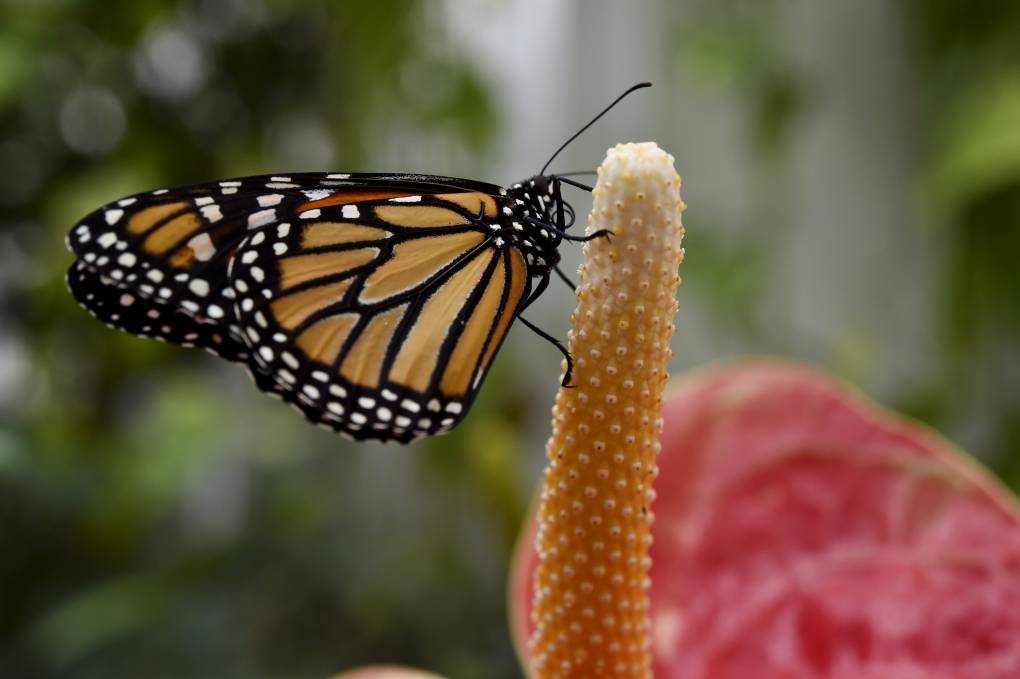
"caption": "Despite dwindling numbers, monarch butterflies still don't have endangered species status.",
"description": null,
"title": "MEXICO-NATURE-BUTTERFLIES",
"credit": "Yuri Cortez/AFP via Getty Images",
"status": "inherit",
"altTag": null,
"isLoading": false,
"fetchFailed": false
},
"science_1685769": {
"type": "attachments",
"id": "science_1685769",
"meta": {
"index": "attachments_1716263798",
"site": "science",
"id": "1685769",
"found": true
},
"parent": 1685418,
"imgSizes": {
"small": {
"file": "https://ww2.kqed.org/app/uploads/sites/35/2017/06/GettyImages-691259526-520x347.jpg",
"width": 520,
"mimeType": "image/jpeg",
"height": 347
},
"twentyfourteen-full-width": {
"file": "https://ww2.kqed.org/app/uploads/sites/35/2017/06/GettyImages-691259526-1038x576.jpg",
"width": 1038,
"mimeType": "image/jpeg",
"height": 576
},
"thumbnail": {
"file": "https://ww2.kqed.org/app/uploads/sites/35/2017/06/GettyImages-691259526-160x107.jpg",
"width": 160,
"mimeType": "image/jpeg",
"height": 107
},
"fd-sm": {
"file": "https://ww2.kqed.org/app/uploads/sites/35/2017/06/GettyImages-691259526-960x640.jpg",
"width": 960,
"mimeType": "image/jpeg",
"height": 640
},
"post-thumbnail": {
"file": "https://ww2.kqed.org/app/uploads/sites/35/2017/06/GettyImages-691259526-672x372.jpg",
"width": 672,
"mimeType": "image/jpeg",
"height": 372
},
"xsmall": {
"file": "https://ww2.kqed.org/app/uploads/sites/35/2017/06/GettyImages-691259526-375x250.jpg",
"width": 375,
"mimeType": "image/jpeg",
"height": 250
},
"kqedFullSize": {
"file": "https://ww2.kqed.org/app/uploads/sites/35/2017/06/GettyImages-691259526-e1496347505169.jpg",
"width": 1920,
"height": 1280
},
"large": {
"file": "https://ww2.kqed.org/app/uploads/sites/35/2017/06/GettyImages-691259526-1020x680.jpg",
"width": 1020,
"mimeType": "image/jpeg",
"height": 680
},
"xlarge": {
"file": "https://ww2.kqed.org/app/uploads/sites/35/2017/06/GettyImages-691259526-1180x787.jpg",
"width": 1180,
"mimeType": "image/jpeg",
"height": 787
},
"guest-author-50": {
"file": "https://ww2.kqed.org/app/uploads/sites/35/2017/06/GettyImages-691259526-50x50.jpg",
"width": 50,
"mimeType": "image/jpeg",
"height": 50
},
"guest-author-96": {
"file": "https://ww2.kqed.org/app/uploads/sites/35/2017/06/GettyImages-691259526-96x96.jpg",
"width": 96,
"mimeType": "image/jpeg",
"height": 96
},
"medium": {
"file": "https://ww2.kqed.org/app/uploads/sites/35/2017/06/GettyImages-691259526-800x533.jpg",
"width": 800,
"mimeType": "image/jpeg",
"height": 533
},
"guest-author-64": {
"file": "https://ww2.kqed.org/app/uploads/sites/35/2017/06/GettyImages-691259526-64x64.jpg",
"width": 64,
"mimeType": "image/jpeg",
"height": 64
},
"guest-author-32": {
"file": "https://ww2.kqed.org/app/uploads/sites/35/2017/06/GettyImages-691259526-32x32.jpg",
"width": 32,
"mimeType": "image/jpeg",
"height": 32
},
"fd-lrg": {
"file": "https://ww2.kqed.org/app/uploads/sites/35/2017/06/GettyImages-691259526-1920x1280.jpg",
"width": 1920,
"mimeType": "image/jpeg",
"height": 1280
},
"fd-med": {
"file": "https://ww2.kqed.org/app/uploads/sites/35/2017/06/GettyImages-691259526-1180x787.jpg",
"width": 1180,
"mimeType": "image/jpeg",
"height": 787
},
"full-width": {
"file": "https://ww2.kqed.org/app/uploads/sites/35/2017/06/GettyImages-691259526-1920x1280.jpg",
"width": 1920,
"mimeType": "image/jpeg",
"height": 1280
},
"detail": {
"file": "https://ww2.kqed.org/app/uploads/sites/35/2017/06/GettyImages-691259526-150x150.jpg",
"width": 150,
"mimeType": "image/jpeg",
"height": 150
},
"medium_large": {
"file": "https://ww2.kqed.org/app/uploads/sites/35/2017/06/GettyImages-691259526-768x512.jpg",
"width": 768,
"mimeType": "image/jpeg",
"height": 512
},
"guest-author-128": {
"file": "https://ww2.kqed.org/app/uploads/sites/35/2017/06/GettyImages-691259526-128x128.jpg",
"width": 128,
"mimeType": "image/jpeg",
"height": 128
},
"xxsmall": {
"file": "https://ww2.kqed.org/app/uploads/sites/35/2017/06/GettyImages-691259526-240x160.jpg",
"width": 240,
"mimeType": "image/jpeg",
"height": 160
}
},
"publishDate": 1496347479,
"modified": 1606861779,
"caption": "President Trump announcing his decision to withdraw the U.S. from the Paris climate accords on June 1, 2017. ",
"description": null,
"title": "US-POLITICS-TRUMP-ENVIRONMENT",
"credit": "Brendan SmialowskiI/AFP/Getty Images",
"status": "inherit",
"isLoading": false,
"fetchFailed": false
},
"science_1970744": {
"type": "attachments",
"id": "science_1970744",
"meta": {
"index": "attachments_1716263798",
"site": "science",
"id": "1970744",
"found": true
},
"parent": 1970742,
"imgSizes": {
"twentyfourteen-full-width": {
"file": "https://ww2.kqed.org/app/uploads/sites/35/2020/10/GettyImages-1228812723-1038x576.jpg",
"width": 1038,
"mimeType": "image/jpeg",
"height": 576
},
"thumbnail": {
"file": "https://ww2.kqed.org/app/uploads/sites/35/2020/10/GettyImages-1228812723-160x107.jpg",
"width": 160,
"mimeType": "image/jpeg",
"height": 107
},
"post-thumbnail": {
"file": "https://ww2.kqed.org/app/uploads/sites/35/2020/10/GettyImages-1228812723-672x372.jpg",
"width": 672,
"mimeType": "image/jpeg",
"height": 372
},
"kqedFullSize": {
"file": "https://ww2.kqed.org/app/uploads/sites/35/2020/10/GettyImages-1228812723-scaled.jpg",
"width": 2560,
"height": 1707
},
"2048x2048": {
"file": "https://ww2.kqed.org/app/uploads/sites/35/2020/10/GettyImages-1228812723-2048x1366.jpg",
"width": 2048,
"mimeType": "image/jpeg",
"height": 1366
},
"large": {
"file": "https://ww2.kqed.org/app/uploads/sites/35/2020/10/GettyImages-1228812723-1020x680.jpg",
"width": 1020,
"mimeType": "image/jpeg",
"height": 680
},
"1536x1536": {
"file": "https://ww2.kqed.org/app/uploads/sites/35/2020/10/GettyImages-1228812723-1536x1024.jpg",
"width": 1536,
"mimeType": "image/jpeg",
"height": 1024
},
"full-width": {
"file": "https://ww2.kqed.org/app/uploads/sites/35/2020/10/GettyImages-1228812723-1920x1280.jpg",
"width": 1920,
"mimeType": "image/jpeg",
"height": 1280
},
"medium": {
"file": "https://ww2.kqed.org/app/uploads/sites/35/2020/10/GettyImages-1228812723-800x534.jpg",
"width": 800,
"mimeType": "image/jpeg",
"height": 534
},
"medium_large": {
"file": "https://ww2.kqed.org/app/uploads/sites/35/2020/10/GettyImages-1228812723-768x512.jpg",
"width": 768,
"mimeType": "image/jpeg",
"height": 512
}
},
"publishDate": 1603943924,
"modified": 1603990408,
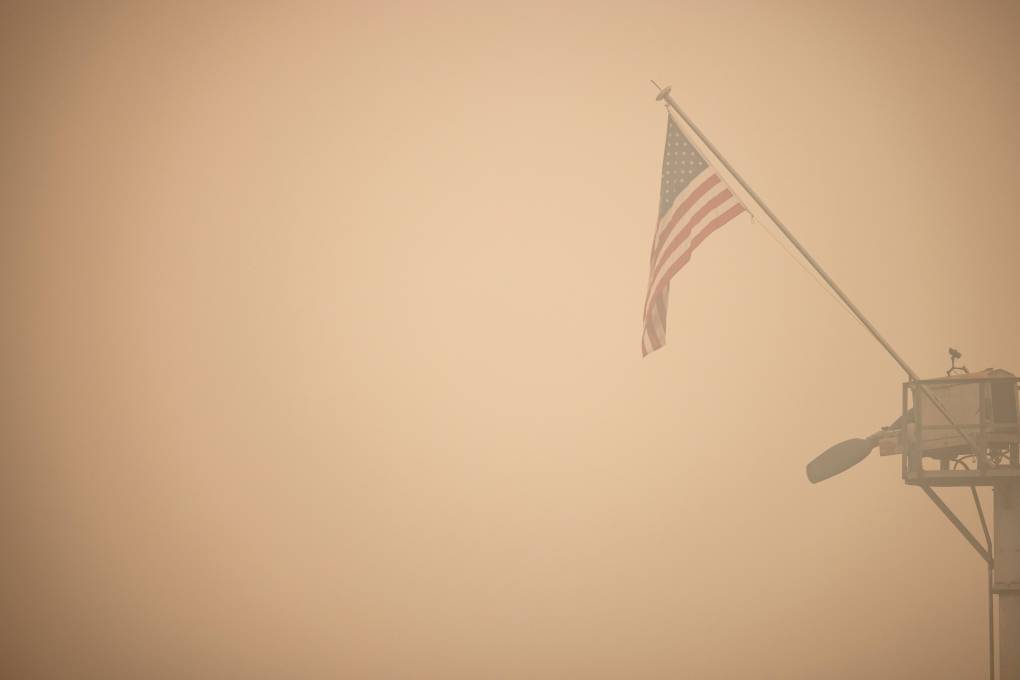
"caption": "Smoke from the Glass Fire hangs heavy outside of Calistoga in Napa Valley on Sept. 30, 2020. State leaders can count the cost of fighting fires, but it's hard to know what smoke costs in illnesses and deaths.",
"description": "Smoke from the Glass Fire hangs heavy outside of Calistoga in Napa Valley on September 30, 2020. State leaders can count the cost of fighting fires, but it's hard to know what smoke costs in illnesses and deaths.",
"title": "wildfire smoke",
"credit": "Samuel Corum/AFP via Getty Images",
"status": "inherit",
"isLoading": false,
"fetchFailed": false
},
"science_1970292": {
"type": "attachments",
"id": "science_1970292",
"meta": {
"index": "attachments_1716263798",
"site": "science",
"id": "1970292",
"found": true
},
"parent": 1970286,
"imgSizes": {
"thumbnail": {
"file": "https://ww2.kqed.org/app/uploads/sites/35/2029/10/cincinnati-barber-pandemic-flu-160x106.jpg",
"width": 160,
"mimeType": "image/jpeg",
"height": 106
},
"post-thumbnail": {
"file": "https://ww2.kqed.org/app/uploads/sites/35/2029/10/cincinnati-barber-pandemic-flu-672x372.jpg",
"width": 672,
"mimeType": "image/jpeg",
"height": 372
},
"kqedFullSize": {
"file": "https://ww2.kqed.org/app/uploads/sites/35/2029/10/cincinnati-barber-pandemic-flu.jpg",
"width": 830,
"height": 550
},
"medium": {
"file": "https://ww2.kqed.org/app/uploads/sites/35/2029/10/cincinnati-barber-pandemic-flu-800x530.jpg",
"width": 800,
"mimeType": "image/jpeg",
"height": 530
},
"medium_large": {
"file": "https://ww2.kqed.org/app/uploads/sites/35/2029/10/cincinnati-barber-pandemic-flu-768x509.jpg",
"width": 768,
"mimeType": "image/jpeg",
"height": 509
}
},
"publishDate": 1602614461,
"modified": 1602622825,
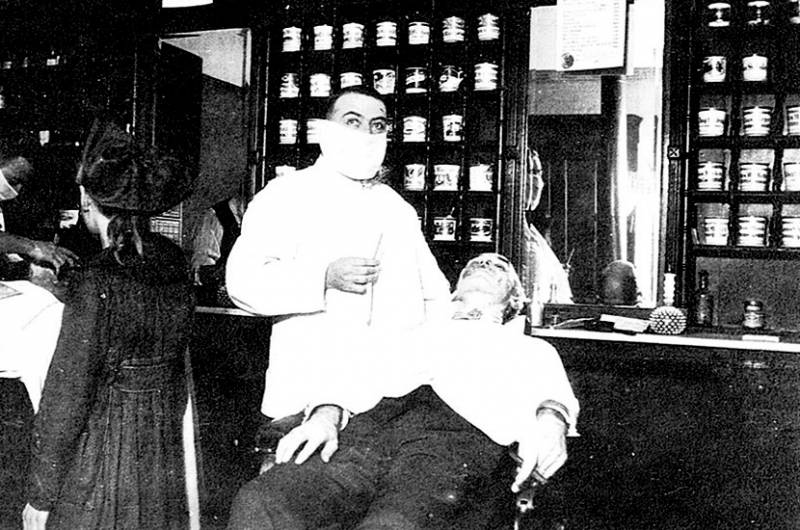
"caption": "A masked barber in Cincinnati gives a customer a shave during the 1918 influenza pandemic.",
"description": null,
"title": "cincinnati-barber-pandemic-flu",
"credit": "Courtesy of U.S. Centers for Disease Control and Prevention",
"status": "inherit",
"isLoading": false,
"fetchFailed": false
},
"science_1968436": {
"type": "attachments",
"id": "science_1968436",
"meta": {
"index": "attachments_1716263798",
"site": "science",
"id": "1968436",
"found": true
},
"parent": 1968417,
"imgSizes": {
"twentyfourteen-full-width": {
"file": "https://ww2.kqed.org/app/uploads/sites/35/2020/08/DSCF2449-1-1038x576.jpg",
"width": 1038,
"mimeType": "image/jpeg",
"height": 576
},
"thumbnail": {
"file": "https://ww2.kqed.org/app/uploads/sites/35/2020/08/DSCF2449-1-160x107.jpg",
"width": 160,
"mimeType": "image/jpeg",
"height": 107
},
"post-thumbnail": {
"file": "https://ww2.kqed.org/app/uploads/sites/35/2020/08/DSCF2449-1-672x372.jpg",
"width": 672,
"mimeType": "image/jpeg",
"height": 372
},
"kqedFullSize": {
"file": "https://ww2.kqed.org/app/uploads/sites/35/2020/08/DSCF2449-1.jpg",
"width": 2000,
"height": 1333
},
"large": {
"file": "https://ww2.kqed.org/app/uploads/sites/35/2020/08/DSCF2449-1-1020x680.jpg",
"width": 1020,
"mimeType": "image/jpeg",
"height": 680
},
"1536x1536": {
"file": "https://ww2.kqed.org/app/uploads/sites/35/2020/08/DSCF2449-1-1536x1024.jpg",
"width": 1536,
"mimeType": "image/jpeg",
"height": 1024
},
"full-width": {
"file": "https://ww2.kqed.org/app/uploads/sites/35/2020/08/DSCF2449-1-1920x1280.jpg",
"width": 1920,
"mimeType": "image/jpeg",
"height": 1280
},
"medium": {
"file": "https://ww2.kqed.org/app/uploads/sites/35/2020/08/DSCF2449-1-800x533.jpg",
"width": 800,
"mimeType": "image/jpeg",
"height": 533
},
"medium_large": {
"file": "https://ww2.kqed.org/app/uploads/sites/35/2020/08/DSCF2449-1-768x512.jpg",
"width": 768,
"mimeType": "image/jpeg",
"height": 512
}
},
"publishDate": 1597376534,
"modified": 1597376604,
"caption": "Rosemarie Reeder at her home in Grass Valley Friday, July 31, 2020. She helped start a buddy system for local seniors after the Camp Fire.",
"description": "Rosemarie Reeder at her home in Grass Valley Friday, July 31, 2020. She helped start a buddy system for local seniors after the Camp Fire.",
"title": "DSCF2449 (1)",
"credit": "Andrew Nixon / CapRadio",
"status": "inherit",
"isLoading": false,
"fetchFailed": false
},
"science_1968065": {
"type": "attachments",
"id": "science_1968065",
"meta": {
"index": "attachments_1716263798",
"site": "science",
"id": "1968065",
"found": true
},
"parent": 1968038,
"imgSizes": {
"twentyfourteen-full-width": {
"file": "https://ww2.kqed.org/app/uploads/sites/35/2020/08/GettyImages-1209490986-1038x576.jpg",
"width": 1038,
"mimeType": "image/jpeg",
"height": 576
},
"thumbnail": {
"file": "https://ww2.kqed.org/app/uploads/sites/35/2020/08/GettyImages-1209490986-160x146.jpg",
"width": 160,
"mimeType": "image/jpeg",
"height": 146
},
"post-thumbnail": {
"file": "https://ww2.kqed.org/app/uploads/sites/35/2020/08/GettyImages-1209490986-672x372.jpg",
"width": 672,
"mimeType": "image/jpeg",
"height": 372
},
"kqedFullSize": {
"file": "https://ww2.kqed.org/app/uploads/sites/35/2020/08/GettyImages-1209490986-scaled.jpg",
"width": 2560,
"height": 2343
},
"2048x2048": {
"file": "https://ww2.kqed.org/app/uploads/sites/35/2020/08/GettyImages-1209490986-2048x1874.jpg",
"width": 2048,
"mimeType": "image/jpeg",
"height": 1874
},
"large": {
"file": "https://ww2.kqed.org/app/uploads/sites/35/2020/08/GettyImages-1209490986-1020x933.jpg",
"width": 1020,
"mimeType": "image/jpeg",
"height": 933
},
"1536x1536": {
"file": "https://ww2.kqed.org/app/uploads/sites/35/2020/08/GettyImages-1209490986-1536x1406.jpg",
"width": 1536,
"mimeType": "image/jpeg",
"height": 1406
},
"full-width": {
"file": "https://ww2.kqed.org/app/uploads/sites/35/2020/08/GettyImages-1209490986-1920x1757.jpg",
"width": 1920,
"mimeType": "image/jpeg",
"height": 1757
},
"medium": {
"file": "https://ww2.kqed.org/app/uploads/sites/35/2020/08/GettyImages-1209490986-800x732.jpg",
"width": 800,
"mimeType": "image/jpeg",
"height": 732
},
"medium_large": {
"file": "https://ww2.kqed.org/app/uploads/sites/35/2020/08/GettyImages-1209490986-768x703.jpg",
"width": 768,
"mimeType": "image/jpeg",
"height": 703
}
},
"publishDate": 1596668449,
"modified": 1596674405,
"caption": "Vials of the antiviral drug remdesivir, which has been shown in trials to effectively treat hospitalized COVID-19 patients.",
"description": null,
"title": "GERMANY-HEALTH-VIRUS",
"credit": "Ulrich Perrey/Pool/AFP via Getty Images",
"status": "inherit",
"isLoading": false,
"fetchFailed": false
},
"science_1967410": {
"type": "attachments",
"id": "science_1967410",
"meta": {
"index": "attachments_1716263798",
"site": "science",
"id": "1967410",
"found": true
},
"parent": 1967293,
"imgSizes": {
"twentyfourteen-full-width": {
"file": "https://ww2.kqed.org/app/uploads/sites/35/2020/07/Garden-Cacti-1038x576.jpg",
"width": 1038,
"mimeType": "image/jpeg",
"height": 576
},
"thumbnail": {
"file": "https://ww2.kqed.org/app/uploads/sites/35/2020/07/Garden-Cacti-160x107.jpg",
"width": 160,
"mimeType": "image/jpeg",
"height": 107
},
"post-thumbnail": {
"file": "https://ww2.kqed.org/app/uploads/sites/35/2020/07/Garden-Cacti-672x372.jpg",
"width": 672,
"mimeType": "image/jpeg",
"height": 372
},
"kqedFullSize": {
"file": "https://ww2.kqed.org/app/uploads/sites/35/2020/07/Garden-Cacti.jpg",
"width": 1500,
"height": 1000
},
"large": {
"file": "https://ww2.kqed.org/app/uploads/sites/35/2020/07/Garden-Cacti-1020x680.jpg",
"width": 1020,
"mimeType": "image/jpeg",
"height": 680
},
"medium": {
"file": "https://ww2.kqed.org/app/uploads/sites/35/2020/07/Garden-Cacti-800x533.jpg",
"width": 800,
"mimeType": "image/jpeg",
"height": 533
},
"medium_large": {
"file": "https://ww2.kqed.org/app/uploads/sites/35/2020/07/Garden-Cacti-768x512.jpg",
"width": 768,
"mimeType": "image/jpeg",
"height": 512
}
},
"publishDate": 1595270049,
"modified": 1595281261,
"caption": "The succulents garden at the San Francisco Botanical Garden, which is home to more than 9,000 different kinds of plants from around the world.",
"description": null,
"title": "holt_286_6307.tif",
"credit": "Courtesy of S.F. Botanical Garden",
"status": "inherit",
"isLoading": false,
"fetchFailed": false
},
"science_1966975": {
"type": "attachments",
"id": "science_1966975",
"meta": {
"index": "attachments_1716263798",
"site": "science",
"id": "1966975",
"found": true
},
"parent": 1966972,
"imgSizes": {
"twentyfourteen-full-width": {
"file": "https://ww2.kqed.org/app/uploads/sites/35/2020/07/from-Hellman-foundation-video-2-1038x576.jpeg",
"width": 1038,
"mimeType": "image/jpeg",
"height": 576
},
"thumbnail": {
"file": "https://ww2.kqed.org/app/uploads/sites/35/2020/07/from-Hellman-foundation-video-2-160x90.jpeg",
"width": 160,
"mimeType": "image/jpeg",
"height": 90
},
"post-thumbnail": {
"file": "https://ww2.kqed.org/app/uploads/sites/35/2020/07/from-Hellman-foundation-video-2-672x372.jpeg",
"width": 672,
"mimeType": "image/jpeg",
"height": 372
},
"kqedFullSize": {
"file": "https://ww2.kqed.org/app/uploads/sites/35/2020/07/from-Hellman-foundation-video-2.jpeg",
"width": 1280,
"height": 723
},
"large": {
"file": "https://ww2.kqed.org/app/uploads/sites/35/2020/07/from-Hellman-foundation-video-2-1020x576.jpeg",
"width": 1020,
"mimeType": "image/jpeg",
"height": 576
},
"medium": {
"file": "https://ww2.kqed.org/app/uploads/sites/35/2020/07/from-Hellman-foundation-video-2-800x452.jpeg",
"width": 800,
"mimeType": "image/jpeg",
"height": 452
},
"medium_large": {
"file": "https://ww2.kqed.org/app/uploads/sites/35/2020/07/from-Hellman-foundation-video-2-768x434.jpeg",
"width": 768,
"mimeType": "image/jpeg",
"height": 434
}
},
"publishDate": 1594301879,
"modified": 1594409048,
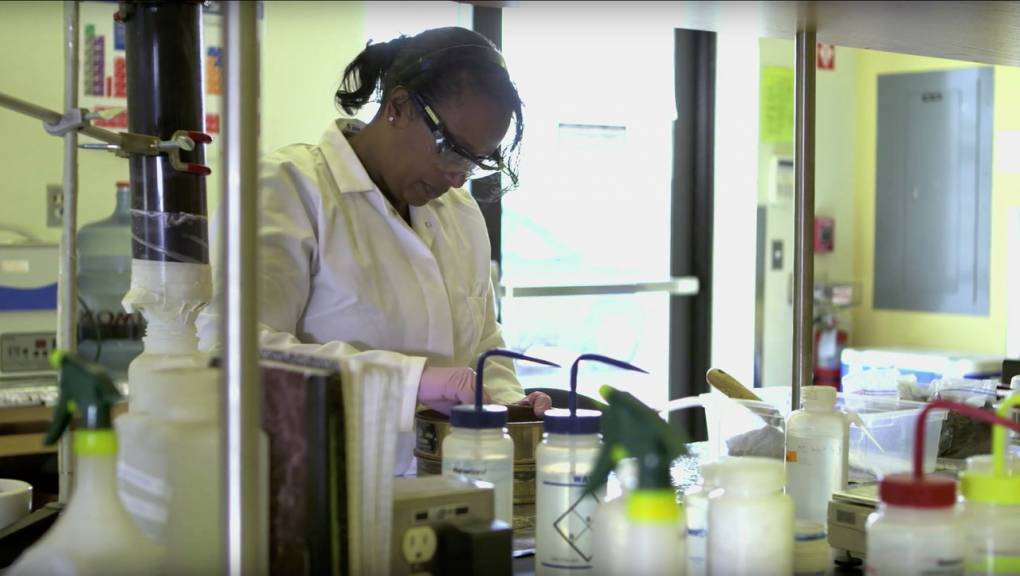
"caption": "Professor Asmeret Asefaw Berhe studies how soil helps regulate the Earth's climate at UC Merced.",
"description": "A woman analyzing samples at a lab bench.",
"title": "from Hellman foundation video 2",
"credit": "Courtesy of the Berhe lab, used with permission.",
"status": "inherit",
"isLoading": false,
"fetchFailed": false
},
"science_1966278": {
"type": "attachments",
"id": "science_1966278",
"meta": {
"index": "attachments_1716263798",
"site": "science",
"id": "1966278",
"found": true
},
"parent": 1966269,
"imgSizes": {
"twentyfourteen-full-width": {
"file": "https://ww2.kqed.org/app/uploads/sites/35/2020/06/eating_final02-1038x576.png",
"width": 1038,
"mimeType": "image/png",
"height": 576
},
"thumbnail": {
"file": "https://ww2.kqed.org/app/uploads/sites/35/2020/06/eating_final02-160x86.png",
"width": 160,
"mimeType": "image/png",
"height": 86
},
"post-thumbnail": {
"file": "https://ww2.kqed.org/app/uploads/sites/35/2020/06/eating_final02-672x372.png",
"width": 672,
"mimeType": "image/png",
"height": 372
},
"kqedFullSize": {
"file": "https://ww2.kqed.org/app/uploads/sites/35/2020/06/eating_final02.png",
"width": 1920,
"height": 1028
},
"large": {
"file": "https://ww2.kqed.org/app/uploads/sites/35/2020/06/eating_final02-1020x546.png",
"width": 1020,
"mimeType": "image/png",
"height": 546
},
"1536x1536": {
"file": "https://ww2.kqed.org/app/uploads/sites/35/2020/06/eating_final02-1536x822.png",
"width": 1536,
"mimeType": "image/png",
"height": 822
},
"medium": {
"file": "https://ww2.kqed.org/app/uploads/sites/35/2020/06/eating_final02-800x428.png",
"width": 800,
"mimeType": "image/png",
"height": 428
},
"medium_large": {
"file": "https://ww2.kqed.org/app/uploads/sites/35/2020/06/eating_final02-768x411.png",
"width": 768,
"mimeType": "image/png",
"height": 411
}
},
"publishDate": 1592953144,
"modified": 1593020140,
"caption": null,
"description": null,
"title": "eating_final02",
"credit": "Mark Fiore/KQED",
"status": "inherit",
"isLoading": false,
"fetchFailed": false
},
"science_1035310": {
"type": "attachments",
"id": "science_1035310",
"meta": {
"index": "attachments_1716263798",
"site": "science",
"id": "1035310",
"found": true
},
"title": "RS1447_IMG_0627",
"publishDate": 1475180838,
"status": "inherit",
"parent": 1035198,
"modified": 1742580604,
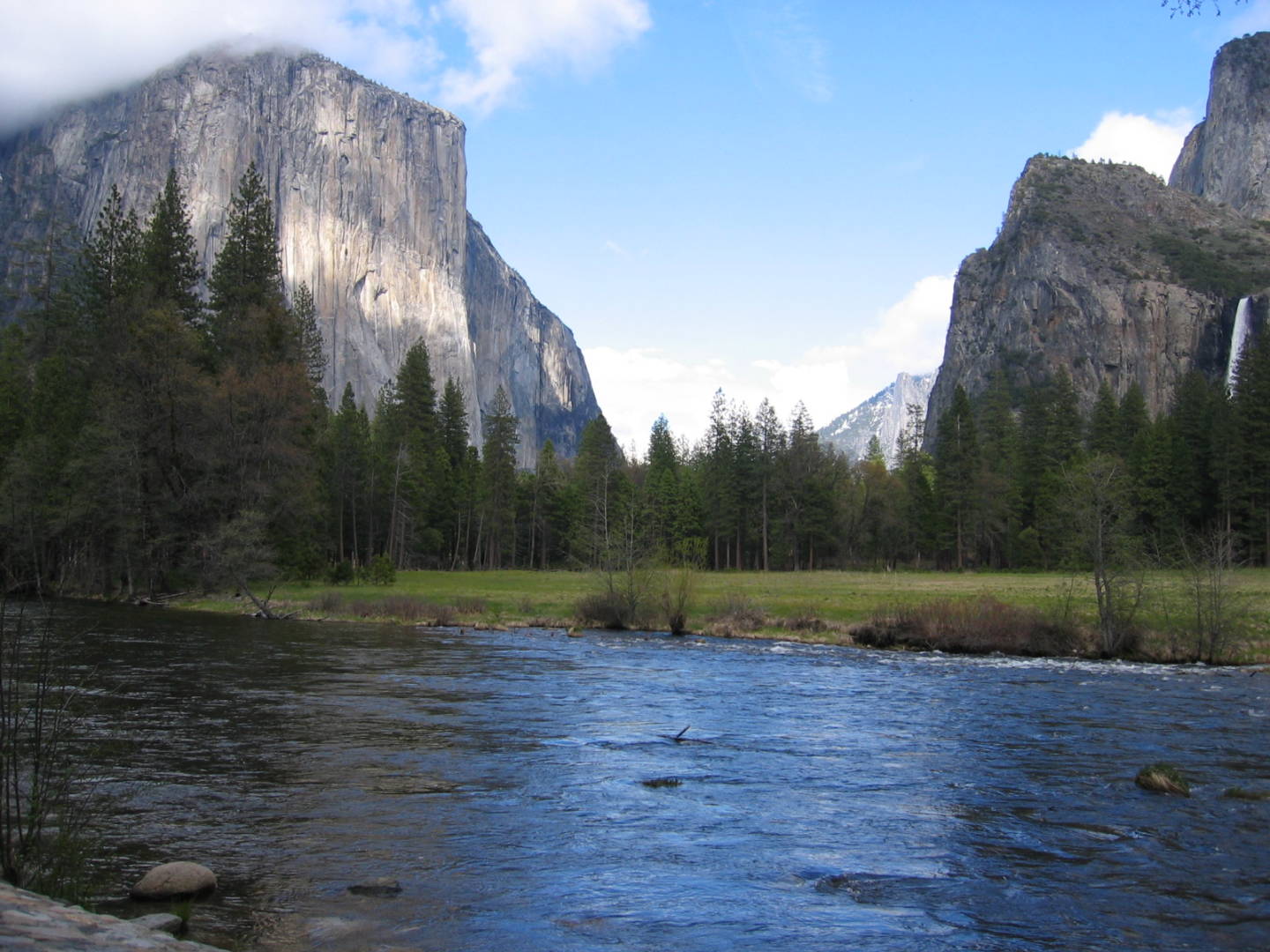
"caption": "El Capitan in Yosemite National Park. ",
"credit": "Craig Miller/KQED",
"altTag": null,
"description": "El Capitan in Yosemite National Park.",
"imgSizes": {
"thumbnail": {
"file": "https://cdn.kqed.org/wp-content/uploads/sites/35/2016/09/RS1447_IMG_0627-400x300.jpg",
"width": 400,
"height": 300,
"mimeType": "image/jpeg"
},
"medium": {
"file": "https://cdn.kqed.org/wp-content/uploads/sites/35/2016/09/RS1447_IMG_0627-800x600.jpg",
"width": 800,
"height": 600,
"mimeType": "image/jpeg"
},
"medium_large": {
"file": "https://cdn.kqed.org/wp-content/uploads/sites/35/2016/09/RS1447_IMG_0627-768x576.jpg",
"width": 768,
"height": 576,
"mimeType": "image/jpeg"
},
"large": {
"file": "https://cdn.kqed.org/wp-content/uploads/sites/35/2016/09/RS1447_IMG_0627-1440x1080.jpg",
"width": 1440,
"height": 1080,
"mimeType": "image/jpeg"
},
"fd-med": {
"file": "https://cdn.kqed.org/wp-content/uploads/sites/35/2016/09/RS1447_IMG_0627-1180x885.jpg",
"width": 1180,
"height": 885,
"mimeType": "image/jpeg"
},
"fd-sm": {
"file": "https://cdn.kqed.org/wp-content/uploads/sites/35/2016/09/RS1447_IMG_0627-960x720.jpg",
"width": 960,
"height": 720,
"mimeType": "image/jpeg"
},
"post-thumbnail": {
"file": "https://cdn.kqed.org/wp-content/uploads/sites/35/2016/09/RS1447_IMG_0627-672x372.jpg",
"width": 672,
"height": 372,
"mimeType": "image/jpeg"
},
"twentyfourteen-full-width": {
"file": "https://cdn.kqed.org/wp-content/uploads/sites/35/2016/09/RS1447_IMG_0627-1038x576.jpg",
"width": 1038,
"height": 576,
"mimeType": "image/jpeg"
},
"guest-author-32": {
"file": "https://cdn.kqed.org/wp-content/uploads/sites/35/2016/09/RS1447_IMG_0627-32x32.jpg",
"width": 32,
"height": 32,
"mimeType": "image/jpeg"
},
"guest-author-50": {
"file": "https://cdn.kqed.org/wp-content/uploads/sites/35/2016/09/RS1447_IMG_0627-50x50.jpg",
"width": 50,
"height": 50,
"mimeType": "image/jpeg"
},
"guest-author-64": {
"file": "https://cdn.kqed.org/wp-content/uploads/sites/35/2016/09/RS1447_IMG_0627-64x64.jpg",
"width": 64,
"height": 64,
"mimeType": "image/jpeg"
},
"guest-author-96": {
"file": "https://cdn.kqed.org/wp-content/uploads/sites/35/2016/09/RS1447_IMG_0627-96x96.jpg",
"width": 96,
"height": 96,
"mimeType": "image/jpeg"
},
"guest-author-128": {
"file": "https://cdn.kqed.org/wp-content/uploads/sites/35/2016/09/RS1447_IMG_0627-128x128.jpg",
"width": 128,
"height": 128,
"mimeType": "image/jpeg"
},
"detail": {
"file": "https://cdn.kqed.org/wp-content/uploads/sites/35/2016/09/RS1447_IMG_0627-150x150.jpg",
"width": 150,
"height": 150,
"mimeType": "image/jpeg"
},
"kqedFullSize": {
"file": "https://cdn.kqed.org/wp-content/uploads/sites/35/2016/09/RS1447_IMG_0627.jpg",
"width": 1600,
"height": 1200
}
},
"isLoading": false,
"fetchFailed": false
},
"science_1964015": {
"type": "attachments",
"id": "science_1964015",
"meta": {
"index": "attachments_1716263798",
"site": "science",
"id": "1964015",
"found": true
},
"parent": 1964010,
"imgSizes": {
"twentyfourteen-full-width": {
"file": "https://ww2.kqed.org/app/uploads/sites/35/2020/05/Screen-Shot-2020-05-11-at-1.33.06-PM-1038x576.png",
"width": 1038,
"mimeType": "image/png",
"height": 576
},
"thumbnail": {
"file": "https://ww2.kqed.org/app/uploads/sites/35/2020/05/Screen-Shot-2020-05-11-at-1.33.06-PM-160x125.png",
"width": 160,
"mimeType": "image/png",
"height": 125
},
"post-thumbnail": {
"file": "https://ww2.kqed.org/app/uploads/sites/35/2020/05/Screen-Shot-2020-05-11-at-1.33.06-PM-672x372.png",
"width": 672,
"mimeType": "image/png",
"height": 372
},
"kqedFullSize": {
"file": "https://ww2.kqed.org/app/uploads/sites/35/2020/05/Screen-Shot-2020-05-11-at-1.33.06-PM.png",
"width": 1594,
"height": 1246
},
"large": {
"file": "https://ww2.kqed.org/app/uploads/sites/35/2020/05/Screen-Shot-2020-05-11-at-1.33.06-PM-1020x797.png",
"width": 1020,
"mimeType": "image/png",
"height": 797
},
"medium": {
"file": "https://ww2.kqed.org/app/uploads/sites/35/2020/05/Screen-Shot-2020-05-11-at-1.33.06-PM-800x625.png",
"width": 800,
"mimeType": "image/png",
"height": 625
},
"medium_large": {
"file": "https://ww2.kqed.org/app/uploads/sites/35/2020/05/Screen-Shot-2020-05-11-at-1.33.06-PM-768x600.png",
"width": 768,
"mimeType": "image/png",
"height": 600
}
},
"publishDate": 1589229207,
"modified": 1589229348,
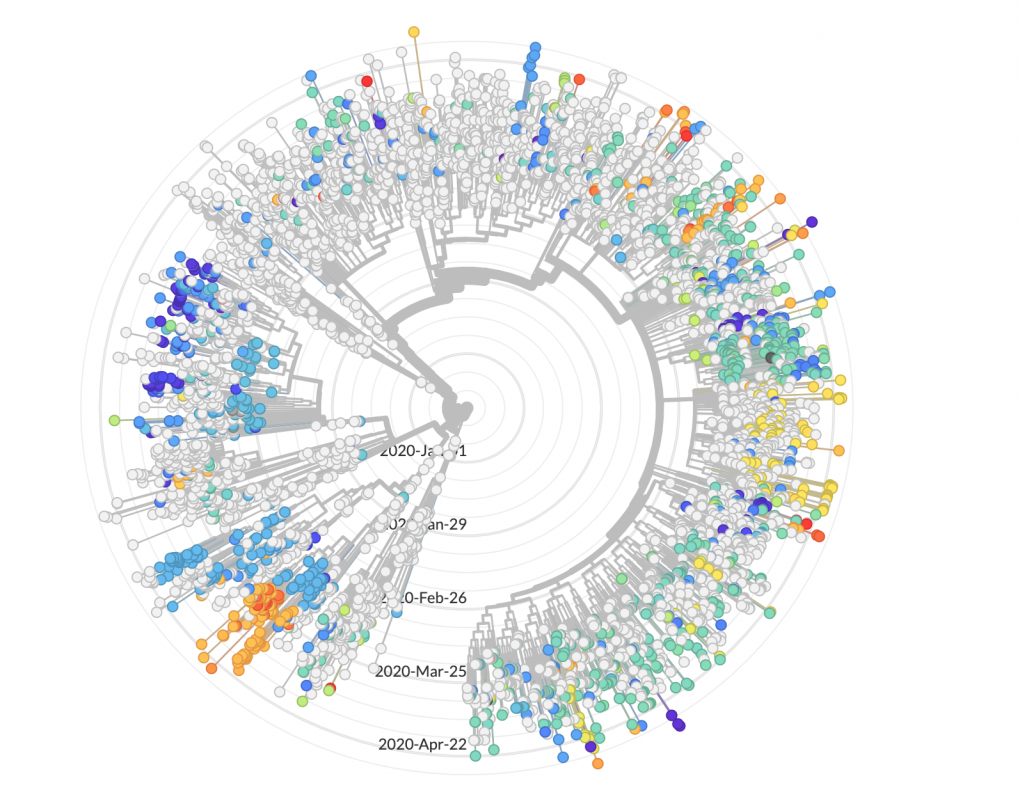
"caption": "Genetic family tree of the novel coronavirus. Colored dots represent cases in North America. ",
"description": null,
"title": "Screen Shot 2020-05-11 at 1.33.06 PM",
"credit": "Screenshot from \u003ca href\"https://nextstrain.org/\">Nextstrain.org\u003c/a>",
"status": "inherit",
"isLoading": false,
"fetchFailed": false
},
"science_1963459": {
"type": "attachments",
"id": "science_1963459",
"meta": {
"index": "attachments_1716263798",
"site": "science",
"id": "1963459",
"found": true
},
"parent": 1963442,
"imgSizes": {
"twentyfourteen-full-width": {
"file": "https://ww2.kqed.org/app/uploads/sites/35/2020/05/Danielles-post-featured-image-final-1038x576.jpg",
"width": 1038,
"mimeType": "image/jpeg",
"height": 576
},
"thumbnail": {
"file": "https://ww2.kqed.org/app/uploads/sites/35/2020/05/Danielles-post-featured-image-final-160x107.jpg",
"width": 160,
"mimeType": "image/jpeg",
"height": 107
},
"post-thumbnail": {
"file": "https://ww2.kqed.org/app/uploads/sites/35/2020/05/Danielles-post-featured-image-final-672x372.jpg",
"width": 672,
"mimeType": "image/jpeg",
"height": 372
},
"kqedFullSize": {
"file": "https://ww2.kqed.org/app/uploads/sites/35/2020/05/Danielles-post-featured-image-final.jpg",
"width": 1920,
"height": 1278
},
"large": {
"file": "https://ww2.kqed.org/app/uploads/sites/35/2020/05/Danielles-post-featured-image-final-1020x679.jpg",
"width": 1020,
"mimeType": "image/jpeg",
"height": 679
},
"full-width": {
"file": "https://ww2.kqed.org/app/uploads/sites/35/2020/05/Danielles-post-featured-image-final-1920x1278.jpg",
"width": 1920,
"mimeType": "image/jpeg",
"height": 1278
},
"medium": {
"file": "https://ww2.kqed.org/app/uploads/sites/35/2020/05/Danielles-post-featured-image-final-800x533.jpg",
"width": 800,
"mimeType": "image/jpeg",
"height": 533
},
"medium_large": {
"file": "https://ww2.kqed.org/app/uploads/sites/35/2020/05/Danielles-post-featured-image-final-768x511.jpg",
"width": 768,
"mimeType": "image/jpeg",
"height": 511
}
},
"publishDate": 1588382456,
"modified": 1588382666,
"caption": "A researcher observes the gel that assesses the purity of the antigens produced in a laboratory in Brazil, in March. The lab is conducting research on the coronavirus in order to diagnose, test and develop a vaccine. A vaccine isn't expected to be ready for the public for more than a year. ",
"description": null,
"title": "coronavirus testing",
"credit": "Pedro Vilela/Getty Images",
"status": "inherit",
"isLoading": false,
"fetchFailed": false
}
},
"audioPlayerReducer": {
"postId": "stream_live",
"isPaused": true,
"isPlaying": false,
"pfsActive": false,
"pledgeModalIsOpen": true,
"playerDrawerIsOpen": false,
"liveAudioPlayStartedAt": 0,
"liveAudioPlayContext": ""
},
"authorsReducer": {
"byline_science_1968417": {
"type": "authors",
"id": "byline_science_1968417",
"meta": {
"override": true
},
"slug": "byline_science_1968417",
"name": "Lo Bénichou, Lisa Pickoff-White, April Dembosky and Molly Peterson",
"isLoading": false
},
"kqedscience": {
"type": "authors",
"id": "6387",
"meta": {
"index": "authors_1716337520",
"id": "6387",
"found": true
},
"name": "KQED Science",
"firstName": "KQED",
"lastName": "Science",
"slug": "kqedscience",
"email": "kqedscience@gmail.com",
"display_author_email": false,
"staff_mastheads": [],
"title": null,
"bio": "KQED Science brings you award-winning science and environment coverage from the Bay Area and beyond by the flagship Northern California PBS and NPR affiliate.",
"avatar": "https://secure.gravatar.com/avatar/5a295ff49cf82a8c0f30937d3f788b2f?s=600&d=blank&r=g",
"twitter": null,
"facebook": null,
"instagram": null,
"linkedin": null,
"sites": [
{
"site": "science",
"roles": [
"contributor"
]
},
{
"site": "quest",
"roles": [
"editor"
]
},
{
"site": "food",
"roles": [
"contributor"
]
}
],
"headData": {
"title": "KQED Science | KQED",
"description": null,
"ogImgSrc": "https://secure.gravatar.com/avatar/5a295ff49cf82a8c0f30937d3f788b2f?s=600&d=blank&r=g",
"twImgSrc": "https://secure.gravatar.com/avatar/5a295ff49cf82a8c0f30937d3f788b2f?s=600&d=blank&r=g"
},
"isLoading": false,
"link": "/author/kqedscience"
},
"dventon": {
"type": "authors",
"id": "11088",
"meta": {
"index": "authors_1716337520",
"id": "11088",
"found": true
},
"name": "Danielle Venton",
"firstName": "Danielle",
"lastName": "Venton",
"slug": "dventon",
"email": "dventon@kqed.org",
"display_author_email": true,
"staff_mastheads": [
"science"
],
"title": "Science reporter",
"bio": "Danielle Venton is a reporter for KQED Science. She covers wildfires, space and oceans (though she is prone to sea sickness).\r\n\r\nBefore joining KQED in 2015, Danielle was a staff reporter at KRCB in Sonoma County and a freelancer. She studied science communication at UC Santa Cruz and formerly worked at CERN in Geneva, Switzerland where she wrote about computing. She lives in Sonoma County and enjoys backpacking.",
"avatar": "https://secure.gravatar.com/avatar/37b292b5c40c8d93959c4f48d73b5286f41b7abd8588277e941905a3ed4c801c?s=600&d=blank&r=g",
"twitter": "DanielleVenton",
"bluesky": null,
"facebook": null,
"instagram": null,
"linkedin": null,
"sites": [
{
"site": "arts",
"roles": [
"contributor"
]
},
{
"site": "news",
"roles": [
"editor"
]
},
{
"site": "futureofyou",
"roles": [
"editor"
]
},
{
"site": "science",
"roles": [
"editor"
]
},
{
"site": "liveblog",
"roles": [
"contributor"
]
}
],
"headData": {
"title": "Danielle Venton | KQED",
"description": "Science reporter",
"ogImgSrc": "https://secure.gravatar.com/avatar/37b292b5c40c8d93959c4f48d73b5286f41b7abd8588277e941905a3ed4c801c?s=600&d=blank&r=g",
"twImgSrc": "https://secure.gravatar.com/avatar/37b292b5c40c8d93959c4f48d73b5286f41b7abd8588277e941905a3ed4c801c?s=600&d=blank&r=g"
},
"isLoading": false,
"link": "/author/dventon"
},
"lesleymcclurg": {
"type": "authors",
"id": "11229",
"meta": {
"index": "authors_1716337520",
"id": "11229",
"found": true
},
"name": "Lesley McClurg",
"firstName": "Lesley",
"lastName": "McClurg",
"slug": "lesleymcclurg",
"email": "lmcclurg@KQED.org",
"display_author_email": false,
"staff_mastheads": [
"news",
"science"
],
"title": "KQED Health Correspondent",
"bio": "Lesley McClurg is a health correspondent and fill-in host whose work is regularly rebroadcast on NPR and PBS programs. She’s earned multiple regional Emmy awards, a national and a regional Edward R. Murrow award, and was named Best Beat Reporter by the Association of Health Care Journalists. The Society of Professional Journalists has recognized her work several times, and the Society of Environmental Journalists spotlighted her coverage of California’s historic drought.\r\n\r\nBefore joining KQED in 2016, Lesley covered food and sustainability for Capital Public Radio, environmental issues for Colorado Public Radio, and reported for KUOW and KCTS 9 in Seattle. Away from the newsroom, she loves skiing with her daughter, mountain biking with her partner, and playing with Ollie, the family’s goldendoodle. On deadline, she runs almost entirely on chocolate chips.\r\n\r\n ",
"avatar": "https://secure.gravatar.com/avatar/bab49e972ea10c774fe0f5e29dba1722b158f7c0d58a360923d1389d380b2978?s=600&d=blank&r=g",
"twitter": "lesleywmcclurg",
"bluesky": null,
"facebook": null,
"instagram": null,
"linkedin": null,
"sites": [
{
"site": "arts",
"roles": [
"author"
]
},
{
"site": "news",
"roles": [
"editor"
]
},
{
"site": "futureofyou",
"roles": [
"editor"
]
},
{
"site": "stateofhealth",
"roles": [
"author"
]
},
{
"site": "science",
"roles": [
"editor"
]
},
{
"site": "quest",
"roles": [
"subscriber"
]
},
{
"site": "forum",
"roles": [
"administrator"
]
},
{
"site": "liveblog",
"roles": [
"author"
]
}
],
"headData": {
"title": "Lesley McClurg | KQED",
"description": "KQED Health Correspondent",
"ogImgSrc": "https://secure.gravatar.com/avatar/bab49e972ea10c774fe0f5e29dba1722b158f7c0d58a360923d1389d380b2978?s=600&d=blank&r=g",
"twImgSrc": "https://secure.gravatar.com/avatar/bab49e972ea10c774fe0f5e29dba1722b158f7c0d58a360923d1389d380b2978?s=600&d=blank&r=g"
},
"isLoading": false,
"link": "/author/lesleymcclurg"
},
"parcuni": {
"type": "authors",
"id": "11368",
"meta": {
"index": "authors_1716337520",
"id": "11368",
"found": true
},
"name": "Peter Arcuni",
"firstName": "Peter",
"lastName": "Arcuni",
"slug": "parcuni",
"email": "parcuni@KQED.org",
"display_author_email": false,
"staff_mastheads": [
"science"
],
"title": "Reporter",
"bio": "Peter reports radio and online stories for \u003cem>KQED Science\u003c/em>. His work has also appeared on the \u003cem>The California Report\u003c/em> morning show and \u003cem>KQED News\u003c/em>. His production credits include \u003cem>The California Report, The California Report Magazine\u003c/em> and KQED's local news podcast \u003cem>The Bay\u003c/em>. Other credits include NPR's \u003cem>All Things Considered\u003c/em>, WNYC's \u003cem>Science Friday\u003c/em>, WBUR's \u003cem>Here & Now\u003c/em>, WIRED and SFGate. Peter graduated from Brown University and earned a master's degree in journalism from Stanford. He's covered everything from homelessness to wildfires, health, the environment, arts and Thanksgiving in San Quentin prison. In other lives, he played rock n roll music and studied neuroscience. You can email him at: parcuni@kqed.org",
"avatar": "https://secure.gravatar.com/avatar/d5032f6f27199d478af34ad2e1d98732?s=600&d=blank&r=g",
"twitter": "peterarcuni",
"facebook": null,
"instagram": null,
"linkedin": null,
"sites": [
{
"site": "news",
"roles": [
"editor"
]
},
{
"site": "science",
"roles": [
"editor"
]
}
],
"headData": {
"title": "Peter Arcuni | KQED",
"description": "Reporter",
"ogImgSrc": "https://secure.gravatar.com/avatar/d5032f6f27199d478af34ad2e1d98732?s=600&d=blank&r=g",
"twImgSrc": "https://secure.gravatar.com/avatar/d5032f6f27199d478af34ad2e1d98732?s=600&d=blank&r=g"
},
"isLoading": false,
"link": "/author/parcuni"
}
},
"pagesReducer": {
"science_program_science-podcast": {
"type": "terms",
"id": "science_5376",
"meta": {
"index": "terms_1716263798",
"site": "science",
"id": "5376",
"score": 15.530257
},
"name": "Science Podcast",
"slug": "science-podcast",
"taxonomy": "program",
"description": null,
"featImg": null,
"headData": {
"title": "Science Podcast | KQED Science",
"description": null,
"ogTitle": null,
"ogDescription": null,
"ogImgId": null,
"twTitle": null,
"twDescription": null,
"twImgId": null
},
"ttid": 5376,
"isLoading": false,
"title": "Science Podcast",
"pageMeta": {
"site": "science",
"WpPageTemplate": "page-topic-editorial",
"currentPage": 2
},
"blocks": [
{
"blockName": "kqed/post-list",
"attrs": {
"layout": "cardArticle2",
"query": "posts/science?program=science-podcast",
"seeMore": false,
"paginated": true,
"page": 2
}
},
{
"blockName": "kqed/ad"
}
]
}
},
"pfsSessionReducer": {},
"postsReducer": {
"stream_live": {
"type": "live",
"id": "stream_live",
"audioUrl": "https://streams.kqed.org/kqedradio",
"title": "Live Stream",
"excerpt": "Live Stream information currently unavailable.",
"link": "/radio",
"featImg": "",
"label": {
"name": "KQED Live",
"link": "/"
}
},
"stream_kqedNewscast": {
"type": "posts",
"id": "stream_kqedNewscast",
"audioUrl": "https://www.kqed.org/.stream/anon/radio/RDnews/newscast.mp3?_=1",
"title": "KQED Newscast",
"featImg": "",
"label": {
"name": "88.5 FM",
"link": "/"
}
},
"science_1971791": {
"type": "posts",
"id": "science_1971791",
"meta": {
"index": "posts_1716263798",
"site": "science",
"id": "1971791",
"score": null,
"sort": [
1608250412000
]
},
"guestAuthors": [],
"slug": "only-2000-monarch-butterflies-remain-in-california-but-they-still-dont-have-protection",
"title": "Only 2,000 Monarch Butterflies Remain in California. But They Still Don’t Have Protection",
"publishDate": 1608250412,
"format": "image",
"headTitle": "Only 2,000 Monarch Butterflies Remain in California. But They Still Don’t Have Protection | KQED",
"labelTerm": {},
"content": "\u003cp>Federal wildlife officials announced this week that monarch butterflies qualify to be protected as an endangered species. But, the iconic insect won’t be receiving that status under the Endangered Species Act due to a backlog of other species in line for protection.\u003c/p>\n\u003cp>In California, where monarchs west of the Rocky Mountains mostly flock for the winter, numbers have dipped to a record low. Last year, the state’s annual Thanksgiving monarch count revealed less than 30,000 butterflies, down from millions in the 1980s. Early projections from the 2020 survey put the California population at a mere 2,000, approximately.\u003c/p>\n\u003cp>“We’re at 99.9 percent decline in the population. It’s kind of shocking even for us,” said Emma Pelton, a conservation biologist with the \u003ca href=\"https://xerces.org/western-monarch-call-to-action\" target=\"_blank\" rel=\"noopener noreferrer\">Xerces Society\u003c/a>, the nonprofit that runs the count. Pelton says a combination of habitat loss, pesticides, climate change and wildfire is driving the collapse.\u003c/p>\n\u003cp>“It’s definitely an example of death by a thousand cuts,” she said.\u003c/p>\n\u003cp>The monarch can’t be protected under the California Endangered Species Act, because a Sacramento Superior Court judge \u003ca href=\"https://www.xerces.org/blog/court-decision-undermines-state-of-californias-ability-to-protect-insects-under-its-endangered\" target=\"_blank\" rel=\"noopener noreferrer\">ruled in November\u003c/a> that the act does not cover insects. Pelton says that makes federal protection critical.\u003c/p>\n\u003cp>[ad fullwidth]\u003c/p>\n\u003cp>“It would really be kind of a lifeline to Western monarchs,” she said. “And I think at this point, that’s absolutely what we need\u003ci>.”\u003c/i>\u003c/p>\n\u003cp>The Golden State provides a safe haven for the orange- and black-winged butterfly to escape harsh temperatures while \u003ca href=\"https://monarchjointventure.org/monarch-biology/monarch-migration/overwintering\" target=\"_blank\" rel=\"noopener noreferrer\">overwintering\u003c/a> in coastal forest groves. In the spring, monarchs give birth to the next generation of butterflies, laying their eggs on native milkweed plants. Pelton says protecting this habitat is key for the insect’s survival.\u003c/p>\n\u003cp>A status assessment conducted by the U.S. Fish and Wildlife Service found that the Western population of monarchs has a 60% or more chance of going extinct within the next decade. While the Eastern migratory population has fared somewhat better, it’s experienced a 70% decline since the 1990s.\u003c/p>\n\u003cp>Fish and Wildlife published the \u003ca href=\"https://www.federalregister.gov/documents/2020/12/17/2020-27523/endangered-and-threatened-wildlife-and-plants-12-month-finding-for-the-monarch-butterfly\" target=\"_blank\" rel=\"noopener noreferrer\">results of its assessment\u003c/a>, which don’t account for this year’s precipitous drop in Western monarch populations, in the Federal Register on Thursday.\u003c/p>\n\u003cp>“We conducted an intensive, thorough review, using a rigorous, transparent science-based process and found that the monarch meets listing criteria under the Endangered Species Act,” said agency Director Aurelia Skipwith in a statement. “However, before we can propose listing, we must focus resources on our higher-priority listing actions.”\u003c/p>\n\u003cp>There are currently \u003ca href=\"https://www.fws.gov/endangered/esa-library/pdf/5-Year%20Listing%20Workplan%20May%20Version.pdf\" target=\"_blank\" rel=\"noopener noreferrer\">more than 160 species\u003c/a> in front of the monarch in line for listing, according to the agency. Officials attribute the delay to workload constraints and the critical status of other species.\u003c/p>\n\u003cp>“It gives no protection. That’s I think the biggest takeaway,” Pelton said of the decision. “It’s saying that we don’t have the capacity to deal with this right now.\u003c/p>\n\u003cp>Without legal protections, the survival of monarchs will, for now, hinge on grassroots conservation efforts from groups like the Xerces Society and others.\u003c/p>\n\u003cp>\u003ci>“\u003c/i>A little bit of a silver lining with monarchs is that all of the efforts to conserve the species across North America have made and continue to make a big difference,” said Charlie Wooley, Fish and Wildlife director for the Great Lakes region, at a press conference Tuesday. “We are just so impressed with the way the American public have raised their hands, gotten engaged in planting milkweed on their private properties in their backyards, developing wildflower gardens that help monarchs and other pollinators.”\u003c/p>\n\u003cp>\u003c/p>\n\u003cp>Unless the species rebounds, wildlife officials say, monarchs could receive endangered status in 2024.\u003c/p>\n\n",
"blocks": [],
"excerpt": "Federal wildlife officials say that monarch butterflies qualify to be protected as an endangered species but won't be receiving that protection for now.",
"status": "publish",
"parent": 0,
"modified": 1727135443,
"stats": {
"hasAudio": false,
"hasVideo": false,
"hasChartOrMap": false,
"iframeSrcs": [],
"hasGoogleForm": false,
"hasGallery": false,
"hasHearkenModule": false,
"hasPolis": false,
"paragraphCount": 17,
"wordCount": 630
},
"headData": {
"title": "Only 2,000 Monarch Butterflies Remain in California. But They Still Don’t Have Protection | KQED",
"description": "Federal wildlife officials say that monarch butterflies qualify to be protected as an endangered species but won't be receiving that protection for now.",
"ogTitle": "",
"ogDescription": "",
"ogImgId": "",
"twTitle": "",
"twDescription": "",
"twImgId": "",
"schema": {
"@context": "https://schema.org",
"@type": "Article",
"headline": "Only 2,000 Monarch Butterflies Remain in California. But They Still Don’t Have Protection",
"datePublished": "2020-12-17T16:13:32-08:00",
"dateModified": "2024-09-23T16:50:43-07:00",
"image": "https://cdn.kqed.org/wp-content/uploads/2020/02/KQED-OG-Image@1x.png"
}
},
"source": "Endangered Species",
"audioUrl": "https://traffic.omny.fm/d/clips/0af137ef-751e-4b19-a055-aaef00d2d578/ffca7e9f-6831-41c5-bcaf-aaef00f5a073/3dc1b252-32d5-46b0-94eb-ac9301227309/audio.mp3",
"sticky": false,
"templateType": "standard",
"featuredImageType": "standard",
"path": "/science/1971791/only-2000-monarch-butterflies-remain-in-california-but-they-still-dont-have-protection",
"audioDuration": 105000,
"audioTrackLength": null,
"parsedContent": [
{
"type": "contentString",
"content": "\u003cdiv class=\"post-body\">\u003cp>\u003cp>Federal wildlife officials announced this week that monarch butterflies qualify to be protected as an endangered species. But, the iconic insect won’t be receiving that status under the Endangered Species Act due to a backlog of other species in line for protection.\u003c/p>\n\u003cp>In California, where monarchs west of the Rocky Mountains mostly flock for the winter, numbers have dipped to a record low. Last year, the state’s annual Thanksgiving monarch count revealed less than 30,000 butterflies, down from millions in the 1980s. Early projections from the 2020 survey put the California population at a mere 2,000, approximately.\u003c/p>\n\u003cp>“We’re at 99.9 percent decline in the population. It’s kind of shocking even for us,” said Emma Pelton, a conservation biologist with the \u003ca href=\"https://xerces.org/western-monarch-call-to-action\" target=\"_blank\" rel=\"noopener noreferrer\">Xerces Society\u003c/a>, the nonprofit that runs the count. Pelton says a combination of habitat loss, pesticides, climate change and wildfire is driving the collapse.\u003c/p>\n\u003cp>“It’s definitely an example of death by a thousand cuts,” she said.\u003c/p>\n\u003cp>The monarch can’t be protected under the California Endangered Species Act, because a Sacramento Superior Court judge \u003ca href=\"https://www.xerces.org/blog/court-decision-undermines-state-of-californias-ability-to-protect-insects-under-its-endangered\" target=\"_blank\" rel=\"noopener noreferrer\">ruled in November\u003c/a> that the act does not cover insects. Pelton says that makes federal protection critical.\u003c/p>\n\u003cp>\u003c/p>\u003c/div>",
"attributes": {
"named": {},
"numeric": []
}
},
{
"type": "component",
"content": "",
"name": "ad",
"attributes": {
"named": {
"label": "fullwidth"
},
"numeric": [
"fullwidth"
]
}
},
{
"type": "contentString",
"content": "\u003cdiv class=\"post-body\">\u003cp>\u003c/p>\n\u003cp>“It would really be kind of a lifeline to Western monarchs,” she said. “And I think at this point, that’s absolutely what we need\u003ci>.”\u003c/i>\u003c/p>\n\u003cp>The Golden State provides a safe haven for the orange- and black-winged butterfly to escape harsh temperatures while \u003ca href=\"https://monarchjointventure.org/monarch-biology/monarch-migration/overwintering\" target=\"_blank\" rel=\"noopener noreferrer\">overwintering\u003c/a> in coastal forest groves. In the spring, monarchs give birth to the next generation of butterflies, laying their eggs on native milkweed plants. Pelton says protecting this habitat is key for the insect’s survival.\u003c/p>\n\u003cp>A status assessment conducted by the U.S. Fish and Wildlife Service found that the Western population of monarchs has a 60% or more chance of going extinct within the next decade. While the Eastern migratory population has fared somewhat better, it’s experienced a 70% decline since the 1990s.\u003c/p>\n\u003cp>Fish and Wildlife published the \u003ca href=\"https://www.federalregister.gov/documents/2020/12/17/2020-27523/endangered-and-threatened-wildlife-and-plants-12-month-finding-for-the-monarch-butterfly\" target=\"_blank\" rel=\"noopener noreferrer\">results of its assessment\u003c/a>, which don’t account for this year’s precipitous drop in Western monarch populations, in the Federal Register on Thursday.\u003c/p>\n\u003cp>“We conducted an intensive, thorough review, using a rigorous, transparent science-based process and found that the monarch meets listing criteria under the Endangered Species Act,” said agency Director Aurelia Skipwith in a statement. “However, before we can propose listing, we must focus resources on our higher-priority listing actions.”\u003c/p>\n\u003cp>There are currently \u003ca href=\"https://www.fws.gov/endangered/esa-library/pdf/5-Year%20Listing%20Workplan%20May%20Version.pdf\" target=\"_blank\" rel=\"noopener noreferrer\">more than 160 species\u003c/a> in front of the monarch in line for listing, according to the agency. Officials attribute the delay to workload constraints and the critical status of other species.\u003c/p>\n\u003cp>“It gives no protection. That’s I think the biggest takeaway,” Pelton said of the decision. “It’s saying that we don’t have the capacity to deal with this right now.\u003c/p>\n\u003cp>Without legal protections, the survival of monarchs will, for now, hinge on grassroots conservation efforts from groups like the Xerces Society and others.\u003c/p>\n\u003cp>\u003ci>“\u003c/i>A little bit of a silver lining with monarchs is that all of the efforts to conserve the species across North America have made and continue to make a big difference,” said Charlie Wooley, Fish and Wildlife director for the Great Lakes region, at a press conference Tuesday. “We are just so impressed with the way the American public have raised their hands, gotten engaged in planting milkweed on their private properties in their backyards, developing wildflower gardens that help monarchs and other pollinators.”\u003c/p>\n\u003cp>\u003c/p>\n\u003cp>Unless the species rebounds, wildlife officials say, monarchs could receive endangered status in 2024.\u003c/p>\n\n\u003c/div>\u003c/p>",
"attributes": {
"named": {},
"numeric": []
}
}
],
"link": "/science/1971791/only-2000-monarch-butterflies-remain-in-california-but-they-still-dont-have-protection",
"authors": [
"11368"
],
"programs": [
"science_5376"
],
"categories": [
"science_46",
"science_31",
"science_35",
"science_5141",
"science_4450",
"science_3423"
],
"tags": [
"science_194",
"science_261",
"science_4414",
"science_157",
"science_2053"
],
"featImg": "science_1971798",
"label": "source_science_1971791"
},
"science_1971269": {
"type": "posts",
"id": "science_1971269",
"meta": {
"index": "posts_1716263798",
"site": "science",
"id": "1971269",
"score": null,
"sort": [
1606850753000
]
},
"guestAuthors": [],
"slug": "trump-administration-incompetence-helped-save-environmental-regulations",
"title": "Analysis: Trump Administration Incompetence Helped Save Environmental Regulations",
"publishDate": 1606850753,
"format": "standard",
"headTitle": "Analysis: Trump Administration Incompetence Helped Save Environmental Regulations | KQED",
"labelTerm": {},
"content": "\u003cp>President-elect Joe Biden has said that the environment and climate change will be top priorities of his administration. On Jan. 20, Biden will not only take the helm of a country shaken by climate-driven disasters like wildfires and hurricanes, but also inherit the consequences of the Trump administration’s rollback of environmental regulations.\u003c/p>\n\u003cp>To discuss what experts and environmentalists think Biden needs to do to repair U.S. environmental and climate policy, and also the relative ineffectiveness of the Trump administration’s attacks on environmental regulation, KQED’s Brian Watt spoke with Rolling Stone magazine’s chief research editor, \u003cstrong>Hannah Murphy\u003c/strong>, who wrote in September about the \u003ca href=\"https://www.kqed.org/science/1969876/would-joe-biden-be-able-to-reverse-trumps-climate-damage\" target=\"_blank\" rel=\"noopener noreferrer\">environmental challenges\u003c/a> a Biden administration would face. The following excerpts have been edited for length and clarity.\u003c/p>\n\u003cp>\u003cstrong>So how bad is it? How much damage did Trump manage to do to environmental regulations?\u003c/strong>\u003c/p>\n\u003cp>\u003cem>Hannah Murphy\u003c/em>: It depends on how you measure it. The Trump administration came in with one of the most anti-environmental agendas in U.S. history, and we did see them roll back around 100 environmental regulations, which is enormous. That can’t be discounted.\u003c/p>\n\u003cp>But the saving grace here is that, according to experts and advocates I talked to, the Trump administration was really quite bad at it. The rule-making process is very procedural. The administration was predominantly making executive rules, and in that process they rushed through it. In many cases, they skipped over the public comment period, which is a key legal process in making these rules.\u003c/p>\n\u003cp>By doing that, they opened up an obvious opportunity to take them to court, where advocates have been incredibly successful. So far they’ve challenged more than 80 rules and won nearly 70 of them. So all of these have been tied up throughout the courts, and the administration hasn’t seen any significant progress in its agenda. Instead they’ve really just cost us four years of time.\u003c/p>\n\u003cp>[ad fullwidth]\u003c/p>\n\u003cp>\u003cstrong>So does Biden just go in and try to reinstate these regulations that Trump tried to roll back?\u003c/strong>\u003c/p>\n\u003cp>That’s where we come back to the rule-making process. The big work that the Biden administration is going to have to do is spend 18 months to two years reinstating all of these regulations, and doing them correctly, unlike the Trump administration. He needs to learn from that process of cutting corners and really do it right. That will take the first half of his term, but it can really help them stick, because right now we also have a makeup of the courts that we weren’t anticipating coming into this election. So these rules need to be bulletproof if they’re going to not be challenged by a six to three Supreme Court.\u003c/p>\n\u003cp>\u003cstrong>What do the experts and advocates say that Biden should start on, Day One?\u003c/strong>\u003c/p>\n\u003cp>There are a lot of options. Just like we saw with the Trump administration, the executive branch has a lot of power to take action on environmental issues.\u003c/p>\n\u003cp>The most pronounced option is for the Biden administration to declare a national climate emergency. This would very explicitly reposition the U.S. as a player in the fight against climate change. Both nationally and internationally we’ve lost that standing in a lot of ways.\u003c/p>\n\u003cp>Not only would it send an important message, it would give the administration practical power to mobilize the government. It would also allow the U.S. to use the might of the American military by directing it toward the challenges of climate change and clean energy development. And it would give them the tools necessary to treat climate change as serious of a crisis as it is.\u003c/p>\n\u003cp>\u003cstrong>But, does Biden have the mandate to do something that forceful?\u003c/strong>\u003c/p>\n\u003cp>Many advocates would argue he does. When the Obama administration took office, only 30% of Americans believed protecting the environment should be a top priority for the government. Now, two-thirds of Americans believe that. That is a dramatic change. Climate was a huge part of Biden’s campaign, and it’s part of what got him into office. I think the political mandate is there. As recently as September, Democratic voters were ranking climate change as one of the most important issues in this election.\u003c/p>\n\u003cp>\u003cstrong>You mention we have lost four years to climate inaction. Is there one thing Biden should do that would cut greenhouse gas emissions the most? \u003c/strong>\u003c/p>\n\u003cp>Transportation is key — it’s the largest contributor to U.S. greenhouse gas emissions. The Trump administration loosened the Obama regulations for fuel economy standards, so we have a whole generation of cars being built under Trump’s loosened rules; those vehicles are going to be on the road for 10 years. So restoring the fuel economy standards would be hugely impactful. The sooner we make those changes, the sooner we can rectify that.\u003c/p>\n\u003cp>\u003cstrong>Reports say that Mary Nichols, head of California’s Air Resources Board, is on the short list to run the Environmental Protection Agency. How important would that be? \u003c/strong>\u003c/p>\n\u003cp>Biden’s short list is ever evolving and includes some incredibly heavy hitters like Mary Nichols. Whoever does take that job has an enormous task ahead of them. The agency has been drained of staff; many people and advocates weren’t willing to stay on board when the Trump administration took over. And then the administration moved staff out of D.C. — a lot of really bizarre moves. So the most important thing that whoever is in that role can do is on day one start rebuilding the agency. So whether it’s Mary Nichols or any of the several other people on that short list, they have a huge job ahead of them.\u003c/p>\n\u003cp>\u003cstrong>President Trump has put his weight behind fossil fuels. What can Biden do that would redirect investment into renewable energy and jobs? \u003c/strong>\u003c/p>\n\u003cp>Biden’s climate plan is in large part also a jobs plan. In redirecting job-building toward a focus on clean energy, you can move enormous amounts of research and resources toward this work. It’s one of the enormous benefits of having a comprehensive climate plan.\u003c/p>\n\u003cp>But that is a much longer process, and Biden would actually have the power on day one to help keep more fossil fuels in the ground. Biden has a lot of tools that he can use right away. He can direct the secretary of the interior to halt oil and gas leasing and fracking on federal lands. We used to have a ban on exporting crude oil that he could reinstitute. He can halt the development of fossil fuel infrastructure.\u003c/p>\n\u003cp>\u003cstrong>Reports say President Trump is trying to \u003ca href=\"https://www.npr.org/2020/11/28/939629348/trump-administration-moves-to-sell-drilling-rights-to-alaskas-arctic-national-wi\" target=\"_blank\" rel=\"noopener noreferrer\">fast-track\u003c/a> oil drilling in the Arctic National Wildlife Refuge. How likely is that to be successful?\u003c/strong>\u003c/p>\n\u003cp>Right now, it’s hard to say because we don’t know exactly how he plans to go about this. There are a couple of ways this could go.\u003c/p>\n\u003cp>This was I think the biggest concern heading into a potential second term for Trump, because in a lot of the conversations I had, I kept hearing, “Well, you can fix regulations, but you can’t undrill a well.”\u003c/p>\n\u003cp>But we won’t have another four years of Trump, and this process takes longer than a couple of months. The Trump administration is going to rush this through. They have already made clear that they’re not going to observe the traditional processes here, but any of these sales are very likely to be subject to review by agencies that are within the Biden administration come January, including the Bureau of Land Management and Justice Department. That process will take a month or two, and could allow the Biden White House to deny these leases.\u003c/p>\n\u003cp>Biden hasn’t indicated how he plans to do that. Many advocates have argued that the scientific assessment of the areas that they’ve put up for sale isn’t sound. And that is certainly one way the Biden administration could undermine this. So there are options. But we have to wait and see what the Trump administration does in the next couple months.\u003c/p>\n\u003cp>[ad floatright]\u003c/p>\n",
"blocks": [],
"excerpt": "Donald Trump had one of the most antienvironmental agendas in U.S. history, says Rolling Stone's Hannah Murphy. However, his administration 'was really quite bad' at carrying out its plans. KQED talks to Murphy about this and what Joe Biden can do to put the environment front and center.",
"status": "publish",
"parent": 0,
"modified": 1727135447,
"stats": {
"hasAudio": false,
"hasVideo": false,
"hasChartOrMap": false,
"iframeSrcs": [],
"hasGoogleForm": false,
"hasGallery": false,
"hasHearkenModule": false,
"hasPolis": false,
"paragraphCount": 28,
"wordCount": 1391
},
"headData": {
"title": "Analysis: Trump Administration Incompetence Helped Save Environmental Regulations | KQED",
"description": "Donald Trump had one of the most antienvironmental agendas in U.S. history, says Rolling Stone's Hannah Murphy. However, his administration 'was really quite bad' at carrying out its plans. KQED talks to Murphy about this and what Joe Biden can do to put the environment front and center.",
"ogTitle": "",
"ogDescription": "",
"ogImgId": "",
"twTitle": "",
"twDescription": "",
"twImgId": "",
"schema": {
"@context": "https://schema.org",
"@type": "Article",
"headline": "Analysis: Trump Administration Incompetence Helped Save Environmental Regulations",
"datePublished": "2020-12-01T11:25:53-08:00",
"dateModified": "2024-09-23T16:50:47-07:00",
"image": "https://cdn.kqed.org/wp-content/uploads/2020/02/KQED-OG-Image@1x.png"
}
},
"source": "Climate Change",
"audioUrl": "https://traffic.omny.fm/d/clips/0af137ef-751e-4b19-a055-aaef00d2d578/ffca7e9f-6831-41c5-bcaf-aaef00f5a073/bfeba66c-cc43-40ae-8f55-ac7c0139f197/audio.mp3",
"sticky": false,
"path": "/science/1971269/trump-administration-incompetence-helped-save-environmental-regulations",
"audioDuration": 278000,
"audioTrackLength": null,
"parsedContent": [
{
"type": "contentString",
"content": "\u003cdiv class=\"post-body\">\u003cp>\u003cp>President-elect Joe Biden has said that the environment and climate change will be top priorities of his administration. On Jan. 20, Biden will not only take the helm of a country shaken by climate-driven disasters like wildfires and hurricanes, but also inherit the consequences of the Trump administration’s rollback of environmental regulations.\u003c/p>\n\u003cp>To discuss what experts and environmentalists think Biden needs to do to repair U.S. environmental and climate policy, and also the relative ineffectiveness of the Trump administration’s attacks on environmental regulation, KQED’s Brian Watt spoke with Rolling Stone magazine’s chief research editor, \u003cstrong>Hannah Murphy\u003c/strong>, who wrote in September about the \u003ca href=\"https://www.kqed.org/science/1969876/would-joe-biden-be-able-to-reverse-trumps-climate-damage\" target=\"_blank\" rel=\"noopener noreferrer\">environmental challenges\u003c/a> a Biden administration would face. The following excerpts have been edited for length and clarity.\u003c/p>\n\u003cp>\u003cstrong>So how bad is it? How much damage did Trump manage to do to environmental regulations?\u003c/strong>\u003c/p>\n\u003cp>\u003cem>Hannah Murphy\u003c/em>: It depends on how you measure it. The Trump administration came in with one of the most anti-environmental agendas in U.S. history, and we did see them roll back around 100 environmental regulations, which is enormous. That can’t be discounted.\u003c/p>\n\u003cp>But the saving grace here is that, according to experts and advocates I talked to, the Trump administration was really quite bad at it. The rule-making process is very procedural. The administration was predominantly making executive rules, and in that process they rushed through it. In many cases, they skipped over the public comment period, which is a key legal process in making these rules.\u003c/p>\n\u003cp>By doing that, they opened up an obvious opportunity to take them to court, where advocates have been incredibly successful. So far they’ve challenged more than 80 rules and won nearly 70 of them. So all of these have been tied up throughout the courts, and the administration hasn’t seen any significant progress in its agenda. Instead they’ve really just cost us four years of time.\u003c/p>\n\u003cp>\u003c/p>\u003c/div>",
"attributes": {
"named": {},
"numeric": []
}
},
{
"type": "component",
"content": "",
"name": "ad",
"attributes": {
"named": {
"label": "fullwidth"
},
"numeric": [
"fullwidth"
]
}
},
{
"type": "contentString",
"content": "\u003cdiv class=\"post-body\">\u003cp>\u003c/p>\n\u003cp>\u003cstrong>So does Biden just go in and try to reinstate these regulations that Trump tried to roll back?\u003c/strong>\u003c/p>\n\u003cp>That’s where we come back to the rule-making process. The big work that the Biden administration is going to have to do is spend 18 months to two years reinstating all of these regulations, and doing them correctly, unlike the Trump administration. He needs to learn from that process of cutting corners and really do it right. That will take the first half of his term, but it can really help them stick, because right now we also have a makeup of the courts that we weren’t anticipating coming into this election. So these rules need to be bulletproof if they’re going to not be challenged by a six to three Supreme Court.\u003c/p>\n\u003cp>\u003cstrong>What do the experts and advocates say that Biden should start on, Day One?\u003c/strong>\u003c/p>\n\u003cp>There are a lot of options. Just like we saw with the Trump administration, the executive branch has a lot of power to take action on environmental issues.\u003c/p>\n\u003cp>The most pronounced option is for the Biden administration to declare a national climate emergency. This would very explicitly reposition the U.S. as a player in the fight against climate change. Both nationally and internationally we’ve lost that standing in a lot of ways.\u003c/p>\n\u003cp>Not only would it send an important message, it would give the administration practical power to mobilize the government. It would also allow the U.S. to use the might of the American military by directing it toward the challenges of climate change and clean energy development. And it would give them the tools necessary to treat climate change as serious of a crisis as it is.\u003c/p>\n\u003cp>\u003cstrong>But, does Biden have the mandate to do something that forceful?\u003c/strong>\u003c/p>\n\u003cp>Many advocates would argue he does. When the Obama administration took office, only 30% of Americans believed protecting the environment should be a top priority for the government. Now, two-thirds of Americans believe that. That is a dramatic change. Climate was a huge part of Biden’s campaign, and it’s part of what got him into office. I think the political mandate is there. As recently as September, Democratic voters were ranking climate change as one of the most important issues in this election.\u003c/p>\n\u003cp>\u003cstrong>You mention we have lost four years to climate inaction. Is there one thing Biden should do that would cut greenhouse gas emissions the most? \u003c/strong>\u003c/p>\n\u003cp>Transportation is key — it’s the largest contributor to U.S. greenhouse gas emissions. The Trump administration loosened the Obama regulations for fuel economy standards, so we have a whole generation of cars being built under Trump’s loosened rules; those vehicles are going to be on the road for 10 years. So restoring the fuel economy standards would be hugely impactful. The sooner we make those changes, the sooner we can rectify that.\u003c/p>\n\u003cp>\u003cstrong>Reports say that Mary Nichols, head of California’s Air Resources Board, is on the short list to run the Environmental Protection Agency. How important would that be? \u003c/strong>\u003c/p>\n\u003cp>Biden’s short list is ever evolving and includes some incredibly heavy hitters like Mary Nichols. Whoever does take that job has an enormous task ahead of them. The agency has been drained of staff; many people and advocates weren’t willing to stay on board when the Trump administration took over. And then the administration moved staff out of D.C. — a lot of really bizarre moves. So the most important thing that whoever is in that role can do is on day one start rebuilding the agency. So whether it’s Mary Nichols or any of the several other people on that short list, they have a huge job ahead of them.\u003c/p>\n\u003cp>\u003cstrong>President Trump has put his weight behind fossil fuels. What can Biden do that would redirect investment into renewable energy and jobs? \u003c/strong>\u003c/p>\n\u003cp>Biden’s climate plan is in large part also a jobs plan. In redirecting job-building toward a focus on clean energy, you can move enormous amounts of research and resources toward this work. It’s one of the enormous benefits of having a comprehensive climate plan.\u003c/p>\n\u003cp>But that is a much longer process, and Biden would actually have the power on day one to help keep more fossil fuels in the ground. Biden has a lot of tools that he can use right away. He can direct the secretary of the interior to halt oil and gas leasing and fracking on federal lands. We used to have a ban on exporting crude oil that he could reinstitute. He can halt the development of fossil fuel infrastructure.\u003c/p>\n\u003cp>\u003cstrong>Reports say President Trump is trying to \u003ca href=\"https://www.npr.org/2020/11/28/939629348/trump-administration-moves-to-sell-drilling-rights-to-alaskas-arctic-national-wi\" target=\"_blank\" rel=\"noopener noreferrer\">fast-track\u003c/a> oil drilling in the Arctic National Wildlife Refuge. How likely is that to be successful?\u003c/strong>\u003c/p>\n\u003cp>Right now, it’s hard to say because we don’t know exactly how he plans to go about this. There are a couple of ways this could go.\u003c/p>\n\u003cp>This was I think the biggest concern heading into a potential second term for Trump, because in a lot of the conversations I had, I kept hearing, “Well, you can fix regulations, but you can’t undrill a well.”\u003c/p>\n\u003cp>But we won’t have another four years of Trump, and this process takes longer than a couple of months. The Trump administration is going to rush this through. They have already made clear that they’re not going to observe the traditional processes here, but any of these sales are very likely to be subject to review by agencies that are within the Biden administration come January, including the Bureau of Land Management and Justice Department. That process will take a month or two, and could allow the Biden White House to deny these leases.\u003c/p>\n\u003cp>Biden hasn’t indicated how he plans to do that. Many advocates have argued that the scientific assessment of the areas that they’ve put up for sale isn’t sound. And that is certainly one way the Biden administration could undermine this. So there are options. But we have to wait and see what the Trump administration does in the next couple months.\u003c/p>\n\u003cp>\u003c/p>\u003c/div>",
"attributes": {
"named": {},
"numeric": []
}
},
{
"type": "component",
"content": "",
"name": "ad",
"attributes": {
"named": {
"label": "floatright"
},
"numeric": [
"floatright"
]
}
},
{
"type": "contentString",
"content": "\u003cdiv class=\"post-body\">\u003cp>\u003c/p>\n\u003c/div>\u003c/p>",
"attributes": {
"named": {},
"numeric": []
}
}
],
"link": "/science/1971269/trump-administration-incompetence-helped-save-environmental-regulations",
"authors": [
"6387"
],
"programs": [
"science_5376"
],
"categories": [
"science_31",
"science_40",
"science_5141",
"science_4450",
"science_3423"
],
"tags": [
"science_182",
"science_4414"
],
"featImg": "science_1685769",
"label": "source_science_1971269"
},
"science_1970742": {
"type": "posts",
"id": "science_1970742",
"meta": {
"index": "posts_1716263798",
"site": "science",
"id": "1970742",
"score": null,
"sort": [
1603972830000
]
},
"guestAuthors": [],
"slug": "california-could-do-better-to-ease-the-burdens-of-wildfires-if-we-knew-how-much-they-actually-cost",
"title": "What Is the True Cost of California Wildfires? No One Really Knows",
"publishDate": 1603972830,
"format": "audio",
"headTitle": "What Is the True Cost of California Wildfires? No One Really Knows | KQED",
"labelTerm": {},
"content": "\u003cp>\u003cspan style=\"font-weight: 400\">Amid a record-breaking fire year, a new report out Thursday says the state lacks a grasp on the true costs of wildfires. The report is from the California Council on Science and Technology, an independent nonprofit organization established to offer state leaders objective advice from scientists and research institutions.\u003c/span>\u003c/p>\n\u003cp>\u003cspan style=\"font-weight: 400\">Ahead of the CCST’s \u003ca href=\"https://us02web.zoom.us/webinar/register/9016038414555/WN_bdEg68enQUKNqLirfujFog\" target=\"_blank\" rel=\"noopener noreferrer\">public briefing\u003c/a>, set for today at 12:30 p.m., KQED spoke with Michael Wara, director of Stanford’s Climate and Energy Policy Program. Wara led the team that assessed wildfire costs in the state. \u003c/span>\u003ci>\u003cspan style=\"font-weight: 400\">This interview is edited for length and clarity.\u003c/span>\u003c/i>\u003c/p>\n\u003cp>\u003cb>Why did the council want to look at wildfire costs?\u003c/b>\u003c/p>\n\u003cp>\u003cb>Michael Wara:\u003c/b>\u003cspan style=\"font-weight: 400\"> Our fire problem is getting worse. Rapidly worse. So we need to figure out as a state what to do about this, but it’s very hard to know what to do about it if your view is kind of partially blocked, if you’re blind in one eye, and that’s kind of where we are with this problem. \u003c/span>\u003c/p>\n\u003cp>\u003cspan style=\"font-weight: 400\">No one is collecting the whole budget and trying to understand what our expenditures really are to then compare them to our losses and say, “Is this the right amount? Are we spending too little? Are we spending too much?” And that’s the best way to develop policies — with good information. \u003c/span>\u003c/p>\n\u003cp>[ad fullwidth]\u003c/p>\n\u003cp>\u003cb>How do you get a grasp on the true cost of wildfires in the state? By looking at budget spreadsheets? \u003c/b>\u003c/p>\n\u003cp>\u003cb>Wara:\u003c/b>\u003cspan style=\"font-weight: 400\"> It’s actually surprisingly difficult. We can do that for Cal Fire’s budget, but not for other costs to the state. We thought this would be a much simpler problem. Even framing the costs becomes a conceptual problem. For example, to many people, insurance appears like a cost. But you could argue insurance is just moving money around — who pays for a fee, basically. We thought there would be some sort of thorny conceptual issues, but we did not understand when we first started the work, that there were so many places that we aren’t actually measuring the costs. And we didn’t understand, I think, how large the costs were in areas that are not well measured.\u003c/span>\u003c/p>\n\u003cp>\u003cb>Where are we not measuring the costs?\u003c/b>\u003c/p>\n\u003cp>\u003cb>Wara:\u003c/b>\u003cspan style=\"font-weight: 400\"> There are two big areas. The first and arguably the most important is in terms of the public health impacts; the most important of those is the smoke impacts. The morbidity and mortality impacts, deaths and sickness, from wildfire smoke are an incredibly important public health issue for the state of California. They’re not systematically measured. \u003c/span>\u003c/p>\n\u003cp>\u003cspan style=\"font-weight: 400\">This is an area of developing science, but what we uncovered leads us to believe that there are many, many people dying from smoke-related causes due to wildfire in California, and probably many more people being admitted to emergency rooms with respiratory distress or other health-related problems.\u003c/span>\u003c/p>\n\u003cp>\u003cspan style=\"font-weight: 400\">Another place where we really don’t have a good systematic look, but we’re increasingly concerned, relates to the ecosystem impacts of fire. Wildfires at the scale that we’re experiencing now in California have big impacts on aspects of ecosystems that we depend on very heavily for our well-being in society. In particular, impacts on water resources are large, but not well accounted for. \u003c/span>\u003c/p>\n\u003cp>\u003cb>Some of these problems are very complex. Do you think truly tracking the cumulative and comprehensive costs of wildfires is possible?\u003c/b>\u003c/p>\n\u003cp>\u003cb>Wara: \u003c/b>\u003cspan style=\"font-weight: 400\">I think we can do much better. And I think it’s going to change the politics of taking action to reduce risk. That’s because if you’re having a conversation about, say, fuels management, it’s one conversation when you’re talking about the private landowners in question, the fire agencies, and maybe environmentalists who are concerned about trees and ecosystems. It becomes a different conversation when you’re talking about the health of 40 million Californians. \u003c/span>\u003c/p>\n\u003cp>\u003cb>Why is it important to know all of the costs of factors we haven’t considered before? \u003c/b>\u003c/p>\n\u003cp>\u003cb>Wara:\u003c/b>\u003cspan style=\"font-weight: 400\"> The reason to fully value the cost is it gives us a sense for what we should be willing to spend to avoid these harms.\u003c/span>\u003c/p>\n\u003cp>\u003cb>Is the second part of that, that we should be spending a lot more than we are currently?\u003c/b>\u003c/p>\n\u003cp>\u003cb>Wara:\u003c/b>\u003cspan style=\"font-weight: 400\"> I think everyone on the report steering committee would say, “Yes.” But we shouldn’t necessarily be spending it in the same way. \u003c/span>\u003c/p>\n\u003cp>\u003cspan style=\"font-weight: 400\">At the same time as we maintain our commitment to having the best firefighting agency in, frankly, the world — Cal Fire is an amazing organization — we need to grow our spending on the aspects of the problem that will make it easier for firefighters to gain the upper hand when fires inevitably occur. That has to do with fuels management, building safer communities, using land as a tool to reduce risk, and “home hardening” — reducing the chances of home ignition. That makes it easier for firefighters to fight fire and also easier for communities to recover afterward.\u003c/span>\u003c/p>\n\u003cp>\u003cb>I’ve heard of benzene getting into water from plastic pipes after a fire. What are some of the broad impacts on water quality? \u003c/b>\u003c/p>\n\u003cp>\u003cb>Wara:\u003c/b>\u003cspan style=\"font-weight: 400\"> Ash is a big issue, as is runoff from burned landscapes where there were developments, vehicles and houses that burned. If ash gets into the surface water flow and contaminates streams and reservoirs it becomes a huge issue. When you burn down a house, you’re creating a pretty toxic mixture of ash, and if that isn’t managed well, runoff can be really deleterious to water quality. Sediment, erosion and landslides also become big problems. A landscape may retain less water after a bad fire, contributing to drought. \u003c/span>\u003c/p>\n\u003cp>\u003cspan style=\"font-weight: 400\">But we don’t really understand these impacts very well. Typically there might be a study on sediment for, say, \u003c/span>\u003ci>\u003cspan style=\"font-weight: 400\">this\u003c/span>\u003c/i>\u003cspan style=\"font-weight: 400\"> fire. And there’ll be a study on salmon habitat for \u003c/span>\u003ci>\u003cspan style=\"font-weight: 400\">that\u003c/span>\u003c/i>\u003cspan style=\"font-weight: 400\"> fire. But we don’t, in any systematic way, look at the impacts on water quality, quantity or the movement of water within watersheds from all big fires. However, we know enough to be seriously concerned given the scale of wildfires that the state has experienced since 2017.\u003c/span>\u003c/p>\n\u003cp>\u003cb>What are some of the key recommendations of the report that you would like people to know about?\u003c/b>\u003c/p>\n\u003cp>\u003cb>Wara:\u003c/b>\u003cspan style=\"font-weight: 400\"> A key conclusion of the report is that public health impacts from smoke are a big part of the picture, so we should think about wildfire not just as a problem for people who live in the wildland urban interface, but as a statewide problem. It has important equity impacts as well. The smoke impacts people most who have to work outdoors, who live in older housing that’s not as tightly sealed as newer, more efficient buildings. \u003c/span>\u003c/p>\n\u003cp>\u003cspan style=\"font-weight: 400\">Another key takeaway from the report is that there is no one-size-fits-all solution for wildfire. So we need to think about regional solutions in a state as big as California. \u003c/span>\u003c/p>\n\u003cp>\u003cspan style=\"font-weight: 400\">The other thing I would say is that climate change is a big factor in driving what is happening in California, but so are many other things. And that’s actually a good thing because it means that there are many things under the state’s control that we can do to make this problem better. \u003c/span>\u003c/p>\n\u003cp>\u003cb>So, if a problem has multiple causes, then there are multiple ways to address it as well.\u003c/b>\u003c/p>\n\u003cp>\u003cb>Wara:\u003c/b>\u003cspan style=\"font-weight: 400\"> That’s right. Exactly.\u003c/span>\u003c/p>\n\u003cp>[ad floatright]\u003c/p>\n\u003cp> \u003c/p>\n\n",
"blocks": [],
"excerpt": "'There are many things under the state's control that we can do to make this problem better,' said Michael Wara, who led the team assessing wildfire costs. ",
"status": "publish",
"parent": 0,
"modified": 1727135449,
"stats": {
"hasAudio": false,
"hasVideo": false,
"hasChartOrMap": false,
"iframeSrcs": [],
"hasGoogleForm": false,
"hasGallery": false,
"hasHearkenModule": false,
"hasPolis": false,
"paragraphCount": 29,
"wordCount": 1292
},
"headData": {
"title": "What Is the True Cost of California Wildfires? No One Really Knows | KQED",
"description": "'There are many things under the state's control that we can do to make this problem better,' said Michael Wara, who led the team assessing wildfire costs. ",
"ogTitle": "",
"ogDescription": "",
"ogImgId": "",
"twTitle": "",
"twDescription": "",
"twImgId": "",
"schema": {
"@context": "https://schema.org",
"@type": "Article",
"headline": "What Is the True Cost of California Wildfires? No One Really Knows",
"datePublished": "2020-10-29T05:00:30-07:00",
"dateModified": "2024-09-23T16:50:49-07:00",
"image": "https://cdn.kqed.org/wp-content/uploads/2020/02/KQED-OG-Image@1x.png"
}
},
"source": "Wildfire",
"audioUrl": "https://traffic.omny.fm/d/clips/0af137ef-751e-4b19-a055-aaef00d2d578/ffca7e9f-6831-41c5-bcaf-aaef00f5a073/b2e70d1d-6190-4177-9c17-ac63010a5fa5/audio.mp3",
"sticky": false,
"path": "/science/1970742/california-could-do-better-to-ease-the-burdens-of-wildfires-if-we-knew-how-much-they-actually-cost",
"audioDuration": 145000,
"audioTrackLength": null,
"parsedContent": [
{
"type": "contentString",
"content": "\u003cdiv class=\"post-body\">\u003cp>\u003cp>\u003cspan style=\"font-weight: 400\">Amid a record-breaking fire year, a new report out Thursday says the state lacks a grasp on the true costs of wildfires. The report is from the California Council on Science and Technology, an independent nonprofit organization established to offer state leaders objective advice from scientists and research institutions.\u003c/span>\u003c/p>\n\u003cp>\u003cspan style=\"font-weight: 400\">Ahead of the CCST’s \u003ca href=\"https://us02web.zoom.us/webinar/register/9016038414555/WN_bdEg68enQUKNqLirfujFog\" target=\"_blank\" rel=\"noopener noreferrer\">public briefing\u003c/a>, set for today at 12:30 p.m., KQED spoke with Michael Wara, director of Stanford’s Climate and Energy Policy Program. Wara led the team that assessed wildfire costs in the state. \u003c/span>\u003ci>\u003cspan style=\"font-weight: 400\">This interview is edited for length and clarity.\u003c/span>\u003c/i>\u003c/p>\n\u003cp>\u003cb>Why did the council want to look at wildfire costs?\u003c/b>\u003c/p>\n\u003cp>\u003cb>Michael Wara:\u003c/b>\u003cspan style=\"font-weight: 400\"> Our fire problem is getting worse. Rapidly worse. So we need to figure out as a state what to do about this, but it’s very hard to know what to do about it if your view is kind of partially blocked, if you’re blind in one eye, and that’s kind of where we are with this problem. \u003c/span>\u003c/p>\n\u003cp>\u003cspan style=\"font-weight: 400\">No one is collecting the whole budget and trying to understand what our expenditures really are to then compare them to our losses and say, “Is this the right amount? Are we spending too little? Are we spending too much?” And that’s the best way to develop policies — with good information. \u003c/span>\u003c/p>\n\u003cp>\u003c/p>\u003c/div>",
"attributes": {
"named": {},
"numeric": []
}
},
{
"type": "component",
"content": "",
"name": "ad",
"attributes": {
"named": {
"label": "fullwidth"
},
"numeric": [
"fullwidth"
]
}
},
{
"type": "contentString",
"content": "\u003cdiv class=\"post-body\">\u003cp>\u003c/p>\n\u003cp>\u003cb>How do you get a grasp on the true cost of wildfires in the state? By looking at budget spreadsheets? \u003c/b>\u003c/p>\n\u003cp>\u003cb>Wara:\u003c/b>\u003cspan style=\"font-weight: 400\"> It’s actually surprisingly difficult. We can do that for Cal Fire’s budget, but not for other costs to the state. We thought this would be a much simpler problem. Even framing the costs becomes a conceptual problem. For example, to many people, insurance appears like a cost. But you could argue insurance is just moving money around — who pays for a fee, basically. We thought there would be some sort of thorny conceptual issues, but we did not understand when we first started the work, that there were so many places that we aren’t actually measuring the costs. And we didn’t understand, I think, how large the costs were in areas that are not well measured.\u003c/span>\u003c/p>\n\u003cp>\u003cb>Where are we not measuring the costs?\u003c/b>\u003c/p>\n\u003cp>\u003cb>Wara:\u003c/b>\u003cspan style=\"font-weight: 400\"> There are two big areas. The first and arguably the most important is in terms of the public health impacts; the most important of those is the smoke impacts. The morbidity and mortality impacts, deaths and sickness, from wildfire smoke are an incredibly important public health issue for the state of California. They’re not systematically measured. \u003c/span>\u003c/p>\n\u003cp>\u003cspan style=\"font-weight: 400\">This is an area of developing science, but what we uncovered leads us to believe that there are many, many people dying from smoke-related causes due to wildfire in California, and probably many more people being admitted to emergency rooms with respiratory distress or other health-related problems.\u003c/span>\u003c/p>\n\u003cp>\u003cspan style=\"font-weight: 400\">Another place where we really don’t have a good systematic look, but we’re increasingly concerned, relates to the ecosystem impacts of fire. Wildfires at the scale that we’re experiencing now in California have big impacts on aspects of ecosystems that we depend on very heavily for our well-being in society. In particular, impacts on water resources are large, but not well accounted for. \u003c/span>\u003c/p>\n\u003cp>\u003cb>Some of these problems are very complex. Do you think truly tracking the cumulative and comprehensive costs of wildfires is possible?\u003c/b>\u003c/p>\n\u003cp>\u003cb>Wara: \u003c/b>\u003cspan style=\"font-weight: 400\">I think we can do much better. And I think it’s going to change the politics of taking action to reduce risk. That’s because if you’re having a conversation about, say, fuels management, it’s one conversation when you’re talking about the private landowners in question, the fire agencies, and maybe environmentalists who are concerned about trees and ecosystems. It becomes a different conversation when you’re talking about the health of 40 million Californians. \u003c/span>\u003c/p>\n\u003cp>\u003cb>Why is it important to know all of the costs of factors we haven’t considered before? \u003c/b>\u003c/p>\n\u003cp>\u003cb>Wara:\u003c/b>\u003cspan style=\"font-weight: 400\"> The reason to fully value the cost is it gives us a sense for what we should be willing to spend to avoid these harms.\u003c/span>\u003c/p>\n\u003cp>\u003cb>Is the second part of that, that we should be spending a lot more than we are currently?\u003c/b>\u003c/p>\n\u003cp>\u003cb>Wara:\u003c/b>\u003cspan style=\"font-weight: 400\"> I think everyone on the report steering committee would say, “Yes.” But we shouldn’t necessarily be spending it in the same way. \u003c/span>\u003c/p>\n\u003cp>\u003cspan style=\"font-weight: 400\">At the same time as we maintain our commitment to having the best firefighting agency in, frankly, the world — Cal Fire is an amazing organization — we need to grow our spending on the aspects of the problem that will make it easier for firefighters to gain the upper hand when fires inevitably occur. That has to do with fuels management, building safer communities, using land as a tool to reduce risk, and “home hardening” — reducing the chances of home ignition. That makes it easier for firefighters to fight fire and also easier for communities to recover afterward.\u003c/span>\u003c/p>\n\u003cp>\u003cb>I’ve heard of benzene getting into water from plastic pipes after a fire. What are some of the broad impacts on water quality? \u003c/b>\u003c/p>\n\u003cp>\u003cb>Wara:\u003c/b>\u003cspan style=\"font-weight: 400\"> Ash is a big issue, as is runoff from burned landscapes where there were developments, vehicles and houses that burned. If ash gets into the surface water flow and contaminates streams and reservoirs it becomes a huge issue. When you burn down a house, you’re creating a pretty toxic mixture of ash, and if that isn’t managed well, runoff can be really deleterious to water quality. Sediment, erosion and landslides also become big problems. A landscape may retain less water after a bad fire, contributing to drought. \u003c/span>\u003c/p>\n\u003cp>\u003cspan style=\"font-weight: 400\">But we don’t really understand these impacts very well. Typically there might be a study on sediment for, say, \u003c/span>\u003ci>\u003cspan style=\"font-weight: 400\">this\u003c/span>\u003c/i>\u003cspan style=\"font-weight: 400\"> fire. And there’ll be a study on salmon habitat for \u003c/span>\u003ci>\u003cspan style=\"font-weight: 400\">that\u003c/span>\u003c/i>\u003cspan style=\"font-weight: 400\"> fire. But we don’t, in any systematic way, look at the impacts on water quality, quantity or the movement of water within watersheds from all big fires. However, we know enough to be seriously concerned given the scale of wildfires that the state has experienced since 2017.\u003c/span>\u003c/p>\n\u003cp>\u003cb>What are some of the key recommendations of the report that you would like people to know about?\u003c/b>\u003c/p>\n\u003cp>\u003cb>Wara:\u003c/b>\u003cspan style=\"font-weight: 400\"> A key conclusion of the report is that public health impacts from smoke are a big part of the picture, so we should think about wildfire not just as a problem for people who live in the wildland urban interface, but as a statewide problem. It has important equity impacts as well. The smoke impacts people most who have to work outdoors, who live in older housing that’s not as tightly sealed as newer, more efficient buildings. \u003c/span>\u003c/p>\n\u003cp>\u003cspan style=\"font-weight: 400\">Another key takeaway from the report is that there is no one-size-fits-all solution for wildfire. So we need to think about regional solutions in a state as big as California. \u003c/span>\u003c/p>\n\u003cp>\u003cspan style=\"font-weight: 400\">The other thing I would say is that climate change is a big factor in driving what is happening in California, but so are many other things. And that’s actually a good thing because it means that there are many things under the state’s control that we can do to make this problem better. \u003c/span>\u003c/p>\n\u003cp>\u003cb>So, if a problem has multiple causes, then there are multiple ways to address it as well.\u003c/b>\u003c/p>\n\u003cp>\u003cb>Wara:\u003c/b>\u003cspan style=\"font-weight: 400\"> That’s right. Exactly.\u003c/span>\u003c/p>\n\u003cp>\u003c/p>\u003c/div>",
"attributes": {
"named": {},
"numeric": []
}
},
{
"type": "component",
"content": "",
"name": "ad",
"attributes": {
"named": {
"label": "floatright"
},
"numeric": [
"floatright"
]
}
},
{
"type": "contentString",
"content": "\u003cdiv class=\"post-body\">\u003cp>\u003c/p>\n\u003cp> \u003c/p>\n\n\u003c/div>\u003c/p>",
"attributes": {
"named": {},
"numeric": []
}
}
],
"link": "/science/1970742/california-could-do-better-to-ease-the-burdens-of-wildfires-if-we-knew-how-much-they-actually-cost",
"authors": [
"11088"
],
"programs": [
"science_5376"
],
"categories": [
"science_46",
"science_40",
"science_5141",
"science_43",
"science_4450",
"science_3423",
"science_3730"
],
"tags": [
"science_4414",
"science_113"
],
"featImg": "science_1970744",
"label": "source_science_1970742"
},
"science_1970286": {
"type": "posts",
"id": "science_1970286",
"meta": {
"index": "posts_1716263798",
"site": "science",
"id": "1970286",
"score": null,
"sort": [
1602621007000
]
},
"guestAuthors": [],
"slug": "from-condoms-to-coronavirus-masks-harm-reduction-has-worked-to-protect-public-health",
"title": "From Condoms to Coronavirus Masks, 'Harm Reduction' Has Worked to Protect Public Health",
"publishDate": 1602621007,
"format": "standard",
"headTitle": "From Condoms to Coronavirus Masks, ‘Harm Reduction’ Has Worked to Protect Public Health | KQED",
"labelTerm": {},
"content": "\u003cp class=\"p1\">We’re in the middle of the worst public health crisis in a century, one in which adherence to public health guidelines makes all the difference between an out-of-control pestilence and a serious but containable emergency.\u003c/p>\n\u003cp class=\"p1\">California, at the beginning of the coronavirus pandemic, slowed what looked to be its inexorable spread with an extraordinary yet simple solution:\u003c/p>\n\u003cp class=\"p1\">Shut it all down. \u003ci>Everything\u003c/i>.\u003c/p>\n\u003cp>[pullquote citation='Dr. John Swartzberg, UC Berkeley School of Public Health']‘To get people to change their behavior, to forbid them to do something, is not usually successful.’[/pullquote]\u003c/p>\n\u003cp class=\"p1\">But aside from the economic consequences of sheltering an entire state in place, public health officials were aware of another reason that asking people to remain totally insulated from the dangers of the coronavirus would have diminishing returns:\u003c/p>\n\u003cp class=\"p1\">From a public health perspective, pasting a proverbial big X over something is frequently a losing bet.\u003c/p>\n\u003cp class=\"p3\">“To get people to change their behavior, to forbid them to do something is not usually successful,” said Dr. John Swartzberg, clinical professor emeritus at the UC Berkeley School of Public Health\u003ci>.\u003c/i>\u003c/p>\n\u003cp class=\"p3\">Swartzberg points to the U.S. ban on alcohol, in effect from 1920 to 1933, as a historical example.\u003c/p>\n\u003cfigure id=\"attachment_1970293\" class=\"wp-caption alignright\" style=\"max-width: 600px\">\u003ca href=\"https://ww2.kqed.org/app/uploads/sites/35/2029/10/pandemic-1918-photos.jpg\">\u003cimg loading=\"lazy\" decoding=\"async\" class=\"wp-image-1970293 size-full\" src=\"https://ww2.kqed.org/app/uploads/sites/35/2029/10/pandemic-1918-photos.jpg\" alt=\"\" width=\"600\" height=\"830\" srcset=\"https://cdn.kqed.org/wp-content/uploads/sites/35/2029/10/pandemic-1918-photos.jpg 600w, https://cdn.kqed.org/wp-content/uploads/sites/35/2029/10/pandemic-1918-photos-160x221.jpg 160w\" sizes=\"(max-width: 600px) 100vw, 600px\">\u003c/a>\u003cfigcaption class=\"wp-caption-text\">A streetcar conductor in Seattle won’t allow a passenger aboard without a mask in 1918. \u003ccite>(U.S. National Archives)\u003c/cite>\u003c/figcaption>\u003c/figure>\n\u003cp class=\"p3\">Prohibition, Swartzberg says, was a “puritanical” approach to eradicating real societal ills associated with drinking. But it was ultimately repealed, and it’s widely viewed as a failure due to unintended consequences that included the rise of organized crime through bootlegging and the deaths of people who consumed toxic illegal alcohol.\u003c/p>\n\u003cp class=\"p3\">Today, governments use a well-established strategy called harm reduction to help \u003ca href=\"https://www.ncbi.nlm.nih.gov/pmc/articles/PMC6876518/\">\u003cspan class=\"s1\">mitigate\u003c/span>\u003c/a> the negative effects of not only alcohol but a host of other public health risks, including the spread of COVID-19.\u003c/p>\n\u003cp class=\"p1\">The basic principle behind harm reduction: Don’t tell people they absolutely can’t do something, because it won’t work as well as allowing the behavior, but with added rules to reduce risk.\u003c/p>\n\u003cp class=\"p3\">If Prohibition is a cautionary tale of what happens when harm reduction is left out of the equation, the concept of safer sex is a textbook example of how it can work.\u003c/p>\n\u003cp class=\"p3\">In the earliest days of the HIV crisis, Swartzberg says, health officials promoted an abstinence-only message.\u003c/p>\n\u003cp class=\"p3\">“That clearly didn’t work,” he said, so it was dropped in favor of encouraging people to engage in practices like using condoms and getting tested for the virus.\u003c/p>\n\u003cp class=\"p3\">“We know you’re going to go have sex. But if you’re having sex, here’s what you can do to reduce your risk and your partner’s risk. That was a much more\u003cspan class=\"Apple-converted-space\"> \u003c/span>successful policy. It’s the same thing with what we’re talking about with COVID.”\u003c/p>\n\u003cp class=\"p1\">As scientists continue to work on therapies to address the disease, Bay Area health officials have made one thing clear: Social distancing and masking, ways of reducing risk from the coronavirus, are here to stay for a good while longer. A safe and effective vaccine may be at least several months away; meanwhile all the data has shown that wearing masks and avoiding indoor gatherings are keys to slowing the spread of the disease.\u003c/p>\n\u003cp class=\"p1\">While many months into the crisis people may be suffering mask-wearing and social distancing fatigue, public health experts say the rules are designed to actually allow people more freedom, not less, compared to the constraints of a strict lockdown.\u003c/p>\n\u003cp class=\"p1\">The incremental reopening of different parts of the economy as California counties move through the state’s \u003ca href=\"https://covid19.ca.gov/safer-economy/\">\u003cspan class=\"s1\">risk assessment levels\u003c/span>\u003c/a> is a case in point for how a society can modulate harm reduction in response to changing circumstances. At the highest risk level, the state allows shopping malls to open at 25% capacity; at the next highest, it’s 50%; and at the next, 100%, but with closed common areas and reduced-capacity food courts. In other words, the harm reduction measures ratchet down as the risk subsides.\u003c/p>\n\u003cp>[ad fullwidth]\u003c/p>\n\u003cp class=\"p1\">\u003cb>Buckling Up\u003c/b>\u003c/p>\n\u003cp class=\"p1\">Passing safety laws and getting people to embrace them can take years or even decades. While it’s standard practice now for us to buckle up before pulling out of the driveway, modern automobile seat belts weren’t invented until the 1950s, a half-century after Ford brought motorcars to the masses with the Model T. The idea for retractable belts in passenger cars is credited to a \u003ca href=\"https://jamanetwork.com/journals/jama/article-abstract/302856\">\u003cspan class=\"s1\">neurologist in Pasadena\u003c/span>\u003c/a>, who’d been treating a large number of patients suffering from head traumas sustained in car crashes.\u003c/p>\n\u003cp class=\"p1\">But the U.S. didn’t require car manufacturers to equip vehicles with seat belts until1968. Even then, no law required passengers to wear them. That occurred in the 1980s, when states began mandating people to buckle up or risk a fine.\u003c/p>\n\u003cp class=\"p1\">With COVID-19, Swartzberg says, we can’t afford that long of an adjustment period; people have to embrace harm reduction now to keep the virus from spreading. Most public health officials agree that the lack of consistent messaging from federal leadership about the efficacy of these practices has been a major barrier to fighting the pandemic in the U.S. For example, a \u003cspan class=\"s2\">recently released \u003ca href=\"https://int.nyt.com/data/documenttools/evanega-et-al-coronavirus-misinformation-submitted-07-23-20-1/080839ac0c22bca8/full.pdf\">\u003cspan class=\"s3\">study\u003c/span>\u003c/a> by Cornell University researchers found that President Trump is “likely the \u003ca href=\"https://www.nytimes.com/2020/09/30/us/politics/trump-coronavirus-misinformation.html\">\u003cspan class=\"s3\">largest driver\u003c/span>\u003c/a>” of COVID-19 misinformation. \u003c/span>\u003c/p>\n\u003cp class=\"p1\">\u003cb>Secondhand Smoke\u003c/b>\u003c/p>\n\u003cp class=\"p1\">Some health experts say the lessons learned from anti-tobacco campaigns show that certain strategies may be more effective than others at changing people’s behavior.\u003c/p>\n\u003cp class=\"p1\">Dr. Richard Jackson, professor emeritus at the UCLA Fielding School of Public Health and a former state of California public health officer, says getting to the point where bans were enacted on smoking in public spaces like restaurants, planes and parks took years. What eventually tipped the scales for lawmakers and the American public, Jackson says, was not the message that smoking is bad for you, but rather that lighting up can harm other people.\u003c/p>\n\u003cp class=\"p3\">\u003ci>“\u003c/i>It was when we showed that flight attendants were actually getting sick from being in a confined space with a lot of smokers, that was the beginning,” Jackson said. “But eventually, over time, it led to the ban of indoor smoking\u003ci>.”\u003c/i>\u003c/p>\n\u003cp class=\"p3\">It wasn’t until 1995 that California paved the way for smoking bans when it became the first state to outlaw smoking in indoor workplaces.\u003c/p>\n\u003cp class=\"p3\">Behavioral economists have a name for actions that affect not ourselves but other people or the whole of society: externalities.\u003c/p>\n\u003cp class=\"p3\">Mask wearing can reduce the externalities of leaving your house during the COVID-19 pandemic because studies show that it helps prevent virus transmission to other people, who may not even know they’re contagious.\u003c/p>\n\u003cp class=\"p3\">When it comes to choosing not to wear a mask, Jackson says, a person might argue: “It’s my life, I can take that risk.” But helping them understand that flaunting this precaution can endanger a child, a loved one, an innocent bystander — what Jackson calls “sympathetic victims” — may encourage holdouts to think twice about ignoring public health orders.\u003c/p>\n\u003cp class=\"p3\">\u003cb>Cultural Differences\u003c/b>\u003c/p>\n\u003cp class=\"p3\">The coronavirus pandemic isn’t the first time Americans have been asked to pull masks over their faces, avoid crowds, and subject themselves to a shutdown of parts of the economy to fight a deadly virus.\u003c/p>\n\u003cp class=\"p3\">Doctors prescribed a strikingly similar regimen to fight the 1918 Spanish influenza pandemic, says Dr. Lee Riley, head of the infectious disease and vaccinology division at the UC Berkeley School of Public Health. An estimated 50 million people worldwide and 675,000 in the U.S. died from complications caused by the virus, \u003ca href=\"https://www.cdc.gov/flu/pandemic-resources/1918-commemoration/1918-pandemic-history.htm\">\u003cspan class=\"s1\">according\u003c/span>\u003c/a> to the U.S. Centers for Disease Control and Prevention.\u003c/p>\n\u003cp class=\"p3\">“If you look at some pictures from that period, a lot of people were wearing masks,” Riley said. “They washed their hands, kept social distance, and local governments tried to make sure that people didn’t congregate in large numbers, everything that they’re saying right now.”\u003c/p>\n\u003cp class=\"p3\">Studies suggest public health measures \u003ca href=\"https://www.ncbi.nlm.nih.gov/pmc/articles/PMC1849868/\">\u003cspan class=\"s1\">reduced\u003c/span>\u003c/a> the 1918 flu pandemic \u003ca href=\"https://www.ncbi.nlm.nih.gov/pmc/articles/PMC1849868/\">\u003cspan class=\"s1\">up to 50 \u003c/span>\u003c/a>% in some cities where they were implemented early on.\u003c/p>\n\u003cp class=\"p3\">“That was a big pandemic, almost two years,” Riley said, “And eventually this virus petered out. So the public health measures work.” He added that the pandemic was contained long before the first approved flu vaccine, which was developed in the 1940s.\u003c/p>\n\u003cp class=\"p3\">Riley points out that wearing masks to thwart disease has become the social norm in some countries around the world, particularly in Asia. He grew up in Japan in the 1950s and remembers wearing a mask to elementary school.\u003c/p>\n\u003cp class=\"p3\">Because reliable vaccines to fight influenza or bacterial respiratory diseases didn’t yet exist, wearing a mask was the primary way people kept from getting sick, Riley says. But there was also a cultural incentive.\u003c/p>\n\u003cp class=\"p3\">“There’s a phrase in Japan that was instilled in all little kids: Never cause harm to strangers and your neighbors,” he said. “And so one major driving force why people will wear a mask is not just to protect themselves, but also (to) prevent the transmission.”\u003c/p>\n\u003cp class=\"p3\">Japan, Riley said, is a more socially conscious culture when compared with more individualistic societies in the West. When it comes to fighting the pandemic, he says the U.S. could benefit from this baked-in harm reduction philosophy.\u003c/p>\n\u003cp class=\"p3\">“I think, you know, Americans are not that different from other people when they start really thinking about this.” he said. “And when we have a good leadership model, we can really serve as a model.”\u003c/p>\n\u003cp>\u003cem>Jon Brooks contributed to this report.\u003c/em>\u003c/p>\n\u003cp>[ad floatright]\u003c/p>\n",
"blocks": [],
"excerpt": "From a public health perspective, pasting a proverbial big X over something is frequently a losing bet. The solution: harm reduction, or allowing risky behavior provided that rules are imposed to lessen the chances of injury or illness.",
"status": "publish",
"parent": 0,
"modified": 1727135452,
"stats": {
"hasAudio": false,
"hasVideo": false,
"hasChartOrMap": false,
"iframeSrcs": [],
"hasGoogleForm": false,
"hasGallery": false,
"hasHearkenModule": false,
"hasPolis": false,
"paragraphCount": 4,
"wordCount": 1655
},
"headData": {
"title": "From Condoms to Coronavirus Masks, 'Harm Reduction' Has Worked to Protect Public Health | KQED",
"description": "From a public health perspective, pasting a proverbial big X over something is frequently a losing bet. The solution: harm reduction, or allowing risky behavior provided that rules are imposed to lessen the chances of injury or illness.",
"ogTitle": "",
"ogDescription": "",
"ogImgId": "",
"twTitle": "",
"twDescription": "",
"twImgId": "",
"schema": {
"@context": "https://schema.org",
"@type": "Article",
"headline": "From Condoms to Coronavirus Masks, 'Harm Reduction' Has Worked to Protect Public Health",
"datePublished": "2020-10-13T13:30:07-07:00",
"dateModified": "2024-09-23T16:50:52-07:00",
"image": "https://cdn.kqed.org/wp-content/uploads/2020/02/KQED-OG-Image@1x.png"
}
},
"source": "Coronavirus",
"audioUrl": "https://traffic.omny.fm/d/clips/0af137ef-751e-4b19-a055-aaef00d2d578/ffca7e9f-6831-41c5-bcaf-aaef00f5a073/831c6c0f-b7f0-4108-8d33-ac60011e0654/audio.mp3",
"sticky": false,
"path": "/science/1970286/from-condoms-to-coronavirus-masks-harm-reduction-has-worked-to-protect-public-health",
"audioDuration": 437000,
"audioTrackLength": null,
"parsedContent": [
{
"type": "contentString",
"content": "\u003cdiv class=\"post-body\">\u003cp>\u003cp class=\"p1\">We’re in the middle of the worst public health crisis in a century, one in which adherence to public health guidelines makes all the difference between an out-of-control pestilence and a serious but containable emergency.\u003c/p>\n\u003cp class=\"p1\">California, at the beginning of the coronavirus pandemic, slowed what looked to be its inexorable spread with an extraordinary yet simple solution:\u003c/p>\n\u003cp class=\"p1\">Shut it all down. \u003ci>Everything\u003c/i>.\u003c/p>\n\u003cp>\u003c/p>\u003c/div>",
"attributes": {
"named": {},
"numeric": []
}
},
{
"type": "component",
"content": "‘To get people to change their behavior, to forbid them to do something, is not usually successful.’",
"name": "pullquote",
"attributes": {
"named": {
"citation": "Dr. John Swartzberg, UC Berkeley School of Public Health",
"label": ""
},
"numeric": []
}
},
{
"type": "contentString",
"content": "\u003cdiv class=\"post-body\">\u003cp>\u003c/p>\n\u003cp class=\"p1\">But aside from the economic consequences of sheltering an entire state in place, public health officials were aware of another reason that asking people to remain totally insulated from the dangers of the coronavirus would have diminishing returns:\u003c/p>\n\u003cp class=\"p1\">From a public health perspective, pasting a proverbial big X over something is frequently a losing bet.\u003c/p>\n\u003cp class=\"p3\">“To get people to change their behavior, to forbid them to do something is not usually successful,” said Dr. John Swartzberg, clinical professor emeritus at the UC Berkeley School of Public Health\u003ci>.\u003c/i>\u003c/p>\n\u003cp class=\"p3\">Swartzberg points to the U.S. ban on alcohol, in effect from 1920 to 1933, as a historical example.\u003c/p>\n\u003cfigure id=\"attachment_1970293\" class=\"wp-caption alignright\" style=\"max-width: 600px\">\u003ca href=\"https://ww2.kqed.org/app/uploads/sites/35/2029/10/pandemic-1918-photos.jpg\">\u003cimg loading=\"lazy\" decoding=\"async\" class=\"wp-image-1970293 size-full\" src=\"https://ww2.kqed.org/app/uploads/sites/35/2029/10/pandemic-1918-photos.jpg\" alt=\"\" width=\"600\" height=\"830\" srcset=\"https://cdn.kqed.org/wp-content/uploads/sites/35/2029/10/pandemic-1918-photos.jpg 600w, https://cdn.kqed.org/wp-content/uploads/sites/35/2029/10/pandemic-1918-photos-160x221.jpg 160w\" sizes=\"(max-width: 600px) 100vw, 600px\">\u003c/a>\u003cfigcaption class=\"wp-caption-text\">A streetcar conductor in Seattle won’t allow a passenger aboard without a mask in 1918. \u003ccite>(U.S. National Archives)\u003c/cite>\u003c/figcaption>\u003c/figure>\n\u003cp class=\"p3\">Prohibition, Swartzberg says, was a “puritanical” approach to eradicating real societal ills associated with drinking. But it was ultimately repealed, and it’s widely viewed as a failure due to unintended consequences that included the rise of organized crime through bootlegging and the deaths of people who consumed toxic illegal alcohol.\u003c/p>\n\u003cp class=\"p3\">Today, governments use a well-established strategy called harm reduction to help \u003ca href=\"https://www.ncbi.nlm.nih.gov/pmc/articles/PMC6876518/\">\u003cspan class=\"s1\">mitigate\u003c/span>\u003c/a> the negative effects of not only alcohol but a host of other public health risks, including the spread of COVID-19.\u003c/p>\n\u003cp class=\"p1\">The basic principle behind harm reduction: Don’t tell people they absolutely can’t do something, because it won’t work as well as allowing the behavior, but with added rules to reduce risk.\u003c/p>\n\u003cp class=\"p3\">If Prohibition is a cautionary tale of what happens when harm reduction is left out of the equation, the concept of safer sex is a textbook example of how it can work.\u003c/p>\n\u003cp class=\"p3\">In the earliest days of the HIV crisis, Swartzberg says, health officials promoted an abstinence-only message.\u003c/p>\n\u003cp class=\"p3\">“That clearly didn’t work,” he said, so it was dropped in favor of encouraging people to engage in practices like using condoms and getting tested for the virus.\u003c/p>\n\u003cp class=\"p3\">“We know you’re going to go have sex. But if you’re having sex, here’s what you can do to reduce your risk and your partner’s risk. That was a much more\u003cspan class=\"Apple-converted-space\"> \u003c/span>successful policy. It’s the same thing with what we’re talking about with COVID.”\u003c/p>\n\u003cp class=\"p1\">As scientists continue to work on therapies to address the disease, Bay Area health officials have made one thing clear: Social distancing and masking, ways of reducing risk from the coronavirus, are here to stay for a good while longer. A safe and effective vaccine may be at least several months away; meanwhile all the data has shown that wearing masks and avoiding indoor gatherings are keys to slowing the spread of the disease.\u003c/p>\n\u003cp class=\"p1\">While many months into the crisis people may be suffering mask-wearing and social distancing fatigue, public health experts say the rules are designed to actually allow people more freedom, not less, compared to the constraints of a strict lockdown.\u003c/p>\n\u003cp class=\"p1\">The incremental reopening of different parts of the economy as California counties move through the state’s \u003ca href=\"https://covid19.ca.gov/safer-economy/\">\u003cspan class=\"s1\">risk assessment levels\u003c/span>\u003c/a> is a case in point for how a society can modulate harm reduction in response to changing circumstances. At the highest risk level, the state allows shopping malls to open at 25% capacity; at the next highest, it’s 50%; and at the next, 100%, but with closed common areas and reduced-capacity food courts. In other words, the harm reduction measures ratchet down as the risk subsides.\u003c/p>\n\u003cp>\u003c/p>\u003c/div>",
"attributes": {
"named": {},
"numeric": []
}
},
{
"type": "component",
"content": "",
"name": "ad",
"attributes": {
"named": {
"label": "fullwidth"
},
"numeric": [
"fullwidth"
]
}
},
{
"type": "contentString",
"content": "\u003cdiv class=\"post-body\">\u003cp>\u003c/p>\n\u003cp class=\"p1\">\u003cb>Buckling Up\u003c/b>\u003c/p>\n\u003cp class=\"p1\">Passing safety laws and getting people to embrace them can take years or even decades. While it’s standard practice now for us to buckle up before pulling out of the driveway, modern automobile seat belts weren’t invented until the 1950s, a half-century after Ford brought motorcars to the masses with the Model T. The idea for retractable belts in passenger cars is credited to a \u003ca href=\"https://jamanetwork.com/journals/jama/article-abstract/302856\">\u003cspan class=\"s1\">neurologist in Pasadena\u003c/span>\u003c/a>, who’d been treating a large number of patients suffering from head traumas sustained in car crashes.\u003c/p>\n\u003cp class=\"p1\">But the U.S. didn’t require car manufacturers to equip vehicles with seat belts until1968. Even then, no law required passengers to wear them. That occurred in the 1980s, when states began mandating people to buckle up or risk a fine.\u003c/p>\n\u003cp class=\"p1\">With COVID-19, Swartzberg says, we can’t afford that long of an adjustment period; people have to embrace harm reduction now to keep the virus from spreading. Most public health officials agree that the lack of consistent messaging from federal leadership about the efficacy of these practices has been a major barrier to fighting the pandemic in the U.S. For example, a \u003cspan class=\"s2\">recently released \u003ca href=\"https://int.nyt.com/data/documenttools/evanega-et-al-coronavirus-misinformation-submitted-07-23-20-1/080839ac0c22bca8/full.pdf\">\u003cspan class=\"s3\">study\u003c/span>\u003c/a> by Cornell University researchers found that President Trump is “likely the \u003ca href=\"https://www.nytimes.com/2020/09/30/us/politics/trump-coronavirus-misinformation.html\">\u003cspan class=\"s3\">largest driver\u003c/span>\u003c/a>” of COVID-19 misinformation. \u003c/span>\u003c/p>\n\u003cp class=\"p1\">\u003cb>Secondhand Smoke\u003c/b>\u003c/p>\n\u003cp class=\"p1\">Some health experts say the lessons learned from anti-tobacco campaigns show that certain strategies may be more effective than others at changing people’s behavior.\u003c/p>\n\u003cp class=\"p1\">Dr. Richard Jackson, professor emeritus at the UCLA Fielding School of Public Health and a former state of California public health officer, says getting to the point where bans were enacted on smoking in public spaces like restaurants, planes and parks took years. What eventually tipped the scales for lawmakers and the American public, Jackson says, was not the message that smoking is bad for you, but rather that lighting up can harm other people.\u003c/p>\n\u003cp class=\"p3\">\u003ci>“\u003c/i>It was when we showed that flight attendants were actually getting sick from being in a confined space with a lot of smokers, that was the beginning,” Jackson said. “But eventually, over time, it led to the ban of indoor smoking\u003ci>.”\u003c/i>\u003c/p>\n\u003cp class=\"p3\">It wasn’t until 1995 that California paved the way for smoking bans when it became the first state to outlaw smoking in indoor workplaces.\u003c/p>\n\u003cp class=\"p3\">Behavioral economists have a name for actions that affect not ourselves but other people or the whole of society: externalities.\u003c/p>\n\u003cp class=\"p3\">Mask wearing can reduce the externalities of leaving your house during the COVID-19 pandemic because studies show that it helps prevent virus transmission to other people, who may not even know they’re contagious.\u003c/p>\n\u003cp class=\"p3\">When it comes to choosing not to wear a mask, Jackson says, a person might argue: “It’s my life, I can take that risk.” But helping them understand that flaunting this precaution can endanger a child, a loved one, an innocent bystander — what Jackson calls “sympathetic victims” — may encourage holdouts to think twice about ignoring public health orders.\u003c/p>\n\u003cp class=\"p3\">\u003cb>Cultural Differences\u003c/b>\u003c/p>\n\u003cp class=\"p3\">The coronavirus pandemic isn’t the first time Americans have been asked to pull masks over their faces, avoid crowds, and subject themselves to a shutdown of parts of the economy to fight a deadly virus.\u003c/p>\n\u003cp class=\"p3\">Doctors prescribed a strikingly similar regimen to fight the 1918 Spanish influenza pandemic, says Dr. Lee Riley, head of the infectious disease and vaccinology division at the UC Berkeley School of Public Health. An estimated 50 million people worldwide and 675,000 in the U.S. died from complications caused by the virus, \u003ca href=\"https://www.cdc.gov/flu/pandemic-resources/1918-commemoration/1918-pandemic-history.htm\">\u003cspan class=\"s1\">according\u003c/span>\u003c/a> to the U.S. Centers for Disease Control and Prevention.\u003c/p>\n\u003cp class=\"p3\">“If you look at some pictures from that period, a lot of people were wearing masks,” Riley said. “They washed their hands, kept social distance, and local governments tried to make sure that people didn’t congregate in large numbers, everything that they’re saying right now.”\u003c/p>\n\u003cp class=\"p3\">Studies suggest public health measures \u003ca href=\"https://www.ncbi.nlm.nih.gov/pmc/articles/PMC1849868/\">\u003cspan class=\"s1\">reduced\u003c/span>\u003c/a> the 1918 flu pandemic \u003ca href=\"https://www.ncbi.nlm.nih.gov/pmc/articles/PMC1849868/\">\u003cspan class=\"s1\">up to 50 \u003c/span>\u003c/a>% in some cities where they were implemented early on.\u003c/p>\n\u003cp class=\"p3\">“That was a big pandemic, almost two years,” Riley said, “And eventually this virus petered out. So the public health measures work.” He added that the pandemic was contained long before the first approved flu vaccine, which was developed in the 1940s.\u003c/p>\n\u003cp class=\"p3\">Riley points out that wearing masks to thwart disease has become the social norm in some countries around the world, particularly in Asia. He grew up in Japan in the 1950s and remembers wearing a mask to elementary school.\u003c/p>\n\u003cp class=\"p3\">Because reliable vaccines to fight influenza or bacterial respiratory diseases didn’t yet exist, wearing a mask was the primary way people kept from getting sick, Riley says. But there was also a cultural incentive.\u003c/p>\n\u003cp class=\"p3\">“There’s a phrase in Japan that was instilled in all little kids: Never cause harm to strangers and your neighbors,” he said. “And so one major driving force why people will wear a mask is not just to protect themselves, but also (to) prevent the transmission.”\u003c/p>\n\u003cp class=\"p3\">Japan, Riley said, is a more socially conscious culture when compared with more individualistic societies in the West. When it comes to fighting the pandemic, he says the U.S. could benefit from this baked-in harm reduction philosophy.\u003c/p>\n\u003cp class=\"p3\">“I think, you know, Americans are not that different from other people when they start really thinking about this.” he said. “And when we have a good leadership model, we can really serve as a model.”\u003c/p>\n\u003cp>\u003cem>Jon Brooks contributed to this report.\u003c/em>\u003c/p>\n\u003cp>\u003c/p>\u003c/div>",
"attributes": {
"named": {},
"numeric": []
}
},
{
"type": "component",
"content": "",
"name": "ad",
"attributes": {
"named": {
"label": "floatright"
},
"numeric": [
"floatright"
]
}
},
{
"type": "contentString",
"content": "\u003cdiv class=\"post-body\">\u003cp>\u003c/p>\n\u003c/div>\u003c/p>",
"attributes": {
"named": {},
"numeric": []
}
}
],
"link": "/science/1970286/from-condoms-to-coronavirus-masks-harm-reduction-has-worked-to-protect-public-health",
"authors": [
"11368"
],
"programs": [
"science_5376"
],
"categories": [
"science_39",
"science_3890",
"science_40",
"science_5141",
"science_4450",
"science_3423"
],
"tags": [
"science_4329",
"science_4368",
"science_5181"
],
"featImg": "science_1970292",
"label": "source_science_1970286"
},
"science_1968417": {
"type": "posts",
"id": "science_1968417",
"meta": {
"index": "posts_1716263798",
"site": "science",
"id": "1968417",
"score": null,
"sort": [
1597413686000
]
},
"guestAuthors": [],
"slug": "millions-of-older-californians-live-where-wildfire-threatens-mostly-theyre-on-their-own",
"title": "Millions of Older Californians Live Where Wildfire Threatens. Mostly, They're on Their Own",
"publishDate": 1597413686,
"format": "standard",
"headTitle": "Millions of Older Californians Live Where Wildfire Threatens. Mostly, They’re on Their Own | KQED",
"labelTerm": {},
"content": "\u003cp>The fire refugees kept calling, all of them elderly, all of them newly homeless after Paradise burned in 2018. Some 70 miles to the south in Grass Valley, Katrina Hardin answered those calls. Hardin managed a senior apartment complex — none were available, so she begged her friends to open up their spare rooms.\u003c/p>\n\u003cp>The demographics of the victims haunted her: About three-quarters of those who died in the Camp Fire were over the age of 65. Same with the fires that ravaged Sonoma and Napa the year before. Hardin fears for people in her own Nevada County, known as a haven for retirees, where 96% of the land is at heightened risk for wildfire.\u003c/p>\n\u003cp>“We’ve got all these elderly people — their sons and daughters may be living in Southern California, in the Bay Area, in another state,” Hardin said. “The elderly are living by themselves here with just their neighbors.”\u003c/p>\n\u003cp>Across the state, about 2 million people age 65 and older live in areas where wildfire is a serious threat, according to a KQED and CalMatters investigation.\u003c/p>\n\u003cp>But at the state and county level, no public agency has legal responsibility for ensuring that these older adults are able to evacuate in a disaster. The county response involves alerting residents of immediate danger and providing evacuation shelter, but not the evacuation in between.\u003c/p>\n\u003cdiv>\n\u003ch2>Areas Prone to Fire\u003c/h2>\n\u003cp>\u003cimg decoding=\"async\" src=\"https://api.mapbox.com/styles/v1/kqedmaps/ckdtnfz8v0d2g19np5x4wcru3/static/-119.9473,37.1318,4.68,0/500x500@2x?access_token=pk.eyJ1Ijoia3FlZG1hcHMiLCJhIjoiY2s1cG04dmR1MXhqdDNkcDR3dnEwM3RzaSJ9.QasvWSAxsfqDZ6r2A_rdMQ\">\u003cbr>\n\u003cspan style=\"font-size: 0.6255em\">\u003cstrong>Credit:\u003c/strong> Lisa Pickoff-White/KQED and Lo Bénichou/CalMatters\u003cbr>\n\u003cstrong>Source:\u003c/strong> Cal Fire’s \u003ca href=\"https://gis.data.ca.gov/datasets/789d5286736248f69c4515c04f58f414\" target=\"_blank\" rel=\"noopener noreferrer\">Fire Hazard Severity Zones\u003c/a>, SILVIS lab at the University of Wisconsin \u003ca href=\"http://silvis.forest.wisc.edu/data/wui-change/\" target=\"_blank\" rel=\"noopener noreferrer\">Wildland Urban Interface\u003c/a> and \u003ca href=\"https://www.naturalearthdata.com/\">Natural Earth\u003c/a>.\u003c/span>\u003c/p>\n\u003c/div>\n\u003cp>“There is no regulatory mandate for us to check on individuals,” said Tamaran Cook, former head of adult services and in-home health services for Nevada County. “There’s nothing statutory that’s consistent across all the counties in the state.”\u003c/p>\n\u003cp>The county has generally relied on aggressive outreach to help people with fire preparation — hosting informational meetings, sending newsletters. The county even produced a movie trailer that plays at the beginning of films in theaters, featuring people packing go bags and cleaning gutters. The county asks people not to overburden 911. Across formats the message is consistent: get yourself ready, because if a fire comes, you’re on your own.\u003c/p>\n\u003ch2>Warning the Elderly Only Goes So Far\u003c/h2>\n\u003cp>Last year, the state launched an effort focused on locating and warning people deemed especially vulnerable.\u003c/p>\n\u003cp>“You’re looking at seniors. You’re looking at people with disabilities. You’re looking at people in poverty. You’re looking at non-English-speakers,” said Karen Baker, the co-director of \u003ca href=\"https://www.listoscalifornia.org/\">Listos\u003c/a>, a program of the California Governor’s Office of Emergency Services.\u003cbr>\n[aside label=\"Older and Overlooked\" hero=\"https://ww2.kqed.org/app/uploads/sites/35/2020/08/RS44306_GettyImages-1059345394-qut.jpg\" heroURL=\"https://www.kqed.org/science/1968076\" link1=\"https://data.kqed.org/olderandoverlooked/index.html,See How Wildfires Endanger Older Californians -- and Find Out If Your Address Is in a Fire-Prone Area\" link2=\"https://www.kqed.org/science/1968076/even-after-care-homes-abandoned-residents-california-still-isnt-ready-for-wildfires,Even After Care Homes Abandoned Residents, California Still Isn't Ready for Wildfires\" link3=\"https://www.kqed.org/science/1968093,The Questions to Ask Your Loved One's Facility\" link4=\"https://www.kqed.org/science/1968174/how-we-analyzed-where-older-californians-are-at-increased-risk-for-wildfire,How We Analyzed Where Older Californians Are at Increased Risk for Wildfire\"]In 2019, Listos granted $50 million to dozens of nonprofit and community groups, and created vulnerability assessments for every county in the state. In Napa and Sonoma counties, Listos has worked with volunteer and religious groups to offer go bags, gift cards and free produce to encourage low-income seniors to come to emergency training sessions.\u003c/p>\n\u003cp>In Sonoma, emergency managers facing growing public expectations after multiple fires \u003ca href=\"https://socoemergency.org/prepare/get-ready/stay-informed/\">have promoted\u003c/a> new alert systems — including a NOAA weather radio that can shake the bed when someone’s sleeping.\u003c/p>\n\u003cp>Still, advocates say, the elderly are overrepresented in death counts after wildfires and during the current coronavirus pandemic, where nursing homes have been particularly hard hit.\u003c/p>\n\u003cp>“If these were children’s hospitals and children were dying like wildfire in them, there would be a very different community response than there is now,” said Debbie Toth, CEO of Choice in Aging, an advocacy group for seniors living independently. “Like, ‘These are just disposable people: They’re elderly, they’re at the end of their life anyway, there’s no value there.’”\u003c/p>\n\u003ch2>Elderly People, in Particular, Suffer After Disasters\u003c/h2>\n\u003cp>Disasters destabilize older adults, geographically, physically, financially and emotionally. Every bit of that happened to Jerry Canaday, 68, when he lost his home in the 2017 Tubbs Fire.\u003c/p>\n\u003cp>If rescuers came that night, Jerry Canaday slept through the knock at the door.\u003c/p>\n\u003cp>The noise of the fire woke him. “Like a storm,” he said. He walked out his door to see chunks of debris, in flames, falling heavy through the sky.\u003c/p>\n\u003cp>Canaday drove himself out of his Santa Rosa neighborhood, sleeping in his car that first night. Then he moved to an evacuation shelter set up at Finley Community Center. Weeks after the fire, some other men shook him awake in his cot when he almost stopped breathing. Doctors in the emergency room blamed the combined effects of smoke inhalation, pneumonia and heart failure.\u003c/p>\n\u003cfigure id=\"attachment_1968441\" class=\"wp-caption aligncenter\" style=\"max-width: 800px\">\u003ca href=\"https://ww2.kqed.org/app/uploads/sites/35/2020/08/RS44371_IMG_8332-qut.jpeg\">\u003cimg loading=\"lazy\" decoding=\"async\" class=\"wp-image-1968441 size-medium\" src=\"https://ww2.kqed.org/app/uploads/sites/35/2020/08/RS44371_IMG_8332-qut-800x600.jpeg\" alt=\"Jerry Canaday, 68, likes to say he's going on 31, even after the Tubbs Fire took his money and his health.\" width=\"800\" height=\"600\" srcset=\"https://cdn.kqed.org/wp-content/uploads/sites/35/2020/08/RS44371_IMG_8332-qut-800x600.jpeg 800w, https://cdn.kqed.org/wp-content/uploads/sites/35/2020/08/RS44371_IMG_8332-qut-1020x765.jpeg 1020w, https://cdn.kqed.org/wp-content/uploads/sites/35/2020/08/RS44371_IMG_8332-qut-160x120.jpeg 160w, https://cdn.kqed.org/wp-content/uploads/sites/35/2020/08/RS44371_IMG_8332-qut-768x576.jpeg 768w, https://cdn.kqed.org/wp-content/uploads/sites/35/2020/08/RS44371_IMG_8332-qut-1536x1152.jpeg 1536w, https://cdn.kqed.org/wp-content/uploads/sites/35/2020/08/RS44371_IMG_8332-qut.jpeg 1920w\" sizes=\"(max-width: 800px) 100vw, 800px\">\u003c/a>\u003cfigcaption class=\"wp-caption-text\">Jerry Canaday, 68, likes to say he’s going on 31, even after the Tubbs Fire took his money and his health. \u003ccite>(Molly Peterson/KQED)\u003c/cite>\u003c/figcaption>\u003c/figure>\n\u003cp>Canaday’s house was uninsured. After it burned to the ground, he called a FEMA trailer home for almost two years. He stayed longer than FEMA intended, because it was so hard to find a room to rent that he could afford.\u003c/p>\n\u003cp>“It’s another one of those, one step forward, 12 steps back,” he said.\u003cbr>\nCanaday’s new residence is in a risky area, by KQED’s analysis. He can no longer drive, his license suspended for medical reasons.\u003c/p>\n\u003cp>“I feel isolated,” Canaday said. “I don’t feel connected so much as I’d like to.”\u003c/p>\n\u003cp>Last fall, evacuation orders forced Canaday from his latest home when the Kincade Fire threatened Santa Rosa. Even his cat, Gigi, is a refugee from the Camp Fire in Butte County — a constant reminder of their shared survival, and risk.\u003c/p>\n\u003cp>“Just when you think you’re safe and nothing’s going to happen,” he said, “here it comes again.”\u003c/p>\n\u003cp>\u003ca href=\"https://www.kqed.org/news/11785247/a-year-after-the-camp-fire-locals-are-rebuilding-paradise\">Californians\u003c/a> don’t like being told where to live, even after a disaster.\u003c/p>\n\u003cp>That’s why we have to \u003ca href=\"https://ucanr.edu/blogs/blogcore/postdetail.cfm?postnum=41379\">learn to live with wildfire\u003c/a> and adapt to the increasing risks brought by climate change, says Max Moritz, a UC Cooperative Extension wildfire specialist.\u003c/p>\n\u003cp>“To finally come to a coexistence with wildfire: that is a whole different way of thinking and living with a given hazard,” he said. “It means that we have to be ready for them and we have to look out for the most vulnerable people when they do come.”\u003c/p>\n\u003ch2>Building a Community to Save One\u003c/h2>\n\u003cp>Rosemarie Reeder and her neighbors have decided to develop a buddy system to look out for the most vulnerable among them. Nevada County has one of the highest rates of residents over 65 in the state: 24.4 compared to the statewide average of 16.5, according to the U.S. Census Bureau data.\u003c/p>\n\u003cp>“It’s a lot of retirement up here,” she said. “Various people have walkers, some are in wheelchairs.”\u003c/p>\n\u003cfigure id=\"attachment_1968442\" class=\"wp-caption aligncenter\" style=\"max-width: 800px\">\u003ca href=\"https://ww2.kqed.org/app/uploads/sites/35/2020/08/RS41369_IMG_4708-qut.jpeg\">\u003cimg loading=\"lazy\" decoding=\"async\" class=\"size-medium wp-image-1968442\" src=\"https://ww2.kqed.org/app/uploads/sites/35/2020/08/RS41369_IMG_4708-qut-800x600.jpeg\" alt=\"Rosemarie Reeder (left) and Katrina Hardin (right) in Grass Valley during December 2019.\" width=\"800\" height=\"600\" srcset=\"https://cdn.kqed.org/wp-content/uploads/sites/35/2020/08/RS41369_IMG_4708-qut-800x600.jpeg 800w, https://cdn.kqed.org/wp-content/uploads/sites/35/2020/08/RS41369_IMG_4708-qut-1020x765.jpeg 1020w, https://cdn.kqed.org/wp-content/uploads/sites/35/2020/08/RS41369_IMG_4708-qut-160x120.jpeg 160w, https://cdn.kqed.org/wp-content/uploads/sites/35/2020/08/RS41369_IMG_4708-qut-768x576.jpeg 768w, https://cdn.kqed.org/wp-content/uploads/sites/35/2020/08/RS41369_IMG_4708-qut-1536x1152.jpeg 1536w, https://cdn.kqed.org/wp-content/uploads/sites/35/2020/08/RS41369_IMG_4708-qut.jpeg 1920w\" sizes=\"(max-width: 800px) 100vw, 800px\">\u003c/a>\u003cfigcaption class=\"wp-caption-text\">Rosemarie Reeder (left) and Katrina Harden (right) in Grass Valley during December 2019. \u003ccite>(April Dembosky/KQED)\u003c/cite>\u003c/figcaption>\u003c/figure>\n\u003cp>Their buddy system is mainly informal pairings at the moment, she says, verbal agreements between neighbors decided while out walking the dog or pushing the stroller. Reeder would like them to make a more formal list, and she wants them to practice.\u003c/p>\n\u003cp>Before the coronavirus pandemic, her \u003ca href=\"https://www.gvfireadapted.org/\">neighborhood fire coalition\u003c/a> had planned to do a full evacuation drill, where everyone would get in their cars and drive the roads they would follow to get out of town during a fire. Reeder wants them to also rehearse buddies checking on each other. And she wants other towns across the state to follow their lead.\u003c/p>\n\u003cp>“It’s vitally needed, especially in these days, with as much climate change as we have had, we really don’t know what’s coming next and we need to prepare for it.”\u003c/p>\n\u003cp>The majority of California land is fire-prone, according to an analysis by KQED and CalMatters of state-designated fire zones and scientific maps showing where wildland meets cities.\u003c/p>\n\u003cp>In 23 counties, more than 75% of people age 65 or older live in risky areas, according to a KQED and CalMatters analysis.\u003c/p>\n\u003cdiv>\n\u003ch2>Counties Where Older People Largely Live in Fire-Prone Areas\u003c/h2>\n\u003cp>\u003cimg decoding=\"async\" src=\"https://api.mapbox.com/styles/v1/kqedmaps/ckdus88pl1ghn19rvkvdkm7ry/static/-119.9473,37.1318,4.68,0/500x500@2x?access_token=pk.eyJ1Ijoia3FlZG1hcHMiLCJhIjoiY2s1cG04dmR1MXhqdDNkcDR3dnEwM3RzaSJ9.QasvWSAxsfqDZ6r2A_rdMQ\">\u003cbr>\n\u003cspan style=\"font-size: 0.6255em\">\u003cstrong>Credit:\u003c/strong> Lisa Pickoff-White/KQED and Lo Bénichou/CalMatters\u003cbr>\n\u003cstrong>Source:\u003c/strong> Cal Fire’s \u003ca href=\"https://gis.data.ca.gov/datasets/789d5286736248f69c4515c04f58f414\" target=\"_blank\" rel=\"noopener noreferrer\">Fire Hazard Severity Zones\u003c/a>, SILVIS lab at the University of Wisconsin \u003ca href=\"http://silvis.forest.wisc.edu/data/wui-change/\" target=\"_blank\" rel=\"noopener noreferrer\">Wildland Urban Interface\u003c/a>, \u003ca href=\"https://www.naturalearthdata.com/\">Natural Earth\u003c/a> and the \u003ca href=\"https://ipums.org/\">5-year 2018 American Community Survey\u003c/a>.\u003c/span>\u003c/p>\n\u003c/div>\n\u003cp>Katrina Hardin says the old-fashioned, in-person connection of the buddy system is key for older folks like her mom who don’t use social media outlets the county and community increasingly rely on to share wildfire information.\u003c/p>\n\u003cp>“This is really the most important area to have a buddy because you’re dealing with people who are used to communicating face to face,” she said.\u003c/p>\n\u003cp>Until recently, Hardin lived with her mom and would do all her Googling and social media surfing for her. She played the police scanner app on her phone constantly, while they did housework together and for hours before bed, to monitor for wildfire activity, because she knows the fires will keep coming.\u003c/p>\n\u003cp>“We can see what happened at the Camp Fire, but who is doing something different so it doesn’t happen to us?” Hardin said. “Apparently, it’s my responsibility. It’s my mom’s responsibility. It’s not the authorities’ responsibility.”\u003c/p>\n\u003cp>[ad fullwidth]\u003c/p>\n\u003cp>\u003cem>CalMatters contributed data analysis, editing and graphic design to this project. \u003ca href=\"http://calmatters.org/\">CalMatters.org\u003c/a> is a nonprofit, nonpartisan media venture explaining California policies and politics. \u003c/em>\u003c/p>\n\u003cp>\u003cem>\u003ca href=\"https://www.capradio.org/\">Capital Public Radio\u003c/a> contributed photos to this series. As the NPR member station based in Sacramento, CapRadio serves California’s Capital region, Central Valley and Sierra Nevada.\u003c/em>\u003c/p>\n\u003cp>[ad floatright]\u003c/p>\n",
"blocks": [],
"excerpt": "The most promising solution is neighbors helping neighbors, so older adults living independently can evacuate in a disaster",
"status": "publish",
"parent": 0,
"modified": 1727135458,
"stats": {
"hasAudio": false,
"hasVideo": false,
"hasChartOrMap": false,
"iframeSrcs": [],
"hasGoogleForm": false,
"hasGallery": false,
"hasHearkenModule": false,
"hasPolis": false,
"paragraphCount": 41,
"wordCount": 1799
},
"headData": {
"title": "Millions of Older Californians Live Where Wildfire Threatens. Mostly, They're on Their Own | KQED",
"description": "The most promising solution is neighbors helping neighbors, so older adults living independently can evacuate in a disaster",
"ogTitle": "",
"ogDescription": "",
"ogImgId": "",
"twTitle": "",
"twDescription": "",
"twImgId": "",
"schema": {
"@context": "https://schema.org",
"@type": "Article",
"headline": "Millions of Older Californians Live Where Wildfire Threatens. Mostly, They're on Their Own",
"datePublished": "2020-08-14T07:01:26-07:00",
"dateModified": "2024-09-23T16:50:58-07:00",
"image": "https://cdn.kqed.org/wp-content/uploads/2020/02/KQED-OG-Image@1x.png"
}
},
"source": "Wildfires",
"audioUrl": "https://traffic.omny.fm/d/clips/0af137ef-751e-4b19-a055-aaef00d2d578/ffca7e9f-6831-41c5-bcaf-aaef00f5a073/2dbcf68f-eda6-4aea-b8c1-ac170178dd57/audio.mp3",
"sticky": false,
"nprByline": "Lo Bénichou, Lisa Pickoff-White, April Dembosky and Molly Peterson",
"templateType": "standard",
"featuredImageType": "standard",
"path": "/science/1968417/millions-of-older-californians-live-where-wildfire-threatens-mostly-theyre-on-their-own",
"audioDuration": 420000,
"audioTrackLength": null,
"parsedContent": [
{
"type": "contentString",
"content": "\u003cdiv class=\"post-body\">\u003cp>\u003cp>The fire refugees kept calling, all of them elderly, all of them newly homeless after Paradise burned in 2018. Some 70 miles to the south in Grass Valley, Katrina Hardin answered those calls. Hardin managed a senior apartment complex — none were available, so she begged her friends to open up their spare rooms.\u003c/p>\n\u003cp>The demographics of the victims haunted her: About three-quarters of those who died in the Camp Fire were over the age of 65. Same with the fires that ravaged Sonoma and Napa the year before. Hardin fears for people in her own Nevada County, known as a haven for retirees, where 96% of the land is at heightened risk for wildfire.\u003c/p>\n\u003cp>“We’ve got all these elderly people — their sons and daughters may be living in Southern California, in the Bay Area, in another state,” Hardin said. “The elderly are living by themselves here with just their neighbors.”\u003c/p>\n\u003cp>Across the state, about 2 million people age 65 and older live in areas where wildfire is a serious threat, according to a KQED and CalMatters investigation.\u003c/p>\n\u003cp>But at the state and county level, no public agency has legal responsibility for ensuring that these older adults are able to evacuate in a disaster. The county response involves alerting residents of immediate danger and providing evacuation shelter, but not the evacuation in between.\u003c/p>\n\u003cdiv>\n\u003ch2>Areas Prone to Fire\u003c/h2>\n\u003cp>\u003cimg decoding=\"async\" src=\"https://api.mapbox.com/styles/v1/kqedmaps/ckdtnfz8v0d2g19np5x4wcru3/static/-119.9473,37.1318,4.68,0/500x500@2x?access_token=pk.eyJ1Ijoia3FlZG1hcHMiLCJhIjoiY2s1cG04dmR1MXhqdDNkcDR3dnEwM3RzaSJ9.QasvWSAxsfqDZ6r2A_rdMQ\">\u003cbr>\n\u003cspan style=\"font-size: 0.6255em\">\u003cstrong>Credit:\u003c/strong> Lisa Pickoff-White/KQED and Lo Bénichou/CalMatters\u003cbr>\n\u003cstrong>Source:\u003c/strong> Cal Fire’s \u003ca href=\"https://gis.data.ca.gov/datasets/789d5286736248f69c4515c04f58f414\" target=\"_blank\" rel=\"noopener noreferrer\">Fire Hazard Severity Zones\u003c/a>, SILVIS lab at the University of Wisconsin \u003ca href=\"http://silvis.forest.wisc.edu/data/wui-change/\" target=\"_blank\" rel=\"noopener noreferrer\">Wildland Urban Interface\u003c/a> and \u003ca href=\"https://www.naturalearthdata.com/\">Natural Earth\u003c/a>.\u003c/span>\u003c/p>\n\u003c/div>\n\u003cp>“There is no regulatory mandate for us to check on individuals,” said Tamaran Cook, former head of adult services and in-home health services for Nevada County. “There’s nothing statutory that’s consistent across all the counties in the state.”\u003c/p>\n\u003cp>The county has generally relied on aggressive outreach to help people with fire preparation — hosting informational meetings, sending newsletters. The county even produced a movie trailer that plays at the beginning of films in theaters, featuring people packing go bags and cleaning gutters. The county asks people not to overburden 911. Across formats the message is consistent: get yourself ready, because if a fire comes, you’re on your own.\u003c/p>\n\u003ch2>Warning the Elderly Only Goes So Far\u003c/h2>\n\u003cp>Last year, the state launched an effort focused on locating and warning people deemed especially vulnerable.\u003c/p>\n\u003cp>“You’re looking at seniors. You’re looking at people with disabilities. You’re looking at people in poverty. You’re looking at non-English-speakers,” said Karen Baker, the co-director of \u003ca href=\"https://www.listoscalifornia.org/\">Listos\u003c/a>, a program of the California Governor’s Office of Emergency Services.\u003cbr>\n\u003c/p>\u003c/div>",
"attributes": {
"named": {},
"numeric": []
}
},
{
"type": "component",
"content": "",
"name": "aside",
"attributes": {
"named": {
"label": "Older and Overlooked ",
"hero": "https://ww2.kqed.org/app/uploads/sites/35/2020/08/RS44306_GettyImages-1059345394-qut.jpg",
"herourl": "https://www.kqed.org/science/1968076",
"link1": "https://data.kqed.org/olderandoverlooked/index.html,See How Wildfires Endanger Older Californians -- and Find Out If Your Address Is in a Fire-Prone Area",
"link2": "https://www.kqed.org/science/1968076/even-after-care-homes-abandoned-residents-california-still-isnt-ready-for-wildfires,Even After Care Homes Abandoned Residents, California Still Isn't Ready for Wildfires",
"link3": "https://www.kqed.org/science/1968093,The Questions to Ask Your Loved One's Facility",
"link4": "https://www.kqed.org/science/1968174/how-we-analyzed-where-older-californians-are-at-increased-risk-for-wildfire,How We Analyzed Where Older Californians Are at Increased Risk for Wildfire"
},
"numeric": []
}
},
{
"type": "contentString",
"content": "\u003cdiv class=\"post-body\">\u003cp>In 2019, Listos granted $50 million to dozens of nonprofit and community groups, and created vulnerability assessments for every county in the state. In Napa and Sonoma counties, Listos has worked with volunteer and religious groups to offer go bags, gift cards and free produce to encourage low-income seniors to come to emergency training sessions.\u003c/p>\n\u003cp>In Sonoma, emergency managers facing growing public expectations after multiple fires \u003ca href=\"https://socoemergency.org/prepare/get-ready/stay-informed/\">have promoted\u003c/a> new alert systems — including a NOAA weather radio that can shake the bed when someone’s sleeping.\u003c/p>\n\u003cp>Still, advocates say, the elderly are overrepresented in death counts after wildfires and during the current coronavirus pandemic, where nursing homes have been particularly hard hit.\u003c/p>\n\u003cp>“If these were children’s hospitals and children were dying like wildfire in them, there would be a very different community response than there is now,” said Debbie Toth, CEO of Choice in Aging, an advocacy group for seniors living independently. “Like, ‘These are just disposable people: They’re elderly, they’re at the end of their life anyway, there’s no value there.’”\u003c/p>\n\u003ch2>Elderly People, in Particular, Suffer After Disasters\u003c/h2>\n\u003cp>Disasters destabilize older adults, geographically, physically, financially and emotionally. Every bit of that happened to Jerry Canaday, 68, when he lost his home in the 2017 Tubbs Fire.\u003c/p>\n\u003cp>If rescuers came that night, Jerry Canaday slept through the knock at the door.\u003c/p>\n\u003cp>The noise of the fire woke him. “Like a storm,” he said. He walked out his door to see chunks of debris, in flames, falling heavy through the sky.\u003c/p>\n\u003cp>Canaday drove himself out of his Santa Rosa neighborhood, sleeping in his car that first night. Then he moved to an evacuation shelter set up at Finley Community Center. Weeks after the fire, some other men shook him awake in his cot when he almost stopped breathing. Doctors in the emergency room blamed the combined effects of smoke inhalation, pneumonia and heart failure.\u003c/p>\n\u003cfigure id=\"attachment_1968441\" class=\"wp-caption aligncenter\" style=\"max-width: 800px\">\u003ca href=\"https://ww2.kqed.org/app/uploads/sites/35/2020/08/RS44371_IMG_8332-qut.jpeg\">\u003cimg loading=\"lazy\" decoding=\"async\" class=\"wp-image-1968441 size-medium\" src=\"https://ww2.kqed.org/app/uploads/sites/35/2020/08/RS44371_IMG_8332-qut-800x600.jpeg\" alt=\"Jerry Canaday, 68, likes to say he's going on 31, even after the Tubbs Fire took his money and his health.\" width=\"800\" height=\"600\" srcset=\"https://cdn.kqed.org/wp-content/uploads/sites/35/2020/08/RS44371_IMG_8332-qut-800x600.jpeg 800w, https://cdn.kqed.org/wp-content/uploads/sites/35/2020/08/RS44371_IMG_8332-qut-1020x765.jpeg 1020w, https://cdn.kqed.org/wp-content/uploads/sites/35/2020/08/RS44371_IMG_8332-qut-160x120.jpeg 160w, https://cdn.kqed.org/wp-content/uploads/sites/35/2020/08/RS44371_IMG_8332-qut-768x576.jpeg 768w, https://cdn.kqed.org/wp-content/uploads/sites/35/2020/08/RS44371_IMG_8332-qut-1536x1152.jpeg 1536w, https://cdn.kqed.org/wp-content/uploads/sites/35/2020/08/RS44371_IMG_8332-qut.jpeg 1920w\" sizes=\"(max-width: 800px) 100vw, 800px\">\u003c/a>\u003cfigcaption class=\"wp-caption-text\">Jerry Canaday, 68, likes to say he’s going on 31, even after the Tubbs Fire took his money and his health. \u003ccite>(Molly Peterson/KQED)\u003c/cite>\u003c/figcaption>\u003c/figure>\n\u003cp>Canaday’s house was uninsured. After it burned to the ground, he called a FEMA trailer home for almost two years. He stayed longer than FEMA intended, because it was so hard to find a room to rent that he could afford.\u003c/p>\n\u003cp>“It’s another one of those, one step forward, 12 steps back,” he said.\u003cbr>\nCanaday’s new residence is in a risky area, by KQED’s analysis. He can no longer drive, his license suspended for medical reasons.\u003c/p>\n\u003cp>“I feel isolated,” Canaday said. “I don’t feel connected so much as I’d like to.”\u003c/p>\n\u003cp>Last fall, evacuation orders forced Canaday from his latest home when the Kincade Fire threatened Santa Rosa. Even his cat, Gigi, is a refugee from the Camp Fire in Butte County — a constant reminder of their shared survival, and risk.\u003c/p>\n\u003cp>“Just when you think you’re safe and nothing’s going to happen,” he said, “here it comes again.”\u003c/p>\n\u003cp>\u003ca href=\"https://www.kqed.org/news/11785247/a-year-after-the-camp-fire-locals-are-rebuilding-paradise\">Californians\u003c/a> don’t like being told where to live, even after a disaster.\u003c/p>\n\u003cp>That’s why we have to \u003ca href=\"https://ucanr.edu/blogs/blogcore/postdetail.cfm?postnum=41379\">learn to live with wildfire\u003c/a> and adapt to the increasing risks brought by climate change, says Max Moritz, a UC Cooperative Extension wildfire specialist.\u003c/p>\n\u003cp>“To finally come to a coexistence with wildfire: that is a whole different way of thinking and living with a given hazard,” he said. “It means that we have to be ready for them and we have to look out for the most vulnerable people when they do come.”\u003c/p>\n\u003ch2>Building a Community to Save One\u003c/h2>\n\u003cp>Rosemarie Reeder and her neighbors have decided to develop a buddy system to look out for the most vulnerable among them. Nevada County has one of the highest rates of residents over 65 in the state: 24.4 compared to the statewide average of 16.5, according to the U.S. Census Bureau data.\u003c/p>\n\u003cp>“It’s a lot of retirement up here,” she said. “Various people have walkers, some are in wheelchairs.”\u003c/p>\n\u003cfigure id=\"attachment_1968442\" class=\"wp-caption aligncenter\" style=\"max-width: 800px\">\u003ca href=\"https://ww2.kqed.org/app/uploads/sites/35/2020/08/RS41369_IMG_4708-qut.jpeg\">\u003cimg loading=\"lazy\" decoding=\"async\" class=\"size-medium wp-image-1968442\" src=\"https://ww2.kqed.org/app/uploads/sites/35/2020/08/RS41369_IMG_4708-qut-800x600.jpeg\" alt=\"Rosemarie Reeder (left) and Katrina Hardin (right) in Grass Valley during December 2019.\" width=\"800\" height=\"600\" srcset=\"https://cdn.kqed.org/wp-content/uploads/sites/35/2020/08/RS41369_IMG_4708-qut-800x600.jpeg 800w, https://cdn.kqed.org/wp-content/uploads/sites/35/2020/08/RS41369_IMG_4708-qut-1020x765.jpeg 1020w, https://cdn.kqed.org/wp-content/uploads/sites/35/2020/08/RS41369_IMG_4708-qut-160x120.jpeg 160w, https://cdn.kqed.org/wp-content/uploads/sites/35/2020/08/RS41369_IMG_4708-qut-768x576.jpeg 768w, https://cdn.kqed.org/wp-content/uploads/sites/35/2020/08/RS41369_IMG_4708-qut-1536x1152.jpeg 1536w, https://cdn.kqed.org/wp-content/uploads/sites/35/2020/08/RS41369_IMG_4708-qut.jpeg 1920w\" sizes=\"(max-width: 800px) 100vw, 800px\">\u003c/a>\u003cfigcaption class=\"wp-caption-text\">Rosemarie Reeder (left) and Katrina Harden (right) in Grass Valley during December 2019. \u003ccite>(April Dembosky/KQED)\u003c/cite>\u003c/figcaption>\u003c/figure>\n\u003cp>Their buddy system is mainly informal pairings at the moment, she says, verbal agreements between neighbors decided while out walking the dog or pushing the stroller. Reeder would like them to make a more formal list, and she wants them to practice.\u003c/p>\n\u003cp>Before the coronavirus pandemic, her \u003ca href=\"https://www.gvfireadapted.org/\">neighborhood fire coalition\u003c/a> had planned to do a full evacuation drill, where everyone would get in their cars and drive the roads they would follow to get out of town during a fire. Reeder wants them to also rehearse buddies checking on each other. And she wants other towns across the state to follow their lead.\u003c/p>\n\u003cp>“It’s vitally needed, especially in these days, with as much climate change as we have had, we really don’t know what’s coming next and we need to prepare for it.”\u003c/p>\n\u003cp>The majority of California land is fire-prone, according to an analysis by KQED and CalMatters of state-designated fire zones and scientific maps showing where wildland meets cities.\u003c/p>\n\u003cp>In 23 counties, more than 75% of people age 65 or older live in risky areas, according to a KQED and CalMatters analysis.\u003c/p>\n\u003cdiv>\n\u003ch2>Counties Where Older People Largely Live in Fire-Prone Areas\u003c/h2>\n\u003cp>\u003cimg decoding=\"async\" src=\"https://api.mapbox.com/styles/v1/kqedmaps/ckdus88pl1ghn19rvkvdkm7ry/static/-119.9473,37.1318,4.68,0/500x500@2x?access_token=pk.eyJ1Ijoia3FlZG1hcHMiLCJhIjoiY2s1cG04dmR1MXhqdDNkcDR3dnEwM3RzaSJ9.QasvWSAxsfqDZ6r2A_rdMQ\">\u003cbr>\n\u003cspan style=\"font-size: 0.6255em\">\u003cstrong>Credit:\u003c/strong> Lisa Pickoff-White/KQED and Lo Bénichou/CalMatters\u003cbr>\n\u003cstrong>Source:\u003c/strong> Cal Fire’s \u003ca href=\"https://gis.data.ca.gov/datasets/789d5286736248f69c4515c04f58f414\" target=\"_blank\" rel=\"noopener noreferrer\">Fire Hazard Severity Zones\u003c/a>, SILVIS lab at the University of Wisconsin \u003ca href=\"http://silvis.forest.wisc.edu/data/wui-change/\" target=\"_blank\" rel=\"noopener noreferrer\">Wildland Urban Interface\u003c/a>, \u003ca href=\"https://www.naturalearthdata.com/\">Natural Earth\u003c/a> and the \u003ca href=\"https://ipums.org/\">5-year 2018 American Community Survey\u003c/a>.\u003c/span>\u003c/p>\n\u003c/div>\n\u003cp>Katrina Hardin says the old-fashioned, in-person connection of the buddy system is key for older folks like her mom who don’t use social media outlets the county and community increasingly rely on to share wildfire information.\u003c/p>\n\u003cp>“This is really the most important area to have a buddy because you’re dealing with people who are used to communicating face to face,” she said.\u003c/p>\n\u003cp>Until recently, Hardin lived with her mom and would do all her Googling and social media surfing for her. She played the police scanner app on her phone constantly, while they did housework together and for hours before bed, to monitor for wildfire activity, because she knows the fires will keep coming.\u003c/p>\n\u003cp>“We can see what happened at the Camp Fire, but who is doing something different so it doesn’t happen to us?” Hardin said. “Apparently, it’s my responsibility. It’s my mom’s responsibility. It’s not the authorities’ responsibility.”\u003c/p>\n\u003cp>\u003c/p>\u003c/div>",
"attributes": {
"named": {},
"numeric": []
}
},
{
"type": "component",
"content": "",
"name": "ad",
"attributes": {
"named": {
"label": "fullwidth"
},
"numeric": [
"fullwidth"
]
}
},
{
"type": "contentString",
"content": "\u003cdiv class=\"post-body\">\u003cp>\u003c/p>\n\u003cp>\u003cem>CalMatters contributed data analysis, editing and graphic design to this project. \u003ca href=\"http://calmatters.org/\">CalMatters.org\u003c/a> is a nonprofit, nonpartisan media venture explaining California policies and politics. \u003c/em>\u003c/p>\n\u003cp>\u003cem>\u003ca href=\"https://www.capradio.org/\">Capital Public Radio\u003c/a> contributed photos to this series. As the NPR member station based in Sacramento, CapRadio serves California’s Capital region, Central Valley and Sierra Nevada.\u003c/em>\u003c/p>\n\u003cp>\u003c/p>\u003c/div>",
"attributes": {
"named": {},
"numeric": []
}
},
{
"type": "component",
"content": "",
"name": "ad",
"attributes": {
"named": {
"label": "floatright"
},
"numeric": [
"floatright"
]
}
},
{
"type": "contentString",
"content": "\u003cdiv class=\"post-body\">\u003cp>\u003c/p>\n\u003c/div>\u003c/p>",
"attributes": {
"named": {},
"numeric": []
}
}
],
"link": "/science/1968417/millions-of-older-californians-live-where-wildfire-threatens-mostly-theyre-on-their-own",
"authors": [
"byline_science_1968417"
],
"programs": [
"science_5376"
],
"categories": [
"science_40",
"science_5141",
"science_43",
"science_4450",
"science_3423",
"science_3730"
],
"tags": [
"science_113"
],
"featImg": "science_1968436",
"label": "source_science_1968417"
},
"science_1968038": {
"type": "posts",
"id": "science_1968038",
"meta": {
"index": "posts_1716263798",
"site": "science",
"id": "1968038",
"score": null,
"sort": [
1596670146000
]
},
"guestAuthors": [],
"slug": "california-ag-wants-more-companies-to-be-able-to-make-covid-19-drug",
"title": "California AG Wants More Companies to Be Able to Make COVID-19 Drug",
"publishDate": 1596670146,
"format": "audio",
"headTitle": "California AG Wants More Companies to Be Able to Make COVID-19 Drug | KQED",
"labelTerm": {},
"content": "\u003cp>Doctors say the antiviral drug remdesivir is one of the few treatments that benefits patients hospitalized with COVID-19. But the drug, made by Gilead Sciences, can cost more than $3,000 for the full course of treatment, and some hospitals — including several in the Bay Area — say it’s in short supply.\u003c/p>\n\u003cp>\u003ca href=\"https://www.gilead.com/\" target=\"_blank\" rel=\"noopener noreferrer\">Foster City-based Gilead\u003c/a> is currently the only company making remdesivir, and \u003ca href=\"https://www.amerisourcebergen.com/\" target=\"_blank\" rel=\"noopener noreferrer\">AmerisourceBergen\u003c/a> is the sole distributor.\u003c/p>\n\u003cp>On Tuesday, California Attorney General Xavier Becerra \u003ca href=\"https://www.oag.ca.gov/system/files/attachments/press-docs/Remdesivir%20Letter%2020200804.pdf\" target=\"_blank\" rel=\"noopener noreferrer\">sent a letter\u003c/a> to federal health officials, urging them to allow other companies to manufacture and distribute the drug.\u003c/p>\n\u003cp>The letter, which was addressed to top officials at the U.S. Department of Health and Human Services, the National Institutes of Health, and the federal Food and Drug Administration, was endorsed by a bipartisan coalition of 34 state attorneys general.\u003c/p>\n\u003cp>Gilead has \u003ca href=\"https://www.gilead.com/purpose/advancing-global-health/covid-19/working-to-supply-remdesivir-for-covid-19\" target=\"_blank\" rel=\"noopener noreferrer\">announced plans\u003c/a> to make 2 million courses of remdesivir, which can be either six or 10 vials, by the end of the year. Becerra’s letter calls that amount “dangerously low” to handle current or future coronavirus outbreaks.\u003c/p>\n\u003cp>[ad fullwidth]\u003c/p>\n\u003cp>He says now is the time to produce more of the drug.\u003c/p>\n\u003cp>“If Gilead is not prepared to do it,” he said, “We have the right to say we’re going to try to do whatever we can, go wherever we must, to ramp up the supply.”\u003c/p>\n\u003cp>\u003cstrong>No ‘Secret Sauce’\u003c/strong>\u003c/p>\n\u003cp>Because the development of remdesivir was supported in part by federal tax dollars, including a $30 million NIH-funded clinical trial, Becerra says there are legal grounds for Washington to intervene.\u003c/p>\n\u003cp>“It’s not as if there’s a secret sauce here,” Becerra told KQED. “Folks know how to make this drug and the taxpayers helped make that drug possible. Let’s get it out there to folks.”\u003c/p>\n\u003cp>Under the \u003ca href=\"https://www.govinfo.gov/content/pkg/STATUTE-94/pdf/STATUTE-94-Pg3015.pdf\" target=\"_blank\" rel=\"noopener noreferrer\">Bayh-Dole Act\u003c/a>, the letter says, the federal government could make Gilead license its remdesivir patent to third party manufacturers.\u003c/p>\n\u003cp>An HHS spokesperson wrote in an email that because remdesivir wasn’t, “as a whole,” funded by the federal government, it doesn’t believe the Bayh-Dole Act applies in this case.\u003c/p>\n\u003cp>Gilead said in a statement it was “deeply disappointed” by the letter, and that it misrepresented the overall need for its drug:\u003c/p>\n\u003cblockquote>\u003cp>“One significant factual error is the assertion that all 3.5 million current COVID-19 patients should be treated with remdesivir. This assertion ignores the fact that not all COVID-19 patients are eligible to be treated with remdesivir and, thankfully, many will recover prior to hospitalization and never need the drug.”\u003c/p>\u003c/blockquote>\n\u003cp>Remdesivir was shown in one \u003ca href=\"https://www.kqed.org/science/1963229/government-study-shows-patients-responding-to-coronavirus-treatment-drugmaker-gilead-says\" target=\"_blank\" rel=\"noopener noreferrer\">controlled clinical trial\u003c/a> to reduce median COVID-19 hospital stays by about four days.\u003c/p>\n\u003cp>\u003cstrong>Desperate Hospitals\u003c/strong>\u003c/p>\n\u003cp>Dr. Peter Chin-Hong, an infectious disease specialist at UCSF, says that on Tuesday the hospital was down to two vials of remdesivir, with another shipment expected, but not guaranteed, to arrive soon.\u003c/p>\n\u003cp>Chin-Hong says local hospitals have sent each other vials of remdesivir, when able, so that their COVID-19 patients can get the treatment.\u003c/p>\n\u003cp>“We’re definitely desperate for the drug,” said Chin-Hong. “At the clinical end, health care providers currently in 2020 spend a disproportionate amount of time bartering [the] drug, sourcing the drug, trying to play remdesivir Tetris where we’re constantly figuring out, do we have enough?”\u003c/p>\n\u003cp>With the expectation of another coronavirus surge this winter, Chin-Hong says suppliers need to come together to make more remdesivir.\u003c/p>\n\u003cp>\u003c/p>\n\u003cp>“The timing of the attorney general’s letter is actually perfect,” he said, “because if we decide to do something now, we could have an impact on that winter surge.”\u003c/p>\n\n",
"blocks": [],
"excerpt": "The drug maker balks as 34 state attorneys general call on Washington to step in and authorize more manufacturers.",
"status": "publish",
"parent": 0,
"modified": 1727135462,
"stats": {
"hasAudio": false,
"hasVideo": false,
"hasChartOrMap": false,
"iframeSrcs": [],
"hasGoogleForm": false,
"hasGallery": false,
"hasHearkenModule": false,
"hasPolis": false,
"paragraphCount": 23,
"wordCount": 642
},
"headData": {
"title": "California AG Wants More Companies to Be Able to Make COVID-19 Drug | KQED",
"description": "The drug maker balks as 34 state attorneys general call on Washington to step in and authorize more manufacturers.",
"ogTitle": "",
"ogDescription": "",
"ogImgId": "",
"twTitle": "",
"twDescription": "",
"twImgId": "",
"schema": {
"@context": "https://schema.org",
"@type": "Article",
"headline": "California AG Wants More Companies to Be Able to Make COVID-19 Drug",
"datePublished": "2020-08-05T16:29:06-07:00",
"dateModified": "2024-09-23T16:51:02-07:00",
"image": "https://cdn.kqed.org/wp-content/uploads/2020/02/KQED-OG-Image@1x.png"
}
},
"source": "Coronavirus",
"audioUrl": "https://traffic.omny.fm/d/clips/0af137ef-751e-4b19-a055-aaef00d2d578/ffca7e9f-6831-41c5-bcaf-aaef00f5a073/75d5e816-e689-45d1-a90c-ac0e00ede99c/audio.mp3",
"sticky": false,
"templateType": "standard",
"featuredImageType": "standard",
"path": "/science/1968038/california-ag-wants-more-companies-to-be-able-to-make-covid-19-drug",
"audioDuration": 109000,
"audioTrackLength": null,
"parsedContent": [
{
"type": "contentString",
"content": "\u003cdiv class=\"post-body\">\u003cp>\u003cp>Doctors say the antiviral drug remdesivir is one of the few treatments that benefits patients hospitalized with COVID-19. But the drug, made by Gilead Sciences, can cost more than $3,000 for the full course of treatment, and some hospitals — including several in the Bay Area — say it’s in short supply.\u003c/p>\n\u003cp>\u003ca href=\"https://www.gilead.com/\" target=\"_blank\" rel=\"noopener noreferrer\">Foster City-based Gilead\u003c/a> is currently the only company making remdesivir, and \u003ca href=\"https://www.amerisourcebergen.com/\" target=\"_blank\" rel=\"noopener noreferrer\">AmerisourceBergen\u003c/a> is the sole distributor.\u003c/p>\n\u003cp>On Tuesday, California Attorney General Xavier Becerra \u003ca href=\"https://www.oag.ca.gov/system/files/attachments/press-docs/Remdesivir%20Letter%2020200804.pdf\" target=\"_blank\" rel=\"noopener noreferrer\">sent a letter\u003c/a> to federal health officials, urging them to allow other companies to manufacture and distribute the drug.\u003c/p>\n\u003cp>The letter, which was addressed to top officials at the U.S. Department of Health and Human Services, the National Institutes of Health, and the federal Food and Drug Administration, was endorsed by a bipartisan coalition of 34 state attorneys general.\u003c/p>\n\u003cp>Gilead has \u003ca href=\"https://www.gilead.com/purpose/advancing-global-health/covid-19/working-to-supply-remdesivir-for-covid-19\" target=\"_blank\" rel=\"noopener noreferrer\">announced plans\u003c/a> to make 2 million courses of remdesivir, which can be either six or 10 vials, by the end of the year. Becerra’s letter calls that amount “dangerously low” to handle current or future coronavirus outbreaks.\u003c/p>\n\u003cp>\u003c/p>\u003c/div>",
"attributes": {
"named": {},
"numeric": []
}
},
{
"type": "component",
"content": "",
"name": "ad",
"attributes": {
"named": {
"label": "fullwidth"
},
"numeric": [
"fullwidth"
]
}
},
{
"type": "contentString",
"content": "\u003cdiv class=\"post-body\">\u003cp>\u003c/p>\n\u003cp>He says now is the time to produce more of the drug.\u003c/p>\n\u003cp>“If Gilead is not prepared to do it,” he said, “We have the right to say we’re going to try to do whatever we can, go wherever we must, to ramp up the supply.”\u003c/p>\n\u003cp>\u003cstrong>No ‘Secret Sauce’\u003c/strong>\u003c/p>\n\u003cp>Because the development of remdesivir was supported in part by federal tax dollars, including a $30 million NIH-funded clinical trial, Becerra says there are legal grounds for Washington to intervene.\u003c/p>\n\u003cp>“It’s not as if there’s a secret sauce here,” Becerra told KQED. “Folks know how to make this drug and the taxpayers helped make that drug possible. Let’s get it out there to folks.”\u003c/p>\n\u003cp>Under the \u003ca href=\"https://www.govinfo.gov/content/pkg/STATUTE-94/pdf/STATUTE-94-Pg3015.pdf\" target=\"_blank\" rel=\"noopener noreferrer\">Bayh-Dole Act\u003c/a>, the letter says, the federal government could make Gilead license its remdesivir patent to third party manufacturers.\u003c/p>\n\u003cp>An HHS spokesperson wrote in an email that because remdesivir wasn’t, “as a whole,” funded by the federal government, it doesn’t believe the Bayh-Dole Act applies in this case.\u003c/p>\n\u003cp>Gilead said in a statement it was “deeply disappointed” by the letter, and that it misrepresented the overall need for its drug:\u003c/p>\n\u003cblockquote>\u003cp>“One significant factual error is the assertion that all 3.5 million current COVID-19 patients should be treated with remdesivir. This assertion ignores the fact that not all COVID-19 patients are eligible to be treated with remdesivir and, thankfully, many will recover prior to hospitalization and never need the drug.”\u003c/p>\u003c/blockquote>\n\u003cp>Remdesivir was shown in one \u003ca href=\"https://www.kqed.org/science/1963229/government-study-shows-patients-responding-to-coronavirus-treatment-drugmaker-gilead-says\" target=\"_blank\" rel=\"noopener noreferrer\">controlled clinical trial\u003c/a> to reduce median COVID-19 hospital stays by about four days.\u003c/p>\n\u003cp>\u003cstrong>Desperate Hospitals\u003c/strong>\u003c/p>\n\u003cp>Dr. Peter Chin-Hong, an infectious disease specialist at UCSF, says that on Tuesday the hospital was down to two vials of remdesivir, with another shipment expected, but not guaranteed, to arrive soon.\u003c/p>\n\u003cp>Chin-Hong says local hospitals have sent each other vials of remdesivir, when able, so that their COVID-19 patients can get the treatment.\u003c/p>\n\u003cp>“We’re definitely desperate for the drug,” said Chin-Hong. “At the clinical end, health care providers currently in 2020 spend a disproportionate amount of time bartering [the] drug, sourcing the drug, trying to play remdesivir Tetris where we’re constantly figuring out, do we have enough?”\u003c/p>\n\u003cp>With the expectation of another coronavirus surge this winter, Chin-Hong says suppliers need to come together to make more remdesivir.\u003c/p>\n\u003cp>\u003c/p>\n\u003cp>“The timing of the attorney general’s letter is actually perfect,” he said, “because if we decide to do something now, we could have an impact on that winter surge.”\u003c/p>\n\n\u003c/div>\u003c/p>",
"attributes": {
"named": {},
"numeric": []
}
}
],
"link": "/science/1968038/california-ag-wants-more-companies-to-be-able-to-make-covid-19-drug",
"authors": [
"11368"
],
"programs": [
"science_5376"
],
"categories": [
"science_39",
"science_3890",
"science_40",
"science_5141",
"science_4450",
"science_3423"
],
"tags": [
"science_4329",
"science_4368",
"science_4417",
"science_5181"
],
"featImg": "science_1968065",
"label": "source_science_1968038"
},
"science_1967293": {
"type": "posts",
"id": "science_1967293",
"meta": {
"index": "posts_1716263798",
"site": "science",
"id": "1967293",
"score": null,
"sort": [
1595250017000
]
},
"guestAuthors": [],
"slug": "meet-the-plants-sf-botanical-garden-is-a-refuge-for-rare-and-disappearing-flora",
"title": "Meet the Plants! SF Botanical Garden Looks Like Willy Wonka's Chocolate Factory for Flora",
"publishDate": 1595250017,
"format": "audio",
"headTitle": "Meet the Plants! SF Botanical Garden Looks Like Willy Wonka’s Chocolate Factory for Flora | KQED",
"labelTerm": {},
"content": "\u003cp>Stepping onto the 55-acre grounds of the \u003ca href=\"https://www.sfbg.org/\" target=\"_blank\" rel=\"noopener noreferrer\">San Francisco Botanical Garden\u003c/a> feels a bit like entering the \u003ca href=\"https://www.google.com/search?q=willy+wonka+chocolate+room&rlz=1C5CHFA_enUS713US713&sxsrf=ALeKk00S0TQAe5qnyjx1nlMRJMht0PP7Aw:1595006275195&tbm=isch&source=iu&ictx=1&fir=neWbfqjFQpbtyM%252CXDtTsL3n2vNpnM%252C_&vet=1&usg=AI4_-kSqV4eGiK9f39dAzPlcnNkeZeKEyA&sa=X&ved=2ahUKEwiU5smz5dTqAhUDgp4KHZE5C34Q_h0wAXoECAkQBA&biw=1583&bih=935\" target=\"_blank\" rel=\"noopener noreferrer\">chocolate room\u003c/a> at Willy Wonka’s factory, if that storybook setting were bursting with real plants instead of ones made of candy.\u003c/p>\n\u003cp>Located in the heart of Golden Gate Park, just blocks away from bustling city life (though not as bustling during these days of the pandemic), the garden is home to an astounding array of more than 9,000 types of flowers, plants and trees from across the globe. When not subject to various levels of quarantine, roughly 400,000 visitors a year tour the grounds, which are open seven days a week and are free to city residents. Horticulturist John McLaren, the Golden Gate Park superintendent for over 50 years, first devised plans for the garden in the late 1800s. But funding problems prevented an official opening until 1940.\u003c/p>\n\u003cfigure id=\"attachment_1967325\" class=\"wp-caption alignright\" style=\"max-width: 800px\">\u003cimg loading=\"lazy\" decoding=\"async\" class=\"size-full wp-image-1967325\" src=\"https://ww2.kqed.org/app/uploads/sites/35/2020/07/Magnolia-1978.jpg\" alt=\"\" width=\"800\" height=\"535\" srcset=\"https://cdn.kqed.org/wp-content/uploads/sites/35/2020/07/Magnolia-1978.jpg 800w, https://cdn.kqed.org/wp-content/uploads/sites/35/2020/07/Magnolia-1978-160x107.jpg 160w, https://cdn.kqed.org/wp-content/uploads/sites/35/2020/07/Magnolia-1978-768x514.jpg 768w\" sizes=\"(max-width: 800px) 100vw, 800px\">\u003cfigcaption class=\"wp-caption-text\">Artist Patricia Forrester painting magnolias in the garden in 1978. \u003ccite>(Courtesy of the SF Botanical Garden)\u003c/cite>\u003c/figcaption>\u003c/figure>\n\u003cp>Here they can take in velvety pink and magenta flowering magnolias from the Himalayas; endangered South African proteas that grow on a single mountain; and something called a monkey puzzle tree, a rare evergreen from Chile with \u003ca href=\"https://images-na.ssl-images-amazon.com/images/I/718%2BFoHyN6L._AC_SL1000_.jpg\" target=\"_blank\" rel=\"noopener noreferrer\">limbs of sharp, succulent-like leaves\u003c/a> unfolding from its trunk. As for native species, the garden hosts everything from California lilac to giant sequoias.\u003c/p>\n\u003cp>In this 150th year of Golden Gate Park and 80th of the Botanical Garden, the garden has unveiled plans for a brand new nursery to advance its mission of preserving endangered plants increasingly threatened by climate change.\u003c/p>\n\u003cp>\u003cb>From Big Beach to Big Garden\u003c/b>\u003c/p>\n\u003cp>Staring out at the sanctuary’s lush lawns and winding forested foot trails, it’s hard to imagine this was all once nothing but sand dunes.\u003c/p>\n\u003cp>Before Golden Gate Park was established in 1870, the dunes stretched out over its thousand-acres, extending east from Ocean Beach, where San Francisco meets the Pacific at the edge of the continent.\u003c/p>\n\u003cfigure id=\"attachment_1967328\" class=\"wp-caption alignnone\" style=\"max-width: 800px\">\u003cimg loading=\"lazy\" decoding=\"async\" class=\"size-full wp-image-1967328\" src=\"https://ww2.kqed.org/app/uploads/sites/35/2020/07/Sand-dunes.jpg\" alt=\"\" width=\"800\" height=\"320\" srcset=\"https://cdn.kqed.org/wp-content/uploads/sites/35/2020/07/Sand-dunes.jpg 800w, https://cdn.kqed.org/wp-content/uploads/sites/35/2020/07/Sand-dunes-160x64.jpg 160w, https://cdn.kqed.org/wp-content/uploads/sites/35/2020/07/Sand-dunes-768x307.jpg 768w\" sizes=\"(max-width: 800px) 100vw, 800px\">\u003cfigcaption class=\"wp-caption-text\">Golden Gate Park, as pictured in the late 1800s, was once sand dunes stretching east from Ocean Beach. \u003ccite>(Courtesy of SF Botanical Garden)\u003c/cite>\u003c/figcaption>\u003c/figure>\n\u003cp>“This was just a big dune all the way out. If you dig down 2 feet anywhere here, it’s gonna be sand,” said garden docent Kyle Pierce, while leading a tour in late February, just weeks before the pandemic shut the garden down for several months. It reopened in June, with safety protocols requiring masks and a capacity limit of 2,500 people.\u003c/p>\n\u003cp>To transform the terrain from beach to garden, he says, the city plowed in horse manure and nutrient-rich soil, so plants could take root and thrive.\u003c/p>\n\u003cfigure id=\"attachment_1967327\" class=\"wp-caption alignright\" style=\"max-width: 800px\">\u003cimg loading=\"lazy\" decoding=\"async\" class=\"size-full wp-image-1967327\" src=\"https://ww2.kqed.org/app/uploads/sites/35/2020/07/Magnolia-Campbelli.jpg\" alt=\"\" width=\"800\" height=\"522\" srcset=\"https://cdn.kqed.org/wp-content/uploads/sites/35/2020/07/Magnolia-Campbelli.jpg 800w, https://cdn.kqed.org/wp-content/uploads/sites/35/2020/07/Magnolia-Campbelli-160x104.jpg 160w, https://cdn.kqed.org/wp-content/uploads/sites/35/2020/07/Magnolia-Campbelli-768x501.jpg 768w\" sizes=\"(max-width: 800px) 100vw, 800px\">\u003cfigcaption class=\"wp-caption-text\">Eric Walther, the garden’s first director, pictured next to a blooming Magnolia campbellii, his favorite plant, in the 1940s. \u003ccite>(Courtesy of the SF Botanical Garden)\u003c/cite>\u003c/figcaption>\u003c/figure>\n\u003cp>“If you amend it enough, you can grow anything,” he said. “By 1879 they’d already planted 150,000 trees.”\u003c/p>\n\u003cp>Many of the initial Monterey cypress, Monterey pine and blue gum eucalyptus trees remain in the park today, 150 years later. The species were chosen, Pierce says, to serve as a windbreak for other plants to grow.\u003c/p>\n\u003cp>\u003cb>Preserving Flora From Across the Globe \u003c/b>\u003c/p>\n\u003cp>Over time, the garden has become a refuge for threatened plants from all over the world. One of its main attractions is a collection of more than a hundred different types of \u003ca href=\"https://www.sfbg.org/magnolias\" target=\"_blank\" rel=\"noopener noreferrer\">magnolia trees\u003c/a>, which bloom for three months at the start of each year.\u003c/p>\n\u003cp>These trees have been dubbed the most significant collection of magnolias for the purposes of conservation outside of China by \u003ca href=\"https://www.bgci.org/\" target=\"_blank\" rel=\"noopener noreferrer\">Botanic Garden Conservation International\u003c/a>, a global plant preservation society.\u003c/p>\n\u003cfigure id=\"attachment_1967300\" class=\"wp-caption alignright\" style=\"max-width: 800px\">\u003cimg loading=\"lazy\" decoding=\"async\" class=\"size-medium wp-image-1967300\" src=\"https://ww2.kqed.org/app/uploads/sites/35/2020/07/Zen-Magnolia-2-800x600.jpg\" alt=\"\" width=\"800\" height=\"600\" srcset=\"https://cdn.kqed.org/wp-content/uploads/sites/35/2020/07/Zen-Magnolia-2-800x600.jpg 800w, https://cdn.kqed.org/wp-content/uploads/sites/35/2020/07/Zen-Magnolia-2-1020x765.jpg 1020w, https://cdn.kqed.org/wp-content/uploads/sites/35/2020/07/Zen-Magnolia-2-160x120.jpg 160w, https://cdn.kqed.org/wp-content/uploads/sites/35/2020/07/Zen-Magnolia-2-768x576.jpg 768w, https://cdn.kqed.org/wp-content/uploads/sites/35/2020/07/Zen-Magnolia-2-1536x1152.jpg 1536w, https://cdn.kqed.org/wp-content/uploads/sites/35/2020/07/Zen-Magnolia-2-2048x1536.jpg 2048w, https://cdn.kqed.org/wp-content/uploads/sites/35/2020/07/Zen-Magnolia-2-1920x1440.jpg 1920w\" sizes=\"(max-width: 800px) 100vw, 800px\">\u003cfigcaption class=\"wp-caption-text\">A zen magnolia blossoming at the San Francisco Botanical Garden in February 2020. Less than 20 of these trees are left in the wild. \u003ccite>(Peter Arcuni/KQED)\u003c/cite>\u003c/figcaption>\u003c/figure>\n\u003cp>On our walk, Pierce points out the distinct cup-and-saucer arrangement of one magnolia’s pink-hued petals. This \u003ci>Magnolia campbellii\u003c/i>, a native to Himalayan valleys, became the first of its kind to blossom in the U.S. back when the garden opened in the winter of 1940.\u003c/p>\n\u003cp>The rarest tree of the bunch is the \u003ci>Magnolia zenii\u003c/i>, or the zen magnolia. Its flowers, snowy white with purple stripes, are smaller and more delicate than the others we passed.\u003c/p>\n\u003cp>“Only 18 individuals exist in the wild within one province in China, with no sign of regeneration,” Pierce said. “A lot of the garden’s magnolias are wild-collected. So they’re preserving a DNA of wild species.”\u003c/p>\n\u003cp>The San Francisco Botanical Garden and \u003ca href=\"https://www.kqed.org/science/1926500/a-glimpse-into-the-future-of-northern-california-plantlife\" target=\"_blank\" rel=\"noopener noreferrer\">other created havens\u003c/a> for flora play a critical role in protecting plants that are at risk of extinction due to climate change and deforestation.\u003c/p>\n\u003cp>“Botanical gardens, public gardens, are a key mechanism in making sure those plants don’t disappear from humanity,” said the San Francisco garden’s director, Matthew Stephens. “Because what the research suggests is that they probably won’t be wherever they’re growing now in 150 or 200 years.”\u003c/p>\n\u003cfigure id=\"attachment_1967324\" class=\"wp-caption alignright\" style=\"max-width: 800px\">\u003cimg loading=\"lazy\" decoding=\"async\" class=\"size-medium wp-image-1967324\" src=\"https://ww2.kqed.org/app/uploads/sites/35/2020/07/Greenhouse-1-800x533.jpg\" alt=\"\" width=\"800\" height=\"533\" srcset=\"https://cdn.kqed.org/wp-content/uploads/sites/35/2020/07/Greenhouse-1-800x533.jpg 800w, https://cdn.kqed.org/wp-content/uploads/sites/35/2020/07/Greenhouse-1-1020x680.jpg 1020w, https://cdn.kqed.org/wp-content/uploads/sites/35/2020/07/Greenhouse-1-160x107.jpg 160w, https://cdn.kqed.org/wp-content/uploads/sites/35/2020/07/Greenhouse-1-768x512.jpg 768w, https://cdn.kqed.org/wp-content/uploads/sites/35/2020/07/Greenhouse-1-1536x1024.jpg 1536w, https://cdn.kqed.org/wp-content/uploads/sites/35/2020/07/Greenhouse-1-2048x1365.jpg 2048w, https://cdn.kqed.org/wp-content/uploads/sites/35/2020/07/Greenhouse-1-1920x1280.jpg 1920w\" sizes=\"(max-width: 800px) 100vw, 800px\">\u003cfigcaption class=\"wp-caption-text\">In the greenhouse, horticulturists raise plants from seeds or seedlings until they’re ready to move to the garden outside. \u003ccite>(Peter Arcuni/KQED)\u003c/cite>\u003c/figcaption>\u003c/figure>\n\u003cp>To protect threatened species, he says, the garden partners with greenhouses, nonprofits and governments from around the world. The hope is that preserving a population across a network of different gardens will act as insurance against the extinction of a species in decline.\u003c/p>\n\u003cp>“The core function of the nursery is to be a pipeline for plants into the garden,” Stephens said. “Through our network of collaborators, new plants arrive at the garden all the time.”\u003c/p>\n\u003cp>Ethically sourced seeds and seedlings are reared in the greenhouse until they’re hardy enough for planting in the garden outside. Earlier this year, garden officials announced a nearly $7 million project for a new climate-controlled greenhouse and outdoor nursery to replace the current facility, which is more than 50 years old and was originally envisioned as a temporary structure.\u003c/p>\n\u003cp>“With a new modern nursery,” Stephens said, “it enables us to bring a more sophisticated approach to that new wave, new pipeline of plants for today, but also for future generations.”\u003c/p>\n\u003cfigure id=\"attachment_1967326\" class=\"wp-caption alignright\" style=\"max-width: 800px\">\u003cimg loading=\"lazy\" decoding=\"async\" class=\"size-medium wp-image-1967326\" src=\"https://ww2.kqed.org/app/uploads/sites/35/2020/07/New-Nursery-Rendering-Siegel-and-Strai-800x508.jpg\" alt=\"\" width=\"800\" height=\"508\" srcset=\"https://cdn.kqed.org/wp-content/uploads/sites/35/2020/07/New-Nursery-Rendering-Siegel-and-Strai-800x508.jpg 800w, https://cdn.kqed.org/wp-content/uploads/sites/35/2020/07/New-Nursery-Rendering-Siegel-and-Strai-1020x648.jpg 1020w, https://cdn.kqed.org/wp-content/uploads/sites/35/2020/07/New-Nursery-Rendering-Siegel-and-Strai-160x102.jpg 160w, https://cdn.kqed.org/wp-content/uploads/sites/35/2020/07/New-Nursery-Rendering-Siegel-and-Strai-768x488.jpg 768w, https://cdn.kqed.org/wp-content/uploads/sites/35/2020/07/New-Nursery-Rendering-Siegel-and-Strai.jpg 1489w\" sizes=\"(max-width: 800px) 100vw, 800px\">\u003cfigcaption class=\"wp-caption-text\">The garden has plans to break ground on a new climate-controlled greenhouse and outdoor plant nursery in 2021. \u003ccite>(Courtesy of the SF Botanical Garden)\u003c/cite>\u003c/figcaption>\u003c/figure>\n\u003cp>\u003cb>From High Altitude Cloud Forests to San Francisco Fog\u003c/b>\u003c/p>\n\u003cp>The successful conservation of rare flora in gardens like this often depends on how well the environment matches the plants’ wild conditions. A species that thrives in San Francisco, for instance, may not do well in \u003ca href=\"https://botanicalgarden.berkeley.edu/\">Berkeley\u003c/a>, even though it’s just across the bay.\u003c/p>\n\u003cp>“We are blessed with this very cool, foggy, mild climate here in San Francisco,” said garden curator Ryan Guillou. “So we can grow a lot of things that most other gardens can’t.”\u003c/p>\n\u003cp>In particular, he says, these year-round conditions make the botanical garden a refuge for plants from the cool, high-elevation cloud forests of Africa and South America.\u003c/p>\n\u003cp>Guillou says less than 1% of the world’s land surface has the right climate to support cloud forest flora, and with climate change, even that small number will decline.\u003c/p>\n\u003cp>“Their habitat is definitely shrinking because these plants can’t move fast enough up the mountain to stay cool and they’re disappearing,” he said.\u003c/p>\n\u003cfigure id=\"attachment_1967298\" class=\"wp-caption alignright\" style=\"max-width: 800px\">\u003cimg loading=\"lazy\" decoding=\"async\" class=\"size-medium wp-image-1967298\" src=\"https://ww2.kqed.org/app/uploads/sites/35/2020/07/Andean-Wax-Palm-1-800x608.jpg\" alt=\"\" width=\"800\" height=\"608\" srcset=\"https://cdn.kqed.org/wp-content/uploads/sites/35/2020/07/Andean-Wax-Palm-1-800x608.jpg 800w, https://cdn.kqed.org/wp-content/uploads/sites/35/2020/07/Andean-Wax-Palm-1-1020x775.jpg 1020w, https://cdn.kqed.org/wp-content/uploads/sites/35/2020/07/Andean-Wax-Palm-1-160x122.jpg 160w, https://cdn.kqed.org/wp-content/uploads/sites/35/2020/07/Andean-Wax-Palm-1-768x583.jpg 768w, https://cdn.kqed.org/wp-content/uploads/sites/35/2020/07/Andean-Wax-Palm-1-1536x1167.jpg 1536w, https://cdn.kqed.org/wp-content/uploads/sites/35/2020/07/Andean-Wax-Palm-1-2048x1556.jpg 2048w, https://cdn.kqed.org/wp-content/uploads/sites/35/2020/07/Andean-Wax-Palm-1-1920x1459.jpg 1920w\" sizes=\"(max-width: 800px) 100vw, 800px\">\u003cfigcaption class=\"wp-caption-text\">Two towering specimens of Ceroxylon quindiuense, or Andean wax palm. Plants from the mountainous cloud forests of South America are under increasing threat from climate change. \u003ccite>(Peter Arcuni/KQED)\u003c/cite>\u003c/figcaption>\u003c/figure>\n\u003cp>A prominent feature of the garden’s Andean Cloud Forest collection are two side-by-side specimens of \u003ci>Ceroxylon quindiuense,\u003c/i> or the Andean wax palm. These towering trees grow at elevations higher than any palm species in the world. They’re also the tallest palm trees, growing up to 200 feet in the wild. The bark is chalky white with charcoal-colored rings extending up the trunk, impressions left by falling leaves as the tree grew.\u003c/p>\n\u003cp>During my visit, I helped Guillou plant another palm species that came to the nursery as a seedling six years ago from the highlands of Colombia. The baby \u003ci>Ceroxylon alpinum\u003c/i>, or alpine wax palm, may look like an ordinary house plant now, but Guillou says over the next hundred years it will sprout up 60 feet, and its leaves will develop a glowing silvery sheen.\u003c/p>\n\u003cp>“These guys are actually one of the more endangered species of the \u003ci>Ceroxylon\u003c/i> group,\u003ci>” \u003c/i>Guillou said while covering the palm’s roots with soil. “It’s one of the classic examples of species that has to grow here. And if they go extinct in the wild, where else are they going to grow?”\u003c/p>\n\u003cfigure id=\"attachment_1967302\" class=\"wp-caption alignnone\" style=\"max-width: 800px\">\u003cimg loading=\"lazy\" decoding=\"async\" class=\"size-medium wp-image-1967302\" src=\"https://ww2.kqed.org/app/uploads/sites/35/2020/07/alpine-palm-2-800x533.jpg\" alt=\"\" width=\"800\" height=\"533\" srcset=\"https://cdn.kqed.org/wp-content/uploads/sites/35/2020/07/alpine-palm-2-800x533.jpg 800w, https://cdn.kqed.org/wp-content/uploads/sites/35/2020/07/alpine-palm-2-1020x680.jpg 1020w, https://cdn.kqed.org/wp-content/uploads/sites/35/2020/07/alpine-palm-2-160x107.jpg 160w, https://cdn.kqed.org/wp-content/uploads/sites/35/2020/07/alpine-palm-2-768x512.jpg 768w, https://cdn.kqed.org/wp-content/uploads/sites/35/2020/07/alpine-palm-2-1536x1024.jpg 1536w, https://cdn.kqed.org/wp-content/uploads/sites/35/2020/07/alpine-palm-2-2048x1365.jpg 2048w, https://cdn.kqed.org/wp-content/uploads/sites/35/2020/07/alpine-palm-2-1920x1280.jpg 1920w\" sizes=\"(max-width: 800px) 100vw, 800px\">\u003cfigcaption class=\"wp-caption-text\">San Francisco Botanical Garden curator Ryan Guillou adds the ID tag to a newly planted endangered Alpine wax palm. \u003ccite>(Peter Arcuni/KQED)\u003c/cite>\u003c/figcaption>\u003c/figure>\n\u003cp>\u003cb>Coping With COVID-19\u003c/b>\u003c/p>\n\u003cp>The three-month coronavirus shutdown cost the Botanical Garden roughly a million dollars in revenue. The garden, which is managed jointly by the San Francisco Recreation and Park Department and the San Francisco Botanical Garden Society, laid off 25 staff (12 of whom were hired back upon reopening). Dozens of programs and special events had to be canceled.\u003c/p>\n\u003cfigure id=\"attachment_1967369\" class=\"wp-caption alignright\" style=\"max-width: 800px\">\u003cimg loading=\"lazy\" decoding=\"async\" class=\"size-medium wp-image-1967369\" src=\"https://ww2.kqed.org/app/uploads/sites/35/2020/07/Magnolia-x-color-corrected-800x533.jpg\" alt=\"\" width=\"800\" height=\"533\" srcset=\"https://cdn.kqed.org/wp-content/uploads/sites/35/2020/07/Magnolia-x-color-corrected-800x533.jpg 800w, https://cdn.kqed.org/wp-content/uploads/sites/35/2020/07/Magnolia-x-color-corrected-1020x680.jpg 1020w, https://cdn.kqed.org/wp-content/uploads/sites/35/2020/07/Magnolia-x-color-corrected-160x107.jpg 160w, https://cdn.kqed.org/wp-content/uploads/sites/35/2020/07/Magnolia-x-color-corrected-768x512.jpg 768w, https://cdn.kqed.org/wp-content/uploads/sites/35/2020/07/Magnolia-x-color-corrected-1536x1024.jpg 1536w, https://cdn.kqed.org/wp-content/uploads/sites/35/2020/07/Magnolia-x-color-corrected-2048x1365.jpg 2048w, https://cdn.kqed.org/wp-content/uploads/sites/35/2020/07/Magnolia-x-color-corrected-1920x1280.jpg 1920w\" sizes=\"(max-width: 800px) 100vw, 800px\">\u003cfigcaption class=\"wp-caption-text\">A Magnolia x veitchii flower blooms at the San Francisco Botanical Garden in February 2020. \u003ccite>(Peter Arcuni/KQED)\u003c/cite>\u003c/figcaption>\u003c/figure>\n\u003cp>But despite the closure, Executive Director Stephanie Linder says plantings and other critical projects have continued, including preparations for the new greenhouse and nursery. Garden officials say plans to break ground on the project in 2021 are still on track.\u003c/p>\n\u003cp>With the garden now reopened to the public, Linder hopes it can be not only a refuge for plants, but for people who can connect with nature again after being trapped at home for so long.\u003c/p>\n\u003cp>“We’ve known for quite some time that there is scientific evidence that time spent outdoors in nature boosts immunity, lowers stress hormones, lowers blood pressure, just gives people a sense of well-being, reflection,” Linder said. “And all of those things are needed now more than ever.”\u003c/p>\n\u003cp>If recent attendance is any indication, Linder is right. The garden welcomed roughly 50,000 visitors in June, a 40 percent jump from last year.\u003c/p>\n\u003cfigure id=\"attachment_1967329\" class=\"wp-caption alignnone\" style=\"max-width: 800px\">\u003cimg loading=\"lazy\" decoding=\"async\" class=\"size-full wp-image-1967329\" src=\"https://ww2.kqed.org/app/uploads/sites/35/2020/07/Map-1970s.jpg\" alt=\"\" width=\"800\" height=\"486\" srcset=\"https://cdn.kqed.org/wp-content/uploads/sites/35/2020/07/Map-1970s.jpg 800w, https://cdn.kqed.org/wp-content/uploads/sites/35/2020/07/Map-1970s-160x97.jpg 160w, https://cdn.kqed.org/wp-content/uploads/sites/35/2020/07/Map-1970s-768x467.jpg 768w\" sizes=\"(max-width: 800px) 100vw, 800px\">\u003cfigcaption class=\"wp-caption-text\">A hand-illustrated map of the garden from the 1970s. \u003ccite>(Courtesy of the SF Botanical Garden)\u003c/cite>\u003c/figcaption>\u003c/figure>\n\u003cp>[ad fullwidth]\u003c/p>\n\u003cp>[ad floatright]\u003c/p>\n",
"blocks": [],
"excerpt": "From rare magnolias to towering palm trees, the San Francisco Botanical Garden is a haven for plants threatened by climate change and deforestation around the globe.",
"status": "publish",
"parent": 0,
"modified": 1727135464,
"stats": {
"hasAudio": false,
"hasVideo": false,
"hasChartOrMap": false,
"iframeSrcs": [],
"hasGoogleForm": false,
"hasGallery": false,
"hasHearkenModule": false,
"hasPolis": false,
"paragraphCount": 40,
"wordCount": 1773
},
"headData": {
"title": "Meet the Plants! SF Botanical Garden Looks Like Willy Wonka's Chocolate Factory for Flora | KQED",
"description": "From rare magnolias to towering palm trees, the San Francisco Botanical Garden is a haven for plants threatened by climate change and deforestation around the globe.",
"ogTitle": "",
"ogDescription": "",
"ogImgId": "",
"twTitle": "",
"twDescription": "",
"twImgId": "",
"schema": {
"@context": "https://schema.org",
"@type": "Article",
"headline": "Meet the Plants! SF Botanical Garden Looks Like Willy Wonka's Chocolate Factory for Flora",
"datePublished": "2020-07-20T06:00:17-07:00",
"dateModified": "2024-09-23T16:51:04-07:00",
"image": "https://cdn.kqed.org/wp-content/uploads/2020/02/KQED-OG-Image@1x.png"
}
},
"source": "Environment",
"audioUrl": "https://traffic.omny.fm/d/clips/0af137ef-751e-4b19-a055-aaef00d2d578/ffca7e9f-6831-41c5-bcaf-aaef00f5a073/2263d083-bb2f-48ac-820c-abff0128a255/audio.mp3",
"sticky": false,
"templateType": "standard",
"featuredImageType": "standard",
"path": "/science/1967293/meet-the-plants-sf-botanical-garden-is-a-refuge-for-rare-and-disappearing-flora",
"audioDuration": 282000,
"audioTrackLength": null,
"parsedContent": [
{
"type": "contentString",
"content": "\u003cdiv class=\"post-body\">\u003cp>\u003cp>Stepping onto the 55-acre grounds of the \u003ca href=\"https://www.sfbg.org/\" target=\"_blank\" rel=\"noopener noreferrer\">San Francisco Botanical Garden\u003c/a> feels a bit like entering the \u003ca href=\"https://www.google.com/search?q=willy+wonka+chocolate+room&rlz=1C5CHFA_enUS713US713&sxsrf=ALeKk00S0TQAe5qnyjx1nlMRJMht0PP7Aw:1595006275195&tbm=isch&source=iu&ictx=1&fir=neWbfqjFQpbtyM%252CXDtTsL3n2vNpnM%252C_&vet=1&usg=AI4_-kSqV4eGiK9f39dAzPlcnNkeZeKEyA&sa=X&ved=2ahUKEwiU5smz5dTqAhUDgp4KHZE5C34Q_h0wAXoECAkQBA&biw=1583&bih=935\" target=\"_blank\" rel=\"noopener noreferrer\">chocolate room\u003c/a> at Willy Wonka’s factory, if that storybook setting were bursting with real plants instead of ones made of candy.\u003c/p>\n\u003cp>Located in the heart of Golden Gate Park, just blocks away from bustling city life (though not as bustling during these days of the pandemic), the garden is home to an astounding array of more than 9,000 types of flowers, plants and trees from across the globe. When not subject to various levels of quarantine, roughly 400,000 visitors a year tour the grounds, which are open seven days a week and are free to city residents. Horticulturist John McLaren, the Golden Gate Park superintendent for over 50 years, first devised plans for the garden in the late 1800s. But funding problems prevented an official opening until 1940.\u003c/p>\n\u003cfigure id=\"attachment_1967325\" class=\"wp-caption alignright\" style=\"max-width: 800px\">\u003cimg loading=\"lazy\" decoding=\"async\" class=\"size-full wp-image-1967325\" src=\"https://ww2.kqed.org/app/uploads/sites/35/2020/07/Magnolia-1978.jpg\" alt=\"\" width=\"800\" height=\"535\" srcset=\"https://cdn.kqed.org/wp-content/uploads/sites/35/2020/07/Magnolia-1978.jpg 800w, https://cdn.kqed.org/wp-content/uploads/sites/35/2020/07/Magnolia-1978-160x107.jpg 160w, https://cdn.kqed.org/wp-content/uploads/sites/35/2020/07/Magnolia-1978-768x514.jpg 768w\" sizes=\"(max-width: 800px) 100vw, 800px\">\u003cfigcaption class=\"wp-caption-text\">Artist Patricia Forrester painting magnolias in the garden in 1978. \u003ccite>(Courtesy of the SF Botanical Garden)\u003c/cite>\u003c/figcaption>\u003c/figure>\n\u003cp>Here they can take in velvety pink and magenta flowering magnolias from the Himalayas; endangered South African proteas that grow on a single mountain; and something called a monkey puzzle tree, a rare evergreen from Chile with \u003ca href=\"https://images-na.ssl-images-amazon.com/images/I/718%2BFoHyN6L._AC_SL1000_.jpg\" target=\"_blank\" rel=\"noopener noreferrer\">limbs of sharp, succulent-like leaves\u003c/a> unfolding from its trunk. As for native species, the garden hosts everything from California lilac to giant sequoias.\u003c/p>\n\u003cp>In this 150th year of Golden Gate Park and 80th of the Botanical Garden, the garden has unveiled plans for a brand new nursery to advance its mission of preserving endangered plants increasingly threatened by climate change.\u003c/p>\n\u003cp>\u003cb>From Big Beach to Big Garden\u003c/b>\u003c/p>\n\u003cp>Staring out at the sanctuary’s lush lawns and winding forested foot trails, it’s hard to imagine this was all once nothing but sand dunes.\u003c/p>\n\u003cp>Before Golden Gate Park was established in 1870, the dunes stretched out over its thousand-acres, extending east from Ocean Beach, where San Francisco meets the Pacific at the edge of the continent.\u003c/p>\n\u003cfigure id=\"attachment_1967328\" class=\"wp-caption alignnone\" style=\"max-width: 800px\">\u003cimg loading=\"lazy\" decoding=\"async\" class=\"size-full wp-image-1967328\" src=\"https://ww2.kqed.org/app/uploads/sites/35/2020/07/Sand-dunes.jpg\" alt=\"\" width=\"800\" height=\"320\" srcset=\"https://cdn.kqed.org/wp-content/uploads/sites/35/2020/07/Sand-dunes.jpg 800w, https://cdn.kqed.org/wp-content/uploads/sites/35/2020/07/Sand-dunes-160x64.jpg 160w, https://cdn.kqed.org/wp-content/uploads/sites/35/2020/07/Sand-dunes-768x307.jpg 768w\" sizes=\"(max-width: 800px) 100vw, 800px\">\u003cfigcaption class=\"wp-caption-text\">Golden Gate Park, as pictured in the late 1800s, was once sand dunes stretching east from Ocean Beach. \u003ccite>(Courtesy of SF Botanical Garden)\u003c/cite>\u003c/figcaption>\u003c/figure>\n\u003cp>“This was just a big dune all the way out. If you dig down 2 feet anywhere here, it’s gonna be sand,” said garden docent Kyle Pierce, while leading a tour in late February, just weeks before the pandemic shut the garden down for several months. It reopened in June, with safety protocols requiring masks and a capacity limit of 2,500 people.\u003c/p>\n\u003cp>To transform the terrain from beach to garden, he says, the city plowed in horse manure and nutrient-rich soil, so plants could take root and thrive.\u003c/p>\n\u003cfigure id=\"attachment_1967327\" class=\"wp-caption alignright\" style=\"max-width: 800px\">\u003cimg loading=\"lazy\" decoding=\"async\" class=\"size-full wp-image-1967327\" src=\"https://ww2.kqed.org/app/uploads/sites/35/2020/07/Magnolia-Campbelli.jpg\" alt=\"\" width=\"800\" height=\"522\" srcset=\"https://cdn.kqed.org/wp-content/uploads/sites/35/2020/07/Magnolia-Campbelli.jpg 800w, https://cdn.kqed.org/wp-content/uploads/sites/35/2020/07/Magnolia-Campbelli-160x104.jpg 160w, https://cdn.kqed.org/wp-content/uploads/sites/35/2020/07/Magnolia-Campbelli-768x501.jpg 768w\" sizes=\"(max-width: 800px) 100vw, 800px\">\u003cfigcaption class=\"wp-caption-text\">Eric Walther, the garden’s first director, pictured next to a blooming Magnolia campbellii, his favorite plant, in the 1940s. \u003ccite>(Courtesy of the SF Botanical Garden)\u003c/cite>\u003c/figcaption>\u003c/figure>\n\u003cp>“If you amend it enough, you can grow anything,” he said. “By 1879 they’d already planted 150,000 trees.”\u003c/p>\n\u003cp>Many of the initial Monterey cypress, Monterey pine and blue gum eucalyptus trees remain in the park today, 150 years later. The species were chosen, Pierce says, to serve as a windbreak for other plants to grow.\u003c/p>\n\u003cp>\u003cb>Preserving Flora From Across the Globe \u003c/b>\u003c/p>\n\u003cp>Over time, the garden has become a refuge for threatened plants from all over the world. One of its main attractions is a collection of more than a hundred different types of \u003ca href=\"https://www.sfbg.org/magnolias\" target=\"_blank\" rel=\"noopener noreferrer\">magnolia trees\u003c/a>, which bloom for three months at the start of each year.\u003c/p>\n\u003cp>These trees have been dubbed the most significant collection of magnolias for the purposes of conservation outside of China by \u003ca href=\"https://www.bgci.org/\" target=\"_blank\" rel=\"noopener noreferrer\">Botanic Garden Conservation International\u003c/a>, a global plant preservation society.\u003c/p>\n\u003cfigure id=\"attachment_1967300\" class=\"wp-caption alignright\" style=\"max-width: 800px\">\u003cimg loading=\"lazy\" decoding=\"async\" class=\"size-medium wp-image-1967300\" src=\"https://ww2.kqed.org/app/uploads/sites/35/2020/07/Zen-Magnolia-2-800x600.jpg\" alt=\"\" width=\"800\" height=\"600\" srcset=\"https://cdn.kqed.org/wp-content/uploads/sites/35/2020/07/Zen-Magnolia-2-800x600.jpg 800w, https://cdn.kqed.org/wp-content/uploads/sites/35/2020/07/Zen-Magnolia-2-1020x765.jpg 1020w, https://cdn.kqed.org/wp-content/uploads/sites/35/2020/07/Zen-Magnolia-2-160x120.jpg 160w, https://cdn.kqed.org/wp-content/uploads/sites/35/2020/07/Zen-Magnolia-2-768x576.jpg 768w, https://cdn.kqed.org/wp-content/uploads/sites/35/2020/07/Zen-Magnolia-2-1536x1152.jpg 1536w, https://cdn.kqed.org/wp-content/uploads/sites/35/2020/07/Zen-Magnolia-2-2048x1536.jpg 2048w, https://cdn.kqed.org/wp-content/uploads/sites/35/2020/07/Zen-Magnolia-2-1920x1440.jpg 1920w\" sizes=\"(max-width: 800px) 100vw, 800px\">\u003cfigcaption class=\"wp-caption-text\">A zen magnolia blossoming at the San Francisco Botanical Garden in February 2020. Less than 20 of these trees are left in the wild. \u003ccite>(Peter Arcuni/KQED)\u003c/cite>\u003c/figcaption>\u003c/figure>\n\u003cp>On our walk, Pierce points out the distinct cup-and-saucer arrangement of one magnolia’s pink-hued petals. This \u003ci>Magnolia campbellii\u003c/i>, a native to Himalayan valleys, became the first of its kind to blossom in the U.S. back when the garden opened in the winter of 1940.\u003c/p>\n\u003cp>The rarest tree of the bunch is the \u003ci>Magnolia zenii\u003c/i>, or the zen magnolia. Its flowers, snowy white with purple stripes, are smaller and more delicate than the others we passed.\u003c/p>\n\u003cp>“Only 18 individuals exist in the wild within one province in China, with no sign of regeneration,” Pierce said. “A lot of the garden’s magnolias are wild-collected. So they’re preserving a DNA of wild species.”\u003c/p>\n\u003cp>The San Francisco Botanical Garden and \u003ca href=\"https://www.kqed.org/science/1926500/a-glimpse-into-the-future-of-northern-california-plantlife\" target=\"_blank\" rel=\"noopener noreferrer\">other created havens\u003c/a> for flora play a critical role in protecting plants that are at risk of extinction due to climate change and deforestation.\u003c/p>\n\u003cp>“Botanical gardens, public gardens, are a key mechanism in making sure those plants don’t disappear from humanity,” said the San Francisco garden’s director, Matthew Stephens. “Because what the research suggests is that they probably won’t be wherever they’re growing now in 150 or 200 years.”\u003c/p>\n\u003cfigure id=\"attachment_1967324\" class=\"wp-caption alignright\" style=\"max-width: 800px\">\u003cimg loading=\"lazy\" decoding=\"async\" class=\"size-medium wp-image-1967324\" src=\"https://ww2.kqed.org/app/uploads/sites/35/2020/07/Greenhouse-1-800x533.jpg\" alt=\"\" width=\"800\" height=\"533\" srcset=\"https://cdn.kqed.org/wp-content/uploads/sites/35/2020/07/Greenhouse-1-800x533.jpg 800w, https://cdn.kqed.org/wp-content/uploads/sites/35/2020/07/Greenhouse-1-1020x680.jpg 1020w, https://cdn.kqed.org/wp-content/uploads/sites/35/2020/07/Greenhouse-1-160x107.jpg 160w, https://cdn.kqed.org/wp-content/uploads/sites/35/2020/07/Greenhouse-1-768x512.jpg 768w, https://cdn.kqed.org/wp-content/uploads/sites/35/2020/07/Greenhouse-1-1536x1024.jpg 1536w, https://cdn.kqed.org/wp-content/uploads/sites/35/2020/07/Greenhouse-1-2048x1365.jpg 2048w, https://cdn.kqed.org/wp-content/uploads/sites/35/2020/07/Greenhouse-1-1920x1280.jpg 1920w\" sizes=\"(max-width: 800px) 100vw, 800px\">\u003cfigcaption class=\"wp-caption-text\">In the greenhouse, horticulturists raise plants from seeds or seedlings until they’re ready to move to the garden outside. \u003ccite>(Peter Arcuni/KQED)\u003c/cite>\u003c/figcaption>\u003c/figure>\n\u003cp>To protect threatened species, he says, the garden partners with greenhouses, nonprofits and governments from around the world. The hope is that preserving a population across a network of different gardens will act as insurance against the extinction of a species in decline.\u003c/p>\n\u003cp>“The core function of the nursery is to be a pipeline for plants into the garden,” Stephens said. “Through our network of collaborators, new plants arrive at the garden all the time.”\u003c/p>\n\u003cp>Ethically sourced seeds and seedlings are reared in the greenhouse until they’re hardy enough for planting in the garden outside. Earlier this year, garden officials announced a nearly $7 million project for a new climate-controlled greenhouse and outdoor nursery to replace the current facility, which is more than 50 years old and was originally envisioned as a temporary structure.\u003c/p>\n\u003cp>“With a new modern nursery,” Stephens said, “it enables us to bring a more sophisticated approach to that new wave, new pipeline of plants for today, but also for future generations.”\u003c/p>\n\u003cfigure id=\"attachment_1967326\" class=\"wp-caption alignright\" style=\"max-width: 800px\">\u003cimg loading=\"lazy\" decoding=\"async\" class=\"size-medium wp-image-1967326\" src=\"https://ww2.kqed.org/app/uploads/sites/35/2020/07/New-Nursery-Rendering-Siegel-and-Strai-800x508.jpg\" alt=\"\" width=\"800\" height=\"508\" srcset=\"https://cdn.kqed.org/wp-content/uploads/sites/35/2020/07/New-Nursery-Rendering-Siegel-and-Strai-800x508.jpg 800w, https://cdn.kqed.org/wp-content/uploads/sites/35/2020/07/New-Nursery-Rendering-Siegel-and-Strai-1020x648.jpg 1020w, https://cdn.kqed.org/wp-content/uploads/sites/35/2020/07/New-Nursery-Rendering-Siegel-and-Strai-160x102.jpg 160w, https://cdn.kqed.org/wp-content/uploads/sites/35/2020/07/New-Nursery-Rendering-Siegel-and-Strai-768x488.jpg 768w, https://cdn.kqed.org/wp-content/uploads/sites/35/2020/07/New-Nursery-Rendering-Siegel-and-Strai.jpg 1489w\" sizes=\"(max-width: 800px) 100vw, 800px\">\u003cfigcaption class=\"wp-caption-text\">The garden has plans to break ground on a new climate-controlled greenhouse and outdoor plant nursery in 2021. \u003ccite>(Courtesy of the SF Botanical Garden)\u003c/cite>\u003c/figcaption>\u003c/figure>\n\u003cp>\u003cb>From High Altitude Cloud Forests to San Francisco Fog\u003c/b>\u003c/p>\n\u003cp>The successful conservation of rare flora in gardens like this often depends on how well the environment matches the plants’ wild conditions. A species that thrives in San Francisco, for instance, may not do well in \u003ca href=\"https://botanicalgarden.berkeley.edu/\">Berkeley\u003c/a>, even though it’s just across the bay.\u003c/p>\n\u003cp>“We are blessed with this very cool, foggy, mild climate here in San Francisco,” said garden curator Ryan Guillou. “So we can grow a lot of things that most other gardens can’t.”\u003c/p>\n\u003cp>In particular, he says, these year-round conditions make the botanical garden a refuge for plants from the cool, high-elevation cloud forests of Africa and South America.\u003c/p>\n\u003cp>Guillou says less than 1% of the world’s land surface has the right climate to support cloud forest flora, and with climate change, even that small number will decline.\u003c/p>\n\u003cp>“Their habitat is definitely shrinking because these plants can’t move fast enough up the mountain to stay cool and they’re disappearing,” he said.\u003c/p>\n\u003cfigure id=\"attachment_1967298\" class=\"wp-caption alignright\" style=\"max-width: 800px\">\u003cimg loading=\"lazy\" decoding=\"async\" class=\"size-medium wp-image-1967298\" src=\"https://ww2.kqed.org/app/uploads/sites/35/2020/07/Andean-Wax-Palm-1-800x608.jpg\" alt=\"\" width=\"800\" height=\"608\" srcset=\"https://cdn.kqed.org/wp-content/uploads/sites/35/2020/07/Andean-Wax-Palm-1-800x608.jpg 800w, https://cdn.kqed.org/wp-content/uploads/sites/35/2020/07/Andean-Wax-Palm-1-1020x775.jpg 1020w, https://cdn.kqed.org/wp-content/uploads/sites/35/2020/07/Andean-Wax-Palm-1-160x122.jpg 160w, https://cdn.kqed.org/wp-content/uploads/sites/35/2020/07/Andean-Wax-Palm-1-768x583.jpg 768w, https://cdn.kqed.org/wp-content/uploads/sites/35/2020/07/Andean-Wax-Palm-1-1536x1167.jpg 1536w, https://cdn.kqed.org/wp-content/uploads/sites/35/2020/07/Andean-Wax-Palm-1-2048x1556.jpg 2048w, https://cdn.kqed.org/wp-content/uploads/sites/35/2020/07/Andean-Wax-Palm-1-1920x1459.jpg 1920w\" sizes=\"(max-width: 800px) 100vw, 800px\">\u003cfigcaption class=\"wp-caption-text\">Two towering specimens of Ceroxylon quindiuense, or Andean wax palm. Plants from the mountainous cloud forests of South America are under increasing threat from climate change. \u003ccite>(Peter Arcuni/KQED)\u003c/cite>\u003c/figcaption>\u003c/figure>\n\u003cp>A prominent feature of the garden’s Andean Cloud Forest collection are two side-by-side specimens of \u003ci>Ceroxylon quindiuense,\u003c/i> or the Andean wax palm. These towering trees grow at elevations higher than any palm species in the world. They’re also the tallest palm trees, growing up to 200 feet in the wild. The bark is chalky white with charcoal-colored rings extending up the trunk, impressions left by falling leaves as the tree grew.\u003c/p>\n\u003cp>During my visit, I helped Guillou plant another palm species that came to the nursery as a seedling six years ago from the highlands of Colombia. The baby \u003ci>Ceroxylon alpinum\u003c/i>, or alpine wax palm, may look like an ordinary house plant now, but Guillou says over the next hundred years it will sprout up 60 feet, and its leaves will develop a glowing silvery sheen.\u003c/p>\n\u003cp>“These guys are actually one of the more endangered species of the \u003ci>Ceroxylon\u003c/i> group,\u003ci>” \u003c/i>Guillou said while covering the palm’s roots with soil. “It’s one of the classic examples of species that has to grow here. And if they go extinct in the wild, where else are they going to grow?”\u003c/p>\n\u003cfigure id=\"attachment_1967302\" class=\"wp-caption alignnone\" style=\"max-width: 800px\">\u003cimg loading=\"lazy\" decoding=\"async\" class=\"size-medium wp-image-1967302\" src=\"https://ww2.kqed.org/app/uploads/sites/35/2020/07/alpine-palm-2-800x533.jpg\" alt=\"\" width=\"800\" height=\"533\" srcset=\"https://cdn.kqed.org/wp-content/uploads/sites/35/2020/07/alpine-palm-2-800x533.jpg 800w, https://cdn.kqed.org/wp-content/uploads/sites/35/2020/07/alpine-palm-2-1020x680.jpg 1020w, https://cdn.kqed.org/wp-content/uploads/sites/35/2020/07/alpine-palm-2-160x107.jpg 160w, https://cdn.kqed.org/wp-content/uploads/sites/35/2020/07/alpine-palm-2-768x512.jpg 768w, https://cdn.kqed.org/wp-content/uploads/sites/35/2020/07/alpine-palm-2-1536x1024.jpg 1536w, https://cdn.kqed.org/wp-content/uploads/sites/35/2020/07/alpine-palm-2-2048x1365.jpg 2048w, https://cdn.kqed.org/wp-content/uploads/sites/35/2020/07/alpine-palm-2-1920x1280.jpg 1920w\" sizes=\"(max-width: 800px) 100vw, 800px\">\u003cfigcaption class=\"wp-caption-text\">San Francisco Botanical Garden curator Ryan Guillou adds the ID tag to a newly planted endangered Alpine wax palm. \u003ccite>(Peter Arcuni/KQED)\u003c/cite>\u003c/figcaption>\u003c/figure>\n\u003cp>\u003cb>Coping With COVID-19\u003c/b>\u003c/p>\n\u003cp>The three-month coronavirus shutdown cost the Botanical Garden roughly a million dollars in revenue. The garden, which is managed jointly by the San Francisco Recreation and Park Department and the San Francisco Botanical Garden Society, laid off 25 staff (12 of whom were hired back upon reopening). Dozens of programs and special events had to be canceled.\u003c/p>\n\u003cfigure id=\"attachment_1967369\" class=\"wp-caption alignright\" style=\"max-width: 800px\">\u003cimg loading=\"lazy\" decoding=\"async\" class=\"size-medium wp-image-1967369\" src=\"https://ww2.kqed.org/app/uploads/sites/35/2020/07/Magnolia-x-color-corrected-800x533.jpg\" alt=\"\" width=\"800\" height=\"533\" srcset=\"https://cdn.kqed.org/wp-content/uploads/sites/35/2020/07/Magnolia-x-color-corrected-800x533.jpg 800w, https://cdn.kqed.org/wp-content/uploads/sites/35/2020/07/Magnolia-x-color-corrected-1020x680.jpg 1020w, https://cdn.kqed.org/wp-content/uploads/sites/35/2020/07/Magnolia-x-color-corrected-160x107.jpg 160w, https://cdn.kqed.org/wp-content/uploads/sites/35/2020/07/Magnolia-x-color-corrected-768x512.jpg 768w, https://cdn.kqed.org/wp-content/uploads/sites/35/2020/07/Magnolia-x-color-corrected-1536x1024.jpg 1536w, https://cdn.kqed.org/wp-content/uploads/sites/35/2020/07/Magnolia-x-color-corrected-2048x1365.jpg 2048w, https://cdn.kqed.org/wp-content/uploads/sites/35/2020/07/Magnolia-x-color-corrected-1920x1280.jpg 1920w\" sizes=\"(max-width: 800px) 100vw, 800px\">\u003cfigcaption class=\"wp-caption-text\">A Magnolia x veitchii flower blooms at the San Francisco Botanical Garden in February 2020. \u003ccite>(Peter Arcuni/KQED)\u003c/cite>\u003c/figcaption>\u003c/figure>\n\u003cp>But despite the closure, Executive Director Stephanie Linder says plantings and other critical projects have continued, including preparations for the new greenhouse and nursery. Garden officials say plans to break ground on the project in 2021 are still on track.\u003c/p>\n\u003cp>With the garden now reopened to the public, Linder hopes it can be not only a refuge for plants, but for people who can connect with nature again after being trapped at home for so long.\u003c/p>\n\u003cp>“We’ve known for quite some time that there is scientific evidence that time spent outdoors in nature boosts immunity, lowers stress hormones, lowers blood pressure, just gives people a sense of well-being, reflection,” Linder said. “And all of those things are needed now more than ever.”\u003c/p>\n\u003cp>If recent attendance is any indication, Linder is right. The garden welcomed roughly 50,000 visitors in June, a 40 percent jump from last year.\u003c/p>\n\u003cfigure id=\"attachment_1967329\" class=\"wp-caption alignnone\" style=\"max-width: 800px\">\u003cimg loading=\"lazy\" decoding=\"async\" class=\"size-full wp-image-1967329\" src=\"https://ww2.kqed.org/app/uploads/sites/35/2020/07/Map-1970s.jpg\" alt=\"\" width=\"800\" height=\"486\" srcset=\"https://cdn.kqed.org/wp-content/uploads/sites/35/2020/07/Map-1970s.jpg 800w, https://cdn.kqed.org/wp-content/uploads/sites/35/2020/07/Map-1970s-160x97.jpg 160w, https://cdn.kqed.org/wp-content/uploads/sites/35/2020/07/Map-1970s-768x467.jpg 768w\" sizes=\"(max-width: 800px) 100vw, 800px\">\u003cfigcaption class=\"wp-caption-text\">A hand-illustrated map of the garden from the 1970s. \u003ccite>(Courtesy of the SF Botanical Garden)\u003c/cite>\u003c/figcaption>\u003c/figure>\n\u003cp>\u003c/p>\u003c/div>",
"attributes": {
"named": {},
"numeric": []
}
},
{
"type": "component",
"content": "",
"name": "ad",
"attributes": {
"named": {
"label": "fullwidth"
},
"numeric": [
"fullwidth"
]
}
},
{
"type": "contentString",
"content": "\u003cdiv class=\"post-body\">\u003cp>\u003c/p>\n\u003cp>\u003c/p>\u003c/div>",
"attributes": {
"named": {},
"numeric": []
}
},
{
"type": "component",
"content": "",
"name": "ad",
"attributes": {
"named": {
"label": "floatright"
},
"numeric": [
"floatright"
]
}
},
{
"type": "contentString",
"content": "\u003cdiv class=\"post-body\">\u003cp>\u003c/p>\n\u003c/div>\u003c/p>",
"attributes": {
"named": {},
"numeric": []
}
}
],
"link": "/science/1967293/meet-the-plants-sf-botanical-garden-is-a-refuge-for-rare-and-disappearing-flora",
"authors": [
"11368"
],
"programs": [
"science_5376"
],
"categories": [
"science_31",
"science_35",
"science_40",
"science_5141",
"science_4450",
"science_3423"
],
"tags": [
"science_194",
"science_4414",
"science_2377",
"science_1097",
"science_787"
],
"featImg": "science_1967410",
"label": "source_science_1967293"
},
"science_1966972": {
"type": "posts",
"id": "science_1966972",
"meta": {
"index": "posts_1716263798",
"site": "science",
"id": "1966972",
"score": null,
"sort": [
1594623664000
]
},
"guestAuthors": [],
"slug": "ten-simple-rules-for-building-an-anti-racist-research-lab",
"title": "Ten Simple Rules for Building an Anti-Racist Research Lab",
"publishDate": 1594623664,
"format": "audio",
"headTitle": "Ten Simple Rules for Building an Anti-Racist Research Lab | KQED",
"labelTerm": {},
"content": "\u003cp>Black, Latino and indigenous people are severely under-represented as learners and teachers of science, technology, engineering and math in academia. The lack of diversity has been \u003ca href=\"https://www.nature.com/articles/s41561-018-0116-6\" rel=\"noopener noreferrer\" target=\"_blank\">documented\u003c/a> for decades with little or no improvement. Minority youths experience bias, discrimination and harassment, contributing to persistent power imbalances. \u003c/p>\n\u003cp>As the societal reckoning over systemic racism reaches into the halls of universities, two researchers, who are heads of ecology and Earth science labs, wrote a paper with recommendations for how professors can take steps to protect their students and create a more welcoming environment. \u003c/p>\n\u003cp>The paper, “\u003ca href=\"https://ecoevorxiv.org/4a9p8/?fbclid=IwAR1aVIM3I3Ieyyb4VYSVXyCdjAcFNP0iy8dxu1HjAU9s66yrt8VAJCQH_PQ\" target=\"_blank\" rel=\"noopener noreferrer\">Ten simple rules for building an anti-racist lab,\u003c/a>” is currently in review with PLOS Computational Biology. The authors, \u003ca href=\"http://www.balachaudhary.com/index.html\" target=\"_blank\" rel=\"noopener noreferrer\">V. Bala Chaudhary\u003c/a> and \u003ca href=\"https://news.ucmerced.edu/news/2020/professor-and-falasco-chair-berhe-recognized-carnegie-corporation-distinguished-immigrant\" target=\"_blank\" rel=\"noopener noreferrer\">Asmeret Asefaw Berhe\u003c/a>, emphasise that the list is a simple starting point and not meant to be comprehensive. KQED spoke with Berhe, who heads a \u003ca href=\"https://aaberhe.com/\" target=\"_blank\" rel=\"noopener noreferrer\">research group\u003c/a> studying soils and climate at UC Merced.\u003c/p>\n\u003cp>\u003cem>This interview has been edited for length and clarity.\u003c/em>\u003c/p>\n\u003cp>\u003cstrong>What motivated you to write this paper?\u003c/strong>\u003c/p>\n\u003cp>Bala Chaudhary, the co-author, and I, have both been very active on Twitter around these issues for a long time. In the last few weeks, what happened with George Floyd and with Amy Cooper in New York started a lot of discussion within the academic community on Twitter and in general about what we do — how do we move forward? Society as a whole is having a reckoning with these issues.\u003c/p>\n\u003caside class=\"alignright\">\n\u003ch3>\u003ca href=\"https://ecoevorxiv.org/4a9p8/?fbclid=IwAR2WibqI1krTmuF_dtRUhMsV_CoSQe5kJuzlCpiACe06_ZDfu0D2F0dWiFQ\">\u003cb>Ten Simple Rules for Building an Anti-Racist Lab\u003c/b>\u003c/a>\u003c/h3>\n\u003cp>Rule 1: Lead informed discussions about anti-racism in your lab regularly\u003cbr>\nRule 2: Address racism in your lab and field safety guidelines\u003cbr>\nRule 3: Publish papers and write grants with BIPOC colleagues\u003cbr>\nRule 4: Evaluate your lab’s mentoring practices\u003cbr>\nRule 5: Amplify voices of BIPOC scientists in your field\u003cbr>\nRule 6: Support POC in their efforts to organize\u003cbr>\nRule 7: Intentionally recruit BIPOC students and staff\u003cbr>\nRule 8: Adopt a dynamic research agenda\u003cbr>\nRule 9: Advocate for racially diverse leadership in science\u003cbr>\nRule 10: Hold the powerful accountable and don’t expect gratitude\u003c/p>\n\u003c/aside>\n\u003cp>But let’s be real, our academic institutions also face very, very similar concerns. I think the issue in New York hit a chord with Earth and environmental scientists because working outside is what we do. It’s what we’re supposed to be doing. But it’s a concern that a lot of Black, indigenous, and people of color have pointed out — how dangerous it can be for us to be out doing fieldwork. By design, the areas that we spend a lot of time in doing fieldwork don’t really have a high population. And we encounter all sorts of people that don’t have, let’s just say, the best intentions, especially when they see somebody that looks like me. They don’t even take me seriously as a scientist.\u003c/p>\n\u003cp>Many people that I know have come very close to danger in these kinds of encounters. This issue didn’t get the kind of attention it should until there was something so egregious it was undeniable. I think Amy Cooper pointing out the fact that he’s African American multiple times as a threat hit a chord with a lot of people. I think the message finally got across that this is real.\u003c/p>\n\u003cp>Bala had worked on a similar [10 simple rules] article with a group in Germany about \u003ca href=\"https://www.researchgate.net/publication/340151721_Ten_Simple_Rules_for_Increased_Lab_Resilience\" target=\"_blank\" rel=\"noopener noreferrer\">lab management\u003c/a> and she had this great idea. A whole lot of people seem to be willing to listen right now, but they don’t know where to start.\u003c/p>\n\u003cp>\u003cstrong>So — ‘10 Simple Rules’?\u003c/strong>\u003c/p>\n\u003cp>With the complete acknowledgement that nothing having to do with addressing racism is really simple, right? These are hard questions, hard conversations. But this 10 simple rules format is a \u003ca href=\"https://journals.plos.org/ploscompbiol/search?q=Ten+Simple+Rules&filterJournals=PLoSCompBiol\" target=\"_blank\" rel=\"noopener noreferrer\">pretty popular format\u003c/a> for PLOS Computational Biology. And it’s also a way to get a message across for beginners.\u003c/p>\n\u003cp>I should say here that in academic institutions we’ve done a better job in addressing \u003ca href=\"https://www.kqed.org/science/1925592/sexual-harassment-is-rampant-in-science-landmark-report-finds\" target=\"_blank\" rel=\"noopener noreferrer\">sexism\u003c/a> and issues of women. But we have been very, very hesitant to address issues around race. There’s a lot of reluctance in acknowledging that racism even happens.\u003c/p>\n\u003cp>We’re geoscientists and ecologists \u003cstrong>—\u003c/strong> this is not even our expertise \u003cstrong>—\u003c/strong> but we’ve been forced to study this literature because it’s something we deal with all the time, to try and understand what’s happening to us, what’s happening to other people who look like us. We wanted to make sure we didn’t come across, as it were, saying we’re experts in this, but rather point people to the well-established scholarship in these areas and ideas that we all can embrace in making the situation better.\u003c/p>\n\u003cp>\u003cstrong>What’s the reception been? \u003c/strong>\u003c/p>\n\u003cp>This has been getting a lot of attention. As you know, there’s a lot of talk in academic institutions right now about how to address issues of racism, and Blackness, in the academy. I mean, the \u003ca href=\"https://www.nap.edu/\" target=\"_blank\" rel=\"noopener noreferrer\">National Academies\u003c/a> have come up with \u003ca href=\"https://www.nap.edu/collection/97/diversity-equity-and-inclusion\" target=\"_blank\" rel=\"noopener noreferrer\">tons of reports\u003c/a> on these topics over the years. Right? So we wanted to cut across all of that. Right now, with the people that you’re mentoring, in labs that you’re managing, you can do some things differently and improve the working conditions for people you have influence over.\u003c/p>\n\u003cp>And I’m pleasantly surprised with the kind of attention that it’s been getting and the number of people who’ve reached out to say this was in our lab group discussion, first thing. We moved everything away to go over this together with our groups and make sure that our mentees know we have their back. And yeah, that’s kind of what was the whole point.\u003c/p>\n\u003cp>\u003cstrong>If you had a magic wand and could choose just three rules that all labs would implement, which would they be?\u003c/strong>\u003c/p>\n\u003cp>The first one I’d point out was recently brought to light on Twitter by a geophysicist who was doing fieldwork and came into contact with neo-Nazis and was terrified for his life. It’s our Rule 2 — ‘Address racism in your lab and field safety guidelines.’ I’ve been a long proponent of people saying if you’re going to send people of color out into nature, into uninhabited areas, you need to figure out a way to at least make sure they have a partner. And that they have communications, a way to reach help with radio, phone or satellite phone.\u003c/p>\n\u003cp>https://twitter.com/blckthghtz/status/1274882680233103360\u003c/p>\n\u003cp>I’d also select Rule 3 \u003cstrong>—\u003c/strong> ‘Publish papers and write grants with BIPOC colleagues.’ A lot of scientists would tell you that they are adopting great broader impact statements. They are mentoring and recruiting people to work in their labs to expose them to science. But in reality, they are doing little tasks, never really becoming part of the big intellectual endeavors, never given an opportunity to basically make intellectual contributions, which are the things that matter. It’s the only currency we respect in the academy. So when you bring in an underrepresented scholar student to work in your lab, make sure that they actually get a chance to be part of the big papers and grants that you write, not just a paper published in the student journal somewhere in the back.\u003c/p>\n\u003cp>And the third one, now that I have tenured job security, I will say, is Rule No. 10 \u003cstrong>—\u003c/strong> ‘Hold the powerful accountable.’ Many, many academic institutions talk a big game about diversity and equity and inclusion. And they have a chief diversity officer or the vice chancellor for diversity and inclusion in this and that. And they have many, many, many initiatives that are great and work well if they are adopted by departments and faculty. But they are goodwill efforts. There’s no enforcement mechanism. The only people who actually carry out the recommendations are the already converted.\u003c/p>\n\u003cfigure id=\"attachment_1966976\" class=\"wp-caption alignright\" style=\"max-width: 800px\">\u003cimg loading=\"lazy\" decoding=\"async\" class=\"wp-image-1966976 size-full\" src=\"https://ww2.kqed.org/app/uploads/sites/35/2020/07/field_work.jpg\" alt=\"\" width=\"800\" height=\"600\" srcset=\"https://cdn.kqed.org/wp-content/uploads/sites/35/2020/07/field_work.jpg 800w, https://cdn.kqed.org/wp-content/uploads/sites/35/2020/07/field_work-160x120.jpg 160w, https://cdn.kqed.org/wp-content/uploads/sites/35/2020/07/field_work-768x576.jpg 768w\" sizes=\"(max-width: 800px) 100vw, 800px\">\u003cfigcaption class=\"wp-caption-text\">Asmeret Asefaw Berhe, second from left, and students doing fieldwork. Having a safety plan when working in remote regions is one of the “10 simple rules” for building an anti-racist lab. \u003ccite>(Berhe lab, used with permission.)\u003c/cite>\u003c/figcaption>\u003c/figure>\n\u003cp>This means we’re left with pockets of resistance in academic institutions that for too long don’t do anything. In fact, they end up becoming pretty toxic places, a terrible workplace climate for a very, very long time. We need to push our institutions to do better, not just with coming up with great ideas, but actually enforcing them.\u003c/p>\n\u003cp>So academics are pretty notorious for how we judge people who mishandle data or engage in plagiarism. We are very, very quick to kick people out of this exclusive club if they try anything like that. But think about how hesitant we are to take to task people who mistreat individuals who actually produce that data and text. One of the arguments we’ve been pushing is, if data fabrication and plagiarism constitute scientific misconduct or scholarly misconduct, there is no reason why harassment and discrimination should not rise to that level. The people who produced this data and knowledge in the text should be as valuable as the data and text. \u003ca href=\"https://www.nature.com/articles/d41586-018-05076-2\" target=\"_blank\" rel=\"noopener noreferrer\">Mistreating people\u003c/a> is also scholarly misconduct.\u003c/p>\n\u003cp>\u003cstrong>Do you see a willingness to change?\u003c/strong>\u003c/p>\n\u003cp>I feel like this veil has finally been lifted and it’s kind of hard to put it back. There are still plenty of pockets of resistance, but I think overall there is a broader desire for change. I do feel like things are changing for the better.\u003c/p>\n\u003cp>\u003cstrong>What do you expect the peer review process to be like? \u003c/strong>\u003c/p>\n\u003cp>It’s a little hard to judge because, you know, an anti-racist agenda is not necessarily something that PLOS Computational Biology deals with. So I’m expecting that it would be either really smooth because most people don’t really see anything negative with what we’re up to here. Or this could turn into a discussion about what this whole field of race theory is all about.\u003c/p>\n\u003cp>\u003cstrong>I thought it was interesting to read about how more diverse research groups lead to better science. \u003c/strong>\u003c/p>\n\u003cp>That’s been \u003ca href=\"https://www.pnas.org/content/117/17/9284\" target=\"_blank\" rel=\"noopener noreferrer\">documented\u003c/a> for decades.\u003c/p>\n\u003cp>\u003cstrong>It makes sense. Newsrooms are better when they are more diverse. \u003c/strong>\u003c/p>\n\u003cp>It’s exactly the same idea. You come up with more novel ideas, more novel ways of presenting the work. And it tends to lead more citations and more influential work.\u003c/p>\n\u003cp>\u003cstrong>And it’s also just the right thing to do, right?\u003c/strong>\u003c/p>\n\u003cp>Right. Any of us who work in public institutions of higher learning, we’re not doing anybody any favors when we actually make sure that we represent the population of the state or the country with equitable workplaces and inclusive practices. The public taxpayers that are made up of a diverse population are paying to let us do this job that we like. So I don’t want anybody to see this as a favor they’re doing to the brown and Black people or something like that. Those people pay you to be here. It’s literally your job [as a public institution] to represent the public.\u003c/p>\n\u003cp>[ad fullwidth]\u003c/p>\n\u003cp>[ad floatright]\u003c/p>\n",
"blocks": [],
"excerpt": "There's nothing simple about solving racial inequity in science, but here is one place to start.",
"status": "publish",
"parent": 0,
"modified": 1727135475,
"stats": {
"hasAudio": false,
"hasVideo": false,
"hasChartOrMap": false,
"iframeSrcs": [],
"hasGoogleForm": false,
"hasGallery": false,
"hasHearkenModule": false,
"hasPolis": false,
"paragraphCount": 35,
"wordCount": 1928
},
"headData": {
"title": "Ten Simple Rules for Building an Anti-Racist Research Lab | KQED",
"description": "There's nothing simple about solving racial inequity in science, but here is one place to start.",
"ogTitle": "",
"ogDescription": "",
"ogImgId": "",
"twTitle": "",
"twDescription": "",
"twImgId": "",
"schema": {
"@context": "https://schema.org",
"@type": "Article",
"headline": "Ten Simple Rules for Building an Anti-Racist Research Lab",
"datePublished": "2020-07-13T00:01:04-07:00",
"dateModified": "2024-09-23T16:51:15-07:00",
"image": "https://cdn.kqed.org/wp-content/uploads/2020/02/KQED-OG-Image@1x.png"
}
},
"source": "Education",
"audioUrl": "https://traffic.omny.fm/d/clips/0af137ef-751e-4b19-a055-aaef00d2d578/ffca7e9f-6831-41c5-bcaf-aaef00f5a073/b9705b28-cf28-4259-8ef7-abf701207381/audio.mp3",
"sticky": false,
"path": "/science/1966972/ten-simple-rules-for-building-an-anti-racist-research-lab",
"audioDuration": 274000,
"audioTrackLength": null,
"parsedContent": [
{
"type": "contentString",
"content": "\u003cdiv class=\"post-body\">\u003cp>\u003cp>Black, Latino and indigenous people are severely under-represented as learners and teachers of science, technology, engineering and math in academia. The lack of diversity has been \u003ca href=\"https://www.nature.com/articles/s41561-018-0116-6\" rel=\"noopener noreferrer\" target=\"_blank\">documented\u003c/a> for decades with little or no improvement. Minority youths experience bias, discrimination and harassment, contributing to persistent power imbalances. \u003c/p>\n\u003cp>As the societal reckoning over systemic racism reaches into the halls of universities, two researchers, who are heads of ecology and Earth science labs, wrote a paper with recommendations for how professors can take steps to protect their students and create a more welcoming environment. \u003c/p>\n\u003cp>The paper, “\u003ca href=\"https://ecoevorxiv.org/4a9p8/?fbclid=IwAR1aVIM3I3Ieyyb4VYSVXyCdjAcFNP0iy8dxu1HjAU9s66yrt8VAJCQH_PQ\" target=\"_blank\" rel=\"noopener noreferrer\">Ten simple rules for building an anti-racist lab,\u003c/a>” is currently in review with PLOS Computational Biology. The authors, \u003ca href=\"http://www.balachaudhary.com/index.html\" target=\"_blank\" rel=\"noopener noreferrer\">V. Bala Chaudhary\u003c/a> and \u003ca href=\"https://news.ucmerced.edu/news/2020/professor-and-falasco-chair-berhe-recognized-carnegie-corporation-distinguished-immigrant\" target=\"_blank\" rel=\"noopener noreferrer\">Asmeret Asefaw Berhe\u003c/a>, emphasise that the list is a simple starting point and not meant to be comprehensive. KQED spoke with Berhe, who heads a \u003ca href=\"https://aaberhe.com/\" target=\"_blank\" rel=\"noopener noreferrer\">research group\u003c/a> studying soils and climate at UC Merced.\u003c/p>\n\u003cp>\u003cem>This interview has been edited for length and clarity.\u003c/em>\u003c/p>\n\u003cp>\u003cstrong>What motivated you to write this paper?\u003c/strong>\u003c/p>\n\u003cp>Bala Chaudhary, the co-author, and I, have both been very active on Twitter around these issues for a long time. In the last few weeks, what happened with George Floyd and with Amy Cooper in New York started a lot of discussion within the academic community on Twitter and in general about what we do — how do we move forward? Society as a whole is having a reckoning with these issues.\u003c/p>\n\u003caside class=\"alignright\">\n\u003ch3>\u003ca href=\"https://ecoevorxiv.org/4a9p8/?fbclid=IwAR2WibqI1krTmuF_dtRUhMsV_CoSQe5kJuzlCpiACe06_ZDfu0D2F0dWiFQ\">\u003cb>Ten Simple Rules for Building an Anti-Racist Lab\u003c/b>\u003c/a>\u003c/h3>\n\u003cp>Rule 1: Lead informed discussions about anti-racism in your lab regularly\u003cbr>\nRule 2: Address racism in your lab and field safety guidelines\u003cbr>\nRule 3: Publish papers and write grants with BIPOC colleagues\u003cbr>\nRule 4: Evaluate your lab’s mentoring practices\u003cbr>\nRule 5: Amplify voices of BIPOC scientists in your field\u003cbr>\nRule 6: Support POC in their efforts to organize\u003cbr>\nRule 7: Intentionally recruit BIPOC students and staff\u003cbr>\nRule 8: Adopt a dynamic research agenda\u003cbr>\nRule 9: Advocate for racially diverse leadership in science\u003cbr>\nRule 10: Hold the powerful accountable and don’t expect gratitude\u003c/p>\n\u003c/aside>\n\u003cp>But let’s be real, our academic institutions also face very, very similar concerns. I think the issue in New York hit a chord with Earth and environmental scientists because working outside is what we do. It’s what we’re supposed to be doing. But it’s a concern that a lot of Black, indigenous, and people of color have pointed out — how dangerous it can be for us to be out doing fieldwork. By design, the areas that we spend a lot of time in doing fieldwork don’t really have a high population. And we encounter all sorts of people that don’t have, let’s just say, the best intentions, especially when they see somebody that looks like me. They don’t even take me seriously as a scientist.\u003c/p>\n\u003cp>Many people that I know have come very close to danger in these kinds of encounters. This issue didn’t get the kind of attention it should until there was something so egregious it was undeniable. I think Amy Cooper pointing out the fact that he’s African American multiple times as a threat hit a chord with a lot of people. I think the message finally got across that this is real.\u003c/p>\n\u003cp>Bala had worked on a similar [10 simple rules] article with a group in Germany about \u003ca href=\"https://www.researchgate.net/publication/340151721_Ten_Simple_Rules_for_Increased_Lab_Resilience\" target=\"_blank\" rel=\"noopener noreferrer\">lab management\u003c/a> and she had this great idea. A whole lot of people seem to be willing to listen right now, but they don’t know where to start.\u003c/p>\n\u003cp>\u003cstrong>So — ‘10 Simple Rules’?\u003c/strong>\u003c/p>\n\u003cp>With the complete acknowledgement that nothing having to do with addressing racism is really simple, right? These are hard questions, hard conversations. But this 10 simple rules format is a \u003ca href=\"https://journals.plos.org/ploscompbiol/search?q=Ten+Simple+Rules&filterJournals=PLoSCompBiol\" target=\"_blank\" rel=\"noopener noreferrer\">pretty popular format\u003c/a> for PLOS Computational Biology. And it’s also a way to get a message across for beginners.\u003c/p>\n\u003cp>I should say here that in academic institutions we’ve done a better job in addressing \u003ca href=\"https://www.kqed.org/science/1925592/sexual-harassment-is-rampant-in-science-landmark-report-finds\" target=\"_blank\" rel=\"noopener noreferrer\">sexism\u003c/a> and issues of women. But we have been very, very hesitant to address issues around race. There’s a lot of reluctance in acknowledging that racism even happens.\u003c/p>\n\u003cp>We’re geoscientists and ecologists \u003cstrong>—\u003c/strong> this is not even our expertise \u003cstrong>—\u003c/strong> but we’ve been forced to study this literature because it’s something we deal with all the time, to try and understand what’s happening to us, what’s happening to other people who look like us. We wanted to make sure we didn’t come across, as it were, saying we’re experts in this, but rather point people to the well-established scholarship in these areas and ideas that we all can embrace in making the situation better.\u003c/p>\n\u003cp>\u003cstrong>What’s the reception been? \u003c/strong>\u003c/p>\n\u003cp>This has been getting a lot of attention. As you know, there’s a lot of talk in academic institutions right now about how to address issues of racism, and Blackness, in the academy. I mean, the \u003ca href=\"https://www.nap.edu/\" target=\"_blank\" rel=\"noopener noreferrer\">National Academies\u003c/a> have come up with \u003ca href=\"https://www.nap.edu/collection/97/diversity-equity-and-inclusion\" target=\"_blank\" rel=\"noopener noreferrer\">tons of reports\u003c/a> on these topics over the years. Right? So we wanted to cut across all of that. Right now, with the people that you’re mentoring, in labs that you’re managing, you can do some things differently and improve the working conditions for people you have influence over.\u003c/p>\n\u003cp>And I’m pleasantly surprised with the kind of attention that it’s been getting and the number of people who’ve reached out to say this was in our lab group discussion, first thing. We moved everything away to go over this together with our groups and make sure that our mentees know we have their back. And yeah, that’s kind of what was the whole point.\u003c/p>\n\u003cp>\u003cstrong>If you had a magic wand and could choose just three rules that all labs would implement, which would they be?\u003c/strong>\u003c/p>\n\u003cp>The first one I’d point out was recently brought to light on Twitter by a geophysicist who was doing fieldwork and came into contact with neo-Nazis and was terrified for his life. It’s our Rule 2 — ‘Address racism in your lab and field safety guidelines.’ I’ve been a long proponent of people saying if you’re going to send people of color out into nature, into uninhabited areas, you need to figure out a way to at least make sure they have a partner. And that they have communications, a way to reach help with radio, phone or satellite phone.\u003c/p>\u003c/p>\u003c/div>",
"attributes": {
"named": {},
"numeric": []
}
},
{
"type": "component",
"content": "",
"name": "singleTwitterStatus",
"attributes": {
"named": {
"id": "1274882680233103360"
},
"numeric": []
}
},
{
"type": "contentString",
"content": "\u003cdiv class=\"post-body\">\u003cp>\n\u003cp>I’d also select Rule 3 \u003cstrong>—\u003c/strong> ‘Publish papers and write grants with BIPOC colleagues.’ A lot of scientists would tell you that they are adopting great broader impact statements. They are mentoring and recruiting people to work in their labs to expose them to science. But in reality, they are doing little tasks, never really becoming part of the big intellectual endeavors, never given an opportunity to basically make intellectual contributions, which are the things that matter. It’s the only currency we respect in the academy. So when you bring in an underrepresented scholar student to work in your lab, make sure that they actually get a chance to be part of the big papers and grants that you write, not just a paper published in the student journal somewhere in the back.\u003c/p>\n\u003cp>And the third one, now that I have tenured job security, I will say, is Rule No. 10 \u003cstrong>—\u003c/strong> ‘Hold the powerful accountable.’ Many, many academic institutions talk a big game about diversity and equity and inclusion. And they have a chief diversity officer or the vice chancellor for diversity and inclusion in this and that. And they have many, many, many initiatives that are great and work well if they are adopted by departments and faculty. But they are goodwill efforts. There’s no enforcement mechanism. The only people who actually carry out the recommendations are the already converted.\u003c/p>\n\u003cfigure id=\"attachment_1966976\" class=\"wp-caption alignright\" style=\"max-width: 800px\">\u003cimg loading=\"lazy\" decoding=\"async\" class=\"wp-image-1966976 size-full\" src=\"https://ww2.kqed.org/app/uploads/sites/35/2020/07/field_work.jpg\" alt=\"\" width=\"800\" height=\"600\" srcset=\"https://cdn.kqed.org/wp-content/uploads/sites/35/2020/07/field_work.jpg 800w, https://cdn.kqed.org/wp-content/uploads/sites/35/2020/07/field_work-160x120.jpg 160w, https://cdn.kqed.org/wp-content/uploads/sites/35/2020/07/field_work-768x576.jpg 768w\" sizes=\"(max-width: 800px) 100vw, 800px\">\u003cfigcaption class=\"wp-caption-text\">Asmeret Asefaw Berhe, second from left, and students doing fieldwork. Having a safety plan when working in remote regions is one of the “10 simple rules” for building an anti-racist lab. \u003ccite>(Berhe lab, used with permission.)\u003c/cite>\u003c/figcaption>\u003c/figure>\n\u003cp>This means we’re left with pockets of resistance in academic institutions that for too long don’t do anything. In fact, they end up becoming pretty toxic places, a terrible workplace climate for a very, very long time. We need to push our institutions to do better, not just with coming up with great ideas, but actually enforcing them.\u003c/p>\n\u003cp>So academics are pretty notorious for how we judge people who mishandle data or engage in plagiarism. We are very, very quick to kick people out of this exclusive club if they try anything like that. But think about how hesitant we are to take to task people who mistreat individuals who actually produce that data and text. One of the arguments we’ve been pushing is, if data fabrication and plagiarism constitute scientific misconduct or scholarly misconduct, there is no reason why harassment and discrimination should not rise to that level. The people who produced this data and knowledge in the text should be as valuable as the data and text. \u003ca href=\"https://www.nature.com/articles/d41586-018-05076-2\" target=\"_blank\" rel=\"noopener noreferrer\">Mistreating people\u003c/a> is also scholarly misconduct.\u003c/p>\n\u003cp>\u003cstrong>Do you see a willingness to change?\u003c/strong>\u003c/p>\n\u003cp>I feel like this veil has finally been lifted and it’s kind of hard to put it back. There are still plenty of pockets of resistance, but I think overall there is a broader desire for change. I do feel like things are changing for the better.\u003c/p>\n\u003cp>\u003cstrong>What do you expect the peer review process to be like? \u003c/strong>\u003c/p>\n\u003cp>It’s a little hard to judge because, you know, an anti-racist agenda is not necessarily something that PLOS Computational Biology deals with. So I’m expecting that it would be either really smooth because most people don’t really see anything negative with what we’re up to here. Or this could turn into a discussion about what this whole field of race theory is all about.\u003c/p>\n\u003cp>\u003cstrong>I thought it was interesting to read about how more diverse research groups lead to better science. \u003c/strong>\u003c/p>\n\u003cp>That’s been \u003ca href=\"https://www.pnas.org/content/117/17/9284\" target=\"_blank\" rel=\"noopener noreferrer\">documented\u003c/a> for decades.\u003c/p>\n\u003cp>\u003cstrong>It makes sense. Newsrooms are better when they are more diverse. \u003c/strong>\u003c/p>\n\u003cp>It’s exactly the same idea. You come up with more novel ideas, more novel ways of presenting the work. And it tends to lead more citations and more influential work.\u003c/p>\n\u003cp>\u003cstrong>And it’s also just the right thing to do, right?\u003c/strong>\u003c/p>\n\u003cp>Right. Any of us who work in public institutions of higher learning, we’re not doing anybody any favors when we actually make sure that we represent the population of the state or the country with equitable workplaces and inclusive practices. The public taxpayers that are made up of a diverse population are paying to let us do this job that we like. So I don’t want anybody to see this as a favor they’re doing to the brown and Black people or something like that. Those people pay you to be here. It’s literally your job [as a public institution] to represent the public.\u003c/p>\n\u003cp>\u003c/p>\u003c/div>",
"attributes": {
"named": {},
"numeric": []
}
},
{
"type": "component",
"content": "",
"name": "ad",
"attributes": {
"named": {
"label": "fullwidth"
},
"numeric": [
"fullwidth"
]
}
},
{
"type": "contentString",
"content": "\u003cdiv class=\"post-body\">\u003cp>\u003c/p>\n\u003cp>\u003c/p>\u003c/div>",
"attributes": {
"named": {},
"numeric": []
}
},
{
"type": "component",
"content": "",
"name": "ad",
"attributes": {
"named": {
"label": "floatright"
},
"numeric": [
"floatright"
]
}
},
{
"type": "contentString",
"content": "\u003cdiv class=\"post-body\">\u003cp>\u003c/p>\n\u003c/div>\u003c/p>",
"attributes": {
"named": {},
"numeric": []
}
}
],
"link": "/science/1966972/ten-simple-rules-for-building-an-anti-racist-research-lab",
"authors": [
"11088"
],
"programs": [
"science_5376"
],
"categories": [
"science_32",
"science_40",
"science_5141",
"science_4450",
"science_3423"
],
"tags": [
"science_1947",
"science_4417"
],
"featImg": "science_1966975",
"label": "source_science_1966972"
},
"science_1966269": {
"type": "posts",
"id": "science_1966269",
"meta": {
"index": "posts_1716263798",
"site": "science",
"id": "1966269",
"score": null,
"sort": [
1592982818000
]
},
"guestAuthors": [],
"slug": "when-picky-eating-becomes-a-dangerous-disorder",
"title": "When Picky Eating Becomes a Dangerous Disorder",
"publishDate": 1592982818,
"format": "audio",
"headTitle": "When Picky Eating Becomes a Dangerous Disorder | KQED",
"labelTerm": {},
"content": "\u003cp class=\"p1\">At the beginning of the coronavirus crisis, Margo Henderson ordered a lot of takeout pizza and quesadillas. But she worried that the greasy comfort foods she indulged in at the pandemic’s outset had nudged her down a slippery slope.\u003c/p>\n\u003cp>[pullquote]‘I grew up pretty much on an all-beige diet,” says Margo Henderson. “I [had] the palate of a 4-year-old until I was 25.’[/pullquote]\u003c/p>\n\u003cp class=\"p1\">For most of her 29 years, Henderson has grappled with an eating disorder that caused a deep aversion, even disgust, for most foods.\u003c/p>\n\u003cp class=\"p1\">“I grew up pretty much on an all-beige diet,” she said, perched on the edge of her weathered leather couch in a sparsely furnished San Francisco apartment. “Absolutely nothing green. No fruits or vegetables. I pretty much had the palate of a 4-year-old until I was 25.”\u003c/p>\n\u003cp class=\"p1\">When she was a child, her mother tried bribing her with treats. Sometimes her mom refused to let her leave the table if she didn’t eat something other than bread and pasta. When those tactics failed, her mother dragged her to pediatricians, dieticians and even a hypnotist. The specialists shrugged off her intolerant palate as age-related.\u003c/p>\n\u003cp>[ad fullwidth]\u003c/p>\n\u003cp class=\"p1\">But fussy eating was more than a phase. Even into adulthood, Henderson preferred the kids menu. She cringed at the sight and smell of certain foods, especially cold and crunchy items like salads or pickles. Her stomach lurched when she neared the produce section of a grocery story. While a lot of people will opt for the fries instead of the salad, just the sight of lettuce next to a burger nauseated Henderson. Her worst nightmare was a boxed lunch.\u003c/p>\n\u003cp class=\"p1\">“Like, God forbid someone gave me a turkey sandwich with soggy lettuce and tomato that’s been all touching,” said Henderson. \u003cspan class=\"s1\">\u003ci>“\u003c/i>\u003c/span>Even if you were sitting next to me eating a carrot stick or a celery stick, I’d gag.”\u003c/p>\n\u003cp class=\"p1\">As the years passed, her limited diet led to greater isolation. She always had a menu of excuses at the ready in case of invitations: Let’s just do drinks. I’m not hungry. I don’t want dinner.\u003c/p>\n\u003cp class=\"p1\">“Food was such an anxious thing in my life,” she said. “I definitely tried to steer away from it. I had such a strong physical reaction to being around food, let alone eating it.”\u003c/p>\n\u003cp class=\"p1\">Though Henderson was never diagnosed with any medical complications stemming from her restricted eating habits, she frequently felt sluggish.\u003c/p>\n\u003cp class=\"p1\">“It definitely affected my energy level,” she said. “My skin was really gray-looking.”\u003c/p>\n\u003cp class=\"p1\">She knew something was wrong, but what? She didn’t have a name for it, let alone a solution.\u003c/p>\n\u003cp class=\"p1\">\u003cb>A New Diagnosis\u003c/b>\u003c/p>\n\u003cp class=\"p1\">Then one night while surfing the web, Henderson stumbled across a link on \u003ca href=\"https://www.ncbi.nlm.nih.gov/pmc/articles/PMC4725687/pdf/ndt-12-213.pdf\">\u003cspan class=\"s2\">avoidant/restrictive food intake disorder\u003c/span>\u003c/a>, or ARFID. She was stunned. For the first time in her life, she read about other people who were repulsed by certain flavors, aromas and textures.\u003c/p>\n\u003cp class=\"p1\">Doctors are still studying what causes the illness. Unlike other eating disorders, it’s not related to body image. Early research suggests that people who have ARFID are not just extreme versions of a choosy young eater, but potentially “supertasters.”\u003c/p>\n\u003cp class=\"p1\">“Meaning that their palates are much more sensitive and they taste things in a really intense way,” said Erin Accurso, clinical director of the UCSF Eating Disorders Program.\u003c/p>\n\u003cp class=\"p1\">A traumatic event like a choking incident or a bad case of food poisoning can trigger the disorder, Accurso says. Over time, someone’s initially small roster of disliked foods tends to lengthen, until their eating selection has become uncommonly narrow.\u003c/p>\n\u003cp class=\"p1\">Common \u003ca href=\"https://pubmed.ncbi.nlm.nih.gov/24343807/\">\u003cspan class=\"s2\">behaviors\u003c/span>\u003c/a> include food avoidance, loss of appetite, abdominal pain and fear of vomiting. Eventually, ARFID can lead to nutritional deficiencies, weight loss and depression. One British \u003ca href=\"https://www.acpjournals.org/doi/10.7326/L19-0361\" target=\"_blank\" rel=\"noopener noreferrer\">teenager\u003c/a> who ate only chips, sausages, processed ham and white bread lost his sight permanently after malnutrition led to optic nerve damage.\u003c/p>\n\u003cp class=\"p1\">Henderson and her doctors speculate her sensitivities stemmed from a childhood illness called \u003ca href=\"https://www.ucsf.edu/news/2018/06/410786/unbearable-sensation-being-living-sensory-processing-disorder\">\u003cspan class=\"s2\">sensory processing disorder\u003c/span>\u003c/a>.\u003c/p>\n\u003cp class=\"p3\">“I think my brain incorrectly processed sensory information like the textures and smells of foods,” said Henderson. “Instead of recognizing some foods as healthy, my brain would try to protect me. That’s how I developed a gag reflex.”\u003c/p>\n\u003cp class=\"p1\">\u003cb>Doctors Treating More Cases\u003c/b>\u003c/p>\n\u003cp class=\"p1\">ARFID is a recent addition to the psychiatric bible, the American Psychiatric Association’s Diagnostic and Statistical Manual of Mental Disorders, Fifth Edition, or DSM-5.\u003c/p>\n\u003cp class=\"p1\">Accurso says preliminary studies suggest about \u003ca href=\"https://www.ncbi.nlm.nih.gov/pmc/articles/PMC4725687/pdf/ndt-12-213.pdf\">\u003cspan class=\"s2\">1 in 20\u003c/span>\u003c/a> kids may have the illness. Nancy Zucker, director of the Duke Center for Eating Disorders, says about 30% of calls to the center were related to ARFID between November and January last year.\u003c/p>\n\u003cp>“It’s an illness that we are really hearing more about in our field,” said Claire Mysko, the chief executive officer of the National Eating Disorders Association.\u003c/p>\n\u003cp class=\"p1\">\u003cspan class=\"s2\">\u003ca href=\"https://www.ncbi.nlm.nih.gov/pmc/articles/PMC6534269/pdf/nihms-995861.pdf\">Research\u003c/a>\u003c/span> suggests the disorder can occur in individuals of all ages, although it usually presents before age 12 and is more common in males. Experts theorize that doctors routinely misdiagnose ARFID for anorexia.\u003c/p>\n\u003cp class=\"p1\">Clinicians are experimenting with treatments. Henderson’s doctors helped her dissect her reflexive aversions to foods like kale and cucumber juice.\u003c/p>\n\u003cp class=\"p1\">“Oh, it’s green, and the thought is like, green is bad, vegetables are bad,” Henderson said. “And it’s kind of funny when you really sit there to break down your thoughts, you’re like, these are kind of ridiculous statements.”\u003c/p>\n\u003cp class=\"p1\">Over time, counselors encouraged her to try foods she despised. Then they would role-play social eating situations to help relieve anxiety around meals. Just as the coronavirus was starting to spread, Henderson was enjoying eating out with friends for the first time in her life. Now, she is using the forced time at home to sharpen her cooking skills; she eats healthier when she’s the chef.\u003c/p>\n\u003cp>\u003c/p>\n\u003cp class=\"p1\">“I think it has something to do with control,” she said, smiling.\u003c/p>\n\n",
"blocks": [],
"excerpt": "People who have avoidant/restrictive food intake disorder are not just finicky about their food. Their phobias can lead to serious nutritional deficiencies.",
"status": "publish",
"parent": 0,
"modified": 1727135482,
"stats": {
"hasAudio": false,
"hasVideo": false,
"hasChartOrMap": false,
"iframeSrcs": [],
"hasGoogleForm": false,
"hasGallery": false,
"hasHearkenModule": false,
"hasPolis": false,
"paragraphCount": 4,
"wordCount": 1036
},
"headData": {
"title": "When Picky Eating Becomes a Dangerous Disorder | KQED",
"description": "People who have avoidant/restrictive food intake disorder are not just finicky about their food. Their phobias can lead to serious nutritional deficiencies.",
"ogTitle": "",
"ogDescription": "",
"ogImgId": "",
"twTitle": "",
"twDescription": "",
"twImgId": "",
"schema": {
"@context": "https://schema.org",
"@type": "Article",
"headline": "When Picky Eating Becomes a Dangerous Disorder",
"datePublished": "2020-06-24T00:13:38-07:00",
"dateModified": "2024-09-23T16:51:22-07:00",
"image": "https://cdn.kqed.org/wp-content/uploads/2020/02/KQED-OG-Image@1x.png"
}
},
"source": "Health",
"audioUrl": "https://traffic.omny.fm/d/clips/0af137ef-751e-4b19-a055-aaef00d2d578/ffca7e9f-6831-41c5-bcaf-aaef00f5a073/443a2e5b-32df-4343-aa46-abe4016f9822/audio.mp3",
"sticky": false,
"path": "/science/1966269/when-picky-eating-becomes-a-dangerous-disorder",
"audioDuration": 281000,
"audioTrackLength": null,
"parsedContent": [
{
"type": "contentString",
"content": "\u003cdiv class=\"post-body\">\u003cp>\u003cp class=\"p1\">At the beginning of the coronavirus crisis, Margo Henderson ordered a lot of takeout pizza and quesadillas. But she worried that the greasy comfort foods she indulged in at the pandemic’s outset had nudged her down a slippery slope.\u003c/p>\n\u003cp>\u003c/p>\u003c/div>",
"attributes": {
"named": {},
"numeric": []
}
},
{
"type": "component",
"content": "‘I grew up pretty much on an all-beige diet,” says Margo Henderson. “I [had] the palate of a 4-year-old until I was 25.’",
"name": "pullquote",
"attributes": {
"named": {
"label": ""
},
"numeric": []
}
},
{
"type": "contentString",
"content": "\u003cdiv class=\"post-body\">\u003cp>\u003c/p>\n\u003cp class=\"p1\">For most of her 29 years, Henderson has grappled with an eating disorder that caused a deep aversion, even disgust, for most foods.\u003c/p>\n\u003cp class=\"p1\">“I grew up pretty much on an all-beige diet,” she said, perched on the edge of her weathered leather couch in a sparsely furnished San Francisco apartment. “Absolutely nothing green. No fruits or vegetables. I pretty much had the palate of a 4-year-old until I was 25.”\u003c/p>\n\u003cp class=\"p1\">When she was a child, her mother tried bribing her with treats. Sometimes her mom refused to let her leave the table if she didn’t eat something other than bread and pasta. When those tactics failed, her mother dragged her to pediatricians, dieticians and even a hypnotist. The specialists shrugged off her intolerant palate as age-related.\u003c/p>\n\u003cp>\u003c/p>\u003c/div>",
"attributes": {
"named": {},
"numeric": []
}
},
{
"type": "component",
"content": "",
"name": "ad",
"attributes": {
"named": {
"label": "fullwidth"
},
"numeric": [
"fullwidth"
]
}
},
{
"type": "contentString",
"content": "\u003cdiv class=\"post-body\">\u003cp>\u003c/p>\n\u003cp class=\"p1\">But fussy eating was more than a phase. Even into adulthood, Henderson preferred the kids menu. She cringed at the sight and smell of certain foods, especially cold and crunchy items like salads or pickles. Her stomach lurched when she neared the produce section of a grocery story. While a lot of people will opt for the fries instead of the salad, just the sight of lettuce next to a burger nauseated Henderson. Her worst nightmare was a boxed lunch.\u003c/p>\n\u003cp class=\"p1\">“Like, God forbid someone gave me a turkey sandwich with soggy lettuce and tomato that’s been all touching,” said Henderson. \u003cspan class=\"s1\">\u003ci>“\u003c/i>\u003c/span>Even if you were sitting next to me eating a carrot stick or a celery stick, I’d gag.”\u003c/p>\n\u003cp class=\"p1\">As the years passed, her limited diet led to greater isolation. She always had a menu of excuses at the ready in case of invitations: Let’s just do drinks. I’m not hungry. I don’t want dinner.\u003c/p>\n\u003cp class=\"p1\">“Food was such an anxious thing in my life,” she said. “I definitely tried to steer away from it. I had such a strong physical reaction to being around food, let alone eating it.”\u003c/p>\n\u003cp class=\"p1\">Though Henderson was never diagnosed with any medical complications stemming from her restricted eating habits, she frequently felt sluggish.\u003c/p>\n\u003cp class=\"p1\">“It definitely affected my energy level,” she said. “My skin was really gray-looking.”\u003c/p>\n\u003cp class=\"p1\">She knew something was wrong, but what? She didn’t have a name for it, let alone a solution.\u003c/p>\n\u003cp class=\"p1\">\u003cb>A New Diagnosis\u003c/b>\u003c/p>\n\u003cp class=\"p1\">Then one night while surfing the web, Henderson stumbled across a link on \u003ca href=\"https://www.ncbi.nlm.nih.gov/pmc/articles/PMC4725687/pdf/ndt-12-213.pdf\">\u003cspan class=\"s2\">avoidant/restrictive food intake disorder\u003c/span>\u003c/a>, or ARFID. She was stunned. For the first time in her life, she read about other people who were repulsed by certain flavors, aromas and textures.\u003c/p>\n\u003cp class=\"p1\">Doctors are still studying what causes the illness. Unlike other eating disorders, it’s not related to body image. Early research suggests that people who have ARFID are not just extreme versions of a choosy young eater, but potentially “supertasters.”\u003c/p>\n\u003cp class=\"p1\">“Meaning that their palates are much more sensitive and they taste things in a really intense way,” said Erin Accurso, clinical director of the UCSF Eating Disorders Program.\u003c/p>\n\u003cp class=\"p1\">A traumatic event like a choking incident or a bad case of food poisoning can trigger the disorder, Accurso says. Over time, someone’s initially small roster of disliked foods tends to lengthen, until their eating selection has become uncommonly narrow.\u003c/p>\n\u003cp class=\"p1\">Common \u003ca href=\"https://pubmed.ncbi.nlm.nih.gov/24343807/\">\u003cspan class=\"s2\">behaviors\u003c/span>\u003c/a> include food avoidance, loss of appetite, abdominal pain and fear of vomiting. Eventually, ARFID can lead to nutritional deficiencies, weight loss and depression. One British \u003ca href=\"https://www.acpjournals.org/doi/10.7326/L19-0361\" target=\"_blank\" rel=\"noopener noreferrer\">teenager\u003c/a> who ate only chips, sausages, processed ham and white bread lost his sight permanently after malnutrition led to optic nerve damage.\u003c/p>\n\u003cp class=\"p1\">Henderson and her doctors speculate her sensitivities stemmed from a childhood illness called \u003ca href=\"https://www.ucsf.edu/news/2018/06/410786/unbearable-sensation-being-living-sensory-processing-disorder\">\u003cspan class=\"s2\">sensory processing disorder\u003c/span>\u003c/a>.\u003c/p>\n\u003cp class=\"p3\">“I think my brain incorrectly processed sensory information like the textures and smells of foods,” said Henderson. “Instead of recognizing some foods as healthy, my brain would try to protect me. That’s how I developed a gag reflex.”\u003c/p>\n\u003cp class=\"p1\">\u003cb>Doctors Treating More Cases\u003c/b>\u003c/p>\n\u003cp class=\"p1\">ARFID is a recent addition to the psychiatric bible, the American Psychiatric Association’s Diagnostic and Statistical Manual of Mental Disorders, Fifth Edition, or DSM-5.\u003c/p>\n\u003cp class=\"p1\">Accurso says preliminary studies suggest about \u003ca href=\"https://www.ncbi.nlm.nih.gov/pmc/articles/PMC4725687/pdf/ndt-12-213.pdf\">\u003cspan class=\"s2\">1 in 20\u003c/span>\u003c/a> kids may have the illness. Nancy Zucker, director of the Duke Center for Eating Disorders, says about 30% of calls to the center were related to ARFID between November and January last year.\u003c/p>\n\u003cp>“It’s an illness that we are really hearing more about in our field,” said Claire Mysko, the chief executive officer of the National Eating Disorders Association.\u003c/p>\n\u003cp class=\"p1\">\u003cspan class=\"s2\">\u003ca href=\"https://www.ncbi.nlm.nih.gov/pmc/articles/PMC6534269/pdf/nihms-995861.pdf\">Research\u003c/a>\u003c/span> suggests the disorder can occur in individuals of all ages, although it usually presents before age 12 and is more common in males. Experts theorize that doctors routinely misdiagnose ARFID for anorexia.\u003c/p>\n\u003cp class=\"p1\">Clinicians are experimenting with treatments. Henderson’s doctors helped her dissect her reflexive aversions to foods like kale and cucumber juice.\u003c/p>\n\u003cp class=\"p1\">“Oh, it’s green, and the thought is like, green is bad, vegetables are bad,” Henderson said. “And it’s kind of funny when you really sit there to break down your thoughts, you’re like, these are kind of ridiculous statements.”\u003c/p>\n\u003cp class=\"p1\">Over time, counselors encouraged her to try foods she despised. Then they would role-play social eating situations to help relieve anxiety around meals. Just as the coronavirus was starting to spread, Henderson was enjoying eating out with friends for the first time in her life. Now, she is using the forced time at home to sharpen her cooking skills; she eats healthier when she’s the chef.\u003c/p>\n\u003cp>\u003c/p>\n\u003cp class=\"p1\">“I think it has something to do with control,” she said, smiling.\u003c/p>\n\n\u003c/div>\u003c/p>",
"attributes": {
"named": {},
"numeric": []
}
}
],
"link": "/science/1966269/when-picky-eating-becomes-a-dangerous-disorder",
"authors": [
"11229"
],
"programs": [
"science_5376"
],
"categories": [
"science_36",
"science_39",
"science_3890",
"science_40",
"science_5141",
"science_4450",
"science_3423"
],
"tags": [
"science_4414",
"science_5181"
],
"featImg": "science_1966278",
"label": "source_science_1966269"
},
"science_1964880": {
"type": "posts",
"id": "science_1964880",
"meta": {
"index": "posts_1716263798",
"site": "science",
"id": "1964880",
"score": null,
"sort": [
1591650103000
]
},
"guestAuthors": [],
"slug": "yosemite-national-park-plans-to-reopen-but-its-not-going-to-be-the-same-heres-what-we-know",
"title": "Yosemite National Park to Reopen. You Can Make Reservations Starting Tuesday",
"publishDate": 1591650103,
"format": "audio",
"headTitle": "Yosemite National Park to Reopen. You Can Make Reservations Starting Tuesday | KQED",
"labelTerm": {},
"content": "\u003cp>\u003cstrong>Update Monday, June 8, 2020\u003c/strong>\u003c/p>\n\u003cp>Yosemite National Park will reopen to the public at 7 a.m. on Thursday. Visitors coming for just the day will have to \u003ca href=\"http://www.recreation.gov/\" target=\"_blank\" rel=\"noopener noreferrer\">make a reservation online\u003c/a>.\u003c/p>\n\u003cp>Those looking to visit the park in June and July can reserve spaces starting at 7 a.m., Tuesday. The park will limit the number of daily passes it issues to 1,700 in an effort to keep attendance to about half of the seasonal norm, in order to allow for social distancing. “(A)nother 1,900 vehicles are expected for people with overnight reservations for hotels and camping in the park,” according to KQED’s Paul Rogers, writing for \u003ca href=\"https://www.mercurynews.com/2020/06/08/yosemite-national-park-announces-reopening-date/\" target=\"_blank\" rel=\"noopener noreferrer\">The Mercury News\u003c/a>.\u003c/p>\n\u003cp>See the park’s \u003cstrong>\u003ca href=\"https://www.nps.gov/yose/planyourvisit/covid19.htm\" target=\"_blank\" rel=\"noopener noreferrer\">FAQ page\u003c/a>\u003c/strong> for more details. The park says the new system will remain in place through at least October, pending public health guidance. Upon resumption of normal operations, the requirement for day-use reservations for day use will cease.\u003c/p>\n\u003cp>[ad fullwidth]\u003c/p>\n\u003cp>\u003cem>Original post May 24, 2020\u003c/em>\u003c/p>\n\u003cp>\u003ca href=\"https://www.nps.gov/yose/index.htm\">\u003cspan style=\"font-weight: 400;\">Yosemite National Park\u003c/span>\u003c/a>\u003cspan style=\"font-weight: 400;\"> officials have drafted a plan to reopen as early as June. The famous Sierra Nevada landmark, which drew 4.4 million visitors last year, has been closed since March 20 due to the coronavirus pandemic.\u003c/span>\u003c/p>\n\u003cp>\u003cspan style=\"font-weight: 400;\">The plan to reopen hasn’t officially been made public yet, but it calls for opening the park some time in the next few weeks, with some significant changes. KQED’s Mina Kim spoke with \u003cstrong>Paul Rogers\u003c/strong>, the managing editor of KQED Science and a reporter on environmental issues for the Mercury News, about what people might expect when the park is open again. \u003cem>(Edited for length and clarity)\u003c/em>\u003c/span>\u003c/p>\n\u003cp>\u003cb>What still needs to happen for Yosemite to reopen?\u003c/b>\u003c/p>\n\u003cp>\u003ci>\u003cspan style=\"font-weight: 400;\">Paul Rogers: \u003c/span>\u003c/i>\u003cspan style=\"font-weight: 400;\">Yosemite’s acting superintendent, Cicely Muldoon, has said she hopes to open again sometime in the next few weeks, but she doesn’t have an exact date because she still needs to get approval from the U.S. Department of the Interior. She’s also rolling the plan out among local officials to get feedback. \u003c/span>\u003c/p>\n\u003cp>\u003cspan style=\"font-weight: 400;\">Muldoon has told park employees that Yosemite couldn’t really open until nearby local counties moved to stage three in Gov. Gavin Newsom’s four-stage plan for reopening. Many of those counties are nearing that stage now. Stage three involves opening things like movie theaters and nonessential businesses as well as allowing more travel over longer distances. \u003c/span>\u003c/p>\n\u003cp>\u003cb>How will things be different at Yosemite?\u003c/b>\u003cb>\u003c/b>\u003c/p>\n\u003cp>\u003cspan style=\"font-weight: 400;\">The waterfalls and the bears will still be there, but in a lot of ways it won’t be the same Yosemite, at least not at first. Many of the trails will be one-way. There won’t be any shuttle buses due to concerns from local health officials about people crowding together.\u003c/span>\u003c/p>\n\u003cp>\u003cspan style=\"font-weight: 400;\">Some of the hotels, like the \u003c/span>\u003cspan style=\"font-weight: 400;\">Ahwahnee\u003c/span>\u003cspan style=\"font-weight: 400;\"> and \u003c/span>\u003cspan style=\"font-weight: 400;\">Yosemite Valley Lodge\u003c/span>\u003cspan style=\"font-weight: 400;\">, would fully reopen. Only two of the campgrounds and Yosemite Valley would reopen. \u003c/span>\u003c/p>\n\u003cp>\u003cspan style=\"font-weight: 400;\">Curry Village\u003c/span>\u003cspan style=\"font-weight: 400;\"> would reopen at about half capacity, and \u003c/span>\u003cspan style=\"font-weight: 400;\">Housekeeping Camp\u003c/span>\u003cspan style=\"font-weight: 400;\"> would remain closed. Also, rangers and park employees are likely to be wearing masks. Bathrooms will be cleaned a lot more frequently. Park visitors are going to be encouraged, but not ordered, to wear masks. \u003c/span>\u003c/p>\n\u003cp>\u003cspan style=\"font-weight: 400;\">People with overnight reservations at hotels or campgrounds inside the park would be able to enter without buying a ticket ahead of time. \u003c/span>\u003c/p>\n\u003cp>\u003cspan style=\"font-weight: 400;\">But, all visitors who want to visit the park \u003c/span>\u003cspan style=\"font-weight: 400;\">for just the day\u003c/span>\u003cspan style=\"font-weight: 400;\"> will have to go online first and buy a \u003c/span>\u003cspan style=\"font-weight: 400;\">ticket\u003c/span>\u003cspan style=\"font-weight: 400;\">. (Sales of all entry tickets are currently suspended.) \u003c/span>If people don’t buy a day pass ahead of time, they could be turned around if they show up at the gates.\u003c/p>\n\u003cp>The plan is to sell only enough reservations each day to keep attendance this summer to about half of last year’s. This means up to about 1,700 passes per day would be sold, at $35 per vehicle. Adding an estimated 1,900 vehicles per day to account for people with overnight reservations at hotels and campgrounds, the park is planning on roughly half of the 7,700 vehicles a day that entered the park on average last June, before the coronavirus pandemic.\u003c/p>\n\u003cp>https://www.youtube.com/watch?v=htyJsYeW3Lw\u003c/p>\n\u003cp>\u003cb>What other national parks have reopened?\u003c/b>\u003c/p>\n\u003cp>\u003cspan style=\"font-weight: 400;\">Many of America’s roughly 400 national parks are still closed, but they have been slowly reopening. Denali in Alaska, the Everglades in Florida and Zion in Bryce Canyon in Utah have reopened. In recent days, Yellowstone, Grand Canyon and Joshua Tree have reopened. But in most of these places, the hotels, restaurants and visitor centers are closed. \u003c/span>\u003c/p>\n\u003cp>\u003cb>How do the rural communities around Yosemite feel about the park reopening, considering they don’t have a lot of medical facilities?\u003c/b>\u003c/p>\n\u003cp>\u003cspan style=\"font-weight: 400;\">Mariposa, Madera, Tuolumne and Mono counties border the park. Local elected officials in Mariposa County have told me they’re nervous but generally supportive because their economy is nearly completely based on tourism, and it’s been decimated. \u003c/span>\u003c/p>\n\u003cp>\u003cspan style=\"font-weight: 400;\">Yosemite normally receives about 4 million to 5 million visitors every year. Those visitors spend about half a billion dollars annually. And that money supports more than 6,000 jobs in these local counties. We’re talking restaurants, gas stations, hotels, gift shops; they all depend on visitors to Yosemite National Park. At the same time, these communities don’t have a lot of hospitals and other medical facilities. They have a lot of retirees who are at higher risk for the coronavirus. So it’s definitely a balancing act. \u003c/span>\u003c/p>\n\u003cp>\u003cb>What advice do you have for people who want to go to Yosemite this summer?\u003c/b>\u003c/p>\n\u003cp>\u003cspan style=\"font-weight: 400;\">Check the \u003ca href=\"https://www.nps.gov/yose/index.htm\" target=\"_blank\" rel=\"noopener noreferrer\">park website\u003c/a> first, because these rules could be changing week to week. Don’t go without a day reservation. And remember, the day reservation system hasn’t started yet, because the park hasn’t officially announced this new plan. \u003c/span>\u003c/p>\n\u003cp>\u003cspan style=\"font-weight: 400;\">When you get there, don’t congregate in groups, follow the rules, and heed what the rangers say. Parks officials tell me they plan to educate people rather than issuing lots of fines for violators. But they say if people are acting in ways that increase the risk of the spread of the coronavirus, they’re going to shut areas down again. It’s also important to remember that there are lots of state and county parks around California that remain open, if you’re not quite ready to go to Yosemite.\u003c/span>\u003c/p>\n\u003cp>[ad floatright]\u003c/p>\n",
"blocks": [],
"excerpt": "Yosemite National Park will reopen at 7 a.m. on Thursday, but things won't be like they were pre-pandemic.",
"status": "publish",
"parent": 0,
"modified": 1727135485,
"stats": {
"hasAudio": false,
"hasVideo": true,
"hasChartOrMap": false,
"iframeSrcs": [],
"hasGoogleForm": false,
"hasGallery": false,
"hasHearkenModule": false,
"hasPolis": false,
"paragraphCount": 27,
"wordCount": 1096
},
"headData": {
"title": "Yosemite National Park to Reopen. You Can Make Reservations Starting Tuesday | KQED",
"description": "Yosemite National Park will reopen at 7 a.m. on Thursday, but things won't be like they were pre-pandemic.",
"ogTitle": "",
"ogDescription": "",
"ogImgId": "",
"twTitle": "",
"twDescription": "",
"twImgId": "",
"schema": {
"@context": "https://schema.org",
"@type": "Article",
"headline": "Yosemite National Park to Reopen. You Can Make Reservations Starting Tuesday",
"datePublished": "2020-06-08T14:01:43-07:00",
"dateModified": "2024-09-23T16:51:25-07:00",
"image": "https://cdn.kqed.org/wp-content/uploads/2020/02/KQED-OG-Image@1x.png"
}
},
"source": "Food",
"sourceUrl": "https://www.kqed.org/food",
"sticky": false,
"path": "/science/1964880/yosemite-national-park-plans-to-reopen-but-its-not-going-to-be-the-same-heres-what-we-know",
"audioTrackLength": null,
"parsedContent": [
{
"type": "contentString",
"content": "\u003cdiv class=\"post-body\">\u003cp>\u003cp>\u003cstrong>Update Monday, June 8, 2020\u003c/strong>\u003c/p>\n\u003cp>Yosemite National Park will reopen to the public at 7 a.m. on Thursday. Visitors coming for just the day will have to \u003ca href=\"http://www.recreation.gov/\" target=\"_blank\" rel=\"noopener noreferrer\">make a reservation online\u003c/a>.\u003c/p>\n\u003cp>Those looking to visit the park in June and July can reserve spaces starting at 7 a.m., Tuesday. The park will limit the number of daily passes it issues to 1,700 in an effort to keep attendance to about half of the seasonal norm, in order to allow for social distancing. “(A)nother 1,900 vehicles are expected for people with overnight reservations for hotels and camping in the park,” according to KQED’s Paul Rogers, writing for \u003ca href=\"https://www.mercurynews.com/2020/06/08/yosemite-national-park-announces-reopening-date/\" target=\"_blank\" rel=\"noopener noreferrer\">The Mercury News\u003c/a>.\u003c/p>\n\u003cp>See the park’s \u003cstrong>\u003ca href=\"https://www.nps.gov/yose/planyourvisit/covid19.htm\" target=\"_blank\" rel=\"noopener noreferrer\">FAQ page\u003c/a>\u003c/strong> for more details. The park says the new system will remain in place through at least October, pending public health guidance. Upon resumption of normal operations, the requirement for day-use reservations for day use will cease.\u003c/p>\n\u003cp>\u003c/p>\u003c/div>",
"attributes": {
"named": {},
"numeric": []
}
},
{
"type": "component",
"content": "",
"name": "ad",
"attributes": {
"named": {
"label": "fullwidth"
},
"numeric": [
"fullwidth"
]
}
},
{
"type": "contentString",
"content": "\u003cdiv class=\"post-body\">\u003cp>\u003c/p>\n\u003cp>\u003cem>Original post May 24, 2020\u003c/em>\u003c/p>\n\u003cp>\u003ca href=\"https://www.nps.gov/yose/index.htm\">\u003cspan style=\"font-weight: 400;\">Yosemite National Park\u003c/span>\u003c/a>\u003cspan style=\"font-weight: 400;\"> officials have drafted a plan to reopen as early as June. The famous Sierra Nevada landmark, which drew 4.4 million visitors last year, has been closed since March 20 due to the coronavirus pandemic.\u003c/span>\u003c/p>\n\u003cp>\u003cspan style=\"font-weight: 400;\">The plan to reopen hasn’t officially been made public yet, but it calls for opening the park some time in the next few weeks, with some significant changes. KQED’s Mina Kim spoke with \u003cstrong>Paul Rogers\u003c/strong>, the managing editor of KQED Science and a reporter on environmental issues for the Mercury News, about what people might expect when the park is open again. \u003cem>(Edited for length and clarity)\u003c/em>\u003c/span>\u003c/p>\n\u003cp>\u003cb>What still needs to happen for Yosemite to reopen?\u003c/b>\u003c/p>\n\u003cp>\u003ci>\u003cspan style=\"font-weight: 400;\">Paul Rogers: \u003c/span>\u003c/i>\u003cspan style=\"font-weight: 400;\">Yosemite’s acting superintendent, Cicely Muldoon, has said she hopes to open again sometime in the next few weeks, but she doesn’t have an exact date because she still needs to get approval from the U.S. Department of the Interior. She’s also rolling the plan out among local officials to get feedback. \u003c/span>\u003c/p>\n\u003cp>\u003cspan style=\"font-weight: 400;\">Muldoon has told park employees that Yosemite couldn’t really open until nearby local counties moved to stage three in Gov. Gavin Newsom’s four-stage plan for reopening. Many of those counties are nearing that stage now. Stage three involves opening things like movie theaters and nonessential businesses as well as allowing more travel over longer distances. \u003c/span>\u003c/p>\n\u003cp>\u003cb>How will things be different at Yosemite?\u003c/b>\u003cb>\u003c/b>\u003c/p>\n\u003cp>\u003cspan style=\"font-weight: 400;\">The waterfalls and the bears will still be there, but in a lot of ways it won’t be the same Yosemite, at least not at first. Many of the trails will be one-way. There won’t be any shuttle buses due to concerns from local health officials about people crowding together.\u003c/span>\u003c/p>\n\u003cp>\u003cspan style=\"font-weight: 400;\">Some of the hotels, like the \u003c/span>\u003cspan style=\"font-weight: 400;\">Ahwahnee\u003c/span>\u003cspan style=\"font-weight: 400;\"> and \u003c/span>\u003cspan style=\"font-weight: 400;\">Yosemite Valley Lodge\u003c/span>\u003cspan style=\"font-weight: 400;\">, would fully reopen. Only two of the campgrounds and Yosemite Valley would reopen. \u003c/span>\u003c/p>\n\u003cp>\u003cspan style=\"font-weight: 400;\">Curry Village\u003c/span>\u003cspan style=\"font-weight: 400;\"> would reopen at about half capacity, and \u003c/span>\u003cspan style=\"font-weight: 400;\">Housekeeping Camp\u003c/span>\u003cspan style=\"font-weight: 400;\"> would remain closed. Also, rangers and park employees are likely to be wearing masks. Bathrooms will be cleaned a lot more frequently. Park visitors are going to be encouraged, but not ordered, to wear masks. \u003c/span>\u003c/p>\n\u003cp>\u003cspan style=\"font-weight: 400;\">People with overnight reservations at hotels or campgrounds inside the park would be able to enter without buying a ticket ahead of time. \u003c/span>\u003c/p>\n\u003cp>\u003cspan style=\"font-weight: 400;\">But, all visitors who want to visit the park \u003c/span>\u003cspan style=\"font-weight: 400;\">for just the day\u003c/span>\u003cspan style=\"font-weight: 400;\"> will have to go online first and buy a \u003c/span>\u003cspan style=\"font-weight: 400;\">ticket\u003c/span>\u003cspan style=\"font-weight: 400;\">. (Sales of all entry tickets are currently suspended.) \u003c/span>If people don’t buy a day pass ahead of time, they could be turned around if they show up at the gates.\u003c/p>\n\u003cp>The plan is to sell only enough reservations each day to keep attendance this summer to about half of last year’s. This means up to about 1,700 passes per day would be sold, at $35 per vehicle. Adding an estimated 1,900 vehicles per day to account for people with overnight reservations at hotels and campgrounds, the park is planning on roughly half of the 7,700 vehicles a day that entered the park on average last June, before the coronavirus pandemic.\u003c/p>\u003c/p>\u003cp>\u003cspan class='utils-parseShortcode-shortcodes-__youtubeShortcode__embedYoutube'>\n \u003cspan class='utils-parseShortcode-shortcodes-__youtubeShortcode__embedYoutubeInside'>\n \u003ciframe\n loading='lazy'\n class='utils-parseShortcode-shortcodes-__youtubeShortcode__youtubePlayer'\n type='text/html'\n src='//www.youtube.com/embed/htyJsYeW3Lw'\n title='//www.youtube.com/embed/htyJsYeW3Lw'\n allowfullscreen='true'\n style='border:0;'>\u003c/iframe>\n \u003c/span>\n \u003c/span>\u003c/p>\u003cp>\u003cp>\u003cb>What other national parks have reopened?\u003c/b>\u003c/p>\n\u003cp>\u003cspan style=\"font-weight: 400;\">Many of America’s roughly 400 national parks are still closed, but they have been slowly reopening. Denali in Alaska, the Everglades in Florida and Zion in Bryce Canyon in Utah have reopened. In recent days, Yellowstone, Grand Canyon and Joshua Tree have reopened. But in most of these places, the hotels, restaurants and visitor centers are closed. \u003c/span>\u003c/p>\n\u003cp>\u003cb>How do the rural communities around Yosemite feel about the park reopening, considering they don’t have a lot of medical facilities?\u003c/b>\u003c/p>\n\u003cp>\u003cspan style=\"font-weight: 400;\">Mariposa, Madera, Tuolumne and Mono counties border the park. Local elected officials in Mariposa County have told me they’re nervous but generally supportive because their economy is nearly completely based on tourism, and it’s been decimated. \u003c/span>\u003c/p>\n\u003cp>\u003cspan style=\"font-weight: 400;\">Yosemite normally receives about 4 million to 5 million visitors every year. Those visitors spend about half a billion dollars annually. And that money supports more than 6,000 jobs in these local counties. We’re talking restaurants, gas stations, hotels, gift shops; they all depend on visitors to Yosemite National Park. At the same time, these communities don’t have a lot of hospitals and other medical facilities. They have a lot of retirees who are at higher risk for the coronavirus. So it’s definitely a balancing act. \u003c/span>\u003c/p>\n\u003cp>\u003cb>What advice do you have for people who want to go to Yosemite this summer?\u003c/b>\u003c/p>\n\u003cp>\u003cspan style=\"font-weight: 400;\">Check the \u003ca href=\"https://www.nps.gov/yose/index.htm\" target=\"_blank\" rel=\"noopener noreferrer\">park website\u003c/a> first, because these rules could be changing week to week. Don’t go without a day reservation. And remember, the day reservation system hasn’t started yet, because the park hasn’t officially announced this new plan. \u003c/span>\u003c/p>\n\u003cp>\u003cspan style=\"font-weight: 400;\">When you get there, don’t congregate in groups, follow the rules, and heed what the rangers say. Parks officials tell me they plan to educate people rather than issuing lots of fines for violators. But they say if people are acting in ways that increase the risk of the spread of the coronavirus, they’re going to shut areas down again. It’s also important to remember that there are lots of state and county parks around California that remain open, if you’re not quite ready to go to Yosemite.\u003c/span>\u003c/p>\n\u003cp>\u003c/p>\u003c/div>",
"attributes": {
"named": {},
"numeric": []
}
},
{
"type": "component",
"content": "",
"name": "ad",
"attributes": {
"named": {
"label": "floatright"
},
"numeric": [
"floatright"
]
}
},
{
"type": "contentString",
"content": "\u003cdiv class=\"post-body\">\u003cp>\u003c/p>\n\u003c/div>\u003c/p>",
"attributes": {
"named": {},
"numeric": []
}
}
],
"link": "/science/1964880/yosemite-national-park-plans-to-reopen-but-its-not-going-to-be-the-same-heres-what-we-know",
"authors": [
"6387"
],
"programs": [
"science_5376"
],
"categories": [
"science_35",
"science_5141",
"science_4450",
"science_3423"
],
"tags": [
"science_4329"
],
"featImg": "science_1035310",
"label": "source_science_1964880"
},
"science_1964010": {
"type": "posts",
"id": "science_1964010",
"meta": {
"index": "posts_1716263798",
"site": "science",
"id": "1964010",
"score": null,
"sort": [
1589288451000
]
},
"guestAuthors": [],
"slug": "big-push-probing-virus-genomes-for-clues-to-contain-covid-19-outbreaks",
"title": "Big Push: Probing Virus Genomes for Clues to Contain COVID-19 Outbreaks",
"publishDate": 1589288451,
"format": "audio",
"headTitle": "Big Push: Probing Virus Genomes for Clues to Contain COVID-19 Outbreaks | KQED",
"labelTerm": {},
"content": "\u003cp>As California cities and counties begin a gradual loosening of restrictions on daily life, researchers around the state and nation are ramping up efforts to track the coronavirus’ evolution. Monitoring changes in its genetic code will help contain the virus on two fronts: pointing toward areas for therapeutic drugs or vaccines to target and aiding the work of disease tracers, as they work to prevent the spread of new outbreaks.\u003c/p>\n\u003cp>At the beginning of this month the Centers for Disease Control and Prevention announced the \u003ca href=\"https://www.cdc.gov/coronavirus/2019-ncov/cases-updates/spheres.html\" target=\"_blank\" rel=\"noopener noreferrer\">formation of a consortium\u003c/a> to expand sequencing of the COVID-19 virus. In California, one federal lab, five campuses in the UC system, along with several biotech companies and nonprofit laboratories are participating in the effort.\u003c/p>\n\u003cp>\u003cstrong>Expanding Early Efforts\u003c/strong>\u003c/p>\n\u003cp>The first \u003ca href=\"https://www.statnews.com/2020/01/24/dna-sleuths-read-coronavirus-genome-tracing-origins-and-mutations/\" target=\"_blank\" rel=\"noopener noreferrer\">readout of the genome\u003c/a> was released on Jan. 10 by scientists in China, just one month after the first report of pneumonia caused by an unknown virus. In the following weeks dozens — and in the following months thousands — of additional genome sequences were added. Online public repositories, such as \u003ca href=\"https://www.gisaid.org/epiflu-applications/next-hcov-19-app/\" target=\"_blank\" rel=\"noopener noreferrer\">GISAID\u003c/a>, illustrate the virus’ spread around the globe (if messily).\u003c/p>\n\u003cp>As viruses spread from person to person, they randomly accumulate mutations. Some scientists informally call these “typos,” as they reflect letters that change in the RNA sequence. Usually it starts with a single typo, but as these are passed on during viral transmission, and new typos accumulate, the virus branches into lineages.\u003c/p>\n\u003cp>[ad fullwidth]\u003c/p>\n\u003cp>[aside postID='science_1963899' label='The Coronavirus Is Mutating. That's Normal. Does That Mean It's More Dangerous?']\u003c/p>\n\u003cp>Genomic sequences suggest that the virus was introduced in the United States via \u003ca href=\"https://www.nytimes.com/interactive/2020/04/30/science/coronavirus-mutations.html\" target=\"_blank\" rel=\"noopener noreferrer\">multiple routes\u003c/a>. Both Washington and California had early outbreaks. But some early California cases do not share the distinctive mutations of those in Washington, and likely arrived in the U.S. separately from China. In New York City, one of the nation’s worst-hit regions, the majority of cases are \u003ca href=\"https://www.nytimes.com/2020/04/08/science/new-york-coronavirus-cases-europe-genomes.html\" target=\"_blank\" rel=\"noopener noreferrer\">most similar\u003c/a> to viruses circulating in Europe.\u003c/p>\n\u003cp>\u003cstrong>Tracking Outbreaks\u003c/strong>\u003c/p>\n\u003cp>As people relax their distancing, new outbreaks are all but assured. This nationwide sequencing effort, participants hope, will help with tracking and point toward undetected pockets of infection.\u003c/p>\n\u003cp>“A lockdown can never be perfect and there will be some pocket somewhere,” warns Peter Forster, a geneticist at University of Cambridge, who has \u003ca href=\"https://www.pnas.org/content/117/17/9241\" target=\"_blank\" rel=\"noopener noreferrer\">published\u003c/a> an analysis looking at genomes of the coronavirus in Europe and around the world.\u003c/p>\n\u003cp>As an example of how this tracing could work, imagine feeling sick and testing positive for the COVID-19 virus. You, or the public health department, alert all of your closest contacts. But to have the best chance of quashing the outbreak, health officials need to know where you got the infection. Here is where genomic sequencing can help.\u003c/p>\n\u003cp>Is your virus most similar to those circulating in New York? If so, perhaps you should tell your cousin who visited from Brooklyn that they should also quarantine for two weeks. Or does your virus have mutations most similar to those seen in Washington state? If so, it may be a different acquaintance, friend, co-worker or family member who should isolate themselves.\u003c/p>\n\u003cp>\u003cstrong>Spotting New Mutations, Guiding New Treatments\u003c/strong>\u003c/p>\n\u003cp>Stacia Wyman is a scientist participating in the CDC consortium at the Innovative Genomics Institute on the UC Berkeley campus, where they are analyzing patient samples for results. For every positive result the lab will try to sequence the genome of the virus in that patient. (In some cases, where the viral load is especially low, the genome cannot be accurately sequenced.) The information will illustrate which areas of the virus mutate quickly and which are slower to change. The slow-changing areas are ripe for attack.\u003c/p>\n\u003cp>“It is typical that in viruses or in genomes in general, even in humans, locations that have a very important function tend to evolve very slowly,” Wyman said.\u003c/p>\n\u003cp>In those certain locations, she says, if a mutation occurs it tends to cause disease or disrupt the function of the organism. (Viruses don’t quite qualify as organisms, but they do have genetic material and if they mutate in the wrong spot, they may not be able to replicate.) Those slow-changing areas are useful for scientists to identify, as they search for effective drugs or vaccines.\u003c/p>\n\u003cp>Drugs operate by taking aim at specific proteins and either interrupt the job they were going to do or mimic their effect. Proteins are the workhorses of the cell, carrying out the tasks of construction, destruction and replication. A gene codes for (in effect, writes the recipe for) a protein. If the gene sequence changes through a mutation, the shape of the resulting protein may also change. A drug targeting that protein may no longer work.\u003c/p>\n\u003cp>“And so when you have a therapy, it’s going to target a specific protein or region of a protein that’s going to target a specific locus [on the genome],” said Wyman. “And you want that to be very steady so that when you are coming up with a therapeutic, it is going to be effective for all individuals.”\u003c/p>\n\u003cp>Despite the steady accumulation of mutations in the genomes of the COVID-19 virus, initial signs are that the virus does \u003ca href=\"https://www.npr.org/2020/03/26/822107691/the-coronavirus-is-mutating-relatively-slowly-which-may-be-good-news\" target=\"_blank\" rel=\"noopener noreferrer\">not mutate too quickly\u003c/a> to be addressed by a vaccine or therapeutic drug.\u003c/p>\n\u003cp>\u003c/p>\n\u003cp>That’s good news for all of us.\u003c/p>\n\n",
"blocks": [],
"excerpt": "Bay Area researchers are joining forces with scientists around the world to trace the evolution of the COVID-19 virus, parsing its genome to contain its spread.\r\n\r\n\r\n\r\n\r\n\r\n\r\n\r\n\r\n\r\n\r\n\r\n\r\n\r\n",
"status": "publish",
"parent": 0,
"modified": 1727135487,
"stats": {
"hasAudio": false,
"hasVideo": false,
"hasChartOrMap": false,
"iframeSrcs": [],
"hasGoogleForm": false,
"hasGallery": false,
"hasHearkenModule": false,
"hasPolis": false,
"paragraphCount": 22,
"wordCount": 905
},
"headData": {
"title": "Big Push: Probing Virus Genomes for Clues to Contain COVID-19 Outbreaks | KQED",
"description": "Bay Area researchers are joining forces with scientists around the world to trace the evolution of the COVID-19 virus, parsing its genome to contain its spread.\r\n\r\n\r\n\r\n\r\n\r\n\r\n\r\n\r\n\r\n\r\n\r\n\r\n\r\n",
"ogTitle": "",
"ogDescription": "",
"ogImgId": "",
"twTitle": "",
"twDescription": "",
"twImgId": "",
"schema": {
"@context": "https://schema.org",
"@type": "Article",
"headline": "Big Push: Probing Virus Genomes for Clues to Contain COVID-19 Outbreaks",
"datePublished": "2020-05-12T06:00:51-07:00",
"dateModified": "2024-09-23T16:51:27-07:00",
"image": "https://cdn.kqed.org/wp-content/uploads/2020/02/KQED-OG-Image@1x.png"
}
},
"source": "Coronavirus",
"audioUrl": "https://traffic.omny.fm/d/clips/0af137ef-751e-4b19-a055-aaef00d2d578/ffca7e9f-6831-41c5-bcaf-aaef00f5a073/1a536b2b-c1b3-4d1f-9749-abb90129593e/audio.mp3",
"sticky": false,
"path": "/science/1964010/big-push-probing-virus-genomes-for-clues-to-contain-covid-19-outbreaks",
"audioDuration": 130000,
"audioTrackLength": null,
"parsedContent": [
{
"type": "contentString",
"content": "\u003cdiv class=\"post-body\">\u003cp>\u003cp>As California cities and counties begin a gradual loosening of restrictions on daily life, researchers around the state and nation are ramping up efforts to track the coronavirus’ evolution. Monitoring changes in its genetic code will help contain the virus on two fronts: pointing toward areas for therapeutic drugs or vaccines to target and aiding the work of disease tracers, as they work to prevent the spread of new outbreaks.\u003c/p>\n\u003cp>At the beginning of this month the Centers for Disease Control and Prevention announced the \u003ca href=\"https://www.cdc.gov/coronavirus/2019-ncov/cases-updates/spheres.html\" target=\"_blank\" rel=\"noopener noreferrer\">formation of a consortium\u003c/a> to expand sequencing of the COVID-19 virus. In California, one federal lab, five campuses in the UC system, along with several biotech companies and nonprofit laboratories are participating in the effort.\u003c/p>\n\u003cp>\u003cstrong>Expanding Early Efforts\u003c/strong>\u003c/p>\n\u003cp>The first \u003ca href=\"https://www.statnews.com/2020/01/24/dna-sleuths-read-coronavirus-genome-tracing-origins-and-mutations/\" target=\"_blank\" rel=\"noopener noreferrer\">readout of the genome\u003c/a> was released on Jan. 10 by scientists in China, just one month after the first report of pneumonia caused by an unknown virus. In the following weeks dozens — and in the following months thousands — of additional genome sequences were added. Online public repositories, such as \u003ca href=\"https://www.gisaid.org/epiflu-applications/next-hcov-19-app/\" target=\"_blank\" rel=\"noopener noreferrer\">GISAID\u003c/a>, illustrate the virus’ spread around the globe (if messily).\u003c/p>\n\u003cp>As viruses spread from person to person, they randomly accumulate mutations. Some scientists informally call these “typos,” as they reflect letters that change in the RNA sequence. Usually it starts with a single typo, but as these are passed on during viral transmission, and new typos accumulate, the virus branches into lineages.\u003c/p>\n\u003cp>\u003c/p>\u003c/div>",
"attributes": {
"named": {},
"numeric": []
}
},
{
"type": "component",
"content": "",
"name": "ad",
"attributes": {
"named": {
"label": "fullwidth"
},
"numeric": [
"fullwidth"
]
}
},
{
"type": "contentString",
"content": "\u003cdiv class=\"post-body\">\u003cp>\u003c/p>\n\u003cp>\u003c/p>\u003c/div>",
"attributes": {
"named": {},
"numeric": []
}
},
{
"type": "component",
"content": "",
"name": "aside",
"attributes": {
"named": {
"postid": "science_1963899",
"label": "label='The Coronavirus Is Mutating. That's Normal. Does That Mean It's More Dangerous?'"
},
"numeric": [
"label='The",
"Coronavirus",
"Is",
"Mutating.",
"That's",
"Normal.",
"Does",
"That",
"Mean",
"It's",
"More",
"Dangerous?'"
]
}
},
{
"type": "contentString",
"content": "\u003cdiv class=\"post-body\">\u003cp>\u003c/p>\n\u003cp>Genomic sequences suggest that the virus was introduced in the United States via \u003ca href=\"https://www.nytimes.com/interactive/2020/04/30/science/coronavirus-mutations.html\" target=\"_blank\" rel=\"noopener noreferrer\">multiple routes\u003c/a>. Both Washington and California had early outbreaks. But some early California cases do not share the distinctive mutations of those in Washington, and likely arrived in the U.S. separately from China. In New York City, one of the nation’s worst-hit regions, the majority of cases are \u003ca href=\"https://www.nytimes.com/2020/04/08/science/new-york-coronavirus-cases-europe-genomes.html\" target=\"_blank\" rel=\"noopener noreferrer\">most similar\u003c/a> to viruses circulating in Europe.\u003c/p>\n\u003cp>\u003cstrong>Tracking Outbreaks\u003c/strong>\u003c/p>\n\u003cp>As people relax their distancing, new outbreaks are all but assured. This nationwide sequencing effort, participants hope, will help with tracking and point toward undetected pockets of infection.\u003c/p>\n\u003cp>“A lockdown can never be perfect and there will be some pocket somewhere,” warns Peter Forster, a geneticist at University of Cambridge, who has \u003ca href=\"https://www.pnas.org/content/117/17/9241\" target=\"_blank\" rel=\"noopener noreferrer\">published\u003c/a> an analysis looking at genomes of the coronavirus in Europe and around the world.\u003c/p>\n\u003cp>As an example of how this tracing could work, imagine feeling sick and testing positive for the COVID-19 virus. You, or the public health department, alert all of your closest contacts. But to have the best chance of quashing the outbreak, health officials need to know where you got the infection. Here is where genomic sequencing can help.\u003c/p>\n\u003cp>Is your virus most similar to those circulating in New York? If so, perhaps you should tell your cousin who visited from Brooklyn that they should also quarantine for two weeks. Or does your virus have mutations most similar to those seen in Washington state? If so, it may be a different acquaintance, friend, co-worker or family member who should isolate themselves.\u003c/p>\n\u003cp>\u003cstrong>Spotting New Mutations, Guiding New Treatments\u003c/strong>\u003c/p>\n\u003cp>Stacia Wyman is a scientist participating in the CDC consortium at the Innovative Genomics Institute on the UC Berkeley campus, where they are analyzing patient samples for results. For every positive result the lab will try to sequence the genome of the virus in that patient. (In some cases, where the viral load is especially low, the genome cannot be accurately sequenced.) The information will illustrate which areas of the virus mutate quickly and which are slower to change. The slow-changing areas are ripe for attack.\u003c/p>\n\u003cp>“It is typical that in viruses or in genomes in general, even in humans, locations that have a very important function tend to evolve very slowly,” Wyman said.\u003c/p>\n\u003cp>In those certain locations, she says, if a mutation occurs it tends to cause disease or disrupt the function of the organism. (Viruses don’t quite qualify as organisms, but they do have genetic material and if they mutate in the wrong spot, they may not be able to replicate.) Those slow-changing areas are useful for scientists to identify, as they search for effective drugs or vaccines.\u003c/p>\n\u003cp>Drugs operate by taking aim at specific proteins and either interrupt the job they were going to do or mimic their effect. Proteins are the workhorses of the cell, carrying out the tasks of construction, destruction and replication. A gene codes for (in effect, writes the recipe for) a protein. If the gene sequence changes through a mutation, the shape of the resulting protein may also change. A drug targeting that protein may no longer work.\u003c/p>\n\u003cp>“And so when you have a therapy, it’s going to target a specific protein or region of a protein that’s going to target a specific locus [on the genome],” said Wyman. “And you want that to be very steady so that when you are coming up with a therapeutic, it is going to be effective for all individuals.”\u003c/p>\n\u003cp>Despite the steady accumulation of mutations in the genomes of the COVID-19 virus, initial signs are that the virus does \u003ca href=\"https://www.npr.org/2020/03/26/822107691/the-coronavirus-is-mutating-relatively-slowly-which-may-be-good-news\" target=\"_blank\" rel=\"noopener noreferrer\">not mutate too quickly\u003c/a> to be addressed by a vaccine or therapeutic drug.\u003c/p>\n\u003cp>\u003c/p>\n\u003cp>That’s good news for all of us.\u003c/p>\n\n\u003c/div>\u003c/p>",
"attributes": {
"named": {},
"numeric": []
}
}
],
"link": "/science/1964010/big-push-probing-virus-genomes-for-clues-to-contain-covid-19-outbreaks",
"authors": [
"11088"
],
"programs": [
"science_5376"
],
"categories": [
"science_3890",
"science_40",
"science_5141",
"science_4450",
"science_3423"
],
"tags": [
"science_4329",
"science_4368",
"science_116",
"science_4417"
],
"featImg": "science_1964015",
"label": "source_science_1964010"
},
"science_1963442": {
"type": "posts",
"id": "science_1963442",
"meta": {
"index": "posts_1716263798",
"site": "science",
"id": "1963442",
"score": null,
"sort": [
1588575665000
]
},
"guestAuthors": [],
"slug": "warning-that-coronavirus-news-youre-reading-could-be-all-wrong",
"title": "Warning: That Coronavirus News You're Reading Could Be All Wrong",
"publishDate": 1588575665,
"format": "audio",
"headTitle": "Warning: That Coronavirus News You’re Reading Could Be All Wrong | KQED",
"labelTerm": {
"term": 5376,
"site": "science"
},
"content": "\u003cp>From the start of this pandemic, science news has unfolded at a dizzying pace and crushing volume. Scientific research, which usually creeps along in the background until publication day and then pops up to say something worthy, is suddenly making breathtaking international news every few days.\u003c/p>\n\u003cp>[pullquote size='medium']‘What could happen here is that the public may begin to doubt the results. And the danger here is that the public may begin to doubt science.’[/pullquote]The speed of science research has gone into overdrive and the media horde is hungry for answers. Science is meant to be a slow process of asking questions, then submitting the answers to the kind of vigorous probing ordinary people devote considerable energy to avoiding. After \u003cem>that\u003c/em> is when the media report the answers—vetted! peer reviewed! confident!—usually with caveats attached: Areas where questions yet unasked are lingering to be sought after.\u003c/p>\n\u003cp>But now, studies on COVID-19 therapies and possible therapies and could-be-someday-down-the-road-if-it-proves-out-in-mice-first-therapies make screaming headlines before the studies are vetted to assess their merits or limitations. As a result, the public has heard some contradictory and confusing results, and some claims that are \u003ca href=\"https://www.kqed.org/news/11814749/bakersfield-doctors-dubious-covid-19-test-conclusions-spread-like-wildfire\" target=\"_blank\" rel=\"noopener noreferrer\">flat-out wrong\u003c/a>.\u003c/p>\n\u003cp>KQED’s Tara Siler spoke with science reporter Danielle Venton about this problem and how to understand the science being reported these days. \u003cem>(Edited for length and clarity.)\u003c/em>\u003c/p>\n\u003cp>\u003cstrong>Why are people hearing so much science that’s not ready for prime-time?\u003c/strong>\u003c/p>\n\u003cp>\u003cem>Danielle Venton:\u003c/em> We’re at a time where there’s this brand new problem, a brand new virus. There are so many unanswered questions. There’s a huge need for research and a real desire to get it out quickly. Now, what is also true is that science can be a messy process and things aren’t always correct. Science has a way of correcting itself, but unfortunately, right now, that process is happening in public.\u003c/p>\n\u003cp>[ad fullwidth]\u003c/p>\n\u003cp>\u003cstrong>What do you mean by messy process?\u003c/strong>\u003c/p>\n\u003cp>So many of the normal safeguards have been glossed over in this desire to get findings out quickly. Dr. Irving Steinberg is a professor of clinical pharmacy and pediatrics at USC. He’s been \u003ca href=\"https://www.motherjones.com/politics/2020/04/coronavirus-science-rush-to-publish-retractions/\" target=\"_blank\" rel=\"noopener noreferrer\">talking\u003c/a> and \u003ca href=\"https://theconversation.com/coronavirus-research-done-too-fast-is-testing-publishing-safeguards-bad-science-is-getting-through-134653\" target=\"_blank\" rel=\"noopener noreferrer\">writing\u003c/a> about this \u003ca href=\"https://www.theguardian.com/australia-news/2020/apr/30/australias-chief-scientist-warns-against-claims-of-breakthroughs-on-coronavirus-cures\" target=\"_blank\" rel=\"noopener noreferrer\">issue\u003c/a> a lot, and he uses the analogy of working in a sausage factory where production suddenly had to be doubled because people were so hungry:\u003c/p>\n\u003cblockquote>\u003cp>“You can imagine that there might be some problems that would arise in the back room where science is adjudicated—whether it’s in the lab or whether it’s in the editorial processes—where the sausage is made.\u003c/p>\n\u003cp>What the public is seeing is some of the spilled sausage out of the casing. You’ve got this sort of spillage of raw sausage. You know it’s a food product, but you don’t know what to do with it at that point. It’s on the floor. It’s dirty. I can’t really put it on the grill. Maybe I can put it into a cast iron pan? We’ve left to the public too many things to figure out.”\u003c/p>\u003c/blockquote>\n\u003cp>What could happen here is that the public may begin to doubt the results. And the danger here is that the public may begin to doubt science. Right now, we are in need of good science and for the public to trust it.\u003c/p>\n\u003cp>\u003cstrong>What are some of the big failures in this pandemic, the so-called sausage spillage?\u003c/strong>\u003c/p>\n\u003cp>Early in March, some researchers raised concerns in a letter—not a reviewed study—that ibuprofen could worsen COVID-19 symptoms. It wasn’t based on experimental data, it was a theoretical concern based on how ibuprofen works in cells. Three days later, the French health minister tweeted a message saying to avoid ibuprofen. The World Health Organization did the same thing and then reversed itself a day later. More scientists weighed in, and now it’s thought that it’s fine to take ibuprofen. The original worries were based on an incomplete understanding.\u003c/p>\n\u003cp>[pullquote size='medium' citation='Dr. Irving Steinberg, USC']‘We’re seeing knowledge that is being rushed to the public without being assessed. We’re seeing misapplied wisdom and we’re seeing no perspective.’[/pullquote]A famous example is hydroxychloroquine, which was touted in public as a possible treatment for COVID-19 in an early study. The study was poorly designed and later retracted, but we saw some politicians, notably the president, seize on this and just shoot from the hip.\u003c/p>\n\u003cp>Demand surged for the drug, so that some patients who need it for conditions like lupus and rheumatoid arthritis \u003ca href=\"https://www.kqed.org/science/1960404/at-kaiser-trumps-pharmaceutical-advice-creates-chaos-for-lupus-patients\" target=\"_blank\" rel=\"noopener noreferrer\">couldn’t fill their prescriptions\u003c/a>. But it can have toxic side effects—some people abusing it were \u003ca href=\"https://www.forbes.com/sites/rachelsandler/2020/04/09/hydroxychloroquine-abuse-up-since-trump-first-mentioned-drug-us-poison-centers-say/#6ca40a943071\" target=\"_blank\" rel=\"noopener noreferrer\">poisoned\u003c/a>. That’s \u003cem>not\u003c/em> how science is supposed to work.\u003c/p>\n\u003cp>Steinberg summed these problems up by saying, “We’re seeing knowledge that is being rushed to the public without being assessed. We’re seeing misapplied wisdom and we’re seeing no perspective.”\u003c/p>\n\u003cp>\u003cstrong>Is there basically a tradeoff between speed and accuracy? Is this inevitable during a pandemic?\u003c/strong>\u003c/p>\n\u003cp>Moving more quickly always makes it harder to be careful. But we can improve this flow of information without entirely sacrificing speed. You can think of an expert chef, who can still chop quickly and safely at the same time. Training really helps. Experience helps.\u003c/p>\n\u003cp>There are layers of responsibility. It starts with scientists and researchers, then moves on to scientific journals that publish their work. It also includes policymakers who are trying to interpret results and issue advice to the public. And the \u003ca href=\"https://www.kqed.org/futureofyou/162446/is-health-journalism-doing-more-harm-than-good\" target=\"_blank\" rel=\"noopener noreferrer\">press is very important\u003c/a> in all this as well. Everyone has different incentives along the way. I would say in our field, competition to be first is a big challenge, but the public loses out when there are shortcuts along the way.\u003c/p>\n\u003cp>Bad science generally is corrected in the end, but I do worry about the loss of public trust. So more care, more training, learning from mistakes—these can all help avoid some of the missteps we’ve seen.\u003c/p>\n\u003cp>\u003cstrong>How can readers of science news be more careful? Are there some tips out there?\u003c/strong>\u003c/p>\n\u003cp>There are a couple of questions everyone can keep in the back of their mind when reading science news. Try to maintain some perspective and look for context. Here’s a series of questions to consider:\u003c/p>\n\u003cul>\n\u003cli>Is a finding preliminary?\u003c/li>\n\u003cli>Is it from a study or is it just a question scientists are posing?\u003c/li>\n\u003cli>If it’s a study, was it peer reviewed?\u003c/li>\n\u003cli>What do neutral experts, people who are not involved in the research, say about it?\u003c/li>\n\u003cli>If someone is pushing a claim, do they stand to make any money from it?\u003c/li>\n\u003cli>Is this the first time you’re hearing about something? Or is there a body of work that supports it? Is the finding in cells, in animals or in humans? If it’s in humans, it’s a lot more relevant than if it’s in cells or even mice.\u003c/li>\n\u003c/ul>\n\u003cp>And here’s a great \u003ca href=\"http://www.healthnewsreview.org/about-us/review-criteria/\" target=\"_blank\" rel=\"noopener noreferrer\">tip sheet\u003c/a> on how to evaluate news reports on scientific studies, from the website Health News Review.\u003c/p>\n\u003cp>[ad floatright]\u003c/p>\n",
"blocks": [],
"excerpt": null,
"status": "publish",
"parent": 0,
"modified": 1727135489,
"stats": {
"hasAudio": false,
"hasVideo": false,
"hasChartOrMap": false,
"iframeSrcs": [],
"hasGoogleForm": false,
"hasGallery": false,
"hasHearkenModule": false,
"hasPolis": false,
"paragraphCount": 25,
"wordCount": 1246
},
"headData": {
"title": "Warning: That Coronavirus News You're Reading Could Be All Wrong | KQED",
"description": "From the start of this pandemic, science news has unfolded at a dizzying pace and crushing volume. Scientific research, which usually creeps along in the background until publication day and then pops up to say something worthy, is suddenly making breathtaking international news every few days. The speed of science research has gone into overdrive and the media horde is hungry for answers. Science is meant to be a slow process of asking questions, then submitting the answers to the kind of vigorous probing ordinary people devote considerable energy to avoiding. After that is when the media report the answers—vetted!",
"ogTitle": "",
"ogDescription": "",
"ogImgId": "",
"twTitle": "",
"twDescription": "",
"twImgId": "",
"schema": {
"@context": "https://schema.org",
"@type": "Article",
"headline": "Warning: That Coronavirus News You're Reading Could Be All Wrong",
"datePublished": "2020-05-04T00:01:05-07:00",
"dateModified": "2024-09-23T16:51:29-07:00",
"image": "https://cdn.kqed.org/wp-content/uploads/2020/02/KQED-OG-Image@1x.png"
}
},
"audioUrl": "https://traffic.omny.fm/d/clips/0af137ef-751e-4b19-a055-aaef00d2d578/ffca7e9f-6831-41c5-bcaf-aaef00f5a073/a6ac954e-52b0-4735-9743-abb1012572ce/audio.mp3",
"sticky": false,
"path": "/science/1963442/warning-that-coronavirus-news-youre-reading-could-be-all-wrong",
"audioDuration": 230000,
"audioTrackLength": null,
"parsedContent": [
{
"type": "contentString",
"content": "\u003cdiv class=\"post-body\">\u003cp>\u003cp>From the start of this pandemic, science news has unfolded at a dizzying pace and crushing volume. Scientific research, which usually creeps along in the background until publication day and then pops up to say something worthy, is suddenly making breathtaking international news every few days.\u003c/p>\n\u003cp>\u003c/p>\u003c/div>",
"attributes": {
"named": {},
"numeric": []
}
},
{
"type": "component",
"content": "‘What could happen here is that the public may begin to doubt the results. And the danger here is that the public may begin to doubt science.’",
"name": "pullquote",
"attributes": {
"named": {
"size": "medium",
"label": ""
},
"numeric": []
}
},
{
"type": "contentString",
"content": "\u003cdiv class=\"post-body\">\u003cp>The speed of science research has gone into overdrive and the media horde is hungry for answers. Science is meant to be a slow process of asking questions, then submitting the answers to the kind of vigorous probing ordinary people devote considerable energy to avoiding. After \u003cem>that\u003c/em> is when the media report the answers—vetted! peer reviewed! confident!—usually with caveats attached: Areas where questions yet unasked are lingering to be sought after.\u003c/p>\n\u003cp>But now, studies on COVID-19 therapies and possible therapies and could-be-someday-down-the-road-if-it-proves-out-in-mice-first-therapies make screaming headlines before the studies are vetted to assess their merits or limitations. As a result, the public has heard some contradictory and confusing results, and some claims that are \u003ca href=\"https://www.kqed.org/news/11814749/bakersfield-doctors-dubious-covid-19-test-conclusions-spread-like-wildfire\" target=\"_blank\" rel=\"noopener noreferrer\">flat-out wrong\u003c/a>.\u003c/p>\n\u003cp>KQED’s Tara Siler spoke with science reporter Danielle Venton about this problem and how to understand the science being reported these days. \u003cem>(Edited for length and clarity.)\u003c/em>\u003c/p>\n\u003cp>\u003cstrong>Why are people hearing so much science that’s not ready for prime-time?\u003c/strong>\u003c/p>\n\u003cp>\u003cem>Danielle Venton:\u003c/em> We’re at a time where there’s this brand new problem, a brand new virus. There are so many unanswered questions. There’s a huge need for research and a real desire to get it out quickly. Now, what is also true is that science can be a messy process and things aren’t always correct. Science has a way of correcting itself, but unfortunately, right now, that process is happening in public.\u003c/p>\n\u003cp>\u003c/p>\u003c/div>",
"attributes": {
"named": {},
"numeric": []
}
},
{
"type": "component",
"content": "",
"name": "ad",
"attributes": {
"named": {
"label": "fullwidth"
},
"numeric": [
"fullwidth"
]
}
},
{
"type": "contentString",
"content": "\u003cdiv class=\"post-body\">\u003cp>\u003c/p>\n\u003cp>\u003cstrong>What do you mean by messy process?\u003c/strong>\u003c/p>\n\u003cp>So many of the normal safeguards have been glossed over in this desire to get findings out quickly. Dr. Irving Steinberg is a professor of clinical pharmacy and pediatrics at USC. He’s been \u003ca href=\"https://www.motherjones.com/politics/2020/04/coronavirus-science-rush-to-publish-retractions/\" target=\"_blank\" rel=\"noopener noreferrer\">talking\u003c/a> and \u003ca href=\"https://theconversation.com/coronavirus-research-done-too-fast-is-testing-publishing-safeguards-bad-science-is-getting-through-134653\" target=\"_blank\" rel=\"noopener noreferrer\">writing\u003c/a> about this \u003ca href=\"https://www.theguardian.com/australia-news/2020/apr/30/australias-chief-scientist-warns-against-claims-of-breakthroughs-on-coronavirus-cures\" target=\"_blank\" rel=\"noopener noreferrer\">issue\u003c/a> a lot, and he uses the analogy of working in a sausage factory where production suddenly had to be doubled because people were so hungry:\u003c/p>\n\u003cblockquote>\u003cp>“You can imagine that there might be some problems that would arise in the back room where science is adjudicated—whether it’s in the lab or whether it’s in the editorial processes—where the sausage is made.\u003c/p>\n\u003cp>What the public is seeing is some of the spilled sausage out of the casing. You’ve got this sort of spillage of raw sausage. You know it’s a food product, but you don’t know what to do with it at that point. It’s on the floor. It’s dirty. I can’t really put it on the grill. Maybe I can put it into a cast iron pan? We’ve left to the public too many things to figure out.”\u003c/p>\u003c/blockquote>\n\u003cp>What could happen here is that the public may begin to doubt the results. And the danger here is that the public may begin to doubt science. Right now, we are in need of good science and for the public to trust it.\u003c/p>\n\u003cp>\u003cstrong>What are some of the big failures in this pandemic, the so-called sausage spillage?\u003c/strong>\u003c/p>\n\u003cp>Early in March, some researchers raised concerns in a letter—not a reviewed study—that ibuprofen could worsen COVID-19 symptoms. It wasn’t based on experimental data, it was a theoretical concern based on how ibuprofen works in cells. Three days later, the French health minister tweeted a message saying to avoid ibuprofen. The World Health Organization did the same thing and then reversed itself a day later. More scientists weighed in, and now it’s thought that it’s fine to take ibuprofen. The original worries were based on an incomplete understanding.\u003c/p>\n\u003cp>\u003c/p>\u003c/div>",
"attributes": {
"named": {},
"numeric": []
}
},
{
"type": "component",
"content": "‘We’re seeing knowledge that is being rushed to the public without being assessed. We’re seeing misapplied wisdom and we’re seeing no perspective.’",
"name": "pullquote",
"attributes": {
"named": {
"size": "medium",
"citation": "Dr. Irving Steinberg, USC",
"label": ""
},
"numeric": []
}
},
{
"type": "contentString",
"content": "\u003cdiv class=\"post-body\">\u003cp>A famous example is hydroxychloroquine, which was touted in public as a possible treatment for COVID-19 in an early study. The study was poorly designed and later retracted, but we saw some politicians, notably the president, seize on this and just shoot from the hip.\u003c/p>\n\u003cp>Demand surged for the drug, so that some patients who need it for conditions like lupus and rheumatoid arthritis \u003ca href=\"https://www.kqed.org/science/1960404/at-kaiser-trumps-pharmaceutical-advice-creates-chaos-for-lupus-patients\" target=\"_blank\" rel=\"noopener noreferrer\">couldn’t fill their prescriptions\u003c/a>. But it can have toxic side effects—some people abusing it were \u003ca href=\"https://www.forbes.com/sites/rachelsandler/2020/04/09/hydroxychloroquine-abuse-up-since-trump-first-mentioned-drug-us-poison-centers-say/#6ca40a943071\" target=\"_blank\" rel=\"noopener noreferrer\">poisoned\u003c/a>. That’s \u003cem>not\u003c/em> how science is supposed to work.\u003c/p>\n\u003cp>Steinberg summed these problems up by saying, “We’re seeing knowledge that is being rushed to the public without being assessed. We’re seeing misapplied wisdom and we’re seeing no perspective.”\u003c/p>\n\u003cp>\u003cstrong>Is there basically a tradeoff between speed and accuracy? Is this inevitable during a pandemic?\u003c/strong>\u003c/p>\n\u003cp>Moving more quickly always makes it harder to be careful. But we can improve this flow of information without entirely sacrificing speed. You can think of an expert chef, who can still chop quickly and safely at the same time. Training really helps. Experience helps.\u003c/p>\n\u003cp>There are layers of responsibility. It starts with scientists and researchers, then moves on to scientific journals that publish their work. It also includes policymakers who are trying to interpret results and issue advice to the public. And the \u003ca href=\"https://www.kqed.org/futureofyou/162446/is-health-journalism-doing-more-harm-than-good\" target=\"_blank\" rel=\"noopener noreferrer\">press is very important\u003c/a> in all this as well. Everyone has different incentives along the way. I would say in our field, competition to be first is a big challenge, but the public loses out when there are shortcuts along the way.\u003c/p>\n\u003cp>Bad science generally is corrected in the end, but I do worry about the loss of public trust. So more care, more training, learning from mistakes—these can all help avoid some of the missteps we’ve seen.\u003c/p>\n\u003cp>\u003cstrong>How can readers of science news be more careful? Are there some tips out there?\u003c/strong>\u003c/p>\n\u003cp>There are a couple of questions everyone can keep in the back of their mind when reading science news. Try to maintain some perspective and look for context. Here’s a series of questions to consider:\u003c/p>\n\u003cul>\n\u003cli>Is a finding preliminary?\u003c/li>\n\u003cli>Is it from a study or is it just a question scientists are posing?\u003c/li>\n\u003cli>If it’s a study, was it peer reviewed?\u003c/li>\n\u003cli>What do neutral experts, people who are not involved in the research, say about it?\u003c/li>\n\u003cli>If someone is pushing a claim, do they stand to make any money from it?\u003c/li>\n\u003cli>Is this the first time you’re hearing about something? Or is there a body of work that supports it? Is the finding in cells, in animals or in humans? If it’s in humans, it’s a lot more relevant than if it’s in cells or even mice.\u003c/li>\n\u003c/ul>\n\u003cp>And here’s a great \u003ca href=\"http://www.healthnewsreview.org/about-us/review-criteria/\" target=\"_blank\" rel=\"noopener noreferrer\">tip sheet\u003c/a> on how to evaluate news reports on scientific studies, from the website Health News Review.\u003c/p>\n\u003cp>\u003c/p>\u003c/div>",
"attributes": {
"named": {},
"numeric": []
}
},
{
"type": "component",
"content": "",
"name": "ad",
"attributes": {
"named": {
"label": "floatright"
},
"numeric": [
"floatright"
]
}
},
{
"type": "contentString",
"content": "\u003cdiv class=\"post-body\">\u003cp>\u003c/p>\n\u003c/div>\u003c/p>",
"attributes": {
"named": {},
"numeric": []
}
}
],
"link": "/science/1963442/warning-that-coronavirus-news-youre-reading-could-be-all-wrong",
"authors": [
"11088"
],
"programs": [
"science_5376"
],
"categories": [
"science_39",
"science_3890",
"science_40",
"science_5141",
"science_43",
"science_4450",
"science_3423"
],
"tags": [
"science_4329",
"science_4414",
"science_5181"
],
"featImg": "science_1963459",
"label": "science_5376"
}
},
"podcastsReducer": {
"isFetching": false,
"fetchFailed": false,
"hasFetched": false,
"podcasts": {}
},
"radioProgramsReducer": {
"isFetching": false,
"fetchFailed": false,
"hasFetched": false,
"radioPrograms": {}
},
"radioSearchSegmentsReducer": {},
"programsReducer": {
"all-things-considered": {
"id": "all-things-considered",
"title": "All Things Considered",
"info": "Every weekday, \u003cem>All Things Considered\u003c/em> hosts Robert Siegel, Audie Cornish, Ari Shapiro, and Kelly McEvers present the program's trademark mix of news, interviews, commentaries, reviews, and offbeat features. Michel Martin hosts on the weekends.",
"airtime": "MON-FRI 1pm-2pm, 4:30pm-6:30pm\u003cbr />SAT-SUN 5pm-6pm",
"imageSrc": "https://cdn.kqed.org/wp-content/uploads/2024/04/All-Things-Considered-Podcast-Tile-360x360-1.jpg",
"officialWebsiteLink": "https://www.npr.org/programs/all-things-considered/",
"meta": {
"site": "news",
"source": "npr"
},
"link": "/radio/program/all-things-considered"
},
"american-suburb-podcast": {
"id": "american-suburb-podcast",
"title": "American Suburb: The Podcast",
"tagline": "The flip side of gentrification, told through one town",
"info": "Gentrification is changing cities across America, forcing people from neighborhoods they have long called home. Call them the displaced. Now those priced out of the Bay Area are looking for a better life in an unlikely place. American Suburb follows this migration to one California town along the Delta, 45 miles from San Francisco. But is this once sleepy suburb ready for them?",
"imageSrc": "https://cdn.kqed.org/wp-content/uploads/2024/04/American-Suburb-Podcast-Tile-703x703-1.jpg",
"officialWebsiteLink": "/news/series/american-suburb-podcast",
"meta": {
"site": "news",
"source": "kqed",
"order": 19
},
"link": "/news/series/american-suburb-podcast/",
"subscribe": {
"npr": "https://rpb3r.app.goo.gl/RBrW",
"apple": "https://itunes.apple.com/WebObjects/MZStore.woa/wa/viewPodcast?mt=2&id=1287748328",
"tuneIn": "https://tunein.com/radio/American-Suburb-p1086805/",
"rss": "https://ww2.kqed.org/news/series/american-suburb-podcast/feed/podcast",
"google": "https://podcasts.google.com/feed/aHR0cHM6Ly9mZWVkcy5tZWdhcGhvbmUuZm0vS1FJTkMzMDExODgxNjA5"
}
},
"baycurious": {
"id": "baycurious",
"title": "Bay Curious",
"tagline": "Exploring the Bay Area, one question at a time",
"info": "KQED’s new podcast, Bay Curious, gets to the bottom of the mysteries — both profound and peculiar — that give the Bay Area its unique identity. And we’ll do it with your help! You ask the questions. You decide what Bay Curious investigates. And you join us on the journey to find the answers.",
"imageSrc": "https://cdn.kqed.org/wp-content/uploads/2024/04/Bay-Curious-Podcast-Tile-703x703-1.jpg",
"imageAlt": "KQED Bay Curious",
"officialWebsiteLink": "/news/series/baycurious",
"meta": {
"site": "news",
"source": "kqed",
"order": 3
},
"link": "/podcasts/baycurious",
"subscribe": {
"apple": "https://podcasts.apple.com/us/podcast/bay-curious/id1172473406",
"npr": "https://www.npr.org/podcasts/500557090/bay-curious",
"rss": "https://ww2.kqed.org/news/category/bay-curious-podcast/feed/podcast",
"amazon": "https://music.amazon.com/podcasts/9a90d476-aa04-455d-9a4c-0871ed6216d4/bay-curious",
"stitcher": "https://www.stitcher.com/podcast/kqed/bay-curious",
"spotify": "https://open.spotify.com/show/6O76IdmhixfijmhTZLIJ8k"
}
},
"bbc-world-service": {
"id": "bbc-world-service",
"title": "BBC World Service",
"info": "The day's top stories from BBC News compiled twice daily in the week, once at weekends.",
"airtime": "MON-FRI 9pm-10pm, TUE-FRI 1am-2am",
"imageSrc": "https://cdn.kqed.org/wp-content/uploads/2024/04/BBC-World-Service-Podcast-Tile-360x360-1.jpg",
"officialWebsiteLink": "https://www.bbc.co.uk/sounds/play/live:bbc_world_service",
"meta": {
"site": "news",
"source": "BBC World Service"
},
"link": "/radio/program/bbc-world-service",
"subscribe": {
"apple": "https://itunes.apple.com/us/podcast/global-news-podcast/id135067274?mt=2",
"tuneIn": "https://tunein.com/radio/BBC-World-Service-p455581/",
"rss": "https://podcasts.files.bbci.co.uk/p02nq0gn.rss"
}
},
"californiareport": {
"id": "californiareport",
"title": "The California Report",
"tagline": "California, day by day",
"info": "KQED’s statewide radio news program providing daily coverage of issues, trends and public policy decisions.",
"imageSrc": "https://cdn.kqed.org/wp-content/uploads/2024/04/The-California-Report-Podcast-Tile-703x703-1.jpg",
"imageAlt": "KQED The California Report",
"officialWebsiteLink": "/californiareport",
"meta": {
"site": "news",
"source": "kqed",
"order": 8
},
"link": "/californiareport",
"subscribe": {
"apple": "https://podcasts.apple.com/us/podcast/kqeds-the-california-report/id79681292",
"amazon": "https://music.amazon.com/podcasts/26099305-72af-4542-9dde-ac1807fe36d5/kqed-s-the-california-report",
"npr": "https://www.npr.org/podcasts/432285393/the-california-report",
"stitcher": "https://www.stitcher.com/podcast/kqedfm-kqeds-the-california-report-podcast-8838",
"rss": "https://ww2.kqed.org/news/tag/tcram/feed/podcast"
}
},
"californiareportmagazine": {
"id": "californiareportmagazine",
"title": "The California Report Magazine",
"tagline": "Your state, your stories",
"info": "Every week, The California Report Magazine takes you on a road trip for the ears: to visit the places and meet the people who make California unique. The in-depth storytelling podcast from the California Report.",
"airtime": "FRI 4:30pm-5pm, 6:30pm-7pm, 11pm-11:30pm",
"imageSrc": "https://cdn.kqed.org/wp-content/uploads/2024/04/The-California-Report-Magazine-Podcast-Tile-703x703-1.jpg",
"imageAlt": "KQED The California Report Magazine",
"officialWebsiteLink": "/californiareportmagazine",
"meta": {
"site": "news",
"source": "kqed",
"order": 10
},
"link": "/californiareportmagazine",
"subscribe": {
"apple": "https://podcasts.apple.com/us/podcast/the-california-report-magazine/id1314750545",
"google": "https://podcasts.google.com/feed/aHR0cHM6Ly9mZWVkcy5tZWdhcGhvbmUuZm0vS1FJTkM3NjkwNjk1OTAz",
"npr": "https://www.npr.org/podcasts/564733126/the-california-report-magazine",
"stitcher": "https://www.stitcher.com/podcast/kqed/the-california-report-magazine",
"rss": "https://ww2.kqed.org/news/tag/tcrmag/feed/podcast"
}
},
"city-arts": {
"id": "city-arts",
"title": "City Arts & Lectures",
"info": "A one-hour radio program to hear celebrated writers, artists and thinkers address contemporary ideas and values, often discussing the creative process. Please note: tapes or transcripts are not available",
"imageSrc": "https://ww2.kqed.org/radio/wp-content/uploads/sites/50/2018/05/cityartsandlecture-300x300.jpg",
"officialWebsiteLink": "https://www.cityarts.net/",
"airtime": "SUN 1pm-2pm, TUE 10pm, WED 1am",
"meta": {
"site": "news",
"source": "City Arts & Lectures"
},
"link": "https://www.cityarts.net",
"subscribe": {
"tuneIn": "https://tunein.com/radio/City-Arts-and-Lectures-p692/",
"rss": "https://www.cityarts.net/feed/"
}
},
"closealltabs": {
"id": "closealltabs",
"title": "Close All Tabs",
"tagline": "Your irreverent guide to the trends redefining our world",
"info": "Close All Tabs breaks down how digital culture shapes our world through thoughtful insights and irreverent humor.",
"imageSrc": "https://cdn.kqed.org/wp-content/uploads/2025/02/CAT_2_Tile-scaled.jpg",
"imageAlt": "KQED Close All Tabs",
"officialWebsiteLink": "/podcasts/closealltabs",
"meta": {
"site": "news",
"source": "kqed",
"order": 1
},
"link": "/podcasts/closealltabs",
"subscribe": {
"apple": "https://podcasts.apple.com/us/podcast/close-all-tabs/id214663465",
"rss": "https://feeds.megaphone.fm/KQINC6993880386",
"amazon": "https://music.amazon.com/podcasts/92d9d4ac-67a3-4eed-b10a-fb45d45b1ef2/close-all-tabs",
"spotify": "https://open.spotify.com/show/6LAJFHnGK1pYXYzv6SIol6?si=deb0cae19813417c"
}
},
"code-switch-life-kit": {
"id": "code-switch-life-kit",
"title": "Code Switch / Life Kit",
"info": "\u003cem>Code Switch\u003c/em>, which listeners will hear in the first part of the hour, has fearless and much-needed conversations about race. Hosted by journalists of color, the show tackles the subject of race head-on, exploring how it impacts every part of society — from politics and pop culture to history, sports and more.\u003cbr />\u003cbr />\u003cem>Life Kit\u003c/em>, which will be in the second part of the hour, guides you through spaces and feelings no one prepares you for — from finances to mental health, from workplace microaggressions to imposter syndrome, from relationships to parenting. The show features experts with real world experience and shares their knowledge. Because everyone needs a little help being human.\u003cbr />\u003cbr />\u003ca href=\"https://www.npr.org/podcasts/510312/codeswitch\">\u003cem>Code Switch\u003c/em> offical site and podcast\u003c/a>\u003cbr />\u003ca href=\"https://www.npr.org/lifekit\">\u003cem>Life Kit\u003c/em> offical site and podcast\u003c/a>\u003cbr />",
"airtime": "SUN 9pm-10pm",
"imageSrc": "https://cdn.kqed.org/wp-content/uploads/2024/04/Code-Switch-Life-Kit-Podcast-Tile-360x360-1.jpg",
"meta": {
"site": "radio",
"source": "npr"
},
"link": "/radio/program/code-switch-life-kit",
"subscribe": {
"apple": "https://podcasts.apple.com/podcast/1112190608?mt=2&at=11l79Y&ct=nprdirectory",
"google": "https://podcasts.google.com/feed/aHR0cHM6Ly93d3cubnByLm9yZy9yc3MvcG9kY2FzdC5waHA_aWQ9NTEwMzEy",
"spotify": "https://open.spotify.com/show/3bExJ9JQpkwNhoHvaIIuyV",
"rss": "https://feeds.npr.org/510312/podcast.xml"
}
},
"commonwealth-club": {
"id": "commonwealth-club",
"title": "Commonwealth Club of California Podcast",
"info": "The Commonwealth Club of California is the nation's oldest and largest public affairs forum. As a non-partisan forum, The Club brings to the public airwaves diverse viewpoints on important topics. The Club's weekly radio broadcast - the oldest in the U.S., dating back to 1924 - is carried across the nation on public radio stations and is now podcasting. Our website archive features audio of our recent programs, as well as selected speeches from our long and distinguished history. This podcast feed is usually updated twice a week and is always un-edited.",
"airtime": "THU 10pm, FRI 1am",
"imageSrc": "https://cdn.kqed.org/wp-content/uploads/2024/04/Commonwealth-Club-Podcast-Tile-360x360-1.jpg",
"officialWebsiteLink": "https://www.commonwealthclub.org/podcasts",
"meta": {
"site": "news",
"source": "Commonwealth Club of California"
},
"link": "/radio/program/commonwealth-club",
"subscribe": {
"apple": "https://itunes.apple.com/us/podcast/commonwealth-club-of-california-podcast/id976334034?mt=2",
"google": "https://podcasts.google.com/feed/aHR0cDovL3d3dy5jb21tb253ZWFsdGhjbHViLm9yZy9hdWRpby9wb2RjYXN0L3dlZWtseS54bWw",
"tuneIn": "https://tunein.com/radio/Commonwealth-Club-of-California-p1060/"
}
},
"forum": {
"id": "forum",
"title": "Forum",
"tagline": "The conversation starts here",
"info": "KQED’s live call-in program discussing local, state, national and international issues, as well as in-depth interviews.",
"airtime": "MON-FRI 9am-11am, 10pm-11pm",
"imageSrc": "https://cdn.kqed.org/wp-content/uploads/2024/04/Forum-Podcast-Tile-703x703-1.jpg",
"imageAlt": "KQED Forum with Mina Kim and Alexis Madrigal",
"officialWebsiteLink": "/forum",
"meta": {
"site": "news",
"source": "kqed",
"order": 9
},
"link": "/forum",
"subscribe": {
"apple": "https://podcasts.apple.com/us/podcast/kqeds-forum/id73329719",
"google": "https://podcasts.google.com/feed/aHR0cHM6Ly9mZWVkcy5tZWdhcGhvbmUuZm0vS1FJTkM5NTU3MzgxNjMz",
"npr": "https://www.npr.org/podcasts/432307980/forum",
"stitcher": "https://www.stitcher.com/podcast/kqedfm-kqeds-forum-podcast",
"rss": "https://feeds.megaphone.fm/KQINC9557381633"
}
},
"freakonomics-radio": {
"id": "freakonomics-radio",
"title": "Freakonomics Radio",
"info": "Freakonomics Radio is a one-hour award-winning podcast and public-radio project hosted by Stephen Dubner, with co-author Steve Levitt as a regular guest. It is produced in partnership with WNYC.",
"imageSrc": "https://ww2.kqed.org/news/wp-content/uploads/sites/10/2018/05/freakonomicsRadio.png",
"officialWebsiteLink": "http://freakonomics.com/",
"airtime": "SUN 1am-2am, SAT 3pm-4pm",
"meta": {
"site": "radio",
"source": "WNYC"
},
"link": "/radio/program/freakonomics-radio",
"subscribe": {
"npr": "https://rpb3r.app.goo.gl/4s8b",
"apple": "https://itunes.apple.com/us/podcast/freakonomics-radio/id354668519",
"tuneIn": "https://tunein.com/podcasts/WNYC-Podcasts/Freakonomics-Radio-p272293/",
"rss": "https://feeds.feedburner.com/freakonomicsradio"
}
},
"fresh-air": {
"id": "fresh-air",
"title": "Fresh Air",
"info": "Hosted by Terry Gross, \u003cem>Fresh Air from WHYY\u003c/em> is the Peabody Award-winning weekday magazine of contemporary arts and issues. One of public radio's most popular programs, Fresh Air features intimate conversations with today's biggest luminaries.",
"airtime": "MON-FRI 7pm-8pm",
"imageSrc": "https://cdn.kqed.org/wp-content/uploads/2024/04/Fresh-Air-Podcast-Tile-360x360-1.jpg",
"officialWebsiteLink": "https://www.npr.org/programs/fresh-air/",
"meta": {
"site": "radio",
"source": "npr"
},
"link": "/radio/program/fresh-air",
"subscribe": {
"npr": "https://rpb3r.app.goo.gl/4s8b",
"apple": "https://itunes.apple.com/WebObjects/MZStore.woa/wa/viewPodcast?s=143441&mt=2&id=214089682&at=11l79Y&ct=nprdirectory",
"tuneIn": "https://tunein.com/radio/Fresh-Air-p17/",
"rss": "https://feeds.npr.org/381444908/podcast.xml"
}
},
"here-and-now": {
"id": "here-and-now",
"title": "Here & Now",
"info": "A live production of NPR and WBUR Boston, in collaboration with stations across the country, Here & Now reflects the fluid world of news as it's happening in the middle of the day, with timely, in-depth news, interviews and conversation. Hosted by Robin Young, Jeremy Hobson and Tonya Mosley.",
"airtime": "MON-THU 11am-12pm",
"imageSrc": "https://cdn.kqed.org/wp-content/uploads/2024/04/Here-And-Now-Podcast-Tile-360x360-1.jpg",
"officialWebsiteLink": "http://www.wbur.org/hereandnow",
"meta": {
"site": "news",
"source": "npr"
},
"link": "/radio/program/here-and-now",
"subsdcribe": {
"apple": "https://itunes.apple.com/WebObjects/MZStore.woa/wa/viewPodcast?mt=2&id=426698661",
"tuneIn": "https://tunein.com/radio/Here--Now-p211/",
"rss": "https://feeds.npr.org/510051/podcast.xml"
}
},
"hidden-brain": {
"id": "hidden-brain",
"title": "Hidden Brain",
"info": "Shankar Vedantam uses science and storytelling to reveal the unconscious patterns that drive human behavior, shape our choices and direct our relationships.",
"imageSrc": "https://ww2.kqed.org/radio/wp-content/uploads/sites/50/2018/05/hiddenbrain.jpg",
"officialWebsiteLink": "https://www.npr.org/series/423302056/hidden-brain",
"airtime": "SUN 7pm-8pm",
"meta": {
"site": "news",
"source": "NPR"
},
"link": "/radio/program/hidden-brain",
"subscribe": {
"apple": "https://itunes.apple.com/us/podcast/hidden-brain/id1028908750?mt=2",
"tuneIn": "https://tunein.com/podcasts/Science-Podcasts/Hidden-Brain-p787503/",
"rss": "https://feeds.npr.org/510308/podcast.xml"
}
},
"how-i-built-this": {
"id": "how-i-built-this",
"title": "How I Built This with Guy Raz",
"info": "Guy Raz dives into the stories behind some of the world's best known companies. How I Built This weaves a narrative journey about innovators, entrepreneurs and idealists—and the movements they built.",
"imageSrc": "https://ww2.kqed.org/news/wp-content/uploads/sites/10/2018/05/howIBuiltThis.png",
"officialWebsiteLink": "https://www.npr.org/podcasts/510313/how-i-built-this",
"airtime": "SUN 7:30pm-8pm",
"meta": {
"site": "news",
"source": "npr"
},
"link": "/radio/program/how-i-built-this",
"subscribe": {
"npr": "https://rpb3r.app.goo.gl/3zxy",
"apple": "https://itunes.apple.com/us/podcast/how-i-built-this-with-guy-raz/id1150510297?mt=2",
"tuneIn": "https://tunein.com/podcasts/Arts--Culture-Podcasts/How-I-Built-This-p910896/",
"rss": "https://feeds.npr.org/510313/podcast.xml"
}
},
"hyphenacion": {
"id": "hyphenacion",
"title": "Hyphenación",
"tagline": "Where conversation and cultura meet",
"info": "What kind of no sabo word is Hyphenación? For us, it’s about living within a hyphenation. Like being a third-gen Mexican-American from the Texas border now living that Bay Area Chicano life. Like Xorje! Each week we bring together a couple of hyphenated Latinos to talk all about personal life choices: family, careers, relationships, belonging … everything is on the table. ",
"imageSrc": "https://cdn.kqed.org/wp-content/uploads/2025/03/Hyphenacion_FinalAssets_PodcastTile.png",
"imageAlt": "KQED Hyphenación",
"officialWebsiteLink": "/podcasts/hyphenacion",
"meta": {
"site": "news",
"source": "kqed",
"order": 15
},
"link": "/podcasts/hyphenacion",
"subscribe": {
"apple": "https://podcasts.apple.com/us/podcast/hyphenaci%C3%B3n/id1191591838",
"spotify": "https://open.spotify.com/show/2p3Fifq96nw9BPcmFdIq0o?si=39209f7b25774f38",
"youtube": "https://www.youtube.com/c/kqedarts",
"amazon": "https://music.amazon.com/podcasts/6c3dd23c-93fb-4aab-97ba-1725fa6315f1/hyphenaci%C3%B3n",
"rss": "https://feeds.megaphone.fm/KQINC2275451163"
}
},
"jerrybrown": {
"id": "jerrybrown",
"title": "The Political Mind of Jerry Brown",
"tagline": "Lessons from a lifetime in politics",
"info": "The Political Mind of Jerry Brown brings listeners the wisdom of the former Governor, Mayor, and presidential candidate. Scott Shafer interviewed Brown for more than 40 hours, covering the former governor's life and half-century in the political game – and Brown has some lessons he'd like to share. ",
"imageSrc": "https://cdn.kqed.org/wp-content/uploads/2024/04/The-Political-Mind-of-Jerry-Brown-Podcast-Tile-703x703-1.jpg",
"imageAlt": "KQED The Political Mind of Jerry Brown",
"officialWebsiteLink": "/podcasts/jerrybrown",
"meta": {
"site": "news",
"source": "kqed",
"order": 18
},
"link": "/podcasts/jerrybrown",
"subscribe": {
"npr": "https://www.npr.org/podcasts/790253322/the-political-mind-of-jerry-brown",
"apple": "https://itunes.apple.com/us/podcast/id1492194549",
"rss": "https://ww2.kqed.org/news/series/jerrybrown/feed/podcast/",
"tuneIn": "http://tun.in/pjGcK",
"stitcher": "https://www.stitcher.com/podcast/kqed/the-political-mind-of-jerry-brown",
"spotify": "https://open.spotify.com/show/54C1dmuyFyKMFttY6X2j6r?si=K8SgRCoISNK6ZbjpXrX5-w",
"amazon": "https://music.amazon.com/podcasts/44420f75-3b0e-4301-ab3b-16da6b09e543/the-political-mind-of-jerry-brown"
}
},
"latino-usa": {
"id": "latino-usa",
"title": "Latino USA",
"airtime": "MON 1am-2am, SUN 6pm-7pm",
"info": "Latino USA, the radio journal of news and culture, is the only national, English-language radio program produced from a Latino perspective.",
"imageSrc": "https://ww2.kqed.org/radio/wp-content/uploads/sites/50/2018/04/latinoUsa.jpg",
"officialWebsiteLink": "http://latinousa.org/",
"meta": {
"site": "news",
"source": "npr"
},
"link": "/radio/program/latino-usa",
"subscribe": {
"npr": "https://rpb3r.app.goo.gl/xtTd",
"apple": "https://itunes.apple.com/WebObjects/MZStore.woa/wa/viewPodcast?s=143441&mt=2&id=79681317&at=11l79Y&ct=nprdirectory",
"tuneIn": "https://tunein.com/radio/Latino-USA-p621/",
"rss": "https://feeds.npr.org/510016/podcast.xml"
}
},
"marketplace": {
"id": "marketplace",
"title": "Marketplace",
"info": "Our flagship program, helmed by Kai Ryssdal, examines what the day in money delivered, through stories, conversations, newsworthy numbers and more. Updated Monday through Friday at about 3:30 p.m. PT.",
"airtime": "MON-FRI 4pm-4:30pm, MON-WED 6:30pm-7pm",
"imageSrc": "https://cdn.kqed.org/wp-content/uploads/2024/04/Marketplace-Podcast-Tile-360x360-1.jpg",
"officialWebsiteLink": "https://www.marketplace.org/",
"meta": {
"site": "news",
"source": "American Public Media"
},
"link": "/radio/program/marketplace",
"subscribe": {
"apple": "https://itunes.apple.com/WebObjects/MZStore.woa/wa/viewPodcast?s=143441&mt=2&id=201853034&at=11l79Y&ct=nprdirectory",
"tuneIn": "https://tunein.com/radio/APM-Marketplace-p88/",
"rss": "https://feeds.publicradio.org/public_feeds/marketplace-pm/rss/rss"
}
},
"masters-of-scale": {
"id": "masters-of-scale",
"title": "Masters of Scale",
"info": "Masters of Scale is an original podcast in which LinkedIn co-founder and Greylock Partner Reid Hoffman sets out to describe and prove theories that explain how great entrepreneurs take their companies from zero to a gazillion in ingenious fashion.",
"airtime": "Every other Wednesday June 12 through October 16 at 8pm (repeats Thursdays at 2am)",
"imageSrc": "https://cdn.kqed.org/wp-content/uploads/2024/04/Masters-of-Scale-Podcast-Tile-360x360-1.jpg",
"officialWebsiteLink": "https://mastersofscale.com/",
"meta": {
"site": "radio",
"source": "WaitWhat"
},
"link": "/radio/program/masters-of-scale",
"subscribe": {
"apple": "http://mastersofscale.app.link/",
"rss": "https://rss.art19.com/masters-of-scale"
}
},
"mindshift": {
"id": "mindshift",
"title": "MindShift",
"tagline": "A podcast about the future of learning and how we raise our kids",
"info": "The MindShift podcast explores the innovations in education that are shaping how kids learn. Hosts Ki Sung and Katrina Schwartz introduce listeners to educators, researchers, parents and students who are developing effective ways to improve how kids learn. We cover topics like how fed-up administrators are developing surprising tactics to deal with classroom disruptions; how listening to podcasts are helping kids develop reading skills; the consequences of overparenting; and why interdisciplinary learning can engage students on all ends of the traditional achievement spectrum. This podcast is part of the MindShift education site, a division of KQED News. KQED is an NPR/PBS member station based in San Francisco. You can also visit the MindShift website for episodes and supplemental blog posts or tweet us \u003ca href=\"https://twitter.com/MindShiftKQED\">@MindShiftKQED\u003c/a> or visit us at \u003ca href=\"/mindshift\">MindShift.KQED.org\u003c/a>",
"imageSrc": "https://cdn.kqed.org/wp-content/uploads/2024/04/Mindshift-Podcast-Tile-703x703-1.jpg",
"imageAlt": "KQED MindShift: How We Will Learn",
"officialWebsiteLink": "/mindshift/",
"meta": {
"site": "news",
"source": "kqed",
"order": 12
},
"link": "/podcasts/mindshift",
"subscribe": {
"apple": "https://podcasts.apple.com/us/podcast/mindshift-podcast/id1078765985",
"google": "https://podcasts.google.com/feed/aHR0cHM6Ly9mZWVkcy5tZWdhcGhvbmUuZm0vS1FJTkM1NzY0NjAwNDI5",
"npr": "https://www.npr.org/podcasts/464615685/mind-shift-podcast",
"stitcher": "https://www.stitcher.com/podcast/kqed/stories-teachers-share",
"spotify": "https://open.spotify.com/show/0MxSpNYZKNprFLCl7eEtyx"
}
},
"morning-edition": {
"id": "morning-edition",
"title": "Morning Edition",
"info": "\u003cem>Morning Edition\u003c/em> takes listeners around the country and the world with multi-faceted stories and commentaries every weekday. Hosts Steve Inskeep, David Greene and Rachel Martin bring you the latest breaking news and features to prepare you for the day.",
"airtime": "MON-FRI 3am-9am",
"imageSrc": "https://cdn.kqed.org/wp-content/uploads/2024/04/Morning-Edition-Podcast-Tile-360x360-1.jpg",
"officialWebsiteLink": "https://www.npr.org/programs/morning-edition/",
"meta": {
"site": "news",
"source": "npr"
},
"link": "/radio/program/morning-edition"
},
"onourwatch": {
"id": "onourwatch",
"title": "On Our Watch",
"tagline": "Deeply-reported investigative journalism",
"info": "For decades, the process for how police police themselves has been inconsistent – if not opaque. In some states, like California, these proceedings were completely hidden. After a new police transparency law unsealed scores of internal affairs files, our reporters set out to examine these cases and the shadow world of police discipline. On Our Watch brings listeners into the rooms where officers are questioned and witnesses are interrogated to find out who this system is really protecting. Is it the officers, or the public they've sworn to serve?",
"imageSrc": "https://cdn.kqed.org/wp-content/uploads/2024/04/On-Our-Watch-Podcast-Tile-703x703-1.jpg",
"imageAlt": "On Our Watch from NPR and KQED",
"officialWebsiteLink": "/podcasts/onourwatch",
"meta": {
"site": "news",
"source": "kqed",
"order": 11
},
"link": "/podcasts/onourwatch",
"subscribe": {
"apple": "https://podcasts.apple.com/podcast/id1567098962",
"google": "https://podcasts.google.com/feed/aHR0cHM6Ly9mZWVkcy5ucHIub3JnLzUxMDM2MC9wb2RjYXN0LnhtbD9zYz1nb29nbGVwb2RjYXN0cw",
"npr": "https://rpb3r.app.goo.gl/onourwatch",
"spotify": "https://open.spotify.com/show/0OLWoyizopu6tY1XiuX70x",
"tuneIn": "https://tunein.com/radio/On-Our-Watch-p1436229/",
"stitcher": "https://www.stitcher.com/show/on-our-watch",
"rss": "https://feeds.npr.org/510360/podcast.xml"
}
},
"on-the-media": {
"id": "on-the-media",
"title": "On The Media",
"info": "Our weekly podcast explores how the media 'sausage' is made, casts an incisive eye on fluctuations in the marketplace of ideas, and examines threats to the freedom of information and expression in America and abroad. For one hour a week, the show tries to lift the veil from the process of \"making media,\" especially news media, because it's through that lens that we see the world and the world sees us",
"airtime": "SUN 2pm-3pm, MON 12am-1am",
"imageSrc": "https://ww2.kqed.org/radio/wp-content/uploads/sites/50/2018/04/onTheMedia.png",
"officialWebsiteLink": "https://www.wnycstudios.org/shows/otm",
"meta": {
"site": "news",
"source": "wnyc"
},
"link": "/radio/program/on-the-media",
"subscribe": {
"apple": "https://itunes.apple.com/us/podcast/on-the-media/id73330715?mt=2",
"tuneIn": "https://tunein.com/radio/On-the-Media-p69/",
"rss": "http://feeds.wnyc.org/onthemedia"
}
},
"pbs-newshour": {
"id": "pbs-newshour",
"title": "PBS NewsHour",
"info": "Analysis, background reports and updates from the PBS NewsHour putting today's news in context.",
"airtime": "MON-FRI 3pm-4pm",
"imageSrc": "https://cdn.kqed.org/wp-content/uploads/2024/04/PBS-News-Hour-Podcast-Tile-360x360-1.jpg",
"officialWebsiteLink": "https://www.pbs.org/newshour/",
"meta": {
"site": "news",
"source": "pbs"
},
"link": "/radio/program/pbs-newshour",
"subscribe": {
"apple": "https://itunes.apple.com/us/podcast/pbs-newshour-full-show/id394432287?mt=2",
"tuneIn": "https://tunein.com/radio/PBS-NewsHour---Full-Show-p425698/",
"rss": "https://www.pbs.org/newshour/feeds/rss/podcasts/show"
}
},
"perspectives": {
"id": "perspectives",
"title": "Perspectives",
"tagline": "KQED's series of daily listener commentaries since 1991",
"info": "KQED's series of daily listener commentaries since 1991.",
"imageSrc": "https://cdn.kqed.org/wp-content/uploads/2025/01/Perspectives_Tile_Final.jpg",
"imageAlt": "KQED Perspectives",
"officialWebsiteLink": "/perspectives/",
"meta": {
"site": "radio",
"source": "kqed",
"order": 14
},
"link": "/perspectives",
"subscribe": {
"apple": "https://podcasts.apple.com/us/podcast/id73801135",
"npr": "https://www.npr.org/podcasts/432309616/perspectives",
"rss": "https://ww2.kqed.org/perspectives/category/perspectives/feed/",
"google": "https://podcasts.google.com/feed/aHR0cHM6Ly93dzIua3FlZC5vcmcvcGVyc3BlY3RpdmVzL2NhdGVnb3J5L3BlcnNwZWN0aXZlcy9mZWVkLw"
}
},
"planet-money": {
"id": "planet-money",
"title": "Planet Money",
"info": "The economy explained. Imagine you could call up a friend and say, Meet me at the bar and tell me what's going on with the economy. Now imagine that's actually a fun evening.",
"airtime": "SUN 3pm-4pm",
"imageSrc": "https://ww2.kqed.org/radio/wp-content/uploads/sites/50/2018/04/planetmoney.jpg",
"officialWebsiteLink": "https://www.npr.org/sections/money/",
"meta": {
"site": "news",
"source": "npr"
},
"link": "/radio/program/planet-money",
"subscribe": {
"npr": "https://rpb3r.app.goo.gl/M4f5",
"apple": "https://itunes.apple.com/us/podcast/planet-money/id290783428?mt=2",
"tuneIn": "https://tunein.com/podcasts/Business--Economics-Podcasts/Planet-Money-p164680/",
"rss": "https://feeds.npr.org/510289/podcast.xml"
}
},
"politicalbreakdown": {
"id": "politicalbreakdown",
"title": "Political Breakdown",
"tagline": "Politics from a personal perspective",
"info": "Political Breakdown is a new series that explores the political intersection of California and the nation. Each week hosts Scott Shafer and Marisa Lagos are joined with a new special guest to unpack politics -- with personality — and offer an insider’s glimpse at how politics happens.",
"airtime": "THU 6:30pm-7pm",
"imageSrc": "https://cdn.kqed.org/wp-content/uploads/2024/04/Political-Breakdown-2024-Podcast-Tile-703x703-1.jpg",
"imageAlt": "KQED Political Breakdown",
"officialWebsiteLink": "/podcasts/politicalbreakdown",
"meta": {
"site": "radio",
"source": "kqed",
"order": 5
},
"link": "/podcasts/politicalbreakdown",
"subscribe": {
"apple": "https://podcasts.apple.com/us/podcast/political-breakdown/id1327641087",
"amazon": "https://music.amazon.com/podcasts/e0c2d153-ad36-4c8d-901d-f1da6a724824/political-breakdown",
"npr": "https://www.npr.org/podcasts/572155894/political-breakdown",
"stitcher": "https://www.stitcher.com/podcast/kqed/political-breakdown",
"spotify": "https://open.spotify.com/show/07RVyIjIdk2WDuVehvBMoN",
"rss": "https://ww2.kqed.org/news/tag/political-breakdown/feed/podcast"
}
},
"possible": {
"id": "possible",
"title": "Possible",
"info": "Possible is hosted by entrepreneur Reid Hoffman and writer Aria Finger. Together in Possible, Hoffman and Finger lead enlightening discussions about building a brighter collective future. The show features interviews with visionary guests like Trevor Noah, Sam Altman and Janette Sadik-Khan. Possible paints an optimistic portrait of the world we can create through science, policy, business, art and our shared humanity. It asks: What if everything goes right for once? How can we get there? Each episode also includes a short fiction story generated by advanced AI GPT-4, serving as a thought-provoking springboard to speculate how humanity could leverage technology for good.",
"airtime": "SUN 2pm",
"imageSrc": "https://cdn.kqed.org/wp-content/uploads/2024/04/Possible-Podcast-Tile-360x360-1.jpg",
"officialWebsiteLink": "https://www.possible.fm/",
"meta": {
"site": "news",
"source": "Possible"
},
"link": "/radio/program/possible",
"subscribe": {
"apple": "https://podcasts.apple.com/us/podcast/possible/id1677184070",
"spotify": "https://open.spotify.com/show/730YpdUSNlMyPQwNnyjp4k"
}
},
"pri-the-world": {
"id": "pri-the-world",
"title": "PRI's The World: Latest Edition",
"info": "Each weekday, host Marco Werman and his team of producers bring you the world's most interesting stories in an hour of radio that reminds us just how small our planet really is.",
"airtime": "MON-FRI 2pm-3pm",
"imageSrc": "https://cdn.kqed.org/wp-content/uploads/2024/04/The-World-Podcast-Tile-360x360-1.jpg",
"officialWebsiteLink": "https://www.pri.org/programs/the-world",
"meta": {
"site": "news",
"source": "PRI"
},
"link": "/radio/program/pri-the-world",
"subscribe": {
"apple": "https://itunes.apple.com/us/podcast/pris-the-world-latest-edition/id278196007?mt=2",
"tuneIn": "https://tunein.com/podcasts/News--Politics-Podcasts/PRIs-The-World-p24/",
"rss": "http://feeds.feedburner.com/pri/theworld"
}
},
"radiolab": {
"id": "radiolab",
"title": "Radiolab",
"info": "A two-time Peabody Award-winner, Radiolab is an investigation told through sounds and stories, and centered around one big idea. In the Radiolab world, information sounds like music and science and culture collide. Hosted by Jad Abumrad and Robert Krulwich, the show is designed for listeners who demand skepticism, but appreciate wonder. WNYC Studios is the producer of other leading podcasts including Freakonomics Radio, Death, Sex & Money, On the Media and many more.",
"airtime": "SUN 12am-1am, SAT 2pm-3pm",
"imageSrc": "https://ww2.kqed.org/radio/wp-content/uploads/sites/50/2018/04/radiolab1400.png",
"officialWebsiteLink": "https://www.wnycstudios.org/shows/radiolab/",
"meta": {
"site": "science",
"source": "WNYC"
},
"link": "/radio/program/radiolab",
"subscribe": {
"apple": "https://itunes.apple.com/us/podcast/radiolab/id152249110?mt=2",
"tuneIn": "https://tunein.com/radio/RadioLab-p68032/",
"rss": "https://feeds.wnyc.org/radiolab"
}
},
"reveal": {
"id": "reveal",
"title": "Reveal",
"info": "Created by The Center for Investigative Reporting and PRX, Reveal is public radios first one-hour weekly radio show and podcast dedicated to investigative reporting. Credible, fact based and without a partisan agenda, Reveal combines the power and artistry of driveway moment storytelling with data-rich reporting on critically important issues. The result is stories that inform and inspire, arming our listeners with information to right injustices, hold the powerful accountable and improve lives.Reveal is hosted by Al Letson and showcases the award-winning work of CIR and newsrooms large and small across the nation. In a radio and podcast market crowded with choices, Reveal focuses on important and often surprising stories that illuminate the world for our listeners.",
"airtime": "SAT 4pm-5pm",
"imageSrc": "https://ww2.kqed.org/radio/wp-content/uploads/sites/50/2018/04/reveal300px.png",
"officialWebsiteLink": "https://www.revealnews.org/episodes/",
"meta": {
"site": "news",
"source": "npr"
},
"link": "/radio/program/reveal",
"subscribe": {
"apple": "https://itunes.apple.com/us/podcast/reveal/id886009669",
"tuneIn": "https://tunein.com/radio/Reveal-p679597/",
"rss": "http://feeds.revealradio.org/revealpodcast"
}
},
"rightnowish": {
"id": "rightnowish",
"title": "Rightnowish",
"tagline": "Art is where you find it",
"info": "Rightnowish digs into life in the Bay Area right now… ish. Journalist Pendarvis Harshaw takes us to galleries painted on the sides of liquor stores in West Oakland. We'll dance in warehouses in the Bayview, make smoothies with kids in South Berkeley, and listen to classical music in a 1984 Cutlass Supreme in Richmond. Every week, Pen talks to movers and shakers about how the Bay Area shapes what they create, and how they shape the place we call home.",
"imageSrc": "https://cdn.kqed.org/wp-content/uploads/2024/04/Rightnowish-Podcast-Tile-500x500-1.jpg",
"imageAlt": "KQED Rightnowish with Pendarvis Harshaw",
"officialWebsiteLink": "/podcasts/rightnowish",
"meta": {
"site": "arts",
"source": "kqed",
"order": 16
},
"link": "/podcasts/rightnowish",
"subscribe": {
"npr": "https://www.npr.org/podcasts/721590300/rightnowish",
"rss": "https://ww2.kqed.org/arts/programs/rightnowish/feed/podcast",
"apple": "https://podcasts.apple.com/us/podcast/rightnowish/id1482187648",
"stitcher": "https://www.stitcher.com/podcast/kqed/rightnowish",
"google": "https://podcasts.google.com/feed/aHR0cHM6Ly9mZWVkcy5tZWdhcGhvbmUuZm0vS1FJTkMxMjU5MTY3NDc4",
"spotify": "https://open.spotify.com/show/7kEJuafTzTVan7B78ttz1I"
}
},
"science-friday": {
"id": "science-friday",
"title": "Science Friday",
"info": "Science Friday is a weekly science talk show, broadcast live over public radio stations nationwide. Each week, the show focuses on science topics that are in the news and tries to bring an educated, balanced discussion to bear on the scientific issues at hand. Panels of expert guests join host Ira Flatow, a veteran science journalist, to discuss science and to take questions from listeners during the call-in portion of the program.",
"airtime": "FRI 11am-1pm",
"imageSrc": "https://cdn.kqed.org/wp-content/uploads/2024/04/Science-Friday-Podcast-Tile-360x360-1.jpg",
"officialWebsiteLink": "https://www.wnycstudios.org/shows/science-friday",
"meta": {
"site": "news",
"source": "npr"
},
"link": "/radio/program/science-friday",
"subscribe": {
"apple": "https://itunes.apple.com/WebObjects/MZStore.woa/wa/viewPodcast?s=143441&mt=2&id=73329284&at=11l79Y&ct=nprdirectory",
"tuneIn": "https://tunein.com/radio/Science-Friday-p394/",
"rss": "http://feeds.wnyc.org/science-friday"
}
},
"snap-judgment": {
"id": "snap-judgment",
"title": "Snap Judgment",
"tagline": "Real stories with killer beats",
"info": "The Snap Judgment radio show and podcast mixes real stories with killer beats to produce cinematic, dramatic radio. Snap's musical brand of storytelling dares listeners to see the world through the eyes of another. This is storytelling... with a BEAT!! Snap first aired on public radio stations nationwide in July 2010. Today, Snap Judgment airs on over 450 public radio stations and is brought to the airwaves by KQED & PRX.",
"airtime": "SAT 1pm-2pm, 9pm-10pm",
"imageSrc": "https://cdn.kqed.org/wp-content/uploads/2024/05/Snap-Judgment-Podcast-Tile-703x703-1.jpg",
"imageAlt": "KQED Snap Judgment",
"officialWebsiteLink": "https://snapjudgment.org",
"meta": {
"site": "arts",
"source": "kqed",
"order": 4
},
"link": "https://snapjudgment.org",
"subscribe": {
"apple": "https://podcasts.apple.com/us/podcast/snap-judgment/id283657561",
"npr": "https://www.npr.org/podcasts/449018144/snap-judgment",
"stitcher": "https://www.pandora.com/podcast/snap-judgment/PC:241?source=stitcher-sunset",
"spotify": "https://open.spotify.com/show/3Cct7ZWmxHNAtLgBTqjC5v",
"rss": "https://snap.feed.snapjudgment.org/"
}
},
"soldout": {
"id": "soldout",
"title": "SOLD OUT: Rethinking Housing in America",
"tagline": "A new future for housing",
"info": "Sold Out: Rethinking Housing in America",
"imageSrc": "https://cdn.kqed.org/wp-content/uploads/2024/04/Sold-Out-Podcast-Tile-703x703-1.jpg",
"imageAlt": "KQED Sold Out: Rethinking Housing in America",
"officialWebsiteLink": "/podcasts/soldout",
"meta": {
"site": "news",
"source": "kqed",
"order": 13
},
"link": "/podcasts/soldout",
"subscribe": {
"npr": "https://www.npr.org/podcasts/911586047/s-o-l-d-o-u-t-a-new-future-for-housing",
"apple": "https://podcasts.apple.com/us/podcast/introducing-sold-out-rethinking-housing-in-america/id1531354937",
"rss": "https://feeds.megaphone.fm/soldout",
"spotify": "https://open.spotify.com/show/38dTBSk2ISFoPiyYNoKn1X",
"stitcher": "https://www.stitcher.com/podcast/kqed/sold-out-rethinking-housing-in-america",
"tunein": "https://tunein.com/radio/SOLD-OUT-Rethinking-Housing-in-America-p1365871/"
}
},
"spooked": {
"id": "spooked",
"title": "Spooked",
"tagline": "True-life supernatural stories",
"info": "",
"imageSrc": "https://cdn.kqed.org/wp-content/uploads/2024/10/Spooked-Podcast-Tile-703x703-1.jpg",
"imageAlt": "KQED Spooked",
"officialWebsiteLink": "https://spookedpodcast.org/",
"meta": {
"site": "news",
"source": "kqed",
"order": 7
},
"link": "https://spookedpodcast.org/",
"subscribe": {
"apple": "https://podcasts.apple.com/us/podcast/spooked/id1279361017",
"npr": "https://www.npr.org/podcasts/549547848/snap-judgment-presents-spooked",
"spotify": "https://open.spotify.com/show/76571Rfl3m7PLJQZKQIGCT",
"rss": "https://feeds.simplecast.com/TBotaapn"
}
},
"tech-nation": {
"id": "tech-nation",
"title": "Tech Nation Radio Podcast",
"info": "Tech Nation is a weekly public radio program, hosted by Dr. Moira Gunn. Founded in 1993, it has grown from a simple interview show to a multi-faceted production, featuring conversations with noted technology and science leaders, and a weekly science and technology-related commentary.",
"airtime": "FRI 10pm",
"imageSrc": "https://cdn.kqed.org/wp-content/uploads/2024/04/Tech-Nation-Radio-Podcast-Tile-360x360-1.jpg",
"officialWebsiteLink": "http://technation.podomatic.com/",
"meta": {
"site": "science",
"source": "Tech Nation Media"
},
"link": "/radio/program/tech-nation",
"subscribe": {
"rss": "https://technation.podomatic.com/rss2.xml"
}
},
"ted-radio-hour": {
"id": "ted-radio-hour",
"title": "TED Radio Hour",
"info": "The TED Radio Hour is a journey through fascinating ideas, astonishing inventions, fresh approaches to old problems, and new ways to think and create.",
"airtime": "SUN 3pm-4pm, SAT 10pm-11pm",
"imageSrc": "https://ww2.kqed.org/radio/wp-content/uploads/sites/50/2018/04/tedRadioHour.jpg",
"officialWebsiteLink": "https://www.npr.org/programs/ted-radio-hour/?showDate=2018-06-22",
"meta": {
"site": "news",
"source": "npr"
},
"link": "/radio/program/ted-radio-hour",
"subscribe": {
"npr": "https://rpb3r.app.goo.gl/8vsS",
"apple": "https://itunes.apple.com/WebObjects/MZStore.woa/wa/viewPodcast?s=143441&mt=2&id=523121474&at=11l79Y&ct=nprdirectory",
"tuneIn": "https://tunein.com/radio/TED-Radio-Hour-p418021/",
"rss": "https://feeds.npr.org/510298/podcast.xml"
}
},
"thebay": {
"id": "thebay",
"title": "The Bay",
"tagline": "Local news to keep you rooted",
"info": "Host Devin Katayama walks you through the biggest story of the day with reporters and newsmakers.",
"imageSrc": "https://cdn.kqed.org/wp-content/uploads/2024/04/The-Bay-Podcast-Tile-703x703-1.jpg",
"imageAlt": "KQED The Bay",
"officialWebsiteLink": "/podcasts/thebay",
"meta": {
"site": "radio",
"source": "kqed",
"order": 2
},
"link": "/podcasts/thebay",
"subscribe": {
"apple": "https://podcasts.apple.com/us/podcast/the-bay/id1350043452",
"amazon": "https://music.amazon.com/podcasts/d800ea4c-7a2c-42f2-b861-edaf78a5db0b/the-bay",
"npr": "https://www.npr.org/podcasts/586725995/the-bay",
"stitcher": "https://www.stitcher.com/podcast/kqed/the-bay",
"spotify": "https://open.spotify.com/show/4BIKBKIujizLHlIlBNaAqQ",
"rss": "https://feeds.megaphone.fm/KQINC8259786327"
}
},
"thelatest": {
"id": "thelatest",
"title": "The Latest",
"tagline": "Trusted local news in real time",
"info": "",
"imageSrc": "https://cdn.kqed.org/wp-content/uploads/2025/05/The-Latest-2025-Podcast-Tile-703x703-1.jpg",
"imageAlt": "KQED The Latest",
"officialWebsiteLink": "/thelatest",
"meta": {
"site": "news",
"source": "kqed",
"order": 6
},
"link": "/thelatest",
"subscribe": {
"apple": "https://podcasts.apple.com/us/podcast/the-latest-from-kqed/id1197721799",
"npr": "https://www.npr.org/podcasts/1257949365/the-latest-from-k-q-e-d",
"spotify": "https://open.spotify.com/show/5KIIXMgM9GTi5AepwOYvIZ?si=bd3053fec7244dba",
"rss": "https://feeds.megaphone.fm/KQINC9137121918"
}
},
"theleap": {
"id": "theleap",
"title": "The Leap",
"tagline": "What if you closed your eyes, and jumped?",
"info": "Stories about people making dramatic, risky changes, told by award-winning public radio reporter Judy Campbell.",
"imageSrc": "https://cdn.kqed.org/wp-content/uploads/2024/04/The-Leap-Podcast-Tile-703x703-1.jpg",
"imageAlt": "KQED The Leap",
"officialWebsiteLink": "/podcasts/theleap",
"meta": {
"site": "news",
"source": "kqed",
"order": 17
},
"link": "/podcasts/theleap",
"subscribe": {
"apple": "https://podcasts.apple.com/us/podcast/the-leap/id1046668171",
"npr": "https://www.npr.org/podcasts/447248267/the-leap",
"stitcher": "https://www.stitcher.com/podcast/kqed/the-leap",
"spotify": "https://open.spotify.com/show/3sSlVHHzU0ytLwuGs1SD1U",
"rss": "https://ww2.kqed.org/news/programs/the-leap/feed/podcast"
}
},
"the-moth-radio-hour": {
"id": "the-moth-radio-hour",
"title": "The Moth Radio Hour",
"info": "Since its launch in 1997, The Moth has presented thousands of true stories, told live and without notes, to standing-room-only crowds worldwide. Moth storytellers stand alone, under a spotlight, with only a microphone and a roomful of strangers. The storyteller and the audience embark on a high-wire act of shared experience which is both terrifying and exhilarating. Since 2008, The Moth podcast has featured many of our favorite stories told live on Moth stages around the country. For information on all of our programs and live events, visit themoth.org.",
"airtime": "SAT 8pm-9pm and SUN 11am-12pm",
"imageSrc": "https://ww2.kqed.org/radio/wp-content/uploads/sites/50/2018/04/theMoth.jpg",
"officialWebsiteLink": "https://themoth.org/",
"meta": {
"site": "arts",
"source": "prx"
},
"link": "/radio/program/the-moth-radio-hour",
"subscribe": {
"apple": "https://itunes.apple.com/us/podcast/the-moth-podcast/id275699983?mt=2",
"tuneIn": "https://tunein.com/radio/The-Moth-p273888/",
"rss": "http://feeds.themoth.org/themothpodcast"
}
},
"the-new-yorker-radio-hour": {
"id": "the-new-yorker-radio-hour",
"title": "The New Yorker Radio Hour",
"info": "The New Yorker Radio Hour is a weekly program presented by the magazine's editor, David Remnick, and produced by WNYC Studios and The New Yorker. Each episode features a diverse mix of interviews, profiles, storytelling, and an occasional burst of humor inspired by the magazine, and shaped by its writers, artists, and editors. This isn't a radio version of a magazine, but something all its own, reflecting the rich possibilities of audio storytelling and conversation. Theme music for the show was composed and performed by Merrill Garbus of tUnE-YArDs.",
"airtime": "SAT 10am-11am",
"imageSrc": "https://cdn.kqed.org/wp-content/uploads/2024/04/The-New-Yorker-Podcast-Tile-360x360-1.jpg",
"officialWebsiteLink": "https://www.wnycstudios.org/shows/tnyradiohour",
"meta": {
"site": "arts",
"source": "WNYC"
},
"link": "/radio/program/the-new-yorker-radio-hour",
"subscribe": {
"apple": "https://itunes.apple.com/us/podcast/id1050430296",
"tuneIn": "https://tunein.com/podcasts/WNYC-Podcasts/New-Yorker-Radio-Hour-p803804/",
"rss": "https://feeds.feedburner.com/newyorkerradiohour"
}
},
"the-sam-sanders-show": {
"id": "the-sam-sanders-show",
"title": "The Sam Sanders Show",
"info": "One of public radio's most dynamic voices, Sam Sanders helped launch The NPR Politics Podcast and hosted NPR's hit show It's Been A Minute. Now, the award-winning host returns with something brand new, The Sam Sanders Show. Every week, Sam Sanders and friends dig into the culture that shapes our lives: what's driving the biggest trends, how artists really think, and even the memes you can't stop scrolling past. Sam is beloved for his way of unpacking the world and bringing you up close to fresh currents and engaging conversations. The Sam Sanders Show is smart, funny and always a good time.",
"airtime": "FRI 12-1pm AND SAT 11am-12pm",
"imageSrc": "https://cdn.kqed.org/wp-content/uploads/2025/11/The-Sam-Sanders-Show-Podcast-Tile-400x400-1.jpg",
"officialWebsiteLink": "https://www.kcrw.com/shows/the-sam-sanders-show/latest",
"meta": {
"site": "arts",
"source": "KCRW"
},
"link": "https://www.kcrw.com/shows/the-sam-sanders-show/latest",
"subscribe": {
"rss": "https://feed.cdnstream1.com/zjb/feed/download/ac/28/59/ac28594c-e1d0-4231-8728-61865cdc80e8.xml"
}
},
"the-splendid-table": {
"id": "the-splendid-table",
"title": "The Splendid Table",
"info": "\u003cem>The Splendid Table\u003c/em> hosts our nation's conversations about cooking, sustainability and food culture.",
"imageSrc": "https://cdn.kqed.org/wp-content/uploads/2024/04/The-Splendid-Table-Podcast-Tile-360x360-1.jpg",
"officialWebsiteLink": "https://www.splendidtable.org/",
"airtime": "SUN 10-11 pm",
"meta": {
"site": "radio",
"source": "npr"
},
"link": "/radio/program/the-splendid-table"
},
"this-american-life": {
"id": "this-american-life",
"title": "This American Life",
"info": "This American Life is a weekly public radio show, heard by 2.2 million people on more than 500 stations. Another 2.5 million people download the weekly podcast. It is hosted by Ira Glass, produced in collaboration with Chicago Public Media, delivered to stations by PRX The Public Radio Exchange, and has won all of the major broadcasting awards.",
"airtime": "SAT 12pm-1pm, 7pm-8pm",
"imageSrc": "https://ww2.kqed.org/radio/wp-content/uploads/sites/50/2018/04/thisAmericanLife.png",
"officialWebsiteLink": "https://www.thisamericanlife.org/",
"meta": {
"site": "news",
"source": "wbez"
},
"link": "/radio/program/this-american-life",
"subscribe": {
"apple": "https://itunes.apple.com/WebObjects/MZStore.woa/wa/viewPodcast?s=143441&mt=2&id=201671138&at=11l79Y&ct=nprdirectory",
"rss": "https://www.thisamericanlife.org/podcast/rss.xml"
}
},
"tinydeskradio": {
"id": "tinydeskradio",
"title": "Tiny Desk Radio",
"info": "We're bringing the best of Tiny Desk to the airwaves, only on public radio.",
"airtime": "SUN 8pm and SAT 9pm",
"imageSrc": "https://cdn.kqed.org/wp-content/uploads/2025/04/300x300-For-Member-Station-Logo-Tiny-Desk-Radio-@2x.png",
"officialWebsiteLink": "https://www.npr.org/series/g-s1-52030/tiny-desk-radio",
"meta": {
"site": "news",
"source": "npr"
},
"link": "/radio/program/tinydeskradio",
"subscribe": {
"rss": "https://feeds.npr.org/g-s1-52030/rss.xml"
}
},
"wait-wait-dont-tell-me": {
"id": "wait-wait-dont-tell-me",
"title": "Wait Wait... Don't Tell Me!",
"info": "Peter Sagal and Bill Kurtis host the weekly NPR News quiz show alongside some of the best and brightest news and entertainment personalities.",
"airtime": "SUN 10am-11am, SAT 11am-12pm, SAT 6pm-7pm",
"imageSrc": "https://cdn.kqed.org/wp-content/uploads/2024/04/Wait-Wait-Podcast-Tile-300x300-1.jpg",
"officialWebsiteLink": "https://www.npr.org/programs/wait-wait-dont-tell-me/",
"meta": {
"site": "news",
"source": "npr"
},
"link": "/radio/program/wait-wait-dont-tell-me",
"subscribe": {
"npr": "https://rpb3r.app.goo.gl/Xogv",
"apple": "https://itunes.apple.com/WebObjects/MZStore.woa/wa/viewPodcast?s=143441&mt=2&id=121493804&at=11l79Y&ct=nprdirectory",
"tuneIn": "https://tunein.com/radio/Wait-Wait-Dont-Tell-Me-p46/",
"rss": "https://feeds.npr.org/344098539/podcast.xml"
}
},
"weekend-edition-saturday": {
"id": "weekend-edition-saturday",
"title": "Weekend Edition Saturday",
"info": "Weekend Edition Saturday wraps up the week's news and offers a mix of analysis and features on a wide range of topics, including arts, sports, entertainment, and human interest stories. The two-hour program is hosted by NPR's Peabody Award-winning Scott Simon.",
"airtime": "SAT 5am-10am",
"imageSrc": "https://cdn.kqed.org/wp-content/uploads/2024/04/Weekend-Edition-Podcast-Tile-360x360-1.jpg",
"officialWebsiteLink": "https://www.npr.org/programs/weekend-edition-saturday/",
"meta": {
"site": "news",
"source": "npr"
},
"link": "/radio/program/weekend-edition-saturday"
},
"weekend-edition-sunday": {
"id": "weekend-edition-sunday",
"title": "Weekend Edition Sunday",
"info": "Weekend Edition Sunday features interviews with newsmakers, artists, scientists, politicians, musicians, writers, theologians and historians. The program has covered news events from Nelson Mandela's 1990 release from a South African prison to the capture of Saddam Hussein.",
"airtime": "SUN 5am-10am",
"imageSrc": "https://cdn.kqed.org/wp-content/uploads/2024/04/Weekend-Edition-Podcast-Tile-360x360-1.jpg",
"officialWebsiteLink": "https://www.npr.org/programs/weekend-edition-sunday/",
"meta": {
"site": "news",
"source": "npr"
},
"link": "/radio/program/weekend-edition-sunday"
}
},
"racesReducer": {},
"racesGenElectionReducer": {},
"racesGenElection2026Reducer": {},
"racesGenElection2026PresidentialReducer": {},
"radioSchedulesReducer": {},
"listsReducer": {
"posts/science?program=science-podcast": {
"isFetching": false,
"latestQuery": {
"from": 12,
"size": 12
},
"vitalsOnly": false,
"totalRequested": 12,
"isLoading": false,
"isLoadingMore": true,
"total": {
"value": 107,
"relation": "eq"
},
"items": [
"science_1971791",
"science_1971269",
"science_1970742",
"science_1970286",
"science_1968417",
"science_1968038",
"science_1967293",
"science_1966972",
"science_1966269",
"science_1964880",
"science_1964010",
"science_1963442"
],
"complete": true
}
},
"recallGuideReducer": {
"intros": {},
"policy": {},
"candidates": {}
},
"savedArticleReducer": {
"articles": [],
"status": {}
},
"newslettersReducer": {
"isFetching": false,
"fetchFailed": false,
"hasFetched": false,
"newsletters": {},
"isSubscribing": false,
"isUnsubscribing": false,
"subscribedNewsletters": {}
},
"termsReducer": {
"about": {
"name": "About",
"type": "terms",
"id": "about",
"slug": "about",
"link": "/about",
"taxonomy": "site"
},
"arts": {
"name": "Arts & Culture",
"grouping": [
"arts",
"pop",
"trulyca"
],
"description": "KQED Arts provides daily in-depth coverage of the Bay Area's music, art, film, performing arts, literature and arts news, as well as cultural commentary and criticism.",
"type": "terms",
"id": "arts",
"slug": "arts",
"link": "/arts",
"taxonomy": "site"
},
"artschool": {
"name": "Art School",
"parent": "arts",
"type": "terms",
"id": "artschool",
"slug": "artschool",
"link": "/artschool",
"taxonomy": "site"
},
"bayareabites": {
"name": "KQED food",
"grouping": [
"food",
"bayareabites",
"checkplease"
],
"parent": "food",
"type": "terms",
"id": "bayareabites",
"slug": "bayareabites",
"link": "/food",
"taxonomy": "site"
},
"bayareahiphop": {
"name": "Bay Area Hiphop",
"type": "terms",
"id": "bayareahiphop",
"slug": "bayareahiphop",
"link": "/bayareahiphop",
"taxonomy": "site"
},
"campaign21": {
"name": "Campaign 21",
"type": "terms",
"id": "campaign21",
"slug": "campaign21",
"link": "/campaign21",
"taxonomy": "site"
},
"careers": {
"name": "Careers",
"type": "terms",
"id": "careers",
"slug": "careers",
"link": "/careers",
"taxonomy": "site"
},
"checkplease": {
"name": "KQED food",
"grouping": [
"food",
"bayareabites",
"checkplease"
],
"parent": "food",
"type": "terms",
"id": "checkplease",
"slug": "checkplease",
"link": "/food",
"taxonomy": "site"
},
"education": {
"name": "Education",
"grouping": [
"education"
],
"type": "terms",
"id": "education",
"slug": "education",
"link": "/education",
"taxonomy": "site"
},
"elections": {
"name": "Elections",
"type": "terms",
"id": "elections",
"slug": "elections",
"link": "/elections",
"taxonomy": "site"
},
"events": {
"name": "Events",
"type": "terms",
"id": "events",
"slug": "events",
"link": "/events",
"taxonomy": "site"
},
"event": {
"name": "Event",
"alias": "events",
"type": "terms",
"id": "event",
"slug": "event",
"link": "/event",
"taxonomy": "site"
},
"filmschoolshorts": {
"name": "Film School Shorts",
"type": "terms",
"id": "filmschoolshorts",
"slug": "filmschoolshorts",
"link": "/filmschoolshorts",
"taxonomy": "site"
},
"food": {
"name": "KQED food",
"grouping": [
"food",
"bayareabites",
"checkplease"
],
"type": "terms",
"id": "food",
"slug": "food",
"link": "/food",
"taxonomy": "site"
},
"forum": {
"name": "Forum",
"relatedContentQuery": "posts/forum?",
"parent": "news",
"type": "terms",
"id": "forum",
"slug": "forum",
"link": "/forum",
"taxonomy": "site"
},
"futureofyou": {
"name": "Future of You",
"grouping": [
"science",
"futureofyou"
],
"parent": "science",
"type": "terms",
"id": "futureofyou",
"slug": "futureofyou",
"link": "/futureofyou",
"taxonomy": "site"
},
"jpepinheart": {
"name": "KQED food",
"relatedContentQuery": "posts/food,bayareabites,checkplease",
"parent": "food",
"type": "terms",
"id": "jpepinheart",
"slug": "jpepinheart",
"link": "/food",
"taxonomy": "site"
},
"liveblog": {
"name": "Live Blog",
"type": "terms",
"id": "liveblog",
"slug": "liveblog",
"link": "/liveblog",
"taxonomy": "site"
},
"livetv": {
"name": "Live TV",
"parent": "tv",
"type": "terms",
"id": "livetv",
"slug": "livetv",
"link": "/livetv",
"taxonomy": "site"
},
"lowdown": {
"name": "The Lowdown",
"relatedContentQuery": "posts/lowdown?",
"parent": "news",
"type": "terms",
"id": "lowdown",
"slug": "lowdown",
"link": "/lowdown",
"taxonomy": "site"
},
"mindshift": {
"name": "Mindshift",
"parent": "news",
"description": "MindShift explores the future of education by highlighting the innovative – and sometimes counterintuitive – ways educators and parents are helping all children succeed.",
"type": "terms",
"id": "mindshift",
"slug": "mindshift",
"link": "/mindshift",
"taxonomy": "site"
},
"news": {
"name": "News",
"grouping": [
"news",
"forum"
],
"type": "terms",
"id": "news",
"slug": "news",
"link": "/news",
"taxonomy": "site"
},
"newsletters": {
"name": "newsletters",
"type": "terms",
"id": "newsletters",
"slug": "newsletters",
"link": "/newsletters",
"taxonomy": "site"
},
"perspectives": {
"name": "Perspectives",
"parent": "radio",
"type": "terms",
"id": "perspectives",
"slug": "perspectives",
"link": "/perspectives",
"taxonomy": "site"
},
"podcasts": {
"name": "Podcasts",
"type": "terms",
"id": "podcasts",
"slug": "podcasts",
"link": "/podcasts",
"taxonomy": "site"
},
"pop": {
"name": "Pop",
"parent": "arts",
"type": "terms",
"id": "pop",
"slug": "pop",
"link": "/pop",
"taxonomy": "site"
},
"pressroom": {
"name": "Pressroom",
"type": "terms",
"id": "pressroom",
"slug": "pressroom",
"link": "/pressroom",
"taxonomy": "site"
},
"quest": {
"name": "Quest",
"parent": "science",
"type": "terms",
"id": "quest",
"slug": "quest",
"link": "/quest",
"taxonomy": "site"
},
"radio": {
"name": "Radio",
"grouping": [
"forum",
"perspectives"
],
"description": "Listen to KQED Public Radio – home of Forum and The California Report – on 88.5 FM in San Francisco, 89.3 FM in Sacramento, 88.3 FM in Santa Rosa and 88.1 FM in Martinez.",
"type": "terms",
"id": "radio",
"slug": "radio",
"link": "/radio",
"taxonomy": "site"
},
"root": {
"name": "KQED",
"image": "https://ww2.kqed.org/app/uploads/2020/02/KQED-OG-Image@1x.png",
"imageWidth": 1200,
"imageHeight": 630,
"headData": {
"title": "KQED | News, Radio, Podcasts, TV | Public Media for Northern California",
"description": "KQED provides public radio, television, and independent reporting on issues that matter to the Bay Area. We’re the NPR and PBS member station for Northern California."
},
"type": "terms",
"id": "root",
"slug": "root",
"link": "/root",
"taxonomy": "site"
},
"science": {
"name": "Science",
"grouping": [
"science",
"futureofyou"
],
"description": "KQED Science brings you award-winning science and environment coverage from the Bay Area and beyond.",
"type": "terms",
"id": "science",
"slug": "science",
"link": "/science",
"taxonomy": "site"
},
"stateofhealth": {
"name": "State of Health",
"parent": "science",
"type": "terms",
"id": "stateofhealth",
"slug": "stateofhealth",
"link": "/stateofhealth",
"taxonomy": "site"
},
"support": {
"name": "Support",
"type": "terms",
"id": "support",
"slug": "support",
"link": "/support",
"taxonomy": "site"
},
"thedolist": {
"name": "The Do List",
"parent": "arts",
"type": "terms",
"id": "thedolist",
"slug": "thedolist",
"link": "/thedolist",
"taxonomy": "site"
},
"trulyca": {
"name": "Truly CA",
"grouping": [
"arts",
"pop",
"trulyca"
],
"parent": "arts",
"type": "terms",
"id": "trulyca",
"slug": "trulyca",
"link": "/trulyca",
"taxonomy": "site"
},
"tv": {
"name": "TV",
"type": "terms",
"id": "tv",
"slug": "tv",
"link": "/tv",
"taxonomy": "site"
},
"voterguide": {
"name": "Voter Guide",
"parent": "elections",
"alias": "elections",
"type": "terms",
"id": "voterguide",
"slug": "voterguide",
"link": "/voterguide",
"taxonomy": "site"
},
"guiaelectoral": {
"name": "Guia Electoral",
"parent": "elections",
"alias": "elections",
"type": "terms",
"id": "guiaelectoral",
"slug": "guiaelectoral",
"link": "/guiaelectoral",
"taxonomy": "site"
},
"science_program_science-podcast": {
"isLoading": true
},
"science_5376": {
"type": "terms",
"id": "science_5376",
"meta": {
"index": "terms_1716263798",
"site": "science",
"id": "5376",
"found": true
},
"relationships": {},
"name": "Science Podcast",
"slug": "science-podcast",
"taxonomy": "program",
"description": null,
"featImg": null,
"headData": {
"title": "Science Podcast | KQED Science",
"description": null,
"ogTitle": null,
"ogDescription": null,
"ogImgId": null,
"twTitle": null,
"twDescription": null,
"twImgId": null
},
"ttid": 5376,
"isLoading": false,
"link": "/science/program/science-podcast"
},
"source_science_1971791": {
"type": "terms",
"id": "source_science_1971791",
"meta": {
"override": true
},
"name": "Endangered Species",
"isLoading": false
},
"source_science_1971269": {
"type": "terms",
"id": "source_science_1971269",
"meta": {
"override": true
},
"name": "Climate Change",
"isLoading": false
},
"source_science_1970742": {
"type": "terms",
"id": "source_science_1970742",
"meta": {
"override": true
},
"name": "Wildfire",
"isLoading": false
},
"source_science_1970286": {
"type": "terms",
"id": "source_science_1970286",
"meta": {
"override": true
},
"name": "Coronavirus",
"isLoading": false
},
"source_science_1968417": {
"type": "terms",
"id": "source_science_1968417",
"meta": {
"override": true
},
"name": "Wildfires",
"isLoading": false
},
"source_science_1968038": {
"type": "terms",
"id": "source_science_1968038",
"meta": {
"override": true
},
"name": "Coronavirus",
"isLoading": false
},
"source_science_1967293": {
"type": "terms",
"id": "source_science_1967293",
"meta": {
"override": true
},
"name": "Environment",
"isLoading": false
},
"source_science_1966972": {
"type": "terms",
"id": "source_science_1966972",
"meta": {
"override": true
},
"name": "Education",
"isLoading": false
},
"source_science_1966269": {
"type": "terms",
"id": "source_science_1966269",
"meta": {
"override": true
},
"name": "Health",
"isLoading": false
},
"source_science_1964880": {
"type": "terms",
"id": "source_science_1964880",
"meta": {
"override": true
},
"name": "Food",
"link": "https://www.kqed.org/food",
"isLoading": false
},
"source_science_1964010": {
"type": "terms",
"id": "source_science_1964010",
"meta": {
"override": true
},
"name": "Coronavirus",
"isLoading": false
},
"science_46": {
"type": "terms",
"id": "science_46",
"meta": {
"index": "terms_1716263798",
"site": "science",
"id": "46",
"found": true
},
"relationships": {},
"featImg": null,
"name": "Audio",
"description": null,
"taxonomy": "category",
"headData": {
"twImgId": null,
"twTitle": null,
"ogTitle": null,
"ogImgId": null,
"twDescription": null,
"description": null,
"title": "Audio Archives | KQED Science",
"ogDescription": null
},
"ttid": 48,
"slug": "audio",
"isLoading": false,
"link": "/science/category/audio"
},
"science_31": {
"type": "terms",
"id": "science_31",
"meta": {
"index": "terms_1716263798",
"site": "science",
"id": "31",
"found": true
},
"relationships": {},
"featImg": null,
"name": "Climate",
"description": null,
"taxonomy": "category",
"headData": {
"twImgId": null,
"twTitle": null,
"ogTitle": null,
"ogImgId": null,
"twDescription": null,
"description": null,
"title": "Climate Archives | KQED Science",
"ogDescription": null
},
"ttid": 33,
"slug": "climate",
"isLoading": false,
"link": "/science/category/climate"
},
"science_35": {
"type": "terms",
"id": "science_35",
"meta": {
"index": "terms_1716263798",
"site": "science",
"id": "35",
"found": true
},
"relationships": {},
"featImg": null,
"name": "Environment",
"description": null,
"taxonomy": "category",
"headData": {
"twImgId": null,
"twTitle": null,
"ogTitle": null,
"ogImgId": null,
"twDescription": null,
"description": null,
"title": "Environment Archives | KQED Science",
"ogDescription": null
},
"ttid": 37,
"slug": "environment",
"isLoading": false,
"link": "/science/category/environment"
},
"science_5141": {
"type": "terms",
"id": "science_5141",
"meta": {
"index": "terms_1716263798",
"site": "science",
"id": "5141",
"found": true
},
"relationships": {},
"featImg": null,
"name": "Podcast",
"description": null,
"taxonomy": "category",
"headData": {
"twImgId": null,
"twTitle": null,
"ogTitle": null,
"ogImgId": null,
"twDescription": null,
"description": null,
"title": "Podcast Archives | KQED Science",
"ogDescription": null
},
"ttid": 5141,
"slug": "podcast",
"isLoading": false,
"link": "/science/category/podcast"
},
"science_4450": {
"type": "terms",
"id": "science_4450",
"meta": {
"index": "terms_1716263798",
"site": "science",
"id": "4450",
"found": true
},
"relationships": {},
"featImg": null,
"name": "Science",
"description": null,
"taxonomy": "category",
"headData": {
"twImgId": null,
"twTitle": null,
"ogTitle": null,
"ogImgId": null,
"twDescription": null,
"description": null,
"title": "Science Archives | KQED Science",
"ogDescription": null
},
"ttid": 4450,
"slug": "science",
"isLoading": false,
"link": "/science/category/science"
},
"science_3423": {
"type": "terms",
"id": "science_3423",
"meta": {
"index": "terms_1716263798",
"site": "science",
"id": "3423",
"found": true
},
"relationships": {},
"featImg": null,
"name": "Science Podcast",
"description": null,
"taxonomy": "category",
"headData": {
"twImgId": null,
"twTitle": null,
"socialTitle": "Bay Area Science: Stories & Insights with KQED's Science Podcasts",
"ogTitle": null,
"ogImgId": null,
"twDescription": null,
"description": "Our captivating podcasts take you on a journey through the Bay Area's vibrant scientific landscape. Discover groundbreaking research & hear expert insights.",
"title": "Bay Area Science: Stories & Insights with KQED's Science Podcasts",
"ogDescription": null
},
"ttid": 3423,
"slug": "science-podcast",
"isLoading": false,
"link": "/science/category/science-podcast"
},
"science_194": {
"type": "terms",
"id": "science_194",
"meta": {
"index": "terms_1716263798",
"site": "science",
"id": "194",
"found": true
},
"relationships": {},
"featImg": null,
"name": "climate change",
"description": null,
"taxonomy": "tag",
"headData": {
"twImgId": null,
"twTitle": null,
"ogTitle": null,
"ogImgId": null,
"twDescription": null,
"description": null,
"title": "climate change Archives | KQED Science",
"ogDescription": null
},
"ttid": 198,
"slug": "climate-change",
"isLoading": false,
"link": "/science/tag/climate-change"
},
"science_261": {
"type": "terms",
"id": "science_261",
"meta": {
"index": "terms_1716263798",
"site": "science",
"id": "261",
"found": true
},
"relationships": {},
"featImg": null,
"name": "endangered species",
"description": null,
"taxonomy": "tag",
"headData": {
"twImgId": null,
"twTitle": null,
"ogTitle": null,
"ogImgId": null,
"twDescription": null,
"description": null,
"title": "endangered species Archives | KQED Science",
"ogDescription": null
},
"ttid": 265,
"slug": "endangered-species",
"isLoading": false,
"link": "/science/tag/endangered-species"
},
"science_4414": {
"type": "terms",
"id": "science_4414",
"meta": {
"index": "terms_1716263798",
"site": "science",
"id": "4414",
"found": true
},
"relationships": {},
"featImg": null,
"name": "featured-science",
"description": null,
"taxonomy": "tag",
"headData": {
"twImgId": null,
"twTitle": null,
"ogTitle": null,
"ogImgId": null,
"twDescription": null,
"description": null,
"title": "featured-science Archives | KQED Science",
"ogDescription": null
},
"ttid": 4414,
"slug": "featured-science",
"isLoading": false,
"link": "/science/tag/featured-science"
},
"science_157": {
"type": "terms",
"id": "science_157",
"meta": {
"index": "terms_1716263798",
"site": "science",
"id": "157",
"found": true
},
"relationships": {},
"featImg": null,
"name": "insects",
"description": null,
"taxonomy": "tag",
"headData": {
"twImgId": null,
"twTitle": null,
"ogTitle": null,
"ogImgId": null,
"twDescription": null,
"description": null,
"title": "insects Archives | KQED Science",
"ogDescription": null
},
"ttid": 161,
"slug": "insects",
"isLoading": false,
"link": "/science/tag/insects"
},
"science_2053": {
"type": "terms",
"id": "science_2053",
"meta": {
"index": "terms_1716263798",
"site": "science",
"id": "2053",
"found": true
},
"relationships": {},
"featImg": null,
"name": "monarch butterflies",
"description": null,
"taxonomy": "tag",
"headData": {
"twImgId": null,
"twTitle": null,
"ogTitle": null,
"ogImgId": null,
"twDescription": null,
"description": null,
"title": "monarch butterflies Archives | KQED Science",
"ogDescription": null
},
"ttid": 2064,
"slug": "monarch-butterflies",
"isLoading": false,
"link": "/science/tag/monarch-butterflies"
},
"science_40": {
"type": "terms",
"id": "science_40",
"meta": {
"index": "terms_1716263798",
"site": "science",
"id": "40",
"found": true
},
"relationships": {},
"featImg": null,
"name": "News",
"description": null,
"taxonomy": "category",
"headData": {
"twImgId": null,
"twTitle": null,
"ogTitle": null,
"ogImgId": null,
"twDescription": null,
"description": null,
"title": "News Archives | KQED Science",
"ogDescription": null
},
"ttid": 42,
"slug": "news",
"isLoading": false,
"link": "/science/category/news"
},
"science_182": {
"type": "terms",
"id": "science_182",
"meta": {
"index": "terms_1716263798",
"site": "science",
"id": "182",
"found": true
},
"relationships": {},
"featImg": null,
"name": "climate",
"description": null,
"taxonomy": "tag",
"headData": {
"twImgId": null,
"twTitle": null,
"ogTitle": null,
"ogImgId": null,
"twDescription": null,
"description": null,
"title": "climate Archives | KQED Science",
"ogDescription": null
},
"ttid": 186,
"slug": "climate-2",
"isLoading": false,
"link": "/science/tag/climate-2"
},
"science_43": {
"type": "terms",
"id": "science_43",
"meta": {
"index": "terms_1716263798",
"site": "science",
"id": "43",
"found": true
},
"relationships": {},
"featImg": null,
"name": "Radio",
"description": null,
"taxonomy": "category",
"headData": {
"twImgId": null,
"twTitle": null,
"ogTitle": null,
"ogImgId": null,
"twDescription": null,
"description": null,
"title": "Radio Archives | KQED Science",
"ogDescription": null
},
"ttid": 45,
"slug": "radio",
"isLoading": false,
"link": "/science/category/radio"
},
"science_3730": {
"type": "terms",
"id": "science_3730",
"meta": {
"index": "terms_1716263798",
"site": "science",
"id": "3730",
"found": true
},
"relationships": {},
"featImg": null,
"name": "Wildfires",
"description": null,
"taxonomy": "category",
"headData": {
"twImgId": null,
"twTitle": null,
"ogTitle": null,
"ogImgId": null,
"twDescription": null,
"description": null,
"title": "Wildfires Archives | KQED Science",
"ogDescription": null
},
"ttid": 3730,
"slug": "wildfires",
"isLoading": false,
"link": "/science/category/wildfires"
},
"science_113": {
"type": "terms",
"id": "science_113",
"meta": {
"index": "terms_1716263798",
"site": "science",
"id": "113",
"found": true
},
"relationships": {},
"featImg": null,
"name": "wildfire",
"description": null,
"taxonomy": "tag",
"headData": {
"twImgId": null,
"twTitle": null,
"ogTitle": null,
"ogImgId": null,
"twDescription": null,
"description": null,
"title": "wildfire Archives | KQED Science",
"ogDescription": null
},
"ttid": 117,
"slug": "wildfire",
"isLoading": false,
"link": "/science/tag/wildfire"
},
"science_39": {
"type": "terms",
"id": "science_39",
"meta": {
"index": "terms_1716263798",
"site": "science",
"id": "39",
"found": true
},
"relationships": {},
"featImg": null,
"name": "Health",
"description": null,
"taxonomy": "category",
"headData": {
"twImgId": null,
"twTitle": null,
"ogTitle": null,
"ogImgId": null,
"twDescription": null,
"description": null,
"title": "Health Archives | KQED Science",
"ogDescription": null
},
"ttid": 41,
"slug": "health",
"isLoading": false,
"link": "/science/category/health"
},
"science_3890": {
"type": "terms",
"id": "science_3890",
"meta": {
"index": "terms_1716263798",
"site": "science",
"id": "3890",
"found": true
},
"relationships": {},
"featImg": null,
"name": "Medical Science",
"description": null,
"taxonomy": "category",
"headData": {
"twImgId": null,
"twTitle": null,
"ogTitle": null,
"ogImgId": null,
"twDescription": null,
"description": null,
"title": "Medical Science Archives | KQED Science",
"ogDescription": null
},
"ttid": 3890,
"slug": "medical-science",
"isLoading": false,
"link": "/science/category/medical-science"
},
"science_4329": {
"type": "terms",
"id": "science_4329",
"meta": {
"index": "terms_1716263798",
"site": "science",
"id": "4329",
"found": true
},
"relationships": {},
"featImg": null,
"name": "Coronavirus",
"description": null,
"taxonomy": "tag",
"headData": {
"twImgId": null,
"twTitle": null,
"ogTitle": null,
"ogImgId": null,
"twDescription": null,
"description": null,
"title": "Coronavirus Archives | KQED Science",
"ogDescription": null
},
"ttid": 4329,
"slug": "coronavirus",
"isLoading": false,
"link": "/science/tag/coronavirus"
},
"science_4368": {
"type": "terms",
"id": "science_4368",
"meta": {
"index": "terms_1716263798",
"site": "science",
"id": "4368",
"found": true
},
"relationships": {},
"featImg": null,
"name": "COVID-19",
"description": null,
"taxonomy": "tag",
"headData": {
"twImgId": null,
"twTitle": null,
"ogTitle": null,
"ogImgId": null,
"twDescription": null,
"description": null,
"title": "COVID-19 Archives | KQED Science",
"ogDescription": null
},
"ttid": 4368,
"slug": "covid-19",
"isLoading": false,
"link": "/science/tag/covid-19"
},
"science_5181": {
"type": "terms",
"id": "science_5181",
"meta": {
"index": "terms_1716263798",
"site": "science",
"id": "5181",
"found": true
},
"relationships": {},
"featImg": null,
"name": "health",
"description": null,
"taxonomy": "tag",
"headData": {
"twImgId": null,
"twTitle": null,
"ogTitle": null,
"ogImgId": null,
"twDescription": null,
"description": null,
"title": "health Archives | KQED Science",
"ogDescription": null
},
"ttid": 5181,
"slug": "health",
"isLoading": false,
"link": "/science/tag/health"
},
"science_4417": {
"type": "terms",
"id": "science_4417",
"meta": {
"index": "terms_1716263798",
"site": "science",
"id": "4417",
"found": true
},
"relationships": {},
"featImg": null,
"name": "featured-news",
"description": null,
"taxonomy": "tag",
"headData": {
"twImgId": null,
"twTitle": null,
"ogTitle": null,
"ogImgId": null,
"twDescription": null,
"description": null,
"title": "featured-news Archives | KQED Science",
"ogDescription": null
},
"ttid": 4417,
"slug": "featured-news",
"isLoading": false,
"link": "/science/tag/featured-news"
},
"science_2377": {
"type": "terms",
"id": "science_2377",
"meta": {
"index": "terms_1716263798",
"site": "science",
"id": "2377",
"found": true
},
"relationships": {},
"featImg": null,
"name": "flowers",
"description": null,
"taxonomy": "tag",
"headData": {
"twImgId": null,
"twTitle": null,
"ogTitle": null,
"ogImgId": null,
"twDescription": null,
"description": null,
"title": "flowers Archives | KQED Science",
"ogDescription": null
},
"ttid": 2389,
"slug": "flowers",
"isLoading": false,
"link": "/science/tag/flowers"
},
"science_1097": {
"type": "terms",
"id": "science_1097",
"meta": {
"index": "terms_1716263798",
"site": "science",
"id": "1097",
"found": true
},
"relationships": {},
"featImg": null,
"name": "Plants",
"description": null,
"taxonomy": "tag",
"headData": {
"twImgId": null,
"twTitle": null,
"ogTitle": null,
"ogImgId": null,
"twDescription": null,
"description": null,
"title": "Plants Archives | KQED Science",
"ogDescription": null
},
"ttid": 1105,
"slug": "plants",
"isLoading": false,
"link": "/science/tag/plants"
},
"science_787": {
"type": "terms",
"id": "science_787",
"meta": {
"index": "terms_1716263798",
"site": "science",
"id": "787",
"found": true
},
"relationships": {},
"featImg": null,
"name": "trees",
"description": null,
"taxonomy": "tag",
"headData": {
"twImgId": null,
"twTitle": null,
"ogTitle": null,
"ogImgId": null,
"twDescription": null,
"description": null,
"title": "trees Archives | KQED Science",
"ogDescription": null
},
"ttid": 794,
"slug": "trees",
"isLoading": false,
"link": "/science/tag/trees"
},
"science_32": {
"type": "terms",
"id": "science_32",
"meta": {
"index": "terms_1716263798",
"site": "science",
"id": "32",
"found": true
},
"relationships": {},
"featImg": null,
"name": "Education",
"description": null,
"taxonomy": "category",
"headData": {
"twImgId": null,
"twTitle": null,
"ogTitle": null,
"ogImgId": null,
"twDescription": null,
"description": null,
"title": "Education Archives | KQED Science",
"ogDescription": null
},
"ttid": 34,
"slug": "education",
"isLoading": false,
"link": "/science/category/education"
},
"science_1947": {
"type": "terms",
"id": "science_1947",
"meta": {
"index": "terms_1716263798",
"site": "science",
"id": "1947",
"found": true
},
"relationships": {},
"featImg": null,
"name": "education",
"description": null,
"taxonomy": "tag",
"headData": {
"twImgId": null,
"twTitle": null,
"ogTitle": null,
"ogImgId": null,
"twDescription": null,
"description": null,
"title": "education Archives | KQED Science",
"ogDescription": null
},
"ttid": 1958,
"slug": "education-2",
"isLoading": false,
"link": "/science/tag/education-2"
},
"science_36": {
"type": "terms",
"id": "science_36",
"meta": {
"index": "terms_1716263798",
"site": "science",
"id": "36",
"found": true
},
"relationships": {},
"featImg": null,
"name": "Food",
"description": null,
"taxonomy": "category",
"headData": {
"twImgId": null,
"twTitle": null,
"ogTitle": null,
"ogImgId": null,
"twDescription": null,
"description": null,
"title": "Food Archives | KQED Science",
"ogDescription": null
},
"ttid": 38,
"slug": "food",
"isLoading": false,
"link": "/science/category/food"
},
"science_116": {
"type": "terms",
"id": "science_116",
"meta": {
"index": "terms_1716263798",
"site": "science",
"id": "116",
"found": true
},
"relationships": {},
"featImg": null,
"name": "evolution",
"description": null,
"taxonomy": "tag",
"headData": {
"twImgId": null,
"twTitle": null,
"ogTitle": null,
"ogImgId": null,
"twDescription": null,
"description": null,
"title": "evolution Archives | KQED Science",
"ogDescription": null
},
"ttid": 120,
"slug": "evolution",
"isLoading": false,
"link": "/science/tag/evolution"
}
},
"userPermissionsReducer": {
"wpLoggedIn": false
},
"eventsReducer": {},
"fssReducer": {},
"tvDailyScheduleReducer": {},
"tvWeeklyScheduleReducer": {},
"tvPrimetimeScheduleReducer": {},
"tvMonthlyScheduleReducer": {},
"userAccountReducer": {
"user": {
"email": null,
"emailStatus": "EMAIL_UNVALIDATED",
"loggedStatus": "LOGGED_OUT",
"loggingChecked": false,
"articles": [],
"firstName": null,
"lastName": null,
"phoneNumber": null,
"fetchingMembership": false,
"membershipError": false,
"memberships": [
{
"id": null,
"startDate": null,
"firstName": null,
"lastName": null,
"familyNumber": null,
"memberNumber": null,
"memberSince": null,
"expirationDate": null,
"pfsEligible": false,
"isSustaining": false,
"membershipLevel": "Prospect",
"membershipStatus": "Non Member",
"lastGiftDate": null,
"renewalDate": null,
"lastDonationAmount": null
}
]
},
"authModal": {
"isOpen": false,
"view": "LANDING_VIEW"
},
"error": null
},
"youthMediaReducer": {},
"checkPleaseReducer": {
"filterData": {
"region": {
"key": "Restaurant Region",
"filters": [
"Any Region"
]
},
"cuisine": {
"key": "Restaurant Cuisine",
"filters": [
"Any Cuisine"
]
}
},
"restaurantDataById": {},
"restaurantIdsSorted": [],
"error": null
},
"userAgentReducer": {
"userAgent": "Mozilla/5.0 AppleWebKit/537.36 (KHTML, like Gecko; compatible; ClaudeBot/1.0; +claudebot@anthropic.com)",
"isBot": true
},
"requestOutcomesReducer": {
"notFound": []
}
}