window.__IS_SSR__=true
window.__INITIAL_STATE__={
"attachmentsReducer": {
"audio_0": {
"type": "attachments",
"id": "audio_0",
"imgSizes": {
"kqedFullSize": {
"file": "https://ww2.kqed.org/news/wp-content/themes/KQED-unified/img/audio_bgs/background0.jpg"
}
}
},
"audio_1": {
"type": "attachments",
"id": "audio_1",
"imgSizes": {
"kqedFullSize": {
"file": "https://ww2.kqed.org/news/wp-content/themes/KQED-unified/img/audio_bgs/background1.jpg"
}
}
},
"audio_2": {
"type": "attachments",
"id": "audio_2",
"imgSizes": {
"kqedFullSize": {
"file": "https://ww2.kqed.org/news/wp-content/themes/KQED-unified/img/audio_bgs/background2.jpg"
}
}
},
"audio_3": {
"type": "attachments",
"id": "audio_3",
"imgSizes": {
"kqedFullSize": {
"file": "https://ww2.kqed.org/news/wp-content/themes/KQED-unified/img/audio_bgs/background3.jpg"
}
}
},
"audio_4": {
"type": "attachments",
"id": "audio_4",
"imgSizes": {
"kqedFullSize": {
"file": "https://ww2.kqed.org/news/wp-content/themes/KQED-unified/img/audio_bgs/background4.jpg"
}
}
},
"placeholder": {
"type": "attachments",
"id": "placeholder",
"imgSizes": {
"thumbnail": {
"file": "https://cdn.kqed.org/wp-content/uploads/2024/12/KQED-Default-Image-816638274-2000x1333-1-160x107.jpg",
"width": 160,
"height": 107,
"mimeType": "image/jpeg"
},
"medium": {
"file": "https://cdn.kqed.org/wp-content/uploads/2024/12/KQED-Default-Image-816638274-2000x1333-1-800x533.jpg",
"width": 800,
"height": 533,
"mimeType": "image/jpeg"
},
"medium_large": {
"file": "https://cdn.kqed.org/wp-content/uploads/2024/12/KQED-Default-Image-816638274-2000x1333-1-768x512.jpg",
"width": 768,
"height": 512,
"mimeType": "image/jpeg"
},
"large": {
"file": "https://cdn.kqed.org/wp-content/uploads/2024/12/KQED-Default-Image-816638274-2000x1333-1-1020x680.jpg",
"width": 1020,
"height": 680,
"mimeType": "image/jpeg"
},
"1536x1536": {
"file": "https://cdn.kqed.org/wp-content/uploads/2024/12/KQED-Default-Image-816638274-2000x1333-1-1536x1024.jpg",
"width": 1536,
"height": 1024,
"mimeType": "image/jpeg"
},
"fd-lrg": {
"file": "https://cdn.kqed.org/wp-content/uploads/2024/12/KQED-Default-Image-816638274-2000x1333-1-1536x1024.jpg",
"width": 1536,
"height": 1024,
"mimeType": "image/jpeg"
},
"fd-med": {
"file": "https://cdn.kqed.org/wp-content/uploads/2024/12/KQED-Default-Image-816638274-2000x1333-1-1020x680.jpg",
"width": 1020,
"height": 680,
"mimeType": "image/jpeg"
},
"fd-sm": {
"file": "https://cdn.kqed.org/wp-content/uploads/2024/12/KQED-Default-Image-816638274-2000x1333-1-800x533.jpg",
"width": 800,
"height": 533,
"mimeType": "image/jpeg"
},
"post-thumbnail": {
"file": "https://cdn.kqed.org/wp-content/uploads/2024/12/KQED-Default-Image-816638274-2000x1333-1-672x372.jpg",
"width": 672,
"height": 372,
"mimeType": "image/jpeg"
},
"twentyfourteen-full-width": {
"file": "https://cdn.kqed.org/wp-content/uploads/2024/12/KQED-Default-Image-816638274-2000x1333-1-1038x576.jpg",
"width": 1038,
"height": 576,
"mimeType": "image/jpeg"
},
"xxsmall": {
"file": "https://cdn.kqed.org/wp-content/uploads/2024/12/KQED-Default-Image-816638274-2000x1333-1-160x107.jpg",
"width": 160,
"height": 107,
"mimeType": "image/jpeg"
},
"xsmall": {
"file": "https://cdn.kqed.org/wp-content/uploads/2024/12/KQED-Default-Image-816638274-2000x1333-1-672x372.jpg",
"width": 672,
"height": 372,
"mimeType": "image/jpeg"
},
"small": {
"file": "https://cdn.kqed.org/wp-content/uploads/2024/12/KQED-Default-Image-816638274-2000x1333-1-672x372.jpg",
"width": 672,
"height": 372,
"mimeType": "image/jpeg"
},
"xlarge": {
"file": "https://cdn.kqed.org/wp-content/uploads/2024/12/KQED-Default-Image-816638274-2000x1333-1-1020x680.jpg",
"width": 1020,
"height": 680,
"mimeType": "image/jpeg"
},
"full-width": {
"file": "https://cdn.kqed.org/wp-content/uploads/2024/12/KQED-Default-Image-816638274-2000x1333-1-1920x1280.jpg",
"width": 1920,
"height": 1280,
"mimeType": "image/jpeg"
},
"guest-author-32": {
"file": "https://cdn.kqed.org/wp-content/uploads/2025/01/KQED-Default-Image-816638274-1333x1333-1-160x160.jpg",
"width": 32,
"height": 32,
"mimeType": "image/jpeg"
},
"guest-author-50": {
"file": "https://cdn.kqed.org/wp-content/uploads/2025/01/KQED-Default-Image-816638274-1333x1333-1-160x160.jpg",
"width": 50,
"height": 50,
"mimeType": "image/jpeg"
},
"guest-author-64": {
"file": "https://cdn.kqed.org/wp-content/uploads/2025/01/KQED-Default-Image-816638274-1333x1333-1-160x160.jpg",
"width": 64,
"height": 64,
"mimeType": "image/jpeg"
},
"guest-author-96": {
"file": "https://cdn.kqed.org/wp-content/uploads/2025/01/KQED-Default-Image-816638274-1333x1333-1-160x160.jpg",
"width": 96,
"height": 96,
"mimeType": "image/jpeg"
},
"guest-author-128": {
"file": "https://cdn.kqed.org/wp-content/uploads/2025/01/KQED-Default-Image-816638274-1333x1333-1-160x160.jpg",
"width": 128,
"height": 128,
"mimeType": "image/jpeg"
},
"detail": {
"file": "https://cdn.kqed.org/wp-content/uploads/2025/01/KQED-Default-Image-816638274-1333x1333-1-160x160.jpg",
"width": 160,
"height": 160,
"mimeType": "image/jpeg"
},
"kqedFullSize": {
"file": "https://cdn.kqed.org/wp-content/uploads/2024/12/KQED-Default-Image-816638274-2000x1333-1.jpg",
"width": 2000,
"height": 1333
}
}
},
"science_1915018": {
"type": "attachments",
"id": "science_1915018",
"meta": {
"index": "attachments_1716263798",
"site": "science",
"id": "1915018",
"found": true
},
"parent": 1915001,
"imgSizes": {
"small": {
"file": "https://ww2.kqed.org/app/uploads/sites/35/2017/08/8981696768_45489c5497_o-520x386.jpg",
"width": 520,
"mimeType": "image/jpeg",
"height": 386
},
"twentyfourteen-full-width": {
"file": "https://ww2.kqed.org/app/uploads/sites/35/2017/08/8981696768_45489c5497_o-800x576.jpg",
"width": 800,
"mimeType": "image/jpeg",
"height": 576
},
"thumbnail": {
"file": "https://ww2.kqed.org/app/uploads/sites/35/2017/08/8981696768_45489c5497_o-160x119.jpg",
"width": 160,
"mimeType": "image/jpeg",
"height": 119
},
"post-thumbnail": {
"file": "https://ww2.kqed.org/app/uploads/sites/35/2017/08/8981696768_45489c5497_o-672x372.jpg",
"width": 672,
"mimeType": "image/jpeg",
"height": 372
},
"xsmall": {
"file": "https://ww2.kqed.org/app/uploads/sites/35/2017/08/8981696768_45489c5497_o-375x278.jpg",
"width": 375,
"mimeType": "image/jpeg",
"height": 278
},
"kqedFullSize": {
"file": "https://ww2.kqed.org/app/uploads/sites/35/2017/08/8981696768_45489c5497_o.jpg",
"width": 800,
"height": 594
},
"guest-author-50": {
"file": "https://ww2.kqed.org/app/uploads/sites/35/2017/08/8981696768_45489c5497_o-50x50.jpg",
"width": 50,
"mimeType": "image/jpeg",
"height": 50
},
"guest-author-96": {
"file": "https://ww2.kqed.org/app/uploads/sites/35/2017/08/8981696768_45489c5497_o-96x96.jpg",
"width": 96,
"mimeType": "image/jpeg",
"height": 96
},
"medium": {
"file": "https://ww2.kqed.org/app/uploads/sites/35/2017/08/8981696768_45489c5497_o-800x594.jpg",
"width": 800,
"mimeType": "image/jpeg",
"height": 594
},
"guest-author-64": {
"file": "https://ww2.kqed.org/app/uploads/sites/35/2017/08/8981696768_45489c5497_o-64x64.jpg",
"width": 64,
"mimeType": "image/jpeg",
"height": 64
},
"guest-author-32": {
"file": "https://ww2.kqed.org/app/uploads/sites/35/2017/08/8981696768_45489c5497_o-32x32.jpg",
"width": 32,
"mimeType": "image/jpeg",
"height": 32
},
"detail": {
"file": "https://ww2.kqed.org/app/uploads/sites/35/2017/08/8981696768_45489c5497_o-150x150.jpg",
"width": 150,
"mimeType": "image/jpeg",
"height": 150
},
"medium_large": {
"file": "https://ww2.kqed.org/app/uploads/sites/35/2017/08/8981696768_45489c5497_o-768x570.jpg",
"width": 768,
"mimeType": "image/jpeg",
"height": 570
},
"guest-author-128": {
"file": "https://ww2.kqed.org/app/uploads/sites/35/2017/08/8981696768_45489c5497_o-128x128.jpg",
"width": 128,
"mimeType": "image/jpeg",
"height": 128
},
"xxsmall": {
"file": "https://ww2.kqed.org/app/uploads/sites/35/2017/08/8981696768_45489c5497_o-240x178.jpg",
"width": 240,
"mimeType": "image/jpeg",
"height": 178
}
},
"publishDate": 1503605740,
"modified": 1503605826,
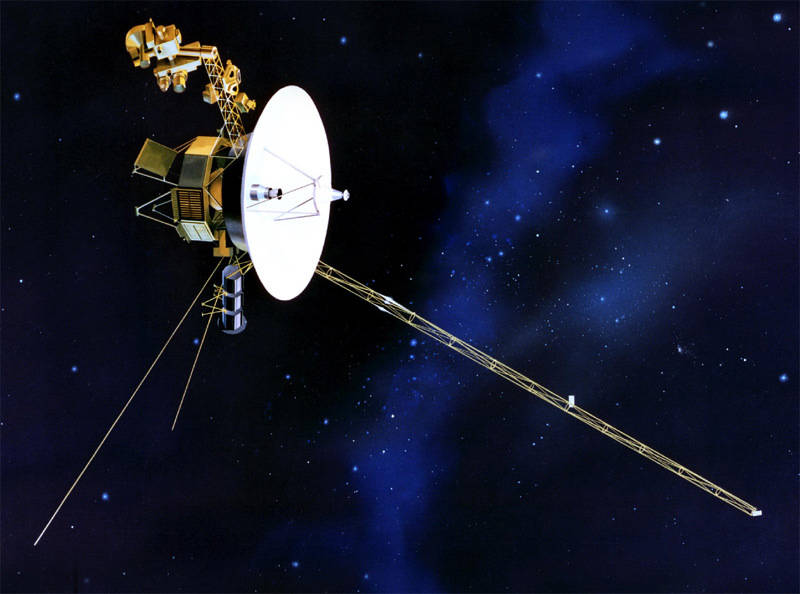
"caption": "Launched in 1977, Voyager 1 is now the farthest man-made object from Earth.",
"description": "NASA",
"title": "8981696768_45489c5497_o",
"credit": null,
"status": "inherit",
"isLoading": false,
"fetchFailed": false
},
"science_1914963": {
"type": "attachments",
"id": "science_1914963",
"meta": {
"index": "attachments_1716263798",
"site": "science",
"id": "1914963",
"found": true
},
"parent": 1914768,
"imgSizes": {
"small": {
"file": "https://ww2.kqed.org/app/uploads/sites/35/2017/08/eclipse_final02-520x299.png",
"width": 520,
"mimeType": "image/png",
"height": 299
},
"twentyfourteen-full-width": {
"file": "https://ww2.kqed.org/app/uploads/sites/35/2017/08/eclipse_final02-1038x576.png",
"width": 1038,
"mimeType": "image/png",
"height": 576
},
"thumbnail": {
"file": "https://ww2.kqed.org/app/uploads/sites/35/2017/08/eclipse_final02-160x92.png",
"width": 160,
"mimeType": "image/png",
"height": 92
},
"fd-sm": {
"file": "https://ww2.kqed.org/app/uploads/sites/35/2017/08/eclipse_final02-960x553.png",
"width": 960,
"mimeType": "image/png",
"height": 553
},
"post-thumbnail": {
"file": "https://ww2.kqed.org/app/uploads/sites/35/2017/08/eclipse_final02-672x372.png",
"width": 672,
"mimeType": "image/png",
"height": 372
},
"xsmall": {
"file": "https://ww2.kqed.org/app/uploads/sites/35/2017/08/eclipse_final02-375x216.png",
"width": 375,
"mimeType": "image/png",
"height": 216
},
"kqedFullSize": {
"file": "https://ww2.kqed.org/app/uploads/sites/35/2017/08/eclipse_final02.png",
"width": 3195,
"height": 1839
},
"large": {
"file": "https://ww2.kqed.org/app/uploads/sites/35/2017/08/eclipse_final02-1020x587.png",
"width": 1020,
"mimeType": "image/png",
"height": 587
},
"xlarge": {
"file": "https://ww2.kqed.org/app/uploads/sites/35/2017/08/eclipse_final02-1180x679.png",
"width": 1180,
"mimeType": "image/png",
"height": 679
},
"guest-author-50": {
"file": "https://ww2.kqed.org/app/uploads/sites/35/2017/08/eclipse_final02-50x50.png",
"width": 50,
"mimeType": "image/png",
"height": 50
},
"guest-author-96": {
"file": "https://ww2.kqed.org/app/uploads/sites/35/2017/08/eclipse_final02-96x96.png",
"width": 96,
"mimeType": "image/png",
"height": 96
},
"medium": {
"file": "https://ww2.kqed.org/app/uploads/sites/35/2017/08/eclipse_final02-800x460.png",
"width": 800,
"mimeType": "image/png",
"height": 460
},
"guest-author-64": {
"file": "https://ww2.kqed.org/app/uploads/sites/35/2017/08/eclipse_final02-64x64.png",
"width": 64,
"mimeType": "image/png",
"height": 64
},
"guest-author-32": {
"file": "https://ww2.kqed.org/app/uploads/sites/35/2017/08/eclipse_final02-32x32.png",
"width": 32,
"mimeType": "image/png",
"height": 32
},
"fd-lrg": {
"file": "https://ww2.kqed.org/app/uploads/sites/35/2017/08/eclipse_final02-1920x1105.png",
"width": 1920,
"mimeType": "image/png",
"height": 1105
},
"fd-med": {
"file": "https://ww2.kqed.org/app/uploads/sites/35/2017/08/eclipse_final02-1180x679.png",
"width": 1180,
"mimeType": "image/png",
"height": 679
},
"full-width": {
"file": "https://ww2.kqed.org/app/uploads/sites/35/2017/08/eclipse_final02-1920x1105.png",
"width": 1920,
"mimeType": "image/png",
"height": 1105
},
"detail": {
"file": "https://ww2.kqed.org/app/uploads/sites/35/2017/08/eclipse_final02-150x150.png",
"width": 150,
"mimeType": "image/png",
"height": 150
},
"medium_large": {
"file": "https://ww2.kqed.org/app/uploads/sites/35/2017/08/eclipse_final02-768x442.png",
"width": 768,
"mimeType": "image/png",
"height": 442
},
"guest-author-128": {
"file": "https://ww2.kqed.org/app/uploads/sites/35/2017/08/eclipse_final02-128x128.png",
"width": 128,
"mimeType": "image/png",
"height": 128
},
"xxsmall": {
"file": "https://ww2.kqed.org/app/uploads/sites/35/2017/08/eclipse_final02-240x138.png",
"width": 240,
"mimeType": "image/png",
"height": 138
}
},
"publishDate": 1503353681,
"modified": 1503353851,
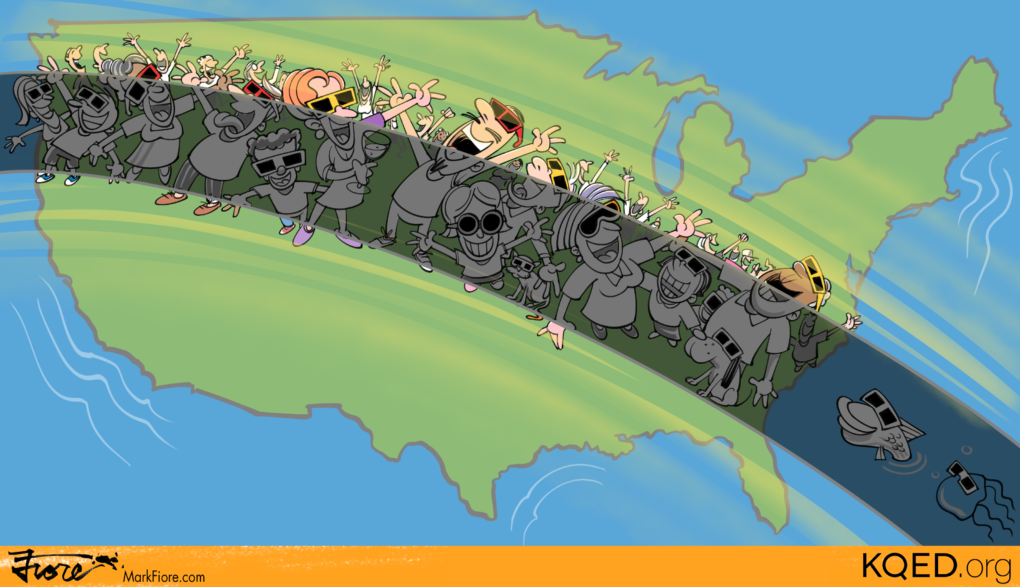
"caption": "A total solar eclipse swept across America on Monday. Millions traveled to the path of totality, which stretched from Oregon to South Carolina. ",
"description": "A total solar eclipse swept across America on Monday. Millions traveled to the path of totality, which stretched from Oregon to South Carolina. ",
"title": "Eclipse Party Across America",
"credit": null,
"status": "inherit",
"isLoading": false,
"fetchFailed": false
},
"science_1914427": {
"type": "attachments",
"id": "science_1914427",
"meta": {
"index": "attachments_1716263798",
"site": "science",
"id": "1914427",
"found": true
},
"parent": 1914425,
"imgSizes": {
"small": {
"file": "https://ww2.kqed.org/app/uploads/sites/35/2017/08/corona_druckmuller-520x347.jpg",
"width": 520,
"mimeType": "image/jpeg",
"height": 347
},
"twentyfourteen-full-width": {
"file": "https://ww2.kqed.org/app/uploads/sites/35/2017/08/corona_druckmuller-900x576.jpg",
"width": 900,
"mimeType": "image/jpeg",
"height": 576
},
"thumbnail": {
"file": "https://ww2.kqed.org/app/uploads/sites/35/2017/08/corona_druckmuller-160x107.jpg",
"width": 160,
"mimeType": "image/jpeg",
"height": 107
},
"post-thumbnail": {
"file": "https://ww2.kqed.org/app/uploads/sites/35/2017/08/corona_druckmuller-672x372.jpg",
"width": 672,
"mimeType": "image/jpeg",
"height": 372
},
"xsmall": {
"file": "https://ww2.kqed.org/app/uploads/sites/35/2017/08/corona_druckmuller-375x250.jpg",
"width": 375,
"mimeType": "image/jpeg",
"height": 250
},
"kqedFullSize": {
"file": "https://ww2.kqed.org/app/uploads/sites/35/2017/08/corona_druckmuller.jpg",
"width": 900,
"height": 600
},
"guest-author-50": {
"file": "https://ww2.kqed.org/app/uploads/sites/35/2017/08/corona_druckmuller-50x50.jpg",
"width": 50,
"mimeType": "image/jpeg",
"height": 50
},
"guest-author-96": {
"file": "https://ww2.kqed.org/app/uploads/sites/35/2017/08/corona_druckmuller-96x96.jpg",
"width": 96,
"mimeType": "image/jpeg",
"height": 96
},
"medium": {
"file": "https://ww2.kqed.org/app/uploads/sites/35/2017/08/corona_druckmuller-800x533.jpg",
"width": 800,
"mimeType": "image/jpeg",
"height": 533
},
"guest-author-64": {
"file": "https://ww2.kqed.org/app/uploads/sites/35/2017/08/corona_druckmuller-64x64.jpg",
"width": 64,
"mimeType": "image/jpeg",
"height": 64
},
"guest-author-32": {
"file": "https://ww2.kqed.org/app/uploads/sites/35/2017/08/corona_druckmuller-32x32.jpg",
"width": 32,
"mimeType": "image/jpeg",
"height": 32
},
"detail": {
"file": "https://ww2.kqed.org/app/uploads/sites/35/2017/08/corona_druckmuller-150x150.jpg",
"width": 150,
"mimeType": "image/jpeg",
"height": 150
},
"medium_large": {
"file": "https://ww2.kqed.org/app/uploads/sites/35/2017/08/corona_druckmuller-768x512.jpg",
"width": 768,
"mimeType": "image/jpeg",
"height": 512
},
"guest-author-128": {
"file": "https://ww2.kqed.org/app/uploads/sites/35/2017/08/corona_druckmuller-128x128.jpg",
"width": 128,
"mimeType": "image/jpeg",
"height": 128
},
"xxsmall": {
"file": "https://ww2.kqed.org/app/uploads/sites/35/2017/08/corona_druckmuller-240x160.jpg",
"width": 240,
"mimeType": "image/jpeg",
"height": 160
}
},
"publishDate": 1502480187,
"modified": 1502480314,
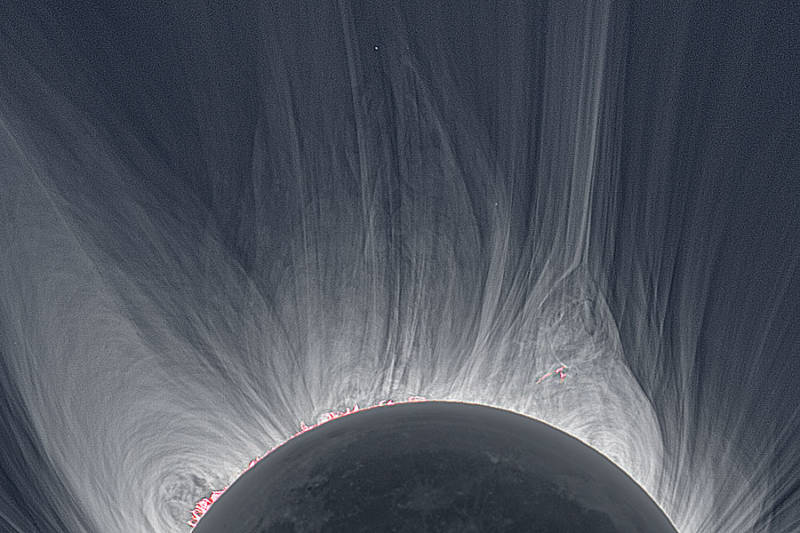
"caption": "Detailed view of the solar corona during an eclipse. It is only during the brief darkness of a total eclipse that the sun's atmosphere is easily visible. ",
"description": null,
"title": "corona_druckmuller",
"credit": "Miloslav Druckmüller/Brno University of Technology",
"status": "inherit",
"isLoading": false,
"fetchFailed": false
},
"science_1914261": {
"type": "attachments",
"id": "science_1914261",
"meta": {
"index": "attachments_1716263798",
"site": "science",
"id": "1914261",
"found": true
},
"parent": 1914182,
"imgSizes": {
"small": {
"file": "https://ww2.kqed.org/app/uploads/sites/35/2017/08/RS13989_87856673-520x347.jpg",
"width": 520,
"mimeType": "image/jpeg",
"height": 347
},
"twentyfourteen-full-width": {
"file": "https://ww2.kqed.org/app/uploads/sites/35/2017/08/RS13989_87856673-1038x576.jpg",
"width": 1038,
"mimeType": "image/jpeg",
"height": 576
},
"thumbnail": {
"file": "https://ww2.kqed.org/app/uploads/sites/35/2017/08/RS13989_87856673-160x107.jpg",
"width": 160,
"mimeType": "image/jpeg",
"height": 107
},
"fd-sm": {
"file": "https://ww2.kqed.org/app/uploads/sites/35/2017/08/RS13989_87856673-960x640.jpg",
"width": 960,
"mimeType": "image/jpeg",
"height": 640
},
"post-thumbnail": {
"file": "https://ww2.kqed.org/app/uploads/sites/35/2017/08/RS13989_87856673-672x372.jpg",
"width": 672,
"mimeType": "image/jpeg",
"height": 372
},
"xsmall": {
"file": "https://ww2.kqed.org/app/uploads/sites/35/2017/08/RS13989_87856673-375x250.jpg",
"width": 375,
"mimeType": "image/jpeg",
"height": 250
},
"kqedFullSize": {
"file": "https://ww2.kqed.org/app/uploads/sites/35/2017/08/RS13989_87856673.jpg",
"width": 2000,
"height": 1333
},
"large": {
"file": "https://ww2.kqed.org/app/uploads/sites/35/2017/08/RS13989_87856673-1020x680.jpg",
"width": 1020,
"mimeType": "image/jpeg",
"height": 680
},
"xlarge": {
"file": "https://ww2.kqed.org/app/uploads/sites/35/2017/08/RS13989_87856673-1180x786.jpg",
"width": 1180,
"mimeType": "image/jpeg",
"height": 786
},
"guest-author-50": {
"file": "https://ww2.kqed.org/app/uploads/sites/35/2017/08/RS13989_87856673-50x50.jpg",
"width": 50,
"mimeType": "image/jpeg",
"height": 50
},
"guest-author-96": {
"file": "https://ww2.kqed.org/app/uploads/sites/35/2017/08/RS13989_87856673-96x96.jpg",
"width": 96,
"mimeType": "image/jpeg",
"height": 96
},
"medium": {
"file": "https://ww2.kqed.org/app/uploads/sites/35/2017/08/RS13989_87856673-800x533.jpg",
"width": 800,
"mimeType": "image/jpeg",
"height": 533
},
"guest-author-64": {
"file": "https://ww2.kqed.org/app/uploads/sites/35/2017/08/RS13989_87856673-64x64.jpg",
"width": 64,
"mimeType": "image/jpeg",
"height": 64
},
"guest-author-32": {
"file": "https://ww2.kqed.org/app/uploads/sites/35/2017/08/RS13989_87856673-32x32.jpg",
"width": 32,
"mimeType": "image/jpeg",
"height": 32
},
"fd-lrg": {
"file": "https://ww2.kqed.org/app/uploads/sites/35/2017/08/RS13989_87856673-1920x1280.jpg",
"width": 1920,
"mimeType": "image/jpeg",
"height": 1280
},
"fd-med": {
"file": "https://ww2.kqed.org/app/uploads/sites/35/2017/08/RS13989_87856673-1180x786.jpg",
"width": 1180,
"mimeType": "image/jpeg",
"height": 786
},
"full-width": {
"file": "https://ww2.kqed.org/app/uploads/sites/35/2017/08/RS13989_87856673-1920x1280.jpg",
"width": 1920,
"mimeType": "image/jpeg",
"height": 1280
},
"detail": {
"file": "https://ww2.kqed.org/app/uploads/sites/35/2017/08/RS13989_87856673-150x150.jpg",
"width": 150,
"mimeType": "image/jpeg",
"height": 150
},
"medium_large": {
"file": "https://ww2.kqed.org/app/uploads/sites/35/2017/08/RS13989_87856673-768x512.jpg",
"width": 768,
"mimeType": "image/jpeg",
"height": 512
},
"guest-author-128": {
"file": "https://ww2.kqed.org/app/uploads/sites/35/2017/08/RS13989_87856673-128x128.jpg",
"width": 128,
"mimeType": "image/jpeg",
"height": 128
},
"xxsmall": {
"file": "https://ww2.kqed.org/app/uploads/sites/35/2017/08/RS13989_87856673-240x160.jpg",
"width": 240,
"mimeType": "image/jpeg",
"height": 160
}
},
"publishDate": 1501804688,
"modified": 1522782971,
"caption": null,
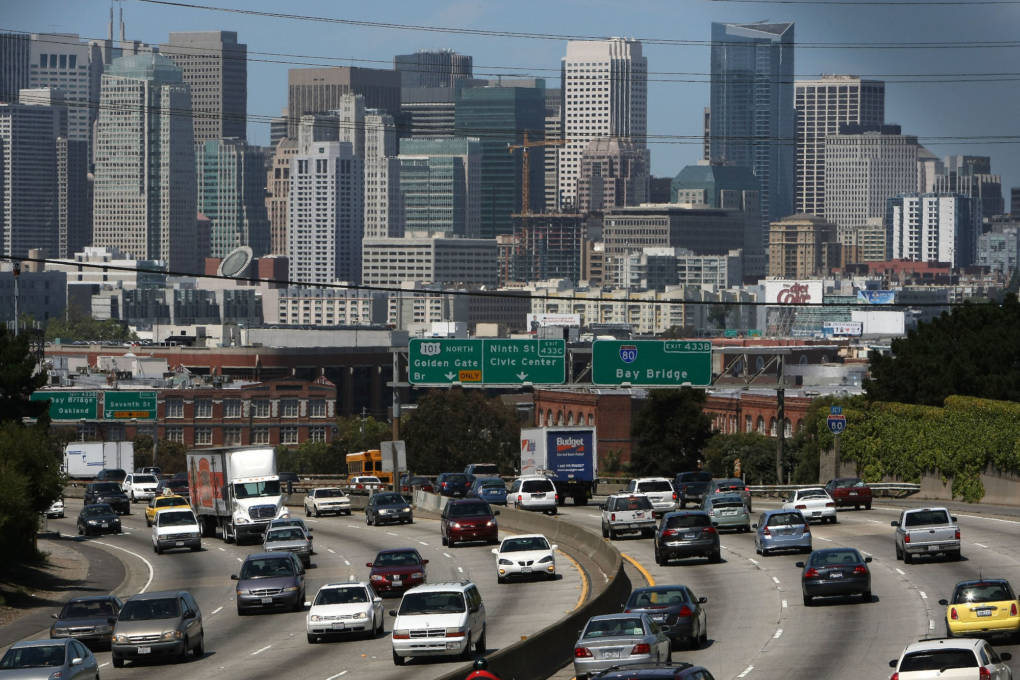
"description": "When this photo was taken in 2009, self-driving cars seemed a distant promise. Now they're becoming a new challenge for highway engineers.",
"title": "SF Traffic",
"credit": "Justin Sullivan/Getty Images",
"status": "inherit",
"isLoading": false,
"fetchFailed": false
},
"science_1914131": {
"type": "attachments",
"id": "science_1914131",
"meta": {
"index": "attachments_1716263798",
"site": "science",
"id": "1914131",
"found": true
},
"parent": 1914130,
"imgSizes": {
"small": {
"file": "https://ww2.kqed.org/app/uploads/sites/35/2017/08/Aera-Belridge_field-web-520x290.jpg",
"width": 520,
"mimeType": "image/jpeg",
"height": 290
},
"twentyfourteen-full-width": {
"file": "https://ww2.kqed.org/app/uploads/sites/35/2017/08/Aera-Belridge_field-web-1038x576.jpg",
"width": 1038,
"mimeType": "image/jpeg",
"height": 576
},
"thumbnail": {
"file": "https://ww2.kqed.org/app/uploads/sites/35/2017/08/Aera-Belridge_field-web-160x89.jpg",
"width": 160,
"mimeType": "image/jpeg",
"height": 89
},
"fd-sm": {
"file": "https://ww2.kqed.org/app/uploads/sites/35/2017/08/Aera-Belridge_field-web-960x535.jpg",
"width": 960,
"mimeType": "image/jpeg",
"height": 535
},
"post-thumbnail": {
"file": "https://ww2.kqed.org/app/uploads/sites/35/2017/08/Aera-Belridge_field-web-672x372.jpg",
"width": 672,
"mimeType": "image/jpeg",
"height": 372
},
"xsmall": {
"file": "https://ww2.kqed.org/app/uploads/sites/35/2017/08/Aera-Belridge_field-web-375x209.jpg",
"width": 375,
"mimeType": "image/jpeg",
"height": 209
},
"kqedFullSize": {
"file": "https://ww2.kqed.org/app/uploads/sites/35/2017/08/Aera-Belridge_field-web.jpg",
"width": 1920,
"height": 1070
},
"large": {
"file": "https://ww2.kqed.org/app/uploads/sites/35/2017/08/Aera-Belridge_field-web-1020x568.jpg",
"width": 1020,
"mimeType": "image/jpeg",
"height": 568
},
"xlarge": {
"file": "https://ww2.kqed.org/app/uploads/sites/35/2017/08/Aera-Belridge_field-web-1180x658.jpg",
"width": 1180,
"mimeType": "image/jpeg",
"height": 658
},
"guest-author-50": {
"file": "https://ww2.kqed.org/app/uploads/sites/35/2017/08/Aera-Belridge_field-web-50x50.jpg",
"width": 50,
"mimeType": "image/jpeg",
"height": 50
},
"guest-author-96": {
"file": "https://ww2.kqed.org/app/uploads/sites/35/2017/08/Aera-Belridge_field-web-96x96.jpg",
"width": 96,
"mimeType": "image/jpeg",
"height": 96
},
"medium": {
"file": "https://ww2.kqed.org/app/uploads/sites/35/2017/08/Aera-Belridge_field-web-800x446.jpg",
"width": 800,
"mimeType": "image/jpeg",
"height": 446
},
"guest-author-64": {
"file": "https://ww2.kqed.org/app/uploads/sites/35/2017/08/Aera-Belridge_field-web-64x64.jpg",
"width": 64,
"mimeType": "image/jpeg",
"height": 64
},
"guest-author-32": {
"file": "https://ww2.kqed.org/app/uploads/sites/35/2017/08/Aera-Belridge_field-web-32x32.jpg",
"width": 32,
"mimeType": "image/jpeg",
"height": 32
},
"fd-lrg": {
"file": "https://ww2.kqed.org/app/uploads/sites/35/2017/08/Aera-Belridge_field-web-1920x1070.jpg",
"width": 1920,
"mimeType": "image/jpeg",
"height": 1070
},
"fd-med": {
"file": "https://ww2.kqed.org/app/uploads/sites/35/2017/08/Aera-Belridge_field-web-1180x658.jpg",
"width": 1180,
"mimeType": "image/jpeg",
"height": 658
},
"full-width": {
"file": "https://ww2.kqed.org/app/uploads/sites/35/2017/08/Aera-Belridge_field-web-1920x1070.jpg",
"width": 1920,
"mimeType": "image/jpeg",
"height": 1070
},
"detail": {
"file": "https://ww2.kqed.org/app/uploads/sites/35/2017/08/Aera-Belridge_field-web-150x150.jpg",
"width": 150,
"mimeType": "image/jpeg",
"height": 150
},
"medium_large": {
"file": "https://ww2.kqed.org/app/uploads/sites/35/2017/08/Aera-Belridge_field-web-768x428.jpg",
"width": 768,
"mimeType": "image/jpeg",
"height": 428
},
"guest-author-128": {
"file": "https://ww2.kqed.org/app/uploads/sites/35/2017/08/Aera-Belridge_field-web-128x128.jpg",
"width": 128,
"mimeType": "image/jpeg",
"height": 128
},
"xxsmall": {
"file": "https://ww2.kqed.org/app/uploads/sites/35/2017/08/Aera-Belridge_field-web-240x134.jpg",
"width": 240,
"mimeType": "image/jpeg",
"height": 134
}
},
"publishDate": 1501708834,
"modified": 1501708907,
"caption": null,
"description": null,
"title": "Aera-Belridge_field-web",
"credit": "Aera Energy",
"status": "inherit",
"isLoading": false,
"fetchFailed": false
},
"futureofyou_428960": {
"type": "attachments",
"id": "futureofyou_428960",
"meta": {
"index": "attachments_1716263798",
"site": "futureofyou",
"id": "428960",
"found": true
},
"parent": 428460,
"imgSizes": {
"small": {
"file": "https://ww2.kqed.org/app/uploads/sites/13/2017/07/Picture-of-bone-fragments-520x389.jpg",
"width": 520,
"mimeType": "image/jpeg",
"height": 389
},
"thumbnail": {
"file": "https://ww2.kqed.org/app/uploads/sites/13/2017/07/Picture-of-bone-fragments-160x120.jpg",
"width": 160,
"mimeType": "image/jpeg",
"height": 120
},
"post-thumbnail": {
"file": "https://ww2.kqed.org/app/uploads/sites/13/2017/07/Picture-of-bone-fragments-641x372.jpg",
"width": 641,
"mimeType": "image/jpeg",
"height": 372
},
"xsmall": {
"file": "https://ww2.kqed.org/app/uploads/sites/13/2017/07/Picture-of-bone-fragments-375x281.jpg",
"width": 375,
"mimeType": "image/jpeg",
"height": 281
},
"kqedFullSize": {
"file": "https://ww2.kqed.org/app/uploads/sites/13/2017/07/Picture-of-bone-fragments.jpg",
"width": 641,
"height": 480
},
"guest-author-50": {
"file": "https://ww2.kqed.org/app/uploads/sites/13/2017/07/Picture-of-bone-fragments-50x50.jpg",
"width": 50,
"mimeType": "image/jpeg",
"height": 50
},
"guest-author-96": {
"file": "https://ww2.kqed.org/app/uploads/sites/13/2017/07/Picture-of-bone-fragments-96x96.jpg",
"width": 96,
"mimeType": "image/jpeg",
"height": 96
},
"guest-author-64": {
"file": "https://ww2.kqed.org/app/uploads/sites/13/2017/07/Picture-of-bone-fragments-64x64.jpg",
"width": 64,
"mimeType": "image/jpeg",
"height": 64
},
"detail": {
"file": "https://ww2.kqed.org/app/uploads/sites/13/2017/07/Picture-of-bone-fragments-150x150.jpg",
"width": 150,
"mimeType": "image/jpeg",
"height": 150
},
"guest-author-32": {
"file": "https://ww2.kqed.org/app/uploads/sites/13/2017/07/Picture-of-bone-fragments-32x32.jpg",
"width": 32,
"mimeType": "image/jpeg",
"height": 32
},
"guest-author-128": {
"file": "https://ww2.kqed.org/app/uploads/sites/13/2017/07/Picture-of-bone-fragments-128x128.jpg",
"width": 128,
"mimeType": "image/jpeg",
"height": 128
},
"xxsmall": {
"file": "https://ww2.kqed.org/app/uploads/sites/13/2017/07/Picture-of-bone-fragments-240x180.jpg",
"width": 240,
"mimeType": "image/jpeg",
"height": 180
}
},
"publishDate": 1500588139,
"modified": 1500666868,
"caption": "The bones left over after a water cremation. The fragments will be pulverized into a powder, which can be memorialized in an urn. ",
"description": null,
"title": "Picture of bone fragments",
"credit": "Dean Fisher/ UCLA",
"status": "inherit",
"isLoading": false,
"fetchFailed": false
},
"science_1783059": {
"type": "attachments",
"id": "science_1783059",
"meta": {
"index": "attachments_1716263798",
"site": "science",
"id": "1783059",
"found": true
},
"parent": 1783056,
"imgSizes": {
"kqedFullSize": {
"file": "https://ww2.kqed.org/app/uploads/sites/35/2017/06/pathfinder_full-e1498774095260.jpg",
"width": 1038,
"height": 690
}
},
"publishDate": 1498773047,
"modified": 1498773186,
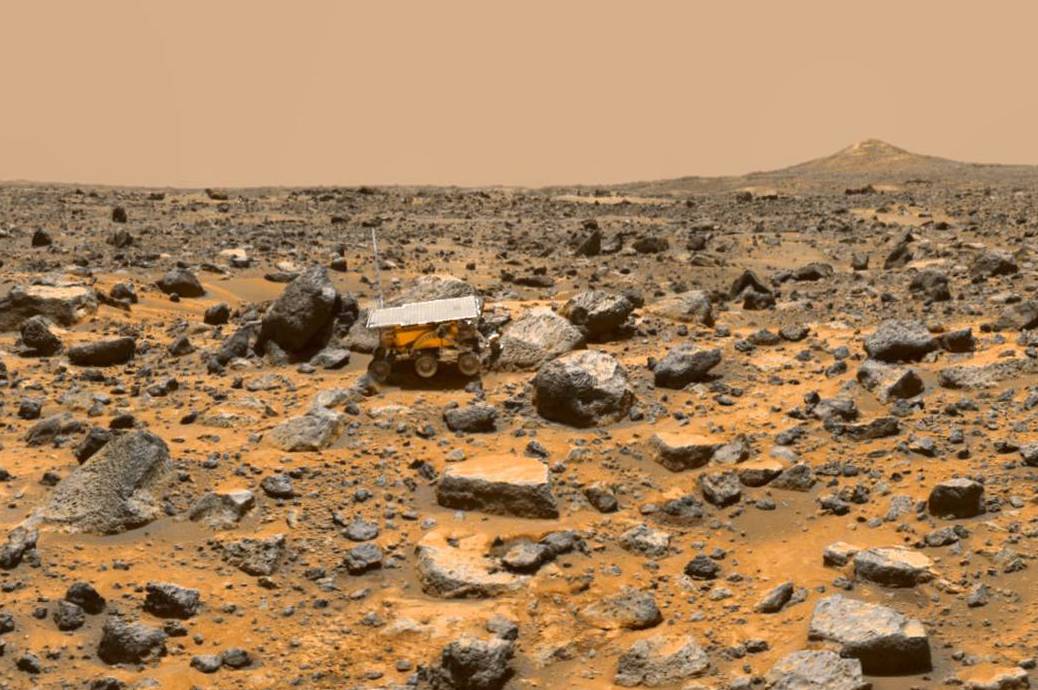
"caption": "The Pathfinder rover, Sojourner, is shown snuggled against a rock nicknamed Moe. The south peak of two hills, known as Twin Peaks, can be seen on the horizon. The rocky surface is comprised of materials washed down from the highlands and deposited in this ancient outflow channel by a catastrophic flood.",
"description": null,
"title": "pathfinder_full",
"credit": "NASA/JPL",
"status": "inherit",
"isLoading": false,
"fetchFailed": false
},
"science_1754416": {
"type": "attachments",
"id": "science_1754416",
"meta": {
"index": "attachments_1716263798",
"site": "science",
"id": "1754416",
"found": true
},
"parent": 1754411,
"imgSizes": {
"small": {
"file": "https://ww2.kqed.org/app/uploads/sites/35/2017/06/Squaw-Chicken-520x390.jpg",
"width": 520,
"mimeType": "image/jpeg",
"height": 390
},
"twentyfourteen-full-width": {
"file": "https://ww2.kqed.org/app/uploads/sites/35/2017/06/Squaw-Chicken-1024x576.jpg",
"width": 1024,
"mimeType": "image/jpeg",
"height": 576
},
"thumbnail": {
"file": "https://ww2.kqed.org/app/uploads/sites/35/2017/06/Squaw-Chicken-160x120.jpg",
"width": 160,
"mimeType": "image/jpeg",
"height": 120
},
"fd-sm": {
"file": "https://ww2.kqed.org/app/uploads/sites/35/2017/06/Squaw-Chicken-960x720.jpg",
"width": 960,
"mimeType": "image/jpeg",
"height": 720
},
"post-thumbnail": {
"file": "https://ww2.kqed.org/app/uploads/sites/35/2017/06/Squaw-Chicken-672x372.jpg",
"width": 672,
"mimeType": "image/jpeg",
"height": 372
},
"xsmall": {
"file": "https://ww2.kqed.org/app/uploads/sites/35/2017/06/Squaw-Chicken-375x281.jpg",
"width": 375,
"mimeType": "image/jpeg",
"height": 281
},
"kqedFullSize": {
"file": "https://ww2.kqed.org/app/uploads/sites/35/2017/06/Squaw-Chicken.jpg",
"width": 1024,
"height": 768
},
"large": {
"file": "https://ww2.kqed.org/app/uploads/sites/35/2017/06/Squaw-Chicken-1020x765.jpg",
"width": 1020,
"mimeType": "image/jpeg",
"height": 765
},
"guest-author-50": {
"file": "https://ww2.kqed.org/app/uploads/sites/35/2017/06/Squaw-Chicken-50x50.jpg",
"width": 50,
"mimeType": "image/jpeg",
"height": 50
},
"guest-author-96": {
"file": "https://ww2.kqed.org/app/uploads/sites/35/2017/06/Squaw-Chicken-96x96.jpg",
"width": 96,
"mimeType": "image/jpeg",
"height": 96
},
"medium": {
"file": "https://ww2.kqed.org/app/uploads/sites/35/2017/06/Squaw-Chicken-800x600.jpg",
"width": 800,
"mimeType": "image/jpeg",
"height": 600
},
"guest-author-64": {
"file": "https://ww2.kqed.org/app/uploads/sites/35/2017/06/Squaw-Chicken-64x64.jpg",
"width": 64,
"mimeType": "image/jpeg",
"height": 64
},
"guest-author-32": {
"file": "https://ww2.kqed.org/app/uploads/sites/35/2017/06/Squaw-Chicken-32x32.jpg",
"width": 32,
"mimeType": "image/jpeg",
"height": 32
},
"detail": {
"file": "https://ww2.kqed.org/app/uploads/sites/35/2017/06/Squaw-Chicken-150x150.jpg",
"width": 150,
"mimeType": "image/jpeg",
"height": 150
},
"medium_large": {
"file": "https://ww2.kqed.org/app/uploads/sites/35/2017/06/Squaw-Chicken-768x576.jpg",
"width": 768,
"mimeType": "image/jpeg",
"height": 576
},
"guest-author-128": {
"file": "https://ww2.kqed.org/app/uploads/sites/35/2017/06/Squaw-Chicken-128x128.jpg",
"width": 128,
"mimeType": "image/jpeg",
"height": 128
},
"xxsmall": {
"file": "https://ww2.kqed.org/app/uploads/sites/35/2017/06/Squaw-Chicken-240x180.jpg",
"width": 240,
"mimeType": "image/jpeg",
"height": 180
}
},
"publishDate": 1498161978,
"modified": 1498520769,
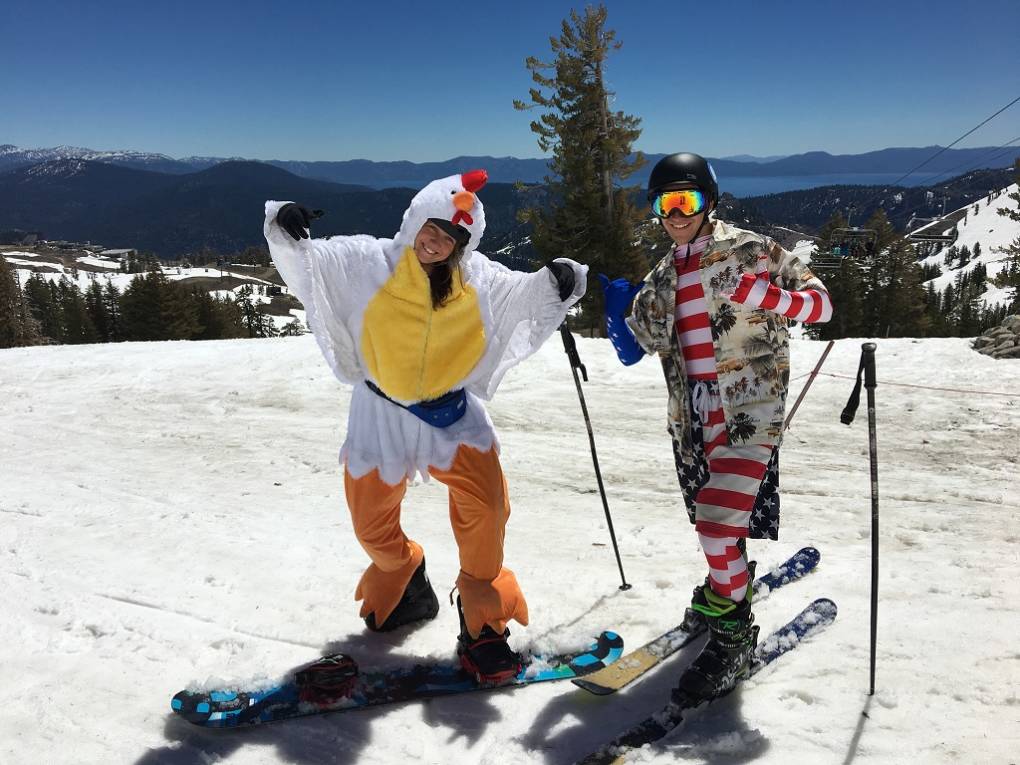
"caption": "Chelsea Chestnut (L) and Will Mathews (R) pose at the top of Squaw Valley on an 80-degree day. ",
"description": null,
"title": "Squaw Chicken",
"credit": "Lesley McClurg/ KQED",
"status": "inherit",
"isLoading": false,
"fetchFailed": false
},
"science_1728705": {
"type": "attachments",
"id": "science_1728705",
"meta": {
"index": "attachments_1716263798",
"site": "science",
"id": "1728705",
"found": true
},
"parent": 1728704,
"imgSizes": {
"small": {
"file": "https://ww2.kqed.org/app/uploads/sites/35/2017/06/TSE2012PhilHart_6999_900px-520x520.jpg",
"width": 520,
"mimeType": "image/jpeg",
"height": 520
},
"twentyfourteen-full-width": {
"file": "https://ww2.kqed.org/app/uploads/sites/35/2017/06/TSE2012PhilHart_6999_900px-900x576.jpg",
"width": 900,
"mimeType": "image/jpeg",
"height": 576
},
"thumbnail": {
"file": "https://ww2.kqed.org/app/uploads/sites/35/2017/06/TSE2012PhilHart_6999_900px-160x160.jpg",
"width": 160,
"mimeType": "image/jpeg",
"height": 160
},
"post-thumbnail": {
"file": "https://ww2.kqed.org/app/uploads/sites/35/2017/06/TSE2012PhilHart_6999_900px-672x372.jpg",
"width": 672,
"mimeType": "image/jpeg",
"height": 372
},
"xsmall": {
"file": "https://ww2.kqed.org/app/uploads/sites/35/2017/06/TSE2012PhilHart_6999_900px-375x375.jpg",
"width": 375,
"mimeType": "image/jpeg",
"height": 375
},
"kqedFullSize": {
"file": "https://ww2.kqed.org/app/uploads/sites/35/2017/06/TSE2012PhilHart_6999_900px.jpg",
"width": 900,
"height": 900
},
"guest-author-50": {
"file": "https://ww2.kqed.org/app/uploads/sites/35/2017/06/TSE2012PhilHart_6999_900px-50x50.jpg",
"width": 50,
"mimeType": "image/jpeg",
"height": 50
},
"guest-author-96": {
"file": "https://ww2.kqed.org/app/uploads/sites/35/2017/06/TSE2012PhilHart_6999_900px-96x96.jpg",
"width": 96,
"mimeType": "image/jpeg",
"height": 96
},
"medium": {
"file": "https://ww2.kqed.org/app/uploads/sites/35/2017/06/TSE2012PhilHart_6999_900px-800x800.jpg",
"width": 800,
"mimeType": "image/jpeg",
"height": 800
},
"guest-author-64": {
"file": "https://ww2.kqed.org/app/uploads/sites/35/2017/06/TSE2012PhilHart_6999_900px-64x64.jpg",
"width": 64,
"mimeType": "image/jpeg",
"height": 64
},
"guest-author-32": {
"file": "https://ww2.kqed.org/app/uploads/sites/35/2017/06/TSE2012PhilHart_6999_900px-32x32.jpg",
"width": 32,
"mimeType": "image/jpeg",
"height": 32
},
"detail": {
"file": "https://ww2.kqed.org/app/uploads/sites/35/2017/06/TSE2012PhilHart_6999_900px-150x150.jpg",
"width": 150,
"mimeType": "image/jpeg",
"height": 150
},
"medium_large": {
"file": "https://ww2.kqed.org/app/uploads/sites/35/2017/06/TSE2012PhilHart_6999_900px-768x768.jpg",
"width": 768,
"mimeType": "image/jpeg",
"height": 768
},
"guest-author-128": {
"file": "https://ww2.kqed.org/app/uploads/sites/35/2017/06/TSE2012PhilHart_6999_900px-128x128.jpg",
"width": 128,
"mimeType": "image/jpeg",
"height": 128
},
"xxsmall": {
"file": "https://ww2.kqed.org/app/uploads/sites/35/2017/06/TSE2012PhilHart_6999_900px-240x240.jpg",
"width": 240,
"mimeType": "image/jpeg",
"height": 240
}
},
"publishDate": 1497618543,
"modified": 1497918826,
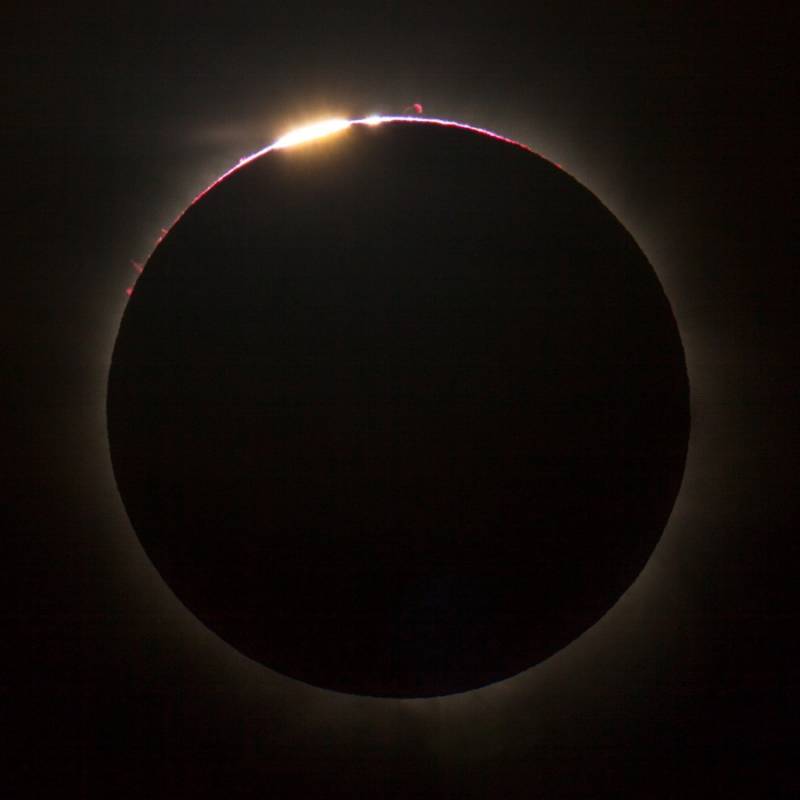
"caption": "Total solar eclipse over Queensland, Australia. A tiny portion of the Sun's disk peeks behind the moon, which is surrounded by the halo of a the solar corona.",
"description": null,
"title": "TSE2012PhilHart_6999_900px",
"credit": "\u003ca href=\"http://philhart.com/content/solar-eclipse-queensland-14th-november-2012\">Phil Hart\u003c/a>",
"status": "inherit",
"isLoading": false,
"fetchFailed": false
},
"science_1707462": {
"type": "attachments",
"id": "science_1707462",
"meta": {
"index": "attachments_1716263798",
"site": "science",
"id": "1707462",
"found": true
},
"parent": 1702348,
"imgSizes": {
"small": {
"file": "https://ww2.kqed.org/app/uploads/sites/35/2017/06/IMG_3571-520x390.jpg",
"width": 520,
"mimeType": "image/jpeg",
"height": 390
},
"twentyfourteen-full-width": {
"file": "https://ww2.kqed.org/app/uploads/sites/35/2017/06/IMG_3571-1038x576.jpg",
"width": 1038,
"mimeType": "image/jpeg",
"height": 576
},
"thumbnail": {
"file": "https://ww2.kqed.org/app/uploads/sites/35/2017/06/IMG_3571-160x120.jpg",
"width": 160,
"mimeType": "image/jpeg",
"height": 120
},
"fd-sm": {
"file": "https://ww2.kqed.org/app/uploads/sites/35/2017/06/IMG_3571-960x720.jpg",
"width": 960,
"mimeType": "image/jpeg",
"height": 720
},
"post-thumbnail": {
"file": "https://ww2.kqed.org/app/uploads/sites/35/2017/06/IMG_3571-672x372.jpg",
"width": 672,
"mimeType": "image/jpeg",
"height": 372
},
"xsmall": {
"file": "https://ww2.kqed.org/app/uploads/sites/35/2017/06/IMG_3571-375x281.jpg",
"width": 375,
"mimeType": "image/jpeg",
"height": 281
},
"kqedFullSize": {
"file": "https://ww2.kqed.org/app/uploads/sites/35/2017/06/IMG_3571.jpg",
"width": 2000,
"height": 1500
},
"large": {
"file": "https://ww2.kqed.org/app/uploads/sites/35/2017/06/IMG_3571-1020x765.jpg",
"width": 1020,
"mimeType": "image/jpeg",
"height": 765
},
"xlarge": {
"file": "https://ww2.kqed.org/app/uploads/sites/35/2017/06/IMG_3571-1180x885.jpg",
"width": 1180,
"mimeType": "image/jpeg",
"height": 885
},
"guest-author-50": {
"file": "https://ww2.kqed.org/app/uploads/sites/35/2017/06/IMG_3571-50x50.jpg",
"width": 50,
"mimeType": "image/jpeg",
"height": 50
},
"guest-author-96": {
"file": "https://ww2.kqed.org/app/uploads/sites/35/2017/06/IMG_3571-96x96.jpg",
"width": 96,
"mimeType": "image/jpeg",
"height": 96
},
"medium": {
"file": "https://ww2.kqed.org/app/uploads/sites/35/2017/06/IMG_3571-800x600.jpg",
"width": 800,
"mimeType": "image/jpeg",
"height": 600
},
"guest-author-64": {
"file": "https://ww2.kqed.org/app/uploads/sites/35/2017/06/IMG_3571-64x64.jpg",
"width": 64,
"mimeType": "image/jpeg",
"height": 64
},
"guest-author-32": {
"file": "https://ww2.kqed.org/app/uploads/sites/35/2017/06/IMG_3571-32x32.jpg",
"width": 32,
"mimeType": "image/jpeg",
"height": 32
},
"fd-lrg": {
"file": "https://ww2.kqed.org/app/uploads/sites/35/2017/06/IMG_3571-1920x1440.jpg",
"width": 1920,
"mimeType": "image/jpeg",
"height": 1440
},
"fd-med": {
"file": "https://ww2.kqed.org/app/uploads/sites/35/2017/06/IMG_3571-1180x885.jpg",
"width": 1180,
"mimeType": "image/jpeg",
"height": 885
},
"full-width": {
"file": "https://ww2.kqed.org/app/uploads/sites/35/2017/06/IMG_3571-1920x1440.jpg",
"width": 1920,
"mimeType": "image/jpeg",
"height": 1440
},
"detail": {
"file": "https://ww2.kqed.org/app/uploads/sites/35/2017/06/IMG_3571-150x150.jpg",
"width": 150,
"mimeType": "image/jpeg",
"height": 150
},
"medium_large": {
"file": "https://ww2.kqed.org/app/uploads/sites/35/2017/06/IMG_3571-768x576.jpg",
"width": 768,
"mimeType": "image/jpeg",
"height": 576
},
"guest-author-128": {
"file": "https://ww2.kqed.org/app/uploads/sites/35/2017/06/IMG_3571-128x128.jpg",
"width": 128,
"mimeType": "image/jpeg",
"height": 128
},
"xxsmall": {
"file": "https://ww2.kqed.org/app/uploads/sites/35/2017/06/IMG_3571-240x180.jpg",
"width": 240,
"mimeType": "image/jpeg",
"height": 180
}
},
"publishDate": 1497046499,
"modified": 1497046571,
"caption": "Water bursts from a pipe to irrigate a corn field near Stockton.",
"description": "Water bursts from a pipe to irrigate a corn field near Stockton.",
"title": "IMG_3571",
"credit": "Craig Miller/KQED",
"status": "inherit",
"isLoading": false,
"fetchFailed": false
},
"news_11467102": {
"type": "attachments",
"id": "news_11467102",
"meta": {
"index": "attachments_1716263798",
"site": "news",
"id": "11467102",
"found": true
},
"parent": 11463233,
"imgSizes": {
"small": {
"file": "https://ww2.kqed.org/app/uploads/sites/10/2017/05/SeyedSadredin-520x274.jpg",
"width": 520,
"mimeType": "image/jpeg",
"height": 274
},
"twentyfourteen-full-width": {
"file": "https://ww2.kqed.org/app/uploads/sites/10/2017/05/SeyedSadredin-1038x576.jpg",
"width": 1038,
"mimeType": "image/jpeg",
"height": 576
},
"thumbnail": {
"file": "https://ww2.kqed.org/app/uploads/sites/10/2017/05/SeyedSadredin-160x84.jpg",
"width": 160,
"mimeType": "image/jpeg",
"height": 84
},
"fd-sm": {
"file": "https://ww2.kqed.org/app/uploads/sites/10/2017/05/SeyedSadredin-960x507.jpg",
"width": 960,
"mimeType": "image/jpeg",
"height": 507
},
"post-thumbnail": {
"file": "https://ww2.kqed.org/app/uploads/sites/10/2017/05/SeyedSadredin-672x372.jpg",
"width": 672,
"mimeType": "image/jpeg",
"height": 372
},
"xsmall": {
"file": "https://ww2.kqed.org/app/uploads/sites/10/2017/05/SeyedSadredin-375x198.jpg",
"width": 375,
"mimeType": "image/jpeg",
"height": 198
},
"kqedFullSize": {
"file": "https://ww2.kqed.org/app/uploads/sites/10/2017/05/SeyedSadredin.jpg",
"width": 1920,
"height": 1013
},
"large": {
"file": "https://ww2.kqed.org/app/uploads/sites/10/2017/05/SeyedSadredin-1020x538.jpg",
"width": 1020,
"mimeType": "image/jpeg",
"height": 538
},
"xlarge": {
"file": "https://ww2.kqed.org/app/uploads/sites/10/2017/05/SeyedSadredin-1180x623.jpg",
"width": 1180,
"mimeType": "image/jpeg",
"height": 623
},
"guest-author-50": {
"file": "https://ww2.kqed.org/app/uploads/sites/10/2017/05/SeyedSadredin-50x50.jpg",
"width": 50,
"mimeType": "image/jpeg",
"height": 50
},
"guest-author-96": {
"file": "https://ww2.kqed.org/app/uploads/sites/10/2017/05/SeyedSadredin-96x96.jpg",
"width": 96,
"mimeType": "image/jpeg",
"height": 96
},
"medium": {
"file": "https://ww2.kqed.org/app/uploads/sites/10/2017/05/SeyedSadredin-800x422.jpg",
"width": 800,
"mimeType": "image/jpeg",
"height": 422
},
"guest-author-64": {
"file": "https://ww2.kqed.org/app/uploads/sites/10/2017/05/SeyedSadredin-64x64.jpg",
"width": 64,
"mimeType": "image/jpeg",
"height": 64
},
"guest-author-32": {
"file": "https://ww2.kqed.org/app/uploads/sites/10/2017/05/SeyedSadredin-32x32.jpg",
"width": 32,
"mimeType": "image/jpeg",
"height": 32
},
"fd-lrg": {
"file": "https://ww2.kqed.org/app/uploads/sites/10/2017/05/SeyedSadredin-1920x1013.jpg",
"width": 1920,
"mimeType": "image/jpeg",
"height": 1013
},
"fd-med": {
"file": "https://ww2.kqed.org/app/uploads/sites/10/2017/05/SeyedSadredin-1180x623.jpg",
"width": 1180,
"mimeType": "image/jpeg",
"height": 623
},
"full-width": {
"file": "https://ww2.kqed.org/app/uploads/sites/10/2017/05/SeyedSadredin-1920x1013.jpg",
"width": 1920,
"mimeType": "image/jpeg",
"height": 1013
},
"detail": {
"file": "https://ww2.kqed.org/app/uploads/sites/10/2017/05/SeyedSadredin-150x150.jpg",
"width": 150,
"mimeType": "image/jpeg",
"height": 150
},
"guest-author-128": {
"file": "https://ww2.kqed.org/app/uploads/sites/10/2017/05/SeyedSadredin-128x128.jpg",
"width": 128,
"mimeType": "image/jpeg",
"height": 128
},
"xxsmall": {
"file": "https://ww2.kqed.org/app/uploads/sites/10/2017/05/SeyedSadredin-240x127.jpg",
"width": 240,
"mimeType": "image/jpeg",
"height": 127
}
},
"publishDate": 1495227538,
"modified": 1495243394,
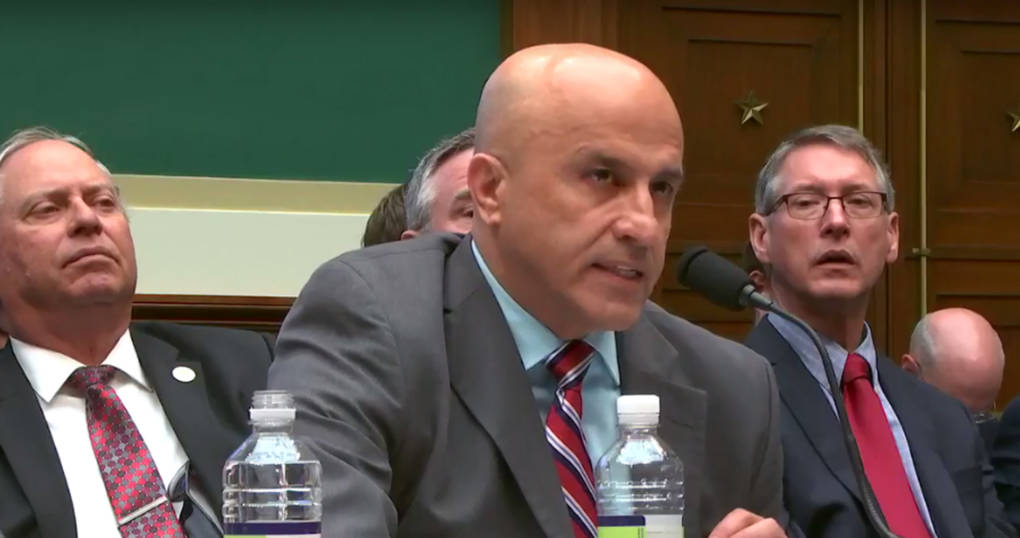
"caption": "Seyed Sadredin, executive director of the San Joaquin Valley Air Pollution Control District, testifies at a March 22 congressional subcommittee hearing to delay ozone standards. ",
"description": "Seyed Sadredin, executive director of the San Joaquin Valley Air Pollution Control District, testifies at a March 22 Congressional subcommittee hearing to delay ozone standards. ",
"title": "SeyedSadredin",
"credit": "YouTube",
"status": "inherit",
"isLoading": false,
"fetchFailed": false
}
},
"audioPlayerReducer": {
"postId": "stream_live",
"isPaused": true,
"isPlaying": false,
"pfsActive": false,
"pledgeModalIsOpen": true,
"playerDrawerIsOpen": false,
"liveAudioPlayStartedAt": 0,
"liveAudioPlayContext": ""
},
"authorsReducer": {
"byline_news_11463233": {
"type": "authors",
"id": "byline_news_11463233",
"meta": {
"override": true
},
"slug": "byline_news_11463233",
"name": "\u003cstrong>\u003ca href=\"https://www.publicintegrity.org/authors/jim-morris\">Jim Morris\u003c/a>\u003c/strong> and \u003cstrong>\u003ca href=\"https://ww2.kqed.org/news/author/sasha-khokha/\">Sasha Khokha\u003c/a>\u003c/strong>",
"isLoading": false
},
"cmiller": {
"type": "authors",
"id": "221",
"meta": {
"index": "authors_1716337520",
"id": "221",
"found": true
},
"name": "Craig Miller",
"firstName": "Craig",
"lastName": "Miller",
"slug": "cmiller",
"email": "craig@voxterra.net",
"display_author_email": false,
"staff_mastheads": [
"science"
],
"title": "Editor Emeritus, Science",
"bio": "Craig is a former KQED Science editor, specializing in weather, climate, water & energy issues, with a little seismology thrown in just to shake things up. Prior to that, he launched and led the station's award-winning multimedia project, Climate Watch. Craig is also an accomplished writer/producer of television documentaries, with a focus on natural resource issues.",
"avatar": "https://secure.gravatar.com/avatar/b91661df645e001a9cafe0861fa685f9?s=600&d=blank&r=g",
"twitter": "voxterra",
"facebook": null,
"instagram": null,
"linkedin": null,
"sites": [
{
"site": "news",
"roles": [
"author"
]
},
{
"site": "futureofyou",
"roles": [
"editor"
]
},
{
"site": "stateofhealth",
"roles": [
"author"
]
},
{
"site": "science",
"roles": [
"editor"
]
},
{
"site": "quest",
"roles": [
"editor"
]
}
],
"headData": {
"title": "Craig Miller | KQED",
"description": "Editor Emeritus, Science",
"ogImgSrc": "https://secure.gravatar.com/avatar/b91661df645e001a9cafe0861fa685f9?s=600&d=blank&r=g",
"twImgSrc": "https://secure.gravatar.com/avatar/b91661df645e001a9cafe0861fa685f9?s=600&d=blank&r=g"
},
"isLoading": false,
"link": "/author/cmiller"
},
"laurensommer": {
"type": "authors",
"id": "239",
"meta": {
"index": "authors_1716337520",
"id": "239",
"found": true
},
"name": "Lauren Sommer",
"firstName": "Lauren",
"lastName": "Sommer",
"slug": "laurensommer",
"email": "lsommer@kqed.org",
"display_author_email": false,
"staff_mastheads": [],
"title": "KQED Contributor",
"bio": "Lauren is a radio reporter formerly covering environment, water, and energy for KQED Science. As part of her day job, she has scaled Sierra Nevada peaks, run from charging elephant seals, and desperately tried to get her sea legs - all in pursuit of good radio. Her work has appeared on Marketplace, Living on Earth, Science Friday and NPR's Morning Edition and All Things Considered. You can find her on Twitter at \u003ca href=\"https://twitter.com/lesommer\">@lesommer\u003c/a>.",
"avatar": "https://secure.gravatar.com/avatar/33aa3772bb86c6ad45b8aca6a238bbdf?s=600&d=blank&r=g",
"twitter": null,
"facebook": null,
"instagram": null,
"linkedin": null,
"sites": [
{
"site": "news",
"roles": [
"author"
]
},
{
"site": "science",
"roles": [
"editor",
"manage_content_types",
"manage_taxonomies"
]
},
{
"site": "quest",
"roles": [
"editor"
]
}
],
"headData": {
"title": "Lauren Sommer | KQED",
"description": "KQED Contributor",
"ogImgSrc": "https://secure.gravatar.com/avatar/33aa3772bb86c6ad45b8aca6a238bbdf?s=600&d=blank&r=g",
"twImgSrc": "https://secure.gravatar.com/avatar/33aa3772bb86c6ad45b8aca6a238bbdf?s=600&d=blank&r=g"
},
"isLoading": false,
"link": "/author/laurensommer"
},
"kqedscience": {
"type": "authors",
"id": "6387",
"meta": {
"index": "authors_1716337520",
"id": "6387",
"found": true
},
"name": "KQED Science",
"firstName": "KQED",
"lastName": "Science",
"slug": "kqedscience",
"email": "kqedscience@gmail.com",
"display_author_email": false,
"staff_mastheads": [],
"title": null,
"bio": "KQED Science brings you award-winning science and environment coverage from the Bay Area and beyond by the flagship Northern California PBS and NPR affiliate.",
"avatar": "https://secure.gravatar.com/avatar/5a295ff49cf82a8c0f30937d3f788b2f?s=600&d=blank&r=g",
"twitter": null,
"facebook": null,
"instagram": null,
"linkedin": null,
"sites": [
{
"site": "science",
"roles": [
"contributor"
]
},
{
"site": "quest",
"roles": [
"editor"
]
},
{
"site": "food",
"roles": [
"contributor"
]
}
],
"headData": {
"title": "KQED Science | KQED",
"description": null,
"ogImgSrc": "https://secure.gravatar.com/avatar/5a295ff49cf82a8c0f30937d3f788b2f?s=600&d=blank&r=g",
"twImgSrc": "https://secure.gravatar.com/avatar/5a295ff49cf82a8c0f30937d3f788b2f?s=600&d=blank&r=g"
},
"isLoading": false,
"link": "/author/kqedscience"
},
"jscott": {
"type": "authors",
"id": "8664",
"meta": {
"index": "authors_1716337520",
"id": "8664",
"found": true
},
"name": "Julia Scott",
"firstName": "Julia",
"lastName": "Scott",
"slug": "jscott",
"email": "jscott@kqed.org",
"display_author_email": false,
"staff_mastheads": [],
"title": "KQED Contributor",
"bio": "Julia Scott is a former editor with KQED News. Prior to KQED, she was an editor with \u003cem>Crosscurrents\u003c/em> at KALW Radio in San Francisco. As a freelance reporter, she has filed stories for \u003cem>The California Report, Marketplace, Nautilus\u003c/em> and \u003cem>The New York Times Magazine.\u003c/em>\r\n\r\nPrior to her work in radio, Julia was an environmental reporter for the \u003cem>San Jose Mercury News\u003c/em> and Bay Area News Group, where her work was recognized with awards from the California Newspaper Publishers Association and the Society of Professional Journalists. Her radio honors include awards and citations from the Sony Radio Academy Awards and the National Lesbian and Gay Journalists Association.\r\n\r\nJulia hails from Montreal, Canada and lives in Oakland. She is the editor of the humor collection\u003cem> DRIVEL: Deliciously Bad Writing by Your Favorite Authors.\u003c/em>",
"avatar": "https://secure.gravatar.com/avatar/7fe25e0cf81dec2d4f74f1d4737a2871?s=600&d=blank&r=g",
"twitter": "juliascribe",
"facebook": null,
"instagram": null,
"linkedin": null,
"sites": [
{
"site": "",
"roles": [
"editor"
]
},
{
"site": "arts",
"roles": [
"administrator"
]
},
{
"site": "news",
"roles": [
"subscriber"
]
},
{
"site": "futureofyou",
"roles": [
"editor"
]
},
{
"site": "science",
"roles": [
"administrator"
]
}
],
"headData": {
"title": "Julia Scott | KQED",
"description": "KQED Contributor",
"ogImgSrc": "https://secure.gravatar.com/avatar/7fe25e0cf81dec2d4f74f1d4737a2871?s=600&d=blank&r=g",
"twImgSrc": "https://secure.gravatar.com/avatar/7fe25e0cf81dec2d4f74f1d4737a2871?s=600&d=blank&r=g"
},
"isLoading": false,
"link": "/author/jscott"
},
"dventon": {
"type": "authors",
"id": "11088",
"meta": {
"index": "authors_1716337520",
"id": "11088",
"found": true
},
"name": "Danielle Venton",
"firstName": "Danielle",
"lastName": "Venton",
"slug": "dventon",
"email": "dventon@kqed.org",
"display_author_email": true,
"staff_mastheads": [
"science"
],
"title": "Science reporter",
"bio": "Danielle Venton is a reporter for KQED Science. She covers wildfires, space and oceans (though she is prone to sea sickness).\r\n\r\nBefore joining KQED in 2015, Danielle was a staff reporter at KRCB in Sonoma County and a freelancer. She studied science communication at UC Santa Cruz and formerly worked at CERN in Geneva, Switzerland where she wrote about computing. She lives in Sonoma County and enjoys backpacking.",
"avatar": "https://secure.gravatar.com/avatar/37b292b5c40c8d93959c4f48d73b5286f41b7abd8588277e941905a3ed4c801c?s=600&d=blank&r=g",
"twitter": "DanielleVenton",
"bluesky": null,
"facebook": null,
"instagram": null,
"linkedin": null,
"sites": [
{
"site": "arts",
"roles": [
"contributor"
]
},
{
"site": "news",
"roles": [
"editor"
]
},
{
"site": "futureofyou",
"roles": [
"editor"
]
},
{
"site": "science",
"roles": [
"editor"
]
},
{
"site": "liveblog",
"roles": [
"contributor"
]
}
],
"headData": {
"title": "Danielle Venton | KQED",
"description": "Science reporter",
"ogImgSrc": "https://secure.gravatar.com/avatar/37b292b5c40c8d93959c4f48d73b5286f41b7abd8588277e941905a3ed4c801c?s=600&d=blank&r=g",
"twImgSrc": "https://secure.gravatar.com/avatar/37b292b5c40c8d93959c4f48d73b5286f41b7abd8588277e941905a3ed4c801c?s=600&d=blank&r=g"
},
"isLoading": false,
"link": "/author/dventon"
},
"lesleymcclurg": {
"type": "authors",
"id": "11229",
"meta": {
"index": "authors_1716337520",
"id": "11229",
"found": true
},
"name": "Lesley McClurg",
"firstName": "Lesley",
"lastName": "McClurg",
"slug": "lesleymcclurg",
"email": "lmcclurg@KQED.org",
"display_author_email": false,
"staff_mastheads": [
"news",
"science"
],
"title": "KQED Health Correspondent",
"bio": "Lesley McClurg is a health correspondent and fill-in host whose work is regularly rebroadcast on NPR and PBS programs. She’s earned multiple regional Emmy awards, a national and a regional Edward R. Murrow award, and was named Best Beat Reporter by the Association of Health Care Journalists. The Society of Professional Journalists has recognized her work several times, and the Society of Environmental Journalists spotlighted her coverage of California’s historic drought.\r\n\r\nBefore joining KQED in 2016, Lesley covered food and sustainability for Capital Public Radio, environmental issues for Colorado Public Radio, and reported for KUOW and KCTS 9 in Seattle. Away from the newsroom, she loves skiing with her daughter, mountain biking with her partner, and playing with Ollie, the family’s goldendoodle. On deadline, she runs almost entirely on chocolate chips.\r\n\r\n ",
"avatar": "https://secure.gravatar.com/avatar/bab49e972ea10c774fe0f5e29dba1722b158f7c0d58a360923d1389d380b2978?s=600&d=blank&r=g",
"twitter": "lesleywmcclurg",
"bluesky": null,
"facebook": null,
"instagram": null,
"linkedin": null,
"sites": [
{
"site": "arts",
"roles": [
"author"
]
},
{
"site": "news",
"roles": [
"editor"
]
},
{
"site": "futureofyou",
"roles": [
"editor"
]
},
{
"site": "stateofhealth",
"roles": [
"author"
]
},
{
"site": "science",
"roles": [
"editor"
]
},
{
"site": "quest",
"roles": [
"subscriber"
]
},
{
"site": "forum",
"roles": [
"administrator"
]
},
{
"site": "liveblog",
"roles": [
"author"
]
}
],
"headData": {
"title": "Lesley McClurg | KQED",
"description": "KQED Health Correspondent",
"ogImgSrc": "https://secure.gravatar.com/avatar/bab49e972ea10c774fe0f5e29dba1722b158f7c0d58a360923d1389d380b2978?s=600&d=blank&r=g",
"twImgSrc": "https://secure.gravatar.com/avatar/bab49e972ea10c774fe0f5e29dba1722b158f7c0d58a360923d1389d380b2978?s=600&d=blank&r=g"
},
"isLoading": false,
"link": "/author/lesleymcclurg"
}
},
"pagesReducer": {
"science_program_science-podcast": {
"type": "terms",
"id": "science_5376",
"meta": {
"index": "terms_1716263798",
"site": "science",
"id": "5376",
"score": 15.530257
},
"name": "Science Podcast",
"slug": "science-podcast",
"taxonomy": "program",
"description": null,
"featImg": null,
"headData": {
"title": "Science Podcast | KQED Science",
"description": null,
"ogTitle": null,
"ogDescription": null,
"ogImgId": null,
"twTitle": null,
"twDescription": null,
"twImgId": null
},
"ttid": 5376,
"isLoading": false,
"title": "Science Podcast",
"pageMeta": {
"site": "science",
"WpPageTemplate": "page-topic-editorial",
"currentPage": 9
},
"blocks": [
{
"blockName": "kqed/post-list",
"attrs": {
"layout": "cardArticle2",
"query": "posts/science?program=science-podcast",
"seeMore": false,
"paginated": true,
"page": 9
}
},
{
"blockName": "kqed/ad"
}
]
}
},
"pfsSessionReducer": {},
"postsReducer": {
"stream_live": {
"type": "live",
"id": "stream_live",
"audioUrl": "https://streams.kqed.org/kqedradio",
"title": "Live Stream",
"excerpt": "Live Stream information currently unavailable.",
"link": "/radio",
"featImg": "",
"label": {
"name": "KQED Live",
"link": "/"
}
},
"stream_kqedNewscast": {
"type": "posts",
"id": "stream_kqedNewscast",
"audioUrl": "https://www.kqed.org/.stream/anon/radio/RDnews/newscast.mp3?_=1",
"title": "KQED Newscast",
"featImg": "",
"label": {
"name": "88.5 FM",
"link": "/"
}
},
"science_1915001": {
"type": "posts",
"id": "science_1915001",
"meta": {
"index": "posts_1716263798",
"site": "science",
"id": "1915001",
"score": null,
"sort": [
1504017015000
]
},
"guestAuthors": [],
"slug": "40-years-with-the-voyager-spacecraft-earths-most-distant-explorers-are-still-calling-home",
"title": "40 Years With the Voyager Spacecraft: Earth’s Most Distant Explorers Are Still Calling Home",
"publishDate": 1504017015,
"format": "audio",
"headTitle": "40 Years With the Voyager Spacecraft: Earth’s Most Distant Explorers Are Still Calling Home | KQED",
"labelTerm": {
"term": 5376,
"site": "science"
},
"content": "\u003cp>When NASA’s \u003ca href=\"https://voyager.jpl.nasa.gov/\" target=\"_blank\" rel=\"noopener noreferrer\">Voyager 1 and 2\u003c/a> spacecraft left Earth in 1977, they had a mission that was possible only at that very moment in human history. The spacecraft were headed toward two of the outer planets of our solar system, and would use the gravity of one planet to swing themselves toward the next.\u003c/p>\n\u003cp>It’s the \u003ca href=\"https://voyager.jpl.nasa.gov/mission/timeline/#event-a-once-in-a-lifetime-alignment\" target=\"_blank\" rel=\"noopener noreferrer\">alignment\u003c/a> of Jupiter, Saturn, Uranus, and Neptune that make this gravity swing dance possible. This alignment happens only once every 176 years, and it happened just at the time when human space technology was ready to meet the challenge.\u003c/p>\n\u003caside class=\"pullquote alignright\">‘None of us knew how long they would last. At the time the space age was only 20 years old.’\u003ccite>Ed Stone, NASA\u003c/cite>\u003c/aside>\n\u003cp>When it comes to the \u003ca href=\"https://voyager.jpl.nasa.gov/news/details.php?article_id=49\">Voyager mission,\u003c/a> the numbers themselves are cosmic. Voyager 1 is 13 billion miles away from Earth, and counting. Voyager 1 and 2 discovered “The Great Dark Spot” on Neptune and the first active volcanoes on another planet — on Jupiter’s moon, Io. In 2012, Voyager 1 passed across the far end of our solar system to give humanity its first taste of \u003ca href=\"https://www.jpl.nasa.gov/news/news.php?release=2013-278\">interstellar space\u003c/a>.\u003c/p>\n\u003cp>These were not among the outcomes Ed Stone could have imagined when he and his colleagues at NASA’s Jet Propulsion Laboratory prepped the two Voyagers for launch in 1977. Their mission was a four-year sortie to Jupiter and Saturn — which at the time seemed plenty ambitious. The moon landing was still a fresh memory.\u003c/p>\n\u003cp>Now in his 80s, Professor Stone, a physicist and National Medal of Science recipient, \u003ca href=\"https://voyager.jpl.nasa.gov/news/details.php?article_id=34\">continues to serve as chief scientist\u003c/a> for the program he helped launch. He is also a full-time professor and researcher at Caltech. He spoke with KQED News host Devin Katayama on the occasion of \u003ca href=\"https://voyager.jpl.nasa.gov/news/details.php?article_id=51\">Voyager’s 40th anniversary\u003c/a>.\u003c/p>\n\u003cp>[ad fullwidth]\u003c/p>\n\u003cp>\u003cstrong>Katayama: Professor Stone, you were in your early forties when Voyager 1 and 2 launched into space. What was the original goal of that mission?\u003c/strong>\u003c/p>\n\u003cp>[contextly_sidebar id=”yXuyMK6hQ5u1hDrzZYCw6oNaNoQkfCrz”]Stone: The original goal was a four-year mission to Jupiter and Saturn and Titan, a moon of Saturn. And we had two spacecraft to give us a higher probability of having at least one making it on that four-year journey to Saturn.\u003c/p>\n\u003cp>\u003cstrong>Katayama: So did you ever think the Voyager spacecrafts would last this long?\u003c/strong>\u003c/p>\n\u003cp>Stone: None of us knew how long they would last. At the time the space age was only 20 years old.\u003c/p>\n\u003cp>\u003cstrong>Katayama: So, 40 years later, what are some of the most important planetary discoveries to date, thanks to the Voyager mission?\u003c/strong>\u003c/p>\n\u003cp>Stone: Well, we discovered that nature is much more diverse than we could have imagined. For instance, before Voyager, the only known active volcanoes were here on Earth. And then we found a moon of Jupiter called Io, about the size of our moon, which has ten times more volcanic activity than Earth. So time after time, we’ve discovered that our ‘terracentric’ view of planets and magnetic fields and moons and rings was much too limited.\u003c/p>\n\u003cp>\u003cstrong>Katayama: People working in the field might not be surprised to discover how expansive space could be, but has it changed our understanding of the universe?\u003c/strong>\u003c/p>\n\u003cp>Stone: We now understand that when bodies form, there are processes by which they can maintain a very active geological life, just as the Earth does. And the way that happens depends on the exact circumstances. So each moon seems to be quite distinct in character.\u003c/p>\n\u003cp>\u003cstrong>Katayama: NASA put a message on Voyager for other civilizations in outer space that might one day find it — \u003ca href=\"https://voyager.jpl.nasa.gov/golden-record/\">The Golden Record\u003c/a>. What was the thinking behind that?\u003cbr>\n\u003c/strong>\u003c/p>\n\u003cp>Stone: It was a form of outreach. It was a declaration that we as a society here on Earth could actually send such a message, which would leave the sun, the solar system, and orbit the center of the Milky Way galaxy for billions of years, long after Earth itself may have ceased to exist.\u003c/p>\n\u003cfigure id=\"attachment_1915015\" class=\"wp-caption aligncenter\" style=\"max-width: 800px\">\u003cimg loading=\"lazy\" decoding=\"async\" class=\"size-medium wp-image-1915015\" src=\"https://ww2.kqed.org/science/wp-content/uploads/sites/35/2017/08/9460968034_20aaaf8d87_k-800x1005.jpg\" alt=\"\" width=\"800\" height=\"1005\" srcset=\"https://cdn.kqed.org/wp-content/uploads/sites/35/2017/08/9460968034_20aaaf8d87_k-800x1005.jpg 800w, https://cdn.kqed.org/wp-content/uploads/sites/35/2017/08/9460968034_20aaaf8d87_k-160x201.jpg 160w, https://cdn.kqed.org/wp-content/uploads/sites/35/2017/08/9460968034_20aaaf8d87_k-768x964.jpg 768w, https://cdn.kqed.org/wp-content/uploads/sites/35/2017/08/9460968034_20aaaf8d87_k-1020x1281.jpg 1020w, https://cdn.kqed.org/wp-content/uploads/sites/35/2017/08/9460968034_20aaaf8d87_k-1180x1482.jpg 1180w, https://cdn.kqed.org/wp-content/uploads/sites/35/2017/08/9460968034_20aaaf8d87_k-960x1205.jpg 960w, https://cdn.kqed.org/wp-content/uploads/sites/35/2017/08/9460968034_20aaaf8d87_k-240x301.jpg 240w, https://cdn.kqed.org/wp-content/uploads/sites/35/2017/08/9460968034_20aaaf8d87_k-375x471.jpg 375w, https://cdn.kqed.org/wp-content/uploads/sites/35/2017/08/9460968034_20aaaf8d87_k-520x653.jpg 520w, https://cdn.kqed.org/wp-content/uploads/sites/35/2017/08/9460968034_20aaaf8d87_k.jpg 1631w\" sizes=\"(max-width: 800px) 100vw, 800px\">\u003cfigcaption class=\"wp-caption-text\">The Golden Record is carried on board the Voyager 1 and 2 spacecrafts. \u003ccite>(NASA)\u003c/cite>\u003c/figcaption>\u003c/figure>\n\u003cp>\u003cstrong>Katayama: Can you share with us what that message was?\u003c/strong>\u003c/p>\n\u003cp>Stone: There were several messages: \u003ca href=\"https://voyager.jpl.nasa.gov/golden-record/whats-on-the-record/greetings/\">greetings from different languages \u003c/a>on Earth, messages from different cultures, \u003ca href=\"https://voyager.jpl.nasa.gov/golden-record/whats-on-the-record/images/\">images \u003c/a>of various aspects of Earth. The whole idea was to make this a time capsule, or what I call a calling card: the ambassadors Earth has sent to the Milky Way galaxy.\u003c/p>\n\u003cp>\u003cstrong>Katayama: I’m curious whether you had any say in what that messaging was.\u003c/strong>\u003c/p>\n\u003cp>Stone: The messaging was really determined by Carl Sagan and a small group that he put together. They did this basically over a 6-month period before launch, and it was done independently of what we were all doing, getting ready for launch.\u003c/p>\n\u003cp>\u003cstrong>Katayama: I’m curious whether there are any questions you were hoping would be answered by Voyager that have not been answered.\u003c/strong>\u003c/p>\n\u003cp>Stone: I think what Voyager has done is inform us well enough to know what interesting questions to ask now. For instance, before Voyager, the only known liquid water was here on Earth, in the ocean. Then we flew by Europa, another moon of Jupiter, which has an icy crust on it which is cracked — very much like ice on an ocean. In fact, that’s what a subsequent mission, Galileo, \u003ca href=\"https://www.jpl.nasa.gov/spaceimages/details.php?id=PIA00578\">has shown\u003c/a>.\u003c/p>\n\u003cp>\u003cstrong>\u003cimg loading=\"lazy\" decoding=\"async\" class=\"size-medium wp-image-1915016\" src=\"https://ww2.kqed.org/science/wp-content/uploads/sites/35/2017/08/PIA21478-800x634.jpg\" alt=\"\" width=\"800\" height=\"634\" srcset=\"https://cdn.kqed.org/wp-content/uploads/sites/35/2017/08/PIA21478-800x634.jpg 800w, https://cdn.kqed.org/wp-content/uploads/sites/35/2017/08/PIA21478-160x127.jpg 160w, https://cdn.kqed.org/wp-content/uploads/sites/35/2017/08/PIA21478-768x609.jpg 768w, https://cdn.kqed.org/wp-content/uploads/sites/35/2017/08/PIA21478-1020x808.jpg 1020w, https://cdn.kqed.org/wp-content/uploads/sites/35/2017/08/PIA21478-1920x1521.jpg 1920w, https://cdn.kqed.org/wp-content/uploads/sites/35/2017/08/PIA21478-1180x935.jpg 1180w, https://cdn.kqed.org/wp-content/uploads/sites/35/2017/08/PIA21478-960x761.jpg 960w, https://cdn.kqed.org/wp-content/uploads/sites/35/2017/08/PIA21478-240x190.jpg 240w, https://cdn.kqed.org/wp-content/uploads/sites/35/2017/08/PIA21478-375x297.jpg 375w, https://cdn.kqed.org/wp-content/uploads/sites/35/2017/08/PIA21478-520x412.jpg 520w\" sizes=\"(max-width: 800px) 100vw, 800px\">Katayama: The Voyager spacecraft are steadily losing power, and I saw a prediction that NASA will have to turn off all the equipment by 2030. What do you think should come next in terms of probing interstellar space? \u003c/strong>\u003c/p>\n\u003cp>Stone: The next step is exploring the heliosphere itself, which is the huge bubble that Voyager left in August 2012. That is going to be done by a mission here on Earth which looks at neutral atoms coming from the outer edges of the heliosphere and from the interstellar medium beyond. That mission is now being launched in 2024. It would be the next stage in understanding the heliospheric bubble that protects all the planets in the solar system, and its interaction with the winds of the other stars as it occurs in interstellar space.\u003c/p>\n\u003cp>\u003cstrong>Katayama: What are the biggest questions about the heliosphere that we need to understand?\u003cbr>\n\u003c/strong>\u003c/p>\n\u003cp>Stone: We need to understand the size of \u003ca href=\"https://voyager.jpl.nasa.gov/news/details.php?article_id=14\">the heliosphere,\u003c/a> because it breathes in and out with the 11-year solar cycle. But it will also change size as the material outside in interstellar space changes over a much longer time scale. So it’s understanding how\u003ca href=\"https://voyager.jpl.nasa.gov/news/details.php?article_id=32\"> our solar bubble,\u003c/a> which envelops the Earth, interacts and changes as what’s in interstellar space also changes.\u003c/p>\n\u003cp>\u003cstrong>Katayama: What does communication between us here on Earth and the Voyager spacecraft look like?\u003c/strong>\u003c/p>\n\u003cp>Stone: We listen 24 hours a day; the spacecraft each have a 21-watt transmitter. We get a very slow data rate — it’s 160 bits per second, which is the best we can get from 13 billion miles away.\u003c/p>\n\u003cp>\u003cstrong>Katayama: What’s it been like having a hand in such an important mission, and having spent most of your career with Voyager?\u003c/strong>\u003c/p>\n\u003cp>Stone: It’s been a remarkable journey. Science is about learning about nature — why it’s there, why it is the way it is. And Voyager has been an overwhelming success in terms of scientific endeavor. But even more than that, the thing that’s wonderful about Voyager is it’s remarkably inspiring to many people, and that’s of great value as well. It turned out to be a very effective way of involving the greater public in the journey, which is a scientific journey of discovery.\u003c/p>\n\u003cp>[ad floatright]\u003c/p>\n\u003cp>\u003cem>Want more Voyager action? Check out ‘The Farthest,’ a new full-length film from PBS. You can \u003ca href=\"https://www.pbs.org/the-farthest/home/\">live-stream it here\u003c/a>.\u003c/em>\u003c/p>\n\n",
"blocks": [],
"excerpt": "Billions of years from now, when Earth is gone, Voyager 1 and 2 will still be drifting through space bearing witness to human civilization. ",
"status": "publish",
"parent": 0,
"modified": 1727135808,
"stats": {
"hasAudio": false,
"hasVideo": false,
"hasChartOrMap": false,
"iframeSrcs": [],
"hasGoogleForm": false,
"hasGallery": false,
"hasHearkenModule": false,
"hasPolis": false,
"paragraphCount": 32,
"wordCount": 1323
},
"headData": {
"title": "40 Years With the Voyager Spacecraft: Earth’s Most Distant Explorers Are Still Calling Home | KQED",
"description": "Billions of years from now, when Earth is gone, Voyager 1 and 2 will still be drifting through space bearing witness to human civilization. ",
"ogTitle": "",
"ogDescription": "",
"ogImgId": "",
"twTitle": "",
"twDescription": "",
"twImgId": "",
"schema": {
"@context": "https://schema.org",
"@type": "Article",
"headline": "40 Years With the Voyager Spacecraft: Earth’s Most Distant Explorers Are Still Calling Home",
"datePublished": "2017-08-29T07:30:15-07:00",
"dateModified": "2024-09-23T16:56:48-07:00",
"image": "https://cdn.kqed.org/wp-content/uploads/2020/02/KQED-OG-Image@1x.png"
}
},
"audioUrl": "https://www.kqed.org/.stream/anon/radio/science/2017/08/001292f6.mp3",
"sticky": false,
"path": "/science/1915001/40-years-with-the-voyager-spacecraft-earths-most-distant-explorers-are-still-calling-home",
"audioDuration": 244000,
"audioTrackLength": null,
"parsedContent": [
{
"type": "contentString",
"content": "\u003cdiv class=\"post-body\">\u003cp>\u003cp>When NASA’s \u003ca href=\"https://voyager.jpl.nasa.gov/\" target=\"_blank\" rel=\"noopener noreferrer\">Voyager 1 and 2\u003c/a> spacecraft left Earth in 1977, they had a mission that was possible only at that very moment in human history. The spacecraft were headed toward two of the outer planets of our solar system, and would use the gravity of one planet to swing themselves toward the next.\u003c/p>\n\u003cp>It’s the \u003ca href=\"https://voyager.jpl.nasa.gov/mission/timeline/#event-a-once-in-a-lifetime-alignment\" target=\"_blank\" rel=\"noopener noreferrer\">alignment\u003c/a> of Jupiter, Saturn, Uranus, and Neptune that make this gravity swing dance possible. This alignment happens only once every 176 years, and it happened just at the time when human space technology was ready to meet the challenge.\u003c/p>\n\u003caside class=\"pullquote alignright\">‘None of us knew how long they would last. At the time the space age was only 20 years old.’\u003ccite>Ed Stone, NASA\u003c/cite>\u003c/aside>\n\u003cp>When it comes to the \u003ca href=\"https://voyager.jpl.nasa.gov/news/details.php?article_id=49\">Voyager mission,\u003c/a> the numbers themselves are cosmic. Voyager 1 is 13 billion miles away from Earth, and counting. Voyager 1 and 2 discovered “The Great Dark Spot” on Neptune and the first active volcanoes on another planet — on Jupiter’s moon, Io. In 2012, Voyager 1 passed across the far end of our solar system to give humanity its first taste of \u003ca href=\"https://www.jpl.nasa.gov/news/news.php?release=2013-278\">interstellar space\u003c/a>.\u003c/p>\n\u003cp>These were not among the outcomes Ed Stone could have imagined when he and his colleagues at NASA’s Jet Propulsion Laboratory prepped the two Voyagers for launch in 1977. Their mission was a four-year sortie to Jupiter and Saturn — which at the time seemed plenty ambitious. The moon landing was still a fresh memory.\u003c/p>\n\u003cp>Now in his 80s, Professor Stone, a physicist and National Medal of Science recipient, \u003ca href=\"https://voyager.jpl.nasa.gov/news/details.php?article_id=34\">continues to serve as chief scientist\u003c/a> for the program he helped launch. He is also a full-time professor and researcher at Caltech. He spoke with KQED News host Devin Katayama on the occasion of \u003ca href=\"https://voyager.jpl.nasa.gov/news/details.php?article_id=51\">Voyager’s 40th anniversary\u003c/a>.\u003c/p>\n\u003cp>\u003c/p>\u003c/div>",
"attributes": {
"named": {},
"numeric": []
}
},
{
"type": "component",
"content": "",
"name": "ad",
"attributes": {
"named": {
"label": "fullwidth"
},
"numeric": [
"fullwidth"
]
}
},
{
"type": "contentString",
"content": "\u003cdiv class=\"post-body\">\u003cp>\u003c/p>\n\u003cp>\u003cstrong>Katayama: Professor Stone, you were in your early forties when Voyager 1 and 2 launched into space. What was the original goal of that mission?\u003c/strong>\u003c/p>\n\u003cp>\u003c/p>\u003cp>\u003c/p>\u003cp>Stone: The original goal was a four-year mission to Jupiter and Saturn and Titan, a moon of Saturn. And we had two spacecraft to give us a higher probability of having at least one making it on that four-year journey to Saturn.\u003c/p>\n\u003cp>\u003cstrong>Katayama: So did you ever think the Voyager spacecrafts would last this long?\u003c/strong>\u003c/p>\n\u003cp>Stone: None of us knew how long they would last. At the time the space age was only 20 years old.\u003c/p>\n\u003cp>\u003cstrong>Katayama: So, 40 years later, what are some of the most important planetary discoveries to date, thanks to the Voyager mission?\u003c/strong>\u003c/p>\n\u003cp>Stone: Well, we discovered that nature is much more diverse than we could have imagined. For instance, before Voyager, the only known active volcanoes were here on Earth. And then we found a moon of Jupiter called Io, about the size of our moon, which has ten times more volcanic activity than Earth. So time after time, we’ve discovered that our ‘terracentric’ view of planets and magnetic fields and moons and rings was much too limited.\u003c/p>\n\u003cp>\u003cstrong>Katayama: People working in the field might not be surprised to discover how expansive space could be, but has it changed our understanding of the universe?\u003c/strong>\u003c/p>\n\u003cp>Stone: We now understand that when bodies form, there are processes by which they can maintain a very active geological life, just as the Earth does. And the way that happens depends on the exact circumstances. So each moon seems to be quite distinct in character.\u003c/p>\n\u003cp>\u003cstrong>Katayama: NASA put a message on Voyager for other civilizations in outer space that might one day find it — \u003ca href=\"https://voyager.jpl.nasa.gov/golden-record/\">The Golden Record\u003c/a>. What was the thinking behind that?\u003cbr>\n\u003c/strong>\u003c/p>\n\u003cp>Stone: It was a form of outreach. It was a declaration that we as a society here on Earth could actually send such a message, which would leave the sun, the solar system, and orbit the center of the Milky Way galaxy for billions of years, long after Earth itself may have ceased to exist.\u003c/p>\n\u003cfigure id=\"attachment_1915015\" class=\"wp-caption aligncenter\" style=\"max-width: 800px\">\u003cimg loading=\"lazy\" decoding=\"async\" class=\"size-medium wp-image-1915015\" src=\"https://ww2.kqed.org/science/wp-content/uploads/sites/35/2017/08/9460968034_20aaaf8d87_k-800x1005.jpg\" alt=\"\" width=\"800\" height=\"1005\" srcset=\"https://cdn.kqed.org/wp-content/uploads/sites/35/2017/08/9460968034_20aaaf8d87_k-800x1005.jpg 800w, https://cdn.kqed.org/wp-content/uploads/sites/35/2017/08/9460968034_20aaaf8d87_k-160x201.jpg 160w, https://cdn.kqed.org/wp-content/uploads/sites/35/2017/08/9460968034_20aaaf8d87_k-768x964.jpg 768w, https://cdn.kqed.org/wp-content/uploads/sites/35/2017/08/9460968034_20aaaf8d87_k-1020x1281.jpg 1020w, https://cdn.kqed.org/wp-content/uploads/sites/35/2017/08/9460968034_20aaaf8d87_k-1180x1482.jpg 1180w, https://cdn.kqed.org/wp-content/uploads/sites/35/2017/08/9460968034_20aaaf8d87_k-960x1205.jpg 960w, https://cdn.kqed.org/wp-content/uploads/sites/35/2017/08/9460968034_20aaaf8d87_k-240x301.jpg 240w, https://cdn.kqed.org/wp-content/uploads/sites/35/2017/08/9460968034_20aaaf8d87_k-375x471.jpg 375w, https://cdn.kqed.org/wp-content/uploads/sites/35/2017/08/9460968034_20aaaf8d87_k-520x653.jpg 520w, https://cdn.kqed.org/wp-content/uploads/sites/35/2017/08/9460968034_20aaaf8d87_k.jpg 1631w\" sizes=\"(max-width: 800px) 100vw, 800px\">\u003cfigcaption class=\"wp-caption-text\">The Golden Record is carried on board the Voyager 1 and 2 spacecrafts. \u003ccite>(NASA)\u003c/cite>\u003c/figcaption>\u003c/figure>\n\u003cp>\u003cstrong>Katayama: Can you share with us what that message was?\u003c/strong>\u003c/p>\n\u003cp>Stone: There were several messages: \u003ca href=\"https://voyager.jpl.nasa.gov/golden-record/whats-on-the-record/greetings/\">greetings from different languages \u003c/a>on Earth, messages from different cultures, \u003ca href=\"https://voyager.jpl.nasa.gov/golden-record/whats-on-the-record/images/\">images \u003c/a>of various aspects of Earth. The whole idea was to make this a time capsule, or what I call a calling card: the ambassadors Earth has sent to the Milky Way galaxy.\u003c/p>\n\u003cp>\u003cstrong>Katayama: I’m curious whether you had any say in what that messaging was.\u003c/strong>\u003c/p>\n\u003cp>Stone: The messaging was really determined by Carl Sagan and a small group that he put together. They did this basically over a 6-month period before launch, and it was done independently of what we were all doing, getting ready for launch.\u003c/p>\n\u003cp>\u003cstrong>Katayama: I’m curious whether there are any questions you were hoping would be answered by Voyager that have not been answered.\u003c/strong>\u003c/p>\n\u003cp>Stone: I think what Voyager has done is inform us well enough to know what interesting questions to ask now. For instance, before Voyager, the only known liquid water was here on Earth, in the ocean. Then we flew by Europa, another moon of Jupiter, which has an icy crust on it which is cracked — very much like ice on an ocean. In fact, that’s what a subsequent mission, Galileo, \u003ca href=\"https://www.jpl.nasa.gov/spaceimages/details.php?id=PIA00578\">has shown\u003c/a>.\u003c/p>\n\u003cp>\u003cstrong>\u003cimg loading=\"lazy\" decoding=\"async\" class=\"size-medium wp-image-1915016\" src=\"https://ww2.kqed.org/science/wp-content/uploads/sites/35/2017/08/PIA21478-800x634.jpg\" alt=\"\" width=\"800\" height=\"634\" srcset=\"https://cdn.kqed.org/wp-content/uploads/sites/35/2017/08/PIA21478-800x634.jpg 800w, https://cdn.kqed.org/wp-content/uploads/sites/35/2017/08/PIA21478-160x127.jpg 160w, https://cdn.kqed.org/wp-content/uploads/sites/35/2017/08/PIA21478-768x609.jpg 768w, https://cdn.kqed.org/wp-content/uploads/sites/35/2017/08/PIA21478-1020x808.jpg 1020w, https://cdn.kqed.org/wp-content/uploads/sites/35/2017/08/PIA21478-1920x1521.jpg 1920w, https://cdn.kqed.org/wp-content/uploads/sites/35/2017/08/PIA21478-1180x935.jpg 1180w, https://cdn.kqed.org/wp-content/uploads/sites/35/2017/08/PIA21478-960x761.jpg 960w, https://cdn.kqed.org/wp-content/uploads/sites/35/2017/08/PIA21478-240x190.jpg 240w, https://cdn.kqed.org/wp-content/uploads/sites/35/2017/08/PIA21478-375x297.jpg 375w, https://cdn.kqed.org/wp-content/uploads/sites/35/2017/08/PIA21478-520x412.jpg 520w\" sizes=\"(max-width: 800px) 100vw, 800px\">Katayama: The Voyager spacecraft are steadily losing power, and I saw a prediction that NASA will have to turn off all the equipment by 2030. What do you think should come next in terms of probing interstellar space? \u003c/strong>\u003c/p>\n\u003cp>Stone: The next step is exploring the heliosphere itself, which is the huge bubble that Voyager left in August 2012. That is going to be done by a mission here on Earth which looks at neutral atoms coming from the outer edges of the heliosphere and from the interstellar medium beyond. That mission is now being launched in 2024. It would be the next stage in understanding the heliospheric bubble that protects all the planets in the solar system, and its interaction with the winds of the other stars as it occurs in interstellar space.\u003c/p>\n\u003cp>\u003cstrong>Katayama: What are the biggest questions about the heliosphere that we need to understand?\u003cbr>\n\u003c/strong>\u003c/p>\n\u003cp>Stone: We need to understand the size of \u003ca href=\"https://voyager.jpl.nasa.gov/news/details.php?article_id=14\">the heliosphere,\u003c/a> because it breathes in and out with the 11-year solar cycle. But it will also change size as the material outside in interstellar space changes over a much longer time scale. So it’s understanding how\u003ca href=\"https://voyager.jpl.nasa.gov/news/details.php?article_id=32\"> our solar bubble,\u003c/a> which envelops the Earth, interacts and changes as what’s in interstellar space also changes.\u003c/p>\n\u003cp>\u003cstrong>Katayama: What does communication between us here on Earth and the Voyager spacecraft look like?\u003c/strong>\u003c/p>\n\u003cp>Stone: We listen 24 hours a day; the spacecraft each have a 21-watt transmitter. We get a very slow data rate — it’s 160 bits per second, which is the best we can get from 13 billion miles away.\u003c/p>\n\u003cp>\u003cstrong>Katayama: What’s it been like having a hand in such an important mission, and having spent most of your career with Voyager?\u003c/strong>\u003c/p>\n\u003cp>Stone: It’s been a remarkable journey. Science is about learning about nature — why it’s there, why it is the way it is. And Voyager has been an overwhelming success in terms of scientific endeavor. But even more than that, the thing that’s wonderful about Voyager is it’s remarkably inspiring to many people, and that’s of great value as well. It turned out to be a very effective way of involving the greater public in the journey, which is a scientific journey of discovery.\u003c/p>\n\u003cp>\u003c/p>\u003c/div>",
"attributes": {
"named": {},
"numeric": []
}
},
{
"type": "component",
"content": "",
"name": "ad",
"attributes": {
"named": {
"label": "floatright"
},
"numeric": [
"floatright"
]
}
},
{
"type": "contentString",
"content": "\u003cdiv class=\"post-body\">\u003cp>\u003c/p>\n\u003cp>\u003cem>Want more Voyager action? Check out ‘The Farthest,’ a new full-length film from PBS. You can \u003ca href=\"https://www.pbs.org/the-farthest/home/\">live-stream it here\u003c/a>.\u003c/em>\u003c/p>\n\n\u003c/div>\u003c/p>",
"attributes": {
"named": {},
"numeric": []
}
}
],
"link": "/science/1915001/40-years-with-the-voyager-spacecraft-earths-most-distant-explorers-are-still-calling-home",
"authors": [
"8664"
],
"programs": [
"science_5376"
],
"categories": [
"science_28",
"science_40",
"science_5141",
"science_3423"
],
"tags": [
"science_3370",
"science_3419",
"science_5188",
"science_5175",
"science_1028"
],
"featImg": "science_1915018",
"label": "science_5376"
},
"science_1914768": {
"type": "posts",
"id": "science_1914768",
"meta": {
"index": "posts_1716263798",
"site": "science",
"id": "1914768",
"score": null,
"sort": [
1503331215000
]
},
"guestAuthors": [],
"slug": "live-blog-the-great-american-solar-eclipse",
"title": "Everything That Happened Monday During the Solar Eclipse",
"publishDate": 1503331215,
"format": "audio",
"headTitle": "Everything That Happened Monday During the Solar Eclipse | KQED",
"labelTerm": {
"term": 5376,
"site": "science"
},
"content": "\u003cp>Just after 10 a.m. Monday morning off the coast of Oregon the temperature dropped, shadows sharpened and the morning eerily turned to night. The sky filled with stars and planets. An unusual sunset glowed from the horizon in every direction.\u003c/p>\n\u003cp>The total solar eclipse awed onlookers as it swept across America. People within a narrow 70-mile wide band witnessed totality, while the entire country was treated to a partial eclipse.\u003c/p>\n\u003cp>Clear skies in Oregon set into motion a nationwide viewing event that had millions of Americans erupting into cheers or falling into stunned silence as the moon slipped in front of the sun. Social media sites erupted with photos, \u003ca href=\"https://ww2.kqed.org/science/2017/08/21/video-photos-totality-eclipse/\" target=\"_blank\" rel=\"noopener noreferrer\">videos\u003c/a> and audio.\u003c/p>\n\u003cp>Traffic crept along as people parked along highways and overflowed campgrounds and festivals. The Oregon Department of Transportation estimated 1 million visitors descended on the state.\u003c/p>\n\u003cp>\u003ca href=\"https://ww2.kqed.org/science/wp-content/uploads/sites/35/2017/08/ww2.kqed_.orgwow_082117_final-800x800-5442b9928ce8b980eeef03387a1f41d4576c80ad.jpg\">\u003cimg loading=\"lazy\" decoding=\"async\" class=\"aligncenter size-full wp-image-1914926\" src=\"https://ww2.kqed.org/science/wp-content/uploads/sites/35/2017/08/ww2.kqed_.orgwow_082117_final-800x800-5442b9928ce8b980eeef03387a1f41d4576c80ad.jpg\" alt=\"\" width=\"800\" height=\"800\">\u003c/a>\u003c/p>\n\u003cp>[ad fullwidth]\u003c/p>\n\u003cp>If eclipse mania stoked any newfound fans they won’t have to wait too long for the next one. A total solar eclipse will travel from Texas to Maine on April 8, 2024.\u003c/p>\n\u003cp>\u003cstrong>3 p.m. \u003c/strong>If you were stuck inside or blocked by clouds today don’t fret. You can watch NOVA’s \u003cem>Eclipse Over America\u003c/em>, tonight at 9 p.m. on KQED 9 and \u003ca href=\"https://www.pbs.org/wgbh/nova/space/eclipse-over-america.html?utm_source=FBPAGE&utm_medium=social&utm_term=20170811&utm_content=1024770444&linkId=40863874&utm_source=twitter&utm_medium=social&utm_campaign=KQEDScience\">streaming online.\u003c/a>\u003c/p>\n\u003cp>NOVA investigates the storied history of solar eclipse science and joins both seasoned and citizen-scientists alike as they don their eclipse glasses and tune their telescopes for the eclipse over America.\u003c/p>\n\u003cp> \u003c/p>\n\u003cp>https://www.youtube.com/watch?v=h1QPxE5BQbY\u003c/p>\n\u003cp>\u003cstrong>2:35 p.m. The first people to see this morning’s eclipse…\u003c/strong>\u003cstrong>\u003cbr>\n\u003c/strong>NASA astronaut Michael Barratt had his camera ready on board Alaska Airlines Flight 9671 this morning . The aircraft was destined out over the Pacific Ocean for the first glimpse of the total solar eclipse. Along with 100 other passengers, he pointed his camera out a round window as the moon slid in front of the sun. He had crafted a filter using a Chex cereal box.\u003c/p>\n\u003cp>KQED’s Lindsey Hoshaw was on the same flight with journalists, scientists, eclipse chasers and contest winners who cheered and even swore aloud when the sky darkened.\u003c/p>\n\u003cp>Totality, Hoshaw said, was magical from mid-air.\u003c/p>\n\u003cp>“It felt like something out of a movie,” she said. “It was really inspiring to be around people who were so excited, who traveled all the way across the country to see something for two minutes.”\u003c/p>\n\u003cp> \u003c/p>\n\u003cfigure id=\"attachment_1914962\" class=\"wp-caption alignnone\" style=\"max-width: 900px\">\u003cimg loading=\"lazy\" decoding=\"async\" class=\"size-full wp-image-1914962\" src=\"https://ww2.kqed.org/science/wp-content/uploads/sites/35/2017/08/mc.jpg\" alt=\"Alaska Airlines FLight 9671 flew out over the Pacific Ocean to intercept the path of the total solar eclipse. \" width=\"900\" height=\"1200\" srcset=\"https://cdn.kqed.org/wp-content/uploads/sites/35/2017/08/mc.jpg 900w, https://cdn.kqed.org/wp-content/uploads/sites/35/2017/08/mc-160x213.jpg 160w, https://cdn.kqed.org/wp-content/uploads/sites/35/2017/08/mc-800x1067.jpg 800w, https://cdn.kqed.org/wp-content/uploads/sites/35/2017/08/mc-768x1024.jpg 768w, https://cdn.kqed.org/wp-content/uploads/sites/35/2017/08/mc-240x320.jpg 240w, https://cdn.kqed.org/wp-content/uploads/sites/35/2017/08/mc-375x500.jpg 375w, https://cdn.kqed.org/wp-content/uploads/sites/35/2017/08/mc-520x693.jpg 520w\" sizes=\"(max-width: 900px) 100vw, 900px\">\u003cfigcaption class=\"wp-caption-text\">Alaska Airlines Flight 9671 flew out over the Pacific Ocean to intercept the path of the total solar eclipse. \u003ccite>(Lindsey Hoshaw)\u003c/cite>\u003c/figcaption>\u003c/figure>\n\u003cp>\u003cspan style=\"font-weight: 400\"> \u003c/span>\u003cstrong>1:15 p.m. ‘The sky turned inside out’\u003c/strong>\u003c/p>\n\u003cp>Those who have chased eclipses around the world often speak of the transformative experience of totality. But KQED’s Danielle Venton says that researchers at the Lost River Field Station in Mackay, Idaho found today’s solar eclipse particularly special.\u003c/p>\n\u003cp>“Maybe because the sun was high in the sky and the air was pretty clear up there,” Venton said. “The corona was strongly visible.”\u003c/p>\n\u003cp>There were three “filaments” of solar wind visible to the scientists, who will be combing through the data they collected for months to come.\u003c/p>\n\u003cp>“Just with the naked eye we were able to see what looked like some coronal streamers, these long streaks of solar material coming away from the solar disk,” said Joseph Hutton, a researcher from Wales. “And maybe a few prominences, which showed up bright pink against the disk of the moon.”\u003c/p>\n\u003cp>Even hours after what she called an astounding experience, Venton was exhilarated.\u003c/p>\n\u003cp>\u003cspan style=\"font-weight: 400\">“What was interesting was how the light changed,” she said. “It kind of felt more like moonlight. Shadows were especially vivid. There was this general feeling of euphoria, this wave of ‘Oh my god’s’ and gasps and cheering.” \u003c/span>\u003c/p>\n\u003cp>She says that when totality blanketed the Lost River Field Station, the sky turned dark where it was once blue, while the horizon glowed.\u003c/p>\n\u003cp>“It felt like the sky turned inside out,” she says.\u003c/p>\n\u003cp>\u003cstrong>12:42 p.m\u003c/strong>. KQED’s Lindsey Hoshaw captured the total solar eclipse from midair off the coast of Oregon on Alaska Airlines Flight 9671.\u003c/p>\n\u003cp>https://twitter.com/lindseyhoshaw/status/899714181015814144\u003c/p>\n\u003cp>And then there’s this crew on Mt. Tamalpais:\u003c/p>\n\u003cp>https://twitter.com/KQED/status/899714442811777025\u003c/p>\n\u003cp> \u003c/p>\n\u003cp>\u003cstrong>11:55 a.m.\u003c/strong> The Casper Star-Tribune has a collection of the best photos from today’s total solar eclipse \u003ca href=\"https://trib.com/news/local/casper/photos-the-eclipse/collection_a0c1844f-636e-5776-bc33-6ccb32cf3969.html\">here. \u003c/a>\u003c/p>\n\u003cp>\u003cstrong>11:50 a.m.\u003c/strong> And just like that, totality has left American soil. Here’s a view of the total solar eclipse from Charleston, South Carolina.\u003cbr>\nhttps://twitter.com/channel1atlanta/status/899706355535290370\u003c/p>\n\u003cp>\u003cstrong>11:20 a.m. This is what totality sounds like …\u003c/strong>\u003c/p>\n\u003cp>Some gasp, some cheer, some sigh. And some sit silently in stunned awe. Listen to the exact moment eclipse viewers in Mackay, Idaho watched the sun disappear behind the moon and the sky go dark.\u003c/p>\n\u003cp>[audio mp3=\"https://ww2.kqed.org/science/wp-content/uploads/sites/35/2017/08/eclipse-reax-lrfs.mp3\"][/audio]\u003c/p>\n\u003cp>\u003cstrong>\u003cimg loading=\"lazy\" decoding=\"async\" class=\"alignnone size-full wp-image-1914926\" src=\"https://ww2.kqed.org/science/wp-content/uploads/sites/35/2017/08/ww2.kqed_.orgwow_082117_final-800x800-5442b9928ce8b980eeef03387a1f41d4576c80ad.jpg\" alt=\"\" width=\"800\" height=\"800\">\u003c/strong>\u003c/p>\n\u003cp>\u003cstrong>Update 10:40 a.m.\u003c/strong> This is totality. The Exploratorium just shared this capture of their telescope stream from Madras, Oregon. Up next: Casper, Wyoming.\u003c/p>\n\u003cp>https://twitter.com/exploratorium/status/899683596268589056\u003c/p>\n\u003cp>\u003cstrong>Update 10:40 a.m. Schedule alert\u003c/strong>\u003c/p>\n\u003cp>11:46 a.m Peak in Charleston, South Carolina\u003c/p>\n\u003cp>\u003c!-- iframe plugin v.4.3 wordpress.org/plugins/iframe/ -->\u003cbr>\n\u003ciframe loading=\"lazy\" id=\"ls_embed_1503337000\" src=\"https://livestream.com/accounts/16944724/events/7659038/player?width=640&height=360&enableInfoAndActivity=true&defaultDrawer=&autoPlay=true&mute=false\" width=\"640\" height=\"360\" frameborder=\"0\" scrolling=\"no\" class=\"iframe-class\">\u003c/iframe>\u003c/p>\n\u003cp>\u003cstrong>Update 10:20 a.m.\u003c/strong> The 75 percent partial eclipse shone through wispy fog as it peaked in the Bay Area at 10:15 a.m.\u003c/p>\n\u003cp>https://www.instagram.com/p/BYEGLGihFg5\u003c/p>\n\u003cp>\u003cstrong>Update 9:45 a.m.\u003c/strong> KQED’s Danielle Venton reports cheering and applause as the moon edges in front of the sun at the Lost River Field Station in Idaho.\u003c/p>\n\u003cp>https://twitter.com/DanielleVenton/status/899671496523526144\u003c/p>\n\u003cp>\u003cstrong>Update 9:40 a.m. \u003c/strong>Bay Area social media is currently cursing @KarlTheFog as the sun peeks in and out of view in San Francisco. The skies could clear for the end of the eclipse, but the East Bay will be the best bet for the 10:15 partial solar eclipse peak.\u003c/p>\n\u003cp>https://twitter.com/KarlTheFog/status/899669507886546944\u003c/p>\n\u003cp>\u003cstrong>Update 9:30 a.m.\u003c/strong> Oregon officials have warned that parking on the side of the road is illegal. This is the view of U.S. Highway 97 north of Redmond at 9:21 a.m.\u003c/p>\n\u003cfigure id=\"attachment_1914901\" class=\"wp-caption alignnone\" style=\"max-width: 328px\">\u003cimg loading=\"lazy\" decoding=\"async\" class=\"size-full wp-image-1914901\" src=\"https://ww2.kqed.org/science/wp-content/uploads/sites/35/2017/08/US97-at-Ogden-Wayside-S_pid2647.jpg\" alt=\"Drivers pull over to the side of U.S. Highway 97 north of Redmond, Oregon on Monday morning.\" width=\"328\" height=\"295\" srcset=\"https://cdn.kqed.org/wp-content/uploads/sites/35/2017/08/US97-at-Ogden-Wayside-S_pid2647.jpg 328w, https://cdn.kqed.org/wp-content/uploads/sites/35/2017/08/US97-at-Ogden-Wayside-S_pid2647-160x144.jpg 160w, https://cdn.kqed.org/wp-content/uploads/sites/35/2017/08/US97-at-Ogden-Wayside-S_pid2647-240x216.jpg 240w\" sizes=\"(max-width: 328px) 100vw, 328px\">\u003cfigcaption class=\"wp-caption-text\">Drivers pull over to the side of U.S. Highway 97 north of Redmond, Oregon on Monday morning. \u003ccite>(Oregon Department of Transportation)\u003c/cite>\u003c/figcaption>\u003c/figure>\n\u003cp>\u003cstrong>Update 9 a.m. Madras, Oregon live stream begins\u003c/strong>\u003c/p>\n\u003cp>San Francisco’s Exploratorium scientists are standing by, ready to begin a live telescope stream of the solar eclipse in Madras, Oregon.\u003c/p>\n\u003cp>The moon is about to start eclipsing the sun right now for West Coast viewers. Totality in Madras hits at 10:19 a.m. Watch it live here:\u003c/p>\n\u003cp>https://twitter.com/exploratorium/status/899647241291390976\u003c/p>\n\u003cp>Keep an eye on the NASA live stream, as well.\u003c/p>\n\u003cp>\u003cstrong>Update 8:45 a.m.\u003c/strong> We’ve got you covered for last minute eclipse plans. Weather forecasts give the East Bay the best shot at clear skies for the peak of the partial eclipse. Museums and libraries around the Bay Area are offering public viewing events, and many are giving away coveted free eclipse glasses. Check out a list of local eclipse viewing events \u003ca href=\"https://ww2.kqed.org/science/2017/08/15/where-to-watch-the-eclipse-in-the-bay-area/\">here.\u003c/a>\u003c/p>\n\u003cp>\u003cstrong>Update 8 a.m.\u003c/strong> How exactly do scientists practice for a solar eclipse? KQED’s Danielle Venton has this report from a remote solar science outpost in Mackay Idaho. Also in this morning’s newscast, KQED’s Kat Snow catches up with Californians chasing the eclipse in Oregon.\u003c/p>\n\u003cp>[audio mp3=\"https://ww2.kqed.org/science/wp-content/uploads/sites/35/2017/08/2017-08-21-6-22AM-newscast.mp3\"][/audio]\u003c/p>\n\u003cp>\u003cstrong>Traffic update, 7:45 a.m.\u003c/strong> The Oregon Department of Transportation is reporting heavy traffic north of Redmond on U.S. Highway 97. Delays could reach two hours. In Wyoming, Interstate 25 came to a halt early this morning and officials advise travelers to use alternates routes.\u003c/p>\n\u003cp>https://twitter.com/CSTribune/status/899626165308207106\u003c/p>\n\u003cp>\u003cstrong>Update 7:35 a.m\u003c/strong>. Eclipse chasers spent the weekend packing into fields, festivals and campgrounds, anxiously awaiting this morning’s totality.\u003c/p>\n\u003cp>https://www.instagram.com/p/BX-7fsyj8Vu\u003c/p>\n\u003cp>\u003cstrong>Update 7:20 a.m. \u003c/strong>\u003cspan style=\"font-weight: 400\">Didn’t get glasses in time? Don’t be like this guy. \u003c/span>\u003c/p>\n\u003cp>https://www.instagram.com/p/BYDuknGAh3W\u003c/p>\n\u003cp>Remember, DON’T look at the sun, except during totality, which the Bay Area will not experience. Check out this video on how to make a pinhole viewer from a cereal box.\u003c/p>\n\u003cp>https://www.youtube.com/watch?v=vWMf5rYDgpc\u003c/p>\n\u003cp>\u003cstrong>Update 7 a.m.: \u003c/strong>\u003cspan style=\"font-weight: 400\">Welcome to our live coverage of the total solar eclipse. Stay tuned all morning for photos, reactions, news and updates from reporters in the path of totality.\u003c/span>\u003c/p>\n\u003cfigure id=\"attachment_1914869\" class=\"wp-caption alignnone\" style=\"max-width: 800px\">\u003cimg loading=\"lazy\" decoding=\"async\" class=\"wp-image-1914869 size-medium\" src=\"https://ww2.kqed.org/science/wp-content/uploads/sites/35/2017/08/Image-uploaded-from-iOS-800x1067.jpg\" alt=\"Solar eclipse chasers prepare for takeoff on an Alaska Airlines flight Monday morning. \" width=\"800\" height=\"1067\" srcset=\"https://cdn.kqed.org/wp-content/uploads/sites/35/2017/08/Image-uploaded-from-iOS-800x1067.jpg 800w, https://cdn.kqed.org/wp-content/uploads/sites/35/2017/08/Image-uploaded-from-iOS-160x213.jpg 160w, https://cdn.kqed.org/wp-content/uploads/sites/35/2017/08/Image-uploaded-from-iOS-768x1024.jpg 768w, https://cdn.kqed.org/wp-content/uploads/sites/35/2017/08/Image-uploaded-from-iOS-1020x1360.jpg 1020w, https://cdn.kqed.org/wp-content/uploads/sites/35/2017/08/Image-uploaded-from-iOS-1920x2560.jpg 1920w, https://cdn.kqed.org/wp-content/uploads/sites/35/2017/08/Image-uploaded-from-iOS-1180x1573.jpg 1180w, https://cdn.kqed.org/wp-content/uploads/sites/35/2017/08/Image-uploaded-from-iOS-960x1280.jpg 960w, https://cdn.kqed.org/wp-content/uploads/sites/35/2017/08/Image-uploaded-from-iOS-240x320.jpg 240w, https://cdn.kqed.org/wp-content/uploads/sites/35/2017/08/Image-uploaded-from-iOS-375x500.jpg 375w, https://cdn.kqed.org/wp-content/uploads/sites/35/2017/08/Image-uploaded-from-iOS-520x693.jpg 520w\" sizes=\"(max-width: 800px) 100vw, 800px\">\u003cfigcaption class=\"wp-caption-text\">Solar eclipse chasers prepare for takeoff on an Alaska Airlines flight Monday morning. \u003ccite>(Lindsey Hoshaw)\u003c/cite>\u003c/figcaption>\u003c/figure>\n\u003cp>\u003cstrong>Morning weather update:\u003c/strong> Skies are forecast to remain clear in the path of totality in Oregon, while Idaho and Wyoming may have some patchy haze, according to the National Weather Service. Some cloud cover is gathering around the eclipse path in Nebraska, Kansas, Illinois and Iowa. In the Bay Area, low cloud cover may obscure the beginning of the partial eclipse, but skies are expected to clear mid- morning around peak viewing time.\u003c/p>\n\u003cp>[contextly_sidebar id=”WWfhZwP9WJYv0YjB0bt0GpJf1pPdjnkz”]\u003c/p>\n\u003cp>For the first time in 99 years, a total solar eclipse will sweep across the United States from coast to coast. More than 200 million Americans live within driving distance of the path of the total eclipse, called the path of totality.\u003c/p>\n\u003cp>From Oregon to South Carolina, cities and towns that lie within this narrow band are preparing for traffic jams and huge crowds, as millions gather to witness the phenomenon.\u003c/p>\n\u003cp>Those outside the path of totality will see a partial eclipse. The Bay Area will experience a 75 percent partial solar eclipse, peaking at 10:15 a.m.\u003c/p>\n\u003caside class=\"alignright\">\n\u003ch3>HOW TO VIEW THE ECLIPSE SAFELY\u003c/h3>\n\u003cfigure>\u003cimg decoding=\"async\" src=\"https://ww2.kqed.org/science/wp-content/uploads/sites/35/2017/08/iStock-517462556.jpg\" alt=\"A total solar eclipse will sweep across the U.S. the morning of Aug. 21.\">\u003c/figure>\n\u003cul>\n\u003cli>\u003cstrong>DON’T\u003c/strong> look directly at the partially eclipsed or uneclipsed sun without eclipse glasses. (Sunglasses are not enough!)\u003c/li>\n\u003cli>\u003cstrong>DON’T\u003c/strong> look through camera, telescope or binocular lenses, even with eclipse glasses.\u003c/li>\n\u003cli>\u003cstrong>DON’T\u003c/strong> remove your eclipse glasses during the eclipse – that’s only safe during full totality, which California WON’T experience.\u003c/li>\n\u003cli>\u003ca href=\"https://www.youtube.com/watch?v=vWMf5rYDgpc\">\u003cstrong>DO\u003c/strong> make a pinhole viewer\u003c/a> if you don’t have eclipse glasses – or watch a high quality live stream online.\u003c/li>\n\u003c/ul>\n\u003c/aside>\n\u003cp>[ad floatright]\u003c/p>\n\u003cp>Here are the most important things you need to know this morning:\u003c/p>\n\u003cul>\n\u003cli>The entirety of the eclipse on American soil will last about two-and-a-half hours, with totality stretching from Oregon at 10:16 a.m. to Charleston, South Carolina at 11:47 a.m. PDT. Totality lasts about two minutes at each location.\u003c/li>\n\u003cli>Solar eclipses occur when the moon passes between Earth and the sun, casting a shadow and blocking out the sun momentarily. Check out an animated view of an eclipse from outer space\u003ca href=\"https://www.youtube.com/watch?v=3fg1jYgTkyA\"> here.\u003c/a>\u003c/li>\n\u003cli>Looking at the partially eclipsed or uneclipsed sun even for a moment can permanently damage your eyes. Watch a video on how to safely watch the eclipse \u003ca href=\"https://www.youtube.com/watch?v=FWI7iH4H26M\">here.\u003c/a>\u003c/li>\n\u003cli>Solar eclipses aren’t rare in general — they happen every 18 months somewhere in the world. But if you stayed in one place, you’d wait 300 years on average to see one.\u003c/li>\n\u003cli>Keep an eye on the NASA live stream at the bottom of this page to watch the eclipse.\u003c/li>\n\u003c/ul>\n\n",
"blocks": [],
"excerpt": "Photos, news, updates and reactions from the total solar eclipse. \r\n\r\n",
"status": "publish",
"parent": 0,
"modified": 1727135810,
"stats": {
"hasAudio": true,
"hasVideo": true,
"hasChartOrMap": true,
"iframeSrcs": [
"https://livestream.com/accounts/16944724/events/7659038/player"
],
"hasGoogleForm": false,
"hasGallery": false,
"hasHearkenModule": false,
"hasPolis": false,
"paragraphCount": 54,
"wordCount": 1977
},
"headData": {
"title": "Everything That Happened Monday During the Solar Eclipse | KQED",
"description": "Photos, news, updates and reactions from the total solar eclipse. \r\n\r\n",
"ogTitle": "",
"ogDescription": "",
"ogImgId": "",
"twTitle": "",
"twDescription": "",
"twImgId": "",
"schema": {
"@context": "https://schema.org",
"@type": "Article",
"headline": "Everything That Happened Monday During the Solar Eclipse",
"datePublished": "2017-08-21T09:00:15-07:00",
"dateModified": "2024-09-23T16:56:50-07:00",
"image": "https://cdn.kqed.org/wp-content/uploads/2020/02/KQED-OG-Image@1x.png"
}
},
"audioUrl": "https://www.kqed.org/.stream/anon/radio/science/2017/08/00129374.mp3",
"sticky": false,
"path": "/science/1914768/live-blog-the-great-american-solar-eclipse",
"audioDuration": 424000,
"audioTrackLength": null,
"parsedContent": [
{
"type": "contentString",
"content": "\u003cdiv class=\"post-body\">\u003cp>\u003cp>Just after 10 a.m. Monday morning off the coast of Oregon the temperature dropped, shadows sharpened and the morning eerily turned to night. The sky filled with stars and planets. An unusual sunset glowed from the horizon in every direction.\u003c/p>\n\u003cp>The total solar eclipse awed onlookers as it swept across America. People within a narrow 70-mile wide band witnessed totality, while the entire country was treated to a partial eclipse.\u003c/p>\n\u003cp>Clear skies in Oregon set into motion a nationwide viewing event that had millions of Americans erupting into cheers or falling into stunned silence as the moon slipped in front of the sun. Social media sites erupted with photos, \u003ca href=\"https://ww2.kqed.org/science/2017/08/21/video-photos-totality-eclipse/\" target=\"_blank\" rel=\"noopener noreferrer\">videos\u003c/a> and audio.\u003c/p>\n\u003cp>Traffic crept along as people parked along highways and overflowed campgrounds and festivals. The Oregon Department of Transportation estimated 1 million visitors descended on the state.\u003c/p>\n\u003cp>\u003ca href=\"https://ww2.kqed.org/science/wp-content/uploads/sites/35/2017/08/ww2.kqed_.orgwow_082117_final-800x800-5442b9928ce8b980eeef03387a1f41d4576c80ad.jpg\">\u003cimg loading=\"lazy\" decoding=\"async\" class=\"aligncenter size-full wp-image-1914926\" src=\"https://ww2.kqed.org/science/wp-content/uploads/sites/35/2017/08/ww2.kqed_.orgwow_082117_final-800x800-5442b9928ce8b980eeef03387a1f41d4576c80ad.jpg\" alt=\"\" width=\"800\" height=\"800\">\u003c/a>\u003c/p>\n\u003cp>\u003c/p>\u003c/div>",
"attributes": {
"named": {},
"numeric": []
}
},
{
"type": "component",
"content": "",
"name": "ad",
"attributes": {
"named": {
"label": "fullwidth"
},
"numeric": [
"fullwidth"
]
}
},
{
"type": "contentString",
"content": "\u003cdiv class=\"post-body\">\u003cp>\u003c/p>\n\u003cp>If eclipse mania stoked any newfound fans they won’t have to wait too long for the next one. A total solar eclipse will travel from Texas to Maine on April 8, 2024.\u003c/p>\n\u003cp>\u003cstrong>3 p.m. \u003c/strong>If you were stuck inside or blocked by clouds today don’t fret. You can watch NOVA’s \u003cem>Eclipse Over America\u003c/em>, tonight at 9 p.m. on KQED 9 and \u003ca href=\"https://www.pbs.org/wgbh/nova/space/eclipse-over-america.html?utm_source=FBPAGE&utm_medium=social&utm_term=20170811&utm_content=1024770444&linkId=40863874&utm_source=twitter&utm_medium=social&utm_campaign=KQEDScience\">streaming online.\u003c/a>\u003c/p>\n\u003cp>NOVA investigates the storied history of solar eclipse science and joins both seasoned and citizen-scientists alike as they don their eclipse glasses and tune their telescopes for the eclipse over America.\u003c/p>\n\u003cp> \u003c/p>\u003c/p>\u003cp>\u003cspan class='utils-parseShortcode-shortcodes-__youtubeShortcode__embedYoutube'>\n \u003cspan class='utils-parseShortcode-shortcodes-__youtubeShortcode__embedYoutubeInside'>\n \u003ciframe\n loading='lazy'\n class='utils-parseShortcode-shortcodes-__youtubeShortcode__youtubePlayer'\n type='text/html'\n src='//www.youtube.com/embed/h1QPxE5BQbY'\n title='//www.youtube.com/embed/h1QPxE5BQbY'\n allowfullscreen='true'\n style='border:0;'>\u003c/iframe>\n \u003c/span>\n \u003c/span>\u003c/p>\u003cp>\u003cp>\u003cstrong>2:35 p.m. The first people to see this morning’s eclipse…\u003c/strong>\u003cstrong>\u003cbr>\n\u003c/strong>NASA astronaut Michael Barratt had his camera ready on board Alaska Airlines Flight 9671 this morning . The aircraft was destined out over the Pacific Ocean for the first glimpse of the total solar eclipse. Along with 100 other passengers, he pointed his camera out a round window as the moon slid in front of the sun. He had crafted a filter using a Chex cereal box.\u003c/p>\n\u003cp>KQED’s Lindsey Hoshaw was on the same flight with journalists, scientists, eclipse chasers and contest winners who cheered and even swore aloud when the sky darkened.\u003c/p>\n\u003cp>Totality, Hoshaw said, was magical from mid-air.\u003c/p>\n\u003cp>“It felt like something out of a movie,” she said. “It was really inspiring to be around people who were so excited, who traveled all the way across the country to see something for two minutes.”\u003c/p>\n\u003cp> \u003c/p>\n\u003cfigure id=\"attachment_1914962\" class=\"wp-caption alignnone\" style=\"max-width: 900px\">\u003cimg loading=\"lazy\" decoding=\"async\" class=\"size-full wp-image-1914962\" src=\"https://ww2.kqed.org/science/wp-content/uploads/sites/35/2017/08/mc.jpg\" alt=\"Alaska Airlines FLight 9671 flew out over the Pacific Ocean to intercept the path of the total solar eclipse. \" width=\"900\" height=\"1200\" srcset=\"https://cdn.kqed.org/wp-content/uploads/sites/35/2017/08/mc.jpg 900w, https://cdn.kqed.org/wp-content/uploads/sites/35/2017/08/mc-160x213.jpg 160w, https://cdn.kqed.org/wp-content/uploads/sites/35/2017/08/mc-800x1067.jpg 800w, https://cdn.kqed.org/wp-content/uploads/sites/35/2017/08/mc-768x1024.jpg 768w, https://cdn.kqed.org/wp-content/uploads/sites/35/2017/08/mc-240x320.jpg 240w, https://cdn.kqed.org/wp-content/uploads/sites/35/2017/08/mc-375x500.jpg 375w, https://cdn.kqed.org/wp-content/uploads/sites/35/2017/08/mc-520x693.jpg 520w\" sizes=\"(max-width: 900px) 100vw, 900px\">\u003cfigcaption class=\"wp-caption-text\">Alaska Airlines Flight 9671 flew out over the Pacific Ocean to intercept the path of the total solar eclipse. \u003ccite>(Lindsey Hoshaw)\u003c/cite>\u003c/figcaption>\u003c/figure>\n\u003cp>\u003cspan style=\"font-weight: 400\"> \u003c/span>\u003cstrong>1:15 p.m. ‘The sky turned inside out’\u003c/strong>\u003c/p>\n\u003cp>Those who have chased eclipses around the world often speak of the transformative experience of totality. But KQED’s Danielle Venton says that researchers at the Lost River Field Station in Mackay, Idaho found today’s solar eclipse particularly special.\u003c/p>\n\u003cp>“Maybe because the sun was high in the sky and the air was pretty clear up there,” Venton said. “The corona was strongly visible.”\u003c/p>\n\u003cp>There were three “filaments” of solar wind visible to the scientists, who will be combing through the data they collected for months to come.\u003c/p>\n\u003cp>“Just with the naked eye we were able to see what looked like some coronal streamers, these long streaks of solar material coming away from the solar disk,” said Joseph Hutton, a researcher from Wales. “And maybe a few prominences, which showed up bright pink against the disk of the moon.”\u003c/p>\n\u003cp>Even hours after what she called an astounding experience, Venton was exhilarated.\u003c/p>\n\u003cp>\u003cspan style=\"font-weight: 400\">“What was interesting was how the light changed,” she said. “It kind of felt more like moonlight. Shadows were especially vivid. There was this general feeling of euphoria, this wave of ‘Oh my god’s’ and gasps and cheering.” \u003c/span>\u003c/p>\n\u003cp>She says that when totality blanketed the Lost River Field Station, the sky turned dark where it was once blue, while the horizon glowed.\u003c/p>\n\u003cp>“It felt like the sky turned inside out,” she says.\u003c/p>\n\u003cp>\u003cstrong>12:42 p.m\u003c/strong>. KQED’s Lindsey Hoshaw captured the total solar eclipse from midair off the coast of Oregon on Alaska Airlines Flight 9671.\u003c/p>\u003c/p>\u003c/div>",
"attributes": {
"named": {},
"numeric": []
}
},
{
"type": "component",
"content": "",
"name": "singleTwitterStatus",
"attributes": {
"named": {
"id": "899714181015814144"
},
"numeric": []
}
},
{
"type": "contentString",
"content": "\u003cdiv class=\"post-body\">\u003cp>\n\u003cp>And then there’s this crew on Mt. Tamalpais:\u003c/p>\u003c/p>\u003c/div>",
"attributes": {
"named": {},
"numeric": []
}
},
{
"type": "component",
"content": "",
"name": "singleTwitterStatus",
"attributes": {
"named": {
"id": "899714442811777025"
},
"numeric": []
}
},
{
"type": "contentString",
"content": "\u003cdiv class=\"post-body\">\u003cp>\n\u003cp> \u003c/p>\n\u003cp>\u003cstrong>11:55 a.m.\u003c/strong> The Casper Star-Tribune has a collection of the best photos from today’s total solar eclipse \u003ca href=\"https://trib.com/news/local/casper/photos-the-eclipse/collection_a0c1844f-636e-5776-bc33-6ccb32cf3969.html\">here. \u003c/a>\u003c/p>\n\u003cp>\u003cstrong>11:50 a.m.\u003c/strong> And just like that, totality has left American soil. Here’s a view of the total solar eclipse from Charleston, South Carolina.\u003cbr>\u003c/p>\u003c/div>",
"attributes": {
"named": {},
"numeric": []
}
},
{
"type": "component",
"content": "",
"name": "singleTwitterStatus",
"attributes": {
"named": {
"id": "899706355535290370"
},
"numeric": []
}
},
{
"type": "contentString",
"content": "\u003cdiv class=\"post-body\">\u003cp>\n\u003cp>\u003cstrong>11:20 a.m. This is what totality sounds like …\u003c/strong>\u003c/p>\n\u003cp>Some gasp, some cheer, some sigh. And some sit silently in stunned awe. Listen to the exact moment eclipse viewers in Mackay, Idaho watched the sun disappear behind the moon and the sky go dark.\u003c/p>\n\u003cp>\u003c/p>\u003c/div>",
"attributes": {
"named": {},
"numeric": []
}
},
{
"type": "component",
"content": "",
"name": "audio",
"attributes": {
"named": {
"mp3": "https://ww2.kqed.org/science/wp-content/uploads/sites/35/2017/08/eclipse-reax-lrfs.mp3",
"label": ""
},
"numeric": []
}
},
{
"type": "contentString",
"content": "\u003cdiv class=\"post-body\">\u003cp>\u003c/p>\n\u003cp>\u003cstrong>\u003cimg loading=\"lazy\" decoding=\"async\" class=\"alignnone size-full wp-image-1914926\" src=\"https://ww2.kqed.org/science/wp-content/uploads/sites/35/2017/08/ww2.kqed_.orgwow_082117_final-800x800-5442b9928ce8b980eeef03387a1f41d4576c80ad.jpg\" alt=\"\" width=\"800\" height=\"800\">\u003c/strong>\u003c/p>\n\u003cp>\u003cstrong>Update 10:40 a.m.\u003c/strong> This is totality. The Exploratorium just shared this capture of their telescope stream from Madras, Oregon. Up next: Casper, Wyoming.\u003c/p>\u003c/p>\u003c/div>",
"attributes": {
"named": {},
"numeric": []
}
},
{
"type": "component",
"content": "",
"name": "singleTwitterStatus",
"attributes": {
"named": {
"id": "899683596268589056"
},
"numeric": []
}
},
{
"type": "contentString",
"content": "\u003cdiv class=\"post-body\">\u003cp>\n\u003cp>\u003cstrong>Update 10:40 a.m. Schedule alert\u003c/strong>\u003c/p>\n\u003cp>11:46 a.m Peak in Charleston, South Carolina\u003c/p>\n\u003cp>\u003c!-- iframe plugin v.4.3 wordpress.org/plugins/iframe/ -->\u003cbr>\n\u003ciframe loading=\"lazy\" id=\"ls_embed_1503337000\" src=\"https://livestream.com/accounts/16944724/events/7659038/player?width=640&height=360&enableInfoAndActivity=true&defaultDrawer=&autoPlay=true&mute=false\" width=\"640\" height=\"360\" frameborder=\"0\" scrolling=\"no\" class=\"iframe-class\">\u003c/iframe>\u003c/p>\n\u003cp>\u003cstrong>Update 10:20 a.m.\u003c/strong> The 75 percent partial eclipse shone through wispy fog as it peaked in the Bay Area at 10:15 a.m.\u003c/p>\u003c/p>\u003c/div>",
"attributes": {
"named": {},
"numeric": []
}
},
{
"type": "component",
"content": "",
"name": "instagramLink",
"attributes": {
"named": {
"instagramUrl": "https://www.instagram.com/p/BYEGLGihFg5"
},
"numeric": []
}
},
{
"type": "contentString",
"content": "\u003cdiv class=\"post-body\">\u003cp>\u003cp>\u003cstrong>Update 9:45 a.m.\u003c/strong> KQED’s Danielle Venton reports cheering and applause as the moon edges in front of the sun at the Lost River Field Station in Idaho.\u003c/p>\u003c/p>\u003c/div>",
"attributes": {
"named": {},
"numeric": []
}
},
{
"type": "component",
"content": "",
"name": "singleTwitterStatus",
"attributes": {
"named": {
"id": "899671496523526144"
},
"numeric": []
}
},
{
"type": "contentString",
"content": "\u003cdiv class=\"post-body\">\u003cp>\n\u003cp>\u003cstrong>Update 9:40 a.m. \u003c/strong>Bay Area social media is currently cursing @KarlTheFog as the sun peeks in and out of view in San Francisco. The skies could clear for the end of the eclipse, but the East Bay will be the best bet for the 10:15 partial solar eclipse peak.\u003c/p>\u003c/p>\u003c/div>",
"attributes": {
"named": {},
"numeric": []
}
},
{
"type": "component",
"content": "",
"name": "singleTwitterStatus",
"attributes": {
"named": {
"id": "899669507886546944"
},
"numeric": []
}
},
{
"type": "contentString",
"content": "\u003cdiv class=\"post-body\">\u003cp>\n\u003cp>\u003cstrong>Update 9:30 a.m.\u003c/strong> Oregon officials have warned that parking on the side of the road is illegal. This is the view of U.S. Highway 97 north of Redmond at 9:21 a.m.\u003c/p>\n\u003cfigure id=\"attachment_1914901\" class=\"wp-caption alignnone\" style=\"max-width: 328px\">\u003cimg loading=\"lazy\" decoding=\"async\" class=\"size-full wp-image-1914901\" src=\"https://ww2.kqed.org/science/wp-content/uploads/sites/35/2017/08/US97-at-Ogden-Wayside-S_pid2647.jpg\" alt=\"Drivers pull over to the side of U.S. Highway 97 north of Redmond, Oregon on Monday morning.\" width=\"328\" height=\"295\" srcset=\"https://cdn.kqed.org/wp-content/uploads/sites/35/2017/08/US97-at-Ogden-Wayside-S_pid2647.jpg 328w, https://cdn.kqed.org/wp-content/uploads/sites/35/2017/08/US97-at-Ogden-Wayside-S_pid2647-160x144.jpg 160w, https://cdn.kqed.org/wp-content/uploads/sites/35/2017/08/US97-at-Ogden-Wayside-S_pid2647-240x216.jpg 240w\" sizes=\"(max-width: 328px) 100vw, 328px\">\u003cfigcaption class=\"wp-caption-text\">Drivers pull over to the side of U.S. Highway 97 north of Redmond, Oregon on Monday morning. \u003ccite>(Oregon Department of Transportation)\u003c/cite>\u003c/figcaption>\u003c/figure>\n\u003cp>\u003cstrong>Update 9 a.m. Madras, Oregon live stream begins\u003c/strong>\u003c/p>\n\u003cp>San Francisco’s Exploratorium scientists are standing by, ready to begin a live telescope stream of the solar eclipse in Madras, Oregon.\u003c/p>\n\u003cp>The moon is about to start eclipsing the sun right now for West Coast viewers. Totality in Madras hits at 10:19 a.m. Watch it live here:\u003c/p>\u003c/p>\u003c/div>",
"attributes": {
"named": {},
"numeric": []
}
},
{
"type": "component",
"content": "",
"name": "singleTwitterStatus",
"attributes": {
"named": {
"id": "899647241291390976"
},
"numeric": []
}
},
{
"type": "contentString",
"content": "\u003cdiv class=\"post-body\">\u003cp>\n\u003cp>Keep an eye on the NASA live stream, as well.\u003c/p>\n\u003cp>\u003cstrong>Update 8:45 a.m.\u003c/strong> We’ve got you covered for last minute eclipse plans. Weather forecasts give the East Bay the best shot at clear skies for the peak of the partial eclipse. Museums and libraries around the Bay Area are offering public viewing events, and many are giving away coveted free eclipse glasses. Check out a list of local eclipse viewing events \u003ca href=\"https://ww2.kqed.org/science/2017/08/15/where-to-watch-the-eclipse-in-the-bay-area/\">here.\u003c/a>\u003c/p>\n\u003cp>\u003cstrong>Update 8 a.m.\u003c/strong> How exactly do scientists practice for a solar eclipse? KQED’s Danielle Venton has this report from a remote solar science outpost in Mackay Idaho. Also in this morning’s newscast, KQED’s Kat Snow catches up with Californians chasing the eclipse in Oregon.\u003c/p>\n\u003cp>\u003c/p>\u003c/div>",
"attributes": {
"named": {},
"numeric": []
}
},
{
"type": "component",
"content": "",
"name": "audio",
"attributes": {
"named": {
"mp3": "https://ww2.kqed.org/science/wp-content/uploads/sites/35/2017/08/2017-08-21-6-22AM-newscast.mp3",
"label": ""
},
"numeric": []
}
},
{
"type": "contentString",
"content": "\u003cdiv class=\"post-body\">\u003cp>\u003c/p>\n\u003cp>\u003cstrong>Traffic update, 7:45 a.m.\u003c/strong> The Oregon Department of Transportation is reporting heavy traffic north of Redmond on U.S. Highway 97. Delays could reach two hours. In Wyoming, Interstate 25 came to a halt early this morning and officials advise travelers to use alternates routes.\u003c/p>\u003c/p>\u003c/div>",
"attributes": {
"named": {},
"numeric": []
}
},
{
"type": "component",
"content": "",
"name": "singleTwitterStatus",
"attributes": {
"named": {
"id": "899626165308207106"
},
"numeric": []
}
},
{
"type": "contentString",
"content": "\u003cdiv class=\"post-body\">\u003cp>\n\u003cp>\u003cstrong>Update 7:35 a.m\u003c/strong>. Eclipse chasers spent the weekend packing into fields, festivals and campgrounds, anxiously awaiting this morning’s totality.\u003c/p>\u003c/p>\u003c/div>",
"attributes": {
"named": {},
"numeric": []
}
},
{
"type": "component",
"content": "",
"name": "instagramLink",
"attributes": {
"named": {
"instagramUrl": "https://www.instagram.com/p/BX-7fsyj8Vu"
},
"numeric": []
}
},
{
"type": "contentString",
"content": "\u003cdiv class=\"post-body\">\u003cp>\u003cp>\u003cstrong>Update 7:20 a.m. \u003c/strong>\u003cspan style=\"font-weight: 400\">Didn’t get glasses in time? Don’t be like this guy. \u003c/span>\u003c/p>\u003c/p>\u003c/div>",
"attributes": {
"named": {},
"numeric": []
}
},
{
"type": "component",
"content": "",
"name": "instagramLink",
"attributes": {
"named": {
"instagramUrl": "https://www.instagram.com/p/BYDuknGAh3W"
},
"numeric": []
}
},
{
"type": "contentString",
"content": "\u003cdiv class=\"post-body\">\u003cp>\u003cp>Remember, DON’T look at the sun, except during totality, which the Bay Area will not experience. Check out this video on how to make a pinhole viewer from a cereal box.\u003c/p>\u003c/p>\u003cp>\u003cspan class='utils-parseShortcode-shortcodes-__youtubeShortcode__embedYoutube'>\n \u003cspan class='utils-parseShortcode-shortcodes-__youtubeShortcode__embedYoutubeInside'>\n \u003ciframe\n loading='lazy'\n class='utils-parseShortcode-shortcodes-__youtubeShortcode__youtubePlayer'\n type='text/html'\n src='//www.youtube.com/embed/vWMf5rYDgpc'\n title='//www.youtube.com/embed/vWMf5rYDgpc'\n allowfullscreen='true'\n style='border:0;'>\u003c/iframe>\n \u003c/span>\n \u003c/span>\u003c/p>\u003cp>\u003cp>\u003cstrong>Update 7 a.m.: \u003c/strong>\u003cspan style=\"font-weight: 400\">Welcome to our live coverage of the total solar eclipse. Stay tuned all morning for photos, reactions, news and updates from reporters in the path of totality.\u003c/span>\u003c/p>\n\u003cfigure id=\"attachment_1914869\" class=\"wp-caption alignnone\" style=\"max-width: 800px\">\u003cimg loading=\"lazy\" decoding=\"async\" class=\"wp-image-1914869 size-medium\" src=\"https://ww2.kqed.org/science/wp-content/uploads/sites/35/2017/08/Image-uploaded-from-iOS-800x1067.jpg\" alt=\"Solar eclipse chasers prepare for takeoff on an Alaska Airlines flight Monday morning. \" width=\"800\" height=\"1067\" srcset=\"https://cdn.kqed.org/wp-content/uploads/sites/35/2017/08/Image-uploaded-from-iOS-800x1067.jpg 800w, https://cdn.kqed.org/wp-content/uploads/sites/35/2017/08/Image-uploaded-from-iOS-160x213.jpg 160w, https://cdn.kqed.org/wp-content/uploads/sites/35/2017/08/Image-uploaded-from-iOS-768x1024.jpg 768w, https://cdn.kqed.org/wp-content/uploads/sites/35/2017/08/Image-uploaded-from-iOS-1020x1360.jpg 1020w, https://cdn.kqed.org/wp-content/uploads/sites/35/2017/08/Image-uploaded-from-iOS-1920x2560.jpg 1920w, https://cdn.kqed.org/wp-content/uploads/sites/35/2017/08/Image-uploaded-from-iOS-1180x1573.jpg 1180w, https://cdn.kqed.org/wp-content/uploads/sites/35/2017/08/Image-uploaded-from-iOS-960x1280.jpg 960w, https://cdn.kqed.org/wp-content/uploads/sites/35/2017/08/Image-uploaded-from-iOS-240x320.jpg 240w, https://cdn.kqed.org/wp-content/uploads/sites/35/2017/08/Image-uploaded-from-iOS-375x500.jpg 375w, https://cdn.kqed.org/wp-content/uploads/sites/35/2017/08/Image-uploaded-from-iOS-520x693.jpg 520w\" sizes=\"(max-width: 800px) 100vw, 800px\">\u003cfigcaption class=\"wp-caption-text\">Solar eclipse chasers prepare for takeoff on an Alaska Airlines flight Monday morning. \u003ccite>(Lindsey Hoshaw)\u003c/cite>\u003c/figcaption>\u003c/figure>\n\u003cp>\u003cstrong>Morning weather update:\u003c/strong> Skies are forecast to remain clear in the path of totality in Oregon, while Idaho and Wyoming may have some patchy haze, according to the National Weather Service. Some cloud cover is gathering around the eclipse path in Nebraska, Kansas, Illinois and Iowa. In the Bay Area, low cloud cover may obscure the beginning of the partial eclipse, but skies are expected to clear mid- morning around peak viewing time.\u003c/p>\n\u003cp>\u003c/p>\u003cp>\u003c/p>\u003cp>\u003c/p>\n\u003cp>For the first time in 99 years, a total solar eclipse will sweep across the United States from coast to coast. More than 200 million Americans live within driving distance of the path of the total eclipse, called the path of totality.\u003c/p>\n\u003cp>From Oregon to South Carolina, cities and towns that lie within this narrow band are preparing for traffic jams and huge crowds, as millions gather to witness the phenomenon.\u003c/p>\n\u003cp>Those outside the path of totality will see a partial eclipse. The Bay Area will experience a 75 percent partial solar eclipse, peaking at 10:15 a.m.\u003c/p>\n\u003caside class=\"alignright\">\n\u003ch3>HOW TO VIEW THE ECLIPSE SAFELY\u003c/h3>\n\u003cfigure>\u003cimg decoding=\"async\" src=\"https://ww2.kqed.org/science/wp-content/uploads/sites/35/2017/08/iStock-517462556.jpg\" alt=\"A total solar eclipse will sweep across the U.S. the morning of Aug. 21.\">\u003c/figure>\n\u003cul>\n\u003cli>\u003cstrong>DON’T\u003c/strong> look directly at the partially eclipsed or uneclipsed sun without eclipse glasses. (Sunglasses are not enough!)\u003c/li>\n\u003cli>\u003cstrong>DON’T\u003c/strong> look through camera, telescope or binocular lenses, even with eclipse glasses.\u003c/li>\n\u003cli>\u003cstrong>DON’T\u003c/strong> remove your eclipse glasses during the eclipse – that’s only safe during full totality, which California WON’T experience.\u003c/li>\n\u003cli>\u003ca href=\"https://www.youtube.com/watch?v=vWMf5rYDgpc\">\u003cstrong>DO\u003c/strong> make a pinhole viewer\u003c/a> if you don’t have eclipse glasses – or watch a high quality live stream online.\u003c/li>\n\u003c/ul>\n\u003c/aside>\n\u003cp>\u003c/p>\u003c/div>",
"attributes": {
"named": {},
"numeric": []
}
},
{
"type": "component",
"content": "",
"name": "ad",
"attributes": {
"named": {
"label": "floatright"
},
"numeric": [
"floatright"
]
}
},
{
"type": "contentString",
"content": "\u003cdiv class=\"post-body\">\u003cp>\u003c/p>\n\u003cp>Here are the most important things you need to know this morning:\u003c/p>\n\u003cul>\n\u003cli>The entirety of the eclipse on American soil will last about two-and-a-half hours, with totality stretching from Oregon at 10:16 a.m. to Charleston, South Carolina at 11:47 a.m. PDT. Totality lasts about two minutes at each location.\u003c/li>\n\u003cli>Solar eclipses occur when the moon passes between Earth and the sun, casting a shadow and blocking out the sun momentarily. Check out an animated view of an eclipse from outer space\u003ca href=\"https://www.youtube.com/watch?v=3fg1jYgTkyA\"> here.\u003c/a>\u003c/li>\n\u003cli>Looking at the partially eclipsed or uneclipsed sun even for a moment can permanently damage your eyes. Watch a video on how to safely watch the eclipse \u003ca href=\"https://www.youtube.com/watch?v=FWI7iH4H26M\">here.\u003c/a>\u003c/li>\n\u003cli>Solar eclipses aren’t rare in general — they happen every 18 months somewhere in the world. But if you stayed in one place, you’d wait 300 years on average to see one.\u003c/li>\n\u003cli>Keep an eye on the NASA live stream at the bottom of this page to watch the eclipse.\u003c/li>\n\u003c/ul>\n\n\u003c/div>\u003c/p>",
"attributes": {
"named": {},
"numeric": []
}
}
],
"link": "/science/1914768/live-blog-the-great-american-solar-eclipse",
"authors": [
"6387"
],
"programs": [
"science_5376"
],
"series": [
"science_3390"
],
"categories": [
"science_28",
"science_37",
"science_40",
"science_5141",
"science_3423"
],
"tags": [
"science_1073",
"science_1928",
"science_3370",
"science_2933"
],
"featImg": "science_1914963",
"label": "science_5376"
},
"science_1914425": {
"type": "posts",
"id": "science_1914425",
"meta": {
"index": "posts_1716263798",
"site": "science",
"id": "1914425",
"score": null,
"sort": [
1502694094000
]
},
"guestAuthors": [],
"slug": "eclipse-scientists-probe-the-mysteries-of-the-suns-atmosphere",
"title": "Eclipse Scientists Probe the Mysteries of the Sun's Atmosphere",
"publishDate": 1502694094,
"format": "aside",
"headTitle": "Eclipse Scientists Probe the Mysteries of the Sun’s Atmosphere | KQED",
"labelTerm": {
"term": 5376,
"site": "science"
},
"content": "\u003cp>[audio src=https://www.kqed.org/.stream/anon/radio/science/2017/08/ScienceEclipseScienceandSolarPowerVentonandSommer170814.mp3 program=\"KQED Science\" title=\"Eclipse Scientists Probe the Mysteries of the Sun's Atmosphere\" image=\"https://ww2.kqed.org/science/wp-content/uploads/sites/35/2017/08/corona_druckmuller.jpg\"]\u003c/p>\n\u003cp>The wait between total solar eclipses, if you’re planning to stay in one particular location, is a very long time. On average, \u003ca href=\"https://www.space.com/25644-total-solar-eclipses-frequency-explained.html\" target=\"_blank\" rel=\"noopener noreferrer\">around 400 years\u003c/a>.\u003c/p>\n\u003cp class=\"p1\">\u003cspan class=\"s1\">But, if you’re willing to go anywhere on the planet, the wait is around 18 months. And if you’re a scientist studying the sun, chances are you’re happy to travel just about anywhere. \u003c/span>\u003c/p>\n\u003cp>“Asking what we’re doing seeing another eclipse is like asking a cardiologist who looked at somebody’s heart for two minutes, a year and a half ago, does he want to look at another patient,” says Jay Pasachoff, chair of the International Astronomical Union’s working group on solar eclipses.\u003c/p>\n\u003cp class=\"p1\">\u003cspan class=\"s1\">During a total eclipse, the moon gets between us and the sun, like an umbrella. Blue sky turns dark, revealing a sight that is normally hidden. \u003c/span>\u003cspan class=\"s1\">In that darkened sky is the sun’s atmosphere, the corona\u003ci>—\u003c/i>a silvery, waving halo of hot, constantly changing gas.\u003c/span>\u003c/p>\n\u003cp>[ad fullwidth]\u003c/p>\n\u003cp class=\"p1\">“Every time we look [at the corona] there’s something different,” says Pasachoff.\u003c/p>\n\u003cp>Big storms in the corona—which are like burps of fiery plasma from the sun—can damage satellites, harm astronauts and disrupt power grids. The more scientists know about the corona, the better they can predict these big storms.\u003c/p>\n\u003cp>And the only time researchers can see all of the corona really well is during a total eclipse.\u003c/p>\n\u003cp>“It’s amazing that the moon at this moment in our history is exactly the same size of the sun, apparently,” says \u003cspan class=\"s1\">Alan Gould, former planetarium director (and current volunteer) at the Lawrence Berkeley Hall of Science. “\u003c/span>And so it exactly blocks the disc of the sun.”\u003c/p>\n\u003cfigure id=\"attachment_1914431\" class=\"wp-caption alignleft\" style=\"max-width: 800px\">\u003cimg loading=\"lazy\" decoding=\"async\" class=\"wp-image-1914431 size-medium\" src=\"https://ww2.kqed.org/science/wp-content/uploads/sites/35/2017/08/milov_Tse2015-50mm9614-1-800x534.jpg\" alt=\"\" width=\"800\" height=\"534\" srcset=\"https://cdn.kqed.org/wp-content/uploads/sites/35/2017/08/milov_Tse2015-50mm9614-1-800x534.jpg 800w, https://cdn.kqed.org/wp-content/uploads/sites/35/2017/08/milov_Tse2015-50mm9614-1-160x107.jpg 160w, https://cdn.kqed.org/wp-content/uploads/sites/35/2017/08/milov_Tse2015-50mm9614-1-768x512.jpg 768w, https://cdn.kqed.org/wp-content/uploads/sites/35/2017/08/milov_Tse2015-50mm9614-1-1020x681.jpg 1020w, https://cdn.kqed.org/wp-content/uploads/sites/35/2017/08/milov_Tse2015-50mm9614-1-1920x1281.jpg 1920w, https://cdn.kqed.org/wp-content/uploads/sites/35/2017/08/milov_Tse2015-50mm9614-1-1180x787.jpg 1180w, https://cdn.kqed.org/wp-content/uploads/sites/35/2017/08/milov_Tse2015-50mm9614-1-960x641.jpg 960w, https://cdn.kqed.org/wp-content/uploads/sites/35/2017/08/milov_Tse2015-50mm9614-1-240x160.jpg 240w, https://cdn.kqed.org/wp-content/uploads/sites/35/2017/08/milov_Tse2015-50mm9614-1-375x250.jpg 375w, https://cdn.kqed.org/wp-content/uploads/sites/35/2017/08/milov_Tse2015-50mm9614-1-520x347.jpg 520w\" sizes=\"(max-width: 800px) 100vw, 800px\">\u003cfigcaption class=\"wp-caption-text\">Total solar eclipse as seen over Svalbard, Norway in March 2015. The international Solar Wind Sherpas team, led by Shadia Habbal of the University of Hawaii at Manoa Institute for Astronomy, braved the arctic weather in order to study the sun’s atmosphere. \u003ccite>(Miloslav Druckmüller)\u003c/cite>\u003c/figcaption>\u003c/figure>\n\u003cp class=\"p1\">\u003cspan class=\"s1\">Leaving the brilliant corona visible around the black circle of the moon. \u003c/span>\u003c/p>\n\u003cp class=\"p1\">\u003cspan class=\"s1\">The sun is 400 times larger than the moon, but it’s 400 times farther away from us, so it looks the same size in the sky. Millions of years ago, the moon was closer and covered up more of the sun. In the distant future it’ll be farther away, and appear too small to see total eclipses. \u003c/span>\u003c/p>\n\u003cp class=\"p1\">\u003cspan class=\"s1\">“We are living in such a fortunate time in that regard” says Gould, “so we get to see the entire corona in its glory.”\u003c/span>\u003c/p>\n\u003cp class=\"p1\">\u003cspan class=\"s1\">That’s why astronomers are traveling from all over the world to see the eclipse on August 21st. \u003c/span>And some of them will be studying one of the biggest mysteries about the sun; it has to do with temperature.\u003c/p>\n\u003cp>“So the sun is about 10 million degrees (Celsius) at the center,” Gould says. “Really, that’s where all the action is. All the nuclear fusion is happening there.”\u003c/p>\n\u003cp class=\"p2\">\u003cspan class=\"s1\">The surface is a lot cooler: about 5,538 degrees Celsius. It would make sense for the corona streaming off the surface to be cooler still. But it’s not.\u003cspan class=\"Apple-converted-space\"> \u003c/span>It’s a lot hotter.\u003c/span>\u003c/p>\n\u003cp>[contextly_sidebar id=”VsaP0D5KdOmzSVVxWKmtz5qSkaUq9Sof”]”In fact, it gets up to a million degrees” says Gould. “There are theories about why that is, but it’s really not known.”\u003c/p>\n\u003cp>It’s not for lack of trying.\u003c/p>\n\u003cp>“I like to joke that the problem has been solved,” Pasachoff says. “It’s been solved by twelve different people in twelve different ways. In other words, we don’t have a solution.”\u003c/p>\n\u003cp class=\"p1\">\u003cspan class=\"s1\">One of the people working toward a solution on the day of the eclipse will be University of Hawaii astronomer \u003c/span>\u003ca href=\"https://people.ifa.hawaii.edu/faculty/bio/shadia-habbal/\" target=\"_blank\" rel=\"noopener noreferrer\">Shadia Habbal\u003c/a>. She leads an international team of scientists known as the “Solar Wind Sherpas” who travel the world in pursuit of solar science.\u003c/p>\n\u003cp>This is a very special eclipse for her.\u003c/p>\n\u003cp>“Usually most eclipse paths cover a lot of ocean, or they go over islands, ” she says. “This one is like 3,000 miles of solid land.”\u003c/p>\n\u003cp>On the day of the eclipse Habbal will be overseeing five different observation sites within the “\u003ca href=\"https://svs.gsfc.nasa.gov/4518\" target=\"_blank\" rel=\"noopener noreferrer\">path of totality\u003c/a>“—the band running across the U.S. where the sun will be entirely blocked out.\u003c/p>\n\u003cp>By spreading out the equipment, Habbal’s team will get the chance to see the corona’s behavior over several hours.\u003c/p>\n\u003cp class=\"p2\">\u003cspan class=\"s1\">And if you want to be part of scientific history too, you can. \u003c/span>\u003cspan class=\"s1\">The Eclipse Megamovie Project is a collaboration between Google and UC Berkeley to compile photographs from the public into a film. Scientists will be able to use the images for years to study dynamics of the corona. \u003c/span>\u003c/p>\n\u003cp>https://www.youtube.com/watch?v=Z5xOcjC5-oo\u003c/p>\n\u003cp>Other researchers will be use the eclipse to learn more about the Earth itself.\u003c/p>\n\u003cp>“Having this dark shadow of the eclipse is really kind of a shocker to the atmosphere,” says Angela Des Jardin, director of the Montana Space Grant Consortium.\u003c/p>\n\u003cp>She’s overseeing a project to \u003ca href=\"http://eclipse.montana.edu/\" target=\"_blank\" rel=\"noopener noreferrer\">launch high-altitude balloons\u003c/a> that will live-stream the eclipse as well as collect weather data.\u003c/p>\n\u003cfigure id=\"attachment_1914426\" class=\"wp-caption aligncenter\" style=\"max-width: 800px\">\u003cimg loading=\"lazy\" decoding=\"async\" class=\"size-medium wp-image-1914426\" src=\"https://ww2.kqed.org/science/wp-content/uploads/sites/35/2017/08/kg20170621151-800x532.jpg\" alt=\"\" width=\"800\" height=\"532\" srcset=\"https://cdn.kqed.org/wp-content/uploads/sites/35/2017/08/kg20170621151-800x532.jpg 800w, https://cdn.kqed.org/wp-content/uploads/sites/35/2017/08/kg20170621151-160x106.jpg 160w, https://cdn.kqed.org/wp-content/uploads/sites/35/2017/08/kg20170621151-768x511.jpg 768w, https://cdn.kqed.org/wp-content/uploads/sites/35/2017/08/kg20170621151-1020x679.jpg 1020w, https://cdn.kqed.org/wp-content/uploads/sites/35/2017/08/kg20170621151-1920x1278.jpg 1920w, https://cdn.kqed.org/wp-content/uploads/sites/35/2017/08/kg20170621151-1180x785.jpg 1180w, https://cdn.kqed.org/wp-content/uploads/sites/35/2017/08/kg20170621151-960x639.jpg 960w, https://cdn.kqed.org/wp-content/uploads/sites/35/2017/08/kg20170621151-240x160.jpg 240w, https://cdn.kqed.org/wp-content/uploads/sites/35/2017/08/kg20170621151-375x250.jpg 375w, https://cdn.kqed.org/wp-content/uploads/sites/35/2017/08/kg20170621151-520x346.jpg 520w\" sizes=\"(max-width: 800px) 100vw, 800px\">\u003cfigcaption class=\"wp-caption-text\">During a test flight, Montana State University students Carter McIver, left, Katherine Lee, Darci Collins, and Keaton Harmon inflate high-altitude balloons. These balloons, launched from sites across the nation, will live-stream the eclipse on August 21. \u003ccite>(Kelly Gorham/Montana State University)\u003c/cite>\u003c/figcaption>\u003c/figure>\n\u003cp>“So this is unprecedented opportunity for us to actually be able to collect all this data about how the atmosphere changes,” Des Jardin says.\u003c/p>\n\u003cp>In fact, August 21st could possibly become the single greatest scientific-data-collecting day in American history. You can be part of it by joining one of the many \u003ca href=\"https://ww2.kqed.org/science/2017/08/11/help-make-history-eclipse-projects-for-citizen-scientists/\" target=\"_blank\" rel=\"noopener noreferrer\">citizen science projects\u003c/a>.\u003c/p>\n\u003cp>[ad floatright]\u003c/p>\n\u003cp>\u003cem>Read more KQED eclipse coverage:\u003c/em>\u003cbr>\n\u003ca href=\"https://ww2.kqed.org/science/2017/07/24/dont-be-in-the-dark-answers-to-your-burning-questions-about-the-august-eclipse/\" target=\"_blank\" rel=\"noopener noreferrer\">\u003cbr>\n\u003c/a>\u003ca href=\"https://ww2.kqed.org/science/2017/06/20/you-know-about-this-summers-spectacular-solar-eclipse-right/\" target=\"_blank\" rel=\"noopener noreferrer\">You Know About This Summer’s Spectacular Solar Eclipse, Right?\u003c/a>\u003ca href=\"https://ww2.kqed.org/science/2017/08/11/help-make-history-eclipse-projects-for-citizen-scientists/\" target=\"_blank\" rel=\"noopener noreferrer\">\u003cbr>\n\u003c/a>\u003ca href=\"https://ww2.kqed.org/science/2017/07/24/dont-be-in-the-dark-answers-to-your-burning-questions-about-the-august-eclipse/\" target=\"_blank\" rel=\"noopener noreferrer\">Don’t Be in the Dark: Answers To Your Burning Questions About the August Eclipse\u003c/a>\u003ca href=\"https://ww2.kqed.org/science/2017/08/11/help-make-history-eclipse-projects-for-citizen-scientists/\" target=\"_blank\" rel=\"noopener noreferrer\">\u003cbr>\n\u003c/a>\u003ca style=\"line-height: 1.5\" href=\"https://ww2.kqed.org/science/2017/08/11/help-make-history-eclipse-projects-for-citizen-scientists/\" target=\"_blank\" rel=\"noopener noreferrer\">Help Make History: Eclipse Projects for Citizen Scientists\u003c/a>\u003ca href=\"https://ww2.kqed.org/science/2017/08/11/help-make-history-eclipse-projects-for-citizen-scientists/\" target=\"_blank\" rel=\"noopener noreferrer\">\u003cbr>\n\u003c/a>\u003ca style=\"line-height: 1.5\" href=\"https://ww2.kqed.org/forum/2017/07/26/americans-prepare-for-first-total-solar-eclipse-in-century/\" target=\"_blank\" rel=\"noopener noreferrer\">Americans Prepare for First Coast-to-Coast Total Solar Eclipse in Century\u003c/a>\u003cspan style=\"line-height: 1.5\"> (\u003c/span>\u003cem style=\"line-height: 1.5\">KQED Forum\u003c/em>\u003cspan style=\"line-height: 1.5\">)\u003c/span>\u003c/p>\n\n",
"blocks": [],
"excerpt": "This summer's solar eclipse will illuminate mysteries about how the sun's atmosphere works. ",
"status": "publish",
"parent": 0,
"modified": 1727135817,
"stats": {
"hasAudio": true,
"hasVideo": true,
"hasChartOrMap": false,
"iframeSrcs": [],
"hasGoogleForm": false,
"hasGallery": false,
"hasHearkenModule": false,
"hasPolis": false,
"paragraphCount": 21,
"wordCount": 1125
},
"headData": {
"title": "Eclipse Scientists Probe the Mysteries of the Sun's Atmosphere | KQED",
"description": "This summer's solar eclipse will illuminate mysteries about how the sun's atmosphere works. ",
"ogTitle": "",
"ogDescription": "",
"ogImgId": "",
"twTitle": "",
"twDescription": "",
"twImgId": "",
"schema": {
"@context": "https://schema.org",
"@type": "Article",
"headline": "Eclipse Scientists Probe the Mysteries of the Sun's Atmosphere",
"datePublished": "2017-08-14T00:01:34-07:00",
"dateModified": "2024-09-23T16:56:57-07:00",
"image": "https://cdn.kqed.org/wp-content/uploads/2020/02/KQED-OG-Image@1x.png"
}
},
"sticky": false,
"path": "/science/1914425/eclipse-scientists-probe-the-mysteries-of-the-suns-atmosphere",
"audioUrl": "https://www.kqed.org/.stream/anon/radio/science/2017/08/ScienceEclipseScienceandSolarPowerVentonandSommer170814.mp3",
"audioDuration": 429000,
"audioTrackLength": null,
"parsedContent": [
{
"type": "contentString",
"content": "\u003cdiv class=\"post-body\">\u003cp>\u003cp>\u003c/p>\u003c/div>",
"attributes": {
"named": {},
"numeric": []
}
},
{
"type": "component",
"content": "",
"name": "audio",
"attributes": {
"named": {
"src": "https://www.kqed.org/.stream/anon/radio/science/2017/08/ScienceEclipseScienceandSolarPowerVentonandSommer170814.mp3",
"program": "KQED Science",
"title": "Eclipse Scientists Probe the Mysteries of the Sun's Atmosphere",
"image": "https://ww2.kqed.org/science/wp-content/uploads/sites/35/2017/08/corona_druckmuller.jpg",
"label": ""
},
"numeric": []
}
},
{
"type": "contentString",
"content": "\u003cdiv class=\"post-body\">\u003cp>\u003c/p>\n\u003cp>The wait between total solar eclipses, if you’re planning to stay in one particular location, is a very long time. On average, \u003ca href=\"https://www.space.com/25644-total-solar-eclipses-frequency-explained.html\" target=\"_blank\" rel=\"noopener noreferrer\">around 400 years\u003c/a>.\u003c/p>\n\u003cp class=\"p1\">\u003cspan class=\"s1\">But, if you’re willing to go anywhere on the planet, the wait is around 18 months. And if you’re a scientist studying the sun, chances are you’re happy to travel just about anywhere. \u003c/span>\u003c/p>\n\u003cp>“Asking what we’re doing seeing another eclipse is like asking a cardiologist who looked at somebody’s heart for two minutes, a year and a half ago, does he want to look at another patient,” says Jay Pasachoff, chair of the International Astronomical Union’s working group on solar eclipses.\u003c/p>\n\u003cp class=\"p1\">\u003cspan class=\"s1\">During a total eclipse, the moon gets between us and the sun, like an umbrella. Blue sky turns dark, revealing a sight that is normally hidden. \u003c/span>\u003cspan class=\"s1\">In that darkened sky is the sun’s atmosphere, the corona\u003ci>—\u003c/i>a silvery, waving halo of hot, constantly changing gas.\u003c/span>\u003c/p>\n\u003cp>\u003c/p>\u003c/div>",
"attributes": {
"named": {},
"numeric": []
}
},
{
"type": "component",
"content": "",
"name": "ad",
"attributes": {
"named": {
"label": "fullwidth"
},
"numeric": [
"fullwidth"
]
}
},
{
"type": "contentString",
"content": "\u003cdiv class=\"post-body\">\u003cp>\u003c/p>\n\u003cp class=\"p1\">“Every time we look [at the corona] there’s something different,” says Pasachoff.\u003c/p>\n\u003cp>Big storms in the corona—which are like burps of fiery plasma from the sun—can damage satellites, harm astronauts and disrupt power grids. The more scientists know about the corona, the better they can predict these big storms.\u003c/p>\n\u003cp>And the only time researchers can see all of the corona really well is during a total eclipse.\u003c/p>\n\u003cp>“It’s amazing that the moon at this moment in our history is exactly the same size of the sun, apparently,” says \u003cspan class=\"s1\">Alan Gould, former planetarium director (and current volunteer) at the Lawrence Berkeley Hall of Science. “\u003c/span>And so it exactly blocks the disc of the sun.”\u003c/p>\n\u003cfigure id=\"attachment_1914431\" class=\"wp-caption alignleft\" style=\"max-width: 800px\">\u003cimg loading=\"lazy\" decoding=\"async\" class=\"wp-image-1914431 size-medium\" src=\"https://ww2.kqed.org/science/wp-content/uploads/sites/35/2017/08/milov_Tse2015-50mm9614-1-800x534.jpg\" alt=\"\" width=\"800\" height=\"534\" srcset=\"https://cdn.kqed.org/wp-content/uploads/sites/35/2017/08/milov_Tse2015-50mm9614-1-800x534.jpg 800w, https://cdn.kqed.org/wp-content/uploads/sites/35/2017/08/milov_Tse2015-50mm9614-1-160x107.jpg 160w, https://cdn.kqed.org/wp-content/uploads/sites/35/2017/08/milov_Tse2015-50mm9614-1-768x512.jpg 768w, https://cdn.kqed.org/wp-content/uploads/sites/35/2017/08/milov_Tse2015-50mm9614-1-1020x681.jpg 1020w, https://cdn.kqed.org/wp-content/uploads/sites/35/2017/08/milov_Tse2015-50mm9614-1-1920x1281.jpg 1920w, https://cdn.kqed.org/wp-content/uploads/sites/35/2017/08/milov_Tse2015-50mm9614-1-1180x787.jpg 1180w, https://cdn.kqed.org/wp-content/uploads/sites/35/2017/08/milov_Tse2015-50mm9614-1-960x641.jpg 960w, https://cdn.kqed.org/wp-content/uploads/sites/35/2017/08/milov_Tse2015-50mm9614-1-240x160.jpg 240w, https://cdn.kqed.org/wp-content/uploads/sites/35/2017/08/milov_Tse2015-50mm9614-1-375x250.jpg 375w, https://cdn.kqed.org/wp-content/uploads/sites/35/2017/08/milov_Tse2015-50mm9614-1-520x347.jpg 520w\" sizes=\"(max-width: 800px) 100vw, 800px\">\u003cfigcaption class=\"wp-caption-text\">Total solar eclipse as seen over Svalbard, Norway in March 2015. The international Solar Wind Sherpas team, led by Shadia Habbal of the University of Hawaii at Manoa Institute for Astronomy, braved the arctic weather in order to study the sun’s atmosphere. \u003ccite>(Miloslav Druckmüller)\u003c/cite>\u003c/figcaption>\u003c/figure>\n\u003cp class=\"p1\">\u003cspan class=\"s1\">Leaving the brilliant corona visible around the black circle of the moon. \u003c/span>\u003c/p>\n\u003cp class=\"p1\">\u003cspan class=\"s1\">The sun is 400 times larger than the moon, but it’s 400 times farther away from us, so it looks the same size in the sky. Millions of years ago, the moon was closer and covered up more of the sun. In the distant future it’ll be farther away, and appear too small to see total eclipses. \u003c/span>\u003c/p>\n\u003cp class=\"p1\">\u003cspan class=\"s1\">“We are living in such a fortunate time in that regard” says Gould, “so we get to see the entire corona in its glory.”\u003c/span>\u003c/p>\n\u003cp class=\"p1\">\u003cspan class=\"s1\">That’s why astronomers are traveling from all over the world to see the eclipse on August 21st. \u003c/span>And some of them will be studying one of the biggest mysteries about the sun; it has to do with temperature.\u003c/p>\n\u003cp>“So the sun is about 10 million degrees (Celsius) at the center,” Gould says. “Really, that’s where all the action is. All the nuclear fusion is happening there.”\u003c/p>\n\u003cp class=\"p2\">\u003cspan class=\"s1\">The surface is a lot cooler: about 5,538 degrees Celsius. It would make sense for the corona streaming off the surface to be cooler still. But it’s not.\u003cspan class=\"Apple-converted-space\"> \u003c/span>It’s a lot hotter.\u003c/span>\u003c/p>\n\u003cp>\u003c/p>\u003cp>\u003c/p>\u003cp>”In fact, it gets up to a million degrees” says Gould. “There are theories about why that is, but it’s really not known.”\u003c/p>\n\u003cp>It’s not for lack of trying.\u003c/p>\n\u003cp>“I like to joke that the problem has been solved,” Pasachoff says. “It’s been solved by twelve different people in twelve different ways. In other words, we don’t have a solution.”\u003c/p>\n\u003cp class=\"p1\">\u003cspan class=\"s1\">One of the people working toward a solution on the day of the eclipse will be University of Hawaii astronomer \u003c/span>\u003ca href=\"https://people.ifa.hawaii.edu/faculty/bio/shadia-habbal/\" target=\"_blank\" rel=\"noopener noreferrer\">Shadia Habbal\u003c/a>. She leads an international team of scientists known as the “Solar Wind Sherpas” who travel the world in pursuit of solar science.\u003c/p>\n\u003cp>This is a very special eclipse for her.\u003c/p>\n\u003cp>“Usually most eclipse paths cover a lot of ocean, or they go over islands, ” she says. “This one is like 3,000 miles of solid land.”\u003c/p>\n\u003cp>On the day of the eclipse Habbal will be overseeing five different observation sites within the “\u003ca href=\"https://svs.gsfc.nasa.gov/4518\" target=\"_blank\" rel=\"noopener noreferrer\">path of totality\u003c/a>“—the band running across the U.S. where the sun will be entirely blocked out.\u003c/p>\n\u003cp>By spreading out the equipment, Habbal’s team will get the chance to see the corona’s behavior over several hours.\u003c/p>\n\u003cp class=\"p2\">\u003cspan class=\"s1\">And if you want to be part of scientific history too, you can. \u003c/span>\u003cspan class=\"s1\">The Eclipse Megamovie Project is a collaboration between Google and UC Berkeley to compile photographs from the public into a film. Scientists will be able to use the images for years to study dynamics of the corona. \u003c/span>\u003c/p>\u003c/p>\u003cp>\u003cspan class='utils-parseShortcode-shortcodes-__youtubeShortcode__embedYoutube'>\n \u003cspan class='utils-parseShortcode-shortcodes-__youtubeShortcode__embedYoutubeInside'>\n \u003ciframe\n loading='lazy'\n class='utils-parseShortcode-shortcodes-__youtubeShortcode__youtubePlayer'\n type='text/html'\n src='//www.youtube.com/embed/Z5xOcjC5-oo'\n title='//www.youtube.com/embed/Z5xOcjC5-oo'\n allowfullscreen='true'\n style='border:0;'>\u003c/iframe>\n \u003c/span>\n \u003c/span>\u003c/p>\u003cp>\u003cp>Other researchers will be use the eclipse to learn more about the Earth itself.\u003c/p>\n\u003cp>“Having this dark shadow of the eclipse is really kind of a shocker to the atmosphere,” says Angela Des Jardin, director of the Montana Space Grant Consortium.\u003c/p>\n\u003cp>She’s overseeing a project to \u003ca href=\"http://eclipse.montana.edu/\" target=\"_blank\" rel=\"noopener noreferrer\">launch high-altitude balloons\u003c/a> that will live-stream the eclipse as well as collect weather data.\u003c/p>\n\u003cfigure id=\"attachment_1914426\" class=\"wp-caption aligncenter\" style=\"max-width: 800px\">\u003cimg loading=\"lazy\" decoding=\"async\" class=\"size-medium wp-image-1914426\" src=\"https://ww2.kqed.org/science/wp-content/uploads/sites/35/2017/08/kg20170621151-800x532.jpg\" alt=\"\" width=\"800\" height=\"532\" srcset=\"https://cdn.kqed.org/wp-content/uploads/sites/35/2017/08/kg20170621151-800x532.jpg 800w, https://cdn.kqed.org/wp-content/uploads/sites/35/2017/08/kg20170621151-160x106.jpg 160w, https://cdn.kqed.org/wp-content/uploads/sites/35/2017/08/kg20170621151-768x511.jpg 768w, https://cdn.kqed.org/wp-content/uploads/sites/35/2017/08/kg20170621151-1020x679.jpg 1020w, https://cdn.kqed.org/wp-content/uploads/sites/35/2017/08/kg20170621151-1920x1278.jpg 1920w, https://cdn.kqed.org/wp-content/uploads/sites/35/2017/08/kg20170621151-1180x785.jpg 1180w, https://cdn.kqed.org/wp-content/uploads/sites/35/2017/08/kg20170621151-960x639.jpg 960w, https://cdn.kqed.org/wp-content/uploads/sites/35/2017/08/kg20170621151-240x160.jpg 240w, https://cdn.kqed.org/wp-content/uploads/sites/35/2017/08/kg20170621151-375x250.jpg 375w, https://cdn.kqed.org/wp-content/uploads/sites/35/2017/08/kg20170621151-520x346.jpg 520w\" sizes=\"(max-width: 800px) 100vw, 800px\">\u003cfigcaption class=\"wp-caption-text\">During a test flight, Montana State University students Carter McIver, left, Katherine Lee, Darci Collins, and Keaton Harmon inflate high-altitude balloons. These balloons, launched from sites across the nation, will live-stream the eclipse on August 21. \u003ccite>(Kelly Gorham/Montana State University)\u003c/cite>\u003c/figcaption>\u003c/figure>\n\u003cp>“So this is unprecedented opportunity for us to actually be able to collect all this data about how the atmosphere changes,” Des Jardin says.\u003c/p>\n\u003cp>In fact, August 21st could possibly become the single greatest scientific-data-collecting day in American history. You can be part of it by joining one of the many \u003ca href=\"https://ww2.kqed.org/science/2017/08/11/help-make-history-eclipse-projects-for-citizen-scientists/\" target=\"_blank\" rel=\"noopener noreferrer\">citizen science projects\u003c/a>.\u003c/p>\n\u003cp>\u003c/p>\u003c/div>",
"attributes": {
"named": {},
"numeric": []
}
},
{
"type": "component",
"content": "",
"name": "ad",
"attributes": {
"named": {
"label": "floatright"
},
"numeric": [
"floatright"
]
}
},
{
"type": "contentString",
"content": "\u003cdiv class=\"post-body\">\u003cp>\u003c/p>\n\u003cp>\u003cem>Read more KQED eclipse coverage:\u003c/em>\u003cbr>\n\u003ca href=\"https://ww2.kqed.org/science/2017/07/24/dont-be-in-the-dark-answers-to-your-burning-questions-about-the-august-eclipse/\" target=\"_blank\" rel=\"noopener noreferrer\">\u003cbr>\n\u003c/a>\u003ca href=\"https://ww2.kqed.org/science/2017/06/20/you-know-about-this-summers-spectacular-solar-eclipse-right/\" target=\"_blank\" rel=\"noopener noreferrer\">You Know About This Summer’s Spectacular Solar Eclipse, Right?\u003c/a>\u003ca href=\"https://ww2.kqed.org/science/2017/08/11/help-make-history-eclipse-projects-for-citizen-scientists/\" target=\"_blank\" rel=\"noopener noreferrer\">\u003cbr>\n\u003c/a>\u003ca href=\"https://ww2.kqed.org/science/2017/07/24/dont-be-in-the-dark-answers-to-your-burning-questions-about-the-august-eclipse/\" target=\"_blank\" rel=\"noopener noreferrer\">Don’t Be in the Dark: Answers To Your Burning Questions About the August Eclipse\u003c/a>\u003ca href=\"https://ww2.kqed.org/science/2017/08/11/help-make-history-eclipse-projects-for-citizen-scientists/\" target=\"_blank\" rel=\"noopener noreferrer\">\u003cbr>\n\u003c/a>\u003ca style=\"line-height: 1.5\" href=\"https://ww2.kqed.org/science/2017/08/11/help-make-history-eclipse-projects-for-citizen-scientists/\" target=\"_blank\" rel=\"noopener noreferrer\">Help Make History: Eclipse Projects for Citizen Scientists\u003c/a>\u003ca href=\"https://ww2.kqed.org/science/2017/08/11/help-make-history-eclipse-projects-for-citizen-scientists/\" target=\"_blank\" rel=\"noopener noreferrer\">\u003cbr>\n\u003c/a>\u003ca style=\"line-height: 1.5\" href=\"https://ww2.kqed.org/forum/2017/07/26/americans-prepare-for-first-total-solar-eclipse-in-century/\" target=\"_blank\" rel=\"noopener noreferrer\">Americans Prepare for First Coast-to-Coast Total Solar Eclipse in Century\u003c/a>\u003cspan style=\"line-height: 1.5\"> (\u003c/span>\u003cem style=\"line-height: 1.5\">KQED Forum\u003c/em>\u003cspan style=\"line-height: 1.5\">)\u003c/span>\u003c/p>\n\n\u003c/div>\u003c/p>",
"attributes": {
"named": {},
"numeric": []
}
}
],
"link": "/science/1914425/eclipse-scientists-probe-the-mysteries-of-the-suns-atmosphere",
"authors": [
"11088"
],
"programs": [
"science_5376"
],
"series": [
"science_3390"
],
"categories": [
"science_28",
"science_46",
"science_5141",
"science_43",
"science_3423"
],
"tags": [
"science_1073",
"science_123",
"science_1975",
"science_2933"
],
"featImg": "science_1914427",
"label": "science_5376"
},
"science_1914182": {
"type": "posts",
"id": "science_1914182",
"meta": {
"index": "posts_1716263798",
"site": "science",
"id": "1914182",
"score": null,
"sort": [
1502116222000
]
},
"guestAuthors": [],
"slug": "with-self-driving-cars-californias-highways-will-need-an-upgrade",
"title": "Self-Driving Cars Will Compel Changes on California Roads and Highways",
"publishDate": 1502116222,
"format": "aside",
"headTitle": "Self-Driving Cars Will Compel Changes on California Roads and Highways | KQED",
"labelTerm": {},
"content": "\u003cp>[audio src=https://www.kqed.org/.stream/anon/radio/science/2017/08/001294fa.mp3 program=\"KQED Science\" title=\"Self-Driving Cars Will Compel Changes on California Roads and Highways\" image=\"https://ww2.kqed.org/science/wp-content/uploads/sites/35/2017/08/RS13989_87856673.jpg\"]\u003c/p>\n\u003cp>We are moving rapidly down the road toward the age of self-driving cars. But as the cars change, the roads will have to change with them, and it will likely mean some adjustments, such as different signage and narrower lanes.\u003c/p>\n\u003caside class=\"pullquote alignright\">‘It’s been very difficult for us to fill all our potholes, and now we’re talking about spending money and making investments on new technology.’\u003ccite>Malcolm Dougherty, Caltrans\u003c/cite>\u003c/aside>\n\u003cp>Five years ago, when Governor Jerry Brown appointed \u003ca href=\"https://www.dot.ca.gov/execbios/bio-dougherty.html\">Malcolm Dougherty\u003c/a> to head Caltrans, autonomous cars seemed a lot farther off than they do now. With ridesharing and even car rental companies getting into the game — and more than a dozen regulatory bills before Congress — \u003ca href=\"https://www.theverge.com/2017/7/4/15917180/self-driving-car-congress-bills-waymo-avis\">things are accelerating\u003c/a>. As the car technology races toward him, Dougherty is keeping his eyes on the road.\u003c/p>\n\u003cp>KQED Science Editor Craig Miller spoke with the top man at Caltrans about the future of California’s highways.\u003c/p>\n\u003cp>\u003cstrong>Miller: What are the challenges you face to adapt California’s roads for self-driving cars?\u003c/strong>\u003c/p>\n\u003cp>[ad fullwidth]\u003c/p>\n\u003cp>Dougherty: Well, some of the challenges are: Where do we start and when do we jump? To date, it’s been very difficult for us to fill all our potholes, and now we’re talking about spending money and making investments on new technology.\u003c/p>\n\u003cp>There’s going to be different technologies and technology is turning over at a very rapid pace. Who goes first? If you’re talking about communications between infrastructure and vehicles, do I put the communication devices out there, first, before the vehicles have them? Do the vehicles start to install the communication devices before I put them out there? Who goes first? And whatever investment I make today is going to be passed up by greater levels of technology in three years, or four years.\u003c/p>\n\u003cfigure id=\"attachment_1914274\" class=\"wp-caption alignleft\" style=\"max-width: 330px\">\u003ca href=\"https://ww2.kqed.org/science/wp-content/uploads/sites/35/2017/08/Dougherty_Twitter.png\">\u003cimg loading=\"lazy\" decoding=\"async\" class=\"size-full wp-image-1914274\" src=\"https://ww2.kqed.org/science/wp-content/uploads/sites/35/2017/08/Dougherty_Twitter.png\" alt=\"Caltrans director Malcolm Dougherty is on Twitter @MalcolmXdough.\" width=\"330\" height=\"403\" srcset=\"https://cdn.kqed.org/wp-content/uploads/sites/35/2017/08/Dougherty_Twitter.png 330w, https://cdn.kqed.org/wp-content/uploads/sites/35/2017/08/Dougherty_Twitter-160x195.png 160w, https://cdn.kqed.org/wp-content/uploads/sites/35/2017/08/Dougherty_Twitter-240x293.png 240w\" sizes=\"(max-width: 330px) 100vw, 330px\">\u003c/a>\u003cfigcaption class=\"wp-caption-text\">Caltrans director Malcolm Dougherty is on Twitter @MalcolmXdough. \u003ccite>(Twitter)\u003c/cite>\u003c/figcaption>\u003c/figure>\n\u003cp>So we certainly want to jump into the new technology and be innovative, but we also have to be smart with taxpayers’ dollars, and deploy things that are going to be utilized and not get turned over by technology very shortly.\u003c/p>\n\u003cp>\u003cstrong>Miller: What sort of changes are we looking at?\u003c/strong>\u003c/p>\n\u003cp>Dougherty: Well, there’s a lot of opportunities. One thing that we do know is those autonomous vehicles are going to be looking very closely at the infrastructure, because there will be GPS in those vehicles, but they will still need to see their immediate surroundings. Whether or not it’s lane lines, stop bars, different signs, and those types of things, they’re going to have be very visual to a computer or an autonomous vehicle as well as a human-driven car.\u003c/p>\n\u003cp>Can lanes start to get narrower because of autonomous vehicles? It depends. There’s some reasons why lanes could be narrower now with human-driven cars, but depending on your setting, we have to thoughtful about the fact that there’s going to be human-driven cars \u003cem>and\u003c/em> autonomous vehicles before we start making the lanes a lot narrower.\u003c/p>\n\u003cp>We have already taken the steps to update the standard that we use for lane delineation as we call it. But that’s a two-fold purpose: one, to increase the visibility for the human driver, but at the same time, we were looking to the future, knowing that we were going to have autonomous technology emerging and taking that into consideration as we update our standards.\u003c/p>\n\u003cp>\u003cstrong>Miller: And this has already begun?\u003c/strong>\u003c/p>\n\u003cp>Dougherty: The one significant thing we’re going to be doing is increasing the width of those lane lines from four inches to six inches, making them highly visible.\u003c/p>\n\u003cp>\u003cstrong>Miller: These changes will obviously come at a cost and you’ve already said that keeping the potholes filled is a challenge. Do you see this technology leading to more privatization of roads?\u003c/strong>\u003c/p>\n\u003cp>[contextly_sidebar id=”SXfnDbzlsFsOub5cQ7OACTsEiRDYGKtf”]Dougherty: I don’t know about the privatization of the roadways, but there definitely is an opportunity to partner with companies to be able to deploy new technologies. There’s a lot of companies out there that are providing traveler information through private vendors and private apps, right? So there’s a partnership synergy there between us as an owner-operator, and some of those private companies, who are both trying to improve mobility for the end user.\u003c/p>\n\u003cp>We collect a lot of data, we don’t package that data and necessarily market it to the end consumer, but we provide that data to those companies that are doing that. Those companies also have data that they’re sharing with us, so we’re sharing data again for the ultimate benefit of the end user.\u003c/p>\n\u003cp>\u003cstrong>Miller: Some of the ideas being kicked around involve embedding technology into the roadways — like \u003ca href=\"https://ww2.kqed.org/science/2017/07/17/charge-as-you-go-electric-cars-sounds-great-but-do-we-really-need-them/\">wireless charging\u003c/a> of moving cars, or \u003ca href=\"http://spectrum.ieee.org/cars-that-think/transportation/infrastructure/good-vibrations-california-to-test-road-vibrations-as-a-power-source\">piezoelectric roads\u003c/a>, that generate electricity from the pressure of traffic moving over them. Implementing any of these would involve huge sums of money. Where might that come from?\u003c/strong>\u003c/p>\n\u003cp>Dougherty: In some of these experimental ideas that you just talked about, we would be looking to partner with some of those vendors. If you want to show us the value or you want pilot some of that new technology, show us that it works before we can scale it up.\u003c/p>\n\u003caside class=\"pullquote alignright\">‘Getting into your car and having it take you to school to drop your child off and then take you to the supermarket and take you to work without paying attention to the driving — we’re a long ways from that.’\u003ccite>Malcolm Dougherty, Caltrans\u003c/cite>\u003c/aside>\n\u003cp>We may talk about solar roads, and putting down a surface that’s actually collecting electricity — is that going to stand up to the wear and tear that we put on roads here in California with all the truck traffic? I don’t know, but we’ll pilot that in a very isolated area to see what its durability is before we put it on any kind of an interstate like I-80 or I-5. And specifically we’ll be testing that in a roadside rest area, where if it doesn’t perform and it fails, it’s not a high consequence for the state of California or taxpayers.\u003c/p>\n\u003cp>\u003cstrong>Miller: Meanwhile, how fast is the clock ticking, here, for Caltrans?\u003c/strong>\u003c/p>\n\u003cp>Dougherty: Let’s say one-two-three-four-five, years from now, we start to see some version and some level of that technology hitting the street — a vast majority of the other cars are still going to be human-driven cars. You fast forward out to 10-15-20 years, you’re still going to have a mix. So before we start talking about making some significant geometric changes to the highway, we have to take into consideration that there’s still going to be human-driven cars out there.\u003c/p>\n\u003cp>[ad floatright]\u003c/p>\n\u003cp>I think in some respects, the autonomous technology is going to be sooner than a lot of people think. But getting into your car and having it take you to school to drop your child off and then take you to the supermarket and take you to work without paying attention to the driving — we’re a long ways from that.\u003c/p>\n\n",
"blocks": [],
"excerpt": "Caltrans chief Malcolm Dougherty talks about the roads and highways of the future.",
"status": "publish",
"parent": 0,
"modified": 1727135823,
"stats": {
"hasAudio": true,
"hasVideo": false,
"hasChartOrMap": false,
"iframeSrcs": [],
"hasGoogleForm": false,
"hasGallery": false,
"hasHearkenModule": false,
"hasPolis": false,
"paragraphCount": 24,
"wordCount": 1287
},
"headData": {
"title": "Self-Driving Cars Will Compel Changes on California Roads and Highways | KQED",
"description": "Caltrans chief Malcolm Dougherty talks about the roads and highways of the future.",
"ogTitle": "",
"ogDescription": "",
"ogImgId": "",
"twTitle": "",
"twDescription": "",
"twImgId": "",
"schema": {
"@context": "https://schema.org",
"@type": "Article",
"headline": "Self-Driving Cars Will Compel Changes on California Roads and Highways",
"datePublished": "2017-08-07T07:30:22-07:00",
"dateModified": "2024-09-23T16:57:03-07:00",
"image": "https://cdn.kqed.org/wp-content/uploads/2020/02/KQED-OG-Image@1x.png"
}
},
"source": "Engineering",
"sticky": false,
"path": "/science/1914182/with-self-driving-cars-californias-highways-will-need-an-upgrade",
"audioUrl": "https://www.kqed.org/.stream/anon/radio/science/2017/08/001294fa.mp3",
"audioDuration": 279000,
"audioTrackLength": null,
"parsedContent": [
{
"type": "contentString",
"content": "\u003cdiv class=\"post-body\">\u003cp>\u003cp>\u003c/p>\u003c/div>",
"attributes": {
"named": {},
"numeric": []
}
},
{
"type": "component",
"content": "",
"name": "audio",
"attributes": {
"named": {
"src": "https://www.kqed.org/.stream/anon/radio/science/2017/08/001294fa.mp3",
"program": "KQED Science",
"title": "Self-Driving Cars Will Compel Changes on California Roads and Highways",
"image": "https://ww2.kqed.org/science/wp-content/uploads/sites/35/2017/08/RS13989_87856673.jpg",
"label": ""
},
"numeric": []
}
},
{
"type": "contentString",
"content": "\u003cdiv class=\"post-body\">\u003cp>\u003c/p>\n\u003cp>We are moving rapidly down the road toward the age of self-driving cars. But as the cars change, the roads will have to change with them, and it will likely mean some adjustments, such as different signage and narrower lanes.\u003c/p>\n\u003caside class=\"pullquote alignright\">‘It’s been very difficult for us to fill all our potholes, and now we’re talking about spending money and making investments on new technology.’\u003ccite>Malcolm Dougherty, Caltrans\u003c/cite>\u003c/aside>\n\u003cp>Five years ago, when Governor Jerry Brown appointed \u003ca href=\"https://www.dot.ca.gov/execbios/bio-dougherty.html\">Malcolm Dougherty\u003c/a> to head Caltrans, autonomous cars seemed a lot farther off than they do now. With ridesharing and even car rental companies getting into the game — and more than a dozen regulatory bills before Congress — \u003ca href=\"https://www.theverge.com/2017/7/4/15917180/self-driving-car-congress-bills-waymo-avis\">things are accelerating\u003c/a>. As the car technology races toward him, Dougherty is keeping his eyes on the road.\u003c/p>\n\u003cp>KQED Science Editor Craig Miller spoke with the top man at Caltrans about the future of California’s highways.\u003c/p>\n\u003cp>\u003cstrong>Miller: What are the challenges you face to adapt California’s roads for self-driving cars?\u003c/strong>\u003c/p>\n\u003cp>\u003c/p>\u003c/div>",
"attributes": {
"named": {},
"numeric": []
}
},
{
"type": "component",
"content": "",
"name": "ad",
"attributes": {
"named": {
"label": "fullwidth"
},
"numeric": [
"fullwidth"
]
}
},
{
"type": "contentString",
"content": "\u003cdiv class=\"post-body\">\u003cp>\u003c/p>\n\u003cp>Dougherty: Well, some of the challenges are: Where do we start and when do we jump? To date, it’s been very difficult for us to fill all our potholes, and now we’re talking about spending money and making investments on new technology.\u003c/p>\n\u003cp>There’s going to be different technologies and technology is turning over at a very rapid pace. Who goes first? If you’re talking about communications between infrastructure and vehicles, do I put the communication devices out there, first, before the vehicles have them? Do the vehicles start to install the communication devices before I put them out there? Who goes first? And whatever investment I make today is going to be passed up by greater levels of technology in three years, or four years.\u003c/p>\n\u003cfigure id=\"attachment_1914274\" class=\"wp-caption alignleft\" style=\"max-width: 330px\">\u003ca href=\"https://ww2.kqed.org/science/wp-content/uploads/sites/35/2017/08/Dougherty_Twitter.png\">\u003cimg loading=\"lazy\" decoding=\"async\" class=\"size-full wp-image-1914274\" src=\"https://ww2.kqed.org/science/wp-content/uploads/sites/35/2017/08/Dougherty_Twitter.png\" alt=\"Caltrans director Malcolm Dougherty is on Twitter @MalcolmXdough.\" width=\"330\" height=\"403\" srcset=\"https://cdn.kqed.org/wp-content/uploads/sites/35/2017/08/Dougherty_Twitter.png 330w, https://cdn.kqed.org/wp-content/uploads/sites/35/2017/08/Dougherty_Twitter-160x195.png 160w, https://cdn.kqed.org/wp-content/uploads/sites/35/2017/08/Dougherty_Twitter-240x293.png 240w\" sizes=\"(max-width: 330px) 100vw, 330px\">\u003c/a>\u003cfigcaption class=\"wp-caption-text\">Caltrans director Malcolm Dougherty is on Twitter @MalcolmXdough. \u003ccite>(Twitter)\u003c/cite>\u003c/figcaption>\u003c/figure>\n\u003cp>So we certainly want to jump into the new technology and be innovative, but we also have to be smart with taxpayers’ dollars, and deploy things that are going to be utilized and not get turned over by technology very shortly.\u003c/p>\n\u003cp>\u003cstrong>Miller: What sort of changes are we looking at?\u003c/strong>\u003c/p>\n\u003cp>Dougherty: Well, there’s a lot of opportunities. One thing that we do know is those autonomous vehicles are going to be looking very closely at the infrastructure, because there will be GPS in those vehicles, but they will still need to see their immediate surroundings. Whether or not it’s lane lines, stop bars, different signs, and those types of things, they’re going to have be very visual to a computer or an autonomous vehicle as well as a human-driven car.\u003c/p>\n\u003cp>Can lanes start to get narrower because of autonomous vehicles? It depends. There’s some reasons why lanes could be narrower now with human-driven cars, but depending on your setting, we have to thoughtful about the fact that there’s going to be human-driven cars \u003cem>and\u003c/em> autonomous vehicles before we start making the lanes a lot narrower.\u003c/p>\n\u003cp>We have already taken the steps to update the standard that we use for lane delineation as we call it. But that’s a two-fold purpose: one, to increase the visibility for the human driver, but at the same time, we were looking to the future, knowing that we were going to have autonomous technology emerging and taking that into consideration as we update our standards.\u003c/p>\n\u003cp>\u003cstrong>Miller: And this has already begun?\u003c/strong>\u003c/p>\n\u003cp>Dougherty: The one significant thing we’re going to be doing is increasing the width of those lane lines from four inches to six inches, making them highly visible.\u003c/p>\n\u003cp>\u003cstrong>Miller: These changes will obviously come at a cost and you’ve already said that keeping the potholes filled is a challenge. Do you see this technology leading to more privatization of roads?\u003c/strong>\u003c/p>\n\u003cp>\u003c/p>\u003cp>\u003c/p>\u003cp>Dougherty: I don’t know about the privatization of the roadways, but there definitely is an opportunity to partner with companies to be able to deploy new technologies. There’s a lot of companies out there that are providing traveler information through private vendors and private apps, right? So there’s a partnership synergy there between us as an owner-operator, and some of those private companies, who are both trying to improve mobility for the end user.\u003c/p>\n\u003cp>We collect a lot of data, we don’t package that data and necessarily market it to the end consumer, but we provide that data to those companies that are doing that. Those companies also have data that they’re sharing with us, so we’re sharing data again for the ultimate benefit of the end user.\u003c/p>\n\u003cp>\u003cstrong>Miller: Some of the ideas being kicked around involve embedding technology into the roadways — like \u003ca href=\"https://ww2.kqed.org/science/2017/07/17/charge-as-you-go-electric-cars-sounds-great-but-do-we-really-need-them/\">wireless charging\u003c/a> of moving cars, or \u003ca href=\"http://spectrum.ieee.org/cars-that-think/transportation/infrastructure/good-vibrations-california-to-test-road-vibrations-as-a-power-source\">piezoelectric roads\u003c/a>, that generate electricity from the pressure of traffic moving over them. Implementing any of these would involve huge sums of money. Where might that come from?\u003c/strong>\u003c/p>\n\u003cp>Dougherty: In some of these experimental ideas that you just talked about, we would be looking to partner with some of those vendors. If you want to show us the value or you want pilot some of that new technology, show us that it works before we can scale it up.\u003c/p>\n\u003caside class=\"pullquote alignright\">‘Getting into your car and having it take you to school to drop your child off and then take you to the supermarket and take you to work without paying attention to the driving — we’re a long ways from that.’\u003ccite>Malcolm Dougherty, Caltrans\u003c/cite>\u003c/aside>\n\u003cp>We may talk about solar roads, and putting down a surface that’s actually collecting electricity — is that going to stand up to the wear and tear that we put on roads here in California with all the truck traffic? I don’t know, but we’ll pilot that in a very isolated area to see what its durability is before we put it on any kind of an interstate like I-80 or I-5. And specifically we’ll be testing that in a roadside rest area, where if it doesn’t perform and it fails, it’s not a high consequence for the state of California or taxpayers.\u003c/p>\n\u003cp>\u003cstrong>Miller: Meanwhile, how fast is the clock ticking, here, for Caltrans?\u003c/strong>\u003c/p>\n\u003cp>Dougherty: Let’s say one-two-three-four-five, years from now, we start to see some version and some level of that technology hitting the street — a vast majority of the other cars are still going to be human-driven cars. You fast forward out to 10-15-20 years, you’re still going to have a mix. So before we start talking about making some significant geometric changes to the highway, we have to take into consideration that there’s still going to be human-driven cars out there.\u003c/p>\n\u003cp>\u003c/p>\u003c/div>",
"attributes": {
"named": {},
"numeric": []
}
},
{
"type": "component",
"content": "",
"name": "ad",
"attributes": {
"named": {
"label": "floatright"
},
"numeric": [
"floatright"
]
}
},
{
"type": "contentString",
"content": "\u003cdiv class=\"post-body\">\u003cp>\u003c/p>\n\u003cp>I think in some respects, the autonomous technology is going to be sooner than a lot of people think. But getting into your car and having it take you to school to drop your child off and then take you to the supermarket and take you to work without paying attention to the driving — we’re a long ways from that.\u003c/p>\n\n\u003c/div>\u003c/p>",
"attributes": {
"named": {},
"numeric": []
}
}
],
"link": "/science/1914182/with-self-driving-cars-californias-highways-will-need-an-upgrade",
"authors": [
"221"
],
"programs": [
"science_5376"
],
"categories": [
"science_33",
"science_89",
"science_40",
"science_5141",
"science_3423"
],
"tags": [
"science_2592",
"science_134",
"science_3370",
"science_450"
],
"featImg": "science_1914261",
"label": "source_science_1914182"
},
"science_1914130": {
"type": "posts",
"id": "science_1914130",
"meta": {
"index": "posts_1716263798",
"site": "science",
"id": "1914130",
"score": null,
"sort": [
1501770628000
]
},
"guestAuthors": [],
"slug": "how-much-drinking-water-has-california-lost-to-oil-industry-waste-no-one-knows",
"title": "How Much Drinking Water Has California Lost to Oil Industry Waste? No One Knows",
"publishDate": 1501770628,
"format": "image",
"headTitle": "How Much Drinking Water Has California Lost to Oil Industry Waste? No One Knows | KQED",
"labelTerm": {
"term": 5376,
"site": "science"
},
"content": "\u003cp>California survived its historic drought, in large part by using groundwater. It was a lifeline in the Central Valley, where it was the only source of water for many farmers.\u003c/p>\n\u003cp>California regulators are charged with protecting that groundwater, but for years they failed to do so. Through a series of mistakes and miscommunication, they allowed oil companies to put wastewater into drinking water aquifers that were supposed to be safeguarded.\u003c/p>\n\u003cp>Now, a KQED investigation reveals that regulators still know little about the actual impact on the state’s groundwater reserves.\u003c/p>\n\u003cp>One of those errors was discovered by an unlikely person: Bill Samarin, a farmer in California’s San Joaquin Valley.\u003c/p>\n\u003cp>Oil and agriculture are the big employers in Tulare County, where Samarin lives. Among the citrus and almond orchards, you see steel pumpjacks bobbing above the treetops. So criticizing either of those industries doesn’t make you popular.\u003c/p>\n\u003cp>[ad fullwidth]\u003c/p>\n\u003cp>“That doesn’t set well with people around here,” Samarin said. “You’re some kind of environmentalist, which isn’t a very accepted thing to be if you’re a farmer out in this area.”\u003c/p>\n\u003cp>Samarin is not an environmentalist. He describes himself as a “pretty conservative guy.” So what he discovered about the oil industry put him in unfamiliar territory, straining relationships in this tight-knit community.\u003c/p>\n\u003cp>\u003cstrong>The Biggest Issue\u003c/strong>\u003c/p>\n\u003cp>It started with the oil field not far from his orchard.\u003c/p>\n\u003caside class=\"pullquote alignright\">‘Is this even possible that they could be taking wastewater and injecting it into drinking water?’\u003ccite>Bill Samarin, farmer\u003c/cite>\u003c/aside>\n\u003cp>“From our house, we could look across and it’s probably about three-quarters of a mile,” he said.\u003c/p>\n\u003cp>County officials had received an application to expand that oil field and allow more drilling. Given how close it was to his property, Samarin started doing some homework.\u003c/p>\n\u003cp>“When I looked into it further, I found out actually that the biggest issue out here isn’t the things you see on top of the ground,” he said. “The biggest issue out here is the wastewater and how they’re getting rid of it.”\u003c/p>\n\u003cp>Oil companies in California produce tons of wastewater. On average, for every barrel of oil, a California oil well produces 19 barrels of water, often laden with salts, trace metals and chemicals like benzene.\u003c/p>\n\u003cp>“They have to get rid of it somehow and in this area here, they pump it into the ground,” he said.\u003c/p>\n\u003cp>\u003cimg loading=\"lazy\" decoding=\"async\" class=\"alignright size-full wp-image-1914135\" src=\"https://ww2.kqed.org/science/wp-content/uploads/sites/35/2017/08/KQED_CAOilWstwtr.gif\" alt=\"\" width=\"400\" height=\"711\">It’s the standard way in which oil companies dispose of wastewater in California: using injection wells, which are not much more than a pipe going into the ground with a gauge to monitor water pressure.\u003c/p>\n\u003cp>Generally, the wastewater is deposited pretty deep, below the usable groundwater, into aquifers that are already too salty to be drinkable.\u003c/p>\n\u003cp>Samarin decided to look up all the wells near his orchard, to see where the wastewater was going. He couldn’t believe what he found.\u003c/p>\n\u003cp>“I was just stunned, stunned by how close it was to groundwater,” Samarin said. He uses groundwater on his crops, along with a lot of other farmers in the area.\u003c/p>\n\u003cp>“I just drilled a well here,” he said. “We drilled down to 740 feet. The injection wells in this area are injecting at similar depths.”\u003c/p>\n\u003cp>Alarmed, Samarin went to the local water regulators, the Central Valley Regional Water Quality Control Board. They told him how a water law, known as the Safe Drinking Water Act, works. Groundwater that’s potentially drinkable is automatically off limits for oil companies for wastewater disposal.\u003c/p>\n\u003cp>But if groundwater quality is already tainted by oil or salts, then companies can get permission from state agencies and the federal Environmental Protection Agency to put wastewater there.\u003c/p>\n\u003cp>The regulators gave Samarin a map of the land around his orchard that had been approved for wastewater disposal, as well as the areas that were protected.\u003c/p>\n\u003cp>Most people probably would have stopped there, but not Samarin. He wanted to know how close those injection wells were to his protected aquifer.\u003c/p>\n\u003cp>\u003cstrong>Digging Through the Maps\u003c/strong>\u003c/p>\n\u003cp>Samarin didn’t have to turn very far for help. His son, Alex, works with maps for a living.\u003c/p>\n\u003cp>“I think we’re both curious people,” said the younger Samarin. “Once the question is asked, we want to see what the answer is.”\u003c/p>\n\u003cp>He plotted coordinates for all the wastewater wells on top of the land approved for wastewater.\u003c/p>\n\u003cp>“Six out of the seven did fall within the allowable aquifer,” he said. “One was completely outside of it.”\u003c/p>\n\u003cp>That meant an oil company was putting its wastewater into a protected aquifer that was supposed to be off-limits.\u003c/p>\n\u003cp>“We were just stunned,” recalls Bill. “It was like: is this even possible that they could be taking wastewater and injecting it into drinking water? Can you imagine that that actually occurs in California in this day and age?”\u003c/p>\n\u003cfigure id=\"attachment_1914133\" class=\"wp-caption aligncenter\" style=\"max-width: 1920px\">\u003cimg loading=\"lazy\" decoding=\"async\" class=\"size-full wp-image-1914133\" src=\"https://ww2.kqed.org/science/wp-content/uploads/sites/35/2017/08/injection-well-web.jpg\" alt=\"\" width=\"1920\" height=\"1077\" srcset=\"https://cdn.kqed.org/wp-content/uploads/sites/35/2017/08/injection-well-web.jpg 1920w, https://cdn.kqed.org/wp-content/uploads/sites/35/2017/08/injection-well-web-160x90.jpg 160w, https://cdn.kqed.org/wp-content/uploads/sites/35/2017/08/injection-well-web-800x449.jpg 800w, https://cdn.kqed.org/wp-content/uploads/sites/35/2017/08/injection-well-web-768x431.jpg 768w, https://cdn.kqed.org/wp-content/uploads/sites/35/2017/08/injection-well-web-1020x572.jpg 1020w, https://cdn.kqed.org/wp-content/uploads/sites/35/2017/08/injection-well-web-1180x662.jpg 1180w, https://cdn.kqed.org/wp-content/uploads/sites/35/2017/08/injection-well-web-960x539.jpg 960w, https://cdn.kqed.org/wp-content/uploads/sites/35/2017/08/injection-well-web-240x135.jpg 240w, https://cdn.kqed.org/wp-content/uploads/sites/35/2017/08/injection-well-web-375x210.jpg 375w, https://cdn.kqed.org/wp-content/uploads/sites/35/2017/08/injection-well-web-520x292.jpg 520w\" sizes=\"(max-width: 1920px) 100vw, 1920px\">\u003cfigcaption class=\"wp-caption-text\">A wastewater injection well in San Joaquin County. \u003ccite>(Lauren Sommer/KQED)\u003c/cite>\u003c/figcaption>\u003c/figure>\n\u003cp>He decided to take it to county officials.\u003c/p>\n\u003cp>In 2014, Tulare County held hearings about whether to allow the oil operation near Samarin’s orchard to expand, and he filed an appeal against it.\u003c/p>\n\u003cp>He wanted the county to know about the mistake: that regulators with the state’s \u003ca href=\"http://www.conservation.ca.gov/dog\" target=\"_blank\" rel=\"noopener noreferrer\">Division of Oil, Gas, and Geothermal Resources\u003c/a> had permitted a wastewater well that it shouldn’t have. Over a decade, it had pumped 80 million gallons of wastewater into the aquifer.\u003c/p>\n\u003cp>At the hearing, Samarin presented his report, going over everything he and his son had found.\u003c/p>\n\u003cp>“Produced water associated with oil production can contain many constituents that may endanger the environment or the public health,” he testified.\u003c/p>\n\u003cp>When the meeting was opened for comments, Burton Ellison, a recently-retired regulator with DOGGR, challenged Samarin’s findings, calling them untrue. “Every one of those wells went through a rigorous review,” Ellison told the hearing. “As a matter of fact, I reviewed some of them back in 2008.”\u003c/p>\n\u003cp>In the end, county supervisors denied Samarin’s appeal, stating that regulating wastewater was the state’s job, not theirs.\u003c/p>\n\u003cp>Samarin let it drop for the time being. “I left it to other contacts,” he said. “The state water board knew about it.”\u003c/p>\n\u003caside class=\"pullquote alignright\">‘It looks like a completely broken system.’\u003ccite>Briana Mordick, Natural Resources Defense Council\u003c/cite>\u003c/aside>\n\u003cp>Six months later, those state water regulators reviewing wastewater wells discovered that Samarin had been right.\u003c/p>\n\u003cp>They ordered the errant injection well that Samarin had found be shut down. The oil company, Modus, Inc., responded that its wastewater didn’t contaminate the aquifer because it had the same salt level as the aquifer it was going into.\u003c/p>\n\u003cp>What Samarin didn’t know was that his wasn’t an isolated case. It was happening all over California.\u003c/p>\n\u003cp>\u003cstrong>“Broken System”\u003c/strong>\u003c/p>\n\u003cp>“There are thousands of wells spread all across the state that are potentially impacting clean drinking water,” says Briana Mordick of the Natural Resources Defense Council.\u003c/p>\n\u003cp>State oil regulators grant permits for wastewater injection wells, so knowing the boundaries between protected and unprotected aquifers is crucial. But for decades, Mordick says, state regulators confused those boundaries.\u003c/p>\n\u003cp>“It’s just a pretty shocking state of affairs,” says Mordick. “Just poor communication, poor record-keeping. It looks like a completely broken system.”\u003c/p>\n\u003cp>“Our records weren’t solid,” admits Teresa Schilling, a spokesperson for the division of oil and gas. “They were missing in many cases and it’s essential that we have accurate records.”\u003c/p>\n\u003cp>[audio src=https://www.kqed.org/.stream/anon/radio/science/2017/08/ScienceOilWastewaterISommer170802.mp3 program=\"KQED Science\" title=\"Oil and Groundwater – Part 1\" image=\"https://ww2.kqed.org/science/wp-content/uploads/sites/35/2017/03/Pumpjack1.jpg\"]\u003cbr>\nIn some cases, the aquifer maps were decades old with fuzzy boundaries. In other cases, the records regulators used to make decisions were mixed up 30 years ago. The Environmental Protection Agency had a complete list of the protected aquifers, but for unknown reasons, California oil regulators were working from an incomplete list that didn’t include 11 protected aquifers.\u003c/p>\n\u003cp>“We understand that the public has concern about what’s at stake with their drinking water,” says Schilling. “We all know we have a right to clean drinking water and we have a right to expect that our government will take care of that for us.”\u003c/p>\n\u003cp>What regulators are doing now, Schilling says, is reviewing records for thousands of wastewater injection wells, looking for mistakes. So far, about 175 wells have been shut down.\u003c/p>\n\u003cp>But six years after the problems emerged, there are still hundreds of wastewater wells operating in protected aquifers, mostly in Kern and Tulare counties. Schilling says these aquifers aren’t drinking-water quality and the state is going through the process of approving them for wastewater disposal. That was supposed to happen by February, but \u003ca href=\"https://ww2.kqed.org/science/2017/01/17/california-says-oil-companies-can-keep-dumping-wastewater-during-state-review/\" target=\"_blank\" rel=\"noopener noreferrer\">the process is still unfinished\u003c/a>.\u003c/p>\n\u003cp>[contextly_sidebar id=”15pcTtN87lI8MC5yd6uoTZdzBsD7cLTU”]“It’s very hard as a government entity to move fast but this has been a top priority at the Department of Conservation,” she says.\u003c/p>\n\u003cp>\u003cstrong>Minimal Testing\u003c/strong>\u003c/p>\n\u003cp>Still not fully understood is what impact all this has had on the quality of California’s drinking-water aquifers.\u003c/p>\n\u003cp>“The testing that has been performed has been minimal, I would say,” says John Borkovich of the State Water Resources Control Board.\u003c/p>\n\u003cp>The agency has tested some of the drinking water wells within a mile of the wastewater wells that were wrongly permitted. The tests looked at the quality of the drinking water.\u003c/p>\n\u003cp>Borkovich says officials have found no correlation between wastewater injection and “anything we’re finding in the water supply wells.” So far.\u003c/p>\n\u003cp>“Just because we haven’t seen anything, doesn’t mean there isn’t an issue out there,” he said.\u003c/p>\n\u003cp>The next, bigger challenge is determining what the long-term impact of wastewater has been on the larger aquifers. Some wastewater wells have been operating for decades.\u003c/p>\n\u003cp>[audio src=https://www.kqed.org/.stream/anon/radio/science/2017/08/oilwastewaterpt2.mp3 program=\"KQED Science\" title=\"Oil and Groundwater – Part 2\" image=\"https://ww2.kqed.org/science/wp-content/uploads/sites/35/2017/01/Oil-CentralValley.jpg\"]\u003c/p>\n\u003cp>KQED asked oil regulators for records showing contamination levels of the wastewater that oil companies put into the cleanest aquifers. Officials say they can’t produce those records for KQED, because the information is in stacks of paperwork, spread across several regional offices. They also say the division of oil and gas isn’t looking at that question.\u003c/p>\n\u003cp>Given how far back the permitting problems go, it could be a challenge for the state to reconstruct what’s happened underground.\u003c/p>\n\u003cp>“We don’t necessarily have good records of what the quality of that water would have been 20 years ago when they started doing this,” said NRDC’s Mordick. “So trying to figure out whether their actions have impacted the water is really difficult at this point.”\u003c/p>\n\u003cp>Mordick adds that the state may be overlooking certain chemicals in their testing.\u003c/p>\n\u003cp>“One of the complicating things is that the state doesn’t require disclosure of most of the stuff that oil and gas operators use,” Mordick says. “Things like drilling fluids, or maintenance fluids, enhanced oil recovery operations, so really, we wouldn’t know what to test for.”\u003c/p>\n\u003cp>The aquifers in question may not contain groundwater that California needs right now, but future droughts are inevitable.\u003c/p>\n\u003cp>“Those resources are becoming more and more valuable over time,” says Mordick. “Protecting our groundwater is really important. They need to follow the rules and California needs to step up and take this seriously because they haven’t been for a long time.”\u003c/p>\n\u003cp>[ad floatright]\u003c/p>\n\u003cp>State water regulators say they hope to figure out what the larger impacts have been in the years ahead, but have no set timeline. The risk is that they’ve allowed oil companies to contaminate drinking water aquifers to such an extent that Californians may have permanently lost those sources of fresh water.\u003c/p>\n\n",
"blocks": [],
"excerpt": "For years, California regulators mistakenly allowed oil companies to put their wastewater in protected aquifers.",
"status": "publish",
"parent": 0,
"modified": 1727135828,
"stats": {
"hasAudio": true,
"hasVideo": false,
"hasChartOrMap": false,
"iframeSrcs": [],
"hasGoogleForm": false,
"hasGallery": false,
"hasHearkenModule": false,
"hasPolis": false,
"paragraphCount": 67,
"wordCount": 2102
},
"headData": {
"title": "How Much Drinking Water Has California Lost to Oil Industry Waste? No One Knows | KQED",
"description": "For years, California regulators mistakenly allowed oil companies to put their wastewater in protected aquifers.",
"ogTitle": "",
"ogDescription": "",
"ogImgId": "",
"twTitle": "",
"twDescription": "",
"twImgId": "",
"schema": {
"@context": "https://schema.org",
"@type": "Article",
"headline": "How Much Drinking Water Has California Lost to Oil Industry Waste? No One Knows",
"datePublished": "2017-08-03T07:30:28-07:00",
"dateModified": "2024-09-23T16:57:08-07:00",
"image": "https://cdn.kqed.org/wp-content/uploads/2020/02/KQED-OG-Image@1x.png"
}
},
"sticky": false,
"path": "/science/1914130/how-much-drinking-water-has-california-lost-to-oil-industry-waste-no-one-knows",
"audioUrl": "https://www.kqed.org/.stream/anon/radio/science/2017/08/ScienceOilWastewaterISommer170802.mp3",
"audioDuration": 405000,
"audioTrackLength": null,
"parsedContent": [
{
"type": "contentString",
"content": "\u003cdiv class=\"post-body\">\u003cp>\u003cp>California survived its historic drought, in large part by using groundwater. It was a lifeline in the Central Valley, where it was the only source of water for many farmers.\u003c/p>\n\u003cp>California regulators are charged with protecting that groundwater, but for years they failed to do so. Through a series of mistakes and miscommunication, they allowed oil companies to put wastewater into drinking water aquifers that were supposed to be safeguarded.\u003c/p>\n\u003cp>Now, a KQED investigation reveals that regulators still know little about the actual impact on the state’s groundwater reserves.\u003c/p>\n\u003cp>One of those errors was discovered by an unlikely person: Bill Samarin, a farmer in California’s San Joaquin Valley.\u003c/p>\n\u003cp>Oil and agriculture are the big employers in Tulare County, where Samarin lives. Among the citrus and almond orchards, you see steel pumpjacks bobbing above the treetops. So criticizing either of those industries doesn’t make you popular.\u003c/p>\n\u003cp>\u003c/p>\u003c/div>",
"attributes": {
"named": {},
"numeric": []
}
},
{
"type": "component",
"content": "",
"name": "ad",
"attributes": {
"named": {
"label": "fullwidth"
},
"numeric": [
"fullwidth"
]
}
},
{
"type": "contentString",
"content": "\u003cdiv class=\"post-body\">\u003cp>\u003c/p>\n\u003cp>“That doesn’t set well with people around here,” Samarin said. “You’re some kind of environmentalist, which isn’t a very accepted thing to be if you’re a farmer out in this area.”\u003c/p>\n\u003cp>Samarin is not an environmentalist. He describes himself as a “pretty conservative guy.” So what he discovered about the oil industry put him in unfamiliar territory, straining relationships in this tight-knit community.\u003c/p>\n\u003cp>\u003cstrong>The Biggest Issue\u003c/strong>\u003c/p>\n\u003cp>It started with the oil field not far from his orchard.\u003c/p>\n\u003caside class=\"pullquote alignright\">‘Is this even possible that they could be taking wastewater and injecting it into drinking water?’\u003ccite>Bill Samarin, farmer\u003c/cite>\u003c/aside>\n\u003cp>“From our house, we could look across and it’s probably about three-quarters of a mile,” he said.\u003c/p>\n\u003cp>County officials had received an application to expand that oil field and allow more drilling. Given how close it was to his property, Samarin started doing some homework.\u003c/p>\n\u003cp>“When I looked into it further, I found out actually that the biggest issue out here isn’t the things you see on top of the ground,” he said. “The biggest issue out here is the wastewater and how they’re getting rid of it.”\u003c/p>\n\u003cp>Oil companies in California produce tons of wastewater. On average, for every barrel of oil, a California oil well produces 19 barrels of water, often laden with salts, trace metals and chemicals like benzene.\u003c/p>\n\u003cp>“They have to get rid of it somehow and in this area here, they pump it into the ground,” he said.\u003c/p>\n\u003cp>\u003cimg loading=\"lazy\" decoding=\"async\" class=\"alignright size-full wp-image-1914135\" src=\"https://ww2.kqed.org/science/wp-content/uploads/sites/35/2017/08/KQED_CAOilWstwtr.gif\" alt=\"\" width=\"400\" height=\"711\">It’s the standard way in which oil companies dispose of wastewater in California: using injection wells, which are not much more than a pipe going into the ground with a gauge to monitor water pressure.\u003c/p>\n\u003cp>Generally, the wastewater is deposited pretty deep, below the usable groundwater, into aquifers that are already too salty to be drinkable.\u003c/p>\n\u003cp>Samarin decided to look up all the wells near his orchard, to see where the wastewater was going. He couldn’t believe what he found.\u003c/p>\n\u003cp>“I was just stunned, stunned by how close it was to groundwater,” Samarin said. He uses groundwater on his crops, along with a lot of other farmers in the area.\u003c/p>\n\u003cp>“I just drilled a well here,” he said. “We drilled down to 740 feet. The injection wells in this area are injecting at similar depths.”\u003c/p>\n\u003cp>Alarmed, Samarin went to the local water regulators, the Central Valley Regional Water Quality Control Board. They told him how a water law, known as the Safe Drinking Water Act, works. Groundwater that’s potentially drinkable is automatically off limits for oil companies for wastewater disposal.\u003c/p>\n\u003cp>But if groundwater quality is already tainted by oil or salts, then companies can get permission from state agencies and the federal Environmental Protection Agency to put wastewater there.\u003c/p>\n\u003cp>The regulators gave Samarin a map of the land around his orchard that had been approved for wastewater disposal, as well as the areas that were protected.\u003c/p>\n\u003cp>Most people probably would have stopped there, but not Samarin. He wanted to know how close those injection wells were to his protected aquifer.\u003c/p>\n\u003cp>\u003cstrong>Digging Through the Maps\u003c/strong>\u003c/p>\n\u003cp>Samarin didn’t have to turn very far for help. His son, Alex, works with maps for a living.\u003c/p>\n\u003cp>“I think we’re both curious people,” said the younger Samarin. “Once the question is asked, we want to see what the answer is.”\u003c/p>\n\u003cp>He plotted coordinates for all the wastewater wells on top of the land approved for wastewater.\u003c/p>\n\u003cp>“Six out of the seven did fall within the allowable aquifer,” he said. “One was completely outside of it.”\u003c/p>\n\u003cp>That meant an oil company was putting its wastewater into a protected aquifer that was supposed to be off-limits.\u003c/p>\n\u003cp>“We were just stunned,” recalls Bill. “It was like: is this even possible that they could be taking wastewater and injecting it into drinking water? Can you imagine that that actually occurs in California in this day and age?”\u003c/p>\n\u003cfigure id=\"attachment_1914133\" class=\"wp-caption aligncenter\" style=\"max-width: 1920px\">\u003cimg loading=\"lazy\" decoding=\"async\" class=\"size-full wp-image-1914133\" src=\"https://ww2.kqed.org/science/wp-content/uploads/sites/35/2017/08/injection-well-web.jpg\" alt=\"\" width=\"1920\" height=\"1077\" srcset=\"https://cdn.kqed.org/wp-content/uploads/sites/35/2017/08/injection-well-web.jpg 1920w, https://cdn.kqed.org/wp-content/uploads/sites/35/2017/08/injection-well-web-160x90.jpg 160w, https://cdn.kqed.org/wp-content/uploads/sites/35/2017/08/injection-well-web-800x449.jpg 800w, https://cdn.kqed.org/wp-content/uploads/sites/35/2017/08/injection-well-web-768x431.jpg 768w, https://cdn.kqed.org/wp-content/uploads/sites/35/2017/08/injection-well-web-1020x572.jpg 1020w, https://cdn.kqed.org/wp-content/uploads/sites/35/2017/08/injection-well-web-1180x662.jpg 1180w, https://cdn.kqed.org/wp-content/uploads/sites/35/2017/08/injection-well-web-960x539.jpg 960w, https://cdn.kqed.org/wp-content/uploads/sites/35/2017/08/injection-well-web-240x135.jpg 240w, https://cdn.kqed.org/wp-content/uploads/sites/35/2017/08/injection-well-web-375x210.jpg 375w, https://cdn.kqed.org/wp-content/uploads/sites/35/2017/08/injection-well-web-520x292.jpg 520w\" sizes=\"(max-width: 1920px) 100vw, 1920px\">\u003cfigcaption class=\"wp-caption-text\">A wastewater injection well in San Joaquin County. \u003ccite>(Lauren Sommer/KQED)\u003c/cite>\u003c/figcaption>\u003c/figure>\n\u003cp>He decided to take it to county officials.\u003c/p>\n\u003cp>In 2014, Tulare County held hearings about whether to allow the oil operation near Samarin’s orchard to expand, and he filed an appeal against it.\u003c/p>\n\u003cp>He wanted the county to know about the mistake: that regulators with the state’s \u003ca href=\"http://www.conservation.ca.gov/dog\" target=\"_blank\" rel=\"noopener noreferrer\">Division of Oil, Gas, and Geothermal Resources\u003c/a> had permitted a wastewater well that it shouldn’t have. Over a decade, it had pumped 80 million gallons of wastewater into the aquifer.\u003c/p>\n\u003cp>At the hearing, Samarin presented his report, going over everything he and his son had found.\u003c/p>\n\u003cp>“Produced water associated with oil production can contain many constituents that may endanger the environment or the public health,” he testified.\u003c/p>\n\u003cp>When the meeting was opened for comments, Burton Ellison, a recently-retired regulator with DOGGR, challenged Samarin’s findings, calling them untrue. “Every one of those wells went through a rigorous review,” Ellison told the hearing. “As a matter of fact, I reviewed some of them back in 2008.”\u003c/p>\n\u003cp>In the end, county supervisors denied Samarin’s appeal, stating that regulating wastewater was the state’s job, not theirs.\u003c/p>\n\u003cp>Samarin let it drop for the time being. “I left it to other contacts,” he said. “The state water board knew about it.”\u003c/p>\n\u003caside class=\"pullquote alignright\">‘It looks like a completely broken system.’\u003ccite>Briana Mordick, Natural Resources Defense Council\u003c/cite>\u003c/aside>\n\u003cp>Six months later, those state water regulators reviewing wastewater wells discovered that Samarin had been right.\u003c/p>\n\u003cp>They ordered the errant injection well that Samarin had found be shut down. The oil company, Modus, Inc., responded that its wastewater didn’t contaminate the aquifer because it had the same salt level as the aquifer it was going into.\u003c/p>\n\u003cp>What Samarin didn’t know was that his wasn’t an isolated case. It was happening all over California.\u003c/p>\n\u003cp>\u003cstrong>“Broken System”\u003c/strong>\u003c/p>\n\u003cp>“There are thousands of wells spread all across the state that are potentially impacting clean drinking water,” says Briana Mordick of the Natural Resources Defense Council.\u003c/p>\n\u003cp>State oil regulators grant permits for wastewater injection wells, so knowing the boundaries between protected and unprotected aquifers is crucial. But for decades, Mordick says, state regulators confused those boundaries.\u003c/p>\n\u003cp>“It’s just a pretty shocking state of affairs,” says Mordick. “Just poor communication, poor record-keeping. It looks like a completely broken system.”\u003c/p>\n\u003cp>“Our records weren’t solid,” admits Teresa Schilling, a spokesperson for the division of oil and gas. “They were missing in many cases and it’s essential that we have accurate records.”\u003c/p>\n\u003cp>\u003c/p>\u003c/div>",
"attributes": {
"named": {},
"numeric": []
}
},
{
"type": "component",
"content": "",
"name": "audio",
"attributes": {
"named": {
"src": "https://www.kqed.org/.stream/anon/radio/science/2017/08/ScienceOilWastewaterISommer170802.mp3",
"program": "KQED Science",
"title": "Oil and Groundwater – Part 1",
"image": "https://ww2.kqed.org/science/wp-content/uploads/sites/35/2017/03/Pumpjack1.jpg",
"label": ""
},
"numeric": []
}
},
{
"type": "contentString",
"content": "\u003cdiv class=\"post-body\">\u003cp>\u003cbr>\nIn some cases, the aquifer maps were decades old with fuzzy boundaries. In other cases, the records regulators used to make decisions were mixed up 30 years ago. The Environmental Protection Agency had a complete list of the protected aquifers, but for unknown reasons, California oil regulators were working from an incomplete list that didn’t include 11 protected aquifers.\u003c/p>\n\u003cp>“We understand that the public has concern about what’s at stake with their drinking water,” says Schilling. “We all know we have a right to clean drinking water and we have a right to expect that our government will take care of that for us.”\u003c/p>\n\u003cp>What regulators are doing now, Schilling says, is reviewing records for thousands of wastewater injection wells, looking for mistakes. So far, about 175 wells have been shut down.\u003c/p>\n\u003cp>But six years after the problems emerged, there are still hundreds of wastewater wells operating in protected aquifers, mostly in Kern and Tulare counties. Schilling says these aquifers aren’t drinking-water quality and the state is going through the process of approving them for wastewater disposal. That was supposed to happen by February, but \u003ca href=\"https://ww2.kqed.org/science/2017/01/17/california-says-oil-companies-can-keep-dumping-wastewater-during-state-review/\" target=\"_blank\" rel=\"noopener noreferrer\">the process is still unfinished\u003c/a>.\u003c/p>\n\u003cp>\u003c/p>\u003cp>\u003c/p>\u003cp>“It’s very hard as a government entity to move fast but this has been a top priority at the Department of Conservation,” she says.\u003c/p>\n\u003cp>\u003cstrong>Minimal Testing\u003c/strong>\u003c/p>\n\u003cp>Still not fully understood is what impact all this has had on the quality of California’s drinking-water aquifers.\u003c/p>\n\u003cp>“The testing that has been performed has been minimal, I would say,” says John Borkovich of the State Water Resources Control Board.\u003c/p>\n\u003cp>The agency has tested some of the drinking water wells within a mile of the wastewater wells that were wrongly permitted. The tests looked at the quality of the drinking water.\u003c/p>\n\u003cp>Borkovich says officials have found no correlation between wastewater injection and “anything we’re finding in the water supply wells.” So far.\u003c/p>\n\u003cp>“Just because we haven’t seen anything, doesn’t mean there isn’t an issue out there,” he said.\u003c/p>\n\u003cp>The next, bigger challenge is determining what the long-term impact of wastewater has been on the larger aquifers. Some wastewater wells have been operating for decades.\u003c/p>\n\u003cp>\u003c/p>\u003c/div>",
"attributes": {
"named": {},
"numeric": []
}
},
{
"type": "component",
"content": "",
"name": "audio",
"attributes": {
"named": {
"src": "https://www.kqed.org/.stream/anon/radio/science/2017/08/oilwastewaterpt2.mp3",
"program": "KQED Science",
"title": "Oil and Groundwater – Part 2",
"image": "https://ww2.kqed.org/science/wp-content/uploads/sites/35/2017/01/Oil-CentralValley.jpg",
"label": ""
},
"numeric": []
}
},
{
"type": "contentString",
"content": "\u003cdiv class=\"post-body\">\u003cp>\u003c/p>\n\u003cp>KQED asked oil regulators for records showing contamination levels of the wastewater that oil companies put into the cleanest aquifers. Officials say they can’t produce those records for KQED, because the information is in stacks of paperwork, spread across several regional offices. They also say the division of oil and gas isn’t looking at that question.\u003c/p>\n\u003cp>Given how far back the permitting problems go, it could be a challenge for the state to reconstruct what’s happened underground.\u003c/p>\n\u003cp>“We don’t necessarily have good records of what the quality of that water would have been 20 years ago when they started doing this,” said NRDC’s Mordick. “So trying to figure out whether their actions have impacted the water is really difficult at this point.”\u003c/p>\n\u003cp>Mordick adds that the state may be overlooking certain chemicals in their testing.\u003c/p>\n\u003cp>“One of the complicating things is that the state doesn’t require disclosure of most of the stuff that oil and gas operators use,” Mordick says. “Things like drilling fluids, or maintenance fluids, enhanced oil recovery operations, so really, we wouldn’t know what to test for.”\u003c/p>\n\u003cp>The aquifers in question may not contain groundwater that California needs right now, but future droughts are inevitable.\u003c/p>\n\u003cp>“Those resources are becoming more and more valuable over time,” says Mordick. “Protecting our groundwater is really important. They need to follow the rules and California needs to step up and take this seriously because they haven’t been for a long time.”\u003c/p>\n\u003cp>\u003c/p>\u003c/div>",
"attributes": {
"named": {},
"numeric": []
}
},
{
"type": "component",
"content": "",
"name": "ad",
"attributes": {
"named": {
"label": "floatright"
},
"numeric": [
"floatright"
]
}
},
{
"type": "contentString",
"content": "\u003cdiv class=\"post-body\">\u003cp>\u003c/p>\n\u003cp>State water regulators say they hope to figure out what the larger impacts have been in the years ahead, but have no set timeline. The risk is that they’ve allowed oil companies to contaminate drinking water aquifers to such an extent that Californians may have permanently lost those sources of fresh water.\u003c/p>\n\n\u003c/div>\u003c/p>",
"attributes": {
"named": {},
"numeric": []
}
}
],
"link": "/science/1914130/how-much-drinking-water-has-california-lost-to-oil-industry-waste-no-one-knows",
"authors": [
"239"
],
"programs": [
"science_5376"
],
"categories": [
"science_33",
"science_35",
"science_40",
"science_5141",
"science_3423",
"science_98"
],
"tags": [
"science_1273",
"science_3370",
"science_490",
"science_952",
"science_2541",
"science_2581"
],
"featImg": "science_1914131",
"label": "science_5376"
},
"futureofyou_428460": {
"type": "posts",
"id": "futureofyou_428460",
"meta": {
"index": "posts_1716263798",
"site": "futureofyou",
"id": "428460",
"score": null,
"sort": [
1505917750000
]
},
"parent": 0,
"labelTerm": {},
"blocks": [],
"publishDate": 1505917750,
"format": "audio",
"disqusTitle": "Governor Signs Law Allowing Californians to Choose to Liquefy Their Remains",
"title": "Governor Signs Law Allowing Californians to Choose to Liquefy Their Remains",
"headTitle": "KQED Future of You | KQED Science",
"content": "\u003cp class=\"p1\">\u003cspan class=\"s1\">\u003cb>Update, October 16, 2017:\u003c/b>\u003c/span>\u003c/p>\n\u003cp>\u003cspan class=\"s1\">Gov. Jerry Brown last night signed into law the \u003ca href=\"https://leginfo.legislature.ca.gov/faces/billTextClient.xhtml?bill_id=201720180AB967\" target=\"_blank\" rel=\"noopener noreferrer\">bill\u003c/a> that legalizes a method of disposing of human remains commonly called 'water cremation.' \u003c/span>\u003c/p>\n\u003cp>The method doesn't actually use water, but uses a chemical that speeds up decomposition of bodies and leaves behind only sterile water, bones, and medical implants or devices.\u003c/p>\n\u003cp>\u003cspan class=\"s1\">The new law establishes procedures for licensing and regulating mortuaries or other companies that aim to adopt the method, to be overseen by the Cemetery and Funeral Bureau within the state Department of Consumer Affairs. \u003c/span>\u003cem>\u003cspan class=\"s1\">\u003cbr>\n\u003c/span>\u003c/em>\u003c/p>\n\u003cp>Supporters say water cremation offers a green alternative to traditional cremation or burial.\u003c/p>\n\u003cp>[ad fullwidth]\u003c/p>\n\u003cp>\u003cstrong>Original Story, July 24, 2017:\u003c/strong>\u003c/p>\n\u003cp>You may not equate death with climate change, but disposing of human remains leaves a fairly hefty \u003ca href=\"https://www3.epa.gov/carbon-footprint-calculator/\" target=\"_blank\" rel=\"noopener noreferrer\">carbon footprint\u003c/a>.\u003c/p>\n\u003caside class=\"pullquote alignright\">Supporters of a California bill allowing dead bodies to be dissolved in a hot chemical bath are hoping to overcome the 'ick factor.'\u003c/aside>\n\u003cp>“Cremation is really what people hold up as the environmentally friendly option,” says \u003ca href=\"http://www.caitlindoughty.com/\" target=\"_blank\" rel=\"noopener noreferrer\">Caitlin Doughty\u003c/a>, a mortician in Los Angeles. “It’s better than the whole rigmarole of formaldehyde and chemicals and big caskets that go into the more traditional funeral industry, but it still releases mercury into the air, and it uses a whole ton of natural gas.”\u003c/p>\n\u003cp>Plus, Doughty says, cemeteries monopolize land, an increasingly precious resource as the population grows.\u003c/p>\n\u003cp>Hence the growing popularity of a green alternative, known as water cremation, bio-cremation or flameless cremation. Basically, the body is dissolved in a hot chemical bath, leaving a sterile solution that can be flushed down the drain. The carbon footprint of this process is just a quarter of traditional fire cremation because it uses so much less energy; and only a sixth of a burial because it doesn't require the materials for concrete headstones, mahogany caskets or the chemicals used in embalming.\u003c/p>\n\u003cp>State lawmakers are considering a \u003ca href=\"https://leginfo.legislature.ca.gov/faces/billTextClient.xhtml?bill_id=201720180AB967\" target=\"_blank\" rel=\"noopener noreferrer\">bill\u003c/a> that would legalize water cremation. In the last decade, two previous efforts have failed, although the process has been approved in 14 other states, including neighboring Nevada. This year, a third attempt is gaining momentum in California, progressing further in the Legislature than the previous bills.\u003c/p>\n\u003cp>\u003cstrong>Not an Acid Bath\u003c/strong>\u003c/p>\n\u003cp>There’s only one place in California where bodies are currently dissolved — legally, at least. That would be a chilly lab at UCLA, where cadavers that have outlived their usefulness at the medical school end up. The room smells a little like shellfish, which I think might be the smell of melted flesh. But the guy in charge, Dean Fisher, laughs at that notion.\u003c/p>\n\u003caside class=\"pullquote alignright\">'This just leaves us questioning. Why did part of grandma go to the waste treatment plant?'\u003ccite>Ned Dolejsi, Catholic Church spokesman\u003c/cite>\u003c/aside>\n\u003cp>Fisher, the head of the university's \u003ca href=\"https://www.uclahealth.org/donatedbody/default.cfm\" target=\"_blank\" rel=\"noopener noreferrer\">Donated Body Program,\u003c/a> explains that I'm sniffing potassium hydroxide\u003cb>,\u003c/b> a base, and the chemical of choice for liquefying bodies, because it catalyzes the hydrogen in water to more rapidly attack the chemical bonds between molecules in the body. (The process is technically called\u003cem> alkaline hydrolysis.)\u003c/em>\u003c/p>\n\u003cp>“So, it's not an acid at all,\" said Fisher. \"Some people say this is an acid bath, and they're wrong.”\u003c/p>\n\u003cp>Potassium hydroxide is found in the Earth's crust — and in many household cleaning products. It's the same chemical that breaks down or composts organic matter in dirt.\u003c/p>\n\u003cp>“So, like, if you were to bury a body in soil, all we're doing is we're speeding that up,\" says Fisher. \"We're adding heat to that.”\u003c/p>\n\u003cfigure id=\"attachment_428986\" class=\"wp-caption aligncenter\" style=\"max-width: 800px\">\u003cimg class=\"wp-image-428986 size-medium\" src=\"https://ww2.kqed.org/futureofyou/wp-content/uploads/sites/13/2017/07/Fisher-machine-800x599.jpg\" alt=\"\" width=\"800\" height=\"599\" srcset=\"https://ww2.kqed.org/app/uploads/sites/13/2017/07/Fisher-machine-800x599.jpg 800w, https://ww2.kqed.org/app/uploads/sites/13/2017/07/Fisher-machine-160x120.jpg 160w, https://ww2.kqed.org/app/uploads/sites/13/2017/07/Fisher-machine-768x575.jpg 768w, https://ww2.kqed.org/app/uploads/sites/13/2017/07/Fisher-machine-1020x764.jpg 1020w, https://ww2.kqed.org/app/uploads/sites/13/2017/07/Fisher-machine-1180x883.jpg 1180w, https://ww2.kqed.org/app/uploads/sites/13/2017/07/Fisher-machine-960x719.jpg 960w, https://ww2.kqed.org/app/uploads/sites/13/2017/07/Fisher-machine-240x180.jpg 240w, https://ww2.kqed.org/app/uploads/sites/13/2017/07/Fisher-machine-375x281.jpg 375w, https://ww2.kqed.org/app/uploads/sites/13/2017/07/Fisher-machine-520x389.jpg 520w, https://ww2.kqed.org/app/uploads/sites/13/2017/07/Fisher-machine.jpg 1893w\" sizes=\"(max-width: 800px) 100vw, 800px\">\u003cfigcaption class=\"wp-caption-text\">UCLA's Dean Fisher opens an alkaline hydrolysis machine that can dissolve bodies. \u003ccite>(Lesley McClurg/ KQED)\u003c/cite>\u003c/figcaption>\u003c/figure>\n\u003cp>\u003cstrong>A Whirlpool for the Dead\u003c/strong>\u003c/p>\n\u003cp>That heat is applied inside a shiny stainless-steel chamber, about the size of a large van. The front of the machine has a circular hatch, modeled after a submarine door. The hatch leads to a dark tunnel where cadavers are heated to 302 degrees and then bathed in 270 gallons of liquid for three to four hours. That's about twice as long as the time required for a fire cremation.\u003c/p>\n\u003cp>The cost varies widely in the U.S., depending on location, but typically, funeral homes charge $150-$500 more for a water cremation than for one done with flames.\u003c/p>\n\u003cp>What's usually left at the end of the process is a tray scattered with clean white bones, and maybe some items of medical hardware. Fisher shows me an example when he opens the door, revealing the remains of a dissolved male body.\u003c/p>\n\u003cp>“There’s a pacemaker in there,\" says Fisher. \"There’s a couple of prosthetics. It looks like he’s had a hip replacement, and it looks like he’s had a knee replacement, also.”\u003c/p>\n\u003cp>Some of the metal in these parts can be recycled, and everything left over is sterile. Nothing organic survives during a water cremation. No bacteria — not even a strand of DNA.\u003c/p>\n\u003cp>The bones will be pulverized into a white powder that can be placed in an urn, just like the ashes in a traditional cremation.\u003c/p>\n\u003cfigure id=\"attachment_429008\" class=\"wp-caption aligncenter\" style=\"max-width: 800px\">\u003cimg class=\"size-medium wp-image-429008\" src=\"https://ww2.kqed.org/futureofyou/wp-content/uploads/sites/13/2017/07/IMG_33511-800x600.jpg\" alt=\"\" width=\"800\" height=\"600\" srcset=\"https://ww2.kqed.org/app/uploads/sites/13/2017/07/IMG_33511-800x600.jpg 800w, https://ww2.kqed.org/app/uploads/sites/13/2017/07/IMG_33511-160x120.jpg 160w, https://ww2.kqed.org/app/uploads/sites/13/2017/07/IMG_33511-768x576.jpg 768w, https://ww2.kqed.org/app/uploads/sites/13/2017/07/IMG_33511-1020x765.jpg 1020w, https://ww2.kqed.org/app/uploads/sites/13/2017/07/IMG_33511-1920x1440.jpg 1920w, https://ww2.kqed.org/app/uploads/sites/13/2017/07/IMG_33511-1180x885.jpg 1180w, https://ww2.kqed.org/app/uploads/sites/13/2017/07/IMG_33511-960x720.jpg 960w, https://ww2.kqed.org/app/uploads/sites/13/2017/07/IMG_33511-240x180.jpg 240w, https://ww2.kqed.org/app/uploads/sites/13/2017/07/IMG_33511-375x281.jpg 375w, https://ww2.kqed.org/app/uploads/sites/13/2017/07/IMG_33511-520x390.jpg 520w\" sizes=\"(max-width: 800px) 100vw, 800px\">\u003cfigcaption class=\"wp-caption-text\">The pulverized bones from a water cremation ready to be placed inside an urn. \u003ccite>(Lesley McClurg/ KQED)\u003c/cite>\u003c/figcaption>\u003c/figure>\n\u003cp>From a cupboard nearby, Fisher holds up a tooth with a mercury filling. The silver molar demonstrates part of why water is more eco-friendly than flame. When you burn a body, the toxic mercury in dental fillings vaporizes and escapes into the air.\u003c/p>\n\u003cp>\u003cstrong>Ick Factor\u003c/strong>\u003c/p>\n\u003cp>But water cremation proved a tough sell the last two times legalization was tried in California. There's an inherent ick factor: You’re reducing loved ones to a chemical broth that swirls down the drain.\u003c/p>\n\u003cp>“This just leaves us questioning,\" said Ned Dolejsi, the executive director of the \u003ca href=\"http://www.cacatholic.org/\" target=\"_blank\" rel=\"noopener noreferrer\">California Catholic Conference\u003c/a>. \"Why did part of grandma go to the waste treatment plant?”\u003cb> \u003c/b>He says water cremation isn't inherently wrong, but it also doesn’t treat life — or death — with dignity and respect.\u003c/p>\n\u003cp>The proposed bill sailed through the Assembly in June. Now it's before the Senate.\u003c/p>\n\u003cp>If the bill is made law, water cremation will be available in California starting in 2020.\u003c/p>\n\u003cp>\u003c/p>\n\u003cp>\u003cem>This post has been edited.\u003c/em>\u003c/p>\n\n",
"disqusIdentifier": "428460 https://ww2.kqed.org/futureofyou/?p=428460",
"disqusUrl": "https://ww2.kqed.org/futureofyou/2017/09/20/want-to-cut-your-carbon-footprint-get-liquefied-when-youre-dead/",
"stats": {
"hasVideo": false,
"hasChartOrMap": false,
"hasAudio": false,
"hasPolis": false,
"wordCount": 1060,
"hasGoogleForm": false,
"hasGallery": false,
"hasHearkenModule": false,
"iframeSrcs": [],
"paragraphCount": 32
},
"modified": 1508193029,
"excerpt": "Gov. Jerry Brown signed into law an eco-friendly option for disposing of cadavers.",
"headData": {
"twImgId": "",
"twTitle": "",
"ogTitle": "",
"ogImgId": "",
"twDescription": "",
"description": "Gov. Jerry Brown signed into law an eco-friendly option for disposing of cadavers.",
"title": "Governor Signs Law Allowing Californians to Choose to Liquefy Their Remains | KQED",
"ogDescription": "",
"schema": {
"@context": "https://schema.org",
"@type": "Article",
"headline": "Governor Signs Law Allowing Californians to Choose to Liquefy Their Remains",
"datePublished": "2017-09-20T07:29:10-07:00",
"dateModified": "2017-10-16T15:30:29-07:00",
"image": "https://cdn.kqed.org/wp-content/uploads/2020/02/KQED-OG-Image@1x.png"
}
},
"guestAuthors": [],
"slug": "want-to-cut-your-carbon-footprint-get-liquefied-when-youre-dead",
"status": "publish",
"audioUrl": "https://www.kqed.org/.stream/anon/radio//2017/07/WaterCremation.mp3",
"source": "Future of You",
"path": "/futureofyou/428460/want-to-cut-your-carbon-footprint-get-liquefied-when-youre-dead",
"audioTrackLength": null,
"parsedContent": [
{
"type": "contentString",
"content": "\u003cdiv class=\"post-body\">\u003cp>\u003cp class=\"p1\">\u003cspan class=\"s1\">\u003cb>Update, October 16, 2017:\u003c/b>\u003c/span>\u003c/p>\n\u003cp>\u003cspan class=\"s1\">Gov. Jerry Brown last night signed into law the \u003ca href=\"https://leginfo.legislature.ca.gov/faces/billTextClient.xhtml?bill_id=201720180AB967\" target=\"_blank\" rel=\"noopener noreferrer\">bill\u003c/a> that legalizes a method of disposing of human remains commonly called 'water cremation.' \u003c/span>\u003c/p>\n\u003cp>The method doesn't actually use water, but uses a chemical that speeds up decomposition of bodies and leaves behind only sterile water, bones, and medical implants or devices.\u003c/p>\n\u003cp>\u003cspan class=\"s1\">The new law establishes procedures for licensing and regulating mortuaries or other companies that aim to adopt the method, to be overseen by the Cemetery and Funeral Bureau within the state Department of Consumer Affairs. \u003c/span>\u003cem>\u003cspan class=\"s1\">\u003cbr>\n\u003c/span>\u003c/em>\u003c/p>\n\u003cp>Supporters say water cremation offers a green alternative to traditional cremation or burial.\u003c/p>\n\u003cp>\u003c/p>\u003c/div>",
"attributes": {
"named": {},
"numeric": []
}
},
{
"type": "component",
"content": "",
"name": "ad",
"attributes": {
"named": {
"label": "fullwidth"
},
"numeric": [
"fullwidth"
]
}
},
{
"type": "contentString",
"content": "\u003cdiv class=\"post-body\">\u003cp>\u003c/p>\n\u003cp>\u003cstrong>Original Story, July 24, 2017:\u003c/strong>\u003c/p>\n\u003cp>You may not equate death with climate change, but disposing of human remains leaves a fairly hefty \u003ca href=\"https://www3.epa.gov/carbon-footprint-calculator/\" target=\"_blank\" rel=\"noopener noreferrer\">carbon footprint\u003c/a>.\u003c/p>\n\u003caside class=\"pullquote alignright\">Supporters of a California bill allowing dead bodies to be dissolved in a hot chemical bath are hoping to overcome the 'ick factor.'\u003c/aside>\n\u003cp>“Cremation is really what people hold up as the environmentally friendly option,” says \u003ca href=\"http://www.caitlindoughty.com/\" target=\"_blank\" rel=\"noopener noreferrer\">Caitlin Doughty\u003c/a>, a mortician in Los Angeles. “It’s better than the whole rigmarole of formaldehyde and chemicals and big caskets that go into the more traditional funeral industry, but it still releases mercury into the air, and it uses a whole ton of natural gas.”\u003c/p>\n\u003cp>Plus, Doughty says, cemeteries monopolize land, an increasingly precious resource as the population grows.\u003c/p>\n\u003cp>Hence the growing popularity of a green alternative, known as water cremation, bio-cremation or flameless cremation. Basically, the body is dissolved in a hot chemical bath, leaving a sterile solution that can be flushed down the drain. The carbon footprint of this process is just a quarter of traditional fire cremation because it uses so much less energy; and only a sixth of a burial because it doesn't require the materials for concrete headstones, mahogany caskets or the chemicals used in embalming.\u003c/p>\n\u003cp>State lawmakers are considering a \u003ca href=\"https://leginfo.legislature.ca.gov/faces/billTextClient.xhtml?bill_id=201720180AB967\" target=\"_blank\" rel=\"noopener noreferrer\">bill\u003c/a> that would legalize water cremation. In the last decade, two previous efforts have failed, although the process has been approved in 14 other states, including neighboring Nevada. This year, a third attempt is gaining momentum in California, progressing further in the Legislature than the previous bills.\u003c/p>\n\u003cp>\u003cstrong>Not an Acid Bath\u003c/strong>\u003c/p>\n\u003cp>There’s only one place in California where bodies are currently dissolved — legally, at least. That would be a chilly lab at UCLA, where cadavers that have outlived their usefulness at the medical school end up. The room smells a little like shellfish, which I think might be the smell of melted flesh. But the guy in charge, Dean Fisher, laughs at that notion.\u003c/p>\n\u003caside class=\"pullquote alignright\">'This just leaves us questioning. Why did part of grandma go to the waste treatment plant?'\u003ccite>Ned Dolejsi, Catholic Church spokesman\u003c/cite>\u003c/aside>\n\u003cp>Fisher, the head of the university's \u003ca href=\"https://www.uclahealth.org/donatedbody/default.cfm\" target=\"_blank\" rel=\"noopener noreferrer\">Donated Body Program,\u003c/a> explains that I'm sniffing potassium hydroxide\u003cb>,\u003c/b> a base, and the chemical of choice for liquefying bodies, because it catalyzes the hydrogen in water to more rapidly attack the chemical bonds between molecules in the body. (The process is technically called\u003cem> alkaline hydrolysis.)\u003c/em>\u003c/p>\n\u003cp>“So, it's not an acid at all,\" said Fisher. \"Some people say this is an acid bath, and they're wrong.”\u003c/p>\n\u003cp>Potassium hydroxide is found in the Earth's crust — and in many household cleaning products. It's the same chemical that breaks down or composts organic matter in dirt.\u003c/p>\n\u003cp>“So, like, if you were to bury a body in soil, all we're doing is we're speeding that up,\" says Fisher. \"We're adding heat to that.”\u003c/p>\n\u003cfigure id=\"attachment_428986\" class=\"wp-caption aligncenter\" style=\"max-width: 800px\">\u003cimg class=\"wp-image-428986 size-medium\" src=\"https://ww2.kqed.org/futureofyou/wp-content/uploads/sites/13/2017/07/Fisher-machine-800x599.jpg\" alt=\"\" width=\"800\" height=\"599\" srcset=\"https://ww2.kqed.org/app/uploads/sites/13/2017/07/Fisher-machine-800x599.jpg 800w, https://ww2.kqed.org/app/uploads/sites/13/2017/07/Fisher-machine-160x120.jpg 160w, https://ww2.kqed.org/app/uploads/sites/13/2017/07/Fisher-machine-768x575.jpg 768w, https://ww2.kqed.org/app/uploads/sites/13/2017/07/Fisher-machine-1020x764.jpg 1020w, https://ww2.kqed.org/app/uploads/sites/13/2017/07/Fisher-machine-1180x883.jpg 1180w, https://ww2.kqed.org/app/uploads/sites/13/2017/07/Fisher-machine-960x719.jpg 960w, https://ww2.kqed.org/app/uploads/sites/13/2017/07/Fisher-machine-240x180.jpg 240w, https://ww2.kqed.org/app/uploads/sites/13/2017/07/Fisher-machine-375x281.jpg 375w, https://ww2.kqed.org/app/uploads/sites/13/2017/07/Fisher-machine-520x389.jpg 520w, https://ww2.kqed.org/app/uploads/sites/13/2017/07/Fisher-machine.jpg 1893w\" sizes=\"(max-width: 800px) 100vw, 800px\">\u003cfigcaption class=\"wp-caption-text\">UCLA's Dean Fisher opens an alkaline hydrolysis machine that can dissolve bodies. \u003ccite>(Lesley McClurg/ KQED)\u003c/cite>\u003c/figcaption>\u003c/figure>\n\u003cp>\u003cstrong>A Whirlpool for the Dead\u003c/strong>\u003c/p>\n\u003cp>That heat is applied inside a shiny stainless-steel chamber, about the size of a large van. The front of the machine has a circular hatch, modeled after a submarine door. The hatch leads to a dark tunnel where cadavers are heated to 302 degrees and then bathed in 270 gallons of liquid for three to four hours. That's about twice as long as the time required for a fire cremation.\u003c/p>\n\u003cp>The cost varies widely in the U.S., depending on location, but typically, funeral homes charge $150-$500 more for a water cremation than for one done with flames.\u003c/p>\n\u003cp>What's usually left at the end of the process is a tray scattered with clean white bones, and maybe some items of medical hardware. Fisher shows me an example when he opens the door, revealing the remains of a dissolved male body.\u003c/p>\n\u003cp>“There’s a pacemaker in there,\" says Fisher. \"There’s a couple of prosthetics. It looks like he’s had a hip replacement, and it looks like he’s had a knee replacement, also.”\u003c/p>\n\u003cp>Some of the metal in these parts can be recycled, and everything left over is sterile. Nothing organic survives during a water cremation. No bacteria — not even a strand of DNA.\u003c/p>\n\u003cp>The bones will be pulverized into a white powder that can be placed in an urn, just like the ashes in a traditional cremation.\u003c/p>\n\u003cfigure id=\"attachment_429008\" class=\"wp-caption aligncenter\" style=\"max-width: 800px\">\u003cimg class=\"size-medium wp-image-429008\" src=\"https://ww2.kqed.org/futureofyou/wp-content/uploads/sites/13/2017/07/IMG_33511-800x600.jpg\" alt=\"\" width=\"800\" height=\"600\" srcset=\"https://ww2.kqed.org/app/uploads/sites/13/2017/07/IMG_33511-800x600.jpg 800w, https://ww2.kqed.org/app/uploads/sites/13/2017/07/IMG_33511-160x120.jpg 160w, https://ww2.kqed.org/app/uploads/sites/13/2017/07/IMG_33511-768x576.jpg 768w, https://ww2.kqed.org/app/uploads/sites/13/2017/07/IMG_33511-1020x765.jpg 1020w, https://ww2.kqed.org/app/uploads/sites/13/2017/07/IMG_33511-1920x1440.jpg 1920w, https://ww2.kqed.org/app/uploads/sites/13/2017/07/IMG_33511-1180x885.jpg 1180w, https://ww2.kqed.org/app/uploads/sites/13/2017/07/IMG_33511-960x720.jpg 960w, https://ww2.kqed.org/app/uploads/sites/13/2017/07/IMG_33511-240x180.jpg 240w, https://ww2.kqed.org/app/uploads/sites/13/2017/07/IMG_33511-375x281.jpg 375w, https://ww2.kqed.org/app/uploads/sites/13/2017/07/IMG_33511-520x390.jpg 520w\" sizes=\"(max-width: 800px) 100vw, 800px\">\u003cfigcaption class=\"wp-caption-text\">The pulverized bones from a water cremation ready to be placed inside an urn. \u003ccite>(Lesley McClurg/ KQED)\u003c/cite>\u003c/figcaption>\u003c/figure>\n\u003cp>From a cupboard nearby, Fisher holds up a tooth with a mercury filling. The silver molar demonstrates part of why water is more eco-friendly than flame. When you burn a body, the toxic mercury in dental fillings vaporizes and escapes into the air.\u003c/p>\n\u003cp>\u003cstrong>Ick Factor\u003c/strong>\u003c/p>\n\u003cp>But water cremation proved a tough sell the last two times legalization was tried in California. There's an inherent ick factor: You’re reducing loved ones to a chemical broth that swirls down the drain.\u003c/p>\n\u003cp>“This just leaves us questioning,\" said Ned Dolejsi, the executive director of the \u003ca href=\"http://www.cacatholic.org/\" target=\"_blank\" rel=\"noopener noreferrer\">California Catholic Conference\u003c/a>. \"Why did part of grandma go to the waste treatment plant?”\u003cb> \u003c/b>He says water cremation isn't inherently wrong, but it also doesn’t treat life — or death — with dignity and respect.\u003c/p>\n\u003cp>The proposed bill sailed through the Assembly in June. Now it's before the Senate.\u003c/p>\n\u003cp>If the bill is made law, water cremation will be available in California starting in 2020.\u003c/p>\n\u003cp>\u003c/p>\n\u003cp>\u003cem>This post has been edited.\u003c/em>\u003c/p>\n\n\u003c/div>\u003c/p>",
"attributes": {
"named": {},
"numeric": []
}
}
],
"link": "/futureofyou/428460/want-to-cut-your-carbon-footprint-get-liquefied-when-youre-dead",
"authors": [
"11229"
],
"categories": [
"futureofyou_452",
"futureofyou_1",
"futureofyou_73"
],
"tags": [
"futureofyou_1350",
"futureofyou_1328",
"futureofyou_1327",
"futureofyou_1329",
"futureofyou_1275",
"futureofyou_80",
"futureofyou_1330"
],
"featImg": "futureofyou_428960",
"label": "source_futureofyou_428460"
},
"science_1783056": {
"type": "posts",
"id": "science_1783056",
"meta": {
"index": "posts_1716263798",
"site": "science",
"id": "1783056",
"score": null,
"sort": [
1499092246000
]
},
"guestAuthors": [],
"slug": "on-the-fourth-of-july-20-years-ago-nasa-landed-the-first-rover-on-mars",
"title": "On the Fourth of July 20 Years Ago, NASA Landed the First Rover on Mars",
"publishDate": 1499092246,
"format": "audio",
"headTitle": "On the Fourth of July 20 Years Ago, NASA Landed the First Rover on Mars | KQED",
"labelTerm": {},
"content": "\u003cp>On July 4th, 1997 as Americans were stoking their barbecues, a NASA spacecraft touched down on Mars and bounced like a beach ball. The Pathfinder mission was an unlikely and stunning success that marked the beginning of a roaming robotic presence on the red planet.\u003c/p>\n\u003cp>The successful feat surprised everyone—including the team behind the mission, a mission that didn’t have the best reputation in the beginning.\u003c/p>\n\u003cp>Jennifer Trosper applied to work at NASA in the nineties. “And I got a phone call,” Trosper says. “He [the recruiter] said, ‘Well, we got this project out here. Nobody really wants to work on it, because nobody thinks it’s going to work.’”\u003c/p>\n\u003cp>NASA was trying something new: space travel for a bargain price. Pathfinder’s mantra was \u003cem>cheaper, faster, \u003c/em>\u003cem>better\u003c/em>. The goal was to cut down on red tape and dream of solutions no one had else had thought of.\u003c/p>\n\u003cp>“Be crazy and bold and innovative,” says Pathfinder’s chief engineer Rob Manning.\u003c/p>\n\u003cp>[ad fullwidth]\u003c/p>\n\u003cp>\u003cstrong>‘Cheaper, Faster, Better’\u003c/strong>\u003c/p>\n\u003cp>When Trosper arrived in Los Angeles, she joined a team of scrappy aerospace engineers at the \u003ca href=\"https://www.jpl.nasa.gov/\">Jet Propulsion Laboratory\u003c/a> (JPL) willing to work on a lean budget and try something revolutionary.\u003c/p>\n\u003cp>“We didn’t follow all the rules. We had some good leadership, but it was a very small team,” Trosper says, “And we were landing on the surface of Mars with air bags!”\u003c/p>\n\u003cp>\u003ciframe loading=\"lazy\" title=\"NASA at Mars: 20 years of 24/7 exploration\" width=\"640\" height=\"360\" src=\"https://www.youtube.com/embed/JXZa8cmab1g?list=PLTiv_XWHnOZpzQKYC6nLf6M9AuBbng_O8\" frameborder=\"0\" allow=\"accelerometer; autoplay; clipboard-write; encrypted-media; gyroscope; picture-in-picture; web-share\" referrerpolicy=\"strict-origin-when-cross-origin\" allowfullscreen>\u003c/iframe>\u003c/p>\n\u003cp>The airbags were designed to cushion Pathfinder’s landing. Touching down on Mars can be tricky because the atmosphere is so thin. That’s one reason no other country had had a successful landing for twenty years. NASA’s last success was the Viking 1 and Viking 2 orbiter-lander in 1975.\u003c/p>\n\u003cp>\u003cstrong>Low Budget Inspires Innovation\u003c/strong>\u003c/p>\n\u003cp>Manning says the team settled on a parachute to slow the spacecraft down as it hurtled through the Martian atmosphere. The engineers also wrapped the machine in a cocoon to protect it when it touched down on the rocky landscape—kind of like a beach ball.\u003c/p>\n\u003cp>[contextly_sidebar id=”ydG3BtuLQBhWZAiZ4ojhjUkOgqckWcSE”]Manning says the idea was that the ball “would bounce and roll on the surface. And finally open up like a flower and have a little rover drive off.”\u003c/p>\n\u003cp>If successful, the tiny rover—about the size of a microwave—would become the first wheeled vehicle to explore the surface of another planet. NASA named it Sojourner.\u003c/p>\n\u003cp>Seven months after the launch, NASA engineers monitored the spacecraft’s status as it neared its icy destination. A nervous tension filled the control room at JPL. And then at the exact moment Pathfinder was expected to bounce down, a faint signal sounded, back on Earth. The room erupted with loud applause and cheering.\u003c/p>\n\u003cp>“By late afternoon for us we were getting our first picture,” Manning says, smiling.\u003c/p>\n\u003cp>Miraculously, Pathfinder had traveled millions of miles and landed upright on the red planet.\u003c/p>\n\u003cfigure id=\"attachment_1783060\" class=\"wp-caption aligncenter\" style=\"max-width: 800px\">\u003cimg loading=\"lazy\" decoding=\"async\" class=\"wp-image-1783060 size-medium\" src=\"https://ww2.kqed.org/science/wp-content/uploads/sites/35/2017/06/marspath_81696-e1498774365552-800x616.jpg\" alt=\"\" width=\"800\" height=\"616\" srcset=\"https://cdn.kqed.org/wp-content/uploads/sites/35/2017/06/marspath_81696-e1498774365552-800x616.jpg 800w, https://cdn.kqed.org/wp-content/uploads/sites/35/2017/06/marspath_81696-e1498774365552-160x123.jpg 160w, https://cdn.kqed.org/wp-content/uploads/sites/35/2017/06/marspath_81696-e1498774365552-768x591.jpg 768w, https://cdn.kqed.org/wp-content/uploads/sites/35/2017/06/marspath_81696-e1498774365552-1020x785.jpg 1020w, https://cdn.kqed.org/wp-content/uploads/sites/35/2017/06/marspath_81696-e1498774365552-1180x908.jpg 1180w, https://cdn.kqed.org/wp-content/uploads/sites/35/2017/06/marspath_81696-e1498774365552-960x739.jpg 960w, https://cdn.kqed.org/wp-content/uploads/sites/35/2017/06/marspath_81696-e1498774365552-240x185.jpg 240w, https://cdn.kqed.org/wp-content/uploads/sites/35/2017/06/marspath_81696-e1498774365552-375x289.jpg 375w, https://cdn.kqed.org/wp-content/uploads/sites/35/2017/06/marspath_81696-e1498774365552-520x400.jpg 520w, https://cdn.kqed.org/wp-content/uploads/sites/35/2017/06/marspath_81696-e1498774365552.jpg 1476w\" sizes=\"(max-width: 800px) 100vw, 800px\">\u003cfigcaption class=\"wp-caption-text\">The Sojourner Rover at the Yogi rock on Mars. \u003ccite>(Mars Pathfinder Project )\u003c/cite>\u003c/figcaption>\u003c/figure>\n\u003cp>NASA uploaded the images to a new realm known as the World Wide Web. Jon Brooks, a science editor at KQED, remembers the moment vividly.\u003c/p>\n\u003cp>“You could see a little more, a little more, a little more,” Brooks says, “and the anticipation was truly great because you were going to catch a glimpse of Mars for the first time. You actually saw the barren landscape and the red color.”\u003c/p>\n\u003cp>\u003cstrong>The Most Important Question\u003c/strong>\u003c/p>\n\u003cp>Sojourner was expected to take pictures for one week before its batteries died. Instead, the little spacecraft weathered the frigid climate for nearly three months. Pathfinder beamed thousands of pictures back to Earth, says Manning, to help his team answer one central question:\u003c/p>\n\u003cp>“Was Mars at some point in its past a place with lakes and an atmosphere and places where presumably life could actually get started?”\u003c/p>\n\u003cp>The quest to find an answer has inspired three more NASA rovers after Pathfinder. The latest, \u003ca href=\"https://www.nasa.gov/mission_pages/msl/index.html\">Curiosity\u003c/a>, is the size of an SUV and has been driving around Mars for nearly five years looking for clues about how and when the red planet went from warm and wet to cold and dry.\u003c/p>\n\u003cp>Astronomers are still searching for signs of life, but they have confirmed the presence of water. Observations suggest that habitable lakes and streams likely existed in the ancient past.\u003c/p>\n\u003cp>“Doesn’t say anything about whether there was life there,” Manning says. “But it does say this planet is much more interesting than we ever dreamed.”\u003c/p>\n\u003cp>Mars is the only planet inhabited solely by robots (as far as we know). Next year the U.S. will send the \u003ca href=\"https://www.nasa.gov/insight/\" target=\"_blank\" rel=\"noopener noreferrer\">InSight\u003c/a> lander to Mars, and the \u003ca href=\"https://www.nasa.gov/mars2020/\">Mars 2020 \u003c/a>wil\u003ca href=\"https://www.nasa.gov/mars2020/\">l \u003c/a>follow. NASA hopes to land a human on the red planet within the \u003cem>next\u003c/em> twenty years.\u003c/p>\n\u003cp> \u003c/p>\n\u003cp>\u003c/p>\n\u003cp> \u003c/p>\n\n",
"blocks": [],
"excerpt": "As Americans light sparkers for the Fourth of July holiday, NASA celebrates two decades of Mars exploration. ",
"status": "publish",
"parent": 0,
"modified": 1727135837,
"stats": {
"hasAudio": false,
"hasVideo": true,
"hasChartOrMap": false,
"iframeSrcs": [],
"hasGoogleForm": false,
"hasGallery": false,
"hasHearkenModule": false,
"hasPolis": false,
"paragraphCount": 28,
"wordCount": 838
},
"headData": {
"title": "On the Fourth of July 20 Years Ago, NASA Landed the First Rover on Mars | KQED",
"description": "As Americans light sparkers for the Fourth of July holiday, NASA celebrates two decades of Mars exploration. ",
"ogTitle": "",
"ogDescription": "",
"ogImgId": "",
"twTitle": "",
"twDescription": "",
"twImgId": "",
"schema": {
"@context": "https://schema.org",
"@type": "Article",
"headline": "On the Fourth of July 20 Years Ago, NASA Landed the First Rover on Mars",
"datePublished": "2017-07-03T07:30:46-07:00",
"dateModified": "2024-09-23T16:57:17-07:00",
"image": "https://cdn.kqed.org/wp-content/uploads/2020/02/KQED-OG-Image@1x.png"
}
},
"source": "Astronomy",
"audioUrl": "https://www.kqed.org/.stream/anon/radio/science/2017/07/ScienceMarsRover.mp3",
"sticky": false,
"path": "/science/1783056/on-the-fourth-of-july-20-years-ago-nasa-landed-the-first-rover-on-mars",
"audioDuration": 272000,
"audioTrackLength": null,
"parsedContent": [
{
"type": "contentString",
"content": "\u003cdiv class=\"post-body\">\u003cp>\u003cp>On July 4th, 1997 as Americans were stoking their barbecues, a NASA spacecraft touched down on Mars and bounced like a beach ball. The Pathfinder mission was an unlikely and stunning success that marked the beginning of a roaming robotic presence on the red planet.\u003c/p>\n\u003cp>The successful feat surprised everyone—including the team behind the mission, a mission that didn’t have the best reputation in the beginning.\u003c/p>\n\u003cp>Jennifer Trosper applied to work at NASA in the nineties. “And I got a phone call,” Trosper says. “He [the recruiter] said, ‘Well, we got this project out here. Nobody really wants to work on it, because nobody thinks it’s going to work.’”\u003c/p>\n\u003cp>NASA was trying something new: space travel for a bargain price. Pathfinder’s mantra was \u003cem>cheaper, faster, \u003c/em>\u003cem>better\u003c/em>. The goal was to cut down on red tape and dream of solutions no one had else had thought of.\u003c/p>\n\u003cp>“Be crazy and bold and innovative,” says Pathfinder’s chief engineer Rob Manning.\u003c/p>\n\u003cp>\u003c/p>\u003c/div>",
"attributes": {
"named": {},
"numeric": []
}
},
{
"type": "component",
"content": "",
"name": "ad",
"attributes": {
"named": {
"label": "fullwidth"
},
"numeric": [
"fullwidth"
]
}
},
{
"type": "contentString",
"content": "\u003cdiv class=\"post-body\">\u003cp>\u003c/p>\n\u003cp>\u003cstrong>‘Cheaper, Faster, Better’\u003c/strong>\u003c/p>\n\u003cp>When Trosper arrived in Los Angeles, she joined a team of scrappy aerospace engineers at the \u003ca href=\"https://www.jpl.nasa.gov/\">Jet Propulsion Laboratory\u003c/a> (JPL) willing to work on a lean budget and try something revolutionary.\u003c/p>\n\u003cp>“We didn’t follow all the rules. We had some good leadership, but it was a very small team,” Trosper says, “And we were landing on the surface of Mars with air bags!”\u003c/p>\n\u003cp>\u003ciframe loading=\"lazy\" title=\"NASA at Mars: 20 years of 24/7 exploration\" width=\"640\" height=\"360\" src=\"https://www.youtube.com/embed/JXZa8cmab1g?list=PLTiv_XWHnOZpzQKYC6nLf6M9AuBbng_O8\" frameborder=\"0\" allow=\"accelerometer; autoplay; clipboard-write; encrypted-media; gyroscope; picture-in-picture; web-share\" referrerpolicy=\"strict-origin-when-cross-origin\" allowfullscreen>\u003c/iframe>\u003c/p>\n\u003cp>The airbags were designed to cushion Pathfinder’s landing. Touching down on Mars can be tricky because the atmosphere is so thin. That’s one reason no other country had had a successful landing for twenty years. NASA’s last success was the Viking 1 and Viking 2 orbiter-lander in 1975.\u003c/p>\n\u003cp>\u003cstrong>Low Budget Inspires Innovation\u003c/strong>\u003c/p>\n\u003cp>Manning says the team settled on a parachute to slow the spacecraft down as it hurtled through the Martian atmosphere. The engineers also wrapped the machine in a cocoon to protect it when it touched down on the rocky landscape—kind of like a beach ball.\u003c/p>\n\u003cp>\u003c/p>\u003cp>\u003c/p>\u003cp>Manning says the idea was that the ball “would bounce and roll on the surface. And finally open up like a flower and have a little rover drive off.”\u003c/p>\n\u003cp>If successful, the tiny rover—about the size of a microwave—would become the first wheeled vehicle to explore the surface of another planet. NASA named it Sojourner.\u003c/p>\n\u003cp>Seven months after the launch, NASA engineers monitored the spacecraft’s status as it neared its icy destination. A nervous tension filled the control room at JPL. And then at the exact moment Pathfinder was expected to bounce down, a faint signal sounded, back on Earth. The room erupted with loud applause and cheering.\u003c/p>\n\u003cp>“By late afternoon for us we were getting our first picture,” Manning says, smiling.\u003c/p>\n\u003cp>Miraculously, Pathfinder had traveled millions of miles and landed upright on the red planet.\u003c/p>\n\u003cfigure id=\"attachment_1783060\" class=\"wp-caption aligncenter\" style=\"max-width: 800px\">\u003cimg loading=\"lazy\" decoding=\"async\" class=\"wp-image-1783060 size-medium\" src=\"https://ww2.kqed.org/science/wp-content/uploads/sites/35/2017/06/marspath_81696-e1498774365552-800x616.jpg\" alt=\"\" width=\"800\" height=\"616\" srcset=\"https://cdn.kqed.org/wp-content/uploads/sites/35/2017/06/marspath_81696-e1498774365552-800x616.jpg 800w, https://cdn.kqed.org/wp-content/uploads/sites/35/2017/06/marspath_81696-e1498774365552-160x123.jpg 160w, https://cdn.kqed.org/wp-content/uploads/sites/35/2017/06/marspath_81696-e1498774365552-768x591.jpg 768w, https://cdn.kqed.org/wp-content/uploads/sites/35/2017/06/marspath_81696-e1498774365552-1020x785.jpg 1020w, https://cdn.kqed.org/wp-content/uploads/sites/35/2017/06/marspath_81696-e1498774365552-1180x908.jpg 1180w, https://cdn.kqed.org/wp-content/uploads/sites/35/2017/06/marspath_81696-e1498774365552-960x739.jpg 960w, https://cdn.kqed.org/wp-content/uploads/sites/35/2017/06/marspath_81696-e1498774365552-240x185.jpg 240w, https://cdn.kqed.org/wp-content/uploads/sites/35/2017/06/marspath_81696-e1498774365552-375x289.jpg 375w, https://cdn.kqed.org/wp-content/uploads/sites/35/2017/06/marspath_81696-e1498774365552-520x400.jpg 520w, https://cdn.kqed.org/wp-content/uploads/sites/35/2017/06/marspath_81696-e1498774365552.jpg 1476w\" sizes=\"(max-width: 800px) 100vw, 800px\">\u003cfigcaption class=\"wp-caption-text\">The Sojourner Rover at the Yogi rock on Mars. \u003ccite>(Mars Pathfinder Project )\u003c/cite>\u003c/figcaption>\u003c/figure>\n\u003cp>NASA uploaded the images to a new realm known as the World Wide Web. Jon Brooks, a science editor at KQED, remembers the moment vividly.\u003c/p>\n\u003cp>“You could see a little more, a little more, a little more,” Brooks says, “and the anticipation was truly great because you were going to catch a glimpse of Mars for the first time. You actually saw the barren landscape and the red color.”\u003c/p>\n\u003cp>\u003cstrong>The Most Important Question\u003c/strong>\u003c/p>\n\u003cp>Sojourner was expected to take pictures for one week before its batteries died. Instead, the little spacecraft weathered the frigid climate for nearly three months. Pathfinder beamed thousands of pictures back to Earth, says Manning, to help his team answer one central question:\u003c/p>\n\u003cp>“Was Mars at some point in its past a place with lakes and an atmosphere and places where presumably life could actually get started?”\u003c/p>\n\u003cp>The quest to find an answer has inspired three more NASA rovers after Pathfinder. The latest, \u003ca href=\"https://www.nasa.gov/mission_pages/msl/index.html\">Curiosity\u003c/a>, is the size of an SUV and has been driving around Mars for nearly five years looking for clues about how and when the red planet went from warm and wet to cold and dry.\u003c/p>\n\u003cp>Astronomers are still searching for signs of life, but they have confirmed the presence of water. Observations suggest that habitable lakes and streams likely existed in the ancient past.\u003c/p>\n\u003cp>“Doesn’t say anything about whether there was life there,” Manning says. “But it does say this planet is much more interesting than we ever dreamed.”\u003c/p>\n\u003cp>Mars is the only planet inhabited solely by robots (as far as we know). Next year the U.S. will send the \u003ca href=\"https://www.nasa.gov/insight/\" target=\"_blank\" rel=\"noopener noreferrer\">InSight\u003c/a> lander to Mars, and the \u003ca href=\"https://www.nasa.gov/mars2020/\">Mars 2020 \u003c/a>wil\u003ca href=\"https://www.nasa.gov/mars2020/\">l \u003c/a>follow. NASA hopes to land a human on the red planet within the \u003cem>next\u003c/em> twenty years.\u003c/p>\n\u003cp> \u003c/p>\n\u003cp>\u003c/p>\n\u003cp> \u003c/p>\n\n\u003c/div>\u003c/p>",
"attributes": {
"named": {},
"numeric": []
}
}
],
"link": "/science/1783056/on-the-fourth-of-july-20-years-ago-nasa-landed-the-first-rover-on-mars",
"authors": [
"11229"
],
"programs": [
"science_5376"
],
"categories": [
"science_28",
"science_46",
"science_37",
"science_40",
"science_5141",
"science_3423"
],
"tags": [
"science_3370",
"science_5179",
"science_420"
],
"featImg": "science_1783059",
"label": "source_science_1783056"
},
"science_1754411": {
"type": "posts",
"id": "science_1754411",
"meta": {
"index": "posts_1716263798",
"site": "science",
"id": "1754411",
"score": null,
"sort": [
1498487411000
]
},
"guestAuthors": [],
"slug": "californians-will-ski-on-the-fourth-of-july",
"title": "Californians Will Ski on the Fourth of July",
"publishDate": 1498487411,
"format": "standard",
"headTitle": "Californians Will Ski on the Fourth of July | KQED",
"labelTerm": {
"term": 5376,
"site": "science"
},
"content": "\u003cp>You can celebrate America’s birthday in the surf or the snow this year.\u003c/p>\n\u003cp>Two California ski resorts are still open. It is the fourth time \u003ca href=\"http://squawalpine.com/\" target=\"_blank\" rel=\"noopener noreferrer\">Squaw Valley Alpine Meadows\u003c/a> has had enough snow for Fourth of July turns since the resort opened in 1949. \u003ca href=\"https://www.mammothmountain.com/winter\" target=\"_blank\" rel=\"noopener noreferrer\">Mammoth Mountain\u003c/a> predicts there may be enough snow to stay open through August.\u003c/p>\n\u003caside class=\"pullquote alignright\">‘It’s a little like water skiing. But it’s great coverage so you can’t complain.’\u003ccite>Michael Visconti\u003c/cite>\u003c/aside>\n\u003cp>On a recent 80-degree Sunday, a stream of skiers and snowboarders in board shorts and tank tops tumbled out of the gondola at Squaw Valley. Nearby, a waterfall poured through a gap in the cliffs as the hot skies penetrated the snow.\u003c/p>\n\u003cp>Clearly the bluebird skies are the highlight rather than the conditions. Skiers say the wet snow feels like gooey oatmeal, mashed potatoes or ice cream.\u003c/p>\n\u003cp>As San Francisco resident Michael Visconti carved turns in the slush, a fan of water sprayed out from underneath his skis. “It’s a little like water skiing. But it’s great coverage so you can’t complain.”\u003c/p>\n\u003cp>[ad fullwidth]\u003c/p>\n\u003cp>\u003cstrong>Bikinis and Costumes\u003c/strong>\u003c/p>\n\u003cp>Peopled posed for photos on the slopes with Lake Tahoe’s turquoise waters glimmering in the distance. Women were dressed in slinky bikinis, black lingerie and red booty shorts, yet it was Visconti’s outfit that stole the show.\u003c/p>\n\u003cfigure id=\"attachment_1754418\" class=\"wp-caption aligncenter\" style=\"max-width: 800px\">\u003cimg loading=\"lazy\" decoding=\"async\" class=\"wp-image-1754418 size-medium\" src=\"https://ww2.kqed.org/science/wp-content/uploads/sites/35/2017/06/Visconti-e1498174012974-800x635.jpg\" alt=\"\" width=\"800\" height=\"635\" srcset=\"https://cdn.kqed.org/wp-content/uploads/sites/35/2017/06/Visconti-e1498174012974-800x635.jpg 800w, https://cdn.kqed.org/wp-content/uploads/sites/35/2017/06/Visconti-e1498174012974-160x127.jpg 160w, https://cdn.kqed.org/wp-content/uploads/sites/35/2017/06/Visconti-e1498174012974-768x609.jpg 768w, https://cdn.kqed.org/wp-content/uploads/sites/35/2017/06/Visconti-e1498174012974-240x190.jpg 240w, https://cdn.kqed.org/wp-content/uploads/sites/35/2017/06/Visconti-e1498174012974-375x298.jpg 375w, https://cdn.kqed.org/wp-content/uploads/sites/35/2017/06/Visconti-e1498174012974-520x413.jpg 520w, https://cdn.kqed.org/wp-content/uploads/sites/35/2017/06/Visconti-e1498174012974.jpg 842w\" sizes=\"(max-width: 800px) 100vw, 800px\">\u003cfigcaption class=\"wp-caption-text\">Michael (L) and Katherine Visconti are skiing as many days as possible this summer. \u003ccite>(Lesley McClurg/KQED)\u003c/cite>\u003c/figcaption>\u003c/figure>\n\u003cp>“I’ve got my signature zebra pants,” said Visconti. “I’ve got this monster hat with light up eyes and pink fur. It seems to be incredibly popular with the five-year-old crowd who want to know what kind of monster I am.”\u003c/p>\n\u003cp>\u003cstrong>Dangerous Waters\u003cbr>\n\u003c/strong>\u003c/p>\n\u003cp>All the liquid running off the mountain has lifted water levels in Lake Tahoe to capacity. Water managers are releasing as much runoff as possible through the Lake Tahoe Dam at the mouth of the Truckee River. Usually the upper river is knee-deep flat water that families raft in inner tubes, but it’s currently a frothy beast closed for swimming.\u003c/p>\n\u003cp>“It’s too high to be rafting right now,” said local raft guide Richard Saffo. “The bridges, you can’t go under them. So it’s very dangerous. Whether it’s decapitation or a gnarly concussion — either will definitely ruin your vacation.”\u003c/p>\n\u003cp>[audio src=\"https://www.kqed.org/.stream/anon/radio/science/2017/06/McClurgFourthSkiing2.mp3\" title=\"Californians Will Ski on the Fourth of July\" program=\"KQED Science\" image=\"https://ww2.kqed.org/science/wp-content/uploads/sites/35/2017/05/SciencePlayer_BG.jpeg\"]\u003c/p>\n\u003cp>Tributary Waters, the company Saffo works for, offers trips down a safer section of the Truckee River closer to Reno. This year Saffo warns his clients to hold on tight because if they fall in they could spend a long time in the icy waters.\u003c/p>\n\u003cp>“Those rapids come alive,” said Saffo. “The water is so high and swift you might swim for two miles.”\u003c/p>\n\u003cp>In fact it could be lethal. The Associated Press is \u003ca href=\"http://hosted.ap.org/dynamic/stories/U/US_RAGING_RIVERS_WEST_CAOL-?SITE=AP&SECTION=HOME&TEMPLATE=DEFAULT&CTIME=2017-06-12-16-17-36\" target=\"_blank\" rel=\"noopener noreferrer\">reporting\u003c/a> that western rivers have claimed at least 14 lives so far this year.\u003c/p>\n\u003cp>\u003cstrong>From the Mountain to the Sea\u003c/strong>\u003c/p>\n\u003cp>Fresh water from the Sierra is rushing all the way across the Central Valley and pouring into the San Francisco Bay. The runoff is so powerful, it’s pushing back the salty ocean water all the way to the Golden Gate Bridge, which is much different than what happened during California’s recent drought when runoff barely trickled into the Bay.\u003c/p>\n\u003cp>Even though the snowpack on April first was \u003ca href=\"https://ww2.kqed.org/science/2017/03/30/see-how-one-years-snowpack-buried-the-california-drought/\" target=\"_blank\" rel=\"noopener noreferrer\">164 percent of normal\u003c/a> and the winter was one of the state’s \u003ca href=\"https://ww2.kqed.org/news/2017/04/13/northern-sierra-8-station-index-sets-new-record/\" target=\"_blank\" rel=\"noopener noreferrer\">wettest on record\u003c/a>, it wasn’t as cold as previous generations. Jeffrey Mount, a water expert for the \u003ca href=\"http://www.ppic.org/water/\" target=\"_blank\" rel=\"noopener noreferrer\">Public Policy Institute of California\u003c/a>, says that’s a sign of climate change. [contextly_sidebar id=”vpkwyaXJlYR183eqwbwy3AvUlU0Ufxp5″]\u003c/p>\n\u003cp>“What we forget is this year is still part of our long term trend that started back in the early 1980’s — warmer than average winters,” said Mount. “So as we continue to warm, there’s a lot of consequences.”\u003c/p>\n\u003cp>\u003c/p>\n\u003cp>Warmer temperatures mean melting snow evaporates quicker, trees bloom earlier and soils dry up faster. Though Mount says that doesn’t add up to another drought — at least not in the near term. He cautiously predicts California is likely to have another snowy winter because wet years tend to cluster together. Though he says he wouldn’t put money on it.\u003c/p>\n\n",
"blocks": [],
"excerpt": "Last year's never-ending winter will allow two California ski resorts to stay open through the holiday weekend. ",
"status": "publish",
"parent": 0,
"modified": 1727135839,
"stats": {
"hasAudio": true,
"hasVideo": false,
"hasChartOrMap": false,
"iframeSrcs": [],
"hasGoogleForm": false,
"hasGallery": false,
"hasHearkenModule": false,
"hasPolis": false,
"paragraphCount": 21,
"wordCount": 796
},
"headData": {
"title": "Californians Will Ski on the Fourth of July | KQED",
"description": "Last year's never-ending winter will allow two California ski resorts to stay open through the holiday weekend. ",
"ogTitle": "",
"ogDescription": "",
"ogImgId": "",
"twTitle": "",
"twDescription": "",
"twImgId": "",
"schema": {
"@context": "https://schema.org",
"@type": "Article",
"headline": "Californians Will Ski on the Fourth of July",
"datePublished": "2017-06-26T07:30:11-07:00",
"dateModified": "2024-09-23T16:57:19-07:00",
"image": "https://cdn.kqed.org/wp-content/uploads/2020/02/KQED-OG-Image@1x.png"
}
},
"sticky": false,
"path": "/science/1754411/californians-will-ski-on-the-fourth-of-july",
"audioUrl": "https://www.kqed.org/.stream/anon/radio/science/2017/06/McClurgFourthSkiing2.mp3",
"audioDuration": 255000,
"audioTrackLength": null,
"parsedContent": [
{
"type": "contentString",
"content": "\u003cdiv class=\"post-body\">\u003cp>\u003cp>You can celebrate America’s birthday in the surf or the snow this year.\u003c/p>\n\u003cp>Two California ski resorts are still open. It is the fourth time \u003ca href=\"http://squawalpine.com/\" target=\"_blank\" rel=\"noopener noreferrer\">Squaw Valley Alpine Meadows\u003c/a> has had enough snow for Fourth of July turns since the resort opened in 1949. \u003ca href=\"https://www.mammothmountain.com/winter\" target=\"_blank\" rel=\"noopener noreferrer\">Mammoth Mountain\u003c/a> predicts there may be enough snow to stay open through August.\u003c/p>\n\u003caside class=\"pullquote alignright\">‘It’s a little like water skiing. But it’s great coverage so you can’t complain.’\u003ccite>Michael Visconti\u003c/cite>\u003c/aside>\n\u003cp>On a recent 80-degree Sunday, a stream of skiers and snowboarders in board shorts and tank tops tumbled out of the gondola at Squaw Valley. Nearby, a waterfall poured through a gap in the cliffs as the hot skies penetrated the snow.\u003c/p>\n\u003cp>Clearly the bluebird skies are the highlight rather than the conditions. Skiers say the wet snow feels like gooey oatmeal, mashed potatoes or ice cream.\u003c/p>\n\u003cp>As San Francisco resident Michael Visconti carved turns in the slush, a fan of water sprayed out from underneath his skis. “It’s a little like water skiing. But it’s great coverage so you can’t complain.”\u003c/p>\n\u003cp>\u003c/p>\u003c/div>",
"attributes": {
"named": {},
"numeric": []
}
},
{
"type": "component",
"content": "",
"name": "ad",
"attributes": {
"named": {
"label": "fullwidth"
},
"numeric": [
"fullwidth"
]
}
},
{
"type": "contentString",
"content": "\u003cdiv class=\"post-body\">\u003cp>\u003c/p>\n\u003cp>\u003cstrong>Bikinis and Costumes\u003c/strong>\u003c/p>\n\u003cp>Peopled posed for photos on the slopes with Lake Tahoe’s turquoise waters glimmering in the distance. Women were dressed in slinky bikinis, black lingerie and red booty shorts, yet it was Visconti’s outfit that stole the show.\u003c/p>\n\u003cfigure id=\"attachment_1754418\" class=\"wp-caption aligncenter\" style=\"max-width: 800px\">\u003cimg loading=\"lazy\" decoding=\"async\" class=\"wp-image-1754418 size-medium\" src=\"https://ww2.kqed.org/science/wp-content/uploads/sites/35/2017/06/Visconti-e1498174012974-800x635.jpg\" alt=\"\" width=\"800\" height=\"635\" srcset=\"https://cdn.kqed.org/wp-content/uploads/sites/35/2017/06/Visconti-e1498174012974-800x635.jpg 800w, https://cdn.kqed.org/wp-content/uploads/sites/35/2017/06/Visconti-e1498174012974-160x127.jpg 160w, https://cdn.kqed.org/wp-content/uploads/sites/35/2017/06/Visconti-e1498174012974-768x609.jpg 768w, https://cdn.kqed.org/wp-content/uploads/sites/35/2017/06/Visconti-e1498174012974-240x190.jpg 240w, https://cdn.kqed.org/wp-content/uploads/sites/35/2017/06/Visconti-e1498174012974-375x298.jpg 375w, https://cdn.kqed.org/wp-content/uploads/sites/35/2017/06/Visconti-e1498174012974-520x413.jpg 520w, https://cdn.kqed.org/wp-content/uploads/sites/35/2017/06/Visconti-e1498174012974.jpg 842w\" sizes=\"(max-width: 800px) 100vw, 800px\">\u003cfigcaption class=\"wp-caption-text\">Michael (L) and Katherine Visconti are skiing as many days as possible this summer. \u003ccite>(Lesley McClurg/KQED)\u003c/cite>\u003c/figcaption>\u003c/figure>\n\u003cp>“I’ve got my signature zebra pants,” said Visconti. “I’ve got this monster hat with light up eyes and pink fur. It seems to be incredibly popular with the five-year-old crowd who want to know what kind of monster I am.”\u003c/p>\n\u003cp>\u003cstrong>Dangerous Waters\u003cbr>\n\u003c/strong>\u003c/p>\n\u003cp>All the liquid running off the mountain has lifted water levels in Lake Tahoe to capacity. Water managers are releasing as much runoff as possible through the Lake Tahoe Dam at the mouth of the Truckee River. Usually the upper river is knee-deep flat water that families raft in inner tubes, but it’s currently a frothy beast closed for swimming.\u003c/p>\n\u003cp>“It’s too high to be rafting right now,” said local raft guide Richard Saffo. “The bridges, you can’t go under them. So it’s very dangerous. Whether it’s decapitation or a gnarly concussion — either will definitely ruin your vacation.”\u003c/p>\n\u003cp>\u003c/p>\u003c/div>",
"attributes": {
"named": {},
"numeric": []
}
},
{
"type": "component",
"content": "",
"name": "audio",
"attributes": {
"named": {
"src": "https://www.kqed.org/.stream/anon/radio/science/2017/06/McClurgFourthSkiing2.mp3",
"title": "Californians Will Ski on the Fourth of July",
"program": "KQED Science",
"image": "https://ww2.kqed.org/science/wp-content/uploads/sites/35/2017/05/SciencePlayer_BG.jpeg",
"label": ""
},
"numeric": []
}
},
{
"type": "contentString",
"content": "\u003cdiv class=\"post-body\">\u003cp>\u003c/p>\n\u003cp>Tributary Waters, the company Saffo works for, offers trips down a safer section of the Truckee River closer to Reno. This year Saffo warns his clients to hold on tight because if they fall in they could spend a long time in the icy waters.\u003c/p>\n\u003cp>“Those rapids come alive,” said Saffo. “The water is so high and swift you might swim for two miles.”\u003c/p>\n\u003cp>In fact it could be lethal. The Associated Press is \u003ca href=\"http://hosted.ap.org/dynamic/stories/U/US_RAGING_RIVERS_WEST_CAOL-?SITE=AP&SECTION=HOME&TEMPLATE=DEFAULT&CTIME=2017-06-12-16-17-36\" target=\"_blank\" rel=\"noopener noreferrer\">reporting\u003c/a> that western rivers have claimed at least 14 lives so far this year.\u003c/p>\n\u003cp>\u003cstrong>From the Mountain to the Sea\u003c/strong>\u003c/p>\n\u003cp>Fresh water from the Sierra is rushing all the way across the Central Valley and pouring into the San Francisco Bay. The runoff is so powerful, it’s pushing back the salty ocean water all the way to the Golden Gate Bridge, which is much different than what happened during California’s recent drought when runoff barely trickled into the Bay.\u003c/p>\n\u003cp>Even though the snowpack on April first was \u003ca href=\"https://ww2.kqed.org/science/2017/03/30/see-how-one-years-snowpack-buried-the-california-drought/\" target=\"_blank\" rel=\"noopener noreferrer\">164 percent of normal\u003c/a> and the winter was one of the state’s \u003ca href=\"https://ww2.kqed.org/news/2017/04/13/northern-sierra-8-station-index-sets-new-record/\" target=\"_blank\" rel=\"noopener noreferrer\">wettest on record\u003c/a>, it wasn’t as cold as previous generations. Jeffrey Mount, a water expert for the \u003ca href=\"http://www.ppic.org/water/\" target=\"_blank\" rel=\"noopener noreferrer\">Public Policy Institute of California\u003c/a>, says that’s a sign of climate change. \u003c/p>\u003cp>\u003c/p>\u003cp>\u003c/p>\n\u003cp>“What we forget is this year is still part of our long term trend that started back in the early 1980’s — warmer than average winters,” said Mount. “So as we continue to warm, there’s a lot of consequences.”\u003c/p>\n\u003cp>\u003c/p>\n\u003cp>Warmer temperatures mean melting snow evaporates quicker, trees bloom earlier and soils dry up faster. Though Mount says that doesn’t add up to another drought — at least not in the near term. He cautiously predicts California is likely to have another snowy winter because wet years tend to cluster together. Though he says he wouldn’t put money on it.\u003c/p>\n\n\u003c/div>\u003c/p>",
"attributes": {
"named": {},
"numeric": []
}
}
],
"link": "/science/1754411/californians-will-ski-on-the-fourth-of-july",
"authors": [
"11229"
],
"programs": [
"science_5376"
],
"categories": [
"science_46",
"science_31",
"science_35",
"science_40",
"science_5141",
"science_3423",
"science_98"
],
"tags": [
"science_1622",
"science_194",
"science_3370",
"science_5185",
"science_1462"
],
"featImg": "science_1754416",
"label": "science_5376"
},
"science_1728704": {
"type": "posts",
"id": "science_1728704",
"meta": {
"index": "posts_1716263798",
"site": "science",
"id": "1728704",
"score": null,
"sort": [
1497972062000
]
},
"guestAuthors": [],
"slug": "you-know-about-this-summers-spectacular-solar-eclipse-right",
"title": "You Know About This Summer's Spectacular Solar Eclipse, Right?",
"publishDate": 1497972062,
"format": "standard",
"headTitle": "You Know About This Summer’s Spectacular Solar Eclipse, Right? | KQED",
"labelTerm": {},
"content": "\u003cp>Save the date: August 21st. On that Monday, across the United States, millions of people will be granted a rare chance to see a total solar eclipse. The last time a total solar eclipse crossed the contiguous U.S., Jimmy Carter was president (1979). It has been nearly a century since an eclipse swept the country from coast to coast (1918).\u003c/p>\n\u003cp>“It’s not often that celestial events favor our own country in such a way,” says \u003ca href=\"http://www.seti.org/users/sshostak\" target=\"_blank\" rel=\"noopener noreferrer\">Seth Shostak\u003c/a>, senior astronomer at the \u003ca href=\"http://www.seti.org/\" target=\"_blank\" rel=\"noopener noreferrer\">SETI Institute\u003c/a>. “And this gives the opportunity to a lot of people to see something that really shouldn’t be missed.”\u003c/p>\n\u003cp>The eclipse will first be visible by land at Lincoln Beach, Oregon. At 8:04 a.m. the moon will begin to edge in on the sun, taking a tiny chip out of it.\u003c/p>\n\u003cfigure id=\"attachment_1745905\" class=\"wp-caption alignright\" style=\"max-width: 375px\">\u003cimg loading=\"lazy\" decoding=\"async\" class=\"wp-image-1745905 size-full\" src=\"https://ww2.kqed.org/science/wp-content/uploads/sites/35/2017/06/Eclipse_V04B_170620.jpg\" alt=\"\" width=\"375\" height=\"668\" srcset=\"https://cdn.kqed.org/wp-content/uploads/sites/35/2017/06/Eclipse_V04B_170620.jpg 375w, https://cdn.kqed.org/wp-content/uploads/sites/35/2017/06/Eclipse_V04B_170620-160x285.jpg 160w, https://cdn.kqed.org/wp-content/uploads/sites/35/2017/06/Eclipse_V04B_170620-240x428.jpg 240w\" sizes=\"(max-width: 375px) 100vw, 375px\">\u003cfigcaption class=\"wp-caption-text\">Eclipses are possible thanks to a happy coincidence: The Sun is 400 times the diameter of the moon, while also being 400 times farther away from Earth. To us, both the moon and the Sun appear to be the same size allowing the moon to block light from the sun during solar eclipses.\u003c/figcaption>\u003c/figure>\n\u003cp>As the 70 million million million metric tons of rock that we know as our moon slide across the solar disc, darkness will descend, sweeping in from the west. The temperature will drop. Birds may cease singing, squirrels may give up their foraging. The stars will come out.\u003c/p>\n\u003cp>Observers of past eclipses say life seems suspended in animation, as the shadow of the moon sweeps over them. Looking up they see a “hole in the sky” surrounded by flowing flames. Or, “a black sunflower with the most delicate of silver petals,” as Frank Close writes in \u003cem>\u003ca href=\"http://www.bluewillowbookshop.com/book/9780198795490\" target=\"_blank\" rel=\"noopener noreferrer\">Eclipse: Journeys to the Dark Side of the Moon\u003c/a>.\u003c/em>\u003c/p>\n\u003cp>[ad fullwidth]\u003c/p>\n\u003cp>These ‘petals’ are the sun’s corona. Curiously, this outer atmosphere of the sun is far, far hotter (up to 450 times hotter) than the surface of the sun. But why this is so is still a mystery.\u003c/p>\n\u003cp>The stage where the corona is visible to the naked eye is the moment of total eclipse, called “totality.” You will see the total eclipse only if you are inside the 50-mile wide band marked out on the map below, a path that will sweep across the country stretching from just west of Salem, Oregon to Charleston, South Carolina. (Check out the \u003ca href=\"https://eclipsemega.movie/\" target=\"_blank\" rel=\"noopener noreferrer\">Eclipse Megamovie Project\u003c/a>, a joint project of Google and UC Berkeley. Type a location into their \u003ca href=\"https://eclipsemega.movie/simulator\" target=\"_blank\" rel=\"noopener noreferrer\">simulator \u003c/a>to see what the eclipse will look like from there.)\u003c/p>\n\u003cp>https://www.youtube.com/watch?v=zgZnha_S9BQ\u003c/p>\n\u003cp>A word on safety: Don’t look directly at the sun. Ever.\u003c/p>\n\u003cp>For the first hour of the eclipse, the moon with be sliding over the disc of the sun taking, as Shostak says, “bigger and bigger cookie bites.”\u003c/p>\n\u003cp>Even if it is partially blocked, if you look into the sun it may be the last thing you’ll ever see. You can, however, watch with eclipse glasses, which are equipped with protective film. Or, cut a hole in a piece of paper or cardboard and project the eclipse onto a surface, such as the ground or a wall. Once the moon has completely blocked out the sun (during totality) it is okay to look up. In fact, don’t miss looking up! You can even take a peek through your binoculars or telescope.\u003c/p>\n\u003cp>https://dts.podtrac.com/redirect.mp3/www.kqed.org/.stream/mp3splice/radio/science/2017/06/Eclipse_170619.mp3\u003c/p>\n\u003cp>Shostak recommends Oregon as the most practical locale for Californians to view the eclipse, if they’re willing to travel. “You might think ‘Gosh! That’s a long trip for two minutes of celestial fireworks,'” says Shostak. “But I can assure you, seeing the moon get in front of the sun is something you will always remember.”\u003c/p>\n\u003cp>Read more KQED eclipse coverage:\u003c/p>\n\u003cp>\u003c/p>\n\u003cp>\u003ca href=\"https://ww2.kqed.org/forum/2017/07/26/americans-prepare-for-first-total-solar-eclipse-in-century/\" target=\"_blank\" rel=\"noopener noreferrer\">Americans Prepare for First Coast-to-Coast Total Solar Eclipse in Century\u003c/a> (\u003cem>KQED Forum\u003c/em>)\u003cbr>\n\u003ca href=\"https://ww2.kqed.org/science/2017/07/24/dont-be-in-the-dark-answers-to-your-burning-questions-about-the-august-eclipse/\" target=\"_blank\" rel=\"noopener noreferrer\">Don’t Be in the Dark: Answers To Your Burning Questions About the August Eclipse\u003c/a>\u003cbr>\n\u003ca href=\"https://ww2.kqed.org/science/2017/08/11/help-make-history-eclipse-projects-for-citizen-scientists/\" target=\"_blank\" rel=\"noopener noreferrer\">Help Make History: Eclipse Projects for Citizen Scientists\u003c/a>\u003c/p>\n\n",
"blocks": [],
"excerpt": "It's a bit of a drive, but not that far to go, if you want to see the total eclipse in August.",
"status": "publish",
"parent": 0,
"modified": 1727135841,
"stats": {
"hasAudio": false,
"hasVideo": true,
"hasChartOrMap": false,
"iframeSrcs": [],
"hasGoogleForm": false,
"hasGallery": false,
"hasHearkenModule": false,
"hasPolis": false,
"paragraphCount": 15,
"wordCount": 725
},
"headData": {
"title": "You Know About This Summer's Spectacular Solar Eclipse, Right? | KQED",
"description": "It's a bit of a drive, but not that far to go, if you want to see the total eclipse in August.",
"ogTitle": "",
"ogDescription": "",
"ogImgId": "",
"twTitle": "",
"twDescription": "",
"twImgId": "",
"schema": {
"@context": "https://schema.org",
"@type": "Article",
"headline": "You Know About This Summer's Spectacular Solar Eclipse, Right?",
"datePublished": "2017-06-20T08:21:02-07:00",
"dateModified": "2024-09-23T16:57:21-07:00",
"image": "https://cdn.kqed.org/wp-content/uploads/2020/02/KQED-OG-Image@1x.png"
}
},
"source": "Astronomy",
"sticky": false,
"path": "/science/1728704/you-know-about-this-summers-spectacular-solar-eclipse-right",
"audioUrl": "https://www.kqed.org/.stream/mp3splice/radio/science/2017/06/Eclipse_170619.mp3",
"audioDuration": 436000,
"audioTrackLength": null,
"parsedContent": [
{
"type": "contentString",
"content": "\u003cdiv class=\"post-body\">\u003cp>\u003cp>Save the date: August 21st. On that Monday, across the United States, millions of people will be granted a rare chance to see a total solar eclipse. The last time a total solar eclipse crossed the contiguous U.S., Jimmy Carter was president (1979). It has been nearly a century since an eclipse swept the country from coast to coast (1918).\u003c/p>\n\u003cp>“It’s not often that celestial events favor our own country in such a way,” says \u003ca href=\"http://www.seti.org/users/sshostak\" target=\"_blank\" rel=\"noopener noreferrer\">Seth Shostak\u003c/a>, senior astronomer at the \u003ca href=\"http://www.seti.org/\" target=\"_blank\" rel=\"noopener noreferrer\">SETI Institute\u003c/a>. “And this gives the opportunity to a lot of people to see something that really shouldn’t be missed.”\u003c/p>\n\u003cp>The eclipse will first be visible by land at Lincoln Beach, Oregon. At 8:04 a.m. the moon will begin to edge in on the sun, taking a tiny chip out of it.\u003c/p>\n\u003cfigure id=\"attachment_1745905\" class=\"wp-caption alignright\" style=\"max-width: 375px\">\u003cimg loading=\"lazy\" decoding=\"async\" class=\"wp-image-1745905 size-full\" src=\"https://ww2.kqed.org/science/wp-content/uploads/sites/35/2017/06/Eclipse_V04B_170620.jpg\" alt=\"\" width=\"375\" height=\"668\" srcset=\"https://cdn.kqed.org/wp-content/uploads/sites/35/2017/06/Eclipse_V04B_170620.jpg 375w, https://cdn.kqed.org/wp-content/uploads/sites/35/2017/06/Eclipse_V04B_170620-160x285.jpg 160w, https://cdn.kqed.org/wp-content/uploads/sites/35/2017/06/Eclipse_V04B_170620-240x428.jpg 240w\" sizes=\"(max-width: 375px) 100vw, 375px\">\u003cfigcaption class=\"wp-caption-text\">Eclipses are possible thanks to a happy coincidence: The Sun is 400 times the diameter of the moon, while also being 400 times farther away from Earth. To us, both the moon and the Sun appear to be the same size allowing the moon to block light from the sun during solar eclipses.\u003c/figcaption>\u003c/figure>\n\u003cp>As the 70 million million million metric tons of rock that we know as our moon slide across the solar disc, darkness will descend, sweeping in from the west. The temperature will drop. Birds may cease singing, squirrels may give up their foraging. The stars will come out.\u003c/p>\n\u003cp>Observers of past eclipses say life seems suspended in animation, as the shadow of the moon sweeps over them. Looking up they see a “hole in the sky” surrounded by flowing flames. Or, “a black sunflower with the most delicate of silver petals,” as Frank Close writes in \u003cem>\u003ca href=\"http://www.bluewillowbookshop.com/book/9780198795490\" target=\"_blank\" rel=\"noopener noreferrer\">Eclipse: Journeys to the Dark Side of the Moon\u003c/a>.\u003c/em>\u003c/p>\n\u003cp>\u003c/p>\u003c/div>",
"attributes": {
"named": {},
"numeric": []
}
},
{
"type": "component",
"content": "",
"name": "ad",
"attributes": {
"named": {
"label": "fullwidth"
},
"numeric": [
"fullwidth"
]
}
},
{
"type": "contentString",
"content": "\u003cdiv class=\"post-body\">\u003cp>\u003c/p>\n\u003cp>These ‘petals’ are the sun’s corona. Curiously, this outer atmosphere of the sun is far, far hotter (up to 450 times hotter) than the surface of the sun. But why this is so is still a mystery.\u003c/p>\n\u003cp>The stage where the corona is visible to the naked eye is the moment of total eclipse, called “totality.” You will see the total eclipse only if you are inside the 50-mile wide band marked out on the map below, a path that will sweep across the country stretching from just west of Salem, Oregon to Charleston, South Carolina. (Check out the \u003ca href=\"https://eclipsemega.movie/\" target=\"_blank\" rel=\"noopener noreferrer\">Eclipse Megamovie Project\u003c/a>, a joint project of Google and UC Berkeley. Type a location into their \u003ca href=\"https://eclipsemega.movie/simulator\" target=\"_blank\" rel=\"noopener noreferrer\">simulator \u003c/a>to see what the eclipse will look like from there.)\u003c/p>\u003c/p>\u003cp>\u003cspan class='utils-parseShortcode-shortcodes-__youtubeShortcode__embedYoutube'>\n \u003cspan class='utils-parseShortcode-shortcodes-__youtubeShortcode__embedYoutubeInside'>\n \u003ciframe\n loading='lazy'\n class='utils-parseShortcode-shortcodes-__youtubeShortcode__youtubePlayer'\n type='text/html'\n src='//www.youtube.com/embed/zgZnha_S9BQ'\n title='//www.youtube.com/embed/zgZnha_S9BQ'\n allowfullscreen='true'\n style='border:0;'>\u003c/iframe>\n \u003c/span>\n \u003c/span>\u003c/p>\u003cp>\u003cp>A word on safety: Don’t look directly at the sun. Ever.\u003c/p>\n\u003cp>For the first hour of the eclipse, the moon with be sliding over the disc of the sun taking, as Shostak says, “bigger and bigger cookie bites.”\u003c/p>\n\u003cp>Even if it is partially blocked, if you look into the sun it may be the last thing you’ll ever see. You can, however, watch with eclipse glasses, which are equipped with protective film. Or, cut a hole in a piece of paper or cardboard and project the eclipse onto a surface, such as the ground or a wall. Once the moon has completely blocked out the sun (during totality) it is okay to look up. In fact, don’t miss looking up! You can even take a peek through your binoculars or telescope.\u003c/p>\n\u003cp>https://dts.podtrac.com/redirect.mp3/www.kqed.org/.stream/mp3splice/radio/science/2017/06/Eclipse_170619.mp3\u003c/p>\n\u003cp>Shostak recommends Oregon as the most practical locale for Californians to view the eclipse, if they’re willing to travel. “You might think ‘Gosh! That’s a long trip for two minutes of celestial fireworks,'” says Shostak. “But I can assure you, seeing the moon get in front of the sun is something you will always remember.”\u003c/p>\n\u003cp>Read more KQED eclipse coverage:\u003c/p>\n\u003cp>\u003c/p>\n\u003cp>\u003ca href=\"https://ww2.kqed.org/forum/2017/07/26/americans-prepare-for-first-total-solar-eclipse-in-century/\" target=\"_blank\" rel=\"noopener noreferrer\">Americans Prepare for First Coast-to-Coast Total Solar Eclipse in Century\u003c/a> (\u003cem>KQED Forum\u003c/em>)\u003cbr>\n\u003ca href=\"https://ww2.kqed.org/science/2017/07/24/dont-be-in-the-dark-answers-to-your-burning-questions-about-the-august-eclipse/\" target=\"_blank\" rel=\"noopener noreferrer\">Don’t Be in the Dark: Answers To Your Burning Questions About the August Eclipse\u003c/a>\u003cbr>\n\u003ca href=\"https://ww2.kqed.org/science/2017/08/11/help-make-history-eclipse-projects-for-citizen-scientists/\" target=\"_blank\" rel=\"noopener noreferrer\">Help Make History: Eclipse Projects for Citizen Scientists\u003c/a>\u003c/p>\n\n\u003c/div>\u003c/p>",
"attributes": {
"named": {},
"numeric": []
}
}
],
"link": "/science/1728704/you-know-about-this-summers-spectacular-solar-eclipse-right",
"authors": [
"11088"
],
"programs": [
"science_5376"
],
"series": [
"science_3390"
],
"categories": [
"science_28",
"science_46",
"science_37",
"science_39",
"science_40",
"science_5141",
"science_3423"
],
"tags": [
"science_3370",
"science_1975"
],
"featImg": "science_1728705",
"label": "source_science_1728704"
},
"science_1702348": {
"type": "posts",
"id": "science_1702348",
"meta": {
"index": "posts_1716263798",
"site": "science",
"id": "1702348",
"score": null,
"sort": [
1497366041000
]
},
"guestAuthors": [],
"slug": "4-things-you-should-know-about-californias-biggest-reservoir",
"title": "4 Things You Should Know About California's Biggest Reservoir",
"publishDate": 1497366041,
"format": "audio",
"headTitle": "4 Things You Should Know About California’s Biggest Reservoir | KQED",
"labelTerm": {
"term": 5376,
"site": "science"
},
"content": "\u003cp>\u003cstrong>1. It’s Probably Not the One You’re Thinking Of\u003cbr>\n\u003c/strong>\u003c/p>\n\u003cp>Nope, not Shasta Lake. That’s California’s largest \u003cem>surface\u003c/em> reservoir, which is \u003ca href=\"http://cdec.water.ca.gov/cdecapp/resapp/getResGraphsMain.action\">currently bulging\u003c/a> with more than 4 million acre-feet of water (Californians use about 40 million acre-feet in a year).\u003c/p>\n\u003cp>You’re not likely to find the biggest “reservoir” on a map—but you might be standing on it. It’s underground, in the vast aquifers that lie beneath sections of the state, the Central Valley in particular.\u003c/p>\n\u003cp>“I don’t think anybody’s tried to calculate the complete volume,” says Claudia Faunt, a hydrologist with the \u003ca href=\"https://www.usgs.gov/\" target=\"_blank\" rel=\"noopener noreferrer\">U.S. Geological Survey\u003c/a> in San Diego.\u003c/p>\n\u003cp>But we know it’s big.\u003c/p>\n\u003caside class=\"pullquote alignright\">‘It’s huge. But that doesn’t mean that we can extract everything that’s down there.’\u003ccite>Thomas Harter, UC Davis\u003c/cite>\u003c/aside>\n\u003cp>People sometimes refer to the Sierra snowpack as the state’s largest reservoir. Even though it supplies about a third of the water that Californians use annually, it’s a “drop in the bucket” compared to the state’s mother lode of groundwater. If you imagine a single bucket of water representing all the water contained in Sierra snowpack in a typical year (granted, this year is hardly typical), you would need 60-to-70 buckets to visualize all the water beneath our feet, contained in various groundwater basins.\u003c/p>\n\u003cdiv class=\"sharedaddy show-for-medium-up\">\u003ca href=\"https://ww2.kqed.org/science/wp-content/uploads/sites/35/2017/06/GW_DesktopB.jpg\">\u003cimg loading=\"lazy\" decoding=\"async\" class=\"aligncenter wp-image-1715565 size-full\" src=\"https://ww2.kqed.org/science/wp-content/uploads/sites/35/2017/06/GW_DesktopB.jpg\" alt=\"\" width=\"1260\" height=\"1260\" srcset=\"https://cdn.kqed.org/wp-content/uploads/sites/35/2017/06/GW_DesktopB.jpg 1260w, https://cdn.kqed.org/wp-content/uploads/sites/35/2017/06/GW_DesktopB-160x160.jpg 160w, https://cdn.kqed.org/wp-content/uploads/sites/35/2017/06/GW_DesktopB-800x800.jpg 800w, https://cdn.kqed.org/wp-content/uploads/sites/35/2017/06/GW_DesktopB-768x768.jpg 768w, https://cdn.kqed.org/wp-content/uploads/sites/35/2017/06/GW_DesktopB-1020x1020.jpg 1020w, https://cdn.kqed.org/wp-content/uploads/sites/35/2017/06/GW_DesktopB-1180x1180.jpg 1180w, https://cdn.kqed.org/wp-content/uploads/sites/35/2017/06/GW_DesktopB-960x960.jpg 960w, https://cdn.kqed.org/wp-content/uploads/sites/35/2017/06/GW_DesktopB-240x240.jpg 240w, https://cdn.kqed.org/wp-content/uploads/sites/35/2017/06/GW_DesktopB-375x375.jpg 375w, https://cdn.kqed.org/wp-content/uploads/sites/35/2017/06/GW_DesktopB-520x520.jpg 520w, https://cdn.kqed.org/wp-content/uploads/sites/35/2017/06/GW_DesktopB-32x32.jpg 32w, https://cdn.kqed.org/wp-content/uploads/sites/35/2017/06/GW_DesktopB-50x50.jpg 50w, https://cdn.kqed.org/wp-content/uploads/sites/35/2017/06/GW_DesktopB-64x64.jpg 64w, https://cdn.kqed.org/wp-content/uploads/sites/35/2017/06/GW_DesktopB-96x96.jpg 96w, https://cdn.kqed.org/wp-content/uploads/sites/35/2017/06/GW_DesktopB-128x128.jpg 128w, https://cdn.kqed.org/wp-content/uploads/sites/35/2017/06/GW_DesktopB-150x150.jpg 150w\" sizes=\"(max-width: 1260px) 100vw, 1260px\">\u003c/a>\u003c/div>\n\u003cdiv class=\"show-for-small-only\">\u003cimg loading=\"lazy\" decoding=\"async\" class=\"aligncenter size-full wp-image-1715564\" src=\"https://ww2.kqed.org/science/wp-content/uploads/sites/35/2017/06/GW_MobileB.jpg\" alt=\"\" width=\"750\" height=\"1335\" srcset=\"https://cdn.kqed.org/wp-content/uploads/sites/35/2017/06/GW_MobileB.jpg 750w, https://cdn.kqed.org/wp-content/uploads/sites/35/2017/06/GW_MobileB-160x285.jpg 160w, https://cdn.kqed.org/wp-content/uploads/sites/35/2017/06/GW_MobileB-240x427.jpg 240w, https://cdn.kqed.org/wp-content/uploads/sites/35/2017/06/GW_MobileB-375x668.jpg 375w, https://cdn.kqed.org/wp-content/uploads/sites/35/2017/06/GW_MobileB-520x926.jpg 520w\" sizes=\"(max-width: 750px) 100vw, 750px\">\u003c/div>\n\u003cp>\u003cstrong>2. It’s Big, But There’s a Catch\u003c/strong>\u003c/p>\n\u003cp>[ad fullwidth]\u003c/p>\n\u003cp>“It’s huge,” says Thomas Harter, a hydrologist and groundwater specialist at UC Davis. “But that doesn’t mean that we can extract everything that’s down there.”\u003c/p>\n\u003cp>Nor would that be an especially fruitful exercise, since much of the water that’s down there is not fit for drinking or even irrigation of crops in some cases. And the deeper the aquifer, the more expensive it is to pump it—hundreds or even thousands of feet—to the surface.\u003c/p>\n\u003cp>“Part of it is so deep that it just gets more and more expensive to extract the water,” says Faunt.\u003c/p>\n\u003cp>\u003cstrong>California’s Stressed Aquifers \u003c/strong>\u003cem>\u003cbr>\nZoom in and click on individual wells to see how far the water table has receded in that area between Fall 2011 to Fall 2016.\u003c/em>\u003cbr>\n\u003c!-- iframe plugin v.4.3 wordpress.org/plugins/iframe/ -->\u003cbr>\n\u003ciframe loading=\"lazy\" width=\"100%\" height=\"520\" frameborder=\"0\" src=\"https://kqednews.carto.com/builder/0f18beb9-c1c3-4008-9af2-f00101f0a047/embed\" scrolling=\"yes\" class=\"iframe-class\">\u003c/iframe>\u003cbr>\n\u003cem>SOURCE: CA Dept. of Water Resources\u003c/em>\u003c/p>\n\u003cp>\u003cstrong>3. It’s in Trouble\u003cbr>\n\u003c/strong>\u003c/p>\n\u003cp>A team of researchers at UCLA \u003ca href=\"http://newsroom.ucla.edu/releases/groundwater-loss-in-central-valley\">recently estimated \u003c/a>that during the recent five-year drought, groundwater was pumped out of the Central Valley at twice the rate of the previous drought (2007-09), eventually taking out enough to fill Lake Mead, the nation’s largest man-made reservoir.\u003c/p>\n\u003cp>[contextly_sidebar id=”lOkDoHOujmmm1YDvj3RAh3PRMADuecpc”]But even in “normal” years, scientists say many farmers and water agencies around the state have been pumping groundwater at an unsustainable rate.\u003c/p>\n\u003cp>“Basically we’re taxing the system beyond what it can take,” warns Faunt. “We’ve been using water at a rate much higher than water’s being recharged to these areas, so you’ve got a loss of storage.”\u003c/p>\n\u003cp>Over the course of the drought, at least 3,500 wells went dry and Harter reckons that most of those remain dry, despite the record-setting precipitation over the winter. According to state regulators, there are still communities receiving emergency supplies of bottled water after local wells dried up.\u003c/p>\n\u003cp>\u003cstrong>4. It’s Not a Lost Cause\u003cbr>\n\u003c/strong>\u003c/p>\n\u003cp>Scientists and water planners think the state’s aquifers can be made sustainable, but it will take time and commitment.\u003c/p>\n\u003cp>\u003cspan class=\"s1\">N\u003c/span>ew strategies are taking hold\u003cstrong> \u003c/strong>to recharge groundwater basins. Since we reported on \u003ca href=\"https://ww2.kqed.org/quest/2013/03/29/how-flooding-fields-could-alleviate-water-supply-stress/\">one of the earliest pilot projects\u003c/a> in 2013, farm recharge programs have \u003ca href=\"https://ww2.kqed.org/bayareabites/2017/01/13/as-rains-soak-california-farmers-test-how-to-store-water-underground/\">gained substantial momentum\u003c/a>, flooding fields with some of the high river flows in years like this, and using those fields as recharge basins, allowing the water to sink in and replenish aquifers below. In Orange County, water managers recycle urban water to recharge local aquifers.\u003cstrong>\u003cbr>\n\u003c/strong>\u003c/p>\n\u003cp>In 2014, state legislators passed the landmark \u003ca href=\"https://ww2.kqed.org/science/2014/09/17/what-to-know-about-californias-new-groundwater-law/\">Sustainable Groundwater Management Act\u003c/a>, which will, for the first time, require users of groundwater to track and report how much they’re using, and devise plans to do so in a way that doesn’t further deplete supplies. Prior to SGMA, it was essentially open season on groundwater.\u003c/p>\n\u003cp>As NASA scientist Jay Famiglietti\u003cstrong> \u003c/strong>has put it, “It’s not unlike your having several straws in a glass and everyone drinking at the same time and no one really watching the level.”\u003c/p>\n\u003cp>The first management plans are due in 2020, and full implementation of the law — which could ultimately place some restrictions on pumping — won’t happen for another decade at least.\u003c/p>\n\u003cp>\u003c/p>\n\u003cp>But as the law’s sponsor, Sen. Lois Wolk (D-Davis) \u003ca href=\"https://ww2.kqed.org/science/2016/05/06/tough-going-for-new-groundwater-regulations/\">told Water Deeply\u003c/a>, \u003cspan class=\"s1\">“When you’re digging yourself into a hole, the first solution is to stop digging.”\u003c/span>\u003c/p>\n\n",
"blocks": [],
"excerpt": "California's biggest reservoir is the one you can't see -- and it's far from overflowing.",
"status": "publish",
"parent": 0,
"modified": 1727135846,
"stats": {
"hasAudio": false,
"hasVideo": false,
"hasChartOrMap": true,
"iframeSrcs": [
"https://kqednews.carto.com/builder/0f18beb9-c1c3-4008-9af2-f00101f0a047/embed"
],
"hasGoogleForm": false,
"hasGallery": false,
"hasHearkenModule": false,
"hasPolis": false,
"paragraphCount": 25,
"wordCount": 852
},
"headData": {
"title": "4 Things You Should Know About California's Biggest Reservoir | KQED",
"description": "California's biggest reservoir is the one you can't see -- and it's far from overflowing.",
"ogTitle": "",
"ogDescription": "",
"ogImgId": "",
"twTitle": "",
"twDescription": "",
"twImgId": "",
"schema": {
"@context": "https://schema.org",
"@type": "Article",
"headline": "4 Things You Should Know About California's Biggest Reservoir",
"datePublished": "2017-06-13T08:00:41-07:00",
"dateModified": "2024-09-23T16:57:26-07:00",
"image": "https://cdn.kqed.org/wp-content/uploads/2020/02/KQED-OG-Image@1x.png"
}
},
"audioUrl": "https://www.kqed.org/.stream/anon/radio//2017/06/FinalGroundwater2Way.mp3",
"sticky": false,
"path": "/science/1702348/4-things-you-should-know-about-californias-biggest-reservoir",
"audioDuration": 285000,
"audioTrackLength": null,
"parsedContent": [
{
"type": "contentString",
"content": "\u003cdiv class=\"post-body\">\u003cp>\u003cp>\u003cstrong>1. It’s Probably Not the One You’re Thinking Of\u003cbr>\n\u003c/strong>\u003c/p>\n\u003cp>Nope, not Shasta Lake. That’s California’s largest \u003cem>surface\u003c/em> reservoir, which is \u003ca href=\"http://cdec.water.ca.gov/cdecapp/resapp/getResGraphsMain.action\">currently bulging\u003c/a> with more than 4 million acre-feet of water (Californians use about 40 million acre-feet in a year).\u003c/p>\n\u003cp>You’re not likely to find the biggest “reservoir” on a map—but you might be standing on it. It’s underground, in the vast aquifers that lie beneath sections of the state, the Central Valley in particular.\u003c/p>\n\u003cp>“I don’t think anybody’s tried to calculate the complete volume,” says Claudia Faunt, a hydrologist with the \u003ca href=\"https://www.usgs.gov/\" target=\"_blank\" rel=\"noopener noreferrer\">U.S. Geological Survey\u003c/a> in San Diego.\u003c/p>\n\u003cp>But we know it’s big.\u003c/p>\n\u003caside class=\"pullquote alignright\">‘It’s huge. But that doesn’t mean that we can extract everything that’s down there.’\u003ccite>Thomas Harter, UC Davis\u003c/cite>\u003c/aside>\n\u003cp>People sometimes refer to the Sierra snowpack as the state’s largest reservoir. Even though it supplies about a third of the water that Californians use annually, it’s a “drop in the bucket” compared to the state’s mother lode of groundwater. If you imagine a single bucket of water representing all the water contained in Sierra snowpack in a typical year (granted, this year is hardly typical), you would need 60-to-70 buckets to visualize all the water beneath our feet, contained in various groundwater basins.\u003c/p>\n\u003cdiv class=\"sharedaddy show-for-medium-up\">\u003ca href=\"https://ww2.kqed.org/science/wp-content/uploads/sites/35/2017/06/GW_DesktopB.jpg\">\u003cimg loading=\"lazy\" decoding=\"async\" class=\"aligncenter wp-image-1715565 size-full\" src=\"https://ww2.kqed.org/science/wp-content/uploads/sites/35/2017/06/GW_DesktopB.jpg\" alt=\"\" width=\"1260\" height=\"1260\" srcset=\"https://cdn.kqed.org/wp-content/uploads/sites/35/2017/06/GW_DesktopB.jpg 1260w, https://cdn.kqed.org/wp-content/uploads/sites/35/2017/06/GW_DesktopB-160x160.jpg 160w, https://cdn.kqed.org/wp-content/uploads/sites/35/2017/06/GW_DesktopB-800x800.jpg 800w, https://cdn.kqed.org/wp-content/uploads/sites/35/2017/06/GW_DesktopB-768x768.jpg 768w, https://cdn.kqed.org/wp-content/uploads/sites/35/2017/06/GW_DesktopB-1020x1020.jpg 1020w, https://cdn.kqed.org/wp-content/uploads/sites/35/2017/06/GW_DesktopB-1180x1180.jpg 1180w, https://cdn.kqed.org/wp-content/uploads/sites/35/2017/06/GW_DesktopB-960x960.jpg 960w, https://cdn.kqed.org/wp-content/uploads/sites/35/2017/06/GW_DesktopB-240x240.jpg 240w, https://cdn.kqed.org/wp-content/uploads/sites/35/2017/06/GW_DesktopB-375x375.jpg 375w, https://cdn.kqed.org/wp-content/uploads/sites/35/2017/06/GW_DesktopB-520x520.jpg 520w, https://cdn.kqed.org/wp-content/uploads/sites/35/2017/06/GW_DesktopB-32x32.jpg 32w, https://cdn.kqed.org/wp-content/uploads/sites/35/2017/06/GW_DesktopB-50x50.jpg 50w, https://cdn.kqed.org/wp-content/uploads/sites/35/2017/06/GW_DesktopB-64x64.jpg 64w, https://cdn.kqed.org/wp-content/uploads/sites/35/2017/06/GW_DesktopB-96x96.jpg 96w, https://cdn.kqed.org/wp-content/uploads/sites/35/2017/06/GW_DesktopB-128x128.jpg 128w, https://cdn.kqed.org/wp-content/uploads/sites/35/2017/06/GW_DesktopB-150x150.jpg 150w\" sizes=\"(max-width: 1260px) 100vw, 1260px\">\u003c/a>\u003c/div>\n\u003cdiv class=\"show-for-small-only\">\u003cimg loading=\"lazy\" decoding=\"async\" class=\"aligncenter size-full wp-image-1715564\" src=\"https://ww2.kqed.org/science/wp-content/uploads/sites/35/2017/06/GW_MobileB.jpg\" alt=\"\" width=\"750\" height=\"1335\" srcset=\"https://cdn.kqed.org/wp-content/uploads/sites/35/2017/06/GW_MobileB.jpg 750w, https://cdn.kqed.org/wp-content/uploads/sites/35/2017/06/GW_MobileB-160x285.jpg 160w, https://cdn.kqed.org/wp-content/uploads/sites/35/2017/06/GW_MobileB-240x427.jpg 240w, https://cdn.kqed.org/wp-content/uploads/sites/35/2017/06/GW_MobileB-375x668.jpg 375w, https://cdn.kqed.org/wp-content/uploads/sites/35/2017/06/GW_MobileB-520x926.jpg 520w\" sizes=\"(max-width: 750px) 100vw, 750px\">\u003c/div>\n\u003cp>\u003cstrong>2. It’s Big, But There’s a Catch\u003c/strong>\u003c/p>\n\u003cp>\u003c/p>\u003c/div>",
"attributes": {
"named": {},
"numeric": []
}
},
{
"type": "component",
"content": "",
"name": "ad",
"attributes": {
"named": {
"label": "fullwidth"
},
"numeric": [
"fullwidth"
]
}
},
{
"type": "contentString",
"content": "\u003cdiv class=\"post-body\">\u003cp>\u003c/p>\n\u003cp>“It’s huge,” says Thomas Harter, a hydrologist and groundwater specialist at UC Davis. “But that doesn’t mean that we can extract everything that’s down there.”\u003c/p>\n\u003cp>Nor would that be an especially fruitful exercise, since much of the water that’s down there is not fit for drinking or even irrigation of crops in some cases. And the deeper the aquifer, the more expensive it is to pump it—hundreds or even thousands of feet—to the surface.\u003c/p>\n\u003cp>“Part of it is so deep that it just gets more and more expensive to extract the water,” says Faunt.\u003c/p>\n\u003cp>\u003cstrong>California’s Stressed Aquifers \u003c/strong>\u003cem>\u003cbr>\nZoom in and click on individual wells to see how far the water table has receded in that area between Fall 2011 to Fall 2016.\u003c/em>\u003cbr>\n\u003c!-- iframe plugin v.4.3 wordpress.org/plugins/iframe/ -->\u003cbr>\n\u003ciframe loading=\"lazy\" width=\"100%\" height=\"520\" frameborder=\"0\" src=\"https://kqednews.carto.com/builder/0f18beb9-c1c3-4008-9af2-f00101f0a047/embed\" scrolling=\"yes\" class=\"iframe-class\">\u003c/iframe>\u003cbr>\n\u003cem>SOURCE: CA Dept. of Water Resources\u003c/em>\u003c/p>\n\u003cp>\u003cstrong>3. It’s in Trouble\u003cbr>\n\u003c/strong>\u003c/p>\n\u003cp>A team of researchers at UCLA \u003ca href=\"http://newsroom.ucla.edu/releases/groundwater-loss-in-central-valley\">recently estimated \u003c/a>that during the recent five-year drought, groundwater was pumped out of the Central Valley at twice the rate of the previous drought (2007-09), eventually taking out enough to fill Lake Mead, the nation’s largest man-made reservoir.\u003c/p>\n\u003cp>\u003c/p>\u003cp>\u003c/p>\u003cp>But even in “normal” years, scientists say many farmers and water agencies around the state have been pumping groundwater at an unsustainable rate.\u003c/p>\n\u003cp>“Basically we’re taxing the system beyond what it can take,” warns Faunt. “We’ve been using water at a rate much higher than water’s being recharged to these areas, so you’ve got a loss of storage.”\u003c/p>\n\u003cp>Over the course of the drought, at least 3,500 wells went dry and Harter reckons that most of those remain dry, despite the record-setting precipitation over the winter. According to state regulators, there are still communities receiving emergency supplies of bottled water after local wells dried up.\u003c/p>\n\u003cp>\u003cstrong>4. It’s Not a Lost Cause\u003cbr>\n\u003c/strong>\u003c/p>\n\u003cp>Scientists and water planners think the state’s aquifers can be made sustainable, but it will take time and commitment.\u003c/p>\n\u003cp>\u003cspan class=\"s1\">N\u003c/span>ew strategies are taking hold\u003cstrong> \u003c/strong>to recharge groundwater basins. Since we reported on \u003ca href=\"https://ww2.kqed.org/quest/2013/03/29/how-flooding-fields-could-alleviate-water-supply-stress/\">one of the earliest pilot projects\u003c/a> in 2013, farm recharge programs have \u003ca href=\"https://ww2.kqed.org/bayareabites/2017/01/13/as-rains-soak-california-farmers-test-how-to-store-water-underground/\">gained substantial momentum\u003c/a>, flooding fields with some of the high river flows in years like this, and using those fields as recharge basins, allowing the water to sink in and replenish aquifers below. In Orange County, water managers recycle urban water to recharge local aquifers.\u003cstrong>\u003cbr>\n\u003c/strong>\u003c/p>\n\u003cp>In 2014, state legislators passed the landmark \u003ca href=\"https://ww2.kqed.org/science/2014/09/17/what-to-know-about-californias-new-groundwater-law/\">Sustainable Groundwater Management Act\u003c/a>, which will, for the first time, require users of groundwater to track and report how much they’re using, and devise plans to do so in a way that doesn’t further deplete supplies. Prior to SGMA, it was essentially open season on groundwater.\u003c/p>\n\u003cp>As NASA scientist Jay Famiglietti\u003cstrong> \u003c/strong>has put it, “It’s not unlike your having several straws in a glass and everyone drinking at the same time and no one really watching the level.”\u003c/p>\n\u003cp>The first management plans are due in 2020, and full implementation of the law — which could ultimately place some restrictions on pumping — won’t happen for another decade at least.\u003c/p>\n\u003cp>\u003c/p>\n\u003cp>But as the law’s sponsor, Sen. Lois Wolk (D-Davis) \u003ca href=\"https://ww2.kqed.org/science/2016/05/06/tough-going-for-new-groundwater-regulations/\">told Water Deeply\u003c/a>, \u003cspan class=\"s1\">“When you’re digging yourself into a hole, the first solution is to stop digging.”\u003c/span>\u003c/p>\n\n\u003c/div>\u003c/p>",
"attributes": {
"named": {},
"numeric": []
}
}
],
"link": "/science/1702348/4-things-you-should-know-about-californias-biggest-reservoir",
"authors": [
"221"
],
"programs": [
"science_5376"
],
"categories": [
"science_46",
"science_31",
"science_35",
"science_40",
"science_5141",
"science_3423",
"science_98"
],
"tags": [
"science_1622",
"science_3370",
"science_490"
],
"featImg": "science_1707462",
"label": "science_5376"
},
"news_11463233": {
"type": "posts",
"id": "news_11463233",
"meta": {
"index": "posts_1716263798",
"site": "news",
"id": "11463233",
"score": null,
"sort": [
1495436486000
]
},
"guestAuthors": [],
"slug": "a-california-regulators-curious-crusade-to-remake-the-clean-air-act",
"title": "A California Regulator's Curious Crusade to Remake the Clean Air Act",
"publishDate": 1495436486,
"format": "audio",
"headTitle": "A California Regulator’s Curious Crusade to Remake the Clean Air Act | KQED",
"labelTerm": {
"term": 72,
"site": "news"
},
"content": "\u003cp>\u003cstrong>UPDATE: June 8, 2017:\u003c/strong>\u003c/p>\n\u003cp>Environmental Protection Agency Chief Scott Pruitt this week announced he is delaying a new federal ozone standard by a year. Ozone is a gas in smog that triggers asthma and other respiratory problems. \u003c/p>\n\u003cp>The agency was scheduled to begin assessing this month which areas of the country were out of compliance, and make final determinations by October. Now the EPA will make those decisions by October 2018. \u003c/p>\n\u003cp>The Obama Administration lowered the federal standard for ozone to 70 parts per billion in 2015, a move the EPA says will prevent hundreds of premature deaths and hundreds of thousands of asthma attacks in children, across the nation.\u003c/p>\n\u003cp>\u003cstrong>Original Story:\u003c/strong>\u003c/p>\n\u003cp>[ad fullwidth]\u003c/p>\n\u003cp>\u003cem>In California’s polluted San Joaquin Valley, a regulator is under fire for allying with members of Congress who want to weaken the venerable law: A joint investigation from the\u003ca href=\"https://www.publicintegrity.org/\"> Center for Public Integrity\u003c/a> and The California Report.\u003c/em>\u003c/p>\n\u003cp>FRESNO — The 250-mile-long San Joaquin Valley is an economic powerhouse, producing everything from crude oil to grapes, cotton to pistachios.\u003c/p>\n\u003caside class=\"pullquote alignright\">‘[Sadredin] swears an oath to uphold the Clean Air Act, and yet he is actively working to undermine this important environmental law.’\u003ccite>Jared Blumenfeld, former EPA regional administrator\u003c/cite>\u003c/aside>\n\u003cp>It’s also a pollution-trapping bowl, bounded on three sides by mountains and punished by meteorological conditions that cause dirty air to stagnate. All eight counties in the valley are in \u003ca href=\"https://www3.epa.gov/airquality/greenbook/ancl.html\">“extreme non-attainment\u003c/a>” of the federal smog standard, which has led to penalties. Lung-searing ozone, the main component of smog, is cooked by triple-digit summer heat. Fine particles, tied to both heart and respiratory disease, fill the air on foggy winter days.\u003c/p>\n\u003cp>In theory, the Clean Air Act was built for places like this.\u003c/p>\n\u003cp>The 1970 law has succeeded by any number of measures. Its benefits — in the form of improved health and productivity, along with lower medical expenses — have \u003ca href=\"https://www.epa.gov/clean-air-act-overview/benefits-and-costs-clean-air-act-1990-2020-second-prospective-study\">far exceeded its economic costs\u003c/a>, according to the U.S. Environmental Protection Agency.\u003c/p>\n\u003cfigure id=\"attachment_11463329\" class=\"wp-caption alignright\" style=\"max-width: 800px\">\u003cimg loading=\"lazy\" decoding=\"async\" class=\"wp-image-11463329 size-medium\" src=\"https://ww2.kqed.org/news/wp-content/uploads/sites/10/2017/05/RS25392_Lost-Hills-4-qut-e1495055685594-800x600.jpg\" alt=\"\" width=\"800\" height=\"600\" srcset=\"https://cdn.kqed.org/wp-content/uploads/sites/10/2017/05/RS25392_Lost-Hills-4-qut-e1495055685594-800x600.jpg 800w, https://cdn.kqed.org/wp-content/uploads/sites/10/2017/05/RS25392_Lost-Hills-4-qut-e1495055685594-160x120.jpg 160w, https://cdn.kqed.org/wp-content/uploads/sites/10/2017/05/RS25392_Lost-Hills-4-qut-e1495055685594-1020x765.jpg 1020w, https://cdn.kqed.org/wp-content/uploads/sites/10/2017/05/RS25392_Lost-Hills-4-qut-e1495055685594.jpg 1920w, https://cdn.kqed.org/wp-content/uploads/sites/10/2017/05/RS25392_Lost-Hills-4-qut-e1495055685594-1180x885.jpg 1180w, https://cdn.kqed.org/wp-content/uploads/sites/10/2017/05/RS25392_Lost-Hills-4-qut-e1495055685594-960x720.jpg 960w, https://cdn.kqed.org/wp-content/uploads/sites/10/2017/05/RS25392_Lost-Hills-4-qut-e1495055685594-240x180.jpg 240w, https://cdn.kqed.org/wp-content/uploads/sites/10/2017/05/RS25392_Lost-Hills-4-qut-e1495055685594-375x281.jpg 375w, https://cdn.kqed.org/wp-content/uploads/sites/10/2017/05/RS25392_Lost-Hills-4-qut-e1495055685594-520x390.jpg 520w\" sizes=\"(max-width: 800px) 100vw, 800px\">\u003cfigcaption class=\"wp-caption-text\">An oil field in Lost Hills, California. The nearest air monitor measuring fine particles in the air is some 50 miles away. \u003ccite>(Sasha Khokha/KQED)\u003c/cite>\u003c/figcaption>\u003c/figure>\n\u003cp>By 2020, the EPA estimated in a peer-reviewed, congressionally mandated report, it will prevent more than 230,000 premature deaths annually from \u003ca href=\"https://www.epa.gov/pm-pollution/particulate-matter-pm-basics#effects\">microscopic particles\u003c/a> that can make their way deep into the lungs and bloodstream after being discharged by cars, trucks, industrial sites and agricultural operations.\u003c/p>\n\u003cp>Even here, the law has had demonstrable effects. In 2015, for example, the valley exceeded the federal ozone standard on 55 days, compared to 90 days in 2005 and 113 days in 1995, data from the California Air Resources Board show.\u003c/p>\n\u003cp>In a place where agriculture and oil rule, however, the act has become a bone of contention, fueled by an anti-regulatory mood in Washington and a curious and controversial alliance of business interests and the local air pollution control agency.\u003c/p>\n\u003cp>The head of that agency, Seyed Sadredin, is a favorite of lawmakers who want to soften the act. In his third appearance before Congress since October 2015, Sadredin \u003ca href=\"https://energycommerce.house.gov/hearings-and-votes/hearings/hr-806-ozone-standards-implementation-act-2017\">complained at a House hearing\u003c/a> this spring about the law’s “artificial and arbitrary” deadlines, which he said could lead to “devastating federal sanctions” in the valley for pollution beyond his regulatory reach.\u003c/p>\n\u003caside class=\"alignright\">\n\u003ch3>Letters to members of Congress\u003c/h3>\n\u003cp>One example of a letter Seyed Sadredin sent to members of Congress last year, urging them to co-sponsor a bill making changes to the Clean Air Act. The letter argues the region is “hampered by the unintended consequences of many outdated provisions of the Clean Air Act.” The letter was sent to Devin Nunes but accidentally addressed to Congressman Jim Costa.\u003c/p>\n\u003cp>[LetterNunes]\u003c/p>\n\u003c/aside>\n\u003cp>“Some of the provisions of the Clean Air Act, although well-intentioned, are leading to unintended consequences,” Sadredin said.\u003c/p>\n\u003cp>The key elements of this esoteric drama are these: At the same time the valley is violating federal standards, its chief air pollution cop is deflecting blame and aiding politicians in D.C. eager to pry open a venerable public health statute.\u003c/p>\n\u003cp>“[Sadredin] is a state officer,” said Jared Blumenfeld, the EPA’s regional administrator in California until last year. “He swears an oath to uphold the Clean Air Act, and yet he is actively working to undermine this important environmental law.”\u003c/p>\n\u003ch3>Looking for a Scapegoat\u003c/h3>\n\u003cp>The conflict in the valley has roots going back 70 years. In 1947, Gov. Earl Warren signed into law the Air Pollution Control Act, authorizing each of the state’s 58 counties to create an air pollution control district. Los Angeles County, routinely enveloped in a brown cloud by that point, was the first to do so.\u003c/p>\n\u003cp>As the years passed, state lawmakers came to realize that, as one historical document put it, “air pollution does not respect political boundaries.” At their direction the \u003ca href=\"https://www.arb.ca.gov/homepage.htm\">California Air Resources Board\u003c/a> divided the state into \u003ca href=\"https://www.arb.ca.gov/knowzone/basin/basin.htm\">15 air basins\u003c/a> based on geological and meteorological characteristics. Starting with one in the Los Angeles basin in 1976, 35 regional air pollution control districts were created to address stationary sources of pollution — oil refineries, power plants, farms — as well as area sources like gas stations and dust from unpaved roads.\u003c/p>\n\u003caside class=\"pullquote alignright\">‘We’re not trying to get out of our responsibilities. We just don’t want to be unfairly penalized.’\u003ccite>Seyed Sadredin,\u003cbr>\nSan Joaquin Valley Air Pollution Control District\u003c/cite>\u003c/aside>\n\u003cp>The districts prepare detailed plans stating how they intend to meet Clean Air Act standards. The plans are sent to the Air Resources Board, which regulates mobile pollution sources such as cars and trucks (more rigorously than the federal government — the Trump administration wants to change that). All of this is folded into a single document that goes to the EPA, which can accept or reject all or part of it. If the EPA thinks a state is malingering, it has the power to withhold federal highway funds or impose other sanctions, though it rarely does.\u003c/p>\n\u003cp>The \u003ca href=\"http://www.valleyair.org/Home.htm\">San Joaquin Valley Air Pollution Control District\u003c/a>, composed of eight former county offices, was formed in 1991. The district, with a staff of 310 and an annual budget of nearly $200 million, faces a herculean task in a region of 4.2 million people.\u003cstrong> \u003c/strong>\u003c/p>\n\u003cp>[contextly_sidebar id=”91jjJ9XHt4cYJ2TwscrpLlbiCbHX7Y7u”]In Fresno, one in five children has asthma — among the highest rates in the country. Bakersfield — seat of Kern County, California’s oil-producing leviathan — ranked first in the nation for short-term particle pollution in the American Lung Association’s most recent \u003ca href=\"http://www.lung.org/assets/documents/healthy-air/state-of-the-air/state-of-the-air-2017.pdf\">“State of the Air”\u003c/a> report. Valley-wide, 1,200 premature deaths each year are blamed on the bad air.\u003c/p>\n\u003cp>What to do about all of this has become the subject of endless debate and vitriol spewed by a disparate cast of characters and fueled by a changing political climate. In Washington, newly emboldened Republicans and at least one Democrat in Congress are seeking to \u003ca href=\"https://olson.house.gov/media-center/press-releases/olson-capito-flake-manchin-flores-latta-reintroduce-ozone-bill\">stretch compliance deadlines\u003c/a> under the Clean Air Act, calling them unreasonable and counterproductive.\u003c/p>\n\u003cp>Many regulators and public health advocates in traditionally liberal California are watching with trepidation, but Sadredin, the air district’s executive director, is not one of them. Within weeks of Donald Trump’s election, Sadredin’s name was atop a \u003ca href=\"http://www.valleyair.org/documents/PRESIDENTIAL-TRANSITION-WHITE-PAPER.pdf\">“presidential transition white paper”\u003c/a> calling for an end to “costly bureaucratic red tape” associated with the act.\u003c/p>\n\u003cp>In interviews, Sadredin insisted he has no desire to see the law eviscerated and pointed to a district proposal sent to state legislators in February. The document said a redo of the Clean Air Act wouldn’t be necessary if Congress could find some other way to inoculate California’s hazy midsection from EPA sanctions for air pollution beyond local control — from heavy trucks that barrel down Interstate 5 and state Highway 99, for example.\u003c/p>\n\u003cfigure id=\"attachment_11467563\" class=\"wp-caption aligncenter\" style=\"max-width: 1920px\">\u003ca href=\"https://ww2.kqed.org/news/wp-content/uploads/sites/10/2017/05/HazyRoad.jpg\">\u003cimg loading=\"lazy\" decoding=\"async\" class=\"size-full wp-image-11467563\" src=\"https://ww2.kqed.org/news/wp-content/uploads/sites/10/2017/05/HazyRoad.jpg\" alt=\"Haze hangs over a road close to I-5 near Buttonwillow, in Kern County.\" width=\"1920\" height=\"1279\" srcset=\"https://cdn.kqed.org/wp-content/uploads/sites/10/2017/05/HazyRoad.jpg 1920w, https://cdn.kqed.org/wp-content/uploads/sites/10/2017/05/HazyRoad-160x107.jpg 160w, https://cdn.kqed.org/wp-content/uploads/sites/10/2017/05/HazyRoad-800x533.jpg 800w, https://cdn.kqed.org/wp-content/uploads/sites/10/2017/05/HazyRoad-1020x679.jpg 1020w, https://cdn.kqed.org/wp-content/uploads/sites/10/2017/05/HazyRoad-1180x786.jpg 1180w, https://cdn.kqed.org/wp-content/uploads/sites/10/2017/05/HazyRoad-960x640.jpg 960w, https://cdn.kqed.org/wp-content/uploads/sites/10/2017/05/HazyRoad-240x160.jpg 240w, https://cdn.kqed.org/wp-content/uploads/sites/10/2017/05/HazyRoad-375x250.jpg 375w, https://cdn.kqed.org/wp-content/uploads/sites/10/2017/05/HazyRoad-520x346.jpg 520w\" sizes=\"(max-width: 1920px) 100vw, 1920px\">\u003c/a>\u003cfigcaption class=\"wp-caption-text\">Haze hangs over a road close to I-5 near Buttonwillow, in Kern County. \u003ccite>(David McNew/Getty Images)\u003c/cite>\u003c/figcaption>\u003c/figure>\n\u003cp>“We’re not trying to get out of our responsibilities,” Sadredin said. “We just don’t want to be unfairly penalized.”\u003c/p>\n\u003cp>The proposal, however, leaves open the option of lobbying to weaken the federal law. Dr. Alexander Sherriffs, a physician in the town of Fowler who sits on the district’s 15-member governing board, cast one of two “no” votes against the plan. At his busy clinic, just south of Fresno, Sherriffs lamented the “terrible” rates of childhood asthma he sees. Even more alarming, he said, are heart attacks among adults that may be pollution-related but aren’t recorded as such on death certificates — “hundreds, if not a thousand, a year.”\u003c/p>\n\u003caside class=\"alignright\">\n\u003ch3>Air district seeks oil lobby’s help in D.C.\u003c/h3>\n\u003cp>In this email exchange, a senior staffer at the San Joaquin Valley Air Pollution Control District tries to convince the Western States Petroleum Association, a trade group, to send a representative on an upcoming lobbying trip to Washington, D.C.\u003c/p>\n\u003cp>[LetterNoble]\u003c/p>\n\u003c/aside>\n\u003cp>Sherriffs acknowledged that anti-pollution measures can be costly. But so are disease and its byproducts: emergency-room visits, medication, lost school days. “We’re paying this hidden expense every day,” he said. The doctor said he’s unwilling to “get off a winning racehorse” and endorse changes to the Clean Air Act. He worries that Sadredin has joined “people with axes” in Washington who want to dismantle the law.\u003c/p>\n\u003ch3>‘Unfair Sanctions’\u003c/h3>\n\u003cp>For the past five years, valley residents and business owners have paid a $12 vehicle-registration surcharge for violating the federal one-hour ozone standard. An agreement between the EPA and the air district has allowed the cumulative $168 million in penalties to be used for local projects such as replacement of diesel trucks, school buses and tractors, which contribute to both smog and particle pollution.\u003c/p>\n\u003cp>Sadredin says he fears the EPA could impose more draconian measures on a region of vast oil fields and farms interspersed with swaths of poverty. Among them: “no-drive” and “no-farming” days, and the withholding of billions of dollars in federal highway funds.\u003c/p>\n\u003cp>“A federal remedy to bar the imposition of these unfair sanctions is our top legislative priority,” Sadredin told the \u003ca href=\"https://energycommerce.house.gov/hearings-and-votes/hearings/hr-806-ozone-standards-implementation-act-2017\">House Environment Subcommittee\u003c/a> on March 22.\u003c/p>\n\u003cfigure id=\"attachment_11463336\" class=\"wp-caption alignright\" style=\"max-width: 576px\">\u003cimg loading=\"lazy\" decoding=\"async\" class=\"wp-image-11463336 size-full\" src=\"https://ww2.kqed.org/news/wp-content/uploads/sites/10/2017/05/RS25397_Kurt-Karperos-qut.jpg\" alt=\"\" width=\"576\" height=\"408\" srcset=\"https://cdn.kqed.org/wp-content/uploads/sites/10/2017/05/RS25397_Kurt-Karperos-qut.jpg 576w, https://cdn.kqed.org/wp-content/uploads/sites/10/2017/05/RS25397_Kurt-Karperos-qut-160x113.jpg 160w, https://cdn.kqed.org/wp-content/uploads/sites/10/2017/05/RS25397_Kurt-Karperos-qut-240x170.jpg 240w, https://cdn.kqed.org/wp-content/uploads/sites/10/2017/05/RS25397_Kurt-Karperos-qut-375x266.jpg 375w, https://cdn.kqed.org/wp-content/uploads/sites/10/2017/05/RS25397_Kurt-Karperos-qut-520x368.jpg 520w\" sizes=\"(max-width: 576px) 100vw, 576px\">\u003cfigcaption class=\"wp-caption-text\">Kurt Karperos of the California Air Resources Board, urged lawmakers not to weaken the Clean Air Act at a hearing on March 22. The state air board says there’s much more the San Joaquin Valley Air Pollution Control District can do to reduce pollution from the sources it regulates.\u003c/figcaption>\u003c/figure>\n\u003cp>At the same hearing, Kurt Karperos, deputy executive officer at the state Air Resources Board, painted a less dire picture and urged lawmakers not to weaken the Clean Air Act. Driven by the law’s health-based deadlines, the state’s air quality has improved even as its economy — the world’s sixth-largest — has “continued to grow and prosper,” Karperos said.\u003c/p>\n\u003cp>Clean air advocates – some of whom have clashed with Sadredin for years — say the district has dallied, especially on fine particles. The EPA defines these as being 2.5 micrometers — 1/30th the diameter of a human hair — or smaller.\u003c/p>\n\u003cp>“They are constantly looking to put the blame somewhere else, find a scapegoat,” said Dolores Weller, director of the \u003ca href=\"http://www.calcleanair.org/\">Central Valley Air Quality Coalition\u003c/a> in Fresno. “They’re supposed to be a public health agency, but they pride themselves on the customer service they offer to [air-pollution] permit holders. That’s who they want to make happy. They could care less about people who have asthma.”\u003c/p>\n\u003cfigure id=\"attachment_11467565\" class=\"wp-caption alignright\" style=\"max-width: 800px\">\u003cimg loading=\"lazy\" decoding=\"async\" class=\"size-medium wp-image-11467565\" src=\"https://ww2.kqed.org/news/wp-content/uploads/sites/10/2017/05/GasFlaring-800x533.jpg\" alt=\"Gas flaring in an oil production area near Buttonwillow, in Kern County.\" width=\"800\" height=\"533\" srcset=\"https://cdn.kqed.org/wp-content/uploads/sites/10/2017/05/GasFlaring-800x533.jpg 800w, https://cdn.kqed.org/wp-content/uploads/sites/10/2017/05/GasFlaring-160x107.jpg 160w, https://cdn.kqed.org/wp-content/uploads/sites/10/2017/05/GasFlaring-1020x680.jpg 1020w, https://cdn.kqed.org/wp-content/uploads/sites/10/2017/05/GasFlaring.jpg 1920w, https://cdn.kqed.org/wp-content/uploads/sites/10/2017/05/GasFlaring-1180x787.jpg 1180w, https://cdn.kqed.org/wp-content/uploads/sites/10/2017/05/GasFlaring-960x640.jpg 960w, https://cdn.kqed.org/wp-content/uploads/sites/10/2017/05/GasFlaring-240x160.jpg 240w, https://cdn.kqed.org/wp-content/uploads/sites/10/2017/05/GasFlaring-375x250.jpg 375w, https://cdn.kqed.org/wp-content/uploads/sites/10/2017/05/GasFlaring-520x347.jpg 520w\" sizes=\"(max-width: 800px) 100vw, 800px\">\u003cfigcaption class=\"wp-caption-text\">Gas flaring in an oil production area near Buttonwillow, in Kern County. \u003ccite>(David McNew/Getty Images)\u003c/cite>\u003c/figcaption>\u003c/figure>\n\u003cp>The coalition has compiled a list of steps it says the district could take to meet the EPA’s \u003ca href=\"https://www.epa.gov/naaqs/particulate-matter-pm-air-quality-standards\">PM 2.5 standard\u003c/a>, including a ban on the burning of agricultural waste and stricter controls on natural-gas flaring in oil production areas.\u003c/p>\n\u003cp>Sadredin says the district has adopted more than 600 rules since 1992 and is pondering others. People’s exposure to high smog levels is down by 90 percent since the passage of the Clean Air Act 47 years ago, he says. “If we ever reach a day when we cannot find more things to do to reduce air pollution in the valley, we’ll close shop and I will quit my job,” he wrote in an email to the Center for Public Integrity.\u003c/p>\n\u003cp>Sadredin says the federal law’s overlapping deadlines and ever-tightening requirements impede progress in places like the valley: Just as the district figures out how to meet one standard, another appears on the horizon. The Air Resources Board, however, characterizes this as a self-inflicted problem. The San Joaquin Valley air district “has chosen to develop separate plans for individual standards,” the board said in a written statement. In contrast, the South Coast Air Quality Management District, in the Los Angeles area, has found a way to “address all standards simultaneously.”\u003c/p>\n\u003caside class=\"pullquote alignright\">“When the air is really bad, everybody in Lost Hills complains — they have weepy eyes, they’re getting sick. We need the air district to do something about this.’\u003ccite>Saul Ruiz, Homeowner\u003c/cite>\u003c/aside>\n\u003cp>Sadredin speaks often about a family of chemicals called \u003ca href=\"https://www.epa.gov/no2-pollution/basic-information-about-no2#What%20is%20NO2\">nitrogen oxides\u003c/a>, or NOx, which contribute to the valley’s vexing fine-particle problem. Eighty-five percent of NOx emissions come from mobile sources “outside our regulatory authority” — mostly trucks and locomotives — he testified at the House hearing in March. But state officials say that up to half of the particle pollution in the valley comes from sources regulated by the district. In October, the Air Resources Board kicked back for revisions a district plan to address the problem. The plan is scheduled to come up for discussion by the board this week.\u003c/p>\n\u003cp>“Our job is to make sure [districts] are working in tandem and meet federal standards,” board member Dean Florez, a former Democratic state senator from Bakersfield, wrote in an email to the Center for Public Integrity. “If one district goes astray, that’s really concerning.”\u003c/p>\n\u003cp>Sadredin “does not represent California or other air districts in his messages in D.C.,” Florez wrote. “His constant refrain that they have left no stone unturned is disingenuous. He needs to take a proactive approach to meeting federal and state air quality requirements as opposed to dragging his feet and only complying minimally at the last minute.”\u003cbr>\n[contextly_sidebar id=”CSdoeBaNOEfucy439XPWzZP6HQCWXVUD”]\u003c/p>\n\u003ch3>‘Pro-business’ Regulator\u003c/h3>\n\u003cp>Most members of the air district’s \u003ca href=\"http://www.valleyair.org/Board_meetings/GB/governing_board_roster.htm\">governing board\u003c/a> have parochial interests: eight of the 15 are county supervisors, five sit on city councils. Ties to oil and agriculture – which together contribute some $40 billion to the valley economy – are strong. The exceptions: two board members appointed by the governor to make sure the health of all valley residents is considered and science is respected as policy is made. Legislation was required to create those seats, which are occupied by Dr. Sherriffs and John Capitman, director of the \u003ca href=\"https://www.fresnostate.edu/chhs/cvhpi/\">Central Valley Health Policy Institute\u003c/a> at California State University, Fresno.\u003c/p>\n\u003cp>Sadredin, 57, began working for the district in 1981 and became executive director in 2006. In a 2013 radio talk-show interview, he described himself as a “pro-business conservative” and blamed “extremist environmental groups” for the EPA sanctions that led to the $12-per-vehicle surcharge.\u003c/p>\n\u003caside class=\"pullquote alignright\">‘The district is scrambling to figure out how to meet the national air standards. The response has been to ask for amendments to the Clean Air Act to give them excuses for not meeting certain requirements.’\u003ccite>Paul Cort, Earthjustice\u003c/cite>\u003c/aside>\n\u003cp>The board’s chairman, Fresno City Councilman Oliver L. Baines III, said the initiative merely argued for “common-sense” updates to the law that would help protect low-income communities like his West Fresno district, home to one of the \u003ca href=\"https://ww2.kqed.org/stateofhealth/2013/04/23/worried-about-pollution-where-you-live-check-how-your-zip-code-ranks/\">most polluted ZIP codes in the state.\u003c/a>\u003cbr>\nSadredin wrote in an email that he is a “life-long Democrat” who twice voted for Barack Obama. While he reports to a “conservative, pro-Business board,” he wrote, the body “has promulgated clean air programs that serve as a model for the rest of the nation.”\u003c/p>\n\u003cp>In 2015, the district’s board adopted a Clean Air Act “\u003ca href=\"http://www.valleyair.org/2015-Clean-Air-Act-Modernization-Proposal.pdf\">modernization\u003c/a>” proposal, which suggested, among other things, that “technological and economic feasibility” be contemplated along with the health benefits of pollution controls. When the proposal came up for a vote, Sherriffs and Capitman were the only dissenters. Capitman said the plan “picks up the worst ideas in the country on how to move away from the Clean Air Act. I’m extremely uncomfortable about it.”\u003c/p>\n\u003caside class=\"alignright\">\n\u003ch3>A fellow regulator chastises Sadredin for his congressional testimony.\u003c/h3>\n\u003cp>Immediately after Seyed Sadredin, executive director of the San Joaquin Valley Air Pollution Control District, finishes testifying before Congress, his counterpart in California’s San Luis Obispo County expresses his displeasure. “O3” is shorthand for ozone, a key component of smog.\u003c/p>\n\u003cp>[SadredinTestimony]\u003c/p>\n\u003c/aside>\n\u003cp>“No person in my position who represents a disadvantaged community is going to jeopardize public health,” Baines said. But he said he’s puzzled by resistance to legislative remedies that would shield such places from crippling sanctions.\u003c/p>\n\u003cp>“We actually approached air quality advocates in the valley and said, ‘Hey, this is what we’d like to do. We would like your support,’ ” Baines said. “And, you know, they refuse to help. They are simply afraid to introduce any legislation that would allow the Clean Air Act to be opened up.”\u003c/p>\n\u003cp>Emails obtained by the Center for Public Integrity under the California Public Records Act seem to underpin the advocates’ skepticism. They show, for example, that the district solicited the lobbying help of an oil industry trade group, the Western States Petroleum Association, “a strong supporter of our federal efforts to improve the Clean Air Act.” Those efforts have aligned the district with an informal coalition led by \u003ca href=\"http://www.allawgp.com/attorneys/jed-anderson/\">Jed Anderson\u003c/a>, a Houston-area lawyer who represents corporations in pollution cases and runs a website called \u003ca href=\"https://cleanairreform.org/\">cleanairreform.org\u003c/a>.\u003c/p>\n\u003cp>Two years ago, Anderson attended a \u003ca href=\"http://www.valleyair.org/topc/presentations.htm\">district-organized scientific conference\u003c/a> at Yosemite National Park addressing one of Sadredin’s fixations: pollution that drifts into California from as far away as China. The California Air Resources Board says the phenomenon has a negligible effect on the San Joaquin Valley’s air.\u003c/p>\n\u003cfigure id=\"attachment_11463339\" class=\"wp-caption aligncenter\" style=\"max-width: 800px\">\u003cimg loading=\"lazy\" decoding=\"async\" class=\"size-medium wp-image-11463339\" src=\"https://ww2.kqed.org/news/wp-content/uploads/sites/10/2017/05/RS25405_Ruiz-family-2-qut-800x600.jpg\" alt=\"\" width=\"800\" height=\"600\" srcset=\"https://cdn.kqed.org/wp-content/uploads/sites/10/2017/05/RS25405_Ruiz-family-2-qut-800x600.jpg 800w, https://cdn.kqed.org/wp-content/uploads/sites/10/2017/05/RS25405_Ruiz-family-2-qut-160x120.jpg 160w, https://cdn.kqed.org/wp-content/uploads/sites/10/2017/05/RS25405_Ruiz-family-2-qut-1020x765.jpg 1020w, https://cdn.kqed.org/wp-content/uploads/sites/10/2017/05/RS25405_Ruiz-family-2-qut.jpg 1920w, https://cdn.kqed.org/wp-content/uploads/sites/10/2017/05/RS25405_Ruiz-family-2-qut-1180x885.jpg 1180w, https://cdn.kqed.org/wp-content/uploads/sites/10/2017/05/RS25405_Ruiz-family-2-qut-960x720.jpg 960w, https://cdn.kqed.org/wp-content/uploads/sites/10/2017/05/RS25405_Ruiz-family-2-qut-240x180.jpg 240w, https://cdn.kqed.org/wp-content/uploads/sites/10/2017/05/RS25405_Ruiz-family-2-qut-375x281.jpg 375w, https://cdn.kqed.org/wp-content/uploads/sites/10/2017/05/RS25405_Ruiz-family-2-qut-520x390.jpg 520w\" sizes=\"(max-width: 800px) 100vw, 800px\">\u003cfigcaption class=\"wp-caption-text\">The Ruiz family lives in Lost Hills, near dusty pistachio farms and less than a quarter-mile from an active oil field … and just off I-5, where trucks rumble past day and night. 14-year old Saul Ruiz Jr. gets sudden nosebleeds when the air is bad. 21-year old sister, Ericka, has asthma. Their younger sister, Julissa, falls asleep frequently at school and doctors can’t figure out why. Her parents say it happens more often on bad-air days. \u003ccite>(Sasha Khokha/KQED)\u003c/cite>\u003c/figcaption>\u003c/figure>\n\u003cp>In a telephone interview, Anderson said he was “blown away” by Sadredin’s commitment to fixing the federal law. Sadredin called Anderson “an interesting character” who had “zero input” on district policy.\u003c/p>\n\u003ch3>Nosebleeds and Asthma Attacks in Lost Hills\u003c/h3>\n\u003cp>The 11 members of the Ruiz family breathe some of the valley’s worst air. They live in the Kern County community of Lost Hills, which adjoins an oil field of the same name. Emissions from the field mingle with those from farms and traffic; the Tehachapi Mountains to the southeast hold much of it in.\u003c/p>\n\u003cp>The nine Ruiz children suffer chronic health problems their parents blame on pollution. Saul Jr., 14, gets nosebleeds and headaches when the air is especially fetid.\u003c/p>\n\u003cp>“He’ll be out playing, and suddenly he’s bathed in blood,” his father, Saul Sr., said in Spanish. Twenty-one-year-old Ericka is asthmatic and had attacks so severe when she was younger that she would turn purple, necessitating visits to the emergency room. Nine-year-old Julissa is constantly exhausted and falls asleep in class.\u003c/p>\n\u003cfigure id=\"attachment_11463351\" class=\"wp-caption alignright\" style=\"max-width: 800px\">\u003cimg loading=\"lazy\" decoding=\"async\" class=\"size-medium wp-image-11463351\" src=\"https://ww2.kqed.org/news/wp-content/uploads/sites/10/2017/05/RS25410_Rosanna-demonstrates-indoor-air-monitor-qut-800x533.jpg\" alt=\"\" width=\"800\" height=\"533\" srcset=\"https://cdn.kqed.org/wp-content/uploads/sites/10/2017/05/RS25410_Rosanna-demonstrates-indoor-air-monitor-qut-800x533.jpg 800w, https://cdn.kqed.org/wp-content/uploads/sites/10/2017/05/RS25410_Rosanna-demonstrates-indoor-air-monitor-qut-160x107.jpg 160w, https://cdn.kqed.org/wp-content/uploads/sites/10/2017/05/RS25410_Rosanna-demonstrates-indoor-air-monitor-qut-1020x680.jpg 1020w, https://cdn.kqed.org/wp-content/uploads/sites/10/2017/05/RS25410_Rosanna-demonstrates-indoor-air-monitor-qut.jpg 1920w, https://cdn.kqed.org/wp-content/uploads/sites/10/2017/05/RS25410_Rosanna-demonstrates-indoor-air-monitor-qut-1180x787.jpg 1180w, https://cdn.kqed.org/wp-content/uploads/sites/10/2017/05/RS25410_Rosanna-demonstrates-indoor-air-monitor-qut-960x640.jpg 960w, https://cdn.kqed.org/wp-content/uploads/sites/10/2017/05/RS25410_Rosanna-demonstrates-indoor-air-monitor-qut-240x160.jpg 240w, https://cdn.kqed.org/wp-content/uploads/sites/10/2017/05/RS25410_Rosanna-demonstrates-indoor-air-monitor-qut-375x250.jpg 375w, https://cdn.kqed.org/wp-content/uploads/sites/10/2017/05/RS25410_Rosanna-demonstrates-indoor-air-monitor-qut-520x347.jpg 520w\" sizes=\"(max-width: 800px) 100vw, 800px\">\u003cfigcaption class=\"wp-caption-text\">Environmental Justice organizer Rosanna Esparza shows the Ruiz family how to measure indoor and outdoor air quality with a monitor as part of a community monitoring project. They’ve collected data using Speck Monitors developed at Carnegie Mellon University Robotics Institute. Monitoring data will be collected at 20 homes.\u003c/figcaption>\u003c/figure>\n\u003cp>Leaving is out of the question, Saul Sr. said. He stays home on disability and takes care of the children; his wife works at a pistachio-packing plant nearby. “When the air is really bad, everybody in Lost Hills complains — they have weepy eyes, they’re getting sick,” he said. “We need the air district to do something about this.”\u003c/p>\n\u003cp>What, exactly, is in the air? It’s hard to say.\u003c/p>\n\u003cp>The nearest district air-monitoring stations for ozone and fine particles are about 25 miles and 50 miles away, respectively. With modest foundation funding, Rosanna Esparza, an organizer with the \u003ca href=\"http://www.crpe-ej.org/\">Center on Race, Poverty & the Environment\u003c/a>, last year installed monitors inside and outside 20 homes, including the Ruizes’, in and around Lost Hills. Esparza said the devices have detected spikes of fine particles, which can cause symptoms reported by residents: headaches, lethargy, respiratory problems.\u003c/p>\n\u003cp>Earlier sampling outside three homes picked up consistent levels of volatile organic compounds, or VOCs, as well as the toxic gas methane. While none of the individual VOC levels was above short-term limits, Esparza said she worries about the cumulative effects. She expects the current round of testing to continue through August and said the results will be presented to air district officials.\u003c/p>\n\u003cp>http://bakersfieldnow.com/news/local/armed-with-infrared-camera-citizen-group-monitors-oil-gas-emissions\u003c/p>\n\u003cp>“They’re not doing their job,” she said. “Somebody’s got to do it. We shouldn’t be picking up the tab on this kind of work.”\u003c/p>\n\u003cp>Sadredin said the district has “one of the most extensive air-monitoring systems in the nation.” But each station costs about $500,000 to build and $70,000 a year to maintain, with the EPA traditionally footing most of the bill. People in places like Lost Hills are left with a web-based tool that allows a user to type in an address and get an estimate of local air quality based on computer modeling.\u003c/p>\n\u003cp>Kern County embraces the oil industry as warmly as it does country-music legends Merle Haggard and Buck Owens, who created the rock ‘n’ roll-influenced Bakersfield Sound. More than 80 percent of California’s oil production comes from the county, which had 44,000 active wells in 2015 and, thanks to an ordinance that eased permitting, could have 72,000 more by 2035. Clean air activists like Tom Frantz are a decided minority.\u003c/p>\n\u003cp>Frantz, an almond farmer and a member of the Air Resources Board’s Environmental Justice Advisory Committee, complains regularly about flaring — the burning of natural gas for economic or safety reasons — which throws off NOx and VOCs and adds to the valley’s smog and particle burdens. He kept close watch over one flare in the city of Shafter, six-tenths of a mile from an elementary school, which roared off and on for 17 years until it finally was extinguished. Last year the district gave it permission to release 70,017 pounds of pollutants.\u003c/p>\n\u003cp>\u003cem>Explore this interactive map to find out how many active wells there are across Kern County. Circle size corresponds to the number of wells within one mile of a school:\u003c/em>\u003c/p>\n\u003cp>[KernCountyMap]\u003c/p>\n\u003cp>“It’s like having maybe a dozen diesel trucks making a 1-mile loop, continuously, in your neighborhood,” Frantz said.\u003c/p>\n\u003cp>The public interest law firm Earthjustice, the “extremist” group to which Sadredin says he was referring in the 2013 radio interview, has challenged — unsuccessfully thus far — district permits issued to two Kern County facilities that accept rail shipments of exceptionally noxious crude oil from North Dakota and tar sands from Canada.\u003c/p>\n\u003cp>The firm has had better luck pushing back on district air-pollution plans, convincing the EPA and a federal appeals court to reject aspects as deficient. “The district is scrambling to figure out how to meet the national air standards,” said Paul Cort, an Earthjustice lawyer in San Francisco. “The response has been to ask for amendments to the Clean Air Act to give them excuses for not meeting certain requirements.”\u003c/p>\n\u003ch3>Improving the Process\u003c/h3>\n\u003cp>The \u003ca href=\"https://www.epa.gov/clean-air-act-overview/evolution-clean-air-act\">Clean Air Act\u003c/a> is not immutable. It was amended — fortified — by Congress in 1990 to address airborne chemicals and acid rain. President George H.W. Bush \u003ca href=\"http://www.presidency.ucsb.edu/ws/?pid=19039\">signed the legislation\u003c/a> — “a demonstration to the American people,” he said, “of my determination that each and every American shall breathe clean air.”\u003c/p>\n\u003cp>Now, however, some lawmakers want to relax the act rather than strengthen it. The \u003ca href=\"http://docs.house.gov/meetings/IF/IF18/20170322/105754/BILLS-115HR806ih.pdf\">bill\u003c/a> on which Sadredin testified in March would, among other things, slow mandatory review of clean air standards by the EPA from every five years to every 10 years and require the agency to consider “technological feasibility” when revising those standards.\u003c/p>\n\u003cp>In a statement to the Center for Public Integrity, the bill’s sponsor, \u003ca href=\"https://olson.house.gov/\">Rep. Pete Olson\u003c/a>, R-Texas, wrote, “We have made important progress in improving air quality, but state after state has informed us that under the current system, there are Administrative nightmares with respect to compliance and feasibility. We also know that there is pollution beyond our control that drifts into the U.S. from around the world or occurs naturally. This bill is simply about improving the process for state air regulators and industry.”\u003c/p>\n\u003cp>But Janet McCabe, who ran the EPA’s Office of Air and Radiation late in the Obama administration, sees something more ominous at work. The feasibility provision of Olson’s bill is “a big, big deal,” she said in an interview.\u003c/p>\n\u003cp>The Clean Air Act dictates that standards be health-based, driven by science and not economics, McCabe said; cost comes into play only after the numbers are set. The law already gives states time to devise and implement pollution-control strategies, she said. “They are not expected to do things that are ridiculously costly or that don’t make sense.” Nor are states responsible for pollution beyond their control.\u003c/p>\n\u003cp>An EPA spokeswoman declined to comment on the Olson bill.\u003c/p>\n\u003ch3>Tighter Standards, More Alarming Science\u003c/h3>\n\u003cp>It’s true that standards under the act keep changing. In 1997, the federal ozone limit was set at 80 parts per billion. It went down to 75 ppb in 2008 and 70 ppb in 2015 (a number Trump’s EPA chief, Scott Pruitt, is reconsidering). The San Joaquin Valley isn’t projected to hit these targets until 2023, 2031 and 2037, respectively.\u003c/p>\n\u003cp>[contextly_sidebar id=”h3ViIvhbrJm7AurqAEjpR8zBXhzBMZaT”]\u003c/p>\n\u003cp>There’s a reason ozone limits have gotten stricter: The science has gotten scarier.\u003c/p>\n\u003cp>At the March 22 hearing, \u003ca href=\"http://docs.house.gov/meetings/IF/IF18/20170322/105754/HHRG-115-IF18-Wstate-BousheyH-20170322.pdf\">Dr. Homer Boushey\u003c/a>, a lung specialist at the University of California, San Francisco, said there is mounting evidence that ozone not only worsens asthma in children but also may induce it, and that it causes premature death and neurological changes — like those seen in victims of Parkinson’s and Alzheimer’s — among adults.\u003c/p>\n\u003cp>\u003ca href=\"http://docs.house.gov/meetings/IF/IF18/20170322/105754/HHRG-115-IF18-Wstate-KarperosK-20170322.pdf\">Karperos\u003c/a>, of the California Air Resources Board, testified that Olson’s bill “would mean more people would breathe dirty air longer.” He singled out Sadredin’s domain, saying, “The San Joaquin Valley, in particular, is home to high rates of poverty, pollution and asthma. It is especially critical to continue progress in that region.”\u003c/p>\n\u003cp>Sadredin said he’s spoken privately to progressive elected officials and environmentalists who have warned, “You don’t want to open the act in this Congress, because then they would go beyond some of the reasonable things you’re asking.”\u003c/p>\n\u003cp>He finds this illogical, he said, but allowed, “I suppose they have to say things like that — that, you know, the Clean Air Act is the holy grail we should not even think about changing.”\u003c/p>\n\u003cp>[ad floatright]\u003c/p>\n\u003cp>\u003cem>Jim Morris is managing editor for environment and labor at the \u003c/em>\u003ca href=\"https://www.publicintegrity.org/\">\u003cem>Center for Public Integrity\u003c/em>\u003c/a>\u003cem>, a nonprofit investigative news organization in Washington, D.C. Sasha Khokha is host of KQED’s \u003c/em>\u003ca href=\"https://ww2.kqed.org/news/programs/the-california-report/\">\u003cem>The California Report Magazine\u003c/em>\u003c/a>\u003cem>, a statewide public radio program, and reported for 12 years from Fresno as KQED’s Central Valley bureau chief. Kimberly Kenny, Ana Santos and Carolyn Zhang contributed to this story. \u003c/em>\u003c/p>\n\n",
"blocks": [],
"excerpt": "In state's polluted San Joaquin Valley, an air pollution control officer is under fire for allying with members of Congress who want to weaken the Clean Air Act.",
"status": "publish",
"parent": 0,
"modified": 1721151880,
"stats": {
"hasAudio": false,
"hasVideo": false,
"hasChartOrMap": false,
"iframeSrcs": [],
"hasGoogleForm": false,
"hasGallery": false,
"hasHearkenModule": false,
"hasPolis": false,
"paragraphCount": 87,
"wordCount": 4922
},
"headData": {
"title": "A California Regulator's Curious Crusade to Remake the Clean Air Act | KQED",
"description": "In state's polluted San Joaquin Valley, an air pollution control officer is under fire for allying with members of Congress who want to weaken the Clean Air Act.",
"ogTitle": "",
"ogDescription": "",
"ogImgId": "",
"twTitle": "",
"twDescription": "",
"twImgId": "",
"schema": {
"@context": "https://schema.org",
"@type": "NewsArticle",
"headline": "A California Regulator's Curious Crusade to Remake the Clean Air Act",
"datePublished": "2017-05-22T00:01:26-07:00",
"dateModified": "2024-07-16T10:44:40-07:00",
"image": "https://cdn.kqed.org/wp-content/uploads/2020/02/KQED-OG-Image@1x.png",
"isAccessibleForFree": "True",
"publisher": {
"@type": "NewsMediaOrganization",
"@id": "https://www.kqed.org/#organization",
"name": "KQED",
"logo": "https://cdn.kqed.org/wp-content/uploads/2020/02/KQED-OG-Image@1x.png",
"url": "https://www.kqed.org",
"sameAs": [
"https://www.facebook.com/KQED",
"https://twitter.com/KQED",
"https://www.instagram.com/kqed/",
"https://www.tiktok.com/@kqedofficial",
"https://www.linkedin.com/company/kqed",
"https://www.youtube.com/channel/UCeC0IOo7i1P_61zVUWbJ4nw"
]
}
}
},
"audioUrl": "https://www.kqed.org/.stream/anon/radio//2017/06/CleanAirAct170605.mp3",
"sticky": false,
"nprByline": "\u003cstrong>\u003ca href=\"https://www.publicintegrity.org/authors/jim-morris\">Jim Morris\u003c/a>\u003c/strong> and \u003cstrong>\u003ca href=\"https://ww2.kqed.org/news/author/sasha-khokha/\">Sasha Khokha\u003c/a>\u003c/strong>",
"path": "/news/11463233/a-california-regulators-curious-crusade-to-remake-the-clean-air-act",
"audioTrackLength": null,
"parsedContent": [
{
"type": "contentString",
"content": "\u003cdiv class=\"post-body\">\u003cp>\u003cp>\u003cstrong>UPDATE: June 8, 2017:\u003c/strong>\u003c/p>\n\u003cp>Environmental Protection Agency Chief Scott Pruitt this week announced he is delaying a new federal ozone standard by a year. Ozone is a gas in smog that triggers asthma and other respiratory problems. \u003c/p>\n\u003cp>The agency was scheduled to begin assessing this month which areas of the country were out of compliance, and make final determinations by October. Now the EPA will make those decisions by October 2018. \u003c/p>\n\u003cp>The Obama Administration lowered the federal standard for ozone to 70 parts per billion in 2015, a move the EPA says will prevent hundreds of premature deaths and hundreds of thousands of asthma attacks in children, across the nation.\u003c/p>\n\u003cp>\u003cstrong>Original Story:\u003c/strong>\u003c/p>\n\u003cp>\u003c/p>\u003c/div>",
"attributes": {
"named": {},
"numeric": []
}
},
{
"type": "component",
"content": "",
"name": "ad",
"attributes": {
"named": {
"label": "fullwidth"
},
"numeric": [
"fullwidth"
]
}
},
{
"type": "contentString",
"content": "\u003cdiv class=\"post-body\">\u003cp>\u003c/p>\n\u003cp>\u003cem>In California’s polluted San Joaquin Valley, a regulator is under fire for allying with members of Congress who want to weaken the venerable law: A joint investigation from the\u003ca href=\"https://www.publicintegrity.org/\"> Center for Public Integrity\u003c/a> and The California Report.\u003c/em>\u003c/p>\n\u003cp>FRESNO — The 250-mile-long San Joaquin Valley is an economic powerhouse, producing everything from crude oil to grapes, cotton to pistachios.\u003c/p>\n\u003caside class=\"pullquote alignright\">‘[Sadredin] swears an oath to uphold the Clean Air Act, and yet he is actively working to undermine this important environmental law.’\u003ccite>Jared Blumenfeld, former EPA regional administrator\u003c/cite>\u003c/aside>\n\u003cp>It’s also a pollution-trapping bowl, bounded on three sides by mountains and punished by meteorological conditions that cause dirty air to stagnate. All eight counties in the valley are in \u003ca href=\"https://www3.epa.gov/airquality/greenbook/ancl.html\">“extreme non-attainment\u003c/a>” of the federal smog standard, which has led to penalties. Lung-searing ozone, the main component of smog, is cooked by triple-digit summer heat. Fine particles, tied to both heart and respiratory disease, fill the air on foggy winter days.\u003c/p>\n\u003cp>In theory, the Clean Air Act was built for places like this.\u003c/p>\n\u003cp>The 1970 law has succeeded by any number of measures. Its benefits — in the form of improved health and productivity, along with lower medical expenses — have \u003ca href=\"https://www.epa.gov/clean-air-act-overview/benefits-and-costs-clean-air-act-1990-2020-second-prospective-study\">far exceeded its economic costs\u003c/a>, according to the U.S. Environmental Protection Agency.\u003c/p>\n\u003cfigure id=\"attachment_11463329\" class=\"wp-caption alignright\" style=\"max-width: 800px\">\u003cimg loading=\"lazy\" decoding=\"async\" class=\"wp-image-11463329 size-medium\" src=\"https://ww2.kqed.org/news/wp-content/uploads/sites/10/2017/05/RS25392_Lost-Hills-4-qut-e1495055685594-800x600.jpg\" alt=\"\" width=\"800\" height=\"600\" srcset=\"https://cdn.kqed.org/wp-content/uploads/sites/10/2017/05/RS25392_Lost-Hills-4-qut-e1495055685594-800x600.jpg 800w, https://cdn.kqed.org/wp-content/uploads/sites/10/2017/05/RS25392_Lost-Hills-4-qut-e1495055685594-160x120.jpg 160w, https://cdn.kqed.org/wp-content/uploads/sites/10/2017/05/RS25392_Lost-Hills-4-qut-e1495055685594-1020x765.jpg 1020w, https://cdn.kqed.org/wp-content/uploads/sites/10/2017/05/RS25392_Lost-Hills-4-qut-e1495055685594.jpg 1920w, https://cdn.kqed.org/wp-content/uploads/sites/10/2017/05/RS25392_Lost-Hills-4-qut-e1495055685594-1180x885.jpg 1180w, https://cdn.kqed.org/wp-content/uploads/sites/10/2017/05/RS25392_Lost-Hills-4-qut-e1495055685594-960x720.jpg 960w, https://cdn.kqed.org/wp-content/uploads/sites/10/2017/05/RS25392_Lost-Hills-4-qut-e1495055685594-240x180.jpg 240w, https://cdn.kqed.org/wp-content/uploads/sites/10/2017/05/RS25392_Lost-Hills-4-qut-e1495055685594-375x281.jpg 375w, https://cdn.kqed.org/wp-content/uploads/sites/10/2017/05/RS25392_Lost-Hills-4-qut-e1495055685594-520x390.jpg 520w\" sizes=\"(max-width: 800px) 100vw, 800px\">\u003cfigcaption class=\"wp-caption-text\">An oil field in Lost Hills, California. The nearest air monitor measuring fine particles in the air is some 50 miles away. \u003ccite>(Sasha Khokha/KQED)\u003c/cite>\u003c/figcaption>\u003c/figure>\n\u003cp>By 2020, the EPA estimated in a peer-reviewed, congressionally mandated report, it will prevent more than 230,000 premature deaths annually from \u003ca href=\"https://www.epa.gov/pm-pollution/particulate-matter-pm-basics#effects\">microscopic particles\u003c/a> that can make their way deep into the lungs and bloodstream after being discharged by cars, trucks, industrial sites and agricultural operations.\u003c/p>\n\u003cp>Even here, the law has had demonstrable effects. In 2015, for example, the valley exceeded the federal ozone standard on 55 days, compared to 90 days in 2005 and 113 days in 1995, data from the California Air Resources Board show.\u003c/p>\n\u003cp>In a place where agriculture and oil rule, however, the act has become a bone of contention, fueled by an anti-regulatory mood in Washington and a curious and controversial alliance of business interests and the local air pollution control agency.\u003c/p>\n\u003cp>The head of that agency, Seyed Sadredin, is a favorite of lawmakers who want to soften the act. In his third appearance before Congress since October 2015, Sadredin \u003ca href=\"https://energycommerce.house.gov/hearings-and-votes/hearings/hr-806-ozone-standards-implementation-act-2017\">complained at a House hearing\u003c/a> this spring about the law’s “artificial and arbitrary” deadlines, which he said could lead to “devastating federal sanctions” in the valley for pollution beyond his regulatory reach.\u003c/p>\n\u003caside class=\"alignright\">\n\u003ch3>Letters to members of Congress\u003c/h3>\n\u003cp>One example of a letter Seyed Sadredin sent to members of Congress last year, urging them to co-sponsor a bill making changes to the Clean Air Act. The letter argues the region is “hampered by the unintended consequences of many outdated provisions of the Clean Air Act.” The letter was sent to Devin Nunes but accidentally addressed to Congressman Jim Costa.\u003c/p>\n\u003cp>[LetterNunes]\u003c/p>\n\u003c/aside>\n\u003cp>“Some of the provisions of the Clean Air Act, although well-intentioned, are leading to unintended consequences,” Sadredin said.\u003c/p>\n\u003cp>The key elements of this esoteric drama are these: At the same time the valley is violating federal standards, its chief air pollution cop is deflecting blame and aiding politicians in D.C. eager to pry open a venerable public health statute.\u003c/p>\n\u003cp>“[Sadredin] is a state officer,” said Jared Blumenfeld, the EPA’s regional administrator in California until last year. “He swears an oath to uphold the Clean Air Act, and yet he is actively working to undermine this important environmental law.”\u003c/p>\n\u003ch3>Looking for a Scapegoat\u003c/h3>\n\u003cp>The conflict in the valley has roots going back 70 years. In 1947, Gov. Earl Warren signed into law the Air Pollution Control Act, authorizing each of the state’s 58 counties to create an air pollution control district. Los Angeles County, routinely enveloped in a brown cloud by that point, was the first to do so.\u003c/p>\n\u003cp>As the years passed, state lawmakers came to realize that, as one historical document put it, “air pollution does not respect political boundaries.” At their direction the \u003ca href=\"https://www.arb.ca.gov/homepage.htm\">California Air Resources Board\u003c/a> divided the state into \u003ca href=\"https://www.arb.ca.gov/knowzone/basin/basin.htm\">15 air basins\u003c/a> based on geological and meteorological characteristics. Starting with one in the Los Angeles basin in 1976, 35 regional air pollution control districts were created to address stationary sources of pollution — oil refineries, power plants, farms — as well as area sources like gas stations and dust from unpaved roads.\u003c/p>\n\u003caside class=\"pullquote alignright\">‘We’re not trying to get out of our responsibilities. We just don’t want to be unfairly penalized.’\u003ccite>Seyed Sadredin,\u003cbr>\nSan Joaquin Valley Air Pollution Control District\u003c/cite>\u003c/aside>\n\u003cp>The districts prepare detailed plans stating how they intend to meet Clean Air Act standards. The plans are sent to the Air Resources Board, which regulates mobile pollution sources such as cars and trucks (more rigorously than the federal government — the Trump administration wants to change that). All of this is folded into a single document that goes to the EPA, which can accept or reject all or part of it. If the EPA thinks a state is malingering, it has the power to withhold federal highway funds or impose other sanctions, though it rarely does.\u003c/p>\n\u003cp>The \u003ca href=\"http://www.valleyair.org/Home.htm\">San Joaquin Valley Air Pollution Control District\u003c/a>, composed of eight former county offices, was formed in 1991. The district, with a staff of 310 and an annual budget of nearly $200 million, faces a herculean task in a region of 4.2 million people.\u003cstrong> \u003c/strong>\u003c/p>\n\u003cp>\u003c/p>\u003cp>\u003c/p>\u003cp>In Fresno, one in five children has asthma — among the highest rates in the country. Bakersfield — seat of Kern County, California’s oil-producing leviathan — ranked first in the nation for short-term particle pollution in the American Lung Association’s most recent \u003ca href=\"http://www.lung.org/assets/documents/healthy-air/state-of-the-air/state-of-the-air-2017.pdf\">“State of the Air”\u003c/a> report. Valley-wide, 1,200 premature deaths each year are blamed on the bad air.\u003c/p>\n\u003cp>What to do about all of this has become the subject of endless debate and vitriol spewed by a disparate cast of characters and fueled by a changing political climate. In Washington, newly emboldened Republicans and at least one Democrat in Congress are seeking to \u003ca href=\"https://olson.house.gov/media-center/press-releases/olson-capito-flake-manchin-flores-latta-reintroduce-ozone-bill\">stretch compliance deadlines\u003c/a> under the Clean Air Act, calling them unreasonable and counterproductive.\u003c/p>\n\u003cp>Many regulators and public health advocates in traditionally liberal California are watching with trepidation, but Sadredin, the air district’s executive director, is not one of them. Within weeks of Donald Trump’s election, Sadredin’s name was atop a \u003ca href=\"http://www.valleyair.org/documents/PRESIDENTIAL-TRANSITION-WHITE-PAPER.pdf\">“presidential transition white paper”\u003c/a> calling for an end to “costly bureaucratic red tape” associated with the act.\u003c/p>\n\u003cp>In interviews, Sadredin insisted he has no desire to see the law eviscerated and pointed to a district proposal sent to state legislators in February. The document said a redo of the Clean Air Act wouldn’t be necessary if Congress could find some other way to inoculate California’s hazy midsection from EPA sanctions for air pollution beyond local control — from heavy trucks that barrel down Interstate 5 and state Highway 99, for example.\u003c/p>\n\u003cfigure id=\"attachment_11467563\" class=\"wp-caption aligncenter\" style=\"max-width: 1920px\">\u003ca href=\"https://ww2.kqed.org/news/wp-content/uploads/sites/10/2017/05/HazyRoad.jpg\">\u003cimg loading=\"lazy\" decoding=\"async\" class=\"size-full wp-image-11467563\" src=\"https://ww2.kqed.org/news/wp-content/uploads/sites/10/2017/05/HazyRoad.jpg\" alt=\"Haze hangs over a road close to I-5 near Buttonwillow, in Kern County.\" width=\"1920\" height=\"1279\" srcset=\"https://cdn.kqed.org/wp-content/uploads/sites/10/2017/05/HazyRoad.jpg 1920w, https://cdn.kqed.org/wp-content/uploads/sites/10/2017/05/HazyRoad-160x107.jpg 160w, https://cdn.kqed.org/wp-content/uploads/sites/10/2017/05/HazyRoad-800x533.jpg 800w, https://cdn.kqed.org/wp-content/uploads/sites/10/2017/05/HazyRoad-1020x679.jpg 1020w, https://cdn.kqed.org/wp-content/uploads/sites/10/2017/05/HazyRoad-1180x786.jpg 1180w, https://cdn.kqed.org/wp-content/uploads/sites/10/2017/05/HazyRoad-960x640.jpg 960w, https://cdn.kqed.org/wp-content/uploads/sites/10/2017/05/HazyRoad-240x160.jpg 240w, https://cdn.kqed.org/wp-content/uploads/sites/10/2017/05/HazyRoad-375x250.jpg 375w, https://cdn.kqed.org/wp-content/uploads/sites/10/2017/05/HazyRoad-520x346.jpg 520w\" sizes=\"(max-width: 1920px) 100vw, 1920px\">\u003c/a>\u003cfigcaption class=\"wp-caption-text\">Haze hangs over a road close to I-5 near Buttonwillow, in Kern County. \u003ccite>(David McNew/Getty Images)\u003c/cite>\u003c/figcaption>\u003c/figure>\n\u003cp>“We’re not trying to get out of our responsibilities,” Sadredin said. “We just don’t want to be unfairly penalized.”\u003c/p>\n\u003cp>The proposal, however, leaves open the option of lobbying to weaken the federal law. Dr. Alexander Sherriffs, a physician in the town of Fowler who sits on the district’s 15-member governing board, cast one of two “no” votes against the plan. At his busy clinic, just south of Fresno, Sherriffs lamented the “terrible” rates of childhood asthma he sees. Even more alarming, he said, are heart attacks among adults that may be pollution-related but aren’t recorded as such on death certificates — “hundreds, if not a thousand, a year.”\u003c/p>\n\u003caside class=\"alignright\">\n\u003ch3>Air district seeks oil lobby’s help in D.C.\u003c/h3>\n\u003cp>In this email exchange, a senior staffer at the San Joaquin Valley Air Pollution Control District tries to convince the Western States Petroleum Association, a trade group, to send a representative on an upcoming lobbying trip to Washington, D.C.\u003c/p>\n\u003cp>[LetterNoble]\u003c/p>\n\u003c/aside>\n\u003cp>Sherriffs acknowledged that anti-pollution measures can be costly. But so are disease and its byproducts: emergency-room visits, medication, lost school days. “We’re paying this hidden expense every day,” he said. The doctor said he’s unwilling to “get off a winning racehorse” and endorse changes to the Clean Air Act. He worries that Sadredin has joined “people with axes” in Washington who want to dismantle the law.\u003c/p>\n\u003ch3>‘Unfair Sanctions’\u003c/h3>\n\u003cp>For the past five years, valley residents and business owners have paid a $12 vehicle-registration surcharge for violating the federal one-hour ozone standard. An agreement between the EPA and the air district has allowed the cumulative $168 million in penalties to be used for local projects such as replacement of diesel trucks, school buses and tractors, which contribute to both smog and particle pollution.\u003c/p>\n\u003cp>Sadredin says he fears the EPA could impose more draconian measures on a region of vast oil fields and farms interspersed with swaths of poverty. Among them: “no-drive” and “no-farming” days, and the withholding of billions of dollars in federal highway funds.\u003c/p>\n\u003cp>“A federal remedy to bar the imposition of these unfair sanctions is our top legislative priority,” Sadredin told the \u003ca href=\"https://energycommerce.house.gov/hearings-and-votes/hearings/hr-806-ozone-standards-implementation-act-2017\">House Environment Subcommittee\u003c/a> on March 22.\u003c/p>\n\u003cfigure id=\"attachment_11463336\" class=\"wp-caption alignright\" style=\"max-width: 576px\">\u003cimg loading=\"lazy\" decoding=\"async\" class=\"wp-image-11463336 size-full\" src=\"https://ww2.kqed.org/news/wp-content/uploads/sites/10/2017/05/RS25397_Kurt-Karperos-qut.jpg\" alt=\"\" width=\"576\" height=\"408\" srcset=\"https://cdn.kqed.org/wp-content/uploads/sites/10/2017/05/RS25397_Kurt-Karperos-qut.jpg 576w, https://cdn.kqed.org/wp-content/uploads/sites/10/2017/05/RS25397_Kurt-Karperos-qut-160x113.jpg 160w, https://cdn.kqed.org/wp-content/uploads/sites/10/2017/05/RS25397_Kurt-Karperos-qut-240x170.jpg 240w, https://cdn.kqed.org/wp-content/uploads/sites/10/2017/05/RS25397_Kurt-Karperos-qut-375x266.jpg 375w, https://cdn.kqed.org/wp-content/uploads/sites/10/2017/05/RS25397_Kurt-Karperos-qut-520x368.jpg 520w\" sizes=\"(max-width: 576px) 100vw, 576px\">\u003cfigcaption class=\"wp-caption-text\">Kurt Karperos of the California Air Resources Board, urged lawmakers not to weaken the Clean Air Act at a hearing on March 22. The state air board says there’s much more the San Joaquin Valley Air Pollution Control District can do to reduce pollution from the sources it regulates.\u003c/figcaption>\u003c/figure>\n\u003cp>At the same hearing, Kurt Karperos, deputy executive officer at the state Air Resources Board, painted a less dire picture and urged lawmakers not to weaken the Clean Air Act. Driven by the law’s health-based deadlines, the state’s air quality has improved even as its economy — the world’s sixth-largest — has “continued to grow and prosper,” Karperos said.\u003c/p>\n\u003cp>Clean air advocates – some of whom have clashed with Sadredin for years — say the district has dallied, especially on fine particles. The EPA defines these as being 2.5 micrometers — 1/30th the diameter of a human hair — or smaller.\u003c/p>\n\u003cp>“They are constantly looking to put the blame somewhere else, find a scapegoat,” said Dolores Weller, director of the \u003ca href=\"http://www.calcleanair.org/\">Central Valley Air Quality Coalition\u003c/a> in Fresno. “They’re supposed to be a public health agency, but they pride themselves on the customer service they offer to [air-pollution] permit holders. That’s who they want to make happy. They could care less about people who have asthma.”\u003c/p>\n\u003cfigure id=\"attachment_11467565\" class=\"wp-caption alignright\" style=\"max-width: 800px\">\u003cimg loading=\"lazy\" decoding=\"async\" class=\"size-medium wp-image-11467565\" src=\"https://ww2.kqed.org/news/wp-content/uploads/sites/10/2017/05/GasFlaring-800x533.jpg\" alt=\"Gas flaring in an oil production area near Buttonwillow, in Kern County.\" width=\"800\" height=\"533\" srcset=\"https://cdn.kqed.org/wp-content/uploads/sites/10/2017/05/GasFlaring-800x533.jpg 800w, https://cdn.kqed.org/wp-content/uploads/sites/10/2017/05/GasFlaring-160x107.jpg 160w, https://cdn.kqed.org/wp-content/uploads/sites/10/2017/05/GasFlaring-1020x680.jpg 1020w, https://cdn.kqed.org/wp-content/uploads/sites/10/2017/05/GasFlaring.jpg 1920w, https://cdn.kqed.org/wp-content/uploads/sites/10/2017/05/GasFlaring-1180x787.jpg 1180w, https://cdn.kqed.org/wp-content/uploads/sites/10/2017/05/GasFlaring-960x640.jpg 960w, https://cdn.kqed.org/wp-content/uploads/sites/10/2017/05/GasFlaring-240x160.jpg 240w, https://cdn.kqed.org/wp-content/uploads/sites/10/2017/05/GasFlaring-375x250.jpg 375w, https://cdn.kqed.org/wp-content/uploads/sites/10/2017/05/GasFlaring-520x347.jpg 520w\" sizes=\"(max-width: 800px) 100vw, 800px\">\u003cfigcaption class=\"wp-caption-text\">Gas flaring in an oil production area near Buttonwillow, in Kern County. \u003ccite>(David McNew/Getty Images)\u003c/cite>\u003c/figcaption>\u003c/figure>\n\u003cp>The coalition has compiled a list of steps it says the district could take to meet the EPA’s \u003ca href=\"https://www.epa.gov/naaqs/particulate-matter-pm-air-quality-standards\">PM 2.5 standard\u003c/a>, including a ban on the burning of agricultural waste and stricter controls on natural-gas flaring in oil production areas.\u003c/p>\n\u003cp>Sadredin says the district has adopted more than 600 rules since 1992 and is pondering others. People’s exposure to high smog levels is down by 90 percent since the passage of the Clean Air Act 47 years ago, he says. “If we ever reach a day when we cannot find more things to do to reduce air pollution in the valley, we’ll close shop and I will quit my job,” he wrote in an email to the Center for Public Integrity.\u003c/p>\n\u003cp>Sadredin says the federal law’s overlapping deadlines and ever-tightening requirements impede progress in places like the valley: Just as the district figures out how to meet one standard, another appears on the horizon. The Air Resources Board, however, characterizes this as a self-inflicted problem. The San Joaquin Valley air district “has chosen to develop separate plans for individual standards,” the board said in a written statement. In contrast, the South Coast Air Quality Management District, in the Los Angeles area, has found a way to “address all standards simultaneously.”\u003c/p>\n\u003caside class=\"pullquote alignright\">“When the air is really bad, everybody in Lost Hills complains — they have weepy eyes, they’re getting sick. We need the air district to do something about this.’\u003ccite>Saul Ruiz, Homeowner\u003c/cite>\u003c/aside>\n\u003cp>Sadredin speaks often about a family of chemicals called \u003ca href=\"https://www.epa.gov/no2-pollution/basic-information-about-no2#What%20is%20NO2\">nitrogen oxides\u003c/a>, or NOx, which contribute to the valley’s vexing fine-particle problem. Eighty-five percent of NOx emissions come from mobile sources “outside our regulatory authority” — mostly trucks and locomotives — he testified at the House hearing in March. But state officials say that up to half of the particle pollution in the valley comes from sources regulated by the district. In October, the Air Resources Board kicked back for revisions a district plan to address the problem. The plan is scheduled to come up for discussion by the board this week.\u003c/p>\n\u003cp>“Our job is to make sure [districts] are working in tandem and meet federal standards,” board member Dean Florez, a former Democratic state senator from Bakersfield, wrote in an email to the Center for Public Integrity. “If one district goes astray, that’s really concerning.”\u003c/p>\n\u003cp>Sadredin “does not represent California or other air districts in his messages in D.C.,” Florez wrote. “His constant refrain that they have left no stone unturned is disingenuous. He needs to take a proactive approach to meeting federal and state air quality requirements as opposed to dragging his feet and only complying minimally at the last minute.”\u003cbr>\n\u003c/p>\u003cp>\u003c/p>\u003cp>\u003c/p>\n\u003ch3>‘Pro-business’ Regulator\u003c/h3>\n\u003cp>Most members of the air district’s \u003ca href=\"http://www.valleyair.org/Board_meetings/GB/governing_board_roster.htm\">governing board\u003c/a> have parochial interests: eight of the 15 are county supervisors, five sit on city councils. Ties to oil and agriculture – which together contribute some $40 billion to the valley economy – are strong. The exceptions: two board members appointed by the governor to make sure the health of all valley residents is considered and science is respected as policy is made. Legislation was required to create those seats, which are occupied by Dr. Sherriffs and John Capitman, director of the \u003ca href=\"https://www.fresnostate.edu/chhs/cvhpi/\">Central Valley Health Policy Institute\u003c/a> at California State University, Fresno.\u003c/p>\n\u003cp>Sadredin, 57, began working for the district in 1981 and became executive director in 2006. In a 2013 radio talk-show interview, he described himself as a “pro-business conservative” and blamed “extremist environmental groups” for the EPA sanctions that led to the $12-per-vehicle surcharge.\u003c/p>\n\u003caside class=\"pullquote alignright\">‘The district is scrambling to figure out how to meet the national air standards. The response has been to ask for amendments to the Clean Air Act to give them excuses for not meeting certain requirements.’\u003ccite>Paul Cort, Earthjustice\u003c/cite>\u003c/aside>\n\u003cp>The board’s chairman, Fresno City Councilman Oliver L. Baines III, said the initiative merely argued for “common-sense” updates to the law that would help protect low-income communities like his West Fresno district, home to one of the \u003ca href=\"https://ww2.kqed.org/stateofhealth/2013/04/23/worried-about-pollution-where-you-live-check-how-your-zip-code-ranks/\">most polluted ZIP codes in the state.\u003c/a>\u003cbr>\nSadredin wrote in an email that he is a “life-long Democrat” who twice voted for Barack Obama. While he reports to a “conservative, pro-Business board,” he wrote, the body “has promulgated clean air programs that serve as a model for the rest of the nation.”\u003c/p>\n\u003cp>In 2015, the district’s board adopted a Clean Air Act “\u003ca href=\"http://www.valleyair.org/2015-Clean-Air-Act-Modernization-Proposal.pdf\">modernization\u003c/a>” proposal, which suggested, among other things, that “technological and economic feasibility” be contemplated along with the health benefits of pollution controls. When the proposal came up for a vote, Sherriffs and Capitman were the only dissenters. Capitman said the plan “picks up the worst ideas in the country on how to move away from the Clean Air Act. I’m extremely uncomfortable about it.”\u003c/p>\n\u003caside class=\"alignright\">\n\u003ch3>A fellow regulator chastises Sadredin for his congressional testimony.\u003c/h3>\n\u003cp>Immediately after Seyed Sadredin, executive director of the San Joaquin Valley Air Pollution Control District, finishes testifying before Congress, his counterpart in California’s San Luis Obispo County expresses his displeasure. “O3” is shorthand for ozone, a key component of smog.\u003c/p>\n\u003cp>[SadredinTestimony]\u003c/p>\n\u003c/aside>\n\u003cp>“No person in my position who represents a disadvantaged community is going to jeopardize public health,” Baines said. But he said he’s puzzled by resistance to legislative remedies that would shield such places from crippling sanctions.\u003c/p>\n\u003cp>“We actually approached air quality advocates in the valley and said, ‘Hey, this is what we’d like to do. We would like your support,’ ” Baines said. “And, you know, they refuse to help. They are simply afraid to introduce any legislation that would allow the Clean Air Act to be opened up.”\u003c/p>\n\u003cp>Emails obtained by the Center for Public Integrity under the California Public Records Act seem to underpin the advocates’ skepticism. They show, for example, that the district solicited the lobbying help of an oil industry trade group, the Western States Petroleum Association, “a strong supporter of our federal efforts to improve the Clean Air Act.” Those efforts have aligned the district with an informal coalition led by \u003ca href=\"http://www.allawgp.com/attorneys/jed-anderson/\">Jed Anderson\u003c/a>, a Houston-area lawyer who represents corporations in pollution cases and runs a website called \u003ca href=\"https://cleanairreform.org/\">cleanairreform.org\u003c/a>.\u003c/p>\n\u003cp>Two years ago, Anderson attended a \u003ca href=\"http://www.valleyair.org/topc/presentations.htm\">district-organized scientific conference\u003c/a> at Yosemite National Park addressing one of Sadredin’s fixations: pollution that drifts into California from as far away as China. The California Air Resources Board says the phenomenon has a negligible effect on the San Joaquin Valley’s air.\u003c/p>\n\u003cfigure id=\"attachment_11463339\" class=\"wp-caption aligncenter\" style=\"max-width: 800px\">\u003cimg loading=\"lazy\" decoding=\"async\" class=\"size-medium wp-image-11463339\" src=\"https://ww2.kqed.org/news/wp-content/uploads/sites/10/2017/05/RS25405_Ruiz-family-2-qut-800x600.jpg\" alt=\"\" width=\"800\" height=\"600\" srcset=\"https://cdn.kqed.org/wp-content/uploads/sites/10/2017/05/RS25405_Ruiz-family-2-qut-800x600.jpg 800w, https://cdn.kqed.org/wp-content/uploads/sites/10/2017/05/RS25405_Ruiz-family-2-qut-160x120.jpg 160w, https://cdn.kqed.org/wp-content/uploads/sites/10/2017/05/RS25405_Ruiz-family-2-qut-1020x765.jpg 1020w, https://cdn.kqed.org/wp-content/uploads/sites/10/2017/05/RS25405_Ruiz-family-2-qut.jpg 1920w, https://cdn.kqed.org/wp-content/uploads/sites/10/2017/05/RS25405_Ruiz-family-2-qut-1180x885.jpg 1180w, https://cdn.kqed.org/wp-content/uploads/sites/10/2017/05/RS25405_Ruiz-family-2-qut-960x720.jpg 960w, https://cdn.kqed.org/wp-content/uploads/sites/10/2017/05/RS25405_Ruiz-family-2-qut-240x180.jpg 240w, https://cdn.kqed.org/wp-content/uploads/sites/10/2017/05/RS25405_Ruiz-family-2-qut-375x281.jpg 375w, https://cdn.kqed.org/wp-content/uploads/sites/10/2017/05/RS25405_Ruiz-family-2-qut-520x390.jpg 520w\" sizes=\"(max-width: 800px) 100vw, 800px\">\u003cfigcaption class=\"wp-caption-text\">The Ruiz family lives in Lost Hills, near dusty pistachio farms and less than a quarter-mile from an active oil field … and just off I-5, where trucks rumble past day and night. 14-year old Saul Ruiz Jr. gets sudden nosebleeds when the air is bad. 21-year old sister, Ericka, has asthma. Their younger sister, Julissa, falls asleep frequently at school and doctors can’t figure out why. Her parents say it happens more often on bad-air days. \u003ccite>(Sasha Khokha/KQED)\u003c/cite>\u003c/figcaption>\u003c/figure>\n\u003cp>In a telephone interview, Anderson said he was “blown away” by Sadredin’s commitment to fixing the federal law. Sadredin called Anderson “an interesting character” who had “zero input” on district policy.\u003c/p>\n\u003ch3>Nosebleeds and Asthma Attacks in Lost Hills\u003c/h3>\n\u003cp>The 11 members of the Ruiz family breathe some of the valley’s worst air. They live in the Kern County community of Lost Hills, which adjoins an oil field of the same name. Emissions from the field mingle with those from farms and traffic; the Tehachapi Mountains to the southeast hold much of it in.\u003c/p>\n\u003cp>The nine Ruiz children suffer chronic health problems their parents blame on pollution. Saul Jr., 14, gets nosebleeds and headaches when the air is especially fetid.\u003c/p>\n\u003cp>“He’ll be out playing, and suddenly he’s bathed in blood,” his father, Saul Sr., said in Spanish. Twenty-one-year-old Ericka is asthmatic and had attacks so severe when she was younger that she would turn purple, necessitating visits to the emergency room. Nine-year-old Julissa is constantly exhausted and falls asleep in class.\u003c/p>\n\u003cfigure id=\"attachment_11463351\" class=\"wp-caption alignright\" style=\"max-width: 800px\">\u003cimg loading=\"lazy\" decoding=\"async\" class=\"size-medium wp-image-11463351\" src=\"https://ww2.kqed.org/news/wp-content/uploads/sites/10/2017/05/RS25410_Rosanna-demonstrates-indoor-air-monitor-qut-800x533.jpg\" alt=\"\" width=\"800\" height=\"533\" srcset=\"https://cdn.kqed.org/wp-content/uploads/sites/10/2017/05/RS25410_Rosanna-demonstrates-indoor-air-monitor-qut-800x533.jpg 800w, https://cdn.kqed.org/wp-content/uploads/sites/10/2017/05/RS25410_Rosanna-demonstrates-indoor-air-monitor-qut-160x107.jpg 160w, https://cdn.kqed.org/wp-content/uploads/sites/10/2017/05/RS25410_Rosanna-demonstrates-indoor-air-monitor-qut-1020x680.jpg 1020w, https://cdn.kqed.org/wp-content/uploads/sites/10/2017/05/RS25410_Rosanna-demonstrates-indoor-air-monitor-qut.jpg 1920w, https://cdn.kqed.org/wp-content/uploads/sites/10/2017/05/RS25410_Rosanna-demonstrates-indoor-air-monitor-qut-1180x787.jpg 1180w, https://cdn.kqed.org/wp-content/uploads/sites/10/2017/05/RS25410_Rosanna-demonstrates-indoor-air-monitor-qut-960x640.jpg 960w, https://cdn.kqed.org/wp-content/uploads/sites/10/2017/05/RS25410_Rosanna-demonstrates-indoor-air-monitor-qut-240x160.jpg 240w, https://cdn.kqed.org/wp-content/uploads/sites/10/2017/05/RS25410_Rosanna-demonstrates-indoor-air-monitor-qut-375x250.jpg 375w, https://cdn.kqed.org/wp-content/uploads/sites/10/2017/05/RS25410_Rosanna-demonstrates-indoor-air-monitor-qut-520x347.jpg 520w\" sizes=\"(max-width: 800px) 100vw, 800px\">\u003cfigcaption class=\"wp-caption-text\">Environmental Justice organizer Rosanna Esparza shows the Ruiz family how to measure indoor and outdoor air quality with a monitor as part of a community monitoring project. They’ve collected data using Speck Monitors developed at Carnegie Mellon University Robotics Institute. Monitoring data will be collected at 20 homes.\u003c/figcaption>\u003c/figure>\n\u003cp>Leaving is out of the question, Saul Sr. said. He stays home on disability and takes care of the children; his wife works at a pistachio-packing plant nearby. “When the air is really bad, everybody in Lost Hills complains — they have weepy eyes, they’re getting sick,” he said. “We need the air district to do something about this.”\u003c/p>\n\u003cp>What, exactly, is in the air? It’s hard to say.\u003c/p>\n\u003cp>The nearest district air-monitoring stations for ozone and fine particles are about 25 miles and 50 miles away, respectively. With modest foundation funding, Rosanna Esparza, an organizer with the \u003ca href=\"http://www.crpe-ej.org/\">Center on Race, Poverty & the Environment\u003c/a>, last year installed monitors inside and outside 20 homes, including the Ruizes’, in and around Lost Hills. Esparza said the devices have detected spikes of fine particles, which can cause symptoms reported by residents: headaches, lethargy, respiratory problems.\u003c/p>\n\u003cp>Earlier sampling outside three homes picked up consistent levels of volatile organic compounds, or VOCs, as well as the toxic gas methane. While none of the individual VOC levels was above short-term limits, Esparza said she worries about the cumulative effects. She expects the current round of testing to continue through August and said the results will be presented to air district officials.\u003c/p>\n\u003cp>http://bakersfieldnow.com/news/local/armed-with-infrared-camera-citizen-group-monitors-oil-gas-emissions\u003c/p>\n\u003cp>“They’re not doing their job,” she said. “Somebody’s got to do it. We shouldn’t be picking up the tab on this kind of work.”\u003c/p>\n\u003cp>Sadredin said the district has “one of the most extensive air-monitoring systems in the nation.” But each station costs about $500,000 to build and $70,000 a year to maintain, with the EPA traditionally footing most of the bill. People in places like Lost Hills are left with a web-based tool that allows a user to type in an address and get an estimate of local air quality based on computer modeling.\u003c/p>\n\u003cp>Kern County embraces the oil industry as warmly as it does country-music legends Merle Haggard and Buck Owens, who created the rock ‘n’ roll-influenced Bakersfield Sound. More than 80 percent of California’s oil production comes from the county, which had 44,000 active wells in 2015 and, thanks to an ordinance that eased permitting, could have 72,000 more by 2035. Clean air activists like Tom Frantz are a decided minority.\u003c/p>\n\u003cp>Frantz, an almond farmer and a member of the Air Resources Board’s Environmental Justice Advisory Committee, complains regularly about flaring — the burning of natural gas for economic or safety reasons — which throws off NOx and VOCs and adds to the valley’s smog and particle burdens. He kept close watch over one flare in the city of Shafter, six-tenths of a mile from an elementary school, which roared off and on for 17 years until it finally was extinguished. Last year the district gave it permission to release 70,017 pounds of pollutants.\u003c/p>\n\u003cp>\u003cem>Explore this interactive map to find out how many active wells there are across Kern County. Circle size corresponds to the number of wells within one mile of a school:\u003c/em>\u003c/p>\n\u003cp>[KernCountyMap]\u003c/p>\n\u003cp>“It’s like having maybe a dozen diesel trucks making a 1-mile loop, continuously, in your neighborhood,” Frantz said.\u003c/p>\n\u003cp>The public interest law firm Earthjustice, the “extremist” group to which Sadredin says he was referring in the 2013 radio interview, has challenged — unsuccessfully thus far — district permits issued to two Kern County facilities that accept rail shipments of exceptionally noxious crude oil from North Dakota and tar sands from Canada.\u003c/p>\n\u003cp>The firm has had better luck pushing back on district air-pollution plans, convincing the EPA and a federal appeals court to reject aspects as deficient. “The district is scrambling to figure out how to meet the national air standards,” said Paul Cort, an Earthjustice lawyer in San Francisco. “The response has been to ask for amendments to the Clean Air Act to give them excuses for not meeting certain requirements.”\u003c/p>\n\u003ch3>Improving the Process\u003c/h3>\n\u003cp>The \u003ca href=\"https://www.epa.gov/clean-air-act-overview/evolution-clean-air-act\">Clean Air Act\u003c/a> is not immutable. It was amended — fortified — by Congress in 1990 to address airborne chemicals and acid rain. President George H.W. Bush \u003ca href=\"http://www.presidency.ucsb.edu/ws/?pid=19039\">signed the legislation\u003c/a> — “a demonstration to the American people,” he said, “of my determination that each and every American shall breathe clean air.”\u003c/p>\n\u003cp>Now, however, some lawmakers want to relax the act rather than strengthen it. The \u003ca href=\"http://docs.house.gov/meetings/IF/IF18/20170322/105754/BILLS-115HR806ih.pdf\">bill\u003c/a> on which Sadredin testified in March would, among other things, slow mandatory review of clean air standards by the EPA from every five years to every 10 years and require the agency to consider “technological feasibility” when revising those standards.\u003c/p>\n\u003cp>In a statement to the Center for Public Integrity, the bill’s sponsor, \u003ca href=\"https://olson.house.gov/\">Rep. Pete Olson\u003c/a>, R-Texas, wrote, “We have made important progress in improving air quality, but state after state has informed us that under the current system, there are Administrative nightmares with respect to compliance and feasibility. We also know that there is pollution beyond our control that drifts into the U.S. from around the world or occurs naturally. This bill is simply about improving the process for state air regulators and industry.”\u003c/p>\n\u003cp>But Janet McCabe, who ran the EPA’s Office of Air and Radiation late in the Obama administration, sees something more ominous at work. The feasibility provision of Olson’s bill is “a big, big deal,” she said in an interview.\u003c/p>\n\u003cp>The Clean Air Act dictates that standards be health-based, driven by science and not economics, McCabe said; cost comes into play only after the numbers are set. The law already gives states time to devise and implement pollution-control strategies, she said. “They are not expected to do things that are ridiculously costly or that don’t make sense.” Nor are states responsible for pollution beyond their control.\u003c/p>\n\u003cp>An EPA spokeswoman declined to comment on the Olson bill.\u003c/p>\n\u003ch3>Tighter Standards, More Alarming Science\u003c/h3>\n\u003cp>It’s true that standards under the act keep changing. In 1997, the federal ozone limit was set at 80 parts per billion. It went down to 75 ppb in 2008 and 70 ppb in 2015 (a number Trump’s EPA chief, Scott Pruitt, is reconsidering). The San Joaquin Valley isn’t projected to hit these targets until 2023, 2031 and 2037, respectively.\u003c/p>\n\u003cp>\u003c/p>\u003cp>\u003c/p>\u003cp>\u003c/p>\n\u003cp>There’s a reason ozone limits have gotten stricter: The science has gotten scarier.\u003c/p>\n\u003cp>At the March 22 hearing, \u003ca href=\"http://docs.house.gov/meetings/IF/IF18/20170322/105754/HHRG-115-IF18-Wstate-BousheyH-20170322.pdf\">Dr. Homer Boushey\u003c/a>, a lung specialist at the University of California, San Francisco, said there is mounting evidence that ozone not only worsens asthma in children but also may induce it, and that it causes premature death and neurological changes — like those seen in victims of Parkinson’s and Alzheimer’s — among adults.\u003c/p>\n\u003cp>\u003ca href=\"http://docs.house.gov/meetings/IF/IF18/20170322/105754/HHRG-115-IF18-Wstate-KarperosK-20170322.pdf\">Karperos\u003c/a>, of the California Air Resources Board, testified that Olson’s bill “would mean more people would breathe dirty air longer.” He singled out Sadredin’s domain, saying, “The San Joaquin Valley, in particular, is home to high rates of poverty, pollution and asthma. It is especially critical to continue progress in that region.”\u003c/p>\n\u003cp>Sadredin said he’s spoken privately to progressive elected officials and environmentalists who have warned, “You don’t want to open the act in this Congress, because then they would go beyond some of the reasonable things you’re asking.”\u003c/p>\n\u003cp>He finds this illogical, he said, but allowed, “I suppose they have to say things like that — that, you know, the Clean Air Act is the holy grail we should not even think about changing.”\u003c/p>\n\u003cp>\u003c/p>\u003c/div>",
"attributes": {
"named": {},
"numeric": []
}
},
{
"type": "component",
"content": "",
"name": "ad",
"attributes": {
"named": {
"label": "floatright"
},
"numeric": [
"floatright"
]
}
},
{
"type": "contentString",
"content": "\u003cdiv class=\"post-body\">\u003cp>\u003c/p>\n\u003cp>\u003cem>Jim Morris is managing editor for environment and labor at the \u003c/em>\u003ca href=\"https://www.publicintegrity.org/\">\u003cem>Center for Public Integrity\u003c/em>\u003c/a>\u003cem>, a nonprofit investigative news organization in Washington, D.C. Sasha Khokha is host of KQED’s \u003c/em>\u003ca href=\"https://ww2.kqed.org/news/programs/the-california-report/\">\u003cem>The California Report Magazine\u003c/em>\u003c/a>\u003cem>, a statewide public radio program, and reported for 12 years from Fresno as KQED’s Central Valley bureau chief. Kimberly Kenny, Ana Santos and Carolyn Zhang contributed to this story. \u003c/em>\u003c/p>\n\n\u003c/div>\u003c/p>",
"attributes": {
"named": {},
"numeric": []
}
}
],
"link": "/news/11463233/a-california-regulators-curious-crusade-to-remake-the-clean-air-act",
"authors": [
"byline_news_11463233"
],
"programs": [
"news_6944",
"news_72"
],
"categories": [
"news_19906",
"news_457",
"news_8",
"news_356"
],
"tags": [
"news_2036",
"news_2928",
"news_20962",
"news_1116",
"news_19542",
"news_2920",
"news_312",
"news_17286",
"news_17041"
],
"affiliates": [
"news_18975"
],
"featImg": "news_11467102",
"label": "news_72"
}
},
"podcastsReducer": {
"isFetching": false,
"fetchFailed": false,
"hasFetched": false,
"podcasts": {}
},
"radioProgramsReducer": {
"isFetching": false,
"fetchFailed": false,
"hasFetched": false,
"radioPrograms": {}
},
"radioSearchSegmentsReducer": {},
"programsReducer": {
"all-things-considered": {
"id": "all-things-considered",
"title": "All Things Considered",
"info": "Every weekday, \u003cem>All Things Considered\u003c/em> hosts Robert Siegel, Audie Cornish, Ari Shapiro, and Kelly McEvers present the program's trademark mix of news, interviews, commentaries, reviews, and offbeat features. Michel Martin hosts on the weekends.",
"airtime": "MON-FRI 1pm-2pm, 4:30pm-6:30pm\u003cbr />SAT-SUN 5pm-6pm",
"imageSrc": "https://cdn.kqed.org/wp-content/uploads/2024/04/All-Things-Considered-Podcast-Tile-360x360-1.jpg",
"officialWebsiteLink": "https://www.npr.org/programs/all-things-considered/",
"meta": {
"site": "news",
"source": "npr"
},
"link": "/radio/program/all-things-considered"
},
"american-suburb-podcast": {
"id": "american-suburb-podcast",
"title": "American Suburb: The Podcast",
"tagline": "The flip side of gentrification, told through one town",
"info": "Gentrification is changing cities across America, forcing people from neighborhoods they have long called home. Call them the displaced. Now those priced out of the Bay Area are looking for a better life in an unlikely place. American Suburb follows this migration to one California town along the Delta, 45 miles from San Francisco. But is this once sleepy suburb ready for them?",
"imageSrc": "https://cdn.kqed.org/wp-content/uploads/2024/04/American-Suburb-Podcast-Tile-703x703-1.jpg",
"officialWebsiteLink": "/news/series/american-suburb-podcast",
"meta": {
"site": "news",
"source": "kqed",
"order": 19
},
"link": "/news/series/american-suburb-podcast/",
"subscribe": {
"npr": "https://rpb3r.app.goo.gl/RBrW",
"apple": "https://itunes.apple.com/WebObjects/MZStore.woa/wa/viewPodcast?mt=2&id=1287748328",
"tuneIn": "https://tunein.com/radio/American-Suburb-p1086805/",
"rss": "https://ww2.kqed.org/news/series/american-suburb-podcast/feed/podcast",
"google": "https://podcasts.google.com/feed/aHR0cHM6Ly9mZWVkcy5tZWdhcGhvbmUuZm0vS1FJTkMzMDExODgxNjA5"
}
},
"baycurious": {
"id": "baycurious",
"title": "Bay Curious",
"tagline": "Exploring the Bay Area, one question at a time",
"info": "KQED’s new podcast, Bay Curious, gets to the bottom of the mysteries — both profound and peculiar — that give the Bay Area its unique identity. And we’ll do it with your help! You ask the questions. You decide what Bay Curious investigates. And you join us on the journey to find the answers.",
"imageSrc": "https://cdn.kqed.org/wp-content/uploads/2024/04/Bay-Curious-Podcast-Tile-703x703-1.jpg",
"imageAlt": "KQED Bay Curious",
"officialWebsiteLink": "/news/series/baycurious",
"meta": {
"site": "news",
"source": "kqed",
"order": 3
},
"link": "/podcasts/baycurious",
"subscribe": {
"apple": "https://podcasts.apple.com/us/podcast/bay-curious/id1172473406",
"npr": "https://www.npr.org/podcasts/500557090/bay-curious",
"rss": "https://ww2.kqed.org/news/category/bay-curious-podcast/feed/podcast",
"amazon": "https://music.amazon.com/podcasts/9a90d476-aa04-455d-9a4c-0871ed6216d4/bay-curious",
"stitcher": "https://www.stitcher.com/podcast/kqed/bay-curious",
"spotify": "https://open.spotify.com/show/6O76IdmhixfijmhTZLIJ8k"
}
},
"bbc-world-service": {
"id": "bbc-world-service",
"title": "BBC World Service",
"info": "The day's top stories from BBC News compiled twice daily in the week, once at weekends.",
"airtime": "MON-FRI 9pm-10pm, TUE-FRI 1am-2am",
"imageSrc": "https://cdn.kqed.org/wp-content/uploads/2024/04/BBC-World-Service-Podcast-Tile-360x360-1.jpg",
"officialWebsiteLink": "https://www.bbc.co.uk/sounds/play/live:bbc_world_service",
"meta": {
"site": "news",
"source": "BBC World Service"
},
"link": "/radio/program/bbc-world-service",
"subscribe": {
"apple": "https://itunes.apple.com/us/podcast/global-news-podcast/id135067274?mt=2",
"tuneIn": "https://tunein.com/radio/BBC-World-Service-p455581/",
"rss": "https://podcasts.files.bbci.co.uk/p02nq0gn.rss"
}
},
"californiareport": {
"id": "californiareport",
"title": "The California Report",
"tagline": "California, day by day",
"info": "KQED’s statewide radio news program providing daily coverage of issues, trends and public policy decisions.",
"imageSrc": "https://cdn.kqed.org/wp-content/uploads/2024/04/The-California-Report-Podcast-Tile-703x703-1.jpg",
"imageAlt": "KQED The California Report",
"officialWebsiteLink": "/californiareport",
"meta": {
"site": "news",
"source": "kqed",
"order": 8
},
"link": "/californiareport",
"subscribe": {
"apple": "https://podcasts.apple.com/us/podcast/kqeds-the-california-report/id79681292",
"amazon": "https://music.amazon.com/podcasts/26099305-72af-4542-9dde-ac1807fe36d5/kqed-s-the-california-report",
"npr": "https://www.npr.org/podcasts/432285393/the-california-report",
"stitcher": "https://www.stitcher.com/podcast/kqedfm-kqeds-the-california-report-podcast-8838",
"rss": "https://ww2.kqed.org/news/tag/tcram/feed/podcast"
}
},
"californiareportmagazine": {
"id": "californiareportmagazine",
"title": "The California Report Magazine",
"tagline": "Your state, your stories",
"info": "Every week, The California Report Magazine takes you on a road trip for the ears: to visit the places and meet the people who make California unique. The in-depth storytelling podcast from the California Report.",
"airtime": "FRI 4:30pm-5pm, 6:30pm-7pm, 11pm-11:30pm",
"imageSrc": "https://cdn.kqed.org/wp-content/uploads/2024/04/The-California-Report-Magazine-Podcast-Tile-703x703-1.jpg",
"imageAlt": "KQED The California Report Magazine",
"officialWebsiteLink": "/californiareportmagazine",
"meta": {
"site": "news",
"source": "kqed",
"order": 10
},
"link": "/californiareportmagazine",
"subscribe": {
"apple": "https://podcasts.apple.com/us/podcast/the-california-report-magazine/id1314750545",
"google": "https://podcasts.google.com/feed/aHR0cHM6Ly9mZWVkcy5tZWdhcGhvbmUuZm0vS1FJTkM3NjkwNjk1OTAz",
"npr": "https://www.npr.org/podcasts/564733126/the-california-report-magazine",
"stitcher": "https://www.stitcher.com/podcast/kqed/the-california-report-magazine",
"rss": "https://ww2.kqed.org/news/tag/tcrmag/feed/podcast"
}
},
"city-arts": {
"id": "city-arts",
"title": "City Arts & Lectures",
"info": "A one-hour radio program to hear celebrated writers, artists and thinkers address contemporary ideas and values, often discussing the creative process. Please note: tapes or transcripts are not available",
"imageSrc": "https://ww2.kqed.org/radio/wp-content/uploads/sites/50/2018/05/cityartsandlecture-300x300.jpg",
"officialWebsiteLink": "https://www.cityarts.net/",
"airtime": "SUN 1pm-2pm, TUE 10pm, WED 1am",
"meta": {
"site": "news",
"source": "City Arts & Lectures"
},
"link": "https://www.cityarts.net",
"subscribe": {
"tuneIn": "https://tunein.com/radio/City-Arts-and-Lectures-p692/",
"rss": "https://www.cityarts.net/feed/"
}
},
"closealltabs": {
"id": "closealltabs",
"title": "Close All Tabs",
"tagline": "Your irreverent guide to the trends redefining our world",
"info": "Close All Tabs breaks down how digital culture shapes our world through thoughtful insights and irreverent humor.",
"imageSrc": "https://cdn.kqed.org/wp-content/uploads/2025/02/CAT_2_Tile-scaled.jpg",
"imageAlt": "KQED Close All Tabs",
"officialWebsiteLink": "/podcasts/closealltabs",
"meta": {
"site": "news",
"source": "kqed",
"order": 1
},
"link": "/podcasts/closealltabs",
"subscribe": {
"apple": "https://podcasts.apple.com/us/podcast/close-all-tabs/id214663465",
"rss": "https://feeds.megaphone.fm/KQINC6993880386",
"amazon": "https://music.amazon.com/podcasts/92d9d4ac-67a3-4eed-b10a-fb45d45b1ef2/close-all-tabs",
"spotify": "https://open.spotify.com/show/6LAJFHnGK1pYXYzv6SIol6?si=deb0cae19813417c"
}
},
"code-switch-life-kit": {
"id": "code-switch-life-kit",
"title": "Code Switch / Life Kit",
"info": "\u003cem>Code Switch\u003c/em>, which listeners will hear in the first part of the hour, has fearless and much-needed conversations about race. Hosted by journalists of color, the show tackles the subject of race head-on, exploring how it impacts every part of society — from politics and pop culture to history, sports and more.\u003cbr />\u003cbr />\u003cem>Life Kit\u003c/em>, which will be in the second part of the hour, guides you through spaces and feelings no one prepares you for — from finances to mental health, from workplace microaggressions to imposter syndrome, from relationships to parenting. The show features experts with real world experience and shares their knowledge. Because everyone needs a little help being human.\u003cbr />\u003cbr />\u003ca href=\"https://www.npr.org/podcasts/510312/codeswitch\">\u003cem>Code Switch\u003c/em> offical site and podcast\u003c/a>\u003cbr />\u003ca href=\"https://www.npr.org/lifekit\">\u003cem>Life Kit\u003c/em> offical site and podcast\u003c/a>\u003cbr />",
"airtime": "SUN 9pm-10pm",
"imageSrc": "https://cdn.kqed.org/wp-content/uploads/2024/04/Code-Switch-Life-Kit-Podcast-Tile-360x360-1.jpg",
"meta": {
"site": "radio",
"source": "npr"
},
"link": "/radio/program/code-switch-life-kit",
"subscribe": {
"apple": "https://podcasts.apple.com/podcast/1112190608?mt=2&at=11l79Y&ct=nprdirectory",
"google": "https://podcasts.google.com/feed/aHR0cHM6Ly93d3cubnByLm9yZy9yc3MvcG9kY2FzdC5waHA_aWQ9NTEwMzEy",
"spotify": "https://open.spotify.com/show/3bExJ9JQpkwNhoHvaIIuyV",
"rss": "https://feeds.npr.org/510312/podcast.xml"
}
},
"commonwealth-club": {
"id": "commonwealth-club",
"title": "Commonwealth Club of California Podcast",
"info": "The Commonwealth Club of California is the nation's oldest and largest public affairs forum. As a non-partisan forum, The Club brings to the public airwaves diverse viewpoints on important topics. The Club's weekly radio broadcast - the oldest in the U.S., dating back to 1924 - is carried across the nation on public radio stations and is now podcasting. Our website archive features audio of our recent programs, as well as selected speeches from our long and distinguished history. This podcast feed is usually updated twice a week and is always un-edited.",
"airtime": "THU 10pm, FRI 1am",
"imageSrc": "https://cdn.kqed.org/wp-content/uploads/2024/04/Commonwealth-Club-Podcast-Tile-360x360-1.jpg",
"officialWebsiteLink": "https://www.commonwealthclub.org/podcasts",
"meta": {
"site": "news",
"source": "Commonwealth Club of California"
},
"link": "/radio/program/commonwealth-club",
"subscribe": {
"apple": "https://itunes.apple.com/us/podcast/commonwealth-club-of-california-podcast/id976334034?mt=2",
"google": "https://podcasts.google.com/feed/aHR0cDovL3d3dy5jb21tb253ZWFsdGhjbHViLm9yZy9hdWRpby9wb2RjYXN0L3dlZWtseS54bWw",
"tuneIn": "https://tunein.com/radio/Commonwealth-Club-of-California-p1060/"
}
},
"forum": {
"id": "forum",
"title": "Forum",
"tagline": "The conversation starts here",
"info": "KQED’s live call-in program discussing local, state, national and international issues, as well as in-depth interviews.",
"airtime": "MON-FRI 9am-11am, 10pm-11pm",
"imageSrc": "https://cdn.kqed.org/wp-content/uploads/2024/04/Forum-Podcast-Tile-703x703-1.jpg",
"imageAlt": "KQED Forum with Mina Kim and Alexis Madrigal",
"officialWebsiteLink": "/forum",
"meta": {
"site": "news",
"source": "kqed",
"order": 9
},
"link": "/forum",
"subscribe": {
"apple": "https://podcasts.apple.com/us/podcast/kqeds-forum/id73329719",
"google": "https://podcasts.google.com/feed/aHR0cHM6Ly9mZWVkcy5tZWdhcGhvbmUuZm0vS1FJTkM5NTU3MzgxNjMz",
"npr": "https://www.npr.org/podcasts/432307980/forum",
"stitcher": "https://www.stitcher.com/podcast/kqedfm-kqeds-forum-podcast",
"rss": "https://feeds.megaphone.fm/KQINC9557381633"
}
},
"freakonomics-radio": {
"id": "freakonomics-radio",
"title": "Freakonomics Radio",
"info": "Freakonomics Radio is a one-hour award-winning podcast and public-radio project hosted by Stephen Dubner, with co-author Steve Levitt as a regular guest. It is produced in partnership with WNYC.",
"imageSrc": "https://ww2.kqed.org/news/wp-content/uploads/sites/10/2018/05/freakonomicsRadio.png",
"officialWebsiteLink": "http://freakonomics.com/",
"airtime": "SUN 1am-2am, SAT 3pm-4pm",
"meta": {
"site": "radio",
"source": "WNYC"
},
"link": "/radio/program/freakonomics-radio",
"subscribe": {
"npr": "https://rpb3r.app.goo.gl/4s8b",
"apple": "https://itunes.apple.com/us/podcast/freakonomics-radio/id354668519",
"tuneIn": "https://tunein.com/podcasts/WNYC-Podcasts/Freakonomics-Radio-p272293/",
"rss": "https://feeds.feedburner.com/freakonomicsradio"
}
},
"fresh-air": {
"id": "fresh-air",
"title": "Fresh Air",
"info": "Hosted by Terry Gross, \u003cem>Fresh Air from WHYY\u003c/em> is the Peabody Award-winning weekday magazine of contemporary arts and issues. One of public radio's most popular programs, Fresh Air features intimate conversations with today's biggest luminaries.",
"airtime": "MON-FRI 7pm-8pm",
"imageSrc": "https://cdn.kqed.org/wp-content/uploads/2024/04/Fresh-Air-Podcast-Tile-360x360-1.jpg",
"officialWebsiteLink": "https://www.npr.org/programs/fresh-air/",
"meta": {
"site": "radio",
"source": "npr"
},
"link": "/radio/program/fresh-air",
"subscribe": {
"npr": "https://rpb3r.app.goo.gl/4s8b",
"apple": "https://itunes.apple.com/WebObjects/MZStore.woa/wa/viewPodcast?s=143441&mt=2&id=214089682&at=11l79Y&ct=nprdirectory",
"tuneIn": "https://tunein.com/radio/Fresh-Air-p17/",
"rss": "https://feeds.npr.org/381444908/podcast.xml"
}
},
"here-and-now": {
"id": "here-and-now",
"title": "Here & Now",
"info": "A live production of NPR and WBUR Boston, in collaboration with stations across the country, Here & Now reflects the fluid world of news as it's happening in the middle of the day, with timely, in-depth news, interviews and conversation. Hosted by Robin Young, Jeremy Hobson and Tonya Mosley.",
"airtime": "MON-THU 11am-12pm",
"imageSrc": "https://cdn.kqed.org/wp-content/uploads/2024/04/Here-And-Now-Podcast-Tile-360x360-1.jpg",
"officialWebsiteLink": "http://www.wbur.org/hereandnow",
"meta": {
"site": "news",
"source": "npr"
},
"link": "/radio/program/here-and-now",
"subsdcribe": {
"apple": "https://itunes.apple.com/WebObjects/MZStore.woa/wa/viewPodcast?mt=2&id=426698661",
"tuneIn": "https://tunein.com/radio/Here--Now-p211/",
"rss": "https://feeds.npr.org/510051/podcast.xml"
}
},
"hidden-brain": {
"id": "hidden-brain",
"title": "Hidden Brain",
"info": "Shankar Vedantam uses science and storytelling to reveal the unconscious patterns that drive human behavior, shape our choices and direct our relationships.",
"imageSrc": "https://ww2.kqed.org/radio/wp-content/uploads/sites/50/2018/05/hiddenbrain.jpg",
"officialWebsiteLink": "https://www.npr.org/series/423302056/hidden-brain",
"airtime": "SUN 7pm-8pm",
"meta": {
"site": "news",
"source": "NPR"
},
"link": "/radio/program/hidden-brain",
"subscribe": {
"apple": "https://itunes.apple.com/us/podcast/hidden-brain/id1028908750?mt=2",
"tuneIn": "https://tunein.com/podcasts/Science-Podcasts/Hidden-Brain-p787503/",
"rss": "https://feeds.npr.org/510308/podcast.xml"
}
},
"how-i-built-this": {
"id": "how-i-built-this",
"title": "How I Built This with Guy Raz",
"info": "Guy Raz dives into the stories behind some of the world's best known companies. How I Built This weaves a narrative journey about innovators, entrepreneurs and idealists—and the movements they built.",
"imageSrc": "https://ww2.kqed.org/news/wp-content/uploads/sites/10/2018/05/howIBuiltThis.png",
"officialWebsiteLink": "https://www.npr.org/podcasts/510313/how-i-built-this",
"airtime": "SUN 7:30pm-8pm",
"meta": {
"site": "news",
"source": "npr"
},
"link": "/radio/program/how-i-built-this",
"subscribe": {
"npr": "https://rpb3r.app.goo.gl/3zxy",
"apple": "https://itunes.apple.com/us/podcast/how-i-built-this-with-guy-raz/id1150510297?mt=2",
"tuneIn": "https://tunein.com/podcasts/Arts--Culture-Podcasts/How-I-Built-This-p910896/",
"rss": "https://feeds.npr.org/510313/podcast.xml"
}
},
"hyphenacion": {
"id": "hyphenacion",
"title": "Hyphenación",
"tagline": "Where conversation and cultura meet",
"info": "What kind of no sabo word is Hyphenación? For us, it’s about living within a hyphenation. Like being a third-gen Mexican-American from the Texas border now living that Bay Area Chicano life. Like Xorje! Each week we bring together a couple of hyphenated Latinos to talk all about personal life choices: family, careers, relationships, belonging … everything is on the table. ",
"imageSrc": "https://cdn.kqed.org/wp-content/uploads/2025/03/Hyphenacion_FinalAssets_PodcastTile.png",
"imageAlt": "KQED Hyphenación",
"officialWebsiteLink": "/podcasts/hyphenacion",
"meta": {
"site": "news",
"source": "kqed",
"order": 15
},
"link": "/podcasts/hyphenacion",
"subscribe": {
"apple": "https://podcasts.apple.com/us/podcast/hyphenaci%C3%B3n/id1191591838",
"spotify": "https://open.spotify.com/show/2p3Fifq96nw9BPcmFdIq0o?si=39209f7b25774f38",
"youtube": "https://www.youtube.com/c/kqedarts",
"amazon": "https://music.amazon.com/podcasts/6c3dd23c-93fb-4aab-97ba-1725fa6315f1/hyphenaci%C3%B3n",
"rss": "https://feeds.megaphone.fm/KQINC2275451163"
}
},
"jerrybrown": {
"id": "jerrybrown",
"title": "The Political Mind of Jerry Brown",
"tagline": "Lessons from a lifetime in politics",
"info": "The Political Mind of Jerry Brown brings listeners the wisdom of the former Governor, Mayor, and presidential candidate. Scott Shafer interviewed Brown for more than 40 hours, covering the former governor's life and half-century in the political game – and Brown has some lessons he'd like to share. ",
"imageSrc": "https://cdn.kqed.org/wp-content/uploads/2024/04/The-Political-Mind-of-Jerry-Brown-Podcast-Tile-703x703-1.jpg",
"imageAlt": "KQED The Political Mind of Jerry Brown",
"officialWebsiteLink": "/podcasts/jerrybrown",
"meta": {
"site": "news",
"source": "kqed",
"order": 18
},
"link": "/podcasts/jerrybrown",
"subscribe": {
"npr": "https://www.npr.org/podcasts/790253322/the-political-mind-of-jerry-brown",
"apple": "https://itunes.apple.com/us/podcast/id1492194549",
"rss": "https://ww2.kqed.org/news/series/jerrybrown/feed/podcast/",
"tuneIn": "http://tun.in/pjGcK",
"stitcher": "https://www.stitcher.com/podcast/kqed/the-political-mind-of-jerry-brown",
"spotify": "https://open.spotify.com/show/54C1dmuyFyKMFttY6X2j6r?si=K8SgRCoISNK6ZbjpXrX5-w",
"amazon": "https://music.amazon.com/podcasts/44420f75-3b0e-4301-ab3b-16da6b09e543/the-political-mind-of-jerry-brown"
}
},
"latino-usa": {
"id": "latino-usa",
"title": "Latino USA",
"airtime": "MON 1am-2am, SUN 6pm-7pm",
"info": "Latino USA, the radio journal of news and culture, is the only national, English-language radio program produced from a Latino perspective.",
"imageSrc": "https://ww2.kqed.org/radio/wp-content/uploads/sites/50/2018/04/latinoUsa.jpg",
"officialWebsiteLink": "http://latinousa.org/",
"meta": {
"site": "news",
"source": "npr"
},
"link": "/radio/program/latino-usa",
"subscribe": {
"npr": "https://rpb3r.app.goo.gl/xtTd",
"apple": "https://itunes.apple.com/WebObjects/MZStore.woa/wa/viewPodcast?s=143441&mt=2&id=79681317&at=11l79Y&ct=nprdirectory",
"tuneIn": "https://tunein.com/radio/Latino-USA-p621/",
"rss": "https://feeds.npr.org/510016/podcast.xml"
}
},
"marketplace": {
"id": "marketplace",
"title": "Marketplace",
"info": "Our flagship program, helmed by Kai Ryssdal, examines what the day in money delivered, through stories, conversations, newsworthy numbers and more. Updated Monday through Friday at about 3:30 p.m. PT.",
"airtime": "MON-FRI 4pm-4:30pm, MON-WED 6:30pm-7pm",
"imageSrc": "https://cdn.kqed.org/wp-content/uploads/2024/04/Marketplace-Podcast-Tile-360x360-1.jpg",
"officialWebsiteLink": "https://www.marketplace.org/",
"meta": {
"site": "news",
"source": "American Public Media"
},
"link": "/radio/program/marketplace",
"subscribe": {
"apple": "https://itunes.apple.com/WebObjects/MZStore.woa/wa/viewPodcast?s=143441&mt=2&id=201853034&at=11l79Y&ct=nprdirectory",
"tuneIn": "https://tunein.com/radio/APM-Marketplace-p88/",
"rss": "https://feeds.publicradio.org/public_feeds/marketplace-pm/rss/rss"
}
},
"masters-of-scale": {
"id": "masters-of-scale",
"title": "Masters of Scale",
"info": "Masters of Scale is an original podcast in which LinkedIn co-founder and Greylock Partner Reid Hoffman sets out to describe and prove theories that explain how great entrepreneurs take their companies from zero to a gazillion in ingenious fashion.",
"airtime": "Every other Wednesday June 12 through October 16 at 8pm (repeats Thursdays at 2am)",
"imageSrc": "https://cdn.kqed.org/wp-content/uploads/2024/04/Masters-of-Scale-Podcast-Tile-360x360-1.jpg",
"officialWebsiteLink": "https://mastersofscale.com/",
"meta": {
"site": "radio",
"source": "WaitWhat"
},
"link": "/radio/program/masters-of-scale",
"subscribe": {
"apple": "http://mastersofscale.app.link/",
"rss": "https://rss.art19.com/masters-of-scale"
}
},
"mindshift": {
"id": "mindshift",
"title": "MindShift",
"tagline": "A podcast about the future of learning and how we raise our kids",
"info": "The MindShift podcast explores the innovations in education that are shaping how kids learn. Hosts Ki Sung and Katrina Schwartz introduce listeners to educators, researchers, parents and students who are developing effective ways to improve how kids learn. We cover topics like how fed-up administrators are developing surprising tactics to deal with classroom disruptions; how listening to podcasts are helping kids develop reading skills; the consequences of overparenting; and why interdisciplinary learning can engage students on all ends of the traditional achievement spectrum. This podcast is part of the MindShift education site, a division of KQED News. KQED is an NPR/PBS member station based in San Francisco. You can also visit the MindShift website for episodes and supplemental blog posts or tweet us \u003ca href=\"https://twitter.com/MindShiftKQED\">@MindShiftKQED\u003c/a> or visit us at \u003ca href=\"/mindshift\">MindShift.KQED.org\u003c/a>",
"imageSrc": "https://cdn.kqed.org/wp-content/uploads/2024/04/Mindshift-Podcast-Tile-703x703-1.jpg",
"imageAlt": "KQED MindShift: How We Will Learn",
"officialWebsiteLink": "/mindshift/",
"meta": {
"site": "news",
"source": "kqed",
"order": 12
},
"link": "/podcasts/mindshift",
"subscribe": {
"apple": "https://podcasts.apple.com/us/podcast/mindshift-podcast/id1078765985",
"google": "https://podcasts.google.com/feed/aHR0cHM6Ly9mZWVkcy5tZWdhcGhvbmUuZm0vS1FJTkM1NzY0NjAwNDI5",
"npr": "https://www.npr.org/podcasts/464615685/mind-shift-podcast",
"stitcher": "https://www.stitcher.com/podcast/kqed/stories-teachers-share",
"spotify": "https://open.spotify.com/show/0MxSpNYZKNprFLCl7eEtyx"
}
},
"morning-edition": {
"id": "morning-edition",
"title": "Morning Edition",
"info": "\u003cem>Morning Edition\u003c/em> takes listeners around the country and the world with multi-faceted stories and commentaries every weekday. Hosts Steve Inskeep, David Greene and Rachel Martin bring you the latest breaking news and features to prepare you for the day.",
"airtime": "MON-FRI 3am-9am",
"imageSrc": "https://cdn.kqed.org/wp-content/uploads/2024/04/Morning-Edition-Podcast-Tile-360x360-1.jpg",
"officialWebsiteLink": "https://www.npr.org/programs/morning-edition/",
"meta": {
"site": "news",
"source": "npr"
},
"link": "/radio/program/morning-edition"
},
"onourwatch": {
"id": "onourwatch",
"title": "On Our Watch",
"tagline": "Deeply-reported investigative journalism",
"info": "For decades, the process for how police police themselves has been inconsistent – if not opaque. In some states, like California, these proceedings were completely hidden. After a new police transparency law unsealed scores of internal affairs files, our reporters set out to examine these cases and the shadow world of police discipline. On Our Watch brings listeners into the rooms where officers are questioned and witnesses are interrogated to find out who this system is really protecting. Is it the officers, or the public they've sworn to serve?",
"imageSrc": "https://cdn.kqed.org/wp-content/uploads/2024/04/On-Our-Watch-Podcast-Tile-703x703-1.jpg",
"imageAlt": "On Our Watch from NPR and KQED",
"officialWebsiteLink": "/podcasts/onourwatch",
"meta": {
"site": "news",
"source": "kqed",
"order": 11
},
"link": "/podcasts/onourwatch",
"subscribe": {
"apple": "https://podcasts.apple.com/podcast/id1567098962",
"google": "https://podcasts.google.com/feed/aHR0cHM6Ly9mZWVkcy5ucHIub3JnLzUxMDM2MC9wb2RjYXN0LnhtbD9zYz1nb29nbGVwb2RjYXN0cw",
"npr": "https://rpb3r.app.goo.gl/onourwatch",
"spotify": "https://open.spotify.com/show/0OLWoyizopu6tY1XiuX70x",
"tuneIn": "https://tunein.com/radio/On-Our-Watch-p1436229/",
"stitcher": "https://www.stitcher.com/show/on-our-watch",
"rss": "https://feeds.npr.org/510360/podcast.xml"
}
},
"on-the-media": {
"id": "on-the-media",
"title": "On The Media",
"info": "Our weekly podcast explores how the media 'sausage' is made, casts an incisive eye on fluctuations in the marketplace of ideas, and examines threats to the freedom of information and expression in America and abroad. For one hour a week, the show tries to lift the veil from the process of \"making media,\" especially news media, because it's through that lens that we see the world and the world sees us",
"airtime": "SUN 2pm-3pm, MON 12am-1am",
"imageSrc": "https://ww2.kqed.org/radio/wp-content/uploads/sites/50/2018/04/onTheMedia.png",
"officialWebsiteLink": "https://www.wnycstudios.org/shows/otm",
"meta": {
"site": "news",
"source": "wnyc"
},
"link": "/radio/program/on-the-media",
"subscribe": {
"apple": "https://itunes.apple.com/us/podcast/on-the-media/id73330715?mt=2",
"tuneIn": "https://tunein.com/radio/On-the-Media-p69/",
"rss": "http://feeds.wnyc.org/onthemedia"
}
},
"pbs-newshour": {
"id": "pbs-newshour",
"title": "PBS NewsHour",
"info": "Analysis, background reports and updates from the PBS NewsHour putting today's news in context.",
"airtime": "MON-FRI 3pm-4pm",
"imageSrc": "https://cdn.kqed.org/wp-content/uploads/2024/04/PBS-News-Hour-Podcast-Tile-360x360-1.jpg",
"officialWebsiteLink": "https://www.pbs.org/newshour/",
"meta": {
"site": "news",
"source": "pbs"
},
"link": "/radio/program/pbs-newshour",
"subscribe": {
"apple": "https://itunes.apple.com/us/podcast/pbs-newshour-full-show/id394432287?mt=2",
"tuneIn": "https://tunein.com/radio/PBS-NewsHour---Full-Show-p425698/",
"rss": "https://www.pbs.org/newshour/feeds/rss/podcasts/show"
}
},
"perspectives": {
"id": "perspectives",
"title": "Perspectives",
"tagline": "KQED's series of daily listener commentaries since 1991",
"info": "KQED's series of daily listener commentaries since 1991.",
"imageSrc": "https://cdn.kqed.org/wp-content/uploads/2025/01/Perspectives_Tile_Final.jpg",
"imageAlt": "KQED Perspectives",
"officialWebsiteLink": "/perspectives/",
"meta": {
"site": "radio",
"source": "kqed",
"order": 14
},
"link": "/perspectives",
"subscribe": {
"apple": "https://podcasts.apple.com/us/podcast/id73801135",
"npr": "https://www.npr.org/podcasts/432309616/perspectives",
"rss": "https://ww2.kqed.org/perspectives/category/perspectives/feed/",
"google": "https://podcasts.google.com/feed/aHR0cHM6Ly93dzIua3FlZC5vcmcvcGVyc3BlY3RpdmVzL2NhdGVnb3J5L3BlcnNwZWN0aXZlcy9mZWVkLw"
}
},
"planet-money": {
"id": "planet-money",
"title": "Planet Money",
"info": "The economy explained. Imagine you could call up a friend and say, Meet me at the bar and tell me what's going on with the economy. Now imagine that's actually a fun evening.",
"airtime": "SUN 3pm-4pm",
"imageSrc": "https://ww2.kqed.org/radio/wp-content/uploads/sites/50/2018/04/planetmoney.jpg",
"officialWebsiteLink": "https://www.npr.org/sections/money/",
"meta": {
"site": "news",
"source": "npr"
},
"link": "/radio/program/planet-money",
"subscribe": {
"npr": "https://rpb3r.app.goo.gl/M4f5",
"apple": "https://itunes.apple.com/us/podcast/planet-money/id290783428?mt=2",
"tuneIn": "https://tunein.com/podcasts/Business--Economics-Podcasts/Planet-Money-p164680/",
"rss": "https://feeds.npr.org/510289/podcast.xml"
}
},
"politicalbreakdown": {
"id": "politicalbreakdown",
"title": "Political Breakdown",
"tagline": "Politics from a personal perspective",
"info": "Political Breakdown is a new series that explores the political intersection of California and the nation. Each week hosts Scott Shafer and Marisa Lagos are joined with a new special guest to unpack politics -- with personality — and offer an insider’s glimpse at how politics happens.",
"airtime": "THU 6:30pm-7pm",
"imageSrc": "https://cdn.kqed.org/wp-content/uploads/2024/04/Political-Breakdown-2024-Podcast-Tile-703x703-1.jpg",
"imageAlt": "KQED Political Breakdown",
"officialWebsiteLink": "/podcasts/politicalbreakdown",
"meta": {
"site": "radio",
"source": "kqed",
"order": 5
},
"link": "/podcasts/politicalbreakdown",
"subscribe": {
"apple": "https://podcasts.apple.com/us/podcast/political-breakdown/id1327641087",
"amazon": "https://music.amazon.com/podcasts/e0c2d153-ad36-4c8d-901d-f1da6a724824/political-breakdown",
"npr": "https://www.npr.org/podcasts/572155894/political-breakdown",
"stitcher": "https://www.stitcher.com/podcast/kqed/political-breakdown",
"spotify": "https://open.spotify.com/show/07RVyIjIdk2WDuVehvBMoN",
"rss": "https://ww2.kqed.org/news/tag/political-breakdown/feed/podcast"
}
},
"possible": {
"id": "possible",
"title": "Possible",
"info": "Possible is hosted by entrepreneur Reid Hoffman and writer Aria Finger. Together in Possible, Hoffman and Finger lead enlightening discussions about building a brighter collective future. The show features interviews with visionary guests like Trevor Noah, Sam Altman and Janette Sadik-Khan. Possible paints an optimistic portrait of the world we can create through science, policy, business, art and our shared humanity. It asks: What if everything goes right for once? How can we get there? Each episode also includes a short fiction story generated by advanced AI GPT-4, serving as a thought-provoking springboard to speculate how humanity could leverage technology for good.",
"airtime": "SUN 2pm",
"imageSrc": "https://cdn.kqed.org/wp-content/uploads/2024/04/Possible-Podcast-Tile-360x360-1.jpg",
"officialWebsiteLink": "https://www.possible.fm/",
"meta": {
"site": "news",
"source": "Possible"
},
"link": "/radio/program/possible",
"subscribe": {
"apple": "https://podcasts.apple.com/us/podcast/possible/id1677184070",
"spotify": "https://open.spotify.com/show/730YpdUSNlMyPQwNnyjp4k"
}
},
"pri-the-world": {
"id": "pri-the-world",
"title": "PRI's The World: Latest Edition",
"info": "Each weekday, host Marco Werman and his team of producers bring you the world's most interesting stories in an hour of radio that reminds us just how small our planet really is.",
"airtime": "MON-FRI 2pm-3pm",
"imageSrc": "https://cdn.kqed.org/wp-content/uploads/2024/04/The-World-Podcast-Tile-360x360-1.jpg",
"officialWebsiteLink": "https://www.pri.org/programs/the-world",
"meta": {
"site": "news",
"source": "PRI"
},
"link": "/radio/program/pri-the-world",
"subscribe": {
"apple": "https://itunes.apple.com/us/podcast/pris-the-world-latest-edition/id278196007?mt=2",
"tuneIn": "https://tunein.com/podcasts/News--Politics-Podcasts/PRIs-The-World-p24/",
"rss": "http://feeds.feedburner.com/pri/theworld"
}
},
"radiolab": {
"id": "radiolab",
"title": "Radiolab",
"info": "A two-time Peabody Award-winner, Radiolab is an investigation told through sounds and stories, and centered around one big idea. In the Radiolab world, information sounds like music and science and culture collide. Hosted by Jad Abumrad and Robert Krulwich, the show is designed for listeners who demand skepticism, but appreciate wonder. WNYC Studios is the producer of other leading podcasts including Freakonomics Radio, Death, Sex & Money, On the Media and many more.",
"airtime": "SUN 12am-1am, SAT 2pm-3pm",
"imageSrc": "https://ww2.kqed.org/radio/wp-content/uploads/sites/50/2018/04/radiolab1400.png",
"officialWebsiteLink": "https://www.wnycstudios.org/shows/radiolab/",
"meta": {
"site": "science",
"source": "WNYC"
},
"link": "/radio/program/radiolab",
"subscribe": {
"apple": "https://itunes.apple.com/us/podcast/radiolab/id152249110?mt=2",
"tuneIn": "https://tunein.com/radio/RadioLab-p68032/",
"rss": "https://feeds.wnyc.org/radiolab"
}
},
"reveal": {
"id": "reveal",
"title": "Reveal",
"info": "Created by The Center for Investigative Reporting and PRX, Reveal is public radios first one-hour weekly radio show and podcast dedicated to investigative reporting. Credible, fact based and without a partisan agenda, Reveal combines the power and artistry of driveway moment storytelling with data-rich reporting on critically important issues. The result is stories that inform and inspire, arming our listeners with information to right injustices, hold the powerful accountable and improve lives.Reveal is hosted by Al Letson and showcases the award-winning work of CIR and newsrooms large and small across the nation. In a radio and podcast market crowded with choices, Reveal focuses on important and often surprising stories that illuminate the world for our listeners.",
"airtime": "SAT 4pm-5pm",
"imageSrc": "https://ww2.kqed.org/radio/wp-content/uploads/sites/50/2018/04/reveal300px.png",
"officialWebsiteLink": "https://www.revealnews.org/episodes/",
"meta": {
"site": "news",
"source": "npr"
},
"link": "/radio/program/reveal",
"subscribe": {
"apple": "https://itunes.apple.com/us/podcast/reveal/id886009669",
"tuneIn": "https://tunein.com/radio/Reveal-p679597/",
"rss": "http://feeds.revealradio.org/revealpodcast"
}
},
"rightnowish": {
"id": "rightnowish",
"title": "Rightnowish",
"tagline": "Art is where you find it",
"info": "Rightnowish digs into life in the Bay Area right now… ish. Journalist Pendarvis Harshaw takes us to galleries painted on the sides of liquor stores in West Oakland. We'll dance in warehouses in the Bayview, make smoothies with kids in South Berkeley, and listen to classical music in a 1984 Cutlass Supreme in Richmond. Every week, Pen talks to movers and shakers about how the Bay Area shapes what they create, and how they shape the place we call home.",
"imageSrc": "https://cdn.kqed.org/wp-content/uploads/2024/04/Rightnowish-Podcast-Tile-500x500-1.jpg",
"imageAlt": "KQED Rightnowish with Pendarvis Harshaw",
"officialWebsiteLink": "/podcasts/rightnowish",
"meta": {
"site": "arts",
"source": "kqed",
"order": 16
},
"link": "/podcasts/rightnowish",
"subscribe": {
"npr": "https://www.npr.org/podcasts/721590300/rightnowish",
"rss": "https://ww2.kqed.org/arts/programs/rightnowish/feed/podcast",
"apple": "https://podcasts.apple.com/us/podcast/rightnowish/id1482187648",
"stitcher": "https://www.stitcher.com/podcast/kqed/rightnowish",
"google": "https://podcasts.google.com/feed/aHR0cHM6Ly9mZWVkcy5tZWdhcGhvbmUuZm0vS1FJTkMxMjU5MTY3NDc4",
"spotify": "https://open.spotify.com/show/7kEJuafTzTVan7B78ttz1I"
}
},
"science-friday": {
"id": "science-friday",
"title": "Science Friday",
"info": "Science Friday is a weekly science talk show, broadcast live over public radio stations nationwide. Each week, the show focuses on science topics that are in the news and tries to bring an educated, balanced discussion to bear on the scientific issues at hand. Panels of expert guests join host Ira Flatow, a veteran science journalist, to discuss science and to take questions from listeners during the call-in portion of the program.",
"airtime": "FRI 11am-1pm",
"imageSrc": "https://cdn.kqed.org/wp-content/uploads/2024/04/Science-Friday-Podcast-Tile-360x360-1.jpg",
"officialWebsiteLink": "https://www.wnycstudios.org/shows/science-friday",
"meta": {
"site": "news",
"source": "npr"
},
"link": "/radio/program/science-friday",
"subscribe": {
"apple": "https://itunes.apple.com/WebObjects/MZStore.woa/wa/viewPodcast?s=143441&mt=2&id=73329284&at=11l79Y&ct=nprdirectory",
"tuneIn": "https://tunein.com/radio/Science-Friday-p394/",
"rss": "http://feeds.wnyc.org/science-friday"
}
},
"snap-judgment": {
"id": "snap-judgment",
"title": "Snap Judgment",
"tagline": "Real stories with killer beats",
"info": "The Snap Judgment radio show and podcast mixes real stories with killer beats to produce cinematic, dramatic radio. Snap's musical brand of storytelling dares listeners to see the world through the eyes of another. This is storytelling... with a BEAT!! Snap first aired on public radio stations nationwide in July 2010. Today, Snap Judgment airs on over 450 public radio stations and is brought to the airwaves by KQED & PRX.",
"airtime": "SAT 1pm-2pm, 9pm-10pm",
"imageSrc": "https://cdn.kqed.org/wp-content/uploads/2024/05/Snap-Judgment-Podcast-Tile-703x703-1.jpg",
"imageAlt": "KQED Snap Judgment",
"officialWebsiteLink": "https://snapjudgment.org",
"meta": {
"site": "arts",
"source": "kqed",
"order": 4
},
"link": "https://snapjudgment.org",
"subscribe": {
"apple": "https://podcasts.apple.com/us/podcast/snap-judgment/id283657561",
"npr": "https://www.npr.org/podcasts/449018144/snap-judgment",
"stitcher": "https://www.pandora.com/podcast/snap-judgment/PC:241?source=stitcher-sunset",
"spotify": "https://open.spotify.com/show/3Cct7ZWmxHNAtLgBTqjC5v",
"rss": "https://snap.feed.snapjudgment.org/"
}
},
"soldout": {
"id": "soldout",
"title": "SOLD OUT: Rethinking Housing in America",
"tagline": "A new future for housing",
"info": "Sold Out: Rethinking Housing in America",
"imageSrc": "https://cdn.kqed.org/wp-content/uploads/2024/04/Sold-Out-Podcast-Tile-703x703-1.jpg",
"imageAlt": "KQED Sold Out: Rethinking Housing in America",
"officialWebsiteLink": "/podcasts/soldout",
"meta": {
"site": "news",
"source": "kqed",
"order": 13
},
"link": "/podcasts/soldout",
"subscribe": {
"npr": "https://www.npr.org/podcasts/911586047/s-o-l-d-o-u-t-a-new-future-for-housing",
"apple": "https://podcasts.apple.com/us/podcast/introducing-sold-out-rethinking-housing-in-america/id1531354937",
"rss": "https://feeds.megaphone.fm/soldout",
"spotify": "https://open.spotify.com/show/38dTBSk2ISFoPiyYNoKn1X",
"stitcher": "https://www.stitcher.com/podcast/kqed/sold-out-rethinking-housing-in-america",
"tunein": "https://tunein.com/radio/SOLD-OUT-Rethinking-Housing-in-America-p1365871/"
}
},
"spooked": {
"id": "spooked",
"title": "Spooked",
"tagline": "True-life supernatural stories",
"info": "",
"imageSrc": "https://cdn.kqed.org/wp-content/uploads/2024/10/Spooked-Podcast-Tile-703x703-1.jpg",
"imageAlt": "KQED Spooked",
"officialWebsiteLink": "https://spookedpodcast.org/",
"meta": {
"site": "news",
"source": "kqed",
"order": 7
},
"link": "https://spookedpodcast.org/",
"subscribe": {
"apple": "https://podcasts.apple.com/us/podcast/spooked/id1279361017",
"npr": "https://www.npr.org/podcasts/549547848/snap-judgment-presents-spooked",
"spotify": "https://open.spotify.com/show/76571Rfl3m7PLJQZKQIGCT",
"rss": "https://feeds.simplecast.com/TBotaapn"
}
},
"tech-nation": {
"id": "tech-nation",
"title": "Tech Nation Radio Podcast",
"info": "Tech Nation is a weekly public radio program, hosted by Dr. Moira Gunn. Founded in 1993, it has grown from a simple interview show to a multi-faceted production, featuring conversations with noted technology and science leaders, and a weekly science and technology-related commentary.",
"airtime": "FRI 10pm",
"imageSrc": "https://cdn.kqed.org/wp-content/uploads/2024/04/Tech-Nation-Radio-Podcast-Tile-360x360-1.jpg",
"officialWebsiteLink": "http://technation.podomatic.com/",
"meta": {
"site": "science",
"source": "Tech Nation Media"
},
"link": "/radio/program/tech-nation",
"subscribe": {
"rss": "https://technation.podomatic.com/rss2.xml"
}
},
"ted-radio-hour": {
"id": "ted-radio-hour",
"title": "TED Radio Hour",
"info": "The TED Radio Hour is a journey through fascinating ideas, astonishing inventions, fresh approaches to old problems, and new ways to think and create.",
"airtime": "SUN 3pm-4pm, SAT 10pm-11pm",
"imageSrc": "https://ww2.kqed.org/radio/wp-content/uploads/sites/50/2018/04/tedRadioHour.jpg",
"officialWebsiteLink": "https://www.npr.org/programs/ted-radio-hour/?showDate=2018-06-22",
"meta": {
"site": "news",
"source": "npr"
},
"link": "/radio/program/ted-radio-hour",
"subscribe": {
"npr": "https://rpb3r.app.goo.gl/8vsS",
"apple": "https://itunes.apple.com/WebObjects/MZStore.woa/wa/viewPodcast?s=143441&mt=2&id=523121474&at=11l79Y&ct=nprdirectory",
"tuneIn": "https://tunein.com/radio/TED-Radio-Hour-p418021/",
"rss": "https://feeds.npr.org/510298/podcast.xml"
}
},
"thebay": {
"id": "thebay",
"title": "The Bay",
"tagline": "Local news to keep you rooted",
"info": "Host Devin Katayama walks you through the biggest story of the day with reporters and newsmakers.",
"imageSrc": "https://cdn.kqed.org/wp-content/uploads/2024/04/The-Bay-Podcast-Tile-703x703-1.jpg",
"imageAlt": "KQED The Bay",
"officialWebsiteLink": "/podcasts/thebay",
"meta": {
"site": "radio",
"source": "kqed",
"order": 2
},
"link": "/podcasts/thebay",
"subscribe": {
"apple": "https://podcasts.apple.com/us/podcast/the-bay/id1350043452",
"amazon": "https://music.amazon.com/podcasts/d800ea4c-7a2c-42f2-b861-edaf78a5db0b/the-bay",
"npr": "https://www.npr.org/podcasts/586725995/the-bay",
"stitcher": "https://www.stitcher.com/podcast/kqed/the-bay",
"spotify": "https://open.spotify.com/show/4BIKBKIujizLHlIlBNaAqQ",
"rss": "https://feeds.megaphone.fm/KQINC8259786327"
}
},
"thelatest": {
"id": "thelatest",
"title": "The Latest",
"tagline": "Trusted local news in real time",
"info": "",
"imageSrc": "https://cdn.kqed.org/wp-content/uploads/2025/05/The-Latest-2025-Podcast-Tile-703x703-1.jpg",
"imageAlt": "KQED The Latest",
"officialWebsiteLink": "/thelatest",
"meta": {
"site": "news",
"source": "kqed",
"order": 6
},
"link": "/thelatest",
"subscribe": {
"apple": "https://podcasts.apple.com/us/podcast/the-latest-from-kqed/id1197721799",
"npr": "https://www.npr.org/podcasts/1257949365/the-latest-from-k-q-e-d",
"spotify": "https://open.spotify.com/show/5KIIXMgM9GTi5AepwOYvIZ?si=bd3053fec7244dba",
"rss": "https://feeds.megaphone.fm/KQINC9137121918"
}
},
"theleap": {
"id": "theleap",
"title": "The Leap",
"tagline": "What if you closed your eyes, and jumped?",
"info": "Stories about people making dramatic, risky changes, told by award-winning public radio reporter Judy Campbell.",
"imageSrc": "https://cdn.kqed.org/wp-content/uploads/2024/04/The-Leap-Podcast-Tile-703x703-1.jpg",
"imageAlt": "KQED The Leap",
"officialWebsiteLink": "/podcasts/theleap",
"meta": {
"site": "news",
"source": "kqed",
"order": 17
},
"link": "/podcasts/theleap",
"subscribe": {
"apple": "https://podcasts.apple.com/us/podcast/the-leap/id1046668171",
"npr": "https://www.npr.org/podcasts/447248267/the-leap",
"stitcher": "https://www.stitcher.com/podcast/kqed/the-leap",
"spotify": "https://open.spotify.com/show/3sSlVHHzU0ytLwuGs1SD1U",
"rss": "https://ww2.kqed.org/news/programs/the-leap/feed/podcast"
}
},
"the-moth-radio-hour": {
"id": "the-moth-radio-hour",
"title": "The Moth Radio Hour",
"info": "Since its launch in 1997, The Moth has presented thousands of true stories, told live and without notes, to standing-room-only crowds worldwide. Moth storytellers stand alone, under a spotlight, with only a microphone and a roomful of strangers. The storyteller and the audience embark on a high-wire act of shared experience which is both terrifying and exhilarating. Since 2008, The Moth podcast has featured many of our favorite stories told live on Moth stages around the country. For information on all of our programs and live events, visit themoth.org.",
"airtime": "SAT 8pm-9pm and SUN 11am-12pm",
"imageSrc": "https://ww2.kqed.org/radio/wp-content/uploads/sites/50/2018/04/theMoth.jpg",
"officialWebsiteLink": "https://themoth.org/",
"meta": {
"site": "arts",
"source": "prx"
},
"link": "/radio/program/the-moth-radio-hour",
"subscribe": {
"apple": "https://itunes.apple.com/us/podcast/the-moth-podcast/id275699983?mt=2",
"tuneIn": "https://tunein.com/radio/The-Moth-p273888/",
"rss": "http://feeds.themoth.org/themothpodcast"
}
},
"the-new-yorker-radio-hour": {
"id": "the-new-yorker-radio-hour",
"title": "The New Yorker Radio Hour",
"info": "The New Yorker Radio Hour is a weekly program presented by the magazine's editor, David Remnick, and produced by WNYC Studios and The New Yorker. Each episode features a diverse mix of interviews, profiles, storytelling, and an occasional burst of humor inspired by the magazine, and shaped by its writers, artists, and editors. This isn't a radio version of a magazine, but something all its own, reflecting the rich possibilities of audio storytelling and conversation. Theme music for the show was composed and performed by Merrill Garbus of tUnE-YArDs.",
"airtime": "SAT 10am-11am",
"imageSrc": "https://cdn.kqed.org/wp-content/uploads/2024/04/The-New-Yorker-Podcast-Tile-360x360-1.jpg",
"officialWebsiteLink": "https://www.wnycstudios.org/shows/tnyradiohour",
"meta": {
"site": "arts",
"source": "WNYC"
},
"link": "/radio/program/the-new-yorker-radio-hour",
"subscribe": {
"apple": "https://itunes.apple.com/us/podcast/id1050430296",
"tuneIn": "https://tunein.com/podcasts/WNYC-Podcasts/New-Yorker-Radio-Hour-p803804/",
"rss": "https://feeds.feedburner.com/newyorkerradiohour"
}
},
"the-sam-sanders-show": {
"id": "the-sam-sanders-show",
"title": "The Sam Sanders Show",
"info": "One of public radio's most dynamic voices, Sam Sanders helped launch The NPR Politics Podcast and hosted NPR's hit show It's Been A Minute. Now, the award-winning host returns with something brand new, The Sam Sanders Show. Every week, Sam Sanders and friends dig into the culture that shapes our lives: what's driving the biggest trends, how artists really think, and even the memes you can't stop scrolling past. Sam is beloved for his way of unpacking the world and bringing you up close to fresh currents and engaging conversations. The Sam Sanders Show is smart, funny and always a good time.",
"airtime": "FRI 12-1pm AND SAT 11am-12pm",
"imageSrc": "https://cdn.kqed.org/wp-content/uploads/2025/11/The-Sam-Sanders-Show-Podcast-Tile-400x400-1.jpg",
"officialWebsiteLink": "https://www.kcrw.com/shows/the-sam-sanders-show/latest",
"meta": {
"site": "arts",
"source": "KCRW"
},
"link": "https://www.kcrw.com/shows/the-sam-sanders-show/latest",
"subscribe": {
"rss": "https://feed.cdnstream1.com/zjb/feed/download/ac/28/59/ac28594c-e1d0-4231-8728-61865cdc80e8.xml"
}
},
"the-splendid-table": {
"id": "the-splendid-table",
"title": "The Splendid Table",
"info": "\u003cem>The Splendid Table\u003c/em> hosts our nation's conversations about cooking, sustainability and food culture.",
"imageSrc": "https://cdn.kqed.org/wp-content/uploads/2024/04/The-Splendid-Table-Podcast-Tile-360x360-1.jpg",
"officialWebsiteLink": "https://www.splendidtable.org/",
"airtime": "SUN 10-11 pm",
"meta": {
"site": "radio",
"source": "npr"
},
"link": "/radio/program/the-splendid-table"
},
"this-american-life": {
"id": "this-american-life",
"title": "This American Life",
"info": "This American Life is a weekly public radio show, heard by 2.2 million people on more than 500 stations. Another 2.5 million people download the weekly podcast. It is hosted by Ira Glass, produced in collaboration with Chicago Public Media, delivered to stations by PRX The Public Radio Exchange, and has won all of the major broadcasting awards.",
"airtime": "SAT 12pm-1pm, 7pm-8pm",
"imageSrc": "https://ww2.kqed.org/radio/wp-content/uploads/sites/50/2018/04/thisAmericanLife.png",
"officialWebsiteLink": "https://www.thisamericanlife.org/",
"meta": {
"site": "news",
"source": "wbez"
},
"link": "/radio/program/this-american-life",
"subscribe": {
"apple": "https://itunes.apple.com/WebObjects/MZStore.woa/wa/viewPodcast?s=143441&mt=2&id=201671138&at=11l79Y&ct=nprdirectory",
"rss": "https://www.thisamericanlife.org/podcast/rss.xml"
}
},
"tinydeskradio": {
"id": "tinydeskradio",
"title": "Tiny Desk Radio",
"info": "We're bringing the best of Tiny Desk to the airwaves, only on public radio.",
"airtime": "SUN 8pm and SAT 9pm",
"imageSrc": "https://cdn.kqed.org/wp-content/uploads/2025/04/300x300-For-Member-Station-Logo-Tiny-Desk-Radio-@2x.png",
"officialWebsiteLink": "https://www.npr.org/series/g-s1-52030/tiny-desk-radio",
"meta": {
"site": "news",
"source": "npr"
},
"link": "/radio/program/tinydeskradio",
"subscribe": {
"rss": "https://feeds.npr.org/g-s1-52030/rss.xml"
}
},
"wait-wait-dont-tell-me": {
"id": "wait-wait-dont-tell-me",
"title": "Wait Wait... Don't Tell Me!",
"info": "Peter Sagal and Bill Kurtis host the weekly NPR News quiz show alongside some of the best and brightest news and entertainment personalities.",
"airtime": "SUN 10am-11am, SAT 11am-12pm, SAT 6pm-7pm",
"imageSrc": "https://cdn.kqed.org/wp-content/uploads/2024/04/Wait-Wait-Podcast-Tile-300x300-1.jpg",
"officialWebsiteLink": "https://www.npr.org/programs/wait-wait-dont-tell-me/",
"meta": {
"site": "news",
"source": "npr"
},
"link": "/radio/program/wait-wait-dont-tell-me",
"subscribe": {
"npr": "https://rpb3r.app.goo.gl/Xogv",
"apple": "https://itunes.apple.com/WebObjects/MZStore.woa/wa/viewPodcast?s=143441&mt=2&id=121493804&at=11l79Y&ct=nprdirectory",
"tuneIn": "https://tunein.com/radio/Wait-Wait-Dont-Tell-Me-p46/",
"rss": "https://feeds.npr.org/344098539/podcast.xml"
}
},
"weekend-edition-saturday": {
"id": "weekend-edition-saturday",
"title": "Weekend Edition Saturday",
"info": "Weekend Edition Saturday wraps up the week's news and offers a mix of analysis and features on a wide range of topics, including arts, sports, entertainment, and human interest stories. The two-hour program is hosted by NPR's Peabody Award-winning Scott Simon.",
"airtime": "SAT 5am-10am",
"imageSrc": "https://cdn.kqed.org/wp-content/uploads/2024/04/Weekend-Edition-Podcast-Tile-360x360-1.jpg",
"officialWebsiteLink": "https://www.npr.org/programs/weekend-edition-saturday/",
"meta": {
"site": "news",
"source": "npr"
},
"link": "/radio/program/weekend-edition-saturday"
},
"weekend-edition-sunday": {
"id": "weekend-edition-sunday",
"title": "Weekend Edition Sunday",
"info": "Weekend Edition Sunday features interviews with newsmakers, artists, scientists, politicians, musicians, writers, theologians and historians. The program has covered news events from Nelson Mandela's 1990 release from a South African prison to the capture of Saddam Hussein.",
"airtime": "SUN 5am-10am",
"imageSrc": "https://cdn.kqed.org/wp-content/uploads/2024/04/Weekend-Edition-Podcast-Tile-360x360-1.jpg",
"officialWebsiteLink": "https://www.npr.org/programs/weekend-edition-sunday/",
"meta": {
"site": "news",
"source": "npr"
},
"link": "/radio/program/weekend-edition-sunday"
}
},
"racesReducer": {},
"racesGenElectionReducer": {},
"racesGenElection2026Reducer": {},
"racesGenElection2026PresidentialReducer": {},
"radioSchedulesReducer": {},
"listsReducer": {
"posts/science?program=science-podcast": {
"isFetching": false,
"latestQuery": {
"from": 96,
"size": 12
},
"vitalsOnly": false,
"totalRequested": 11,
"isLoading": false,
"isLoadingMore": true,
"total": {
"value": 107,
"relation": "eq"
},
"items": [
"science_1915001",
"science_1914768",
"science_1914425",
"science_1914182",
"science_1914130",
"futureofyou_428460",
"science_1783056",
"science_1754411",
"science_1728704",
"science_1702348",
"news_11463233"
],
"complete": true
}
},
"recallGuideReducer": {
"intros": {},
"policy": {},
"candidates": {}
},
"savedArticleReducer": {
"articles": [],
"status": {}
},
"newslettersReducer": {
"isFetching": false,
"fetchFailed": false,
"hasFetched": false,
"newsletters": {},
"isSubscribing": false,
"isUnsubscribing": false,
"subscribedNewsletters": {}
},
"termsReducer": {
"about": {
"name": "About",
"type": "terms",
"id": "about",
"slug": "about",
"link": "/about",
"taxonomy": "site"
},
"arts": {
"name": "Arts & Culture",
"grouping": [
"arts",
"pop",
"trulyca"
],
"description": "KQED Arts provides daily in-depth coverage of the Bay Area's music, art, film, performing arts, literature and arts news, as well as cultural commentary and criticism.",
"type": "terms",
"id": "arts",
"slug": "arts",
"link": "/arts",
"taxonomy": "site"
},
"artschool": {
"name": "Art School",
"parent": "arts",
"type": "terms",
"id": "artschool",
"slug": "artschool",
"link": "/artschool",
"taxonomy": "site"
},
"bayareabites": {
"name": "KQED food",
"grouping": [
"food",
"bayareabites",
"checkplease"
],
"parent": "food",
"type": "terms",
"id": "bayareabites",
"slug": "bayareabites",
"link": "/food",
"taxonomy": "site"
},
"bayareahiphop": {
"name": "Bay Area Hiphop",
"type": "terms",
"id": "bayareahiphop",
"slug": "bayareahiphop",
"link": "/bayareahiphop",
"taxonomy": "site"
},
"campaign21": {
"name": "Campaign 21",
"type": "terms",
"id": "campaign21",
"slug": "campaign21",
"link": "/campaign21",
"taxonomy": "site"
},
"careers": {
"name": "Careers",
"type": "terms",
"id": "careers",
"slug": "careers",
"link": "/careers",
"taxonomy": "site"
},
"checkplease": {
"name": "KQED food",
"grouping": [
"food",
"bayareabites",
"checkplease"
],
"parent": "food",
"type": "terms",
"id": "checkplease",
"slug": "checkplease",
"link": "/food",
"taxonomy": "site"
},
"education": {
"name": "Education",
"grouping": [
"education"
],
"type": "terms",
"id": "education",
"slug": "education",
"link": "/education",
"taxonomy": "site"
},
"elections": {
"name": "Elections",
"type": "terms",
"id": "elections",
"slug": "elections",
"link": "/elections",
"taxonomy": "site"
},
"events": {
"name": "Events",
"type": "terms",
"id": "events",
"slug": "events",
"link": "/events",
"taxonomy": "site"
},
"event": {
"name": "Event",
"alias": "events",
"type": "terms",
"id": "event",
"slug": "event",
"link": "/event",
"taxonomy": "site"
},
"filmschoolshorts": {
"name": "Film School Shorts",
"type": "terms",
"id": "filmschoolshorts",
"slug": "filmschoolshorts",
"link": "/filmschoolshorts",
"taxonomy": "site"
},
"food": {
"name": "KQED food",
"grouping": [
"food",
"bayareabites",
"checkplease"
],
"type": "terms",
"id": "food",
"slug": "food",
"link": "/food",
"taxonomy": "site"
},
"forum": {
"name": "Forum",
"relatedContentQuery": "posts/forum?",
"parent": "news",
"type": "terms",
"id": "forum",
"slug": "forum",
"link": "/forum",
"taxonomy": "site"
},
"futureofyou": {
"name": "Future of You",
"grouping": [
"science",
"futureofyou"
],
"parent": "science",
"type": "terms",
"id": "futureofyou",
"slug": "futureofyou",
"link": "/futureofyou",
"taxonomy": "site"
},
"jpepinheart": {
"name": "KQED food",
"relatedContentQuery": "posts/food,bayareabites,checkplease",
"parent": "food",
"type": "terms",
"id": "jpepinheart",
"slug": "jpepinheart",
"link": "/food",
"taxonomy": "site"
},
"liveblog": {
"name": "Live Blog",
"type": "terms",
"id": "liveblog",
"slug": "liveblog",
"link": "/liveblog",
"taxonomy": "site"
},
"livetv": {
"name": "Live TV",
"parent": "tv",
"type": "terms",
"id": "livetv",
"slug": "livetv",
"link": "/livetv",
"taxonomy": "site"
},
"lowdown": {
"name": "The Lowdown",
"relatedContentQuery": "posts/lowdown?",
"parent": "news",
"type": "terms",
"id": "lowdown",
"slug": "lowdown",
"link": "/lowdown",
"taxonomy": "site"
},
"mindshift": {
"name": "Mindshift",
"parent": "news",
"description": "MindShift explores the future of education by highlighting the innovative – and sometimes counterintuitive – ways educators and parents are helping all children succeed.",
"type": "terms",
"id": "mindshift",
"slug": "mindshift",
"link": "/mindshift",
"taxonomy": "site"
},
"news": {
"name": "News",
"grouping": [
"news",
"forum"
],
"type": "terms",
"id": "news",
"slug": "news",
"link": "/news",
"taxonomy": "site"
},
"newsletters": {
"name": "newsletters",
"type": "terms",
"id": "newsletters",
"slug": "newsletters",
"link": "/newsletters",
"taxonomy": "site"
},
"perspectives": {
"name": "Perspectives",
"parent": "radio",
"type": "terms",
"id": "perspectives",
"slug": "perspectives",
"link": "/perspectives",
"taxonomy": "site"
},
"podcasts": {
"name": "Podcasts",
"type": "terms",
"id": "podcasts",
"slug": "podcasts",
"link": "/podcasts",
"taxonomy": "site"
},
"pop": {
"name": "Pop",
"parent": "arts",
"type": "terms",
"id": "pop",
"slug": "pop",
"link": "/pop",
"taxonomy": "site"
},
"pressroom": {
"name": "Pressroom",
"type": "terms",
"id": "pressroom",
"slug": "pressroom",
"link": "/pressroom",
"taxonomy": "site"
},
"quest": {
"name": "Quest",
"parent": "science",
"type": "terms",
"id": "quest",
"slug": "quest",
"link": "/quest",
"taxonomy": "site"
},
"radio": {
"name": "Radio",
"grouping": [
"forum",
"perspectives"
],
"description": "Listen to KQED Public Radio – home of Forum and The California Report – on 88.5 FM in San Francisco, 89.3 FM in Sacramento, 88.3 FM in Santa Rosa and 88.1 FM in Martinez.",
"type": "terms",
"id": "radio",
"slug": "radio",
"link": "/radio",
"taxonomy": "site"
},
"root": {
"name": "KQED",
"image": "https://ww2.kqed.org/app/uploads/2020/02/KQED-OG-Image@1x.png",
"imageWidth": 1200,
"imageHeight": 630,
"headData": {
"title": "KQED | News, Radio, Podcasts, TV | Public Media for Northern California",
"description": "KQED provides public radio, television, and independent reporting on issues that matter to the Bay Area. We’re the NPR and PBS member station for Northern California."
},
"type": "terms",
"id": "root",
"slug": "root",
"link": "/root",
"taxonomy": "site"
},
"science": {
"name": "Science",
"grouping": [
"science",
"futureofyou"
],
"description": "KQED Science brings you award-winning science and environment coverage from the Bay Area and beyond.",
"type": "terms",
"id": "science",
"slug": "science",
"link": "/science",
"taxonomy": "site"
},
"stateofhealth": {
"name": "State of Health",
"parent": "science",
"type": "terms",
"id": "stateofhealth",
"slug": "stateofhealth",
"link": "/stateofhealth",
"taxonomy": "site"
},
"support": {
"name": "Support",
"type": "terms",
"id": "support",
"slug": "support",
"link": "/support",
"taxonomy": "site"
},
"thedolist": {
"name": "The Do List",
"parent": "arts",
"type": "terms",
"id": "thedolist",
"slug": "thedolist",
"link": "/thedolist",
"taxonomy": "site"
},
"trulyca": {
"name": "Truly CA",
"grouping": [
"arts",
"pop",
"trulyca"
],
"parent": "arts",
"type": "terms",
"id": "trulyca",
"slug": "trulyca",
"link": "/trulyca",
"taxonomy": "site"
},
"tv": {
"name": "TV",
"type": "terms",
"id": "tv",
"slug": "tv",
"link": "/tv",
"taxonomy": "site"
},
"voterguide": {
"name": "Voter Guide",
"parent": "elections",
"alias": "elections",
"type": "terms",
"id": "voterguide",
"slug": "voterguide",
"link": "/voterguide",
"taxonomy": "site"
},
"guiaelectoral": {
"name": "Guia Electoral",
"parent": "elections",
"alias": "elections",
"type": "terms",
"id": "guiaelectoral",
"slug": "guiaelectoral",
"link": "/guiaelectoral",
"taxonomy": "site"
},
"science_program_science-podcast": {
"isLoading": true
},
"science_5376": {
"type": "terms",
"id": "science_5376",
"meta": {
"index": "terms_1716263798",
"site": "science",
"id": "5376",
"found": true
},
"relationships": {},
"name": "Science Podcast",
"slug": "science-podcast",
"taxonomy": "program",
"description": null,
"featImg": null,
"headData": {
"title": "Science Podcast | KQED Science",
"description": null,
"ogTitle": null,
"ogDescription": null,
"ogImgId": null,
"twTitle": null,
"twDescription": null,
"twImgId": null
},
"ttid": 5376,
"isLoading": false,
"link": "/science/program/science-podcast"
},
"source_science_1914182": {
"type": "terms",
"id": "source_science_1914182",
"meta": {
"override": true
},
"name": "Engineering",
"isLoading": false
},
"source_futureofyou_428460": {
"type": "terms",
"id": "source_futureofyou_428460",
"meta": {
"override": true
},
"name": "Future of You",
"isLoading": false
},
"source_science_1783056": {
"type": "terms",
"id": "source_science_1783056",
"meta": {
"override": true
},
"name": "Astronomy",
"isLoading": false
},
"source_science_1728704": {
"type": "terms",
"id": "source_science_1728704",
"meta": {
"override": true
},
"name": "Astronomy",
"isLoading": false
},
"science_28": {
"type": "terms",
"id": "science_28",
"meta": {
"index": "terms_1716263798",
"site": "science",
"id": "28",
"found": true
},
"relationships": {},
"featImg": null,
"name": "Astronomy",
"description": "Explore the universe with KQED Science! Dive into the latest astronomy news, discover celestial events, and unravel the mysteries of outer space.",
"taxonomy": "category",
"headData": {
"twImgId": null,
"twTitle": null,
"ogTitle": null,
"ogImgId": null,
"twDescription": null,
"description": "Explore the universe with KQED Science! Dive into the latest astronomy news, discover celestial events, and unravel the mysteries of outer space.",
"title": "Astronomy Articles | KQED Science",
"ogDescription": null
},
"ttid": 30,
"slug": "astronomy",
"isLoading": false,
"link": "/science/category/astronomy"
},
"science_40": {
"type": "terms",
"id": "science_40",
"meta": {
"index": "terms_1716263798",
"site": "science",
"id": "40",
"found": true
},
"relationships": {},
"featImg": null,
"name": "News",
"description": null,
"taxonomy": "category",
"headData": {
"twImgId": null,
"twTitle": null,
"ogTitle": null,
"ogImgId": null,
"twDescription": null,
"description": null,
"title": "News Archives | KQED Science",
"ogDescription": null
},
"ttid": 42,
"slug": "news",
"isLoading": false,
"link": "/science/category/news"
},
"science_5141": {
"type": "terms",
"id": "science_5141",
"meta": {
"index": "terms_1716263798",
"site": "science",
"id": "5141",
"found": true
},
"relationships": {},
"featImg": null,
"name": "Podcast",
"description": null,
"taxonomy": "category",
"headData": {
"twImgId": null,
"twTitle": null,
"ogTitle": null,
"ogImgId": null,
"twDescription": null,
"description": null,
"title": "Podcast Archives | KQED Science",
"ogDescription": null
},
"ttid": 5141,
"slug": "podcast",
"isLoading": false,
"link": "/science/category/podcast"
},
"science_3423": {
"type": "terms",
"id": "science_3423",
"meta": {
"index": "terms_1716263798",
"site": "science",
"id": "3423",
"found": true
},
"relationships": {},
"featImg": null,
"name": "Science Podcast",
"description": null,
"taxonomy": "category",
"headData": {
"twImgId": null,
"twTitle": null,
"socialTitle": "Bay Area Science: Stories & Insights with KQED's Science Podcasts",
"ogTitle": null,
"ogImgId": null,
"twDescription": null,
"description": "Our captivating podcasts take you on a journey through the Bay Area's vibrant scientific landscape. Discover groundbreaking research & hear expert insights.",
"title": "Bay Area Science: Stories & Insights with KQED's Science Podcasts",
"ogDescription": null
},
"ttid": 3423,
"slug": "science-podcast",
"isLoading": false,
"link": "/science/category/science-podcast"
},
"science_3370": {
"type": "terms",
"id": "science_3370",
"meta": {
"index": "terms_1716263798",
"site": "science",
"id": "3370",
"found": true
},
"relationships": {},
"featImg": null,
"name": "featured",
"description": null,
"taxonomy": "tag",
"headData": {
"twImgId": null,
"twTitle": null,
"ogTitle": null,
"ogImgId": null,
"twDescription": null,
"description": null,
"title": "featured Archives | KQED Science",
"ogDescription": null
},
"ttid": 3370,
"slug": "featured",
"isLoading": false,
"link": "/science/tag/featured"
},
"science_3419": {
"type": "terms",
"id": "science_3419",
"meta": {
"index": "terms_1716263798",
"site": "science",
"id": "3419",
"found": true
},
"relationships": {},
"featImg": null,
"name": "interstellar",
"description": null,
"taxonomy": "tag",
"headData": {
"twImgId": null,
"twTitle": null,
"ogTitle": null,
"ogImgId": null,
"twDescription": null,
"description": null,
"title": "interstellar Archives | KQED Science",
"ogDescription": null
},
"ttid": 3419,
"slug": "interstellar",
"isLoading": false,
"link": "/science/tag/interstellar"
},
"science_5188": {
"type": "terms",
"id": "science_5188",
"meta": {
"index": "terms_1716263798",
"site": "science",
"id": "5188",
"found": true
},
"relationships": {},
"featImg": null,
"name": "JPL",
"description": null,
"taxonomy": "tag",
"headData": {
"twImgId": null,
"twTitle": null,
"ogTitle": null,
"ogImgId": null,
"twDescription": null,
"description": null,
"title": "JPL Archives | KQED Science",
"ogDescription": null
},
"ttid": 5188,
"slug": "jpl",
"isLoading": false,
"link": "/science/tag/jpl"
},
"science_5175": {
"type": "terms",
"id": "science_5175",
"meta": {
"index": "terms_1716263798",
"site": "science",
"id": "5175",
"found": true
},
"relationships": {},
"featImg": null,
"name": "NASA",
"description": null,
"taxonomy": "tag",
"headData": {
"twImgId": null,
"twTitle": null,
"ogTitle": null,
"ogImgId": null,
"twDescription": null,
"description": null,
"title": "NASA Archives | KQED Science",
"ogDescription": null
},
"ttid": 5175,
"slug": "nasa",
"isLoading": false,
"link": "/science/tag/nasa"
},
"science_1028": {
"type": "terms",
"id": "science_1028",
"meta": {
"index": "terms_1716263798",
"site": "science",
"id": "1028",
"found": true
},
"relationships": {},
"featImg": null,
"name": "voyager",
"description": null,
"taxonomy": "tag",
"headData": {
"twImgId": null,
"twTitle": null,
"ogTitle": null,
"ogImgId": null,
"twDescription": null,
"description": null,
"title": "voyager Archives | KQED Science",
"ogDescription": null
},
"ttid": 1036,
"slug": "voyager",
"isLoading": false,
"link": "/science/tag/voyager"
},
"science_3390": {
"type": "terms",
"id": "science_3390",
"meta": {
"index": "terms_1716263798",
"site": "science",
"id": "3390",
"found": true
},
"relationships": {},
"featImg": null,
"name": "The Great American Solar Eclipse",
"description": "On Monday, August 21, Americans will celebrate the first total solar eclipse in 99 years to cross the U.S. from coast to coast. Don’t miss KQED’s live blog coverage, plus live radio reports at 6:22 AM and 8:22 AM from Oregon and Idaho, right here! ",
"taxonomy": "series",
"headData": {
"twImgId": null,
"twTitle": null,
"ogTitle": null,
"ogImgId": null,
"twDescription": null,
"description": "On Monday, August 21, Americans will celebrate the first total solar eclipse in 99 years to cross the U.S. from coast to coast. Don’t miss KQED’s live blog coverage, plus live radio reports at 6:22 AM and 8:22 AM from Oregon and Idaho, right here!",
"title": "The Great American Solar Eclipse Archives | KQED Science",
"ogDescription": null
},
"ttid": 3390,
"slug": "eclipse",
"isLoading": false,
"link": "/science/series/eclipse"
},
"science_37": {
"type": "terms",
"id": "science_37",
"meta": {
"index": "terms_1716263798",
"site": "science",
"id": "37",
"found": true
},
"relationships": {},
"featImg": null,
"name": "Events",
"description": null,
"taxonomy": "category",
"headData": {
"twImgId": null,
"twTitle": null,
"ogTitle": null,
"ogImgId": null,
"twDescription": null,
"description": null,
"title": "Events Archives | KQED Science",
"ogDescription": null
},
"ttid": 39,
"slug": "events",
"isLoading": false,
"link": "/science/category/events"
},
"science_1073": {
"type": "terms",
"id": "science_1073",
"meta": {
"index": "terms_1716263798",
"site": "science",
"id": "1073",
"found": true
},
"relationships": {},
"featImg": null,
"name": "astronomy",
"description": null,
"taxonomy": "tag",
"headData": {
"twImgId": null,
"twTitle": null,
"ogTitle": null,
"ogImgId": null,
"twDescription": null,
"description": null,
"title": "astronomy Archives | KQED Science",
"ogDescription": null
},
"ttid": 1081,
"slug": "astronomy-2",
"isLoading": false,
"link": "/science/tag/astronomy-2"
},
"science_1928": {
"type": "terms",
"id": "science_1928",
"meta": {
"index": "terms_1716263798",
"site": "science",
"id": "1928",
"found": true
},
"relationships": {},
"featImg": null,
"name": "eclipse",
"description": null,
"taxonomy": "tag",
"headData": {
"twImgId": null,
"twTitle": null,
"ogTitle": null,
"ogImgId": null,
"twDescription": null,
"description": null,
"title": "eclipse Archives | KQED Science",
"ogDescription": null
},
"ttid": 1939,
"slug": "eclipse",
"isLoading": false,
"link": "/science/tag/eclipse"
},
"science_2933": {
"type": "terms",
"id": "science_2933",
"meta": {
"index": "terms_1716263798",
"site": "science",
"id": "2933",
"found": true
},
"relationships": {},
"featImg": null,
"name": "total solar eclipse",
"description": null,
"taxonomy": "tag",
"headData": {
"twImgId": null,
"twTitle": null,
"ogTitle": null,
"ogImgId": null,
"twDescription": null,
"description": null,
"title": "total solar eclipse Archives | KQED Science",
"ogDescription": null
},
"ttid": 2933,
"slug": "total-solar-eclipse",
"isLoading": false,
"link": "/science/tag/total-solar-eclipse"
},
"science_46": {
"type": "terms",
"id": "science_46",
"meta": {
"index": "terms_1716263798",
"site": "science",
"id": "46",
"found": true
},
"relationships": {},
"featImg": null,
"name": "Audio",
"description": null,
"taxonomy": "category",
"headData": {
"twImgId": null,
"twTitle": null,
"ogTitle": null,
"ogImgId": null,
"twDescription": null,
"description": null,
"title": "Audio Archives | KQED Science",
"ogDescription": null
},
"ttid": 48,
"slug": "audio",
"isLoading": false,
"link": "/science/category/audio"
},
"science_43": {
"type": "terms",
"id": "science_43",
"meta": {
"index": "terms_1716263798",
"site": "science",
"id": "43",
"found": true
},
"relationships": {},
"featImg": null,
"name": "Radio",
"description": null,
"taxonomy": "category",
"headData": {
"twImgId": null,
"twTitle": null,
"ogTitle": null,
"ogImgId": null,
"twDescription": null,
"description": null,
"title": "Radio Archives | KQED Science",
"ogDescription": null
},
"ttid": 45,
"slug": "radio",
"isLoading": false,
"link": "/science/category/radio"
},
"science_123": {
"type": "terms",
"id": "science_123",
"meta": {
"index": "terms_1716263798",
"site": "science",
"id": "123",
"found": true
},
"relationships": {},
"featImg": null,
"name": "citizen science",
"description": null,
"taxonomy": "tag",
"headData": {
"twImgId": null,
"twTitle": null,
"ogTitle": null,
"ogImgId": null,
"twDescription": null,
"description": null,
"title": "citizen science Archives | KQED Science",
"ogDescription": null
},
"ttid": 127,
"slug": "citizen-science",
"isLoading": false,
"link": "/science/tag/citizen-science"
},
"science_1975": {
"type": "terms",
"id": "science_1975",
"meta": {
"index": "terms_1716263798",
"site": "science",
"id": "1975",
"found": true
},
"relationships": {},
"featImg": null,
"name": "solar eclipse",
"description": null,
"taxonomy": "tag",
"headData": {
"twImgId": null,
"twTitle": null,
"ogTitle": null,
"ogImgId": null,
"twDescription": null,
"description": null,
"title": "solar eclipse Archives | KQED Science",
"ogDescription": null
},
"ttid": 1986,
"slug": "solar-eclipse",
"isLoading": false,
"link": "/science/tag/solar-eclipse"
},
"science_33": {
"type": "terms",
"id": "science_33",
"meta": {
"index": "terms_1716263798",
"site": "science",
"id": "33",
"found": true
},
"relationships": {},
"featImg": null,
"name": "Energy",
"description": null,
"taxonomy": "category",
"headData": {
"twImgId": null,
"twTitle": null,
"ogTitle": null,
"ogImgId": null,
"twDescription": null,
"description": null,
"title": "Energy Archives | KQED Science",
"ogDescription": null
},
"ttid": 35,
"slug": "energy",
"isLoading": false,
"link": "/science/category/energy"
},
"science_89": {
"type": "terms",
"id": "science_89",
"meta": {
"index": "terms_1716263798",
"site": "science",
"id": "89",
"found": true
},
"relationships": {},
"featImg": null,
"name": "Engineering",
"description": null,
"taxonomy": "category",
"headData": {
"twImgId": null,
"twTitle": null,
"ogTitle": null,
"ogImgId": null,
"twDescription": null,
"description": null,
"title": "Engineering Archives | KQED Science",
"ogDescription": null
},
"ttid": 92,
"slug": "engineering",
"isLoading": false,
"link": "/science/category/engineering"
},
"science_2592": {
"type": "terms",
"id": "science_2592",
"meta": {
"index": "terms_1716263798",
"site": "science",
"id": "2592",
"found": true
},
"relationships": {},
"featImg": null,
"name": "autonomous vehicles",
"description": null,
"taxonomy": "tag",
"headData": {
"twImgId": null,
"twTitle": null,
"ogTitle": null,
"ogImgId": null,
"twDescription": null,
"description": null,
"title": "autonomous vehicles Archives | KQED Science",
"ogDescription": null
},
"ttid": 2604,
"slug": "autonomous-vehicles",
"isLoading": false,
"link": "/science/tag/autonomous-vehicles"
},
"science_134": {
"type": "terms",
"id": "science_134",
"meta": {
"index": "terms_1716263798",
"site": "science",
"id": "134",
"found": true
},
"relationships": {},
"featImg": null,
"name": "energy",
"description": null,
"taxonomy": "tag",
"headData": {
"twImgId": null,
"twTitle": null,
"ogTitle": null,
"ogImgId": null,
"twDescription": null,
"description": null,
"title": "energy Archives | KQED Science",
"ogDescription": null
},
"ttid": 138,
"slug": "energy-2",
"isLoading": false,
"link": "/science/tag/energy-2"
},
"science_450": {
"type": "terms",
"id": "science_450",
"meta": {
"index": "terms_1716263798",
"site": "science",
"id": "450",
"found": true
},
"relationships": {},
"featImg": null,
"name": "transportation",
"description": null,
"taxonomy": "tag",
"headData": {
"twImgId": null,
"twTitle": null,
"ogTitle": null,
"ogImgId": null,
"twDescription": null,
"description": null,
"title": "transportation Archives | KQED Science",
"ogDescription": null
},
"ttid": 456,
"slug": "transportation",
"isLoading": false,
"link": "/science/tag/transportation"
},
"science_35": {
"type": "terms",
"id": "science_35",
"meta": {
"index": "terms_1716263798",
"site": "science",
"id": "35",
"found": true
},
"relationships": {},
"featImg": null,
"name": "Environment",
"description": null,
"taxonomy": "category",
"headData": {
"twImgId": null,
"twTitle": null,
"ogTitle": null,
"ogImgId": null,
"twDescription": null,
"description": null,
"title": "Environment Archives | KQED Science",
"ogDescription": null
},
"ttid": 37,
"slug": "environment",
"isLoading": false,
"link": "/science/category/environment"
},
"science_98": {
"type": "terms",
"id": "science_98",
"meta": {
"index": "terms_1716263798",
"site": "science",
"id": "98",
"found": true
},
"relationships": {},
"featImg": null,
"name": "Water",
"description": null,
"taxonomy": "category",
"headData": {
"twImgId": null,
"twTitle": null,
"ogTitle": null,
"ogImgId": null,
"twDescription": null,
"description": null,
"title": "Water Archives | KQED Science",
"ogDescription": null
},
"ttid": 102,
"slug": "water",
"isLoading": false,
"link": "/science/category/water"
},
"science_1273": {
"type": "terms",
"id": "science_1273",
"meta": {
"index": "terms_1716263798",
"site": "science",
"id": "1273",
"found": true
},
"relationships": {},
"featImg": null,
"name": "drinking water",
"description": null,
"taxonomy": "tag",
"headData": {
"twImgId": null,
"twTitle": null,
"ogTitle": null,
"ogImgId": null,
"twDescription": null,
"description": null,
"title": "drinking water Archives | KQED Science",
"ogDescription": null
},
"ttid": 1282,
"slug": "drinking-water",
"isLoading": false,
"link": "/science/tag/drinking-water"
},
"science_490": {
"type": "terms",
"id": "science_490",
"meta": {
"index": "terms_1716263798",
"site": "science",
"id": "490",
"found": true
},
"relationships": {},
"featImg": null,
"name": "groundwater",
"description": null,
"taxonomy": "tag",
"headData": {
"twImgId": null,
"twTitle": null,
"ogTitle": null,
"ogImgId": null,
"twDescription": null,
"description": null,
"title": "groundwater Archives | KQED Science",
"ogDescription": null
},
"ttid": 496,
"slug": "groundwater",
"isLoading": false,
"link": "/science/tag/groundwater"
},
"science_952": {
"type": "terms",
"id": "science_952",
"meta": {
"index": "terms_1716263798",
"site": "science",
"id": "952",
"found": true
},
"relationships": {},
"featImg": null,
"name": "oil",
"description": null,
"taxonomy": "tag",
"headData": {
"twImgId": null,
"twTitle": null,
"ogTitle": null,
"ogImgId": null,
"twDescription": null,
"description": null,
"title": "oil Archives | KQED Science",
"ogDescription": null
},
"ttid": 959,
"slug": "oil",
"isLoading": false,
"link": "/science/tag/oil"
},
"science_2541": {
"type": "terms",
"id": "science_2541",
"meta": {
"index": "terms_1716263798",
"site": "science",
"id": "2541",
"found": true
},
"relationships": {},
"featImg": null,
"name": "oil drilling",
"description": null,
"taxonomy": "tag",
"headData": {
"twImgId": null,
"twTitle": null,
"ogTitle": null,
"ogImgId": null,
"twDescription": null,
"description": null,
"title": "oil drilling Archives | KQED Science",
"ogDescription": null
},
"ttid": 2553,
"slug": "oil-drilling",
"isLoading": false,
"link": "/science/tag/oil-drilling"
},
"science_2581": {
"type": "terms",
"id": "science_2581",
"meta": {
"index": "terms_1716263798",
"site": "science",
"id": "2581",
"found": true
},
"relationships": {},
"featImg": null,
"name": "wastewater",
"description": null,
"taxonomy": "tag",
"headData": {
"twImgId": null,
"twTitle": null,
"ogTitle": null,
"ogImgId": null,
"twDescription": null,
"description": null,
"title": "wastewater Archives | KQED Science",
"ogDescription": null
},
"ttid": 2593,
"slug": "wastewater",
"isLoading": false,
"link": "/science/tag/wastewater"
},
"futureofyou_452": {
"type": "terms",
"id": "futureofyou_452",
"meta": {
"index": "terms_1716263798",
"site": "futureofyou",
"id": "452",
"found": true
},
"relationships": {},
"featImg": null,
"name": "Health Policy",
"description": null,
"taxonomy": "category",
"headData": {
"twImgId": null,
"twTitle": null,
"ogTitle": null,
"ogImgId": null,
"twDescription": null,
"description": null,
"title": "Health Policy Archives | KQED Arts",
"ogDescription": null
},
"ttid": 452,
"slug": "health-policy",
"isLoading": false,
"link": "/futureofyou/category/health-policy"
},
"futureofyou_1": {
"type": "terms",
"id": "futureofyou_1",
"meta": {
"index": "terms_1716263798",
"site": "futureofyou",
"id": "1",
"found": true
},
"relationships": {},
"featImg": null,
"name": "KQED Future Of You",
"description": null,
"taxonomy": "category",
"headData": {
"twImgId": null,
"twTitle": null,
"ogTitle": null,
"ogImgId": null,
"twDescription": null,
"description": null,
"title": "KQED Future Of You Archives | KQED Arts",
"ogDescription": null
},
"ttid": 1,
"slug": "future-of-you",
"isLoading": false,
"link": "/futureofyou/category/future-of-you"
},
"futureofyou_73": {
"type": "terms",
"id": "futureofyou_73",
"meta": {
"index": "terms_1716263798",
"site": "futureofyou",
"id": "73",
"found": true
},
"relationships": {},
"featImg": null,
"name": "KQED News",
"description": null,
"taxonomy": "category",
"headData": {
"twImgId": null,
"twTitle": null,
"ogTitle": null,
"ogImgId": null,
"twDescription": null,
"description": null,
"title": "KQED News Archives | KQED Arts",
"ogDescription": null
},
"ttid": 73,
"slug": "kqed-news",
"isLoading": false,
"link": "/futureofyou/category/kqed-news"
},
"futureofyou_1350": {
"type": "terms",
"id": "futureofyou_1350",
"meta": {
"index": "terms_1716263798",
"site": "futureofyou",
"id": "1350",
"found": true
},
"relationships": {},
"featImg": null,
"name": "climate change",
"description": null,
"taxonomy": "tag",
"headData": {
"twImgId": null,
"twTitle": null,
"ogTitle": null,
"ogImgId": null,
"twDescription": null,
"description": null,
"title": "climate change Archives | KQED Arts",
"ogDescription": null
},
"ttid": 1350,
"slug": "climate-change",
"isLoading": false,
"link": "/futureofyou/tag/climate-change"
},
"futureofyou_1328": {
"type": "terms",
"id": "futureofyou_1328",
"meta": {
"index": "terms_1716263798",
"site": "futureofyou",
"id": "1328",
"found": true
},
"relationships": {},
"featImg": null,
"name": "cremation",
"description": null,
"taxonomy": "tag",
"headData": {
"twImgId": null,
"twTitle": null,
"ogTitle": null,
"ogImgId": null,
"twDescription": null,
"description": null,
"title": "cremation Archives | KQED Arts",
"ogDescription": null
},
"ttid": 1328,
"slug": "cremation",
"isLoading": false,
"link": "/futureofyou/tag/cremation"
},
"futureofyou_1327": {
"type": "terms",
"id": "futureofyou_1327",
"meta": {
"index": "terms_1716263798",
"site": "futureofyou",
"id": "1327",
"found": true
},
"relationships": {},
"featImg": null,
"name": "death",
"description": null,
"taxonomy": "tag",
"headData": {
"twImgId": null,
"twTitle": null,
"ogTitle": null,
"ogImgId": null,
"twDescription": null,
"description": null,
"title": "death Archives | KQED Arts",
"ogDescription": null
},
"ttid": 1327,
"slug": "death",
"isLoading": false,
"link": "/futureofyou/tag/death"
},
"futureofyou_1329": {
"type": "terms",
"id": "futureofyou_1329",
"meta": {
"index": "terms_1716263798",
"site": "futureofyou",
"id": "1329",
"found": true
},
"relationships": {},
"featImg": null,
"name": "environmental",
"description": null,
"taxonomy": "tag",
"headData": {
"twImgId": null,
"twTitle": null,
"ogTitle": null,
"ogImgId": null,
"twDescription": null,
"description": null,
"title": "environmental Archives | KQED Arts",
"ogDescription": null
},
"ttid": 1329,
"slug": "environmental",
"isLoading": false,
"link": "/futureofyou/tag/environmental"
},
"futureofyou_1275": {
"type": "terms",
"id": "futureofyou_1275",
"meta": {
"index": "terms_1716263798",
"site": "futureofyou",
"id": "1275",
"found": true
},
"relationships": {},
"featImg": null,
"name": "featured",
"description": null,
"taxonomy": "tag",
"headData": {
"twImgId": null,
"twTitle": null,
"ogTitle": null,
"ogImgId": null,
"twDescription": null,
"description": null,
"title": "featured Archives | KQED Arts",
"ogDescription": null
},
"ttid": 1275,
"slug": "featured",
"isLoading": false,
"link": "/futureofyou/tag/featured"
},
"futureofyou_80": {
"type": "terms",
"id": "futureofyou_80",
"meta": {
"index": "terms_1716263798",
"site": "futureofyou",
"id": "80",
"found": true
},
"relationships": {},
"featImg": null,
"name": "kqedscience",
"description": null,
"taxonomy": "tag",
"headData": {
"twImgId": null,
"twTitle": null,
"ogTitle": null,
"ogImgId": null,
"twDescription": null,
"description": null,
"title": "kqedscience Archives | KQED Arts",
"ogDescription": null
},
"ttid": 80,
"slug": "kqedscience",
"isLoading": false,
"link": "/futureofyou/tag/kqedscience"
},
"futureofyou_1330": {
"type": "terms",
"id": "futureofyou_1330",
"meta": {
"index": "terms_1716263798",
"site": "futureofyou",
"id": "1330",
"found": true
},
"relationships": {},
"featImg": null,
"name": "water cremation",
"description": null,
"taxonomy": "tag",
"headData": {
"twImgId": null,
"twTitle": null,
"ogTitle": null,
"ogImgId": null,
"twDescription": null,
"description": null,
"title": "water cremation Archives | KQED Arts",
"ogDescription": null
},
"ttid": 1330,
"slug": "water-cremation",
"isLoading": false,
"link": "/futureofyou/tag/water-cremation"
},
"science_5179": {
"type": "terms",
"id": "science_5179",
"meta": {
"index": "terms_1716263798",
"site": "science",
"id": "5179",
"found": true
},
"relationships": {},
"featImg": null,
"name": "Mars",
"description": null,
"taxonomy": "tag",
"headData": {
"twImgId": null,
"twTitle": null,
"ogTitle": null,
"ogImgId": null,
"twDescription": null,
"description": null,
"title": "Mars Archives | KQED Science",
"ogDescription": null
},
"ttid": 5179,
"slug": "mars",
"isLoading": false,
"link": "/science/tag/mars"
},
"science_420": {
"type": "terms",
"id": "science_420",
"meta": {
"index": "terms_1716263798",
"site": "science",
"id": "420",
"found": true
},
"relationships": {},
"featImg": null,
"name": "rover",
"description": null,
"taxonomy": "tag",
"headData": {
"twImgId": null,
"twTitle": null,
"ogTitle": null,
"ogImgId": null,
"twDescription": null,
"description": null,
"title": "rover Archives | KQED Science",
"ogDescription": null
},
"ttid": 426,
"slug": "rover",
"isLoading": false,
"link": "/science/tag/rover"
},
"science_31": {
"type": "terms",
"id": "science_31",
"meta": {
"index": "terms_1716263798",
"site": "science",
"id": "31",
"found": true
},
"relationships": {},
"featImg": null,
"name": "Climate",
"description": null,
"taxonomy": "category",
"headData": {
"twImgId": null,
"twTitle": null,
"ogTitle": null,
"ogImgId": null,
"twDescription": null,
"description": null,
"title": "Climate Archives | KQED Science",
"ogDescription": null
},
"ttid": 33,
"slug": "climate",
"isLoading": false,
"link": "/science/category/climate"
},
"science_1622": {
"type": "terms",
"id": "science_1622",
"meta": {
"index": "terms_1716263798",
"site": "science",
"id": "1622",
"found": true
},
"relationships": {},
"featImg": null,
"name": "California drought",
"description": null,
"taxonomy": "tag",
"headData": {
"twImgId": null,
"twTitle": null,
"ogTitle": null,
"ogImgId": null,
"twDescription": null,
"description": null,
"title": "California drought Archives | KQED Science",
"ogDescription": null
},
"ttid": 1631,
"slug": "california-drought",
"isLoading": false,
"link": "/science/tag/california-drought"
},
"science_194": {
"type": "terms",
"id": "science_194",
"meta": {
"index": "terms_1716263798",
"site": "science",
"id": "194",
"found": true
},
"relationships": {},
"featImg": null,
"name": "climate change",
"description": null,
"taxonomy": "tag",
"headData": {
"twImgId": null,
"twTitle": null,
"ogTitle": null,
"ogImgId": null,
"twDescription": null,
"description": null,
"title": "climate change Archives | KQED Science",
"ogDescription": null
},
"ttid": 198,
"slug": "climate-change",
"isLoading": false,
"link": "/science/tag/climate-change"
},
"science_5185": {
"type": "terms",
"id": "science_5185",
"meta": {
"index": "terms_1716263798",
"site": "science",
"id": "5185",
"found": true
},
"relationships": {},
"featImg": null,
"name": "Lake Tahoe",
"description": null,
"taxonomy": "tag",
"headData": {
"twImgId": null,
"twTitle": null,
"ogTitle": null,
"ogImgId": null,
"twDescription": null,
"description": null,
"title": "Lake Tahoe Archives | KQED Science",
"ogDescription": null
},
"ttid": 5185,
"slug": "lake-tahoe",
"isLoading": false,
"link": "/science/tag/lake-tahoe"
},
"science_1462": {
"type": "terms",
"id": "science_1462",
"meta": {
"index": "terms_1716263798",
"site": "science",
"id": "1462",
"found": true
},
"relationships": {},
"featImg": null,
"name": "Sierra snowpack",
"description": null,
"taxonomy": "tag",
"headData": {
"twImgId": null,
"twTitle": null,
"ogTitle": null,
"ogImgId": null,
"twDescription": null,
"description": null,
"title": "Sierra snowpack Archives | KQED Science",
"ogDescription": null
},
"ttid": 1471,
"slug": "sierra-snowpack",
"isLoading": false,
"link": "/science/tag/sierra-snowpack"
},
"science_39": {
"type": "terms",
"id": "science_39",
"meta": {
"index": "terms_1716263798",
"site": "science",
"id": "39",
"found": true
},
"relationships": {},
"featImg": null,
"name": "Health",
"description": null,
"taxonomy": "category",
"headData": {
"twImgId": null,
"twTitle": null,
"ogTitle": null,
"ogImgId": null,
"twDescription": null,
"description": null,
"title": "Health Archives | KQED Science",
"ogDescription": null
},
"ttid": 41,
"slug": "health",
"isLoading": false,
"link": "/science/category/health"
},
"news_6944": {
"type": "terms",
"id": "news_6944",
"meta": {
"index": "terms_1716263798",
"site": "news",
"id": "6944",
"found": true
},
"relationships": {},
"featImg": "https://ww2.kqed.org/app/uploads/sites/10/2014/10/News-Fix-Logo-Web-Banners-04.png",
"name": "News Fix",
"description": null,
"taxonomy": "program",
"headData": {
"twImgId": null,
"twTitle": null,
"ogTitle": null,
"ogImgId": null,
"twDescription": null,
"description": "The News Fix is a daily news podcast from KQED that breaks down the latest headlines and provides in-depth analysis of the stories that matter to the Bay Area.",
"title": "News Fix - Daily Dose of Bay Area News | KQED",
"ogDescription": null
},
"ttid": 6968,
"slug": "news-fix",
"isLoading": false,
"link": "/news/program/news-fix"
},
"news_72": {
"type": "terms",
"id": "news_72",
"meta": {
"index": "terms_1716263798",
"site": "news",
"id": "72",
"found": true
},
"relationships": {},
"featImg": "https://ww2.kqed.org/app/uploads/sites/10/2014/10/TCR-2-Logo-Web-Banners-03.png",
"name": "The California Report",
"description": null,
"taxonomy": "program",
"headData": {
"twImgId": null,
"twTitle": null,
"ogTitle": null,
"ogImgId": null,
"twDescription": null,
"description": null,
"title": "The California Report Archives | KQED News",
"ogDescription": null
},
"ttid": 6969,
"slug": "the-california-report",
"isLoading": false,
"link": "/news/program/the-california-report"
},
"news_19906": {
"type": "terms",
"id": "news_19906",
"meta": {
"index": "terms_1716263798",
"site": "news",
"id": "19906",
"found": true
},
"relationships": {},
"featImg": null,
"name": "Environment",
"description": null,
"taxonomy": "category",
"headData": {
"twImgId": null,
"twTitle": null,
"ogTitle": null,
"ogImgId": null,
"twDescription": null,
"description": null,
"title": "Environment Archives | KQED News",
"ogDescription": null
},
"ttid": 19923,
"slug": "environment",
"isLoading": false,
"link": "/news/category/environment"
},
"news_457": {
"type": "terms",
"id": "news_457",
"meta": {
"index": "terms_1716263798",
"site": "news",
"id": "457",
"found": true
},
"relationships": {},
"featImg": null,
"name": "Health",
"description": null,
"taxonomy": "category",
"headData": {
"twImgId": null,
"twTitle": null,
"ogTitle": null,
"ogImgId": null,
"twDescription": null,
"description": null,
"title": "Health Archives | KQED News",
"ogDescription": null
},
"ttid": 16998,
"slug": "health",
"isLoading": false,
"link": "/news/category/health"
},
"news_8": {
"type": "terms",
"id": "news_8",
"meta": {
"index": "terms_1716263798",
"site": "news",
"id": "8",
"found": true
},
"relationships": {},
"featImg": null,
"name": "News",
"description": null,
"taxonomy": "category",
"headData": {
"twImgId": null,
"twTitle": null,
"ogTitle": null,
"ogImgId": null,
"twDescription": null,
"description": null,
"title": "News Archives | KQED News",
"ogDescription": null
},
"ttid": 8,
"slug": "news",
"isLoading": false,
"link": "/news/category/news"
},
"news_356": {
"type": "terms",
"id": "news_356",
"meta": {
"index": "terms_1716263798",
"site": "news",
"id": "356",
"found": true
},
"relationships": {},
"featImg": null,
"name": "Science",
"description": null,
"taxonomy": "category",
"headData": {
"twImgId": null,
"twTitle": null,
"ogTitle": null,
"ogImgId": null,
"twDescription": null,
"description": null,
"title": "Science Archives | KQED News",
"ogDescription": null
},
"ttid": 364,
"slug": "science",
"isLoading": false,
"link": "/news/category/science"
},
"news_2036": {
"type": "terms",
"id": "news_2036",
"meta": {
"index": "terms_1716263798",
"site": "news",
"id": "2036",
"found": true
},
"relationships": {},
"featImg": null,
"name": "air pollution",
"description": null,
"taxonomy": "tag",
"headData": {
"twImgId": null,
"twTitle": null,
"ogTitle": null,
"ogImgId": null,
"twDescription": null,
"description": null,
"title": "air pollution Archives | KQED News",
"ogDescription": null
},
"ttid": 2051,
"slug": "air-pollution",
"isLoading": false,
"link": "/news/tag/air-pollution"
},
"news_2928": {
"type": "terms",
"id": "news_2928",
"meta": {
"index": "terms_1716263798",
"site": "news",
"id": "2928",
"found": true
},
"relationships": {},
"featImg": null,
"name": "air quality",
"description": null,
"taxonomy": "tag",
"headData": {
"twImgId": null,
"twTitle": null,
"ogTitle": null,
"ogImgId": null,
"twDescription": null,
"description": null,
"title": "air quality Archives | KQED News",
"ogDescription": null
},
"ttid": 2946,
"slug": "air-quality",
"isLoading": false,
"link": "/news/tag/air-quality"
},
"news_20962": {
"type": "terms",
"id": "news_20962",
"meta": {
"index": "terms_1716263798",
"site": "news",
"id": "20962",
"found": true
},
"relationships": {},
"featImg": null,
"name": "Clean Air Act",
"description": null,
"taxonomy": "tag",
"headData": {
"twImgId": null,
"twTitle": null,
"ogTitle": null,
"ogImgId": null,
"twDescription": null,
"description": null,
"title": "Clean Air Act Archives | KQED News",
"ogDescription": null
},
"ttid": 20979,
"slug": "clean-air-act",
"isLoading": false,
"link": "/news/tag/clean-air-act"
},
"news_1116": {
"type": "terms",
"id": "news_1116",
"meta": {
"index": "terms_1716263798",
"site": "news",
"id": "1116",
"found": true
},
"relationships": {},
"featImg": null,
"name": "EPA",
"description": null,
"taxonomy": "tag",
"headData": {
"twImgId": null,
"twTitle": null,
"ogTitle": null,
"ogImgId": null,
"twDescription": null,
"description": null,
"title": "EPA Archives | KQED News",
"ogDescription": null
},
"ttid": 1127,
"slug": "epa",
"isLoading": false,
"link": "/news/tag/epa"
},
"news_19542": {
"type": "terms",
"id": "news_19542",
"meta": {
"index": "terms_1716263798",
"site": "news",
"id": "19542",
"found": true
},
"relationships": {},
"featImg": null,
"name": "featured",
"description": null,
"taxonomy": "tag",
"headData": {
"twImgId": null,
"twTitle": null,
"ogTitle": null,
"ogImgId": null,
"twDescription": null,
"description": null,
"title": "featured Archives | KQED News",
"ogDescription": null
},
"ttid": 19559,
"slug": "featured",
"isLoading": false,
"link": "/news/tag/featured"
},
"news_2920": {
"type": "terms",
"id": "news_2920",
"meta": {
"index": "terms_1716263798",
"site": "news",
"id": "2920",
"found": true
},
"relationships": {},
"featImg": null,
"name": "pollution",
"description": null,
"taxonomy": "tag",
"headData": {
"twImgId": null,
"twTitle": null,
"ogTitle": null,
"ogImgId": null,
"twDescription": null,
"description": null,
"title": "pollution Archives | KQED News",
"ogDescription": null
},
"ttid": 2938,
"slug": "pollution",
"isLoading": false,
"link": "/news/tag/pollution"
},
"news_312": {
"type": "terms",
"id": "news_312",
"meta": {
"index": "terms_1716263798",
"site": "news",
"id": "312",
"found": true
},
"relationships": {},
"featImg": null,
"name": "San Joaquin Valley",
"description": null,
"taxonomy": "tag",
"headData": {
"twImgId": null,
"twTitle": null,
"ogTitle": null,
"ogImgId": null,
"twDescription": null,
"description": null,
"title": "San Joaquin Valley Archives | KQED News",
"ogDescription": null
},
"ttid": 320,
"slug": "san-joaquin-valley",
"isLoading": false,
"link": "/news/tag/san-joaquin-valley"
},
"news_17286": {
"type": "terms",
"id": "news_17286",
"meta": {
"index": "terms_1716263798",
"site": "news",
"id": "17286",
"found": true
},
"relationships": {},
"featImg": null,
"name": "tcr",
"description": null,
"taxonomy": "tag",
"headData": {
"twImgId": null,
"twTitle": null,
"ogTitle": null,
"ogImgId": null,
"twDescription": null,
"description": null,
"title": "tcr Archives | KQED News",
"ogDescription": null
},
"ttid": 17318,
"slug": "tcr",
"isLoading": false,
"link": "/news/tag/tcr"
},
"news_17041": {
"type": "terms",
"id": "news_17041",
"meta": {
"index": "terms_1716263798",
"site": "news",
"id": "17041",
"found": true
},
"relationships": {},
"featImg": null,
"name": "the-california-report-featured",
"description": null,
"taxonomy": "tag",
"headData": {
"twImgId": null,
"twTitle": null,
"ogTitle": null,
"ogImgId": null,
"twDescription": null,
"description": null,
"title": "the-california-report-featured Archives | KQED News",
"ogDescription": null
},
"ttid": 17067,
"slug": "the-california-report-featured",
"isLoading": false,
"link": "/news/tag/the-california-report-featured"
},
"news_18975": {
"type": "terms",
"id": "news_18975",
"meta": {
"index": "terms_1716263798",
"site": "news",
"id": "18975",
"found": true
},
"relationships": {},
"featImg": null,
"name": "Center for Public Integrity",
"description": null,
"taxonomy": "affiliate",
"headData": {
"twImgId": null,
"twTitle": null,
"ogTitle": null,
"ogImgId": null,
"twDescription": null,
"description": null,
"title": "Center for Public Integrity Archives | KQED Arts",
"ogDescription": null
},
"ttid": 18992,
"slug": "center-for-public-integrity",
"isLoading": false,
"link": "/news/affiliate/center-for-public-integrity"
}
},
"userPermissionsReducer": {
"wpLoggedIn": false
},
"eventsReducer": {},
"fssReducer": {},
"tvDailyScheduleReducer": {},
"tvWeeklyScheduleReducer": {},
"tvPrimetimeScheduleReducer": {},
"tvMonthlyScheduleReducer": {},
"userAccountReducer": {
"user": {
"email": null,
"emailStatus": "EMAIL_UNVALIDATED",
"loggedStatus": "LOGGED_OUT",
"loggingChecked": false,
"articles": [],
"firstName": null,
"lastName": null,
"phoneNumber": null,
"fetchingMembership": false,
"membershipError": false,
"memberships": [
{
"id": null,
"startDate": null,
"firstName": null,
"lastName": null,
"familyNumber": null,
"memberNumber": null,
"memberSince": null,
"expirationDate": null,
"pfsEligible": false,
"isSustaining": false,
"membershipLevel": "Prospect",
"membershipStatus": "Non Member",
"lastGiftDate": null,
"renewalDate": null,
"lastDonationAmount": null
}
]
},
"authModal": {
"isOpen": false,
"view": "LANDING_VIEW"
},
"error": null
},
"youthMediaReducer": {},
"checkPleaseReducer": {
"filterData": {
"region": {
"key": "Restaurant Region",
"filters": [
"Any Region"
]
},
"cuisine": {
"key": "Restaurant Cuisine",
"filters": [
"Any Cuisine"
]
}
},
"restaurantDataById": {},
"restaurantIdsSorted": [],
"error": null
},
"userAgentReducer": {
"userAgent": "Mozilla/5.0 AppleWebKit/537.36 (KHTML, like Gecko; compatible; ClaudeBot/1.0; +claudebot@anthropic.com)",
"isBot": true
},
"requestOutcomesReducer": {
"notFound": []
}
}