window.__IS_SSR__=true
window.__INITIAL_STATE__={
"attachmentsReducer": {
"audio_0": {
"type": "attachments",
"id": "audio_0",
"imgSizes": {
"kqedFullSize": {
"file": "https://ww2.kqed.org/news/wp-content/themes/KQED-unified/img/audio_bgs/background0.jpg"
}
}
},
"audio_1": {
"type": "attachments",
"id": "audio_1",
"imgSizes": {
"kqedFullSize": {
"file": "https://ww2.kqed.org/news/wp-content/themes/KQED-unified/img/audio_bgs/background1.jpg"
}
}
},
"audio_2": {
"type": "attachments",
"id": "audio_2",
"imgSizes": {
"kqedFullSize": {
"file": "https://ww2.kqed.org/news/wp-content/themes/KQED-unified/img/audio_bgs/background2.jpg"
}
}
},
"audio_3": {
"type": "attachments",
"id": "audio_3",
"imgSizes": {
"kqedFullSize": {
"file": "https://ww2.kqed.org/news/wp-content/themes/KQED-unified/img/audio_bgs/background3.jpg"
}
}
},
"audio_4": {
"type": "attachments",
"id": "audio_4",
"imgSizes": {
"kqedFullSize": {
"file": "https://ww2.kqed.org/news/wp-content/themes/KQED-unified/img/audio_bgs/background4.jpg"
}
}
},
"placeholder": {
"type": "attachments",
"id": "placeholder",
"imgSizes": {
"thumbnail": {
"file": "https://cdn.kqed.org/wp-content/uploads/2024/12/KQED-Default-Image-816638274-2000x1333-1-160x107.jpg",
"width": 160,
"height": 107,
"mimeType": "image/jpeg"
},
"medium": {
"file": "https://cdn.kqed.org/wp-content/uploads/2024/12/KQED-Default-Image-816638274-2000x1333-1-800x533.jpg",
"width": 800,
"height": 533,
"mimeType": "image/jpeg"
},
"medium_large": {
"file": "https://cdn.kqed.org/wp-content/uploads/2024/12/KQED-Default-Image-816638274-2000x1333-1-768x512.jpg",
"width": 768,
"height": 512,
"mimeType": "image/jpeg"
},
"large": {
"file": "https://cdn.kqed.org/wp-content/uploads/2024/12/KQED-Default-Image-816638274-2000x1333-1-1020x680.jpg",
"width": 1020,
"height": 680,
"mimeType": "image/jpeg"
},
"1536x1536": {
"file": "https://cdn.kqed.org/wp-content/uploads/2024/12/KQED-Default-Image-816638274-2000x1333-1-1536x1024.jpg",
"width": 1536,
"height": 1024,
"mimeType": "image/jpeg"
},
"fd-lrg": {
"file": "https://cdn.kqed.org/wp-content/uploads/2024/12/KQED-Default-Image-816638274-2000x1333-1-1536x1024.jpg",
"width": 1536,
"height": 1024,
"mimeType": "image/jpeg"
},
"fd-med": {
"file": "https://cdn.kqed.org/wp-content/uploads/2024/12/KQED-Default-Image-816638274-2000x1333-1-1020x680.jpg",
"width": 1020,
"height": 680,
"mimeType": "image/jpeg"
},
"fd-sm": {
"file": "https://cdn.kqed.org/wp-content/uploads/2024/12/KQED-Default-Image-816638274-2000x1333-1-800x533.jpg",
"width": 800,
"height": 533,
"mimeType": "image/jpeg"
},
"post-thumbnail": {
"file": "https://cdn.kqed.org/wp-content/uploads/2024/12/KQED-Default-Image-816638274-2000x1333-1-672x372.jpg",
"width": 672,
"height": 372,
"mimeType": "image/jpeg"
},
"twentyfourteen-full-width": {
"file": "https://cdn.kqed.org/wp-content/uploads/2024/12/KQED-Default-Image-816638274-2000x1333-1-1038x576.jpg",
"width": 1038,
"height": 576,
"mimeType": "image/jpeg"
},
"xxsmall": {
"file": "https://cdn.kqed.org/wp-content/uploads/2024/12/KQED-Default-Image-816638274-2000x1333-1-160x107.jpg",
"width": 160,
"height": 107,
"mimeType": "image/jpeg"
},
"xsmall": {
"file": "https://cdn.kqed.org/wp-content/uploads/2024/12/KQED-Default-Image-816638274-2000x1333-1-672x372.jpg",
"width": 672,
"height": 372,
"mimeType": "image/jpeg"
},
"small": {
"file": "https://cdn.kqed.org/wp-content/uploads/2024/12/KQED-Default-Image-816638274-2000x1333-1-672x372.jpg",
"width": 672,
"height": 372,
"mimeType": "image/jpeg"
},
"xlarge": {
"file": "https://cdn.kqed.org/wp-content/uploads/2024/12/KQED-Default-Image-816638274-2000x1333-1-1020x680.jpg",
"width": 1020,
"height": 680,
"mimeType": "image/jpeg"
},
"full-width": {
"file": "https://cdn.kqed.org/wp-content/uploads/2024/12/KQED-Default-Image-816638274-2000x1333-1-1920x1280.jpg",
"width": 1920,
"height": 1280,
"mimeType": "image/jpeg"
},
"guest-author-32": {
"file": "https://cdn.kqed.org/wp-content/uploads/2025/01/KQED-Default-Image-816638274-1333x1333-1-160x160.jpg",
"width": 32,
"height": 32,
"mimeType": "image/jpeg"
},
"guest-author-50": {
"file": "https://cdn.kqed.org/wp-content/uploads/2025/01/KQED-Default-Image-816638274-1333x1333-1-160x160.jpg",
"width": 50,
"height": 50,
"mimeType": "image/jpeg"
},
"guest-author-64": {
"file": "https://cdn.kqed.org/wp-content/uploads/2025/01/KQED-Default-Image-816638274-1333x1333-1-160x160.jpg",
"width": 64,
"height": 64,
"mimeType": "image/jpeg"
},
"guest-author-96": {
"file": "https://cdn.kqed.org/wp-content/uploads/2025/01/KQED-Default-Image-816638274-1333x1333-1-160x160.jpg",
"width": 96,
"height": 96,
"mimeType": "image/jpeg"
},
"guest-author-128": {
"file": "https://cdn.kqed.org/wp-content/uploads/2025/01/KQED-Default-Image-816638274-1333x1333-1-160x160.jpg",
"width": 128,
"height": 128,
"mimeType": "image/jpeg"
},
"detail": {
"file": "https://cdn.kqed.org/wp-content/uploads/2025/01/KQED-Default-Image-816638274-1333x1333-1-160x160.jpg",
"width": 160,
"height": 160,
"mimeType": "image/jpeg"
},
"kqedFullSize": {
"file": "https://cdn.kqed.org/wp-content/uploads/2024/12/KQED-Default-Image-816638274-2000x1333-1.jpg",
"width": 2000,
"height": 1333
}
}
},
"science_1937564": {
"type": "attachments",
"id": "science_1937564",
"meta": {
"index": "attachments_1716263798",
"site": "science",
"id": "1937564",
"found": true
},
"parent": 1937477,
"imgSizes": {
"twentyfourteen-full-width": {
"file": "https://ww2.kqed.org/app/uploads/sites/35/2019/02/RS28367_GettyImages-887599032-qut-1038x576.jpg",
"width": 1038,
"mimeType": "image/jpeg",
"height": 576
},
"thumbnail": {
"file": "https://ww2.kqed.org/app/uploads/sites/35/2019/02/RS28367_GettyImages-887599032-qut-160x107.jpg",
"width": 160,
"mimeType": "image/jpeg",
"height": 107
},
"post-thumbnail": {
"file": "https://ww2.kqed.org/app/uploads/sites/35/2019/02/RS28367_GettyImages-887599032-qut-672x372.jpg",
"width": 672,
"mimeType": "image/jpeg",
"height": 372
},
"kqedFullSize": {
"file": "https://ww2.kqed.org/app/uploads/sites/35/2019/02/RS28367_GettyImages-887599032-qut.jpg",
"width": 1920,
"height": 1280
},
"large": {
"file": "https://ww2.kqed.org/app/uploads/sites/35/2019/02/RS28367_GettyImages-887599032-qut-1020x680.jpg",
"width": 1020,
"mimeType": "image/jpeg",
"height": 680
},
"complete_open_graph": {
"file": "https://ww2.kqed.org/app/uploads/sites/35/2019/02/RS28367_GettyImages-887599032-qut-1200x800.jpg",
"width": 1200,
"mimeType": "image/jpeg",
"height": 800
},
"guest-author-50": {
"file": "https://ww2.kqed.org/app/uploads/sites/35/2019/02/RS28367_GettyImages-887599032-qut-50x50.jpg",
"width": 50,
"mimeType": "image/jpeg",
"height": 50
},
"guest-author-96": {
"file": "https://ww2.kqed.org/app/uploads/sites/35/2019/02/RS28367_GettyImages-887599032-qut-96x96.jpg",
"width": 96,
"mimeType": "image/jpeg",
"height": 96
},
"medium": {
"file": "https://ww2.kqed.org/app/uploads/sites/35/2019/02/RS28367_GettyImages-887599032-qut-800x533.jpg",
"width": 800,
"mimeType": "image/jpeg",
"height": 533
},
"guest-author-64": {
"file": "https://ww2.kqed.org/app/uploads/sites/35/2019/02/RS28367_GettyImages-887599032-qut-64x64.jpg",
"width": 64,
"mimeType": "image/jpeg",
"height": 64
},
"guest-author-32": {
"file": "https://ww2.kqed.org/app/uploads/sites/35/2019/02/RS28367_GettyImages-887599032-qut-32x32.jpg",
"width": 32,
"mimeType": "image/jpeg",
"height": 32
},
"full-width": {
"file": "https://ww2.kqed.org/app/uploads/sites/35/2019/02/RS28367_GettyImages-887599032-qut-1920x1280.jpg",
"width": 1920,
"mimeType": "image/jpeg",
"height": 1280
},
"detail": {
"file": "https://ww2.kqed.org/app/uploads/sites/35/2019/02/RS28367_GettyImages-887599032-qut-150x150.jpg",
"width": 150,
"mimeType": "image/jpeg",
"height": 150
},
"medium_large": {
"file": "https://ww2.kqed.org/app/uploads/sites/35/2019/02/RS28367_GettyImages-887599032-qut-768x512.jpg",
"width": 768,
"mimeType": "image/jpeg",
"height": 512
},
"guest-author-128": {
"file": "https://ww2.kqed.org/app/uploads/sites/35/2019/02/RS28367_GettyImages-887599032-qut-128x128.jpg",
"width": 128,
"mimeType": "image/jpeg",
"height": 128
}
},
"publishDate": 1549056144,
"modified": 1549056231,
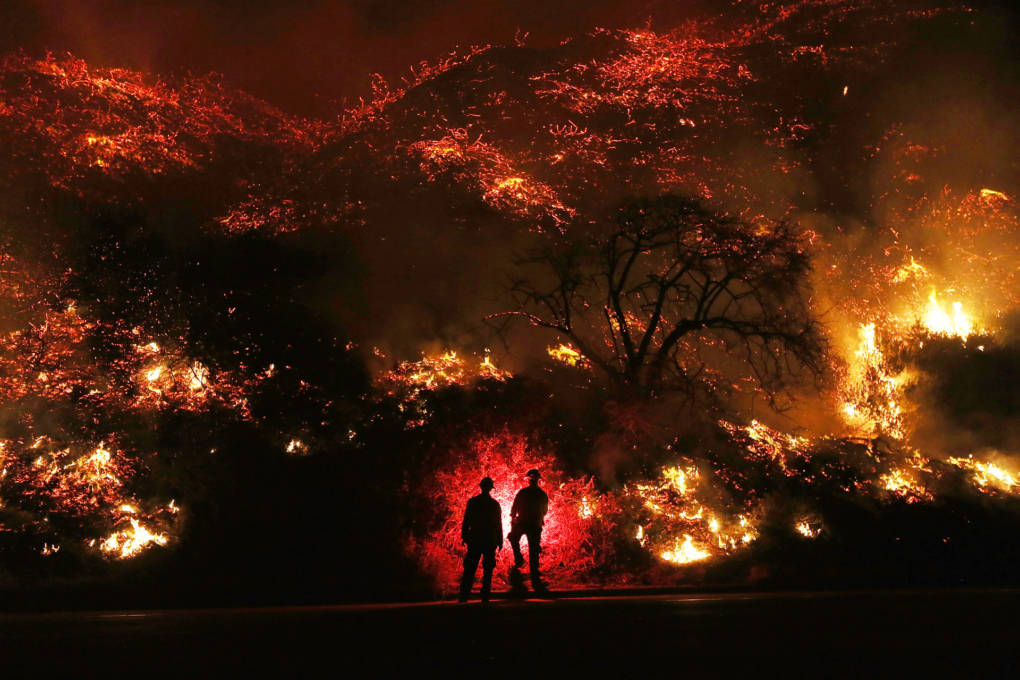
"caption": "Santa Ana winds helped drive the Thomas Fire in December 2017.",
"description": "VENTURA, CA - DECEMBER 07: Firefighters monitor a section of the Thomas Fire along the 101 freeway on December 7, 2017 north of Ventura, California. The firefighters occasionally used a flare device to burn-off brush close to the roadside. Strong Santa Ana winds are rapidly pushing multiple wildfires across the region, expanding across tens of thousands of acres and destroying hundreds of homes and structures. (Photo by Mario Tama/Getty Images)",
"title": "Southern California Wildfires Forces Thousands to Evacuate",
"credit": "Mario Tama/Getty Images",
"status": "inherit",
"isLoading": false,
"fetchFailed": false
},
"science_1938332": {
"type": "attachments",
"id": "science_1938332",
"meta": {
"index": "attachments_1716263798",
"site": "science",
"id": "1938332",
"found": true
},
"parent": 1938303,
"imgSizes": {
"twentyfourteen-full-width": {
"file": "https://ww2.kqed.org/app/uploads/sites/35/2029/02/Wheeler-820x576.jpg",
"width": 820,
"mimeType": "image/jpeg",
"height": 576
},
"thumbnail": {
"file": "https://ww2.kqed.org/app/uploads/sites/35/2029/02/Wheeler-160x120.jpg",
"width": 160,
"mimeType": "image/jpeg",
"height": 120
},
"post-thumbnail": {
"file": "https://ww2.kqed.org/app/uploads/sites/35/2029/02/Wheeler-672x372.jpg",
"width": 672,
"mimeType": "image/jpeg",
"height": 372
},
"kqedFullSize": {
"file": "https://ww2.kqed.org/app/uploads/sites/35/2029/02/Wheeler.jpg",
"width": 820,
"height": 615
},
"guest-author-50": {
"file": "https://ww2.kqed.org/app/uploads/sites/35/2029/02/Wheeler-50x50.jpg",
"width": 50,
"mimeType": "image/jpeg",
"height": 50
},
"guest-author-96": {
"file": "https://ww2.kqed.org/app/uploads/sites/35/2029/02/Wheeler-96x96.jpg",
"width": 96,
"mimeType": "image/jpeg",
"height": 96
},
"medium": {
"file": "https://ww2.kqed.org/app/uploads/sites/35/2029/02/Wheeler-800x600.jpg",
"width": 800,
"mimeType": "image/jpeg",
"height": 600
},
"guest-author-64": {
"file": "https://ww2.kqed.org/app/uploads/sites/35/2029/02/Wheeler-64x64.jpg",
"width": 64,
"mimeType": "image/jpeg",
"height": 64
},
"detail": {
"file": "https://ww2.kqed.org/app/uploads/sites/35/2029/02/Wheeler-150x150.jpg",
"width": 150,
"mimeType": "image/jpeg",
"height": 150
},
"guest-author-32": {
"file": "https://ww2.kqed.org/app/uploads/sites/35/2029/02/Wheeler-32x32.jpg",
"width": 32,
"mimeType": "image/jpeg",
"height": 32
},
"medium_large": {
"file": "https://ww2.kqed.org/app/uploads/sites/35/2029/02/Wheeler-768x576.jpg",
"width": 768,
"mimeType": "image/jpeg",
"height": 576
},
"guest-author-128": {
"file": "https://ww2.kqed.org/app/uploads/sites/35/2029/02/Wheeler-128x128.jpg",
"width": 128,
"mimeType": "image/jpeg",
"height": 128
}
},
"publishDate": 1550803522,
"modified": 1550807736,
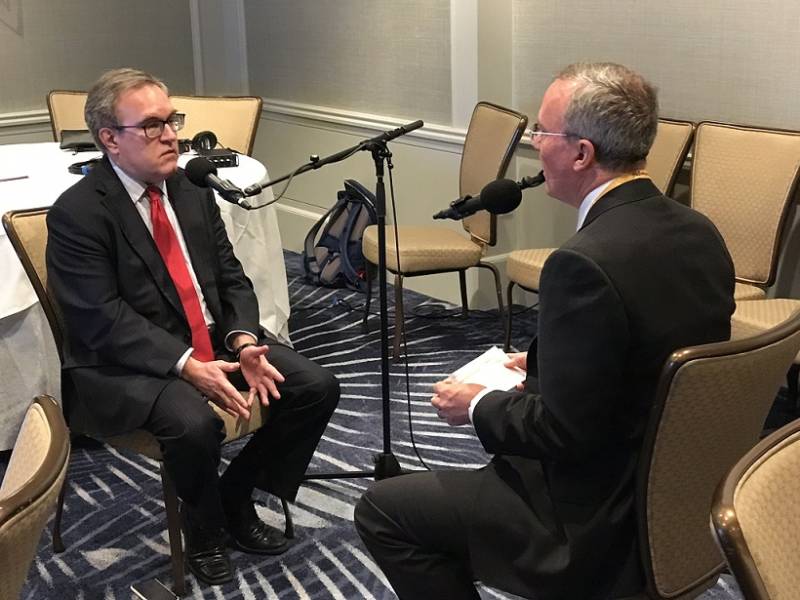
"caption": "EPA Acting Director Andrew Wheeler, Left, interviewed in January by Climate One's Greg Dalton, in San Francisco.",
"description": null,
"title": "Wheeler",
"credit": "Tyler Reed/Climate One",
"status": "inherit",
"isLoading": false,
"fetchFailed": false
},
"science_1937926": {
"type": "attachments",
"id": "science_1937926",
"meta": {
"index": "attachments_1716263798",
"site": "science",
"id": "1937926",
"found": true
},
"parent": 1937918,
"imgSizes": {
"twentyfourteen-full-width": {
"file": "https://ww2.kqed.org/app/uploads/sites/35/2019/02/DeadTrees-1020x612-1020x576.jpg",
"width": 1020,
"mimeType": "image/jpeg",
"height": 576
},
"thumbnail": {
"file": "https://ww2.kqed.org/app/uploads/sites/35/2019/02/DeadTrees-1020x612-160x96.jpg",
"width": 160,
"mimeType": "image/jpeg",
"height": 96
},
"post-thumbnail": {
"file": "https://ww2.kqed.org/app/uploads/sites/35/2019/02/DeadTrees-1020x612-672x372.jpg",
"width": 672,
"mimeType": "image/jpeg",
"height": 372
},
"kqedFullSize": {
"file": "https://ww2.kqed.org/app/uploads/sites/35/2019/02/DeadTrees-1020x612.jpg",
"width": 1020,
"height": 612
},
"large": {
"file": "https://ww2.kqed.org/app/uploads/sites/35/2019/02/DeadTrees-1020x612-1020x612.jpg",
"width": 1020,
"mimeType": "image/jpeg",
"height": 612
},
"guest-author-50": {
"file": "https://ww2.kqed.org/app/uploads/sites/35/2019/02/DeadTrees-1020x612-50x50.jpg",
"width": 50,
"mimeType": "image/jpeg",
"height": 50
},
"guest-author-96": {
"file": "https://ww2.kqed.org/app/uploads/sites/35/2019/02/DeadTrees-1020x612-96x96.jpg",
"width": 96,
"mimeType": "image/jpeg",
"height": 96
},
"medium": {
"file": "https://ww2.kqed.org/app/uploads/sites/35/2019/02/DeadTrees-1020x612-800x480.jpg",
"width": 800,
"mimeType": "image/jpeg",
"height": 480
},
"guest-author-64": {
"file": "https://ww2.kqed.org/app/uploads/sites/35/2019/02/DeadTrees-1020x612-64x64.jpg",
"width": 64,
"mimeType": "image/jpeg",
"height": 64
},
"guest-author-32": {
"file": "https://ww2.kqed.org/app/uploads/sites/35/2019/02/DeadTrees-1020x612-32x32.jpg",
"width": 32,
"mimeType": "image/jpeg",
"height": 32
},
"detail": {
"file": "https://ww2.kqed.org/app/uploads/sites/35/2019/02/DeadTrees-1020x612-150x150.jpg",
"width": 150,
"mimeType": "image/jpeg",
"height": 150
},
"medium_large": {
"file": "https://ww2.kqed.org/app/uploads/sites/35/2019/02/DeadTrees-1020x612-768x461.jpg",
"width": 768,
"mimeType": "image/jpeg",
"height": 461
},
"guest-author-128": {
"file": "https://ww2.kqed.org/app/uploads/sites/35/2019/02/DeadTrees-1020x612-128x128.jpg",
"width": 128,
"mimeType": "image/jpeg",
"height": 128
}
},
"publishDate": 1549934112,
"modified": 1549934173,
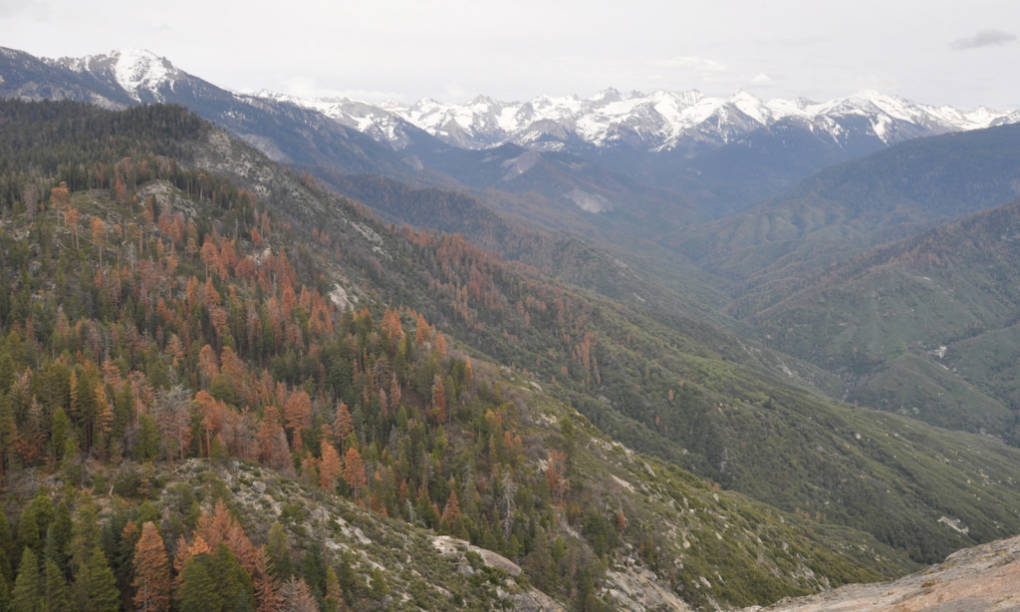
"caption": "Dead trees in Sequoia National Park in May 2016. The Southern Sierra Nevada was one of the hardest-hit areas by drought and high temperatures, resulting in millions of dead trees. ",
"description": "Dead trees in Sequoia National Park in May 2016. The Southern Sierra Nevada was one of the hardest-hit areas by drought and high temperatures, resulting in millions of dead trees. ",
"title": "DeadTrees-1020x612",
"credit": "U.S. Forest Service",
"status": "inherit",
"isLoading": false,
"fetchFailed": false
},
"science_1936515": {
"type": "attachments",
"id": "science_1936515",
"meta": {
"index": "attachments_1716263798",
"site": "science",
"id": "1936515",
"found": true
},
"parent": 1936435,
"imgSizes": {
"small": {
"file": "https://ww2.kqed.org/app/uploads/sites/35/2019/01/FI03-520x293.jpg",
"width": 520,
"mimeType": "image/jpeg",
"height": 293
},
"twentyfourteen-full-width": {
"file": "https://ww2.kqed.org/app/uploads/sites/35/2019/01/FI03-1038x576.jpg",
"width": 1038,
"mimeType": "image/jpeg",
"height": 576
},
"thumbnail": {
"file": "https://ww2.kqed.org/app/uploads/sites/35/2019/01/FI03-160x90.jpg",
"width": 160,
"mimeType": "image/jpeg",
"height": 90
},
"fd-sm": {
"file": "https://ww2.kqed.org/app/uploads/sites/35/2019/01/FI03-960x540.jpg",
"width": 960,
"mimeType": "image/jpeg",
"height": 540
},
"post-thumbnail": {
"file": "https://ww2.kqed.org/app/uploads/sites/35/2019/01/FI03-672x372.jpg",
"width": 672,
"mimeType": "image/jpeg",
"height": 372
},
"xsmall": {
"file": "https://ww2.kqed.org/app/uploads/sites/35/2019/01/FI03-375x211.jpg",
"width": 375,
"mimeType": "image/jpeg",
"height": 211
},
"kqedFullSize": {
"file": "https://ww2.kqed.org/app/uploads/sites/35/2019/01/FI03.jpg",
"width": 1920,
"height": 1080
},
"large": {
"file": "https://ww2.kqed.org/app/uploads/sites/35/2019/01/FI03-1020x574.jpg",
"width": 1020,
"mimeType": "image/jpeg",
"height": 574
},
"xlarge": {
"file": "https://ww2.kqed.org/app/uploads/sites/35/2019/01/FI03-1180x664.jpg",
"width": 1180,
"mimeType": "image/jpeg",
"height": 664
},
"complete_open_graph": {
"file": "https://ww2.kqed.org/app/uploads/sites/35/2019/01/FI03-1200x675.jpg",
"width": 1200,
"mimeType": "image/jpeg",
"height": 675
},
"guest-author-50": {
"file": "https://ww2.kqed.org/app/uploads/sites/35/2019/01/FI03-50x50.jpg",
"width": 50,
"mimeType": "image/jpeg",
"height": 50
},
"guest-author-96": {
"file": "https://ww2.kqed.org/app/uploads/sites/35/2019/01/FI03-96x96.jpg",
"width": 96,
"mimeType": "image/jpeg",
"height": 96
},
"medium": {
"file": "https://ww2.kqed.org/app/uploads/sites/35/2019/01/FI03-800x450.jpg",
"width": 800,
"mimeType": "image/jpeg",
"height": 450
},
"guest-author-64": {
"file": "https://ww2.kqed.org/app/uploads/sites/35/2019/01/FI03-64x64.jpg",
"width": 64,
"mimeType": "image/jpeg",
"height": 64
},
"guest-author-32": {
"file": "https://ww2.kqed.org/app/uploads/sites/35/2019/01/FI03-32x32.jpg",
"width": 32,
"mimeType": "image/jpeg",
"height": 32
},
"fd-lrg": {
"file": "https://ww2.kqed.org/app/uploads/sites/35/2019/01/FI03-1920x1080.jpg",
"width": 1920,
"mimeType": "image/jpeg",
"height": 1080
},
"fd-med": {
"file": "https://ww2.kqed.org/app/uploads/sites/35/2019/01/FI03-1180x664.jpg",
"width": 1180,
"mimeType": "image/jpeg",
"height": 664
},
"full-width": {
"file": "https://ww2.kqed.org/app/uploads/sites/35/2019/01/FI03-1920x1080.jpg",
"width": 1920,
"mimeType": "image/jpeg",
"height": 1080
},
"detail": {
"file": "https://ww2.kqed.org/app/uploads/sites/35/2019/01/FI03-150x150.jpg",
"width": 150,
"mimeType": "image/jpeg",
"height": 150
},
"medium_large": {
"file": "https://ww2.kqed.org/app/uploads/sites/35/2019/01/FI03-768x432.jpg",
"width": 768,
"mimeType": "image/jpeg",
"height": 432
},
"guest-author-128": {
"file": "https://ww2.kqed.org/app/uploads/sites/35/2019/01/FI03-128x128.jpg",
"width": 128,
"mimeType": "image/jpeg",
"height": 128
},
"xxsmall": {
"file": "https://ww2.kqed.org/app/uploads/sites/35/2019/01/FI03-240x135.jpg",
"width": 240,
"mimeType": "image/jpeg",
"height": 135
}
},
"publishDate": 1546990535,
"modified": 1546990614,
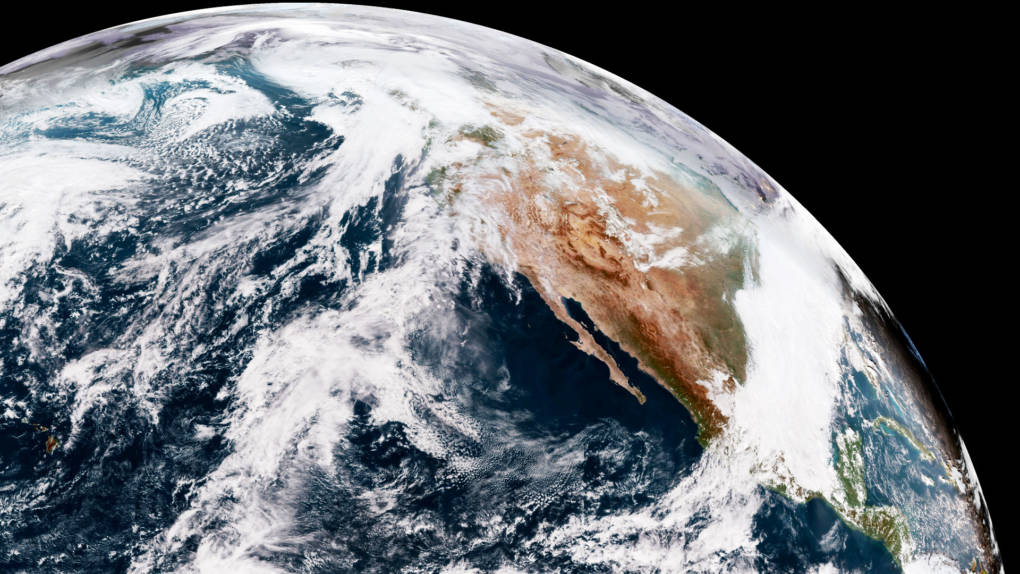
"caption": "The West Coast through the \"eyes\" of the new GOES West satellite.",
"description": "The West Coast through the \"eyes\" of the new GOES West satellite.",
"title": "FI03",
"credit": "NOAA",
"status": "inherit",
"isLoading": false,
"fetchFailed": false
},
"science_1928423": {
"type": "attachments",
"id": "science_1928423",
"meta": {
"index": "attachments_1716263798",
"site": "science",
"id": "1928423",
"found": true
},
"parent": 1928155,
"imgSizes": {
"small": {
"file": "https://ww2.kqed.org/app/uploads/sites/35/2018/08/GettyImages-1006472320-520x335.jpg",
"width": 520,
"mimeType": "image/jpeg",
"height": 335
},
"twentyfourteen-full-width": {
"file": "https://ww2.kqed.org/app/uploads/sites/35/2018/08/GettyImages-1006472320-1038x576.jpg",
"width": 1038,
"mimeType": "image/jpeg",
"height": 576
},
"thumbnail": {
"file": "https://ww2.kqed.org/app/uploads/sites/35/2018/08/GettyImages-1006472320-160x103.jpg",
"width": 160,
"mimeType": "image/jpeg",
"height": 103
},
"fd-sm": {
"file": "https://ww2.kqed.org/app/uploads/sites/35/2018/08/GettyImages-1006472320-960x618.jpg",
"width": 960,
"mimeType": "image/jpeg",
"height": 618
},
"post-thumbnail": {
"file": "https://ww2.kqed.org/app/uploads/sites/35/2018/08/GettyImages-1006472320-672x372.jpg",
"width": 672,
"mimeType": "image/jpeg",
"height": 372
},
"xsmall": {
"file": "https://ww2.kqed.org/app/uploads/sites/35/2018/08/GettyImages-1006472320-375x241.jpg",
"width": 375,
"mimeType": "image/jpeg",
"height": 241
},
"kqedFullSize": {
"file": "https://ww2.kqed.org/app/uploads/sites/35/2018/08/GettyImages-1006472320.jpg",
"width": 4772,
"height": 3070
},
"large": {
"file": "https://ww2.kqed.org/app/uploads/sites/35/2018/08/GettyImages-1006472320-1020x656.jpg",
"width": 1020,
"mimeType": "image/jpeg",
"height": 656
},
"xlarge": {
"file": "https://ww2.kqed.org/app/uploads/sites/35/2018/08/GettyImages-1006472320-1180x759.jpg",
"width": 1180,
"mimeType": "image/jpeg",
"height": 759
},
"complete_open_graph": {
"file": "https://ww2.kqed.org/app/uploads/sites/35/2018/08/GettyImages-1006472320-1200x772.jpg",
"width": 1200,
"mimeType": "image/jpeg",
"height": 772
},
"guest-author-50": {
"file": "https://ww2.kqed.org/app/uploads/sites/35/2018/08/GettyImages-1006472320-50x50.jpg",
"width": 50,
"mimeType": "image/jpeg",
"height": 50
},
"guest-author-96": {
"file": "https://ww2.kqed.org/app/uploads/sites/35/2018/08/GettyImages-1006472320-96x96.jpg",
"width": 96,
"mimeType": "image/jpeg",
"height": 96
},
"medium": {
"file": "https://ww2.kqed.org/app/uploads/sites/35/2018/08/GettyImages-1006472320-800x515.jpg",
"width": 800,
"mimeType": "image/jpeg",
"height": 515
},
"guest-author-64": {
"file": "https://ww2.kqed.org/app/uploads/sites/35/2018/08/GettyImages-1006472320-64x64.jpg",
"width": 64,
"mimeType": "image/jpeg",
"height": 64
},
"guest-author-32": {
"file": "https://ww2.kqed.org/app/uploads/sites/35/2018/08/GettyImages-1006472320-32x32.jpg",
"width": 32,
"mimeType": "image/jpeg",
"height": 32
},
"fd-lrg": {
"file": "https://ww2.kqed.org/app/uploads/sites/35/2018/08/GettyImages-1006472320-1920x1235.jpg",
"width": 1920,
"mimeType": "image/jpeg",
"height": 1235
},
"fd-med": {
"file": "https://ww2.kqed.org/app/uploads/sites/35/2018/08/GettyImages-1006472320-1180x759.jpg",
"width": 1180,
"mimeType": "image/jpeg",
"height": 759
},
"full-width": {
"file": "https://ww2.kqed.org/app/uploads/sites/35/2018/08/GettyImages-1006472320-1920x1235.jpg",
"width": 1920,
"mimeType": "image/jpeg",
"height": 1235
},
"detail": {
"file": "https://ww2.kqed.org/app/uploads/sites/35/2018/08/GettyImages-1006472320-150x150.jpg",
"width": 150,
"mimeType": "image/jpeg",
"height": 150
},
"medium_large": {
"file": "https://ww2.kqed.org/app/uploads/sites/35/2018/08/GettyImages-1006472320-768x494.jpg",
"width": 768,
"mimeType": "image/jpeg",
"height": 494
},
"guest-author-128": {
"file": "https://ww2.kqed.org/app/uploads/sites/35/2018/08/GettyImages-1006472320-128x128.jpg",
"width": 128,
"mimeType": "image/jpeg",
"height": 128
},
"xxsmall": {
"file": "https://ww2.kqed.org/app/uploads/sites/35/2018/08/GettyImages-1006472320-240x154.jpg",
"width": 240,
"mimeType": "image/jpeg",
"height": 154
}
},
"publishDate": 1533105893,
"modified": 1533105978,
"caption": "A large pyrocumulus cloud (or cloud of fire) explodes outward during the Carr fire near Redding, California on July 27, 2018.",
"description": "A large pyrocumulus cloud (or cloud of fire) explodes outward during the Carr fire near Redding, California on July 27, 2018.",
"title": "US-WILDFIRES-CALIFORNIA",
"credit": "JOSH EDELSON/AFP/Getty Images",
"status": "inherit",
"isLoading": false,
"fetchFailed": false
},
"science_1934989": {
"type": "attachments",
"id": "science_1934989",
"meta": {
"index": "attachments_1716263798",
"site": "science",
"id": "1934989",
"found": true
},
"parent": 1934983,
"imgSizes": {
"small": {
"file": "https://ww2.kqed.org/app/uploads/sites/35/2018/11/RS33789_evacuations-Getty-1059401568-qut-520x347.jpg",
"width": 520,
"mimeType": "image/jpeg",
"height": 347
},
"twentyfourteen-full-width": {
"file": "https://ww2.kqed.org/app/uploads/sites/35/2018/11/RS33789_evacuations-Getty-1059401568-qut-1038x576.jpg",
"width": 1038,
"mimeType": "image/jpeg",
"height": 576
},
"thumbnail": {
"file": "https://ww2.kqed.org/app/uploads/sites/35/2018/11/RS33789_evacuations-Getty-1059401568-qut-160x107.jpg",
"width": 160,
"mimeType": "image/jpeg",
"height": 107
},
"fd-sm": {
"file": "https://ww2.kqed.org/app/uploads/sites/35/2018/11/RS33789_evacuations-Getty-1059401568-qut-960x640.jpg",
"width": 960,
"mimeType": "image/jpeg",
"height": 640
},
"post-thumbnail": {
"file": "https://ww2.kqed.org/app/uploads/sites/35/2018/11/RS33789_evacuations-Getty-1059401568-qut-672x372.jpg",
"width": 672,
"mimeType": "image/jpeg",
"height": 372
},
"xsmall": {
"file": "https://ww2.kqed.org/app/uploads/sites/35/2018/11/RS33789_evacuations-Getty-1059401568-qut-375x250.jpg",
"width": 375,
"mimeType": "image/jpeg",
"height": 250
},
"kqedFullSize": {
"file": "https://ww2.kqed.org/app/uploads/sites/35/2018/11/RS33789_evacuations-Getty-1059401568-qut.jpg",
"width": 1920,
"height": 1280
},
"large": {
"file": "https://ww2.kqed.org/app/uploads/sites/35/2018/11/RS33789_evacuations-Getty-1059401568-qut-1020x680.jpg",
"width": 1020,
"mimeType": "image/jpeg",
"height": 680
},
"xlarge": {
"file": "https://ww2.kqed.org/app/uploads/sites/35/2018/11/RS33789_evacuations-Getty-1059401568-qut-1180x787.jpg",
"width": 1180,
"mimeType": "image/jpeg",
"height": 787
},
"complete_open_graph": {
"file": "https://ww2.kqed.org/app/uploads/sites/35/2018/11/RS33789_evacuations-Getty-1059401568-qut-1200x800.jpg",
"width": 1200,
"mimeType": "image/jpeg",
"height": 800
},
"guest-author-50": {
"file": "https://ww2.kqed.org/app/uploads/sites/35/2018/11/RS33789_evacuations-Getty-1059401568-qut-50x50.jpg",
"width": 50,
"mimeType": "image/jpeg",
"height": 50
},
"guest-author-96": {
"file": "https://ww2.kqed.org/app/uploads/sites/35/2018/11/RS33789_evacuations-Getty-1059401568-qut-96x96.jpg",
"width": 96,
"mimeType": "image/jpeg",
"height": 96
},
"medium": {
"file": "https://ww2.kqed.org/app/uploads/sites/35/2018/11/RS33789_evacuations-Getty-1059401568-qut-800x533.jpg",
"width": 800,
"mimeType": "image/jpeg",
"height": 533
},
"guest-author-64": {
"file": "https://ww2.kqed.org/app/uploads/sites/35/2018/11/RS33789_evacuations-Getty-1059401568-qut-64x64.jpg",
"width": 64,
"mimeType": "image/jpeg",
"height": 64
},
"guest-author-32": {
"file": "https://ww2.kqed.org/app/uploads/sites/35/2018/11/RS33789_evacuations-Getty-1059401568-qut-32x32.jpg",
"width": 32,
"mimeType": "image/jpeg",
"height": 32
},
"fd-lrg": {
"file": "https://ww2.kqed.org/app/uploads/sites/35/2018/11/RS33789_evacuations-Getty-1059401568-qut-1920x1280.jpg",
"width": 1920,
"mimeType": "image/jpeg",
"height": 1280
},
"fd-med": {
"file": "https://ww2.kqed.org/app/uploads/sites/35/2018/11/RS33789_evacuations-Getty-1059401568-qut-1180x787.jpg",
"width": 1180,
"mimeType": "image/jpeg",
"height": 787
},
"full-width": {
"file": "https://ww2.kqed.org/app/uploads/sites/35/2018/11/RS33789_evacuations-Getty-1059401568-qut-1920x1280.jpg",
"width": 1920,
"mimeType": "image/jpeg",
"height": 1280
},
"detail": {
"file": "https://ww2.kqed.org/app/uploads/sites/35/2018/11/RS33789_evacuations-Getty-1059401568-qut-150x150.jpg",
"width": 150,
"mimeType": "image/jpeg",
"height": 150
},
"medium_large": {
"file": "https://ww2.kqed.org/app/uploads/sites/35/2018/11/RS33789_evacuations-Getty-1059401568-qut-768x512.jpg",
"width": 768,
"mimeType": "image/jpeg",
"height": 512
},
"guest-author-128": {
"file": "https://ww2.kqed.org/app/uploads/sites/35/2018/11/RS33789_evacuations-Getty-1059401568-qut-128x128.jpg",
"width": 128,
"mimeType": "image/jpeg",
"height": 128
},
"xxsmall": {
"file": "https://ww2.kqed.org/app/uploads/sites/35/2018/11/RS33789_evacuations-Getty-1059401568-qut-240x160.jpg",
"width": 240,
"mimeType": "image/jpeg",
"height": 160
}
},
"publishDate": 1543444641,
"modified": 1543444673,
"caption": "Patients are quickly evacuated from the Feather River Hospital as it burns down during the Camp fire in Paradise.",
"description": "Patients are quickly evacuated from the Feather River Hospital as it burns down during the Camp fire in Paradise.",
"title": "US-FIRE-WEATHER",
"credit": "Josh Edelson / AFP",
"status": "inherit",
"isLoading": false,
"fetchFailed": false
},
"science_1934900": {
"type": "attachments",
"id": "science_1934900",
"meta": {
"index": "attachments_1716263798",
"site": "science",
"id": "1934900",
"found": true
},
"parent": 1934533,
"imgSizes": {
"small": {
"file": "https://ww2.kqed.org/app/uploads/sites/35/2018/11/RS33764_GettyImages-1059345696-qut-1-520x345.jpg",
"width": 520,
"mimeType": "image/jpeg",
"height": 345
},
"twentyfourteen-full-width": {
"file": "https://ww2.kqed.org/app/uploads/sites/35/2018/11/RS33764_GettyImages-1059345696-qut-1-1038x576.jpg",
"width": 1038,
"mimeType": "image/jpeg",
"height": 576
},
"thumbnail": {
"file": "https://ww2.kqed.org/app/uploads/sites/35/2018/11/RS33764_GettyImages-1059345696-qut-1-160x106.jpg",
"width": 160,
"mimeType": "image/jpeg",
"height": 106
},
"fd-sm": {
"file": "https://ww2.kqed.org/app/uploads/sites/35/2018/11/RS33764_GettyImages-1059345696-qut-1-960x637.jpg",
"width": 960,
"mimeType": "image/jpeg",
"height": 637
},
"post-thumbnail": {
"file": "https://ww2.kqed.org/app/uploads/sites/35/2018/11/RS33764_GettyImages-1059345696-qut-1-672x372.jpg",
"width": 672,
"mimeType": "image/jpeg",
"height": 372
},
"xsmall": {
"file": "https://ww2.kqed.org/app/uploads/sites/35/2018/11/RS33764_GettyImages-1059345696-qut-1-375x249.jpg",
"width": 375,
"mimeType": "image/jpeg",
"height": 249
},
"kqedFullSize": {
"file": "https://ww2.kqed.org/app/uploads/sites/35/2018/11/RS33764_GettyImages-1059345696-qut-1.jpg",
"width": 1920,
"height": 1273
},
"large": {
"file": "https://ww2.kqed.org/app/uploads/sites/35/2018/11/RS33764_GettyImages-1059345696-qut-1-1020x676.jpg",
"width": 1020,
"mimeType": "image/jpeg",
"height": 676
},
"xlarge": {
"file": "https://ww2.kqed.org/app/uploads/sites/35/2018/11/RS33764_GettyImages-1059345696-qut-1-1180x782.jpg",
"width": 1180,
"mimeType": "image/jpeg",
"height": 782
},
"complete_open_graph": {
"file": "https://ww2.kqed.org/app/uploads/sites/35/2018/11/RS33764_GettyImages-1059345696-qut-1-1200x796.jpg",
"width": 1200,
"mimeType": "image/jpeg",
"height": 796
},
"guest-author-50": {
"file": "https://ww2.kqed.org/app/uploads/sites/35/2018/11/RS33764_GettyImages-1059345696-qut-1-50x50.jpg",
"width": 50,
"mimeType": "image/jpeg",
"height": 50
},
"guest-author-96": {
"file": "https://ww2.kqed.org/app/uploads/sites/35/2018/11/RS33764_GettyImages-1059345696-qut-1-96x96.jpg",
"width": 96,
"mimeType": "image/jpeg",
"height": 96
},
"medium": {
"file": "https://ww2.kqed.org/app/uploads/sites/35/2018/11/RS33764_GettyImages-1059345696-qut-1-800x530.jpg",
"width": 800,
"mimeType": "image/jpeg",
"height": 530
},
"guest-author-64": {
"file": "https://ww2.kqed.org/app/uploads/sites/35/2018/11/RS33764_GettyImages-1059345696-qut-1-64x64.jpg",
"width": 64,
"mimeType": "image/jpeg",
"height": 64
},
"guest-author-32": {
"file": "https://ww2.kqed.org/app/uploads/sites/35/2018/11/RS33764_GettyImages-1059345696-qut-1-32x32.jpg",
"width": 32,
"mimeType": "image/jpeg",
"height": 32
},
"fd-lrg": {
"file": "https://ww2.kqed.org/app/uploads/sites/35/2018/11/RS33764_GettyImages-1059345696-qut-1-1920x1273.jpg",
"width": 1920,
"mimeType": "image/jpeg",
"height": 1273
},
"fd-med": {
"file": "https://ww2.kqed.org/app/uploads/sites/35/2018/11/RS33764_GettyImages-1059345696-qut-1-1180x782.jpg",
"width": 1180,
"mimeType": "image/jpeg",
"height": 782
},
"full-width": {
"file": "https://ww2.kqed.org/app/uploads/sites/35/2018/11/RS33764_GettyImages-1059345696-qut-1-1920x1273.jpg",
"width": 1920,
"mimeType": "image/jpeg",
"height": 1273
},
"detail": {
"file": "https://ww2.kqed.org/app/uploads/sites/35/2018/11/RS33764_GettyImages-1059345696-qut-1-150x150.jpg",
"width": 150,
"mimeType": "image/jpeg",
"height": 150
},
"medium_large": {
"file": "https://ww2.kqed.org/app/uploads/sites/35/2018/11/RS33764_GettyImages-1059345696-qut-1-768x509.jpg",
"width": 768,
"mimeType": "image/jpeg",
"height": 509
},
"guest-author-128": {
"file": "https://ww2.kqed.org/app/uploads/sites/35/2018/11/RS33764_GettyImages-1059345696-qut-1-128x128.jpg",
"width": 128,
"mimeType": "image/jpeg",
"height": 128
},
"xxsmall": {
"file": "https://ww2.kqed.org/app/uploads/sites/35/2018/11/RS33764_GettyImages-1059345696-qut-1-240x159.jpg",
"width": 240,
"mimeType": "image/jpeg",
"height": 159
}
},
"publishDate": 1543284158,
"modified": 1554915463,
"caption": "A home burns in Paradise, California during the Camp Fire. Living on the wildland-urban interface has put more people in harm's way -- and climate change is making fires more intense.",
"description": "A home burns during the Camp fire in Paradise, California on November 08, 2018. - More than 18,000 acres have been scorched in a matter of hours burning with it a hospital, a gas station and dozens of homes. (Photo by Josh Edelson / AFP) (Photo credit should read JOSH EDELSON/AFP/Getty Images)",
"title": "US-FIRE-WEATHER",
"credit": "JOSH EDELSON/AFP/Getty Images",
"status": "inherit",
"isLoading": false,
"fetchFailed": false
},
"science_1922646": {
"type": "attachments",
"id": "science_1922646",
"meta": {
"index": "attachments_1716263798",
"site": "science",
"id": "1922646",
"found": true
},
"parent": 1922227,
"imgSizes": {
"small": {
"file": "https://ww2.kqed.org/app/uploads/sites/35/2018/04/iStock-490934736-520x347.jpg",
"width": 520,
"mimeType": "image/jpeg",
"height": 347
},
"twentyfourteen-full-width": {
"file": "https://ww2.kqed.org/app/uploads/sites/35/2018/04/iStock-490934736-1038x576.jpg",
"width": 1038,
"mimeType": "image/jpeg",
"height": 576
},
"thumbnail": {
"file": "https://ww2.kqed.org/app/uploads/sites/35/2018/04/iStock-490934736-160x107.jpg",
"width": 160,
"mimeType": "image/jpeg",
"height": 107
},
"fd-sm": {
"file": "https://ww2.kqed.org/app/uploads/sites/35/2018/04/iStock-490934736-960x640.jpg",
"width": 960,
"mimeType": "image/jpeg",
"height": 640
},
"post-thumbnail": {
"file": "https://ww2.kqed.org/app/uploads/sites/35/2018/04/iStock-490934736-672x372.jpg",
"width": 672,
"mimeType": "image/jpeg",
"height": 372
},
"xsmall": {
"file": "https://ww2.kqed.org/app/uploads/sites/35/2018/04/iStock-490934736-375x250.jpg",
"width": 375,
"mimeType": "image/jpeg",
"height": 250
},
"kqedFullSize": {
"file": "https://ww2.kqed.org/app/uploads/sites/35/2018/04/iStock-490934736-e1542831747334.jpg",
"width": 1920,
"height": 1280
},
"large": {
"file": "https://ww2.kqed.org/app/uploads/sites/35/2018/04/iStock-490934736-1020x680.jpg",
"width": 1020,
"mimeType": "image/jpeg",
"height": 680
},
"xlarge": {
"file": "https://ww2.kqed.org/app/uploads/sites/35/2018/04/iStock-490934736-1180x787.jpg",
"width": 1180,
"mimeType": "image/jpeg",
"height": 787
},
"complete_open_graph": {
"file": "https://ww2.kqed.org/app/uploads/sites/35/2018/04/iStock-490934736-1200x800.jpg",
"width": 1200,
"mimeType": "image/jpeg",
"height": 800
},
"guest-author-50": {
"file": "https://ww2.kqed.org/app/uploads/sites/35/2018/04/iStock-490934736-50x50.jpg",
"width": 50,
"mimeType": "image/jpeg",
"height": 50
},
"guest-author-96": {
"file": "https://ww2.kqed.org/app/uploads/sites/35/2018/04/iStock-490934736-96x96.jpg",
"width": 96,
"mimeType": "image/jpeg",
"height": 96
},
"medium": {
"file": "https://ww2.kqed.org/app/uploads/sites/35/2018/04/iStock-490934736-800x533.jpg",
"width": 800,
"mimeType": "image/jpeg",
"height": 533
},
"guest-author-64": {
"file": "https://ww2.kqed.org/app/uploads/sites/35/2018/04/iStock-490934736-64x64.jpg",
"width": 64,
"mimeType": "image/jpeg",
"height": 64
},
"guest-author-32": {
"file": "https://ww2.kqed.org/app/uploads/sites/35/2018/04/iStock-490934736-32x32.jpg",
"width": 32,
"mimeType": "image/jpeg",
"height": 32
},
"fd-lrg": {
"file": "https://ww2.kqed.org/app/uploads/sites/35/2018/04/iStock-490934736-1920x1280.jpg",
"width": 1920,
"mimeType": "image/jpeg",
"height": 1280
},
"fd-med": {
"file": "https://ww2.kqed.org/app/uploads/sites/35/2018/04/iStock-490934736-1180x787.jpg",
"width": 1180,
"mimeType": "image/jpeg",
"height": 787
},
"full-width": {
"file": "https://ww2.kqed.org/app/uploads/sites/35/2018/04/iStock-490934736-1920x1280.jpg",
"width": 1920,
"mimeType": "image/jpeg",
"height": 1280
},
"detail": {
"file": "https://ww2.kqed.org/app/uploads/sites/35/2018/04/iStock-490934736-150x150.jpg",
"width": 150,
"mimeType": "image/jpeg",
"height": 150
},
"medium_large": {
"file": "https://ww2.kqed.org/app/uploads/sites/35/2018/04/iStock-490934736-768x512.jpg",
"width": 768,
"mimeType": "image/jpeg",
"height": 512
},
"guest-author-128": {
"file": "https://ww2.kqed.org/app/uploads/sites/35/2018/04/iStock-490934736-128x128.jpg",
"width": 128,
"mimeType": "image/jpeg",
"height": 128
},
"xxsmall": {
"file": "https://ww2.kqed.org/app/uploads/sites/35/2018/04/iStock-490934736-240x160.jpg",
"width": 240,
"mimeType": "image/jpeg",
"height": 160
}
},
"publishDate": 1523830306,
"modified": 1523830356,
"caption": null,
"description": null,
"title": "raindrops rippling background",
"credit": "iStock",
"status": "inherit",
"isLoading": false,
"fetchFailed": false
},
"science_1934616": {
"type": "attachments",
"id": "science_1934616",
"meta": {
"index": "attachments_1716263798",
"site": "science",
"id": "1934616",
"found": true
},
"parent": 1934614,
"imgSizes": {
"small": {
"file": "https://ww2.kqed.org/app/uploads/sites/35/2018/11/RS33903_paradise_AW_20-qut-520x347.jpg",
"width": 520,
"mimeType": "image/jpeg",
"height": 347
},
"twentyfourteen-full-width": {
"file": "https://ww2.kqed.org/app/uploads/sites/35/2018/11/RS33903_paradise_AW_20-qut-1038x576.jpg",
"width": 1038,
"mimeType": "image/jpeg",
"height": 576
},
"thumbnail": {
"file": "https://ww2.kqed.org/app/uploads/sites/35/2018/11/RS33903_paradise_AW_20-qut-160x107.jpg",
"width": 160,
"mimeType": "image/jpeg",
"height": 107
},
"fd-sm": {
"file": "https://ww2.kqed.org/app/uploads/sites/35/2018/11/RS33903_paradise_AW_20-qut-960x640.jpg",
"width": 960,
"mimeType": "image/jpeg",
"height": 640
},
"post-thumbnail": {
"file": "https://ww2.kqed.org/app/uploads/sites/35/2018/11/RS33903_paradise_AW_20-qut-672x372.jpg",
"width": 672,
"mimeType": "image/jpeg",
"height": 372
},
"xsmall": {
"file": "https://ww2.kqed.org/app/uploads/sites/35/2018/11/RS33903_paradise_AW_20-qut-375x250.jpg",
"width": 375,
"mimeType": "image/jpeg",
"height": 250
},
"kqedFullSize": {
"file": "https://ww2.kqed.org/app/uploads/sites/35/2018/11/RS33903_paradise_AW_20-qut.jpg",
"width": 1920,
"height": 1280
},
"large": {
"file": "https://ww2.kqed.org/app/uploads/sites/35/2018/11/RS33903_paradise_AW_20-qut-1020x680.jpg",
"width": 1020,
"mimeType": "image/jpeg",
"height": 680
},
"xlarge": {
"file": "https://ww2.kqed.org/app/uploads/sites/35/2018/11/RS33903_paradise_AW_20-qut-1180x787.jpg",
"width": 1180,
"mimeType": "image/jpeg",
"height": 787
},
"complete_open_graph": {
"file": "https://ww2.kqed.org/app/uploads/sites/35/2018/11/RS33903_paradise_AW_20-qut-1200x800.jpg",
"width": 1200,
"mimeType": "image/jpeg",
"height": 800
},
"guest-author-50": {
"file": "https://ww2.kqed.org/app/uploads/sites/35/2018/11/RS33903_paradise_AW_20-qut-50x50.jpg",
"width": 50,
"mimeType": "image/jpeg",
"height": 50
},
"guest-author-96": {
"file": "https://ww2.kqed.org/app/uploads/sites/35/2018/11/RS33903_paradise_AW_20-qut-96x96.jpg",
"width": 96,
"mimeType": "image/jpeg",
"height": 96
},
"medium": {
"file": "https://ww2.kqed.org/app/uploads/sites/35/2018/11/RS33903_paradise_AW_20-qut-800x533.jpg",
"width": 800,
"mimeType": "image/jpeg",
"height": 533
},
"guest-author-64": {
"file": "https://ww2.kqed.org/app/uploads/sites/35/2018/11/RS33903_paradise_AW_20-qut-64x64.jpg",
"width": 64,
"mimeType": "image/jpeg",
"height": 64
},
"guest-author-32": {
"file": "https://ww2.kqed.org/app/uploads/sites/35/2018/11/RS33903_paradise_AW_20-qut-32x32.jpg",
"width": 32,
"mimeType": "image/jpeg",
"height": 32
},
"fd-lrg": {
"file": "https://ww2.kqed.org/app/uploads/sites/35/2018/11/RS33903_paradise_AW_20-qut-1920x1280.jpg",
"width": 1920,
"mimeType": "image/jpeg",
"height": 1280
},
"fd-med": {
"file": "https://ww2.kqed.org/app/uploads/sites/35/2018/11/RS33903_paradise_AW_20-qut-1180x787.jpg",
"width": 1180,
"mimeType": "image/jpeg",
"height": 787
},
"full-width": {
"file": "https://ww2.kqed.org/app/uploads/sites/35/2018/11/RS33903_paradise_AW_20-qut-1920x1280.jpg",
"width": 1920,
"mimeType": "image/jpeg",
"height": 1280
},
"detail": {
"file": "https://ww2.kqed.org/app/uploads/sites/35/2018/11/RS33903_paradise_AW_20-qut-150x150.jpg",
"width": 150,
"mimeType": "image/jpeg",
"height": 150
},
"medium_large": {
"file": "https://ww2.kqed.org/app/uploads/sites/35/2018/11/RS33903_paradise_AW_20-qut-768x512.jpg",
"width": 768,
"mimeType": "image/jpeg",
"height": 512
},
"guest-author-128": {
"file": "https://ww2.kqed.org/app/uploads/sites/35/2018/11/RS33903_paradise_AW_20-qut-128x128.jpg",
"width": 128,
"mimeType": "image/jpeg",
"height": 128
},
"xxsmall": {
"file": "https://ww2.kqed.org/app/uploads/sites/35/2018/11/RS33903_paradise_AW_20-qut-240x160.jpg",
"width": 240,
"mimeType": "image/jpeg",
"height": 160
}
},
"publishDate": 1542708711,
"modified": 1542708740,
"caption": "The Paradise city limit stands in front of burned-out landscape on Nov. 13, 2018. High rains expected to hit that charred ground could lead to flooding and mudslides in the burn area.",
"description": "The Paradise city limit stands in front of burned-out landscape on Nov. 13, 2018. High rains expected to hit that charred ground could lead to flooding and mudslides in the burn area.",
"title": "Paradise city limit along Skyway on November 13, 2018.",
"credit": "Anne Wernikoff/KQED",
"status": "inherit",
"isLoading": false,
"fetchFailed": false
},
"science_1934486": {
"type": "attachments",
"id": "science_1934486",
"meta": {
"index": "attachments_1716263798",
"site": "science",
"id": "1934486",
"found": true
},
"parent": 1934484,
"imgSizes": {
"small": {
"file": "https://ww2.kqed.org/app/uploads/sites/35/2018/11/PR20160926_Firemap_LAFD-520x323.jpg",
"width": 520,
"mimeType": "image/jpeg",
"height": 323
},
"thumbnail": {
"file": "https://ww2.kqed.org/app/uploads/sites/35/2018/11/PR20160926_Firemap_LAFD-160x99.jpg",
"width": 160,
"mimeType": "image/jpeg",
"height": 99
},
"post-thumbnail": {
"file": "https://ww2.kqed.org/app/uploads/sites/35/2018/11/PR20160926_Firemap_LAFD-672x372.jpg",
"width": 672,
"mimeType": "image/jpeg",
"height": 372
},
"xsmall": {
"file": "https://ww2.kqed.org/app/uploads/sites/35/2018/11/PR20160926_Firemap_LAFD-375x233.jpg",
"width": 375,
"mimeType": "image/jpeg",
"height": 233
},
"kqedFullSize": {
"file": "https://ww2.kqed.org/app/uploads/sites/35/2018/11/PR20160926_Firemap_LAFD.jpg",
"width": 900,
"height": 559
},
"guest-author-50": {
"file": "https://ww2.kqed.org/app/uploads/sites/35/2018/11/PR20160926_Firemap_LAFD-50x50.jpg",
"width": 50,
"mimeType": "image/jpeg",
"height": 50
},
"guest-author-96": {
"file": "https://ww2.kqed.org/app/uploads/sites/35/2018/11/PR20160926_Firemap_LAFD-96x96.jpg",
"width": 96,
"mimeType": "image/jpeg",
"height": 96
},
"medium": {
"file": "https://ww2.kqed.org/app/uploads/sites/35/2018/11/PR20160926_Firemap_LAFD-800x497.jpg",
"width": 800,
"mimeType": "image/jpeg",
"height": 497
},
"guest-author-64": {
"file": "https://ww2.kqed.org/app/uploads/sites/35/2018/11/PR20160926_Firemap_LAFD-64x64.jpg",
"width": 64,
"mimeType": "image/jpeg",
"height": 64
},
"guest-author-32": {
"file": "https://ww2.kqed.org/app/uploads/sites/35/2018/11/PR20160926_Firemap_LAFD-32x32.jpg",
"width": 32,
"mimeType": "image/jpeg",
"height": 32
},
"detail": {
"file": "https://ww2.kqed.org/app/uploads/sites/35/2018/11/PR20160926_Firemap_LAFD-150x150.jpg",
"width": 150,
"mimeType": "image/jpeg",
"height": 150
},
"medium_large": {
"file": "https://ww2.kqed.org/app/uploads/sites/35/2018/11/PR20160926_Firemap_LAFD-768x477.jpg",
"width": 768,
"mimeType": "image/jpeg",
"height": 477
},
"guest-author-128": {
"file": "https://ww2.kqed.org/app/uploads/sites/35/2018/11/PR20160926_Firemap_LAFD-128x128.jpg",
"width": 128,
"mimeType": "image/jpeg",
"height": 128
},
"xxsmall": {
"file": "https://ww2.kqed.org/app/uploads/sites/35/2018/11/PR20160926_Firemap_LAFD-240x149.jpg",
"width": 240,
"mimeType": "image/jpeg",
"height": 149
}
},
"publishDate": 1542406619,
"modified": 1542406731,
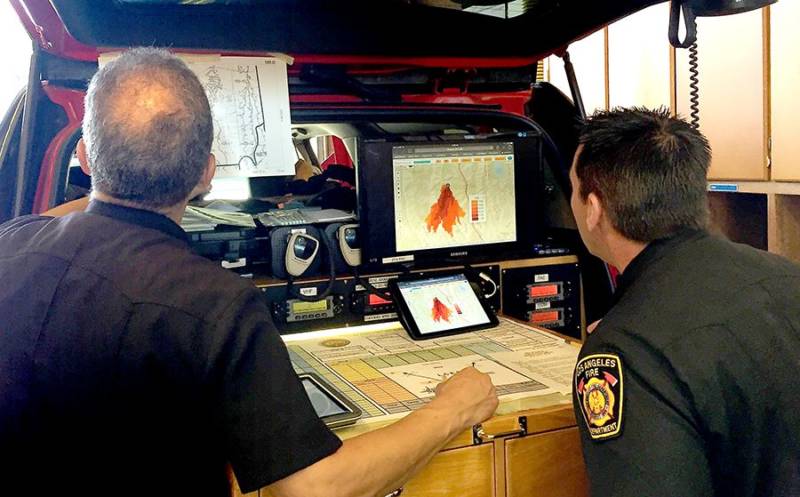
"caption": "Los Angeles Fire Department staff look at a new fire prediction tool, powered by supercomputers. ",
"description": null,
"title": "PR20160926_Firemap_LAFD",
"credit": "San Diego Supercomputer Center",
"status": "inherit",
"isLoading": false,
"fetchFailed": false
},
"science_1934501": {
"type": "attachments",
"id": "science_1934501",
"meta": {
"index": "attachments_1716263798",
"site": "science",
"id": "1934501",
"found": true
},
"parent": 1934487,
"imgSizes": {
"small": {
"file": "https://ww2.kqed.org/app/uploads/sites/35/2018/11/Image-from-iOS-520x390.jpg",
"width": 520,
"mimeType": "image/jpeg",
"height": 390
},
"twentyfourteen-full-width": {
"file": "https://ww2.kqed.org/app/uploads/sites/35/2018/11/Image-from-iOS-1038x576.jpg",
"width": 1038,
"mimeType": "image/jpeg",
"height": 576
},
"thumbnail": {
"file": "https://ww2.kqed.org/app/uploads/sites/35/2018/11/Image-from-iOS-160x120.jpg",
"width": 160,
"mimeType": "image/jpeg",
"height": 120
},
"fd-sm": {
"file": "https://ww2.kqed.org/app/uploads/sites/35/2018/11/Image-from-iOS-960x720.jpg",
"width": 960,
"mimeType": "image/jpeg",
"height": 720
},
"post-thumbnail": {
"file": "https://ww2.kqed.org/app/uploads/sites/35/2018/11/Image-from-iOS-672x372.jpg",
"width": 672,
"mimeType": "image/jpeg",
"height": 372
},
"xsmall": {
"file": "https://ww2.kqed.org/app/uploads/sites/35/2018/11/Image-from-iOS-375x281.jpg",
"width": 375,
"mimeType": "image/jpeg",
"height": 281
},
"kqedFullSize": {
"file": "https://ww2.kqed.org/app/uploads/sites/35/2018/11/Image-from-iOS-e1556145524872.jpg",
"width": 1920,
"height": 1440
},
"large": {
"file": "https://ww2.kqed.org/app/uploads/sites/35/2018/11/Image-from-iOS-1020x765.jpg",
"width": 1020,
"mimeType": "image/jpeg",
"height": 765
},
"xlarge": {
"file": "https://ww2.kqed.org/app/uploads/sites/35/2018/11/Image-from-iOS-1180x885.jpg",
"width": 1180,
"mimeType": "image/jpeg",
"height": 885
},
"complete_open_graph": {
"file": "https://ww2.kqed.org/app/uploads/sites/35/2018/11/Image-from-iOS-1200x900.jpg",
"width": 1200,
"mimeType": "image/jpeg",
"height": 900
},
"guest-author-50": {
"file": "https://ww2.kqed.org/app/uploads/sites/35/2018/11/Image-from-iOS-50x50.jpg",
"width": 50,
"mimeType": "image/jpeg",
"height": 50
},
"guest-author-96": {
"file": "https://ww2.kqed.org/app/uploads/sites/35/2018/11/Image-from-iOS-96x96.jpg",
"width": 96,
"mimeType": "image/jpeg",
"height": 96
},
"medium": {
"file": "https://ww2.kqed.org/app/uploads/sites/35/2018/11/Image-from-iOS-800x600.jpg",
"width": 800,
"mimeType": "image/jpeg",
"height": 600
},
"guest-author-64": {
"file": "https://ww2.kqed.org/app/uploads/sites/35/2018/11/Image-from-iOS-64x64.jpg",
"width": 64,
"mimeType": "image/jpeg",
"height": 64
},
"guest-author-32": {
"file": "https://ww2.kqed.org/app/uploads/sites/35/2018/11/Image-from-iOS-32x32.jpg",
"width": 32,
"mimeType": "image/jpeg",
"height": 32
},
"fd-lrg": {
"file": "https://ww2.kqed.org/app/uploads/sites/35/2018/11/Image-from-iOS-1920x1440.jpg",
"width": 1920,
"mimeType": "image/jpeg",
"height": 1440
},
"fd-med": {
"file": "https://ww2.kqed.org/app/uploads/sites/35/2018/11/Image-from-iOS-1180x885.jpg",
"width": 1180,
"mimeType": "image/jpeg",
"height": 885
},
"full-width": {
"file": "https://ww2.kqed.org/app/uploads/sites/35/2018/11/Image-from-iOS-1920x1440.jpg",
"width": 1920,
"mimeType": "image/jpeg",
"height": 1440
},
"detail": {
"file": "https://ww2.kqed.org/app/uploads/sites/35/2018/11/Image-from-iOS-150x150.jpg",
"width": 150,
"mimeType": "image/jpeg",
"height": 150
},
"medium_large": {
"file": "https://ww2.kqed.org/app/uploads/sites/35/2018/11/Image-from-iOS-768x576.jpg",
"width": 768,
"mimeType": "image/jpeg",
"height": 576
},
"guest-author-128": {
"file": "https://ww2.kqed.org/app/uploads/sites/35/2018/11/Image-from-iOS-128x128.jpg",
"width": 128,
"mimeType": "image/jpeg",
"height": 128
},
"xxsmall": {
"file": "https://ww2.kqed.org/app/uploads/sites/35/2018/11/Image-from-iOS-240x180.jpg",
"width": 240,
"mimeType": "image/jpeg",
"height": 180
}
},
"publishDate": 1542410927,
"modified": 1556128779,
"caption": "Smoke from the Carr Fire obscures the view of the Golden Gate Bridge, November, 2018. ",
"description": "Smoke obscures the view of the Golden Gate Bridge. Air quality is so bad in the Bay Area this week it's attracted international attention.",
"title": "Image from iOS",
"credit": "Olivia Allen-Price/KQED",
"status": "inherit",
"isLoading": false,
"fetchFailed": false
}
},
"audioPlayerReducer": {
"postId": "stream_live",
"isPaused": true,
"isPlaying": false,
"pfsActive": false,
"pledgeModalIsOpen": true,
"playerDrawerIsOpen": false,
"liveAudioPlayStartedAt": 0,
"liveAudioPlayContext": ""
},
"authorsReducer": {
"byline_science_1939888": {
"type": "authors",
"id": "byline_science_1939888",
"meta": {
"override": true
},
"slug": "byline_science_1939888",
"name": "Julie Cart and Judy Lin\u003cbr />CALmatters",
"isLoading": false
},
"byline_science_1935365": {
"type": "authors",
"id": "byline_science_1935365",
"meta": {
"override": true
},
"slug": "byline_science_1935365",
"name": "Associated Press",
"isLoading": false
},
"cmiller": {
"type": "authors",
"id": "221",
"meta": {
"index": "authors_1716337520",
"id": "221",
"found": true
},
"name": "Craig Miller",
"firstName": "Craig",
"lastName": "Miller",
"slug": "cmiller",
"email": "craig@voxterra.net",
"display_author_email": false,
"staff_mastheads": [
"science"
],
"title": "Editor Emeritus, Science",
"bio": "Craig is a former KQED Science editor, specializing in weather, climate, water & energy issues, with a little seismology thrown in just to shake things up. Prior to that, he launched and led the station's award-winning multimedia project, Climate Watch. Craig is also an accomplished writer/producer of television documentaries, with a focus on natural resource issues.",
"avatar": "https://secure.gravatar.com/avatar/b91661df645e001a9cafe0861fa685f9?s=600&d=blank&r=g",
"twitter": "voxterra",
"facebook": null,
"instagram": null,
"linkedin": null,
"sites": [
{
"site": "news",
"roles": [
"author"
]
},
{
"site": "futureofyou",
"roles": [
"editor"
]
},
{
"site": "stateofhealth",
"roles": [
"author"
]
},
{
"site": "science",
"roles": [
"editor"
]
},
{
"site": "quest",
"roles": [
"editor"
]
}
],
"headData": {
"title": "Craig Miller | KQED",
"description": "Editor Emeritus, Science",
"ogImgSrc": "https://secure.gravatar.com/avatar/b91661df645e001a9cafe0861fa685f9?s=600&d=blank&r=g",
"twImgSrc": "https://secure.gravatar.com/avatar/b91661df645e001a9cafe0861fa685f9?s=600&d=blank&r=g"
},
"isLoading": false,
"link": "/author/cmiller"
},
"laurensommer": {
"type": "authors",
"id": "239",
"meta": {
"index": "authors_1716337520",
"id": "239",
"found": true
},
"name": "Lauren Sommer",
"firstName": "Lauren",
"lastName": "Sommer",
"slug": "laurensommer",
"email": "lsommer@kqed.org",
"display_author_email": false,
"staff_mastheads": [],
"title": "KQED Contributor",
"bio": "Lauren is a radio reporter formerly covering environment, water, and energy for KQED Science. As part of her day job, she has scaled Sierra Nevada peaks, run from charging elephant seals, and desperately tried to get her sea legs - all in pursuit of good radio. Her work has appeared on Marketplace, Living on Earth, Science Friday and NPR's Morning Edition and All Things Considered. You can find her on Twitter at \u003ca href=\"https://twitter.com/lesommer\">@lesommer\u003c/a>.",
"avatar": "https://secure.gravatar.com/avatar/33aa3772bb86c6ad45b8aca6a238bbdf?s=600&d=blank&r=g",
"twitter": null,
"facebook": null,
"instagram": null,
"linkedin": null,
"sites": [
{
"site": "news",
"roles": [
"author"
]
},
{
"site": "science",
"roles": [
"editor",
"manage_content_types",
"manage_taxonomies"
]
},
{
"site": "quest",
"roles": [
"editor"
]
}
],
"headData": {
"title": "Lauren Sommer | KQED",
"description": "KQED Contributor",
"ogImgSrc": "https://secure.gravatar.com/avatar/33aa3772bb86c6ad45b8aca6a238bbdf?s=600&d=blank&r=g",
"twImgSrc": "https://secure.gravatar.com/avatar/33aa3772bb86c6ad45b8aca6a238bbdf?s=600&d=blank&r=g"
},
"isLoading": false,
"link": "/author/laurensommer"
},
"kdomara": {
"type": "authors",
"id": "1459",
"meta": {
"index": "authors_1716337520",
"id": "1459",
"found": true
},
"name": "Kelly O'Mara",
"firstName": "Kelly",
"lastName": "O'Mara",
"slug": "kdomara",
"email": "komara@kqed.org",
"display_author_email": false,
"staff_mastheads": [
"news"
],
"title": "KQED Contributor",
"bio": "Kelly O'Mara is a writer and reporter in the San Francisco Bay Area. She writes about food, health, sports, travel, business and California news. Her work has appeared on KQED, online for Outside Magazine, epsnW, VICE and in Competitor Magazine, among others. Follow Kelly on Twitter \u003ca href=\"https://twitter.com/kellydomara\">@kellydomara\u003c/a>.",
"avatar": "https://secure.gravatar.com/avatar/768fec7412028b72f13bdd0f5f9d8186?s=600&d=blank&r=g",
"twitter": null,
"facebook": null,
"instagram": null,
"linkedin": null,
"sites": [
{
"site": "arts",
"roles": []
},
{
"site": "news",
"roles": []
},
{
"site": "bayareabites",
"roles": []
},
{
"site": "stateofhealth",
"roles": []
},
{
"site": "science",
"roles": []
},
{
"site": "checkplease",
"roles": [
"editor"
]
},
{
"site": "food",
"roles": []
},
{
"site": "forum",
"roles": [
"editor"
]
},
{
"site": "liveblog",
"roles": [
"editor"
]
}
],
"headData": {
"title": "Kelly O'Mara | KQED",
"description": "KQED Contributor",
"ogImgSrc": "https://secure.gravatar.com/avatar/768fec7412028b72f13bdd0f5f9d8186?s=600&d=blank&r=g",
"twImgSrc": "https://secure.gravatar.com/avatar/768fec7412028b72f13bdd0f5f9d8186?s=600&d=blank&r=g"
},
"isLoading": false,
"link": "/author/kdomara"
},
"dventon": {
"type": "authors",
"id": "11088",
"meta": {
"index": "authors_1716337520",
"id": "11088",
"found": true
},
"name": "Danielle Venton",
"firstName": "Danielle",
"lastName": "Venton",
"slug": "dventon",
"email": "dventon@kqed.org",
"display_author_email": true,
"staff_mastheads": [
"science"
],
"title": "Science reporter",
"bio": "Danielle Venton is a reporter for KQED Science. She covers wildfires, space and oceans (though she is prone to sea sickness).\r\n\r\nBefore joining KQED in 2015, Danielle was a staff reporter at KRCB in Sonoma County and a freelancer. She studied science communication at UC Santa Cruz and formerly worked at CERN in Geneva, Switzerland where she wrote about computing. She lives in Sonoma County and enjoys backpacking.",
"avatar": "https://secure.gravatar.com/avatar/37b292b5c40c8d93959c4f48d73b5286f41b7abd8588277e941905a3ed4c801c?s=600&d=blank&r=g",
"twitter": "DanielleVenton",
"bluesky": null,
"facebook": null,
"instagram": null,
"linkedin": null,
"sites": [
{
"site": "arts",
"roles": [
"contributor"
]
},
{
"site": "news",
"roles": [
"editor"
]
},
{
"site": "futureofyou",
"roles": [
"editor"
]
},
{
"site": "science",
"roles": [
"editor"
]
},
{
"site": "liveblog",
"roles": [
"contributor"
]
}
],
"headData": {
"title": "Danielle Venton | KQED",
"description": "Science reporter",
"ogImgSrc": "https://secure.gravatar.com/avatar/37b292b5c40c8d93959c4f48d73b5286f41b7abd8588277e941905a3ed4c801c?s=600&d=blank&r=g",
"twImgSrc": "https://secure.gravatar.com/avatar/37b292b5c40c8d93959c4f48d73b5286f41b7abd8588277e941905a3ed4c801c?s=600&d=blank&r=g"
},
"isLoading": false,
"link": "/author/dventon"
},
"mpeterson": {
"type": "authors",
"id": "11223",
"meta": {
"index": "authors_1716337520",
"id": "11223",
"found": true
},
"name": "Molly Peterson",
"firstName": "Molly",
"lastName": "Peterson",
"slug": "mpeterson",
"email": "mpeterson@kqed.org",
"display_author_email": false,
"staff_mastheads": [],
"title": null,
"bio": "Molly Peterson reports for KQED science and news on climate change, catastrophe and risk. Previously she was environment correspondent at Southern California Public Radio. Her work has also appeared at The New York Times, The Guardian, on NPR, at High Country News, on Code Switch, and other national outlets. She has been honored with awards from Public Radio News Directors Incorporated, Investigative Reporters and Editors, the Society for Professional Journalists, the Los Angeles Press Club, and RTNDA Edward R. Murrow awards, among others.",
"avatar": "https://secure.gravatar.com/avatar/7908e2807131f776cc8165c649530b05?s=600&d=blank&r=g",
"twitter": "Mollydacious",
"facebook": null,
"instagram": "https://www.instagram.com/radiomolly/",
"linkedin": null,
"sites": [
{
"site": "news",
"roles": [
"subscriber"
]
},
{
"site": "futureofyou",
"roles": [
"editor"
]
},
{
"site": "science",
"roles": [
"editor"
]
}
],
"headData": {
"title": "Molly Peterson | KQED",
"description": null,
"ogImgSrc": "https://secure.gravatar.com/avatar/7908e2807131f776cc8165c649530b05?s=600&d=blank&r=g",
"twImgSrc": "https://secure.gravatar.com/avatar/7908e2807131f776cc8165c649530b05?s=600&d=blank&r=g"
},
"isLoading": false,
"link": "/author/mpeterson"
},
"lesleymcclurg": {
"type": "authors",
"id": "11229",
"meta": {
"index": "authors_1716337520",
"id": "11229",
"found": true
},
"name": "Lesley McClurg",
"firstName": "Lesley",
"lastName": "McClurg",
"slug": "lesleymcclurg",
"email": "lmcclurg@KQED.org",
"display_author_email": false,
"staff_mastheads": [
"news",
"science"
],
"title": "KQED Health Correspondent",
"bio": "Lesley McClurg is a health correspondent and fill-in host whose work is regularly rebroadcast on NPR and PBS programs. She’s earned multiple regional Emmy awards, a national and a regional Edward R. Murrow award, and was named Best Beat Reporter by the Association of Health Care Journalists. The Society of Professional Journalists has recognized her work several times, and the Society of Environmental Journalists spotlighted her coverage of California’s historic drought.\r\n\r\nBefore joining KQED in 2016, Lesley covered food and sustainability for Capital Public Radio, environmental issues for Colorado Public Radio, and reported for KUOW and KCTS 9 in Seattle. Away from the newsroom, she loves skiing with her daughter, mountain biking with her partner, and playing with Ollie, the family’s goldendoodle. On deadline, she runs almost entirely on chocolate chips.\r\n\r\n ",
"avatar": "https://secure.gravatar.com/avatar/bab49e972ea10c774fe0f5e29dba1722b158f7c0d58a360923d1389d380b2978?s=600&d=blank&r=g",
"twitter": "lesleywmcclurg",
"bluesky": null,
"facebook": null,
"instagram": null,
"linkedin": null,
"sites": [
{
"site": "arts",
"roles": [
"author"
]
},
{
"site": "news",
"roles": [
"editor"
]
},
{
"site": "futureofyou",
"roles": [
"editor"
]
},
{
"site": "stateofhealth",
"roles": [
"author"
]
},
{
"site": "science",
"roles": [
"editor"
]
},
{
"site": "quest",
"roles": [
"subscriber"
]
},
{
"site": "forum",
"roles": [
"administrator"
]
},
{
"site": "liveblog",
"roles": [
"author"
]
}
],
"headData": {
"title": "Lesley McClurg | KQED",
"description": "KQED Health Correspondent",
"ogImgSrc": "https://secure.gravatar.com/avatar/bab49e972ea10c774fe0f5e29dba1722b158f7c0d58a360923d1389d380b2978?s=600&d=blank&r=g",
"twImgSrc": "https://secure.gravatar.com/avatar/bab49e972ea10c774fe0f5e29dba1722b158f7c0d58a360923d1389d380b2978?s=600&d=blank&r=g"
},
"isLoading": false,
"link": "/author/lesleymcclurg"
},
"rlevi": {
"type": "authors",
"id": "11260",
"meta": {
"index": "authors_1716337520",
"id": "11260",
"found": true
},
"name": "Ryan Levi",
"firstName": "Ryan",
"lastName": "Levi",
"slug": "rlevi",
"email": "rlevi@KQED.org",
"display_author_email": false,
"staff_mastheads": [],
"title": "KQED Contributor",
"bio": "Ryan Levi was a reporter and podcast producer at KQED News from 2016-2019. He worked on \u003ca href=\"https://www.kqed.org/news/series/baycurious\">Bay Curious\u003c/a>, \u003ca href=\"https://www.kqed.org/news/tag/the-bay/\">The Bay, \u003c/a>and \u003ca href=\"https://podcasts.apple.com/us/podcast/the-california-report-magazine/id1314750545\">The California Report Magazine\u003c/a>, as well as hosting and producing the weekly \u003ca href=\"https://www.kqed.org/news/program/qedup/\">Q'ed Up podcast. \u003c/a>He also helped inaugurate KQED's weekend news coverage in 2017 as one of two original digital producers. Ryan holds degrees in multimedia journalism and Spanish from the University of Missouri.",
"avatar": "https://secure.gravatar.com/avatar/4cb2ddd028ac8807d1adf09609c5555d?s=600&d=blank&r=g",
"twitter": "ryan_levi",
"facebook": null,
"instagram": null,
"linkedin": null,
"sites": [
{
"site": "arts",
"roles": [
"editor"
]
},
{
"site": "news",
"roles": [
"subscriber"
]
},
{
"site": "stateofhealth",
"roles": [
"editor"
]
},
{
"site": "science",
"roles": [
"editor"
]
},
{
"site": "forum",
"roles": [
"administrator"
]
},
{
"site": "perspectives",
"roles": [
"administrator"
]
}
],
"headData": {
"title": "Ryan Levi | KQED",
"description": "KQED Contributor",
"ogImgSrc": "https://secure.gravatar.com/avatar/4cb2ddd028ac8807d1adf09609c5555d?s=600&d=blank&r=g",
"twImgSrc": "https://secure.gravatar.com/avatar/4cb2ddd028ac8807d1adf09609c5555d?s=600&d=blank&r=g"
},
"isLoading": false,
"link": "/author/rlevi"
},
"parcuni": {
"type": "authors",
"id": "11368",
"meta": {
"index": "authors_1716337520",
"id": "11368",
"found": true
},
"name": "Peter Arcuni",
"firstName": "Peter",
"lastName": "Arcuni",
"slug": "parcuni",
"email": "parcuni@KQED.org",
"display_author_email": false,
"staff_mastheads": [
"science"
],
"title": "Reporter",
"bio": "Peter reports radio and online stories for \u003cem>KQED Science\u003c/em>. His work has also appeared on the \u003cem>The California Report\u003c/em> morning show and \u003cem>KQED News\u003c/em>. His production credits include \u003cem>The California Report, The California Report Magazine\u003c/em> and KQED's local news podcast \u003cem>The Bay\u003c/em>. Other credits include NPR's \u003cem>All Things Considered\u003c/em>, WNYC's \u003cem>Science Friday\u003c/em>, WBUR's \u003cem>Here & Now\u003c/em>, WIRED and SFGate. Peter graduated from Brown University and earned a master's degree in journalism from Stanford. He's covered everything from homelessness to wildfires, health, the environment, arts and Thanksgiving in San Quentin prison. In other lives, he played rock n roll music and studied neuroscience. You can email him at: parcuni@kqed.org",
"avatar": "https://secure.gravatar.com/avatar/d5032f6f27199d478af34ad2e1d98732?s=600&d=blank&r=g",
"twitter": "peterarcuni",
"facebook": null,
"instagram": null,
"linkedin": null,
"sites": [
{
"site": "news",
"roles": [
"editor"
]
},
{
"site": "science",
"roles": [
"editor"
]
}
],
"headData": {
"title": "Peter Arcuni | KQED",
"description": "Reporter",
"ogImgSrc": "https://secure.gravatar.com/avatar/d5032f6f27199d478af34ad2e1d98732?s=600&d=blank&r=g",
"twImgSrc": "https://secure.gravatar.com/avatar/d5032f6f27199d478af34ad2e1d98732?s=600&d=blank&r=g"
},
"isLoading": false,
"link": "/author/parcuni"
}
},
"pagesReducer": {
"science_category_wildfires": {
"type": "terms",
"id": "science_3730",
"meta": {
"index": "terms_1716263798",
"site": "science",
"id": "3730",
"score": 12.461045
},
"featImg": null,
"name": "Wildfires",
"description": null,
"taxonomy": "category",
"headData": {
"twImgId": null,
"twTitle": null,
"ogTitle": null,
"ogImgId": null,
"twDescription": null,
"description": null,
"title": "Wildfires Archives | KQED Science",
"ogDescription": null
},
"ttid": 3730,
"slug": "wildfires",
"isLoading": false,
"title": "Wildfires",
"pageMeta": {
"site": "science",
"WpPageTemplate": "page-topic-editorial",
"currentPage": 16
},
"blocks": [
{
"blockName": "kqed/post-list",
"attrs": {
"layout": "cardArticle2",
"query": "posts/science?category=wildfires",
"seeMore": false,
"paginated": true,
"page": 16
}
},
{
"blockName": "kqed/ad"
}
]
}
},
"pfsSessionReducer": {},
"postsReducer": {
"stream_live": {
"type": "live",
"id": "stream_live",
"audioUrl": "https://streams.kqed.org/kqedradio",
"title": "Live Stream",
"excerpt": "Live Stream information currently unavailable.",
"link": "/radio",
"featImg": "",
"label": {
"name": "KQED Live",
"link": "/"
}
},
"stream_kqedNewscast": {
"type": "posts",
"id": "stream_kqedNewscast",
"audioUrl": "https://www.kqed.org/.stream/anon/radio/RDnews/newscast.mp3?_=1",
"title": "KQED Newscast",
"featImg": "",
"label": {
"name": "88.5 FM",
"link": "/"
}
},
"science_1939888": {
"type": "posts",
"id": "science_1939888",
"meta": {
"index": "posts_1716263798",
"site": "science",
"id": "1939888",
"score": null,
"sort": [
1554488259000
]
},
"parent": 0,
"labelTerm": {},
"blocks": [],
"publishDate": 1554488259,
"format": "image",
"title": "Everything You Need to Know About California's Increasingly Catastrophic Wildfire Situation",
"headTitle": "Everything You Need to Know About California’s Increasingly Catastrophic Wildfire Situation | KQED",
"content": "\u003cp>If it seems that wildfires are burning nearly all the time these days, that there’s no longer a definable fire season in California, you’re right. Fourteen of the 20 most \u003ca href=\"http://www.fire.ca.gov/communications/downloads/fact_sheets/Top20_Destruction.pdf\" target=\"_blank\" rel=\"noopener\">destructive \u003c/a>fires in state history have occurred since 2007, and California has 78 more annual “fire days” now than it had 50 years ago.\u003c/p>\n\u003cp>[pullquote size='medium' align='right']From health to housing to insurance, a primer on the effects of and possible solutions to the worsening California wildfires.[/pullquote]When 2018 became the worst fire year on record, we accepted a new reality. Now each year could surpass the last, setting records for the size, destruction, cost and loss of life. A state-commissioned \u003ca href=\"http://www.climateassessment.ca.gov/state/index.html\" target=\"_blank\" rel=\"noopener\">report\u003c/a> makes the harrowing projection that under current emissions trends, the average burn area in California will increase 77 percent by the end of the century.\u003c/p>\n\u003cp>The state has spent, conservatively, more than $4.7 billion from its emergency fund in the last 10 years to fight fires. Cal Fire, the state’s firefighting agency, has been chewing through its firefighting budget only months into a year, leaving little to pay for thinning California’s overgrown forests and helping rural communities protect their infrastructure and water supplies.\u003c/p>\n\u003cp>California’s fires are disruptive long after they are put out, displacing homeowners and even entire communities for months or years. Even as the charred wood decays, it produces emissions that set back the state’s efforts to combat climate change—only worsening the wildfires to come.\u003c/p>\n\u003ch3>More destructive and deadly\u003c/h3>\n\u003cp>\u003cstrong>A Changing Climate\u003c/strong>\u003c/p>\n\u003cp>A warming climate complicates everything. Hotter and drier seasons mean that big fires in December, once almost unheard of, are now common.\u003c/p>\n\u003cp>In earlier decades, fires late in the year might have sputtered out after hitting hillsides wet with winter rain. More recent blazes feasted on vegetation that has been sucked of moisture by persistent drought.\u003c/p>\n\u003cp>Even years of plentiful rain harbor dangers. Post-fire precipitation, especially very wet winters, can usher in the growth of \u003ca href=\"https://calmatters.org/articles/californias-charred-hills-bloom-again-not-all-good/\" target=\"_blank\" rel=\"noopener\">non-native\u003c/a> shrubs and grasses that burn quickly and spread fires faster than native species.\u003c/p>\n\u003cdiv class=\"infogram-embed\" data-id=\"7dff80e5-f4ec-47b0-b960-d6db36efc149\" data-type=\"interactive\" data-title=\"wild fire graphic 1\">\u003c/div>\n\u003cp>\u003cscript>!function(e,t,s,i){var n=\"InfogramEmbeds\",o=e.getElementsByTagName(\"script\")[0],d=/^http://.test(e.location)?\"http:\":\"https:\";if(/^\\/{2}/.test(i)&&(i=d+i),window[n]&&window[n].initialized)window[n].process&&window[n].process();else if(!e.getElementById(s)){var r=e.createElement(\"script\");r.async=1,r.id=s,r.src=i,o.parentNode.insertBefore(r,o)}}(document,0,\"infogram-async\",\"https://e.infogram.com/js/dist/embed-loader-min.js\");\u003c/script>\u003c/p>\n\u003cp>\u003cstrong>More Homes at Risk\u003c/strong>\u003c/p>\n\u003cp>California’s bigger, more frequent fires are endangering more residents—nearly 90 perished in the 2018 blaze that destroyed the Northern California town of Paradise. Forest fires are increasingly a misnomer as flames race across landscapes dotted with subdivisions and communities that have been carved out where trees once stood.\u003c/p>\n\u003cp>The trend of more Californians living in harm’s way complicates firefighting efforts and ramps up the danger fires pose.\u003c/p>\n\u003cdiv class=\"infogram-embed\" data-id=\"916eab88-717c-4304-8114-6b05233c9af8\" data-type=\"interactive\" data-title=\"fire card deck/chap 1/card 1\">\u003c/div>\n\u003cp>\u003cscript>!function(e,t,s,i){var n=\"InfogramEmbeds\",o=e.getElementsByTagName(\"script\")[0],d=/^http:/.test(e.location)?\"http:\":\"https:\";if(/^\\/{2}/.test(i)&&(i=d+i),window[n]&&window[n].initialized)window[n].process&&window[n].process();else if(!e.getElementById(s)){var r=e.createElement(\"script\");r.async=1,r.id=s,r.src=i,o.parentNode.insertBefore(r,o)}}(document,0,\"infogram-async\",\"https://e.infogram.com/js/dist/embed-loader-min.js\");\u003c/script>\u003c/p>\n\u003cp>[ad fullwidth]\u003c/p>\n\u003cp>\u003cstrong>Epidemic of Dead Trees\u003c/strong>\u003c/p>\n\u003cp>California’s forests, which cover a third of the state, are now choked with some 150 million dead trees.\u003c/p>\n\u003cp>Weakened by a prolonged drought, which scientists link to climate change, California’s ubiquitous pines and oaks are vulnerable to insect infestation and disease. Those giants crash to the forest floor and, unless they are removed, provide ready fodder for the next voracious fire. The die-off is catastrophic, beyond the reach of state foresters to remedy.\u003c/p>\n\u003cp>In many communities of the central and southern Sierra Nevada mountain range, “80 percent of trees are dead,” said Ken Pimlott, former director of Cal Fire.\u003c/p>\n\u003cdiv class=\"infogram-embed\" data-id=\"2b338c4c-7e72-43a5-a16f-f82ec430aeca\" data-type=\"interactive\" data-title=\"Copy: wildfire deck/chap 1 card 3/tree death\">\u003c/div>\n\u003cp>\u003cscript>!function(e,t,s,i){var n=\"InfogramEmbeds\",o=e.getElementsByTagName(\"script\")[0],d=/^http:/.test(e.location)?\"http:\":\"https:\";if(/^\\/{2}/.test(i)&&(i=d+i),window[n]&&window[n].initialized)window[n].process&&window[n].process();else if(!e.getElementById(s)){var r=e.createElement(\"script\");r.async=1,r.id=s,r.src=i,o.parentNode.insertBefore(r,o)}}(document,0,\"infogram-async\",\"https://e.infogram.com/js/dist/embed-loader-min.js\");\u003c/script>\u003c/p>\n\u003cp>\u003cstrong>Fire-Prone Federal Forests\u003c/strong>\u003c/p>\n\u003cp>The state owns only about 3 percent of California’s wooded acreage. Some land is owned by cities, counties, Native American tribes and private holders. President Trump has criticized California’s fire management.\u003c/p>\n\u003cdiv class=\"infogram-embed\" data-id=\"c1f69006-9c9e-4d84-960c-9f7cabed1c1b\" data-type=\"interactive\" data-title=\"map\">\u003c/div>\n\u003cp>\u003cscript>!function(e,t,s,i){var n=\"InfogramEmbeds\",o=e.getElementsByTagName(\"script\")[0],d=/^http:/.test(e.location)?\"http:\":\"https:\";if(/^\\/{2}/.test(i)&&(i=d+i),window[n]&&window[n].initialized)window[n].process&&window[n].process();else if(!e.getElementById(s)){var r=e.createElement(\"script\");r.async=1,r.id=s,r.src=i,o.parentNode.insertBefore(r,o)}}(document,0,\"infogram-async\",\"https://e.infogram.com/js/dist/embed-loader-min.js\");\u003c/script>\u003c/p>\n\u003cp>The U.S. Forest Service has a longtime policy of putting out every fire, and quickly, which has packed the federal land with fuel to burn. And its budget falls short of the cost of needed work to reduce that fuel.\u003c/p>\n\u003cdiv class=\"infogram-embed\" data-id=\"3e65fbeb-3293-488d-858c-9db5d795bf2a\" data-type=\"interactive\" data-title=\"firefighting budget wildfire card deck, chap 1,card 4\">\u003c/div>\n\u003cp>\u003cscript>!function(e,t,s,i){var n=\"InfogramEmbeds\",o=e.getElementsByTagName(\"script\")[0],d=/^http:/.test(e.location)?\"http:\":\"https:\";if(/^\\/{2}/.test(i)&&(i=d+i),window[n]&&window[n].initialized)window[n].process&&window[n].process();else if(!e.getElementById(s)){var r=e.createElement(\"script\");r.async=1,r.id=s,r.src=i,o.parentNode.insertBefore(r,o)}}(document,0,\"infogram-async\",\"https://e.infogram.com/js/dist/embed-loader-min.js\");\u003c/script>\u003c/p>\n\u003cp>\u003cstrong>The Electricity Factor\u003c/strong>\u003c/p>\n\u003cp>Hundreds of thousands of miles of transmission lines and other electrical equipment are strung across California, drawing little attention—until authorities name utility equipment as the cause of a wildfire. One in 10 California wildfires is related to energy equipment, according to the state’s chief utility regulator.\u003c/p>\n\u003cdiv class=\"infogram-embed\" data-id=\"81ffb848-5f9f-47d8-9445-bb8965ab6e41\" data-type=\"interactive\" data-title=\"Type \">\u003c/div>\n\u003cp>\u003cscript>!function(e,t,s,i){var n=\"InfogramEmbeds\",o=e.getElementsByTagName(\"script\")[0],d=/^http:/.test(e.location)?\"http:\":\"https:\";if(/^\\/{2}/.test(i)&&(i=d+i),window[n]&&window[n].initialized)window[n].process&&window[n].process();else if(!e.getElementById(s)){var r=e.createElement(\"script\");r.async=1,r.id=s,r.src=i,o.parentNode.insertBefore(r,o)}}(document,0,\"infogram-async\",\"https://e.infogram.com/js/dist/embed-loader-min.js\");\u003c/script>\u003c/p>\n\u003cp>Lawmakers have ordered that utility companies put safety measures in place, hoping to ensure that their equipment won’t spark future fires. Among the firms’ strategies: more aggressively clearing brush and trees around transmission lines; swapping wooden power poles for metal ones; and maintaining a network of remote cameras to keep watch on wind, smoke and other dangers.\u003c/p>\n\u003cp>None of these or other fire-mitigation efforts will come cheaply. When a judge proposed sweeping new safety measures for Pacific Gas & Electric, the company said the work could cost an eye-popping $150 billion. And consumers can be expected to foot much of the fire-mitigation bill as utility companies pass costs along to them.\u003c/p>\n\u003ch3>Harming California’s Environment\u003c/h3>\n\u003cp>\u003cstrong>Floating Umbrellas of Horrid Air\u003c/strong>\u003c/p>\n\u003cp>When fires burn in uninhabited wildlands, their corrosive effects can be carried hundreds of miles by the wind, causing stinging eyes, burning throats and severe coughing.\u003c/p>\n\u003cp>Local air districts issue warnings to residents to wear masks and avoid outside exercise. Hospital emergency rooms report increased numbers of patients seeking help for respiratory problems, and school closures can keep as many as a million children home as even indoor air quality deteriorates.\u003c/p>\n\u003cdiv class=\"infogram-embed\" data-id=\"aa8bedb5-de7d-4e67-913e-8ed2a0c26baf\" data-type=\"interactive\" data-title=\"wildfire card deck/emergency room visits\">\u003c/div>\n\u003cp>\u003cscript>!function(e,t,s,i){var n=\"InfogramEmbeds\",o=e.getElementsByTagName(\"script\")[0],d=/^http:/.test(e.location)?\"http:\":\"https:\";if(/^\\/{2}/.test(i)&&(i=d+i),window[n]&&window[n].initialized)window[n].process&&window[n].process();else if(!e.getElementById(s)){var r=e.createElement(\"script\");r.async=1,r.id=s,r.src=i,o.parentNode.insertBefore(r,o)}}(document,0,\"infogram-async\",\"https://e.infogram.com/js/dist/embed-loader-min.js\");\u003c/script>\u003c/p>\n\u003cp>\u003cstrong>Undercutting Climate Goals\u003c/strong>\u003c/p>\n\u003cp>No state has done as much as California to reduce its output of planet-warming greenhouse gases. Yet the smoke produced by major fires is so potent that a single weeks-long blaze can undo a year’s worth of carbon-reduction efforts. State officials are concerned that what’s pumped into the air during fires could impair California’s ability to reach its stringent greenhouse-gas reduction goals.\u003c/p>\n\u003cp>A single wildfire can spew more pollutants into the air than millions of cars. Moreover, as more trees die, another weapon to combat climate change is lost: the prodigious ability of healthy trees to absorb carbon from the atmosphere. That process is reversed if the trees burn.\u003c/p>\n\u003cdiv class=\"infogram-embed\" data-id=\"38def4af-eaea-4596-a66f-451b6b1cb7a0\" data-type=\"interactive\" data-title=\"wildfire card deck, chap 2, card 2\">\u003c/div>\n\u003cp>\u003cscript>!function(e,t,s,i){var n=\"InfogramEmbeds\",o=e.getElementsByTagName(\"script\")[0],d=/^http:/.test(e.location)?\"http:\":\"https:\";if(/^\\/{2}/.test(i)&&(i=d+i),window[n]&&window[n].initialized)window[n].process&&window[n].process();else if(!e.getElementById(s)){var r=e.createElement(\"script\");r.async=1,r.id=s,r.src=i,o.parentNode.insertBefore(r,o)}}(document,0,\"infogram-async\",\"https://e.infogram.com/js/dist/embed-loader-min.js\");\u003c/script>\u003c/p>\n\u003cp>\u003cstrong>The Lingering Villain: Black Carbon\u003c/strong>\u003c/p>\n\u003cp>Trees release a powerful pollutant, black carbon, as they burn. Black carbon is many thousand times more damaging than greenhouse gases. And the damage doesn’t cease once flames are snuffed out; decaying forests continue to emit harmful pollutants.\u003c/p>\n\u003cp>If a burned-out forest is replaced by chaparral or brush, that landscape loses more than 90 percent of its capacity to take in and retain carbon.\u003c/p>\n\u003cdiv class=\"infogram-embed\" data-id=\"50aa90aa-e6b6-46a2-85db-966d43599db0\" data-type=\"interactive\" data-title=\"wildfire card deck, chap 2, card 3\">\u003c/div>\n\u003cp>\u003cscript>!function(e,t,s,i){var n=\"InfogramEmbeds\",o=e.getElementsByTagName(\"script\")[0],d=/^http:/.test(e.location)?\"http:\":\"https:\";if(/^\\/{2}/.test(i)&&(i=d+i),window[n]&&window[n].initialized)window[n].process&&window[n].process();else if(!e.getElementById(s)){var r=e.createElement(\"script\");r.async=1,r.id=s,r.src=i,o.parentNode.insertBefore(r,o)}}(document,0,\"infogram-async\",\"https://e.infogram.com/js/dist/embed-loader-min.js\");\u003c/script>\u003c/p>\n\u003cp>\u003cstrong>Erosion Danger\u003c/strong>\u003c/p>\n\u003cp>When fires rage in California’s mountains, the system that stores and cleans water, feeds streams and rivers, supports fish and other wildlife and literally holds the hillsides together burns up. Forests are watersheds, a critical component of California’s water supply.\u003c/p>\n\u003cp>• Trees hold water in their limbs, roots and soil and draw it into underground aquifers, a source of drinking water.\u003cbr>\n• Meadows on lower slopes filter and clean water.\u003cbr>\n• Tree loss after fires fosters soil erosion; the runoff clogs waterways.\u003cbr>\n• Unstable hills can threaten public safety with landslides and mudslides.\u003c/p>\n\u003cp>\u003cstrong>Regrowth Is Not All Good\u003c/strong>\u003c/p>\n\u003cp>It has to be said that fires are not always bad. Naturally occurring fires clear overgrown forests, creating space for some plants and trees to revitalize. Researchers say less-dense forests are more natural and healthy.\u003c/p>\n\u003cp>But more often in California, wildfires ignite a furious competition for life. Fast-growing and opportunistic non-native plants rush in after fires, with the potential to wholly supplant native species. This phenomenon doesn’t just erase an aspect of California’s botanical history; it affects its fire future. Invasive grasses and weeds often burn more readily, fanning hotter and more frequent fires.\u003c/p>\n\u003cdiv class=\"infogram-embed\" data-id=\"2e1eaacb-94b2-4f5e-a2ff-abc78b0bf30c\" data-type=\"interactive\" data-title=\"invasive plants\">\u003c/div>\n\u003cp>\u003cscript>!function(e,t,s,i){var n=\"InfogramEmbeds\",o=e.getElementsByTagName(\"script\")[0],d=/^http:/.test(e.location)?\"http:\":\"https:\";if(/^\\/{2}/.test(i)&&(i=d+i),window[n]&&window[n].initialized)window[n].process&&window[n].process();else if(!e.getElementById(s)){var r=e.createElement(\"script\");r.async=1,r.id=s,r.src=i,o.parentNode.insertBefore(r,o)}}(document,0,\"infogram-async\",\"https://e.infogram.com/js/dist/embed-loader-min.js\");\u003c/script>\u003c/p>\n\u003ch3>The Cost to California\u003c/h3>\n\u003cp>\u003cstrong>Lives Lost\u003c/strong>\u003c/p>\n\u003cp>Wildfires took scores of lives in California in 2018, the deadliest fire year in the state’s recent history. Most of those deaths were related to the blaze that destroyed the Northern California town of Paradise. The numbers include people responding to the fires.\u003c/p>\n\u003cdiv class=\"infogram-embed\" data-id=\"e04fe53f-3900-4553-af0d-2a5ef5c05875\" data-type=\"interactive\" data-title=\"Fire Fatalities/updates\">\u003c/div>\n\u003cp>\u003cscript>!function(e,t,s,i){var n=\"InfogramEmbeds\",o=e.getElementsByTagName(\"script\")[0],d=/^http:/.test(e.location)?\"http:\":\"https:\";if(/^\\/{2}/.test(i)&&(i=d+i),window[n]&&window[n].initialized)window[n].process&&window[n].process();else if(!e.getElementById(s)){var r=e.createElement(\"script\");r.async=1,r.id=s,r.src=i,o.parentNode.insertBefore(r,o)}}(document,0,\"infogram-async\",\"https://e.infogram.com/js/dist/embed-loader-min.js\");\u003c/script>\u003c/p>\n\u003cp>\u003cstrong>Toll on State Finances\u003c/strong>\u003c/p>\n\u003cp>Not surprisingly, the wildfire tab is growing.\u003c/p>\n\u003cp>The state has exceeded projected fire suppression costs in 7 of the last 10 years. In 2018, California spent nearly $1 billion on fire suppression and emergency response, far exceeding the budgeted $450 million.\u003c/p>\n\u003cdiv class=\"infogram-embed\" data-id=\"dbd920b7-e9d2-44c2-b2ca-fbd26b6d5c76\" data-type=\"interactive\" data-title=\"Soaring cost of wildfires\">\u003c/div>\n\u003cp>\u003cscript>!function(e,t,s,i){var n=\"InfogramEmbeds\",o=e.getElementsByTagName(\"script\")[0],d=/^http:/.test(e.location)?\"http:\":\"https:\";if(/^\\/{2}/.test(i)&&(i=d+i),window[n]&&window[n].initialized)window[n].process&&window[n].process();else if(!e.getElementById(s)){var r=e.createElement(\"script\");r.async=1,r.id=s,r.src=i,o.parentNode.insertBefore(r,o)}}(document,0,\"infogram-async\",\"https://e.infogram.com/js/dist/embed-loader-min.js\");\u003c/script>\u003c/p>\n\u003cp>Cal Fire boasts one of the largest, if not the largest, firefighting air fleets in the world, including S-2T air tankers and Huey helicopters. The state will start upgrading the Hueys to Black Hawks and begin to add C-130 Hercules cargo planes.\u003c/p>\n\u003cp>And rather than waiting to respond to a wildfire, emergency personnel have shifted to pre-positioning strike teams before a fire even starts. It’s a strategy that costs more.\u003c/p>\n\u003cp>\u003cstrong>Financial Toll for Private Citizens\u003c/strong>\u003c/p>\n\u003cp>Seven of the 10 most destructive wildfires in California have occurred in the last five years. The financial toll for homeowners, renters and businesses in the past two fire seasons has topped $10 billion in insured losses each year.\u003c/p>\n\u003cp>The California Department of Insurance has reported claims from major wildfire seasons going back to 2007. The claims include damages reported to residential and commercial properties as well as auto and other lines of insurance.\u003c/p>\n\u003cp>Of course, the figures don’t tell the whole story. We know many wildfire victims lived in high-threat areas without insurance.\u003c/p>\n\u003cp>\u003ciframe style=\"width: 100%; height: 650px;\" src=\"https://cdn.knightlab.com/libs/storyline/latest/embed/index.html?dataURL=https%3A%2F%2Fdocs.google.com%2Fspreadsheets%2Fd%2F103Ma9xiRI2-jYbXNhqoNOKhD3coGvl68lHduDeo6WI8%2Fedit%23gid%3D0&dataYCol=total&dataXCol=year&dataDateFormat=%25Y&chartDateFormat=%25Y&chartYLabel=Insured%20losses&sliderCardTitleCol=title&sliderCardTextCol=text\" frameborder=\"0\" marginwidth=\"0\" marginheight=\"0\">\u003c/iframe>\u003c/p>\n\u003cp>\u003cstrong>Rising Insurance Rates and Canceled Policies\u003c/strong>\u003c/p>\n\u003cp>Insurance in fire-prone areas is getting more expensive.\u003c/p>\n\u003cp>The RAND Corp. found the average premium for high-risk areas was up 15 percent between 2007 and 2014 in reviewing prices in a portion of San Bernardino County. It was up 12 percent in the same period in the Sierra Foothills east of Sacramento.\u003c/p>\n\u003cdiv class=\"infogram-embed\" data-id=\"ef504129-17e6-407f-bca1-c68f370cbd56\" data-type=\"interactive\" data-title=\"Insurance premiums in high-risk areas\">\u003c/div>\n\u003cp>\u003cscript>!function(e,t,s,i){var n=\"InfogramEmbeds\",o=e.getElementsByTagName(\"script\")[0],d=/^http:/.test(e.location)?\"http:\":\"https:\";if(/^\\/{2}/.test(i)&&(i=d+i),window[n]&&window[n].initialized)window[n].process&&window[n].process();else if(!e.getElementById(s)){var r=e.createElement(\"script\");r.async=1,r.id=s,r.src=i,o.parentNode.insertBefore(r,o)}}(document,0,\"infogram-async\",\"https://e.infogram.com/js/dist/embed-loader-min.js\");\u003c/script>\u003c/p>\n\u003cp>The Santa Monica-based nonprofit research firm conducted the study as part of California’s Fourth Climate Change Assessment and was funded by the California Natural Resources Agency.\u003c/p>\n\u003cp>RAND researcher Lloyd Dixon found the higher prices were influencing purchasing patterns: Policyholders are buying less coverage, lowballing the cost to fully replace their belongings and tending to elect higher deductibles.\u003c/p>\n\u003cp>But are insurers cancelling policies? This is harder to say.\u003c/p>\n\u003cp>A December 2017 survey by the California Department of Insurance found an uptick in renewal complaints in areas designated by Cal Fire as having the greatest risk of wildfire. The department received 41 complaints in 2010 but 143 in 2016. And the insurance department found that insurer-initiated cancellations went up from 8,796 in 2015 in high fire areas to 10,151 in 2016.\u003c/p>\n\u003cdiv class=\"infogram-embed\" data-id=\"17de4aff-f6b8-4372-b53c-3f4a85a99ccc\" data-type=\"interactive\" data-title=\"California insurance policy cancellation in high-threat areas\">\u003c/div>\n\u003cp>\u003cscript>!function(e,t,s,i){var n=\"InfogramEmbeds\",o=e.getElementsByTagName(\"script\")[0],d=/^http:/.test(e.location)?\"http:\":\"https:\";if(/^\\/{2}/.test(i)&&(i=d+i),window[n]&&window[n].initialized)window[n].process&&window[n].process();else if(!e.getElementById(s)){var r=e.createElement(\"script\");r.async=1,r.id=s,r.src=i,o.parentNode.insertBefore(r,o)}}(document,0,\"infogram-async\",\"https://e.infogram.com/js/dist/embed-loader-min.js\");\u003c/script>\u003cbr>\nHowever, those figures are a fraction of the more than 36,000 cancellations initiated by policyholders. In fact, RAND’s study found more insurers are actually offering in high-risk areas.\u003c/p>\n\u003cp>At the same time, insurance policies of last resort written for brush and wildfire areas have increased from 22,397 policies to 33,898 policies, a 51 percent increase over five years.\u003c/p>\n\u003cp>This suggests people are more likely to be priced out and taking on more risk. Property owners in fire-threat areas can expect insurance prices to keep rising. In areas with the highest risk, people can expect their premiums by 2055 to go up 18 percent.\u003c/p>\n\u003cp>\u003cstrong>The Utilities Debacle\u003c/strong>\u003c/p>\n\u003cp>Pacific Gas and Electric Company filed for Chapter 11 reorganization in U.S. Bankruptcy Court on Jan. 29, 2019 in the aftermath of the 2017 and 2018 wildfire seasons, the two most destructive in state history.\u003c/p>\n\u003cp>The utility, which provides natural gas and electricity to 16 million people in northern and central California, cited up to $30 billion in liabilities since many blazes have been linked to its equipment. Legal experts say it could take two to three years to rehabilitate PG&E, a process that could leave energy goals hampered and wildfire victims shortchanged.\u003c/p>\n\u003cp>But even before PG&E’s bankruptcy, there was debate about who bears the costs as wildfires become more frequent and destructive.\u003c/p>\n\u003cdiv class=\"infogram-embed\" data-id=\"fe56f9a1-3e75-4563-ac1f-ef5a36a71449\" data-type=\"interactive\" data-title=\"Utilities debacle timeline\">\u003c/div>\n\u003cp>\u003cscript>!function(e,t,s,i){var n=\"InfogramEmbeds\",o=e.getElementsByTagName(\"script\")[0],d=/^http:/.test(e.location)?\"http:\":\"https:\";if(/^\\/{2}/.test(i)&&(i=d+i),window[n]&&window[n].initialized)window[n].process&&window[n].process();else if(!e.getElementById(s)){var r=e.createElement(\"script\");r.async=1,r.id=s,r.src=i,o.parentNode.insertBefore(r,o)}}(document,0,\"infogram-async\",\"https://e.infogram.com/js/dist/embed-loader-min.js\");\u003c/script>\u003c/p>\n\u003ch3>The Debate Over Solutions\u003c/h3>\n\u003cp>\u003cstrong>Detection and Prevention\u003c/strong>\u003c/p>\n\u003cp>California’s wildfire season is essentially year-round now. And with wildfires expected to get worse, residents, utilities and the state play a role in minimizing the impact of the wildfire seasons.\u003c/p>\n\u003cp>\u003cem>Residents\u003c/em>\u003c/p>\n\u003cp>Residents have a responsibility to create a defensible space around their property and “harden” homes to make them fire resistant. California law requires creating a buffer by clearing out trees, brush and grass within 100 feet around homes in wildfire-affected areas. Fire officials say it can increase the likelihood of a house surviving a wildfire eight-fold. In addition, homes with wood or shingle roofs are at high risk of being destroyed. Consider materials such as composition, metal or tile.\u003c/p>\n\u003cp>\u003ciframe loading=\"lazy\" src=\"https://www.youtube.com/embed/YuyuMgXkhU8\" width=\"560\" height=\"315\" frameborder=\"0\" allowfullscreen=\"allowfullscreen\">\u003c/iframe>\u003c/p>\n\u003cp>\u003cem>Utilities\u003c/em>\u003c/p>\n\u003cp>Under new law, investor-owned utilities must prepare wildfire mitigation plans that describe what they are doing to prevent, combat and respond to wildfires. The three largest utilities, Pacific Gas & Electric, Southern California Edison, San Diego Gas & Electric, all plan to spend millions clearing brush and trees away from transmission lines, insulate or underground power lines, and install or maintain a network of remote cameras and weather stations to detect wind, smoke and other dangers.\u003c/p>\n\u003cp>PG&E and SCE are now following in the footsteps of SDG&E in expanding the use of public safety power shutoffs, also known as de-energization. The practice of shutting off electric power during dangerous weather conditions is viewed as a public-safety measure of last resort because it can cut off internet access and make communication difficult for hospitals, firefighters and emergency personnel.\u003c/p>\n\u003cp>\u003cem>The State\u003c/em>\u003c/p>\n\u003cp>On March 22, 2019, Gov. Newsom declared a wildfire state of emergency for California and waived environmental regulations to speed up forest management projects aimed at reducing the fuel load for the upcoming wildfire season. By removing dead trees or clearing brush, the programs aim to reduce the threat of wildfires by creating fuel breaks, defensible space and safe travel corridors around vulnerable communities.\u003c/p>\n\u003cp>Some environmental groups, however, question whether logging would damage ecosystems and suggest it’s more effective to clear vegetation around homes.\u003c/p>\n\u003cp>\u003cstrong>Restrictions on Where and How to Build\u003c/strong>\u003c/p>\n\u003cp>Even when fires threaten homes and no help is in sight, all is not lost. There is much homeowners can do to prepare and protect their property in the face of wildfire, beginning with clearing trees, brush and wood piles around their houses,.\u003c/p>\n\u003cp>The manner of construction and the types of materials used can help give structures a fighting chance against the advance of flames. California building codes for new homes require forgoing wooden roofs and decks in favor of fire-resistant materials, among other things.\u003c/p>\n\u003cp>Among the actions homeowners can take to protect their property:\u003c/p>\n\u003cp>• Install double-paned windows\u003cbr>\n• Detach garages and storage sheds from the main house\u003cbr>\n• Put ember-resistant vents in attics and elsewhere\u003cbr>\n• Consider fire-resistant cladding such as stucco or stone\u003c/p>\n\u003cp>There are, however, some places where the risk is so great that fire scientists say homes simply should not be built there—even in a state where housing shortages have reached crisis levels. In California from 1990 to 2010, an estimated 45 percent of new housing units were constructed in the “wildland-urban interface”—where suburbia and rural towns back up onto wild, and combustible, landscapes. With more residences sprouting on the edge of wildlands or deep in narrow canyons, fires become an inevitability and firefighters have a tougher and larger territory to defend.\u003c/p>\n\u003cp>Thirty-four percent of new housing units in California were built in what experts refer to as the wildland-urban interface—where the state’s cul-de-sac’d suburban subdivisions and rural communities meet its flammable forests and shrub landscapes. With more and more residences sprouting on the edge of wildlands or deep in narrow canyons, fires become an inevitability, an ever-larger and more challenging front for firefighters to defend.\u003c/p>\n\u003cp>What to do? State lawmakers have already extended some state restrictions to local lands, and some have talked about possible rebates or other subsidies for residents who cannot afford to “harden” their homes. But essentially legislators are grappling with an unpalatable reality: Require even more extensive and expensive upgrades to existing homes, or ban building altogether in some areas. That discussion is as potentially explosive as the fires themselves.\u003c/p>\n\u003cp>\u003ciframe loading=\"lazy\" src=\"https://www.youtube.com/embed/YsXMV6l_pIE\" width=\"560\" height=\"315\" frameborder=\"0\" allowfullscreen=\"allowfullscreen\">\u003c/iframe>\u003c/p>\n\u003ch2>Bills to Watch: 2019\u003c/h2>\n\u003cp>While Gov. Newsom is monitoring PG&E bankruptcy developments, state lawmakers have turned their focus toward prevention. Here are some key proposals for the 2019 legislative session:\u003c/p>\n\u003cp>•SB 190 (Sen. Bill Dodd of Napa) Would direct the State Fire Marshal to develop a defensible space ordinance for local governments to adopt and enforce.\u003c/p>\n\u003cp>•SB 209 (Sen. Dodd) establishes the California Wildfire Warning Center in order to better predict weather conditions and share information around the state. Requires that utilities install additional weather monitoring equipment in high fire threat areas.\u003c/p>\n\u003cp>•SB 290 (Sen. Dodd) Sponsored by Insurance Commissioner Ricardo Lara and Treasurer Fiona Ma, the bill would authorize the state to explore purchasing a policy to cover wildfires, earthquakes, floods and other disasters.\u003c/p>\n\u003cp>•AB 235 (Assemblyman Chad Mayes of Yucca Valley) Would create the California Wildfire Catastrophe Fund Authority financed by participating utilities to reimburse the utility for liability costs that exceed their established insurance levels.\u003c/p>\n\u003cp>•AB 281 (Assemblyman Jim Frazier of Fairfield) A bill with early-stage language that proposes to have California utilities relocate underground or otherwise enhance the safety of transmission and distribution lines in high fire-threat areas.\u003c/p>\n\u003cp>\u003cem>Graphics assistance by Elizabeth Castillo\u003c/em>\u003c/p>\n\u003cp>\u003cem>CALmatters is a nonprofit, nonpartisan media venture explaining California policies and politics.\u003c/em>\u003c/p>\n\u003cp>[ad floatright]\u003c/p>\n",
"stats": {
"hasVideo": true,
"hasChartOrMap": true,
"hasAudio": false,
"hasPolis": false,
"wordCount": 4047,
"hasGoogleForm": false,
"hasGallery": false,
"hasHearkenModule": false,
"iframeSrcs": [
"https://cdn.knightlab.com/libs/storyline/latest/embed/index.html"
],
"paragraphCount": 107
},
"modified": 1704848755,
"excerpt": "The increasing size, cost and human toll of California wildfires are becoming a permanent part of life in the state. From housing to health, CALmatters provides a primer on the effects and possible solutions to this worsening situation.",
"headData": {
"twImgId": "",
"twTitle": "",
"ogTitle": "",
"ogImgId": "",
"twDescription": "",
"description": "The increasing size, cost and human toll of California wildfires are becoming a permanent part of life in the state. From housing to health, CALmatters provides a primer on the effects and possible solutions to this worsening situation.",
"title": "Everything You Need to Know About California's Increasingly Catastrophic Wildfire Situation | KQED",
"ogDescription": "",
"schema": {
"@context": "https://schema.org",
"@type": "Article",
"headline": "Everything You Need to Know About California's Increasingly Catastrophic Wildfire Situation",
"datePublished": "2019-04-05T11:17:39-07:00",
"dateModified": "2024-01-09T17:05:55-08:00",
"image": "https://cdn.kqed.org/wp-content/uploads/2020/02/KQED-OG-Image@1x.png"
}
},
"guestAuthors": [],
"slug": "everything-you-need-to-know-about-californias-increasingly-catastrophic-wildfire-situation",
"status": "publish",
"nprByline": "Julie Cart and Judy Lin\u003cbr />CALmatters",
"sticky": false,
"source": "CALmatters",
"path": "/science/1939888/everything-you-need-to-know-about-californias-increasingly-catastrophic-wildfire-situation",
"audioTrackLength": null,
"parsedContent": [
{
"type": "contentString",
"content": "\u003cdiv class=\"post-body\">\u003cp>\u003cp>If it seems that wildfires are burning nearly all the time these days, that there’s no longer a definable fire season in California, you’re right. Fourteen of the 20 most \u003ca href=\"http://www.fire.ca.gov/communications/downloads/fact_sheets/Top20_Destruction.pdf\" target=\"_blank\" rel=\"noopener\">destructive \u003c/a>fires in state history have occurred since 2007, and California has 78 more annual “fire days” now than it had 50 years ago.\u003c/p>\n\u003cp>\u003c/p>\u003c/div>",
"attributes": {
"named": {},
"numeric": []
}
},
{
"type": "component",
"content": "From health to housing to insurance, a primer on the effects of and possible solutions to the worsening California wildfires.",
"name": "pullquote",
"attributes": {
"named": {
"size": "medium",
"align": "right",
"label": ""
},
"numeric": []
}
},
{
"type": "contentString",
"content": "\u003cdiv class=\"post-body\">\u003cp>When 2018 became the worst fire year on record, we accepted a new reality. Now each year could surpass the last, setting records for the size, destruction, cost and loss of life. A state-commissioned \u003ca href=\"http://www.climateassessment.ca.gov/state/index.html\" target=\"_blank\" rel=\"noopener\">report\u003c/a> makes the harrowing projection that under current emissions trends, the average burn area in California will increase 77 percent by the end of the century.\u003c/p>\n\u003cp>The state has spent, conservatively, more than $4.7 billion from its emergency fund in the last 10 years to fight fires. Cal Fire, the state’s firefighting agency, has been chewing through its firefighting budget only months into a year, leaving little to pay for thinning California’s overgrown forests and helping rural communities protect their infrastructure and water supplies.\u003c/p>\n\u003cp>California’s fires are disruptive long after they are put out, displacing homeowners and even entire communities for months or years. Even as the charred wood decays, it produces emissions that set back the state’s efforts to combat climate change—only worsening the wildfires to come.\u003c/p>\n\u003ch3>More destructive and deadly\u003c/h3>\n\u003cp>\u003cstrong>A Changing Climate\u003c/strong>\u003c/p>\n\u003cp>A warming climate complicates everything. Hotter and drier seasons mean that big fires in December, once almost unheard of, are now common.\u003c/p>\n\u003cp>In earlier decades, fires late in the year might have sputtered out after hitting hillsides wet with winter rain. More recent blazes feasted on vegetation that has been sucked of moisture by persistent drought.\u003c/p>\n\u003cp>Even years of plentiful rain harbor dangers. Post-fire precipitation, especially very wet winters, can usher in the growth of \u003ca href=\"https://calmatters.org/articles/californias-charred-hills-bloom-again-not-all-good/\" target=\"_blank\" rel=\"noopener\">non-native\u003c/a> shrubs and grasses that burn quickly and spread fires faster than native species.\u003c/p>\n\u003cdiv class=\"infogram-embed\" data-id=\"7dff80e5-f4ec-47b0-b960-d6db36efc149\" data-type=\"interactive\" data-title=\"wild fire graphic 1\">\u003c/div>\n\u003cp>\u003cscript>!function(e,t,s,i){var n=\"InfogramEmbeds\",o=e.getElementsByTagName(\"script\")[0],d=/^http://.test(e.location)?\"http:\":\"https:\";if(/^\\/{2}/.test(i)&&(i=d+i),window[n]&&window[n].initialized)window[n].process&&window[n].process();else if(!e.getElementById(s)){var r=e.createElement(\"script\");r.async=1,r.id=s,r.src=i,o.parentNode.insertBefore(r,o)}}(document,0,\"infogram-async\",\"https://e.infogram.com/js/dist/embed-loader-min.js\");\u003c/script>\u003c/p>\n\u003cp>\u003cstrong>More Homes at Risk\u003c/strong>\u003c/p>\n\u003cp>California’s bigger, more frequent fires are endangering more residents—nearly 90 perished in the 2018 blaze that destroyed the Northern California town of Paradise. Forest fires are increasingly a misnomer as flames race across landscapes dotted with subdivisions and communities that have been carved out where trees once stood.\u003c/p>\n\u003cp>The trend of more Californians living in harm’s way complicates firefighting efforts and ramps up the danger fires pose.\u003c/p>\n\u003cdiv class=\"infogram-embed\" data-id=\"916eab88-717c-4304-8114-6b05233c9af8\" data-type=\"interactive\" data-title=\"fire card deck/chap 1/card 1\">\u003c/div>\n\u003cp>\u003cscript>!function(e,t,s,i){var n=\"InfogramEmbeds\",o=e.getElementsByTagName(\"script\")[0],d=/^http:/.test(e.location)?\"http:\":\"https:\";if(/^\\/{2}/.test(i)&&(i=d+i),window[n]&&window[n].initialized)window[n].process&&window[n].process();else if(!e.getElementById(s)){var r=e.createElement(\"script\");r.async=1,r.id=s,r.src=i,o.parentNode.insertBefore(r,o)}}(document,0,\"infogram-async\",\"https://e.infogram.com/js/dist/embed-loader-min.js\");\u003c/script>\u003c/p>\n\u003cp>\u003c/p>\u003c/div>",
"attributes": {
"named": {},
"numeric": []
}
},
{
"type": "component",
"content": "",
"name": "ad",
"attributes": {
"named": {
"label": "fullwidth"
},
"numeric": [
"fullwidth"
]
}
},
{
"type": "contentString",
"content": "\u003cdiv class=\"post-body\">\u003cp>\u003c/p>\n\u003cp>\u003cstrong>Epidemic of Dead Trees\u003c/strong>\u003c/p>\n\u003cp>California’s forests, which cover a third of the state, are now choked with some 150 million dead trees.\u003c/p>\n\u003cp>Weakened by a prolonged drought, which scientists link to climate change, California’s ubiquitous pines and oaks are vulnerable to insect infestation and disease. Those giants crash to the forest floor and, unless they are removed, provide ready fodder for the next voracious fire. The die-off is catastrophic, beyond the reach of state foresters to remedy.\u003c/p>\n\u003cp>In many communities of the central and southern Sierra Nevada mountain range, “80 percent of trees are dead,” said Ken Pimlott, former director of Cal Fire.\u003c/p>\n\u003cdiv class=\"infogram-embed\" data-id=\"2b338c4c-7e72-43a5-a16f-f82ec430aeca\" data-type=\"interactive\" data-title=\"Copy: wildfire deck/chap 1 card 3/tree death\">\u003c/div>\n\u003cp>\u003cscript>!function(e,t,s,i){var n=\"InfogramEmbeds\",o=e.getElementsByTagName(\"script\")[0],d=/^http:/.test(e.location)?\"http:\":\"https:\";if(/^\\/{2}/.test(i)&&(i=d+i),window[n]&&window[n].initialized)window[n].process&&window[n].process();else if(!e.getElementById(s)){var r=e.createElement(\"script\");r.async=1,r.id=s,r.src=i,o.parentNode.insertBefore(r,o)}}(document,0,\"infogram-async\",\"https://e.infogram.com/js/dist/embed-loader-min.js\");\u003c/script>\u003c/p>\n\u003cp>\u003cstrong>Fire-Prone Federal Forests\u003c/strong>\u003c/p>\n\u003cp>The state owns only about 3 percent of California’s wooded acreage. Some land is owned by cities, counties, Native American tribes and private holders. President Trump has criticized California’s fire management.\u003c/p>\n\u003cdiv class=\"infogram-embed\" data-id=\"c1f69006-9c9e-4d84-960c-9f7cabed1c1b\" data-type=\"interactive\" data-title=\"map\">\u003c/div>\n\u003cp>\u003cscript>!function(e,t,s,i){var n=\"InfogramEmbeds\",o=e.getElementsByTagName(\"script\")[0],d=/^http:/.test(e.location)?\"http:\":\"https:\";if(/^\\/{2}/.test(i)&&(i=d+i),window[n]&&window[n].initialized)window[n].process&&window[n].process();else if(!e.getElementById(s)){var r=e.createElement(\"script\");r.async=1,r.id=s,r.src=i,o.parentNode.insertBefore(r,o)}}(document,0,\"infogram-async\",\"https://e.infogram.com/js/dist/embed-loader-min.js\");\u003c/script>\u003c/p>\n\u003cp>The U.S. Forest Service has a longtime policy of putting out every fire, and quickly, which has packed the federal land with fuel to burn. And its budget falls short of the cost of needed work to reduce that fuel.\u003c/p>\n\u003cdiv class=\"infogram-embed\" data-id=\"3e65fbeb-3293-488d-858c-9db5d795bf2a\" data-type=\"interactive\" data-title=\"firefighting budget wildfire card deck, chap 1,card 4\">\u003c/div>\n\u003cp>\u003cscript>!function(e,t,s,i){var n=\"InfogramEmbeds\",o=e.getElementsByTagName(\"script\")[0],d=/^http:/.test(e.location)?\"http:\":\"https:\";if(/^\\/{2}/.test(i)&&(i=d+i),window[n]&&window[n].initialized)window[n].process&&window[n].process();else if(!e.getElementById(s)){var r=e.createElement(\"script\");r.async=1,r.id=s,r.src=i,o.parentNode.insertBefore(r,o)}}(document,0,\"infogram-async\",\"https://e.infogram.com/js/dist/embed-loader-min.js\");\u003c/script>\u003c/p>\n\u003cp>\u003cstrong>The Electricity Factor\u003c/strong>\u003c/p>\n\u003cp>Hundreds of thousands of miles of transmission lines and other electrical equipment are strung across California, drawing little attention—until authorities name utility equipment as the cause of a wildfire. One in 10 California wildfires is related to energy equipment, according to the state’s chief utility regulator.\u003c/p>\n\u003cdiv class=\"infogram-embed\" data-id=\"81ffb848-5f9f-47d8-9445-bb8965ab6e41\" data-type=\"interactive\" data-title=\"Type \">\u003c/div>\n\u003cp>\u003cscript>!function(e,t,s,i){var n=\"InfogramEmbeds\",o=e.getElementsByTagName(\"script\")[0],d=/^http:/.test(e.location)?\"http:\":\"https:\";if(/^\\/{2}/.test(i)&&(i=d+i),window[n]&&window[n].initialized)window[n].process&&window[n].process();else if(!e.getElementById(s)){var r=e.createElement(\"script\");r.async=1,r.id=s,r.src=i,o.parentNode.insertBefore(r,o)}}(document,0,\"infogram-async\",\"https://e.infogram.com/js/dist/embed-loader-min.js\");\u003c/script>\u003c/p>\n\u003cp>Lawmakers have ordered that utility companies put safety measures in place, hoping to ensure that their equipment won’t spark future fires. Among the firms’ strategies: more aggressively clearing brush and trees around transmission lines; swapping wooden power poles for metal ones; and maintaining a network of remote cameras to keep watch on wind, smoke and other dangers.\u003c/p>\n\u003cp>None of these or other fire-mitigation efforts will come cheaply. When a judge proposed sweeping new safety measures for Pacific Gas & Electric, the company said the work could cost an eye-popping $150 billion. And consumers can be expected to foot much of the fire-mitigation bill as utility companies pass costs along to them.\u003c/p>\n\u003ch3>Harming California’s Environment\u003c/h3>\n\u003cp>\u003cstrong>Floating Umbrellas of Horrid Air\u003c/strong>\u003c/p>\n\u003cp>When fires burn in uninhabited wildlands, their corrosive effects can be carried hundreds of miles by the wind, causing stinging eyes, burning throats and severe coughing.\u003c/p>\n\u003cp>Local air districts issue warnings to residents to wear masks and avoid outside exercise. Hospital emergency rooms report increased numbers of patients seeking help for respiratory problems, and school closures can keep as many as a million children home as even indoor air quality deteriorates.\u003c/p>\n\u003cdiv class=\"infogram-embed\" data-id=\"aa8bedb5-de7d-4e67-913e-8ed2a0c26baf\" data-type=\"interactive\" data-title=\"wildfire card deck/emergency room visits\">\u003c/div>\n\u003cp>\u003cscript>!function(e,t,s,i){var n=\"InfogramEmbeds\",o=e.getElementsByTagName(\"script\")[0],d=/^http:/.test(e.location)?\"http:\":\"https:\";if(/^\\/{2}/.test(i)&&(i=d+i),window[n]&&window[n].initialized)window[n].process&&window[n].process();else if(!e.getElementById(s)){var r=e.createElement(\"script\");r.async=1,r.id=s,r.src=i,o.parentNode.insertBefore(r,o)}}(document,0,\"infogram-async\",\"https://e.infogram.com/js/dist/embed-loader-min.js\");\u003c/script>\u003c/p>\n\u003cp>\u003cstrong>Undercutting Climate Goals\u003c/strong>\u003c/p>\n\u003cp>No state has done as much as California to reduce its output of planet-warming greenhouse gases. Yet the smoke produced by major fires is so potent that a single weeks-long blaze can undo a year’s worth of carbon-reduction efforts. State officials are concerned that what’s pumped into the air during fires could impair California’s ability to reach its stringent greenhouse-gas reduction goals.\u003c/p>\n\u003cp>A single wildfire can spew more pollutants into the air than millions of cars. Moreover, as more trees die, another weapon to combat climate change is lost: the prodigious ability of healthy trees to absorb carbon from the atmosphere. That process is reversed if the trees burn.\u003c/p>\n\u003cdiv class=\"infogram-embed\" data-id=\"38def4af-eaea-4596-a66f-451b6b1cb7a0\" data-type=\"interactive\" data-title=\"wildfire card deck, chap 2, card 2\">\u003c/div>\n\u003cp>\u003cscript>!function(e,t,s,i){var n=\"InfogramEmbeds\",o=e.getElementsByTagName(\"script\")[0],d=/^http:/.test(e.location)?\"http:\":\"https:\";if(/^\\/{2}/.test(i)&&(i=d+i),window[n]&&window[n].initialized)window[n].process&&window[n].process();else if(!e.getElementById(s)){var r=e.createElement(\"script\");r.async=1,r.id=s,r.src=i,o.parentNode.insertBefore(r,o)}}(document,0,\"infogram-async\",\"https://e.infogram.com/js/dist/embed-loader-min.js\");\u003c/script>\u003c/p>\n\u003cp>\u003cstrong>The Lingering Villain: Black Carbon\u003c/strong>\u003c/p>\n\u003cp>Trees release a powerful pollutant, black carbon, as they burn. Black carbon is many thousand times more damaging than greenhouse gases. And the damage doesn’t cease once flames are snuffed out; decaying forests continue to emit harmful pollutants.\u003c/p>\n\u003cp>If a burned-out forest is replaced by chaparral or brush, that landscape loses more than 90 percent of its capacity to take in and retain carbon.\u003c/p>\n\u003cdiv class=\"infogram-embed\" data-id=\"50aa90aa-e6b6-46a2-85db-966d43599db0\" data-type=\"interactive\" data-title=\"wildfire card deck, chap 2, card 3\">\u003c/div>\n\u003cp>\u003cscript>!function(e,t,s,i){var n=\"InfogramEmbeds\",o=e.getElementsByTagName(\"script\")[0],d=/^http:/.test(e.location)?\"http:\":\"https:\";if(/^\\/{2}/.test(i)&&(i=d+i),window[n]&&window[n].initialized)window[n].process&&window[n].process();else if(!e.getElementById(s)){var r=e.createElement(\"script\");r.async=1,r.id=s,r.src=i,o.parentNode.insertBefore(r,o)}}(document,0,\"infogram-async\",\"https://e.infogram.com/js/dist/embed-loader-min.js\");\u003c/script>\u003c/p>\n\u003cp>\u003cstrong>Erosion Danger\u003c/strong>\u003c/p>\n\u003cp>When fires rage in California’s mountains, the system that stores and cleans water, feeds streams and rivers, supports fish and other wildlife and literally holds the hillsides together burns up. Forests are watersheds, a critical component of California’s water supply.\u003c/p>\n\u003cp>• Trees hold water in their limbs, roots and soil and draw it into underground aquifers, a source of drinking water.\u003cbr>\n• Meadows on lower slopes filter and clean water.\u003cbr>\n• Tree loss after fires fosters soil erosion; the runoff clogs waterways.\u003cbr>\n• Unstable hills can threaten public safety with landslides and mudslides.\u003c/p>\n\u003cp>\u003cstrong>Regrowth Is Not All Good\u003c/strong>\u003c/p>\n\u003cp>It has to be said that fires are not always bad. Naturally occurring fires clear overgrown forests, creating space for some plants and trees to revitalize. Researchers say less-dense forests are more natural and healthy.\u003c/p>\n\u003cp>But more often in California, wildfires ignite a furious competition for life. Fast-growing and opportunistic non-native plants rush in after fires, with the potential to wholly supplant native species. This phenomenon doesn’t just erase an aspect of California’s botanical history; it affects its fire future. Invasive grasses and weeds often burn more readily, fanning hotter and more frequent fires.\u003c/p>\n\u003cdiv class=\"infogram-embed\" data-id=\"2e1eaacb-94b2-4f5e-a2ff-abc78b0bf30c\" data-type=\"interactive\" data-title=\"invasive plants\">\u003c/div>\n\u003cp>\u003cscript>!function(e,t,s,i){var n=\"InfogramEmbeds\",o=e.getElementsByTagName(\"script\")[0],d=/^http:/.test(e.location)?\"http:\":\"https:\";if(/^\\/{2}/.test(i)&&(i=d+i),window[n]&&window[n].initialized)window[n].process&&window[n].process();else if(!e.getElementById(s)){var r=e.createElement(\"script\");r.async=1,r.id=s,r.src=i,o.parentNode.insertBefore(r,o)}}(document,0,\"infogram-async\",\"https://e.infogram.com/js/dist/embed-loader-min.js\");\u003c/script>\u003c/p>\n\u003ch3>The Cost to California\u003c/h3>\n\u003cp>\u003cstrong>Lives Lost\u003c/strong>\u003c/p>\n\u003cp>Wildfires took scores of lives in California in 2018, the deadliest fire year in the state’s recent history. Most of those deaths were related to the blaze that destroyed the Northern California town of Paradise. The numbers include people responding to the fires.\u003c/p>\n\u003cdiv class=\"infogram-embed\" data-id=\"e04fe53f-3900-4553-af0d-2a5ef5c05875\" data-type=\"interactive\" data-title=\"Fire Fatalities/updates\">\u003c/div>\n\u003cp>\u003cscript>!function(e,t,s,i){var n=\"InfogramEmbeds\",o=e.getElementsByTagName(\"script\")[0],d=/^http:/.test(e.location)?\"http:\":\"https:\";if(/^\\/{2}/.test(i)&&(i=d+i),window[n]&&window[n].initialized)window[n].process&&window[n].process();else if(!e.getElementById(s)){var r=e.createElement(\"script\");r.async=1,r.id=s,r.src=i,o.parentNode.insertBefore(r,o)}}(document,0,\"infogram-async\",\"https://e.infogram.com/js/dist/embed-loader-min.js\");\u003c/script>\u003c/p>\n\u003cp>\u003cstrong>Toll on State Finances\u003c/strong>\u003c/p>\n\u003cp>Not surprisingly, the wildfire tab is growing.\u003c/p>\n\u003cp>The state has exceeded projected fire suppression costs in 7 of the last 10 years. In 2018, California spent nearly $1 billion on fire suppression and emergency response, far exceeding the budgeted $450 million.\u003c/p>\n\u003cdiv class=\"infogram-embed\" data-id=\"dbd920b7-e9d2-44c2-b2ca-fbd26b6d5c76\" data-type=\"interactive\" data-title=\"Soaring cost of wildfires\">\u003c/div>\n\u003cp>\u003cscript>!function(e,t,s,i){var n=\"InfogramEmbeds\",o=e.getElementsByTagName(\"script\")[0],d=/^http:/.test(e.location)?\"http:\":\"https:\";if(/^\\/{2}/.test(i)&&(i=d+i),window[n]&&window[n].initialized)window[n].process&&window[n].process();else if(!e.getElementById(s)){var r=e.createElement(\"script\");r.async=1,r.id=s,r.src=i,o.parentNode.insertBefore(r,o)}}(document,0,\"infogram-async\",\"https://e.infogram.com/js/dist/embed-loader-min.js\");\u003c/script>\u003c/p>\n\u003cp>Cal Fire boasts one of the largest, if not the largest, firefighting air fleets in the world, including S-2T air tankers and Huey helicopters. The state will start upgrading the Hueys to Black Hawks and begin to add C-130 Hercules cargo planes.\u003c/p>\n\u003cp>And rather than waiting to respond to a wildfire, emergency personnel have shifted to pre-positioning strike teams before a fire even starts. It’s a strategy that costs more.\u003c/p>\n\u003cp>\u003cstrong>Financial Toll for Private Citizens\u003c/strong>\u003c/p>\n\u003cp>Seven of the 10 most destructive wildfires in California have occurred in the last five years. The financial toll for homeowners, renters and businesses in the past two fire seasons has topped $10 billion in insured losses each year.\u003c/p>\n\u003cp>The California Department of Insurance has reported claims from major wildfire seasons going back to 2007. The claims include damages reported to residential and commercial properties as well as auto and other lines of insurance.\u003c/p>\n\u003cp>Of course, the figures don’t tell the whole story. We know many wildfire victims lived in high-threat areas without insurance.\u003c/p>\n\u003cp>\u003ciframe style=\"width: 100%; height: 650px;\" src=\"https://cdn.knightlab.com/libs/storyline/latest/embed/index.html?dataURL=https%3A%2F%2Fdocs.google.com%2Fspreadsheets%2Fd%2F103Ma9xiRI2-jYbXNhqoNOKhD3coGvl68lHduDeo6WI8%2Fedit%23gid%3D0&dataYCol=total&dataXCol=year&dataDateFormat=%25Y&chartDateFormat=%25Y&chartYLabel=Insured%20losses&sliderCardTitleCol=title&sliderCardTextCol=text\" frameborder=\"0\" marginwidth=\"0\" marginheight=\"0\">\u003c/iframe>\u003c/p>\n\u003cp>\u003cstrong>Rising Insurance Rates and Canceled Policies\u003c/strong>\u003c/p>\n\u003cp>Insurance in fire-prone areas is getting more expensive.\u003c/p>\n\u003cp>The RAND Corp. found the average premium for high-risk areas was up 15 percent between 2007 and 2014 in reviewing prices in a portion of San Bernardino County. It was up 12 percent in the same period in the Sierra Foothills east of Sacramento.\u003c/p>\n\u003cdiv class=\"infogram-embed\" data-id=\"ef504129-17e6-407f-bca1-c68f370cbd56\" data-type=\"interactive\" data-title=\"Insurance premiums in high-risk areas\">\u003c/div>\n\u003cp>\u003cscript>!function(e,t,s,i){var n=\"InfogramEmbeds\",o=e.getElementsByTagName(\"script\")[0],d=/^http:/.test(e.location)?\"http:\":\"https:\";if(/^\\/{2}/.test(i)&&(i=d+i),window[n]&&window[n].initialized)window[n].process&&window[n].process();else if(!e.getElementById(s)){var r=e.createElement(\"script\");r.async=1,r.id=s,r.src=i,o.parentNode.insertBefore(r,o)}}(document,0,\"infogram-async\",\"https://e.infogram.com/js/dist/embed-loader-min.js\");\u003c/script>\u003c/p>\n\u003cp>The Santa Monica-based nonprofit research firm conducted the study as part of California’s Fourth Climate Change Assessment and was funded by the California Natural Resources Agency.\u003c/p>\n\u003cp>RAND researcher Lloyd Dixon found the higher prices were influencing purchasing patterns: Policyholders are buying less coverage, lowballing the cost to fully replace their belongings and tending to elect higher deductibles.\u003c/p>\n\u003cp>But are insurers cancelling policies? This is harder to say.\u003c/p>\n\u003cp>A December 2017 survey by the California Department of Insurance found an uptick in renewal complaints in areas designated by Cal Fire as having the greatest risk of wildfire. The department received 41 complaints in 2010 but 143 in 2016. And the insurance department found that insurer-initiated cancellations went up from 8,796 in 2015 in high fire areas to 10,151 in 2016.\u003c/p>\n\u003cdiv class=\"infogram-embed\" data-id=\"17de4aff-f6b8-4372-b53c-3f4a85a99ccc\" data-type=\"interactive\" data-title=\"California insurance policy cancellation in high-threat areas\">\u003c/div>\n\u003cp>\u003cscript>!function(e,t,s,i){var n=\"InfogramEmbeds\",o=e.getElementsByTagName(\"script\")[0],d=/^http:/.test(e.location)?\"http:\":\"https:\";if(/^\\/{2}/.test(i)&&(i=d+i),window[n]&&window[n].initialized)window[n].process&&window[n].process();else if(!e.getElementById(s)){var r=e.createElement(\"script\");r.async=1,r.id=s,r.src=i,o.parentNode.insertBefore(r,o)}}(document,0,\"infogram-async\",\"https://e.infogram.com/js/dist/embed-loader-min.js\");\u003c/script>\u003cbr>\nHowever, those figures are a fraction of the more than 36,000 cancellations initiated by policyholders. In fact, RAND’s study found more insurers are actually offering in high-risk areas.\u003c/p>\n\u003cp>At the same time, insurance policies of last resort written for brush and wildfire areas have increased from 22,397 policies to 33,898 policies, a 51 percent increase over five years.\u003c/p>\n\u003cp>This suggests people are more likely to be priced out and taking on more risk. Property owners in fire-threat areas can expect insurance prices to keep rising. In areas with the highest risk, people can expect their premiums by 2055 to go up 18 percent.\u003c/p>\n\u003cp>\u003cstrong>The Utilities Debacle\u003c/strong>\u003c/p>\n\u003cp>Pacific Gas and Electric Company filed for Chapter 11 reorganization in U.S. Bankruptcy Court on Jan. 29, 2019 in the aftermath of the 2017 and 2018 wildfire seasons, the two most destructive in state history.\u003c/p>\n\u003cp>The utility, which provides natural gas and electricity to 16 million people in northern and central California, cited up to $30 billion in liabilities since many blazes have been linked to its equipment. Legal experts say it could take two to three years to rehabilitate PG&E, a process that could leave energy goals hampered and wildfire victims shortchanged.\u003c/p>\n\u003cp>But even before PG&E’s bankruptcy, there was debate about who bears the costs as wildfires become more frequent and destructive.\u003c/p>\n\u003cdiv class=\"infogram-embed\" data-id=\"fe56f9a1-3e75-4563-ac1f-ef5a36a71449\" data-type=\"interactive\" data-title=\"Utilities debacle timeline\">\u003c/div>\n\u003cp>\u003cscript>!function(e,t,s,i){var n=\"InfogramEmbeds\",o=e.getElementsByTagName(\"script\")[0],d=/^http:/.test(e.location)?\"http:\":\"https:\";if(/^\\/{2}/.test(i)&&(i=d+i),window[n]&&window[n].initialized)window[n].process&&window[n].process();else if(!e.getElementById(s)){var r=e.createElement(\"script\");r.async=1,r.id=s,r.src=i,o.parentNode.insertBefore(r,o)}}(document,0,\"infogram-async\",\"https://e.infogram.com/js/dist/embed-loader-min.js\");\u003c/script>\u003c/p>\n\u003ch3>The Debate Over Solutions\u003c/h3>\n\u003cp>\u003cstrong>Detection and Prevention\u003c/strong>\u003c/p>\n\u003cp>California’s wildfire season is essentially year-round now. And with wildfires expected to get worse, residents, utilities and the state play a role in minimizing the impact of the wildfire seasons.\u003c/p>\n\u003cp>\u003cem>Residents\u003c/em>\u003c/p>\n\u003cp>Residents have a responsibility to create a defensible space around their property and “harden” homes to make them fire resistant. California law requires creating a buffer by clearing out trees, brush and grass within 100 feet around homes in wildfire-affected areas. Fire officials say it can increase the likelihood of a house surviving a wildfire eight-fold. In addition, homes with wood or shingle roofs are at high risk of being destroyed. Consider materials such as composition, metal or tile.\u003c/p>\n\u003cp>\u003ciframe loading=\"lazy\" src=\"https://www.youtube.com/embed/YuyuMgXkhU8\" width=\"560\" height=\"315\" frameborder=\"0\" allowfullscreen=\"allowfullscreen\">\u003c/iframe>\u003c/p>\n\u003cp>\u003cem>Utilities\u003c/em>\u003c/p>\n\u003cp>Under new law, investor-owned utilities must prepare wildfire mitigation plans that describe what they are doing to prevent, combat and respond to wildfires. The three largest utilities, Pacific Gas & Electric, Southern California Edison, San Diego Gas & Electric, all plan to spend millions clearing brush and trees away from transmission lines, insulate or underground power lines, and install or maintain a network of remote cameras and weather stations to detect wind, smoke and other dangers.\u003c/p>\n\u003cp>PG&E and SCE are now following in the footsteps of SDG&E in expanding the use of public safety power shutoffs, also known as de-energization. The practice of shutting off electric power during dangerous weather conditions is viewed as a public-safety measure of last resort because it can cut off internet access and make communication difficult for hospitals, firefighters and emergency personnel.\u003c/p>\n\u003cp>\u003cem>The State\u003c/em>\u003c/p>\n\u003cp>On March 22, 2019, Gov. Newsom declared a wildfire state of emergency for California and waived environmental regulations to speed up forest management projects aimed at reducing the fuel load for the upcoming wildfire season. By removing dead trees or clearing brush, the programs aim to reduce the threat of wildfires by creating fuel breaks, defensible space and safe travel corridors around vulnerable communities.\u003c/p>\n\u003cp>Some environmental groups, however, question whether logging would damage ecosystems and suggest it’s more effective to clear vegetation around homes.\u003c/p>\n\u003cp>\u003cstrong>Restrictions on Where and How to Build\u003c/strong>\u003c/p>\n\u003cp>Even when fires threaten homes and no help is in sight, all is not lost. There is much homeowners can do to prepare and protect their property in the face of wildfire, beginning with clearing trees, brush and wood piles around their houses,.\u003c/p>\n\u003cp>The manner of construction and the types of materials used can help give structures a fighting chance against the advance of flames. California building codes for new homes require forgoing wooden roofs and decks in favor of fire-resistant materials, among other things.\u003c/p>\n\u003cp>Among the actions homeowners can take to protect their property:\u003c/p>\n\u003cp>• Install double-paned windows\u003cbr>\n• Detach garages and storage sheds from the main house\u003cbr>\n• Put ember-resistant vents in attics and elsewhere\u003cbr>\n• Consider fire-resistant cladding such as stucco or stone\u003c/p>\n\u003cp>There are, however, some places where the risk is so great that fire scientists say homes simply should not be built there—even in a state where housing shortages have reached crisis levels. In California from 1990 to 2010, an estimated 45 percent of new housing units were constructed in the “wildland-urban interface”—where suburbia and rural towns back up onto wild, and combustible, landscapes. With more residences sprouting on the edge of wildlands or deep in narrow canyons, fires become an inevitability and firefighters have a tougher and larger territory to defend.\u003c/p>\n\u003cp>Thirty-four percent of new housing units in California were built in what experts refer to as the wildland-urban interface—where the state’s cul-de-sac’d suburban subdivisions and rural communities meet its flammable forests and shrub landscapes. With more and more residences sprouting on the edge of wildlands or deep in narrow canyons, fires become an inevitability, an ever-larger and more challenging front for firefighters to defend.\u003c/p>\n\u003cp>What to do? State lawmakers have already extended some state restrictions to local lands, and some have talked about possible rebates or other subsidies for residents who cannot afford to “harden” their homes. But essentially legislators are grappling with an unpalatable reality: Require even more extensive and expensive upgrades to existing homes, or ban building altogether in some areas. That discussion is as potentially explosive as the fires themselves.\u003c/p>\n\u003cp>\u003ciframe loading=\"lazy\" src=\"https://www.youtube.com/embed/YsXMV6l_pIE\" width=\"560\" height=\"315\" frameborder=\"0\" allowfullscreen=\"allowfullscreen\">\u003c/iframe>\u003c/p>\n\u003ch2>Bills to Watch: 2019\u003c/h2>\n\u003cp>While Gov. Newsom is monitoring PG&E bankruptcy developments, state lawmakers have turned their focus toward prevention. Here are some key proposals for the 2019 legislative session:\u003c/p>\n\u003cp>•SB 190 (Sen. Bill Dodd of Napa) Would direct the State Fire Marshal to develop a defensible space ordinance for local governments to adopt and enforce.\u003c/p>\n\u003cp>•SB 209 (Sen. Dodd) establishes the California Wildfire Warning Center in order to better predict weather conditions and share information around the state. Requires that utilities install additional weather monitoring equipment in high fire threat areas.\u003c/p>\n\u003cp>•SB 290 (Sen. Dodd) Sponsored by Insurance Commissioner Ricardo Lara and Treasurer Fiona Ma, the bill would authorize the state to explore purchasing a policy to cover wildfires, earthquakes, floods and other disasters.\u003c/p>\n\u003cp>•AB 235 (Assemblyman Chad Mayes of Yucca Valley) Would create the California Wildfire Catastrophe Fund Authority financed by participating utilities to reimburse the utility for liability costs that exceed their established insurance levels.\u003c/p>\n\u003cp>•AB 281 (Assemblyman Jim Frazier of Fairfield) A bill with early-stage language that proposes to have California utilities relocate underground or otherwise enhance the safety of transmission and distribution lines in high fire-threat areas.\u003c/p>\n\u003cp>\u003cem>Graphics assistance by Elizabeth Castillo\u003c/em>\u003c/p>\n\u003cp>\u003cem>CALmatters is a nonprofit, nonpartisan media venture explaining California policies and politics.\u003c/em>\u003c/p>\n\u003cp>\u003c/p>\u003c/div>",
"attributes": {
"named": {},
"numeric": []
}
},
{
"type": "component",
"content": "",
"name": "ad",
"attributes": {
"named": {
"label": "floatright"
},
"numeric": [
"floatright"
]
}
},
{
"type": "contentString",
"content": "\u003cdiv class=\"post-body\">\u003cp>\u003c/p>\n\u003c/div>\u003c/p>",
"attributes": {
"named": {},
"numeric": []
}
}
],
"link": "/science/1939888/everything-you-need-to-know-about-californias-increasingly-catastrophic-wildfire-situation",
"authors": [
"byline_science_1939888"
],
"categories": [
"science_31",
"science_40",
"science_3730"
],
"tags": [
"science_194",
"science_3370",
"science_3838",
"science_113"
],
"featImg": "science_1937564",
"label": "source_science_1939888"
},
"science_1938303": {
"type": "posts",
"id": "science_1938303",
"meta": {
"index": "posts_1716263798",
"site": "science",
"id": "1938303",
"score": null,
"sort": [
1550805349000
]
},
"parent": 0,
"labelTerm": {},
"blocks": [],
"publishDate": 1550805349,
"format": "standard",
"title": "Here's Trump's EPA Pick Talking Climate Change. And Yes, We Fact-Checked Him",
"headTitle": "Here’s Trump’s EPA Pick Talking Climate Change. And Yes, We Fact-Checked Him | KQED",
"content": "\u003cp>The Trump Administration has ended negotiations with California over fuel-efficiency regulations, and that’s no surprise, given recent events.\u003c/p>\n\u003cp>Andrew Wheeler, acting administrator for the Environmental Protection Agency, appeared in San Francisco at the Bloomberg Mobility Conference in January. As KQED and other outlets reported at the time, the \u003ca href=\"https://www.kqed.org/science/1933612/california-escalates-battle-with-trump-epa-over-clean-car-rules\" target=\"_blank\" rel=\"noopener\">relationship\u003c/a> between California and the EPA was already well and truly frosty.\u003c/p>\n\u003cp>We thought it would be useful to look more closely at what Wheeler says on issues central to California. In a rare interview, he spoke to \u003ca href=\"https://climateone.org/\" target=\"_blank\" rel=\"noopener\">Climate One\u003c/a>’s \u003ca href=\"https://climateone.org/people/greg-dalton\" target=\"_blank\" rel=\"noopener\">Greg Dalton\u003c/a> in San Francisco, and KQED reporter Molly Peterson has annotated the following excerpts from the interview. The excerpts were chosen for their relevance to Californians.\u003c/p>\n\u003ch3>On Power Plants\u003c/h3>\n\u003cp>\u003cstrong>Greg Dalton:\u003c/strong> During your Senate confirmation testimony, you said that climate change is not the greatest risk facing humanity, but it’s somewhere around an eight or nine on a scale of 10. So what is the Trump Administration doing to address that eight or nine challenge for humanity?\u003c/p>\n\u003cp>\u003cstrong>Andrew Wheeler: \u003c/strong>Sure, we’re moving forward with our ACE proposal, the \u003ca href=\"https://www.epa.gov/stationary-sources-air-pollution/proposal-affordable-clean-energy-ace-rule\">Affordable Clean Energy [Rule]\u003c/a>, which will reduce CO2 from the electric power segment. We’re also moving forth our \u003ca href=\"https://www.kqed.org/science/1927865/trump-epa-ready-to-throw-down-gauntlet-on-calif-auto-emissions\" target=\"_blank\" rel=\"noopener\">CAFE standard\u003c/a>, which will also reduce CO2. On the ACE proposal, it’s projected to get 33 to 34 percent reduction in CO2 from the electric power sector over the life of the regulation.\u003c/p>\n\u003cp>\u003cstrong>Dalton: \u003c/strong>Though, I think a \u003ca href=\"https://iopscience.iop.org/article/10.1088/1748-9326/aafe25\">Harvard study\u003c/a> that questioned whether that will really reduce CO2 compared to the Obama Clean Power Plan, which I think that’s trying to replace.\u003c/p>\n\u003cp>\u003cstrong>Wheeler: \u003c/strong>Well, you got to remember the Obama \u003ca href=\"https://www.eenews.net/interactive/clean_power_plan\" target=\"_blank\" rel=\"noopener\">Clean Power Plan\u003c/a> never took effect. It was stayed by the Supreme Court because, in my opinion, it went outside the Clean Air Act. It’s really hard to compare apples and oranges when you have a regulation that was never implemented outside the jurisdiction of the agency and the outside of the authority of the Clean Air Act versus a proposed regulation that follows the law, follows the Supreme Court precedents, and will reduce CO2.\u003c/p>\n\u003caside class=\"aligncenter\">Wheeler’s right about one thing: It’s hard to compare the Obama-era Clean Power Plan and the Affordable Clean Energy Rule, but not for the reasons he cites. The two plans are based on dramatically different assumptions, both about how fast carbon emissions are already dropping, and how low they’ll be in the future.Wheeler’s pledge that ACE will reduce carbon in the electric power sector by “33 to 34 percent” comes from the \u003ca href=\"https://www.epa.gov/sites/production/files/2018-08/documents/utilities_ria_proposed_ace_2018-08.pdf\">EPA’s analysis of its rule\u003c/a>. But reading the fine print in that analysis, it’s clear that almost all of those emissions will go away whether or not the ACE rule takes effect: less than 1 percent of emissions reductions will come directly from the Trump-era rule.\n\u003cp>And EPA’s own analysis offers evidence the ACE rule won’t be as effective as the Clean Power Plan. I scratched out a tons-to-tons comparison of the projected emissions and promised reductions in each proposal from data tables in the analysis, and it comes out like this: By 2030, emissions under the Affordable Clean Energy Rule may be 5 to 6 percent higher than under the Clean Power Plan. On top of that, loopholes in the ACE rule could increase carbon emissions in 19 states and the District of Columbia, \u003ca href=\"https://iopscience.iop.org/article/10.1088/1748-9326/aafe25\">according to researchers at Resources for the Future and Harvard.\u003c/a>\u003c/p>\n\u003c/aside>\n\u003ch3>On How Far EPA’s Authority Goes\u003c/h3>\n\u003cp>\u003cstrong>Dalton:\u003c/strong> Coal production — coal capacity — in the United States is down about a third from 2010. Banks, insurance companies, hedge funds are all moving away from coal, as you well know. Do you really think that that easing regulations on coal will help bring back an industry that’s in decline for lots of reasons?\u003c/p>\n\u003cp>\u003cstrong>Wheeler: \u003c/strong>I think the important thing here is that we’re not tipping the scales. The Obama Administration tipped the scales away from coal. It’s not the job of the EPA — the authority of the EPA — to pick winners and losers between the different fuel sources. That would be either Department of Energy or FERC [Federal Energy Regulatory Commission], or even more likely, the state PUCs [Public Utility Commissions]. Our job is to set the regulations that govern the industry, and that’s what we’re doing, and we believe we have a responsible regulation that will reduce CO2 in the electrical power segment, following both the Clean Air Act and the \u003ca href=\"https://www.oyez.org/cases/2006/05-1120\">Massachusetts vs. EPA decision\u003c/a>.\u003c/p>\n\u003caside class=\"aligncenter\">As Wheeler himself points out, the \u003ca href=\"https://www.eenews.net/interactive/clean_power_plan\" target=\"_blank\" rel=\"noopener\">Clean Power Plan\u003c/a>, the regulatory scheme that presented the greatest existential threat to coal-fired power plants, never took effect. What really tipped the scales against coal was the market itself: \u003ca href=\"https://www.eia.gov/todayinenergy/detail.php?id=38172\">more than half\u003c/a> of mines that were open a decade ago have closed, and the Energy Information Authority \u003ca href=\"https://www.eia.gov/todayinenergy/detail.php?id=37817\">reports\u003c/a> that U.S. coal consumption was the lowest last year in 39 years.Wheeler says it’s not the job of the EPA to pick winners and losers among fuel sources. That’s not entirely accurate. It \u003cu>is\u003c/u> the job of the EPA to regulate greenhouse gases. In 2014, an opinion by Justice Antonin Scalia in the case \u003ca href=\"https://apps.washingtonpost.com/g/page/politics/supreme-court-decision-limiting-epa-regulation-of-greenhouse-gas-emissions/1117/\">Utility Air Regulatory Group vs. EPA\u003c/a> found that greenhouse gas emissions don’t automatically trigger federal regulation. But the court also decided that the EPA could limit greenhouse gas as a “pollutant subject to regulation” for big power plants that were already regulated for other pollutants.\n\u003cp>So, in effect, regulation can tip the scale toward cleaner fuel sources, because it’s meant to limit pollution.\u003c/p>\n\u003c/aside>\n\u003ch3>On Clean Car Standards\u003c/h3>\n\u003cp>\u003cstrong>Dalton: \u003c/strong>[W]e’re here talking at a Bloomberg Conference on Mobility — a lot of talk about the California waiver, clean car standards. California and the federal government are kind of at a deadlock there. How’s that gonna play out? \u003cem>[Editor’s Note: This interview happened before the break in talks.]\u003c/em>\u003c/p>\n\u003cp>\u003cstrong>Wheeler:\u003c/strong> Well, hopefully we can end up with something as a regulation that California likes and can agree with, but, you know, California’s only looking at it as one policy issue and that is energy efficiency. The Trump Administration, the federal government, we’re looking at more than just one policy issue, including highway safety, lives saved. Our proposal will save 1,000 lives per year as opposed — over and above the Obama proposal.\u003c/p>\n\u003cp>\u003cstrong>Dalton: \u003c/strong>Is that because of bigger cars? What’s the basis for that?\u003c/p>\n\u003cp>\u003cstrong>Wheeler:\u003c/strong> It’s older cars. Right now, people are keeping their cars longer because the high price of cars. The average lifespan for a car on the on the road, the average age of a car on the road, today is 12 years. It used to be eight years. People are holding onto their cars longer. When you buy a new car, you buy a more energy-efficient car, you buy a safer car, and what we’re trying to do with our CAFE proposal is bring down the cost of a new car, which would bring us down [by] around $2,300 per car on average. That will incentivize more people to buy newer, safer, more energy-efficient cars.\u003c/p>\n\u003caside class=\"aligncenter\">This is a little confusing. Wheeler is relying on a major public analysis \u003ca href=\"https://www.nhtsa.gov/sites/nhtsa.dot.gov/files/documents/ld-cafe-co2-nhtsa-2127-al76-epa-pria-180823.pdf\">released\u003c/a> \u003ca href=\"https://www.nhtsa.gov/sites/nhtsa.dot.gov/files/documents/ld-cafe-co2-nhtsa-2127-al76-epa-pria-180823.pdf\">jointly\u003c/a> by the EPA and the National Transportation Safety Highway Authority that \u003ca href=\"https://www.epa.gov/sites/production/files/2018-09/documents/caaac_presentation_on_safe_nprm_sept_26_2018_final.pdf\">essentially\u003c/a> argues that it saves lives for fuel-efficient cars to come onto the market more slowly than the current standards require.The Trump Administration’s \u003ca href=\"https://www.nhtsa.gov/sites/nhtsa.dot.gov/files/documents/ld-cafe-co2-nhtsa-2127-al76-epa-pria-180823.pdf\">analysis\u003c/a> found that EPA’s CAFE proposal would reduce expected road fatalities by 1,000 a year, if it takes effect, because it assumes that people driving energy-efficient cars would drive far more often, raising their risk for fatal accidents. For this and other reasons, scholars \u003ca href=\"https://www.nytimes.com/2018/08/02/climate/trump-fuel-economy.html\">on whose work the EPA relies \u003c/a> disagree, \u003ca href=\"http://environment.yale.edu/news/article/economist-on-the-flaws-large-and-small-in-trumps-fuel-economy-rollback/\">saying\u003c/a> that this analysis is “botching the equation” and “flies in the face of economic logic.”\n\u003cp>In fact, an internal EPA staff presentation sent to the Office of Management and Budget \u003ca href=\"http://www.4cleanair.org/sites/default/files/Documents/EPA_Staff_Memo_to_NHTSA_on_Draft_NPRM-61818.pdf\">concluded\u003c/a> that the agency’s proposal would actually increase road fatalities by 17 a year. EPA director of standards William Charmley wrote that the “proposed standards are detrimental to safety, rather than beneficial.”\u003c/p>\n\u003cp>Then there’s the cost question. EPA does conclude that its CAFE standards would make cars, on average, $2,340 cheaper, which also helps justify its record-breaking auto sales projections. But economists and consumer advocates say \u003ca href=\"https://consumerfed.org/wp-content/uploads/2017/07/on-the-road-to-2025-cafe-standards.pdf\">the\u003c/a> \u003ca href=\"https://consumerfed.org/wp-content/uploads/2017/07/on-the-road-to-2025-cafe-standards.pdf\">cost\u003c/a> \u003ca href=\"https://consumerfed.org/wp-content/uploads/2017/07/on-the-road-to-2025-cafe-standards.pdf\">of\u003c/a> \u003ca href=\"https://consumerfed.org/wp-content/uploads/2017/07/on-the-road-to-2025-cafe-standards.pdf\">fuel\u003c/a> and the \u003ca href=\"https://energyathaas.wordpress.com/2018/09/08/rebounds-role-in-trumps-fuel-economy-rollback/\">depreciation\u003c/a> of the cheaper cars would offset that initial benefit, a point that Greg Dalton makes in his follow up question, below:\u003c/p>\n\u003c/aside>\n\u003cp>\u003cstrong>Dalton:\u003c/strong> The cars that get better gas mileage cost less to operate over the lifetime of that car. People who have more fuel-efficient cars spend less on gas, so isn’t that also saving Americans money, if they have more efficient cars?\u003c/p>\n\u003cp>\u003cstrong>Wheeler: \u003c/strong>If they actually buy the newer cars. As we’ve seen over the last 10 years, people aren’t buying the newer cars. Part of that is the Obama Administration looked at some faulty — we believe — looked at some faulty consumer profiling information as far as what people want to buy, what people are purchasing today. And right now electric cars make up about two percent of the sales. In order to completely comply with the Obama CAFE standards by 2025, you’d have to jumpstart the electric cars up to 30 percent. We just don’t – you know, the data we’ve seen about what the American public wants to buy, what they’re interested in buying, doesn’t match that.\u003c/p>\n\u003caside class=\"aligncenter\">Wheeler’s interpretation of consumer behavior isn’t the only or dominant one. \u003ca href=\"https://www.kqed.org/science/1931169/governor-browns-biggest-climate-foe-isnt-trump-its-car-loving-californians\">Check out Lauren Sommer’s story\u003c/a> for a wide-ranging understanding of the obstacles to getting consumers to drive an electric vehicle home. She found that interest in electric cars is growing, but knowledge of them isn’t. And a key reason why is the absence of national advertising.(Let us know what you think! See reporter email below.)\n\u003c/aside>\n\u003cp>\u003cstrong>Dalton:\u003c/strong> [Auto manufacturers] also have said that they don’t want to roll back the auto-emission standards. Ford has come out and said that. Other auto companies have said, “We want certainty. It’s not good for industry, for the federal government and California to fight it out in court,” and they don’t know who’s gonna win. So what about the voice of industry here, who’s saying, “Hey, we want some clarity,” which is what they always want?\u003c/p>\n\u003cp>\u003cstrong>Wheeler:\u003c/strong> Well, industry came to us the beginning of this administration and said that they can’t meet the Obama standards going forward. And you know, right now, they’re not. If you look at the 2016 data, they paid $77,000,000 in penalties because they did not meet the 2016 Obama CAFE standard, and that amount is supposed to increase dramatically over the next 10 years.\u003c/p>\n\u003caside class=\"aligncenter\">The source of Wheeler’s penalty number isn’t clear. For the years between 2010 and 2014, auto makers \u003ca href=\"https://one.nhtsa.gov/cafe_pic/CAFE_PIC_Fines_LIVE.html\">paid about $100 million\u003c/a> in CAFE penalties. Fiat Chrysler \u003ca href=\"https://www.bloomberg.com/news/articles/2019-02-07/fiat-chrysler-pays-77-million-for-missing-fuel-economy-target\">has paid\u003c/a> $77 million for the model year 2016 alone, after penalties rose to match inflation, but was the only automaker to fall short in 2016.Wheeler is mischaracterizing the industry’s perspective. Manufacturers may have asked for some regulatory relief in private, but in public they’re singing a different tune.“We support increasing clean car standards through 2025 and are not asking for a rollback,” \u003ca href=\"https://medium.com/cityoftomorrow/a-measure-of-progress-bc34ad2b0ed\">wrote Bill Ford\u003c/a> about his company’s position, almost a year ago. Honda \u003ca href=\"https://www.nytimes.com/2018/03/30/climate/epa-auto-pollution-pruitt.html\">says\u003c/a> they’re not asking for a rollback. Mitch Bainwol, CEO for the industry’s lobbying umbrella, the Auto Alliance, \u003ca href=\"https://web.archive.org/web/20180928033730/https:/docs.house.gov/meetings/IF/IF18/20180508/108270/HHRG-115-IF18-Wstate-BainwolM-20180508.pdf\">told Congress\u003c/a> that meeting CAFE standards was challenging — but he didn’t say they can’t do it.\n\u003c/aside>\n\u003ch3>On a Carbon Tax\u003c/h3>\n\u003cp>\u003cstrong>Dalton:\u003c/strong> There’s legislation in Congress now. Pricing carbon pollution is now on the table again; it hasn’t been that way in about ten years or so. There’s something called the Carbon Dividend Plan that was co-authored by James Baker, George Shultz and supported by one of your predecessors, Christine Todd Whitman; as well as Rob Walton, the scion of the of the Walmart family; Ben Bernanke; also corporations: ExxonMobil, Shell, BP, Excellon, AT&T. This is the corporate and political establishment. What do you think of that plan?\u003c/p>\n\u003cp>\u003cstrong>Wheeler: …\u003c/strong>A carbon tax is one of the most regressive taxes you can put on the American public because lower income people, people on a fixed income, end up paying more of a percentage of their income. Well first of all, they paid more of a percentage of their income for energy today than people in upper brackets, so it really does hurt lower income people, people on a fixed budget. And it’s not just – I know they’re talking about paying dividends back to people, so they have a rebate for their gasoline, or a rebate for their home heating and air conditioning, but what about the dividends to make up for the increased price on goods from the small businesses, from the restaurants they go to? From the local McDonald’s, where they’re paying more for their electricity? So it’s a regressive form of taxation. It may be economically one of the easier ways of addressing CO2, but it’s really harmful to low-income people.\u003c/p>\n\u003caside class=\"aligncenter\">Supporters of carbon taxes argue that this way of framing a discussion around the costs of climate change is misleading. An argument for a carbon tax is that we already pay one, through negative externalities, like the concentration of asthma-inducing smog, and increased vulnerabilities to heat. Those costs of climate change already affect the health and economic well-being of poor people disproportionately. A carbon tax would more accurately reflect the economic, social and health costs to these emissions.Economic studies show a carbon tax could be regressive, and to address that, economists propose methods to prevent pain in low- and middle-income tax brackets. Lump-sum rebates, targeted rebates, or cuts to existing regressive taxes could blunt the regressive effect, and acknowledge the costs that some Americans already pay more than others.\n\u003c/aside>\n\u003ch3>On Forest Management and Fire in California\u003c/h3>\n\u003cp>\u003cstrong>Dalton:\u003c/strong>And what is the way — if you say climate change is an eight or a nine, I heard you talk about the clean energy plan — what are the other ways to tackle climate change? Because we’re seeing storms, fires and deaths in California. Storms are more severe, Houston, et cetera. It’s getting very expensive.\u003c/p>\n\u003cp>\u003cstrong>Wheeler:\u003c/strong>It is a global problem. It needs to be addressed globally…But also equally important is looking at adaptation, and making sure that when a natural disaster strikes, we rebuild to sustain a larger storm surge…As far as the California fires, and this is a topic that I got into in my confirmation, I believe the unofficial name is the Little Hoover Institute here in California, that drafted a report based upon the fires, and they blame the forest management practices of the last hundred years more than climate change. I think it’s important not to lose sight of that aspect because we really do need to have better forest management in order to stop the wild, destructive fires that we’ve seen in recent years.\u003c/p>\n\u003caside class=\"aligncenter\">This is a mischaracterization of the Little Hoover Commission report, whose authors \u003ca href=\"https://lhc.ca.gov/sites/lhc.ca.gov/files/Reports/242/Report242.pdf\">wrote last May\u003c/a> that “[p]oor management policies that interrupted the natural and historical cycle of fire, combined now with a changing climate, have left forests vulnerable to disease, insects, catastrophic fire and drought.”According to the Congressional Research Service, the federal government owns about 46% of California’s total land, much of it forested. Federal and state forest managers and fire authorities have emphasized that they’re working together to shift away from managing only by suppressing fires. Public officials also have reiterated in the last year that climate change compounds the urgency of the problem.\n\u003cp>All of that work comes as President Trump has \u003ca href=\"https://twitter.com/realdonaldtrump/status/1026587142989008897?lang=en\">blamed\u003c/a> California for \u003ca href=\"https://twitter.com/realDonaldTrump/status/1061554334276747264?ref_src=twsrc%5Etfw%7Ctwcamp%5Etweetembed%7Ctwterm%5E1061554334276747264&ref_url=https%3A%2F%2Fdeadline.com%2F2018%2F11%2Fdonald-trumps-latest-california-wildfires-twitter-do-over-first-responders-very-brave-1202500249%2F\">“poor”\u003c/a>” forest management, \u003ca href=\"https://twitter.com/realDonaldTrump/status/1061168803218948096?ref_src=twsrc%5Etfw%7Ctwcamp%5Etweetembed%7Ctwterm%5E1061168803218948096&ref_url=https%3A%2F%2Fwww.cnn.com%2F2018%2F11%2F11%2Fpolitics%2Fcalifornia-wildfires-trump-tweets%2Findex.html\">threatening\u003c/a> on Twitter to \u003ca href=\"https://twitter.com/realDonaldTrump/status/1083022011574747137?ref_src=twsrc%5Etfw%7Ctwcamp%5Etweetembed&ref_url=https%3A%2F%2Fwww.buzzfeednews.com%2Farticle%2Fbriannasacks%2Ftrump-california-disaster-aid-order-no-record\" target=\"_blank\" rel=\"noopener\">take away\u003c/a> federal money. According to a \u003ca href=\"https://www.buzzfeednews.com/article/briannasacks/trump-california-disaster-aid-order-no-record\" target=\"_blank\" rel=\"noopener\">recent Buzzfeed report\u003c/a>, FEMA says the President never did issue that order.\u003c/p>\n\u003c/aside>\n\u003cp>\u003cem>\u003ca href=\"https://climateone.org/people/greg-dalton\" target=\"_blank\" rel=\"noopener\">Greg Dalton\u003c/a> is the host and founder of Climate One, a \u003ca href=\"https://climateone.org/watch-and-listen/podcasts\" target=\"_blank\" rel=\"noopener\">podcast\u003c/a> and radio show on \u003ca href=\"https://www.npr.org/podcasts/500005/npr-news-now\" target=\"_blank\" rel=\"noopener\">NPR Now\u003c/a> that engages high-level leaders from business, policy, advocacy and academic circles in a conversation about building a sustainable economy and stabilizing the Earth’s climate. Climate One is recorded with a live audience at \u003ca href=\"https://www.commonwealthclub.org/\" target=\"_blank\" rel=\"noopener\">The Commonwealth Club\u003c/a>.\u003c/em>\u003c/p>\n\u003cp>\u003cem>Do you have thoughts about the story? \u003ca href=\"mailto:mpeterson@kqed.org\">Email Molly Peterson\u003c/a>\u003c/em>\u003cbr>\n[ad fullwidth]\u003c/p>\n\u003cp>[ad floatright]\u003c/p>\n",
"stats": {
"hasVideo": false,
"hasChartOrMap": false,
"hasAudio": false,
"hasPolis": false,
"wordCount": 2907,
"hasGoogleForm": false,
"hasGallery": false,
"hasHearkenModule": false,
"iframeSrcs": [],
"paragraphCount": 29
},
"modified": 1704848838,
"excerpt": "EPA Acting Administrator Andrew Wheeler spoke in San Francisco recently on fires, cars, and energy. We checked his claims ... it's complicated.",
"headData": {
"twImgId": "",
"twTitle": "",
"ogTitle": "",
"ogImgId": "",
"twDescription": "",
"description": "EPA Acting Administrator Andrew Wheeler spoke in San Francisco recently on fires, cars, and energy. We checked his claims ... it's complicated.",
"title": "Here's Trump's EPA Pick Talking Climate Change. And Yes, We Fact-Checked Him | KQED",
"ogDescription": "",
"schema": {
"@context": "https://schema.org",
"@type": "Article",
"headline": "Here's Trump's EPA Pick Talking Climate Change. And Yes, We Fact-Checked Him",
"datePublished": "2019-02-21T19:15:49-08:00",
"dateModified": "2024-01-09T17:07:18-08:00",
"image": "https://cdn.kqed.org/wp-content/uploads/2020/02/KQED-OG-Image@1x.png"
}
},
"guestAuthors": [],
"slug": "heres-trumps-epa-pick-talking-climate-change-and-yes-we-fact-checked-him",
"status": "publish",
"sticky": false,
"source": "Climate",
"path": "/science/1938303/heres-trumps-epa-pick-talking-climate-change-and-yes-we-fact-checked-him",
"audioTrackLength": null,
"parsedContent": [
{
"type": "contentString",
"content": "\u003cdiv class=\"post-body\">\u003cp>\u003cp>The Trump Administration has ended negotiations with California over fuel-efficiency regulations, and that’s no surprise, given recent events.\u003c/p>\n\u003cp>Andrew Wheeler, acting administrator for the Environmental Protection Agency, appeared in San Francisco at the Bloomberg Mobility Conference in January. As KQED and other outlets reported at the time, the \u003ca href=\"https://www.kqed.org/science/1933612/california-escalates-battle-with-trump-epa-over-clean-car-rules\" target=\"_blank\" rel=\"noopener\">relationship\u003c/a> between California and the EPA was already well and truly frosty.\u003c/p>\n\u003cp>We thought it would be useful to look more closely at what Wheeler says on issues central to California. In a rare interview, he spoke to \u003ca href=\"https://climateone.org/\" target=\"_blank\" rel=\"noopener\">Climate One\u003c/a>’s \u003ca href=\"https://climateone.org/people/greg-dalton\" target=\"_blank\" rel=\"noopener\">Greg Dalton\u003c/a> in San Francisco, and KQED reporter Molly Peterson has annotated the following excerpts from the interview. The excerpts were chosen for their relevance to Californians.\u003c/p>\n\u003ch3>On Power Plants\u003c/h3>\n\u003cp>\u003cstrong>Greg Dalton:\u003c/strong> During your Senate confirmation testimony, you said that climate change is not the greatest risk facing humanity, but it’s somewhere around an eight or nine on a scale of 10. So what is the Trump Administration doing to address that eight or nine challenge for humanity?\u003c/p>\n\u003cp>\u003cstrong>Andrew Wheeler: \u003c/strong>Sure, we’re moving forward with our ACE proposal, the \u003ca href=\"https://www.epa.gov/stationary-sources-air-pollution/proposal-affordable-clean-energy-ace-rule\">Affordable Clean Energy [Rule]\u003c/a>, which will reduce CO2 from the electric power segment. We’re also moving forth our \u003ca href=\"https://www.kqed.org/science/1927865/trump-epa-ready-to-throw-down-gauntlet-on-calif-auto-emissions\" target=\"_blank\" rel=\"noopener\">CAFE standard\u003c/a>, which will also reduce CO2. On the ACE proposal, it’s projected to get 33 to 34 percent reduction in CO2 from the electric power sector over the life of the regulation.\u003c/p>\n\u003cp>\u003cstrong>Dalton: \u003c/strong>Though, I think a \u003ca href=\"https://iopscience.iop.org/article/10.1088/1748-9326/aafe25\">Harvard study\u003c/a> that questioned whether that will really reduce CO2 compared to the Obama Clean Power Plan, which I think that’s trying to replace.\u003c/p>\n\u003cp>\u003cstrong>Wheeler: \u003c/strong>Well, you got to remember the Obama \u003ca href=\"https://www.eenews.net/interactive/clean_power_plan\" target=\"_blank\" rel=\"noopener\">Clean Power Plan\u003c/a> never took effect. It was stayed by the Supreme Court because, in my opinion, it went outside the Clean Air Act. It’s really hard to compare apples and oranges when you have a regulation that was never implemented outside the jurisdiction of the agency and the outside of the authority of the Clean Air Act versus a proposed regulation that follows the law, follows the Supreme Court precedents, and will reduce CO2.\u003c/p>\n\u003caside class=\"aligncenter\">Wheeler’s right about one thing: It’s hard to compare the Obama-era Clean Power Plan and the Affordable Clean Energy Rule, but not for the reasons he cites. The two plans are based on dramatically different assumptions, both about how fast carbon emissions are already dropping, and how low they’ll be in the future.Wheeler’s pledge that ACE will reduce carbon in the electric power sector by “33 to 34 percent” comes from the \u003ca href=\"https://www.epa.gov/sites/production/files/2018-08/documents/utilities_ria_proposed_ace_2018-08.pdf\">EPA’s analysis of its rule\u003c/a>. But reading the fine print in that analysis, it’s clear that almost all of those emissions will go away whether or not the ACE rule takes effect: less than 1 percent of emissions reductions will come directly from the Trump-era rule.\n\u003cp>And EPA’s own analysis offers evidence the ACE rule won’t be as effective as the Clean Power Plan. I scratched out a tons-to-tons comparison of the projected emissions and promised reductions in each proposal from data tables in the analysis, and it comes out like this: By 2030, emissions under the Affordable Clean Energy Rule may be 5 to 6 percent higher than under the Clean Power Plan. On top of that, loopholes in the ACE rule could increase carbon emissions in 19 states and the District of Columbia, \u003ca href=\"https://iopscience.iop.org/article/10.1088/1748-9326/aafe25\">according to researchers at Resources for the Future and Harvard.\u003c/a>\u003c/p>\n\u003c/aside>\n\u003ch3>On How Far EPA’s Authority Goes\u003c/h3>\n\u003cp>\u003cstrong>Dalton:\u003c/strong> Coal production — coal capacity — in the United States is down about a third from 2010. Banks, insurance companies, hedge funds are all moving away from coal, as you well know. Do you really think that that easing regulations on coal will help bring back an industry that’s in decline for lots of reasons?\u003c/p>\n\u003cp>\u003cstrong>Wheeler: \u003c/strong>I think the important thing here is that we’re not tipping the scales. The Obama Administration tipped the scales away from coal. It’s not the job of the EPA — the authority of the EPA — to pick winners and losers between the different fuel sources. That would be either Department of Energy or FERC [Federal Energy Regulatory Commission], or even more likely, the state PUCs [Public Utility Commissions]. Our job is to set the regulations that govern the industry, and that’s what we’re doing, and we believe we have a responsible regulation that will reduce CO2 in the electrical power segment, following both the Clean Air Act and the \u003ca href=\"https://www.oyez.org/cases/2006/05-1120\">Massachusetts vs. EPA decision\u003c/a>.\u003c/p>\n\u003caside class=\"aligncenter\">As Wheeler himself points out, the \u003ca href=\"https://www.eenews.net/interactive/clean_power_plan\" target=\"_blank\" rel=\"noopener\">Clean Power Plan\u003c/a>, the regulatory scheme that presented the greatest existential threat to coal-fired power plants, never took effect. What really tipped the scales against coal was the market itself: \u003ca href=\"https://www.eia.gov/todayinenergy/detail.php?id=38172\">more than half\u003c/a> of mines that were open a decade ago have closed, and the Energy Information Authority \u003ca href=\"https://www.eia.gov/todayinenergy/detail.php?id=37817\">reports\u003c/a> that U.S. coal consumption was the lowest last year in 39 years.Wheeler says it’s not the job of the EPA to pick winners and losers among fuel sources. That’s not entirely accurate. It \u003cu>is\u003c/u> the job of the EPA to regulate greenhouse gases. In 2014, an opinion by Justice Antonin Scalia in the case \u003ca href=\"https://apps.washingtonpost.com/g/page/politics/supreme-court-decision-limiting-epa-regulation-of-greenhouse-gas-emissions/1117/\">Utility Air Regulatory Group vs. EPA\u003c/a> found that greenhouse gas emissions don’t automatically trigger federal regulation. But the court also decided that the EPA could limit greenhouse gas as a “pollutant subject to regulation” for big power plants that were already regulated for other pollutants.\n\u003cp>So, in effect, regulation can tip the scale toward cleaner fuel sources, because it’s meant to limit pollution.\u003c/p>\n\u003c/aside>\n\u003ch3>On Clean Car Standards\u003c/h3>\n\u003cp>\u003cstrong>Dalton: \u003c/strong>[W]e’re here talking at a Bloomberg Conference on Mobility — a lot of talk about the California waiver, clean car standards. California and the federal government are kind of at a deadlock there. How’s that gonna play out? \u003cem>[Editor’s Note: This interview happened before the break in talks.]\u003c/em>\u003c/p>\n\u003cp>\u003cstrong>Wheeler:\u003c/strong> Well, hopefully we can end up with something as a regulation that California likes and can agree with, but, you know, California’s only looking at it as one policy issue and that is energy efficiency. The Trump Administration, the federal government, we’re looking at more than just one policy issue, including highway safety, lives saved. Our proposal will save 1,000 lives per year as opposed — over and above the Obama proposal.\u003c/p>\n\u003cp>\u003cstrong>Dalton: \u003c/strong>Is that because of bigger cars? What’s the basis for that?\u003c/p>\n\u003cp>\u003cstrong>Wheeler:\u003c/strong> It’s older cars. Right now, people are keeping their cars longer because the high price of cars. The average lifespan for a car on the on the road, the average age of a car on the road, today is 12 years. It used to be eight years. People are holding onto their cars longer. When you buy a new car, you buy a more energy-efficient car, you buy a safer car, and what we’re trying to do with our CAFE proposal is bring down the cost of a new car, which would bring us down [by] around $2,300 per car on average. That will incentivize more people to buy newer, safer, more energy-efficient cars.\u003c/p>\n\u003caside class=\"aligncenter\">This is a little confusing. Wheeler is relying on a major public analysis \u003ca href=\"https://www.nhtsa.gov/sites/nhtsa.dot.gov/files/documents/ld-cafe-co2-nhtsa-2127-al76-epa-pria-180823.pdf\">released\u003c/a> \u003ca href=\"https://www.nhtsa.gov/sites/nhtsa.dot.gov/files/documents/ld-cafe-co2-nhtsa-2127-al76-epa-pria-180823.pdf\">jointly\u003c/a> by the EPA and the National Transportation Safety Highway Authority that \u003ca href=\"https://www.epa.gov/sites/production/files/2018-09/documents/caaac_presentation_on_safe_nprm_sept_26_2018_final.pdf\">essentially\u003c/a> argues that it saves lives for fuel-efficient cars to come onto the market more slowly than the current standards require.The Trump Administration’s \u003ca href=\"https://www.nhtsa.gov/sites/nhtsa.dot.gov/files/documents/ld-cafe-co2-nhtsa-2127-al76-epa-pria-180823.pdf\">analysis\u003c/a> found that EPA’s CAFE proposal would reduce expected road fatalities by 1,000 a year, if it takes effect, because it assumes that people driving energy-efficient cars would drive far more often, raising their risk for fatal accidents. For this and other reasons, scholars \u003ca href=\"https://www.nytimes.com/2018/08/02/climate/trump-fuel-economy.html\">on whose work the EPA relies \u003c/a> disagree, \u003ca href=\"http://environment.yale.edu/news/article/economist-on-the-flaws-large-and-small-in-trumps-fuel-economy-rollback/\">saying\u003c/a> that this analysis is “botching the equation” and “flies in the face of economic logic.”\n\u003cp>In fact, an internal EPA staff presentation sent to the Office of Management and Budget \u003ca href=\"http://www.4cleanair.org/sites/default/files/Documents/EPA_Staff_Memo_to_NHTSA_on_Draft_NPRM-61818.pdf\">concluded\u003c/a> that the agency’s proposal would actually increase road fatalities by 17 a year. EPA director of standards William Charmley wrote that the “proposed standards are detrimental to safety, rather than beneficial.”\u003c/p>\n\u003cp>Then there’s the cost question. EPA does conclude that its CAFE standards would make cars, on average, $2,340 cheaper, which also helps justify its record-breaking auto sales projections. But economists and consumer advocates say \u003ca href=\"https://consumerfed.org/wp-content/uploads/2017/07/on-the-road-to-2025-cafe-standards.pdf\">the\u003c/a> \u003ca href=\"https://consumerfed.org/wp-content/uploads/2017/07/on-the-road-to-2025-cafe-standards.pdf\">cost\u003c/a> \u003ca href=\"https://consumerfed.org/wp-content/uploads/2017/07/on-the-road-to-2025-cafe-standards.pdf\">of\u003c/a> \u003ca href=\"https://consumerfed.org/wp-content/uploads/2017/07/on-the-road-to-2025-cafe-standards.pdf\">fuel\u003c/a> and the \u003ca href=\"https://energyathaas.wordpress.com/2018/09/08/rebounds-role-in-trumps-fuel-economy-rollback/\">depreciation\u003c/a> of the cheaper cars would offset that initial benefit, a point that Greg Dalton makes in his follow up question, below:\u003c/p>\n\u003c/aside>\n\u003cp>\u003cstrong>Dalton:\u003c/strong> The cars that get better gas mileage cost less to operate over the lifetime of that car. People who have more fuel-efficient cars spend less on gas, so isn’t that also saving Americans money, if they have more efficient cars?\u003c/p>\n\u003cp>\u003cstrong>Wheeler: \u003c/strong>If they actually buy the newer cars. As we’ve seen over the last 10 years, people aren’t buying the newer cars. Part of that is the Obama Administration looked at some faulty — we believe — looked at some faulty consumer profiling information as far as what people want to buy, what people are purchasing today. And right now electric cars make up about two percent of the sales. In order to completely comply with the Obama CAFE standards by 2025, you’d have to jumpstart the electric cars up to 30 percent. We just don’t – you know, the data we’ve seen about what the American public wants to buy, what they’re interested in buying, doesn’t match that.\u003c/p>\n\u003caside class=\"aligncenter\">Wheeler’s interpretation of consumer behavior isn’t the only or dominant one. \u003ca href=\"https://www.kqed.org/science/1931169/governor-browns-biggest-climate-foe-isnt-trump-its-car-loving-californians\">Check out Lauren Sommer’s story\u003c/a> for a wide-ranging understanding of the obstacles to getting consumers to drive an electric vehicle home. She found that interest in electric cars is growing, but knowledge of them isn’t. And a key reason why is the absence of national advertising.(Let us know what you think! See reporter email below.)\n\u003c/aside>\n\u003cp>\u003cstrong>Dalton:\u003c/strong> [Auto manufacturers] also have said that they don’t want to roll back the auto-emission standards. Ford has come out and said that. Other auto companies have said, “We want certainty. It’s not good for industry, for the federal government and California to fight it out in court,” and they don’t know who’s gonna win. So what about the voice of industry here, who’s saying, “Hey, we want some clarity,” which is what they always want?\u003c/p>\n\u003cp>\u003cstrong>Wheeler:\u003c/strong> Well, industry came to us the beginning of this administration and said that they can’t meet the Obama standards going forward. And you know, right now, they’re not. If you look at the 2016 data, they paid $77,000,000 in penalties because they did not meet the 2016 Obama CAFE standard, and that amount is supposed to increase dramatically over the next 10 years.\u003c/p>\n\u003caside class=\"aligncenter\">The source of Wheeler’s penalty number isn’t clear. For the years between 2010 and 2014, auto makers \u003ca href=\"https://one.nhtsa.gov/cafe_pic/CAFE_PIC_Fines_LIVE.html\">paid about $100 million\u003c/a> in CAFE penalties. Fiat Chrysler \u003ca href=\"https://www.bloomberg.com/news/articles/2019-02-07/fiat-chrysler-pays-77-million-for-missing-fuel-economy-target\">has paid\u003c/a> $77 million for the model year 2016 alone, after penalties rose to match inflation, but was the only automaker to fall short in 2016.Wheeler is mischaracterizing the industry’s perspective. Manufacturers may have asked for some regulatory relief in private, but in public they’re singing a different tune.“We support increasing clean car standards through 2025 and are not asking for a rollback,” \u003ca href=\"https://medium.com/cityoftomorrow/a-measure-of-progress-bc34ad2b0ed\">wrote Bill Ford\u003c/a> about his company’s position, almost a year ago. Honda \u003ca href=\"https://www.nytimes.com/2018/03/30/climate/epa-auto-pollution-pruitt.html\">says\u003c/a> they’re not asking for a rollback. Mitch Bainwol, CEO for the industry’s lobbying umbrella, the Auto Alliance, \u003ca href=\"https://web.archive.org/web/20180928033730/https:/docs.house.gov/meetings/IF/IF18/20180508/108270/HHRG-115-IF18-Wstate-BainwolM-20180508.pdf\">told Congress\u003c/a> that meeting CAFE standards was challenging — but he didn’t say they can’t do it.\n\u003c/aside>\n\u003ch3>On a Carbon Tax\u003c/h3>\n\u003cp>\u003cstrong>Dalton:\u003c/strong> There’s legislation in Congress now. Pricing carbon pollution is now on the table again; it hasn’t been that way in about ten years or so. There’s something called the Carbon Dividend Plan that was co-authored by James Baker, George Shultz and supported by one of your predecessors, Christine Todd Whitman; as well as Rob Walton, the scion of the of the Walmart family; Ben Bernanke; also corporations: ExxonMobil, Shell, BP, Excellon, AT&T. This is the corporate and political establishment. What do you think of that plan?\u003c/p>\n\u003cp>\u003cstrong>Wheeler: …\u003c/strong>A carbon tax is one of the most regressive taxes you can put on the American public because lower income people, people on a fixed income, end up paying more of a percentage of their income. Well first of all, they paid more of a percentage of their income for energy today than people in upper brackets, so it really does hurt lower income people, people on a fixed budget. And it’s not just – I know they’re talking about paying dividends back to people, so they have a rebate for their gasoline, or a rebate for their home heating and air conditioning, but what about the dividends to make up for the increased price on goods from the small businesses, from the restaurants they go to? From the local McDonald’s, where they’re paying more for their electricity? So it’s a regressive form of taxation. It may be economically one of the easier ways of addressing CO2, but it’s really harmful to low-income people.\u003c/p>\n\u003caside class=\"aligncenter\">Supporters of carbon taxes argue that this way of framing a discussion around the costs of climate change is misleading. An argument for a carbon tax is that we already pay one, through negative externalities, like the concentration of asthma-inducing smog, and increased vulnerabilities to heat. Those costs of climate change already affect the health and economic well-being of poor people disproportionately. A carbon tax would more accurately reflect the economic, social and health costs to these emissions.Economic studies show a carbon tax could be regressive, and to address that, economists propose methods to prevent pain in low- and middle-income tax brackets. Lump-sum rebates, targeted rebates, or cuts to existing regressive taxes could blunt the regressive effect, and acknowledge the costs that some Americans already pay more than others.\n\u003c/aside>\n\u003ch3>On Forest Management and Fire in California\u003c/h3>\n\u003cp>\u003cstrong>Dalton:\u003c/strong>And what is the way — if you say climate change is an eight or a nine, I heard you talk about the clean energy plan — what are the other ways to tackle climate change? Because we’re seeing storms, fires and deaths in California. Storms are more severe, Houston, et cetera. It’s getting very expensive.\u003c/p>\n\u003cp>\u003cstrong>Wheeler:\u003c/strong>It is a global problem. It needs to be addressed globally…But also equally important is looking at adaptation, and making sure that when a natural disaster strikes, we rebuild to sustain a larger storm surge…As far as the California fires, and this is a topic that I got into in my confirmation, I believe the unofficial name is the Little Hoover Institute here in California, that drafted a report based upon the fires, and they blame the forest management practices of the last hundred years more than climate change. I think it’s important not to lose sight of that aspect because we really do need to have better forest management in order to stop the wild, destructive fires that we’ve seen in recent years.\u003c/p>\n\u003caside class=\"aligncenter\">This is a mischaracterization of the Little Hoover Commission report, whose authors \u003ca href=\"https://lhc.ca.gov/sites/lhc.ca.gov/files/Reports/242/Report242.pdf\">wrote last May\u003c/a> that “[p]oor management policies that interrupted the natural and historical cycle of fire, combined now with a changing climate, have left forests vulnerable to disease, insects, catastrophic fire and drought.”According to the Congressional Research Service, the federal government owns about 46% of California’s total land, much of it forested. Federal and state forest managers and fire authorities have emphasized that they’re working together to shift away from managing only by suppressing fires. Public officials also have reiterated in the last year that climate change compounds the urgency of the problem.\n\u003cp>All of that work comes as President Trump has \u003ca href=\"https://twitter.com/realdonaldtrump/status/1026587142989008897?lang=en\">blamed\u003c/a> California for \u003ca href=\"https://twitter.com/realDonaldTrump/status/1061554334276747264?ref_src=twsrc%5Etfw%7Ctwcamp%5Etweetembed%7Ctwterm%5E1061554334276747264&ref_url=https%3A%2F%2Fdeadline.com%2F2018%2F11%2Fdonald-trumps-latest-california-wildfires-twitter-do-over-first-responders-very-brave-1202500249%2F\">“poor”\u003c/a>” forest management, \u003ca href=\"https://twitter.com/realDonaldTrump/status/1061168803218948096?ref_src=twsrc%5Etfw%7Ctwcamp%5Etweetembed%7Ctwterm%5E1061168803218948096&ref_url=https%3A%2F%2Fwww.cnn.com%2F2018%2F11%2F11%2Fpolitics%2Fcalifornia-wildfires-trump-tweets%2Findex.html\">threatening\u003c/a> on Twitter to \u003ca href=\"https://twitter.com/realDonaldTrump/status/1083022011574747137?ref_src=twsrc%5Etfw%7Ctwcamp%5Etweetembed&ref_url=https%3A%2F%2Fwww.buzzfeednews.com%2Farticle%2Fbriannasacks%2Ftrump-california-disaster-aid-order-no-record\" target=\"_blank\" rel=\"noopener\">take away\u003c/a> federal money. According to a \u003ca href=\"https://www.buzzfeednews.com/article/briannasacks/trump-california-disaster-aid-order-no-record\" target=\"_blank\" rel=\"noopener\">recent Buzzfeed report\u003c/a>, FEMA says the President never did issue that order.\u003c/p>\n\u003c/aside>\n\u003cp>\u003cem>\u003ca href=\"https://climateone.org/people/greg-dalton\" target=\"_blank\" rel=\"noopener\">Greg Dalton\u003c/a> is the host and founder of Climate One, a \u003ca href=\"https://climateone.org/watch-and-listen/podcasts\" target=\"_blank\" rel=\"noopener\">podcast\u003c/a> and radio show on \u003ca href=\"https://www.npr.org/podcasts/500005/npr-news-now\" target=\"_blank\" rel=\"noopener\">NPR Now\u003c/a> that engages high-level leaders from business, policy, advocacy and academic circles in a conversation about building a sustainable economy and stabilizing the Earth’s climate. Climate One is recorded with a live audience at \u003ca href=\"https://www.commonwealthclub.org/\" target=\"_blank\" rel=\"noopener\">The Commonwealth Club\u003c/a>.\u003c/em>\u003c/p>\n\u003cp>\u003cem>Do you have thoughts about the story? \u003ca href=\"mailto:mpeterson@kqed.org\">Email Molly Peterson\u003c/a>\u003c/em>\u003cbr>\n\u003c/p>\u003c/div>",
"attributes": {
"named": {},
"numeric": []
}
},
{
"type": "component",
"content": "",
"name": "ad",
"attributes": {
"named": {
"label": "fullwidth"
},
"numeric": [
"fullwidth"
]
}
},
{
"type": "contentString",
"content": "\u003cdiv class=\"post-body\">\u003cp>\u003c/p>\n\u003cp>\u003c/p>\u003c/div>",
"attributes": {
"named": {},
"numeric": []
}
},
{
"type": "component",
"content": "",
"name": "ad",
"attributes": {
"named": {
"label": "floatright"
},
"numeric": [
"floatright"
]
}
},
{
"type": "contentString",
"content": "\u003cdiv class=\"post-body\">\u003cp>\u003c/p>\n\u003c/div>\u003c/p>",
"attributes": {
"named": {},
"numeric": []
}
}
],
"link": "/science/1938303/heres-trumps-epa-pick-talking-climate-change-and-yes-we-fact-checked-him",
"authors": [
"11223"
],
"categories": [
"science_31",
"science_40",
"science_3730"
],
"tags": [
"science_194",
"science_3832",
"science_3830"
],
"featImg": "science_1938332",
"label": "source_science_1938303"
},
"science_1937918": {
"type": "posts",
"id": "science_1937918",
"meta": {
"index": "posts_1716263798",
"site": "science",
"id": "1937918",
"score": null,
"sort": [
1549934401000
]
},
"parent": 0,
"labelTerm": {},
"blocks": [],
"publishDate": 1549934401,
"format": "standard",
"title": "Drought's Over But the Dead Tree Toll in California Keeps Rising",
"headTitle": "Drought’s Over But the Dead Tree Toll in California Keeps Rising | KQED",
"content": "\u003cp>Federal officials report that 18 million more trees have died in California since the fall of 2017 – and that’s a bit of a relief.\u003c/p>\n\u003cp>“It’s better news than \u003ca href=\"https://www.arcgis.com/apps/MapJournal/index.html?appid=3457736fb0dd45f98d41ab4030ebf048\" target=\"_blank\" rel=\"noopener\">the previous few years\u003c/a>,” says Randy Moore, regional forester at the U.S. Forest Service.\u003c/p>\n\u003cp>Wetter weather has slowly improved conditions for thirsty pines, firs and other conifers in the last two years. A previous mortality survey in 2017 found \u003ca href=\"https://www.kqed.org/science/1918327/california-drought-kills-27-million-more-trees\" target=\"_blank\" rel=\"noopener\">27 million dead trees\u003c/a>. Before that, in 2016, federal scientists counted 62 million.\u003c/p>\n\u003cp>“We have evidence [at sites with] between 80 and 100 percent of ponderosa pines and mixed conifer — where every tree in there had died,” Moore says. “We’re starting to see a decline in that now.”\u003c/p>\n\u003cp>But the latest aerial surveys boost the state’s tree-body count to at least 147 million, a staggering total since 2010, when a five-year drought set in, worsening infestations of bark beetles, and driven by climate change.\u003c/p>\n\u003cp>[ad fullwidth]\u003c/p>\n\u003cp>Bark beetles gained “a real big advantage” over weakened trees when the drought began nine years ago, according to Moore. “The bugs were beginning to eat at a higher level than they normally would, because with a change in climate, it’s warmer at a higher elevation,” he says.\u003c/p>\n\u003cp>Even as precipitation remained below average, pulling out of drought has allowed forests to regain some leverage against hungry beetles. “When there’s moisture in the ground, the trees can make enough sap to squeeze the bugs out,” Moore says. “The trees are better able to defend itself against these kinds of bugs.”\u003c/p>\n\u003cp>In a statement, Cal Fire director Thom Porter called 2018’s slower rate of mortality for trees “encouraging.” But, he added, continuing deaths “are an indication that the forests of California are still under significant stress.”\u003c/p>\n\u003cp>The worst-hit forests are found along the west side of the central and southern Sierra Nevada range, though surveys show dead and dying trees across the state, especially at higher elevations.\u003c/p>\n\u003cp>Trees in poor health amplify fire risks, a concern after the \u003ca href=\"https://www.npr.org/2018/12/12/674612113/rethinking-the-past-in-the-aftermath-of-california-s-deadly-wildfires\" target=\"_blank\" rel=\"noopener\">deadliest wildfires\u003c/a> in California’s history. Even where fire is scarce, sickened trees can fall across roads and power lines unexpectedly.\u003c/p>\n\u003cp>Established last May, a \u003ca href=\"https://twitter.com/CATreeTaskForce?ref_src=twsrc%5Etfw%7Ctwcamp%5Eembeddedtimeline%7Ctwterm%5Eprofile%3ACATreeTaskForce&ref_url=http%3A%2F%2Fwww.fire.ca.gov%2Ftreetaskforce%2F\" target=\"_blank\" rel=\"noopener\">Forest Management Task Force\u003c/a> comprised of more than two dozen federal, state, and local agencies has cleared trees and other forest debris along roads, near power lines, and around 165 communities in the wildland-urban interface, according to Moore. In the longer term, he says government land managers have committed to management strategies that thin forests, including by using \u003ca href=\"https://www.kqed.org/science/1927354/controlled-burns-can-help-solve-californias-fire-problem-so-why-arent-there-more-of-them\" target=\"_blank\" rel=\"noopener\">prescribed burns\u003c/a> across the landscape.\u003c/p>\n\u003cp>“Between the federal government and the state, we’ve decided that we need to treat a million acres in California a year, that’s what we’re working toward,” says Moore.\u003c/p>\n\u003cp>\u003c/p>\n\u003cp>Reducing biomass and fire fuels in a forest is complex and expensive work, much of it funded by the State of California. In his first budget, Governor Gavin Newsom proposed spending $305 million on forest management, including $200 million from a 5-year, $1 billion program approved by lawmakers to support fire prevention efforts.\u003c/p>\n\n",
"stats": {
"hasVideo": false,
"hasChartOrMap": false,
"hasAudio": false,
"hasPolis": false,
"wordCount": 548,
"hasGoogleForm": false,
"hasGallery": false,
"hasHearkenModule": false,
"iframeSrcs": [],
"paragraphCount": 15
},
"modified": 1704848853,
"excerpt": "The latest survey reveals an apparent slowdown in dying trees, but California's forests are still not out of the woods.",
"headData": {
"twImgId": "",
"twTitle": "",
"ogTitle": "",
"ogImgId": "",
"twDescription": "",
"description": "The latest survey reveals an apparent slowdown in dying trees, but California's forests are still not out of the woods.",
"title": "Drought's Over But the Dead Tree Toll in California Keeps Rising | KQED",
"ogDescription": "",
"schema": {
"@context": "https://schema.org",
"@type": "Article",
"headline": "Drought's Over But the Dead Tree Toll in California Keeps Rising",
"datePublished": "2019-02-11T17:20:01-08:00",
"dateModified": "2024-01-09T17:07:33-08:00",
"image": "https://cdn.kqed.org/wp-content/uploads/2020/02/KQED-OG-Image@1x.png"
}
},
"guestAuthors": [],
"slug": "droughts-over-but-the-dead-tree-toll-in-california-keeps-rising",
"status": "publish",
"sticky": false,
"source": "Weather",
"path": "/science/1937918/droughts-over-but-the-dead-tree-toll-in-california-keeps-rising",
"audioTrackLength": null,
"parsedContent": [
{
"type": "contentString",
"content": "\u003cdiv class=\"post-body\">\u003cp>\u003cp>Federal officials report that 18 million more trees have died in California since the fall of 2017 – and that’s a bit of a relief.\u003c/p>\n\u003cp>“It’s better news than \u003ca href=\"https://www.arcgis.com/apps/MapJournal/index.html?appid=3457736fb0dd45f98d41ab4030ebf048\" target=\"_blank\" rel=\"noopener\">the previous few years\u003c/a>,” says Randy Moore, regional forester at the U.S. Forest Service.\u003c/p>\n\u003cp>Wetter weather has slowly improved conditions for thirsty pines, firs and other conifers in the last two years. A previous mortality survey in 2017 found \u003ca href=\"https://www.kqed.org/science/1918327/california-drought-kills-27-million-more-trees\" target=\"_blank\" rel=\"noopener\">27 million dead trees\u003c/a>. Before that, in 2016, federal scientists counted 62 million.\u003c/p>\n\u003cp>“We have evidence [at sites with] between 80 and 100 percent of ponderosa pines and mixed conifer — where every tree in there had died,” Moore says. “We’re starting to see a decline in that now.”\u003c/p>\n\u003cp>But the latest aerial surveys boost the state’s tree-body count to at least 147 million, a staggering total since 2010, when a five-year drought set in, worsening infestations of bark beetles, and driven by climate change.\u003c/p>\n\u003cp>\u003c/p>\u003c/div>",
"attributes": {
"named": {},
"numeric": []
}
},
{
"type": "component",
"content": "",
"name": "ad",
"attributes": {
"named": {
"label": "fullwidth"
},
"numeric": [
"fullwidth"
]
}
},
{
"type": "contentString",
"content": "\u003cdiv class=\"post-body\">\u003cp>\u003c/p>\n\u003cp>Bark beetles gained “a real big advantage” over weakened trees when the drought began nine years ago, according to Moore. “The bugs were beginning to eat at a higher level than they normally would, because with a change in climate, it’s warmer at a higher elevation,” he says.\u003c/p>\n\u003cp>Even as precipitation remained below average, pulling out of drought has allowed forests to regain some leverage against hungry beetles. “When there’s moisture in the ground, the trees can make enough sap to squeeze the bugs out,” Moore says. “The trees are better able to defend itself against these kinds of bugs.”\u003c/p>\n\u003cp>In a statement, Cal Fire director Thom Porter called 2018’s slower rate of mortality for trees “encouraging.” But, he added, continuing deaths “are an indication that the forests of California are still under significant stress.”\u003c/p>\n\u003cp>The worst-hit forests are found along the west side of the central and southern Sierra Nevada range, though surveys show dead and dying trees across the state, especially at higher elevations.\u003c/p>\n\u003cp>Trees in poor health amplify fire risks, a concern after the \u003ca href=\"https://www.npr.org/2018/12/12/674612113/rethinking-the-past-in-the-aftermath-of-california-s-deadly-wildfires\" target=\"_blank\" rel=\"noopener\">deadliest wildfires\u003c/a> in California’s history. Even where fire is scarce, sickened trees can fall across roads and power lines unexpectedly.\u003c/p>\n\u003cp>Established last May, a \u003ca href=\"https://twitter.com/CATreeTaskForce?ref_src=twsrc%5Etfw%7Ctwcamp%5Eembeddedtimeline%7Ctwterm%5Eprofile%3ACATreeTaskForce&ref_url=http%3A%2F%2Fwww.fire.ca.gov%2Ftreetaskforce%2F\" target=\"_blank\" rel=\"noopener\">Forest Management Task Force\u003c/a> comprised of more than two dozen federal, state, and local agencies has cleared trees and other forest debris along roads, near power lines, and around 165 communities in the wildland-urban interface, according to Moore. In the longer term, he says government land managers have committed to management strategies that thin forests, including by using \u003ca href=\"https://www.kqed.org/science/1927354/controlled-burns-can-help-solve-californias-fire-problem-so-why-arent-there-more-of-them\" target=\"_blank\" rel=\"noopener\">prescribed burns\u003c/a> across the landscape.\u003c/p>\n\u003cp>“Between the federal government and the state, we’ve decided that we need to treat a million acres in California a year, that’s what we’re working toward,” says Moore.\u003c/p>\n\u003cp>\u003c/p>\n\u003cp>Reducing biomass and fire fuels in a forest is complex and expensive work, much of it funded by the State of California. In his first budget, Governor Gavin Newsom proposed spending $305 million on forest management, including $200 million from a 5-year, $1 billion program approved by lawmakers to support fire prevention efforts.\u003c/p>\n\n\u003c/div>\u003c/p>",
"attributes": {
"named": {},
"numeric": []
}
}
],
"link": "/science/1937918/droughts-over-but-the-dead-tree-toll-in-california-keeps-rising",
"authors": [
"11223"
],
"series": [
"science_1151"
],
"categories": [
"science_31",
"science_35",
"science_40",
"science_98",
"science_3730"
],
"tags": [
"science_194",
"science_3370",
"science_3833",
"science_3830"
],
"featImg": "science_1937926",
"label": "source_science_1937918"
},
"science_1937477": {
"type": "posts",
"id": "science_1937477",
"meta": {
"index": "posts_1716263798",
"site": "science",
"id": "1937477",
"score": null,
"sort": [
1549056603000
]
},
"parent": 0,
"labelTerm": {},
"blocks": [],
"publishDate": 1549056603,
"format": "image",
"title": "Changing Winds Could Shift Southern California Fire Season",
"headTitle": "Changing Winds Could Shift Southern California Fire Season | KQED",
"content": "\u003cp>In popular culture, Southern California’s Santa Ana winds have been portrayed as \u003ca href=\"https://en.wikipedia.org/wiki/Santa_Ana_winds_in_popular_culture\" target=\"_blank\" rel=\"noopener\">harbingers\u003c/a> of chaos, strange behavior and most notably, fire.\u003c/p>\n\u003cp>And they’re changing, with potential big implications for the SoCal fire season.\u003c/p>\n\u003caside class=\"pullquote alignright\">‘I think that these changes together mean a later wildfire season in Southern California’s future.’\u003ccite>Alexander Gershunov, Scripps Institution\u003c/cite>\u003c/aside>\n\u003cp>These intense, dry gusts, sometimes referred to as “devil winds,” can lead to coastal heat waves, downed trees and the spread of the region’s most destructive wildfires. Santa Ana wind conditions played a role in the massive \u003ca href=\"https://www.cnn.com/2017/12/05/us/ventura-county-fire-california/index.html\" target=\"_blank\" rel=\"noopener\">Thomas Fire\u003c/a> that broke out in December 2017, scorching more than 280,000 acres across Ventura and Santa Barbara counties.\u003c/p>\n\u003cp>The Santa Anas also contribute to Southern California’s characteristic sunshine and year-round warmth.\u003c/p>\n\u003cp>But a \u003ca href=\"https://agupubs.onlinelibrary.wiley.com/doi/abs/10.1029/2018GL080261\">new study\u003c/a> out this week suggests that rising temperatures as a result of climate change could have a big impact on the timing of Santa Ana wind season, compressing more of it into December.\u003c/p>\n\u003cp>[ad fullwidth]\u003c/p>\n\u003cp>\u003cstrong>Diminishing Winds\u003c/strong>\u003c/p>\n\u003cp>The results of the study, published this week in Geophysical Research Letters, project that Santa Ana wind frequency could drop \u003ca href=\"https://scripps.ucsd.edu/news/climate-change-may-suppress-santa-ana-winds-particularly-fall?hash=GKVME8bwLdEz_8vul3N4bH3gz7MROXNUxH6VRrk2Tm8\" target=\"_blank\" rel=\"noopener\">nearly 20 percent\u003c/a> by the end of this century.\u003c/p>\n\u003cp>“We found that, in general, Santa Ana winds are likely to diminish with warming,” says Alexander Gershunov, a researcher at Scripps Institution of Oceanography in San Diego and the study’s co-author.\u003c/p>\n\u003cp>The study’s forecast was drawn from eight global climate models adjusted to detect more localized weather characteristics.\u003c/p>\n\u003cp>The predicted decrease in Santa Ana wind activity is expected to be most pronounced in the “shoulder” seasons, with big declines in October and May.\u003c/p>\n\u003cp>“Really it’s that Santa Ana winds are expected to diminish in the fall and spring,” Gershunov says.\u003c/p>\n\u003cp>Peak wind activity will likely occur in December, which is typical historically.\u003c/p>\n\u003cp>In the paper, Gershunov and co-author Janin Guzman‐Morales suggest that changes in the timing of Santa Ana winds could alter Southern California’s wildfire outlook. But just how this will affect fire season is “much more nuanced,” according to Gershunov.\u003c/p>\n\u003cp>“Santa Ana winds do drive the most catastrophic wildfires in Southern California,” Gershunov says. “But they’re not the only ingredient.”\u003c/p>\n\u003cp>In other words, don’t expect the shorter windy season to mean less wildfire risk.\u003c/p>\n\u003cp>“Dry fuel” from vegetation is another key factor in the spread of wildfires. According to Gershunov, trends for rising temperatures and changing precipitation patterns mean that the prevalence of fire’s natural fuel could persist into winter, when the winds are at their most frequent.\u003c/p>\n\u003cp>“I think that these changes together mean a later wildfire season in Southern California’s future,” Gershunov says.\u003c/p>\n\u003cp>The worst of California’s fire season typically peaks in the fall months. But the Thomas Fire was exacerbated by a warm, dry fall combined with a series of Santa Ana wind events starting in December 2017. Gershunov says the likelihood of similar fire conditions could increase.\u003c/p>\n\u003cp>“We can’t say anything with any confidence at this point, whether the fire season will intensify or decrease on average in the future,” he says. “But this later fire season does suggest that future fires may burn longer, because as the wildfire season shifts to December, which is the peak of Santa Ana wind activity, we’re more likely to get back-to-back Santa Ana winds.\u003c/p>\n\u003cp>“So events like the Thomas Fire, which burned for three weeks fanned by a couple of back-to-back Santa Ana wind events, will be more likely in the future than they were in the past.”\u003c/p>\n\u003cp>Mimi Hughes largely agrees. She researches climate at the Cooperative Institute for Research in Environmental Sciences at the University of Colorado, Boulder. Hughes has modeled how climate affects the \u003ca href=\"https://link.springer.com/article/10.1007/s10584-011-0300-9\" target=\"_blank\" rel=\"noopener\">Santa Ana winds\u003c/a>.\u003c/p>\n\u003cp>\u003cstrong>Cold Air and Hot Wind\u003c/strong>\u003c/p>\n\u003cp>The winds are powered by the sharp pressure difference or “gradient” between the Great Basin — a vast interior region spanning parts of Nevada, Utah and Oregon — and the Pacific Ocean off the Southern California coast.\u003c/p>\n\u003cp>But while the Santa Ana winds feel hot, that pressure gradient depends on the presence of high-density cold air masses over the Great Basin.\u003c/p>\n\u003cp>“These [winds] actually happen when it’s cold in the desert interior, which is kind of counterintuitive,” Hughes says.\u003c/p>\n\u003cp>“If you have less cold air in the desert, then that actually means that you get fewer of these pressure gradients that can set up the conditions that are ripe for Santa Ana winds,” Hughes says.\u003c/p>\n\u003cp>According to Hughes, the Scripps study implies “an increased likelihood of fire later in the season.”\u003c/p>\n\u003cp>And like Gershunov, she says that to understand the bigger picture of what this spells for Southern California wildfires, other factors must be taken into account.\u003c/p>\n\u003cp>In particular, she says the dry and wet extremes in the region are projected to increase.\u003c/p>\n\u003cp>\u003c/p>\n\u003cp>“So if you had a very, very dry winter, and then compound that with the fact that the Santa Ana season is a bit later,” Hughes explains, “Then you could really see this being potential for devastatingly large fires.”\u003c/p>\n\n",
"stats": {
"hasVideo": false,
"hasChartOrMap": false,
"hasAudio": false,
"hasPolis": false,
"wordCount": 901,
"hasGoogleForm": false,
"hasGallery": false,
"hasHearkenModule": false,
"iframeSrcs": [],
"paragraphCount": 32
},
"modified": 1704848861,
"excerpt": "A new study suggests that rising temperatures could have a big impact on the Santa Ana wind season, which in turn could shift the worst of fire season to later in the year. ",
"headData": {
"twImgId": "",
"twTitle": "",
"ogTitle": "",
"ogImgId": "",
"twDescription": "",
"description": "A new study suggests that rising temperatures could have a big impact on the Santa Ana wind season, which in turn could shift the worst of fire season to later in the year. ",
"title": "Changing Winds Could Shift Southern California Fire Season | KQED",
"ogDescription": "",
"schema": {
"@context": "https://schema.org",
"@type": "Article",
"headline": "Changing Winds Could Shift Southern California Fire Season",
"datePublished": "2019-02-01T13:30:03-08:00",
"dateModified": "2024-01-09T17:07:41-08:00",
"image": "https://cdn.kqed.org/wp-content/uploads/2020/02/KQED-OG-Image@1x.png"
}
},
"guestAuthors": [],
"slug": "changing-winds-could-shift-southern-california-fire-season",
"status": "publish",
"templateType": "standard",
"audioUrl": "https://www.kqed.org/.stream/anon/radio/tcr/2019/02/VentonSantaAnaWinds.mp3",
"featuredImageType": "standard",
"sticky": false,
"audioTrackLength": 86,
"source": "Wildfires",
"path": "/science/1937477/changing-winds-could-shift-southern-california-fire-season",
"parsedContent": [
{
"type": "contentString",
"content": "\u003cdiv class=\"post-body\">\u003cp>\u003cp>In popular culture, Southern California’s Santa Ana winds have been portrayed as \u003ca href=\"https://en.wikipedia.org/wiki/Santa_Ana_winds_in_popular_culture\" target=\"_blank\" rel=\"noopener\">harbingers\u003c/a> of chaos, strange behavior and most notably, fire.\u003c/p>\n\u003cp>And they’re changing, with potential big implications for the SoCal fire season.\u003c/p>\n\u003caside class=\"pullquote alignright\">‘I think that these changes together mean a later wildfire season in Southern California’s future.’\u003ccite>Alexander Gershunov, Scripps Institution\u003c/cite>\u003c/aside>\n\u003cp>These intense, dry gusts, sometimes referred to as “devil winds,” can lead to coastal heat waves, downed trees and the spread of the region’s most destructive wildfires. Santa Ana wind conditions played a role in the massive \u003ca href=\"https://www.cnn.com/2017/12/05/us/ventura-county-fire-california/index.html\" target=\"_blank\" rel=\"noopener\">Thomas Fire\u003c/a> that broke out in December 2017, scorching more than 280,000 acres across Ventura and Santa Barbara counties.\u003c/p>\n\u003cp>The Santa Anas also contribute to Southern California’s characteristic sunshine and year-round warmth.\u003c/p>\n\u003cp>But a \u003ca href=\"https://agupubs.onlinelibrary.wiley.com/doi/abs/10.1029/2018GL080261\">new study\u003c/a> out this week suggests that rising temperatures as a result of climate change could have a big impact on the timing of Santa Ana wind season, compressing more of it into December.\u003c/p>\n\u003cp>\u003c/p>\u003c/div>",
"attributes": {
"named": {},
"numeric": []
}
},
{
"type": "component",
"content": "",
"name": "ad",
"attributes": {
"named": {
"label": "fullwidth"
},
"numeric": [
"fullwidth"
]
}
},
{
"type": "contentString",
"content": "\u003cdiv class=\"post-body\">\u003cp>\u003c/p>\n\u003cp>\u003cstrong>Diminishing Winds\u003c/strong>\u003c/p>\n\u003cp>The results of the study, published this week in Geophysical Research Letters, project that Santa Ana wind frequency could drop \u003ca href=\"https://scripps.ucsd.edu/news/climate-change-may-suppress-santa-ana-winds-particularly-fall?hash=GKVME8bwLdEz_8vul3N4bH3gz7MROXNUxH6VRrk2Tm8\" target=\"_blank\" rel=\"noopener\">nearly 20 percent\u003c/a> by the end of this century.\u003c/p>\n\u003cp>“We found that, in general, Santa Ana winds are likely to diminish with warming,” says Alexander Gershunov, a researcher at Scripps Institution of Oceanography in San Diego and the study’s co-author.\u003c/p>\n\u003cp>The study’s forecast was drawn from eight global climate models adjusted to detect more localized weather characteristics.\u003c/p>\n\u003cp>The predicted decrease in Santa Ana wind activity is expected to be most pronounced in the “shoulder” seasons, with big declines in October and May.\u003c/p>\n\u003cp>“Really it’s that Santa Ana winds are expected to diminish in the fall and spring,” Gershunov says.\u003c/p>\n\u003cp>Peak wind activity will likely occur in December, which is typical historically.\u003c/p>\n\u003cp>In the paper, Gershunov and co-author Janin Guzman‐Morales suggest that changes in the timing of Santa Ana winds could alter Southern California’s wildfire outlook. But just how this will affect fire season is “much more nuanced,” according to Gershunov.\u003c/p>\n\u003cp>“Santa Ana winds do drive the most catastrophic wildfires in Southern California,” Gershunov says. “But they’re not the only ingredient.”\u003c/p>\n\u003cp>In other words, don’t expect the shorter windy season to mean less wildfire risk.\u003c/p>\n\u003cp>“Dry fuel” from vegetation is another key factor in the spread of wildfires. According to Gershunov, trends for rising temperatures and changing precipitation patterns mean that the prevalence of fire’s natural fuel could persist into winter, when the winds are at their most frequent.\u003c/p>\n\u003cp>“I think that these changes together mean a later wildfire season in Southern California’s future,” Gershunov says.\u003c/p>\n\u003cp>The worst of California’s fire season typically peaks in the fall months. But the Thomas Fire was exacerbated by a warm, dry fall combined with a series of Santa Ana wind events starting in December 2017. Gershunov says the likelihood of similar fire conditions could increase.\u003c/p>\n\u003cp>“We can’t say anything with any confidence at this point, whether the fire season will intensify or decrease on average in the future,” he says. “But this later fire season does suggest that future fires may burn longer, because as the wildfire season shifts to December, which is the peak of Santa Ana wind activity, we’re more likely to get back-to-back Santa Ana winds.\u003c/p>\n\u003cp>“So events like the Thomas Fire, which burned for three weeks fanned by a couple of back-to-back Santa Ana wind events, will be more likely in the future than they were in the past.”\u003c/p>\n\u003cp>Mimi Hughes largely agrees. She researches climate at the Cooperative Institute for Research in Environmental Sciences at the University of Colorado, Boulder. Hughes has modeled how climate affects the \u003ca href=\"https://link.springer.com/article/10.1007/s10584-011-0300-9\" target=\"_blank\" rel=\"noopener\">Santa Ana winds\u003c/a>.\u003c/p>\n\u003cp>\u003cstrong>Cold Air and Hot Wind\u003c/strong>\u003c/p>\n\u003cp>The winds are powered by the sharp pressure difference or “gradient” between the Great Basin — a vast interior region spanning parts of Nevada, Utah and Oregon — and the Pacific Ocean off the Southern California coast.\u003c/p>\n\u003cp>But while the Santa Ana winds feel hot, that pressure gradient depends on the presence of high-density cold air masses over the Great Basin.\u003c/p>\n\u003cp>“These [winds] actually happen when it’s cold in the desert interior, which is kind of counterintuitive,” Hughes says.\u003c/p>\n\u003cp>“If you have less cold air in the desert, then that actually means that you get fewer of these pressure gradients that can set up the conditions that are ripe for Santa Ana winds,” Hughes says.\u003c/p>\n\u003cp>According to Hughes, the Scripps study implies “an increased likelihood of fire later in the season.”\u003c/p>\n\u003cp>And like Gershunov, she says that to understand the bigger picture of what this spells for Southern California wildfires, other factors must be taken into account.\u003c/p>\n\u003cp>In particular, she says the dry and wet extremes in the region are projected to increase.\u003c/p>\n\u003cp>\u003c/p>\n\u003cp>“So if you had a very, very dry winter, and then compound that with the fact that the Santa Ana season is a bit later,” Hughes explains, “Then you could really see this being potential for devastatingly large fires.”\u003c/p>\n\n\u003c/div>\u003c/p>",
"attributes": {
"named": {},
"numeric": []
}
}
],
"link": "/science/1937477/changing-winds-could-shift-southern-california-fire-season",
"authors": [
"11368",
"11088"
],
"categories": [
"science_31",
"science_35",
"science_40",
"science_3730"
],
"tags": [
"science_194",
"science_1596",
"science_556",
"science_3428",
"science_113"
],
"featImg": "science_1937564",
"label": "source_science_1937477"
},
"science_1936435": {
"type": "posts",
"id": "science_1936435",
"meta": {
"index": "posts_1716263798",
"site": "science",
"id": "1936435",
"score": null,
"sort": [
1547000207000
]
},
"parent": 0,
"labelTerm": {},
"blocks": [],
"publishDate": 1547000207,
"format": "audio",
"title": "Satellite Can Immediately Warn of Wildfire. But Not Until the Shutdown Ends",
"headTitle": "Satellite Can Immediately Warn of Wildfire. But Not Until the Shutdown Ends | KQED",
"content": "\u003cp>There are fresh eyes in the western sky, but they’re sporting a virtual blindfold with the federal government shut down.\u003c/p>\n\u003cp>This week NOAA was to officially throw the switch on the GOES-17 satellite, also known as GOES West. (GOES is an acronym for Geostationary Operational Environmental Satellite.) It’s been up and \u003ca href=\"https://www.goes.noaa.gov/goes-w.html\" target=\"_blank\" rel=\"noopener\">feeding back pictures\u003c/a> in test mode since March, but NOAA has delayed making it fully operational as federal scientists and engineers wait out the shutdown.\u003c/p>\n\u003cp>The bird carries an imaging device that has triple the color range and four times the resolution of previous satellites scanning the western U.S. landscape.\u003c/p>\n\u003cp>Though it’s designed primarily as a weather satellite, it can also spot wildfires virtually as they’re starting.\u003c/p>\n\u003cfigure id=\"attachment_1936516\" class=\"wp-caption aligncenter\" style=\"max-width: 879px\">\u003ca href=\"https://ww2.kqed.org/science/wp-content/uploads/sites/35/2019/01/GOESwest_LockheedMartin.jpg\">\u003cimg loading=\"lazy\" decoding=\"async\" class=\"size-full wp-image-1936516\" src=\"https://ww2.kqed.org/science/wp-content/uploads/sites/35/2019/01/GOESwest_LockheedMartin.jpg\" alt=\"Photo: GOES-17 in orbit\" width=\"879\" height=\"485\" srcset=\"https://cdn.kqed.org/wp-content/uploads/sites/35/2019/01/GOESwest_LockheedMartin.jpg 879w, https://cdn.kqed.org/wp-content/uploads/sites/35/2019/01/GOESwest_LockheedMartin-160x88.jpg 160w, https://cdn.kqed.org/wp-content/uploads/sites/35/2019/01/GOESwest_LockheedMartin-800x441.jpg 800w, https://cdn.kqed.org/wp-content/uploads/sites/35/2019/01/GOESwest_LockheedMartin-768x424.jpg 768w, https://cdn.kqed.org/wp-content/uploads/sites/35/2019/01/GOESwest_LockheedMartin-672x372.jpg 672w, https://cdn.kqed.org/wp-content/uploads/sites/35/2019/01/GOESwest_LockheedMartin-240x132.jpg 240w, https://cdn.kqed.org/wp-content/uploads/sites/35/2019/01/GOESwest_LockheedMartin-375x207.jpg 375w, https://cdn.kqed.org/wp-content/uploads/sites/35/2019/01/GOESwest_LockheedMartin-520x287.jpg 520w\" sizes=\"(max-width: 879px) 100vw, 879px\">\u003c/a>\u003cfigcaption class=\"wp-caption-text\">The GOES West satellite is “geostationary,” meaning it rotates in sync with the Earth. \u003ccite>(Lockheed-Martin)\u003c/cite>\u003c/figcaption>\u003c/figure>\n\u003cp>It’s a “game-changer,” according to Paul Wloszek, a program director at Harris Corp., which built the on-board Advanced Baseline Imager.\u003c/p>\n\u003cp>[ad fullwidth]\u003c/p>\n\u003cp>“And it does all of this from geostationary orbit, which is 22,000 miles away,” Wloszek said. A geostationary satellite rotates in sync with the Earth, rather than making periodic “passes” over the planet. Essentially, it stays parked in the same spot, focused on the same area.\u003c/p>\n\u003cp>One thing all of this adds up to is the potential for much faster response when wildfires break out.\u003c/p>\n\u003cp>“Even 10 to 15 minutes before the first 911 call comes in,” says Wloszek, “first responders know that there’s a hotspot or a fire starting to happen.”\u003c/p>\n\u003cp>He says it’s not just theory; they’ve already seen it happen at a fire in Colorado, with images from its sister satellite, GOES East. Launched in 2017, it was the first to have the advanced imager. It captured distant images from the Camp Fire in Butte County, even from its position over the eastern half of the U.S.\u003c/p>\n\u003cfigure id=\"attachment_1936557\" class=\"wp-caption aligncenter\" style=\"max-width: 478px\">\u003ca href=\"https://ww2.kqed.org/science/wp-content/uploads/sites/35/2019/01/GOES17_FergusonFire.gif\">\u003cimg loading=\"lazy\" decoding=\"async\" class=\"size-full wp-image-1936557\" src=\"https://ww2.kqed.org/science/wp-content/uploads/sites/35/2019/01/GOES17_FergusonFire.gif\" alt=\"GIF: smoke plumes from space\" width=\"478\" height=\"360\">\u003c/a>\u003cfigcaption class=\"wp-caption-text\">Test images from GOES West capture smoke plumes from California’s Ferguson Fire in July, 2018. \u003ccite>(NOAA)\u003c/cite>\u003c/figcaption>\u003c/figure>\n\u003cp>GOES West doesn’t try to pinpoint hotspots visually, but with the shortwave infrared part of its imager, which can pick up heat signatures with more precision, day or night. Forecasters can also call up new views every 30 seconds, which also has advantages.\u003c/p>\n\u003cp>“It’s like you’re watching a movie from space of how it’s all evolving,” says Wloszek, “which really allows unprecedented situational awareness for first responders on the ground.\u003c/p>\n\u003cp>“What’s important about all that,” he said, “is not only can it detect it earlier, but because they can do 30-second updates, they can actually track the progression of the fire in real time.”\u003c/p>\n\u003cp>The bird can even “take the temperature” of a growing fire, to determine where it’s burning the most intensely.\u003c/p>\n\u003cp>\u003c/p>\n\u003cp>With it’s better image quality, GOES West will also offer advantages to weather forecasters; it can, for example, distinguish between clouds and smoke. The satellite is \u003ca href=\"https://en.wikipedia.org/wiki/List_of_GOES_satellites\" target=\"_blank\" rel=\"noopener\">part of a “constellation”\u003c/a> of orbiting eyes, which is set to get a \u003ca href=\"https://www.nesdis.noaa.gov/content/goes-t-satellite-%E2%80%9Cbrains%E2%80%9D-and-%E2%80%9Cbody%E2%80%9D-come-together\" target=\"_blank\" rel=\"noopener\">new addition\u003c/a>, GOES-T, in 2020.\u003c/p>\n\n",
"stats": {
"hasVideo": false,
"hasChartOrMap": false,
"hasAudio": false,
"hasPolis": false,
"wordCount": 552,
"hasGoogleForm": false,
"hasGallery": false,
"hasHearkenModule": false,
"iframeSrcs": [],
"paragraphCount": 16
},
"modified": 1704927214,
"excerpt": "A new generation of sharp-eyed satellites will help more than weather forecasters; they could be a breakthrough tool in managing wildfires.",
"headData": {
"twImgId": "",
"twTitle": "",
"ogTitle": "",
"ogImgId": "",
"twDescription": "",
"description": "A new generation of sharp-eyed satellites will help more than weather forecasters; they could be a breakthrough tool in managing wildfires.",
"title": "Satellite Can Immediately Warn of Wildfire. But Not Until the Shutdown Ends | KQED",
"ogDescription": "",
"schema": {
"@context": "https://schema.org",
"@type": "Article",
"headline": "Satellite Can Immediately Warn of Wildfire. But Not Until the Shutdown Ends",
"datePublished": "2019-01-08T18:16:47-08:00",
"dateModified": "2024-01-10T14:53:34-08:00",
"image": "https://cdn.kqed.org/wp-content/uploads/2020/02/KQED-OG-Image@1x.png"
}
},
"guestAuthors": [],
"slug": "new-satellite-can-provide-immediate-wildfire-warning-but-first-the-govt-shutdown-has-to-end",
"status": "publish",
"audioUrl": "https://www.kqed.org/.stream/anon/radio/science/2019/01/MillerFireSatellite.mp3",
"sticky": false,
"audioTrackLength": 67,
"source": "Engineering",
"WpOldSlug": "new-satellite-can-provide-immediate-wildwire-warning-but-first-the-govt-shutdown-has-to-end",
"path": "/science/1936435/new-satellite-can-provide-immediate-wildfire-warning-but-first-the-govt-shutdown-has-to-end",
"parsedContent": [
{
"type": "contentString",
"content": "\u003cdiv class=\"post-body\">\u003cp>\u003cp>There are fresh eyes in the western sky, but they’re sporting a virtual blindfold with the federal government shut down.\u003c/p>\n\u003cp>This week NOAA was to officially throw the switch on the GOES-17 satellite, also known as GOES West. (GOES is an acronym for Geostationary Operational Environmental Satellite.) It’s been up and \u003ca href=\"https://www.goes.noaa.gov/goes-w.html\" target=\"_blank\" rel=\"noopener\">feeding back pictures\u003c/a> in test mode since March, but NOAA has delayed making it fully operational as federal scientists and engineers wait out the shutdown.\u003c/p>\n\u003cp>The bird carries an imaging device that has triple the color range and four times the resolution of previous satellites scanning the western U.S. landscape.\u003c/p>\n\u003cp>Though it’s designed primarily as a weather satellite, it can also spot wildfires virtually as they’re starting.\u003c/p>\n\u003cfigure id=\"attachment_1936516\" class=\"wp-caption aligncenter\" style=\"max-width: 879px\">\u003ca href=\"https://ww2.kqed.org/science/wp-content/uploads/sites/35/2019/01/GOESwest_LockheedMartin.jpg\">\u003cimg loading=\"lazy\" decoding=\"async\" class=\"size-full wp-image-1936516\" src=\"https://ww2.kqed.org/science/wp-content/uploads/sites/35/2019/01/GOESwest_LockheedMartin.jpg\" alt=\"Photo: GOES-17 in orbit\" width=\"879\" height=\"485\" srcset=\"https://cdn.kqed.org/wp-content/uploads/sites/35/2019/01/GOESwest_LockheedMartin.jpg 879w, https://cdn.kqed.org/wp-content/uploads/sites/35/2019/01/GOESwest_LockheedMartin-160x88.jpg 160w, https://cdn.kqed.org/wp-content/uploads/sites/35/2019/01/GOESwest_LockheedMartin-800x441.jpg 800w, https://cdn.kqed.org/wp-content/uploads/sites/35/2019/01/GOESwest_LockheedMartin-768x424.jpg 768w, https://cdn.kqed.org/wp-content/uploads/sites/35/2019/01/GOESwest_LockheedMartin-672x372.jpg 672w, https://cdn.kqed.org/wp-content/uploads/sites/35/2019/01/GOESwest_LockheedMartin-240x132.jpg 240w, https://cdn.kqed.org/wp-content/uploads/sites/35/2019/01/GOESwest_LockheedMartin-375x207.jpg 375w, https://cdn.kqed.org/wp-content/uploads/sites/35/2019/01/GOESwest_LockheedMartin-520x287.jpg 520w\" sizes=\"(max-width: 879px) 100vw, 879px\">\u003c/a>\u003cfigcaption class=\"wp-caption-text\">The GOES West satellite is “geostationary,” meaning it rotates in sync with the Earth. \u003ccite>(Lockheed-Martin)\u003c/cite>\u003c/figcaption>\u003c/figure>\n\u003cp>It’s a “game-changer,” according to Paul Wloszek, a program director at Harris Corp., which built the on-board Advanced Baseline Imager.\u003c/p>\n\u003cp>\u003c/p>\u003c/div>",
"attributes": {
"named": {},
"numeric": []
}
},
{
"type": "component",
"content": "",
"name": "ad",
"attributes": {
"named": {
"label": "fullwidth"
},
"numeric": [
"fullwidth"
]
}
},
{
"type": "contentString",
"content": "\u003cdiv class=\"post-body\">\u003cp>\u003c/p>\n\u003cp>“And it does all of this from geostationary orbit, which is 22,000 miles away,” Wloszek said. A geostationary satellite rotates in sync with the Earth, rather than making periodic “passes” over the planet. Essentially, it stays parked in the same spot, focused on the same area.\u003c/p>\n\u003cp>One thing all of this adds up to is the potential for much faster response when wildfires break out.\u003c/p>\n\u003cp>“Even 10 to 15 minutes before the first 911 call comes in,” says Wloszek, “first responders know that there’s a hotspot or a fire starting to happen.”\u003c/p>\n\u003cp>He says it’s not just theory; they’ve already seen it happen at a fire in Colorado, with images from its sister satellite, GOES East. Launched in 2017, it was the first to have the advanced imager. It captured distant images from the Camp Fire in Butte County, even from its position over the eastern half of the U.S.\u003c/p>\n\u003cfigure id=\"attachment_1936557\" class=\"wp-caption aligncenter\" style=\"max-width: 478px\">\u003ca href=\"https://ww2.kqed.org/science/wp-content/uploads/sites/35/2019/01/GOES17_FergusonFire.gif\">\u003cimg loading=\"lazy\" decoding=\"async\" class=\"size-full wp-image-1936557\" src=\"https://ww2.kqed.org/science/wp-content/uploads/sites/35/2019/01/GOES17_FergusonFire.gif\" alt=\"GIF: smoke plumes from space\" width=\"478\" height=\"360\">\u003c/a>\u003cfigcaption class=\"wp-caption-text\">Test images from GOES West capture smoke plumes from California’s Ferguson Fire in July, 2018. \u003ccite>(NOAA)\u003c/cite>\u003c/figcaption>\u003c/figure>\n\u003cp>GOES West doesn’t try to pinpoint hotspots visually, but with the shortwave infrared part of its imager, which can pick up heat signatures with more precision, day or night. Forecasters can also call up new views every 30 seconds, which also has advantages.\u003c/p>\n\u003cp>“It’s like you’re watching a movie from space of how it’s all evolving,” says Wloszek, “which really allows unprecedented situational awareness for first responders on the ground.\u003c/p>\n\u003cp>“What’s important about all that,” he said, “is not only can it detect it earlier, but because they can do 30-second updates, they can actually track the progression of the fire in real time.”\u003c/p>\n\u003cp>The bird can even “take the temperature” of a growing fire, to determine where it’s burning the most intensely.\u003c/p>\n\u003cp>\u003c/p>\n\u003cp>With it’s better image quality, GOES West will also offer advantages to weather forecasters; it can, for example, distinguish between clouds and smoke. The satellite is \u003ca href=\"https://en.wikipedia.org/wiki/List_of_GOES_satellites\" target=\"_blank\" rel=\"noopener\">part of a “constellation”\u003c/a> of orbiting eyes, which is set to get a \u003ca href=\"https://www.nesdis.noaa.gov/content/goes-t-satellite-%E2%80%9Cbrains%E2%80%9D-and-%E2%80%9Cbody%E2%80%9D-come-together\" target=\"_blank\" rel=\"noopener\">new addition\u003c/a>, GOES-T, in 2020.\u003c/p>\n\n\u003c/div>\u003c/p>",
"attributes": {
"named": {},
"numeric": []
}
}
],
"link": "/science/1936435/new-satellite-can-provide-immediate-wildfire-warning-but-first-the-govt-shutdown-has-to-end",
"authors": [
"221"
],
"categories": [
"science_89",
"science_40",
"science_3730"
],
"tags": [
"science_3840",
"science_3370",
"science_5182",
"science_3830",
"science_365",
"science_113"
],
"featImg": "science_1936515",
"label": "source_science_1936435"
},
"science_1935365": {
"type": "posts",
"id": "science_1935365",
"meta": {
"index": "posts_1716263798",
"site": "science",
"id": "1935365",
"score": null,
"sort": [
1544123579000
]
},
"parent": 0,
"labelTerm": {},
"blocks": [],
"publishDate": 1544123579,
"format": "standard",
"title": "Deadly 'Firenado' Caused By Erratic Winds, Record Temps and an Ice Cloud",
"headTitle": "Deadly ‘Firenado’ Caused By Erratic Winds, Record Temps and an Ice Cloud | KQED",
"content": "\u003cp>REDDING, Calif. (AP) — A rare fire tornado that raged during this summer’s deadly Carr Fire in Northern California was created by a combination of scorching weather, erratic winds and an ice-topped cloud that towered miles into the atmosphere, according to a new study.\u003c/p>\n\u003cp>The churning funnel of smoke and flame killed a firefighter as it exploded in what already was a vast and devastating wildfire in July on the edge of Redding, about 250 miles north of San Francisco.\u003c/p>\n\u003cp>The wildfire claimed eight lives and destroyed more than 1,000 homes before it was contained on Aug. 30.\u003c/p>\n\u003cp>The study in the Geophysical Research Letters journal used satellite and radar data to suggest how a monstrous “firenado” the size of three football fields developed on July 26.\u003c/p>\n\u003cp>It said the firenado was formed in much the same way as a regular tornado, which differs from the “fire whirls” that are formed only by heat from a wildfire.\u003c/p>\n\u003cfigure id=\"attachment_1935377\" class=\"wp-caption alignnone\" style=\"max-width: 800px\">\u003cimg loading=\"lazy\" decoding=\"async\" class=\"size-medium wp-image-1935377\" src=\"https://ww2.kqed.org/science/wp-content/uploads/sites/35/2018/12/GettyImages-1008708592-800x551.jpg\" alt=\"\" width=\"800\" height=\"551\" srcset=\"https://cdn.kqed.org/wp-content/uploads/sites/35/2018/12/GettyImages-1008708592-800x551.jpg 800w, https://cdn.kqed.org/wp-content/uploads/sites/35/2018/12/GettyImages-1008708592-160x110.jpg 160w, https://cdn.kqed.org/wp-content/uploads/sites/35/2018/12/GettyImages-1008708592-768x529.jpg 768w, https://cdn.kqed.org/wp-content/uploads/sites/35/2018/12/GettyImages-1008708592-1020x702.jpg 1020w, https://cdn.kqed.org/wp-content/uploads/sites/35/2018/12/GettyImages-1008708592-1200x826.jpg 1200w, https://cdn.kqed.org/wp-content/uploads/sites/35/2018/12/GettyImages-1008708592-1920x1322.jpg 1920w, https://cdn.kqed.org/wp-content/uploads/sites/35/2018/12/GettyImages-1008708592-1180x812.jpg 1180w, https://cdn.kqed.org/wp-content/uploads/sites/35/2018/12/GettyImages-1008708592-960x661.jpg 960w, https://cdn.kqed.org/wp-content/uploads/sites/35/2018/12/GettyImages-1008708592-240x165.jpg 240w, https://cdn.kqed.org/wp-content/uploads/sites/35/2018/12/GettyImages-1008708592-375x258.jpg 375w, https://cdn.kqed.org/wp-content/uploads/sites/35/2018/12/GettyImages-1008708592-520x358.jpg 520w\" sizes=\"(max-width: 800px) 100vw, 800px\">\u003cfigcaption class=\"wp-caption-text\">Firefighters try to control the Carr Fire as it continues to spread near Redding, California on July 31, 2018. \u003ccite>(MARK RALSTON/AFP/Getty Images)\u003c/cite>\u003c/figcaption>\u003c/figure>\n\u003cp>The only other documented case of such a “firenado” was during the 2003 Canberra fires in Australia, according to the study.\u003c/p>\n\u003cp>[ad fullwidth]\u003c/p>\n\u003cp>A key factor was the development of a cloud generated by the fire itself that was ice-topped and grew quickly, doubling in length in just 15 minutes. It reached as high as 39,000 feet, according to the study, which was published on Nov. 21.\u003c/p>\n\u003cp>The development of that pyrocumulonimbus cloud “helped stretch the underlying column of air, concentrating the rotation near the surface” and causing tornado-strength winds that reached 143 mph, according to the study.\u003c/p>\n\u003cp>“This paints a clear picture of the sequence of events leading to the vortex development and intensification,” said Neil Lareau of the University of Nevada, Reno, who co-authored the paper.\u003c/p>\n\u003cp>Other factors included record high temperatures, low humidity and a “near-surface cyclonic wind shear zone,” according to the study. A wind shear occurs when the wind speed or direction suddenly changes, so that the wind actually is blowing in two opposite directions.\u003c/p>\n\u003cp>The wind shear near the ground set up the spin that developed the fire tornado plume, Lareau said.\u003c/p>\n\u003cp>“These observations may help forecasters and scientists identify – and potentially warn – for future destructive fire-generated vortices,” according to the study.\u003c/p>\n\u003cp>\u003c/p>\n\u003cp>Lareau is an assistant professor in the Physics Department of the College of Science. The article was co-authored by Nicholas Nausler of the Storm Prediction Center in Norman, Oklahoma and John Abatzoglou from the Department of Geography at the University of Idaho in Moscow, Idaho.\u003c/p>\n\n",
"stats": {
"hasVideo": false,
"hasChartOrMap": false,
"hasAudio": false,
"hasPolis": false,
"wordCount": 461,
"hasGoogleForm": false,
"hasGallery": false,
"hasHearkenModule": false,
"iframeSrcs": [],
"paragraphCount": 15
},
"modified": 1704927264,
"excerpt": "A fire tornado that raged during this summer's deadly Carr Fire in Northern California was created by a combination of scorching weather, erratic winds and an ice-topped cloud towering miles into the atmosphere, according to a new study.",
"headData": {
"twImgId": "",
"twTitle": "",
"ogTitle": "",
"ogImgId": "",
"twDescription": "",
"description": "A fire tornado that raged during this summer's deadly Carr Fire in Northern California was created by a combination of scorching weather, erratic winds and an ice-topped cloud towering miles into the atmosphere, according to a new study.",
"title": "Deadly 'Firenado' Caused By Erratic Winds, Record Temps and an Ice Cloud | KQED",
"ogDescription": "",
"schema": {
"@context": "https://schema.org",
"@type": "Article",
"headline": "Deadly 'Firenado' Caused By Erratic Winds, Record Temps and an Ice Cloud",
"datePublished": "2018-12-06T11:12:59-08:00",
"dateModified": "2024-01-10T14:54:24-08:00",
"image": "https://cdn.kqed.org/wp-content/uploads/2020/02/KQED-OG-Image@1x.png"
}
},
"guestAuthors": [],
"slug": "deadly-firenado-caused-by-erratic-winds-record-temps-and-an-ice-cloud",
"status": "publish",
"nprByline": "Associated Press",
"sticky": false,
"source": "Wildfires",
"path": "/science/1935365/deadly-firenado-caused-by-erratic-winds-record-temps-and-an-ice-cloud",
"audioTrackLength": null,
"parsedContent": [
{
"type": "contentString",
"content": "\u003cdiv class=\"post-body\">\u003cp>\u003cp>REDDING, Calif. (AP) — A rare fire tornado that raged during this summer’s deadly Carr Fire in Northern California was created by a combination of scorching weather, erratic winds and an ice-topped cloud that towered miles into the atmosphere, according to a new study.\u003c/p>\n\u003cp>The churning funnel of smoke and flame killed a firefighter as it exploded in what already was a vast and devastating wildfire in July on the edge of Redding, about 250 miles north of San Francisco.\u003c/p>\n\u003cp>The wildfire claimed eight lives and destroyed more than 1,000 homes before it was contained on Aug. 30.\u003c/p>\n\u003cp>The study in the Geophysical Research Letters journal used satellite and radar data to suggest how a monstrous “firenado” the size of three football fields developed on July 26.\u003c/p>\n\u003cp>It said the firenado was formed in much the same way as a regular tornado, which differs from the “fire whirls” that are formed only by heat from a wildfire.\u003c/p>\n\u003cfigure id=\"attachment_1935377\" class=\"wp-caption alignnone\" style=\"max-width: 800px\">\u003cimg loading=\"lazy\" decoding=\"async\" class=\"size-medium wp-image-1935377\" src=\"https://ww2.kqed.org/science/wp-content/uploads/sites/35/2018/12/GettyImages-1008708592-800x551.jpg\" alt=\"\" width=\"800\" height=\"551\" srcset=\"https://cdn.kqed.org/wp-content/uploads/sites/35/2018/12/GettyImages-1008708592-800x551.jpg 800w, https://cdn.kqed.org/wp-content/uploads/sites/35/2018/12/GettyImages-1008708592-160x110.jpg 160w, https://cdn.kqed.org/wp-content/uploads/sites/35/2018/12/GettyImages-1008708592-768x529.jpg 768w, https://cdn.kqed.org/wp-content/uploads/sites/35/2018/12/GettyImages-1008708592-1020x702.jpg 1020w, https://cdn.kqed.org/wp-content/uploads/sites/35/2018/12/GettyImages-1008708592-1200x826.jpg 1200w, https://cdn.kqed.org/wp-content/uploads/sites/35/2018/12/GettyImages-1008708592-1920x1322.jpg 1920w, https://cdn.kqed.org/wp-content/uploads/sites/35/2018/12/GettyImages-1008708592-1180x812.jpg 1180w, https://cdn.kqed.org/wp-content/uploads/sites/35/2018/12/GettyImages-1008708592-960x661.jpg 960w, https://cdn.kqed.org/wp-content/uploads/sites/35/2018/12/GettyImages-1008708592-240x165.jpg 240w, https://cdn.kqed.org/wp-content/uploads/sites/35/2018/12/GettyImages-1008708592-375x258.jpg 375w, https://cdn.kqed.org/wp-content/uploads/sites/35/2018/12/GettyImages-1008708592-520x358.jpg 520w\" sizes=\"(max-width: 800px) 100vw, 800px\">\u003cfigcaption class=\"wp-caption-text\">Firefighters try to control the Carr Fire as it continues to spread near Redding, California on July 31, 2018. \u003ccite>(MARK RALSTON/AFP/Getty Images)\u003c/cite>\u003c/figcaption>\u003c/figure>\n\u003cp>The only other documented case of such a “firenado” was during the 2003 Canberra fires in Australia, according to the study.\u003c/p>\n\u003cp>\u003c/p>\u003c/div>",
"attributes": {
"named": {},
"numeric": []
}
},
{
"type": "component",
"content": "",
"name": "ad",
"attributes": {
"named": {
"label": "fullwidth"
},
"numeric": [
"fullwidth"
]
}
},
{
"type": "contentString",
"content": "\u003cdiv class=\"post-body\">\u003cp>\u003c/p>\n\u003cp>A key factor was the development of a cloud generated by the fire itself that was ice-topped and grew quickly, doubling in length in just 15 minutes. It reached as high as 39,000 feet, according to the study, which was published on Nov. 21.\u003c/p>\n\u003cp>The development of that pyrocumulonimbus cloud “helped stretch the underlying column of air, concentrating the rotation near the surface” and causing tornado-strength winds that reached 143 mph, according to the study.\u003c/p>\n\u003cp>“This paints a clear picture of the sequence of events leading to the vortex development and intensification,” said Neil Lareau of the University of Nevada, Reno, who co-authored the paper.\u003c/p>\n\u003cp>Other factors included record high temperatures, low humidity and a “near-surface cyclonic wind shear zone,” according to the study. A wind shear occurs when the wind speed or direction suddenly changes, so that the wind actually is blowing in two opposite directions.\u003c/p>\n\u003cp>The wind shear near the ground set up the spin that developed the fire tornado plume, Lareau said.\u003c/p>\n\u003cp>“These observations may help forecasters and scientists identify – and potentially warn – for future destructive fire-generated vortices,” according to the study.\u003c/p>\n\u003cp>\u003c/p>\n\u003cp>Lareau is an assistant professor in the Physics Department of the College of Science. The article was co-authored by Nicholas Nausler of the Storm Prediction Center in Norman, Oklahoma and John Abatzoglou from the Department of Geography at the University of Idaho in Moscow, Idaho.\u003c/p>\n\n\u003c/div>\u003c/p>",
"attributes": {
"named": {},
"numeric": []
}
}
],
"link": "/science/1935365/deadly-firenado-caused-by-erratic-winds-record-temps-and-an-ice-cloud",
"authors": [
"byline_science_1935365"
],
"categories": [
"science_31",
"science_35",
"science_40",
"science_3730"
],
"tags": [
"science_192",
"science_309",
"science_365",
"science_113"
],
"featImg": "science_1928423",
"label": "source_science_1935365"
},
"science_1934983": {
"type": "posts",
"id": "science_1934983",
"meta": {
"index": "posts_1716263798",
"site": "science",
"id": "1934983",
"score": null,
"sort": [
1543503659000
]
},
"parent": 0,
"labelTerm": {},
"blocks": [],
"publishDate": 1543503659,
"format": "standard",
"title": "Warning: Climate Change in California Could Be Hazardous to Your Health",
"headTitle": "Warning: Climate Change in California Could Be Hazardous to Your Health | KQED",
"content": "\u003cp>A \u003ca href=\"https://sor.senate.ca.gov/sites/sor.senate.ca.gov/files/Public%20Health%20Climate%20Change%20LINKS_4%201126.pdf\" target=\"_blank\" rel=\"noopener\">new report\u003c/a> released this week outlines, in great detail, the potential health and economic costs to California from climate change — everything from premature deaths due to heatstroke to anticipated spikes in West Nile virus, Valley fever, and even kidney stones.\u003c/p>\n\u003cp>The report was commissioned by state Sen. Ricardo Lara, who will soon be giving up his senate seat after \u003ca href=\"https://www.kqed.org/elections/results\" target=\"_blank\" rel=\"noopener\">being elected\u003c/a> insurance commissioner earlier this month.\u003c/p>\n\u003cp>“For the first time we have a California report that combines the latest research on our health and the ‘new normal’ of extreme wildfire and climate-caused events,” Lara wrote to KQED in an email. (Gov. Jerry Brown recently amended his own climate vocabulary, calling global warming impacts “the new \u003cem>abnormal\u003c/em>.”) The senator was in Washington D.C. presenting to the World Bank on the report and on his bill to limit hydro-fluorocarbon (HFC) refrigerants, which are potent greenhouse gases.\u003c/p>\n\u003cp>[contextly_sidebar id=”vn6VCB9SjRIBblKPRR18mDEt6roBFBjm”]The report contains no new research; it’s a review of existing literature, an attempt to outline both the current state of climate change in California and the expected health effects on the state’s population in coming years.\u003c/p>\n\u003cp>Among the warnings: the Central Valley may experience heat-health events that last two weeks longer, while the northern Sierra region can expect four to 10 times more heat-health events than currently.\u003c/p>\n\u003cp>[ad fullwidth]\u003c/p>\n\u003cp>“There is consensus among experts that by 2100, California will see maximum average temperatures increase by 5.6 to 8.8 degrees Fahrenheit above 1960–2005 temperatures,” says the report — depending on whether emissions continue rising or decrease.\u003c/p>\n\u003cp>What does that mean?\u003c/p>\n\u003cul>\n\u003cli>By 2050, as many as 6,700 to 11,300 premature deaths are expected due to rising temperatures, which can exacerbate existing conditions like heat disease or asthma.\u003c/li>\n\u003cli>Poor air quality will increase the incidence of respiratory illnesses.\u003c/li>\n\u003cli>The intensity and frequency of storms will increase death and injury.\u003c/li>\n\u003cli>Higher temperatures will also lead to the growth of disease-carrying mosquitos and ticks, as well as food-borne pathogens.\u003c/li>\n\u003c/ul>\n\u003cp>“What this report shows is that we need to be discussing how to address the lingering effects on public health, our air and our food,” said Lara. Here are some of the details laid out. You can also read \u003ca href=\"https://sor.senate.ca.gov/sites/sor.senate.ca.gov/files/Public%20Health%20Climate%20Change%20LINKS_4%201126.pdf\" target=\"_blank\" rel=\"noopener\">the full 80-page report\u003c/a>.\u003c/p>\n\u003cp>\u003cstrong>Heat\u003c/strong>\u003c/p>\n\u003cp>Increases in temperatures have dramatic impacts on the health of the community. In the state’s nine most populous counties, from 1999 to 2003, rising temperatures increased the risk of hospitalization for heatstroke by 342 percent, for dehydration by 10.8 percent and for renal failure by 7.4 percent. There was also a 1.7 percent increase in mortality across the state.\u003c/p>\n\u003cp>During heat waves those numbers can be higher. Studies tracking the 2006 heat wave found a 9 percent increase in mortality per 10-degree increase in temperature in the affected counties. That caused about 600 heat-related deaths over the two weeks.\u003c/p>\n\u003cp>High temperatures are also associated with pre-term birth. From 1999 to 2006, a 10-degree rise in temperature increased the risk of pre-term birth by 8.6 percent across 16 California counties, though that risk was higher for younger mothers and highest for African-American mothers (14.9 percent).\u003c/p>\n\u003cp>It turns out that kidney stones are also more prevalent in hotter climates, because minerals build up under dehydration conditions. Projecting existing rates of kidney stones in nearby hot climates onto anticipated temperatures increases in California predicts that the state will see a 10.7 percent increase in risk of kidney stones by 2050.\u003c/p>\n\u003cp>\u003cstrong>Air Quality\u003c/strong>\u003c/p>\n\u003cp>Climate change is also known to affect air quality as concentration of ground-level ozone is stoked by heat and methane emissions, while fine particulate matter in the air (typically known as PM2.5) is a product of wildfire smoke, which is expected to increase.\u003c/p>\n\u003cp>[contextly_sidebar id=”Jpmw1DpnGs905iMXpwAAljHeFkY04p4r”]Air pollution in the San Joaquin Valley already contributes to 460 premature deaths each year and approximately 3,230 cases of acute bronchitis in children — with projections for those numbers rising as air pollution worsens.\u003c/p>\n\u003cp>Climate models project “large” wildfires are expected to increase in number by 21 percent by 2034, and with wildfire smoke comes a well-documented higher rate of hospitalizations and respiratory illnesses. During the 2015 wildfire season statewide, for example, there was a 171 percent increase in the risk of a pulmonary embolism during the heavy smoke periods. And during the 2003 fall fire in Southern California, acute bronchitis hospital admissions increased on average by 67 percent. Even after the fires, admission rates for acute bronchitis and pneumonia still went up.\u003c/p>\n\u003cp>Valley fever is also on the rise as the soil dries out and people are more apt to breathe in the fungus that leads to the illness. Valley fever includes coughing, fever, chest pains and, in the worst conditions, can result in meningitis. Valley fever rose 34 percent from 2016 to 2017, with the heavy majority of the cases in the San Joaquin Valley.\u003c/p>\n\u003cp>\u003cstrong>Extreme Weather\u003c/strong>\u003c/p>\n\u003cp>Droughts, floods and fires all have immediate health consequences. And there are documented increases in mental health issues, like PTSD, depression and suicidal thoughts. Disaster recovery is also known to \u003ca href=\"https://www.kqed.org/news/11706264/study-people-of-color-and-low-income-residents-most-vulnerable-to-wildfire-impacts\" target=\"_blank\" rel=\"noopener\">hit vulnerable populations harder\u003c/a>, especially those without insurance.\u003c/p>\n\u003cp>[contextly_sidebar id=”8hBZ41YlWfjH8B4Rjxb7MBQPe3hQX0Sf”]But extreme weather events also have indirect health consequences. For example, in 1993 after several years of drought, a heavy rainfall in Tulare County led to an increase in Valley fever, because of the growth of fungus. The number of cases there spiked from an average of 450 annually to 1,208 cases that first year and over 4,000 cases the two following years.\u003c/p>\n\u003cp>Flooding and heavy rains also lead to contamination of water supplies, which has been shown to lead to an increase in gastrointestinal illness.\u003c/p>\n\u003cp>\u003cstrong>Disease\u003c/strong>\u003c/p>\n\u003cp>The changing climate also affects how communities are exposed to infectious diseases and can increase the number of rodents or insects carrying pathogens — a trend that’s already already being seen. In 2007, there were 75 cases of Lyme disease reported statewide, while in 2016 there were 141 in just 33 counties. While climate was unlikely to be the sole driver of that increase, warming temperatures are expected to double the reproductive capacity of ticks, which carry Lyme disease, and peak tick activity is much longer in drier and warmer climates.\u003c/p>\n\u003cp>[contextly_sidebar id=”GgX27KIsYVEVf36btfb9LA0yENVzkGu9″]Higher temperatures and drought also increase the number of mosquitoes and the transmission rates for West Nile virus. The recent drought led to the highest number of cases of West Nile virus in California, with 379 in 2013 alone.\u003c/p>\n\u003cp>Agricultural and urban run-off in extreme flooding and heavy rainfall leads to an increase in bacterial contamination, and warming of surface water causes new bacterial and viral pathogens to emerge.\u003c/p>\n\u003cp>[ad floatright]\u003c/p>\n\u003cp>“For decades, scientific evidence has unequivocally shown that climate change is a reality,” concludes the report. “While opportunities to entirely prevent the effects of climate change have already passed, there is still a role for strong leadership in the public and private sectors to reduce the levels of projected damage and hardship…By building communities that are resilient to a changing environment, the most extreme effects of climate change may be minimized.”\u003c/p>\n\n",
"stats": {
"hasVideo": false,
"hasChartOrMap": false,
"hasAudio": false,
"hasPolis": false,
"wordCount": 1237,
"hasGoogleForm": false,
"hasGallery": false,
"hasHearkenModule": false,
"iframeSrcs": [],
"paragraphCount": 29
},
"modified": 1704927277,
"excerpt": "It's quite a list, from premature deaths due to heatstroke to anticipated spikes in Lyme disease, valley fever, and even kidney stones.",
"headData": {
"twImgId": "",
"twTitle": "",
"ogTitle": "",
"ogImgId": "",
"twDescription": "",
"description": "It's quite a list, from premature deaths due to heatstroke to anticipated spikes in Lyme disease, valley fever, and even kidney stones.",
"title": "Warning: Climate Change in California Could Be Hazardous to Your Health | KQED",
"ogDescription": "",
"schema": {
"@context": "https://schema.org",
"@type": "Article",
"headline": "Warning: Climate Change in California Could Be Hazardous to Your Health",
"datePublished": "2018-11-29T07:00:59-08:00",
"dateModified": "2024-01-10T14:54:37-08:00",
"image": "https://cdn.kqed.org/wp-content/uploads/2020/02/KQED-OG-Image@1x.png"
}
},
"guestAuthors": [],
"slug": "how-climate-change-in-california-could-affect-your-health",
"status": "publish",
"sticky": false,
"source": "Health",
"path": "/science/1934983/how-climate-change-in-california-could-affect-your-health",
"audioTrackLength": null,
"parsedContent": [
{
"type": "contentString",
"content": "\u003cdiv class=\"post-body\">\u003cp>\u003cp>A \u003ca href=\"https://sor.senate.ca.gov/sites/sor.senate.ca.gov/files/Public%20Health%20Climate%20Change%20LINKS_4%201126.pdf\" target=\"_blank\" rel=\"noopener\">new report\u003c/a> released this week outlines, in great detail, the potential health and economic costs to California from climate change — everything from premature deaths due to heatstroke to anticipated spikes in West Nile virus, Valley fever, and even kidney stones.\u003c/p>\n\u003cp>The report was commissioned by state Sen. Ricardo Lara, who will soon be giving up his senate seat after \u003ca href=\"https://www.kqed.org/elections/results\" target=\"_blank\" rel=\"noopener\">being elected\u003c/a> insurance commissioner earlier this month.\u003c/p>\n\u003cp>“For the first time we have a California report that combines the latest research on our health and the ‘new normal’ of extreme wildfire and climate-caused events,” Lara wrote to KQED in an email. (Gov. Jerry Brown recently amended his own climate vocabulary, calling global warming impacts “the new \u003cem>abnormal\u003c/em>.”) The senator was in Washington D.C. presenting to the World Bank on the report and on his bill to limit hydro-fluorocarbon (HFC) refrigerants, which are potent greenhouse gases.\u003c/p>\n\u003cp>\u003c/p>\u003cp>\u003c/p>\u003cp>The report contains no new research; it’s a review of existing literature, an attempt to outline both the current state of climate change in California and the expected health effects on the state’s population in coming years.\u003c/p>\n\u003cp>Among the warnings: the Central Valley may experience heat-health events that last two weeks longer, while the northern Sierra region can expect four to 10 times more heat-health events than currently.\u003c/p>\n\u003cp>\u003c/p>\u003c/div>",
"attributes": {
"named": {},
"numeric": []
}
},
{
"type": "component",
"content": "",
"name": "ad",
"attributes": {
"named": {
"label": "fullwidth"
},
"numeric": [
"fullwidth"
]
}
},
{
"type": "contentString",
"content": "\u003cdiv class=\"post-body\">\u003cp>\u003c/p>\n\u003cp>“There is consensus among experts that by 2100, California will see maximum average temperatures increase by 5.6 to 8.8 degrees Fahrenheit above 1960–2005 temperatures,” says the report — depending on whether emissions continue rising or decrease.\u003c/p>\n\u003cp>What does that mean?\u003c/p>\n\u003cul>\n\u003cli>By 2050, as many as 6,700 to 11,300 premature deaths are expected due to rising temperatures, which can exacerbate existing conditions like heat disease or asthma.\u003c/li>\n\u003cli>Poor air quality will increase the incidence of respiratory illnesses.\u003c/li>\n\u003cli>The intensity and frequency of storms will increase death and injury.\u003c/li>\n\u003cli>Higher temperatures will also lead to the growth of disease-carrying mosquitos and ticks, as well as food-borne pathogens.\u003c/li>\n\u003c/ul>\n\u003cp>“What this report shows is that we need to be discussing how to address the lingering effects on public health, our air and our food,” said Lara. Here are some of the details laid out. You can also read \u003ca href=\"https://sor.senate.ca.gov/sites/sor.senate.ca.gov/files/Public%20Health%20Climate%20Change%20LINKS_4%201126.pdf\" target=\"_blank\" rel=\"noopener\">the full 80-page report\u003c/a>.\u003c/p>\n\u003cp>\u003cstrong>Heat\u003c/strong>\u003c/p>\n\u003cp>Increases in temperatures have dramatic impacts on the health of the community. In the state’s nine most populous counties, from 1999 to 2003, rising temperatures increased the risk of hospitalization for heatstroke by 342 percent, for dehydration by 10.8 percent and for renal failure by 7.4 percent. There was also a 1.7 percent increase in mortality across the state.\u003c/p>\n\u003cp>During heat waves those numbers can be higher. Studies tracking the 2006 heat wave found a 9 percent increase in mortality per 10-degree increase in temperature in the affected counties. That caused about 600 heat-related deaths over the two weeks.\u003c/p>\n\u003cp>High temperatures are also associated with pre-term birth. From 1999 to 2006, a 10-degree rise in temperature increased the risk of pre-term birth by 8.6 percent across 16 California counties, though that risk was higher for younger mothers and highest for African-American mothers (14.9 percent).\u003c/p>\n\u003cp>It turns out that kidney stones are also more prevalent in hotter climates, because minerals build up under dehydration conditions. Projecting existing rates of kidney stones in nearby hot climates onto anticipated temperatures increases in California predicts that the state will see a 10.7 percent increase in risk of kidney stones by 2050.\u003c/p>\n\u003cp>\u003cstrong>Air Quality\u003c/strong>\u003c/p>\n\u003cp>Climate change is also known to affect air quality as concentration of ground-level ozone is stoked by heat and methane emissions, while fine particulate matter in the air (typically known as PM2.5) is a product of wildfire smoke, which is expected to increase.\u003c/p>\n\u003cp>\u003c/p>\u003cp>\u003c/p>\u003cp>Air pollution in the San Joaquin Valley already contributes to 460 premature deaths each year and approximately 3,230 cases of acute bronchitis in children — with projections for those numbers rising as air pollution worsens.\u003c/p>\n\u003cp>Climate models project “large” wildfires are expected to increase in number by 21 percent by 2034, and with wildfire smoke comes a well-documented higher rate of hospitalizations and respiratory illnesses. During the 2015 wildfire season statewide, for example, there was a 171 percent increase in the risk of a pulmonary embolism during the heavy smoke periods. And during the 2003 fall fire in Southern California, acute bronchitis hospital admissions increased on average by 67 percent. Even after the fires, admission rates for acute bronchitis and pneumonia still went up.\u003c/p>\n\u003cp>Valley fever is also on the rise as the soil dries out and people are more apt to breathe in the fungus that leads to the illness. Valley fever includes coughing, fever, chest pains and, in the worst conditions, can result in meningitis. Valley fever rose 34 percent from 2016 to 2017, with the heavy majority of the cases in the San Joaquin Valley.\u003c/p>\n\u003cp>\u003cstrong>Extreme Weather\u003c/strong>\u003c/p>\n\u003cp>Droughts, floods and fires all have immediate health consequences. And there are documented increases in mental health issues, like PTSD, depression and suicidal thoughts. Disaster recovery is also known to \u003ca href=\"https://www.kqed.org/news/11706264/study-people-of-color-and-low-income-residents-most-vulnerable-to-wildfire-impacts\" target=\"_blank\" rel=\"noopener\">hit vulnerable populations harder\u003c/a>, especially those without insurance.\u003c/p>\n\u003cp>\u003c/p>\u003cp>\u003c/p>\u003cp>But extreme weather events also have indirect health consequences. For example, in 1993 after several years of drought, a heavy rainfall in Tulare County led to an increase in Valley fever, because of the growth of fungus. The number of cases there spiked from an average of 450 annually to 1,208 cases that first year and over 4,000 cases the two following years.\u003c/p>\n\u003cp>Flooding and heavy rains also lead to contamination of water supplies, which has been shown to lead to an increase in gastrointestinal illness.\u003c/p>\n\u003cp>\u003cstrong>Disease\u003c/strong>\u003c/p>\n\u003cp>The changing climate also affects how communities are exposed to infectious diseases and can increase the number of rodents or insects carrying pathogens — a trend that’s already already being seen. In 2007, there were 75 cases of Lyme disease reported statewide, while in 2016 there were 141 in just 33 counties. While climate was unlikely to be the sole driver of that increase, warming temperatures are expected to double the reproductive capacity of ticks, which carry Lyme disease, and peak tick activity is much longer in drier and warmer climates.\u003c/p>\n\u003cp>\u003c/p>\u003cp>\u003c/p>\u003cp>Higher temperatures and drought also increase the number of mosquitoes and the transmission rates for West Nile virus. The recent drought led to the highest number of cases of West Nile virus in California, with 379 in 2013 alone.\u003c/p>\n\u003cp>Agricultural and urban run-off in extreme flooding and heavy rainfall leads to an increase in bacterial contamination, and warming of surface water causes new bacterial and viral pathogens to emerge.\u003c/p>\n\u003cp>\u003c/p>\u003c/div>",
"attributes": {
"named": {},
"numeric": []
}
},
{
"type": "component",
"content": "",
"name": "ad",
"attributes": {
"named": {
"label": "floatright"
},
"numeric": [
"floatright"
]
}
},
{
"type": "contentString",
"content": "\u003cdiv class=\"post-body\">\u003cp>\u003c/p>\n\u003cp>“For decades, scientific evidence has unequivocally shown that climate change is a reality,” concludes the report. “While opportunities to entirely prevent the effects of climate change have already passed, there is still a role for strong leadership in the public and private sectors to reduce the levels of projected damage and hardship…By building communities that are resilient to a changing environment, the most extreme effects of climate change may be minimized.”\u003c/p>\n\n\u003c/div>\u003c/p>",
"attributes": {
"named": {},
"numeric": []
}
}
],
"link": "/science/1934983/how-climate-change-in-california-could-affect-your-health",
"authors": [
"1459"
],
"categories": [
"science_31",
"science_35",
"science_39",
"science_40",
"science_98",
"science_3730"
],
"tags": [
"science_2455",
"science_194",
"science_3370"
],
"featImg": "science_1934989",
"label": "source_science_1934983"
},
"science_1934533": {
"type": "posts",
"id": "science_1934533",
"meta": {
"index": "posts_1716263798",
"site": "science",
"id": "1934533",
"score": null,
"sort": [
1543337424000
]
},
"parent": 0,
"labelTerm": {},
"blocks": [],
"publishDate": 1543337424,
"format": "standard",
"title": "The New Abnormal: Climate Effects on the Fire Season Are Just Beginning",
"headTitle": "The New Abnormal: Climate Effects on the Fire Season Are Just Beginning | KQED",
"content": "\u003cp>Interior Secretary Ryan Zinke was back in Butte County this week, after blaming California’s horrific fire season on \u003ca href=\"https://www.latimes.com/local/lanow/la-me-california-fires-zinke-paradise-forest-trump-20181119-story.html\" target=\"_blank\" rel=\"noopener\">“radical environmentalists,”\u003c/a> a stance he appeared to soften in a \u003ca href=\"https://www.cnn.com/2018/11/26/opinions/wildfire-prevention-goes-hand-in-hand-with-creating-jobs-zinke/index.html\" target=\"_blank\" rel=\"noopener\">recent editorial\u003c/a> for CNN.\u003c/p>\n\u003cp>In his search for causes and solutions, Zinke does concede the “warm temperatures,” though he’s still reticent to utter the words “climate change” as a contributing factor. On a return visit to the ongoing Camp Fire recovery Monday, Zinke said he’d rather spend federal dollars on thinning forests and improving parks than on repeatedly rebuilding fire-ravaged towns.\u003c/p>\n\u003cp>Last year was California’s most destructive fire season — until this year. The Golden State is in the midst of what Daniel Swain, a climate scientist with UCLA and the National Center for Atmospheric Research, calls “a multi-year fire siege.”\u003c/p>\n\u003cp>While it’s hard to point to climate change as the distinct cause of any individual fire, Swain calls it a “threat multiplier,” which means climate change has lead to conditions that make extreme fires more likely.\u003c/p>\n\u003cp>KQED’s science editor Craig Miller and Swain joined \u003ca href=\"https://www.kqed.org/forum/2010101868240/how-climate-change-helped-create-californias-fire-siege\" target=\"_blank\" rel=\"noopener\">KQED’s Forum\u003c/a> recently to talk about the impact of climate change on wildfires and what we can expect in the future.\u003c/p>\n\u003ch3>The New Abnormal\u003c/h3>\n\u003cp>In the wake of Butte County’s Camp Fire, the most devastating on record in California, Gov. Jerry Brown decided to revise a common phrase he’s used before, that this is the “new normal.” Instead, “We’re in a new abnormal,” he said. “This new abnormal will continue.”\u003c/p>\n\u003cp>[ad fullwidth]\u003c/p>\n\u003cp>Miller noted that this actually channels an ongoing conversation happening at KQED about using the phrase, “the new normal.” That phrase, he said, “misses the point.” There is no normal when it comes to climate change, or rather we don’t know what the normal is when we try to plan. It’s not just a steady move toward hotter and drier, but rather wild swings in all directions, creating more intense and changing conditions.\u003c/p>\n\u003ch3>Ask the Right Questions\u003c/h3>\n\u003cp>Are these fires definitely a result of climate change?\u003c/p>\n\u003cp>Swain says that’s not the right question. Generally, it never makes sense to attribute a single cause to complex natural events. “It’s a really hard thing to do from a scientific perspective,” he said. Multiple factors lead to a particular fire at a specific time and location. The broader question is: are wildfire disasters of this magnitude significantly more likely due to the fact that the climate is changing? “The answer to that is definitely yes,” said Swain.\u003c/p>\n\u003cp>This risk-based approach makes more sense for how we frame these issues and how we plan for disasters — by asking what is the likelihood of increasing dangerous conditions? And that likelihood is absolutely going up, according to Swain and most other scientists who have studied the matter.\u003c/p>\n\u003ch3>Longer Fire Season, Shorter Rainy Season\u003c/h3>\n\u003cp>Although autumn precipitation in California tends not to be a large portion of the overall amount of rain in a given year, it has an out-sized influence on fire season, said Swain. Early-season rain, at the end of a hot, dry summer, is “really consequential from a wildfire and an ecological perspective,” he said. Even just one or two inches moistens the soil column and lets the dry vegetation recover.\u003c/p>\n\u003cp>That rain usually marks the end of fire season and this year, almost up to Thanksgiving, as the Camp and Woolsey Fires were raging north and south, that fire-season ending rain had yet to fall anywhere in the state.\u003c/p>\n\u003cp>“That’s really, really late,” said Swain.\u003c/p>\n\u003cp>There is an emerging trend toward drier autumns throughout the state, which Swain expects to continue. He expects, in the future, to see a further contraction of the rainy season, not necessarily less rain overall, but longer dry conditions into fall and dry conditions beginning earlier in the spring, essentially “burning the candle at both ends,” as he put it.\u003c/p>\n\u003cp>Another reason autumn precipitation is important is because offshore winds peak late in autumn (not just the legendary Santa Ana winds of Southern California, but all up and down the state). If the rainy season comes later and later, with months of drying time, peak fire season could shift to later in the year, when these strong winds occur. Both the Camp Fire and the Woolsey Fire were driven by strong winds.\u003c/p>\n\u003ch3>California’s Getting Warmer and Drier\u003c/h3>\n\u003cp>As the climate warms, it has a profound effect on how much moisture is in the vegetation. There’s something called the \u003ca href=\"https://en.wikipedia.org/wiki/Vapour-pressure_deficit\" target=\"_blank\" rel=\"noopener\">vapor pressure deficit\u003c/a>, which is the propensity of warmer atmospheres to suck water out of living plants. This increases exponentially even as temperatures go up in linear fashion. That means even a few degrees increase in the temperature can make the vegetation much drier and more susceptible to fire, particularly if the dry vegetation coincides with a longer warmer fire season and the strong late-autumn winds.\u003c/p>\n\u003cp>All of these factors combine to increase the chances of dangerous fire conditions.\u003c/p>\n\u003ch3>Is There Hope?\u003c/h3>\n\u003cp>The California’s recent \u003ca href=\"http://www.climateassessment.ca.gov/\" target=\"_blank\" rel=\"noopener\">Fourth Climate Change Assessment\u003c/a> projected that, if greenhouse gas emissions continue to rise, the state could see large fires increase by half and the total acreage burned increase by about 77%.\u003c/p>\n\u003cp>“We’re already starting to see this play out right in front of us,” said Miller. Swain took that pessimistic prediction a step further, noting the current fire situation is merely a hint of what’s to come.\u003c/p>\n\u003cp>“We’re only just beginning this trend towards longer fire seasons, more severe fire seasons, hotter summers, wilder precipitation whiplash,” said Swain, the last a reference to seasons that whipsaw from wet to dry, or vice versa.\u003c/p>\n\u003cp>There are also a large number of people who have moved into areas that are at risk. Across the U.S., said Miller, there are 100 million people living in what’s known as the wildland-urban-interface — areas just like Paradise that exist on the edges of rural forests and remote wildland. This means there are more people than ever before in harm’s way, setting the stage for more catastrophic fires.\u003c/p>\n\u003cp>[ad floatright]\u003c/p>\n\u003cp>The good news, said Miller, is there are some technologies that could help in the future: remote stationary sensors that can observe conditions, drones that can monitor potential danger and pinpoint where we’re likely to have outbreaks, even nontoxic gels that can be applied to vegetation in advance of a fire to act as a retardant.\u003c/p>\n\n",
"stats": {
"hasVideo": false,
"hasChartOrMap": false,
"hasAudio": false,
"hasPolis": false,
"wordCount": 1145,
"hasGoogleForm": false,
"hasGallery": false,
"hasHearkenModule": false,
"iframeSrcs": [],
"paragraphCount": 24
},
"modified": 1704927289,
"excerpt": "Interior secretary says he'd rather spend federal dollars on thinning forests than on rebuilding fire-ravaged towns.",
"headData": {
"twImgId": "",
"twTitle": "",
"ogTitle": "",
"ogImgId": "",
"twDescription": "",
"description": "Interior secretary says he'd rather spend federal dollars on thinning forests than on rebuilding fire-ravaged towns.",
"title": "The New Abnormal: Climate Effects on the Fire Season Are Just Beginning | KQED",
"ogDescription": "",
"schema": {
"@context": "https://schema.org",
"@type": "Article",
"headline": "The New Abnormal: Climate Effects on the Fire Season Are Just Beginning",
"datePublished": "2018-11-27T08:50:24-08:00",
"dateModified": "2024-01-10T14:54:49-08:00",
"image": "https://cdn.kqed.org/wp-content/uploads/2020/02/KQED-OG-Image@1x.png"
}
},
"guestAuthors": [],
"slug": "the-new-abnormal-climate-effects-on-the-fire-season-are-just-beginning",
"status": "publish",
"sticky": false,
"source": "Wildfires",
"path": "/science/1934533/the-new-abnormal-climate-effects-on-the-fire-season-are-just-beginning",
"audioTrackLength": null,
"parsedContent": [
{
"type": "contentString",
"content": "\u003cdiv class=\"post-body\">\u003cp>\u003cp>Interior Secretary Ryan Zinke was back in Butte County this week, after blaming California’s horrific fire season on \u003ca href=\"https://www.latimes.com/local/lanow/la-me-california-fires-zinke-paradise-forest-trump-20181119-story.html\" target=\"_blank\" rel=\"noopener\">“radical environmentalists,”\u003c/a> a stance he appeared to soften in a \u003ca href=\"https://www.cnn.com/2018/11/26/opinions/wildfire-prevention-goes-hand-in-hand-with-creating-jobs-zinke/index.html\" target=\"_blank\" rel=\"noopener\">recent editorial\u003c/a> for CNN.\u003c/p>\n\u003cp>In his search for causes and solutions, Zinke does concede the “warm temperatures,” though he’s still reticent to utter the words “climate change” as a contributing factor. On a return visit to the ongoing Camp Fire recovery Monday, Zinke said he’d rather spend federal dollars on thinning forests and improving parks than on repeatedly rebuilding fire-ravaged towns.\u003c/p>\n\u003cp>Last year was California’s most destructive fire season — until this year. The Golden State is in the midst of what Daniel Swain, a climate scientist with UCLA and the National Center for Atmospheric Research, calls “a multi-year fire siege.”\u003c/p>\n\u003cp>While it’s hard to point to climate change as the distinct cause of any individual fire, Swain calls it a “threat multiplier,” which means climate change has lead to conditions that make extreme fires more likely.\u003c/p>\n\u003cp>KQED’s science editor Craig Miller and Swain joined \u003ca href=\"https://www.kqed.org/forum/2010101868240/how-climate-change-helped-create-californias-fire-siege\" target=\"_blank\" rel=\"noopener\">KQED’s Forum\u003c/a> recently to talk about the impact of climate change on wildfires and what we can expect in the future.\u003c/p>\n\u003ch3>The New Abnormal\u003c/h3>\n\u003cp>In the wake of Butte County’s Camp Fire, the most devastating on record in California, Gov. Jerry Brown decided to revise a common phrase he’s used before, that this is the “new normal.” Instead, “We’re in a new abnormal,” he said. “This new abnormal will continue.”\u003c/p>\n\u003cp>\u003c/p>\u003c/div>",
"attributes": {
"named": {},
"numeric": []
}
},
{
"type": "component",
"content": "",
"name": "ad",
"attributes": {
"named": {
"label": "fullwidth"
},
"numeric": [
"fullwidth"
]
}
},
{
"type": "contentString",
"content": "\u003cdiv class=\"post-body\">\u003cp>\u003c/p>\n\u003cp>Miller noted that this actually channels an ongoing conversation happening at KQED about using the phrase, “the new normal.” That phrase, he said, “misses the point.” There is no normal when it comes to climate change, or rather we don’t know what the normal is when we try to plan. It’s not just a steady move toward hotter and drier, but rather wild swings in all directions, creating more intense and changing conditions.\u003c/p>\n\u003ch3>Ask the Right Questions\u003c/h3>\n\u003cp>Are these fires definitely a result of climate change?\u003c/p>\n\u003cp>Swain says that’s not the right question. Generally, it never makes sense to attribute a single cause to complex natural events. “It’s a really hard thing to do from a scientific perspective,” he said. Multiple factors lead to a particular fire at a specific time and location. The broader question is: are wildfire disasters of this magnitude significantly more likely due to the fact that the climate is changing? “The answer to that is definitely yes,” said Swain.\u003c/p>\n\u003cp>This risk-based approach makes more sense for how we frame these issues and how we plan for disasters — by asking what is the likelihood of increasing dangerous conditions? And that likelihood is absolutely going up, according to Swain and most other scientists who have studied the matter.\u003c/p>\n\u003ch3>Longer Fire Season, Shorter Rainy Season\u003c/h3>\n\u003cp>Although autumn precipitation in California tends not to be a large portion of the overall amount of rain in a given year, it has an out-sized influence on fire season, said Swain. Early-season rain, at the end of a hot, dry summer, is “really consequential from a wildfire and an ecological perspective,” he said. Even just one or two inches moistens the soil column and lets the dry vegetation recover.\u003c/p>\n\u003cp>That rain usually marks the end of fire season and this year, almost up to Thanksgiving, as the Camp and Woolsey Fires were raging north and south, that fire-season ending rain had yet to fall anywhere in the state.\u003c/p>\n\u003cp>“That’s really, really late,” said Swain.\u003c/p>\n\u003cp>There is an emerging trend toward drier autumns throughout the state, which Swain expects to continue. He expects, in the future, to see a further contraction of the rainy season, not necessarily less rain overall, but longer dry conditions into fall and dry conditions beginning earlier in the spring, essentially “burning the candle at both ends,” as he put it.\u003c/p>\n\u003cp>Another reason autumn precipitation is important is because offshore winds peak late in autumn (not just the legendary Santa Ana winds of Southern California, but all up and down the state). If the rainy season comes later and later, with months of drying time, peak fire season could shift to later in the year, when these strong winds occur. Both the Camp Fire and the Woolsey Fire were driven by strong winds.\u003c/p>\n\u003ch3>California’s Getting Warmer and Drier\u003c/h3>\n\u003cp>As the climate warms, it has a profound effect on how much moisture is in the vegetation. There’s something called the \u003ca href=\"https://en.wikipedia.org/wiki/Vapour-pressure_deficit\" target=\"_blank\" rel=\"noopener\">vapor pressure deficit\u003c/a>, which is the propensity of warmer atmospheres to suck water out of living plants. This increases exponentially even as temperatures go up in linear fashion. That means even a few degrees increase in the temperature can make the vegetation much drier and more susceptible to fire, particularly if the dry vegetation coincides with a longer warmer fire season and the strong late-autumn winds.\u003c/p>\n\u003cp>All of these factors combine to increase the chances of dangerous fire conditions.\u003c/p>\n\u003ch3>Is There Hope?\u003c/h3>\n\u003cp>The California’s recent \u003ca href=\"http://www.climateassessment.ca.gov/\" target=\"_blank\" rel=\"noopener\">Fourth Climate Change Assessment\u003c/a> projected that, if greenhouse gas emissions continue to rise, the state could see large fires increase by half and the total acreage burned increase by about 77%.\u003c/p>\n\u003cp>“We’re already starting to see this play out right in front of us,” said Miller. Swain took that pessimistic prediction a step further, noting the current fire situation is merely a hint of what’s to come.\u003c/p>\n\u003cp>“We’re only just beginning this trend towards longer fire seasons, more severe fire seasons, hotter summers, wilder precipitation whiplash,” said Swain, the last a reference to seasons that whipsaw from wet to dry, or vice versa.\u003c/p>\n\u003cp>There are also a large number of people who have moved into areas that are at risk. Across the U.S., said Miller, there are 100 million people living in what’s known as the wildland-urban-interface — areas just like Paradise that exist on the edges of rural forests and remote wildland. This means there are more people than ever before in harm’s way, setting the stage for more catastrophic fires.\u003c/p>\n\u003cp>\u003c/p>\u003c/div>",
"attributes": {
"named": {},
"numeric": []
}
},
{
"type": "component",
"content": "",
"name": "ad",
"attributes": {
"named": {
"label": "floatright"
},
"numeric": [
"floatright"
]
}
},
{
"type": "contentString",
"content": "\u003cdiv class=\"post-body\">\u003cp>\u003c/p>\n\u003cp>The good news, said Miller, is there are some technologies that could help in the future: remote stationary sensors that can observe conditions, drones that can monitor potential danger and pinpoint where we’re likely to have outbreaks, even nontoxic gels that can be applied to vegetation in advance of a fire to act as a retardant.\u003c/p>\n\n\u003c/div>\u003c/p>",
"attributes": {
"named": {},
"numeric": []
}
}
],
"link": "/science/1934533/the-new-abnormal-climate-effects-on-the-fire-season-are-just-beginning",
"authors": [
"1459"
],
"categories": [
"science_31",
"science_35",
"science_40",
"science_3730"
],
"tags": [
"science_194",
"science_3370",
"science_556",
"science_113",
"science_1498"
],
"featImg": "science_1934900",
"label": "source_science_1934533"
},
"science_1934660": {
"type": "posts",
"id": "science_1934660",
"meta": {
"index": "posts_1716263798",
"site": "science",
"id": "1934660",
"score": null,
"sort": [
1542748970000
]
},
"parent": 0,
"labelTerm": {
"site": "science"
},
"blocks": [],
"publishDate": 1542748970,
"format": "standard",
"title": "No, The Rain Isn't 'Toxic.' But Here's What to Do When the Smoke Clears",
"headTitle": "No, The Rain Isn’t ‘Toxic.’ But Here’s What to Do When the Smoke Clears | KQED",
"content": "\u003cp>\u003cspan style=\"font-weight: 400\">Bay Area residents will soon breathe a healthy sigh of relief. Rain is forecast to start washing away the region’s toxic air as early as tonight. \u003c/span>\u003cspan style=\"font-weight: 400\">The National Weather Service predicts \u003c/span>\u003cspan style=\"font-weight: 400\">rain and southerly gusts for the Bay area through Friday evening. \u003c/span>\u003c/p>\n\u003cp>\u003cspan style=\"font-weight: 400\">Air quality experts are \u003cem>not\u003c/em> predicting a toxic deluge, as some have suggested on \u003ca href=\"https://twitter.com/search?q=%22toxic%20rain%22\" target=\"_blank\" rel=\"noopener\">social media\u003c/a>.\u003c/span>\u003c/p>\n\u003cp>\u003cspan style=\"font-weight: 400\">“Although Paradise experienced a large wildfire, that’s not enough smoke to cause acid rain,” says Dar Mims, meteorologist for the California Air Resources Board. \u003cstrong>“\u003c/strong>As the winds and rain start to arrive you’re going to wash out the pollution. We will end up with a clean environment after this storm.” \u003c/span>\u003c/p>\n\u003caside class=\"pullquote alignright\">‘We will end up with a clean environment after this storm.’\u003ccite>California Air Resources Board\u003c/cite>\u003c/aside>\n\u003cp>\u003cspan style=\"font-weight: 400\">Mims also says the Bay Area’s current haze is much less toxic than in previous days because the most hazardous material from homes and commercial landscapes burnt in the initial days of the Camp fire. The remaining smoke likely emanates from vegetative matter such as smoldering tree trunks, which Mims says is not as bad for human health. He does acknowledge, however, \u003c/span>\u003cspan style=\"font-weight: 400\">that\u003c/span>\u003cspan style=\"font-weight: 400\"> it’s difficult to assess exactly what kind of particles are carried in wildfire smoke.\u003c/span>\u003c/p>\n\u003cp>“We are all in unchartered territory,” says Mims. “\u003cspan style=\"font-weight: 400\">We have never had a smoke event like this. Usually, the rain would have arrived by this time of year\u003c/span>.”\u003c/p>\n\u003cp>[ad fullwidth]\u003c/p>\n\u003cp>\u003cspan style=\"font-weight: 400\">Gina Solomon, \u003c/span>\u003cspan style=\"font-weight: 400\">a physician and air quality expert at UC San Francisco, agrees that residents should not worry about a noxious torrent.\u003c/span>\u003c/p>\n\u003cp>\u003cspan style=\"font-weight: 400\">“The first rain will react with the acidic particles and create an acidic and slightly oily mixture on outdoor surfaces, which will be somewhat corrosive and irritating,” says Solomon. “I wouldn’t call the mixture terribly toxic to humans, but it’s best to avoid ingesting it or getting it on your skin until enough rain has fallen to dilute the mixture.” \u003c/span>\u003c/p>\n\u003cp>Solomon roughly estimates that a half-inch or more of local precipitation would likely be enough water to safely dilute the mixture.\u003c/p>\n\u003cp>\u003cstrong>Precautions to Take Once the Rain Arrives\u003c/strong>\u003c/p>\n\u003cp>\u003cspan style=\"font-weight: 400\">To err on the side of caution\u003c/span>,\u003cspan style=\"font-weight: 400\"> Solomon suggests \u003c/span>\u003cspan style=\"font-weight: 400\">washing out birdbaths and pet dishes thoroughly. If the rains are lighter than expected\u003c/span>,\u003cspan style=\"font-weight: 400\"> Solomon advises rinsing outdoor furniture with a little soap and water. This is likely not necessary if the storm is a soaker. Either way, it’s probably a good idea to wash cars to prevent potential corrosion. \u003c/span>\u003c/p>\n\u003cp>\u003cspan style=\"font-weight: 400\">If you have little ones\u003c/span>,\u003cspan style=\"font-weight: 400\"> Solomon says playgrounds and outdoor play is likely safe, but she does recommend washing children’s hands diligently after any time outside. \u003c/span>\u003c/p>\n\u003cp>\u003cspan style=\"font-weight: 400\">Inside the home, Solomon recommends vacuuming carpets, mopping floors, wiping down hard surfaces with a damp cloth, and then opening the windows to air out the house once it starts raining. \u003c/span>\u003c/p>\n\u003cp>\u003cspan style=\"font-weight: 400\">“Check and replace the filters in your central air system,” recommends Jeff Williams, an air pollution specialist for the California Air Resources Board. \u003c/span>\u003c/p>\n\u003cp>\u003cspan style=\"font-weight: 400\">Williams advises wearing respiratory protection like an \u003c/span>\u003cspan style=\"font-weight: 400\">\u003ca href=\"https://www.cdc.gov/niosh/npptl/topics/respirators/disp_part/n95list1.html\">N95 mask\u003c/a>\u003c/span>\u003cspan style=\"font-weight: 400\"> if you’re cleaning an area with a noticeable odor or an area that has visible ash, though he says the risk of toxic exposure is pretty minimal. \u003c/span>\u003c/p>\n\u003cp>\u003c/p>\n\u003cp>\u003cspan style=\"font-weight: 400\">Until the first drops arrive, Williams advises residents in the Bay Area continue to stay primarily inside and continue running indoor air filters. \u003c/span>\u003c/p>\n\n",
"stats": {
"hasVideo": false,
"hasChartOrMap": false,
"hasAudio": false,
"hasPolis": false,
"wordCount": 583,
"hasGoogleForm": false,
"hasGallery": false,
"hasHearkenModule": false,
"iframeSrcs": [],
"paragraphCount": 17
},
"modified": 1704927301,
"excerpt": "Air pollution experts say the thick wildfire smoke will not lead to toxic rain, as some on social media have suggested. But there are steps you can take when the air finally clears to protect your health. ",
"headData": {
"twImgId": "",
"twTitle": "",
"ogTitle": "",
"ogImgId": "",
"twDescription": "",
"description": "Air pollution experts say the thick wildfire smoke will not lead to toxic rain, as some on social media have suggested. But there are steps you can take when the air finally clears to protect your health. ",
"title": "No, The Rain Isn't 'Toxic.' But Here's What to Do When the Smoke Clears | KQED",
"ogDescription": "",
"schema": {
"@context": "https://schema.org",
"@type": "Article",
"headline": "No, The Rain Isn't 'Toxic.' But Here's What to Do When the Smoke Clears",
"datePublished": "2018-11-20T13:22:50-08:00",
"dateModified": "2024-01-10T14:55:01-08:00",
"image": "https://cdn.kqed.org/wp-content/uploads/2020/02/KQED-OG-Image@1x.png"
}
},
"guestAuthors": [],
"slug": "no-the-coming-rain-wont-be-toxic-heres-what-to-do-when-the-smoke-clears",
"status": "publish",
"sticky": false,
"path": "/science/1934660/no-the-coming-rain-wont-be-toxic-heres-what-to-do-when-the-smoke-clears",
"audioTrackLength": null,
"parsedContent": [
{
"type": "contentString",
"content": "\u003cdiv class=\"post-body\">\u003cp>\u003cp>\u003cspan style=\"font-weight: 400\">Bay Area residents will soon breathe a healthy sigh of relief. Rain is forecast to start washing away the region’s toxic air as early as tonight. \u003c/span>\u003cspan style=\"font-weight: 400\">The National Weather Service predicts \u003c/span>\u003cspan style=\"font-weight: 400\">rain and southerly gusts for the Bay area through Friday evening. \u003c/span>\u003c/p>\n\u003cp>\u003cspan style=\"font-weight: 400\">Air quality experts are \u003cem>not\u003c/em> predicting a toxic deluge, as some have suggested on \u003ca href=\"https://twitter.com/search?q=%22toxic%20rain%22\" target=\"_blank\" rel=\"noopener\">social media\u003c/a>.\u003c/span>\u003c/p>\n\u003cp>\u003cspan style=\"font-weight: 400\">“Although Paradise experienced a large wildfire, that’s not enough smoke to cause acid rain,” says Dar Mims, meteorologist for the California Air Resources Board. \u003cstrong>“\u003c/strong>As the winds and rain start to arrive you’re going to wash out the pollution. We will end up with a clean environment after this storm.” \u003c/span>\u003c/p>\n\u003caside class=\"pullquote alignright\">‘We will end up with a clean environment after this storm.’\u003ccite>California Air Resources Board\u003c/cite>\u003c/aside>\n\u003cp>\u003cspan style=\"font-weight: 400\">Mims also says the Bay Area’s current haze is much less toxic than in previous days because the most hazardous material from homes and commercial landscapes burnt in the initial days of the Camp fire. The remaining smoke likely emanates from vegetative matter such as smoldering tree trunks, which Mims says is not as bad for human health. He does acknowledge, however, \u003c/span>\u003cspan style=\"font-weight: 400\">that\u003c/span>\u003cspan style=\"font-weight: 400\"> it’s difficult to assess exactly what kind of particles are carried in wildfire smoke.\u003c/span>\u003c/p>\n\u003cp>“We are all in unchartered territory,” says Mims. “\u003cspan style=\"font-weight: 400\">We have never had a smoke event like this. Usually, the rain would have arrived by this time of year\u003c/span>.”\u003c/p>\n\u003cp>\u003c/p>\u003c/div>",
"attributes": {
"named": {},
"numeric": []
}
},
{
"type": "component",
"content": "",
"name": "ad",
"attributes": {
"named": {
"label": "fullwidth"
},
"numeric": [
"fullwidth"
]
}
},
{
"type": "contentString",
"content": "\u003cdiv class=\"post-body\">\u003cp>\u003c/p>\n\u003cp>\u003cspan style=\"font-weight: 400\">Gina Solomon, \u003c/span>\u003cspan style=\"font-weight: 400\">a physician and air quality expert at UC San Francisco, agrees that residents should not worry about a noxious torrent.\u003c/span>\u003c/p>\n\u003cp>\u003cspan style=\"font-weight: 400\">“The first rain will react with the acidic particles and create an acidic and slightly oily mixture on outdoor surfaces, which will be somewhat corrosive and irritating,” says Solomon. “I wouldn’t call the mixture terribly toxic to humans, but it’s best to avoid ingesting it or getting it on your skin until enough rain has fallen to dilute the mixture.” \u003c/span>\u003c/p>\n\u003cp>Solomon roughly estimates that a half-inch or more of local precipitation would likely be enough water to safely dilute the mixture.\u003c/p>\n\u003cp>\u003cstrong>Precautions to Take Once the Rain Arrives\u003c/strong>\u003c/p>\n\u003cp>\u003cspan style=\"font-weight: 400\">To err on the side of caution\u003c/span>,\u003cspan style=\"font-weight: 400\"> Solomon suggests \u003c/span>\u003cspan style=\"font-weight: 400\">washing out birdbaths and pet dishes thoroughly. If the rains are lighter than expected\u003c/span>,\u003cspan style=\"font-weight: 400\"> Solomon advises rinsing outdoor furniture with a little soap and water. This is likely not necessary if the storm is a soaker. Either way, it’s probably a good idea to wash cars to prevent potential corrosion. \u003c/span>\u003c/p>\n\u003cp>\u003cspan style=\"font-weight: 400\">If you have little ones\u003c/span>,\u003cspan style=\"font-weight: 400\"> Solomon says playgrounds and outdoor play is likely safe, but she does recommend washing children’s hands diligently after any time outside. \u003c/span>\u003c/p>\n\u003cp>\u003cspan style=\"font-weight: 400\">Inside the home, Solomon recommends vacuuming carpets, mopping floors, wiping down hard surfaces with a damp cloth, and then opening the windows to air out the house once it starts raining. \u003c/span>\u003c/p>\n\u003cp>\u003cspan style=\"font-weight: 400\">“Check and replace the filters in your central air system,” recommends Jeff Williams, an air pollution specialist for the California Air Resources Board. \u003c/span>\u003c/p>\n\u003cp>\u003cspan style=\"font-weight: 400\">Williams advises wearing respiratory protection like an \u003c/span>\u003cspan style=\"font-weight: 400\">\u003ca href=\"https://www.cdc.gov/niosh/npptl/topics/respirators/disp_part/n95list1.html\">N95 mask\u003c/a>\u003c/span>\u003cspan style=\"font-weight: 400\"> if you’re cleaning an area with a noticeable odor or an area that has visible ash, though he says the risk of toxic exposure is pretty minimal. \u003c/span>\u003c/p>\n\u003cp>\u003c/p>\n\u003cp>\u003cspan style=\"font-weight: 400\">Until the first drops arrive, Williams advises residents in the Bay Area continue to stay primarily inside and continue running indoor air filters. \u003c/span>\u003c/p>\n\n\u003c/div>\u003c/p>",
"attributes": {
"named": {},
"numeric": []
}
}
],
"link": "/science/1934660/no-the-coming-rain-wont-be-toxic-heres-what-to-do-when-the-smoke-clears",
"authors": [
"11229"
],
"categories": [
"science_35",
"science_39",
"science_40",
"science_98",
"science_3730"
],
"tags": [
"science_3820",
"science_3370",
"science_3463",
"science_113"
],
"featImg": "science_1922646",
"label": "science"
},
"science_1934614": {
"type": "posts",
"id": "science_1934614",
"meta": {
"index": "posts_1716263798",
"site": "science",
"id": "1934614",
"score": null,
"sort": [
1542747239000
]
},
"parent": 0,
"labelTerm": {
"site": "science"
},
"blocks": [],
"publishDate": 1542747239,
"format": "image",
"title": "Heavy Rains Bring Flood Risk to Fire-Ravaged Landscape",
"headTitle": "Heavy Rains Bring Flood Risk to Fire-Ravaged Landscape | KQED",
"content": "\u003cp>A series of storms expected to arrive in California starting Tuesday night could bring heavy rains onto landscapes denuded by wildfires. Officials are warning that could mean flooding, mudslides, and more dangerous “debris flows,” where the flowing mud picks up loose debris on the surface, like trees, boulders and remains of destroyed buildings.\u003c/p>\n\u003cp>A storm forecast to arrive tonight and continue through Wednesday could bring several inches of rain to Butte County, where the deadly \u003ca href=\"https://www.kqed.org/news/11705243/california-wildfires-what-you-need-to-know\" target=\"_blank\" rel=\"noopener\">Camp Fire\u003c/a> has scorched more than 150,000 acres.\u003c/p>\n\u003cp>“This could quickly become a dangerous situation,” says the National Weather Service \u003ca href=\"https://alerts.weather.gov/cap/wwacapget.php?x=CA125AC870FB04.FlashFloodWatch.125AC8ADF400CA.STOFFASTO.24b972a619f458a4712af52b8853f2a1\" target=\"_blank\" rel=\"noopener\">flood watch\u003c/a>. “Residents, emergency responders, persons traveling within the burn area should remain alert, and take action should heavy rain develop.”\u003c/p>\n\u003cp>There are few residents in the fire zone who could be affected by flooding, says Tony Hernandez, Cal Fire public information officer. “Some residents have been allowed to return to their homes,” he says, but “the fire impact area has virtually no public access granted so far.”\u003c/p>\n\u003cp>The rain could pose a threat to teams working in the fire zone — including utility workers and people working to find and identify human remains — who will have to contend with, at minimum, slick roadways. People traveling along portions of Highway 70 and the Skyway in Butte County should be prepared for flooding, rock falls, or debris flows.\u003c/p>\n\u003cfigure id=\"attachment_1934653\" class=\"wp-caption aligncenter\" style=\"max-width: 800px\">\u003ca href=\"https://ww2.kqed.org/science/wp-content/uploads/sites/35/2018/11/GettyImages-1063108314.jpg\">\u003cimg loading=\"lazy\" decoding=\"async\" class=\"size-medium wp-image-1934653\" src=\"https://ww2.kqed.org/science/wp-content/uploads/sites/35/2018/11/GettyImages-1063108314-800x532.jpg\" alt=\"Evacuees rest in their tents for the night in a Walmart parking lot in Chico, California on November 17, 2018. Nearly 700 people remain listed as missing in the worst-ever wildfire to hit the state. \" width=\"800\" height=\"532\" srcset=\"https://cdn.kqed.org/wp-content/uploads/sites/35/2018/11/GettyImages-1063108314-800x532.jpg 800w, https://cdn.kqed.org/wp-content/uploads/sites/35/2018/11/GettyImages-1063108314-160x106.jpg 160w, https://cdn.kqed.org/wp-content/uploads/sites/35/2018/11/GettyImages-1063108314-768x510.jpg 768w, https://cdn.kqed.org/wp-content/uploads/sites/35/2018/11/GettyImages-1063108314-1020x678.jpg 1020w, https://cdn.kqed.org/wp-content/uploads/sites/35/2018/11/GettyImages-1063108314-1200x798.jpg 1200w, https://cdn.kqed.org/wp-content/uploads/sites/35/2018/11/GettyImages-1063108314-1920x1276.jpg 1920w, https://cdn.kqed.org/wp-content/uploads/sites/35/2018/11/GettyImages-1063108314-1180x784.jpg 1180w, https://cdn.kqed.org/wp-content/uploads/sites/35/2018/11/GettyImages-1063108314-960x638.jpg 960w, https://cdn.kqed.org/wp-content/uploads/sites/35/2018/11/GettyImages-1063108314-240x160.jpg 240w, https://cdn.kqed.org/wp-content/uploads/sites/35/2018/11/GettyImages-1063108314-375x249.jpg 375w, https://cdn.kqed.org/wp-content/uploads/sites/35/2018/11/GettyImages-1063108314-520x346.jpg 520w\" sizes=\"(max-width: 800px) 100vw, 800px\">\u003c/a>\u003cfigcaption class=\"wp-caption-text\">Evacuees rest in their tents for the night in a Walmart parking lot in Chico, California on November 17, 2018. Nearly 700 people remain listed as missing in the worst-ever wildfire to hit the state. \u003ccite>(JOSH EDELSON/AFP/Getty Images)\u003c/cite>\u003c/figcaption>\u003c/figure>\n\u003cp>At a \u003ca href=\"https://www.kqed.org/news/11707224/shunning-shelters-evacuees-find-freedom-but-no-comfort-in-walmart-tent-encampment\" target=\"_blank\" rel=\"noopener\">tent encampment\u003c/a> near a Walmart in Chico, set in a vacant lot that’s known to flood, some evacuees have left ahead of the rain. But others are staying. Volunteers have been bringing in tarps, as well as pallets to get sleeping bags up off the ground.\u003c/p>\n\u003cp>[ad fullwidth]\u003c/p>\n\u003cp>Crews from an array of state, regional and local departments — emergency services, transportation, roads, water — are spread across Butte County, assessing the potential for damage and beginning prevention: cleaning culverts, installing straw barriers around burn scars to prevent ash from getting into rivers, and prepping crews to clear storm drains during the rains and monitor for danger.\u003c/p>\n\u003cp>\u003cstrong>Flood Risk Extends to Former Wildfire Areas\u003c/strong>\u003c/p>\n\u003cp>A \u003ca href=\"https://alerts.weather.gov/cap/wwacapget.php?x=CA125AC870FB04.FlashFloodWatch.125AC8ADF400CA.STOFFASTO.24b972a619f458a4712af52b8853f2a1\" target=\"_blank\" rel=\"noopener\">flash flood watch\u003c/a> is in effect through Friday morning for the burn zones of not just the Camp Fire, but also the Carr, Delta and Hirz fires that burned in Shasta County earlier this year, and the Mendocino Complex Fire which scorched Lake and Mendocino counties this summer.\u003c/p>\n\u003cp>“A wildfire really affects the landscape, especially these intense wildfires that we’ve had over the last year,” says Chris Orrock, a public information officer with the California Department of Water Resources. “Areas like Sonoma and Napa that had the wildfire last year, they’re still at risk for two to five years of flooding in those areas.”\u003c/p>\n\u003cp>https://www.youtube.com/watch?v=I9q-1OKL1gk\u003c/p>\n\u003cp>Wildfires destroy trees, brush and plants that would normally soak up the rain. According to Orrock, wildfires also prevent the soil itself from being able to absorb water, instead creating a waxy surface that repels rain and can lead to flooding.\u003c/p>\n\u003cp>Orrock says people need to \u003ca href=\"https://alerts.weather.gov/cap/wwacapget.php?x=CA125AC870FB04.FlashFloodWatch.125AC8ADF400CA.STOFFASTO.24b972a619f458a4712af52b8853f2a1\" target=\"_blank\" rel=\"noopener\">be aware\u003c/a> if they’re in an area at risk for flooding and should be prepared to evacuate if conditions demand it, though the damage will depend on how much rain actually falls.\u003c/p>\n\u003cp>“A light amount of rain might just pool up in the landscape,” he says. “If we get to a moderate amount, it might create some flooding. If we get some of these huge microcells like they saw down in Santa Barbara last year, it could start mud flows.”\u003c/p>\n\u003cp>At least \u003ca href=\"https://www.sanluisobispo.com/news/state/california/article195814174.html\" target=\"_blank\" rel=\"noopener\">21 people died\u003c/a> in January in mudslides and debris flows formed when heavy rains hit the Santa Barbara landscape that had been torched by the \u003ca href=\"http://cdfdata.fire.ca.gov/incidents/incidents_details_info?incident_id=1922\" target=\"_blank\" rel=\"noopener\">Thomas Fire\u003c/a> the previous month.\u003c/p>\n\u003cp>“So that’s what we’re worried about in these areas that have not been able to recover,” Orrock says. “They don’t have the root structure, they might still have debris on top, [including] dead trees, dead vegetation and burnt out homes that can turn that flooding to mud flow into a dangerous debris flow.”\u003c/p>\n\u003cp>Napa County established a flood preparedness plan last year after the deadly North Bay fires, and that plan is still in place, says Kevin Twohey, Office of Emergency Services coordinator for Napa County. He says the county isn’t expecting any problems with this week’s storms.\u003c/p>\n\u003cp>“We actually welcome the rain,” he says.\u003c/p>\n\u003cp>\u003c/p>\n\u003cp>There’s reason to welcome rain. With the exception of the Inland Empire, California has been dry this fall, with \u003ca href=\"https://wrcc.dri.edu\" target=\"_blank\" rel=\"noopener\">little rain\u003c/a> across the state’s major watersheds. In fact, over the past 30 days, most of California has had \u003ca href=\"https://wrcc.dri.edu/anom/cal_anom.html\" target=\"_blank\" rel=\"noopener\">less than 5 percent\u003c/a> of the average rainfall.\u003c/p>\n\n",
"stats": {
"hasVideo": true,
"hasChartOrMap": false,
"hasAudio": false,
"hasPolis": false,
"wordCount": 854,
"hasGoogleForm": false,
"hasGallery": false,
"hasHearkenModule": false,
"iframeSrcs": [],
"paragraphCount": 20
},
"modified": 1704927303,
"excerpt": "Wildfires destroy trees, brush and plants that would normally soak in rain, leading to a greater risk of flooding.",
"headData": {
"twImgId": "",
"twTitle": "",
"ogTitle": "",
"ogImgId": "",
"twDescription": "",
"description": "Wildfires destroy trees, brush and plants that would normally soak in rain, leading to a greater risk of flooding.",
"title": "Heavy Rains Bring Flood Risk to Fire-Ravaged Landscape | KQED",
"ogDescription": "",
"schema": {
"@context": "https://schema.org",
"@type": "Article",
"headline": "Heavy Rains Bring Flood Risk to Fire-Ravaged Landscape",
"datePublished": "2018-11-20T12:53:59-08:00",
"dateModified": "2024-01-10T14:55:03-08:00",
"image": "https://cdn.kqed.org/wp-content/uploads/2020/02/KQED-OG-Image@1x.png"
}
},
"guestAuthors": [],
"slug": "heavy-rains-bring-flood-risk-to-fire-ravaged-landscape",
"status": "publish",
"sticky": false,
"path": "/science/1934614/heavy-rains-bring-flood-risk-to-fire-ravaged-landscape",
"audioTrackLength": null,
"parsedContent": [
{
"type": "contentString",
"content": "\u003cdiv class=\"post-body\">\u003cp>\u003cp>A series of storms expected to arrive in California starting Tuesday night could bring heavy rains onto landscapes denuded by wildfires. Officials are warning that could mean flooding, mudslides, and more dangerous “debris flows,” where the flowing mud picks up loose debris on the surface, like trees, boulders and remains of destroyed buildings.\u003c/p>\n\u003cp>A storm forecast to arrive tonight and continue through Wednesday could bring several inches of rain to Butte County, where the deadly \u003ca href=\"https://www.kqed.org/news/11705243/california-wildfires-what-you-need-to-know\" target=\"_blank\" rel=\"noopener\">Camp Fire\u003c/a> has scorched more than 150,000 acres.\u003c/p>\n\u003cp>“This could quickly become a dangerous situation,” says the National Weather Service \u003ca href=\"https://alerts.weather.gov/cap/wwacapget.php?x=CA125AC870FB04.FlashFloodWatch.125AC8ADF400CA.STOFFASTO.24b972a619f458a4712af52b8853f2a1\" target=\"_blank\" rel=\"noopener\">flood watch\u003c/a>. “Residents, emergency responders, persons traveling within the burn area should remain alert, and take action should heavy rain develop.”\u003c/p>\n\u003cp>There are few residents in the fire zone who could be affected by flooding, says Tony Hernandez, Cal Fire public information officer. “Some residents have been allowed to return to their homes,” he says, but “the fire impact area has virtually no public access granted so far.”\u003c/p>\n\u003cp>The rain could pose a threat to teams working in the fire zone — including utility workers and people working to find and identify human remains — who will have to contend with, at minimum, slick roadways. People traveling along portions of Highway 70 and the Skyway in Butte County should be prepared for flooding, rock falls, or debris flows.\u003c/p>\n\u003cfigure id=\"attachment_1934653\" class=\"wp-caption aligncenter\" style=\"max-width: 800px\">\u003ca href=\"https://ww2.kqed.org/science/wp-content/uploads/sites/35/2018/11/GettyImages-1063108314.jpg\">\u003cimg loading=\"lazy\" decoding=\"async\" class=\"size-medium wp-image-1934653\" src=\"https://ww2.kqed.org/science/wp-content/uploads/sites/35/2018/11/GettyImages-1063108314-800x532.jpg\" alt=\"Evacuees rest in their tents for the night in a Walmart parking lot in Chico, California on November 17, 2018. Nearly 700 people remain listed as missing in the worst-ever wildfire to hit the state. \" width=\"800\" height=\"532\" srcset=\"https://cdn.kqed.org/wp-content/uploads/sites/35/2018/11/GettyImages-1063108314-800x532.jpg 800w, https://cdn.kqed.org/wp-content/uploads/sites/35/2018/11/GettyImages-1063108314-160x106.jpg 160w, https://cdn.kqed.org/wp-content/uploads/sites/35/2018/11/GettyImages-1063108314-768x510.jpg 768w, https://cdn.kqed.org/wp-content/uploads/sites/35/2018/11/GettyImages-1063108314-1020x678.jpg 1020w, https://cdn.kqed.org/wp-content/uploads/sites/35/2018/11/GettyImages-1063108314-1200x798.jpg 1200w, https://cdn.kqed.org/wp-content/uploads/sites/35/2018/11/GettyImages-1063108314-1920x1276.jpg 1920w, https://cdn.kqed.org/wp-content/uploads/sites/35/2018/11/GettyImages-1063108314-1180x784.jpg 1180w, https://cdn.kqed.org/wp-content/uploads/sites/35/2018/11/GettyImages-1063108314-960x638.jpg 960w, https://cdn.kqed.org/wp-content/uploads/sites/35/2018/11/GettyImages-1063108314-240x160.jpg 240w, https://cdn.kqed.org/wp-content/uploads/sites/35/2018/11/GettyImages-1063108314-375x249.jpg 375w, https://cdn.kqed.org/wp-content/uploads/sites/35/2018/11/GettyImages-1063108314-520x346.jpg 520w\" sizes=\"(max-width: 800px) 100vw, 800px\">\u003c/a>\u003cfigcaption class=\"wp-caption-text\">Evacuees rest in their tents for the night in a Walmart parking lot in Chico, California on November 17, 2018. Nearly 700 people remain listed as missing in the worst-ever wildfire to hit the state. \u003ccite>(JOSH EDELSON/AFP/Getty Images)\u003c/cite>\u003c/figcaption>\u003c/figure>\n\u003cp>At a \u003ca href=\"https://www.kqed.org/news/11707224/shunning-shelters-evacuees-find-freedom-but-no-comfort-in-walmart-tent-encampment\" target=\"_blank\" rel=\"noopener\">tent encampment\u003c/a> near a Walmart in Chico, set in a vacant lot that’s known to flood, some evacuees have left ahead of the rain. But others are staying. Volunteers have been bringing in tarps, as well as pallets to get sleeping bags up off the ground.\u003c/p>\n\u003cp>\u003c/p>\u003c/div>",
"attributes": {
"named": {},
"numeric": []
}
},
{
"type": "component",
"content": "",
"name": "ad",
"attributes": {
"named": {
"label": "fullwidth"
},
"numeric": [
"fullwidth"
]
}
},
{
"type": "contentString",
"content": "\u003cdiv class=\"post-body\">\u003cp>\u003c/p>\n\u003cp>Crews from an array of state, regional and local departments — emergency services, transportation, roads, water — are spread across Butte County, assessing the potential for damage and beginning prevention: cleaning culverts, installing straw barriers around burn scars to prevent ash from getting into rivers, and prepping crews to clear storm drains during the rains and monitor for danger.\u003c/p>\n\u003cp>\u003cstrong>Flood Risk Extends to Former Wildfire Areas\u003c/strong>\u003c/p>\n\u003cp>A \u003ca href=\"https://alerts.weather.gov/cap/wwacapget.php?x=CA125AC870FB04.FlashFloodWatch.125AC8ADF400CA.STOFFASTO.24b972a619f458a4712af52b8853f2a1\" target=\"_blank\" rel=\"noopener\">flash flood watch\u003c/a> is in effect through Friday morning for the burn zones of not just the Camp Fire, but also the Carr, Delta and Hirz fires that burned in Shasta County earlier this year, and the Mendocino Complex Fire which scorched Lake and Mendocino counties this summer.\u003c/p>\n\u003cp>“A wildfire really affects the landscape, especially these intense wildfires that we’ve had over the last year,” says Chris Orrock, a public information officer with the California Department of Water Resources. “Areas like Sonoma and Napa that had the wildfire last year, they’re still at risk for two to five years of flooding in those areas.”\u003c/p>\u003c/p>\u003cp>\u003cspan class='utils-parseShortcode-shortcodes-__youtubeShortcode__embedYoutube'>\n \u003cspan class='utils-parseShortcode-shortcodes-__youtubeShortcode__embedYoutubeInside'>\n \u003ciframe\n loading='lazy'\n class='utils-parseShortcode-shortcodes-__youtubeShortcode__youtubePlayer'\n type='text/html'\n src='//www.youtube.com/embed/I9q-1OKL1gk'\n title='//www.youtube.com/embed/I9q-1OKL1gk'\n allowfullscreen='true'\n style='border:0;'>\u003c/iframe>\n \u003c/span>\n \u003c/span>\u003c/p>\u003cp>\u003cp>Wildfires destroy trees, brush and plants that would normally soak up the rain. According to Orrock, wildfires also prevent the soil itself from being able to absorb water, instead creating a waxy surface that repels rain and can lead to flooding.\u003c/p>\n\u003cp>Orrock says people need to \u003ca href=\"https://alerts.weather.gov/cap/wwacapget.php?x=CA125AC870FB04.FlashFloodWatch.125AC8ADF400CA.STOFFASTO.24b972a619f458a4712af52b8853f2a1\" target=\"_blank\" rel=\"noopener\">be aware\u003c/a> if they’re in an area at risk for flooding and should be prepared to evacuate if conditions demand it, though the damage will depend on how much rain actually falls.\u003c/p>\n\u003cp>“A light amount of rain might just pool up in the landscape,” he says. “If we get to a moderate amount, it might create some flooding. If we get some of these huge microcells like they saw down in Santa Barbara last year, it could start mud flows.”\u003c/p>\n\u003cp>At least \u003ca href=\"https://www.sanluisobispo.com/news/state/california/article195814174.html\" target=\"_blank\" rel=\"noopener\">21 people died\u003c/a> in January in mudslides and debris flows formed when heavy rains hit the Santa Barbara landscape that had been torched by the \u003ca href=\"http://cdfdata.fire.ca.gov/incidents/incidents_details_info?incident_id=1922\" target=\"_blank\" rel=\"noopener\">Thomas Fire\u003c/a> the previous month.\u003c/p>\n\u003cp>“So that’s what we’re worried about in these areas that have not been able to recover,” Orrock says. “They don’t have the root structure, they might still have debris on top, [including] dead trees, dead vegetation and burnt out homes that can turn that flooding to mud flow into a dangerous debris flow.”\u003c/p>\n\u003cp>Napa County established a flood preparedness plan last year after the deadly North Bay fires, and that plan is still in place, says Kevin Twohey, Office of Emergency Services coordinator for Napa County. He says the county isn’t expecting any problems with this week’s storms.\u003c/p>\n\u003cp>“We actually welcome the rain,” he says.\u003c/p>\n\u003cp>\u003c/p>\n\u003cp>There’s reason to welcome rain. With the exception of the Inland Empire, California has been dry this fall, with \u003ca href=\"https://wrcc.dri.edu\" target=\"_blank\" rel=\"noopener\">little rain\u003c/a> across the state’s major watersheds. In fact, over the past 30 days, most of California has had \u003ca href=\"https://wrcc.dri.edu/anom/cal_anom.html\" target=\"_blank\" rel=\"noopener\">less than 5 percent\u003c/a> of the average rainfall.\u003c/p>\n\n\u003c/div>\u003c/p>",
"attributes": {
"named": {},
"numeric": []
}
}
],
"link": "/science/1934614/heavy-rains-bring-flood-risk-to-fire-ravaged-landscape",
"authors": [
"11260"
],
"categories": [
"science_35",
"science_40",
"science_3730"
],
"tags": [
"science_3820",
"science_3370",
"science_2114",
"science_113"
],
"featImg": "science_1934616",
"label": "science"
},
"science_1934484": {
"type": "posts",
"id": "science_1934484",
"meta": {
"index": "posts_1716263798",
"site": "science",
"id": "1934484",
"score": null,
"sort": [
1542618049000
]
},
"parent": 0,
"labelTerm": {},
"blocks": [],
"publishDate": 1542618049,
"format": "standard",
"title": "California Firefighters Use Supercomputers to Forecast Wildfires",
"headTitle": "California Firefighters Use Supercomputers to Forecast Wildfires | KQED",
"content": "\u003cp>The deadly blazes burning in California have put a spotlight on the crucial role of evacuation. To save lives and property, firefighters must predict where a fire will spread within moments after it starts.\u003c/p>\n\u003cp>Now, California firefighters are getting some help from a powerful new tool: supercomputers.\u003c/p>\n\u003cp>Crunching real-time data from satellites and weather stations, banks of servers are providing forecasts of how wildfires could behave over the next few hours.\u003c/p>\n\u003cp>Those predictions could help fire agencies add crucial minutes to evacuation orders.\u003c/p>\n\u003cp>Like other recent fires fanned by extreme weather and a warming climate, the still-burning Camp Fire in Butte County spread at a terrifying speed,\u003c/p>\n\u003cp>[ad fullwidth]\u003c/p>\n\u003cp>“The abnormal is the new normal,” says Jonathan Cox, division chief with Cal Fire. “It’s something that 30-year firefighters have never seen.”\u003c/p>\n\u003cp>\u003cstrong>Computing Fires\u003c/strong>\u003c/p>\n\u003cp>Today, fire agencies predict how a fire will move by looking at the weather, terrain and fuel moisture, as well as relying on the decades of experience of fire analysts.\u003c/p>\n\u003cp>“This is an inexact science that is having to be done during the middle of an emergency,” says Cox. “So it can be extremely difficult to get a really precise idea of where a fire is going.”\u003c/p>\n\u003cfigure id=\"attachment_1934490\" class=\"wp-caption alignleft\" style=\"max-width: 800px\">\u003cimg loading=\"lazy\" decoding=\"async\" class=\"wp-image-1934490 size-medium\" src=\"https://ww2.kqed.org/science/wp-content/uploads/sites/35/2018/11/Comet-blue-800x656.jpg\" alt=\"\" width=\"800\" height=\"656\" srcset=\"https://cdn.kqed.org/wp-content/uploads/sites/35/2018/11/Comet-blue-800x656.jpg 800w, https://cdn.kqed.org/wp-content/uploads/sites/35/2018/11/Comet-blue-160x131.jpg 160w, https://cdn.kqed.org/wp-content/uploads/sites/35/2018/11/Comet-blue-768x630.jpg 768w, https://cdn.kqed.org/wp-content/uploads/sites/35/2018/11/Comet-blue-1020x836.jpg 1020w, https://cdn.kqed.org/wp-content/uploads/sites/35/2018/11/Comet-blue.jpg 1200w, https://cdn.kqed.org/wp-content/uploads/sites/35/2018/11/Comet-blue-1180x968.jpg 1180w, https://cdn.kqed.org/wp-content/uploads/sites/35/2018/11/Comet-blue-960x787.jpg 960w, https://cdn.kqed.org/wp-content/uploads/sites/35/2018/11/Comet-blue-240x197.jpg 240w, https://cdn.kqed.org/wp-content/uploads/sites/35/2018/11/Comet-blue-375x308.jpg 375w, https://cdn.kqed.org/wp-content/uploads/sites/35/2018/11/Comet-blue-520x426.jpg 520w\" sizes=\"(max-width: 800px) 100vw, 800px\">\u003cfigcaption class=\"wp-caption-text\">The Comet supercomputer at the San Diego Supercomputer Center. \u003ccite>(San Diego Supercomputer Center)\u003c/cite>\u003c/figcaption>\u003c/figure>\n\u003cp>For years, many fire agencies have used basic software that can produce projections of the fire on laptop computers. But in recent years, the availability of real-time fire data has mushroomed. NASA satellites are providing detailed images of fire perimeters. Weather stations, field cameras and aerial reconnaissance flights provide even more.\u003c/p>\n\u003cp>That’s where supercomputers come in.\u003c/p>\n\u003cp>“Our current supercomputer is called Comet,” says Ilkay Altintas of the \u003ca href=\"http://www.sdsc.edu/about_sdsc/overview.html\" target=\"_blank\" rel=\"noopener\">San Diego Supercomputer Center\u003c/a> at UC San Diego. Comet has 2.76 petaflops of computing power — about the same as two million smartphones stuck together.\u003c/p>\n\u003cp>The supercomputer center has developed \u003ca href=\"https://wifire.ucsd.edu/\" target=\"_blank\" rel=\"noopener\">WIFIRE\u003c/a>, a fire behavior model that builds on existing models and adds in real-time data. It can run many simulations simultaneously, as soon as a fire breaks out.\u003c/p>\n\u003cp>“We can understand where the fire will be, its rate of spread, its direction for the next couple of hours,” Altintas says. “Having that information in a matter of minutes, in your hand, as fast as possible, is very important.”\u003c/p>\n\u003cp>Lately Comet has been churning out forecasts for the \u003ca href=\"https://la.curbed.com/2018/11/9/18080362/woolsey-fire-map-ventura-los-angeles\" target=\"_blank\" rel=\"noopener\">Woolsey Fire\u003c/a> burning in Southern California, and turning them over to Cal Fire. The agency has been reluctant to talk about their efficacy, saying use of the model is still experimental, but it’s part of a growing trend of more technology in firefighting.\u003c/p>\n\u003cp>“The more information we can get and decisions we can make based on technology is obviously the future,” Cox says.\u003c/p>\n\u003cp>Still, he doesn’t think machines will take the place of human judgment on the fire lines.\u003c/p>\n\u003cp>“It’s one more way that we can make decisions, but I don’t think it will ever replace the human factor because of the dynamics that come with these fires,” he says.\u003c/p>\n\u003cp>\u003cstrong>Predicting Erratic Fires\u003c/strong>\u003c/p>\n\u003cp>There are some wildfires that today’s computer models can’t predict well: in particular those that create their own weather.\u003c/p>\n\u003cp>California firefighters saw this back in July, battling the \u003ca href=\"https://www.kqed.org/news/11689687/deadly-carr-fire-fully-contained-but-work-is-far-from-over\" target=\"_blank\" rel=\"noopener\">Carr Fire\u003c/a> near Redding. It was “unpredictable,” according to Cal Fire, spreading erratically.\u003c/p>\n\u003cfigure id=\"attachment_1934492\" class=\"wp-caption aligncenter\" style=\"max-width: 800px\">\u003cimg loading=\"lazy\" decoding=\"async\" class=\"size-medium wp-image-1934492\" src=\"https://ww2.kqed.org/science/wp-content/uploads/sites/35/2018/11/RS33838_GettyImages-1059684614-800x491.jpg\" alt=\"\" width=\"800\" height=\"491\" srcset=\"https://cdn.kqed.org/wp-content/uploads/sites/35/2018/11/RS33838_GettyImages-1059684614-800x491.jpg 800w, https://cdn.kqed.org/wp-content/uploads/sites/35/2018/11/RS33838_GettyImages-1059684614-160x98.jpg 160w, https://cdn.kqed.org/wp-content/uploads/sites/35/2018/11/RS33838_GettyImages-1059684614-768x471.jpg 768w, https://cdn.kqed.org/wp-content/uploads/sites/35/2018/11/RS33838_GettyImages-1059684614-1020x626.jpg 1020w, https://cdn.kqed.org/wp-content/uploads/sites/35/2018/11/RS33838_GettyImages-1059684614-1200x736.jpg 1200w, https://cdn.kqed.org/wp-content/uploads/sites/35/2018/11/RS33838_GettyImages-1059684614.jpg 1920w, https://cdn.kqed.org/wp-content/uploads/sites/35/2018/11/RS33838_GettyImages-1059684614-1180x724.jpg 1180w, https://cdn.kqed.org/wp-content/uploads/sites/35/2018/11/RS33838_GettyImages-1059684614-960x589.jpg 960w, https://cdn.kqed.org/wp-content/uploads/sites/35/2018/11/RS33838_GettyImages-1059684614-240x147.jpg 240w, https://cdn.kqed.org/wp-content/uploads/sites/35/2018/11/RS33838_GettyImages-1059684614-375x230.jpg 375w, https://cdn.kqed.org/wp-content/uploads/sites/35/2018/11/RS33838_GettyImages-1059684614-520x319.jpg 520w\" sizes=\"(max-width: 800px) 100vw, 800px\">\u003cfigcaption class=\"wp-caption-text\">New fire computer models could help provide precious extra minutes for evacuation. \u003ccite>(JOSH EDELSON/AFP/Getty Images)\u003c/cite>\u003c/figcaption>\u003c/figure>\n\u003cp>It also produced a massive “\u003ca href=\"https://www.kqed.org/science/1928143/reddings-firenado-was-not-your-garden-variety-fire-whirl\" target=\"_blank\" rel=\"noopener\">fire tornado\u003c/a>” with winds over 160 miles per hour. It claimed the life of fire inspector Jeremy Stoke of the Redding Fire Department.\u003c/p>\n\u003cp>“We’ve seen a lot of fires that are driven primarily by these winds that are created by the fire itself,” says Janice Coen, scientist at the \u003ca href=\"https://ncar.ucar.edu/\" target=\"_blank\" rel=\"noopener\">National Center for Atmospheric Research\u003c/a> in Colorado.\u003c/p>\n\u003cp>In these “plume-dominated” conditions, fire-generated winds propel the flames forward. Those winds can top 50 miles per hour, even though the winds outside may be much weaker. Current fire behavior models don’t account for that in their forecasts.\u003c/p>\n\u003cp>“In some of the most destructive, most important cases, they come up short,” Coen says.\u003c/p>\n\u003cp>Coen is working on a computer model that simulates fire-driven weather, known as \u003ca href=\"https://ral.ucar.edu/solutions/products/coupled-atmosphere-wildland-fire-environment-cawfe\" target=\"_blank\" rel=\"noopener\">CAWFE\u003c/a>. She says it’s shown promise, but the hard part is rolling it out to fire agencies, because adopting new technology is risky for them.\u003c/p>\n\u003cp>“It’s difficult to integrate new technology in firefighting in particular,” she says.\u003c/p>\n\u003cp>The potential, she says, is that communities in fire-prone areas will be a bit safer.\u003c/p>\n\u003cp>\u003c/p>\n\u003cp>“I have a lot of hope that we’ll be able to understand fires and anticipate their behavior,” says Coen, “so that we can learn from it and avoid more catastrophes in the future.”\u003c/p>\n\n",
"stats": {
"hasVideo": false,
"hasChartOrMap": false,
"hasAudio": false,
"hasPolis": false,
"wordCount": 840,
"hasGoogleForm": false,
"hasGallery": false,
"hasHearkenModule": false,
"iframeSrcs": [],
"paragraphCount": 31
},
"modified": 1704927308,
"excerpt": "They can harness a flood of real-time data to make better forecasts for wildfires. But getting fire agencies to trust them is a challenge.",
"headData": {
"twImgId": "",
"twTitle": "",
"ogTitle": "",
"ogImgId": "",
"twDescription": "",
"description": "They can harness a flood of real-time data to make better forecasts for wildfires. But getting fire agencies to trust them is a challenge.",
"title": "California Firefighters Use Supercomputers to Forecast Wildfires | KQED",
"ogDescription": "",
"schema": {
"@context": "https://schema.org",
"@type": "Article",
"headline": "California Firefighters Use Supercomputers to Forecast Wildfires",
"datePublished": "2018-11-19T01:00:49-08:00",
"dateModified": "2024-01-10T14:55:08-08:00",
"image": "https://cdn.kqed.org/wp-content/uploads/2020/02/KQED-OG-Image@1x.png"
}
},
"guestAuthors": [],
"slug": "california-firefighters-use-supercomputers-to-forecast-wildfires",
"status": "publish",
"sticky": false,
"source": "Wildfires",
"path": "/science/1934484/california-firefighters-use-supercomputers-to-forecast-wildfires",
"audioTrackLength": null,
"parsedContent": [
{
"type": "contentString",
"content": "\u003cdiv class=\"post-body\">\u003cp>\u003cp>The deadly blazes burning in California have put a spotlight on the crucial role of evacuation. To save lives and property, firefighters must predict where a fire will spread within moments after it starts.\u003c/p>\n\u003cp>Now, California firefighters are getting some help from a powerful new tool: supercomputers.\u003c/p>\n\u003cp>Crunching real-time data from satellites and weather stations, banks of servers are providing forecasts of how wildfires could behave over the next few hours.\u003c/p>\n\u003cp>Those predictions could help fire agencies add crucial minutes to evacuation orders.\u003c/p>\n\u003cp>Like other recent fires fanned by extreme weather and a warming climate, the still-burning Camp Fire in Butte County spread at a terrifying speed,\u003c/p>\n\u003cp>\u003c/p>\u003c/div>",
"attributes": {
"named": {},
"numeric": []
}
},
{
"type": "component",
"content": "",
"name": "ad",
"attributes": {
"named": {
"label": "fullwidth"
},
"numeric": [
"fullwidth"
]
}
},
{
"type": "contentString",
"content": "\u003cdiv class=\"post-body\">\u003cp>\u003c/p>\n\u003cp>“The abnormal is the new normal,” says Jonathan Cox, division chief with Cal Fire. “It’s something that 30-year firefighters have never seen.”\u003c/p>\n\u003cp>\u003cstrong>Computing Fires\u003c/strong>\u003c/p>\n\u003cp>Today, fire agencies predict how a fire will move by looking at the weather, terrain and fuel moisture, as well as relying on the decades of experience of fire analysts.\u003c/p>\n\u003cp>“This is an inexact science that is having to be done during the middle of an emergency,” says Cox. “So it can be extremely difficult to get a really precise idea of where a fire is going.”\u003c/p>\n\u003cfigure id=\"attachment_1934490\" class=\"wp-caption alignleft\" style=\"max-width: 800px\">\u003cimg loading=\"lazy\" decoding=\"async\" class=\"wp-image-1934490 size-medium\" src=\"https://ww2.kqed.org/science/wp-content/uploads/sites/35/2018/11/Comet-blue-800x656.jpg\" alt=\"\" width=\"800\" height=\"656\" srcset=\"https://cdn.kqed.org/wp-content/uploads/sites/35/2018/11/Comet-blue-800x656.jpg 800w, https://cdn.kqed.org/wp-content/uploads/sites/35/2018/11/Comet-blue-160x131.jpg 160w, https://cdn.kqed.org/wp-content/uploads/sites/35/2018/11/Comet-blue-768x630.jpg 768w, https://cdn.kqed.org/wp-content/uploads/sites/35/2018/11/Comet-blue-1020x836.jpg 1020w, https://cdn.kqed.org/wp-content/uploads/sites/35/2018/11/Comet-blue.jpg 1200w, https://cdn.kqed.org/wp-content/uploads/sites/35/2018/11/Comet-blue-1180x968.jpg 1180w, https://cdn.kqed.org/wp-content/uploads/sites/35/2018/11/Comet-blue-960x787.jpg 960w, https://cdn.kqed.org/wp-content/uploads/sites/35/2018/11/Comet-blue-240x197.jpg 240w, https://cdn.kqed.org/wp-content/uploads/sites/35/2018/11/Comet-blue-375x308.jpg 375w, https://cdn.kqed.org/wp-content/uploads/sites/35/2018/11/Comet-blue-520x426.jpg 520w\" sizes=\"(max-width: 800px) 100vw, 800px\">\u003cfigcaption class=\"wp-caption-text\">The Comet supercomputer at the San Diego Supercomputer Center. \u003ccite>(San Diego Supercomputer Center)\u003c/cite>\u003c/figcaption>\u003c/figure>\n\u003cp>For years, many fire agencies have used basic software that can produce projections of the fire on laptop computers. But in recent years, the availability of real-time fire data has mushroomed. NASA satellites are providing detailed images of fire perimeters. Weather stations, field cameras and aerial reconnaissance flights provide even more.\u003c/p>\n\u003cp>That’s where supercomputers come in.\u003c/p>\n\u003cp>“Our current supercomputer is called Comet,” says Ilkay Altintas of the \u003ca href=\"http://www.sdsc.edu/about_sdsc/overview.html\" target=\"_blank\" rel=\"noopener\">San Diego Supercomputer Center\u003c/a> at UC San Diego. Comet has 2.76 petaflops of computing power — about the same as two million smartphones stuck together.\u003c/p>\n\u003cp>The supercomputer center has developed \u003ca href=\"https://wifire.ucsd.edu/\" target=\"_blank\" rel=\"noopener\">WIFIRE\u003c/a>, a fire behavior model that builds on existing models and adds in real-time data. It can run many simulations simultaneously, as soon as a fire breaks out.\u003c/p>\n\u003cp>“We can understand where the fire will be, its rate of spread, its direction for the next couple of hours,” Altintas says. “Having that information in a matter of minutes, in your hand, as fast as possible, is very important.”\u003c/p>\n\u003cp>Lately Comet has been churning out forecasts for the \u003ca href=\"https://la.curbed.com/2018/11/9/18080362/woolsey-fire-map-ventura-los-angeles\" target=\"_blank\" rel=\"noopener\">Woolsey Fire\u003c/a> burning in Southern California, and turning them over to Cal Fire. The agency has been reluctant to talk about their efficacy, saying use of the model is still experimental, but it’s part of a growing trend of more technology in firefighting.\u003c/p>\n\u003cp>“The more information we can get and decisions we can make based on technology is obviously the future,” Cox says.\u003c/p>\n\u003cp>Still, he doesn’t think machines will take the place of human judgment on the fire lines.\u003c/p>\n\u003cp>“It’s one more way that we can make decisions, but I don’t think it will ever replace the human factor because of the dynamics that come with these fires,” he says.\u003c/p>\n\u003cp>\u003cstrong>Predicting Erratic Fires\u003c/strong>\u003c/p>\n\u003cp>There are some wildfires that today’s computer models can’t predict well: in particular those that create their own weather.\u003c/p>\n\u003cp>California firefighters saw this back in July, battling the \u003ca href=\"https://www.kqed.org/news/11689687/deadly-carr-fire-fully-contained-but-work-is-far-from-over\" target=\"_blank\" rel=\"noopener\">Carr Fire\u003c/a> near Redding. It was “unpredictable,” according to Cal Fire, spreading erratically.\u003c/p>\n\u003cfigure id=\"attachment_1934492\" class=\"wp-caption aligncenter\" style=\"max-width: 800px\">\u003cimg loading=\"lazy\" decoding=\"async\" class=\"size-medium wp-image-1934492\" src=\"https://ww2.kqed.org/science/wp-content/uploads/sites/35/2018/11/RS33838_GettyImages-1059684614-800x491.jpg\" alt=\"\" width=\"800\" height=\"491\" srcset=\"https://cdn.kqed.org/wp-content/uploads/sites/35/2018/11/RS33838_GettyImages-1059684614-800x491.jpg 800w, https://cdn.kqed.org/wp-content/uploads/sites/35/2018/11/RS33838_GettyImages-1059684614-160x98.jpg 160w, https://cdn.kqed.org/wp-content/uploads/sites/35/2018/11/RS33838_GettyImages-1059684614-768x471.jpg 768w, https://cdn.kqed.org/wp-content/uploads/sites/35/2018/11/RS33838_GettyImages-1059684614-1020x626.jpg 1020w, https://cdn.kqed.org/wp-content/uploads/sites/35/2018/11/RS33838_GettyImages-1059684614-1200x736.jpg 1200w, https://cdn.kqed.org/wp-content/uploads/sites/35/2018/11/RS33838_GettyImages-1059684614.jpg 1920w, https://cdn.kqed.org/wp-content/uploads/sites/35/2018/11/RS33838_GettyImages-1059684614-1180x724.jpg 1180w, https://cdn.kqed.org/wp-content/uploads/sites/35/2018/11/RS33838_GettyImages-1059684614-960x589.jpg 960w, https://cdn.kqed.org/wp-content/uploads/sites/35/2018/11/RS33838_GettyImages-1059684614-240x147.jpg 240w, https://cdn.kqed.org/wp-content/uploads/sites/35/2018/11/RS33838_GettyImages-1059684614-375x230.jpg 375w, https://cdn.kqed.org/wp-content/uploads/sites/35/2018/11/RS33838_GettyImages-1059684614-520x319.jpg 520w\" sizes=\"(max-width: 800px) 100vw, 800px\">\u003cfigcaption class=\"wp-caption-text\">New fire computer models could help provide precious extra minutes for evacuation. \u003ccite>(JOSH EDELSON/AFP/Getty Images)\u003c/cite>\u003c/figcaption>\u003c/figure>\n\u003cp>It also produced a massive “\u003ca href=\"https://www.kqed.org/science/1928143/reddings-firenado-was-not-your-garden-variety-fire-whirl\" target=\"_blank\" rel=\"noopener\">fire tornado\u003c/a>” with winds over 160 miles per hour. It claimed the life of fire inspector Jeremy Stoke of the Redding Fire Department.\u003c/p>\n\u003cp>“We’ve seen a lot of fires that are driven primarily by these winds that are created by the fire itself,” says Janice Coen, scientist at the \u003ca href=\"https://ncar.ucar.edu/\" target=\"_blank\" rel=\"noopener\">National Center for Atmospheric Research\u003c/a> in Colorado.\u003c/p>\n\u003cp>In these “plume-dominated” conditions, fire-generated winds propel the flames forward. Those winds can top 50 miles per hour, even though the winds outside may be much weaker. Current fire behavior models don’t account for that in their forecasts.\u003c/p>\n\u003cp>“In some of the most destructive, most important cases, they come up short,” Coen says.\u003c/p>\n\u003cp>Coen is working on a computer model that simulates fire-driven weather, known as \u003ca href=\"https://ral.ucar.edu/solutions/products/coupled-atmosphere-wildland-fire-environment-cawfe\" target=\"_blank\" rel=\"noopener\">CAWFE\u003c/a>. She says it’s shown promise, but the hard part is rolling it out to fire agencies, because adopting new technology is risky for them.\u003c/p>\n\u003cp>“It’s difficult to integrate new technology in firefighting in particular,” she says.\u003c/p>\n\u003cp>The potential, she says, is that communities in fire-prone areas will be a bit safer.\u003c/p>\n\u003cp>\u003c/p>\n\u003cp>“I have a lot of hope that we’ll be able to understand fires and anticipate their behavior,” says Coen, “so that we can learn from it and avoid more catastrophes in the future.”\u003c/p>\n\n\u003c/div>\u003c/p>",
"attributes": {
"named": {},
"numeric": []
}
}
],
"link": "/science/1934484/california-firefighters-use-supercomputers-to-forecast-wildfires",
"authors": [
"239"
],
"categories": [
"science_35",
"science_40",
"science_3730"
],
"tags": [
"science_5194",
"science_3820",
"science_3370",
"science_5175",
"science_461",
"science_113"
],
"featImg": "science_1934486",
"label": "source_science_1934484"
},
"science_1934487": {
"type": "posts",
"id": "science_1934487",
"meta": {
"index": "posts_1716263798",
"site": "science",
"id": "1934487",
"score": null,
"sort": [
1542416887000
]
},
"parent": 0,
"labelTerm": {
"site": "science"
},
"blocks": [],
"publishDate": 1542416887,
"format": "standard",
"title": "Why Air Quality Monitoring Sites Kept Crashing and Where to Find Info Now",
"headTitle": "Why Air Quality Monitoring Sites Kept Crashing and Where to Find Info Now | KQED",
"content": "\u003cp>Smoke from \u003ca href=\"https://www.kqed.org/news/11705243/california-wildfires-what-you-need-to-know\" target=\"_blank\" rel=\"noopener\">the Camp Fire\u003c/a> in Butte County has created \u003ca href=\"https://www.kqed.org/science/1934155/smoke-from-camp-fire-blankets-bay-area\" target=\"_blank\" rel=\"noopener\">“very unhealthy” and “hazardous” levels of air quality in the Bay Area\u003c/a>, per EPA standards, and it’s not expected to get much better until next week.\u003c/p>\n\u003caside class=\"alignright\">\n\u003ch3>Resources to Check Air Quality\u003c/h3>\n\u003cp> \u003c/p>\n\u003cul>\n\u003cli>\u003ca href=\"https://tools.airfire.org/monitoring/v4/#!/?category=PM2.5_nowcast¢erlat=42¢erlon=-95&zoom=4\" target=\"_blank\" rel=\"noopener\">U.S. Forest Service Air Monitoring Program\u003c/a>\u003c/li>\n\u003cli>\u003ca href=\"https://mobile.arb.ca.gov/breathewell/CityList.aspx\" target=\"_blank\" rel=\"noopener\">Air Resource Board Breathewell for Mobile\u003c/a>\u003c/li>\n\u003cli>\u003ca href=\"http://www.baaqmd.gov/about-air-quality/current-air-quality/air-monitoring-data?DataViewFormat=daily&DataView=aqi&ParameterId=316\" target=\"_blank\" rel=\"noopener\">BAAQMD AQI Stations\u003c/a>\u003c/li>\n\u003cli>\u003ca href=\"http://aqicn.org/city/california/san-francisco/san-francisco-arkansas-street/\" target=\"_blank\" rel=\"noopener\">World Air Quality Index\u003c/a>\u003c/li>\n\u003cli>\u003ca href=\"https://www.purpleair.com/map#1/25/-30\" target=\"_blank\" rel=\"noopener\">PurpleAir\u003c/a>\u003c/li>\n\u003cli>\u003ca href=\"https://airnow.gov/\" target=\"_blank\" rel=\"noopener\">AirNow\u003c/a>\u003c/li>\n\u003cli>\u003ca href=\"https://www.kqed.org/science/1930023/map-heres-your-daily-air-quality-report-for-the-bay-area\" target=\"_blank\" rel=\"noopener\">KQED’s Air Quality Map\u003c/a>\u003c/li>\n\u003c/ul>\n\u003c/aside>\n\u003cp>It’s no wonder, then, that residents around the Bay have been trying to access more information about their air. Most of us have been clicking on the EPA’s air quality website,\u003ca href=\"https://airnow.gov/\" target=\"_blank\" rel=\"noopener\"> AirNow,\u003c/a> which allows you to type in your zip code and see the Air Quality Index (AQI) for your area. AirNow hasn’t been able to handle the crush of traffic, and the site has been crashing intermittently since the smoke descended upon the Bay Area.\u003c/p>\n\u003cp>“The AirNow website is still experiencing very heavy traffic and may be slow,” the agency said on Facebook and \u003ca href=\"https://twitter.com/AIRNow/status/1061781457235075077\" target=\"_blank\" rel=\"noopener\">in a tweet\u003c/a>.\u003c/p>\n\u003cp>According to a spokesperson from the EPA, 3.2 million visitors hit the website from Nov. 9 to 15, with as many as 21,000 concurrent users. That’s 100 times more simultaneous users than usual, the EPA said.\u003c/p>\n\u003cp>The outages have prompted some very angry comments from the public.\u003c/p>\n\u003cp>[contextly_sidebar id=”1GthEx6ZkGk0ffVFzig56hRo2SDzVRWC”]”Your website is broken. We are kind of in a state of emergency right now,” wrote one user \u003ca href=\"https://www.facebook.com/airnow/posts/10157280698459769?comment_id=10157282509934769&comment_tracking=%7B%22tn%22%3A%22R0%22%7D\" target=\"_blank\" rel=\"noopener\">on Facebook\u003c/a>. Wrote \u003ca href=\"https://www.facebook.com/airnow/posts/10157280698459769?comment_id=10157281121744769&comment_tracking=%7B%22tn%22%3A%22R%2310%22%7D\" target=\"_blank\" rel=\"noopener\">another\u003c/a>: “Please fix it. You are depriving people from accessing crucial info that will affect their health. Hire adequate developers who would run it normally.\u003c/p>\n\u003cp>One of the factors affecting the site’s performance was that AirNow upgraded to a new interface in September, and the site’s expanded functionality required more server resources. When the site became overloaded this week, AirNow started redirecting users to parts of the old site to spread out the traffic. But some of the new links didn’t work on the old site and some of the old maps wouldn’t load. So AirNow decided to revert fully to the old site, which has made the service more stable.\u003c/p>\n\u003cp>It’s not just AirNow site that’s struggled to meet the demand. \u003ca href=\"http://www.baaqmd.gov/\" target=\"_blank\" rel=\"noopener\">The Bay Area Air Quality Management District’s website\u003c/a> has been getting 300,000 page views per day, according to a spokesperson, a 6,000 percent increase in traffic. The agency had to increase server and database capacity to handle the load.\u003c/p>\n\u003cp>\u003ca href=\"https://www.purpleair.com/\" target=\"_blank\" rel=\"noopener\">PurpleAir\u003c/a>, which is a small private company that creates portable personal air monitors and uses a wi-fi open source network to map the air quality via that equipment, also succumbed to traffic overload Thursday night.\u003c/p>\n\u003cp>[contextly_sidebar id=”Kkqn03fC9rIQWVIvaFgWfWSvg2bUAJP6″]”This is much bigger than expected. Through the fires this summer we did not experience this sort of traffic,” said Amanda Hawkins, one of the company’s founders.\u003c/p>\n\u003cp>The good news: Most of the sites have now upgraded their back-ends to handle the traffic. AirNow, for instance, is back to providing AQIs on a more granular geographical level.\u003c/p>\n\u003cp>The other good news: There are other places to get your air quality information, if one site isn’t loading.\u003c/p>\n\u003cp>Some options:\u003c/p>\n\u003cul>\n\u003cli>AirNow partnered with the\u003ca href=\"https://sites.google.com/firenet.gov/wfaqrp-external/home\" target=\"_blank\" rel=\"noopener\"> U.S. Forest Service’s Wildland Fire Air Quality Response Program\u003c/a> to send users to its site when necessary. The U.S. Forest Service increased their service capacity Thursday to take on some of the additional traffic. \u003ca href=\"https://tools.airfire.org/monitoring/v4/#!/?category=PM2.5_nowcast¢erlat=42¢erlon=-95&zoom=4\" target=\"_blank\" rel=\"noopener\">See the U.S. Forest Service’s Air Monitoring site here\u003c/a>.\u003c/li>\n\u003cli>The California Air Resources Board also runs a \u003ca href=\"https://mobile.arb.ca.gov/breathewell/CityList.aspx\" target=\"_blank\" rel=\"noopener\">Breathewell site\u003c/a> designed for mobile users.\u003c/li>\n\u003cli>\u003ca href=\"http://www.baaqmd.gov/\" target=\"_blank\" rel=\"noopener\">BAAQMD.gov\u003c/a> increased its server capacity and provides an air quality map, as well as pure data. The 31 actual air monitors around the Bay Area that feed the AirNow site come from BAAQMD.\u003c/li>\n\u003cli>The World Air Quality Index is a global project, based in Beijing, that provides AQI information for 1,000 cities around the world. You can view the\u003ca href=\"http://aqicn.org/city/california/san-francisco/san-francisco-arkansas-street/\" target=\"_blank\" rel=\"noopener\"> AQI at the nearest station to you\u003c/a>.\u003c/li>\n\u003cli>\u003ca href=\"https://www.purpleair.com/map#1/25/-30\" target=\"_blank\" rel=\"noopener\">PurpleAir\u003c/a> also provides a map made up of data from its own network of personal air monitors. The difference, though, is PurpleAir provides rolling updates—so the AQI is the most recent 80-second average—whereas the AQI on AirNow or BAAQMD is often a 24-hour average with an hourly estimate based on calculations. PurpleAir uses a different type of monitor, a cheaper and more portable laser particle counter, which can read slightly higher than sensors that measure particulate matter by mass concentration.\u003c/li>\n\u003cli>\u003ca href=\"https://www.kqed.org/science/1930023/map-heres-your-daily-air-quality-report-for-the-bay-area\" target=\"_blank\" rel=\"noopener\">KQED’s map\u003c/a> is updated hourly, based on the open data from AirNow, and includes info about the air quality categories.\u003c/li>\n\u003cli>You can also try \u003ca href=\"https://airnow.gov/index.cfm?action=airnow.local_city&zipcode=94102&submit=Go\" target=\"_blank\" rel=\"noopener\">the AirNow website\u003c/a> again. It appeared to be working more reliably throughout Friday.\u003c/li>\n\u003c/ul>\n\u003cp>[ad fullwidth]\u003cbr />\n[ad floatright]\u003c/p>\n",
"stats": {
"hasVideo": false,
"hasChartOrMap": false,
"hasAudio": false,
"hasPolis": false,
"wordCount": 828,
"hasGoogleForm": false,
"hasGallery": false,
"hasHearkenModule": false,
"iframeSrcs": [],
"paragraphCount": 14
},
"modified": 1704927310,
"excerpt": "With so many people looking for air quality data, websites can't handle the traffic. Here are some options.",
"headData": {
"twImgId": "",
"twTitle": "",
"ogTitle": "",
"ogImgId": "",
"twDescription": "",
"description": "With so many people looking for air quality data, websites can't handle the traffic. Here are some options.",
"title": "Why Air Quality Monitoring Sites Kept Crashing and Where to Find Info Now | KQED",
"ogDescription": "",
"schema": {
"@context": "https://schema.org",
"@type": "Article",
"headline": "Why Air Quality Monitoring Sites Kept Crashing and Where to Find Info Now",
"datePublished": "2018-11-16T17:08:07-08:00",
"dateModified": "2024-01-10T14:55:10-08:00",
"image": "https://cdn.kqed.org/wp-content/uploads/2020/02/KQED-OG-Image@1x.png"
}
},
"guestAuthors": [],
"slug": "why-air-quality-monitoring-sites-kept-crashing-and-where-to-find-info-now",
"status": "publish",
"sticky": false,
"path": "/science/1934487/why-air-quality-monitoring-sites-kept-crashing-and-where-to-find-info-now",
"audioTrackLength": null,
"parsedContent": [
{
"type": "contentString",
"content": "\u003cdiv class=\"post-body\">\u003cp>\u003cp>Smoke from \u003ca href=\"https://www.kqed.org/news/11705243/california-wildfires-what-you-need-to-know\" target=\"_blank\" rel=\"noopener\">the Camp Fire\u003c/a> in Butte County has created \u003ca href=\"https://www.kqed.org/science/1934155/smoke-from-camp-fire-blankets-bay-area\" target=\"_blank\" rel=\"noopener\">“very unhealthy” and “hazardous” levels of air quality in the Bay Area\u003c/a>, per EPA standards, and it’s not expected to get much better until next week.\u003c/p>\n\u003caside class=\"alignright\">\n\u003ch3>Resources to Check Air Quality\u003c/h3>\n\u003cp> \u003c/p>\n\u003cul>\n\u003cli>\u003ca href=\"https://tools.airfire.org/monitoring/v4/#!/?category=PM2.5_nowcast¢erlat=42¢erlon=-95&zoom=4\" target=\"_blank\" rel=\"noopener\">U.S. Forest Service Air Monitoring Program\u003c/a>\u003c/li>\n\u003cli>\u003ca href=\"https://mobile.arb.ca.gov/breathewell/CityList.aspx\" target=\"_blank\" rel=\"noopener\">Air Resource Board Breathewell for Mobile\u003c/a>\u003c/li>\n\u003cli>\u003ca href=\"http://www.baaqmd.gov/about-air-quality/current-air-quality/air-monitoring-data?DataViewFormat=daily&DataView=aqi&ParameterId=316\" target=\"_blank\" rel=\"noopener\">BAAQMD AQI Stations\u003c/a>\u003c/li>\n\u003cli>\u003ca href=\"http://aqicn.org/city/california/san-francisco/san-francisco-arkansas-street/\" target=\"_blank\" rel=\"noopener\">World Air Quality Index\u003c/a>\u003c/li>\n\u003cli>\u003ca href=\"https://www.purpleair.com/map#1/25/-30\" target=\"_blank\" rel=\"noopener\">PurpleAir\u003c/a>\u003c/li>\n\u003cli>\u003ca href=\"https://airnow.gov/\" target=\"_blank\" rel=\"noopener\">AirNow\u003c/a>\u003c/li>\n\u003cli>\u003ca href=\"https://www.kqed.org/science/1930023/map-heres-your-daily-air-quality-report-for-the-bay-area\" target=\"_blank\" rel=\"noopener\">KQED’s Air Quality Map\u003c/a>\u003c/li>\n\u003c/ul>\n\u003c/aside>\n\u003cp>It’s no wonder, then, that residents around the Bay have been trying to access more information about their air. Most of us have been clicking on the EPA’s air quality website,\u003ca href=\"https://airnow.gov/\" target=\"_blank\" rel=\"noopener\"> AirNow,\u003c/a> which allows you to type in your zip code and see the Air Quality Index (AQI) for your area. AirNow hasn’t been able to handle the crush of traffic, and the site has been crashing intermittently since the smoke descended upon the Bay Area.\u003c/p>\n\u003cp>“The AirNow website is still experiencing very heavy traffic and may be slow,” the agency said on Facebook and \u003ca href=\"https://twitter.com/AIRNow/status/1061781457235075077\" target=\"_blank\" rel=\"noopener\">in a tweet\u003c/a>.\u003c/p>\n\u003cp>According to a spokesperson from the EPA, 3.2 million visitors hit the website from Nov. 9 to 15, with as many as 21,000 concurrent users. That’s 100 times more simultaneous users than usual, the EPA said.\u003c/p>\n\u003cp>The outages have prompted some very angry comments from the public.\u003c/p>\n\u003cp>\u003c/p>\u003cp>\u003c/p>\u003cp>”Your website is broken. We are kind of in a state of emergency right now,” wrote one user \u003ca href=\"https://www.facebook.com/airnow/posts/10157280698459769?comment_id=10157282509934769&comment_tracking=%7B%22tn%22%3A%22R0%22%7D\" target=\"_blank\" rel=\"noopener\">on Facebook\u003c/a>. Wrote \u003ca href=\"https://www.facebook.com/airnow/posts/10157280698459769?comment_id=10157281121744769&comment_tracking=%7B%22tn%22%3A%22R%2310%22%7D\" target=\"_blank\" rel=\"noopener\">another\u003c/a>: “Please fix it. You are depriving people from accessing crucial info that will affect their health. Hire adequate developers who would run it normally.\u003c/p>\n\u003cp>One of the factors affecting the site’s performance was that AirNow upgraded to a new interface in September, and the site’s expanded functionality required more server resources. When the site became overloaded this week, AirNow started redirecting users to parts of the old site to spread out the traffic. But some of the new links didn’t work on the old site and some of the old maps wouldn’t load. So AirNow decided to revert fully to the old site, which has made the service more stable.\u003c/p>\n\u003cp>It’s not just AirNow site that’s struggled to meet the demand. \u003ca href=\"http://www.baaqmd.gov/\" target=\"_blank\" rel=\"noopener\">The Bay Area Air Quality Management District’s website\u003c/a> has been getting 300,000 page views per day, according to a spokesperson, a 6,000 percent increase in traffic. The agency had to increase server and database capacity to handle the load.\u003c/p>\n\u003cp>\u003ca href=\"https://www.purpleair.com/\" target=\"_blank\" rel=\"noopener\">PurpleAir\u003c/a>, which is a small private company that creates portable personal air monitors and uses a wi-fi open source network to map the air quality via that equipment, also succumbed to traffic overload Thursday night.\u003c/p>\n\u003cp>\u003c/p>\u003cp>\u003c/p>\u003cp>”This is much bigger than expected. Through the fires this summer we did not experience this sort of traffic,” said Amanda Hawkins, one of the company’s founders.\u003c/p>\n\u003cp>The good news: Most of the sites have now upgraded their back-ends to handle the traffic. AirNow, for instance, is back to providing AQIs on a more granular geographical level.\u003c/p>\n\u003cp>The other good news: There are other places to get your air quality information, if one site isn’t loading.\u003c/p>\n\u003cp>Some options:\u003c/p>\n\u003cul>\n\u003cli>AirNow partnered with the\u003ca href=\"https://sites.google.com/firenet.gov/wfaqrp-external/home\" target=\"_blank\" rel=\"noopener\"> U.S. Forest Service’s Wildland Fire Air Quality Response Program\u003c/a> to send users to its site when necessary. The U.S. Forest Service increased their service capacity Thursday to take on some of the additional traffic. \u003ca href=\"https://tools.airfire.org/monitoring/v4/#!/?category=PM2.5_nowcast¢erlat=42¢erlon=-95&zoom=4\" target=\"_blank\" rel=\"noopener\">See the U.S. Forest Service’s Air Monitoring site here\u003c/a>.\u003c/li>\n\u003cli>The California Air Resources Board also runs a \u003ca href=\"https://mobile.arb.ca.gov/breathewell/CityList.aspx\" target=\"_blank\" rel=\"noopener\">Breathewell site\u003c/a> designed for mobile users.\u003c/li>\n\u003cli>\u003ca href=\"http://www.baaqmd.gov/\" target=\"_blank\" rel=\"noopener\">BAAQMD.gov\u003c/a> increased its server capacity and provides an air quality map, as well as pure data. The 31 actual air monitors around the Bay Area that feed the AirNow site come from BAAQMD.\u003c/li>\n\u003cli>The World Air Quality Index is a global project, based in Beijing, that provides AQI information for 1,000 cities around the world. You can view the\u003ca href=\"http://aqicn.org/city/california/san-francisco/san-francisco-arkansas-street/\" target=\"_blank\" rel=\"noopener\"> AQI at the nearest station to you\u003c/a>.\u003c/li>\n\u003cli>\u003ca href=\"https://www.purpleair.com/map#1/25/-30\" target=\"_blank\" rel=\"noopener\">PurpleAir\u003c/a> also provides a map made up of data from its own network of personal air monitors. The difference, though, is PurpleAir provides rolling updates—so the AQI is the most recent 80-second average—whereas the AQI on AirNow or BAAQMD is often a 24-hour average with an hourly estimate based on calculations. PurpleAir uses a different type of monitor, a cheaper and more portable laser particle counter, which can read slightly higher than sensors that measure particulate matter by mass concentration.\u003c/li>\n\u003cli>\u003ca href=\"https://www.kqed.org/science/1930023/map-heres-your-daily-air-quality-report-for-the-bay-area\" target=\"_blank\" rel=\"noopener\">KQED’s map\u003c/a> is updated hourly, based on the open data from AirNow, and includes info about the air quality categories.\u003c/li>\n\u003cli>You can also try \u003ca href=\"https://airnow.gov/index.cfm?action=airnow.local_city&zipcode=94102&submit=Go\" target=\"_blank\" rel=\"noopener\">the AirNow website\u003c/a> again. It appeared to be working more reliably throughout Friday.\u003c/li>\n\u003c/ul>\n\u003cp>\u003c/p>\u003c/div>",
"attributes": {
"named": {},
"numeric": []
}
},
{
"type": "component",
"content": "",
"name": "ad",
"attributes": {
"named": {
"label": "fullwidth"
},
"numeric": [
"fullwidth"
]
}
},
{
"type": "contentString",
"content": "\u003cdiv class=\"post-body\">\u003cp>\u003cbr />\n\u003c/p>\u003c/div>",
"attributes": {
"named": {},
"numeric": []
}
},
{
"type": "component",
"content": "",
"name": "ad",
"attributes": {
"named": {
"label": "floatright"
},
"numeric": [
"floatright"
]
}
},
{
"type": "contentString",
"content": "\u003cdiv class=\"post-body\">\u003cp>\u003c/p>\n\u003c/div>\u003c/p>",
"attributes": {
"named": {},
"numeric": []
}
}
],
"link": "/science/1934487/why-air-quality-monitoring-sites-kept-crashing-and-where-to-find-info-now",
"authors": [
"1459"
],
"categories": [
"science_31",
"science_35",
"science_39",
"science_40",
"science_3730"
],
"tags": [
"science_524",
"science_3463",
"science_113"
],
"featImg": "science_1934501",
"label": "science"
}
},
"podcastsReducer": {
"isFetching": false,
"fetchFailed": false,
"hasFetched": false,
"podcasts": {}
},
"radioProgramsReducer": {
"isFetching": false,
"fetchFailed": false,
"hasFetched": false,
"radioPrograms": {}
},
"radioSearchSegmentsReducer": {},
"programsReducer": {
"all-things-considered": {
"id": "all-things-considered",
"title": "All Things Considered",
"info": "Every weekday, \u003cem>All Things Considered\u003c/em> hosts Robert Siegel, Audie Cornish, Ari Shapiro, and Kelly McEvers present the program's trademark mix of news, interviews, commentaries, reviews, and offbeat features. Michel Martin hosts on the weekends.",
"airtime": "MON-FRI 1pm-2pm, 4:30pm-6:30pm\u003cbr />SAT-SUN 5pm-6pm",
"imageSrc": "https://cdn.kqed.org/wp-content/uploads/2024/04/All-Things-Considered-Podcast-Tile-360x360-1.jpg",
"officialWebsiteLink": "https://www.npr.org/programs/all-things-considered/",
"meta": {
"site": "news",
"source": "npr"
},
"link": "/radio/program/all-things-considered"
},
"american-suburb-podcast": {
"id": "american-suburb-podcast",
"title": "American Suburb: The Podcast",
"tagline": "The flip side of gentrification, told through one town",
"info": "Gentrification is changing cities across America, forcing people from neighborhoods they have long called home. Call them the displaced. Now those priced out of the Bay Area are looking for a better life in an unlikely place. American Suburb follows this migration to one California town along the Delta, 45 miles from San Francisco. But is this once sleepy suburb ready for them?",
"imageSrc": "https://cdn.kqed.org/wp-content/uploads/2024/04/American-Suburb-Podcast-Tile-703x703-1.jpg",
"officialWebsiteLink": "/news/series/american-suburb-podcast",
"meta": {
"site": "news",
"source": "kqed",
"order": 19
},
"link": "/news/series/american-suburb-podcast/",
"subscribe": {
"npr": "https://rpb3r.app.goo.gl/RBrW",
"apple": "https://itunes.apple.com/WebObjects/MZStore.woa/wa/viewPodcast?mt=2&id=1287748328",
"tuneIn": "https://tunein.com/radio/American-Suburb-p1086805/",
"rss": "https://ww2.kqed.org/news/series/american-suburb-podcast/feed/podcast",
"google": "https://podcasts.google.com/feed/aHR0cHM6Ly9mZWVkcy5tZWdhcGhvbmUuZm0vS1FJTkMzMDExODgxNjA5"
}
},
"baycurious": {
"id": "baycurious",
"title": "Bay Curious",
"tagline": "Exploring the Bay Area, one question at a time",
"info": "KQED’s new podcast, Bay Curious, gets to the bottom of the mysteries — both profound and peculiar — that give the Bay Area its unique identity. And we’ll do it with your help! You ask the questions. You decide what Bay Curious investigates. And you join us on the journey to find the answers.",
"imageSrc": "https://cdn.kqed.org/wp-content/uploads/2024/04/Bay-Curious-Podcast-Tile-703x703-1.jpg",
"imageAlt": "KQED Bay Curious",
"officialWebsiteLink": "/news/series/baycurious",
"meta": {
"site": "news",
"source": "kqed",
"order": 3
},
"link": "/podcasts/baycurious",
"subscribe": {
"apple": "https://podcasts.apple.com/us/podcast/bay-curious/id1172473406",
"npr": "https://www.npr.org/podcasts/500557090/bay-curious",
"rss": "https://ww2.kqed.org/news/category/bay-curious-podcast/feed/podcast",
"amazon": "https://music.amazon.com/podcasts/9a90d476-aa04-455d-9a4c-0871ed6216d4/bay-curious",
"stitcher": "https://www.stitcher.com/podcast/kqed/bay-curious",
"spotify": "https://open.spotify.com/show/6O76IdmhixfijmhTZLIJ8k"
}
},
"bbc-world-service": {
"id": "bbc-world-service",
"title": "BBC World Service",
"info": "The day's top stories from BBC News compiled twice daily in the week, once at weekends.",
"airtime": "MON-FRI 9pm-10pm, TUE-FRI 1am-2am",
"imageSrc": "https://cdn.kqed.org/wp-content/uploads/2024/04/BBC-World-Service-Podcast-Tile-360x360-1.jpg",
"officialWebsiteLink": "https://www.bbc.co.uk/sounds/play/live:bbc_world_service",
"meta": {
"site": "news",
"source": "BBC World Service"
},
"link": "/radio/program/bbc-world-service",
"subscribe": {
"apple": "https://itunes.apple.com/us/podcast/global-news-podcast/id135067274?mt=2",
"tuneIn": "https://tunein.com/radio/BBC-World-Service-p455581/",
"rss": "https://podcasts.files.bbci.co.uk/p02nq0gn.rss"
}
},
"californiareport": {
"id": "californiareport",
"title": "The California Report",
"tagline": "California, day by day",
"info": "KQED’s statewide radio news program providing daily coverage of issues, trends and public policy decisions.",
"imageSrc": "https://cdn.kqed.org/wp-content/uploads/2024/04/The-California-Report-Podcast-Tile-703x703-1.jpg",
"imageAlt": "KQED The California Report",
"officialWebsiteLink": "/californiareport",
"meta": {
"site": "news",
"source": "kqed",
"order": 8
},
"link": "/californiareport",
"subscribe": {
"apple": "https://podcasts.apple.com/us/podcast/kqeds-the-california-report/id79681292",
"amazon": "https://music.amazon.com/podcasts/26099305-72af-4542-9dde-ac1807fe36d5/kqed-s-the-california-report",
"npr": "https://www.npr.org/podcasts/432285393/the-california-report",
"stitcher": "https://www.stitcher.com/podcast/kqedfm-kqeds-the-california-report-podcast-8838",
"rss": "https://ww2.kqed.org/news/tag/tcram/feed/podcast"
}
},
"californiareportmagazine": {
"id": "californiareportmagazine",
"title": "The California Report Magazine",
"tagline": "Your state, your stories",
"info": "Every week, The California Report Magazine takes you on a road trip for the ears: to visit the places and meet the people who make California unique. The in-depth storytelling podcast from the California Report.",
"airtime": "FRI 4:30pm-5pm, 6:30pm-7pm, 11pm-11:30pm",
"imageSrc": "https://cdn.kqed.org/wp-content/uploads/2024/04/The-California-Report-Magazine-Podcast-Tile-703x703-1.jpg",
"imageAlt": "KQED The California Report Magazine",
"officialWebsiteLink": "/californiareportmagazine",
"meta": {
"site": "news",
"source": "kqed",
"order": 10
},
"link": "/californiareportmagazine",
"subscribe": {
"apple": "https://podcasts.apple.com/us/podcast/the-california-report-magazine/id1314750545",
"google": "https://podcasts.google.com/feed/aHR0cHM6Ly9mZWVkcy5tZWdhcGhvbmUuZm0vS1FJTkM3NjkwNjk1OTAz",
"npr": "https://www.npr.org/podcasts/564733126/the-california-report-magazine",
"stitcher": "https://www.stitcher.com/podcast/kqed/the-california-report-magazine",
"rss": "https://ww2.kqed.org/news/tag/tcrmag/feed/podcast"
}
},
"city-arts": {
"id": "city-arts",
"title": "City Arts & Lectures",
"info": "A one-hour radio program to hear celebrated writers, artists and thinkers address contemporary ideas and values, often discussing the creative process. Please note: tapes or transcripts are not available",
"imageSrc": "https://ww2.kqed.org/radio/wp-content/uploads/sites/50/2018/05/cityartsandlecture-300x300.jpg",
"officialWebsiteLink": "https://www.cityarts.net/",
"airtime": "SUN 1pm-2pm, TUE 10pm, WED 1am",
"meta": {
"site": "news",
"source": "City Arts & Lectures"
},
"link": "https://www.cityarts.net",
"subscribe": {
"tuneIn": "https://tunein.com/radio/City-Arts-and-Lectures-p692/",
"rss": "https://www.cityarts.net/feed/"
}
},
"closealltabs": {
"id": "closealltabs",
"title": "Close All Tabs",
"tagline": "Your irreverent guide to the trends redefining our world",
"info": "Close All Tabs breaks down how digital culture shapes our world through thoughtful insights and irreverent humor.",
"imageSrc": "https://cdn.kqed.org/wp-content/uploads/2025/02/CAT_2_Tile-scaled.jpg",
"imageAlt": "KQED Close All Tabs",
"officialWebsiteLink": "/podcasts/closealltabs",
"meta": {
"site": "news",
"source": "kqed",
"order": 1
},
"link": "/podcasts/closealltabs",
"subscribe": {
"apple": "https://podcasts.apple.com/us/podcast/close-all-tabs/id214663465",
"rss": "https://feeds.megaphone.fm/KQINC6993880386",
"amazon": "https://music.amazon.com/podcasts/92d9d4ac-67a3-4eed-b10a-fb45d45b1ef2/close-all-tabs",
"spotify": "https://open.spotify.com/show/6LAJFHnGK1pYXYzv6SIol6?si=deb0cae19813417c"
}
},
"code-switch-life-kit": {
"id": "code-switch-life-kit",
"title": "Code Switch / Life Kit",
"info": "\u003cem>Code Switch\u003c/em>, which listeners will hear in the first part of the hour, has fearless and much-needed conversations about race. Hosted by journalists of color, the show tackles the subject of race head-on, exploring how it impacts every part of society — from politics and pop culture to history, sports and more.\u003cbr />\u003cbr />\u003cem>Life Kit\u003c/em>, which will be in the second part of the hour, guides you through spaces and feelings no one prepares you for — from finances to mental health, from workplace microaggressions to imposter syndrome, from relationships to parenting. The show features experts with real world experience and shares their knowledge. Because everyone needs a little help being human.\u003cbr />\u003cbr />\u003ca href=\"https://www.npr.org/podcasts/510312/codeswitch\">\u003cem>Code Switch\u003c/em> offical site and podcast\u003c/a>\u003cbr />\u003ca href=\"https://www.npr.org/lifekit\">\u003cem>Life Kit\u003c/em> offical site and podcast\u003c/a>\u003cbr />",
"airtime": "SUN 9pm-10pm",
"imageSrc": "https://cdn.kqed.org/wp-content/uploads/2024/04/Code-Switch-Life-Kit-Podcast-Tile-360x360-1.jpg",
"meta": {
"site": "radio",
"source": "npr"
},
"link": "/radio/program/code-switch-life-kit",
"subscribe": {
"apple": "https://podcasts.apple.com/podcast/1112190608?mt=2&at=11l79Y&ct=nprdirectory",
"google": "https://podcasts.google.com/feed/aHR0cHM6Ly93d3cubnByLm9yZy9yc3MvcG9kY2FzdC5waHA_aWQ9NTEwMzEy",
"spotify": "https://open.spotify.com/show/3bExJ9JQpkwNhoHvaIIuyV",
"rss": "https://feeds.npr.org/510312/podcast.xml"
}
},
"commonwealth-club": {
"id": "commonwealth-club",
"title": "Commonwealth Club of California Podcast",
"info": "The Commonwealth Club of California is the nation's oldest and largest public affairs forum. As a non-partisan forum, The Club brings to the public airwaves diverse viewpoints on important topics. The Club's weekly radio broadcast - the oldest in the U.S., dating back to 1924 - is carried across the nation on public radio stations and is now podcasting. Our website archive features audio of our recent programs, as well as selected speeches from our long and distinguished history. This podcast feed is usually updated twice a week and is always un-edited.",
"airtime": "THU 10pm, FRI 1am",
"imageSrc": "https://cdn.kqed.org/wp-content/uploads/2024/04/Commonwealth-Club-Podcast-Tile-360x360-1.jpg",
"officialWebsiteLink": "https://www.commonwealthclub.org/podcasts",
"meta": {
"site": "news",
"source": "Commonwealth Club of California"
},
"link": "/radio/program/commonwealth-club",
"subscribe": {
"apple": "https://itunes.apple.com/us/podcast/commonwealth-club-of-california-podcast/id976334034?mt=2",
"google": "https://podcasts.google.com/feed/aHR0cDovL3d3dy5jb21tb253ZWFsdGhjbHViLm9yZy9hdWRpby9wb2RjYXN0L3dlZWtseS54bWw",
"tuneIn": "https://tunein.com/radio/Commonwealth-Club-of-California-p1060/"
}
},
"forum": {
"id": "forum",
"title": "Forum",
"tagline": "The conversation starts here",
"info": "KQED’s live call-in program discussing local, state, national and international issues, as well as in-depth interviews.",
"airtime": "MON-FRI 9am-11am, 10pm-11pm",
"imageSrc": "https://cdn.kqed.org/wp-content/uploads/2024/04/Forum-Podcast-Tile-703x703-1.jpg",
"imageAlt": "KQED Forum with Mina Kim and Alexis Madrigal",
"officialWebsiteLink": "/forum",
"meta": {
"site": "news",
"source": "kqed",
"order": 9
},
"link": "/forum",
"subscribe": {
"apple": "https://podcasts.apple.com/us/podcast/kqeds-forum/id73329719",
"google": "https://podcasts.google.com/feed/aHR0cHM6Ly9mZWVkcy5tZWdhcGhvbmUuZm0vS1FJTkM5NTU3MzgxNjMz",
"npr": "https://www.npr.org/podcasts/432307980/forum",
"stitcher": "https://www.stitcher.com/podcast/kqedfm-kqeds-forum-podcast",
"rss": "https://feeds.megaphone.fm/KQINC9557381633"
}
},
"freakonomics-radio": {
"id": "freakonomics-radio",
"title": "Freakonomics Radio",
"info": "Freakonomics Radio is a one-hour award-winning podcast and public-radio project hosted by Stephen Dubner, with co-author Steve Levitt as a regular guest. It is produced in partnership with WNYC.",
"imageSrc": "https://ww2.kqed.org/news/wp-content/uploads/sites/10/2018/05/freakonomicsRadio.png",
"officialWebsiteLink": "http://freakonomics.com/",
"airtime": "SUN 1am-2am, SAT 3pm-4pm",
"meta": {
"site": "radio",
"source": "WNYC"
},
"link": "/radio/program/freakonomics-radio",
"subscribe": {
"npr": "https://rpb3r.app.goo.gl/4s8b",
"apple": "https://itunes.apple.com/us/podcast/freakonomics-radio/id354668519",
"tuneIn": "https://tunein.com/podcasts/WNYC-Podcasts/Freakonomics-Radio-p272293/",
"rss": "https://feeds.feedburner.com/freakonomicsradio"
}
},
"fresh-air": {
"id": "fresh-air",
"title": "Fresh Air",
"info": "Hosted by Terry Gross, \u003cem>Fresh Air from WHYY\u003c/em> is the Peabody Award-winning weekday magazine of contemporary arts and issues. One of public radio's most popular programs, Fresh Air features intimate conversations with today's biggest luminaries.",
"airtime": "MON-FRI 7pm-8pm",
"imageSrc": "https://cdn.kqed.org/wp-content/uploads/2024/04/Fresh-Air-Podcast-Tile-360x360-1.jpg",
"officialWebsiteLink": "https://www.npr.org/programs/fresh-air/",
"meta": {
"site": "radio",
"source": "npr"
},
"link": "/radio/program/fresh-air",
"subscribe": {
"npr": "https://rpb3r.app.goo.gl/4s8b",
"apple": "https://itunes.apple.com/WebObjects/MZStore.woa/wa/viewPodcast?s=143441&mt=2&id=214089682&at=11l79Y&ct=nprdirectory",
"tuneIn": "https://tunein.com/radio/Fresh-Air-p17/",
"rss": "https://feeds.npr.org/381444908/podcast.xml"
}
},
"here-and-now": {
"id": "here-and-now",
"title": "Here & Now",
"info": "A live production of NPR and WBUR Boston, in collaboration with stations across the country, Here & Now reflects the fluid world of news as it's happening in the middle of the day, with timely, in-depth news, interviews and conversation. Hosted by Robin Young, Jeremy Hobson and Tonya Mosley.",
"airtime": "MON-THU 11am-12pm",
"imageSrc": "https://cdn.kqed.org/wp-content/uploads/2024/04/Here-And-Now-Podcast-Tile-360x360-1.jpg",
"officialWebsiteLink": "http://www.wbur.org/hereandnow",
"meta": {
"site": "news",
"source": "npr"
},
"link": "/radio/program/here-and-now",
"subsdcribe": {
"apple": "https://itunes.apple.com/WebObjects/MZStore.woa/wa/viewPodcast?mt=2&id=426698661",
"tuneIn": "https://tunein.com/radio/Here--Now-p211/",
"rss": "https://feeds.npr.org/510051/podcast.xml"
}
},
"hidden-brain": {
"id": "hidden-brain",
"title": "Hidden Brain",
"info": "Shankar Vedantam uses science and storytelling to reveal the unconscious patterns that drive human behavior, shape our choices and direct our relationships.",
"imageSrc": "https://ww2.kqed.org/radio/wp-content/uploads/sites/50/2018/05/hiddenbrain.jpg",
"officialWebsiteLink": "https://www.npr.org/series/423302056/hidden-brain",
"airtime": "SUN 7pm-8pm",
"meta": {
"site": "news",
"source": "NPR"
},
"link": "/radio/program/hidden-brain",
"subscribe": {
"apple": "https://itunes.apple.com/us/podcast/hidden-brain/id1028908750?mt=2",
"tuneIn": "https://tunein.com/podcasts/Science-Podcasts/Hidden-Brain-p787503/",
"rss": "https://feeds.npr.org/510308/podcast.xml"
}
},
"how-i-built-this": {
"id": "how-i-built-this",
"title": "How I Built This with Guy Raz",
"info": "Guy Raz dives into the stories behind some of the world's best known companies. How I Built This weaves a narrative journey about innovators, entrepreneurs and idealists—and the movements they built.",
"imageSrc": "https://ww2.kqed.org/news/wp-content/uploads/sites/10/2018/05/howIBuiltThis.png",
"officialWebsiteLink": "https://www.npr.org/podcasts/510313/how-i-built-this",
"airtime": "SUN 7:30pm-8pm",
"meta": {
"site": "news",
"source": "npr"
},
"link": "/radio/program/how-i-built-this",
"subscribe": {
"npr": "https://rpb3r.app.goo.gl/3zxy",
"apple": "https://itunes.apple.com/us/podcast/how-i-built-this-with-guy-raz/id1150510297?mt=2",
"tuneIn": "https://tunein.com/podcasts/Arts--Culture-Podcasts/How-I-Built-This-p910896/",
"rss": "https://feeds.npr.org/510313/podcast.xml"
}
},
"hyphenacion": {
"id": "hyphenacion",
"title": "Hyphenación",
"tagline": "Where conversation and cultura meet",
"info": "What kind of no sabo word is Hyphenación? For us, it’s about living within a hyphenation. Like being a third-gen Mexican-American from the Texas border now living that Bay Area Chicano life. Like Xorje! Each week we bring together a couple of hyphenated Latinos to talk all about personal life choices: family, careers, relationships, belonging … everything is on the table. ",
"imageSrc": "https://cdn.kqed.org/wp-content/uploads/2025/03/Hyphenacion_FinalAssets_PodcastTile.png",
"imageAlt": "KQED Hyphenación",
"officialWebsiteLink": "/podcasts/hyphenacion",
"meta": {
"site": "news",
"source": "kqed",
"order": 15
},
"link": "/podcasts/hyphenacion",
"subscribe": {
"apple": "https://podcasts.apple.com/us/podcast/hyphenaci%C3%B3n/id1191591838",
"spotify": "https://open.spotify.com/show/2p3Fifq96nw9BPcmFdIq0o?si=39209f7b25774f38",
"youtube": "https://www.youtube.com/c/kqedarts",
"amazon": "https://music.amazon.com/podcasts/6c3dd23c-93fb-4aab-97ba-1725fa6315f1/hyphenaci%C3%B3n",
"rss": "https://feeds.megaphone.fm/KQINC2275451163"
}
},
"jerrybrown": {
"id": "jerrybrown",
"title": "The Political Mind of Jerry Brown",
"tagline": "Lessons from a lifetime in politics",
"info": "The Political Mind of Jerry Brown brings listeners the wisdom of the former Governor, Mayor, and presidential candidate. Scott Shafer interviewed Brown for more than 40 hours, covering the former governor's life and half-century in the political game – and Brown has some lessons he'd like to share. ",
"imageSrc": "https://cdn.kqed.org/wp-content/uploads/2024/04/The-Political-Mind-of-Jerry-Brown-Podcast-Tile-703x703-1.jpg",
"imageAlt": "KQED The Political Mind of Jerry Brown",
"officialWebsiteLink": "/podcasts/jerrybrown",
"meta": {
"site": "news",
"source": "kqed",
"order": 18
},
"link": "/podcasts/jerrybrown",
"subscribe": {
"npr": "https://www.npr.org/podcasts/790253322/the-political-mind-of-jerry-brown",
"apple": "https://itunes.apple.com/us/podcast/id1492194549",
"rss": "https://ww2.kqed.org/news/series/jerrybrown/feed/podcast/",
"tuneIn": "http://tun.in/pjGcK",
"stitcher": "https://www.stitcher.com/podcast/kqed/the-political-mind-of-jerry-brown",
"spotify": "https://open.spotify.com/show/54C1dmuyFyKMFttY6X2j6r?si=K8SgRCoISNK6ZbjpXrX5-w",
"amazon": "https://music.amazon.com/podcasts/44420f75-3b0e-4301-ab3b-16da6b09e543/the-political-mind-of-jerry-brown"
}
},
"latino-usa": {
"id": "latino-usa",
"title": "Latino USA",
"airtime": "MON 1am-2am, SUN 6pm-7pm",
"info": "Latino USA, the radio journal of news and culture, is the only national, English-language radio program produced from a Latino perspective.",
"imageSrc": "https://ww2.kqed.org/radio/wp-content/uploads/sites/50/2018/04/latinoUsa.jpg",
"officialWebsiteLink": "http://latinousa.org/",
"meta": {
"site": "news",
"source": "npr"
},
"link": "/radio/program/latino-usa",
"subscribe": {
"npr": "https://rpb3r.app.goo.gl/xtTd",
"apple": "https://itunes.apple.com/WebObjects/MZStore.woa/wa/viewPodcast?s=143441&mt=2&id=79681317&at=11l79Y&ct=nprdirectory",
"tuneIn": "https://tunein.com/radio/Latino-USA-p621/",
"rss": "https://feeds.npr.org/510016/podcast.xml"
}
},
"marketplace": {
"id": "marketplace",
"title": "Marketplace",
"info": "Our flagship program, helmed by Kai Ryssdal, examines what the day in money delivered, through stories, conversations, newsworthy numbers and more. Updated Monday through Friday at about 3:30 p.m. PT.",
"airtime": "MON-FRI 4pm-4:30pm, MON-WED 6:30pm-7pm",
"imageSrc": "https://cdn.kqed.org/wp-content/uploads/2024/04/Marketplace-Podcast-Tile-360x360-1.jpg",
"officialWebsiteLink": "https://www.marketplace.org/",
"meta": {
"site": "news",
"source": "American Public Media"
},
"link": "/radio/program/marketplace",
"subscribe": {
"apple": "https://itunes.apple.com/WebObjects/MZStore.woa/wa/viewPodcast?s=143441&mt=2&id=201853034&at=11l79Y&ct=nprdirectory",
"tuneIn": "https://tunein.com/radio/APM-Marketplace-p88/",
"rss": "https://feeds.publicradio.org/public_feeds/marketplace-pm/rss/rss"
}
},
"masters-of-scale": {
"id": "masters-of-scale",
"title": "Masters of Scale",
"info": "Masters of Scale is an original podcast in which LinkedIn co-founder and Greylock Partner Reid Hoffman sets out to describe and prove theories that explain how great entrepreneurs take their companies from zero to a gazillion in ingenious fashion.",
"airtime": "Every other Wednesday June 12 through October 16 at 8pm (repeats Thursdays at 2am)",
"imageSrc": "https://cdn.kqed.org/wp-content/uploads/2024/04/Masters-of-Scale-Podcast-Tile-360x360-1.jpg",
"officialWebsiteLink": "https://mastersofscale.com/",
"meta": {
"site": "radio",
"source": "WaitWhat"
},
"link": "/radio/program/masters-of-scale",
"subscribe": {
"apple": "http://mastersofscale.app.link/",
"rss": "https://rss.art19.com/masters-of-scale"
}
},
"mindshift": {
"id": "mindshift",
"title": "MindShift",
"tagline": "A podcast about the future of learning and how we raise our kids",
"info": "The MindShift podcast explores the innovations in education that are shaping how kids learn. Hosts Ki Sung and Katrina Schwartz introduce listeners to educators, researchers, parents and students who are developing effective ways to improve how kids learn. We cover topics like how fed-up administrators are developing surprising tactics to deal with classroom disruptions; how listening to podcasts are helping kids develop reading skills; the consequences of overparenting; and why interdisciplinary learning can engage students on all ends of the traditional achievement spectrum. This podcast is part of the MindShift education site, a division of KQED News. KQED is an NPR/PBS member station based in San Francisco. You can also visit the MindShift website for episodes and supplemental blog posts or tweet us \u003ca href=\"https://twitter.com/MindShiftKQED\">@MindShiftKQED\u003c/a> or visit us at \u003ca href=\"/mindshift\">MindShift.KQED.org\u003c/a>",
"imageSrc": "https://cdn.kqed.org/wp-content/uploads/2024/04/Mindshift-Podcast-Tile-703x703-1.jpg",
"imageAlt": "KQED MindShift: How We Will Learn",
"officialWebsiteLink": "/mindshift/",
"meta": {
"site": "news",
"source": "kqed",
"order": 12
},
"link": "/podcasts/mindshift",
"subscribe": {
"apple": "https://podcasts.apple.com/us/podcast/mindshift-podcast/id1078765985",
"google": "https://podcasts.google.com/feed/aHR0cHM6Ly9mZWVkcy5tZWdhcGhvbmUuZm0vS1FJTkM1NzY0NjAwNDI5",
"npr": "https://www.npr.org/podcasts/464615685/mind-shift-podcast",
"stitcher": "https://www.stitcher.com/podcast/kqed/stories-teachers-share",
"spotify": "https://open.spotify.com/show/0MxSpNYZKNprFLCl7eEtyx"
}
},
"morning-edition": {
"id": "morning-edition",
"title": "Morning Edition",
"info": "\u003cem>Morning Edition\u003c/em> takes listeners around the country and the world with multi-faceted stories and commentaries every weekday. Hosts Steve Inskeep, David Greene and Rachel Martin bring you the latest breaking news and features to prepare you for the day.",
"airtime": "MON-FRI 3am-9am",
"imageSrc": "https://cdn.kqed.org/wp-content/uploads/2024/04/Morning-Edition-Podcast-Tile-360x360-1.jpg",
"officialWebsiteLink": "https://www.npr.org/programs/morning-edition/",
"meta": {
"site": "news",
"source": "npr"
},
"link": "/radio/program/morning-edition"
},
"onourwatch": {
"id": "onourwatch",
"title": "On Our Watch",
"tagline": "Deeply-reported investigative journalism",
"info": "For decades, the process for how police police themselves has been inconsistent – if not opaque. In some states, like California, these proceedings were completely hidden. After a new police transparency law unsealed scores of internal affairs files, our reporters set out to examine these cases and the shadow world of police discipline. On Our Watch brings listeners into the rooms where officers are questioned and witnesses are interrogated to find out who this system is really protecting. Is it the officers, or the public they've sworn to serve?",
"imageSrc": "https://cdn.kqed.org/wp-content/uploads/2024/04/On-Our-Watch-Podcast-Tile-703x703-1.jpg",
"imageAlt": "On Our Watch from NPR and KQED",
"officialWebsiteLink": "/podcasts/onourwatch",
"meta": {
"site": "news",
"source": "kqed",
"order": 11
},
"link": "/podcasts/onourwatch",
"subscribe": {
"apple": "https://podcasts.apple.com/podcast/id1567098962",
"google": "https://podcasts.google.com/feed/aHR0cHM6Ly9mZWVkcy5ucHIub3JnLzUxMDM2MC9wb2RjYXN0LnhtbD9zYz1nb29nbGVwb2RjYXN0cw",
"npr": "https://rpb3r.app.goo.gl/onourwatch",
"spotify": "https://open.spotify.com/show/0OLWoyizopu6tY1XiuX70x",
"tuneIn": "https://tunein.com/radio/On-Our-Watch-p1436229/",
"stitcher": "https://www.stitcher.com/show/on-our-watch",
"rss": "https://feeds.npr.org/510360/podcast.xml"
}
},
"on-the-media": {
"id": "on-the-media",
"title": "On The Media",
"info": "Our weekly podcast explores how the media 'sausage' is made, casts an incisive eye on fluctuations in the marketplace of ideas, and examines threats to the freedom of information and expression in America and abroad. For one hour a week, the show tries to lift the veil from the process of \"making media,\" especially news media, because it's through that lens that we see the world and the world sees us",
"airtime": "SUN 2pm-3pm, MON 12am-1am",
"imageSrc": "https://ww2.kqed.org/radio/wp-content/uploads/sites/50/2018/04/onTheMedia.png",
"officialWebsiteLink": "https://www.wnycstudios.org/shows/otm",
"meta": {
"site": "news",
"source": "wnyc"
},
"link": "/radio/program/on-the-media",
"subscribe": {
"apple": "https://itunes.apple.com/us/podcast/on-the-media/id73330715?mt=2",
"tuneIn": "https://tunein.com/radio/On-the-Media-p69/",
"rss": "http://feeds.wnyc.org/onthemedia"
}
},
"pbs-newshour": {
"id": "pbs-newshour",
"title": "PBS NewsHour",
"info": "Analysis, background reports and updates from the PBS NewsHour putting today's news in context.",
"airtime": "MON-FRI 3pm-4pm",
"imageSrc": "https://cdn.kqed.org/wp-content/uploads/2024/04/PBS-News-Hour-Podcast-Tile-360x360-1.jpg",
"officialWebsiteLink": "https://www.pbs.org/newshour/",
"meta": {
"site": "news",
"source": "pbs"
},
"link": "/radio/program/pbs-newshour",
"subscribe": {
"apple": "https://itunes.apple.com/us/podcast/pbs-newshour-full-show/id394432287?mt=2",
"tuneIn": "https://tunein.com/radio/PBS-NewsHour---Full-Show-p425698/",
"rss": "https://www.pbs.org/newshour/feeds/rss/podcasts/show"
}
},
"perspectives": {
"id": "perspectives",
"title": "Perspectives",
"tagline": "KQED's series of daily listener commentaries since 1991",
"info": "KQED's series of daily listener commentaries since 1991.",
"imageSrc": "https://cdn.kqed.org/wp-content/uploads/2025/01/Perspectives_Tile_Final.jpg",
"imageAlt": "KQED Perspectives",
"officialWebsiteLink": "/perspectives/",
"meta": {
"site": "radio",
"source": "kqed",
"order": 14
},
"link": "/perspectives",
"subscribe": {
"apple": "https://podcasts.apple.com/us/podcast/id73801135",
"npr": "https://www.npr.org/podcasts/432309616/perspectives",
"rss": "https://ww2.kqed.org/perspectives/category/perspectives/feed/",
"google": "https://podcasts.google.com/feed/aHR0cHM6Ly93dzIua3FlZC5vcmcvcGVyc3BlY3RpdmVzL2NhdGVnb3J5L3BlcnNwZWN0aXZlcy9mZWVkLw"
}
},
"planet-money": {
"id": "planet-money",
"title": "Planet Money",
"info": "The economy explained. Imagine you could call up a friend and say, Meet me at the bar and tell me what's going on with the economy. Now imagine that's actually a fun evening.",
"airtime": "SUN 3pm-4pm",
"imageSrc": "https://ww2.kqed.org/radio/wp-content/uploads/sites/50/2018/04/planetmoney.jpg",
"officialWebsiteLink": "https://www.npr.org/sections/money/",
"meta": {
"site": "news",
"source": "npr"
},
"link": "/radio/program/planet-money",
"subscribe": {
"npr": "https://rpb3r.app.goo.gl/M4f5",
"apple": "https://itunes.apple.com/us/podcast/planet-money/id290783428?mt=2",
"tuneIn": "https://tunein.com/podcasts/Business--Economics-Podcasts/Planet-Money-p164680/",
"rss": "https://feeds.npr.org/510289/podcast.xml"
}
},
"politicalbreakdown": {
"id": "politicalbreakdown",
"title": "Political Breakdown",
"tagline": "Politics from a personal perspective",
"info": "Political Breakdown is a new series that explores the political intersection of California and the nation. Each week hosts Scott Shafer and Marisa Lagos are joined with a new special guest to unpack politics -- with personality — and offer an insider’s glimpse at how politics happens.",
"airtime": "THU 6:30pm-7pm",
"imageSrc": "https://cdn.kqed.org/wp-content/uploads/2024/04/Political-Breakdown-2024-Podcast-Tile-703x703-1.jpg",
"imageAlt": "KQED Political Breakdown",
"officialWebsiteLink": "/podcasts/politicalbreakdown",
"meta": {
"site": "radio",
"source": "kqed",
"order": 5
},
"link": "/podcasts/politicalbreakdown",
"subscribe": {
"apple": "https://podcasts.apple.com/us/podcast/political-breakdown/id1327641087",
"amazon": "https://music.amazon.com/podcasts/e0c2d153-ad36-4c8d-901d-f1da6a724824/political-breakdown",
"npr": "https://www.npr.org/podcasts/572155894/political-breakdown",
"stitcher": "https://www.stitcher.com/podcast/kqed/political-breakdown",
"spotify": "https://open.spotify.com/show/07RVyIjIdk2WDuVehvBMoN",
"rss": "https://ww2.kqed.org/news/tag/political-breakdown/feed/podcast"
}
},
"possible": {
"id": "possible",
"title": "Possible",
"info": "Possible is hosted by entrepreneur Reid Hoffman and writer Aria Finger. Together in Possible, Hoffman and Finger lead enlightening discussions about building a brighter collective future. The show features interviews with visionary guests like Trevor Noah, Sam Altman and Janette Sadik-Khan. Possible paints an optimistic portrait of the world we can create through science, policy, business, art and our shared humanity. It asks: What if everything goes right for once? How can we get there? Each episode also includes a short fiction story generated by advanced AI GPT-4, serving as a thought-provoking springboard to speculate how humanity could leverage technology for good.",
"airtime": "SUN 2pm",
"imageSrc": "https://cdn.kqed.org/wp-content/uploads/2024/04/Possible-Podcast-Tile-360x360-1.jpg",
"officialWebsiteLink": "https://www.possible.fm/",
"meta": {
"site": "news",
"source": "Possible"
},
"link": "/radio/program/possible",
"subscribe": {
"apple": "https://podcasts.apple.com/us/podcast/possible/id1677184070",
"spotify": "https://open.spotify.com/show/730YpdUSNlMyPQwNnyjp4k"
}
},
"pri-the-world": {
"id": "pri-the-world",
"title": "PRI's The World: Latest Edition",
"info": "Each weekday, host Marco Werman and his team of producers bring you the world's most interesting stories in an hour of radio that reminds us just how small our planet really is.",
"airtime": "MON-FRI 2pm-3pm",
"imageSrc": "https://cdn.kqed.org/wp-content/uploads/2024/04/The-World-Podcast-Tile-360x360-1.jpg",
"officialWebsiteLink": "https://www.pri.org/programs/the-world",
"meta": {
"site": "news",
"source": "PRI"
},
"link": "/radio/program/pri-the-world",
"subscribe": {
"apple": "https://itunes.apple.com/us/podcast/pris-the-world-latest-edition/id278196007?mt=2",
"tuneIn": "https://tunein.com/podcasts/News--Politics-Podcasts/PRIs-The-World-p24/",
"rss": "http://feeds.feedburner.com/pri/theworld"
}
},
"radiolab": {
"id": "radiolab",
"title": "Radiolab",
"info": "A two-time Peabody Award-winner, Radiolab is an investigation told through sounds and stories, and centered around one big idea. In the Radiolab world, information sounds like music and science and culture collide. Hosted by Jad Abumrad and Robert Krulwich, the show is designed for listeners who demand skepticism, but appreciate wonder. WNYC Studios is the producer of other leading podcasts including Freakonomics Radio, Death, Sex & Money, On the Media and many more.",
"airtime": "SUN 12am-1am, SAT 2pm-3pm",
"imageSrc": "https://ww2.kqed.org/radio/wp-content/uploads/sites/50/2018/04/radiolab1400.png",
"officialWebsiteLink": "https://www.wnycstudios.org/shows/radiolab/",
"meta": {
"site": "science",
"source": "WNYC"
},
"link": "/radio/program/radiolab",
"subscribe": {
"apple": "https://itunes.apple.com/us/podcast/radiolab/id152249110?mt=2",
"tuneIn": "https://tunein.com/radio/RadioLab-p68032/",
"rss": "https://feeds.wnyc.org/radiolab"
}
},
"reveal": {
"id": "reveal",
"title": "Reveal",
"info": "Created by The Center for Investigative Reporting and PRX, Reveal is public radios first one-hour weekly radio show and podcast dedicated to investigative reporting. Credible, fact based and without a partisan agenda, Reveal combines the power and artistry of driveway moment storytelling with data-rich reporting on critically important issues. The result is stories that inform and inspire, arming our listeners with information to right injustices, hold the powerful accountable and improve lives.Reveal is hosted by Al Letson and showcases the award-winning work of CIR and newsrooms large and small across the nation. In a radio and podcast market crowded with choices, Reveal focuses on important and often surprising stories that illuminate the world for our listeners.",
"airtime": "SAT 4pm-5pm",
"imageSrc": "https://ww2.kqed.org/radio/wp-content/uploads/sites/50/2018/04/reveal300px.png",
"officialWebsiteLink": "https://www.revealnews.org/episodes/",
"meta": {
"site": "news",
"source": "npr"
},
"link": "/radio/program/reveal",
"subscribe": {
"apple": "https://itunes.apple.com/us/podcast/reveal/id886009669",
"tuneIn": "https://tunein.com/radio/Reveal-p679597/",
"rss": "http://feeds.revealradio.org/revealpodcast"
}
},
"rightnowish": {
"id": "rightnowish",
"title": "Rightnowish",
"tagline": "Art is where you find it",
"info": "Rightnowish digs into life in the Bay Area right now… ish. Journalist Pendarvis Harshaw takes us to galleries painted on the sides of liquor stores in West Oakland. We'll dance in warehouses in the Bayview, make smoothies with kids in South Berkeley, and listen to classical music in a 1984 Cutlass Supreme in Richmond. Every week, Pen talks to movers and shakers about how the Bay Area shapes what they create, and how they shape the place we call home.",
"imageSrc": "https://cdn.kqed.org/wp-content/uploads/2024/04/Rightnowish-Podcast-Tile-500x500-1.jpg",
"imageAlt": "KQED Rightnowish with Pendarvis Harshaw",
"officialWebsiteLink": "/podcasts/rightnowish",
"meta": {
"site": "arts",
"source": "kqed",
"order": 16
},
"link": "/podcasts/rightnowish",
"subscribe": {
"npr": "https://www.npr.org/podcasts/721590300/rightnowish",
"rss": "https://ww2.kqed.org/arts/programs/rightnowish/feed/podcast",
"apple": "https://podcasts.apple.com/us/podcast/rightnowish/id1482187648",
"stitcher": "https://www.stitcher.com/podcast/kqed/rightnowish",
"google": "https://podcasts.google.com/feed/aHR0cHM6Ly9mZWVkcy5tZWdhcGhvbmUuZm0vS1FJTkMxMjU5MTY3NDc4",
"spotify": "https://open.spotify.com/show/7kEJuafTzTVan7B78ttz1I"
}
},
"science-friday": {
"id": "science-friday",
"title": "Science Friday",
"info": "Science Friday is a weekly science talk show, broadcast live over public radio stations nationwide. Each week, the show focuses on science topics that are in the news and tries to bring an educated, balanced discussion to bear on the scientific issues at hand. Panels of expert guests join host Ira Flatow, a veteran science journalist, to discuss science and to take questions from listeners during the call-in portion of the program.",
"airtime": "FRI 11am-1pm",
"imageSrc": "https://cdn.kqed.org/wp-content/uploads/2024/04/Science-Friday-Podcast-Tile-360x360-1.jpg",
"officialWebsiteLink": "https://www.wnycstudios.org/shows/science-friday",
"meta": {
"site": "news",
"source": "npr"
},
"link": "/radio/program/science-friday",
"subscribe": {
"apple": "https://itunes.apple.com/WebObjects/MZStore.woa/wa/viewPodcast?s=143441&mt=2&id=73329284&at=11l79Y&ct=nprdirectory",
"tuneIn": "https://tunein.com/radio/Science-Friday-p394/",
"rss": "http://feeds.wnyc.org/science-friday"
}
},
"snap-judgment": {
"id": "snap-judgment",
"title": "Snap Judgment",
"tagline": "Real stories with killer beats",
"info": "The Snap Judgment radio show and podcast mixes real stories with killer beats to produce cinematic, dramatic radio. Snap's musical brand of storytelling dares listeners to see the world through the eyes of another. This is storytelling... with a BEAT!! Snap first aired on public radio stations nationwide in July 2010. Today, Snap Judgment airs on over 450 public radio stations and is brought to the airwaves by KQED & PRX.",
"airtime": "SAT 1pm-2pm, 9pm-10pm",
"imageSrc": "https://cdn.kqed.org/wp-content/uploads/2024/05/Snap-Judgment-Podcast-Tile-703x703-1.jpg",
"imageAlt": "KQED Snap Judgment",
"officialWebsiteLink": "https://snapjudgment.org",
"meta": {
"site": "arts",
"source": "kqed",
"order": 4
},
"link": "https://snapjudgment.org",
"subscribe": {
"apple": "https://podcasts.apple.com/us/podcast/snap-judgment/id283657561",
"npr": "https://www.npr.org/podcasts/449018144/snap-judgment",
"stitcher": "https://www.pandora.com/podcast/snap-judgment/PC:241?source=stitcher-sunset",
"spotify": "https://open.spotify.com/show/3Cct7ZWmxHNAtLgBTqjC5v",
"rss": "https://snap.feed.snapjudgment.org/"
}
},
"soldout": {
"id": "soldout",
"title": "SOLD OUT: Rethinking Housing in America",
"tagline": "A new future for housing",
"info": "Sold Out: Rethinking Housing in America",
"imageSrc": "https://cdn.kqed.org/wp-content/uploads/2024/04/Sold-Out-Podcast-Tile-703x703-1.jpg",
"imageAlt": "KQED Sold Out: Rethinking Housing in America",
"officialWebsiteLink": "/podcasts/soldout",
"meta": {
"site": "news",
"source": "kqed",
"order": 13
},
"link": "/podcasts/soldout",
"subscribe": {
"npr": "https://www.npr.org/podcasts/911586047/s-o-l-d-o-u-t-a-new-future-for-housing",
"apple": "https://podcasts.apple.com/us/podcast/introducing-sold-out-rethinking-housing-in-america/id1531354937",
"rss": "https://feeds.megaphone.fm/soldout",
"spotify": "https://open.spotify.com/show/38dTBSk2ISFoPiyYNoKn1X",
"stitcher": "https://www.stitcher.com/podcast/kqed/sold-out-rethinking-housing-in-america",
"tunein": "https://tunein.com/radio/SOLD-OUT-Rethinking-Housing-in-America-p1365871/"
}
},
"spooked": {
"id": "spooked",
"title": "Spooked",
"tagline": "True-life supernatural stories",
"info": "",
"imageSrc": "https://cdn.kqed.org/wp-content/uploads/2024/10/Spooked-Podcast-Tile-703x703-1.jpg",
"imageAlt": "KQED Spooked",
"officialWebsiteLink": "https://spookedpodcast.org/",
"meta": {
"site": "news",
"source": "kqed",
"order": 7
},
"link": "https://spookedpodcast.org/",
"subscribe": {
"apple": "https://podcasts.apple.com/us/podcast/spooked/id1279361017",
"npr": "https://www.npr.org/podcasts/549547848/snap-judgment-presents-spooked",
"spotify": "https://open.spotify.com/show/76571Rfl3m7PLJQZKQIGCT",
"rss": "https://feeds.simplecast.com/TBotaapn"
}
},
"tech-nation": {
"id": "tech-nation",
"title": "Tech Nation Radio Podcast",
"info": "Tech Nation is a weekly public radio program, hosted by Dr. Moira Gunn. Founded in 1993, it has grown from a simple interview show to a multi-faceted production, featuring conversations with noted technology and science leaders, and a weekly science and technology-related commentary.",
"airtime": "FRI 10pm",
"imageSrc": "https://cdn.kqed.org/wp-content/uploads/2024/04/Tech-Nation-Radio-Podcast-Tile-360x360-1.jpg",
"officialWebsiteLink": "http://technation.podomatic.com/",
"meta": {
"site": "science",
"source": "Tech Nation Media"
},
"link": "/radio/program/tech-nation",
"subscribe": {
"rss": "https://technation.podomatic.com/rss2.xml"
}
},
"ted-radio-hour": {
"id": "ted-radio-hour",
"title": "TED Radio Hour",
"info": "The TED Radio Hour is a journey through fascinating ideas, astonishing inventions, fresh approaches to old problems, and new ways to think and create.",
"airtime": "SUN 3pm-4pm, SAT 10pm-11pm",
"imageSrc": "https://ww2.kqed.org/radio/wp-content/uploads/sites/50/2018/04/tedRadioHour.jpg",
"officialWebsiteLink": "https://www.npr.org/programs/ted-radio-hour/?showDate=2018-06-22",
"meta": {
"site": "news",
"source": "npr"
},
"link": "/radio/program/ted-radio-hour",
"subscribe": {
"npr": "https://rpb3r.app.goo.gl/8vsS",
"apple": "https://itunes.apple.com/WebObjects/MZStore.woa/wa/viewPodcast?s=143441&mt=2&id=523121474&at=11l79Y&ct=nprdirectory",
"tuneIn": "https://tunein.com/radio/TED-Radio-Hour-p418021/",
"rss": "https://feeds.npr.org/510298/podcast.xml"
}
},
"thebay": {
"id": "thebay",
"title": "The Bay",
"tagline": "Local news to keep you rooted",
"info": "Host Devin Katayama walks you through the biggest story of the day with reporters and newsmakers.",
"imageSrc": "https://cdn.kqed.org/wp-content/uploads/2024/04/The-Bay-Podcast-Tile-703x703-1.jpg",
"imageAlt": "KQED The Bay",
"officialWebsiteLink": "/podcasts/thebay",
"meta": {
"site": "radio",
"source": "kqed",
"order": 2
},
"link": "/podcasts/thebay",
"subscribe": {
"apple": "https://podcasts.apple.com/us/podcast/the-bay/id1350043452",
"amazon": "https://music.amazon.com/podcasts/d800ea4c-7a2c-42f2-b861-edaf78a5db0b/the-bay",
"npr": "https://www.npr.org/podcasts/586725995/the-bay",
"stitcher": "https://www.stitcher.com/podcast/kqed/the-bay",
"spotify": "https://open.spotify.com/show/4BIKBKIujizLHlIlBNaAqQ",
"rss": "https://feeds.megaphone.fm/KQINC8259786327"
}
},
"thelatest": {
"id": "thelatest",
"title": "The Latest",
"tagline": "Trusted local news in real time",
"info": "",
"imageSrc": "https://cdn.kqed.org/wp-content/uploads/2025/05/The-Latest-2025-Podcast-Tile-703x703-1.jpg",
"imageAlt": "KQED The Latest",
"officialWebsiteLink": "/thelatest",
"meta": {
"site": "news",
"source": "kqed",
"order": 6
},
"link": "/thelatest",
"subscribe": {
"apple": "https://podcasts.apple.com/us/podcast/the-latest-from-kqed/id1197721799",
"npr": "https://www.npr.org/podcasts/1257949365/the-latest-from-k-q-e-d",
"spotify": "https://open.spotify.com/show/5KIIXMgM9GTi5AepwOYvIZ?si=bd3053fec7244dba",
"rss": "https://feeds.megaphone.fm/KQINC9137121918"
}
},
"theleap": {
"id": "theleap",
"title": "The Leap",
"tagline": "What if you closed your eyes, and jumped?",
"info": "Stories about people making dramatic, risky changes, told by award-winning public radio reporter Judy Campbell.",
"imageSrc": "https://cdn.kqed.org/wp-content/uploads/2024/04/The-Leap-Podcast-Tile-703x703-1.jpg",
"imageAlt": "KQED The Leap",
"officialWebsiteLink": "/podcasts/theleap",
"meta": {
"site": "news",
"source": "kqed",
"order": 17
},
"link": "/podcasts/theleap",
"subscribe": {
"apple": "https://podcasts.apple.com/us/podcast/the-leap/id1046668171",
"npr": "https://www.npr.org/podcasts/447248267/the-leap",
"stitcher": "https://www.stitcher.com/podcast/kqed/the-leap",
"spotify": "https://open.spotify.com/show/3sSlVHHzU0ytLwuGs1SD1U",
"rss": "https://ww2.kqed.org/news/programs/the-leap/feed/podcast"
}
},
"the-moth-radio-hour": {
"id": "the-moth-radio-hour",
"title": "The Moth Radio Hour",
"info": "Since its launch in 1997, The Moth has presented thousands of true stories, told live and without notes, to standing-room-only crowds worldwide. Moth storytellers stand alone, under a spotlight, with only a microphone and a roomful of strangers. The storyteller and the audience embark on a high-wire act of shared experience which is both terrifying and exhilarating. Since 2008, The Moth podcast has featured many of our favorite stories told live on Moth stages around the country. For information on all of our programs and live events, visit themoth.org.",
"airtime": "SAT 8pm-9pm and SUN 11am-12pm",
"imageSrc": "https://ww2.kqed.org/radio/wp-content/uploads/sites/50/2018/04/theMoth.jpg",
"officialWebsiteLink": "https://themoth.org/",
"meta": {
"site": "arts",
"source": "prx"
},
"link": "/radio/program/the-moth-radio-hour",
"subscribe": {
"apple": "https://itunes.apple.com/us/podcast/the-moth-podcast/id275699983?mt=2",
"tuneIn": "https://tunein.com/radio/The-Moth-p273888/",
"rss": "http://feeds.themoth.org/themothpodcast"
}
},
"the-new-yorker-radio-hour": {
"id": "the-new-yorker-radio-hour",
"title": "The New Yorker Radio Hour",
"info": "The New Yorker Radio Hour is a weekly program presented by the magazine's editor, David Remnick, and produced by WNYC Studios and The New Yorker. Each episode features a diverse mix of interviews, profiles, storytelling, and an occasional burst of humor inspired by the magazine, and shaped by its writers, artists, and editors. This isn't a radio version of a magazine, but something all its own, reflecting the rich possibilities of audio storytelling and conversation. Theme music for the show was composed and performed by Merrill Garbus of tUnE-YArDs.",
"airtime": "SAT 10am-11am",
"imageSrc": "https://cdn.kqed.org/wp-content/uploads/2024/04/The-New-Yorker-Podcast-Tile-360x360-1.jpg",
"officialWebsiteLink": "https://www.wnycstudios.org/shows/tnyradiohour",
"meta": {
"site": "arts",
"source": "WNYC"
},
"link": "/radio/program/the-new-yorker-radio-hour",
"subscribe": {
"apple": "https://itunes.apple.com/us/podcast/id1050430296",
"tuneIn": "https://tunein.com/podcasts/WNYC-Podcasts/New-Yorker-Radio-Hour-p803804/",
"rss": "https://feeds.feedburner.com/newyorkerradiohour"
}
},
"the-sam-sanders-show": {
"id": "the-sam-sanders-show",
"title": "The Sam Sanders Show",
"info": "One of public radio's most dynamic voices, Sam Sanders helped launch The NPR Politics Podcast and hosted NPR's hit show It's Been A Minute. Now, the award-winning host returns with something brand new, The Sam Sanders Show. Every week, Sam Sanders and friends dig into the culture that shapes our lives: what's driving the biggest trends, how artists really think, and even the memes you can't stop scrolling past. Sam is beloved for his way of unpacking the world and bringing you up close to fresh currents and engaging conversations. The Sam Sanders Show is smart, funny and always a good time.",
"airtime": "FRI 12-1pm AND SAT 11am-12pm",
"imageSrc": "https://cdn.kqed.org/wp-content/uploads/2025/11/The-Sam-Sanders-Show-Podcast-Tile-400x400-1.jpg",
"officialWebsiteLink": "https://www.kcrw.com/shows/the-sam-sanders-show/latest",
"meta": {
"site": "arts",
"source": "KCRW"
},
"link": "https://www.kcrw.com/shows/the-sam-sanders-show/latest",
"subscribe": {
"rss": "https://feed.cdnstream1.com/zjb/feed/download/ac/28/59/ac28594c-e1d0-4231-8728-61865cdc80e8.xml"
}
},
"the-splendid-table": {
"id": "the-splendid-table",
"title": "The Splendid Table",
"info": "\u003cem>The Splendid Table\u003c/em> hosts our nation's conversations about cooking, sustainability and food culture.",
"imageSrc": "https://cdn.kqed.org/wp-content/uploads/2024/04/The-Splendid-Table-Podcast-Tile-360x360-1.jpg",
"officialWebsiteLink": "https://www.splendidtable.org/",
"airtime": "SUN 10-11 pm",
"meta": {
"site": "radio",
"source": "npr"
},
"link": "/radio/program/the-splendid-table"
},
"this-american-life": {
"id": "this-american-life",
"title": "This American Life",
"info": "This American Life is a weekly public radio show, heard by 2.2 million people on more than 500 stations. Another 2.5 million people download the weekly podcast. It is hosted by Ira Glass, produced in collaboration with Chicago Public Media, delivered to stations by PRX The Public Radio Exchange, and has won all of the major broadcasting awards.",
"airtime": "SAT 12pm-1pm, 7pm-8pm",
"imageSrc": "https://ww2.kqed.org/radio/wp-content/uploads/sites/50/2018/04/thisAmericanLife.png",
"officialWebsiteLink": "https://www.thisamericanlife.org/",
"meta": {
"site": "news",
"source": "wbez"
},
"link": "/radio/program/this-american-life",
"subscribe": {
"apple": "https://itunes.apple.com/WebObjects/MZStore.woa/wa/viewPodcast?s=143441&mt=2&id=201671138&at=11l79Y&ct=nprdirectory",
"rss": "https://www.thisamericanlife.org/podcast/rss.xml"
}
},
"tinydeskradio": {
"id": "tinydeskradio",
"title": "Tiny Desk Radio",
"info": "We're bringing the best of Tiny Desk to the airwaves, only on public radio.",
"airtime": "SUN 8pm and SAT 9pm",
"imageSrc": "https://cdn.kqed.org/wp-content/uploads/2025/04/300x300-For-Member-Station-Logo-Tiny-Desk-Radio-@2x.png",
"officialWebsiteLink": "https://www.npr.org/series/g-s1-52030/tiny-desk-radio",
"meta": {
"site": "news",
"source": "npr"
},
"link": "/radio/program/tinydeskradio",
"subscribe": {
"rss": "https://feeds.npr.org/g-s1-52030/rss.xml"
}
},
"wait-wait-dont-tell-me": {
"id": "wait-wait-dont-tell-me",
"title": "Wait Wait... Don't Tell Me!",
"info": "Peter Sagal and Bill Kurtis host the weekly NPR News quiz show alongside some of the best and brightest news and entertainment personalities.",
"airtime": "SUN 10am-11am, SAT 11am-12pm, SAT 6pm-7pm",
"imageSrc": "https://cdn.kqed.org/wp-content/uploads/2024/04/Wait-Wait-Podcast-Tile-300x300-1.jpg",
"officialWebsiteLink": "https://www.npr.org/programs/wait-wait-dont-tell-me/",
"meta": {
"site": "news",
"source": "npr"
},
"link": "/radio/program/wait-wait-dont-tell-me",
"subscribe": {
"npr": "https://rpb3r.app.goo.gl/Xogv",
"apple": "https://itunes.apple.com/WebObjects/MZStore.woa/wa/viewPodcast?s=143441&mt=2&id=121493804&at=11l79Y&ct=nprdirectory",
"tuneIn": "https://tunein.com/radio/Wait-Wait-Dont-Tell-Me-p46/",
"rss": "https://feeds.npr.org/344098539/podcast.xml"
}
},
"weekend-edition-saturday": {
"id": "weekend-edition-saturday",
"title": "Weekend Edition Saturday",
"info": "Weekend Edition Saturday wraps up the week's news and offers a mix of analysis and features on a wide range of topics, including arts, sports, entertainment, and human interest stories. The two-hour program is hosted by NPR's Peabody Award-winning Scott Simon.",
"airtime": "SAT 5am-10am",
"imageSrc": "https://cdn.kqed.org/wp-content/uploads/2024/04/Weekend-Edition-Podcast-Tile-360x360-1.jpg",
"officialWebsiteLink": "https://www.npr.org/programs/weekend-edition-saturday/",
"meta": {
"site": "news",
"source": "npr"
},
"link": "/radio/program/weekend-edition-saturday"
},
"weekend-edition-sunday": {
"id": "weekend-edition-sunday",
"title": "Weekend Edition Sunday",
"info": "Weekend Edition Sunday features interviews with newsmakers, artists, scientists, politicians, musicians, writers, theologians and historians. The program has covered news events from Nelson Mandela's 1990 release from a South African prison to the capture of Saddam Hussein.",
"airtime": "SUN 5am-10am",
"imageSrc": "https://cdn.kqed.org/wp-content/uploads/2024/04/Weekend-Edition-Podcast-Tile-360x360-1.jpg",
"officialWebsiteLink": "https://www.npr.org/programs/weekend-edition-sunday/",
"meta": {
"site": "news",
"source": "npr"
},
"link": "/radio/program/weekend-edition-sunday"
}
},
"racesReducer": {},
"racesGenElectionReducer": {},
"racesGenElection2026Reducer": {},
"racesGenElection2026PresidentialReducer": {},
"radioSchedulesReducer": {},
"listsReducer": {
"posts/science?category=wildfires": {
"isFetching": false,
"latestQuery": {
"from": 180,
"size": 12
},
"vitalsOnly": false,
"totalRequested": 12,
"isLoading": false,
"isLoadingMore": true,
"total": {
"value": 223,
"relation": "eq"
},
"items": [
"science_1939888",
"science_1938303",
"science_1937918",
"science_1937477",
"science_1936435",
"science_1935365",
"science_1934983",
"science_1934533",
"science_1934660",
"science_1934614",
"science_1934484",
"science_1934487"
],
"complete": true
}
},
"recallGuideReducer": {
"intros": {},
"policy": {},
"candidates": {}
},
"savedArticleReducer": {
"articles": [],
"status": {}
},
"newslettersReducer": {
"isFetching": false,
"fetchFailed": false,
"hasFetched": false,
"newsletters": {},
"isSubscribing": false,
"isUnsubscribing": false,
"subscribedNewsletters": {}
},
"termsReducer": {
"about": {
"name": "About",
"type": "terms",
"id": "about",
"slug": "about",
"link": "/about",
"taxonomy": "site"
},
"arts": {
"name": "Arts & Culture",
"grouping": [
"arts",
"pop",
"trulyca"
],
"description": "KQED Arts provides daily in-depth coverage of the Bay Area's music, art, film, performing arts, literature and arts news, as well as cultural commentary and criticism.",
"type": "terms",
"id": "arts",
"slug": "arts",
"link": "/arts",
"taxonomy": "site"
},
"artschool": {
"name": "Art School",
"parent": "arts",
"type": "terms",
"id": "artschool",
"slug": "artschool",
"link": "/artschool",
"taxonomy": "site"
},
"bayareabites": {
"name": "KQED food",
"grouping": [
"food",
"bayareabites",
"checkplease"
],
"parent": "food",
"type": "terms",
"id": "bayareabites",
"slug": "bayareabites",
"link": "/food",
"taxonomy": "site"
},
"bayareahiphop": {
"name": "Bay Area Hiphop",
"type": "terms",
"id": "bayareahiphop",
"slug": "bayareahiphop",
"link": "/bayareahiphop",
"taxonomy": "site"
},
"campaign21": {
"name": "Campaign 21",
"type": "terms",
"id": "campaign21",
"slug": "campaign21",
"link": "/campaign21",
"taxonomy": "site"
},
"careers": {
"name": "Careers",
"type": "terms",
"id": "careers",
"slug": "careers",
"link": "/careers",
"taxonomy": "site"
},
"checkplease": {
"name": "KQED food",
"grouping": [
"food",
"bayareabites",
"checkplease"
],
"parent": "food",
"type": "terms",
"id": "checkplease",
"slug": "checkplease",
"link": "/food",
"taxonomy": "site"
},
"education": {
"name": "Education",
"grouping": [
"education"
],
"type": "terms",
"id": "education",
"slug": "education",
"link": "/education",
"taxonomy": "site"
},
"elections": {
"name": "Elections",
"type": "terms",
"id": "elections",
"slug": "elections",
"link": "/elections",
"taxonomy": "site"
},
"events": {
"name": "Events",
"type": "terms",
"id": "events",
"slug": "events",
"link": "/events",
"taxonomy": "site"
},
"event": {
"name": "Event",
"alias": "events",
"type": "terms",
"id": "event",
"slug": "event",
"link": "/event",
"taxonomy": "site"
},
"filmschoolshorts": {
"name": "Film School Shorts",
"type": "terms",
"id": "filmschoolshorts",
"slug": "filmschoolshorts",
"link": "/filmschoolshorts",
"taxonomy": "site"
},
"food": {
"name": "KQED food",
"grouping": [
"food",
"bayareabites",
"checkplease"
],
"type": "terms",
"id": "food",
"slug": "food",
"link": "/food",
"taxonomy": "site"
},
"forum": {
"name": "Forum",
"relatedContentQuery": "posts/forum?",
"parent": "news",
"type": "terms",
"id": "forum",
"slug": "forum",
"link": "/forum",
"taxonomy": "site"
},
"futureofyou": {
"name": "Future of You",
"grouping": [
"science",
"futureofyou"
],
"parent": "science",
"type": "terms",
"id": "futureofyou",
"slug": "futureofyou",
"link": "/futureofyou",
"taxonomy": "site"
},
"jpepinheart": {
"name": "KQED food",
"relatedContentQuery": "posts/food,bayareabites,checkplease",
"parent": "food",
"type": "terms",
"id": "jpepinheart",
"slug": "jpepinheart",
"link": "/food",
"taxonomy": "site"
},
"liveblog": {
"name": "Live Blog",
"type": "terms",
"id": "liveblog",
"slug": "liveblog",
"link": "/liveblog",
"taxonomy": "site"
},
"livetv": {
"name": "Live TV",
"parent": "tv",
"type": "terms",
"id": "livetv",
"slug": "livetv",
"link": "/livetv",
"taxonomy": "site"
},
"lowdown": {
"name": "The Lowdown",
"relatedContentQuery": "posts/lowdown?",
"parent": "news",
"type": "terms",
"id": "lowdown",
"slug": "lowdown",
"link": "/lowdown",
"taxonomy": "site"
},
"mindshift": {
"name": "Mindshift",
"parent": "news",
"description": "MindShift explores the future of education by highlighting the innovative – and sometimes counterintuitive – ways educators and parents are helping all children succeed.",
"type": "terms",
"id": "mindshift",
"slug": "mindshift",
"link": "/mindshift",
"taxonomy": "site"
},
"news": {
"name": "News",
"grouping": [
"news",
"forum"
],
"type": "terms",
"id": "news",
"slug": "news",
"link": "/news",
"taxonomy": "site"
},
"newsletters": {
"name": "newsletters",
"type": "terms",
"id": "newsletters",
"slug": "newsletters",
"link": "/newsletters",
"taxonomy": "site"
},
"perspectives": {
"name": "Perspectives",
"parent": "radio",
"type": "terms",
"id": "perspectives",
"slug": "perspectives",
"link": "/perspectives",
"taxonomy": "site"
},
"podcasts": {
"name": "Podcasts",
"type": "terms",
"id": "podcasts",
"slug": "podcasts",
"link": "/podcasts",
"taxonomy": "site"
},
"pop": {
"name": "Pop",
"parent": "arts",
"type": "terms",
"id": "pop",
"slug": "pop",
"link": "/pop",
"taxonomy": "site"
},
"pressroom": {
"name": "Pressroom",
"type": "terms",
"id": "pressroom",
"slug": "pressroom",
"link": "/pressroom",
"taxonomy": "site"
},
"quest": {
"name": "Quest",
"parent": "science",
"type": "terms",
"id": "quest",
"slug": "quest",
"link": "/quest",
"taxonomy": "site"
},
"radio": {
"name": "Radio",
"grouping": [
"forum",
"perspectives"
],
"description": "Listen to KQED Public Radio – home of Forum and The California Report – on 88.5 FM in San Francisco, 89.3 FM in Sacramento, 88.3 FM in Santa Rosa and 88.1 FM in Martinez.",
"type": "terms",
"id": "radio",
"slug": "radio",
"link": "/radio",
"taxonomy": "site"
},
"root": {
"name": "KQED",
"image": "https://ww2.kqed.org/app/uploads/2020/02/KQED-OG-Image@1x.png",
"imageWidth": 1200,
"imageHeight": 630,
"headData": {
"title": "KQED | News, Radio, Podcasts, TV | Public Media for Northern California",
"description": "KQED provides public radio, television, and independent reporting on issues that matter to the Bay Area. We’re the NPR and PBS member station for Northern California."
},
"type": "terms",
"id": "root",
"slug": "root",
"link": "/root",
"taxonomy": "site"
},
"science": {
"name": "Science",
"grouping": [
"science",
"futureofyou"
],
"description": "KQED Science brings you award-winning science and environment coverage from the Bay Area and beyond.",
"type": "terms",
"id": "science",
"slug": "science",
"link": "/science",
"taxonomy": "site"
},
"stateofhealth": {
"name": "State of Health",
"parent": "science",
"type": "terms",
"id": "stateofhealth",
"slug": "stateofhealth",
"link": "/stateofhealth",
"taxonomy": "site"
},
"support": {
"name": "Support",
"type": "terms",
"id": "support",
"slug": "support",
"link": "/support",
"taxonomy": "site"
},
"thedolist": {
"name": "The Do List",
"parent": "arts",
"type": "terms",
"id": "thedolist",
"slug": "thedolist",
"link": "/thedolist",
"taxonomy": "site"
},
"trulyca": {
"name": "Truly CA",
"grouping": [
"arts",
"pop",
"trulyca"
],
"parent": "arts",
"type": "terms",
"id": "trulyca",
"slug": "trulyca",
"link": "/trulyca",
"taxonomy": "site"
},
"tv": {
"name": "TV",
"type": "terms",
"id": "tv",
"slug": "tv",
"link": "/tv",
"taxonomy": "site"
},
"voterguide": {
"name": "Voter Guide",
"parent": "elections",
"alias": "elections",
"type": "terms",
"id": "voterguide",
"slug": "voterguide",
"link": "/voterguide",
"taxonomy": "site"
},
"guiaelectoral": {
"name": "Guia Electoral",
"parent": "elections",
"alias": "elections",
"type": "terms",
"id": "guiaelectoral",
"slug": "guiaelectoral",
"link": "/guiaelectoral",
"taxonomy": "site"
},
"science_category_wildfires": {
"isLoading": true
},
"science_3730": {
"type": "terms",
"id": "science_3730",
"meta": {
"index": "terms_1716263798",
"site": "science",
"id": "3730",
"found": true
},
"relationships": {},
"featImg": null,
"name": "Wildfires",
"description": null,
"taxonomy": "category",
"headData": {
"twImgId": null,
"twTitle": null,
"ogTitle": null,
"ogImgId": null,
"twDescription": null,
"description": null,
"title": "Wildfires Archives | KQED Science",
"ogDescription": null
},
"ttid": 3730,
"slug": "wildfires",
"isLoading": false,
"link": "/science/category/wildfires"
},
"source_science_1939888": {
"type": "terms",
"id": "source_science_1939888",
"meta": {
"override": true
},
"name": "CALmatters",
"isLoading": false
},
"source_science_1938303": {
"type": "terms",
"id": "source_science_1938303",
"meta": {
"override": true
},
"name": "Climate",
"isLoading": false
},
"source_science_1937918": {
"type": "terms",
"id": "source_science_1937918",
"meta": {
"override": true
},
"name": "Weather",
"isLoading": false
},
"source_science_1937477": {
"type": "terms",
"id": "source_science_1937477",
"meta": {
"override": true
},
"name": "Wildfires",
"isLoading": false
},
"source_science_1936435": {
"type": "terms",
"id": "source_science_1936435",
"meta": {
"override": true
},
"name": "Engineering",
"isLoading": false
},
"source_science_1935365": {
"type": "terms",
"id": "source_science_1935365",
"meta": {
"override": true
},
"name": "Wildfires",
"isLoading": false
},
"source_science_1934983": {
"type": "terms",
"id": "source_science_1934983",
"meta": {
"override": true
},
"name": "Health",
"isLoading": false
},
"source_science_1934533": {
"type": "terms",
"id": "source_science_1934533",
"meta": {
"override": true
},
"name": "Wildfires",
"isLoading": false
},
"source_science_1934484": {
"type": "terms",
"id": "source_science_1934484",
"meta": {
"override": true
},
"name": "Wildfires",
"isLoading": false
},
"science_31": {
"type": "terms",
"id": "science_31",
"meta": {
"index": "terms_1716263798",
"site": "science",
"id": "31",
"found": true
},
"relationships": {},
"featImg": null,
"name": "Climate",
"description": null,
"taxonomy": "category",
"headData": {
"twImgId": null,
"twTitle": null,
"ogTitle": null,
"ogImgId": null,
"twDescription": null,
"description": null,
"title": "Climate Archives | KQED Science",
"ogDescription": null
},
"ttid": 33,
"slug": "climate",
"isLoading": false,
"link": "/science/category/climate"
},
"science_40": {
"type": "terms",
"id": "science_40",
"meta": {
"index": "terms_1716263798",
"site": "science",
"id": "40",
"found": true
},
"relationships": {},
"featImg": null,
"name": "News",
"description": null,
"taxonomy": "category",
"headData": {
"twImgId": null,
"twTitle": null,
"ogTitle": null,
"ogImgId": null,
"twDescription": null,
"description": null,
"title": "News Archives | KQED Science",
"ogDescription": null
},
"ttid": 42,
"slug": "news",
"isLoading": false,
"link": "/science/category/news"
},
"science_194": {
"type": "terms",
"id": "science_194",
"meta": {
"index": "terms_1716263798",
"site": "science",
"id": "194",
"found": true
},
"relationships": {},
"featImg": null,
"name": "climate change",
"description": null,
"taxonomy": "tag",
"headData": {
"twImgId": null,
"twTitle": null,
"ogTitle": null,
"ogImgId": null,
"twDescription": null,
"description": null,
"title": "climate change Archives | KQED Science",
"ogDescription": null
},
"ttid": 198,
"slug": "climate-change",
"isLoading": false,
"link": "/science/tag/climate-change"
},
"science_3370": {
"type": "terms",
"id": "science_3370",
"meta": {
"index": "terms_1716263798",
"site": "science",
"id": "3370",
"found": true
},
"relationships": {},
"featImg": null,
"name": "featured",
"description": null,
"taxonomy": "tag",
"headData": {
"twImgId": null,
"twTitle": null,
"ogTitle": null,
"ogImgId": null,
"twDescription": null,
"description": null,
"title": "featured Archives | KQED Science",
"ogDescription": null
},
"ttid": 3370,
"slug": "featured",
"isLoading": false,
"link": "/science/tag/featured"
},
"science_3838": {
"type": "terms",
"id": "science_3838",
"meta": {
"index": "terms_1716263798",
"site": "science",
"id": "3838",
"found": true
},
"relationships": {},
"featImg": null,
"name": "ingest",
"description": null,
"taxonomy": "tag",
"headData": {
"twImgId": null,
"twTitle": null,
"ogTitle": null,
"ogImgId": null,
"twDescription": null,
"description": null,
"title": "ingest Archives | KQED Science",
"ogDescription": null
},
"ttid": 3838,
"slug": "ingest",
"isLoading": false,
"link": "/science/tag/ingest"
},
"science_113": {
"type": "terms",
"id": "science_113",
"meta": {
"index": "terms_1716263798",
"site": "science",
"id": "113",
"found": true
},
"relationships": {},
"featImg": null,
"name": "wildfire",
"description": null,
"taxonomy": "tag",
"headData": {
"twImgId": null,
"twTitle": null,
"ogTitle": null,
"ogImgId": null,
"twDescription": null,
"description": null,
"title": "wildfire Archives | KQED Science",
"ogDescription": null
},
"ttid": 117,
"slug": "wildfire",
"isLoading": false,
"link": "/science/tag/wildfire"
},
"science_3832": {
"type": "terms",
"id": "science_3832",
"meta": {
"index": "terms_1716263798",
"site": "science",
"id": "3832",
"found": true
},
"relationships": {},
"featImg": null,
"name": "FeatureText",
"description": null,
"taxonomy": "tag",
"headData": {
"twImgId": null,
"twTitle": null,
"ogTitle": null,
"ogImgId": null,
"twDescription": null,
"description": null,
"title": "FeatureText Archives | KQED Science",
"ogDescription": null
},
"ttid": 3832,
"slug": "featuretext",
"isLoading": false,
"link": "/science/tag/featuretext"
},
"science_3830": {
"type": "terms",
"id": "science_3830",
"meta": {
"index": "terms_1716263798",
"site": "science",
"id": "3830",
"found": true
},
"relationships": {},
"featImg": null,
"name": "Staff",
"description": null,
"taxonomy": "tag",
"headData": {
"twImgId": null,
"twTitle": null,
"ogTitle": null,
"ogImgId": null,
"twDescription": null,
"description": null,
"title": "Staff Archives | KQED Science",
"ogDescription": null
},
"ttid": 3830,
"slug": "staff",
"isLoading": false,
"link": "/science/tag/staff"
},
"science_1151": {
"type": "terms",
"id": "science_1151",
"meta": {
"index": "terms_1716263798",
"site": "science",
"id": "1151",
"found": true
},
"relationships": {},
"featImg": null,
"name": "Drought Watch",
"description": "\u003cem>What California's reservoirs look like right now (From KQED's \u003ca href=\"http://ww2.kqed.org/lowdown/\">The Lowdown\u003c/a>)\u003c/em>\r\n\r\n[iframe src=\"http://kroodsma.com/KQED/water-supply-master/public/map.html\" width=\"640\" height=\"720\" frameborder=\"0\" scrolling=\"no\"]\r\n\r\n\u003cem>We’re collecting all of our California drought coverage here, starting with the current state of the drought, then providing the \u003ca href=\"#background\">background\u003c/a> and rounding up \u003ca href=\"#river\">all the stories\u003c/a> we’ve produced.\u003c/em>\r\n\r\n\u003cstrong>Relief at Last\r\n\u003c/strong>\r\n\r\nIn early April, after more than five years of the most withering drought on record, California Governor Jerry Brown finally lifted the emergency drought order he issued in January of 2014. By that time, the record-setting winter of 2016-17 had removed all doubt that the drought was over, though concerns over depleted groundwater levels still remain. According to the \u003ca href=\"http://droughtmonitor.unl.edu/\" target=\"_blank\">U.S. Drought Monitor\u003c/a>, less than 10 percent of California remains in “moderate drought” — compared to nearly 100 percent of the state a year ago.\r\n\r\n[http_redir]",
"taxonomy": "series",
"headData": {
"twImgId": null,
"twTitle": null,
"ogTitle": null,
"ogImgId": null,
"twDescription": null,
"description": "What California's reservoirs look like right now (From KQED's The Lowdown) [iframe src=\"http://kroodsma.com/KQED/water-supply-master/public/map.html\" width=\"640\" height=\"720\" frameborder=\"0\" scrolling=\"no\"] We’re collecting all of our California drought coverage here, starting with the current state of the drought, then providing the background and rounding up all the stories we’ve produced. Relief at Last In early April, after more than five years of the most withering drought on record, California Governor Jerry Brown finally lifted the emergency drought order he issued in January of 2014. By that time, the record-setting winter of 2016-17 had removed all doubt that the drought was over, though concerns over depleted groundwater levels still remain. According to the U.S. Drought Monitor, less than 10 percent of California remains in “moderate drought” — compared to nearly 100 percent of the state a year ago. [http_redir]",
"title": "Drought Watch Archives | KQED Science",
"ogDescription": null
},
"ttid": 1160,
"slug": "california-drought-watch",
"isLoading": false,
"link": "/science/series/california-drought-watch"
},
"science_35": {
"type": "terms",
"id": "science_35",
"meta": {
"index": "terms_1716263798",
"site": "science",
"id": "35",
"found": true
},
"relationships": {},
"featImg": null,
"name": "Environment",
"description": null,
"taxonomy": "category",
"headData": {
"twImgId": null,
"twTitle": null,
"ogTitle": null,
"ogImgId": null,
"twDescription": null,
"description": null,
"title": "Environment Archives | KQED Science",
"ogDescription": null
},
"ttid": 37,
"slug": "environment",
"isLoading": false,
"link": "/science/category/environment"
},
"science_98": {
"type": "terms",
"id": "science_98",
"meta": {
"index": "terms_1716263798",
"site": "science",
"id": "98",
"found": true
},
"relationships": {},
"featImg": null,
"name": "Water",
"description": null,
"taxonomy": "category",
"headData": {
"twImgId": null,
"twTitle": null,
"ogTitle": null,
"ogImgId": null,
"twDescription": null,
"description": null,
"title": "Water Archives | KQED Science",
"ogDescription": null
},
"ttid": 102,
"slug": "water",
"isLoading": false,
"link": "/science/category/water"
},
"science_3833": {
"type": "terms",
"id": "science_3833",
"meta": {
"index": "terms_1716263798",
"site": "science",
"id": "3833",
"found": true
},
"relationships": {},
"featImg": null,
"name": "FeatureRadio",
"description": null,
"taxonomy": "tag",
"headData": {
"twImgId": null,
"twTitle": null,
"ogTitle": null,
"ogImgId": null,
"twDescription": null,
"description": null,
"title": "FeatureRadio Archives | KQED Science",
"ogDescription": null
},
"ttid": 3833,
"slug": "featureradio",
"isLoading": false,
"link": "/science/tag/featureradio"
},
"science_1596": {
"type": "terms",
"id": "science_1596",
"meta": {
"index": "terms_1716263798",
"site": "science",
"id": "1596",
"found": true
},
"relationships": {},
"featImg": null,
"name": "fire season",
"description": null,
"taxonomy": "tag",
"headData": {
"twImgId": null,
"twTitle": null,
"ogTitle": null,
"ogImgId": null,
"twDescription": null,
"description": null,
"title": "fire season Archives | KQED Science",
"ogDescription": null
},
"ttid": 1605,
"slug": "fire-season",
"isLoading": false,
"link": "/science/tag/fire-season"
},
"science_556": {
"type": "terms",
"id": "science_556",
"meta": {
"index": "terms_1716263798",
"site": "science",
"id": "556",
"found": true
},
"relationships": {},
"featImg": null,
"name": "global warming",
"description": null,
"taxonomy": "tag",
"headData": {
"twImgId": null,
"twTitle": null,
"ogTitle": null,
"ogImgId": null,
"twDescription": null,
"description": null,
"title": "global warming Archives | KQED Science",
"ogDescription": null
},
"ttid": 562,
"slug": "global-warming",
"isLoading": false,
"link": "/science/tag/global-warming"
},
"science_3428": {
"type": "terms",
"id": "science_3428",
"meta": {
"index": "terms_1716263798",
"site": "science",
"id": "3428",
"found": true
},
"relationships": {},
"featImg": null,
"name": "temperature",
"description": null,
"taxonomy": "tag",
"headData": {
"twImgId": null,
"twTitle": null,
"ogTitle": null,
"ogImgId": null,
"twDescription": null,
"description": null,
"title": "temperature Archives | KQED Science",
"ogDescription": null
},
"ttid": 3428,
"slug": "temperature",
"isLoading": false,
"link": "/science/tag/temperature"
},
"science_89": {
"type": "terms",
"id": "science_89",
"meta": {
"index": "terms_1716263798",
"site": "science",
"id": "89",
"found": true
},
"relationships": {},
"featImg": null,
"name": "Engineering",
"description": null,
"taxonomy": "category",
"headData": {
"twImgId": null,
"twTitle": null,
"ogTitle": null,
"ogImgId": null,
"twDescription": null,
"description": null,
"title": "Engineering Archives | KQED Science",
"ogDescription": null
},
"ttid": 92,
"slug": "engineering",
"isLoading": false,
"link": "/science/category/engineering"
},
"science_3840": {
"type": "terms",
"id": "science_3840",
"meta": {
"index": "terms_1716263798",
"site": "science",
"id": "3840",
"found": true
},
"relationships": {},
"featImg": null,
"name": "daily",
"description": null,
"taxonomy": "tag",
"headData": {
"twImgId": null,
"twTitle": null,
"ogTitle": null,
"ogImgId": null,
"twDescription": null,
"description": null,
"title": "daily Archives | KQED Science",
"ogDescription": null
},
"ttid": 3840,
"slug": "daily",
"isLoading": false,
"link": "/science/tag/daily"
},
"science_5182": {
"type": "terms",
"id": "science_5182",
"meta": {
"index": "terms_1716263798",
"site": "science",
"id": "5182",
"found": true
},
"relationships": {},
"featImg": null,
"name": "NOAA",
"description": null,
"taxonomy": "tag",
"headData": {
"twImgId": null,
"twTitle": null,
"ogTitle": null,
"ogImgId": null,
"twDescription": null,
"description": null,
"title": "NOAA Archives | KQED Science",
"ogDescription": null
},
"ttid": 5182,
"slug": "noaa",
"isLoading": false,
"link": "/science/tag/noaa"
},
"science_365": {
"type": "terms",
"id": "science_365",
"meta": {
"index": "terms_1716263798",
"site": "science",
"id": "365",
"found": true
},
"relationships": {},
"featImg": null,
"name": "weather",
"description": null,
"taxonomy": "tag",
"headData": {
"twImgId": null,
"twTitle": null,
"ogTitle": null,
"ogImgId": null,
"twDescription": null,
"description": null,
"title": "weather Archives | KQED Science",
"ogDescription": null
},
"ttid": 371,
"slug": "weather",
"isLoading": false,
"link": "/science/tag/weather"
},
"science_192": {
"type": "terms",
"id": "science_192",
"meta": {
"index": "terms_1716263798",
"site": "science",
"id": "192",
"found": true
},
"relationships": {},
"featImg": null,
"name": "environment",
"description": null,
"taxonomy": "tag",
"headData": {
"twImgId": null,
"twTitle": null,
"ogTitle": null,
"ogImgId": null,
"twDescription": null,
"description": null,
"title": "environment Archives | KQED Science",
"ogDescription": null
},
"ttid": 196,
"slug": "environment-2",
"isLoading": false,
"link": "/science/tag/environment-2"
},
"science_309": {
"type": "terms",
"id": "science_309",
"meta": {
"index": "terms_1716263798",
"site": "science",
"id": "309",
"found": true
},
"relationships": {},
"featImg": null,
"name": "science",
"description": null,
"taxonomy": "tag",
"headData": {
"twImgId": null,
"twTitle": null,
"ogTitle": null,
"ogImgId": null,
"twDescription": null,
"description": null,
"title": "science Archives | KQED Science",
"ogDescription": null
},
"ttid": 314,
"slug": "science",
"isLoading": false,
"link": "/science/tag/science"
},
"science_39": {
"type": "terms",
"id": "science_39",
"meta": {
"index": "terms_1716263798",
"site": "science",
"id": "39",
"found": true
},
"relationships": {},
"featImg": null,
"name": "Health",
"description": null,
"taxonomy": "category",
"headData": {
"twImgId": null,
"twTitle": null,
"ogTitle": null,
"ogImgId": null,
"twDescription": null,
"description": null,
"title": "Health Archives | KQED Science",
"ogDescription": null
},
"ttid": 41,
"slug": "health",
"isLoading": false,
"link": "/science/category/health"
},
"science_2455": {
"type": "terms",
"id": "science_2455",
"meta": {
"index": "terms_1716263798",
"site": "science",
"id": "2455",
"found": true
},
"relationships": {},
"featImg": null,
"name": "California climate",
"description": null,
"taxonomy": "tag",
"headData": {
"twImgId": null,
"twTitle": null,
"ogTitle": null,
"ogImgId": null,
"twDescription": null,
"description": null,
"title": "California climate Archives | KQED Science",
"ogDescription": null
},
"ttid": 2467,
"slug": "california-climate",
"isLoading": false,
"link": "/science/tag/california-climate"
},
"science_1498": {
"type": "terms",
"id": "science_1498",
"meta": {
"index": "terms_1716263798",
"site": "science",
"id": "1498",
"found": true
},
"relationships": {},
"featImg": null,
"name": "wildfire prevention",
"description": null,
"taxonomy": "tag",
"headData": {
"twImgId": null,
"twTitle": null,
"ogTitle": null,
"ogImgId": null,
"twDescription": null,
"description": null,
"title": "wildfire prevention Archives | KQED Science",
"ogDescription": null
},
"ttid": 1507,
"slug": "wildfire-prevention",
"isLoading": false,
"link": "/science/tag/wildfire-prevention"
},
"science_3820": {
"type": "terms",
"id": "science_3820",
"meta": {
"index": "terms_1716263798",
"site": "science",
"id": "3820",
"found": true
},
"relationships": {},
"featImg": null,
"name": "camp fire",
"description": null,
"taxonomy": "tag",
"headData": {
"twImgId": null,
"twTitle": null,
"ogTitle": null,
"ogImgId": null,
"twDescription": null,
"description": null,
"title": "camp fire Archives | KQED Science",
"ogDescription": null
},
"ttid": 3820,
"slug": "camp-fire",
"isLoading": false,
"link": "/science/tag/camp-fire"
},
"science_3463": {
"type": "terms",
"id": "science_3463",
"meta": {
"index": "terms_1716263798",
"site": "science",
"id": "3463",
"found": true
},
"relationships": {},
"featImg": null,
"name": "smoke",
"description": null,
"taxonomy": "tag",
"headData": {
"twImgId": null,
"twTitle": null,
"ogTitle": null,
"ogImgId": null,
"twDescription": null,
"description": null,
"title": "smoke Archives | KQED Science",
"ogDescription": null
},
"ttid": 3463,
"slug": "smoke",
"isLoading": false,
"link": "/science/tag/smoke"
},
"science_2114": {
"type": "terms",
"id": "science_2114",
"meta": {
"index": "terms_1716263798",
"site": "science",
"id": "2114",
"found": true
},
"relationships": {},
"featImg": null,
"name": "flooding",
"description": null,
"taxonomy": "tag",
"headData": {
"twImgId": null,
"twTitle": null,
"ogTitle": null,
"ogImgId": null,
"twDescription": null,
"description": null,
"title": "flooding Archives | KQED Science",
"ogDescription": null
},
"ttid": 2125,
"slug": "flooding",
"isLoading": false,
"link": "/science/tag/flooding"
},
"science_5194": {
"type": "terms",
"id": "science_5194",
"meta": {
"index": "terms_1716263798",
"site": "science",
"id": "5194",
"found": true
},
"relationships": {},
"featImg": null,
"name": "CAL FIRE",
"description": null,
"taxonomy": "tag",
"headData": {
"twImgId": null,
"twTitle": null,
"ogTitle": null,
"ogImgId": null,
"twDescription": null,
"description": null,
"title": "CAL FIRE Archives | KQED Science",
"ogDescription": null
},
"ttid": 5194,
"slug": "cal-fire",
"isLoading": false,
"link": "/science/tag/cal-fire"
},
"science_5175": {
"type": "terms",
"id": "science_5175",
"meta": {
"index": "terms_1716263798",
"site": "science",
"id": "5175",
"found": true
},
"relationships": {},
"featImg": null,
"name": "NASA",
"description": null,
"taxonomy": "tag",
"headData": {
"twImgId": null,
"twTitle": null,
"ogTitle": null,
"ogImgId": null,
"twDescription": null,
"description": null,
"title": "NASA Archives | KQED Science",
"ogDescription": null
},
"ttid": 5175,
"slug": "nasa",
"isLoading": false,
"link": "/science/tag/nasa"
},
"science_461": {
"type": "terms",
"id": "science_461",
"meta": {
"index": "terms_1716263798",
"site": "science",
"id": "461",
"found": true
},
"relationships": {},
"featImg": null,
"name": "technology",
"description": null,
"taxonomy": "tag",
"headData": {
"twImgId": null,
"twTitle": null,
"ogTitle": null,
"ogImgId": null,
"twDescription": null,
"description": null,
"title": "technology Archives | KQED Science",
"ogDescription": null
},
"ttid": 467,
"slug": "technology",
"isLoading": false,
"link": "/science/tag/technology"
},
"science_524": {
"type": "terms",
"id": "science_524",
"meta": {
"index": "terms_1716263798",
"site": "science",
"id": "524",
"found": true
},
"relationships": {},
"featImg": null,
"name": "air quality",
"description": null,
"taxonomy": "tag",
"headData": {
"twImgId": null,
"twTitle": null,
"ogTitle": null,
"ogImgId": null,
"twDescription": null,
"description": null,
"title": "air quality Archives | KQED Science",
"ogDescription": null
},
"ttid": 530,
"slug": "air-quality",
"isLoading": false,
"link": "/science/tag/air-quality"
}
},
"userPermissionsReducer": {
"wpLoggedIn": false
},
"eventsReducer": {},
"fssReducer": {},
"tvDailyScheduleReducer": {},
"tvWeeklyScheduleReducer": {},
"tvPrimetimeScheduleReducer": {},
"tvMonthlyScheduleReducer": {},
"userAccountReducer": {
"user": {
"email": null,
"emailStatus": "EMAIL_UNVALIDATED",
"loggedStatus": "LOGGED_OUT",
"loggingChecked": false,
"articles": [],
"firstName": null,
"lastName": null,
"phoneNumber": null,
"fetchingMembership": false,
"membershipError": false,
"memberships": [
{
"id": null,
"startDate": null,
"firstName": null,
"lastName": null,
"familyNumber": null,
"memberNumber": null,
"memberSince": null,
"expirationDate": null,
"pfsEligible": false,
"isSustaining": false,
"membershipLevel": "Prospect",
"membershipStatus": "Non Member",
"lastGiftDate": null,
"renewalDate": null,
"lastDonationAmount": null
}
]
},
"authModal": {
"isOpen": false,
"view": "LANDING_VIEW"
},
"error": null
},
"youthMediaReducer": {},
"checkPleaseReducer": {
"filterData": {
"region": {
"key": "Restaurant Region",
"filters": [
"Any Region"
]
},
"cuisine": {
"key": "Restaurant Cuisine",
"filters": [
"Any Cuisine"
]
}
},
"restaurantDataById": {},
"restaurantIdsSorted": [],
"error": null
},
"userAgentReducer": {
"userAgent": "Mozilla/5.0 AppleWebKit/537.36 (KHTML, like Gecko; compatible; ClaudeBot/1.0; +claudebot@anthropic.com)",
"isBot": true
},
"requestOutcomesReducer": {
"notFound": []
}
}