window.__IS_SSR__=true
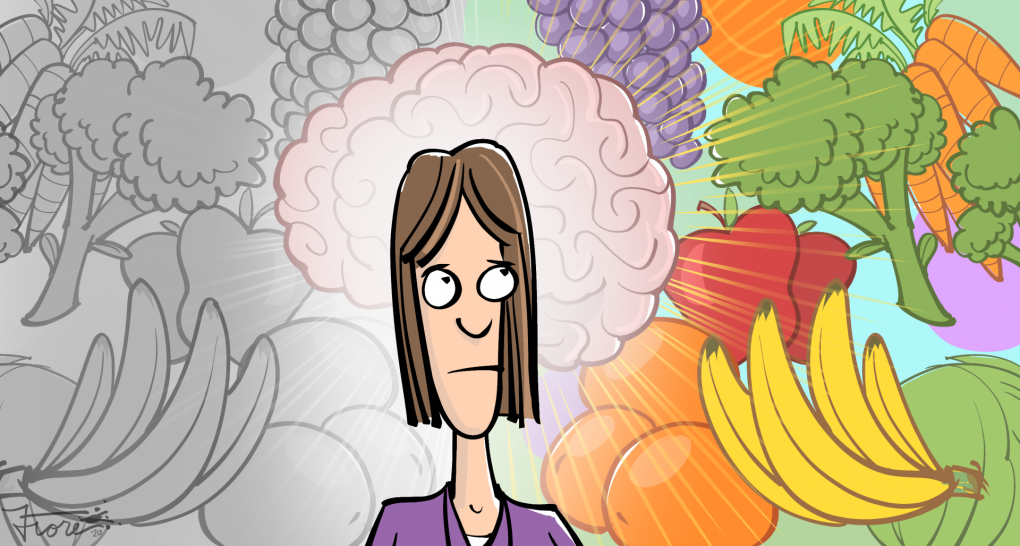
window.__INITIAL_STATE__={
"attachmentsReducer": {
"audio_0": {
"type": "attachments",
"id": "audio_0",
"imgSizes": {
"kqedFullSize": {
"file": "https://ww2.kqed.org/news/wp-content/themes/KQED-unified/img/audio_bgs/background0.jpg"
}
}
},
"audio_1": {
"type": "attachments",
"id": "audio_1",
"imgSizes": {
"kqedFullSize": {
"file": "https://ww2.kqed.org/news/wp-content/themes/KQED-unified/img/audio_bgs/background1.jpg"
}
}
},
"audio_2": {
"type": "attachments",
"id": "audio_2",
"imgSizes": {
"kqedFullSize": {
"file": "https://ww2.kqed.org/news/wp-content/themes/KQED-unified/img/audio_bgs/background2.jpg"
}
}
},
"audio_3": {
"type": "attachments",
"id": "audio_3",
"imgSizes": {
"kqedFullSize": {
"file": "https://ww2.kqed.org/news/wp-content/themes/KQED-unified/img/audio_bgs/background3.jpg"
}
}
},
"audio_4": {
"type": "attachments",
"id": "audio_4",
"imgSizes": {
"kqedFullSize": {
"file": "https://ww2.kqed.org/news/wp-content/themes/KQED-unified/img/audio_bgs/background4.jpg"
}
}
},
"placeholder": {
"type": "attachments",
"id": "placeholder",
"imgSizes": {
"thumbnail": {
"file": "https://cdn.kqed.org/wp-content/uploads/2024/12/KQED-Default-Image-816638274-2000x1333-1-160x107.jpg",
"width": 160,
"height": 107,
"mimeType": "image/jpeg"
},
"medium": {
"file": "https://cdn.kqed.org/wp-content/uploads/2024/12/KQED-Default-Image-816638274-2000x1333-1-800x533.jpg",
"width": 800,
"height": 533,
"mimeType": "image/jpeg"
},
"medium_large": {
"file": "https://cdn.kqed.org/wp-content/uploads/2024/12/KQED-Default-Image-816638274-2000x1333-1-768x512.jpg",
"width": 768,
"height": 512,
"mimeType": "image/jpeg"
},
"large": {
"file": "https://cdn.kqed.org/wp-content/uploads/2024/12/KQED-Default-Image-816638274-2000x1333-1-1020x680.jpg",
"width": 1020,
"height": 680,
"mimeType": "image/jpeg"
},
"1536x1536": {
"file": "https://cdn.kqed.org/wp-content/uploads/2024/12/KQED-Default-Image-816638274-2000x1333-1-1536x1024.jpg",
"width": 1536,
"height": 1024,
"mimeType": "image/jpeg"
},
"fd-lrg": {
"file": "https://cdn.kqed.org/wp-content/uploads/2024/12/KQED-Default-Image-816638274-2000x1333-1-1536x1024.jpg",
"width": 1536,
"height": 1024,
"mimeType": "image/jpeg"
},
"fd-med": {
"file": "https://cdn.kqed.org/wp-content/uploads/2024/12/KQED-Default-Image-816638274-2000x1333-1-1020x680.jpg",
"width": 1020,
"height": 680,
"mimeType": "image/jpeg"
},
"fd-sm": {
"file": "https://cdn.kqed.org/wp-content/uploads/2024/12/KQED-Default-Image-816638274-2000x1333-1-800x533.jpg",
"width": 800,
"height": 533,
"mimeType": "image/jpeg"
},
"post-thumbnail": {
"file": "https://cdn.kqed.org/wp-content/uploads/2024/12/KQED-Default-Image-816638274-2000x1333-1-672x372.jpg",
"width": 672,
"height": 372,
"mimeType": "image/jpeg"
},
"twentyfourteen-full-width": {
"file": "https://cdn.kqed.org/wp-content/uploads/2024/12/KQED-Default-Image-816638274-2000x1333-1-1038x576.jpg",
"width": 1038,
"height": 576,
"mimeType": "image/jpeg"
},
"xxsmall": {
"file": "https://cdn.kqed.org/wp-content/uploads/2024/12/KQED-Default-Image-816638274-2000x1333-1-160x107.jpg",
"width": 160,
"height": 107,
"mimeType": "image/jpeg"
},
"xsmall": {
"file": "https://cdn.kqed.org/wp-content/uploads/2024/12/KQED-Default-Image-816638274-2000x1333-1-672x372.jpg",
"width": 672,
"height": 372,
"mimeType": "image/jpeg"
},
"small": {
"file": "https://cdn.kqed.org/wp-content/uploads/2024/12/KQED-Default-Image-816638274-2000x1333-1-672x372.jpg",
"width": 672,
"height": 372,
"mimeType": "image/jpeg"
},
"xlarge": {
"file": "https://cdn.kqed.org/wp-content/uploads/2024/12/KQED-Default-Image-816638274-2000x1333-1-1020x680.jpg",
"width": 1020,
"height": 680,
"mimeType": "image/jpeg"
},
"full-width": {
"file": "https://cdn.kqed.org/wp-content/uploads/2024/12/KQED-Default-Image-816638274-2000x1333-1-1920x1280.jpg",
"width": 1920,
"height": 1280,
"mimeType": "image/jpeg"
},
"guest-author-32": {
"file": "https://cdn.kqed.org/wp-content/uploads/2025/01/KQED-Default-Image-816638274-1333x1333-1-160x160.jpg",
"width": 32,
"height": 32,
"mimeType": "image/jpeg"
},
"guest-author-50": {
"file": "https://cdn.kqed.org/wp-content/uploads/2025/01/KQED-Default-Image-816638274-1333x1333-1-160x160.jpg",
"width": 50,
"height": 50,
"mimeType": "image/jpeg"
},
"guest-author-64": {
"file": "https://cdn.kqed.org/wp-content/uploads/2025/01/KQED-Default-Image-816638274-1333x1333-1-160x160.jpg",
"width": 64,
"height": 64,
"mimeType": "image/jpeg"
},
"guest-author-96": {
"file": "https://cdn.kqed.org/wp-content/uploads/2025/01/KQED-Default-Image-816638274-1333x1333-1-160x160.jpg",
"width": 96,
"height": 96,
"mimeType": "image/jpeg"
},
"guest-author-128": {
"file": "https://cdn.kqed.org/wp-content/uploads/2025/01/KQED-Default-Image-816638274-1333x1333-1-160x160.jpg",
"width": 128,
"height": 128,
"mimeType": "image/jpeg"
},
"detail": {
"file": "https://cdn.kqed.org/wp-content/uploads/2025/01/KQED-Default-Image-816638274-1333x1333-1-160x160.jpg",
"width": 160,
"height": 160,
"mimeType": "image/jpeg"
},
"kqedFullSize": {
"file": "https://cdn.kqed.org/wp-content/uploads/2024/12/KQED-Default-Image-816638274-2000x1333-1.jpg",
"width": 2000,
"height": 1333
}
}
},
"science_1966278": {
"type": "attachments",
"id": "science_1966278",
"meta": {
"index": "attachments_1716263798",
"site": "science",
"id": "1966278",
"found": true
},
"parent": 1966269,
"imgSizes": {
"twentyfourteen-full-width": {
"file": "https://ww2.kqed.org/app/uploads/sites/35/2020/06/eating_final02-1038x576.png",
"width": 1038,
"mimeType": "image/png",
"height": 576
},
"thumbnail": {
"file": "https://ww2.kqed.org/app/uploads/sites/35/2020/06/eating_final02-160x86.png",
"width": 160,
"mimeType": "image/png",
"height": 86
},
"post-thumbnail": {
"file": "https://ww2.kqed.org/app/uploads/sites/35/2020/06/eating_final02-672x372.png",
"width": 672,
"mimeType": "image/png",
"height": 372
},
"kqedFullSize": {
"file": "https://ww2.kqed.org/app/uploads/sites/35/2020/06/eating_final02.png",
"width": 1920,
"height": 1028
},
"large": {
"file": "https://ww2.kqed.org/app/uploads/sites/35/2020/06/eating_final02-1020x546.png",
"width": 1020,
"mimeType": "image/png",
"height": 546
},
"1536x1536": {
"file": "https://ww2.kqed.org/app/uploads/sites/35/2020/06/eating_final02-1536x822.png",
"width": 1536,
"mimeType": "image/png",
"height": 822
},
"medium": {
"file": "https://ww2.kqed.org/app/uploads/sites/35/2020/06/eating_final02-800x428.png",
"width": 800,
"mimeType": "image/png",
"height": 428
},
"medium_large": {
"file": "https://ww2.kqed.org/app/uploads/sites/35/2020/06/eating_final02-768x411.png",
"width": 768,
"mimeType": "image/png",
"height": 411
}
},
"publishDate": 1592953144,
"modified": 1593020140,
"caption": null,
"description": null,
"title": "eating_final02",
"credit": "Mark Fiore/KQED",
"status": "inherit",
"isLoading": false,
"fetchFailed": false
},
"science_1966165": {
"type": "attachments",
"id": "science_1966165",
"meta": {
"index": "attachments_1716263798",
"site": "science",
"id": "1966165",
"found": true
},
"parent": 1966164,
"imgSizes": {
"twentyfourteen-full-width": {
"file": "https://ww2.kqed.org/app/uploads/sites/35/2020/06/RS40465_AGU2019_009-qut-1038x576.jpg",
"width": 1038,
"mimeType": "image/jpeg",
"height": 576
},
"thumbnail": {
"file": "https://ww2.kqed.org/app/uploads/sites/35/2020/06/RS40465_AGU2019_009-qut-160x107.jpg",
"width": 160,
"mimeType": "image/jpeg",
"height": 107
},
"post-thumbnail": {
"file": "https://ww2.kqed.org/app/uploads/sites/35/2020/06/RS40465_AGU2019_009-qut-672x372.jpg",
"width": 672,
"mimeType": "image/jpeg",
"height": 372
},
"kqedFullSize": {
"file": "https://ww2.kqed.org/app/uploads/sites/35/2020/06/RS40465_AGU2019_009-qut.jpg",
"width": 1920,
"height": 1280
},
"large": {
"file": "https://ww2.kqed.org/app/uploads/sites/35/2020/06/RS40465_AGU2019_009-qut-1020x680.jpg",
"width": 1020,
"mimeType": "image/jpeg",
"height": 680
},
"full-width": {
"file": "https://ww2.kqed.org/app/uploads/sites/35/2020/06/RS40465_AGU2019_009-qut-1920x1280.jpg",
"width": 1920,
"mimeType": "image/jpeg",
"height": 1280
},
"medium": {
"file": "https://ww2.kqed.org/app/uploads/sites/35/2020/06/RS40465_AGU2019_009-qut-800x533.jpg",
"width": 800,
"mimeType": "image/jpeg",
"height": 533
},
"medium_large": {
"file": "https://ww2.kqed.org/app/uploads/sites/35/2020/06/RS40465_AGU2019_009-qut-768x512.jpg",
"width": 768,
"mimeType": "image/jpeg",
"height": 512
}
},
"publishDate": 1592520693,
"modified": 1592607455,
"caption": "Pictures of the AGU Fall Centennial Conference at the Moscone Center in San Francisco, which took place from Dec. 9-13, 2019.",
"description": null,
"title": "RS40465_AGU2019_009-qut",
"credit": "Lindsey Moore/KQED",
"status": "inherit",
"isLoading": false,
"fetchFailed": false
},
"science_1960004": {
"type": "attachments",
"id": "science_1960004",
"meta": {
"index": "attachments_1716263798",
"site": "science",
"id": "1960004",
"found": true
},
"parent": 1960000,
"imgSizes": {
"twentyfourteen-full-width": {
"file": "https://ww2.kqed.org/app/uploads/sites/35/2020/03/RS42258_GettyImages-1212056096-qut-1038x576.jpg",
"width": 1038,
"mimeType": "image/jpeg",
"height": 576
},
"thumbnail": {
"file": "https://ww2.kqed.org/app/uploads/sites/35/2020/03/RS42258_GettyImages-1212056096-qut-160x103.jpg",
"width": 160,
"mimeType": "image/jpeg",
"height": 103
},
"post-thumbnail": {
"file": "https://ww2.kqed.org/app/uploads/sites/35/2020/03/RS42258_GettyImages-1212056096-qut-672x372.jpg",
"width": 672,
"mimeType": "image/jpeg",
"height": 372
},
"kqedFullSize": {
"file": "https://ww2.kqed.org/app/uploads/sites/35/2020/03/RS42258_GettyImages-1212056096-qut.jpg",
"width": 1920,
"height": 1235
},
"large": {
"file": "https://ww2.kqed.org/app/uploads/sites/35/2020/03/RS42258_GettyImages-1212056096-qut-1020x656.jpg",
"width": 1020,
"mimeType": "image/jpeg",
"height": 656
},
"full-width": {
"file": "https://ww2.kqed.org/app/uploads/sites/35/2020/03/RS42258_GettyImages-1212056096-qut-1920x1235.jpg",
"width": 1920,
"mimeType": "image/jpeg",
"height": 1235
},
"medium": {
"file": "https://ww2.kqed.org/app/uploads/sites/35/2020/03/RS42258_GettyImages-1212056096-qut-800x515.jpg",
"width": 800,
"mimeType": "image/jpeg",
"height": 515
},
"medium_large": {
"file": "https://ww2.kqed.org/app/uploads/sites/35/2020/03/RS42258_GettyImages-1212056096-qut-768x494.jpg",
"width": 768,
"mimeType": "image/jpeg",
"height": 494
}
},
"publishDate": 1585078580,
"modified": 1592595792,
"caption": "Medical personnel secure a sample from a person at a drive-thru COVID-19 testing station at a Kaiser Permanente facility on March 12, 2020, in San Francisco, California.",
"description": null,
"title": "Kaiser Permanente Opens Drive-Thru Coronavirus Testing Station In San Francisco",
"credit": "Justin Sullivan/Getty Images",
"status": "inherit",
"isLoading": false,
"fetchFailed": false
},
"science_1966172": {
"type": "attachments",
"id": "science_1966172",
"meta": {
"index": "attachments_1716263798",
"site": "science",
"id": "1966172",
"found": true
},
"parent": 1966149,
"imgSizes": {
"twentyfourteen-full-width": {
"file": "https://ww2.kqed.org/app/uploads/sites/35/2020/06/children-daycare-coronavirus-1038x576.jpg",
"width": 1038,
"mimeType": "image/jpeg",
"height": 576
},
"thumbnail": {
"file": "https://ww2.kqed.org/app/uploads/sites/35/2020/06/children-daycare-coronavirus-160x107.jpg",
"width": 160,
"mimeType": "image/jpeg",
"height": 107
},
"post-thumbnail": {
"file": "https://ww2.kqed.org/app/uploads/sites/35/2020/06/children-daycare-coronavirus-672x372.jpg",
"width": 672,
"mimeType": "image/jpeg",
"height": 372
},
"kqedFullSize": {
"file": "https://ww2.kqed.org/app/uploads/sites/35/2020/06/children-daycare-coronavirus.jpg",
"width": 1920,
"height": 1280
},
"large": {
"file": "https://ww2.kqed.org/app/uploads/sites/35/2020/06/children-daycare-coronavirus-1020x680.jpg",
"width": 1020,
"mimeType": "image/jpeg",
"height": 680
},
"full-width": {
"file": "https://ww2.kqed.org/app/uploads/sites/35/2020/06/children-daycare-coronavirus-1920x1280.jpg",
"width": 1920,
"mimeType": "image/jpeg",
"height": 1280
},
"medium": {
"file": "https://ww2.kqed.org/app/uploads/sites/35/2020/06/children-daycare-coronavirus-800x533.jpg",
"width": 800,
"mimeType": "image/jpeg",
"height": 533
},
"medium_large": {
"file": "https://ww2.kqed.org/app/uploads/sites/35/2020/06/children-daycare-coronavirus-768x512.jpg",
"width": 768,
"mimeType": "image/jpeg",
"height": 512
}
},
"publishDate": 1592521840,
"modified": 1592524428,
"caption": "A family walks wearing masks in downtown Los Angeles on March 22, 2020. ",
"description": null,
"title": "US-HEALTH-VIRUS",
"credit": "Apu Gomes/AFP via Getty Images",
"status": "inherit",
"isLoading": false,
"fetchFailed": false
},
"science_1966146": {
"type": "attachments",
"id": "science_1966146",
"meta": {
"index": "attachments_1716263798",
"site": "science",
"id": "1966146",
"found": true
},
"parent": 1966143,
"imgSizes": {
"twentyfourteen-full-width": {
"file": "https://ww2.kqed.org/app/uploads/sites/35/2020/06/California-masks-1038x576.jpg",
"width": 1038,
"mimeType": "image/jpeg",
"height": 576
},
"thumbnail": {
"file": "https://ww2.kqed.org/app/uploads/sites/35/2020/06/California-masks-160x107.jpg",
"width": 160,
"mimeType": "image/jpeg",
"height": 107
},
"post-thumbnail": {
"file": "https://ww2.kqed.org/app/uploads/sites/35/2020/06/California-masks-672x372.jpg",
"width": 672,
"mimeType": "image/jpeg",
"height": 372
},
"kqedFullSize": {
"file": "https://ww2.kqed.org/app/uploads/sites/35/2020/06/California-masks.jpg",
"width": 1920,
"height": 1280
},
"large": {
"file": "https://ww2.kqed.org/app/uploads/sites/35/2020/06/California-masks-1020x680.jpg",
"width": 1020,
"mimeType": "image/jpeg",
"height": 680
},
"full-width": {
"file": "https://ww2.kqed.org/app/uploads/sites/35/2020/06/California-masks-1920x1280.jpg",
"width": 1920,
"mimeType": "image/jpeg",
"height": 1280
},
"medium": {
"file": "https://ww2.kqed.org/app/uploads/sites/35/2020/06/California-masks-800x533.jpg",
"width": 800,
"mimeType": "image/jpeg",
"height": 533
},
"medium_large": {
"file": "https://ww2.kqed.org/app/uploads/sites/35/2020/06/California-masks-768x512.jpg",
"width": 768,
"mimeType": "image/jpeg",
"height": 512
}
},
"publishDate": 1592512112,
"modified": 1592519654,
"caption": "Chelsea Riley and her father, James Riley, line up to receive free hand sanitizer and face masks in San Francisco's Fillmore district on April 17, 2020. ",
"description": null,
"title": "California masks",
"credit": "Beth LaBerge/KQED",
"status": "inherit",
"isLoading": false,
"fetchFailed": false
},
"science_1966094": {
"type": "attachments",
"id": "science_1966094",
"meta": {
"index": "attachments_1716263798",
"site": "science",
"id": "1966094",
"found": true
},
"parent": 1966087,
"imgSizes": {
"twentyfourteen-full-width": {
"file": "https://ww2.kqed.org/app/uploads/sites/35/2020/06/toilet-coronavirus-covid-1038x576.jpg",
"width": 1038,
"mimeType": "image/jpeg",
"height": 576
},
"thumbnail": {
"file": "https://ww2.kqed.org/app/uploads/sites/35/2020/06/toilet-coronavirus-covid-160x107.jpg",
"width": 160,
"mimeType": "image/jpeg",
"height": 107
},
"post-thumbnail": {
"file": "https://ww2.kqed.org/app/uploads/sites/35/2020/06/toilet-coronavirus-covid-672x372.jpg",
"width": 672,
"mimeType": "image/jpeg",
"height": 372
},
"kqedFullSize": {
"file": "https://ww2.kqed.org/app/uploads/sites/35/2020/06/toilet-coronavirus-covid-e1592414021299.jpg",
"width": 1920,
"height": 1280
},
"large": {
"file": "https://ww2.kqed.org/app/uploads/sites/35/2020/06/toilet-coronavirus-covid-1020x680.jpg",
"width": 1020,
"mimeType": "image/jpeg",
"height": 680
},
"full-width": {
"file": "https://ww2.kqed.org/app/uploads/sites/35/2020/06/toilet-coronavirus-covid-1920x1280.jpg",
"width": 1920,
"mimeType": "image/jpeg",
"height": 1280
},
"medium": {
"file": "https://ww2.kqed.org/app/uploads/sites/35/2020/06/toilet-coronavirus-covid-800x533.jpg",
"width": 800,
"mimeType": "image/jpeg",
"height": 533
},
"medium_large": {
"file": "https://ww2.kqed.org/app/uploads/sites/35/2020/06/toilet-coronavirus-covid-768x512.jpg",
"width": 768,
"mimeType": "image/jpeg",
"height": 512
}
},
"publishDate": 1592413999,
"modified": 1592414223,
"caption": "Closing the lid before you flush the toilet is a good idea. If you have been infected with the coronavirus, unknowingly or not, it will help prevent it from spreading to the next user.",
"description": "Closing the lid before you flush the toilet is a good idea. If you have been infected with the coronavirus, unknowingly or not, it will help prevent it from spreading to the next user.",
"title": "The hand closes or opens the toilet lid",
"credit": "Madhourse/iStock",
"status": "inherit",
"isLoading": false,
"fetchFailed": false
},
"science_1965813": {
"type": "attachments",
"id": "science_1965813",
"meta": {
"index": "attachments_1716263798",
"site": "science",
"id": "1965813",
"found": true
},
"parent": 1965431,
"imgSizes": {
"twentyfourteen-full-width": {
"file": "https://ww2.kqed.org/app/uploads/sites/35/2020/06/Interior-1038x576.jpg",
"width": 1038,
"mimeType": "image/jpeg",
"height": 576
},
"thumbnail": {
"file": "https://ww2.kqed.org/app/uploads/sites/35/2020/06/Interior-160x90.jpg",
"width": 160,
"mimeType": "image/jpeg",
"height": 90
},
"post-thumbnail": {
"file": "https://ww2.kqed.org/app/uploads/sites/35/2020/06/Interior-672x372.jpg",
"width": 672,
"mimeType": "image/jpeg",
"height": 372
},
"kqedFullSize": {
"file": "https://ww2.kqed.org/app/uploads/sites/35/2020/06/Interior.jpg",
"width": 1920,
"height": 1080
},
"large": {
"file": "https://ww2.kqed.org/app/uploads/sites/35/2020/06/Interior-1020x574.jpg",
"width": 1020,
"mimeType": "image/jpeg",
"height": 574
},
"full-width": {
"file": "https://ww2.kqed.org/app/uploads/sites/35/2020/06/Interior-1920x1080.jpg",
"width": 1920,
"mimeType": "image/jpeg",
"height": 1080
},
"medium": {
"file": "https://ww2.kqed.org/app/uploads/sites/35/2020/06/Interior-800x450.jpg",
"width": 800,
"mimeType": "image/jpeg",
"height": 450
},
"medium_large": {
"file": "https://ww2.kqed.org/app/uploads/sites/35/2020/06/Interior-768x432.jpg",
"width": 768,
"mimeType": "image/jpeg",
"height": 432
}
},
"publishDate": 1591890961,
"modified": 1592344858,
"caption": "Counselor Louie Ramos of the Opiate Treatment Outpatient Program waits in a parking lot outside of San Francisco General Hospital. Moving some drug treatment services outside allows for more social distancing.",
"description": "Counselor Louie Ramos at the Opiate Treatment Outpatient Program in a parking lot outside of San Francisco General Hospital. Moving some drug treatment services outside allows for more social distancing.",
"title": "Interior",
"credit": "Courtesy of David Beuerman, Opiate Treatment Outpatient Program",
"status": "inherit",
"isLoading": false,
"fetchFailed": false
},
"science_1966052": {
"type": "attachments",
"id": "science_1966052",
"meta": {
"index": "attachments_1716263798",
"site": "science",
"id": "1966052",
"found": true
},
"parent": 1966047,
"imgSizes": {
"twentyfourteen-full-width": {
"file": "https://ww2.kqed.org/app/uploads/sites/35/2020/06/RS43658_GettyImages-1211629926-qut-1038x576.jpg",
"width": 1038,
"mimeType": "image/jpeg",
"height": 576
},
"thumbnail": {
"file": "https://ww2.kqed.org/app/uploads/sites/35/2020/06/RS43658_GettyImages-1211629926-qut-160x107.jpg",
"width": 160,
"mimeType": "image/jpeg",
"height": 107
},
"post-thumbnail": {
"file": "https://ww2.kqed.org/app/uploads/sites/35/2020/06/RS43658_GettyImages-1211629926-qut-672x372.jpg",
"width": 672,
"mimeType": "image/jpeg",
"height": 372
},
"kqedFullSize": {
"file": "https://ww2.kqed.org/app/uploads/sites/35/2020/06/RS43658_GettyImages-1211629926-qut.jpg",
"width": 1920,
"height": 1280
},
"large": {
"file": "https://ww2.kqed.org/app/uploads/sites/35/2020/06/RS43658_GettyImages-1211629926-qut-1020x680.jpg",
"width": 1020,
"mimeType": "image/jpeg",
"height": 680
},
"full-width": {
"file": "https://ww2.kqed.org/app/uploads/sites/35/2020/06/RS43658_GettyImages-1211629926-qut-1920x1280.jpg",
"width": 1920,
"mimeType": "image/jpeg",
"height": 1280
},
"medium": {
"file": "https://ww2.kqed.org/app/uploads/sites/35/2020/06/RS43658_GettyImages-1211629926-qut-800x533.jpg",
"width": 800,
"mimeType": "image/jpeg",
"height": 533
},
"medium_large": {
"file": "https://ww2.kqed.org/app/uploads/sites/35/2020/06/RS43658_GettyImages-1211629926-qut-768x512.jpg",
"width": 768,
"mimeType": "image/jpeg",
"height": 512
}
},
"publishDate": 1592339987,
"modified": 1592340238,
"caption": "Huntington Beach in Orange County is virtually empty on May 02, 2020 after a judge rejected a request to block a state order to close local beaches during the coronavirus pandemic. ",
"description": null,
"title": "US-HEALTH-VIRUS-BEACH",
"credit": "APU GOMES/AFP via Getty Images",
"status": "inherit",
"isLoading": false,
"fetchFailed": false
},
"science_1965995": {
"type": "attachments",
"id": "science_1965995",
"meta": {
"index": "attachments_1716263798",
"site": "science",
"id": "1965995",
"found": true
},
"parent": 1965993,
"imgSizes": {
"twentyfourteen-full-width": {
"file": "https://ww2.kqed.org/app/uploads/sites/35/2020/06/GettyImages-1210313555-1600x900-1038x576.jpg",
"width": 1038,
"mimeType": "image/jpeg",
"height": 576
},
"thumbnail": {
"file": "https://ww2.kqed.org/app/uploads/sites/35/2020/06/GettyImages-1210313555-1600x900-160x90.jpg",
"width": 160,
"mimeType": "image/jpeg",
"height": 90
},
"post-thumbnail": {
"file": "https://ww2.kqed.org/app/uploads/sites/35/2020/06/GettyImages-1210313555-1600x900-672x372.jpg",
"width": 672,
"mimeType": "image/jpeg",
"height": 372
},
"kqedFullSize": {
"file": "https://ww2.kqed.org/app/uploads/sites/35/2020/06/GettyImages-1210313555-1600x900.jpg",
"width": 1600,
"height": 900
},
"large": {
"file": "https://ww2.kqed.org/app/uploads/sites/35/2020/06/GettyImages-1210313555-1600x900-1020x574.jpg",
"width": 1020,
"mimeType": "image/jpeg",
"height": 574
},
"medium": {
"file": "https://ww2.kqed.org/app/uploads/sites/35/2020/06/GettyImages-1210313555-1600x900-800x450.jpg",
"width": 800,
"mimeType": "image/jpeg",
"height": 450
},
"medium_large": {
"file": "https://ww2.kqed.org/app/uploads/sites/35/2020/06/GettyImages-1210313555-1600x900-768x432.jpg",
"width": 768,
"mimeType": "image/jpeg",
"height": 432
}
},
"publishDate": 1592239503,
"modified": 1592262112,
"caption": "Mortician and funeral director Bryan Clayton inspects names on a row of cardboard caskets, one reading \"COVID+,\" at Maryland Cremation Services in Millersville, Md.\n",
"description": null,
"title": "GettyImages-1210313555-1600x900",
"credit": "Andrew Caballero-Reynolds/AFP via Getty Images",
"status": "inherit",
"isLoading": false,
"fetchFailed": false
},
"science_1965990": {
"type": "attachments",
"id": "science_1965990",
"meta": {
"index": "attachments_1716263798",
"site": "science",
"id": "1965990",
"found": true
},
"parent": 1965934,
"imgSizes": {
"twentyfourteen-full-width": {
"file": "https://ww2.kqed.org/app/uploads/sites/35/2020/06/Nadine-Burke-Harris-1020x1315-1-1020x576.jpg",
"width": 1020,
"mimeType": "image/jpeg",
"height": 576
},
"thumbnail": {
"file": "https://ww2.kqed.org/app/uploads/sites/35/2020/06/Nadine-Burke-Harris-1020x1315-1-160x118.jpg",
"width": 160,
"mimeType": "image/jpeg",
"height": 118
},
"post-thumbnail": {
"file": "https://ww2.kqed.org/app/uploads/sites/35/2020/06/Nadine-Burke-Harris-1020x1315-1-672x372.jpg",
"width": 672,
"mimeType": "image/jpeg",
"height": 372
},
"kqedFullSize": {
"file": "https://ww2.kqed.org/app/uploads/sites/35/2020/06/Nadine-Burke-Harris-1020x1315-1.jpg",
"width": 1020,
"height": 753
},
"large": {
"file": "https://ww2.kqed.org/app/uploads/sites/35/2020/06/Nadine-Burke-Harris-1020x1315-1-1020x753.jpg",
"width": 1020,
"mimeType": "image/jpeg",
"height": 753
},
"medium": {
"file": "https://ww2.kqed.org/app/uploads/sites/35/2020/06/Nadine-Burke-Harris-1020x1315-1-800x591.jpg",
"width": 800,
"mimeType": "image/jpeg",
"height": 591
},
"medium_large": {
"file": "https://ww2.kqed.org/app/uploads/sites/35/2020/06/Nadine-Burke-Harris-1020x1315-1-768x567.jpg",
"width": 768,
"mimeType": "image/jpeg",
"height": 567
}
},
"publishDate": 1592238056,
"modified": 1592259416,
"caption": "California Surgeon General Dr. Nadine Burke Harris.",
"description": null,
"title": "Nadine-Burke-Harris-1020x1315",
"credit": "Michael Winokur",
"status": "inherit",
"isLoading": false,
"fetchFailed": false
},
"science_1959568": {
"type": "attachments",
"id": "science_1959568",
"meta": {
"index": "attachments_1716263798",
"site": "science",
"id": "1959568",
"found": true
},
"parent": 1959566,
"imgSizes": {
"twentyfourteen-full-width": {
"file": "https://ww2.kqed.org/app/uploads/sites/35/2020/03/GettyImages-1207638287-1024x576.jpg",
"width": 1024,
"mimeType": "image/jpeg",
"height": 576
},
"thumbnail": {
"file": "https://ww2.kqed.org/app/uploads/sites/35/2020/03/GettyImages-1207638287-160x104.jpg",
"width": 160,
"mimeType": "image/jpeg",
"height": 104
},
"post-thumbnail": {
"file": "https://ww2.kqed.org/app/uploads/sites/35/2020/03/GettyImages-1207638287-672x372.jpg",
"width": 672,
"mimeType": "image/jpeg",
"height": 372
},
"kqedFullSize": {
"file": "https://ww2.kqed.org/app/uploads/sites/35/2020/03/GettyImages-1207638287.jpg",
"width": 1024,
"height": 666
},
"large": {
"file": "https://ww2.kqed.org/app/uploads/sites/35/2020/03/GettyImages-1207638287-1020x663.jpg",
"width": 1020,
"mimeType": "image/jpeg",
"height": 663
},
"medium": {
"file": "https://ww2.kqed.org/app/uploads/sites/35/2020/03/GettyImages-1207638287-800x520.jpg",
"width": 800,
"mimeType": "image/jpeg",
"height": 520
},
"medium_large": {
"file": "https://ww2.kqed.org/app/uploads/sites/35/2020/03/GettyImages-1207638287-768x500.jpg",
"width": 768,
"mimeType": "image/jpeg",
"height": 500
}
},
"publishDate": 1584670648,
"modified": 1591907072,
"caption": "People wearing face masks walk by a closed theatre in Berkeley on March 18, 2020. ",
"description": "People wearing face masks walk by a closed theatre with a message about staying healthy in Berkeley, California on March 18, 2020. - San Francisco, along with seven other Bay Area counties, have ordered residents to shelter in place in an effort to help prevent the spread of the coronavirus.",
"title": "US-VIRUS-HEALTH",
"credit": "Josh Edelson/AFP via Getty Images",
"status": "inherit",
"isLoading": false,
"fetchFailed": false
},
"science_1965822": {
"type": "attachments",
"id": "science_1965822",
"meta": {
"index": "attachments_1716263798",
"site": "science",
"id": "1965822",
"found": true
},
"parent": 1965816,
"imgSizes": {
"twentyfourteen-full-width": {
"file": "https://ww2.kqed.org/app/uploads/sites/35/2020/06/Collage_pink-1600x900-1038x576.jpg",
"width": 1038,
"mimeType": "image/jpeg",
"height": 576
},
"thumbnail": {
"file": "https://ww2.kqed.org/app/uploads/sites/35/2020/06/Collage_pink-1600x900-160x90.jpg",
"width": 160,
"mimeType": "image/jpeg",
"height": 90
},
"post-thumbnail": {
"file": "https://ww2.kqed.org/app/uploads/sites/35/2020/06/Collage_pink-1600x900-672x372.jpg",
"width": 672,
"mimeType": "image/jpeg",
"height": 372
},
"kqedFullSize": {
"file": "https://ww2.kqed.org/app/uploads/sites/35/2020/06/Collage_pink-1600x900.jpg",
"width": 1600,
"height": 900
},
"large": {
"file": "https://ww2.kqed.org/app/uploads/sites/35/2020/06/Collage_pink-1600x900-1020x574.jpg",
"width": 1020,
"mimeType": "image/jpeg",
"height": 574
},
"medium": {
"file": "https://ww2.kqed.org/app/uploads/sites/35/2020/06/Collage_pink-1600x900-800x450.jpg",
"width": 800,
"mimeType": "image/jpeg",
"height": 450
},
"medium_large": {
"file": "https://ww2.kqed.org/app/uploads/sites/35/2020/06/Collage_pink-1600x900-768x432.jpg",
"width": 768,
"mimeType": "image/jpeg",
"height": 432
}
},
"publishDate": 1591896243,
"modified": 1591906145,
"caption": "Ashley Otah, left, in Dallas; Cecil Hannibal in Los Angeles; Zane Keyes in Montclair, N.J.; and Visaysha Harris in Grayson, Ga.\n",
"description": null,
"title": "Collage_pink-1600x900",
"credit": "Illustration: STAT; photos courtesy of Ashley Otah, Cecil Hannibal, Gabrielle Glaser and Visaysha Harris",
"status": "inherit",
"isLoading": false,
"fetchFailed": false
}
},
"audioPlayerReducer": {
"postId": "stream_live",
"isPaused": true,
"isPlaying": false,
"pfsActive": false,
"pledgeModalIsOpen": true,
"playerDrawerIsOpen": false,
"liveAudioPlayStartedAt": 0,
"liveAudioPlayContext": ""
},
"authorsReducer": {
"byline_science_1966143": {
"type": "authors",
"id": "byline_science_1966143",
"meta": {
"override": true
},
"slug": "byline_science_1966143",
"name": "Kathleen Ronayne\u003cbr />Associated Press",
"isLoading": false
},
"byline_science_1966087": {
"type": "authors",
"id": "byline_science_1966087",
"meta": {
"override": true
},
"slug": "byline_science_1966087",
"name": "William Petri University of Virginia\u003cbr />The Conversation",
"isLoading": false
},
"byline_science_1966047": {
"type": "authors",
"id": "byline_science_1966047",
"meta": {
"override": true
},
"slug": "byline_science_1966047",
"name": "Barbara Feder Ostrov \u003cbr />CalMatters\u003cbr>",
"isLoading": false
},
"byline_science_1965993": {
"type": "authors",
"id": "byline_science_1965993",
"meta": {
"override": true
},
"slug": "byline_science_1965993",
"name": "Sharon Begley \u003cbr />STAT",
"isLoading": false
},
"byline_science_1965841": {
"type": "authors",
"id": "byline_science_1965841",
"meta": {
"override": true
},
"slug": "byline_science_1965841",
"name": "Jason Beaubien\u003cbr />NPR",
"isLoading": false
},
"byline_science_1965816": {
"type": "authors",
"id": "byline_science_1965816",
"meta": {
"override": true
},
"slug": "byline_science_1965816",
"name": "Gabrielle Glaser \u003cbr />STAT\u003cbr>",
"isLoading": false
},
"kqedscience": {
"type": "authors",
"id": "6387",
"meta": {
"index": "authors_1716337520",
"id": "6387",
"found": true
},
"name": "KQED Science",
"firstName": "KQED",
"lastName": "Science",
"slug": "kqedscience",
"email": "kqedscience@gmail.com",
"display_author_email": false,
"staff_mastheads": [],
"title": null,
"bio": "KQED Science brings you award-winning science and environment coverage from the Bay Area and beyond by the flagship Northern California PBS and NPR affiliate.",
"avatar": "https://secure.gravatar.com/avatar/5a295ff49cf82a8c0f30937d3f788b2f?s=600&d=blank&r=g",
"twitter": null,
"facebook": null,
"instagram": null,
"linkedin": null,
"sites": [
{
"site": "science",
"roles": [
"contributor"
]
},
{
"site": "quest",
"roles": [
"editor"
]
},
{
"site": "food",
"roles": [
"contributor"
]
}
],
"headData": {
"title": "KQED Science | KQED",
"description": null,
"ogImgSrc": "https://secure.gravatar.com/avatar/5a295ff49cf82a8c0f30937d3f788b2f?s=600&d=blank&r=g",
"twImgSrc": "https://secure.gravatar.com/avatar/5a295ff49cf82a8c0f30937d3f788b2f?s=600&d=blank&r=g"
},
"isLoading": false,
"link": "/author/kqedscience"
},
"lklivans": {
"type": "authors",
"id": "8648",
"meta": {
"index": "authors_1716337520",
"id": "8648",
"found": true
},
"name": "Laura Klivans",
"firstName": "Laura",
"lastName": "Klivans",
"slug": "lklivans",
"email": "lklivans@kqed.org",
"display_author_email": true,
"staff_mastheads": [
"news",
"science"
],
"title": "Reporter",
"bio": "Laura Klivans is an award-winning science reporter for KQED News, where she covers climate change with an eye on both groundbreaking progress and gaps in action. She is the former host of KQED's blockbuster video series about tiny, amazing animals, \u003cem>Deep Look\u003c/em>. Her work reaches national audiences through NPR, \u003cem>Here & Now, \u003c/em>PRI, and other major outlets. \r\n\r\nLaura’s won five Northern California Area Emmy Awards for Deep Look and First Place in the Greater Bay Area Journalism Awards for a podcast exploring how one Oakland neighborhood teamed up to reduce planet-heating pollution.\r\n\r\nBeyond her reporting, she hosts and moderates events. In the past, she taught audio storytelling at the UC Berkeley Graduate School of Journalism, led international education programs, worked with immigrants and refugees along the Thai-Burmese border, taught high schoolers sex ed, and was an actress. \r\n\r\nShe's a former UC Berkeley Human Rights Fellow, USC Center for Health Journalism's California Fellow and Coro Fellow in Public Affairs. Laura has a master’s in journalism from UC Berkeley, a master’s in education from Harvard, and an undergraduate degree from Northwestern University.\r\n\r\nShe loves trying to riddle the meaning out of vanity license plates.",
"avatar": "https://secure.gravatar.com/avatar/2d2ecd1550a494cc10ad4a503406965585902124739e775a9b3817eebf1d88be?s=600&d=blank&r=g",
"twitter": "lauraklivans",
"bluesky": null,
"facebook": null,
"instagram": null,
"linkedin": null,
"sites": [
{
"site": "news",
"roles": [
"editor"
]
},
{
"site": "stateofhealth",
"roles": [
"contributor",
"editor"
]
},
{
"site": "science",
"roles": [
"editor"
]
},
{
"site": "forum",
"roles": [
"editor"
]
}
],
"headData": {
"title": "Laura Klivans | KQED",
"description": "Reporter",
"ogImgSrc": "https://secure.gravatar.com/avatar/2d2ecd1550a494cc10ad4a503406965585902124739e775a9b3817eebf1d88be?s=600&d=blank&r=g",
"twImgSrc": "https://secure.gravatar.com/avatar/2d2ecd1550a494cc10ad4a503406965585902124739e775a9b3817eebf1d88be?s=600&d=blank&r=g"
},
"isLoading": false,
"link": "/author/lklivans"
},
"lesleymcclurg": {
"type": "authors",
"id": "11229",
"meta": {
"index": "authors_1716337520",
"id": "11229",
"found": true
},
"name": "Lesley McClurg",
"firstName": "Lesley",
"lastName": "McClurg",
"slug": "lesleymcclurg",
"email": "lmcclurg@KQED.org",
"display_author_email": false,
"staff_mastheads": [
"news",
"science"
],
"title": "KQED Health Correspondent",
"bio": "Lesley McClurg is a health correspondent and fill-in host whose work is regularly rebroadcast on NPR and PBS programs. She’s earned multiple regional Emmy awards, a national and a regional Edward R. Murrow award, and was named Best Beat Reporter by the Association of Health Care Journalists. The Society of Professional Journalists has recognized her work several times, and the Society of Environmental Journalists spotlighted her coverage of California’s historic drought.\r\n\r\nBefore joining KQED in 2016, Lesley covered food and sustainability for Capital Public Radio, environmental issues for Colorado Public Radio, and reported for KUOW and KCTS 9 in Seattle. Away from the newsroom, she loves skiing with her daughter, mountain biking with her partner, and playing with Ollie, the family’s goldendoodle. On deadline, she runs almost entirely on chocolate chips.\r\n\r\n ",
"avatar": "https://secure.gravatar.com/avatar/bab49e972ea10c774fe0f5e29dba1722b158f7c0d58a360923d1389d380b2978?s=600&d=blank&r=g",
"twitter": "lesleywmcclurg",
"bluesky": null,
"facebook": null,
"instagram": null,
"linkedin": null,
"sites": [
{
"site": "arts",
"roles": [
"author"
]
},
{
"site": "news",
"roles": [
"editor"
]
},
{
"site": "futureofyou",
"roles": [
"editor"
]
},
{
"site": "stateofhealth",
"roles": [
"author"
]
},
{
"site": "science",
"roles": [
"editor"
]
},
{
"site": "quest",
"roles": [
"subscriber"
]
},
{
"site": "forum",
"roles": [
"administrator"
]
},
{
"site": "liveblog",
"roles": [
"author"
]
}
],
"headData": {
"title": "Lesley McClurg | KQED",
"description": "KQED Health Correspondent",
"ogImgSrc": "https://secure.gravatar.com/avatar/bab49e972ea10c774fe0f5e29dba1722b158f7c0d58a360923d1389d380b2978?s=600&d=blank&r=g",
"twImgSrc": "https://secure.gravatar.com/avatar/bab49e972ea10c774fe0f5e29dba1722b158f7c0d58a360923d1389d380b2978?s=600&d=blank&r=g"
},
"isLoading": false,
"link": "/author/lesleymcclurg"
},
"parcuni": {
"type": "authors",
"id": "11368",
"meta": {
"index": "authors_1716337520",
"id": "11368",
"found": true
},
"name": "Peter Arcuni",
"firstName": "Peter",
"lastName": "Arcuni",
"slug": "parcuni",
"email": "parcuni@KQED.org",
"display_author_email": false,
"staff_mastheads": [
"science"
],
"title": "Reporter",
"bio": "Peter reports radio and online stories for \u003cem>KQED Science\u003c/em>. His work has also appeared on the \u003cem>The California Report\u003c/em> morning show and \u003cem>KQED News\u003c/em>. His production credits include \u003cem>The California Report, The California Report Magazine\u003c/em> and KQED's local news podcast \u003cem>The Bay\u003c/em>. Other credits include NPR's \u003cem>All Things Considered\u003c/em>, WNYC's \u003cem>Science Friday\u003c/em>, WBUR's \u003cem>Here & Now\u003c/em>, WIRED and SFGate. Peter graduated from Brown University and earned a master's degree in journalism from Stanford. He's covered everything from homelessness to wildfires, health, the environment, arts and Thanksgiving in San Quentin prison. In other lives, he played rock n roll music and studied neuroscience. You can email him at: parcuni@kqed.org",
"avatar": "https://secure.gravatar.com/avatar/d5032f6f27199d478af34ad2e1d98732?s=600&d=blank&r=g",
"twitter": "peterarcuni",
"facebook": null,
"instagram": null,
"linkedin": null,
"sites": [
{
"site": "news",
"roles": [
"editor"
]
},
{
"site": "science",
"roles": [
"editor"
]
}
],
"headData": {
"title": "Peter Arcuni | KQED",
"description": "Reporter",
"ogImgSrc": "https://secure.gravatar.com/avatar/d5032f6f27199d478af34ad2e1d98732?s=600&d=blank&r=g",
"twImgSrc": "https://secure.gravatar.com/avatar/d5032f6f27199d478af34ad2e1d98732?s=600&d=blank&r=g"
},
"isLoading": false,
"link": "/author/parcuni"
},
"kevinstark": {
"type": "authors",
"id": "11608",
"meta": {
"index": "authors_1716337520",
"id": "11608",
"found": true
},
"name": "Kevin Stark",
"firstName": "Kevin",
"lastName": "Stark",
"slug": "kevinstark",
"email": "kstark@kqed.org",
"display_author_email": true,
"staff_mastheads": [
"science"
],
"title": "Senior Editor",
"bio": "Kevin is a senior editor for KQED Science, managing the station's health and climate desks. His journalism career began in the Pacific Northwest, and he later became a lead reporter for the San Francisco Public Press. His work has appeared in Pacific Standard magazine, the Energy News Network, the Center for Investigative Reporting's Reveal and WBEZ in Chicago. Kevin joined KQED in 2019, and has covered issues related to energy, wildfire, climate change and the environment.",
"avatar": "https://secure.gravatar.com/avatar/365aaa4b597d3a8374f67504ff0facd323d7906e8eb4be0a7efd2427408e802c?s=600&d=blank&r=g",
"twitter": "starkkev",
"bluesky": null,
"facebook": null,
"instagram": null,
"linkedin": null,
"sites": [
{
"site": "",
"roles": [
"editor"
]
},
{
"site": "news",
"roles": [
"editor"
]
},
{
"site": "science",
"roles": [
"administrator"
]
}
],
"headData": {
"title": "Kevin Stark | KQED",
"description": "Senior Editor",
"ogImgSrc": "https://secure.gravatar.com/avatar/365aaa4b597d3a8374f67504ff0facd323d7906e8eb4be0a7efd2427408e802c?s=600&d=blank&r=g",
"twImgSrc": "https://secure.gravatar.com/avatar/365aaa4b597d3a8374f67504ff0facd323d7906e8eb4be0a7efd2427408e802c?s=600&d=blank&r=g"
},
"isLoading": false,
"link": "/author/kevinstark"
}
},
"pagesReducer": {
"science_category_news": {
"type": "terms",
"id": "science_40",
"meta": {
"index": "terms_1716263798",
"site": "science",
"id": "40",
"score": 10.813967
},
"featImg": null,
"name": "News",
"description": null,
"taxonomy": "category",
"headData": {
"twImgId": null,
"twTitle": null,
"ogTitle": null,
"ogImgId": null,
"twDescription": null,
"description": null,
"title": "News Archives | KQED Science",
"ogDescription": null
},
"ttid": 42,
"slug": "news",
"isLoading": false,
"title": "News",
"pageMeta": {
"site": "science",
"WpPageTemplate": "page-topic-editorial",
"currentPage": 97
},
"blocks": [
{
"blockName": "kqed/post-list",
"attrs": {
"layout": "cardArticle2",
"query": "posts/science?category=news",
"seeMore": false,
"paginated": true,
"page": 97
}
},
{
"blockName": "kqed/ad"
}
]
}
},
"pfsSessionReducer": {},
"postsReducer": {
"stream_live": {
"type": "live",
"id": "stream_live",
"audioUrl": "https://streams.kqed.org/kqedradio",
"title": "Live Stream",
"excerpt": "Live Stream information currently unavailable.",
"link": "/radio",
"featImg": "",
"label": {
"name": "KQED Live",
"link": "/"
}
},
"stream_kqedNewscast": {
"type": "posts",
"id": "stream_kqedNewscast",
"audioUrl": "https://www.kqed.org/.stream/anon/radio/RDnews/newscast.mp3?_=1",
"title": "KQED Newscast",
"featImg": "",
"label": {
"name": "88.5 FM",
"link": "/"
}
},
"science_1966269": {
"type": "posts",
"id": "science_1966269",
"meta": {
"index": "posts_1716263798",
"site": "science",
"id": "1966269",
"score": null,
"sort": [
1592982818000
]
},
"guestAuthors": [],
"slug": "when-picky-eating-becomes-a-dangerous-disorder",
"title": "When Picky Eating Becomes a Dangerous Disorder",
"publishDate": 1592982818,
"format": "audio",
"headTitle": "When Picky Eating Becomes a Dangerous Disorder | KQED",
"labelTerm": {},
"content": "\u003cp class=\"p1\">At the beginning of the coronavirus crisis, Margo Henderson ordered a lot of takeout pizza and quesadillas. But she worried that the greasy comfort foods she indulged in at the pandemic’s outset had nudged her down a slippery slope.\u003c/p>\n\u003cp>[pullquote]‘I grew up pretty much on an all-beige diet,” says Margo Henderson. “I [had] the palate of a 4-year-old until I was 25.’[/pullquote]\u003c/p>\n\u003cp class=\"p1\">For most of her 29 years, Henderson has grappled with an eating disorder that caused a deep aversion, even disgust, for most foods.\u003c/p>\n\u003cp class=\"p1\">“I grew up pretty much on an all-beige diet,” she said, perched on the edge of her weathered leather couch in a sparsely furnished San Francisco apartment. “Absolutely nothing green. No fruits or vegetables. I pretty much had the palate of a 4-year-old until I was 25.”\u003c/p>\n\u003cp class=\"p1\">When she was a child, her mother tried bribing her with treats. Sometimes her mom refused to let her leave the table if she didn’t eat something other than bread and pasta. When those tactics failed, her mother dragged her to pediatricians, dieticians and even a hypnotist. The specialists shrugged off her intolerant palate as age-related.\u003c/p>\n\u003cp>[ad fullwidth]\u003c/p>\n\u003cp class=\"p1\">But fussy eating was more than a phase. Even into adulthood, Henderson preferred the kids menu. She cringed at the sight and smell of certain foods, especially cold and crunchy items like salads or pickles. Her stomach lurched when she neared the produce section of a grocery story. While a lot of people will opt for the fries instead of the salad, just the sight of lettuce next to a burger nauseated Henderson. Her worst nightmare was a boxed lunch.\u003c/p>\n\u003cp class=\"p1\">“Like, God forbid someone gave me a turkey sandwich with soggy lettuce and tomato that’s been all touching,” said Henderson. \u003cspan class=\"s1\">\u003ci>“\u003c/i>\u003c/span>Even if you were sitting next to me eating a carrot stick or a celery stick, I’d gag.”\u003c/p>\n\u003cp class=\"p1\">As the years passed, her limited diet led to greater isolation. She always had a menu of excuses at the ready in case of invitations: Let’s just do drinks. I’m not hungry. I don’t want dinner.\u003c/p>\n\u003cp class=\"p1\">“Food was such an anxious thing in my life,” she said. “I definitely tried to steer away from it. I had such a strong physical reaction to being around food, let alone eating it.”\u003c/p>\n\u003cp class=\"p1\">Though Henderson was never diagnosed with any medical complications stemming from her restricted eating habits, she frequently felt sluggish.\u003c/p>\n\u003cp class=\"p1\">“It definitely affected my energy level,” she said. “My skin was really gray-looking.”\u003c/p>\n\u003cp class=\"p1\">She knew something was wrong, but what? She didn’t have a name for it, let alone a solution.\u003c/p>\n\u003cp class=\"p1\">\u003cb>A New Diagnosis\u003c/b>\u003c/p>\n\u003cp class=\"p1\">Then one night while surfing the web, Henderson stumbled across a link on \u003ca href=\"https://www.ncbi.nlm.nih.gov/pmc/articles/PMC4725687/pdf/ndt-12-213.pdf\">\u003cspan class=\"s2\">avoidant/restrictive food intake disorder\u003c/span>\u003c/a>, or ARFID. She was stunned. For the first time in her life, she read about other people who were repulsed by certain flavors, aromas and textures.\u003c/p>\n\u003cp class=\"p1\">Doctors are still studying what causes the illness. Unlike other eating disorders, it’s not related to body image. Early research suggests that people who have ARFID are not just extreme versions of a choosy young eater, but potentially “supertasters.”\u003c/p>\n\u003cp class=\"p1\">“Meaning that their palates are much more sensitive and they taste things in a really intense way,” said Erin Accurso, clinical director of the UCSF Eating Disorders Program.\u003c/p>\n\u003cp class=\"p1\">A traumatic event like a choking incident or a bad case of food poisoning can trigger the disorder, Accurso says. Over time, someone’s initially small roster of disliked foods tends to lengthen, until their eating selection has become uncommonly narrow.\u003c/p>\n\u003cp class=\"p1\">Common \u003ca href=\"https://pubmed.ncbi.nlm.nih.gov/24343807/\">\u003cspan class=\"s2\">behaviors\u003c/span>\u003c/a> include food avoidance, loss of appetite, abdominal pain and fear of vomiting. Eventually, ARFID can lead to nutritional deficiencies, weight loss and depression. One British \u003ca href=\"https://www.acpjournals.org/doi/10.7326/L19-0361\" target=\"_blank\" rel=\"noopener noreferrer\">teenager\u003c/a> who ate only chips, sausages, processed ham and white bread lost his sight permanently after malnutrition led to optic nerve damage.\u003c/p>\n\u003cp class=\"p1\">Henderson and her doctors speculate her sensitivities stemmed from a childhood illness called \u003ca href=\"https://www.ucsf.edu/news/2018/06/410786/unbearable-sensation-being-living-sensory-processing-disorder\">\u003cspan class=\"s2\">sensory processing disorder\u003c/span>\u003c/a>.\u003c/p>\n\u003cp class=\"p3\">“I think my brain incorrectly processed sensory information like the textures and smells of foods,” said Henderson. “Instead of recognizing some foods as healthy, my brain would try to protect me. That’s how I developed a gag reflex.”\u003c/p>\n\u003cp class=\"p1\">\u003cb>Doctors Treating More Cases\u003c/b>\u003c/p>\n\u003cp class=\"p1\">ARFID is a recent addition to the psychiatric bible, the American Psychiatric Association’s Diagnostic and Statistical Manual of Mental Disorders, Fifth Edition, or DSM-5.\u003c/p>\n\u003cp class=\"p1\">Accurso says preliminary studies suggest about \u003ca href=\"https://www.ncbi.nlm.nih.gov/pmc/articles/PMC4725687/pdf/ndt-12-213.pdf\">\u003cspan class=\"s2\">1 in 20\u003c/span>\u003c/a> kids may have the illness. Nancy Zucker, director of the Duke Center for Eating Disorders, says about 30% of calls to the center were related to ARFID between November and January last year.\u003c/p>\n\u003cp>“It’s an illness that we are really hearing more about in our field,” said Claire Mysko, the chief executive officer of the National Eating Disorders Association.\u003c/p>\n\u003cp class=\"p1\">\u003cspan class=\"s2\">\u003ca href=\"https://www.ncbi.nlm.nih.gov/pmc/articles/PMC6534269/pdf/nihms-995861.pdf\">Research\u003c/a>\u003c/span> suggests the disorder can occur in individuals of all ages, although it usually presents before age 12 and is more common in males. Experts theorize that doctors routinely misdiagnose ARFID for anorexia.\u003c/p>\n\u003cp class=\"p1\">Clinicians are experimenting with treatments. Henderson’s doctors helped her dissect her reflexive aversions to foods like kale and cucumber juice.\u003c/p>\n\u003cp class=\"p1\">“Oh, it’s green, and the thought is like, green is bad, vegetables are bad,” Henderson said. “And it’s kind of funny when you really sit there to break down your thoughts, you’re like, these are kind of ridiculous statements.”\u003c/p>\n\u003cp class=\"p1\">Over time, counselors encouraged her to try foods she despised. Then they would role-play social eating situations to help relieve anxiety around meals. Just as the coronavirus was starting to spread, Henderson was enjoying eating out with friends for the first time in her life. Now, she is using the forced time at home to sharpen her cooking skills; she eats healthier when she’s the chef.\u003c/p>\n\u003cp>\u003c/p>\n\u003cp class=\"p1\">“I think it has something to do with control,” she said, smiling.\u003c/p>\n\n",
"blocks": [],
"excerpt": "People who have avoidant/restrictive food intake disorder are not just finicky about their food. Their phobias can lead to serious nutritional deficiencies.",
"status": "publish",
"parent": 0,
"modified": 1727135482,
"stats": {
"hasAudio": false,
"hasVideo": false,
"hasChartOrMap": false,
"iframeSrcs": [],
"hasGoogleForm": false,
"hasGallery": false,
"hasHearkenModule": false,
"hasPolis": false,
"paragraphCount": 4,
"wordCount": 1036
},
"headData": {
"title": "When Picky Eating Becomes a Dangerous Disorder | KQED",
"description": "People who have avoidant/restrictive food intake disorder are not just finicky about their food. Their phobias can lead to serious nutritional deficiencies.",
"ogTitle": "",
"ogDescription": "",
"ogImgId": "",
"twTitle": "",
"twDescription": "",
"twImgId": "",
"schema": {
"@context": "https://schema.org",
"@type": "Article",
"headline": "When Picky Eating Becomes a Dangerous Disorder",
"datePublished": "2020-06-24T00:13:38-07:00",
"dateModified": "2024-09-23T16:51:22-07:00",
"image": "https://cdn.kqed.org/wp-content/uploads/2020/02/KQED-OG-Image@1x.png"
}
},
"source": "Health",
"audioUrl": "https://traffic.omny.fm/d/clips/0af137ef-751e-4b19-a055-aaef00d2d578/ffca7e9f-6831-41c5-bcaf-aaef00f5a073/443a2e5b-32df-4343-aa46-abe4016f9822/audio.mp3",
"sticky": false,
"path": "/science/1966269/when-picky-eating-becomes-a-dangerous-disorder",
"audioDuration": 281000,
"audioTrackLength": null,
"parsedContent": [
{
"type": "contentString",
"content": "\u003cdiv class=\"post-body\">\u003cp>\u003cp class=\"p1\">At the beginning of the coronavirus crisis, Margo Henderson ordered a lot of takeout pizza and quesadillas. But she worried that the greasy comfort foods she indulged in at the pandemic’s outset had nudged her down a slippery slope.\u003c/p>\n\u003cp>\u003c/p>\u003c/div>",
"attributes": {
"named": {},
"numeric": []
}
},
{
"type": "component",
"content": "‘I grew up pretty much on an all-beige diet,” says Margo Henderson. “I [had] the palate of a 4-year-old until I was 25.’",
"name": "pullquote",
"attributes": {
"named": {
"label": ""
},
"numeric": []
}
},
{
"type": "contentString",
"content": "\u003cdiv class=\"post-body\">\u003cp>\u003c/p>\n\u003cp class=\"p1\">For most of her 29 years, Henderson has grappled with an eating disorder that caused a deep aversion, even disgust, for most foods.\u003c/p>\n\u003cp class=\"p1\">“I grew up pretty much on an all-beige diet,” she said, perched on the edge of her weathered leather couch in a sparsely furnished San Francisco apartment. “Absolutely nothing green. No fruits or vegetables. I pretty much had the palate of a 4-year-old until I was 25.”\u003c/p>\n\u003cp class=\"p1\">When she was a child, her mother tried bribing her with treats. Sometimes her mom refused to let her leave the table if she didn’t eat something other than bread and pasta. When those tactics failed, her mother dragged her to pediatricians, dieticians and even a hypnotist. The specialists shrugged off her intolerant palate as age-related.\u003c/p>\n\u003cp>\u003c/p>\u003c/div>",
"attributes": {
"named": {},
"numeric": []
}
},
{
"type": "component",
"content": "",
"name": "ad",
"attributes": {
"named": {
"label": "fullwidth"
},
"numeric": [
"fullwidth"
]
}
},
{
"type": "contentString",
"content": "\u003cdiv class=\"post-body\">\u003cp>\u003c/p>\n\u003cp class=\"p1\">But fussy eating was more than a phase. Even into adulthood, Henderson preferred the kids menu. She cringed at the sight and smell of certain foods, especially cold and crunchy items like salads or pickles. Her stomach lurched when she neared the produce section of a grocery story. While a lot of people will opt for the fries instead of the salad, just the sight of lettuce next to a burger nauseated Henderson. Her worst nightmare was a boxed lunch.\u003c/p>\n\u003cp class=\"p1\">“Like, God forbid someone gave me a turkey sandwich with soggy lettuce and tomato that’s been all touching,” said Henderson. \u003cspan class=\"s1\">\u003ci>“\u003c/i>\u003c/span>Even if you were sitting next to me eating a carrot stick or a celery stick, I’d gag.”\u003c/p>\n\u003cp class=\"p1\">As the years passed, her limited diet led to greater isolation. She always had a menu of excuses at the ready in case of invitations: Let’s just do drinks. I’m not hungry. I don’t want dinner.\u003c/p>\n\u003cp class=\"p1\">“Food was such an anxious thing in my life,” she said. “I definitely tried to steer away from it. I had such a strong physical reaction to being around food, let alone eating it.”\u003c/p>\n\u003cp class=\"p1\">Though Henderson was never diagnosed with any medical complications stemming from her restricted eating habits, she frequently felt sluggish.\u003c/p>\n\u003cp class=\"p1\">“It definitely affected my energy level,” she said. “My skin was really gray-looking.”\u003c/p>\n\u003cp class=\"p1\">She knew something was wrong, but what? She didn’t have a name for it, let alone a solution.\u003c/p>\n\u003cp class=\"p1\">\u003cb>A New Diagnosis\u003c/b>\u003c/p>\n\u003cp class=\"p1\">Then one night while surfing the web, Henderson stumbled across a link on \u003ca href=\"https://www.ncbi.nlm.nih.gov/pmc/articles/PMC4725687/pdf/ndt-12-213.pdf\">\u003cspan class=\"s2\">avoidant/restrictive food intake disorder\u003c/span>\u003c/a>, or ARFID. She was stunned. For the first time in her life, she read about other people who were repulsed by certain flavors, aromas and textures.\u003c/p>\n\u003cp class=\"p1\">Doctors are still studying what causes the illness. Unlike other eating disorders, it’s not related to body image. Early research suggests that people who have ARFID are not just extreme versions of a choosy young eater, but potentially “supertasters.”\u003c/p>\n\u003cp class=\"p1\">“Meaning that their palates are much more sensitive and they taste things in a really intense way,” said Erin Accurso, clinical director of the UCSF Eating Disorders Program.\u003c/p>\n\u003cp class=\"p1\">A traumatic event like a choking incident or a bad case of food poisoning can trigger the disorder, Accurso says. Over time, someone’s initially small roster of disliked foods tends to lengthen, until their eating selection has become uncommonly narrow.\u003c/p>\n\u003cp class=\"p1\">Common \u003ca href=\"https://pubmed.ncbi.nlm.nih.gov/24343807/\">\u003cspan class=\"s2\">behaviors\u003c/span>\u003c/a> include food avoidance, loss of appetite, abdominal pain and fear of vomiting. Eventually, ARFID can lead to nutritional deficiencies, weight loss and depression. One British \u003ca href=\"https://www.acpjournals.org/doi/10.7326/L19-0361\" target=\"_blank\" rel=\"noopener noreferrer\">teenager\u003c/a> who ate only chips, sausages, processed ham and white bread lost his sight permanently after malnutrition led to optic nerve damage.\u003c/p>\n\u003cp class=\"p1\">Henderson and her doctors speculate her sensitivities stemmed from a childhood illness called \u003ca href=\"https://www.ucsf.edu/news/2018/06/410786/unbearable-sensation-being-living-sensory-processing-disorder\">\u003cspan class=\"s2\">sensory processing disorder\u003c/span>\u003c/a>.\u003c/p>\n\u003cp class=\"p3\">“I think my brain incorrectly processed sensory information like the textures and smells of foods,” said Henderson. “Instead of recognizing some foods as healthy, my brain would try to protect me. That’s how I developed a gag reflex.”\u003c/p>\n\u003cp class=\"p1\">\u003cb>Doctors Treating More Cases\u003c/b>\u003c/p>\n\u003cp class=\"p1\">ARFID is a recent addition to the psychiatric bible, the American Psychiatric Association’s Diagnostic and Statistical Manual of Mental Disorders, Fifth Edition, or DSM-5.\u003c/p>\n\u003cp class=\"p1\">Accurso says preliminary studies suggest about \u003ca href=\"https://www.ncbi.nlm.nih.gov/pmc/articles/PMC4725687/pdf/ndt-12-213.pdf\">\u003cspan class=\"s2\">1 in 20\u003c/span>\u003c/a> kids may have the illness. Nancy Zucker, director of the Duke Center for Eating Disorders, says about 30% of calls to the center were related to ARFID between November and January last year.\u003c/p>\n\u003cp>“It’s an illness that we are really hearing more about in our field,” said Claire Mysko, the chief executive officer of the National Eating Disorders Association.\u003c/p>\n\u003cp class=\"p1\">\u003cspan class=\"s2\">\u003ca href=\"https://www.ncbi.nlm.nih.gov/pmc/articles/PMC6534269/pdf/nihms-995861.pdf\">Research\u003c/a>\u003c/span> suggests the disorder can occur in individuals of all ages, although it usually presents before age 12 and is more common in males. Experts theorize that doctors routinely misdiagnose ARFID for anorexia.\u003c/p>\n\u003cp class=\"p1\">Clinicians are experimenting with treatments. Henderson’s doctors helped her dissect her reflexive aversions to foods like kale and cucumber juice.\u003c/p>\n\u003cp class=\"p1\">“Oh, it’s green, and the thought is like, green is bad, vegetables are bad,” Henderson said. “And it’s kind of funny when you really sit there to break down your thoughts, you’re like, these are kind of ridiculous statements.”\u003c/p>\n\u003cp class=\"p1\">Over time, counselors encouraged her to try foods she despised. Then they would role-play social eating situations to help relieve anxiety around meals. Just as the coronavirus was starting to spread, Henderson was enjoying eating out with friends for the first time in her life. Now, she is using the forced time at home to sharpen her cooking skills; she eats healthier when she’s the chef.\u003c/p>\n\u003cp>\u003c/p>\n\u003cp class=\"p1\">“I think it has something to do with control,” she said, smiling.\u003c/p>\n\n\u003c/div>\u003c/p>",
"attributes": {
"named": {},
"numeric": []
}
}
],
"link": "/science/1966269/when-picky-eating-becomes-a-dangerous-disorder",
"authors": [
"11229"
],
"programs": [
"science_5376"
],
"categories": [
"science_36",
"science_39",
"science_3890",
"science_40",
"science_5141",
"science_4450",
"science_3423"
],
"tags": [
"science_4414",
"science_5181"
],
"featImg": "science_1966278",
"label": "source_science_1966269"
},
"science_1966164": {
"type": "posts",
"id": "science_1966164",
"meta": {
"index": "posts_1716263798",
"site": "science",
"id": "1966164",
"score": null,
"sort": [
1592602746000
]
},
"parent": 0,
"labelTerm": {},
"blocks": [],
"publishDate": 1592602746,
"format": "standard",
"title": "Conference Travel and Carbon Emissions: In the Midst of COVID-19, Some People Are Doing the Math",
"headTitle": "Conference Travel and Carbon Emissions: In the Midst of COVID-19, Some People Are Doing the Math | KQED",
"content": "\u003cp class=\"p1\">Add the American Geophysical Union’s annual Fall Meeting to the list of events going virtual only this year due to COVID-19.\u003c/p>\n\u003cp class=\"p1\">Last week, AGU \u003ca href=\"https://fromtheprow.agu.org/agu-fall-meeting-is-virtual-mostly-and-remains-global-always/\" target=\"_blank\" rel=\"noopener noreferrer\">\u003cspan class=\"s1\">announced\u003c/span>\u003c/a> that thousands of Earth scientists, geologists, researchers and science writers will attend the meeting online instead of descending on San Francisco’s Moscone Center. The conference, which will take place Dec. 7-11, is one of the largest annual scientific gatherings, usually featuring over 1,000 sessions on topics ranging from oceans to outer space.\u003c/p>\n\u003cp>[pullquote citation=\"Kim Cobb, Georgia Tech climate scientist, on AGU's annual Fall Meeting\"]‘You’re talking about a conference that’s responsible for thousands and thousands of tons of carbon in five days. It’s something that we’re going to have to come to grips with.’[/pullquote]\u003c/p>\n\u003cp class=\"p1\">The AGU joins the \u003ca href=\"https://meetings.aaas.org/aaas-annual-meeting-update/\" target=\"_blank\" rel=\"noopener noreferrer\">\u003cspan class=\"s1\">American Association for the Advancement of Science\u003c/span>\u003c/a>, the \u003ca href=\"https://aas.org/posts/news/2020/04/how-aas-will-organize-virtual-scientific-conference\" target=\"_blank\" rel=\"noopener noreferrer\">\u003cspan class=\"s1\">American Astronomical Society\u003c/span>\u003c/a>, the \u003ca href=\"https://www.sciencemag.org/news/2020/03/we-had-act-how-coronavirus-fears-forced-physics-society-nix-giant-meeting\" target=\"_blank\" rel=\"noopener noreferrer\">\u003cspan class=\"s1\">American Physical Society\u003c/span>\u003c/a>, and \u003ca href=\"https://www.latimes.com/business/story/2020-03-02/coronavirus-cancelled-conferences-list\" target=\"_blank\" rel=\"noopener noreferrer\">\u003cspan class=\"s1\">hundreds of other\u003c/span>\u003c/a> scientific organizations eschewing big in-person meetings in order to stop the spread of the coronavirus.\u003c/p>\n\u003cp class=\"p1\">AGU’s organizers say if they get the go-ahead from San Francisco’s health officers, AGU may host a smaller regional gathering. But participants should still expect networking and poster hall presentations to occur in the digital realm, while sessions and talks will be recorded for attendees to enjoy “on demand” or to “binge watch,” according to the announcement.\u003c/p>\n\u003cp class=\"p2\">Tens of thousands of people attend AGU each year, not only for the scientific presentations, but to go on field trips to local labs, visit \u003ca href=\"https://www.kqed.org/science/1951470/take-a-google-earth-tour-of-the-bay-areas-most-epic-rock-formations\" target=\"_blank\" rel=\"noopener noreferrer\">\u003cspan class=\"s1\">stunning geologic formations\u003c/span>\u003c/a>, meet with colleagues and mentors, and socialize at parties and happy hours hosted by academic journals.\u003c/p>\n\u003cp>These aspects of conferences like AGU are especially important for early-career scientists, who are meeting future collaborators and looking for jobs.\u003c/p>\n\u003cp>\u003cstrong>Rethinking Large Events\u003c/strong>\u003c/p>\n\u003cp class=\"p2\">\u003cb>\u003c/b>The shift to online gatherings is part of a larger trend in reimagining experiences centered on human interaction at a time when large gatherings are mostly banned.\u003c/p>\n\u003cp class=\"p2\">The pandemic provided a window into a world of diminished driving, as well as speculation about unnecessary office space. In California, stay-at-home orders\u003cspan class=\"s2\"> \u003ca href=\"https://www.kqed.org/science/1963716/coronavirus-forces-huge-number-of-californians-off-road-as-tele-everything-becomes-new-climate-option\" target=\"_blank\" rel=\"noopener noreferrer\">\u003cspan class=\"s1\">pushed so many drivers off the road \u003c/span>\u003c/a>\u003c/span>that vehicle emissions dropped by as much as 75%, according to a UC Davis\u003cspan class=\"s2\"> \u003ca href=\"https://roadecology.ucdavis.edu/files/content/projects/COVID_CHIPs_Impacts_updated_430.pdf\" target=\"_blank\" rel=\"noopener noreferrer\">\u003cspan class=\"s1\">estimate\u003c/span>\u003c/a>\u003c/span>.\u003c/p>\n\u003cp>While people are starting to \u003ca href=\"https://www.kqed.org/news/11820003/charts-traffic-is-still-way-down-across-the-bay-area-but-its-making-a-comeback\" target=\"_blank\" rel=\"noopener noreferrer\">\u003cspan class=\"s1\">return to the roads\u003c/span>\u003c/a>, state leaders and researchers \u003ca href=\"https://www.kqed.org/science/1963716/coronavirus-forces-huge-number-of-californians-off-road-as-tele-everything-becomes-new-climate-option\" target=\"_blank\" rel=\"noopener noreferrer\">\u003cspan class=\"s1\">hope\u003c/span>\u003c/a> investments in high-speed internet deployment and the transfer of more government functions online — virtual DMV \u003ca href=\"https://www.dmv.ca.gov/portal/dmv-online/\" target=\"_blank\" rel=\"noopener noreferrer\">visits\u003c/a>, anyone? — can help California decarbonize transportation. Bay Area technology firms like \u003ca href=\"https://www.vox.com/recode/2020/5/21/21266570/facebook-remote-work-from-home-mark-zuckerberg-twitter-covid-19-coronavirus\" target=\"_blank\" rel=\"noopener noreferrer\">\u003cspan class=\"s1\">Facebook \u003c/span>\u003c/a>and \u003ca href=\"https://blog.twitter.com/en_us/topics/company/2020/keeping-our-employees-and-partners-safe-during-coronavirus.html\" target=\"_blank\" rel=\"noopener noreferrer\">\u003cspan class=\"s1\">Twitter \u003c/span>\u003c/a>that have expanded work-from-home options in the face of the pandemic could be bellwethers for making physical attendance at the office obsolete.\u003c/p>\n\u003cp>[ad fullwidth]\u003c/p>\n\u003cp>\u003cb>‘A Bleep Ton’ of Emissions\u003c/b>\u003c/p>\n\u003cp>This year’s conference, promoted with the social media hashtag #AGU20, will be a test of the virtual conference experience. And hold the carbon emissions, please.\u003c/p>\n\u003cp class=\"p2\">“Virtual participation in scientific meetings has great potential to increase access, reduce carbon footprints and diversify meeting attendance to the benefit of all participants — and to take attendees beyond conventional meeting spaces, into laboratories or remote field sites,” said Susan Lozier, \u003cspan class=\"s3\">AGU’s \u003c/span>president-elect and council chair.\u003c/p>\n\u003cp>Lozier didn’t say if any changes to the conference will be permanent. But the organization acknowledged in its announcement that the virtual meeting will mean “\u003cspan class=\"s2\">our carbon footprint will be less than ever before,” and it noted an emissions calculator would be placed on its website. \u003c/span>\u003c/p>\n\u003cp>Calculating the carbon footprint of a conference like AGU is tricky, but in 2019, one academic \u003ca href=\"https://twitter.com/milankloewer/status/1204383697165856768\" target=\"_blank\" rel=\"noopener noreferrer\">\u003cspan class=\"s1\">estimated\u003c/span>\u003c/a> that to get to the annual meeting and back, roughly 28,000 scientists traveled a combined 151 million miles resulting in 69,300 metric tonnes of carbon dioxide released into the atmosphere.\u003c/p>\n\u003cp>That amount of CO2 is the equivalent of the combined yearly carbon output of 1,443 \u003ca href=\"http://css.umich.edu/factsheets/carbon-footprint-factsheet#:~:text=A%20typical%20U.S.%20household%20has,t%20CO2e%2Fyr.\" target=\"_blank\" rel=\"noopener noreferrer\">\u003cspan class=\"s1\">average American families\u003c/span>\u003c/a>.\u003c/p>\n\u003cp class=\"p2\">\u003cspan class=\"s4\">“That’s a bleep ton, really just a staggering number,” said \u003c/span>Kim Cobb, a climate scientist with Georgia Tech, who has long advocated for conferences like AGU taking steps to reduce the need to travel long distances.\u003c/p>\n\u003cp class=\"p2\">“You’re talking about a conference that’s responsible for thousands and thousands of tons of carbon in five days,” she said. “It’s something that we’re going to have to come to grips with.”\u003c/p>\n\u003cp>She hopes that science meetings improve virtual participation, consider holding major in-person gatherings biennially instead of annually, and organize smaller satellite gatherings instead of one central conference.\u003c/p>\n\u003cp class=\"p2\">The pandemic, she says, is providing an opportunity to think about a “vision for conferences that could be done partly remotely or fully remotely.”\u003c/p>\n\u003cp>Of course, scaling back live meetings would have an economic impact, especially for cities like San Francisco.\u003c/p>\n\u003cp>During AGU, the cafes, restaurants, hotels and other businesses in the South of Market neighborhood where the conference is located brim with attendees toting conference badges and spending money. An Oxford Economic \u003ca href=\"https://insights.eventscouncil.org/Full-Article/ArtMID/398/ArticleID/1445/2018-Global-Economic-Significance-of-Business-Events\" target=\"_blank\" rel=\"noopener noreferrer\">\u003cspan class=\"s1\">study\u003c/span>\u003c/a> commissioned by the Events Industry Council estimates that billions of people attend conferences worldwide annually, spending over a trillion dollars.\u003c/p>\n\u003cp class=\"p3\">A group of 12 academics \u003ca href=\"https://www.insidehighered.com/views/2019/04/18/12-scholars-share-ideas-reducing-carbon-emissions-academic-travel-opinion\" target=\"_blank\" rel=\"noopener noreferrer\">\u003cspan class=\"s1\">noted\u003c/span>\u003c/a> last year that the footprint of a traveling scholar is likely larger than that of the average person, calling on research institutions to limit emissions.\u003c/p>\n\u003cp>“Our institutional practices should shift to reduce academic air travel,” they wrote. “To be clear, we aren’t calling for a moratorium on flying, and specific personal and professional situations will inevitably require some of us to travel more than others. But even modest changes could significantly reduce the carbon footprint of our professional practice. To that end, we’re calling on academic associations, societies and other organizations to require less flying.”\u003c/p>\n\u003cp>One of the authors, Heidi Roop, a climate science at the University of Washington, said while some conferences livestream talks and other events, they don’t put everything online. She hopes the pandemic will change that.\u003c/p>\n\u003cp>“There isn’t yet a pick-your-own-adventure conference virtually, where you could be in-person or virtual,” she said. “My hope is we start thinking seriously about it, not just because of the pandemic, but because of our carbon footprint and the environmental impact of all the traveling.”\u003c/p>\n\u003cp>\u003cb>Presenting a Paper … Over Zoom \u003c/b>\u003c/p>\n\u003cp>Earth scientist Chris Field took his first Stanford research appointment at the Carnegie Institution for Science in 1984. He estimates traveling as much as a third of the year to conduct climate research, meet with collaborators and attend conferences. The pace has declined, but he still takes two to four trips a month.\u003c/p>\n\u003cp>For the most part, all that travel is powered by fossil fuels.\u003c/p>\n\u003cp>Being forced to work remotely has been “transformative,” he said. He’s more productive, and he doesn’t have to battle jet lag and late-night flights.\u003c/p>\n\u003cp>“I was not tuned in to the fraction of my time that I was going to the airport, hanging out in the airport, waiting in traffic and checking into the hotel, doing whatever,” he said. \u003cspan class=\"s4\">“That’s not rocket science to figure that out. But it is impactful.” \u003c/span>\u003c/p>\n\u003cp class=\"p2\">He says the experience of presenting science online is better than inside a cavernous conference hall. “I’ve done a number of presentations and webinars and conversations, and it is easier in some ways; nobody’s sitting at the back of the room and can’t see the slides. And you have control over where the pointer is on the slide and all that stuff.”\u003c/p>\n\u003cp>While the presentations may be better, it certainly cannot replace the tangible and intangible benefits of personal interaction with colleagues, competitors, mentors and students.\u003c/p>\n\u003cp class=\"p2\">\u003ci>“\u003c/i>One of the next frontiers that we’ll have to address as we think about a new way of doing business is how do you cement the pieces of personal interaction,” he said. “They are really important.”\u003c/p>\n\u003cp>AGU says it will soon announce a variety of online tools meant to enable personal interaction between scientists at this year’s meeting. These “will also serve as the foundation for the future of AGU Fall Meetings.”\u003cbr>\n\u003cb>\u003cbr>\nStay-at-Home, Forever\u003c/b>\u003c/p>\n\u003cp class=\"p2\">While stay-at-home orders have catalyzed a movement of what is sometimes called distributed or remote work, it’s not a new idea — \u003ca href=\"https://about.gitlab.com/\" target=\"_blank\" rel=\"noopener noreferrer\">\u003cspan class=\"s1\">GitLab\u003c/span>\u003c/a>, \u003ca href=\"https://www.invisionapp.com/\" target=\"_blank\" rel=\"noopener noreferrer\">\u003cspan class=\"s1\">InVision\u003c/span>\u003c/a>, and \u003ca href=\"https://buffer.com/\" target=\"_blank\" rel=\"noopener noreferrer\">\u003cspan class=\"s1\">Buffer\u003c/span>\u003c/a> are just a few companies that operate with no central office and employees spread all over the world.\u003c/p>\n\u003cp>Matt Mullenweg, the founder of the content management program WordPress, which hosts this website and many others, now runs a fully distributed company called Automattic, and long before the coronavirus swept the world, he argued, “\u003ca href=\"https://distributed.blog/\" target=\"_blank\" rel=\"noopener noreferrer\">\u003cspan class=\"s1\">Distributed is the future of work\u003c/span>\u003c/a>.”\u003c/p>\n\u003cp class=\"p2\">Mullenweg, recently penned a kind of victory \u003ca href=\"https://ma.tt/2020/05/gradually-then-suddenly/\" target=\"_blank\" rel=\"noopener noreferrer\">\u003cspan class=\"s1\">blog post\u003c/span>\u003c/a> — titled “Gradually, then suddenly” —\u003cspan class=\"Apple-converted-space\"> \u003c/span>in response to the host of top-shelf tech companies announcing they would transition their workplaces for more remote work.\u003c/p>\n\u003cp class=\"p2\">“What’s going to be newsworthy by the end of the year is not technology companies saying they’re embracing distributed work, but those that aren’t,” Mullenweg said. “Those who thought this couldn’t work have been forced by the pandemic to do it anyway, and they’ve now seen that it’s possible.”\u003c/p>\n\u003cp>[ad floatright]\u003c/p>\n",
"stats": {
"hasVideo": false,
"hasChartOrMap": false,
"hasAudio": false,
"hasPolis": false,
"wordCount": 1606,
"hasGoogleForm": false,
"hasGallery": false,
"hasHearkenModule": false,
"iframeSrcs": [],
"paragraphCount": 25
},
"modified": 1704847283,
"excerpt": "This year’s AGU conference will present a test of the virtual conference experience, and hold the greenhouse gases, please.",
"headData": {
"twImgId": "",
"twTitle": "",
"ogTitle": "",
"ogImgId": "",
"twDescription": "",
"description": "This year’s AGU conference will present a test of the virtual conference experience, and hold the greenhouse gases, please.",
"title": "Conference Travel and Carbon Emissions: In the Midst of COVID-19, Some People Are Doing the Math | KQED",
"ogDescription": "",
"schema": {
"@context": "https://schema.org",
"@type": "Article",
"headline": "Conference Travel and Carbon Emissions: In the Midst of COVID-19, Some People Are Doing the Math",
"datePublished": "2020-06-19T14:39:06-07:00",
"dateModified": "2024-01-09T16:41:23-08:00",
"image": "https://cdn.kqed.org/wp-content/uploads/2020/02/KQED-OG-Image@1x.png"
}
},
"guestAuthors": [],
"slug": "covid-19-is-pushing-scientific-conferences-online-maybe-thats-where-they-belong",
"status": "publish",
"sticky": false,
"source": "Climate",
"path": "/science/1966164/covid-19-is-pushing-scientific-conferences-online-maybe-thats-where-they-belong",
"audioTrackLength": null,
"parsedContent": [
{
"type": "contentString",
"content": "\u003cdiv class=\"post-body\">\u003cp>\u003cp class=\"p1\">Add the American Geophysical Union’s annual Fall Meeting to the list of events going virtual only this year due to COVID-19.\u003c/p>\n\u003cp class=\"p1\">Last week, AGU \u003ca href=\"https://fromtheprow.agu.org/agu-fall-meeting-is-virtual-mostly-and-remains-global-always/\" target=\"_blank\" rel=\"noopener noreferrer\">\u003cspan class=\"s1\">announced\u003c/span>\u003c/a> that thousands of Earth scientists, geologists, researchers and science writers will attend the meeting online instead of descending on San Francisco’s Moscone Center. The conference, which will take place Dec. 7-11, is one of the largest annual scientific gatherings, usually featuring over 1,000 sessions on topics ranging from oceans to outer space.\u003c/p>\n\u003cp>\u003c/p>\u003c/div>",
"attributes": {
"named": {},
"numeric": []
}
},
{
"type": "component",
"content": "‘You’re talking about a conference that’s responsible for thousands and thousands of tons of carbon in five days. It’s something that we’re going to have to come to grips with.’",
"name": "pullquote",
"attributes": {
"named": {
"citation": "Kim Cobb, Georgia Tech climate scientist, on AGU's annual Fall Meeting",
"label": ""
},
"numeric": []
}
},
{
"type": "contentString",
"content": "\u003cdiv class=\"post-body\">\u003cp>\u003c/p>\n\u003cp class=\"p1\">The AGU joins the \u003ca href=\"https://meetings.aaas.org/aaas-annual-meeting-update/\" target=\"_blank\" rel=\"noopener noreferrer\">\u003cspan class=\"s1\">American Association for the Advancement of Science\u003c/span>\u003c/a>, the \u003ca href=\"https://aas.org/posts/news/2020/04/how-aas-will-organize-virtual-scientific-conference\" target=\"_blank\" rel=\"noopener noreferrer\">\u003cspan class=\"s1\">American Astronomical Society\u003c/span>\u003c/a>, the \u003ca href=\"https://www.sciencemag.org/news/2020/03/we-had-act-how-coronavirus-fears-forced-physics-society-nix-giant-meeting\" target=\"_blank\" rel=\"noopener noreferrer\">\u003cspan class=\"s1\">American Physical Society\u003c/span>\u003c/a>, and \u003ca href=\"https://www.latimes.com/business/story/2020-03-02/coronavirus-cancelled-conferences-list\" target=\"_blank\" rel=\"noopener noreferrer\">\u003cspan class=\"s1\">hundreds of other\u003c/span>\u003c/a> scientific organizations eschewing big in-person meetings in order to stop the spread of the coronavirus.\u003c/p>\n\u003cp class=\"p1\">AGU’s organizers say if they get the go-ahead from San Francisco’s health officers, AGU may host a smaller regional gathering. But participants should still expect networking and poster hall presentations to occur in the digital realm, while sessions and talks will be recorded for attendees to enjoy “on demand” or to “binge watch,” according to the announcement.\u003c/p>\n\u003cp class=\"p2\">Tens of thousands of people attend AGU each year, not only for the scientific presentations, but to go on field trips to local labs, visit \u003ca href=\"https://www.kqed.org/science/1951470/take-a-google-earth-tour-of-the-bay-areas-most-epic-rock-formations\" target=\"_blank\" rel=\"noopener noreferrer\">\u003cspan class=\"s1\">stunning geologic formations\u003c/span>\u003c/a>, meet with colleagues and mentors, and socialize at parties and happy hours hosted by academic journals.\u003c/p>\n\u003cp>These aspects of conferences like AGU are especially important for early-career scientists, who are meeting future collaborators and looking for jobs.\u003c/p>\n\u003cp>\u003cstrong>Rethinking Large Events\u003c/strong>\u003c/p>\n\u003cp class=\"p2\">\u003cb>\u003c/b>The shift to online gatherings is part of a larger trend in reimagining experiences centered on human interaction at a time when large gatherings are mostly banned.\u003c/p>\n\u003cp class=\"p2\">The pandemic provided a window into a world of diminished driving, as well as speculation about unnecessary office space. In California, stay-at-home orders\u003cspan class=\"s2\"> \u003ca href=\"https://www.kqed.org/science/1963716/coronavirus-forces-huge-number-of-californians-off-road-as-tele-everything-becomes-new-climate-option\" target=\"_blank\" rel=\"noopener noreferrer\">\u003cspan class=\"s1\">pushed so many drivers off the road \u003c/span>\u003c/a>\u003c/span>that vehicle emissions dropped by as much as 75%, according to a UC Davis\u003cspan class=\"s2\"> \u003ca href=\"https://roadecology.ucdavis.edu/files/content/projects/COVID_CHIPs_Impacts_updated_430.pdf\" target=\"_blank\" rel=\"noopener noreferrer\">\u003cspan class=\"s1\">estimate\u003c/span>\u003c/a>\u003c/span>.\u003c/p>\n\u003cp>While people are starting to \u003ca href=\"https://www.kqed.org/news/11820003/charts-traffic-is-still-way-down-across-the-bay-area-but-its-making-a-comeback\" target=\"_blank\" rel=\"noopener noreferrer\">\u003cspan class=\"s1\">return to the roads\u003c/span>\u003c/a>, state leaders and researchers \u003ca href=\"https://www.kqed.org/science/1963716/coronavirus-forces-huge-number-of-californians-off-road-as-tele-everything-becomes-new-climate-option\" target=\"_blank\" rel=\"noopener noreferrer\">\u003cspan class=\"s1\">hope\u003c/span>\u003c/a> investments in high-speed internet deployment and the transfer of more government functions online — virtual DMV \u003ca href=\"https://www.dmv.ca.gov/portal/dmv-online/\" target=\"_blank\" rel=\"noopener noreferrer\">visits\u003c/a>, anyone? — can help California decarbonize transportation. Bay Area technology firms like \u003ca href=\"https://www.vox.com/recode/2020/5/21/21266570/facebook-remote-work-from-home-mark-zuckerberg-twitter-covid-19-coronavirus\" target=\"_blank\" rel=\"noopener noreferrer\">\u003cspan class=\"s1\">Facebook \u003c/span>\u003c/a>and \u003ca href=\"https://blog.twitter.com/en_us/topics/company/2020/keeping-our-employees-and-partners-safe-during-coronavirus.html\" target=\"_blank\" rel=\"noopener noreferrer\">\u003cspan class=\"s1\">Twitter \u003c/span>\u003c/a>that have expanded work-from-home options in the face of the pandemic could be bellwethers for making physical attendance at the office obsolete.\u003c/p>\n\u003cp>\u003c/p>\u003c/div>",
"attributes": {
"named": {},
"numeric": []
}
},
{
"type": "component",
"content": "",
"name": "ad",
"attributes": {
"named": {
"label": "fullwidth"
},
"numeric": [
"fullwidth"
]
}
},
{
"type": "contentString",
"content": "\u003cdiv class=\"post-body\">\u003cp>\u003c/p>\n\u003cp>\u003cb>‘A Bleep Ton’ of Emissions\u003c/b>\u003c/p>\n\u003cp>This year’s conference, promoted with the social media hashtag #AGU20, will be a test of the virtual conference experience. And hold the carbon emissions, please.\u003c/p>\n\u003cp class=\"p2\">“Virtual participation in scientific meetings has great potential to increase access, reduce carbon footprints and diversify meeting attendance to the benefit of all participants — and to take attendees beyond conventional meeting spaces, into laboratories or remote field sites,” said Susan Lozier, \u003cspan class=\"s3\">AGU’s \u003c/span>president-elect and council chair.\u003c/p>\n\u003cp>Lozier didn’t say if any changes to the conference will be permanent. But the organization acknowledged in its announcement that the virtual meeting will mean “\u003cspan class=\"s2\">our carbon footprint will be less than ever before,” and it noted an emissions calculator would be placed on its website. \u003c/span>\u003c/p>\n\u003cp>Calculating the carbon footprint of a conference like AGU is tricky, but in 2019, one academic \u003ca href=\"https://twitter.com/milankloewer/status/1204383697165856768\" target=\"_blank\" rel=\"noopener noreferrer\">\u003cspan class=\"s1\">estimated\u003c/span>\u003c/a> that to get to the annual meeting and back, roughly 28,000 scientists traveled a combined 151 million miles resulting in 69,300 metric tonnes of carbon dioxide released into the atmosphere.\u003c/p>\n\u003cp>That amount of CO2 is the equivalent of the combined yearly carbon output of 1,443 \u003ca href=\"http://css.umich.edu/factsheets/carbon-footprint-factsheet#:~:text=A%20typical%20U.S.%20household%20has,t%20CO2e%2Fyr.\" target=\"_blank\" rel=\"noopener noreferrer\">\u003cspan class=\"s1\">average American families\u003c/span>\u003c/a>.\u003c/p>\n\u003cp class=\"p2\">\u003cspan class=\"s4\">“That’s a bleep ton, really just a staggering number,” said \u003c/span>Kim Cobb, a climate scientist with Georgia Tech, who has long advocated for conferences like AGU taking steps to reduce the need to travel long distances.\u003c/p>\n\u003cp class=\"p2\">“You’re talking about a conference that’s responsible for thousands and thousands of tons of carbon in five days,” she said. “It’s something that we’re going to have to come to grips with.”\u003c/p>\n\u003cp>She hopes that science meetings improve virtual participation, consider holding major in-person gatherings biennially instead of annually, and organize smaller satellite gatherings instead of one central conference.\u003c/p>\n\u003cp class=\"p2\">The pandemic, she says, is providing an opportunity to think about a “vision for conferences that could be done partly remotely or fully remotely.”\u003c/p>\n\u003cp>Of course, scaling back live meetings would have an economic impact, especially for cities like San Francisco.\u003c/p>\n\u003cp>During AGU, the cafes, restaurants, hotels and other businesses in the South of Market neighborhood where the conference is located brim with attendees toting conference badges and spending money. An Oxford Economic \u003ca href=\"https://insights.eventscouncil.org/Full-Article/ArtMID/398/ArticleID/1445/2018-Global-Economic-Significance-of-Business-Events\" target=\"_blank\" rel=\"noopener noreferrer\">\u003cspan class=\"s1\">study\u003c/span>\u003c/a> commissioned by the Events Industry Council estimates that billions of people attend conferences worldwide annually, spending over a trillion dollars.\u003c/p>\n\u003cp class=\"p3\">A group of 12 academics \u003ca href=\"https://www.insidehighered.com/views/2019/04/18/12-scholars-share-ideas-reducing-carbon-emissions-academic-travel-opinion\" target=\"_blank\" rel=\"noopener noreferrer\">\u003cspan class=\"s1\">noted\u003c/span>\u003c/a> last year that the footprint of a traveling scholar is likely larger than that of the average person, calling on research institutions to limit emissions.\u003c/p>\n\u003cp>“Our institutional practices should shift to reduce academic air travel,” they wrote. “To be clear, we aren’t calling for a moratorium on flying, and specific personal and professional situations will inevitably require some of us to travel more than others. But even modest changes could significantly reduce the carbon footprint of our professional practice. To that end, we’re calling on academic associations, societies and other organizations to require less flying.”\u003c/p>\n\u003cp>One of the authors, Heidi Roop, a climate science at the University of Washington, said while some conferences livestream talks and other events, they don’t put everything online. She hopes the pandemic will change that.\u003c/p>\n\u003cp>“There isn’t yet a pick-your-own-adventure conference virtually, where you could be in-person or virtual,” she said. “My hope is we start thinking seriously about it, not just because of the pandemic, but because of our carbon footprint and the environmental impact of all the traveling.”\u003c/p>\n\u003cp>\u003cb>Presenting a Paper … Over Zoom \u003c/b>\u003c/p>\n\u003cp>Earth scientist Chris Field took his first Stanford research appointment at the Carnegie Institution for Science in 1984. He estimates traveling as much as a third of the year to conduct climate research, meet with collaborators and attend conferences. The pace has declined, but he still takes two to four trips a month.\u003c/p>\n\u003cp>For the most part, all that travel is powered by fossil fuels.\u003c/p>\n\u003cp>Being forced to work remotely has been “transformative,” he said. He’s more productive, and he doesn’t have to battle jet lag and late-night flights.\u003c/p>\n\u003cp>“I was not tuned in to the fraction of my time that I was going to the airport, hanging out in the airport, waiting in traffic and checking into the hotel, doing whatever,” he said. \u003cspan class=\"s4\">“That’s not rocket science to figure that out. But it is impactful.” \u003c/span>\u003c/p>\n\u003cp class=\"p2\">He says the experience of presenting science online is better than inside a cavernous conference hall. “I’ve done a number of presentations and webinars and conversations, and it is easier in some ways; nobody’s sitting at the back of the room and can’t see the slides. And you have control over where the pointer is on the slide and all that stuff.”\u003c/p>\n\u003cp>While the presentations may be better, it certainly cannot replace the tangible and intangible benefits of personal interaction with colleagues, competitors, mentors and students.\u003c/p>\n\u003cp class=\"p2\">\u003ci>“\u003c/i>One of the next frontiers that we’ll have to address as we think about a new way of doing business is how do you cement the pieces of personal interaction,” he said. “They are really important.”\u003c/p>\n\u003cp>AGU says it will soon announce a variety of online tools meant to enable personal interaction between scientists at this year’s meeting. These “will also serve as the foundation for the future of AGU Fall Meetings.”\u003cbr>\n\u003cb>\u003cbr>\nStay-at-Home, Forever\u003c/b>\u003c/p>\n\u003cp class=\"p2\">While stay-at-home orders have catalyzed a movement of what is sometimes called distributed or remote work, it’s not a new idea — \u003ca href=\"https://about.gitlab.com/\" target=\"_blank\" rel=\"noopener noreferrer\">\u003cspan class=\"s1\">GitLab\u003c/span>\u003c/a>, \u003ca href=\"https://www.invisionapp.com/\" target=\"_blank\" rel=\"noopener noreferrer\">\u003cspan class=\"s1\">InVision\u003c/span>\u003c/a>, and \u003ca href=\"https://buffer.com/\" target=\"_blank\" rel=\"noopener noreferrer\">\u003cspan class=\"s1\">Buffer\u003c/span>\u003c/a> are just a few companies that operate with no central office and employees spread all over the world.\u003c/p>\n\u003cp>Matt Mullenweg, the founder of the content management program WordPress, which hosts this website and many others, now runs a fully distributed company called Automattic, and long before the coronavirus swept the world, he argued, “\u003ca href=\"https://distributed.blog/\" target=\"_blank\" rel=\"noopener noreferrer\">\u003cspan class=\"s1\">Distributed is the future of work\u003c/span>\u003c/a>.”\u003c/p>\n\u003cp class=\"p2\">Mullenweg, recently penned a kind of victory \u003ca href=\"https://ma.tt/2020/05/gradually-then-suddenly/\" target=\"_blank\" rel=\"noopener noreferrer\">\u003cspan class=\"s1\">blog post\u003c/span>\u003c/a> — titled “Gradually, then suddenly” —\u003cspan class=\"Apple-converted-space\"> \u003c/span>in response to the host of top-shelf tech companies announcing they would transition their workplaces for more remote work.\u003c/p>\n\u003cp class=\"p2\">“What’s going to be newsworthy by the end of the year is not technology companies saying they’re embracing distributed work, but those that aren’t,” Mullenweg said. “Those who thought this couldn’t work have been forced by the pandemic to do it anyway, and they’ve now seen that it’s possible.”\u003c/p>\n\u003cp>\u003c/p>\u003c/div>",
"attributes": {
"named": {},
"numeric": []
}
},
{
"type": "component",
"content": "",
"name": "ad",
"attributes": {
"named": {
"label": "floatright"
},
"numeric": [
"floatright"
]
}
},
{
"type": "contentString",
"content": "\u003cdiv class=\"post-body\">\u003cp>\u003c/p>\n\u003c/div>\u003c/p>",
"attributes": {
"named": {},
"numeric": []
}
}
],
"link": "/science/1966164/covid-19-is-pushing-scientific-conferences-online-maybe-thats-where-they-belong",
"authors": [
"11608"
],
"categories": [
"science_31",
"science_35",
"science_38",
"science_40",
"science_4450"
],
"tags": [
"science_194"
],
"featImg": "science_1966165",
"label": "source_science_1966164"
},
"science_1966181": {
"type": "posts",
"id": "science_1966181",
"meta": {
"index": "posts_1716263798",
"site": "science",
"id": "1966181",
"score": null,
"sort": [
1592592757000
]
},
"parent": 0,
"labelTerm": {},
"blocks": [],
"publishDate": 1592592757,
"format": "standard",
"title": "Should You Get Tested for the Coronavirus? What Do the Results Mean? Our Testing FAQ",
"headTitle": "Should You Get Tested for the Coronavirus? What Do the Results Mean? Our Testing FAQ | KQED",
"content": "\u003cp>Health experts say widespread testing for the novel coronavirus is key to containing its spread and helping counties make decisions about reopening as the pandemic continues.\u003c/p>\n\u003cp>Previously, shortages of swabs, reagents and other materials limited testing to people with more severe symptoms or to those with high risk of exposure. But now that these supplies are more readily available, Bay Area counties have ramped up testing and loosened criteria so that more people can learn if they are or have ever been infected with the coronavirus, the pathogen that causes COVID-19.\u003c/p>\n\u003cp>\u003ca href=\"https://www.kqed.org/science/1964257/interactive-map-find-coronavirus-testing-sites-throughout-california\" target=\"_blank\" rel=\"noopener noreferrer\">\u003cem>Use this map to find a COVID-19 test site near you\u003c/em>\u003c/a>\u003c/p>\n\u003cp>But just because more people in the Bay Area can get a test, does that mean everyone with access should? We asked medical experts who should get tested for COVID-19, when to get tested, and what the results can and can’t tell us.\u003c/p>\n\u003cul>\n\u003cli>\u003ca href=\"#Q1\">First: Which Test — Viral or Antibody?\u003c/a>\u003c/li>\n\u003cli>\u003ca href=\"#Q2\">Who’s Eligible for Coronavirus Testing?\u003c/a>\u003c/li>\n\u003cli>\u003ca href=\"#Q3\">Who Needs to Get Tested? Should I?\u003c/a>\u003c/li>\n\u003cli>\u003ca href=\"#Q4\">What About Mild Symptoms?\u003c/a>\u003c/li>\n\u003cli>\u003ca href=\"#Q5\">What Does a Negative Test Mean?\u003c/a>\u003c/li>\n\u003cli>\u003ca href=\"#Q6\">I Want to Visit Relatives, Should I Consider Getting a Test?\u003c/a>\u003c/li>\n\u003cli>\u003ca href=\"#Q7\">When Should I Get Tested After a Protest?\u003c/a>\u003c/li>\n\u003cli>\u003ca href=\"#Q8\">What Should I Do If I Test Positive?\u003c/a>\u003c/li>\n\u003c/ul>\n\u003cp>\u003ca id=\"Q1\">\u003c/a>\u003cstrong>First: Which Test — Viral or Antibody?\u003c/strong>\u003c/p>\n\u003cp>\u003cb>Viral tests, often called PCR or RNA tests\u003c/b>, are typically administered by taking a swab sample from the back of the nasal cavity or throat. This can detect if your body is shedding virus — that is, if you currently have an active SARS-CoV-2 infection.\u003c/p>\n\u003cp>Experts say to keep in mind that it generally takes about five days after infection before it registers as positive, and you can still be exposed after you’ve been tested. So doctors say a negative PCR test result doesn’t mean you should let your guard down.\u003c/p>\n\u003cp>\u003cb>Antibody, or serology, tests\u003c/b>, screen the blood for specific COVID-19 antibodies. These are proteins the immune system makes to fight the virus. Antibodies can take one to three weeks to build up, but are still detectable after patients recover from infection.\u003c/p>\n\u003cp>Antibody tests can reveal if you already had the virus, even if you didn’t have symptoms. But experts don’t know for certain how protective COVID-19 antibodies are against future infection, so a positive test for antibodies doesn’t mean you are immune to the virus.\u003c/p>\n\u003cp>Neither viral nor antibody tests are 100% accurate. Research suggests PCR tests \u003ca href=\"https://www.acpjournals.org/doi/10.7326/M20-1495\" target=\"_blank\" rel=\"noopener noreferrer\">may miss positive cases\u003c/a> about 20% of the time. The Food and Drug Administration now provides \u003ca href=\"https://www.fda.gov/medical-devices/emergency-situations-medical-devices/eua-authorized-serology-test-performance\" target=\"_blank\" rel=\"noopener noreferrer\">performance results\u003c/a> for antibody tests from different manufacturers.\u003c/p>\n\u003cp>\u003ca id=\"Q2\">\u003c/a>\u003cstrong>Who’s Eligible for PCR Testing?\u003c/strong>\u003c/p>\n\u003cp>The Centers for Disease Control and Prevention has posted\u003ca href=\"https://www.cdc.gov/coronavirus/2019-ncov/symptoms-testing/testing.html\" target=\"_blank\" rel=\"noopener noreferrer\"> guidelines for diagnostic testing\u003c/a> on its website.\u003c/p>\n\u003cp>In the Bay Area, a growing number of county health departments — including Santa Clara, Contra Costa and Solano — offer COVID-19 tests to all residents regardless of symptoms, and these are free if you don’t have insurance. Others, like San Francisco and Marin, require at least one symptom or some risk of exposure.\u003c/p>\n\u003cp>Many hospital clinics, private labs and health care providers like Kaiser and One Medical offer testing as well. Pop-up sites and community testing programs through Verily’s \u003ca href=\"https://www.projectbaseline.com/study/covid-19/\" target=\"_blank\" rel=\"noopener noreferrer\">Project Baseline\u003c/a> provide additional avenues to get tested. Bay Area health departments have been working to increase testing in underserved communities, though gaps still exist in the Bay Area and across the state.\u003c/p>\n\u003cp>\u003cstrong>Who Needs to Get Tested? Should I?\u003c/strong>\u003c/p>\n\u003cp>\u003ci>“\u003c/i>We need to be able to test people with symptoms, and contacts of people with the virus,” said Dr. Bob Wachter, chair of the Department of Medicine at UCSF.\u003c/p>\n\u003cp>Groups that experts say should get tested include medical and other front-line workers, vulnerable populations, and those who have attended mass gatherings like protests. Also included are those who have come into contact with a lot of other people, perhaps while commuting or at work.\u003c/p>\n\u003cp>Some hospitals, including UCSF and Stanford, test patients who are getting a medical procedure or are hospitalized with another illness. Wachter says testing a portion of people without symptoms will help public health experts anticipate a \u003ca href=\"https://www.kqed.org/science/1964968/charts-the-bay-area-is-opening-up-again-heres-tracking-data-for-each-county-to-see-how-its-going\" target=\"_blank\" rel=\"noopener noreferrer\">surge in cases\u003c/a>.\u003c/p>\n\u003cp>But he doesn’t see a good reason for people who don’t have symptoms and are following stay-at-home orders to seek out a viral test. This is in part because the chances are low that a person without symptoms in the Bay Area has been infected with or is spreading the coronavirus.\u003c/p>\n\u003cp>Only around 1 in 250 patients at UCSF without COVID-19 symptoms have tested positive for SARS-CoV-2, he says.\u003c/p>\n\u003cp>Dr. John Swartzberg, clinical professor emeritus at UC Berkeley School of Public Health’s infectious disease division, said, “The more testing we do on a daily basis, the more accurate our numbers will be.”\u003c/p>\n\u003cp>But Swartzberg agrees that not everyone needs a COVID-19 test. Public health departments, he says, can monitor cases by testing a representative sample of the population in line with the state’s goal of 200 tests a day per 100,000 residents. Researchers in the Bay Area are also screening large communities like\u003ca href=\"https://www.ucsf.edu/news/2020/05/417356/initial-results-mission-district-covid-19-testing-announced\" target=\"_blank\" rel=\"noopener noreferrer\"> San Francisco’s Mission District\u003c/a> to find out what percentage of people have the virus.\u003c/p>\n\u003cp>If you’re healthy and practicing social distancing, Swartzberg said, “There’s really not a particular value in screening to learn about yourself.\u003ci>”\u003c/i>\u003c/p>\n\u003cp>\u003ca id=\"Q4\">\u003c/a>\u003cstrong>What About Mild Symptoms?\u003c/strong>\u003c/p>\n\u003cp>There’s “no hard and fast rule” about when a symptom becomes serious enough to warrant a test, says Dr. Yvonne Maldonado, professor of pediatrics, epidemiology and population health at the Stanford School of Medicine.\u003c/p>\n\u003cp>She recognizes this can be tricky to navigate for people with mild symptoms, given the source of a sore throat or runny nose could be something unrelated to the coronavirus, like pollen allergies.\u003c/p>\n\u003cp>But people with a fever, difficulty breathing or multiple or persistent symptom should arrange for a test, she says.\u003c/p>\n\u003cp>“If you [just] have an itchy throat, probably not,” Maldonado said. “If you have an itchy throat and that night you develop a low-grade fever, yes, get a test.”\u003c/p>\n\u003cp>Testing those with less serious symptoms, Maldonado says, can prompt people to isolate sooner if they have the virus. It can also help patients seek medical attention more quickly if symptoms progress.\u003c/p>\n\u003cp>If you’re on the fence about needing a test, Maldonado says you can wait a day or two and self-monitor while you keep socially distanced or call your health care provider for advice.\u003c/p>\n\u003cp>\u003ca id=\"Q5\">\u003c/a>\u003cstrong>What Does a Negative Test Mean?\u003c/strong>\u003c/p>\n\u003cp>Wachter says that because PCR, or RNA, test results only show whether or not patients currently have COVID-19, there’s a limit to how you should use the information.\u003c/p>\n\u003cp>It can take three to five days, he says, between when you are exposed to when you would test positive. In some cases, the incubation period can last up to 14 days, and a patient could test negative during this “presymptomatic” period. The test also can’t account for any future exposure.\u003c/p>\n\u003cp>“A week from now, that test that you had today that was negative means virtually nothing,” Wachter said.\u003c/p>\n\u003cp>Getting one negative PCR test, he says, shouldn’t give people a license to disregard social distancing practices, stop wearing masks or socialize in large groups. This, he says, would only increase the chances of getting the virus.\u003c/p>\n\u003cp>Wachter also cautions that PCR tests can also give false negatives.\u003c/p>\n\u003cp>“If you do have it, it’ll pick it up maybe four out of five times, meaning it’s going to be wrong one out of five times.” he said.\u003c/p>\n\u003cp>Wachter says it all comes down to probabilities. Getting a negative test significantly, but not entirely, reduces the chance you have the coronavirus for at least a few days.\u003c/p>\n\u003cp>\u003ca id=\"Q6\">\u003c/a>\u003cstrong>I Want to Visit Elderly Relatives or Loved Ones, Should I Consider Getting a Test?\u003c/strong>\u003c/p>\n\u003cp>Some health experts say yes, this is one scenario where a person without symptoms should consider getting a test.\u003c/p>\n\u003cp>“If I was on the fence about visiting and I had a negative test in the last couple of days, it might get me to leave the fence and go,” Wachter said. “But it would not lead me to give them a hug and a kiss, and I would still sit six feet away, and I would still wear a mask.”\u003c/p>\n\u003cp>Maldonado says given the choice between driving or flying to visit her 87-year-old dad, she would elect to drive. If you have to take a flight, she recommends getting tested beforehand and again about five days after arrival to make sure you weren’t exposed en route. In between tests, she says, she would “be very careful” and follow social distancing guidelines.\u003c/p>\n\u003cp>In this scenario, Maldonado says the risk that you have or are spreading the virus “is extremely low, but it’s not zero.” You’ll also want to get a test about five days after your return, she says, or be committed to isolating for a few weeks.\u003c/p>\n\u003cp>\u003ca id=\"Q7\">\u003c/a>\u003cstrong>When Should I Get Tested After Attending a Protest?\u003c/strong>\u003c/p>\n\u003cp>If you are at a protest or other mass gathering and get tested immediately after, that will likely be too soon for the test to detect the virus. Maldonado says people should instead wait about five days before getting a test.\u003c/p>\n\u003cp>“If you are being careful and you’re generally wearing a mask around other people and socially distancing, washing your hands, you’re probably not going to transmit,” she said. “But I would say by day five after exposure, I would consider getting a test at that point.”\u003c/p>\n\u003cp>For many of the questions about travel, mass gatherings and testing, Maldonado says there are no firm answers. Rigorous studies, she says, will ultimately be needed to provide more clarity.\u003c/p>\n\u003cp>\u003ca id=\"Q8\">\u003c/a>\u003cstrong>What Should I Do if I Test Positive?\u003c/strong>\u003c/p>\n\u003cp>If you don’t have symptoms and receive a positive test, the \u003ca href=\"https://www.cdc.gov/coronavirus/2019-ncov/if-you-are-sick/end-home-isolation.html?CDC_AA_refVal=https%3A%2F%2Fwww.cdc.gov%2Fcoronavirus%2F2019-ncov%2Fprevent-getting-sick%2Fwhen-its-safe.html\" target=\"_blank\" rel=\"noopener noreferrer\">CDC\u003c/a> and \u003ca href=\"https://www.onemedical.com/blog/live-well/positive-covid-19-now-what\" target=\"_blank\" rel=\"noopener noreferrer\">many health care providers\u003c/a> say the best practice is to self-isolate for 10 days. At this point, provided no symptoms develop, Wachter says, it would be unlikely that you have an active infection you could spread to others. But regardless, you would want to follow recommended social distancing guidelines.\u003c/p>\n\u003cp>A follow-up test is generally not required in this case, he says, and some people continue to test positive after they are recovered and no longer contagious. The CDC says your health care provider can provide guidance and, “If you will be tested, you can be around others after you receive two negative test results in a row, at least 24 hours apart.”\u003c/p>\n\u003cp>For people with symptoms and a positive test, CDC guidance is to remain isolated until you have gone three days without fever and 10 days since symptoms first appeared, provided the symptoms have improved.\u003c/p>\n\u003cp>[ad fullwidth]\u003c/p>\n\u003cp>[ad floatright]\u003c/p>\n",
"stats": {
"hasVideo": false,
"hasChartOrMap": false,
"hasAudio": false,
"hasPolis": false,
"wordCount": 1871,
"hasGoogleForm": false,
"hasGallery": false,
"hasHearkenModule": false,
"iframeSrcs": [],
"paragraphCount": 53
},
"modified": 1704847285,
"excerpt": "With more COVID-19 testing available in the Bay Area, does that mean you should get tested? We asked some medical experts to weigh in.",
"headData": {
"twImgId": "",
"twTitle": "",
"ogTitle": "",
"ogImgId": "",
"twDescription": "",
"description": "With more COVID-19 testing available in the Bay Area, does that mean you should get tested? We asked some medical experts to weigh in.",
"title": "Should You Get Tested for the Coronavirus? What Do the Results Mean? Our Testing FAQ | KQED",
"ogDescription": "",
"schema": {
"@context": "https://schema.org",
"@type": "Article",
"headline": "Should You Get Tested for the Coronavirus? What Do the Results Mean? Our Testing FAQ",
"datePublished": "2020-06-19T11:52:37-07:00",
"dateModified": "2024-01-09T16:41:25-08:00",
"image": "https://cdn.kqed.org/wp-content/uploads/2020/02/KQED-OG-Image@1x.png"
}
},
"guestAuthors": [],
"slug": "should-you-get-tested-for-the-coronavirus-what-do-the-results-mean-our-testing-faq",
"status": "publish",
"audioUrl": "https://traffic.omny.fm/d/clips/0af137ef-751e-4b19-a055-aaef00d2d578/ffca7e9f-6831-41c5-bcaf-aaef00f5a073/2c1b3b8d-1662-4ef3-8655-abdf0123fff4/audio.mp3",
"sticky": false,
"source": "Coronavirus",
"path": "/science/1966181/should-you-get-tested-for-the-coronavirus-what-do-the-results-mean-our-testing-faq",
"audioDuration": 186000,
"audioTrackLength": null,
"parsedContent": [
{
"type": "contentString",
"content": "\u003cdiv class=\"post-body\">\u003cp>\u003cp>Health experts say widespread testing for the novel coronavirus is key to containing its spread and helping counties make decisions about reopening as the pandemic continues.\u003c/p>\n\u003cp>Previously, shortages of swabs, reagents and other materials limited testing to people with more severe symptoms or to those with high risk of exposure. But now that these supplies are more readily available, Bay Area counties have ramped up testing and loosened criteria so that more people can learn if they are or have ever been infected with the coronavirus, the pathogen that causes COVID-19.\u003c/p>\n\u003cp>\u003ca href=\"https://www.kqed.org/science/1964257/interactive-map-find-coronavirus-testing-sites-throughout-california\" target=\"_blank\" rel=\"noopener noreferrer\">\u003cem>Use this map to find a COVID-19 test site near you\u003c/em>\u003c/a>\u003c/p>\n\u003cp>But just because more people in the Bay Area can get a test, does that mean everyone with access should? We asked medical experts who should get tested for COVID-19, when to get tested, and what the results can and can’t tell us.\u003c/p>\n\u003cul>\n\u003cli>\u003ca href=\"#Q1\">First: Which Test — Viral or Antibody?\u003c/a>\u003c/li>\n\u003cli>\u003ca href=\"#Q2\">Who’s Eligible for Coronavirus Testing?\u003c/a>\u003c/li>\n\u003cli>\u003ca href=\"#Q3\">Who Needs to Get Tested? Should I?\u003c/a>\u003c/li>\n\u003cli>\u003ca href=\"#Q4\">What About Mild Symptoms?\u003c/a>\u003c/li>\n\u003cli>\u003ca href=\"#Q5\">What Does a Negative Test Mean?\u003c/a>\u003c/li>\n\u003cli>\u003ca href=\"#Q6\">I Want to Visit Relatives, Should I Consider Getting a Test?\u003c/a>\u003c/li>\n\u003cli>\u003ca href=\"#Q7\">When Should I Get Tested After a Protest?\u003c/a>\u003c/li>\n\u003cli>\u003ca href=\"#Q8\">What Should I Do If I Test Positive?\u003c/a>\u003c/li>\n\u003c/ul>\n\u003cp>\u003ca id=\"Q1\">\u003c/a>\u003cstrong>First: Which Test — Viral or Antibody?\u003c/strong>\u003c/p>\n\u003cp>\u003cb>Viral tests, often called PCR or RNA tests\u003c/b>, are typically administered by taking a swab sample from the back of the nasal cavity or throat. This can detect if your body is shedding virus — that is, if you currently have an active SARS-CoV-2 infection.\u003c/p>\n\u003cp>Experts say to keep in mind that it generally takes about five days after infection before it registers as positive, and you can still be exposed after you’ve been tested. So doctors say a negative PCR test result doesn’t mean you should let your guard down.\u003c/p>\n\u003cp>\u003cb>Antibody, or serology, tests\u003c/b>, screen the blood for specific COVID-19 antibodies. These are proteins the immune system makes to fight the virus. Antibodies can take one to three weeks to build up, but are still detectable after patients recover from infection.\u003c/p>\n\u003cp>Antibody tests can reveal if you already had the virus, even if you didn’t have symptoms. But experts don’t know for certain how protective COVID-19 antibodies are against future infection, so a positive test for antibodies doesn’t mean you are immune to the virus.\u003c/p>\n\u003cp>Neither viral nor antibody tests are 100% accurate. Research suggests PCR tests \u003ca href=\"https://www.acpjournals.org/doi/10.7326/M20-1495\" target=\"_blank\" rel=\"noopener noreferrer\">may miss positive cases\u003c/a> about 20% of the time. The Food and Drug Administration now provides \u003ca href=\"https://www.fda.gov/medical-devices/emergency-situations-medical-devices/eua-authorized-serology-test-performance\" target=\"_blank\" rel=\"noopener noreferrer\">performance results\u003c/a> for antibody tests from different manufacturers.\u003c/p>\n\u003cp>\u003ca id=\"Q2\">\u003c/a>\u003cstrong>Who’s Eligible for PCR Testing?\u003c/strong>\u003c/p>\n\u003cp>The Centers for Disease Control and Prevention has posted\u003ca href=\"https://www.cdc.gov/coronavirus/2019-ncov/symptoms-testing/testing.html\" target=\"_blank\" rel=\"noopener noreferrer\"> guidelines for diagnostic testing\u003c/a> on its website.\u003c/p>\n\u003cp>In the Bay Area, a growing number of county health departments — including Santa Clara, Contra Costa and Solano — offer COVID-19 tests to all residents regardless of symptoms, and these are free if you don’t have insurance. Others, like San Francisco and Marin, require at least one symptom or some risk of exposure.\u003c/p>\n\u003cp>Many hospital clinics, private labs and health care providers like Kaiser and One Medical offer testing as well. Pop-up sites and community testing programs through Verily’s \u003ca href=\"https://www.projectbaseline.com/study/covid-19/\" target=\"_blank\" rel=\"noopener noreferrer\">Project Baseline\u003c/a> provide additional avenues to get tested. Bay Area health departments have been working to increase testing in underserved communities, though gaps still exist in the Bay Area and across the state.\u003c/p>\n\u003cp>\u003cstrong>Who Needs to Get Tested? Should I?\u003c/strong>\u003c/p>\n\u003cp>\u003ci>“\u003c/i>We need to be able to test people with symptoms, and contacts of people with the virus,” said Dr. Bob Wachter, chair of the Department of Medicine at UCSF.\u003c/p>\n\u003cp>Groups that experts say should get tested include medical and other front-line workers, vulnerable populations, and those who have attended mass gatherings like protests. Also included are those who have come into contact with a lot of other people, perhaps while commuting or at work.\u003c/p>\n\u003cp>Some hospitals, including UCSF and Stanford, test patients who are getting a medical procedure or are hospitalized with another illness. Wachter says testing a portion of people without symptoms will help public health experts anticipate a \u003ca href=\"https://www.kqed.org/science/1964968/charts-the-bay-area-is-opening-up-again-heres-tracking-data-for-each-county-to-see-how-its-going\" target=\"_blank\" rel=\"noopener noreferrer\">surge in cases\u003c/a>.\u003c/p>\n\u003cp>But he doesn’t see a good reason for people who don’t have symptoms and are following stay-at-home orders to seek out a viral test. This is in part because the chances are low that a person without symptoms in the Bay Area has been infected with or is spreading the coronavirus.\u003c/p>\n\u003cp>Only around 1 in 250 patients at UCSF without COVID-19 symptoms have tested positive for SARS-CoV-2, he says.\u003c/p>\n\u003cp>Dr. John Swartzberg, clinical professor emeritus at UC Berkeley School of Public Health’s infectious disease division, said, “The more testing we do on a daily basis, the more accurate our numbers will be.”\u003c/p>\n\u003cp>But Swartzberg agrees that not everyone needs a COVID-19 test. Public health departments, he says, can monitor cases by testing a representative sample of the population in line with the state’s goal of 200 tests a day per 100,000 residents. Researchers in the Bay Area are also screening large communities like\u003ca href=\"https://www.ucsf.edu/news/2020/05/417356/initial-results-mission-district-covid-19-testing-announced\" target=\"_blank\" rel=\"noopener noreferrer\"> San Francisco’s Mission District\u003c/a> to find out what percentage of people have the virus.\u003c/p>\n\u003cp>If you’re healthy and practicing social distancing, Swartzberg said, “There’s really not a particular value in screening to learn about yourself.\u003ci>”\u003c/i>\u003c/p>\n\u003cp>\u003ca id=\"Q4\">\u003c/a>\u003cstrong>What About Mild Symptoms?\u003c/strong>\u003c/p>\n\u003cp>There’s “no hard and fast rule” about when a symptom becomes serious enough to warrant a test, says Dr. Yvonne Maldonado, professor of pediatrics, epidemiology and population health at the Stanford School of Medicine.\u003c/p>\n\u003cp>She recognizes this can be tricky to navigate for people with mild symptoms, given the source of a sore throat or runny nose could be something unrelated to the coronavirus, like pollen allergies.\u003c/p>\n\u003cp>But people with a fever, difficulty breathing or multiple or persistent symptom should arrange for a test, she says.\u003c/p>\n\u003cp>“If you [just] have an itchy throat, probably not,” Maldonado said. “If you have an itchy throat and that night you develop a low-grade fever, yes, get a test.”\u003c/p>\n\u003cp>Testing those with less serious symptoms, Maldonado says, can prompt people to isolate sooner if they have the virus. It can also help patients seek medical attention more quickly if symptoms progress.\u003c/p>\n\u003cp>If you’re on the fence about needing a test, Maldonado says you can wait a day or two and self-monitor while you keep socially distanced or call your health care provider for advice.\u003c/p>\n\u003cp>\u003ca id=\"Q5\">\u003c/a>\u003cstrong>What Does a Negative Test Mean?\u003c/strong>\u003c/p>\n\u003cp>Wachter says that because PCR, or RNA, test results only show whether or not patients currently have COVID-19, there’s a limit to how you should use the information.\u003c/p>\n\u003cp>It can take three to five days, he says, between when you are exposed to when you would test positive. In some cases, the incubation period can last up to 14 days, and a patient could test negative during this “presymptomatic” period. The test also can’t account for any future exposure.\u003c/p>\n\u003cp>“A week from now, that test that you had today that was negative means virtually nothing,” Wachter said.\u003c/p>\n\u003cp>Getting one negative PCR test, he says, shouldn’t give people a license to disregard social distancing practices, stop wearing masks or socialize in large groups. This, he says, would only increase the chances of getting the virus.\u003c/p>\n\u003cp>Wachter also cautions that PCR tests can also give false negatives.\u003c/p>\n\u003cp>“If you do have it, it’ll pick it up maybe four out of five times, meaning it’s going to be wrong one out of five times.” he said.\u003c/p>\n\u003cp>Wachter says it all comes down to probabilities. Getting a negative test significantly, but not entirely, reduces the chance you have the coronavirus for at least a few days.\u003c/p>\n\u003cp>\u003ca id=\"Q6\">\u003c/a>\u003cstrong>I Want to Visit Elderly Relatives or Loved Ones, Should I Consider Getting a Test?\u003c/strong>\u003c/p>\n\u003cp>Some health experts say yes, this is one scenario where a person without symptoms should consider getting a test.\u003c/p>\n\u003cp>“If I was on the fence about visiting and I had a negative test in the last couple of days, it might get me to leave the fence and go,” Wachter said. “But it would not lead me to give them a hug and a kiss, and I would still sit six feet away, and I would still wear a mask.”\u003c/p>\n\u003cp>Maldonado says given the choice between driving or flying to visit her 87-year-old dad, she would elect to drive. If you have to take a flight, she recommends getting tested beforehand and again about five days after arrival to make sure you weren’t exposed en route. In between tests, she says, she would “be very careful” and follow social distancing guidelines.\u003c/p>\n\u003cp>In this scenario, Maldonado says the risk that you have or are spreading the virus “is extremely low, but it’s not zero.” You’ll also want to get a test about five days after your return, she says, or be committed to isolating for a few weeks.\u003c/p>\n\u003cp>\u003ca id=\"Q7\">\u003c/a>\u003cstrong>When Should I Get Tested After Attending a Protest?\u003c/strong>\u003c/p>\n\u003cp>If you are at a protest or other mass gathering and get tested immediately after, that will likely be too soon for the test to detect the virus. Maldonado says people should instead wait about five days before getting a test.\u003c/p>\n\u003cp>“If you are being careful and you’re generally wearing a mask around other people and socially distancing, washing your hands, you’re probably not going to transmit,” she said. “But I would say by day five after exposure, I would consider getting a test at that point.”\u003c/p>\n\u003cp>For many of the questions about travel, mass gatherings and testing, Maldonado says there are no firm answers. Rigorous studies, she says, will ultimately be needed to provide more clarity.\u003c/p>\n\u003cp>\u003ca id=\"Q8\">\u003c/a>\u003cstrong>What Should I Do if I Test Positive?\u003c/strong>\u003c/p>\n\u003cp>If you don’t have symptoms and receive a positive test, the \u003ca href=\"https://www.cdc.gov/coronavirus/2019-ncov/if-you-are-sick/end-home-isolation.html?CDC_AA_refVal=https%3A%2F%2Fwww.cdc.gov%2Fcoronavirus%2F2019-ncov%2Fprevent-getting-sick%2Fwhen-its-safe.html\" target=\"_blank\" rel=\"noopener noreferrer\">CDC\u003c/a> and \u003ca href=\"https://www.onemedical.com/blog/live-well/positive-covid-19-now-what\" target=\"_blank\" rel=\"noopener noreferrer\">many health care providers\u003c/a> say the best practice is to self-isolate for 10 days. At this point, provided no symptoms develop, Wachter says, it would be unlikely that you have an active infection you could spread to others. But regardless, you would want to follow recommended social distancing guidelines.\u003c/p>\n\u003cp>A follow-up test is generally not required in this case, he says, and some people continue to test positive after they are recovered and no longer contagious. The CDC says your health care provider can provide guidance and, “If you will be tested, you can be around others after you receive two negative test results in a row, at least 24 hours apart.”\u003c/p>\n\u003cp>For people with symptoms and a positive test, CDC guidance is to remain isolated until you have gone three days without fever and 10 days since symptoms first appeared, provided the symptoms have improved.\u003c/p>\n\u003cp>\u003c/p>\u003c/div>",
"attributes": {
"named": {},
"numeric": []
}
},
{
"type": "component",
"content": "",
"name": "ad",
"attributes": {
"named": {
"label": "fullwidth"
},
"numeric": [
"fullwidth"
]
}
},
{
"type": "contentString",
"content": "\u003cdiv class=\"post-body\">\u003cp>\u003c/p>\n\u003cp>\u003c/p>\u003c/div>",
"attributes": {
"named": {},
"numeric": []
}
},
{
"type": "component",
"content": "",
"name": "ad",
"attributes": {
"named": {
"label": "floatright"
},
"numeric": [
"floatright"
]
}
},
{
"type": "contentString",
"content": "\u003cdiv class=\"post-body\">\u003cp>\u003c/p>\n\u003c/div>\u003c/p>",
"attributes": {
"named": {},
"numeric": []
}
}
],
"link": "/science/1966181/should-you-get-tested-for-the-coronavirus-what-do-the-results-mean-our-testing-faq",
"authors": [
"11368"
],
"categories": [
"science_39",
"science_3890",
"science_40",
"science_4450"
],
"tags": [
"science_4329",
"science_5181"
],
"featImg": "science_1960004",
"label": "source_science_1966181"
},
"science_1966149": {
"type": "posts",
"id": "science_1966149",
"meta": {
"index": "posts_1716263798",
"site": "science",
"id": "1966149",
"score": null,
"sort": [
1592522362000
]
},
"parent": 0,
"labelTerm": {},
"blocks": [],
"publishDate": 1592522362,
"format": "audio",
"title": "Weighing the Risks of Sending Kids to Camp or Day Care During the Coronavirus Pandemic",
"headTitle": "Weighing the Risks of Sending Kids to Camp or Day Care During the Coronavirus Pandemic | KQED",
"content": "\u003cp class=\"p1\">After three months of juggling work at home while I care for my 1-year-old daughter, my nerves are fried. Yet, the decision of whether or not to send my little girl back to day care while the coronavirus is still spreading is fraught, to say the least.\u003c/p>\n\u003cp class=\"p1\">Fortunately an early \u003ca href=\"https://www.kqed.org/science/1958031/kids-are-less-susceptible-to-covid-19-but-its-not-clear-why\">\u003cspan class=\"s1\">trend\u003c/span>\u003c/a> in the outbreak continues to be true.\u003c/p>\n\u003cp class=\"p1\">“Kids very rarely get sick,” said Bob Wachter, chair of the Department of Medicine at UCSF.\u003c/p>\n\u003cp class=\"p1\">The stats back him up. Only 1.1% of the nearly 2 million\u003ca href=\"https://www.cdc.gov/covid-data-tracker/index.html#demographics\">\u003cspan class=\"s1\"> cases of coronavirus\u003c/span>\u003c/a> in the nation are children under 4, and less than 4% are ages 5-17, according to the Centers for Disease Control and Prevention. \u003ca href=\"https://www.nature.com/articles/s41591-020-0962-9\">\u003cspan class=\"s1\">Research \u003c/span>\u003c/a>analyzing data from six countries, including China and Italy, concludes that kids and teens are half as likely as adults to catch COVID-19.\u003c/p>\n\u003cp class=\"p1\">“We know globally COVID hits adults more than children,” said Dr. Lee Atkinson-McEvoy, division chief of general pediatrics at UCSF. “The younger the child, the less the prevalence. And that includes countries that have had access to wider testing than we’ve had here in the United States.”\u003c/p>\n\u003cp>[ad fullwidth]\u003c/p>\n\u003cp class=\"p1\">\u003cb>Are Kids Contagious?\u003c/b>\u003c/p>\n\u003cp class=\"p1\">Doctors say kids do not likely make up a significant cohort\u003cb> \u003c/b>of\u003cb> \u003c/b> the notorious asymptomatic or presymptomatic coronavirus cases we have heard so much about. Dr. Yvonne Maldonado, an infectious disease expert at Stanford, says outbreaks in China suggest kids are catching the coronavirus at home from adults and not the other way around.\u003c/p>\n\u003cp class=\"p1\">“It’s relatively unusual for kids to transmit the virus to adults,” said Wachter. “That’s different than many other viruses, where the kids are really important vectors. And it’s not 100 percent clear why that is.”\u003c/p>\n\u003cp class=\"p2\">One \u003ca href=\"https://jamanetwork.com/journals/jama/fullarticle/2766524\">\u003cspan class=\"s2\">study\u003c/span>\u003c/a> suggests COVID-19 may not be gaining a foothold in kids because they lack the host receptor for coronaviruses, which likely burrow into a protein on the surface of our nasal membranes. Researchers at the Icahn School of Medicine at Mount Sina\u003cspan class=\"s3\">i\u003c/span> Hospital in New York City report finding fewer of these structures, which are called ACE2, in the noses of children than are found in those of adults. But a lot more research is needed to confirm this.\u003c/p>\n\u003cp class=\"p1\">At least one case cluster, however, suggests kids can pass the virus on to each other. When a school recently opened in Israel, at least 130 students and staff \u003ca href=\"https://www.npr.org/sections/coronavirus-live-updates/2020/06/03/868507524/israel-orders-schools-to-close-when-covid-19-cases-are-discovered\">\u003cspan class=\"s1\">fell ill\u003c/span>\u003c/a>. Plus, the low-prevalence data we are seeing in American kids mostly reflects a time when families were staying at home. It’s possible the picture could change dramatically when schools open up.\u003c/p>\n\u003cp class=\"p1\">Scientists are not likely to gain a complete understanding of the virus’ transmission pathways until the widespread availability of antibody testing, which can identify prior infections.\u003c/p>\n\u003cp class=\"p1\">\u003cb>COVID-19 Cases in Children\u003c/b>\u003c/p>\n\u003cp class=\"p1\">When kids do catch COVID-19, they experience cold-like symptoms such as fever, runny nose and cough. Vomiting and diarrhea are rare. And children are, so far, not experiencing acute respiratory distress syndrome or septic shock, which is occurring in some adults.\u003c/p>\n\u003cp class=\"p1\">Infants, however, can be quite vulnerable. \u003ca href=\"https://www.ncbi.nlm.nih.gov/pmc/articles/PMC7190200/\">\u003cspan class=\"s1\">Research\u003c/span>\u003c/a> from Italy suggests infants experience severe cases. A \u003ca href=\"https://pediatrics.aappublications.org/content/early/2020/03/16/peds.2020-0702/tab-article-info?versioned=true\">\u003cspan class=\"s1\">study\u003c/span>\u003c/a> from China looking at 2,143 pediatric patients found that 10% of babies who contracted the virus required hospital care, even if\u003cspan class=\"Apple-converted-space\"> \u003c/span>the patients had good overall outcomes.\u003c/p>\n\u003cp class=\"p1\">A few hundred children have developed a new inflammatory syndrome, similar to \u003ca href=\"https://www.cdc.gov/kawasaki/index.html\">\u003cspan class=\"s1\">Kawasaki disease\u003c/span>\u003c/a>, several weeks after a mild or asymptomatic COVID-19 infection. The \u003ca href=\"https://www.npr.org/2020/06/07/864493574/doctors-race-for-answers-as-kids-fight-rare-inflammatory-syndrome-tied-to-corona\">\u003cspan class=\"s1\">illness\u003c/span>\u003c/a>, Multisystem-Inflammatory Syndrome in Children, or MIS-C, can lead to swelling, high fever, body rash, red eyes and lips, and a strawberry-colored tongue.\u003c/p>\n\u003cp class=\"p1\">Whether COVID-19 is triggering this new disease or it’s a completely separate entity was the subject of a recent UCSF \u003ca href=\"https://www.youtube.com/watch?v=ny4NivhjHAQ\">\u003cspan class=\"s1\">discussion\u003c/span>\u003c/a>. “It’s not clear yet,” said UCSF pediatric rheumatologist Susan Kim.\u003c/p>\n\u003cp class=\"p1\">Doctors also caution that premature infants and children with underlying chronic health conditions are still at high risk for developing complications.\u003c/p>\n\u003cp class=\"p1\">\u003cb>Is Child Care or Summer Camp Safe?\u003c/b>\u003c/p>\n\u003cp class=\"p1\">So what about my dilemma over whether to send my toddler to day care?\u003c/p>\n\u003cp class=\"p1\">“It feels like it’s safe enough to do as long as we’re watching very, very carefully,” Wachter said.\u003c/p>\n\u003cp>But when the The \u003cspan class=\"s1\">New York Times\u003c/span> \u003ca href=\"https://www.nytimes.com/2020/06/12/upshot/epidemiologists-decisions-children-school-coronavirus.html\" target=\"_blank\" rel=\"noopener noreferrer\">asked\u003c/a> hundreds of epidemiologists at what point they’d send their kids back to school, camp or child care, just 10 percent said they’d feel comfortable “now.” Twenty percent said they would wait until this summer, and 40 percent said not until fall. All of which is considerably sooner than the majority felt comfortable attending other indoor group events like concerts or movies. Comments from the professionals ranged from “Children are relatively safe” to “Really. Stupid.”\u003c/p>\n\u003cp class=\"p1\">Atkinson-McEvoy recommends parents ask child care providers lots of questions to ensure programs follow \u003ca href=\"https://covid19.ca.gov/pdf/guidance-childcare.pdf\">\u003cspan class=\"s1\">state\u003c/span>\u003c/a> and \u003ca href=\"https://www.cdc.gov/coronavirus/2019-ncov/community/schools-childcare/schools-faq.html\">\u003cspan class=\"s1\">federal\u003c/span>\u003c/a> guidelines requiring social distancing and sanitized play structures. California is also limiting child care groups to fewer than 12 kids, and families must enroll in programs for three continuous weeks to ensure lower student turnover. Doctors are optimistic these strategies will reduce transmission.\u003c/p>\n\u003cp class=\"p1\">If possible, ask to tour a facility before signing up. When Atkinson-McEvoy considered sending her daughter to a competitive softball program this summer, she took the leap after she saw the coach was diligently ensuring players stayed far enough apart from each other.\u003c/p>\n\u003cp class=\"p1\">She notes that parents have to weigh potential exposure for the family against the mental well-being of their children.\u003c/p>\n\u003cp class=\"p1\">“We’re definitely starting to see behavioral changes in our children from being at home, including seeing children who are showing signs of anxiety and/or depression,” she said. “Being able to socially connect with peers and resume some normal activity is an important tool one would use to help with that.”\u003c/p>\n\u003cp class=\"p1\">Plus, camps or day care may help tired parents refuel their tanks. If you do take the child-care plunge, you can lower your family’s overall risk by reducing other behaviors like taking fewer trips to the grocery store.\u003c/p>\n\u003cp>[ad floatright]\u003c/p>\n\u003cp class=\"p1\">Public health experts recommend children follow the same preventive actions as adults to avoid infection. Wash hands frequently throughout the day with hot soapy water. Try to teach your children to avoid touching their face. Carry alcohol-based hand sanitizer or disinfectant wipes. Here is CDC \u003ca href=\"https://www.cdc.gov/coronavirus/2019-ncov/community/schools-childcare/schools-faq.html\">\u003cspan class=\"s1\">advice\u003c/span>\u003c/a> related to schools and child care in the age of COVID-19.\u003c/p>\n\n",
"stats": {
"hasVideo": false,
"hasChartOrMap": false,
"hasAudio": false,
"hasPolis": false,
"wordCount": 1098,
"hasGoogleForm": false,
"hasGallery": false,
"hasHearkenModule": false,
"iframeSrcs": [],
"paragraphCount": 3
},
"modified": 1706228526,
"excerpt": "The data suggests kids are less susceptible to COVID-19. But does that mean it's safe to send them off to mingle with other children while the coronavirus is still very much active? Here's what you should know. ",
"headData": {
"twImgId": "",
"twTitle": "",
"ogTitle": "",
"ogImgId": "",
"twDescription": "",
"description": "The data suggests kids are less susceptible to COVID-19. But does that mean it's safe to send them off to mingle with other children while the coronavirus is still very much active? Here's what you should know. ",
"title": "Weighing the Risks of Sending Kids to Camp or Day Care During the Coronavirus Pandemic | KQED",
"ogDescription": "",
"schema": {
"@context": "https://schema.org",
"@type": "Article",
"headline": "Weighing the Risks of Sending Kids to Camp or Day Care During the Coronavirus Pandemic",
"datePublished": "2020-06-18T16:19:22-07:00",
"dateModified": "2024-01-25T16:22:06-08:00",
"image": "https://cdn.kqed.org/wp-content/uploads/2020/02/KQED-OG-Image@1x.png"
}
},
"guestAuthors": [],
"slug": "weighing-the-risks-of-sending-kids-to-camp-or-day-care-during-the-coronavirus-pandemic",
"status": "publish",
"sourceUrl": "https://www.kqed.org/science/tag/coronavirus",
"templateType": "standard",
"audioUrl": "https://traffic.omny.fm/d/clips/0af137ef-751e-4b19-a055-aaef00d2d578/ffca7e9f-6831-41c5-bcaf-aaef00f5a073/a7777434-1858-43f6-8e15-abde01286833/audio.mp3",
"excludeFromSiteSearch": "Include",
"featuredImageType": "standard",
"sticky": false,
"source": "Coronavirus",
"articleAge": "0",
"path": "/science/1966149/weighing-the-risks-of-sending-kids-to-camp-or-day-care-during-the-coronavirus-pandemic",
"audioTrackLength": null,
"parsedContent": [
{
"type": "contentString",
"content": "\u003cdiv class=\"post-body\">\u003cp>\u003cp class=\"p1\">After three months of juggling work at home while I care for my 1-year-old daughter, my nerves are fried. Yet, the decision of whether or not to send my little girl back to day care while the coronavirus is still spreading is fraught, to say the least.\u003c/p>\n\u003cp class=\"p1\">Fortunately an early \u003ca href=\"https://www.kqed.org/science/1958031/kids-are-less-susceptible-to-covid-19-but-its-not-clear-why\">\u003cspan class=\"s1\">trend\u003c/span>\u003c/a> in the outbreak continues to be true.\u003c/p>\n\u003cp class=\"p1\">“Kids very rarely get sick,” said Bob Wachter, chair of the Department of Medicine at UCSF.\u003c/p>\n\u003cp class=\"p1\">The stats back him up. Only 1.1% of the nearly 2 million\u003ca href=\"https://www.cdc.gov/covid-data-tracker/index.html#demographics\">\u003cspan class=\"s1\"> cases of coronavirus\u003c/span>\u003c/a> in the nation are children under 4, and less than 4% are ages 5-17, according to the Centers for Disease Control and Prevention. \u003ca href=\"https://www.nature.com/articles/s41591-020-0962-9\">\u003cspan class=\"s1\">Research \u003c/span>\u003c/a>analyzing data from six countries, including China and Italy, concludes that kids and teens are half as likely as adults to catch COVID-19.\u003c/p>\n\u003cp class=\"p1\">“We know globally COVID hits adults more than children,” said Dr. Lee Atkinson-McEvoy, division chief of general pediatrics at UCSF. “The younger the child, the less the prevalence. And that includes countries that have had access to wider testing than we’ve had here in the United States.”\u003c/p>\n\u003cp>\u003c/p>\u003c/div>",
"attributes": {
"named": {},
"numeric": []
}
},
{
"type": "component",
"content": "",
"name": "ad",
"attributes": {
"named": {
"label": "fullwidth"
},
"numeric": [
"fullwidth"
]
}
},
{
"type": "contentString",
"content": "\u003cdiv class=\"post-body\">\u003cp>\u003c/p>\n\u003cp class=\"p1\">\u003cb>Are Kids Contagious?\u003c/b>\u003c/p>\n\u003cp class=\"p1\">Doctors say kids do not likely make up a significant cohort\u003cb> \u003c/b>of\u003cb> \u003c/b> the notorious asymptomatic or presymptomatic coronavirus cases we have heard so much about. Dr. Yvonne Maldonado, an infectious disease expert at Stanford, says outbreaks in China suggest kids are catching the coronavirus at home from adults and not the other way around.\u003c/p>\n\u003cp class=\"p1\">“It’s relatively unusual for kids to transmit the virus to adults,” said Wachter. “That’s different than many other viruses, where the kids are really important vectors. And it’s not 100 percent clear why that is.”\u003c/p>\n\u003cp class=\"p2\">One \u003ca href=\"https://jamanetwork.com/journals/jama/fullarticle/2766524\">\u003cspan class=\"s2\">study\u003c/span>\u003c/a> suggests COVID-19 may not be gaining a foothold in kids because they lack the host receptor for coronaviruses, which likely burrow into a protein on the surface of our nasal membranes. Researchers at the Icahn School of Medicine at Mount Sina\u003cspan class=\"s3\">i\u003c/span> Hospital in New York City report finding fewer of these structures, which are called ACE2, in the noses of children than are found in those of adults. But a lot more research is needed to confirm this.\u003c/p>\n\u003cp class=\"p1\">At least one case cluster, however, suggests kids can pass the virus on to each other. When a school recently opened in Israel, at least 130 students and staff \u003ca href=\"https://www.npr.org/sections/coronavirus-live-updates/2020/06/03/868507524/israel-orders-schools-to-close-when-covid-19-cases-are-discovered\">\u003cspan class=\"s1\">fell ill\u003c/span>\u003c/a>. Plus, the low-prevalence data we are seeing in American kids mostly reflects a time when families were staying at home. It’s possible the picture could change dramatically when schools open up.\u003c/p>\n\u003cp class=\"p1\">Scientists are not likely to gain a complete understanding of the virus’ transmission pathways until the widespread availability of antibody testing, which can identify prior infections.\u003c/p>\n\u003cp class=\"p1\">\u003cb>COVID-19 Cases in Children\u003c/b>\u003c/p>\n\u003cp class=\"p1\">When kids do catch COVID-19, they experience cold-like symptoms such as fever, runny nose and cough. Vomiting and diarrhea are rare. And children are, so far, not experiencing acute respiratory distress syndrome or septic shock, which is occurring in some adults.\u003c/p>\n\u003cp class=\"p1\">Infants, however, can be quite vulnerable. \u003ca href=\"https://www.ncbi.nlm.nih.gov/pmc/articles/PMC7190200/\">\u003cspan class=\"s1\">Research\u003c/span>\u003c/a> from Italy suggests infants experience severe cases. A \u003ca href=\"https://pediatrics.aappublications.org/content/early/2020/03/16/peds.2020-0702/tab-article-info?versioned=true\">\u003cspan class=\"s1\">study\u003c/span>\u003c/a> from China looking at 2,143 pediatric patients found that 10% of babies who contracted the virus required hospital care, even if\u003cspan class=\"Apple-converted-space\"> \u003c/span>the patients had good overall outcomes.\u003c/p>\n\u003cp class=\"p1\">A few hundred children have developed a new inflammatory syndrome, similar to \u003ca href=\"https://www.cdc.gov/kawasaki/index.html\">\u003cspan class=\"s1\">Kawasaki disease\u003c/span>\u003c/a>, several weeks after a mild or asymptomatic COVID-19 infection. The \u003ca href=\"https://www.npr.org/2020/06/07/864493574/doctors-race-for-answers-as-kids-fight-rare-inflammatory-syndrome-tied-to-corona\">\u003cspan class=\"s1\">illness\u003c/span>\u003c/a>, Multisystem-Inflammatory Syndrome in Children, or MIS-C, can lead to swelling, high fever, body rash, red eyes and lips, and a strawberry-colored tongue.\u003c/p>\n\u003cp class=\"p1\">Whether COVID-19 is triggering this new disease or it’s a completely separate entity was the subject of a recent UCSF \u003ca href=\"https://www.youtube.com/watch?v=ny4NivhjHAQ\">\u003cspan class=\"s1\">discussion\u003c/span>\u003c/a>. “It’s not clear yet,” said UCSF pediatric rheumatologist Susan Kim.\u003c/p>\n\u003cp class=\"p1\">Doctors also caution that premature infants and children with underlying chronic health conditions are still at high risk for developing complications.\u003c/p>\n\u003cp class=\"p1\">\u003cb>Is Child Care or Summer Camp Safe?\u003c/b>\u003c/p>\n\u003cp class=\"p1\">So what about my dilemma over whether to send my toddler to day care?\u003c/p>\n\u003cp class=\"p1\">“It feels like it’s safe enough to do as long as we’re watching very, very carefully,” Wachter said.\u003c/p>\n\u003cp>But when the The \u003cspan class=\"s1\">New York Times\u003c/span> \u003ca href=\"https://www.nytimes.com/2020/06/12/upshot/epidemiologists-decisions-children-school-coronavirus.html\" target=\"_blank\" rel=\"noopener noreferrer\">asked\u003c/a> hundreds of epidemiologists at what point they’d send their kids back to school, camp or child care, just 10 percent said they’d feel comfortable “now.” Twenty percent said they would wait until this summer, and 40 percent said not until fall. All of which is considerably sooner than the majority felt comfortable attending other indoor group events like concerts or movies. Comments from the professionals ranged from “Children are relatively safe” to “Really. Stupid.”\u003c/p>\n\u003cp class=\"p1\">Atkinson-McEvoy recommends parents ask child care providers lots of questions to ensure programs follow \u003ca href=\"https://covid19.ca.gov/pdf/guidance-childcare.pdf\">\u003cspan class=\"s1\">state\u003c/span>\u003c/a> and \u003ca href=\"https://www.cdc.gov/coronavirus/2019-ncov/community/schools-childcare/schools-faq.html\">\u003cspan class=\"s1\">federal\u003c/span>\u003c/a> guidelines requiring social distancing and sanitized play structures. California is also limiting child care groups to fewer than 12 kids, and families must enroll in programs for three continuous weeks to ensure lower student turnover. Doctors are optimistic these strategies will reduce transmission.\u003c/p>\n\u003cp class=\"p1\">If possible, ask to tour a facility before signing up. When Atkinson-McEvoy considered sending her daughter to a competitive softball program this summer, she took the leap after she saw the coach was diligently ensuring players stayed far enough apart from each other.\u003c/p>\n\u003cp class=\"p1\">She notes that parents have to weigh potential exposure for the family against the mental well-being of their children.\u003c/p>\n\u003cp class=\"p1\">“We’re definitely starting to see behavioral changes in our children from being at home, including seeing children who are showing signs of anxiety and/or depression,” she said. “Being able to socially connect with peers and resume some normal activity is an important tool one would use to help with that.”\u003c/p>\n\u003cp class=\"p1\">Plus, camps or day care may help tired parents refuel their tanks. If you do take the child-care plunge, you can lower your family’s overall risk by reducing other behaviors like taking fewer trips to the grocery store.\u003c/p>\n\u003cp>\u003c/p>\u003c/div>",
"attributes": {
"named": {},
"numeric": []
}
},
{
"type": "component",
"content": "",
"name": "ad",
"attributes": {
"named": {
"label": "floatright"
},
"numeric": [
"floatright"
]
}
},
{
"type": "contentString",
"content": "\u003cdiv class=\"post-body\">\u003cp>\u003c/p>\n\u003cp class=\"p1\">Public health experts recommend children follow the same preventive actions as adults to avoid infection. Wash hands frequently throughout the day with hot soapy water. Try to teach your children to avoid touching their face. Carry alcohol-based hand sanitizer or disinfectant wipes. Here is CDC \u003ca href=\"https://www.cdc.gov/coronavirus/2019-ncov/community/schools-childcare/schools-faq.html\">\u003cspan class=\"s1\">advice\u003c/span>\u003c/a> related to schools and child care in the age of COVID-19.\u003c/p>\n\n\u003c/div>\u003c/p>",
"attributes": {
"named": {},
"numeric": []
}
}
],
"link": "/science/1966149/weighing-the-risks-of-sending-kids-to-camp-or-day-care-during-the-coronavirus-pandemic",
"authors": [
"11229"
],
"categories": [
"science_32",
"science_39",
"science_3890",
"science_40",
"science_4450"
],
"tags": [
"science_512",
"science_4329",
"science_4414"
],
"featImg": "science_1966172",
"label": "source_science_1966149"
},
"science_1966143": {
"type": "posts",
"id": "science_1966143",
"meta": {
"index": "posts_1716263798",
"site": "science",
"id": "1966143",
"score": null,
"sort": [
1592512503000
]
},
"parent": 0,
"labelTerm": {},
"blocks": [],
"publishDate": 1592512503,
"format": "standard",
"title": "California to Require People Wear Face Masks",
"headTitle": "California to Require People Wear Face Masks | KQED",
"content": "\u003cp>California will require people to wear masks in most indoor settings and outdoors when distancing isn’t possible under a statewide order issued Thursday.\u003c/p>\n\u003cp>“Science shows that face coverings and masks work,” Gov Gavin Newsom said in a statement announcing the order. “They are critical to keeping those who are around you safe, keeping businesses open and restarting our economy.”\u003c/p>\n\u003cp>A number of other states, including Michigan, New York, Maine, Delaware and Maryland already have statewide mask orders in place.\u003c/p>\n\u003cp>The order comes as California broadly reopens the economy; in most counties, people can now shop, dine in at restaurants, get their hair done and go to church, among other things. Meanwhile, coronavirus cases are increasing, something the state says is expected as more people get tested. More than 3,400 people were in the hospital as of Wednesday, the most patients hospitalized since April.\u003c/p>\n\u003cp>The order will require people to wear masks when inside or in line for any indoor public spaces, in health care settings like hospitals and pharmacies, while waiting for or riding public transportation and in outdoor spaces where its not possible to stay six feet (1.8 meters) apart from other people.\u003c/p>\n\u003cp>[ad fullwidth]\u003c/p>\n\u003cp>Until now, the Democratic governor had let local governments decide whether to mandate masks, an issue that’s become politically fraught as some Americans resist orders to wear them. He said he’s issuing the order now because too many people are going out in public without face coverings as businesses, restaurants and other sectors of the economy reopen.\u003c/p>\n\u003cp>Orange County’s public health officer resigned last week after she faced threats over her order that people wear masks, and the county sheriff said he wouldn’t enforce it. Los Angeles County requires people to wear masks whenever they are outside their homes, as do San Francisco and Santa Clara counties.\u003c/p>\n\u003cp>The state’s news release didn’t say how it would enforce the order or what the penalty would be for people who don’t comply.\u003c/p>\n\u003cp>The order also applies to workplaces where people interact with the public, prepare or package food and share common spaces like hallways and elevators. Office workers would have to wear masks if they can’t physically distance.\u003c/p>\n\u003cp>The order includes several exceptions, including for outdoor recreation and exercise such as walking, hiking, running or bicycling. But if people are doing such activities and cannot stay six feet (1.8 meters) apart from others, the state says they should wear masks.\u003c/p>\n\u003cp>Other exceptions include: Children under 2, people with medical conditions that prevent them from wearing a mask, people who are hearing impaired or communicate with people who are hearing impaired and people receiving treatments on their nose and mouth. There’s also an exception if wearing a face covering would violate workplace safety guidelines.\u003c/p>\n\u003cp>People eating out at restaurants wouldn’t have to wear masks when they are eating and drinking as long as they are six feet away from others.\u003c/p>\n\u003cp>\u003c/p>\n\u003cp>For most people, the coronavirus causes mild or moderate symptoms, such as fever and cough. For some, especially older adults and people with existing health problems, it can cause more severe illness, including pneumonia and death.\u003c/p>\n\n",
"stats": {
"hasVideo": false,
"hasChartOrMap": false,
"hasAudio": false,
"hasPolis": false,
"wordCount": 548,
"hasGoogleForm": false,
"hasGallery": false,
"hasHearkenModule": false,
"iframeSrcs": [],
"paragraphCount": 15
},
"modified": 1704847288,
"excerpt": "The state will require people wear masks in most indoor settings and outdoors when distancing isn't possible under a statewide order issued Thursday.",
"headData": {
"twImgId": "",
"twTitle": "",
"ogTitle": "",
"ogImgId": "",
"twDescription": "",
"description": "The state will require people wear masks in most indoor settings and outdoors when distancing isn't possible under a statewide order issued Thursday.",
"title": "California to Require People Wear Face Masks | KQED",
"ogDescription": "",
"schema": {
"@context": "https://schema.org",
"@type": "Article",
"headline": "California to Require People Wear Face Masks",
"datePublished": "2020-06-18T13:35:03-07:00",
"dateModified": "2024-01-09T16:41:28-08:00",
"image": "https://cdn.kqed.org/wp-content/uploads/2020/02/KQED-OG-Image@1x.png"
}
},
"guestAuthors": [],
"slug": "california-to-require-people-wear-face-masks",
"status": "publish",
"nprByline": "Kathleen Ronayne\u003cbr />Associated Press",
"sticky": false,
"source": "Associated Press",
"path": "/science/1966143/california-to-require-people-wear-face-masks",
"audioTrackLength": null,
"parsedContent": [
{
"type": "contentString",
"content": "\u003cdiv class=\"post-body\">\u003cp>\u003cp>California will require people to wear masks in most indoor settings and outdoors when distancing isn’t possible under a statewide order issued Thursday.\u003c/p>\n\u003cp>“Science shows that face coverings and masks work,” Gov Gavin Newsom said in a statement announcing the order. “They are critical to keeping those who are around you safe, keeping businesses open and restarting our economy.”\u003c/p>\n\u003cp>A number of other states, including Michigan, New York, Maine, Delaware and Maryland already have statewide mask orders in place.\u003c/p>\n\u003cp>The order comes as California broadly reopens the economy; in most counties, people can now shop, dine in at restaurants, get their hair done and go to church, among other things. Meanwhile, coronavirus cases are increasing, something the state says is expected as more people get tested. More than 3,400 people were in the hospital as of Wednesday, the most patients hospitalized since April.\u003c/p>\n\u003cp>The order will require people to wear masks when inside or in line for any indoor public spaces, in health care settings like hospitals and pharmacies, while waiting for or riding public transportation and in outdoor spaces where its not possible to stay six feet (1.8 meters) apart from other people.\u003c/p>\n\u003cp>\u003c/p>\u003c/div>",
"attributes": {
"named": {},
"numeric": []
}
},
{
"type": "component",
"content": "",
"name": "ad",
"attributes": {
"named": {
"label": "fullwidth"
},
"numeric": [
"fullwidth"
]
}
},
{
"type": "contentString",
"content": "\u003cdiv class=\"post-body\">\u003cp>\u003c/p>\n\u003cp>Until now, the Democratic governor had let local governments decide whether to mandate masks, an issue that’s become politically fraught as some Americans resist orders to wear them. He said he’s issuing the order now because too many people are going out in public without face coverings as businesses, restaurants and other sectors of the economy reopen.\u003c/p>\n\u003cp>Orange County’s public health officer resigned last week after she faced threats over her order that people wear masks, and the county sheriff said he wouldn’t enforce it. Los Angeles County requires people to wear masks whenever they are outside their homes, as do San Francisco and Santa Clara counties.\u003c/p>\n\u003cp>The state’s news release didn’t say how it would enforce the order or what the penalty would be for people who don’t comply.\u003c/p>\n\u003cp>The order also applies to workplaces where people interact with the public, prepare or package food and share common spaces like hallways and elevators. Office workers would have to wear masks if they can’t physically distance.\u003c/p>\n\u003cp>The order includes several exceptions, including for outdoor recreation and exercise such as walking, hiking, running or bicycling. But if people are doing such activities and cannot stay six feet (1.8 meters) apart from others, the state says they should wear masks.\u003c/p>\n\u003cp>Other exceptions include: Children under 2, people with medical conditions that prevent them from wearing a mask, people who are hearing impaired or communicate with people who are hearing impaired and people receiving treatments on their nose and mouth. There’s also an exception if wearing a face covering would violate workplace safety guidelines.\u003c/p>\n\u003cp>People eating out at restaurants wouldn’t have to wear masks when they are eating and drinking as long as they are six feet away from others.\u003c/p>\n\u003cp>\u003c/p>\n\u003cp>For most people, the coronavirus causes mild or moderate symptoms, such as fever and cough. For some, especially older adults and people with existing health problems, it can cause more severe illness, including pneumonia and death.\u003c/p>\n\n\u003c/div>\u003c/p>",
"attributes": {
"named": {},
"numeric": []
}
}
],
"link": "/science/1966143/california-to-require-people-wear-face-masks",
"authors": [
"byline_science_1966143"
],
"categories": [
"science_39",
"science_40",
"science_4450"
],
"tags": [
"science_4329",
"science_5181"
],
"featImg": "science_1966146",
"label": "source_science_1966143"
},
"science_1966087": {
"type": "posts",
"id": "science_1966087",
"meta": {
"index": "posts_1716263798",
"site": "science",
"id": "1966087",
"score": null,
"sort": [
1592414178000
]
},
"guestAuthors": [],
"slug": "coronavirus-risks-in-public-bathrooms-and-how-you-can-protect-yourself",
"title": "Coronavirus Risks in Public Bathrooms and How You Can Protect Yourself",
"publishDate": 1592414178,
"format": "standard",
"headTitle": "Coronavirus Risks in Public Bathrooms and How You Can Protect Yourself | KQED",
"labelTerm": {},
"content": "\u003cp>Most public restrooms are grungy in the best of times. Now, we have the coronavirus risk to contend with, too. There are lots of risks — dirty sinks and door handles, airborne particles and other people in small, enclosed spaces who may or may not be breathing out the coronavirus.\u003c/p>\n\u003cp>So, how do you stay safe when you’re away from home and you’ve really got to go?\u003c/p>\n\u003cp>As a medical doctor and epidemiologist, I study infectious diseases involving the gastrointestinal tract. Here are four things to pay attention to when it comes to any public restroom.\u003c/p>\n\u003cp>\u003cstrong>What Goes Into the Toilet Doesn’t Always Stay There\u003c/strong>\u003c/p>\n\u003cp>Have you ever thought about what happens when you flush a toilet?\u003c/p>\n\u003cp>Scientists who worry about disease transmission in hospitals have, and their findings are worth remembering when you’re in a public restroom.\u003c/p>\n\u003cp>All that bubbling, swirling and splashing can\u003ca href=\"https://doi.org/10.1080/02786826.2013.814911\" target=\"_blank\" rel=\"noopener noreferrer\"> aerosolize fecal waste\u003c/a>, sending tiny particles airborne. A \u003ca href=\"https://doi.org/10.1186/s13756-018-0301-9\" target=\"_blank\" rel=\"noopener noreferrer\">study\u003c/a> on hospital bathrooms found that the amount of those particles spiked after a toilet was flushed, and the concentration in the air remained high 30 minutes later. It didn’t matter if the test was done right next to the toilet or 3 feet away. Second and third flushes continued to spread particles. Another \u003ca href=\"https://aip.scitation.org/doi/10.1063/5.0013318\" target=\"_blank\" rel=\"noopener noreferrer\">study\u003c/a>, published June 16, simulated toilet plumes from flushing and also found that a large number of particles rose above the toilet seat and lingered in the air. The scientists’ advice: close the lid before flushing.\u003c/p>\n\u003cp>Researchers have found that the new coronavirus, SARS-CoV-2, can be shed in feces for up to a month after the illness. That’s longer than in respiratory samples, though how much of that time the virus could be causing infections and whether the virus has infected humans through fecal waste isn’t yet known.\u003c/p>\n\u003cp>\u003cstrong>Surfaces Can Harbor the Virus, so Wash Up\u003c/strong>\u003c/p>\n\u003cp>The aerosols generated when someone infected with coronavirus coughs or even talks can be inhaled, of course, but they also settle out on surrounding surfaces, such as bathroom countertops.\u003c/p>\n\u003cp>To stay safe, be extra careful and touch as little as possible in public restrooms, including door handles. Whatever you do, don’t touch your eyes, nose or mouth after touching these surfaces — your mucous membranes are the coronavirus’ entryway into your body.\u003c/p>\n\u003cp>When you’re done, thoroughly wash your hands with soap and water, and maybe skip the hot-air hand dryer, which can also create aerosols and blow them toward you.\u003c/p>\n\u003cp>Carrying face masks, hand sanitizer and disinfectant wipes with you can help you be prepared, particularly if the facilities lack soap or running water.\u003c/p>\n\u003cp>[ad fullwidth]\u003c/p>\n\u003cp>\u003cstrong>Enclosed Spaces Are a Problem\u003c/strong>\u003c/p>\n\u003cp>The air in an enclosed space like a public restroom can have coronavirus particles in it for several hours after someone infectious with COVID-19 was there.\u003c/p>\n\u003cp>Scientists still don’t know how much of the virus you have to take in to become infected, but it’s better to be safe than sorry.\u003c/p>\n\u003cp>Limiting the amount of time spent in any enclosed indoor space — restrooms and restaurants included — can reduce the potential for getting sick from the coronavirus.\u003c/p>\n\u003cp>\u003cstrong>Wear a Mask, and Walk Out if Others Aren’t\u003c/strong>\u003c/p>\n\u003cp>One of the more insidious characteristics of the new coronavirus is that someone infected with the virus can be spreading it two to three days before they show any symptoms. Some people don’t show symptoms at all, but they can still be infectious for days.\u003c/p>\n\u003cp>Based on surveillance during the Princess cruise ship outbreak in Yokohama, Japan, 15% to 20% of the people tested positive for the coronavirus had no symptoms. Data from Wuhan, China, put the number of asymptomatic cases at closer to 40%.\u003c/p>\n\u003cp>Keeping at least 6 feet away from others and wearing a mask can help you avoid spreading the coronavirus if you’re asymptomatic and don’t realize it. They can also help protect you, though social distancing in small public restrooms isn’t always possible.\u003c/p>\n\u003cp>If someone else is in the restroom without a mask on, the best advice is to walk out. It isn’t worth the risk.\u003c/p>\n\u003cp>\u003cem>This article is republished from The Conversation under a Creative Commons license. \u003c/em>\u003c/p>\n\u003cp>\u003c/p>\n",
"blocks": [],
"excerpt": "Be extra careful and touch as little as possible in public restrooms, including door handles. Definitely don't touch your eyes, nose or mouth after touching these surfaces. Thoroughly wash your hands with soap and water, and maybe skip the hot-air hand dryer.",
"status": "publish",
"parent": 0,
"modified": 1725575937,
"stats": {
"hasAudio": false,
"hasVideo": false,
"hasChartOrMap": false,
"iframeSrcs": [],
"hasGoogleForm": false,
"hasGallery": false,
"hasHearkenModule": false,
"hasPolis": false,
"paragraphCount": 25,
"wordCount": 724
},
"headData": {
"title": "Coronavirus Risks in Public Bathrooms and How You Can Protect Yourself | KQED",
"description": "Be extra careful and touch as little as possible in public restrooms, including door handles. Definitely don't touch your eyes, nose or mouth after touching these surfaces. Thoroughly wash your hands with soap and water, and maybe skip the hot-air hand dryer.",
"ogTitle": "",
"ogDescription": "",
"ogImgId": "",
"twTitle": "",
"twDescription": "",
"twImgId": "",
"schema": {
"@context": "https://schema.org",
"@type": "Article",
"headline": "Coronavirus Risks in Public Bathrooms and How You Can Protect Yourself",
"datePublished": "2020-06-17T10:16:18-07:00",
"dateModified": "2024-09-05T15:38:57-07:00",
"image": "https://cdn.kqed.org/wp-content/uploads/2020/02/KQED-OG-Image@1x.png"
}
},
"source": "The Conversation",
"sticky": false,
"nprByline": "William Petri University of Virginia\u003cbr />The Conversation",
"path": "/science/1966087/coronavirus-risks-in-public-bathrooms-and-how-you-can-protect-yourself",
"audioTrackLength": null,
"parsedContent": [
{
"type": "contentString",
"content": "\u003cdiv class=\"post-body\">\u003cp>\u003cp>Most public restrooms are grungy in the best of times. Now, we have the coronavirus risk to contend with, too. There are lots of risks — dirty sinks and door handles, airborne particles and other people in small, enclosed spaces who may or may not be breathing out the coronavirus.\u003c/p>\n\u003cp>So, how do you stay safe when you’re away from home and you’ve really got to go?\u003c/p>\n\u003cp>As a medical doctor and epidemiologist, I study infectious diseases involving the gastrointestinal tract. Here are four things to pay attention to when it comes to any public restroom.\u003c/p>\n\u003cp>\u003cstrong>What Goes Into the Toilet Doesn’t Always Stay There\u003c/strong>\u003c/p>\n\u003cp>Have you ever thought about what happens when you flush a toilet?\u003c/p>\n\u003cp>Scientists who worry about disease transmission in hospitals have, and their findings are worth remembering when you’re in a public restroom.\u003c/p>\n\u003cp>All that bubbling, swirling and splashing can\u003ca href=\"https://doi.org/10.1080/02786826.2013.814911\" target=\"_blank\" rel=\"noopener noreferrer\"> aerosolize fecal waste\u003c/a>, sending tiny particles airborne. A \u003ca href=\"https://doi.org/10.1186/s13756-018-0301-9\" target=\"_blank\" rel=\"noopener noreferrer\">study\u003c/a> on hospital bathrooms found that the amount of those particles spiked after a toilet was flushed, and the concentration in the air remained high 30 minutes later. It didn’t matter if the test was done right next to the toilet or 3 feet away. Second and third flushes continued to spread particles. Another \u003ca href=\"https://aip.scitation.org/doi/10.1063/5.0013318\" target=\"_blank\" rel=\"noopener noreferrer\">study\u003c/a>, published June 16, simulated toilet plumes from flushing and also found that a large number of particles rose above the toilet seat and lingered in the air. The scientists’ advice: close the lid before flushing.\u003c/p>\n\u003cp>Researchers have found that the new coronavirus, SARS-CoV-2, can be shed in feces for up to a month after the illness. That’s longer than in respiratory samples, though how much of that time the virus could be causing infections and whether the virus has infected humans through fecal waste isn’t yet known.\u003c/p>\n\u003cp>\u003cstrong>Surfaces Can Harbor the Virus, so Wash Up\u003c/strong>\u003c/p>\n\u003cp>The aerosols generated when someone infected with coronavirus coughs or even talks can be inhaled, of course, but they also settle out on surrounding surfaces, such as bathroom countertops.\u003c/p>\n\u003cp>To stay safe, be extra careful and touch as little as possible in public restrooms, including door handles. Whatever you do, don’t touch your eyes, nose or mouth after touching these surfaces — your mucous membranes are the coronavirus’ entryway into your body.\u003c/p>\n\u003cp>When you’re done, thoroughly wash your hands with soap and water, and maybe skip the hot-air hand dryer, which can also create aerosols and blow them toward you.\u003c/p>\n\u003cp>Carrying face masks, hand sanitizer and disinfectant wipes with you can help you be prepared, particularly if the facilities lack soap or running water.\u003c/p>\n\u003cp>\u003c/p>\u003c/div>",
"attributes": {
"named": {},
"numeric": []
}
},
{
"type": "component",
"content": "",
"name": "ad",
"attributes": {
"named": {
"label": "fullwidth"
},
"numeric": [
"fullwidth"
]
}
},
{
"type": "contentString",
"content": "\u003cdiv class=\"post-body\">\u003cp>\u003c/p>\n\u003cp>\u003cstrong>Enclosed Spaces Are a Problem\u003c/strong>\u003c/p>\n\u003cp>The air in an enclosed space like a public restroom can have coronavirus particles in it for several hours after someone infectious with COVID-19 was there.\u003c/p>\n\u003cp>Scientists still don’t know how much of the virus you have to take in to become infected, but it’s better to be safe than sorry.\u003c/p>\n\u003cp>Limiting the amount of time spent in any enclosed indoor space — restrooms and restaurants included — can reduce the potential for getting sick from the coronavirus.\u003c/p>\n\u003cp>\u003cstrong>Wear a Mask, and Walk Out if Others Aren’t\u003c/strong>\u003c/p>\n\u003cp>One of the more insidious characteristics of the new coronavirus is that someone infected with the virus can be spreading it two to three days before they show any symptoms. Some people don’t show symptoms at all, but they can still be infectious for days.\u003c/p>\n\u003cp>Based on surveillance during the Princess cruise ship outbreak in Yokohama, Japan, 15% to 20% of the people tested positive for the coronavirus had no symptoms. Data from Wuhan, China, put the number of asymptomatic cases at closer to 40%.\u003c/p>\n\u003cp>Keeping at least 6 feet away from others and wearing a mask can help you avoid spreading the coronavirus if you’re asymptomatic and don’t realize it. They can also help protect you, though social distancing in small public restrooms isn’t always possible.\u003c/p>\n\u003cp>If someone else is in the restroom without a mask on, the best advice is to walk out. It isn’t worth the risk.\u003c/p>\n\u003cp>\u003cem>This article is republished from The Conversation under a Creative Commons license. \u003c/em>\u003c/p>\n\u003cp>\u003c/p>\n\u003c/div>\u003c/p>",
"attributes": {
"named": {},
"numeric": []
}
}
],
"link": "/science/1966087/coronavirus-risks-in-public-bathrooms-and-how-you-can-protect-yourself",
"authors": [
"byline_science_1966087"
],
"categories": [
"science_39",
"science_40",
"science_4450"
],
"tags": [
"science_4329",
"science_5181"
],
"featImg": "science_1966094",
"label": "source_science_1966087"
},
"science_1966039": {
"type": "posts",
"id": "science_1966039",
"meta": {
"index": "posts_1716263798",
"site": "science",
"id": "1966039",
"score": null,
"sort": [
1592345384000
]
},
"parent": 0,
"labelTerm": {},
"blocks": [],
"publishDate": 1592345384,
"format": "audio",
"title": "Getting Off Drugs Takes a Community. But How Do You Do That in a Pandemic?",
"headTitle": "Getting Off Drugs Takes a Community. But How Do You Do That in a Pandemic? | KQED",
"content": "\u003cp>Before the coronavirus pandemic, patients would drop in to Arlene Brown’s clinic to treat their drug addiction whenever it was open.\u003c/p>\n\u003cp>“If they feel like they’re in crisis or they feel like they want to relapse, they know that they have access to our team at any time,” said Brown, a recovery support navigator at Northern Inyo Hospital in the Eastern Sierra town of Bishop.\u003c/p>\n\u003cp>[pullquote citation=\"Dr. Barry Zevin, San Francisco Department of Public Health\"]‘Our very key message has consistently been: ‘Don’t use alone.’ Now we are doing everything in our power to say to people, ‘Stay alone.’ And it’s really hard to have both of those things work.’[/pullquote]Some patients would go to meet with counselors and get prescription medications like buprenorphine to treat opioid addiction. Others needed harm-reduction supplies like clean needles and naloxon, the drug that reverses opioid overdoses.\u003c/p>\n\u003cp>There was also a weekly support group, for both “social interaction” and “accountability to other group members,” Brown said. A hot lunch was yet another draw, with leftovers usually available to take home.\u003c/p>\n\u003cp>But since the COVID-19 pandemic upended daily norms, there is no lunch and there is no group. And there is no dropping-in any time you need to.\u003c/p>\n\u003cp>[ad fullwidth]\u003c/p>\n\u003cp>Across the state, many of these familiar routines have been cut off. Clinics, drug counselors and patients, practiced at facing an overdose epidemic, are now figuring out what confronting that means in the face of a global pandemic.\u003c/p>\n\u003cp>At the center of this shift is how to maintain a sense of community, which Brown says is key to addressing addiction, at the same time that best practices urge people to keep their distance.\u003c/p>\n\u003cp>In Bishop, clinic staff aim to mitigate the spread of COVID-19 by minimizing in-person services when possible. They write prescriptions that will last longer so patients don’t have to come in as frequently, and people who are using drugs now take home larger quantities of safety supplies.\u003c/p>\n\u003cp>Instead of in-person check-ins, Brown says, counselors connect with their clients over the phone.\u003c/p>\n\u003cp>“Now more than ever, it’s important to have more communication with that patient,” she said.\u003c/p>\n\u003cp>While in the past, Brown may have each week connected with a patient once, she now talks to them two or three times.\u003c/p>\n\u003cp>“Imagine that you’re a patient and the only place that you go to get services is the clinic, that’s your support,” Brown said. “We have social workers. We have nurses. We have myself. We have the doctors. [Patients] have a whole team of people.”\u003c/p>\n\u003cp>But the public health message is to isolate, and this intensifies a problem that already exists for the people she works with.\u003c/p>\n\u003cp>“Addiction in itself is a very isolating disease,” Brown said. “Then you have social distancing, self-isolation. And so you have this perfect storm brewing for a relapse.”\u003c/p>\n\u003cp>That’s been the case for a lot of new patients lately who have lost their sobriety during the pandemic, she said. Before the coronavirus hit, most new clients were people who’d never been clean in the first place.\u003c/p>\n\u003cp>\u003cstrong>‘Don’t Use Alone’ — No Longer the Message\u003c/strong>\u003c/p>\n\u003cp>Another concern for Brown is that social distancing will mean more people may use drugs alone.\u003c/p>\n\u003cp>“It’s not safe, because if you overdose, no one’s there to save you,” she said.\u003c/p>\n\u003cp>In San Francisco, Dr. Barry Zevin agrees. He’s the medical director of street medicine at the San Francisco Department of Public Health.\u003c/p>\n\u003cp>“People are really struggling with the basic harm reduction messages that we have been giving … for many years,” Zevin said. “Our very key message has consistently been: ‘Don’t use alone.’ Now we are doing everything in our power to say to people, ‘Stay alone.’ And it’s really hard to have both of those things work.”\u003c/p>\n\u003cp>Though he doesn’t yet have data, Zevin believes the number of people using on their own has increased even if overdoses haven’t.\u003c/p>\n\u003cp>“And that has made it harder for people to have a reversal of their overdose,” he said. “What might have been somebody’s life saved, now, potentially, is his life lost because there wasn’t somebody around to give them naloxone.”\u003c/p>\n\u003cp>\u003cstrong>A New Kind of Normal\u003c/strong>\u003c/p>\n\u003cp>Kristen Marshall, of the advocacy group Harm Reduction Coalition, says San Francisco has seen a steady rise in drug overdose deaths in the last two years, including during the shelter in place. She traces that increase to availability of the powerful opioid fentanyl in the city’s drug supply.\u003c/p>\n\u003cp>Marshall says it’s hard to know whether the continuing rise in deaths is due to the pandemic. But the stress of the pandemic and recent protests “exacerbate people’s risk for all sorts of harms related to living in poverty,” she said.\u003c/p>\n\u003cp>San Francisco public health officials reported a \u003ca href=\"https://www.kqed.org/news/11820967/deaths-of-homeless-people-spike-in-san-francisco\" target=\"_blank\" rel=\"noopener noreferrer\">spike in the number of homeless people\u003c/a> who died this spring, many likely due to overdoses from fentanyl and indirect impacts from the coronavirus pandemic.\u003c/p>\n\u003cp>“What’s happening right now absolutely contributed to those people’s deaths,” Marshall said.\u003c/p>\n\u003cp>Despite the isolation born from the pandemic, some clinics and their patients have managed to create a new kind of normal.\u003c/p>\n\u003cp>That’s the case for Ronald, a patient at the Opiate Treatment Outpatient Program at San Francisco General Hospital. We’re not using Ronald’s last name to protect his privacy.\u003c/p>\n\u003cp>When he first showed up to the clinic 16 years ago, Ronald was addicted to heroin and alcohol. He lived on the street and was often sick.\u003c/p>\n\u003cp>Ronald speaks about the clinic with admiration. “They saved my life. I’m productive and happy now,” he said.\u003c/p>\n\u003cp>Sober, and living in a San Francisco apartment, he has a job providing in-home support for a client with disabilities.\u003c/p>\n\u003cp>For years, he’s walked, biked or bused to the clinic every Tuesday to get medication and counseling. While he is stable on his medications, and staff have offered him the option to come in less frequently, he’s always decided against it.\u003c/p>\n\u003cp>“Maybe even part of it is social. I’m really not sure,” Ronald said. “But it’s a routine I’ve gotten into and I just like what I’m doing.”\u003c/p>\n\u003cp>Even if Ronald doesn’t want to change, the pandemic means his treatment has to. There are the small changes when Ronald picks up his medications on Tuesdays from the clinic: He wears a face mask, and he socially distances. But the big change is that his and every other patient’s regular counseling now happens mostly by phone.\u003c/p>\n\u003cp>To make this work, clinic staff have distributed nearly 500 flip phones with unlimited talk and text, a critical donation from an anonymous supporter. Many of the program’s patients are homeless.\u003c/p>\n\u003cp>The clinic now dispenses daily doses of methadone or buprenorphine from a mobile van in a parking lot outside the hospital. In order to do this, the clinic had to get permission from the hospital, state, federal government and the U.S. Drug Enforcement Administration.\u003c/p>\n\u003cfigure id=\"attachment_1965439\" class=\"wp-caption aligncenter\" style=\"max-width: 800px\">\u003cimg loading=\"lazy\" decoding=\"async\" class=\"size-medium wp-image-1965439\" src=\"https://ww2.kqed.org/app/uploads/sites/35/2020/06/Trailer-800x450.jpg\" alt=\"Nurse Ana Mota at the Opiate Treatment Outpatient Program (OTOP) mobile van at Zuckerberg San Francisco General Hospital. Since March, medical staff have treated many methadone patients outside to allow for social distancing.\" width=\"800\" height=\"450\" srcset=\"https://cdn.kqed.org/wp-content/uploads/sites/35/2020/06/Trailer-800x450.jpg 800w, https://cdn.kqed.org/wp-content/uploads/sites/35/2020/06/Trailer-160x90.jpg 160w, https://cdn.kqed.org/wp-content/uploads/sites/35/2020/06/Trailer-768x432.jpg 768w, https://cdn.kqed.org/wp-content/uploads/sites/35/2020/06/Trailer-1020x574.jpg 1020w, https://cdn.kqed.org/wp-content/uploads/sites/35/2020/06/Trailer.jpg 1920w\" sizes=\"(max-width: 800px) 100vw, 800px\">\u003cfigcaption class=\"wp-caption-text\">Nurse Ana Mota at the Opiate Treatment Outpatient Program mobile van at Zuckerberg San Francisco General Hospital. Since March, medical staff have treated many methadone patients outside to allow for social distancing. \u003ccite>(Courtesy David Beuerman, Opiate Treatment Outpatient Program)\u003c/cite>\u003c/figcaption>\u003c/figure>\n\u003cp>\u003cstrong>Amid Changes, an Opportunity\u003c/strong>\u003c/p>\n\u003cp>Opiate Treatment Outpatient Program social worker David Beuerman says the changes are both good and bad. Like Arlene Brown in Bishop, he worries about the impact of isolation on clients.\u003c/p>\n\u003cp>“Some of our folks, this is the only thing they have in their life,” he said about the clinic. “They feel safe, they’re not judged.”\u003c/p>\n\u003cp>But he also sees an opportunity, as the pandemic has forced a loosening of state and federal regulations around how drug treatment happens.\u003c/p>\n\u003cp>For example, the clinic has given some people small amounts of take-home medication that previously wouldn’t have been allowed, for fear of possible overdose or misuse. There’ve been some surprises.\u003c/p>\n\u003cp>“We may find that in some cases it’s safer to have done these things than we originally thought,” Beuerman said.\u003c/p>\n\u003cp>Some unexpected benefits to counseling over the phone have also been revealed, he said. “Some folks who didn’t open up in counseling, per se, have taken to using the phones to really reach out and talk to us and let us know what their experience is like.”\u003c/p>\n\u003cp>Beuerman says upending how drug clinics work could change treatment in a post-pandemic world, spurring less of a one-size-fits-all approach.\u003c/p>\n\u003cp>[ad floatright]\u003c/p>\n\u003cp>While the sign in the San Francisco General Hospital parking lot reads “physical distance, social connection,” the pandemic has forced drug counselors like Beuerman and Brown to reassess just how that connection is made.\u003c/p>\n\n",
"stats": {
"hasVideo": false,
"hasChartOrMap": false,
"hasAudio": false,
"hasPolis": false,
"wordCount": 1573,
"hasGoogleForm": false,
"hasGallery": false,
"hasHearkenModule": false,
"iframeSrcs": [],
"paragraphCount": 48
},
"modified": 1704847296,
"excerpt": "Across the state, many familiar routines for those in drug treatment have been cut off. Clinics, drug counselors and patients are figuring out how to confront the overdose epidemic in the face of the coronavirus pandemic.",
"headData": {
"twImgId": "",
"twTitle": "",
"ogTitle": "",
"ogImgId": "",
"twDescription": "",
"description": "Across the state, many familiar routines for those in drug treatment have been cut off. Clinics, drug counselors and patients are figuring out how to confront the overdose epidemic in the face of the coronavirus pandemic.",
"title": "Getting Off Drugs Takes a Community. But How Do You Do That in a Pandemic? | KQED",
"ogDescription": "",
"schema": {
"@context": "https://schema.org",
"@type": "Article",
"headline": "Getting Off Drugs Takes a Community. But How Do You Do That in a Pandemic?",
"datePublished": "2020-06-16T15:09:44-07:00",
"dateModified": "2024-01-09T16:41:36-08:00",
"image": "https://cdn.kqed.org/wp-content/uploads/2020/02/KQED-OG-Image@1x.png"
}
},
"guestAuthors": [],
"slug": "getting-off-drugs-takes-a-community-but-how-do-you-do-that-in-a-pandemic",
"status": "publish",
"audioUrl": "https://traffic.omny.fm/d/clips/0af137ef-751e-4b19-a055-aaef00d2d578/ffca7e9f-6831-41c5-bcaf-aaef00f5a073/601daac9-c9d2-42d9-bbe1-abe901248b9e/audio.mp3",
"sticky": false,
"source": "Coronavirus",
"path": "/science/1966039/getting-off-drugs-takes-a-community-but-how-do-you-do-that-in-a-pandemic",
"audioDuration": 281000,
"audioTrackLength": null,
"parsedContent": [
{
"type": "contentString",
"content": "\u003cdiv class=\"post-body\">\u003cp>\u003cp>Before the coronavirus pandemic, patients would drop in to Arlene Brown’s clinic to treat their drug addiction whenever it was open.\u003c/p>\n\u003cp>“If they feel like they’re in crisis or they feel like they want to relapse, they know that they have access to our team at any time,” said Brown, a recovery support navigator at Northern Inyo Hospital in the Eastern Sierra town of Bishop.\u003c/p>\n\u003cp>\u003c/p>\u003c/div>",
"attributes": {
"named": {},
"numeric": []
}
},
{
"type": "component",
"content": "‘Our very key message has consistently been: ‘Don’t use alone.’ Now we are doing everything in our power to say to people, ‘Stay alone.’ And it’s really hard to have both of those things work.’",
"name": "pullquote",
"attributes": {
"named": {
"citation": "Dr. Barry Zevin, San Francisco Department of Public Health",
"label": ""
},
"numeric": []
}
},
{
"type": "contentString",
"content": "\u003cdiv class=\"post-body\">\u003cp>Some patients would go to meet with counselors and get prescription medications like buprenorphine to treat opioid addiction. Others needed harm-reduction supplies like clean needles and naloxon, the drug that reverses opioid overdoses.\u003c/p>\n\u003cp>There was also a weekly support group, for both “social interaction” and “accountability to other group members,” Brown said. A hot lunch was yet another draw, with leftovers usually available to take home.\u003c/p>\n\u003cp>But since the COVID-19 pandemic upended daily norms, there is no lunch and there is no group. And there is no dropping-in any time you need to.\u003c/p>\n\u003cp>\u003c/p>\u003c/div>",
"attributes": {
"named": {},
"numeric": []
}
},
{
"type": "component",
"content": "",
"name": "ad",
"attributes": {
"named": {
"label": "fullwidth"
},
"numeric": [
"fullwidth"
]
}
},
{
"type": "contentString",
"content": "\u003cdiv class=\"post-body\">\u003cp>\u003c/p>\n\u003cp>Across the state, many of these familiar routines have been cut off. Clinics, drug counselors and patients, practiced at facing an overdose epidemic, are now figuring out what confronting that means in the face of a global pandemic.\u003c/p>\n\u003cp>At the center of this shift is how to maintain a sense of community, which Brown says is key to addressing addiction, at the same time that best practices urge people to keep their distance.\u003c/p>\n\u003cp>In Bishop, clinic staff aim to mitigate the spread of COVID-19 by minimizing in-person services when possible. They write prescriptions that will last longer so patients don’t have to come in as frequently, and people who are using drugs now take home larger quantities of safety supplies.\u003c/p>\n\u003cp>Instead of in-person check-ins, Brown says, counselors connect with their clients over the phone.\u003c/p>\n\u003cp>“Now more than ever, it’s important to have more communication with that patient,” she said.\u003c/p>\n\u003cp>While in the past, Brown may have each week connected with a patient once, she now talks to them two or three times.\u003c/p>\n\u003cp>“Imagine that you’re a patient and the only place that you go to get services is the clinic, that’s your support,” Brown said. “We have social workers. We have nurses. We have myself. We have the doctors. [Patients] have a whole team of people.”\u003c/p>\n\u003cp>But the public health message is to isolate, and this intensifies a problem that already exists for the people she works with.\u003c/p>\n\u003cp>“Addiction in itself is a very isolating disease,” Brown said. “Then you have social distancing, self-isolation. And so you have this perfect storm brewing for a relapse.”\u003c/p>\n\u003cp>That’s been the case for a lot of new patients lately who have lost their sobriety during the pandemic, she said. Before the coronavirus hit, most new clients were people who’d never been clean in the first place.\u003c/p>\n\u003cp>\u003cstrong>‘Don’t Use Alone’ — No Longer the Message\u003c/strong>\u003c/p>\n\u003cp>Another concern for Brown is that social distancing will mean more people may use drugs alone.\u003c/p>\n\u003cp>“It’s not safe, because if you overdose, no one’s there to save you,” she said.\u003c/p>\n\u003cp>In San Francisco, Dr. Barry Zevin agrees. He’s the medical director of street medicine at the San Francisco Department of Public Health.\u003c/p>\n\u003cp>“People are really struggling with the basic harm reduction messages that we have been giving … for many years,” Zevin said. “Our very key message has consistently been: ‘Don’t use alone.’ Now we are doing everything in our power to say to people, ‘Stay alone.’ And it’s really hard to have both of those things work.”\u003c/p>\n\u003cp>Though he doesn’t yet have data, Zevin believes the number of people using on their own has increased even if overdoses haven’t.\u003c/p>\n\u003cp>“And that has made it harder for people to have a reversal of their overdose,” he said. “What might have been somebody’s life saved, now, potentially, is his life lost because there wasn’t somebody around to give them naloxone.”\u003c/p>\n\u003cp>\u003cstrong>A New Kind of Normal\u003c/strong>\u003c/p>\n\u003cp>Kristen Marshall, of the advocacy group Harm Reduction Coalition, says San Francisco has seen a steady rise in drug overdose deaths in the last two years, including during the shelter in place. She traces that increase to availability of the powerful opioid fentanyl in the city’s drug supply.\u003c/p>\n\u003cp>Marshall says it’s hard to know whether the continuing rise in deaths is due to the pandemic. But the stress of the pandemic and recent protests “exacerbate people’s risk for all sorts of harms related to living in poverty,” she said.\u003c/p>\n\u003cp>San Francisco public health officials reported a \u003ca href=\"https://www.kqed.org/news/11820967/deaths-of-homeless-people-spike-in-san-francisco\" target=\"_blank\" rel=\"noopener noreferrer\">spike in the number of homeless people\u003c/a> who died this spring, many likely due to overdoses from fentanyl and indirect impacts from the coronavirus pandemic.\u003c/p>\n\u003cp>“What’s happening right now absolutely contributed to those people’s deaths,” Marshall said.\u003c/p>\n\u003cp>Despite the isolation born from the pandemic, some clinics and their patients have managed to create a new kind of normal.\u003c/p>\n\u003cp>That’s the case for Ronald, a patient at the Opiate Treatment Outpatient Program at San Francisco General Hospital. We’re not using Ronald’s last name to protect his privacy.\u003c/p>\n\u003cp>When he first showed up to the clinic 16 years ago, Ronald was addicted to heroin and alcohol. He lived on the street and was often sick.\u003c/p>\n\u003cp>Ronald speaks about the clinic with admiration. “They saved my life. I’m productive and happy now,” he said.\u003c/p>\n\u003cp>Sober, and living in a San Francisco apartment, he has a job providing in-home support for a client with disabilities.\u003c/p>\n\u003cp>For years, he’s walked, biked or bused to the clinic every Tuesday to get medication and counseling. While he is stable on his medications, and staff have offered him the option to come in less frequently, he’s always decided against it.\u003c/p>\n\u003cp>“Maybe even part of it is social. I’m really not sure,” Ronald said. “But it’s a routine I’ve gotten into and I just like what I’m doing.”\u003c/p>\n\u003cp>Even if Ronald doesn’t want to change, the pandemic means his treatment has to. There are the small changes when Ronald picks up his medications on Tuesdays from the clinic: He wears a face mask, and he socially distances. But the big change is that his and every other patient’s regular counseling now happens mostly by phone.\u003c/p>\n\u003cp>To make this work, clinic staff have distributed nearly 500 flip phones with unlimited talk and text, a critical donation from an anonymous supporter. Many of the program’s patients are homeless.\u003c/p>\n\u003cp>The clinic now dispenses daily doses of methadone or buprenorphine from a mobile van in a parking lot outside the hospital. In order to do this, the clinic had to get permission from the hospital, state, federal government and the U.S. Drug Enforcement Administration.\u003c/p>\n\u003cfigure id=\"attachment_1965439\" class=\"wp-caption aligncenter\" style=\"max-width: 800px\">\u003cimg loading=\"lazy\" decoding=\"async\" class=\"size-medium wp-image-1965439\" src=\"https://ww2.kqed.org/app/uploads/sites/35/2020/06/Trailer-800x450.jpg\" alt=\"Nurse Ana Mota at the Opiate Treatment Outpatient Program (OTOP) mobile van at Zuckerberg San Francisco General Hospital. Since March, medical staff have treated many methadone patients outside to allow for social distancing.\" width=\"800\" height=\"450\" srcset=\"https://cdn.kqed.org/wp-content/uploads/sites/35/2020/06/Trailer-800x450.jpg 800w, https://cdn.kqed.org/wp-content/uploads/sites/35/2020/06/Trailer-160x90.jpg 160w, https://cdn.kqed.org/wp-content/uploads/sites/35/2020/06/Trailer-768x432.jpg 768w, https://cdn.kqed.org/wp-content/uploads/sites/35/2020/06/Trailer-1020x574.jpg 1020w, https://cdn.kqed.org/wp-content/uploads/sites/35/2020/06/Trailer.jpg 1920w\" sizes=\"(max-width: 800px) 100vw, 800px\">\u003cfigcaption class=\"wp-caption-text\">Nurse Ana Mota at the Opiate Treatment Outpatient Program mobile van at Zuckerberg San Francisco General Hospital. Since March, medical staff have treated many methadone patients outside to allow for social distancing. \u003ccite>(Courtesy David Beuerman, Opiate Treatment Outpatient Program)\u003c/cite>\u003c/figcaption>\u003c/figure>\n\u003cp>\u003cstrong>Amid Changes, an Opportunity\u003c/strong>\u003c/p>\n\u003cp>Opiate Treatment Outpatient Program social worker David Beuerman says the changes are both good and bad. Like Arlene Brown in Bishop, he worries about the impact of isolation on clients.\u003c/p>\n\u003cp>“Some of our folks, this is the only thing they have in their life,” he said about the clinic. “They feel safe, they’re not judged.”\u003c/p>\n\u003cp>But he also sees an opportunity, as the pandemic has forced a loosening of state and federal regulations around how drug treatment happens.\u003c/p>\n\u003cp>For example, the clinic has given some people small amounts of take-home medication that previously wouldn’t have been allowed, for fear of possible overdose or misuse. There’ve been some surprises.\u003c/p>\n\u003cp>“We may find that in some cases it’s safer to have done these things than we originally thought,” Beuerman said.\u003c/p>\n\u003cp>Some unexpected benefits to counseling over the phone have also been revealed, he said. “Some folks who didn’t open up in counseling, per se, have taken to using the phones to really reach out and talk to us and let us know what their experience is like.”\u003c/p>\n\u003cp>Beuerman says upending how drug clinics work could change treatment in a post-pandemic world, spurring less of a one-size-fits-all approach.\u003c/p>\n\u003cp>\u003c/p>\u003c/div>",
"attributes": {
"named": {},
"numeric": []
}
},
{
"type": "component",
"content": "",
"name": "ad",
"attributes": {
"named": {
"label": "floatright"
},
"numeric": [
"floatright"
]
}
},
{
"type": "contentString",
"content": "\u003cdiv class=\"post-body\">\u003cp>\u003c/p>\n\u003cp>While the sign in the San Francisco General Hospital parking lot reads “physical distance, social connection,” the pandemic has forced drug counselors like Beuerman and Brown to reassess just how that connection is made.\u003c/p>\n\n\u003c/div>\u003c/p>",
"attributes": {
"named": {},
"numeric": []
}
}
],
"link": "/science/1966039/getting-off-drugs-takes-a-community-but-how-do-you-do-that-in-a-pandemic",
"authors": [
"8648"
],
"categories": [
"science_39",
"science_40",
"science_4450"
],
"tags": [
"science_4329",
"science_4414"
],
"featImg": "science_1965813",
"label": "source_science_1966039"
},
"science_1966047": {
"type": "posts",
"id": "science_1966047",
"meta": {
"index": "posts_1716263798",
"site": "science",
"id": "1966047",
"score": null,
"sort": [
1592340909000
]
},
"parent": 0,
"labelTerm": {},
"blocks": [],
"publishDate": 1592340909,
"format": "aside",
"title": "Things Are Getting Really Ugly for California Public Health Officers",
"headTitle": "Things Are Getting Really Ugly for California Public Health Officers | KQED",
"content": "\u003cp>Leigh Dundas angrily wagged her finger at Orange County supervisors at their board \u003ca href=\"https://ocgov.granicus.com/player/clip/3709?\" target=\"_blank\" rel=\"noopener noreferrer\">meeting\u003c/a> last month as she ticked off what she thought were damning details about the professional background of county health officer Nichole Quick. The anti-vaccination attorney named Quick’s boyfriend and disclosed her home address, saying she was going to bring protesters in masks to do calisthenics on her front doorstep until they passed out.\u003c/p>\n\u003cp>“She needs to be fired,” Dundas declared.\u003c/p>\n\u003cp>[pullquote align='right' citation='Kat DeBurgh, executive director of the Health Officers Association of California']‘We’ve never seen this level of public comment becoming threatening, a personal attack, a questioning of a health officer’s motivation.’[/pullquote]\u003c/p>\n\u003cp>It was a strikingly personal attack on Quick, who had vexed many local officials and residents alike with her recent order requiring that people wear masks when in public to prevent the spread of the novel coronavirus. The county sheriff provided her with a security detail even as he said he would not enforce the mask order. Finally, under pressure from both county supervisors and the public, Quick resigned last week, the third high-level Orange County health official to do so during the pandemic. And Orange County \u003ca href=\"https://www.cnn.com/2020/06/12/health/california-lifts-mask-requirement-trnd/index.html\" target=\"_blank\" rel=\"noopener noreferrer\">reversed her mask order\u003c/a>.\u003c/p>\n\u003cp>Local public health officers haven’t been this important in a century. They’re also being second-guessed, harassed and threatened by residents, and sometimes local leaders, \u003ca href=\"https://calmatters.org/politics/2020/05/anti-newsom-protests-reopen-california-coronavirus-pandemic/\" target=\"_blank\" rel=\"noopener noreferrer\">angry about pandemic shutdowns\u003c/a>. Some have simply quit.\u003c/p>\n\u003cp>[ad fullwidth]\u003c/p>\n\u003cp>Four other health officers in California have resigned or retired in the last two months, in Nevada, San Benito, Yolo and Butte counties, as have two public health department directors in San Bernardino and Orange counties (in addition to Quick). On Monday, the state \u003ca href=\"https://www.cdph.ca.gov/Programs/CID/DCDC/Pages/Immunization/ncov2019.aspx\" target=\"_blank\" rel=\"noopener noreferrer\">reported\u003c/a> nearly 150,000 confirmed COVID-19 cases and more than 5,000 deaths.\u003c/p>\n\u003cp>This isn’t just happening in California. Ohio’s state health director, Amy Acton, \u003ca href=\"https://abcnews.go.com/US/amy-acton-ohios-embattled-health-director-resigns-amid/story?id=71202353\" target=\"_blank\" rel=\"noopener noreferrer\">resigned last week\u003c/a> after facing legal challenges to her authority and protests in front of her home. Wisconsin state health director Jeanne Ayers \u003ca href=\"https://www.jsonline.com/story/news/2020/06/08/evers-administration-wont-say-why-state-top-public-health-official-asked-resign-amid-outbreak/5319973002/\" target=\"_blank\" rel=\"noopener noreferrer\">was asked to resign\u003c/a> in early May, at a time when COVID-19 cases in the state \u003ca href=\"https://www.dhs.wisconsin.gov/covid-19/cases.htm\" target=\"_blank\" rel=\"noopener noreferrer\">had surpassed 10,000\u003c/a>, and top officials would not say why.\u003c/p>\n\u003cp>“Things have gotten ugly,” said one Northern California health officer who asked not to be named over personal safety concerns. “The health officers are kind of in this position where everything that everyone is angry about is the health officer’s fault.”\u003c/p>\n\u003cp>The official described death threats received by email and on social media as well as protesters showing up to their home. “It … makes you feel that there is nowhere that’s safe.”\u003c/p>\n\u003cfigure id=\"attachment_1965798\" class=\"wp-caption alignright\" style=\"max-width: 640px\">\u003cimg loading=\"lazy\" decoding=\"async\" class=\"wp-image-1965798\" src=\"https://ww2.kqed.org/app/uploads/sites/35/2020/06/Orange-County-coronavirus-800x533.jpg\" alt=\"\" width=\"640\" height=\"427\" srcset=\"https://cdn.kqed.org/wp-content/uploads/sites/35/2020/06/Orange-County-coronavirus-800x533.jpg 800w, https://cdn.kqed.org/wp-content/uploads/sites/35/2020/06/Orange-County-coronavirus-160x107.jpg 160w, https://cdn.kqed.org/wp-content/uploads/sites/35/2020/06/Orange-County-coronavirus-768x512.jpg 768w, https://cdn.kqed.org/wp-content/uploads/sites/35/2020/06/Orange-County-coronavirus-1020x680.jpg 1020w, https://cdn.kqed.org/wp-content/uploads/sites/35/2020/06/Orange-County-coronavirus.jpg 1920w\" sizes=\"(max-width: 640px) 100vw, 640px\">\u003cfigcaption class=\"wp-caption-text\">An unidentified woman wears a face scarf as a preventive measure against the spread of the coronavirus during a demonstration on May 1, 2020, in Huntington Beach, California. \u003ccite>(Apu Gomes/Getty Images)\u003c/cite>\u003c/figcaption>\u003c/figure>\n\u003cp>California Gov. Gavin Newsom’s \u003ca href=\"https://calmatters.org/politics/2020/05/newsom-defiant-counties-churches-coronavirus-shutdown-restrictions/\" target=\"_blank\" rel=\"noopener noreferrer\">reopening strategy\u003c/a>, which asks counties to certify that their COVID-19 cases are under control, was a “terrible decision…that deflected all the political pressure to local officers,” the Northern California officer said.\u003c/p>\n\u003cp>County health officers occupy a unique position in local government. They’re responsible for overseeing the public health response to disease outbreaks, among many other duties. Every county, and a few cities that run their own public health departments, must designate one. They are not elected officials and typically are appointed by county executives.\u003c/p>\n\u003cp>In emergency situations, health officers have \u003ca href=\"https://www.smgov.net/departments/oem/sems/proclamations-and-declarations/authorities-and-responsibilities-of-local-health-officers-in-disasters.pdf\" target=\"_blank\" rel=\"noopener noreferrer\">legal authority\u003c/a> to shut down businesses, order millions of people to stay at home, isolate or quarantine people, even order mass evacuations. They also can issue orders, such as requiring people to wear masks in public, that are stricter than state mandates.\u003c/p>\n\u003cp>Their authority can be challenged in court, and health officers are subject to due process, said Kat DeBurgh, executive director of the Health Officers Association of California.\u003c/p>\n\u003cp>But that power comes with a price as the worst pandemic in a century unfolds in a politically polarized nation.\u003c/p>\n\u003cp>“Health officers are always there working in the background to protect communities from communicable disease. This is the first time I’ve seen this level of animosity,” DeBurgh said, noting that one health officer she would not name has a sheriff’s security detail posted outside her home.\u003c/p>\n\u003cp>“Health officers all over the state are feeling tremendous pressure, not just the expected pressures of working really hard to stop this virus,” she added. “We’ve never seen this level of public comment becoming threatening, a personal attack, a questioning of a health officer’s motivation.”\u003c/p>\n\u003cp>Californians emboldened by a president who initially \u003ca href=\"https://www.washingtonpost.com/video/politics/44-times-trump-downplayed-the-coronavirus/2020/03/05/790f5afb-4dda-48bf-abe1-b7d152d5138c_video.html\" target=\"_blank\" rel=\"noopener noreferrer\">played down\u003c/a> the pandemic and now \u003ca href=\"https://www.npr.org/2020/05/08/852093558/the-president-as-a-model-for-the-nation-from-toasters-and-sweaters-to-masks\" target=\"_blank\" rel=\"noopener noreferrer\">refuses to wear a mask\u003c/a>, feel freer to vent their frustrations on health officers placed front-and-center at press conferences and government meetings, said Dr. Jonathan Fielding, who served as Los Angeles County’s health officer for 16 years and now is a professor at the UCLA school of public health that bears his name.\u003c/p>\n\u003cp>“None of us has the unfettered right to do what we want,” Fielding said. “People are saying, ‘Our president’s not doing this, why do I have to?’ That’s one of the roots of this problem — the radicalization of views on individual rights.”\u003c/p>\n\u003cp>A full-page \u003ca href=\"https://www.facebook.com/MorganHillChamber/photos/a.427963328578/10157624383213579/?type=3&theater\">ad\u003c/a> published in the The Mercury News in San Jose blasted Santa Clara County health officer Dr. Sara Cody, \u003ca href=\"https://www.mercurynews.com/2020/03/29/she-shut-down-the-bay-area-to-slow-the-deadly-coronavirus-none-of-us-really-believed-we-would-do-it/\" target=\"_blank\" rel=\"noopener noreferrer\">who ordered\u003c/a> the nation’s first local shelter-in-place lockdown. It accused Cody of “cratering our economy” and asked her to permanently donate her salary and pension to “those you are impoverishing.”\u003c/p>\n\u003cp>On social media, people \u003ca href=\"https://apnews.com/afs:Content:8956530071\" target=\"_blank\" rel=\"noopener noreferrer\">circulated a doctored photo\u003c/a> of Los Angeles county health officer Dr. Barbara Ferrer that made her appear very ill, with pale skin and deep circles under her eyes. A \u003ca href=\"https://twitter.com/jakecoco/status/1261372969147699201\" target=\"_blank\" rel=\"noopener noreferrer\">tweet\u003c/a> calling Ferrer “the most unhealthy looking person I’ve ever seen” was retweeted 29,000 times and “liked” by more than 89,000 people.\u003c/p>\n\u003cp>In a sign of just how tense things have become, Santa Cruz County supervisors in late May \u003ca href=\"https://www.santacruzsentinel.com/2020/05/29/amid-rancor-santa-cruz-county-applies-for-reopening-variance/\" target=\"_blank\" rel=\"noopener noreferrer\">briefly shut down\u003c/a> a public meeting about reopening when a pizzeria owner approaching a microphone veered away and started walking toward the county’s health officer. He told the supervisors he was just trying to read her name, the Santa Cruz Sentinel reported, but they weren’t taking chances.\u003c/p>\n\u003cp>“We are deeply concerned that politics may be trumping public interest in some of these cases, and that the public’s health may be compromised as a result,” California Medical Association President Dr. Peter Bretan Jr. said in a statement.\u003c/p>\n\u003cp>Nearly nine in 10 Californians agree that shelter-in-place orders are necessary to protect public health, according to California Health Care Foundation polling. But about 38% of Californians agree that the COVID-19 regulations “go too far,” the poll shows.\u003c/p>\n\u003cp>Former Santa Barbara County health officer Dr. Charity Dean, who had become second-in-command at the state Department of Public Health, submitted her resignation June 4, as \u003ca href=\"https://www.cnbc.com/2020/06/12/coronavirus-public-health-officials-face-political-pressure-threats-and-armed-protests.html\" target=\"_blank\" rel=\"noopener noreferrer\">first reported\u003c/a> by CNBC. A few days later, she tweeted her encouragement to other health officers:\u003c/p>\n\u003cp>https://twitter.com/drcharitydean/status/1270582184915554310?s=20\u003c/p>\n\u003cp>State Sen. Richard Pan, a pediatrician who has received death threats and been \u003ca href=\"https://www.sacbee.com/news/politics-government/capitol-alert/article234231737.html\" target=\"_blank\" rel=\"noopener noreferrer\">shoved\u003c/a> by an activist over his childhood immunization lawmaking, described the statewide harassment of public health officers as “shameful.”\u003c/p>\n\u003cp>“Our public health officers are given the responsibility to act in the best interest of the public – they certainly should not be personally attacked and bullied and intimidated,” Pan said. “The job’s already challenging enough.”\u003c/p>\n\u003cp>[ad floatright]\u003c/p>\n\u003cp>\u003cem>\u003ca href=\"http://calmatters.org/\">CalMatters.org\u003c/a> is a nonprofit, nonpartisan media venture explaining California policies and politics.\u003c/em>\u003c/p>\n\u003cdiv class=\"SandboxRoot env-bp-350\" data-twitter-event-id=\"0\">\n\u003cdiv id=\"twitter-widget-0\" class=\"EmbeddedTweet EmbeddedTweet--cta js-clickToOpenTarget\" lang=\"en\" data-click-to-open-target=\"https://twitter.com/drcharitydean/status/1270582184915554310\" data-iframe-title=\"Twitter Tweet\" data-scribe=\"page:tweet\" data-twitter-event-id=\"1\">\n\u003cdiv class=\"EmbeddedTweet-tweetContainer\">\n\u003cdiv class=\"EmbeddedTweet-tweet\">\n\u003cblockquote class=\"Tweet h-entry js-tweetIdInfo subject expanded\" cite=\"https://twitter.com/drcharitydean/status/1270582184915554310\" data-tweet-id=\"1270582184915554310\" data-scribe=\"section:subject\">\n\u003cdiv class=\"Tweet-header\">\u003c/div>\n\u003c/blockquote>\n\u003c/div>\n\u003c/div>\n\u003c/div>\n\u003c/div>\n\n",
"stats": {
"hasVideo": false,
"hasChartOrMap": false,
"hasAudio": false,
"hasPolis": false,
"wordCount": 1364,
"hasGoogleForm": false,
"hasGallery": false,
"hasHearkenModule": false,
"iframeSrcs": [],
"paragraphCount": 29
},
"modified": 1704847298,
"excerpt": "Local public health officers haven’t been this important in a century. They’re also being second-guessed, harassed and threatened by residents angry about pandemic precautions.",
"headData": {
"twImgId": "",
"twTitle": "",
"ogTitle": "",
"ogImgId": "",
"twDescription": "",
"description": "Local public health officers haven’t been this important in a century. They’re also being second-guessed, harassed and threatened by residents angry about pandemic precautions.",
"title": "Things Are Getting Really Ugly for California Public Health Officers | KQED",
"ogDescription": "",
"schema": {
"@context": "https://schema.org",
"@type": "Article",
"headline": "Things Are Getting Really Ugly for California Public Health Officers",
"datePublished": "2020-06-16T13:55:09-07:00",
"dateModified": "2024-01-09T16:41:38-08:00",
"image": "https://cdn.kqed.org/wp-content/uploads/2020/02/KQED-OG-Image@1x.png"
}
},
"guestAuthors": [],
"slug": "things-are-getting-really-ugly-for-california-public-health-officers",
"status": "publish",
"nprByline": "Barbara Feder Ostrov \u003cbr />CalMatters\u003cbr>",
"sticky": false,
"source": "CalMatters",
"path": "/science/1966047/things-are-getting-really-ugly-for-california-public-health-officers",
"audioTrackLength": null,
"parsedContent": [
{
"type": "contentString",
"content": "\u003cdiv class=\"post-body\">\u003cp>\u003cp>Leigh Dundas angrily wagged her finger at Orange County supervisors at their board \u003ca href=\"https://ocgov.granicus.com/player/clip/3709?\" target=\"_blank\" rel=\"noopener noreferrer\">meeting\u003c/a> last month as she ticked off what she thought were damning details about the professional background of county health officer Nichole Quick. The anti-vaccination attorney named Quick’s boyfriend and disclosed her home address, saying she was going to bring protesters in masks to do calisthenics on her front doorstep until they passed out.\u003c/p>\n\u003cp>“She needs to be fired,” Dundas declared.\u003c/p>\n\u003cp>\u003c/p>\u003c/div>",
"attributes": {
"named": {},
"numeric": []
}
},
{
"type": "component",
"content": "‘We’ve never seen this level of public comment becoming threatening, a personal attack, a questioning of a health officer’s motivation.’",
"name": "pullquote",
"attributes": {
"named": {
"align": "right",
"citation": "Kat DeBurgh, executive director of the Health Officers Association of California",
"label": ""
},
"numeric": []
}
},
{
"type": "contentString",
"content": "\u003cdiv class=\"post-body\">\u003cp>\u003c/p>\n\u003cp>It was a strikingly personal attack on Quick, who had vexed many local officials and residents alike with her recent order requiring that people wear masks when in public to prevent the spread of the novel coronavirus. The county sheriff provided her with a security detail even as he said he would not enforce the mask order. Finally, under pressure from both county supervisors and the public, Quick resigned last week, the third high-level Orange County health official to do so during the pandemic. And Orange County \u003ca href=\"https://www.cnn.com/2020/06/12/health/california-lifts-mask-requirement-trnd/index.html\" target=\"_blank\" rel=\"noopener noreferrer\">reversed her mask order\u003c/a>.\u003c/p>\n\u003cp>Local public health officers haven’t been this important in a century. They’re also being second-guessed, harassed and threatened by residents, and sometimes local leaders, \u003ca href=\"https://calmatters.org/politics/2020/05/anti-newsom-protests-reopen-california-coronavirus-pandemic/\" target=\"_blank\" rel=\"noopener noreferrer\">angry about pandemic shutdowns\u003c/a>. Some have simply quit.\u003c/p>\n\u003cp>\u003c/p>\u003c/div>",
"attributes": {
"named": {},
"numeric": []
}
},
{
"type": "component",
"content": "",
"name": "ad",
"attributes": {
"named": {
"label": "fullwidth"
},
"numeric": [
"fullwidth"
]
}
},
{
"type": "contentString",
"content": "\u003cdiv class=\"post-body\">\u003cp>\u003c/p>\n\u003cp>Four other health officers in California have resigned or retired in the last two months, in Nevada, San Benito, Yolo and Butte counties, as have two public health department directors in San Bernardino and Orange counties (in addition to Quick). On Monday, the state \u003ca href=\"https://www.cdph.ca.gov/Programs/CID/DCDC/Pages/Immunization/ncov2019.aspx\" target=\"_blank\" rel=\"noopener noreferrer\">reported\u003c/a> nearly 150,000 confirmed COVID-19 cases and more than 5,000 deaths.\u003c/p>\n\u003cp>This isn’t just happening in California. Ohio’s state health director, Amy Acton, \u003ca href=\"https://abcnews.go.com/US/amy-acton-ohios-embattled-health-director-resigns-amid/story?id=71202353\" target=\"_blank\" rel=\"noopener noreferrer\">resigned last week\u003c/a> after facing legal challenges to her authority and protests in front of her home. Wisconsin state health director Jeanne Ayers \u003ca href=\"https://www.jsonline.com/story/news/2020/06/08/evers-administration-wont-say-why-state-top-public-health-official-asked-resign-amid-outbreak/5319973002/\" target=\"_blank\" rel=\"noopener noreferrer\">was asked to resign\u003c/a> in early May, at a time when COVID-19 cases in the state \u003ca href=\"https://www.dhs.wisconsin.gov/covid-19/cases.htm\" target=\"_blank\" rel=\"noopener noreferrer\">had surpassed 10,000\u003c/a>, and top officials would not say why.\u003c/p>\n\u003cp>“Things have gotten ugly,” said one Northern California health officer who asked not to be named over personal safety concerns. “The health officers are kind of in this position where everything that everyone is angry about is the health officer’s fault.”\u003c/p>\n\u003cp>The official described death threats received by email and on social media as well as protesters showing up to their home. “It … makes you feel that there is nowhere that’s safe.”\u003c/p>\n\u003cfigure id=\"attachment_1965798\" class=\"wp-caption alignright\" style=\"max-width: 640px\">\u003cimg loading=\"lazy\" decoding=\"async\" class=\"wp-image-1965798\" src=\"https://ww2.kqed.org/app/uploads/sites/35/2020/06/Orange-County-coronavirus-800x533.jpg\" alt=\"\" width=\"640\" height=\"427\" srcset=\"https://cdn.kqed.org/wp-content/uploads/sites/35/2020/06/Orange-County-coronavirus-800x533.jpg 800w, https://cdn.kqed.org/wp-content/uploads/sites/35/2020/06/Orange-County-coronavirus-160x107.jpg 160w, https://cdn.kqed.org/wp-content/uploads/sites/35/2020/06/Orange-County-coronavirus-768x512.jpg 768w, https://cdn.kqed.org/wp-content/uploads/sites/35/2020/06/Orange-County-coronavirus-1020x680.jpg 1020w, https://cdn.kqed.org/wp-content/uploads/sites/35/2020/06/Orange-County-coronavirus.jpg 1920w\" sizes=\"(max-width: 640px) 100vw, 640px\">\u003cfigcaption class=\"wp-caption-text\">An unidentified woman wears a face scarf as a preventive measure against the spread of the coronavirus during a demonstration on May 1, 2020, in Huntington Beach, California. \u003ccite>(Apu Gomes/Getty Images)\u003c/cite>\u003c/figcaption>\u003c/figure>\n\u003cp>California Gov. Gavin Newsom’s \u003ca href=\"https://calmatters.org/politics/2020/05/newsom-defiant-counties-churches-coronavirus-shutdown-restrictions/\" target=\"_blank\" rel=\"noopener noreferrer\">reopening strategy\u003c/a>, which asks counties to certify that their COVID-19 cases are under control, was a “terrible decision…that deflected all the political pressure to local officers,” the Northern California officer said.\u003c/p>\n\u003cp>County health officers occupy a unique position in local government. They’re responsible for overseeing the public health response to disease outbreaks, among many other duties. Every county, and a few cities that run their own public health departments, must designate one. They are not elected officials and typically are appointed by county executives.\u003c/p>\n\u003cp>In emergency situations, health officers have \u003ca href=\"https://www.smgov.net/departments/oem/sems/proclamations-and-declarations/authorities-and-responsibilities-of-local-health-officers-in-disasters.pdf\" target=\"_blank\" rel=\"noopener noreferrer\">legal authority\u003c/a> to shut down businesses, order millions of people to stay at home, isolate or quarantine people, even order mass evacuations. They also can issue orders, such as requiring people to wear masks in public, that are stricter than state mandates.\u003c/p>\n\u003cp>Their authority can be challenged in court, and health officers are subject to due process, said Kat DeBurgh, executive director of the Health Officers Association of California.\u003c/p>\n\u003cp>But that power comes with a price as the worst pandemic in a century unfolds in a politically polarized nation.\u003c/p>\n\u003cp>“Health officers are always there working in the background to protect communities from communicable disease. This is the first time I’ve seen this level of animosity,” DeBurgh said, noting that one health officer she would not name has a sheriff’s security detail posted outside her home.\u003c/p>\n\u003cp>“Health officers all over the state are feeling tremendous pressure, not just the expected pressures of working really hard to stop this virus,” she added. “We’ve never seen this level of public comment becoming threatening, a personal attack, a questioning of a health officer’s motivation.”\u003c/p>\n\u003cp>Californians emboldened by a president who initially \u003ca href=\"https://www.washingtonpost.com/video/politics/44-times-trump-downplayed-the-coronavirus/2020/03/05/790f5afb-4dda-48bf-abe1-b7d152d5138c_video.html\" target=\"_blank\" rel=\"noopener noreferrer\">played down\u003c/a> the pandemic and now \u003ca href=\"https://www.npr.org/2020/05/08/852093558/the-president-as-a-model-for-the-nation-from-toasters-and-sweaters-to-masks\" target=\"_blank\" rel=\"noopener noreferrer\">refuses to wear a mask\u003c/a>, feel freer to vent their frustrations on health officers placed front-and-center at press conferences and government meetings, said Dr. Jonathan Fielding, who served as Los Angeles County’s health officer for 16 years and now is a professor at the UCLA school of public health that bears his name.\u003c/p>\n\u003cp>“None of us has the unfettered right to do what we want,” Fielding said. “People are saying, ‘Our president’s not doing this, why do I have to?’ That’s one of the roots of this problem — the radicalization of views on individual rights.”\u003c/p>\n\u003cp>A full-page \u003ca href=\"https://www.facebook.com/MorganHillChamber/photos/a.427963328578/10157624383213579/?type=3&theater\">ad\u003c/a> published in the The Mercury News in San Jose blasted Santa Clara County health officer Dr. Sara Cody, \u003ca href=\"https://www.mercurynews.com/2020/03/29/she-shut-down-the-bay-area-to-slow-the-deadly-coronavirus-none-of-us-really-believed-we-would-do-it/\" target=\"_blank\" rel=\"noopener noreferrer\">who ordered\u003c/a> the nation’s first local shelter-in-place lockdown. It accused Cody of “cratering our economy” and asked her to permanently donate her salary and pension to “those you are impoverishing.”\u003c/p>\n\u003cp>On social media, people \u003ca href=\"https://apnews.com/afs:Content:8956530071\" target=\"_blank\" rel=\"noopener noreferrer\">circulated a doctored photo\u003c/a> of Los Angeles county health officer Dr. Barbara Ferrer that made her appear very ill, with pale skin and deep circles under her eyes. A \u003ca href=\"https://twitter.com/jakecoco/status/1261372969147699201\" target=\"_blank\" rel=\"noopener noreferrer\">tweet\u003c/a> calling Ferrer “the most unhealthy looking person I’ve ever seen” was retweeted 29,000 times and “liked” by more than 89,000 people.\u003c/p>\n\u003cp>In a sign of just how tense things have become, Santa Cruz County supervisors in late May \u003ca href=\"https://www.santacruzsentinel.com/2020/05/29/amid-rancor-santa-cruz-county-applies-for-reopening-variance/\" target=\"_blank\" rel=\"noopener noreferrer\">briefly shut down\u003c/a> a public meeting about reopening when a pizzeria owner approaching a microphone veered away and started walking toward the county’s health officer. He told the supervisors he was just trying to read her name, the Santa Cruz Sentinel reported, but they weren’t taking chances.\u003c/p>\n\u003cp>“We are deeply concerned that politics may be trumping public interest in some of these cases, and that the public’s health may be compromised as a result,” California Medical Association President Dr. Peter Bretan Jr. said in a statement.\u003c/p>\n\u003cp>Nearly nine in 10 Californians agree that shelter-in-place orders are necessary to protect public health, according to California Health Care Foundation polling. But about 38% of Californians agree that the COVID-19 regulations “go too far,” the poll shows.\u003c/p>\n\u003cp>Former Santa Barbara County health officer Dr. Charity Dean, who had become second-in-command at the state Department of Public Health, submitted her resignation June 4, as \u003ca href=\"https://www.cnbc.com/2020/06/12/coronavirus-public-health-officials-face-political-pressure-threats-and-armed-protests.html\" target=\"_blank\" rel=\"noopener noreferrer\">first reported\u003c/a> by CNBC. A few days later, she tweeted her encouragement to other health officers:\u003c/p>\u003c/p>\u003c/div>",
"attributes": {
"named": {},
"numeric": []
}
},
{
"type": "component",
"content": "",
"name": "singleTwitterStatus",
"attributes": {
"named": {
"id": "1270582184915554310"
},
"numeric": []
}
},
{
"type": "contentString",
"content": "\u003cdiv class=\"post-body\">\u003cp>\n\u003cp>State Sen. Richard Pan, a pediatrician who has received death threats and been \u003ca href=\"https://www.sacbee.com/news/politics-government/capitol-alert/article234231737.html\" target=\"_blank\" rel=\"noopener noreferrer\">shoved\u003c/a> by an activist over his childhood immunization lawmaking, described the statewide harassment of public health officers as “shameful.”\u003c/p>\n\u003cp>“Our public health officers are given the responsibility to act in the best interest of the public – they certainly should not be personally attacked and bullied and intimidated,” Pan said. “The job’s already challenging enough.”\u003c/p>\n\u003cp>\u003c/p>\u003c/div>",
"attributes": {
"named": {},
"numeric": []
}
},
{
"type": "component",
"content": "",
"name": "ad",
"attributes": {
"named": {
"label": "floatright"
},
"numeric": [
"floatright"
]
}
},
{
"type": "contentString",
"content": "\u003cdiv class=\"post-body\">\u003cp>\u003c/p>\n\u003cp>\u003cem>\u003ca href=\"http://calmatters.org/\">CalMatters.org\u003c/a> is a nonprofit, nonpartisan media venture explaining California policies and politics.\u003c/em>\u003c/p>\n\u003cdiv class=\"SandboxRoot env-bp-350\" data-twitter-event-id=\"0\">\n\u003cdiv id=\"twitter-widget-0\" class=\"EmbeddedTweet EmbeddedTweet--cta js-clickToOpenTarget\" lang=\"en\" data-click-to-open-target=\"https://twitter.com/drcharitydean/status/1270582184915554310\" data-iframe-title=\"Twitter Tweet\" data-scribe=\"page:tweet\" data-twitter-event-id=\"1\">\n\u003cdiv class=\"EmbeddedTweet-tweetContainer\">\n\u003cdiv class=\"EmbeddedTweet-tweet\">\n\u003cblockquote class=\"Tweet h-entry js-tweetIdInfo subject expanded\" cite=\"https://twitter.com/drcharitydean/status/1270582184915554310\" data-tweet-id=\"1270582184915554310\" data-scribe=\"section:subject\">\n\u003cdiv class=\"Tweet-header\">\u003c/div>\n\u003c/blockquote>\n\u003c/div>\n\u003c/div>\n\u003c/div>\n\u003c/div>\n\n\u003c/div>\u003c/p>",
"attributes": {
"named": {},
"numeric": []
}
}
],
"link": "/science/1966047/things-are-getting-really-ugly-for-california-public-health-officers",
"authors": [
"byline_science_1966047"
],
"categories": [
"science_39",
"science_3890",
"science_40",
"science_4450"
],
"tags": [
"science_4329",
"science_4414",
"science_5181"
],
"featImg": "science_1966052",
"label": "source_science_1966047"
},
"science_1965993": {
"type": "posts",
"id": "science_1965993",
"meta": {
"index": "posts_1716263798",
"site": "science",
"id": "1965993",
"score": null,
"sort": [
1592253766000
]
},
"parent": 0,
"labelTerm": {},
"blocks": [],
"publishDate": 1592253766,
"format": "standard",
"title": "Who's Dying of COVID-19 May Be Determined Just as Much by Race as by Age",
"headTitle": "Who’s Dying of COVID-19 May Be Determined Just as Much by Race as by Age | KQED",
"content": "\u003cp>\u003cspan class=\"big-cap-wrap\">\u003cspan class=\"big-cap\">W\u003c/span>\u003c/span>hile early studies of who was dying of COVID-19 identified risks such as obesity and having diabetes, there is a growing realization that those initial conclusions might have been misleading, obscuring a more significant explanation.\u003c/p>\n\u003cp>As researchers pull back their lens from individuals to population-level risk factors, they’re finding that, in the U.S., race may be as important as age in gauging a person’s likelihood of dying from the disease.\u003c/p>\n\u003cp>The higher the percentage of black residents in a county, the higher its death rate from COVID-19 — even after accounting for income, health insurance coverage, rates of diabetes and obesity, and public transit use, finds a new \u003ca href=\"http://ceepr.mit.edu/files/papers/2020-009.pdf\" target=\"_blank\" rel=\"noopener noreferrer\">study\u003c/a> by researchers at the MIT Sloan School of Management. With those plausible explanations ruled out, “the causal mechanism has to be something else,” said applied economist Chris Knittel, the study’s senior author. “If I were a public official, I’d be looking at differences in the quality of insurance, conditions such as chronic stress, and systemic discrimination.”\u003c/p>\n\u003cp>The county-by-county analysis of COVID-19 death rates in the U.S. comes as more and more studies shift from the initial focus on individual-level factors that seem to increase people’s risk of dying to population-level ones, too, said experts in public health, demographics and infectious disease.\u003c/p>\n\u003cp>One reason for the new focus is that “we’re not learning much more beyond what’s been observed from the start of the pandemic: that sex, age, and preexisting conditions put you at greater risk of dying” from COVID-19, said Aaron Glatt, an infectious disease physician at the Icahn School of Medicine at Mount Sinai. In \u003ca href=\"https://globalhealth5050.org/covid19/sex-disaggregated-data-tracker/\" target=\"_blank\" rel=\"noopener noreferrer\">almost every country\u003c/a>, for instance, more men than women are dying of COVID-19, an imbalance that likely reflects both biology — women have stronger immune systems — and socialization: They seem to be following social distancing guidelines more than men, which could decrease the viral load they’re exposed to.\u003c/p>\n\u003cp>[ad fullwidth]\u003c/p>\n\u003cp>Also driving the shift in focus is that society-level influences are potentially more “actionable” than individual risk factors; you can’t change your blood type. A \u003ca href=\"https://www.medrxiv.org/content/10.1101/2020.05.31.20114991v1\" target=\"_blank\" rel=\"noopener noreferrer\">study\u003c/a> posted to the preprint site medRxiv this month reported that type O is associated with lower risk of respiratory failure from COVID-19 and type A with a higher risk, but the paper hasn’t been peer-reviewed and it’s not clear how much difference blood type might make. “I wouldn’t tell one patient, thank god you have type O, but another, start preparing your will because you’re type A,” Glatt said.\u003c/p>\n\u003cp>To investigate population-level factors, MIT’s Knittel and graduate student Bora Ozaltun analyzed county-by-county mortality rates — the number of deaths from COVID-19 as a percentage of population, from April 4 to May 27. The mortality rate is more precise than the infection rate or the case fatality rate (the percent of diagnosed cases who die), which are imprecise because of inadequate testing. In contrast, although some COVID-19 deaths were incorrectly attributed to other causes, especially early in the U.S. outbreak, “deaths, sadly, are an absolute,” Knittel said.\u003c/p>\n\u003cp>They then used standard statistical tools to tease out which factors are most strongly correlated with mortality rates. Race stood out. Nationwide, the average county-level death rate from COVID-19 is 12 per 100,000 people. Counties with a black population above 85% had a death rate up to 10 times higher. For every 10 percentage point increase in a county’s black population, its COVID-19 death rate roughly doubles, Knittel said.\u003c/p>\n\u003cp>That meshes with other research. A \u003ca href=\"https://www.healthaffairs.org/doi/full/10.1377/hlthaff.2020.00598?\" target=\"_blank\" rel=\"noopener noreferrer\">study\u003c/a> last month of 1,052 COVID-19 patients treated at Sutter Health hospitals in California, for instance, found that black patients had 2.7 times the odds of hospitalization as non-Hispanic white patients, indicating more severe disease. And an \u003ca href=\"https://cdn1.sph.harvard.edu/wp-content/uploads/sites/1266/2020/04/HCPDS_Volume-19_No_1_20_covid19_RevealingUnequalBurden_HCPDSWorkingPaper_04212020-1.pdf\" target=\"_blank\" rel=\"noopener noreferrer\">analysis\u003c/a> by scientists at the Harvard T.H. Chan School of Public Health found that the death rate in predominantly non-white areas is six times that in non-Hispanic white areas.\u003c/p>\n\u003cp>“Black people are dying of COVID-19 at a rate more than twice our share of the population,” said Malika Fair, an emergency medicine physician in Washington, D.C., and senior director of health equity programs at the Association of American Medical Colleges.\u003c/p>\n\u003cp>The MIT researchers’ key finding is that the underlying reasons for the link between race and death rate are not the usual suspects.\u003c/p>\n\u003cp>“Policymakers’ natural instinct is to think this correlation is because of income disparities, or having health insurance, or diabetes, obesity rates, smoking rates, or even use of public transit,” Knittel said. “It’s not. We controlled for all of those. The reason why [black people] face higher death rates is not because they have higher rates of uninsured, poverty, diabetes, or these other factors.”\u003c/p>\n\u003cp>The Sutter study, too, adjusted for age, sex, comorbidities, and income; the higher hospitalization rate for black patients wasn’t explained by any of those.\u003c/p>\n\u003cp>That leaves other factors. “If I were a policymaker,” Knittel said, “I’d be looking at things like the systemic racism that affects the quality of insurance African Americans have and the quality of the health care they receive.”\u003c/p>\n\u003cp>People with Medicaid or high-deductible plans, for instance, are less likely to have a primary care physician; 34% of black people and 15% of white individuals are \u003ca href=\"https://www.kff.org/medicaid/state-indicator/rate-by-raceethnicity-3/?currentTimeframe=0&sortModel=%7B%22colId%22:%22Location%22,%22sort%22:%22asc%22%7D\" target=\"_blank\" rel=\"noopener noreferrer\">covered by\u003c/a> Medicaid and therefore less likely than people with employer-sponsored insurance to have a regular physician.\u003c/p>\n\u003cp>“People who didn’t have a relationship with a primary care provider were much less likely to get tested,” said Georges Benjamin, a physician and executive director of the American Public Health Association. “Testing sites were put in affluent communities, or required a car, and testing kits were in short supply. Any time there is a shortage of something, minorities are less likely to get it.”\u003c/p>\n\u003cp>Without a primary care provider, black people who thought they were infected were also likely to be turned away from hospitals, Benjamin said. “Someone without a primary care doctor doesn’t get into the ER as fast as someone whose doctor calls ahead,” he said. “At what point were your symptoms severe enough that you got into the health care system?” For people of color, it was likely later, he suggests.\u003c/p>\n\u003cp>“Black patients presenting with fever and cough were less likely to receive a referral for a COVID-19 test,” Fair said. That delayed appropriate care.\u003c/p>\n\u003cp>And once they do get into the system, \u003ca href=\"https://www.healthaffairs.org/doi/full/10.1377/hlthaff.2012.1400\" target=\"_blank\" rel=\"noopener noreferrer\">research\u003c/a> has found, the quality of care black people receive for a variety of conditions, such as \u003ca href=\"https://www.nejm.org/doi/full/10.1056/NEJM199902253400806\" target=\"_blank\" rel=\"noopener noreferrer\">cardiovascular disease\u003c/a>, is likely to be lower. Racism “is apparent in how we treat patients,” Fair said. “We still see differences in the care [for many conditions] given to blacks and whites.”\u003c/p>\n\u003cp>Another possible factor in the high death rate among black Americans is the well-documented \u003ca href=\"https://www.statnews.com/2020/06/09/systemic-racism-black-health-disparities/\" target=\"_blank\" rel=\"noopener noreferrer\">health effects\u003c/a>, including on the immune system, of chronic stress such as that caused by a lifetime of discrimination.\u003c/p>\n\u003cp>In the MIT study, the correlation between a county’s COVID-19 death rate and its proportion of black residents was stronger within any given state than between states. “That tells me that there are important state-level differences that drive these deaths,” Knittel said. “African Americans are more likely to live in states with poor health care systems.”\u003c/p>\n\u003cp>Commuting via public transportation, relative to telecommuting, is also linked to a higher death rate. When public transit use is 20.6 percentage points higher in one county than another, its death rate is about tenfold higher.\u003c/p>\n\u003cp>Driving to work was also linked to a higher death rate. Many people working at their place of employment rather than home were in public-facing and therefore risky occupations such as health care, grocery stores and public safety. “The correlation between death rate and driving to work suggests that just being at work, no matter how you get there, increases your risk of dying,” Knittel said.\u003c/p>\n\u003cp>Those positions are also filled disproportionately with people of color, likely contributing to the correlation between race and death rates. “Clearly, people who have jobs where they come into contact with others, from health care workers to bus drivers, are more likely to become infected,” the APHA’s Benjamin said. Although much about the pathology of the new coronavirus remains a mystery, the chance of becoming infected is partly a function of how much virus one is exposed to; the more infected people someone encounters, the higher that viral load can be.\u003c/p>\n\u003cp>The new population-level approach to understanding risk has prompted a rethinking of the role of conditions such as obesity and Type 2 diabetes.\u003c/p>\n\u003cp>“Obesity is a \u003ca href=\"https://www.ncbi.nlm.nih.gov/pmc/articles/PMC3198075/\" target=\"_blank\" rel=\"noopener noreferrer\">marker of poverty\u003c/a> and therefore of access to high-quality health care,” said Nina Schwalbe of the Mailman School of Public Health at Columbia University. Although the physiological consequences of obesity, notably high rates of inflammation, might contribute to COVID-19 severity, “obesity is a signal for so many of the social determinants of health, and we have to ask what this signal is telling us about vulnerabilities,” Schwalbe said.\u003c/p>\n\u003cp>That holds for Type 2 diabetes as well. An \u003ca href=\"https://www.journalofinfection.com/article/S0163-4453(20)30234-6/pdf\" target=\"_blank\" rel=\"noopener noreferrer\">analysis\u003c/a> of 13 separate studies found that the disease is associated with 3.7 times the risk of having severe COVID-19 or dying from it compared to not having any underlying illness. This, too, is a \u003ca href=\"https://www.ncbi.nlm.nih.gov/pmc/articles/PMC4021012/\" target=\"_blank\" rel=\"noopener noreferrer\">disease of poverty\u003c/a>, which means those who have it are more likely to live in crowded homes where “social distancing” is impossible, more likely not to have a primary care physician, and more likely to have jobs that increase their exposure to infected people.\u003c/p>\n\u003cp>The Sutter and MIT studies cast doubt on whether individual risk factors are as important as social determinants of health in affecting someone’s chances of contracting severe and even fatal COVID-19. “It should cause us to ask a different set of questions about what puts you at risk of hospitalization or death,” Schwalbe said.\u003c/p>\n\u003cp>More and more evidence is pointing to social determinants of risk, which puts the role of underlying health conditions in a new light. “Comorbidities are still used to blame people for how hard they are hit by COVID-19,” said Philip Alberti, senior director for health equity research at the AAMC. To reduce the U.S. death toll now that many states are seeing a new surge in cases, he said, “our response to this disease” must look beyond the strictly medical.\u003c/p>\n\u003cp>[ad floatright]\u003c/p>\n\u003cp>\u003cem>This \u003ca href=\"https://www.statnews.com/2020/06/15/whos-dying-of-covid19-look-to-social-factors-like-race/\" target=\"_blank\" rel=\"noopener noreferrer\">story\u003c/a> was originally published by \u003ca href=\"https://www.statnews.com/\">STAT\u003c/a>, an online publication of Boston Globe Media that covers health, medicine, and scientific discovery.\u003c/em>\u003c/p>\n\n",
"stats": {
"hasVideo": false,
"hasChartOrMap": false,
"hasAudio": false,
"hasPolis": false,
"wordCount": 1875,
"hasGoogleForm": false,
"hasGallery": false,
"hasHearkenModule": false,
"iframeSrcs": [],
"paragraphCount": 32
},
"modified": 1704847299,
"excerpt": "Researchers say differences in health insurance, conditions like chronic stress, and systemic discrimination are dictating who dies from the coronavirus.",
"headData": {
"twImgId": "",
"twTitle": "",
"ogTitle": "",
"ogImgId": "",
"twDescription": "",
"description": "Researchers say differences in health insurance, conditions like chronic stress, and systemic discrimination are dictating who dies from the coronavirus.",
"title": "Who's Dying of COVID-19 May Be Determined Just as Much by Race as by Age | KQED",
"ogDescription": "",
"schema": {
"@context": "https://schema.org",
"@type": "Article",
"headline": "Who's Dying of COVID-19 May Be Determined Just as Much by Race as by Age",
"datePublished": "2020-06-15T13:42:46-07:00",
"dateModified": "2024-01-09T16:41:39-08:00",
"image": "https://cdn.kqed.org/wp-content/uploads/2020/02/KQED-OG-Image@1x.png"
}
},
"guestAuthors": [],
"slug": "whos-dying-of-covid-19-may-be-determined-just-as-much-by-race-as-by-age",
"status": "publish",
"nprByline": "Sharon Begley \u003cbr />STAT",
"sticky": false,
"source": "STAT",
"path": "/science/1965993/whos-dying-of-covid-19-may-be-determined-just-as-much-by-race-as-by-age",
"audioTrackLength": null,
"parsedContent": [
{
"type": "contentString",
"content": "\u003cdiv class=\"post-body\">\u003cp>\u003cp>\u003cspan class=\"big-cap-wrap\">\u003cspan class=\"big-cap\">W\u003c/span>\u003c/span>hile early studies of who was dying of COVID-19 identified risks such as obesity and having diabetes, there is a growing realization that those initial conclusions might have been misleading, obscuring a more significant explanation.\u003c/p>\n\u003cp>As researchers pull back their lens from individuals to population-level risk factors, they’re finding that, in the U.S., race may be as important as age in gauging a person’s likelihood of dying from the disease.\u003c/p>\n\u003cp>The higher the percentage of black residents in a county, the higher its death rate from COVID-19 — even after accounting for income, health insurance coverage, rates of diabetes and obesity, and public transit use, finds a new \u003ca href=\"http://ceepr.mit.edu/files/papers/2020-009.pdf\" target=\"_blank\" rel=\"noopener noreferrer\">study\u003c/a> by researchers at the MIT Sloan School of Management. With those plausible explanations ruled out, “the causal mechanism has to be something else,” said applied economist Chris Knittel, the study’s senior author. “If I were a public official, I’d be looking at differences in the quality of insurance, conditions such as chronic stress, and systemic discrimination.”\u003c/p>\n\u003cp>The county-by-county analysis of COVID-19 death rates in the U.S. comes as more and more studies shift from the initial focus on individual-level factors that seem to increase people’s risk of dying to population-level ones, too, said experts in public health, demographics and infectious disease.\u003c/p>\n\u003cp>One reason for the new focus is that “we’re not learning much more beyond what’s been observed from the start of the pandemic: that sex, age, and preexisting conditions put you at greater risk of dying” from COVID-19, said Aaron Glatt, an infectious disease physician at the Icahn School of Medicine at Mount Sinai. In \u003ca href=\"https://globalhealth5050.org/covid19/sex-disaggregated-data-tracker/\" target=\"_blank\" rel=\"noopener noreferrer\">almost every country\u003c/a>, for instance, more men than women are dying of COVID-19, an imbalance that likely reflects both biology — women have stronger immune systems — and socialization: They seem to be following social distancing guidelines more than men, which could decrease the viral load they’re exposed to.\u003c/p>\n\u003cp>\u003c/p>\u003c/div>",
"attributes": {
"named": {},
"numeric": []
}
},
{
"type": "component",
"content": "",
"name": "ad",
"attributes": {
"named": {
"label": "fullwidth"
},
"numeric": [
"fullwidth"
]
}
},
{
"type": "contentString",
"content": "\u003cdiv class=\"post-body\">\u003cp>\u003c/p>\n\u003cp>Also driving the shift in focus is that society-level influences are potentially more “actionable” than individual risk factors; you can’t change your blood type. A \u003ca href=\"https://www.medrxiv.org/content/10.1101/2020.05.31.20114991v1\" target=\"_blank\" rel=\"noopener noreferrer\">study\u003c/a> posted to the preprint site medRxiv this month reported that type O is associated with lower risk of respiratory failure from COVID-19 and type A with a higher risk, but the paper hasn’t been peer-reviewed and it’s not clear how much difference blood type might make. “I wouldn’t tell one patient, thank god you have type O, but another, start preparing your will because you’re type A,” Glatt said.\u003c/p>\n\u003cp>To investigate population-level factors, MIT’s Knittel and graduate student Bora Ozaltun analyzed county-by-county mortality rates — the number of deaths from COVID-19 as a percentage of population, from April 4 to May 27. The mortality rate is more precise than the infection rate or the case fatality rate (the percent of diagnosed cases who die), which are imprecise because of inadequate testing. In contrast, although some COVID-19 deaths were incorrectly attributed to other causes, especially early in the U.S. outbreak, “deaths, sadly, are an absolute,” Knittel said.\u003c/p>\n\u003cp>They then used standard statistical tools to tease out which factors are most strongly correlated with mortality rates. Race stood out. Nationwide, the average county-level death rate from COVID-19 is 12 per 100,000 people. Counties with a black population above 85% had a death rate up to 10 times higher. For every 10 percentage point increase in a county’s black population, its COVID-19 death rate roughly doubles, Knittel said.\u003c/p>\n\u003cp>That meshes with other research. A \u003ca href=\"https://www.healthaffairs.org/doi/full/10.1377/hlthaff.2020.00598?\" target=\"_blank\" rel=\"noopener noreferrer\">study\u003c/a> last month of 1,052 COVID-19 patients treated at Sutter Health hospitals in California, for instance, found that black patients had 2.7 times the odds of hospitalization as non-Hispanic white patients, indicating more severe disease. And an \u003ca href=\"https://cdn1.sph.harvard.edu/wp-content/uploads/sites/1266/2020/04/HCPDS_Volume-19_No_1_20_covid19_RevealingUnequalBurden_HCPDSWorkingPaper_04212020-1.pdf\" target=\"_blank\" rel=\"noopener noreferrer\">analysis\u003c/a> by scientists at the Harvard T.H. Chan School of Public Health found that the death rate in predominantly non-white areas is six times that in non-Hispanic white areas.\u003c/p>\n\u003cp>“Black people are dying of COVID-19 at a rate more than twice our share of the population,” said Malika Fair, an emergency medicine physician in Washington, D.C., and senior director of health equity programs at the Association of American Medical Colleges.\u003c/p>\n\u003cp>The MIT researchers’ key finding is that the underlying reasons for the link between race and death rate are not the usual suspects.\u003c/p>\n\u003cp>“Policymakers’ natural instinct is to think this correlation is because of income disparities, or having health insurance, or diabetes, obesity rates, smoking rates, or even use of public transit,” Knittel said. “It’s not. We controlled for all of those. The reason why [black people] face higher death rates is not because they have higher rates of uninsured, poverty, diabetes, or these other factors.”\u003c/p>\n\u003cp>The Sutter study, too, adjusted for age, sex, comorbidities, and income; the higher hospitalization rate for black patients wasn’t explained by any of those.\u003c/p>\n\u003cp>That leaves other factors. “If I were a policymaker,” Knittel said, “I’d be looking at things like the systemic racism that affects the quality of insurance African Americans have and the quality of the health care they receive.”\u003c/p>\n\u003cp>People with Medicaid or high-deductible plans, for instance, are less likely to have a primary care physician; 34% of black people and 15% of white individuals are \u003ca href=\"https://www.kff.org/medicaid/state-indicator/rate-by-raceethnicity-3/?currentTimeframe=0&sortModel=%7B%22colId%22:%22Location%22,%22sort%22:%22asc%22%7D\" target=\"_blank\" rel=\"noopener noreferrer\">covered by\u003c/a> Medicaid and therefore less likely than people with employer-sponsored insurance to have a regular physician.\u003c/p>\n\u003cp>“People who didn’t have a relationship with a primary care provider were much less likely to get tested,” said Georges Benjamin, a physician and executive director of the American Public Health Association. “Testing sites were put in affluent communities, or required a car, and testing kits were in short supply. Any time there is a shortage of something, minorities are less likely to get it.”\u003c/p>\n\u003cp>Without a primary care provider, black people who thought they were infected were also likely to be turned away from hospitals, Benjamin said. “Someone without a primary care doctor doesn’t get into the ER as fast as someone whose doctor calls ahead,” he said. “At what point were your symptoms severe enough that you got into the health care system?” For people of color, it was likely later, he suggests.\u003c/p>\n\u003cp>“Black patients presenting with fever and cough were less likely to receive a referral for a COVID-19 test,” Fair said. That delayed appropriate care.\u003c/p>\n\u003cp>And once they do get into the system, \u003ca href=\"https://www.healthaffairs.org/doi/full/10.1377/hlthaff.2012.1400\" target=\"_blank\" rel=\"noopener noreferrer\">research\u003c/a> has found, the quality of care black people receive for a variety of conditions, such as \u003ca href=\"https://www.nejm.org/doi/full/10.1056/NEJM199902253400806\" target=\"_blank\" rel=\"noopener noreferrer\">cardiovascular disease\u003c/a>, is likely to be lower. Racism “is apparent in how we treat patients,” Fair said. “We still see differences in the care [for many conditions] given to blacks and whites.”\u003c/p>\n\u003cp>Another possible factor in the high death rate among black Americans is the well-documented \u003ca href=\"https://www.statnews.com/2020/06/09/systemic-racism-black-health-disparities/\" target=\"_blank\" rel=\"noopener noreferrer\">health effects\u003c/a>, including on the immune system, of chronic stress such as that caused by a lifetime of discrimination.\u003c/p>\n\u003cp>In the MIT study, the correlation between a county’s COVID-19 death rate and its proportion of black residents was stronger within any given state than between states. “That tells me that there are important state-level differences that drive these deaths,” Knittel said. “African Americans are more likely to live in states with poor health care systems.”\u003c/p>\n\u003cp>Commuting via public transportation, relative to telecommuting, is also linked to a higher death rate. When public transit use is 20.6 percentage points higher in one county than another, its death rate is about tenfold higher.\u003c/p>\n\u003cp>Driving to work was also linked to a higher death rate. Many people working at their place of employment rather than home were in public-facing and therefore risky occupations such as health care, grocery stores and public safety. “The correlation between death rate and driving to work suggests that just being at work, no matter how you get there, increases your risk of dying,” Knittel said.\u003c/p>\n\u003cp>Those positions are also filled disproportionately with people of color, likely contributing to the correlation between race and death rates. “Clearly, people who have jobs where they come into contact with others, from health care workers to bus drivers, are more likely to become infected,” the APHA’s Benjamin said. Although much about the pathology of the new coronavirus remains a mystery, the chance of becoming infected is partly a function of how much virus one is exposed to; the more infected people someone encounters, the higher that viral load can be.\u003c/p>\n\u003cp>The new population-level approach to understanding risk has prompted a rethinking of the role of conditions such as obesity and Type 2 diabetes.\u003c/p>\n\u003cp>“Obesity is a \u003ca href=\"https://www.ncbi.nlm.nih.gov/pmc/articles/PMC3198075/\" target=\"_blank\" rel=\"noopener noreferrer\">marker of poverty\u003c/a> and therefore of access to high-quality health care,” said Nina Schwalbe of the Mailman School of Public Health at Columbia University. Although the physiological consequences of obesity, notably high rates of inflammation, might contribute to COVID-19 severity, “obesity is a signal for so many of the social determinants of health, and we have to ask what this signal is telling us about vulnerabilities,” Schwalbe said.\u003c/p>\n\u003cp>That holds for Type 2 diabetes as well. An \u003ca href=\"https://www.journalofinfection.com/article/S0163-4453(20)30234-6/pdf\" target=\"_blank\" rel=\"noopener noreferrer\">analysis\u003c/a> of 13 separate studies found that the disease is associated with 3.7 times the risk of having severe COVID-19 or dying from it compared to not having any underlying illness. This, too, is a \u003ca href=\"https://www.ncbi.nlm.nih.gov/pmc/articles/PMC4021012/\" target=\"_blank\" rel=\"noopener noreferrer\">disease of poverty\u003c/a>, which means those who have it are more likely to live in crowded homes where “social distancing” is impossible, more likely not to have a primary care physician, and more likely to have jobs that increase their exposure to infected people.\u003c/p>\n\u003cp>The Sutter and MIT studies cast doubt on whether individual risk factors are as important as social determinants of health in affecting someone’s chances of contracting severe and even fatal COVID-19. “It should cause us to ask a different set of questions about what puts you at risk of hospitalization or death,” Schwalbe said.\u003c/p>\n\u003cp>More and more evidence is pointing to social determinants of risk, which puts the role of underlying health conditions in a new light. “Comorbidities are still used to blame people for how hard they are hit by COVID-19,” said Philip Alberti, senior director for health equity research at the AAMC. To reduce the U.S. death toll now that many states are seeing a new surge in cases, he said, “our response to this disease” must look beyond the strictly medical.\u003c/p>\n\u003cp>\u003c/p>\u003c/div>",
"attributes": {
"named": {},
"numeric": []
}
},
{
"type": "component",
"content": "",
"name": "ad",
"attributes": {
"named": {
"label": "floatright"
},
"numeric": [
"floatright"
]
}
},
{
"type": "contentString",
"content": "\u003cdiv class=\"post-body\">\u003cp>\u003c/p>\n\u003cp>\u003cem>This \u003ca href=\"https://www.statnews.com/2020/06/15/whos-dying-of-covid19-look-to-social-factors-like-race/\" target=\"_blank\" rel=\"noopener noreferrer\">story\u003c/a> was originally published by \u003ca href=\"https://www.statnews.com/\">STAT\u003c/a>, an online publication of Boston Globe Media that covers health, medicine, and scientific discovery.\u003c/em>\u003c/p>\n\n\u003c/div>\u003c/p>",
"attributes": {
"named": {},
"numeric": []
}
}
],
"link": "/science/1965993/whos-dying-of-covid-19-may-be-determined-just-as-much-by-race-as-by-age",
"authors": [
"byline_science_1965993"
],
"categories": [
"science_39",
"science_3890",
"science_40",
"science_4450"
],
"tags": [
"science_4329",
"science_5181",
"science_3977"
],
"featImg": "science_1965995",
"label": "source_science_1965993"
},
"science_1965934": {
"type": "posts",
"id": "science_1965934",
"meta": {
"index": "posts_1716263798",
"site": "science",
"id": "1965934",
"score": null,
"sort": [
1592198526000
]
},
"guestAuthors": [],
"slug": "racisms-effect-on-health-and-the-heartbreak-of-being-a-black-parent-right-now-california-surgeon-general-speaks",
"title": "Racism's Effect on Health, and the Heartbreak of Being a Black Parent Right Now: California's Surgeon General Speaks",
"publishDate": 1592198526,
"format": "audio",
"headTitle": "Racism’s Effect on Health, and the Heartbreak of Being a Black Parent Right Now: California’s Surgeon General Speaks | KQED",
"labelTerm": {},
"content": "\u003cp>The coronavirus pandemic and the recent killing of George Floyd have brought longstanding racial inequities into sharp focus. One of those disparities concerns the high rate of coronavirus transmission among people of color. To talk about the intersection of race and health, KQED’s Brian Watt spoke last week with California Surgeon General Dr. Nadine Burke Harris, who is known for her pioneering work on the role that childhood stress and trauma play on the wellness of minority populations. Here are excerpts from the interview, edited for length and clarity.\u003c/p>\n\u003cp>[pullquote]‘We recognize that COVID-19 is a scary pandemic and it is killing people. But we also have to recognize that racism is killing people. We have to attack both.’[/pullquote]\u003cstrong>Brian Watt\u003c/strong>: You \u003ca href=\"https://medium.com/@caosginfo/george-floyds-death-is-killing-me-36b279f8c2a1\" target=\"_blank\" rel=\"noopener noreferrer\">wrote\u003c/a> in Medium recently that you are often asked what it is about black and brown people that makes us vulnerable to the coronavirus, and that the question infuriates you. But I think people need to hear your answer.\u003c/p>\n\u003cp>\u003cstrong>Dr. Nadine Burke Harris:\u003c/strong> There have been decades of science that demonstrate our experiences and our environments shape our biology. If the experiences are nurturing and enriching, that activates a pathway of wellness and resilience. But if those experiences are threatening or adverse, they increase our risk of early disease and death.\u003c/p>\n\u003cp>As a black woman, I understand that when you are repeatedly exposed to dehumanizing, traumatizing experiences, these things literally get under our skin and change our biology. And they increase our risk for disease. And so when we are asking the question why it is that we see black and brown people dying at a higher rate from COVID-19, we have to keep in mind that in addition to more people of color being in front-line jobs, they have greater underlying health conditions, and this is part of the reason why.\u003c/p>\n\u003cp>\u003cstrong>Watt\u003c/strong>: What can public health officials do to change that?\u003c/p>\n\u003cp>\u003cstrong>Burke Harris:\u003c/strong> Those are some of the big questions we’re asking. One of the pieces is making sure we are raising awareness and reaching out to communities of color so that they are tested early. A recent study from Sutter showed that black folks with COVID-19 were more likely to be tested in the emergency room or in the hospital, meaning after they’ve developed some pretty severe symptoms. And we know that the earlier someone is tested and is identified as having COVID-19, the better their survival rate.\u003c/p>\n\u003cp>So one of the really important things is to make sure that our black and brown communities understand that if you are even remotely concerned that you’ve been exposed, free testing is available and you should get tested as early as possible.\u003c/p>\n\u003cp>[pullquote]‘It is so wrenching, because our kids are so adorable and so beautiful and so cute, and you look at them and realize it doesn’t matter how cute they are — by nature of the racist attitudes that infect our nation, they are at risk.’[/pullquote]\u003cstrong>Watt:\u003c/strong> Public health officials have told us not to gather, but for the last couple of weeks, tens of thousands of people have been marching and protesting. Does this concern you?\u003c/p>\n\u003cp>\u003cstrong>Burke Harris: \u003c/strong>Of course it concerns me from a public health perspective. I’m certainly very, very worried about the health of the protesters. We recognize that COVID-19 is a scary pandemic and it is killing people. But we also have to recognize that racism is killing people. We have to attack both. We can’t just attack the pandemic and not attack the other endemic disease of American society, which is racism.\u003c/p>\n\u003cp>\u003cstrong>Watt:\u003c/strong> For the people who might want to go out into the streets but have been trying to heed the calls to stay away from where lots of people are gathering, what can they do?\u003c/p>\n\u003cp>\u003cstrong>Burke Harris\u003c/strong>: The good news is that protests are not the only way; there is a very important role that all of us can play in dismantling structural racism. Every single one of us, in our own sphere of influence, whether it’s working with our employer or with our school groups, can look at our policies and practices. Racism is embedded in racist policies. I think every single black and brown person has experienced this themselves.\u003c/p>\n\u003cp>An incredibly important thing is to vote. Or better yet, run for office. Get involved, because ultimately lasting change is going to come when we change the systems, the policies, the practices in a much deeper way.\u003c/p>\n\u003cp>\u003cstrong>Watt\u003c/strong>: In your role as surgeon general, can you describe what you’re doing to change the health inequities in California?\u003c/p>\n\u003cp>\u003cstrong>Burke Harris\u003c/strong>: One of the things I’m really pleased about is that California has launched a first-in-the-nation effort to train physicians, to train health care providers on how to recognize and respond to the impact that trauma has on health.\u003c/p>\n\u003cp>The name of the initiative is \u003ca href=\"https://www.acesaware.org/\" target=\"_blank\" rel=\"noopener noreferrer\">ACEs Aware\u003c/a>, and it’s really focused on the science of how adverse childhood experiences can lead to a biological response called the toxic stress response. This toxic stress response can lead to long-term harms in terms of increased risk of heart disease, stroke, cancer, etc.\u003c/p>\n\u003cp>Although the traditional adverse childhood experiences criteria don’t include discrimination — because the CDC research was done in a population that was majority Caucasian — the science demonstrates that discrimination and racism are also risk factors for developing the toxic stress response rate.\u003c/p>\n\u003cp>So as part of this effort of helping doctors recognize how to identify and respond to the toxic stress response, we are also including a recognition of the role of discrimination, so that we in health care can be a very important part of the solution.\u003c/p>\n\u003cp>\u003cstrong>Watt\u003c/strong>: I am the father of two half-Asian, half-black children, and I really struggle with how I want to explain this moment to them. We’ve heard a lot of black parents express the fear they have for their children. As a mother of four black sons, do you have fear for your children?\u003c/p>\n\u003cp>\u003cstrong>Burke Harris\u003c/strong>: Of course I do. My God, I think it is a horrible rite of passage for every black parent to have to have “the talk” with their children, and particularly with my husband and I having four black boys. It is particularly salient, and It’s heartbreaking. Honestly, I have been tearful in this process. It’s been very, very difficult.\u003c/p>\n\u003cp>\u003cstrong>Watt\u003c/strong>: I look at my children and, like, they have too much of this cute invincibility right now for us to think they could be in a difficult altercation with law enforcement. And I get overcome and don’t want to ruin that. And yet I feel like, right now, I have to do something.\u003c/p>\n\u003cp>\u003cstrong>Burke Harris\u003c/strong>: It is so wrenching, because our kids are so adorable and so beautiful and so cute, and you look at them and realize it doesn’t matter how cute they are — by nature of the racist attitudes that infect our nation, they are at risk.\u003c/p>\n\u003cp>And that is what I am anguishing over, because I see how beautiful they are. I see how cute they are, how handsome they are. And I also know that racist attitudes don’t care how cute your kid is.\u003c/p>\n\u003cp>[ad fullwidth]\u003c/p>\n\u003cp>[ad floatright]\u003c/p>\n",
"blocks": [],
"excerpt": "KQED's Brian Watt speaks with California Surgeon General Dr. Nadine Burke Harris, known for her pioneering work on the effect of childhood stress and trauma on the health of minority populations.",
"status": "publish",
"parent": 0,
"modified": 1725575939,
"stats": {
"hasAudio": false,
"hasVideo": false,
"hasChartOrMap": false,
"iframeSrcs": [],
"hasGoogleForm": false,
"hasGallery": false,
"hasHearkenModule": false,
"hasPolis": false,
"paragraphCount": 24,
"wordCount": 1260
},
"headData": {
"title": "Racism's Effect on Health, and the Heartbreak of Being a Black Parent Right Now: California's Surgeon General Speaks | KQED",
"description": "KQED's Brian Watt speaks with California Surgeon General Dr. Nadine Burke Harris, known for her pioneering work on the effect of childhood stress and trauma on the health of minority populations.",
"ogTitle": "",
"ogDescription": "",
"ogImgId": "",
"twTitle": "",
"twDescription": "",
"twImgId": "",
"schema": {
"@context": "https://schema.org",
"@type": "Article",
"headline": "Racism's Effect on Health, and the Heartbreak of Being a Black Parent Right Now: California's Surgeon General Speaks",
"datePublished": "2020-06-14T22:22:06-07:00",
"dateModified": "2024-09-05T15:38:59-07:00",
"image": "https://cdn.kqed.org/wp-content/uploads/2020/02/KQED-OG-Image@1x.png"
}
},
"source": "Health",
"audioUrl": "https://traffic.omny.fm/d/clips/0af137ef-751e-4b19-a055-aaef00d2d578/ffca7e9f-6831-41c5-bcaf-aaef00f5a073/0ba3b7fc-1434-467f-900c-abdb01272abe/audio.mp3",
"sticky": false,
"path": "/science/1965934/racisms-effect-on-health-and-the-heartbreak-of-being-a-black-parent-right-now-california-surgeon-general-speaks",
"audioTrackLength": null,
"parsedContent": [
{
"type": "contentString",
"content": "\u003cdiv class=\"post-body\">\u003cp>\u003cp>The coronavirus pandemic and the recent killing of George Floyd have brought longstanding racial inequities into sharp focus. One of those disparities concerns the high rate of coronavirus transmission among people of color. To talk about the intersection of race and health, KQED’s Brian Watt spoke last week with California Surgeon General Dr. Nadine Burke Harris, who is known for her pioneering work on the role that childhood stress and trauma play on the wellness of minority populations. Here are excerpts from the interview, edited for length and clarity.\u003c/p>\n\u003cp>\u003c/p>\u003c/div>",
"attributes": {
"named": {},
"numeric": []
}
},
{
"type": "component",
"content": "‘We recognize that COVID-19 is a scary pandemic and it is killing people. But we also have to recognize that racism is killing people. We have to attack both.’",
"name": "pullquote",
"attributes": {
"named": {
"label": ""
},
"numeric": []
}
},
{
"type": "contentString",
"content": "\u003cdiv class=\"post-body\">\u003cp>\u003cstrong>Brian Watt\u003c/strong>: You \u003ca href=\"https://medium.com/@caosginfo/george-floyds-death-is-killing-me-36b279f8c2a1\" target=\"_blank\" rel=\"noopener noreferrer\">wrote\u003c/a> in Medium recently that you are often asked what it is about black and brown people that makes us vulnerable to the coronavirus, and that the question infuriates you. But I think people need to hear your answer.\u003c/p>\n\u003cp>\u003cstrong>Dr. Nadine Burke Harris:\u003c/strong> There have been decades of science that demonstrate our experiences and our environments shape our biology. If the experiences are nurturing and enriching, that activates a pathway of wellness and resilience. But if those experiences are threatening or adverse, they increase our risk of early disease and death.\u003c/p>\n\u003cp>As a black woman, I understand that when you are repeatedly exposed to dehumanizing, traumatizing experiences, these things literally get under our skin and change our biology. And they increase our risk for disease. And so when we are asking the question why it is that we see black and brown people dying at a higher rate from COVID-19, we have to keep in mind that in addition to more people of color being in front-line jobs, they have greater underlying health conditions, and this is part of the reason why.\u003c/p>\n\u003cp>\u003cstrong>Watt\u003c/strong>: What can public health officials do to change that?\u003c/p>\n\u003cp>\u003cstrong>Burke Harris:\u003c/strong> Those are some of the big questions we’re asking. One of the pieces is making sure we are raising awareness and reaching out to communities of color so that they are tested early. A recent study from Sutter showed that black folks with COVID-19 were more likely to be tested in the emergency room or in the hospital, meaning after they’ve developed some pretty severe symptoms. And we know that the earlier someone is tested and is identified as having COVID-19, the better their survival rate.\u003c/p>\n\u003cp>So one of the really important things is to make sure that our black and brown communities understand that if you are even remotely concerned that you’ve been exposed, free testing is available and you should get tested as early as possible.\u003c/p>\n\u003cp>\u003c/p>\u003c/div>",
"attributes": {
"named": {},
"numeric": []
}
},
{
"type": "component",
"content": "‘It is so wrenching, because our kids are so adorable and so beautiful and so cute, and you look at them and realize it doesn’t matter how cute they are — by nature of the racist attitudes that infect our nation, they are at risk.’",
"name": "pullquote",
"attributes": {
"named": {
"label": ""
},
"numeric": []
}
},
{
"type": "contentString",
"content": "\u003cdiv class=\"post-body\">\u003cp>\u003cstrong>Watt:\u003c/strong> Public health officials have told us not to gather, but for the last couple of weeks, tens of thousands of people have been marching and protesting. Does this concern you?\u003c/p>\n\u003cp>\u003cstrong>Burke Harris: \u003c/strong>Of course it concerns me from a public health perspective. I’m certainly very, very worried about the health of the protesters. We recognize that COVID-19 is a scary pandemic and it is killing people. But we also have to recognize that racism is killing people. We have to attack both. We can’t just attack the pandemic and not attack the other endemic disease of American society, which is racism.\u003c/p>\n\u003cp>\u003cstrong>Watt:\u003c/strong> For the people who might want to go out into the streets but have been trying to heed the calls to stay away from where lots of people are gathering, what can they do?\u003c/p>\n\u003cp>\u003cstrong>Burke Harris\u003c/strong>: The good news is that protests are not the only way; there is a very important role that all of us can play in dismantling structural racism. Every single one of us, in our own sphere of influence, whether it’s working with our employer or with our school groups, can look at our policies and practices. Racism is embedded in racist policies. I think every single black and brown person has experienced this themselves.\u003c/p>\n\u003cp>An incredibly important thing is to vote. Or better yet, run for office. Get involved, because ultimately lasting change is going to come when we change the systems, the policies, the practices in a much deeper way.\u003c/p>\n\u003cp>\u003cstrong>Watt\u003c/strong>: In your role as surgeon general, can you describe what you’re doing to change the health inequities in California?\u003c/p>\n\u003cp>\u003cstrong>Burke Harris\u003c/strong>: One of the things I’m really pleased about is that California has launched a first-in-the-nation effort to train physicians, to train health care providers on how to recognize and respond to the impact that trauma has on health.\u003c/p>\n\u003cp>The name of the initiative is \u003ca href=\"https://www.acesaware.org/\" target=\"_blank\" rel=\"noopener noreferrer\">ACEs Aware\u003c/a>, and it’s really focused on the science of how adverse childhood experiences can lead to a biological response called the toxic stress response. This toxic stress response can lead to long-term harms in terms of increased risk of heart disease, stroke, cancer, etc.\u003c/p>\n\u003cp>Although the traditional adverse childhood experiences criteria don’t include discrimination — because the CDC research was done in a population that was majority Caucasian — the science demonstrates that discrimination and racism are also risk factors for developing the toxic stress response rate.\u003c/p>\n\u003cp>So as part of this effort of helping doctors recognize how to identify and respond to the toxic stress response, we are also including a recognition of the role of discrimination, so that we in health care can be a very important part of the solution.\u003c/p>\n\u003cp>\u003cstrong>Watt\u003c/strong>: I am the father of two half-Asian, half-black children, and I really struggle with how I want to explain this moment to them. We’ve heard a lot of black parents express the fear they have for their children. As a mother of four black sons, do you have fear for your children?\u003c/p>\n\u003cp>\u003cstrong>Burke Harris\u003c/strong>: Of course I do. My God, I think it is a horrible rite of passage for every black parent to have to have “the talk” with their children, and particularly with my husband and I having four black boys. It is particularly salient, and It’s heartbreaking. Honestly, I have been tearful in this process. It’s been very, very difficult.\u003c/p>\n\u003cp>\u003cstrong>Watt\u003c/strong>: I look at my children and, like, they have too much of this cute invincibility right now for us to think they could be in a difficult altercation with law enforcement. And I get overcome and don’t want to ruin that. And yet I feel like, right now, I have to do something.\u003c/p>\n\u003cp>\u003cstrong>Burke Harris\u003c/strong>: It is so wrenching, because our kids are so adorable and so beautiful and so cute, and you look at them and realize it doesn’t matter how cute they are — by nature of the racist attitudes that infect our nation, they are at risk.\u003c/p>\n\u003cp>And that is what I am anguishing over, because I see how beautiful they are. I see how cute they are, how handsome they are. And I also know that racist attitudes don’t care how cute your kid is.\u003c/p>\n\u003cp>\u003c/p>\u003c/div>",
"attributes": {
"named": {},
"numeric": []
}
},
{
"type": "component",
"content": "",
"name": "ad",
"attributes": {
"named": {
"label": "fullwidth"
},
"numeric": [
"fullwidth"
]
}
},
{
"type": "contentString",
"content": "\u003cdiv class=\"post-body\">\u003cp>\u003c/p>\n\u003cp>\u003c/p>\u003c/div>",
"attributes": {
"named": {},
"numeric": []
}
},
{
"type": "component",
"content": "",
"name": "ad",
"attributes": {
"named": {
"label": "floatright"
},
"numeric": [
"floatright"
]
}
},
{
"type": "contentString",
"content": "\u003cdiv class=\"post-body\">\u003cp>\u003c/p>\n\u003c/div>\u003c/p>",
"attributes": {
"named": {},
"numeric": []
}
}
],
"link": "/science/1965934/racisms-effect-on-health-and-the-heartbreak-of-being-a-black-parent-right-now-california-surgeon-general-speaks",
"authors": [
"6387"
],
"categories": [
"science_39",
"science_40",
"science_4450"
],
"tags": [
"science_5181"
],
"featImg": "science_1965990",
"label": "source_science_1965934"
},
"science_1965841": {
"type": "posts",
"id": "science_1965841",
"meta": {
"index": "posts_1716263798",
"site": "science",
"id": "1965841",
"score": null,
"sort": [
1591902981000
]
},
"guestAuthors": [],
"slug": "what-effect-did-lockdowns-have-on-curbing-the-spread-of-covid-19-a-lot-say-two-new-studies",
"title": "What Effect Did Lockdowns Have on Curbing Spread of COVID-19? A Lot, Say Two New Studies",
"publishDate": 1591902981,
"format": "aside",
"headTitle": "What Effect Did Lockdowns Have on Curbing Spread of COVID-19? A Lot, Say Two New Studies | KQED",
"labelTerm": {},
"content": "\u003cp>Two new papers published in the journal Nature say that lockdowns put in place to slow the spread of the coronavirus were highly effective, prevented tens of millions of infections and saved millions of lives.\u003c/p>\n\u003cp>\u003ca href=\"https://static1.squarespace.com/static/55667009e4b04bbb290cc837/t/5edfc9f8ba1b970626887f03/1591724537910/Hsiang_2020_maps.pdf\">\u003cimg loading=\"lazy\" decoding=\"async\" class=\"alignright wp-image-1965851\" src=\"https://ww2.kqed.org/app/uploads/sites/35/2020/06/Coronavirus-Social-Distancing-800x2741.jpg\" alt=\"\" width=\"400\" height=\"1370\" srcset=\"https://cdn.kqed.org/wp-content/uploads/sites/35/2020/06/Coronavirus-Social-Distancing-800x2741.jpg 800w, https://cdn.kqed.org/wp-content/uploads/sites/35/2020/06/Coronavirus-Social-Distancing-160x548.jpg 160w, https://cdn.kqed.org/wp-content/uploads/sites/35/2020/06/Coronavirus-Social-Distancing-768x2631.jpg 768w, https://cdn.kqed.org/wp-content/uploads/sites/35/2020/06/Coronavirus-Social-Distancing.jpg 1000w\" sizes=\"(max-width: 400px) 100vw, 400px\">\u003c/a>“Our estimates show that lockdowns had a really dramatic effect in reducing transmission,” says \u003ca href=\"https://www.imperial.ac.uk/people/s.bhatt\">Samir Bhatt\u003c/a>, a senior lecturer at the Imperial College London’s School of Public Health, who worked on \u003ca href=\"https://www.nature.com/articles/s41586-020-2405-7.epdf?sharing_token=G_bsQ3B9HDEJJQU8dASH1NRgN0jAjWel9jnR3ZoTv0OnMEHMcInnY-PiC9wHjWf0IuamVsLpQG59lVZSrrMz1da8Q1IFNKy_ogmlk9-0y3HhLR0lT-v14ZX7Sfe7-NnFy9MLlsevOqE1FryJeZxWRaFzeW0ZR5EnPf1kkf4Oxt4%3D\">one of the papers\u003c/a> published in Nature.\u003c/p>\n\u003cp>Bhatt’s team analyzed infection and death rates in 11 European nations through May 4. They estimate that an additional 3.1 million people in those countries would have died if lockdowns had not been put in place.\u003c/p>\n\u003cp>“Without them we believe the toll would have been huge,” Bhatt says.\u003c/p>\n\u003cp>In addition to the paper from Bhatt and his colleagues, Nature also published a \u003ca href=\"https://www.nature.com/articles/s41586-020-2404-8.epdf?sharing_token=-4c0eJD5MJyvzx6bigOsoNRgN0jAjWel9jnR3ZoTv0M3uHJG_l5lsYP3xOR5eqb7CPPkXGbKYCqSpFTBLPL7jIX0_buyUI_SsKhtJ2DwR0aQRWXiCMCYZ1F4Amu6Xq1k2iyAA7oVJiXjR_-ZbmgcVUhvpuFt_wT7pGrj54g38QQ%3D\">separate study\u003c/a> from the \u003ca href=\"http://www.globalpolicy.science/covid19\">Global Policy Lab\u003c/a> at UC Berkeley. That study analyzed lockdowns in China, South Korea, Iran, France, Italy and the United States.\u003c/p>\n\u003cp>It found that the lockdowns in those six countries averted 62 million confirmed cases.\u003c/p>\n\u003cp>For example, in the U.S. through the first week of April, there were officially just over 360,000 confirmed cases nationwide. Without lockdowns and other interventions, the researchers at Berkeley calculate that the U.S. would have had nearly 14 times as many by April 6: more than 5 million confirmed cases. To put this in perspective, the U.S. now, two months later, is hitting the 2 million mark.\u003c/p>\n\u003cp>Karin Michels, \u003ca href=\"https://ph.ucla.edu/faculty/michels\">professor\u003c/a> and chair of the Department of Epidemiology at the UCLA Fielding School of Public Health, called the UC Berkeley study “solid” and “well done,” reflecting what she would have expected: “that many of the measures taken made a big difference and saved many lives.”\u003c/p>\n\u003cp>\u003ca href=\"https://gspp.berkeley.edu/directories/faculty/solomon-hsiang\">Solomon Hsiang\u003c/a>, director of UC Berkeley’s Global Policy Lab, says these unprecedented shelter-in-place orders came at an extreme economic cost. Yet when government officials were ordering them, it was unclear exactly how significant the social benefits would be.\u003c/p>\n\u003cp>“The value of these studies you’re seeing today is that they’re demonstrating what the benefits of this policy are,” Hsiang said in a press call discussing the studies. “They averted tens of millions of additional infections and millions of deaths.”\u003c/p>\n\u003cp>The two studies used different methods to calculate the number of cases averted by the lockdowns. Bhatt’s team looked at reported deaths to calculate community transmission that occurred weeks before and used the change in death numbers over time to track how much the lockdowns suppressed transmission. Hsiang’s group at Berkeley used economic models usually used to examine how specific policies impact economic growth. They looked at how daily transmission growth rates shifted as lockdowns went into effect. Despite their different approaches, both groups came up with similar findings.\u003c/p>\n\u003cp>Both sets of researchers also caution that as lockdowns start to ease around the world, public health officials still have very limited tools to combat the coronavirus.\u003c/p>\n\u003cp>Testing is more widely available. Social distancing has become standard at many shops. Most large gatherings at sporting events and concerts remain banned.\u003c/p>\n\u003cp>But the virus continues to circulate. The vast majority of people are still susceptible to COVID-19.\u003c/p>\n\u003cp>\u003ca href=\"https://www.linkedin.com/in/maria-van-kerkhove-4a562b4/?originalSubdomain=ch\">Maria Van Kerkhove\u003c/a>, an epidemiologist with the World Health Organization, this week warned that the world shouldn’t ease up in its efforts against this pandemic.\u003c/p>\n\u003cp>“I know many of us would like this to be over and I know many situations are seeing positive signs. But it is far from over,” she said. “We need everyone to focus on the job at hand, which is stopping this pandemic, suppressing transmission and saving lives. There’s a lot more work to do. Let’s celebrate the successes but let’s remain focused on the remaining work that needs to be done because unfortunately this is far from over.”\u003c/p>\n\u003cp>Bhatt also warns that as places come out of lockdown, transmission could rapidly flare back up again without some measures in place to check it.\u003c/p>\n\u003cp>“We are not saying that, you know, the country needs to stay locked down forever. But it’s a cost/benefit situation,” Bhatt says. “The longer you stay in lockdown, the less infections you have. People aren’t moving around. When you release lockdown and you go for milder interventions, economic stability can return to some degree, but you then have the rise of infections that is possible. What we are saying is that some degree of intervention [against the virus] needs to be in place.”\u003c/p>\n\u003cp>The researchers from both papers say that people need to understand how much of an impact the lockdown measures have been having. Hsiang at Berkeley says that as difficult as this year has been, things would have been much worse if millions of people around the globe hadn’t stayed home.\u003c/p>\n\u003cp>“Without these policies deployed,” Hsiang says. “We would have lived through a very different April and May.” A period so bad, he says, “that we believe it’s probably almost unimaginable.”\u003c/p>\n\u003cp>\u003cem>Polly Stryker of KQED contributed to this post.\u003c/em>\u003c/p>\n\u003cdiv class=\"fullattribution\">Copyright 2020 NPR. To see more, visit https://www.npr.org.\u003cimg decoding=\"async\" src=\"https://www.google-analytics.com/__utm.gif?utmac=UA-5828686-4&utmdt=Modelers+Suggest+Pandemic+Lockdowns+Saved+Millions+From+Dying+Of+COVID-19&utme=8(APIKey)9(MDAxOTAwOTE4MDEyMTkxMDAzNjczZDljZA004)\">\u003c/div>\n\u003cp>[ad fullwidth]\u003c/p>\n\u003cp>\u003c/p>\n",
"blocks": [],
"excerpt": "Researchers cast a backward look to see what might have happened during the first months of the coronavirus crisis without any preventive measures. ",
"status": "publish",
"parent": 0,
"modified": 1725575941,
"stats": {
"hasAudio": false,
"hasVideo": false,
"hasChartOrMap": false,
"iframeSrcs": [],
"hasGoogleForm": false,
"hasGallery": false,
"hasHearkenModule": false,
"hasPolis": false,
"paragraphCount": 23,
"wordCount": 901
},
"headData": {
"title": "What Effect Did Lockdowns Have on Curbing Spread of COVID-19? A Lot, Say Two New Studies | KQED",
"description": "Researchers cast a backward look to see what might have happened during the first months of the coronavirus crisis without any preventive measures. ",
"ogTitle": "",
"ogDescription": "",
"ogImgId": "",
"twTitle": "",
"twDescription": "",
"twImgId": "",
"schema": {
"@context": "https://schema.org",
"@type": "Article",
"headline": "What Effect Did Lockdowns Have on Curbing Spread of COVID-19? A Lot, Say Two New Studies",
"datePublished": "2020-06-11T12:16:21-07:00",
"dateModified": "2024-09-05T15:39:01-07:00",
"image": "https://cdn.kqed.org/wp-content/uploads/2020/02/KQED-OG-Image@1x.png"
}
},
"source": "NPR",
"sticky": false,
"nprByline": "Jason Beaubien\u003cbr />NPR",
"nprImageAgency": "NPR",
"nprStoryId": "872441984",
"nprApiLink": "http://api.npr.org/query?id=872441984&apiKey=MDAxOTAwOTE4MDEyMTkxMDAzNjczZDljZA004",
"nprHtmlLink": "https://www.npr.org/sections/goatsandsoda/2020/06/09/872441984/modelers-suggest-pandemic-lockdowns-saved-millions-from-dying-of-covid-19?ft=nprml&f=872441984",
"nprRetrievedStory": "1",
"nprPubDate": "Thu, 11 Jun 2020 11:39:00 -0400",
"nprStoryDate": "Tue, 09 Jun 2020 13:22:59 -0400",
"nprLastModifiedDate": "Thu, 11 Jun 2020 11:39:40 -0400",
"path": "/science/1965841/what-effect-did-lockdowns-have-on-curbing-the-spread-of-covid-19-a-lot-say-two-new-studies",
"audioTrackLength": null,
"parsedContent": [
{
"type": "contentString",
"content": "\u003cdiv class=\"post-body\">\u003cp>\u003cp>Two new papers published in the journal Nature say that lockdowns put in place to slow the spread of the coronavirus were highly effective, prevented tens of millions of infections and saved millions of lives.\u003c/p>\n\u003cp>\u003ca href=\"https://static1.squarespace.com/static/55667009e4b04bbb290cc837/t/5edfc9f8ba1b970626887f03/1591724537910/Hsiang_2020_maps.pdf\">\u003cimg loading=\"lazy\" decoding=\"async\" class=\"alignright wp-image-1965851\" src=\"https://ww2.kqed.org/app/uploads/sites/35/2020/06/Coronavirus-Social-Distancing-800x2741.jpg\" alt=\"\" width=\"400\" height=\"1370\" srcset=\"https://cdn.kqed.org/wp-content/uploads/sites/35/2020/06/Coronavirus-Social-Distancing-800x2741.jpg 800w, https://cdn.kqed.org/wp-content/uploads/sites/35/2020/06/Coronavirus-Social-Distancing-160x548.jpg 160w, https://cdn.kqed.org/wp-content/uploads/sites/35/2020/06/Coronavirus-Social-Distancing-768x2631.jpg 768w, https://cdn.kqed.org/wp-content/uploads/sites/35/2020/06/Coronavirus-Social-Distancing.jpg 1000w\" sizes=\"(max-width: 400px) 100vw, 400px\">\u003c/a>“Our estimates show that lockdowns had a really dramatic effect in reducing transmission,” says \u003ca href=\"https://www.imperial.ac.uk/people/s.bhatt\">Samir Bhatt\u003c/a>, a senior lecturer at the Imperial College London’s School of Public Health, who worked on \u003ca href=\"https://www.nature.com/articles/s41586-020-2405-7.epdf?sharing_token=G_bsQ3B9HDEJJQU8dASH1NRgN0jAjWel9jnR3ZoTv0OnMEHMcInnY-PiC9wHjWf0IuamVsLpQG59lVZSrrMz1da8Q1IFNKy_ogmlk9-0y3HhLR0lT-v14ZX7Sfe7-NnFy9MLlsevOqE1FryJeZxWRaFzeW0ZR5EnPf1kkf4Oxt4%3D\">one of the papers\u003c/a> published in Nature.\u003c/p>\n\u003cp>Bhatt’s team analyzed infection and death rates in 11 European nations through May 4. They estimate that an additional 3.1 million people in those countries would have died if lockdowns had not been put in place.\u003c/p>\n\u003cp>“Without them we believe the toll would have been huge,” Bhatt says.\u003c/p>\n\u003cp>In addition to the paper from Bhatt and his colleagues, Nature also published a \u003ca href=\"https://www.nature.com/articles/s41586-020-2404-8.epdf?sharing_token=-4c0eJD5MJyvzx6bigOsoNRgN0jAjWel9jnR3ZoTv0M3uHJG_l5lsYP3xOR5eqb7CPPkXGbKYCqSpFTBLPL7jIX0_buyUI_SsKhtJ2DwR0aQRWXiCMCYZ1F4Amu6Xq1k2iyAA7oVJiXjR_-ZbmgcVUhvpuFt_wT7pGrj54g38QQ%3D\">separate study\u003c/a> from the \u003ca href=\"http://www.globalpolicy.science/covid19\">Global Policy Lab\u003c/a> at UC Berkeley. That study analyzed lockdowns in China, South Korea, Iran, France, Italy and the United States.\u003c/p>\n\u003cp>It found that the lockdowns in those six countries averted 62 million confirmed cases.\u003c/p>\n\u003cp>For example, in the U.S. through the first week of April, there were officially just over 360,000 confirmed cases nationwide. Without lockdowns and other interventions, the researchers at Berkeley calculate that the U.S. would have had nearly 14 times as many by April 6: more than 5 million confirmed cases. To put this in perspective, the U.S. now, two months later, is hitting the 2 million mark.\u003c/p>\n\u003cp>Karin Michels, \u003ca href=\"https://ph.ucla.edu/faculty/michels\">professor\u003c/a> and chair of the Department of Epidemiology at the UCLA Fielding School of Public Health, called the UC Berkeley study “solid” and “well done,” reflecting what she would have expected: “that many of the measures taken made a big difference and saved many lives.”\u003c/p>\n\u003cp>\u003ca href=\"https://gspp.berkeley.edu/directories/faculty/solomon-hsiang\">Solomon Hsiang\u003c/a>, director of UC Berkeley’s Global Policy Lab, says these unprecedented shelter-in-place orders came at an extreme economic cost. Yet when government officials were ordering them, it was unclear exactly how significant the social benefits would be.\u003c/p>\n\u003cp>“The value of these studies you’re seeing today is that they’re demonstrating what the benefits of this policy are,” Hsiang said in a press call discussing the studies. “They averted tens of millions of additional infections and millions of deaths.”\u003c/p>\n\u003cp>The two studies used different methods to calculate the number of cases averted by the lockdowns. Bhatt’s team looked at reported deaths to calculate community transmission that occurred weeks before and used the change in death numbers over time to track how much the lockdowns suppressed transmission. Hsiang’s group at Berkeley used economic models usually used to examine how specific policies impact economic growth. They looked at how daily transmission growth rates shifted as lockdowns went into effect. Despite their different approaches, both groups came up with similar findings.\u003c/p>\n\u003cp>Both sets of researchers also caution that as lockdowns start to ease around the world, public health officials still have very limited tools to combat the coronavirus.\u003c/p>\n\u003cp>Testing is more widely available. Social distancing has become standard at many shops. Most large gatherings at sporting events and concerts remain banned.\u003c/p>\n\u003cp>But the virus continues to circulate. The vast majority of people are still susceptible to COVID-19.\u003c/p>\n\u003cp>\u003ca href=\"https://www.linkedin.com/in/maria-van-kerkhove-4a562b4/?originalSubdomain=ch\">Maria Van Kerkhove\u003c/a>, an epidemiologist with the World Health Organization, this week warned that the world shouldn’t ease up in its efforts against this pandemic.\u003c/p>\n\u003cp>“I know many of us would like this to be over and I know many situations are seeing positive signs. But it is far from over,” she said. “We need everyone to focus on the job at hand, which is stopping this pandemic, suppressing transmission and saving lives. There’s a lot more work to do. Let’s celebrate the successes but let’s remain focused on the remaining work that needs to be done because unfortunately this is far from over.”\u003c/p>\n\u003cp>Bhatt also warns that as places come out of lockdown, transmission could rapidly flare back up again without some measures in place to check it.\u003c/p>\n\u003cp>“We are not saying that, you know, the country needs to stay locked down forever. But it’s a cost/benefit situation,” Bhatt says. “The longer you stay in lockdown, the less infections you have. People aren’t moving around. When you release lockdown and you go for milder interventions, economic stability can return to some degree, but you then have the rise of infections that is possible. What we are saying is that some degree of intervention [against the virus] needs to be in place.”\u003c/p>\n\u003cp>The researchers from both papers say that people need to understand how much of an impact the lockdown measures have been having. Hsiang at Berkeley says that as difficult as this year has been, things would have been much worse if millions of people around the globe hadn’t stayed home.\u003c/p>\n\u003cp>“Without these policies deployed,” Hsiang says. “We would have lived through a very different April and May.” A period so bad, he says, “that we believe it’s probably almost unimaginable.”\u003c/p>\n\u003cp>\u003cem>Polly Stryker of KQED contributed to this post.\u003c/em>\u003c/p>\n\u003cdiv class=\"fullattribution\">Copyright 2020 NPR. To see more, visit https://www.npr.org.\u003cimg decoding=\"async\" src=\"https://www.google-analytics.com/__utm.gif?utmac=UA-5828686-4&utmdt=Modelers+Suggest+Pandemic+Lockdowns+Saved+Millions+From+Dying+Of+COVID-19&utme=8(APIKey)9(MDAxOTAwOTE4MDEyMTkxMDAzNjczZDljZA004)\">\u003c/div>\n\u003cp>\u003c/p>\u003c/div>",
"attributes": {
"named": {},
"numeric": []
}
},
{
"type": "component",
"content": "",
"name": "ad",
"attributes": {
"named": {
"label": "fullwidth"
},
"numeric": [
"fullwidth"
]
}
},
{
"type": "contentString",
"content": "\u003cdiv class=\"post-body\">\u003cp>\u003c/p>\n\u003cp>\u003c/p>\n\u003c/div>\u003c/p>",
"attributes": {
"named": {},
"numeric": []
}
}
],
"link": "/science/1965841/what-effect-did-lockdowns-have-on-curbing-the-spread-of-covid-19-a-lot-say-two-new-studies",
"authors": [
"byline_science_1965841"
],
"categories": [
"science_39",
"science_40",
"science_4450"
],
"tags": [
"science_4329",
"science_4414",
"science_5181"
],
"featImg": "science_1959568",
"label": "source_science_1965841"
},
"science_1965816": {
"type": "posts",
"id": "science_1965816",
"meta": {
"index": "posts_1716263798",
"site": "science",
"id": "1965816",
"score": null,
"sort": [
1591901048000
]
},
"parent": 0,
"labelTerm": {},
"blocks": [],
"publishDate": 1591901048,
"format": "standard",
"title": "For Black Youth, a Time of Upheaval Takes a Toll on Mental Health",
"headTitle": "For Black Youth, a Time of Upheaval Takes a Toll on Mental Health | KQED",
"content": "\u003cp>From his room in Los Angeles, Cecil Hannibal worries about his grandmother getting COVID-19 every time she goes to the supermarket in Louisville, Kentucky. In northern Georgia, Visaysha Harris puts limits on her news consumption, to keep from “taking too much of it all in.” In Dallas, Ashley Otah makes sure to follow reminders on her mindfulness apps. In New Jersey, Zane Keyes unwinds by riding his bike. “Since George Floyd’s murder, I feel angry, frustrated, unheard,” he says.\u003c/p>\n\u003cp>These young people — three of them new college graduates — are feeling overwhelmed and discouraged during this moment of national upheaval. Most Americans report more anxiety and depression in response to the coronavirus pandemic — with nearly \u003ca href=\"https://www.cdc.gov/nchs/covid19/pulse/mental-health.htm\" target=\"_blank\" rel=\"noopener noreferrer\">half of those ages 18 to 29\u003c/a> experiencing the highest rate of symptoms.\u003c/p>\n\u003cp>[pullquote align='right' citation='Ashley Otah, 22']‘When you’re growing up, you think you will go to school, get a good job. You follow this straight line. COVID pulled that rug from underneath us and that line isn’t there. There’s a heavy burden looming over a lot of us as we look for work. Now since the [Floyd] video, my heart just aches. Every time we see violence like this, you have this hope that this will be the last time, that this will be the last name. And then it’s not.’[/pullquote]\u003c/p>\n\u003cp>But as African Americans, these four are navigating far more than a disrupted senior year and a collapsed job market: COVID-19 hit their communities especially hard, and then that was compounded by seemingly limitless videos of police brutalizing people who look like them.\u003c/p>\n\u003cp>Black adults have been 10% to 26% more likely than white adults to report symptoms of psychological distress in a mental health survey conducted weekly since late April by the Centers for Disease Control and Prevention and the U.S. Census Bureau. In the week after Floyd was killed by Minneapolis police, 40.5% of black adults reported symptoms of anxiety or depression, compared with 33.1% of white people.\u003c/p>\n\u003cp>[ad fullwidth]\u003c/p>\n\u003cp>Yet historically, African Americans are \u003ca href=\"https://www.minorityhealth.hhs.gov/omh/browse.aspx?lvl=4&lvlid=24\" target=\"_blank\" rel=\"noopener noreferrer\">half as likely\u003c/a> to receive either treatment or medication for their mental health, according to federal statistics. They are more likely to be uninsured and are often overlooked in \u003ca href=\"https://www.ncbi.nlm.nih.gov/pmc/articles/PMC4215700/\" target=\"_blank\" rel=\"noopener noreferrer\">research studies\u003c/a> of mental health. And since only a \u003ca href=\"https://www.mhanational.org/issues/black-african-american-communities-and-mental-health#8\" target=\"_blank\" rel=\"noopener noreferrer\">small fraction\u003c/a> of therapists are black, many who are struggling emotionally may be reluctant to seek care.\u003c/p>\n\u003cp>There are also cultural barriers, including a stigma about mental health issues, Victor Armstrong, director of mental health, developmental disabilities, and substance abuse services at the North Carolina Department of Health and Human Services, told STAT.\u003c/p>\n\u003cp>“Rather than being able to express the pain, fear and anger, what we’re told when we’re young is that we should suck it up and be strong — our great-great grandparents survived slavery and our grandparents survived Jim Crow,” said Armstrong, a clinical social worker. “For those raised in the church, there is added pressure. We are told to look to God for strength rather than acknowledge we feel pain, hurt, and anger. Those messages have done a disservice to generations of black people.”\u003c/p>\n\u003cp>Otah, who just graduated from the University of Southern California, heard that message as she grew up. “Often black women will say, ‘I’m so tired.’ The comment just gets dismissed,” she said. “People are not taking into consideration that they are so tired because they are fighting a battle they shouldn’t have to be fighting. Black women are supposed to be strong. Black women are supposed to be fearless. We need a space where we can be open about our stories, our experiences.”\u003c/p>\n\u003cp>Jarell Myers, a psychologist at The Center for Motivation and Change in New York, said the trauma of racism passes from one generation to the next, leading to anxiety, depression, and PTSD that frequently goes undiagnosed and untreated. “Due to historical mistreatment of black people from the medical establishment, there is enormous mistrust toward it,” Myers said. “This results in the assumption that if you go to see a shrink, you’re crazy.”\u003c/p>\n\u003cp>Here, in their own words, is how Hannibal, Harris, Keyes, and Otah are trying to cope with the stresses of a daily life that is anything but normal. Their comments have been edited for length and clarity.\u003c/p>\n\u003cfigure id=\"attachment_1965821\" class=\"wp-caption alignnone\" style=\"max-width: 1000px\">\u003cimg loading=\"lazy\" decoding=\"async\" class=\"wp-image-1965821 size-full\" src=\"https://ww2.kqed.org/app/uploads/sites/35/2020/06/CecilInline.jpg\" alt=\"\" width=\"1000\" height=\"800\" srcset=\"https://cdn.kqed.org/wp-content/uploads/sites/35/2020/06/CecilInline.jpg 1000w, https://cdn.kqed.org/wp-content/uploads/sites/35/2020/06/CecilInline-160x128.jpg 160w, https://cdn.kqed.org/wp-content/uploads/sites/35/2020/06/CecilInline-800x640.jpg 800w, https://cdn.kqed.org/wp-content/uploads/sites/35/2020/06/CecilInline-768x614.jpg 768w\" sizes=\"(max-width: 1000px) 100vw, 1000px\">\u003cfigcaption class=\"wp-caption-text\">Cecil Hannibal\u003c/figcaption>\u003c/figure>\n\u003cp>\u003cstrong>Cecil Hannibal, 23, is a 2020 graduate of USC. A native of Atlanta, he lives in Los Angeles.\u003c/strong>\u003c/p>\n\u003cp>In January it felt like the world was my oyster. I was interviewing for jobs right before COVID took over the U.S. Then the job market collapsed and I thought, “Oh my God, what am I going to do now?” I have student debt, and I had a lot on my mind. My mom is a hairdresser in Atlanta who couldn’t work because of COVID. I was worried I wasn’t going to be able to find work either. I’m more hopeful now. I’ve had some good job interviews.\u003c/p>\n\u003cp>My grandmother in Louisville was active in the civil rights movement and lived through so much. As a kid, I couldn’t understand her fear. I used to walk to the CVS near her house to get candy and AriZona tea. When Trayvon Martin was murdered, suddenly it hit me. Here was someone just a few years older than me, who looked like me, who got shot walking home from the store with Skittles and AriZona tea. I was sure that George Zimmerman would go to jail — he had murdered a child. But he was acquitted. That’s when it clicked that my life as a Black man was going to be different.\u003c/p>\n\u003cp>I was told I had to be twice as good as my peers who were not black. And now that stands even for the way I dress. I don’t ever want to give anyone the reason that I’m not professional. I like wearing my hair, so if I’m going to wear my hair, I’m going to have a dress shirt and tie.\u003c/p>\n\u003cp>My heart is broken now, but I’m optimistic. The world is out there protesting. I hope people are starting to grasp what it’s like to have systematic racism rule your life. I hope people will turn out to vote for the biggest election of my lifetime.\u003c/p>\n\u003cp>Part of me wants to march, but my mom would have a heart attack. I’m being a social media activist. I want to be on the right side of this, but there are risks and I can’t put my family through that. If I get locked up, who’s going to bail me out? I don’t have family out here. I support the protests 100%, but I don’t feel comfortable going out and facing the police.\u003c/p>\n\u003cp>I come from a family that always looks on the bright side, that always says God will take care of us. But right now I feel a lot of stress, a lot of anxiety, and a lot of sadness for my community. We’ve had pain bottled up for so long, and it’s reached the surface.\u003c/p>\n\u003cfigure id=\"attachment_1965818\" class=\"wp-caption alignnone\" style=\"max-width: 1000px\">\u003cimg loading=\"lazy\" decoding=\"async\" class=\"wp-image-1965818 size-full\" src=\"https://ww2.kqed.org/app/uploads/sites/35/2020/06/VisayshaInline.jpg\" alt=\"\" width=\"1000\" height=\"800\" srcset=\"https://cdn.kqed.org/wp-content/uploads/sites/35/2020/06/VisayshaInline.jpg 1000w, https://cdn.kqed.org/wp-content/uploads/sites/35/2020/06/VisayshaInline-160x128.jpg 160w, https://cdn.kqed.org/wp-content/uploads/sites/35/2020/06/VisayshaInline-800x640.jpg 800w, https://cdn.kqed.org/wp-content/uploads/sites/35/2020/06/VisayshaInline-768x614.jpg 768w\" sizes=\"(max-width: 1000px) 100vw, 1000px\">\u003cfigcaption class=\"wp-caption-text\">Visaysha Harris\u003c/figcaption>\u003c/figure>\n\u003cp>\u003cstrong>Visaysha Harris, 22, a 2020 graduate of Georgia State University, lives in Grayson, Georgia\u003c/strong>.\u003c/p>\n\u003cp>It was shocking to have to exit school, leave my apartment, and come back to my childhood bedroom to finish off my studies. I put the stuff from my college life in the garage. That part of my life was over.\u003c/p>\n\u003cp>It was a hard transition not to be able to hang out with my friends or see my boyfriend. I was missing out on the motivation I get from going to class and listening to a lecture. The professors were trying to navigate online learning just like we were. Some of my lessons were just PowerPoints you had to scroll through.\u003c/p>\n\u003cp>In the first month I definitely felt depressed. I was just staying in my room, staying in my little twin bed, trying to get used to what the world was like. It was hard to even open a textbook.\u003c/p>\n\u003cp>But I pushed through, finished my classes online, finished up my internship online, had my graduation online. My family celebrated with me and got me a cake. In March I accepted a job in ad sales at NBC Universal that starts in July, and I was going to move to New York. But I’m going to be doing that from here now. I know I’ll get there eventually. I’m skeptical about the medical establishment. I’m not necessarily trusting of a vaccine.\u003c/p>\n\u003cp>When it comes to the violence, I can tell you I’m so disappointed. But the sad part is, this is our history. It’s typical for black men and women to get killed by the police.\u003c/p>\n\u003cp>There’s only so much pain you can feel about it. I want justice but I have to separate this from my own mental health and making sure I’m not taking too much of it all in. It’s hard to see the portrayals of what’s going on. I wish people could look past the fact that your Target got broken into, or the mall got smashed up. That’s property that can be replaced. The lives of George Floyd and Ahmaud Arbery and Breonna Taylor cannot be replaced.\u003c/p>\n\u003cfigure id=\"attachment_1965819\" class=\"wp-caption alignnone\" style=\"max-width: 1000px\">\u003cimg loading=\"lazy\" decoding=\"async\" class=\"size-full wp-image-1965819\" src=\"https://ww2.kqed.org/app/uploads/sites/35/2020/06/ZaneInline.jpg\" alt=\"\" width=\"1000\" height=\"800\" srcset=\"https://cdn.kqed.org/wp-content/uploads/sites/35/2020/06/ZaneInline.jpg 1000w, https://cdn.kqed.org/wp-content/uploads/sites/35/2020/06/ZaneInline-160x128.jpg 160w, https://cdn.kqed.org/wp-content/uploads/sites/35/2020/06/ZaneInline-800x640.jpg 800w, https://cdn.kqed.org/wp-content/uploads/sites/35/2020/06/ZaneInline-768x614.jpg 768w\" sizes=\"(max-width: 1000px) 100vw, 1000px\">\u003cfigcaption class=\"wp-caption-text\">Zane Keyes\u003c/figcaption>\u003c/figure>\n\u003cp>\u003cstrong>Zane Keyes, 27, a 2016 graduate of Rutgers University, lives in Montclair, New Jersey. \u003c/strong>\u003c/p>\n\u003cp>Earlier in the lockdown, I had an anxiety attack over finances. This last almost-year I made the most income that I’d ever made in my business as a barber, but I’ve got $40,000 in student debt. Then it took 62 days to get an unemployment check. I maxed out my credit card, and my mother was in a car accident.\u003c/p>\n\u003cp>I felt this weight on my chest. I found myself breathing as much as I could, but it didn’t change anything. So I had a telemedicine conference with a doctor. She told me to stop looking so much on social media, and to check in with my therapist. I’ve seen one before, a black man who helped me with cognitive behavioral techniques for anxiety and depression.\u003c/p>\n\u003cp>Since George Floyd’s murder, I feel angry, frustrated, unheard. I’m outraged that I have to speak until my lungs are sore and no matter how many times I try to verbalize it, white people try to tell me it’s not as bad as I think it is. You don’t know what it’s like to walk in my shoes. You’ve never been called the N-word with a hard e-r. My friends and I got harassed by the cops when we were 15 for taking alcohol to a house party. They put guns to the back of my friends’ heads and tried to make it look like we were drug dealers. You don’t forget that.\u003c/p>\n\u003cp>When white boys get pulled over, they shake and tremble because they’re scared of what it’s going to do to their finances. When we get pulled over, we shake and tremble because we’re scared for our lives. The fear we feel is from past trauma. The fear we feel is from our elders’ pain.\u003c/p>\n\u003cp>I marched at a peaceful protest in Newark. I was with a woman who was 80 years old, marching still. I was with a man who was 85 years old, marching still. It’s the same shit he was marching for when he was 17.\u003c/p>\n\u003cp>You think I want my future kids to have to grow up and do that one day, too? My godsons are 1 and 2. I’m full of fear, but I can’t be voiceless when they are babies. I can’t possibly not protect the unprotected.\u003c/p>\n\u003cfigure id=\"attachment_1965820\" class=\"wp-caption alignnone\" style=\"max-width: 1000px\">\u003cimg loading=\"lazy\" decoding=\"async\" class=\"size-full wp-image-1965820\" src=\"https://ww2.kqed.org/app/uploads/sites/35/2020/06/AshleyInline.jpg\" alt=\"\" width=\"1000\" height=\"800\" srcset=\"https://cdn.kqed.org/wp-content/uploads/sites/35/2020/06/AshleyInline.jpg 1000w, https://cdn.kqed.org/wp-content/uploads/sites/35/2020/06/AshleyInline-160x128.jpg 160w, https://cdn.kqed.org/wp-content/uploads/sites/35/2020/06/AshleyInline-800x640.jpg 800w, https://cdn.kqed.org/wp-content/uploads/sites/35/2020/06/AshleyInline-768x614.jpg 768w\" sizes=\"(max-width: 1000px) 100vw, 1000px\">\u003cfigcaption class=\"wp-caption-text\">Ashley Otah\u003c/figcaption>\u003c/figure>\n\u003cp>\u003cstrong>Ashley Otah, 22, a 2020 graduate of USC, lives in Dallas.\u003c/strong>\u003c/p>\n\u003cp>There is an expectation given to you when you are young. You don’t have the luxury of being a kid who makes mistakes. There are always eyes watching and waiting and interjecting, and when you do falter there are heavy consequences your counterparts will not face. When you bring these to light you are penalized, ostracized, or ignored. You continue to do your best with what you have and just keep going. You want to enjoy life, but life continues to have hurdles and more hurdles and more hurdles.\u003c/p>\n\u003cp>When you’re growing up, you think you will go to school, get a good job. You follow this straight line. COVID pulled that rug from underneath us and that line isn’t there. There’s a heavy burden looming over a lot of us as we look for work.\u003c/p>\n\u003cp>Now since the [Floyd] video, my heart just aches. Every time we see violence like this, you have this hope that this will be the last time, that this will be the last name. And then it’s not.\u003c/p>\n\u003cp>I cannot go march because I’m immunocompromised. But there are other avenues to be helpful, to elevate and amplify the people around you. I try to combat statements that stigmatize mental health issues in our community, and I direct people to a site called Therapy for Black Girls and the Loveland Foundation, which aims to help black women and girls get free therapy sessions. I will most likely be seeing someone soon.\u003c/p>\n\u003cp>The fact that it took a video for the whole world to see someone begging to be seen, someone begging to be seen as a human being, for people to say they get it, is difficult. They might say they get it, but they haven’t lived it. I’m hopeful, though. We can help shape the future.\u003c/p>\n\u003cp>[ad floatright]\u003c/p>\n\u003cp>\u003cem>This \u003ca href=\"https://www.statnews.com/2020/06/11/upheaval-takes-toll-on-black-youth-mental-health/\" target=\"_blank\" rel=\"noopener noreferrer\">story\u003c/a> was originally published by \u003ca href=\"https://www.statnews.com/\">STAT\u003c/a>, an online publication of Boston Globe Media that covers health, medicine, and scientific discovery.\u003c/em>\u003c/p>\n\n",
"stats": {
"hasVideo": false,
"hasChartOrMap": false,
"hasAudio": false,
"hasPolis": false,
"wordCount": 2437,
"hasGoogleForm": false,
"hasGallery": false,
"hasHearkenModule": false,
"iframeSrcs": [],
"paragraphCount": 41
},
"modified": 1704847310,
"excerpt": "These four black Americans navigate disruption from COVID-19, an economic recession and a reckoning about police violence against people that look like them. ",
"headData": {
"twImgId": "",
"twTitle": "",
"ogTitle": "",
"ogImgId": "",
"twDescription": "",
"description": "These four black Americans navigate disruption from COVID-19, an economic recession and a reckoning about police violence against people that look like them. ",
"title": "For Black Youth, a Time of Upheaval Takes a Toll on Mental Health | KQED",
"ogDescription": "",
"schema": {
"@context": "https://schema.org",
"@type": "Article",
"headline": "For Black Youth, a Time of Upheaval Takes a Toll on Mental Health",
"datePublished": "2020-06-11T11:44:08-07:00",
"dateModified": "2024-01-09T16:41:50-08:00",
"image": "https://cdn.kqed.org/wp-content/uploads/2020/02/KQED-OG-Image@1x.png"
}
},
"guestAuthors": [],
"slug": "black-youth-coronavirus-police-violence",
"status": "publish",
"nprByline": "Gabrielle Glaser \u003cbr />STAT\u003cbr>",
"sticky": false,
"source": "STAT",
"WpOldSlug": "black-youth-hit-hard-by-one-two-punch-of-coronavirus-police-violence",
"path": "/science/1965816/black-youth-coronavirus-police-violence",
"audioTrackLength": null,
"parsedContent": [
{
"type": "contentString",
"content": "\u003cdiv class=\"post-body\">\u003cp>\u003cp>From his room in Los Angeles, Cecil Hannibal worries about his grandmother getting COVID-19 every time she goes to the supermarket in Louisville, Kentucky. In northern Georgia, Visaysha Harris puts limits on her news consumption, to keep from “taking too much of it all in.” In Dallas, Ashley Otah makes sure to follow reminders on her mindfulness apps. In New Jersey, Zane Keyes unwinds by riding his bike. “Since George Floyd’s murder, I feel angry, frustrated, unheard,” he says.\u003c/p>\n\u003cp>These young people — three of them new college graduates — are feeling overwhelmed and discouraged during this moment of national upheaval. Most Americans report more anxiety and depression in response to the coronavirus pandemic — with nearly \u003ca href=\"https://www.cdc.gov/nchs/covid19/pulse/mental-health.htm\" target=\"_blank\" rel=\"noopener noreferrer\">half of those ages 18 to 29\u003c/a> experiencing the highest rate of symptoms.\u003c/p>\n\u003cp>\u003c/p>\u003c/div>",
"attributes": {
"named": {},
"numeric": []
}
},
{
"type": "component",
"content": "‘When you’re growing up, you think you will go to school, get a good job. You follow this straight line. COVID pulled that rug from underneath us and that line isn’t there. There’s a heavy burden looming over a lot of us as we look for work. Now since the [Floyd] video, my heart just aches. Every time we see violence like this, you have this hope that this will be the last time, that this will be the last name. And then it’s not.’",
"name": "pullquote",
"attributes": {
"named": {
"align": "right",
"citation": "Ashley Otah, 22",
"label": ""
},
"numeric": []
}
},
{
"type": "contentString",
"content": "\u003cdiv class=\"post-body\">\u003cp>\u003c/p>\n\u003cp>But as African Americans, these four are navigating far more than a disrupted senior year and a collapsed job market: COVID-19 hit their communities especially hard, and then that was compounded by seemingly limitless videos of police brutalizing people who look like them.\u003c/p>\n\u003cp>Black adults have been 10% to 26% more likely than white adults to report symptoms of psychological distress in a mental health survey conducted weekly since late April by the Centers for Disease Control and Prevention and the U.S. Census Bureau. In the week after Floyd was killed by Minneapolis police, 40.5% of black adults reported symptoms of anxiety or depression, compared with 33.1% of white people.\u003c/p>\n\u003cp>\u003c/p>\u003c/div>",
"attributes": {
"named": {},
"numeric": []
}
},
{
"type": "component",
"content": "",
"name": "ad",
"attributes": {
"named": {
"label": "fullwidth"
},
"numeric": [
"fullwidth"
]
}
},
{
"type": "contentString",
"content": "\u003cdiv class=\"post-body\">\u003cp>\u003c/p>\n\u003cp>Yet historically, African Americans are \u003ca href=\"https://www.minorityhealth.hhs.gov/omh/browse.aspx?lvl=4&lvlid=24\" target=\"_blank\" rel=\"noopener noreferrer\">half as likely\u003c/a> to receive either treatment or medication for their mental health, according to federal statistics. They are more likely to be uninsured and are often overlooked in \u003ca href=\"https://www.ncbi.nlm.nih.gov/pmc/articles/PMC4215700/\" target=\"_blank\" rel=\"noopener noreferrer\">research studies\u003c/a> of mental health. And since only a \u003ca href=\"https://www.mhanational.org/issues/black-african-american-communities-and-mental-health#8\" target=\"_blank\" rel=\"noopener noreferrer\">small fraction\u003c/a> of therapists are black, many who are struggling emotionally may be reluctant to seek care.\u003c/p>\n\u003cp>There are also cultural barriers, including a stigma about mental health issues, Victor Armstrong, director of mental health, developmental disabilities, and substance abuse services at the North Carolina Department of Health and Human Services, told STAT.\u003c/p>\n\u003cp>“Rather than being able to express the pain, fear and anger, what we’re told when we’re young is that we should suck it up and be strong — our great-great grandparents survived slavery and our grandparents survived Jim Crow,” said Armstrong, a clinical social worker. “For those raised in the church, there is added pressure. We are told to look to God for strength rather than acknowledge we feel pain, hurt, and anger. Those messages have done a disservice to generations of black people.”\u003c/p>\n\u003cp>Otah, who just graduated from the University of Southern California, heard that message as she grew up. “Often black women will say, ‘I’m so tired.’ The comment just gets dismissed,” she said. “People are not taking into consideration that they are so tired because they are fighting a battle they shouldn’t have to be fighting. Black women are supposed to be strong. Black women are supposed to be fearless. We need a space where we can be open about our stories, our experiences.”\u003c/p>\n\u003cp>Jarell Myers, a psychologist at The Center for Motivation and Change in New York, said the trauma of racism passes from one generation to the next, leading to anxiety, depression, and PTSD that frequently goes undiagnosed and untreated. “Due to historical mistreatment of black people from the medical establishment, there is enormous mistrust toward it,” Myers said. “This results in the assumption that if you go to see a shrink, you’re crazy.”\u003c/p>\n\u003cp>Here, in their own words, is how Hannibal, Harris, Keyes, and Otah are trying to cope with the stresses of a daily life that is anything but normal. Their comments have been edited for length and clarity.\u003c/p>\n\u003cfigure id=\"attachment_1965821\" class=\"wp-caption alignnone\" style=\"max-width: 1000px\">\u003cimg loading=\"lazy\" decoding=\"async\" class=\"wp-image-1965821 size-full\" src=\"https://ww2.kqed.org/app/uploads/sites/35/2020/06/CecilInline.jpg\" alt=\"\" width=\"1000\" height=\"800\" srcset=\"https://cdn.kqed.org/wp-content/uploads/sites/35/2020/06/CecilInline.jpg 1000w, https://cdn.kqed.org/wp-content/uploads/sites/35/2020/06/CecilInline-160x128.jpg 160w, https://cdn.kqed.org/wp-content/uploads/sites/35/2020/06/CecilInline-800x640.jpg 800w, https://cdn.kqed.org/wp-content/uploads/sites/35/2020/06/CecilInline-768x614.jpg 768w\" sizes=\"(max-width: 1000px) 100vw, 1000px\">\u003cfigcaption class=\"wp-caption-text\">Cecil Hannibal\u003c/figcaption>\u003c/figure>\n\u003cp>\u003cstrong>Cecil Hannibal, 23, is a 2020 graduate of USC. A native of Atlanta, he lives in Los Angeles.\u003c/strong>\u003c/p>\n\u003cp>In January it felt like the world was my oyster. I was interviewing for jobs right before COVID took over the U.S. Then the job market collapsed and I thought, “Oh my God, what am I going to do now?” I have student debt, and I had a lot on my mind. My mom is a hairdresser in Atlanta who couldn’t work because of COVID. I was worried I wasn’t going to be able to find work either. I’m more hopeful now. I’ve had some good job interviews.\u003c/p>\n\u003cp>My grandmother in Louisville was active in the civil rights movement and lived through so much. As a kid, I couldn’t understand her fear. I used to walk to the CVS near her house to get candy and AriZona tea. When Trayvon Martin was murdered, suddenly it hit me. Here was someone just a few years older than me, who looked like me, who got shot walking home from the store with Skittles and AriZona tea. I was sure that George Zimmerman would go to jail — he had murdered a child. But he was acquitted. That’s when it clicked that my life as a Black man was going to be different.\u003c/p>\n\u003cp>I was told I had to be twice as good as my peers who were not black. And now that stands even for the way I dress. I don’t ever want to give anyone the reason that I’m not professional. I like wearing my hair, so if I’m going to wear my hair, I’m going to have a dress shirt and tie.\u003c/p>\n\u003cp>My heart is broken now, but I’m optimistic. The world is out there protesting. I hope people are starting to grasp what it’s like to have systematic racism rule your life. I hope people will turn out to vote for the biggest election of my lifetime.\u003c/p>\n\u003cp>Part of me wants to march, but my mom would have a heart attack. I’m being a social media activist. I want to be on the right side of this, but there are risks and I can’t put my family through that. If I get locked up, who’s going to bail me out? I don’t have family out here. I support the protests 100%, but I don’t feel comfortable going out and facing the police.\u003c/p>\n\u003cp>I come from a family that always looks on the bright side, that always says God will take care of us. But right now I feel a lot of stress, a lot of anxiety, and a lot of sadness for my community. We’ve had pain bottled up for so long, and it’s reached the surface.\u003c/p>\n\u003cfigure id=\"attachment_1965818\" class=\"wp-caption alignnone\" style=\"max-width: 1000px\">\u003cimg loading=\"lazy\" decoding=\"async\" class=\"wp-image-1965818 size-full\" src=\"https://ww2.kqed.org/app/uploads/sites/35/2020/06/VisayshaInline.jpg\" alt=\"\" width=\"1000\" height=\"800\" srcset=\"https://cdn.kqed.org/wp-content/uploads/sites/35/2020/06/VisayshaInline.jpg 1000w, https://cdn.kqed.org/wp-content/uploads/sites/35/2020/06/VisayshaInline-160x128.jpg 160w, https://cdn.kqed.org/wp-content/uploads/sites/35/2020/06/VisayshaInline-800x640.jpg 800w, https://cdn.kqed.org/wp-content/uploads/sites/35/2020/06/VisayshaInline-768x614.jpg 768w\" sizes=\"(max-width: 1000px) 100vw, 1000px\">\u003cfigcaption class=\"wp-caption-text\">Visaysha Harris\u003c/figcaption>\u003c/figure>\n\u003cp>\u003cstrong>Visaysha Harris, 22, a 2020 graduate of Georgia State University, lives in Grayson, Georgia\u003c/strong>.\u003c/p>\n\u003cp>It was shocking to have to exit school, leave my apartment, and come back to my childhood bedroom to finish off my studies. I put the stuff from my college life in the garage. That part of my life was over.\u003c/p>\n\u003cp>It was a hard transition not to be able to hang out with my friends or see my boyfriend. I was missing out on the motivation I get from going to class and listening to a lecture. The professors were trying to navigate online learning just like we were. Some of my lessons were just PowerPoints you had to scroll through.\u003c/p>\n\u003cp>In the first month I definitely felt depressed. I was just staying in my room, staying in my little twin bed, trying to get used to what the world was like. It was hard to even open a textbook.\u003c/p>\n\u003cp>But I pushed through, finished my classes online, finished up my internship online, had my graduation online. My family celebrated with me and got me a cake. In March I accepted a job in ad sales at NBC Universal that starts in July, and I was going to move to New York. But I’m going to be doing that from here now. I know I’ll get there eventually. I’m skeptical about the medical establishment. I’m not necessarily trusting of a vaccine.\u003c/p>\n\u003cp>When it comes to the violence, I can tell you I’m so disappointed. But the sad part is, this is our history. It’s typical for black men and women to get killed by the police.\u003c/p>\n\u003cp>There’s only so much pain you can feel about it. I want justice but I have to separate this from my own mental health and making sure I’m not taking too much of it all in. It’s hard to see the portrayals of what’s going on. I wish people could look past the fact that your Target got broken into, or the mall got smashed up. That’s property that can be replaced. The lives of George Floyd and Ahmaud Arbery and Breonna Taylor cannot be replaced.\u003c/p>\n\u003cfigure id=\"attachment_1965819\" class=\"wp-caption alignnone\" style=\"max-width: 1000px\">\u003cimg loading=\"lazy\" decoding=\"async\" class=\"size-full wp-image-1965819\" src=\"https://ww2.kqed.org/app/uploads/sites/35/2020/06/ZaneInline.jpg\" alt=\"\" width=\"1000\" height=\"800\" srcset=\"https://cdn.kqed.org/wp-content/uploads/sites/35/2020/06/ZaneInline.jpg 1000w, https://cdn.kqed.org/wp-content/uploads/sites/35/2020/06/ZaneInline-160x128.jpg 160w, https://cdn.kqed.org/wp-content/uploads/sites/35/2020/06/ZaneInline-800x640.jpg 800w, https://cdn.kqed.org/wp-content/uploads/sites/35/2020/06/ZaneInline-768x614.jpg 768w\" sizes=\"(max-width: 1000px) 100vw, 1000px\">\u003cfigcaption class=\"wp-caption-text\">Zane Keyes\u003c/figcaption>\u003c/figure>\n\u003cp>\u003cstrong>Zane Keyes, 27, a 2016 graduate of Rutgers University, lives in Montclair, New Jersey. \u003c/strong>\u003c/p>\n\u003cp>Earlier in the lockdown, I had an anxiety attack over finances. This last almost-year I made the most income that I’d ever made in my business as a barber, but I’ve got $40,000 in student debt. Then it took 62 days to get an unemployment check. I maxed out my credit card, and my mother was in a car accident.\u003c/p>\n\u003cp>I felt this weight on my chest. I found myself breathing as much as I could, but it didn’t change anything. So I had a telemedicine conference with a doctor. She told me to stop looking so much on social media, and to check in with my therapist. I’ve seen one before, a black man who helped me with cognitive behavioral techniques for anxiety and depression.\u003c/p>\n\u003cp>Since George Floyd’s murder, I feel angry, frustrated, unheard. I’m outraged that I have to speak until my lungs are sore and no matter how many times I try to verbalize it, white people try to tell me it’s not as bad as I think it is. You don’t know what it’s like to walk in my shoes. You’ve never been called the N-word with a hard e-r. My friends and I got harassed by the cops when we were 15 for taking alcohol to a house party. They put guns to the back of my friends’ heads and tried to make it look like we were drug dealers. You don’t forget that.\u003c/p>\n\u003cp>When white boys get pulled over, they shake and tremble because they’re scared of what it’s going to do to their finances. When we get pulled over, we shake and tremble because we’re scared for our lives. The fear we feel is from past trauma. The fear we feel is from our elders’ pain.\u003c/p>\n\u003cp>I marched at a peaceful protest in Newark. I was with a woman who was 80 years old, marching still. I was with a man who was 85 years old, marching still. It’s the same shit he was marching for when he was 17.\u003c/p>\n\u003cp>You think I want my future kids to have to grow up and do that one day, too? My godsons are 1 and 2. I’m full of fear, but I can’t be voiceless when they are babies. I can’t possibly not protect the unprotected.\u003c/p>\n\u003cfigure id=\"attachment_1965820\" class=\"wp-caption alignnone\" style=\"max-width: 1000px\">\u003cimg loading=\"lazy\" decoding=\"async\" class=\"size-full wp-image-1965820\" src=\"https://ww2.kqed.org/app/uploads/sites/35/2020/06/AshleyInline.jpg\" alt=\"\" width=\"1000\" height=\"800\" srcset=\"https://cdn.kqed.org/wp-content/uploads/sites/35/2020/06/AshleyInline.jpg 1000w, https://cdn.kqed.org/wp-content/uploads/sites/35/2020/06/AshleyInline-160x128.jpg 160w, https://cdn.kqed.org/wp-content/uploads/sites/35/2020/06/AshleyInline-800x640.jpg 800w, https://cdn.kqed.org/wp-content/uploads/sites/35/2020/06/AshleyInline-768x614.jpg 768w\" sizes=\"(max-width: 1000px) 100vw, 1000px\">\u003cfigcaption class=\"wp-caption-text\">Ashley Otah\u003c/figcaption>\u003c/figure>\n\u003cp>\u003cstrong>Ashley Otah, 22, a 2020 graduate of USC, lives in Dallas.\u003c/strong>\u003c/p>\n\u003cp>There is an expectation given to you when you are young. You don’t have the luxury of being a kid who makes mistakes. There are always eyes watching and waiting and interjecting, and when you do falter there are heavy consequences your counterparts will not face. When you bring these to light you are penalized, ostracized, or ignored. You continue to do your best with what you have and just keep going. You want to enjoy life, but life continues to have hurdles and more hurdles and more hurdles.\u003c/p>\n\u003cp>When you’re growing up, you think you will go to school, get a good job. You follow this straight line. COVID pulled that rug from underneath us and that line isn’t there. There’s a heavy burden looming over a lot of us as we look for work.\u003c/p>\n\u003cp>Now since the [Floyd] video, my heart just aches. Every time we see violence like this, you have this hope that this will be the last time, that this will be the last name. And then it’s not.\u003c/p>\n\u003cp>I cannot go march because I’m immunocompromised. But there are other avenues to be helpful, to elevate and amplify the people around you. I try to combat statements that stigmatize mental health issues in our community, and I direct people to a site called Therapy for Black Girls and the Loveland Foundation, which aims to help black women and girls get free therapy sessions. I will most likely be seeing someone soon.\u003c/p>\n\u003cp>The fact that it took a video for the whole world to see someone begging to be seen, someone begging to be seen as a human being, for people to say they get it, is difficult. They might say they get it, but they haven’t lived it. I’m hopeful, though. We can help shape the future.\u003c/p>\n\u003cp>\u003c/p>\u003c/div>",
"attributes": {
"named": {},
"numeric": []
}
},
{
"type": "component",
"content": "",
"name": "ad",
"attributes": {
"named": {
"label": "floatright"
},
"numeric": [
"floatright"
]
}
},
{
"type": "contentString",
"content": "\u003cdiv class=\"post-body\">\u003cp>\u003c/p>\n\u003cp>\u003cem>This \u003ca href=\"https://www.statnews.com/2020/06/11/upheaval-takes-toll-on-black-youth-mental-health/\" target=\"_blank\" rel=\"noopener noreferrer\">story\u003c/a> was originally published by \u003ca href=\"https://www.statnews.com/\">STAT\u003c/a>, an online publication of Boston Globe Media that covers health, medicine, and scientific discovery.\u003c/em>\u003c/p>\n\n\u003c/div>\u003c/p>",
"attributes": {
"named": {},
"numeric": []
}
}
],
"link": "/science/1965816/black-youth-coronavirus-police-violence",
"authors": [
"byline_science_1965816"
],
"categories": [
"science_39",
"science_3890",
"science_40",
"science_4450"
],
"tags": [
"science_4329"
],
"featImg": "science_1965822",
"label": "source_science_1965816"
}
},
"podcastsReducer": {
"isFetching": false,
"fetchFailed": false,
"hasFetched": false,
"podcasts": {}
},
"radioProgramsReducer": {
"isFetching": false,
"fetchFailed": false,
"hasFetched": false,
"radioPrograms": {}
},
"radioSearchSegmentsReducer": {},
"programsReducer": {
"all-things-considered": {
"id": "all-things-considered",
"title": "All Things Considered",
"info": "Every weekday, \u003cem>All Things Considered\u003c/em> hosts Robert Siegel, Audie Cornish, Ari Shapiro, and Kelly McEvers present the program's trademark mix of news, interviews, commentaries, reviews, and offbeat features. Michel Martin hosts on the weekends.",
"airtime": "MON-FRI 1pm-2pm, 4:30pm-6:30pm\u003cbr />SAT-SUN 5pm-6pm",
"imageSrc": "https://cdn.kqed.org/wp-content/uploads/2024/04/All-Things-Considered-Podcast-Tile-360x360-1.jpg",
"officialWebsiteLink": "https://www.npr.org/programs/all-things-considered/",
"meta": {
"site": "news",
"source": "npr"
},
"link": "/radio/program/all-things-considered"
},
"american-suburb-podcast": {
"id": "american-suburb-podcast",
"title": "American Suburb: The Podcast",
"tagline": "The flip side of gentrification, told through one town",
"info": "Gentrification is changing cities across America, forcing people from neighborhoods they have long called home. Call them the displaced. Now those priced out of the Bay Area are looking for a better life in an unlikely place. American Suburb follows this migration to one California town along the Delta, 45 miles from San Francisco. But is this once sleepy suburb ready for them?",
"imageSrc": "https://cdn.kqed.org/wp-content/uploads/2024/04/American-Suburb-Podcast-Tile-703x703-1.jpg",
"officialWebsiteLink": "/news/series/american-suburb-podcast",
"meta": {
"site": "news",
"source": "kqed",
"order": 19
},
"link": "/news/series/american-suburb-podcast/",
"subscribe": {
"npr": "https://rpb3r.app.goo.gl/RBrW",
"apple": "https://itunes.apple.com/WebObjects/MZStore.woa/wa/viewPodcast?mt=2&id=1287748328",
"tuneIn": "https://tunein.com/radio/American-Suburb-p1086805/",
"rss": "https://ww2.kqed.org/news/series/american-suburb-podcast/feed/podcast",
"google": "https://podcasts.google.com/feed/aHR0cHM6Ly9mZWVkcy5tZWdhcGhvbmUuZm0vS1FJTkMzMDExODgxNjA5"
}
},
"baycurious": {
"id": "baycurious",
"title": "Bay Curious",
"tagline": "Exploring the Bay Area, one question at a time",
"info": "KQED’s new podcast, Bay Curious, gets to the bottom of the mysteries — both profound and peculiar — that give the Bay Area its unique identity. And we’ll do it with your help! You ask the questions. You decide what Bay Curious investigates. And you join us on the journey to find the answers.",
"imageSrc": "https://cdn.kqed.org/wp-content/uploads/2024/04/Bay-Curious-Podcast-Tile-703x703-1.jpg",
"imageAlt": "KQED Bay Curious",
"officialWebsiteLink": "/news/series/baycurious",
"meta": {
"site": "news",
"source": "kqed",
"order": 3
},
"link": "/podcasts/baycurious",
"subscribe": {
"apple": "https://podcasts.apple.com/us/podcast/bay-curious/id1172473406",
"npr": "https://www.npr.org/podcasts/500557090/bay-curious",
"rss": "https://ww2.kqed.org/news/category/bay-curious-podcast/feed/podcast",
"amazon": "https://music.amazon.com/podcasts/9a90d476-aa04-455d-9a4c-0871ed6216d4/bay-curious",
"stitcher": "https://www.stitcher.com/podcast/kqed/bay-curious",
"spotify": "https://open.spotify.com/show/6O76IdmhixfijmhTZLIJ8k"
}
},
"bbc-world-service": {
"id": "bbc-world-service",
"title": "BBC World Service",
"info": "The day's top stories from BBC News compiled twice daily in the week, once at weekends.",
"airtime": "MON-FRI 9pm-10pm, TUE-FRI 1am-2am",
"imageSrc": "https://cdn.kqed.org/wp-content/uploads/2024/04/BBC-World-Service-Podcast-Tile-360x360-1.jpg",
"officialWebsiteLink": "https://www.bbc.co.uk/sounds/play/live:bbc_world_service",
"meta": {
"site": "news",
"source": "BBC World Service"
},
"link": "/radio/program/bbc-world-service",
"subscribe": {
"apple": "https://itunes.apple.com/us/podcast/global-news-podcast/id135067274?mt=2",
"tuneIn": "https://tunein.com/radio/BBC-World-Service-p455581/",
"rss": "https://podcasts.files.bbci.co.uk/p02nq0gn.rss"
}
},
"californiareport": {
"id": "californiareport",
"title": "The California Report",
"tagline": "California, day by day",
"info": "KQED’s statewide radio news program providing daily coverage of issues, trends and public policy decisions.",
"imageSrc": "https://cdn.kqed.org/wp-content/uploads/2024/04/The-California-Report-Podcast-Tile-703x703-1.jpg",
"imageAlt": "KQED The California Report",
"officialWebsiteLink": "/californiareport",
"meta": {
"site": "news",
"source": "kqed",
"order": 8
},
"link": "/californiareport",
"subscribe": {
"apple": "https://podcasts.apple.com/us/podcast/kqeds-the-california-report/id79681292",
"amazon": "https://music.amazon.com/podcasts/26099305-72af-4542-9dde-ac1807fe36d5/kqed-s-the-california-report",
"npr": "https://www.npr.org/podcasts/432285393/the-california-report",
"stitcher": "https://www.stitcher.com/podcast/kqedfm-kqeds-the-california-report-podcast-8838",
"rss": "https://ww2.kqed.org/news/tag/tcram/feed/podcast"
}
},
"californiareportmagazine": {
"id": "californiareportmagazine",
"title": "The California Report Magazine",
"tagline": "Your state, your stories",
"info": "Every week, The California Report Magazine takes you on a road trip for the ears: to visit the places and meet the people who make California unique. The in-depth storytelling podcast from the California Report.",
"airtime": "FRI 4:30pm-5pm, 6:30pm-7pm, 11pm-11:30pm",
"imageSrc": "https://cdn.kqed.org/wp-content/uploads/2024/04/The-California-Report-Magazine-Podcast-Tile-703x703-1.jpg",
"imageAlt": "KQED The California Report Magazine",
"officialWebsiteLink": "/californiareportmagazine",
"meta": {
"site": "news",
"source": "kqed",
"order": 10
},
"link": "/californiareportmagazine",
"subscribe": {
"apple": "https://podcasts.apple.com/us/podcast/the-california-report-magazine/id1314750545",
"google": "https://podcasts.google.com/feed/aHR0cHM6Ly9mZWVkcy5tZWdhcGhvbmUuZm0vS1FJTkM3NjkwNjk1OTAz",
"npr": "https://www.npr.org/podcasts/564733126/the-california-report-magazine",
"stitcher": "https://www.stitcher.com/podcast/kqed/the-california-report-magazine",
"rss": "https://ww2.kqed.org/news/tag/tcrmag/feed/podcast"
}
},
"city-arts": {
"id": "city-arts",
"title": "City Arts & Lectures",
"info": "A one-hour radio program to hear celebrated writers, artists and thinkers address contemporary ideas and values, often discussing the creative process. Please note: tapes or transcripts are not available",
"imageSrc": "https://ww2.kqed.org/radio/wp-content/uploads/sites/50/2018/05/cityartsandlecture-300x300.jpg",
"officialWebsiteLink": "https://www.cityarts.net/",
"airtime": "SUN 1pm-2pm, TUE 10pm, WED 1am",
"meta": {
"site": "news",
"source": "City Arts & Lectures"
},
"link": "https://www.cityarts.net",
"subscribe": {
"tuneIn": "https://tunein.com/radio/City-Arts-and-Lectures-p692/",
"rss": "https://www.cityarts.net/feed/"
}
},
"closealltabs": {
"id": "closealltabs",
"title": "Close All Tabs",
"tagline": "Your irreverent guide to the trends redefining our world",
"info": "Close All Tabs breaks down how digital culture shapes our world through thoughtful insights and irreverent humor.",
"imageSrc": "https://cdn.kqed.org/wp-content/uploads/2025/02/CAT_2_Tile-scaled.jpg",
"imageAlt": "KQED Close All Tabs",
"officialWebsiteLink": "/podcasts/closealltabs",
"meta": {
"site": "news",
"source": "kqed",
"order": 1
},
"link": "/podcasts/closealltabs",
"subscribe": {
"apple": "https://podcasts.apple.com/us/podcast/close-all-tabs/id214663465",
"rss": "https://feeds.megaphone.fm/KQINC6993880386",
"amazon": "https://music.amazon.com/podcasts/92d9d4ac-67a3-4eed-b10a-fb45d45b1ef2/close-all-tabs",
"spotify": "https://open.spotify.com/show/6LAJFHnGK1pYXYzv6SIol6?si=deb0cae19813417c"
}
},
"code-switch-life-kit": {
"id": "code-switch-life-kit",
"title": "Code Switch / Life Kit",
"info": "\u003cem>Code Switch\u003c/em>, which listeners will hear in the first part of the hour, has fearless and much-needed conversations about race. Hosted by journalists of color, the show tackles the subject of race head-on, exploring how it impacts every part of society — from politics and pop culture to history, sports and more.\u003cbr />\u003cbr />\u003cem>Life Kit\u003c/em>, which will be in the second part of the hour, guides you through spaces and feelings no one prepares you for — from finances to mental health, from workplace microaggressions to imposter syndrome, from relationships to parenting. The show features experts with real world experience and shares their knowledge. Because everyone needs a little help being human.\u003cbr />\u003cbr />\u003ca href=\"https://www.npr.org/podcasts/510312/codeswitch\">\u003cem>Code Switch\u003c/em> offical site and podcast\u003c/a>\u003cbr />\u003ca href=\"https://www.npr.org/lifekit\">\u003cem>Life Kit\u003c/em> offical site and podcast\u003c/a>\u003cbr />",
"airtime": "SUN 9pm-10pm",
"imageSrc": "https://cdn.kqed.org/wp-content/uploads/2024/04/Code-Switch-Life-Kit-Podcast-Tile-360x360-1.jpg",
"meta": {
"site": "radio",
"source": "npr"
},
"link": "/radio/program/code-switch-life-kit",
"subscribe": {
"apple": "https://podcasts.apple.com/podcast/1112190608?mt=2&at=11l79Y&ct=nprdirectory",
"google": "https://podcasts.google.com/feed/aHR0cHM6Ly93d3cubnByLm9yZy9yc3MvcG9kY2FzdC5waHA_aWQ9NTEwMzEy",
"spotify": "https://open.spotify.com/show/3bExJ9JQpkwNhoHvaIIuyV",
"rss": "https://feeds.npr.org/510312/podcast.xml"
}
},
"commonwealth-club": {
"id": "commonwealth-club",
"title": "Commonwealth Club of California Podcast",
"info": "The Commonwealth Club of California is the nation's oldest and largest public affairs forum. As a non-partisan forum, The Club brings to the public airwaves diverse viewpoints on important topics. The Club's weekly radio broadcast - the oldest in the U.S., dating back to 1924 - is carried across the nation on public radio stations and is now podcasting. Our website archive features audio of our recent programs, as well as selected speeches from our long and distinguished history. This podcast feed is usually updated twice a week and is always un-edited.",
"airtime": "THU 10pm, FRI 1am",
"imageSrc": "https://cdn.kqed.org/wp-content/uploads/2024/04/Commonwealth-Club-Podcast-Tile-360x360-1.jpg",
"officialWebsiteLink": "https://www.commonwealthclub.org/podcasts",
"meta": {
"site": "news",
"source": "Commonwealth Club of California"
},
"link": "/radio/program/commonwealth-club",
"subscribe": {
"apple": "https://itunes.apple.com/us/podcast/commonwealth-club-of-california-podcast/id976334034?mt=2",
"google": "https://podcasts.google.com/feed/aHR0cDovL3d3dy5jb21tb253ZWFsdGhjbHViLm9yZy9hdWRpby9wb2RjYXN0L3dlZWtseS54bWw",
"tuneIn": "https://tunein.com/radio/Commonwealth-Club-of-California-p1060/"
}
},
"forum": {
"id": "forum",
"title": "Forum",
"tagline": "The conversation starts here",
"info": "KQED’s live call-in program discussing local, state, national and international issues, as well as in-depth interviews.",
"airtime": "MON-FRI 9am-11am, 10pm-11pm",
"imageSrc": "https://cdn.kqed.org/wp-content/uploads/2024/04/Forum-Podcast-Tile-703x703-1.jpg",
"imageAlt": "KQED Forum with Mina Kim and Alexis Madrigal",
"officialWebsiteLink": "/forum",
"meta": {
"site": "news",
"source": "kqed",
"order": 9
},
"link": "/forum",
"subscribe": {
"apple": "https://podcasts.apple.com/us/podcast/kqeds-forum/id73329719",
"google": "https://podcasts.google.com/feed/aHR0cHM6Ly9mZWVkcy5tZWdhcGhvbmUuZm0vS1FJTkM5NTU3MzgxNjMz",
"npr": "https://www.npr.org/podcasts/432307980/forum",
"stitcher": "https://www.stitcher.com/podcast/kqedfm-kqeds-forum-podcast",
"rss": "https://feeds.megaphone.fm/KQINC9557381633"
}
},
"freakonomics-radio": {
"id": "freakonomics-radio",
"title": "Freakonomics Radio",
"info": "Freakonomics Radio is a one-hour award-winning podcast and public-radio project hosted by Stephen Dubner, with co-author Steve Levitt as a regular guest. It is produced in partnership with WNYC.",
"imageSrc": "https://ww2.kqed.org/news/wp-content/uploads/sites/10/2018/05/freakonomicsRadio.png",
"officialWebsiteLink": "http://freakonomics.com/",
"airtime": "SUN 1am-2am, SAT 3pm-4pm",
"meta": {
"site": "radio",
"source": "WNYC"
},
"link": "/radio/program/freakonomics-radio",
"subscribe": {
"npr": "https://rpb3r.app.goo.gl/4s8b",
"apple": "https://itunes.apple.com/us/podcast/freakonomics-radio/id354668519",
"tuneIn": "https://tunein.com/podcasts/WNYC-Podcasts/Freakonomics-Radio-p272293/",
"rss": "https://feeds.feedburner.com/freakonomicsradio"
}
},
"fresh-air": {
"id": "fresh-air",
"title": "Fresh Air",
"info": "Hosted by Terry Gross, \u003cem>Fresh Air from WHYY\u003c/em> is the Peabody Award-winning weekday magazine of contemporary arts and issues. One of public radio's most popular programs, Fresh Air features intimate conversations with today's biggest luminaries.",
"airtime": "MON-FRI 7pm-8pm",
"imageSrc": "https://cdn.kqed.org/wp-content/uploads/2024/04/Fresh-Air-Podcast-Tile-360x360-1.jpg",
"officialWebsiteLink": "https://www.npr.org/programs/fresh-air/",
"meta": {
"site": "radio",
"source": "npr"
},
"link": "/radio/program/fresh-air",
"subscribe": {
"npr": "https://rpb3r.app.goo.gl/4s8b",
"apple": "https://itunes.apple.com/WebObjects/MZStore.woa/wa/viewPodcast?s=143441&mt=2&id=214089682&at=11l79Y&ct=nprdirectory",
"tuneIn": "https://tunein.com/radio/Fresh-Air-p17/",
"rss": "https://feeds.npr.org/381444908/podcast.xml"
}
},
"here-and-now": {
"id": "here-and-now",
"title": "Here & Now",
"info": "A live production of NPR and WBUR Boston, in collaboration with stations across the country, Here & Now reflects the fluid world of news as it's happening in the middle of the day, with timely, in-depth news, interviews and conversation. Hosted by Robin Young, Jeremy Hobson and Tonya Mosley.",
"airtime": "MON-THU 11am-12pm",
"imageSrc": "https://cdn.kqed.org/wp-content/uploads/2024/04/Here-And-Now-Podcast-Tile-360x360-1.jpg",
"officialWebsiteLink": "http://www.wbur.org/hereandnow",
"meta": {
"site": "news",
"source": "npr"
},
"link": "/radio/program/here-and-now",
"subsdcribe": {
"apple": "https://itunes.apple.com/WebObjects/MZStore.woa/wa/viewPodcast?mt=2&id=426698661",
"tuneIn": "https://tunein.com/radio/Here--Now-p211/",
"rss": "https://feeds.npr.org/510051/podcast.xml"
}
},
"hidden-brain": {
"id": "hidden-brain",
"title": "Hidden Brain",
"info": "Shankar Vedantam uses science and storytelling to reveal the unconscious patterns that drive human behavior, shape our choices and direct our relationships.",
"imageSrc": "https://ww2.kqed.org/radio/wp-content/uploads/sites/50/2018/05/hiddenbrain.jpg",
"officialWebsiteLink": "https://www.npr.org/series/423302056/hidden-brain",
"airtime": "SUN 7pm-8pm",
"meta": {
"site": "news",
"source": "NPR"
},
"link": "/radio/program/hidden-brain",
"subscribe": {
"apple": "https://itunes.apple.com/us/podcast/hidden-brain/id1028908750?mt=2",
"tuneIn": "https://tunein.com/podcasts/Science-Podcasts/Hidden-Brain-p787503/",
"rss": "https://feeds.npr.org/510308/podcast.xml"
}
},
"how-i-built-this": {
"id": "how-i-built-this",
"title": "How I Built This with Guy Raz",
"info": "Guy Raz dives into the stories behind some of the world's best known companies. How I Built This weaves a narrative journey about innovators, entrepreneurs and idealists—and the movements they built.",
"imageSrc": "https://ww2.kqed.org/news/wp-content/uploads/sites/10/2018/05/howIBuiltThis.png",
"officialWebsiteLink": "https://www.npr.org/podcasts/510313/how-i-built-this",
"airtime": "SUN 7:30pm-8pm",
"meta": {
"site": "news",
"source": "npr"
},
"link": "/radio/program/how-i-built-this",
"subscribe": {
"npr": "https://rpb3r.app.goo.gl/3zxy",
"apple": "https://itunes.apple.com/us/podcast/how-i-built-this-with-guy-raz/id1150510297?mt=2",
"tuneIn": "https://tunein.com/podcasts/Arts--Culture-Podcasts/How-I-Built-This-p910896/",
"rss": "https://feeds.npr.org/510313/podcast.xml"
}
},
"hyphenacion": {
"id": "hyphenacion",
"title": "Hyphenación",
"tagline": "Where conversation and cultura meet",
"info": "What kind of no sabo word is Hyphenación? For us, it’s about living within a hyphenation. Like being a third-gen Mexican-American from the Texas border now living that Bay Area Chicano life. Like Xorje! Each week we bring together a couple of hyphenated Latinos to talk all about personal life choices: family, careers, relationships, belonging … everything is on the table. ",
"imageSrc": "https://cdn.kqed.org/wp-content/uploads/2025/03/Hyphenacion_FinalAssets_PodcastTile.png",
"imageAlt": "KQED Hyphenación",
"officialWebsiteLink": "/podcasts/hyphenacion",
"meta": {
"site": "news",
"source": "kqed",
"order": 15
},
"link": "/podcasts/hyphenacion",
"subscribe": {
"apple": "https://podcasts.apple.com/us/podcast/hyphenaci%C3%B3n/id1191591838",
"spotify": "https://open.spotify.com/show/2p3Fifq96nw9BPcmFdIq0o?si=39209f7b25774f38",
"youtube": "https://www.youtube.com/c/kqedarts",
"amazon": "https://music.amazon.com/podcasts/6c3dd23c-93fb-4aab-97ba-1725fa6315f1/hyphenaci%C3%B3n",
"rss": "https://feeds.megaphone.fm/KQINC2275451163"
}
},
"jerrybrown": {
"id": "jerrybrown",
"title": "The Political Mind of Jerry Brown",
"tagline": "Lessons from a lifetime in politics",
"info": "The Political Mind of Jerry Brown brings listeners the wisdom of the former Governor, Mayor, and presidential candidate. Scott Shafer interviewed Brown for more than 40 hours, covering the former governor's life and half-century in the political game – and Brown has some lessons he'd like to share. ",
"imageSrc": "https://cdn.kqed.org/wp-content/uploads/2024/04/The-Political-Mind-of-Jerry-Brown-Podcast-Tile-703x703-1.jpg",
"imageAlt": "KQED The Political Mind of Jerry Brown",
"officialWebsiteLink": "/podcasts/jerrybrown",
"meta": {
"site": "news",
"source": "kqed",
"order": 18
},
"link": "/podcasts/jerrybrown",
"subscribe": {
"npr": "https://www.npr.org/podcasts/790253322/the-political-mind-of-jerry-brown",
"apple": "https://itunes.apple.com/us/podcast/id1492194549",
"rss": "https://ww2.kqed.org/news/series/jerrybrown/feed/podcast/",
"tuneIn": "http://tun.in/pjGcK",
"stitcher": "https://www.stitcher.com/podcast/kqed/the-political-mind-of-jerry-brown",
"spotify": "https://open.spotify.com/show/54C1dmuyFyKMFttY6X2j6r?si=K8SgRCoISNK6ZbjpXrX5-w",
"amazon": "https://music.amazon.com/podcasts/44420f75-3b0e-4301-ab3b-16da6b09e543/the-political-mind-of-jerry-brown"
}
},
"latino-usa": {
"id": "latino-usa",
"title": "Latino USA",
"airtime": "MON 1am-2am, SUN 6pm-7pm",
"info": "Latino USA, the radio journal of news and culture, is the only national, English-language radio program produced from a Latino perspective.",
"imageSrc": "https://ww2.kqed.org/radio/wp-content/uploads/sites/50/2018/04/latinoUsa.jpg",
"officialWebsiteLink": "http://latinousa.org/",
"meta": {
"site": "news",
"source": "npr"
},
"link": "/radio/program/latino-usa",
"subscribe": {
"npr": "https://rpb3r.app.goo.gl/xtTd",
"apple": "https://itunes.apple.com/WebObjects/MZStore.woa/wa/viewPodcast?s=143441&mt=2&id=79681317&at=11l79Y&ct=nprdirectory",
"tuneIn": "https://tunein.com/radio/Latino-USA-p621/",
"rss": "https://feeds.npr.org/510016/podcast.xml"
}
},
"marketplace": {
"id": "marketplace",
"title": "Marketplace",
"info": "Our flagship program, helmed by Kai Ryssdal, examines what the day in money delivered, through stories, conversations, newsworthy numbers and more. Updated Monday through Friday at about 3:30 p.m. PT.",
"airtime": "MON-FRI 4pm-4:30pm, MON-WED 6:30pm-7pm",
"imageSrc": "https://cdn.kqed.org/wp-content/uploads/2024/04/Marketplace-Podcast-Tile-360x360-1.jpg",
"officialWebsiteLink": "https://www.marketplace.org/",
"meta": {
"site": "news",
"source": "American Public Media"
},
"link": "/radio/program/marketplace",
"subscribe": {
"apple": "https://itunes.apple.com/WebObjects/MZStore.woa/wa/viewPodcast?s=143441&mt=2&id=201853034&at=11l79Y&ct=nprdirectory",
"tuneIn": "https://tunein.com/radio/APM-Marketplace-p88/",
"rss": "https://feeds.publicradio.org/public_feeds/marketplace-pm/rss/rss"
}
},
"masters-of-scale": {
"id": "masters-of-scale",
"title": "Masters of Scale",
"info": "Masters of Scale is an original podcast in which LinkedIn co-founder and Greylock Partner Reid Hoffman sets out to describe and prove theories that explain how great entrepreneurs take their companies from zero to a gazillion in ingenious fashion.",
"airtime": "Every other Wednesday June 12 through October 16 at 8pm (repeats Thursdays at 2am)",
"imageSrc": "https://cdn.kqed.org/wp-content/uploads/2024/04/Masters-of-Scale-Podcast-Tile-360x360-1.jpg",
"officialWebsiteLink": "https://mastersofscale.com/",
"meta": {
"site": "radio",
"source": "WaitWhat"
},
"link": "/radio/program/masters-of-scale",
"subscribe": {
"apple": "http://mastersofscale.app.link/",
"rss": "https://rss.art19.com/masters-of-scale"
}
},
"mindshift": {
"id": "mindshift",
"title": "MindShift",
"tagline": "A podcast about the future of learning and how we raise our kids",
"info": "The MindShift podcast explores the innovations in education that are shaping how kids learn. Hosts Ki Sung and Katrina Schwartz introduce listeners to educators, researchers, parents and students who are developing effective ways to improve how kids learn. We cover topics like how fed-up administrators are developing surprising tactics to deal with classroom disruptions; how listening to podcasts are helping kids develop reading skills; the consequences of overparenting; and why interdisciplinary learning can engage students on all ends of the traditional achievement spectrum. This podcast is part of the MindShift education site, a division of KQED News. KQED is an NPR/PBS member station based in San Francisco. You can also visit the MindShift website for episodes and supplemental blog posts or tweet us \u003ca href=\"https://twitter.com/MindShiftKQED\">@MindShiftKQED\u003c/a> or visit us at \u003ca href=\"/mindshift\">MindShift.KQED.org\u003c/a>",
"imageSrc": "https://cdn.kqed.org/wp-content/uploads/2024/04/Mindshift-Podcast-Tile-703x703-1.jpg",
"imageAlt": "KQED MindShift: How We Will Learn",
"officialWebsiteLink": "/mindshift/",
"meta": {
"site": "news",
"source": "kqed",
"order": 12
},
"link": "/podcasts/mindshift",
"subscribe": {
"apple": "https://podcasts.apple.com/us/podcast/mindshift-podcast/id1078765985",
"google": "https://podcasts.google.com/feed/aHR0cHM6Ly9mZWVkcy5tZWdhcGhvbmUuZm0vS1FJTkM1NzY0NjAwNDI5",
"npr": "https://www.npr.org/podcasts/464615685/mind-shift-podcast",
"stitcher": "https://www.stitcher.com/podcast/kqed/stories-teachers-share",
"spotify": "https://open.spotify.com/show/0MxSpNYZKNprFLCl7eEtyx"
}
},
"morning-edition": {
"id": "morning-edition",
"title": "Morning Edition",
"info": "\u003cem>Morning Edition\u003c/em> takes listeners around the country and the world with multi-faceted stories and commentaries every weekday. Hosts Steve Inskeep, David Greene and Rachel Martin bring you the latest breaking news and features to prepare you for the day.",
"airtime": "MON-FRI 3am-9am",
"imageSrc": "https://cdn.kqed.org/wp-content/uploads/2024/04/Morning-Edition-Podcast-Tile-360x360-1.jpg",
"officialWebsiteLink": "https://www.npr.org/programs/morning-edition/",
"meta": {
"site": "news",
"source": "npr"
},
"link": "/radio/program/morning-edition"
},
"onourwatch": {
"id": "onourwatch",
"title": "On Our Watch",
"tagline": "Deeply-reported investigative journalism",
"info": "For decades, the process for how police police themselves has been inconsistent – if not opaque. In some states, like California, these proceedings were completely hidden. After a new police transparency law unsealed scores of internal affairs files, our reporters set out to examine these cases and the shadow world of police discipline. On Our Watch brings listeners into the rooms where officers are questioned and witnesses are interrogated to find out who this system is really protecting. Is it the officers, or the public they've sworn to serve?",
"imageSrc": "https://cdn.kqed.org/wp-content/uploads/2024/04/On-Our-Watch-Podcast-Tile-703x703-1.jpg",
"imageAlt": "On Our Watch from NPR and KQED",
"officialWebsiteLink": "/podcasts/onourwatch",
"meta": {
"site": "news",
"source": "kqed",
"order": 11
},
"link": "/podcasts/onourwatch",
"subscribe": {
"apple": "https://podcasts.apple.com/podcast/id1567098962",
"google": "https://podcasts.google.com/feed/aHR0cHM6Ly9mZWVkcy5ucHIub3JnLzUxMDM2MC9wb2RjYXN0LnhtbD9zYz1nb29nbGVwb2RjYXN0cw",
"npr": "https://rpb3r.app.goo.gl/onourwatch",
"spotify": "https://open.spotify.com/show/0OLWoyizopu6tY1XiuX70x",
"tuneIn": "https://tunein.com/radio/On-Our-Watch-p1436229/",
"stitcher": "https://www.stitcher.com/show/on-our-watch",
"rss": "https://feeds.npr.org/510360/podcast.xml"
}
},
"on-the-media": {
"id": "on-the-media",
"title": "On The Media",
"info": "Our weekly podcast explores how the media 'sausage' is made, casts an incisive eye on fluctuations in the marketplace of ideas, and examines threats to the freedom of information and expression in America and abroad. For one hour a week, the show tries to lift the veil from the process of \"making media,\" especially news media, because it's through that lens that we see the world and the world sees us",
"airtime": "SUN 2pm-3pm, MON 12am-1am",
"imageSrc": "https://ww2.kqed.org/radio/wp-content/uploads/sites/50/2018/04/onTheMedia.png",
"officialWebsiteLink": "https://www.wnycstudios.org/shows/otm",
"meta": {
"site": "news",
"source": "wnyc"
},
"link": "/radio/program/on-the-media",
"subscribe": {
"apple": "https://itunes.apple.com/us/podcast/on-the-media/id73330715?mt=2",
"tuneIn": "https://tunein.com/radio/On-the-Media-p69/",
"rss": "http://feeds.wnyc.org/onthemedia"
}
},
"pbs-newshour": {
"id": "pbs-newshour",
"title": "PBS NewsHour",
"info": "Analysis, background reports and updates from the PBS NewsHour putting today's news in context.",
"airtime": "MON-FRI 3pm-4pm",
"imageSrc": "https://cdn.kqed.org/wp-content/uploads/2024/04/PBS-News-Hour-Podcast-Tile-360x360-1.jpg",
"officialWebsiteLink": "https://www.pbs.org/newshour/",
"meta": {
"site": "news",
"source": "pbs"
},
"link": "/radio/program/pbs-newshour",
"subscribe": {
"apple": "https://itunes.apple.com/us/podcast/pbs-newshour-full-show/id394432287?mt=2",
"tuneIn": "https://tunein.com/radio/PBS-NewsHour---Full-Show-p425698/",
"rss": "https://www.pbs.org/newshour/feeds/rss/podcasts/show"
}
},
"perspectives": {
"id": "perspectives",
"title": "Perspectives",
"tagline": "KQED's series of daily listener commentaries since 1991",
"info": "KQED's series of daily listener commentaries since 1991.",
"imageSrc": "https://cdn.kqed.org/wp-content/uploads/2025/01/Perspectives_Tile_Final.jpg",
"imageAlt": "KQED Perspectives",
"officialWebsiteLink": "/perspectives/",
"meta": {
"site": "radio",
"source": "kqed",
"order": 14
},
"link": "/perspectives",
"subscribe": {
"apple": "https://podcasts.apple.com/us/podcast/id73801135",
"npr": "https://www.npr.org/podcasts/432309616/perspectives",
"rss": "https://ww2.kqed.org/perspectives/category/perspectives/feed/",
"google": "https://podcasts.google.com/feed/aHR0cHM6Ly93dzIua3FlZC5vcmcvcGVyc3BlY3RpdmVzL2NhdGVnb3J5L3BlcnNwZWN0aXZlcy9mZWVkLw"
}
},
"planet-money": {
"id": "planet-money",
"title": "Planet Money",
"info": "The economy explained. Imagine you could call up a friend and say, Meet me at the bar and tell me what's going on with the economy. Now imagine that's actually a fun evening.",
"airtime": "SUN 3pm-4pm",
"imageSrc": "https://ww2.kqed.org/radio/wp-content/uploads/sites/50/2018/04/planetmoney.jpg",
"officialWebsiteLink": "https://www.npr.org/sections/money/",
"meta": {
"site": "news",
"source": "npr"
},
"link": "/radio/program/planet-money",
"subscribe": {
"npr": "https://rpb3r.app.goo.gl/M4f5",
"apple": "https://itunes.apple.com/us/podcast/planet-money/id290783428?mt=2",
"tuneIn": "https://tunein.com/podcasts/Business--Economics-Podcasts/Planet-Money-p164680/",
"rss": "https://feeds.npr.org/510289/podcast.xml"
}
},
"politicalbreakdown": {
"id": "politicalbreakdown",
"title": "Political Breakdown",
"tagline": "Politics from a personal perspective",
"info": "Political Breakdown is a new series that explores the political intersection of California and the nation. Each week hosts Scott Shafer and Marisa Lagos are joined with a new special guest to unpack politics -- with personality — and offer an insider’s glimpse at how politics happens.",
"airtime": "THU 6:30pm-7pm",
"imageSrc": "https://cdn.kqed.org/wp-content/uploads/2024/04/Political-Breakdown-2024-Podcast-Tile-703x703-1.jpg",
"imageAlt": "KQED Political Breakdown",
"officialWebsiteLink": "/podcasts/politicalbreakdown",
"meta": {
"site": "radio",
"source": "kqed",
"order": 5
},
"link": "/podcasts/politicalbreakdown",
"subscribe": {
"apple": "https://podcasts.apple.com/us/podcast/political-breakdown/id1327641087",
"amazon": "https://music.amazon.com/podcasts/e0c2d153-ad36-4c8d-901d-f1da6a724824/political-breakdown",
"npr": "https://www.npr.org/podcasts/572155894/political-breakdown",
"stitcher": "https://www.stitcher.com/podcast/kqed/political-breakdown",
"spotify": "https://open.spotify.com/show/07RVyIjIdk2WDuVehvBMoN",
"rss": "https://ww2.kqed.org/news/tag/political-breakdown/feed/podcast"
}
},
"possible": {
"id": "possible",
"title": "Possible",
"info": "Possible is hosted by entrepreneur Reid Hoffman and writer Aria Finger. Together in Possible, Hoffman and Finger lead enlightening discussions about building a brighter collective future. The show features interviews with visionary guests like Trevor Noah, Sam Altman and Janette Sadik-Khan. Possible paints an optimistic portrait of the world we can create through science, policy, business, art and our shared humanity. It asks: What if everything goes right for once? How can we get there? Each episode also includes a short fiction story generated by advanced AI GPT-4, serving as a thought-provoking springboard to speculate how humanity could leverage technology for good.",
"airtime": "SUN 2pm",
"imageSrc": "https://cdn.kqed.org/wp-content/uploads/2024/04/Possible-Podcast-Tile-360x360-1.jpg",
"officialWebsiteLink": "https://www.possible.fm/",
"meta": {
"site": "news",
"source": "Possible"
},
"link": "/radio/program/possible",
"subscribe": {
"apple": "https://podcasts.apple.com/us/podcast/possible/id1677184070",
"spotify": "https://open.spotify.com/show/730YpdUSNlMyPQwNnyjp4k"
}
},
"pri-the-world": {
"id": "pri-the-world",
"title": "PRI's The World: Latest Edition",
"info": "Each weekday, host Marco Werman and his team of producers bring you the world's most interesting stories in an hour of radio that reminds us just how small our planet really is.",
"airtime": "MON-FRI 2pm-3pm",
"imageSrc": "https://cdn.kqed.org/wp-content/uploads/2024/04/The-World-Podcast-Tile-360x360-1.jpg",
"officialWebsiteLink": "https://www.pri.org/programs/the-world",
"meta": {
"site": "news",
"source": "PRI"
},
"link": "/radio/program/pri-the-world",
"subscribe": {
"apple": "https://itunes.apple.com/us/podcast/pris-the-world-latest-edition/id278196007?mt=2",
"tuneIn": "https://tunein.com/podcasts/News--Politics-Podcasts/PRIs-The-World-p24/",
"rss": "http://feeds.feedburner.com/pri/theworld"
}
},
"radiolab": {
"id": "radiolab",
"title": "Radiolab",
"info": "A two-time Peabody Award-winner, Radiolab is an investigation told through sounds and stories, and centered around one big idea. In the Radiolab world, information sounds like music and science and culture collide. Hosted by Jad Abumrad and Robert Krulwich, the show is designed for listeners who demand skepticism, but appreciate wonder. WNYC Studios is the producer of other leading podcasts including Freakonomics Radio, Death, Sex & Money, On the Media and many more.",
"airtime": "SUN 12am-1am, SAT 2pm-3pm",
"imageSrc": "https://ww2.kqed.org/radio/wp-content/uploads/sites/50/2018/04/radiolab1400.png",
"officialWebsiteLink": "https://www.wnycstudios.org/shows/radiolab/",
"meta": {
"site": "science",
"source": "WNYC"
},
"link": "/radio/program/radiolab",
"subscribe": {
"apple": "https://itunes.apple.com/us/podcast/radiolab/id152249110?mt=2",
"tuneIn": "https://tunein.com/radio/RadioLab-p68032/",
"rss": "https://feeds.wnyc.org/radiolab"
}
},
"reveal": {
"id": "reveal",
"title": "Reveal",
"info": "Created by The Center for Investigative Reporting and PRX, Reveal is public radios first one-hour weekly radio show and podcast dedicated to investigative reporting. Credible, fact based and without a partisan agenda, Reveal combines the power and artistry of driveway moment storytelling with data-rich reporting on critically important issues. The result is stories that inform and inspire, arming our listeners with information to right injustices, hold the powerful accountable and improve lives.Reveal is hosted by Al Letson and showcases the award-winning work of CIR and newsrooms large and small across the nation. In a radio and podcast market crowded with choices, Reveal focuses on important and often surprising stories that illuminate the world for our listeners.",
"airtime": "SAT 4pm-5pm",
"imageSrc": "https://ww2.kqed.org/radio/wp-content/uploads/sites/50/2018/04/reveal300px.png",
"officialWebsiteLink": "https://www.revealnews.org/episodes/",
"meta": {
"site": "news",
"source": "npr"
},
"link": "/radio/program/reveal",
"subscribe": {
"apple": "https://itunes.apple.com/us/podcast/reveal/id886009669",
"tuneIn": "https://tunein.com/radio/Reveal-p679597/",
"rss": "http://feeds.revealradio.org/revealpodcast"
}
},
"rightnowish": {
"id": "rightnowish",
"title": "Rightnowish",
"tagline": "Art is where you find it",
"info": "Rightnowish digs into life in the Bay Area right now… ish. Journalist Pendarvis Harshaw takes us to galleries painted on the sides of liquor stores in West Oakland. We'll dance in warehouses in the Bayview, make smoothies with kids in South Berkeley, and listen to classical music in a 1984 Cutlass Supreme in Richmond. Every week, Pen talks to movers and shakers about how the Bay Area shapes what they create, and how they shape the place we call home.",
"imageSrc": "https://cdn.kqed.org/wp-content/uploads/2024/04/Rightnowish-Podcast-Tile-500x500-1.jpg",
"imageAlt": "KQED Rightnowish with Pendarvis Harshaw",
"officialWebsiteLink": "/podcasts/rightnowish",
"meta": {
"site": "arts",
"source": "kqed",
"order": 16
},
"link": "/podcasts/rightnowish",
"subscribe": {
"npr": "https://www.npr.org/podcasts/721590300/rightnowish",
"rss": "https://ww2.kqed.org/arts/programs/rightnowish/feed/podcast",
"apple": "https://podcasts.apple.com/us/podcast/rightnowish/id1482187648",
"stitcher": "https://www.stitcher.com/podcast/kqed/rightnowish",
"google": "https://podcasts.google.com/feed/aHR0cHM6Ly9mZWVkcy5tZWdhcGhvbmUuZm0vS1FJTkMxMjU5MTY3NDc4",
"spotify": "https://open.spotify.com/show/7kEJuafTzTVan7B78ttz1I"
}
},
"science-friday": {
"id": "science-friday",
"title": "Science Friday",
"info": "Science Friday is a weekly science talk show, broadcast live over public radio stations nationwide. Each week, the show focuses on science topics that are in the news and tries to bring an educated, balanced discussion to bear on the scientific issues at hand. Panels of expert guests join host Ira Flatow, a veteran science journalist, to discuss science and to take questions from listeners during the call-in portion of the program.",
"airtime": "FRI 11am-1pm",
"imageSrc": "https://cdn.kqed.org/wp-content/uploads/2024/04/Science-Friday-Podcast-Tile-360x360-1.jpg",
"officialWebsiteLink": "https://www.wnycstudios.org/shows/science-friday",
"meta": {
"site": "news",
"source": "npr"
},
"link": "/radio/program/science-friday",
"subscribe": {
"apple": "https://itunes.apple.com/WebObjects/MZStore.woa/wa/viewPodcast?s=143441&mt=2&id=73329284&at=11l79Y&ct=nprdirectory",
"tuneIn": "https://tunein.com/radio/Science-Friday-p394/",
"rss": "http://feeds.wnyc.org/science-friday"
}
},
"snap-judgment": {
"id": "snap-judgment",
"title": "Snap Judgment",
"tagline": "Real stories with killer beats",
"info": "The Snap Judgment radio show and podcast mixes real stories with killer beats to produce cinematic, dramatic radio. Snap's musical brand of storytelling dares listeners to see the world through the eyes of another. This is storytelling... with a BEAT!! Snap first aired on public radio stations nationwide in July 2010. Today, Snap Judgment airs on over 450 public radio stations and is brought to the airwaves by KQED & PRX.",
"airtime": "SAT 1pm-2pm, 9pm-10pm",
"imageSrc": "https://cdn.kqed.org/wp-content/uploads/2024/05/Snap-Judgment-Podcast-Tile-703x703-1.jpg",
"imageAlt": "KQED Snap Judgment",
"officialWebsiteLink": "https://snapjudgment.org",
"meta": {
"site": "arts",
"source": "kqed",
"order": 4
},
"link": "https://snapjudgment.org",
"subscribe": {
"apple": "https://podcasts.apple.com/us/podcast/snap-judgment/id283657561",
"npr": "https://www.npr.org/podcasts/449018144/snap-judgment",
"stitcher": "https://www.pandora.com/podcast/snap-judgment/PC:241?source=stitcher-sunset",
"spotify": "https://open.spotify.com/show/3Cct7ZWmxHNAtLgBTqjC5v",
"rss": "https://snap.feed.snapjudgment.org/"
}
},
"soldout": {
"id": "soldout",
"title": "SOLD OUT: Rethinking Housing in America",
"tagline": "A new future for housing",
"info": "Sold Out: Rethinking Housing in America",
"imageSrc": "https://cdn.kqed.org/wp-content/uploads/2024/04/Sold-Out-Podcast-Tile-703x703-1.jpg",
"imageAlt": "KQED Sold Out: Rethinking Housing in America",
"officialWebsiteLink": "/podcasts/soldout",
"meta": {
"site": "news",
"source": "kqed",
"order": 13
},
"link": "/podcasts/soldout",
"subscribe": {
"npr": "https://www.npr.org/podcasts/911586047/s-o-l-d-o-u-t-a-new-future-for-housing",
"apple": "https://podcasts.apple.com/us/podcast/introducing-sold-out-rethinking-housing-in-america/id1531354937",
"rss": "https://feeds.megaphone.fm/soldout",
"spotify": "https://open.spotify.com/show/38dTBSk2ISFoPiyYNoKn1X",
"stitcher": "https://www.stitcher.com/podcast/kqed/sold-out-rethinking-housing-in-america",
"tunein": "https://tunein.com/radio/SOLD-OUT-Rethinking-Housing-in-America-p1365871/"
}
},
"spooked": {
"id": "spooked",
"title": "Spooked",
"tagline": "True-life supernatural stories",
"info": "",
"imageSrc": "https://cdn.kqed.org/wp-content/uploads/2024/10/Spooked-Podcast-Tile-703x703-1.jpg",
"imageAlt": "KQED Spooked",
"officialWebsiteLink": "https://spookedpodcast.org/",
"meta": {
"site": "news",
"source": "kqed",
"order": 7
},
"link": "https://spookedpodcast.org/",
"subscribe": {
"apple": "https://podcasts.apple.com/us/podcast/spooked/id1279361017",
"npr": "https://www.npr.org/podcasts/549547848/snap-judgment-presents-spooked",
"spotify": "https://open.spotify.com/show/76571Rfl3m7PLJQZKQIGCT",
"rss": "https://feeds.simplecast.com/TBotaapn"
}
},
"tech-nation": {
"id": "tech-nation",
"title": "Tech Nation Radio Podcast",
"info": "Tech Nation is a weekly public radio program, hosted by Dr. Moira Gunn. Founded in 1993, it has grown from a simple interview show to a multi-faceted production, featuring conversations with noted technology and science leaders, and a weekly science and technology-related commentary.",
"airtime": "FRI 10pm",
"imageSrc": "https://cdn.kqed.org/wp-content/uploads/2024/04/Tech-Nation-Radio-Podcast-Tile-360x360-1.jpg",
"officialWebsiteLink": "http://technation.podomatic.com/",
"meta": {
"site": "science",
"source": "Tech Nation Media"
},
"link": "/radio/program/tech-nation",
"subscribe": {
"rss": "https://technation.podomatic.com/rss2.xml"
}
},
"ted-radio-hour": {
"id": "ted-radio-hour",
"title": "TED Radio Hour",
"info": "The TED Radio Hour is a journey through fascinating ideas, astonishing inventions, fresh approaches to old problems, and new ways to think and create.",
"airtime": "SUN 3pm-4pm, SAT 10pm-11pm",
"imageSrc": "https://ww2.kqed.org/radio/wp-content/uploads/sites/50/2018/04/tedRadioHour.jpg",
"officialWebsiteLink": "https://www.npr.org/programs/ted-radio-hour/?showDate=2018-06-22",
"meta": {
"site": "news",
"source": "npr"
},
"link": "/radio/program/ted-radio-hour",
"subscribe": {
"npr": "https://rpb3r.app.goo.gl/8vsS",
"apple": "https://itunes.apple.com/WebObjects/MZStore.woa/wa/viewPodcast?s=143441&mt=2&id=523121474&at=11l79Y&ct=nprdirectory",
"tuneIn": "https://tunein.com/radio/TED-Radio-Hour-p418021/",
"rss": "https://feeds.npr.org/510298/podcast.xml"
}
},
"thebay": {
"id": "thebay",
"title": "The Bay",
"tagline": "Local news to keep you rooted",
"info": "Host Devin Katayama walks you through the biggest story of the day with reporters and newsmakers.",
"imageSrc": "https://cdn.kqed.org/wp-content/uploads/2024/04/The-Bay-Podcast-Tile-703x703-1.jpg",
"imageAlt": "KQED The Bay",
"officialWebsiteLink": "/podcasts/thebay",
"meta": {
"site": "radio",
"source": "kqed",
"order": 2
},
"link": "/podcasts/thebay",
"subscribe": {
"apple": "https://podcasts.apple.com/us/podcast/the-bay/id1350043452",
"amazon": "https://music.amazon.com/podcasts/d800ea4c-7a2c-42f2-b861-edaf78a5db0b/the-bay",
"npr": "https://www.npr.org/podcasts/586725995/the-bay",
"stitcher": "https://www.stitcher.com/podcast/kqed/the-bay",
"spotify": "https://open.spotify.com/show/4BIKBKIujizLHlIlBNaAqQ",
"rss": "https://feeds.megaphone.fm/KQINC8259786327"
}
},
"thelatest": {
"id": "thelatest",
"title": "The Latest",
"tagline": "Trusted local news in real time",
"info": "",
"imageSrc": "https://cdn.kqed.org/wp-content/uploads/2025/05/The-Latest-2025-Podcast-Tile-703x703-1.jpg",
"imageAlt": "KQED The Latest",
"officialWebsiteLink": "/thelatest",
"meta": {
"site": "news",
"source": "kqed",
"order": 6
},
"link": "/thelatest",
"subscribe": {
"apple": "https://podcasts.apple.com/us/podcast/the-latest-from-kqed/id1197721799",
"npr": "https://www.npr.org/podcasts/1257949365/the-latest-from-k-q-e-d",
"spotify": "https://open.spotify.com/show/5KIIXMgM9GTi5AepwOYvIZ?si=bd3053fec7244dba",
"rss": "https://feeds.megaphone.fm/KQINC9137121918"
}
},
"theleap": {
"id": "theleap",
"title": "The Leap",
"tagline": "What if you closed your eyes, and jumped?",
"info": "Stories about people making dramatic, risky changes, told by award-winning public radio reporter Judy Campbell.",
"imageSrc": "https://cdn.kqed.org/wp-content/uploads/2024/04/The-Leap-Podcast-Tile-703x703-1.jpg",
"imageAlt": "KQED The Leap",
"officialWebsiteLink": "/podcasts/theleap",
"meta": {
"site": "news",
"source": "kqed",
"order": 17
},
"link": "/podcasts/theleap",
"subscribe": {
"apple": "https://podcasts.apple.com/us/podcast/the-leap/id1046668171",
"npr": "https://www.npr.org/podcasts/447248267/the-leap",
"stitcher": "https://www.stitcher.com/podcast/kqed/the-leap",
"spotify": "https://open.spotify.com/show/3sSlVHHzU0ytLwuGs1SD1U",
"rss": "https://ww2.kqed.org/news/programs/the-leap/feed/podcast"
}
},
"the-moth-radio-hour": {
"id": "the-moth-radio-hour",
"title": "The Moth Radio Hour",
"info": "Since its launch in 1997, The Moth has presented thousands of true stories, told live and without notes, to standing-room-only crowds worldwide. Moth storytellers stand alone, under a spotlight, with only a microphone and a roomful of strangers. The storyteller and the audience embark on a high-wire act of shared experience which is both terrifying and exhilarating. Since 2008, The Moth podcast has featured many of our favorite stories told live on Moth stages around the country. For information on all of our programs and live events, visit themoth.org.",
"airtime": "SAT 8pm-9pm and SUN 11am-12pm",
"imageSrc": "https://ww2.kqed.org/radio/wp-content/uploads/sites/50/2018/04/theMoth.jpg",
"officialWebsiteLink": "https://themoth.org/",
"meta": {
"site": "arts",
"source": "prx"
},
"link": "/radio/program/the-moth-radio-hour",
"subscribe": {
"apple": "https://itunes.apple.com/us/podcast/the-moth-podcast/id275699983?mt=2",
"tuneIn": "https://tunein.com/radio/The-Moth-p273888/",
"rss": "http://feeds.themoth.org/themothpodcast"
}
},
"the-new-yorker-radio-hour": {
"id": "the-new-yorker-radio-hour",
"title": "The New Yorker Radio Hour",
"info": "The New Yorker Radio Hour is a weekly program presented by the magazine's editor, David Remnick, and produced by WNYC Studios and The New Yorker. Each episode features a diverse mix of interviews, profiles, storytelling, and an occasional burst of humor inspired by the magazine, and shaped by its writers, artists, and editors. This isn't a radio version of a magazine, but something all its own, reflecting the rich possibilities of audio storytelling and conversation. Theme music for the show was composed and performed by Merrill Garbus of tUnE-YArDs.",
"airtime": "SAT 10am-11am",
"imageSrc": "https://cdn.kqed.org/wp-content/uploads/2024/04/The-New-Yorker-Podcast-Tile-360x360-1.jpg",
"officialWebsiteLink": "https://www.wnycstudios.org/shows/tnyradiohour",
"meta": {
"site": "arts",
"source": "WNYC"
},
"link": "/radio/program/the-new-yorker-radio-hour",
"subscribe": {
"apple": "https://itunes.apple.com/us/podcast/id1050430296",
"tuneIn": "https://tunein.com/podcasts/WNYC-Podcasts/New-Yorker-Radio-Hour-p803804/",
"rss": "https://feeds.feedburner.com/newyorkerradiohour"
}
},
"the-sam-sanders-show": {
"id": "the-sam-sanders-show",
"title": "The Sam Sanders Show",
"info": "One of public radio's most dynamic voices, Sam Sanders helped launch The NPR Politics Podcast and hosted NPR's hit show It's Been A Minute. Now, the award-winning host returns with something brand new, The Sam Sanders Show. Every week, Sam Sanders and friends dig into the culture that shapes our lives: what's driving the biggest trends, how artists really think, and even the memes you can't stop scrolling past. Sam is beloved for his way of unpacking the world and bringing you up close to fresh currents and engaging conversations. The Sam Sanders Show is smart, funny and always a good time.",
"airtime": "FRI 12-1pm AND SAT 11am-12pm",
"imageSrc": "https://cdn.kqed.org/wp-content/uploads/2025/11/The-Sam-Sanders-Show-Podcast-Tile-400x400-1.jpg",
"officialWebsiteLink": "https://www.kcrw.com/shows/the-sam-sanders-show/latest",
"meta": {
"site": "arts",
"source": "KCRW"
},
"link": "https://www.kcrw.com/shows/the-sam-sanders-show/latest",
"subscribe": {
"rss": "https://feed.cdnstream1.com/zjb/feed/download/ac/28/59/ac28594c-e1d0-4231-8728-61865cdc80e8.xml"
}
},
"the-splendid-table": {
"id": "the-splendid-table",
"title": "The Splendid Table",
"info": "\u003cem>The Splendid Table\u003c/em> hosts our nation's conversations about cooking, sustainability and food culture.",
"imageSrc": "https://cdn.kqed.org/wp-content/uploads/2024/04/The-Splendid-Table-Podcast-Tile-360x360-1.jpg",
"officialWebsiteLink": "https://www.splendidtable.org/",
"airtime": "SUN 10-11 pm",
"meta": {
"site": "radio",
"source": "npr"
},
"link": "/radio/program/the-splendid-table"
},
"this-american-life": {
"id": "this-american-life",
"title": "This American Life",
"info": "This American Life is a weekly public radio show, heard by 2.2 million people on more than 500 stations. Another 2.5 million people download the weekly podcast. It is hosted by Ira Glass, produced in collaboration with Chicago Public Media, delivered to stations by PRX The Public Radio Exchange, and has won all of the major broadcasting awards.",
"airtime": "SAT 12pm-1pm, 7pm-8pm",
"imageSrc": "https://ww2.kqed.org/radio/wp-content/uploads/sites/50/2018/04/thisAmericanLife.png",
"officialWebsiteLink": "https://www.thisamericanlife.org/",
"meta": {
"site": "news",
"source": "wbez"
},
"link": "/radio/program/this-american-life",
"subscribe": {
"apple": "https://itunes.apple.com/WebObjects/MZStore.woa/wa/viewPodcast?s=143441&mt=2&id=201671138&at=11l79Y&ct=nprdirectory",
"rss": "https://www.thisamericanlife.org/podcast/rss.xml"
}
},
"tinydeskradio": {
"id": "tinydeskradio",
"title": "Tiny Desk Radio",
"info": "We're bringing the best of Tiny Desk to the airwaves, only on public radio.",
"airtime": "SUN 8pm and SAT 9pm",
"imageSrc": "https://cdn.kqed.org/wp-content/uploads/2025/04/300x300-For-Member-Station-Logo-Tiny-Desk-Radio-@2x.png",
"officialWebsiteLink": "https://www.npr.org/series/g-s1-52030/tiny-desk-radio",
"meta": {
"site": "news",
"source": "npr"
},
"link": "/radio/program/tinydeskradio",
"subscribe": {
"rss": "https://feeds.npr.org/g-s1-52030/rss.xml"
}
},
"wait-wait-dont-tell-me": {
"id": "wait-wait-dont-tell-me",
"title": "Wait Wait... Don't Tell Me!",
"info": "Peter Sagal and Bill Kurtis host the weekly NPR News quiz show alongside some of the best and brightest news and entertainment personalities.",
"airtime": "SUN 10am-11am, SAT 11am-12pm, SAT 6pm-7pm",
"imageSrc": "https://cdn.kqed.org/wp-content/uploads/2024/04/Wait-Wait-Podcast-Tile-300x300-1.jpg",
"officialWebsiteLink": "https://www.npr.org/programs/wait-wait-dont-tell-me/",
"meta": {
"site": "news",
"source": "npr"
},
"link": "/radio/program/wait-wait-dont-tell-me",
"subscribe": {
"npr": "https://rpb3r.app.goo.gl/Xogv",
"apple": "https://itunes.apple.com/WebObjects/MZStore.woa/wa/viewPodcast?s=143441&mt=2&id=121493804&at=11l79Y&ct=nprdirectory",
"tuneIn": "https://tunein.com/radio/Wait-Wait-Dont-Tell-Me-p46/",
"rss": "https://feeds.npr.org/344098539/podcast.xml"
}
},
"weekend-edition-saturday": {
"id": "weekend-edition-saturday",
"title": "Weekend Edition Saturday",
"info": "Weekend Edition Saturday wraps up the week's news and offers a mix of analysis and features on a wide range of topics, including arts, sports, entertainment, and human interest stories. The two-hour program is hosted by NPR's Peabody Award-winning Scott Simon.",
"airtime": "SAT 5am-10am",
"imageSrc": "https://cdn.kqed.org/wp-content/uploads/2024/04/Weekend-Edition-Podcast-Tile-360x360-1.jpg",
"officialWebsiteLink": "https://www.npr.org/programs/weekend-edition-saturday/",
"meta": {
"site": "news",
"source": "npr"
},
"link": "/radio/program/weekend-edition-saturday"
},
"weekend-edition-sunday": {
"id": "weekend-edition-sunday",
"title": "Weekend Edition Sunday",
"info": "Weekend Edition Sunday features interviews with newsmakers, artists, scientists, politicians, musicians, writers, theologians and historians. The program has covered news events from Nelson Mandela's 1990 release from a South African prison to the capture of Saddam Hussein.",
"airtime": "SUN 5am-10am",
"imageSrc": "https://cdn.kqed.org/wp-content/uploads/2024/04/Weekend-Edition-Podcast-Tile-360x360-1.jpg",
"officialWebsiteLink": "https://www.npr.org/programs/weekend-edition-sunday/",
"meta": {
"site": "news",
"source": "npr"
},
"link": "/radio/program/weekend-edition-sunday"
}
},
"racesReducer": {},
"racesGenElectionReducer": {},
"racesGenElection2026Reducer": {},
"racesGenElection2026PresidentialReducer": {},
"radioSchedulesReducer": {},
"listsReducer": {
"posts/science?category=news": {
"isFetching": false,
"latestQuery": {
"from": 1152,
"size": 12
},
"vitalsOnly": false,
"totalRequested": 12,
"isLoading": false,
"isLoadingMore": true,
"total": {
"value": 3379,
"relation": "eq"
},
"items": [
"science_1966269",
"science_1966164",
"science_1966181",
"science_1966149",
"science_1966143",
"science_1966087",
"science_1966039",
"science_1966047",
"science_1965993",
"science_1965934",
"science_1965841",
"science_1965816"
],
"complete": true
}
},
"recallGuideReducer": {
"intros": {},
"policy": {},
"candidates": {}
},
"savedArticleReducer": {
"articles": [],
"status": {}
},
"newslettersReducer": {
"isFetching": false,
"fetchFailed": false,
"hasFetched": false,
"newsletters": {},
"isSubscribing": false,
"isUnsubscribing": false,
"subscribedNewsletters": {}
},
"termsReducer": {
"about": {
"name": "About",
"type": "terms",
"id": "about",
"slug": "about",
"link": "/about",
"taxonomy": "site"
},
"arts": {
"name": "Arts & Culture",
"grouping": [
"arts",
"pop",
"trulyca"
],
"description": "KQED Arts provides daily in-depth coverage of the Bay Area's music, art, film, performing arts, literature and arts news, as well as cultural commentary and criticism.",
"type": "terms",
"id": "arts",
"slug": "arts",
"link": "/arts",
"taxonomy": "site"
},
"artschool": {
"name": "Art School",
"parent": "arts",
"type": "terms",
"id": "artschool",
"slug": "artschool",
"link": "/artschool",
"taxonomy": "site"
},
"bayareabites": {
"name": "KQED food",
"grouping": [
"food",
"bayareabites",
"checkplease"
],
"parent": "food",
"type": "terms",
"id": "bayareabites",
"slug": "bayareabites",
"link": "/food",
"taxonomy": "site"
},
"bayareahiphop": {
"name": "Bay Area Hiphop",
"type": "terms",
"id": "bayareahiphop",
"slug": "bayareahiphop",
"link": "/bayareahiphop",
"taxonomy": "site"
},
"campaign21": {
"name": "Campaign 21",
"type": "terms",
"id": "campaign21",
"slug": "campaign21",
"link": "/campaign21",
"taxonomy": "site"
},
"careers": {
"name": "Careers",
"type": "terms",
"id": "careers",
"slug": "careers",
"link": "/careers",
"taxonomy": "site"
},
"checkplease": {
"name": "KQED food",
"grouping": [
"food",
"bayareabites",
"checkplease"
],
"parent": "food",
"type": "terms",
"id": "checkplease",
"slug": "checkplease",
"link": "/food",
"taxonomy": "site"
},
"education": {
"name": "Education",
"grouping": [
"education"
],
"type": "terms",
"id": "education",
"slug": "education",
"link": "/education",
"taxonomy": "site"
},
"elections": {
"name": "Elections",
"type": "terms",
"id": "elections",
"slug": "elections",
"link": "/elections",
"taxonomy": "site"
},
"events": {
"name": "Events",
"type": "terms",
"id": "events",
"slug": "events",
"link": "/events",
"taxonomy": "site"
},
"event": {
"name": "Event",
"alias": "events",
"type": "terms",
"id": "event",
"slug": "event",
"link": "/event",
"taxonomy": "site"
},
"filmschoolshorts": {
"name": "Film School Shorts",
"type": "terms",
"id": "filmschoolshorts",
"slug": "filmschoolshorts",
"link": "/filmschoolshorts",
"taxonomy": "site"
},
"food": {
"name": "KQED food",
"grouping": [
"food",
"bayareabites",
"checkplease"
],
"type": "terms",
"id": "food",
"slug": "food",
"link": "/food",
"taxonomy": "site"
},
"forum": {
"name": "Forum",
"relatedContentQuery": "posts/forum?",
"parent": "news",
"type": "terms",
"id": "forum",
"slug": "forum",
"link": "/forum",
"taxonomy": "site"
},
"futureofyou": {
"name": "Future of You",
"grouping": [
"science",
"futureofyou"
],
"parent": "science",
"type": "terms",
"id": "futureofyou",
"slug": "futureofyou",
"link": "/futureofyou",
"taxonomy": "site"
},
"jpepinheart": {
"name": "KQED food",
"relatedContentQuery": "posts/food,bayareabites,checkplease",
"parent": "food",
"type": "terms",
"id": "jpepinheart",
"slug": "jpepinheart",
"link": "/food",
"taxonomy": "site"
},
"liveblog": {
"name": "Live Blog",
"type": "terms",
"id": "liveblog",
"slug": "liveblog",
"link": "/liveblog",
"taxonomy": "site"
},
"livetv": {
"name": "Live TV",
"parent": "tv",
"type": "terms",
"id": "livetv",
"slug": "livetv",
"link": "/livetv",
"taxonomy": "site"
},
"lowdown": {
"name": "The Lowdown",
"relatedContentQuery": "posts/lowdown?",
"parent": "news",
"type": "terms",
"id": "lowdown",
"slug": "lowdown",
"link": "/lowdown",
"taxonomy": "site"
},
"mindshift": {
"name": "Mindshift",
"parent": "news",
"description": "MindShift explores the future of education by highlighting the innovative – and sometimes counterintuitive – ways educators and parents are helping all children succeed.",
"type": "terms",
"id": "mindshift",
"slug": "mindshift",
"link": "/mindshift",
"taxonomy": "site"
},
"news": {
"name": "News",
"grouping": [
"news",
"forum"
],
"type": "terms",
"id": "news",
"slug": "news",
"link": "/news",
"taxonomy": "site"
},
"newsletters": {
"name": "newsletters",
"type": "terms",
"id": "newsletters",
"slug": "newsletters",
"link": "/newsletters",
"taxonomy": "site"
},
"perspectives": {
"name": "Perspectives",
"parent": "radio",
"type": "terms",
"id": "perspectives",
"slug": "perspectives",
"link": "/perspectives",
"taxonomy": "site"
},
"podcasts": {
"name": "Podcasts",
"type": "terms",
"id": "podcasts",
"slug": "podcasts",
"link": "/podcasts",
"taxonomy": "site"
},
"pop": {
"name": "Pop",
"parent": "arts",
"type": "terms",
"id": "pop",
"slug": "pop",
"link": "/pop",
"taxonomy": "site"
},
"pressroom": {
"name": "Pressroom",
"type": "terms",
"id": "pressroom",
"slug": "pressroom",
"link": "/pressroom",
"taxonomy": "site"
},
"quest": {
"name": "Quest",
"parent": "science",
"type": "terms",
"id": "quest",
"slug": "quest",
"link": "/quest",
"taxonomy": "site"
},
"radio": {
"name": "Radio",
"grouping": [
"forum",
"perspectives"
],
"description": "Listen to KQED Public Radio – home of Forum and The California Report – on 88.5 FM in San Francisco, 89.3 FM in Sacramento, 88.3 FM in Santa Rosa and 88.1 FM in Martinez.",
"type": "terms",
"id": "radio",
"slug": "radio",
"link": "/radio",
"taxonomy": "site"
},
"root": {
"name": "KQED",
"image": "https://ww2.kqed.org/app/uploads/2020/02/KQED-OG-Image@1x.png",
"imageWidth": 1200,
"imageHeight": 630,
"headData": {
"title": "KQED | News, Radio, Podcasts, TV | Public Media for Northern California",
"description": "KQED provides public radio, television, and independent reporting on issues that matter to the Bay Area. We’re the NPR and PBS member station for Northern California."
},
"type": "terms",
"id": "root",
"slug": "root",
"link": "/root",
"taxonomy": "site"
},
"science": {
"name": "Science",
"grouping": [
"science",
"futureofyou"
],
"description": "KQED Science brings you award-winning science and environment coverage from the Bay Area and beyond.",
"type": "terms",
"id": "science",
"slug": "science",
"link": "/science",
"taxonomy": "site"
},
"stateofhealth": {
"name": "State of Health",
"parent": "science",
"type": "terms",
"id": "stateofhealth",
"slug": "stateofhealth",
"link": "/stateofhealth",
"taxonomy": "site"
},
"support": {
"name": "Support",
"type": "terms",
"id": "support",
"slug": "support",
"link": "/support",
"taxonomy": "site"
},
"thedolist": {
"name": "The Do List",
"parent": "arts",
"type": "terms",
"id": "thedolist",
"slug": "thedolist",
"link": "/thedolist",
"taxonomy": "site"
},
"trulyca": {
"name": "Truly CA",
"grouping": [
"arts",
"pop",
"trulyca"
],
"parent": "arts",
"type": "terms",
"id": "trulyca",
"slug": "trulyca",
"link": "/trulyca",
"taxonomy": "site"
},
"tv": {
"name": "TV",
"type": "terms",
"id": "tv",
"slug": "tv",
"link": "/tv",
"taxonomy": "site"
},
"voterguide": {
"name": "Voter Guide",
"parent": "elections",
"alias": "elections",
"type": "terms",
"id": "voterguide",
"slug": "voterguide",
"link": "/voterguide",
"taxonomy": "site"
},
"guiaelectoral": {
"name": "Guia Electoral",
"parent": "elections",
"alias": "elections",
"type": "terms",
"id": "guiaelectoral",
"slug": "guiaelectoral",
"link": "/guiaelectoral",
"taxonomy": "site"
},
"science_category_news": {
"isLoading": true
},
"science_40": {
"type": "terms",
"id": "science_40",
"meta": {
"index": "terms_1716263798",
"site": "science",
"id": "40",
"found": true
},
"relationships": {},
"featImg": null,
"name": "News",
"description": null,
"taxonomy": "category",
"headData": {
"twImgId": null,
"twTitle": null,
"ogTitle": null,
"ogImgId": null,
"twDescription": null,
"description": null,
"title": "News Archives | KQED Science",
"ogDescription": null
},
"ttid": 42,
"slug": "news",
"isLoading": false,
"link": "/science/category/news"
},
"source_science_1966269": {
"type": "terms",
"id": "source_science_1966269",
"meta": {
"override": true
},
"name": "Health",
"isLoading": false
},
"source_science_1966164": {
"type": "terms",
"id": "source_science_1966164",
"meta": {
"override": true
},
"name": "Climate",
"isLoading": false
},
"source_science_1966181": {
"type": "terms",
"id": "source_science_1966181",
"meta": {
"override": true
},
"name": "Coronavirus",
"isLoading": false
},
"source_science_1966149": {
"type": "terms",
"id": "source_science_1966149",
"meta": {
"override": true
},
"name": "Coronavirus",
"link": "https://www.kqed.org/science/tag/coronavirus",
"isLoading": false
},
"source_science_1966143": {
"type": "terms",
"id": "source_science_1966143",
"meta": {
"override": true
},
"name": "Associated Press",
"isLoading": false
},
"source_science_1966087": {
"type": "terms",
"id": "source_science_1966087",
"meta": {
"override": true
},
"name": "The Conversation",
"isLoading": false
},
"source_science_1966039": {
"type": "terms",
"id": "source_science_1966039",
"meta": {
"override": true
},
"name": "Coronavirus",
"isLoading": false
},
"source_science_1966047": {
"type": "terms",
"id": "source_science_1966047",
"meta": {
"override": true
},
"name": "CalMatters",
"isLoading": false
},
"source_science_1965993": {
"type": "terms",
"id": "source_science_1965993",
"meta": {
"override": true
},
"name": "STAT",
"isLoading": false
},
"source_science_1965934": {
"type": "terms",
"id": "source_science_1965934",
"meta": {
"override": true
},
"name": "Health",
"isLoading": false
},
"source_science_1965841": {
"type": "terms",
"id": "source_science_1965841",
"meta": {
"override": true
},
"name": "NPR",
"isLoading": false
},
"source_science_1965816": {
"type": "terms",
"id": "source_science_1965816",
"meta": {
"override": true
},
"name": "STAT",
"isLoading": false
},
"science_5376": {
"type": "terms",
"id": "science_5376",
"meta": {
"index": "terms_1716263798",
"site": "science",
"id": "5376",
"found": true
},
"relationships": {},
"name": "Science Podcast",
"slug": "science-podcast",
"taxonomy": "program",
"description": null,
"featImg": null,
"headData": {
"title": "Science Podcast | KQED Science",
"description": null,
"ogTitle": null,
"ogDescription": null,
"ogImgId": null,
"twTitle": null,
"twDescription": null,
"twImgId": null
},
"ttid": 5376,
"isLoading": false,
"link": "/science/program/science-podcast"
},
"science_36": {
"type": "terms",
"id": "science_36",
"meta": {
"index": "terms_1716263798",
"site": "science",
"id": "36",
"found": true
},
"relationships": {},
"featImg": null,
"name": "Food",
"description": null,
"taxonomy": "category",
"headData": {
"twImgId": null,
"twTitle": null,
"ogTitle": null,
"ogImgId": null,
"twDescription": null,
"description": null,
"title": "Food Archives | KQED Science",
"ogDescription": null
},
"ttid": 38,
"slug": "food",
"isLoading": false,
"link": "/science/category/food"
},
"science_39": {
"type": "terms",
"id": "science_39",
"meta": {
"index": "terms_1716263798",
"site": "science",
"id": "39",
"found": true
},
"relationships": {},
"featImg": null,
"name": "Health",
"description": null,
"taxonomy": "category",
"headData": {
"twImgId": null,
"twTitle": null,
"ogTitle": null,
"ogImgId": null,
"twDescription": null,
"description": null,
"title": "Health Archives | KQED Science",
"ogDescription": null
},
"ttid": 41,
"slug": "health",
"isLoading": false,
"link": "/science/category/health"
},
"science_3890": {
"type": "terms",
"id": "science_3890",
"meta": {
"index": "terms_1716263798",
"site": "science",
"id": "3890",
"found": true
},
"relationships": {},
"featImg": null,
"name": "Medical Science",
"description": null,
"taxonomy": "category",
"headData": {
"twImgId": null,
"twTitle": null,
"ogTitle": null,
"ogImgId": null,
"twDescription": null,
"description": null,
"title": "Medical Science Archives | KQED Science",
"ogDescription": null
},
"ttid": 3890,
"slug": "medical-science",
"isLoading": false,
"link": "/science/category/medical-science"
},
"science_5141": {
"type": "terms",
"id": "science_5141",
"meta": {
"index": "terms_1716263798",
"site": "science",
"id": "5141",
"found": true
},
"relationships": {},
"featImg": null,
"name": "Podcast",
"description": null,
"taxonomy": "category",
"headData": {
"twImgId": null,
"twTitle": null,
"ogTitle": null,
"ogImgId": null,
"twDescription": null,
"description": null,
"title": "Podcast Archives | KQED Science",
"ogDescription": null
},
"ttid": 5141,
"slug": "podcast",
"isLoading": false,
"link": "/science/category/podcast"
},
"science_4450": {
"type": "terms",
"id": "science_4450",
"meta": {
"index": "terms_1716263798",
"site": "science",
"id": "4450",
"found": true
},
"relationships": {},
"featImg": null,
"name": "Science",
"description": null,
"taxonomy": "category",
"headData": {
"twImgId": null,
"twTitle": null,
"ogTitle": null,
"ogImgId": null,
"twDescription": null,
"description": null,
"title": "Science Archives | KQED Science",
"ogDescription": null
},
"ttid": 4450,
"slug": "science",
"isLoading": false,
"link": "/science/category/science"
},
"science_3423": {
"type": "terms",
"id": "science_3423",
"meta": {
"index": "terms_1716263798",
"site": "science",
"id": "3423",
"found": true
},
"relationships": {},
"featImg": null,
"name": "Science Podcast",
"description": null,
"taxonomy": "category",
"headData": {
"twImgId": null,
"twTitle": null,
"socialTitle": "Bay Area Science: Stories & Insights with KQED's Science Podcasts",
"ogTitle": null,
"ogImgId": null,
"twDescription": null,
"description": "Our captivating podcasts take you on a journey through the Bay Area's vibrant scientific landscape. Discover groundbreaking research & hear expert insights.",
"title": "Bay Area Science: Stories & Insights with KQED's Science Podcasts",
"ogDescription": null
},
"ttid": 3423,
"slug": "science-podcast",
"isLoading": false,
"link": "/science/category/science-podcast"
},
"science_4414": {
"type": "terms",
"id": "science_4414",
"meta": {
"index": "terms_1716263798",
"site": "science",
"id": "4414",
"found": true
},
"relationships": {},
"featImg": null,
"name": "featured-science",
"description": null,
"taxonomy": "tag",
"headData": {
"twImgId": null,
"twTitle": null,
"ogTitle": null,
"ogImgId": null,
"twDescription": null,
"description": null,
"title": "featured-science Archives | KQED Science",
"ogDescription": null
},
"ttid": 4414,
"slug": "featured-science",
"isLoading": false,
"link": "/science/tag/featured-science"
},
"science_5181": {
"type": "terms",
"id": "science_5181",
"meta": {
"index": "terms_1716263798",
"site": "science",
"id": "5181",
"found": true
},
"relationships": {},
"featImg": null,
"name": "health",
"description": null,
"taxonomy": "tag",
"headData": {
"twImgId": null,
"twTitle": null,
"ogTitle": null,
"ogImgId": null,
"twDescription": null,
"description": null,
"title": "health Archives | KQED Science",
"ogDescription": null
},
"ttid": 5181,
"slug": "health",
"isLoading": false,
"link": "/science/tag/health"
},
"science_31": {
"type": "terms",
"id": "science_31",
"meta": {
"index": "terms_1716263798",
"site": "science",
"id": "31",
"found": true
},
"relationships": {},
"featImg": null,
"name": "Climate",
"description": null,
"taxonomy": "category",
"headData": {
"twImgId": null,
"twTitle": null,
"ogTitle": null,
"ogImgId": null,
"twDescription": null,
"description": null,
"title": "Climate Archives | KQED Science",
"ogDescription": null
},
"ttid": 33,
"slug": "climate",
"isLoading": false,
"link": "/science/category/climate"
},
"science_35": {
"type": "terms",
"id": "science_35",
"meta": {
"index": "terms_1716263798",
"site": "science",
"id": "35",
"found": true
},
"relationships": {},
"featImg": null,
"name": "Environment",
"description": null,
"taxonomy": "category",
"headData": {
"twImgId": null,
"twTitle": null,
"ogTitle": null,
"ogImgId": null,
"twDescription": null,
"description": null,
"title": "Environment Archives | KQED Science",
"ogDescription": null
},
"ttid": 37,
"slug": "environment",
"isLoading": false,
"link": "/science/category/environment"
},
"science_38": {
"type": "terms",
"id": "science_38",
"meta": {
"index": "terms_1716263798",
"site": "science",
"id": "38",
"found": true
},
"relationships": {},
"featImg": null,
"name": "Geology",
"description": null,
"taxonomy": "category",
"headData": {
"twImgId": null,
"twTitle": null,
"ogTitle": null,
"ogImgId": null,
"twDescription": null,
"description": null,
"title": "Geology Archives | KQED Science",
"ogDescription": null
},
"ttid": 40,
"slug": "geology",
"isLoading": false,
"link": "/science/category/geology"
},
"science_194": {
"type": "terms",
"id": "science_194",
"meta": {
"index": "terms_1716263798",
"site": "science",
"id": "194",
"found": true
},
"relationships": {},
"featImg": null,
"name": "climate change",
"description": null,
"taxonomy": "tag",
"headData": {
"twImgId": null,
"twTitle": null,
"ogTitle": null,
"ogImgId": null,
"twDescription": null,
"description": null,
"title": "climate change Archives | KQED Science",
"ogDescription": null
},
"ttid": 198,
"slug": "climate-change",
"isLoading": false,
"link": "/science/tag/climate-change"
},
"science_4329": {
"type": "terms",
"id": "science_4329",
"meta": {
"index": "terms_1716263798",
"site": "science",
"id": "4329",
"found": true
},
"relationships": {},
"featImg": null,
"name": "Coronavirus",
"description": null,
"taxonomy": "tag",
"headData": {
"twImgId": null,
"twTitle": null,
"ogTitle": null,
"ogImgId": null,
"twDescription": null,
"description": null,
"title": "Coronavirus Archives | KQED Science",
"ogDescription": null
},
"ttid": 4329,
"slug": "coronavirus",
"isLoading": false,
"link": "/science/tag/coronavirus"
},
"science_32": {
"type": "terms",
"id": "science_32",
"meta": {
"index": "terms_1716263798",
"site": "science",
"id": "32",
"found": true
},
"relationships": {},
"featImg": null,
"name": "Education",
"description": null,
"taxonomy": "category",
"headData": {
"twImgId": null,
"twTitle": null,
"ogTitle": null,
"ogImgId": null,
"twDescription": null,
"description": null,
"title": "Education Archives | KQED Science",
"ogDescription": null
},
"ttid": 34,
"slug": "education",
"isLoading": false,
"link": "/science/category/education"
},
"science_512": {
"type": "terms",
"id": "science_512",
"meta": {
"index": "terms_1716263798",
"site": "science",
"id": "512",
"found": true
},
"relationships": {},
"featImg": null,
"name": "children",
"description": null,
"taxonomy": "tag",
"headData": {
"twImgId": null,
"twTitle": null,
"ogTitle": null,
"ogImgId": null,
"twDescription": null,
"description": null,
"title": "children Archives | KQED Science",
"ogDescription": null
},
"ttid": 518,
"slug": "children",
"isLoading": false,
"link": "/science/tag/children"
},
"science_3977": {
"type": "terms",
"id": "science_3977",
"meta": {
"index": "terms_1716263798",
"site": "science",
"id": "3977",
"found": true
},
"relationships": {},
"featImg": null,
"name": "STAT",
"description": null,
"taxonomy": "tag",
"headData": {
"twImgId": null,
"twTitle": null,
"ogTitle": null,
"ogImgId": null,
"twDescription": null,
"description": null,
"title": "STAT Archives | KQED Science",
"ogDescription": null
},
"ttid": 3977,
"slug": "stat",
"isLoading": false,
"link": "/science/tag/stat"
}
},
"userPermissionsReducer": {
"wpLoggedIn": false
},
"eventsReducer": {},
"fssReducer": {},
"tvDailyScheduleReducer": {},
"tvWeeklyScheduleReducer": {},
"tvPrimetimeScheduleReducer": {},
"tvMonthlyScheduleReducer": {},
"userAccountReducer": {
"user": {
"email": null,
"emailStatus": "EMAIL_UNVALIDATED",
"loggedStatus": "LOGGED_OUT",
"loggingChecked": false,
"articles": [],
"firstName": null,
"lastName": null,
"phoneNumber": null,
"fetchingMembership": false,
"membershipError": false,
"memberships": [
{
"id": null,
"startDate": null,
"firstName": null,
"lastName": null,
"familyNumber": null,
"memberNumber": null,
"memberSince": null,
"expirationDate": null,
"pfsEligible": false,
"isSustaining": false,
"membershipLevel": "Prospect",
"membershipStatus": "Non Member",
"lastGiftDate": null,
"renewalDate": null,
"lastDonationAmount": null
}
]
},
"authModal": {
"isOpen": false,
"view": "LANDING_VIEW"
},
"error": null
},
"youthMediaReducer": {},
"checkPleaseReducer": {
"filterData": {
"region": {
"key": "Restaurant Region",
"filters": [
"Any Region"
]
},
"cuisine": {
"key": "Restaurant Cuisine",
"filters": [
"Any Cuisine"
]
}
},
"restaurantDataById": {},
"restaurantIdsSorted": [],
"error": null
},
"userAgentReducer": {
"userAgent": "Mozilla/5.0 AppleWebKit/537.36 (KHTML, like Gecko; compatible; ClaudeBot/1.0; +claudebot@anthropic.com)",
"isBot": true
},
"requestOutcomesReducer": {
"notFound": []
}
}