window.__IS_SSR__=true
window.__INITIAL_STATE__={
"attachmentsReducer": {
"audio_0": {
"type": "attachments",
"id": "audio_0",
"imgSizes": {
"kqedFullSize": {
"file": "https://ww2.kqed.org/news/wp-content/themes/KQED-unified/img/audio_bgs/background0.jpg"
}
}
},
"audio_1": {
"type": "attachments",
"id": "audio_1",
"imgSizes": {
"kqedFullSize": {
"file": "https://ww2.kqed.org/news/wp-content/themes/KQED-unified/img/audio_bgs/background1.jpg"
}
}
},
"audio_2": {
"type": "attachments",
"id": "audio_2",
"imgSizes": {
"kqedFullSize": {
"file": "https://ww2.kqed.org/news/wp-content/themes/KQED-unified/img/audio_bgs/background2.jpg"
}
}
},
"audio_3": {
"type": "attachments",
"id": "audio_3",
"imgSizes": {
"kqedFullSize": {
"file": "https://ww2.kqed.org/news/wp-content/themes/KQED-unified/img/audio_bgs/background3.jpg"
}
}
},
"audio_4": {
"type": "attachments",
"id": "audio_4",
"imgSizes": {
"kqedFullSize": {
"file": "https://ww2.kqed.org/news/wp-content/themes/KQED-unified/img/audio_bgs/background4.jpg"
}
}
},
"placeholder": {
"type": "attachments",
"id": "placeholder",
"imgSizes": {
"thumbnail": {
"file": "https://cdn.kqed.org/wp-content/uploads/2024/12/KQED-Default-Image-816638274-2000x1333-1-160x107.jpg",
"width": 160,
"height": 107,
"mimeType": "image/jpeg"
},
"medium": {
"file": "https://cdn.kqed.org/wp-content/uploads/2024/12/KQED-Default-Image-816638274-2000x1333-1-800x533.jpg",
"width": 800,
"height": 533,
"mimeType": "image/jpeg"
},
"medium_large": {
"file": "https://cdn.kqed.org/wp-content/uploads/2024/12/KQED-Default-Image-816638274-2000x1333-1-768x512.jpg",
"width": 768,
"height": 512,
"mimeType": "image/jpeg"
},
"large": {
"file": "https://cdn.kqed.org/wp-content/uploads/2024/12/KQED-Default-Image-816638274-2000x1333-1-1020x680.jpg",
"width": 1020,
"height": 680,
"mimeType": "image/jpeg"
},
"1536x1536": {
"file": "https://cdn.kqed.org/wp-content/uploads/2024/12/KQED-Default-Image-816638274-2000x1333-1-1536x1024.jpg",
"width": 1536,
"height": 1024,
"mimeType": "image/jpeg"
},
"fd-lrg": {
"file": "https://cdn.kqed.org/wp-content/uploads/2024/12/KQED-Default-Image-816638274-2000x1333-1-1536x1024.jpg",
"width": 1536,
"height": 1024,
"mimeType": "image/jpeg"
},
"fd-med": {
"file": "https://cdn.kqed.org/wp-content/uploads/2024/12/KQED-Default-Image-816638274-2000x1333-1-1020x680.jpg",
"width": 1020,
"height": 680,
"mimeType": "image/jpeg"
},
"fd-sm": {
"file": "https://cdn.kqed.org/wp-content/uploads/2024/12/KQED-Default-Image-816638274-2000x1333-1-800x533.jpg",
"width": 800,
"height": 533,
"mimeType": "image/jpeg"
},
"post-thumbnail": {
"file": "https://cdn.kqed.org/wp-content/uploads/2024/12/KQED-Default-Image-816638274-2000x1333-1-672x372.jpg",
"width": 672,
"height": 372,
"mimeType": "image/jpeg"
},
"twentyfourteen-full-width": {
"file": "https://cdn.kqed.org/wp-content/uploads/2024/12/KQED-Default-Image-816638274-2000x1333-1-1038x576.jpg",
"width": 1038,
"height": 576,
"mimeType": "image/jpeg"
},
"xxsmall": {
"file": "https://cdn.kqed.org/wp-content/uploads/2024/12/KQED-Default-Image-816638274-2000x1333-1-160x107.jpg",
"width": 160,
"height": 107,
"mimeType": "image/jpeg"
},
"xsmall": {
"file": "https://cdn.kqed.org/wp-content/uploads/2024/12/KQED-Default-Image-816638274-2000x1333-1-672x372.jpg",
"width": 672,
"height": 372,
"mimeType": "image/jpeg"
},
"small": {
"file": "https://cdn.kqed.org/wp-content/uploads/2024/12/KQED-Default-Image-816638274-2000x1333-1-672x372.jpg",
"width": 672,
"height": 372,
"mimeType": "image/jpeg"
},
"xlarge": {
"file": "https://cdn.kqed.org/wp-content/uploads/2024/12/KQED-Default-Image-816638274-2000x1333-1-1020x680.jpg",
"width": 1020,
"height": 680,
"mimeType": "image/jpeg"
},
"full-width": {
"file": "https://cdn.kqed.org/wp-content/uploads/2024/12/KQED-Default-Image-816638274-2000x1333-1-1920x1280.jpg",
"width": 1920,
"height": 1280,
"mimeType": "image/jpeg"
},
"guest-author-32": {
"file": "https://cdn.kqed.org/wp-content/uploads/2025/01/KQED-Default-Image-816638274-1333x1333-1-160x160.jpg",
"width": 32,
"height": 32,
"mimeType": "image/jpeg"
},
"guest-author-50": {
"file": "https://cdn.kqed.org/wp-content/uploads/2025/01/KQED-Default-Image-816638274-1333x1333-1-160x160.jpg",
"width": 50,
"height": 50,
"mimeType": "image/jpeg"
},
"guest-author-64": {
"file": "https://cdn.kqed.org/wp-content/uploads/2025/01/KQED-Default-Image-816638274-1333x1333-1-160x160.jpg",
"width": 64,
"height": 64,
"mimeType": "image/jpeg"
},
"guest-author-96": {
"file": "https://cdn.kqed.org/wp-content/uploads/2025/01/KQED-Default-Image-816638274-1333x1333-1-160x160.jpg",
"width": 96,
"height": 96,
"mimeType": "image/jpeg"
},
"guest-author-128": {
"file": "https://cdn.kqed.org/wp-content/uploads/2025/01/KQED-Default-Image-816638274-1333x1333-1-160x160.jpg",
"width": 128,
"height": 128,
"mimeType": "image/jpeg"
},
"detail": {
"file": "https://cdn.kqed.org/wp-content/uploads/2025/01/KQED-Default-Image-816638274-1333x1333-1-160x160.jpg",
"width": 160,
"height": 160,
"mimeType": "image/jpeg"
},
"kqedFullSize": {
"file": "https://cdn.kqed.org/wp-content/uploads/2024/12/KQED-Default-Image-816638274-2000x1333-1.jpg",
"width": 2000,
"height": 1333
}
}
},
"science_1976454": {
"type": "attachments",
"id": "science_1976454",
"meta": {
"index": "attachments_1716263798",
"site": "science",
"id": "1976454",
"found": true
},
"parent": 1976451,
"imgSizes": {
"twentyfourteen-full-width": {
"file": "https://ww2.kqed.org/app/uploads/sites/35/2021/08/RS50918_022_Berkeley_LawrenceLaboratory_08202021-qut-1-1038x576.jpg",
"width": 1038,
"mimeType": "image/jpeg",
"height": 576
},
"thumbnail": {
"file": "https://ww2.kqed.org/app/uploads/sites/35/2021/08/RS50918_022_Berkeley_LawrenceLaboratory_08202021-qut-1-160x107.jpg",
"width": 160,
"mimeType": "image/jpeg",
"height": 107
},
"post-thumbnail": {
"file": "https://ww2.kqed.org/app/uploads/sites/35/2021/08/RS50918_022_Berkeley_LawrenceLaboratory_08202021-qut-1-672x372.jpg",
"width": 672,
"mimeType": "image/jpeg",
"height": 372
},
"kqedFullSize": {
"file": "https://ww2.kqed.org/app/uploads/sites/35/2021/08/RS50918_022_Berkeley_LawrenceLaboratory_08202021-qut-1.jpg",
"width": 1920,
"height": 1278
},
"large": {
"file": "https://ww2.kqed.org/app/uploads/sites/35/2021/08/RS50918_022_Berkeley_LawrenceLaboratory_08202021-qut-1-1020x679.jpg",
"width": 1020,
"mimeType": "image/jpeg",
"height": 679
},
"1536x1536": {
"file": "https://ww2.kqed.org/app/uploads/sites/35/2021/08/RS50918_022_Berkeley_LawrenceLaboratory_08202021-qut-1-1536x1022.jpg",
"width": 1536,
"mimeType": "image/jpeg",
"height": 1022
},
"medium": {
"file": "https://ww2.kqed.org/app/uploads/sites/35/2021/08/RS50918_022_Berkeley_LawrenceLaboratory_08202021-qut-1-800x533.jpg",
"width": 800,
"mimeType": "image/jpeg",
"height": 533
},
"medium_large": {
"file": "https://ww2.kqed.org/app/uploads/sites/35/2021/08/RS50918_022_Berkeley_LawrenceLaboratory_08202021-qut-1-768x511.jpg",
"width": 768,
"mimeType": "image/jpeg",
"height": 511
}
},
"publishDate": 1629750815,
"modified": 1629761994,
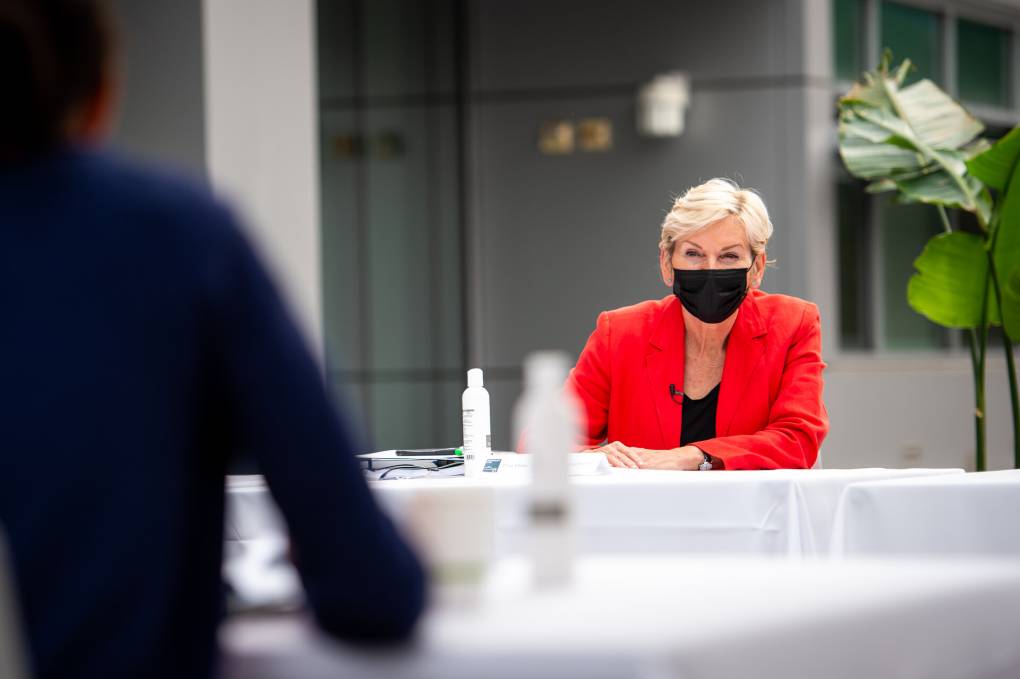
"caption": "U.S. Energy Secretary Jennifer Granholm at Lawrence Berkeley National Laboratory on Aug. 20, 2021.",
"description": null,
"title": "RS50918_022_Berkeley_LawrenceLaboratory_08202021-qut (1)",
"credit": "Beth LaBerge/KQED",
"status": "inherit",
"altTag": null,
"isLoading": false,
"fetchFailed": false
},
"science_1976443": {
"type": "attachments",
"id": "science_1976443",
"meta": {
"index": "attachments_1716263798",
"site": "science",
"id": "1976443",
"found": true
},
"parent": 1976442,
"imgSizes": {
"thumbnail": {
"file": "https://ww2.kqed.org/app/uploads/sites/35/2021/08/gettyimages-1234628402_wide-4ccb202ebd83dd584408aac997642253afb18df7-160x90.jpg",
"width": 160,
"mimeType": "image/jpeg",
"height": 90
},
"post-thumbnail": {
"file": "https://ww2.kqed.org/app/uploads/sites/35/2021/08/gettyimages-1234628402_wide-4ccb202ebd83dd584408aac997642253afb18df7-672x372.jpg",
"width": 672,
"mimeType": "image/jpeg",
"height": 372
},
"kqedFullSize": {
"file": "https://ww2.kqed.org/app/uploads/sites/35/2021/08/gettyimages-1234628402_wide-4ccb202ebd83dd584408aac997642253afb18df7.jpg",
"width": 1024,
"height": 576
},
"large": {
"file": "https://ww2.kqed.org/app/uploads/sites/35/2021/08/gettyimages-1234628402_wide-4ccb202ebd83dd584408aac997642253afb18df7-1020x574.jpg",
"width": 1020,
"mimeType": "image/jpeg",
"height": 574
},
"medium": {
"file": "https://ww2.kqed.org/app/uploads/sites/35/2021/08/gettyimages-1234628402_wide-4ccb202ebd83dd584408aac997642253afb18df7-800x450.jpg",
"width": 800,
"mimeType": "image/jpeg",
"height": 450
},
"medium_large": {
"file": "https://ww2.kqed.org/app/uploads/sites/35/2021/08/gettyimages-1234628402_wide-4ccb202ebd83dd584408aac997642253afb18df7-768x432.jpg",
"width": 768,
"mimeType": "image/jpeg",
"height": 432
}
},
"publishDate": 1629727769,
"modified": 1629728360,
"caption": "A nurse is handed a dose of the Pfizer COVID-19 vaccine before administering it to a college student during a City of Long Beach Public Health COVID-19 mobile vaccination clinic at the California State University Long Beach (CSULB) campus on August 11, 2021 in Long Beach, California. ",
"description": null,
"title": null,
"credit": "Patrick T. Fallon / AFP via Getty Images",
"status": "inherit",
"altTag": null,
"isLoading": false,
"fetchFailed": false
},
"science_1976430": {
"type": "attachments",
"id": "science_1976430",
"meta": {
"index": "attachments_1716263798",
"site": "science",
"id": "1976430",
"found": true
},
"parent": 1976429,
"imgSizes": {
"twentyfourteen-full-width": {
"file": "https://ww2.kqed.org/app/uploads/sites/35/2021/08/070221_GlennCounty_RB_10-1038x576.jpeg",
"width": 1038,
"mimeType": "image/jpeg",
"height": 576
},
"thumbnail": {
"file": "https://ww2.kqed.org/app/uploads/sites/35/2021/08/070221_GlennCounty_RB_10-160x113.jpeg",
"width": 160,
"mimeType": "image/jpeg",
"height": 113
},
"post-thumbnail": {
"file": "https://ww2.kqed.org/app/uploads/sites/35/2021/08/070221_GlennCounty_RB_10-672x372.jpeg",
"width": 672,
"mimeType": "image/jpeg",
"height": 372
},
"kqedFullSize": {
"file": "https://ww2.kqed.org/app/uploads/sites/35/2021/08/070221_GlennCounty_RB_10.jpeg",
"width": 2000,
"height": 1418
},
"large": {
"file": "https://ww2.kqed.org/app/uploads/sites/35/2021/08/070221_GlennCounty_RB_10-1020x723.jpeg",
"width": 1020,
"mimeType": "image/jpeg",
"height": 723
},
"1536x1536": {
"file": "https://ww2.kqed.org/app/uploads/sites/35/2021/08/070221_GlennCounty_RB_10-1536x1089.jpeg",
"width": 1536,
"mimeType": "image/jpeg",
"height": 1089
},
"full-width": {
"file": "https://ww2.kqed.org/app/uploads/sites/35/2021/08/070221_GlennCounty_RB_10-1920x1361.jpeg",
"width": 1920,
"mimeType": "image/jpeg",
"height": 1361
},
"medium": {
"file": "https://ww2.kqed.org/app/uploads/sites/35/2021/08/070221_GlennCounty_RB_10-800x567.jpeg",
"width": 800,
"mimeType": "image/jpeg",
"height": 567
},
"medium_large": {
"file": "https://ww2.kqed.org/app/uploads/sites/35/2021/08/070221_GlennCounty_RB_10-768x545.jpeg",
"width": 768,
"mimeType": "image/jpeg",
"height": 545
}
},
"publishDate": 1629479544,
"modified": 1629479571,
"caption": "Kelly O’Brien listens to her well hum as it fills with cool water after more than a month of living without water at her home on July 2, 2021. ",
"description": null,
"title": "070221_GlennCounty_RB_10",
"credit": " Rachel Becker/CalMatters",
"status": "inherit",
"altTag": null,
"isLoading": false,
"fetchFailed": false
},
"science_1976341": {
"type": "attachments",
"id": "science_1976341",
"meta": {
"index": "attachments_1716263798",
"site": "science",
"id": "1976341",
"found": true
},
"parent": 1976334,
"imgSizes": {
"twentyfourteen-full-width": {
"file": "https://ww2.kqed.org/app/uploads/sites/35/2021/08/nw-2021-07-28-wpick-4397_custom-ad2d2bdc89101b698499a75ee9316db3b3199812-1038x576.jpg",
"width": 1038,
"mimeType": "image/jpeg",
"height": 576
},
"thumbnail": {
"file": "https://ww2.kqed.org/app/uploads/sites/35/2021/08/nw-2021-07-28-wpick-4397_custom-ad2d2bdc89101b698499a75ee9316db3b3199812-160x128.jpg",
"width": 160,
"mimeType": "image/jpeg",
"height": 128
},
"post-thumbnail": {
"file": "https://ww2.kqed.org/app/uploads/sites/35/2021/08/nw-2021-07-28-wpick-4397_custom-ad2d2bdc89101b698499a75ee9316db3b3199812-672x372.jpg",
"width": 672,
"mimeType": "image/jpeg",
"height": 372
},
"kqedFullSize": {
"file": "https://ww2.kqed.org/app/uploads/sites/35/2021/08/nw-2021-07-28-wpick-4397_custom-ad2d2bdc89101b698499a75ee9316db3b3199812-scaled.jpg",
"width": 2560,
"height": 2048
},
"2048x2048": {
"file": "https://ww2.kqed.org/app/uploads/sites/35/2021/08/nw-2021-07-28-wpick-4397_custom-ad2d2bdc89101b698499a75ee9316db3b3199812-2048x1638.jpg",
"width": 2048,
"mimeType": "image/jpeg",
"height": 1638
},
"large": {
"file": "https://ww2.kqed.org/app/uploads/sites/35/2021/08/nw-2021-07-28-wpick-4397_custom-ad2d2bdc89101b698499a75ee9316db3b3199812-1020x816.jpg",
"width": 1020,
"mimeType": "image/jpeg",
"height": 816
},
"1536x1536": {
"file": "https://ww2.kqed.org/app/uploads/sites/35/2021/08/nw-2021-07-28-wpick-4397_custom-ad2d2bdc89101b698499a75ee9316db3b3199812-1536x1229.jpg",
"width": 1536,
"mimeType": "image/jpeg",
"height": 1229
},
"full-width": {
"file": "https://ww2.kqed.org/app/uploads/sites/35/2021/08/nw-2021-07-28-wpick-4397_custom-ad2d2bdc89101b698499a75ee9316db3b3199812-1920x1536.jpg",
"width": 1920,
"mimeType": "image/jpeg",
"height": 1536
},
"medium": {
"file": "https://ww2.kqed.org/app/uploads/sites/35/2021/08/nw-2021-07-28-wpick-4397_custom-ad2d2bdc89101b698499a75ee9316db3b3199812-800x640.jpg",
"width": 800,
"mimeType": "image/jpeg",
"height": 640
},
"medium_large": {
"file": "https://ww2.kqed.org/app/uploads/sites/35/2021/08/nw-2021-07-28-wpick-4397_custom-ad2d2bdc89101b698499a75ee9316db3b3199812-768x614.jpg",
"width": 768,
"mimeType": "image/jpeg",
"height": 614
}
},
"publishDate": 1629321687,
"modified": 1629432818,
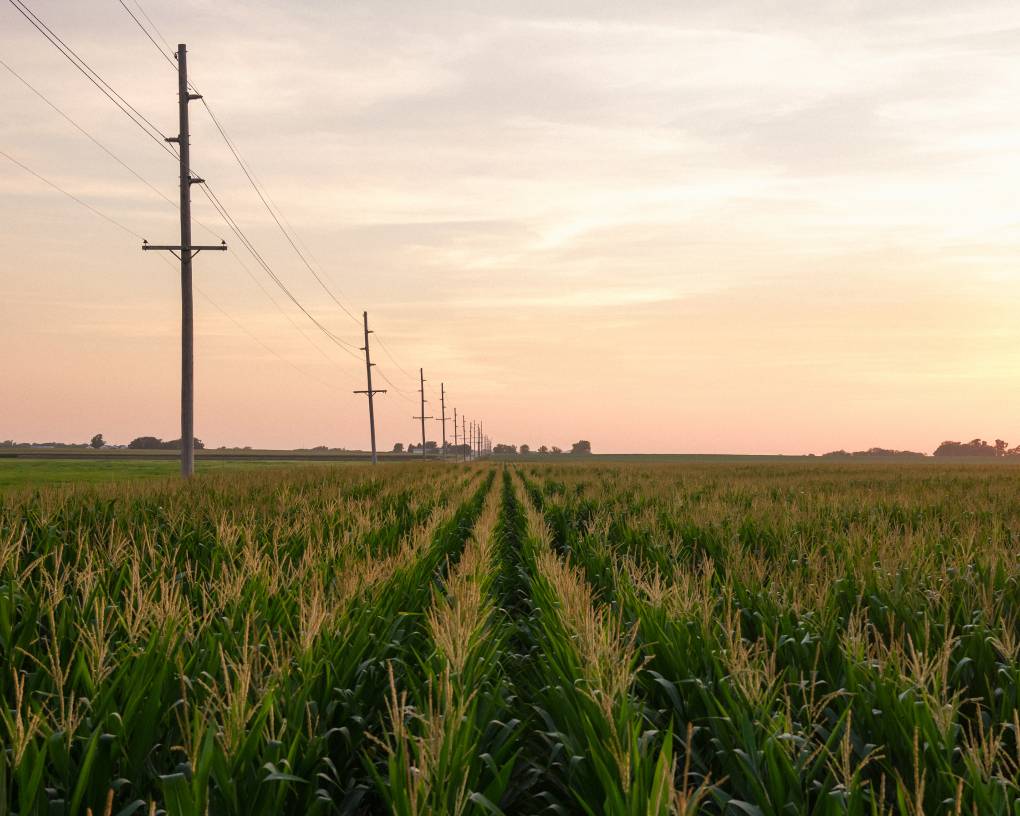
"caption": "Farmworker Cruz Urias Beltran, 52, died of heatstroke in a cornfield near Cairo, Neb., in July 2018. OSHA found that the \"moderate lifting and bending\" and \"pushing and pulling\" that Beltran had performed in the heat had contributed to his death.",
"description": null,
"title": "Cruz Urias Beltran collapsed because of heat-related illness while working in a cornfield near Grand Island, Neb., in 2018. He is one of at least 384 workers who died from environmental heat exposure in the U.S. in the last decade, according to an investigation by Columbia Journalism Investigations and NPR.",
"credit": "Walker Pickering/NPR",
"status": "inherit",
"altTag": "A large hazy sky spreads out over rows of corn. A row of electrical poles on the left side of the cornfield fades into the distance.",
"isLoading": false,
"fetchFailed": false
},
"science_1969276": {
"type": "attachments",
"id": "science_1969276",
"meta": {
"index": "attachments_1716263798",
"site": "science",
"id": "1969276",
"found": true
},
"parent": 1969271,
"imgSizes": {
"thumbnail": {
"file": "https://ww2.kqed.org/app/uploads/sites/35/2020/09/Image-9-4-20-at-1.32-PM-160x118.jpg",
"width": 160,
"mimeType": "image/jpeg",
"height": 118
},
"post-thumbnail": {
"file": "https://ww2.kqed.org/app/uploads/sites/35/2020/09/Image-9-4-20-at-1.32-PM-672x372.jpg",
"width": 672,
"mimeType": "image/jpeg",
"height": 372
},
"kqedFullSize": {
"file": "https://ww2.kqed.org/app/uploads/sites/35/2020/09/Image-9-4-20-at-1.32-PM.jpg",
"width": 759,
"height": 558
}
},
"publishDate": 1599251679,
"modified": 1629247503,
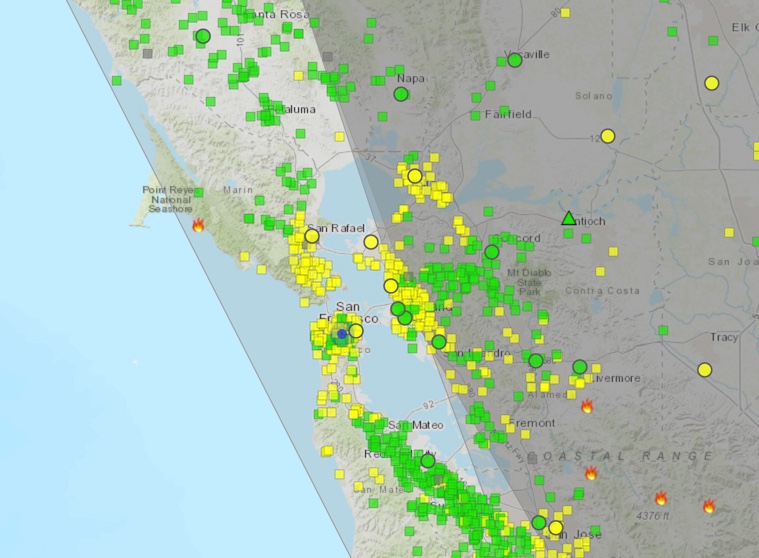
"caption": "A screenshot from AirNow's Fire and Smoke map.",
"description": null,
"title": "Image 9-4-20 at 1.32 PM",
"credit": null,
"status": "inherit",
"altTag": null,
"isLoading": false,
"fetchFailed": false
},
"science_1976215": {
"type": "attachments",
"id": "science_1976215",
"meta": {
"index": "attachments_1716263798",
"site": "science",
"id": "1976215",
"found": true
},
"parent": 1976213,
"imgSizes": {
"twentyfourteen-full-width": {
"file": "https://ww2.kqed.org/app/uploads/sites/35/2021/08/IMG_4468-1038x576.jpeg",
"width": 1038,
"mimeType": "image/jpeg",
"height": 576
},
"thumbnail": {
"file": "https://ww2.kqed.org/app/uploads/sites/35/2021/08/IMG_4468-160x120.jpeg",
"width": 160,
"mimeType": "image/jpeg",
"height": 120
},
"post-thumbnail": {
"file": "https://ww2.kqed.org/app/uploads/sites/35/2021/08/IMG_4468-672x372.jpeg",
"width": 672,
"mimeType": "image/jpeg",
"height": 372
},
"kqedFullSize": {
"file": "https://ww2.kqed.org/app/uploads/sites/35/2021/08/IMG_4468-scaled.jpeg",
"width": 2560,
"height": 1918
},
"2048x2048": {
"file": "https://ww2.kqed.org/app/uploads/sites/35/2021/08/IMG_4468-2048x1534.jpeg",
"width": 2048,
"mimeType": "image/jpeg",
"height": 1534
},
"large": {
"file": "https://ww2.kqed.org/app/uploads/sites/35/2021/08/IMG_4468-1020x764.jpeg",
"width": 1020,
"mimeType": "image/jpeg",
"height": 764
},
"1536x1536": {
"file": "https://ww2.kqed.org/app/uploads/sites/35/2021/08/IMG_4468-1536x1151.jpeg",
"width": 1536,
"mimeType": "image/jpeg",
"height": 1151
},
"full-width": {
"file": "https://ww2.kqed.org/app/uploads/sites/35/2021/08/IMG_4468-1920x1439.jpeg",
"width": 1920,
"mimeType": "image/jpeg",
"height": 1439
},
"medium": {
"file": "https://ww2.kqed.org/app/uploads/sites/35/2021/08/IMG_4468-800x599.jpeg",
"width": 800,
"mimeType": "image/jpeg",
"height": 599
},
"medium_large": {
"file": "https://ww2.kqed.org/app/uploads/sites/35/2021/08/IMG_4468-768x575.jpeg",
"width": 768,
"mimeType": "image/jpeg",
"height": 575
}
},
"publishDate": 1628639471,
"modified": 1628962391,
"caption": "Lauren Sanchez is Gov. Gavin Newsom's senior climate adviser. ",
"description": null,
"title": "Lauren Sanchez",
"credit": "Courtesy of Lauren Sanchez. ",
"status": "inherit",
"altTag": null,
"isLoading": false,
"fetchFailed": false
},
"science_1976299": {
"type": "attachments",
"id": "science_1976299",
"meta": {
"index": "attachments_1716263798",
"site": "science",
"id": "1976299",
"found": true
},
"parent": 1976295,
"imgSizes": {
"twentyfourteen-full-width": {
"file": "https://ww2.kqed.org/app/uploads/sites/35/2021/08/RS50621_GettyImages-1234628552-qut-1038x576.jpg",
"width": 1038,
"mimeType": "image/jpeg",
"height": 576
},
"thumbnail": {
"file": "https://ww2.kqed.org/app/uploads/sites/35/2021/08/RS50621_GettyImages-1234628552-qut-160x107.jpg",
"width": 160,
"mimeType": "image/jpeg",
"height": 107
},
"post-thumbnail": {
"file": "https://ww2.kqed.org/app/uploads/sites/35/2021/08/RS50621_GettyImages-1234628552-qut-672x372.jpg",
"width": 672,
"mimeType": "image/jpeg",
"height": 372
},
"kqedFullSize": {
"file": "https://ww2.kqed.org/app/uploads/sites/35/2021/08/RS50621_GettyImages-1234628552-qut.jpg",
"width": 1920,
"height": 1280
},
"large": {
"file": "https://ww2.kqed.org/app/uploads/sites/35/2021/08/RS50621_GettyImages-1234628552-qut-1020x680.jpg",
"width": 1020,
"mimeType": "image/jpeg",
"height": 680
},
"1536x1536": {
"file": "https://ww2.kqed.org/app/uploads/sites/35/2021/08/RS50621_GettyImages-1234628552-qut-1536x1024.jpg",
"width": 1536,
"mimeType": "image/jpeg",
"height": 1024
},
"medium": {
"file": "https://ww2.kqed.org/app/uploads/sites/35/2021/08/RS50621_GettyImages-1234628552-qut-800x533.jpg",
"width": 800,
"mimeType": "image/jpeg",
"height": 533
},
"medium_large": {
"file": "https://ww2.kqed.org/app/uploads/sites/35/2021/08/RS50621_GettyImages-1234628552-qut-768x512.jpg",
"width": 768,
"mimeType": "image/jpeg",
"height": 512
}
},
"publishDate": 1628875670,
"modified": 1628875709,
"caption": "A nurse administers a dose of the Pfizer COVID-19 vaccine to a college student during a City of Long Beach Public Health mobile vaccination clinic at the California State University Long Beach (CSULB) campus on August 11, 2021 in Long Beach, California. ",
"description": null,
"title": "US-HEALTH-VIRUS-EDUCATION-VACCINE-CALIFORNIA",
"credit": "PATRICK T. FALLON/AFP via Getty Images",
"status": "inherit",
"altTag": null,
"isLoading": false,
"fetchFailed": false
},
"science_1976052": {
"type": "attachments",
"id": "science_1976052",
"meta": {
"index": "attachments_1716263798",
"site": "science",
"id": "1976052",
"found": true
},
"parent": 1976045,
"imgSizes": {
"twentyfourteen-full-width": {
"file": "https://ww2.kqed.org/app/uploads/sites/35/2021/07/Kelp-11-1038x576.jpg",
"width": 1038,
"mimeType": "image/jpeg",
"height": 576
},
"thumbnail": {
"file": "https://ww2.kqed.org/app/uploads/sites/35/2021/07/Kelp-11-160x107.jpg",
"width": 160,
"mimeType": "image/jpeg",
"height": 107
},
"post-thumbnail": {
"file": "https://ww2.kqed.org/app/uploads/sites/35/2021/07/Kelp-11-672x372.jpg",
"width": 672,
"mimeType": "image/jpeg",
"height": 372
},
"kqedFullSize": {
"file": "https://ww2.kqed.org/app/uploads/sites/35/2021/07/Kelp-11-scaled.jpg",
"width": 2560,
"height": 1711
},
"2048x2048": {
"file": "https://ww2.kqed.org/app/uploads/sites/35/2021/07/Kelp-11-2048x1369.jpg",
"width": 2048,
"mimeType": "image/jpeg",
"height": 1369
},
"large": {
"file": "https://ww2.kqed.org/app/uploads/sites/35/2021/07/Kelp-11-1020x682.jpg",
"width": 1020,
"mimeType": "image/jpeg",
"height": 682
},
"1536x1536": {
"file": "https://ww2.kqed.org/app/uploads/sites/35/2021/07/Kelp-11-1536x1026.jpg",
"width": 1536,
"mimeType": "image/jpeg",
"height": 1026
},
"full-width": {
"file": "https://ww2.kqed.org/app/uploads/sites/35/2021/07/Kelp-11-1920x1283.jpg",
"width": 1920,
"mimeType": "image/jpeg",
"height": 1283
},
"medium": {
"file": "https://ww2.kqed.org/app/uploads/sites/35/2021/07/Kelp-11-800x535.jpg",
"width": 800,
"mimeType": "image/jpeg",
"height": 535
},
"medium_large": {
"file": "https://ww2.kqed.org/app/uploads/sites/35/2021/07/Kelp-11-768x513.jpg",
"width": 768,
"mimeType": "image/jpeg",
"height": 513
}
},
"publishDate": 1627673279,
"modified": 1627673311,
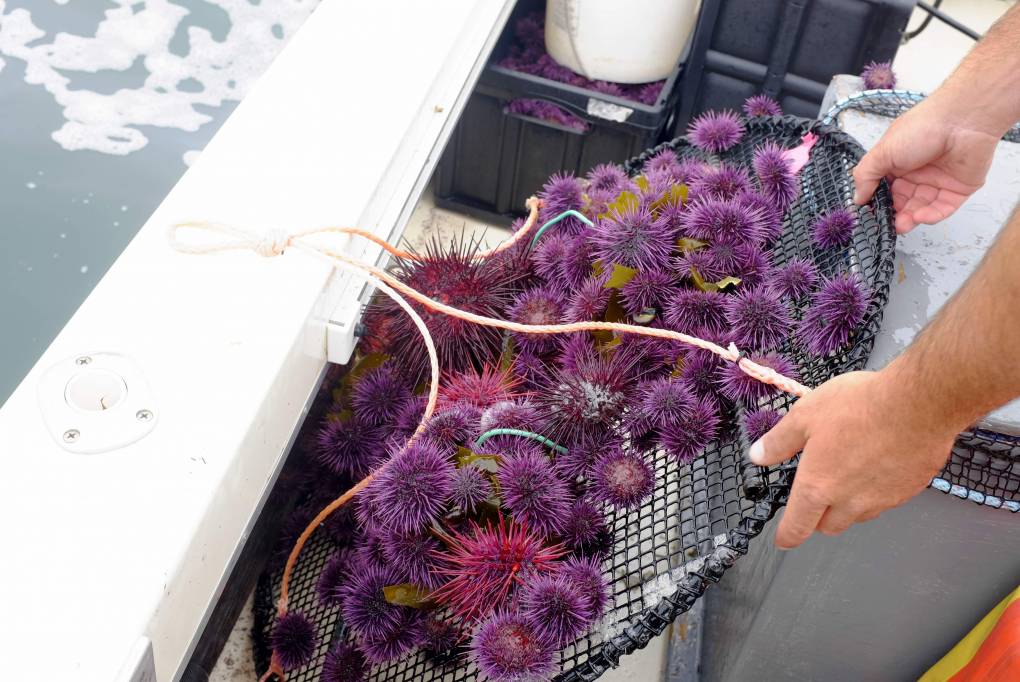
"caption": "Urchin trapper Grant Downie unloads a mound of sea urchins onto his fishing boat in Mendocino County's Caspar Bay.",
"description": null,
"title": "Kelp 11",
"credit": "Peter Arcuni/KQED",
"status": "inherit",
"altTag": null,
"isLoading": false,
"fetchFailed": false
},
"science_1976223": {
"type": "attachments",
"id": "science_1976223",
"meta": {
"index": "attachments_1716263798",
"site": "science",
"id": "1976223",
"found": true
},
"parent": 1976218,
"imgSizes": {
"twentyfourteen-full-width": {
"file": "https://ww2.kqed.org/app/uploads/sites/35/2021/08/RS50614_GettyImages-1234583368-qut-1038x576.jpg",
"width": 1038,
"mimeType": "image/jpeg",
"height": 576
},
"thumbnail": {
"file": "https://ww2.kqed.org/app/uploads/sites/35/2021/08/RS50614_GettyImages-1234583368-qut-160x107.jpg",
"width": 160,
"mimeType": "image/jpeg",
"height": 107
},
"post-thumbnail": {
"file": "https://ww2.kqed.org/app/uploads/sites/35/2021/08/RS50614_GettyImages-1234583368-qut-672x372.jpg",
"width": 672,
"mimeType": "image/jpeg",
"height": 372
},
"kqedFullSize": {
"file": "https://ww2.kqed.org/app/uploads/sites/35/2021/08/RS50614_GettyImages-1234583368-qut.jpg",
"width": 1920,
"height": 1280
},
"large": {
"file": "https://ww2.kqed.org/app/uploads/sites/35/2021/08/RS50614_GettyImages-1234583368-qut-1020x680.jpg",
"width": 1020,
"mimeType": "image/jpeg",
"height": 680
},
"1536x1536": {
"file": "https://ww2.kqed.org/app/uploads/sites/35/2021/08/RS50614_GettyImages-1234583368-qut-1536x1024.jpg",
"width": 1536,
"mimeType": "image/jpeg",
"height": 1024
},
"medium": {
"file": "https://ww2.kqed.org/app/uploads/sites/35/2021/08/RS50614_GettyImages-1234583368-qut-800x533.jpg",
"width": 800,
"mimeType": "image/jpeg",
"height": 533
},
"medium_large": {
"file": "https://ww2.kqed.org/app/uploads/sites/35/2021/08/RS50614_GettyImages-1234583368-qut-768x512.jpg",
"width": 768,
"mimeType": "image/jpeg",
"height": 512
}
},
"publishDate": 1628701053,
"modified": 1628701080,
"caption": "The ruins of buildings situated along Highway 89 are seen on August 8, 2021 in Greenville, California. ",
"description": null,
"title": "Dixie Fire Continues To Burn Through Northern California Forcing Evacuations",
"credit": "David Odisho/Getty Images",
"status": "inherit",
"altTag": null,
"isLoading": false,
"fetchFailed": false
},
"science_1976196": {
"type": "attachments",
"id": "science_1976196",
"meta": {
"index": "attachments_1716263798",
"site": "science",
"id": "1976196",
"found": true
},
"parent": 1976195,
"imgSizes": {
"twentyfourteen-full-width": {
"file": "https://ww2.kqed.org/app/uploads/sites/35/2021/08/burn-lassen-park-24e202f91f1d3313e9d7f69728b07bef4d2b8e70-1038x576.jpg",
"width": 1038,
"mimeType": "image/jpeg",
"height": 576
},
"thumbnail": {
"file": "https://ww2.kqed.org/app/uploads/sites/35/2021/08/burn-lassen-park-24e202f91f1d3313e9d7f69728b07bef4d2b8e70-160x120.jpg",
"width": 160,
"mimeType": "image/jpeg",
"height": 120
},
"post-thumbnail": {
"file": "https://ww2.kqed.org/app/uploads/sites/35/2021/08/burn-lassen-park-24e202f91f1d3313e9d7f69728b07bef4d2b8e70-672x372.jpg",
"width": 672,
"mimeType": "image/jpeg",
"height": 372
},
"kqedFullSize": {
"file": "https://ww2.kqed.org/app/uploads/sites/35/2021/08/burn-lassen-park-24e202f91f1d3313e9d7f69728b07bef4d2b8e70.jpg",
"width": 1771,
"height": 1328
},
"large": {
"file": "https://ww2.kqed.org/app/uploads/sites/35/2021/08/burn-lassen-park-24e202f91f1d3313e9d7f69728b07bef4d2b8e70-1020x765.jpg",
"width": 1020,
"mimeType": "image/jpeg",
"height": 765
},
"1536x1536": {
"file": "https://ww2.kqed.org/app/uploads/sites/35/2021/08/burn-lassen-park-24e202f91f1d3313e9d7f69728b07bef4d2b8e70-1536x1152.jpg",
"width": 1536,
"mimeType": "image/jpeg",
"height": 1152
},
"medium": {
"file": "https://ww2.kqed.org/app/uploads/sites/35/2021/08/burn-lassen-park-24e202f91f1d3313e9d7f69728b07bef4d2b8e70-800x600.jpg",
"width": 800,
"mimeType": "image/jpeg",
"height": 600
},
"medium_large": {
"file": "https://ww2.kqed.org/app/uploads/sites/35/2021/08/burn-lassen-park-24e202f91f1d3313e9d7f69728b07bef4d2b8e70-768x576.jpg",
"width": 768,
"mimeType": "image/jpeg",
"height": 576
}
},
"publishDate": 1628614973,
"modified": 1628615492,
"caption": "Controlled burns, like this one in Lassen Volcanic National Park, reduce the risk of extreme fires by clearing flammable brush.",
"description": null,
"title": "burn-lassen-park-24e202f91f1d3313e9d7f69728b07bef4d2b8e70",
"credit": "National Park Service",
"status": "inherit",
"altTag": null,
"isLoading": false,
"fetchFailed": false
},
"science_1976086": {
"type": "attachments",
"id": "science_1976086",
"meta": {
"index": "attachments_1716263798",
"site": "science",
"id": "1976086",
"found": true
},
"parent": 1976046,
"imgSizes": {
"twentyfourteen-full-width": {
"file": "https://ww2.kqed.org/app/uploads/sites/35/2021/08/DL813_This_Bee_Builds_Sandcastles_at_the_Beach_KQED-1038x576.jpg",
"width": 1038,
"mimeType": "image/jpeg",
"height": 576
},
"thumbnail": {
"file": "https://ww2.kqed.org/app/uploads/sites/35/2021/08/DL813_This_Bee_Builds_Sandcastles_at_the_Beach_KQED-160x90.jpg",
"width": 160,
"mimeType": "image/jpeg",
"height": 90
},
"post-thumbnail": {
"file": "https://ww2.kqed.org/app/uploads/sites/35/2021/08/DL813_This_Bee_Builds_Sandcastles_at_the_Beach_KQED-672x372.jpg",
"width": 672,
"mimeType": "image/jpeg",
"height": 372
},
"kqedFullSize": {
"file": "https://ww2.kqed.org/app/uploads/sites/35/2021/08/DL813_This_Bee_Builds_Sandcastles_at_the_Beach_KQED.jpg",
"width": 1920,
"height": 1080
},
"large": {
"file": "https://ww2.kqed.org/app/uploads/sites/35/2021/08/DL813_This_Bee_Builds_Sandcastles_at_the_Beach_KQED-1020x574.jpg",
"width": 1020,
"mimeType": "image/jpeg",
"height": 574
},
"1536x1536": {
"file": "https://ww2.kqed.org/app/uploads/sites/35/2021/08/DL813_This_Bee_Builds_Sandcastles_at_the_Beach_KQED-1536x864.jpg",
"width": 1536,
"mimeType": "image/jpeg",
"height": 864
},
"medium": {
"file": "https://ww2.kqed.org/app/uploads/sites/35/2021/08/DL813_This_Bee_Builds_Sandcastles_at_the_Beach_KQED-800x450.jpg",
"width": 800,
"mimeType": "image/jpeg",
"height": 450
},
"medium_large": {
"file": "https://ww2.kqed.org/app/uploads/sites/35/2021/08/DL813_This_Bee_Builds_Sandcastles_at_the_Beach_KQED-768x432.jpg",
"width": 768,
"mimeType": "image/jpeg",
"height": 432
}
},
"publishDate": 1627866967,
"modified": 1627867008,
"caption": null,
"description": "fuzzy black and yellow bee face, emerging from sandy tunnel opening. ",
"title": "DL813_This_Bee_Builds_Sandcastles_at_the_Beach_KQED",
"credit": null,
"status": "inherit",
"altTag": "fuzzy black and yellow bee face, emerging from sandy tunnel opening.",
"isLoading": false,
"fetchFailed": false
},
"science_1976185": {
"type": "attachments",
"id": "science_1976185",
"meta": {
"index": "attachments_1716263798",
"site": "science",
"id": "1976185",
"found": true
},
"parent": 1976184,
"imgSizes": {
"twentyfourteen-full-width": {
"file": "https://ww2.kqed.org/app/uploads/sites/35/2021/08/ap21218673806416-4d14f1b05f5271dc900aca2e97643ca80ccb3db5-1038x576.jpg",
"width": 1038,
"mimeType": "image/jpeg",
"height": 576
},
"thumbnail": {
"file": "https://ww2.kqed.org/app/uploads/sites/35/2021/08/ap21218673806416-4d14f1b05f5271dc900aca2e97643ca80ccb3db5-160x120.jpg",
"width": 160,
"mimeType": "image/jpeg",
"height": 120
},
"post-thumbnail": {
"file": "https://ww2.kqed.org/app/uploads/sites/35/2021/08/ap21218673806416-4d14f1b05f5271dc900aca2e97643ca80ccb3db5-672x372.jpg",
"width": 672,
"mimeType": "image/jpeg",
"height": 372
},
"kqedFullSize": {
"file": "https://ww2.kqed.org/app/uploads/sites/35/2021/08/ap21218673806416-4d14f1b05f5271dc900aca2e97643ca80ccb3db5-scaled.jpg",
"width": 2560,
"height": 1920
},
"2048x2048": {
"file": "https://ww2.kqed.org/app/uploads/sites/35/2021/08/ap21218673806416-4d14f1b05f5271dc900aca2e97643ca80ccb3db5-2048x1536.jpg",
"width": 2048,
"mimeType": "image/jpeg",
"height": 1536
},
"large": {
"file": "https://ww2.kqed.org/app/uploads/sites/35/2021/08/ap21218673806416-4d14f1b05f5271dc900aca2e97643ca80ccb3db5-1020x765.jpg",
"width": 1020,
"mimeType": "image/jpeg",
"height": 765
},
"1536x1536": {
"file": "https://ww2.kqed.org/app/uploads/sites/35/2021/08/ap21218673806416-4d14f1b05f5271dc900aca2e97643ca80ccb3db5-1536x1152.jpg",
"width": 1536,
"mimeType": "image/jpeg",
"height": 1152
},
"full-width": {
"file": "https://ww2.kqed.org/app/uploads/sites/35/2021/08/ap21218673806416-4d14f1b05f5271dc900aca2e97643ca80ccb3db5-1920x1440.jpg",
"width": 1920,
"mimeType": "image/jpeg",
"height": 1440
},
"medium": {
"file": "https://ww2.kqed.org/app/uploads/sites/35/2021/08/ap21218673806416-4d14f1b05f5271dc900aca2e97643ca80ccb3db5-800x600.jpg",
"width": 800,
"mimeType": "image/jpeg",
"height": 600
},
"medium_large": {
"file": "https://ww2.kqed.org/app/uploads/sites/35/2021/08/ap21218673806416-4d14f1b05f5271dc900aca2e97643ca80ccb3db5-768x576.jpg",
"width": 768,
"mimeType": "image/jpeg",
"height": 576
}
},
"publishDate": 1628517553,
"modified": 1628517800,
"caption": "People evacuate from a wildfire north of Athens, Greece, on Friday. A climate-driven heat wave helped create conditions for the fire to burn out of control. Scientists warn that humans are running out of time to curb greenhouse gas emissions and avoid catastrophic global warming.",
"description": null,
"title": "ap21218673806416-4d14f1b05f5271dc900aca2e97643ca80ccb3db5",
"credit": "Thodoris Nikolaou/AP via NPR",
"status": "inherit",
"altTag": null,
"isLoading": false,
"fetchFailed": false
}
},
"audioPlayerReducer": {
"postId": "stream_live",
"isPaused": true,
"isPlaying": false,
"pfsActive": false,
"pledgeModalIsOpen": true,
"playerDrawerIsOpen": false,
"liveAudioPlayStartedAt": 0,
"liveAudioPlayContext": ""
},
"authorsReducer": {
"byline_science_1976442": {
"type": "authors",
"id": "byline_science_1976442",
"meta": {
"override": true
},
"slug": "byline_science_1976442",
"name": "Scott Hensley \u003cbr />NPR\u003cbr>",
"isLoading": false
},
"byline_science_1976429": {
"type": "authors",
"id": "byline_science_1976429",
"meta": {
"override": true
},
"slug": "byline_science_1976429",
"name": "Rachael Becker \u003cbr />CalMatters\u003cbr>",
"isLoading": false
},
"byline_science_1976334": {
"type": "authors",
"id": "byline_science_1976334",
"meta": {
"override": true
},
"slug": "byline_science_1976334",
"name": "Julia Shipley, Brian Edwards, David Nickerson \u003cbr /> Robert Benincasa, Stella M. Chávez, and Cheryl Thompson\u003c/br>NPR",
"isLoading": false
},
"byline_science_1976295": {
"type": "authors",
"id": "byline_science_1976295",
"meta": {
"override": true
},
"slug": "byline_science_1976295",
"name": " Helen Branswell \u003cbr />STAT\u003cbr>",
"isLoading": false
},
"byline_science_1976218": {
"type": "authors",
"id": "byline_science_1976218",
"meta": {
"override": true
},
"slug": "byline_science_1976218",
"name": "Nathan Rott, Annie Ropeik, and Molly Samuel \u003cbr />NPR\u003cbr>",
"isLoading": false
},
"byline_science_1976195": {
"type": "authors",
"id": "byline_science_1976195",
"meta": {
"override": true
},
"slug": "byline_science_1976195",
"name": "Lauren Sommer \u003cbr />NPR\u003cbr>",
"isLoading": false
},
"byline_science_1976184": {
"type": "authors",
"id": "byline_science_1976184",
"meta": {
"override": true
},
"slug": "byline_science_1976184",
"name": "Rebecca Hersher \u003cbr />NPR\u003cbr>",
"isLoading": false
},
"gabriela-quiros": {
"type": "authors",
"id": "6186",
"meta": {
"index": "authors_1716337520",
"id": "6186",
"found": true
},
"name": "Gabriela Quirós",
"firstName": "Gabriela",
"lastName": "Quirós",
"slug": "gabriela-quiros",
"email": "gquiros@kqed.org",
"display_author_email": false,
"staff_mastheads": [],
"title": "Supervising Producer",
"bio": "Gabriela Quirós is the \u003cstrong>supervising producer for KQED's web science video series \u003ca href=\"https://www.kqed.org/deeplook\">Deep Look\u003c/a>\u003c/strong>. She joined KQED as a TV producer when its science series QUEST started in 2006 and has covered everything from Alzheimer’s to bee die-offs to dark energy.\r\n\r\nShe won a 2022 AAAS Kavli Science Journalism Award with a team of her Deep Look colleagues. She has won six regional Emmys as a video producer and has shared eight more as the coordinating producer of Deep Look. The episode she produced about \u003ca href=\"https://www.kqed.org/science/728086/how-mosquitoes-use-six-needles-to-suck-your-blood\">How Mosquitoes Use Six Needles to Suck Your Blood\u003c/a> won a Webby \"People's Voice\" award. She has also earned awards from the Jackson Hole Wildlife Film Festival, the Society of Professional Journalists and the Society of Environmental Journalists.\r\n\r\nHer videos for KQED have also aired on NOVA scienceNOW and the PBS NewsHour, and appeared on NPR.org.\r\n\r\nAs an independent filmmaker, she produced and directed the hour-long documentary \u003ca href=\"http://lpbp.org/beautiful-sin-qa-with-producer-gabriela-quiros/\">\u003cem>Beautiful Sin\u003c/em>\u003c/a>, about the surprising story of how Costa Rica became the only country in the world to outlaw in vitro fertilization. The film aired in 2015 on public television stations throughout the U.S., and in Costa Rica.\r\n\r\nShe started her journalism career as a newspaper reporter in Costa Rica, where she grew up. She won the National Science Journalism Award there for a series of articles about organic agriculture, and developed a life-long interest in health reporting. She moved to the Bay Area in 1996 to study documentary filmmaking at the University of California, Berkeley, where she received master’s degrees in journalism and Latin American studies.",
"avatar": "https://secure.gravatar.com/avatar/6d82c20152affd1b434c31a904c40809?s=600&d=blank&r=g",
"twitter": "gabrielaquirosr",
"facebook": null,
"instagram": null,
"linkedin": null,
"sites": [
{
"site": "science",
"roles": []
},
{
"site": "quest",
"roles": [
"ef_view_calendar",
"ef_view_story_budget"
]
}
],
"headData": {
"title": "Gabriela Quirós | KQED",
"description": "Supervising Producer",
"ogImgSrc": "https://secure.gravatar.com/avatar/6d82c20152affd1b434c31a904c40809?s=600&d=blank&r=g",
"twImgSrc": "https://secure.gravatar.com/avatar/6d82c20152affd1b434c31a904c40809?s=600&d=blank&r=g"
},
"isLoading": false,
"link": "/author/gabriela-quiros"
},
"parcuni": {
"type": "authors",
"id": "11368",
"meta": {
"index": "authors_1716337520",
"id": "11368",
"found": true
},
"name": "Peter Arcuni",
"firstName": "Peter",
"lastName": "Arcuni",
"slug": "parcuni",
"email": "parcuni@KQED.org",
"display_author_email": false,
"staff_mastheads": [
"science"
],
"title": "Reporter",
"bio": "Peter reports radio and online stories for \u003cem>KQED Science\u003c/em>. His work has also appeared on the \u003cem>The California Report\u003c/em> morning show and \u003cem>KQED News\u003c/em>. His production credits include \u003cem>The California Report, The California Report Magazine\u003c/em> and KQED's local news podcast \u003cem>The Bay\u003c/em>. Other credits include NPR's \u003cem>All Things Considered\u003c/em>, WNYC's \u003cem>Science Friday\u003c/em>, WBUR's \u003cem>Here & Now\u003c/em>, WIRED and SFGate. Peter graduated from Brown University and earned a master's degree in journalism from Stanford. He's covered everything from homelessness to wildfires, health, the environment, arts and Thanksgiving in San Quentin prison. In other lives, he played rock n roll music and studied neuroscience. You can email him at: parcuni@kqed.org",
"avatar": "https://secure.gravatar.com/avatar/d5032f6f27199d478af34ad2e1d98732?s=600&d=blank&r=g",
"twitter": "peterarcuni",
"facebook": null,
"instagram": null,
"linkedin": null,
"sites": [
{
"site": "news",
"roles": [
"editor"
]
},
{
"site": "science",
"roles": [
"editor"
]
}
],
"headData": {
"title": "Peter Arcuni | KQED",
"description": "Reporter",
"ogImgSrc": "https://secure.gravatar.com/avatar/d5032f6f27199d478af34ad2e1d98732?s=600&d=blank&r=g",
"twImgSrc": "https://secure.gravatar.com/avatar/d5032f6f27199d478af34ad2e1d98732?s=600&d=blank&r=g"
},
"isLoading": false,
"link": "/author/parcuni"
},
"kevinstark": {
"type": "authors",
"id": "11608",
"meta": {
"index": "authors_1716337520",
"id": "11608",
"found": true
},
"name": "Kevin Stark",
"firstName": "Kevin",
"lastName": "Stark",
"slug": "kevinstark",
"email": "kstark@kqed.org",
"display_author_email": true,
"staff_mastheads": [
"science"
],
"title": "Senior Editor",
"bio": "Kevin is a senior editor for KQED Science, managing the station's health and climate desks. His journalism career began in the Pacific Northwest, and he later became a lead reporter for the San Francisco Public Press. His work has appeared in Pacific Standard magazine, the Energy News Network, the Center for Investigative Reporting's Reveal and WBEZ in Chicago. Kevin joined KQED in 2019, and has covered issues related to energy, wildfire, climate change and the environment.",
"avatar": "https://secure.gravatar.com/avatar/365aaa4b597d3a8374f67504ff0facd323d7906e8eb4be0a7efd2427408e802c?s=600&d=blank&r=g",
"twitter": "starkkev",
"bluesky": null,
"facebook": null,
"instagram": null,
"linkedin": null,
"sites": [
{
"site": "",
"roles": [
"editor"
]
},
{
"site": "news",
"roles": [
"editor"
]
},
{
"site": "science",
"roles": [
"administrator"
]
}
],
"headData": {
"title": "Kevin Stark | KQED",
"description": "Senior Editor",
"ogImgSrc": "https://secure.gravatar.com/avatar/365aaa4b597d3a8374f67504ff0facd323d7906e8eb4be0a7efd2427408e802c?s=600&d=blank&r=g",
"twImgSrc": "https://secure.gravatar.com/avatar/365aaa4b597d3a8374f67504ff0facd323d7906e8eb4be0a7efd2427408e802c?s=600&d=blank&r=g"
},
"isLoading": false,
"link": "/author/kevinstark"
},
"eromero": {
"type": "authors",
"id": "11746",
"meta": {
"index": "authors_1716337520",
"id": "11746",
"found": true
},
"name": "Ezra David Romero",
"firstName": "Ezra David",
"lastName": "Romero",
"slug": "eromero",
"email": "eromero@kqed.org",
"display_author_email": true,
"staff_mastheads": [
"news",
"science"
],
"title": "Climate Reporter",
"bio": "Ezra David Romero is a climate reporter for KQED News. He covers the absence and excess of water in the Bay Area — think sea level rise, flooding and drought. For nearly a decade he’s covered how warming temperatures are altering the lives of Californians. He’s reported on farmers worried their pistachio trees aren’t getting enough sleep, families desperate for water, scientists studying dying giant sequoias, and alongside firefighters containing wildfires. His work has appeared on local stations across California and nationally on public radio shows like Morning Edition, Here and Now, All Things Considered and Science Friday. ",
"avatar": "https://secure.gravatar.com/avatar/c76404d287c10ed40224227551ac36e24352c7306f106632caf6fead76f8801f?s=600&d=blank&r=g",
"twitter": "ezraromero",
"bluesky": null,
"facebook": null,
"instagram": null,
"linkedin": null,
"sites": [
{
"site": "arts",
"roles": [
"editor"
]
},
{
"site": "news",
"roles": [
"editor"
]
},
{
"site": "science",
"roles": [
"editor"
]
},
{
"site": "liveblog",
"roles": [
"author"
]
}
],
"headData": {
"title": "Ezra David Romero | KQED",
"description": "Climate Reporter",
"ogImgSrc": "https://secure.gravatar.com/avatar/c76404d287c10ed40224227551ac36e24352c7306f106632caf6fead76f8801f?s=600&d=blank&r=g",
"twImgSrc": "https://secure.gravatar.com/avatar/c76404d287c10ed40224227551ac36e24352c7306f106632caf6fead76f8801f?s=600&d=blank&r=g"
},
"isLoading": false,
"link": "/author/eromero"
}
},
"pagesReducer": {
"science_category_news": {
"type": "terms",
"id": "science_40",
"meta": {
"index": "terms_1716263798",
"site": "science",
"id": "40",
"score": 10.813501
},
"featImg": null,
"name": "News",
"description": null,
"taxonomy": "category",
"headData": {
"twImgId": null,
"twTitle": null,
"ogTitle": null,
"ogImgId": null,
"twDescription": null,
"description": null,
"title": "News Archives | KQED Science",
"ogDescription": null
},
"ttid": 42,
"slug": "news",
"isLoading": false,
"title": "News",
"pageMeta": {
"site": "science",
"WpPageTemplate": "page-topic-editorial",
"currentPage": 70
},
"blocks": [
{
"blockName": "kqed/post-list",
"attrs": {
"layout": "cardArticle2",
"query": "posts/science?category=news",
"seeMore": false,
"paginated": true,
"page": 70
}
},
{
"blockName": "kqed/ad"
}
]
}
},
"pfsSessionReducer": {},
"postsReducer": {
"stream_live": {
"type": "live",
"id": "stream_live",
"audioUrl": "https://streams.kqed.org/kqedradio",
"title": "Live Stream",
"excerpt": "Live Stream information currently unavailable.",
"link": "/radio",
"featImg": "",
"label": {
"name": "KQED Live",
"link": "/"
}
},
"stream_kqedNewscast": {
"type": "posts",
"id": "stream_kqedNewscast",
"audioUrl": "https://www.kqed.org/.stream/anon/radio/RDnews/newscast.mp3?_=1",
"title": "KQED Newscast",
"featImg": "",
"label": {
"name": "88.5 FM",
"link": "/"
}
},
"science_1976451": {
"type": "posts",
"id": "science_1976451",
"meta": {
"index": "posts_1716263798",
"site": "science",
"id": "1976451",
"score": null,
"sort": [
1629810043000
]
},
"parent": 0,
"labelTerm": {},
"blocks": [],
"publishDate": 1629810043,
"format": "standard",
"title": "In Berkeley Visit, U.S. Energy Secretary Granholm Says U.S. Must ‘Act With Urgency’ to Reduce Planet-Warming Emissions",
"headTitle": "In Berkeley Visit, U.S. Energy Secretary Granholm Says U.S. Must ‘Act With Urgency’ to Reduce Planet-Warming Emissions | KQED",
"content": "\u003cp>In her first official visit as the nation’s top energy official, U.S. Energy Secretary Jennifer Granholm returned to Berkeley last week to promote the Biden administration’s clean energy agenda.\u003c/p>\n\u003cp>Granholm, a UC Berkeley graduate and former scholar at the Goldman School of Public Policy, on Friday reviewed desalination and battery storage technology innovations at Lawrence Berkeley National Laboratory (Berkeley Lab), where she once worked as a project scientist.\u003c/p>\n\u003cp>“This lab is doing amazing research on some of the biggest problems facing California,” she said. “There’s research that they’re doing here that is directly applicable to people’s lives. We want to take these solutions to scale.”\u003c/p>\n\u003cp>In a subsequent interview with KQED, Granholm said the U.S. needs to “act with urgency” to reduce its massive consumption of fossil fuels that produce planet-warming gas emissions, sparking more frequent extreme weather events, like the devastating wildfires now burning across California and throughout the West.\u003c/p>\n\u003cp>Her visit, which included a tour of several solar-powered homes in Berkeley, also comes on the heels of the latest climate assessment from the U.N.’s Intergovernmental Panel on Climate Change (IPCC), \u003ca href=\"https://www.kqed.org/science/1976184/a-major-report-warns-climate-change-is-accelerating-and-humans-must-cut-emissions-now\" target=\"_blank\" rel=\"noopener noreferrer\">a major report \u003c/a>that details the dangerously accelerating pace of climate change and underscores the urgent need for humans to dramatically reduce emissions.\u003c/p>\n\u003cp>[ad fullwidth]\u003c/p>\n\u003cp>“The West is on fire, our hair should be on fire,” Granholm said. “If this [report] isn’t an exclamation point, if this isn’t a flashing code red on the fact that we have to act with urgency, I don’t know what is.”\u003c/p>\n\u003cp>A banner takeaway from the report, she noted: We still have time to stave off catastrophic warming this century. And doing so, she said, requires major infrastructure upgrades.\u003c/p>\n\u003cp>“We have got to get clean energy technology on our transmission grid,” Granholm said.\u003c/p>\n\u003cfigure id=\"attachment_1976455\" class=\"wp-caption aligncenter\" style=\"max-width: 1920px\">\u003cimg loading=\"lazy\" decoding=\"async\" class=\"wp-image-1976455 size-full\" src=\"https://ww2.kqed.org/app/uploads/sites/35/2021/08/RS50926_030_Berkeley_LawrenceLaboratory_08202021-qut.jpg\" alt=\"\" width=\"1920\" height=\"1278\" srcset=\"https://cdn.kqed.org/wp-content/uploads/sites/35/2021/08/RS50926_030_Berkeley_LawrenceLaboratory_08202021-qut.jpg 1920w, https://cdn.kqed.org/wp-content/uploads/sites/35/2021/08/RS50926_030_Berkeley_LawrenceLaboratory_08202021-qut-800x533.jpg 800w, https://cdn.kqed.org/wp-content/uploads/sites/35/2021/08/RS50926_030_Berkeley_LawrenceLaboratory_08202021-qut-1020x679.jpg 1020w, https://cdn.kqed.org/wp-content/uploads/sites/35/2021/08/RS50926_030_Berkeley_LawrenceLaboratory_08202021-qut-160x107.jpg 160w, https://cdn.kqed.org/wp-content/uploads/sites/35/2021/08/RS50926_030_Berkeley_LawrenceLaboratory_08202021-qut-768x511.jpg 768w, https://cdn.kqed.org/wp-content/uploads/sites/35/2021/08/RS50926_030_Berkeley_LawrenceLaboratory_08202021-qut-1536x1022.jpg 1536w\" sizes=\"(max-width: 1920px) 100vw, 1920px\">\u003cfigcaption class=\"wp-caption-text\">U.S. Energy Secretary Jennifer Granholm (third from right) and Rep. Barbara Lee, D-Oakland (third from left), speak with scientists at Lawrence Berkeley National Laboratory on Aug. 20, 2022. \u003ccite>(Beth LaBerge/KQED)\u003c/cite>\u003c/figcaption>\u003c/figure>\n\u003cp>Residential solar, she added, is crucial to meeting the Biden administration’s goal of 100% clean electricity by 2035.\u003c/p>\n\u003cp>“Solar is part of the lowest hanging fruit of how we’re going to deploy the number of gigawatts that the United States needs,” said Granholm, who visited California less than two weeks after the U.S. Senate passed a \u003ca href=\"https://www.npr.org/2021/08/10/1026081880/senate-passes-bipartisan-infrastructure-bill\">$1.2 trillion bipartisan infrastructure package\u003c/a> that would send billions of dollars to the state for highway, bridges, and public transportation projects.\u003c/p>\n\u003cp>The following interview has been lightly edited for length and clarity.\u003c/p>\n\u003cfigure id=\"attachment_1976456\" class=\"wp-caption aligncenter\" style=\"max-width: 1920px\">\u003cimg loading=\"lazy\" decoding=\"async\" class=\"wp-image-1976456 size-full\" src=\"https://ww2.kqed.org/app/uploads/sites/35/2021/08/RS50898_001_Berkeley_LawrenceLaboratory_08202021-qut.jpg\" alt=\"\" width=\"1920\" height=\"1280\" srcset=\"https://cdn.kqed.org/wp-content/uploads/sites/35/2021/08/RS50898_001_Berkeley_LawrenceLaboratory_08202021-qut.jpg 1920w, https://cdn.kqed.org/wp-content/uploads/sites/35/2021/08/RS50898_001_Berkeley_LawrenceLaboratory_08202021-qut-800x533.jpg 800w, https://cdn.kqed.org/wp-content/uploads/sites/35/2021/08/RS50898_001_Berkeley_LawrenceLaboratory_08202021-qut-1020x680.jpg 1020w, https://cdn.kqed.org/wp-content/uploads/sites/35/2021/08/RS50898_001_Berkeley_LawrenceLaboratory_08202021-qut-160x107.jpg 160w, https://cdn.kqed.org/wp-content/uploads/sites/35/2021/08/RS50898_001_Berkeley_LawrenceLaboratory_08202021-qut-768x512.jpg 768w, https://cdn.kqed.org/wp-content/uploads/sites/35/2021/08/RS50898_001_Berkeley_LawrenceLaboratory_08202021-qut-1536x1024.jpg 1536w\" sizes=\"(max-width: 1920px) 100vw, 1920px\">\u003cfigcaption class=\"wp-caption-text\">The Advanced Light Source (ALS), a scientific user facility at the Berkeley Lab. \u003ccite>(Beth LaBerge/KQED)\u003c/cite>\u003c/figcaption>\u003c/figure>\n\u003cp>\u003cstrong>Berkeley Lab estimates that 40% of U.S. electricity generation could come from solar by 2035. It’s roughly 3% today. How do we get from here to there?\u003c/strong>\u003c/p>\n\u003cp>We need to make sure that we have the level of resiliency and capacity on the electric grid, that it is able to take on that clean energy generation. We need to be able to empower people to be able to put solar on their homes, seamlessly and affordably, so that we have distributed electricity [on-site generation] through solar on people’s homes.\u003c/p>\n\u003cp>\u003cstrong>One of the most successful California climate policies is the \u003ca href=\"https://www.energy.ca.gov/programs-and-topics/programs/renewables-portfolio-standard\" target=\"_blank\" rel=\"noopener noreferrer\">Renewables Portfolio Standard\u003c/a>, which requires all utilities in the state to source half of their electricity sales from clean, renewable sources\u003ca href=\"https://www.energy.ca.gov/programs-and-topics/programs/renewables-portfolio-standard\">.\u003c/a> The U.S. Senate’s infrastructure bill left out a similar type of policy. Will the Biden administration support an infrastructure bill without a mandate for utilities to buy clean energy?\u003c/strong>\u003c/p>\n\u003cp>The president 100% supports a clean electricity standard that is similar to what you have in California. He could not get bipartisan agreement for it in the bipartisan bill. But there is a second step, which is the Build Back Better agenda, which is also known as reconciliation. Ridiculous word, but nonetheless, it is in that [Senate bill that can pass by a simple majority], and the president is very much pushing for a robust electricity standard.\u003c/p>\n\u003cp>He’s pushing for it because it’s great for the planet, but he also sees the economic opportunity for the country in that. All of the nation’s solar panels now that are on people’s roofs are made elsewhere. And we simply allowed that to happen. And the president is saying no more. We are not going to watch our manufacturing capability just walk away. Incentivizing through tax credits, solar, wind, clean energy technologies, so that we can be competitive globally and we can deploy those technologies in the United States, is all part of that agenda.\u003c/p>\n\u003cfigure id=\"attachment_1976457\" class=\"wp-caption aligncenter\" style=\"max-width: 1920px\">\u003cimg loading=\"lazy\" decoding=\"async\" class=\"wp-image-1976457 size-full\" src=\"https://ww2.kqed.org/app/uploads/sites/35/2021/08/RS50982_051_Berkeley_SolarHomeGranholmLee_08202021-qut-1.jpg\" alt=\"\" width=\"1920\" height=\"1280\" srcset=\"https://cdn.kqed.org/wp-content/uploads/sites/35/2021/08/RS50982_051_Berkeley_SolarHomeGranholmLee_08202021-qut-1.jpg 1920w, https://cdn.kqed.org/wp-content/uploads/sites/35/2021/08/RS50982_051_Berkeley_SolarHomeGranholmLee_08202021-qut-1-800x533.jpg 800w, https://cdn.kqed.org/wp-content/uploads/sites/35/2021/08/RS50982_051_Berkeley_SolarHomeGranholmLee_08202021-qut-1-1020x680.jpg 1020w, https://cdn.kqed.org/wp-content/uploads/sites/35/2021/08/RS50982_051_Berkeley_SolarHomeGranholmLee_08202021-qut-1-160x107.jpg 160w, https://cdn.kqed.org/wp-content/uploads/sites/35/2021/08/RS50982_051_Berkeley_SolarHomeGranholmLee_08202021-qut-1-768x512.jpg 768w, https://cdn.kqed.org/wp-content/uploads/sites/35/2021/08/RS50982_051_Berkeley_SolarHomeGranholmLee_08202021-qut-1-1536x1024.jpg 1536w\" sizes=\"(max-width: 1920px) 100vw, 1920px\">\u003cfigcaption class=\"wp-caption-text\">During a tour of a solar-powered Berkeley home on Aug. 20, 2021, U.S. Energy Secretary Jennifer Granholm discusses the Biden administration’s efforts to streamline the ability of local governments to approve residential solar installation permits. \u003ccite>(Beth LaBerge/KQED)\u003c/cite>\u003c/figcaption>\u003c/figure>\n\u003cp>\u003cb>Another item not in the Senate’s infrastructure bill is the Civilian Climate Corps. In June, California teenagers \u003c/b>\u003ca style=\"font-weight: bold\" href=\"https://www.kqed.org/science/1975362/young-activists-march-from-paradise-to-sf-in-100-degree-heat-to-protest-climate-crisis\" target=\"_blank\" rel=\"noopener noreferrer\">marched for weeks from Paradise to San Francisco\u003c/a>\u003cb>, demanding that Congress pass legislation by the end of summer 2021 to fund this initiative. What do you say to them?\u003c/b>\u003c/p>\n\u003cp>They are right and the president agrees with them. And that’s why that policy, too, is in this second step [reconciliation bill]. If a Civilian Climate Corps is funded, [Biden’s] goal is to put a whole new diverse generation of Americans to work conserving our public lands, our waters, to bolster community resilience, to advance environmental justice, all the while paving the way for good-paying union jobs. President Biden sees that as a fundamental element to the climate portions of his agenda. And he’s pushing for that in Congress as well.\u003c/p>\n\u003cp>\u003cstrong>The president signed an order pushing for 50% of vehicles sold in the U.S. to be electric by 2030. How do you sell folks on electric vehicles who see them as a lifestyle choice for wealthy city dwellers?\u003c/strong>\u003c/p>\n\u003cp>[aside label=\"related coverage\" tag=\"clean-energy\"]We need to make sure that these vehicles are affordable for people. And one of the strategies in doing that is at the point of purchase. When you go to a dealer, you don’t want this electric vehicle to be more expensive than a regular gas-powered vehicle. [People should] get a refundable tax credit right there, to bring down the cost so that there is parity between electric vehicle cost and regular gasoline vehicles.\u003c/p>\n\u003cp>You also have to make sure that people in all areas, in lower-income areas, in rural areas, have access to be able to fuel those vehicles. And that means charging stations. In that bipartisan bill that was passed by the Senate, there was $7.5 billion for electric vehicle charging stations. California, by the way, is going to get $384 million for electric vehicle charging out of that bill. The president is all in on making it easy for people.\u003c/p>\n\u003cp>\u003cstrong>Are you pushing for a sped up timeline on reducing U.S. carbon emissions based on the release of the IPCC’s latest climate report?\u003c/strong>\u003c/p>\n\u003cp>[ad floatright]\u003c/p>\n\u003cp>Yes, 1,000%. We have to act with urgency on eliminating methane emissions and carbon emissions. We have to act with urgency on deploying these technologies that are coming out of our labs and our private sector. We have got to get this clean energy technology on our transmission grid. The administration feels this sense of urgency, which is why the president has put out these big, hairy, audacious goals of getting to 100% clean electricity by 2035, getting to a net zero-carbon economy by 2050. And he wants to lead the world and demonstrate that we can do what we are calling others to do, which is, of course, to meet their global commitments to reduce greenhouse gas emissions.\u003c/p>\n\n",
"stats": {
"hasVideo": false,
"hasChartOrMap": false,
"hasAudio": false,
"hasPolis": false,
"wordCount": 1350,
"hasGoogleForm": false,
"hasGallery": false,
"hasHearkenModule": false,
"iframeSrcs": [],
"paragraphCount": 25
},
"modified": 1704846462,
"excerpt": "Calling the U.N.’s latest climate assessment a \"flashing code red,\" Granholm said the U.S. needs to immediately reduce carbon and methane emissions. ",
"headData": {
"twImgId": "",
"twTitle": "",
"ogTitle": "",
"ogImgId": "",
"twDescription": "",
"description": "Calling the U.N.’s latest climate assessment a "flashing code red," Granholm said the U.S. needs to immediately reduce carbon and methane emissions. ",
"title": "In Berkeley Visit, U.S. Energy Secretary Granholm Says U.S. Must ‘Act With Urgency’ to Reduce Planet-Warming Emissions | KQED",
"ogDescription": "",
"schema": {
"@context": "https://schema.org",
"@type": "Article",
"headline": "In Berkeley Visit, U.S. Energy Secretary Granholm Says U.S. Must ‘Act With Urgency’ to Reduce Planet-Warming Emissions",
"datePublished": "2021-08-24T06:00:43-07:00",
"dateModified": "2024-01-09T16:27:42-08:00",
"image": "https://cdn.kqed.org/wp-content/uploads/2020/02/KQED-OG-Image@1x.png"
}
},
"guestAuthors": [],
"slug": "in-berkeley-visit-u-s-energy-secretary-granholm-says-u-s-must-act-with-urgency-to-reduce-planet-warming-emissions",
"status": "publish",
"sticky": false,
"source": "Climate Change",
"path": "/science/1976451/in-berkeley-visit-u-s-energy-secretary-granholm-says-u-s-must-act-with-urgency-to-reduce-planet-warming-emissions",
"audioTrackLength": null,
"parsedContent": [
{
"type": "contentString",
"content": "\u003cdiv class=\"post-body\">\u003cp>\u003cp>In her first official visit as the nation’s top energy official, U.S. Energy Secretary Jennifer Granholm returned to Berkeley last week to promote the Biden administration’s clean energy agenda.\u003c/p>\n\u003cp>Granholm, a UC Berkeley graduate and former scholar at the Goldman School of Public Policy, on Friday reviewed desalination and battery storage technology innovations at Lawrence Berkeley National Laboratory (Berkeley Lab), where she once worked as a project scientist.\u003c/p>\n\u003cp>“This lab is doing amazing research on some of the biggest problems facing California,” she said. “There’s research that they’re doing here that is directly applicable to people’s lives. We want to take these solutions to scale.”\u003c/p>\n\u003cp>In a subsequent interview with KQED, Granholm said the U.S. needs to “act with urgency” to reduce its massive consumption of fossil fuels that produce planet-warming gas emissions, sparking more frequent extreme weather events, like the devastating wildfires now burning across California and throughout the West.\u003c/p>\n\u003cp>Her visit, which included a tour of several solar-powered homes in Berkeley, also comes on the heels of the latest climate assessment from the U.N.’s Intergovernmental Panel on Climate Change (IPCC), \u003ca href=\"https://www.kqed.org/science/1976184/a-major-report-warns-climate-change-is-accelerating-and-humans-must-cut-emissions-now\" target=\"_blank\" rel=\"noopener noreferrer\">a major report \u003c/a>that details the dangerously accelerating pace of climate change and underscores the urgent need for humans to dramatically reduce emissions.\u003c/p>\n\u003cp>\u003c/p>\u003c/div>",
"attributes": {
"named": {},
"numeric": []
}
},
{
"type": "component",
"content": "",
"name": "ad",
"attributes": {
"named": {
"label": "fullwidth"
},
"numeric": [
"fullwidth"
]
}
},
{
"type": "contentString",
"content": "\u003cdiv class=\"post-body\">\u003cp>\u003c/p>\n\u003cp>“The West is on fire, our hair should be on fire,” Granholm said. “If this [report] isn’t an exclamation point, if this isn’t a flashing code red on the fact that we have to act with urgency, I don’t know what is.”\u003c/p>\n\u003cp>A banner takeaway from the report, she noted: We still have time to stave off catastrophic warming this century. And doing so, she said, requires major infrastructure upgrades.\u003c/p>\n\u003cp>“We have got to get clean energy technology on our transmission grid,” Granholm said.\u003c/p>\n\u003cfigure id=\"attachment_1976455\" class=\"wp-caption aligncenter\" style=\"max-width: 1920px\">\u003cimg loading=\"lazy\" decoding=\"async\" class=\"wp-image-1976455 size-full\" src=\"https://ww2.kqed.org/app/uploads/sites/35/2021/08/RS50926_030_Berkeley_LawrenceLaboratory_08202021-qut.jpg\" alt=\"\" width=\"1920\" height=\"1278\" srcset=\"https://cdn.kqed.org/wp-content/uploads/sites/35/2021/08/RS50926_030_Berkeley_LawrenceLaboratory_08202021-qut.jpg 1920w, https://cdn.kqed.org/wp-content/uploads/sites/35/2021/08/RS50926_030_Berkeley_LawrenceLaboratory_08202021-qut-800x533.jpg 800w, https://cdn.kqed.org/wp-content/uploads/sites/35/2021/08/RS50926_030_Berkeley_LawrenceLaboratory_08202021-qut-1020x679.jpg 1020w, https://cdn.kqed.org/wp-content/uploads/sites/35/2021/08/RS50926_030_Berkeley_LawrenceLaboratory_08202021-qut-160x107.jpg 160w, https://cdn.kqed.org/wp-content/uploads/sites/35/2021/08/RS50926_030_Berkeley_LawrenceLaboratory_08202021-qut-768x511.jpg 768w, https://cdn.kqed.org/wp-content/uploads/sites/35/2021/08/RS50926_030_Berkeley_LawrenceLaboratory_08202021-qut-1536x1022.jpg 1536w\" sizes=\"(max-width: 1920px) 100vw, 1920px\">\u003cfigcaption class=\"wp-caption-text\">U.S. Energy Secretary Jennifer Granholm (third from right) and Rep. Barbara Lee, D-Oakland (third from left), speak with scientists at Lawrence Berkeley National Laboratory on Aug. 20, 2022. \u003ccite>(Beth LaBerge/KQED)\u003c/cite>\u003c/figcaption>\u003c/figure>\n\u003cp>Residential solar, she added, is crucial to meeting the Biden administration’s goal of 100% clean electricity by 2035.\u003c/p>\n\u003cp>“Solar is part of the lowest hanging fruit of how we’re going to deploy the number of gigawatts that the United States needs,” said Granholm, who visited California less than two weeks after the U.S. Senate passed a \u003ca href=\"https://www.npr.org/2021/08/10/1026081880/senate-passes-bipartisan-infrastructure-bill\">$1.2 trillion bipartisan infrastructure package\u003c/a> that would send billions of dollars to the state for highway, bridges, and public transportation projects.\u003c/p>\n\u003cp>The following interview has been lightly edited for length and clarity.\u003c/p>\n\u003cfigure id=\"attachment_1976456\" class=\"wp-caption aligncenter\" style=\"max-width: 1920px\">\u003cimg loading=\"lazy\" decoding=\"async\" class=\"wp-image-1976456 size-full\" src=\"https://ww2.kqed.org/app/uploads/sites/35/2021/08/RS50898_001_Berkeley_LawrenceLaboratory_08202021-qut.jpg\" alt=\"\" width=\"1920\" height=\"1280\" srcset=\"https://cdn.kqed.org/wp-content/uploads/sites/35/2021/08/RS50898_001_Berkeley_LawrenceLaboratory_08202021-qut.jpg 1920w, https://cdn.kqed.org/wp-content/uploads/sites/35/2021/08/RS50898_001_Berkeley_LawrenceLaboratory_08202021-qut-800x533.jpg 800w, https://cdn.kqed.org/wp-content/uploads/sites/35/2021/08/RS50898_001_Berkeley_LawrenceLaboratory_08202021-qut-1020x680.jpg 1020w, https://cdn.kqed.org/wp-content/uploads/sites/35/2021/08/RS50898_001_Berkeley_LawrenceLaboratory_08202021-qut-160x107.jpg 160w, https://cdn.kqed.org/wp-content/uploads/sites/35/2021/08/RS50898_001_Berkeley_LawrenceLaboratory_08202021-qut-768x512.jpg 768w, https://cdn.kqed.org/wp-content/uploads/sites/35/2021/08/RS50898_001_Berkeley_LawrenceLaboratory_08202021-qut-1536x1024.jpg 1536w\" sizes=\"(max-width: 1920px) 100vw, 1920px\">\u003cfigcaption class=\"wp-caption-text\">The Advanced Light Source (ALS), a scientific user facility at the Berkeley Lab. \u003ccite>(Beth LaBerge/KQED)\u003c/cite>\u003c/figcaption>\u003c/figure>\n\u003cp>\u003cstrong>Berkeley Lab estimates that 40% of U.S. electricity generation could come from solar by 2035. It’s roughly 3% today. How do we get from here to there?\u003c/strong>\u003c/p>\n\u003cp>We need to make sure that we have the level of resiliency and capacity on the electric grid, that it is able to take on that clean energy generation. We need to be able to empower people to be able to put solar on their homes, seamlessly and affordably, so that we have distributed electricity [on-site generation] through solar on people’s homes.\u003c/p>\n\u003cp>\u003cstrong>One of the most successful California climate policies is the \u003ca href=\"https://www.energy.ca.gov/programs-and-topics/programs/renewables-portfolio-standard\" target=\"_blank\" rel=\"noopener noreferrer\">Renewables Portfolio Standard\u003c/a>, which requires all utilities in the state to source half of their electricity sales from clean, renewable sources\u003ca href=\"https://www.energy.ca.gov/programs-and-topics/programs/renewables-portfolio-standard\">.\u003c/a> The U.S. Senate’s infrastructure bill left out a similar type of policy. Will the Biden administration support an infrastructure bill without a mandate for utilities to buy clean energy?\u003c/strong>\u003c/p>\n\u003cp>The president 100% supports a clean electricity standard that is similar to what you have in California. He could not get bipartisan agreement for it in the bipartisan bill. But there is a second step, which is the Build Back Better agenda, which is also known as reconciliation. Ridiculous word, but nonetheless, it is in that [Senate bill that can pass by a simple majority], and the president is very much pushing for a robust electricity standard.\u003c/p>\n\u003cp>He’s pushing for it because it’s great for the planet, but he also sees the economic opportunity for the country in that. All of the nation’s solar panels now that are on people’s roofs are made elsewhere. And we simply allowed that to happen. And the president is saying no more. We are not going to watch our manufacturing capability just walk away. Incentivizing through tax credits, solar, wind, clean energy technologies, so that we can be competitive globally and we can deploy those technologies in the United States, is all part of that agenda.\u003c/p>\n\u003cfigure id=\"attachment_1976457\" class=\"wp-caption aligncenter\" style=\"max-width: 1920px\">\u003cimg loading=\"lazy\" decoding=\"async\" class=\"wp-image-1976457 size-full\" src=\"https://ww2.kqed.org/app/uploads/sites/35/2021/08/RS50982_051_Berkeley_SolarHomeGranholmLee_08202021-qut-1.jpg\" alt=\"\" width=\"1920\" height=\"1280\" srcset=\"https://cdn.kqed.org/wp-content/uploads/sites/35/2021/08/RS50982_051_Berkeley_SolarHomeGranholmLee_08202021-qut-1.jpg 1920w, https://cdn.kqed.org/wp-content/uploads/sites/35/2021/08/RS50982_051_Berkeley_SolarHomeGranholmLee_08202021-qut-1-800x533.jpg 800w, https://cdn.kqed.org/wp-content/uploads/sites/35/2021/08/RS50982_051_Berkeley_SolarHomeGranholmLee_08202021-qut-1-1020x680.jpg 1020w, https://cdn.kqed.org/wp-content/uploads/sites/35/2021/08/RS50982_051_Berkeley_SolarHomeGranholmLee_08202021-qut-1-160x107.jpg 160w, https://cdn.kqed.org/wp-content/uploads/sites/35/2021/08/RS50982_051_Berkeley_SolarHomeGranholmLee_08202021-qut-1-768x512.jpg 768w, https://cdn.kqed.org/wp-content/uploads/sites/35/2021/08/RS50982_051_Berkeley_SolarHomeGranholmLee_08202021-qut-1-1536x1024.jpg 1536w\" sizes=\"(max-width: 1920px) 100vw, 1920px\">\u003cfigcaption class=\"wp-caption-text\">During a tour of a solar-powered Berkeley home on Aug. 20, 2021, U.S. Energy Secretary Jennifer Granholm discusses the Biden administration’s efforts to streamline the ability of local governments to approve residential solar installation permits. \u003ccite>(Beth LaBerge/KQED)\u003c/cite>\u003c/figcaption>\u003c/figure>\n\u003cp>\u003cb>Another item not in the Senate’s infrastructure bill is the Civilian Climate Corps. In June, California teenagers \u003c/b>\u003ca style=\"font-weight: bold\" href=\"https://www.kqed.org/science/1975362/young-activists-march-from-paradise-to-sf-in-100-degree-heat-to-protest-climate-crisis\" target=\"_blank\" rel=\"noopener noreferrer\">marched for weeks from Paradise to San Francisco\u003c/a>\u003cb>, demanding that Congress pass legislation by the end of summer 2021 to fund this initiative. What do you say to them?\u003c/b>\u003c/p>\n\u003cp>They are right and the president agrees with them. And that’s why that policy, too, is in this second step [reconciliation bill]. If a Civilian Climate Corps is funded, [Biden’s] goal is to put a whole new diverse generation of Americans to work conserving our public lands, our waters, to bolster community resilience, to advance environmental justice, all the while paving the way for good-paying union jobs. President Biden sees that as a fundamental element to the climate portions of his agenda. And he’s pushing for that in Congress as well.\u003c/p>\n\u003cp>\u003cstrong>The president signed an order pushing for 50% of vehicles sold in the U.S. to be electric by 2030. How do you sell folks on electric vehicles who see them as a lifestyle choice for wealthy city dwellers?\u003c/strong>\u003c/p>\n\u003cp>\u003c/p>\u003c/div>",
"attributes": {
"named": {},
"numeric": []
}
},
{
"type": "component",
"content": "",
"name": "aside",
"attributes": {
"named": {
"label": "related coverage ",
"tag": "clean-energy"
},
"numeric": []
}
},
{
"type": "contentString",
"content": "\u003cdiv class=\"post-body\">\u003cp>We need to make sure that these vehicles are affordable for people. And one of the strategies in doing that is at the point of purchase. When you go to a dealer, you don’t want this electric vehicle to be more expensive than a regular gas-powered vehicle. [People should] get a refundable tax credit right there, to bring down the cost so that there is parity between electric vehicle cost and regular gasoline vehicles.\u003c/p>\n\u003cp>You also have to make sure that people in all areas, in lower-income areas, in rural areas, have access to be able to fuel those vehicles. And that means charging stations. In that bipartisan bill that was passed by the Senate, there was $7.5 billion for electric vehicle charging stations. California, by the way, is going to get $384 million for electric vehicle charging out of that bill. The president is all in on making it easy for people.\u003c/p>\n\u003cp>\u003cstrong>Are you pushing for a sped up timeline on reducing U.S. carbon emissions based on the release of the IPCC’s latest climate report?\u003c/strong>\u003c/p>\n\u003cp>\u003c/p>\u003c/div>",
"attributes": {
"named": {},
"numeric": []
}
},
{
"type": "component",
"content": "",
"name": "ad",
"attributes": {
"named": {
"label": "floatright"
},
"numeric": [
"floatright"
]
}
},
{
"type": "contentString",
"content": "\u003cdiv class=\"post-body\">\u003cp>\u003c/p>\n\u003cp>Yes, 1,000%. We have to act with urgency on eliminating methane emissions and carbon emissions. We have to act with urgency on deploying these technologies that are coming out of our labs and our private sector. We have got to get this clean energy technology on our transmission grid. The administration feels this sense of urgency, which is why the president has put out these big, hairy, audacious goals of getting to 100% clean electricity by 2035, getting to a net zero-carbon economy by 2050. And he wants to lead the world and demonstrate that we can do what we are calling others to do, which is, of course, to meet their global commitments to reduce greenhouse gas emissions.\u003c/p>\n\n\u003c/div>\u003c/p>",
"attributes": {
"named": {},
"numeric": []
}
}
],
"link": "/science/1976451/in-berkeley-visit-u-s-energy-secretary-granholm-says-u-s-must-act-with-urgency-to-reduce-planet-warming-emissions",
"authors": [
"11608"
],
"categories": [
"science_31",
"science_33",
"science_40",
"science_4450"
],
"tags": [
"science_2889",
"science_194",
"science_134",
"science_4414",
"science_1460",
"science_138"
],
"featImg": "science_1976454",
"label": "source_science_1976451"
},
"science_1976442": {
"type": "posts",
"id": "science_1976442",
"meta": {
"index": "posts_1716263798",
"site": "science",
"id": "1976442",
"score": null,
"sort": [
1629728259000
]
},
"parent": 0,
"labelTerm": {},
"blocks": [],
"publishDate": 1629728259,
"format": "standard",
"title": "Pfizer's COVID Vaccine Gets Full Approval From The FDA",
"headTitle": "Pfizer’s COVID Vaccine Gets Full Approval From The FDA | KQED",
"content": "\u003cdiv class=\"fullattribution\">\n\u003cp>The Food and Drug Administration has formally approved Pfizer’s COVID-19 vaccine. The widely anticipated decision replaces the emergency use authorization granted by the agency last December.\u003c/p>\n\u003cp>This is the first COVID-19 vaccine to be subject to a full review by the U.S. regulator and to get an approval that puts the vaccine on par with other marketed vaccines.\u003c/p>\n\u003cp>The full approval could make it easier for employers, the military and universities to mandate vaccination and may reassure some people who are hesitant about the vaccine.\u003c/p>\n\u003cp>“While this and other vaccines have met the FDA’s rigorous, scientific standards for emergency use authorization, as the first FDA-approved COVID-19 vaccine, the public can be very confident that this vaccine meets the high standards for safety, effectiveness, and manufacturing quality the FDA requires of an approved product,” \u003ca href=\"https://www.fda.gov/news-events/press-announcements/fda-approves-first-covid-19-vaccine\">acting FDA Commissioner Janet Woodcock said in a statement\u003c/a>.\u003c/p>\n\u003cp>\u003cspan style=\"font-weight: 400\">California Gov. Gavin Newsom was quick to issue supportive words Monday morning in a statement emailed to reporters, saying he encourages “all Californians to trust the science and protect themselves and their community by getting vaccinated.”\u003c/span>\u003cspan style=\"font-weight: 400\">\u003cbr>\n\u003c/span>\u003cspan style=\"font-weight: 400\">\u003cbr>\n\u003c/span>\u003cspan style=\"font-weight: 400\"> Tomás Aragón, California’s public health officer, said the agency’s official approval of the vaccine “underscores the safety and efficacy of the COVID-19 vaccine and comes at a critical juncture as many of our communities are grappling with increasing cases fueled by the faster spreading Delta variant.”\u003c/span>\u003cspan style=\"font-weight: 400\">\u003cbr>\n\u003c/span>\u003cspan style=\"font-weight: 400\">\u003cbr>\n\u003c/span>\u003cspan style=\"font-weight: 400\">“For weeks we have watched cases go up at an alarming pace among individuals who are not vaccinated while the vaccinated are largely protected, especially against severe and long-term illness,” he said in a statement. “We know the vaccines work. We know vaccines are safe. We know they save lives. If you are not vaccinated, let this be the milestone that gets you there. Get vaccinated to protect yourself and help put an end to this deadly pandemic.”\u003c/span>\u003c/p>\n\u003ch3 class=\"edTag\">Approval could lead to more vaccinations\u003c/h3>\n\u003cp>A \u003ca href=\"https://www.kff.org/coronavirus-covid-19/poll-finding/kff-covid-19-vaccine-monitor-june-2021/\">June poll\u003c/a> from the Kaiser Family Foundation found that 31% of unvaccinated people said they would be more likely to get a COVID-19 vaccine once one receives full approval from the FDA.\u003c/p>\n\u003cp>“While millions of people have already safely received COVID-19 vaccines, we recognize that for some, the FDA approval of a vaccine may now instill additional confidence to get vaccinated,” Woodcock said. “Today’s milestone puts us one step closer to altering the course of this pandemic in the U.S.”\u003c/p>\n\u003cp>The FDA’s full approval applies to people 16 and older. Those between ages 12 and 15 can still receive the vaccine under the existing emergency use authorization.\u003c/p>\n\u003ch3 class=\"edTag\">There is no timeline for children under 12\u003c/h3>\n\u003cp>That authorization does not extend to children under the age of 12. FDA officials have acknowledged the interest in vaccination for children in that age group, but were unable Monday to provide a timeline for a decision on use of the vaccine for those under 12.\u003c/p>\n\u003cp>“Currently there are still trials ongoing here,” Dr. Peter Marks, director of FDA’s Center for Biologics Evaluation and Research, told reporters. “The agency has to wait for the companies to submit. … Obviously, we will move swiftly, but first the trials have to be finished … and the data need to be submitted to us.”\u003c/p>\n\u003cp>The FDA acted Monday without convening a customary public meeting of expert advisers to vet information about the vaccine and make recommendations to the regulator.\u003c/p>\n\u003cp>As of Sunday, 73%\u003ca href=\"https://covid.cdc.gov/covid-data-tracker/#vaccinations\"> of adults have had at least one dose\u003c/a> of the Pfizer, Moderna or Johnson & Johnson vaccine. Pfizer’s vaccine is most commonly administered, accounting for about 56% of the doses administered overall, according to data from the Centers for Disease Control and Prevention.\u003c/p>\n\u003cp>Moderna’s COVID-19 vaccine remains under the FDA’s review, but its approval is expected to follow in the near future.\u003c/p>\n\u003cp>\u003cem>KQED’s Kevin Stark contributed to this report. \u003c/em>\u003c/p>\n\u003cp>Copyright 2021 NPR. To see more, visit https://www.npr.org.\u003c/p>\n\u003cp>\u003cimg decoding=\"async\" src=\"https://www.google-analytics.com/__utm.gif?utmac=UA-5828686-4&utmdt=Pfizer%27s+COVID+Vaccine+Gets+Full+Approval+From+The+FDA&utme=8(APIKey)9(MDAxOTAwOTE4MDEyMTkxMDAzNjczZDljZA004)\">\u003c/p>\u003c/div>\n\u003cp>[ad fullwidth]\u003c/p>\u003cp>\u003c/p>\n",
"stats": {
"hasVideo": false,
"hasChartOrMap": false,
"hasAudio": false,
"hasPolis": false,
"wordCount": 697,
"hasGoogleForm": false,
"hasGallery": false,
"hasHearkenModule": false,
"iframeSrcs": [],
"paragraphCount": 18
},
"modified": 1704846463,
"excerpt": "The approval replaces the emergency use authorizations granted last December, and could make it easier for employers, the military and universities to mandate the vaccination.",
"headData": {
"twImgId": "",
"twTitle": "",
"ogTitle": "",
"ogImgId": "",
"twDescription": "",
"description": "The approval replaces the emergency use authorizations granted last December, and could make it easier for employers, the military and universities to mandate the vaccination.",
"title": "Pfizer's COVID Vaccine Gets Full Approval From The FDA | KQED",
"ogDescription": "",
"schema": {
"@context": "https://schema.org",
"@type": "Article",
"headline": "Pfizer's COVID Vaccine Gets Full Approval From The FDA",
"datePublished": "2021-08-23T07:17:39-07:00",
"dateModified": "2024-01-09T16:27:43-08:00",
"image": "https://cdn.kqed.org/wp-content/uploads/2020/02/KQED-OG-Image@1x.png"
}
},
"guestAuthors": [],
"slug": "pfizers-covid-vaccine-gets-full-approval-from-the-fda",
"status": "publish",
"nprApiLink": "http://api.npr.org/query?id=1030251410&apiKey=MDAxOTAwOTE4MDEyMTkxMDAzNjczZDljZA004",
"nprByline": "Scott Hensley \u003cbr />NPR\u003cbr>",
"nprStoryDate": "Mon, 23 Aug 2021 09:42:51 -0400",
"nprLastModifiedDate": "Mon, 23 Aug 2021 10:09:07 -0400",
"sticky": false,
"nprHtmlLink": "https://www.npr.org/sections/coronavirus-live-updates/2021/08/23/1030251410/pfizer-covid-vaccine-fda-approval?ft=nprml&f=1030251410",
"nprImageAgency": "AFP via Getty Images",
"nprImageCredit": "Patrick T. Fallon",
"source": "NPR",
"nprStoryId": "1030251410",
"nprRetrievedStory": "1",
"nprPubDate": "Mon, 23 Aug 2021 10:09:00 -0400",
"path": "/science/1976442/pfizers-covid-vaccine-gets-full-approval-from-the-fda",
"audioTrackLength": null,
"parsedContent": [
{
"type": "contentString",
"content": "\u003cdiv class=\"post-body\">\u003cp>\u003cdiv class=\"fullattribution\">\n\u003cp>The Food and Drug Administration has formally approved Pfizer’s COVID-19 vaccine. The widely anticipated decision replaces the emergency use authorization granted by the agency last December.\u003c/p>\n\u003cp>This is the first COVID-19 vaccine to be subject to a full review by the U.S. regulator and to get an approval that puts the vaccine on par with other marketed vaccines.\u003c/p>\n\u003cp>The full approval could make it easier for employers, the military and universities to mandate vaccination and may reassure some people who are hesitant about the vaccine.\u003c/p>\n\u003cp>“While this and other vaccines have met the FDA’s rigorous, scientific standards for emergency use authorization, as the first FDA-approved COVID-19 vaccine, the public can be very confident that this vaccine meets the high standards for safety, effectiveness, and manufacturing quality the FDA requires of an approved product,” \u003ca href=\"https://www.fda.gov/news-events/press-announcements/fda-approves-first-covid-19-vaccine\">acting FDA Commissioner Janet Woodcock said in a statement\u003c/a>.\u003c/p>\n\u003cp>\u003cspan style=\"font-weight: 400\">California Gov. Gavin Newsom was quick to issue supportive words Monday morning in a statement emailed to reporters, saying he encourages “all Californians to trust the science and protect themselves and their community by getting vaccinated.”\u003c/span>\u003cspan style=\"font-weight: 400\">\u003cbr>\n\u003c/span>\u003cspan style=\"font-weight: 400\">\u003cbr>\n\u003c/span>\u003cspan style=\"font-weight: 400\"> Tomás Aragón, California’s public health officer, said the agency’s official approval of the vaccine “underscores the safety and efficacy of the COVID-19 vaccine and comes at a critical juncture as many of our communities are grappling with increasing cases fueled by the faster spreading Delta variant.”\u003c/span>\u003cspan style=\"font-weight: 400\">\u003cbr>\n\u003c/span>\u003cspan style=\"font-weight: 400\">\u003cbr>\n\u003c/span>\u003cspan style=\"font-weight: 400\">“For weeks we have watched cases go up at an alarming pace among individuals who are not vaccinated while the vaccinated are largely protected, especially against severe and long-term illness,” he said in a statement. “We know the vaccines work. We know vaccines are safe. We know they save lives. If you are not vaccinated, let this be the milestone that gets you there. Get vaccinated to protect yourself and help put an end to this deadly pandemic.”\u003c/span>\u003c/p>\n\u003ch3 class=\"edTag\">Approval could lead to more vaccinations\u003c/h3>\n\u003cp>A \u003ca href=\"https://www.kff.org/coronavirus-covid-19/poll-finding/kff-covid-19-vaccine-monitor-june-2021/\">June poll\u003c/a> from the Kaiser Family Foundation found that 31% of unvaccinated people said they would be more likely to get a COVID-19 vaccine once one receives full approval from the FDA.\u003c/p>\n\u003cp>“While millions of people have already safely received COVID-19 vaccines, we recognize that for some, the FDA approval of a vaccine may now instill additional confidence to get vaccinated,” Woodcock said. “Today’s milestone puts us one step closer to altering the course of this pandemic in the U.S.”\u003c/p>\n\u003cp>The FDA’s full approval applies to people 16 and older. Those between ages 12 and 15 can still receive the vaccine under the existing emergency use authorization.\u003c/p>\n\u003ch3 class=\"edTag\">There is no timeline for children under 12\u003c/h3>\n\u003cp>That authorization does not extend to children under the age of 12. FDA officials have acknowledged the interest in vaccination for children in that age group, but were unable Monday to provide a timeline for a decision on use of the vaccine for those under 12.\u003c/p>\n\u003cp>“Currently there are still trials ongoing here,” Dr. Peter Marks, director of FDA’s Center for Biologics Evaluation and Research, told reporters. “The agency has to wait for the companies to submit. … Obviously, we will move swiftly, but first the trials have to be finished … and the data need to be submitted to us.”\u003c/p>\n\u003cp>The FDA acted Monday without convening a customary public meeting of expert advisers to vet information about the vaccine and make recommendations to the regulator.\u003c/p>\n\u003cp>As of Sunday, 73%\u003ca href=\"https://covid.cdc.gov/covid-data-tracker/#vaccinations\"> of adults have had at least one dose\u003c/a> of the Pfizer, Moderna or Johnson & Johnson vaccine. Pfizer’s vaccine is most commonly administered, accounting for about 56% of the doses administered overall, according to data from the Centers for Disease Control and Prevention.\u003c/p>\n\u003cp>Moderna’s COVID-19 vaccine remains under the FDA’s review, but its approval is expected to follow in the near future.\u003c/p>\n\u003cp>\u003cem>KQED’s Kevin Stark contributed to this report. \u003c/em>\u003c/p>\n\u003cp>Copyright 2021 NPR. To see more, visit https://www.npr.org.\u003c/p>\n\u003cp>\u003cimg decoding=\"async\" src=\"https://www.google-analytics.com/__utm.gif?utmac=UA-5828686-4&utmdt=Pfizer%27s+COVID+Vaccine+Gets+Full+Approval+From+The+FDA&utme=8(APIKey)9(MDAxOTAwOTE4MDEyMTkxMDAzNjczZDljZA004)\">\u003c/p>\u003c/div>\n\u003cp>\u003c/p>\u003c/div>",
"attributes": {
"named": {},
"numeric": []
}
},
{
"type": "component",
"content": "",
"name": "ad",
"attributes": {
"named": {
"label": "fullwidth"
},
"numeric": [
"fullwidth"
]
}
},
{
"type": "contentString",
"content": "\u003cdiv class=\"post-body\">\u003cp>\u003c/p>\u003cp>\u003c/p>\n\u003c/div>\u003c/p>",
"attributes": {
"named": {},
"numeric": []
}
}
],
"link": "/science/1976442/pfizers-covid-vaccine-gets-full-approval-from-the-fda",
"authors": [
"byline_science_1976442"
],
"categories": [
"science_39",
"science_3890",
"science_40",
"science_4450"
],
"tags": [
"science_4329",
"science_4368",
"science_4414",
"science_2936",
"science_2203"
],
"featImg": "science_1976443",
"label": "source_science_1976442"
},
"science_1976429": {
"type": "posts",
"id": "science_1976429",
"meta": {
"index": "posts_1716263798",
"site": "science",
"id": "1976429",
"score": null,
"sort": [
1629494135000
]
},
"guestAuthors": [],
"slug": "with-a-deepening-drought-california-has-few-protections-for-depleted-groundwater",
"title": "With a Deepening Drought, California Has Few Protections for Depleted Groundwater",
"publishDate": 1629494135,
"format": "standard",
"headTitle": "With a Deepening Drought, California Has Few Protections for Depleted Groundwater | KQED",
"labelTerm": {},
"content": "\u003cp>Kelly O’Brien’s drinking water well had been in its death throes for days before its pump finally gave out over Memorial Day weekend.\u003c/p>\n\u003cp>It wasn’t a quiet death at O’Brien’s home in Glenn County, about 100 miles north of Sacramento.\u003c/p>\n\u003cp>Spigots rattled. Faucets sputtered. The drinking water turned rusty with sediment. In the end, two houses, three adults, three children, two horses, four dogs and a couple of cats on her 5 acres of land were all left with no water for their sinks, showers, laundry, troughs and water bowls.\u003c/p>\n\u003cp>As \u003ca href=\"https://droughtmonitor.unl.edu/CurrentMap/StateDroughtMonitor.aspx?CA\" target=\"_blank\" rel=\"noopener noreferrer\">extreme drought spread\u003c/a> across the state, O’Brien feared that the water underneath her property had sunk so low that it was out of the reach of her well.\u003c/p>\n\u003cp>“The whole time you’re going, ‘Oh please, let it be something else. Let it be a switch. Let it be the pump — let it be anything but being out of water,’” O’Brien said. She worried that she might have to take out a second mortgage to afford the thousands of dollars if her well had to be drilled deeper.\u003c/p>\n\u003cp>[ad fullwidth]\u003c/p>\n\u003cp>Soon O’Brien learned that other wells were failing around her. She heard about one neighbor to the north, another to the east. The list kept growing: She started a Facebook group for owners of dry wells to share their woes and resources, and it grew to more than 665 members.\u003c/p>\n\u003cp>“In a way, you’re kind of relieved it’s not just you,” O’Brien said. “However, it’s really terrifying at the same time to think that it’s not just us — it is everybody around us.”\u003c/p>\n\u003cp>During the height of the state’s last drought, thousands of Californians in the Central Valley \u003ca href=\"https://water.ca.gov/-/media/DWR-Website/Web-Pages/Water-Basics/Drought/Files/Publications-And-Reports/CNRA-Drought-Report-final-March-2021.pdf\" target=\"_blank\" rel=\"noopener noreferrer\">ran out of water\u003c/a> as their wells went dry. So much water was pumped from underground, mostly by growers, that the earth collapsed, sinking up to 2 feet per year \u003ca href=\"https://www.nasa.gov/feature/jpl/nasa-data-show-californias-san-joaquin-valley-still-sinking\" target=\"_blank\" rel=\"noopener noreferrer\">in parts of the San Joaquin Valley\u003c/a>.\u003c/p>\n\u003cp>Alarmed, the California Legislature in 2014 enacted \u003ca href=\"https://water.ca.gov/programs/groundwater-management/sgma-groundwater-management\" target=\"_blank\" rel=\"noopener noreferrer\">a package of new laws\u003c/a> that aimed to stop the over-pumping.\u003c/p>\n\u003cp>But seven years later, little has changed for Californians relying on drinking water wells: Depletion of their groundwater continues. Pumping is \u003ca href=\"https://www.ppic.org/wp-content/uploads/ppic-review-of-groundwater-sustainability-plans-in-the-san-joaquin-valley.pdf\" target=\"_blank\" rel=\"noopener noreferrer\">largely unrestricted\u003c/a>, and there are few, if any, protections in place.\u003c/p>\n\u003cp>Now, after two dry years, \u003ca href=\"https://mydrywatersupply.water.ca.gov/report/\" target=\"_blank\" rel=\"noopener noreferrer\">reports of dry wells\u003c/a> are worsening and spreading in many new areas, leaving more families like O’Brien’s with no drinking water. Despite the law, about \u003ca href=\"https://www.ppic.org/blog/commentary-how-better-data-can-help-california-avoid-a-drinking-water-crisis/\" target=\"_blank\" rel=\"noopener noreferrer\">2,700 wells across the state\u003c/a> are projected to go dry this year, and if the drought continues, 1,000 more next year.\u003c/p>\n\u003cp>Called the Sustainable Management Groundwater Act or SGMA, the laws gave local groundwater agencies in critically overdrafted basins 26 years — until 2040 — to achieve sustainability and stop impacts of overdraft \u003ca href=\"https://www.waterboards.ca.gov/water_issues/programs/sgma/docs/sgma/sgma_20190101.pdf\" target=\"_blank\" rel=\"noopener noreferrer\">from worsening\u003c/a>.\u003c/p>\n\u003cp>Those managing less-depleted water supplies, like the ones underlying Glenn County, have until 2042.\u003c/p>\n\u003cp>But, somewhat predictably, this drought arrived much sooner than the laws’ safeguards: As a result, echoes of the last drought are now sputtering from people’s faucets and knocking through their empty pipes.\u003c/p>\n\u003cp>“It feels like we’re in a very similar place to where we were in the last drought,” said \u003ca href=\"https://www.linkedin.com/in/darcy-bostic/\" target=\"_blank\" rel=\"noopener noreferrer\">Darcy Bostic\u003c/a>, who \u003ca href=\"https://pacinst.org/publication/at_risk_wells_sgma/\" target=\"_blank\" rel=\"noopener noreferrer\">analyzed groundwater sustainability plans\u003c/a> at the Pacific Institute, a global water think tank. “Everyone talks about how it’s different, and how it will take time, but people are still going to lose access to drinking water. And we don’t really have a new plan for addressing that.”\u003c/p>\n\u003cp>During the last drought, dry wells were \u003ca href=\"https://water.ca.gov/-/media/DWR-Website/Web-Pages/Water-Basics/Drought/Files/Publications-And-Reports/CNRA-Drought-Report-final-March-2021.pdf\" target=\"_blank\" rel=\"noopener noreferrer\">largely in the San Joaquin Valley\u003c/a>, but Northern California is being hit hard this time. Well outages are creeping north through \u003ca href=\"https://ca.water.usgs.gov/projects/central-valley/sacramento-valley.html\" target=\"_blank\" rel=\"noopener noreferrer\">the Sacramento Valley\u003c/a>, where Glenn, Tehama and Colusa residents reported more than 250 well outages to county officials by mid-August, more than were reported during the last drought. \u003ca href=\"https://water.ca.gov/-/media/DWR-Website/Web-Pages/Programs/Groundwater-Management/Data-and-Tools/Files/Maps/Groundwater-Level-Change/DOTMAP_Reports/Spring-2020-Groundwater-DOTMAP-Report.pdf\" target=\"_blank\" rel=\"noopener noreferrer\">Almost half of measurements\u003c/a> showed groundwater levels dropped last year compared to the previous three years.\u003c/p>\n\u003cp>“The scope is much larger than I think anything we heard about before,” said \u003ca href=\"https://agency.calepa.ca.gov/StaffDirectory/detail.asp?UID=6250&BDO=7&VW=DET\" target=\"_blank\" rel=\"noopener noreferrer\">Joe Karkoski\u003c/a>, the State Water Resources Control Board’s deputy director of the division of financial assistance. “We’re hearing from counties that we didn’t hear from during the last drought.”\u003c/p>\n\u003cp>Now former state Sen. Fran Pavley, a Democrat and an author of the bills that became the act, says it may be time for the California Legislature and state agencies to accelerate its implementation.\u003c/p>\n\u003cp>“We don’t know when the next drought will come. So when this passed in 2014, I think most of us thought it would probably be plenty of time,” Pavley said. And was it? “Apparently not.”\u003c/p>\n\u003ch3>A changing landscape, fast forward\u003c/h3>\n\u003cp>Interstate 5 through the Sacramento Valley offers a fast-forward view of a changing landscape. Jade green \u003ca href=\"https://gis.water.ca.gov/app/CADWRLandUseViewer/\">rice fields give way\u003c/a> to the stop-motion blur of orchards. “Let the good times grow!” declares a peeling sign along the highway to Glenn County.\u003c/p>\n\u003cp>Sprinklers hiss in the hot summer sun in orchards near O’Brien’s home, but she still has no water. It’s been longer than a month since her pump gave out.\u003c/p>\n\u003cp>She’s had only two real showers, one that cost $15 at a health club, and bucket-washes with water from a neighbor’s well heated on the stove most days. She tries to avoid outdoor work that would soil her clothes and make her sweat.\u003c/p>\n\u003cp>“Every day was consumed with the next step on how to live your life without water,” O’Brien says.\u003c/p>\n\u003cp>Her dishes simmer in a slow cooker all day before O’Brien washes them at night with boiled bottled water. With no water to rinse rags, the dust that kicks up from dirt roads and is dragged inside by her two dogs builds up on her furniture. “It just keeps getting thicker, and thicker — and pretty soon you can write your name in it,” O’Brien says.\u003c/p>\n\u003cp>The price tag of waterless life is adding up. She’s had to purchase drinking water and a hastily acquired storage tank, and her weekly laundromat visits cost $30 each.\u003c/p>\n\u003cp>“All the little extras that you really can’t afford to be without,” O’Brien says. “Honestly, this is the last set of clothes I have before I have to do laundry.”\u003c/p>\n\u003ch3>California’s groundwater is a precious resource\u003c/h3>\n\u003cp>For all of \u003ca href=\"https://calmatters.org/environment/2021/06/california-water-shortage/\">California’s grand engineering feats to shunt the flow \u003c/a>of rivers from one part of the state to another, most of its \u003ca href=\"https://water.ca.gov/programs/groundwater-management/bulletin-118\">more than 7,400 public water systems\u003c/a> rely on water sucked from the ground.\u003c/p>\n\u003cp>For 6 million people, it’s their only source. In a good year, groundwater makes up about 40% of California’s water supply. In a bad one, like this year, it’s close to 60%.\u003c/p>\n\u003cfigure id=\"attachment_1976431\" class=\"wp-caption alignright\" style=\"max-width: 800px\">\u003cimg loading=\"lazy\" decoding=\"async\" class=\"wp-image-1976431 size-medium\" src=\"https://ww2.kqed.org/app/uploads/sites/35/2021/08/070221_GlennCounty_RB_08-800x542.jpeg\" alt=\"\" width=\"800\" height=\"542\" srcset=\"https://cdn.kqed.org/wp-content/uploads/sites/35/2021/08/070221_GlennCounty_RB_08-800x542.jpeg 800w, https://cdn.kqed.org/wp-content/uploads/sites/35/2021/08/070221_GlennCounty_RB_08-1020x691.jpeg 1020w, https://cdn.kqed.org/wp-content/uploads/sites/35/2021/08/070221_GlennCounty_RB_08-160x108.jpeg 160w, https://cdn.kqed.org/wp-content/uploads/sites/35/2021/08/070221_GlennCounty_RB_08-768x520.jpeg 768w, https://cdn.kqed.org/wp-content/uploads/sites/35/2021/08/070221_GlennCounty_RB_08-1536x1040.jpeg 1536w, https://cdn.kqed.org/wp-content/uploads/sites/35/2021/08/070221_GlennCounty_RB_08.jpeg 1568w\" sizes=\"(max-width: 800px) 100vw, 800px\">\u003cfigcaption class=\"wp-caption-text\">Volunteers at the Orland Fire Department in Glenn County distribute bottled water to people with dry wells on July 28, 2021. \u003ccite>(Rachel Becker/CalMatters)\u003c/cite>\u003c/figcaption>\u003c/figure>\n\u003cp>Fed by rain, snow and streams, groundwater is one of California’s most precious resources.\u003c/p>\n\u003cp>In dry years, when the flows from surface waterways dwindle, growers — who account for about 80% of all groundwater used in the state — tap into more of the underground supply to irrigate their parched crops. In 2015, growers pumped more than twice what they did in 2005.\u003c/p>\n\u003cp>It’s a limited store that’s slow to refill — a hydrological savings account overdrawn by up to 2.5 million acre-feet statewide every year, according to a state groundwater report. That’s enough water to supply about 7.5 million Southern California households for a year.\u003c/p>\n\u003cp>Californians reported 2,600 household water shortages through January 2019, largely in low-income Latino communities in the San Joaquin Valley — a number that state officials acknowledge is certainly an underestimate because most people don’t report their dry wells.\u003c/p>\n\u003cp>Farmers were among those who struggled, fallowing an estimated half-a-million acres of land. Matt Angell, a Madera County almond and grape grower who also drills and repairs wells, still remembers the trauma of the last drought. He couldn’t sleep, and developed diabetes that he blames in part on the stress.\u003c/p>\n\u003cp>For three years, desperate farmers and well owners kept calling Angell for help. “The stress of knowing people were going to lose their farm was overwhelming. The stress of people calling me and going, ‘I don’t have any water in my house’ was overwhelming.”\u003c/p>\n\u003cp>In O’Brien’s Glenn County, the Board of Supervisors enacted a drilling moratorium for new agricultural wells through the end of next June.\u003c/p>\n\u003cp>The region’s farmers are feeling the pain of the overdrafted groundwater. But they urged a more targeted approach to a ban, only in the areas suffering severe depletion.\u003c/p>\n\u003cp>“This county would not really exist if it wasn’t for ag,” said Matt Lohse, who told the Board of Supervisors he’s proud to be a Glenn County farmer. “My dad is actually going to have to drill a new house well, currently he’s fighting to be able to irrigate. … I get it. I understand the impact in Glenn County.”\u003c/p>\n\u003cp>Mike Vereschagin, who grows almonds and prunes around Orland and Artois, told CalMatters that he doesn’t have enough surface water and his wells are producing less during the drought, so he had to start buying water from other growers and irrigation districts. Without it, “I wouldn’t have enough to irrigate all my orchards after harvest, do some of the post-harvest irrigation, which is critical for setting next year’s crop,” he said.\u003c/p>\n\u003cp>Ritta Martin, a sixth-generation rancher and president of the Glenn County Farm Bureau, worries about California’s endless cycles of drought.\u003c/p>\n\u003cp>“It just seems like there’s been more dry years than not, in recent memory,” she said. In dry years, “the groundwater can’t sustain all of the orchards and other irrigated crops that we have in the area.”\u003c/p>\n\u003cp>“It’s scary to think about.”\u003c/p>\n\u003cp>Driving down county roads in her Ford F-150, O’Brien can tell which of her neighbors are out of water by the plastic storage tanks erupting from their yards. She points out rows of trees where there had once been a dairy or a hayfield.\u003c/p>\n\u003cp>O’Brien lives on the same lot on the outskirts of Orland that her parents bought in the late 1960s, when she was a child. She’s worked as a hairstylist and bartender and raised four children, and she now lives in a mobile home on her land while her son, daughter-in-law and three grandchildren occupy the main house.\u003c/p>\n\u003cp>Her parents moved to the Sacramento Valley from Chicago, drawn by the slower pace of a community created by irrigated agriculture. In the early 1900s, enticed by advertisements promising “Water available and in abundance at all seasons of the year,” farmers transformed Glenn County, contributing more than $1 billion a year to the economy and providing one in three jobs.\u003c/p>\n\u003ch3>The promise of abundant water, though, has now become more precarious\u003c/h3>\n\u003cp>Increasingly unreliable surface water supplies have led to more reliance on groundwater and less water seeping into the subterranean stores. Many dry wells, like O’Brien’s, cluster near Stony Creek. The creek, which soaks into the soil and replenishes groundwater in wet years, has slowed to a trickle, edged by green scum.\u003c/p>\n\u003cp>O’Brien had to lower her well’s pump once already to reach water during the last drought. But she is relieved to learn that the diagnosis this time isn’t as bad as she originally feared. The groundwater has again sunk below the reach of her pump, but not below the depth of her well. So she needs to lower a new pump, not a new well.\u003c/p>\n\u003cp>O’Brien noticed that her well’s problems began when nut orchards began replacing hayfields. She’s reluctant to point fingers in her small community, but the facts illustrate the problem. Orchards in the area create a double whammy: They are often irrigated by groundwater but don’t feed underground stores like other crops do when flooded.\u003c/p>\n\u003cp>Agriculture is Glenn County’s biggest water user, according to the county, and orchards bearing fruit and nuts have almost doubled in acreage from 2009 to 2019. More than 650 permits for agricultural wells were issued over the last 10 years, compared to 380 for households. (Not all of them may have been drilled.)\u003c/p>\n\u003cp>“If we had the rains and the snowfall and everything else that we needed in order to fill our reservoirs … we wouldn’t be talking today,” O’Brien says.\u003c/p>\n\u003cp>Still, she asks, “How many acres of almonds are we going to actually put in this county before people say uncle?”\u003c/p>\n\u003cp>As O’Brien drives past an orchard, the mechanical whine of an agricultural well hums through the truck’s window.\u003c/p>\n\u003cp>“You can hear them screaming,” she says, “and it goes on, and on and on.”\u003c/p>\n\u003cp>California was the last in the nation to regulate groundwater statewide.\u003c/p>\n\u003cp>There had been limited attempts to tackle it before 2014: Grant funding for local governments dangled in exchange for developing groundwater management plans. A monitoring program tracked groundwater levels. Some regions, like Orange County, managed their groundwater themselves for decades, charging pumpers to pay for water to replenish aquifers.\u003c/p>\n\u003cp>In the late 1970s, on the heels of a historic drought, then-Gov. Jerry Brown’s Water Rights Commission called for a strong state policy to protect groundwater, and recommended that local agencies take the lead in adopting management plans. If they failed, the state water board could bring in the attorney general.\u003c/p>\n\u003cp>The effort led to further study but little meaningful change.\u003c/p>\n\u003cp>But as the last drought gained steam, so did the legislation — and to Brown, it must have sounded familiar. The act tasked local groundwater agencies with developing plans to avoid worsening the major aftershocks of groundwater depletion, including “significant and unreasonable“ seawater intrusion, land subsidence, and degradation of water quality.\u003c/p>\n\u003cp>The state’s mandate, though, is still two decades away.\u003c/p>\n\u003cp>The law is “not geared for today’s drought. It’s geared for future droughts, which are going to be much worse,” said Felicia Marcus, who chaired the State Water Resources Control Board under Brown during the last drought. “They were meant as a climate change hedge and a way to assure that folks can farm off into the future. They weren’t an instant Band-Aid.”\u003c/p>\n\u003cp>Marcus and lawmakers involved at the time said the 20-year deadline was set because of the time needed to create new local agencies and let streams and other sources gradually recharge groundwater depleted over decades.\u003c/p>\n\u003cp>“It was something of a marriage between what could be done both practically and politically, along with what had to be done from an environmental standpoint,” said former Assemblyman Roger Dickinson, a Democrat from Sacramento and lead author of one of the act’s bills.\u003c/p>\n\u003cp>Still, given the pace of climate change, the timeline gives “them maybe longer than — now looking back — (it) should have been,” Pavley said.\u003c/p>\n\u003cp>“For a state like California that prides itself on being environmentally oriented and sensitive, we have a long way to go when it comes to managing our groundwater and protecting access to clean drinking water for all Californians,” Pavley said.\u003c/p>\n\u003cp>The California Farm Bureau opposed the legislation, saying it \u003ca href=\"https://www.latimes.com/science/la-me-groundwater-20140908-story.html\" target=\"_blank\" rel=\"noopener noreferrer\">was too far-reaching\u003c/a>. By some estimates, between \u003ca href=\"https://www.ppic.org/wp-content/uploads/water-and-the-future-of-the-san-joaquin-valley-february-2019.pdf\" target=\"_blank\" rel=\"noopener noreferrer\">500,000\u003c/a> and \u003ca href=\"https://static1.squarespace.com/static/5e56f3cdb4c0de1f3af59166/t/5ebd753c879bb66cc1b0c74e/1589474628077/Blueprint.EIA.PhaseOne.2.28-v4+%281%29.pdf\" target=\"_blank\" rel=\"noopener noreferrer\">a million acres\u003c/a> of farmland would have to be fallowed to end the San Joaquin Valley’s overdraft.\u003c/p>\n\u003cp>Now the focus is on helping growers participate in the local planning process, said Chris Scheuring, the California Farm Bureau’s water lawyer.\u003c/p>\n\u003cp>“Sooner or later, we were going to have to reckon with declining groundwater levels in some of the places,” he said. “Farmers didn’t necessarily embrace (the law) at the outset but they are surely trying to figure out how to deal with it now.”\u003c/p>\n\u003cp>Although the local agencies — \u003ca href=\"https://s.giannini.ucop.edu/uploads/pub/2021/02/18/v24n3_1.pdf\" target=\"_blank\" rel=\"noopener noreferrer\">largely run by agricultural interests\u003c/a> — have two decades to reduce overpumping to sustainable levels, their efforts to figure out how to do it are ongoing. January 2020 was the deadline for agencies \u003ca href=\"https://water.ca.gov/programs/groundwater-management/basin-prioritization\" target=\"_blank\" rel=\"noopener noreferrer\">responsible for the most critically overdrafted basins\u003c/a> to submit plans to manage their groundwater; the rest have until 2022.\u003c/p>\n\u003cp>Stephanie Anagnoson, director of water and natural resources for Madera County, where \u003ca href=\"https://water.ca.gov/programs/groundwater-management/bulletin-118/critically-overdrafted-basins\" target=\"_blank\" rel=\"noopener noreferrer\">groundwater is critically overdrafted\u003c/a>, said she feels deeply conflicted about the timeline.\u003c/p>\n\u003cp>“We are working so hard, and I often feel like half of the world is like ‘Why aren’t you doing this at twice the speed?’ And the other half is like ‘Why are you going so fast? You have 20 years!’” she said.\u003c/p>\n\u003cp>So far the Department of Water Resources has approved plans \u003ca href=\"https://sgma.water.ca.gov/portal/gsp/assessments/29\" target=\"_blank\" rel=\"noopener noreferrer\">for a Salinas Valley basin\u003c/a> and another \u003ca href=\"https://sgma.water.ca.gov/portal/gsp/assessments/11\" target=\"_blank\" rel=\"noopener noreferrer\">in Santa Cruz County\u003c/a>, and sent plans in \u003ca href=\"https://sgma.water.ca.gov/portal/gsp/assessments/35\" target=\"_blank\" rel=\"noopener noreferrer\">Paso Robles\u003c/a> and the \u003ca href=\"https://sgma.water.ca.gov/portal/gsp/assessments/32\" target=\"_blank\" rel=\"noopener noreferrer\">Cuyama Valley\u003c/a> back for more work. \u003ca href=\"https://water.ca.gov/News/Blog/2021/July/Facts-from-Groundwater-Plan-Assessments\" target=\"_blank\" rel=\"noopener noreferrer\">A common theme\u003c/a> was that the water agencies needed to consider impacts to drinking water wells.\u003c/p>\n\u003cp>“That’s a problem, if we now have only reviewed four plans,” said groundwater act architect Pavley, who said there might be a need for more funding or staff to accelerate the review. “That’s a red flag right there.”\u003c/p>\n\u003cp>Paul Gosselin, California’s deputy director of statewide groundwater management, said the agency is tasked with reviewing plans that are thousands of pages apiece and coming up with “specific and actionable” input on each one. But he said the local agencies can start implementing them now, even while they’re still being assessed.\u003c/p>\n\u003cp>But some residents with dry wells blame local and state officials for not controlling pumping. “Who’s supposedly watching our groundwater?” said Mario Bringetto, a Madera County homeowner whose pump now sucks dirt into his pipes as the water table falls. “The people who are in charge are doing a terrible job, in my opinion.”\u003c/p>\n\u003cp>If local agencies fail to develop or implement satisfactory plans, \u003ca href=\"https://water.ca.gov/-/media/DWR-Website/Web-Pages/Programs/Groundwater-Management/Sustainable-Groundwater-Management/Groundwater-Sustainability-Plans/Files/GSP/Overview-of-COD-GSPs.pdf?la=en&hash=79DB286C10345CFAE9AEA25EF3084351EDCA6C78\" target=\"_blank\" rel=\"noopener noreferrer\">the state water board can step in\u003c/a>.\u003c/p>\n\u003cp>The former water board chair, Marcus, said “people can’t wait the 20 years,” so \u003ca href=\"https://water.ca.gov/-/media/DWR-Website/Web-Pages/Programs/Groundwater-Management/Sustainable-Groundwater-Management/Groundwater-Sustainability-Plans/Files/GSP/Overview-of-COD-GSPs.pdf?la=en&hash=79DB286C10345CFAE9AEA25EF3084351EDCA6C78\" target=\"_blank\" rel=\"noopener noreferrer\">the Department of Water Resources\u003c/a> must take strong steps to ensure that the plans “are based on real stuff, not wishful thinking.”\u003c/p>\n\u003cp>In O’Brien’s Glenn County, the local agencies responsible for monitoring the groundwater underneath her home haven’t submitted their plans yet. The water there is not considered “critically overdrafted” so the plans aren’t due until January 2022.\u003c/p>\n\u003cp>“I’ve heard recently from quite a few folks that (the act) is about 10 years too late,” said \u003ca href=\"https://www.countyofglenn.net/water-resources-contact-information\" target=\"_blank\" rel=\"noopener noreferrer\">Lisa Hunter\u003c/a>, who is leading the county’s effort to draft the plan. “The ones that are having issues right now, there’s nothing in place currently to help ease their fears.”\u003c/p>\n\u003cp>Some researchers predict that the new plans will fail to protect shallow drinking water wells that serve households, many of them \u003ca href=\"https://environmentalpolicy.ucdavis.edu/sites/g/files/dgvnsk6866/files/files/person/Research%20Brief%20June%202018%20-%20English.pdf\" target=\"_blank\" rel=\"noopener noreferrer\">in disadvantaged communities\u003c/a>. Thousands of domestic and hundreds of community drinking water wells could fail under the current sustainability goals.\u003c/p>\n\u003cp>The San Joaquin Valley’s plans, for instance, \u003ca href=\"https://waterfdn.org/wp-content/uploads/2020/06/Groundwater-Management-and-Safe-Drinking-Water-in-the-San-Joaquin-Valley-Brief-6-2020.pdf\" target=\"_blank\" rel=\"noopener noreferrer\">could allow up to 12,000 drinking water\u003c/a> wells to go partially or completely dry by 2040, according to the Water Foundation. From 46,000 to 127,000 people could lose access to at least some drinking water supplies.\u003c/p>\n\u003cp>Back in 2015, Jay Famiglietti, then a senior water scientist at the NASA Jet Propulsion Laboratory and CalTech, \u003ca href=\"http://www.livingrivers.org/pdfs/Press/CaliforniaHasAboutOneYearOfWaterLeftWillYouRationNow.pdf\" target=\"_blank\" rel=\"noopener noreferrer\">warned that the new law\u003c/a> would allow “nearly 30 years before we even know what is working.”\u003c/p>\n\u003cp>“By then, there may be no groundwater left to sustain,” he wrote.\u003c/p>\n\u003cp>Since then, the rate of depletion has accelerated: It’s about 1.5 times higher now than measured during previous droughts, according to preliminary satellite data, Famiglietti said.\u003c/p>\n\u003cp>“Things have only gotten worse,” he said.\u003c/p>\n\u003ch3>‘You don’t know how good that feels’\u003c/h3>\n\u003cp>On a hot July day, O’Brien is leaving the dry lakebed of \u003ca href=\"https://www.recreation.gov/camping/gateways/46\" target=\"_blank\" rel=\"noopener noreferrer\">Stony Gorge Reservoir\u003c/a> when her daughter-in-law texts her: The water is finally back, after five long weeks.\u003c/p>\n\u003cp>The first thing O’Brien does when she gets home is turn on the hose. “I’ll be damned,” O’Brien says, running her fingers through the stream. Her two pit bulls, delighted by the spray, snap at water belching from the spigot.\u003c/p>\n\u003cfigure id=\"attachment_1976432\" class=\"wp-caption alignright\" style=\"max-width: 800px\">\u003cimg loading=\"lazy\" decoding=\"async\" class=\"wp-image-1976432 size-medium\" src=\"https://ww2.kqed.org/app/uploads/sites/35/2021/08/070221_GlennCounty_RB_04-800x600.jpeg\" alt=\"\" width=\"800\" height=\"600\" srcset=\"https://cdn.kqed.org/wp-content/uploads/sites/35/2021/08/070221_GlennCounty_RB_04-800x600.jpeg 800w, https://cdn.kqed.org/wp-content/uploads/sites/35/2021/08/070221_GlennCounty_RB_04-1020x765.jpeg 1020w, https://cdn.kqed.org/wp-content/uploads/sites/35/2021/08/070221_GlennCounty_RB_04-160x120.jpeg 160w, https://cdn.kqed.org/wp-content/uploads/sites/35/2021/08/070221_GlennCounty_RB_04-768x576.jpeg 768w, https://cdn.kqed.org/wp-content/uploads/sites/35/2021/08/070221_GlennCounty_RB_04-1536x1152.jpeg 1536w, https://cdn.kqed.org/wp-content/uploads/sites/35/2021/08/070221_GlennCounty_RB_04.jpeg 1568w\" sizes=\"(max-width: 800px) 100vw, 800px\">\u003cfigcaption class=\"wp-caption-text\">Kelly O’Brien and her dog, Louie, enjoy water flowing through a hose for the first time in more than a month after a new pump was installed in her well to reach the sinking groundwater on July 2, 2021. \u003ccite>(Rachel Becker/CalMatters)\u003c/cite>\u003c/figcaption>\u003c/figure>\n\u003cp>Inside, O’Brien holds her hands under the tap and wipes the water across her face. “You don’t know how good that feels,” she says. “To be able to put it on your face, I mean —” she grabs a packet of baby wipes off the counter, “they just don’t cut it.”\u003c/p>\n\u003cp>Many of her neighbors, though, are still waiting without water. Some report wait times to drill their new wells or lower their pumps are stretching out for months, leaving entire households, their pets and their livestock living on tanker truck deliveries, bottled water supplies and hoses connected to neighbors’ spigots.\u003c/p>\n\u003cp>But O’Brien still doesn’t feel safe even now that her water is flowing again. As endless cycles of drought grip California, the groundwater underneath her home is dropping lower and lower.\u003c/p>\n\u003cp>[ad floatright]\u003c/p>\n\u003cp>“I don’t know how long this is going to last,” she says, standing in her parched yard across the street from lush, green, irrigated orchards. “We just hope it lasts for a while. And we get some rain.”\u003c/p>\n\n",
"blocks": [],
"excerpt": "A state law gave local agencies at least 26 years — until 2040 — to stop the impacts of over-pumping.",
"status": "publish",
"parent": 0,
"modified": 1725577036,
"stats": {
"hasAudio": false,
"hasVideo": false,
"hasChartOrMap": false,
"iframeSrcs": [],
"hasGoogleForm": false,
"hasGallery": false,
"hasHearkenModule": false,
"hasPolis": false,
"paragraphCount": 91,
"wordCount": 3904
},
"headData": {
"title": "With a Deepening Drought, California Has Few Protections for Depleted Groundwater | KQED",
"description": "A state law gave local agencies at least 26 years — until 2040 — to stop the impacts of over-pumping.",
"ogTitle": "",
"ogDescription": "",
"ogImgId": "",
"twTitle": "",
"twDescription": "",
"twImgId": "",
"schema": {
"@context": "https://schema.org",
"@type": "Article",
"headline": "With a Deepening Drought, California Has Few Protections for Depleted Groundwater",
"datePublished": "2021-08-20T14:15:35-07:00",
"dateModified": "2024-09-05T15:57:16-07:00",
"image": "https://cdn.kqed.org/wp-content/uploads/2020/02/KQED-OG-Image@1x.png"
}
},
"source": "CalMatters",
"sticky": false,
"nprByline": "Rachael Becker \u003cbr />CalMatters\u003cbr>",
"path": "/science/1976429/with-a-deepening-drought-california-has-few-protections-for-depleted-groundwater",
"audioTrackLength": null,
"parsedContent": [
{
"type": "contentString",
"content": "\u003cdiv class=\"post-body\">\u003cp>\u003cp>Kelly O’Brien’s drinking water well had been in its death throes for days before its pump finally gave out over Memorial Day weekend.\u003c/p>\n\u003cp>It wasn’t a quiet death at O’Brien’s home in Glenn County, about 100 miles north of Sacramento.\u003c/p>\n\u003cp>Spigots rattled. Faucets sputtered. The drinking water turned rusty with sediment. In the end, two houses, three adults, three children, two horses, four dogs and a couple of cats on her 5 acres of land were all left with no water for their sinks, showers, laundry, troughs and water bowls.\u003c/p>\n\u003cp>As \u003ca href=\"https://droughtmonitor.unl.edu/CurrentMap/StateDroughtMonitor.aspx?CA\" target=\"_blank\" rel=\"noopener noreferrer\">extreme drought spread\u003c/a> across the state, O’Brien feared that the water underneath her property had sunk so low that it was out of the reach of her well.\u003c/p>\n\u003cp>“The whole time you’re going, ‘Oh please, let it be something else. Let it be a switch. Let it be the pump — let it be anything but being out of water,’” O’Brien said. She worried that she might have to take out a second mortgage to afford the thousands of dollars if her well had to be drilled deeper.\u003c/p>\n\u003cp>\u003c/p>\u003c/div>",
"attributes": {
"named": {},
"numeric": []
}
},
{
"type": "component",
"content": "",
"name": "ad",
"attributes": {
"named": {
"label": "fullwidth"
},
"numeric": [
"fullwidth"
]
}
},
{
"type": "contentString",
"content": "\u003cdiv class=\"post-body\">\u003cp>\u003c/p>\n\u003cp>Soon O’Brien learned that other wells were failing around her. She heard about one neighbor to the north, another to the east. The list kept growing: She started a Facebook group for owners of dry wells to share their woes and resources, and it grew to more than 665 members.\u003c/p>\n\u003cp>“In a way, you’re kind of relieved it’s not just you,” O’Brien said. “However, it’s really terrifying at the same time to think that it’s not just us — it is everybody around us.”\u003c/p>\n\u003cp>During the height of the state’s last drought, thousands of Californians in the Central Valley \u003ca href=\"https://water.ca.gov/-/media/DWR-Website/Web-Pages/Water-Basics/Drought/Files/Publications-And-Reports/CNRA-Drought-Report-final-March-2021.pdf\" target=\"_blank\" rel=\"noopener noreferrer\">ran out of water\u003c/a> as their wells went dry. So much water was pumped from underground, mostly by growers, that the earth collapsed, sinking up to 2 feet per year \u003ca href=\"https://www.nasa.gov/feature/jpl/nasa-data-show-californias-san-joaquin-valley-still-sinking\" target=\"_blank\" rel=\"noopener noreferrer\">in parts of the San Joaquin Valley\u003c/a>.\u003c/p>\n\u003cp>Alarmed, the California Legislature in 2014 enacted \u003ca href=\"https://water.ca.gov/programs/groundwater-management/sgma-groundwater-management\" target=\"_blank\" rel=\"noopener noreferrer\">a package of new laws\u003c/a> that aimed to stop the over-pumping.\u003c/p>\n\u003cp>But seven years later, little has changed for Californians relying on drinking water wells: Depletion of their groundwater continues. Pumping is \u003ca href=\"https://www.ppic.org/wp-content/uploads/ppic-review-of-groundwater-sustainability-plans-in-the-san-joaquin-valley.pdf\" target=\"_blank\" rel=\"noopener noreferrer\">largely unrestricted\u003c/a>, and there are few, if any, protections in place.\u003c/p>\n\u003cp>Now, after two dry years, \u003ca href=\"https://mydrywatersupply.water.ca.gov/report/\" target=\"_blank\" rel=\"noopener noreferrer\">reports of dry wells\u003c/a> are worsening and spreading in many new areas, leaving more families like O’Brien’s with no drinking water. Despite the law, about \u003ca href=\"https://www.ppic.org/blog/commentary-how-better-data-can-help-california-avoid-a-drinking-water-crisis/\" target=\"_blank\" rel=\"noopener noreferrer\">2,700 wells across the state\u003c/a> are projected to go dry this year, and if the drought continues, 1,000 more next year.\u003c/p>\n\u003cp>Called the Sustainable Management Groundwater Act or SGMA, the laws gave local groundwater agencies in critically overdrafted basins 26 years — until 2040 — to achieve sustainability and stop impacts of overdraft \u003ca href=\"https://www.waterboards.ca.gov/water_issues/programs/sgma/docs/sgma/sgma_20190101.pdf\" target=\"_blank\" rel=\"noopener noreferrer\">from worsening\u003c/a>.\u003c/p>\n\u003cp>Those managing less-depleted water supplies, like the ones underlying Glenn County, have until 2042.\u003c/p>\n\u003cp>But, somewhat predictably, this drought arrived much sooner than the laws’ safeguards: As a result, echoes of the last drought are now sputtering from people’s faucets and knocking through their empty pipes.\u003c/p>\n\u003cp>“It feels like we’re in a very similar place to where we were in the last drought,” said \u003ca href=\"https://www.linkedin.com/in/darcy-bostic/\" target=\"_blank\" rel=\"noopener noreferrer\">Darcy Bostic\u003c/a>, who \u003ca href=\"https://pacinst.org/publication/at_risk_wells_sgma/\" target=\"_blank\" rel=\"noopener noreferrer\">analyzed groundwater sustainability plans\u003c/a> at the Pacific Institute, a global water think tank. “Everyone talks about how it’s different, and how it will take time, but people are still going to lose access to drinking water. And we don’t really have a new plan for addressing that.”\u003c/p>\n\u003cp>During the last drought, dry wells were \u003ca href=\"https://water.ca.gov/-/media/DWR-Website/Web-Pages/Water-Basics/Drought/Files/Publications-And-Reports/CNRA-Drought-Report-final-March-2021.pdf\" target=\"_blank\" rel=\"noopener noreferrer\">largely in the San Joaquin Valley\u003c/a>, but Northern California is being hit hard this time. Well outages are creeping north through \u003ca href=\"https://ca.water.usgs.gov/projects/central-valley/sacramento-valley.html\" target=\"_blank\" rel=\"noopener noreferrer\">the Sacramento Valley\u003c/a>, where Glenn, Tehama and Colusa residents reported more than 250 well outages to county officials by mid-August, more than were reported during the last drought. \u003ca href=\"https://water.ca.gov/-/media/DWR-Website/Web-Pages/Programs/Groundwater-Management/Data-and-Tools/Files/Maps/Groundwater-Level-Change/DOTMAP_Reports/Spring-2020-Groundwater-DOTMAP-Report.pdf\" target=\"_blank\" rel=\"noopener noreferrer\">Almost half of measurements\u003c/a> showed groundwater levels dropped last year compared to the previous three years.\u003c/p>\n\u003cp>“The scope is much larger than I think anything we heard about before,” said \u003ca href=\"https://agency.calepa.ca.gov/StaffDirectory/detail.asp?UID=6250&BDO=7&VW=DET\" target=\"_blank\" rel=\"noopener noreferrer\">Joe Karkoski\u003c/a>, the State Water Resources Control Board’s deputy director of the division of financial assistance. “We’re hearing from counties that we didn’t hear from during the last drought.”\u003c/p>\n\u003cp>Now former state Sen. Fran Pavley, a Democrat and an author of the bills that became the act, says it may be time for the California Legislature and state agencies to accelerate its implementation.\u003c/p>\n\u003cp>“We don’t know when the next drought will come. So when this passed in 2014, I think most of us thought it would probably be plenty of time,” Pavley said. And was it? “Apparently not.”\u003c/p>\n\u003ch3>A changing landscape, fast forward\u003c/h3>\n\u003cp>Interstate 5 through the Sacramento Valley offers a fast-forward view of a changing landscape. Jade green \u003ca href=\"https://gis.water.ca.gov/app/CADWRLandUseViewer/\">rice fields give way\u003c/a> to the stop-motion blur of orchards. “Let the good times grow!” declares a peeling sign along the highway to Glenn County.\u003c/p>\n\u003cp>Sprinklers hiss in the hot summer sun in orchards near O’Brien’s home, but she still has no water. It’s been longer than a month since her pump gave out.\u003c/p>\n\u003cp>She’s had only two real showers, one that cost $15 at a health club, and bucket-washes with water from a neighbor’s well heated on the stove most days. She tries to avoid outdoor work that would soil her clothes and make her sweat.\u003c/p>\n\u003cp>“Every day was consumed with the next step on how to live your life without water,” O’Brien says.\u003c/p>\n\u003cp>Her dishes simmer in a slow cooker all day before O’Brien washes them at night with boiled bottled water. With no water to rinse rags, the dust that kicks up from dirt roads and is dragged inside by her two dogs builds up on her furniture. “It just keeps getting thicker, and thicker — and pretty soon you can write your name in it,” O’Brien says.\u003c/p>\n\u003cp>The price tag of waterless life is adding up. She’s had to purchase drinking water and a hastily acquired storage tank, and her weekly laundromat visits cost $30 each.\u003c/p>\n\u003cp>“All the little extras that you really can’t afford to be without,” O’Brien says. “Honestly, this is the last set of clothes I have before I have to do laundry.”\u003c/p>\n\u003ch3>California’s groundwater is a precious resource\u003c/h3>\n\u003cp>For all of \u003ca href=\"https://calmatters.org/environment/2021/06/california-water-shortage/\">California’s grand engineering feats to shunt the flow \u003c/a>of rivers from one part of the state to another, most of its \u003ca href=\"https://water.ca.gov/programs/groundwater-management/bulletin-118\">more than 7,400 public water systems\u003c/a> rely on water sucked from the ground.\u003c/p>\n\u003cp>For 6 million people, it’s their only source. In a good year, groundwater makes up about 40% of California’s water supply. In a bad one, like this year, it’s close to 60%.\u003c/p>\n\u003cfigure id=\"attachment_1976431\" class=\"wp-caption alignright\" style=\"max-width: 800px\">\u003cimg loading=\"lazy\" decoding=\"async\" class=\"wp-image-1976431 size-medium\" src=\"https://ww2.kqed.org/app/uploads/sites/35/2021/08/070221_GlennCounty_RB_08-800x542.jpeg\" alt=\"\" width=\"800\" height=\"542\" srcset=\"https://cdn.kqed.org/wp-content/uploads/sites/35/2021/08/070221_GlennCounty_RB_08-800x542.jpeg 800w, https://cdn.kqed.org/wp-content/uploads/sites/35/2021/08/070221_GlennCounty_RB_08-1020x691.jpeg 1020w, https://cdn.kqed.org/wp-content/uploads/sites/35/2021/08/070221_GlennCounty_RB_08-160x108.jpeg 160w, https://cdn.kqed.org/wp-content/uploads/sites/35/2021/08/070221_GlennCounty_RB_08-768x520.jpeg 768w, https://cdn.kqed.org/wp-content/uploads/sites/35/2021/08/070221_GlennCounty_RB_08-1536x1040.jpeg 1536w, https://cdn.kqed.org/wp-content/uploads/sites/35/2021/08/070221_GlennCounty_RB_08.jpeg 1568w\" sizes=\"(max-width: 800px) 100vw, 800px\">\u003cfigcaption class=\"wp-caption-text\">Volunteers at the Orland Fire Department in Glenn County distribute bottled water to people with dry wells on July 28, 2021. \u003ccite>(Rachel Becker/CalMatters)\u003c/cite>\u003c/figcaption>\u003c/figure>\n\u003cp>Fed by rain, snow and streams, groundwater is one of California’s most precious resources.\u003c/p>\n\u003cp>In dry years, when the flows from surface waterways dwindle, growers — who account for about 80% of all groundwater used in the state — tap into more of the underground supply to irrigate their parched crops. In 2015, growers pumped more than twice what they did in 2005.\u003c/p>\n\u003cp>It’s a limited store that’s slow to refill — a hydrological savings account overdrawn by up to 2.5 million acre-feet statewide every year, according to a state groundwater report. That’s enough water to supply about 7.5 million Southern California households for a year.\u003c/p>\n\u003cp>Californians reported 2,600 household water shortages through January 2019, largely in low-income Latino communities in the San Joaquin Valley — a number that state officials acknowledge is certainly an underestimate because most people don’t report their dry wells.\u003c/p>\n\u003cp>Farmers were among those who struggled, fallowing an estimated half-a-million acres of land. Matt Angell, a Madera County almond and grape grower who also drills and repairs wells, still remembers the trauma of the last drought. He couldn’t sleep, and developed diabetes that he blames in part on the stress.\u003c/p>\n\u003cp>For three years, desperate farmers and well owners kept calling Angell for help. “The stress of knowing people were going to lose their farm was overwhelming. The stress of people calling me and going, ‘I don’t have any water in my house’ was overwhelming.”\u003c/p>\n\u003cp>In O’Brien’s Glenn County, the Board of Supervisors enacted a drilling moratorium for new agricultural wells through the end of next June.\u003c/p>\n\u003cp>The region’s farmers are feeling the pain of the overdrafted groundwater. But they urged a more targeted approach to a ban, only in the areas suffering severe depletion.\u003c/p>\n\u003cp>“This county would not really exist if it wasn’t for ag,” said Matt Lohse, who told the Board of Supervisors he’s proud to be a Glenn County farmer. “My dad is actually going to have to drill a new house well, currently he’s fighting to be able to irrigate. … I get it. I understand the impact in Glenn County.”\u003c/p>\n\u003cp>Mike Vereschagin, who grows almonds and prunes around Orland and Artois, told CalMatters that he doesn’t have enough surface water and his wells are producing less during the drought, so he had to start buying water from other growers and irrigation districts. Without it, “I wouldn’t have enough to irrigate all my orchards after harvest, do some of the post-harvest irrigation, which is critical for setting next year’s crop,” he said.\u003c/p>\n\u003cp>Ritta Martin, a sixth-generation rancher and president of the Glenn County Farm Bureau, worries about California’s endless cycles of drought.\u003c/p>\n\u003cp>“It just seems like there’s been more dry years than not, in recent memory,” she said. In dry years, “the groundwater can’t sustain all of the orchards and other irrigated crops that we have in the area.”\u003c/p>\n\u003cp>“It’s scary to think about.”\u003c/p>\n\u003cp>Driving down county roads in her Ford F-150, O’Brien can tell which of her neighbors are out of water by the plastic storage tanks erupting from their yards. She points out rows of trees where there had once been a dairy or a hayfield.\u003c/p>\n\u003cp>O’Brien lives on the same lot on the outskirts of Orland that her parents bought in the late 1960s, when she was a child. She’s worked as a hairstylist and bartender and raised four children, and she now lives in a mobile home on her land while her son, daughter-in-law and three grandchildren occupy the main house.\u003c/p>\n\u003cp>Her parents moved to the Sacramento Valley from Chicago, drawn by the slower pace of a community created by irrigated agriculture. In the early 1900s, enticed by advertisements promising “Water available and in abundance at all seasons of the year,” farmers transformed Glenn County, contributing more than $1 billion a year to the economy and providing one in three jobs.\u003c/p>\n\u003ch3>The promise of abundant water, though, has now become more precarious\u003c/h3>\n\u003cp>Increasingly unreliable surface water supplies have led to more reliance on groundwater and less water seeping into the subterranean stores. Many dry wells, like O’Brien’s, cluster near Stony Creek. The creek, which soaks into the soil and replenishes groundwater in wet years, has slowed to a trickle, edged by green scum.\u003c/p>\n\u003cp>O’Brien had to lower her well’s pump once already to reach water during the last drought. But she is relieved to learn that the diagnosis this time isn’t as bad as she originally feared. The groundwater has again sunk below the reach of her pump, but not below the depth of her well. So she needs to lower a new pump, not a new well.\u003c/p>\n\u003cp>O’Brien noticed that her well’s problems began when nut orchards began replacing hayfields. She’s reluctant to point fingers in her small community, but the facts illustrate the problem. Orchards in the area create a double whammy: They are often irrigated by groundwater but don’t feed underground stores like other crops do when flooded.\u003c/p>\n\u003cp>Agriculture is Glenn County’s biggest water user, according to the county, and orchards bearing fruit and nuts have almost doubled in acreage from 2009 to 2019. More than 650 permits for agricultural wells were issued over the last 10 years, compared to 380 for households. (Not all of them may have been drilled.)\u003c/p>\n\u003cp>“If we had the rains and the snowfall and everything else that we needed in order to fill our reservoirs … we wouldn’t be talking today,” O’Brien says.\u003c/p>\n\u003cp>Still, she asks, “How many acres of almonds are we going to actually put in this county before people say uncle?”\u003c/p>\n\u003cp>As O’Brien drives past an orchard, the mechanical whine of an agricultural well hums through the truck’s window.\u003c/p>\n\u003cp>“You can hear them screaming,” she says, “and it goes on, and on and on.”\u003c/p>\n\u003cp>California was the last in the nation to regulate groundwater statewide.\u003c/p>\n\u003cp>There had been limited attempts to tackle it before 2014: Grant funding for local governments dangled in exchange for developing groundwater management plans. A monitoring program tracked groundwater levels. Some regions, like Orange County, managed their groundwater themselves for decades, charging pumpers to pay for water to replenish aquifers.\u003c/p>\n\u003cp>In the late 1970s, on the heels of a historic drought, then-Gov. Jerry Brown’s Water Rights Commission called for a strong state policy to protect groundwater, and recommended that local agencies take the lead in adopting management plans. If they failed, the state water board could bring in the attorney general.\u003c/p>\n\u003cp>The effort led to further study but little meaningful change.\u003c/p>\n\u003cp>But as the last drought gained steam, so did the legislation — and to Brown, it must have sounded familiar. The act tasked local groundwater agencies with developing plans to avoid worsening the major aftershocks of groundwater depletion, including “significant and unreasonable“ seawater intrusion, land subsidence, and degradation of water quality.\u003c/p>\n\u003cp>The state’s mandate, though, is still two decades away.\u003c/p>\n\u003cp>The law is “not geared for today’s drought. It’s geared for future droughts, which are going to be much worse,” said Felicia Marcus, who chaired the State Water Resources Control Board under Brown during the last drought. “They were meant as a climate change hedge and a way to assure that folks can farm off into the future. They weren’t an instant Band-Aid.”\u003c/p>\n\u003cp>Marcus and lawmakers involved at the time said the 20-year deadline was set because of the time needed to create new local agencies and let streams and other sources gradually recharge groundwater depleted over decades.\u003c/p>\n\u003cp>“It was something of a marriage between what could be done both practically and politically, along with what had to be done from an environmental standpoint,” said former Assemblyman Roger Dickinson, a Democrat from Sacramento and lead author of one of the act’s bills.\u003c/p>\n\u003cp>Still, given the pace of climate change, the timeline gives “them maybe longer than — now looking back — (it) should have been,” Pavley said.\u003c/p>\n\u003cp>“For a state like California that prides itself on being environmentally oriented and sensitive, we have a long way to go when it comes to managing our groundwater and protecting access to clean drinking water for all Californians,” Pavley said.\u003c/p>\n\u003cp>The California Farm Bureau opposed the legislation, saying it \u003ca href=\"https://www.latimes.com/science/la-me-groundwater-20140908-story.html\" target=\"_blank\" rel=\"noopener noreferrer\">was too far-reaching\u003c/a>. By some estimates, between \u003ca href=\"https://www.ppic.org/wp-content/uploads/water-and-the-future-of-the-san-joaquin-valley-february-2019.pdf\" target=\"_blank\" rel=\"noopener noreferrer\">500,000\u003c/a> and \u003ca href=\"https://static1.squarespace.com/static/5e56f3cdb4c0de1f3af59166/t/5ebd753c879bb66cc1b0c74e/1589474628077/Blueprint.EIA.PhaseOne.2.28-v4+%281%29.pdf\" target=\"_blank\" rel=\"noopener noreferrer\">a million acres\u003c/a> of farmland would have to be fallowed to end the San Joaquin Valley’s overdraft.\u003c/p>\n\u003cp>Now the focus is on helping growers participate in the local planning process, said Chris Scheuring, the California Farm Bureau’s water lawyer.\u003c/p>\n\u003cp>“Sooner or later, we were going to have to reckon with declining groundwater levels in some of the places,” he said. “Farmers didn’t necessarily embrace (the law) at the outset but they are surely trying to figure out how to deal with it now.”\u003c/p>\n\u003cp>Although the local agencies — \u003ca href=\"https://s.giannini.ucop.edu/uploads/pub/2021/02/18/v24n3_1.pdf\" target=\"_blank\" rel=\"noopener noreferrer\">largely run by agricultural interests\u003c/a> — have two decades to reduce overpumping to sustainable levels, their efforts to figure out how to do it are ongoing. January 2020 was the deadline for agencies \u003ca href=\"https://water.ca.gov/programs/groundwater-management/basin-prioritization\" target=\"_blank\" rel=\"noopener noreferrer\">responsible for the most critically overdrafted basins\u003c/a> to submit plans to manage their groundwater; the rest have until 2022.\u003c/p>\n\u003cp>Stephanie Anagnoson, director of water and natural resources for Madera County, where \u003ca href=\"https://water.ca.gov/programs/groundwater-management/bulletin-118/critically-overdrafted-basins\" target=\"_blank\" rel=\"noopener noreferrer\">groundwater is critically overdrafted\u003c/a>, said she feels deeply conflicted about the timeline.\u003c/p>\n\u003cp>“We are working so hard, and I often feel like half of the world is like ‘Why aren’t you doing this at twice the speed?’ And the other half is like ‘Why are you going so fast? You have 20 years!’” she said.\u003c/p>\n\u003cp>So far the Department of Water Resources has approved plans \u003ca href=\"https://sgma.water.ca.gov/portal/gsp/assessments/29\" target=\"_blank\" rel=\"noopener noreferrer\">for a Salinas Valley basin\u003c/a> and another \u003ca href=\"https://sgma.water.ca.gov/portal/gsp/assessments/11\" target=\"_blank\" rel=\"noopener noreferrer\">in Santa Cruz County\u003c/a>, and sent plans in \u003ca href=\"https://sgma.water.ca.gov/portal/gsp/assessments/35\" target=\"_blank\" rel=\"noopener noreferrer\">Paso Robles\u003c/a> and the \u003ca href=\"https://sgma.water.ca.gov/portal/gsp/assessments/32\" target=\"_blank\" rel=\"noopener noreferrer\">Cuyama Valley\u003c/a> back for more work. \u003ca href=\"https://water.ca.gov/News/Blog/2021/July/Facts-from-Groundwater-Plan-Assessments\" target=\"_blank\" rel=\"noopener noreferrer\">A common theme\u003c/a> was that the water agencies needed to consider impacts to drinking water wells.\u003c/p>\n\u003cp>“That’s a problem, if we now have only reviewed four plans,” said groundwater act architect Pavley, who said there might be a need for more funding or staff to accelerate the review. “That’s a red flag right there.”\u003c/p>\n\u003cp>Paul Gosselin, California’s deputy director of statewide groundwater management, said the agency is tasked with reviewing plans that are thousands of pages apiece and coming up with “specific and actionable” input on each one. But he said the local agencies can start implementing them now, even while they’re still being assessed.\u003c/p>\n\u003cp>But some residents with dry wells blame local and state officials for not controlling pumping. “Who’s supposedly watching our groundwater?” said Mario Bringetto, a Madera County homeowner whose pump now sucks dirt into his pipes as the water table falls. “The people who are in charge are doing a terrible job, in my opinion.”\u003c/p>\n\u003cp>If local agencies fail to develop or implement satisfactory plans, \u003ca href=\"https://water.ca.gov/-/media/DWR-Website/Web-Pages/Programs/Groundwater-Management/Sustainable-Groundwater-Management/Groundwater-Sustainability-Plans/Files/GSP/Overview-of-COD-GSPs.pdf?la=en&hash=79DB286C10345CFAE9AEA25EF3084351EDCA6C78\" target=\"_blank\" rel=\"noopener noreferrer\">the state water board can step in\u003c/a>.\u003c/p>\n\u003cp>The former water board chair, Marcus, said “people can’t wait the 20 years,” so \u003ca href=\"https://water.ca.gov/-/media/DWR-Website/Web-Pages/Programs/Groundwater-Management/Sustainable-Groundwater-Management/Groundwater-Sustainability-Plans/Files/GSP/Overview-of-COD-GSPs.pdf?la=en&hash=79DB286C10345CFAE9AEA25EF3084351EDCA6C78\" target=\"_blank\" rel=\"noopener noreferrer\">the Department of Water Resources\u003c/a> must take strong steps to ensure that the plans “are based on real stuff, not wishful thinking.”\u003c/p>\n\u003cp>In O’Brien’s Glenn County, the local agencies responsible for monitoring the groundwater underneath her home haven’t submitted their plans yet. The water there is not considered “critically overdrafted” so the plans aren’t due until January 2022.\u003c/p>\n\u003cp>“I’ve heard recently from quite a few folks that (the act) is about 10 years too late,” said \u003ca href=\"https://www.countyofglenn.net/water-resources-contact-information\" target=\"_blank\" rel=\"noopener noreferrer\">Lisa Hunter\u003c/a>, who is leading the county’s effort to draft the plan. “The ones that are having issues right now, there’s nothing in place currently to help ease their fears.”\u003c/p>\n\u003cp>Some researchers predict that the new plans will fail to protect shallow drinking water wells that serve households, many of them \u003ca href=\"https://environmentalpolicy.ucdavis.edu/sites/g/files/dgvnsk6866/files/files/person/Research%20Brief%20June%202018%20-%20English.pdf\" target=\"_blank\" rel=\"noopener noreferrer\">in disadvantaged communities\u003c/a>. Thousands of domestic and hundreds of community drinking water wells could fail under the current sustainability goals.\u003c/p>\n\u003cp>The San Joaquin Valley’s plans, for instance, \u003ca href=\"https://waterfdn.org/wp-content/uploads/2020/06/Groundwater-Management-and-Safe-Drinking-Water-in-the-San-Joaquin-Valley-Brief-6-2020.pdf\" target=\"_blank\" rel=\"noopener noreferrer\">could allow up to 12,000 drinking water\u003c/a> wells to go partially or completely dry by 2040, according to the Water Foundation. From 46,000 to 127,000 people could lose access to at least some drinking water supplies.\u003c/p>\n\u003cp>Back in 2015, Jay Famiglietti, then a senior water scientist at the NASA Jet Propulsion Laboratory and CalTech, \u003ca href=\"http://www.livingrivers.org/pdfs/Press/CaliforniaHasAboutOneYearOfWaterLeftWillYouRationNow.pdf\" target=\"_blank\" rel=\"noopener noreferrer\">warned that the new law\u003c/a> would allow “nearly 30 years before we even know what is working.”\u003c/p>\n\u003cp>“By then, there may be no groundwater left to sustain,” he wrote.\u003c/p>\n\u003cp>Since then, the rate of depletion has accelerated: It’s about 1.5 times higher now than measured during previous droughts, according to preliminary satellite data, Famiglietti said.\u003c/p>\n\u003cp>“Things have only gotten worse,” he said.\u003c/p>\n\u003ch3>‘You don’t know how good that feels’\u003c/h3>\n\u003cp>On a hot July day, O’Brien is leaving the dry lakebed of \u003ca href=\"https://www.recreation.gov/camping/gateways/46\" target=\"_blank\" rel=\"noopener noreferrer\">Stony Gorge Reservoir\u003c/a> when her daughter-in-law texts her: The water is finally back, after five long weeks.\u003c/p>\n\u003cp>The first thing O’Brien does when she gets home is turn on the hose. “I’ll be damned,” O’Brien says, running her fingers through the stream. Her two pit bulls, delighted by the spray, snap at water belching from the spigot.\u003c/p>\n\u003cfigure id=\"attachment_1976432\" class=\"wp-caption alignright\" style=\"max-width: 800px\">\u003cimg loading=\"lazy\" decoding=\"async\" class=\"wp-image-1976432 size-medium\" src=\"https://ww2.kqed.org/app/uploads/sites/35/2021/08/070221_GlennCounty_RB_04-800x600.jpeg\" alt=\"\" width=\"800\" height=\"600\" srcset=\"https://cdn.kqed.org/wp-content/uploads/sites/35/2021/08/070221_GlennCounty_RB_04-800x600.jpeg 800w, https://cdn.kqed.org/wp-content/uploads/sites/35/2021/08/070221_GlennCounty_RB_04-1020x765.jpeg 1020w, https://cdn.kqed.org/wp-content/uploads/sites/35/2021/08/070221_GlennCounty_RB_04-160x120.jpeg 160w, https://cdn.kqed.org/wp-content/uploads/sites/35/2021/08/070221_GlennCounty_RB_04-768x576.jpeg 768w, https://cdn.kqed.org/wp-content/uploads/sites/35/2021/08/070221_GlennCounty_RB_04-1536x1152.jpeg 1536w, https://cdn.kqed.org/wp-content/uploads/sites/35/2021/08/070221_GlennCounty_RB_04.jpeg 1568w\" sizes=\"(max-width: 800px) 100vw, 800px\">\u003cfigcaption class=\"wp-caption-text\">Kelly O’Brien and her dog, Louie, enjoy water flowing through a hose for the first time in more than a month after a new pump was installed in her well to reach the sinking groundwater on July 2, 2021. \u003ccite>(Rachel Becker/CalMatters)\u003c/cite>\u003c/figcaption>\u003c/figure>\n\u003cp>Inside, O’Brien holds her hands under the tap and wipes the water across her face. “You don’t know how good that feels,” she says. “To be able to put it on your face, I mean —” she grabs a packet of baby wipes off the counter, “they just don’t cut it.”\u003c/p>\n\u003cp>Many of her neighbors, though, are still waiting without water. Some report wait times to drill their new wells or lower their pumps are stretching out for months, leaving entire households, their pets and their livestock living on tanker truck deliveries, bottled water supplies and hoses connected to neighbors’ spigots.\u003c/p>\n\u003cp>But O’Brien still doesn’t feel safe even now that her water is flowing again. As endless cycles of drought grip California, the groundwater underneath her home is dropping lower and lower.\u003c/p>\n\u003cp>\u003c/p>\u003c/div>",
"attributes": {
"named": {},
"numeric": []
}
},
{
"type": "component",
"content": "",
"name": "ad",
"attributes": {
"named": {
"label": "floatright"
},
"numeric": [
"floatright"
]
}
},
{
"type": "contentString",
"content": "\u003cdiv class=\"post-body\">\u003cp>\u003c/p>\n\u003cp>“I don’t know how long this is going to last,” she says, standing in her parched yard across the street from lush, green, irrigated orchards. “We just hope it lasts for a while. And we get some rain.”\u003c/p>\n\n\u003c/div>\u003c/p>",
"attributes": {
"named": {},
"numeric": []
}
}
],
"link": "/science/1976429/with-a-deepening-drought-california-has-few-protections-for-depleted-groundwater",
"authors": [
"byline_science_1976429"
],
"categories": [
"science_31",
"science_35",
"science_40",
"science_4450",
"science_98"
],
"tags": [
"science_3969",
"science_194",
"science_572",
"science_2184"
],
"featImg": "science_1976430",
"label": "source_science_1976429"
},
"science_1976334": {
"type": "posts",
"id": "science_1976334",
"meta": {
"index": "posts_1716263798",
"site": "science",
"id": "1976334",
"score": null,
"sort": [
1629420723000
]
},
"parent": 0,
"labelTerm": {},
"blocks": [],
"publishDate": 1629420723,
"format": "standard",
"title": "Calls Intensify For Stronger Worker Protections As Heat Deaths Rise In Calif. and U.S.",
"headTitle": "Calls Intensify For Stronger Worker Protections As Heat Deaths Rise In Calif. and U.S. | KQED",
"content": "\u003cp>As the temperature in Grand Island, Nebraska, soared to 91 degrees that July day in 2018, two dozen farmworkers tunneled for nine hours into a thicket of cornstalks, snapping off tassels while they crossed a sunbaked field that spanned 206 acres — the equivalent of 156 football fields.\u003c/p>\n\u003cp>When they emerged at the end of the day to board a bus that would transport them to a nearby motel to sleep, one of the workers, Cruz Urias Beltran, didn’t make it back. Searchers found the 52-year-old farmworker’s body 20 hours later amid the cornhusks, “as if he’d simply collapsed,” recalled a funeral home employee. An empty water bottle was stuffed in his jeans pocket. An autopsy report confirmed that Beltran died from heatstroke. It was his third day on the job.\u003c/p>\n\u003cp>Beltran is one of at least 384 workers who died from environmental heat exposure in the U.S. in the last decade, according to an investigation by NPR and Columbia Journalism Investigations, the investigative reporting unit of the Columbia Journalism School. The count includes people toiling in essential, yet often, invisible jobs in 37 states across the country: farm laborers in California, construction and trash-collection workers in Texas and tree trimmers in North Carolina and Virginia. An analysis of federal data from the Bureau of Labor Statistics shows the three-year average of worker heat deaths has doubled since the early 1990s.\u003c/p>\n\u003cfigure id=\"attachment_1976348\" class=\"wp-caption alignright\" style=\"max-width: 800px\">\u003cimg loading=\"lazy\" decoding=\"async\" class=\"size-medium wp-image-1976348\" src=\"https://ww2.kqed.org/app/uploads/sites/35/2021/08/cruz_in_the_1990s-edit-d66a1ab99079af2d799ed3c53e9aa916dbe96937-3-800x600.jpg\" alt=\"\" width=\"800\" height=\"600\" srcset=\"https://cdn.kqed.org/wp-content/uploads/sites/35/2021/08/cruz_in_the_1990s-edit-d66a1ab99079af2d799ed3c53e9aa916dbe96937-3-800x600.jpg 800w, https://cdn.kqed.org/wp-content/uploads/sites/35/2021/08/cruz_in_the_1990s-edit-d66a1ab99079af2d799ed3c53e9aa916dbe96937-3-160x120.jpg 160w, https://cdn.kqed.org/wp-content/uploads/sites/35/2021/08/cruz_in_the_1990s-edit-d66a1ab99079af2d799ed3c53e9aa916dbe96937-3-768x576.jpg 768w, https://cdn.kqed.org/wp-content/uploads/sites/35/2021/08/cruz_in_the_1990s-edit-d66a1ab99079af2d799ed3c53e9aa916dbe96937-3.jpg 960w\" sizes=\"(max-width: 800px) 100vw, 800px\">\u003cfigcaption class=\"wp-caption-text\">A family photo of Cruz Urias Beltran taken during the 1990s. \u003ccite>(Paty Espinoza)\u003c/cite>\u003c/figcaption>\u003c/figure>\n\u003cp>CJI and NPR reviewed hundreds of pages of documents, including workplace inspection reports, death investigation files, depositions, court records and police reports, and interviewed victims’ families, former and current officials from the Occupational Safety and Health Administration, workers, employers, workers’ advocates, lawyers and experts.\u003c/p>\n\u003cp>CJI and NPR also analyzed two federal data sets on worker heat deaths: one from the Occupational Safety and Health Administration, the other from the Bureau of Labor Statistics. Both are divisions within the U.S. Labor Department.\u003c/p>\n\u003cp>[ad fullwidth]\u003c/p>\n\u003cp>Among the findings:\u003c/p>\n\u003cul>\n\u003cli>The Occupational Safety and Health Administration (OSHA), whose primary responsibility is to protect workers from hazards, has failed to adopt a national heat standard to safeguard workers against rapidly rising temperatures, resulting in an enforcement system rife with problems.\u003c/li>\n\u003cli>For at least a dozen companies, it wasn’t the first time their workers succumbed to heat. One worker collapsed and died after repeatedly complaining about the heat; another died after hauling 20 tons of trash for nearly 10 hours. In some instances, employees died after not having ample water and scheduled shade breaks. Many died within their first week on the job.\u003c/li>\n\u003cli>OSHA officials often decide not to penalize companies for worker deaths. When they do, they routinely negotiate with business owners and reduce violations and fines.\u003c/li>\n\u003cli>In some cases, OSHA doesn’t follow up after a worker’s death from heat exposure to ensure that the company is complying with the measures the agency imposed to prevent future fatalities.\u003c/li>\n\u003cli>Workers of color have borne the brunt: Since 2010, Hispanics have accounted for a third of all heat fatalities, yet they represent a fraction — 17% — of the U.S. workforce. Health and safety experts attribute this unequal toll to Hispanics’ overrepresentation in industries vulnerable to dangerous heat, such as construction and agriculture.\u003c/li>\n\u003cli>OSHA’s record-keeping on heat fatalities is so poor that there’s no way to know exactly how many workers have died from heat.\u003c/li>\n\u003c/ul>\n\u003cp>Current and former OSHA officials acknowledge that the known death tally is a vast undercount. The agency mostly relies on companies to report worker fatalities after they occur, but not all do so.\u003c/p>\n\u003cp>CJI and NPR reporters analyzed worker heat deaths recorded by OSHA between 2010 and 2020 and compared each incident day’s high temperature with historical averages over 40 years. Most of the deaths happened on days that were unusually hot for that date. More than two-thirds occurred on days when the temperature reached at least 90 degrees.\u003c/p>\n\u003cp>Yet no worker should die from heat, said Ronda McCarthy, an occupational health specialist who directs medical services at the health care provider Concentra, in Waco, Texas. McCarthy spent seven years educating her home state’s municipal workers about heat, which reduced cases of worker heat exhaustion and similar conditions there.\u003c/p>\n\u003cp>“Heat illness should be considered a preventable illness,” she said.\u003c/p>\n\u003ch3>No federal heat standard\u003c/h3>\n\u003cp>OSHA has known about the dangers of heat — and how to prevent deaths — for decades. In 1972, the National Institute for Occupational Safety and Health (NIOSH), part of the U.S. Centers for Disease Control and Prevention, studied the effects of heat stress on workers in the U.S. and recommended criteria for an OSHA heat standard. Under the proposal, employers would have had to give employees one break every hour and offer ready access to water. New workers would have received extra breaks so they could acclimate to strenuous activity in the heat.\u003c/p>\n\u003cp>NIOSH has refined these safety measures — first in 1986 and, again, in 2016 — but OSHA has not acted on them because of other regulatory priorities. This year, for the first time, OSHA is officially considering a heat standard by putting it on its regulatory agenda. James Frederick, OSHA’s acting director, said it’s a “priority” for the Biden administration.\u003c/p>\n\u003cp>“Occupational exposure to heat remains a very important topic,” Frederick said in an interview with CJI and NPR. “We’re focused on improving our efforts to protect workers moving forward.”\u003c/p>\n\u003cfigure id=\"attachment_1976349\" class=\"wp-caption alignright\" style=\"max-width: 800px\">\u003cimg loading=\"lazy\" decoding=\"async\" class=\"wp-image-1976349 size-medium\" src=\"https://ww2.kqed.org/app/uploads/sites/35/2021/08/morton_jfrederick_osha_210716_06-edit_custom-4b483ec03879252f9584a0f9d955dc119e38b782-2-800x533.jpg\" alt=\"\" width=\"800\" height=\"533\" srcset=\"https://cdn.kqed.org/wp-content/uploads/sites/35/2021/08/morton_jfrederick_osha_210716_06-edit_custom-4b483ec03879252f9584a0f9d955dc119e38b782-2-800x533.jpg 800w, https://cdn.kqed.org/wp-content/uploads/sites/35/2021/08/morton_jfrederick_osha_210716_06-edit_custom-4b483ec03879252f9584a0f9d955dc119e38b782-2-1020x679.jpg 1020w, https://cdn.kqed.org/wp-content/uploads/sites/35/2021/08/morton_jfrederick_osha_210716_06-edit_custom-4b483ec03879252f9584a0f9d955dc119e38b782-2-160x107.jpg 160w, https://cdn.kqed.org/wp-content/uploads/sites/35/2021/08/morton_jfrederick_osha_210716_06-edit_custom-4b483ec03879252f9584a0f9d955dc119e38b782-2-768x511.jpg 768w, https://cdn.kqed.org/wp-content/uploads/sites/35/2021/08/morton_jfrederick_osha_210716_06-edit_custom-4b483ec03879252f9584a0f9d955dc119e38b782-2-1536x1023.jpg 1536w, https://cdn.kqed.org/wp-content/uploads/sites/35/2021/08/morton_jfrederick_osha_210716_06-edit_custom-4b483ec03879252f9584a0f9d955dc119e38b782-2-1920x1279.jpg 1920w, https://cdn.kqed.org/wp-content/uploads/sites/35/2021/08/morton_jfrederick_osha_210716_06-edit_custom-4b483ec03879252f9584a0f9d955dc119e38b782-2.jpg 2000w\" sizes=\"(max-width: 800px) 100vw, 800px\">\u003cfigcaption class=\"wp-caption-text\">Jim Frederick, acting assistant secretary of labor for the Occupational Safety and Health Administration, stands in the national office of OSHA in Washington, D.C., on July 26, 2021. \u003ccite>(Ian Morton/NPR)\u003c/cite>\u003c/figcaption>\u003c/figure>\n\u003cp>Absent a heat standard, OSHA must rely on a 50-year-old regulation guaranteeing workers a “hazard-free workplace.” OSHA does require companies to provide adequate water, but not other heat-safety measures.\u003c/p>\n\u003cp>OSHA’s own research shows relying on this general rule hasn’t worked. A 2016 study by agency scientists found that some employers whose workers got sick or died from heat hadn’t met basic water provisions. Most companies never offered rest breaks. Only one out of 84 total employers had a plan for building up its workers’ tolerance for laboring in heat.\u003c/p>\n\u003cp>In 2011, four labor and public interest organizations, including Public Citizen, a consumer rights advocacy group, petitioned OSHA to issue a heat standard. They asked the agency for an emergency temporary standard because a new rule, the petition stated, “could potentially take many years before it’s finalized and implemented.”\u003c/p>\n\u003cp>David Michaels, then the assistant secretary of labor for Occupational Safety and Health, who oversaw OSHA, denied the petition, arguing in a January 2012 letter to petitioners that workers weren’t dying from heat at a rate that would justify a legal standard. Recognizing extreme heat’s threat, he said most workers can “recover fairly quickly when the appropriate measures are taken.”\u003c/p>\n\u003cp>Instead, Michaels launched a voluntary awareness campaign distributing posters and flyers that instructed employees on how to protect themselves. OSHA incorporated these precautions into a free bilingual phone app featuring government-issued heat alerts and advisories. The agency continued this campaign through 2013. Its principle message remains on \u003ca href=\"https://www.osha.gov/heat\">OSHA’s website today\u003c/a>.\u003c/p>\n\u003cfigure id=\"attachment_1976351\" class=\"wp-caption alignright\" style=\"max-width: 800px\">\u003cimg loading=\"lazy\" decoding=\"async\" class=\"wp-image-1976351 size-medium\" src=\"https://ww2.kqed.org/app/uploads/sites/35/2021/08/gettyimages-102342163_custom-6b6018a90245a086253584a9f5b3992a88d2faa1-1-800x533.jpg\" alt=\"\" width=\"800\" height=\"533\" srcset=\"https://cdn.kqed.org/wp-content/uploads/sites/35/2021/08/gettyimages-102342163_custom-6b6018a90245a086253584a9f5b3992a88d2faa1-1-800x533.jpg 800w, https://cdn.kqed.org/wp-content/uploads/sites/35/2021/08/gettyimages-102342163_custom-6b6018a90245a086253584a9f5b3992a88d2faa1-1-1020x679.jpg 1020w, https://cdn.kqed.org/wp-content/uploads/sites/35/2021/08/gettyimages-102342163_custom-6b6018a90245a086253584a9f5b3992a88d2faa1-1-160x107.jpg 160w, https://cdn.kqed.org/wp-content/uploads/sites/35/2021/08/gettyimages-102342163_custom-6b6018a90245a086253584a9f5b3992a88d2faa1-1-768x511.jpg 768w, https://cdn.kqed.org/wp-content/uploads/sites/35/2021/08/gettyimages-102342163_custom-6b6018a90245a086253584a9f5b3992a88d2faa1-1-1536x1023.jpg 1536w, https://cdn.kqed.org/wp-content/uploads/sites/35/2021/08/gettyimages-102342163_custom-6b6018a90245a086253584a9f5b3992a88d2faa1-1-2048x1364.jpg 2048w, https://cdn.kqed.org/wp-content/uploads/sites/35/2021/08/gettyimages-102342163_custom-6b6018a90245a086253584a9f5b3992a88d2faa1-1-1920x1279.jpg 1920w\" sizes=\"(max-width: 800px) 100vw, 800px\">\u003cfigcaption class=\"wp-caption-text\">David Michaels, the assistant secretary of labor for the Occupational Safety and Health Administration, attends a full committee hearing on Capitol Hill in Washington, D.C., on June 23, 2010. The hearing was on “Worker Health and Safety from the Oil Rig to the Shoreline,” focusing on how worker health and safety is regulated and enforced by various parties, from oil rig workers to post-accident cleanup operations. \u003ccite>(Astrid Riecken/Getty Images)\u003c/cite>\u003c/figcaption>\u003c/figure>\n\u003cp>Michaels touted the campaign as a success at the time. The numbers are less clear. The number of workers who succumbed to heat topped 61 cases during the campaign’s inaugural year, in 2011 — an all-time high. An additional 65 workers would die from heat exposure in the ensuing two years, closer to the annual average for the decade, while the campaign remained an agency priority.\u003c/p>\n\u003cp>Six years after his petition denial letter, and after leaving OSHA’s top post, Michaels changed his approach. In 2018, he joined Public Citizen and 131 additional groups in a second petition asking the agency to enact a heat standard. This time, petitioners cited NIOSH’s updated guidelines and warned that “this warming trend will not only continue but accelerate.”\u003c/p>\n\u003cp>In a recent interview, Michaels, now a public health professor at George Washington University in Washington, D.C., said the agencywide consensus was that climate change would worsen the problem. But the rule-making process at OSHA is “so difficult” and the industry opposition so formidable that adopting a heat standard “became a bridge too far,” he said. He has come to believe a standard is essential.\u003c/p>\n\u003cp>“We know that heat kills,” Michaels said. “And if we don’t have requirements, heat will kill more workers.”\u003c/p>\n\u003ch3>Search and rescue\u003c/h3>\n\u003cp>A standard that included water, rest, shade and acclimatization could have saved Beltran, an experienced farmworker who traveled more than 1,300 miles from San Luis, Arizona, to the heart of America’s Corn Belt to pull tassels off corn plants for Rivera Agri Inc.\u003c/p>\n\u003cp>The day he went missing in the fields on the outskirts of Grand Island, the temperature — with humidity — felt like 100 degrees. Joseph Rivera, the company’s owner, placed an emergency call to authorities shortly after 5 p.m. Beltran was in the field but didn’t come out with the other workers, he told the 911 operator.\u003c/p>\n\u003cfigure id=\"attachment_1976374\" class=\"wp-caption alignright\" style=\"max-width: 800px\">\u003cimg loading=\"lazy\" decoding=\"async\" class=\"wp-image-1976374 size-medium\" src=\"https://ww2.kqed.org/app/uploads/sites/35/2021/08/nw-2021-07-28-wpick-4376_custom-7e2b8be8b7126e888b7cf0cca98ee3cad4e4cb2c-1-800x640.jpg\" alt=\"\" width=\"800\" height=\"640\" srcset=\"https://cdn.kqed.org/wp-content/uploads/sites/35/2021/08/nw-2021-07-28-wpick-4376_custom-7e2b8be8b7126e888b7cf0cca98ee3cad4e4cb2c-1-800x640.jpg 800w, https://cdn.kqed.org/wp-content/uploads/sites/35/2021/08/nw-2021-07-28-wpick-4376_custom-7e2b8be8b7126e888b7cf0cca98ee3cad4e4cb2c-1-1020x816.jpg 1020w, https://cdn.kqed.org/wp-content/uploads/sites/35/2021/08/nw-2021-07-28-wpick-4376_custom-7e2b8be8b7126e888b7cf0cca98ee3cad4e4cb2c-1-160x128.jpg 160w, https://cdn.kqed.org/wp-content/uploads/sites/35/2021/08/nw-2021-07-28-wpick-4376_custom-7e2b8be8b7126e888b7cf0cca98ee3cad4e4cb2c-1-768x614.jpg 768w, https://cdn.kqed.org/wp-content/uploads/sites/35/2021/08/nw-2021-07-28-wpick-4376_custom-7e2b8be8b7126e888b7cf0cca98ee3cad4e4cb2c-1-1536x1229.jpg 1536w, https://cdn.kqed.org/wp-content/uploads/sites/35/2021/08/nw-2021-07-28-wpick-4376_custom-7e2b8be8b7126e888b7cf0cca98ee3cad4e4cb2c-1-2048x1638.jpg 2048w, https://cdn.kqed.org/wp-content/uploads/sites/35/2021/08/nw-2021-07-28-wpick-4376_custom-7e2b8be8b7126e888b7cf0cca98ee3cad4e4cb2c-1-1920x1536.jpg 1920w\" sizes=\"(max-width: 800px) 100vw, 800px\">\u003cfigcaption class=\"wp-caption-text\">The cornfield where Cruz Urias Beltran’s body was found near Cairo, Neb., on July 28, 2021. \u003ccite>(Walker Pickering/NPR)\u003c/cite>\u003c/figcaption>\u003c/figure>\n\u003cp>The call set off an elaborate search-and-rescue mission in the central Nebraska city of 51,000. One volunteer flew a Piper Cub airplane low and slow, on the lookout for the orange safety hat atop Beltran’s salt-and-pepper hair. Another manned a helicopter circling the sea of stalks until the chopper ran low on fuel. At sunset, a Nebraska State Patrol plane with thermal-imaging equipment scanned for a sign of Beltran’s body temperature, but since the plants and soil also were emanating heat, he went undetected.\u003c/p>\n\u003cp>The following morning, as the temperature hovered in the 90s, the Red Cross opened a temporary cooling station with air conditioning for the 100 volunteers who joined the search. Shortly after noon, someone spotted Beltran’s body, facedown in the husks.\u003c/p>\n\u003cp>Two months after Beltran’s body was shipped to his family’s home in Mexico’s Sonora state, an OSHA inspector visited Rivera Agri as part of the agency’s investigation into the death. OSHA inspection records show the company didn’t deploy the kind of preventive measures that a heat standard would have required. Rivera Agri did not ensure that employees took enough rest breaks in the shade, drank sufficient amounts of water and adapted to their grueling work, the records show.\u003c/p>\n\u003cfigure id=\"attachment_1976357\" class=\"wp-caption alignright\" style=\"max-width: 800px\">\u003cimg loading=\"lazy\" decoding=\"async\" class=\"size-medium wp-image-1976357\" src=\"https://ww2.kqed.org/app/uploads/sites/35/2021/08/cruz_urias_beltran_hugging_his_son_jesus_adrian_urias_machado-edit-40cf5ef60a1dc6e3723a63d2c216ceb3af5f9477-1-800x600.png\" alt=\"\" width=\"800\" height=\"600\" srcset=\"https://cdn.kqed.org/wp-content/uploads/sites/35/2021/08/cruz_urias_beltran_hugging_his_son_jesus_adrian_urias_machado-edit-40cf5ef60a1dc6e3723a63d2c216ceb3af5f9477-1-800x600.png 800w, https://cdn.kqed.org/wp-content/uploads/sites/35/2021/08/cruz_urias_beltran_hugging_his_son_jesus_adrian_urias_machado-edit-40cf5ef60a1dc6e3723a63d2c216ceb3af5f9477-1-160x120.png 160w, https://cdn.kqed.org/wp-content/uploads/sites/35/2021/08/cruz_urias_beltran_hugging_his_son_jesus_adrian_urias_machado-edit-40cf5ef60a1dc6e3723a63d2c216ceb3af5f9477-1-768x576.png 768w, https://cdn.kqed.org/wp-content/uploads/sites/35/2021/08/cruz_urias_beltran_hugging_his_son_jesus_adrian_urias_machado-edit-40cf5ef60a1dc6e3723a63d2c216ceb3af5f9477-1.png 952w\" sizes=\"(max-width: 800px) 100vw, 800px\">\u003cfigcaption class=\"wp-caption-text\">Beltran hugs his son, Jesus Adrian Urias Machado. Beltran was an experienced farmworker and traveled from Arizona to work in Nebraska. \u003ccite>(Paty Espinoza)\u003c/cite>\u003c/figcaption>\u003c/figure>\n\u003cp>“These actions were left to the employees to manage themselves,” the inspector wrote in a nine-page citation.\u003c/p>\n\u003cp>OSHA found that the “moderate lifting and bending” and “pushing and pulling” that Beltran had performed in the heat had contributed to his death. It cited Rivera Agri for a violation and proposed fines totaling $11,641. The agency also ordered the company to train employees on the symptoms of heat illness, among other safety measures. Rivera Agri agreed to OSHA’s conditions, and the fines were reduced to $9,500, records show.\u003c/p>\n\u003cp>Angela Rivera, who runs the farm labor contracting business with her father, Joseph, said the company has worked to fulfill the agreement. Today, it contracts with a farmworker-rights group to educate employees on how to respond to heat emergencies. Near the cornfield, it sets up extra water stations and has canopies for emergency shade.\u003c/p>\n\u003cp>“We’ve been in this business for a long time,” said Angela Rivera, who calls Beltran’s death “an unfortunate thing.”\u003c/p>\n\u003cp>“Every year we try to step it up,” she said.\u003c/p>\n\u003cp>Joseph Rivera said supervisors now monitor the heat on their cellphones and pull detasselers from the cornfields whenever it gets too hot — part of a heat-stress plan the Riveras created after Beltran’s death. They hand out brochures explaining the new policy to every farmworker on their bus.\u003c/p>\n\u003ch3>Not the first death\u003c/h3>\n\u003cp>Beltran was not Rivera Agri’s first heat-related fatality. In July 1997, a 39-year-old detasseler died of heatstroke under similar circumstances. Like Beltran, it was his third day on the job, and the temperature had spiked to 95 degrees. When he collapsed, the crew found him within two hours. But his core body temperature was 108 degrees — hot enough for the brain, liver and kidneys to shut down.\u003c/p>\n\u003cp>OSHA investigated his death but didn’t impose penalties because then-OSHA Area Director Ben Bare determined there was no applicable standard. The lack of a standard leaves individual OSHA officials to decide whether a general violation applies to each death, creating a pattern of uneven enforcement in worker heat-death cases, records show.\u003c/p>\n\u003cp>CJI and NPR’s analysis of worker heat deaths shows that, like Rivera Agri, 11 other companies have lost more than one employee. In five of the cases, OSHA investigated the first fatality and issued citations, only for another employee to die from heat. One of those cited was Texas-based Hellas Construction, which builds publicly and privately funded stadiums and other sports infrastructure projects across the country.\u003c/p>\n\u003cp>In July 2018, the week before Beltran died in a Nebraska cornfield, Karl Simmons signed on as a laborer for Hellas. At 30, with long braided hair and a shoulder tattoo bearing his mother’s name, Simmons arrived at the sprawling Gateway Park in Fort Worth, Texas, ready to install turf.\u003c/p>\n\u003cp>On his second day on the job, Simmons, who had served in the U.S. Navy, took a lunch break and fielded a call from his wife, Precious. “It’s just hot,” he complained, according to a deposition she gave in a lawsuit filed by the family against Hellas. The five-person crew had already drunk all the water. Simmons returned to preparing the mixture to attach to the turf, shoveling gravel and adhesive chemicals into a mixer.\u003c/p>\n\u003cp>That afternoon — as the temperature topped 96 degrees — Simmons told his supervisor he felt hot, according to OSHA records. He complained about the heat two more times that day. Each time, he said he felt sick. At one point, he sought shade under a tree while his supervisor drove to a store to get water.\u003c/p>\n\u003cp>A passerby eventually spotted Simmons sprawled on the ground, facedown, and alerted the crew. His brother-in-law, Michael Spriggins, who worked alongside Simmons as a Hellas laborer, sprinted to his aid. He found Simmons gasping for breath, bleeding from his nose and mouth.\u003c/p>\n\u003cfigure id=\"attachment_1976359\" class=\"wp-caption alignright\" style=\"max-width: 800px\">\u003cimg loading=\"lazy\" decoding=\"async\" class=\"wp-image-1976359 size-medium\" src=\"https://ww2.kqed.org/app/uploads/sites/35/2021/08/npr-jul-31-2021-1_custom-884b15aa0b305a577c37107e8a1a8d8cbe1f2a62-800x533.jpg\" alt=\"\" width=\"800\" height=\"533\" srcset=\"https://cdn.kqed.org/wp-content/uploads/sites/35/2021/08/npr-jul-31-2021-1_custom-884b15aa0b305a577c37107e8a1a8d8cbe1f2a62-800x533.jpg 800w, https://cdn.kqed.org/wp-content/uploads/sites/35/2021/08/npr-jul-31-2021-1_custom-884b15aa0b305a577c37107e8a1a8d8cbe1f2a62-1020x679.jpg 1020w, https://cdn.kqed.org/wp-content/uploads/sites/35/2021/08/npr-jul-31-2021-1_custom-884b15aa0b305a577c37107e8a1a8d8cbe1f2a62-160x107.jpg 160w, https://cdn.kqed.org/wp-content/uploads/sites/35/2021/08/npr-jul-31-2021-1_custom-884b15aa0b305a577c37107e8a1a8d8cbe1f2a62-768x511.jpg 768w, https://cdn.kqed.org/wp-content/uploads/sites/35/2021/08/npr-jul-31-2021-1_custom-884b15aa0b305a577c37107e8a1a8d8cbe1f2a62-1536x1023.jpg 1536w, https://cdn.kqed.org/wp-content/uploads/sites/35/2021/08/npr-jul-31-2021-1_custom-884b15aa0b305a577c37107e8a1a8d8cbe1f2a62-2048x1364.jpg 2048w, https://cdn.kqed.org/wp-content/uploads/sites/35/2021/08/npr-jul-31-2021-1_custom-884b15aa0b305a577c37107e8a1a8d8cbe1f2a62-1920x1279.jpg 1920w\" sizes=\"(max-width: 800px) 100vw, 800px\">\u003cfigcaption class=\"wp-caption-text\">Karl Simmons was installing turf at Gateway Park in Fort Worth, Texas, when he felt ill. Later, he was pronounced dead at a local hospital. The official cause of death was heatstroke. \u003ccite>(JerSean Golatt/NPR)\u003c/cite>\u003c/figcaption>\u003c/figure>\n\u003cp>“It was a sight I ain’t going to never forget,” Spriggins said in an interview with CJI and NPR.\u003c/p>\n\u003cp>He called 911 and then placed a cool towel under Simmons’ neck at the dispatcher’s instructions. Simmons opened his eyes.\u003c/p>\n\u003cp>“It looked like he’s gonna pull through this,” Spriggins recalled.\u003c/p>\n\u003cp>Two hours later, Simmons was pronounced dead at a local hospital. Heatstroke, the autopsy report confirmed. He was one of at least 53 workers who have been fatally stricken by heat in Texas since 2010, CJI and NPR’s analysis shows.\u003c/p>\n\u003cp>The next day, Jason Davidson, Hellas’ chief safety officer, emailed more than 340 company employees, addressing the perils of laboring in extreme heat. It was at least the fourth written warning he sent in the summer of 2018, when 11 additional Hellas employees were diagnosed with heat-related illnesses requiring medical attention.\u003c/p>\n\u003cp>Dean Wingo, who oversaw the OSHA regional office that includes Texas from 2007 to 2012, said Hellas’ hospitalization numbers suggest a worrying pattern. Serious heat-related illness involves everything from a heat rash to uncontrolled bleeding, according to medical experts. In its most severe form, heatstroke can cause multisystem organ failure that has lasting adverse effects. Wingo said he believes Hellas’ record on workplace heat safety shows “poor” company management.\u003c/p>\n\u003cfigure id=\"attachment_1976360\" class=\"wp-caption alignright\" style=\"max-width: 800px\">\u003cimg loading=\"lazy\" decoding=\"async\" class=\"size-medium wp-image-1976360\" src=\"https://ww2.kqed.org/app/uploads/sites/35/2021/08/a13i9995-edit_custom-17545930d6db6e5937a8834fbcc78ea9b70c6442-1-800x533.jpg\" alt=\"\" width=\"800\" height=\"533\" srcset=\"https://cdn.kqed.org/wp-content/uploads/sites/35/2021/08/a13i9995-edit_custom-17545930d6db6e5937a8834fbcc78ea9b70c6442-1-800x533.jpg 800w, https://cdn.kqed.org/wp-content/uploads/sites/35/2021/08/a13i9995-edit_custom-17545930d6db6e5937a8834fbcc78ea9b70c6442-1-1020x679.jpg 1020w, https://cdn.kqed.org/wp-content/uploads/sites/35/2021/08/a13i9995-edit_custom-17545930d6db6e5937a8834fbcc78ea9b70c6442-1-160x107.jpg 160w, https://cdn.kqed.org/wp-content/uploads/sites/35/2021/08/a13i9995-edit_custom-17545930d6db6e5937a8834fbcc78ea9b70c6442-1-768x511.jpg 768w, https://cdn.kqed.org/wp-content/uploads/sites/35/2021/08/a13i9995-edit_custom-17545930d6db6e5937a8834fbcc78ea9b70c6442-1-1536x1023.jpg 1536w, https://cdn.kqed.org/wp-content/uploads/sites/35/2021/08/a13i9995-edit_custom-17545930d6db6e5937a8834fbcc78ea9b70c6442-1-2048x1364.jpg 2048w, https://cdn.kqed.org/wp-content/uploads/sites/35/2021/08/a13i9995-edit_custom-17545930d6db6e5937a8834fbcc78ea9b70c6442-1-1920x1279.jpg 1920w\" sizes=\"(max-width: 800px) 100vw, 800px\">\u003cfigcaption class=\"wp-caption-text\">Dean Wingo, who formerly oversaw the OSHA regional office that includes Texas, says he believes Hellas Construction’s record on workplace heat safety shows “poor” company management. \u003ccite>(Michael Cirlos III/NPR)\u003c/cite>\u003c/figcaption>\u003c/figure>\n\u003cp>Hellas officials declined a dozen interview requests for this story and didn’t respond to a list of 20 written questions from CJI and NPR. In its response to a wrongful-death lawsuit filed in July 2019 by Simmons’ wife, the company denied that its conduct “rose to a level of gross neglect” or that it failed to provide a safe workplace.\u003c/p>\n\u003cp>But in December 2018, OSHA found that Hellas hadn’t provided Simmons a workplace “free from recognized hazards” and cited the company for two violations, including failing to record Simmons’ death in OSHA logs, records show. OSHA proposed a fine of $14,782 against Hellas for Simmons’ death. The company earned more than $150 million in revenue that year.\u003c/p>\n\u003cp>As part of a settlement, Hellas agreed to implement “a more robust/detailed training program … to prevent heat exhaustion and heat stress injuries.” OSHA lowered the fine by nearly $2,000, to $12,934. That’s higher than the national average fine of $7,314 for employers in such cases, according to a CJI and NPR analysis.\u003c/p>\n\u003cp>Hellas executives did not carry out the safety measures, records show. And OSHA never showed up at a work site to see whether the company was following the terms of the settlement agreement.\u003c/p>\n\u003cp>OSHA’s regional office in Dallas, which investigated Simmons’ death, declined to discuss the case.\u003c/p>\n\u003cp>OSHA data shows the agency reduced heat-related sanctions nationally by 31%, on average, after settlements. It cut the penalties in more than half of the 246 heat-death cases in which OSHA had proposed them.\u003c/p>\n\u003cp>Wingo said the only way OSHA can ensure that companies like Hellas keep their promises is to conduct follow-up inspections in person.\u003c/p>\n\u003cp>“I don’t think it’s excusable,” he said. “When you’ve had a fatality, you go back.”\u003c/p>\n\u003cp>On July 19, 2019, a year after Simmons’ death, a second Hellas worker succumbed to heat — this time in Hondo, Texas, 42 miles west of San Antonio. At 6 a.m. that day, forecasters were promising a scorcher. The temperature would soar to 99 degrees, 3 degrees hotter than the 40-year average, the CJI and NPR data analysis shows.\u003c/p>\n\u003cp>Pedro Martinez Sr., 49, had been employed by Hellas for more than a year when he arrived for work at McDowell Middle School with his 22-year-old namesake. The father had gotten the son a summer job. At the time, Pedro Jr., also known as “Bruno,” was between semesters at a college in his home state of Zacatecas, Mexico.\u003c/p>\n\u003cp>On the third day, the pair did cement work on the school’s athletic field. They pulled out vertical rebar stakes using a device called a JackJaw, pumping a handle to wrench the stakes from the ground. As in the Simmons case, an OSHA inspection would later confirm that the area had little shade. Records show that the younger Martinez toiled for 10 hours before taking a lunch break at 4 p.m.\u003c/p>\n\u003cp>Nearly two hours later, he was working beside his father when he became overheated and ran off, hit a fence and collapsed. The father rushed his son to a local hospital’s emergency room, where nurses placed ice packs around his body. But his core temperature was already 108 degrees, according to a police report. The official cause of death was heatstroke.\u003c/p>\n\u003cfigure id=\"attachment_1976365\" class=\"wp-caption alignright\" style=\"max-width: 800px\">\u003cimg loading=\"lazy\" decoding=\"async\" class=\"wp-image-1976365 size-medium\" src=\"https://ww2.kqed.org/app/uploads/sites/35/2021/08/dji_0790-edit_custom-a75e19bdefb32b549549a243ec99508e6fadab64-800x533.jpg\" alt=\"\" width=\"800\" height=\"533\" srcset=\"https://cdn.kqed.org/wp-content/uploads/sites/35/2021/08/dji_0790-edit_custom-a75e19bdefb32b549549a243ec99508e6fadab64-800x533.jpg 800w, https://cdn.kqed.org/wp-content/uploads/sites/35/2021/08/dji_0790-edit_custom-a75e19bdefb32b549549a243ec99508e6fadab64-1020x679.jpg 1020w, https://cdn.kqed.org/wp-content/uploads/sites/35/2021/08/dji_0790-edit_custom-a75e19bdefb32b549549a243ec99508e6fadab64-160x107.jpg 160w, https://cdn.kqed.org/wp-content/uploads/sites/35/2021/08/dji_0790-edit_custom-a75e19bdefb32b549549a243ec99508e6fadab64-768x511.jpg 768w, https://cdn.kqed.org/wp-content/uploads/sites/35/2021/08/dji_0790-edit_custom-a75e19bdefb32b549549a243ec99508e6fadab64-1536x1023.jpg 1536w, https://cdn.kqed.org/wp-content/uploads/sites/35/2021/08/dji_0790-edit_custom-a75e19bdefb32b549549a243ec99508e6fadab64-2048x1364.jpg 2048w, https://cdn.kqed.org/wp-content/uploads/sites/35/2021/08/dji_0790-edit_custom-a75e19bdefb32b549549a243ec99508e6fadab64-1920x1279.jpg 1920w\" sizes=\"(max-width: 800px) 100vw, 800px\">\u003cfigcaption class=\"wp-caption-text\">The former construction site where Pedro Martinez Jr., died of heatstroke. The athletic field and track is adjacent to McDowell Middle School in Hondo, Texas. \u003ccite>(Michael Cirlos III/NPR)\u003c/cite>\u003c/figcaption>\u003c/figure>\n\u003cp>In December 2019, OSHA cited Hellas for a willful violation, the most serious category. The citation would have placed Hellas on a public list of “severe violators,” reserved for repeat offenders. The agency proposed a penalty of $132,598 — the maximum amount OSHA could levy at the time.\u003c/p>\n\u003cp>One month later, Hellas challenged the citation, arguing it should be dismissed because OSHA didn’t prove “the necessary elements of its claims.” The Labor Department settled with Hellas in April 2020, cutting the fine in half and reclassifying the willful violation as five “serious” ones. This kept Hellas off the severe violators list. A revised settlement agreement required the company to create a heat-illness prevention plan, among other things. It’s unclear whether Hellas followed through.\u003c/p>\n\u003cp>By May of last year, Hellas had paid the fine, and OSHA resolved the case. The agency’s regional office in San Antonio, which investigated Martinez’s death, declined two requests to discuss the case.\u003c/p>\n\u003ch3>A state standard falls short\u003c/h3>\n\u003cp>Besides Texas, the states of California, Florida and Arkansas have each recorded at least 14 worker heat deaths since 2010, according to CJI and NPR’s analysis. Unlike most states, however, California has its own heat standard. Passed in 2005, the standard was later named after a 17-year-old pregnant farmworker, Maria Jimenez, who died from heat exposure while pruning grapes. The standard was the first to uphold the pillars of heat safety: water, rest, shade and acclimatization.\u003c/p>\n\u003cp>In 2015, after the United Farm Workers sued California’s state version of OSHA, the agency tightened its standard. Cal/OSHA lowered the heat safety limit from 85 to 80 degrees and required companies to prepare for extreme heat threats on days hotter than 95 degrees. It also allocated more money and staff to enforcement.\u003c/p>\n\u003cp>Today, California’s rule is widely viewed as the gold standard. The Labor Department should emulate it, said John Newquist, who served as assistant administrator in OSHA Region 5 in the Upper Midwest from 2005 to 2012.\u003c/p>\n\u003cp>“It’s easy with California already adopting this thing for years,” he said. “If you follow these guidelines, that works.”\u003c/p>\n\u003cp>But OSHA data on worker heat deaths suggests the state’s standard can fall short. The rule has led to a rise in heat-related enforcement actions by the state’s Division of Occupational Safety and Health, known as Cal/OSHA, every year but 2010, 2014, 2016, 2018 and 2020, when the coronavirus pandemic affected such activities across the board. In 2019, for instance, the agency conducted more than 4,000 heat inspections and cited workplaces in nearly half of them. Still, the CJI and NPR analysis shows that California’s yearly tally of worker heat deaths has remained steady over the past decade.\u003c/p>\n\u003cp>Some critics say the agency has yet to curb worker heat illnesses and deaths because of lax and uneven enforcement.\u003c/p>\n\u003cp>Garrett Brown, a Cal/OSHA inspector from 1994 to 2014, has investigated dozens of heat deaths and worked as a special adviser for a former Cal/OSHA secretary and as a part-time inspector until this year. He believes the agency can’t “do what it needs to do” to protect the state’s workers because of its chronic understaffing. Brown has documented staffing levels for years, charting the data on his blog, \u003ca href=\"https://insidecalosha.org/\">\u003cem>Inside Cal/OSHA\u003c/em>\u003c/a>. The figures reveal a tiny workforce — about 190 inspectors for 1 million employers responsible for 18 million workers. That’s one inspector for roughly every 5,200 companies.\u003c/p>\n\u003cp>Brown said mismanagement and the state’s inability to fill inspector positions have exacerbated the problem. As of July 31, at least 25% of nearly 250 Cal/OSHA inspector positions remained vacant. And that can make for dire consequences on the ground.\u003c/p>\n\u003ch3>A firefighter’s death\u003c/h3>\n\u003cp>In California, where fires have been raging, the victims of heat-related deaths are sometimes firefighters.\u003c/p>\n\u003cp>In April 2015, just two months before California’s standard was tightened, Raymond Araujo, one of 4,000 inmates who then served as firefighters for the state’s Department of Forestry and Fire Protection — known as Cal Fire — was on a 2-mile hike in Banning, California, about 30 miles from Palm Springs. Winding through steep, often shadeless hills, the trail was part of the department’s required cardiovascular training. On that day, the temperature climbed to 81 degrees, 10 degrees hotter than the 40-year average.\u003c/p>\n\u003cfigure id=\"attachment_1976372\" class=\"wp-caption alignright\" style=\"max-width: 800px\">\u003cimg loading=\"lazy\" decoding=\"async\" class=\"wp-image-1976372 size-medium\" src=\"https://ww2.kqed.org/app/uploads/sites/35/2021/08/0005-edit1_custom-38f23e78cad4ff96eef14fea9e92015d4c26beaa-800x533.jpg\" alt=\"\" width=\"800\" height=\"533\" srcset=\"https://cdn.kqed.org/wp-content/uploads/sites/35/2021/08/0005-edit1_custom-38f23e78cad4ff96eef14fea9e92015d4c26beaa-800x533.jpg 800w, https://cdn.kqed.org/wp-content/uploads/sites/35/2021/08/0005-edit1_custom-38f23e78cad4ff96eef14fea9e92015d4c26beaa-1020x679.jpg 1020w, https://cdn.kqed.org/wp-content/uploads/sites/35/2021/08/0005-edit1_custom-38f23e78cad4ff96eef14fea9e92015d4c26beaa-160x107.jpg 160w, https://cdn.kqed.org/wp-content/uploads/sites/35/2021/08/0005-edit1_custom-38f23e78cad4ff96eef14fea9e92015d4c26beaa-768x511.jpg 768w, https://cdn.kqed.org/wp-content/uploads/sites/35/2021/08/0005-edit1_custom-38f23e78cad4ff96eef14fea9e92015d4c26beaa-1536x1023.jpg 1536w, https://cdn.kqed.org/wp-content/uploads/sites/35/2021/08/0005-edit1_custom-38f23e78cad4ff96eef14fea9e92015d4c26beaa-2048x1364.jpg 2048w, https://cdn.kqed.org/wp-content/uploads/sites/35/2021/08/0005-edit1_custom-38f23e78cad4ff96eef14fea9e92015d4c26beaa-1920x1279.jpg 1920w\" sizes=\"(max-width: 800px) 100vw, 800px\">\u003cfigcaption class=\"wp-caption-text\">A fire station warning sign is shown down the road from Cal Fire’s De Luz Fire Station 16 in Fallbrook, Calif., where firefighter Yaroslav “Yaro” Katkovwas was assigned. \u003ccite>(Ariana Drehsler/NPR)\u003c/cite>\u003c/figcaption>\u003c/figure>\n\u003cp>As the 12-member group neared the end of the exercise, Araujo stumbled and fell to his knees. His supervisor told his colleagues to help Araujo stand up and remove his fire gear so he could finish the hike. He walked 30 feet more and eventually collapsed.\u003c/p>\n\u003cp>The fire captain called for medical assistance, and a helicopter transported Araujo back to a nearby base camp, where he was pronounced dead, the records show.\u003c/p>\n\u003cp>While the Cal/OSHA inspection report named heat as a contributing factor in Araujo’s death, the cause was “hypertensive cardiovascular disease,” according to the autopsy report. As a result, Cal/OSHA deemed his death an accident.\u003c/p>\n\u003cp>Brown, the former Cal/OSHA inspector, reviewed the agency’s report and said it was impossible for him to know why officials declined to investigate. He said the incident resembled many cases he had investigated — where workers suffered heart attacks because of the heat. Were he leading the charge, Brown said, he would have wanted to talk to eyewitnesses because the incident had all the hallmarks of a heat illness violation.\u003c/p>\n\u003cp>“One way to invalidate a fatality report is to decide that it’s natural causes,” he said, explaining that Cal/OSHA managers can look for ways to lessen understaffed inspectors’ workloads.\u003c/p>\n\u003cp>Cal/OSHA declined CJI and NPR’s requests to interview key officials for this story. But an agency spokesman defended Cal/OSHA’s handling of Araujo’s death, noting that the agency followed the Cal/OSHA medical unit’s assessment in determining a cause of death.\u003c/p>\n\u003cp>Asked about the effectiveness of the heat standard, the agency said it regularly looks to enhance enforcement activities.\u003c/p>\n\u003cp>“We continue to evaluate the effectiveness of our programs and consult with various subject matter experts to determine what changes, if any, are necessary to improve health and safety,” spokesman Frank Polizzi said in an email.\u003c/p>\n\u003ch3>‘It pays not to comply’\u003c/h3>\n\u003cp>Just before 8 a.m. on July 28, 2019, Cal Fire firefighter Yaroslav “Yaro” Katkov set out with a fellow employee and a fire captain on a hike similar to the one that Araujo had made. The 28-year-old Ukrainian immigrant, who lived in Murrieta, California, a bedroom community near San Diego, had served as a reserve firefighter before being hired by Cal Fire in a seasonal role a year earlier.\u003c/p>\n\u003cfigure id=\"attachment_1976371\" class=\"wp-caption alignright\" style=\"max-width: 395px\">\u003cimg loading=\"lazy\" decoding=\"async\" class=\"size-full wp-image-1976371\" src=\"https://ww2.kqed.org/app/uploads/sites/35/2021/08/yaro3-c6336f214f435a3aeeca34908eac8a5749d38604-2.jpe\" alt=\"\" width=\"395\" height=\"296\" srcset=\"https://cdn.kqed.org/wp-content/uploads/sites/35/2021/08/yaro3-c6336f214f435a3aeeca34908eac8a5749d38604-2.jpe 395w, https://cdn.kqed.org/wp-content/uploads/sites/35/2021/08/yaro3-c6336f214f435a3aeeca34908eac8a5749d38604-2-160x120.jpe 160w\" sizes=\"(max-width: 395px) 100vw, 395px\">\u003cfigcaption class=\"wp-caption-text\">Cal Fire firefighter Yaroslav “Yaro” Katkov was on a routine training exercise when he stumbled and felt exhausted shortly before he collapsed. \u003ccite>(Ashley Vallario)\u003c/cite>\u003c/figcaption>\u003c/figure>\n\u003cp>On a standard training exercise, Katkov was asked to complete a 1.45-mile loop at Cal Fire’s rural Station 16 in Fallbrook, a remote mountainous area halfway between Los Angeles and San Diego. As they traversed the loop, the captain and the co-worker noticed Katkov lagging behind the required 30-minute deadline to finish the hike. The two stopped on several occasions to allow Katkov to catch up, delaying their end time by 10 minutes. The temperature would climb to 88 degrees that day — 5 degrees hotter than the 40-year average.\u003c/p>\n\u003cp>The captain, Joe Ekblad, recognized that Katkov hadn’t given his body enough of a rest yet, but ordered the firefighters to repeat the exercise, according to the Cal/OSHA records. On the way up the steepest incline of the loop, Katkov stumbled and told his supervisor he felt exhausted — two telltale signs of heat stress. He collapsed on the hilltop, was airlifted to a hospital nearly two hours later and died of heat illness the next day.\u003c/p>\n\u003cp>“He loved the idea of being like a wildland firefighter,” said Ashley Vallario, Katkov’s fiancée. “It made him happy.”\u003c/p>\n\u003cp>This time, Cal/OSHA investigated Katkov’s death, interviewing eyewitnesses. The inspector detailed extensive failures by the captain, which led to his demotion. The agency found that Cal Fire had failed to stop the hike and seek emergency medical treatment even after Katkov had exhibited heat-related symptoms. Regulators levied a fine of $80,000 — almost five times the average Cal/OSHA fine of $17,000 in these cases.\u003c/p>\n\u003cp>Neither Cal Fire nor Ekblad responded to requests for comment.\u003c/p>\n\u003cfigure id=\"attachment_1976401\" class=\"wp-caption alignright\" style=\"max-width: 800px\">\u003cimg loading=\"lazy\" decoding=\"async\" class=\"wp-image-1976401 size-medium\" src=\"https://ww2.kqed.org/app/uploads/sites/35/2021/08/0017-edit1_custom-f7526141e0da5514521d7a2ee20044bccb4c63d7-2-800x533.jpg\" alt=\"\" width=\"800\" height=\"533\" srcset=\"https://cdn.kqed.org/wp-content/uploads/sites/35/2021/08/0017-edit1_custom-f7526141e0da5514521d7a2ee20044bccb4c63d7-2-800x533.jpg 800w, https://cdn.kqed.org/wp-content/uploads/sites/35/2021/08/0017-edit1_custom-f7526141e0da5514521d7a2ee20044bccb4c63d7-2-1020x679.jpg 1020w, https://cdn.kqed.org/wp-content/uploads/sites/35/2021/08/0017-edit1_custom-f7526141e0da5514521d7a2ee20044bccb4c63d7-2-160x107.jpg 160w, https://cdn.kqed.org/wp-content/uploads/sites/35/2021/08/0017-edit1_custom-f7526141e0da5514521d7a2ee20044bccb4c63d7-2-768x511.jpg 768w, https://cdn.kqed.org/wp-content/uploads/sites/35/2021/08/0017-edit1_custom-f7526141e0da5514521d7a2ee20044bccb4c63d7-2-1536x1023.jpg 1536w, https://cdn.kqed.org/wp-content/uploads/sites/35/2021/08/0017-edit1_custom-f7526141e0da5514521d7a2ee20044bccb4c63d7-2-2048x1364.jpg 2048w, https://cdn.kqed.org/wp-content/uploads/sites/35/2021/08/0017-edit1_custom-f7526141e0da5514521d7a2ee20044bccb4c63d7-2-1920x1279.jpg 1920w\" sizes=\"(max-width: 800px) 100vw, 800px\">\u003cfigcaption class=\"wp-caption-text\">Yaroslav “Yaro” Katkov was asked to complete a 1.45-mile loop at Cal Fire’s rural Station 16 in Fallbrook, a remote mountainous area halfway between Los Angeles and San Diego. \u003ccite>(Ariana Drehsler for NPR)\u003c/cite>\u003c/figcaption>\u003c/figure>\n\u003cp>Such a large penalty shows what a fully enforceable heat standard can do, some experts say. But Cal/OSHA records suggest the regulators’ stick has not come soon enough. Since 2012, at least four other firefighters have died during Cal Fire training hikes. All the firefighters but Katkov were inmates. No other case yielded sanctions.\u003c/p>\n\u003cp>Cal Fire’s training processes, meanwhile, continue to put firefighters at risk. In 2020, almost a year after Katkov’s death, another department firefighter was sickened by heat during a hike. That firefighter was rushed to the hospital and survived.\u003c/p>\n\u003cp>Ellen Widess, head of Cal/OSHA from 2011 to 2013, said she sees an unsettling pattern: Employers can brush off the cost of an agency fine. In many cases, she said, penalties have no effect.\u003c/p>\n\u003cp>“We’ve seen that the costs of [non]compliance are so cheap,” Widess said. “It pays not to comply.”\u003c/p>\n\u003ch3>‘It’s going to be like this every year’\u003c/h3>\n\u003cp>In the three years since Public Citizen renewed its petition for an OSHA heat standard, political pressure for such action has grown. In March, Rep. Judy Chu, D-Calif., authored legislation that would require OSHA to create a national heat standard based on NIOSH criteria and mandate employer training “to prevent and respond” to heat illnesses. The bill, co-sponsored by at least 57 House Democrats, is pending in committee. It marks the second attempt by federal lawmakers to establish a rule since 2019.\u003c/p>\n\u003cp>OSHA, meanwhile, said it will take the first step toward issuing a rule this fall. In October, the agency plans to publish a request for information from employers, occupational health specialists, climate scientists and workers on the viability of a standard. Frederick, OSHA’s acting director, said the input could help the agency develop a regulation that applies to any industry in the United States.\u003c/p>\n\u003cp>“Heat hazards exist in many, many industries,” he said. “We know that we have work to do with almost every industry to understand … what the effect of heat hazards in their workplace is and how best they are putting in practices and controls to mitigate those hazards.”\u003c/p>\n\u003cp>Already, former OSHA officials are anticipating industry pushback, particularly from construction groups.\u003c/p>\n\u003cfigure id=\"attachment_1976404\" class=\"wp-caption alignright\" style=\"max-width: 800px\">\u003cimg loading=\"lazy\" decoding=\"async\" class=\"wp-image-1976404 size-medium\" src=\"https://ww2.kqed.org/app/uploads/sites/35/2021/08/se-2021-07-28-wpick-4427-edit_custom-c315a8531fef94c182a9d3c09fb7398ee7c3f664-2-800x640.jpg\" alt=\"\" width=\"800\" height=\"640\" srcset=\"https://cdn.kqed.org/wp-content/uploads/sites/35/2021/08/se-2021-07-28-wpick-4427-edit_custom-c315a8531fef94c182a9d3c09fb7398ee7c3f664-2-800x640.jpg 800w, https://cdn.kqed.org/wp-content/uploads/sites/35/2021/08/se-2021-07-28-wpick-4427-edit_custom-c315a8531fef94c182a9d3c09fb7398ee7c3f664-2-1020x816.jpg 1020w, https://cdn.kqed.org/wp-content/uploads/sites/35/2021/08/se-2021-07-28-wpick-4427-edit_custom-c315a8531fef94c182a9d3c09fb7398ee7c3f664-2-160x128.jpg 160w, https://cdn.kqed.org/wp-content/uploads/sites/35/2021/08/se-2021-07-28-wpick-4427-edit_custom-c315a8531fef94c182a9d3c09fb7398ee7c3f664-2-768x614.jpg 768w, https://cdn.kqed.org/wp-content/uploads/sites/35/2021/08/se-2021-07-28-wpick-4427-edit_custom-c315a8531fef94c182a9d3c09fb7398ee7c3f664-2-1536x1229.jpg 1536w, https://cdn.kqed.org/wp-content/uploads/sites/35/2021/08/se-2021-07-28-wpick-4427-edit_custom-c315a8531fef94c182a9d3c09fb7398ee7c3f664-2-2048x1638.jpg 2048w, https://cdn.kqed.org/wp-content/uploads/sites/35/2021/08/se-2021-07-28-wpick-4427-edit_custom-c315a8531fef94c182a9d3c09fb7398ee7c3f664-2-1920x1536.jpg 1920w\" sizes=\"(max-width: 800px) 100vw, 800px\">\u003cfigcaption class=\"wp-caption-text\">The body of farmworker Cruz Urias Beltran was found in this cornfield near Cairo, Neb. \u003ccite>(Walker Pickering/NPR)\u003c/cite>\u003c/figcaption>\u003c/figure>\n\u003cp>“Every time OSHA proposes a standard, [the] industry accuses OSHA of killing jobs and destroying whatever industry is going to be regulated,” said Jordan Barab, a former deputy assistant labor secretary who helped shepherd two chemical-exposure standards through protracted rule-making processes. “That would probably follow with a heat standard.”\u003c/p>\n\u003cp>Some states have decided not to wait. In June, as an unprecedented heat wave blanketed the Pacific Northwest, Sebastian Francisco Perez moved irrigation pipes at a nursery in Willamette Valley, Oregon. Perez was found dead at the end of his shift. Preliminary information suggests the incident was heat related, but Oregon Occupational Safety and Health (Oregon OSHA) has yet to make a determination, according to Aaron Corvin, a spokesman for Oregon OSHA. Ten days later, the state enacted an emergency heat standard.\u003c/p>\n\u003cp>Back in Grand Island, Nebraska, where the average high temperature has increased 2 degrees since the 1990s, the intensifying heat is not lost on Joseph Rivera. As a younger man in the fields, he remembers there were hot and humid days. But now the heat is so extreme, he said, “you get these hot days that just come up over you.”\u003c/p>\n\u003cp>“With climate change, you hit 112 in Nebraska the other day,” Rivera said, explaining why he’s amenable to a federal heat standard. “It’s going to be like this every year.”\u003c/p>\n\u003chr>\n\u003cp>\u003cem>Christina Stella, a reporter with Nebraska Public Media; Jacob Margolis, a reporter with KPCC in Los Angeles; Allison Mollenkamp, an intern on NPR’s investigative team; and The Texas Newsroom contributed to this story. Julia Shipley, Brian Edwards and David Nickerson reported this story as fellows for Columbia Journalism Investigations, an investigative reporting unit at the Columbia Journalism School in New York. Cascade Tuholske, a climate impact scientist at Columbia University’s Earth Institute, contributed to the data analysis. Public Health Watch, an independent investigative nonprofit, helped edit this story.\u003c/em>\u003c/p>\n\u003cp>[ad floatright]\u003c/p>\n\u003cp>\u003cem>This story was supported by the Fund for Investigative Journalism.\u003c/em>\u003c/p>\n\u003cdiv class=\"fullattribution\">Copyright 2021 NPR. To see more, visit https://www.npr.org.\u003cimg decoding=\"async\" src=\"https://www.google-analytics.com/__utm.gif?utmac=UA-5828686-4&utmdt=Heat+Is+Killing+Workers+In+The+U.S.+%E2%80%94+And+There+Are+No+Federal+Rules+To+Protect+Them&utme=8(APIKey)9(MDAxOTAwOTE4MDEyMTkxMDAzNjczZDljZA004)\">\u003c/div>\n\n",
"stats": {
"hasVideo": false,
"hasChartOrMap": false,
"hasAudio": false,
"hasPolis": false,
"wordCount": 5845,
"hasGoogleForm": false,
"hasGallery": false,
"hasHearkenModule": false,
"iframeSrcs": [],
"paragraphCount": 101
},
"modified": 1704846467,
"excerpt": "Heat has killed hundreds of workers in the U.S., many in construction or agriculture, an investigation by NPR and Columbia Journalism Investigations found. Federal standards might have prevented them.",
"headData": {
"twImgId": "",
"twTitle": "",
"ogTitle": "",
"ogImgId": "",
"twDescription": "",
"description": "Heat has killed hundreds of workers in the U.S., many in construction or agriculture, an investigation by NPR and Columbia Journalism Investigations found. Federal standards might have prevented them.",
"title": "Calls Intensify For Stronger Worker Protections As Heat Deaths Rise In Calif. and U.S. | KQED",
"ogDescription": "",
"schema": {
"@context": "https://schema.org",
"@type": "Article",
"headline": "Calls Intensify For Stronger Worker Protections As Heat Deaths Rise In Calif. and U.S.",
"datePublished": "2021-08-19T17:52:03-07:00",
"dateModified": "2024-01-09T16:27:47-08:00",
"image": "https://cdn.kqed.org/wp-content/uploads/2020/02/KQED-OG-Image@1x.png"
}
},
"guestAuthors": [],
"slug": "calls-intensify-for-stronger-worker-protections-as-heat-deaths-rise-in-calif-and-u-s",
"status": "publish",
"nprApiLink": "http://api.npr.org/query?id=1026154042&apiKey=MDAxOTAwOTE4MDEyMTkxMDAzNjczZDljZA004",
"nprStoryDate": "Tue, 17 Aug 2021 05:00:00 -0400",
"nprLastModifiedDate": "Wed, 18 Aug 2021 12:37:26 -0400",
"nprHtmlLink": "https://www.npr.org/2021/08/17/1026154042/hundreds-of-workers-have-died-from-heat-in-the-last-decade-and-its-getting-worse?ft=nprml&f=1026154042",
"nprAudio": "https://ondemand.npr.org/anon.npr-mp3/npr/me/2021/08/20210817_me_hundreds_of_workers_have_died_from_heat_in_the_last_decade_and_its_getting_worse.mp3?orgId=1&topicId=1150&d=413&p=3&story=1026154042&ft=nprml&f=1026154042",
"nprImageAgency": "Walker Pickering for NPR",
"source": "NPR",
"nprAudioM3u": "http://api.npr.org/m3u/11028368106-f9e41c.m3u?orgId=1&topicId=1150&d=413&p=3&story=1026154042&ft=nprml&f=1026154042",
"nprStoryId": "1026154042",
"nprByline": "Julia Shipley, Brian Edwards, David Nickerson \u003cbr /> Robert Benincasa, Stella M. Chávez, and Cheryl Thompson\u003c/br>NPR",
"sticky": false,
"nprRetrievedStory": "1",
"nprPubDate": "Wed, 18 Aug 2021 12:37:00 -0400",
"path": "/science/1976334/calls-intensify-for-stronger-worker-protections-as-heat-deaths-rise-in-calif-and-u-s",
"audioUrl": "https://ondemand.npr.org/anon.npr-mp3/npr/me/2021/08/20210817_me_hundreds_of_workers_have_died_from_heat_in_the_last_decade_and_its_getting_worse.mp3?orgId=1&topicId=1150&d=413&p=3&story=1026154042&ft=nprml&f=1026154042",
"audioTrackLength": null,
"parsedContent": [
{
"type": "contentString",
"content": "\u003cdiv class=\"post-body\">\u003cp>\u003cp>As the temperature in Grand Island, Nebraska, soared to 91 degrees that July day in 2018, two dozen farmworkers tunneled for nine hours into a thicket of cornstalks, snapping off tassels while they crossed a sunbaked field that spanned 206 acres — the equivalent of 156 football fields.\u003c/p>\n\u003cp>When they emerged at the end of the day to board a bus that would transport them to a nearby motel to sleep, one of the workers, Cruz Urias Beltran, didn’t make it back. Searchers found the 52-year-old farmworker’s body 20 hours later amid the cornhusks, “as if he’d simply collapsed,” recalled a funeral home employee. An empty water bottle was stuffed in his jeans pocket. An autopsy report confirmed that Beltran died from heatstroke. It was his third day on the job.\u003c/p>\n\u003cp>Beltran is one of at least 384 workers who died from environmental heat exposure in the U.S. in the last decade, according to an investigation by NPR and Columbia Journalism Investigations, the investigative reporting unit of the Columbia Journalism School. The count includes people toiling in essential, yet often, invisible jobs in 37 states across the country: farm laborers in California, construction and trash-collection workers in Texas and tree trimmers in North Carolina and Virginia. An analysis of federal data from the Bureau of Labor Statistics shows the three-year average of worker heat deaths has doubled since the early 1990s.\u003c/p>\n\u003cfigure id=\"attachment_1976348\" class=\"wp-caption alignright\" style=\"max-width: 800px\">\u003cimg loading=\"lazy\" decoding=\"async\" class=\"size-medium wp-image-1976348\" src=\"https://ww2.kqed.org/app/uploads/sites/35/2021/08/cruz_in_the_1990s-edit-d66a1ab99079af2d799ed3c53e9aa916dbe96937-3-800x600.jpg\" alt=\"\" width=\"800\" height=\"600\" srcset=\"https://cdn.kqed.org/wp-content/uploads/sites/35/2021/08/cruz_in_the_1990s-edit-d66a1ab99079af2d799ed3c53e9aa916dbe96937-3-800x600.jpg 800w, https://cdn.kqed.org/wp-content/uploads/sites/35/2021/08/cruz_in_the_1990s-edit-d66a1ab99079af2d799ed3c53e9aa916dbe96937-3-160x120.jpg 160w, https://cdn.kqed.org/wp-content/uploads/sites/35/2021/08/cruz_in_the_1990s-edit-d66a1ab99079af2d799ed3c53e9aa916dbe96937-3-768x576.jpg 768w, https://cdn.kqed.org/wp-content/uploads/sites/35/2021/08/cruz_in_the_1990s-edit-d66a1ab99079af2d799ed3c53e9aa916dbe96937-3.jpg 960w\" sizes=\"(max-width: 800px) 100vw, 800px\">\u003cfigcaption class=\"wp-caption-text\">A family photo of Cruz Urias Beltran taken during the 1990s. \u003ccite>(Paty Espinoza)\u003c/cite>\u003c/figcaption>\u003c/figure>\n\u003cp>CJI and NPR reviewed hundreds of pages of documents, including workplace inspection reports, death investigation files, depositions, court records and police reports, and interviewed victims’ families, former and current officials from the Occupational Safety and Health Administration, workers, employers, workers’ advocates, lawyers and experts.\u003c/p>\n\u003cp>CJI and NPR also analyzed two federal data sets on worker heat deaths: one from the Occupational Safety and Health Administration, the other from the Bureau of Labor Statistics. Both are divisions within the U.S. Labor Department.\u003c/p>\n\u003cp>\u003c/p>\u003c/div>",
"attributes": {
"named": {},
"numeric": []
}
},
{
"type": "component",
"content": "",
"name": "ad",
"attributes": {
"named": {
"label": "fullwidth"
},
"numeric": [
"fullwidth"
]
}
},
{
"type": "contentString",
"content": "\u003cdiv class=\"post-body\">\u003cp>\u003c/p>\n\u003cp>Among the findings:\u003c/p>\n\u003cul>\n\u003cli>The Occupational Safety and Health Administration (OSHA), whose primary responsibility is to protect workers from hazards, has failed to adopt a national heat standard to safeguard workers against rapidly rising temperatures, resulting in an enforcement system rife with problems.\u003c/li>\n\u003cli>For at least a dozen companies, it wasn’t the first time their workers succumbed to heat. One worker collapsed and died after repeatedly complaining about the heat; another died after hauling 20 tons of trash for nearly 10 hours. In some instances, employees died after not having ample water and scheduled shade breaks. Many died within their first week on the job.\u003c/li>\n\u003cli>OSHA officials often decide not to penalize companies for worker deaths. When they do, they routinely negotiate with business owners and reduce violations and fines.\u003c/li>\n\u003cli>In some cases, OSHA doesn’t follow up after a worker’s death from heat exposure to ensure that the company is complying with the measures the agency imposed to prevent future fatalities.\u003c/li>\n\u003cli>Workers of color have borne the brunt: Since 2010, Hispanics have accounted for a third of all heat fatalities, yet they represent a fraction — 17% — of the U.S. workforce. Health and safety experts attribute this unequal toll to Hispanics’ overrepresentation in industries vulnerable to dangerous heat, such as construction and agriculture.\u003c/li>\n\u003cli>OSHA’s record-keeping on heat fatalities is so poor that there’s no way to know exactly how many workers have died from heat.\u003c/li>\n\u003c/ul>\n\u003cp>Current and former OSHA officials acknowledge that the known death tally is a vast undercount. The agency mostly relies on companies to report worker fatalities after they occur, but not all do so.\u003c/p>\n\u003cp>CJI and NPR reporters analyzed worker heat deaths recorded by OSHA between 2010 and 2020 and compared each incident day’s high temperature with historical averages over 40 years. Most of the deaths happened on days that were unusually hot for that date. More than two-thirds occurred on days when the temperature reached at least 90 degrees.\u003c/p>\n\u003cp>Yet no worker should die from heat, said Ronda McCarthy, an occupational health specialist who directs medical services at the health care provider Concentra, in Waco, Texas. McCarthy spent seven years educating her home state’s municipal workers about heat, which reduced cases of worker heat exhaustion and similar conditions there.\u003c/p>\n\u003cp>“Heat illness should be considered a preventable illness,” she said.\u003c/p>\n\u003ch3>No federal heat standard\u003c/h3>\n\u003cp>OSHA has known about the dangers of heat — and how to prevent deaths — for decades. In 1972, the National Institute for Occupational Safety and Health (NIOSH), part of the U.S. Centers for Disease Control and Prevention, studied the effects of heat stress on workers in the U.S. and recommended criteria for an OSHA heat standard. Under the proposal, employers would have had to give employees one break every hour and offer ready access to water. New workers would have received extra breaks so they could acclimate to strenuous activity in the heat.\u003c/p>\n\u003cp>NIOSH has refined these safety measures — first in 1986 and, again, in 2016 — but OSHA has not acted on them because of other regulatory priorities. This year, for the first time, OSHA is officially considering a heat standard by putting it on its regulatory agenda. James Frederick, OSHA’s acting director, said it’s a “priority” for the Biden administration.\u003c/p>\n\u003cp>“Occupational exposure to heat remains a very important topic,” Frederick said in an interview with CJI and NPR. “We’re focused on improving our efforts to protect workers moving forward.”\u003c/p>\n\u003cfigure id=\"attachment_1976349\" class=\"wp-caption alignright\" style=\"max-width: 800px\">\u003cimg loading=\"lazy\" decoding=\"async\" class=\"wp-image-1976349 size-medium\" src=\"https://ww2.kqed.org/app/uploads/sites/35/2021/08/morton_jfrederick_osha_210716_06-edit_custom-4b483ec03879252f9584a0f9d955dc119e38b782-2-800x533.jpg\" alt=\"\" width=\"800\" height=\"533\" srcset=\"https://cdn.kqed.org/wp-content/uploads/sites/35/2021/08/morton_jfrederick_osha_210716_06-edit_custom-4b483ec03879252f9584a0f9d955dc119e38b782-2-800x533.jpg 800w, https://cdn.kqed.org/wp-content/uploads/sites/35/2021/08/morton_jfrederick_osha_210716_06-edit_custom-4b483ec03879252f9584a0f9d955dc119e38b782-2-1020x679.jpg 1020w, https://cdn.kqed.org/wp-content/uploads/sites/35/2021/08/morton_jfrederick_osha_210716_06-edit_custom-4b483ec03879252f9584a0f9d955dc119e38b782-2-160x107.jpg 160w, https://cdn.kqed.org/wp-content/uploads/sites/35/2021/08/morton_jfrederick_osha_210716_06-edit_custom-4b483ec03879252f9584a0f9d955dc119e38b782-2-768x511.jpg 768w, https://cdn.kqed.org/wp-content/uploads/sites/35/2021/08/morton_jfrederick_osha_210716_06-edit_custom-4b483ec03879252f9584a0f9d955dc119e38b782-2-1536x1023.jpg 1536w, https://cdn.kqed.org/wp-content/uploads/sites/35/2021/08/morton_jfrederick_osha_210716_06-edit_custom-4b483ec03879252f9584a0f9d955dc119e38b782-2-1920x1279.jpg 1920w, https://cdn.kqed.org/wp-content/uploads/sites/35/2021/08/morton_jfrederick_osha_210716_06-edit_custom-4b483ec03879252f9584a0f9d955dc119e38b782-2.jpg 2000w\" sizes=\"(max-width: 800px) 100vw, 800px\">\u003cfigcaption class=\"wp-caption-text\">Jim Frederick, acting assistant secretary of labor for the Occupational Safety and Health Administration, stands in the national office of OSHA in Washington, D.C., on July 26, 2021. \u003ccite>(Ian Morton/NPR)\u003c/cite>\u003c/figcaption>\u003c/figure>\n\u003cp>Absent a heat standard, OSHA must rely on a 50-year-old regulation guaranteeing workers a “hazard-free workplace.” OSHA does require companies to provide adequate water, but not other heat-safety measures.\u003c/p>\n\u003cp>OSHA’s own research shows relying on this general rule hasn’t worked. A 2016 study by agency scientists found that some employers whose workers got sick or died from heat hadn’t met basic water provisions. Most companies never offered rest breaks. Only one out of 84 total employers had a plan for building up its workers’ tolerance for laboring in heat.\u003c/p>\n\u003cp>In 2011, four labor and public interest organizations, including Public Citizen, a consumer rights advocacy group, petitioned OSHA to issue a heat standard. They asked the agency for an emergency temporary standard because a new rule, the petition stated, “could potentially take many years before it’s finalized and implemented.”\u003c/p>\n\u003cp>David Michaels, then the assistant secretary of labor for Occupational Safety and Health, who oversaw OSHA, denied the petition, arguing in a January 2012 letter to petitioners that workers weren’t dying from heat at a rate that would justify a legal standard. Recognizing extreme heat’s threat, he said most workers can “recover fairly quickly when the appropriate measures are taken.”\u003c/p>\n\u003cp>Instead, Michaels launched a voluntary awareness campaign distributing posters and flyers that instructed employees on how to protect themselves. OSHA incorporated these precautions into a free bilingual phone app featuring government-issued heat alerts and advisories. The agency continued this campaign through 2013. Its principle message remains on \u003ca href=\"https://www.osha.gov/heat\">OSHA’s website today\u003c/a>.\u003c/p>\n\u003cfigure id=\"attachment_1976351\" class=\"wp-caption alignright\" style=\"max-width: 800px\">\u003cimg loading=\"lazy\" decoding=\"async\" class=\"wp-image-1976351 size-medium\" src=\"https://ww2.kqed.org/app/uploads/sites/35/2021/08/gettyimages-102342163_custom-6b6018a90245a086253584a9f5b3992a88d2faa1-1-800x533.jpg\" alt=\"\" width=\"800\" height=\"533\" srcset=\"https://cdn.kqed.org/wp-content/uploads/sites/35/2021/08/gettyimages-102342163_custom-6b6018a90245a086253584a9f5b3992a88d2faa1-1-800x533.jpg 800w, https://cdn.kqed.org/wp-content/uploads/sites/35/2021/08/gettyimages-102342163_custom-6b6018a90245a086253584a9f5b3992a88d2faa1-1-1020x679.jpg 1020w, https://cdn.kqed.org/wp-content/uploads/sites/35/2021/08/gettyimages-102342163_custom-6b6018a90245a086253584a9f5b3992a88d2faa1-1-160x107.jpg 160w, https://cdn.kqed.org/wp-content/uploads/sites/35/2021/08/gettyimages-102342163_custom-6b6018a90245a086253584a9f5b3992a88d2faa1-1-768x511.jpg 768w, https://cdn.kqed.org/wp-content/uploads/sites/35/2021/08/gettyimages-102342163_custom-6b6018a90245a086253584a9f5b3992a88d2faa1-1-1536x1023.jpg 1536w, https://cdn.kqed.org/wp-content/uploads/sites/35/2021/08/gettyimages-102342163_custom-6b6018a90245a086253584a9f5b3992a88d2faa1-1-2048x1364.jpg 2048w, https://cdn.kqed.org/wp-content/uploads/sites/35/2021/08/gettyimages-102342163_custom-6b6018a90245a086253584a9f5b3992a88d2faa1-1-1920x1279.jpg 1920w\" sizes=\"(max-width: 800px) 100vw, 800px\">\u003cfigcaption class=\"wp-caption-text\">David Michaels, the assistant secretary of labor for the Occupational Safety and Health Administration, attends a full committee hearing on Capitol Hill in Washington, D.C., on June 23, 2010. The hearing was on “Worker Health and Safety from the Oil Rig to the Shoreline,” focusing on how worker health and safety is regulated and enforced by various parties, from oil rig workers to post-accident cleanup operations. \u003ccite>(Astrid Riecken/Getty Images)\u003c/cite>\u003c/figcaption>\u003c/figure>\n\u003cp>Michaels touted the campaign as a success at the time. The numbers are less clear. The number of workers who succumbed to heat topped 61 cases during the campaign’s inaugural year, in 2011 — an all-time high. An additional 65 workers would die from heat exposure in the ensuing two years, closer to the annual average for the decade, while the campaign remained an agency priority.\u003c/p>\n\u003cp>Six years after his petition denial letter, and after leaving OSHA’s top post, Michaels changed his approach. In 2018, he joined Public Citizen and 131 additional groups in a second petition asking the agency to enact a heat standard. This time, petitioners cited NIOSH’s updated guidelines and warned that “this warming trend will not only continue but accelerate.”\u003c/p>\n\u003cp>In a recent interview, Michaels, now a public health professor at George Washington University in Washington, D.C., said the agencywide consensus was that climate change would worsen the problem. But the rule-making process at OSHA is “so difficult” and the industry opposition so formidable that adopting a heat standard “became a bridge too far,” he said. He has come to believe a standard is essential.\u003c/p>\n\u003cp>“We know that heat kills,” Michaels said. “And if we don’t have requirements, heat will kill more workers.”\u003c/p>\n\u003ch3>Search and rescue\u003c/h3>\n\u003cp>A standard that included water, rest, shade and acclimatization could have saved Beltran, an experienced farmworker who traveled more than 1,300 miles from San Luis, Arizona, to the heart of America’s Corn Belt to pull tassels off corn plants for Rivera Agri Inc.\u003c/p>\n\u003cp>The day he went missing in the fields on the outskirts of Grand Island, the temperature — with humidity — felt like 100 degrees. Joseph Rivera, the company’s owner, placed an emergency call to authorities shortly after 5 p.m. Beltran was in the field but didn’t come out with the other workers, he told the 911 operator.\u003c/p>\n\u003cfigure id=\"attachment_1976374\" class=\"wp-caption alignright\" style=\"max-width: 800px\">\u003cimg loading=\"lazy\" decoding=\"async\" class=\"wp-image-1976374 size-medium\" src=\"https://ww2.kqed.org/app/uploads/sites/35/2021/08/nw-2021-07-28-wpick-4376_custom-7e2b8be8b7126e888b7cf0cca98ee3cad4e4cb2c-1-800x640.jpg\" alt=\"\" width=\"800\" height=\"640\" srcset=\"https://cdn.kqed.org/wp-content/uploads/sites/35/2021/08/nw-2021-07-28-wpick-4376_custom-7e2b8be8b7126e888b7cf0cca98ee3cad4e4cb2c-1-800x640.jpg 800w, https://cdn.kqed.org/wp-content/uploads/sites/35/2021/08/nw-2021-07-28-wpick-4376_custom-7e2b8be8b7126e888b7cf0cca98ee3cad4e4cb2c-1-1020x816.jpg 1020w, https://cdn.kqed.org/wp-content/uploads/sites/35/2021/08/nw-2021-07-28-wpick-4376_custom-7e2b8be8b7126e888b7cf0cca98ee3cad4e4cb2c-1-160x128.jpg 160w, https://cdn.kqed.org/wp-content/uploads/sites/35/2021/08/nw-2021-07-28-wpick-4376_custom-7e2b8be8b7126e888b7cf0cca98ee3cad4e4cb2c-1-768x614.jpg 768w, https://cdn.kqed.org/wp-content/uploads/sites/35/2021/08/nw-2021-07-28-wpick-4376_custom-7e2b8be8b7126e888b7cf0cca98ee3cad4e4cb2c-1-1536x1229.jpg 1536w, https://cdn.kqed.org/wp-content/uploads/sites/35/2021/08/nw-2021-07-28-wpick-4376_custom-7e2b8be8b7126e888b7cf0cca98ee3cad4e4cb2c-1-2048x1638.jpg 2048w, https://cdn.kqed.org/wp-content/uploads/sites/35/2021/08/nw-2021-07-28-wpick-4376_custom-7e2b8be8b7126e888b7cf0cca98ee3cad4e4cb2c-1-1920x1536.jpg 1920w\" sizes=\"(max-width: 800px) 100vw, 800px\">\u003cfigcaption class=\"wp-caption-text\">The cornfield where Cruz Urias Beltran’s body was found near Cairo, Neb., on July 28, 2021. \u003ccite>(Walker Pickering/NPR)\u003c/cite>\u003c/figcaption>\u003c/figure>\n\u003cp>The call set off an elaborate search-and-rescue mission in the central Nebraska city of 51,000. One volunteer flew a Piper Cub airplane low and slow, on the lookout for the orange safety hat atop Beltran’s salt-and-pepper hair. Another manned a helicopter circling the sea of stalks until the chopper ran low on fuel. At sunset, a Nebraska State Patrol plane with thermal-imaging equipment scanned for a sign of Beltran’s body temperature, but since the plants and soil also were emanating heat, he went undetected.\u003c/p>\n\u003cp>The following morning, as the temperature hovered in the 90s, the Red Cross opened a temporary cooling station with air conditioning for the 100 volunteers who joined the search. Shortly after noon, someone spotted Beltran’s body, facedown in the husks.\u003c/p>\n\u003cp>Two months after Beltran’s body was shipped to his family’s home in Mexico’s Sonora state, an OSHA inspector visited Rivera Agri as part of the agency’s investigation into the death. OSHA inspection records show the company didn’t deploy the kind of preventive measures that a heat standard would have required. Rivera Agri did not ensure that employees took enough rest breaks in the shade, drank sufficient amounts of water and adapted to their grueling work, the records show.\u003c/p>\n\u003cfigure id=\"attachment_1976357\" class=\"wp-caption alignright\" style=\"max-width: 800px\">\u003cimg loading=\"lazy\" decoding=\"async\" class=\"size-medium wp-image-1976357\" src=\"https://ww2.kqed.org/app/uploads/sites/35/2021/08/cruz_urias_beltran_hugging_his_son_jesus_adrian_urias_machado-edit-40cf5ef60a1dc6e3723a63d2c216ceb3af5f9477-1-800x600.png\" alt=\"\" width=\"800\" height=\"600\" srcset=\"https://cdn.kqed.org/wp-content/uploads/sites/35/2021/08/cruz_urias_beltran_hugging_his_son_jesus_adrian_urias_machado-edit-40cf5ef60a1dc6e3723a63d2c216ceb3af5f9477-1-800x600.png 800w, https://cdn.kqed.org/wp-content/uploads/sites/35/2021/08/cruz_urias_beltran_hugging_his_son_jesus_adrian_urias_machado-edit-40cf5ef60a1dc6e3723a63d2c216ceb3af5f9477-1-160x120.png 160w, https://cdn.kqed.org/wp-content/uploads/sites/35/2021/08/cruz_urias_beltran_hugging_his_son_jesus_adrian_urias_machado-edit-40cf5ef60a1dc6e3723a63d2c216ceb3af5f9477-1-768x576.png 768w, https://cdn.kqed.org/wp-content/uploads/sites/35/2021/08/cruz_urias_beltran_hugging_his_son_jesus_adrian_urias_machado-edit-40cf5ef60a1dc6e3723a63d2c216ceb3af5f9477-1.png 952w\" sizes=\"(max-width: 800px) 100vw, 800px\">\u003cfigcaption class=\"wp-caption-text\">Beltran hugs his son, Jesus Adrian Urias Machado. Beltran was an experienced farmworker and traveled from Arizona to work in Nebraska. \u003ccite>(Paty Espinoza)\u003c/cite>\u003c/figcaption>\u003c/figure>\n\u003cp>“These actions were left to the employees to manage themselves,” the inspector wrote in a nine-page citation.\u003c/p>\n\u003cp>OSHA found that the “moderate lifting and bending” and “pushing and pulling” that Beltran had performed in the heat had contributed to his death. It cited Rivera Agri for a violation and proposed fines totaling $11,641. The agency also ordered the company to train employees on the symptoms of heat illness, among other safety measures. Rivera Agri agreed to OSHA’s conditions, and the fines were reduced to $9,500, records show.\u003c/p>\n\u003cp>Angela Rivera, who runs the farm labor contracting business with her father, Joseph, said the company has worked to fulfill the agreement. Today, it contracts with a farmworker-rights group to educate employees on how to respond to heat emergencies. Near the cornfield, it sets up extra water stations and has canopies for emergency shade.\u003c/p>\n\u003cp>“We’ve been in this business for a long time,” said Angela Rivera, who calls Beltran’s death “an unfortunate thing.”\u003c/p>\n\u003cp>“Every year we try to step it up,” she said.\u003c/p>\n\u003cp>Joseph Rivera said supervisors now monitor the heat on their cellphones and pull detasselers from the cornfields whenever it gets too hot — part of a heat-stress plan the Riveras created after Beltran’s death. They hand out brochures explaining the new policy to every farmworker on their bus.\u003c/p>\n\u003ch3>Not the first death\u003c/h3>\n\u003cp>Beltran was not Rivera Agri’s first heat-related fatality. In July 1997, a 39-year-old detasseler died of heatstroke under similar circumstances. Like Beltran, it was his third day on the job, and the temperature had spiked to 95 degrees. When he collapsed, the crew found him within two hours. But his core body temperature was 108 degrees — hot enough for the brain, liver and kidneys to shut down.\u003c/p>\n\u003cp>OSHA investigated his death but didn’t impose penalties because then-OSHA Area Director Ben Bare determined there was no applicable standard. The lack of a standard leaves individual OSHA officials to decide whether a general violation applies to each death, creating a pattern of uneven enforcement in worker heat-death cases, records show.\u003c/p>\n\u003cp>CJI and NPR’s analysis of worker heat deaths shows that, like Rivera Agri, 11 other companies have lost more than one employee. In five of the cases, OSHA investigated the first fatality and issued citations, only for another employee to die from heat. One of those cited was Texas-based Hellas Construction, which builds publicly and privately funded stadiums and other sports infrastructure projects across the country.\u003c/p>\n\u003cp>In July 2018, the week before Beltran died in a Nebraska cornfield, Karl Simmons signed on as a laborer for Hellas. At 30, with long braided hair and a shoulder tattoo bearing his mother’s name, Simmons arrived at the sprawling Gateway Park in Fort Worth, Texas, ready to install turf.\u003c/p>\n\u003cp>On his second day on the job, Simmons, who had served in the U.S. Navy, took a lunch break and fielded a call from his wife, Precious. “It’s just hot,” he complained, according to a deposition she gave in a lawsuit filed by the family against Hellas. The five-person crew had already drunk all the water. Simmons returned to preparing the mixture to attach to the turf, shoveling gravel and adhesive chemicals into a mixer.\u003c/p>\n\u003cp>That afternoon — as the temperature topped 96 degrees — Simmons told his supervisor he felt hot, according to OSHA records. He complained about the heat two more times that day. Each time, he said he felt sick. At one point, he sought shade under a tree while his supervisor drove to a store to get water.\u003c/p>\n\u003cp>A passerby eventually spotted Simmons sprawled on the ground, facedown, and alerted the crew. His brother-in-law, Michael Spriggins, who worked alongside Simmons as a Hellas laborer, sprinted to his aid. He found Simmons gasping for breath, bleeding from his nose and mouth.\u003c/p>\n\u003cfigure id=\"attachment_1976359\" class=\"wp-caption alignright\" style=\"max-width: 800px\">\u003cimg loading=\"lazy\" decoding=\"async\" class=\"wp-image-1976359 size-medium\" src=\"https://ww2.kqed.org/app/uploads/sites/35/2021/08/npr-jul-31-2021-1_custom-884b15aa0b305a577c37107e8a1a8d8cbe1f2a62-800x533.jpg\" alt=\"\" width=\"800\" height=\"533\" srcset=\"https://cdn.kqed.org/wp-content/uploads/sites/35/2021/08/npr-jul-31-2021-1_custom-884b15aa0b305a577c37107e8a1a8d8cbe1f2a62-800x533.jpg 800w, https://cdn.kqed.org/wp-content/uploads/sites/35/2021/08/npr-jul-31-2021-1_custom-884b15aa0b305a577c37107e8a1a8d8cbe1f2a62-1020x679.jpg 1020w, https://cdn.kqed.org/wp-content/uploads/sites/35/2021/08/npr-jul-31-2021-1_custom-884b15aa0b305a577c37107e8a1a8d8cbe1f2a62-160x107.jpg 160w, https://cdn.kqed.org/wp-content/uploads/sites/35/2021/08/npr-jul-31-2021-1_custom-884b15aa0b305a577c37107e8a1a8d8cbe1f2a62-768x511.jpg 768w, https://cdn.kqed.org/wp-content/uploads/sites/35/2021/08/npr-jul-31-2021-1_custom-884b15aa0b305a577c37107e8a1a8d8cbe1f2a62-1536x1023.jpg 1536w, https://cdn.kqed.org/wp-content/uploads/sites/35/2021/08/npr-jul-31-2021-1_custom-884b15aa0b305a577c37107e8a1a8d8cbe1f2a62-2048x1364.jpg 2048w, https://cdn.kqed.org/wp-content/uploads/sites/35/2021/08/npr-jul-31-2021-1_custom-884b15aa0b305a577c37107e8a1a8d8cbe1f2a62-1920x1279.jpg 1920w\" sizes=\"(max-width: 800px) 100vw, 800px\">\u003cfigcaption class=\"wp-caption-text\">Karl Simmons was installing turf at Gateway Park in Fort Worth, Texas, when he felt ill. Later, he was pronounced dead at a local hospital. The official cause of death was heatstroke. \u003ccite>(JerSean Golatt/NPR)\u003c/cite>\u003c/figcaption>\u003c/figure>\n\u003cp>“It was a sight I ain’t going to never forget,” Spriggins said in an interview with CJI and NPR.\u003c/p>\n\u003cp>He called 911 and then placed a cool towel under Simmons’ neck at the dispatcher’s instructions. Simmons opened his eyes.\u003c/p>\n\u003cp>“It looked like he’s gonna pull through this,” Spriggins recalled.\u003c/p>\n\u003cp>Two hours later, Simmons was pronounced dead at a local hospital. Heatstroke, the autopsy report confirmed. He was one of at least 53 workers who have been fatally stricken by heat in Texas since 2010, CJI and NPR’s analysis shows.\u003c/p>\n\u003cp>The next day, Jason Davidson, Hellas’ chief safety officer, emailed more than 340 company employees, addressing the perils of laboring in extreme heat. It was at least the fourth written warning he sent in the summer of 2018, when 11 additional Hellas employees were diagnosed with heat-related illnesses requiring medical attention.\u003c/p>\n\u003cp>Dean Wingo, who oversaw the OSHA regional office that includes Texas from 2007 to 2012, said Hellas’ hospitalization numbers suggest a worrying pattern. Serious heat-related illness involves everything from a heat rash to uncontrolled bleeding, according to medical experts. In its most severe form, heatstroke can cause multisystem organ failure that has lasting adverse effects. Wingo said he believes Hellas’ record on workplace heat safety shows “poor” company management.\u003c/p>\n\u003cfigure id=\"attachment_1976360\" class=\"wp-caption alignright\" style=\"max-width: 800px\">\u003cimg loading=\"lazy\" decoding=\"async\" class=\"size-medium wp-image-1976360\" src=\"https://ww2.kqed.org/app/uploads/sites/35/2021/08/a13i9995-edit_custom-17545930d6db6e5937a8834fbcc78ea9b70c6442-1-800x533.jpg\" alt=\"\" width=\"800\" height=\"533\" srcset=\"https://cdn.kqed.org/wp-content/uploads/sites/35/2021/08/a13i9995-edit_custom-17545930d6db6e5937a8834fbcc78ea9b70c6442-1-800x533.jpg 800w, https://cdn.kqed.org/wp-content/uploads/sites/35/2021/08/a13i9995-edit_custom-17545930d6db6e5937a8834fbcc78ea9b70c6442-1-1020x679.jpg 1020w, https://cdn.kqed.org/wp-content/uploads/sites/35/2021/08/a13i9995-edit_custom-17545930d6db6e5937a8834fbcc78ea9b70c6442-1-160x107.jpg 160w, https://cdn.kqed.org/wp-content/uploads/sites/35/2021/08/a13i9995-edit_custom-17545930d6db6e5937a8834fbcc78ea9b70c6442-1-768x511.jpg 768w, https://cdn.kqed.org/wp-content/uploads/sites/35/2021/08/a13i9995-edit_custom-17545930d6db6e5937a8834fbcc78ea9b70c6442-1-1536x1023.jpg 1536w, https://cdn.kqed.org/wp-content/uploads/sites/35/2021/08/a13i9995-edit_custom-17545930d6db6e5937a8834fbcc78ea9b70c6442-1-2048x1364.jpg 2048w, https://cdn.kqed.org/wp-content/uploads/sites/35/2021/08/a13i9995-edit_custom-17545930d6db6e5937a8834fbcc78ea9b70c6442-1-1920x1279.jpg 1920w\" sizes=\"(max-width: 800px) 100vw, 800px\">\u003cfigcaption class=\"wp-caption-text\">Dean Wingo, who formerly oversaw the OSHA regional office that includes Texas, says he believes Hellas Construction’s record on workplace heat safety shows “poor” company management. \u003ccite>(Michael Cirlos III/NPR)\u003c/cite>\u003c/figcaption>\u003c/figure>\n\u003cp>Hellas officials declined a dozen interview requests for this story and didn’t respond to a list of 20 written questions from CJI and NPR. In its response to a wrongful-death lawsuit filed in July 2019 by Simmons’ wife, the company denied that its conduct “rose to a level of gross neglect” or that it failed to provide a safe workplace.\u003c/p>\n\u003cp>But in December 2018, OSHA found that Hellas hadn’t provided Simmons a workplace “free from recognized hazards” and cited the company for two violations, including failing to record Simmons’ death in OSHA logs, records show. OSHA proposed a fine of $14,782 against Hellas for Simmons’ death. The company earned more than $150 million in revenue that year.\u003c/p>\n\u003cp>As part of a settlement, Hellas agreed to implement “a more robust/detailed training program … to prevent heat exhaustion and heat stress injuries.” OSHA lowered the fine by nearly $2,000, to $12,934. That’s higher than the national average fine of $7,314 for employers in such cases, according to a CJI and NPR analysis.\u003c/p>\n\u003cp>Hellas executives did not carry out the safety measures, records show. And OSHA never showed up at a work site to see whether the company was following the terms of the settlement agreement.\u003c/p>\n\u003cp>OSHA’s regional office in Dallas, which investigated Simmons’ death, declined to discuss the case.\u003c/p>\n\u003cp>OSHA data shows the agency reduced heat-related sanctions nationally by 31%, on average, after settlements. It cut the penalties in more than half of the 246 heat-death cases in which OSHA had proposed them.\u003c/p>\n\u003cp>Wingo said the only way OSHA can ensure that companies like Hellas keep their promises is to conduct follow-up inspections in person.\u003c/p>\n\u003cp>“I don’t think it’s excusable,” he said. “When you’ve had a fatality, you go back.”\u003c/p>\n\u003cp>On July 19, 2019, a year after Simmons’ death, a second Hellas worker succumbed to heat — this time in Hondo, Texas, 42 miles west of San Antonio. At 6 a.m. that day, forecasters were promising a scorcher. The temperature would soar to 99 degrees, 3 degrees hotter than the 40-year average, the CJI and NPR data analysis shows.\u003c/p>\n\u003cp>Pedro Martinez Sr., 49, had been employed by Hellas for more than a year when he arrived for work at McDowell Middle School with his 22-year-old namesake. The father had gotten the son a summer job. At the time, Pedro Jr., also known as “Bruno,” was between semesters at a college in his home state of Zacatecas, Mexico.\u003c/p>\n\u003cp>On the third day, the pair did cement work on the school’s athletic field. They pulled out vertical rebar stakes using a device called a JackJaw, pumping a handle to wrench the stakes from the ground. As in the Simmons case, an OSHA inspection would later confirm that the area had little shade. Records show that the younger Martinez toiled for 10 hours before taking a lunch break at 4 p.m.\u003c/p>\n\u003cp>Nearly two hours later, he was working beside his father when he became overheated and ran off, hit a fence and collapsed. The father rushed his son to a local hospital’s emergency room, where nurses placed ice packs around his body. But his core temperature was already 108 degrees, according to a police report. The official cause of death was heatstroke.\u003c/p>\n\u003cfigure id=\"attachment_1976365\" class=\"wp-caption alignright\" style=\"max-width: 800px\">\u003cimg loading=\"lazy\" decoding=\"async\" class=\"wp-image-1976365 size-medium\" src=\"https://ww2.kqed.org/app/uploads/sites/35/2021/08/dji_0790-edit_custom-a75e19bdefb32b549549a243ec99508e6fadab64-800x533.jpg\" alt=\"\" width=\"800\" height=\"533\" srcset=\"https://cdn.kqed.org/wp-content/uploads/sites/35/2021/08/dji_0790-edit_custom-a75e19bdefb32b549549a243ec99508e6fadab64-800x533.jpg 800w, https://cdn.kqed.org/wp-content/uploads/sites/35/2021/08/dji_0790-edit_custom-a75e19bdefb32b549549a243ec99508e6fadab64-1020x679.jpg 1020w, https://cdn.kqed.org/wp-content/uploads/sites/35/2021/08/dji_0790-edit_custom-a75e19bdefb32b549549a243ec99508e6fadab64-160x107.jpg 160w, https://cdn.kqed.org/wp-content/uploads/sites/35/2021/08/dji_0790-edit_custom-a75e19bdefb32b549549a243ec99508e6fadab64-768x511.jpg 768w, https://cdn.kqed.org/wp-content/uploads/sites/35/2021/08/dji_0790-edit_custom-a75e19bdefb32b549549a243ec99508e6fadab64-1536x1023.jpg 1536w, https://cdn.kqed.org/wp-content/uploads/sites/35/2021/08/dji_0790-edit_custom-a75e19bdefb32b549549a243ec99508e6fadab64-2048x1364.jpg 2048w, https://cdn.kqed.org/wp-content/uploads/sites/35/2021/08/dji_0790-edit_custom-a75e19bdefb32b549549a243ec99508e6fadab64-1920x1279.jpg 1920w\" sizes=\"(max-width: 800px) 100vw, 800px\">\u003cfigcaption class=\"wp-caption-text\">The former construction site where Pedro Martinez Jr., died of heatstroke. The athletic field and track is adjacent to McDowell Middle School in Hondo, Texas. \u003ccite>(Michael Cirlos III/NPR)\u003c/cite>\u003c/figcaption>\u003c/figure>\n\u003cp>In December 2019, OSHA cited Hellas for a willful violation, the most serious category. The citation would have placed Hellas on a public list of “severe violators,” reserved for repeat offenders. The agency proposed a penalty of $132,598 — the maximum amount OSHA could levy at the time.\u003c/p>\n\u003cp>One month later, Hellas challenged the citation, arguing it should be dismissed because OSHA didn’t prove “the necessary elements of its claims.” The Labor Department settled with Hellas in April 2020, cutting the fine in half and reclassifying the willful violation as five “serious” ones. This kept Hellas off the severe violators list. A revised settlement agreement required the company to create a heat-illness prevention plan, among other things. It’s unclear whether Hellas followed through.\u003c/p>\n\u003cp>By May of last year, Hellas had paid the fine, and OSHA resolved the case. The agency’s regional office in San Antonio, which investigated Martinez’s death, declined two requests to discuss the case.\u003c/p>\n\u003ch3>A state standard falls short\u003c/h3>\n\u003cp>Besides Texas, the states of California, Florida and Arkansas have each recorded at least 14 worker heat deaths since 2010, according to CJI and NPR’s analysis. Unlike most states, however, California has its own heat standard. Passed in 2005, the standard was later named after a 17-year-old pregnant farmworker, Maria Jimenez, who died from heat exposure while pruning grapes. The standard was the first to uphold the pillars of heat safety: water, rest, shade and acclimatization.\u003c/p>\n\u003cp>In 2015, after the United Farm Workers sued California’s state version of OSHA, the agency tightened its standard. Cal/OSHA lowered the heat safety limit from 85 to 80 degrees and required companies to prepare for extreme heat threats on days hotter than 95 degrees. It also allocated more money and staff to enforcement.\u003c/p>\n\u003cp>Today, California’s rule is widely viewed as the gold standard. The Labor Department should emulate it, said John Newquist, who served as assistant administrator in OSHA Region 5 in the Upper Midwest from 2005 to 2012.\u003c/p>\n\u003cp>“It’s easy with California already adopting this thing for years,” he said. “If you follow these guidelines, that works.”\u003c/p>\n\u003cp>But OSHA data on worker heat deaths suggests the state’s standard can fall short. The rule has led to a rise in heat-related enforcement actions by the state’s Division of Occupational Safety and Health, known as Cal/OSHA, every year but 2010, 2014, 2016, 2018 and 2020, when the coronavirus pandemic affected such activities across the board. In 2019, for instance, the agency conducted more than 4,000 heat inspections and cited workplaces in nearly half of them. Still, the CJI and NPR analysis shows that California’s yearly tally of worker heat deaths has remained steady over the past decade.\u003c/p>\n\u003cp>Some critics say the agency has yet to curb worker heat illnesses and deaths because of lax and uneven enforcement.\u003c/p>\n\u003cp>Garrett Brown, a Cal/OSHA inspector from 1994 to 2014, has investigated dozens of heat deaths and worked as a special adviser for a former Cal/OSHA secretary and as a part-time inspector until this year. He believes the agency can’t “do what it needs to do” to protect the state’s workers because of its chronic understaffing. Brown has documented staffing levels for years, charting the data on his blog, \u003ca href=\"https://insidecalosha.org/\">\u003cem>Inside Cal/OSHA\u003c/em>\u003c/a>. The figures reveal a tiny workforce — about 190 inspectors for 1 million employers responsible for 18 million workers. That’s one inspector for roughly every 5,200 companies.\u003c/p>\n\u003cp>Brown said mismanagement and the state’s inability to fill inspector positions have exacerbated the problem. As of July 31, at least 25% of nearly 250 Cal/OSHA inspector positions remained vacant. And that can make for dire consequences on the ground.\u003c/p>\n\u003ch3>A firefighter’s death\u003c/h3>\n\u003cp>In California, where fires have been raging, the victims of heat-related deaths are sometimes firefighters.\u003c/p>\n\u003cp>In April 2015, just two months before California’s standard was tightened, Raymond Araujo, one of 4,000 inmates who then served as firefighters for the state’s Department of Forestry and Fire Protection — known as Cal Fire — was on a 2-mile hike in Banning, California, about 30 miles from Palm Springs. Winding through steep, often shadeless hills, the trail was part of the department’s required cardiovascular training. On that day, the temperature climbed to 81 degrees, 10 degrees hotter than the 40-year average.\u003c/p>\n\u003cfigure id=\"attachment_1976372\" class=\"wp-caption alignright\" style=\"max-width: 800px\">\u003cimg loading=\"lazy\" decoding=\"async\" class=\"wp-image-1976372 size-medium\" src=\"https://ww2.kqed.org/app/uploads/sites/35/2021/08/0005-edit1_custom-38f23e78cad4ff96eef14fea9e92015d4c26beaa-800x533.jpg\" alt=\"\" width=\"800\" height=\"533\" srcset=\"https://cdn.kqed.org/wp-content/uploads/sites/35/2021/08/0005-edit1_custom-38f23e78cad4ff96eef14fea9e92015d4c26beaa-800x533.jpg 800w, https://cdn.kqed.org/wp-content/uploads/sites/35/2021/08/0005-edit1_custom-38f23e78cad4ff96eef14fea9e92015d4c26beaa-1020x679.jpg 1020w, https://cdn.kqed.org/wp-content/uploads/sites/35/2021/08/0005-edit1_custom-38f23e78cad4ff96eef14fea9e92015d4c26beaa-160x107.jpg 160w, https://cdn.kqed.org/wp-content/uploads/sites/35/2021/08/0005-edit1_custom-38f23e78cad4ff96eef14fea9e92015d4c26beaa-768x511.jpg 768w, https://cdn.kqed.org/wp-content/uploads/sites/35/2021/08/0005-edit1_custom-38f23e78cad4ff96eef14fea9e92015d4c26beaa-1536x1023.jpg 1536w, https://cdn.kqed.org/wp-content/uploads/sites/35/2021/08/0005-edit1_custom-38f23e78cad4ff96eef14fea9e92015d4c26beaa-2048x1364.jpg 2048w, https://cdn.kqed.org/wp-content/uploads/sites/35/2021/08/0005-edit1_custom-38f23e78cad4ff96eef14fea9e92015d4c26beaa-1920x1279.jpg 1920w\" sizes=\"(max-width: 800px) 100vw, 800px\">\u003cfigcaption class=\"wp-caption-text\">A fire station warning sign is shown down the road from Cal Fire’s De Luz Fire Station 16 in Fallbrook, Calif., where firefighter Yaroslav “Yaro” Katkovwas was assigned. \u003ccite>(Ariana Drehsler/NPR)\u003c/cite>\u003c/figcaption>\u003c/figure>\n\u003cp>As the 12-member group neared the end of the exercise, Araujo stumbled and fell to his knees. His supervisor told his colleagues to help Araujo stand up and remove his fire gear so he could finish the hike. He walked 30 feet more and eventually collapsed.\u003c/p>\n\u003cp>The fire captain called for medical assistance, and a helicopter transported Araujo back to a nearby base camp, where he was pronounced dead, the records show.\u003c/p>\n\u003cp>While the Cal/OSHA inspection report named heat as a contributing factor in Araujo’s death, the cause was “hypertensive cardiovascular disease,” according to the autopsy report. As a result, Cal/OSHA deemed his death an accident.\u003c/p>\n\u003cp>Brown, the former Cal/OSHA inspector, reviewed the agency’s report and said it was impossible for him to know why officials declined to investigate. He said the incident resembled many cases he had investigated — where workers suffered heart attacks because of the heat. Were he leading the charge, Brown said, he would have wanted to talk to eyewitnesses because the incident had all the hallmarks of a heat illness violation.\u003c/p>\n\u003cp>“One way to invalidate a fatality report is to decide that it’s natural causes,” he said, explaining that Cal/OSHA managers can look for ways to lessen understaffed inspectors’ workloads.\u003c/p>\n\u003cp>Cal/OSHA declined CJI and NPR’s requests to interview key officials for this story. But an agency spokesman defended Cal/OSHA’s handling of Araujo’s death, noting that the agency followed the Cal/OSHA medical unit’s assessment in determining a cause of death.\u003c/p>\n\u003cp>Asked about the effectiveness of the heat standard, the agency said it regularly looks to enhance enforcement activities.\u003c/p>\n\u003cp>“We continue to evaluate the effectiveness of our programs and consult with various subject matter experts to determine what changes, if any, are necessary to improve health and safety,” spokesman Frank Polizzi said in an email.\u003c/p>\n\u003ch3>‘It pays not to comply’\u003c/h3>\n\u003cp>Just before 8 a.m. on July 28, 2019, Cal Fire firefighter Yaroslav “Yaro” Katkov set out with a fellow employee and a fire captain on a hike similar to the one that Araujo had made. The 28-year-old Ukrainian immigrant, who lived in Murrieta, California, a bedroom community near San Diego, had served as a reserve firefighter before being hired by Cal Fire in a seasonal role a year earlier.\u003c/p>\n\u003cfigure id=\"attachment_1976371\" class=\"wp-caption alignright\" style=\"max-width: 395px\">\u003cimg loading=\"lazy\" decoding=\"async\" class=\"size-full wp-image-1976371\" src=\"https://ww2.kqed.org/app/uploads/sites/35/2021/08/yaro3-c6336f214f435a3aeeca34908eac8a5749d38604-2.jpe\" alt=\"\" width=\"395\" height=\"296\" srcset=\"https://cdn.kqed.org/wp-content/uploads/sites/35/2021/08/yaro3-c6336f214f435a3aeeca34908eac8a5749d38604-2.jpe 395w, https://cdn.kqed.org/wp-content/uploads/sites/35/2021/08/yaro3-c6336f214f435a3aeeca34908eac8a5749d38604-2-160x120.jpe 160w\" sizes=\"(max-width: 395px) 100vw, 395px\">\u003cfigcaption class=\"wp-caption-text\">Cal Fire firefighter Yaroslav “Yaro” Katkov was on a routine training exercise when he stumbled and felt exhausted shortly before he collapsed. \u003ccite>(Ashley Vallario)\u003c/cite>\u003c/figcaption>\u003c/figure>\n\u003cp>On a standard training exercise, Katkov was asked to complete a 1.45-mile loop at Cal Fire’s rural Station 16 in Fallbrook, a remote mountainous area halfway between Los Angeles and San Diego. As they traversed the loop, the captain and the co-worker noticed Katkov lagging behind the required 30-minute deadline to finish the hike. The two stopped on several occasions to allow Katkov to catch up, delaying their end time by 10 minutes. The temperature would climb to 88 degrees that day — 5 degrees hotter than the 40-year average.\u003c/p>\n\u003cp>The captain, Joe Ekblad, recognized that Katkov hadn’t given his body enough of a rest yet, but ordered the firefighters to repeat the exercise, according to the Cal/OSHA records. On the way up the steepest incline of the loop, Katkov stumbled and told his supervisor he felt exhausted — two telltale signs of heat stress. He collapsed on the hilltop, was airlifted to a hospital nearly two hours later and died of heat illness the next day.\u003c/p>\n\u003cp>“He loved the idea of being like a wildland firefighter,” said Ashley Vallario, Katkov’s fiancée. “It made him happy.”\u003c/p>\n\u003cp>This time, Cal/OSHA investigated Katkov’s death, interviewing eyewitnesses. The inspector detailed extensive failures by the captain, which led to his demotion. The agency found that Cal Fire had failed to stop the hike and seek emergency medical treatment even after Katkov had exhibited heat-related symptoms. Regulators levied a fine of $80,000 — almost five times the average Cal/OSHA fine of $17,000 in these cases.\u003c/p>\n\u003cp>Neither Cal Fire nor Ekblad responded to requests for comment.\u003c/p>\n\u003cfigure id=\"attachment_1976401\" class=\"wp-caption alignright\" style=\"max-width: 800px\">\u003cimg loading=\"lazy\" decoding=\"async\" class=\"wp-image-1976401 size-medium\" src=\"https://ww2.kqed.org/app/uploads/sites/35/2021/08/0017-edit1_custom-f7526141e0da5514521d7a2ee20044bccb4c63d7-2-800x533.jpg\" alt=\"\" width=\"800\" height=\"533\" srcset=\"https://cdn.kqed.org/wp-content/uploads/sites/35/2021/08/0017-edit1_custom-f7526141e0da5514521d7a2ee20044bccb4c63d7-2-800x533.jpg 800w, https://cdn.kqed.org/wp-content/uploads/sites/35/2021/08/0017-edit1_custom-f7526141e0da5514521d7a2ee20044bccb4c63d7-2-1020x679.jpg 1020w, https://cdn.kqed.org/wp-content/uploads/sites/35/2021/08/0017-edit1_custom-f7526141e0da5514521d7a2ee20044bccb4c63d7-2-160x107.jpg 160w, https://cdn.kqed.org/wp-content/uploads/sites/35/2021/08/0017-edit1_custom-f7526141e0da5514521d7a2ee20044bccb4c63d7-2-768x511.jpg 768w, https://cdn.kqed.org/wp-content/uploads/sites/35/2021/08/0017-edit1_custom-f7526141e0da5514521d7a2ee20044bccb4c63d7-2-1536x1023.jpg 1536w, https://cdn.kqed.org/wp-content/uploads/sites/35/2021/08/0017-edit1_custom-f7526141e0da5514521d7a2ee20044bccb4c63d7-2-2048x1364.jpg 2048w, https://cdn.kqed.org/wp-content/uploads/sites/35/2021/08/0017-edit1_custom-f7526141e0da5514521d7a2ee20044bccb4c63d7-2-1920x1279.jpg 1920w\" sizes=\"(max-width: 800px) 100vw, 800px\">\u003cfigcaption class=\"wp-caption-text\">Yaroslav “Yaro” Katkov was asked to complete a 1.45-mile loop at Cal Fire’s rural Station 16 in Fallbrook, a remote mountainous area halfway between Los Angeles and San Diego. \u003ccite>(Ariana Drehsler for NPR)\u003c/cite>\u003c/figcaption>\u003c/figure>\n\u003cp>Such a large penalty shows what a fully enforceable heat standard can do, some experts say. But Cal/OSHA records suggest the regulators’ stick has not come soon enough. Since 2012, at least four other firefighters have died during Cal Fire training hikes. All the firefighters but Katkov were inmates. No other case yielded sanctions.\u003c/p>\n\u003cp>Cal Fire’s training processes, meanwhile, continue to put firefighters at risk. In 2020, almost a year after Katkov’s death, another department firefighter was sickened by heat during a hike. That firefighter was rushed to the hospital and survived.\u003c/p>\n\u003cp>Ellen Widess, head of Cal/OSHA from 2011 to 2013, said she sees an unsettling pattern: Employers can brush off the cost of an agency fine. In many cases, she said, penalties have no effect.\u003c/p>\n\u003cp>“We’ve seen that the costs of [non]compliance are so cheap,” Widess said. “It pays not to comply.”\u003c/p>\n\u003ch3>‘It’s going to be like this every year’\u003c/h3>\n\u003cp>In the three years since Public Citizen renewed its petition for an OSHA heat standard, political pressure for such action has grown. In March, Rep. Judy Chu, D-Calif., authored legislation that would require OSHA to create a national heat standard based on NIOSH criteria and mandate employer training “to prevent and respond” to heat illnesses. The bill, co-sponsored by at least 57 House Democrats, is pending in committee. It marks the second attempt by federal lawmakers to establish a rule since 2019.\u003c/p>\n\u003cp>OSHA, meanwhile, said it will take the first step toward issuing a rule this fall. In October, the agency plans to publish a request for information from employers, occupational health specialists, climate scientists and workers on the viability of a standard. Frederick, OSHA’s acting director, said the input could help the agency develop a regulation that applies to any industry in the United States.\u003c/p>\n\u003cp>“Heat hazards exist in many, many industries,” he said. “We know that we have work to do with almost every industry to understand … what the effect of heat hazards in their workplace is and how best they are putting in practices and controls to mitigate those hazards.”\u003c/p>\n\u003cp>Already, former OSHA officials are anticipating industry pushback, particularly from construction groups.\u003c/p>\n\u003cfigure id=\"attachment_1976404\" class=\"wp-caption alignright\" style=\"max-width: 800px\">\u003cimg loading=\"lazy\" decoding=\"async\" class=\"wp-image-1976404 size-medium\" src=\"https://ww2.kqed.org/app/uploads/sites/35/2021/08/se-2021-07-28-wpick-4427-edit_custom-c315a8531fef94c182a9d3c09fb7398ee7c3f664-2-800x640.jpg\" alt=\"\" width=\"800\" height=\"640\" srcset=\"https://cdn.kqed.org/wp-content/uploads/sites/35/2021/08/se-2021-07-28-wpick-4427-edit_custom-c315a8531fef94c182a9d3c09fb7398ee7c3f664-2-800x640.jpg 800w, https://cdn.kqed.org/wp-content/uploads/sites/35/2021/08/se-2021-07-28-wpick-4427-edit_custom-c315a8531fef94c182a9d3c09fb7398ee7c3f664-2-1020x816.jpg 1020w, https://cdn.kqed.org/wp-content/uploads/sites/35/2021/08/se-2021-07-28-wpick-4427-edit_custom-c315a8531fef94c182a9d3c09fb7398ee7c3f664-2-160x128.jpg 160w, https://cdn.kqed.org/wp-content/uploads/sites/35/2021/08/se-2021-07-28-wpick-4427-edit_custom-c315a8531fef94c182a9d3c09fb7398ee7c3f664-2-768x614.jpg 768w, https://cdn.kqed.org/wp-content/uploads/sites/35/2021/08/se-2021-07-28-wpick-4427-edit_custom-c315a8531fef94c182a9d3c09fb7398ee7c3f664-2-1536x1229.jpg 1536w, https://cdn.kqed.org/wp-content/uploads/sites/35/2021/08/se-2021-07-28-wpick-4427-edit_custom-c315a8531fef94c182a9d3c09fb7398ee7c3f664-2-2048x1638.jpg 2048w, https://cdn.kqed.org/wp-content/uploads/sites/35/2021/08/se-2021-07-28-wpick-4427-edit_custom-c315a8531fef94c182a9d3c09fb7398ee7c3f664-2-1920x1536.jpg 1920w\" sizes=\"(max-width: 800px) 100vw, 800px\">\u003cfigcaption class=\"wp-caption-text\">The body of farmworker Cruz Urias Beltran was found in this cornfield near Cairo, Neb. \u003ccite>(Walker Pickering/NPR)\u003c/cite>\u003c/figcaption>\u003c/figure>\n\u003cp>“Every time OSHA proposes a standard, [the] industry accuses OSHA of killing jobs and destroying whatever industry is going to be regulated,” said Jordan Barab, a former deputy assistant labor secretary who helped shepherd two chemical-exposure standards through protracted rule-making processes. “That would probably follow with a heat standard.”\u003c/p>\n\u003cp>Some states have decided not to wait. In June, as an unprecedented heat wave blanketed the Pacific Northwest, Sebastian Francisco Perez moved irrigation pipes at a nursery in Willamette Valley, Oregon. Perez was found dead at the end of his shift. Preliminary information suggests the incident was heat related, but Oregon Occupational Safety and Health (Oregon OSHA) has yet to make a determination, according to Aaron Corvin, a spokesman for Oregon OSHA. Ten days later, the state enacted an emergency heat standard.\u003c/p>\n\u003cp>Back in Grand Island, Nebraska, where the average high temperature has increased 2 degrees since the 1990s, the intensifying heat is not lost on Joseph Rivera. As a younger man in the fields, he remembers there were hot and humid days. But now the heat is so extreme, he said, “you get these hot days that just come up over you.”\u003c/p>\n\u003cp>“With climate change, you hit 112 in Nebraska the other day,” Rivera said, explaining why he’s amenable to a federal heat standard. “It’s going to be like this every year.”\u003c/p>\n\u003chr>\n\u003cp>\u003cem>Christina Stella, a reporter with Nebraska Public Media; Jacob Margolis, a reporter with KPCC in Los Angeles; Allison Mollenkamp, an intern on NPR’s investigative team; and The Texas Newsroom contributed to this story. Julia Shipley, Brian Edwards and David Nickerson reported this story as fellows for Columbia Journalism Investigations, an investigative reporting unit at the Columbia Journalism School in New York. Cascade Tuholske, a climate impact scientist at Columbia University’s Earth Institute, contributed to the data analysis. Public Health Watch, an independent investigative nonprofit, helped edit this story.\u003c/em>\u003c/p>\n\u003cp>\u003c/p>\u003c/div>",
"attributes": {
"named": {},
"numeric": []
}
},
{
"type": "component",
"content": "",
"name": "ad",
"attributes": {
"named": {
"label": "floatright"
},
"numeric": [
"floatright"
]
}
},
{
"type": "contentString",
"content": "\u003cdiv class=\"post-body\">\u003cp>\u003c/p>\n\u003cp>\u003cem>This story was supported by the Fund for Investigative Journalism.\u003c/em>\u003c/p>\n\u003cdiv class=\"fullattribution\">Copyright 2021 NPR. To see more, visit https://www.npr.org.\u003cimg decoding=\"async\" src=\"https://www.google-analytics.com/__utm.gif?utmac=UA-5828686-4&utmdt=Heat+Is+Killing+Workers+In+The+U.S.+%E2%80%94+And+There+Are+No+Federal+Rules+To+Protect+Them&utme=8(APIKey)9(MDAxOTAwOTE4MDEyMTkxMDAzNjczZDljZA004)\">\u003c/div>\n\n\u003c/div>\u003c/p>",
"attributes": {
"named": {},
"numeric": []
}
}
],
"link": "/science/1976334/calls-intensify-for-stronger-worker-protections-as-heat-deaths-rise-in-calif-and-u-s",
"authors": [
"byline_science_1976334"
],
"categories": [
"science_31",
"science_35",
"science_39",
"science_40",
"science_4450"
],
"tags": [
"science_194",
"science_2184",
"science_2936"
],
"featImg": "science_1976341",
"label": "source_science_1976334"
},
"science_1969271": {
"type": "posts",
"id": "science_1969271",
"meta": {
"index": "posts_1716263798",
"site": "science",
"id": "1969271",
"score": null,
"sort": [
1629306652000
]
},
"guestAuthors": [],
"slug": "making-sense-of-purple-air-vs-airnow-and-a-new-map-to-rule-them-all",
"title": "From PurpleAir to AirNow, Your Air Quality Maps for Wildfire Smoke",
"publishDate": 1629306652,
"format": "aside",
"headTitle": "From PurpleAir to AirNow, Your Air Quality Maps for Wildfire Smoke | KQED",
"labelTerm": {},
"content": "\u003cp>Bay Area residents have become used to the ritual of \u003ca href=\"https://www.kqed.org/science/1930023/map-heres-your-daily-air-quality-report-for-the-bay-area\">checking online maps for local air quality\u003c/a> amid burning forests and chaparral near and far.\u003c/p>\n\u003cp>During the 2018 Camp Fire, \u003ca href=\"https://www.airnow.gov/\" target=\"_blank\" rel=\"noopener noreferrer\">\u003cspan class=\"s4\">AirNow\u003c/span>\u003c/a>, an air quality website maintained by a partnership of states, the federal government, Canada and Mexico, crashed because it could not handle so many people flocking online to put numbers to what their noses were telling them: The air seemed really bad.\u003c/p>\n\u003cp class=\"p4\">The failure sent web users \u003ca href=\"https://www.kqed.org/science/1950648/californians-turn-to-low-cost-sensors-for-highly-local-air-quality-info\" target=\"_blank\" rel=\"noopener noreferrer\">\u003cspan class=\"s4\">rushing\u003c/span>\u003c/a> to alternative, unofficial websites like the interactive, crowdsourced map maintained by \u003ca href=\"https://www.purpleair.com/map?mylocation\" target=\"_blank\" rel=\"noopener noreferrer\">\u003cspan class=\"s4\">PurpleAir\u003c/span>\u003c/a>, a manufacturer of low-cost air monitors.\u003c/p>\n\u003cp>But users have noticed a discrepancy between what official sites are reporting and the readings displayed on PurpleAir.\u003c/p>\n\u003cp>\u003cb>So, what’s the deal?\u003c/b>\u003c/p>\n\u003cp>Broadly put, PurpleAir provides more localized, more current and less accurate readings than AirNow.\u003c/p>\n\u003cp>The EPA and the U.S. Forest Service have a \u003ca href=\"https://fire.airnow.gov/?lat=37.768719999999995&lng=-122.4454258&zoom=12\" target=\"_blank\" rel=\"noopener noreferrer\">project\u003c/a> of what some may consider to be the Holy Grail of air quality maps: combined readings taken from PurpleAir’s low-cost sensors and those from official government monitoring devices, all in a single map. Click \u003ca href=\"https://fire.airnow.gov/?lat=37.7576497&lng=-122.4353884&zoom=10\" target=\"_blank\" rel=\"noopener noreferrer\">here\u003c/a> or on the image below to access the map; the circles represent official government monitors, the squares indicate PurpleAir sensors, and the triangles show temporary monitors set up by government agencies.\u003c/p>\n\u003cfigure id=\"attachment_1969281\" class=\"wp-caption aligncenter\" style=\"max-width: 640px\">\u003ca href=\"https://fire.airnow.gov/?lat=37.7576497&lng=-122.4353884&zoom=10\">\u003cimg loading=\"lazy\" decoding=\"async\" class=\"wp-image-1969281 size-large\" src=\"https://ww2.kqed.org/app/uploads/sites/35/2029/09/Air-quality-map-purple-air-airnow-1020x544.png\" alt=\"\" width=\"640\" height=\"341\" srcset=\"https://cdn.kqed.org/wp-content/uploads/sites/35/2029/09/Air-quality-map-purple-air-airnow-1020x544.png 1020w, https://cdn.kqed.org/wp-content/uploads/sites/35/2029/09/Air-quality-map-purple-air-airnow-800x427.png 800w, https://cdn.kqed.org/wp-content/uploads/sites/35/2029/09/Air-quality-map-purple-air-airnow-160x85.png 160w, https://cdn.kqed.org/wp-content/uploads/sites/35/2029/09/Air-quality-map-purple-air-airnow-768x410.png 768w, https://cdn.kqed.org/wp-content/uploads/sites/35/2029/09/Air-quality-map-purple-air-airnow-1536x819.png 1536w, https://cdn.kqed.org/wp-content/uploads/sites/35/2029/09/Air-quality-map-purple-air-airnow-2048x1092.png 2048w, https://cdn.kqed.org/wp-content/uploads/sites/35/2029/09/Air-quality-map-purple-air-airnow-1920x1024.png 1920w\" sizes=\"(max-width: 640px) 100vw, 640px\">\u003c/a>\u003cfigcaption class=\"wp-caption-text\">Screenshot from AirNow Fire and Smoke map, a pilot project, on Sept. 4, 2020.\u003c/figcaption>\u003c/figure>\n\u003cp class=\"p4\">“While these [unofficial] sensors don’t meet the rigorous standards required for regulatory monitors, they can help you get a picture of air quality nearest you, especially when wildfire smoke is in your area,” the website states.\u003c/p>\n\u003cp>PurpleAir readings and those from government sensors like the ones maintained by the Bay Area Air Quality Management District differ in several key ways: speed, accuracy and placement.\u003c/p>\n\u003cp>[emailsignup newslettername='science' align='right']\u003c/p>\n\u003cp class=\"p6\">\u003cspan class=\"s3\">Users of PurpleAir can toggle between real-time data and readings averaged over the last 10 or 30 minutes. The data comes from the commercial sensors the company sells, which members of the public install on porches, yards and other neighborhood sites. The readings can be helpful for people deciding whether to go for a walk or engage in other outdoor activity. (Remember to deselect “indoor sensors” to see outdoors-only readings.)\u003c/span>\u003c/p>\n\u003cp>\u003cspan class=\"s3\">The AirNow site displays hourly, not real-time, readings. \u003c/span>\u003cspan class=\"s3\">The government sensors that send data to AirNow are very expensive, state-regulated and regularly calibrated by scientists to accurately measure the density of wildfire ash and other particles in the air. But they are more sparsely located than PurpleAir’s network of hundreds of monitors in the region. In contrast, PurpleAir’s devices rely on a laser to count the particles in the air, and use an average density to determine air quality at the monitor’s location. The calculation is an estimate, however, especially during fire season, as woodsmoke particles have a different density from gravel dust or other pollutants.\u003c/span>\u003c/p>\n\u003cp>“To try to remedy the situation, we’ve had a whole bunch of different groups, different scientists, different universities, different agencies look at the data and convert it into a calibrated reading that more accurately compares to the EPA’s data,” PurpleAir founder Adrian Dybwad said.\u003c/p>\n\u003cp class=\"p6\">PurpleAir users can now toggle among several conversions — one listed as “US EPA” developed by the U.S. government; “LRAPA,” developed by the Lane Regional Air Pollution Agency in Oregon; “AQandU,” developed by the University of Utah; and another labeled “WOODSMOKE,” developed by researchers in Australia. These readings will align more closely with those from official sites.\u003c/p>\n\u003cp class=\"p6\">\u003cem>An earlier version of this story was published on Sept. 4, 2020. Jon Brooks contributed.\u003cbr>\n\u003c/em>\u003c/p>\n\u003cp>[ad fullwidth]\u003c/p>\n\u003cp>\u003c/p>\n",
"blocks": [],
"excerpt": "Here's how to make sense of PurpleAir vs. AirNow air quality maps. Plus, a look at one map that rules them all.",
"status": "publish",
"parent": 0,
"modified": 1724176769,
"stats": {
"hasAudio": false,
"hasVideo": false,
"hasChartOrMap": false,
"iframeSrcs": [],
"hasGoogleForm": false,
"hasGallery": false,
"hasHearkenModule": false,
"hasPolis": false,
"paragraphCount": 12,
"wordCount": 625
},
"headData": {
"title": "From PurpleAir to AirNow, Your Air Quality Maps for Wildfire Smoke | KQED",
"description": "Here's how to make sense of PurpleAir vs. AirNow air quality maps. Plus, a look at one map that rules them all.",
"ogTitle": "",
"ogDescription": "",
"ogImgId": "",
"twTitle": "",
"twDescription": "",
"twImgId": "",
"schema": {
"@context": "https://schema.org",
"@type": "Article",
"headline": "From PurpleAir to AirNow, Your Air Quality Maps for Wildfire Smoke",
"datePublished": "2021-08-18T10:10:52-07:00",
"dateModified": "2024-08-20T10:59:29-07:00",
"image": "https://cdn.kqed.org/wp-content/uploads/2020/02/KQED-OG-Image@1x.png"
}
},
"source": "Air Quality",
"sticky": false,
"excludeFromSiteSearch": "Include",
"articleAge": "0",
"path": "/science/1969271/making-sense-of-purple-air-vs-airnow-and-a-new-map-to-rule-them-all",
"audioTrackLength": null,
"parsedContent": [
{
"type": "contentString",
"content": "\u003cdiv class=\"post-body\">\u003cp>\u003cp>Bay Area residents have become used to the ritual of \u003ca href=\"https://www.kqed.org/science/1930023/map-heres-your-daily-air-quality-report-for-the-bay-area\">checking online maps for local air quality\u003c/a> amid burning forests and chaparral near and far.\u003c/p>\n\u003cp>During the 2018 Camp Fire, \u003ca href=\"https://www.airnow.gov/\" target=\"_blank\" rel=\"noopener noreferrer\">\u003cspan class=\"s4\">AirNow\u003c/span>\u003c/a>, an air quality website maintained by a partnership of states, the federal government, Canada and Mexico, crashed because it could not handle so many people flocking online to put numbers to what their noses were telling them: The air seemed really bad.\u003c/p>\n\u003cp class=\"p4\">The failure sent web users \u003ca href=\"https://www.kqed.org/science/1950648/californians-turn-to-low-cost-sensors-for-highly-local-air-quality-info\" target=\"_blank\" rel=\"noopener noreferrer\">\u003cspan class=\"s4\">rushing\u003c/span>\u003c/a> to alternative, unofficial websites like the interactive, crowdsourced map maintained by \u003ca href=\"https://www.purpleair.com/map?mylocation\" target=\"_blank\" rel=\"noopener noreferrer\">\u003cspan class=\"s4\">PurpleAir\u003c/span>\u003c/a>, a manufacturer of low-cost air monitors.\u003c/p>\n\u003cp>But users have noticed a discrepancy between what official sites are reporting and the readings displayed on PurpleAir.\u003c/p>\n\u003cp>\u003cb>So, what’s the deal?\u003c/b>\u003c/p>\n\u003cp>Broadly put, PurpleAir provides more localized, more current and less accurate readings than AirNow.\u003c/p>\n\u003cp>The EPA and the U.S. Forest Service have a \u003ca href=\"https://fire.airnow.gov/?lat=37.768719999999995&lng=-122.4454258&zoom=12\" target=\"_blank\" rel=\"noopener noreferrer\">project\u003c/a> of what some may consider to be the Holy Grail of air quality maps: combined readings taken from PurpleAir’s low-cost sensors and those from official government monitoring devices, all in a single map. Click \u003ca href=\"https://fire.airnow.gov/?lat=37.7576497&lng=-122.4353884&zoom=10\" target=\"_blank\" rel=\"noopener noreferrer\">here\u003c/a> or on the image below to access the map; the circles represent official government monitors, the squares indicate PurpleAir sensors, and the triangles show temporary monitors set up by government agencies.\u003c/p>\n\u003cfigure id=\"attachment_1969281\" class=\"wp-caption aligncenter\" style=\"max-width: 640px\">\u003ca href=\"https://fire.airnow.gov/?lat=37.7576497&lng=-122.4353884&zoom=10\">\u003cimg loading=\"lazy\" decoding=\"async\" class=\"wp-image-1969281 size-large\" src=\"https://ww2.kqed.org/app/uploads/sites/35/2029/09/Air-quality-map-purple-air-airnow-1020x544.png\" alt=\"\" width=\"640\" height=\"341\" srcset=\"https://cdn.kqed.org/wp-content/uploads/sites/35/2029/09/Air-quality-map-purple-air-airnow-1020x544.png 1020w, https://cdn.kqed.org/wp-content/uploads/sites/35/2029/09/Air-quality-map-purple-air-airnow-800x427.png 800w, https://cdn.kqed.org/wp-content/uploads/sites/35/2029/09/Air-quality-map-purple-air-airnow-160x85.png 160w, https://cdn.kqed.org/wp-content/uploads/sites/35/2029/09/Air-quality-map-purple-air-airnow-768x410.png 768w, https://cdn.kqed.org/wp-content/uploads/sites/35/2029/09/Air-quality-map-purple-air-airnow-1536x819.png 1536w, https://cdn.kqed.org/wp-content/uploads/sites/35/2029/09/Air-quality-map-purple-air-airnow-2048x1092.png 2048w, https://cdn.kqed.org/wp-content/uploads/sites/35/2029/09/Air-quality-map-purple-air-airnow-1920x1024.png 1920w\" sizes=\"(max-width: 640px) 100vw, 640px\">\u003c/a>\u003cfigcaption class=\"wp-caption-text\">Screenshot from AirNow Fire and Smoke map, a pilot project, on Sept. 4, 2020.\u003c/figcaption>\u003c/figure>\n\u003cp class=\"p4\">“While these [unofficial] sensors don’t meet the rigorous standards required for regulatory monitors, they can help you get a picture of air quality nearest you, especially when wildfire smoke is in your area,” the website states.\u003c/p>\n\u003cp>PurpleAir readings and those from government sensors like the ones maintained by the Bay Area Air Quality Management District differ in several key ways: speed, accuracy and placement.\u003c/p>\n\u003cp>\u003c/p>\u003c/div>",
"attributes": {
"named": {},
"numeric": []
}
},
{
"type": "component",
"content": "",
"name": "emailsignup",
"attributes": {
"named": {
"newslettername": "science",
"align": "right",
"label": ""
},
"numeric": []
}
},
{
"type": "contentString",
"content": "\u003cdiv class=\"post-body\">\u003cp>\u003c/p>\n\u003cp class=\"p6\">\u003cspan class=\"s3\">Users of PurpleAir can toggle between real-time data and readings averaged over the last 10 or 30 minutes. The data comes from the commercial sensors the company sells, which members of the public install on porches, yards and other neighborhood sites. The readings can be helpful for people deciding whether to go for a walk or engage in other outdoor activity. (Remember to deselect “indoor sensors” to see outdoors-only readings.)\u003c/span>\u003c/p>\n\u003cp>\u003cspan class=\"s3\">The AirNow site displays hourly, not real-time, readings. \u003c/span>\u003cspan class=\"s3\">The government sensors that send data to AirNow are very expensive, state-regulated and regularly calibrated by scientists to accurately measure the density of wildfire ash and other particles in the air. But they are more sparsely located than PurpleAir’s network of hundreds of monitors in the region. In contrast, PurpleAir’s devices rely on a laser to count the particles in the air, and use an average density to determine air quality at the monitor’s location. The calculation is an estimate, however, especially during fire season, as woodsmoke particles have a different density from gravel dust or other pollutants.\u003c/span>\u003c/p>\n\u003cp>“To try to remedy the situation, we’ve had a whole bunch of different groups, different scientists, different universities, different agencies look at the data and convert it into a calibrated reading that more accurately compares to the EPA’s data,” PurpleAir founder Adrian Dybwad said.\u003c/p>\n\u003cp class=\"p6\">PurpleAir users can now toggle among several conversions — one listed as “US EPA” developed by the U.S. government; “LRAPA,” developed by the Lane Regional Air Pollution Agency in Oregon; “AQandU,” developed by the University of Utah; and another labeled “WOODSMOKE,” developed by researchers in Australia. These readings will align more closely with those from official sites.\u003c/p>\n\u003cp class=\"p6\">\u003cem>An earlier version of this story was published on Sept. 4, 2020. Jon Brooks contributed.\u003cbr>\n\u003c/em>\u003c/p>\n\u003cp>\u003c/p>\u003c/div>",
"attributes": {
"named": {},
"numeric": []
}
},
{
"type": "component",
"content": "",
"name": "ad",
"attributes": {
"named": {
"label": "fullwidth"
},
"numeric": [
"fullwidth"
]
}
},
{
"type": "contentString",
"content": "\u003cdiv class=\"post-body\">\u003cp>\u003c/p>\n\u003cp>\u003c/p>\n\u003c/div>\u003c/p>",
"attributes": {
"named": {},
"numeric": []
}
}
],
"link": "/science/1969271/making-sense-of-purple-air-vs-airnow-and-a-new-map-to-rule-them-all",
"authors": [
"11608"
],
"categories": [
"science_35",
"science_39",
"science_40",
"science_4450",
"science_3730"
],
"tags": [
"science_524",
"science_3463",
"science_113"
],
"featImg": "science_1969276",
"label": "source_science_1969271"
},
"science_1976213": {
"type": "posts",
"id": "science_1976213",
"meta": {
"index": "posts_1716263798",
"site": "science",
"id": "1976213",
"score": null,
"sort": [
1629145582000
]
},
"parent": 0,
"labelTerm": {},
"blocks": [],
"publishDate": 1629145582,
"format": "standard",
"title": "The Oakland Latina Who's Leading Newsom's Climate Agenda at 31",
"headTitle": "The Oakland Latina Who’s Leading Newsom’s Climate Agenda at 31 | KQED",
"content": "\u003cp>\u003ca href=\"https://twitter.com/lsanchez020\" target=\"_blank\" rel=\"noopener noreferrer\">Lauren Sanchez\u003c/a> has worked on climate change issues for about a decade. But the stakes of the crisis became a little more real for her when she received a call from her parents a few months ago during the \u003ca href=\"https://www.nytimes.com/interactive/2021/08/11/climate/deaths-pacific-northwest-heat-wave.html\" target=\"_blank\" rel=\"noopener noreferrer\">deadly Pacific Northwest heat wave\u003c/a>.\u003c/p>\n\u003cp>The temperature in their Seattle home rose so high that, in order to find respite from the baking heat, they slept outside on their deck.\u003c/p>\n\u003cp>“It was over 105 degrees,” she said. “When I was growing up it was barely ever over 80 . It really pulled me back to what I consider the front lines of climate change.”\u003c/p>\n\u003cp>Sanchez, 31, has been an Oakland resident since 2017. At the time of the phone call, she was serving as an adviser to John Kerry, who President Biden tapped to be the top U.S. climate diplomat and serve in a newly created Cabinet position.\u003c/p>\n\u003cp>\u003ca href=\"https://twitter.com/katenrg?ref_src=twsrc%5Egoogle%7Ctwcamp%5Eserp%7Ctwgr%5Eauthor\" target=\"_blank\" rel=\"noopener noreferrer\">Kate Gordon\u003c/a>, Gov. Gavin Newsom’s senior adviser on climate, had recently \u003ca href=\"https://www.opr.ca.gov/news/2021/06-17.html\" target=\"_blank\" rel=\"noopener noreferrer\">stepped down in June\u003c/a> to work in the U.S. Department of Energy.\u003c/p>\n\u003cp>[ad fullwidth]\u003c/p>\n\u003cp>Sanchez says she saw an opportunity to make change at the state level.\u003c/p>\n\u003cp>“[I] told the president, thank you. But I needed to come back and work for the governor,” she said. “We are experiencing climate impacts at an accelerating rate.”\u003c/p>\n\u003cp>Gordon, her predecessor, spent two decades working on climate, energy and economic policy, championing the idea that bold climate action is good for the economy.\u003c/p>\n\u003cp>She worked with Michael Bloomberg, former Treasury Secretary Hank Paulson, and California philanthropist Tom Steyer, to found the \u003ca href=\"https://riskybusiness.org/\" target=\"_blank\" rel=\"noopener noreferrer\">Risky Business Project.\u003c/a> An initiative that quantifies the economic impacts of climate change on things like crop yields, energy demands and human health.\u003c/p>\n\u003cp>As Newsom’s advisor, Gordon helped establish a \u003ca href=\"https://opr.ca.gov/wildfire/\" target=\"_blank\" rel=\"noopener noreferrer\">commission\u003c/a> on the catastrophic cost of wildfires. She also helped create the $12.5 billion “climate budget” Newsom proposed in 2020, which later was scaled back because of the COVID-19 crisis.\u003c/p>\n\u003cp>Sanchez is bringing something different, her global experience to California — which is often touted for its climate targets, rules and influential nature — and a focus on heavily impacted communities.\u003c/p>\n\u003cp>“[We are] already seeing how the most vulnerable are disproportionately impacted here in California,” she said.\u003c/p>\n\u003cfigure id=\"attachment_1976309\" class=\"wp-caption alignright\" style=\"max-width: 640px\">\u003cimg loading=\"lazy\" decoding=\"async\" class=\"wp-image-1976309 size-large\" src=\"https://ww2.kqed.org/app/uploads/sites/35/2021/08/lauren-sanchez-at-capital-1020x1360.jpg\" alt=\"\" width=\"640\" height=\"853\" srcset=\"https://cdn.kqed.org/wp-content/uploads/sites/35/2021/08/lauren-sanchez-at-capital-1020x1360.jpg 1020w, https://cdn.kqed.org/wp-content/uploads/sites/35/2021/08/lauren-sanchez-at-capital-800x1067.jpg 800w, https://cdn.kqed.org/wp-content/uploads/sites/35/2021/08/lauren-sanchez-at-capital-160x213.jpg 160w, https://cdn.kqed.org/wp-content/uploads/sites/35/2021/08/lauren-sanchez-at-capital-768x1024.jpg 768w, https://cdn.kqed.org/wp-content/uploads/sites/35/2021/08/lauren-sanchez-at-capital-1152x1536.jpg 1152w, https://cdn.kqed.org/wp-content/uploads/sites/35/2021/08/lauren-sanchez-at-capital-1536x2048.jpg 1536w, https://cdn.kqed.org/wp-content/uploads/sites/35/2021/08/lauren-sanchez-at-capital-scaled.jpg 1920w\" sizes=\"(max-width: 640px) 100vw, 640px\">\u003cfigcaption class=\"wp-caption-text\">Lauren Sanchez. \u003ccite>(Courtesy of Lauren Sanchez)\u003c/cite>\u003c/figcaption>\u003c/figure>\n\u003cp>She has worked in climate policy roles with the California Environmental Protection Agency and the California Air Resources Board. She also served on the Paris Agreement negotiation team with former President Barack Obama’s State Department.\u003c/p>\n\u003cp>“The state very much is the tip of the spear,” Sanchez said. “My heart is more energized, by sharpening the tip of that spear and continuing to push forward toward a climate safe future.”\u003c/p>\n\u003cp>KQED climate reporter Ezra David Romero spoke with Sanchez about how she plans to advise the governor. This interview has been slightly edited for length and clarity.\u003c/p>\n\u003cp>\u003cstrong>California has a spectrum of climate policies and big goals, but the state is a major producer of oil. What are you saying to the governor? \u003c/strong>\u003c/p>\n\u003cp>It’s clear that the world is not doing enough on this issue. We’ve also reached this inflection point. Californians are looking outside their window, and they know climate change is already happening.\u003c/p>\n\u003cp>The state has formed targets and ambitious goals, informed by the latest science. We are getting new science almost daily about the state of the climate and just how much more we all need to do collectively. It’s why the governor sent letters last month asking our agencies to turn over every rock [and] to look at what it would mean to accelerate our \u003ca href=\"https://ww2.arb.ca.gov/our-work/programs/carbon-neutrality\" target=\"_blank\" rel=\"noopener noreferrer\">big carbon neutrality target\u003c/a> and our \u003ca href=\"https://www.energy.ca.gov/news/2021-03/california-releases-report-charting-path-100-percent-clean-electricity\" target=\"_blank\" rel=\"noopener noreferrer\">clean energy targets\u003c/a> forward. Targets are incredibly important, but what really matters for Californians is what we’re doing today.\u003c/p>\n\u003cp>\u003cstrong>The climate crisis is brought on by carbon emissions from the burning of fossil fuels. How are you advising on the phaseout of fossil fuels?\u003c/strong>\u003c/p>\n\u003cp>First off, it’s critical to actually saving the planet. We’ve known for a long time sources of carbon pollution and how we need to tackle them. The governor put out a bold end date for oil production here in the state by 2045. We’ve heard from a number of communities that that’s too late. And so we’re very much looking at a path towards ending extraction.\u003c/p>\n\u003cp>A really key and critical part of that, which we take very seriously here in California, is the jobs of our clean energy future. For people in Kern County and in L.A. who are currently working at refineries, we know that there is a clean job for them in our carbon neutral future here in the state. We’re working very closely with industry and with communities to make sure that this just transition is something we can very much embrace here in California and model for the world.\u003c/p>\n\u003cp>\u003cstrong>As a Latina with one of the highest profile climate positions in California, how do you plan to represent the state’s communities of color?\u003c/strong>\u003c/p>\n\u003cp>I come at this from a personal angle. My \u003cem>abuelos\u003c/em> came here from Mexico and lived in L.A., where my father was stuck inside during recess because of smog issues. They lived in a redlined community, a front-line community next to sources of pollution. The fight for environmental justice, and climate justice is not something that I think about how I will check a box, but rather how I want to embody every single decision that I’m making, and every phone call and every interview and every budget line item.\u003c/p>\n\u003cp>We’re working with the California Legislature on climate investments. We have a statutory minimum that a certain amount of [that spending] be in disadvantaged communities. And I’m very proud that the state has exceeded that.\u003c/p>\n\u003cp>We know we need to not only right historical wrongs across the state and across the nation. But empowering communities of color to craft solutions and lead at the local level, may be our best chance for solving this issue.\u003c/p>\n\u003cp>\u003cstrong>What are your top goals as senior climate adviser to the governor? \u003c/strong>\u003c/p>\n\u003cp>Ninety percent of Californians connect wildfire and drought to climate change. They know climate change is happening, and it’s impacting them today. It’s not a 2045 or 2050 issue. One of my primary goals for this job is to help Californians feel like they are a part of our agenda.\u003c/p>\n\u003cp>We have a number of very concrete programs that we need to move forward towards on implementation so that we hit those ambitious targets. Simultaneously looking at if those targets are even enough, knowing what 2021 is, and what 2022 will bring.\u003c/p>\n\u003cp>We have a planning exercise, called the \u003ca href=\"https://ww2.arb.ca.gov/our-work/programs/ab-32-climate-change-scoping-plan\" target=\"_blank\" rel=\"noopener noreferrer\">scoping plan\u003c/a>, which will very much chart out how the state will become carbon neutral by 2045. And one of my primary goals is to make sure that we don’t drive up electricity rates or gas prices, or ask Californians to make economic and social trade-offs. But we’re centering equity, and moving to carbon neutrality, or net zero as quickly as possible.\u003c/p>\n\u003cp>California emits 1% of global climate emissions. [Even if we were] carbon negative tomorrow, we would still have to be preparing for drought and we would still be burning every year.\u003c/p>\n\u003cp>How do we build our climate agenda in a way that is a model for other states, countries and other big global emitters, so that they’re continuing to follow California’s lead?\u003c/p>\n\u003cp>\u003cstrong>What is your advice to the governor about equitably dealing with the impacts of climate change upon the state — heat waves, drought, and wildfire?\u003c/strong>\u003c/p>\n\u003cp>When we look at the data from across the country, Americans and Californians want the government to take care of climate change. We too often put the communities of color in an impossible trade-off between their health, their work and where their housing is. The role of government is to ensure environmental health; safe and affordable access to drinking water; and protections that create climate resilient communities in a way that isn’t asking them to sacrifice anything economically or socially.\u003c/p>\n\u003cp>[ad floatright]\u003c/p>\n\u003cp>There is a lot of long-term planning that we need to do to make sure we’re protecting the most vulnerable. In the context of the infrastructure plan and the influx of money; the feds set the target at 40% in disadvantaged communities, but here in California [it should be] as high as we possibly can set it. So that those communities that can’t afford an air filter when the air is [polluted with wildfire smoke] are still protected.\u003c/p>\n\n",
"stats": {
"hasVideo": false,
"hasChartOrMap": false,
"hasAudio": false,
"hasPolis": false,
"wordCount": 1483,
"hasGoogleForm": false,
"hasGallery": false,
"hasHearkenModule": false,
"iframeSrcs": [],
"paragraphCount": 36
},
"modified": 1704846471,
"excerpt": "Lauren Sanchez left the Biden administration to advise Gov. Newsom on climate change. ",
"headData": {
"twImgId": "",
"twTitle": "",
"ogTitle": "",
"ogImgId": "",
"twDescription": "",
"description": "Lauren Sanchez left the Biden administration to advise Gov. Newsom on climate change. ",
"title": "The Oakland Latina Who's Leading Newsom's Climate Agenda at 31 | KQED",
"ogDescription": "",
"schema": {
"@context": "https://schema.org",
"@type": "Article",
"headline": "The Oakland Latina Who's Leading Newsom's Climate Agenda at 31",
"datePublished": "2021-08-16T13:26:22-07:00",
"dateModified": "2024-01-09T16:27:51-08:00",
"image": "https://cdn.kqed.org/wp-content/uploads/2020/02/KQED-OG-Image@1x.png"
}
},
"guestAuthors": [],
"slug": "the-oakland-latina-whos-leading-newsoms-climate-agenda-at-31",
"status": "publish",
"sticky": false,
"source": "Climate Change",
"path": "/science/1976213/the-oakland-latina-whos-leading-newsoms-climate-agenda-at-31",
"audioTrackLength": null,
"parsedContent": [
{
"type": "contentString",
"content": "\u003cdiv class=\"post-body\">\u003cp>\u003cp>\u003ca href=\"https://twitter.com/lsanchez020\" target=\"_blank\" rel=\"noopener noreferrer\">Lauren Sanchez\u003c/a> has worked on climate change issues for about a decade. But the stakes of the crisis became a little more real for her when she received a call from her parents a few months ago during the \u003ca href=\"https://www.nytimes.com/interactive/2021/08/11/climate/deaths-pacific-northwest-heat-wave.html\" target=\"_blank\" rel=\"noopener noreferrer\">deadly Pacific Northwest heat wave\u003c/a>.\u003c/p>\n\u003cp>The temperature in their Seattle home rose so high that, in order to find respite from the baking heat, they slept outside on their deck.\u003c/p>\n\u003cp>“It was over 105 degrees,” she said. “When I was growing up it was barely ever over 80 . It really pulled me back to what I consider the front lines of climate change.”\u003c/p>\n\u003cp>Sanchez, 31, has been an Oakland resident since 2017. At the time of the phone call, she was serving as an adviser to John Kerry, who President Biden tapped to be the top U.S. climate diplomat and serve in a newly created Cabinet position.\u003c/p>\n\u003cp>\u003ca href=\"https://twitter.com/katenrg?ref_src=twsrc%5Egoogle%7Ctwcamp%5Eserp%7Ctwgr%5Eauthor\" target=\"_blank\" rel=\"noopener noreferrer\">Kate Gordon\u003c/a>, Gov. Gavin Newsom’s senior adviser on climate, had recently \u003ca href=\"https://www.opr.ca.gov/news/2021/06-17.html\" target=\"_blank\" rel=\"noopener noreferrer\">stepped down in June\u003c/a> to work in the U.S. Department of Energy.\u003c/p>\n\u003cp>\u003c/p>\u003c/div>",
"attributes": {
"named": {},
"numeric": []
}
},
{
"type": "component",
"content": "",
"name": "ad",
"attributes": {
"named": {
"label": "fullwidth"
},
"numeric": [
"fullwidth"
]
}
},
{
"type": "contentString",
"content": "\u003cdiv class=\"post-body\">\u003cp>\u003c/p>\n\u003cp>Sanchez says she saw an opportunity to make change at the state level.\u003c/p>\n\u003cp>“[I] told the president, thank you. But I needed to come back and work for the governor,” she said. “We are experiencing climate impacts at an accelerating rate.”\u003c/p>\n\u003cp>Gordon, her predecessor, spent two decades working on climate, energy and economic policy, championing the idea that bold climate action is good for the economy.\u003c/p>\n\u003cp>She worked with Michael Bloomberg, former Treasury Secretary Hank Paulson, and California philanthropist Tom Steyer, to found the \u003ca href=\"https://riskybusiness.org/\" target=\"_blank\" rel=\"noopener noreferrer\">Risky Business Project.\u003c/a> An initiative that quantifies the economic impacts of climate change on things like crop yields, energy demands and human health.\u003c/p>\n\u003cp>As Newsom’s advisor, Gordon helped establish a \u003ca href=\"https://opr.ca.gov/wildfire/\" target=\"_blank\" rel=\"noopener noreferrer\">commission\u003c/a> on the catastrophic cost of wildfires. She also helped create the $12.5 billion “climate budget” Newsom proposed in 2020, which later was scaled back because of the COVID-19 crisis.\u003c/p>\n\u003cp>Sanchez is bringing something different, her global experience to California — which is often touted for its climate targets, rules and influential nature — and a focus on heavily impacted communities.\u003c/p>\n\u003cp>“[We are] already seeing how the most vulnerable are disproportionately impacted here in California,” she said.\u003c/p>\n\u003cfigure id=\"attachment_1976309\" class=\"wp-caption alignright\" style=\"max-width: 640px\">\u003cimg loading=\"lazy\" decoding=\"async\" class=\"wp-image-1976309 size-large\" src=\"https://ww2.kqed.org/app/uploads/sites/35/2021/08/lauren-sanchez-at-capital-1020x1360.jpg\" alt=\"\" width=\"640\" height=\"853\" srcset=\"https://cdn.kqed.org/wp-content/uploads/sites/35/2021/08/lauren-sanchez-at-capital-1020x1360.jpg 1020w, https://cdn.kqed.org/wp-content/uploads/sites/35/2021/08/lauren-sanchez-at-capital-800x1067.jpg 800w, https://cdn.kqed.org/wp-content/uploads/sites/35/2021/08/lauren-sanchez-at-capital-160x213.jpg 160w, https://cdn.kqed.org/wp-content/uploads/sites/35/2021/08/lauren-sanchez-at-capital-768x1024.jpg 768w, https://cdn.kqed.org/wp-content/uploads/sites/35/2021/08/lauren-sanchez-at-capital-1152x1536.jpg 1152w, https://cdn.kqed.org/wp-content/uploads/sites/35/2021/08/lauren-sanchez-at-capital-1536x2048.jpg 1536w, https://cdn.kqed.org/wp-content/uploads/sites/35/2021/08/lauren-sanchez-at-capital-scaled.jpg 1920w\" sizes=\"(max-width: 640px) 100vw, 640px\">\u003cfigcaption class=\"wp-caption-text\">Lauren Sanchez. \u003ccite>(Courtesy of Lauren Sanchez)\u003c/cite>\u003c/figcaption>\u003c/figure>\n\u003cp>She has worked in climate policy roles with the California Environmental Protection Agency and the California Air Resources Board. She also served on the Paris Agreement negotiation team with former President Barack Obama’s State Department.\u003c/p>\n\u003cp>“The state very much is the tip of the spear,” Sanchez said. “My heart is more energized, by sharpening the tip of that spear and continuing to push forward toward a climate safe future.”\u003c/p>\n\u003cp>KQED climate reporter Ezra David Romero spoke with Sanchez about how she plans to advise the governor. This interview has been slightly edited for length and clarity.\u003c/p>\n\u003cp>\u003cstrong>California has a spectrum of climate policies and big goals, but the state is a major producer of oil. What are you saying to the governor? \u003c/strong>\u003c/p>\n\u003cp>It’s clear that the world is not doing enough on this issue. We’ve also reached this inflection point. Californians are looking outside their window, and they know climate change is already happening.\u003c/p>\n\u003cp>The state has formed targets and ambitious goals, informed by the latest science. We are getting new science almost daily about the state of the climate and just how much more we all need to do collectively. It’s why the governor sent letters last month asking our agencies to turn over every rock [and] to look at what it would mean to accelerate our \u003ca href=\"https://ww2.arb.ca.gov/our-work/programs/carbon-neutrality\" target=\"_blank\" rel=\"noopener noreferrer\">big carbon neutrality target\u003c/a> and our \u003ca href=\"https://www.energy.ca.gov/news/2021-03/california-releases-report-charting-path-100-percent-clean-electricity\" target=\"_blank\" rel=\"noopener noreferrer\">clean energy targets\u003c/a> forward. Targets are incredibly important, but what really matters for Californians is what we’re doing today.\u003c/p>\n\u003cp>\u003cstrong>The climate crisis is brought on by carbon emissions from the burning of fossil fuels. How are you advising on the phaseout of fossil fuels?\u003c/strong>\u003c/p>\n\u003cp>First off, it’s critical to actually saving the planet. We’ve known for a long time sources of carbon pollution and how we need to tackle them. The governor put out a bold end date for oil production here in the state by 2045. We’ve heard from a number of communities that that’s too late. And so we’re very much looking at a path towards ending extraction.\u003c/p>\n\u003cp>A really key and critical part of that, which we take very seriously here in California, is the jobs of our clean energy future. For people in Kern County and in L.A. who are currently working at refineries, we know that there is a clean job for them in our carbon neutral future here in the state. We’re working very closely with industry and with communities to make sure that this just transition is something we can very much embrace here in California and model for the world.\u003c/p>\n\u003cp>\u003cstrong>As a Latina with one of the highest profile climate positions in California, how do you plan to represent the state’s communities of color?\u003c/strong>\u003c/p>\n\u003cp>I come at this from a personal angle. My \u003cem>abuelos\u003c/em> came here from Mexico and lived in L.A., where my father was stuck inside during recess because of smog issues. They lived in a redlined community, a front-line community next to sources of pollution. The fight for environmental justice, and climate justice is not something that I think about how I will check a box, but rather how I want to embody every single decision that I’m making, and every phone call and every interview and every budget line item.\u003c/p>\n\u003cp>We’re working with the California Legislature on climate investments. We have a statutory minimum that a certain amount of [that spending] be in disadvantaged communities. And I’m very proud that the state has exceeded that.\u003c/p>\n\u003cp>We know we need to not only right historical wrongs across the state and across the nation. But empowering communities of color to craft solutions and lead at the local level, may be our best chance for solving this issue.\u003c/p>\n\u003cp>\u003cstrong>What are your top goals as senior climate adviser to the governor? \u003c/strong>\u003c/p>\n\u003cp>Ninety percent of Californians connect wildfire and drought to climate change. They know climate change is happening, and it’s impacting them today. It’s not a 2045 or 2050 issue. One of my primary goals for this job is to help Californians feel like they are a part of our agenda.\u003c/p>\n\u003cp>We have a number of very concrete programs that we need to move forward towards on implementation so that we hit those ambitious targets. Simultaneously looking at if those targets are even enough, knowing what 2021 is, and what 2022 will bring.\u003c/p>\n\u003cp>We have a planning exercise, called the \u003ca href=\"https://ww2.arb.ca.gov/our-work/programs/ab-32-climate-change-scoping-plan\" target=\"_blank\" rel=\"noopener noreferrer\">scoping plan\u003c/a>, which will very much chart out how the state will become carbon neutral by 2045. And one of my primary goals is to make sure that we don’t drive up electricity rates or gas prices, or ask Californians to make economic and social trade-offs. But we’re centering equity, and moving to carbon neutrality, or net zero as quickly as possible.\u003c/p>\n\u003cp>California emits 1% of global climate emissions. [Even if we were] carbon negative tomorrow, we would still have to be preparing for drought and we would still be burning every year.\u003c/p>\n\u003cp>How do we build our climate agenda in a way that is a model for other states, countries and other big global emitters, so that they’re continuing to follow California’s lead?\u003c/p>\n\u003cp>\u003cstrong>What is your advice to the governor about equitably dealing with the impacts of climate change upon the state — heat waves, drought, and wildfire?\u003c/strong>\u003c/p>\n\u003cp>When we look at the data from across the country, Americans and Californians want the government to take care of climate change. We too often put the communities of color in an impossible trade-off between their health, their work and where their housing is. The role of government is to ensure environmental health; safe and affordable access to drinking water; and protections that create climate resilient communities in a way that isn’t asking them to sacrifice anything economically or socially.\u003c/p>\n\u003cp>\u003c/p>\u003c/div>",
"attributes": {
"named": {},
"numeric": []
}
},
{
"type": "component",
"content": "",
"name": "ad",
"attributes": {
"named": {
"label": "floatright"
},
"numeric": [
"floatright"
]
}
},
{
"type": "contentString",
"content": "\u003cdiv class=\"post-body\">\u003cp>\u003c/p>\n\u003cp>There is a lot of long-term planning that we need to do to make sure we’re protecting the most vulnerable. In the context of the infrastructure plan and the influx of money; the feds set the target at 40% in disadvantaged communities, but here in California [it should be] as high as we possibly can set it. So that those communities that can’t afford an air filter when the air is [polluted with wildfire smoke] are still protected.\u003c/p>\n\n\u003c/div>\u003c/p>",
"attributes": {
"named": {},
"numeric": []
}
}
],
"link": "/science/1976213/the-oakland-latina-whos-leading-newsoms-climate-agenda-at-31",
"authors": [
"11746"
],
"categories": [
"science_31",
"science_33",
"science_35",
"science_40",
"science_4450"
],
"tags": [
"science_194",
"science_4414"
],
"featImg": "science_1976215",
"label": "source_science_1976213"
},
"science_1976295": {
"type": "posts",
"id": "science_1976295",
"meta": {
"index": "posts_1716263798",
"site": "science",
"id": "1976295",
"score": null,
"sort": [
1628876724000
]
},
"parent": 0,
"labelTerm": {},
"blocks": [],
"publishDate": 1628876724,
"format": "standard",
"title": "FDA OK's Booster Shots for Those With Weakened Immunity",
"headTitle": "FDA OK’s Booster Shots for Those With Weakened Immunity | KQED",
"content": "\u003cp>The Food and Drug Administration on Thursday authorized the administration of an additional dose of one of the messenger RNA COVID-19 vaccines for people who have certain immunocompromising conditions amid growing evidence that they do not get adequate protection from the normal two-dose regimen of the Pfizer-BioNTech or Moderna vaccines.\u003c/p>\n\u003cp>The decision was formally an amendment to the emergency authorization under which the mRNA vaccines are already being used. It does not apply to the one-dose Johnson and Johnson vaccine, which has been used far less in this country than the mRNA products. It is unclear how many immunocompromised Americans would have received the J&J vaccine.\u003c/p>\n\u003cp>“Today’s action allows doctors to boost immunity in certain immunocompromised individuals who need extra protection from COVID-19,” Acting FDA Commissioner Janet Woodcock said in a statement released shortly before midnight. “As we’ve previously stated, other individuals who are fully vaccinated are adequately protected and do not need an additional dose of COVID-19 vaccine at this time.”\u003c/p>\n\u003cp>Patient groups and the physicians who treat them have been advocating for \u003ca href=\"https://www.statnews.com/2021/05/14/uncertain-protection-from-covid-vaccines-leaves-cancer-patients-in-limbo/\" target=\"_blank\" rel=\"noopener noreferrer\">immunocompromised people\u003c/a> — for instance, solid organ \u003ca href=\"https://jamanetwork.com/journals/jama/fullarticle/2779852\" target=\"_blank\" rel=\"noopener noreferrer\">transplant recipients\u003c/a> who take immunosuppressant drugs — to be given an additional dose, especially in the face of the spread of the more transmissible Delta variant. Several countries — France, Germany, Britain, and Israel among them — are or will soon be giving third doses to immunocompromised people.\u003c/p>\n\u003cp>The amended emergency use authorizations say the third doses of vaccine should be given at least 28 days after the second shot in the series. The Pfizer vaccine, which can be given to people 12 years of age and older, is administered in two doses, 21 days apart. The Moderna vaccine, which can be given to people 18 and older, is given in two doses 28 days apart.\u003c/p>\n\u003cp>[ad fullwidth]\u003c/p>\n\u003cp>The documents do not enumerate in detail who is eligible for an additional vaccine dose. They say people who have had a solid organ transplant or who have been diagnosed with conditions that are “considered to have an equivalent level of immunocompromise” can get a third dose of vaccine.\u003c/p>\n\u003cp>The vaccine advisory panel that makes recommendations to the Centers for Disease Control and Prevention on use of vaccines indicated late last month that it was amenable to recommending a different dosing schedule for immunocompromised patients, but could not do so while the emergency use authorizations under which the vaccines are deployed stipulate only a two-dose or one-dose regimen.\u003c/p>\n\u003cp>“Our hands are really tied with the current regulatory situation,” Camille Kotton, director of the transplant and immunocompromised host infectious diseases clinic at Massachusetts General Hospital, said during the July 22 meeting of the Advisory Committee on Immunization Practices.\u003c/p>\n\u003cp>The group is scheduled to meet on Friday to recommend the changes the FDA’s revision allows. It is expected that CDC Director Rochelle Walensky will sign off on the recommendation later on Friday.\u003c/p>\n\u003cp>If the COVID-19 vaccines were fully licensed, doctors could decide on their own to give an additional dose to some of their patients. So-called off-label use is common medical practice. But the unusual status of these vaccines — they are the first ever to be deployed under emergency use authorizations — precludes that possibility.\u003c/p>\n\u003cp>The confusion about how to proceed has created a bit of a free-for-all, with some immunocompromised people — and some regular people worried by the Delta variant — crossing state lines and using subterfuge to \u003ca href=\"https://www.statnews.com/2021/08/03/people-chasing-covid-19-vaccine-boosters-create-headaches-for-the-health-care-system/\" target=\"_blank\" rel=\"noopener noreferrer\">obtain an additional dose of vaccine\u003c/a>.\u003c/p>\n\u003cp>At least one state, \u003ca href=\"https://www.nbcnews.com/health/health-news/mississippi-offer-covid-vaccine-booster-doses-immunocompromised-people-n1276076\" target=\"_blank\" rel=\"noopener noreferrer\">Mississippi\u003c/a>, decided not to wait for federal action, telling vaccine providers and physicians to assess whether their immunocompromised patients should be given an additional vaccine dose.\u003c/p>\n\u003cp>In a presentation during ACIP’s meeting in July, CDC staff said that immunocompromised people make up about 2.7% of the American population. They include people with cancer who are undergoing some forms of therapy, people with advanced or untreated HIV infection, people born with severe immunodeficiencies, and organ or stem cell transplant patients.\u003c/p>\n\u003cp>People who \u003ca href=\"https://www.cdc.gov/vaccines/acip/meetings/downloads/slides-2021-07/07-COVID-Oliver-508.pdf\" target=\"_blank\" rel=\"noopener noreferrer\">are immunocompromised\u003c/a> are more likely to get severely ill from COVID-19 and are more likely to have breakthrough infections, the CDC experts said. They are also more likely to have prolonged infections, creating the possibility that they will give rise to troublesome mutations of SARS-CoV-2, the virus that causes the disease.\u003c/p>\n\u003cp>Last week the World Health Organization \u003ca href=\"https://www.statnews.com/2021/08/04/who-calls-for-a-temporary-moratorium-on-administering-booster-shots-of-covid-19-vaccines/\" target=\"_blank\" rel=\"noopener noreferrer\">called for a moratorium\u003c/a> on giving additional doses of vaccine to people who are fully vaccinated in a bid to speed vaccination in lower-income countries where few doses have yet been available. But agency officials made clear they make an exception for immunocompromised people. “There is increasing evidence that there are some populations … who don’t respond to the vaccine as well as the general population does,” said \u003ca href=\"https://www.statnews.com/2021/08/09/who-expert-rush-covid-19-booster-shots-premature/\" target=\"_blank\" rel=\"noopener noreferrer\">Kate O’Brien\u003c/a>, WHO’s director of immunizations, vaccines, and biologics. “We don’t want that to be confused with the policy … of whether booster doses should be given.”\u003c/p>\n\u003cp>\u003c/p>\n\u003cp>\u003cem>This \u003ca href=\"https://www.statnews.com/2021/08/12/fda-authorizes-additional-dose-of-covid-19-vaccine-for-the-immunocompromised/\" target=\"_blank\" rel=\"noopener noreferrer\">story\u003c/a> was originally published by \u003ca href=\"http://www.statnews.com\" target=\"_blank\" rel=\"noopener noreferrer\">STAT\u003c/a>, an online publication of Boston Globe Media that covers health, medicine, and scientific discovery.\u003c/em>\u003c/p>\n\n",
"stats": {
"hasVideo": false,
"hasChartOrMap": false,
"hasAudio": false,
"hasPolis": false,
"wordCount": 894,
"hasGoogleForm": false,
"hasGallery": false,
"hasHearkenModule": false,
"iframeSrcs": [],
"paragraphCount": 18
},
"modified": 1704846473,
"excerpt": "The FDA amended its emergency use authorizations for the Pfizer and Moderna vaccines to allow for a third dose for some immunocompromised people.",
"headData": {
"twImgId": "",
"twTitle": "",
"ogTitle": "",
"ogImgId": "",
"twDescription": "",
"description": "The FDA amended its emergency use authorizations for the Pfizer and Moderna vaccines to allow for a third dose for some immunocompromised people.",
"title": "FDA OK's Booster Shots for Those With Weakened Immunity | KQED",
"ogDescription": "",
"schema": {
"@context": "https://schema.org",
"@type": "Article",
"headline": "FDA OK's Booster Shots for Those With Weakened Immunity",
"datePublished": "2021-08-13T10:45:24-07:00",
"dateModified": "2024-01-09T16:27:53-08:00",
"image": "https://cdn.kqed.org/wp-content/uploads/2020/02/KQED-OG-Image@1x.png"
}
},
"guestAuthors": [],
"slug": "fda-oks-booster-shots-for-those-with-weakened-immunity",
"status": "publish",
"nprApiLink": "http://api.npr.org/query?id=1027296490&apiKey=MDAxOTAwOTE4MDEyMTkxMDAzNjczZDljZA004",
"nprByline": " Helen Branswell \u003cbr />STAT\u003cbr>",
"nprStoryDate": "Fri, 13 Aug 2021 00:02:17 -0400",
"nprLastModifiedDate": "Fri, 13 Aug 2021 11:04:16 -0400",
"sticky": false,
"nprHtmlLink": "https://www.npr.org/2021/08/13/1027296490/fda-authorizes-third-covid-dose-immunocompromised?ft=nprml&f=1027296490",
"nprImageAgency": "Getty Images",
"nprImageCredit": "Joe Raedle",
"source": "STAT",
"nprStoryId": "1027296490",
"nprRetrievedStory": "1",
"nprPubDate": "Fri, 13 Aug 2021 11:04:00 -0400",
"path": "/science/1976295/fda-oks-booster-shots-for-those-with-weakened-immunity",
"audioTrackLength": null,
"parsedContent": [
{
"type": "contentString",
"content": "\u003cdiv class=\"post-body\">\u003cp>\u003cp>The Food and Drug Administration on Thursday authorized the administration of an additional dose of one of the messenger RNA COVID-19 vaccines for people who have certain immunocompromising conditions amid growing evidence that they do not get adequate protection from the normal two-dose regimen of the Pfizer-BioNTech or Moderna vaccines.\u003c/p>\n\u003cp>The decision was formally an amendment to the emergency authorization under which the mRNA vaccines are already being used. It does not apply to the one-dose Johnson and Johnson vaccine, which has been used far less in this country than the mRNA products. It is unclear how many immunocompromised Americans would have received the J&J vaccine.\u003c/p>\n\u003cp>“Today’s action allows doctors to boost immunity in certain immunocompromised individuals who need extra protection from COVID-19,” Acting FDA Commissioner Janet Woodcock said in a statement released shortly before midnight. “As we’ve previously stated, other individuals who are fully vaccinated are adequately protected and do not need an additional dose of COVID-19 vaccine at this time.”\u003c/p>\n\u003cp>Patient groups and the physicians who treat them have been advocating for \u003ca href=\"https://www.statnews.com/2021/05/14/uncertain-protection-from-covid-vaccines-leaves-cancer-patients-in-limbo/\" target=\"_blank\" rel=\"noopener noreferrer\">immunocompromised people\u003c/a> — for instance, solid organ \u003ca href=\"https://jamanetwork.com/journals/jama/fullarticle/2779852\" target=\"_blank\" rel=\"noopener noreferrer\">transplant recipients\u003c/a> who take immunosuppressant drugs — to be given an additional dose, especially in the face of the spread of the more transmissible Delta variant. Several countries — France, Germany, Britain, and Israel among them — are or will soon be giving third doses to immunocompromised people.\u003c/p>\n\u003cp>The amended emergency use authorizations say the third doses of vaccine should be given at least 28 days after the second shot in the series. The Pfizer vaccine, which can be given to people 12 years of age and older, is administered in two doses, 21 days apart. The Moderna vaccine, which can be given to people 18 and older, is given in two doses 28 days apart.\u003c/p>\n\u003cp>\u003c/p>\u003c/div>",
"attributes": {
"named": {},
"numeric": []
}
},
{
"type": "component",
"content": "",
"name": "ad",
"attributes": {
"named": {
"label": "fullwidth"
},
"numeric": [
"fullwidth"
]
}
},
{
"type": "contentString",
"content": "\u003cdiv class=\"post-body\">\u003cp>\u003c/p>\n\u003cp>The documents do not enumerate in detail who is eligible for an additional vaccine dose. They say people who have had a solid organ transplant or who have been diagnosed with conditions that are “considered to have an equivalent level of immunocompromise” can get a third dose of vaccine.\u003c/p>\n\u003cp>The vaccine advisory panel that makes recommendations to the Centers for Disease Control and Prevention on use of vaccines indicated late last month that it was amenable to recommending a different dosing schedule for immunocompromised patients, but could not do so while the emergency use authorizations under which the vaccines are deployed stipulate only a two-dose or one-dose regimen.\u003c/p>\n\u003cp>“Our hands are really tied with the current regulatory situation,” Camille Kotton, director of the transplant and immunocompromised host infectious diseases clinic at Massachusetts General Hospital, said during the July 22 meeting of the Advisory Committee on Immunization Practices.\u003c/p>\n\u003cp>The group is scheduled to meet on Friday to recommend the changes the FDA’s revision allows. It is expected that CDC Director Rochelle Walensky will sign off on the recommendation later on Friday.\u003c/p>\n\u003cp>If the COVID-19 vaccines were fully licensed, doctors could decide on their own to give an additional dose to some of their patients. So-called off-label use is common medical practice. But the unusual status of these vaccines — they are the first ever to be deployed under emergency use authorizations — precludes that possibility.\u003c/p>\n\u003cp>The confusion about how to proceed has created a bit of a free-for-all, with some immunocompromised people — and some regular people worried by the Delta variant — crossing state lines and using subterfuge to \u003ca href=\"https://www.statnews.com/2021/08/03/people-chasing-covid-19-vaccine-boosters-create-headaches-for-the-health-care-system/\" target=\"_blank\" rel=\"noopener noreferrer\">obtain an additional dose of vaccine\u003c/a>.\u003c/p>\n\u003cp>At least one state, \u003ca href=\"https://www.nbcnews.com/health/health-news/mississippi-offer-covid-vaccine-booster-doses-immunocompromised-people-n1276076\" target=\"_blank\" rel=\"noopener noreferrer\">Mississippi\u003c/a>, decided not to wait for federal action, telling vaccine providers and physicians to assess whether their immunocompromised patients should be given an additional vaccine dose.\u003c/p>\n\u003cp>In a presentation during ACIP’s meeting in July, CDC staff said that immunocompromised people make up about 2.7% of the American population. They include people with cancer who are undergoing some forms of therapy, people with advanced or untreated HIV infection, people born with severe immunodeficiencies, and organ or stem cell transplant patients.\u003c/p>\n\u003cp>People who \u003ca href=\"https://www.cdc.gov/vaccines/acip/meetings/downloads/slides-2021-07/07-COVID-Oliver-508.pdf\" target=\"_blank\" rel=\"noopener noreferrer\">are immunocompromised\u003c/a> are more likely to get severely ill from COVID-19 and are more likely to have breakthrough infections, the CDC experts said. They are also more likely to have prolonged infections, creating the possibility that they will give rise to troublesome mutations of SARS-CoV-2, the virus that causes the disease.\u003c/p>\n\u003cp>Last week the World Health Organization \u003ca href=\"https://www.statnews.com/2021/08/04/who-calls-for-a-temporary-moratorium-on-administering-booster-shots-of-covid-19-vaccines/\" target=\"_blank\" rel=\"noopener noreferrer\">called for a moratorium\u003c/a> on giving additional doses of vaccine to people who are fully vaccinated in a bid to speed vaccination in lower-income countries where few doses have yet been available. But agency officials made clear they make an exception for immunocompromised people. “There is increasing evidence that there are some populations … who don’t respond to the vaccine as well as the general population does,” said \u003ca href=\"https://www.statnews.com/2021/08/09/who-expert-rush-covid-19-booster-shots-premature/\" target=\"_blank\" rel=\"noopener noreferrer\">Kate O’Brien\u003c/a>, WHO’s director of immunizations, vaccines, and biologics. “We don’t want that to be confused with the policy … of whether booster doses should be given.”\u003c/p>\n\u003cp>\u003c/p>\n\u003cp>\u003cem>This \u003ca href=\"https://www.statnews.com/2021/08/12/fda-authorizes-additional-dose-of-covid-19-vaccine-for-the-immunocompromised/\" target=\"_blank\" rel=\"noopener noreferrer\">story\u003c/a> was originally published by \u003ca href=\"http://www.statnews.com\" target=\"_blank\" rel=\"noopener noreferrer\">STAT\u003c/a>, an online publication of Boston Globe Media that covers health, medicine, and scientific discovery.\u003c/em>\u003c/p>\n\n\u003c/div>\u003c/p>",
"attributes": {
"named": {},
"numeric": []
}
}
],
"link": "/science/1976295/fda-oks-booster-shots-for-those-with-weakened-immunity",
"authors": [
"byline_science_1976295"
],
"categories": [
"science_39",
"science_3890",
"science_40",
"science_4450"
],
"tags": [
"science_4329",
"science_4368",
"science_2203",
"science_3977"
],
"featImg": "science_1976299",
"label": "source_science_1976295"
},
"science_1976045": {
"type": "posts",
"id": "science_1976045",
"meta": {
"index": "posts_1716263798",
"site": "science",
"id": "1976045",
"score": null,
"sort": [
1628859636000
]
},
"parent": 0,
"labelTerm": {},
"blocks": [],
"publishDate": 1628859636,
"format": "image",
"title": "Trapping Millions of 'Zombie' Urchins Could Restore California's Once Mighty Kelp Forests",
"headTitle": "Trapping Millions of ‘Zombie’ Urchins Could Restore California’s Once Mighty Kelp Forests | KQED",
"content": "\u003cp>Grant Downie is cruising through Caspar Bay, a small cove 150 miles north of San Francisco on the rugged Mendocino County coast. From the helm of his 18-foot fishing boat, The Rose, Downie steers along the jagged cliffs that surround a pristine beach at the shore.\u003c/p>\n\u003cp>The sea in this protected inlet appears peaceful and calm. But below the surface, all is not well.\u003c/p>\n\u003cp>[pullquote align='right' citation='Mark Carr, a UC Santa Cruz']‘Let there be no question. These forests will not recover until urchin numbers have been reduced low enough and their behavior shifts back to remaining in cracks and crevices.’[/pullquote]\u003c/p>\n\u003cp>Down in the dark green water, hundreds of thousands of spiny purple sea urchins are scavenging the few remaining scraps of bull kelp, a leafy seaweed that once canopied California’s coastal waters from San Francisco to Oregon.\u003c/p>\n\u003cp>\u003cspan style=\"font-weight: 400\">Kelp provides habitat for countless marine species and captures carbon from the water and the atmosphere. But scientists say climate change is threatening kelp forests around the globe. In the last five years around 95% of Northern California’s bull kelp canopy was devoured by an influx of hungry sea urchins, aided by a temporary spike in ocean temperatures.\u003c/span>\u003c/p>\n\u003cp>[ad fullwidth]\u003c/p>\n\u003cp>“This was one of the first areas we saw the \u003ci>purps\u003c/i> really taking over,” says Downie, a 33-year-old second-generation commercial urchin fisherman.\u003c/p>\n\u003cp>By “purps,” he means purple sea urchins. Of course, it could also be “perps,” as in \u003ci>perpetrators\u003c/i>. These ping pong-ball sized critters sprout sharp, violet purple spines, in all directions, and have voracious appetites for kelp and other algae. (They’ve also been known to devour jelly fish and even bird carcasses.)\u003c/p>\n\u003cfigure id=\"attachment_1976054\" class=\"wp-caption alignright\" style=\"max-width: 800px\">\u003cimg loading=\"lazy\" decoding=\"async\" class=\"size-medium wp-image-1976054\" src=\"https://ww2.kqed.org/app/uploads/sites/35/2021/07/Kelp-3-800x533.jpg\" alt=\"\" width=\"800\" height=\"533\" srcset=\"https://cdn.kqed.org/wp-content/uploads/sites/35/2021/07/Kelp-3-800x533.jpg 800w, https://cdn.kqed.org/wp-content/uploads/sites/35/2021/07/Kelp-3-1020x680.jpg 1020w, https://cdn.kqed.org/wp-content/uploads/sites/35/2021/07/Kelp-3-160x107.jpg 160w, https://cdn.kqed.org/wp-content/uploads/sites/35/2021/07/Kelp-3-768x512.jpg 768w, https://cdn.kqed.org/wp-content/uploads/sites/35/2021/07/Kelp-3-1536x1024.jpg 1536w, https://cdn.kqed.org/wp-content/uploads/sites/35/2021/07/Kelp-3-2048x1365.jpg 2048w, https://cdn.kqed.org/wp-content/uploads/sites/35/2021/07/Kelp-3-1920x1280.jpg 1920w\" sizes=\"(max-width: 800px) 100vw, 800px\">\u003cfigcaption class=\"wp-caption-text\">The Nature Conservancy, a science-based nonprofit, is studying different ways to remove purple sea urchins so kelp forests can rebound. \u003ccite>(Peter Arcuni/KQED)\u003c/cite>\u003c/figcaption>\u003c/figure>\n\u003cp>Downie kills the engine and we drift up to a buoy that’s connected by 20 feet of rope to a flat, hula hoop-shaped mesh trap. For two days, it’s been lying on the craggy ocean bottom, baited with strips of bull kelp, quietly attracting the purple urchins.\u003c/p>\n\u003cp>Kelp once thrived in places like Caspar Bay. Now, Downie says the ocean floor is lined with bare rock and purple urchins. “There are reefs where it’s like a carpet of purple urchin.”\u003c/p>\n\u003cp>He hoists up the line, yelping with pleasure as a mound of urchins spill onto the deck. Urchins on top of urchins, some weren’t even able to reach the kelp, but “were just on the trap because the kelp was there,” he says.\u003c/p>\n\u003cp>What’s left of the bull kelp is a ragged green mass, covered in bite marks.\u003c/p>\n\u003cp>“They hammered it,” Downie says, describing the amount of kelp eaten by the urchin as “insane.”\u003c/p>\n\u003cp>A quick count reveals the trap brought up more than 300 of the spiny invertebrates — a new personal record for Downie with a single trap.\u003c/p>\n\u003cp>\u003cb>The Collapse of a Forest\u003c/b>\u003c/p>\n\u003cp>Downie’s trapping work is part of a research project spearheaded by The Nature Conservancy, a science-based nonprofit in search of solutions to pave the way for kelp’s recovery.\u003c/p>\n\u003cp>The \u003ca href=\"https://www.kqed.org/science/1949757/massive-california-kelp-decline-linked-to-ocean-heat-wave-voracious-sea-urchins\" target=\"_blank\" rel=\"noopener noreferrer\"> collapse of California’s kelp forests\u003c/a> is complicated, but goes something like this:\u003c/p>\n\u003cp>Around 2014, a \u003ca href=\"https://www.fisheries.noaa.gov/feature-story/looking-back-blob-record-warming-drives-unprecedented-ocean-change\" target=\"_blank\" rel=\"noopener noreferrer\">warm water blob \u003c/a> from the Pacific Northwest combined with an El Niño pulse from the south to create a large, prolonged \u003ca href=\"https://news.ucsc.edu/2021/03/kelp-forests-norcal.html\" target=\"_blank\" rel=\"noopener noreferrer\"> ocean heat wave\u003c/a>. Water temperatures spiked nearly 7 degrees Fahrenheit above average in spots along the West Coast. Kelp thrives in colder waters, which have more of the nutrients it needs to survive.\u003c/p>\n\u003cp>The hardy kelp may have recovered naturally after the heat wave passed. But a second ecological disaster, potentially related to the warm waters, struck. A \u003ca href=\"https://www.kqed.org/science/1937467/historic-sea-star-die-off-tied-to-global-warming\" target=\"_blank\" rel=\"noopener noreferrer\"> disease\u003c/a> killed most of the sea stars on the West Coast, including the 24-limbed, bicycle-wheel-sized sunflower star that feasts on purple sea urchins. Without these predators around, the urchin population swelled.\u003c/p>\n\u003cp>The urchins, typically concealed in protective, rocky crevasses where they patiently wait for fallen kelp leaves, came out of hiding and mowed down the forest, stalks and all. The state’s North Coast got hit the hardest. The kelp in Central and Southern California waters fared somewhat better because other predators there, like sea otters and lobsters, also eat urchins.\u003c/p>\n\u003cp>For kelp to rebound, scientists first need to figure out how to remove millions of urchins from California waters.\u003c/p>\n\u003cp>https://www.youtube.com/watch?v=2N7APOWQkWs\u003c/p>\n\u003cp>\u003cem>A pile of purple sea urchins collects on a underwater trap in Caspar Bay. (Colin McHugh)\u003c/em>\u003c/p>\n\u003cp>“Let there be no question,” says Mark Carr, a UC Santa Cruz marine ecology professor not affiliated with the Nature Conservancy project, “these forests will not recover until urchin numbers have been reduced low enough and their behavior shifts back to remaining in cracks and crevices.”\u003c/p>\n\u003cp>\u003cb>A New Solution\u003c/b>\u003c/p>\n\u003cp>Over the past few years, scientists and wildlife managers have begun testing different solutions for solving the purple urchin problem. One \u003ca href=\"https://www.kalw.org/show/crosscurrents/2019-10-31/california-divers-fight-to-turn-the-tide-on-a-collapsing-ecosystem\" target=\"_blank\" rel=\"noopener noreferrer\"> well-documented approach\u003c/a> has been to deploy scuba divers to harvest urchins by hand-plucking them off reefs. But diving is expensive and potentially dangerous in strong currents or bad weather.\u003c/p>\n\u003cp>Urchin trapping has been proposed as a comparatively safe and cost-effective way to cull a ton of urchin and safeguard kelp’s recovery.\u003c/p>\n\u003cp>“We’ve got these cleared areas in the harbor where we want the kelp to grow back,” Downie says, “Let’s just set traps all around it so that when the urchins come, they’re going to be in the traps.”\u003c/p>\n\u003cp>Since no one’s ever tried using traps to catch urchins along the West Coast, the California Department of Fish and Wildlife granted the Nature Conservancy project a special permit to test out the method. Downie designed the traps himself: the flat-as-a-pancake version and another with collapsible walls.\u003c/p>\n\u003cfigure id=\"attachment_1976053\" class=\"wp-caption alignnone\" style=\"max-width: 800px\">\u003cimg loading=\"lazy\" decoding=\"async\" class=\"size-medium wp-image-1976053\" src=\"https://ww2.kqed.org/app/uploads/sites/35/2021/07/Kelp-2-800x533.jpg\" alt=\"\" width=\"800\" height=\"533\" srcset=\"https://cdn.kqed.org/wp-content/uploads/sites/35/2021/07/Kelp-2-800x533.jpg 800w, https://cdn.kqed.org/wp-content/uploads/sites/35/2021/07/Kelp-2-1020x680.jpg 1020w, https://cdn.kqed.org/wp-content/uploads/sites/35/2021/07/Kelp-2-160x107.jpg 160w, https://cdn.kqed.org/wp-content/uploads/sites/35/2021/07/Kelp-2-768x512.jpg 768w, https://cdn.kqed.org/wp-content/uploads/sites/35/2021/07/Kelp-2-1536x1024.jpg 1536w, https://cdn.kqed.org/wp-content/uploads/sites/35/2021/07/Kelp-2-2048x1366.jpg 2048w, https://cdn.kqed.org/wp-content/uploads/sites/35/2021/07/Kelp-2-1920x1280.jpg 1920w\" sizes=\"(max-width: 800px) 100vw, 800px\">\u003cfigcaption class=\"wp-caption-text\">Grant Downie rigs an urchin trap with bull kelp and a GoPro camera. A single trap can capture more than 300 purple sea urchins. \u003ccite>(Peter Arcuni/KQED)\u003c/cite>\u003c/figcaption>\u003c/figure>\n\u003cp>You might think so many urchins would be good news for an urchin fisherman. But Downie makes a living scuba diving for the larger and meatier red sea urchins, the kind you pay $8 a piece for at sushi bars.\u003c/p>\n\u003cp>Only a fraction of purple urchins grow big enough to eat. When they moved in, he says the red ones died or moved on.\u003c/p>\n\u003cp>“Since this whole disaster, I’m hardly making a quarter of what I used to,” Downie says.\u003c/p>\n\u003cp>The disappearance of kelp has crippled other marine ecosystems, like the rockfish and red abalone fisheries that were once staples of the Northern California coast.\u003c/p>\n\u003cp>“It’s not just hurting the urchin divers,” Downie says. “That was a huge income for so many people.”\u003c/p>\n\u003cp>In the wake of the ecological and economic collapse, Downie decided to use his knowledge of urchins to help scientists find a solution.\u003c/p>\n\u003cp>“I had heard about the trapping project and I said, ‘Hey, I think it should stay urchin-based,’’’ he says. “We’re not trappers per se, and this [contract] could have gone to a crabber or somebody like that. But our industry is in decline, we’re looking for help.”\u003c/p>\n\u003cp>The Nature Conservancy pays Downie for his work, and he now represents the North Coast region on a state commission.\u003c/p>\n\u003cp>\u003cb>Zombie Urchins Survive for Decades Without Eating\u003c/b>\u003c/p>\n\u003cp>Without much kelp left to eat, most of the urchins Downie pulls from the water are starving.\u003c/p>\n\u003cp>“On the outside they look fine, on the inside they’re everything but fine,” says Tristin McHugh, an ecologist who directs the kelp recovery project for the Nature Conservancy.\u003c/p>\n\u003cp>But that doesn’t mean they’ll die-off naturally. These zombie urchins, as scientists call them, can survive for decades, biding their time until more kelp grows.\u003c/p>\n\u003cp>“There are some places in the world known to have them for 70-plus years in that state,” McHugh says. Which means it may be up to humans to tip the scales back in favor of kelp.\u003c/p>\n\u003cfigure id=\"attachment_1976058\" class=\"wp-caption alignnone\" style=\"max-width: 800px\">\u003cimg loading=\"lazy\" decoding=\"async\" class=\"size-medium wp-image-1976058\" src=\"https://ww2.kqed.org/app/uploads/sites/35/2021/07/Kelp-5-800x533.jpg\" alt=\"\" width=\"800\" height=\"533\" srcset=\"https://cdn.kqed.org/wp-content/uploads/sites/35/2021/07/Kelp-5-800x533.jpg 800w, https://cdn.kqed.org/wp-content/uploads/sites/35/2021/07/Kelp-5-1020x680.jpg 1020w, https://cdn.kqed.org/wp-content/uploads/sites/35/2021/07/Kelp-5-160x107.jpg 160w, https://cdn.kqed.org/wp-content/uploads/sites/35/2021/07/Kelp-5-768x512.jpg 768w, https://cdn.kqed.org/wp-content/uploads/sites/35/2021/07/Kelp-5-1536x1024.jpg 1536w, https://cdn.kqed.org/wp-content/uploads/sites/35/2021/07/Kelp-5-2048x1366.jpg 2048w, https://cdn.kqed.org/wp-content/uploads/sites/35/2021/07/Kelp-5-1920x1280.jpg 1920w\" sizes=\"(max-width: 800px) 100vw, 800px\">\u003cfigcaption class=\"wp-caption-text\">The inside of what scientists call a “zombie urchin.” Urchins can survive decades in this state. \u003ccite>(Peter Arcuni/KQED)\u003c/cite>\u003c/figcaption>\u003c/figure>\n\u003cp>Other methods scientists are exploring for urchin removal include reintroducing natural predators, like sea stars or sea otters. Researchers at the University of Washington have begun the first-ever \u003ca href=\"https://www.youtube.com/watch?v=tgcCjpXt7Ac\" target=\"_blank\" rel=\"noopener noreferrer\">\u003cspan style=\"font-weight: 400\">captive breeding program\u003c/span>\u003c/a> for sunflower stars, which still haven’t bounced back in California since the disease wiped them out.\u003c/p>\n\u003cp>Each method has potential benefits and challenges, which include cost, safety, feasibility and regulatory hurdles, to name just a few.\u003c/p>\n\u003cp>While \u003ca href=\"https://www.kqed.org/science/1973217/in-central-california-sea-otters-feast-on-purple-urchins-and-thats-good-for-kelp\" target=\"_blank\" rel=\"noopener noreferrer\"> research shows \u003c/a> that sea otters eat urchins along the Central Coast, helping maintain patches of healthy kelp forest, Mark Carr from UC Santa Cruz, says it’s unlikely they would go after the zombies that blanket large areas of ocean floor.\u003c/p>\n\u003cp>“The otters are not going to go out and waste their time and energy feeding on urchins that have very low nutritional value,” he says.\u003c/p>\n\u003cp>If it pans out, urchin trapping has the potential to do some heavy lifting for conservation, especially when diving isn’t practical.\u003c/p>\n\u003cp>“By using traps, you may be able to extend your season for getting into the water,” says James Ray, a kelp specialist with the California Department of Fish and Wildlife. “And you can target specific areas on a more constant basis.”\u003c/p>\n\u003cp>By creating strongholds for kelp along the coast, he says, the forest may be better equipped to withstand future threats.\u003c/p>\n\u003cp>But trapping has its limitations, too. Divers can swim right up to urchins, but dropping traps requires some guesswork. Trappers must hope that the urchins will be in expected locations. While trapping is less expensive than diving, it’s still costly and requires continual effort, whereas introducing predators may eventually sustain itself.\u003c/p>\n\u003cfigure id=\"attachment_1976056\" class=\"wp-caption alignright\" style=\"max-width: 800px\">\u003cimg loading=\"lazy\" decoding=\"async\" class=\"size-medium wp-image-1976056\" src=\"https://ww2.kqed.org/app/uploads/sites/35/2021/07/Kelp-4-800x533.jpg\" alt=\"\" width=\"800\" height=\"533\" srcset=\"https://cdn.kqed.org/wp-content/uploads/sites/35/2021/07/Kelp-4-800x533.jpg 800w, https://cdn.kqed.org/wp-content/uploads/sites/35/2021/07/Kelp-4-1020x680.jpg 1020w, https://cdn.kqed.org/wp-content/uploads/sites/35/2021/07/Kelp-4-160x107.jpg 160w, https://cdn.kqed.org/wp-content/uploads/sites/35/2021/07/Kelp-4-768x512.jpg 768w, https://cdn.kqed.org/wp-content/uploads/sites/35/2021/07/Kelp-4-1536x1024.jpg 1536w, https://cdn.kqed.org/wp-content/uploads/sites/35/2021/07/Kelp-4-2048x1365.jpg 2048w, https://cdn.kqed.org/wp-content/uploads/sites/35/2021/07/Kelp-4-1920x1280.jpg 1920w\" sizes=\"(max-width: 800px) 100vw, 800px\">\u003cfigcaption class=\"wp-caption-text\">The Nature Conservancy’s kelp project director Tristin McHugh points out the spore packet on a healthy bull kelp frond in Caspar Bay. \u003ccite>(Peter Arcuni/KQED)\u003c/cite>\u003c/figcaption>\u003c/figure>\n\u003cp>Ray, who’s been collaborating with the Nature Conservancy’s kelp recovery research, says no one method will be the “silver bullet answer.” He says trapping and diving could potentially work together, in tandem with other methods, as wildlife managers try to scale up solutions from small patches to the entire coastline.\u003c/p>\n\u003cp>“Any solution,” he says, “is likely going to be a sort of a mosaic of smaller solutions that all work, ultimately, towards trying to increase resiliency in our kelp forest ecosystems.”\u003c/p>\n\u003cp>McHugh agrees with the kitchen sink approach.\u003c/p>\n\u003cp>“We almost want these very simple, singular solutions,” she says, “But the really key piece right now is figuring out how many different methods we can utilize and facilitate this shift back into a kelp forest.”\u003c/p>\n\u003cp>The Nature Conservancy currently donates the urchin carcasses to a company for composting. But McHugh says the long-term goal is to find a commercial market for the calcium-rich shells, like fertilizer or even road building materials, to help fund urchin removals on a larger scale.\u003c/p>\n\u003cp>“Someone needs to buy the urchin because we can’t necessarily rely on grant funds or philanthropic funds,” she says. “We need to figure out how we can utilize purple urchin, whether it’s for soil additives or for pavement or whatever it is.”\u003c/p>\n\u003cp>\u003cb>‘Golden Tendrils’ of Hope\u003c/b>\u003c/p>\n\u003cp>While there hasn’t been significant recovery of bull kelp in Northern California since the marine heat wave, there is some reason for hope. Ocean temperatures have normalized, restoring nutrients to a level “that can sustain kelp growth and productivity,” Ray says.\u003c/p>\n\u003cp>While climate change increases the likelihood of warming events, kelp is known for its resiliency, replenishing itself every year from new spores and growing up to 2 feet a day. Along the North Coast, there have recently beens some \u003ca href=\"https://www.sfchronicle.com/climate/article/Northern-California-kelp-forest-shows-signs-of-16375965.php\" target=\"_blank\" rel=\"noopener noreferrer\">preliminary reports\u003c/a> of kelp beginning to reemerge in some areas.\u003c/p>\n\u003cp>Case in point: Back in Caspar Bay, McHugh kayaks close to the beach, where the sandy bottom prevents urchins from moving in. Surrounding her on all sides is a healthy canopy of bull kelp.\u003c/p>\n\u003cp>“Just these glorious golden tendrils of kelp just floating, creating this wonderful canopy that houses tons of marine life, turns over carbon for us, just does everything that you would possibly want a canopy forming species to do,” McHugh says, “It’s currently doing for us right now.”\u003c/p>\n\u003cp>She hasn’t seen kelp in this cove in years.\u003c/p>\n\u003cp>“You can actually see the spore packets on the blades of the kelp getting ready to drop,” she says.\u003c/p>\n\u003cp>A single packet holds millions of spores.\u003c/p>\n\u003cp>Once they reach the seafloor, McHugh says, “male and female will find each other and they’ll wait for the next opportune ocean conditions to start growing and begin their life cycle again.”\u003c/p>\n\u003cp>[ad floatright]\u003c/p>\n\u003cp>It’s a sign, she says, that if scientists can get rid of the urchins, California’s underwater forests will have a chance to return.\u003c/p>\n\n",
"stats": {
"hasVideo": true,
"hasChartOrMap": false,
"hasAudio": false,
"hasPolis": false,
"wordCount": 2262,
"hasGoogleForm": false,
"hasGallery": false,
"hasHearkenModule": false,
"iframeSrcs": [],
"paragraphCount": 66
},
"modified": 1704846474,
"excerpt": "In the last five years around 95% of Northern California’s bull kelp canopy was devoured by an influx of hungry sea urchins.",
"headData": {
"twImgId": "",
"twTitle": "",
"ogTitle": "",
"ogImgId": "",
"twDescription": "",
"description": "In the last five years around 95% of Northern California’s bull kelp canopy was devoured by an influx of hungry sea urchins.",
"title": "Trapping Millions of 'Zombie' Urchins Could Restore California's Once Mighty Kelp Forests | KQED",
"ogDescription": "",
"schema": {
"@context": "https://schema.org",
"@type": "Article",
"headline": "Trapping Millions of 'Zombie' Urchins Could Restore California's Once Mighty Kelp Forests",
"datePublished": "2021-08-13T06:00:36-07:00",
"dateModified": "2024-01-09T16:27:54-08:00",
"image": "https://cdn.kqed.org/wp-content/uploads/2020/02/KQED-OG-Image@1x.png"
}
},
"guestAuthors": [],
"slug": "trapping-millions-of-zombie-urchins-could-restore-californias-once-mighty-kelp-forests",
"status": "publish",
"audioUrl": "https://traffic.omny.fm/d/clips/0af137ef-751e-4b19-a055-aaef00d2d578/ffca7e9f-6831-4[…]f-aaef00f5a073/973bdde5-93c2-414d-acea-ad830115b6dc/audio.mp3",
"sticky": false,
"source": "Oceans",
"path": "/science/1976045/trapping-millions-of-zombie-urchins-could-restore-californias-once-mighty-kelp-forests",
"audioTrackLength": null,
"parsedContent": [
{
"type": "contentString",
"content": "\u003cdiv class=\"post-body\">\u003cp>\u003cp>Grant Downie is cruising through Caspar Bay, a small cove 150 miles north of San Francisco on the rugged Mendocino County coast. From the helm of his 18-foot fishing boat, The Rose, Downie steers along the jagged cliffs that surround a pristine beach at the shore.\u003c/p>\n\u003cp>The sea in this protected inlet appears peaceful and calm. But below the surface, all is not well.\u003c/p>\n\u003cp>\u003c/p>\u003c/div>",
"attributes": {
"named": {},
"numeric": []
}
},
{
"type": "component",
"content": "‘Let there be no question. These forests will not recover until urchin numbers have been reduced low enough and their behavior shifts back to remaining in cracks and crevices.’",
"name": "pullquote",
"attributes": {
"named": {
"align": "right",
"citation": "Mark Carr, a UC Santa Cruz",
"label": ""
},
"numeric": []
}
},
{
"type": "contentString",
"content": "\u003cdiv class=\"post-body\">\u003cp>\u003c/p>\n\u003cp>Down in the dark green water, hundreds of thousands of spiny purple sea urchins are scavenging the few remaining scraps of bull kelp, a leafy seaweed that once canopied California’s coastal waters from San Francisco to Oregon.\u003c/p>\n\u003cp>\u003cspan style=\"font-weight: 400\">Kelp provides habitat for countless marine species and captures carbon from the water and the atmosphere. But scientists say climate change is threatening kelp forests around the globe. In the last five years around 95% of Northern California’s bull kelp canopy was devoured by an influx of hungry sea urchins, aided by a temporary spike in ocean temperatures.\u003c/span>\u003c/p>\n\u003cp>\u003c/p>\u003c/div>",
"attributes": {
"named": {},
"numeric": []
}
},
{
"type": "component",
"content": "",
"name": "ad",
"attributes": {
"named": {
"label": "fullwidth"
},
"numeric": [
"fullwidth"
]
}
},
{
"type": "contentString",
"content": "\u003cdiv class=\"post-body\">\u003cp>\u003c/p>\n\u003cp>“This was one of the first areas we saw the \u003ci>purps\u003c/i> really taking over,” says Downie, a 33-year-old second-generation commercial urchin fisherman.\u003c/p>\n\u003cp>By “purps,” he means purple sea urchins. Of course, it could also be “perps,” as in \u003ci>perpetrators\u003c/i>. These ping pong-ball sized critters sprout sharp, violet purple spines, in all directions, and have voracious appetites for kelp and other algae. (They’ve also been known to devour jelly fish and even bird carcasses.)\u003c/p>\n\u003cfigure id=\"attachment_1976054\" class=\"wp-caption alignright\" style=\"max-width: 800px\">\u003cimg loading=\"lazy\" decoding=\"async\" class=\"size-medium wp-image-1976054\" src=\"https://ww2.kqed.org/app/uploads/sites/35/2021/07/Kelp-3-800x533.jpg\" alt=\"\" width=\"800\" height=\"533\" srcset=\"https://cdn.kqed.org/wp-content/uploads/sites/35/2021/07/Kelp-3-800x533.jpg 800w, https://cdn.kqed.org/wp-content/uploads/sites/35/2021/07/Kelp-3-1020x680.jpg 1020w, https://cdn.kqed.org/wp-content/uploads/sites/35/2021/07/Kelp-3-160x107.jpg 160w, https://cdn.kqed.org/wp-content/uploads/sites/35/2021/07/Kelp-3-768x512.jpg 768w, https://cdn.kqed.org/wp-content/uploads/sites/35/2021/07/Kelp-3-1536x1024.jpg 1536w, https://cdn.kqed.org/wp-content/uploads/sites/35/2021/07/Kelp-3-2048x1365.jpg 2048w, https://cdn.kqed.org/wp-content/uploads/sites/35/2021/07/Kelp-3-1920x1280.jpg 1920w\" sizes=\"(max-width: 800px) 100vw, 800px\">\u003cfigcaption class=\"wp-caption-text\">The Nature Conservancy, a science-based nonprofit, is studying different ways to remove purple sea urchins so kelp forests can rebound. \u003ccite>(Peter Arcuni/KQED)\u003c/cite>\u003c/figcaption>\u003c/figure>\n\u003cp>Downie kills the engine and we drift up to a buoy that’s connected by 20 feet of rope to a flat, hula hoop-shaped mesh trap. For two days, it’s been lying on the craggy ocean bottom, baited with strips of bull kelp, quietly attracting the purple urchins.\u003c/p>\n\u003cp>Kelp once thrived in places like Caspar Bay. Now, Downie says the ocean floor is lined with bare rock and purple urchins. “There are reefs where it’s like a carpet of purple urchin.”\u003c/p>\n\u003cp>He hoists up the line, yelping with pleasure as a mound of urchins spill onto the deck. Urchins on top of urchins, some weren’t even able to reach the kelp, but “were just on the trap because the kelp was there,” he says.\u003c/p>\n\u003cp>What’s left of the bull kelp is a ragged green mass, covered in bite marks.\u003c/p>\n\u003cp>“They hammered it,” Downie says, describing the amount of kelp eaten by the urchin as “insane.”\u003c/p>\n\u003cp>A quick count reveals the trap brought up more than 300 of the spiny invertebrates — a new personal record for Downie with a single trap.\u003c/p>\n\u003cp>\u003cb>The Collapse of a Forest\u003c/b>\u003c/p>\n\u003cp>Downie’s trapping work is part of a research project spearheaded by The Nature Conservancy, a science-based nonprofit in search of solutions to pave the way for kelp’s recovery.\u003c/p>\n\u003cp>The \u003ca href=\"https://www.kqed.org/science/1949757/massive-california-kelp-decline-linked-to-ocean-heat-wave-voracious-sea-urchins\" target=\"_blank\" rel=\"noopener noreferrer\"> collapse of California’s kelp forests\u003c/a> is complicated, but goes something like this:\u003c/p>\n\u003cp>Around 2014, a \u003ca href=\"https://www.fisheries.noaa.gov/feature-story/looking-back-blob-record-warming-drives-unprecedented-ocean-change\" target=\"_blank\" rel=\"noopener noreferrer\">warm water blob \u003c/a> from the Pacific Northwest combined with an El Niño pulse from the south to create a large, prolonged \u003ca href=\"https://news.ucsc.edu/2021/03/kelp-forests-norcal.html\" target=\"_blank\" rel=\"noopener noreferrer\"> ocean heat wave\u003c/a>. Water temperatures spiked nearly 7 degrees Fahrenheit above average in spots along the West Coast. Kelp thrives in colder waters, which have more of the nutrients it needs to survive.\u003c/p>\n\u003cp>The hardy kelp may have recovered naturally after the heat wave passed. But a second ecological disaster, potentially related to the warm waters, struck. A \u003ca href=\"https://www.kqed.org/science/1937467/historic-sea-star-die-off-tied-to-global-warming\" target=\"_blank\" rel=\"noopener noreferrer\"> disease\u003c/a> killed most of the sea stars on the West Coast, including the 24-limbed, bicycle-wheel-sized sunflower star that feasts on purple sea urchins. Without these predators around, the urchin population swelled.\u003c/p>\n\u003cp>The urchins, typically concealed in protective, rocky crevasses where they patiently wait for fallen kelp leaves, came out of hiding and mowed down the forest, stalks and all. The state’s North Coast got hit the hardest. The kelp in Central and Southern California waters fared somewhat better because other predators there, like sea otters and lobsters, also eat urchins.\u003c/p>\n\u003cp>For kelp to rebound, scientists first need to figure out how to remove millions of urchins from California waters.\u003c/p>\u003c/p>\u003cp>\u003cspan class='utils-parseShortcode-shortcodes-__youtubeShortcode__embedYoutube'>\n \u003cspan class='utils-parseShortcode-shortcodes-__youtubeShortcode__embedYoutubeInside'>\n \u003ciframe\n loading='lazy'\n class='utils-parseShortcode-shortcodes-__youtubeShortcode__youtubePlayer'\n type='text/html'\n src='//www.youtube.com/embed/2N7APOWQkWs'\n title='//www.youtube.com/embed/2N7APOWQkWs'\n allowfullscreen='true'\n style='border:0;'>\u003c/iframe>\n \u003c/span>\n \u003c/span>\u003c/p>\u003cp>\u003cp>\u003cem>A pile of purple sea urchins collects on a underwater trap in Caspar Bay. (Colin McHugh)\u003c/em>\u003c/p>\n\u003cp>“Let there be no question,” says Mark Carr, a UC Santa Cruz marine ecology professor not affiliated with the Nature Conservancy project, “these forests will not recover until urchin numbers have been reduced low enough and their behavior shifts back to remaining in cracks and crevices.”\u003c/p>\n\u003cp>\u003cb>A New Solution\u003c/b>\u003c/p>\n\u003cp>Over the past few years, scientists and wildlife managers have begun testing different solutions for solving the purple urchin problem. One \u003ca href=\"https://www.kalw.org/show/crosscurrents/2019-10-31/california-divers-fight-to-turn-the-tide-on-a-collapsing-ecosystem\" target=\"_blank\" rel=\"noopener noreferrer\"> well-documented approach\u003c/a> has been to deploy scuba divers to harvest urchins by hand-plucking them off reefs. But diving is expensive and potentially dangerous in strong currents or bad weather.\u003c/p>\n\u003cp>Urchin trapping has been proposed as a comparatively safe and cost-effective way to cull a ton of urchin and safeguard kelp’s recovery.\u003c/p>\n\u003cp>“We’ve got these cleared areas in the harbor where we want the kelp to grow back,” Downie says, “Let’s just set traps all around it so that when the urchins come, they’re going to be in the traps.”\u003c/p>\n\u003cp>Since no one’s ever tried using traps to catch urchins along the West Coast, the California Department of Fish and Wildlife granted the Nature Conservancy project a special permit to test out the method. Downie designed the traps himself: the flat-as-a-pancake version and another with collapsible walls.\u003c/p>\n\u003cfigure id=\"attachment_1976053\" class=\"wp-caption alignnone\" style=\"max-width: 800px\">\u003cimg loading=\"lazy\" decoding=\"async\" class=\"size-medium wp-image-1976053\" src=\"https://ww2.kqed.org/app/uploads/sites/35/2021/07/Kelp-2-800x533.jpg\" alt=\"\" width=\"800\" height=\"533\" srcset=\"https://cdn.kqed.org/wp-content/uploads/sites/35/2021/07/Kelp-2-800x533.jpg 800w, https://cdn.kqed.org/wp-content/uploads/sites/35/2021/07/Kelp-2-1020x680.jpg 1020w, https://cdn.kqed.org/wp-content/uploads/sites/35/2021/07/Kelp-2-160x107.jpg 160w, https://cdn.kqed.org/wp-content/uploads/sites/35/2021/07/Kelp-2-768x512.jpg 768w, https://cdn.kqed.org/wp-content/uploads/sites/35/2021/07/Kelp-2-1536x1024.jpg 1536w, https://cdn.kqed.org/wp-content/uploads/sites/35/2021/07/Kelp-2-2048x1366.jpg 2048w, https://cdn.kqed.org/wp-content/uploads/sites/35/2021/07/Kelp-2-1920x1280.jpg 1920w\" sizes=\"(max-width: 800px) 100vw, 800px\">\u003cfigcaption class=\"wp-caption-text\">Grant Downie rigs an urchin trap with bull kelp and a GoPro camera. A single trap can capture more than 300 purple sea urchins. \u003ccite>(Peter Arcuni/KQED)\u003c/cite>\u003c/figcaption>\u003c/figure>\n\u003cp>You might think so many urchins would be good news for an urchin fisherman. But Downie makes a living scuba diving for the larger and meatier red sea urchins, the kind you pay $8 a piece for at sushi bars.\u003c/p>\n\u003cp>Only a fraction of purple urchins grow big enough to eat. When they moved in, he says the red ones died or moved on.\u003c/p>\n\u003cp>“Since this whole disaster, I’m hardly making a quarter of what I used to,” Downie says.\u003c/p>\n\u003cp>The disappearance of kelp has crippled other marine ecosystems, like the rockfish and red abalone fisheries that were once staples of the Northern California coast.\u003c/p>\n\u003cp>“It’s not just hurting the urchin divers,” Downie says. “That was a huge income for so many people.”\u003c/p>\n\u003cp>In the wake of the ecological and economic collapse, Downie decided to use his knowledge of urchins to help scientists find a solution.\u003c/p>\n\u003cp>“I had heard about the trapping project and I said, ‘Hey, I think it should stay urchin-based,’’’ he says. “We’re not trappers per se, and this [contract] could have gone to a crabber or somebody like that. But our industry is in decline, we’re looking for help.”\u003c/p>\n\u003cp>The Nature Conservancy pays Downie for his work, and he now represents the North Coast region on a state commission.\u003c/p>\n\u003cp>\u003cb>Zombie Urchins Survive for Decades Without Eating\u003c/b>\u003c/p>\n\u003cp>Without much kelp left to eat, most of the urchins Downie pulls from the water are starving.\u003c/p>\n\u003cp>“On the outside they look fine, on the inside they’re everything but fine,” says Tristin McHugh, an ecologist who directs the kelp recovery project for the Nature Conservancy.\u003c/p>\n\u003cp>But that doesn’t mean they’ll die-off naturally. These zombie urchins, as scientists call them, can survive for decades, biding their time until more kelp grows.\u003c/p>\n\u003cp>“There are some places in the world known to have them for 70-plus years in that state,” McHugh says. Which means it may be up to humans to tip the scales back in favor of kelp.\u003c/p>\n\u003cfigure id=\"attachment_1976058\" class=\"wp-caption alignnone\" style=\"max-width: 800px\">\u003cimg loading=\"lazy\" decoding=\"async\" class=\"size-medium wp-image-1976058\" src=\"https://ww2.kqed.org/app/uploads/sites/35/2021/07/Kelp-5-800x533.jpg\" alt=\"\" width=\"800\" height=\"533\" srcset=\"https://cdn.kqed.org/wp-content/uploads/sites/35/2021/07/Kelp-5-800x533.jpg 800w, https://cdn.kqed.org/wp-content/uploads/sites/35/2021/07/Kelp-5-1020x680.jpg 1020w, https://cdn.kqed.org/wp-content/uploads/sites/35/2021/07/Kelp-5-160x107.jpg 160w, https://cdn.kqed.org/wp-content/uploads/sites/35/2021/07/Kelp-5-768x512.jpg 768w, https://cdn.kqed.org/wp-content/uploads/sites/35/2021/07/Kelp-5-1536x1024.jpg 1536w, https://cdn.kqed.org/wp-content/uploads/sites/35/2021/07/Kelp-5-2048x1366.jpg 2048w, https://cdn.kqed.org/wp-content/uploads/sites/35/2021/07/Kelp-5-1920x1280.jpg 1920w\" sizes=\"(max-width: 800px) 100vw, 800px\">\u003cfigcaption class=\"wp-caption-text\">The inside of what scientists call a “zombie urchin.” Urchins can survive decades in this state. \u003ccite>(Peter Arcuni/KQED)\u003c/cite>\u003c/figcaption>\u003c/figure>\n\u003cp>Other methods scientists are exploring for urchin removal include reintroducing natural predators, like sea stars or sea otters. Researchers at the University of Washington have begun the first-ever \u003ca href=\"https://www.youtube.com/watch?v=tgcCjpXt7Ac\" target=\"_blank\" rel=\"noopener noreferrer\">\u003cspan style=\"font-weight: 400\">captive breeding program\u003c/span>\u003c/a> for sunflower stars, which still haven’t bounced back in California since the disease wiped them out.\u003c/p>\n\u003cp>Each method has potential benefits and challenges, which include cost, safety, feasibility and regulatory hurdles, to name just a few.\u003c/p>\n\u003cp>While \u003ca href=\"https://www.kqed.org/science/1973217/in-central-california-sea-otters-feast-on-purple-urchins-and-thats-good-for-kelp\" target=\"_blank\" rel=\"noopener noreferrer\"> research shows \u003c/a> that sea otters eat urchins along the Central Coast, helping maintain patches of healthy kelp forest, Mark Carr from UC Santa Cruz, says it’s unlikely they would go after the zombies that blanket large areas of ocean floor.\u003c/p>\n\u003cp>“The otters are not going to go out and waste their time and energy feeding on urchins that have very low nutritional value,” he says.\u003c/p>\n\u003cp>If it pans out, urchin trapping has the potential to do some heavy lifting for conservation, especially when diving isn’t practical.\u003c/p>\n\u003cp>“By using traps, you may be able to extend your season for getting into the water,” says James Ray, a kelp specialist with the California Department of Fish and Wildlife. “And you can target specific areas on a more constant basis.”\u003c/p>\n\u003cp>By creating strongholds for kelp along the coast, he says, the forest may be better equipped to withstand future threats.\u003c/p>\n\u003cp>But trapping has its limitations, too. Divers can swim right up to urchins, but dropping traps requires some guesswork. Trappers must hope that the urchins will be in expected locations. While trapping is less expensive than diving, it’s still costly and requires continual effort, whereas introducing predators may eventually sustain itself.\u003c/p>\n\u003cfigure id=\"attachment_1976056\" class=\"wp-caption alignright\" style=\"max-width: 800px\">\u003cimg loading=\"lazy\" decoding=\"async\" class=\"size-medium wp-image-1976056\" src=\"https://ww2.kqed.org/app/uploads/sites/35/2021/07/Kelp-4-800x533.jpg\" alt=\"\" width=\"800\" height=\"533\" srcset=\"https://cdn.kqed.org/wp-content/uploads/sites/35/2021/07/Kelp-4-800x533.jpg 800w, https://cdn.kqed.org/wp-content/uploads/sites/35/2021/07/Kelp-4-1020x680.jpg 1020w, https://cdn.kqed.org/wp-content/uploads/sites/35/2021/07/Kelp-4-160x107.jpg 160w, https://cdn.kqed.org/wp-content/uploads/sites/35/2021/07/Kelp-4-768x512.jpg 768w, https://cdn.kqed.org/wp-content/uploads/sites/35/2021/07/Kelp-4-1536x1024.jpg 1536w, https://cdn.kqed.org/wp-content/uploads/sites/35/2021/07/Kelp-4-2048x1365.jpg 2048w, https://cdn.kqed.org/wp-content/uploads/sites/35/2021/07/Kelp-4-1920x1280.jpg 1920w\" sizes=\"(max-width: 800px) 100vw, 800px\">\u003cfigcaption class=\"wp-caption-text\">The Nature Conservancy’s kelp project director Tristin McHugh points out the spore packet on a healthy bull kelp frond in Caspar Bay. \u003ccite>(Peter Arcuni/KQED)\u003c/cite>\u003c/figcaption>\u003c/figure>\n\u003cp>Ray, who’s been collaborating with the Nature Conservancy’s kelp recovery research, says no one method will be the “silver bullet answer.” He says trapping and diving could potentially work together, in tandem with other methods, as wildlife managers try to scale up solutions from small patches to the entire coastline.\u003c/p>\n\u003cp>“Any solution,” he says, “is likely going to be a sort of a mosaic of smaller solutions that all work, ultimately, towards trying to increase resiliency in our kelp forest ecosystems.”\u003c/p>\n\u003cp>McHugh agrees with the kitchen sink approach.\u003c/p>\n\u003cp>“We almost want these very simple, singular solutions,” she says, “But the really key piece right now is figuring out how many different methods we can utilize and facilitate this shift back into a kelp forest.”\u003c/p>\n\u003cp>The Nature Conservancy currently donates the urchin carcasses to a company for composting. But McHugh says the long-term goal is to find a commercial market for the calcium-rich shells, like fertilizer or even road building materials, to help fund urchin removals on a larger scale.\u003c/p>\n\u003cp>“Someone needs to buy the urchin because we can’t necessarily rely on grant funds or philanthropic funds,” she says. “We need to figure out how we can utilize purple urchin, whether it’s for soil additives or for pavement or whatever it is.”\u003c/p>\n\u003cp>\u003cb>‘Golden Tendrils’ of Hope\u003c/b>\u003c/p>\n\u003cp>While there hasn’t been significant recovery of bull kelp in Northern California since the marine heat wave, there is some reason for hope. Ocean temperatures have normalized, restoring nutrients to a level “that can sustain kelp growth and productivity,” Ray says.\u003c/p>\n\u003cp>While climate change increases the likelihood of warming events, kelp is known for its resiliency, replenishing itself every year from new spores and growing up to 2 feet a day. Along the North Coast, there have recently beens some \u003ca href=\"https://www.sfchronicle.com/climate/article/Northern-California-kelp-forest-shows-signs-of-16375965.php\" target=\"_blank\" rel=\"noopener noreferrer\">preliminary reports\u003c/a> of kelp beginning to reemerge in some areas.\u003c/p>\n\u003cp>Case in point: Back in Caspar Bay, McHugh kayaks close to the beach, where the sandy bottom prevents urchins from moving in. Surrounding her on all sides is a healthy canopy of bull kelp.\u003c/p>\n\u003cp>“Just these glorious golden tendrils of kelp just floating, creating this wonderful canopy that houses tons of marine life, turns over carbon for us, just does everything that you would possibly want a canopy forming species to do,” McHugh says, “It’s currently doing for us right now.”\u003c/p>\n\u003cp>She hasn’t seen kelp in this cove in years.\u003c/p>\n\u003cp>“You can actually see the spore packets on the blades of the kelp getting ready to drop,” she says.\u003c/p>\n\u003cp>A single packet holds millions of spores.\u003c/p>\n\u003cp>Once they reach the seafloor, McHugh says, “male and female will find each other and they’ll wait for the next opportune ocean conditions to start growing and begin their life cycle again.”\u003c/p>\n\u003cp>\u003c/p>\u003c/div>",
"attributes": {
"named": {},
"numeric": []
}
},
{
"type": "component",
"content": "",
"name": "ad",
"attributes": {
"named": {
"label": "floatright"
},
"numeric": [
"floatright"
]
}
},
{
"type": "contentString",
"content": "\u003cdiv class=\"post-body\">\u003cp>\u003c/p>\n\u003cp>It’s a sign, she says, that if scientists can get rid of the urchins, California’s underwater forests will have a chance to return.\u003c/p>\n\n\u003c/div>\u003c/p>",
"attributes": {
"named": {},
"numeric": []
}
}
],
"link": "/science/1976045/trapping-millions-of-zombie-urchins-could-restore-californias-once-mighty-kelp-forests",
"authors": [
"11368"
],
"categories": [
"science_2874",
"science_31",
"science_35",
"science_40",
"science_2873",
"science_4450"
],
"tags": [
"science_194",
"science_4414",
"science_3265",
"science_324"
],
"featImg": "science_1976052",
"label": "source_science_1976045"
},
"science_1976218": {
"type": "posts",
"id": "science_1976218",
"meta": {
"index": "posts_1716263798",
"site": "science",
"id": "1976218",
"score": null,
"sort": [
1628713012000
]
},
"parent": 0,
"labelTerm": {},
"blocks": [],
"publishDate": 1628713012,
"format": "aside",
"title": "Wildfire isn’t Unique to the West: A Forgotten History and A Warning",
"headTitle": "Wildfire isn’t Unique to the West: A Forgotten History and A Warning | KQED",
"content": "\u003cdiv style=\"width: 100%\">\n\u003c!-- iframe plugin v.4.3 wordpress.org/plugins/iframe/ -->\u003cbr>\n\u003ciframe loading=\"lazy\" src=\"https://apps.npr.org/us-wildfires-impact-environment-climate-change/\" width=\"100%\" height=\"600\" scrolling=\"yes\" class=\"iframe-class\" frameborder=\"0\">\u003c/iframe>\n\u003c/div>\n\u003cp>[ad fullwidth]\u003c/p>\u003cp>\u003c/p>\n",
"stats": {
"hasVideo": false,
"hasChartOrMap": true,
"hasAudio": false,
"hasPolis": false,
"wordCount": 2,
"hasGoogleForm": false,
"hasGallery": false,
"hasHearkenModule": false,
"iframeSrcs": [
"https://apps.npr.org/us-wildfires-impact-environment-climate-change/"
],
"paragraphCount": 2
},
"modified": 1704846478,
"excerpt": "Now the warming climate is increasing the risk of major wildfires across America. ",
"headData": {
"twImgId": "",
"twTitle": "",
"ogTitle": "",
"ogImgId": "",
"twDescription": "",
"description": "Now the warming climate is increasing the risk of major wildfires across America. ",
"title": "Wildfire isn’t Unique to the West: A Forgotten History and A Warning | KQED",
"ogDescription": "",
"schema": {
"@context": "https://schema.org",
"@type": "Article",
"headline": "Wildfire isn’t Unique to the West: A Forgotten History and A Warning",
"datePublished": "2021-08-11T13:16:52-07:00",
"dateModified": "2024-01-09T16:27:58-08:00",
"image": "https://cdn.kqed.org/wp-content/uploads/2020/02/KQED-OG-Image@1x.png"
}
},
"guestAuthors": [],
"slug": "wildfire-isnt-unique-to-the-west-a-forgotten-history-and-a-warning",
"status": "publish",
"nprByline": "Nathan Rott, Annie Ropeik, and Molly Samuel \u003cbr />NPR\u003cbr>",
"sticky": false,
"source": "NPR",
"path": "/science/1976218/wildfire-isnt-unique-to-the-west-a-forgotten-history-and-a-warning",
"audioTrackLength": null,
"parsedContent": [
{
"type": "contentString",
"content": "\u003cdiv class=\"post-body\">\u003cp>\u003cdiv style=\"width: 100%\">\n\u003c!-- iframe plugin v.4.3 wordpress.org/plugins/iframe/ -->\u003cbr>\n\u003ciframe loading=\"lazy\" src=\"https://apps.npr.org/us-wildfires-impact-environment-climate-change/\" width=\"100%\" height=\"600\" scrolling=\"yes\" class=\"iframe-class\" frameborder=\"0\">\u003c/iframe>\n\u003c/div>\n\u003cp>\u003c/p>\u003c/div>",
"attributes": {
"named": {},
"numeric": []
}
},
{
"type": "component",
"content": "",
"name": "ad",
"attributes": {
"named": {
"label": "fullwidth"
},
"numeric": [
"fullwidth"
]
}
},
{
"type": "contentString",
"content": "\u003cdiv class=\"post-body\">\u003cp>\u003c/p>\u003cp>\u003c/p>\n\u003c/div>\u003c/p>",
"attributes": {
"named": {},
"numeric": []
}
}
],
"link": "/science/1976218/wildfire-isnt-unique-to-the-west-a-forgotten-history-and-a-warning",
"authors": [
"byline_science_1976218"
],
"categories": [
"science_31",
"science_35",
"science_40",
"science_4450",
"science_3730"
],
"tags": [
"science_194",
"science_2936",
"science_113"
],
"featImg": "science_1976223",
"label": "source_science_1976218"
},
"science_1976195": {
"type": "posts",
"id": "science_1976195",
"meta": {
"index": "posts_1716263798",
"site": "science",
"id": "1976195",
"score": null,
"sort": [
1628620318000
]
},
"parent": 0,
"labelTerm": {},
"blocks": [],
"publishDate": 1628620318,
"format": "standard",
"title": "As California Megafires Burn, Forest Service Ditches 'Good Fire' Under Political Pressure",
"headTitle": "As California Megafires Burn, Forest Service Ditches ‘Good Fire’ Under Political Pressure | KQED",
"content": "\u003cp>Facing record-breaking dry conditions across the West, the U.S. Forest Service announced it will aggressively put out wildfires this summer. As a result, the agency’s use of “good fire,” the lower-intensity blazes that clear out overgrown forests, will also stop.\u003c/p>\n\u003cp>With thousands of firefighting personnel battling extreme blazes, federal officials say no one can be spared for fire prevention work. But some fire scientists worry that the blanket rule takes away the most important tools foresters have to reduce future wildfire risk, even in parts of the country where it may be safe to use them.\u003c/p>\n\u003cp>“It’s a tough decision, I think, because politically, there’s a lot of pressure to put every single fire out,” says Crystal Kolden, a fire scientist at the UC Merced. “The problem is that political pressure is not based on good science.”\u003c/p>\n\u003cp>Many extreme fires across the West are being fueled by overgrown forests, where dense vegetation has accumulated over a century of fire suppression. In recent years, the Forest Service has worked to reduce that risk by using fire proactively.\u003c/p>\n\u003cp>The agency is now suspending the use of prescribed burns, where foresters set carefully controlled fires that remove brush and vegetation, but don’t kill the mature trees. It’s also suspending what’s known as “managed wildfires for resource benefit,” where naturally caused fires are cautiously allowed to burn if they’re in remote areas and don’t pose a risk to people.\u003c/p>\n\u003cp>[ad fullwidth]\u003c/p>\n\u003cp>“We are in a ‘triage mode’ where our primary focus must be on fires that threaten communities and infrastructure,” Forest Service Chief Randy Moore wrote in a letter announcing the change. “When western fire activity abates, we will resume using all the tools in our toolbox.”\u003c/p>\n\u003cp>\u003cstrong>Political Pressure Grows to Attack Wildfires\u003c/strong>\u003c/p>\n\u003cp>The agency has faced growing pressure since the Tamarack Fire exploded south of Lake Tahoe, Calif., in July, destroying at least 14 homes. Sparked by lightning in high mountain wilderness, the Forest Service \u003ca href=\"https://www.facebook.com/HumboldtToiyabeNF/videos/the-tamarackfire-burning-in-the-mokelumne-wilderness-was-ignited-july-4-from-lig/2955306648085725/\" target=\"_blank\" rel=\"noopener noreferrer\">didn’t send fire crews due to safety concerns\u003c/a> over the remoteness of the location. After burning for more than a week, winds drove the fire into the town of Markleeville.\u003c/p>\n\u003cp>While the Tamarack Fire was not considered a managed burn to benefit the ecosystem, California Gov. Gavin Newsom called for a policy shift.\u003c/p>\n\u003cp>“We need your help to change the culture in terms of the suppression strategies, in this climate, literally and figuratively, to be more aggressive on these federal fires,” Newsom told President Biden.\u003c/p>\n\u003cp>The Biden administration responded quickly.\u003c/p>\n\u003cp>“We have to have more boots on the ground,” U.S. Agriculture Secretary Tom Vilsack \u003ca href=\"https://www.gov.ca.gov/2021/08/04/governor-newsom-u-s-agriculture-secretary-vilsack-and-forest-service-chief-moore-discuss-state-federal-efforts-to-build-wildfire-resilience/\" target=\"_blank\" rel=\"noopener noreferrer\">told Newsom last week\u003c/a>. “And I pledge to you and commit to you that will happen.”\u003c/p>\n\u003cp>\u003cstrong>Kicking the Can Down the Road\u003c/strong>\u003c/p>\n\u003cp>Still, the suspension is raising flags for some forest ecologists who say, with millions of acres of forest overloaded with vegetation, the agency can’t afford to fall farther behind on reducing fire risk in the West.\u003c/p>\n\u003cp>“If we’re going to stop managed wildfire now, then we’re kicking the can down the road for those fuels to burn and they may burn in even hotter and drier conditions,” Kolden said.\u003c/p>\n\u003cp>While summertime burns aren’t used in all Western forests, banning beneficial fires could limit the number of acres the Forest Service treats by reducing vegetation this year, leaving overgrowth that may be the fuel for dangerous fires down the road.\u003c/p>\n\u003cp>Summer in California can be a useful time for the Forest Service to do prescribed burns and other vegetation treatments. In June through September 2019, the \u003ca href=\"https://gis.data.cnra.ca.gov/datasets/CALFIRE-Forestry::prescribed-burns-1/explore?location=37.570937%2C-119.381350%2C8.93\" target=\"_blank\" rel=\"noopener noreferrer\">agency completed burns on almost 13,000 acres\u003c/a>, according to public data.\u003c/p>\n\u003cp>Summer is also when many naturally caused wildfires begin, sparked by lightning in wilderness areas. In 2009, the Forest Service adopted a policy to allow more of these fires to spread, especially where the terrain is too remote for prescribed burns.\u003c/p>\n\u003cp>In the Southwest, the Forest Service managed fires like this on more than 270,000 acres in 2020 to benefit the ecosystem. In that part of the country, managed wildfires have become a significant strategy, because summer monsoon rains reduce the risk those fires could get out of hand. But the policy is controversial, because in rare cases, \u003ca href=\"https://www.kqed.org/science/1134217/let-it-burn-the-forest-service-wants-to-stop-putting-out-some-fires\" target=\"_blank\" rel=\"noopener noreferrer\">managed wildfires have escaped\u003c/a>, threatening homes and people.\u003c/p>\n\u003cp>\u003cstrong>Western U.S. Still Has a Fire Deficit\u003c/strong>\u003c/p>\n\u003cp>Where federal agencies have completed their work, this approach of controlling and managing has helped prevent wildfires from reaching extremes. With less vegetation on the ground in those areas, the fires don’t reach high intensity, \u003ca href=\"https://www.eurekalert.org/news-releases/629915\" target=\"_blank\" rel=\"noopener noreferrer\">as was seen in parts of the 2013 Rim Fire\u003c/a> around Yosemite National Park.\u003c/p>\n\u003cp>“Every time I’ve been out on a large wildfire, the only thing that has moderated fire spread has been past fire footprints on the landscape,” says Mike Beasley, a retired fire manager who worked for the National Park Service and Forest Service for decades.\u003c/p>\n\u003cp>Despite the record-breaking wildfires of recent years, the Western U.S. still has a fire deficit. Millions of acres once burned every year, either in fires caused by lightning or set by \u003ca href=\"https://www.npr.org/2020/08/24/899422710/to-manage-wildfire-california-looks-to-what-tribes-have-known-all-along\" target=\"_blank\" rel=\"noopener noreferrer\">Native American tribes who used fire\u003c/a> to shape the landscape. Over millennia, forest ecosystems were accustomed to these low-grade fires, but that changed when the era of fire suppression began. For much of the last century, the Forest Service actively stopped all fires, adopting the “10 a.m. rule,” where fires had to be extinguished by 10 a.m. the next day.\u003c/p>\n\u003cp>That policy helped set the stage for the extreme wildfires today, which have burned hotter and more intensely than many forests are adapted to.\u003c/p>\n\u003cp>“The amount of fuel that’s built up over that time period is bigger than anything these forests have experienced in recent millennia,” says Keala Hagmann, research ecologist at the University of Washington. “We do have tools at our disposal to change the ways these fires are burning and the window of opportunity is closing rapidly.”\u003c/p>\n\u003cp>An estimated 20 million acres of forested land in California, nearly 20% of the state, needs some form of fuel reduction. California \u003ca href=\"https://www.gov.ca.gov/2020/08/13/california-u-s-forest-service-establish-shared-long-term-strategy-to-manage-forests-and-rangelands/\" target=\"_blank\" rel=\"noopener noreferrer\">signed an agreement\u003c/a> with the Forest Service last year to reduce vegetation on 1 million acres a year collectively, but the goal is still far off. In 2019, projects only took place on 100,000 acres statewide.\u003c/p>\n\u003cp>\u003cstrong>Hotter Climate Boosts Fire Risk and Chances to Reduce It\u003c/strong>\u003c/p>\n\u003cp>With thousands of firefighters occupied on wildfires in extremely dry conditions, some say the shift in policy is a necessary trade-off this summer to protect communities and prevent more homes from burning.\u003c/p>\n\u003cp>“Governor Newsom supports the science of ‘good fires,'” a spokesperson for Newsom responded by email. “But there are no ‘good fires’ in atrocious conditions, and that’s what the western states are experiencing right now.”\u003c/p>\n\u003cp>As the climate warms, hotter droughts are becoming increasingly common in the Western U.S.. Just as is happening this year, dry conditions could continue to limit the use of beneficial fire when burning is deemed too risky. Firefighters, exhausted from months of battling extreme blazes, are less available to assist with prescribed burns.\u003c/p>\n\u003cp>“The challenge here is that it’s easy to say: with climate change, we shouldn’t do this anymore,” Kolden says. “But that is a fire suppression mentality and that’s what got us in this situation in the first place.”\u003c/p>\n\u003cp>Fire experts say Western states will need to embrace “good fire” at a much more dramatic scale to stave off the record-breaking fires seen in recent years. \u003ca href=\"https://www.kqed.org/science/1941685/this-california-neighborhood-was-built-to-survive-a-wildfire-and-it-worked\" target=\"_blank\" rel=\"noopener noreferrer\">Communities need to create defensible space\u003c/a>, reducing the flammable vegetation around them, as well as \u003ca href=\"https://www.npr.org/2020/11/25/936685629/rebuilding-after-a-wildfire-most-states-dont-require-fire-resistant-materials\" target=\"_blank\" rel=\"noopener noreferrer\">embracing wildfire building codes\u003c/a> and retrofitting existing homes with fire-resistant materials.\u003c/p>\n\u003cp>[ad floatright]\u003c/p>\n\u003cp>“I’m afraid for the future,” says Beasley. “It’s going to be such a political hot button topic. They’re going to take the path of least risk and that’s just going to be to suppress. And that’s not going to be successful in all cases and we better be prepared for that.”\u003c/p>\n\u003cdiv class=\"fullattribution\">Copyright 2021 NPR. To see more, visit https://www.npr.org.\u003cimg decoding=\"async\" src=\"https://www.google-analytics.com/__utm.gif?utmac=UA-5828686-4&utmdt=With+Extreme+Fires+Burning%2C+Forest+Service+Stops+%27Good+Fires%27+Too&utme=8(APIKey)9(MDAxOTAwOTE4MDEyMTkxMDAzNjczZDljZA004)\">\u003c/div>\n\n",
"stats": {
"hasVideo": false,
"hasChartOrMap": false,
"hasAudio": false,
"hasPolis": false,
"wordCount": 1426,
"hasGoogleForm": false,
"hasGallery": false,
"hasHearkenModule": false,
"iframeSrcs": [],
"paragraphCount": 35
},
"modified": 1704846480,
"excerpt": "Controlled burns help reduce wildfire risk by clearing out overgrown vegetation. The U.S. Forest Service is suspending them, concerning fire scientists. ",
"headData": {
"twImgId": "",
"twTitle": "",
"ogTitle": "",
"ogImgId": "",
"twDescription": "",
"description": "Controlled burns help reduce wildfire risk by clearing out overgrown vegetation. The U.S. Forest Service is suspending them, concerning fire scientists. ",
"title": "As California Megafires Burn, Forest Service Ditches 'Good Fire' Under Political Pressure | KQED",
"ogDescription": "",
"schema": {
"@context": "https://schema.org",
"@type": "Article",
"headline": "As California Megafires Burn, Forest Service Ditches 'Good Fire' Under Political Pressure",
"datePublished": "2021-08-10T11:31:58-07:00",
"dateModified": "2024-01-09T16:28:00-08:00",
"image": "https://cdn.kqed.org/wp-content/uploads/2020/02/KQED-OG-Image@1x.png"
}
},
"guestAuthors": [],
"slug": "as-california-megafires-burn-forest-service-ditches-good-fire-under-political-pressure",
"status": "publish",
"nprApiLink": "http://api.npr.org/query?id=1026137249&apiKey=MDAxOTAwOTE4MDEyMTkxMDAzNjczZDljZA004",
"nprByline": "Lauren Sommer \u003cbr />NPR\u003cbr>",
"nprStoryDate": "Mon, 09 Aug 2021 21:54:15 -0400",
"nprLastModifiedDate": "Mon, 09 Aug 2021 21:54:15 -0400",
"sticky": false,
"nprHtmlLink": "https://www.npr.org/2021/08/09/1026137249/with-extreme-fires-burning-forest-service-stops-good-fires-too?ft=nprml&f=1026137249",
"nprImageAgency": "National Park Service",
"source": "NPR",
"nprStoryId": "1026137249",
"nprRetrievedStory": "1",
"nprPubDate": "Mon, 09 Aug 2021 21:54:00 -0400",
"path": "/science/1976195/as-california-megafires-burn-forest-service-ditches-good-fire-under-political-pressure",
"audioTrackLength": null,
"parsedContent": [
{
"type": "contentString",
"content": "\u003cdiv class=\"post-body\">\u003cp>\u003cp>Facing record-breaking dry conditions across the West, the U.S. Forest Service announced it will aggressively put out wildfires this summer. As a result, the agency’s use of “good fire,” the lower-intensity blazes that clear out overgrown forests, will also stop.\u003c/p>\n\u003cp>With thousands of firefighting personnel battling extreme blazes, federal officials say no one can be spared for fire prevention work. But some fire scientists worry that the blanket rule takes away the most important tools foresters have to reduce future wildfire risk, even in parts of the country where it may be safe to use them.\u003c/p>\n\u003cp>“It’s a tough decision, I think, because politically, there’s a lot of pressure to put every single fire out,” says Crystal Kolden, a fire scientist at the UC Merced. “The problem is that political pressure is not based on good science.”\u003c/p>\n\u003cp>Many extreme fires across the West are being fueled by overgrown forests, where dense vegetation has accumulated over a century of fire suppression. In recent years, the Forest Service has worked to reduce that risk by using fire proactively.\u003c/p>\n\u003cp>The agency is now suspending the use of prescribed burns, where foresters set carefully controlled fires that remove brush and vegetation, but don’t kill the mature trees. It’s also suspending what’s known as “managed wildfires for resource benefit,” where naturally caused fires are cautiously allowed to burn if they’re in remote areas and don’t pose a risk to people.\u003c/p>\n\u003cp>\u003c/p>\u003c/div>",
"attributes": {
"named": {},
"numeric": []
}
},
{
"type": "component",
"content": "",
"name": "ad",
"attributes": {
"named": {
"label": "fullwidth"
},
"numeric": [
"fullwidth"
]
}
},
{
"type": "contentString",
"content": "\u003cdiv class=\"post-body\">\u003cp>\u003c/p>\n\u003cp>“We are in a ‘triage mode’ where our primary focus must be on fires that threaten communities and infrastructure,” Forest Service Chief Randy Moore wrote in a letter announcing the change. “When western fire activity abates, we will resume using all the tools in our toolbox.”\u003c/p>\n\u003cp>\u003cstrong>Political Pressure Grows to Attack Wildfires\u003c/strong>\u003c/p>\n\u003cp>The agency has faced growing pressure since the Tamarack Fire exploded south of Lake Tahoe, Calif., in July, destroying at least 14 homes. Sparked by lightning in high mountain wilderness, the Forest Service \u003ca href=\"https://www.facebook.com/HumboldtToiyabeNF/videos/the-tamarackfire-burning-in-the-mokelumne-wilderness-was-ignited-july-4-from-lig/2955306648085725/\" target=\"_blank\" rel=\"noopener noreferrer\">didn’t send fire crews due to safety concerns\u003c/a> over the remoteness of the location. After burning for more than a week, winds drove the fire into the town of Markleeville.\u003c/p>\n\u003cp>While the Tamarack Fire was not considered a managed burn to benefit the ecosystem, California Gov. Gavin Newsom called for a policy shift.\u003c/p>\n\u003cp>“We need your help to change the culture in terms of the suppression strategies, in this climate, literally and figuratively, to be more aggressive on these federal fires,” Newsom told President Biden.\u003c/p>\n\u003cp>The Biden administration responded quickly.\u003c/p>\n\u003cp>“We have to have more boots on the ground,” U.S. Agriculture Secretary Tom Vilsack \u003ca href=\"https://www.gov.ca.gov/2021/08/04/governor-newsom-u-s-agriculture-secretary-vilsack-and-forest-service-chief-moore-discuss-state-federal-efforts-to-build-wildfire-resilience/\" target=\"_blank\" rel=\"noopener noreferrer\">told Newsom last week\u003c/a>. “And I pledge to you and commit to you that will happen.”\u003c/p>\n\u003cp>\u003cstrong>Kicking the Can Down the Road\u003c/strong>\u003c/p>\n\u003cp>Still, the suspension is raising flags for some forest ecologists who say, with millions of acres of forest overloaded with vegetation, the agency can’t afford to fall farther behind on reducing fire risk in the West.\u003c/p>\n\u003cp>“If we’re going to stop managed wildfire now, then we’re kicking the can down the road for those fuels to burn and they may burn in even hotter and drier conditions,” Kolden said.\u003c/p>\n\u003cp>While summertime burns aren’t used in all Western forests, banning beneficial fires could limit the number of acres the Forest Service treats by reducing vegetation this year, leaving overgrowth that may be the fuel for dangerous fires down the road.\u003c/p>\n\u003cp>Summer in California can be a useful time for the Forest Service to do prescribed burns and other vegetation treatments. In June through September 2019, the \u003ca href=\"https://gis.data.cnra.ca.gov/datasets/CALFIRE-Forestry::prescribed-burns-1/explore?location=37.570937%2C-119.381350%2C8.93\" target=\"_blank\" rel=\"noopener noreferrer\">agency completed burns on almost 13,000 acres\u003c/a>, according to public data.\u003c/p>\n\u003cp>Summer is also when many naturally caused wildfires begin, sparked by lightning in wilderness areas. In 2009, the Forest Service adopted a policy to allow more of these fires to spread, especially where the terrain is too remote for prescribed burns.\u003c/p>\n\u003cp>In the Southwest, the Forest Service managed fires like this on more than 270,000 acres in 2020 to benefit the ecosystem. In that part of the country, managed wildfires have become a significant strategy, because summer monsoon rains reduce the risk those fires could get out of hand. But the policy is controversial, because in rare cases, \u003ca href=\"https://www.kqed.org/science/1134217/let-it-burn-the-forest-service-wants-to-stop-putting-out-some-fires\" target=\"_blank\" rel=\"noopener noreferrer\">managed wildfires have escaped\u003c/a>, threatening homes and people.\u003c/p>\n\u003cp>\u003cstrong>Western U.S. Still Has a Fire Deficit\u003c/strong>\u003c/p>\n\u003cp>Where federal agencies have completed their work, this approach of controlling and managing has helped prevent wildfires from reaching extremes. With less vegetation on the ground in those areas, the fires don’t reach high intensity, \u003ca href=\"https://www.eurekalert.org/news-releases/629915\" target=\"_blank\" rel=\"noopener noreferrer\">as was seen in parts of the 2013 Rim Fire\u003c/a> around Yosemite National Park.\u003c/p>\n\u003cp>“Every time I’ve been out on a large wildfire, the only thing that has moderated fire spread has been past fire footprints on the landscape,” says Mike Beasley, a retired fire manager who worked for the National Park Service and Forest Service for decades.\u003c/p>\n\u003cp>Despite the record-breaking wildfires of recent years, the Western U.S. still has a fire deficit. Millions of acres once burned every year, either in fires caused by lightning or set by \u003ca href=\"https://www.npr.org/2020/08/24/899422710/to-manage-wildfire-california-looks-to-what-tribes-have-known-all-along\" target=\"_blank\" rel=\"noopener noreferrer\">Native American tribes who used fire\u003c/a> to shape the landscape. Over millennia, forest ecosystems were accustomed to these low-grade fires, but that changed when the era of fire suppression began. For much of the last century, the Forest Service actively stopped all fires, adopting the “10 a.m. rule,” where fires had to be extinguished by 10 a.m. the next day.\u003c/p>\n\u003cp>That policy helped set the stage for the extreme wildfires today, which have burned hotter and more intensely than many forests are adapted to.\u003c/p>\n\u003cp>“The amount of fuel that’s built up over that time period is bigger than anything these forests have experienced in recent millennia,” says Keala Hagmann, research ecologist at the University of Washington. “We do have tools at our disposal to change the ways these fires are burning and the window of opportunity is closing rapidly.”\u003c/p>\n\u003cp>An estimated 20 million acres of forested land in California, nearly 20% of the state, needs some form of fuel reduction. California \u003ca href=\"https://www.gov.ca.gov/2020/08/13/california-u-s-forest-service-establish-shared-long-term-strategy-to-manage-forests-and-rangelands/\" target=\"_blank\" rel=\"noopener noreferrer\">signed an agreement\u003c/a> with the Forest Service last year to reduce vegetation on 1 million acres a year collectively, but the goal is still far off. In 2019, projects only took place on 100,000 acres statewide.\u003c/p>\n\u003cp>\u003cstrong>Hotter Climate Boosts Fire Risk and Chances to Reduce It\u003c/strong>\u003c/p>\n\u003cp>With thousands of firefighters occupied on wildfires in extremely dry conditions, some say the shift in policy is a necessary trade-off this summer to protect communities and prevent more homes from burning.\u003c/p>\n\u003cp>“Governor Newsom supports the science of ‘good fires,'” a spokesperson for Newsom responded by email. “But there are no ‘good fires’ in atrocious conditions, and that’s what the western states are experiencing right now.”\u003c/p>\n\u003cp>As the climate warms, hotter droughts are becoming increasingly common in the Western U.S.. Just as is happening this year, dry conditions could continue to limit the use of beneficial fire when burning is deemed too risky. Firefighters, exhausted from months of battling extreme blazes, are less available to assist with prescribed burns.\u003c/p>\n\u003cp>“The challenge here is that it’s easy to say: with climate change, we shouldn’t do this anymore,” Kolden says. “But that is a fire suppression mentality and that’s what got us in this situation in the first place.”\u003c/p>\n\u003cp>Fire experts say Western states will need to embrace “good fire” at a much more dramatic scale to stave off the record-breaking fires seen in recent years. \u003ca href=\"https://www.kqed.org/science/1941685/this-california-neighborhood-was-built-to-survive-a-wildfire-and-it-worked\" target=\"_blank\" rel=\"noopener noreferrer\">Communities need to create defensible space\u003c/a>, reducing the flammable vegetation around them, as well as \u003ca href=\"https://www.npr.org/2020/11/25/936685629/rebuilding-after-a-wildfire-most-states-dont-require-fire-resistant-materials\" target=\"_blank\" rel=\"noopener noreferrer\">embracing wildfire building codes\u003c/a> and retrofitting existing homes with fire-resistant materials.\u003c/p>\n\u003cp>\u003c/p>\u003c/div>",
"attributes": {
"named": {},
"numeric": []
}
},
{
"type": "component",
"content": "",
"name": "ad",
"attributes": {
"named": {
"label": "floatright"
},
"numeric": [
"floatright"
]
}
},
{
"type": "contentString",
"content": "\u003cdiv class=\"post-body\">\u003cp>\u003c/p>\n\u003cp>“I’m afraid for the future,” says Beasley. “It’s going to be such a political hot button topic. They’re going to take the path of least risk and that’s just going to be to suppress. And that’s not going to be successful in all cases and we better be prepared for that.”\u003c/p>\n\u003cdiv class=\"fullattribution\">Copyright 2021 NPR. To see more, visit https://www.npr.org.\u003cimg decoding=\"async\" src=\"https://www.google-analytics.com/__utm.gif?utmac=UA-5828686-4&utmdt=With+Extreme+Fires+Burning%2C+Forest+Service+Stops+%27Good+Fires%27+Too&utme=8(APIKey)9(MDAxOTAwOTE4MDEyMTkxMDAzNjczZDljZA004)\">\u003c/div>\n\n\u003c/div>\u003c/p>",
"attributes": {
"named": {},
"numeric": []
}
}
],
"link": "/science/1976195/as-california-megafires-burn-forest-service-ditches-good-fire-under-political-pressure",
"authors": [
"byline_science_1976195"
],
"categories": [
"science_31",
"science_35",
"science_40",
"science_4450",
"science_3730"
],
"tags": [
"science_194",
"science_192",
"science_2936",
"science_113"
],
"featImg": "science_1976196",
"label": "source_science_1976195"
},
"science_1976046": {
"type": "posts",
"id": "science_1976046",
"meta": {
"index": "posts_1716263798",
"site": "science",
"id": "1976046",
"score": null,
"sort": [
1628600459000
]
},
"guestAuthors": [],
"slug": "this-bee-builds-sand-castles-at-the-beach",
"title": "This Bee Builds Sandcastles at the Beach",
"publishDate": 1628600459,
"format": "video",
"headTitle": "This Bee Builds Sandcastles at the Beach | KQED",
"labelTerm": {
"term": 1935,
"site": "science"
},
"content": "\u003cp>[dl_subscribe]\u003cem>While you’re enjoying a day at the beach, female bumblebee-mimic digger bees are hard at work nearby building a different kind of sandcastle. This one’s not for play – it’s part of the nest where their offspring will grow.\u003c/em>\u003c/p>\n\u003ch3>\u003cstrong>TRANSCRIPT\u003c/strong>\u003c/h3>\n\u003cp>It might seem peculiar, bees living at the beach. But this is their home, and they spend the spring building their perfect beach condos.\u003c/p>\n\u003cp>At their local watering hole, they’re not actually having a drink. They’re collecting water as a raw material. They slurp it into a pouch in their abdomen called a crop.\u003c/p>\n\u003cp>They can carry one sixth of their weight in water, hauling it to the side of this cliff in Northern California. Now that’s a view!\u003c/p>\n\u003cp>Back and forth, back and forth, 80 times a day. They’re building their nests from the cliff’s mix of sand, clay and gravel, spraying water to soften it up. See how she extends her proboscis and uses it like a hose?\u003c/p>\n\u003cp>[ad fullwidth]\u003c/p>\n\u003cp>Then she digs and digs and digs. They’re digger bees. The females build their nests side by side in what’s called an aggregation.\u003c/p>\n\u003cp>The males, most of them have died by now, after mating.\u003c/p>\n\u003cp>The females work peacefully … most of the time. Hey, make your own nest!\u003c/p>\n\u003cp>Some even make sandcastles, shaping the earth they dig out into a turret. To do that, they pat down the wet gravel with the tip of their abdomen. Scientists think the turrets could help keep out large parasitic insects, like other kinds of bees.\u003c/p>\n\u003cp>This cratered landscape isn’t unusual. Most of the world’s bee species – 70%! – nest underground.\u003c/p>\n\u003cp>The nest opening leads to a burrow a couple of inches long. At the bottom, she digs holes called brood cells. She will lay an egg in each one.\u003c/p>\n\u003cp>But first she needs to stock up on food for her future offspring. This flower is a favorite for nectar.\u003c/p>\n\u003cp>And check out the pollen on this bee. Wait a minute! That’s not our digger bee. That’s a yellow-faced bumblebee. She’ll sting you if you mess with her. Our bee is a bumblebee mimic. She doesn’t sting. The real bumblebee has a bright-yellow band on the bottom of her abdomen. Our bee has a band higher up. By imitating a stinging bumblebee, she scares predators away.\u003c/p>\n\u003cp>Back from foraging, our digger packs pollen and nectar into each cell and lays an egg on top. The larva that hatches out will have a ready-made meal.\u003c/p>\n\u003cp>Then she tears down her turret, bit by bit. She uses it as mortar to seal her nest closed and keep her eggs safe.\u003c/p>\n\u003cp>\u003c/p>\n\u003cp>After finishing a couple of nests, the bee’s brief, hardworking life comes to an end. The beach will be her final resting place. And next year, the ever-shifting sand will bear witness to her young emerging from their nests.\u003c/p>\n\n",
"blocks": [],
"excerpt": null,
"status": "publish",
"parent": 0,
"modified": 1738877189,
"stats": {
"hasAudio": false,
"hasVideo": false,
"hasChartOrMap": false,
"iframeSrcs": [],
"hasGoogleForm": false,
"hasGallery": false,
"hasHearkenModule": false,
"hasPolis": false,
"paragraphCount": 18,
"wordCount": 516
},
"headData": {
"title": "This Bee Builds Sandcastles at the Beach | KQED",
"description": "While you’re enjoying a day at the beach, female bumblebee-mimic digger bees are hard at work nearby building a different kind of sandcastle. This one’s not for play – it’s part of the nest where their offspring will grow.",
"ogTitle": "",
"ogDescription": "",
"ogImgId": "",
"twTitle": "",
"twDescription": "",
"twImgId": "",
"socialDescription": "While you’re enjoying a day at the beach, female bumblebee-mimic digger bees are hard at work nearby building a different kind of sandcastle. This one’s not for play – it’s part of the nest where their offspring will grow.",
"schema": {
"@context": "https://schema.org",
"@type": "Article",
"headline": "This Bee Builds Sandcastles at the Beach",
"datePublished": "2021-08-10T06:00:59-07:00",
"dateModified": "2025-02-06T13:26:29-08:00",
"image": "https://cdn.kqed.org/wp-content/uploads/2020/02/KQED-OG-Image@1x.png"
}
},
"videoEmbed": "https://youtu.be/UfMCZYkG5Xo",
"pbsMediaId": "3057832321",
"sticky": false,
"excludeFromSiteSearch": "Include",
"articleAge": "0",
"path": "/science/1976046/this-bee-builds-sand-castles-at-the-beach",
"audioTrackLength": null,
"parsedContent": [
{
"type": "contentString",
"content": "\u003cdiv class=\"post-body\">\u003cp>\u003cp>\u003c/p>\u003c/div>",
"attributes": {
"named": {},
"numeric": []
}
},
{
"type": "component",
"content": "",
"name": "dl_subscribe",
"attributes": {
"named": {
"label": ""
},
"numeric": []
}
},
{
"type": "contentString",
"content": "\u003cdiv class=\"post-body\">\u003cp>\u003cem>While you’re enjoying a day at the beach, female bumblebee-mimic digger bees are hard at work nearby building a different kind of sandcastle. This one’s not for play – it’s part of the nest where their offspring will grow.\u003c/em>\u003c/p>\n\u003ch3>\u003cstrong>TRANSCRIPT\u003c/strong>\u003c/h3>\n\u003cp>It might seem peculiar, bees living at the beach. But this is their home, and they spend the spring building their perfect beach condos.\u003c/p>\n\u003cp>At their local watering hole, they’re not actually having a drink. They’re collecting water as a raw material. They slurp it into a pouch in their abdomen called a crop.\u003c/p>\n\u003cp>They can carry one sixth of their weight in water, hauling it to the side of this cliff in Northern California. Now that’s a view!\u003c/p>\n\u003cp>Back and forth, back and forth, 80 times a day. They’re building their nests from the cliff’s mix of sand, clay and gravel, spraying water to soften it up. See how she extends her proboscis and uses it like a hose?\u003c/p>\n\u003cp>\u003c/p>\u003c/div>",
"attributes": {
"named": {},
"numeric": []
}
},
{
"type": "component",
"content": "",
"name": "ad",
"attributes": {
"named": {
"label": "fullwidth"
},
"numeric": [
"fullwidth"
]
}
},
{
"type": "contentString",
"content": "\u003cdiv class=\"post-body\">\u003cp>\u003c/p>\n\u003cp>Then she digs and digs and digs. They’re digger bees. The females build their nests side by side in what’s called an aggregation.\u003c/p>\n\u003cp>The males, most of them have died by now, after mating.\u003c/p>\n\u003cp>The females work peacefully … most of the time. Hey, make your own nest!\u003c/p>\n\u003cp>Some even make sandcastles, shaping the earth they dig out into a turret. To do that, they pat down the wet gravel with the tip of their abdomen. Scientists think the turrets could help keep out large parasitic insects, like other kinds of bees.\u003c/p>\n\u003cp>This cratered landscape isn’t unusual. Most of the world’s bee species – 70%! – nest underground.\u003c/p>\n\u003cp>The nest opening leads to a burrow a couple of inches long. At the bottom, she digs holes called brood cells. She will lay an egg in each one.\u003c/p>\n\u003cp>But first she needs to stock up on food for her future offspring. This flower is a favorite for nectar.\u003c/p>\n\u003cp>And check out the pollen on this bee. Wait a minute! That’s not our digger bee. That’s a yellow-faced bumblebee. She’ll sting you if you mess with her. Our bee is a bumblebee mimic. She doesn’t sting. The real bumblebee has a bright-yellow band on the bottom of her abdomen. Our bee has a band higher up. By imitating a stinging bumblebee, she scares predators away.\u003c/p>\n\u003cp>Back from foraging, our digger packs pollen and nectar into each cell and lays an egg on top. The larva that hatches out will have a ready-made meal.\u003c/p>\n\u003cp>Then she tears down her turret, bit by bit. She uses it as mortar to seal her nest closed and keep her eggs safe.\u003c/p>\n\u003cp>\u003c/p>\n\u003cp>After finishing a couple of nests, the bee’s brief, hardworking life comes to an end. The beach will be her final resting place. And next year, the ever-shifting sand will bear witness to her young emerging from their nests.\u003c/p>\n\n\u003c/div>\u003c/p>",
"attributes": {
"named": {},
"numeric": []
}
}
],
"link": "/science/1976046/this-bee-builds-sand-castles-at-the-beach",
"authors": [
"6186"
],
"series": [
"science_1935"
],
"categories": [
"science_2874",
"science_40",
"science_2873",
"science_4450",
"science_86"
],
"tags": [
"science_4414"
],
"featImg": "science_1976086",
"label": "science_1935"
},
"science_1976184": {
"type": "posts",
"id": "science_1976184",
"meta": {
"index": "posts_1716263798",
"site": "science",
"id": "1976184",
"score": null,
"sort": [
1628517940000
]
},
"parent": 0,
"labelTerm": {},
"blocks": [],
"publishDate": 1628517940,
"format": "standard",
"title": "A Major Report Warns Climate Change Is Accelerating And Humans Must Cut Emissions Now",
"headTitle": "A Major Report Warns Climate Change Is Accelerating And Humans Must Cut Emissions Now | KQED",
"content": "\u003cp>Global climate change is accelerating and human-caused emissions of greenhouse gases are the overwhelming cause, according to a landmark report released Monday by the United Nations. There is still time to avoid catastrophic warming this century, but only if countries around the world stop burning fossil fuels as quickly as possible, the authors warn.\u003c/p>\n\u003cp>The message to world leaders is more dire, and more unequivocal, than ever before.\u003c/p>\n\u003cp>“It is indisputable that human activities are causing climate change,” says Ko Barrett, the vice chair of the U.N. Intergovernmental Panel on Climate Change (IPCC) and the senior adviser for climate at the U.S. National Oceanic and Atmospheric Administration. “Each of the last four decades has been the warmest on record since preindustrial times.”\u003c/p>\n\u003cp>The authors — nearly 200 leading climate scientists — hope the report’s findings will be front and center when world leaders meet for a major climate conference in November.\u003c/p>\n\u003cp>The effects of that warming are obvious and deadly around the world. \u003ca href=\"https://www.npr.org/2021/07/29/1022241936/climate-change-is-driving-deadly-weather-disasters-from-arizona-to-mumbai\" target=\"_blank\" rel=\"noopener noreferrer\">Heat waves, droughts and floods\u003c/a> are killing people and disrupting lives around the world this summer. Wildfires are burning with unprecedented frequency and intensity, including in places that used to rarely burn. Smoke and smog are choking people in cities and towns from Asia to the Arctic. Ocean heat waves are threatening entire ecosystems and supercharging hurricanes and typhoons.\u003c/p>\n\u003cp>[ad fullwidth]\u003c/p>\n\u003cp>The science is clear: Human-caused emissions of carbon dioxide and other greenhouse gases are the primary driver of such changes.\u003c/p>\n\u003ch3>Human-caused Greenhouse Gas Emissions Are Causing Extreme Weather\u003c/h3>\n\u003cp>One of the biggest recent advances in climate research is in the field of so-called attribution science, which ties global warming to individual weather events such as hurricanes or heat waves. Scientists can now say with certainty that humans are causing more extreme weather, including heavy downpours and extended heat waves and droughts.\u003c/p>\n\u003cp>“This whiplash — this increase in both extreme wet and dry events — is projected to increase through the 21st century,” says Kim Cobb, one of the report authors and a paleoclimate scientist at Georgia Institute of Technology.\u003c/p>\n\u003cp>This is the first time that paleoclimate researchers, who study the climate of the past to understand how Earth will change in the future, have helped write every chapter of the report. Their work helps put today’s climate in perspective. “We can now say global surface temps are reaching levels not seen in 100,000 years,” says Cobb. “The rate of warming since 1970 is higher than any 50-year period in the last 2,000 years.”\u003c/p>\n\u003cp>The report also confirms that global sea level rise is accelerating. Globally, sea levels rose about 8 inches on average between 1901 and 2018, although the water rose much more in some places, including in some cities on the East Coast and Gulf Coast of the United States.\u003c/p>\n\u003cp>Sea level rise is primarily driven by melting glaciers, and Arctic ice. There’s a lag between emissions and ice melting, which means even if humans were to stop all greenhouse gas emissions today, sea levels would \u003ca href=\"https://www.npr.org/2021/04/14/981333730/carbon-emissions-could-plummet-the-atmosphere-will-lag-behind\" target=\"_blank\" rel=\"noopener noreferrer\">continue to rise for a few decades\u003c/a>, the report notes.\u003c/p>\n\u003cp>“Sea level change through the middle of this century has largely been locked in,” says Bob Kopp, one of the report’s authors and the director of the Institute of Earth, Ocean and Atmospheric Sciences at Rutgers University. That means no matter what, people living in coastal areas will need to adapt to higher seas.\u003c/p>\n\u003ch3>Scientists Say It’s Not too Late\u003c/h3>\n\u003cp>Despite the disastrous descriptions of our hotter Earth, the new report also makes clear that it is not too late to curb global warming. The more humans reduce emissions this decade, the more livable Earth will be for the rest of this century and for many centuries to come.\u003c/p>\n\u003cp>One of the big questions posed by world leaders is whether it’s still possible to meet the targets set by the 2015 Paris climate agreement. That agreement seeks to limit global warming to well under 2 degrees Celsius (3.6 degrees Fahrenheit), and ideally keep it below 1.5 degrees Celsius (2.7 degrees F). Earth is already about 1 degree Celsius hotter than it was in the late 1800s.\u003c/p>\n\u003cp>Most of the biggest economies in the world are not on track to meet those temperature targets because they continue to rely too heavily on fossil fuels for electricity, transportation and industry — including most polluting fuels such as coal. That \u003ca href=\"https://www.npr.org/2020/11/05/931837310/the-us-and-the-paris-climate-agreement-5-things-to-know\" target=\"_blank\" rel=\"noopener noreferrer\">includes the U.S.\u003c/a>, which has cut emissions very slowly in recent years.\u003c/p>\n\u003cp>The new report finds that it is still possible to meet the targets set under the Paris agreement, but it gets more difficult with every passing day. The authors used five theoretical scenarios to predict future global warming. The scenarios include different levels of greenhouse gas emissions, as well as economic and population growth and political collaboration. Under all five scenarios, Earth hits 1.5 degrees Celsius (2.7 degrees Fahrenheit) in the next two decades.\u003c/p>\n\u003cp>“Is it still possible to limit global warming to 1.5 degrees [Celsius]? The answer is yes,” says Maisa Rojas Corradi, a report author and climate scientist at the University of Chile. “But unless there are immediate, rapid and large-scale reductions of all greenhouse gases, limiting global warming to 1.5 degrees will be beyond reach.”\u003c/p>\n\u003cp>The authors found that if countries around the world dramatically and permanently cut emissions immediately, Earth will start getting cooler around the middle of this century. On the other hand, if countries move more slowly to curb emissions or fail to transition to cleaner sources of energy, Earth could warm by 4 degrees Celsius (7.2 degrees F) or more by the end of the century.\u003c/p>\n\u003cp>“I think a key message here is that it is still possible to forestall most of the most dire impacts, but it really requires unprecedented, transformational change,” says Barrett, the IPCC vice chair. “But the idea that there still is a pathway forward I think is a point that should give us some hope.”\u003c/p>\n\u003cp>https://www.youtube.com/watch?v=cQlQL5obqDs\u003c/p>\n\u003ch3>Climate Change is Global, But Solutions Are Local\u003c/h3>\n\u003cp>This is the sixth edition of the IPCC’s climate science report, and it is the first time scientists have broken down their findings and predictions by region. That’s a big deal because many countries rely on such reports to understand what the future will look like for their citizens and which policies make the most sense.\u003c/p>\n\u003cp>For example, the pace of sea level rise varies dramatically depending on where you live. Governments need regional information to decide where to build new infrastructure and how to protect existing coastal cities. The same is true for drought and flooding from rainstorms, which disrupt agriculture and drinking water supplies. Major cities including \u003ca href=\"https://www.npr.org/2018/09/14/648016169/did-cape-town-learn-from-day-zero\">Cape Town, South Africa\u003c/a>, and \u003ca href=\"https://www.npr.org/sections/goatsandsoda/2019/07/18/742688141/the-water-crisis-in-chennai-whos-to-blame-how-do-you-fix-it\">Chennai, India\u003c/a>, have struggled to maintain reservoirs in recent years.\u003c/p>\n\u003cp>“It’s very important that this report gives regional information that is going to help us make decisions at the regional level,” says Paola Arias, one of the report authors and a climate scientist at the University of Antioquia in Colombia.\u003c/p>\n\u003cp>When it comes to adaptation, the U.S. relies less on the specific information in this report because the federal government regularly releases \u003ca href=\"https://www.npr.org/2018/11/23/668555773/climate-change-is-already-hurting-u-s-communities-federal-report-says\">national climate assessments\u003c/a>. However, the U.N. report does provide important global context for the \u003ca href=\"https://www.npr.org/2021/04/16/987667828/how-the-u-s-could-halve-climate-emissions-by-2030\">Biden administration’s promise\u003c/a> to cut U.S. greenhouse gas emissions in half this decade.\u003c/p>\n\u003cp>“The target that the Biden-Harris administration articulated earlier this year is the most ambitious ever in U.S. history,” says Jane Lubchenco, the deputy director for climate and environment at the White House Office of Science and Technology Policy. “This report is telling us we need to be ambitious. We probably need to be even more so.”\u003c/p>\n\u003cp>[ad floatright]\u003c/p>\n\u003cp>It’s unclear how the U.S. will achieve the goal it has already set, let alone an accelerated goal. The infrastructure package Congress is currently considering includes some investments in cleaner electricity, public transit and electric appliances and vehicles. Meanwhile, other major economies including China and India are not on track to reduce their emissions this decade.\u003c/p>\n\u003cdiv class=\"fullattribution\">Copyright 2021 NPR. To see more, visit \u003ca href=\"https://www.npr.org\">NPR.org\u003c/a>.\u003cimg decoding=\"async\" src=\"https://www.google-analytics.com/__utm.gif?utmac=UA-5828686-4&utmdt=A+Major+Report+Warns+Climate+Change+Is+Accelerating+And+Humans+Must+Cut+Emissions+Now&utme=8(APIKey)9(MDAxOTAwOTE4MDEyMTkxMDAzNjczZDljZA004)\">\u003c/div>\n\n",
"stats": {
"hasVideo": true,
"hasChartOrMap": false,
"hasAudio": false,
"hasPolis": false,
"wordCount": 1411,
"hasGoogleForm": false,
"hasGallery": false,
"hasHearkenModule": false,
"iframeSrcs": [],
"paragraphCount": 27
},
"modified": 1704846484,
"excerpt": "The U.N. has released the most comprehensive global climate science report ever. It is unequivocal: Humans must stop burning fossil fuels or suffer catastrophic impacts.",
"headData": {
"twImgId": "",
"twTitle": "",
"ogTitle": "",
"ogImgId": "",
"twDescription": "",
"description": "The U.N. has released the most comprehensive global climate science report ever. It is unequivocal: Humans must stop burning fossil fuels or suffer catastrophic impacts.",
"title": "A Major Report Warns Climate Change Is Accelerating And Humans Must Cut Emissions Now | KQED",
"ogDescription": "",
"schema": {
"@context": "https://schema.org",
"@type": "Article",
"headline": "A Major Report Warns Climate Change Is Accelerating And Humans Must Cut Emissions Now",
"datePublished": "2021-08-09T07:05:40-07:00",
"dateModified": "2024-01-09T16:28:04-08:00",
"image": "https://cdn.kqed.org/wp-content/uploads/2020/02/KQED-OG-Image@1x.png"
}
},
"guestAuthors": [],
"slug": "a-major-report-warns-climate-change-is-accelerating-and-humans-must-cut-emissions-now",
"status": "publish",
"nprApiLink": "http://api.npr.org/query?id=1025898341&apiKey=MDAxOTAwOTE4MDEyMTkxMDAzNjczZDljZA004",
"nprStoryDate": "Mon, 09 Aug 2021 04:00:00 -0400",
"nprLastModifiedDate": "Mon, 09 Aug 2021 09:56:51 -0400",
"nprHtmlLink": "https://www.npr.org/2021/08/09/1025898341/major-report-warns-climate-change-is-accelerating-and-humans-must-cut-emissions-?ft=nprml&f=1025898341",
"nprAudio": "https://ondemand.npr.org/anon.npr-mp3/npr/me/2021/08/20210809_me_major_report_warns_climate_change_is_accelerating_and_humans_must_cut_emissions_now.mp3?orgId=1&topicId=1025&d=240&p=3&story=1025898341&ft=nprml&f=1025898341",
"nprImageAgency": "AP",
"source": "NPR",
"nprAudioM3u": "http://api.npr.org/m3u/11026004354-a5d56f.m3u?orgId=1&topicId=1025&d=240&p=3&story=1025898341&ft=nprml&f=1025898341",
"nprStoryId": "1025898341",
"nprByline": "Rebecca Hersher \u003cbr />NPR\u003cbr>",
"sticky": false,
"nprImageCredit": "Thodoris Nikolaou",
"nprRetrievedStory": "1",
"nprPubDate": "Mon, 09 Aug 2021 09:56:00 -0400",
"path": "/science/1976184/a-major-report-warns-climate-change-is-accelerating-and-humans-must-cut-emissions-now",
"audioUrl": "https://ondemand.npr.org/anon.npr-mp3/npr/me/2021/08/20210809_me_major_report_warns_climate_change_is_accelerating_and_humans_must_cut_emissions_now.mp3?orgId=1&topicId=1025&d=240&p=3&story=1025898341&ft=nprml&f=1025898341",
"audioTrackLength": null,
"parsedContent": [
{
"type": "contentString",
"content": "\u003cdiv class=\"post-body\">\u003cp>\u003cp>Global climate change is accelerating and human-caused emissions of greenhouse gases are the overwhelming cause, according to a landmark report released Monday by the United Nations. There is still time to avoid catastrophic warming this century, but only if countries around the world stop burning fossil fuels as quickly as possible, the authors warn.\u003c/p>\n\u003cp>The message to world leaders is more dire, and more unequivocal, than ever before.\u003c/p>\n\u003cp>“It is indisputable that human activities are causing climate change,” says Ko Barrett, the vice chair of the U.N. Intergovernmental Panel on Climate Change (IPCC) and the senior adviser for climate at the U.S. National Oceanic and Atmospheric Administration. “Each of the last four decades has been the warmest on record since preindustrial times.”\u003c/p>\n\u003cp>The authors — nearly 200 leading climate scientists — hope the report’s findings will be front and center when world leaders meet for a major climate conference in November.\u003c/p>\n\u003cp>The effects of that warming are obvious and deadly around the world. \u003ca href=\"https://www.npr.org/2021/07/29/1022241936/climate-change-is-driving-deadly-weather-disasters-from-arizona-to-mumbai\" target=\"_blank\" rel=\"noopener noreferrer\">Heat waves, droughts and floods\u003c/a> are killing people and disrupting lives around the world this summer. Wildfires are burning with unprecedented frequency and intensity, including in places that used to rarely burn. Smoke and smog are choking people in cities and towns from Asia to the Arctic. Ocean heat waves are threatening entire ecosystems and supercharging hurricanes and typhoons.\u003c/p>\n\u003cp>\u003c/p>\u003c/div>",
"attributes": {
"named": {},
"numeric": []
}
},
{
"type": "component",
"content": "",
"name": "ad",
"attributes": {
"named": {
"label": "fullwidth"
},
"numeric": [
"fullwidth"
]
}
},
{
"type": "contentString",
"content": "\u003cdiv class=\"post-body\">\u003cp>\u003c/p>\n\u003cp>The science is clear: Human-caused emissions of carbon dioxide and other greenhouse gases are the primary driver of such changes.\u003c/p>\n\u003ch3>Human-caused Greenhouse Gas Emissions Are Causing Extreme Weather\u003c/h3>\n\u003cp>One of the biggest recent advances in climate research is in the field of so-called attribution science, which ties global warming to individual weather events such as hurricanes or heat waves. Scientists can now say with certainty that humans are causing more extreme weather, including heavy downpours and extended heat waves and droughts.\u003c/p>\n\u003cp>“This whiplash — this increase in both extreme wet and dry events — is projected to increase through the 21st century,” says Kim Cobb, one of the report authors and a paleoclimate scientist at Georgia Institute of Technology.\u003c/p>\n\u003cp>This is the first time that paleoclimate researchers, who study the climate of the past to understand how Earth will change in the future, have helped write every chapter of the report. Their work helps put today’s climate in perspective. “We can now say global surface temps are reaching levels not seen in 100,000 years,” says Cobb. “The rate of warming since 1970 is higher than any 50-year period in the last 2,000 years.”\u003c/p>\n\u003cp>The report also confirms that global sea level rise is accelerating. Globally, sea levels rose about 8 inches on average between 1901 and 2018, although the water rose much more in some places, including in some cities on the East Coast and Gulf Coast of the United States.\u003c/p>\n\u003cp>Sea level rise is primarily driven by melting glaciers, and Arctic ice. There’s a lag between emissions and ice melting, which means even if humans were to stop all greenhouse gas emissions today, sea levels would \u003ca href=\"https://www.npr.org/2021/04/14/981333730/carbon-emissions-could-plummet-the-atmosphere-will-lag-behind\" target=\"_blank\" rel=\"noopener noreferrer\">continue to rise for a few decades\u003c/a>, the report notes.\u003c/p>\n\u003cp>“Sea level change through the middle of this century has largely been locked in,” says Bob Kopp, one of the report’s authors and the director of the Institute of Earth, Ocean and Atmospheric Sciences at Rutgers University. That means no matter what, people living in coastal areas will need to adapt to higher seas.\u003c/p>\n\u003ch3>Scientists Say It’s Not too Late\u003c/h3>\n\u003cp>Despite the disastrous descriptions of our hotter Earth, the new report also makes clear that it is not too late to curb global warming. The more humans reduce emissions this decade, the more livable Earth will be for the rest of this century and for many centuries to come.\u003c/p>\n\u003cp>One of the big questions posed by world leaders is whether it’s still possible to meet the targets set by the 2015 Paris climate agreement. That agreement seeks to limit global warming to well under 2 degrees Celsius (3.6 degrees Fahrenheit), and ideally keep it below 1.5 degrees Celsius (2.7 degrees F). Earth is already about 1 degree Celsius hotter than it was in the late 1800s.\u003c/p>\n\u003cp>Most of the biggest economies in the world are not on track to meet those temperature targets because they continue to rely too heavily on fossil fuels for electricity, transportation and industry — including most polluting fuels such as coal. That \u003ca href=\"https://www.npr.org/2020/11/05/931837310/the-us-and-the-paris-climate-agreement-5-things-to-know\" target=\"_blank\" rel=\"noopener noreferrer\">includes the U.S.\u003c/a>, which has cut emissions very slowly in recent years.\u003c/p>\n\u003cp>The new report finds that it is still possible to meet the targets set under the Paris agreement, but it gets more difficult with every passing day. The authors used five theoretical scenarios to predict future global warming. The scenarios include different levels of greenhouse gas emissions, as well as economic and population growth and political collaboration. Under all five scenarios, Earth hits 1.5 degrees Celsius (2.7 degrees Fahrenheit) in the next two decades.\u003c/p>\n\u003cp>“Is it still possible to limit global warming to 1.5 degrees [Celsius]? The answer is yes,” says Maisa Rojas Corradi, a report author and climate scientist at the University of Chile. “But unless there are immediate, rapid and large-scale reductions of all greenhouse gases, limiting global warming to 1.5 degrees will be beyond reach.”\u003c/p>\n\u003cp>The authors found that if countries around the world dramatically and permanently cut emissions immediately, Earth will start getting cooler around the middle of this century. On the other hand, if countries move more slowly to curb emissions or fail to transition to cleaner sources of energy, Earth could warm by 4 degrees Celsius (7.2 degrees F) or more by the end of the century.\u003c/p>\n\u003cp>“I think a key message here is that it is still possible to forestall most of the most dire impacts, but it really requires unprecedented, transformational change,” says Barrett, the IPCC vice chair. “But the idea that there still is a pathway forward I think is a point that should give us some hope.”\u003c/p>\u003c/p>\u003cp>\u003cspan class='utils-parseShortcode-shortcodes-__youtubeShortcode__embedYoutube'>\n \u003cspan class='utils-parseShortcode-shortcodes-__youtubeShortcode__embedYoutubeInside'>\n \u003ciframe\n loading='lazy'\n class='utils-parseShortcode-shortcodes-__youtubeShortcode__youtubePlayer'\n type='text/html'\n src='//www.youtube.com/embed/cQlQL5obqDs'\n title='//www.youtube.com/embed/cQlQL5obqDs'\n allowfullscreen='true'\n style='border:0;'>\u003c/iframe>\n \u003c/span>\n \u003c/span>\u003c/p>\u003cp>\u003ch3>Climate Change is Global, But Solutions Are Local\u003c/h3>\n\u003cp>This is the sixth edition of the IPCC’s climate science report, and it is the first time scientists have broken down their findings and predictions by region. That’s a big deal because many countries rely on such reports to understand what the future will look like for their citizens and which policies make the most sense.\u003c/p>\n\u003cp>For example, the pace of sea level rise varies dramatically depending on where you live. Governments need regional information to decide where to build new infrastructure and how to protect existing coastal cities. The same is true for drought and flooding from rainstorms, which disrupt agriculture and drinking water supplies. Major cities including \u003ca href=\"https://www.npr.org/2018/09/14/648016169/did-cape-town-learn-from-day-zero\">Cape Town, South Africa\u003c/a>, and \u003ca href=\"https://www.npr.org/sections/goatsandsoda/2019/07/18/742688141/the-water-crisis-in-chennai-whos-to-blame-how-do-you-fix-it\">Chennai, India\u003c/a>, have struggled to maintain reservoirs in recent years.\u003c/p>\n\u003cp>“It’s very important that this report gives regional information that is going to help us make decisions at the regional level,” says Paola Arias, one of the report authors and a climate scientist at the University of Antioquia in Colombia.\u003c/p>\n\u003cp>When it comes to adaptation, the U.S. relies less on the specific information in this report because the federal government regularly releases \u003ca href=\"https://www.npr.org/2018/11/23/668555773/climate-change-is-already-hurting-u-s-communities-federal-report-says\">national climate assessments\u003c/a>. However, the U.N. report does provide important global context for the \u003ca href=\"https://www.npr.org/2021/04/16/987667828/how-the-u-s-could-halve-climate-emissions-by-2030\">Biden administration’s promise\u003c/a> to cut U.S. greenhouse gas emissions in half this decade.\u003c/p>\n\u003cp>“The target that the Biden-Harris administration articulated earlier this year is the most ambitious ever in U.S. history,” says Jane Lubchenco, the deputy director for climate and environment at the White House Office of Science and Technology Policy. “This report is telling us we need to be ambitious. We probably need to be even more so.”\u003c/p>\n\u003cp>\u003c/p>\u003c/div>",
"attributes": {
"named": {},
"numeric": []
}
},
{
"type": "component",
"content": "",
"name": "ad",
"attributes": {
"named": {
"label": "floatright"
},
"numeric": [
"floatright"
]
}
},
{
"type": "contentString",
"content": "\u003cdiv class=\"post-body\">\u003cp>\u003c/p>\n\u003cp>It’s unclear how the U.S. will achieve the goal it has already set, let alone an accelerated goal. The infrastructure package Congress is currently considering includes some investments in cleaner electricity, public transit and electric appliances and vehicles. Meanwhile, other major economies including China and India are not on track to reduce their emissions this decade.\u003c/p>\n\u003cdiv class=\"fullattribution\">Copyright 2021 NPR. To see more, visit \u003ca href=\"https://www.npr.org\">NPR.org\u003c/a>.\u003cimg decoding=\"async\" src=\"https://www.google-analytics.com/__utm.gif?utmac=UA-5828686-4&utmdt=A+Major+Report+Warns+Climate+Change+Is+Accelerating+And+Humans+Must+Cut+Emissions+Now&utme=8(APIKey)9(MDAxOTAwOTE4MDEyMTkxMDAzNjczZDljZA004)\">\u003c/div>\n\n\u003c/div>\u003c/p>",
"attributes": {
"named": {},
"numeric": []
}
}
],
"link": "/science/1976184/a-major-report-warns-climate-change-is-accelerating-and-humans-must-cut-emissions-now",
"authors": [
"byline_science_1976184"
],
"categories": [
"science_31",
"science_35",
"science_40",
"science_4450"
],
"tags": [
"science_194",
"science_4417",
"science_4414",
"science_2936"
],
"featImg": "science_1976185",
"label": "source_science_1976184"
}
},
"podcastsReducer": {
"isFetching": false,
"fetchFailed": false,
"hasFetched": false,
"podcasts": {}
},
"radioProgramsReducer": {
"isFetching": false,
"fetchFailed": false,
"hasFetched": false,
"radioPrograms": {}
},
"radioSearchSegmentsReducer": {},
"programsReducer": {
"all-things-considered": {
"id": "all-things-considered",
"title": "All Things Considered",
"info": "Every weekday, \u003cem>All Things Considered\u003c/em> hosts Robert Siegel, Audie Cornish, Ari Shapiro, and Kelly McEvers present the program's trademark mix of news, interviews, commentaries, reviews, and offbeat features. Michel Martin hosts on the weekends.",
"airtime": "MON-FRI 1pm-2pm, 4:30pm-6:30pm\u003cbr />SAT-SUN 5pm-6pm",
"imageSrc": "https://cdn.kqed.org/wp-content/uploads/2024/04/All-Things-Considered-Podcast-Tile-360x360-1.jpg",
"officialWebsiteLink": "https://www.npr.org/programs/all-things-considered/",
"meta": {
"site": "news",
"source": "npr"
},
"link": "/radio/program/all-things-considered"
},
"american-suburb-podcast": {
"id": "american-suburb-podcast",
"title": "American Suburb: The Podcast",
"tagline": "The flip side of gentrification, told through one town",
"info": "Gentrification is changing cities across America, forcing people from neighborhoods they have long called home. Call them the displaced. Now those priced out of the Bay Area are looking for a better life in an unlikely place. American Suburb follows this migration to one California town along the Delta, 45 miles from San Francisco. But is this once sleepy suburb ready for them?",
"imageSrc": "https://cdn.kqed.org/wp-content/uploads/2024/04/American-Suburb-Podcast-Tile-703x703-1.jpg",
"officialWebsiteLink": "/news/series/american-suburb-podcast",
"meta": {
"site": "news",
"source": "kqed",
"order": 19
},
"link": "/news/series/american-suburb-podcast/",
"subscribe": {
"npr": "https://rpb3r.app.goo.gl/RBrW",
"apple": "https://itunes.apple.com/WebObjects/MZStore.woa/wa/viewPodcast?mt=2&id=1287748328",
"tuneIn": "https://tunein.com/radio/American-Suburb-p1086805/",
"rss": "https://ww2.kqed.org/news/series/american-suburb-podcast/feed/podcast",
"google": "https://podcasts.google.com/feed/aHR0cHM6Ly9mZWVkcy5tZWdhcGhvbmUuZm0vS1FJTkMzMDExODgxNjA5"
}
},
"baycurious": {
"id": "baycurious",
"title": "Bay Curious",
"tagline": "Exploring the Bay Area, one question at a time",
"info": "KQED’s new podcast, Bay Curious, gets to the bottom of the mysteries — both profound and peculiar — that give the Bay Area its unique identity. And we’ll do it with your help! You ask the questions. You decide what Bay Curious investigates. And you join us on the journey to find the answers.",
"imageSrc": "https://cdn.kqed.org/wp-content/uploads/2024/04/Bay-Curious-Podcast-Tile-703x703-1.jpg",
"imageAlt": "KQED Bay Curious",
"officialWebsiteLink": "/news/series/baycurious",
"meta": {
"site": "news",
"source": "kqed",
"order": 3
},
"link": "/podcasts/baycurious",
"subscribe": {
"apple": "https://podcasts.apple.com/us/podcast/bay-curious/id1172473406",
"npr": "https://www.npr.org/podcasts/500557090/bay-curious",
"rss": "https://ww2.kqed.org/news/category/bay-curious-podcast/feed/podcast",
"amazon": "https://music.amazon.com/podcasts/9a90d476-aa04-455d-9a4c-0871ed6216d4/bay-curious",
"stitcher": "https://www.stitcher.com/podcast/kqed/bay-curious",
"spotify": "https://open.spotify.com/show/6O76IdmhixfijmhTZLIJ8k"
}
},
"bbc-world-service": {
"id": "bbc-world-service",
"title": "BBC World Service",
"info": "The day's top stories from BBC News compiled twice daily in the week, once at weekends.",
"airtime": "MON-FRI 9pm-10pm, TUE-FRI 1am-2am",
"imageSrc": "https://cdn.kqed.org/wp-content/uploads/2024/04/BBC-World-Service-Podcast-Tile-360x360-1.jpg",
"officialWebsiteLink": "https://www.bbc.co.uk/sounds/play/live:bbc_world_service",
"meta": {
"site": "news",
"source": "BBC World Service"
},
"link": "/radio/program/bbc-world-service",
"subscribe": {
"apple": "https://itunes.apple.com/us/podcast/global-news-podcast/id135067274?mt=2",
"tuneIn": "https://tunein.com/radio/BBC-World-Service-p455581/",
"rss": "https://podcasts.files.bbci.co.uk/p02nq0gn.rss"
}
},
"californiareport": {
"id": "californiareport",
"title": "The California Report",
"tagline": "California, day by day",
"info": "KQED’s statewide radio news program providing daily coverage of issues, trends and public policy decisions.",
"imageSrc": "https://cdn.kqed.org/wp-content/uploads/2024/04/The-California-Report-Podcast-Tile-703x703-1.jpg",
"imageAlt": "KQED The California Report",
"officialWebsiteLink": "/californiareport",
"meta": {
"site": "news",
"source": "kqed",
"order": 8
},
"link": "/californiareport",
"subscribe": {
"apple": "https://podcasts.apple.com/us/podcast/kqeds-the-california-report/id79681292",
"amazon": "https://music.amazon.com/podcasts/26099305-72af-4542-9dde-ac1807fe36d5/kqed-s-the-california-report",
"npr": "https://www.npr.org/podcasts/432285393/the-california-report",
"stitcher": "https://www.stitcher.com/podcast/kqedfm-kqeds-the-california-report-podcast-8838",
"rss": "https://ww2.kqed.org/news/tag/tcram/feed/podcast"
}
},
"californiareportmagazine": {
"id": "californiareportmagazine",
"title": "The California Report Magazine",
"tagline": "Your state, your stories",
"info": "Every week, The California Report Magazine takes you on a road trip for the ears: to visit the places and meet the people who make California unique. The in-depth storytelling podcast from the California Report.",
"airtime": "FRI 4:30pm-5pm, 6:30pm-7pm, 11pm-11:30pm",
"imageSrc": "https://cdn.kqed.org/wp-content/uploads/2024/04/The-California-Report-Magazine-Podcast-Tile-703x703-1.jpg",
"imageAlt": "KQED The California Report Magazine",
"officialWebsiteLink": "/californiareportmagazine",
"meta": {
"site": "news",
"source": "kqed",
"order": 10
},
"link": "/californiareportmagazine",
"subscribe": {
"apple": "https://podcasts.apple.com/us/podcast/the-california-report-magazine/id1314750545",
"google": "https://podcasts.google.com/feed/aHR0cHM6Ly9mZWVkcy5tZWdhcGhvbmUuZm0vS1FJTkM3NjkwNjk1OTAz",
"npr": "https://www.npr.org/podcasts/564733126/the-california-report-magazine",
"stitcher": "https://www.stitcher.com/podcast/kqed/the-california-report-magazine",
"rss": "https://ww2.kqed.org/news/tag/tcrmag/feed/podcast"
}
},
"city-arts": {
"id": "city-arts",
"title": "City Arts & Lectures",
"info": "A one-hour radio program to hear celebrated writers, artists and thinkers address contemporary ideas and values, often discussing the creative process. Please note: tapes or transcripts are not available",
"imageSrc": "https://ww2.kqed.org/radio/wp-content/uploads/sites/50/2018/05/cityartsandlecture-300x300.jpg",
"officialWebsiteLink": "https://www.cityarts.net/",
"airtime": "SUN 1pm-2pm, TUE 10pm, WED 1am",
"meta": {
"site": "news",
"source": "City Arts & Lectures"
},
"link": "https://www.cityarts.net",
"subscribe": {
"tuneIn": "https://tunein.com/radio/City-Arts-and-Lectures-p692/",
"rss": "https://www.cityarts.net/feed/"
}
},
"closealltabs": {
"id": "closealltabs",
"title": "Close All Tabs",
"tagline": "Your irreverent guide to the trends redefining our world",
"info": "Close All Tabs breaks down how digital culture shapes our world through thoughtful insights and irreverent humor.",
"imageSrc": "https://cdn.kqed.org/wp-content/uploads/2025/02/CAT_2_Tile-scaled.jpg",
"imageAlt": "KQED Close All Tabs",
"officialWebsiteLink": "/podcasts/closealltabs",
"meta": {
"site": "news",
"source": "kqed",
"order": 1
},
"link": "/podcasts/closealltabs",
"subscribe": {
"apple": "https://podcasts.apple.com/us/podcast/close-all-tabs/id214663465",
"rss": "https://feeds.megaphone.fm/KQINC6993880386",
"amazon": "https://music.amazon.com/podcasts/92d9d4ac-67a3-4eed-b10a-fb45d45b1ef2/close-all-tabs",
"spotify": "https://open.spotify.com/show/6LAJFHnGK1pYXYzv6SIol6?si=deb0cae19813417c"
}
},
"code-switch-life-kit": {
"id": "code-switch-life-kit",
"title": "Code Switch / Life Kit",
"info": "\u003cem>Code Switch\u003c/em>, which listeners will hear in the first part of the hour, has fearless and much-needed conversations about race. Hosted by journalists of color, the show tackles the subject of race head-on, exploring how it impacts every part of society — from politics and pop culture to history, sports and more.\u003cbr />\u003cbr />\u003cem>Life Kit\u003c/em>, which will be in the second part of the hour, guides you through spaces and feelings no one prepares you for — from finances to mental health, from workplace microaggressions to imposter syndrome, from relationships to parenting. The show features experts with real world experience and shares their knowledge. Because everyone needs a little help being human.\u003cbr />\u003cbr />\u003ca href=\"https://www.npr.org/podcasts/510312/codeswitch\">\u003cem>Code Switch\u003c/em> offical site and podcast\u003c/a>\u003cbr />\u003ca href=\"https://www.npr.org/lifekit\">\u003cem>Life Kit\u003c/em> offical site and podcast\u003c/a>\u003cbr />",
"airtime": "SUN 9pm-10pm",
"imageSrc": "https://cdn.kqed.org/wp-content/uploads/2024/04/Code-Switch-Life-Kit-Podcast-Tile-360x360-1.jpg",
"meta": {
"site": "radio",
"source": "npr"
},
"link": "/radio/program/code-switch-life-kit",
"subscribe": {
"apple": "https://podcasts.apple.com/podcast/1112190608?mt=2&at=11l79Y&ct=nprdirectory",
"google": "https://podcasts.google.com/feed/aHR0cHM6Ly93d3cubnByLm9yZy9yc3MvcG9kY2FzdC5waHA_aWQ9NTEwMzEy",
"spotify": "https://open.spotify.com/show/3bExJ9JQpkwNhoHvaIIuyV",
"rss": "https://feeds.npr.org/510312/podcast.xml"
}
},
"commonwealth-club": {
"id": "commonwealth-club",
"title": "Commonwealth Club of California Podcast",
"info": "The Commonwealth Club of California is the nation's oldest and largest public affairs forum. As a non-partisan forum, The Club brings to the public airwaves diverse viewpoints on important topics. The Club's weekly radio broadcast - the oldest in the U.S., dating back to 1924 - is carried across the nation on public radio stations and is now podcasting. Our website archive features audio of our recent programs, as well as selected speeches from our long and distinguished history. This podcast feed is usually updated twice a week and is always un-edited.",
"airtime": "THU 10pm, FRI 1am",
"imageSrc": "https://cdn.kqed.org/wp-content/uploads/2024/04/Commonwealth-Club-Podcast-Tile-360x360-1.jpg",
"officialWebsiteLink": "https://www.commonwealthclub.org/podcasts",
"meta": {
"site": "news",
"source": "Commonwealth Club of California"
},
"link": "/radio/program/commonwealth-club",
"subscribe": {
"apple": "https://itunes.apple.com/us/podcast/commonwealth-club-of-california-podcast/id976334034?mt=2",
"google": "https://podcasts.google.com/feed/aHR0cDovL3d3dy5jb21tb253ZWFsdGhjbHViLm9yZy9hdWRpby9wb2RjYXN0L3dlZWtseS54bWw",
"tuneIn": "https://tunein.com/radio/Commonwealth-Club-of-California-p1060/"
}
},
"forum": {
"id": "forum",
"title": "Forum",
"tagline": "The conversation starts here",
"info": "KQED’s live call-in program discussing local, state, national and international issues, as well as in-depth interviews.",
"airtime": "MON-FRI 9am-11am, 10pm-11pm",
"imageSrc": "https://cdn.kqed.org/wp-content/uploads/2024/04/Forum-Podcast-Tile-703x703-1.jpg",
"imageAlt": "KQED Forum with Mina Kim and Alexis Madrigal",
"officialWebsiteLink": "/forum",
"meta": {
"site": "news",
"source": "kqed",
"order": 9
},
"link": "/forum",
"subscribe": {
"apple": "https://podcasts.apple.com/us/podcast/kqeds-forum/id73329719",
"google": "https://podcasts.google.com/feed/aHR0cHM6Ly9mZWVkcy5tZWdhcGhvbmUuZm0vS1FJTkM5NTU3MzgxNjMz",
"npr": "https://www.npr.org/podcasts/432307980/forum",
"stitcher": "https://www.stitcher.com/podcast/kqedfm-kqeds-forum-podcast",
"rss": "https://feeds.megaphone.fm/KQINC9557381633"
}
},
"freakonomics-radio": {
"id": "freakonomics-radio",
"title": "Freakonomics Radio",
"info": "Freakonomics Radio is a one-hour award-winning podcast and public-radio project hosted by Stephen Dubner, with co-author Steve Levitt as a regular guest. It is produced in partnership with WNYC.",
"imageSrc": "https://ww2.kqed.org/news/wp-content/uploads/sites/10/2018/05/freakonomicsRadio.png",
"officialWebsiteLink": "http://freakonomics.com/",
"airtime": "SUN 1am-2am, SAT 3pm-4pm",
"meta": {
"site": "radio",
"source": "WNYC"
},
"link": "/radio/program/freakonomics-radio",
"subscribe": {
"npr": "https://rpb3r.app.goo.gl/4s8b",
"apple": "https://itunes.apple.com/us/podcast/freakonomics-radio/id354668519",
"tuneIn": "https://tunein.com/podcasts/WNYC-Podcasts/Freakonomics-Radio-p272293/",
"rss": "https://feeds.feedburner.com/freakonomicsradio"
}
},
"fresh-air": {
"id": "fresh-air",
"title": "Fresh Air",
"info": "Hosted by Terry Gross, \u003cem>Fresh Air from WHYY\u003c/em> is the Peabody Award-winning weekday magazine of contemporary arts and issues. One of public radio's most popular programs, Fresh Air features intimate conversations with today's biggest luminaries.",
"airtime": "MON-FRI 7pm-8pm",
"imageSrc": "https://cdn.kqed.org/wp-content/uploads/2024/04/Fresh-Air-Podcast-Tile-360x360-1.jpg",
"officialWebsiteLink": "https://www.npr.org/programs/fresh-air/",
"meta": {
"site": "radio",
"source": "npr"
},
"link": "/radio/program/fresh-air",
"subscribe": {
"npr": "https://rpb3r.app.goo.gl/4s8b",
"apple": "https://itunes.apple.com/WebObjects/MZStore.woa/wa/viewPodcast?s=143441&mt=2&id=214089682&at=11l79Y&ct=nprdirectory",
"tuneIn": "https://tunein.com/radio/Fresh-Air-p17/",
"rss": "https://feeds.npr.org/381444908/podcast.xml"
}
},
"here-and-now": {
"id": "here-and-now",
"title": "Here & Now",
"info": "A live production of NPR and WBUR Boston, in collaboration with stations across the country, Here & Now reflects the fluid world of news as it's happening in the middle of the day, with timely, in-depth news, interviews and conversation. Hosted by Robin Young, Jeremy Hobson and Tonya Mosley.",
"airtime": "MON-THU 11am-12pm",
"imageSrc": "https://cdn.kqed.org/wp-content/uploads/2024/04/Here-And-Now-Podcast-Tile-360x360-1.jpg",
"officialWebsiteLink": "http://www.wbur.org/hereandnow",
"meta": {
"site": "news",
"source": "npr"
},
"link": "/radio/program/here-and-now",
"subsdcribe": {
"apple": "https://itunes.apple.com/WebObjects/MZStore.woa/wa/viewPodcast?mt=2&id=426698661",
"tuneIn": "https://tunein.com/radio/Here--Now-p211/",
"rss": "https://feeds.npr.org/510051/podcast.xml"
}
},
"hidden-brain": {
"id": "hidden-brain",
"title": "Hidden Brain",
"info": "Shankar Vedantam uses science and storytelling to reveal the unconscious patterns that drive human behavior, shape our choices and direct our relationships.",
"imageSrc": "https://ww2.kqed.org/radio/wp-content/uploads/sites/50/2018/05/hiddenbrain.jpg",
"officialWebsiteLink": "https://www.npr.org/series/423302056/hidden-brain",
"airtime": "SUN 7pm-8pm",
"meta": {
"site": "news",
"source": "NPR"
},
"link": "/radio/program/hidden-brain",
"subscribe": {
"apple": "https://itunes.apple.com/us/podcast/hidden-brain/id1028908750?mt=2",
"tuneIn": "https://tunein.com/podcasts/Science-Podcasts/Hidden-Brain-p787503/",
"rss": "https://feeds.npr.org/510308/podcast.xml"
}
},
"how-i-built-this": {
"id": "how-i-built-this",
"title": "How I Built This with Guy Raz",
"info": "Guy Raz dives into the stories behind some of the world's best known companies. How I Built This weaves a narrative journey about innovators, entrepreneurs and idealists—and the movements they built.",
"imageSrc": "https://ww2.kqed.org/news/wp-content/uploads/sites/10/2018/05/howIBuiltThis.png",
"officialWebsiteLink": "https://www.npr.org/podcasts/510313/how-i-built-this",
"airtime": "SUN 7:30pm-8pm",
"meta": {
"site": "news",
"source": "npr"
},
"link": "/radio/program/how-i-built-this",
"subscribe": {
"npr": "https://rpb3r.app.goo.gl/3zxy",
"apple": "https://itunes.apple.com/us/podcast/how-i-built-this-with-guy-raz/id1150510297?mt=2",
"tuneIn": "https://tunein.com/podcasts/Arts--Culture-Podcasts/How-I-Built-This-p910896/",
"rss": "https://feeds.npr.org/510313/podcast.xml"
}
},
"hyphenacion": {
"id": "hyphenacion",
"title": "Hyphenación",
"tagline": "Where conversation and cultura meet",
"info": "What kind of no sabo word is Hyphenación? For us, it’s about living within a hyphenation. Like being a third-gen Mexican-American from the Texas border now living that Bay Area Chicano life. Like Xorje! Each week we bring together a couple of hyphenated Latinos to talk all about personal life choices: family, careers, relationships, belonging … everything is on the table. ",
"imageSrc": "https://cdn.kqed.org/wp-content/uploads/2025/03/Hyphenacion_FinalAssets_PodcastTile.png",
"imageAlt": "KQED Hyphenación",
"officialWebsiteLink": "/podcasts/hyphenacion",
"meta": {
"site": "news",
"source": "kqed",
"order": 15
},
"link": "/podcasts/hyphenacion",
"subscribe": {
"apple": "https://podcasts.apple.com/us/podcast/hyphenaci%C3%B3n/id1191591838",
"spotify": "https://open.spotify.com/show/2p3Fifq96nw9BPcmFdIq0o?si=39209f7b25774f38",
"youtube": "https://www.youtube.com/c/kqedarts",
"amazon": "https://music.amazon.com/podcasts/6c3dd23c-93fb-4aab-97ba-1725fa6315f1/hyphenaci%C3%B3n",
"rss": "https://feeds.megaphone.fm/KQINC2275451163"
}
},
"jerrybrown": {
"id": "jerrybrown",
"title": "The Political Mind of Jerry Brown",
"tagline": "Lessons from a lifetime in politics",
"info": "The Political Mind of Jerry Brown brings listeners the wisdom of the former Governor, Mayor, and presidential candidate. Scott Shafer interviewed Brown for more than 40 hours, covering the former governor's life and half-century in the political game – and Brown has some lessons he'd like to share. ",
"imageSrc": "https://cdn.kqed.org/wp-content/uploads/2024/04/The-Political-Mind-of-Jerry-Brown-Podcast-Tile-703x703-1.jpg",
"imageAlt": "KQED The Political Mind of Jerry Brown",
"officialWebsiteLink": "/podcasts/jerrybrown",
"meta": {
"site": "news",
"source": "kqed",
"order": 18
},
"link": "/podcasts/jerrybrown",
"subscribe": {
"npr": "https://www.npr.org/podcasts/790253322/the-political-mind-of-jerry-brown",
"apple": "https://itunes.apple.com/us/podcast/id1492194549",
"rss": "https://ww2.kqed.org/news/series/jerrybrown/feed/podcast/",
"tuneIn": "http://tun.in/pjGcK",
"stitcher": "https://www.stitcher.com/podcast/kqed/the-political-mind-of-jerry-brown",
"spotify": "https://open.spotify.com/show/54C1dmuyFyKMFttY6X2j6r?si=K8SgRCoISNK6ZbjpXrX5-w",
"amazon": "https://music.amazon.com/podcasts/44420f75-3b0e-4301-ab3b-16da6b09e543/the-political-mind-of-jerry-brown"
}
},
"latino-usa": {
"id": "latino-usa",
"title": "Latino USA",
"airtime": "MON 1am-2am, SUN 6pm-7pm",
"info": "Latino USA, the radio journal of news and culture, is the only national, English-language radio program produced from a Latino perspective.",
"imageSrc": "https://ww2.kqed.org/radio/wp-content/uploads/sites/50/2018/04/latinoUsa.jpg",
"officialWebsiteLink": "http://latinousa.org/",
"meta": {
"site": "news",
"source": "npr"
},
"link": "/radio/program/latino-usa",
"subscribe": {
"npr": "https://rpb3r.app.goo.gl/xtTd",
"apple": "https://itunes.apple.com/WebObjects/MZStore.woa/wa/viewPodcast?s=143441&mt=2&id=79681317&at=11l79Y&ct=nprdirectory",
"tuneIn": "https://tunein.com/radio/Latino-USA-p621/",
"rss": "https://feeds.npr.org/510016/podcast.xml"
}
},
"marketplace": {
"id": "marketplace",
"title": "Marketplace",
"info": "Our flagship program, helmed by Kai Ryssdal, examines what the day in money delivered, through stories, conversations, newsworthy numbers and more. Updated Monday through Friday at about 3:30 p.m. PT.",
"airtime": "MON-FRI 4pm-4:30pm, MON-WED 6:30pm-7pm",
"imageSrc": "https://cdn.kqed.org/wp-content/uploads/2024/04/Marketplace-Podcast-Tile-360x360-1.jpg",
"officialWebsiteLink": "https://www.marketplace.org/",
"meta": {
"site": "news",
"source": "American Public Media"
},
"link": "/radio/program/marketplace",
"subscribe": {
"apple": "https://itunes.apple.com/WebObjects/MZStore.woa/wa/viewPodcast?s=143441&mt=2&id=201853034&at=11l79Y&ct=nprdirectory",
"tuneIn": "https://tunein.com/radio/APM-Marketplace-p88/",
"rss": "https://feeds.publicradio.org/public_feeds/marketplace-pm/rss/rss"
}
},
"masters-of-scale": {
"id": "masters-of-scale",
"title": "Masters of Scale",
"info": "Masters of Scale is an original podcast in which LinkedIn co-founder and Greylock Partner Reid Hoffman sets out to describe and prove theories that explain how great entrepreneurs take their companies from zero to a gazillion in ingenious fashion.",
"airtime": "Every other Wednesday June 12 through October 16 at 8pm (repeats Thursdays at 2am)",
"imageSrc": "https://cdn.kqed.org/wp-content/uploads/2024/04/Masters-of-Scale-Podcast-Tile-360x360-1.jpg",
"officialWebsiteLink": "https://mastersofscale.com/",
"meta": {
"site": "radio",
"source": "WaitWhat"
},
"link": "/radio/program/masters-of-scale",
"subscribe": {
"apple": "http://mastersofscale.app.link/",
"rss": "https://rss.art19.com/masters-of-scale"
}
},
"mindshift": {
"id": "mindshift",
"title": "MindShift",
"tagline": "A podcast about the future of learning and how we raise our kids",
"info": "The MindShift podcast explores the innovations in education that are shaping how kids learn. Hosts Ki Sung and Katrina Schwartz introduce listeners to educators, researchers, parents and students who are developing effective ways to improve how kids learn. We cover topics like how fed-up administrators are developing surprising tactics to deal with classroom disruptions; how listening to podcasts are helping kids develop reading skills; the consequences of overparenting; and why interdisciplinary learning can engage students on all ends of the traditional achievement spectrum. This podcast is part of the MindShift education site, a division of KQED News. KQED is an NPR/PBS member station based in San Francisco. You can also visit the MindShift website for episodes and supplemental blog posts or tweet us \u003ca href=\"https://twitter.com/MindShiftKQED\">@MindShiftKQED\u003c/a> or visit us at \u003ca href=\"/mindshift\">MindShift.KQED.org\u003c/a>",
"imageSrc": "https://cdn.kqed.org/wp-content/uploads/2024/04/Mindshift-Podcast-Tile-703x703-1.jpg",
"imageAlt": "KQED MindShift: How We Will Learn",
"officialWebsiteLink": "/mindshift/",
"meta": {
"site": "news",
"source": "kqed",
"order": 12
},
"link": "/podcasts/mindshift",
"subscribe": {
"apple": "https://podcasts.apple.com/us/podcast/mindshift-podcast/id1078765985",
"google": "https://podcasts.google.com/feed/aHR0cHM6Ly9mZWVkcy5tZWdhcGhvbmUuZm0vS1FJTkM1NzY0NjAwNDI5",
"npr": "https://www.npr.org/podcasts/464615685/mind-shift-podcast",
"stitcher": "https://www.stitcher.com/podcast/kqed/stories-teachers-share",
"spotify": "https://open.spotify.com/show/0MxSpNYZKNprFLCl7eEtyx"
}
},
"morning-edition": {
"id": "morning-edition",
"title": "Morning Edition",
"info": "\u003cem>Morning Edition\u003c/em> takes listeners around the country and the world with multi-faceted stories and commentaries every weekday. Hosts Steve Inskeep, David Greene and Rachel Martin bring you the latest breaking news and features to prepare you for the day.",
"airtime": "MON-FRI 3am-9am",
"imageSrc": "https://cdn.kqed.org/wp-content/uploads/2024/04/Morning-Edition-Podcast-Tile-360x360-1.jpg",
"officialWebsiteLink": "https://www.npr.org/programs/morning-edition/",
"meta": {
"site": "news",
"source": "npr"
},
"link": "/radio/program/morning-edition"
},
"onourwatch": {
"id": "onourwatch",
"title": "On Our Watch",
"tagline": "Deeply-reported investigative journalism",
"info": "For decades, the process for how police police themselves has been inconsistent – if not opaque. In some states, like California, these proceedings were completely hidden. After a new police transparency law unsealed scores of internal affairs files, our reporters set out to examine these cases and the shadow world of police discipline. On Our Watch brings listeners into the rooms where officers are questioned and witnesses are interrogated to find out who this system is really protecting. Is it the officers, or the public they've sworn to serve?",
"imageSrc": "https://cdn.kqed.org/wp-content/uploads/2024/04/On-Our-Watch-Podcast-Tile-703x703-1.jpg",
"imageAlt": "On Our Watch from NPR and KQED",
"officialWebsiteLink": "/podcasts/onourwatch",
"meta": {
"site": "news",
"source": "kqed",
"order": 11
},
"link": "/podcasts/onourwatch",
"subscribe": {
"apple": "https://podcasts.apple.com/podcast/id1567098962",
"google": "https://podcasts.google.com/feed/aHR0cHM6Ly9mZWVkcy5ucHIub3JnLzUxMDM2MC9wb2RjYXN0LnhtbD9zYz1nb29nbGVwb2RjYXN0cw",
"npr": "https://rpb3r.app.goo.gl/onourwatch",
"spotify": "https://open.spotify.com/show/0OLWoyizopu6tY1XiuX70x",
"tuneIn": "https://tunein.com/radio/On-Our-Watch-p1436229/",
"stitcher": "https://www.stitcher.com/show/on-our-watch",
"rss": "https://feeds.npr.org/510360/podcast.xml"
}
},
"on-the-media": {
"id": "on-the-media",
"title": "On The Media",
"info": "Our weekly podcast explores how the media 'sausage' is made, casts an incisive eye on fluctuations in the marketplace of ideas, and examines threats to the freedom of information and expression in America and abroad. For one hour a week, the show tries to lift the veil from the process of \"making media,\" especially news media, because it's through that lens that we see the world and the world sees us",
"airtime": "SUN 2pm-3pm, MON 12am-1am",
"imageSrc": "https://ww2.kqed.org/radio/wp-content/uploads/sites/50/2018/04/onTheMedia.png",
"officialWebsiteLink": "https://www.wnycstudios.org/shows/otm",
"meta": {
"site": "news",
"source": "wnyc"
},
"link": "/radio/program/on-the-media",
"subscribe": {
"apple": "https://itunes.apple.com/us/podcast/on-the-media/id73330715?mt=2",
"tuneIn": "https://tunein.com/radio/On-the-Media-p69/",
"rss": "http://feeds.wnyc.org/onthemedia"
}
},
"pbs-newshour": {
"id": "pbs-newshour",
"title": "PBS NewsHour",
"info": "Analysis, background reports and updates from the PBS NewsHour putting today's news in context.",
"airtime": "MON-FRI 3pm-4pm",
"imageSrc": "https://cdn.kqed.org/wp-content/uploads/2024/04/PBS-News-Hour-Podcast-Tile-360x360-1.jpg",
"officialWebsiteLink": "https://www.pbs.org/newshour/",
"meta": {
"site": "news",
"source": "pbs"
},
"link": "/radio/program/pbs-newshour",
"subscribe": {
"apple": "https://itunes.apple.com/us/podcast/pbs-newshour-full-show/id394432287?mt=2",
"tuneIn": "https://tunein.com/radio/PBS-NewsHour---Full-Show-p425698/",
"rss": "https://www.pbs.org/newshour/feeds/rss/podcasts/show"
}
},
"perspectives": {
"id": "perspectives",
"title": "Perspectives",
"tagline": "KQED's series of daily listener commentaries since 1991",
"info": "KQED's series of daily listener commentaries since 1991.",
"imageSrc": "https://cdn.kqed.org/wp-content/uploads/2025/01/Perspectives_Tile_Final.jpg",
"imageAlt": "KQED Perspectives",
"officialWebsiteLink": "/perspectives/",
"meta": {
"site": "radio",
"source": "kqed",
"order": 14
},
"link": "/perspectives",
"subscribe": {
"apple": "https://podcasts.apple.com/us/podcast/id73801135",
"npr": "https://www.npr.org/podcasts/432309616/perspectives",
"rss": "https://ww2.kqed.org/perspectives/category/perspectives/feed/",
"google": "https://podcasts.google.com/feed/aHR0cHM6Ly93dzIua3FlZC5vcmcvcGVyc3BlY3RpdmVzL2NhdGVnb3J5L3BlcnNwZWN0aXZlcy9mZWVkLw"
}
},
"planet-money": {
"id": "planet-money",
"title": "Planet Money",
"info": "The economy explained. Imagine you could call up a friend and say, Meet me at the bar and tell me what's going on with the economy. Now imagine that's actually a fun evening.",
"airtime": "SUN 3pm-4pm",
"imageSrc": "https://ww2.kqed.org/radio/wp-content/uploads/sites/50/2018/04/planetmoney.jpg",
"officialWebsiteLink": "https://www.npr.org/sections/money/",
"meta": {
"site": "news",
"source": "npr"
},
"link": "/radio/program/planet-money",
"subscribe": {
"npr": "https://rpb3r.app.goo.gl/M4f5",
"apple": "https://itunes.apple.com/us/podcast/planet-money/id290783428?mt=2",
"tuneIn": "https://tunein.com/podcasts/Business--Economics-Podcasts/Planet-Money-p164680/",
"rss": "https://feeds.npr.org/510289/podcast.xml"
}
},
"politicalbreakdown": {
"id": "politicalbreakdown",
"title": "Political Breakdown",
"tagline": "Politics from a personal perspective",
"info": "Political Breakdown is a new series that explores the political intersection of California and the nation. Each week hosts Scott Shafer and Marisa Lagos are joined with a new special guest to unpack politics -- with personality — and offer an insider’s glimpse at how politics happens.",
"airtime": "THU 6:30pm-7pm",
"imageSrc": "https://cdn.kqed.org/wp-content/uploads/2024/04/Political-Breakdown-2024-Podcast-Tile-703x703-1.jpg",
"imageAlt": "KQED Political Breakdown",
"officialWebsiteLink": "/podcasts/politicalbreakdown",
"meta": {
"site": "radio",
"source": "kqed",
"order": 5
},
"link": "/podcasts/politicalbreakdown",
"subscribe": {
"apple": "https://podcasts.apple.com/us/podcast/political-breakdown/id1327641087",
"amazon": "https://music.amazon.com/podcasts/e0c2d153-ad36-4c8d-901d-f1da6a724824/political-breakdown",
"npr": "https://www.npr.org/podcasts/572155894/political-breakdown",
"stitcher": "https://www.stitcher.com/podcast/kqed/political-breakdown",
"spotify": "https://open.spotify.com/show/07RVyIjIdk2WDuVehvBMoN",
"rss": "https://ww2.kqed.org/news/tag/political-breakdown/feed/podcast"
}
},
"possible": {
"id": "possible",
"title": "Possible",
"info": "Possible is hosted by entrepreneur Reid Hoffman and writer Aria Finger. Together in Possible, Hoffman and Finger lead enlightening discussions about building a brighter collective future. The show features interviews with visionary guests like Trevor Noah, Sam Altman and Janette Sadik-Khan. Possible paints an optimistic portrait of the world we can create through science, policy, business, art and our shared humanity. It asks: What if everything goes right for once? How can we get there? Each episode also includes a short fiction story generated by advanced AI GPT-4, serving as a thought-provoking springboard to speculate how humanity could leverage technology for good.",
"airtime": "SUN 2pm",
"imageSrc": "https://cdn.kqed.org/wp-content/uploads/2024/04/Possible-Podcast-Tile-360x360-1.jpg",
"officialWebsiteLink": "https://www.possible.fm/",
"meta": {
"site": "news",
"source": "Possible"
},
"link": "/radio/program/possible",
"subscribe": {
"apple": "https://podcasts.apple.com/us/podcast/possible/id1677184070",
"spotify": "https://open.spotify.com/show/730YpdUSNlMyPQwNnyjp4k"
}
},
"pri-the-world": {
"id": "pri-the-world",
"title": "PRI's The World: Latest Edition",
"info": "Each weekday, host Marco Werman and his team of producers bring you the world's most interesting stories in an hour of radio that reminds us just how small our planet really is.",
"airtime": "MON-FRI 2pm-3pm",
"imageSrc": "https://cdn.kqed.org/wp-content/uploads/2024/04/The-World-Podcast-Tile-360x360-1.jpg",
"officialWebsiteLink": "https://www.pri.org/programs/the-world",
"meta": {
"site": "news",
"source": "PRI"
},
"link": "/radio/program/pri-the-world",
"subscribe": {
"apple": "https://itunes.apple.com/us/podcast/pris-the-world-latest-edition/id278196007?mt=2",
"tuneIn": "https://tunein.com/podcasts/News--Politics-Podcasts/PRIs-The-World-p24/",
"rss": "http://feeds.feedburner.com/pri/theworld"
}
},
"radiolab": {
"id": "radiolab",
"title": "Radiolab",
"info": "A two-time Peabody Award-winner, Radiolab is an investigation told through sounds and stories, and centered around one big idea. In the Radiolab world, information sounds like music and science and culture collide. Hosted by Jad Abumrad and Robert Krulwich, the show is designed for listeners who demand skepticism, but appreciate wonder. WNYC Studios is the producer of other leading podcasts including Freakonomics Radio, Death, Sex & Money, On the Media and many more.",
"airtime": "SUN 12am-1am, SAT 2pm-3pm",
"imageSrc": "https://ww2.kqed.org/radio/wp-content/uploads/sites/50/2018/04/radiolab1400.png",
"officialWebsiteLink": "https://www.wnycstudios.org/shows/radiolab/",
"meta": {
"site": "science",
"source": "WNYC"
},
"link": "/radio/program/radiolab",
"subscribe": {
"apple": "https://itunes.apple.com/us/podcast/radiolab/id152249110?mt=2",
"tuneIn": "https://tunein.com/radio/RadioLab-p68032/",
"rss": "https://feeds.wnyc.org/radiolab"
}
},
"reveal": {
"id": "reveal",
"title": "Reveal",
"info": "Created by The Center for Investigative Reporting and PRX, Reveal is public radios first one-hour weekly radio show and podcast dedicated to investigative reporting. Credible, fact based and without a partisan agenda, Reveal combines the power and artistry of driveway moment storytelling with data-rich reporting on critically important issues. The result is stories that inform and inspire, arming our listeners with information to right injustices, hold the powerful accountable and improve lives.Reveal is hosted by Al Letson and showcases the award-winning work of CIR and newsrooms large and small across the nation. In a radio and podcast market crowded with choices, Reveal focuses on important and often surprising stories that illuminate the world for our listeners.",
"airtime": "SAT 4pm-5pm",
"imageSrc": "https://ww2.kqed.org/radio/wp-content/uploads/sites/50/2018/04/reveal300px.png",
"officialWebsiteLink": "https://www.revealnews.org/episodes/",
"meta": {
"site": "news",
"source": "npr"
},
"link": "/radio/program/reveal",
"subscribe": {
"apple": "https://itunes.apple.com/us/podcast/reveal/id886009669",
"tuneIn": "https://tunein.com/radio/Reveal-p679597/",
"rss": "http://feeds.revealradio.org/revealpodcast"
}
},
"rightnowish": {
"id": "rightnowish",
"title": "Rightnowish",
"tagline": "Art is where you find it",
"info": "Rightnowish digs into life in the Bay Area right now… ish. Journalist Pendarvis Harshaw takes us to galleries painted on the sides of liquor stores in West Oakland. We'll dance in warehouses in the Bayview, make smoothies with kids in South Berkeley, and listen to classical music in a 1984 Cutlass Supreme in Richmond. Every week, Pen talks to movers and shakers about how the Bay Area shapes what they create, and how they shape the place we call home.",
"imageSrc": "https://cdn.kqed.org/wp-content/uploads/2024/04/Rightnowish-Podcast-Tile-500x500-1.jpg",
"imageAlt": "KQED Rightnowish with Pendarvis Harshaw",
"officialWebsiteLink": "/podcasts/rightnowish",
"meta": {
"site": "arts",
"source": "kqed",
"order": 16
},
"link": "/podcasts/rightnowish",
"subscribe": {
"npr": "https://www.npr.org/podcasts/721590300/rightnowish",
"rss": "https://ww2.kqed.org/arts/programs/rightnowish/feed/podcast",
"apple": "https://podcasts.apple.com/us/podcast/rightnowish/id1482187648",
"stitcher": "https://www.stitcher.com/podcast/kqed/rightnowish",
"google": "https://podcasts.google.com/feed/aHR0cHM6Ly9mZWVkcy5tZWdhcGhvbmUuZm0vS1FJTkMxMjU5MTY3NDc4",
"spotify": "https://open.spotify.com/show/7kEJuafTzTVan7B78ttz1I"
}
},
"science-friday": {
"id": "science-friday",
"title": "Science Friday",
"info": "Science Friday is a weekly science talk show, broadcast live over public radio stations nationwide. Each week, the show focuses on science topics that are in the news and tries to bring an educated, balanced discussion to bear on the scientific issues at hand. Panels of expert guests join host Ira Flatow, a veteran science journalist, to discuss science and to take questions from listeners during the call-in portion of the program.",
"airtime": "FRI 11am-1pm",
"imageSrc": "https://cdn.kqed.org/wp-content/uploads/2024/04/Science-Friday-Podcast-Tile-360x360-1.jpg",
"officialWebsiteLink": "https://www.wnycstudios.org/shows/science-friday",
"meta": {
"site": "news",
"source": "npr"
},
"link": "/radio/program/science-friday",
"subscribe": {
"apple": "https://itunes.apple.com/WebObjects/MZStore.woa/wa/viewPodcast?s=143441&mt=2&id=73329284&at=11l79Y&ct=nprdirectory",
"tuneIn": "https://tunein.com/radio/Science-Friday-p394/",
"rss": "http://feeds.wnyc.org/science-friday"
}
},
"snap-judgment": {
"id": "snap-judgment",
"title": "Snap Judgment",
"tagline": "Real stories with killer beats",
"info": "The Snap Judgment radio show and podcast mixes real stories with killer beats to produce cinematic, dramatic radio. Snap's musical brand of storytelling dares listeners to see the world through the eyes of another. This is storytelling... with a BEAT!! Snap first aired on public radio stations nationwide in July 2010. Today, Snap Judgment airs on over 450 public radio stations and is brought to the airwaves by KQED & PRX.",
"airtime": "SAT 1pm-2pm, 9pm-10pm",
"imageSrc": "https://cdn.kqed.org/wp-content/uploads/2024/05/Snap-Judgment-Podcast-Tile-703x703-1.jpg",
"imageAlt": "KQED Snap Judgment",
"officialWebsiteLink": "https://snapjudgment.org",
"meta": {
"site": "arts",
"source": "kqed",
"order": 4
},
"link": "https://snapjudgment.org",
"subscribe": {
"apple": "https://podcasts.apple.com/us/podcast/snap-judgment/id283657561",
"npr": "https://www.npr.org/podcasts/449018144/snap-judgment",
"stitcher": "https://www.pandora.com/podcast/snap-judgment/PC:241?source=stitcher-sunset",
"spotify": "https://open.spotify.com/show/3Cct7ZWmxHNAtLgBTqjC5v",
"rss": "https://snap.feed.snapjudgment.org/"
}
},
"soldout": {
"id": "soldout",
"title": "SOLD OUT: Rethinking Housing in America",
"tagline": "A new future for housing",
"info": "Sold Out: Rethinking Housing in America",
"imageSrc": "https://cdn.kqed.org/wp-content/uploads/2024/04/Sold-Out-Podcast-Tile-703x703-1.jpg",
"imageAlt": "KQED Sold Out: Rethinking Housing in America",
"officialWebsiteLink": "/podcasts/soldout",
"meta": {
"site": "news",
"source": "kqed",
"order": 13
},
"link": "/podcasts/soldout",
"subscribe": {
"npr": "https://www.npr.org/podcasts/911586047/s-o-l-d-o-u-t-a-new-future-for-housing",
"apple": "https://podcasts.apple.com/us/podcast/introducing-sold-out-rethinking-housing-in-america/id1531354937",
"rss": "https://feeds.megaphone.fm/soldout",
"spotify": "https://open.spotify.com/show/38dTBSk2ISFoPiyYNoKn1X",
"stitcher": "https://www.stitcher.com/podcast/kqed/sold-out-rethinking-housing-in-america",
"tunein": "https://tunein.com/radio/SOLD-OUT-Rethinking-Housing-in-America-p1365871/"
}
},
"spooked": {
"id": "spooked",
"title": "Spooked",
"tagline": "True-life supernatural stories",
"info": "",
"imageSrc": "https://cdn.kqed.org/wp-content/uploads/2024/10/Spooked-Podcast-Tile-703x703-1.jpg",
"imageAlt": "KQED Spooked",
"officialWebsiteLink": "https://spookedpodcast.org/",
"meta": {
"site": "news",
"source": "kqed",
"order": 7
},
"link": "https://spookedpodcast.org/",
"subscribe": {
"apple": "https://podcasts.apple.com/us/podcast/spooked/id1279361017",
"npr": "https://www.npr.org/podcasts/549547848/snap-judgment-presents-spooked",
"spotify": "https://open.spotify.com/show/76571Rfl3m7PLJQZKQIGCT",
"rss": "https://feeds.simplecast.com/TBotaapn"
}
},
"tech-nation": {
"id": "tech-nation",
"title": "Tech Nation Radio Podcast",
"info": "Tech Nation is a weekly public radio program, hosted by Dr. Moira Gunn. Founded in 1993, it has grown from a simple interview show to a multi-faceted production, featuring conversations with noted technology and science leaders, and a weekly science and technology-related commentary.",
"airtime": "FRI 10pm",
"imageSrc": "https://cdn.kqed.org/wp-content/uploads/2024/04/Tech-Nation-Radio-Podcast-Tile-360x360-1.jpg",
"officialWebsiteLink": "http://technation.podomatic.com/",
"meta": {
"site": "science",
"source": "Tech Nation Media"
},
"link": "/radio/program/tech-nation",
"subscribe": {
"rss": "https://technation.podomatic.com/rss2.xml"
}
},
"ted-radio-hour": {
"id": "ted-radio-hour",
"title": "TED Radio Hour",
"info": "The TED Radio Hour is a journey through fascinating ideas, astonishing inventions, fresh approaches to old problems, and new ways to think and create.",
"airtime": "SUN 3pm-4pm, SAT 10pm-11pm",
"imageSrc": "https://ww2.kqed.org/radio/wp-content/uploads/sites/50/2018/04/tedRadioHour.jpg",
"officialWebsiteLink": "https://www.npr.org/programs/ted-radio-hour/?showDate=2018-06-22",
"meta": {
"site": "news",
"source": "npr"
},
"link": "/radio/program/ted-radio-hour",
"subscribe": {
"npr": "https://rpb3r.app.goo.gl/8vsS",
"apple": "https://itunes.apple.com/WebObjects/MZStore.woa/wa/viewPodcast?s=143441&mt=2&id=523121474&at=11l79Y&ct=nprdirectory",
"tuneIn": "https://tunein.com/radio/TED-Radio-Hour-p418021/",
"rss": "https://feeds.npr.org/510298/podcast.xml"
}
},
"thebay": {
"id": "thebay",
"title": "The Bay",
"tagline": "Local news to keep you rooted",
"info": "Host Devin Katayama walks you through the biggest story of the day with reporters and newsmakers.",
"imageSrc": "https://cdn.kqed.org/wp-content/uploads/2024/04/The-Bay-Podcast-Tile-703x703-1.jpg",
"imageAlt": "KQED The Bay",
"officialWebsiteLink": "/podcasts/thebay",
"meta": {
"site": "radio",
"source": "kqed",
"order": 2
},
"link": "/podcasts/thebay",
"subscribe": {
"apple": "https://podcasts.apple.com/us/podcast/the-bay/id1350043452",
"amazon": "https://music.amazon.com/podcasts/d800ea4c-7a2c-42f2-b861-edaf78a5db0b/the-bay",
"npr": "https://www.npr.org/podcasts/586725995/the-bay",
"stitcher": "https://www.stitcher.com/podcast/kqed/the-bay",
"spotify": "https://open.spotify.com/show/4BIKBKIujizLHlIlBNaAqQ",
"rss": "https://feeds.megaphone.fm/KQINC8259786327"
}
},
"thelatest": {
"id": "thelatest",
"title": "The Latest",
"tagline": "Trusted local news in real time",
"info": "",
"imageSrc": "https://cdn.kqed.org/wp-content/uploads/2025/05/The-Latest-2025-Podcast-Tile-703x703-1.jpg",
"imageAlt": "KQED The Latest",
"officialWebsiteLink": "/thelatest",
"meta": {
"site": "news",
"source": "kqed",
"order": 6
},
"link": "/thelatest",
"subscribe": {
"apple": "https://podcasts.apple.com/us/podcast/the-latest-from-kqed/id1197721799",
"npr": "https://www.npr.org/podcasts/1257949365/the-latest-from-k-q-e-d",
"spotify": "https://open.spotify.com/show/5KIIXMgM9GTi5AepwOYvIZ?si=bd3053fec7244dba",
"rss": "https://feeds.megaphone.fm/KQINC9137121918"
}
},
"theleap": {
"id": "theleap",
"title": "The Leap",
"tagline": "What if you closed your eyes, and jumped?",
"info": "Stories about people making dramatic, risky changes, told by award-winning public radio reporter Judy Campbell.",
"imageSrc": "https://cdn.kqed.org/wp-content/uploads/2024/04/The-Leap-Podcast-Tile-703x703-1.jpg",
"imageAlt": "KQED The Leap",
"officialWebsiteLink": "/podcasts/theleap",
"meta": {
"site": "news",
"source": "kqed",
"order": 17
},
"link": "/podcasts/theleap",
"subscribe": {
"apple": "https://podcasts.apple.com/us/podcast/the-leap/id1046668171",
"npr": "https://www.npr.org/podcasts/447248267/the-leap",
"stitcher": "https://www.stitcher.com/podcast/kqed/the-leap",
"spotify": "https://open.spotify.com/show/3sSlVHHzU0ytLwuGs1SD1U",
"rss": "https://ww2.kqed.org/news/programs/the-leap/feed/podcast"
}
},
"the-moth-radio-hour": {
"id": "the-moth-radio-hour",
"title": "The Moth Radio Hour",
"info": "Since its launch in 1997, The Moth has presented thousands of true stories, told live and without notes, to standing-room-only crowds worldwide. Moth storytellers stand alone, under a spotlight, with only a microphone and a roomful of strangers. The storyteller and the audience embark on a high-wire act of shared experience which is both terrifying and exhilarating. Since 2008, The Moth podcast has featured many of our favorite stories told live on Moth stages around the country. For information on all of our programs and live events, visit themoth.org.",
"airtime": "SAT 8pm-9pm and SUN 11am-12pm",
"imageSrc": "https://ww2.kqed.org/radio/wp-content/uploads/sites/50/2018/04/theMoth.jpg",
"officialWebsiteLink": "https://themoth.org/",
"meta": {
"site": "arts",
"source": "prx"
},
"link": "/radio/program/the-moth-radio-hour",
"subscribe": {
"apple": "https://itunes.apple.com/us/podcast/the-moth-podcast/id275699983?mt=2",
"tuneIn": "https://tunein.com/radio/The-Moth-p273888/",
"rss": "http://feeds.themoth.org/themothpodcast"
}
},
"the-new-yorker-radio-hour": {
"id": "the-new-yorker-radio-hour",
"title": "The New Yorker Radio Hour",
"info": "The New Yorker Radio Hour is a weekly program presented by the magazine's editor, David Remnick, and produced by WNYC Studios and The New Yorker. Each episode features a diverse mix of interviews, profiles, storytelling, and an occasional burst of humor inspired by the magazine, and shaped by its writers, artists, and editors. This isn't a radio version of a magazine, but something all its own, reflecting the rich possibilities of audio storytelling and conversation. Theme music for the show was composed and performed by Merrill Garbus of tUnE-YArDs.",
"airtime": "SAT 10am-11am",
"imageSrc": "https://cdn.kqed.org/wp-content/uploads/2024/04/The-New-Yorker-Podcast-Tile-360x360-1.jpg",
"officialWebsiteLink": "https://www.wnycstudios.org/shows/tnyradiohour",
"meta": {
"site": "arts",
"source": "WNYC"
},
"link": "/radio/program/the-new-yorker-radio-hour",
"subscribe": {
"apple": "https://itunes.apple.com/us/podcast/id1050430296",
"tuneIn": "https://tunein.com/podcasts/WNYC-Podcasts/New-Yorker-Radio-Hour-p803804/",
"rss": "https://feeds.feedburner.com/newyorkerradiohour"
}
},
"the-sam-sanders-show": {
"id": "the-sam-sanders-show",
"title": "The Sam Sanders Show",
"info": "One of public radio's most dynamic voices, Sam Sanders helped launch The NPR Politics Podcast and hosted NPR's hit show It's Been A Minute. Now, the award-winning host returns with something brand new, The Sam Sanders Show. Every week, Sam Sanders and friends dig into the culture that shapes our lives: what's driving the biggest trends, how artists really think, and even the memes you can't stop scrolling past. Sam is beloved for his way of unpacking the world and bringing you up close to fresh currents and engaging conversations. The Sam Sanders Show is smart, funny and always a good time.",
"airtime": "FRI 12-1pm AND SAT 11am-12pm",
"imageSrc": "https://cdn.kqed.org/wp-content/uploads/2025/11/The-Sam-Sanders-Show-Podcast-Tile-400x400-1.jpg",
"officialWebsiteLink": "https://www.kcrw.com/shows/the-sam-sanders-show/latest",
"meta": {
"site": "arts",
"source": "KCRW"
},
"link": "https://www.kcrw.com/shows/the-sam-sanders-show/latest",
"subscribe": {
"rss": "https://feed.cdnstream1.com/zjb/feed/download/ac/28/59/ac28594c-e1d0-4231-8728-61865cdc80e8.xml"
}
},
"the-splendid-table": {
"id": "the-splendid-table",
"title": "The Splendid Table",
"info": "\u003cem>The Splendid Table\u003c/em> hosts our nation's conversations about cooking, sustainability and food culture.",
"imageSrc": "https://cdn.kqed.org/wp-content/uploads/2024/04/The-Splendid-Table-Podcast-Tile-360x360-1.jpg",
"officialWebsiteLink": "https://www.splendidtable.org/",
"airtime": "SUN 10-11 pm",
"meta": {
"site": "radio",
"source": "npr"
},
"link": "/radio/program/the-splendid-table"
},
"this-american-life": {
"id": "this-american-life",
"title": "This American Life",
"info": "This American Life is a weekly public radio show, heard by 2.2 million people on more than 500 stations. Another 2.5 million people download the weekly podcast. It is hosted by Ira Glass, produced in collaboration with Chicago Public Media, delivered to stations by PRX The Public Radio Exchange, and has won all of the major broadcasting awards.",
"airtime": "SAT 12pm-1pm, 7pm-8pm",
"imageSrc": "https://ww2.kqed.org/radio/wp-content/uploads/sites/50/2018/04/thisAmericanLife.png",
"officialWebsiteLink": "https://www.thisamericanlife.org/",
"meta": {
"site": "news",
"source": "wbez"
},
"link": "/radio/program/this-american-life",
"subscribe": {
"apple": "https://itunes.apple.com/WebObjects/MZStore.woa/wa/viewPodcast?s=143441&mt=2&id=201671138&at=11l79Y&ct=nprdirectory",
"rss": "https://www.thisamericanlife.org/podcast/rss.xml"
}
},
"tinydeskradio": {
"id": "tinydeskradio",
"title": "Tiny Desk Radio",
"info": "We're bringing the best of Tiny Desk to the airwaves, only on public radio.",
"airtime": "SUN 8pm and SAT 9pm",
"imageSrc": "https://cdn.kqed.org/wp-content/uploads/2025/04/300x300-For-Member-Station-Logo-Tiny-Desk-Radio-@2x.png",
"officialWebsiteLink": "https://www.npr.org/series/g-s1-52030/tiny-desk-radio",
"meta": {
"site": "news",
"source": "npr"
},
"link": "/radio/program/tinydeskradio",
"subscribe": {
"rss": "https://feeds.npr.org/g-s1-52030/rss.xml"
}
},
"wait-wait-dont-tell-me": {
"id": "wait-wait-dont-tell-me",
"title": "Wait Wait... Don't Tell Me!",
"info": "Peter Sagal and Bill Kurtis host the weekly NPR News quiz show alongside some of the best and brightest news and entertainment personalities.",
"airtime": "SUN 10am-11am, SAT 11am-12pm, SAT 6pm-7pm",
"imageSrc": "https://cdn.kqed.org/wp-content/uploads/2024/04/Wait-Wait-Podcast-Tile-300x300-1.jpg",
"officialWebsiteLink": "https://www.npr.org/programs/wait-wait-dont-tell-me/",
"meta": {
"site": "news",
"source": "npr"
},
"link": "/radio/program/wait-wait-dont-tell-me",
"subscribe": {
"npr": "https://rpb3r.app.goo.gl/Xogv",
"apple": "https://itunes.apple.com/WebObjects/MZStore.woa/wa/viewPodcast?s=143441&mt=2&id=121493804&at=11l79Y&ct=nprdirectory",
"tuneIn": "https://tunein.com/radio/Wait-Wait-Dont-Tell-Me-p46/",
"rss": "https://feeds.npr.org/344098539/podcast.xml"
}
},
"weekend-edition-saturday": {
"id": "weekend-edition-saturday",
"title": "Weekend Edition Saturday",
"info": "Weekend Edition Saturday wraps up the week's news and offers a mix of analysis and features on a wide range of topics, including arts, sports, entertainment, and human interest stories. The two-hour program is hosted by NPR's Peabody Award-winning Scott Simon.",
"airtime": "SAT 5am-10am",
"imageSrc": "https://cdn.kqed.org/wp-content/uploads/2024/04/Weekend-Edition-Podcast-Tile-360x360-1.jpg",
"officialWebsiteLink": "https://www.npr.org/programs/weekend-edition-saturday/",
"meta": {
"site": "news",
"source": "npr"
},
"link": "/radio/program/weekend-edition-saturday"
},
"weekend-edition-sunday": {
"id": "weekend-edition-sunday",
"title": "Weekend Edition Sunday",
"info": "Weekend Edition Sunday features interviews with newsmakers, artists, scientists, politicians, musicians, writers, theologians and historians. The program has covered news events from Nelson Mandela's 1990 release from a South African prison to the capture of Saddam Hussein.",
"airtime": "SUN 5am-10am",
"imageSrc": "https://cdn.kqed.org/wp-content/uploads/2024/04/Weekend-Edition-Podcast-Tile-360x360-1.jpg",
"officialWebsiteLink": "https://www.npr.org/programs/weekend-edition-sunday/",
"meta": {
"site": "news",
"source": "npr"
},
"link": "/radio/program/weekend-edition-sunday"
}
},
"racesReducer": {},
"racesGenElectionReducer": {},
"racesGenElection2026Reducer": {},
"racesGenElection2026PresidentialReducer": {},
"radioSchedulesReducer": {},
"listsReducer": {
"posts/science?category=news": {
"isFetching": false,
"latestQuery": {
"from": 828,
"size": 12
},
"vitalsOnly": false,
"totalRequested": 12,
"isLoading": false,
"isLoadingMore": true,
"total": {
"value": 3378,
"relation": "eq"
},
"items": [
"science_1976451",
"science_1976442",
"science_1976429",
"science_1976334",
"science_1969271",
"science_1976213",
"science_1976295",
"science_1976045",
"science_1976218",
"science_1976195",
"science_1976046",
"science_1976184"
],
"complete": true
}
},
"recallGuideReducer": {
"intros": {},
"policy": {},
"candidates": {}
},
"savedArticleReducer": {
"articles": [],
"status": {}
},
"newslettersReducer": {
"isFetching": false,
"fetchFailed": false,
"hasFetched": false,
"newsletters": {},
"isSubscribing": false,
"isUnsubscribing": false,
"subscribedNewsletters": {}
},
"termsReducer": {
"about": {
"name": "About",
"type": "terms",
"id": "about",
"slug": "about",
"link": "/about",
"taxonomy": "site"
},
"arts": {
"name": "Arts & Culture",
"grouping": [
"arts",
"pop",
"trulyca"
],
"description": "KQED Arts provides daily in-depth coverage of the Bay Area's music, art, film, performing arts, literature and arts news, as well as cultural commentary and criticism.",
"type": "terms",
"id": "arts",
"slug": "arts",
"link": "/arts",
"taxonomy": "site"
},
"artschool": {
"name": "Art School",
"parent": "arts",
"type": "terms",
"id": "artschool",
"slug": "artschool",
"link": "/artschool",
"taxonomy": "site"
},
"bayareabites": {
"name": "KQED food",
"grouping": [
"food",
"bayareabites",
"checkplease"
],
"parent": "food",
"type": "terms",
"id": "bayareabites",
"slug": "bayareabites",
"link": "/food",
"taxonomy": "site"
},
"bayareahiphop": {
"name": "Bay Area Hiphop",
"type": "terms",
"id": "bayareahiphop",
"slug": "bayareahiphop",
"link": "/bayareahiphop",
"taxonomy": "site"
},
"campaign21": {
"name": "Campaign 21",
"type": "terms",
"id": "campaign21",
"slug": "campaign21",
"link": "/campaign21",
"taxonomy": "site"
},
"careers": {
"name": "Careers",
"type": "terms",
"id": "careers",
"slug": "careers",
"link": "/careers",
"taxonomy": "site"
},
"checkplease": {
"name": "KQED food",
"grouping": [
"food",
"bayareabites",
"checkplease"
],
"parent": "food",
"type": "terms",
"id": "checkplease",
"slug": "checkplease",
"link": "/food",
"taxonomy": "site"
},
"education": {
"name": "Education",
"grouping": [
"education"
],
"type": "terms",
"id": "education",
"slug": "education",
"link": "/education",
"taxonomy": "site"
},
"elections": {
"name": "Elections",
"type": "terms",
"id": "elections",
"slug": "elections",
"link": "/elections",
"taxonomy": "site"
},
"events": {
"name": "Events",
"type": "terms",
"id": "events",
"slug": "events",
"link": "/events",
"taxonomy": "site"
},
"event": {
"name": "Event",
"alias": "events",
"type": "terms",
"id": "event",
"slug": "event",
"link": "/event",
"taxonomy": "site"
},
"filmschoolshorts": {
"name": "Film School Shorts",
"type": "terms",
"id": "filmschoolshorts",
"slug": "filmschoolshorts",
"link": "/filmschoolshorts",
"taxonomy": "site"
},
"food": {
"name": "KQED food",
"grouping": [
"food",
"bayareabites",
"checkplease"
],
"type": "terms",
"id": "food",
"slug": "food",
"link": "/food",
"taxonomy": "site"
},
"forum": {
"name": "Forum",
"relatedContentQuery": "posts/forum?",
"parent": "news",
"type": "terms",
"id": "forum",
"slug": "forum",
"link": "/forum",
"taxonomy": "site"
},
"futureofyou": {
"name": "Future of You",
"grouping": [
"science",
"futureofyou"
],
"parent": "science",
"type": "terms",
"id": "futureofyou",
"slug": "futureofyou",
"link": "/futureofyou",
"taxonomy": "site"
},
"jpepinheart": {
"name": "KQED food",
"relatedContentQuery": "posts/food,bayareabites,checkplease",
"parent": "food",
"type": "terms",
"id": "jpepinheart",
"slug": "jpepinheart",
"link": "/food",
"taxonomy": "site"
},
"liveblog": {
"name": "Live Blog",
"type": "terms",
"id": "liveblog",
"slug": "liveblog",
"link": "/liveblog",
"taxonomy": "site"
},
"livetv": {
"name": "Live TV",
"parent": "tv",
"type": "terms",
"id": "livetv",
"slug": "livetv",
"link": "/livetv",
"taxonomy": "site"
},
"lowdown": {
"name": "The Lowdown",
"relatedContentQuery": "posts/lowdown?",
"parent": "news",
"type": "terms",
"id": "lowdown",
"slug": "lowdown",
"link": "/lowdown",
"taxonomy": "site"
},
"mindshift": {
"name": "Mindshift",
"parent": "news",
"description": "MindShift explores the future of education by highlighting the innovative – and sometimes counterintuitive – ways educators and parents are helping all children succeed.",
"type": "terms",
"id": "mindshift",
"slug": "mindshift",
"link": "/mindshift",
"taxonomy": "site"
},
"news": {
"name": "News",
"grouping": [
"news",
"forum"
],
"type": "terms",
"id": "news",
"slug": "news",
"link": "/news",
"taxonomy": "site"
},
"newsletters": {
"name": "newsletters",
"type": "terms",
"id": "newsletters",
"slug": "newsletters",
"link": "/newsletters",
"taxonomy": "site"
},
"perspectives": {
"name": "Perspectives",
"parent": "radio",
"type": "terms",
"id": "perspectives",
"slug": "perspectives",
"link": "/perspectives",
"taxonomy": "site"
},
"podcasts": {
"name": "Podcasts",
"type": "terms",
"id": "podcasts",
"slug": "podcasts",
"link": "/podcasts",
"taxonomy": "site"
},
"pop": {
"name": "Pop",
"parent": "arts",
"type": "terms",
"id": "pop",
"slug": "pop",
"link": "/pop",
"taxonomy": "site"
},
"pressroom": {
"name": "Pressroom",
"type": "terms",
"id": "pressroom",
"slug": "pressroom",
"link": "/pressroom",
"taxonomy": "site"
},
"quest": {
"name": "Quest",
"parent": "science",
"type": "terms",
"id": "quest",
"slug": "quest",
"link": "/quest",
"taxonomy": "site"
},
"radio": {
"name": "Radio",
"grouping": [
"forum",
"perspectives"
],
"description": "Listen to KQED Public Radio – home of Forum and The California Report – on 88.5 FM in San Francisco, 89.3 FM in Sacramento, 88.3 FM in Santa Rosa and 88.1 FM in Martinez.",
"type": "terms",
"id": "radio",
"slug": "radio",
"link": "/radio",
"taxonomy": "site"
},
"root": {
"name": "KQED",
"image": "https://ww2.kqed.org/app/uploads/2020/02/KQED-OG-Image@1x.png",
"imageWidth": 1200,
"imageHeight": 630,
"headData": {
"title": "KQED | News, Radio, Podcasts, TV | Public Media for Northern California",
"description": "KQED provides public radio, television, and independent reporting on issues that matter to the Bay Area. We’re the NPR and PBS member station for Northern California."
},
"type": "terms",
"id": "root",
"slug": "root",
"link": "/root",
"taxonomy": "site"
},
"science": {
"name": "Science",
"grouping": [
"science",
"futureofyou"
],
"description": "KQED Science brings you award-winning science and environment coverage from the Bay Area and beyond.",
"type": "terms",
"id": "science",
"slug": "science",
"link": "/science",
"taxonomy": "site"
},
"stateofhealth": {
"name": "State of Health",
"parent": "science",
"type": "terms",
"id": "stateofhealth",
"slug": "stateofhealth",
"link": "/stateofhealth",
"taxonomy": "site"
},
"support": {
"name": "Support",
"type": "terms",
"id": "support",
"slug": "support",
"link": "/support",
"taxonomy": "site"
},
"thedolist": {
"name": "The Do List",
"parent": "arts",
"type": "terms",
"id": "thedolist",
"slug": "thedolist",
"link": "/thedolist",
"taxonomy": "site"
},
"trulyca": {
"name": "Truly CA",
"grouping": [
"arts",
"pop",
"trulyca"
],
"parent": "arts",
"type": "terms",
"id": "trulyca",
"slug": "trulyca",
"link": "/trulyca",
"taxonomy": "site"
},
"tv": {
"name": "TV",
"type": "terms",
"id": "tv",
"slug": "tv",
"link": "/tv",
"taxonomy": "site"
},
"voterguide": {
"name": "Voter Guide",
"parent": "elections",
"alias": "elections",
"type": "terms",
"id": "voterguide",
"slug": "voterguide",
"link": "/voterguide",
"taxonomy": "site"
},
"guiaelectoral": {
"name": "Guia Electoral",
"parent": "elections",
"alias": "elections",
"type": "terms",
"id": "guiaelectoral",
"slug": "guiaelectoral",
"link": "/guiaelectoral",
"taxonomy": "site"
},
"science_category_news": {
"isLoading": true
},
"science_40": {
"type": "terms",
"id": "science_40",
"meta": {
"index": "terms_1716263798",
"site": "science",
"id": "40",
"found": true
},
"relationships": {},
"featImg": null,
"name": "News",
"description": null,
"taxonomy": "category",
"headData": {
"twImgId": null,
"twTitle": null,
"ogTitle": null,
"ogImgId": null,
"twDescription": null,
"description": null,
"title": "News Archives | KQED Science",
"ogDescription": null
},
"ttid": 42,
"slug": "news",
"isLoading": false,
"link": "/science/category/news"
},
"source_science_1976451": {
"type": "terms",
"id": "source_science_1976451",
"meta": {
"override": true
},
"name": "Climate Change",
"isLoading": false
},
"source_science_1976442": {
"type": "terms",
"id": "source_science_1976442",
"meta": {
"override": true
},
"name": "NPR",
"isLoading": false
},
"source_science_1976429": {
"type": "terms",
"id": "source_science_1976429",
"meta": {
"override": true
},
"name": "CalMatters",
"isLoading": false
},
"source_science_1976334": {
"type": "terms",
"id": "source_science_1976334",
"meta": {
"override": true
},
"name": "NPR",
"isLoading": false
},
"source_science_1969271": {
"type": "terms",
"id": "source_science_1969271",
"meta": {
"override": true
},
"name": "Air Quality",
"isLoading": false
},
"source_science_1976213": {
"type": "terms",
"id": "source_science_1976213",
"meta": {
"override": true
},
"name": "Climate Change",
"isLoading": false
},
"source_science_1976295": {
"type": "terms",
"id": "source_science_1976295",
"meta": {
"override": true
},
"name": "STAT",
"isLoading": false
},
"source_science_1976045": {
"type": "terms",
"id": "source_science_1976045",
"meta": {
"override": true
},
"name": "Oceans",
"isLoading": false
},
"source_science_1976218": {
"type": "terms",
"id": "source_science_1976218",
"meta": {
"override": true
},
"name": "NPR",
"isLoading": false
},
"source_science_1976195": {
"type": "terms",
"id": "source_science_1976195",
"meta": {
"override": true
},
"name": "NPR",
"isLoading": false
},
"source_science_1976184": {
"type": "terms",
"id": "source_science_1976184",
"meta": {
"override": true
},
"name": "NPR",
"isLoading": false
},
"science_31": {
"type": "terms",
"id": "science_31",
"meta": {
"index": "terms_1716263798",
"site": "science",
"id": "31",
"found": true
},
"relationships": {},
"featImg": null,
"name": "Climate",
"description": null,
"taxonomy": "category",
"headData": {
"twImgId": null,
"twTitle": null,
"ogTitle": null,
"ogImgId": null,
"twDescription": null,
"description": null,
"title": "Climate Archives | KQED Science",
"ogDescription": null
},
"ttid": 33,
"slug": "climate",
"isLoading": false,
"link": "/science/category/climate"
},
"science_33": {
"type": "terms",
"id": "science_33",
"meta": {
"index": "terms_1716263798",
"site": "science",
"id": "33",
"found": true
},
"relationships": {},
"featImg": null,
"name": "Energy",
"description": null,
"taxonomy": "category",
"headData": {
"twImgId": null,
"twTitle": null,
"ogTitle": null,
"ogImgId": null,
"twDescription": null,
"description": null,
"title": "Energy Archives | KQED Science",
"ogDescription": null
},
"ttid": 35,
"slug": "energy",
"isLoading": false,
"link": "/science/category/energy"
},
"science_4450": {
"type": "terms",
"id": "science_4450",
"meta": {
"index": "terms_1716263798",
"site": "science",
"id": "4450",
"found": true
},
"relationships": {},
"featImg": null,
"name": "Science",
"description": null,
"taxonomy": "category",
"headData": {
"twImgId": null,
"twTitle": null,
"ogTitle": null,
"ogImgId": null,
"twDescription": null,
"description": null,
"title": "Science Archives | KQED Science",
"ogDescription": null
},
"ttid": 4450,
"slug": "science",
"isLoading": false,
"link": "/science/category/science"
},
"science_2889": {
"type": "terms",
"id": "science_2889",
"meta": {
"index": "terms_1716263798",
"site": "science",
"id": "2889",
"found": true
},
"relationships": {},
"featImg": null,
"name": "clean energy",
"description": null,
"taxonomy": "tag",
"headData": {
"twImgId": null,
"twTitle": null,
"ogTitle": null,
"ogImgId": null,
"twDescription": null,
"description": null,
"title": "clean energy Archives | KQED Science",
"ogDescription": null
},
"ttid": 2889,
"slug": "clean-energy",
"isLoading": false,
"link": "/science/tag/clean-energy"
},
"science_194": {
"type": "terms",
"id": "science_194",
"meta": {
"index": "terms_1716263798",
"site": "science",
"id": "194",
"found": true
},
"relationships": {},
"featImg": null,
"name": "climate change",
"description": null,
"taxonomy": "tag",
"headData": {
"twImgId": null,
"twTitle": null,
"ogTitle": null,
"ogImgId": null,
"twDescription": null,
"description": null,
"title": "climate change Archives | KQED Science",
"ogDescription": null
},
"ttid": 198,
"slug": "climate-change",
"isLoading": false,
"link": "/science/tag/climate-change"
},
"science_134": {
"type": "terms",
"id": "science_134",
"meta": {
"index": "terms_1716263798",
"site": "science",
"id": "134",
"found": true
},
"relationships": {},
"featImg": null,
"name": "energy",
"description": null,
"taxonomy": "tag",
"headData": {
"twImgId": null,
"twTitle": null,
"ogTitle": null,
"ogImgId": null,
"twDescription": null,
"description": null,
"title": "energy Archives | KQED Science",
"ogDescription": null
},
"ttid": 138,
"slug": "energy-2",
"isLoading": false,
"link": "/science/tag/energy-2"
},
"science_4414": {
"type": "terms",
"id": "science_4414",
"meta": {
"index": "terms_1716263798",
"site": "science",
"id": "4414",
"found": true
},
"relationships": {},
"featImg": null,
"name": "featured-science",
"description": null,
"taxonomy": "tag",
"headData": {
"twImgId": null,
"twTitle": null,
"ogTitle": null,
"ogImgId": null,
"twDescription": null,
"description": null,
"title": "featured-science Archives | KQED Science",
"ogDescription": null
},
"ttid": 4414,
"slug": "featured-science",
"isLoading": false,
"link": "/science/tag/featured-science"
},
"science_1460": {
"type": "terms",
"id": "science_1460",
"meta": {
"index": "terms_1716263798",
"site": "science",
"id": "1460",
"found": true
},
"relationships": {},
"featImg": null,
"name": "ipcc",
"description": null,
"taxonomy": "tag",
"headData": {
"twImgId": null,
"twTitle": null,
"ogTitle": null,
"ogImgId": null,
"twDescription": null,
"description": null,
"title": "ipcc Archives | KQED Science",
"ogDescription": null
},
"ttid": 1469,
"slug": "ipcc",
"isLoading": false,
"link": "/science/tag/ipcc"
},
"science_138": {
"type": "terms",
"id": "science_138",
"meta": {
"index": "terms_1716263798",
"site": "science",
"id": "138",
"found": true
},
"relationships": {},
"featImg": null,
"name": "solar",
"description": null,
"taxonomy": "tag",
"headData": {
"twImgId": null,
"twTitle": null,
"ogTitle": null,
"ogImgId": null,
"twDescription": null,
"description": null,
"title": "solar Archives | KQED Science",
"ogDescription": null
},
"ttid": 142,
"slug": "solar",
"isLoading": false,
"link": "/science/tag/solar"
},
"science_39": {
"type": "terms",
"id": "science_39",
"meta": {
"index": "terms_1716263798",
"site": "science",
"id": "39",
"found": true
},
"relationships": {},
"featImg": null,
"name": "Health",
"description": null,
"taxonomy": "category",
"headData": {
"twImgId": null,
"twTitle": null,
"ogTitle": null,
"ogImgId": null,
"twDescription": null,
"description": null,
"title": "Health Archives | KQED Science",
"ogDescription": null
},
"ttid": 41,
"slug": "health",
"isLoading": false,
"link": "/science/category/health"
},
"science_3890": {
"type": "terms",
"id": "science_3890",
"meta": {
"index": "terms_1716263798",
"site": "science",
"id": "3890",
"found": true
},
"relationships": {},
"featImg": null,
"name": "Medical Science",
"description": null,
"taxonomy": "category",
"headData": {
"twImgId": null,
"twTitle": null,
"ogTitle": null,
"ogImgId": null,
"twDescription": null,
"description": null,
"title": "Medical Science Archives | KQED Science",
"ogDescription": null
},
"ttid": 3890,
"slug": "medical-science",
"isLoading": false,
"link": "/science/category/medical-science"
},
"science_4329": {
"type": "terms",
"id": "science_4329",
"meta": {
"index": "terms_1716263798",
"site": "science",
"id": "4329",
"found": true
},
"relationships": {},
"featImg": null,
"name": "Coronavirus",
"description": null,
"taxonomy": "tag",
"headData": {
"twImgId": null,
"twTitle": null,
"ogTitle": null,
"ogImgId": null,
"twDescription": null,
"description": null,
"title": "Coronavirus Archives | KQED Science",
"ogDescription": null
},
"ttid": 4329,
"slug": "coronavirus",
"isLoading": false,
"link": "/science/tag/coronavirus"
},
"science_4368": {
"type": "terms",
"id": "science_4368",
"meta": {
"index": "terms_1716263798",
"site": "science",
"id": "4368",
"found": true
},
"relationships": {},
"featImg": null,
"name": "COVID-19",
"description": null,
"taxonomy": "tag",
"headData": {
"twImgId": null,
"twTitle": null,
"ogTitle": null,
"ogImgId": null,
"twDescription": null,
"description": null,
"title": "COVID-19 Archives | KQED Science",
"ogDescription": null
},
"ttid": 4368,
"slug": "covid-19",
"isLoading": false,
"link": "/science/tag/covid-19"
},
"science_2936": {
"type": "terms",
"id": "science_2936",
"meta": {
"index": "terms_1716263798",
"site": "science",
"id": "2936",
"found": true
},
"relationships": {},
"featImg": null,
"name": "NPR",
"description": null,
"taxonomy": "tag",
"headData": {
"twImgId": null,
"twTitle": null,
"ogTitle": null,
"ogImgId": null,
"twDescription": null,
"description": null,
"title": "NPR Archives | KQED Science",
"ogDescription": null
},
"ttid": 2936,
"slug": "npr",
"isLoading": false,
"link": "/science/tag/npr"
},
"science_2203": {
"type": "terms",
"id": "science_2203",
"meta": {
"index": "terms_1716263798",
"site": "science",
"id": "2203",
"found": true
},
"relationships": {},
"featImg": null,
"name": "Pfizer",
"description": null,
"taxonomy": "tag",
"headData": {
"twImgId": null,
"twTitle": null,
"ogTitle": null,
"ogImgId": null,
"twDescription": null,
"description": null,
"title": "Pfizer Archives | KQED Science",
"ogDescription": null
},
"ttid": 2215,
"slug": "pfizer",
"isLoading": false,
"link": "/science/tag/pfizer"
},
"science_35": {
"type": "terms",
"id": "science_35",
"meta": {
"index": "terms_1716263798",
"site": "science",
"id": "35",
"found": true
},
"relationships": {},
"featImg": null,
"name": "Environment",
"description": null,
"taxonomy": "category",
"headData": {
"twImgId": null,
"twTitle": null,
"ogTitle": null,
"ogImgId": null,
"twDescription": null,
"description": null,
"title": "Environment Archives | KQED Science",
"ogDescription": null
},
"ttid": 37,
"slug": "environment",
"isLoading": false,
"link": "/science/category/environment"
},
"science_98": {
"type": "terms",
"id": "science_98",
"meta": {
"index": "terms_1716263798",
"site": "science",
"id": "98",
"found": true
},
"relationships": {},
"featImg": null,
"name": "Water",
"description": null,
"taxonomy": "category",
"headData": {
"twImgId": null,
"twTitle": null,
"ogTitle": null,
"ogImgId": null,
"twDescription": null,
"description": null,
"title": "Water Archives | KQED Science",
"ogDescription": null
},
"ttid": 102,
"slug": "water",
"isLoading": false,
"link": "/science/category/water"
},
"science_3969": {
"type": "terms",
"id": "science_3969",
"meta": {
"index": "terms_1716263798",
"site": "science",
"id": "3969",
"found": true
},
"relationships": {},
"featImg": null,
"name": "CALMATTERS",
"description": null,
"taxonomy": "tag",
"headData": {
"twImgId": null,
"twTitle": null,
"ogTitle": null,
"ogImgId": null,
"twDescription": null,
"description": null,
"title": "CALMATTERS Archives | KQED Science",
"ogDescription": null
},
"ttid": 3969,
"slug": "calmatters",
"isLoading": false,
"link": "/science/tag/calmatters"
},
"science_572": {
"type": "terms",
"id": "science_572",
"meta": {
"index": "terms_1716263798",
"site": "science",
"id": "572",
"found": true
},
"relationships": {},
"featImg": null,
"name": "drought",
"description": null,
"taxonomy": "tag",
"headData": {
"twImgId": null,
"twTitle": null,
"ogTitle": null,
"ogImgId": null,
"twDescription": null,
"description": null,
"title": "drought Archives | KQED Science",
"ogDescription": null
},
"ttid": 578,
"slug": "drought",
"isLoading": false,
"link": "/science/tag/drought"
},
"science_2184": {
"type": "terms",
"id": "science_2184",
"meta": {
"index": "terms_1716263798",
"site": "science",
"id": "2184",
"found": true
},
"relationships": {},
"featImg": null,
"name": "heat",
"description": null,
"taxonomy": "tag",
"headData": {
"twImgId": null,
"twTitle": null,
"ogTitle": null,
"ogImgId": null,
"twDescription": null,
"description": null,
"title": "heat Archives | KQED Science",
"ogDescription": null
},
"ttid": 2196,
"slug": "heat",
"isLoading": false,
"link": "/science/tag/heat"
},
"science_3730": {
"type": "terms",
"id": "science_3730",
"meta": {
"index": "terms_1716263798",
"site": "science",
"id": "3730",
"found": true
},
"relationships": {},
"featImg": null,
"name": "Wildfires",
"description": null,
"taxonomy": "category",
"headData": {
"twImgId": null,
"twTitle": null,
"ogTitle": null,
"ogImgId": null,
"twDescription": null,
"description": null,
"title": "Wildfires Archives | KQED Science",
"ogDescription": null
},
"ttid": 3730,
"slug": "wildfires",
"isLoading": false,
"link": "/science/category/wildfires"
},
"science_524": {
"type": "terms",
"id": "science_524",
"meta": {
"index": "terms_1716263798",
"site": "science",
"id": "524",
"found": true
},
"relationships": {},
"featImg": null,
"name": "air quality",
"description": null,
"taxonomy": "tag",
"headData": {
"twImgId": null,
"twTitle": null,
"ogTitle": null,
"ogImgId": null,
"twDescription": null,
"description": null,
"title": "air quality Archives | KQED Science",
"ogDescription": null
},
"ttid": 530,
"slug": "air-quality",
"isLoading": false,
"link": "/science/tag/air-quality"
},
"science_3463": {
"type": "terms",
"id": "science_3463",
"meta": {
"index": "terms_1716263798",
"site": "science",
"id": "3463",
"found": true
},
"relationships": {},
"featImg": null,
"name": "smoke",
"description": null,
"taxonomy": "tag",
"headData": {
"twImgId": null,
"twTitle": null,
"ogTitle": null,
"ogImgId": null,
"twDescription": null,
"description": null,
"title": "smoke Archives | KQED Science",
"ogDescription": null
},
"ttid": 3463,
"slug": "smoke",
"isLoading": false,
"link": "/science/tag/smoke"
},
"science_113": {
"type": "terms",
"id": "science_113",
"meta": {
"index": "terms_1716263798",
"site": "science",
"id": "113",
"found": true
},
"relationships": {},
"featImg": null,
"name": "wildfire",
"description": null,
"taxonomy": "tag",
"headData": {
"twImgId": null,
"twTitle": null,
"ogTitle": null,
"ogImgId": null,
"twDescription": null,
"description": null,
"title": "wildfire Archives | KQED Science",
"ogDescription": null
},
"ttid": 117,
"slug": "wildfire",
"isLoading": false,
"link": "/science/tag/wildfire"
},
"science_3977": {
"type": "terms",
"id": "science_3977",
"meta": {
"index": "terms_1716263798",
"site": "science",
"id": "3977",
"found": true
},
"relationships": {},
"featImg": null,
"name": "STAT",
"description": null,
"taxonomy": "tag",
"headData": {
"twImgId": null,
"twTitle": null,
"ogTitle": null,
"ogImgId": null,
"twDescription": null,
"description": null,
"title": "STAT Archives | KQED Science",
"ogDescription": null
},
"ttid": 3977,
"slug": "stat",
"isLoading": false,
"link": "/science/tag/stat"
},
"science_2874": {
"type": "terms",
"id": "science_2874",
"meta": {
"index": "terms_1716263798",
"site": "science",
"id": "2874",
"found": true
},
"relationships": {},
"featImg": null,
"name": "Animals",
"description": null,
"taxonomy": "category",
"headData": {
"twImgId": null,
"twTitle": null,
"ogTitle": null,
"ogImgId": null,
"twDescription": null,
"description": null,
"title": "Animals Archives | KQED Science",
"ogDescription": null
},
"ttid": 2874,
"slug": "animals",
"isLoading": false,
"link": "/science/category/animals"
},
"science_2873": {
"type": "terms",
"id": "science_2873",
"meta": {
"index": "terms_1716263798",
"site": "science",
"id": "2873",
"found": true
},
"relationships": {},
"featImg": null,
"name": "Oceans",
"description": null,
"taxonomy": "category",
"headData": {
"twImgId": null,
"twTitle": null,
"ogTitle": null,
"ogImgId": null,
"twDescription": null,
"description": null,
"title": "Oceans Archives | KQED Science",
"ogDescription": null
},
"ttid": 2873,
"slug": "oceans",
"isLoading": false,
"link": "/science/category/oceans"
},
"science_3265": {
"type": "terms",
"id": "science_3265",
"meta": {
"index": "terms_1716263798",
"site": "science",
"id": "3265",
"found": true
},
"relationships": {},
"featImg": null,
"name": "kelp forest",
"description": null,
"taxonomy": "tag",
"headData": {
"twImgId": null,
"twTitle": null,
"ogTitle": null,
"ogImgId": null,
"twDescription": null,
"description": null,
"title": "kelp forest Archives | KQED Science",
"ogDescription": null
},
"ttid": 3265,
"slug": "kelp-forest",
"isLoading": false,
"link": "/science/tag/kelp-forest"
},
"science_324": {
"type": "terms",
"id": "science_324",
"meta": {
"index": "terms_1716263798",
"site": "science",
"id": "324",
"found": true
},
"relationships": {},
"featImg": null,
"name": "oceans",
"description": null,
"taxonomy": "tag",
"headData": {
"twImgId": null,
"twTitle": null,
"ogTitle": null,
"ogImgId": null,
"twDescription": null,
"description": null,
"title": "oceans Archives | KQED Science",
"ogDescription": null
},
"ttid": 330,
"slug": "oceans",
"isLoading": false,
"link": "/science/tag/oceans"
},
"science_192": {
"type": "terms",
"id": "science_192",
"meta": {
"index": "terms_1716263798",
"site": "science",
"id": "192",
"found": true
},
"relationships": {},
"featImg": null,
"name": "environment",
"description": null,
"taxonomy": "tag",
"headData": {
"twImgId": null,
"twTitle": null,
"ogTitle": null,
"ogImgId": null,
"twDescription": null,
"description": null,
"title": "environment Archives | KQED Science",
"ogDescription": null
},
"ttid": 196,
"slug": "environment-2",
"isLoading": false,
"link": "/science/tag/environment-2"
},
"science_1935": {
"type": "terms",
"id": "science_1935",
"meta": {
"index": "terms_1716263798",
"site": "science",
"id": "1935",
"found": true
},
"relationships": {},
"featImg": null,
"name": "Deep Look",
"description": "[youtube https://www.youtube.com/watch?v=mpAc7SyETD4?rel=0&w=640&h=360]\r\n\r\n\u003cbr/>\r\n\r\n\u003ch2>About Deep Look\u003c/h2>\r\n\r\n[dl_subscribe]\r\n\r\n\u003cp>See the unseen at the very edge of our visible world. Get a new perspective on our place in the universe and meet extraordinary new friends. Explore big scientific mysteries by going incredibly small with Deep Look, a new ultra-HD (4K) short video series created by KQED San Francisco and presented by PBS Digital Studios.\u003c/p>\r\n\r\n\u003cp>Don't miss an episode! \u003ca href=\"http://goo.gl/8NwXqt\">SUBSCRIBE to Deep Look on YouTube.\u003c/a>\u003c/p>\r\n",
"taxonomy": "series",
"headData": {
"twImgId": null,
"twTitle": null,
"ogTitle": null,
"ogImgId": null,
"twDescription": null,
"description": "[youtube https://www.youtube.com/watch?v=mpAc7SyETD4?rel=0&w=640&h=360] About Deep Look [dl_subscribe] See the unseen at the very edge of our visible world. Get a new perspective on our place in the universe and meet extraordinary new friends. Explore big scientific mysteries by going incredibly small with Deep Look, a new ultra-HD (4K) short video series created by KQED San Francisco and presented by PBS Digital Studios. Don't miss an episode! SUBSCRIBE to Deep Look on YouTube.",
"title": "Deep Look Archives | KQED Science",
"ogDescription": null
},
"ttid": 1946,
"slug": "deep-look",
"isLoading": false,
"link": "/science/series/deep-look"
},
"science_86": {
"type": "terms",
"id": "science_86",
"meta": {
"index": "terms_1716263798",
"site": "science",
"id": "86",
"found": true
},
"relationships": {},
"featImg": null,
"name": "Video",
"description": null,
"taxonomy": "category",
"headData": {
"twImgId": null,
"twTitle": null,
"ogTitle": null,
"ogImgId": null,
"twDescription": null,
"description": null,
"title": "Video Archives | KQED Science",
"ogDescription": null
},
"ttid": 89,
"slug": "video",
"isLoading": false,
"link": "/science/category/video"
},
"science_4417": {
"type": "terms",
"id": "science_4417",
"meta": {
"index": "terms_1716263798",
"site": "science",
"id": "4417",
"found": true
},
"relationships": {},
"featImg": null,
"name": "featured-news",
"description": null,
"taxonomy": "tag",
"headData": {
"twImgId": null,
"twTitle": null,
"ogTitle": null,
"ogImgId": null,
"twDescription": null,
"description": null,
"title": "featured-news Archives | KQED Science",
"ogDescription": null
},
"ttid": 4417,
"slug": "featured-news",
"isLoading": false,
"link": "/science/tag/featured-news"
}
},
"userPermissionsReducer": {
"wpLoggedIn": false
},
"eventsReducer": {},
"fssReducer": {},
"tvDailyScheduleReducer": {},
"tvWeeklyScheduleReducer": {},
"tvPrimetimeScheduleReducer": {},
"tvMonthlyScheduleReducer": {},
"userAccountReducer": {
"user": {
"email": null,
"emailStatus": "EMAIL_UNVALIDATED",
"loggedStatus": "LOGGED_OUT",
"loggingChecked": false,
"articles": [],
"firstName": null,
"lastName": null,
"phoneNumber": null,
"fetchingMembership": false,
"membershipError": false,
"memberships": [
{
"id": null,
"startDate": null,
"firstName": null,
"lastName": null,
"familyNumber": null,
"memberNumber": null,
"memberSince": null,
"expirationDate": null,
"pfsEligible": false,
"isSustaining": false,
"membershipLevel": "Prospect",
"membershipStatus": "Non Member",
"lastGiftDate": null,
"renewalDate": null,
"lastDonationAmount": null
}
]
},
"authModal": {
"isOpen": false,
"view": "LANDING_VIEW"
},
"error": null
},
"youthMediaReducer": {},
"checkPleaseReducer": {
"filterData": {
"region": {
"key": "Restaurant Region",
"filters": [
"Any Region"
]
},
"cuisine": {
"key": "Restaurant Cuisine",
"filters": [
"Any Cuisine"
]
}
},
"restaurantDataById": {},
"restaurantIdsSorted": [],
"error": null
},
"userAgentReducer": {
"userAgent": "Mozilla/5.0 AppleWebKit/537.36 (KHTML, like Gecko; compatible; ClaudeBot/1.0; +claudebot@anthropic.com)",
"isBot": true
},
"requestOutcomesReducer": {
"notFound": []
}
}