window.__IS_SSR__=true
window.__INITIAL_STATE__={
"attachmentsReducer": {
"audio_0": {
"type": "attachments",
"id": "audio_0",
"imgSizes": {
"kqedFullSize": {
"file": "https://ww2.kqed.org/news/wp-content/themes/KQED-unified/img/audio_bgs/background0.jpg"
}
}
},
"audio_1": {
"type": "attachments",
"id": "audio_1",
"imgSizes": {
"kqedFullSize": {
"file": "https://ww2.kqed.org/news/wp-content/themes/KQED-unified/img/audio_bgs/background1.jpg"
}
}
},
"audio_2": {
"type": "attachments",
"id": "audio_2",
"imgSizes": {
"kqedFullSize": {
"file": "https://ww2.kqed.org/news/wp-content/themes/KQED-unified/img/audio_bgs/background2.jpg"
}
}
},
"audio_3": {
"type": "attachments",
"id": "audio_3",
"imgSizes": {
"kqedFullSize": {
"file": "https://ww2.kqed.org/news/wp-content/themes/KQED-unified/img/audio_bgs/background3.jpg"
}
}
},
"audio_4": {
"type": "attachments",
"id": "audio_4",
"imgSizes": {
"kqedFullSize": {
"file": "https://ww2.kqed.org/news/wp-content/themes/KQED-unified/img/audio_bgs/background4.jpg"
}
}
},
"placeholder": {
"type": "attachments",
"id": "placeholder",
"imgSizes": {
"thumbnail": {
"file": "https://cdn.kqed.org/wp-content/uploads/2024/12/KQED-Default-Image-816638274-2000x1333-1-160x107.jpg",
"width": 160,
"height": 107,
"mimeType": "image/jpeg"
},
"medium": {
"file": "https://cdn.kqed.org/wp-content/uploads/2024/12/KQED-Default-Image-816638274-2000x1333-1-800x533.jpg",
"width": 800,
"height": 533,
"mimeType": "image/jpeg"
},
"medium_large": {
"file": "https://cdn.kqed.org/wp-content/uploads/2024/12/KQED-Default-Image-816638274-2000x1333-1-768x512.jpg",
"width": 768,
"height": 512,
"mimeType": "image/jpeg"
},
"large": {
"file": "https://cdn.kqed.org/wp-content/uploads/2024/12/KQED-Default-Image-816638274-2000x1333-1-1020x680.jpg",
"width": 1020,
"height": 680,
"mimeType": "image/jpeg"
},
"1536x1536": {
"file": "https://cdn.kqed.org/wp-content/uploads/2024/12/KQED-Default-Image-816638274-2000x1333-1-1536x1024.jpg",
"width": 1536,
"height": 1024,
"mimeType": "image/jpeg"
},
"fd-lrg": {
"file": "https://cdn.kqed.org/wp-content/uploads/2024/12/KQED-Default-Image-816638274-2000x1333-1-1536x1024.jpg",
"width": 1536,
"height": 1024,
"mimeType": "image/jpeg"
},
"fd-med": {
"file": "https://cdn.kqed.org/wp-content/uploads/2024/12/KQED-Default-Image-816638274-2000x1333-1-1020x680.jpg",
"width": 1020,
"height": 680,
"mimeType": "image/jpeg"
},
"fd-sm": {
"file": "https://cdn.kqed.org/wp-content/uploads/2024/12/KQED-Default-Image-816638274-2000x1333-1-800x533.jpg",
"width": 800,
"height": 533,
"mimeType": "image/jpeg"
},
"post-thumbnail": {
"file": "https://cdn.kqed.org/wp-content/uploads/2024/12/KQED-Default-Image-816638274-2000x1333-1-672x372.jpg",
"width": 672,
"height": 372,
"mimeType": "image/jpeg"
},
"twentyfourteen-full-width": {
"file": "https://cdn.kqed.org/wp-content/uploads/2024/12/KQED-Default-Image-816638274-2000x1333-1-1038x576.jpg",
"width": 1038,
"height": 576,
"mimeType": "image/jpeg"
},
"xxsmall": {
"file": "https://cdn.kqed.org/wp-content/uploads/2024/12/KQED-Default-Image-816638274-2000x1333-1-160x107.jpg",
"width": 160,
"height": 107,
"mimeType": "image/jpeg"
},
"xsmall": {
"file": "https://cdn.kqed.org/wp-content/uploads/2024/12/KQED-Default-Image-816638274-2000x1333-1-672x372.jpg",
"width": 672,
"height": 372,
"mimeType": "image/jpeg"
},
"small": {
"file": "https://cdn.kqed.org/wp-content/uploads/2024/12/KQED-Default-Image-816638274-2000x1333-1-672x372.jpg",
"width": 672,
"height": 372,
"mimeType": "image/jpeg"
},
"xlarge": {
"file": "https://cdn.kqed.org/wp-content/uploads/2024/12/KQED-Default-Image-816638274-2000x1333-1-1020x680.jpg",
"width": 1020,
"height": 680,
"mimeType": "image/jpeg"
},
"full-width": {
"file": "https://cdn.kqed.org/wp-content/uploads/2024/12/KQED-Default-Image-816638274-2000x1333-1-1920x1280.jpg",
"width": 1920,
"height": 1280,
"mimeType": "image/jpeg"
},
"guest-author-32": {
"file": "https://cdn.kqed.org/wp-content/uploads/2025/01/KQED-Default-Image-816638274-1333x1333-1-160x160.jpg",
"width": 32,
"height": 32,
"mimeType": "image/jpeg"
},
"guest-author-50": {
"file": "https://cdn.kqed.org/wp-content/uploads/2025/01/KQED-Default-Image-816638274-1333x1333-1-160x160.jpg",
"width": 50,
"height": 50,
"mimeType": "image/jpeg"
},
"guest-author-64": {
"file": "https://cdn.kqed.org/wp-content/uploads/2025/01/KQED-Default-Image-816638274-1333x1333-1-160x160.jpg",
"width": 64,
"height": 64,
"mimeType": "image/jpeg"
},
"guest-author-96": {
"file": "https://cdn.kqed.org/wp-content/uploads/2025/01/KQED-Default-Image-816638274-1333x1333-1-160x160.jpg",
"width": 96,
"height": 96,
"mimeType": "image/jpeg"
},
"guest-author-128": {
"file": "https://cdn.kqed.org/wp-content/uploads/2025/01/KQED-Default-Image-816638274-1333x1333-1-160x160.jpg",
"width": 128,
"height": 128,
"mimeType": "image/jpeg"
},
"detail": {
"file": "https://cdn.kqed.org/wp-content/uploads/2025/01/KQED-Default-Image-816638274-1333x1333-1-160x160.jpg",
"width": 160,
"height": 160,
"mimeType": "image/jpeg"
},
"kqedFullSize": {
"file": "https://cdn.kqed.org/wp-content/uploads/2024/12/KQED-Default-Image-816638274-2000x1333-1.jpg",
"width": 2000,
"height": 1333
}
}
},
"science_1993248": {
"type": "attachments",
"id": "science_1993248",
"meta": {
"index": "attachments_1716263798",
"site": "science",
"id": "1993248",
"found": true
},
"title": "Bay Area Experiences Record Temperatures In First Heat Wave Of The Year",
"publishDate": 1718042299,
"status": "inherit",
"parent": 1993242,
"modified": 1727478500,
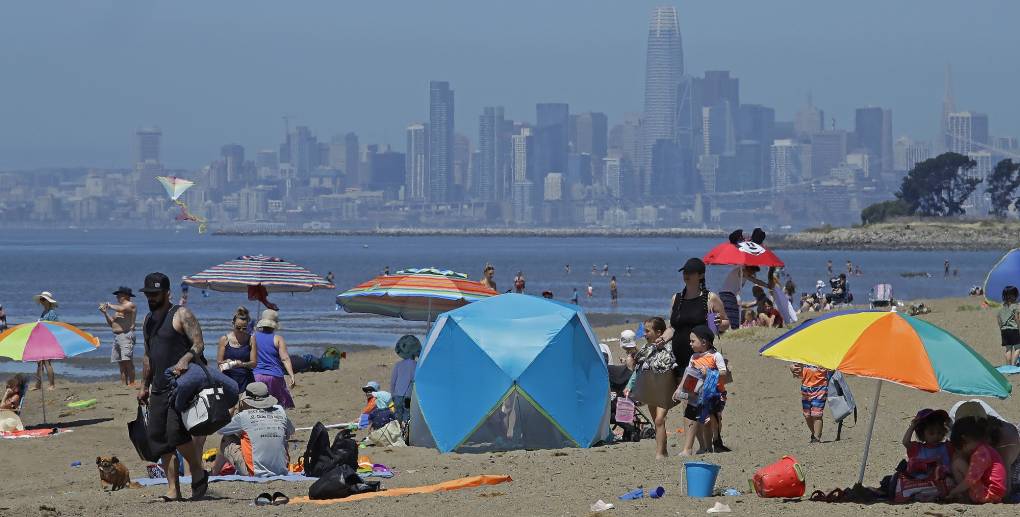
"caption": "Beachgoers hang out on the beach at Crissy Field on May 14, 2014, in San Francisco, California. While it’s the first full day of fall, temperatures across much of the inland Bay Area could be up to 20 degrees above average. Forecasters expect the heat to be short-lived — for now.",
"credit": "Justin Sullivan/Getty Images",
"altTag": null,
"description": null,
"imgSizes": {
"medium": {
"file": "https://cdn.kqed.org/wp-content/uploads/sites/35/2024/06/GettyImages-490568719_qut-800x534.jpg",
"width": 800,
"height": 534,
"mimeType": "image/jpeg"
},
"large": {
"file": "https://cdn.kqed.org/wp-content/uploads/sites/35/2024/06/GettyImages-490568719_qut-1020x681.jpg",
"width": 1020,
"height": 681,
"mimeType": "image/jpeg"
},
"thumbnail": {
"file": "https://cdn.kqed.org/wp-content/uploads/sites/35/2024/06/GettyImages-490568719_qut-160x107.jpg",
"width": 160,
"height": 107,
"mimeType": "image/jpeg"
},
"medium_large": {
"file": "https://cdn.kqed.org/wp-content/uploads/sites/35/2024/06/GettyImages-490568719_qut-768x512.jpg",
"width": 768,
"height": 512,
"mimeType": "image/jpeg"
},
"1536x1536": {
"file": "https://cdn.kqed.org/wp-content/uploads/sites/35/2024/06/GettyImages-490568719_qut-1536x1025.jpg",
"width": 1536,
"height": 1025,
"mimeType": "image/jpeg"
},
"post-thumbnail": {
"file": "https://cdn.kqed.org/wp-content/uploads/sites/35/2024/06/GettyImages-490568719_qut-672x372.jpg",
"width": 672,
"height": 372,
"mimeType": "image/jpeg"
},
"twentyfourteen-full-width": {
"file": "https://cdn.kqed.org/wp-content/uploads/sites/35/2024/06/GettyImages-490568719_qut-1038x576.jpg",
"width": 1038,
"height": 576,
"mimeType": "image/jpeg"
},
"kqedFullSize": {
"file": "https://cdn.kqed.org/wp-content/uploads/sites/35/2024/06/GettyImages-490568719_qut.jpg",
"width": 1920,
"height": 1281
}
},
"isLoading": false,
"fetchFailed": false
},
"science_1994457": {
"type": "attachments",
"id": "science_1994457",
"meta": {
"index": "attachments_1716263798",
"site": "science",
"id": "1994457",
"found": true
},
"title": "Marin City can be seen from Alta Trail in Sausalito on March 1, 2022.",
"publishDate": 1726856120,
"status": "inherit",
"parent": 0,
"modified": 1726860410,
"caption": "Marin City can be seen from Alta Trail in Sausalito on March 1, 2022. The federal government recently chose to help Marin City with a fully funded solution for the Marin County unincorporated town's flooding issues. The agency will help streamline a solution of up to $13.5 million.",
"credit": "Beth LaBerge/KQED",
"altTag": null,
"description": null,
"imgSizes": {
"medium": {
"file": "https://cdn.kqed.org/wp-content/uploads/sites/35/2024/09/054_KQED_MarinCityWaterTesting_03012022_qed-800x533.jpg",
"width": 800,
"height": 533,
"mimeType": "image/jpeg"
},
"large": {
"file": "https://cdn.kqed.org/wp-content/uploads/sites/35/2024/09/054_KQED_MarinCityWaterTesting_03012022_qed-1020x680.jpg",
"width": 1020,
"height": 680,
"mimeType": "image/jpeg"
},
"thumbnail": {
"file": "https://cdn.kqed.org/wp-content/uploads/sites/35/2024/09/054_KQED_MarinCityWaterTesting_03012022_qed-160x107.jpg",
"width": 160,
"height": 107,
"mimeType": "image/jpeg"
},
"medium_large": {
"file": "https://cdn.kqed.org/wp-content/uploads/sites/35/2024/09/054_KQED_MarinCityWaterTesting_03012022_qed-768x512.jpg",
"width": 768,
"height": 512,
"mimeType": "image/jpeg"
},
"1536x1536": {
"file": "https://cdn.kqed.org/wp-content/uploads/sites/35/2024/09/054_KQED_MarinCityWaterTesting_03012022_qed-1536x1024.jpg",
"width": 1536,
"height": 1024,
"mimeType": "image/jpeg"
},
"post-thumbnail": {
"file": "https://cdn.kqed.org/wp-content/uploads/sites/35/2024/09/054_KQED_MarinCityWaterTesting_03012022_qed-672x372.jpg",
"width": 672,
"height": 372,
"mimeType": "image/jpeg"
},
"twentyfourteen-full-width": {
"file": "https://cdn.kqed.org/wp-content/uploads/sites/35/2024/09/054_KQED_MarinCityWaterTesting_03012022_qed-1038x576.jpg",
"width": 1038,
"height": 576,
"mimeType": "image/jpeg"
},
"full-width": {
"file": "https://cdn.kqed.org/wp-content/uploads/sites/35/2024/09/054_KQED_MarinCityWaterTesting_03012022_qed-1920x1280.jpg",
"width": 1920,
"height": 1280,
"mimeType": "image/jpeg"
},
"kqedFullSize": {
"file": "https://cdn.kqed.org/wp-content/uploads/sites/35/2024/09/054_KQED_MarinCityWaterTesting_03012022_qed.jpg",
"width": 2000,
"height": 1333
}
},
"isLoading": false,
"fetchFailed": false
},
"science_1994435": {
"type": "attachments",
"id": "science_1994435",
"meta": {
"index": "attachments_1716263798",
"site": "science",
"id": "1994435",
"found": true
},
"title": "file-20240912-18-896mr3",
"publishDate": 1726618076,
"status": "inherit",
"parent": 1994434,
"modified": 1726619008,
"caption": "Haze caused by smoke from wildfires in Canada shrouds the skyline of midtown Manhattan and the Empire State Building as a man sits in a park on July 18, 2023, in Jersey City, New Jersey. Fine particulate matter from wildfires can cause long-term health harms.",
"credit": "Gary Hershorn/Getty Images",
"altTag": "Two people - one seated on a bench - in a park in New York under a hazy sky.",
"description": null,
"imgSizes": {
"medium": {
"file": "https://cdn.kqed.org/wp-content/uploads/sites/35/2024/09/file-20240912-18-896mr3-800x533.jpg",
"width": 800,
"height": 533,
"mimeType": "image/jpeg"
},
"large": {
"file": "https://cdn.kqed.org/wp-content/uploads/sites/35/2024/09/file-20240912-18-896mr3-1020x679.jpg",
"width": 1020,
"height": 679,
"mimeType": "image/jpeg"
},
"thumbnail": {
"file": "https://cdn.kqed.org/wp-content/uploads/sites/35/2024/09/file-20240912-18-896mr3-160x107.jpg",
"width": 160,
"height": 107,
"mimeType": "image/jpeg"
},
"medium_large": {
"file": "https://cdn.kqed.org/wp-content/uploads/sites/35/2024/09/file-20240912-18-896mr3-768x512.jpg",
"width": 768,
"height": 512,
"mimeType": "image/jpeg"
},
"1536x1536": {
"file": "https://cdn.kqed.org/wp-content/uploads/sites/35/2024/09/file-20240912-18-896mr3-1536x1023.jpg",
"width": 1536,
"height": 1023,
"mimeType": "image/jpeg"
},
"post-thumbnail": {
"file": "https://cdn.kqed.org/wp-content/uploads/sites/35/2024/09/file-20240912-18-896mr3-672x372.jpg",
"width": 672,
"height": 372,
"mimeType": "image/jpeg"
},
"twentyfourteen-full-width": {
"file": "https://cdn.kqed.org/wp-content/uploads/sites/35/2024/09/file-20240912-18-896mr3-1038x576.jpg",
"width": 1038,
"height": 576,
"mimeType": "image/jpeg"
},
"kqedFullSize": {
"file": "https://cdn.kqed.org/wp-content/uploads/sites/35/2024/09/file-20240912-18-896mr3.jpg",
"width": 1920,
"height": 1279
}
},
"isLoading": false,
"fetchFailed": false
},
"science_1994430": {
"type": "attachments",
"id": "science_1994430",
"meta": {
"index": "attachments_1716263798",
"site": "science",
"id": "1994430",
"found": true
},
"title": "240617-HealthcareMinWage-14-BL",
"publishDate": 1726607494,
"status": "inherit",
"parent": 1994424,
"modified": 1726607616,
"caption": "Tessa Tuliao, a dialysis nurse, after work at Satellite Healthcare dialysis clinic in San Jose on June 17, 2024.",
"credit": "Beth LaBerge/KQED",
"altTag": "An image of a building with cars parked in front. The sign on the building reads \"Satellite Healthcare Dialysis.\"",
"description": null,
"imgSizes": {
"medium": {
"file": "https://cdn.kqed.org/wp-content/uploads/sites/35/2024/09/240617-HealthcareMinWage-14-BL-800x533.jpg",
"width": 800,
"height": 533,
"mimeType": "image/jpeg"
},
"large": {
"file": "https://cdn.kqed.org/wp-content/uploads/sites/35/2024/09/240617-HealthcareMinWage-14-BL-1020x680.jpg",
"width": 1020,
"height": 680,
"mimeType": "image/jpeg"
},
"thumbnail": {
"file": "https://cdn.kqed.org/wp-content/uploads/sites/35/2024/09/240617-HealthcareMinWage-14-BL-160x107.jpg",
"width": 160,
"height": 107,
"mimeType": "image/jpeg"
},
"medium_large": {
"file": "https://cdn.kqed.org/wp-content/uploads/sites/35/2024/09/240617-HealthcareMinWage-14-BL-768x512.jpg",
"width": 768,
"height": 512,
"mimeType": "image/jpeg"
},
"1536x1536": {
"file": "https://cdn.kqed.org/wp-content/uploads/sites/35/2024/09/240617-HealthcareMinWage-14-BL-1536x1024.jpg",
"width": 1536,
"height": 1024,
"mimeType": "image/jpeg"
},
"2048x2048": {
"file": "https://cdn.kqed.org/wp-content/uploads/sites/35/2024/09/240617-HealthcareMinWage-14-BL-2048x1365.jpg",
"width": 2048,
"height": 1365,
"mimeType": "image/jpeg"
},
"post-thumbnail": {
"file": "https://cdn.kqed.org/wp-content/uploads/sites/35/2024/09/240617-HealthcareMinWage-14-BL-672x372.jpg",
"width": 672,
"height": 372,
"mimeType": "image/jpeg"
},
"twentyfourteen-full-width": {
"file": "https://cdn.kqed.org/wp-content/uploads/sites/35/2024/09/240617-HealthcareMinWage-14-BL-1038x576.jpg",
"width": 1038,
"height": 576,
"mimeType": "image/jpeg"
},
"full-width": {
"file": "https://cdn.kqed.org/wp-content/uploads/sites/35/2024/09/240617-HealthcareMinWage-14-BL-1920x1280.jpg",
"width": 1920,
"height": 1280,
"mimeType": "image/jpeg"
},
"kqedFullSize": {
"file": "https://cdn.kqed.org/wp-content/uploads/sites/35/2024/09/240617-HealthcareMinWage-14-BL-scaled.jpg",
"width": 2560,
"height": 1707
}
},
"isLoading": false,
"fetchFailed": false
},
"science_1994408": {
"type": "attachments",
"id": "science_1994408",
"meta": {
"index": "attachments_1716263798",
"site": "science",
"id": "1994408",
"found": true
},
"title": "SEALEVEL",
"publishDate": 1726504311,
"status": "inherit",
"parent": 1994406,
"modified": 1726531493,
"caption": "The Embarcadero's seawall, in some areas, provides little to no separation between the cityscape and the sea in San Francisco on Tuesday, May 1, 2018.",
"credit": "Lauren Hanussak/KQED",
"altTag": null,
"description": null,
"imgSizes": {
"medium": {
"file": "https://cdn.kqed.org/wp-content/uploads/sites/35/2024/09/SeaLevel_006_qed-800x533.jpg",
"width": 800,
"height": 533,
"mimeType": "image/jpeg"
},
"large": {
"file": "https://cdn.kqed.org/wp-content/uploads/sites/35/2024/09/SeaLevel_006_qed-1020x680.jpg",
"width": 1020,
"height": 680,
"mimeType": "image/jpeg"
},
"thumbnail": {
"file": "https://cdn.kqed.org/wp-content/uploads/sites/35/2024/09/SeaLevel_006_qed-160x107.jpg",
"width": 160,
"height": 107,
"mimeType": "image/jpeg"
},
"medium_large": {
"file": "https://cdn.kqed.org/wp-content/uploads/sites/35/2024/09/SeaLevel_006_qed-768x512.jpg",
"width": 768,
"height": 512,
"mimeType": "image/jpeg"
},
"1536x1536": {
"file": "https://cdn.kqed.org/wp-content/uploads/sites/35/2024/09/SeaLevel_006_qed-1536x1024.jpg",
"width": 1536,
"height": 1024,
"mimeType": "image/jpeg"
},
"post-thumbnail": {
"file": "https://cdn.kqed.org/wp-content/uploads/sites/35/2024/09/SeaLevel_006_qed-672x372.jpg",
"width": 672,
"height": 372,
"mimeType": "image/jpeg"
},
"twentyfourteen-full-width": {
"file": "https://cdn.kqed.org/wp-content/uploads/sites/35/2024/09/SeaLevel_006_qed-1038x576.jpg",
"width": 1038,
"height": 576,
"mimeType": "image/jpeg"
},
"full-width": {
"file": "https://cdn.kqed.org/wp-content/uploads/sites/35/2024/09/SeaLevel_006_qed-1920x1280.jpg",
"width": 1920,
"height": 1280,
"mimeType": "image/jpeg"
},
"kqedFullSize": {
"file": "https://cdn.kqed.org/wp-content/uploads/sites/35/2024/09/SeaLevel_006_qed.jpg",
"width": 2000,
"height": 1333
}
},
"isLoading": false,
"fetchFailed": false
},
"science_1994404": {
"type": "attachments",
"id": "science_1994404",
"meta": {
"index": "attachments_1716263798",
"site": "science",
"id": "1994404",
"found": true
},
"title": "how-to-see-blood-moon-2025",
"publishDate": 1726504065,
"status": "inherit",
"parent": 1994403,
"modified": 1741285874,
"caption": "A blood moon is seen during a lunar eclipse on Nov. 8, 2022, over Brisbane, Australia. ",
"credit": "Dan Peled/Getty Images",
"altTag": "An image of the moon with a reddish tint.",
"description": "BRISBANE, AUSTRALIA - NOVEMBER 08: A blood moon is seen during a lunar eclipse on November 08, 2022 over Brisbane, Australia. Australians will experience the first visible total lunar eclipse of the year on Tuesday, the ABC reported, with the eclipse also being visible from New Zealand. The \"Blood Moon\" is the first of its kind for the year, and the last time the region will see a full lunar eclipse until 2025. (Photo by Dan Peled/Getty Images)",
"imgSizes": {
"medium": {
"file": "https://cdn.kqed.org/wp-content/uploads/sites/35/2024/09/gettyimages-1439969828-800x515.jpeg",
"width": 800,
"height": 515,
"mimeType": "image/jpeg"
},
"large": {
"file": "https://cdn.kqed.org/wp-content/uploads/sites/35/2024/09/gettyimages-1439969828-1020x656.jpeg",
"width": 1020,
"height": 656,
"mimeType": "image/jpeg"
},
"thumbnail": {
"file": "https://cdn.kqed.org/wp-content/uploads/sites/35/2024/09/gettyimages-1439969828-160x103.jpeg",
"width": 160,
"height": 103,
"mimeType": "image/jpeg"
},
"medium_large": {
"file": "https://cdn.kqed.org/wp-content/uploads/sites/35/2024/09/gettyimages-1439969828-768x494.jpeg",
"width": 768,
"height": 494,
"mimeType": "image/jpeg"
},
"1536x1536": {
"file": "https://cdn.kqed.org/wp-content/uploads/sites/35/2024/09/gettyimages-1439969828-1536x988.jpeg",
"width": 1536,
"height": 988,
"mimeType": "image/jpeg"
},
"2048x2048": {
"file": "https://cdn.kqed.org/wp-content/uploads/sites/35/2024/09/gettyimages-1439969828-2048x1318.jpeg",
"width": 2048,
"height": 1318,
"mimeType": "image/jpeg"
},
"post-thumbnail": {
"file": "https://cdn.kqed.org/wp-content/uploads/sites/35/2024/09/gettyimages-1439969828-672x372.jpeg",
"width": 672,
"height": 372,
"mimeType": "image/jpeg"
},
"twentyfourteen-full-width": {
"file": "https://cdn.kqed.org/wp-content/uploads/sites/35/2024/09/gettyimages-1439969828-1038x576.jpeg",
"width": 1038,
"height": 576,
"mimeType": "image/jpeg"
},
"full-width": {
"file": "https://cdn.kqed.org/wp-content/uploads/sites/35/2024/09/gettyimages-1439969828-1920x1235.jpeg",
"width": 1920,
"height": 1235,
"mimeType": "image/jpeg"
},
"kqedFullSize": {
"file": "https://cdn.kqed.org/wp-content/uploads/sites/35/2024/09/gettyimages-1439969828-scaled-e1772044520737.jpeg",
"width": 2000,
"height": 1287
}
},
"isLoading": false,
"fetchFailed": false
},
"science_1984417": {
"type": "attachments",
"id": "science_1984417",
"meta": {
"index": "attachments_1716263798",
"site": "science",
"id": "1984417",
"found": true
},
"parent": 0,
"imgSizes": {
"twentyfourteen-full-width": {
"file": "https://ww2.kqed.org/app/uploads/sites/35/2023/09/DL619_male_female_face-off-KQED-1038x576.jpg",
"width": 1038,
"mimeType": "image/jpeg",
"height": 576
},
"thumbnail": {
"file": "https://ww2.kqed.org/app/uploads/sites/35/2023/09/DL619_male_female_face-off-KQED-160x107.jpg",
"width": 160,
"mimeType": "image/jpeg",
"height": 107
},
"post-thumbnail": {
"file": "https://ww2.kqed.org/app/uploads/sites/35/2023/09/DL619_male_female_face-off-KQED-672x372.jpg",
"width": 672,
"mimeType": "image/jpeg",
"height": 372
},
"kqedFullSize": {
"file": "https://ww2.kqed.org/app/uploads/sites/35/2023/09/DL619_male_female_face-off-KQED.jpg",
"width": 1920,
"height": 1280
},
"large": {
"file": "https://ww2.kqed.org/app/uploads/sites/35/2023/09/DL619_male_female_face-off-KQED-1020x680.jpg",
"width": 1020,
"mimeType": "image/jpeg",
"height": 680
},
"1536x1536": {
"file": "https://ww2.kqed.org/app/uploads/sites/35/2023/09/DL619_male_female_face-off-KQED-1536x1024.jpg",
"width": 1536,
"mimeType": "image/jpeg",
"height": 1024
},
"medium": {
"file": "https://ww2.kqed.org/app/uploads/sites/35/2023/09/DL619_male_female_face-off-KQED-800x533.jpg",
"width": 800,
"mimeType": "image/jpeg",
"height": 533
},
"medium_large": {
"file": "https://ww2.kqed.org/app/uploads/sites/35/2023/09/DL619_male_female_face-off-KQED-768x512.jpg",
"width": 768,
"mimeType": "image/jpeg",
"height": 512
}
},
"publishDate": 1695764081,
"modified": 1695849459,
"caption": "A female tarantula waits at the opening of her den with her fangs out getting ready to 'hook up' with a male tarantula. Mature male tarantulas develop a special set of clasps on their front legs called 'tibial hooks.' Tibial hooks serve a single purpose: to fasten underneath the female's fangs during courtship.",
"description": null,
"title": "Tarantulas",
"credit": "Courtesy of Kevin Collins",
"status": "inherit",
"altTag": "A spider's fangs are seen.",
"isLoading": false,
"fetchFailed": false
},
"science_1994372": {
"type": "attachments",
"id": "science_1994372",
"meta": {
"index": "attachments_1716263798",
"site": "science",
"id": "1994372",
"found": true
},
"title": "USA - Climate - Flaring",
"publishDate": 1726159026,
"status": "inherit",
"parent": 1994370,
"modified": 1726159090,
"caption": "Flames from a flaring pit near a well in the Bakken Oil Field. The primary component of natural gas is methane, which is odorless when it comes directly out of the gas well. In addition to methane, natural gas typically contains other hydrocarbons such as ethane, propane, butane, and pentanes. Raw natural gas may also contain water vapor, hydrogen sulfide (H2S), carbon dioxide, helium, nitrogen, and other compounds.",
"credit": "Orjan F. Ellingvag/Corbis via Getty Images",
"altTag": null,
"description": null,
"imgSizes": {
"medium": {
"file": "https://cdn.kqed.org/wp-content/uploads/sites/35/2024/09/MethaneFlaresScienceGetty1-800x450.jpg",
"width": 800,
"height": 450,
"mimeType": "image/jpeg"
},
"large": {
"file": "https://cdn.kqed.org/wp-content/uploads/sites/35/2024/09/MethaneFlaresScienceGetty1-1020x574.jpg",
"width": 1020,
"height": 574,
"mimeType": "image/jpeg"
},
"thumbnail": {
"file": "https://cdn.kqed.org/wp-content/uploads/sites/35/2024/09/MethaneFlaresScienceGetty1-160x90.jpg",
"width": 160,
"height": 90,
"mimeType": "image/jpeg"
},
"medium_large": {
"file": "https://cdn.kqed.org/wp-content/uploads/sites/35/2024/09/MethaneFlaresScienceGetty1-768x432.jpg",
"width": 768,
"height": 432,
"mimeType": "image/jpeg"
},
"1536x1536": {
"file": "https://cdn.kqed.org/wp-content/uploads/sites/35/2024/09/MethaneFlaresScienceGetty1-1536x864.jpg",
"width": 1536,
"height": 864,
"mimeType": "image/jpeg"
},
"post-thumbnail": {
"file": "https://cdn.kqed.org/wp-content/uploads/sites/35/2024/09/MethaneFlaresScienceGetty1-672x372.jpg",
"width": 672,
"height": 372,
"mimeType": "image/jpeg"
},
"twentyfourteen-full-width": {
"file": "https://cdn.kqed.org/wp-content/uploads/sites/35/2024/09/MethaneFlaresScienceGetty1-1038x576.jpg",
"width": 1038,
"height": 576,
"mimeType": "image/jpeg"
},
"full-width": {
"file": "https://cdn.kqed.org/wp-content/uploads/sites/35/2024/09/MethaneFlaresScienceGetty1-1920x1080.jpg",
"width": 1920,
"height": 1080,
"mimeType": "image/jpeg"
},
"kqedFullSize": {
"file": "https://cdn.kqed.org/wp-content/uploads/sites/35/2024/09/MethaneFlaresScienceGetty1.jpg",
"width": 2000,
"height": 1125
}
},
"isLoading": false,
"fetchFailed": false
},
"science_1994301": {
"type": "attachments",
"id": "science_1994301",
"meta": {
"index": "attachments_1716263798",
"site": "science",
"id": "1994301",
"found": true
},
"title": "240910-PARKFIREFOLO-13-BL-KQED",
"publishDate": 1726015722,
"status": "inherit",
"parent": 0,
"modified": 1726164957,
"caption": "Yahmo Ahqha holds a piece of metal from his truck that melted during the Park Fire on his property in Cohasset on Sept. 10, 2024. The Park Fire destroyed his home and scorched the trees on the property when it swept through the area on July 25.",
"credit": "Beth LaBerge/KQED",
"altTag": "A man with long hair flowing out from beneath a hat holds a piece of burned metal in his hands. In the background, a charred vehicle.",
"description": null,
"imgSizes": {
"medium": {
"file": "https://cdn.kqed.org/wp-content/uploads/sites/35/2024/09/240910-PARKFIREFOLO-13-BL-KQED-800x533.jpg",
"width": 800,
"height": 533,
"mimeType": "image/jpeg"
},
"large": {
"file": "https://cdn.kqed.org/wp-content/uploads/sites/35/2024/09/240910-PARKFIREFOLO-13-BL-KQED-1020x680.jpg",
"width": 1020,
"height": 680,
"mimeType": "image/jpeg"
},
"thumbnail": {
"file": "https://cdn.kqed.org/wp-content/uploads/sites/35/2024/09/240910-PARKFIREFOLO-13-BL-KQED-160x107.jpg",
"width": 160,
"height": 107,
"mimeType": "image/jpeg"
},
"medium_large": {
"file": "https://cdn.kqed.org/wp-content/uploads/sites/35/2024/09/240910-PARKFIREFOLO-13-BL-KQED-768x512.jpg",
"width": 768,
"height": 512,
"mimeType": "image/jpeg"
},
"1536x1536": {
"file": "https://cdn.kqed.org/wp-content/uploads/sites/35/2024/09/240910-PARKFIREFOLO-13-BL-KQED-1536x1024.jpg",
"width": 1536,
"height": 1024,
"mimeType": "image/jpeg"
},
"post-thumbnail": {
"file": "https://cdn.kqed.org/wp-content/uploads/sites/35/2024/09/240910-PARKFIREFOLO-13-BL-KQED-672x372.jpg",
"width": 672,
"height": 372,
"mimeType": "image/jpeg"
},
"twentyfourteen-full-width": {
"file": "https://cdn.kqed.org/wp-content/uploads/sites/35/2024/09/240910-PARKFIREFOLO-13-BL-KQED-1038x576.jpg",
"width": 1038,
"height": 576,
"mimeType": "image/jpeg"
},
"full-width": {
"file": "https://cdn.kqed.org/wp-content/uploads/sites/35/2024/09/240910-PARKFIREFOLO-13-BL-KQED-1920x1280.jpg",
"width": 1920,
"height": 1280,
"mimeType": "image/jpeg"
},
"kqedFullSize": {
"file": "https://cdn.kqed.org/wp-content/uploads/sites/35/2024/09/240910-PARKFIREFOLO-13-BL-KQED.jpg",
"width": 2000,
"height": 1333
}
},
"isLoading": false,
"fetchFailed": false
},
"science_1994360": {
"type": "attachments",
"id": "science_1994360",
"meta": {
"index": "attachments_1716263798",
"site": "science",
"id": "1994360",
"found": true
},
"title": "240903-OverdoseResponse-57-BL_qed",
"publishDate": 1726096278,
"status": "inherit",
"parent": 1994288,
"modified": 1726096369,
"caption": "Paramedic Isaac James (left) and counselor Chantel Hernandez-Coleman, members of the Street Overdose Response Team, speak with two people sitting on the street in the South of Market neighborhood in San Francisco on Sept. 3, 2024.",
"credit": "Beth LaBerge/KQED",
"altTag": "A male paramedic crouches down in front of two people sitting on the street, leaning against a wall with a mural, as a middle-aged woman stands over them.",
"description": null,
"imgSizes": {
"medium": {
"file": "https://cdn.kqed.org/wp-content/uploads/sites/35/2024/09/240903-OverdoseResponse-57-BL_qed-800x533.jpg",
"width": 800,
"height": 533,
"mimeType": "image/jpeg"
},
"large": {
"file": "https://cdn.kqed.org/wp-content/uploads/sites/35/2024/09/240903-OverdoseResponse-57-BL_qed-1020x680.jpg",
"width": 1020,
"height": 680,
"mimeType": "image/jpeg"
},
"thumbnail": {
"file": "https://cdn.kqed.org/wp-content/uploads/sites/35/2024/09/240903-OverdoseResponse-57-BL_qed-160x107.jpg",
"width": 160,
"height": 107,
"mimeType": "image/jpeg"
},
"medium_large": {
"file": "https://cdn.kqed.org/wp-content/uploads/sites/35/2024/09/240903-OverdoseResponse-57-BL_qed-768x512.jpg",
"width": 768,
"height": 512,
"mimeType": "image/jpeg"
},
"1536x1536": {
"file": "https://cdn.kqed.org/wp-content/uploads/sites/35/2024/09/240903-OverdoseResponse-57-BL_qed-1536x1024.jpg",
"width": 1536,
"height": 1024,
"mimeType": "image/jpeg"
},
"post-thumbnail": {
"file": "https://cdn.kqed.org/wp-content/uploads/sites/35/2024/09/240903-OverdoseResponse-57-BL_qed-672x372.jpg",
"width": 672,
"height": 372,
"mimeType": "image/jpeg"
},
"twentyfourteen-full-width": {
"file": "https://cdn.kqed.org/wp-content/uploads/sites/35/2024/09/240903-OverdoseResponse-57-BL_qed-1038x576.jpg",
"width": 1038,
"height": 576,
"mimeType": "image/jpeg"
},
"full-width": {
"file": "https://cdn.kqed.org/wp-content/uploads/sites/35/2024/09/240903-OverdoseResponse-57-BL_qed-1920x1280.jpg",
"width": 1920,
"height": 1280,
"mimeType": "image/jpeg"
},
"kqedFullSize": {
"file": "https://cdn.kqed.org/wp-content/uploads/sites/35/2024/09/240903-OverdoseResponse-57-BL_qed.jpg",
"width": 2000,
"height": 1333
}
},
"isLoading": false,
"fetchFailed": false
},
"science_1994315": {
"type": "attachments",
"id": "science_1994315",
"meta": {
"index": "attachments_1716263798",
"site": "science",
"id": "1994315",
"found": true
},
"title": "linefire_oli_20240909_lrg",
"publishDate": 1726076329,
"status": "inherit",
"parent": 1994311,
"modified": 1726076447,
"caption": "Puffy white convective clouds dotted the hills around Los Angeles, Riverside, San Bernardino and San Diego on Sept. 9, 2024. Three stood out, fueled by surface heat from intense wildland fires.",
"credit": "Courtesy Lauren Dauphin via NASA Earth Observatory Images",
"altTag": null,
"description": null,
"imgSizes": {
"medium": {
"file": "https://cdn.kqed.org/wp-content/uploads/sites/35/2024/09/linefire_oli_20240909_lrg-800x693.jpg",
"width": 800,
"height": 693,
"mimeType": "image/jpeg"
},
"large": {
"file": "https://cdn.kqed.org/wp-content/uploads/sites/35/2024/09/linefire_oli_20240909_lrg-1020x884.jpg",
"width": 1020,
"height": 884,
"mimeType": "image/jpeg"
},
"thumbnail": {
"file": "https://cdn.kqed.org/wp-content/uploads/sites/35/2024/09/linefire_oli_20240909_lrg-160x139.jpg",
"width": 160,
"height": 139,
"mimeType": "image/jpeg"
},
"medium_large": {
"file": "https://cdn.kqed.org/wp-content/uploads/sites/35/2024/09/linefire_oli_20240909_lrg-768x666.jpg",
"width": 768,
"height": 666,
"mimeType": "image/jpeg"
},
"1536x1536": {
"file": "https://cdn.kqed.org/wp-content/uploads/sites/35/2024/09/linefire_oli_20240909_lrg-1536x1331.jpg",
"width": 1536,
"height": 1331,
"mimeType": "image/jpeg"
},
"2048x2048": {
"file": "https://cdn.kqed.org/wp-content/uploads/sites/35/2024/09/linefire_oli_20240909_lrg-2048x1775.jpg",
"width": 2048,
"height": 1775,
"mimeType": "image/jpeg"
},
"post-thumbnail": {
"file": "https://cdn.kqed.org/wp-content/uploads/sites/35/2024/09/linefire_oli_20240909_lrg-672x372.jpg",
"width": 672,
"height": 372,
"mimeType": "image/jpeg"
},
"twentyfourteen-full-width": {
"file": "https://cdn.kqed.org/wp-content/uploads/sites/35/2024/09/linefire_oli_20240909_lrg-1038x576.jpg",
"width": 1038,
"height": 576,
"mimeType": "image/jpeg"
},
"full-width": {
"file": "https://cdn.kqed.org/wp-content/uploads/sites/35/2024/09/linefire_oli_20240909_lrg-1920x1664.jpg",
"width": 1920,
"height": 1664,
"mimeType": "image/jpeg"
},
"kqedFullSize": {
"file": "https://cdn.kqed.org/wp-content/uploads/sites/35/2024/09/linefire_oli_20240909_lrg-scaled.jpg",
"width": 2560,
"height": 2219
}
},
"isLoading": false,
"fetchFailed": false
},
"science_1994309": {
"type": "attachments",
"id": "science_1994309",
"meta": {
"index": "attachments_1716263798",
"site": "science",
"id": "1994309",
"found": true
},
"title": "U.S. Carbon Emissions Dropped Nearly Two Percent In 2023",
"publishDate": 1726073402,
"status": "inherit",
"parent": 1994307,
"modified": 1726073586,
"caption": "Vehicles travel along Interstate 80 on Jan. 16, 2024, in Berkeley. \nCalifornians are breathing significantly less harmful vehicle pollution than 25 years ago, thanks to a 65% drop in PM2.5 exposure from cars, trucks and other vehicles, according to a new study by UC Berkeley, CalEPA and the University of Washington.",
"credit": "Justin Sullivan/Getty Images",
"altTag": null,
"description": null,
"imgSizes": {
"medium": {
"file": "https://cdn.kqed.org/wp-content/uploads/sites/35/2024/09/BerkeleyPollutionGetty1-800x550.jpg",
"width": 800,
"height": 550,
"mimeType": "image/jpeg"
},
"large": {
"file": "https://cdn.kqed.org/wp-content/uploads/sites/35/2024/09/BerkeleyPollutionGetty1-1020x701.jpg",
"width": 1020,
"height": 701,
"mimeType": "image/jpeg"
},
"thumbnail": {
"file": "https://cdn.kqed.org/wp-content/uploads/sites/35/2024/09/BerkeleyPollutionGetty1-160x110.jpg",
"width": 160,
"height": 110,
"mimeType": "image/jpeg"
},
"medium_large": {
"file": "https://cdn.kqed.org/wp-content/uploads/sites/35/2024/09/BerkeleyPollutionGetty1-768x528.jpg",
"width": 768,
"height": 528,
"mimeType": "image/jpeg"
},
"1536x1536": {
"file": "https://cdn.kqed.org/wp-content/uploads/sites/35/2024/09/BerkeleyPollutionGetty1-1536x1055.jpg",
"width": 1536,
"height": 1055,
"mimeType": "image/jpeg"
},
"post-thumbnail": {
"file": "https://cdn.kqed.org/wp-content/uploads/sites/35/2024/09/BerkeleyPollutionGetty1-672x372.jpg",
"width": 672,
"height": 372,
"mimeType": "image/jpeg"
},
"twentyfourteen-full-width": {
"file": "https://cdn.kqed.org/wp-content/uploads/sites/35/2024/09/BerkeleyPollutionGetty1-1038x576.jpg",
"width": 1038,
"height": 576,
"mimeType": "image/jpeg"
},
"full-width": {
"file": "https://cdn.kqed.org/wp-content/uploads/sites/35/2024/09/BerkeleyPollutionGetty1-1920x1319.jpg",
"width": 1920,
"height": 1319,
"mimeType": "image/jpeg"
},
"kqedFullSize": {
"file": "https://cdn.kqed.org/wp-content/uploads/sites/35/2024/09/BerkeleyPollutionGetty1.jpg",
"width": 2000,
"height": 1374
}
},
"isLoading": false,
"fetchFailed": false
}
},
"audioPlayerReducer": {
"postId": "stream_live",
"isPaused": true,
"isPlaying": false,
"pfsActive": false,
"pledgeModalIsOpen": true,
"playerDrawerIsOpen": false,
"liveAudioPlayStartedAt": 0,
"liveAudioPlayContext": ""
},
"authorsReducer": {
"byline_science_1994434": {
"type": "authors",
"id": "byline_science_1994434",
"meta": {
"override": true
},
"slug": "byline_science_1994434",
"name": "\u003ca href=\"https://theconversation.com/profiles/rachel-morello-frosch-395011\">Rachel Morello-Frosch, UC Berkeley\u003c/a> and \u003ca href=\"https://theconversation.com/profiles/joan-casey-1546839\">Joan Casey, University of Washington\u003c/a>",
"isLoading": false
},
"byline_science_1994403": {
"type": "authors",
"id": "byline_science_1994403",
"meta": {
"override": true
},
"slug": "byline_science_1994403",
"name": "Chandelis Duster",
"isLoading": false
},
"lklivans": {
"type": "authors",
"id": "8648",
"meta": {
"index": "authors_1716337520",
"id": "8648",
"found": true
},
"name": "Laura Klivans",
"firstName": "Laura",
"lastName": "Klivans",
"slug": "lklivans",
"email": "lklivans@kqed.org",
"display_author_email": true,
"staff_mastheads": [
"news",
"science"
],
"title": "Reporter",
"bio": "Laura Klivans is an award-winning science reporter for KQED News, where she covers climate change with an eye on both groundbreaking progress and gaps in action. She is the former host of KQED's blockbuster video series about tiny, amazing animals, \u003cem>Deep Look\u003c/em>. Her work reaches national audiences through NPR, \u003cem>Here & Now, \u003c/em>PRI, and other major outlets. \r\n\r\nLaura’s won five Northern California Area Emmy Awards for Deep Look and First Place in the Greater Bay Area Journalism Awards for a podcast exploring how one Oakland neighborhood teamed up to reduce planet-heating pollution.\r\n\r\nBeyond her reporting, she hosts and moderates events. In the past, she taught audio storytelling at the UC Berkeley Graduate School of Journalism, led international education programs, worked with immigrants and refugees along the Thai-Burmese border, taught high schoolers sex ed, and was an actress. \r\n\r\nShe's a former UC Berkeley Human Rights Fellow, USC Center for Health Journalism's California Fellow and Coro Fellow in Public Affairs. Laura has a master’s in journalism from UC Berkeley, a master’s in education from Harvard, and an undergraduate degree from Northwestern University.\r\n\r\nShe loves trying to riddle the meaning out of vanity license plates.",
"avatar": "https://secure.gravatar.com/avatar/af8e757bb8ce7b7fee6160ba66e37327?s=600&d=blank&r=g",
"twitter": "lauraklivans",
"facebook": null,
"instagram": null,
"linkedin": null,
"sites": [
{
"site": "news",
"roles": [
"editor"
]
},
{
"site": "stateofhealth",
"roles": [
"contributor",
"editor"
]
},
{
"site": "science",
"roles": [
"editor"
]
},
{
"site": "forum",
"roles": [
"editor"
]
}
],
"headData": {
"title": "Laura Klivans | KQED",
"description": "Reporter",
"ogImgSrc": "https://secure.gravatar.com/avatar/af8e757bb8ce7b7fee6160ba66e37327?s=600&d=blank&r=g",
"twImgSrc": "https://secure.gravatar.com/avatar/af8e757bb8ce7b7fee6160ba66e37327?s=600&d=blank&r=g"
},
"isLoading": false,
"link": "/author/lklivans"
},
"dventon": {
"type": "authors",
"id": "11088",
"meta": {
"index": "authors_1716337520",
"id": "11088",
"found": true
},
"name": "Danielle Venton",
"firstName": "Danielle",
"lastName": "Venton",
"slug": "dventon",
"email": "dventon@kqed.org",
"display_author_email": true,
"staff_mastheads": [
"science"
],
"title": "Science reporter",
"bio": "Danielle Venton is a reporter for KQED Science. She covers wildfires, space and oceans (though she is prone to sea sickness).\r\n\r\nBefore joining KQED in 2015, Danielle was a staff reporter at KRCB in Sonoma County and a freelancer. She studied science communication at UC Santa Cruz and formerly worked at CERN in Geneva, Switzerland where she wrote about computing. She lives in Sonoma County and enjoys backpacking.",
"avatar": "https://secure.gravatar.com/avatar/ebaf11ee6cfb7bb40329a143d463829e?s=600&d=blank&r=g",
"twitter": "DanielleVenton",
"facebook": null,
"instagram": null,
"linkedin": null,
"sites": [
{
"site": "arts",
"roles": [
"contributor"
]
},
{
"site": "news",
"roles": [
"editor"
]
},
{
"site": "futureofyou",
"roles": [
"editor"
]
},
{
"site": "science",
"roles": [
"editor"
]
},
{
"site": "liveblog",
"roles": [
"contributor"
]
}
],
"headData": {
"title": "Danielle Venton | KQED",
"description": "Science reporter",
"ogImgSrc": "https://secure.gravatar.com/avatar/ebaf11ee6cfb7bb40329a143d463829e?s=600&d=blank&r=g",
"twImgSrc": "https://secure.gravatar.com/avatar/ebaf11ee6cfb7bb40329a143d463829e?s=600&d=blank&r=g"
},
"isLoading": false,
"link": "/author/dventon"
},
"lesleymcclurg": {
"type": "authors",
"id": "11229",
"meta": {
"index": "authors_1716337520",
"id": "11229",
"found": true
},
"name": "Lesley McClurg",
"firstName": "Lesley",
"lastName": "McClurg",
"slug": "lesleymcclurg",
"email": "lmcclurg@KQED.org",
"display_author_email": false,
"staff_mastheads": [
"news",
"science"
],
"title": "KQED Health Correspondent",
"bio": "Lesley McClurg is a health correspondent and fill-in host whose work is regularly rebroadcast on NPR and PBS programs. She’s earned multiple regional Emmy awards, a national and a regional Edward R. Murrow award, and was named Best Beat Reporter by the Association of Health Care Journalists. The Society of Professional Journalists has recognized her work several times, and the Society of Environmental Journalists spotlighted her coverage of California’s historic drought.\r\n\r\nBefore joining KQED in 2016, Lesley covered food and sustainability for Capital Public Radio, environmental issues for Colorado Public Radio, and reported for KUOW and KCTS 9 in Seattle. Away from the newsroom, she loves skiing with her daughter, mountain biking with her partner, and playing with Ollie, the family’s goldendoodle. On deadline, she runs almost entirely on chocolate chips.\r\n\r\n ",
"avatar": "https://secure.gravatar.com/avatar/bab49e972ea10c774fe0f5e29dba1722b158f7c0d58a360923d1389d380b2978?s=600&d=blank&r=g",
"twitter": "lesleywmcclurg",
"bluesky": null,
"facebook": null,
"instagram": null,
"linkedin": null,
"sites": [
{
"site": "arts",
"roles": [
"author"
]
},
{
"site": "news",
"roles": [
"editor"
]
},
{
"site": "futureofyou",
"roles": [
"editor"
]
},
{
"site": "stateofhealth",
"roles": [
"author"
]
},
{
"site": "science",
"roles": [
"editor"
]
},
{
"site": "quest",
"roles": [
"subscriber"
]
},
{
"site": "forum",
"roles": [
"administrator"
]
},
{
"site": "liveblog",
"roles": [
"author"
]
}
],
"headData": {
"title": "Lesley McClurg | KQED",
"description": "KQED Health Correspondent",
"ogImgSrc": "https://secure.gravatar.com/avatar/bab49e972ea10c774fe0f5e29dba1722b158f7c0d58a360923d1389d380b2978?s=600&d=blank&r=g",
"twImgSrc": "https://secure.gravatar.com/avatar/bab49e972ea10c774fe0f5e29dba1722b158f7c0d58a360923d1389d380b2978?s=600&d=blank&r=g"
},
"isLoading": false,
"link": "/author/lesleymcclurg"
},
"smohamad": {
"type": "authors",
"id": "11631",
"meta": {
"index": "authors_1716337520",
"id": "11631",
"found": true
},
"name": "Sarah Mohamad",
"firstName": "Sarah",
"lastName": "Mohamad",
"slug": "smohamad",
"email": "smohamad@KQED.org",
"display_author_email": true,
"staff_mastheads": [],
"title": "Engagement Producer and Reporter, KQED Science",
"bio": "Sarah Mohamad is an audience engagement reporter and producer for KQED Science. She reports on audience-focused science and environment stories and manages the team's social media, newsletter, and engagement efforts. Prior to this role, she played a key role as project manager for NSF's \u003ca href=\"https://www.kqed.org/crackingthecode\">\u003cem>Cracking the Code: Influencing Millennial Science Engagement\u003c/em> \u003c/a>audience research.",
"avatar": "https://secure.gravatar.com/avatar/e6224957cd82d015183756ddde1f928013a563d7ca2e4565f8c4de1ec64886c5?s=600&d=blank&r=g",
"twitter": "sarahkmohamad",
"bluesky": null,
"facebook": null,
"instagram": null,
"linkedin": null,
"sites": [
{
"site": "arts",
"roles": [
"editor"
]
},
{
"site": "news",
"roles": [
"editor"
]
},
{
"site": "about",
"roles": [
"editor"
]
},
{
"site": "science",
"roles": [
"editor"
]
}
],
"headData": {
"title": "Sarah Mohamad | KQED",
"description": "Engagement Producer and Reporter, KQED Science",
"ogImgSrc": "https://secure.gravatar.com/avatar/e6224957cd82d015183756ddde1f928013a563d7ca2e4565f8c4de1ec64886c5?s=600&d=blank&r=g",
"twImgSrc": "https://secure.gravatar.com/avatar/e6224957cd82d015183756ddde1f928013a563d7ca2e4565f8c4de1ec64886c5?s=600&d=blank&r=g"
},
"isLoading": false,
"link": "/author/smohamad"
},
"eromero": {
"type": "authors",
"id": "11746",
"meta": {
"index": "authors_1716337520",
"id": "11746",
"found": true
},
"name": "Ezra David Romero",
"firstName": "Ezra David",
"lastName": "Romero",
"slug": "eromero",
"email": "eromero@kqed.org",
"display_author_email": true,
"staff_mastheads": [
"news",
"science"
],
"title": "Climate Reporter",
"bio": "Ezra David Romero is a climate reporter for KQED News. He covers the absence and excess of water in the Bay Area — think sea level rise, flooding and drought. For nearly a decade he’s covered how warming temperatures are altering the lives of Californians. He’s reported on farmers worried their pistachio trees aren’t getting enough sleep, families desperate for water, scientists studying dying giant sequoias, and alongside firefighters containing wildfires. His work has appeared on local stations across California and nationally on public radio shows like Morning Edition, Here and Now, All Things Considered and Science Friday. ",
"avatar": "https://secure.gravatar.com/avatar/c76404d287c10ed40224227551ac36e24352c7306f106632caf6fead76f8801f?s=600&d=blank&r=g",
"twitter": "ezraromero",
"bluesky": null,
"facebook": null,
"instagram": null,
"linkedin": null,
"sites": [
{
"site": "arts",
"roles": [
"editor"
]
},
{
"site": "news",
"roles": [
"editor"
]
},
{
"site": "science",
"roles": [
"editor"
]
},
{
"site": "liveblog",
"roles": [
"author"
]
}
],
"headData": {
"title": "Ezra David Romero | KQED",
"description": "Climate Reporter",
"ogImgSrc": "https://secure.gravatar.com/avatar/c76404d287c10ed40224227551ac36e24352c7306f106632caf6fead76f8801f?s=600&d=blank&r=g",
"twImgSrc": "https://secure.gravatar.com/avatar/c76404d287c10ed40224227551ac36e24352c7306f106632caf6fead76f8801f?s=600&d=blank&r=g"
},
"isLoading": false,
"link": "/author/eromero"
}
},
"pagesReducer": {
"science_category_news": {
"type": "terms",
"id": "science_40",
"meta": {
"index": "terms_1716263798",
"site": "science",
"id": "40",
"score": 10.810295
},
"featImg": null,
"name": "News",
"description": null,
"taxonomy": "category",
"headData": {
"twImgId": null,
"twTitle": null,
"ogTitle": null,
"ogImgId": null,
"twDescription": null,
"description": null,
"title": "News Archives | KQED Science",
"ogDescription": null
},
"ttid": 42,
"slug": "news",
"isLoading": false,
"title": "News",
"pageMeta": {
"site": "science",
"WpPageTemplate": "page-topic-editorial",
"currentPage": 27
},
"blocks": [
{
"blockName": "kqed/post-list",
"attrs": {
"layout": "cardArticle2",
"query": "posts/science?category=news",
"seeMore": false,
"paginated": true,
"page": 27
}
},
{
"blockName": "kqed/ad"
}
]
}
},
"pfsSessionReducer": {},
"postsReducer": {
"stream_live": {
"type": "live",
"id": "stream_live",
"audioUrl": "https://streams.kqed.org/kqedradio",
"title": "Live Stream",
"excerpt": "Live Stream information currently unavailable.",
"link": "/radio",
"featImg": "",
"label": {
"name": "KQED Live",
"link": "/"
}
},
"stream_kqedNewscast": {
"type": "posts",
"id": "stream_kqedNewscast",
"audioUrl": "https://www.kqed.org/.stream/anon/radio/RDnews/newscast.mp3?_=1",
"title": "KQED Newscast",
"featImg": "",
"label": {
"name": "88.5 FM",
"link": "/"
}
},
"science_1994482": {
"type": "posts",
"id": "science_1994482",
"meta": {
"index": "posts_1716263798",
"site": "science",
"id": "1994482",
"score": null,
"sort": [
1727114203000
]
},
"guestAuthors": [],
"slug": "bay-area-braces-for-above-average-heat-during-first-week-of-fall",
"title": "Bay Area Braces for Above-Average Heat During 1st Week of Fall",
"publishDate": 1727114203,
"format": "standard",
"headTitle": "Bay Area Braces for Above-Average Heat During 1st Week of Fall | KQED",
"labelTerm": {
"site": "science"
},
"content": "\u003cp>It’s the first full day of fall, and pumpkin patches are popping up around the \u003ca href=\"https://www.kqed.org/news/tag/bay-area\">Bay Area\u003c/a>. But the crisp, cool air of autumn that usually accompanies fall activities will disappear for a few days this week as temperatures are forecast to spike in inland parts of the Bay Area and the Sacramento Valley.\u003c/p>\n\u003cp>“This is easily the warmest part of our month, but the heat we’re seeing is a little higher than our seasonal average,” said Dial Hoang, a meteorologist with the National Weather Service’s Bay Area office.\u003c/p>\n\u003cp>The weather service has issued a heat advisory through Monday at 8 p.m. for the interior East Bay, South Bay and Santa Cruz Mountains. Another heat advisory begins Tuesday at 11 a.m. for the East Bay hills and interior valleys and ends in the evening. Forecasters expect places like Livermore, Concord and Cloverdale to reach close to 100 degrees — 15 to 20 degrees above the seasonal average — and Sacramento to reach the triple digits.\u003c/p>\n\u003cp>[ad fullwidth]\u003c/p>\n\u003cp>Hoang said temperatures in San Francisco could spike into the 80s, which San Franciscans are used to in what many call the start of the city’s summer. Temperatures in San José could peak in the 90s.\u003c/p>\n\u003cp>“We encourage people to drink plenty of water, try to avoid outdoor activities during the afternoon and evening hours, and never leave children or pets unattended in vehicles,” said Hoang.\u003c/p>\n\u003cp>https://twitter.com/NWSBayArea/status/1838179992242442706\u003c/p>\n\u003cp>The sudden shift in temperature isn’t odd for this time of year. Forecasters said the warm-up is caused by a high-pressure system rotating counterclockwise north of the state and a low-pressure system spinning clockwise above Southern California. As these two systems spin, they push wind from onshore toward the ocean and decrease the amount of cooling coastal fog.\u003c/p>\n\u003cp>[aside postID=science_1994454 hero='https://cdn.kqed.org/wp-content/uploads/sites/35/2024/09/054_KQED_MarinCityWaterTesting_03012022_qed-1020x680.jpg']\u003c/p>\n\u003cp>Farther inland in the Sacramento Valley and the Sierra Nevada foothills, highs could reach into the triple digits, said Kate Forrest, a meteorologist with the weather service’s Sacramento office.\u003c/p>\n\u003cp>“Temperatures might get a little steamy before we see a cooldown,” she said. “We also have some elevated fire weather concerns today and tomorrow.”\u003c/p>\n\u003cp>Forrest expects temperatures to be five to 10 degrees higher than the seasonal average in the Sacramento region. But the heat across Northern California will be short-lived — at least for now — because late Tuesday, a sea breeze will likely begin to drop temperatures by around 10 degrees along the coast and five degrees inland.\u003c/p>\n\u003cp>But the heat could return. As fall deepens, Forrest said the region is in a period of above-normal temperatures, “potentially even into the early first week of October.”\u003c/p>\n\u003cp>\u003c/p>\n",
"blocks": [],
"excerpt": "It’s the first full day of fall, but temperatures across much of the inland Bay Area could be up to 20 degrees above average. Forecasters expect the heat to be short-lived — for now.",
"status": "publish",
"parent": 0,
"modified": 1727133199,
"stats": {
"hasAudio": false,
"hasVideo": false,
"hasChartOrMap": false,
"iframeSrcs": [],
"hasGoogleForm": false,
"hasGallery": false,
"hasHearkenModule": false,
"hasPolis": false,
"paragraphCount": 13,
"wordCount": 482
},
"headData": {
"title": "Bay Area Braces for Above-Average Heat During 1st Week of Fall | KQED",
"description": "It’s the first full day of fall, but temperatures across much of the inland Bay Area could be up to 20 degrees above average. Forecasters expect the heat to be short-lived — for now.",
"ogTitle": "",
"ogDescription": "",
"ogImgId": "",
"twTitle": "",
"twDescription": "",
"twImgId": "",
"schema": {
"@context": "https://schema.org",
"@type": "Article",
"headline": "Bay Area Braces for Above-Average Heat During 1st Week of Fall",
"datePublished": "2024-09-23T10:56:43-07:00",
"dateModified": "2024-09-23T16:13:19-07:00",
"image": "https://cdn.kqed.org/wp-content/uploads/2020/02/KQED-OG-Image@1x.png"
}
},
"sticky": false,
"nprStoryId": "kqed-1994482",
"excludeFromSiteSearch": "Include",
"articleAge": "0",
"path": "/science/1994482/bay-area-braces-for-above-average-heat-during-first-week-of-fall",
"audioTrackLength": null,
"parsedContent": [
{
"type": "contentString",
"content": "\u003cdiv class=\"post-body\">\u003cp>\u003cp>It’s the first full day of fall, and pumpkin patches are popping up around the \u003ca href=\"https://www.kqed.org/news/tag/bay-area\">Bay Area\u003c/a>. But the crisp, cool air of autumn that usually accompanies fall activities will disappear for a few days this week as temperatures are forecast to spike in inland parts of the Bay Area and the Sacramento Valley.\u003c/p>\n\u003cp>“This is easily the warmest part of our month, but the heat we’re seeing is a little higher than our seasonal average,” said Dial Hoang, a meteorologist with the National Weather Service’s Bay Area office.\u003c/p>\n\u003cp>The weather service has issued a heat advisory through Monday at 8 p.m. for the interior East Bay, South Bay and Santa Cruz Mountains. Another heat advisory begins Tuesday at 11 a.m. for the East Bay hills and interior valleys and ends in the evening. Forecasters expect places like Livermore, Concord and Cloverdale to reach close to 100 degrees — 15 to 20 degrees above the seasonal average — and Sacramento to reach the triple digits.\u003c/p>\n\u003cp>\u003c/p>\u003c/div>",
"attributes": {
"named": {},
"numeric": []
}
},
{
"type": "component",
"content": "",
"name": "ad",
"attributes": {
"named": {
"label": "fullwidth"
},
"numeric": [
"fullwidth"
]
}
},
{
"type": "contentString",
"content": "\u003cdiv class=\"post-body\">\u003cp>\u003c/p>\n\u003cp>Hoang said temperatures in San Francisco could spike into the 80s, which San Franciscans are used to in what many call the start of the city’s summer. Temperatures in San José could peak in the 90s.\u003c/p>\n\u003cp>“We encourage people to drink plenty of water, try to avoid outdoor activities during the afternoon and evening hours, and never leave children or pets unattended in vehicles,” said Hoang.\u003c/p>\u003c/p>\u003c/div>",
"attributes": {
"named": {},
"numeric": []
}
},
{
"type": "component",
"content": "",
"name": "singleTwitterStatus",
"attributes": {
"named": {
"id": "1838179992242442706"
},
"numeric": []
}
},
{
"type": "contentString",
"content": "\u003cdiv class=\"post-body\">\u003cp>\n\u003cp>The sudden shift in temperature isn’t odd for this time of year. Forecasters said the warm-up is caused by a high-pressure system rotating counterclockwise north of the state and a low-pressure system spinning clockwise above Southern California. As these two systems spin, they push wind from onshore toward the ocean and decrease the amount of cooling coastal fog.\u003c/p>\n\u003cp>\u003c/p>\u003c/div>",
"attributes": {
"named": {},
"numeric": []
}
},
{
"type": "component",
"content": "",
"name": "aside",
"attributes": {
"named": {
"postid": "science_1994454",
"hero": "https://cdn.kqed.org/wp-content/uploads/sites/35/2024/09/054_KQED_MarinCityWaterTesting_03012022_qed-1020x680.jpg",
"label": ""
},
"numeric": []
}
},
{
"type": "contentString",
"content": "\u003cdiv class=\"post-body\">\u003cp>\u003c/p>\n\u003cp>Farther inland in the Sacramento Valley and the Sierra Nevada foothills, highs could reach into the triple digits, said Kate Forrest, a meteorologist with the weather service’s Sacramento office.\u003c/p>\n\u003cp>“Temperatures might get a little steamy before we see a cooldown,” she said. “We also have some elevated fire weather concerns today and tomorrow.”\u003c/p>\n\u003cp>Forrest expects temperatures to be five to 10 degrees higher than the seasonal average in the Sacramento region. But the heat across Northern California will be short-lived — at least for now — because late Tuesday, a sea breeze will likely begin to drop temperatures by around 10 degrees along the coast and five degrees inland.\u003c/p>\n\u003cp>But the heat could return. As fall deepens, Forrest said the region is in a period of above-normal temperatures, “potentially even into the early first week of October.”\u003c/p>\n\u003cp>\u003c/p>\n\u003c/div>\u003c/p>",
"attributes": {
"named": {},
"numeric": []
}
}
],
"link": "/science/1994482/bay-area-braces-for-above-average-heat-during-first-week-of-fall",
"authors": [
"11746"
],
"categories": [
"science_31",
"science_40",
"science_4450"
],
"tags": [
"science_856",
"science_2924",
"science_182",
"science_194",
"science_4414",
"science_2184",
"science_383",
"science_365"
],
"featImg": "science_1993248",
"label": "science"
},
"science_1994454": {
"type": "posts",
"id": "science_1994454",
"meta": {
"index": "posts_1716263798",
"site": "science",
"id": "1994454",
"score": null,
"sort": [
1726860866000
]
},
"guestAuthors": [],
"slug": "marin-city-has-long-felt-its-flooding-woes-were-neglected-thats-about-to-change",
"title": "Marin City Has Long Felt Its Flooding Woes Were Neglected. That’s About to Change",
"publishDate": 1726860866,
"format": "standard",
"headTitle": "Marin City Has Long Felt Its Flooding Woes Were Neglected. That’s About to Change | KQED",
"labelTerm": {
"site": "science"
},
"content": "\u003cp>Marin City is one step closer to a solution for the \u003ca href=\"https://www.kqed.org/science/1980525/it-comes-to-race-marin-city-residents-demand-flood-protections\">floodwaters that often block the neighborhood’s only entrance and exit\u003c/a> after the federal government formalized a partnership with local advocates to completely fund a potential fix of up to $13.5 million.\u003c/p>\n\u003cp>Residents in the unincorporated Marin County community — a bowl of a town sandwiched between steep mountains and Highway 101, just 5 miles north of the Golden Gate Bridge — have advocated for solutions for decades. But with a historic Black population and generations’ worth of concerns over racial inequities, many have long felt neglected by government officials.\u003c/p>\n\u003cp>“Things are lining up, and all I know is that too many folks have to walk through all of this contaminated water,” said Terrie Harris-Green, executive director of Marin City Climate Resilience and Health Justice.\u003c/p>\n\u003cp>[ad fullwidth]\u003c/p>\n\u003cp>Harris-Green’s nonprofit and the Marin City Community Services District, where she sits as a board member, submitted a proposal to a U.S. Army Corps of Engineers program that will pay the total cost of selected small public works projects. The proposal was \u003ca href=\"https://www.usace.army.mil/Media/News/NewsSearch/Article/3890408/\">one of a dozen nationwide\u003c/a> — and the only one in California — to be chosen out of a pool of 196.\u003c/p>\n\u003cp>This week, the Corps walked Marin City with community members to discuss the flooding issues and next steps, knowing that other agencies are already working on potential solutions.\u003c/p>\n\u003cfigure id=\"attachment_1994465\" class=\"wp-caption aligncenter\" style=\"max-width: 2000px\">\u003cimg loading=\"lazy\" decoding=\"async\" class=\"size-full wp-image-1994465\" src=\"https://cdn.kqed.org/wp-content/uploads/sites/35/2024/09/004_KQED_MarinCity_04072022_qed.jpg\" alt=\"\" width=\"2000\" height=\"1333\" srcset=\"https://cdn.kqed.org/wp-content/uploads/sites/35/2024/09/004_KQED_MarinCity_04072022_qed.jpg 2000w, https://cdn.kqed.org/wp-content/uploads/sites/35/2024/09/004_KQED_MarinCity_04072022_qed-800x533.jpg 800w, https://cdn.kqed.org/wp-content/uploads/sites/35/2024/09/004_KQED_MarinCity_04072022_qed-1020x680.jpg 1020w, https://cdn.kqed.org/wp-content/uploads/sites/35/2024/09/004_KQED_MarinCity_04072022_qed-160x107.jpg 160w, https://cdn.kqed.org/wp-content/uploads/sites/35/2024/09/004_KQED_MarinCity_04072022_qed-768x512.jpg 768w, https://cdn.kqed.org/wp-content/uploads/sites/35/2024/09/004_KQED_MarinCity_04072022_qed-1536x1024.jpg 1536w, https://cdn.kqed.org/wp-content/uploads/sites/35/2024/09/004_KQED_MarinCity_04072022_qed-1920x1280.jpg 1920w\" sizes=\"(max-width: 2000px) 100vw, 2000px\">\u003cfigcaption class=\"wp-caption-text\">Supervisor Stephanie Moulton-Peters and Senator Mike McGuire speak during a community meeting to address issues of flooding in Marin City on April 7, 2022. \u003ccite>(Beth LaBerge/KQED)\u003c/cite>\u003c/figcaption>\u003c/figure>\n\u003cp>The main area that floods during storms is off Donahue Street and impedes access to the Highway 101 ramps.\u003c/p>\n\u003cp>Juanita Edwards, acting general manager for the Marin City Community Services District, wrote in the proposal that the project “is about alleviating the persistent anxiety our community faces when it comes to accessing essential services outside our area.”\u003c/p>\n\u003cp>In a supporting letter to the Corps, Marin County Supervisor Stephanie Moulton-Peters said “the proper drainage infrastructure was never installed” in Marin City, and flooding occurs “even during non-rain events due to high tides, which are occurring with more frequency due to climate change.”\u003c/p>\n\u003ch2>‘Almost 100 years of flooding’\u003c/h2>\n\u003cp>Nearly 3,000 people — 63% people of color — dwell within Marin City’s 344 acres. About 13% live below the poverty line, according to U.S. Census Bureau data, even though the area is part of Marin County, one of the richest in the country.\u003c/p>\n\u003cp>In the 1940s, shipbuilders constructed rows of motel-style apartments to house thousands of workers who built warships in Sausalito for the Navy during World War II. Many families, including Harris-Green’s, migrated to Marin City from the Midwest and the South for work in the shipyards, then stayed after the war.\u003c/p>\n\u003cfigure id=\"attachment_1980603\" class=\"wp-caption aligncenter\" style=\"max-width: 1920px\">\u003cimg loading=\"lazy\" decoding=\"async\" class=\"size-full wp-image-1980603\" src=\"https://cdn.kqed.org/wp-content/uploads/sites/35/2022/10/001_KQEDScience_MarinCityTerrieGreen_04072022.jpg\" alt=\"\" width=\"1920\" height=\"1280\" srcset=\"https://cdn.kqed.org/wp-content/uploads/sites/35/2022/10/001_KQEDScience_MarinCityTerrieGreen_04072022.jpg 1920w, https://cdn.kqed.org/wp-content/uploads/sites/35/2022/10/001_KQEDScience_MarinCityTerrieGreen_04072022-800x533.jpg 800w, https://cdn.kqed.org/wp-content/uploads/sites/35/2022/10/001_KQEDScience_MarinCityTerrieGreen_04072022-1020x680.jpg 1020w, https://cdn.kqed.org/wp-content/uploads/sites/35/2022/10/001_KQEDScience_MarinCityTerrieGreen_04072022-160x107.jpg 160w, https://cdn.kqed.org/wp-content/uploads/sites/35/2022/10/001_KQEDScience_MarinCityTerrieGreen_04072022-768x512.jpg 768w, https://cdn.kqed.org/wp-content/uploads/sites/35/2022/10/001_KQEDScience_MarinCityTerrieGreen_04072022-1536x1024.jpg 1536w\" sizes=\"(max-width: 1920px) 100vw, 1920px\">\u003cfigcaption class=\"wp-caption-text\">Terrie Harris-Green poses for a portrait near a pond in Marin City on April 7, 2022, after a community meeting with Senator Mike McGuire to discuss flooding issues in the area. \u003ccite>(Beth LaBerge/KQED)\u003c/cite>\u003c/figcaption>\u003c/figure>\n\u003cp>Harris-Green has advocated for flood solutions for decades, to little avail, she said — but now the hard work is beginning to pay off.\u003c/p>\n\u003cp>“It’s almost 100 years now of flooding that’s been happening in Marin City,” she said. “I’m 75 and have had to splash through all this water. Thank God the Army Corps will address this issue for us.”\u003c/p>\n\u003cp>Even with the federal funding being officially announced, Harris-Green said she would remain dogged about making sure the project becomes a reality because the community has been promised funding and solutions in the past that never came to fruition.\u003c/p>\n\u003cp>“I appreciate that we have allies; it’s just so refreshing,” she said. “People know that we haven’t gotten anywhere, and there are so many discriminatory things that have happened to us. I’m going to continue to fight on behalf of Marin City. I hope this project brings life back to the people of Marin City.”\u003c/p>\n\u003cp>Marin City wasn’t originally on the list of the places the Corps was considering funding. But Rep. Jared Huffman (D-San Rafael) helped convince the agency to include it with a letter of support, noting that the community was redlined and “qualifies for reparations and should be given high priority” because of the racism that residents “have suffered for many generations.”\u003c/p>\n\u003cfigure id=\"attachment_1980605\" class=\"wp-caption aligncenter\" style=\"max-width: 2560px\">\u003cimg loading=\"lazy\" decoding=\"async\" class=\"wp-image-1980605 size-full\" src=\"https://cdn.kqed.org/wp-content/uploads/sites/35/2022/10/GettyImages-1348745966-scaled.jpg\" alt=\"Two people in neon yellow rain gear reach into a flooded storm drain. Behind them is a playground and a stream of water in a grey cement culvert. The water is brown.\" width=\"2560\" height=\"1707\" srcset=\"https://cdn.kqed.org/wp-content/uploads/sites/35/2022/10/GettyImages-1348745966-scaled.jpg 2560w, https://cdn.kqed.org/wp-content/uploads/sites/35/2022/10/GettyImages-1348745966-800x533.jpg 800w, https://cdn.kqed.org/wp-content/uploads/sites/35/2022/10/GettyImages-1348745966-1020x680.jpg 1020w, https://cdn.kqed.org/wp-content/uploads/sites/35/2022/10/GettyImages-1348745966-160x107.jpg 160w, https://cdn.kqed.org/wp-content/uploads/sites/35/2022/10/GettyImages-1348745966-768x512.jpg 768w, https://cdn.kqed.org/wp-content/uploads/sites/35/2022/10/GettyImages-1348745966-1536x1024.jpg 1536w, https://cdn.kqed.org/wp-content/uploads/sites/35/2022/10/GettyImages-1348745966-2048x1365.jpg 2048w, https://cdn.kqed.org/wp-content/uploads/sites/35/2022/10/GettyImages-1348745966-1920x1280.jpg 1920w\" sizes=\"(max-width: 2560px) 100vw, 2560px\">\u003cfigcaption class=\"wp-caption-text\">Workers try to divert water into drains as rain pours down on Oct. 24, 2021, in Marin City, California. \u003ccite>(Justin Sullivan/Getty Images)\u003c/cite>\u003c/figcaption>\u003c/figure>\n\u003cp>Huffman said he is excited about the project because Marin City residents will have a direct say in planning for future flooding.\u003c/p>\n\u003cp>“This grant is going to the community; it’s not going to the county or anyone higher up in the bureaucracy,” he said. “They will be at the table driving feasibility studies and plans for the design and construction of a solution in their own community.\u003cem>”\u003c/em>\u003c/p>\n\u003cp>The first step of the Corps’ work is collecting data from all the entities already working on flooding issues in Marin City, including Marin County, Caltrans and community groups. After the Corps completes the community work, it will create a project feasibility report, and shovels on the ground could occur in a few years, said Jessica Ludy, flood risk program manager and environmental justice coordinator with the San Francisco District of the Army Corps of Engineers.\u003c/p>\n\u003cp>“The moment that we got word that this project was selected, I was beside myself with joy and so much hope,” Ludy said. “It’s awesome that we are able to remove the barrier of cost for Marin City.”\u003c/p>\n\u003cp>Ludy, who is spearheading the project for the Corps, said her first goal is to understand what work each agency is already doing and to speed up the process for a solution for Marin City’s flooding woes. Over the past few years, she and her colleagues have become “Marin City champions” and will do “everything they can to ensure the project is a success,” she said.\u003c/p>\n\u003ch2>Reducing flood risk\u003c/h2>\n\u003cp>Marin City is among the most vulnerable to climate-driven flooding in the Bay Area. The neighborhood of primarily one-story homes and apartments abuts Richardson Bay, separated from the water by Highway 101 and a narrow bike trail. A single tidal gate allows water to escape into the bay, and it’s regularly filled with sand and debris. When atmospheric rivers dump rainwater, the water from the gate backs up into the channel under the freeway and floods the only road in and out of Marin City, rendering it impassable by car.\u003c/p>\n\u003cp>In October 2021, \u003ca href=\"https://www.weather.gov/mtr/AtmosphericRiver_10_24-25_2021\">an atmospheric river parked over Marin City\u003c/a>, turning looping residential streets into rivers, swamping Donahue Street, and filling the freeway underpass and the only entrance into the city. Residents were forced to walk through the floodwaters to enter the neighborhood.\u003c/p>\n\u003cp>[aside postID=science_1980525 hero='https://ww2.kqed.org/app/uploads/sites/35/2022/10/GettyImages-1348806842-1020x691.jpg']\u003c/p>\n\u003cp>By the end of the century, \u003ca href=\"https://www.sciencedirect.com/science/article/pii/S2212094722000275\">climate change may make these deluges from the sky up to 37% wetter\u003c/a>, according to a June 2022 study by Bay Area climate scientists, and the flooding in Marin City far worse. At the same time, warming temperatures could push San Francisco Bay up from sea level rise — \u003ca href=\"https://opc.ca.gov/wp-content/uploads/2024/05/California-Sea-Level-Rise-Guidance-2024-508.pdf\">more than 6 feet by the end of the century\u003c/a> in the extreme scenarios.\u003c/p>\n\u003cp>Local and state agencies are working on at least two other existing projects to shore up the flooding in Marin City. Earlier this year, the Marin County Flood Control and Water Conservation District began a $2.5 million project, with some state funding, \u003ca href=\"https://publicworks.marincounty.org/marin-city-portable-pump-station/\">to install a temporary portable pump station to reduce the severity of flooding on Donahue Street\u003c/a>. The idea is that before a big storm, crews would deploy the pumps to remove water from the street and dump it into a nearby pond. The county notes the portable pump station could be operating mid-winter.\u003c/p>\n\u003cp>While the portable pumps are only an interim solution, the district is pursuing a long-lasting solution — a permanent pump station, a floodwall and storm drainage upgrades — costing around $12 million. Separate from these efforts, the district also has a watershed-wide Marin City Stormwater Plan with \u003ca href=\"https://marinflooddistrict.org/marin-city-stormwater-plan/\">a list of projects \u003c/a>needing funding.\u003c/p>\n\u003cp>Caltrans is also reenvisioning the \u003ca href=\"https://dot.ca.gov/caltrans-near-me/district-4/d4-projects/d4-marin-sea-level-rise\">flood-prone stretch of Highway 101 along Richardson Bay\u003c/a> between Marin City and Tamalpais Valley. This project could include the area that floods in Marin City. Some ideas could transform a popular bike path into a levee and raise Highway 101 to prevent flooding. The project is years out, and the reconstruction could cost nearly $2 billion. The agency is currently seeking funding for the project.\u003c/p>\n\u003cp>Ludy, with the Corps, said her job now is to work with the community, the county and agencies to speed up a solution for Marin City with federal funding.\u003c/p>\n\u003cp>“Ideally, we want to leverage one another’s resources for the best possible outcome for Marin City,” she said. “We intend to provide support and help take meaningful action to reduce flood risk in a community that’s been dealing with flood challenges for way too long.”\u003c/p>\n\u003cp>[ad floatright]\u003c/p>\n",
"blocks": [],
"excerpt": "The federal government is partnering with climate advocates to fund a $13.5 million fix for the floodwaters that regularly block the neighborhood’s only entrance and exit.",
"status": "publish",
"parent": 0,
"modified": 1726862806,
"stats": {
"hasAudio": false,
"hasVideo": false,
"hasChartOrMap": false,
"iframeSrcs": [],
"hasGoogleForm": false,
"hasGallery": false,
"hasHearkenModule": false,
"hasPolis": false,
"paragraphCount": 31,
"wordCount": 1588
},
"headData": {
"title": "Marin City Has Long Felt Its Flooding Woes Were Neglected. That’s About to Change | KQED",
"description": "The federal government is partnering with climate advocates to fund a $13.5 million fix for the floodwaters that regularly block the neighborhood’s only entrance and exit.",
"ogTitle": "",
"ogDescription": "",
"ogImgId": "",
"twTitle": "",
"twDescription": "",
"twImgId": "",
"schema": {
"@context": "https://schema.org",
"@type": "Article",
"headline": "Marin City Has Long Felt Its Flooding Woes Were Neglected. That’s About to Change",
"datePublished": "2024-09-20T12:34:26-07:00",
"dateModified": "2024-09-20T13:06:46-07:00",
"image": "https://cdn.kqed.org/wp-content/uploads/2020/02/KQED-OG-Image@1x.png"
}
},
"sticky": false,
"nprStoryId": "kqed-1994454",
"excludeFromSiteSearch": "Include",
"articleAge": "0",
"path": "/science/1994454/marin-city-has-long-felt-its-flooding-woes-were-neglected-thats-about-to-change",
"audioTrackLength": null,
"parsedContent": [
{
"type": "contentString",
"content": "\u003cdiv class=\"post-body\">\u003cp>\u003cp>Marin City is one step closer to a solution for the \u003ca href=\"https://www.kqed.org/science/1980525/it-comes-to-race-marin-city-residents-demand-flood-protections\">floodwaters that often block the neighborhood’s only entrance and exit\u003c/a> after the federal government formalized a partnership with local advocates to completely fund a potential fix of up to $13.5 million.\u003c/p>\n\u003cp>Residents in the unincorporated Marin County community — a bowl of a town sandwiched between steep mountains and Highway 101, just 5 miles north of the Golden Gate Bridge — have advocated for solutions for decades. But with a historic Black population and generations’ worth of concerns over racial inequities, many have long felt neglected by government officials.\u003c/p>\n\u003cp>“Things are lining up, and all I know is that too many folks have to walk through all of this contaminated water,” said Terrie Harris-Green, executive director of Marin City Climate Resilience and Health Justice.\u003c/p>\n\u003cp>\u003c/p>\u003c/div>",
"attributes": {
"named": {},
"numeric": []
}
},
{
"type": "component",
"content": "",
"name": "ad",
"attributes": {
"named": {
"label": "fullwidth"
},
"numeric": [
"fullwidth"
]
}
},
{
"type": "contentString",
"content": "\u003cdiv class=\"post-body\">\u003cp>\u003c/p>\n\u003cp>Harris-Green’s nonprofit and the Marin City Community Services District, where she sits as a board member, submitted a proposal to a U.S. Army Corps of Engineers program that will pay the total cost of selected small public works projects. The proposal was \u003ca href=\"https://www.usace.army.mil/Media/News/NewsSearch/Article/3890408/\">one of a dozen nationwide\u003c/a> — and the only one in California — to be chosen out of a pool of 196.\u003c/p>\n\u003cp>This week, the Corps walked Marin City with community members to discuss the flooding issues and next steps, knowing that other agencies are already working on potential solutions.\u003c/p>\n\u003cfigure id=\"attachment_1994465\" class=\"wp-caption aligncenter\" style=\"max-width: 2000px\">\u003cimg loading=\"lazy\" decoding=\"async\" class=\"size-full wp-image-1994465\" src=\"https://cdn.kqed.org/wp-content/uploads/sites/35/2024/09/004_KQED_MarinCity_04072022_qed.jpg\" alt=\"\" width=\"2000\" height=\"1333\" srcset=\"https://cdn.kqed.org/wp-content/uploads/sites/35/2024/09/004_KQED_MarinCity_04072022_qed.jpg 2000w, https://cdn.kqed.org/wp-content/uploads/sites/35/2024/09/004_KQED_MarinCity_04072022_qed-800x533.jpg 800w, https://cdn.kqed.org/wp-content/uploads/sites/35/2024/09/004_KQED_MarinCity_04072022_qed-1020x680.jpg 1020w, https://cdn.kqed.org/wp-content/uploads/sites/35/2024/09/004_KQED_MarinCity_04072022_qed-160x107.jpg 160w, https://cdn.kqed.org/wp-content/uploads/sites/35/2024/09/004_KQED_MarinCity_04072022_qed-768x512.jpg 768w, https://cdn.kqed.org/wp-content/uploads/sites/35/2024/09/004_KQED_MarinCity_04072022_qed-1536x1024.jpg 1536w, https://cdn.kqed.org/wp-content/uploads/sites/35/2024/09/004_KQED_MarinCity_04072022_qed-1920x1280.jpg 1920w\" sizes=\"(max-width: 2000px) 100vw, 2000px\">\u003cfigcaption class=\"wp-caption-text\">Supervisor Stephanie Moulton-Peters and Senator Mike McGuire speak during a community meeting to address issues of flooding in Marin City on April 7, 2022. \u003ccite>(Beth LaBerge/KQED)\u003c/cite>\u003c/figcaption>\u003c/figure>\n\u003cp>The main area that floods during storms is off Donahue Street and impedes access to the Highway 101 ramps.\u003c/p>\n\u003cp>Juanita Edwards, acting general manager for the Marin City Community Services District, wrote in the proposal that the project “is about alleviating the persistent anxiety our community faces when it comes to accessing essential services outside our area.”\u003c/p>\n\u003cp>In a supporting letter to the Corps, Marin County Supervisor Stephanie Moulton-Peters said “the proper drainage infrastructure was never installed” in Marin City, and flooding occurs “even during non-rain events due to high tides, which are occurring with more frequency due to climate change.”\u003c/p>\n\u003ch2>‘Almost 100 years of flooding’\u003c/h2>\n\u003cp>Nearly 3,000 people — 63% people of color — dwell within Marin City’s 344 acres. About 13% live below the poverty line, according to U.S. Census Bureau data, even though the area is part of Marin County, one of the richest in the country.\u003c/p>\n\u003cp>In the 1940s, shipbuilders constructed rows of motel-style apartments to house thousands of workers who built warships in Sausalito for the Navy during World War II. Many families, including Harris-Green’s, migrated to Marin City from the Midwest and the South for work in the shipyards, then stayed after the war.\u003c/p>\n\u003cfigure id=\"attachment_1980603\" class=\"wp-caption aligncenter\" style=\"max-width: 1920px\">\u003cimg loading=\"lazy\" decoding=\"async\" class=\"size-full wp-image-1980603\" src=\"https://cdn.kqed.org/wp-content/uploads/sites/35/2022/10/001_KQEDScience_MarinCityTerrieGreen_04072022.jpg\" alt=\"\" width=\"1920\" height=\"1280\" srcset=\"https://cdn.kqed.org/wp-content/uploads/sites/35/2022/10/001_KQEDScience_MarinCityTerrieGreen_04072022.jpg 1920w, https://cdn.kqed.org/wp-content/uploads/sites/35/2022/10/001_KQEDScience_MarinCityTerrieGreen_04072022-800x533.jpg 800w, https://cdn.kqed.org/wp-content/uploads/sites/35/2022/10/001_KQEDScience_MarinCityTerrieGreen_04072022-1020x680.jpg 1020w, https://cdn.kqed.org/wp-content/uploads/sites/35/2022/10/001_KQEDScience_MarinCityTerrieGreen_04072022-160x107.jpg 160w, https://cdn.kqed.org/wp-content/uploads/sites/35/2022/10/001_KQEDScience_MarinCityTerrieGreen_04072022-768x512.jpg 768w, https://cdn.kqed.org/wp-content/uploads/sites/35/2022/10/001_KQEDScience_MarinCityTerrieGreen_04072022-1536x1024.jpg 1536w\" sizes=\"(max-width: 1920px) 100vw, 1920px\">\u003cfigcaption class=\"wp-caption-text\">Terrie Harris-Green poses for a portrait near a pond in Marin City on April 7, 2022, after a community meeting with Senator Mike McGuire to discuss flooding issues in the area. \u003ccite>(Beth LaBerge/KQED)\u003c/cite>\u003c/figcaption>\u003c/figure>\n\u003cp>Harris-Green has advocated for flood solutions for decades, to little avail, she said — but now the hard work is beginning to pay off.\u003c/p>\n\u003cp>“It’s almost 100 years now of flooding that’s been happening in Marin City,” she said. “I’m 75 and have had to splash through all this water. Thank God the Army Corps will address this issue for us.”\u003c/p>\n\u003cp>Even with the federal funding being officially announced, Harris-Green said she would remain dogged about making sure the project becomes a reality because the community has been promised funding and solutions in the past that never came to fruition.\u003c/p>\n\u003cp>“I appreciate that we have allies; it’s just so refreshing,” she said. “People know that we haven’t gotten anywhere, and there are so many discriminatory things that have happened to us. I’m going to continue to fight on behalf of Marin City. I hope this project brings life back to the people of Marin City.”\u003c/p>\n\u003cp>Marin City wasn’t originally on the list of the places the Corps was considering funding. But Rep. Jared Huffman (D-San Rafael) helped convince the agency to include it with a letter of support, noting that the community was redlined and “qualifies for reparations and should be given high priority” because of the racism that residents “have suffered for many generations.”\u003c/p>\n\u003cfigure id=\"attachment_1980605\" class=\"wp-caption aligncenter\" style=\"max-width: 2560px\">\u003cimg loading=\"lazy\" decoding=\"async\" class=\"wp-image-1980605 size-full\" src=\"https://cdn.kqed.org/wp-content/uploads/sites/35/2022/10/GettyImages-1348745966-scaled.jpg\" alt=\"Two people in neon yellow rain gear reach into a flooded storm drain. Behind them is a playground and a stream of water in a grey cement culvert. The water is brown.\" width=\"2560\" height=\"1707\" srcset=\"https://cdn.kqed.org/wp-content/uploads/sites/35/2022/10/GettyImages-1348745966-scaled.jpg 2560w, https://cdn.kqed.org/wp-content/uploads/sites/35/2022/10/GettyImages-1348745966-800x533.jpg 800w, https://cdn.kqed.org/wp-content/uploads/sites/35/2022/10/GettyImages-1348745966-1020x680.jpg 1020w, https://cdn.kqed.org/wp-content/uploads/sites/35/2022/10/GettyImages-1348745966-160x107.jpg 160w, https://cdn.kqed.org/wp-content/uploads/sites/35/2022/10/GettyImages-1348745966-768x512.jpg 768w, https://cdn.kqed.org/wp-content/uploads/sites/35/2022/10/GettyImages-1348745966-1536x1024.jpg 1536w, https://cdn.kqed.org/wp-content/uploads/sites/35/2022/10/GettyImages-1348745966-2048x1365.jpg 2048w, https://cdn.kqed.org/wp-content/uploads/sites/35/2022/10/GettyImages-1348745966-1920x1280.jpg 1920w\" sizes=\"(max-width: 2560px) 100vw, 2560px\">\u003cfigcaption class=\"wp-caption-text\">Workers try to divert water into drains as rain pours down on Oct. 24, 2021, in Marin City, California. \u003ccite>(Justin Sullivan/Getty Images)\u003c/cite>\u003c/figcaption>\u003c/figure>\n\u003cp>Huffman said he is excited about the project because Marin City residents will have a direct say in planning for future flooding.\u003c/p>\n\u003cp>“This grant is going to the community; it’s not going to the county or anyone higher up in the bureaucracy,” he said. “They will be at the table driving feasibility studies and plans for the design and construction of a solution in their own community.\u003cem>”\u003c/em>\u003c/p>\n\u003cp>The first step of the Corps’ work is collecting data from all the entities already working on flooding issues in Marin City, including Marin County, Caltrans and community groups. After the Corps completes the community work, it will create a project feasibility report, and shovels on the ground could occur in a few years, said Jessica Ludy, flood risk program manager and environmental justice coordinator with the San Francisco District of the Army Corps of Engineers.\u003c/p>\n\u003cp>“The moment that we got word that this project was selected, I was beside myself with joy and so much hope,” Ludy said. “It’s awesome that we are able to remove the barrier of cost for Marin City.”\u003c/p>\n\u003cp>Ludy, who is spearheading the project for the Corps, said her first goal is to understand what work each agency is already doing and to speed up the process for a solution for Marin City’s flooding woes. Over the past few years, she and her colleagues have become “Marin City champions” and will do “everything they can to ensure the project is a success,” she said.\u003c/p>\n\u003ch2>Reducing flood risk\u003c/h2>\n\u003cp>Marin City is among the most vulnerable to climate-driven flooding in the Bay Area. The neighborhood of primarily one-story homes and apartments abuts Richardson Bay, separated from the water by Highway 101 and a narrow bike trail. A single tidal gate allows water to escape into the bay, and it’s regularly filled with sand and debris. When atmospheric rivers dump rainwater, the water from the gate backs up into the channel under the freeway and floods the only road in and out of Marin City, rendering it impassable by car.\u003c/p>\n\u003cp>In October 2021, \u003ca href=\"https://www.weather.gov/mtr/AtmosphericRiver_10_24-25_2021\">an atmospheric river parked over Marin City\u003c/a>, turning looping residential streets into rivers, swamping Donahue Street, and filling the freeway underpass and the only entrance into the city. Residents were forced to walk through the floodwaters to enter the neighborhood.\u003c/p>\n\u003cp>\u003c/p>\u003c/div>",
"attributes": {
"named": {},
"numeric": []
}
},
{
"type": "component",
"content": "",
"name": "aside",
"attributes": {
"named": {
"postid": "science_1980525",
"hero": "https://ww2.kqed.org/app/uploads/sites/35/2022/10/GettyImages-1348806842-1020x691.jpg",
"label": ""
},
"numeric": []
}
},
{
"type": "contentString",
"content": "\u003cdiv class=\"post-body\">\u003cp>\u003c/p>\n\u003cp>By the end of the century, \u003ca href=\"https://www.sciencedirect.com/science/article/pii/S2212094722000275\">climate change may make these deluges from the sky up to 37% wetter\u003c/a>, according to a June 2022 study by Bay Area climate scientists, and the flooding in Marin City far worse. At the same time, warming temperatures could push San Francisco Bay up from sea level rise — \u003ca href=\"https://opc.ca.gov/wp-content/uploads/2024/05/California-Sea-Level-Rise-Guidance-2024-508.pdf\">more than 6 feet by the end of the century\u003c/a> in the extreme scenarios.\u003c/p>\n\u003cp>Local and state agencies are working on at least two other existing projects to shore up the flooding in Marin City. Earlier this year, the Marin County Flood Control and Water Conservation District began a $2.5 million project, with some state funding, \u003ca href=\"https://publicworks.marincounty.org/marin-city-portable-pump-station/\">to install a temporary portable pump station to reduce the severity of flooding on Donahue Street\u003c/a>. The idea is that before a big storm, crews would deploy the pumps to remove water from the street and dump it into a nearby pond. The county notes the portable pump station could be operating mid-winter.\u003c/p>\n\u003cp>While the portable pumps are only an interim solution, the district is pursuing a long-lasting solution — a permanent pump station, a floodwall and storm drainage upgrades — costing around $12 million. Separate from these efforts, the district also has a watershed-wide Marin City Stormwater Plan with \u003ca href=\"https://marinflooddistrict.org/marin-city-stormwater-plan/\">a list of projects \u003c/a>needing funding.\u003c/p>\n\u003cp>Caltrans is also reenvisioning the \u003ca href=\"https://dot.ca.gov/caltrans-near-me/district-4/d4-projects/d4-marin-sea-level-rise\">flood-prone stretch of Highway 101 along Richardson Bay\u003c/a> between Marin City and Tamalpais Valley. This project could include the area that floods in Marin City. Some ideas could transform a popular bike path into a levee and raise Highway 101 to prevent flooding. The project is years out, and the reconstruction could cost nearly $2 billion. The agency is currently seeking funding for the project.\u003c/p>\n\u003cp>Ludy, with the Corps, said her job now is to work with the community, the county and agencies to speed up a solution for Marin City with federal funding.\u003c/p>\n\u003cp>“Ideally, we want to leverage one another’s resources for the best possible outcome for Marin City,” she said. “We intend to provide support and help take meaningful action to reduce flood risk in a community that’s been dealing with flood challenges for way too long.”\u003c/p>\n\u003cp>\u003c/p>\u003c/div>",
"attributes": {
"named": {},
"numeric": []
}
},
{
"type": "component",
"content": "",
"name": "ad",
"attributes": {
"named": {
"label": "floatright"
},
"numeric": [
"floatright"
]
}
},
{
"type": "contentString",
"content": "\u003cdiv class=\"post-body\">\u003cp>\u003c/p>\n\u003c/div>\u003c/p>",
"attributes": {
"named": {},
"numeric": []
}
}
],
"link": "/science/1994454/marin-city-has-long-felt-its-flooding-woes-were-neglected-thats-about-to-change",
"authors": [
"11746"
],
"categories": [
"science_31",
"science_40",
"science_4450"
],
"tags": [
"science_2455",
"science_182",
"science_194",
"science_4414",
"science_2114",
"science_4833",
"science_309",
"science_206"
],
"featImg": "science_1994457",
"label": "science"
},
"science_1994434": {
"type": "posts",
"id": "science_1994434",
"meta": {
"index": "posts_1716263798",
"site": "science",
"id": "1994434",
"score": null,
"sort": [
1726669801000
]
},
"guestAuthors": [],
"slug": "how-researchers-measure-wildfire-smoke-exposure-doesnt-capture-long-term-health-effects-%e2%88%92-and-hides-racial-disparities",
"title": "How Researchers Measure Wildfire Smoke Exposure Doesn't Capture Long-Term Health Effects — and Hides Racial Disparities",
"publishDate": 1726669801,
"format": "standard",
"headTitle": "How Researchers Measure Wildfire Smoke Exposure Doesn’t Capture Long-Term Health Effects — and Hides Racial Disparities | KQED",
"labelTerm": {},
"content": "\u003cp>\u003cem>This story, by Rachel Morello-Frosch, UC Berkeley professor of environmental science, policy, management and public health, and Joan Casey, University of Washington associate professor of environmental and occupational health sciences, was originally published by The Conversation.” Morello-Frosch receives funding from the National Institutes of Health, California Air Resources Board, and the California Breast Cancer Research Program. Casey receives funding from the National Institutes of Health. \u003c/em>\u003c/p>\n\u003cp>[dropcap]K[/dropcap]ids born in 2020 worldwide will experience \u003ca href=\"https://doi.org/10.1126/science.abi7339\">twice the number of wildfires\u003c/a> during their lifetimes compared with those born in 1960. In California and other western states, frequent wildfires have become as much a part of summer and fall as popsicles and Halloween candy.\u003c/p>\n\u003cp>Wildfires produce \u003ca href=\"https://theconversation.com/wildfire-smoke-can-harm-human-health-even-when-the-fire-is-burning-hundreds-of-miles-away-a-toxicologist-explains-why-206057\">fine particulate matter, or PM₂.₅\u003c/a>, that chokes the air and penetrates deep into lungs. Researchers know that short-term exposure to wildfire PM₂.₅ increases \u003ca href=\"https://doi.org/10.1016/j.envadv.2022.100179\">acute care visits\u003c/a> for cardiorespiratory problems such as asthma. However, the long-term effects of repeated exposure to wildfire PM₂.₅ on chronic health conditions are unclear.\u003c/p>\n\u003cp>One reason is that scientists have not decided how best to measure this type of intermittent yet ongoing exposure. \u003ca href=\"https://scholar.google.com/citations?user=LjrwHBMAAAAJ&hl=en\">Environmental epidemiologists\u003c/a> and \u003ca href=\"https://scholar.google.com/citations?user=lSdMXgQAAAAJ&hl=en\">health scientists\u003c/a> like us usually summarize long-term exposure to total PM₂.₅ – which comes from power plants, industry and transportation – as average exposure over a year. This might not make sense when measuring exposure to wildfire. Unlike traffic-related air pollution, for example, levels of wildfire PM₂.₅ vary a lot throughout the year.\u003c/p>\n\u003cp>To improve health and equity research, our team has \u003ca href=\"https://doi.org/10.1073/pnas.2306729121\">developed five metrics\u003c/a> that better capture long-term exposure to wildfire PM₂.₅.\u003c/p>\n\u003ch2>Measuring fluctuating wildfire PM₂.₅\u003c/h2>\n\u003cp>To understand why current measurements of wildfire PM₂.₅ aren’t adequately capturing an individual’s long-term exposure, we need to delve into the concept of averages.\u003c/p>\n\u003cp>[ad fullwidth]\u003c/p>\n\u003cp>Say the mean level of PM₂.₅ over a year was 1 microgram per cubic meter. A person could experience that exposure as 1 microgram per cubic meter every day for 365 days, or as 365 micrograms per cubic meter on a single day.\u003c/p>\n\u003cp>While these two scenarios result in the same average exposure over a year, they might have very different biological effects. The body might be able to fend off damage from exposure to 1 microgram per cubic meter each day, but be overwhelmed by a huge, single dose of 365 micrograms per cubic meter.\u003c/p>\n\u003cp>For perspective, in 2022, Americans experienced an \u003ca href=\"https://www.epa.gov/air-trends/particulate-matter-pm25-trends\">average total PM₂.₅ exposure of 7.8 micrograms per cubic meter\u003c/a>. Researchers estimated that in the 35 states that experience wildfires, these wildfires added on average just \u003ca href=\"https://doi.org/10.1038/s41586-023-06522-6\">0.69 micrograms per cubic meter\u003c/a> to total PM₂.₅ each year from 2016 to 2020. This perspective misses the mark, however.\u003c/p>\n\u003cp>For example, a census tract close to the 2018 Camp Fire experienced an average wildfire PM₂.₅ concentration of 1.2 micrograms per cubic meter between 2006 to 2020. But the actual fire event had a peak exposure of 310 micrograms per cubic meter – the \u003ca href=\"https://www.bbc.com/news/world-us-canada-46242253\">world’s highest level\u003c/a> that day.\u003c/p>\n\u003cfigure id=\"attachment_1994437\" class=\"wp-caption alignnone\" style=\"max-width: 1920px\">\u003ca href=\"https://cdn.kqed.org/wp-content/uploads/sites/35/2024/09/file-20240912-22-qmldfz.jpg\">\u003cimg loading=\"lazy\" decoding=\"async\" class=\"wp-image-1994437 size-full\" src=\"https://cdn.kqed.org/wp-content/uploads/sites/35/2024/09/file-20240912-22-qmldfz.jpg\" alt=\"A person walks along a railing in a park in orange-colored haze.\" width=\"1920\" height=\"1281\" srcset=\"https://cdn.kqed.org/wp-content/uploads/sites/35/2024/09/file-20240912-22-qmldfz.jpg 1920w, https://cdn.kqed.org/wp-content/uploads/sites/35/2024/09/file-20240912-22-qmldfz-800x534.jpg 800w, https://cdn.kqed.org/wp-content/uploads/sites/35/2024/09/file-20240912-22-qmldfz-1020x681.jpg 1020w, https://cdn.kqed.org/wp-content/uploads/sites/35/2024/09/file-20240912-22-qmldfz-160x107.jpg 160w, https://cdn.kqed.org/wp-content/uploads/sites/35/2024/09/file-20240912-22-qmldfz-768x512.jpg 768w, https://cdn.kqed.org/wp-content/uploads/sites/35/2024/09/file-20240912-22-qmldfz-1536x1025.jpg 1536w\" sizes=\"(max-width: 1920px) 100vw, 1920px\">\u003c/a>\u003cfigcaption class=\"wp-caption-text\">A person takes photos of the skyline as smoke from wildfires in Canada cause hazy conditions in New York City on June 7, 2023. \u003ccite>(Angela Weiss/AFP via Getty Images)\u003c/cite>\u003c/figcaption>\u003c/figure>\n\u003cp>Scientists want to better understand what such extreme exposures mean for long-term human health. \u003ca href=\"https://doi.org/10.1016/j.envpol.2023.121041\">Prior studies\u003c/a> on long-term wildfire PM₂.₅ exposure focused mostly on people living close to a large fire, following up years later to check on their health status. This misses any new exposures that took place between baseline and follow-up.\u003c/p>\n\u003cp>More recent studies have tracked long-term exposure to wildfire PM₂.₅ that changes over time. For example, researchers reported associations between wildfire PM₂.₅ exposure over two years and risk of death from cancer and any other cause in Brazil. This work again relied on \u003ca href=\"https://doi.org/10.1371/journal.pmed.1004103\">long-term average exposure\u003c/a> and did not directly capture extreme exposures from intermittent wildfire events. Because the study did not evaluate it, we do not know whether a specific pattern of long-term wildfire PM₂.₅ exposure was worse for health.\u003c/p>\n\u003cp>Most days, people experience no wildfire PM₂.₅ exposure. Some days, wildfire exposure is intense. As of now, we do not know whether a few very bad days or many slightly bad days are riskier for health.\u003c/p>\n\u003ch2>A new framework\u003c/h2>\n\u003cp>How can we get more realistic estimates that capture the huge peaks in PM₂.₅ levels that people are exposed to during wildfires?\u003c/p>\n\u003cp>When thinking about the wildfire PM₂.₅ that people experience, exposure scientists – researchers who study contact between humans and harmful agents in the environment – consider frequency, duration and intensity. These interlocking factors help describe the body’s true exposure during a wildfire event.\u003c/p>\n\u003cp>[aside label=\"more on wildfire smoke\" tag=\"wildfire-smoke\"]In our recent study, our team proposed a \u003ca href=\"https://doi.org/10.1073/pnas.2306729121\">framework for measuring long-term exposure to wildfire PM₂.₅\u003c/a> that incorporates the frequency, duration and intensity of wildfire events. We applied air quality models to California wildfire data from 2006 to 2020, deriving new metrics that capture a range of exposure types.\u003c/p>\n\u003cp>One metric we devised is number of days with any wildfire PM₂.₅ exposure over a long-term period, which can identify even the smallest exposures. Another metric is average concentration of wildfire PM₂.₅ during the peak week of smoke levels over a long period, which highlights locations that experience the most extreme exposures. We also developed several other metrics that may be more useful, depending on what effects are being studied.\u003c/p>\n\u003cp>Interestingly, these metrics were quite correlated with one another, suggesting places with many days of at least some wildfire PM₂.₅ also \u003ca href=\"https://doi.org/10.1073/pnas.2306729121\">had the highest levels overall\u003c/a>. Although this can make it difficult to decide between different exposure patterns, the suitability of each metric depends in part on what health effects we are investigating.\u003c/p>\n\u003ch2>Environmental injustice\u003c/h2>\n\u003cp>We also assessed whether certain racial and ethnic groups experienced higher-than-average wildfire PM₂.₅ exposure and found that \u003ca href=\"https://doi.org/10.1073/pnas.2306729121\">different groups faced the most exposure\u003c/a> depending on the year.\u003c/p>\n\u003cp>Consider 2018 and 2020, two major wildfire years in California. The most exposed census tracts, by all metrics, were composed primarily of non-Hispanic white individuals in 2018 and Hispanic individuals in 2020. This makes sense, since non-Hispanic white people constitute about 41.6% and Hispanic people 36.4% of California’s population.\u003c/p>\n\u003cp>To understand whether other groups faced excess wildfire PM₂.₅ exposure, we used relative comparisons. This means we compared the true wildfire PM₂.₅ exposure experienced by each racial and ethnic group with what we would have expected if they were exposed to the state average.\u003c/p>\n\u003cp>We found that Indigenous communities had the most disproportionate exposure, experiencing 1.68 times more PM₂.₅ than expected. In comparison, non-Hispanic white Californians were 1.13 times more exposed to PM₂.₅ than expected, and multiracial Californians 1.09 times more exposed than expected.\u003c/p>\n\u003cfigure id=\"attachment_1994436\" class=\"wp-caption alignnone\" style=\"max-width: 1920px\">\u003ca href=\"https://cdn.kqed.org/wp-content/uploads/sites/35/2024/09/file-20240912-20-af7kp6.jpg\">\u003cimg loading=\"lazy\" decoding=\"async\" class=\"size-full wp-image-1994436\" src=\"https://cdn.kqed.org/wp-content/uploads/sites/35/2024/09/file-20240912-20-af7kp6.jpg\" alt=\"Several adults sit around a small child who appears to be getting examined in a health clinic.\" width=\"1920\" height=\"1281\" srcset=\"https://cdn.kqed.org/wp-content/uploads/sites/35/2024/09/file-20240912-20-af7kp6.jpg 1920w, https://cdn.kqed.org/wp-content/uploads/sites/35/2024/09/file-20240912-20-af7kp6-800x534.jpg 800w, https://cdn.kqed.org/wp-content/uploads/sites/35/2024/09/file-20240912-20-af7kp6-1020x681.jpg 1020w, https://cdn.kqed.org/wp-content/uploads/sites/35/2024/09/file-20240912-20-af7kp6-160x107.jpg 160w, https://cdn.kqed.org/wp-content/uploads/sites/35/2024/09/file-20240912-20-af7kp6-768x512.jpg 768w, https://cdn.kqed.org/wp-content/uploads/sites/35/2024/09/file-20240912-20-af7kp6-1536x1025.jpg 1536w\" sizes=\"(max-width: 1920px) 100vw, 1920px\">\u003c/a>\u003cfigcaption class=\"wp-caption-text\">Arizona Governor Jan Brewer (second from right) greets people at an evacuation center for residents affected by the Wallow Fire June 9, 2011 in Pinetop-Lakeside, Arizona. \u003ccite>(Eric Thayer/Getty Images)\u003c/cite>\u003c/figcaption>\u003c/figure>\n\u003cp>Rural tribal lands had the highest mean wildfire PM₂.₅ concentrations – 0.83 micrograms per cubic meter – of any census tract in our study. A large portion of Native American people in California live in rural areas, often with \u003ca href=\"https://doi.org/10.1371/journal.pone.0205825\">higher wildfire risk\u003c/a> due to decades of poor forestry management, including legal suppression of cultural burning practices that studies have shown to \u003ca href=\"https://doi.org/10.1073/pnas.2116264119\">aid in reducing catastrophic wildfires\u003c/a>. Recent \u003ca href=\"https://leginfo.legislature.ca.gov/faces/billTextClient.xhtml?bill_id=202120220SB332\">state legislation\u003c/a> has removed liability risks of cultural burning on Indigenous lands in California.\u003c/p>\n\u003cp>Understanding the drivers and health effects of high long-term exposure to wildfire PM₂.₅ among Native American and Alaska Native people can help address \u003ca href=\"https://www.ihs.gov/newsroom/factsheets/disparities/\">substantial health disparities\u003c/a> between these groups and other Americans.\u003c!-- Below is The Conversation's page counter tag. Please DO NOT REMOVE. -->\u003cimg loading=\"lazy\" decoding=\"async\" style=\"border: none !important;box-shadow: none !important;margin: 0 !important;max-height: 1px !important;max-width: 1px !important;min-height: 1px !important;min-width: 1px !important;padding: 0 !important\" src=\"https://counter.theconversation.com/content/234264/count.gif?distributor=republish-lightbox-basic\" alt=\"The Conversation\" width=\"1\" height=\"1\">\u003c!-- End of code. If you don't see any code above, please get new code from the Advanced tab after you click the republish button. The page counter does not collect any personal data. More info: https://theconversation.com/republishing-guidelines -->\u003c/p>\n\u003cp>[ad floatright]\u003c/p>\n\u003cp>\u003cem>This article is republished from \u003ca href=\"https://theconversation.com\">The Conversation\u003c/a> under a Creative Commons license. Read the \u003ca href=\"https://theconversation.com/how-researchers-measure-wildfire-smoke-exposure-doesnt-capture-long-term-health-effects-and-hides-racial-disparities-234264\">original article\u003c/a>.\u003c/em>\u003c/p>\n\n",
"blocks": [],
"excerpt": "Researchers know that short-term exposure to wildfire PM₂.₅ increases acute care visits for cardiorespiratory problems such as asthma. However, the long-term effects of repeated exposure to wildfire PM₂.₅ on chronic health conditions are unclear.\r\n",
"status": "publish",
"parent": 0,
"modified": 1726686338,
"stats": {
"hasAudio": false,
"hasVideo": false,
"hasChartOrMap": false,
"iframeSrcs": [],
"hasGoogleForm": false,
"hasGallery": false,
"hasHearkenModule": false,
"hasPolis": false,
"paragraphCount": 27,
"wordCount": 1360
},
"headData": {
"title": "How Researchers Measure Wildfire Smoke Exposure Doesn't Capture Long-Term Health Effects — and Hides Racial Disparities | KQED",
"description": "Researchers know that short-term exposure to wildfire PM₂.₅ increases acute care visits for cardiorespiratory problems such as asthma. However, the long-term effects of repeated exposure to wildfire PM₂.₅ on chronic health conditions are unclear.\r\n",
"ogTitle": "",
"ogDescription": "",
"ogImgId": "",
"twTitle": "",
"twDescription": "",
"twImgId": "",
"schema": {
"@context": "https://schema.org",
"@type": "Article",
"headline": "How Researchers Measure Wildfire Smoke Exposure Doesn't Capture Long-Term Health Effects — and Hides Racial Disparities",
"datePublished": "2024-09-18T07:30:01-07:00",
"dateModified": "2024-09-18T12:05:38-07:00",
"image": "https://cdn.kqed.org/wp-content/uploads/2020/02/KQED-OG-Image@1x.png"
}
},
"source": "The Conversation",
"sourceUrl": "https://theconversation.com/",
"sticky": false,
"nprByline": "\u003ca href=\"https://theconversation.com/profiles/rachel-morello-frosch-395011\">Rachel Morello-Frosch, UC Berkeley\u003c/a> and \u003ca href=\"https://theconversation.com/profiles/joan-casey-1546839\">Joan Casey, University of Washington\u003c/a>",
"nprStoryId": "kqed-1994434",
"excludeFromSiteSearch": "Include",
"showOnAuthorArchivePages": "No",
"articleAge": "0",
"path": "/science/1994434/how-researchers-measure-wildfire-smoke-exposure-doesnt-capture-long-term-health-effects-%e2%88%92-and-hides-racial-disparities",
"audioTrackLength": null,
"parsedContent": [
{
"type": "contentString",
"content": "\u003cdiv class=\"post-body\">\u003cp>\u003cp>\u003cem>This story, by Rachel Morello-Frosch, UC Berkeley professor of environmental science, policy, management and public health, and Joan Casey, University of Washington associate professor of environmental and occupational health sciences, was originally published by The Conversation.” Morello-Frosch receives funding from the National Institutes of Health, California Air Resources Board, and the California Breast Cancer Research Program. Casey receives funding from the National Institutes of Health. \u003c/em>\u003c/p>\n\u003cp>\u003c/p>\u003cp>\u003cspan class=\"utils-parseShortcode-shortcodes-__dropcapShortcode__dropcap\">K\u003c/span>\u003c/p>\u003cp>ids born in 2020 worldwide will experience \u003ca href=\"https://doi.org/10.1126/science.abi7339\">twice the number of wildfires\u003c/a> during their lifetimes compared with those born in 1960. In California and other western states, frequent wildfires have become as much a part of summer and fall as popsicles and Halloween candy.\u003c/p>\n\u003cp>Wildfires produce \u003ca href=\"https://theconversation.com/wildfire-smoke-can-harm-human-health-even-when-the-fire-is-burning-hundreds-of-miles-away-a-toxicologist-explains-why-206057\">fine particulate matter, or PM₂.₅\u003c/a>, that chokes the air and penetrates deep into lungs. Researchers know that short-term exposure to wildfire PM₂.₅ increases \u003ca href=\"https://doi.org/10.1016/j.envadv.2022.100179\">acute care visits\u003c/a> for cardiorespiratory problems such as asthma. However, the long-term effects of repeated exposure to wildfire PM₂.₅ on chronic health conditions are unclear.\u003c/p>\n\u003cp>One reason is that scientists have not decided how best to measure this type of intermittent yet ongoing exposure. \u003ca href=\"https://scholar.google.com/citations?user=LjrwHBMAAAAJ&hl=en\">Environmental epidemiologists\u003c/a> and \u003ca href=\"https://scholar.google.com/citations?user=lSdMXgQAAAAJ&hl=en\">health scientists\u003c/a> like us usually summarize long-term exposure to total PM₂.₅ – which comes from power plants, industry and transportation – as average exposure over a year. This might not make sense when measuring exposure to wildfire. Unlike traffic-related air pollution, for example, levels of wildfire PM₂.₅ vary a lot throughout the year.\u003c/p>\n\u003cp>To improve health and equity research, our team has \u003ca href=\"https://doi.org/10.1073/pnas.2306729121\">developed five metrics\u003c/a> that better capture long-term exposure to wildfire PM₂.₅.\u003c/p>\n\u003ch2>Measuring fluctuating wildfire PM₂.₅\u003c/h2>\n\u003cp>To understand why current measurements of wildfire PM₂.₅ aren’t adequately capturing an individual’s long-term exposure, we need to delve into the concept of averages.\u003c/p>\n\u003cp>\u003c/p>\u003c/div>",
"attributes": {
"named": {},
"numeric": []
}
},
{
"type": "component",
"content": "",
"name": "ad",
"attributes": {
"named": {
"label": "fullwidth"
},
"numeric": [
"fullwidth"
]
}
},
{
"type": "contentString",
"content": "\u003cdiv class=\"post-body\">\u003cp>\u003c/p>\n\u003cp>Say the mean level of PM₂.₅ over a year was 1 microgram per cubic meter. A person could experience that exposure as 1 microgram per cubic meter every day for 365 days, or as 365 micrograms per cubic meter on a single day.\u003c/p>\n\u003cp>While these two scenarios result in the same average exposure over a year, they might have very different biological effects. The body might be able to fend off damage from exposure to 1 microgram per cubic meter each day, but be overwhelmed by a huge, single dose of 365 micrograms per cubic meter.\u003c/p>\n\u003cp>For perspective, in 2022, Americans experienced an \u003ca href=\"https://www.epa.gov/air-trends/particulate-matter-pm25-trends\">average total PM₂.₅ exposure of 7.8 micrograms per cubic meter\u003c/a>. Researchers estimated that in the 35 states that experience wildfires, these wildfires added on average just \u003ca href=\"https://doi.org/10.1038/s41586-023-06522-6\">0.69 micrograms per cubic meter\u003c/a> to total PM₂.₅ each year from 2016 to 2020. This perspective misses the mark, however.\u003c/p>\n\u003cp>For example, a census tract close to the 2018 Camp Fire experienced an average wildfire PM₂.₅ concentration of 1.2 micrograms per cubic meter between 2006 to 2020. But the actual fire event had a peak exposure of 310 micrograms per cubic meter – the \u003ca href=\"https://www.bbc.com/news/world-us-canada-46242253\">world’s highest level\u003c/a> that day.\u003c/p>\n\u003cfigure id=\"attachment_1994437\" class=\"wp-caption alignnone\" style=\"max-width: 1920px\">\u003ca href=\"https://cdn.kqed.org/wp-content/uploads/sites/35/2024/09/file-20240912-22-qmldfz.jpg\">\u003cimg loading=\"lazy\" decoding=\"async\" class=\"wp-image-1994437 size-full\" src=\"https://cdn.kqed.org/wp-content/uploads/sites/35/2024/09/file-20240912-22-qmldfz.jpg\" alt=\"A person walks along a railing in a park in orange-colored haze.\" width=\"1920\" height=\"1281\" srcset=\"https://cdn.kqed.org/wp-content/uploads/sites/35/2024/09/file-20240912-22-qmldfz.jpg 1920w, https://cdn.kqed.org/wp-content/uploads/sites/35/2024/09/file-20240912-22-qmldfz-800x534.jpg 800w, https://cdn.kqed.org/wp-content/uploads/sites/35/2024/09/file-20240912-22-qmldfz-1020x681.jpg 1020w, https://cdn.kqed.org/wp-content/uploads/sites/35/2024/09/file-20240912-22-qmldfz-160x107.jpg 160w, https://cdn.kqed.org/wp-content/uploads/sites/35/2024/09/file-20240912-22-qmldfz-768x512.jpg 768w, https://cdn.kqed.org/wp-content/uploads/sites/35/2024/09/file-20240912-22-qmldfz-1536x1025.jpg 1536w\" sizes=\"(max-width: 1920px) 100vw, 1920px\">\u003c/a>\u003cfigcaption class=\"wp-caption-text\">A person takes photos of the skyline as smoke from wildfires in Canada cause hazy conditions in New York City on June 7, 2023. \u003ccite>(Angela Weiss/AFP via Getty Images)\u003c/cite>\u003c/figcaption>\u003c/figure>\n\u003cp>Scientists want to better understand what such extreme exposures mean for long-term human health. \u003ca href=\"https://doi.org/10.1016/j.envpol.2023.121041\">Prior studies\u003c/a> on long-term wildfire PM₂.₅ exposure focused mostly on people living close to a large fire, following up years later to check on their health status. This misses any new exposures that took place between baseline and follow-up.\u003c/p>\n\u003cp>More recent studies have tracked long-term exposure to wildfire PM₂.₅ that changes over time. For example, researchers reported associations between wildfire PM₂.₅ exposure over two years and risk of death from cancer and any other cause in Brazil. This work again relied on \u003ca href=\"https://doi.org/10.1371/journal.pmed.1004103\">long-term average exposure\u003c/a> and did not directly capture extreme exposures from intermittent wildfire events. Because the study did not evaluate it, we do not know whether a specific pattern of long-term wildfire PM₂.₅ exposure was worse for health.\u003c/p>\n\u003cp>Most days, people experience no wildfire PM₂.₅ exposure. Some days, wildfire exposure is intense. As of now, we do not know whether a few very bad days or many slightly bad days are riskier for health.\u003c/p>\n\u003ch2>A new framework\u003c/h2>\n\u003cp>How can we get more realistic estimates that capture the huge peaks in PM₂.₅ levels that people are exposed to during wildfires?\u003c/p>\n\u003cp>When thinking about the wildfire PM₂.₅ that people experience, exposure scientists – researchers who study contact between humans and harmful agents in the environment – consider frequency, duration and intensity. These interlocking factors help describe the body’s true exposure during a wildfire event.\u003c/p>\n\u003cp>\u003c/p>\u003c/div>",
"attributes": {
"named": {},
"numeric": []
}
},
{
"type": "component",
"content": "",
"name": "aside",
"attributes": {
"named": {
"label": "more on wildfire smoke ",
"tag": "wildfire-smoke"
},
"numeric": []
}
},
{
"type": "contentString",
"content": "\u003cdiv class=\"post-body\">\u003cp>In our recent study, our team proposed a \u003ca href=\"https://doi.org/10.1073/pnas.2306729121\">framework for measuring long-term exposure to wildfire PM₂.₅\u003c/a> that incorporates the frequency, duration and intensity of wildfire events. We applied air quality models to California wildfire data from 2006 to 2020, deriving new metrics that capture a range of exposure types.\u003c/p>\n\u003cp>One metric we devised is number of days with any wildfire PM₂.₅ exposure over a long-term period, which can identify even the smallest exposures. Another metric is average concentration of wildfire PM₂.₅ during the peak week of smoke levels over a long period, which highlights locations that experience the most extreme exposures. We also developed several other metrics that may be more useful, depending on what effects are being studied.\u003c/p>\n\u003cp>Interestingly, these metrics were quite correlated with one another, suggesting places with many days of at least some wildfire PM₂.₅ also \u003ca href=\"https://doi.org/10.1073/pnas.2306729121\">had the highest levels overall\u003c/a>. Although this can make it difficult to decide between different exposure patterns, the suitability of each metric depends in part on what health effects we are investigating.\u003c/p>\n\u003ch2>Environmental injustice\u003c/h2>\n\u003cp>We also assessed whether certain racial and ethnic groups experienced higher-than-average wildfire PM₂.₅ exposure and found that \u003ca href=\"https://doi.org/10.1073/pnas.2306729121\">different groups faced the most exposure\u003c/a> depending on the year.\u003c/p>\n\u003cp>Consider 2018 and 2020, two major wildfire years in California. The most exposed census tracts, by all metrics, were composed primarily of non-Hispanic white individuals in 2018 and Hispanic individuals in 2020. This makes sense, since non-Hispanic white people constitute about 41.6% and Hispanic people 36.4% of California’s population.\u003c/p>\n\u003cp>To understand whether other groups faced excess wildfire PM₂.₅ exposure, we used relative comparisons. This means we compared the true wildfire PM₂.₅ exposure experienced by each racial and ethnic group with what we would have expected if they were exposed to the state average.\u003c/p>\n\u003cp>We found that Indigenous communities had the most disproportionate exposure, experiencing 1.68 times more PM₂.₅ than expected. In comparison, non-Hispanic white Californians were 1.13 times more exposed to PM₂.₅ than expected, and multiracial Californians 1.09 times more exposed than expected.\u003c/p>\n\u003cfigure id=\"attachment_1994436\" class=\"wp-caption alignnone\" style=\"max-width: 1920px\">\u003ca href=\"https://cdn.kqed.org/wp-content/uploads/sites/35/2024/09/file-20240912-20-af7kp6.jpg\">\u003cimg loading=\"lazy\" decoding=\"async\" class=\"size-full wp-image-1994436\" src=\"https://cdn.kqed.org/wp-content/uploads/sites/35/2024/09/file-20240912-20-af7kp6.jpg\" alt=\"Several adults sit around a small child who appears to be getting examined in a health clinic.\" width=\"1920\" height=\"1281\" srcset=\"https://cdn.kqed.org/wp-content/uploads/sites/35/2024/09/file-20240912-20-af7kp6.jpg 1920w, https://cdn.kqed.org/wp-content/uploads/sites/35/2024/09/file-20240912-20-af7kp6-800x534.jpg 800w, https://cdn.kqed.org/wp-content/uploads/sites/35/2024/09/file-20240912-20-af7kp6-1020x681.jpg 1020w, https://cdn.kqed.org/wp-content/uploads/sites/35/2024/09/file-20240912-20-af7kp6-160x107.jpg 160w, https://cdn.kqed.org/wp-content/uploads/sites/35/2024/09/file-20240912-20-af7kp6-768x512.jpg 768w, https://cdn.kqed.org/wp-content/uploads/sites/35/2024/09/file-20240912-20-af7kp6-1536x1025.jpg 1536w\" sizes=\"(max-width: 1920px) 100vw, 1920px\">\u003c/a>\u003cfigcaption class=\"wp-caption-text\">Arizona Governor Jan Brewer (second from right) greets people at an evacuation center for residents affected by the Wallow Fire June 9, 2011 in Pinetop-Lakeside, Arizona. \u003ccite>(Eric Thayer/Getty Images)\u003c/cite>\u003c/figcaption>\u003c/figure>\n\u003cp>Rural tribal lands had the highest mean wildfire PM₂.₅ concentrations – 0.83 micrograms per cubic meter – of any census tract in our study. A large portion of Native American people in California live in rural areas, often with \u003ca href=\"https://doi.org/10.1371/journal.pone.0205825\">higher wildfire risk\u003c/a> due to decades of poor forestry management, including legal suppression of cultural burning practices that studies have shown to \u003ca href=\"https://doi.org/10.1073/pnas.2116264119\">aid in reducing catastrophic wildfires\u003c/a>. Recent \u003ca href=\"https://leginfo.legislature.ca.gov/faces/billTextClient.xhtml?bill_id=202120220SB332\">state legislation\u003c/a> has removed liability risks of cultural burning on Indigenous lands in California.\u003c/p>\n\u003cp>Understanding the drivers and health effects of high long-term exposure to wildfire PM₂.₅ among Native American and Alaska Native people can help address \u003ca href=\"https://www.ihs.gov/newsroom/factsheets/disparities/\">substantial health disparities\u003c/a> between these groups and other Americans.\u003c!-- Below is The Conversation's page counter tag. Please DO NOT REMOVE. -->\u003cimg loading=\"lazy\" decoding=\"async\" style=\"border: none !important;box-shadow: none !important;margin: 0 !important;max-height: 1px !important;max-width: 1px !important;min-height: 1px !important;min-width: 1px !important;padding: 0 !important\" src=\"https://counter.theconversation.com/content/234264/count.gif?distributor=republish-lightbox-basic\" alt=\"The Conversation\" width=\"1\" height=\"1\">\u003c!-- End of code. If you don't see any code above, please get new code from the Advanced tab after you click the republish button. The page counter does not collect any personal data. More info: https://theconversation.com/republishing-guidelines -->\u003c/p>\n\u003cp>\u003c/p>\u003c/div>",
"attributes": {
"named": {},
"numeric": []
}
},
{
"type": "component",
"content": "",
"name": "ad",
"attributes": {
"named": {
"label": "floatright"
},
"numeric": [
"floatright"
]
}
},
{
"type": "contentString",
"content": "\u003cdiv class=\"post-body\">\u003cp>\u003c/p>\n\u003cp>\u003cem>This article is republished from \u003ca href=\"https://theconversation.com\">The Conversation\u003c/a> under a Creative Commons license. Read the \u003ca href=\"https://theconversation.com/how-researchers-measure-wildfire-smoke-exposure-doesnt-capture-long-term-health-effects-and-hides-racial-disparities-234264\">original article\u003c/a>.\u003c/em>\u003c/p>\n\n\u003c/div>\u003c/p>",
"attributes": {
"named": {},
"numeric": []
}
}
],
"link": "/science/1994434/how-researchers-measure-wildfire-smoke-exposure-doesnt-capture-long-term-health-effects-%e2%88%92-and-hides-racial-disparities",
"authors": [
"byline_science_1994434"
],
"categories": [
"science_40",
"science_4450"
],
"tags": [
"science_1754",
"science_3693",
"science_5347"
],
"featImg": "science_1994435",
"label": "source_science_1994434"
},
"science_1994424": {
"type": "posts",
"id": "science_1994424",
"meta": {
"index": "posts_1716263798",
"site": "science",
"id": "1994424",
"score": null,
"sort": [
1726657220000
]
},
"guestAuthors": [],
"slug": "gov-newsom-considers-legislation-to-protect-healthcare-from-rising-venture-capital-influence",
"title": "Gov. Newsom Considers Legislation to Protect Health Care from Rising Venture Capital Influence",
"publishDate": 1726657220,
"format": "standard",
"headTitle": "Gov. Newsom Considers Legislation to Protect Health Care from Rising Venture Capital Influence | KQED",
"labelTerm": {
"site": "science"
},
"content": "\u003cp>A \u003ca href=\"https://leginfo.legislature.ca.gov/faces/billNavClient.xhtml?bill_id=202320240AB3129\">bill\u003c/a> before Gov. Gavin Newsom aims to increase oversight of what proponents call an alarming growth of private equity investments in the state’s health care industry. The tally is \u003ca href=\"https://www.chcf.org/publication/private-equity-in-health-care-prevalence-impact-and-policy-options-for-california-and-the-u-s/#:~:text=View%20the%20Report&text=At%20its%20most%20recent%20peak,and%20%2420%20billion%20in%20California.\">$20 billion\u003c/a> a year in California alone and $83 billion nationally.\u003c/p>\n\u003cp>While these savvy business leaders promise operational efficiency and management expertise, critics said the need for rapid returns — typically within three to seven years — could lead to aggressive cost-cutting measures.\u003c/p>\n\u003cp>“Investors often decrease staffing ratios, increase prices, and buy up multiple health care entities in the same region or specialty to use that market power to hike prices,” said Dr. Christopher Cai, a physician at Brigham and Women’s Hospital and Harvard Medical School researcher.\u003c/p>\n\u003cp>The proposed legislation empowers the state’s attorney general to review and veto deals garnered by private equity firms that are deemed bad for consumers and patients. It covers transactions involving public hospitals, health systems, physician groups, and long-term care facilities operating in California. An amendment removed private hospitals and dermatology clinics.\u003c/p>\n\u003cp>“This will promote fair competition while rooting out practices that harm both competition and patients,” Attorney General Rob Bonta said in a \u003ca href=\"https://a02.asmdc.org/press-releases/20240904-ab-3129-advances-governors-desk\">statement\u003c/a> supporting the bill.\u003c/p>\n\u003cp>[ad fullwidth]\u003c/p>\n\u003cp>A key provision aims to prevent investors from meddling in health care decisions, ensuring physicians and medical professionals retain autonomy over patient care.\u003c/p>\n\u003cp>Still, private equity firms would have the right to challenge the state’s decisions in court if they believe regulatory actions are unjustified.\u003c/p>\n\u003cp>Consumer advocates, labor unions, and the California Medical Association call the measure crucial to patient care.\u003c/p>\n\u003cp>However, it faces fierce opposition from industry and business groups who worry that the oversight will deter critical funding streams.\u003c/p>\n\u003cp>The American Investment Council argues that further regulation could discourage investment in health care and limit innovation and access to capital. The California Hospital Association also \u003ca href=\"https://calhospital.org/file/ab-3129-floor-alert-final/\">opposes it\u003c/a>, warning that the bill could create additional hurdles for much-needed investments in the state’s health care infrastructure, especially as hospitals face staffing shortages and capacity constraints.\u003c/p>\n\u003cp>Venture-backed digital health companies \u003ca href=\"https://secondopinion.media/p/proposed-bill-california-big-impact-digital-health\">worry\u003c/a> that companies will struggle to gain traction under the new regulation.\u003c/p>\n\u003ch3>Why is legislation needed?\u003c/h3>\n\u003cp>Private equity investment in health care nationally increased from $5 billion annually in 2000 to \u003ca href=\"https://www.ncbi.nlm.nih.gov/pmc/articles/PMC9125965/\">$100 billion\u003c/a> in 2018.\u003c/p>\n\u003cp>“Health care is a very durable industry,” Cai said. “It’s viewed as a stable investment, with ample opportunities to consolidate fragmented outpatient clinics and hospitals.”\u003c/p>\n\u003cp>Physician practices are particularly appealing targets, with the number of transactions increasing \u003ca href=\"https://www.antitrustinstitute.org/wp-content/uploads/2023/07/AAI-UCB-EG_Private-Equity-I-Physician-Practice-Report_FINAL.pdf\">sixfold over the past decade\u003c/a>, frequently resulting in notable hikes in patient costs.\u003c/p>\n\u003cp>The market appeal is clear: more efficient management can streamline costs, and with an aging population of baby boomers, demand for health care services is expected to soar. “Because of these factors, private equity’s presence in health care has more than tripled in the last decade or so,” Cai added.\u003c/p>\n\u003cp>This influx of capital has stirred alarm among policymakers and patient advocates, who argue that profit-driven investors prioritize financial returns over patient care. Private equity firms ultimately need to make returns and protect their companies against potential risks — for them, it can’t just be about mission.\u003c/p>\n\u003cp>“Who is reviewing these transactions to ensure they serve the public interest?” asked Assemblymember Jim Wood (D-Healdsburg), the bill’s sponsor in a recent \u003ca href=\"https://a02.asmdc.org/press-releases/20240904-ab-3129-advances-governors-desk\">press release\u003c/a>. “No one is, because all of these transactions are happening under the radar.”\u003c/p>\n\u003ch3>Studies reveal alarming outcomes\u003c/h3>\n\u003cp>The impact of private equity ownership is particularly pronounced in long-term care settings. One \u003ca href=\"https://papers.ssrn.com/sol3/papers.cfm?abstract_id=3790212\">study\u003c/a> found that mortality rates in nursing homes rose by a jaw dropping 11% after private equity firms took over. Patient mobility decreased, and the use of antipsychotic medications may have increased.\u003c/p>\n\u003cp>“We rarely see increases like that after any kind of change,” Cai noted. “That study was an earthquake for the industry.” In response, Federal health officials required nursing homes to \u003ca href=\"https://www.healthcaredive.com/news/nursing-home-ownership-hhs-final-rule-transparency-private-equity/699955/\">reveal\u003c/a> if they’re owned by private equity firms. Starting in 2026 the facilities must increase staff to ensure each \u003ca href=\"https://kffhealthnews.org/news/article/nursing-home-staffing-federal-mandates-biden-cms/?utm_campaign=KHN%3A%20First%20Edition&utm_medium=email&_hsenc=p2ANqtz--aF0L9k-7aTn7-HUCjZWHF7dvG6LChr9jOdKbDevxyn1zu7r7w78ct6-MFhF9CqPTqcAAq5rUIsnYqO7Rc0JMFyflVYg&_hsmi=303915441&utm_content=303915441&utm_source=hs_email\">patient receives more attention. \u003c/a>\u003c/p>\n\u003cp>A separate \u003ca href=\"https://jamanetwork.com/journals/jama/fullarticle/2813379\">study\u003c/a>, published in the Journal of the American Medical Association, found a 25% increase in adverse events—such as falls and surgical infections—after hospitals were bought by private equity firms. A \u003ca href=\"https://www.bmj.com/content/382/bmj-2023-075244\">systematic review\u003c/a> of available research shows that private equity ownership does not typically benefit patients and, in extreme cases, may lead to the closure of facilities, particularly in rural or underserved areas where profit margins are slim.[aside postID=\"news_11999996,news_12000706\" label=\"Related Stories\"]\u003c/p>\n\u003cp>According to a 2021 \u003ca href=\"https://www.antitrustinstitute.org/wp-content/uploads/2023/07/AAI-UCB-EG_Private-Equity-I-Physician-Practice-Report_FINAL.pdf\">report\u003c/a> from UC Berkeley, the financial pressures created by private equity ownership can push physicians to meet patient quotas, prioritize more lucrative procedures, or cut back on less profitable services. Over time, this can erode the quality of care patients receive.\u003c/p>\n\u003cp>“Our health care system is crumbling,” said Dr. Renee Hsia, a UCSF professor of emergency medicine. “As we have more mergers and acquisitions, we have more involvement of private capital, venture capital, and private equity. There is very good evidence showing how this is not serving our population because there’s redundancy of care. There’s too many services in areas where you don’t need it, and not enough in other areas. That misallocation of care is deteriorating our ability to provide care for anyone.”\u003c/p>\n\u003cp>\u003c/p>\n\u003cp>The ultimate effect of the legislation—whether it will successfully curb private equity’s influence in health care or simply add new challenges to an already strained system—remains to be seen. But as the debate unfolds, it highlights growing unease about the role of financial firms in shaping the future of health care in California.\u003c/p>\n\n",
"blocks": [],
"excerpt": "As venture capital soars in health care, a bill before Gov. Gavin Newsom looks to prevent profit-driven decisions from undermining quality and safety.",
"status": "publish",
"parent": 0,
"modified": 1726696498,
"stats": {
"hasAudio": false,
"hasVideo": false,
"hasChartOrMap": false,
"iframeSrcs": [],
"hasGoogleForm": false,
"hasGallery": false,
"hasHearkenModule": false,
"hasPolis": false,
"paragraphCount": 25,
"wordCount": 980
},
"headData": {
"title": "Gov. Newsom Considers Legislation to Protect Health Care from Rising Venture Capital Influence | KQED",
"description": "As venture capital soars in health care, a bill before Gov. Gavin Newsom looks to prevent profit-driven decisions from undermining quality and safety.",
"ogTitle": "",
"ogDescription": "",
"ogImgId": "",
"twTitle": "",
"twDescription": "",
"twImgId": "",
"schema": {
"@context": "https://schema.org",
"@type": "Article",
"headline": "Gov. Newsom Considers Legislation to Protect Health Care from Rising Venture Capital Influence",
"datePublished": "2024-09-18T04:00:20-07:00",
"dateModified": "2024-09-18T14:54:58-07:00",
"image": "https://cdn.kqed.org/wp-content/uploads/2020/02/KQED-OG-Image@1x.png"
}
},
"sticky": false,
"nprStoryId": "kqed-1994424",
"excludeFromSiteSearch": "Include",
"articleAge": "0",
"path": "/science/1994424/gov-newsom-considers-legislation-to-protect-healthcare-from-rising-venture-capital-influence",
"audioTrackLength": null,
"parsedContent": [
{
"type": "contentString",
"content": "\u003cdiv class=\"post-body\">\u003cp>\u003cp>A \u003ca href=\"https://leginfo.legislature.ca.gov/faces/billNavClient.xhtml?bill_id=202320240AB3129\">bill\u003c/a> before Gov. Gavin Newsom aims to increase oversight of what proponents call an alarming growth of private equity investments in the state’s health care industry. The tally is \u003ca href=\"https://www.chcf.org/publication/private-equity-in-health-care-prevalence-impact-and-policy-options-for-california-and-the-u-s/#:~:text=View%20the%20Report&text=At%20its%20most%20recent%20peak,and%20%2420%20billion%20in%20California.\">$20 billion\u003c/a> a year in California alone and $83 billion nationally.\u003c/p>\n\u003cp>While these savvy business leaders promise operational efficiency and management expertise, critics said the need for rapid returns — typically within three to seven years — could lead to aggressive cost-cutting measures.\u003c/p>\n\u003cp>“Investors often decrease staffing ratios, increase prices, and buy up multiple health care entities in the same region or specialty to use that market power to hike prices,” said Dr. Christopher Cai, a physician at Brigham and Women’s Hospital and Harvard Medical School researcher.\u003c/p>\n\u003cp>The proposed legislation empowers the state’s attorney general to review and veto deals garnered by private equity firms that are deemed bad for consumers and patients. It covers transactions involving public hospitals, health systems, physician groups, and long-term care facilities operating in California. An amendment removed private hospitals and dermatology clinics.\u003c/p>\n\u003cp>“This will promote fair competition while rooting out practices that harm both competition and patients,” Attorney General Rob Bonta said in a \u003ca href=\"https://a02.asmdc.org/press-releases/20240904-ab-3129-advances-governors-desk\">statement\u003c/a> supporting the bill.\u003c/p>\n\u003cp>\u003c/p>\u003c/div>",
"attributes": {
"named": {},
"numeric": []
}
},
{
"type": "component",
"content": "",
"name": "ad",
"attributes": {
"named": {
"label": "fullwidth"
},
"numeric": [
"fullwidth"
]
}
},
{
"type": "contentString",
"content": "\u003cdiv class=\"post-body\">\u003cp>\u003c/p>\n\u003cp>A key provision aims to prevent investors from meddling in health care decisions, ensuring physicians and medical professionals retain autonomy over patient care.\u003c/p>\n\u003cp>Still, private equity firms would have the right to challenge the state’s decisions in court if they believe regulatory actions are unjustified.\u003c/p>\n\u003cp>Consumer advocates, labor unions, and the California Medical Association call the measure crucial to patient care.\u003c/p>\n\u003cp>However, it faces fierce opposition from industry and business groups who worry that the oversight will deter critical funding streams.\u003c/p>\n\u003cp>The American Investment Council argues that further regulation could discourage investment in health care and limit innovation and access to capital. The California Hospital Association also \u003ca href=\"https://calhospital.org/file/ab-3129-floor-alert-final/\">opposes it\u003c/a>, warning that the bill could create additional hurdles for much-needed investments in the state’s health care infrastructure, especially as hospitals face staffing shortages and capacity constraints.\u003c/p>\n\u003cp>Venture-backed digital health companies \u003ca href=\"https://secondopinion.media/p/proposed-bill-california-big-impact-digital-health\">worry\u003c/a> that companies will struggle to gain traction under the new regulation.\u003c/p>\n\u003ch3>Why is legislation needed?\u003c/h3>\n\u003cp>Private equity investment in health care nationally increased from $5 billion annually in 2000 to \u003ca href=\"https://www.ncbi.nlm.nih.gov/pmc/articles/PMC9125965/\">$100 billion\u003c/a> in 2018.\u003c/p>\n\u003cp>“Health care is a very durable industry,” Cai said. “It’s viewed as a stable investment, with ample opportunities to consolidate fragmented outpatient clinics and hospitals.”\u003c/p>\n\u003cp>Physician practices are particularly appealing targets, with the number of transactions increasing \u003ca href=\"https://www.antitrustinstitute.org/wp-content/uploads/2023/07/AAI-UCB-EG_Private-Equity-I-Physician-Practice-Report_FINAL.pdf\">sixfold over the past decade\u003c/a>, frequently resulting in notable hikes in patient costs.\u003c/p>\n\u003cp>The market appeal is clear: more efficient management can streamline costs, and with an aging population of baby boomers, demand for health care services is expected to soar. “Because of these factors, private equity’s presence in health care has more than tripled in the last decade or so,” Cai added.\u003c/p>\n\u003cp>This influx of capital has stirred alarm among policymakers and patient advocates, who argue that profit-driven investors prioritize financial returns over patient care. Private equity firms ultimately need to make returns and protect their companies against potential risks — for them, it can’t just be about mission.\u003c/p>\n\u003cp>“Who is reviewing these transactions to ensure they serve the public interest?” asked Assemblymember Jim Wood (D-Healdsburg), the bill’s sponsor in a recent \u003ca href=\"https://a02.asmdc.org/press-releases/20240904-ab-3129-advances-governors-desk\">press release\u003c/a>. “No one is, because all of these transactions are happening under the radar.”\u003c/p>\n\u003ch3>Studies reveal alarming outcomes\u003c/h3>\n\u003cp>The impact of private equity ownership is particularly pronounced in long-term care settings. One \u003ca href=\"https://papers.ssrn.com/sol3/papers.cfm?abstract_id=3790212\">study\u003c/a> found that mortality rates in nursing homes rose by a jaw dropping 11% after private equity firms took over. Patient mobility decreased, and the use of antipsychotic medications may have increased.\u003c/p>\n\u003cp>“We rarely see increases like that after any kind of change,” Cai noted. “That study was an earthquake for the industry.” In response, Federal health officials required nursing homes to \u003ca href=\"https://www.healthcaredive.com/news/nursing-home-ownership-hhs-final-rule-transparency-private-equity/699955/\">reveal\u003c/a> if they’re owned by private equity firms. Starting in 2026 the facilities must increase staff to ensure each \u003ca href=\"https://kffhealthnews.org/news/article/nursing-home-staffing-federal-mandates-biden-cms/?utm_campaign=KHN%3A%20First%20Edition&utm_medium=email&_hsenc=p2ANqtz--aF0L9k-7aTn7-HUCjZWHF7dvG6LChr9jOdKbDevxyn1zu7r7w78ct6-MFhF9CqPTqcAAq5rUIsnYqO7Rc0JMFyflVYg&_hsmi=303915441&utm_content=303915441&utm_source=hs_email\">patient receives more attention. \u003c/a>\u003c/p>\n\u003cp>A separate \u003ca href=\"https://jamanetwork.com/journals/jama/fullarticle/2813379\">study\u003c/a>, published in the Journal of the American Medical Association, found a 25% increase in adverse events—such as falls and surgical infections—after hospitals were bought by private equity firms. A \u003ca href=\"https://www.bmj.com/content/382/bmj-2023-075244\">systematic review\u003c/a> of available research shows that private equity ownership does not typically benefit patients and, in extreme cases, may lead to the closure of facilities, particularly in rural or underserved areas where profit margins are slim.\u003c/p>\u003c/div>",
"attributes": {
"named": {},
"numeric": []
}
},
{
"type": "component",
"content": "",
"name": "aside",
"attributes": {
"named": {
"postid": "news_11999996,news_12000706",
"label": "Related Stories "
},
"numeric": []
}
},
{
"type": "contentString",
"content": "\u003cdiv class=\"post-body\">\u003cp>\u003c/p>\n\u003cp>According to a 2021 \u003ca href=\"https://www.antitrustinstitute.org/wp-content/uploads/2023/07/AAI-UCB-EG_Private-Equity-I-Physician-Practice-Report_FINAL.pdf\">report\u003c/a> from UC Berkeley, the financial pressures created by private equity ownership can push physicians to meet patient quotas, prioritize more lucrative procedures, or cut back on less profitable services. Over time, this can erode the quality of care patients receive.\u003c/p>\n\u003cp>“Our health care system is crumbling,” said Dr. Renee Hsia, a UCSF professor of emergency medicine. “As we have more mergers and acquisitions, we have more involvement of private capital, venture capital, and private equity. There is very good evidence showing how this is not serving our population because there’s redundancy of care. There’s too many services in areas where you don’t need it, and not enough in other areas. That misallocation of care is deteriorating our ability to provide care for anyone.”\u003c/p>\n\u003cp>\u003c/p>\n\u003cp>The ultimate effect of the legislation—whether it will successfully curb private equity’s influence in health care or simply add new challenges to an already strained system—remains to be seen. But as the debate unfolds, it highlights growing unease about the role of financial firms in shaping the future of health care in California.\u003c/p>\n\n\u003c/div>\u003c/p>",
"attributes": {
"named": {},
"numeric": []
}
}
],
"link": "/science/1994424/gov-newsom-considers-legislation-to-protect-healthcare-from-rising-venture-capital-influence",
"authors": [
"11229"
],
"categories": [
"science_39",
"science_40"
],
"tags": [
"science_4417",
"science_4414",
"science_4008",
"science_5181",
"science_5249",
"science_190",
"science_5155"
],
"featImg": "science_1994430",
"label": "science"
},
"science_1994406": {
"type": "posts",
"id": "science_1994406",
"meta": {
"index": "posts_1716263798",
"site": "science",
"id": "1994406",
"score": null,
"sort": [
1726530179000
]
},
"guestAuthors": [],
"slug": "landmark-bay-area-regional-plan-to-combat-sea-level-rise-unveiled",
"title": "Landmark Bay Area Regional Plan to Combat Sea-Level Rise Unveiled",
"publishDate": 1726530179,
"format": "standard",
"headTitle": "Landmark Bay Area Regional Plan to Combat Sea-Level Rise Unveiled | KQED",
"labelTerm": {
"site": "science"
},
"content": "\u003cp>For the first time in history, the \u003ca href=\"https://www.kqed.org/news/tag/bay-area\">Bay Area\u003c/a> now has a plan to protect the region from the havoc sea-level rise could unleash here — submerged neighborhoods, flooded freeways, skyscrapers surrounded by water, and so on.\u003c/p>\n\u003cp>No one said this work would be inexpensive. Regulators estimate it will cost $110 billion to construct all the seawalls, levees, marshes and other adaptation projects to protect the 400 miles of bay shoreline. But they believe it would cost the region far more, \u003ca href=\"https://www.kqed.org/science/1979603/california-overhauls-its-sea-level-rise-plan-as-climate-change-reshapes-coastal-life\">$230 billion, if it did nothing\u003c/a>.\u003c/p>\n\u003cp>“It’s not just people on the front lines who live near the bay who will be affected by this; it’s people who live inland because the bay shoreline protects everybody,” said Larry Goldzband, executive director of the Bay Conservation and Development Commission, or BCDC.\u003c/p>\n\u003cp>[ad fullwidth]\u003c/p>\n\u003cp>His state agency released a draft \u003ca href=\"https://www.bayadapt.org/regional-shoreline-adaptation-plan/\">Regional Shoreline Adaptation Plan\u003c/a> Monday afternoon. It is an attempt by regulators to get in front of the looming climate effect by creating standards and requirements that cities and counties along the lip of the bay will use to ensure that the preparation for sea-level rise is consistent across the region. However, some elected officials think the plan might be too ambitious, costing local governments time and money they say they don’t have.\u003c/p>\n\u003cp>Last year, California passed a law requiring \u003ca href=\"https://www.kqed.org/science/1984830/california-mandates-coastal-cities-plan-for-future-sea-level-rise\">all local governments along its coast, including those in the Bay Area, to address how they will tackle rising seas\u003c/a> by 2034. But it stops short of punishing cities that don’t comply.\u003c/p>\n\u003cp>The San Francisco Bay accounts for a third of California’s coastline. Still, the plan states that “the Bay Area is expected to experience two-thirds of the state’s total economic damage from sea-level rise.”\u003c/p>\n\u003cp>[aside postID=news_12003623 hero='https://cdn.kqed.org/wp-content/uploads/sites/10/2024/05/AP24130599594139-1020x680.jpg']\u003c/p>\n\u003cp>“We have so many habitats that could potentially drown over the next 10 to 20 years, and then everyone’s lifestyle is going to be impacted by flooding, whether or not they live near the shoreline,” said Dana Brechwald, assistant planning director for climate adaptation with BCDC.\u003c/p>\n\u003cp>Since the 1880s, the Pacific Ocean has risen by about 8 inches along the West Coast, but state scientists predict \u003ca href=\"https://opc.ca.gov/wp-content/uploads/2024/05/Item-4-Exhibit-A-Final-Draft-Sea-Level-Rise-Guidance-Update-2024-508.pdf\">more than a foot of bay rise by 2050 and more than six feet\u003c/a> by the end of the century in the worst-case scenario.\u003c/p>\n\u003cp>The plan attempts to do three main things: create a unified vision for the future of shoreline adaptation, outline eight regional priorities, and create guidelines for local governments to generate their plans. One of the regional priorities is reducing \u003ca href=\"https://www.kqed.org/science/1983106/map-more-than-5000-toxic-sites-along-sf-bay-are-threatened-by-rising-groundwater-new-study-finds\">contaminated sites, which could steep like teabags\u003c/a> in rising seawater.\u003c/p>\n\u003cp>Public comment is open until Oct. 18, BCDC will hold a \u003ca href=\"https://bcdc.ca.gov/event/october-17-2024-commission-meeting/\">public hearing on Oct. 17, \u003c/a>and the agency will finalize the plan by the end of the year.\u003c/p>\n\u003cp>Janelle Kellman is a city council member for the City of Sausalito who runs the nonprofit Center for Sea Level Rise Solutions. Kellman said she “fully endorses this idea of regional collaboration. This is absolutely the way we need to go.”\u003c/p>\n\u003cp>However, Kellman said she hopes BCDC will make the plan even more “actionable” with a detailed scope of the work or example budgets “with actions that local governments can implement immediately.”\u003c/p>\n\u003cp>Last Thursday, BCDC officials presented the plan to a group of elected officials, and San Rafael Mayor Kate Colin expressed concern.\u003c/p>\n\u003cp>“I have red flags,” she said. “I think this plan is too rigid. I think it’s too onerous. I really want cities to be met where they are.”\u003c/p>\n\u003cp>Colin told BCDC staff that she doesn’t think five weeks of public comment is enough time to get input on the sweeping plan that relies on localities to do much of the work. For example, Colin said it took over a year to get public input for her city’s general plan. Plus, the cost of mitigating a disaster is expensive. She said her city doesn’t have the “extra million bucks” to implement the plan locally.\u003c/p>\n\u003cp>“I will be the biggest fan when this goes forward in a way that I believe represents really good government, using the existing resources that I have here in San Rafael,” she said. “And this, to me right now, is not that.”\u003c/p>\n\u003cp>Assuming BCDC marches ahead with its timeline, the draft plan will be finalized and adopted in 2025.\u003c/p>\n\u003cp>Afterward, the agency will metaphorically hang an “open for business sign” outside of its door to help cities and counties come up with local sea-level rise plans.\u003c/p>\n\u003cp>The state is offering at least one grant program led by the Ocean Protection Council to help localities create these plans, Brechwald said.\u003c/p>\n\u003cp>“We hope that people start chatting with us early on so that we can all figure out how to proceed forward together,” Brechwald said.\u003c/p>\n\u003cp>\u003c/p>\n",
"blocks": [],
"excerpt": "For the first time in history, the Bay Area now has a regional sea-level rise plan, but it requires cities and counties to plan ahead — before the water laps over the top of the bay shoreline.",
"status": "publish",
"parent": 0,
"modified": 1726532014,
"stats": {
"hasAudio": false,
"hasVideo": false,
"hasChartOrMap": false,
"iframeSrcs": [],
"hasGoogleForm": false,
"hasGallery": false,
"hasHearkenModule": false,
"hasPolis": false,
"paragraphCount": 23,
"wordCount": 853
},
"headData": {
"title": "Landmark Bay Area Regional Plan to Combat Sea-Level Rise Unveiled | KQED",
"description": "For the first time in history, the Bay Area now has a regional sea-level rise plan, but it requires cities and counties to plan ahead — before the water laps over the top of the bay shoreline.",
"ogTitle": "",
"ogDescription": "",
"ogImgId": "",
"twTitle": "",
"twDescription": "",
"twImgId": "",
"schema": {
"@context": "https://schema.org",
"@type": "Article",
"headline": "Landmark Bay Area Regional Plan to Combat Sea-Level Rise Unveiled",
"datePublished": "2024-09-16T16:42:59-07:00",
"dateModified": "2024-09-16T17:13:34-07:00",
"image": "https://cdn.kqed.org/wp-content/uploads/2020/02/KQED-OG-Image@1x.png"
}
},
"sticky": false,
"nprStoryId": "kqed-1994406",
"excludeFromSiteSearch": "Include",
"articleAge": "0",
"path": "/science/1994406/landmark-bay-area-regional-plan-to-combat-sea-level-rise-unveiled",
"audioTrackLength": null,
"parsedContent": [
{
"type": "contentString",
"content": "\u003cdiv class=\"post-body\">\u003cp>\u003cp>For the first time in history, the \u003ca href=\"https://www.kqed.org/news/tag/bay-area\">Bay Area\u003c/a> now has a plan to protect the region from the havoc sea-level rise could unleash here — submerged neighborhoods, flooded freeways, skyscrapers surrounded by water, and so on.\u003c/p>\n\u003cp>No one said this work would be inexpensive. Regulators estimate it will cost $110 billion to construct all the seawalls, levees, marshes and other adaptation projects to protect the 400 miles of bay shoreline. But they believe it would cost the region far more, \u003ca href=\"https://www.kqed.org/science/1979603/california-overhauls-its-sea-level-rise-plan-as-climate-change-reshapes-coastal-life\">$230 billion, if it did nothing\u003c/a>.\u003c/p>\n\u003cp>“It’s not just people on the front lines who live near the bay who will be affected by this; it’s people who live inland because the bay shoreline protects everybody,” said Larry Goldzband, executive director of the Bay Conservation and Development Commission, or BCDC.\u003c/p>\n\u003cp>\u003c/p>\u003c/div>",
"attributes": {
"named": {},
"numeric": []
}
},
{
"type": "component",
"content": "",
"name": "ad",
"attributes": {
"named": {
"label": "fullwidth"
},
"numeric": [
"fullwidth"
]
}
},
{
"type": "contentString",
"content": "\u003cdiv class=\"post-body\">\u003cp>\u003c/p>\n\u003cp>His state agency released a draft \u003ca href=\"https://www.bayadapt.org/regional-shoreline-adaptation-plan/\">Regional Shoreline Adaptation Plan\u003c/a> Monday afternoon. It is an attempt by regulators to get in front of the looming climate effect by creating standards and requirements that cities and counties along the lip of the bay will use to ensure that the preparation for sea-level rise is consistent across the region. However, some elected officials think the plan might be too ambitious, costing local governments time and money they say they don’t have.\u003c/p>\n\u003cp>Last year, California passed a law requiring \u003ca href=\"https://www.kqed.org/science/1984830/california-mandates-coastal-cities-plan-for-future-sea-level-rise\">all local governments along its coast, including those in the Bay Area, to address how they will tackle rising seas\u003c/a> by 2034. But it stops short of punishing cities that don’t comply.\u003c/p>\n\u003cp>The San Francisco Bay accounts for a third of California’s coastline. Still, the plan states that “the Bay Area is expected to experience two-thirds of the state’s total economic damage from sea-level rise.”\u003c/p>\n\u003cp>\u003c/p>\u003c/div>",
"attributes": {
"named": {},
"numeric": []
}
},
{
"type": "component",
"content": "",
"name": "aside",
"attributes": {
"named": {
"postid": "news_12003623",
"hero": "https://cdn.kqed.org/wp-content/uploads/sites/10/2024/05/AP24130599594139-1020x680.jpg",
"label": ""
},
"numeric": []
}
},
{
"type": "contentString",
"content": "\u003cdiv class=\"post-body\">\u003cp>\u003c/p>\n\u003cp>“We have so many habitats that could potentially drown over the next 10 to 20 years, and then everyone’s lifestyle is going to be impacted by flooding, whether or not they live near the shoreline,” said Dana Brechwald, assistant planning director for climate adaptation with BCDC.\u003c/p>\n\u003cp>Since the 1880s, the Pacific Ocean has risen by about 8 inches along the West Coast, but state scientists predict \u003ca href=\"https://opc.ca.gov/wp-content/uploads/2024/05/Item-4-Exhibit-A-Final-Draft-Sea-Level-Rise-Guidance-Update-2024-508.pdf\">more than a foot of bay rise by 2050 and more than six feet\u003c/a> by the end of the century in the worst-case scenario.\u003c/p>\n\u003cp>The plan attempts to do three main things: create a unified vision for the future of shoreline adaptation, outline eight regional priorities, and create guidelines for local governments to generate their plans. One of the regional priorities is reducing \u003ca href=\"https://www.kqed.org/science/1983106/map-more-than-5000-toxic-sites-along-sf-bay-are-threatened-by-rising-groundwater-new-study-finds\">contaminated sites, which could steep like teabags\u003c/a> in rising seawater.\u003c/p>\n\u003cp>Public comment is open until Oct. 18, BCDC will hold a \u003ca href=\"https://bcdc.ca.gov/event/october-17-2024-commission-meeting/\">public hearing on Oct. 17, \u003c/a>and the agency will finalize the plan by the end of the year.\u003c/p>\n\u003cp>Janelle Kellman is a city council member for the City of Sausalito who runs the nonprofit Center for Sea Level Rise Solutions. Kellman said she “fully endorses this idea of regional collaboration. This is absolutely the way we need to go.”\u003c/p>\n\u003cp>However, Kellman said she hopes BCDC will make the plan even more “actionable” with a detailed scope of the work or example budgets “with actions that local governments can implement immediately.”\u003c/p>\n\u003cp>Last Thursday, BCDC officials presented the plan to a group of elected officials, and San Rafael Mayor Kate Colin expressed concern.\u003c/p>\n\u003cp>“I have red flags,” she said. “I think this plan is too rigid. I think it’s too onerous. I really want cities to be met where they are.”\u003c/p>\n\u003cp>Colin told BCDC staff that she doesn’t think five weeks of public comment is enough time to get input on the sweeping plan that relies on localities to do much of the work. For example, Colin said it took over a year to get public input for her city’s general plan. Plus, the cost of mitigating a disaster is expensive. She said her city doesn’t have the “extra million bucks” to implement the plan locally.\u003c/p>\n\u003cp>“I will be the biggest fan when this goes forward in a way that I believe represents really good government, using the existing resources that I have here in San Rafael,” she said. “And this, to me right now, is not that.”\u003c/p>\n\u003cp>Assuming BCDC marches ahead with its timeline, the draft plan will be finalized and adopted in 2025.\u003c/p>\n\u003cp>Afterward, the agency will metaphorically hang an “open for business sign” outside of its door to help cities and counties come up with local sea-level rise plans.\u003c/p>\n\u003cp>The state is offering at least one grant program led by the Ocean Protection Council to help localities create these plans, Brechwald said.\u003c/p>\n\u003cp>“We hope that people start chatting with us early on so that we can all figure out how to proceed forward together,” Brechwald said.\u003c/p>\n\u003cp>\u003c/p>\n\u003c/div>\u003c/p>",
"attributes": {
"named": {},
"numeric": []
}
}
],
"link": "/science/1994406/landmark-bay-area-regional-plan-to-combat-sea-level-rise-unveiled",
"authors": [
"11746"
],
"categories": [
"science_31",
"science_40",
"science_4450"
],
"tags": [
"science_182",
"science_194",
"science_4417",
"science_4414",
"science_2114",
"science_4833",
"science_5183",
"science_208",
"science_309",
"science_206"
],
"featImg": "science_1994408",
"label": "science"
},
"science_1994403": {
"type": "posts",
"id": "science_1994403",
"meta": {
"index": "posts_1716263798",
"site": "science",
"id": "1994403",
"score": null,
"sort": [
1726513218000
]
},
"guestAuthors": [],
"slug": "a-celestial-trifecta-what-to-know-about-tuesdays-lunar-eclipse",
"title": "What to Know About Tuesday’s (Partial) Lunar Eclipse",
"publishDate": 1726513218,
"format": "standard",
"headTitle": "What to Know About Tuesday’s (Partial) Lunar Eclipse | KQED",
"labelTerm": {
"term": 5158,
"site": "science"
},
"content": "\u003cp>Stargazers will be in for another celestial treat Tuesday night as three cosmic events will occur at the same time during the full moon.\u003c/p>\n\u003cp>After last month brought space enthusiasts a \u003ca href=\"https://www.npr.org/2024/08/19/nx-s1-5080557/what-to-know-about-mondays-blue-supermoon\" target=\"nx-s1-5080557\" rel=\"noopener\">blue supermoon\u003c/a>, September’s harvest moon will not only coincide with a supermoon but also with a blood moon and partial lunar eclipse.\u003c/p>\n\u003cp>While harvest moons happen each year close to the start of fall and supermoons three to four times a year, all three events simultaneously taking place are “quite rare,” astrophysicist Teresa Monsue of NASA’s Goddard Space Flight Center told NPR.\u003c/p>\n\u003cp>The moon is considered “super” when it is full and its orbit is at the closest point to Earth, \u003ca href=\"https://science.nasa.gov/moon/supermoons/\">according to NASA\u003c/a>. When the Earth is positioned between a full moon and the sun, and the moon passes through Earth’s shadow, a lunar eclipse takes place.\u003c/p>\n\u003ch3>How to see the harvest full supermoon and lunar eclipse\u003c/h3>\n\u003cp>The best times to view the event will depend on your location, but the lunar eclipse will peak at 7:44 p.m. PT, \u003ca href=\"https://science.nasa.gov/solar-system/skywatching/the-next-full-moon-is-a-partial-lunar-eclipse-a-supermoon-the-corn-moon-and-the-harvest-moon/\">according to NASA\u003c/a>. All of North and South America will have a chance to see the partial lunar eclipse and harvest supermoon, depending on the weather. Europe and Africa will also have an opportunity to see the eclipse.\u003c/p>\n\u003cp>[ad fullwidth]\u003c/p>\n\u003cp>This lunar eclipse will be a partial one, with only the upper portion of the moon being plunged into the darkest part of the Earth’s shadow known as the umbra, Monsue said.\u003c/p>\n\u003cp>“Aside from the small darkened portion at the top of the moon’s disk, most of the visible lunar disk will be in Earth’s penumbra, the lighter portion of the planet’s shadow that does not entirely block the sun’s light,” she also said, adding that this will give most of the moon a reddish-brown appearance that we call a “blood moon.”\u003c/p>\n\u003cp>And unlike a solar eclipse, where you \u003ca href=\"https://www.npr.org/sections/solar-eclipse/2024/03/13/1237563958/solar-eclipse-glasses-2024\" target=\"1237563958\" rel=\"noopener\">must wear special glasses\u003c/a> to protect your eyesight when looking at it, skygazers can see Tuesday’s lunar eclipse with ease and without eye protection.\u003c/p>\n\u003cp>“It is safe to look directly at the moon during a lunar eclipse because it is reflected light that is no brighter than moonlight,” Monsue said.\u003c/p>\n\u003cp>[aside postID=\"science_1991869,science_1991228,science_1992267\" label=\"Related Stories\"]\u003c/p>\n\u003cp>The eclipse should also be a good chance for views of contrast on craters and other features on the lunar surface if you use a telescope or binoculars, she said.\u003c/p>\n\u003ch3>When can I see the next lunar eclipse and supermoon?\u003c/h3>\n\u003cp>If you miss Tuesday night’s eclipse and supermoon, unfortunately, the next one will not happen until Oct. 8, 2033, according to Monsue.\u003c/p>\n\u003cp>But you will be able to see another full supermoon on Oct. 17 and a \u003ca href=\"https://eclipse.gsfc.nasa.gov/LEdecade/LEdecade2021.html\">total lunar eclipse on March 14, 2025\u003c/a>.\u003c/p>\n\u003cp>\u003c/p>\n\u003cp>There will also be an \u003ca href=\"https://science.nasa.gov/eclipses/types/\">annular solar eclipse,\u003c/a> or “ring of fire” eclipse, when the moon passes between the Earth and the sun but is at or near its farthest point from our planet, on Oct. 2. But the only potential viewers within the U.S. that will have a chance to see it will be in Hawaii.\u003c/p>\n\n",
"blocks": [],
"excerpt": "This month's harvest moon will not only coincide with a supermoon but also with a partial lunar eclipse.",
"status": "publish",
"parent": 0,
"modified": 1726509363,
"stats": {
"hasAudio": false,
"hasVideo": false,
"hasChartOrMap": false,
"iframeSrcs": [],
"hasGoogleForm": false,
"hasGallery": false,
"hasHearkenModule": false,
"hasPolis": false,
"paragraphCount": 16,
"wordCount": 545
},
"headData": {
"title": "What to Know About Tuesday’s (Partial) Lunar Eclipse | KQED",
"description": "This month's harvest moon will not only coincide with a supermoon but also with a partial lunar eclipse.",
"ogTitle": "",
"ogDescription": "",
"ogImgId": "",
"twTitle": "",
"twDescription": "",
"twImgId": "",
"schema": {
"@context": "https://schema.org",
"@type": "Article",
"headline": "What to Know About Tuesday’s (Partial) Lunar Eclipse",
"datePublished": "2024-09-16T12:00:18-07:00",
"dateModified": "2024-09-16T10:56:03-07:00",
"image": "https://cdn.kqed.org/wp-content/uploads/2020/02/KQED-OG-Image@1x.png"
}
},
"sticky": false,
"nprByline": "Chandelis Duster",
"nprStoryId": "nx-s1-5107675",
"nprHtmlLink": "https://www.npr.org/2024/09/16/nx-s1-5107675/lunar-eclipse-harvest-moon-supermoon-tuesday-what-to-know",
"nprRetrievedStory": "1",
"nprPubDate": "2024-09-16T05:00:00-04:00",
"nprStoryDate": "2024-09-16T05:00:00-04:00",
"nprLastModifiedDate": "2024-09-16T05:02:13.1-04:00",
"excludeFromSiteSearch": "Include",
"showOnAuthorArchivePages": "No",
"articleAge": "0",
"path": "/science/1994403/a-celestial-trifecta-what-to-know-about-tuesdays-lunar-eclipse",
"audioTrackLength": null,
"parsedContent": [
{
"type": "contentString",
"content": "\u003cdiv class=\"post-body\">\u003cp>\u003cp>Stargazers will be in for another celestial treat Tuesday night as three cosmic events will occur at the same time during the full moon.\u003c/p>\n\u003cp>After last month brought space enthusiasts a \u003ca href=\"https://www.npr.org/2024/08/19/nx-s1-5080557/what-to-know-about-mondays-blue-supermoon\" target=\"nx-s1-5080557\" rel=\"noopener\">blue supermoon\u003c/a>, September’s harvest moon will not only coincide with a supermoon but also with a blood moon and partial lunar eclipse.\u003c/p>\n\u003cp>While harvest moons happen each year close to the start of fall and supermoons three to four times a year, all three events simultaneously taking place are “quite rare,” astrophysicist Teresa Monsue of NASA’s Goddard Space Flight Center told NPR.\u003c/p>\n\u003cp>The moon is considered “super” when it is full and its orbit is at the closest point to Earth, \u003ca href=\"https://science.nasa.gov/moon/supermoons/\">according to NASA\u003c/a>. When the Earth is positioned between a full moon and the sun, and the moon passes through Earth’s shadow, a lunar eclipse takes place.\u003c/p>\n\u003ch3>How to see the harvest full supermoon and lunar eclipse\u003c/h3>\n\u003cp>The best times to view the event will depend on your location, but the lunar eclipse will peak at 7:44 p.m. PT, \u003ca href=\"https://science.nasa.gov/solar-system/skywatching/the-next-full-moon-is-a-partial-lunar-eclipse-a-supermoon-the-corn-moon-and-the-harvest-moon/\">according to NASA\u003c/a>. All of North and South America will have a chance to see the partial lunar eclipse and harvest supermoon, depending on the weather. Europe and Africa will also have an opportunity to see the eclipse.\u003c/p>\n\u003cp>\u003c/p>\u003c/div>",
"attributes": {
"named": {},
"numeric": []
}
},
{
"type": "component",
"content": "",
"name": "ad",
"attributes": {
"named": {
"label": "fullwidth"
},
"numeric": [
"fullwidth"
]
}
},
{
"type": "contentString",
"content": "\u003cdiv class=\"post-body\">\u003cp>\u003c/p>\n\u003cp>This lunar eclipse will be a partial one, with only the upper portion of the moon being plunged into the darkest part of the Earth’s shadow known as the umbra, Monsue said.\u003c/p>\n\u003cp>“Aside from the small darkened portion at the top of the moon’s disk, most of the visible lunar disk will be in Earth’s penumbra, the lighter portion of the planet’s shadow that does not entirely block the sun’s light,” she also said, adding that this will give most of the moon a reddish-brown appearance that we call a “blood moon.”\u003c/p>\n\u003cp>And unlike a solar eclipse, where you \u003ca href=\"https://www.npr.org/sections/solar-eclipse/2024/03/13/1237563958/solar-eclipse-glasses-2024\" target=\"1237563958\" rel=\"noopener\">must wear special glasses\u003c/a> to protect your eyesight when looking at it, skygazers can see Tuesday’s lunar eclipse with ease and without eye protection.\u003c/p>\n\u003cp>“It is safe to look directly at the moon during a lunar eclipse because it is reflected light that is no brighter than moonlight,” Monsue said.\u003c/p>\n\u003cp>\u003c/p>\u003c/div>",
"attributes": {
"named": {},
"numeric": []
}
},
{
"type": "component",
"content": "",
"name": "aside",
"attributes": {
"named": {
"postid": "science_1991869,science_1991228,science_1992267",
"label": "Related Stories "
},
"numeric": []
}
},
{
"type": "contentString",
"content": "\u003cdiv class=\"post-body\">\u003cp>\u003c/p>\n\u003cp>The eclipse should also be a good chance for views of contrast on craters and other features on the lunar surface if you use a telescope or binoculars, she said.\u003c/p>\n\u003ch3>When can I see the next lunar eclipse and supermoon?\u003c/h3>\n\u003cp>If you miss Tuesday night’s eclipse and supermoon, unfortunately, the next one will not happen until Oct. 8, 2033, according to Monsue.\u003c/p>\n\u003cp>But you will be able to see another full supermoon on Oct. 17 and a \u003ca href=\"https://eclipse.gsfc.nasa.gov/LEdecade/LEdecade2021.html\">total lunar eclipse on March 14, 2025\u003c/a>.\u003c/p>\n\u003cp>\u003c/p>\n\u003cp>There will also be an \u003ca href=\"https://science.nasa.gov/eclipses/types/\">annular solar eclipse,\u003c/a> or “ring of fire” eclipse, when the moon passes between the Earth and the sun but is at or near its farthest point from our planet, on Oct. 2. But the only potential viewers within the U.S. that will have a chance to see it will be in Hawaii.\u003c/p>\n\n\u003c/div>\u003c/p>",
"attributes": {
"named": {},
"numeric": []
}
}
],
"link": "/science/1994403/a-celestial-trifecta-what-to-know-about-tuesdays-lunar-eclipse",
"authors": [
"byline_science_1994403"
],
"categories": [
"science_40",
"science_4450",
"science_3947"
],
"tags": [
"science_1927",
"science_5175",
"science_352"
],
"affiliates": [
"science_5158"
],
"featImg": "science_1994404",
"label": "science_5158"
},
"science_1984392": {
"type": "posts",
"id": "science_1984392",
"meta": {
"index": "posts_1716263798",
"site": "science",
"id": "1984392",
"score": null,
"sort": [
1726410643000
]
},
"guestAuthors": [],
"slug": "its-tarantula-mating-season-in-the-bay-area-heres-where-to-see-some-fuzzy-friends",
"title": "It's Tarantula Mating Season in the Bay Area: Here's Where to See Some Fuzzy Friends",
"publishDate": 1726410643,
"format": "standard",
"headTitle": "It’s Tarantula Mating Season in the Bay Area: Here’s Where to See Some Fuzzy Friends | KQED",
"labelTerm": {
"site": "science"
},
"content": "\u003cp>If you’ve been hiking in the East Bay hills or places like Mount Diablo, you might’ve noticed more \u003ca href=\"https://twitter.com/jachristian/status/1703465105701425292?s=46&t=PMxn5DJx4Cr-fWgaQBUvVA\">tarantulas\u003c/a> than usual. That’s because it’s \u003ca href=\"https://www.kqed.org/science/1950117/tarantulas-take-hooking-up-to-the-next-level\">tarantula migration season\u003c/a>, and it’s when these fascinating eight-legged, hairy creatures come out to mate. Tarantula mating season here in the Bay Area typically starts in mid-September and peaks around mid-October.\u003c/p>\n\u003cp>But fear not, although tarantulas might look creepy, they’re harmless creatures and are afraid of humans. They’re actually trying to get away from us. Because they can “hear” with their feet — they don’t have ears but nerves that can detect sounds like footsteps from a distance and will try their best to go in the opposite direction.\u003c/p>\n\u003cul>\n\u003cli>\u003cstrong>Jump straight to: \u003ca href=\"#where-to-see-tarantulas-bay-area\">Where can I see tarantulas in the Bay Area?\u003c/a>\u003c/strong>\u003c/li>\n\u003c/ul>\n\u003cp>Spiders are highly adaptable creatures and are an incredibly important part of our ecosystem, said Lauren Esposito, curator of Arachnology at the California Academy of Sciences. Esposito runs a research lab at the academy that studies the evolution of arachnids, including spiders, scorpions and more.\u003c/p>\n\u003cp>Unlike some other species of spiders that use silk to build webs to capture prey, tarantulas use their silk to create a mat that they use as a sensory extension system, which allows them to hear with the tiny organs in their feet when they’re standing on the silk.\u003c/p>\n\u003cp>https://twitter.com/jachristian/status/1703465105701425292?s=46&t=PMxn5DJx4Cr-fWgaQBUvVA\u003c/p>\n\u003cp>She said the spiders you might see crawling around during this season are almost entirely male tarantulas looking for a female burrow, a den that looks like a hole that the spider dug in the ground with its fangs.\u003c/p>\n\u003cp>“The way that they identify [the female tarantulas] is by smelling the silk,” said Esposito.[aside postID='science_1950117,science_1917913,science_1969661' label='Related coverage']\u003c/p>\n\u003cp>The female tarantulas live in their burrows almost their entire lives and very rarely come out. Because they have that nice silk mat, they can sense when an insect walks by and scurry out to grab it before retreating to the safety of their burrow.\u003c/p>\n\u003cp>The females lay down pheromones or chemical signals that indicate to the males that they’re of the same species. And as the male approaches the female’s burrow, he’ll smell the silk to make sure he’s on the right track. He’ll then communicate with the female by tapping on the silk, which she can hear with the “ears” on her feet.\u003c/p>\n\u003cp>[ad fullwidth]\u003c/p>\n\u003cp>If she doesn’t react aggressively, it’s usually a signal that the male may enter her burrow, an invitation to mate.\u003c/p>\n\u003cp>Afterwards, he’ll leave. “He doesn’t hang around and goes back to construct his own burrow and resume his life for the rest of the year,” said Esposito.\u003c/p>\n\u003cp>Once she’s mated with the male, the female tarantula will lay eggs that are fertilized, and those eggs will stay down in her burrow. The young hatch and emerge sometime in the spring. They’ll soon leave and start digging their own burrow somewhere in the ecosystem nearby.\u003c/p>\n\u003cfigure id=\"attachment_1984418\" class=\"wp-caption alignnone\" style=\"max-width: 1920px\">\u003cimg loading=\"lazy\" decoding=\"async\" class=\"size-full wp-image-1984418\" src=\"https://ww2.kqed.org/app/uploads/sites/35/2023/09/DL619_tarantula_on_road_line-KQED.jpg\" alt=\"A Large furry spider on a road.\" width=\"1920\" height=\"1280\" srcset=\"https://cdn.kqed.org/wp-content/uploads/sites/35/2023/09/DL619_tarantula_on_road_line-KQED.jpg 1920w, https://cdn.kqed.org/wp-content/uploads/sites/35/2023/09/DL619_tarantula_on_road_line-KQED-800x533.jpg 800w, https://cdn.kqed.org/wp-content/uploads/sites/35/2023/09/DL619_tarantula_on_road_line-KQED-1020x680.jpg 1020w, https://cdn.kqed.org/wp-content/uploads/sites/35/2023/09/DL619_tarantula_on_road_line-KQED-160x107.jpg 160w, https://cdn.kqed.org/wp-content/uploads/sites/35/2023/09/DL619_tarantula_on_road_line-KQED-768x512.jpg 768w, https://cdn.kqed.org/wp-content/uploads/sites/35/2023/09/DL619_tarantula_on_road_line-KQED-1536x1024.jpg 1536w\" sizes=\"(max-width: 1920px) 100vw, 1920px\">\u003cfigcaption class=\"wp-caption-text\">Newly-mature Texas brown tarantulas (Aphonopelma hentzi) cross a rural road in southeastern Colorado, in search of potential mates. \u003ccite>(Kevin Collins)\u003c/cite>\u003c/figcaption>\u003c/figure>\n\u003cp>For the past 300 million years, spiders of all kinds have managed to find adaptations that enable them to survive and thrive in virtually every ecosystem on Earth.\u003c/p>\n\u003cp>“There are spiders that live completely underwater. Spiders that live in the desert, like in Death Valley. There are spiders that build webs in the canopy of trees and other spiders that only build a tiny, teeny, web in between fallen leaves on the forest floor,” said Esposito.\u003c/p>\n\u003ch2>\u003ca id=\"where-to-see-tarantulas-bay-area\">\u003c/a>Where can I see tarantulas in the Bay Area?\u003c/h2>\n\u003cp>Some of the best places to see tarantulas around the Bay Area are in the region’s grassy oak woodlands. They tend not to be in the redwoods or more densely forested areas in as high numbers, according to Esposito.\u003c/p>\n\u003cp>A few places where you might be able to spot tarantulas are Del Valle, Sunol Regional Wilderness, Mount Diablo, Henry W. Coe State Park, Black Diamond Mines in Antioch, Ed R. Levin Park, and the Stanford Dish Loop trail.\u003c/p>\n\u003cp>For those eager to learn more about these fuzzy friends, a few events to look out for to join others in searching for tarantulas include: \u003ca href=\"https://coepark.net/fall-tarantula-fest/\">Coe Park Tarantula Fest\u003c/a> on Oct. 5 at Henry Coe State Park and \u003ca href=\"https://anc.apm.activecommunities.com/ebparks/activity/search/detail/52830?onlineSiteId=0&from_original_cui=true\">East Bay Regional Park District Tarantula Trek\u003c/a> in Sunol on Sep. 15.\u003c/p>\n\u003cp>\u003cem>This story was originally published on September 28, 2023.\u003c/em>\u003c/p>\n\u003cp>\u003c/p>\n",
"blocks": [],
"excerpt": "A few places where you might be able to spot tarantulas are Del Valle, Sunol Regional Wilderness, Mount Diablo, Henry Coe State Park, Black Diamond Mines in Antioch, Ed R. Levin Park, and the Stanford Dish Loop trail.",
"status": "publish",
"parent": 0,
"modified": 1726257579,
"stats": {
"hasAudio": false,
"hasVideo": false,
"hasChartOrMap": false,
"iframeSrcs": [],
"hasGoogleForm": false,
"hasGallery": false,
"hasHearkenModule": false,
"hasPolis": false,
"paragraphCount": 19,
"wordCount": 792
},
"headData": {
"title": "It's Tarantula Mating Season in the Bay Area: Here's Where to See Some Fuzzy Friends | KQED",
"description": "A few places where you might be able to spot tarantulas are Del Valle, Sunol Regional Wilderness, Mount Diablo, Henry Coe State Park, Black Diamond Mines in Antioch, Ed R. Levin Park, and the Stanford Dish Loop trail.",
"ogTitle": "",
"ogDescription": "",
"ogImgId": "",
"twTitle": "",
"twDescription": "",
"twImgId": "",
"schema": {
"@context": "https://schema.org",
"@type": "Article",
"headline": "It's Tarantula Mating Season in the Bay Area: Here's Where to See Some Fuzzy Friends",
"datePublished": "2024-09-15T07:30:43-07:00",
"dateModified": "2024-09-13T12:59:39-07:00",
"image": "https://cdn.kqed.org/wp-content/uploads/2020/02/KQED-OG-Image@1x.png"
}
},
"sticky": false,
"excludeFromSiteSearch": "Include",
"articleAge": "0",
"path": "/science/1984392/its-tarantula-mating-season-in-the-bay-area-heres-where-to-see-some-fuzzy-friends",
"audioTrackLength": null,
"parsedContent": [
{
"type": "contentString",
"content": "\u003cdiv class=\"post-body\">\u003cp>\u003cp>If you’ve been hiking in the East Bay hills or places like Mount Diablo, you might’ve noticed more \u003ca href=\"https://twitter.com/jachristian/status/1703465105701425292?s=46&t=PMxn5DJx4Cr-fWgaQBUvVA\">tarantulas\u003c/a> than usual. That’s because it’s \u003ca href=\"https://www.kqed.org/science/1950117/tarantulas-take-hooking-up-to-the-next-level\">tarantula migration season\u003c/a>, and it’s when these fascinating eight-legged, hairy creatures come out to mate. Tarantula mating season here in the Bay Area typically starts in mid-September and peaks around mid-October.\u003c/p>\n\u003cp>But fear not, although tarantulas might look creepy, they’re harmless creatures and are afraid of humans. They’re actually trying to get away from us. Because they can “hear” with their feet — they don’t have ears but nerves that can detect sounds like footsteps from a distance and will try their best to go in the opposite direction.\u003c/p>\n\u003cul>\n\u003cli>\u003cstrong>Jump straight to: \u003ca href=\"#where-to-see-tarantulas-bay-area\">Where can I see tarantulas in the Bay Area?\u003c/a>\u003c/strong>\u003c/li>\n\u003c/ul>\n\u003cp>Spiders are highly adaptable creatures and are an incredibly important part of our ecosystem, said Lauren Esposito, curator of Arachnology at the California Academy of Sciences. Esposito runs a research lab at the academy that studies the evolution of arachnids, including spiders, scorpions and more.\u003c/p>\n\u003cp>Unlike some other species of spiders that use silk to build webs to capture prey, tarantulas use their silk to create a mat that they use as a sensory extension system, which allows them to hear with the tiny organs in their feet when they’re standing on the silk.\u003c/p>\u003c/p>\u003c/div>",
"attributes": {
"named": {},
"numeric": []
}
},
{
"type": "component",
"content": "",
"name": "singleTwitterStatus",
"attributes": {
"named": {
"id": "1703465105701425292"
},
"numeric": []
}
},
{
"type": "contentString",
"content": "\u003cdiv class=\"post-body\">\u003cp>\n\u003cp>She said the spiders you might see crawling around during this season are almost entirely male tarantulas looking for a female burrow, a den that looks like a hole that the spider dug in the ground with its fangs.\u003c/p>\n\u003cp>“The way that they identify [the female tarantulas] is by smelling the silk,” said Esposito.\u003c/p>\u003c/div>",
"attributes": {
"named": {},
"numeric": []
}
},
{
"type": "component",
"content": "",
"name": "aside",
"attributes": {
"named": {
"postid": "science_1950117,science_1917913,science_1969661",
"label": "Related coverage "
},
"numeric": []
}
},
{
"type": "contentString",
"content": "\u003cdiv class=\"post-body\">\u003cp>\u003c/p>\n\u003cp>The female tarantulas live in their burrows almost their entire lives and very rarely come out. Because they have that nice silk mat, they can sense when an insect walks by and scurry out to grab it before retreating to the safety of their burrow.\u003c/p>\n\u003cp>The females lay down pheromones or chemical signals that indicate to the males that they’re of the same species. And as the male approaches the female’s burrow, he’ll smell the silk to make sure he’s on the right track. He’ll then communicate with the female by tapping on the silk, which she can hear with the “ears” on her feet.\u003c/p>\n\u003cp>\u003c/p>\u003c/div>",
"attributes": {
"named": {},
"numeric": []
}
},
{
"type": "component",
"content": "",
"name": "ad",
"attributes": {
"named": {
"label": "fullwidth"
},
"numeric": [
"fullwidth"
]
}
},
{
"type": "contentString",
"content": "\u003cdiv class=\"post-body\">\u003cp>\u003c/p>\n\u003cp>If she doesn’t react aggressively, it’s usually a signal that the male may enter her burrow, an invitation to mate.\u003c/p>\n\u003cp>Afterwards, he’ll leave. “He doesn’t hang around and goes back to construct his own burrow and resume his life for the rest of the year,” said Esposito.\u003c/p>\n\u003cp>Once she’s mated with the male, the female tarantula will lay eggs that are fertilized, and those eggs will stay down in her burrow. The young hatch and emerge sometime in the spring. They’ll soon leave and start digging their own burrow somewhere in the ecosystem nearby.\u003c/p>\n\u003cfigure id=\"attachment_1984418\" class=\"wp-caption alignnone\" style=\"max-width: 1920px\">\u003cimg loading=\"lazy\" decoding=\"async\" class=\"size-full wp-image-1984418\" src=\"https://ww2.kqed.org/app/uploads/sites/35/2023/09/DL619_tarantula_on_road_line-KQED.jpg\" alt=\"A Large furry spider on a road.\" width=\"1920\" height=\"1280\" srcset=\"https://cdn.kqed.org/wp-content/uploads/sites/35/2023/09/DL619_tarantula_on_road_line-KQED.jpg 1920w, https://cdn.kqed.org/wp-content/uploads/sites/35/2023/09/DL619_tarantula_on_road_line-KQED-800x533.jpg 800w, https://cdn.kqed.org/wp-content/uploads/sites/35/2023/09/DL619_tarantula_on_road_line-KQED-1020x680.jpg 1020w, https://cdn.kqed.org/wp-content/uploads/sites/35/2023/09/DL619_tarantula_on_road_line-KQED-160x107.jpg 160w, https://cdn.kqed.org/wp-content/uploads/sites/35/2023/09/DL619_tarantula_on_road_line-KQED-768x512.jpg 768w, https://cdn.kqed.org/wp-content/uploads/sites/35/2023/09/DL619_tarantula_on_road_line-KQED-1536x1024.jpg 1536w\" sizes=\"(max-width: 1920px) 100vw, 1920px\">\u003cfigcaption class=\"wp-caption-text\">Newly-mature Texas brown tarantulas (Aphonopelma hentzi) cross a rural road in southeastern Colorado, in search of potential mates. \u003ccite>(Kevin Collins)\u003c/cite>\u003c/figcaption>\u003c/figure>\n\u003cp>For the past 300 million years, spiders of all kinds have managed to find adaptations that enable them to survive and thrive in virtually every ecosystem on Earth.\u003c/p>\n\u003cp>“There are spiders that live completely underwater. Spiders that live in the desert, like in Death Valley. There are spiders that build webs in the canopy of trees and other spiders that only build a tiny, teeny, web in between fallen leaves on the forest floor,” said Esposito.\u003c/p>\n\u003ch2>\u003ca id=\"where-to-see-tarantulas-bay-area\">\u003c/a>Where can I see tarantulas in the Bay Area?\u003c/h2>\n\u003cp>Some of the best places to see tarantulas around the Bay Area are in the region’s grassy oak woodlands. They tend not to be in the redwoods or more densely forested areas in as high numbers, according to Esposito.\u003c/p>\n\u003cp>A few places where you might be able to spot tarantulas are Del Valle, Sunol Regional Wilderness, Mount Diablo, Henry W. Coe State Park, Black Diamond Mines in Antioch, Ed R. Levin Park, and the Stanford Dish Loop trail.\u003c/p>\n\u003cp>For those eager to learn more about these fuzzy friends, a few events to look out for to join others in searching for tarantulas include: \u003ca href=\"https://coepark.net/fall-tarantula-fest/\">Coe Park Tarantula Fest\u003c/a> on Oct. 5 at Henry Coe State Park and \u003ca href=\"https://anc.apm.activecommunities.com/ebparks/activity/search/detail/52830?onlineSiteId=0&from_original_cui=true\">East Bay Regional Park District Tarantula Trek\u003c/a> in Sunol on Sep. 15.\u003c/p>\n\u003cp>\u003cem>This story was originally published on September 28, 2023.\u003c/em>\u003c/p>\n\u003cp>\u003c/p>\n\u003c/div>\u003c/p>",
"attributes": {
"named": {},
"numeric": []
}
}
],
"link": "/science/1984392/its-tarantula-mating-season-in-the-bay-area-heres-where-to-see-some-fuzzy-friends",
"authors": [
"11631"
],
"categories": [
"science_40",
"science_4450"
],
"tags": [
"science_2265",
"science_57",
"science_4417",
"science_4414",
"science_179"
],
"featImg": "science_1984417",
"label": "science"
},
"science_1994370": {
"type": "posts",
"id": "science_1994370",
"meta": {
"index": "posts_1716263798",
"site": "science",
"id": "1994370",
"score": null,
"sort": [
1726169822000
]
},
"guestAuthors": [],
"slug": "methane-emissions-are-rising-at-a-record-rate-and-most-of-its-from-us",
"title": "Methane Emissions Are Rising at a Record Rate, and Most of It’s From Us",
"publishDate": 1726169822,
"format": "standard",
"headTitle": "Methane Emissions Are Rising at a Record Rate, and Most of It’s From Us | KQED",
"labelTerm": {
"site": "science"
},
"content": "\u003cp>\u003cem>Updated 3:49 p.m. Thursday\u003c/em>\u003c/p>\n\u003cp>\u003ca href=\"https://www.kqed.org/science/tag/methane\">Methane\u003c/a> emissions have risen at a record speed over the past five years, with two-thirds of those emissions coming from human activities like producing and burning oil and gas, cattle and sheep ranching, and landfills, \u003ca href=\"https://iopscience.iop.org/article/10.1088/1748-9326/ad6463\">new research\u003c/a> shows.\u003c/p>\n\u003cp>Methane is the second most important greenhouse gas contributing to global warming, behind carbon dioxide. It is nearly 90 times more potent than carbon dioxide, but its powerful warming effects disappear in roughly a decade, whereas effects from carbon dioxide linger for hundreds to thousands of years.\u003c/p>\n\u003cp>If humans could reduce or eliminate methane emissions from our activities, we could save a full degree Fahrenheit of warming within a decade, said Stanford scientist Rob Jackson, who published the research in Earth System Science Data and Environmental Research Letters.\u003c/p>\n\u003cp>[ad fullwidth]\u003c/p>\n\u003cp>The work comes from the Global Carbon Project, a coalition of international scientists measuring three dominant greenhouse gases: carbon dioxide, methane and nitrous oxide. Jackson is the chair.\u003c/p>\n\u003cp>Since methane emissions heat the planet quickly but subside quickly, too, they present a unique opportunity. “There’s no other greenhouse gas that gives us so much power to reduce climate change in the short term,” Jackson said.\u003c/p>\n\u003cp>Decreasing warming in the near term buys humanity time to cut out harder-to-eliminate emissions.\u003c/p>\n\u003cp>That’s why Jackson was deeply upset to find that total annual methane emissions have grown by 61 million tons, or 20%, over the past two decades.\u003c/p>\n\u003cp>What’s more, these increases in methane emissions accelerated after countries developed the Global Methane Pledge in 2021, a voluntary agreement aimed to bring methane emissions 30% below 2020 levels by 2030. The initiative includes 156 countries.\u003c/p>\n\u003cp>“We don’t see any evidence of the global methane pledge helping,” Jackson said.\u003c/p>\n\u003cp>[aside postID=science_1994307 hero='https://cdn.kqed.org/wp-content/uploads/sites/35/2024/09/BerkeleyPollutionGetty1-1020x701.jpg']\u003c/p>\n\u003cp>Jackson and his colleagues used satellites to measure emissions from 2019 to 2023 and found they grew by 5%. Data from the National Oceanic and Atmospheric Administration also shows \u003ca href=\"https://gml.noaa.gov/ccgg/trends_ch4/\">this increase\u003c/a>.\u003c/p>\n\u003cp>The research shows methane emissions surging across every sector: how we produce power, where we toss our old food and garbage, and the farms where we raise cattle and other animals.\u003c/p>\n\u003cp>The data also shows methane increasing from natural sources, like wetlands. While emissions from humans increased by 18% since 2000, emissions from wetlands grew by 2%.\u003c/p>\n\u003cp>Through satellite images, Jackson and colleagues saw increased emissions from tropical wetlands in the Congo, Amazon and Southeast Asia. Warmer temperatures boost the growth of the microbes that emit methane in those environments.\u003c/p>\n\u003cp>“I’m concerned because we’re starting to see evidence of warming temperatures increasing methane emissions from natural ecosystems. And we have no way of mitigating those,” Jackson said.\u003c/p>\n\u003cp>Reducing methane emissions is not quick or easy, but there are fixes. One is through new technologies such as satellites that can detect methane leaks and “super-emitters” from space; those leaks would then need to be followed up with rules and enforcement to patch or minimize them.\u003c/p>\n\u003cp>Another solution is encouraging people to eat less meat and changing what cows and other ruminants eat. Adding certain types of algae to cow feed can reduce the amount of methane the animals belch and also encourage them to grow faster.\u003c/p>\n\u003cp>Diverting food and organic matter from landfills and composting it instead would also help reduce methane emissions.\u003c/p>\n\u003cp>“The good news is that we have technologies to abate emissions from many human sources (e.g., stopping leaks from oil and gas, capturing landfill gas, composting, etc.),” Gabrielle Dreyfus, chief scientist at the Institute for Governance & Sustainable Development, said in an email. It’s an organization focused on slowing near-term climate warming. Dreyfus studies methane but was not involved in the Global Carbon Project research.\u003c/p>\n\u003cp>“But the bad news is that some of the natural sources (e.g. tropical wetlands) are also increasing, and we don’t currently have tools to abate those emissions. This means we need to work that much harder to reduce the methane emissions that we can control,” Dreyfus said.\u003c/p>\n\u003cp>Jackson hopes his research will help people see the huge opportunity we have to reduce methane emissions from a “climate menace that we continue to ignore.”\u003c/p>\n\u003cp>\u003c/p>\n",
"blocks": [],
"excerpt": "Curbing emissions from methane, which heat the planet quickly but subside quickly too, could buy humans time to cut out harder-to-mitigate pollution.",
"status": "publish",
"parent": 0,
"modified": 1726188789,
"stats": {
"hasAudio": false,
"hasVideo": false,
"hasChartOrMap": false,
"iframeSrcs": [],
"hasGoogleForm": false,
"hasGallery": false,
"hasHearkenModule": false,
"hasPolis": false,
"paragraphCount": 24,
"wordCount": 735
},
"headData": {
"title": "Methane Emissions Are Rising at a Record Rate, and Most of It’s From Us | KQED",
"description": "Curbing emissions from methane, which heat the planet quickly but subside quickly too, could buy humans time to cut out harder-to-mitigate pollution.",
"ogTitle": "",
"ogDescription": "",
"ogImgId": "",
"twTitle": "",
"twDescription": "",
"twImgId": "",
"schema": {
"@context": "https://schema.org",
"@type": "Article",
"headline": "Methane Emissions Are Rising at a Record Rate, and Most of It’s From Us",
"datePublished": "2024-09-12T12:37:02-07:00",
"dateModified": "2024-09-12T17:53:09-07:00",
"image": "https://cdn.kqed.org/wp-content/uploads/2020/02/KQED-OG-Image@1x.png"
}
},
"sticky": false,
"nprStoryId": "kqed-1994370",
"excludeFromSiteSearch": "Include",
"articleAge": "0",
"path": "/science/1994370/methane-emissions-are-rising-at-a-record-rate-and-most-of-its-from-us",
"audioTrackLength": null,
"parsedContent": [
{
"type": "contentString",
"content": "\u003cdiv class=\"post-body\">\u003cp>\u003cp>\u003cem>Updated 3:49 p.m. Thursday\u003c/em>\u003c/p>\n\u003cp>\u003ca href=\"https://www.kqed.org/science/tag/methane\">Methane\u003c/a> emissions have risen at a record speed over the past five years, with two-thirds of those emissions coming from human activities like producing and burning oil and gas, cattle and sheep ranching, and landfills, \u003ca href=\"https://iopscience.iop.org/article/10.1088/1748-9326/ad6463\">new research\u003c/a> shows.\u003c/p>\n\u003cp>Methane is the second most important greenhouse gas contributing to global warming, behind carbon dioxide. It is nearly 90 times more potent than carbon dioxide, but its powerful warming effects disappear in roughly a decade, whereas effects from carbon dioxide linger for hundreds to thousands of years.\u003c/p>\n\u003cp>If humans could reduce or eliminate methane emissions from our activities, we could save a full degree Fahrenheit of warming within a decade, said Stanford scientist Rob Jackson, who published the research in Earth System Science Data and Environmental Research Letters.\u003c/p>\n\u003cp>\u003c/p>\u003c/div>",
"attributes": {
"named": {},
"numeric": []
}
},
{
"type": "component",
"content": "",
"name": "ad",
"attributes": {
"named": {
"label": "fullwidth"
},
"numeric": [
"fullwidth"
]
}
},
{
"type": "contentString",
"content": "\u003cdiv class=\"post-body\">\u003cp>\u003c/p>\n\u003cp>The work comes from the Global Carbon Project, a coalition of international scientists measuring three dominant greenhouse gases: carbon dioxide, methane and nitrous oxide. Jackson is the chair.\u003c/p>\n\u003cp>Since methane emissions heat the planet quickly but subside quickly, too, they present a unique opportunity. “There’s no other greenhouse gas that gives us so much power to reduce climate change in the short term,” Jackson said.\u003c/p>\n\u003cp>Decreasing warming in the near term buys humanity time to cut out harder-to-eliminate emissions.\u003c/p>\n\u003cp>That’s why Jackson was deeply upset to find that total annual methane emissions have grown by 61 million tons, or 20%, over the past two decades.\u003c/p>\n\u003cp>What’s more, these increases in methane emissions accelerated after countries developed the Global Methane Pledge in 2021, a voluntary agreement aimed to bring methane emissions 30% below 2020 levels by 2030. The initiative includes 156 countries.\u003c/p>\n\u003cp>“We don’t see any evidence of the global methane pledge helping,” Jackson said.\u003c/p>\n\u003cp>\u003c/p>\u003c/div>",
"attributes": {
"named": {},
"numeric": []
}
},
{
"type": "component",
"content": "",
"name": "aside",
"attributes": {
"named": {
"postid": "science_1994307",
"hero": "https://cdn.kqed.org/wp-content/uploads/sites/35/2024/09/BerkeleyPollutionGetty1-1020x701.jpg",
"label": ""
},
"numeric": []
}
},
{
"type": "contentString",
"content": "\u003cdiv class=\"post-body\">\u003cp>\u003c/p>\n\u003cp>Jackson and his colleagues used satellites to measure emissions from 2019 to 2023 and found they grew by 5%. Data from the National Oceanic and Atmospheric Administration also shows \u003ca href=\"https://gml.noaa.gov/ccgg/trends_ch4/\">this increase\u003c/a>.\u003c/p>\n\u003cp>The research shows methane emissions surging across every sector: how we produce power, where we toss our old food and garbage, and the farms where we raise cattle and other animals.\u003c/p>\n\u003cp>The data also shows methane increasing from natural sources, like wetlands. While emissions from humans increased by 18% since 2000, emissions from wetlands grew by 2%.\u003c/p>\n\u003cp>Through satellite images, Jackson and colleagues saw increased emissions from tropical wetlands in the Congo, Amazon and Southeast Asia. Warmer temperatures boost the growth of the microbes that emit methane in those environments.\u003c/p>\n\u003cp>“I’m concerned because we’re starting to see evidence of warming temperatures increasing methane emissions from natural ecosystems. And we have no way of mitigating those,” Jackson said.\u003c/p>\n\u003cp>Reducing methane emissions is not quick or easy, but there are fixes. One is through new technologies such as satellites that can detect methane leaks and “super-emitters” from space; those leaks would then need to be followed up with rules and enforcement to patch or minimize them.\u003c/p>\n\u003cp>Another solution is encouraging people to eat less meat and changing what cows and other ruminants eat. Adding certain types of algae to cow feed can reduce the amount of methane the animals belch and also encourage them to grow faster.\u003c/p>\n\u003cp>Diverting food and organic matter from landfills and composting it instead would also help reduce methane emissions.\u003c/p>\n\u003cp>“The good news is that we have technologies to abate emissions from many human sources (e.g., stopping leaks from oil and gas, capturing landfill gas, composting, etc.),” Gabrielle Dreyfus, chief scientist at the Institute for Governance & Sustainable Development, said in an email. It’s an organization focused on slowing near-term climate warming. Dreyfus studies methane but was not involved in the Global Carbon Project research.\u003c/p>\n\u003cp>“But the bad news is that some of the natural sources (e.g. tropical wetlands) are also increasing, and we don’t currently have tools to abate those emissions. This means we need to work that much harder to reduce the methane emissions that we can control,” Dreyfus said.\u003c/p>\n\u003cp>Jackson hopes his research will help people see the huge opportunity we have to reduce methane emissions from a “climate menace that we continue to ignore.”\u003c/p>\n\u003cp>\u003c/p>\n\u003c/div>\u003c/p>",
"attributes": {
"named": {},
"numeric": []
}
}
],
"link": "/science/1994370/methane-emissions-are-rising-at-a-record-rate-and-most-of-its-from-us",
"authors": [
"8648"
],
"categories": [
"science_31",
"science_40",
"science_4450"
],
"tags": [
"science_182",
"science_134",
"science_4414",
"science_784",
"science_309"
],
"featImg": "science_1994372",
"label": "science"
},
"science_1994339": {
"type": "posts",
"id": "science_1994339",
"meta": {
"index": "posts_1716263798",
"site": "science",
"id": "1994339",
"score": null,
"sort": [
1726164944000
]
},
"guestAuthors": [],
"slug": "park-fire-survivors-stuck-in-recovery-limbo-as-officials-figure-out-what-to-do",
"title": "Park Fire Survivors Stuck in Recovery Limbo as Officials Figure Out What to Do",
"publishDate": 1726164944,
"format": "standard",
"headTitle": "Park Fire Survivors Stuck in Recovery Limbo as Officials Figure Out What to Do | KQED",
"labelTerm": {
"site": "science"
},
"content": "\u003cp>[dropcap]U[/dropcap]nder a low-slung ceiling of flashing disco lights, Yahmo Ahqha roared into the mic during his band’s practice.\u003c/p>\n\u003cp>The band, called Yahmo, is in the performance space of an independent radio station in Chico. They have shows coming up, want to record an album, and need to stay sharp.\u003c/p>\n\u003cp>It’s a moment of some normalcy in Ahqha’s week, doing what he loves. But outside of rehearsal, his life is one of uncertainty, anything but normal. Ahqha, like many of his friends, lost his Cohasset home in the hills north of Chico in the \u003ca href=\"https://www.kqed.org/news/tag/park-fire\">Park Fire,\u003c/a> which broke out on July 24.\u003c/p>\n\u003cp>Ahqha was playing with his 9-year-old son at their home when the fire touched off near Bidwell Park in Chico and roared up toward them. An alert to leave came through on his phone, and they jumped in a car and left.\u003c/p>\n\u003cp>“I’m still kind of processing, really,” he said. “I’m super happy to be alive, and my son, too.”\u003c/p>\n\u003cp>[ad fullwidth]\u003c/p>\n\u003cp>Like many affected by the Park Fire, he was uninsured. The disaster, as of right now, doesn’t clearly meet the Federal Emergency Management Agency’s threshold for aid: $73 million in structural losses. That’s when the president declares a major disaster and deems the incident beyond the combined capabilities of state and local governments to respond.\u003c/p>\n\u003cp>So, California is trying to negotiate with the federal government. But the result is that Ahqha and other survivors are left in a bureaucratic quagmire of uncertainty.\u003c/p>\n\u003cfigure id=\"attachment_1994305\" class=\"wp-caption aligncenter\" style=\"max-width: 2000px\">\u003cimg loading=\"lazy\" decoding=\"async\" class=\"size-full wp-image-1994305\" src=\"https://cdn.kqed.org/wp-content/uploads/sites/35/2024/09/240910-PARKFIREFOLO-33-BL-KQED.jpg\" alt=\"\" width=\"2000\" height=\"1333\" srcset=\"https://cdn.kqed.org/wp-content/uploads/sites/35/2024/09/240910-PARKFIREFOLO-33-BL-KQED.jpg 2000w, https://cdn.kqed.org/wp-content/uploads/sites/35/2024/09/240910-PARKFIREFOLO-33-BL-KQED-800x533.jpg 800w, https://cdn.kqed.org/wp-content/uploads/sites/35/2024/09/240910-PARKFIREFOLO-33-BL-KQED-1020x680.jpg 1020w, https://cdn.kqed.org/wp-content/uploads/sites/35/2024/09/240910-PARKFIREFOLO-33-BL-KQED-160x107.jpg 160w, https://cdn.kqed.org/wp-content/uploads/sites/35/2024/09/240910-PARKFIREFOLO-33-BL-KQED-768x512.jpg 768w, https://cdn.kqed.org/wp-content/uploads/sites/35/2024/09/240910-PARKFIREFOLO-33-BL-KQED-1536x1024.jpg 1536w, https://cdn.kqed.org/wp-content/uploads/sites/35/2024/09/240910-PARKFIREFOLO-33-BL-KQED-1920x1280.jpg 1920w\" sizes=\"(max-width: 2000px) 100vw, 2000px\">\u003cfigcaption class=\"wp-caption-text\">Yahmo Ahqha stands next to what remains of his destroyed home in Cohasset on Sept. 10. \u003ccite>(Beth LaBerge/KQED)\u003c/cite>\u003c/figcaption>\u003c/figure>\n\u003cp>With no clarity from the county, state or federal government about what victims should expect next, he is one of hundreds of survivors in a vortex of trying to help himself while asking for help through a GoFundMe, while helping others, while waiting for answers from officials.\u003c/p>\n\u003cp>It seems unbelievable, affected residents said, that after so many bad fires, there isn’t a set way to handle recovery.\u003c/p>\n\u003cp>“I’m grateful there’s a really good community here,” Ahqha said.“A lot of people are pulling together.”\u003c/p>\n\u003cp>But, he said, relief options are limited.\u003c/p>\n\u003cp>“So we’re, really, a lot of people, anybody uninsured, is in a pretty rough spot right now,” he said.\u003c/p>\n\u003cp>[aside postID=news_11998471]\u003c/p>\n\u003cp>Butte County Supervisor Doug Teeter, who represents the area affected by the Park Fire, said he understands why survivors are upset.\u003c/p>\n\u003cp>“The people don’t understand that [officials] are waiting for someone to figure out whose pocketbook this is coming out of. It’s a pretty crappy answer, isn’t it?”\u003c/p>\n\u003ch2>Officials at a loss for answers\u003c/h2>\n\u003cp>Residents of the heavily impacted community of Cohasset and nearby Forest Ranch are trying to figure out who, if anyone, will pick up the tab for even the first basic steps of recovery, like debris cleanup. Although the California Department of Toxic Substances Control has cleared many properties of immediate hazards.\u003c/p>\n\u003cp>Ahqha called his congressional representative, Doug LaMalfa, asking for his office to apply some pressure for some movement to get help.\u003c/p>\n\u003cp>“Right now, everybody is saying they’re waiting on the California Office of Emergency Services, they’re the ones responsible for validating the requirements for FEMA. It’s not my area of expertise, but I’m having a crash course in it,” Ahqha said. “It’s just a waiting game with bad odds.”\u003c/p>\n\u003cfigure id=\"attachment_1994300\" class=\"wp-caption aligncenter\" style=\"max-width: 2000px\">\u003cimg loading=\"lazy\" decoding=\"async\" class=\"size-full wp-image-1994300\" src=\"https://cdn.kqed.org/wp-content/uploads/sites/35/2024/09/240910-PARKFIREFOLO-11-BL-KQED.jpg\" alt=\"\" width=\"2000\" height=\"1333\" srcset=\"https://cdn.kqed.org/wp-content/uploads/sites/35/2024/09/240910-PARKFIREFOLO-11-BL-KQED.jpg 2000w, https://cdn.kqed.org/wp-content/uploads/sites/35/2024/09/240910-PARKFIREFOLO-11-BL-KQED-800x533.jpg 800w, https://cdn.kqed.org/wp-content/uploads/sites/35/2024/09/240910-PARKFIREFOLO-11-BL-KQED-1020x680.jpg 1020w, https://cdn.kqed.org/wp-content/uploads/sites/35/2024/09/240910-PARKFIREFOLO-11-BL-KQED-160x107.jpg 160w, https://cdn.kqed.org/wp-content/uploads/sites/35/2024/09/240910-PARKFIREFOLO-11-BL-KQED-768x512.jpg 768w, https://cdn.kqed.org/wp-content/uploads/sites/35/2024/09/240910-PARKFIREFOLO-11-BL-KQED-1536x1024.jpg 1536w, https://cdn.kqed.org/wp-content/uploads/sites/35/2024/09/240910-PARKFIREFOLO-11-BL-KQED-1920x1280.jpg 1920w\" sizes=\"(max-width: 2000px) 100vw, 2000px\">\u003cfigcaption class=\"wp-caption-text\">The remains of the garage on Yahmo Ahqha’s property in Cohasset. \u003ccite>(Beth LaBerge/KQED)\u003c/cite>\u003c/figcaption>\u003c/figure>\n\u003cp>The problem is that it is unclear what government organization will take responsibility for assistance. In personal conversations, on the Cohasset private Facebook group and in public community meetings, people are frustrated with being stuck in an information void.\u003c/p>\n\u003cp>CalOES did not respond to a KQED request for an interview.\u003c/p>\n\u003cp>Unlike the nearby 2018 Camp Fire, which \u003ca href=\"https://www.kqed.org/news/11789259/state-probe-says-pge-missed-deadly-flaw-on-line-that-sparked-camp-fire\">ignited from a PG&E transmission line\u003c/a>, officials believe the cause of the Park Fire was arson. Butte County prosecutors have charged Ronnie Dean Stout II with the crime, alleging that he pushed a flaming car off a cliff. He has told investigators that the car caught fire accidentally and that he fled the area because he was frightened. He \u003ca href=\"https://www.kqed.org/news/12001405/chico-man-pleads-not-guilty-to-starting-californias-massive-park-fire\">pled not guilty\u003c/a> in August.\u003c/p>\n\u003cp>“There’s no FEMA,” Ahqha said. “It’s not like we can sue PG&E.”\u003c/p>\n\u003cp>PG&E \u003ca href=\"https://www.norcalfirelawyers.com/pge-fire-settlements/\">settled for half a billion dollars in liabilities\u003c/a> stemming from the Camp Fire.\u003c/p>\n\u003ch2>Why isn’t there a plan that’s just ready to roll out?\u003c/h2>\n\u003cp>Supervisor Teeter, whose own home in Paradise was destroyed by the Camp Fire, said he hears the frustration.\u003c/p>\n\u003cp>“I was at the [Cohasset Community] meeting and they’re like: ‘You guys should have a plan. There’s been enough fires. You should have a plan that’s just ready to roll out,’” Teeter said.\u003c/p>\n\u003cp>Butte County has recovery plans from the Camp and North Complex fires, he explained. But if officials started doing residential waste cleanup themselves, it could risk making the county ineligible for state or federal aid because each fire is responded to uniquely depending on who is calling the shots at the time.\u003c/p>\n\u003cp>“It’s not like [agencies] go, ‘You do this, we’ll guarantee the money.’ They audit the heck out of you,” Teeter said. “So you can’t just go, ‘OK, we’re going to start, on the county dime, cleaning up these parcels and then just expect out of the blue FEMA’s going to fully fund it.”\u003c/p>\n\u003cp>It took until Wednesday, Sept. 11, for Butte County to announce they had received formal approval from CalOES to begin debris removal on private properties — almost 50 days after the fire broke out.\u003c/p>\n\u003cp>Residents do not yet have details on what that means for them.\u003c/p>\n\u003cp>“The County and State will work together to stand up the debris removal program. Information will be shared on the County website as it becomes available,” a press release said.\u003c/p>\n\u003cfigure id=\"attachment_1994303\" class=\"wp-caption aligncenter\" style=\"max-width: 2000px\">\u003cimg loading=\"lazy\" decoding=\"async\" class=\"size-full wp-image-1994303\" src=\"https://cdn.kqed.org/wp-content/uploads/sites/35/2024/09/240910-PARKFIREFOLO-30-BL-KQED.jpg\" alt=\"\" width=\"2000\" height=\"1333\" srcset=\"https://cdn.kqed.org/wp-content/uploads/sites/35/2024/09/240910-PARKFIREFOLO-30-BL-KQED.jpg 2000w, https://cdn.kqed.org/wp-content/uploads/sites/35/2024/09/240910-PARKFIREFOLO-30-BL-KQED-800x533.jpg 800w, https://cdn.kqed.org/wp-content/uploads/sites/35/2024/09/240910-PARKFIREFOLO-30-BL-KQED-1020x680.jpg 1020w, https://cdn.kqed.org/wp-content/uploads/sites/35/2024/09/240910-PARKFIREFOLO-30-BL-KQED-160x107.jpg 160w, https://cdn.kqed.org/wp-content/uploads/sites/35/2024/09/240910-PARKFIREFOLO-30-BL-KQED-768x512.jpg 768w, https://cdn.kqed.org/wp-content/uploads/sites/35/2024/09/240910-PARKFIREFOLO-30-BL-KQED-1536x1024.jpg 1536w, https://cdn.kqed.org/wp-content/uploads/sites/35/2024/09/240910-PARKFIREFOLO-30-BL-KQED-1920x1280.jpg 1920w\" sizes=\"(max-width: 2000px) 100vw, 2000px\">\u003cfigcaption class=\"wp-caption-text\">Yahmo Ahqha holds a photo of his home in Cohasset from before the Park Fire burned through the area. \u003ccite>(Beth LaBerge/KQED)\u003c/cite>\u003c/figcaption>\u003c/figure>\n\u003cp>Teeter’s belief, he said, is that state officials want to help, but they first want to exhaust all opportunities to get reimbursed by FEMA. So, the county wants the state to come in, and the state wants FEMA to come in. So that, “Ultimately, the feds are the ones on the hook for the dollars.” Currently, he does not know if FEMA will help.\u003c/p>\n\u003cp>For property owners without insurance, companies pay out money to cover debris removal. However, many homeowners use this money for other expenses, such as rebuilding costs, according to Amy Bach of United Policyholders, a nonprofit that helps people navigate insurance matters post-disaster. People might “need every dime of the insurance coverage that they have just to put their house back,” she said. “So often, the hope is that the debris removal is going to be funded by the government. That’s what people pray for, right?”\u003c/p>\n\u003cp>But there can be uncertainty, a worry that those people will be asked to pay some portion of their insurance payout back to whoever does the local cleanup. “And that’s a tricky dynamic.”\u003c/p>\n\u003cfigure id=\"attachment_1994312\" class=\"wp-caption aligncenter\" style=\"max-width: 2000px\">\u003cimg loading=\"lazy\" decoding=\"async\" class=\"size-full wp-image-1994312\" src=\"https://cdn.kqed.org/wp-content/uploads/sites/35/2024/09/240910-ParkFireFolo-17-BL.jpg\" alt=\"\" width=\"2000\" height=\"1333\" srcset=\"https://cdn.kqed.org/wp-content/uploads/sites/35/2024/09/240910-ParkFireFolo-17-BL.jpg 2000w, https://cdn.kqed.org/wp-content/uploads/sites/35/2024/09/240910-ParkFireFolo-17-BL-800x533.jpg 800w, https://cdn.kqed.org/wp-content/uploads/sites/35/2024/09/240910-ParkFireFolo-17-BL-1020x680.jpg 1020w, https://cdn.kqed.org/wp-content/uploads/sites/35/2024/09/240910-ParkFireFolo-17-BL-160x107.jpg 160w, https://cdn.kqed.org/wp-content/uploads/sites/35/2024/09/240910-ParkFireFolo-17-BL-768x512.jpg 768w, https://cdn.kqed.org/wp-content/uploads/sites/35/2024/09/240910-ParkFireFolo-17-BL-1536x1024.jpg 1536w, https://cdn.kqed.org/wp-content/uploads/sites/35/2024/09/240910-ParkFireFolo-17-BL-1920x1280.jpg 1920w\" sizes=\"(max-width: 2000px) 100vw, 2000px\">\u003cfigcaption class=\"wp-caption-text\">Yahmo Ahqha points to a pile of abalone shells in what remains of his garage in Cohasset on Sept. 10. His grandmother and mother found the abalone shells, and Ahqha, a descendent of the Pomo Nation, had planned to incorporate them into his regalia. \u003ccite>(Beth LaBerge/KQED)\u003c/cite>\u003c/figcaption>\u003c/figure>\n\u003cp>Adding to the general uncertainty and exasperation, at the moment, the county’s advice is that Park Fire survivors should not even return to their property to retrieve valuables or mementos that may have survived the flames. The county’s concern is that disturbing and spreading the ash could compromise people’s ability to be included in a government cleanup program.\u003c/p>\n\u003cp>“To me, that’s not acceptable,” Teeter said. “It’s not fair to people that believe they have stuff that they want to find, like jewelry or ceramics. That’s their right. That’s the biggest frustration that I want something solved ASAP on.”\u003c/p>\n\u003cp>Teeter has requested that CalOES issue a clear policy on retrievals, but that has not happened yet.\u003c/p>\n\u003ch2>Getting on their feet as best they can\u003c/h2>\n\u003cp>Survivors have received some aid. The American Red Cross responded quickly and set up an aid center at the invitation of the county. Several survivors spoke of receiving cash aid from the organization, which they used to pay bills, buy food or replace basic items.\u003c/p>\n\u003cp>Other community organizations have also aided in relief through gift cards, grants, food or supplies. Many, many survivors, particularly those who did not have personal or property insurance, have set up a GoFundMe online donation page.\u003c/p>\n\u003cp>“A lot of people have chipped in and helped me,” Ahqha said. “And I’m really super grateful. But that’s kind of the only thing I got going on other than some of these different organizations.”\u003c/p>\n\u003cfigure id=\"attachment_1994297\" class=\"wp-caption aligncenter\" style=\"max-width: 2000px\">\u003cimg loading=\"lazy\" decoding=\"async\" class=\"wp-image-1994297 size-full\" src=\"https://cdn.kqed.org/wp-content/uploads/sites/35/2024/09/240910-PARKFIREFOLO-01-BL-KQED.jpg\" alt=\"\" width=\"2000\" height=\"1333\" srcset=\"https://cdn.kqed.org/wp-content/uploads/sites/35/2024/09/240910-PARKFIREFOLO-01-BL-KQED.jpg 2000w, https://cdn.kqed.org/wp-content/uploads/sites/35/2024/09/240910-PARKFIREFOLO-01-BL-KQED-800x533.jpg 800w, https://cdn.kqed.org/wp-content/uploads/sites/35/2024/09/240910-PARKFIREFOLO-01-BL-KQED-1020x680.jpg 1020w, https://cdn.kqed.org/wp-content/uploads/sites/35/2024/09/240910-PARKFIREFOLO-01-BL-KQED-160x107.jpg 160w, https://cdn.kqed.org/wp-content/uploads/sites/35/2024/09/240910-PARKFIREFOLO-01-BL-KQED-768x512.jpg 768w, https://cdn.kqed.org/wp-content/uploads/sites/35/2024/09/240910-PARKFIREFOLO-01-BL-KQED-1536x1024.jpg 1536w, https://cdn.kqed.org/wp-content/uploads/sites/35/2024/09/240910-PARKFIREFOLO-01-BL-KQED-1920x1280.jpg 1920w\" sizes=\"(max-width: 2000px) 100vw, 2000px\">\u003cfigcaption class=\"wp-caption-text\">Yahmo Ahqha plays guitar in a practice space in Chico on Sept. 10, where he works giving music lessons. \u003ccite>(Beth LaBerge/KQED)\u003c/cite>\u003c/figcaption>\u003c/figure>\n\u003cp>The Sacramento Blues Society recently granted him $500. And he himself helped raise $8,000 through a \u003ca href=\"https://www.facebook.com/kaimusicandarts/\">local music and arts nonprofit\u003c/a> that put on a multiband fundraiser in Chico’s City Plaza. He helped pull together the musicians.\u003c/p>\n\u003cp>“Every single band was close personal friends of mine — some of the best bands in town. The opening band, particularly, are from Cohasset. They’re a bluegrass, country blues band named the Stump Jumpers. Virtually everybody in that band lost their house.”\u003c/p>\n\u003cp>The funds were donated to the Cohasset Community Association, which is helping organize recovery and distributing aid. Ahqha wants to help organize other fundraisers. “We’ve only got a short window, maybe a year,” before people lose interest. “If FEMA doesn’t come through in that time, it’s a small window of opportunity to try and get as much together as we can.”\u003c/p>\n\u003cp>[aside label='More Wildfire Coverage' tag='wildfires']\u003c/p>\n\u003cp>If FEMA came in, like it did after the Camp Fire destroyed the nearby town of Paradise, his life would immediately be easier. Ahqha had many friends who were affected by the Camp Fire and received thousands of dollars in the form of aid checks from FEMA.\u003c/p>\n\u003cp>“FEMA came through for pretty much every person, depending on the situation,” Ahqha recalled. “That would make a huge difference for me right now.”\u003c/p>\n\u003cp>It could allow him, for instance, to buy a vehicle. His ’93 Jeep and ’89 Toyota 4runner were lost in the fire. “They’re like the best vehicles you’d ever have living in Cohasset,” he said wistfully. He and his son drove out his dad’s car because it already had some musical equipment in it.\u003c/p>\n\u003cp>“[Now] I’m still borrowing my dad’s car and staying in my parent’s house,” he said. “So, not an ideal situation. I’m turning 40 this year. I’m like, how has this happened? How has this happened to me? I’m hoping FEMA can get it together. If not FEMA, the state.”\u003c/p>\n\u003cp>In the absence of certain aid, Ahqha relies on personal and community connections and determination.\u003c/p>\n\u003cfigure id=\"attachment_1994306\" class=\"wp-caption aligncenter\" style=\"max-width: 2000px\">\u003cimg loading=\"lazy\" decoding=\"async\" class=\"size-full wp-image-1994306\" src=\"https://cdn.kqed.org/wp-content/uploads/sites/35/2024/09/240910-PARKFIREFOLO-34-BL-KQED.jpg\" alt=\"\" width=\"2000\" height=\"1333\" srcset=\"https://cdn.kqed.org/wp-content/uploads/sites/35/2024/09/240910-PARKFIREFOLO-34-BL-KQED.jpg 2000w, https://cdn.kqed.org/wp-content/uploads/sites/35/2024/09/240910-PARKFIREFOLO-34-BL-KQED-800x533.jpg 800w, https://cdn.kqed.org/wp-content/uploads/sites/35/2024/09/240910-PARKFIREFOLO-34-BL-KQED-1020x680.jpg 1020w, https://cdn.kqed.org/wp-content/uploads/sites/35/2024/09/240910-PARKFIREFOLO-34-BL-KQED-160x107.jpg 160w, https://cdn.kqed.org/wp-content/uploads/sites/35/2024/09/240910-PARKFIREFOLO-34-BL-KQED-768x512.jpg 768w, https://cdn.kqed.org/wp-content/uploads/sites/35/2024/09/240910-PARKFIREFOLO-34-BL-KQED-1536x1024.jpg 1536w, https://cdn.kqed.org/wp-content/uploads/sites/35/2024/09/240910-PARKFIREFOLO-34-BL-KQED-1920x1280.jpg 1920w\" sizes=\"(max-width: 2000px) 100vw, 2000px\">\u003cfigcaption class=\"wp-caption-text\">Yahmo Ahqha stands next to his burned Jeep near his home in Cohasset on Sept. 10. \u003ccite>(Beth LaBerge/KQED)\u003c/cite>\u003c/figcaption>\u003c/figure>\n\u003cp>On the day of band practice, Ahqha had come from an interview for a job promotion. He teaches at a music store and was hoping to get a management position, to work more hours, make more money, get a vehicle, get his life moving again. But he was passed over for the job.\u003c/p>\n\u003cp>Prior to the fire, he was in the middle of recording an album, which he planned to use to apply for a SHIFT grant, a \u003ca href=\"https://www.nativeartsandcultures.org/programs/shift\">program for Indigenous artists that can lead to $100,000 in funding\u003c/a>. Ahqha is a descendant of the Pomo Nation. The loss of his home recording studio and musical equipment, drum sets, mic stands, cables and soundproofing is a major setback.\u003c/p>\n\u003cp>“I had things all dialed in for me to make things like this grant happen,” he said. “I felt like I was seeing light at the end of the tunnel, like, oh my god, I could really do this and make a living as a musician.”\u003c/p>\n\u003cp>[ad floatright]\u003c/p>\n\u003cp>Still, he is undaunted and \u003ca href=\"https://www.instagram.com/yahmoguitar/\">playing music\u003c/a>. The next fundraising concert will be on Oct. 19 at Maple Creek Ranch in Cohasset.\u003c/p>\n\n",
"blocks": [],
"excerpt": "You'd think we would be better at wildfire recovery by now.",
"status": "publish",
"parent": 0,
"modified": 1726172793,
"stats": {
"hasAudio": false,
"hasVideo": false,
"hasChartOrMap": false,
"iframeSrcs": [],
"hasGoogleForm": false,
"hasGallery": false,
"hasHearkenModule": false,
"hasPolis": false,
"paragraphCount": 54,
"wordCount": 2214
},
"headData": {
"title": "Park Fire Survivors Stuck in Recovery Limbo as Officials Figure Out What to Do | KQED",
"description": "You'd think we would be better at wildfire recovery by now.",
"ogTitle": "",
"ogDescription": "",
"ogImgId": "",
"twTitle": "",
"twDescription": "",
"twImgId": "",
"schema": {
"@context": "https://schema.org",
"@type": "Article",
"headline": "Park Fire Survivors Stuck in Recovery Limbo as Officials Figure Out What to Do",
"datePublished": "2024-09-12T11:15:44-07:00",
"dateModified": "2024-09-12T13:26:33-07:00",
"image": "https://cdn.kqed.org/wp-content/uploads/2020/02/KQED-OG-Image@1x.png"
}
},
"sticky": false,
"nprStoryId": "kqed-1994339",
"excludeFromSiteSearch": "Include",
"articleAge": "0",
"path": "/science/1994339/park-fire-survivors-stuck-in-recovery-limbo-as-officials-figure-out-what-to-do",
"audioTrackLength": null,
"parsedContent": [
{
"type": "contentString",
"content": "\u003cdiv class=\"post-body\">\u003cp>\u003cp>\u003c/p>\u003cp>\u003cspan class=\"utils-parseShortcode-shortcodes-__dropcapShortcode__dropcap\">U\u003c/span>\u003c/p>\u003cp>nder a low-slung ceiling of flashing disco lights, Yahmo Ahqha roared into the mic during his band’s practice.\u003c/p>\n\u003cp>The band, called Yahmo, is in the performance space of an independent radio station in Chico. They have shows coming up, want to record an album, and need to stay sharp.\u003c/p>\n\u003cp>It’s a moment of some normalcy in Ahqha’s week, doing what he loves. But outside of rehearsal, his life is one of uncertainty, anything but normal. Ahqha, like many of his friends, lost his Cohasset home in the hills north of Chico in the \u003ca href=\"https://www.kqed.org/news/tag/park-fire\">Park Fire,\u003c/a> which broke out on July 24.\u003c/p>\n\u003cp>Ahqha was playing with his 9-year-old son at their home when the fire touched off near Bidwell Park in Chico and roared up toward them. An alert to leave came through on his phone, and they jumped in a car and left.\u003c/p>\n\u003cp>“I’m still kind of processing, really,” he said. “I’m super happy to be alive, and my son, too.”\u003c/p>\n\u003cp>\u003c/p>\u003c/div>",
"attributes": {
"named": {},
"numeric": []
}
},
{
"type": "component",
"content": "",
"name": "ad",
"attributes": {
"named": {
"label": "fullwidth"
},
"numeric": [
"fullwidth"
]
}
},
{
"type": "contentString",
"content": "\u003cdiv class=\"post-body\">\u003cp>\u003c/p>\n\u003cp>Like many affected by the Park Fire, he was uninsured. The disaster, as of right now, doesn’t clearly meet the Federal Emergency Management Agency’s threshold for aid: $73 million in structural losses. That’s when the president declares a major disaster and deems the incident beyond the combined capabilities of state and local governments to respond.\u003c/p>\n\u003cp>So, California is trying to negotiate with the federal government. But the result is that Ahqha and other survivors are left in a bureaucratic quagmire of uncertainty.\u003c/p>\n\u003cfigure id=\"attachment_1994305\" class=\"wp-caption aligncenter\" style=\"max-width: 2000px\">\u003cimg loading=\"lazy\" decoding=\"async\" class=\"size-full wp-image-1994305\" src=\"https://cdn.kqed.org/wp-content/uploads/sites/35/2024/09/240910-PARKFIREFOLO-33-BL-KQED.jpg\" alt=\"\" width=\"2000\" height=\"1333\" srcset=\"https://cdn.kqed.org/wp-content/uploads/sites/35/2024/09/240910-PARKFIREFOLO-33-BL-KQED.jpg 2000w, https://cdn.kqed.org/wp-content/uploads/sites/35/2024/09/240910-PARKFIREFOLO-33-BL-KQED-800x533.jpg 800w, https://cdn.kqed.org/wp-content/uploads/sites/35/2024/09/240910-PARKFIREFOLO-33-BL-KQED-1020x680.jpg 1020w, https://cdn.kqed.org/wp-content/uploads/sites/35/2024/09/240910-PARKFIREFOLO-33-BL-KQED-160x107.jpg 160w, https://cdn.kqed.org/wp-content/uploads/sites/35/2024/09/240910-PARKFIREFOLO-33-BL-KQED-768x512.jpg 768w, https://cdn.kqed.org/wp-content/uploads/sites/35/2024/09/240910-PARKFIREFOLO-33-BL-KQED-1536x1024.jpg 1536w, https://cdn.kqed.org/wp-content/uploads/sites/35/2024/09/240910-PARKFIREFOLO-33-BL-KQED-1920x1280.jpg 1920w\" sizes=\"(max-width: 2000px) 100vw, 2000px\">\u003cfigcaption class=\"wp-caption-text\">Yahmo Ahqha stands next to what remains of his destroyed home in Cohasset on Sept. 10. \u003ccite>(Beth LaBerge/KQED)\u003c/cite>\u003c/figcaption>\u003c/figure>\n\u003cp>With no clarity from the county, state or federal government about what victims should expect next, he is one of hundreds of survivors in a vortex of trying to help himself while asking for help through a GoFundMe, while helping others, while waiting for answers from officials.\u003c/p>\n\u003cp>It seems unbelievable, affected residents said, that after so many bad fires, there isn’t a set way to handle recovery.\u003c/p>\n\u003cp>“I’m grateful there’s a really good community here,” Ahqha said.“A lot of people are pulling together.”\u003c/p>\n\u003cp>But, he said, relief options are limited.\u003c/p>\n\u003cp>“So we’re, really, a lot of people, anybody uninsured, is in a pretty rough spot right now,” he said.\u003c/p>\n\u003cp>\u003c/p>\u003c/div>",
"attributes": {
"named": {},
"numeric": []
}
},
{
"type": "component",
"content": "",
"name": "aside",
"attributes": {
"named": {
"postid": "news_11998471",
"label": ""
},
"numeric": []
}
},
{
"type": "contentString",
"content": "\u003cdiv class=\"post-body\">\u003cp>\u003c/p>\n\u003cp>Butte County Supervisor Doug Teeter, who represents the area affected by the Park Fire, said he understands why survivors are upset.\u003c/p>\n\u003cp>“The people don’t understand that [officials] are waiting for someone to figure out whose pocketbook this is coming out of. It’s a pretty crappy answer, isn’t it?”\u003c/p>\n\u003ch2>Officials at a loss for answers\u003c/h2>\n\u003cp>Residents of the heavily impacted community of Cohasset and nearby Forest Ranch are trying to figure out who, if anyone, will pick up the tab for even the first basic steps of recovery, like debris cleanup. Although the California Department of Toxic Substances Control has cleared many properties of immediate hazards.\u003c/p>\n\u003cp>Ahqha called his congressional representative, Doug LaMalfa, asking for his office to apply some pressure for some movement to get help.\u003c/p>\n\u003cp>“Right now, everybody is saying they’re waiting on the California Office of Emergency Services, they’re the ones responsible for validating the requirements for FEMA. It’s not my area of expertise, but I’m having a crash course in it,” Ahqha said. “It’s just a waiting game with bad odds.”\u003c/p>\n\u003cfigure id=\"attachment_1994300\" class=\"wp-caption aligncenter\" style=\"max-width: 2000px\">\u003cimg loading=\"lazy\" decoding=\"async\" class=\"size-full wp-image-1994300\" src=\"https://cdn.kqed.org/wp-content/uploads/sites/35/2024/09/240910-PARKFIREFOLO-11-BL-KQED.jpg\" alt=\"\" width=\"2000\" height=\"1333\" srcset=\"https://cdn.kqed.org/wp-content/uploads/sites/35/2024/09/240910-PARKFIREFOLO-11-BL-KQED.jpg 2000w, https://cdn.kqed.org/wp-content/uploads/sites/35/2024/09/240910-PARKFIREFOLO-11-BL-KQED-800x533.jpg 800w, https://cdn.kqed.org/wp-content/uploads/sites/35/2024/09/240910-PARKFIREFOLO-11-BL-KQED-1020x680.jpg 1020w, https://cdn.kqed.org/wp-content/uploads/sites/35/2024/09/240910-PARKFIREFOLO-11-BL-KQED-160x107.jpg 160w, https://cdn.kqed.org/wp-content/uploads/sites/35/2024/09/240910-PARKFIREFOLO-11-BL-KQED-768x512.jpg 768w, https://cdn.kqed.org/wp-content/uploads/sites/35/2024/09/240910-PARKFIREFOLO-11-BL-KQED-1536x1024.jpg 1536w, https://cdn.kqed.org/wp-content/uploads/sites/35/2024/09/240910-PARKFIREFOLO-11-BL-KQED-1920x1280.jpg 1920w\" sizes=\"(max-width: 2000px) 100vw, 2000px\">\u003cfigcaption class=\"wp-caption-text\">The remains of the garage on Yahmo Ahqha’s property in Cohasset. \u003ccite>(Beth LaBerge/KQED)\u003c/cite>\u003c/figcaption>\u003c/figure>\n\u003cp>The problem is that it is unclear what government organization will take responsibility for assistance. In personal conversations, on the Cohasset private Facebook group and in public community meetings, people are frustrated with being stuck in an information void.\u003c/p>\n\u003cp>CalOES did not respond to a KQED request for an interview.\u003c/p>\n\u003cp>Unlike the nearby 2018 Camp Fire, which \u003ca href=\"https://www.kqed.org/news/11789259/state-probe-says-pge-missed-deadly-flaw-on-line-that-sparked-camp-fire\">ignited from a PG&E transmission line\u003c/a>, officials believe the cause of the Park Fire was arson. Butte County prosecutors have charged Ronnie Dean Stout II with the crime, alleging that he pushed a flaming car off a cliff. He has told investigators that the car caught fire accidentally and that he fled the area because he was frightened. He \u003ca href=\"https://www.kqed.org/news/12001405/chico-man-pleads-not-guilty-to-starting-californias-massive-park-fire\">pled not guilty\u003c/a> in August.\u003c/p>\n\u003cp>“There’s no FEMA,” Ahqha said. “It’s not like we can sue PG&E.”\u003c/p>\n\u003cp>PG&E \u003ca href=\"https://www.norcalfirelawyers.com/pge-fire-settlements/\">settled for half a billion dollars in liabilities\u003c/a> stemming from the Camp Fire.\u003c/p>\n\u003ch2>Why isn’t there a plan that’s just ready to roll out?\u003c/h2>\n\u003cp>Supervisor Teeter, whose own home in Paradise was destroyed by the Camp Fire, said he hears the frustration.\u003c/p>\n\u003cp>“I was at the [Cohasset Community] meeting and they’re like: ‘You guys should have a plan. There’s been enough fires. You should have a plan that’s just ready to roll out,’” Teeter said.\u003c/p>\n\u003cp>Butte County has recovery plans from the Camp and North Complex fires, he explained. But if officials started doing residential waste cleanup themselves, it could risk making the county ineligible for state or federal aid because each fire is responded to uniquely depending on who is calling the shots at the time.\u003c/p>\n\u003cp>“It’s not like [agencies] go, ‘You do this, we’ll guarantee the money.’ They audit the heck out of you,” Teeter said. “So you can’t just go, ‘OK, we’re going to start, on the county dime, cleaning up these parcels and then just expect out of the blue FEMA’s going to fully fund it.”\u003c/p>\n\u003cp>It took until Wednesday, Sept. 11, for Butte County to announce they had received formal approval from CalOES to begin debris removal on private properties — almost 50 days after the fire broke out.\u003c/p>\n\u003cp>Residents do not yet have details on what that means for them.\u003c/p>\n\u003cp>“The County and State will work together to stand up the debris removal program. Information will be shared on the County website as it becomes available,” a press release said.\u003c/p>\n\u003cfigure id=\"attachment_1994303\" class=\"wp-caption aligncenter\" style=\"max-width: 2000px\">\u003cimg loading=\"lazy\" decoding=\"async\" class=\"size-full wp-image-1994303\" src=\"https://cdn.kqed.org/wp-content/uploads/sites/35/2024/09/240910-PARKFIREFOLO-30-BL-KQED.jpg\" alt=\"\" width=\"2000\" height=\"1333\" srcset=\"https://cdn.kqed.org/wp-content/uploads/sites/35/2024/09/240910-PARKFIREFOLO-30-BL-KQED.jpg 2000w, https://cdn.kqed.org/wp-content/uploads/sites/35/2024/09/240910-PARKFIREFOLO-30-BL-KQED-800x533.jpg 800w, https://cdn.kqed.org/wp-content/uploads/sites/35/2024/09/240910-PARKFIREFOLO-30-BL-KQED-1020x680.jpg 1020w, https://cdn.kqed.org/wp-content/uploads/sites/35/2024/09/240910-PARKFIREFOLO-30-BL-KQED-160x107.jpg 160w, https://cdn.kqed.org/wp-content/uploads/sites/35/2024/09/240910-PARKFIREFOLO-30-BL-KQED-768x512.jpg 768w, https://cdn.kqed.org/wp-content/uploads/sites/35/2024/09/240910-PARKFIREFOLO-30-BL-KQED-1536x1024.jpg 1536w, https://cdn.kqed.org/wp-content/uploads/sites/35/2024/09/240910-PARKFIREFOLO-30-BL-KQED-1920x1280.jpg 1920w\" sizes=\"(max-width: 2000px) 100vw, 2000px\">\u003cfigcaption class=\"wp-caption-text\">Yahmo Ahqha holds a photo of his home in Cohasset from before the Park Fire burned through the area. \u003ccite>(Beth LaBerge/KQED)\u003c/cite>\u003c/figcaption>\u003c/figure>\n\u003cp>Teeter’s belief, he said, is that state officials want to help, but they first want to exhaust all opportunities to get reimbursed by FEMA. So, the county wants the state to come in, and the state wants FEMA to come in. So that, “Ultimately, the feds are the ones on the hook for the dollars.” Currently, he does not know if FEMA will help.\u003c/p>\n\u003cp>For property owners without insurance, companies pay out money to cover debris removal. However, many homeowners use this money for other expenses, such as rebuilding costs, according to Amy Bach of United Policyholders, a nonprofit that helps people navigate insurance matters post-disaster. People might “need every dime of the insurance coverage that they have just to put their house back,” she said. “So often, the hope is that the debris removal is going to be funded by the government. That’s what people pray for, right?”\u003c/p>\n\u003cp>But there can be uncertainty, a worry that those people will be asked to pay some portion of their insurance payout back to whoever does the local cleanup. “And that’s a tricky dynamic.”\u003c/p>\n\u003cfigure id=\"attachment_1994312\" class=\"wp-caption aligncenter\" style=\"max-width: 2000px\">\u003cimg loading=\"lazy\" decoding=\"async\" class=\"size-full wp-image-1994312\" src=\"https://cdn.kqed.org/wp-content/uploads/sites/35/2024/09/240910-ParkFireFolo-17-BL.jpg\" alt=\"\" width=\"2000\" height=\"1333\" srcset=\"https://cdn.kqed.org/wp-content/uploads/sites/35/2024/09/240910-ParkFireFolo-17-BL.jpg 2000w, https://cdn.kqed.org/wp-content/uploads/sites/35/2024/09/240910-ParkFireFolo-17-BL-800x533.jpg 800w, https://cdn.kqed.org/wp-content/uploads/sites/35/2024/09/240910-ParkFireFolo-17-BL-1020x680.jpg 1020w, https://cdn.kqed.org/wp-content/uploads/sites/35/2024/09/240910-ParkFireFolo-17-BL-160x107.jpg 160w, https://cdn.kqed.org/wp-content/uploads/sites/35/2024/09/240910-ParkFireFolo-17-BL-768x512.jpg 768w, https://cdn.kqed.org/wp-content/uploads/sites/35/2024/09/240910-ParkFireFolo-17-BL-1536x1024.jpg 1536w, https://cdn.kqed.org/wp-content/uploads/sites/35/2024/09/240910-ParkFireFolo-17-BL-1920x1280.jpg 1920w\" sizes=\"(max-width: 2000px) 100vw, 2000px\">\u003cfigcaption class=\"wp-caption-text\">Yahmo Ahqha points to a pile of abalone shells in what remains of his garage in Cohasset on Sept. 10. His grandmother and mother found the abalone shells, and Ahqha, a descendent of the Pomo Nation, had planned to incorporate them into his regalia. \u003ccite>(Beth LaBerge/KQED)\u003c/cite>\u003c/figcaption>\u003c/figure>\n\u003cp>Adding to the general uncertainty and exasperation, at the moment, the county’s advice is that Park Fire survivors should not even return to their property to retrieve valuables or mementos that may have survived the flames. The county’s concern is that disturbing and spreading the ash could compromise people’s ability to be included in a government cleanup program.\u003c/p>\n\u003cp>“To me, that’s not acceptable,” Teeter said. “It’s not fair to people that believe they have stuff that they want to find, like jewelry or ceramics. That’s their right. That’s the biggest frustration that I want something solved ASAP on.”\u003c/p>\n\u003cp>Teeter has requested that CalOES issue a clear policy on retrievals, but that has not happened yet.\u003c/p>\n\u003ch2>Getting on their feet as best they can\u003c/h2>\n\u003cp>Survivors have received some aid. The American Red Cross responded quickly and set up an aid center at the invitation of the county. Several survivors spoke of receiving cash aid from the organization, which they used to pay bills, buy food or replace basic items.\u003c/p>\n\u003cp>Other community organizations have also aided in relief through gift cards, grants, food or supplies. Many, many survivors, particularly those who did not have personal or property insurance, have set up a GoFundMe online donation page.\u003c/p>\n\u003cp>“A lot of people have chipped in and helped me,” Ahqha said. “And I’m really super grateful. But that’s kind of the only thing I got going on other than some of these different organizations.”\u003c/p>\n\u003cfigure id=\"attachment_1994297\" class=\"wp-caption aligncenter\" style=\"max-width: 2000px\">\u003cimg loading=\"lazy\" decoding=\"async\" class=\"wp-image-1994297 size-full\" src=\"https://cdn.kqed.org/wp-content/uploads/sites/35/2024/09/240910-PARKFIREFOLO-01-BL-KQED.jpg\" alt=\"\" width=\"2000\" height=\"1333\" srcset=\"https://cdn.kqed.org/wp-content/uploads/sites/35/2024/09/240910-PARKFIREFOLO-01-BL-KQED.jpg 2000w, https://cdn.kqed.org/wp-content/uploads/sites/35/2024/09/240910-PARKFIREFOLO-01-BL-KQED-800x533.jpg 800w, https://cdn.kqed.org/wp-content/uploads/sites/35/2024/09/240910-PARKFIREFOLO-01-BL-KQED-1020x680.jpg 1020w, https://cdn.kqed.org/wp-content/uploads/sites/35/2024/09/240910-PARKFIREFOLO-01-BL-KQED-160x107.jpg 160w, https://cdn.kqed.org/wp-content/uploads/sites/35/2024/09/240910-PARKFIREFOLO-01-BL-KQED-768x512.jpg 768w, https://cdn.kqed.org/wp-content/uploads/sites/35/2024/09/240910-PARKFIREFOLO-01-BL-KQED-1536x1024.jpg 1536w, https://cdn.kqed.org/wp-content/uploads/sites/35/2024/09/240910-PARKFIREFOLO-01-BL-KQED-1920x1280.jpg 1920w\" sizes=\"(max-width: 2000px) 100vw, 2000px\">\u003cfigcaption class=\"wp-caption-text\">Yahmo Ahqha plays guitar in a practice space in Chico on Sept. 10, where he works giving music lessons. \u003ccite>(Beth LaBerge/KQED)\u003c/cite>\u003c/figcaption>\u003c/figure>\n\u003cp>The Sacramento Blues Society recently granted him $500. And he himself helped raise $8,000 through a \u003ca href=\"https://www.facebook.com/kaimusicandarts/\">local music and arts nonprofit\u003c/a> that put on a multiband fundraiser in Chico’s City Plaza. He helped pull together the musicians.\u003c/p>\n\u003cp>“Every single band was close personal friends of mine — some of the best bands in town. The opening band, particularly, are from Cohasset. They’re a bluegrass, country blues band named the Stump Jumpers. Virtually everybody in that band lost their house.”\u003c/p>\n\u003cp>The funds were donated to the Cohasset Community Association, which is helping organize recovery and distributing aid. Ahqha wants to help organize other fundraisers. “We’ve only got a short window, maybe a year,” before people lose interest. “If FEMA doesn’t come through in that time, it’s a small window of opportunity to try and get as much together as we can.”\u003c/p>\n\u003cp>\u003c/p>\u003c/div>",
"attributes": {
"named": {},
"numeric": []
}
},
{
"type": "component",
"content": "",
"name": "aside",
"attributes": {
"named": {
"label": "More Wildfire Coverage ",
"tag": "wildfires"
},
"numeric": []
}
},
{
"type": "contentString",
"content": "\u003cdiv class=\"post-body\">\u003cp>\u003c/p>\n\u003cp>If FEMA came in, like it did after the Camp Fire destroyed the nearby town of Paradise, his life would immediately be easier. Ahqha had many friends who were affected by the Camp Fire and received thousands of dollars in the form of aid checks from FEMA.\u003c/p>\n\u003cp>“FEMA came through for pretty much every person, depending on the situation,” Ahqha recalled. “That would make a huge difference for me right now.”\u003c/p>\n\u003cp>It could allow him, for instance, to buy a vehicle. His ’93 Jeep and ’89 Toyota 4runner were lost in the fire. “They’re like the best vehicles you’d ever have living in Cohasset,” he said wistfully. He and his son drove out his dad’s car because it already had some musical equipment in it.\u003c/p>\n\u003cp>“[Now] I’m still borrowing my dad’s car and staying in my parent’s house,” he said. “So, not an ideal situation. I’m turning 40 this year. I’m like, how has this happened? How has this happened to me? I’m hoping FEMA can get it together. If not FEMA, the state.”\u003c/p>\n\u003cp>In the absence of certain aid, Ahqha relies on personal and community connections and determination.\u003c/p>\n\u003cfigure id=\"attachment_1994306\" class=\"wp-caption aligncenter\" style=\"max-width: 2000px\">\u003cimg loading=\"lazy\" decoding=\"async\" class=\"size-full wp-image-1994306\" src=\"https://cdn.kqed.org/wp-content/uploads/sites/35/2024/09/240910-PARKFIREFOLO-34-BL-KQED.jpg\" alt=\"\" width=\"2000\" height=\"1333\" srcset=\"https://cdn.kqed.org/wp-content/uploads/sites/35/2024/09/240910-PARKFIREFOLO-34-BL-KQED.jpg 2000w, https://cdn.kqed.org/wp-content/uploads/sites/35/2024/09/240910-PARKFIREFOLO-34-BL-KQED-800x533.jpg 800w, https://cdn.kqed.org/wp-content/uploads/sites/35/2024/09/240910-PARKFIREFOLO-34-BL-KQED-1020x680.jpg 1020w, https://cdn.kqed.org/wp-content/uploads/sites/35/2024/09/240910-PARKFIREFOLO-34-BL-KQED-160x107.jpg 160w, https://cdn.kqed.org/wp-content/uploads/sites/35/2024/09/240910-PARKFIREFOLO-34-BL-KQED-768x512.jpg 768w, https://cdn.kqed.org/wp-content/uploads/sites/35/2024/09/240910-PARKFIREFOLO-34-BL-KQED-1536x1024.jpg 1536w, https://cdn.kqed.org/wp-content/uploads/sites/35/2024/09/240910-PARKFIREFOLO-34-BL-KQED-1920x1280.jpg 1920w\" sizes=\"(max-width: 2000px) 100vw, 2000px\">\u003cfigcaption class=\"wp-caption-text\">Yahmo Ahqha stands next to his burned Jeep near his home in Cohasset on Sept. 10. \u003ccite>(Beth LaBerge/KQED)\u003c/cite>\u003c/figcaption>\u003c/figure>\n\u003cp>On the day of band practice, Ahqha had come from an interview for a job promotion. He teaches at a music store and was hoping to get a management position, to work more hours, make more money, get a vehicle, get his life moving again. But he was passed over for the job.\u003c/p>\n\u003cp>Prior to the fire, he was in the middle of recording an album, which he planned to use to apply for a SHIFT grant, a \u003ca href=\"https://www.nativeartsandcultures.org/programs/shift\">program for Indigenous artists that can lead to $100,000 in funding\u003c/a>. Ahqha is a descendant of the Pomo Nation. The loss of his home recording studio and musical equipment, drum sets, mic stands, cables and soundproofing is a major setback.\u003c/p>\n\u003cp>“I had things all dialed in for me to make things like this grant happen,” he said. “I felt like I was seeing light at the end of the tunnel, like, oh my god, I could really do this and make a living as a musician.”\u003c/p>\n\u003cp>\u003c/p>\u003c/div>",
"attributes": {
"named": {},
"numeric": []
}
},
{
"type": "component",
"content": "",
"name": "ad",
"attributes": {
"named": {
"label": "floatright"
},
"numeric": [
"floatright"
]
}
},
{
"type": "contentString",
"content": "\u003cdiv class=\"post-body\">\u003cp>\u003c/p>\n\u003cp>Still, he is undaunted and \u003ca href=\"https://www.instagram.com/yahmoguitar/\">playing music\u003c/a>. The next fundraising concert will be on Oct. 19 at Maple Creek Ranch in Cohasset.\u003c/p>\n\n\u003c/div>\u003c/p>",
"attributes": {
"named": {},
"numeric": []
}
}
],
"link": "/science/1994339/park-fire-survivors-stuck-in-recovery-limbo-as-officials-figure-out-what-to-do",
"authors": [
"11088"
],
"categories": [
"science_35",
"science_40",
"science_4450",
"science_3730"
],
"tags": [
"science_4417",
"science_316",
"science_633",
"science_5375",
"science_5347"
],
"featImg": "science_1994301",
"label": "science"
},
"science_1994288": {
"type": "posts",
"id": "science_1994288",
"meta": {
"index": "posts_1716263798",
"site": "science",
"id": "1994288",
"score": null,
"sort": [
1726151403000
]
},
"guestAuthors": [],
"slug": "you-mean-something-to-someone-overcoming-homelessness-and-addiction-this-san-francisco-woman-now-helps-others-heal",
"title": "'You Mean Something to Someone': This San Francisco Woman Overcame Homelessness and Addiction. Now She Helps Others Heal",
"publishDate": 1726151403,
"format": "audio",
"headTitle": "‘You Mean Something to Someone’: This San Francisco Woman Overcame Homelessness and Addiction. Now She Helps Others Heal | KQED",
"labelTerm": {
"site": "science"
},
"content": "\u003cp>About 2.9 million Californians struggle with a substance use disorder, and nearly \u003ca href=\"https://www.cdc.gov/nchs/pressroom/states/california/ca.htm\">11,000 people die annually\u003c/a> of an overdose. Yet only around 10% have access to treatment for alcohol or drug abuse, according to the \u003ca href=\"https://www.chcf.org/wp-content/uploads/2022/01/SubstanceUseDisorderAlmanac2022.pdf\">California Health Care Foundation\u003c/a>.\u003c/p>\n\u003cp>Despite the grim numbers, researchers and drug policy experts point to a crucial, often overlooked truth: most residents who struggle with alcohol and drug addiction not only survive but also recover.\u003c/p>\n\u003cp>A 2020 \u003ca href=\"https://www.sciencedirect.com/science/article/abs/pii/S0376871620303343\">study\u003c/a> published by the Centers for Disease Control and Prevention and the National Institute on Drug Abuse found that three out of four people who experience addiction eventually recover. Many go on to lead rich, fulfilling lives in good health.\u003c/p>\n\u003cp>The overdose crisis remains a top concern for San Franciscans as they prepare to vote in a close race for mayor. Aaron Peskin, president of the Board of Supervisors, is using his alcohol recovery story as a cornerstone of his election platform in an attempt to replace Mayor London Breed. He hasn’t touched a drop of alcohol in three years, he said.\u003c/p>\n\u003cp>“I also just wake up much more grateful now,” Peskin said in an \u003ca href=\"https://www.kqed.org/news/12003700/aaron-peskin-wants-to-lead-san-franciscos-journey-to-recovery\">interview\u003c/a> with KQED’s Political Breakdown. “That whole ‘doom and gloom loop’ that people like to harp on is not how I’m feeling. I know we have real challenges, but I want to make things better, and that’s the experience that I’m living now.”\u003c/p>\n\u003cfigure id=\"attachment_1994359\" class=\"wp-caption alignnone\" style=\"max-width: 1999px\">\u003ca href=\"https://cdn.kqed.org/wp-content/uploads/sites/35/2024/09/240903-OverdoseResponse-48-BL_qed.jpg\">\u003cimg loading=\"lazy\" decoding=\"async\" class=\"size-full wp-image-1994359\" src=\"https://cdn.kqed.org/wp-content/uploads/sites/35/2024/09/240903-OverdoseResponse-48-BL_qed.jpg\" alt=\"A middle-aged woman stands in front of a red van labeled 'Street Overdose Response Team.'\" width=\"1999\" height=\"1333\" srcset=\"https://cdn.kqed.org/wp-content/uploads/sites/35/2024/09/240903-OverdoseResponse-48-BL_qed.jpg 1999w, https://cdn.kqed.org/wp-content/uploads/sites/35/2024/09/240903-OverdoseResponse-48-BL_qed-800x533.jpg 800w, https://cdn.kqed.org/wp-content/uploads/sites/35/2024/09/240903-OverdoseResponse-48-BL_qed-1020x680.jpg 1020w, https://cdn.kqed.org/wp-content/uploads/sites/35/2024/09/240903-OverdoseResponse-48-BL_qed-160x107.jpg 160w, https://cdn.kqed.org/wp-content/uploads/sites/35/2024/09/240903-OverdoseResponse-48-BL_qed-768x512.jpg 768w, https://cdn.kqed.org/wp-content/uploads/sites/35/2024/09/240903-OverdoseResponse-48-BL_qed-1536x1024.jpg 1536w, https://cdn.kqed.org/wp-content/uploads/sites/35/2024/09/240903-OverdoseResponse-48-BL_qed-1920x1280.jpg 1920w\" sizes=\"(max-width: 1999px) 100vw, 1999px\">\u003c/a>\u003cfigcaption class=\"wp-caption-text\">Counselor Chantel Hernandez-Coleman, a member of the Street Overdose Response Team, gets supplies from her van to help two people sitting on the street in the South of Market neighborhood in San Francisco on Sept. 3, 2024. \u003ccite>(Beth LaBerge/KQED)\u003c/cite>\u003c/figcaption>\u003c/figure>\n\u003cp>He said he can easily empathize with others who have struggled with addiction — like resident Chantel Hernandez-Coleman.\u003c/p>\n\u003cp>“I was literally sleeping in bus stops. With one shoe on, screaming at the sky,” she said.\u003c/p>\n\u003cp>The once fast-moving advertising executive, who spent her days in corporate meetings and sipped martinis at lunch, spiraled into homelessness. Her middle-class upbringing, filled with horseback riding and family barbecues, seemed a distant memory as Hernandez-Coleman’s drinking intensified in her 40s, fueled by depression and anxiety.\u003c/p>\n\u003cp>Then, her youngest of four sons was diagnosed with a chronic illness. Hernandez-Coleman sought solace in the bottle and dabbled in cocaine to escape the mounting pressure.\u003c/p>\n\u003cp>“I remember waking up one morning with the shakes, feeling like crap, thinking: ‘I need a drink,’” she said.\u003c/p>\n\u003cp>[ad fullwidth]\u003c/p>\n\u003cp>Her family tried to intervene, sending her to a high-end rehab facility in Sonoma. But the 28-day stint wasn’t enough. Soon, she was back to drinking, even at her son’s high school football games.\u003c/p>\n\u003cp>Desperate, her family enrolled her in a holistic program in Oakland, complete with yoga, acupuncture, and even hypnosis. But it wasn’t long before she relapsed again. Her husband filed for divorce, and Hernandez-Coleman found herself bouncing between treatment centers across the East Bay.\u003c/p>\n\u003cp>[aside label=\"More on addiction treatment\" postID=\"news_12000161,news_11990693,news_11976518\"]\u003c/p>\n\u003cp>“My parents, my sister, my kids — they didn’t want anything to do with me,” she remembered. As her family withdrew, Hernandez-Coleman’s life unraveled. At 59, she found herself unhoused and losing hope.\u003c/p>\n\u003cp>“I was just begging God just let me die out here because I can’t take this anymore,” she recalled.\u003c/p>\n\u003cp>Then, one day, while in San Francisco, out of booze and shaking from withdrawal, she saw the city’s red crisis van. A member of the \u003ca href=\"https://www.sf.gov/street-overdose-response-team\">street overdose response team\u003c/a>, Britt Rubin, leaned out the window, waving her tattoo-covered arms at Hernandez-Coleman.\u003c/p>\n\u003cp>“She was looking really unwell,” Rubin said. “In crisis, more or less.”\u003c/p>\n\u003cp>They took Hernandez-Coleman to a sobering center, where she spent a few days detoxing. A flier on the wall caught her eye, advertising a 90-day rehab program called \u003ca href=\"https://www.friendshiphousesf.org/\">Friendship House\u003c/a>.\u003c/p>\n\u003cp>“It was a big change for me,” she said. “It’s a rehab primarily for Native Americans. But they accepted me. It was very spiritual. Changed my life.”\u003c/p>\n\u003cp>That was over two years ago, and Hernandez-Coleman hasn’t had a drink since. In that time, she has reconnected with her children, remarried, and even reconnected with Rubin. Impressed with Hernandez-Coleman’s transformation, Rubin helped her land a job as a peer support specialist, working for the very same crisis team that helped save her.\u003c/p>\n\u003cp>The street response team may be part of the reason why the number of fatal overdoses in San Francisco has declined to 15% below where it was this time last year. City officials say they are “heartened” to see the downward trend — but it’s too early to know if it will continue.\u003c/p>\n\u003cfigure id=\"attachment_1994361\" class=\"wp-caption alignnone\" style=\"max-width: 2000px\">\u003ca href=\"https://cdn.kqed.org/wp-content/uploads/sites/35/2024/09/240903-OverdoseResponse-61-BL_qed.jpg\">\u003cimg loading=\"lazy\" decoding=\"async\" class=\"size-full wp-image-1994361\" src=\"https://cdn.kqed.org/wp-content/uploads/sites/35/2024/09/240903-OverdoseResponse-61-BL_qed.jpg\" alt=\"A male paramedic sits in the driver's seat of a red van. A middle-aged woman with glasses sits next to him.\" width=\"2000\" height=\"1333\" srcset=\"https://cdn.kqed.org/wp-content/uploads/sites/35/2024/09/240903-OverdoseResponse-61-BL_qed.jpg 2000w, https://cdn.kqed.org/wp-content/uploads/sites/35/2024/09/240903-OverdoseResponse-61-BL_qed-800x533.jpg 800w, https://cdn.kqed.org/wp-content/uploads/sites/35/2024/09/240903-OverdoseResponse-61-BL_qed-1020x680.jpg 1020w, https://cdn.kqed.org/wp-content/uploads/sites/35/2024/09/240903-OverdoseResponse-61-BL_qed-160x107.jpg 160w, https://cdn.kqed.org/wp-content/uploads/sites/35/2024/09/240903-OverdoseResponse-61-BL_qed-768x512.jpg 768w, https://cdn.kqed.org/wp-content/uploads/sites/35/2024/09/240903-OverdoseResponse-61-BL_qed-1536x1024.jpg 1536w, https://cdn.kqed.org/wp-content/uploads/sites/35/2024/09/240903-OverdoseResponse-61-BL_qed-1920x1280.jpg 1920w\" sizes=\"(max-width: 2000px) 100vw, 2000px\">\u003c/a>\u003cfigcaption class=\"wp-caption-text\">Counselor Chantel Hernandez-Coleman (left) and paramedic Isaac James, members of the Street Overdose Response Team, take a break during their shift in San Francisco on Sept. 3, 2024.\u003c/figcaption>\u003c/figure>\n\u003cp>Recently, on a bustling San Francisco corner at Sixth and Mission streets, Hernandez-Coleman stepped out of the red van alongside a paramedic.\u003c/p>\n\u003cp>“Hey, buddies,” she said softly, approaching two men who were passed out on the sidewalk. She gently touched their shoulders. One stirred, startled, as she reassured him.\u003c/p>\n\u003cp>“It looked like you might have overdosed,” she said, her voice kind but firm. The man’s hands were swollen and dirty, and there were shards of glass in his hair. She handed him water, chips and fruit snacks, an attempt to offer both compassion and the possibility of treatment.\u003c/p>\n\u003cp>“You’re worth it. You mean something to someone,” Hernandez-Coleman said she often tells people she meets on the street. And every day, she reminds herself the same.\u003c/p>\n\u003cp>\u003c/p>\n",
"blocks": [],
"excerpt": "Roughly 75% of Americans who suffer from a substance-use disorder are likely to recover, according to a 2020 CDC study. With that in mind, Chantel Hernandez-Coleman now helps others find sobriety on the streets of San Francisco.",
"status": "publish",
"parent": 0,
"modified": 1726165297,
"stats": {
"hasAudio": false,
"hasVideo": false,
"hasChartOrMap": false,
"iframeSrcs": [],
"hasGoogleForm": false,
"hasGallery": false,
"hasHearkenModule": false,
"hasPolis": false,
"paragraphCount": 27,
"wordCount": 999
},
"headData": {
"title": "'You Mean Something to Someone': This San Francisco Woman Overcame Homelessness and Addiction. Now She Helps Others Heal | KQED",
"description": "Roughly 75% of Americans who suffer from a substance-use disorder are likely to recover, according to a 2020 CDC study. With that in mind, Chantel Hernandez-Coleman now helps others find sobriety on the streets of San Francisco.",
"ogTitle": "",
"ogDescription": "",
"ogImgId": "",
"twTitle": "",
"twDescription": "",
"twImgId": "",
"schema": {
"@context": "https://schema.org",
"@type": "Article",
"headline": "'You Mean Something to Someone': This San Francisco Woman Overcame Homelessness and Addiction. Now She Helps Others Heal",
"datePublished": "2024-09-12T07:30:03-07:00",
"dateModified": "2024-09-12T11:21:37-07:00",
"image": "https://cdn.kqed.org/wp-content/uploads/2020/02/KQED-OG-Image@1x.png"
}
},
"audioUrl": "https://traffic.omny.fm/d/clips/0af137ef-751e-4b19-a055-aaef00d2d578/ffca7e9f-6831-4[…]f-aaef00f5a073/1db5906a-5d3f-42e2-9296-b1e90109efa7/audio.mp3",
"sticky": false,
"nprStoryId": "kqed-1994288",
"excludeFromSiteSearch": "Include",
"articleAge": "0",
"path": "/science/1994288/you-mean-something-to-someone-overcoming-homelessness-and-addiction-this-san-francisco-woman-now-helps-others-heal",
"audioTrackLength": null,
"parsedContent": [
{
"type": "contentString",
"content": "\u003cdiv class=\"post-body\">\u003cp>\u003cp>About 2.9 million Californians struggle with a substance use disorder, and nearly \u003ca href=\"https://www.cdc.gov/nchs/pressroom/states/california/ca.htm\">11,000 people die annually\u003c/a> of an overdose. Yet only around 10% have access to treatment for alcohol or drug abuse, according to the \u003ca href=\"https://www.chcf.org/wp-content/uploads/2022/01/SubstanceUseDisorderAlmanac2022.pdf\">California Health Care Foundation\u003c/a>.\u003c/p>\n\u003cp>Despite the grim numbers, researchers and drug policy experts point to a crucial, often overlooked truth: most residents who struggle with alcohol and drug addiction not only survive but also recover.\u003c/p>\n\u003cp>A 2020 \u003ca href=\"https://www.sciencedirect.com/science/article/abs/pii/S0376871620303343\">study\u003c/a> published by the Centers for Disease Control and Prevention and the National Institute on Drug Abuse found that three out of four people who experience addiction eventually recover. Many go on to lead rich, fulfilling lives in good health.\u003c/p>\n\u003cp>The overdose crisis remains a top concern for San Franciscans as they prepare to vote in a close race for mayor. Aaron Peskin, president of the Board of Supervisors, is using his alcohol recovery story as a cornerstone of his election platform in an attempt to replace Mayor London Breed. He hasn’t touched a drop of alcohol in three years, he said.\u003c/p>\n\u003cp>“I also just wake up much more grateful now,” Peskin said in an \u003ca href=\"https://www.kqed.org/news/12003700/aaron-peskin-wants-to-lead-san-franciscos-journey-to-recovery\">interview\u003c/a> with KQED’s Political Breakdown. “That whole ‘doom and gloom loop’ that people like to harp on is not how I’m feeling. I know we have real challenges, but I want to make things better, and that’s the experience that I’m living now.”\u003c/p>\n\u003cfigure id=\"attachment_1994359\" class=\"wp-caption alignnone\" style=\"max-width: 1999px\">\u003ca href=\"https://cdn.kqed.org/wp-content/uploads/sites/35/2024/09/240903-OverdoseResponse-48-BL_qed.jpg\">\u003cimg loading=\"lazy\" decoding=\"async\" class=\"size-full wp-image-1994359\" src=\"https://cdn.kqed.org/wp-content/uploads/sites/35/2024/09/240903-OverdoseResponse-48-BL_qed.jpg\" alt=\"A middle-aged woman stands in front of a red van labeled 'Street Overdose Response Team.'\" width=\"1999\" height=\"1333\" srcset=\"https://cdn.kqed.org/wp-content/uploads/sites/35/2024/09/240903-OverdoseResponse-48-BL_qed.jpg 1999w, https://cdn.kqed.org/wp-content/uploads/sites/35/2024/09/240903-OverdoseResponse-48-BL_qed-800x533.jpg 800w, https://cdn.kqed.org/wp-content/uploads/sites/35/2024/09/240903-OverdoseResponse-48-BL_qed-1020x680.jpg 1020w, https://cdn.kqed.org/wp-content/uploads/sites/35/2024/09/240903-OverdoseResponse-48-BL_qed-160x107.jpg 160w, https://cdn.kqed.org/wp-content/uploads/sites/35/2024/09/240903-OverdoseResponse-48-BL_qed-768x512.jpg 768w, https://cdn.kqed.org/wp-content/uploads/sites/35/2024/09/240903-OverdoseResponse-48-BL_qed-1536x1024.jpg 1536w, https://cdn.kqed.org/wp-content/uploads/sites/35/2024/09/240903-OverdoseResponse-48-BL_qed-1920x1280.jpg 1920w\" sizes=\"(max-width: 1999px) 100vw, 1999px\">\u003c/a>\u003cfigcaption class=\"wp-caption-text\">Counselor Chantel Hernandez-Coleman, a member of the Street Overdose Response Team, gets supplies from her van to help two people sitting on the street in the South of Market neighborhood in San Francisco on Sept. 3, 2024. \u003ccite>(Beth LaBerge/KQED)\u003c/cite>\u003c/figcaption>\u003c/figure>\n\u003cp>He said he can easily empathize with others who have struggled with addiction — like resident Chantel Hernandez-Coleman.\u003c/p>\n\u003cp>“I was literally sleeping in bus stops. With one shoe on, screaming at the sky,” she said.\u003c/p>\n\u003cp>The once fast-moving advertising executive, who spent her days in corporate meetings and sipped martinis at lunch, spiraled into homelessness. Her middle-class upbringing, filled with horseback riding and family barbecues, seemed a distant memory as Hernandez-Coleman’s drinking intensified in her 40s, fueled by depression and anxiety.\u003c/p>\n\u003cp>Then, her youngest of four sons was diagnosed with a chronic illness. Hernandez-Coleman sought solace in the bottle and dabbled in cocaine to escape the mounting pressure.\u003c/p>\n\u003cp>“I remember waking up one morning with the shakes, feeling like crap, thinking: ‘I need a drink,’” she said.\u003c/p>\n\u003cp>\u003c/p>\u003c/div>",
"attributes": {
"named": {},
"numeric": []
}
},
{
"type": "component",
"content": "",
"name": "ad",
"attributes": {
"named": {
"label": "fullwidth"
},
"numeric": [
"fullwidth"
]
}
},
{
"type": "contentString",
"content": "\u003cdiv class=\"post-body\">\u003cp>\u003c/p>\n\u003cp>Her family tried to intervene, sending her to a high-end rehab facility in Sonoma. But the 28-day stint wasn’t enough. Soon, she was back to drinking, even at her son’s high school football games.\u003c/p>\n\u003cp>Desperate, her family enrolled her in a holistic program in Oakland, complete with yoga, acupuncture, and even hypnosis. But it wasn’t long before she relapsed again. Her husband filed for divorce, and Hernandez-Coleman found herself bouncing between treatment centers across the East Bay.\u003c/p>\n\u003cp>\u003c/p>\u003c/div>",
"attributes": {
"named": {},
"numeric": []
}
},
{
"type": "component",
"content": "",
"name": "aside",
"attributes": {
"named": {
"label": "More on addiction treatment ",
"postid": "news_12000161,news_11990693,news_11976518"
},
"numeric": []
}
},
{
"type": "contentString",
"content": "\u003cdiv class=\"post-body\">\u003cp>\u003c/p>\n\u003cp>“My parents, my sister, my kids — they didn’t want anything to do with me,” she remembered. As her family withdrew, Hernandez-Coleman’s life unraveled. At 59, she found herself unhoused and losing hope.\u003c/p>\n\u003cp>“I was just begging God just let me die out here because I can’t take this anymore,” she recalled.\u003c/p>\n\u003cp>Then, one day, while in San Francisco, out of booze and shaking from withdrawal, she saw the city’s red crisis van. A member of the \u003ca href=\"https://www.sf.gov/street-overdose-response-team\">street overdose response team\u003c/a>, Britt Rubin, leaned out the window, waving her tattoo-covered arms at Hernandez-Coleman.\u003c/p>\n\u003cp>“She was looking really unwell,” Rubin said. “In crisis, more or less.”\u003c/p>\n\u003cp>They took Hernandez-Coleman to a sobering center, where she spent a few days detoxing. A flier on the wall caught her eye, advertising a 90-day rehab program called \u003ca href=\"https://www.friendshiphousesf.org/\">Friendship House\u003c/a>.\u003c/p>\n\u003cp>“It was a big change for me,” she said. “It’s a rehab primarily for Native Americans. But they accepted me. It was very spiritual. Changed my life.”\u003c/p>\n\u003cp>That was over two years ago, and Hernandez-Coleman hasn’t had a drink since. In that time, she has reconnected with her children, remarried, and even reconnected with Rubin. Impressed with Hernandez-Coleman’s transformation, Rubin helped her land a job as a peer support specialist, working for the very same crisis team that helped save her.\u003c/p>\n\u003cp>The street response team may be part of the reason why the number of fatal overdoses in San Francisco has declined to 15% below where it was this time last year. City officials say they are “heartened” to see the downward trend — but it’s too early to know if it will continue.\u003c/p>\n\u003cfigure id=\"attachment_1994361\" class=\"wp-caption alignnone\" style=\"max-width: 2000px\">\u003ca href=\"https://cdn.kqed.org/wp-content/uploads/sites/35/2024/09/240903-OverdoseResponse-61-BL_qed.jpg\">\u003cimg loading=\"lazy\" decoding=\"async\" class=\"size-full wp-image-1994361\" src=\"https://cdn.kqed.org/wp-content/uploads/sites/35/2024/09/240903-OverdoseResponse-61-BL_qed.jpg\" alt=\"A male paramedic sits in the driver's seat of a red van. A middle-aged woman with glasses sits next to him.\" width=\"2000\" height=\"1333\" srcset=\"https://cdn.kqed.org/wp-content/uploads/sites/35/2024/09/240903-OverdoseResponse-61-BL_qed.jpg 2000w, https://cdn.kqed.org/wp-content/uploads/sites/35/2024/09/240903-OverdoseResponse-61-BL_qed-800x533.jpg 800w, https://cdn.kqed.org/wp-content/uploads/sites/35/2024/09/240903-OverdoseResponse-61-BL_qed-1020x680.jpg 1020w, https://cdn.kqed.org/wp-content/uploads/sites/35/2024/09/240903-OverdoseResponse-61-BL_qed-160x107.jpg 160w, https://cdn.kqed.org/wp-content/uploads/sites/35/2024/09/240903-OverdoseResponse-61-BL_qed-768x512.jpg 768w, https://cdn.kqed.org/wp-content/uploads/sites/35/2024/09/240903-OverdoseResponse-61-BL_qed-1536x1024.jpg 1536w, https://cdn.kqed.org/wp-content/uploads/sites/35/2024/09/240903-OverdoseResponse-61-BL_qed-1920x1280.jpg 1920w\" sizes=\"(max-width: 2000px) 100vw, 2000px\">\u003c/a>\u003cfigcaption class=\"wp-caption-text\">Counselor Chantel Hernandez-Coleman (left) and paramedic Isaac James, members of the Street Overdose Response Team, take a break during their shift in San Francisco on Sept. 3, 2024.\u003c/figcaption>\u003c/figure>\n\u003cp>Recently, on a bustling San Francisco corner at Sixth and Mission streets, Hernandez-Coleman stepped out of the red van alongside a paramedic.\u003c/p>\n\u003cp>“Hey, buddies,” she said softly, approaching two men who were passed out on the sidewalk. She gently touched their shoulders. One stirred, startled, as she reassured him.\u003c/p>\n\u003cp>“It looked like you might have overdosed,” she said, her voice kind but firm. The man’s hands were swollen and dirty, and there were shards of glass in his hair. She handed him water, chips and fruit snacks, an attempt to offer both compassion and the possibility of treatment.\u003c/p>\n\u003cp>“You’re worth it. You mean something to someone,” Hernandez-Coleman said she often tells people she meets on the street. And every day, she reminds herself the same.\u003c/p>\n\u003cp>\u003c/p>\n\u003c/div>\u003c/p>",
"attributes": {
"named": {},
"numeric": []
}
}
],
"link": "/science/1994288/you-mean-something-to-someone-overcoming-homelessness-and-addiction-this-san-francisco-woman-now-helps-others-heal",
"authors": [
"11229"
],
"categories": [
"science_40",
"science_4450"
],
"tags": [
"science_4417",
"science_4414",
"science_3072",
"science_5183"
],
"featImg": "science_1994360",
"label": "science"
},
"science_1994311": {
"type": "posts",
"id": "science_1994311",
"meta": {
"index": "posts_1716263798",
"site": "science",
"id": "1994311",
"score": null,
"sort": [
1726089828000
]
},
"guestAuthors": [],
"slug": "southern-california-wildfires-are-so-intense-theyre-creating-their-own-weather",
"title": "Southern California Wildfires Are So Intense They’re Creating Their Own Weather",
"publishDate": 1726089828,
"format": "standard",
"headTitle": "Southern California Wildfires Are So Intense They’re Creating Their Own Weather | KQED",
"labelTerm": {
"site": "science"
},
"content": "\u003cp>The \u003ca href=\"https://www.kqed.org/science/1994263/california-fire-season-wakes-up-again-with-major-wildfires-and-hot-dry-conditions\">major wildfires\u003c/a> surrounding people living in Southern California’s Inland Empire on three sides are creating thunderclouds and fire whirls as they exhibit erratic, unpredictable behavior that has become increasingly common in the last decade.\u003c/p>\n\u003cp>Drought, climate change and land management practices have all helped feed such extreme fire behavior, which makes the fires more dangerous and harder to control. The fires burning in Southern California have made stunningly quick runs, threatening thousands of structures.\u003c/p>\n\u003cp>“It’s a pretty scary situation around the L.A. Basin right now,” said Neil Lareau, fire expert at the University of Nevada, Reno. With steep mountain canyons, lots of bone-dry vegetation and just enough wind to rile things up, “the result was just this explosion of fire yesterday [Tuesday] afternoon.”\u003c/p>\n\u003cp>[ad fullwidth]\u003c/p>\n\u003cp>Firefighters generally cannot directly attack a fire that is showing this kind of behavior.\u003c/p>\n\u003cp>“Really, not a lot can be done when these fires are ripping up a canyon,” as we’ve seen in recent days, he said.\u003c/p>\n\u003cp>https://twitter.com/NOAASatellites/status/1833915331091595704\u003c/p>\n\u003cp>Fires can also create their own winds, which increases spotting — when embers are lofted into the air and land to create new fires ahead of the main front.\u003c/p>\n\u003cp>“And then we also saw some really extreme smoke and what we call plume dynamics yesterday,” Lareau said, referring to when the fire is controlled by the energy and wind it is creating. This makes it difficult, if not impossible, to safely fly aircraft to drop water or retardant.\u003c/p>\n\u003cp>https://twitter.com/BirdingPeepWx/status/1833692869783441867\u003c/p>\n\u003cp>In such conditions, he said, fire crews can’t make much progress on stopping the fire and can only focus on “trying to protect life and property to the extent possible.”\u003c/p>\n\u003cp>[aside postID=news_12004361 hero='https://cdn.kqed.org/wp-content/uploads/sites/10/2020/08/PGE-Cuts-Line-After-Camp-Fire-2-1020x746.jpg']\u003c/p>\n\u003cp>For researchers like Lareau, studying the conditions that support extreme fire behavior is crucial for one day giving responders and citizens better warnings about what to expect. Ideally, the information will also give land managers better strategies for how to treat fuels and prevent fires from getting so extreme in the first place since so little can be done to fight them.\u003c/p>\n\u003cp>What has been interesting about these fires, Lareau said, is that they’ve behaved more extremely than expected, given atmospheric conditions.\u003c/p>\n\u003cp>“We certainly had significant fire weather yesterday, but nothing off the charts,” he said. “I was a bit surprised by just how far the Bridge Fire, in particular, ran yesterday.”\u003c/p>\n\u003cp>The Bridge Fire exploded in size to at least 48,000 acres and burned homes around the community of Wrightwood on Tuesday night. Firefighters are still battling to save homes within Wrightwood and the nearby communities of Pinon Hills and Mount Baldy. The fire is 0% contained.\u003c/p>\n\u003cp>There were some winds, but nothing like the annual Santa Ana winds that affected the area in autumn.\u003c/p>\n\u003cp>https://twitter.com/nplareau/status/1833659247760150604\u003c/p>\n\u003cp>“The winds yesterday were probably not even half as strong as we see in some of these other events, kind of at the lower end of what we expect for these really extreme fire behavior days,” Lareau said.\u003c/p>\n\u003cp>No one knows exactly when or how strong Santa Ana winds will be this year. But this week’s Southern California fire behavior bodes poorly for anyone hoping for a calm, swift end to fire season.\u003c/p>\n\u003cp>\u003c/p>\n",
"blocks": [],
"excerpt": "Such extreme, unpredictable fire behavior, which has become more common over the last decade, makes it much more difficult for crews to fight the blazes.",
"status": "publish",
"parent": 0,
"modified": 1726095821,
"stats": {
"hasAudio": false,
"hasVideo": false,
"hasChartOrMap": false,
"iframeSrcs": [],
"hasGoogleForm": false,
"hasGallery": false,
"hasHearkenModule": false,
"hasPolis": false,
"paragraphCount": 18,
"wordCount": 592
},
"headData": {
"title": "Southern California Wildfires Are So Intense They’re Creating Their Own Weather | KQED",
"description": "Such extreme, unpredictable fire behavior, which has become more common over the last decade, makes it much more difficult for crews to fight the blazes.",
"ogTitle": "",
"ogDescription": "",
"ogImgId": "",
"twTitle": "",
"twDescription": "",
"twImgId": "",
"schema": {
"@context": "https://schema.org",
"@type": "Article",
"headline": "Southern California Wildfires Are So Intense They’re Creating Their Own Weather",
"datePublished": "2024-09-11T14:23:48-07:00",
"dateModified": "2024-09-11T16:03:41-07:00",
"image": "https://cdn.kqed.org/wp-content/uploads/2020/02/KQED-OG-Image@1x.png"
}
},
"sticky": false,
"nprStoryId": "kqed-1994311",
"excludeFromSiteSearch": "Include",
"articleAge": "0",
"path": "/science/1994311/southern-california-wildfires-are-so-intense-theyre-creating-their-own-weather",
"audioTrackLength": null,
"parsedContent": [
{
"type": "contentString",
"content": "\u003cdiv class=\"post-body\">\u003cp>\u003cp>The \u003ca href=\"https://www.kqed.org/science/1994263/california-fire-season-wakes-up-again-with-major-wildfires-and-hot-dry-conditions\">major wildfires\u003c/a> surrounding people living in Southern California’s Inland Empire on three sides are creating thunderclouds and fire whirls as they exhibit erratic, unpredictable behavior that has become increasingly common in the last decade.\u003c/p>\n\u003cp>Drought, climate change and land management practices have all helped feed such extreme fire behavior, which makes the fires more dangerous and harder to control. The fires burning in Southern California have made stunningly quick runs, threatening thousands of structures.\u003c/p>\n\u003cp>“It’s a pretty scary situation around the L.A. Basin right now,” said Neil Lareau, fire expert at the University of Nevada, Reno. With steep mountain canyons, lots of bone-dry vegetation and just enough wind to rile things up, “the result was just this explosion of fire yesterday [Tuesday] afternoon.”\u003c/p>\n\u003cp>\u003c/p>\u003c/div>",
"attributes": {
"named": {},
"numeric": []
}
},
{
"type": "component",
"content": "",
"name": "ad",
"attributes": {
"named": {
"label": "fullwidth"
},
"numeric": [
"fullwidth"
]
}
},
{
"type": "contentString",
"content": "\u003cdiv class=\"post-body\">\u003cp>\u003c/p>\n\u003cp>Firefighters generally cannot directly attack a fire that is showing this kind of behavior.\u003c/p>\n\u003cp>“Really, not a lot can be done when these fires are ripping up a canyon,” as we’ve seen in recent days, he said.\u003c/p>\u003c/p>\u003c/div>",
"attributes": {
"named": {},
"numeric": []
}
},
{
"type": "component",
"content": "",
"name": "singleTwitterStatus",
"attributes": {
"named": {
"id": "1833915331091595704"
},
"numeric": []
}
},
{
"type": "contentString",
"content": "\u003cdiv class=\"post-body\">\u003cp>\n\u003cp>Fires can also create their own winds, which increases spotting — when embers are lofted into the air and land to create new fires ahead of the main front.\u003c/p>\n\u003cp>“And then we also saw some really extreme smoke and what we call plume dynamics yesterday,” Lareau said, referring to when the fire is controlled by the energy and wind it is creating. This makes it difficult, if not impossible, to safely fly aircraft to drop water or retardant.\u003c/p>\u003c/p>\u003c/div>",
"attributes": {
"named": {},
"numeric": []
}
},
{
"type": "component",
"content": "",
"name": "singleTwitterStatus",
"attributes": {
"named": {
"id": "1833692869783441867"
},
"numeric": []
}
},
{
"type": "contentString",
"content": "\u003cdiv class=\"post-body\">\u003cp>\n\u003cp>In such conditions, he said, fire crews can’t make much progress on stopping the fire and can only focus on “trying to protect life and property to the extent possible.”\u003c/p>\n\u003cp>\u003c/p>\u003c/div>",
"attributes": {
"named": {},
"numeric": []
}
},
{
"type": "component",
"content": "",
"name": "aside",
"attributes": {
"named": {
"postid": "news_12004361",
"hero": "https://cdn.kqed.org/wp-content/uploads/sites/10/2020/08/PGE-Cuts-Line-After-Camp-Fire-2-1020x746.jpg",
"label": ""
},
"numeric": []
}
},
{
"type": "contentString",
"content": "\u003cdiv class=\"post-body\">\u003cp>\u003c/p>\n\u003cp>For researchers like Lareau, studying the conditions that support extreme fire behavior is crucial for one day giving responders and citizens better warnings about what to expect. Ideally, the information will also give land managers better strategies for how to treat fuels and prevent fires from getting so extreme in the first place since so little can be done to fight them.\u003c/p>\n\u003cp>What has been interesting about these fires, Lareau said, is that they’ve behaved more extremely than expected, given atmospheric conditions.\u003c/p>\n\u003cp>“We certainly had significant fire weather yesterday, but nothing off the charts,” he said. “I was a bit surprised by just how far the Bridge Fire, in particular, ran yesterday.”\u003c/p>\n\u003cp>The Bridge Fire exploded in size to at least 48,000 acres and burned homes around the community of Wrightwood on Tuesday night. Firefighters are still battling to save homes within Wrightwood and the nearby communities of Pinon Hills and Mount Baldy. The fire is 0% contained.\u003c/p>\n\u003cp>There were some winds, but nothing like the annual Santa Ana winds that affected the area in autumn.\u003c/p>\u003c/p>\u003c/div>",
"attributes": {
"named": {},
"numeric": []
}
},
{
"type": "component",
"content": "",
"name": "singleTwitterStatus",
"attributes": {
"named": {
"id": "1833659247760150604"
},
"numeric": []
}
},
{
"type": "contentString",
"content": "\u003cdiv class=\"post-body\">\u003cp>\n\u003cp>“The winds yesterday were probably not even half as strong as we see in some of these other events, kind of at the lower end of what we expect for these really extreme fire behavior days,” Lareau said.\u003c/p>\n\u003cp>No one knows exactly when or how strong Santa Ana winds will be this year. But this week’s Southern California fire behavior bodes poorly for anyone hoping for a calm, swift end to fire season.\u003c/p>\n\u003cp>\u003c/p>\n\u003c/div>\u003c/p>",
"attributes": {
"named": {},
"numeric": []
}
}
],
"link": "/science/1994311/southern-california-wildfires-are-so-intense-theyre-creating-their-own-weather",
"authors": [
"11088"
],
"categories": [
"science_31",
"science_40",
"science_4450"
],
"tags": [
"science_5178",
"science_182",
"science_192",
"science_4414",
"science_309",
"science_365",
"science_5347"
],
"featImg": "science_1994315",
"label": "science"
},
"science_1994307": {
"type": "posts",
"id": "science_1994307",
"meta": {
"index": "posts_1716263798",
"site": "science",
"id": "1994307",
"score": null,
"sort": [
1726086580000
]
},
"guestAuthors": [],
"slug": "californians-are-breathing-far-less-vehicle-pollution-but-disparities-are-widening",
"title": "Californians Are Breathing Far Less Vehicle Pollution, but Disparities Are Widening",
"publishDate": 1726086580,
"format": "standard",
"headTitle": "Californians Are Breathing Far Less Vehicle Pollution, but Disparities Are Widening | KQED",
"labelTerm": {
"site": "science"
},
"content": "\u003cp>Californians are breathing nearly two-thirds less \u003ca href=\"https://www.kqed.org/news/tag/pollution\">pollution\u003c/a> from vehicles than they were in the year 2000, according to a \u003ca href=\"https://url.us.m.mimecastprotect.com/s/rIm_C4x9gPs9mj1RFOfYC4zZO3?domain=science.org\">study\u003c/a> published Wednesday in the journal Science Advances — a tremendous decline showcasing that state policies focused on reducing vehicle emissions are working.\u003c/p>\n\u003cp>However, the research also shows disparities are widening between the communities most exposed to harmful pollutants and those most protected from them, a concerning gap policymakers and regulators must still address.\u003c/p>\n\u003cp>Across the state, Californians are breathing in an average of 65% less fine particulate matter from vehicles, according to the research, which looked at data from the years 2000 to 2019. Also called PM2.5, this pollution consists of tiny particles that are small enough to enter the bloodstream and lead to premature \u003ca href=\"https://agupubs.onlinelibrary.wiley.com/doi/full/10.1029/2022GH000711\">death\u003c/a>.\u003c/p>\n\u003cp>[ad fullwidth]\u003c/p>\n\u003cp>Hispanic and Black Californians are the two demographic groups most exposed to PM2.5 from vehicles, largely because they are \u003ca href=\"https://www.kqed.org/news/11879641/trucks-are-banned-on-oaklands-i-580-these-sixth-graders-wondered-why\">more likely to live closer to highways and major roads, often due to historic practices like redlining\u003c/a>.\u003c/p>\n\u003cp>While the study found these two groups have seen the most significant drops in overall exposure to the pollutants, that is due to the fact that they started in worse-off positions than other groups. The research shows that the gap between Hispanic and Black Californians and their white counterparts is widening.\u003c/p>\n\u003cp>Between 2000 and 2019, the relative gap in vehicle-related PM2.5 exposure between Hispanic and white Californians grew from 30% to 35%, with Hispanic residents being the group most exposed and white residents the least. Both groups experienced significant overall declines in exposure to pollution.\u003c/p>\n\u003cp>[aside postID=news_12003847 hero='https://cdn.kqed.org/wp-content/uploads/sites/10/2024/09/HeatPumpGetty1-1020x680.jpg']\u003c/p>\n\u003cp>“If you reduce vehicle emissions across the board for everybody everywhere, everybody benefits,” said Josh Apte, associate professor of environmental engineering and environmental health sciences at UC Berkeley and one of the study’s authors. That’s how the U.S. and California have improved air quality for the past 50-60 years, he said.\u003c/p>\n\u003cp>“But if there are groups that are disparately exposed when everybody benefits, that disparity never goes away. So targeting emissions reductions in those places that tend to be overburdened is the name of the game to solve the problem,” Apte said.\u003c/p>\n\u003cp>The California Air Resources Board has, more recently, woven such policies into its core mission — targeting cleaning up \u003ca href=\"https://ww2.arb.ca.gov/resources/fact-sheets/advanced-clean-fleets-regulation-detailed-drayage-truck-requirements#:~:text=Zero%2DEmission%20Drayage%20Truck%20Requirements,with%20full%20implementation%20by%202035.\">drayage trucks\u003c/a>, which move freight in and out of ports, and \u003ca href=\"https://ww2.arb.ca.gov/our-work/programs/clean-cars-4-all\">programs\u003c/a> that help lower-income Californians trade in highly polluting vehicles for electric ones.\u003c/p>\n\u003cp>“Some of the policies that the Air Resources Board is pursuing now are very well placed to close those gaps in disparity,” Apte said.\u003c/p>\n\u003cp>Recently adopted CARB \u003ca href=\"https://ww2.arb.ca.gov/our-work/programs/advanced-clean-fleets\">regulations\u003c/a>, like those intended to reduce emissions from large truck fleets, will significantly benefit communities that live close to ports, rail yards and industrial warehouses, said Joshua Cunningham, who leads regulatory programs for light-duty vehicles at CARB and was not involved in the study.\u003c/p>\n\u003cp>Two state laws, passed in \u003ca href=\"https://oehha.ca.gov/calenviroscreen/sb535\">2012\u003c/a> and \u003ca href=\"https://ww2.arb.ca.gov/capp\">2017\u003c/a>, have also prioritized targeting benefits to communities geographically exposed to unequal amounts of pollution. The first invests proceeds from California’s cap-and-trade emissions credits program in disadvantaged communities that face environmental, socioeconomic and public health challenges. The other created the Community Air Protection Program to prioritize highly polluted communities for air pollution monitoring and emissions reductions.\u003c/p>\n\u003cp>Libby Koolik, lead study author and a Ph.D. candidate at UC Berkeley in the environmental engineering program, was surprised by the role that passenger vehicles play in contributing to major pollution in downtown communities, as a lot of attention is normally on large, polluting vehicles like big rigs.\u003c/p>\n\u003cp>“The takeaway from that is not that heavy-duty vehicles aren’t important, but really that both of these fleets need to be targeted,” Koolik said.\u003c/p>\n\u003cp>“And that, one step further, it’s important that we look at each community and figure out what their individual composition of fleet mixtures is so we can find the interventions that work best for that community.”\u003c/p>\n\u003cp>Emissions from other sectors in California, like refineries, are known to unequally burden communities of color and communities already exposed to high pollution from vehicles. This study did not include those sources of pollution.\u003c/p>\n\u003cp>The study was co-authored by researchers at UC Berkeley, the California Environmental Protection Agency’s Office of Environmental Health Hazard Assessment and the University of Washington.\u003c/p>\n\u003cp>\u003c/p>\n",
"blocks": [],
"excerpt": "Air pollution from fine particulate matter from vehicles is down by 65% since 2000, but Latino and Black Californians still breathe more than their fair share.",
"status": "publish",
"parent": 0,
"modified": 1727906449,
"stats": {
"hasAudio": false,
"hasVideo": false,
"hasChartOrMap": false,
"iframeSrcs": [],
"hasGoogleForm": false,
"hasGallery": false,
"hasHearkenModule": false,
"hasPolis": false,
"paragraphCount": 20,
"wordCount": 750
},
"headData": {
"title": "Californians Are Breathing Far Less Vehicle Pollution, but Disparities Are Widening | KQED",
"description": "Air pollution from fine particulate matter from vehicles is down by 65% since 2000, but Latino and Black Californians still breathe more than their fair share.",
"ogTitle": "",
"ogDescription": "",
"ogImgId": "",
"twTitle": "",
"twDescription": "",
"twImgId": "",
"schema": {
"@context": "https://schema.org",
"@type": "Article",
"headline": "Californians Are Breathing Far Less Vehicle Pollution, but Disparities Are Widening",
"datePublished": "2024-09-11T13:29:40-07:00",
"dateModified": "2024-10-02T15:00:49-07:00",
"image": "https://cdn.kqed.org/wp-content/uploads/2020/02/KQED-OG-Image@1x.png"
}
},
"sticky": false,
"nprStoryId": "kqed-1994307",
"excludeFromSiteSearch": "Include",
"articleAge": "0",
"path": "/science/1994307/californians-are-breathing-far-less-vehicle-pollution-but-disparities-are-widening",
"audioTrackLength": null,
"parsedContent": [
{
"type": "contentString",
"content": "\u003cdiv class=\"post-body\">\u003cp>\u003cp>Californians are breathing nearly two-thirds less \u003ca href=\"https://www.kqed.org/news/tag/pollution\">pollution\u003c/a> from vehicles than they were in the year 2000, according to a \u003ca href=\"https://url.us.m.mimecastprotect.com/s/rIm_C4x9gPs9mj1RFOfYC4zZO3?domain=science.org\">study\u003c/a> published Wednesday in the journal Science Advances — a tremendous decline showcasing that state policies focused on reducing vehicle emissions are working.\u003c/p>\n\u003cp>However, the research also shows disparities are widening between the communities most exposed to harmful pollutants and those most protected from them, a concerning gap policymakers and regulators must still address.\u003c/p>\n\u003cp>Across the state, Californians are breathing in an average of 65% less fine particulate matter from vehicles, according to the research, which looked at data from the years 2000 to 2019. Also called PM2.5, this pollution consists of tiny particles that are small enough to enter the bloodstream and lead to premature \u003ca href=\"https://agupubs.onlinelibrary.wiley.com/doi/full/10.1029/2022GH000711\">death\u003c/a>.\u003c/p>\n\u003cp>\u003c/p>\u003c/div>",
"attributes": {
"named": {},
"numeric": []
}
},
{
"type": "component",
"content": "",
"name": "ad",
"attributes": {
"named": {
"label": "fullwidth"
},
"numeric": [
"fullwidth"
]
}
},
{
"type": "contentString",
"content": "\u003cdiv class=\"post-body\">\u003cp>\u003c/p>\n\u003cp>Hispanic and Black Californians are the two demographic groups most exposed to PM2.5 from vehicles, largely because they are \u003ca href=\"https://www.kqed.org/news/11879641/trucks-are-banned-on-oaklands-i-580-these-sixth-graders-wondered-why\">more likely to live closer to highways and major roads, often due to historic practices like redlining\u003c/a>.\u003c/p>\n\u003cp>While the study found these two groups have seen the most significant drops in overall exposure to the pollutants, that is due to the fact that they started in worse-off positions than other groups. The research shows that the gap between Hispanic and Black Californians and their white counterparts is widening.\u003c/p>\n\u003cp>Between 2000 and 2019, the relative gap in vehicle-related PM2.5 exposure between Hispanic and white Californians grew from 30% to 35%, with Hispanic residents being the group most exposed and white residents the least. Both groups experienced significant overall declines in exposure to pollution.\u003c/p>\n\u003cp>\u003c/p>\u003c/div>",
"attributes": {
"named": {},
"numeric": []
}
},
{
"type": "component",
"content": "",
"name": "aside",
"attributes": {
"named": {
"postid": "news_12003847",
"hero": "https://cdn.kqed.org/wp-content/uploads/sites/10/2024/09/HeatPumpGetty1-1020x680.jpg",
"label": ""
},
"numeric": []
}
},
{
"type": "contentString",
"content": "\u003cdiv class=\"post-body\">\u003cp>\u003c/p>\n\u003cp>“If you reduce vehicle emissions across the board for everybody everywhere, everybody benefits,” said Josh Apte, associate professor of environmental engineering and environmental health sciences at UC Berkeley and one of the study’s authors. That’s how the U.S. and California have improved air quality for the past 50-60 years, he said.\u003c/p>\n\u003cp>“But if there are groups that are disparately exposed when everybody benefits, that disparity never goes away. So targeting emissions reductions in those places that tend to be overburdened is the name of the game to solve the problem,” Apte said.\u003c/p>\n\u003cp>The California Air Resources Board has, more recently, woven such policies into its core mission — targeting cleaning up \u003ca href=\"https://ww2.arb.ca.gov/resources/fact-sheets/advanced-clean-fleets-regulation-detailed-drayage-truck-requirements#:~:text=Zero%2DEmission%20Drayage%20Truck%20Requirements,with%20full%20implementation%20by%202035.\">drayage trucks\u003c/a>, which move freight in and out of ports, and \u003ca href=\"https://ww2.arb.ca.gov/our-work/programs/clean-cars-4-all\">programs\u003c/a> that help lower-income Californians trade in highly polluting vehicles for electric ones.\u003c/p>\n\u003cp>“Some of the policies that the Air Resources Board is pursuing now are very well placed to close those gaps in disparity,” Apte said.\u003c/p>\n\u003cp>Recently adopted CARB \u003ca href=\"https://ww2.arb.ca.gov/our-work/programs/advanced-clean-fleets\">regulations\u003c/a>, like those intended to reduce emissions from large truck fleets, will significantly benefit communities that live close to ports, rail yards and industrial warehouses, said Joshua Cunningham, who leads regulatory programs for light-duty vehicles at CARB and was not involved in the study.\u003c/p>\n\u003cp>Two state laws, passed in \u003ca href=\"https://oehha.ca.gov/calenviroscreen/sb535\">2012\u003c/a> and \u003ca href=\"https://ww2.arb.ca.gov/capp\">2017\u003c/a>, have also prioritized targeting benefits to communities geographically exposed to unequal amounts of pollution. The first invests proceeds from California’s cap-and-trade emissions credits program in disadvantaged communities that face environmental, socioeconomic and public health challenges. The other created the Community Air Protection Program to prioritize highly polluted communities for air pollution monitoring and emissions reductions.\u003c/p>\n\u003cp>Libby Koolik, lead study author and a Ph.D. candidate at UC Berkeley in the environmental engineering program, was surprised by the role that passenger vehicles play in contributing to major pollution in downtown communities, as a lot of attention is normally on large, polluting vehicles like big rigs.\u003c/p>\n\u003cp>“The takeaway from that is not that heavy-duty vehicles aren’t important, but really that both of these fleets need to be targeted,” Koolik said.\u003c/p>\n\u003cp>“And that, one step further, it’s important that we look at each community and figure out what their individual composition of fleet mixtures is so we can find the interventions that work best for that community.”\u003c/p>\n\u003cp>Emissions from other sectors in California, like refineries, are known to unequally burden communities of color and communities already exposed to high pollution from vehicles. This study did not include those sources of pollution.\u003c/p>\n\u003cp>The study was co-authored by researchers at UC Berkeley, the California Environmental Protection Agency’s Office of Environmental Health Hazard Assessment and the University of Washington.\u003c/p>\n\u003cp>\u003c/p>\n\u003c/div>\u003c/p>",
"attributes": {
"named": {},
"numeric": []
}
}
],
"link": "/science/1994307/californians-are-breathing-far-less-vehicle-pollution-but-disparities-are-widening",
"authors": [
"8648"
],
"categories": [
"science_31",
"science_39",
"science_40",
"science_4450"
],
"tags": [
"science_1665",
"science_5178",
"science_182",
"science_192",
"science_4417",
"science_4414",
"science_5181",
"science_309",
"science_3153"
],
"featImg": "science_1994309",
"label": "science"
}
},
"podcastsReducer": {
"isFetching": false,
"fetchFailed": false,
"hasFetched": false,
"podcasts": {}
},
"radioProgramsReducer": {
"isFetching": false,
"fetchFailed": false,
"hasFetched": false,
"radioPrograms": {}
},
"radioSearchSegmentsReducer": {},
"programsReducer": {
"all-things-considered": {
"id": "all-things-considered",
"title": "All Things Considered",
"info": "Every weekday, \u003cem>All Things Considered\u003c/em> hosts Robert Siegel, Audie Cornish, Ari Shapiro, and Kelly McEvers present the program's trademark mix of news, interviews, commentaries, reviews, and offbeat features. Michel Martin hosts on the weekends.",
"airtime": "MON-FRI 1pm-2pm, 4:30pm-6:30pm\u003cbr />SAT-SUN 5pm-6pm",
"imageSrc": "https://cdn.kqed.org/wp-content/uploads/2024/04/All-Things-Considered-Podcast-Tile-360x360-1.jpg",
"officialWebsiteLink": "https://www.npr.org/programs/all-things-considered/",
"meta": {
"site": "news",
"source": "npr"
},
"link": "/radio/program/all-things-considered"
},
"american-suburb-podcast": {
"id": "american-suburb-podcast",
"title": "American Suburb: The Podcast",
"tagline": "The flip side of gentrification, told through one town",
"info": "Gentrification is changing cities across America, forcing people from neighborhoods they have long called home. Call them the displaced. Now those priced out of the Bay Area are looking for a better life in an unlikely place. American Suburb follows this migration to one California town along the Delta, 45 miles from San Francisco. But is this once sleepy suburb ready for them?",
"imageSrc": "https://cdn.kqed.org/wp-content/uploads/2024/04/American-Suburb-Podcast-Tile-703x703-1.jpg",
"officialWebsiteLink": "/news/series/american-suburb-podcast",
"meta": {
"site": "news",
"source": "kqed",
"order": 19
},
"link": "/news/series/american-suburb-podcast/",
"subscribe": {
"npr": "https://rpb3r.app.goo.gl/RBrW",
"apple": "https://itunes.apple.com/WebObjects/MZStore.woa/wa/viewPodcast?mt=2&id=1287748328",
"tuneIn": "https://tunein.com/radio/American-Suburb-p1086805/",
"rss": "https://ww2.kqed.org/news/series/american-suburb-podcast/feed/podcast",
"google": "https://podcasts.google.com/feed/aHR0cHM6Ly9mZWVkcy5tZWdhcGhvbmUuZm0vS1FJTkMzMDExODgxNjA5"
}
},
"baycurious": {
"id": "baycurious",
"title": "Bay Curious",
"tagline": "Exploring the Bay Area, one question at a time",
"info": "KQED’s new podcast, Bay Curious, gets to the bottom of the mysteries — both profound and peculiar — that give the Bay Area its unique identity. And we’ll do it with your help! You ask the questions. You decide what Bay Curious investigates. And you join us on the journey to find the answers.",
"imageSrc": "https://cdn.kqed.org/wp-content/uploads/2024/04/Bay-Curious-Podcast-Tile-703x703-1.jpg",
"imageAlt": "KQED Bay Curious",
"officialWebsiteLink": "/news/series/baycurious",
"meta": {
"site": "news",
"source": "kqed",
"order": 3
},
"link": "/podcasts/baycurious",
"subscribe": {
"apple": "https://podcasts.apple.com/us/podcast/bay-curious/id1172473406",
"npr": "https://www.npr.org/podcasts/500557090/bay-curious",
"rss": "https://ww2.kqed.org/news/category/bay-curious-podcast/feed/podcast",
"amazon": "https://music.amazon.com/podcasts/9a90d476-aa04-455d-9a4c-0871ed6216d4/bay-curious",
"stitcher": "https://www.stitcher.com/podcast/kqed/bay-curious",
"spotify": "https://open.spotify.com/show/6O76IdmhixfijmhTZLIJ8k"
}
},
"bbc-world-service": {
"id": "bbc-world-service",
"title": "BBC World Service",
"info": "The day's top stories from BBC News compiled twice daily in the week, once at weekends.",
"airtime": "MON-FRI 9pm-10pm, TUE-FRI 1am-2am",
"imageSrc": "https://cdn.kqed.org/wp-content/uploads/2024/04/BBC-World-Service-Podcast-Tile-360x360-1.jpg",
"officialWebsiteLink": "https://www.bbc.co.uk/sounds/play/live:bbc_world_service",
"meta": {
"site": "news",
"source": "BBC World Service"
},
"link": "/radio/program/bbc-world-service",
"subscribe": {
"apple": "https://itunes.apple.com/us/podcast/global-news-podcast/id135067274?mt=2",
"tuneIn": "https://tunein.com/radio/BBC-World-Service-p455581/",
"rss": "https://podcasts.files.bbci.co.uk/p02nq0gn.rss"
}
},
"californiareport": {
"id": "californiareport",
"title": "The California Report",
"tagline": "California, day by day",
"info": "KQED’s statewide radio news program providing daily coverage of issues, trends and public policy decisions.",
"imageSrc": "https://cdn.kqed.org/wp-content/uploads/2024/04/The-California-Report-Podcast-Tile-703x703-1.jpg",
"imageAlt": "KQED The California Report",
"officialWebsiteLink": "/californiareport",
"meta": {
"site": "news",
"source": "kqed",
"order": 8
},
"link": "/californiareport",
"subscribe": {
"apple": "https://podcasts.apple.com/us/podcast/kqeds-the-california-report/id79681292",
"amazon": "https://music.amazon.com/podcasts/26099305-72af-4542-9dde-ac1807fe36d5/kqed-s-the-california-report",
"npr": "https://www.npr.org/podcasts/432285393/the-california-report",
"stitcher": "https://www.stitcher.com/podcast/kqedfm-kqeds-the-california-report-podcast-8838",
"rss": "https://ww2.kqed.org/news/tag/tcram/feed/podcast"
}
},
"californiareportmagazine": {
"id": "californiareportmagazine",
"title": "The California Report Magazine",
"tagline": "Your state, your stories",
"info": "Every week, The California Report Magazine takes you on a road trip for the ears: to visit the places and meet the people who make California unique. The in-depth storytelling podcast from the California Report.",
"airtime": "FRI 4:30pm-5pm, 6:30pm-7pm, 11pm-11:30pm",
"imageSrc": "https://cdn.kqed.org/wp-content/uploads/2024/04/The-California-Report-Magazine-Podcast-Tile-703x703-1.jpg",
"imageAlt": "KQED The California Report Magazine",
"officialWebsiteLink": "/californiareportmagazine",
"meta": {
"site": "news",
"source": "kqed",
"order": 10
},
"link": "/californiareportmagazine",
"subscribe": {
"apple": "https://podcasts.apple.com/us/podcast/the-california-report-magazine/id1314750545",
"google": "https://podcasts.google.com/feed/aHR0cHM6Ly9mZWVkcy5tZWdhcGhvbmUuZm0vS1FJTkM3NjkwNjk1OTAz",
"npr": "https://www.npr.org/podcasts/564733126/the-california-report-magazine",
"stitcher": "https://www.stitcher.com/podcast/kqed/the-california-report-magazine",
"rss": "https://ww2.kqed.org/news/tag/tcrmag/feed/podcast"
}
},
"city-arts": {
"id": "city-arts",
"title": "City Arts & Lectures",
"info": "A one-hour radio program to hear celebrated writers, artists and thinkers address contemporary ideas and values, often discussing the creative process. Please note: tapes or transcripts are not available",
"imageSrc": "https://ww2.kqed.org/radio/wp-content/uploads/sites/50/2018/05/cityartsandlecture-300x300.jpg",
"officialWebsiteLink": "https://www.cityarts.net/",
"airtime": "SUN 1pm-2pm, TUE 10pm, WED 1am",
"meta": {
"site": "news",
"source": "City Arts & Lectures"
},
"link": "https://www.cityarts.net",
"subscribe": {
"tuneIn": "https://tunein.com/radio/City-Arts-and-Lectures-p692/",
"rss": "https://www.cityarts.net/feed/"
}
},
"closealltabs": {
"id": "closealltabs",
"title": "Close All Tabs",
"tagline": "Your irreverent guide to the trends redefining our world",
"info": "Close All Tabs breaks down how digital culture shapes our world through thoughtful insights and irreverent humor.",
"imageSrc": "https://cdn.kqed.org/wp-content/uploads/2025/02/CAT_2_Tile-scaled.jpg",
"imageAlt": "KQED Close All Tabs",
"officialWebsiteLink": "/podcasts/closealltabs",
"meta": {
"site": "news",
"source": "kqed",
"order": 1
},
"link": "/podcasts/closealltabs",
"subscribe": {
"apple": "https://podcasts.apple.com/us/podcast/close-all-tabs/id214663465",
"rss": "https://feeds.megaphone.fm/KQINC6993880386",
"amazon": "https://music.amazon.com/podcasts/92d9d4ac-67a3-4eed-b10a-fb45d45b1ef2/close-all-tabs",
"spotify": "https://open.spotify.com/show/6LAJFHnGK1pYXYzv6SIol6?si=deb0cae19813417c"
}
},
"code-switch-life-kit": {
"id": "code-switch-life-kit",
"title": "Code Switch / Life Kit",
"info": "\u003cem>Code Switch\u003c/em>, which listeners will hear in the first part of the hour, has fearless and much-needed conversations about race. Hosted by journalists of color, the show tackles the subject of race head-on, exploring how it impacts every part of society — from politics and pop culture to history, sports and more.\u003cbr />\u003cbr />\u003cem>Life Kit\u003c/em>, which will be in the second part of the hour, guides you through spaces and feelings no one prepares you for — from finances to mental health, from workplace microaggressions to imposter syndrome, from relationships to parenting. The show features experts with real world experience and shares their knowledge. Because everyone needs a little help being human.\u003cbr />\u003cbr />\u003ca href=\"https://www.npr.org/podcasts/510312/codeswitch\">\u003cem>Code Switch\u003c/em> offical site and podcast\u003c/a>\u003cbr />\u003ca href=\"https://www.npr.org/lifekit\">\u003cem>Life Kit\u003c/em> offical site and podcast\u003c/a>\u003cbr />",
"airtime": "SUN 9pm-10pm",
"imageSrc": "https://cdn.kqed.org/wp-content/uploads/2024/04/Code-Switch-Life-Kit-Podcast-Tile-360x360-1.jpg",
"meta": {
"site": "radio",
"source": "npr"
},
"link": "/radio/program/code-switch-life-kit",
"subscribe": {
"apple": "https://podcasts.apple.com/podcast/1112190608?mt=2&at=11l79Y&ct=nprdirectory",
"google": "https://podcasts.google.com/feed/aHR0cHM6Ly93d3cubnByLm9yZy9yc3MvcG9kY2FzdC5waHA_aWQ9NTEwMzEy",
"spotify": "https://open.spotify.com/show/3bExJ9JQpkwNhoHvaIIuyV",
"rss": "https://feeds.npr.org/510312/podcast.xml"
}
},
"commonwealth-club": {
"id": "commonwealth-club",
"title": "Commonwealth Club of California Podcast",
"info": "The Commonwealth Club of California is the nation's oldest and largest public affairs forum. As a non-partisan forum, The Club brings to the public airwaves diverse viewpoints on important topics. The Club's weekly radio broadcast - the oldest in the U.S., dating back to 1924 - is carried across the nation on public radio stations and is now podcasting. Our website archive features audio of our recent programs, as well as selected speeches from our long and distinguished history. This podcast feed is usually updated twice a week and is always un-edited.",
"airtime": "THU 10pm, FRI 1am",
"imageSrc": "https://cdn.kqed.org/wp-content/uploads/2024/04/Commonwealth-Club-Podcast-Tile-360x360-1.jpg",
"officialWebsiteLink": "https://www.commonwealthclub.org/podcasts",
"meta": {
"site": "news",
"source": "Commonwealth Club of California"
},
"link": "/radio/program/commonwealth-club",
"subscribe": {
"apple": "https://itunes.apple.com/us/podcast/commonwealth-club-of-california-podcast/id976334034?mt=2",
"google": "https://podcasts.google.com/feed/aHR0cDovL3d3dy5jb21tb253ZWFsdGhjbHViLm9yZy9hdWRpby9wb2RjYXN0L3dlZWtseS54bWw",
"tuneIn": "https://tunein.com/radio/Commonwealth-Club-of-California-p1060/"
}
},
"forum": {
"id": "forum",
"title": "Forum",
"tagline": "The conversation starts here",
"info": "KQED’s live call-in program discussing local, state, national and international issues, as well as in-depth interviews.",
"airtime": "MON-FRI 9am-11am, 10pm-11pm",
"imageSrc": "https://cdn.kqed.org/wp-content/uploads/2024/04/Forum-Podcast-Tile-703x703-1.jpg",
"imageAlt": "KQED Forum with Mina Kim and Alexis Madrigal",
"officialWebsiteLink": "/forum",
"meta": {
"site": "news",
"source": "kqed",
"order": 9
},
"link": "/forum",
"subscribe": {
"apple": "https://podcasts.apple.com/us/podcast/kqeds-forum/id73329719",
"google": "https://podcasts.google.com/feed/aHR0cHM6Ly9mZWVkcy5tZWdhcGhvbmUuZm0vS1FJTkM5NTU3MzgxNjMz",
"npr": "https://www.npr.org/podcasts/432307980/forum",
"stitcher": "https://www.stitcher.com/podcast/kqedfm-kqeds-forum-podcast",
"rss": "https://feeds.megaphone.fm/KQINC9557381633"
}
},
"freakonomics-radio": {
"id": "freakonomics-radio",
"title": "Freakonomics Radio",
"info": "Freakonomics Radio is a one-hour award-winning podcast and public-radio project hosted by Stephen Dubner, with co-author Steve Levitt as a regular guest. It is produced in partnership with WNYC.",
"imageSrc": "https://ww2.kqed.org/news/wp-content/uploads/sites/10/2018/05/freakonomicsRadio.png",
"officialWebsiteLink": "http://freakonomics.com/",
"airtime": "SUN 1am-2am, SAT 3pm-4pm",
"meta": {
"site": "radio",
"source": "WNYC"
},
"link": "/radio/program/freakonomics-radio",
"subscribe": {
"npr": "https://rpb3r.app.goo.gl/4s8b",
"apple": "https://itunes.apple.com/us/podcast/freakonomics-radio/id354668519",
"tuneIn": "https://tunein.com/podcasts/WNYC-Podcasts/Freakonomics-Radio-p272293/",
"rss": "https://feeds.feedburner.com/freakonomicsradio"
}
},
"fresh-air": {
"id": "fresh-air",
"title": "Fresh Air",
"info": "Hosted by Terry Gross, \u003cem>Fresh Air from WHYY\u003c/em> is the Peabody Award-winning weekday magazine of contemporary arts and issues. One of public radio's most popular programs, Fresh Air features intimate conversations with today's biggest luminaries.",
"airtime": "MON-FRI 7pm-8pm",
"imageSrc": "https://cdn.kqed.org/wp-content/uploads/2024/04/Fresh-Air-Podcast-Tile-360x360-1.jpg",
"officialWebsiteLink": "https://www.npr.org/programs/fresh-air/",
"meta": {
"site": "radio",
"source": "npr"
},
"link": "/radio/program/fresh-air",
"subscribe": {
"npr": "https://rpb3r.app.goo.gl/4s8b",
"apple": "https://itunes.apple.com/WebObjects/MZStore.woa/wa/viewPodcast?s=143441&mt=2&id=214089682&at=11l79Y&ct=nprdirectory",
"tuneIn": "https://tunein.com/radio/Fresh-Air-p17/",
"rss": "https://feeds.npr.org/381444908/podcast.xml"
}
},
"here-and-now": {
"id": "here-and-now",
"title": "Here & Now",
"info": "A live production of NPR and WBUR Boston, in collaboration with stations across the country, Here & Now reflects the fluid world of news as it's happening in the middle of the day, with timely, in-depth news, interviews and conversation. Hosted by Robin Young, Jeremy Hobson and Tonya Mosley.",
"airtime": "MON-THU 11am-12pm",
"imageSrc": "https://cdn.kqed.org/wp-content/uploads/2024/04/Here-And-Now-Podcast-Tile-360x360-1.jpg",
"officialWebsiteLink": "http://www.wbur.org/hereandnow",
"meta": {
"site": "news",
"source": "npr"
},
"link": "/radio/program/here-and-now",
"subsdcribe": {
"apple": "https://itunes.apple.com/WebObjects/MZStore.woa/wa/viewPodcast?mt=2&id=426698661",
"tuneIn": "https://tunein.com/radio/Here--Now-p211/",
"rss": "https://feeds.npr.org/510051/podcast.xml"
}
},
"hidden-brain": {
"id": "hidden-brain",
"title": "Hidden Brain",
"info": "Shankar Vedantam uses science and storytelling to reveal the unconscious patterns that drive human behavior, shape our choices and direct our relationships.",
"imageSrc": "https://ww2.kqed.org/radio/wp-content/uploads/sites/50/2018/05/hiddenbrain.jpg",
"officialWebsiteLink": "https://www.npr.org/series/423302056/hidden-brain",
"airtime": "SUN 7pm-8pm",
"meta": {
"site": "news",
"source": "NPR"
},
"link": "/radio/program/hidden-brain",
"subscribe": {
"apple": "https://itunes.apple.com/us/podcast/hidden-brain/id1028908750?mt=2",
"tuneIn": "https://tunein.com/podcasts/Science-Podcasts/Hidden-Brain-p787503/",
"rss": "https://feeds.npr.org/510308/podcast.xml"
}
},
"how-i-built-this": {
"id": "how-i-built-this",
"title": "How I Built This with Guy Raz",
"info": "Guy Raz dives into the stories behind some of the world's best known companies. How I Built This weaves a narrative journey about innovators, entrepreneurs and idealists—and the movements they built.",
"imageSrc": "https://ww2.kqed.org/news/wp-content/uploads/sites/10/2018/05/howIBuiltThis.png",
"officialWebsiteLink": "https://www.npr.org/podcasts/510313/how-i-built-this",
"airtime": "SUN 7:30pm-8pm",
"meta": {
"site": "news",
"source": "npr"
},
"link": "/radio/program/how-i-built-this",
"subscribe": {
"npr": "https://rpb3r.app.goo.gl/3zxy",
"apple": "https://itunes.apple.com/us/podcast/how-i-built-this-with-guy-raz/id1150510297?mt=2",
"tuneIn": "https://tunein.com/podcasts/Arts--Culture-Podcasts/How-I-Built-This-p910896/",
"rss": "https://feeds.npr.org/510313/podcast.xml"
}
},
"hyphenacion": {
"id": "hyphenacion",
"title": "Hyphenación",
"tagline": "Where conversation and cultura meet",
"info": "What kind of no sabo word is Hyphenación? For us, it’s about living within a hyphenation. Like being a third-gen Mexican-American from the Texas border now living that Bay Area Chicano life. Like Xorje! Each week we bring together a couple of hyphenated Latinos to talk all about personal life choices: family, careers, relationships, belonging … everything is on the table. ",
"imageSrc": "https://cdn.kqed.org/wp-content/uploads/2025/03/Hyphenacion_FinalAssets_PodcastTile.png",
"imageAlt": "KQED Hyphenación",
"officialWebsiteLink": "/podcasts/hyphenacion",
"meta": {
"site": "news",
"source": "kqed",
"order": 15
},
"link": "/podcasts/hyphenacion",
"subscribe": {
"apple": "https://podcasts.apple.com/us/podcast/hyphenaci%C3%B3n/id1191591838",
"spotify": "https://open.spotify.com/show/2p3Fifq96nw9BPcmFdIq0o?si=39209f7b25774f38",
"youtube": "https://www.youtube.com/c/kqedarts",
"amazon": "https://music.amazon.com/podcasts/6c3dd23c-93fb-4aab-97ba-1725fa6315f1/hyphenaci%C3%B3n",
"rss": "https://feeds.megaphone.fm/KQINC2275451163"
}
},
"jerrybrown": {
"id": "jerrybrown",
"title": "The Political Mind of Jerry Brown",
"tagline": "Lessons from a lifetime in politics",
"info": "The Political Mind of Jerry Brown brings listeners the wisdom of the former Governor, Mayor, and presidential candidate. Scott Shafer interviewed Brown for more than 40 hours, covering the former governor's life and half-century in the political game and Brown has some lessons he'd like to share. ",
"imageSrc": "https://cdn.kqed.org/wp-content/uploads/2024/04/The-Political-Mind-of-Jerry-Brown-Podcast-Tile-703x703-1.jpg",
"imageAlt": "KQED The Political Mind of Jerry Brown",
"officialWebsiteLink": "/podcasts/jerrybrown",
"meta": {
"site": "news",
"source": "kqed",
"order": 18
},
"link": "/podcasts/jerrybrown",
"subscribe": {
"npr": "https://www.npr.org/podcasts/790253322/the-political-mind-of-jerry-brown",
"apple": "https://itunes.apple.com/us/podcast/id1492194549",
"rss": "https://ww2.kqed.org/news/series/jerrybrown/feed/podcast/",
"tuneIn": "http://tun.in/pjGcK",
"stitcher": "https://www.stitcher.com/podcast/kqed/the-political-mind-of-jerry-brown",
"spotify": "https://open.spotify.com/show/54C1dmuyFyKMFttY6X2j6r?si=K8SgRCoISNK6ZbjpXrX5-w",
"amazon": "https://music.amazon.com/podcasts/44420f75-3b0e-4301-ab3b-16da6b09e543/the-political-mind-of-jerry-brown"
}
},
"latino-usa": {
"id": "latino-usa",
"title": "Latino USA",
"airtime": "MON 1am-2am, SUN 6pm-7pm",
"info": "Latino USA, the radio journal of news and culture, is the only national, English-language radio program produced from a Latino perspective.",
"imageSrc": "https://ww2.kqed.org/radio/wp-content/uploads/sites/50/2018/04/latinoUsa.jpg",
"officialWebsiteLink": "http://latinousa.org/",
"meta": {
"site": "news",
"source": "npr"
},
"link": "/radio/program/latino-usa",
"subscribe": {
"npr": "https://rpb3r.app.goo.gl/xtTd",
"apple": "https://itunes.apple.com/WebObjects/MZStore.woa/wa/viewPodcast?s=143441&mt=2&id=79681317&at=11l79Y&ct=nprdirectory",
"tuneIn": "https://tunein.com/radio/Latino-USA-p621/",
"rss": "https://feeds.npr.org/510016/podcast.xml"
}
},
"marketplace": {
"id": "marketplace",
"title": "Marketplace",
"info": "Our flagship program, helmed by Kai Ryssdal, examines what the day in money delivered, through stories, conversations, newsworthy numbers and more. Updated Monday through Friday at about 3:30 p.m. PT.",
"airtime": "MON-FRI 4pm-4:30pm, MON-WED 6:30pm-7pm",
"imageSrc": "https://cdn.kqed.org/wp-content/uploads/2024/04/Marketplace-Podcast-Tile-360x360-1.jpg",
"officialWebsiteLink": "https://www.marketplace.org/",
"meta": {
"site": "news",
"source": "American Public Media"
},
"link": "/radio/program/marketplace",
"subscribe": {
"apple": "https://itunes.apple.com/WebObjects/MZStore.woa/wa/viewPodcast?s=143441&mt=2&id=201853034&at=11l79Y&ct=nprdirectory",
"tuneIn": "https://tunein.com/radio/APM-Marketplace-p88/",
"rss": "https://feeds.publicradio.org/public_feeds/marketplace-pm/rss/rss"
}
},
"masters-of-scale": {
"id": "masters-of-scale",
"title": "Masters of Scale",
"info": "Masters of Scale is an original podcast in which LinkedIn co-founder and Greylock Partner Reid Hoffman sets out to describe and prove theories that explain how great entrepreneurs take their companies from zero to a gazillion in ingenious fashion.",
"airtime": "Every other Wednesday June 12 through October 16 at 8pm (repeats Thursdays at 2am)",
"imageSrc": "https://cdn.kqed.org/wp-content/uploads/2024/04/Masters-of-Scale-Podcast-Tile-360x360-1.jpg",
"officialWebsiteLink": "https://mastersofscale.com/",
"meta": {
"site": "radio",
"source": "WaitWhat"
},
"link": "/radio/program/masters-of-scale",
"subscribe": {
"apple": "http://mastersofscale.app.link/",
"rss": "https://rss.art19.com/masters-of-scale"
}
},
"mindshift": {
"id": "mindshift",
"title": "MindShift",
"tagline": "A podcast about the future of learning and how we raise our kids",
"info": "The MindShift podcast explores the innovations in education that are shaping how kids learn. Hosts Ki Sung and Katrina Schwartz introduce listeners to educators, researchers, parents and students who are developing effective ways to improve how kids learn. We cover topics like how fed-up administrators are developing surprising tactics to deal with classroom disruptions; how listening to podcasts are helping kids develop reading skills; the consequences of overparenting; and why interdisciplinary learning can engage students on all ends of the traditional achievement spectrum. This podcast is part of the MindShift education site, a division of KQED News. KQED is an NPR/PBS member station based in San Francisco. You can also visit the MindShift website for episodes and supplemental blog posts or tweet us \u003ca href=\"https://twitter.com/MindShiftKQED\">@MindShiftKQED\u003c/a> or visit us at \u003ca href=\"/mindshift\">MindShift.KQED.org\u003c/a>",
"imageSrc": "https://cdn.kqed.org/wp-content/uploads/2024/04/Mindshift-Podcast-Tile-703x703-1.jpg",
"imageAlt": "KQED MindShift: How We Will Learn",
"officialWebsiteLink": "/mindshift/",
"meta": {
"site": "news",
"source": "kqed",
"order": 12
},
"link": "/podcasts/mindshift",
"subscribe": {
"apple": "https://podcasts.apple.com/us/podcast/mindshift-podcast/id1078765985",
"google": "https://podcasts.google.com/feed/aHR0cHM6Ly9mZWVkcy5tZWdhcGhvbmUuZm0vS1FJTkM1NzY0NjAwNDI5",
"npr": "https://www.npr.org/podcasts/464615685/mind-shift-podcast",
"stitcher": "https://www.stitcher.com/podcast/kqed/stories-teachers-share",
"spotify": "https://open.spotify.com/show/0MxSpNYZKNprFLCl7eEtyx"
}
},
"morning-edition": {
"id": "morning-edition",
"title": "Morning Edition",
"info": "\u003cem>Morning Edition\u003c/em> takes listeners around the country and the world with multi-faceted stories and commentaries every weekday. Hosts Steve Inskeep, David Greene and Rachel Martin bring you the latest breaking news and features to prepare you for the day.",
"airtime": "MON-FRI 3am-9am",
"imageSrc": "https://cdn.kqed.org/wp-content/uploads/2024/04/Morning-Edition-Podcast-Tile-360x360-1.jpg",
"officialWebsiteLink": "https://www.npr.org/programs/morning-edition/",
"meta": {
"site": "news",
"source": "npr"
},
"link": "/radio/program/morning-edition"
},
"onourwatch": {
"id": "onourwatch",
"title": "On Our Watch",
"tagline": "Deeply-reported investigative journalism",
"info": "For decades, the process for how police police themselves has been inconsistent – if not opaque. In some states, like California, these proceedings were completely hidden. After a new police transparency law unsealed scores of internal affairs files, our reporters set out to examine these cases and the shadow world of police discipline. On Our Watch brings listeners into the rooms where officers are questioned and witnesses are interrogated to find out who this system is really protecting. Is it the officers, or the public they've sworn to serve?",
"imageSrc": "https://cdn.kqed.org/wp-content/uploads/2024/04/On-Our-Watch-Podcast-Tile-703x703-1.jpg",
"imageAlt": "On Our Watch from NPR and KQED",
"officialWebsiteLink": "/podcasts/onourwatch",
"meta": {
"site": "news",
"source": "kqed",
"order": 11
},
"link": "/podcasts/onourwatch",
"subscribe": {
"apple": "https://podcasts.apple.com/podcast/id1567098962",
"google": "https://podcasts.google.com/feed/aHR0cHM6Ly9mZWVkcy5ucHIub3JnLzUxMDM2MC9wb2RjYXN0LnhtbD9zYz1nb29nbGVwb2RjYXN0cw",
"npr": "https://rpb3r.app.goo.gl/onourwatch",
"spotify": "https://open.spotify.com/show/0OLWoyizopu6tY1XiuX70x",
"tuneIn": "https://tunein.com/radio/On-Our-Watch-p1436229/",
"stitcher": "https://www.stitcher.com/show/on-our-watch",
"rss": "https://feeds.npr.org/510360/podcast.xml"
}
},
"on-the-media": {
"id": "on-the-media",
"title": "On The Media",
"info": "Our weekly podcast explores how the media 'sausage' is made, casts an incisive eye on fluctuations in the marketplace of ideas, and examines threats to the freedom of information and expression in America and abroad. For one hour a week, the show tries to lift the veil from the process of \"making media,\" especially news media, because it's through that lens that we see the world and the world sees us",
"airtime": "SUN 2pm-3pm, MON 12am-1am",
"imageSrc": "https://ww2.kqed.org/radio/wp-content/uploads/sites/50/2018/04/onTheMedia.png",
"officialWebsiteLink": "https://www.wnycstudios.org/shows/otm",
"meta": {
"site": "news",
"source": "wnyc"
},
"link": "/radio/program/on-the-media",
"subscribe": {
"apple": "https://itunes.apple.com/us/podcast/on-the-media/id73330715?mt=2",
"tuneIn": "https://tunein.com/radio/On-the-Media-p69/",
"rss": "http://feeds.wnyc.org/onthemedia"
}
},
"pbs-newshour": {
"id": "pbs-newshour",
"title": "PBS NewsHour",
"info": "Analysis, background reports and updates from the PBS NewsHour putting today's news in context.",
"airtime": "MON-FRI 3pm-4pm",
"imageSrc": "https://cdn.kqed.org/wp-content/uploads/2024/04/PBS-News-Hour-Podcast-Tile-360x360-1.jpg",
"officialWebsiteLink": "https://www.pbs.org/newshour/",
"meta": {
"site": "news",
"source": "pbs"
},
"link": "/radio/program/pbs-newshour",
"subscribe": {
"apple": "https://itunes.apple.com/us/podcast/pbs-newshour-full-show/id394432287?mt=2",
"tuneIn": "https://tunein.com/radio/PBS-NewsHour---Full-Show-p425698/",
"rss": "https://www.pbs.org/newshour/feeds/rss/podcasts/show"
}
},
"perspectives": {
"id": "perspectives",
"title": "Perspectives",
"tagline": "KQED's series of daily listener commentaries since 1991",
"info": "KQED's series of daily listener commentaries since 1991.",
"imageSrc": "https://cdn.kqed.org/wp-content/uploads/2025/01/Perspectives_Tile_Final.jpg",
"imageAlt": "KQED Perspectives",
"officialWebsiteLink": "/perspectives/",
"meta": {
"site": "radio",
"source": "kqed",
"order": 14
},
"link": "/perspectives",
"subscribe": {
"apple": "https://podcasts.apple.com/us/podcast/id73801135",
"npr": "https://www.npr.org/podcasts/432309616/perspectives",
"rss": "https://ww2.kqed.org/perspectives/category/perspectives/feed/",
"google": "https://podcasts.google.com/feed/aHR0cHM6Ly93dzIua3FlZC5vcmcvcGVyc3BlY3RpdmVzL2NhdGVnb3J5L3BlcnNwZWN0aXZlcy9mZWVkLw"
}
},
"planet-money": {
"id": "planet-money",
"title": "Planet Money",
"info": "The economy explained. Imagine you could call up a friend and say, Meet me at the bar and tell me what's going on with the economy. Now imagine that's actually a fun evening.",
"airtime": "SUN 3pm-4pm",
"imageSrc": "https://ww2.kqed.org/radio/wp-content/uploads/sites/50/2018/04/planetmoney.jpg",
"officialWebsiteLink": "https://www.npr.org/sections/money/",
"meta": {
"site": "news",
"source": "npr"
},
"link": "/radio/program/planet-money",
"subscribe": {
"npr": "https://rpb3r.app.goo.gl/M4f5",
"apple": "https://itunes.apple.com/us/podcast/planet-money/id290783428?mt=2",
"tuneIn": "https://tunein.com/podcasts/Business--Economics-Podcasts/Planet-Money-p164680/",
"rss": "https://feeds.npr.org/510289/podcast.xml"
}
},
"politicalbreakdown": {
"id": "politicalbreakdown",
"title": "Political Breakdown",
"tagline": "Politics from a personal perspective",
"info": "Political Breakdown is a new series that explores the political intersection of California and the nation. Each week hosts Scott Shafer and Marisa Lagos are joined with a new special guest to unpack politics -- with personality — and offer an insider’s glimpse at how politics happens.",
"airtime": "THU 6:30pm-7pm",
"imageSrc": "https://cdn.kqed.org/wp-content/uploads/2024/04/Political-Breakdown-2024-Podcast-Tile-703x703-1.jpg",
"imageAlt": "KQED Political Breakdown",
"officialWebsiteLink": "/podcasts/politicalbreakdown",
"meta": {
"site": "radio",
"source": "kqed",
"order": 5
},
"link": "/podcasts/politicalbreakdown",
"subscribe": {
"apple": "https://podcasts.apple.com/us/podcast/political-breakdown/id1327641087",
"amazon": "https://music.amazon.com/podcasts/e0c2d153-ad36-4c8d-901d-f1da6a724824/political-breakdown",
"npr": "https://www.npr.org/podcasts/572155894/political-breakdown",
"stitcher": "https://www.stitcher.com/podcast/kqed/political-breakdown",
"spotify": "https://open.spotify.com/show/07RVyIjIdk2WDuVehvBMoN",
"rss": "https://ww2.kqed.org/news/tag/political-breakdown/feed/podcast"
}
},
"possible": {
"id": "possible",
"title": "Possible",
"info": "Possible is hosted by entrepreneur Reid Hoffman and writer Aria Finger. Together in Possible, Hoffman and Finger lead enlightening discussions about building a brighter collective future. The show features interviews with visionary guests like Trevor Noah, Sam Altman and Janette Sadik-Khan. Possible paints an optimistic portrait of the world we can create through science, policy, business, art and our shared humanity. It asks: What if everything goes right for once? How can we get there? Each episode also includes a short fiction story generated by advanced AI GPT-4, serving as a thought-provoking springboard to speculate how humanity could leverage technology for good.",
"airtime": "SUN 2pm",
"imageSrc": "https://cdn.kqed.org/wp-content/uploads/2024/04/Possible-Podcast-Tile-360x360-1.jpg",
"officialWebsiteLink": "https://www.possible.fm/",
"meta": {
"site": "news",
"source": "Possible"
},
"link": "/radio/program/possible",
"subscribe": {
"apple": "https://podcasts.apple.com/us/podcast/possible/id1677184070",
"spotify": "https://open.spotify.com/show/730YpdUSNlMyPQwNnyjp4k"
}
},
"pri-the-world": {
"id": "pri-the-world",
"title": "PRI's The World: Latest Edition",
"info": "Each weekday, host Marco Werman and his team of producers bring you the world's most interesting stories in an hour of radio that reminds us just how small our planet really is.",
"airtime": "MON-FRI 2pm-3pm",
"imageSrc": "https://cdn.kqed.org/wp-content/uploads/2024/04/The-World-Podcast-Tile-360x360-1.jpg",
"officialWebsiteLink": "https://www.pri.org/programs/the-world",
"meta": {
"site": "news",
"source": "PRI"
},
"link": "/radio/program/pri-the-world",
"subscribe": {
"apple": "https://itunes.apple.com/us/podcast/pris-the-world-latest-edition/id278196007?mt=2",
"tuneIn": "https://tunein.com/podcasts/News--Politics-Podcasts/PRIs-The-World-p24/",
"rss": "http://feeds.feedburner.com/pri/theworld"
}
},
"radiolab": {
"id": "radiolab",
"title": "Radiolab",
"info": "A two-time Peabody Award-winner, Radiolab is an investigation told through sounds and stories, and centered around one big idea. In the Radiolab world, information sounds like music and science and culture collide. Hosted by Jad Abumrad and Robert Krulwich, the show is designed for listeners who demand skepticism, but appreciate wonder. WNYC Studios is the producer of other leading podcasts including Freakonomics Radio, Death, Sex & Money, On the Media and many more.",
"airtime": "SUN 12am-1am, SAT 2pm-3pm",
"imageSrc": "https://ww2.kqed.org/radio/wp-content/uploads/sites/50/2018/04/radiolab1400.png",
"officialWebsiteLink": "https://www.wnycstudios.org/shows/radiolab/",
"meta": {
"site": "science",
"source": "WNYC"
},
"link": "/radio/program/radiolab",
"subscribe": {
"apple": "https://itunes.apple.com/us/podcast/radiolab/id152249110?mt=2",
"tuneIn": "https://tunein.com/radio/RadioLab-p68032/",
"rss": "https://feeds.wnyc.org/radiolab"
}
},
"reveal": {
"id": "reveal",
"title": "Reveal",
"info": "Created by The Center for Investigative Reporting and PRX, Reveal is public radios first one-hour weekly radio show and podcast dedicated to investigative reporting. Credible, fact based and without a partisan agenda, Reveal combines the power and artistry of driveway moment storytelling with data-rich reporting on critically important issues. The result is stories that inform and inspire, arming our listeners with information to right injustices, hold the powerful accountable and improve lives.Reveal is hosted by Al Letson and showcases the award-winning work of CIR and newsrooms large and small across the nation. In a radio and podcast market crowded with choices, Reveal focuses on important and often surprising stories that illuminate the world for our listeners.",
"airtime": "SAT 4pm-5pm",
"imageSrc": "https://ww2.kqed.org/radio/wp-content/uploads/sites/50/2018/04/reveal300px.png",
"officialWebsiteLink": "https://www.revealnews.org/episodes/",
"meta": {
"site": "news",
"source": "npr"
},
"link": "/radio/program/reveal",
"subscribe": {
"apple": "https://itunes.apple.com/us/podcast/reveal/id886009669",
"tuneIn": "https://tunein.com/radio/Reveal-p679597/",
"rss": "http://feeds.revealradio.org/revealpodcast"
}
},
"rightnowish": {
"id": "rightnowish",
"title": "Rightnowish",
"tagline": "Art is where you find it",
"info": "Rightnowish digs into life in the Bay Area right now… ish. Journalist Pendarvis Harshaw takes us to galleries painted on the sides of liquor stores in West Oakland. We'll dance in warehouses in the Bayview, make smoothies with kids in South Berkeley, and listen to classical music in a 1984 Cutlass Supreme in Richmond. Every week, Pen talks to movers and shakers about how the Bay Area shapes what they create, and how they shape the place we call home.",
"imageSrc": "https://cdn.kqed.org/wp-content/uploads/2024/04/Rightnowish-Podcast-Tile-500x500-1.jpg",
"imageAlt": "KQED Rightnowish with Pendarvis Harshaw",
"officialWebsiteLink": "/podcasts/rightnowish",
"meta": {
"site": "arts",
"source": "kqed",
"order": 16
},
"link": "/podcasts/rightnowish",
"subscribe": {
"npr": "https://www.npr.org/podcasts/721590300/rightnowish",
"rss": "https://ww2.kqed.org/arts/programs/rightnowish/feed/podcast",
"apple": "https://podcasts.apple.com/us/podcast/rightnowish/id1482187648",
"stitcher": "https://www.stitcher.com/podcast/kqed/rightnowish",
"google": "https://podcasts.google.com/feed/aHR0cHM6Ly9mZWVkcy5tZWdhcGhvbmUuZm0vS1FJTkMxMjU5MTY3NDc4",
"spotify": "https://open.spotify.com/show/7kEJuafTzTVan7B78ttz1I"
}
},
"science-friday": {
"id": "science-friday",
"title": "Science Friday",
"info": "Science Friday is a weekly science talk show, broadcast live over public radio stations nationwide. Each week, the show focuses on science topics that are in the news and tries to bring an educated, balanced discussion to bear on the scientific issues at hand. Panels of expert guests join host Ira Flatow, a veteran science journalist, to discuss science and to take questions from listeners during the call-in portion of the program.",
"airtime": "FRI 11am-1pm",
"imageSrc": "https://cdn.kqed.org/wp-content/uploads/2024/04/Science-Friday-Podcast-Tile-360x360-1.jpg",
"officialWebsiteLink": "https://www.wnycstudios.org/shows/science-friday",
"meta": {
"site": "news",
"source": "npr"
},
"link": "/radio/program/science-friday",
"subscribe": {
"apple": "https://itunes.apple.com/WebObjects/MZStore.woa/wa/viewPodcast?s=143441&mt=2&id=73329284&at=11l79Y&ct=nprdirectory",
"tuneIn": "https://tunein.com/radio/Science-Friday-p394/",
"rss": "http://feeds.wnyc.org/science-friday"
}
},
"snap-judgment": {
"id": "snap-judgment",
"title": "Snap Judgment",
"tagline": "Real stories with killer beats",
"info": "The Snap Judgment radio show and podcast mixes real stories with killer beats to produce cinematic, dramatic radio. Snap's musical brand of storytelling dares listeners to see the world through the eyes of another. This is storytelling... with a BEAT!! Snap first aired on public radio stations nationwide in July 2010. Today, Snap Judgment airs on over 450 public radio stations and is brought to the airwaves by KQED & PRX.",
"airtime": "SAT 1pm-2pm, 9pm-10pm",
"imageSrc": "https://cdn.kqed.org/wp-content/uploads/2024/05/Snap-Judgment-Podcast-Tile-703x703-1.jpg",
"imageAlt": "KQED Snap Judgment",
"officialWebsiteLink": "https://snapjudgment.org",
"meta": {
"site": "arts",
"source": "kqed",
"order": 4
},
"link": "https://snapjudgment.org",
"subscribe": {
"apple": "https://podcasts.apple.com/us/podcast/snap-judgment/id283657561",
"npr": "https://www.npr.org/podcasts/449018144/snap-judgment",
"stitcher": "https://www.pandora.com/podcast/snap-judgment/PC:241?source=stitcher-sunset",
"spotify": "https://open.spotify.com/show/3Cct7ZWmxHNAtLgBTqjC5v",
"rss": "https://snap.feed.snapjudgment.org/"
}
},
"soldout": {
"id": "soldout",
"title": "SOLD OUT: Rethinking Housing in America",
"tagline": "A new future for housing",
"info": "Sold Out: Rethinking Housing in America",
"imageSrc": "https://cdn.kqed.org/wp-content/uploads/2024/04/Sold-Out-Podcast-Tile-703x703-1.jpg",
"imageAlt": "KQED Sold Out: Rethinking Housing in America",
"officialWebsiteLink": "/podcasts/soldout",
"meta": {
"site": "news",
"source": "kqed",
"order": 13
},
"link": "/podcasts/soldout",
"subscribe": {
"npr": "https://www.npr.org/podcasts/911586047/s-o-l-d-o-u-t-a-new-future-for-housing",
"apple": "https://podcasts.apple.com/us/podcast/introducing-sold-out-rethinking-housing-in-america/id1531354937",
"rss": "https://feeds.megaphone.fm/soldout",
"spotify": "https://open.spotify.com/show/38dTBSk2ISFoPiyYNoKn1X",
"stitcher": "https://www.stitcher.com/podcast/kqed/sold-out-rethinking-housing-in-america",
"tunein": "https://tunein.com/radio/SOLD-OUT-Rethinking-Housing-in-America-p1365871/"
}
},
"spooked": {
"id": "spooked",
"title": "Spooked",
"tagline": "True-life supernatural stories",
"info": "",
"imageSrc": "https://cdn.kqed.org/wp-content/uploads/2024/10/Spooked-Podcast-Tile-703x703-1.jpg",
"imageAlt": "KQED Spooked",
"officialWebsiteLink": "https://spookedpodcast.org/",
"meta": {
"site": "news",
"source": "kqed",
"order": 7
},
"link": "https://spookedpodcast.org/",
"subscribe": {
"apple": "https://podcasts.apple.com/us/podcast/spooked/id1279361017",
"npr": "https://www.npr.org/podcasts/549547848/snap-judgment-presents-spooked",
"spotify": "https://open.spotify.com/show/76571Rfl3m7PLJQZKQIGCT",
"rss": "https://feeds.simplecast.com/TBotaapn"
}
},
"tech-nation": {
"id": "tech-nation",
"title": "Tech Nation Radio Podcast",
"info": "Tech Nation is a weekly public radio program, hosted by Dr. Moira Gunn. Founded in 1993, it has grown from a simple interview show to a multi-faceted production, featuring conversations with noted technology and science leaders, and a weekly science and technology-related commentary.",
"airtime": "FRI 10pm",
"imageSrc": "https://cdn.kqed.org/wp-content/uploads/2024/04/Tech-Nation-Radio-Podcast-Tile-360x360-1.jpg",
"officialWebsiteLink": "http://technation.podomatic.com/",
"meta": {
"site": "science",
"source": "Tech Nation Media"
},
"link": "/radio/program/tech-nation",
"subscribe": {
"rss": "https://technation.podomatic.com/rss2.xml"
}
},
"ted-radio-hour": {
"id": "ted-radio-hour",
"title": "TED Radio Hour",
"info": "The TED Radio Hour is a journey through fascinating ideas, astonishing inventions, fresh approaches to old problems, and new ways to think and create.",
"airtime": "SUN 3pm-4pm, SAT 10pm-11pm",
"imageSrc": "https://ww2.kqed.org/radio/wp-content/uploads/sites/50/2018/04/tedRadioHour.jpg",
"officialWebsiteLink": "https://www.npr.org/programs/ted-radio-hour/?showDate=2018-06-22",
"meta": {
"site": "news",
"source": "npr"
},
"link": "/radio/program/ted-radio-hour",
"subscribe": {
"npr": "https://rpb3r.app.goo.gl/8vsS",
"apple": "https://itunes.apple.com/WebObjects/MZStore.woa/wa/viewPodcast?s=143441&mt=2&id=523121474&at=11l79Y&ct=nprdirectory",
"tuneIn": "https://tunein.com/radio/TED-Radio-Hour-p418021/",
"rss": "https://feeds.npr.org/510298/podcast.xml"
}
},
"thebay": {
"id": "thebay",
"title": "The Bay",
"tagline": "Local news to keep you rooted",
"info": "Host Devin Katayama walks you through the biggest story of the day with reporters and newsmakers.",
"imageSrc": "https://cdn.kqed.org/wp-content/uploads/2024/04/The-Bay-Podcast-Tile-703x703-1.jpg",
"imageAlt": "KQED The Bay",
"officialWebsiteLink": "/podcasts/thebay",
"meta": {
"site": "radio",
"source": "kqed",
"order": 2
},
"link": "/podcasts/thebay",
"subscribe": {
"apple": "https://podcasts.apple.com/us/podcast/the-bay/id1350043452",
"amazon": "https://music.amazon.com/podcasts/d800ea4c-7a2c-42f2-b861-edaf78a5db0b/the-bay",
"npr": "https://www.npr.org/podcasts/586725995/the-bay",
"stitcher": "https://www.stitcher.com/podcast/kqed/the-bay",
"spotify": "https://open.spotify.com/show/4BIKBKIujizLHlIlBNaAqQ",
"rss": "https://feeds.megaphone.fm/KQINC8259786327"
}
},
"thelatest": {
"id": "thelatest",
"title": "The Latest",
"tagline": "Trusted local news in real time",
"info": "",
"imageSrc": "https://cdn.kqed.org/wp-content/uploads/2025/05/The-Latest-2025-Podcast-Tile-703x703-1.jpg",
"imageAlt": "KQED The Latest",
"officialWebsiteLink": "/thelatest",
"meta": {
"site": "news",
"source": "kqed",
"order": 6
},
"link": "/thelatest",
"subscribe": {
"apple": "https://podcasts.apple.com/us/podcast/the-latest-from-kqed/id1197721799",
"npr": "https://www.npr.org/podcasts/1257949365/the-latest-from-k-q-e-d",
"spotify": "https://open.spotify.com/show/5KIIXMgM9GTi5AepwOYvIZ?si=bd3053fec7244dba",
"rss": "https://feeds.megaphone.fm/KQINC9137121918"
}
},
"theleap": {
"id": "theleap",
"title": "The Leap",
"tagline": "What if you closed your eyes, and jumped?",
"info": "Stories about people making dramatic, risky changes, told by award-winning public radio reporter Judy Campbell.",
"imageSrc": "https://cdn.kqed.org/wp-content/uploads/2024/04/The-Leap-Podcast-Tile-703x703-1.jpg",
"imageAlt": "KQED The Leap",
"officialWebsiteLink": "/podcasts/theleap",
"meta": {
"site": "news",
"source": "kqed",
"order": 17
},
"link": "/podcasts/theleap",
"subscribe": {
"apple": "https://podcasts.apple.com/us/podcast/the-leap/id1046668171",
"npr": "https://www.npr.org/podcasts/447248267/the-leap",
"stitcher": "https://www.stitcher.com/podcast/kqed/the-leap",
"spotify": "https://open.spotify.com/show/3sSlVHHzU0ytLwuGs1SD1U",
"rss": "https://ww2.kqed.org/news/programs/the-leap/feed/podcast"
}
},
"the-moth-radio-hour": {
"id": "the-moth-radio-hour",
"title": "The Moth Radio Hour",
"info": "Since its launch in 1997, The Moth has presented thousands of true stories, told live and without notes, to standing-room-only crowds worldwide. Moth storytellers stand alone, under a spotlight, with only a microphone and a roomful of strangers. The storyteller and the audience embark on a high-wire act of shared experience which is both terrifying and exhilarating. Since 2008, The Moth podcast has featured many of our favorite stories told live on Moth stages around the country. For information on all of our programs and live events, visit themoth.org.",
"airtime": "SAT 8pm-9pm and SUN 11am-12pm",
"imageSrc": "https://ww2.kqed.org/radio/wp-content/uploads/sites/50/2018/04/theMoth.jpg",
"officialWebsiteLink": "https://themoth.org/",
"meta": {
"site": "arts",
"source": "prx"
},
"link": "/radio/program/the-moth-radio-hour",
"subscribe": {
"apple": "https://itunes.apple.com/us/podcast/the-moth-podcast/id275699983?mt=2",
"tuneIn": "https://tunein.com/radio/The-Moth-p273888/",
"rss": "http://feeds.themoth.org/themothpodcast"
}
},
"the-new-yorker-radio-hour": {
"id": "the-new-yorker-radio-hour",
"title": "The New Yorker Radio Hour",
"info": "The New Yorker Radio Hour is a weekly program presented by the magazine's editor, David Remnick, and produced by WNYC Studios and The New Yorker. Each episode features a diverse mix of interviews, profiles, storytelling, and an occasional burst of humor inspired by the magazine, and shaped by its writers, artists, and editors. This isn't a radio version of a magazine, but something all its own, reflecting the rich possibilities of audio storytelling and conversation. Theme music for the show was composed and performed by Merrill Garbus of tUnE-YArDs.",
"airtime": "SAT 10am-11am",
"imageSrc": "https://cdn.kqed.org/wp-content/uploads/2024/04/The-New-Yorker-Podcast-Tile-360x360-1.jpg",
"officialWebsiteLink": "https://www.wnycstudios.org/shows/tnyradiohour",
"meta": {
"site": "arts",
"source": "WNYC"
},
"link": "/radio/program/the-new-yorker-radio-hour",
"subscribe": {
"apple": "https://itunes.apple.com/us/podcast/id1050430296",
"tuneIn": "https://tunein.com/podcasts/WNYC-Podcasts/New-Yorker-Radio-Hour-p803804/",
"rss": "https://feeds.feedburner.com/newyorkerradiohour"
}
},
"the-sam-sanders-show": {
"id": "the-sam-sanders-show",
"title": "The Sam Sanders Show",
"info": "One of public radio's most dynamic voices, Sam Sanders helped launch The NPR Politics Podcast and hosted NPR's hit show It's Been A Minute. Now, the award-winning host returns with something brand new, The Sam Sanders Show. Every week, Sam Sanders and friends dig into the culture that shapes our lives: what's driving the biggest trends, how artists really think, and even the memes you can't stop scrolling past. Sam is beloved for his way of unpacking the world and bringing you up close to fresh currents and engaging conversations. The Sam Sanders Show is smart, funny and always a good time.",
"airtime": "FRI 12-1pm AND SAT 11am-12pm",
"imageSrc": "https://cdn.kqed.org/wp-content/uploads/2025/11/The-Sam-Sanders-Show-Podcast-Tile-400x400-1.jpg",
"officialWebsiteLink": "https://www.kcrw.com/shows/the-sam-sanders-show/latest",
"meta": {
"site": "arts",
"source": "KCRW"
},
"link": "https://www.kcrw.com/shows/the-sam-sanders-show/latest",
"subscribe": {
"rss": "https://feed.cdnstream1.com/zjb/feed/download/ac/28/59/ac28594c-e1d0-4231-8728-61865cdc80e8.xml"
}
},
"the-splendid-table": {
"id": "the-splendid-table",
"title": "The Splendid Table",
"info": "\u003cem>The Splendid Table\u003c/em> hosts our nation's conversations about cooking, sustainability and food culture.",
"imageSrc": "https://cdn.kqed.org/wp-content/uploads/2024/04/The-Splendid-Table-Podcast-Tile-360x360-1.jpg",
"officialWebsiteLink": "https://www.splendidtable.org/",
"airtime": "SUN 10-11 pm",
"meta": {
"site": "radio",
"source": "npr"
},
"link": "/radio/program/the-splendid-table"
},
"this-american-life": {
"id": "this-american-life",
"title": "This American Life",
"info": "This American Life is a weekly public radio show, heard by 2.2 million people on more than 500 stations. Another 2.5 million people download the weekly podcast. It is hosted by Ira Glass, produced in collaboration with Chicago Public Media, delivered to stations by PRX The Public Radio Exchange, and has won all of the major broadcasting awards.",
"airtime": "SAT 12pm-1pm, 7pm-8pm",
"imageSrc": "https://ww2.kqed.org/radio/wp-content/uploads/sites/50/2018/04/thisAmericanLife.png",
"officialWebsiteLink": "https://www.thisamericanlife.org/",
"meta": {
"site": "news",
"source": "wbez"
},
"link": "/radio/program/this-american-life",
"subscribe": {
"apple": "https://itunes.apple.com/WebObjects/MZStore.woa/wa/viewPodcast?s=143441&mt=2&id=201671138&at=11l79Y&ct=nprdirectory",
"rss": "https://www.thisamericanlife.org/podcast/rss.xml"
}
},
"tinydeskradio": {
"id": "tinydeskradio",
"title": "Tiny Desk Radio",
"info": "We're bringing the best of Tiny Desk to the airwaves, only on public radio.",
"airtime": "SUN 8pm and SAT 9pm",
"imageSrc": "https://cdn.kqed.org/wp-content/uploads/2025/04/300x300-For-Member-Station-Logo-Tiny-Desk-Radio-@2x.png",
"officialWebsiteLink": "https://www.npr.org/series/g-s1-52030/tiny-desk-radio",
"meta": {
"site": "news",
"source": "npr"
},
"link": "/radio/program/tinydeskradio",
"subscribe": {
"rss": "https://feeds.npr.org/g-s1-52030/rss.xml"
}
},
"wait-wait-dont-tell-me": {
"id": "wait-wait-dont-tell-me",
"title": "Wait Wait... Don't Tell Me!",
"info": "Peter Sagal and Bill Kurtis host the weekly NPR News quiz show alongside some of the best and brightest news and entertainment personalities.",
"airtime": "SUN 10am-11am, SAT 11am-12pm, SAT 6pm-7pm",
"imageSrc": "https://cdn.kqed.org/wp-content/uploads/2024/04/Wait-Wait-Podcast-Tile-300x300-1.jpg",
"officialWebsiteLink": "https://www.npr.org/programs/wait-wait-dont-tell-me/",
"meta": {
"site": "news",
"source": "npr"
},
"link": "/radio/program/wait-wait-dont-tell-me",
"subscribe": {
"npr": "https://rpb3r.app.goo.gl/Xogv",
"apple": "https://itunes.apple.com/WebObjects/MZStore.woa/wa/viewPodcast?s=143441&mt=2&id=121493804&at=11l79Y&ct=nprdirectory",
"tuneIn": "https://tunein.com/radio/Wait-Wait-Dont-Tell-Me-p46/",
"rss": "https://feeds.npr.org/344098539/podcast.xml"
}
},
"weekend-edition-saturday": {
"id": "weekend-edition-saturday",
"title": "Weekend Edition Saturday",
"info": "Weekend Edition Saturday wraps up the week's news and offers a mix of analysis and features on a wide range of topics, including arts, sports, entertainment, and human interest stories. The two-hour program is hosted by NPR's Peabody Award-winning Scott Simon.",
"airtime": "SAT 5am-10am",
"imageSrc": "https://cdn.kqed.org/wp-content/uploads/2024/04/Weekend-Edition-Podcast-Tile-360x360-1.jpg",
"officialWebsiteLink": "https://www.npr.org/programs/weekend-edition-saturday/",
"meta": {
"site": "news",
"source": "npr"
},
"link": "/radio/program/weekend-edition-saturday"
},
"weekend-edition-sunday": {
"id": "weekend-edition-sunday",
"title": "Weekend Edition Sunday",
"info": "Weekend Edition Sunday features interviews with newsmakers, artists, scientists, politicians, musicians, writers, theologians and historians. The program has covered news events from Nelson Mandela's 1990 release from a South African prison to the capture of Saddam Hussein.",
"airtime": "SUN 5am-10am",
"imageSrc": "https://cdn.kqed.org/wp-content/uploads/2024/04/Weekend-Edition-Podcast-Tile-360x360-1.jpg",
"officialWebsiteLink": "https://www.npr.org/programs/weekend-edition-sunday/",
"meta": {
"site": "news",
"source": "npr"
},
"link": "/radio/program/weekend-edition-sunday"
}
},
"racesReducer": {},
"racesGenElectionReducer": {},
"racesGenElection2026Reducer": {},
"radioSchedulesReducer": {},
"listsReducer": {
"posts/science?category=news": {
"isFetching": false,
"latestQuery": {
"from": 312,
"size": 12
},
"vitalsOnly": false,
"totalRequested": 12,
"isLoading": false,
"isLoadingMore": true,
"total": {
"value": 3366,
"relation": "eq"
},
"items": [
"science_1994482",
"science_1994454",
"science_1994434",
"science_1994424",
"science_1994406",
"science_1994403",
"science_1984392",
"science_1994370",
"science_1994339",
"science_1994288",
"science_1994311",
"science_1994307"
],
"complete": true
}
},
"recallGuideReducer": {
"intros": {},
"policy": {},
"candidates": {}
},
"savedArticleReducer": {
"articles": [],
"status": {}
},
"newslettersReducer": {
"isFetching": false,
"fetchFailed": false,
"hasFetched": false,
"newsletters": {},
"isSubscribing": false,
"isUnsubscribing": false,
"subscribedNewsletters": {}
},
"termsReducer": {
"about": {
"name": "About",
"type": "terms",
"id": "about",
"slug": "about",
"link": "/about",
"taxonomy": "site"
},
"arts": {
"name": "Arts & Culture",
"grouping": [
"arts",
"pop",
"trulyca"
],
"description": "KQED Arts provides daily in-depth coverage of the Bay Area's music, art, film, performing arts, literature and arts news, as well as cultural commentary and criticism.",
"type": "terms",
"id": "arts",
"slug": "arts",
"link": "/arts",
"taxonomy": "site"
},
"artschool": {
"name": "Art School",
"parent": "arts",
"type": "terms",
"id": "artschool",
"slug": "artschool",
"link": "/artschool",
"taxonomy": "site"
},
"bayareabites": {
"name": "KQED food",
"grouping": [
"food",
"bayareabites",
"checkplease"
],
"parent": "food",
"type": "terms",
"id": "bayareabites",
"slug": "bayareabites",
"link": "/food",
"taxonomy": "site"
},
"bayareahiphop": {
"name": "Bay Area Hiphop",
"type": "terms",
"id": "bayareahiphop",
"slug": "bayareahiphop",
"link": "/bayareahiphop",
"taxonomy": "site"
},
"campaign21": {
"name": "Campaign 21",
"type": "terms",
"id": "campaign21",
"slug": "campaign21",
"link": "/campaign21",
"taxonomy": "site"
},
"careers": {
"name": "Careers",
"type": "terms",
"id": "careers",
"slug": "careers",
"link": "/careers",
"taxonomy": "site"
},
"checkplease": {
"name": "KQED food",
"grouping": [
"food",
"bayareabites",
"checkplease"
],
"parent": "food",
"type": "terms",
"id": "checkplease",
"slug": "checkplease",
"link": "/food",
"taxonomy": "site"
},
"education": {
"name": "Education",
"grouping": [
"education"
],
"type": "terms",
"id": "education",
"slug": "education",
"link": "/education",
"taxonomy": "site"
},
"elections": {
"name": "Elections",
"type": "terms",
"id": "elections",
"slug": "elections",
"link": "/elections",
"taxonomy": "site"
},
"events": {
"name": "Events",
"type": "terms",
"id": "events",
"slug": "events",
"link": "/events",
"taxonomy": "site"
},
"event": {
"name": "Event",
"alias": "events",
"type": "terms",
"id": "event",
"slug": "event",
"link": "/event",
"taxonomy": "site"
},
"filmschoolshorts": {
"name": "Film School Shorts",
"type": "terms",
"id": "filmschoolshorts",
"slug": "filmschoolshorts",
"link": "/filmschoolshorts",
"taxonomy": "site"
},
"food": {
"name": "KQED food",
"grouping": [
"food",
"bayareabites",
"checkplease"
],
"type": "terms",
"id": "food",
"slug": "food",
"link": "/food",
"taxonomy": "site"
},
"forum": {
"name": "Forum",
"relatedContentQuery": "posts/forum?",
"parent": "news",
"type": "terms",
"id": "forum",
"slug": "forum",
"link": "/forum",
"taxonomy": "site"
},
"futureofyou": {
"name": "Future of You",
"grouping": [
"science",
"futureofyou"
],
"parent": "science",
"type": "terms",
"id": "futureofyou",
"slug": "futureofyou",
"link": "/futureofyou",
"taxonomy": "site"
},
"jpepinheart": {
"name": "KQED food",
"relatedContentQuery": "posts/food,bayareabites,checkplease",
"parent": "food",
"type": "terms",
"id": "jpepinheart",
"slug": "jpepinheart",
"link": "/food",
"taxonomy": "site"
},
"liveblog": {
"name": "Live Blog",
"type": "terms",
"id": "liveblog",
"slug": "liveblog",
"link": "/liveblog",
"taxonomy": "site"
},
"livetv": {
"name": "Live TV",
"parent": "tv",
"type": "terms",
"id": "livetv",
"slug": "livetv",
"link": "/livetv",
"taxonomy": "site"
},
"lowdown": {
"name": "The Lowdown",
"relatedContentQuery": "posts/lowdown?",
"parent": "news",
"type": "terms",
"id": "lowdown",
"slug": "lowdown",
"link": "/lowdown",
"taxonomy": "site"
},
"mindshift": {
"name": "Mindshift",
"parent": "news",
"description": "MindShift explores the future of education by highlighting the innovative – and sometimes counterintuitive – ways educators and parents are helping all children succeed.",
"type": "terms",
"id": "mindshift",
"slug": "mindshift",
"link": "/mindshift",
"taxonomy": "site"
},
"news": {
"name": "News",
"grouping": [
"news",
"forum"
],
"type": "terms",
"id": "news",
"slug": "news",
"link": "/news",
"taxonomy": "site"
},
"newsletters": {
"name": "newsletters",
"type": "terms",
"id": "newsletters",
"slug": "newsletters",
"link": "/newsletters",
"taxonomy": "site"
},
"perspectives": {
"name": "Perspectives",
"parent": "radio",
"type": "terms",
"id": "perspectives",
"slug": "perspectives",
"link": "/perspectives",
"taxonomy": "site"
},
"podcasts": {
"name": "Podcasts",
"type": "terms",
"id": "podcasts",
"slug": "podcasts",
"link": "/podcasts",
"taxonomy": "site"
},
"pop": {
"name": "Pop",
"parent": "arts",
"type": "terms",
"id": "pop",
"slug": "pop",
"link": "/pop",
"taxonomy": "site"
},
"pressroom": {
"name": "Pressroom",
"type": "terms",
"id": "pressroom",
"slug": "pressroom",
"link": "/pressroom",
"taxonomy": "site"
},
"quest": {
"name": "Quest",
"parent": "science",
"type": "terms",
"id": "quest",
"slug": "quest",
"link": "/quest",
"taxonomy": "site"
},
"radio": {
"name": "Radio",
"grouping": [
"forum",
"perspectives"
],
"description": "Listen to KQED Public Radio – home of Forum and The California Report – on 88.5 FM in San Francisco, 89.3 FM in Sacramento, 88.3 FM in Santa Rosa and 88.1 FM in Martinez.",
"type": "terms",
"id": "radio",
"slug": "radio",
"link": "/radio",
"taxonomy": "site"
},
"root": {
"name": "KQED",
"image": "https://ww2.kqed.org/app/uploads/2020/02/KQED-OG-Image@1x.png",
"imageWidth": 1200,
"imageHeight": 630,
"headData": {
"title": "KQED | News, Radio, Podcasts, TV | Public Media for Northern California",
"description": "KQED provides public radio, television, and independent reporting on issues that matter to the Bay Area. We’re the NPR and PBS member station for Northern California."
},
"type": "terms",
"id": "root",
"slug": "root",
"link": "/root",
"taxonomy": "site"
},
"science": {
"name": "Science",
"grouping": [
"science",
"futureofyou"
],
"description": "KQED Science brings you award-winning science and environment coverage from the Bay Area and beyond.",
"type": "terms",
"id": "science",
"slug": "science",
"link": "/science",
"taxonomy": "site"
},
"stateofhealth": {
"name": "State of Health",
"parent": "science",
"type": "terms",
"id": "stateofhealth",
"slug": "stateofhealth",
"link": "/stateofhealth",
"taxonomy": "site"
},
"support": {
"name": "Support",
"type": "terms",
"id": "support",
"slug": "support",
"link": "/support",
"taxonomy": "site"
},
"thedolist": {
"name": "The Do List",
"parent": "arts",
"type": "terms",
"id": "thedolist",
"slug": "thedolist",
"link": "/thedolist",
"taxonomy": "site"
},
"trulyca": {
"name": "Truly CA",
"grouping": [
"arts",
"pop",
"trulyca"
],
"parent": "arts",
"type": "terms",
"id": "trulyca",
"slug": "trulyca",
"link": "/trulyca",
"taxonomy": "site"
},
"tv": {
"name": "TV",
"type": "terms",
"id": "tv",
"slug": "tv",
"link": "/tv",
"taxonomy": "site"
},
"voterguide": {
"name": "Voter Guide",
"parent": "elections",
"alias": "elections",
"type": "terms",
"id": "voterguide",
"slug": "voterguide",
"link": "/voterguide",
"taxonomy": "site"
},
"guiaelectoral": {
"name": "Guia Electoral",
"parent": "elections",
"alias": "elections",
"type": "terms",
"id": "guiaelectoral",
"slug": "guiaelectoral",
"link": "/guiaelectoral",
"taxonomy": "site"
},
"science_category_news": {
"isLoading": true
},
"science_40": {
"type": "terms",
"id": "science_40",
"meta": {
"index": "terms_1716263798",
"site": "science",
"id": "40",
"found": true
},
"relationships": {},
"featImg": null,
"name": "News",
"description": null,
"taxonomy": "category",
"headData": {
"twImgId": null,
"twTitle": null,
"ogTitle": null,
"ogImgId": null,
"twDescription": null,
"description": null,
"title": "News Archives | KQED Science",
"ogDescription": null
},
"ttid": 42,
"slug": "news",
"isLoading": false,
"link": "/science/category/news"
},
"source_science_1994434": {
"type": "terms",
"id": "source_science_1994434",
"meta": {
"override": true
},
"name": "The Conversation",
"link": "https://theconversation.com/",
"isLoading": false
},
"science_31": {
"type": "terms",
"id": "science_31",
"meta": {
"index": "terms_1716263798",
"site": "science",
"id": "31",
"found": true
},
"relationships": {},
"featImg": null,
"name": "Climate",
"description": null,
"taxonomy": "category",
"headData": {
"twImgId": null,
"twTitle": null,
"ogTitle": null,
"ogImgId": null,
"twDescription": null,
"description": null,
"title": "Climate Archives | KQED Science",
"ogDescription": null
},
"ttid": 33,
"slug": "climate",
"isLoading": false,
"link": "/science/category/climate"
},
"science_4450": {
"type": "terms",
"id": "science_4450",
"meta": {
"index": "terms_1716263798",
"site": "science",
"id": "4450",
"found": true
},
"relationships": {},
"featImg": null,
"name": "Science",
"description": null,
"taxonomy": "category",
"headData": {
"twImgId": null,
"twTitle": null,
"ogTitle": null,
"ogImgId": null,
"twDescription": null,
"description": null,
"title": "Science Archives | KQED Science",
"ogDescription": null
},
"ttid": 4450,
"slug": "science",
"isLoading": false,
"link": "/science/category/science"
},
"science_856": {
"type": "terms",
"id": "science_856",
"meta": {
"index": "terms_1716263798",
"site": "science",
"id": "856",
"found": true
},
"relationships": {},
"featImg": null,
"name": "bay area",
"description": null,
"taxonomy": "tag",
"headData": {
"twImgId": null,
"twTitle": null,
"ogTitle": null,
"ogImgId": null,
"twDescription": null,
"description": null,
"title": "bay area Archives | KQED Science",
"ogDescription": null
},
"ttid": 862,
"slug": "bay-area",
"isLoading": false,
"link": "/science/tag/bay-area"
},
"science_2924": {
"type": "terms",
"id": "science_2924",
"meta": {
"index": "terms_1716263798",
"site": "science",
"id": "2924",
"found": true
},
"relationships": {},
"featImg": null,
"name": "Bay Area weather",
"description": null,
"taxonomy": "tag",
"headData": {
"twImgId": null,
"twTitle": null,
"ogTitle": null,
"ogImgId": null,
"twDescription": null,
"description": null,
"title": "Bay Area weather Archives | KQED Science",
"ogDescription": null
},
"ttid": 2924,
"slug": "bay-area-weather",
"isLoading": false,
"link": "/science/tag/bay-area-weather"
},
"science_182": {
"type": "terms",
"id": "science_182",
"meta": {
"index": "terms_1716263798",
"site": "science",
"id": "182",
"found": true
},
"relationships": {},
"featImg": null,
"name": "climate",
"description": null,
"taxonomy": "tag",
"headData": {
"twImgId": null,
"twTitle": null,
"ogTitle": null,
"ogImgId": null,
"twDescription": null,
"description": null,
"title": "climate Archives | KQED Science",
"ogDescription": null
},
"ttid": 186,
"slug": "climate-2",
"isLoading": false,
"link": "/science/tag/climate-2"
},
"science_194": {
"type": "terms",
"id": "science_194",
"meta": {
"index": "terms_1716263798",
"site": "science",
"id": "194",
"found": true
},
"relationships": {},
"featImg": null,
"name": "climate change",
"description": null,
"taxonomy": "tag",
"headData": {
"twImgId": null,
"twTitle": null,
"ogTitle": null,
"ogImgId": null,
"twDescription": null,
"description": null,
"title": "climate change Archives | KQED Science",
"ogDescription": null
},
"ttid": 198,
"slug": "climate-change",
"isLoading": false,
"link": "/science/tag/climate-change"
},
"science_4414": {
"type": "terms",
"id": "science_4414",
"meta": {
"index": "terms_1716263798",
"site": "science",
"id": "4414",
"found": true
},
"relationships": {},
"featImg": null,
"name": "featured-science",
"description": null,
"taxonomy": "tag",
"headData": {
"twImgId": null,
"twTitle": null,
"ogTitle": null,
"ogImgId": null,
"twDescription": null,
"description": null,
"title": "featured-science Archives | KQED Science",
"ogDescription": null
},
"ttid": 4414,
"slug": "featured-science",
"isLoading": false,
"link": "/science/tag/featured-science"
},
"science_2184": {
"type": "terms",
"id": "science_2184",
"meta": {
"index": "terms_1716263798",
"site": "science",
"id": "2184",
"found": true
},
"relationships": {},
"featImg": null,
"name": "heat",
"description": null,
"taxonomy": "tag",
"headData": {
"twImgId": null,
"twTitle": null,
"ogTitle": null,
"ogImgId": null,
"twDescription": null,
"description": null,
"title": "heat Archives | KQED Science",
"ogDescription": null
},
"ttid": 2196,
"slug": "heat",
"isLoading": false,
"link": "/science/tag/heat"
},
"science_383": {
"type": "terms",
"id": "science_383",
"meta": {
"index": "terms_1716263798",
"site": "science",
"id": "383",
"found": true
},
"relationships": {},
"featImg": null,
"name": "heat wave",
"description": null,
"taxonomy": "tag",
"headData": {
"twImgId": null,
"twTitle": null,
"ogTitle": null,
"ogImgId": null,
"twDescription": null,
"description": null,
"title": "heat wave Archives | KQED Science",
"ogDescription": null
},
"ttid": 389,
"slug": "heat-wave",
"isLoading": false,
"link": "/science/tag/heat-wave"
},
"science_365": {
"type": "terms",
"id": "science_365",
"meta": {
"index": "terms_1716263798",
"site": "science",
"id": "365",
"found": true
},
"relationships": {},
"featImg": null,
"name": "weather",
"description": null,
"taxonomy": "tag",
"headData": {
"twImgId": null,
"twTitle": null,
"ogTitle": null,
"ogImgId": null,
"twDescription": null,
"description": null,
"title": "weather Archives | KQED Science",
"ogDescription": null
},
"ttid": 371,
"slug": "weather",
"isLoading": false,
"link": "/science/tag/weather"
},
"science_5229": {
"type": "terms",
"id": "science_5229",
"meta": {
"index": "terms_1716263798",
"site": "science",
"id": "5229",
"found": true
},
"relationships": {},
"featImg": null,
"name": "Climate",
"description": null,
"taxonomy": "interest",
"headData": {
"twImgId": null,
"twTitle": null,
"ogTitle": null,
"ogImgId": null,
"twDescription": null,
"description": null,
"title": "Climate Archives | KQED Science",
"ogDescription": null
},
"ttid": 5229,
"slug": "climate",
"isLoading": false,
"link": "/science/interest/climate"
},
"science_5212": {
"type": "terms",
"id": "science_5212",
"meta": {
"index": "terms_1716263798",
"site": "science",
"id": "5212",
"found": true
},
"relationships": {},
"featImg": null,
"name": "News",
"description": null,
"taxonomy": "interest",
"headData": {
"twImgId": null,
"twTitle": null,
"ogTitle": null,
"ogImgId": null,
"twDescription": null,
"description": null,
"title": "News Archives | KQED Science",
"ogDescription": null
},
"ttid": 5212,
"slug": "news",
"isLoading": false,
"link": "/science/interest/news"
},
"science_5216": {
"type": "terms",
"id": "science_5216",
"meta": {
"index": "terms_1716263798",
"site": "science",
"id": "5216",
"found": true
},
"relationships": {},
"featImg": null,
"name": "Science",
"description": null,
"taxonomy": "interest",
"headData": {
"twImgId": null,
"twTitle": null,
"ogTitle": null,
"ogImgId": null,
"twDescription": null,
"description": null,
"title": "Science Archives | KQED Science",
"ogDescription": null
},
"ttid": 5216,
"slug": "science",
"isLoading": false,
"link": "/science/interest/science"
},
"science_2455": {
"type": "terms",
"id": "science_2455",
"meta": {
"index": "terms_1716263798",
"site": "science",
"id": "2455",
"found": true
},
"relationships": {},
"featImg": null,
"name": "California climate",
"description": null,
"taxonomy": "tag",
"headData": {
"twImgId": null,
"twTitle": null,
"ogTitle": null,
"ogImgId": null,
"twDescription": null,
"description": null,
"title": "California climate Archives | KQED Science",
"ogDescription": null
},
"ttid": 2467,
"slug": "california-climate",
"isLoading": false,
"link": "/science/tag/california-climate"
},
"science_2114": {
"type": "terms",
"id": "science_2114",
"meta": {
"index": "terms_1716263798",
"site": "science",
"id": "2114",
"found": true
},
"relationships": {},
"featImg": null,
"name": "flooding",
"description": null,
"taxonomy": "tag",
"headData": {
"twImgId": null,
"twTitle": null,
"ogTitle": null,
"ogImgId": null,
"twDescription": null,
"description": null,
"title": "flooding Archives | KQED Science",
"ogDescription": null
},
"ttid": 2125,
"slug": "flooding",
"isLoading": false,
"link": "/science/tag/flooding"
},
"science_4833": {
"type": "terms",
"id": "science_4833",
"meta": {
"index": "terms_1716263798",
"site": "science",
"id": "4833",
"found": true
},
"relationships": {},
"featImg": null,
"name": "rising sea levels",
"description": null,
"taxonomy": "tag",
"headData": {
"twImgId": null,
"twTitle": null,
"ogTitle": null,
"ogImgId": null,
"twDescription": null,
"description": null,
"title": "rising sea levels Archives | KQED Science",
"ogDescription": null
},
"ttid": 4833,
"slug": "rising-sea-levels",
"isLoading": false,
"link": "/science/tag/rising-sea-levels"
},
"science_309": {
"type": "terms",
"id": "science_309",
"meta": {
"index": "terms_1716263798",
"site": "science",
"id": "309",
"found": true
},
"relationships": {},
"featImg": null,
"name": "science",
"description": null,
"taxonomy": "tag",
"headData": {
"twImgId": null,
"twTitle": null,
"ogTitle": null,
"ogImgId": null,
"twDescription": null,
"description": null,
"title": "science Archives | KQED Science",
"ogDescription": null
},
"ttid": 314,
"slug": "science",
"isLoading": false,
"link": "/science/tag/science"
},
"science_206": {
"type": "terms",
"id": "science_206",
"meta": {
"index": "terms_1716263798",
"site": "science",
"id": "206",
"found": true
},
"relationships": {},
"featImg": null,
"name": "sea level rise",
"description": null,
"taxonomy": "tag",
"headData": {
"twImgId": null,
"twTitle": null,
"ogTitle": null,
"ogImgId": null,
"twDescription": null,
"description": null,
"title": "sea level rise Archives | KQED Science",
"ogDescription": null
},
"ttid": 210,
"slug": "sea-level-rise",
"isLoading": false,
"link": "/science/tag/sea-level-rise"
},
"science_5217": {
"type": "terms",
"id": "science_5217",
"meta": {
"index": "terms_1716263798",
"site": "science",
"id": "5217",
"found": true
},
"relationships": {},
"featImg": null,
"name": "California",
"description": null,
"taxonomy": "interest",
"headData": {
"twImgId": null,
"twTitle": null,
"ogTitle": null,
"ogImgId": null,
"twDescription": null,
"description": null,
"title": "California Archives | KQED Science",
"ogDescription": null
},
"ttid": 5217,
"slug": "california",
"isLoading": false,
"link": "/science/interest/california"
},
"science_1754": {
"type": "terms",
"id": "science_1754",
"meta": {
"index": "terms_1716263798",
"site": "science",
"id": "1754",
"found": true
},
"relationships": {},
"featImg": null,
"name": "environmental justice",
"description": null,
"taxonomy": "tag",
"headData": {
"twImgId": null,
"twTitle": null,
"ogTitle": null,
"ogImgId": null,
"twDescription": null,
"description": null,
"title": "environmental justice Archives | KQED Science",
"ogDescription": null
},
"ttid": 1764,
"slug": "environmental-justice",
"isLoading": false,
"link": "/science/tag/environmental-justice"
},
"science_3693": {
"type": "terms",
"id": "science_3693",
"meta": {
"index": "terms_1716263798",
"site": "science",
"id": "3693",
"found": true
},
"relationships": {},
"featImg": null,
"name": "wildfire smoke",
"description": null,
"taxonomy": "tag",
"headData": {
"twImgId": null,
"twTitle": null,
"ogTitle": null,
"ogImgId": null,
"twDescription": null,
"description": null,
"title": "wildfire smoke Archives | KQED Science",
"ogDescription": null
},
"ttid": 3693,
"slug": "wildfire-smoke",
"isLoading": false,
"link": "/science/tag/wildfire-smoke"
},
"science_5347": {
"type": "terms",
"id": "science_5347",
"meta": {
"index": "terms_1716263798",
"site": "science",
"id": "5347",
"found": true
},
"relationships": {},
"name": "wildfires",
"slug": "wildfires",
"taxonomy": "tag",
"description": null,
"featImg": null,
"headData": {
"title": "wildfires Archives | KQED Science",
"description": null,
"ogTitle": null,
"ogDescription": null,
"ogImgId": null,
"twTitle": null,
"twDescription": null,
"twImgId": null
},
"ttid": 5347,
"isLoading": false,
"link": "/science/tag/wildfires"
},
"science_39": {
"type": "terms",
"id": "science_39",
"meta": {
"index": "terms_1716263798",
"site": "science",
"id": "39",
"found": true
},
"relationships": {},
"featImg": null,
"name": "Health",
"description": null,
"taxonomy": "category",
"headData": {
"twImgId": null,
"twTitle": null,
"ogTitle": null,
"ogImgId": null,
"twDescription": null,
"description": null,
"title": "Health Archives | KQED Science",
"ogDescription": null
},
"ttid": 41,
"slug": "health",
"isLoading": false,
"link": "/science/category/health"
},
"science_4417": {
"type": "terms",
"id": "science_4417",
"meta": {
"index": "terms_1716263798",
"site": "science",
"id": "4417",
"found": true
},
"relationships": {},
"featImg": null,
"name": "featured-news",
"description": null,
"taxonomy": "tag",
"headData": {
"twImgId": null,
"twTitle": null,
"ogTitle": null,
"ogImgId": null,
"twDescription": null,
"description": null,
"title": "featured-news Archives | KQED Science",
"ogDescription": null
},
"ttid": 4417,
"slug": "featured-news",
"isLoading": false,
"link": "/science/tag/featured-news"
},
"science_4008": {
"type": "terms",
"id": "science_4008",
"meta": {
"index": "terms_1716263798",
"site": "science",
"id": "4008",
"found": true
},
"relationships": {},
"featImg": null,
"name": "Gov. Gavin Newsom",
"description": null,
"taxonomy": "tag",
"headData": {
"twImgId": null,
"twTitle": null,
"ogTitle": null,
"ogImgId": null,
"twDescription": null,
"description": null,
"title": "Gov. Gavin Newsom Archives | KQED Science",
"ogDescription": null
},
"ttid": 4008,
"slug": "gov-gavin-newsom",
"isLoading": false,
"link": "/science/tag/gov-gavin-newsom"
},
"science_5181": {
"type": "terms",
"id": "science_5181",
"meta": {
"index": "terms_1716263798",
"site": "science",
"id": "5181",
"found": true
},
"relationships": {},
"featImg": null,
"name": "health",
"description": null,
"taxonomy": "tag",
"headData": {
"twImgId": null,
"twTitle": null,
"ogTitle": null,
"ogImgId": null,
"twDescription": null,
"description": null,
"title": "health Archives | KQED Science",
"ogDescription": null
},
"ttid": 5181,
"slug": "health",
"isLoading": false,
"link": "/science/tag/health"
},
"science_5249": {
"type": "terms",
"id": "science_5249",
"meta": {
"index": "terms_1716263798",
"site": "science",
"id": "5249",
"found": true
},
"relationships": {},
"featImg": null,
"name": "legislation",
"description": null,
"taxonomy": "tag",
"headData": {
"twImgId": null,
"twTitle": null,
"ogTitle": null,
"ogImgId": null,
"twDescription": null,
"description": null,
"title": "legislation Archives | KQED Science",
"ogDescription": null
},
"ttid": 5249,
"slug": "legislation",
"isLoading": false,
"link": "/science/tag/legislation"
},
"science_190": {
"type": "terms",
"id": "science_190",
"meta": {
"index": "terms_1716263798",
"site": "science",
"id": "190",
"found": true
},
"relationships": {},
"featImg": null,
"name": "UC Berkeley",
"description": null,
"taxonomy": "tag",
"headData": {
"twImgId": null,
"twTitle": null,
"ogTitle": null,
"ogImgId": null,
"twDescription": null,
"description": null,
"title": "UC Berkeley Archives | KQED Science",
"ogDescription": null
},
"ttid": 194,
"slug": "uc-berkeley",
"isLoading": false,
"link": "/science/tag/uc-berkeley"
},
"science_5155": {
"type": "terms",
"id": "science_5155",
"meta": {
"index": "terms_1716263798",
"site": "science",
"id": "5155",
"found": true
},
"relationships": {},
"featImg": null,
"name": "UCSF",
"description": null,
"taxonomy": "tag",
"headData": {
"twImgId": null,
"twTitle": null,
"ogTitle": null,
"ogImgId": null,
"twDescription": null,
"description": null,
"title": "UCSF Archives | KQED Science",
"ogDescription": null
},
"ttid": 5155,
"slug": "ucsf",
"isLoading": false,
"link": "/science/tag/ucsf"
},
"science_5226": {
"type": "terms",
"id": "science_5226",
"meta": {
"index": "terms_1716263798",
"site": "science",
"id": "5226",
"found": true
},
"relationships": {},
"featImg": null,
"name": "Health",
"description": null,
"taxonomy": "interest",
"headData": {
"twImgId": null,
"twTitle": null,
"ogTitle": null,
"ogImgId": null,
"twDescription": null,
"description": null,
"title": "Health Archives | KQED Science",
"ogDescription": null
},
"ttid": 5226,
"slug": "health",
"isLoading": false,
"link": "/science/interest/health"
},
"science_5213": {
"type": "terms",
"id": "science_5213",
"meta": {
"index": "terms_1716263798",
"site": "science",
"id": "5213",
"found": true
},
"relationships": {},
"featImg": null,
"name": "Local Politics",
"description": null,
"taxonomy": "interest",
"headData": {
"twImgId": null,
"twTitle": null,
"ogTitle": null,
"ogImgId": null,
"twDescription": null,
"description": null,
"title": "Local Politics Archives | KQED Science",
"ogDescription": null
},
"ttid": 5213,
"slug": "local-politics",
"isLoading": false,
"link": "/science/interest/local-politics"
},
"science_5183": {
"type": "terms",
"id": "science_5183",
"meta": {
"index": "terms_1716263798",
"site": "science",
"id": "5183",
"found": true
},
"relationships": {},
"featImg": null,
"name": "San Francisco",
"description": null,
"taxonomy": "tag",
"headData": {
"twImgId": null,
"twTitle": null,
"ogTitle": null,
"ogImgId": null,
"twDescription": null,
"description": null,
"title": "San Francisco Archives | KQED Science",
"ogDescription": null
},
"ttid": 5183,
"slug": "san-francisco",
"isLoading": false,
"link": "/science/tag/san-francisco"
},
"science_208": {
"type": "terms",
"id": "science_208",
"meta": {
"index": "terms_1716263798",
"site": "science",
"id": "208",
"found": true
},
"relationships": {},
"featImg": null,
"name": "San Francisco Bay",
"description": null,
"taxonomy": "tag",
"headData": {
"twImgId": null,
"twTitle": null,
"ogTitle": null,
"ogImgId": null,
"twDescription": null,
"description": null,
"title": "San Francisco Bay Archives | KQED Science",
"ogDescription": null
},
"ttid": 212,
"slug": "san-francisco-bay",
"isLoading": false,
"link": "/science/tag/san-francisco-bay"
},
"science_3947": {
"type": "terms",
"id": "science_3947",
"meta": {
"index": "terms_1716263798",
"site": "science",
"id": "3947",
"found": true
},
"relationships": {},
"featImg": null,
"name": "Space",
"description": null,
"taxonomy": "category",
"headData": {
"twImgId": null,
"twTitle": null,
"ogTitle": null,
"ogImgId": null,
"twDescription": null,
"description": null,
"title": "Space Archives | KQED Science",
"ogDescription": null
},
"ttid": 3947,
"slug": "space",
"isLoading": false,
"link": "/science/category/space"
},
"science_1927": {
"type": "terms",
"id": "science_1927",
"meta": {
"index": "terms_1716263798",
"site": "science",
"id": "1927",
"found": true
},
"relationships": {},
"featImg": null,
"name": "lunar eclipse",
"description": null,
"taxonomy": "tag",
"headData": {
"twImgId": null,
"twTitle": null,
"ogTitle": null,
"ogImgId": null,
"twDescription": null,
"description": null,
"title": "lunar eclipse Archives | KQED Science",
"ogDescription": null
},
"ttid": 1938,
"slug": "lunar-eclipse",
"isLoading": false,
"link": "/science/tag/lunar-eclipse"
},
"science_5175": {
"type": "terms",
"id": "science_5175",
"meta": {
"index": "terms_1716263798",
"site": "science",
"id": "5175",
"found": true
},
"relationships": {},
"featImg": null,
"name": "NASA",
"description": null,
"taxonomy": "tag",
"headData": {
"twImgId": null,
"twTitle": null,
"ogTitle": null,
"ogImgId": null,
"twDescription": null,
"description": null,
"title": "NASA Archives | KQED Science",
"ogDescription": null
},
"ttid": 5175,
"slug": "nasa",
"isLoading": false,
"link": "/science/tag/nasa"
},
"science_352": {
"type": "terms",
"id": "science_352",
"meta": {
"index": "terms_1716263798",
"site": "science",
"id": "352",
"found": true
},
"relationships": {},
"featImg": null,
"name": "supermoon",
"description": null,
"taxonomy": "tag",
"headData": {
"twImgId": null,
"twTitle": null,
"ogTitle": null,
"ogImgId": null,
"twDescription": null,
"description": null,
"title": "supermoon Archives | KQED Science",
"ogDescription": null
},
"ttid": 358,
"slug": "supermoon",
"isLoading": false,
"link": "/science/tag/supermoon"
},
"science_5158": {
"type": "terms",
"id": "science_5158",
"meta": {
"index": "terms_1716263798",
"site": "science",
"id": "5158",
"found": true
},
"relationships": {},
"featImg": null,
"name": "NPR",
"description": null,
"taxonomy": "affiliate",
"headData": {
"twImgId": null,
"twTitle": null,
"ogTitle": null,
"ogImgId": null,
"twDescription": null,
"description": null,
"title": "NPR Archives | KQED Science",
"ogDescription": null
},
"ttid": 5158,
"slug": "npr",
"isLoading": false,
"link": "/science/affiliate/npr"
},
"science_5219": {
"type": "terms",
"id": "science_5219",
"meta": {
"index": "terms_1716263798",
"site": "science",
"id": "5219",
"found": true
},
"relationships": {},
"featImg": null,
"name": "Events",
"description": null,
"taxonomy": "interest",
"headData": {
"twImgId": null,
"twTitle": null,
"ogTitle": null,
"ogImgId": null,
"twDescription": null,
"description": null,
"title": "Events Archives | KQED Science",
"ogDescription": null
},
"ttid": 5219,
"slug": "events",
"isLoading": false,
"link": "/science/interest/events"
},
"science_2265": {
"type": "terms",
"id": "science_2265",
"meta": {
"index": "terms_1716263798",
"site": "science",
"id": "2265",
"found": true
},
"relationships": {},
"featImg": null,
"name": "animal mating",
"description": null,
"taxonomy": "tag",
"headData": {
"twImgId": null,
"twTitle": null,
"ogTitle": null,
"ogImgId": null,
"twDescription": null,
"description": null,
"title": "animal mating Archives | KQED Science",
"ogDescription": null
},
"ttid": 2277,
"slug": "animal-mating",
"isLoading": false,
"link": "/science/tag/animal-mating"
},
"science_57": {
"type": "terms",
"id": "science_57",
"meta": {
"index": "terms_1716263798",
"site": "science",
"id": "57",
"found": true
},
"relationships": {},
"featImg": null,
"name": "entomology",
"description": null,
"taxonomy": "tag",
"headData": {
"twImgId": null,
"twTitle": null,
"ogTitle": null,
"ogImgId": null,
"twDescription": null,
"description": null,
"title": "entomology Archives | KQED Science",
"ogDescription": null
},
"ttid": 60,
"slug": "entomology",
"isLoading": false,
"link": "/science/tag/entomology"
},
"science_179": {
"type": "terms",
"id": "science_179",
"meta": {
"index": "terms_1716263798",
"site": "science",
"id": "179",
"found": true
},
"relationships": {},
"featImg": null,
"name": "nature",
"description": null,
"taxonomy": "tag",
"headData": {
"twImgId": null,
"twTitle": null,
"ogTitle": null,
"ogImgId": null,
"twDescription": null,
"description": null,
"title": "nature Archives | KQED Science",
"ogDescription": null
},
"ttid": 183,
"slug": "nature",
"isLoading": false,
"link": "/science/tag/nature"
},
"science_134": {
"type": "terms",
"id": "science_134",
"meta": {
"index": "terms_1716263798",
"site": "science",
"id": "134",
"found": true
},
"relationships": {},
"featImg": null,
"name": "energy",
"description": null,
"taxonomy": "tag",
"headData": {
"twImgId": null,
"twTitle": null,
"ogTitle": null,
"ogImgId": null,
"twDescription": null,
"description": null,
"title": "energy Archives | KQED Science",
"ogDescription": null
},
"ttid": 138,
"slug": "energy-2",
"isLoading": false,
"link": "/science/tag/energy-2"
},
"science_784": {
"type": "terms",
"id": "science_784",
"meta": {
"index": "terms_1716263798",
"site": "science",
"id": "784",
"found": true
},
"relationships": {},
"featImg": null,
"name": "methane",
"description": null,
"taxonomy": "tag",
"headData": {
"twImgId": null,
"twTitle": null,
"ogTitle": null,
"ogImgId": null,
"twDescription": null,
"description": null,
"title": "methane Archives | KQED Science",
"ogDescription": null
},
"ttid": 791,
"slug": "methane",
"isLoading": false,
"link": "/science/tag/methane"
},
"science_35": {
"type": "terms",
"id": "science_35",
"meta": {
"index": "terms_1716263798",
"site": "science",
"id": "35",
"found": true
},
"relationships": {},
"featImg": null,
"name": "Environment",
"description": null,
"taxonomy": "category",
"headData": {
"twImgId": null,
"twTitle": null,
"ogTitle": null,
"ogImgId": null,
"twDescription": null,
"description": null,
"title": "Environment Archives | KQED Science",
"ogDescription": null
},
"ttid": 37,
"slug": "environment",
"isLoading": false,
"link": "/science/category/environment"
},
"science_3730": {
"type": "terms",
"id": "science_3730",
"meta": {
"index": "terms_1716263798",
"site": "science",
"id": "3730",
"found": true
},
"relationships": {},
"featImg": null,
"name": "Wildfires",
"description": null,
"taxonomy": "category",
"headData": {
"twImgId": null,
"twTitle": null,
"ogTitle": null,
"ogImgId": null,
"twDescription": null,
"description": null,
"title": "Wildfires Archives | KQED Science",
"ogDescription": null
},
"ttid": 3730,
"slug": "wildfires",
"isLoading": false,
"link": "/science/category/wildfires"
},
"science_316": {
"type": "terms",
"id": "science_316",
"meta": {
"index": "terms_1716263798",
"site": "science",
"id": "316",
"found": true
},
"relationships": {},
"featImg": null,
"name": "FEMA",
"description": null,
"taxonomy": "tag",
"headData": {
"twImgId": null,
"twTitle": null,
"ogTitle": null,
"ogImgId": null,
"twDescription": null,
"description": null,
"title": "FEMA Archives | KQED Science",
"ogDescription": null
},
"ttid": 322,
"slug": "fema",
"isLoading": false,
"link": "/science/tag/fema"
},
"science_633": {
"type": "terms",
"id": "science_633",
"meta": {
"index": "terms_1716263798",
"site": "science",
"id": "633",
"found": true
},
"relationships": {},
"featImg": null,
"name": "photography",
"description": null,
"taxonomy": "tag",
"headData": {
"twImgId": null,
"twTitle": null,
"ogTitle": null,
"ogImgId": null,
"twDescription": null,
"description": null,
"title": "photography Archives | KQED Science",
"ogDescription": null
},
"ttid": 639,
"slug": "photography",
"isLoading": false,
"link": "/science/tag/photography"
},
"science_5375": {
"type": "terms",
"id": "science_5375",
"meta": {
"index": "terms_1716263798",
"site": "science",
"id": "5375",
"found": true
},
"relationships": {},
"name": "politics",
"slug": "politics",
"taxonomy": "tag",
"description": null,
"featImg": null,
"headData": {
"title": "politics | KQED Science",
"description": null,
"ogTitle": null,
"ogDescription": null,
"ogImgId": null,
"twTitle": null,
"twDescription": null,
"twImgId": null
},
"ttid": 5375,
"isLoading": false,
"link": "/science/tag/politics"
},
"science_3072": {
"type": "terms",
"id": "science_3072",
"meta": {
"index": "terms_1716263798",
"site": "science",
"id": "3072",
"found": true
},
"relationships": {},
"featImg": null,
"name": "opioid addiction",
"description": null,
"taxonomy": "tag",
"headData": {
"twImgId": null,
"twTitle": null,
"ogTitle": null,
"ogImgId": null,
"twDescription": null,
"description": null,
"title": "opioid addiction Archives | KQED Science",
"ogDescription": null
},
"ttid": 3072,
"slug": "opioid-addiction",
"isLoading": false,
"link": "/science/tag/opioid-addiction"
},
"science_5208": {
"type": "terms",
"id": "science_5208",
"meta": {
"index": "terms_1716263798",
"site": "science",
"id": "5208",
"found": true
},
"relationships": {},
"featImg": null,
"name": "San Francisco",
"description": null,
"taxonomy": "interest",
"headData": {
"twImgId": null,
"twTitle": null,
"ogTitle": null,
"ogImgId": null,
"twDescription": null,
"description": null,
"title": "San Francisco Archives | KQED Science",
"ogDescription": null
},
"ttid": 5208,
"slug": "san-francisco",
"isLoading": false,
"link": "/science/interest/san-francisco"
},
"science_5178": {
"type": "terms",
"id": "science_5178",
"meta": {
"index": "terms_1716263798",
"site": "science",
"id": "5178",
"found": true
},
"relationships": {},
"featImg": null,
"name": "California",
"description": null,
"taxonomy": "tag",
"headData": {
"twImgId": null,
"twTitle": null,
"ogTitle": null,
"ogImgId": null,
"twDescription": null,
"description": null,
"title": "California Archives | KQED Science",
"ogDescription": null
},
"ttid": 5178,
"slug": "california",
"isLoading": false,
"link": "/science/tag/california"
},
"science_192": {
"type": "terms",
"id": "science_192",
"meta": {
"index": "terms_1716263798",
"site": "science",
"id": "192",
"found": true
},
"relationships": {},
"featImg": null,
"name": "environment",
"description": null,
"taxonomy": "tag",
"headData": {
"twImgId": null,
"twTitle": null,
"ogTitle": null,
"ogImgId": null,
"twDescription": null,
"description": null,
"title": "environment Archives | KQED Science",
"ogDescription": null
},
"ttid": 196,
"slug": "environment-2",
"isLoading": false,
"link": "/science/tag/environment-2"
},
"science_1665": {
"type": "terms",
"id": "science_1665",
"meta": {
"index": "terms_1716263798",
"site": "science",
"id": "1665",
"found": true
},
"relationships": {},
"featImg": null,
"name": "Berkeley",
"description": null,
"taxonomy": "tag",
"headData": {
"twImgId": null,
"twTitle": null,
"ogTitle": null,
"ogImgId": null,
"twDescription": null,
"description": null,
"title": "Berkeley Archives | KQED Science",
"ogDescription": null
},
"ttid": 1674,
"slug": "berkeley",
"isLoading": false,
"link": "/science/tag/berkeley"
},
"science_3153": {
"type": "terms",
"id": "science_3153",
"meta": {
"index": "terms_1716263798",
"site": "science",
"id": "3153",
"found": true
},
"relationships": {},
"featImg": null,
"name": "study",
"description": null,
"taxonomy": "tag",
"headData": {
"twImgId": null,
"twTitle": null,
"ogTitle": null,
"ogImgId": null,
"twDescription": null,
"description": null,
"title": "study Archives | KQED Science",
"ogDescription": null
},
"ttid": 3153,
"slug": "study",
"isLoading": false,
"link": "/science/tag/study"
}
},
"userPermissionsReducer": {
"wpLoggedIn": false
},
"eventsReducer": {},
"fssReducer": {},
"tvDailyScheduleReducer": {},
"tvWeeklyScheduleReducer": {},
"tvPrimetimeScheduleReducer": {},
"tvMonthlyScheduleReducer": {},
"userAccountReducer": {
"user": {
"email": null,
"emailStatus": "EMAIL_UNVALIDATED",
"loggedStatus": "LOGGED_OUT",
"loggingChecked": false,
"articles": [],
"firstName": null,
"lastName": null,
"phoneNumber": null,
"fetchingMembership": false,
"membershipError": false,
"memberships": [
{
"id": null,
"startDate": null,
"firstName": null,
"lastName": null,
"familyNumber": null,
"memberNumber": null,
"memberSince": null,
"expirationDate": null,
"pfsEligible": false,
"isSustaining": false,
"membershipLevel": "Prospect",
"membershipStatus": "Non Member",
"lastGiftDate": null,
"renewalDate": null,
"lastDonationAmount": null
}
]
},
"authModal": {
"isOpen": false,
"view": "LANDING_VIEW"
},
"error": null
},
"youthMediaReducer": {},
"checkPleaseReducer": {
"filterData": {
"region": {
"key": "Restaurant Region",
"filters": [
"Any Region"
]
},
"cuisine": {
"key": "Restaurant Cuisine",
"filters": [
"Any Cuisine"
]
}
},
"restaurantDataById": {},
"restaurantIdsSorted": [],
"error": null
},
"userAgentReducer": {
"userAgent": "Mozilla/5.0 AppleWebKit/537.36 (KHTML, like Gecko; compatible; ClaudeBot/1.0; +claudebot@anthropic.com)",
"isBot": true
}
}