window.__IS_SSR__=true
window.__INITIAL_STATE__={
"attachmentsReducer": {
"audio_0": {
"type": "attachments",
"id": "audio_0",
"imgSizes": {
"kqedFullSize": {
"file": "https://ww2.kqed.org/news/wp-content/themes/KQED-unified/img/audio_bgs/background0.jpg"
}
}
},
"audio_1": {
"type": "attachments",
"id": "audio_1",
"imgSizes": {
"kqedFullSize": {
"file": "https://ww2.kqed.org/news/wp-content/themes/KQED-unified/img/audio_bgs/background1.jpg"
}
}
},
"audio_2": {
"type": "attachments",
"id": "audio_2",
"imgSizes": {
"kqedFullSize": {
"file": "https://ww2.kqed.org/news/wp-content/themes/KQED-unified/img/audio_bgs/background2.jpg"
}
}
},
"audio_3": {
"type": "attachments",
"id": "audio_3",
"imgSizes": {
"kqedFullSize": {
"file": "https://ww2.kqed.org/news/wp-content/themes/KQED-unified/img/audio_bgs/background3.jpg"
}
}
},
"audio_4": {
"type": "attachments",
"id": "audio_4",
"imgSizes": {
"kqedFullSize": {
"file": "https://ww2.kqed.org/news/wp-content/themes/KQED-unified/img/audio_bgs/background4.jpg"
}
}
},
"placeholder": {
"type": "attachments",
"id": "placeholder",
"imgSizes": {
"thumbnail": {
"file": "https://cdn.kqed.org/wp-content/uploads/2024/12/KQED-Default-Image-816638274-2000x1333-1-160x107.jpg",
"width": 160,
"height": 107,
"mimeType": "image/jpeg"
},
"medium": {
"file": "https://cdn.kqed.org/wp-content/uploads/2024/12/KQED-Default-Image-816638274-2000x1333-1-800x533.jpg",
"width": 800,
"height": 533,
"mimeType": "image/jpeg"
},
"medium_large": {
"file": "https://cdn.kqed.org/wp-content/uploads/2024/12/KQED-Default-Image-816638274-2000x1333-1-768x512.jpg",
"width": 768,
"height": 512,
"mimeType": "image/jpeg"
},
"large": {
"file": "https://cdn.kqed.org/wp-content/uploads/2024/12/KQED-Default-Image-816638274-2000x1333-1-1020x680.jpg",
"width": 1020,
"height": 680,
"mimeType": "image/jpeg"
},
"1536x1536": {
"file": "https://cdn.kqed.org/wp-content/uploads/2024/12/KQED-Default-Image-816638274-2000x1333-1-1536x1024.jpg",
"width": 1536,
"height": 1024,
"mimeType": "image/jpeg"
},
"fd-lrg": {
"file": "https://cdn.kqed.org/wp-content/uploads/2024/12/KQED-Default-Image-816638274-2000x1333-1-1536x1024.jpg",
"width": 1536,
"height": 1024,
"mimeType": "image/jpeg"
},
"fd-med": {
"file": "https://cdn.kqed.org/wp-content/uploads/2024/12/KQED-Default-Image-816638274-2000x1333-1-1020x680.jpg",
"width": 1020,
"height": 680,
"mimeType": "image/jpeg"
},
"fd-sm": {
"file": "https://cdn.kqed.org/wp-content/uploads/2024/12/KQED-Default-Image-816638274-2000x1333-1-800x533.jpg",
"width": 800,
"height": 533,
"mimeType": "image/jpeg"
},
"post-thumbnail": {
"file": "https://cdn.kqed.org/wp-content/uploads/2024/12/KQED-Default-Image-816638274-2000x1333-1-672x372.jpg",
"width": 672,
"height": 372,
"mimeType": "image/jpeg"
},
"twentyfourteen-full-width": {
"file": "https://cdn.kqed.org/wp-content/uploads/2024/12/KQED-Default-Image-816638274-2000x1333-1-1038x576.jpg",
"width": 1038,
"height": 576,
"mimeType": "image/jpeg"
},
"xxsmall": {
"file": "https://cdn.kqed.org/wp-content/uploads/2024/12/KQED-Default-Image-816638274-2000x1333-1-160x107.jpg",
"width": 160,
"height": 107,
"mimeType": "image/jpeg"
},
"xsmall": {
"file": "https://cdn.kqed.org/wp-content/uploads/2024/12/KQED-Default-Image-816638274-2000x1333-1-672x372.jpg",
"width": 672,
"height": 372,
"mimeType": "image/jpeg"
},
"small": {
"file": "https://cdn.kqed.org/wp-content/uploads/2024/12/KQED-Default-Image-816638274-2000x1333-1-672x372.jpg",
"width": 672,
"height": 372,
"mimeType": "image/jpeg"
},
"xlarge": {
"file": "https://cdn.kqed.org/wp-content/uploads/2024/12/KQED-Default-Image-816638274-2000x1333-1-1020x680.jpg",
"width": 1020,
"height": 680,
"mimeType": "image/jpeg"
},
"full-width": {
"file": "https://cdn.kqed.org/wp-content/uploads/2024/12/KQED-Default-Image-816638274-2000x1333-1-1920x1280.jpg",
"width": 1920,
"height": 1280,
"mimeType": "image/jpeg"
},
"guest-author-32": {
"file": "https://cdn.kqed.org/wp-content/uploads/2025/01/KQED-Default-Image-816638274-1333x1333-1-160x160.jpg",
"width": 32,
"height": 32,
"mimeType": "image/jpeg"
},
"guest-author-50": {
"file": "https://cdn.kqed.org/wp-content/uploads/2025/01/KQED-Default-Image-816638274-1333x1333-1-160x160.jpg",
"width": 50,
"height": 50,
"mimeType": "image/jpeg"
},
"guest-author-64": {
"file": "https://cdn.kqed.org/wp-content/uploads/2025/01/KQED-Default-Image-816638274-1333x1333-1-160x160.jpg",
"width": 64,
"height": 64,
"mimeType": "image/jpeg"
},
"guest-author-96": {
"file": "https://cdn.kqed.org/wp-content/uploads/2025/01/KQED-Default-Image-816638274-1333x1333-1-160x160.jpg",
"width": 96,
"height": 96,
"mimeType": "image/jpeg"
},
"guest-author-128": {
"file": "https://cdn.kqed.org/wp-content/uploads/2025/01/KQED-Default-Image-816638274-1333x1333-1-160x160.jpg",
"width": 128,
"height": 128,
"mimeType": "image/jpeg"
},
"detail": {
"file": "https://cdn.kqed.org/wp-content/uploads/2025/01/KQED-Default-Image-816638274-1333x1333-1-160x160.jpg",
"width": 160,
"height": 160,
"mimeType": "image/jpeg"
},
"kqedFullSize": {
"file": "https://cdn.kqed.org/wp-content/uploads/2024/12/KQED-Default-Image-816638274-2000x1333-1.jpg",
"width": 2000,
"height": 1333
}
}
},
"science_1996511": {
"type": "attachments",
"id": "science_1996511",
"meta": {
"index": "attachments_1716263798",
"site": "science",
"id": "1996511",
"found": true
},
"title": "DL1119_5-of-the-Grossest-House-Pests-Weve-Ever-Filmed_A_KQED",
"publishDate": 1743117381,
"status": "inherit",
"parent": 1996508,
"modified": 1743117605,
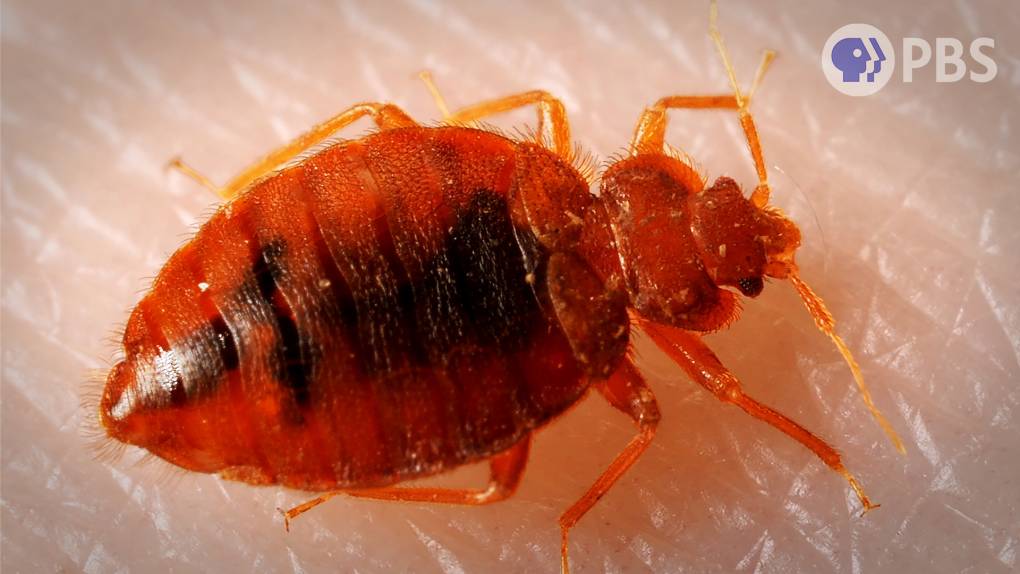
"caption": "An adult bed bug stands on a human arm. It's about the size of an apple seed.",
"credit": "Josh Cassidy/KQED",
"altTag": null,
"description": null,
"imgSizes": {
"medium": {
"file": "https://cdn.kqed.org/wp-content/uploads/sites/35/2025/04/DL1119_5-of-the-Grossest-House-Pests-Weve-Ever-Filmed_A_KQED-800x450.jpg",
"width": 800,
"height": 450,
"mimeType": "image/jpeg"
},
"large": {
"file": "https://cdn.kqed.org/wp-content/uploads/sites/35/2025/04/DL1119_5-of-the-Grossest-House-Pests-Weve-Ever-Filmed_A_KQED-1020x574.jpg",
"width": 1020,
"height": 574,
"mimeType": "image/jpeg"
},
"thumbnail": {
"file": "https://cdn.kqed.org/wp-content/uploads/sites/35/2025/04/DL1119_5-of-the-Grossest-House-Pests-Weve-Ever-Filmed_A_KQED-160x90.jpg",
"width": 160,
"height": 90,
"mimeType": "image/jpeg"
},
"medium_large": {
"file": "https://cdn.kqed.org/wp-content/uploads/sites/35/2025/04/DL1119_5-of-the-Grossest-House-Pests-Weve-Ever-Filmed_A_KQED-768x432.jpg",
"width": 768,
"height": 432,
"mimeType": "image/jpeg"
},
"1536x1536": {
"file": "https://cdn.kqed.org/wp-content/uploads/sites/35/2025/04/DL1119_5-of-the-Grossest-House-Pests-Weve-Ever-Filmed_A_KQED-1536x864.jpg",
"width": 1536,
"height": 864,
"mimeType": "image/jpeg"
},
"post-thumbnail": {
"file": "https://cdn.kqed.org/wp-content/uploads/sites/35/2025/04/DL1119_5-of-the-Grossest-House-Pests-Weve-Ever-Filmed_A_KQED-672x372.jpg",
"width": 672,
"height": 372,
"mimeType": "image/jpeg"
},
"twentyfourteen-full-width": {
"file": "https://cdn.kqed.org/wp-content/uploads/sites/35/2025/04/DL1119_5-of-the-Grossest-House-Pests-Weve-Ever-Filmed_A_KQED-1038x576.jpg",
"width": 1038,
"height": 576,
"mimeType": "image/jpeg"
},
"kqedFullSize": {
"file": "https://cdn.kqed.org/wp-content/uploads/sites/35/2025/04/DL1119_5-of-the-Grossest-House-Pests-Weve-Ever-Filmed_A_KQED.jpg",
"width": 1920,
"height": 1080
}
},
"isLoading": false,
"fetchFailed": false
},
"science_1996518": {
"type": "attachments",
"id": "science_1996518",
"meta": {
"index": "attachments_1716263798",
"site": "science",
"id": "1996518",
"found": true
},
"title": "IMG_0962",
"publishDate": 1743166568,
"status": "inherit",
"parent": 0,
"modified": 1743439607,
"caption": "AI therapy chatbots such as Woebot, Rosebud and TherapistGPT offer 24/7 mental health support, but what happens when they get it wrong?",
"credit": "Anna Vignet/KQED",
"altTag": null,
"description": null,
"imgSizes": {
"medium": {
"file": "https://cdn.kqed.org/wp-content/uploads/sites/35/2025/03/IMG_0962-800x600.jpg",
"width": 800,
"height": 600,
"mimeType": "image/jpeg"
},
"large": {
"file": "https://cdn.kqed.org/wp-content/uploads/sites/35/2025/03/IMG_0962-1020x765.jpg",
"width": 1020,
"height": 765,
"mimeType": "image/jpeg"
},
"thumbnail": {
"file": "https://cdn.kqed.org/wp-content/uploads/sites/35/2025/03/IMG_0962-160x120.jpg",
"width": 160,
"height": 120,
"mimeType": "image/jpeg"
},
"medium_large": {
"file": "https://cdn.kqed.org/wp-content/uploads/sites/35/2025/03/IMG_0962-768x576.jpg",
"width": 768,
"height": 576,
"mimeType": "image/jpeg"
},
"1536x1536": {
"file": "https://cdn.kqed.org/wp-content/uploads/sites/35/2025/03/IMG_0962-1536x1152.jpg",
"width": 1536,
"height": 1152,
"mimeType": "image/jpeg"
},
"2048x2048": {
"file": "https://cdn.kqed.org/wp-content/uploads/sites/35/2025/03/IMG_0962-2048x1536.jpg",
"width": 2048,
"height": 1536,
"mimeType": "image/jpeg"
},
"post-thumbnail": {
"file": "https://cdn.kqed.org/wp-content/uploads/sites/35/2025/03/IMG_0962-672x372.jpg",
"width": 672,
"height": 372,
"mimeType": "image/jpeg"
},
"twentyfourteen-full-width": {
"file": "https://cdn.kqed.org/wp-content/uploads/sites/35/2025/03/IMG_0962-1038x576.jpg",
"width": 1038,
"height": 576,
"mimeType": "image/jpeg"
},
"full-width": {
"file": "https://cdn.kqed.org/wp-content/uploads/sites/35/2025/03/IMG_0962-1920x1440.jpg",
"width": 1920,
"height": 1440,
"mimeType": "image/jpeg"
},
"kqedFullSize": {
"file": "https://cdn.kqed.org/wp-content/uploads/sites/35/2025/03/IMG_0962.jpg",
"width": 2560,
"height": 1920
}
},
"isLoading": false,
"fetchFailed": false
},
"science_1996426": {
"type": "attachments",
"id": "science_1996426",
"meta": {
"index": "attachments_1716263798",
"site": "science",
"id": "1996426",
"found": true
},
"title": "yosemite-camping-2025-reservations",
"publishDate": 1742581605,
"status": "inherit",
"parent": 1996404,
"modified": 1742584181,
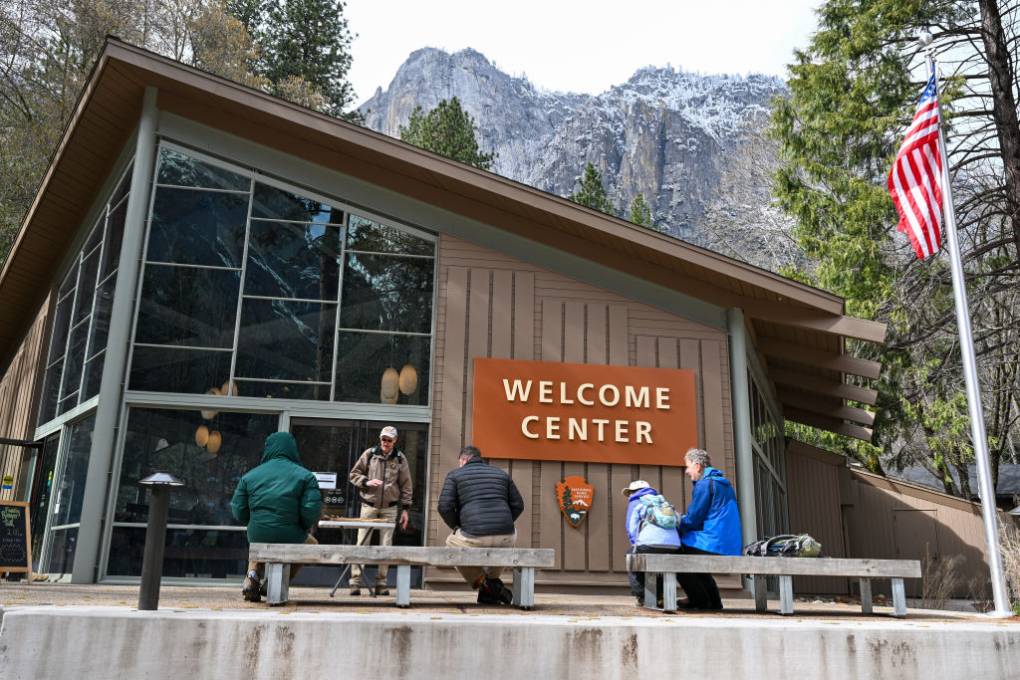
"caption": "A National Park Service employee guides tourists at the welcome center during snowy weather in Yosemite National Park, California, on March 6, 2025. ",
"credit": "Tayfun Coskun/Anadolu via Getty Images",
"altTag": null,
"description": null,
"imgSizes": {
"medium": {
"file": "https://cdn.kqed.org/wp-content/uploads/sites/35/2025/03/GettyImages-2203092818-800x534.jpg",
"width": 800,
"height": 534,
"mimeType": "image/jpeg"
},
"large": {
"file": "https://cdn.kqed.org/wp-content/uploads/sites/35/2025/03/GettyImages-2203092818-1020x680.jpg",
"width": 1020,
"height": 680,
"mimeType": "image/jpeg"
},
"thumbnail": {
"file": "https://cdn.kqed.org/wp-content/uploads/sites/35/2025/03/GettyImages-2203092818-160x107.jpg",
"width": 160,
"height": 107,
"mimeType": "image/jpeg"
},
"medium_large": {
"file": "https://cdn.kqed.org/wp-content/uploads/sites/35/2025/03/GettyImages-2203092818-768x512.jpg",
"width": 768,
"height": 512,
"mimeType": "image/jpeg"
},
"post-thumbnail": {
"file": "https://cdn.kqed.org/wp-content/uploads/sites/35/2025/03/GettyImages-2203092818-672x372.jpg",
"width": 672,
"height": 372,
"mimeType": "image/jpeg"
},
"twentyfourteen-full-width": {
"file": "https://cdn.kqed.org/wp-content/uploads/sites/35/2025/03/GettyImages-2203092818-1024x576.jpg",
"width": 1024,
"height": 576,
"mimeType": "image/jpeg"
},
"kqedFullSize": {
"file": "https://cdn.kqed.org/wp-content/uploads/sites/35/2025/03/GettyImages-2203092818.jpg",
"width": 1024,
"height": 683
}
},
"isLoading": false,
"fetchFailed": false
},
"science_1996492": {
"type": "attachments",
"id": "science_1996492",
"meta": {
"index": "attachments_1716263798",
"site": "science",
"id": "1996492",
"found": true
},
"title": "EPARally1",
"publishDate": 1743105865,
"status": "inherit",
"parent": 1996483,
"modified": 1743107380,
"caption": "Jon Fox attends a rally denouncing President Trump and Elon Musk’s attacks on environmental laws and environmental justice programs in front of the USEPA’s Regional Headquarters in San Francisco on Tuesday, March 25, 2025.",
"credit": "Gina Castro/KQED",
"altTag": null,
"description": null,
"imgSizes": {
"medium": {
"file": "https://cdn.kqed.org/wp-content/uploads/sites/35/2025/03/EPARally1-800x533.jpg",
"width": 800,
"height": 533,
"mimeType": "image/jpeg"
},
"large": {
"file": "https://cdn.kqed.org/wp-content/uploads/sites/35/2025/03/EPARally1-1020x680.jpg",
"width": 1020,
"height": 680,
"mimeType": "image/jpeg"
},
"thumbnail": {
"file": "https://cdn.kqed.org/wp-content/uploads/sites/35/2025/03/EPARally1-160x107.jpg",
"width": 160,
"height": 107,
"mimeType": "image/jpeg"
},
"medium_large": {
"file": "https://cdn.kqed.org/wp-content/uploads/sites/35/2025/03/EPARally1-768x512.jpg",
"width": 768,
"height": 512,
"mimeType": "image/jpeg"
},
"1536x1536": {
"file": "https://cdn.kqed.org/wp-content/uploads/sites/35/2025/03/EPARally1-1536x1024.jpg",
"width": 1536,
"height": 1024,
"mimeType": "image/jpeg"
},
"post-thumbnail": {
"file": "https://cdn.kqed.org/wp-content/uploads/sites/35/2025/03/EPARally1-672x372.jpg",
"width": 672,
"height": 372,
"mimeType": "image/jpeg"
},
"twentyfourteen-full-width": {
"file": "https://cdn.kqed.org/wp-content/uploads/sites/35/2025/03/EPARally1-1038x576.jpg",
"width": 1038,
"height": 576,
"mimeType": "image/jpeg"
},
"full-width": {
"file": "https://cdn.kqed.org/wp-content/uploads/sites/35/2025/03/EPARally1-1920x1280.jpg",
"width": 1920,
"height": 1280,
"mimeType": "image/jpeg"
},
"kqedFullSize": {
"file": "https://cdn.kqed.org/wp-content/uploads/sites/35/2025/03/EPARally1.jpg",
"width": 2000,
"height": 1333
}
},
"isLoading": false,
"fetchFailed": false
},
"science_1996463": {
"type": "attachments",
"id": "science_1996463",
"meta": {
"index": "attachments_1716263798",
"site": "science",
"id": "1996463",
"found": true
},
"title": "Coyote Valley - Landscapes - DN - 3-22-2016 - 19",
"publishDate": 1742857108,
"status": "inherit",
"parent": 1996440,
"modified": 1742857715,
"caption": "Despite plans to break ground in 2026, project leaders say they have yet to get answers on the federal funding needed to build accessible trails in Coyote Valley.",
"credit": "Courtesy Open Space Authority Santa Clara Valley",
"altTag": null,
"description": null,
"imgSizes": {
"medium": {
"file": "https://cdn.kqed.org/wp-content/uploads/sites/35/2025/03/Coyote-Valley-Landscapes-DN-3-22-2016-19-800x534.jpg",
"width": 800,
"height": 534,
"mimeType": "image/jpeg"
},
"large": {
"file": "https://cdn.kqed.org/wp-content/uploads/sites/35/2025/03/Coyote-Valley-Landscapes-DN-3-22-2016-19-1020x680.jpg",
"width": 1020,
"height": 680,
"mimeType": "image/jpeg"
},
"thumbnail": {
"file": "https://cdn.kqed.org/wp-content/uploads/sites/35/2025/03/Coyote-Valley-Landscapes-DN-3-22-2016-19-160x107.jpg",
"width": 160,
"height": 107,
"mimeType": "image/jpeg"
},
"medium_large": {
"file": "https://cdn.kqed.org/wp-content/uploads/sites/35/2025/03/Coyote-Valley-Landscapes-DN-3-22-2016-19-768x512.jpg",
"width": 768,
"height": 512,
"mimeType": "image/jpeg"
},
"1536x1536": {
"file": "https://cdn.kqed.org/wp-content/uploads/sites/35/2025/03/Coyote-Valley-Landscapes-DN-3-22-2016-19-1536x1025.jpg",
"width": 1536,
"height": 1025,
"mimeType": "image/jpeg"
},
"post-thumbnail": {
"file": "https://cdn.kqed.org/wp-content/uploads/sites/35/2025/03/Coyote-Valley-Landscapes-DN-3-22-2016-19-672x372.jpg",
"width": 672,
"height": 372,
"mimeType": "image/jpeg"
},
"twentyfourteen-full-width": {
"file": "https://cdn.kqed.org/wp-content/uploads/sites/35/2025/03/Coyote-Valley-Landscapes-DN-3-22-2016-19-1038x576.jpg",
"width": 1038,
"height": 576,
"mimeType": "image/jpeg"
},
"full-width": {
"file": "https://cdn.kqed.org/wp-content/uploads/sites/35/2025/03/Coyote-Valley-Landscapes-DN-3-22-2016-19-1920x1281.jpg",
"width": 1920,
"height": 1281,
"mimeType": "image/jpeg"
},
"kqedFullSize": {
"file": "https://cdn.kqed.org/wp-content/uploads/sites/35/2025/03/Coyote-Valley-Landscapes-DN-3-22-2016-19.jpg",
"width": 2000,
"height": 1334
}
},
"isLoading": false,
"fetchFailed": false
},
"science_1996372": {
"type": "attachments",
"id": "science_1996372",
"meta": {
"index": "attachments_1716263798",
"site": "science",
"id": "1996372",
"found": true
},
"title": "250102-KidsFleece-14",
"publishDate": 1742328164,
"status": "inherit",
"parent": 0,
"modified": 1766617906,
"caption": "Teddy holds his fleece stuffed animal, Bunny, at the KQED offices in San Francisco on Jan. 2, 2025.",
"credit": "Beth LaBerge/KQED",
"altTag": null,
"description": null,
"imgSizes": {
"medium": {
"file": "https://cdn.kqed.org/wp-content/uploads/sites/35/2025/03/250102-KidsFleece-14-800x533.jpg",
"width": 800,
"height": 533,
"mimeType": "image/jpeg"
},
"large": {
"file": "https://cdn.kqed.org/wp-content/uploads/sites/35/2025/03/250102-KidsFleece-14-1020x680.jpg",
"width": 1020,
"height": 680,
"mimeType": "image/jpeg"
},
"thumbnail": {
"file": "https://cdn.kqed.org/wp-content/uploads/sites/35/2025/03/250102-KidsFleece-14-160x107.jpg",
"width": 160,
"height": 107,
"mimeType": "image/jpeg"
},
"medium_large": {
"file": "https://cdn.kqed.org/wp-content/uploads/sites/35/2025/03/250102-KidsFleece-14-768x512.jpg",
"width": 768,
"height": 512,
"mimeType": "image/jpeg"
},
"1536x1536": {
"file": "https://cdn.kqed.org/wp-content/uploads/sites/35/2025/03/250102-KidsFleece-14-1536x1024.jpg",
"width": 1536,
"height": 1024,
"mimeType": "image/jpeg"
},
"post-thumbnail": {
"file": "https://cdn.kqed.org/wp-content/uploads/sites/35/2025/03/250102-KidsFleece-14-672x372.jpg",
"width": 672,
"height": 372,
"mimeType": "image/jpeg"
},
"twentyfourteen-full-width": {
"file": "https://cdn.kqed.org/wp-content/uploads/sites/35/2025/03/250102-KidsFleece-14-1038x576.jpg",
"width": 1038,
"height": 576,
"mimeType": "image/jpeg"
},
"full-width": {
"file": "https://cdn.kqed.org/wp-content/uploads/sites/35/2025/03/250102-KidsFleece-14-1920x1280.jpg",
"width": 1920,
"height": 1280,
"mimeType": "image/jpeg"
},
"kqedFullSize": {
"file": "https://cdn.kqed.org/wp-content/uploads/sites/35/2025/03/250102-KidsFleece-14.jpg",
"width": 2000,
"height": 1333
}
},
"isLoading": false,
"fetchFailed": false
},
"science_1992041": {
"type": "attachments",
"id": "science_1992041",
"meta": {
"index": "attachments_1716263798",
"site": "science",
"id": "1992041",
"found": true
},
"parent": 1992036,
"imgSizes": {
"twentyfourteen-full-width": {
"file": "https://cdn.kqed.org/wp-content/uploads/sites/35/2024/03/iStock-501441083-1038x576.jpg",
"width": 1038,
"mimeType": "image/jpeg",
"height": 576
},
"thumbnail": {
"file": "https://cdn.kqed.org/wp-content/uploads/sites/35/2024/03/iStock-501441083-160x107.jpg",
"width": 160,
"mimeType": "image/jpeg",
"height": 107
},
"post-thumbnail": {
"file": "https://cdn.kqed.org/wp-content/uploads/sites/35/2024/03/iStock-501441083-672x372.jpg",
"width": 672,
"mimeType": "image/jpeg",
"height": 372
},
"kqedFullSize": {
"file": "https://cdn.kqed.org/wp-content/uploads/sites/35/2024/03/iStock-501441083.jpg",
"width": 2080,
"height": 1387
},
"2048x2048": {
"file": "https://cdn.kqed.org/wp-content/uploads/sites/35/2024/03/iStock-501441083-2048x1366.jpg",
"width": 2048,
"mimeType": "image/jpeg",
"height": 1366
},
"large": {
"file": "https://cdn.kqed.org/wp-content/uploads/sites/35/2024/03/iStock-501441083-1020x680.jpg",
"width": 1020,
"mimeType": "image/jpeg",
"height": 680
},
"1536x1536": {
"file": "https://cdn.kqed.org/wp-content/uploads/sites/35/2024/03/iStock-501441083-1536x1024.jpg",
"width": 1536,
"mimeType": "image/jpeg",
"height": 1024
},
"full-width": {
"file": "https://cdn.kqed.org/wp-content/uploads/sites/35/2024/03/iStock-501441083-1920x1280.jpg",
"width": 1920,
"mimeType": "image/jpeg",
"height": 1280
},
"medium": {
"file": "https://cdn.kqed.org/wp-content/uploads/sites/35/2024/03/iStock-501441083-800x533.jpg",
"width": 800,
"mimeType": "image/jpeg",
"height": 533
},
"medium_large": {
"file": "https://cdn.kqed.org/wp-content/uploads/sites/35/2024/03/iStock-501441083-768x512.jpg",
"width": 768,
"mimeType": "image/jpeg",
"height": 512
}
},
"publishDate": 1711055789,
"modified": 1711059590,
"caption": "Sakura blossoms from the SF Japantown during the Cherry Blossom Festival.",
"description": null,
"title": "Sakura Blossoms",
"credit": "afimages/Getty Images",
"status": "inherit",
"altTag": null,
"isLoading": false,
"fetchFailed": false
},
"science_41315": {
"type": "attachments",
"id": "science_41315",
"meta": {
"index": "attachments_1716263798",
"site": "science",
"id": "41315",
"found": true
},
"title": "measles-vaccine-mmr-do-i-need-booster",
"publishDate": 1433883730,
"status": "inherit",
"parent": 41314,
"modified": 1742411606,
"caption": "Measles is preventable with the combined Measles, Mumps, and Rubella (MMR) vaccine.",
"credit": "Illustration Justin Sullivan/Getty Images",
"altTag": null,
"description": "MILL VALLEY, CA - JANUARY 26: In this photo illustration, vials of measles, mumps and rubella vaccine are displayed on a counter at a Walgreens Pharmacy on January 26, 2015 in Mill Valley, California. An outbreak of measles in California has grown to 68 cases with 48 of the cases being linked to people who had visited Disneyland. Nine additional cases have been reported in five states and Mexico. (Photo by Illustration Justin Sullivan/Getty Images)",
"imgSizes": {
"thumbnail": {
"file": "https://cdn.kqed.org/wp-content/uploads/sites/35/2015/05/41314-thumb-400x276.jpg",
"width": 400,
"height": 276,
"mimeType": "image/jpeg"
},
"guest-author-32": {
"file": "https://cdn.kqed.org/wp-content/uploads/sites/35/2015/05/41314-thumb-32x32.jpg",
"width": 32,
"height": 32,
"mimeType": "image/jpeg"
},
"guest-author-64": {
"file": "https://cdn.kqed.org/wp-content/uploads/sites/35/2015/05/41314-thumb-64x64.jpg",
"width": 64,
"height": 64,
"mimeType": "image/jpeg"
},
"guest-author-96": {
"file": "https://cdn.kqed.org/wp-content/uploads/sites/35/2015/05/41314-thumb-96x96.jpg",
"width": 96,
"height": 96,
"mimeType": "image/jpeg"
},
"guest-author-128": {
"file": "https://cdn.kqed.org/wp-content/uploads/sites/35/2015/05/41314-thumb-128x128.jpg",
"width": 128,
"height": 128,
"mimeType": "image/jpeg"
},
"detail": {
"file": "https://cdn.kqed.org/wp-content/uploads/sites/35/2015/05/41314-thumb-75x75.jpg",
"width": 75,
"height": 75,
"mimeType": "image/jpeg"
},
"kqedFullSize": {
"file": "https://cdn.kqed.org/wp-content/uploads/sites/35/2015/05/41314-thumb.jpg",
"width": 400,
"height": 276
}
},
"isLoading": false,
"fetchFailed": false
},
"science_1996301": {
"type": "attachments",
"id": "science_1996301",
"meta": {
"index": "attachments_1716263798",
"site": "science",
"id": "1996301",
"found": true
},
"title": "20250312_BONNYDOON_GC-25-KQED",
"publishDate": 1741814298,
"status": "inherit",
"parent": 0,
"modified": 1741814337,
"caption": "Daffodils blooming at Kathy Astromoff’s home in Bonny Doon on March 11, 2025. Some of Astromoff’s neighbors’ homes burned down during the 2020 CZU fire and she had to evacuate for 8 weeks. The flowers were planted one year after the fire and are a symbol of recovery.",
"credit": "Gina Castro/KQED",
"altTag": null,
"description": null,
"imgSizes": {
"medium": {
"file": "https://cdn.kqed.org/wp-content/uploads/sites/35/2025/03/20250312_BONNYDOON_GC-25-KQED-800x533.jpg",
"width": 800,
"height": 533,
"mimeType": "image/jpeg"
},
"large": {
"file": "https://cdn.kqed.org/wp-content/uploads/sites/35/2025/03/20250312_BONNYDOON_GC-25-KQED-1020x680.jpg",
"width": 1020,
"height": 680,
"mimeType": "image/jpeg"
},
"thumbnail": {
"file": "https://cdn.kqed.org/wp-content/uploads/sites/35/2025/03/20250312_BONNYDOON_GC-25-KQED-160x107.jpg",
"width": 160,
"height": 107,
"mimeType": "image/jpeg"
},
"medium_large": {
"file": "https://cdn.kqed.org/wp-content/uploads/sites/35/2025/03/20250312_BONNYDOON_GC-25-KQED-768x512.jpg",
"width": 768,
"height": 512,
"mimeType": "image/jpeg"
},
"1536x1536": {
"file": "https://cdn.kqed.org/wp-content/uploads/sites/35/2025/03/20250312_BONNYDOON_GC-25-KQED-1536x1024.jpg",
"width": 1536,
"height": 1024,
"mimeType": "image/jpeg"
},
"post-thumbnail": {
"file": "https://cdn.kqed.org/wp-content/uploads/sites/35/2025/03/20250312_BONNYDOON_GC-25-KQED-672x372.jpg",
"width": 672,
"height": 372,
"mimeType": "image/jpeg"
},
"twentyfourteen-full-width": {
"file": "https://cdn.kqed.org/wp-content/uploads/sites/35/2025/03/20250312_BONNYDOON_GC-25-KQED-1038x576.jpg",
"width": 1038,
"height": 576,
"mimeType": "image/jpeg"
},
"full-width": {
"file": "https://cdn.kqed.org/wp-content/uploads/sites/35/2025/03/20250312_BONNYDOON_GC-25-KQED-1920x1280.jpg",
"width": 1920,
"height": 1280,
"mimeType": "image/jpeg"
},
"kqedFullSize": {
"file": "https://cdn.kqed.org/wp-content/uploads/sites/35/2025/03/20250312_BONNYDOON_GC-25-KQED.jpg",
"width": 2000,
"height": 1333
}
},
"isLoading": false,
"fetchFailed": false
},
"science_1996283": {
"type": "attachments",
"id": "science_1996283",
"meta": {
"index": "attachments_1716263798",
"site": "science",
"id": "1996283",
"found": true
},
"title": "19 1115_0531.NEF",
"publishDate": 1741799242,
"status": "inherit",
"parent": 0,
"modified": 1741972214,
"caption": "A subterranean giant: The Des Plaines tunnel, a one-mile stretch of Chicago’s ambitious Tunnel and Reservoir Plan (TARP), spans 20 feet in diameter and sits 250 feet underground. This massive tunnel, photographed on Nov. 15, 2019, is a crucial link to the McCook Reservoir, designed to combat flooding and improve water quality by capturing stormwater and sewer overflows.",
"credit": "Courtesy of Dan Wendt/MWRDGC",
"altTag": null,
"description": null,
"imgSizes": {
"medium": {
"file": "https://cdn.kqed.org/wp-content/uploads/sites/35/2025/03/19-1115_0531-800x532.jpg",
"width": 800,
"height": 532,
"mimeType": "image/jpeg"
},
"large": {
"file": "https://cdn.kqed.org/wp-content/uploads/sites/35/2025/03/19-1115_0531-1020x679.jpg",
"width": 1020,
"height": 679,
"mimeType": "image/jpeg"
},
"thumbnail": {
"file": "https://cdn.kqed.org/wp-content/uploads/sites/35/2025/03/19-1115_0531-160x106.jpg",
"width": 160,
"height": 106,
"mimeType": "image/jpeg"
},
"medium_large": {
"file": "https://cdn.kqed.org/wp-content/uploads/sites/35/2025/03/19-1115_0531-768x511.jpg",
"width": 768,
"height": 511,
"mimeType": "image/jpeg"
},
"1536x1536": {
"file": "https://cdn.kqed.org/wp-content/uploads/sites/35/2025/03/19-1115_0531-1536x1022.jpg",
"width": 1536,
"height": 1022,
"mimeType": "image/jpeg"
},
"post-thumbnail": {
"file": "https://cdn.kqed.org/wp-content/uploads/sites/35/2025/03/19-1115_0531-672x372.jpg",
"width": 672,
"height": 372,
"mimeType": "image/jpeg"
},
"twentyfourteen-full-width": {
"file": "https://cdn.kqed.org/wp-content/uploads/sites/35/2025/03/19-1115_0531-1038x576.jpg",
"width": 1038,
"height": 576,
"mimeType": "image/jpeg"
},
"full-width": {
"file": "https://cdn.kqed.org/wp-content/uploads/sites/35/2025/03/19-1115_0531-1920x1278.jpg",
"width": 1920,
"height": 1278,
"mimeType": "image/jpeg"
},
"kqedFullSize": {
"file": "https://cdn.kqed.org/wp-content/uploads/sites/35/2025/03/19-1115_0531.jpg",
"width": 2000,
"height": 1331
}
},
"isLoading": false,
"fetchFailed": false
},
"science_1981883": {
"type": "attachments",
"id": "science_1981883",
"meta": {
"index": "attachments_1716263798",
"site": "science",
"id": "1981883",
"found": true
},
"title": "super-bloom-bay-area-2025",
"publishDate": 1679022010,
"status": "inherit",
"parent": 1981882,
"modified": 1742225924,
"caption": "California poppy (Eschscholzia californica) and various other wildflowers blooming in a meadow in San José.",
"credit": "Sundry Photography/Getty Images",
"altTag": "Yellow and white wildflower blooms seen in a meadow.",
"description": null,
"imgSizes": {
"medium": {
"file": "https://cdn.kqed.org/wp-content/uploads/sites/35/2023/03/GettyImages-1141101456-800x533.jpg",
"width": 800,
"height": 533,
"mimeType": "image/jpeg"
},
"large": {
"file": "https://cdn.kqed.org/wp-content/uploads/sites/35/2023/03/GettyImages-1141101456-1020x680.jpg",
"width": 1020,
"height": 680,
"mimeType": "image/jpeg"
},
"thumbnail": {
"file": "https://cdn.kqed.org/wp-content/uploads/sites/35/2023/03/GettyImages-1141101456-160x107.jpg",
"width": 160,
"height": 107,
"mimeType": "image/jpeg"
},
"medium_large": {
"file": "https://cdn.kqed.org/wp-content/uploads/sites/35/2023/03/GettyImages-1141101456-768x512.jpg",
"width": 768,
"height": 512,
"mimeType": "image/jpeg"
},
"1536x1536": {
"file": "https://cdn.kqed.org/wp-content/uploads/sites/35/2023/03/GettyImages-1141101456-1536x1024.jpg",
"width": 1536,
"height": 1024,
"mimeType": "image/jpeg"
},
"2048x2048": {
"file": "https://cdn.kqed.org/wp-content/uploads/sites/35/2023/03/GettyImages-1141101456-2048x1365.jpg",
"width": 2048,
"height": 1365,
"mimeType": "image/jpeg"
},
"post-thumbnail": {
"file": "https://cdn.kqed.org/wp-content/uploads/sites/35/2023/03/GettyImages-1141101456-672x372.jpg",
"width": 672,
"height": 372,
"mimeType": "image/jpeg"
},
"twentyfourteen-full-width": {
"file": "https://cdn.kqed.org/wp-content/uploads/sites/35/2023/03/GettyImages-1141101456-1038x576.jpg",
"width": 1038,
"height": 576,
"mimeType": "image/jpeg"
},
"full-width": {
"file": "https://cdn.kqed.org/wp-content/uploads/sites/35/2023/03/GettyImages-1141101456-1920x1280.jpg",
"width": 1920,
"height": 1280,
"mimeType": "image/jpeg"
},
"kqedFullSize": {
"file": "https://cdn.kqed.org/wp-content/uploads/sites/35/2023/03/GettyImages-1141101456.jpg",
"width": 2121,
"height": 1414
}
},
"isLoading": false,
"fetchFailed": false
},
"science_1994404": {
"type": "attachments",
"id": "science_1994404",
"meta": {
"index": "attachments_1716263798",
"site": "science",
"id": "1994404",
"found": true
},
"title": "how-to-see-blood-moon-2025",
"publishDate": 1726504065,
"status": "inherit",
"parent": 1994403,
"modified": 1741285874,
"caption": "A blood moon is seen during a lunar eclipse on Nov. 8, 2022, over Brisbane, Australia. ",
"credit": "Dan Peled/Getty Images",
"altTag": "An image of the moon with a reddish tint.",
"description": "BRISBANE, AUSTRALIA - NOVEMBER 08: A blood moon is seen during a lunar eclipse on November 08, 2022 over Brisbane, Australia. Australians will experience the first visible total lunar eclipse of the year on Tuesday, the ABC reported, with the eclipse also being visible from New Zealand. The \"Blood Moon\" is the first of its kind for the year, and the last time the region will see a full lunar eclipse until 2025. (Photo by Dan Peled/Getty Images)",
"imgSizes": {
"medium": {
"file": "https://cdn.kqed.org/wp-content/uploads/sites/35/2024/09/gettyimages-1439969828-800x515.jpeg",
"width": 800,
"height": 515,
"mimeType": "image/jpeg"
},
"large": {
"file": "https://cdn.kqed.org/wp-content/uploads/sites/35/2024/09/gettyimages-1439969828-1020x656.jpeg",
"width": 1020,
"height": 656,
"mimeType": "image/jpeg"
},
"thumbnail": {
"file": "https://cdn.kqed.org/wp-content/uploads/sites/35/2024/09/gettyimages-1439969828-160x103.jpeg",
"width": 160,
"height": 103,
"mimeType": "image/jpeg"
},
"medium_large": {
"file": "https://cdn.kqed.org/wp-content/uploads/sites/35/2024/09/gettyimages-1439969828-768x494.jpeg",
"width": 768,
"height": 494,
"mimeType": "image/jpeg"
},
"1536x1536": {
"file": "https://cdn.kqed.org/wp-content/uploads/sites/35/2024/09/gettyimages-1439969828-1536x988.jpeg",
"width": 1536,
"height": 988,
"mimeType": "image/jpeg"
},
"2048x2048": {
"file": "https://cdn.kqed.org/wp-content/uploads/sites/35/2024/09/gettyimages-1439969828-2048x1318.jpeg",
"width": 2048,
"height": 1318,
"mimeType": "image/jpeg"
},
"post-thumbnail": {
"file": "https://cdn.kqed.org/wp-content/uploads/sites/35/2024/09/gettyimages-1439969828-672x372.jpeg",
"width": 672,
"height": 372,
"mimeType": "image/jpeg"
},
"twentyfourteen-full-width": {
"file": "https://cdn.kqed.org/wp-content/uploads/sites/35/2024/09/gettyimages-1439969828-1038x576.jpeg",
"width": 1038,
"height": 576,
"mimeType": "image/jpeg"
},
"full-width": {
"file": "https://cdn.kqed.org/wp-content/uploads/sites/35/2024/09/gettyimages-1439969828-1920x1235.jpeg",
"width": 1920,
"height": 1235,
"mimeType": "image/jpeg"
},
"kqedFullSize": {
"file": "https://cdn.kqed.org/wp-content/uploads/sites/35/2024/09/gettyimages-1439969828-scaled-e1772044520737.jpeg",
"width": 2000,
"height": 1287
}
},
"isLoading": false,
"fetchFailed": false
}
},
"audioPlayerReducer": {
"postId": "stream_live",
"isPaused": true,
"isPlaying": false,
"pfsActive": false,
"pledgeModalIsOpen": true,
"playerDrawerIsOpen": false,
"liveAudioPlayStartedAt": 0,
"liveAudioPlayContext": ""
},
"authorsReducer": {
"byline_science_1996337": {
"type": "authors",
"id": "byline_science_1996337",
"meta": {
"override": true
},
"slug": "byline_science_1996337",
"name": "Anna FitzGerald Guth",
"isLoading": false
},
"carlysevern": {
"type": "authors",
"id": "3243",
"meta": {
"index": "authors_1716337520",
"id": "3243",
"found": true
},
"name": "Carly Severn",
"firstName": "Carly",
"lastName": "Severn",
"slug": "carlysevern",
"email": "csevern@kqed.org",
"display_author_email": false,
"staff_mastheads": [
"news"
],
"title": "Senior Editor, Audience News ",
"bio": "Carly is KQED's Senior Editor of Audience News on the Digital News team, and has reported for the California Report Magazine, Bay Curious and KQED Arts. She's formerly the host of \u003ca href=\"http://ww2.kqed.org/pop/category/the-cooler/\" rel=\"noopener noreferrer\">The Cooler\u003c/a> podcast.",
"avatar": "https://secure.gravatar.com/avatar/54037bf5c128fe678f0ef26cec97a93f2e7f220a22d7285703328f12c42c1b1d?s=600&d=blank&r=g",
"twitter": "teacupinthebay",
"bluesky": null,
"facebook": null,
"instagram": null,
"linkedin": null,
"sites": [
{
"site": "",
"roles": [
"editor"
]
},
{
"site": "arts",
"roles": [
"editor"
]
},
{
"site": "news",
"roles": [
"administrator"
]
},
{
"site": "pop",
"roles": [
"editor"
]
},
{
"site": "futureofyou",
"roles": [
"editor"
]
},
{
"site": "about",
"roles": [
"administrator"
]
},
{
"site": "mindshift",
"roles": [
"editor"
]
},
{
"site": "bayareabites",
"roles": [
"editor"
]
},
{
"site": "stateofhealth",
"roles": [
"editor"
]
},
{
"site": "science",
"roles": [
"editor"
]
},
{
"site": "food",
"roles": [
"contributor"
]
},
{
"site": "forum",
"roles": [
"editor"
]
},
{
"site": "perspectives",
"roles": [
"administrator"
]
},
{
"site": "liveblog",
"roles": [
"editor"
]
}
],
"headData": {
"title": "Carly Severn | KQED",
"description": "Senior Editor, Audience News ",
"ogImgSrc": "https://secure.gravatar.com/avatar/54037bf5c128fe678f0ef26cec97a93f2e7f220a22d7285703328f12c42c1b1d?s=600&d=blank&r=g",
"twImgSrc": "https://secure.gravatar.com/avatar/54037bf5c128fe678f0ef26cec97a93f2e7f220a22d7285703328f12c42c1b1d?s=600&d=blank&r=g"
},
"isLoading": false,
"link": "/author/carlysevern"
},
"gabriela-quiros": {
"type": "authors",
"id": "6186",
"meta": {
"index": "authors_1716337520",
"id": "6186",
"found": true
},
"name": "Gabriela Quirós",
"firstName": "Gabriela",
"lastName": "Quirós",
"slug": "gabriela-quiros",
"email": "gquiros@kqed.org",
"display_author_email": false,
"staff_mastheads": [],
"title": "Supervising Producer",
"bio": "Gabriela Quirós is the \u003cstrong>supervising producer for KQED's web science video series \u003ca href=\"https://www.kqed.org/deeplook\">Deep Look\u003c/a>\u003c/strong>. She joined KQED as a TV producer when its science series QUEST started in 2006 and has covered everything from Alzheimer’s to bee die-offs to dark energy.\r\n\r\nShe won a 2022 AAAS Kavli Science Journalism Award with a team of her Deep Look colleagues. She has won six regional Emmys as a video producer and has shared eight more as the coordinating producer of Deep Look. The episode she produced about \u003ca href=\"https://www.kqed.org/science/728086/how-mosquitoes-use-six-needles-to-suck-your-blood\">How Mosquitoes Use Six Needles to Suck Your Blood\u003c/a> won a Webby \"People's Voice\" award. She has also earned awards from the Jackson Hole Wildlife Film Festival, the Society of Professional Journalists and the Society of Environmental Journalists.\r\n\r\nHer videos for KQED have also aired on NOVA scienceNOW and the PBS NewsHour, and appeared on NPR.org.\r\n\r\nAs an independent filmmaker, she produced and directed the hour-long documentary \u003ca href=\"http://lpbp.org/beautiful-sin-qa-with-producer-gabriela-quiros/\">\u003cem>Beautiful Sin\u003c/em>\u003c/a>, about the surprising story of how Costa Rica became the only country in the world to outlaw in vitro fertilization. The film aired in 2015 on public television stations throughout the U.S., and in Costa Rica.\r\n\r\nShe started her journalism career as a newspaper reporter in Costa Rica, where she grew up. She won the National Science Journalism Award there for a series of articles about organic agriculture, and developed a life-long interest in health reporting. She moved to the Bay Area in 1996 to study documentary filmmaking at the University of California, Berkeley, where she received master’s degrees in journalism and Latin American studies.",
"avatar": "https://secure.gravatar.com/avatar/6d82c20152affd1b434c31a904c40809?s=600&d=blank&r=g",
"twitter": "gabrielaquirosr",
"facebook": null,
"instagram": null,
"linkedin": null,
"sites": [
{
"site": "science",
"roles": []
},
{
"site": "quest",
"roles": [
"ef_view_calendar",
"ef_view_story_budget"
]
}
],
"headData": {
"title": "Gabriela Quirós | KQED",
"description": "Supervising Producer",
"ogImgSrc": "https://secure.gravatar.com/avatar/6d82c20152affd1b434c31a904c40809?s=600&d=blank&r=g",
"twImgSrc": "https://secure.gravatar.com/avatar/6d82c20152affd1b434c31a904c40809?s=600&d=blank&r=g"
},
"isLoading": false,
"link": "/author/gabriela-quiros"
},
"dventon": {
"type": "authors",
"id": "11088",
"meta": {
"index": "authors_1716337520",
"id": "11088",
"found": true
},
"name": "Danielle Venton",
"firstName": "Danielle",
"lastName": "Venton",
"slug": "dventon",
"email": "dventon@kqed.org",
"display_author_email": true,
"staff_mastheads": [
"science"
],
"title": "Science reporter",
"bio": "Danielle Venton is a reporter for KQED Science. She covers wildfires, space and oceans (though she is prone to sea sickness).\r\n\r\nBefore joining KQED in 2015, Danielle was a staff reporter at KRCB in Sonoma County and a freelancer. She studied science communication at UC Santa Cruz and formerly worked at CERN in Geneva, Switzerland where she wrote about computing. She lives in Sonoma County and enjoys backpacking.",
"avatar": "https://secure.gravatar.com/avatar/37b292b5c40c8d93959c4f48d73b5286f41b7abd8588277e941905a3ed4c801c?s=600&d=blank&r=g",
"twitter": "DanielleVenton",
"bluesky": null,
"facebook": null,
"instagram": null,
"linkedin": null,
"sites": [
{
"site": "arts",
"roles": [
"contributor"
]
},
{
"site": "news",
"roles": [
"editor"
]
},
{
"site": "futureofyou",
"roles": [
"editor"
]
},
{
"site": "science",
"roles": [
"editor"
]
},
{
"site": "liveblog",
"roles": [
"contributor"
]
}
],
"headData": {
"title": "Danielle Venton | KQED",
"description": "Science reporter",
"ogImgSrc": "https://secure.gravatar.com/avatar/37b292b5c40c8d93959c4f48d73b5286f41b7abd8588277e941905a3ed4c801c?s=600&d=blank&r=g",
"twImgSrc": "https://secure.gravatar.com/avatar/37b292b5c40c8d93959c4f48d73b5286f41b7abd8588277e941905a3ed4c801c?s=600&d=blank&r=g"
},
"isLoading": false,
"link": "/author/dventon"
},
"lesleymcclurg": {
"type": "authors",
"id": "11229",
"meta": {
"index": "authors_1716337520",
"id": "11229",
"found": true
},
"name": "Lesley McClurg",
"firstName": "Lesley",
"lastName": "McClurg",
"slug": "lesleymcclurg",
"email": "lmcclurg@KQED.org",
"display_author_email": false,
"staff_mastheads": [],
"title": "KQED Health Correspondent",
"bio": "Lesley McClurg is a health correspondent and fill-in host whose work is regularly rebroadcast on NPR and PBS programs. She’s earned multiple regional Emmy awards, a national and a regional Edward R. Murrow award, and was named Best Beat Reporter by the Association of Health Care Journalists. The Society of Professional Journalists has recognized her work several times, and the Society of Environmental Journalists spotlighted her coverage of California’s historic drought.\r\n\r\nBefore joining KQED in 2016, Lesley covered food and sustainability for Capital Public Radio, environmental issues for Colorado Public Radio, and reported for KUOW and KCTS 9 in Seattle. Away from the newsroom, she loves skiing with her daughter, mountain biking with her partner, and playing with Ollie, the family’s goldendoodle. On deadline, she runs almost entirely on chocolate chips.\r\n\r\n ",
"avatar": "https://secure.gravatar.com/avatar/bab49e972ea10c774fe0f5e29dba1722b158f7c0d58a360923d1389d380b2978?s=600&d=blank&r=g",
"twitter": "lesleywmcclurg",
"bluesky": null,
"facebook": null,
"instagram": null,
"linkedin": null,
"sites": [
{
"site": "arts",
"roles": [
"subscriber"
]
},
{
"site": "news",
"roles": [
"subscriber"
]
},
{
"site": "futureofyou",
"roles": [
"subscriber"
]
},
{
"site": "stateofhealth",
"roles": [
"subscriber"
]
},
{
"site": "science",
"roles": [
"subscriber"
]
},
{
"site": "quest",
"roles": [
"subscriber"
]
},
{
"site": "forum",
"roles": [
"subscriber"
]
},
{
"site": "liveblog",
"roles": [
"subscriber"
]
}
],
"headData": {
"title": "Lesley McClurg | KQED",
"description": "KQED Health Correspondent",
"ogImgSrc": "https://secure.gravatar.com/avatar/bab49e972ea10c774fe0f5e29dba1722b158f7c0d58a360923d1389d380b2978?s=600&d=blank&r=g",
"twImgSrc": "https://secure.gravatar.com/avatar/bab49e972ea10c774fe0f5e29dba1722b158f7c0d58a360923d1389d380b2978?s=600&d=blank&r=g"
},
"isLoading": false,
"link": "/author/lesleymcclurg"
},
"smohamad": {
"type": "authors",
"id": "11631",
"meta": {
"index": "authors_1716337520",
"id": "11631",
"found": true
},
"name": "Sarah Mohamad",
"firstName": "Sarah",
"lastName": "Mohamad",
"slug": "smohamad",
"email": "smohamad@KQED.org",
"display_author_email": true,
"staff_mastheads": [],
"title": "Engagement Producer and Reporter, KQED Science",
"bio": "Sarah Mohamad is an audience engagement reporter and producer for KQED Science. She reports on audience-focused science and environment stories and manages the team's social media, newsletter, and engagement efforts. Prior to this role, she played a key role as project manager for NSF's \u003ca href=\"https://www.kqed.org/crackingthecode\">\u003cem>Cracking the Code: Influencing Millennial Science Engagement\u003c/em> \u003c/a>audience research.",
"avatar": "https://secure.gravatar.com/avatar/e6224957cd82d015183756ddde1f928013a563d7ca2e4565f8c4de1ec64886c5?s=600&d=blank&r=g",
"twitter": "sarahkmohamad",
"bluesky": null,
"facebook": null,
"instagram": null,
"linkedin": null,
"sites": [
{
"site": "",
"roles": [
"editor"
]
},
{
"site": "arts",
"roles": [
"editor"
]
},
{
"site": "news",
"roles": [
"editor"
]
},
{
"site": "about",
"roles": [
"editor"
]
},
{
"site": "science",
"roles": [
"editor"
]
}
],
"headData": {
"title": "Sarah Mohamad | KQED",
"description": "Engagement Producer and Reporter, KQED Science",
"ogImgSrc": "https://secure.gravatar.com/avatar/e6224957cd82d015183756ddde1f928013a563d7ca2e4565f8c4de1ec64886c5?s=600&d=blank&r=g",
"twImgSrc": "https://secure.gravatar.com/avatar/e6224957cd82d015183756ddde1f928013a563d7ca2e4565f8c4de1ec64886c5?s=600&d=blank&r=g"
},
"isLoading": false,
"link": "/author/smohamad"
},
"eromero": {
"type": "authors",
"id": "11746",
"meta": {
"index": "authors_1716337520",
"id": "11746",
"found": true
},
"name": "Ezra David Romero",
"firstName": "Ezra David",
"lastName": "Romero",
"slug": "eromero",
"email": "eromero@kqed.org",
"display_author_email": true,
"staff_mastheads": [
"news",
"science"
],
"title": "Climate Reporter",
"bio": "Ezra David Romero is a climate reporter for KQED News. He covers the absence and excess of water in the Bay Area — think sea level rise, flooding and drought. For nearly a decade he’s covered how warming temperatures are altering the lives of Californians. He’s reported on farmers worried their pistachio trees aren’t getting enough sleep, families desperate for water, scientists studying dying giant sequoias, and alongside firefighters containing wildfires. His work has appeared on local stations across California and nationally on public radio shows like Morning Edition, Here and Now, All Things Considered and Science Friday. ",
"avatar": "https://secure.gravatar.com/avatar/c76404d287c10ed40224227551ac36e24352c7306f106632caf6fead76f8801f?s=600&d=blank&r=g",
"twitter": "ezraromero",
"bluesky": null,
"facebook": null,
"instagram": null,
"linkedin": null,
"sites": [
{
"site": "arts",
"roles": [
"editor"
]
},
{
"site": "news",
"roles": [
"editor"
]
},
{
"site": "science",
"roles": [
"editor"
]
},
{
"site": "liveblog",
"roles": [
"author"
]
}
],
"headData": {
"title": "Ezra David Romero | KQED",
"description": "Climate Reporter",
"ogImgSrc": "https://secure.gravatar.com/avatar/c76404d287c10ed40224227551ac36e24352c7306f106632caf6fead76f8801f?s=600&d=blank&r=g",
"twImgSrc": "https://secure.gravatar.com/avatar/c76404d287c10ed40224227551ac36e24352c7306f106632caf6fead76f8801f?s=600&d=blank&r=g"
},
"isLoading": false,
"link": "/author/eromero"
}
},
"pagesReducer": {
"science_category_news": {
"type": "terms",
"id": "science_40",
"meta": {
"index": "terms_1716263798",
"site": "science",
"id": "40",
"score": 10.811016
},
"featImg": null,
"name": "News",
"description": null,
"taxonomy": "category",
"headData": {
"twImgId": null,
"twTitle": null,
"ogTitle": null,
"ogImgId": null,
"twDescription": null,
"description": null,
"title": "News Archives | KQED Science",
"ogDescription": null
},
"ttid": 42,
"slug": "news",
"isLoading": false,
"title": "News",
"pageMeta": {
"site": "science",
"WpPageTemplate": "page-topic-editorial",
"currentPage": 23
},
"blocks": [
{
"blockName": "kqed/post-list",
"attrs": {
"layout": "cardArticle2",
"query": "posts/science?category=news",
"seeMore": false,
"paginated": true,
"page": 23
}
},
{
"blockName": "kqed/ad"
}
]
}
},
"pfsSessionReducer": {},
"postsReducer": {
"stream_live": {
"type": "live",
"id": "stream_live",
"audioUrl": "https://hls.kqed.org/hls/kqed_app/playlist.m3u8",
"title": "Live Stream",
"excerpt": "Live Stream information currently unavailable.",
"link": "/radio",
"featImg": "",
"label": {
"name": "KQED Live",
"link": "/"
}
},
"stream_kqedNewscast": {
"type": "posts",
"id": "stream_kqedNewscast",
"audioUrl": "https://www.kqed.org/.stream/anon/radio/RDnews/newscast.mp3?_=1",
"title": "KQED Newscast",
"featImg": "",
"label": {
"name": "88.5 FM",
"link": "/"
}
},
"science_1996508": {
"type": "posts",
"id": "science_1996508",
"meta": {
"index": "posts_1716263798",
"site": "science",
"id": "1996508",
"score": null,
"sort": [
1743519908000
]
},
"guestAuthors": [],
"slug": "5-of-the-grossest-house-pests-weve-ever-filmed",
"title": "5 of the Grossest House Pests We’ve Ever Filmed",
"publishDate": 1743519908,
"format": "video",
"headTitle": "5 of the Grossest House Pests We’ve Ever Filmed | KQED",
"labelTerm": {
"term": 1935,
"site": "science"
},
"content": "\u003cp>[dl_subscribe]\u003cbr>\n\u003cem>We hope your spring cleaning doesn’t uncover bed bugs, dust mites, termites, drain flies or cockroaches.\u003c/em>\u003c/p>\n\u003ch3>TRANSCRIPT\u003c/h3>\n\u003cp>Dread them. Run from them. But that won’t stop these unwelcome house guests from coming to visit you anyway. In fact, you’ve probably got them in your home right now making themselves comfortable.\u003c/p>\n\u003cp>Let’s start with the tiny dust mite. It might seem harmless but in large numbers they can cause serious problems.\u003c/p>\n\u003ch2>Meet the Dust Mites, Tiny Roommates That Feast On Your Skin\u003c/h2>\n\u003cp>Long ago – around the time we started growing our own food – humans settled down. We went home, inside. We built permanent shelters to protect us from the elements and keep the wild animals at bay.\u003c/p>\n\u003cp>Or so we thought. Surprise! The animals were right there with us. They still are.\u003c/p>\n\u003cp>[ad fullwidth]\u003c/p>\n\u003cp>This is dust. Zoom in and you find an ecosystem almost as elaborate as the one we left outside. But small enough for us to forget it exists.\u003c/p>\n\u003cp>Dust is pretty much anything small. But the most important ingredient of dust – at least for the purposes of this story – is skin. Your skin. Her skin. His skin. Tiny flakes that fall off our bodies all day long.\u003c/p>\n\u003cp>Researchers at the California Academy of Sciences in San Francisco collect and study house dust to find out what exactly makes up this micro-universe.\u003c/p>\n\u003cp>Even the cleanest homes are teeming with tiny, almost invisible roommates. And even more so if you have pets or kids or live on the ground floor.\u003c/p>\n\u003cp>Most homes have over 100 species, no matter how often you vacuum.\u003c/p>\n\u003cp>Not just these guys. But these. And these. And these. Most of these microscopic roommates are harmless. Just freeloaders, basically.\u003c/p>\n\u003cp>But one can cause real trouble: the house dust mite. This is like the roommate who leaves his crap around and makes you sick.\u003c/p>\n\u003cp>Dust mites don’t bite people. They don’t need to. We feed them constantly.\u003c/p>\n\u003cp>Skin flakes are hard to digest. It’s like eating hair, or feathers. So dust mites have powerful digestive enzymes to break the skin down. Those enzymes turn up in dust mite poop. And let’s just say you really don’t want to know how much dust mite poop is in your house.\u003c/p>\n\u003cp>When people breathe dust, they breathe in the poop – and the enzymes, too, which irritate the lungs and can aggravate asthma, especially in kids.\u003c/p>\n\u003cp>Like us humans, dust mites haven’t always lived inside either. These tiny relatives of spiders and scorpions once lived in birds’ nests. But then, some intrepid dust mites made the jump from birds’ homes to ours. And as our society thrived and grew, so did theirs.\u003c/p>\n\u003cp>These bed bugs are after your blood and they go for it while you’re sleeping. Keep watching to see how researchers stop them dead in their tracks.\u003c/p>\n\u003ch2>Watch Bed Bugs Get Stopped in Their Tracks\u003c/h2>\n\u003cp>Good night, sleep tight, don’t let the … OK, you know where this is going.\u003c/p>\n\u003cp>Lured in by our breath, bed bugs come for us when we’re most vulnerable.\u003c/p>\n\u003cp>In dreamland, we’re oblivious to bed bug chow time. You won’t even feel it. It’s a quick meal. Just a few minutes. But it’s a filling one.\u003c/p>\n\u003cp>Stuffed with blood, it scurries to a nearby cranny: the seam of your mattress or behind a baseboard.\u003c/p>\n\u003cp>There, they get to work growing their families. Until you get …\u003c/p>\n\u003cp>You can recognize them by their signature work of art: these tiny splotches. It’s the digested blood they leave behind.\u003c/p>\n\u003cp>In the 1950s, we made bed bugs retreat with DDT. But some became resistant and now they’re back. We help them spread – in our clothes or luggage – when we travel around.\u003c/p>\n\u003cp>You can kill them with other insecticides or heat, but their game of hide-and-seek makes it tricky. \u003c/p>\n\u003cp>Turns out, there might be another way to stop them in their tracks.\u003c/p>\n\u003cp>Watch this. It’s just taking a stroll and … Gotcha! Its foot is stuck. \u003c/p>\n\u003cp>This bean leaf can incapacitate the bloodsuckers. People in the Balkans discovered that years ago and would spread the leaves around their beds as a trap. \u003c/p>\n\u003cp>The leaf’s surface is covered in these tiny hooked hairs called trichomes. They pierce right through the bed bug’s feet, impaling their soft joints.\u003c/p>\n\u003cp>Many bean plants – like kidney and green beans – developed the hooks to defend against aphids and other plant-eating pests. But it just so happens to work on our bloodthirsty pest too.\u003c/p>\n\u003cp>Biologist and engineer Catherine Loudon is trying to copy the plant at the University of California, Irvine.\u003c/p>\n\u003cp>She’s creating a synthetic material that can pierce bed bug feet just like bean leaves do. It’s not quite as effective as a real bean leaf, but she’s working on it.\u003c/p>\n\u003cp>In the meantime, bed bugs are still a step ahead. So keep an eye out. Spot them early and maybe you can get them before they get you.\u003c/p>\n\u003cp>Termites can infiltrate your home without being seen, and the results can be catastrophic. But these tiny homewreckers wouldn’t be able to do so much damage without the help of special microorganisms hidden in their gut.\u003c/p>\n\u003ch2>These Termites Turn Your House into a Palace of Poop\u003c/h2>\n\u003cp>That lump on the side of this tree in the Amazon? It’s packed with termites. In the rainforest, that’s a good thing. They break down wood into stuff other creatures can eat.\u003c/p>\n\u003cp>But inside our homes, termites are pests. They cost us billions of dollars of damage every year.\u003c/p>\n\u003cp>Take these dampwood termites that live on the cool California coast. They eat wood that’s wet or decayed, maybe from a leak in your house. Slowly, but surely, they gnaw and scrape away.\u003c/p>\n\u003cp>What comes out the other end isn’t waste. It serves as a kind of mortar. And dried poop pellets make perfect building blocks for their nests.\u003c/p>\n\u003cp>In other words, they’re turning your house into theirs.\u003c/p>\n\u003cp>What’s amazing is that they can digest wood, which is so hard, and get nutrients out of it. We certainly can’t do that. Termites are one of the only animals that can.\u003c/p>\n\u003cp>It turns out they don’t do this alone. Researchers are looking inside termites to figure out who’s actually responsible for this feat.\u003c/p>\n\u003cp>At the Exploratorium, in San Francisco, museum biologists give the insect a little puff of carbon dioxide. When it’s nice and relaxed, the termite poops itself.\u003c/p>\n\u003cp>Under the microscope, multitudes appear. Hundreds of species of microbes live packed inside a termite’s gut, about one one-thousandth of a teaspoon.\u003c/p>\n\u003cp>This big one is called Trichonympha. It’s not an animal, plant or fungus. It’s a protist. Watch it move with the help of its flagella.\u003c/p>\n\u003cp>Protists like Trichonympha are essential for termites to turn the wood into a source of energy. They do this by fermenting the wood, much the same way a brewer turns grain into beer.\u003c/p>\n\u003cp>Something else is hidden deep in the termite’s gut: a powerful bacterium that combines nitrogen from the air and calories from the wood to make protein. That’s like turning a potato into a steak.\u003c/p>\n\u003cp>Termites can’t live without their microbes. And many of these microbes can’t live outside the termite. So what if we used the microbes against their hosts?\u003c/p>\n\u003cp>Right now, when we want to get rid of termites, we fumigate our houses with poison. But maybe we could just kill the protists instead. \u003c/p>\n\u003cp>Louisiana State University entomologists are engineering a gut bacterium to kill gut protists. They’d sneak the bacteria into the termite colony on something the termites would eat. The bacteria would kill the protists that help the termites digest wood, leaving them surrounded by food but starving.\u003c/p>\n\u003cp>These cuties are experts in making their way into your house through some secret and slimy passageways. Check it out.\u003c/p>\n\u003ch2>Why Does This Fly Live in Your Bathroom?\u003c/h2>\n\u003cp>Ever wonder where those little insects crawling around your bathroom came from? \u003c/p>\n\u003cp>Bad news: your drain.\u003c/p>\n\u003cp>With all that fluffy hair, it looks like a tiny moth. And some do call it a moth fly. But a fly it is. A drain fly. It’s called Clogmia – how appropriate.\u003c/p>\n\u003cp>It grew up over several weeks, out of sight, among things you thought you’d washed away.\u003c/p>\n\u003cp>Drain flies sneak in from the outside, through a crack in an old pipe, for example, to sip some water they sensed with this long mustache – their maxillary palps. \u003c/p>\n\u003cp>And here, on the plentiful gunk in your pipes, they’ll grow a family. Welcome, little one! The larva is the length of an eyelash.\u003c/p>\n\u003cp>That gunk it lives in? Those are bits of you: hair, saliva and food. They make a nice meal for bacteria and fungi, which form this dark, living slime called a biofilm. This is what the larvae feed on. It also keeps them well moisturized.\u003c/p>\n\u003cp>If the larva ends up submerged, it can still chow down. It sweeps slime particles out of the water with a hairy mouthpart called the labrum and rakes them in with its mandibles.\u003c/p>\n\u003cp>Underwater, it breathes with a bubble on its backside that it collected at the surface. This allows it to venture through deep pools in your pipes.\u003c/p>\n\u003cp>When larvae, or the more grown-up pupae, like this guy here, end up in a toilet bowl, it can be a shock. You might think the squigglers came out of you. Ew! Don’t worry – they can’t live inside us.\u003c/p>\n\u003cp>And even though the drain flies in your bathroom muck around in bacteria, they don’t really spread it to humans. They’re not interested in landing on us. Or even leaving the bathroom. They’re in their happy place. \u003c/p>\n\u003cp>When you wash your hands? They protect themselves from the water with their hairy wings. Each hair has ridges that trap air so the drops roll right off. \u003c/p>\n\u003cp>And if they’re caught off-guard by a sudden surge, the flies skate across.\u003c/p>\n\u003cp>But they’re not invincible. When they get trapped underwater long enough, they can drown.\u003c/p>\n\u003cp>If you find you really need to get rid of them, drain cleaner helps, but it won’t keep them away forever. There will always be some slime left behind, deep in your pipes, that could attract the flies again. So, if they want it, why not let ‘em have it?\u003c/p>\n\u003cp>Are cockroaches – those disgusting disease-spreading roommates – good for anything at all?\u003c/p>\n\u003cp>Scientists think their super-strength might teach us some tricks that could someday save lives.\u003c/p>\n\u003ch2>Cockroach vs. Hydraulic Press: Who Wins?\u003c/h2>\n\u003cp>The American cockroach is one of the fastest insects on the planet. It can run up to 3.4 miles per hour. That’d be like a human knocking out eight marathons over their lunch break.\u003c/p>\n\u003cp>It uses hooks, called tarsal claws, to flip over ledges.\u003c/p>\n\u003cp>And not even a wall can stop it. Better to keep up the momentum and figure it out as you go.\u003c/p>\n\u003cp>The roach is both tough and flexible. Its exoskeleton isn’t one large piece of armor, but many shield-like plates made of a tough material called chitin.\u003c/p>\n\u003cp>They’re held together by lots of pliable joints. And they use all those bendy joints to fold up, origami-style, and push through impossibly small cracks, like that gap you never knew existed in your kitchen cupboard.\u003c/p>\n\u003cp>The cockroach can army-crawl through a space a quarter of its normal standing height. That’s one reason it’s so good at surviving your thwack.\u003c/p>\n\u003cp>So how much pressure can the cockroach take?\u003c/p>\n\u003cp>Scientists at UC Berkeley found it can withstand a thwack equivalent to 900 times its body weight and walk away unscathed.\u003c/p>\n\u003cp>Why are researchers so interested in all this? They think the roach, despite its ability to make us sick, can teach us to save lives.\u003c/p>\n\u003cp>One of those researchers is now building robots the size of insects to squeeze into places you and I cannot. Like piles of rubble left by major earthquakes or hurricanes. \u003c/p>\n\u003cp>And maybe down the line, much smaller versions of these robots could even enter our bodies to perform life-saving tasks.\u003c/p>\n\u003cp>On the one hand, we want to keep these creatures out – by sealing cracks, caulking windows and storing food in airtight containers.\u003c/p>\n\u003cp>[ad floatright]\u003c/p>\n\u003cp>But we also want to learn from them. The cockroach teaches us that the key to overcoming adversity isn’t just toughness. It’s also flexibility.\u003c/p>\n\n",
"blocks": [],
"excerpt": "We hope your spring cleaning doesn’t uncover bed bugs, dust mites, termites, drain flies or cockroaches.",
"status": "publish",
"parent": 0,
"modified": 1743519281,
"stats": {
"hasAudio": false,
"hasVideo": false,
"hasChartOrMap": false,
"iframeSrcs": [],
"hasGoogleForm": false,
"hasGallery": false,
"hasHearkenModule": false,
"hasPolis": false,
"paragraphCount": 82,
"wordCount": 2189
},
"headData": {
"title": "5 of the Grossest House Pests We’ve Ever Filmed | KQED",
"description": "We hope your spring cleaning doesn’t uncover bed bugs, dust mites, termites, drain flies or cockroaches.",
"ogTitle": "",
"ogDescription": "",
"ogImgId": "",
"twTitle": "",
"twDescription": "",
"twImgId": "",
"schema": {
"@context": "https://schema.org",
"@type": "Article",
"headline": "5 of the Grossest House Pests We’ve Ever Filmed",
"datePublished": "2025-04-01T08:05:08-07:00",
"dateModified": "2025-04-01T07:54:41-07:00",
"image": "https://cdn.kqed.org/wp-content/uploads/2020/02/KQED-OG-Image@1x.png"
}
},
"videoEmbed": "https://youtu.be/xbW0dUfKOkk",
"pbsMediaId": "3100015723",
"sticky": false,
"templateType": "standard",
"featuredImageType": "standard",
"excludeFromSiteSearch": "Include",
"articleAge": "0",
"path": "/science/1996508/5-of-the-grossest-house-pests-weve-ever-filmed",
"audioTrackLength": null,
"parsedContent": [
{
"type": "contentString",
"content": "\u003cdiv class=\"post-body\">\u003cp>\u003cp>\u003c/p>\u003c/div>",
"attributes": {
"named": {},
"numeric": []
}
},
{
"type": "component",
"content": "",
"name": "dl_subscribe",
"attributes": {
"named": {
"label": ""
},
"numeric": []
}
},
{
"type": "contentString",
"content": "\u003cdiv class=\"post-body\">\u003cp>\u003cbr>\n\u003cem>We hope your spring cleaning doesn’t uncover bed bugs, dust mites, termites, drain flies or cockroaches.\u003c/em>\u003c/p>\n\u003ch3>TRANSCRIPT\u003c/h3>\n\u003cp>Dread them. Run from them. But that won’t stop these unwelcome house guests from coming to visit you anyway. In fact, you’ve probably got them in your home right now making themselves comfortable.\u003c/p>\n\u003cp>Let’s start with the tiny dust mite. It might seem harmless but in large numbers they can cause serious problems.\u003c/p>\n\u003ch2>Meet the Dust Mites, Tiny Roommates That Feast On Your Skin\u003c/h2>\n\u003cp>Long ago – around the time we started growing our own food – humans settled down. We went home, inside. We built permanent shelters to protect us from the elements and keep the wild animals at bay.\u003c/p>\n\u003cp>Or so we thought. Surprise! The animals were right there with us. They still are.\u003c/p>\n\u003cp>\u003c/p>\u003c/div>",
"attributes": {
"named": {},
"numeric": []
}
},
{
"type": "component",
"content": "",
"name": "ad",
"attributes": {
"named": {
"label": "fullwidth"
},
"numeric": [
"fullwidth"
]
}
},
{
"type": "contentString",
"content": "\u003cdiv class=\"post-body\">\u003cp>\u003c/p>\n\u003cp>This is dust. Zoom in and you find an ecosystem almost as elaborate as the one we left outside. But small enough for us to forget it exists.\u003c/p>\n\u003cp>Dust is pretty much anything small. But the most important ingredient of dust – at least for the purposes of this story – is skin. Your skin. Her skin. His skin. Tiny flakes that fall off our bodies all day long.\u003c/p>\n\u003cp>Researchers at the California Academy of Sciences in San Francisco collect and study house dust to find out what exactly makes up this micro-universe.\u003c/p>\n\u003cp>Even the cleanest homes are teeming with tiny, almost invisible roommates. And even more so if you have pets or kids or live on the ground floor.\u003c/p>\n\u003cp>Most homes have over 100 species, no matter how often you vacuum.\u003c/p>\n\u003cp>Not just these guys. But these. And these. And these. Most of these microscopic roommates are harmless. Just freeloaders, basically.\u003c/p>\n\u003cp>But one can cause real trouble: the house dust mite. This is like the roommate who leaves his crap around and makes you sick.\u003c/p>\n\u003cp>Dust mites don’t bite people. They don’t need to. We feed them constantly.\u003c/p>\n\u003cp>Skin flakes are hard to digest. It’s like eating hair, or feathers. So dust mites have powerful digestive enzymes to break the skin down. Those enzymes turn up in dust mite poop. And let’s just say you really don’t want to know how much dust mite poop is in your house.\u003c/p>\n\u003cp>When people breathe dust, they breathe in the poop – and the enzymes, too, which irritate the lungs and can aggravate asthma, especially in kids.\u003c/p>\n\u003cp>Like us humans, dust mites haven’t always lived inside either. These tiny relatives of spiders and scorpions once lived in birds’ nests. But then, some intrepid dust mites made the jump from birds’ homes to ours. And as our society thrived and grew, so did theirs.\u003c/p>\n\u003cp>These bed bugs are after your blood and they go for it while you’re sleeping. Keep watching to see how researchers stop them dead in their tracks.\u003c/p>\n\u003ch2>Watch Bed Bugs Get Stopped in Their Tracks\u003c/h2>\n\u003cp>Good night, sleep tight, don’t let the … OK, you know where this is going.\u003c/p>\n\u003cp>Lured in by our breath, bed bugs come for us when we’re most vulnerable.\u003c/p>\n\u003cp>In dreamland, we’re oblivious to bed bug chow time. You won’t even feel it. It’s a quick meal. Just a few minutes. But it’s a filling one.\u003c/p>\n\u003cp>Stuffed with blood, it scurries to a nearby cranny: the seam of your mattress or behind a baseboard.\u003c/p>\n\u003cp>There, they get to work growing their families. Until you get …\u003c/p>\n\u003cp>You can recognize them by their signature work of art: these tiny splotches. It’s the digested blood they leave behind.\u003c/p>\n\u003cp>In the 1950s, we made bed bugs retreat with DDT. But some became resistant and now they’re back. We help them spread – in our clothes or luggage – when we travel around.\u003c/p>\n\u003cp>You can kill them with other insecticides or heat, but their game of hide-and-seek makes it tricky. \u003c/p>\n\u003cp>Turns out, there might be another way to stop them in their tracks.\u003c/p>\n\u003cp>Watch this. It’s just taking a stroll and … Gotcha! Its foot is stuck. \u003c/p>\n\u003cp>This bean leaf can incapacitate the bloodsuckers. People in the Balkans discovered that years ago and would spread the leaves around their beds as a trap. \u003c/p>\n\u003cp>The leaf’s surface is covered in these tiny hooked hairs called trichomes. They pierce right through the bed bug’s feet, impaling their soft joints.\u003c/p>\n\u003cp>Many bean plants – like kidney and green beans – developed the hooks to defend against aphids and other plant-eating pests. But it just so happens to work on our bloodthirsty pest too.\u003c/p>\n\u003cp>Biologist and engineer Catherine Loudon is trying to copy the plant at the University of California, Irvine.\u003c/p>\n\u003cp>She’s creating a synthetic material that can pierce bed bug feet just like bean leaves do. It’s not quite as effective as a real bean leaf, but she’s working on it.\u003c/p>\n\u003cp>In the meantime, bed bugs are still a step ahead. So keep an eye out. Spot them early and maybe you can get them before they get you.\u003c/p>\n\u003cp>Termites can infiltrate your home without being seen, and the results can be catastrophic. But these tiny homewreckers wouldn’t be able to do so much damage without the help of special microorganisms hidden in their gut.\u003c/p>\n\u003ch2>These Termites Turn Your House into a Palace of Poop\u003c/h2>\n\u003cp>That lump on the side of this tree in the Amazon? It’s packed with termites. In the rainforest, that’s a good thing. They break down wood into stuff other creatures can eat.\u003c/p>\n\u003cp>But inside our homes, termites are pests. They cost us billions of dollars of damage every year.\u003c/p>\n\u003cp>Take these dampwood termites that live on the cool California coast. They eat wood that’s wet or decayed, maybe from a leak in your house. Slowly, but surely, they gnaw and scrape away.\u003c/p>\n\u003cp>What comes out the other end isn’t waste. It serves as a kind of mortar. And dried poop pellets make perfect building blocks for their nests.\u003c/p>\n\u003cp>In other words, they’re turning your house into theirs.\u003c/p>\n\u003cp>What’s amazing is that they can digest wood, which is so hard, and get nutrients out of it. We certainly can’t do that. Termites are one of the only animals that can.\u003c/p>\n\u003cp>It turns out they don’t do this alone. Researchers are looking inside termites to figure out who’s actually responsible for this feat.\u003c/p>\n\u003cp>At the Exploratorium, in San Francisco, museum biologists give the insect a little puff of carbon dioxide. When it’s nice and relaxed, the termite poops itself.\u003c/p>\n\u003cp>Under the microscope, multitudes appear. Hundreds of species of microbes live packed inside a termite’s gut, about one one-thousandth of a teaspoon.\u003c/p>\n\u003cp>This big one is called Trichonympha. It’s not an animal, plant or fungus. It’s a protist. Watch it move with the help of its flagella.\u003c/p>\n\u003cp>Protists like Trichonympha are essential for termites to turn the wood into a source of energy. They do this by fermenting the wood, much the same way a brewer turns grain into beer.\u003c/p>\n\u003cp>Something else is hidden deep in the termite’s gut: a powerful bacterium that combines nitrogen from the air and calories from the wood to make protein. That’s like turning a potato into a steak.\u003c/p>\n\u003cp>Termites can’t live without their microbes. And many of these microbes can’t live outside the termite. So what if we used the microbes against their hosts?\u003c/p>\n\u003cp>Right now, when we want to get rid of termites, we fumigate our houses with poison. But maybe we could just kill the protists instead. \u003c/p>\n\u003cp>Louisiana State University entomologists are engineering a gut bacterium to kill gut protists. They’d sneak the bacteria into the termite colony on something the termites would eat. The bacteria would kill the protists that help the termites digest wood, leaving them surrounded by food but starving.\u003c/p>\n\u003cp>These cuties are experts in making their way into your house through some secret and slimy passageways. Check it out.\u003c/p>\n\u003ch2>Why Does This Fly Live in Your Bathroom?\u003c/h2>\n\u003cp>Ever wonder where those little insects crawling around your bathroom came from? \u003c/p>\n\u003cp>Bad news: your drain.\u003c/p>\n\u003cp>With all that fluffy hair, it looks like a tiny moth. And some do call it a moth fly. But a fly it is. A drain fly. It’s called Clogmia – how appropriate.\u003c/p>\n\u003cp>It grew up over several weeks, out of sight, among things you thought you’d washed away.\u003c/p>\n\u003cp>Drain flies sneak in from the outside, through a crack in an old pipe, for example, to sip some water they sensed with this long mustache – their maxillary palps. \u003c/p>\n\u003cp>And here, on the plentiful gunk in your pipes, they’ll grow a family. Welcome, little one! The larva is the length of an eyelash.\u003c/p>\n\u003cp>That gunk it lives in? Those are bits of you: hair, saliva and food. They make a nice meal for bacteria and fungi, which form this dark, living slime called a biofilm. This is what the larvae feed on. It also keeps them well moisturized.\u003c/p>\n\u003cp>If the larva ends up submerged, it can still chow down. It sweeps slime particles out of the water with a hairy mouthpart called the labrum and rakes them in with its mandibles.\u003c/p>\n\u003cp>Underwater, it breathes with a bubble on its backside that it collected at the surface. This allows it to venture through deep pools in your pipes.\u003c/p>\n\u003cp>When larvae, or the more grown-up pupae, like this guy here, end up in a toilet bowl, it can be a shock. You might think the squigglers came out of you. Ew! Don’t worry – they can’t live inside us.\u003c/p>\n\u003cp>And even though the drain flies in your bathroom muck around in bacteria, they don’t really spread it to humans. They’re not interested in landing on us. Or even leaving the bathroom. They’re in their happy place. \u003c/p>\n\u003cp>When you wash your hands? They protect themselves from the water with their hairy wings. Each hair has ridges that trap air so the drops roll right off. \u003c/p>\n\u003cp>And if they’re caught off-guard by a sudden surge, the flies skate across.\u003c/p>\n\u003cp>But they’re not invincible. When they get trapped underwater long enough, they can drown.\u003c/p>\n\u003cp>If you find you really need to get rid of them, drain cleaner helps, but it won’t keep them away forever. There will always be some slime left behind, deep in your pipes, that could attract the flies again. So, if they want it, why not let ‘em have it?\u003c/p>\n\u003cp>Are cockroaches – those disgusting disease-spreading roommates – good for anything at all?\u003c/p>\n\u003cp>Scientists think their super-strength might teach us some tricks that could someday save lives.\u003c/p>\n\u003ch2>Cockroach vs. Hydraulic Press: Who Wins?\u003c/h2>\n\u003cp>The American cockroach is one of the fastest insects on the planet. It can run up to 3.4 miles per hour. That’d be like a human knocking out eight marathons over their lunch break.\u003c/p>\n\u003cp>It uses hooks, called tarsal claws, to flip over ledges.\u003c/p>\n\u003cp>And not even a wall can stop it. Better to keep up the momentum and figure it out as you go.\u003c/p>\n\u003cp>The roach is both tough and flexible. Its exoskeleton isn’t one large piece of armor, but many shield-like plates made of a tough material called chitin.\u003c/p>\n\u003cp>They’re held together by lots of pliable joints. And they use all those bendy joints to fold up, origami-style, and push through impossibly small cracks, like that gap you never knew existed in your kitchen cupboard.\u003c/p>\n\u003cp>The cockroach can army-crawl through a space a quarter of its normal standing height. That’s one reason it’s so good at surviving your thwack.\u003c/p>\n\u003cp>So how much pressure can the cockroach take?\u003c/p>\n\u003cp>Scientists at UC Berkeley found it can withstand a thwack equivalent to 900 times its body weight and walk away unscathed.\u003c/p>\n\u003cp>Why are researchers so interested in all this? They think the roach, despite its ability to make us sick, can teach us to save lives.\u003c/p>\n\u003cp>One of those researchers is now building robots the size of insects to squeeze into places you and I cannot. Like piles of rubble left by major earthquakes or hurricanes. \u003c/p>\n\u003cp>And maybe down the line, much smaller versions of these robots could even enter our bodies to perform life-saving tasks.\u003c/p>\n\u003cp>On the one hand, we want to keep these creatures out – by sealing cracks, caulking windows and storing food in airtight containers.\u003c/p>\n\u003cp>\u003c/p>\u003c/div>",
"attributes": {
"named": {},
"numeric": []
}
},
{
"type": "component",
"content": "",
"name": "ad",
"attributes": {
"named": {
"label": "floatright"
},
"numeric": [
"floatright"
]
}
},
{
"type": "contentString",
"content": "\u003cdiv class=\"post-body\">\u003cp>\u003c/p>\n\u003cp>But we also want to learn from them. The cockroach teaches us that the key to overcoming adversity isn’t just toughness. It’s also flexibility.\u003c/p>\n\n\u003c/div>\u003c/p>",
"attributes": {
"named": {},
"numeric": []
}
}
],
"link": "/science/1996508/5-of-the-grossest-house-pests-weve-ever-filmed",
"authors": [
"6186"
],
"series": [
"science_1935"
],
"categories": [
"science_30",
"science_35",
"science_40",
"science_4450",
"science_86"
],
"tags": [
"science_1970",
"science_4414"
],
"featImg": "science_1996511",
"label": "science_1935"
},
"science_1996504": {
"type": "posts",
"id": "science_1996504",
"meta": {
"index": "posts_1716263798",
"site": "science",
"id": "1996504",
"score": null,
"sort": [
1743418823000
]
},
"guestAuthors": [],
"slug": "ai-replace-therapist-benefits-risks-unsettling-truths",
"title": "Can AI Replace Your Therapist? The Benefits, Risks and Unsettling Truths",
"publishDate": 1743418823,
"format": "standard",
"headTitle": "Can AI Replace Your Therapist? The Benefits, Risks and Unsettling Truths | KQED",
"labelTerm": {
"site": "science"
},
"content": "\u003cp>When Lilly Payne turned to Woebot, a therapy chatbot powered by \u003ca href=\"https://www.kqed.org/news/tag/artificial-intelligence\">artificial intelligence\u003c/a>, she was deeply unmoored.\u003c/p>\n\u003cp>“I also felt like I was annoying people when I reached out for support,” she said. “It’s easier to text a chatbot than to ask a friend for reassurance over and over again.”\u003c/p>\n\u003cp>At the height of the pandemic, she had abandoned her dream of an arts career in New York City and retreated — resentfully — to her childhood home in Kentucky. Feeling isolated, she sought out Woebot after learning about it through a mental health newsletter.\u003c/p>\n\u003cp>[ad fullwidth]\u003c/p>\n\u003cp>“Even just knowing I had it in my pocket made me feel a little more in control,” said Payne, 28 years old. “It was always there — no scheduling, no waiting. It helped me talk through everyday anxieties.”\u003c/p>\n\u003cp>With the promise of round-the-clock support, millions of users are turning to AI therapy platforms like Woebot, Wysa and Therapist GPT. For some, these chatbots provide a lifeline, offering instant reassurance during a panic attack or structured exercises to reframe negative thoughts. But AI therapy doesn’t always get it right. Bots can misinterpret distress signals and offer generic advice that sounds like a Hallmark greeting.\u003c/p>\n\u003cfigure id=\"attachment_1996454\" class=\"wp-caption aligncenter\" style=\"max-width: 2000px\">\u003cimg loading=\"lazy\" decoding=\"async\" class=\"size-full wp-image-1996454\" src=\"https://cdn.kqed.org/wp-content/uploads/sites/35/2025/03/20250320_AI-THERAPY_DB_0390-KQED.jpg\" alt=\"\" width=\"2000\" height=\"1334\" srcset=\"https://cdn.kqed.org/wp-content/uploads/sites/35/2025/03/20250320_AI-THERAPY_DB_0390-KQED.jpg 2000w, https://cdn.kqed.org/wp-content/uploads/sites/35/2025/03/20250320_AI-THERAPY_DB_0390-KQED-800x534.jpg 800w, https://cdn.kqed.org/wp-content/uploads/sites/35/2025/03/20250320_AI-THERAPY_DB_0390-KQED-1020x680.jpg 1020w, https://cdn.kqed.org/wp-content/uploads/sites/35/2025/03/20250320_AI-THERAPY_DB_0390-KQED-160x107.jpg 160w, https://cdn.kqed.org/wp-content/uploads/sites/35/2025/03/20250320_AI-THERAPY_DB_0390-KQED-768x512.jpg 768w, https://cdn.kqed.org/wp-content/uploads/sites/35/2025/03/20250320_AI-THERAPY_DB_0390-KQED-1536x1025.jpg 1536w, https://cdn.kqed.org/wp-content/uploads/sites/35/2025/03/20250320_AI-THERAPY_DB_0390-KQED-1920x1281.jpg 1920w\" sizes=\"auto, (max-width: 2000px) 100vw, 2000px\">\u003cfigcaption class=\"wp-caption-text\">Lilly Payne poses for a portrait at the Albany Bulb in Albany on March 20, 2025. \u003ccite>(David M. Barreda/KQED)\u003c/cite>\u003c/figcaption>\u003c/figure>\n\u003cp>While the tools are advancing rapidly, experts warn that they still lack the nuance, accountability, and privacy safeguards of a human psychologist. Payne has obsessive-compulsive disorder, which can lead her to fixate on worst-case scenarios. When Payne typed the word “suicide” into Woebot, it didn’t understand.\u003c/p>\n\u003cp>“It immediately flagged me as being in crisis,” said Payne, who was worried she might think about taking her life in the future. “I was like, no, no, no, that’s not what I meant. It wasn’t that I wanted to die — it was that my OCD tricked me into thinking I could. I would type out my fears and the bot would respond like I was actively in danger, offering crisis resources.”\u003c/p>\n\u003cp>Woebot’s crisis alert could have escalated the situation unnecessarily if she hadn’t already been through therapy, she said.[aside postID=news_12032768 hero='https://cdn.kqed.org/wp-content/uploads/sites/10/2018/06/GettyImages-854491752-1180x867.jpg']“I think it’s important to note that Woebot is not intended for people with OCD, and most importantly, is not appropriately used as a crisis service,” wrote Alison Darcy, Ph.D., founder and CEO of Woebot Health, in an email.\u003c/p>\n\u003cp>The demand for mental health services has surged in recent years, yet access remains a significant barrier. Nearly \u003ca href=\"https://www.nami.org/about-mental-illness/mental-health-by-the-numbers/\">one in five U.S. adults\u003c/a> struggles with a mental health condition, but only 43% of that group receives treatment. About \u003ca href=\"https://www.commonwealthfund.org/publications/explainer/2023/may/understanding-us-behavioral-health-workforce-shortage\">55% of U.S. counties\u003c/a>, many in rural areas, have no practicing psychiatrist, psychologist or social worker. With long waitlists and high costs limiting traditional care, AI-driven therapy has emerged as a round-the-clock, free or low-cost alternative without the need for appointments or insurance.\u003c/p>\n\u003cp>“There were so many moments when I was spiraling at 10 p.m. on a Tuesday, and my therapy appointment wasn’t until Thursday,” said Sean Dadashi, co-founder of Rosebud. “I wished I had something that could help me recognize when I was going down an unhelpful path in real time.”\u003c/p>\n\u003cp>Rosebud does not claim to be a substitute for a therapist. Instead, it acts as a digital journal, using AI to analyze entries, provide reflection and offer prompts.\u003c/p>\n\u003cp>“It’s a companion to therapy,” Dadashi said. “It helps people process their thoughts, but it also knows when to suggest reaching out to a real therapist.”\u003c/p>\n\u003cfigure id=\"attachment_1996455\" class=\"wp-caption aligncenter\" style=\"max-width: 2000px\">\u003cimg loading=\"lazy\" decoding=\"async\" class=\"wp-image-1996455 size-full\" src=\"https://cdn.kqed.org/wp-content/uploads/sites/35/2025/03/20250320_AI-THERAPY_DB_0509-KQED.jpg\" alt=\"\" width=\"2000\" height=\"1334\" srcset=\"https://cdn.kqed.org/wp-content/uploads/sites/35/2025/03/20250320_AI-THERAPY_DB_0509-KQED.jpg 2000w, https://cdn.kqed.org/wp-content/uploads/sites/35/2025/03/20250320_AI-THERAPY_DB_0509-KQED-800x534.jpg 800w, https://cdn.kqed.org/wp-content/uploads/sites/35/2025/03/20250320_AI-THERAPY_DB_0509-KQED-1020x680.jpg 1020w, https://cdn.kqed.org/wp-content/uploads/sites/35/2025/03/20250320_AI-THERAPY_DB_0509-KQED-160x107.jpg 160w, https://cdn.kqed.org/wp-content/uploads/sites/35/2025/03/20250320_AI-THERAPY_DB_0509-KQED-768x512.jpg 768w, https://cdn.kqed.org/wp-content/uploads/sites/35/2025/03/20250320_AI-THERAPY_DB_0509-KQED-1536x1025.jpg 1536w, https://cdn.kqed.org/wp-content/uploads/sites/35/2025/03/20250320_AI-THERAPY_DB_0509-KQED-1920x1281.jpg 1920w\" sizes=\"auto, (max-width: 2000px) 100vw, 2000px\">\u003cfigcaption class=\"wp-caption-text\">Lilly Payne poses for a portrait at the Albany Bulb in Albany on March 20, 2025. \u003ccite>(David M. Barreda/KQED)\u003c/cite>\u003c/figcaption>\u003c/figure>\n\u003cp>A user who expresses a desire to hurt themselves or writes about domestic abuse, for example, Rosebud will validate the experience and then suggest professional mental health resources. But not all platforms are designed with the same crisis tools — or any at all.\u003c/p>\n\u003cp>In October 2024, users of Character.ai filed a \u003ca href=\"https://www.documentcloud.org/documents/25248089-megan-garcia-vs-character-ai/\">lawsuit\u003c/a> against the platform, which enables people to have open-ended conversations with AI-generated personalities ranging from fictional characters to historical figures. Many people use it for entertainment or casual companionship, while some turn to it for emotional support.\u003c/p>\n\u003cp>One 14-year-old grew attached to a character he created over the course of several months, and when he opened up about his distress, rather than steering him toward help, the bot allegedly reinforced his suicidal thoughts.\u003c/p>\n\u003cp>The boy took his life.\u003c/p>\n\u003cp>“AI models are trained to mimic patterns found in data,” said Ehsan Adeli, director of the Stanford Translational AI in Medicine and Mental Health Lab. “They recognize and respond to textual cues, but they don’t really understand emotions the way humans do. Instead, they simulate an understanding by processing massive amounts of data.”\u003c/p>\n\u003cfigure id=\"attachment_1996457\" class=\"wp-caption aligncenter\" style=\"max-width: 2000px\">\u003cimg loading=\"lazy\" decoding=\"async\" class=\"size-full wp-image-1996457\" src=\"https://cdn.kqed.org/wp-content/uploads/sites/35/2025/03/20250320_AI-THERAPY_DB_0158-KQED.jpg\" alt=\"\" width=\"2000\" height=\"1334\" srcset=\"https://cdn.kqed.org/wp-content/uploads/sites/35/2025/03/20250320_AI-THERAPY_DB_0158-KQED.jpg 2000w, https://cdn.kqed.org/wp-content/uploads/sites/35/2025/03/20250320_AI-THERAPY_DB_0158-KQED-800x534.jpg 800w, https://cdn.kqed.org/wp-content/uploads/sites/35/2025/03/20250320_AI-THERAPY_DB_0158-KQED-1020x680.jpg 1020w, https://cdn.kqed.org/wp-content/uploads/sites/35/2025/03/20250320_AI-THERAPY_DB_0158-KQED-160x107.jpg 160w, https://cdn.kqed.org/wp-content/uploads/sites/35/2025/03/20250320_AI-THERAPY_DB_0158-KQED-768x512.jpg 768w, https://cdn.kqed.org/wp-content/uploads/sites/35/2025/03/20250320_AI-THERAPY_DB_0158-KQED-1536x1025.jpg 1536w, https://cdn.kqed.org/wp-content/uploads/sites/35/2025/03/20250320_AI-THERAPY_DB_0158-KQED-1920x1281.jpg 1920w\" sizes=\"auto, (max-width: 2000px) 100vw, 2000px\">\u003cfigcaption class=\"wp-caption-text\">Dr. Ehsan Adeli, assistant professor of psychiatry and behavioral sciences and director of AI/Inovation in Precision Mental Health in the department of Psychiatry at Stanford University, poses for a portrait in the reflection of a one-way mirror used for clinical observation in Palo Alto on March 20, 2025. \u003ccite>(David M. Barreda/KQED)\u003c/cite>\u003c/figcaption>\u003c/figure>\n\u003cp>Character.ai did not respond to a request for comment.\u003c/p>\n\u003cp>A chatbot replies using what it’s learned from past conversations, therapy techniques and advice found online. The responses may sound supportive but lack human understanding. Sometimes, the models cannot distinguish between mild distress and a serious mental health crisis, making them a risky tool for vulnerable users.\u003c/p>\n\u003cp>In May 2023, the National Eating Disorders Association replaced its human-staffed helpline with an AI chatbot named “Tessa.” The bot was supposed to help people struggling with eating disorders, but instead offered weight-loss tips, including advice on counting calories.\u003c/p>\n\u003cp>People quickly complained when Tessa suggested they do the exact behavior that led some to develop an eating disorder in the first place. NEDA responded by taking Tessa \u003ca href=\"https://www.instagram.com/p/Cs4BiC9AhDe/\">offline\u003c/a>, noting that the bot provided “information that was harmful and unrelated to the program.”\u003c/p>\n\u003cp>NEDA did not respond to a KQED request to comment further.\u003c/p>\n\u003cp>Unlike human therapists, who are trained to challenge unhealthy thinking patterns, AI chatbots tend to validate whatever the user is saying.\u003c/p>\n\u003cfigure id=\"attachment_1996519\" class=\"wp-caption aligncenter\" style=\"max-width: 2560px\">\u003cimg loading=\"lazy\" decoding=\"async\" class=\"wp-image-1996519 size-full\" src=\"https://cdn.kqed.org/wp-content/uploads/sites/35/2025/03/IMG_0963.jpg\" alt=\"\" width=\"2560\" height=\"1920\" srcset=\"https://cdn.kqed.org/wp-content/uploads/sites/35/2025/03/IMG_0963.jpg 2560w, https://cdn.kqed.org/wp-content/uploads/sites/35/2025/03/IMG_0963-800x600.jpg 800w, https://cdn.kqed.org/wp-content/uploads/sites/35/2025/03/IMG_0963-1020x765.jpg 1020w, https://cdn.kqed.org/wp-content/uploads/sites/35/2025/03/IMG_0963-160x120.jpg 160w, https://cdn.kqed.org/wp-content/uploads/sites/35/2025/03/IMG_0963-768x576.jpg 768w, https://cdn.kqed.org/wp-content/uploads/sites/35/2025/03/IMG_0963-1536x1152.jpg 1536w, https://cdn.kqed.org/wp-content/uploads/sites/35/2025/03/IMG_0963-2048x1536.jpg 2048w, https://cdn.kqed.org/wp-content/uploads/sites/35/2025/03/IMG_0963-1920x1440.jpg 1920w\" sizes=\"auto, (max-width: 2560px) 100vw, 2560px\">\u003cfigcaption class=\"wp-caption-text\">Can AI therapy apps like Rosebud, Therapist GPT and Woebot bridge the gap in mental health care — offering comfort and support in an era of stress, loneliness and anxiety? \u003ccite>(Anna Vignet/KQED)\u003c/cite>\u003c/figcaption>\u003c/figure>\n\u003cp>“A chatbot is often built to be unconditionally empathic,” said Vaile Wright, a senior director for the Office of Healthcare Innovation at the American Psychological Association. “And to mirror back the exact tone, feeling and thoughts that a user is expressing. To keep them on the platform. And that’s not what a therapist does.”\u003c/p>\n\u003cp>Payne picked up on this as well.\u003c/p>\n\u003cp>“It would ask questions, but it was very much just guiding me through a script,” said Payne, who is employed by KQED but was not at the time of her interaction with Woebot. “There was no real back-and-forth.”\u003c/p>\n\u003cp>The lack of pushback from the chatbots is especially concerning for people with conditions like borderline personality disorder or narcissistic personality disorder, as uncritical validation can reinforce harmful behaviors.[aside postID=news_11947432 hero='https://ww2.kqed.org/app/uploads/sites/10/2023/04/IMG_0168-1020x765.jpg']While AI mental health tools have exploded in popularity, they are not bound by the same \u003ca href=\"https://www.cdc.gov/phlp/php/resources/health-insurance-portability-and-accountability-act-of-1996-hipaa.html\">privacy laws\u003c/a> as human therapists. Rosebud and Woebot state on their websites that they never store or sell user data, but many chatbots operate in a gray area where data may be used for advertising, research or even sold to a third party.\u003c/p>\n\u003cp>Users could be targeted with personalized ads for mental health treatments — or worse, insurance companies could adjust someone’s policy premiums based on their psychological profile.\u003c/p>\n\u003cp>“People assume AI chatbots don’t judge them,” Adeli said. “But what happens when that data is used against them?”\u003c/p>\n\u003cp>Taking a moment to pause and reflect — whether through a chatbot or another self-care technique — can be better than doing nothing at all. However, many licensed therapists describe AI as a promising yet limited tool. The current generation of chatbots doesn’t have the capacity of a human to assess appearance, pace of speech and body language for a complete picture of how a person is doing.\u003c/p>\n\u003cp>“The enormous con is that it’s a bot and there is no real person on the other end,” said David Goldman, a marriage and family therapist. “Deep isolation, estrangement and disconnection from life can actually be heightened. It can say the right thing, but human connection is the basis of therapy.”\u003c/p>\n\u003cp>AI therapy was useful for quick check-ins, a way to ease social anxieties or get reassurance in moments of doubt, Payne said. Woebot, though, fell short of truly understanding her OCD. Eventually, she grew tired of chat sessions on her phone and relied exclusively on a therapist for support.\u003c/p>\n\u003cp>“A huge part of therapy is knowing that there’s someone there to catch you or at least trying to,” she said. “People heal in relationships.”\u003c/p>\n\u003cp>[ad floatright]\u003c/p>\n",
"blocks": [],
"excerpt": "AI therapy chatbots offer 24/7 mental health support, but what happens when they get it wrong? ",
"status": "publish",
"parent": 0,
"modified": 1743455170,
"stats": {
"hasAudio": false,
"hasVideo": false,
"hasChartOrMap": false,
"iframeSrcs": [],
"hasGoogleForm": false,
"hasGallery": false,
"hasHearkenModule": false,
"hasPolis": false,
"paragraphCount": 35,
"wordCount": 1617
},
"headData": {
"title": "Can AI Replace Your Therapist? The Benefits, Risks and Unsettling Truths | KQED",
"description": "AI therapy chatbots offer 24/7 mental health support, but what happens when they get it wrong? ",
"ogTitle": "",
"ogDescription": "",
"ogImgId": "",
"twTitle": "",
"twDescription": "",
"twImgId": "",
"schema": {
"@context": "https://schema.org",
"@type": "Article",
"headline": "Can AI Replace Your Therapist? The Benefits, Risks and Unsettling Truths",
"datePublished": "2025-03-31T04:00:23-07:00",
"dateModified": "2025-03-31T14:06:10-07:00",
"image": "https://cdn.kqed.org/wp-content/uploads/2020/02/KQED-OG-Image@1x.png"
}
},
"audioUrl": "https://traffic.omny.fm/d/clips/0af137ef-751e-4b19-a055-aaef00d2d578/ffca7e9f-6831-41c5-bcaf-aaef00f5a073/71eb0a27-375a-44b5-8c82-b2b1010b6764/audio.mp3",
"sticky": false,
"nprStoryId": "kqed-1996504",
"templateType": "standard",
"featuredImageType": "standard",
"excludeFromSiteSearch": "Include",
"articleAge": "0",
"path": "/science/1996504/ai-replace-therapist-benefits-risks-unsettling-truths",
"audioTrackLength": null,
"parsedContent": [
{
"type": "contentString",
"content": "\u003cdiv class=\"post-body\">\u003cp>\u003cp>When Lilly Payne turned to Woebot, a therapy chatbot powered by \u003ca href=\"https://www.kqed.org/news/tag/artificial-intelligence\">artificial intelligence\u003c/a>, she was deeply unmoored.\u003c/p>\n\u003cp>“I also felt like I was annoying people when I reached out for support,” she said. “It’s easier to text a chatbot than to ask a friend for reassurance over and over again.”\u003c/p>\n\u003cp>At the height of the pandemic, she had abandoned her dream of an arts career in New York City and retreated — resentfully — to her childhood home in Kentucky. Feeling isolated, she sought out Woebot after learning about it through a mental health newsletter.\u003c/p>\n\u003cp>\u003c/p>\u003c/div>",
"attributes": {
"named": {},
"numeric": []
}
},
{
"type": "component",
"content": "",
"name": "ad",
"attributes": {
"named": {
"label": "fullwidth"
},
"numeric": [
"fullwidth"
]
}
},
{
"type": "contentString",
"content": "\u003cdiv class=\"post-body\">\u003cp>\u003c/p>\n\u003cp>“Even just knowing I had it in my pocket made me feel a little more in control,” said Payne, 28 years old. “It was always there — no scheduling, no waiting. It helped me talk through everyday anxieties.”\u003c/p>\n\u003cp>With the promise of round-the-clock support, millions of users are turning to AI therapy platforms like Woebot, Wysa and Therapist GPT. For some, these chatbots provide a lifeline, offering instant reassurance during a panic attack or structured exercises to reframe negative thoughts. But AI therapy doesn’t always get it right. Bots can misinterpret distress signals and offer generic advice that sounds like a Hallmark greeting.\u003c/p>\n\u003cfigure id=\"attachment_1996454\" class=\"wp-caption aligncenter\" style=\"max-width: 2000px\">\u003cimg loading=\"lazy\" decoding=\"async\" class=\"size-full wp-image-1996454\" src=\"https://cdn.kqed.org/wp-content/uploads/sites/35/2025/03/20250320_AI-THERAPY_DB_0390-KQED.jpg\" alt=\"\" width=\"2000\" height=\"1334\" srcset=\"https://cdn.kqed.org/wp-content/uploads/sites/35/2025/03/20250320_AI-THERAPY_DB_0390-KQED.jpg 2000w, https://cdn.kqed.org/wp-content/uploads/sites/35/2025/03/20250320_AI-THERAPY_DB_0390-KQED-800x534.jpg 800w, https://cdn.kqed.org/wp-content/uploads/sites/35/2025/03/20250320_AI-THERAPY_DB_0390-KQED-1020x680.jpg 1020w, https://cdn.kqed.org/wp-content/uploads/sites/35/2025/03/20250320_AI-THERAPY_DB_0390-KQED-160x107.jpg 160w, https://cdn.kqed.org/wp-content/uploads/sites/35/2025/03/20250320_AI-THERAPY_DB_0390-KQED-768x512.jpg 768w, https://cdn.kqed.org/wp-content/uploads/sites/35/2025/03/20250320_AI-THERAPY_DB_0390-KQED-1536x1025.jpg 1536w, https://cdn.kqed.org/wp-content/uploads/sites/35/2025/03/20250320_AI-THERAPY_DB_0390-KQED-1920x1281.jpg 1920w\" sizes=\"auto, (max-width: 2000px) 100vw, 2000px\">\u003cfigcaption class=\"wp-caption-text\">Lilly Payne poses for a portrait at the Albany Bulb in Albany on March 20, 2025. \u003ccite>(David M. Barreda/KQED)\u003c/cite>\u003c/figcaption>\u003c/figure>\n\u003cp>While the tools are advancing rapidly, experts warn that they still lack the nuance, accountability, and privacy safeguards of a human psychologist. Payne has obsessive-compulsive disorder, which can lead her to fixate on worst-case scenarios. When Payne typed the word “suicide” into Woebot, it didn’t understand.\u003c/p>\n\u003cp>“It immediately flagged me as being in crisis,” said Payne, who was worried she might think about taking her life in the future. “I was like, no, no, no, that’s not what I meant. It wasn’t that I wanted to die — it was that my OCD tricked me into thinking I could. I would type out my fears and the bot would respond like I was actively in danger, offering crisis resources.”\u003c/p>\n\u003cp>Woebot’s crisis alert could have escalated the situation unnecessarily if she hadn’t already been through therapy, she said.\u003c/p>\u003c/div>",
"attributes": {
"named": {},
"numeric": []
}
},
{
"type": "component",
"content": "",
"name": "aside",
"attributes": {
"named": {
"postid": "news_12032768",
"hero": "https://cdn.kqed.org/wp-content/uploads/sites/10/2018/06/GettyImages-854491752-1180x867.jpg",
"label": ""
},
"numeric": []
}
},
{
"type": "contentString",
"content": "\u003cdiv class=\"post-body\">\u003cp>“I think it’s important to note that Woebot is not intended for people with OCD, and most importantly, is not appropriately used as a crisis service,” wrote Alison Darcy, Ph.D., founder and CEO of Woebot Health, in an email.\u003c/p>\n\u003cp>The demand for mental health services has surged in recent years, yet access remains a significant barrier. Nearly \u003ca href=\"https://www.nami.org/about-mental-illness/mental-health-by-the-numbers/\">one in five U.S. adults\u003c/a> struggles with a mental health condition, but only 43% of that group receives treatment. About \u003ca href=\"https://www.commonwealthfund.org/publications/explainer/2023/may/understanding-us-behavioral-health-workforce-shortage\">55% of U.S. counties\u003c/a>, many in rural areas, have no practicing psychiatrist, psychologist or social worker. With long waitlists and high costs limiting traditional care, AI-driven therapy has emerged as a round-the-clock, free or low-cost alternative without the need for appointments or insurance.\u003c/p>\n\u003cp>“There were so many moments when I was spiraling at 10 p.m. on a Tuesday, and my therapy appointment wasn’t until Thursday,” said Sean Dadashi, co-founder of Rosebud. “I wished I had something that could help me recognize when I was going down an unhelpful path in real time.”\u003c/p>\n\u003cp>Rosebud does not claim to be a substitute for a therapist. Instead, it acts as a digital journal, using AI to analyze entries, provide reflection and offer prompts.\u003c/p>\n\u003cp>“It’s a companion to therapy,” Dadashi said. “It helps people process their thoughts, but it also knows when to suggest reaching out to a real therapist.”\u003c/p>\n\u003cfigure id=\"attachment_1996455\" class=\"wp-caption aligncenter\" style=\"max-width: 2000px\">\u003cimg loading=\"lazy\" decoding=\"async\" class=\"wp-image-1996455 size-full\" src=\"https://cdn.kqed.org/wp-content/uploads/sites/35/2025/03/20250320_AI-THERAPY_DB_0509-KQED.jpg\" alt=\"\" width=\"2000\" height=\"1334\" srcset=\"https://cdn.kqed.org/wp-content/uploads/sites/35/2025/03/20250320_AI-THERAPY_DB_0509-KQED.jpg 2000w, https://cdn.kqed.org/wp-content/uploads/sites/35/2025/03/20250320_AI-THERAPY_DB_0509-KQED-800x534.jpg 800w, https://cdn.kqed.org/wp-content/uploads/sites/35/2025/03/20250320_AI-THERAPY_DB_0509-KQED-1020x680.jpg 1020w, https://cdn.kqed.org/wp-content/uploads/sites/35/2025/03/20250320_AI-THERAPY_DB_0509-KQED-160x107.jpg 160w, https://cdn.kqed.org/wp-content/uploads/sites/35/2025/03/20250320_AI-THERAPY_DB_0509-KQED-768x512.jpg 768w, https://cdn.kqed.org/wp-content/uploads/sites/35/2025/03/20250320_AI-THERAPY_DB_0509-KQED-1536x1025.jpg 1536w, https://cdn.kqed.org/wp-content/uploads/sites/35/2025/03/20250320_AI-THERAPY_DB_0509-KQED-1920x1281.jpg 1920w\" sizes=\"auto, (max-width: 2000px) 100vw, 2000px\">\u003cfigcaption class=\"wp-caption-text\">Lilly Payne poses for a portrait at the Albany Bulb in Albany on March 20, 2025. \u003ccite>(David M. Barreda/KQED)\u003c/cite>\u003c/figcaption>\u003c/figure>\n\u003cp>A user who expresses a desire to hurt themselves or writes about domestic abuse, for example, Rosebud will validate the experience and then suggest professional mental health resources. But not all platforms are designed with the same crisis tools — or any at all.\u003c/p>\n\u003cp>In October 2024, users of Character.ai filed a \u003ca href=\"https://www.documentcloud.org/documents/25248089-megan-garcia-vs-character-ai/\">lawsuit\u003c/a> against the platform, which enables people to have open-ended conversations with AI-generated personalities ranging from fictional characters to historical figures. Many people use it for entertainment or casual companionship, while some turn to it for emotional support.\u003c/p>\n\u003cp>One 14-year-old grew attached to a character he created over the course of several months, and when he opened up about his distress, rather than steering him toward help, the bot allegedly reinforced his suicidal thoughts.\u003c/p>\n\u003cp>The boy took his life.\u003c/p>\n\u003cp>“AI models are trained to mimic patterns found in data,” said Ehsan Adeli, director of the Stanford Translational AI in Medicine and Mental Health Lab. “They recognize and respond to textual cues, but they don’t really understand emotions the way humans do. Instead, they simulate an understanding by processing massive amounts of data.”\u003c/p>\n\u003cfigure id=\"attachment_1996457\" class=\"wp-caption aligncenter\" style=\"max-width: 2000px\">\u003cimg loading=\"lazy\" decoding=\"async\" class=\"size-full wp-image-1996457\" src=\"https://cdn.kqed.org/wp-content/uploads/sites/35/2025/03/20250320_AI-THERAPY_DB_0158-KQED.jpg\" alt=\"\" width=\"2000\" height=\"1334\" srcset=\"https://cdn.kqed.org/wp-content/uploads/sites/35/2025/03/20250320_AI-THERAPY_DB_0158-KQED.jpg 2000w, https://cdn.kqed.org/wp-content/uploads/sites/35/2025/03/20250320_AI-THERAPY_DB_0158-KQED-800x534.jpg 800w, https://cdn.kqed.org/wp-content/uploads/sites/35/2025/03/20250320_AI-THERAPY_DB_0158-KQED-1020x680.jpg 1020w, https://cdn.kqed.org/wp-content/uploads/sites/35/2025/03/20250320_AI-THERAPY_DB_0158-KQED-160x107.jpg 160w, https://cdn.kqed.org/wp-content/uploads/sites/35/2025/03/20250320_AI-THERAPY_DB_0158-KQED-768x512.jpg 768w, https://cdn.kqed.org/wp-content/uploads/sites/35/2025/03/20250320_AI-THERAPY_DB_0158-KQED-1536x1025.jpg 1536w, https://cdn.kqed.org/wp-content/uploads/sites/35/2025/03/20250320_AI-THERAPY_DB_0158-KQED-1920x1281.jpg 1920w\" sizes=\"auto, (max-width: 2000px) 100vw, 2000px\">\u003cfigcaption class=\"wp-caption-text\">Dr. Ehsan Adeli, assistant professor of psychiatry and behavioral sciences and director of AI/Inovation in Precision Mental Health in the department of Psychiatry at Stanford University, poses for a portrait in the reflection of a one-way mirror used for clinical observation in Palo Alto on March 20, 2025. \u003ccite>(David M. Barreda/KQED)\u003c/cite>\u003c/figcaption>\u003c/figure>\n\u003cp>Character.ai did not respond to a request for comment.\u003c/p>\n\u003cp>A chatbot replies using what it’s learned from past conversations, therapy techniques and advice found online. The responses may sound supportive but lack human understanding. Sometimes, the models cannot distinguish between mild distress and a serious mental health crisis, making them a risky tool for vulnerable users.\u003c/p>\n\u003cp>In May 2023, the National Eating Disorders Association replaced its human-staffed helpline with an AI chatbot named “Tessa.” The bot was supposed to help people struggling with eating disorders, but instead offered weight-loss tips, including advice on counting calories.\u003c/p>\n\u003cp>People quickly complained when Tessa suggested they do the exact behavior that led some to develop an eating disorder in the first place. NEDA responded by taking Tessa \u003ca href=\"https://www.instagram.com/p/Cs4BiC9AhDe/\">offline\u003c/a>, noting that the bot provided “information that was harmful and unrelated to the program.”\u003c/p>\n\u003cp>NEDA did not respond to a KQED request to comment further.\u003c/p>\n\u003cp>Unlike human therapists, who are trained to challenge unhealthy thinking patterns, AI chatbots tend to validate whatever the user is saying.\u003c/p>\n\u003cfigure id=\"attachment_1996519\" class=\"wp-caption aligncenter\" style=\"max-width: 2560px\">\u003cimg loading=\"lazy\" decoding=\"async\" class=\"wp-image-1996519 size-full\" src=\"https://cdn.kqed.org/wp-content/uploads/sites/35/2025/03/IMG_0963.jpg\" alt=\"\" width=\"2560\" height=\"1920\" srcset=\"https://cdn.kqed.org/wp-content/uploads/sites/35/2025/03/IMG_0963.jpg 2560w, https://cdn.kqed.org/wp-content/uploads/sites/35/2025/03/IMG_0963-800x600.jpg 800w, https://cdn.kqed.org/wp-content/uploads/sites/35/2025/03/IMG_0963-1020x765.jpg 1020w, https://cdn.kqed.org/wp-content/uploads/sites/35/2025/03/IMG_0963-160x120.jpg 160w, https://cdn.kqed.org/wp-content/uploads/sites/35/2025/03/IMG_0963-768x576.jpg 768w, https://cdn.kqed.org/wp-content/uploads/sites/35/2025/03/IMG_0963-1536x1152.jpg 1536w, https://cdn.kqed.org/wp-content/uploads/sites/35/2025/03/IMG_0963-2048x1536.jpg 2048w, https://cdn.kqed.org/wp-content/uploads/sites/35/2025/03/IMG_0963-1920x1440.jpg 1920w\" sizes=\"auto, (max-width: 2560px) 100vw, 2560px\">\u003cfigcaption class=\"wp-caption-text\">Can AI therapy apps like Rosebud, Therapist GPT and Woebot bridge the gap in mental health care — offering comfort and support in an era of stress, loneliness and anxiety? \u003ccite>(Anna Vignet/KQED)\u003c/cite>\u003c/figcaption>\u003c/figure>\n\u003cp>“A chatbot is often built to be unconditionally empathic,” said Vaile Wright, a senior director for the Office of Healthcare Innovation at the American Psychological Association. “And to mirror back the exact tone, feeling and thoughts that a user is expressing. To keep them on the platform. And that’s not what a therapist does.”\u003c/p>\n\u003cp>Payne picked up on this as well.\u003c/p>\n\u003cp>“It would ask questions, but it was very much just guiding me through a script,” said Payne, who is employed by KQED but was not at the time of her interaction with Woebot. “There was no real back-and-forth.”\u003c/p>\n\u003cp>The lack of pushback from the chatbots is especially concerning for people with conditions like borderline personality disorder or narcissistic personality disorder, as uncritical validation can reinforce harmful behaviors.\u003c/p>\u003c/div>",
"attributes": {
"named": {},
"numeric": []
}
},
{
"type": "component",
"content": "",
"name": "aside",
"attributes": {
"named": {
"postid": "news_11947432",
"hero": "https://ww2.kqed.org/app/uploads/sites/10/2023/04/IMG_0168-1020x765.jpg",
"label": ""
},
"numeric": []
}
},
{
"type": "contentString",
"content": "\u003cdiv class=\"post-body\">\u003cp>While AI mental health tools have exploded in popularity, they are not bound by the same \u003ca href=\"https://www.cdc.gov/phlp/php/resources/health-insurance-portability-and-accountability-act-of-1996-hipaa.html\">privacy laws\u003c/a> as human therapists. Rosebud and Woebot state on their websites that they never store or sell user data, but many chatbots operate in a gray area where data may be used for advertising, research or even sold to a third party.\u003c/p>\n\u003cp>Users could be targeted with personalized ads for mental health treatments — or worse, insurance companies could adjust someone’s policy premiums based on their psychological profile.\u003c/p>\n\u003cp>“People assume AI chatbots don’t judge them,” Adeli said. “But what happens when that data is used against them?”\u003c/p>\n\u003cp>Taking a moment to pause and reflect — whether through a chatbot or another self-care technique — can be better than doing nothing at all. However, many licensed therapists describe AI as a promising yet limited tool. The current generation of chatbots doesn’t have the capacity of a human to assess appearance, pace of speech and body language for a complete picture of how a person is doing.\u003c/p>\n\u003cp>“The enormous con is that it’s a bot and there is no real person on the other end,” said David Goldman, a marriage and family therapist. “Deep isolation, estrangement and disconnection from life can actually be heightened. It can say the right thing, but human connection is the basis of therapy.”\u003c/p>\n\u003cp>AI therapy was useful for quick check-ins, a way to ease social anxieties or get reassurance in moments of doubt, Payne said. Woebot, though, fell short of truly understanding her OCD. Eventually, she grew tired of chat sessions on her phone and relied exclusively on a therapist for support.\u003c/p>\n\u003cp>“A huge part of therapy is knowing that there’s someone there to catch you or at least trying to,” she said. “People heal in relationships.”\u003c/p>\n\u003cp>\u003c/p>\u003c/div>",
"attributes": {
"named": {},
"numeric": []
}
},
{
"type": "component",
"content": "",
"name": "ad",
"attributes": {
"named": {
"label": "floatright"
},
"numeric": [
"floatright"
]
}
},
{
"type": "contentString",
"content": "\u003cdiv class=\"post-body\">\u003cp>\u003c/p>\n\u003c/div>\u003c/p>",
"attributes": {
"named": {},
"numeric": []
}
}
],
"link": "/science/1996504/ai-replace-therapist-benefits-risks-unsettling-truths",
"authors": [
"11229"
],
"categories": [
"science_39",
"science_40",
"science_4450"
],
"tags": [
"science_3663",
"science_4417",
"science_4414",
"science_5181",
"science_461"
],
"featImg": "science_1996518",
"label": "science"
},
"science_1996404": {
"type": "posts",
"id": "science_1996404",
"meta": {
"index": "posts_1716263798",
"site": "science",
"id": "1996404",
"score": null,
"sort": [
1743188448000
]
},
"guestAuthors": [],
"slug": "yosemite-camping-national-park-reservations-delay-2025",
"title": "After Delays, Yosemite Camping Reservations Are Finally Opening. What Should You Know?",
"publishDate": 1743188448,
"format": "standard",
"headTitle": "After Delays, Yosemite Camping Reservations Are Finally Opening. What Should You Know? | KQED",
"labelTerm": {
"site": "science"
},
"content": "\u003cp>\u003cem>\u003cstrong>Update, 4:25 p.m. Friday:\u003c/strong> SF Gate reports that \u003ca href=\"https://www.sfgate.com/california-parks/article/yosemite-national-park-reservation-system-returns-20246425.php\">President Donald Trump’s administration has approved a pilot day reservation program\u003c/a> for spring and summer visitors to Yosemite National Park, according to a version of a National Parks Service press release provided by an anonymous source within the federal government. \u003c/em>\u003c/p>\n\u003cp>After several months of \u003ca href=\"https://www.sfchronicle.com/bayarea/article/yosemite-camping-reservations-20170316.php\">uncertainty and delays\u003c/a>, Yosemite National Park has now begun accepting \u003ca href=\"https://www.instagram.com/p/DHMSGvnu_3Y/\">reservations for summer camping \u003c/a>in several of the park’s most \u003ca href=\"https://www.kqed.org/news/11953853/how-to-find-a-camping-spot-in-california-when-they-always-seem-to-be-fully-booked\">popular campgrounds\u003c/a>.\u003c/p>\n\u003cp>The campgrounds, which include the Upper Pines, Wawona and Hodgdon Meadow sites, will begin accepting camping reservations for stays July 15–Aug. 14 on \u003ca href=\"http://recreation.gov\">Recreation.gov\u003c/a> at 7 a.m. PDT on Monday, March 31. (Reservations for stays June 15–July 14 have already been released as of March 24.)\u003c/p>\n\u003cp>\u003cstrong>Jump straight to:\u003c/strong>\u003c/p>\n\u003cul>\n\u003cli>\u003cstrong>\u003ca href=\"#camping-reservation-tips-california\">How to (potentially) increase your chances of snagging a coveted Yosemite camping spot\u003c/a>\u003c/strong>\u003c/li>\n\u003cli>\u003cstrong>\u003ca href=\"#yosemite-camping-reservation-alternative\">What are my options if I can’t get a Yosemite camping reservation for this summer?\u003c/a>\u003c/strong>\u003c/li>\n\u003c/ul>\n\u003cp>Several other Yosemite campgrounds, including Lower Pines and North Pines, will remain closed until further notice, with no advance reservations possible at the moment.\u003c/p>\n\u003cp>Camping reservations for Yosemite tend to sell out within minutes, so campers hoping to snag a spot are encouraged to \u003ca href=\"https://www.kqed.org/news/12025848/tips-and-tricks-to-snag-a-california-campsite\">act quickly \u003c/a>when this next round of reservations are released on Monday.\u003c/p>\n\u003ch2>\u003cstrong>Why were Yosemite reservations delayed this year?\u003c/strong>\u003c/h2>\n\u003cp>On Feb. 14, President Donald Trump’s administration \u003ca href=\"https://www.npr.org/2025/02/26/nx-s1-5307908/national-parks-layoffs-visitors-disruptions\">fired over a thousand National Park Service staff nationwide\u003c/a> as part of a \u003ca href=\"https://www.npr.org/2025/02/07/nx-s1-5288988/doge-elon-musk-staff-trump\">broader plan \u003c/a>to cut federal spending.\u003c/p>\n\u003cp>The firings, including those at Yosemite, affected \u003ca href=\"https://www.sfchronicle.com/california/article/yosemite-national-park-animals-20176923.php\">biologists\u003c/a>, rangers, search and rescue personnel, \u003ca href=\"https://apnews.com/article/trump-national-park-firings-yosemite-california-yosemite-89cb4ae304446a0de22fbebae05ce057\">custodians\u003c/a>, \u003ca href=\"https://www.msn.com/en-us/public-safety-and-emergencies/health-and-safety-alerts/yosemite-locksmith-the-people-who-fired-me-don-t-know-what-i-do/ar-AA1zxGwX\">locksmiths\u003c/a> and wildlife specialists who had not completed their probationary periods, raising \u003ca href=\"https://www.kqed.org/science/1996198/what-you-should-know-about-visiting-national-parks-right-now#A\">concerns about \u003c/a>park maintenance and visitor safety\u003ca href=\"https://www.kqed.org/science/1996198/what-you-should-know-about-visiting-national-parks-right-now#A\">.\u003c/a> The NPS was also forced to temporarily \u003ca href=\"https://www.newsweek.com/yosemite-national-park-reservations-trump-hiring-freeze-2032243\">freeze hiring \u003c/a>for crucial seasonal workers.\u003c/p>\n\u003cfigure id=\"attachment_1996421\" class=\"wp-caption aligncenter\" style=\"max-width: 1024px\">\u003cimg loading=\"lazy\" decoding=\"async\" class=\"size-full wp-image-1996421\" src=\"https://cdn.kqed.org/wp-content/uploads/sites/35/2025/03/GettyImages-2199958201.jpg\" alt=\"\" width=\"1024\" height=\"683\" srcset=\"https://cdn.kqed.org/wp-content/uploads/sites/35/2025/03/GettyImages-2199958201.jpg 1024w, https://cdn.kqed.org/wp-content/uploads/sites/35/2025/03/GettyImages-2199958201-800x534.jpg 800w, https://cdn.kqed.org/wp-content/uploads/sites/35/2025/03/GettyImages-2199958201-1020x680.jpg 1020w, https://cdn.kqed.org/wp-content/uploads/sites/35/2025/03/GettyImages-2199958201-160x107.jpg 160w, https://cdn.kqed.org/wp-content/uploads/sites/35/2025/03/GettyImages-2199958201-768x512.jpg 768w\" sizes=\"auto, (max-width: 1024px) 100vw, 1024px\">\u003cfigcaption class=\"wp-caption-text\">A view of a welcome sign as hundreds of tourists and photographers flock in Yosemite National Park, California, United States on Feb. 19, 2025. \u003ccite>(Tayfun Coskun/Anadolu via Getty Images)\u003c/cite>\u003c/figcaption>\u003c/figure>\n\u003cp>That same day, Yosemite officials announced \u003ca href=\"https://www.instagram.com/p/DGEXs9GObCW/\">on social media\u003c/a> that summer camping reservations for the park would be delayed. While the announcement did not attribute the delay directly to the layoffs, it noted, “We understand the impact this has on visitors who are planning camping trips to the park.” In addition, Yosemite’s 2025 separate day-use \u003ca href=\"https://www.sfchronicle.com/outdoors/article/yosemite-reservations-trump-20145111.php\">entry reservation system\u003c/a>, intended to limit traffic in the park at peak times, was already delayed by the time layoffs hit. (\u003cstrong>\u003ca href=\"#yosemite-entry-reservations\">Jump straight to more on the delay on day-use reservations.\u003c/a>\u003c/strong>)\u003c/p>\n\u003cp>On March 20, the National Parks Conservation Association announced that NPS was \u003ca href=\"https://www.npca.org/articles/7538-parks-group-welcomes-reinstatement-of-probationary-park-staff-but-warns-of\">authorized to reinstate \u003c/a>all probationary park staff who were fired in February. In a statement, a Yosemite National Parks spokesperson said all reinstated employees would receive back pay and “individual notifications are underway, and while the process takes time, affected employees can expect to receive notification soon, if they have not already.”\u003c/p>\n\u003cp>Many national park workers, however, say they remain anxious about the longer-term\u003ca href=\"https://www.nytimes.com/2025/03/19/us/politics/fired-federal-workers-reinstated-place-administrative-leave.html\"> future of their jobs\u003c/a>, and Yosemite National Park did not comment on how the reinstatements might affect the park’s plan for limited campground reservations this summer.[aside postID=news_12025848 hero='https://ww2.kqed.org/app/uploads/sites/10/2022/07/RS57479_pexels-anastassiya-golovko-8659561-qut-1020x680.jpg']Mark Rose, NPCA’s Sierra Nevada and Clean Air Program Manager, attributed Yosemite’s decision not to open reservations for all its campgrounds, in part, to the post-firing shortage of park staff, as well the park’s forced \u003ca href=\"https://www.nbcbayarea.com/news/local/yosemite-resume-campground-reservations/3819933/\">delay in hiring \u003c/a>seasonal workers.\u003c/p>\n\u003cp>“Even with the new reservations finally going online for some campgrounds, Yosemite is still holding back over 250 sites from reservations,” Rose told KQED by email. Rose supports NPCA’s conservation efforts in Yosemite, Sequoia and Kings Canyon National Parks, as well as in the surrounding Central Valley and Sierra Foothill communities.\u003c/p>\n\u003cp>Yosemite officials say the park may release further sites if operational capacity allows and will “provide at least\u003ca href=\"https://www.instagram.com/p/DHMSGvnu_3Y/\"> seven days advance notice \u003c/a>via the park’s website and social media if additional reservations are released.” The new reservations, once released, will not impact any reservations made beforehand.\u003c/p>\n\u003cp>NPS reported a record \u003ca href=\"https://www.nps.gov/subjects/socialscience/visitor-use-statistics-dashboard.htm\">331.9 million visits \u003c/a>to its lands nationwide in 2024, with Yosemite accounting for over 4% of all visits to national parks that same year.\u003c/p>\n\u003cfigure id=\"attachment_1996208\" class=\"wp-caption aligncenter\" style=\"max-width: 1024px\">\u003cimg loading=\"lazy\" decoding=\"async\" class=\"size-full wp-image-1996208\" src=\"https://cdn.kqed.org/wp-content/uploads/sites/35/2025/02/GettyImages-1242378655.jpg\" alt=\"\" width=\"1024\" height=\"683\" srcset=\"https://cdn.kqed.org/wp-content/uploads/sites/35/2025/02/GettyImages-1242378655.jpg 1024w, https://cdn.kqed.org/wp-content/uploads/sites/35/2025/02/GettyImages-1242378655-800x534.jpg 800w, https://cdn.kqed.org/wp-content/uploads/sites/35/2025/02/GettyImages-1242378655-1020x680.jpg 1020w, https://cdn.kqed.org/wp-content/uploads/sites/35/2025/02/GettyImages-1242378655-160x107.jpg 160w, https://cdn.kqed.org/wp-content/uploads/sites/35/2025/02/GettyImages-1242378655-768x512.jpg 768w\" sizes=\"auto, (max-width: 1024px) 100vw, 1024px\">\u003cfigcaption class=\"wp-caption-text\">Tourists visiting Yosemite National Park on Aug. 3, 2022. \u003ccite>(Michael Ho Wai Lee/SOPA Images/LightRocket via Getty Images)\u003c/cite>\u003c/figcaption>\u003c/figure>\n\u003ch2>\u003ca id=\"camping-reservation-tips-california\">\u003c/a>How to increase your chances of snagging a coveted Yosemite camping reservation\u003c/h2>\n\u003cp>Reservations will be released at \u003ca href=\"http://recreation.gov\">Recreation.gov\u003c/a> for Yosemite campgrounds, including the Upper Pines, Wawona and Hodgdon Meadow sites on:\u003c/p>\n\u003cul>\n\u003cli>7 a.m. PDT on March 24 for stays June 15–July 14.\u003c/li>\n\u003cli>7 a.m. PDT on March 31 for stays July 15–Aug. 14.\u003c/li>\n\u003c/ul>\n\u003cp>Some tips from \u003ca href=\"https://www.kqed.org/news/11953853/how-to-find-a-camping-spot-in-california-when-they-always-seem-to-be-fully-booked\">our guide to successfully making a reservation for a popular campground\u003c/a>, since bookings go fast:\u003c/p>\n\u003cul>\n\u003cli>Create a \u003ca href=\"http://recreation.gov\">Recreation.gov\u003c/a> account if you don’t already have one…\u003c/li>\n\u003cli>… and make sure you’re logged into it before bookings open\u003c/li>\n\u003cli>Have all your information you might need on hand, including credit card details and even your vehicle license plate\u003c/li>\n\u003cli>If you want a weekend spot, try making a booking that starts a few days before.\u003c/li>\n\u003c/ul>\n\u003cp>For the latest updates, be sure to check the official Yosemite National Park\u003ca href=\"https://www.nps.gov/yose/\"> website\u003c/a> or follow the park on \u003ca href=\"https://www.instagram.com/yosemitenps\">social media\u003c/a>.\u003c/p>\n\u003cp>[ad fullwidth]\u003c/p>\n\u003ch2>\u003cstrong>What to expect at Yosemite when visiting this summer\u003c/strong>\u003c/h2>\n\u003cp>NPCA’s Rose warned that visitors and campers should prepare for a potentially different Yosemite experience this summer as a result of the federal personnel cuts, which have reduced staffing across various departments.\u003c/p>\n\u003cp>One major impact could be increased traffic in Yosemite, Rose said. With reduced staffing and no reservation system to manage the number of vehicles entering the park, Rose said visitors should expect traffic jams, not just when traveling into the park but also around it.\u003c/p>\n\u003cp>“Popular destinations like Eastern Yosemite Valley may start turning vehicles around early in the morning on numerous days throughout the summer when parking lots fill up,” Rose said. “While these impacts have been seen in past years when day-use reservations were not in place, with less staff, we can expect overcrowding to be even more severe.”\u003c/p>\n\u003cfigure id=\"attachment_1996422\" class=\"wp-caption aligncenter\" style=\"max-width: 1024px\">\u003cimg loading=\"lazy\" decoding=\"async\" class=\"size-full wp-image-1996422\" src=\"https://cdn.kqed.org/wp-content/uploads/sites/35/2025/03/GettyImages-2161062253.jpg\" alt=\"\" width=\"1024\" height=\"683\" srcset=\"https://cdn.kqed.org/wp-content/uploads/sites/35/2025/03/GettyImages-2161062253.jpg 1024w, https://cdn.kqed.org/wp-content/uploads/sites/35/2025/03/GettyImages-2161062253-800x534.jpg 800w, https://cdn.kqed.org/wp-content/uploads/sites/35/2025/03/GettyImages-2161062253-1020x680.jpg 1020w, https://cdn.kqed.org/wp-content/uploads/sites/35/2025/03/GettyImages-2161062253-160x107.jpg 160w, https://cdn.kqed.org/wp-content/uploads/sites/35/2025/03/GettyImages-2161062253-768x512.jpg 768w\" sizes=\"auto, (max-width: 1024px) 100vw, 1024px\">\u003cfigcaption class=\"wp-caption-text\">A line of cars creeps slowly from Fish Camp toward the western Highway 41 entrance of Yosemite National Park as viewed on June 18, 2024, just outside Yosemite National Park. \u003ccite>(George Rose/Getty Images)\u003c/cite>\u003c/figcaption>\u003c/figure>\n\u003cp>Some of the other impacts visitors should anticipate:\u003c/p>\n\u003cul>\n\u003cli>Limited campground services: Expect fewer rangers available for assistance and possible delays in maintenance.\u003c/li>\n\u003cli>Longer lines: There may be longer lines at park entrances and visitor centers due to fewer staff managing traffic and services.\u003c/li>\n\u003cli>Reduced ranger programs: Some programs, such as ranger-led talks and guided hikes, may be scaled back.\u003c/li>\n\u003c/ul>\n\u003cp>Park officials encourage visitors to be patient and plan ahead, as the reduced workforce could impact everything from check-in times to restroom maintenance at campgrounds.\u003c/p>\n\u003cp>Jonathan Farrington, executive director of the \u003ca href=\"https://www.yosemite.com/\">Yosemite Mariposa County Tourism Bureau\u003c/a>, remained optimistic about the upcoming visitor season despite recent staffing reductions at Yosemite National Park. He also pushed back against advocates and media speculation that essential services would be severely disrupted.\u003c/p>\n\u003cp>“There are actually more employees in Yosemite who don’t work for the government than do,” Farrington said, highlighting that hotels, restaurants, shuttle services and retail shops operate under private concessions unaffected by federal staffing changes.\u003c/p>\n\u003cfigure id=\"attachment_1915968\" class=\"wp-caption aligncenter\" style=\"max-width: 1912px\">\u003cimg loading=\"lazy\" decoding=\"async\" class=\"size-full wp-image-1915968\" src=\"https://cdn.kqed.org/wp-content/uploads/sites/35/2017/09/crane-flat-flowers-bwhitehead.jpg\" alt=\"\" width=\"1912\" height=\"1152\" srcset=\"https://cdn.kqed.org/wp-content/uploads/sites/35/2017/09/crane-flat-flowers-bwhitehead.jpg 1912w, https://cdn.kqed.org/wp-content/uploads/sites/35/2017/09/crane-flat-flowers-bwhitehead-160x96.jpg 160w, https://cdn.kqed.org/wp-content/uploads/sites/35/2017/09/crane-flat-flowers-bwhitehead-800x482.jpg 800w, https://cdn.kqed.org/wp-content/uploads/sites/35/2017/09/crane-flat-flowers-bwhitehead-768x463.jpg 768w, https://cdn.kqed.org/wp-content/uploads/sites/35/2017/09/crane-flat-flowers-bwhitehead-1020x615.jpg 1020w, https://cdn.kqed.org/wp-content/uploads/sites/35/2017/09/crane-flat-flowers-bwhitehead-1180x711.jpg 1180w, https://cdn.kqed.org/wp-content/uploads/sites/35/2017/09/crane-flat-flowers-bwhitehead-960x578.jpg 960w, https://cdn.kqed.org/wp-content/uploads/sites/35/2017/09/crane-flat-flowers-bwhitehead-240x145.jpg 240w, https://cdn.kqed.org/wp-content/uploads/sites/35/2017/09/crane-flat-flowers-bwhitehead-375x226.jpg 375w, https://cdn.kqed.org/wp-content/uploads/sites/35/2017/09/crane-flat-flowers-bwhitehead-520x313.jpg 520w\" sizes=\"auto, (max-width: 1912px) 100vw, 1912px\">\u003cfigcaption class=\"wp-caption-text\">Camas and western bistort bloom in Crane Flat, one of Yosemite National Park’s 3,000 meadows. \u003ccite>(Brian Whitehead/NPS)\u003c/cite>\u003c/figcaption>\u003c/figure>\n\u003ch2>\u003ca id=\"yosemite-entry-reservations\">\u003c/a>Day-use reservations still in limbo\u003c/h2>\n\u003cp>Separately from campground reservations, Yosemite officials had intended to implement a permanent policy this year requiring all visitors without camping or lodging reservations to make a separate day-use \u003ca href=\"https://www.recreation.gov/timed-entry/10086745\">reservation\u003c/a> before driving into the park. The measure was designed to help manage high visitor volume, especially during peak season.\u003c/p>\n\u003cp>The \u003cem>San Francisco Chronicle\u003c/em> \u003ca href=\"https://www.sfchronicle.com/outdoors/article/yosemite-reservations-trump-20145111.php\">reported\u003c/a> that the day-use reservation system, which was first tried in 2020 and was scheduled to become permanent this year, was placed on hold amid uncertainty about its approval by the Trump administration. The park still has not announced further plans \u003ca href=\"https://www.nps.gov/yose/planyourvisit/reservations.htm\">for day-use reservations\u003c/a>, saying only that officials “[anticipate] sharing details about this year’s reservation system in the near future.”\u003c/p>\n\u003cp>Farrington said that since a permanent system has never existed, it’s hard to tell if implementing it now would help with overcrowding in the summer.\u003c/p>\n\u003cp>“If a reservation system was implemented tomorrow, the confusion that it would create at the entrance stations would be debilitating,” he said. “More than half of the reservations in hotels for people that are coming, especially internationally, to Yosemite this summer are already made.”\u003c/p>\n\u003cp>Rose noted that last year, over 700 vehicles — about 2,000 visitors — a day\u003ca href=\"https://goldrushcam.com/sierrasuntimes/index.php/news/local-news/60273-gateway-communities-urge-yosemite-national-park-to-embrace-innovative-visitor-management-solutions#:~:text=Yosemite%20Valley%2C%20while%20entry%20gates%20are%20turning,estimate%20of%202.9%20people%20per%20vehicle)%20daily.\"> arrived unaware \u003c/a>of the reservation requirement. “That created two-hour backups and a lot of disappointed visitors,” he said.\u003c/p>\n\u003cfigure id=\"attachment_1035310\" class=\"wp-caption aligncenter\" style=\"max-width: 1600px\">\u003cimg loading=\"lazy\" decoding=\"async\" class=\"size-full wp-image-1035310\" src=\"https://cdn.kqed.org/wp-content/uploads/sites/35/2016/09/RS1447_IMG_0627.jpg\" alt=\"\" width=\"1600\" height=\"1200\" srcset=\"https://cdn.kqed.org/wp-content/uploads/sites/35/2016/09/RS1447_IMG_0627.jpg 1600w, https://cdn.kqed.org/wp-content/uploads/sites/35/2016/09/RS1447_IMG_0627-400x300.jpg 400w, https://cdn.kqed.org/wp-content/uploads/sites/35/2016/09/RS1447_IMG_0627-800x600.jpg 800w, https://cdn.kqed.org/wp-content/uploads/sites/35/2016/09/RS1447_IMG_0627-768x576.jpg 768w, https://cdn.kqed.org/wp-content/uploads/sites/35/2016/09/RS1447_IMG_0627-1440x1080.jpg 1440w, https://cdn.kqed.org/wp-content/uploads/sites/35/2016/09/RS1447_IMG_0627-1180x885.jpg 1180w, https://cdn.kqed.org/wp-content/uploads/sites/35/2016/09/RS1447_IMG_0627-960x720.jpg 960w\" sizes=\"auto, (max-width: 1600px) 100vw, 1600px\">\u003cfigcaption class=\"wp-caption-text\">El Capitan in Yosemite National Park. \u003ccite>(Craig Miller/KQED)\u003c/cite>\u003c/figcaption>\u003c/figure>\n\u003ch2>\u003ca id=\"yosemite-camping-reservation-alternative\">\u003c/a>Can’t get a Yosemite campground reservation? You still have alternatives\u003c/h2>\n\u003cp>For those who miss out on a campground reservation due to this year’s reduced inventory and Yosemite’s overall popularity, there are still other options to stay inside or near the park:\u003c/p>\n\u003cp>Inside the park:\u003c/p>\n\u003cul>\n\u003cli>Yosemite’s first-come, first-served campgrounds: for example Camp 4, a popular walk-in campground, may have limited availability.\u003c/li>\n\u003cli>Lodging in Yosemite: The Ahwahnee, Yosemite Valley Lodge and Curry Village provide hotel and cabin options within the park, albeit at a premium.\u003c/li>\n\u003c/ul>\n\u003cp>Outside the park:\u003c/p>\n\u003cul>\n\u003cli>Private campgrounds and RV parks: Spots like Yosemite Pines RV Resort, High Sierra RV Park and other private campgrounds near Groveland, Mariposa and El Portal offer alternatives.\u003c/li>\n\u003cli>National Forest Land: Nearby areas in Stanislaus, Sierra and Inyo National Forests offer \u003ca href=\"https://www.kqed.org/news/11920867/how-to-find-free-camping-in-californias-national-forests\">dispersed camping\u003c/a>, which can be a good alternative for those comfortable with camping without basic amenities like toilets and potable water.\u003c/li>\n\u003c/ul>\n\u003cp>Farrington urged visitors to plan ahead and to arrive early or late to avoid peak congestion around popular scenic viewpoints between 10 a.m. and 2 p.m. He said visitors could also consider biking through Yosemite Valley rather than driving.\u003c/p>\n\u003cp>“Sunrise is the best time to visit \u003ca href=\"https://www.nps.gov/places/000/tunnel-view.htm\">Tunnel View\u003c/a>,” he advised. “And renting a bike is one of the best ways to explore the park at your own pace.”\u003c/p>\n\u003cfigure id=\"attachment_1996414\" class=\"wp-caption aligncenter\" style=\"max-width: 1777px\">\u003cimg loading=\"lazy\" decoding=\"async\" class=\"size-full wp-image-1996414\" src=\"https://cdn.kqed.org/wp-content/uploads/sites/35/2025/03/IMG_7596_qed.jpg\" alt=\"\" width=\"1777\" height=\"1333\" srcset=\"https://cdn.kqed.org/wp-content/uploads/sites/35/2025/03/IMG_7596_qed.jpg 1777w, https://cdn.kqed.org/wp-content/uploads/sites/35/2025/03/IMG_7596_qed-800x600.jpg 800w, https://cdn.kqed.org/wp-content/uploads/sites/35/2025/03/IMG_7596_qed-1020x765.jpg 1020w, https://cdn.kqed.org/wp-content/uploads/sites/35/2025/03/IMG_7596_qed-160x120.jpg 160w, https://cdn.kqed.org/wp-content/uploads/sites/35/2025/03/IMG_7596_qed-768x576.jpg 768w, https://cdn.kqed.org/wp-content/uploads/sites/35/2025/03/IMG_7596_qed-1536x1152.jpg 1536w\" sizes=\"auto, (max-width: 1777px) 100vw, 1777px\">\u003cfigcaption class=\"wp-caption-text\">Many of the bear-proofing designs you see in parks with bears were invented in Yosemite. \u003ccite>(Marissa Ortega Welch/KQED)\u003c/cite>\u003c/figcaption>\u003c/figure>\n\u003ch2>Useful reminders for visiting Yosemite in 2025\u003c/h2>\n\u003cp>Here’s a list of essential tips if you’re hoping to visit Yosemite this summer:\u003c/p>\n\u003cp>\u003cstrong>Book early and check for cancellations\u003c/strong>\u003c/p>\n\u003cp>If reservations are full, check \u003ca href=\"https://www.recreation.gov/\">Recreation.gov\u003c/a> frequently for cancellations, as spots may open up unexpectedly.\u003c/p>\n\u003cp>\u003cstrong>Prepare for self-sufficiency \u003c/strong>\u003c/p>\n\u003cp>With reduced staffing, expect to handle basic campsite upkeep and pack out all trash. Bring extra supplies, including toilet paper, trash bags and hand sanitizer.\u003c/p>\n\u003cp>\u003cstrong>Arrive early \u003c/strong>\u003c/p>\n\u003cp>Due to staffing cuts, campgrounds and entrances may be more congested than usual. Arriving early in the day can help avoid long waits.\u003c/p>\n\u003cp>\u003cstrong>Follow fire safety rules\u003c/strong>\u003c/p>\n\u003cp>Summer wildfires are a growing concern and fire restrictions may be in place. Check for updates before lighting campfires.\u003c/p>\n\u003cp>\u003cstrong>Respect wildlife \u003c/strong>\u003c/p>\n\u003cp>With fewer rangers patrolling the park, bear activity could increase. Always store food in \u003ca href=\"https://www.kqed.org/news/12002429/california-camping-tahoe-yosemite-bears-safety-what-to-do-bear-spray\">bear-proof containers \u003c/a>and never leave food unattended.\u003c/p>\n\u003cp>\u003cstrong>Plan for limited cell service\u003c/strong>\u003c/p>\n\u003cp>Yosemite’s remote areas have little to no phone reception. Download maps, bring a GPS and let someone know your itinerary before heading into the backcountry.\u003c/p>\n\u003cp>\u003cem>KQED’s Carly Severn contributed to this story.\u003c/em>\u003c/p>\n\u003cp>[ad floatright]\u003c/p>\n",
"blocks": [],
"excerpt": "Planning to visit Yosemite this year? After recent delays, campground reservations for summer 2025 will now begin opening on Monday.",
"status": "publish",
"parent": 0,
"modified": 1743204269,
"stats": {
"hasAudio": false,
"hasVideo": false,
"hasChartOrMap": false,
"iframeSrcs": [],
"hasGoogleForm": false,
"hasGallery": false,
"hasHearkenModule": false,
"hasPolis": false,
"paragraphCount": 50,
"wordCount": 1980
},
"headData": {
"title": "After Delays, Yosemite Camping Reservations Are Finally Opening. What Should You Know? | KQED",
"description": "Planning to visit Yosemite this year? After recent delays, campground reservations for summer 2025 will now begin opening on Monday.",
"ogTitle": "",
"ogDescription": "",
"ogImgId": "",
"twTitle": "",
"twDescription": "",
"twImgId": "",
"schema": {
"@context": "https://schema.org",
"@type": "Article",
"headline": "After Delays, Yosemite Camping Reservations Are Finally Opening. What Should You Know?",
"datePublished": "2025-03-28T12:00:48-07:00",
"dateModified": "2025-03-28T16:24:29-07:00",
"image": "https://cdn.kqed.org/wp-content/uploads/2020/02/KQED-OG-Image@1x.png"
}
},
"sticky": false,
"nprStoryId": "kqed-1996404",
"templateType": "standard",
"featuredImageType": "standard",
"excludeFromSiteSearch": "Include",
"articleAge": "0",
"path": "/science/1996404/yosemite-camping-national-park-reservations-delay-2025",
"audioTrackLength": null,
"parsedContent": [
{
"type": "contentString",
"content": "\u003cdiv class=\"post-body\">\u003cp>\u003cp>\u003cem>\u003cstrong>Update, 4:25 p.m. Friday:\u003c/strong> SF Gate reports that \u003ca href=\"https://www.sfgate.com/california-parks/article/yosemite-national-park-reservation-system-returns-20246425.php\">President Donald Trump’s administration has approved a pilot day reservation program\u003c/a> for spring and summer visitors to Yosemite National Park, according to a version of a National Parks Service press release provided by an anonymous source within the federal government. \u003c/em>\u003c/p>\n\u003cp>After several months of \u003ca href=\"https://www.sfchronicle.com/bayarea/article/yosemite-camping-reservations-20170316.php\">uncertainty and delays\u003c/a>, Yosemite National Park has now begun accepting \u003ca href=\"https://www.instagram.com/p/DHMSGvnu_3Y/\">reservations for summer camping \u003c/a>in several of the park’s most \u003ca href=\"https://www.kqed.org/news/11953853/how-to-find-a-camping-spot-in-california-when-they-always-seem-to-be-fully-booked\">popular campgrounds\u003c/a>.\u003c/p>\n\u003cp>The campgrounds, which include the Upper Pines, Wawona and Hodgdon Meadow sites, will begin accepting camping reservations for stays July 15–Aug. 14 on \u003ca href=\"http://recreation.gov\">Recreation.gov\u003c/a> at 7 a.m. PDT on Monday, March 31. (Reservations for stays June 15–July 14 have already been released as of March 24.)\u003c/p>\n\u003cp>\u003cstrong>Jump straight to:\u003c/strong>\u003c/p>\n\u003cul>\n\u003cli>\u003cstrong>\u003ca href=\"#camping-reservation-tips-california\">How to (potentially) increase your chances of snagging a coveted Yosemite camping spot\u003c/a>\u003c/strong>\u003c/li>\n\u003cli>\u003cstrong>\u003ca href=\"#yosemite-camping-reservation-alternative\">What are my options if I can’t get a Yosemite camping reservation for this summer?\u003c/a>\u003c/strong>\u003c/li>\n\u003c/ul>\n\u003cp>Several other Yosemite campgrounds, including Lower Pines and North Pines, will remain closed until further notice, with no advance reservations possible at the moment.\u003c/p>\n\u003cp>Camping reservations for Yosemite tend to sell out within minutes, so campers hoping to snag a spot are encouraged to \u003ca href=\"https://www.kqed.org/news/12025848/tips-and-tricks-to-snag-a-california-campsite\">act quickly \u003c/a>when this next round of reservations are released on Monday.\u003c/p>\n\u003ch2>\u003cstrong>Why were Yosemite reservations delayed this year?\u003c/strong>\u003c/h2>\n\u003cp>On Feb. 14, President Donald Trump’s administration \u003ca href=\"https://www.npr.org/2025/02/26/nx-s1-5307908/national-parks-layoffs-visitors-disruptions\">fired over a thousand National Park Service staff nationwide\u003c/a> as part of a \u003ca href=\"https://www.npr.org/2025/02/07/nx-s1-5288988/doge-elon-musk-staff-trump\">broader plan \u003c/a>to cut federal spending.\u003c/p>\n\u003cp>The firings, including those at Yosemite, affected \u003ca href=\"https://www.sfchronicle.com/california/article/yosemite-national-park-animals-20176923.php\">biologists\u003c/a>, rangers, search and rescue personnel, \u003ca href=\"https://apnews.com/article/trump-national-park-firings-yosemite-california-yosemite-89cb4ae304446a0de22fbebae05ce057\">custodians\u003c/a>, \u003ca href=\"https://www.msn.com/en-us/public-safety-and-emergencies/health-and-safety-alerts/yosemite-locksmith-the-people-who-fired-me-don-t-know-what-i-do/ar-AA1zxGwX\">locksmiths\u003c/a> and wildlife specialists who had not completed their probationary periods, raising \u003ca href=\"https://www.kqed.org/science/1996198/what-you-should-know-about-visiting-national-parks-right-now#A\">concerns about \u003c/a>park maintenance and visitor safety\u003ca href=\"https://www.kqed.org/science/1996198/what-you-should-know-about-visiting-national-parks-right-now#A\">.\u003c/a> The NPS was also forced to temporarily \u003ca href=\"https://www.newsweek.com/yosemite-national-park-reservations-trump-hiring-freeze-2032243\">freeze hiring \u003c/a>for crucial seasonal workers.\u003c/p>\n\u003cfigure id=\"attachment_1996421\" class=\"wp-caption aligncenter\" style=\"max-width: 1024px\">\u003cimg loading=\"lazy\" decoding=\"async\" class=\"size-full wp-image-1996421\" src=\"https://cdn.kqed.org/wp-content/uploads/sites/35/2025/03/GettyImages-2199958201.jpg\" alt=\"\" width=\"1024\" height=\"683\" srcset=\"https://cdn.kqed.org/wp-content/uploads/sites/35/2025/03/GettyImages-2199958201.jpg 1024w, https://cdn.kqed.org/wp-content/uploads/sites/35/2025/03/GettyImages-2199958201-800x534.jpg 800w, https://cdn.kqed.org/wp-content/uploads/sites/35/2025/03/GettyImages-2199958201-1020x680.jpg 1020w, https://cdn.kqed.org/wp-content/uploads/sites/35/2025/03/GettyImages-2199958201-160x107.jpg 160w, https://cdn.kqed.org/wp-content/uploads/sites/35/2025/03/GettyImages-2199958201-768x512.jpg 768w\" sizes=\"auto, (max-width: 1024px) 100vw, 1024px\">\u003cfigcaption class=\"wp-caption-text\">A view of a welcome sign as hundreds of tourists and photographers flock in Yosemite National Park, California, United States on Feb. 19, 2025. \u003ccite>(Tayfun Coskun/Anadolu via Getty Images)\u003c/cite>\u003c/figcaption>\u003c/figure>\n\u003cp>That same day, Yosemite officials announced \u003ca href=\"https://www.instagram.com/p/DGEXs9GObCW/\">on social media\u003c/a> that summer camping reservations for the park would be delayed. While the announcement did not attribute the delay directly to the layoffs, it noted, “We understand the impact this has on visitors who are planning camping trips to the park.” In addition, Yosemite’s 2025 separate day-use \u003ca href=\"https://www.sfchronicle.com/outdoors/article/yosemite-reservations-trump-20145111.php\">entry reservation system\u003c/a>, intended to limit traffic in the park at peak times, was already delayed by the time layoffs hit. (\u003cstrong>\u003ca href=\"#yosemite-entry-reservations\">Jump straight to more on the delay on day-use reservations.\u003c/a>\u003c/strong>)\u003c/p>\n\u003cp>On March 20, the National Parks Conservation Association announced that NPS was \u003ca href=\"https://www.npca.org/articles/7538-parks-group-welcomes-reinstatement-of-probationary-park-staff-but-warns-of\">authorized to reinstate \u003c/a>all probationary park staff who were fired in February. In a statement, a Yosemite National Parks spokesperson said all reinstated employees would receive back pay and “individual notifications are underway, and while the process takes time, affected employees can expect to receive notification soon, if they have not already.”\u003c/p>\n\u003cp>Many national park workers, however, say they remain anxious about the longer-term\u003ca href=\"https://www.nytimes.com/2025/03/19/us/politics/fired-federal-workers-reinstated-place-administrative-leave.html\"> future of their jobs\u003c/a>, and Yosemite National Park did not comment on how the reinstatements might affect the park’s plan for limited campground reservations this summer.\u003c/p>\u003c/div>",
"attributes": {
"named": {},
"numeric": []
}
},
{
"type": "component",
"content": "",
"name": "aside",
"attributes": {
"named": {
"postid": "news_12025848",
"hero": "https://ww2.kqed.org/app/uploads/sites/10/2022/07/RS57479_pexels-anastassiya-golovko-8659561-qut-1020x680.jpg",
"label": ""
},
"numeric": []
}
},
{
"type": "contentString",
"content": "\u003cdiv class=\"post-body\">\u003cp>Mark Rose, NPCA’s Sierra Nevada and Clean Air Program Manager, attributed Yosemite’s decision not to open reservations for all its campgrounds, in part, to the post-firing shortage of park staff, as well the park’s forced \u003ca href=\"https://www.nbcbayarea.com/news/local/yosemite-resume-campground-reservations/3819933/\">delay in hiring \u003c/a>seasonal workers.\u003c/p>\n\u003cp>“Even with the new reservations finally going online for some campgrounds, Yosemite is still holding back over 250 sites from reservations,” Rose told KQED by email. Rose supports NPCA’s conservation efforts in Yosemite, Sequoia and Kings Canyon National Parks, as well as in the surrounding Central Valley and Sierra Foothill communities.\u003c/p>\n\u003cp>Yosemite officials say the park may release further sites if operational capacity allows and will “provide at least\u003ca href=\"https://www.instagram.com/p/DHMSGvnu_3Y/\"> seven days advance notice \u003c/a>via the park’s website and social media if additional reservations are released.” The new reservations, once released, will not impact any reservations made beforehand.\u003c/p>\n\u003cp>NPS reported a record \u003ca href=\"https://www.nps.gov/subjects/socialscience/visitor-use-statistics-dashboard.htm\">331.9 million visits \u003c/a>to its lands nationwide in 2024, with Yosemite accounting for over 4% of all visits to national parks that same year.\u003c/p>\n\u003cfigure id=\"attachment_1996208\" class=\"wp-caption aligncenter\" style=\"max-width: 1024px\">\u003cimg loading=\"lazy\" decoding=\"async\" class=\"size-full wp-image-1996208\" src=\"https://cdn.kqed.org/wp-content/uploads/sites/35/2025/02/GettyImages-1242378655.jpg\" alt=\"\" width=\"1024\" height=\"683\" srcset=\"https://cdn.kqed.org/wp-content/uploads/sites/35/2025/02/GettyImages-1242378655.jpg 1024w, https://cdn.kqed.org/wp-content/uploads/sites/35/2025/02/GettyImages-1242378655-800x534.jpg 800w, https://cdn.kqed.org/wp-content/uploads/sites/35/2025/02/GettyImages-1242378655-1020x680.jpg 1020w, https://cdn.kqed.org/wp-content/uploads/sites/35/2025/02/GettyImages-1242378655-160x107.jpg 160w, https://cdn.kqed.org/wp-content/uploads/sites/35/2025/02/GettyImages-1242378655-768x512.jpg 768w\" sizes=\"auto, (max-width: 1024px) 100vw, 1024px\">\u003cfigcaption class=\"wp-caption-text\">Tourists visiting Yosemite National Park on Aug. 3, 2022. \u003ccite>(Michael Ho Wai Lee/SOPA Images/LightRocket via Getty Images)\u003c/cite>\u003c/figcaption>\u003c/figure>\n\u003ch2>\u003ca id=\"camping-reservation-tips-california\">\u003c/a>How to increase your chances of snagging a coveted Yosemite camping reservation\u003c/h2>\n\u003cp>Reservations will be released at \u003ca href=\"http://recreation.gov\">Recreation.gov\u003c/a> for Yosemite campgrounds, including the Upper Pines, Wawona and Hodgdon Meadow sites on:\u003c/p>\n\u003cul>\n\u003cli>7 a.m. PDT on March 24 for stays June 15–July 14.\u003c/li>\n\u003cli>7 a.m. PDT on March 31 for stays July 15–Aug. 14.\u003c/li>\n\u003c/ul>\n\u003cp>Some tips from \u003ca href=\"https://www.kqed.org/news/11953853/how-to-find-a-camping-spot-in-california-when-they-always-seem-to-be-fully-booked\">our guide to successfully making a reservation for a popular campground\u003c/a>, since bookings go fast:\u003c/p>\n\u003cul>\n\u003cli>Create a \u003ca href=\"http://recreation.gov\">Recreation.gov\u003c/a> account if you don’t already have one…\u003c/li>\n\u003cli>… and make sure you’re logged into it before bookings open\u003c/li>\n\u003cli>Have all your information you might need on hand, including credit card details and even your vehicle license plate\u003c/li>\n\u003cli>If you want a weekend spot, try making a booking that starts a few days before.\u003c/li>\n\u003c/ul>\n\u003cp>For the latest updates, be sure to check the official Yosemite National Park\u003ca href=\"https://www.nps.gov/yose/\"> website\u003c/a> or follow the park on \u003ca href=\"https://www.instagram.com/yosemitenps\">social media\u003c/a>.\u003c/p>\n\u003cp>\u003c/p>\u003c/div>",
"attributes": {
"named": {},
"numeric": []
}
},
{
"type": "component",
"content": "",
"name": "ad",
"attributes": {
"named": {
"label": "fullwidth"
},
"numeric": [
"fullwidth"
]
}
},
{
"type": "contentString",
"content": "\u003cdiv class=\"post-body\">\u003cp>\u003c/p>\n\u003ch2>\u003cstrong>What to expect at Yosemite when visiting this summer\u003c/strong>\u003c/h2>\n\u003cp>NPCA’s Rose warned that visitors and campers should prepare for a potentially different Yosemite experience this summer as a result of the federal personnel cuts, which have reduced staffing across various departments.\u003c/p>\n\u003cp>One major impact could be increased traffic in Yosemite, Rose said. With reduced staffing and no reservation system to manage the number of vehicles entering the park, Rose said visitors should expect traffic jams, not just when traveling into the park but also around it.\u003c/p>\n\u003cp>“Popular destinations like Eastern Yosemite Valley may start turning vehicles around early in the morning on numerous days throughout the summer when parking lots fill up,” Rose said. “While these impacts have been seen in past years when day-use reservations were not in place, with less staff, we can expect overcrowding to be even more severe.”\u003c/p>\n\u003cfigure id=\"attachment_1996422\" class=\"wp-caption aligncenter\" style=\"max-width: 1024px\">\u003cimg loading=\"lazy\" decoding=\"async\" class=\"size-full wp-image-1996422\" src=\"https://cdn.kqed.org/wp-content/uploads/sites/35/2025/03/GettyImages-2161062253.jpg\" alt=\"\" width=\"1024\" height=\"683\" srcset=\"https://cdn.kqed.org/wp-content/uploads/sites/35/2025/03/GettyImages-2161062253.jpg 1024w, https://cdn.kqed.org/wp-content/uploads/sites/35/2025/03/GettyImages-2161062253-800x534.jpg 800w, https://cdn.kqed.org/wp-content/uploads/sites/35/2025/03/GettyImages-2161062253-1020x680.jpg 1020w, https://cdn.kqed.org/wp-content/uploads/sites/35/2025/03/GettyImages-2161062253-160x107.jpg 160w, https://cdn.kqed.org/wp-content/uploads/sites/35/2025/03/GettyImages-2161062253-768x512.jpg 768w\" sizes=\"auto, (max-width: 1024px) 100vw, 1024px\">\u003cfigcaption class=\"wp-caption-text\">A line of cars creeps slowly from Fish Camp toward the western Highway 41 entrance of Yosemite National Park as viewed on June 18, 2024, just outside Yosemite National Park. \u003ccite>(George Rose/Getty Images)\u003c/cite>\u003c/figcaption>\u003c/figure>\n\u003cp>Some of the other impacts visitors should anticipate:\u003c/p>\n\u003cul>\n\u003cli>Limited campground services: Expect fewer rangers available for assistance and possible delays in maintenance.\u003c/li>\n\u003cli>Longer lines: There may be longer lines at park entrances and visitor centers due to fewer staff managing traffic and services.\u003c/li>\n\u003cli>Reduced ranger programs: Some programs, such as ranger-led talks and guided hikes, may be scaled back.\u003c/li>\n\u003c/ul>\n\u003cp>Park officials encourage visitors to be patient and plan ahead, as the reduced workforce could impact everything from check-in times to restroom maintenance at campgrounds.\u003c/p>\n\u003cp>Jonathan Farrington, executive director of the \u003ca href=\"https://www.yosemite.com/\">Yosemite Mariposa County Tourism Bureau\u003c/a>, remained optimistic about the upcoming visitor season despite recent staffing reductions at Yosemite National Park. He also pushed back against advocates and media speculation that essential services would be severely disrupted.\u003c/p>\n\u003cp>“There are actually more employees in Yosemite who don’t work for the government than do,” Farrington said, highlighting that hotels, restaurants, shuttle services and retail shops operate under private concessions unaffected by federal staffing changes.\u003c/p>\n\u003cfigure id=\"attachment_1915968\" class=\"wp-caption aligncenter\" style=\"max-width: 1912px\">\u003cimg loading=\"lazy\" decoding=\"async\" class=\"size-full wp-image-1915968\" src=\"https://cdn.kqed.org/wp-content/uploads/sites/35/2017/09/crane-flat-flowers-bwhitehead.jpg\" alt=\"\" width=\"1912\" height=\"1152\" srcset=\"https://cdn.kqed.org/wp-content/uploads/sites/35/2017/09/crane-flat-flowers-bwhitehead.jpg 1912w, https://cdn.kqed.org/wp-content/uploads/sites/35/2017/09/crane-flat-flowers-bwhitehead-160x96.jpg 160w, https://cdn.kqed.org/wp-content/uploads/sites/35/2017/09/crane-flat-flowers-bwhitehead-800x482.jpg 800w, https://cdn.kqed.org/wp-content/uploads/sites/35/2017/09/crane-flat-flowers-bwhitehead-768x463.jpg 768w, https://cdn.kqed.org/wp-content/uploads/sites/35/2017/09/crane-flat-flowers-bwhitehead-1020x615.jpg 1020w, https://cdn.kqed.org/wp-content/uploads/sites/35/2017/09/crane-flat-flowers-bwhitehead-1180x711.jpg 1180w, https://cdn.kqed.org/wp-content/uploads/sites/35/2017/09/crane-flat-flowers-bwhitehead-960x578.jpg 960w, https://cdn.kqed.org/wp-content/uploads/sites/35/2017/09/crane-flat-flowers-bwhitehead-240x145.jpg 240w, https://cdn.kqed.org/wp-content/uploads/sites/35/2017/09/crane-flat-flowers-bwhitehead-375x226.jpg 375w, https://cdn.kqed.org/wp-content/uploads/sites/35/2017/09/crane-flat-flowers-bwhitehead-520x313.jpg 520w\" sizes=\"auto, (max-width: 1912px) 100vw, 1912px\">\u003cfigcaption class=\"wp-caption-text\">Camas and western bistort bloom in Crane Flat, one of Yosemite National Park’s 3,000 meadows. \u003ccite>(Brian Whitehead/NPS)\u003c/cite>\u003c/figcaption>\u003c/figure>\n\u003ch2>\u003ca id=\"yosemite-entry-reservations\">\u003c/a>Day-use reservations still in limbo\u003c/h2>\n\u003cp>Separately from campground reservations, Yosemite officials had intended to implement a permanent policy this year requiring all visitors without camping or lodging reservations to make a separate day-use \u003ca href=\"https://www.recreation.gov/timed-entry/10086745\">reservation\u003c/a> before driving into the park. The measure was designed to help manage high visitor volume, especially during peak season.\u003c/p>\n\u003cp>The \u003cem>San Francisco Chronicle\u003c/em> \u003ca href=\"https://www.sfchronicle.com/outdoors/article/yosemite-reservations-trump-20145111.php\">reported\u003c/a> that the day-use reservation system, which was first tried in 2020 and was scheduled to become permanent this year, was placed on hold amid uncertainty about its approval by the Trump administration. The park still has not announced further plans \u003ca href=\"https://www.nps.gov/yose/planyourvisit/reservations.htm\">for day-use reservations\u003c/a>, saying only that officials “[anticipate] sharing details about this year’s reservation system in the near future.”\u003c/p>\n\u003cp>Farrington said that since a permanent system has never existed, it’s hard to tell if implementing it now would help with overcrowding in the summer.\u003c/p>\n\u003cp>“If a reservation system was implemented tomorrow, the confusion that it would create at the entrance stations would be debilitating,” he said. “More than half of the reservations in hotels for people that are coming, especially internationally, to Yosemite this summer are already made.”\u003c/p>\n\u003cp>Rose noted that last year, over 700 vehicles — about 2,000 visitors — a day\u003ca href=\"https://goldrushcam.com/sierrasuntimes/index.php/news/local-news/60273-gateway-communities-urge-yosemite-national-park-to-embrace-innovative-visitor-management-solutions#:~:text=Yosemite%20Valley%2C%20while%20entry%20gates%20are%20turning,estimate%20of%202.9%20people%20per%20vehicle)%20daily.\"> arrived unaware \u003c/a>of the reservation requirement. “That created two-hour backups and a lot of disappointed visitors,” he said.\u003c/p>\n\u003cfigure id=\"attachment_1035310\" class=\"wp-caption aligncenter\" style=\"max-width: 1600px\">\u003cimg loading=\"lazy\" decoding=\"async\" class=\"size-full wp-image-1035310\" src=\"https://cdn.kqed.org/wp-content/uploads/sites/35/2016/09/RS1447_IMG_0627.jpg\" alt=\"\" width=\"1600\" height=\"1200\" srcset=\"https://cdn.kqed.org/wp-content/uploads/sites/35/2016/09/RS1447_IMG_0627.jpg 1600w, https://cdn.kqed.org/wp-content/uploads/sites/35/2016/09/RS1447_IMG_0627-400x300.jpg 400w, https://cdn.kqed.org/wp-content/uploads/sites/35/2016/09/RS1447_IMG_0627-800x600.jpg 800w, https://cdn.kqed.org/wp-content/uploads/sites/35/2016/09/RS1447_IMG_0627-768x576.jpg 768w, https://cdn.kqed.org/wp-content/uploads/sites/35/2016/09/RS1447_IMG_0627-1440x1080.jpg 1440w, https://cdn.kqed.org/wp-content/uploads/sites/35/2016/09/RS1447_IMG_0627-1180x885.jpg 1180w, https://cdn.kqed.org/wp-content/uploads/sites/35/2016/09/RS1447_IMG_0627-960x720.jpg 960w\" sizes=\"auto, (max-width: 1600px) 100vw, 1600px\">\u003cfigcaption class=\"wp-caption-text\">El Capitan in Yosemite National Park. \u003ccite>(Craig Miller/KQED)\u003c/cite>\u003c/figcaption>\u003c/figure>\n\u003ch2>\u003ca id=\"yosemite-camping-reservation-alternative\">\u003c/a>Can’t get a Yosemite campground reservation? You still have alternatives\u003c/h2>\n\u003cp>For those who miss out on a campground reservation due to this year’s reduced inventory and Yosemite’s overall popularity, there are still other options to stay inside or near the park:\u003c/p>\n\u003cp>Inside the park:\u003c/p>\n\u003cul>\n\u003cli>Yosemite’s first-come, first-served campgrounds: for example Camp 4, a popular walk-in campground, may have limited availability.\u003c/li>\n\u003cli>Lodging in Yosemite: The Ahwahnee, Yosemite Valley Lodge and Curry Village provide hotel and cabin options within the park, albeit at a premium.\u003c/li>\n\u003c/ul>\n\u003cp>Outside the park:\u003c/p>\n\u003cul>\n\u003cli>Private campgrounds and RV parks: Spots like Yosemite Pines RV Resort, High Sierra RV Park and other private campgrounds near Groveland, Mariposa and El Portal offer alternatives.\u003c/li>\n\u003cli>National Forest Land: Nearby areas in Stanislaus, Sierra and Inyo National Forests offer \u003ca href=\"https://www.kqed.org/news/11920867/how-to-find-free-camping-in-californias-national-forests\">dispersed camping\u003c/a>, which can be a good alternative for those comfortable with camping without basic amenities like toilets and potable water.\u003c/li>\n\u003c/ul>\n\u003cp>Farrington urged visitors to plan ahead and to arrive early or late to avoid peak congestion around popular scenic viewpoints between 10 a.m. and 2 p.m. He said visitors could also consider biking through Yosemite Valley rather than driving.\u003c/p>\n\u003cp>“Sunrise is the best time to visit \u003ca href=\"https://www.nps.gov/places/000/tunnel-view.htm\">Tunnel View\u003c/a>,” he advised. “And renting a bike is one of the best ways to explore the park at your own pace.”\u003c/p>\n\u003cfigure id=\"attachment_1996414\" class=\"wp-caption aligncenter\" style=\"max-width: 1777px\">\u003cimg loading=\"lazy\" decoding=\"async\" class=\"size-full wp-image-1996414\" src=\"https://cdn.kqed.org/wp-content/uploads/sites/35/2025/03/IMG_7596_qed.jpg\" alt=\"\" width=\"1777\" height=\"1333\" srcset=\"https://cdn.kqed.org/wp-content/uploads/sites/35/2025/03/IMG_7596_qed.jpg 1777w, https://cdn.kqed.org/wp-content/uploads/sites/35/2025/03/IMG_7596_qed-800x600.jpg 800w, https://cdn.kqed.org/wp-content/uploads/sites/35/2025/03/IMG_7596_qed-1020x765.jpg 1020w, https://cdn.kqed.org/wp-content/uploads/sites/35/2025/03/IMG_7596_qed-160x120.jpg 160w, https://cdn.kqed.org/wp-content/uploads/sites/35/2025/03/IMG_7596_qed-768x576.jpg 768w, https://cdn.kqed.org/wp-content/uploads/sites/35/2025/03/IMG_7596_qed-1536x1152.jpg 1536w\" sizes=\"auto, (max-width: 1777px) 100vw, 1777px\">\u003cfigcaption class=\"wp-caption-text\">Many of the bear-proofing designs you see in parks with bears were invented in Yosemite. \u003ccite>(Marissa Ortega Welch/KQED)\u003c/cite>\u003c/figcaption>\u003c/figure>\n\u003ch2>Useful reminders for visiting Yosemite in 2025\u003c/h2>\n\u003cp>Here’s a list of essential tips if you’re hoping to visit Yosemite this summer:\u003c/p>\n\u003cp>\u003cstrong>Book early and check for cancellations\u003c/strong>\u003c/p>\n\u003cp>If reservations are full, check \u003ca href=\"https://www.recreation.gov/\">Recreation.gov\u003c/a> frequently for cancellations, as spots may open up unexpectedly.\u003c/p>\n\u003cp>\u003cstrong>Prepare for self-sufficiency \u003c/strong>\u003c/p>\n\u003cp>With reduced staffing, expect to handle basic campsite upkeep and pack out all trash. Bring extra supplies, including toilet paper, trash bags and hand sanitizer.\u003c/p>\n\u003cp>\u003cstrong>Arrive early \u003c/strong>\u003c/p>\n\u003cp>Due to staffing cuts, campgrounds and entrances may be more congested than usual. Arriving early in the day can help avoid long waits.\u003c/p>\n\u003cp>\u003cstrong>Follow fire safety rules\u003c/strong>\u003c/p>\n\u003cp>Summer wildfires are a growing concern and fire restrictions may be in place. Check for updates before lighting campfires.\u003c/p>\n\u003cp>\u003cstrong>Respect wildlife \u003c/strong>\u003c/p>\n\u003cp>With fewer rangers patrolling the park, bear activity could increase. Always store food in \u003ca href=\"https://www.kqed.org/news/12002429/california-camping-tahoe-yosemite-bears-safety-what-to-do-bear-spray\">bear-proof containers \u003c/a>and never leave food unattended.\u003c/p>\n\u003cp>\u003cstrong>Plan for limited cell service\u003c/strong>\u003c/p>\n\u003cp>Yosemite’s remote areas have little to no phone reception. Download maps, bring a GPS and let someone know your itinerary before heading into the backcountry.\u003c/p>\n\u003cp>\u003cem>KQED’s Carly Severn contributed to this story.\u003c/em>\u003c/p>\n\u003cp>\u003c/p>\u003c/div>",
"attributes": {
"named": {},
"numeric": []
}
},
{
"type": "component",
"content": "",
"name": "ad",
"attributes": {
"named": {
"label": "floatright"
},
"numeric": [
"floatright"
]
}
},
{
"type": "contentString",
"content": "\u003cdiv class=\"post-body\">\u003cp>\u003c/p>\n\u003c/div>\u003c/p>",
"attributes": {
"named": {},
"numeric": []
}
}
],
"link": "/science/1996404/yosemite-camping-national-park-reservations-delay-2025",
"authors": [
"11631"
],
"categories": [
"science_40",
"science_4450"
],
"tags": [
"science_4992",
"science_254",
"science_956",
"science_1349",
"science_159"
],
"featImg": "science_1996426",
"label": "science"
},
"science_1996483": {
"type": "posts",
"id": "science_1996483",
"meta": {
"index": "posts_1716263798",
"site": "science",
"id": "1996483",
"score": null,
"sort": [
1743106586000
]
},
"guestAuthors": [],
"slug": "never-before-seen-documents-reveal-epa-canceled-63-grants-across-california",
"title": "‘Never-Before-Seen’ Documents Reveal EPA Canceled 63 Grants Across California",
"publishDate": 1743106586,
"format": "standard",
"headTitle": "‘Never-Before-Seen’ Documents Reveal EPA Canceled 63 Grants Across California | KQED",
"labelTerm": {
"site": "science"
},
"content": "\u003cp>Among the billions of dollars in funding \u003ca href=\"https://www.kqed.org/science/1996440/uncertainty-looms-over-bay-area-climate-projects-under-trump\">terminated by the U.S. Environmental Protection Agency\u003c/a> in recent months were 63 grants representing nearly $260 million for projects and organizations across California, according to a KQED analysis of a list compiled by a group of Democratic senators.\u003c/p>\n\u003cp>The senators, including California’s Adam Schiff and Alex Padilla, \u003ca href=\"https://www.schiff.senate.gov/wp-content/uploads/2025/03/letter-re-ej-grant-terminations-and-oej-ecr-closure.pdf\">sent a letter\u003c/a> this week to EPA Administrator Lee Zeldin demanding that the agency reverse what they called the illegal termination of 400 congressionally authorized grants.\u003c/p>\n\u003cp>In addition to the letter, the senators released “never-before-seen” internal EPA documents listing the grants targeted for elimination, which would have gone toward projects addressing childhood lead poisoning, air pollution and health risks related to extreme heat and wildfires. Twenty-one of the grants, totaling more than $67 million, were meant for the Bay Area and its organizations, including major cities like San Francisco and San José as well as small climate-based nonprofits in places like East Palo Alto.\u003c/p>\n\u003cp>[ad fullwidth]\u003c/p>\n\u003cp>The Democratic members of the Senate Committee on Environment and Public Works said the EPA has knowingly violated contractual obligations and court orders by terminating the grants.\u003c/p>\n\u003cp>“They’re trying to overwhelm us because the reality is most families in America are too busy to try to keep up,” Padilla said at a press conference on Wednesday.\u003c/p>\n\u003cp>The senators want the EPA to reverse all terminations immediately and to stop “making further unlawful terminations.” They would also like the agency to deliver any documents and information related to the “illegal clawbacks” by March 31.\u003c/p>\n\u003cfigure id=\"attachment_1996495\" class=\"wp-caption aligncenter\" style=\"max-width: 2000px\">\u003cimg loading=\"lazy\" decoding=\"async\" class=\"size-full wp-image-1996495\" src=\"https://cdn.kqed.org/wp-content/uploads/sites/35/2025/03/20250325_EPAProtests_GC-16_qed.jpg\" alt=\"\" width=\"2000\" height=\"1333\" srcset=\"https://cdn.kqed.org/wp-content/uploads/sites/35/2025/03/20250325_EPAProtests_GC-16_qed.jpg 2000w, https://cdn.kqed.org/wp-content/uploads/sites/35/2025/03/20250325_EPAProtests_GC-16_qed-800x533.jpg 800w, https://cdn.kqed.org/wp-content/uploads/sites/35/2025/03/20250325_EPAProtests_GC-16_qed-1020x680.jpg 1020w, https://cdn.kqed.org/wp-content/uploads/sites/35/2025/03/20250325_EPAProtests_GC-16_qed-160x107.jpg 160w, https://cdn.kqed.org/wp-content/uploads/sites/35/2025/03/20250325_EPAProtests_GC-16_qed-768x512.jpg 768w, https://cdn.kqed.org/wp-content/uploads/sites/35/2025/03/20250325_EPAProtests_GC-16_qed-1536x1024.jpg 1536w, https://cdn.kqed.org/wp-content/uploads/sites/35/2025/03/20250325_EPAProtests_GC-16_qed-1920x1280.jpg 1920w\" sizes=\"auto, (max-width: 2000px) 100vw, 2000px\">\u003cfigcaption class=\"wp-caption-text\">Community, environmental and climate justice groups hold an emergency rally to denounce Trump’s and Musk’s attacks on environmental laws and justice programs in front of USEPA’s Regional Headquarters in San Francisco on Tuesday, March 25, 2025. \u003ccite>(Gina Castro/KQED)\u003c/cite>\u003c/figcaption>\u003c/figure>\n\u003cp>“We call on you to follow the law,” the senators wrote, adding that they want information on the agency’s decision-making process for the grant terminations and \u003ca href=\"https://www.kqed.org/news/12031373/a-radically-reshaped-epa-takes-its-toll-on-bay-area-environmental-justice-efforts\">closing of its environmental justice offices nationwide\u003c/a>, including in San Francisco.\u003c/p>\n\u003cp>Climate groups across the Bay Area have seen federal grants canceled or frozen over the last few months. Some told KQED they do not know their funding status because agency staffers have been ordered not to communicate with them. Others are blindly billing for their projects with no assurance that they will be reimbursed.\u003c/p>\n\u003cp>In February, EPA officials terminated $20 billion in climate grants issued by the Biden administration. The money was meant to finance clean energy and environmental projects through a so-called green bank. Environmental groups filed a lawsuit in response.[aside postID=science_1996440 hero='https://cdn.kqed.org/wp-content/uploads/sites/35/2025/03/Coyote-Valley-Landscapes-DN-3-22-2016-19-1020x680.jpg']The $67 million in Bay Area grants targeted by the EPA \u003ca href=\"https://www.kqed.org/science/1996440/uncertainty-looms-over-bay-area-climate-projects-under-trump\">closely mirrors survey results\u003c/a> of Bay Area climate nonprofits, public agencies and tribes by Together Bay Area. The group found that at least $60 million in federal funding for climate projects across the region is at risk, potentially stalling wildfire prevention efforts, trail building and more.\u003c/p>\n\u003cp>“I really think that’s just the beginning,” said Annie Burke, executive director of Together Bay Area, which represents many affected organizations and agencies. “Every day, I’m getting emails saying there’s another million-dollar project that just got paused, and those million-dollar projects are things like catastrophic wildfire prevention.“\u003c/p>\n\u003cp>Administration officials have also targeted diversity, equity and inclusion programs, calling them wasteful spending that needs to be cut to align with orders from President Donald Trump. The agency shuttered its environmental justice offices nationwide, including in San Francisco.\u003c/p>\n\u003cp>In a statement, EPA Administrator Zeldin said environmental justice has been used “primarily as an excuse to fund left-wing activists instead of actually spending those dollars to directly remediate environmental issues for those communities.”\u003c/p>\n\u003cfigure id=\"attachment_1995142\" class=\"wp-caption aligncenter\" style=\"max-width: 2000px\">\u003cimg loading=\"lazy\" decoding=\"async\" class=\"size-full wp-image-1995142\" src=\"https://cdn.kqed.org/wp-content/uploads/sites/35/2024/11/TrumpLeeZeldinAP.jpg\" alt=\"\" width=\"2000\" height=\"1333\" srcset=\"https://cdn.kqed.org/wp-content/uploads/sites/35/2024/11/TrumpLeeZeldinAP.jpg 2000w, https://cdn.kqed.org/wp-content/uploads/sites/35/2024/11/TrumpLeeZeldinAP-800x533.jpg 800w, https://cdn.kqed.org/wp-content/uploads/sites/35/2024/11/TrumpLeeZeldinAP-1020x680.jpg 1020w, https://cdn.kqed.org/wp-content/uploads/sites/35/2024/11/TrumpLeeZeldinAP-160x107.jpg 160w, https://cdn.kqed.org/wp-content/uploads/sites/35/2024/11/TrumpLeeZeldinAP-768x512.jpg 768w, https://cdn.kqed.org/wp-content/uploads/sites/35/2024/11/TrumpLeeZeldinAP-1536x1024.jpg 1536w, https://cdn.kqed.org/wp-content/uploads/sites/35/2024/11/TrumpLeeZeldinAP-1920x1280.jpg 1920w\" sizes=\"auto, (max-width: 2000px) 100vw, 2000px\">\u003cfigcaption class=\"wp-caption-text\">President Donald Trump shakes hands with former Rep. Lee Zeldin, R-New York, during a roundtable at the Drexelbrook Catering & Event Center on Oct. 29, 2024, in Drexel Hill, Pennsylvania. \u003ccite>(Julia Demaree Nikhinson/AP Photo)\u003c/cite>\u003c/figcaption>\u003c/figure>\n\u003cp>Zeldin also announced 31 actions meant to assign more authority to the states and relax federal regulations. The administration argued that this would lower the cost of living while supporting the energy and automobile industries.\u003c/p>\n\u003cp>“We are driving a dagger straight into the heart of the climate change religion to drive down cost of living for American families, unleash American energy, bring auto jobs back to the U.S. and more,” Zeldin said.\u003c/p>\n\u003cp>The Environmental Protection Network, made up of over 600 EPA alumni across the country who volunteer their time to protect the integrity of the agency, condemned the rollbacks.\u003c/p>\n\u003cp>The group analyzed data from the EPA and found that for every million dollars “in favors handed to corporate polluters,” Americans “will suffer” around $6 million in health-related costs. It said the consequences of “these rollbacks will disproportionately harm vulnerable communities, exacerbating existing health inequities and accelerating environmental degradation at a time when climate disasters are becoming more frequent and severe.”\u003c/p>\n\u003cp>“The EPA’s mission is to protect human health and the environment, yet these rollbacks do the exact opposite,” said Michelle Roos, executive director of the Environmental Protection Network. “The agency is endangering lives, worsening pollution and undermining decades of progress protecting the air we breathe and the water we drink. Congress, the courts, and the public must stand up to these reckless rollbacks.”\u003c/p>\n\u003cp>\u003c/p>\n",
"blocks": [],
"excerpt": "A group of Democratic senators is pressing the U.S. Environmental Protection Agency to reverse what they call the illegal termination of 400 congressionally authorized grants.",
"status": "publish",
"parent": 0,
"modified": 1743175523,
"stats": {
"hasAudio": false,
"hasVideo": false,
"hasChartOrMap": false,
"iframeSrcs": [],
"hasGoogleForm": false,
"hasGallery": false,
"hasHearkenModule": false,
"hasPolis": false,
"paragraphCount": 19,
"wordCount": 944
},
"headData": {
"title": "‘Never-Before-Seen’ Documents Reveal EPA Canceled 63 Grants Across California | KQED",
"description": "A group of Democratic senators is pressing the U.S. Environmental Protection Agency to reverse what they call the illegal termination of 400 congressionally authorized grants.",
"ogTitle": "",
"ogDescription": "",
"ogImgId": "",
"twTitle": "",
"twDescription": "",
"twImgId": "",
"schema": {
"@context": "https://schema.org",
"@type": "Article",
"headline": "‘Never-Before-Seen’ Documents Reveal EPA Canceled 63 Grants Across California",
"datePublished": "2025-03-27T13:16:26-07:00",
"dateModified": "2025-03-28T08:25:23-07:00",
"image": "https://cdn.kqed.org/wp-content/uploads/2020/02/KQED-OG-Image@1x.png"
}
},
"audioUrl": "https://traffic.omny.fm/d/clips/0af137ef-751e-4b19-a055-aaef00d2d578/ffca7e9f-6831-41c5-bcaf-aaef00f5a073/57508aaf-534e-4f8b-b1e6-b2ad0106ceb5/audio.mp3",
"sticky": false,
"nprStoryId": "kqed-1996483",
"templateType": "standard",
"featuredImageType": "standard",
"excludeFromSiteSearch": "Include",
"articleAge": "0",
"path": "/science/1996483/never-before-seen-documents-reveal-epa-canceled-63-grants-across-california",
"audioTrackLength": null,
"parsedContent": [
{
"type": "contentString",
"content": "\u003cdiv class=\"post-body\">\u003cp>\u003cp>Among the billions of dollars in funding \u003ca href=\"https://www.kqed.org/science/1996440/uncertainty-looms-over-bay-area-climate-projects-under-trump\">terminated by the U.S. Environmental Protection Agency\u003c/a> in recent months were 63 grants representing nearly $260 million for projects and organizations across California, according to a KQED analysis of a list compiled by a group of Democratic senators.\u003c/p>\n\u003cp>The senators, including California’s Adam Schiff and Alex Padilla, \u003ca href=\"https://www.schiff.senate.gov/wp-content/uploads/2025/03/letter-re-ej-grant-terminations-and-oej-ecr-closure.pdf\">sent a letter\u003c/a> this week to EPA Administrator Lee Zeldin demanding that the agency reverse what they called the illegal termination of 400 congressionally authorized grants.\u003c/p>\n\u003cp>In addition to the letter, the senators released “never-before-seen” internal EPA documents listing the grants targeted for elimination, which would have gone toward projects addressing childhood lead poisoning, air pollution and health risks related to extreme heat and wildfires. Twenty-one of the grants, totaling more than $67 million, were meant for the Bay Area and its organizations, including major cities like San Francisco and San José as well as small climate-based nonprofits in places like East Palo Alto.\u003c/p>\n\u003cp>\u003c/p>\u003c/div>",
"attributes": {
"named": {},
"numeric": []
}
},
{
"type": "component",
"content": "",
"name": "ad",
"attributes": {
"named": {
"label": "fullwidth"
},
"numeric": [
"fullwidth"
]
}
},
{
"type": "contentString",
"content": "\u003cdiv class=\"post-body\">\u003cp>\u003c/p>\n\u003cp>The Democratic members of the Senate Committee on Environment and Public Works said the EPA has knowingly violated contractual obligations and court orders by terminating the grants.\u003c/p>\n\u003cp>“They’re trying to overwhelm us because the reality is most families in America are too busy to try to keep up,” Padilla said at a press conference on Wednesday.\u003c/p>\n\u003cp>The senators want the EPA to reverse all terminations immediately and to stop “making further unlawful terminations.” They would also like the agency to deliver any documents and information related to the “illegal clawbacks” by March 31.\u003c/p>\n\u003cfigure id=\"attachment_1996495\" class=\"wp-caption aligncenter\" style=\"max-width: 2000px\">\u003cimg loading=\"lazy\" decoding=\"async\" class=\"size-full wp-image-1996495\" src=\"https://cdn.kqed.org/wp-content/uploads/sites/35/2025/03/20250325_EPAProtests_GC-16_qed.jpg\" alt=\"\" width=\"2000\" height=\"1333\" srcset=\"https://cdn.kqed.org/wp-content/uploads/sites/35/2025/03/20250325_EPAProtests_GC-16_qed.jpg 2000w, https://cdn.kqed.org/wp-content/uploads/sites/35/2025/03/20250325_EPAProtests_GC-16_qed-800x533.jpg 800w, https://cdn.kqed.org/wp-content/uploads/sites/35/2025/03/20250325_EPAProtests_GC-16_qed-1020x680.jpg 1020w, https://cdn.kqed.org/wp-content/uploads/sites/35/2025/03/20250325_EPAProtests_GC-16_qed-160x107.jpg 160w, https://cdn.kqed.org/wp-content/uploads/sites/35/2025/03/20250325_EPAProtests_GC-16_qed-768x512.jpg 768w, https://cdn.kqed.org/wp-content/uploads/sites/35/2025/03/20250325_EPAProtests_GC-16_qed-1536x1024.jpg 1536w, https://cdn.kqed.org/wp-content/uploads/sites/35/2025/03/20250325_EPAProtests_GC-16_qed-1920x1280.jpg 1920w\" sizes=\"auto, (max-width: 2000px) 100vw, 2000px\">\u003cfigcaption class=\"wp-caption-text\">Community, environmental and climate justice groups hold an emergency rally to denounce Trump’s and Musk’s attacks on environmental laws and justice programs in front of USEPA’s Regional Headquarters in San Francisco on Tuesday, March 25, 2025. \u003ccite>(Gina Castro/KQED)\u003c/cite>\u003c/figcaption>\u003c/figure>\n\u003cp>“We call on you to follow the law,” the senators wrote, adding that they want information on the agency’s decision-making process for the grant terminations and \u003ca href=\"https://www.kqed.org/news/12031373/a-radically-reshaped-epa-takes-its-toll-on-bay-area-environmental-justice-efforts\">closing of its environmental justice offices nationwide\u003c/a>, including in San Francisco.\u003c/p>\n\u003cp>Climate groups across the Bay Area have seen federal grants canceled or frozen over the last few months. Some told KQED they do not know their funding status because agency staffers have been ordered not to communicate with them. Others are blindly billing for their projects with no assurance that they will be reimbursed.\u003c/p>\n\u003cp>In February, EPA officials terminated $20 billion in climate grants issued by the Biden administration. The money was meant to finance clean energy and environmental projects through a so-called green bank. Environmental groups filed a lawsuit in response.\u003c/p>\u003c/div>",
"attributes": {
"named": {},
"numeric": []
}
},
{
"type": "component",
"content": "",
"name": "aside",
"attributes": {
"named": {
"postid": "science_1996440",
"hero": "https://cdn.kqed.org/wp-content/uploads/sites/35/2025/03/Coyote-Valley-Landscapes-DN-3-22-2016-19-1020x680.jpg",
"label": ""
},
"numeric": []
}
},
{
"type": "contentString",
"content": "\u003cdiv class=\"post-body\">\u003cp>The $67 million in Bay Area grants targeted by the EPA \u003ca href=\"https://www.kqed.org/science/1996440/uncertainty-looms-over-bay-area-climate-projects-under-trump\">closely mirrors survey results\u003c/a> of Bay Area climate nonprofits, public agencies and tribes by Together Bay Area. The group found that at least $60 million in federal funding for climate projects across the region is at risk, potentially stalling wildfire prevention efforts, trail building and more.\u003c/p>\n\u003cp>“I really think that’s just the beginning,” said Annie Burke, executive director of Together Bay Area, which represents many affected organizations and agencies. “Every day, I’m getting emails saying there’s another million-dollar project that just got paused, and those million-dollar projects are things like catastrophic wildfire prevention.“\u003c/p>\n\u003cp>Administration officials have also targeted diversity, equity and inclusion programs, calling them wasteful spending that needs to be cut to align with orders from President Donald Trump. The agency shuttered its environmental justice offices nationwide, including in San Francisco.\u003c/p>\n\u003cp>In a statement, EPA Administrator Zeldin said environmental justice has been used “primarily as an excuse to fund left-wing activists instead of actually spending those dollars to directly remediate environmental issues for those communities.”\u003c/p>\n\u003cfigure id=\"attachment_1995142\" class=\"wp-caption aligncenter\" style=\"max-width: 2000px\">\u003cimg loading=\"lazy\" decoding=\"async\" class=\"size-full wp-image-1995142\" src=\"https://cdn.kqed.org/wp-content/uploads/sites/35/2024/11/TrumpLeeZeldinAP.jpg\" alt=\"\" width=\"2000\" height=\"1333\" srcset=\"https://cdn.kqed.org/wp-content/uploads/sites/35/2024/11/TrumpLeeZeldinAP.jpg 2000w, https://cdn.kqed.org/wp-content/uploads/sites/35/2024/11/TrumpLeeZeldinAP-800x533.jpg 800w, https://cdn.kqed.org/wp-content/uploads/sites/35/2024/11/TrumpLeeZeldinAP-1020x680.jpg 1020w, https://cdn.kqed.org/wp-content/uploads/sites/35/2024/11/TrumpLeeZeldinAP-160x107.jpg 160w, https://cdn.kqed.org/wp-content/uploads/sites/35/2024/11/TrumpLeeZeldinAP-768x512.jpg 768w, https://cdn.kqed.org/wp-content/uploads/sites/35/2024/11/TrumpLeeZeldinAP-1536x1024.jpg 1536w, https://cdn.kqed.org/wp-content/uploads/sites/35/2024/11/TrumpLeeZeldinAP-1920x1280.jpg 1920w\" sizes=\"auto, (max-width: 2000px) 100vw, 2000px\">\u003cfigcaption class=\"wp-caption-text\">President Donald Trump shakes hands with former Rep. Lee Zeldin, R-New York, during a roundtable at the Drexelbrook Catering & Event Center on Oct. 29, 2024, in Drexel Hill, Pennsylvania. \u003ccite>(Julia Demaree Nikhinson/AP Photo)\u003c/cite>\u003c/figcaption>\u003c/figure>\n\u003cp>Zeldin also announced 31 actions meant to assign more authority to the states and relax federal regulations. The administration argued that this would lower the cost of living while supporting the energy and automobile industries.\u003c/p>\n\u003cp>“We are driving a dagger straight into the heart of the climate change religion to drive down cost of living for American families, unleash American energy, bring auto jobs back to the U.S. and more,” Zeldin said.\u003c/p>\n\u003cp>The Environmental Protection Network, made up of over 600 EPA alumni across the country who volunteer their time to protect the integrity of the agency, condemned the rollbacks.\u003c/p>\n\u003cp>The group analyzed data from the EPA and found that for every million dollars “in favors handed to corporate polluters,” Americans “will suffer” around $6 million in health-related costs. It said the consequences of “these rollbacks will disproportionately harm vulnerable communities, exacerbating existing health inequities and accelerating environmental degradation at a time when climate disasters are becoming more frequent and severe.”\u003c/p>\n\u003cp>“The EPA’s mission is to protect human health and the environment, yet these rollbacks do the exact opposite,” said Michelle Roos, executive director of the Environmental Protection Network. “The agency is endangering lives, worsening pollution and undermining decades of progress protecting the air we breathe and the water we drink. Congress, the courts, and the public must stand up to these reckless rollbacks.”\u003c/p>\n\u003cp>\u003c/p>\n\u003c/div>\u003c/p>",
"attributes": {
"named": {},
"numeric": []
}
}
],
"link": "/science/1996483/never-before-seen-documents-reveal-epa-canceled-63-grants-across-california",
"authors": [
"11746"
],
"categories": [
"science_31",
"science_35",
"science_40",
"science_4450"
],
"tags": [
"science_5178",
"science_182",
"science_4417",
"science_4414",
"science_5375"
],
"featImg": "science_1996492",
"label": "science"
},
"science_1996440": {
"type": "posts",
"id": "science_1996440",
"meta": {
"index": "posts_1716263798",
"site": "science",
"id": "1996440",
"score": null,
"sort": [
1742913038000
]
},
"guestAuthors": [],
"slug": "uncertainty-looms-over-bay-area-climate-projects-under-trump",
"title": "Uncertainty Looms Over Bay Area Climate Projects Under Trump: ‘We’re in Triage’",
"publishDate": 1742913038,
"format": "standard",
"headTitle": "Uncertainty Looms Over Bay Area Climate Projects Under Trump: ‘We’re in Triage’ | KQED",
"labelTerm": {
"site": "science"
},
"content": "\u003cp>At least $60 million in federal funding for climate projects across the Bay Area is at risk, stalling efforts on \u003ca href=\"https://www.kqed.org/news/12029182/federal-policy-turmoil-threatens-californias-wildfire-prevention-efforts\">wildfire prevention\u003c/a> and other critical projects across the region amid the uncertainty, according to a new survey by Together Bay Area, which represents dozens of nonprofits, tribes and public agencies.\u003c/p>\n\u003cp>Some of the 28 respondents, which include water agencies, nonprofits, environmental consulting firms and public agencies, said the federal government froze their grants; many have no idea of their funding status because agency staffers aren’t communicating with them, and others are blindly billing for their projects with no assurance they will be reimbursed.\u003c/p>\n\u003cp>The funding limbo comes as the Trump administration has taken \u003ca href=\"https://www.kqed.org/news/12031373/a-radically-reshaped-epa-takes-its-toll-on-bay-area-environmental-justice-efforts\">drastic steps to reshape the Environmental Protection Agency\u003c/a>, cut or freeze hundreds of grants and deemphasize programs that promote climate awareness. EPA Administrator Lee Zeldin said the cuts will eliminate “forced discrimination programs” and “serve every American with equal dignity and respect.”\u003c/p>\n\u003cp>[ad fullwidth]\u003c/p>\n\u003cp>“We found out that nature-based solutions to the climate crisis are slowing down and stopping because of the federal administration’s orders,” said Annie Burke, the executive director of Together Bay Area. “That’s not a good thing. Climate change doesn’t care about what’s happening in Washington, D.C.”\u003c/p>\n\u003cp>The surveyed groups are spread across the nine Bay Area counties and Santa Cruz County; the climate projects in jeopardy include efforts to protect endangered fish species, adapt to wildfire risk and shield communities from the dangers of flooding.\u003c/p>\n\u003cfigure id=\"attachment_1927406\" class=\"wp-caption aligncenter\" style=\"max-width: 2000px\">\u003cimg loading=\"lazy\" decoding=\"async\" class=\"size-full wp-image-1927406\" src=\"https://cdn.kqed.org/wp-content/uploads/sites/35/2018/07/IMG_0118-e1742855390118.jpg\" alt=\"A CalFire wildland crewmember uses a drip torch to light land on fire for a prescribed burn.\" width=\"2000\" height=\"1333\">\u003cfigcaption class=\"wp-caption-text\">California fire officials say planning more burns safely could reduce catastrophic risks posed by wildfire. \u003ccite>(Courtesy Cal Fire)\u003c/cite>\u003c/figcaption>\u003c/figure>\n\u003cp>“I think this is just the beginning; every day, I’m getting emails from members saying there’s another million-dollar project that just got paused,” Burke said. “Overall, there’s a lot of uncertainty, and it’s making people stressed and uncertain about the future.”\u003c/p>\n\u003cp>Many of the surveyed leaders expressed hope that the \u003ca href=\"https://www.kqed.org/news/12012256/californias-10-billion-climate-bond-ahead-with-a-strong-lead\">$10 billion climate bond\u003c/a> passed by California voters in November could help fill in the potential funding gaps, but state officials aren’t sure all projects will exactly align with the bond’s goals.\u003c/p>\n\u003cp>Julie Alvis, deputy assistant secretary for administration at the California Natural Resources Agency, said around $2.7 billion will likely be available from the climate bond this year, but that won’t be certain until the state budget is finalized in July. Key areas for grants include safe drinking water, water infrastructure, wildfire prevention, clean energy and climate resilience, Alvis said.[aside postID=news_12027540 hero='https://cdn.kqed.org/wp-content/uploads/sites/10/2025/02/BayFarmShoreline_001_qed-1020x680.jpg']“We could see more applications coming in with more demand than resources available, which makes it difficult for organizations to compete given that there might be more projects in the mix to evaluate,” she said.\u003c/p>\n\u003cp>The California State Coastal Conservancy is already accepting grant applications for wetland restoration projects, coastal flood risk management, public access and coastal resource protection. The agency will begin deciding on grants this fall.\u003c/p>\n\u003cp>“I don’t know that we’re going to use the climate bond to just backfill any lost federal funds,” said Amy Hutzel, executive officer at the Coastal Conservancy. “To the extent that projects align with the state’s objectives, they could be competitive for climate bond funding.”\u003c/p>\n\u003cp>With so much uncertainty over projects that had been planned for years, Burke said this is a moment for California and private funders to help organizations meet their missions, which play into the state’s climate goals.\u003c/p>\n\u003cp>“What’s going to save us is us working locally, regionally, to advocate for funding in Sacramento,” she said. “If we don’t think differently and organize differently, it’s going to set us back years, if not decades, in the work to adapt to and mitigate the climate crisis\u003cem>.”\u003c/em>\u003c/p>\n\u003ch2>‘We’re in triage’\u003c/h2>\n\u003cp>At least $6 million for restoring native habitat for endangered salmon, mitigating flooding issues and reducing wildfire risk is in question, said Kellyx Nelson, executive director of the San Mateo Resource Conservation District, which uses nature-based solutions for climate resilience and natural disaster mitigation.\u003c/p>\n\u003cp>“I can’t tell you exactly what the risk is because some of the greatest impact to us right now is uncertainty,” Nelson said. “Information is changing hour by hour, almost minute by minute. Some of it comes down to interpretation because it’s not even clear what’s happening.”\u003c/p>\n\u003cfigure id=\"attachment_647328\" class=\"wp-caption aligncenter\" style=\"max-width: 2000px\">\u003cimg loading=\"lazy\" decoding=\"async\" class=\"size-full wp-image-647328\" src=\"https://cdn.kqed.org/wp-content/uploads/sites/35/2016/04/Tara-Lohan_2.jpg\" alt=\"\" width=\"2000\" height=\"1335\" srcset=\"https://cdn.kqed.org/wp-content/uploads/sites/35/2016/04/Tara-Lohan_2.jpg 2000w, https://cdn.kqed.org/wp-content/uploads/sites/35/2016/04/Tara-Lohan_2-400x267.jpg 400w, https://cdn.kqed.org/wp-content/uploads/sites/35/2016/04/Tara-Lohan_2-800x534.jpg 800w, https://cdn.kqed.org/wp-content/uploads/sites/35/2016/04/Tara-Lohan_2-768x513.jpg 768w, https://cdn.kqed.org/wp-content/uploads/sites/35/2016/04/Tara-Lohan_2-1440x961.jpg 1440w, https://cdn.kqed.org/wp-content/uploads/sites/35/2016/04/Tara-Lohan_2-1920x1282.jpg 1920w, https://cdn.kqed.org/wp-content/uploads/sites/35/2016/04/Tara-Lohan_2-1180x788.jpg 1180w, https://cdn.kqed.org/wp-content/uploads/sites/35/2016/04/Tara-Lohan_2-960x641.jpg 960w\" sizes=\"auto, (max-width: 2000px) 100vw, 2000px\">\u003cfigcaption class=\"wp-caption-text\">Kellyx Nelson, executive director of San Mateo County Resource Conservation District, stands next to a retention pond on land managed by flower grower Dave Repetto in San Mateo County, California. \u003ccite>(Courtesy Tara Lohan)\u003c/cite>\u003c/figcaption>\u003c/figure>\n\u003cp>Funding for local grants comes from various sources, including the Biden-era infrastructure act and the U.S. Department of Agriculture. But federal agencies are either not communicating with her staff, were fired or don’t know the status of their grants, Nelson said, adding that there’s also confusion from unresolved lawsuits and federal firings or court decisions that “aren’t being recognized by the administration.”\u003c/p>\n\u003cp>For grants that Nelson knows aren’t frozen, her staff is billing for the projects, but she is hesitant to keep moving forward.\u003c/p>\n\u003cp>“We’re in triage,” she said. “We aren’t moving forward with something where a grant manager has said to us, ‘Don’t work on this.’ If we don’t hear from anybody, we’re moving forward. Then it’s scary because we’re moving forward and hoping that isn’t a concern.”\u003c/p>\n\u003cfigure id=\"attachment_1996464\" class=\"wp-caption aligncenter\" style=\"max-width: 2000px\">\u003cimg loading=\"lazy\" decoding=\"async\" class=\"size-full wp-image-1996464\" src=\"https://cdn.kqed.org/wp-content/uploads/sites/35/2025/03/CVAL-Rainbow-N.Perry-2024-04-2.jpeg\" alt=\"\" width=\"2000\" height=\"1286\" srcset=\"https://cdn.kqed.org/wp-content/uploads/sites/35/2025/03/CVAL-Rainbow-N.Perry-2024-04-2.jpeg 2000w, https://cdn.kqed.org/wp-content/uploads/sites/35/2025/03/CVAL-Rainbow-N.Perry-2024-04-2-800x514.jpeg 800w, https://cdn.kqed.org/wp-content/uploads/sites/35/2025/03/CVAL-Rainbow-N.Perry-2024-04-2-1020x656.jpeg 1020w, https://cdn.kqed.org/wp-content/uploads/sites/35/2025/03/CVAL-Rainbow-N.Perry-2024-04-2-160x103.jpeg 160w, https://cdn.kqed.org/wp-content/uploads/sites/35/2025/03/CVAL-Rainbow-N.Perry-2024-04-2-768x494.jpeg 768w, https://cdn.kqed.org/wp-content/uploads/sites/35/2025/03/CVAL-Rainbow-N.Perry-2024-04-2-1536x988.jpeg 1536w, https://cdn.kqed.org/wp-content/uploads/sites/35/2025/03/CVAL-Rainbow-N.Perry-2024-04-2-1920x1235.jpeg 1920w\" sizes=\"auto, (max-width: 2000px) 100vw, 2000px\">\u003cfigcaption class=\"wp-caption-text\">Coyote Valley Open Space Preserve, south of San José, could lose $800,000 in funding for accessible trails designed for people with disabilities. \u003ccite>(Courtesy Open Space Authority Santa Clara Valley)\u003c/cite>\u003c/figcaption>\u003c/figure>\n\u003cp>In Santa Clara County, south of San José, $800,000 in funds are at risk that would create trails for people with disabilities within the \u003ca href=\"https://www.kqed.org/science/1996323/where-to-see-wildflowers-near-you-in-the-bay-area\">Coyote Valley Open Space Preserve\u003c/a>.\u003c/p>\n\u003cp>Andrea Mackenzie, general manager of the Santa Clara Valley Open Space Authority, said the team has already hired consultants, is designing the project and hopes to break ground in 2026. Though Congress had already approved the funds, she said she had not been able to get answers about the grant status from the U.S. Department of Housing & Urban Development, which did not reply to KQED for comment.\u003c/p>\n\u003cp>“Coyote Valley is one of the last undeveloped valley floors in the San Francisco Bay Area in one of the most diverse and fastest growing communities in the Bay Area,” she said. “It would be made accessible to people with disabilities in wheelchairs, with walkers, crutches and people who just can’t handle slopes.”\u003c/p>\n\u003cp>[ad floatright]\u003c/p>\n",
"blocks": [],
"excerpt": "Potential federal cuts threaten at least $60 million in funding, stalling wildfire prevention efforts and other critical projects across the region. Local leaders warn years of progress could be lost.",
"status": "publish",
"parent": 0,
"modified": 1743175551,
"stats": {
"hasAudio": false,
"hasVideo": false,
"hasChartOrMap": false,
"iframeSrcs": [],
"hasGoogleForm": false,
"hasGallery": false,
"hasHearkenModule": false,
"hasPolis": false,
"paragraphCount": 22,
"wordCount": 1176
},
"headData": {
"title": "Uncertainty Looms Over Bay Area Climate Projects Under Trump: ‘We’re in Triage’ | KQED",
"description": "Potential federal cuts threaten at least $60 million in funding, stalling wildfire prevention efforts and other critical projects across the region. Local leaders warn years of progress could be lost.",
"ogTitle": "",
"ogDescription": "",
"ogImgId": "",
"twTitle": "",
"twDescription": "",
"twImgId": "",
"schema": {
"@context": "https://schema.org",
"@type": "Article",
"headline": "Uncertainty Looms Over Bay Area Climate Projects Under Trump: ‘We’re in Triage’",
"datePublished": "2025-03-25T07:30:38-07:00",
"dateModified": "2025-03-28T08:25:51-07:00",
"image": "https://cdn.kqed.org/wp-content/uploads/2020/02/KQED-OG-Image@1x.png"
}
},
"audioUrl": "https://traffic.omny.fm/d/clips/0af137ef-751e-4b19-a055-aaef00d2d578/ffca7e9f-6831-41c5-bcaf-aaef00f5a073/86ca9ffc-6be1-4b5f-8b4b-b2ab0109ecca/audio.mp3",
"sticky": false,
"nprStoryId": "kqed-1996440",
"templateType": "standard",
"featuredImageType": "standard",
"excludeFromSiteSearch": "Include",
"articleAge": "0",
"path": "/science/1996440/uncertainty-looms-over-bay-area-climate-projects-under-trump",
"audioTrackLength": null,
"parsedContent": [
{
"type": "contentString",
"content": "\u003cdiv class=\"post-body\">\u003cp>\u003cp>At least $60 million in federal funding for climate projects across the Bay Area is at risk, stalling efforts on \u003ca href=\"https://www.kqed.org/news/12029182/federal-policy-turmoil-threatens-californias-wildfire-prevention-efforts\">wildfire prevention\u003c/a> and other critical projects across the region amid the uncertainty, according to a new survey by Together Bay Area, which represents dozens of nonprofits, tribes and public agencies.\u003c/p>\n\u003cp>Some of the 28 respondents, which include water agencies, nonprofits, environmental consulting firms and public agencies, said the federal government froze their grants; many have no idea of their funding status because agency staffers aren’t communicating with them, and others are blindly billing for their projects with no assurance they will be reimbursed.\u003c/p>\n\u003cp>The funding limbo comes as the Trump administration has taken \u003ca href=\"https://www.kqed.org/news/12031373/a-radically-reshaped-epa-takes-its-toll-on-bay-area-environmental-justice-efforts\">drastic steps to reshape the Environmental Protection Agency\u003c/a>, cut or freeze hundreds of grants and deemphasize programs that promote climate awareness. EPA Administrator Lee Zeldin said the cuts will eliminate “forced discrimination programs” and “serve every American with equal dignity and respect.”\u003c/p>\n\u003cp>\u003c/p>\u003c/div>",
"attributes": {
"named": {},
"numeric": []
}
},
{
"type": "component",
"content": "",
"name": "ad",
"attributes": {
"named": {
"label": "fullwidth"
},
"numeric": [
"fullwidth"
]
}
},
{
"type": "contentString",
"content": "\u003cdiv class=\"post-body\">\u003cp>\u003c/p>\n\u003cp>“We found out that nature-based solutions to the climate crisis are slowing down and stopping because of the federal administration’s orders,” said Annie Burke, the executive director of Together Bay Area. “That’s not a good thing. Climate change doesn’t care about what’s happening in Washington, D.C.”\u003c/p>\n\u003cp>The surveyed groups are spread across the nine Bay Area counties and Santa Cruz County; the climate projects in jeopardy include efforts to protect endangered fish species, adapt to wildfire risk and shield communities from the dangers of flooding.\u003c/p>\n\u003cfigure id=\"attachment_1927406\" class=\"wp-caption aligncenter\" style=\"max-width: 2000px\">\u003cimg loading=\"lazy\" decoding=\"async\" class=\"size-full wp-image-1927406\" src=\"https://cdn.kqed.org/wp-content/uploads/sites/35/2018/07/IMG_0118-e1742855390118.jpg\" alt=\"A CalFire wildland crewmember uses a drip torch to light land on fire for a prescribed burn.\" width=\"2000\" height=\"1333\">\u003cfigcaption class=\"wp-caption-text\">California fire officials say planning more burns safely could reduce catastrophic risks posed by wildfire. \u003ccite>(Courtesy Cal Fire)\u003c/cite>\u003c/figcaption>\u003c/figure>\n\u003cp>“I think this is just the beginning; every day, I’m getting emails from members saying there’s another million-dollar project that just got paused,” Burke said. “Overall, there’s a lot of uncertainty, and it’s making people stressed and uncertain about the future.”\u003c/p>\n\u003cp>Many of the surveyed leaders expressed hope that the \u003ca href=\"https://www.kqed.org/news/12012256/californias-10-billion-climate-bond-ahead-with-a-strong-lead\">$10 billion climate bond\u003c/a> passed by California voters in November could help fill in the potential funding gaps, but state officials aren’t sure all projects will exactly align with the bond’s goals.\u003c/p>\n\u003cp>Julie Alvis, deputy assistant secretary for administration at the California Natural Resources Agency, said around $2.7 billion will likely be available from the climate bond this year, but that won’t be certain until the state budget is finalized in July. Key areas for grants include safe drinking water, water infrastructure, wildfire prevention, clean energy and climate resilience, Alvis said.\u003c/p>\u003c/div>",
"attributes": {
"named": {},
"numeric": []
}
},
{
"type": "component",
"content": "",
"name": "aside",
"attributes": {
"named": {
"postid": "news_12027540",
"hero": "https://cdn.kqed.org/wp-content/uploads/sites/10/2025/02/BayFarmShoreline_001_qed-1020x680.jpg",
"label": ""
},
"numeric": []
}
},
{
"type": "contentString",
"content": "\u003cdiv class=\"post-body\">\u003cp>“We could see more applications coming in with more demand than resources available, which makes it difficult for organizations to compete given that there might be more projects in the mix to evaluate,” she said.\u003c/p>\n\u003cp>The California State Coastal Conservancy is already accepting grant applications for wetland restoration projects, coastal flood risk management, public access and coastal resource protection. The agency will begin deciding on grants this fall.\u003c/p>\n\u003cp>“I don’t know that we’re going to use the climate bond to just backfill any lost federal funds,” said Amy Hutzel, executive officer at the Coastal Conservancy. “To the extent that projects align with the state’s objectives, they could be competitive for climate bond funding.”\u003c/p>\n\u003cp>With so much uncertainty over projects that had been planned for years, Burke said this is a moment for California and private funders to help organizations meet their missions, which play into the state’s climate goals.\u003c/p>\n\u003cp>“What’s going to save us is us working locally, regionally, to advocate for funding in Sacramento,” she said. “If we don’t think differently and organize differently, it’s going to set us back years, if not decades, in the work to adapt to and mitigate the climate crisis\u003cem>.”\u003c/em>\u003c/p>\n\u003ch2>‘We’re in triage’\u003c/h2>\n\u003cp>At least $6 million for restoring native habitat for endangered salmon, mitigating flooding issues and reducing wildfire risk is in question, said Kellyx Nelson, executive director of the San Mateo Resource Conservation District, which uses nature-based solutions for climate resilience and natural disaster mitigation.\u003c/p>\n\u003cp>“I can’t tell you exactly what the risk is because some of the greatest impact to us right now is uncertainty,” Nelson said. “Information is changing hour by hour, almost minute by minute. Some of it comes down to interpretation because it’s not even clear what’s happening.”\u003c/p>\n\u003cfigure id=\"attachment_647328\" class=\"wp-caption aligncenter\" style=\"max-width: 2000px\">\u003cimg loading=\"lazy\" decoding=\"async\" class=\"size-full wp-image-647328\" src=\"https://cdn.kqed.org/wp-content/uploads/sites/35/2016/04/Tara-Lohan_2.jpg\" alt=\"\" width=\"2000\" height=\"1335\" srcset=\"https://cdn.kqed.org/wp-content/uploads/sites/35/2016/04/Tara-Lohan_2.jpg 2000w, https://cdn.kqed.org/wp-content/uploads/sites/35/2016/04/Tara-Lohan_2-400x267.jpg 400w, https://cdn.kqed.org/wp-content/uploads/sites/35/2016/04/Tara-Lohan_2-800x534.jpg 800w, https://cdn.kqed.org/wp-content/uploads/sites/35/2016/04/Tara-Lohan_2-768x513.jpg 768w, https://cdn.kqed.org/wp-content/uploads/sites/35/2016/04/Tara-Lohan_2-1440x961.jpg 1440w, https://cdn.kqed.org/wp-content/uploads/sites/35/2016/04/Tara-Lohan_2-1920x1282.jpg 1920w, https://cdn.kqed.org/wp-content/uploads/sites/35/2016/04/Tara-Lohan_2-1180x788.jpg 1180w, https://cdn.kqed.org/wp-content/uploads/sites/35/2016/04/Tara-Lohan_2-960x641.jpg 960w\" sizes=\"auto, (max-width: 2000px) 100vw, 2000px\">\u003cfigcaption class=\"wp-caption-text\">Kellyx Nelson, executive director of San Mateo County Resource Conservation District, stands next to a retention pond on land managed by flower grower Dave Repetto in San Mateo County, California. \u003ccite>(Courtesy Tara Lohan)\u003c/cite>\u003c/figcaption>\u003c/figure>\n\u003cp>Funding for local grants comes from various sources, including the Biden-era infrastructure act and the U.S. Department of Agriculture. But federal agencies are either not communicating with her staff, were fired or don’t know the status of their grants, Nelson said, adding that there’s also confusion from unresolved lawsuits and federal firings or court decisions that “aren’t being recognized by the administration.”\u003c/p>\n\u003cp>For grants that Nelson knows aren’t frozen, her staff is billing for the projects, but she is hesitant to keep moving forward.\u003c/p>\n\u003cp>“We’re in triage,” she said. “We aren’t moving forward with something where a grant manager has said to us, ‘Don’t work on this.’ If we don’t hear from anybody, we’re moving forward. Then it’s scary because we’re moving forward and hoping that isn’t a concern.”\u003c/p>\n\u003cfigure id=\"attachment_1996464\" class=\"wp-caption aligncenter\" style=\"max-width: 2000px\">\u003cimg loading=\"lazy\" decoding=\"async\" class=\"size-full wp-image-1996464\" src=\"https://cdn.kqed.org/wp-content/uploads/sites/35/2025/03/CVAL-Rainbow-N.Perry-2024-04-2.jpeg\" alt=\"\" width=\"2000\" height=\"1286\" srcset=\"https://cdn.kqed.org/wp-content/uploads/sites/35/2025/03/CVAL-Rainbow-N.Perry-2024-04-2.jpeg 2000w, https://cdn.kqed.org/wp-content/uploads/sites/35/2025/03/CVAL-Rainbow-N.Perry-2024-04-2-800x514.jpeg 800w, https://cdn.kqed.org/wp-content/uploads/sites/35/2025/03/CVAL-Rainbow-N.Perry-2024-04-2-1020x656.jpeg 1020w, https://cdn.kqed.org/wp-content/uploads/sites/35/2025/03/CVAL-Rainbow-N.Perry-2024-04-2-160x103.jpeg 160w, https://cdn.kqed.org/wp-content/uploads/sites/35/2025/03/CVAL-Rainbow-N.Perry-2024-04-2-768x494.jpeg 768w, https://cdn.kqed.org/wp-content/uploads/sites/35/2025/03/CVAL-Rainbow-N.Perry-2024-04-2-1536x988.jpeg 1536w, https://cdn.kqed.org/wp-content/uploads/sites/35/2025/03/CVAL-Rainbow-N.Perry-2024-04-2-1920x1235.jpeg 1920w\" sizes=\"auto, (max-width: 2000px) 100vw, 2000px\">\u003cfigcaption class=\"wp-caption-text\">Coyote Valley Open Space Preserve, south of San José, could lose $800,000 in funding for accessible trails designed for people with disabilities. \u003ccite>(Courtesy Open Space Authority Santa Clara Valley)\u003c/cite>\u003c/figcaption>\u003c/figure>\n\u003cp>In Santa Clara County, south of San José, $800,000 in funds are at risk that would create trails for people with disabilities within the \u003ca href=\"https://www.kqed.org/science/1996323/where-to-see-wildflowers-near-you-in-the-bay-area\">Coyote Valley Open Space Preserve\u003c/a>.\u003c/p>\n\u003cp>Andrea Mackenzie, general manager of the Santa Clara Valley Open Space Authority, said the team has already hired consultants, is designing the project and hopes to break ground in 2026. Though Congress had already approved the funds, she said she had not been able to get answers about the grant status from the U.S. Department of Housing & Urban Development, which did not reply to KQED for comment.\u003c/p>\n\u003cp>“Coyote Valley is one of the last undeveloped valley floors in the San Francisco Bay Area in one of the most diverse and fastest growing communities in the Bay Area,” she said. “It would be made accessible to people with disabilities in wheelchairs, with walkers, crutches and people who just can’t handle slopes.”\u003c/p>\n\u003cp>\u003c/p>\u003c/div>",
"attributes": {
"named": {},
"numeric": []
}
},
{
"type": "component",
"content": "",
"name": "ad",
"attributes": {
"named": {
"label": "floatright"
},
"numeric": [
"floatright"
]
}
},
{
"type": "contentString",
"content": "\u003cdiv class=\"post-body\">\u003cp>\u003c/p>\n\u003c/div>\u003c/p>",
"attributes": {
"named": {},
"numeric": []
}
}
],
"link": "/science/1996440/uncertainty-looms-over-bay-area-climate-projects-under-trump",
"authors": [
"11746"
],
"categories": [
"science_31",
"science_4550",
"science_40",
"science_4450"
],
"tags": [
"science_5178",
"science_182",
"science_4414",
"science_5375"
],
"featImg": "science_1996463",
"label": "science"
},
"science_1996394": {
"type": "posts",
"id": "science_1996394",
"meta": {
"index": "posts_1716263798",
"site": "science",
"id": "1996394",
"score": null,
"sort": [
1742814028000
]
},
"guestAuthors": [],
"slug": "cuddly-costly-unseen-dangers-fleece-kids-clothes-toys",
"title": "Cuddly but Costly: The Unseen Dangers of Fleece in Kids Clothes and Toys",
"publishDate": 1742814028,
"format": "standard",
"headTitle": "Cuddly but Costly: The Unseen Dangers of Fleece in Kids Clothes and Toys | KQED",
"labelTerm": {
"site": "science"
},
"content": "\u003cp>It’s not just the fleece sweater.\u003c/p>\n\u003cp>It’s the fleece stuffed animals and lovies my kid sleeps with, cuddled up under his chin throughout the night. It’s also the blankets, hats and pants. I’m increasingly concerned about the ubiquity of fleece.\u003c/p>\n\u003cp>Why worry?\u003c/p>\n\u003cp>\u003ca href=\"https://www.kqed.org/forum/2010101891083/microplastics-corrupted-our-planet-heres-what-we-can-do\">Because it’s plastic\u003c/a>. And \u003ca href=\"https://www.consumerreports.org/toxic-chemicals-substances/how-plastic-can-harm-your-health-a2854312421/\">plastic is a poison\u003c/a>. It can both cause harm due to its size and composition and act as a chemical Velcro, trapping and transporting toxic materials that shouldn’t be in a young, growing body.\u003c/p>\n\u003cp>[ad fullwidth]\u003c/p>\n\u003cp>I’ve wondered about this for years — ever since learning babies have significantly higher levels of \u003ca href=\"https://www.wired.com/story/baby-poop-is-loaded-with-microplastics/\">plastic in their poop\u003c/a> than adults — and even more so since giving birth to my own child. To decide what to do for myself and my family, I spent weeks talking to toxicologists, chemistry experts and professionals in the textile industry.\u003c/p>\n\u003cp>The upshot: Many experts agree that microplastic shedding poses risks to children, particularly through exposure to food and air. However, reasonable households and parents may reach different conclusions about how they want to handle fleece toys and clothes. Examining this opened up a new way for me to think about consumer choices, regulation and whether we can ever be rid of what we throw away.\u003c/p>\n\u003cfigure id=\"attachment_1996370\" class=\"wp-caption aligncenter\" style=\"max-width: 2000px\">\u003cimg loading=\"lazy\" decoding=\"async\" class=\"size-full wp-image-1996370\" src=\"https://cdn.kqed.org/wp-content/uploads/sites/35/2025/03/250102-KidsFleece-09.jpg\" alt=\"\" width=\"2000\" height=\"1333\" srcset=\"https://cdn.kqed.org/wp-content/uploads/sites/35/2025/03/250102-KidsFleece-09.jpg 2000w, https://cdn.kqed.org/wp-content/uploads/sites/35/2025/03/250102-KidsFleece-09-800x533.jpg 800w, https://cdn.kqed.org/wp-content/uploads/sites/35/2025/03/250102-KidsFleece-09-1020x680.jpg 1020w, https://cdn.kqed.org/wp-content/uploads/sites/35/2025/03/250102-KidsFleece-09-160x107.jpg 160w, https://cdn.kqed.org/wp-content/uploads/sites/35/2025/03/250102-KidsFleece-09-768x512.jpg 768w, https://cdn.kqed.org/wp-content/uploads/sites/35/2025/03/250102-KidsFleece-09-1536x1024.jpg 1536w, https://cdn.kqed.org/wp-content/uploads/sites/35/2025/03/250102-KidsFleece-09-1920x1280.jpg 1920w\" sizes=\"auto, (max-width: 2000px) 100vw, 2000px\">\u003cfigcaption class=\"wp-caption-text\">KQED reporter Danielle Venton plays with her son Teddy and his fleece stuffed animals at the KQED offices in San Francisco on Jan. 2, 2025. \u003ccite>(Beth LaBerge/KQED)\u003c/cite>\u003c/figcaption>\u003c/figure>\n\u003cp>For my family, I’m slowly reducing the fleece in our house without waging outright war.\u003c/p>\n\u003cp>Before I continue, first, let me tell you a little bit about my sweet and talkative three-year-old boy. He adores his stuffed animals like I adore him. The favorites are Bunny, a green, floppy rabbit, and Dancing Man, a sky-blue sea otter with a blanket-like tummy. In the morning, he wakes up and gathers all the lovies together in his arms to bring them into our bed. He tells us about dreams or disputes the animals had and gives each of us one or two to hold for ourselves. I feel lucky when I’m handed Dancing Man — but I also feel a twinge of concern.\u003c/p>\n\u003cp>The stuffed animal crew is made from polyester fleece, a fabric created by combining two petroleum derivatives: terephthalic acid and ethylene glycol. When these refined crude oils are blended at high temperatures, they form a new liquid chemical called polyethylene terephthalate, or PET. As it cools, the mixture grows thick and syrupy, and a machine pushes it through tiny holes in a disk, where it hardens into a string that can be knitted together.\u003c/p>\n\u003cfigure id=\"attachment_1996399\" class=\"wp-caption aligncenter\" style=\"max-width: 1920px\">\u003cimg loading=\"lazy\" decoding=\"async\" class=\"size-full wp-image-1996399\" src=\"https://cdn.kqed.org/wp-content/uploads/sites/35/2025/03/Recology_017.jpg\" alt=\"\" width=\"1920\" height=\"1305\" srcset=\"https://cdn.kqed.org/wp-content/uploads/sites/35/2025/03/Recology_017.jpg 1920w, https://cdn.kqed.org/wp-content/uploads/sites/35/2025/03/Recology_017-800x544.jpg 800w, https://cdn.kqed.org/wp-content/uploads/sites/35/2025/03/Recology_017-1020x693.jpg 1020w, https://cdn.kqed.org/wp-content/uploads/sites/35/2025/03/Recology_017-160x109.jpg 160w, https://cdn.kqed.org/wp-content/uploads/sites/35/2025/03/Recology_017-768x522.jpg 768w, https://cdn.kqed.org/wp-content/uploads/sites/35/2025/03/Recology_017-1536x1044.jpg 1536w\" sizes=\"auto, (max-width: 1920px) 100vw, 1920px\">\u003cfigcaption class=\"wp-caption-text\">Plastic bottles, which are single-use plastics, are piled on the floor of one section of the Recology Center in Hunters Point in San Francisco on Sept. 6, 2019. \u003ccite>(Lindsey Moore/KQED)\u003c/cite>\u003c/figcaption>\u003c/figure>\n\u003cp>Many fleece garments are formed from a combination of virgin polyester and recycled soda bottles, which can seem like a great thing. However, recycled plastic can retain chemicals from whatever it was recycled from. Washing fleece releases plastic fibers that flow away from our house and, whether passing through a water treatment facility or a septic system, end up in the natural world. It ultimately returns to us — to our kids — in the form of polluted \u003ca href=\"https://www.sciencedirect.com/science/article/pii/S0169772224000640\">water\u003c/a>, \u003ca href=\"https://www.sciencedirect.com/science/article/abs/pii/S0048969722069340\">food\u003c/a> and \u003ca href=\"https://e360.yale.edu/features/plastic-waste-atmosphere-climate-weather\">air\u003c/a>.\u003c/p>\n\u003cp>The average person globally is estimated to ingest up to \u003ca href=\"https://pubmed.ncbi.nlm.nih.gov/33130380/\">the weight of a credit card\u003c/a> in microplastics each week from a variety of sources. Ingested plastic is linked to a host of respiratory, digestive and reproductive problems.\u003c/p>\n\u003cp>In 2023, researchers found strong evidence that microplastics harm human fertility and could increase cancer risk in the digestive and respiratory tracts, according to a survey commissioned by the California Legislature that \u003ca href=\"https://prheucsf.blog/2023/02/13/microplastics-more-like-macro-problem/\">summarized\u003c/a> 2,000 studies. In an update last year, the researchers added an additional 1,000 studies and reached the same conclusions.\u003c/p>\n\u003cp>“Scientists have gotten used to saying, ‘We don’t know for sure if microplastics are harming us,’” said Tracey Woodruff, a researcher in reproductive health and the environment at UCSF and one of the report authors.[aside postID=news_11901288 hero='https://ww2.kqed.org/app/uploads/sites/10/2022/01/RS52998_DSC_1298_edit-qut-1020x598.jpeg']That became an excuse used by industry and policymakers for not enacting regulations. Plastic pollution comes from many sources, but fabric is a large contributor to the microplastic particles found in the environment.\u003c/p>\n\u003cp>“I think we’re now at the point where we have enough evidence to act,” Woodruff said. “It is really mind-blowing how much comes from textiles.”\u003c/p>\n\u003cp>Kids’ bodies are smaller, and they crawl around on floors and put hands, feet — heck, everything — in their mouths, making them especially at risk.\u003c/p>\n\u003cp>“There is reason to be concerned,” Woodruff said, adding that reducing exposure to plastic is in everyone’s interest. “The production of plastic is expected to double to triple in the next 20, 30 years.”\u003c/p>\n\u003cp>Of the half dozen experts I spoke to, none said I should take Bunny and Dancing Man away.\u003c/p>\n\u003cp>“[I think] individual prized objects like a stuffy or a favorite sweater are not the things to try to eliminate,” said Megan Schwarzman, researcher and associate director of UC Berkeley’s Center for Green Chemistry, who has a young son herself.\u003c/p>\n\u003cfigure id=\"attachment_1996368\" class=\"wp-caption aligncenter\" style=\"max-width: 2000px\">\u003cimg loading=\"lazy\" decoding=\"async\" class=\"wp-image-1996368 size-full\" src=\"https://cdn.kqed.org/wp-content/uploads/sites/35/2025/03/20250317_PLASTIC-PLAYGROUND_DB_00024-KQED.jpg\" alt=\"\" width=\"2000\" height=\"1333\" srcset=\"https://cdn.kqed.org/wp-content/uploads/sites/35/2025/03/20250317_PLASTIC-PLAYGROUND_DB_00024-KQED.jpg 2000w, https://cdn.kqed.org/wp-content/uploads/sites/35/2025/03/20250317_PLASTIC-PLAYGROUND_DB_00024-KQED-800x533.jpg 800w, https://cdn.kqed.org/wp-content/uploads/sites/35/2025/03/20250317_PLASTIC-PLAYGROUND_DB_00024-KQED-1020x680.jpg 1020w, https://cdn.kqed.org/wp-content/uploads/sites/35/2025/03/20250317_PLASTIC-PLAYGROUND_DB_00024-KQED-160x107.jpg 160w, https://cdn.kqed.org/wp-content/uploads/sites/35/2025/03/20250317_PLASTIC-PLAYGROUND_DB_00024-KQED-768x512.jpg 768w, https://cdn.kqed.org/wp-content/uploads/sites/35/2025/03/20250317_PLASTIC-PLAYGROUND_DB_00024-KQED-1536x1024.jpg 1536w, https://cdn.kqed.org/wp-content/uploads/sites/35/2025/03/20250317_PLASTIC-PLAYGROUND_DB_00024-KQED-1920x1280.jpg 1920w\" sizes=\"auto, (max-width: 2000px) 100vw, 2000px\">\u003cfigcaption class=\"wp-caption-text\">The Roberts Regional Recreation Area Barrier Free Playground in Oakland on March 17, 2025. Microplastics can trigger inflammation and oxidative stress in human cells, potentially damaging DNA, breaking cell membranes, and contributing to chronic diseases like cancer and heart disease, according to the National Library of Medicine. \u003ccite>(David M. Barreda/KQED)\u003c/cite>\u003c/figcaption>\u003c/figure>\n\u003cp>Plastic is everywhere, and one stuffed animal is “such a tiny fraction of the real true exposure that the battle is not worth it in terms of real risk reduction to the kid,” Schwarzman said.\u003c/p>\n\u003cp>Children wearing or holding fleece might inhale some particles, but probably aren’t absorbing a lot of plastic through their skin, she said. A likely larger source of microplastics would be from degraded tires and paint sloughing off our roads and buildings.\u003c/p>\n\u003cp>Sure, his fleece is exposing him to a little bit of extra plastic, but the best short-term strategy to keep it out of his body would be to eliminate plastic from the kitchen, Schwarzman said. Store food and beverages in glass or metal. Do not microwave food in plastic. Do not reuse takeout containers, as they tend to be made from low-quality plastics.\u003c/p>\n\u003cp>This is currently a matter of personal choice and responsibility, but ought it to be?\u003c/p>\n\u003cfigure id=\"attachment_1996403\" class=\"wp-caption aligncenter\" style=\"max-width: 2000px\">\u003cimg loading=\"lazy\" decoding=\"async\" class=\"wp-image-1996403 size-full\" src=\"https://cdn.kqed.org/wp-content/uploads/sites/35/2025/03/241204-Black-Plastic-Utensils-DMB-0147_qed.jpg\" alt=\"\" width=\"2000\" height=\"1333\" srcset=\"https://cdn.kqed.org/wp-content/uploads/sites/35/2025/03/241204-Black-Plastic-Utensils-DMB-0147_qed.jpg 2000w, https://cdn.kqed.org/wp-content/uploads/sites/35/2025/03/241204-Black-Plastic-Utensils-DMB-0147_qed-800x533.jpg 800w, https://cdn.kqed.org/wp-content/uploads/sites/35/2025/03/241204-Black-Plastic-Utensils-DMB-0147_qed-1020x680.jpg 1020w, https://cdn.kqed.org/wp-content/uploads/sites/35/2025/03/241204-Black-Plastic-Utensils-DMB-0147_qed-160x107.jpg 160w, https://cdn.kqed.org/wp-content/uploads/sites/35/2025/03/241204-Black-Plastic-Utensils-DMB-0147_qed-768x512.jpg 768w, https://cdn.kqed.org/wp-content/uploads/sites/35/2025/03/241204-Black-Plastic-Utensils-DMB-0147_qed-1536x1024.jpg 1536w, https://cdn.kqed.org/wp-content/uploads/sites/35/2025/03/241204-Black-Plastic-Utensils-DMB-0147_qed-1920x1280.jpg 1920w\" sizes=\"auto, (max-width: 2000px) 100vw, 2000px\">\u003cfigcaption class=\"wp-caption-text\">Plastic utensils at the bottom of a trash bin in Oakland, California, on Dec. 4, 2024. Recent research has pointed to microplastics as potentially harmful to human digestion and a possible driver for the increase of colorectal cancer. \u003ccite>(David M. Barreda/KQED)\u003c/cite>\u003c/figcaption>\u003c/figure>\n\u003cp>I started thinking about new kitchen items to buy to cut down on plastic, but Schwarzman pushed me to think bigger. A shift toward fewer plastics and more natural materials would reduce some personal exposure and could send signals to the marketplace.\u003c/p>\n\u003cp>“We do a disservice when we suggest that people can solve the problem by buying different things,” she said. “It’s really putting public pressure on policymakers, [large-scale] purchasers, brands and manufacturers is what creates change.”\u003c/p>\n\u003cp>Greener products, she noted, come at a price premium, “and there’s no way for them to compete because plastic is really cheap.”\u003c/p>\n\u003cp>Currently, the environment and our bodies bear the toxic cost of manufactured materials, but the producers do not. What’s needed, Schwarzman said, is public policy that makes manufacturers responsible for a product’s true cost. California is taking a stab with SB 54, a 2022 law designed to \u003ca href=\"https://www.kqed.org/news/11747798/california-weighs-how-to-lighten-its-plastic-problem\">reduce plastic packaging and increase recycling\u003c/a>.\u003c/p>\n\u003cfigure id=\"attachment_1092837\" class=\"wp-caption aligncenter\" style=\"max-width: 2000px\">\u003cimg loading=\"lazy\" decoding=\"async\" class=\"size-full wp-image-1092837\" src=\"https://cdn.kqed.org/wp-content/uploads/sites/35/2016/10/PlasticBags1%E2%80%94Bags-e1742579030377.jpg\" alt=\"\" width=\"2000\" height=\"1333\">\u003cfigcaption class=\"wp-caption-text\">Plastics can contain or absorb endocrine-disrupting chemicals that interfere with hormones, potentially leading to reproductive and developmental issues, according to the National Library of Medicine. \u003ccite>(Thinkstock)\u003c/cite>\u003c/figcaption>\u003c/figure>\n\u003cp>Industry groups acknowledge concerns about the potential for their products to harm human health and the environment but emphasize the usefulness and cost-effectiveness of plastic. They point to \u003ca href=\"https://corporate.dow.com/content/dam/corp/documents/about/066-00469-01-2023-progress-report.pdf#page=32\">innovating new products\u003c/a> and recycling as a solution for sustainability. Although only a \u003ca href=\"https://www.science.org/doi/10.1126/sciadv.1700782\">tiny fraction\u003c/a> of plastic produced is recycled, the process itself \u003ca href=\"https://www.theguardian.com/environment/2023/may/23/recycling-can-release-huge-quantities-of-microplastics-study-finds\">releases a ton\u003c/a> of microplastic pollution.\u003c/p>\n\u003cp>Some people within private industry are working to influence the marketplace to reduce the production of new garments altogether. Americans are buying four times as many apparel items as we did in the 1980s, according to Andy Ruben, who launched Walmart’s sustainability efforts in 2004, which set standards for product sourcing and reducing corporate emissions.[aside postID=forum_2010101891083 hero='https://ww2.kqed.org/app/uploads/sites/43/2022/10/GettyImages-1331594926-1020x680.jpg']After Walmart, he founded \u003ca href=\"https://trove.com/\">Trove\u003c/a>, a company that helps businesses create a resale market so that less new stuff needs to be made for a brand to be profitable.\u003c/p>\n\u003cp>“We have enough clothing on the planet right this minute to dress the next six generations of humans,” Ruben said, quoting data touted by the British Fashion Council. “The best thing to do with an item you no longer need is to pass it down, sell it back, keep it in use.\u003c/p>\n\u003cp>“The microplastics that we’re talking about last 500 to 1,000 years. To address the root cause, we really need to talk about the amount of production.”\u003c/p>\n\u003cp>Changing consumption habits is a big challenge, he said. His views on the best approach to a more sustainable future have evolved over the past 20 years. He once believed that individual choices would put enough pressure on markets to drive change.\u003c/p>\n\u003cp>“I still believe market forces are a powerful driver for innovation and progress,” he said. “But ultimately, I think that [change] will require legislation.”\u003c/p>\n\u003cp>After spending an embarrassing amount of time thinking about this, I’ve identified my fleece policy.\u003c/p>\n\u003ch2>1. No new fleece, only hand-me-downs\u003c/h2>\n\u003cp>“Clothes shed a lot in their first few washes when they’re new,” said Lisa Erdle, a biologist and toxicologist at the 5 Gyres Institute, which researches plastic pollution. “Typically, hand-me-downs or things from the thrift store have already gone through the majority of microfiber shedding.” She noted that at the end of their lifespan, when they become threadbare, shedding can accelerate again, so I’ll watch out for that.\u003c/p>\n\u003ch2>2. No big fleece, even if used\u003c/h2>\n\u003cp>Fleece sheets, blankets or pajamas would likely cause more fiber inhalation than holding a lovie or wearing a fleece jacket.\u003c/p>\n\u003ch2>3. Wash on cold, line dry\u003c/h2>\n\u003cp>Laundering is the major route for fleece fabrics to shed, so I wash on cold — hot causes more shedding — and hang dry. I am also going to buy a filter that attaches to a washing machine to take out some of the microplastic particles.\u003c/p>\n\u003cfigure id=\"attachment_1996373\" class=\"wp-caption aligncenter\" style=\"max-width: 2000px\">\u003cimg loading=\"lazy\" decoding=\"async\" class=\"size-full wp-image-1996373\" src=\"https://cdn.kqed.org/wp-content/uploads/sites/35/2025/03/250102-KidsFleece-16.jpg\" alt=\"\" width=\"2000\" height=\"1333\" srcset=\"https://cdn.kqed.org/wp-content/uploads/sites/35/2025/03/250102-KidsFleece-16.jpg 2000w, https://cdn.kqed.org/wp-content/uploads/sites/35/2025/03/250102-KidsFleece-16-800x533.jpg 800w, https://cdn.kqed.org/wp-content/uploads/sites/35/2025/03/250102-KidsFleece-16-1020x680.jpg 1020w, https://cdn.kqed.org/wp-content/uploads/sites/35/2025/03/250102-KidsFleece-16-160x107.jpg 160w, https://cdn.kqed.org/wp-content/uploads/sites/35/2025/03/250102-KidsFleece-16-768x512.jpg 768w, https://cdn.kqed.org/wp-content/uploads/sites/35/2025/03/250102-KidsFleece-16-1536x1024.jpg 1536w, https://cdn.kqed.org/wp-content/uploads/sites/35/2025/03/250102-KidsFleece-16-1920x1280.jpg 1920w\" sizes=\"auto, (max-width: 2000px) 100vw, 2000px\">\u003cfigcaption class=\"wp-caption-text\">Teddy’s fleece stuffed animal Bunny sits on a couch at the KQED offices in San Francisco on Jan. 2, 2025. \u003ccite>(Beth LaBerge/KQED)\u003c/cite>\u003c/figcaption>\u003c/figure>\n\u003ch2>4. No kiddos around the dryer lint trap\u003c/h2>\n\u003cp>Sanjay Mohanty, an associate professor at UCLA who studies microplastics, lets his kids wear fleece, but he doesn’t want them near the dryer when he opens the door. The lint trap collects a lot of plastic when the dryer is stuffed with synthetics. “I would not want my kid around, or at least I would want them to wear a mask when taking out clothes from the drying machine,” Mohanty said.\u003c/p>\n\u003ch2>5. When we’re done with fleece garments, we’ll pass them on\u003c/h2>\n\u003cp>I pondered simply throwing away fleece garments once we’re done with them, but Schwarzman encouraged me to think more carefully. Giving someone a used but well-maintained fleece sweater is a win-win. It eliminates the need to buy a new one, and it’s already gone through most of its shedding, reducing pollution.\u003c/p>\n\u003cp>“In going to a landfill, it’s going to break down and pollute the landfill with microplastics,” Schwarzman said. “We might think of that as a safer place for it to be kind of locked away in there.”\u003c/p>\n\u003cp>But \u003ca href=\"https://www.waterboards.ca.gov/water_issues/programs/land_disposal/swat.html#:~:text=392%20sites%20%5B72%25%5D%20were,above%20other%20%22regulatory%20levels%22\">data from the state water board\u003c/a> show that California landfills have a history of leaking.\u003c/p>\n\u003cp>“There’s no way where we can throw things away. They all come back to us,” Schwarzman said. “As long as we keep basing our material economy on hazardous substances, we can never get away from them.”\u003c/p>\n\u003cp>[ad floatright]\u003c/p>\n",
"blocks": [],
"excerpt": "Each week, the average person is estimated to ingest up to the weight of a credit card in microplastics. What could I do for my family? ",
"status": "publish",
"parent": 0,
"modified": 1743175588,
"stats": {
"hasAudio": false,
"hasVideo": false,
"hasChartOrMap": false,
"iframeSrcs": [],
"hasGoogleForm": false,
"hasGallery": false,
"hasHearkenModule": false,
"hasPolis": false,
"paragraphCount": 43,
"wordCount": 2139
},
"headData": {
"title": "Cuddly but Costly: The Unseen Dangers of Fleece in Kids Clothes and Toys | KQED",
"description": "Each week, the average person is estimated to ingest up to the weight of a credit card in microplastics. What could I do for my family? ",
"ogTitle": "",
"ogDescription": "",
"ogImgId": "",
"twTitle": "",
"twDescription": "",
"twImgId": "",
"schema": {
"@context": "https://schema.org",
"@type": "Article",
"headline": "Cuddly but Costly: The Unseen Dangers of Fleece in Kids Clothes and Toys",
"datePublished": "2025-03-24T04:00:28-07:00",
"dateModified": "2025-03-28T08:26:28-07:00",
"image": "https://cdn.kqed.org/wp-content/uploads/2020/02/KQED-OG-Image@1x.png"
}
},
"audioUrl": "https://traffic.omny.fm/d/clips/0af137ef-751e-4b19-a055-aaef00d2d578/ffca7e9f-6831-41c5-bcaf-aaef00f5a073/c150cbf6-5e63-44ed-bb36-b2ad0106cb1d/audio.mp3",
"sticky": false,
"nprStoryId": "kqed-1996394",
"templateType": "standard",
"featuredImageType": "standard",
"excludeFromSiteSearch": "Include",
"articleAge": "0",
"path": "/science/1996394/cuddly-costly-unseen-dangers-fleece-kids-clothes-toys",
"audioTrackLength": null,
"parsedContent": [
{
"type": "contentString",
"content": "\u003cdiv class=\"post-body\">\u003cp>\u003cp>It’s not just the fleece sweater.\u003c/p>\n\u003cp>It’s the fleece stuffed animals and lovies my kid sleeps with, cuddled up under his chin throughout the night. It’s also the blankets, hats and pants. I’m increasingly concerned about the ubiquity of fleece.\u003c/p>\n\u003cp>Why worry?\u003c/p>\n\u003cp>\u003ca href=\"https://www.kqed.org/forum/2010101891083/microplastics-corrupted-our-planet-heres-what-we-can-do\">Because it’s plastic\u003c/a>. And \u003ca href=\"https://www.consumerreports.org/toxic-chemicals-substances/how-plastic-can-harm-your-health-a2854312421/\">plastic is a poison\u003c/a>. It can both cause harm due to its size and composition and act as a chemical Velcro, trapping and transporting toxic materials that shouldn’t be in a young, growing body.\u003c/p>\n\u003cp>\u003c/p>\u003c/div>",
"attributes": {
"named": {},
"numeric": []
}
},
{
"type": "component",
"content": "",
"name": "ad",
"attributes": {
"named": {
"label": "fullwidth"
},
"numeric": [
"fullwidth"
]
}
},
{
"type": "contentString",
"content": "\u003cdiv class=\"post-body\">\u003cp>\u003c/p>\n\u003cp>I’ve wondered about this for years — ever since learning babies have significantly higher levels of \u003ca href=\"https://www.wired.com/story/baby-poop-is-loaded-with-microplastics/\">plastic in their poop\u003c/a> than adults — and even more so since giving birth to my own child. To decide what to do for myself and my family, I spent weeks talking to toxicologists, chemistry experts and professionals in the textile industry.\u003c/p>\n\u003cp>The upshot: Many experts agree that microplastic shedding poses risks to children, particularly through exposure to food and air. However, reasonable households and parents may reach different conclusions about how they want to handle fleece toys and clothes. Examining this opened up a new way for me to think about consumer choices, regulation and whether we can ever be rid of what we throw away.\u003c/p>\n\u003cfigure id=\"attachment_1996370\" class=\"wp-caption aligncenter\" style=\"max-width: 2000px\">\u003cimg loading=\"lazy\" decoding=\"async\" class=\"size-full wp-image-1996370\" src=\"https://cdn.kqed.org/wp-content/uploads/sites/35/2025/03/250102-KidsFleece-09.jpg\" alt=\"\" width=\"2000\" height=\"1333\" srcset=\"https://cdn.kqed.org/wp-content/uploads/sites/35/2025/03/250102-KidsFleece-09.jpg 2000w, https://cdn.kqed.org/wp-content/uploads/sites/35/2025/03/250102-KidsFleece-09-800x533.jpg 800w, https://cdn.kqed.org/wp-content/uploads/sites/35/2025/03/250102-KidsFleece-09-1020x680.jpg 1020w, https://cdn.kqed.org/wp-content/uploads/sites/35/2025/03/250102-KidsFleece-09-160x107.jpg 160w, https://cdn.kqed.org/wp-content/uploads/sites/35/2025/03/250102-KidsFleece-09-768x512.jpg 768w, https://cdn.kqed.org/wp-content/uploads/sites/35/2025/03/250102-KidsFleece-09-1536x1024.jpg 1536w, https://cdn.kqed.org/wp-content/uploads/sites/35/2025/03/250102-KidsFleece-09-1920x1280.jpg 1920w\" sizes=\"auto, (max-width: 2000px) 100vw, 2000px\">\u003cfigcaption class=\"wp-caption-text\">KQED reporter Danielle Venton plays with her son Teddy and his fleece stuffed animals at the KQED offices in San Francisco on Jan. 2, 2025. \u003ccite>(Beth LaBerge/KQED)\u003c/cite>\u003c/figcaption>\u003c/figure>\n\u003cp>For my family, I’m slowly reducing the fleece in our house without waging outright war.\u003c/p>\n\u003cp>Before I continue, first, let me tell you a little bit about my sweet and talkative three-year-old boy. He adores his stuffed animals like I adore him. The favorites are Bunny, a green, floppy rabbit, and Dancing Man, a sky-blue sea otter with a blanket-like tummy. In the morning, he wakes up and gathers all the lovies together in his arms to bring them into our bed. He tells us about dreams or disputes the animals had and gives each of us one or two to hold for ourselves. I feel lucky when I’m handed Dancing Man — but I also feel a twinge of concern.\u003c/p>\n\u003cp>The stuffed animal crew is made from polyester fleece, a fabric created by combining two petroleum derivatives: terephthalic acid and ethylene glycol. When these refined crude oils are blended at high temperatures, they form a new liquid chemical called polyethylene terephthalate, or PET. As it cools, the mixture grows thick and syrupy, and a machine pushes it through tiny holes in a disk, where it hardens into a string that can be knitted together.\u003c/p>\n\u003cfigure id=\"attachment_1996399\" class=\"wp-caption aligncenter\" style=\"max-width: 1920px\">\u003cimg loading=\"lazy\" decoding=\"async\" class=\"size-full wp-image-1996399\" src=\"https://cdn.kqed.org/wp-content/uploads/sites/35/2025/03/Recology_017.jpg\" alt=\"\" width=\"1920\" height=\"1305\" srcset=\"https://cdn.kqed.org/wp-content/uploads/sites/35/2025/03/Recology_017.jpg 1920w, https://cdn.kqed.org/wp-content/uploads/sites/35/2025/03/Recology_017-800x544.jpg 800w, https://cdn.kqed.org/wp-content/uploads/sites/35/2025/03/Recology_017-1020x693.jpg 1020w, https://cdn.kqed.org/wp-content/uploads/sites/35/2025/03/Recology_017-160x109.jpg 160w, https://cdn.kqed.org/wp-content/uploads/sites/35/2025/03/Recology_017-768x522.jpg 768w, https://cdn.kqed.org/wp-content/uploads/sites/35/2025/03/Recology_017-1536x1044.jpg 1536w\" sizes=\"auto, (max-width: 1920px) 100vw, 1920px\">\u003cfigcaption class=\"wp-caption-text\">Plastic bottles, which are single-use plastics, are piled on the floor of one section of the Recology Center in Hunters Point in San Francisco on Sept. 6, 2019. \u003ccite>(Lindsey Moore/KQED)\u003c/cite>\u003c/figcaption>\u003c/figure>\n\u003cp>Many fleece garments are formed from a combination of virgin polyester and recycled soda bottles, which can seem like a great thing. However, recycled plastic can retain chemicals from whatever it was recycled from. Washing fleece releases plastic fibers that flow away from our house and, whether passing through a water treatment facility or a septic system, end up in the natural world. It ultimately returns to us — to our kids — in the form of polluted \u003ca href=\"https://www.sciencedirect.com/science/article/pii/S0169772224000640\">water\u003c/a>, \u003ca href=\"https://www.sciencedirect.com/science/article/abs/pii/S0048969722069340\">food\u003c/a> and \u003ca href=\"https://e360.yale.edu/features/plastic-waste-atmosphere-climate-weather\">air\u003c/a>.\u003c/p>\n\u003cp>The average person globally is estimated to ingest up to \u003ca href=\"https://pubmed.ncbi.nlm.nih.gov/33130380/\">the weight of a credit card\u003c/a> in microplastics each week from a variety of sources. Ingested plastic is linked to a host of respiratory, digestive and reproductive problems.\u003c/p>\n\u003cp>In 2023, researchers found strong evidence that microplastics harm human fertility and could increase cancer risk in the digestive and respiratory tracts, according to a survey commissioned by the California Legislature that \u003ca href=\"https://prheucsf.blog/2023/02/13/microplastics-more-like-macro-problem/\">summarized\u003c/a> 2,000 studies. In an update last year, the researchers added an additional 1,000 studies and reached the same conclusions.\u003c/p>\n\u003cp>“Scientists have gotten used to saying, ‘We don’t know for sure if microplastics are harming us,’” said Tracey Woodruff, a researcher in reproductive health and the environment at UCSF and one of the report authors.\u003c/p>\u003c/div>",
"attributes": {
"named": {},
"numeric": []
}
},
{
"type": "component",
"content": "",
"name": "aside",
"attributes": {
"named": {
"postid": "news_11901288",
"hero": "https://ww2.kqed.org/app/uploads/sites/10/2022/01/RS52998_DSC_1298_edit-qut-1020x598.jpeg",
"label": ""
},
"numeric": []
}
},
{
"type": "contentString",
"content": "\u003cdiv class=\"post-body\">\u003cp>That became an excuse used by industry and policymakers for not enacting regulations. Plastic pollution comes from many sources, but fabric is a large contributor to the microplastic particles found in the environment.\u003c/p>\n\u003cp>“I think we’re now at the point where we have enough evidence to act,” Woodruff said. “It is really mind-blowing how much comes from textiles.”\u003c/p>\n\u003cp>Kids’ bodies are smaller, and they crawl around on floors and put hands, feet — heck, everything — in their mouths, making them especially at risk.\u003c/p>\n\u003cp>“There is reason to be concerned,” Woodruff said, adding that reducing exposure to plastic is in everyone’s interest. “The production of plastic is expected to double to triple in the next 20, 30 years.”\u003c/p>\n\u003cp>Of the half dozen experts I spoke to, none said I should take Bunny and Dancing Man away.\u003c/p>\n\u003cp>“[I think] individual prized objects like a stuffy or a favorite sweater are not the things to try to eliminate,” said Megan Schwarzman, researcher and associate director of UC Berkeley’s Center for Green Chemistry, who has a young son herself.\u003c/p>\n\u003cfigure id=\"attachment_1996368\" class=\"wp-caption aligncenter\" style=\"max-width: 2000px\">\u003cimg loading=\"lazy\" decoding=\"async\" class=\"wp-image-1996368 size-full\" src=\"https://cdn.kqed.org/wp-content/uploads/sites/35/2025/03/20250317_PLASTIC-PLAYGROUND_DB_00024-KQED.jpg\" alt=\"\" width=\"2000\" height=\"1333\" srcset=\"https://cdn.kqed.org/wp-content/uploads/sites/35/2025/03/20250317_PLASTIC-PLAYGROUND_DB_00024-KQED.jpg 2000w, https://cdn.kqed.org/wp-content/uploads/sites/35/2025/03/20250317_PLASTIC-PLAYGROUND_DB_00024-KQED-800x533.jpg 800w, https://cdn.kqed.org/wp-content/uploads/sites/35/2025/03/20250317_PLASTIC-PLAYGROUND_DB_00024-KQED-1020x680.jpg 1020w, https://cdn.kqed.org/wp-content/uploads/sites/35/2025/03/20250317_PLASTIC-PLAYGROUND_DB_00024-KQED-160x107.jpg 160w, https://cdn.kqed.org/wp-content/uploads/sites/35/2025/03/20250317_PLASTIC-PLAYGROUND_DB_00024-KQED-768x512.jpg 768w, https://cdn.kqed.org/wp-content/uploads/sites/35/2025/03/20250317_PLASTIC-PLAYGROUND_DB_00024-KQED-1536x1024.jpg 1536w, https://cdn.kqed.org/wp-content/uploads/sites/35/2025/03/20250317_PLASTIC-PLAYGROUND_DB_00024-KQED-1920x1280.jpg 1920w\" sizes=\"auto, (max-width: 2000px) 100vw, 2000px\">\u003cfigcaption class=\"wp-caption-text\">The Roberts Regional Recreation Area Barrier Free Playground in Oakland on March 17, 2025. Microplastics can trigger inflammation and oxidative stress in human cells, potentially damaging DNA, breaking cell membranes, and contributing to chronic diseases like cancer and heart disease, according to the National Library of Medicine. \u003ccite>(David M. Barreda/KQED)\u003c/cite>\u003c/figcaption>\u003c/figure>\n\u003cp>Plastic is everywhere, and one stuffed animal is “such a tiny fraction of the real true exposure that the battle is not worth it in terms of real risk reduction to the kid,” Schwarzman said.\u003c/p>\n\u003cp>Children wearing or holding fleece might inhale some particles, but probably aren’t absorbing a lot of plastic through their skin, she said. A likely larger source of microplastics would be from degraded tires and paint sloughing off our roads and buildings.\u003c/p>\n\u003cp>Sure, his fleece is exposing him to a little bit of extra plastic, but the best short-term strategy to keep it out of his body would be to eliminate plastic from the kitchen, Schwarzman said. Store food and beverages in glass or metal. Do not microwave food in plastic. Do not reuse takeout containers, as they tend to be made from low-quality plastics.\u003c/p>\n\u003cp>This is currently a matter of personal choice and responsibility, but ought it to be?\u003c/p>\n\u003cfigure id=\"attachment_1996403\" class=\"wp-caption aligncenter\" style=\"max-width: 2000px\">\u003cimg loading=\"lazy\" decoding=\"async\" class=\"wp-image-1996403 size-full\" src=\"https://cdn.kqed.org/wp-content/uploads/sites/35/2025/03/241204-Black-Plastic-Utensils-DMB-0147_qed.jpg\" alt=\"\" width=\"2000\" height=\"1333\" srcset=\"https://cdn.kqed.org/wp-content/uploads/sites/35/2025/03/241204-Black-Plastic-Utensils-DMB-0147_qed.jpg 2000w, https://cdn.kqed.org/wp-content/uploads/sites/35/2025/03/241204-Black-Plastic-Utensils-DMB-0147_qed-800x533.jpg 800w, https://cdn.kqed.org/wp-content/uploads/sites/35/2025/03/241204-Black-Plastic-Utensils-DMB-0147_qed-1020x680.jpg 1020w, https://cdn.kqed.org/wp-content/uploads/sites/35/2025/03/241204-Black-Plastic-Utensils-DMB-0147_qed-160x107.jpg 160w, https://cdn.kqed.org/wp-content/uploads/sites/35/2025/03/241204-Black-Plastic-Utensils-DMB-0147_qed-768x512.jpg 768w, https://cdn.kqed.org/wp-content/uploads/sites/35/2025/03/241204-Black-Plastic-Utensils-DMB-0147_qed-1536x1024.jpg 1536w, https://cdn.kqed.org/wp-content/uploads/sites/35/2025/03/241204-Black-Plastic-Utensils-DMB-0147_qed-1920x1280.jpg 1920w\" sizes=\"auto, (max-width: 2000px) 100vw, 2000px\">\u003cfigcaption class=\"wp-caption-text\">Plastic utensils at the bottom of a trash bin in Oakland, California, on Dec. 4, 2024. Recent research has pointed to microplastics as potentially harmful to human digestion and a possible driver for the increase of colorectal cancer. \u003ccite>(David M. Barreda/KQED)\u003c/cite>\u003c/figcaption>\u003c/figure>\n\u003cp>I started thinking about new kitchen items to buy to cut down on plastic, but Schwarzman pushed me to think bigger. A shift toward fewer plastics and more natural materials would reduce some personal exposure and could send signals to the marketplace.\u003c/p>\n\u003cp>“We do a disservice when we suggest that people can solve the problem by buying different things,” she said. “It’s really putting public pressure on policymakers, [large-scale] purchasers, brands and manufacturers is what creates change.”\u003c/p>\n\u003cp>Greener products, she noted, come at a price premium, “and there’s no way for them to compete because plastic is really cheap.”\u003c/p>\n\u003cp>Currently, the environment and our bodies bear the toxic cost of manufactured materials, but the producers do not. What’s needed, Schwarzman said, is public policy that makes manufacturers responsible for a product’s true cost. California is taking a stab with SB 54, a 2022 law designed to \u003ca href=\"https://www.kqed.org/news/11747798/california-weighs-how-to-lighten-its-plastic-problem\">reduce plastic packaging and increase recycling\u003c/a>.\u003c/p>\n\u003cfigure id=\"attachment_1092837\" class=\"wp-caption aligncenter\" style=\"max-width: 2000px\">\u003cimg loading=\"lazy\" decoding=\"async\" class=\"size-full wp-image-1092837\" src=\"https://cdn.kqed.org/wp-content/uploads/sites/35/2016/10/PlasticBags1%E2%80%94Bags-e1742579030377.jpg\" alt=\"\" width=\"2000\" height=\"1333\">\u003cfigcaption class=\"wp-caption-text\">Plastics can contain or absorb endocrine-disrupting chemicals that interfere with hormones, potentially leading to reproductive and developmental issues, according to the National Library of Medicine. \u003ccite>(Thinkstock)\u003c/cite>\u003c/figcaption>\u003c/figure>\n\u003cp>Industry groups acknowledge concerns about the potential for their products to harm human health and the environment but emphasize the usefulness and cost-effectiveness of plastic. They point to \u003ca href=\"https://corporate.dow.com/content/dam/corp/documents/about/066-00469-01-2023-progress-report.pdf#page=32\">innovating new products\u003c/a> and recycling as a solution for sustainability. Although only a \u003ca href=\"https://www.science.org/doi/10.1126/sciadv.1700782\">tiny fraction\u003c/a> of plastic produced is recycled, the process itself \u003ca href=\"https://www.theguardian.com/environment/2023/may/23/recycling-can-release-huge-quantities-of-microplastics-study-finds\">releases a ton\u003c/a> of microplastic pollution.\u003c/p>\n\u003cp>Some people within private industry are working to influence the marketplace to reduce the production of new garments altogether. Americans are buying four times as many apparel items as we did in the 1980s, according to Andy Ruben, who launched Walmart’s sustainability efforts in 2004, which set standards for product sourcing and reducing corporate emissions.\u003c/p>\u003c/div>",
"attributes": {
"named": {},
"numeric": []
}
},
{
"type": "component",
"content": "",
"name": "aside",
"attributes": {
"named": {
"postid": "forum_2010101891083",
"hero": "https://ww2.kqed.org/app/uploads/sites/43/2022/10/GettyImages-1331594926-1020x680.jpg",
"label": ""
},
"numeric": []
}
},
{
"type": "contentString",
"content": "\u003cdiv class=\"post-body\">\u003cp>After Walmart, he founded \u003ca href=\"https://trove.com/\">Trove\u003c/a>, a company that helps businesses create a resale market so that less new stuff needs to be made for a brand to be profitable.\u003c/p>\n\u003cp>“We have enough clothing on the planet right this minute to dress the next six generations of humans,” Ruben said, quoting data touted by the British Fashion Council. “The best thing to do with an item you no longer need is to pass it down, sell it back, keep it in use.\u003c/p>\n\u003cp>“The microplastics that we’re talking about last 500 to 1,000 years. To address the root cause, we really need to talk about the amount of production.”\u003c/p>\n\u003cp>Changing consumption habits is a big challenge, he said. His views on the best approach to a more sustainable future have evolved over the past 20 years. He once believed that individual choices would put enough pressure on markets to drive change.\u003c/p>\n\u003cp>“I still believe market forces are a powerful driver for innovation and progress,” he said. “But ultimately, I think that [change] will require legislation.”\u003c/p>\n\u003cp>After spending an embarrassing amount of time thinking about this, I’ve identified my fleece policy.\u003c/p>\n\u003ch2>1. No new fleece, only hand-me-downs\u003c/h2>\n\u003cp>“Clothes shed a lot in their first few washes when they’re new,” said Lisa Erdle, a biologist and toxicologist at the 5 Gyres Institute, which researches plastic pollution. “Typically, hand-me-downs or things from the thrift store have already gone through the majority of microfiber shedding.” She noted that at the end of their lifespan, when they become threadbare, shedding can accelerate again, so I’ll watch out for that.\u003c/p>\n\u003ch2>2. No big fleece, even if used\u003c/h2>\n\u003cp>Fleece sheets, blankets or pajamas would likely cause more fiber inhalation than holding a lovie or wearing a fleece jacket.\u003c/p>\n\u003ch2>3. Wash on cold, line dry\u003c/h2>\n\u003cp>Laundering is the major route for fleece fabrics to shed, so I wash on cold — hot causes more shedding — and hang dry. I am also going to buy a filter that attaches to a washing machine to take out some of the microplastic particles.\u003c/p>\n\u003cfigure id=\"attachment_1996373\" class=\"wp-caption aligncenter\" style=\"max-width: 2000px\">\u003cimg loading=\"lazy\" decoding=\"async\" class=\"size-full wp-image-1996373\" src=\"https://cdn.kqed.org/wp-content/uploads/sites/35/2025/03/250102-KidsFleece-16.jpg\" alt=\"\" width=\"2000\" height=\"1333\" srcset=\"https://cdn.kqed.org/wp-content/uploads/sites/35/2025/03/250102-KidsFleece-16.jpg 2000w, https://cdn.kqed.org/wp-content/uploads/sites/35/2025/03/250102-KidsFleece-16-800x533.jpg 800w, https://cdn.kqed.org/wp-content/uploads/sites/35/2025/03/250102-KidsFleece-16-1020x680.jpg 1020w, https://cdn.kqed.org/wp-content/uploads/sites/35/2025/03/250102-KidsFleece-16-160x107.jpg 160w, https://cdn.kqed.org/wp-content/uploads/sites/35/2025/03/250102-KidsFleece-16-768x512.jpg 768w, https://cdn.kqed.org/wp-content/uploads/sites/35/2025/03/250102-KidsFleece-16-1536x1024.jpg 1536w, https://cdn.kqed.org/wp-content/uploads/sites/35/2025/03/250102-KidsFleece-16-1920x1280.jpg 1920w\" sizes=\"auto, (max-width: 2000px) 100vw, 2000px\">\u003cfigcaption class=\"wp-caption-text\">Teddy’s fleece stuffed animal Bunny sits on a couch at the KQED offices in San Francisco on Jan. 2, 2025. \u003ccite>(Beth LaBerge/KQED)\u003c/cite>\u003c/figcaption>\u003c/figure>\n\u003ch2>4. No kiddos around the dryer lint trap\u003c/h2>\n\u003cp>Sanjay Mohanty, an associate professor at UCLA who studies microplastics, lets his kids wear fleece, but he doesn’t want them near the dryer when he opens the door. The lint trap collects a lot of plastic when the dryer is stuffed with synthetics. “I would not want my kid around, or at least I would want them to wear a mask when taking out clothes from the drying machine,” Mohanty said.\u003c/p>\n\u003ch2>5. When we’re done with fleece garments, we’ll pass them on\u003c/h2>\n\u003cp>I pondered simply throwing away fleece garments once we’re done with them, but Schwarzman encouraged me to think more carefully. Giving someone a used but well-maintained fleece sweater is a win-win. It eliminates the need to buy a new one, and it’s already gone through most of its shedding, reducing pollution.\u003c/p>\n\u003cp>“In going to a landfill, it’s going to break down and pollute the landfill with microplastics,” Schwarzman said. “We might think of that as a safer place for it to be kind of locked away in there.”\u003c/p>\n\u003cp>But \u003ca href=\"https://www.waterboards.ca.gov/water_issues/programs/land_disposal/swat.html#:~:text=392%20sites%20%5B72%25%5D%20were,above%20other%20%22regulatory%20levels%22\">data from the state water board\u003c/a> show that California landfills have a history of leaking.\u003c/p>\n\u003cp>“There’s no way where we can throw things away. They all come back to us,” Schwarzman said. “As long as we keep basing our material economy on hazardous substances, we can never get away from them.”\u003c/p>\n\u003cp>\u003c/p>\u003c/div>",
"attributes": {
"named": {},
"numeric": []
}
},
{
"type": "component",
"content": "",
"name": "ad",
"attributes": {
"named": {
"label": "floatright"
},
"numeric": [
"floatright"
]
}
},
{
"type": "contentString",
"content": "\u003cdiv class=\"post-body\">\u003cp>\u003c/p>\n\u003c/div>\u003c/p>",
"attributes": {
"named": {},
"numeric": []
}
}
],
"link": "/science/1996394/cuddly-costly-unseen-dangers-fleece-kids-clothes-toys",
"authors": [
"11088"
],
"categories": [
"science_32",
"science_39",
"science_40",
"science_4450"
],
"tags": [
"science_512",
"science_4417",
"science_4414",
"science_5181",
"science_3103",
"science_1189",
"science_269"
],
"featImg": "science_1996372",
"label": "science"
},
"science_1992036": {
"type": "posts",
"id": "science_1992036",
"meta": {
"index": "posts_1716263798",
"site": "science",
"id": "1992036",
"score": null,
"sort": [
1742727629000
]
},
"guestAuthors": [],
"slug": "where-to-see-cherry-blossoms-in-the-bay-area-this-spring",
"title": "Best Spots to See Cherry Blossoms in the Bay Area This Spring",
"publishDate": 1742727629,
"format": "standard",
"headTitle": "Best Spots to See Cherry Blossoms in the Bay Area This Spring | KQED",
"labelTerm": {
"site": "science"
},
"content": "\u003cp>In Japan, sakura — cherry blossoms — have been celebrated for more than a thousand years. And \u003ca href=\"https://www.nps.gov/articles/hanami.htm\">hanami, or flower-viewing celebrations, date back to the 9th century in Japan\u003c/a> and were made popular among the aristocracy.\u003c/p>\n\u003cp>Today, the arrival of cherry blossoms is celebrated not only in Japan but worldwide, including in U.S. cities like Washington, D.C. and San Francisco.\u003c/p>\n\u003cp>“It marks not just the coming of spring, but also the start of something new,” said Yuki Nishimura, co-chair of the \u003ca href=\"https://sfcherryblossom.org/\">Northern California Cherry Blossom Festival (NCCBF)\u003c/a> — a volunteer-run annual event in San Francisco’s Japantown taking place on April 12–13 and April 19–20.\u003c/p>\n\u003cp>\u003cstrong>Jump to:\u003c/strong>\u003c/p>\n\u003cul>\n\u003cli>\u003cstrong>\u003ca href=\"#cherryblossombayarea\">Where to see cherry blossoms in the Bay Area\u003c/a>\u003c/strong>\u003c/li>\n\u003cli>\u003cstrong>\u003ca href=\"#sciencecherryblossom\">How climate change has impacted cherry blossoms\u003c/a>\u003c/strong>\u003c/li>\n\u003c/ul>\n\u003ch2>What to know about the Northern California Cherry Blossom Festival\u003c/h2>\n\u003cp>The NCCBF is the largest festival of its kind on the West Coast, and organizers say that since 1968, it’s served as a way to celebrate the alliance between Japan and the U.S. “This festival is also our way of really celebrating and reclaiming our cultural identity,” Nishimura said.[aside postID='science_1991791,news_11979339,science_1991709' label='More guides from kqed']\u003c/p>\n\u003cp>Throughout \u003ca href=\"https://sfcherryblossom.org/\">those two weekends in April\u003c/a>, there will be cultural performances taking place on the Peace Plaza stage and across Japantown, as well as arts and craft vendors, nonprofit food booths and a children’s area offering games and activities. The Cherry Blossom Festival’s \u003ca href=\"https://sfcherryblossom.org/grand-parade/\">grand parade will close out the festival on Sunday, April 20\u003c/a>.\u003c/p>\n\u003cp>Nishimura encourages people to take public transportation, walk, bike, or take an Uber/taxi to the event, as parking spots around Japantown will be limited during those weekends. \u003ca href=\"https://sfcherryblossom.org/participate/volunteering-at-the-festival/\">Volunteers for the festival are also welcome\u003c/a>.\u003c/p>\n\u003cp>“It is all about community. It’s all about bringing people together,” Nishimura said. “Anybody can find a place here, and we welcome everybody to come out.”\u003c/p>\n\u003ch2>\u003ca id=\"cherryblossombayarea\">\u003c/a>Other places to see cherry blossoms in the Bay Area\u003c/h2>\n\u003cp>Spring is the best time to admire the blushing pink flowers of cherry blossoms that adorn our streets and parks in the Bay Area.\u003c/p>\n\u003cp>As for timing, March and April are the best moments to go looking for cherry blossoms in the region, as they bloom for a limited time during these months.\u003c/p>\n\u003cp>Here are a few places you can spot cherry blossoms around the Bay Area:\u003c/p>\n\u003cp>\u003cstrong>San Francisco\u003c/strong>\u003c/p>\n\u003cul>\n\u003cli>\u003ca href=\"https://www.instagram.com/japaneseteagardensf/\">Japanese Tea Garden\u003c/a>, Golden Gate Park\u003c/li>\n\u003cli>\u003ca href=\"https://sfrecpark.org/927/GGP---Lindley-Meadow-Picnic-Area\">Lindley Meadow\u003c/a>, Golden Gate Park\u003c/li>\n\u003cli>\u003ca href=\"https://sfrecpark.org/881/Japantown-Peace-Plaza\">Japantown Peace Plaza\u003c/a>\u003c/li>\n\u003cli>\u003ca href=\"https://sfrecpark.org/Facilities/Facility/Details/Palace-of-Fine-Arts-423\">Palace of Fine Arts\u003c/a>, Presidio\u003c/li>\n\u003cli>\u003ca href=\"https://gggp.org/san-francisco-botanical-garden/\">San Francisco Botanical Gardens\u003c/a>, Golden Gate Park\u003c/li>\n\u003c/ul>\n\u003cp>\u003cstrong>South Bay\u003c/strong>\u003c/p>\n\u003cul>\n\u003cli>\u003ca href=\"https://www.sanjoseca.gov/Home/Components/FacilityDirectory/FacilityDirectory/2835/2053\">Japanese Friendship Garden\u003c/a>, San Jose\u003c/li>\n\u003cli>\u003ca href=\"https://www.hakone.com/events\">Hanami at Hakone\u003c/a> on March 20, 2025–April 11, 2025 (Saratoga)\u003c/li>\n\u003cli>\u003ca href=\"https://www.cupertinocherryblossomfestival.org/\">Cupertino Cherry Blossom Festival\u003c/a> on April 26 and 27, 2025 (Cupertino)\u003c/li>\n\u003cli>\u003ca href=\"https://secretsanfrancisco.com/filoli-country-estate-gardens/\">Filoli Estate & Gardens\u003c/a>, Woodside\u003c/li>\n\u003cli>\u003ca href=\"https://www.gamblegarden.org/trees-of-gamble-garden/\">Gamble Garden\u003c/a>, Palo Alto\u003c/li>\n\u003c/ul>\n\u003cp>\u003cstrong>East Bay\u003c/strong>\u003c/p>\n\u003cul>\n\u003cli>\u003ca href=\"https://www.sanramon.ca.gov/our_city/departments_and_divisions/parks_community_services/parks_facilities/parks/rancho_san_ramon_community_park\">Rancho San Ramon Community Park\u003c/a>, San Ramon\u003c/li>\n\u003cli>\u003ca href=\"https://www.eastbaytimes.com/2016/03/01/tri-valleys-blooms-breathtaking/\">Bollinger Canyon Road\u003c/a>, San Ramon\u003c/li>\n\u003cli>\u003ca href=\"https://ccclib.org/locations/60/\">Dougherty Station Library Parking Lot\u003c/a>, San Ramon\u003c/li>\n\u003cli>\u003ca href=\"https://secretsanfrancisco.com/berkeley-guide/\">UC Berkeley campus west entrance\u003c/a>, Berkeley\u003c/li>\n\u003cli>\u003ca href=\"https://www.haywardrec.org/facilities/facility/details/japanese-gardens-100\">Hayward Japanese Gardens\u003c/a>, Hayward\u003c/li>\n\u003cli>\u003ca href=\"https://maps.app.goo.gl/Juxc9i1ErhNGkBBo8\">Piedmont Park\u003c/a>, Piedmont\u003c/li>\n\u003cli>\u003ca href=\"https://www.fremont.gov/government/departments/parks-recreation/parks/central-park\">Central Park\u003c/a>, Fremont\u003c/li>\n\u003c/ul>\n\u003cp>\u003cstrong>North Bay:\u003c/strong>\u003c/p>\n\u003cul>\n\u003cli>\u003ca href=\"https://patch.com/california/petaluma/cherry-blossoms-bloom-srjc-petaluma-photos-week\">Santa Rosa Junior College\u003c/a>, Petaluma\u003c/li>\n\u003cli>\u003ca href=\"https://www.flickr.com/photos/goatlockerguns/25909840854/in/photostream/\">Fairfield\u003c/a>, Solano County\u003c/li>\n\u003c/ul>\n\u003cp>[ad fullwidth]\u003c/p>\n\u003ch2>\u003ca id=\"sciencecherryblossom\">\u003c/a>How climate change has impacted cherry blossoms\u003c/h2>\n\u003cp>If you’ve noticed cherry blossoms beginning to bloom earlier than usual, you’re not alone.\u003c/p>\n\u003cp>Springtime temperature plays a big role in how early trees bloom and “is consistent with the increased heat of climate change,” Patrick Gonzalez, climate change scientist and forest ecologist at UC Berkeley, told KQED in 2024.\u003c/p>\n\u003cp>Cherry trees blossom for a very short period, making the peak flowering stage a critical data point in understanding the physiological stage of the tree. It’s also the most well-documented data in phenology: The timing of life events in plants and animals.\u003c/p>\n\u003cp>Studies have shown that cherry blossoms in both Washington, D.C. and Kyoto, Japan, have been blooming earlier than in previous years due to climate change. With increased global temperatures, “cherry trees blooming in the center of Washington, D.C. could advance by up to a month by 2100,” Gonzalez said, referring to \u003ca href=\"https://journals.plos.org/plosone/article?id=10.1371/journal.pone.0027439\">a study from 2011\u003c/a>. And more than a thousand years of past data indicate that this will also be the case with \u003ca href=\"https://www.washingtonpost.com/news/capital-weather-gang/wp/2017/04/04/japans-cherry-blossoms-signal-warmest-climate-in-over-1000-years/\">peak blooms in Japan\u003c/a>, Gonzalez said.\u003c/p>\n\u003cp>But why might earlier blooms become an issue? Gonzalez said that rising global temperatures could inadvertently cause a “phenology mismatch” between when a tree blooms and when pollinators like bees and butterflies mature.\u003c/p>\n\u003cp>While many of the cherry trees we see in the Bay Area are more ornamental and, therefore, may not be a cause of concern with earlier blooms, “the phenology mismatch is important ecologically for food crops, especially like almonds and cherries that we eat here [in California],” Gonzalez said.\u003c/p>\n\u003cp>\u003cem>KQED’s Janelle Hessig and Adrienne Lee contributed to this story, which was originally published on March 22, 2024.\u003c/em>\u003c/p>\n\u003cp>\u003c/p>\n",
"blocks": [],
"excerpt": "With the North California Cherry Blossom Festival just around the corner, March and April are the best times to admire the blushing pink cherry blossoms in the Bay Area.",
"status": "publish",
"parent": 0,
"modified": 1749125760,
"stats": {
"hasAudio": false,
"hasVideo": false,
"hasChartOrMap": false,
"iframeSrcs": [],
"hasGoogleForm": false,
"hasGallery": false,
"hasHearkenModule": false,
"hasPolis": false,
"paragraphCount": 24,
"wordCount": 825
},
"headData": {
"title": "Cherry Blossom Viewing Spots in the Bay Area | KQED",
"description": "Visit the best spots to see cherry blossoms in the Bay Area this spring. Enjoy the beauty of the Japanese Tea Garden, Filoli Estate, and more.",
"ogTitle": "",
"ogDescription": "",
"ogImgId": "",
"twTitle": "",
"twDescription": "",
"twImgId": "",
"socialTitle": "Cherry Blossom Viewing Spots in the Bay Area | KQED",
"socialDescription": "Visit the best spots to see cherry blossoms in the Bay Area this spring. Enjoy the beauty of the Japanese Tea Garden, Filoli Estate, and more.",
"schema": {
"@context": "https://schema.org",
"@type": "Article",
"headline": "Best Spots to See Cherry Blossoms in the Bay Area This Spring",
"datePublished": "2025-03-23T04:00:29-07:00",
"dateModified": "2025-06-05T05:16:00-07:00",
"image": "https://cdn.kqed.org/wp-content/uploads/2020/02/KQED-OG-Image@1x.png"
}
},
"sticky": false,
"templateType": "standard",
"featuredImageType": "standard",
"excludeFromSiteSearch": "Include",
"articleAge": "0",
"path": "/science/1992036/where-to-see-cherry-blossoms-in-the-bay-area-this-spring",
"audioTrackLength": null,
"parsedContent": [
{
"type": "contentString",
"content": "\u003cdiv class=\"post-body\">\u003cp>\u003cp>In Japan, sakura — cherry blossoms — have been celebrated for more than a thousand years. And \u003ca href=\"https://www.nps.gov/articles/hanami.htm\">hanami, or flower-viewing celebrations, date back to the 9th century in Japan\u003c/a> and were made popular among the aristocracy.\u003c/p>\n\u003cp>Today, the arrival of cherry blossoms is celebrated not only in Japan but worldwide, including in U.S. cities like Washington, D.C. and San Francisco.\u003c/p>\n\u003cp>“It marks not just the coming of spring, but also the start of something new,” said Yuki Nishimura, co-chair of the \u003ca href=\"https://sfcherryblossom.org/\">Northern California Cherry Blossom Festival (NCCBF)\u003c/a> — a volunteer-run annual event in San Francisco’s Japantown taking place on April 12–13 and April 19–20.\u003c/p>\n\u003cp>\u003cstrong>Jump to:\u003c/strong>\u003c/p>\n\u003cul>\n\u003cli>\u003cstrong>\u003ca href=\"#cherryblossombayarea\">Where to see cherry blossoms in the Bay Area\u003c/a>\u003c/strong>\u003c/li>\n\u003cli>\u003cstrong>\u003ca href=\"#sciencecherryblossom\">How climate change has impacted cherry blossoms\u003c/a>\u003c/strong>\u003c/li>\n\u003c/ul>\n\u003ch2>What to know about the Northern California Cherry Blossom Festival\u003c/h2>\n\u003cp>The NCCBF is the largest festival of its kind on the West Coast, and organizers say that since 1968, it’s served as a way to celebrate the alliance between Japan and the U.S. “This festival is also our way of really celebrating and reclaiming our cultural identity,” Nishimura said.\u003c/p>\u003c/div>",
"attributes": {
"named": {},
"numeric": []
}
},
{
"type": "component",
"content": "",
"name": "aside",
"attributes": {
"named": {
"postid": "science_1991791,news_11979339,science_1991709",
"label": "More guides from kqed "
},
"numeric": []
}
},
{
"type": "contentString",
"content": "\u003cdiv class=\"post-body\">\u003cp>\u003c/p>\n\u003cp>Throughout \u003ca href=\"https://sfcherryblossom.org/\">those two weekends in April\u003c/a>, there will be cultural performances taking place on the Peace Plaza stage and across Japantown, as well as arts and craft vendors, nonprofit food booths and a children’s area offering games and activities. The Cherry Blossom Festival’s \u003ca href=\"https://sfcherryblossom.org/grand-parade/\">grand parade will close out the festival on Sunday, April 20\u003c/a>.\u003c/p>\n\u003cp>Nishimura encourages people to take public transportation, walk, bike, or take an Uber/taxi to the event, as parking spots around Japantown will be limited during those weekends. \u003ca href=\"https://sfcherryblossom.org/participate/volunteering-at-the-festival/\">Volunteers for the festival are also welcome\u003c/a>.\u003c/p>\n\u003cp>“It is all about community. It’s all about bringing people together,” Nishimura said. “Anybody can find a place here, and we welcome everybody to come out.”\u003c/p>\n\u003ch2>\u003ca id=\"cherryblossombayarea\">\u003c/a>Other places to see cherry blossoms in the Bay Area\u003c/h2>\n\u003cp>Spring is the best time to admire the blushing pink flowers of cherry blossoms that adorn our streets and parks in the Bay Area.\u003c/p>\n\u003cp>As for timing, March and April are the best moments to go looking for cherry blossoms in the region, as they bloom for a limited time during these months.\u003c/p>\n\u003cp>Here are a few places you can spot cherry blossoms around the Bay Area:\u003c/p>\n\u003cp>\u003cstrong>San Francisco\u003c/strong>\u003c/p>\n\u003cul>\n\u003cli>\u003ca href=\"https://www.instagram.com/japaneseteagardensf/\">Japanese Tea Garden\u003c/a>, Golden Gate Park\u003c/li>\n\u003cli>\u003ca href=\"https://sfrecpark.org/927/GGP---Lindley-Meadow-Picnic-Area\">Lindley Meadow\u003c/a>, Golden Gate Park\u003c/li>\n\u003cli>\u003ca href=\"https://sfrecpark.org/881/Japantown-Peace-Plaza\">Japantown Peace Plaza\u003c/a>\u003c/li>\n\u003cli>\u003ca href=\"https://sfrecpark.org/Facilities/Facility/Details/Palace-of-Fine-Arts-423\">Palace of Fine Arts\u003c/a>, Presidio\u003c/li>\n\u003cli>\u003ca href=\"https://gggp.org/san-francisco-botanical-garden/\">San Francisco Botanical Gardens\u003c/a>, Golden Gate Park\u003c/li>\n\u003c/ul>\n\u003cp>\u003cstrong>South Bay\u003c/strong>\u003c/p>\n\u003cul>\n\u003cli>\u003ca href=\"https://www.sanjoseca.gov/Home/Components/FacilityDirectory/FacilityDirectory/2835/2053\">Japanese Friendship Garden\u003c/a>, San Jose\u003c/li>\n\u003cli>\u003ca href=\"https://www.hakone.com/events\">Hanami at Hakone\u003c/a> on March 20, 2025–April 11, 2025 (Saratoga)\u003c/li>\n\u003cli>\u003ca href=\"https://www.cupertinocherryblossomfestival.org/\">Cupertino Cherry Blossom Festival\u003c/a> on April 26 and 27, 2025 (Cupertino)\u003c/li>\n\u003cli>\u003ca href=\"https://secretsanfrancisco.com/filoli-country-estate-gardens/\">Filoli Estate & Gardens\u003c/a>, Woodside\u003c/li>\n\u003cli>\u003ca href=\"https://www.gamblegarden.org/trees-of-gamble-garden/\">Gamble Garden\u003c/a>, Palo Alto\u003c/li>\n\u003c/ul>\n\u003cp>\u003cstrong>East Bay\u003c/strong>\u003c/p>\n\u003cul>\n\u003cli>\u003ca href=\"https://www.sanramon.ca.gov/our_city/departments_and_divisions/parks_community_services/parks_facilities/parks/rancho_san_ramon_community_park\">Rancho San Ramon Community Park\u003c/a>, San Ramon\u003c/li>\n\u003cli>\u003ca href=\"https://www.eastbaytimes.com/2016/03/01/tri-valleys-blooms-breathtaking/\">Bollinger Canyon Road\u003c/a>, San Ramon\u003c/li>\n\u003cli>\u003ca href=\"https://ccclib.org/locations/60/\">Dougherty Station Library Parking Lot\u003c/a>, San Ramon\u003c/li>\n\u003cli>\u003ca href=\"https://secretsanfrancisco.com/berkeley-guide/\">UC Berkeley campus west entrance\u003c/a>, Berkeley\u003c/li>\n\u003cli>\u003ca href=\"https://www.haywardrec.org/facilities/facility/details/japanese-gardens-100\">Hayward Japanese Gardens\u003c/a>, Hayward\u003c/li>\n\u003cli>\u003ca href=\"https://maps.app.goo.gl/Juxc9i1ErhNGkBBo8\">Piedmont Park\u003c/a>, Piedmont\u003c/li>\n\u003cli>\u003ca href=\"https://www.fremont.gov/government/departments/parks-recreation/parks/central-park\">Central Park\u003c/a>, Fremont\u003c/li>\n\u003c/ul>\n\u003cp>\u003cstrong>North Bay:\u003c/strong>\u003c/p>\n\u003cul>\n\u003cli>\u003ca href=\"https://patch.com/california/petaluma/cherry-blossoms-bloom-srjc-petaluma-photos-week\">Santa Rosa Junior College\u003c/a>, Petaluma\u003c/li>\n\u003cli>\u003ca href=\"https://www.flickr.com/photos/goatlockerguns/25909840854/in/photostream/\">Fairfield\u003c/a>, Solano County\u003c/li>\n\u003c/ul>\n\u003cp>\u003c/p>\u003c/div>",
"attributes": {
"named": {},
"numeric": []
}
},
{
"type": "component",
"content": "",
"name": "ad",
"attributes": {
"named": {
"label": "fullwidth"
},
"numeric": [
"fullwidth"
]
}
},
{
"type": "contentString",
"content": "\u003cdiv class=\"post-body\">\u003cp>\u003c/p>\n\u003ch2>\u003ca id=\"sciencecherryblossom\">\u003c/a>How climate change has impacted cherry blossoms\u003c/h2>\n\u003cp>If you’ve noticed cherry blossoms beginning to bloom earlier than usual, you’re not alone.\u003c/p>\n\u003cp>Springtime temperature plays a big role in how early trees bloom and “is consistent with the increased heat of climate change,” Patrick Gonzalez, climate change scientist and forest ecologist at UC Berkeley, told KQED in 2024.\u003c/p>\n\u003cp>Cherry trees blossom for a very short period, making the peak flowering stage a critical data point in understanding the physiological stage of the tree. It’s also the most well-documented data in phenology: The timing of life events in plants and animals.\u003c/p>\n\u003cp>Studies have shown that cherry blossoms in both Washington, D.C. and Kyoto, Japan, have been blooming earlier than in previous years due to climate change. With increased global temperatures, “cherry trees blooming in the center of Washington, D.C. could advance by up to a month by 2100,” Gonzalez said, referring to \u003ca href=\"https://journals.plos.org/plosone/article?id=10.1371/journal.pone.0027439\">a study from 2011\u003c/a>. And more than a thousand years of past data indicate that this will also be the case with \u003ca href=\"https://www.washingtonpost.com/news/capital-weather-gang/wp/2017/04/04/japans-cherry-blossoms-signal-warmest-climate-in-over-1000-years/\">peak blooms in Japan\u003c/a>, Gonzalez said.\u003c/p>\n\u003cp>But why might earlier blooms become an issue? Gonzalez said that rising global temperatures could inadvertently cause a “phenology mismatch” between when a tree blooms and when pollinators like bees and butterflies mature.\u003c/p>\n\u003cp>While many of the cherry trees we see in the Bay Area are more ornamental and, therefore, may not be a cause of concern with earlier blooms, “the phenology mismatch is important ecologically for food crops, especially like almonds and cherries that we eat here [in California],” Gonzalez said.\u003c/p>\n\u003cp>\u003cem>KQED’s Janelle Hessig and Adrienne Lee contributed to this story, which was originally published on March 22, 2024.\u003c/em>\u003c/p>\n\u003cp>\u003c/p>\n\u003c/div>\u003c/p>",
"attributes": {
"named": {},
"numeric": []
}
}
],
"link": "/science/1992036/where-to-see-cherry-blossoms-in-the-bay-area-this-spring",
"authors": [
"11631"
],
"categories": [
"science_40",
"science_4450"
],
"tags": [
"science_4992",
"science_856",
"science_2377",
"science_5244"
],
"featImg": "science_1992041",
"label": "science"
},
"science_1996377": {
"type": "posts",
"id": "science_1996377",
"meta": {
"index": "posts_1716263798",
"site": "science",
"id": "1996377",
"score": null,
"sort": [
1742468436000
]
},
"guestAuthors": [],
"slug": "do-i-need-measles-booster-mmr-vaccine-outbreak-cases",
"title": "Do I Need a Measles Booster? And How Can I Check I'm Actually Vaccinated?",
"publishDate": 1742468436,
"format": "standard",
"headTitle": "Do I Need a Measles Booster? And How Can I Check I’m Actually Vaccinated? | KQED",
"labelTerm": {
"site": "science"
},
"content": "\u003cp>On Friday, health officials in Alameda and Santa Clara counties alerted the public to \u003ca href=\"https://www.kqed.org/news/12042174/bay-area-measles-case-spurs-warnings-of-possible-exposures-at-3-locations\">a confirmed case of measles\u003c/a>, saying the resident tested positive after returning from international travel.\u003c/p>\n\u003cp>“We have a very highly vaccinated population, which is why we expect to contain the spread of this disease if everyone pays attention to their own vaccination status, stays up to date with their vaccinations and seeks the care we recommend today,” Dr. Sarah Rudman, the acting public health officer and director at Santa Clara County’s Department of Public Health, said Friday.\u003c/p>\n\u003cp>This makes at least \u003ca href=\"https://www.cdph.ca.gov/Programs/CID/DCDC/Pages/Immunization/measles.aspx\">12 confirmed cases\u003c/a> in California in 2025. The United States has now seen\u003ca href=\"https://www.cdc.gov/measles/data-research/index.html\"> more measles cases in the first five months\u003c/a> of this year than in all of 2024.\u003c/p>\n\u003cul>\n\u003cli>\u003cstrong>\u003ca href=\"#do-i-need-measles-booster\">Jump straight to: Who needs a measles booster?\u003c/a>\u003c/strong>\u003c/li>\n\u003c/ul>\n\u003cp>\u003cspan style=\"font-weight: 400\">Measles is a highly contagious virus spread through direct contact with infectious droplets and through the air when a person with measles breathes, coughs or sneezes. \u003c/span>\u003c/p>\n\u003cp>\u003cspan style=\"font-weight: 400\">According to \u003c/span>\u003ca href=\"https://www.cdc.gov/measles/data-research/index.html\">\u003cspan style=\"font-weight: 400\">the most recent available data\u003c/span>\u003c/a>\u003cspan style=\"font-weight: 400\"> from the Centers for Disease Control and Prevention, as of Friday, 67% of the 1,088 cases in the U.S. are in children and young people age 19 and younger; 96% of total cases involved individuals who were either unvaccinated or whose vaccination status was unknown. \u003c/span>\u003c/p>\n\u003cp>\u003cspan style=\"font-weight: 400\">There were 285 total measles cases nationwide in 2024 and only 59 in 2023. \u003c/span>\u003c/p>\n\u003cp>\u003c!-- iframe plugin v.4.3 wordpress.org/plugins/iframe/ -->\u003cbr>\n\u003ciframe loading=\"lazy\" title=\"Yearly measles cases in the United States since 2000\n\" aria-label=\"Column Chart\" id=\"datawrapper-chart-E25vZ\" src=\"https://datawrapper.dwcdn.net/E25vZ/1/\" scrolling=\"no\" frameborder=\"0\" style=\"border: none;\" width=\"800\" height=\"500\" data-external=\"1\" class=\"iframe-class\">\u003c/iframe>\u003c/p>\n\u003cp>\u003cspan style=\"font-weight: 400\">The spike comes after measles was \u003c/span>\u003ca href=\"https://www.cdc.gov/measles/data-research/index.html#cdc_data_surveillance_section_6-history-of-measles-cases\">\u003cspan style=\"font-weight: 400\">officially eliminated\u003c/span>\u003c/a>\u003cspan style=\"font-weight: 400\"> from the U.S. in 2000, which the CDC defines as new cases stemming only from international travel when someone is infected abroad and then reenters the U.S. In the 1990s, cases were as \u003c/span>\u003ca href=\"https://www.cdc.gov/measles/data-research/index.html\">\u003cspan style=\"font-weight: 400\">high as 27,808\u003c/span>\u003c/a>\u003cspan style=\"font-weight: 400\">.\u003c/span>\u003c/p>\n\u003cp>\u003cspan style=\"font-weight: 400\">But what if you were vaccinated against measles as a child — or think you were? Do you need a booster dose? Keep reading for what to know about the measles vaccine and which groups should speak to their health care provider about finding another shot.\u003c/span>\u003c/p>\n\u003cp>[ad fullwidth]\u003c/p>\n\u003ch2>\u003cstrong>What is the state of measles in California right now?\u003c/strong>\u003c/h2>\n\u003cp>\u003cspan style=\"font-weight: 400\">On March 20, \u003c/span>\u003ca href=\"https://www.latimes.com/california/story/2025-03-20/tuolumne-county-confirms-two-measles-cases-warns-of-exposure-at-high-school-and-emergency-room\">\u003cspan style=\"font-weight: 400\">two cases were reported\u003c/span>\u003c/a>\u003cspan style=\"font-weight: 400\"> in Tuolumne County, where the public health department has warned of\u003c/span>\u003ca href=\"https://edsource.org/updates/measles-exposure-possible-at-tuolumne-county-high-school#:~:text=Two%20measles%20cases%20have%20been,School%20on%20March%2010%2D11\">\u003cspan style=\"font-weight: 400\"> potential exposures at locations including a high school\u003c/span>\u003c/a>\u003cspan style=\"font-weight: 400\">. The California Department of Public Health said the cases involved an adult and a child under 18 who lived together and who had traveled internationally. CDPH defines an “outbreak” as three or more related cases.\u003c/span>\u003c/p>\n\u003cp>\u003cspan style=\"font-weight: 400\">“Measles is one of the most contagious viruses in the world, but it is preventable with the MMR vaccine, San Francisco Health Officer Dr. Susan Philip said in a statement. “If children in your family are not fully vaccinated, or if you did not have measles as a child, please get the vaccine for the best protection.”\u003c/span>\u003c/p>\n\u003cp>\u003cspan style=\"font-weight: 400\">The last major measles surge in California was \u003c/span>\u003ca href=\"https://www.cdph.ca.gov/Programs/CID/DCDC/Pages/Immunization/measles.aspx\">\u003cspan style=\"font-weight: 400\">in 2019\u003c/span>\u003c/a>\u003cspan style=\"font-weight: 400\">, when 41 cases were associated with six separate outbreaks, bringing the state’s yearly total to 73. The largest outbreak that year resulted in 21 individual measles cases. Before that, an outbreak associated with Disneyland visits resulted in at least 131 Californians being infected with measles between Dec. 2014 and April 2015.\u003c/span>\u003c/p>\n\u003ch2>\u003cstrong>What is the measles vaccine, and when would I have gotten it?\u003c/strong>\u003c/h2>\n\u003cp>Measles is preventable with the combined Measles, Mumps, and Rubella (MMR) vaccine, and vaccination against measles has been part of \u003ca href=\"https://www.cdc.gov/measles/about/history.html\">routine childhood immunization\u003c/a> for decades. There’s also a combined Measles, Mumps, Rubella and Varicella, or MMRV, vaccine, but it’s \u003ca href=\"https://www.cdc.gov/vaccines/vpd/mmr/public/index.html\">only licensed\u003c/a> for use in children under 12 years of age.\u003c/p>\n\u003cp>The CDC recommends that everyone over 12 months of age be vaccinated against measles, with children receiving \u003ca href=\"https://www.cdc.gov/vaccines/vpd/mmr/public/index.html\">two doses of the MMR vaccine \u003c/a>starting at 12-15 months of age. The second dose is recommended at 4-6 years of age. This vaccine provides lifetime protection against measles, so if you got your MMR vaccine as a child, you’re considered up-to-date on your vaccine.\u003c/p>\n\u003ch2>\u003cstrong>\u003ca id=\"do-i-need-measles-booster\">\u003c/a>If I’m up-to-date on my measles vaccines, do I need a measles booster?\u003c/strong>\u003c/h2>\n\u003cp>No, the CDC said. If you got two doses of measles vaccine as a child according to the U.S. \u003ca href=\"https://www.cdc.gov/measles/about/questions.html?CDC_AAref_Val=https://www.cdc.gov/measles/about/faqs.html\">vaccination schedule\u003c/a>, the CDC considers you “protected for life” and that you “do not ever need a booster dose.”\u003c/p>\n\u003cp>There are, however, two groups of older adults who received childhood measles vaccinations but who should still talk to their health care provider about possibly getting another vaccination:\u003c/p>\n\u003cp>\u003cstrong>People born between 1957 and 1969\u003c/strong>\u003c/p>\n\u003cp>If you are in this age group, which would make you between 56 and 68 years old today, the Bay Area health officers say it’s likely you only received one dose of the MMR vaccine and “should consider getting a second dose.”\u003c/p>\n\u003cp>\u003cstrong>What if you were born before 1957? \u003c/strong>\u003c/p>\n\u003cp>According to the CDC, everyone born before this year is presumed to have\u003ca href=\"https://www.cdc.gov/vaccines/vpd/mmr/hcp/recommendations.html#immunity\"> immunity from measles \u003c/a>from a previous infection, given how widespread the virus was during that period — although \u003ca href=\"https://www.yalemedicine.org/news/should-you-get-a-measles-vaccine-booster\">people \u003c/a>in this age group who work in health care and who don’t have any written evidence of this immunity should get the MMR vaccine anyway.\u003c/p>\n\u003cp>\u003cstrong>People who received the ‘killed’ measles vaccine between 1963 and 1967\u003c/strong>\u003c/p>\n\u003cp>The “killed,” or inactivated, \u003ca href=\"https://www.cdc.gov/measles/about/questions.html?CDC_AAref_Val=https://www.cdc.gov/measles/about/faqs.html#cdc_generic_section_1-protection-against-measles\">measles vaccine \u003c/a>was an earlier formulation of the measles vaccine that was only used for this brief period in the 1960s, for fewer than one million people, the CDC said. Because it was found \u003ca href=\"https://docs.google.com/document/d/1lBIT7pOtFXC7RGnsk-l8cp_Wdk4O8Olc_a8u6X3WpQ4/edit?tab=t.0\">to be ineffective\u003c/a> and replaced with the current live vaccine, people who know they received this particular version of the vaccine “should talk to their health care provider about\u003ca href=\"https://www.cdc.gov/measles/about/questions.html?CDC_AAref_Val=https://www.cdc.gov/measles/about/faqs.html#cdc_generic_section_1-protection-against-measles\"> getting revaccinated\u003c/a>” with the MMR vaccine, according to the agency.\u003c/p>\n\u003cp>“There is no harm in \u003ca href=\"https://www.cdc.gov/measles/about/questions.html\">getting another dose \u003c/a>of MMR vaccine if you may already be immune to measles (or mumps or rubella),” the CDC said.\u003c/p>\n\u003cfigure id=\"attachment_1996383\" class=\"wp-caption aligncenter\" style=\"max-width: 1949px\">\u003cimg loading=\"lazy\" decoding=\"async\" class=\"size-full wp-image-1996383\" src=\"https://cdn.kqed.org/wp-content/uploads/sites/35/2025/03/491404051_qed.jpg\" alt=\"\" width=\"1949\" height=\"1333\" srcset=\"https://cdn.kqed.org/wp-content/uploads/sites/35/2025/03/491404051_qed.jpg 1949w, https://cdn.kqed.org/wp-content/uploads/sites/35/2025/03/491404051_qed-800x547.jpg 800w, https://cdn.kqed.org/wp-content/uploads/sites/35/2025/03/491404051_qed-1020x698.jpg 1020w, https://cdn.kqed.org/wp-content/uploads/sites/35/2025/03/491404051_qed-160x109.jpg 160w, https://cdn.kqed.org/wp-content/uploads/sites/35/2025/03/491404051_qed-768x525.jpg 768w, https://cdn.kqed.org/wp-content/uploads/sites/35/2025/03/491404051_qed-1536x1051.jpg 1536w, https://cdn.kqed.org/wp-content/uploads/sites/35/2025/03/491404051_qed-1920x1313.jpg 1920w\" sizes=\"auto, (max-width: 1949px) 100vw, 1949px\">\u003cfigcaption class=\"wp-caption-text\">The CDC recommends that everyone over 12 months of age be vaccinated against measles, with children receiving two doses of the MMR vaccine starting at 12-15 months of age. The second dose is recommended at 4-6 years of age. \u003ccite>(Joe Raedle/Getty Images)\u003c/cite>\u003c/figcaption>\u003c/figure>\n\u003ch2>\u003cstrong>I don’t know if I’m vaccinated against measles. How can I check?\u003c/strong>\u003c/h2>\n\u003cp>There’s no national organization that maintains Americans’\u003ca href=\"https://www.cdc.gov/vaccines-adults/recommended-vaccines/keeping-vaccine-records-up-to-date.html?CDC_AAref_Val=https://www.cdc.gov/vaccines/adults/vaccination-records.html\"> vaccination records\u003c/a>. Ways that the CDC suggests to track down your own records include:\u003c/p>\n\u003cul>\n\u003cli>Ask your parents or caregivers for \u003ca href=\"https://www.cdc.gov/vaccines-children/records/?CDC_AAref_Val=https://www.cdc.gov/vaccines/parents/records/keeping-track.html\">records \u003c/a>of your childhood immunizations (or look in saved documents from your childhood, like baby books).\u003c/li>\n\u003cli>Consult a state immunization registry like the California Department of Public Health’s \u003ca href=\"https://myvaccinerecord.cdph.ca.gov/\">Digital Vaccine Record \u003c/a>portal.\u003c/li>\n\u003cli>Ask your doctor or public health clinic, but remember that these records may only be stored for a limited time.\u003c/li>\n\u003c/ul>\n\u003cp>The CDC\u003ca href=\"https://www.cdc.gov/vaccines-adults/recommended-vaccines/keeping-vaccine-records-up-to-date.html?CDC_AAref_Val=https://www.cdc.gov/vaccines/adults/vaccination-records.html\"> has a guide \u003c/a>to tracking down your vaccination records.\u003c/p>\n\u003cp>According to the Bay Area coalition of public health officers, “your medical provider can order a simple blood test to check whether or not you are immune” to measles, either from vaccination or from a childhood infection.\u003c/p>\n\u003cp>Another reason to check your vaccination status if you’re unsure: Possessing documentation of your vaccination status “can help you avoid being quarantined if you are exposed,” the health officers said.\u003c/p>\n\u003cp>And if you can’t find any sign that you or your family have received a measles vaccine.\u003c/p>\n\u003cp>“Teenagers and adults with no evidence of immunity should be vaccinated right away,” they added — something the \u003ca href=\"https://www.cdc.gov/vaccines-adults/recommended-vaccines/keeping-vaccine-records-up-to-date.html?CDC_AAref_Val=https://www.cdc.gov/vaccines/adults/vaccination-records.html\">CDC echoed\u003c/a>.\u003c/p>\n\u003ch2>\u003cstrong>If I’m vaccinated, am I still at risk of getting measles?\u003c/strong>\u003c/h2>\n\u003cp>Five years of living with COVID-19 have taught us that being vaccinated against a virus doesn’t necessarily mean you won’t get infected with that virus. The COVID-19 vaccine, for example, does somewhat reduce your chances of being infected — although the\u003ca href=\"https://www.cdc.gov/ncird/whats-new/5-things-you-should-know.html\"> CDC said \u003c/a>that “protection against infection tends to be modest and sometimes short-lived” — but it also means you’re much less likely to get severely ill if you do get infected.\u003c/p>\n\u003cp>However, the measles vaccine is incredibly effective at protecting against infections, the\u003ca href=\"https://www.cdc.gov/measles/about/questions.html?CDC_AAref_Val=https://www.cdc.gov/measles/about/faqs.html\"> CDC said\u003c/a>, and two doses of measles vaccine are “about 97% effective” at preventing measles if you’re exposed. (One dose is “about 93% effective.”)\u003c/p>\n\u003cp>As for why “about three out of 100” people vaccinated against measles will still get measles after exposure — also known as breakthrough cases — \u003ca href=\"https://www.cdc.gov/measles/about/questions.html?CDC_AAref_Val=https://www.cdc.gov/measles/about/faqs.html\">the CDC said \u003c/a>that experts “aren’t sure why” and that this could be due to the responsiveness of an individual’s immune system to the vaccine.\u003c/p>\n\u003cp>“But the good news is, fully vaccinated people who get measles seem more likely to have a milder illness,” the CDC said — and fully vaccinated people “seem also less likely to spread the disease to other people.\u003c/p>\n\u003ch2>\u003cstrong>What are the symptoms of measles?\u003c/strong>\u003c/h2>\n\u003cfigure id=\"attachment_1996385\" class=\"wp-caption aligncenter\" style=\"max-width: 2121px\">\u003cimg loading=\"lazy\" decoding=\"async\" class=\"size-full wp-image-1996385\" src=\"https://cdn.kqed.org/wp-content/uploads/sites/35/2025/03/GettyImages-2152300024.jpg\" alt=\"\" width=\"2121\" height=\"1414\" srcset=\"https://cdn.kqed.org/wp-content/uploads/sites/35/2025/03/GettyImages-2152300024.jpg 2121w, https://cdn.kqed.org/wp-content/uploads/sites/35/2025/03/GettyImages-2152300024-800x533.jpg 800w, https://cdn.kqed.org/wp-content/uploads/sites/35/2025/03/GettyImages-2152300024-1020x680.jpg 1020w, https://cdn.kqed.org/wp-content/uploads/sites/35/2025/03/GettyImages-2152300024-160x107.jpg 160w, https://cdn.kqed.org/wp-content/uploads/sites/35/2025/03/GettyImages-2152300024-768x512.jpg 768w, https://cdn.kqed.org/wp-content/uploads/sites/35/2025/03/GettyImages-2152300024-1536x1024.jpg 1536w, https://cdn.kqed.org/wp-content/uploads/sites/35/2025/03/GettyImages-2152300024-2048x1365.jpg 2048w, https://cdn.kqed.org/wp-content/uploads/sites/35/2025/03/GettyImages-2152300024-1920x1280.jpg 1920w\" sizes=\"auto, (max-width: 2121px) 100vw, 2121px\">\u003cfigcaption class=\"wp-caption-text\">Measles symptoms can occur between 1 and 3 weeks after exposure and could include fever, cough, runny nose and pink eye, followed a few days later by a rash. \u003ccite>(Natalya Maisheva/Getty Images)\u003c/cite>\u003c/figcaption>\u003c/figure>\n\u003cp>Symptoms include fever, cough, runny nose, and pink eye, followed a few days later by a rash. These symptoms can emerge between\u003ca href=\"https://www.cdc.gov/measles/signs-symptoms/?CDC_AAref_Val=https://www.cdc.gov/measles/symptoms/signs-symptoms.html\"> seven and 21 days \u003c/a>after exposure. About 1 in 5 unvaccinated people who become infected with measles — a highly contagious virus that spreads through direct contact with infectious droplets — will \u003ca href=\"https://www.cdc.gov/measles/signs-symptoms/?CDC_AAref_Val=https://www.cdc.gov/measles/symptoms/signs-symptoms.html\">require hospitalization\u003c/a>, according to the CDC.\u003c/p>\n\u003cp>In some people, the disease can be fatal. In others, the impacts of an infection can linger — or appear —\u003ca href=\"https://www.npr.org/sections/shots-health-news/2025/03/17/nx-s1-5328765/measles-outbreak-health-risk\"> years afterward.\u003c/a>\u003c/p>\n\u003cp>Before the U.S. measles vaccination program started in 1963, an estimated \u003ca href=\"https://www.cdc.gov/measles/about/questions.html?CDC_AAref_Val=https://www.cdc.gov/measles/about/faqs.html#cdc_generic_section_4-u-s-measles-cases-statistics\">3 to 4 million people \u003c/a>nationwide were infected with measles annually, the CDC said — with only 500,000 being reported.\u003c/p>\n\u003cp>“Among reported cases, 400 to 500 died, 48,000 were hospitalized, and 1,000 developed encephalitis (brain swelling) from measles,” the agency said.\u003c/p>\n\u003ch2>\u003cstrong>Where can I find a measles vaccine in the Bay Area?\u003c/strong>\u003c/h2>\n\u003cp>If you have health insurance, the\u003ca href=\"https://www.cdc.gov/measles/vaccines/index.html?CDC_AA_refVal=https%3A%2F%2Fwww.cdc.gov%2Fvaccines%2Fvpd%2Fmmr%2Fpublic%2Findex.html\"> CDC’s recommendation of\u003c/a> these shots means that your insurer should cover the costs. You can find appointments for an MMR vaccine at:\u003c/p>\n\u003cul>\n\u003cli>Your regular health care provider.\u003c/li>\n\u003cli>A local pharmacy like \u003ca href=\"https://www.cvs.com/minuteclinic/services/mmr-measles-mumps-rubella\">CVS \u003c/a>or \u003ca href=\"https://www.walgreens.com/topic/pharmacy/scheduler/measles-mumps-rubella-mmr-vaccine_38.jsp\">Walgreens.\u003c/a>\u003c/li>\n\u003cli>\u003ca href=\"https://www.vaccines.gov/en/\">vaccines.gov\u003c/a>, the federal government’s vaccine locator.\u003c/li>\n\u003cli>\u003ca href=\"https://myturn.ca.gov/vaccinelocator.html\">myturn.ca.gov\u003c/a>, the state’s vaccine locator.\u003c/li>\n\u003c/ul>\n\u003cp>For those without insurance: Uninsured children ages 18 and under can get free DTaP vaccines — and other no-cost immunizations — as part of the \u003ca href=\"https://www.cdc.gov/vaccines/programs/vfc/index.html\">Vaccines for Children Program\u003c/a>. People without insurance can get the MMR vaccine at a lower cost — or even free\u003ca href=\"https://eziz.org/assets/docs/IMM-1247.pdf\"> if they qualify \u003c/a>for the Vaccines for Adults Program — from several providers and community clinics around the Bay Area, including:\u003c/p>\n\u003cul>\n\u003cli>San Francisco Department of Public Health’s \u003ca href=\"https://www.sf.gov/information/aitc-services-and-prices\">AITC clinic.\u003c/a>\u003c/li>\n\u003cli>Contra Costa Public Health \u003ca href=\"https://cchealth.org/immunization/clinics.php#Uninsured\">Immunization Clinics.\u003c/a>\u003c/li>\n\u003cli>Alameda County \u003ca href=\"https://acphd.org/clinics/\">Immunization Clinics.\u003c/a>\u003c/li>\n\u003c/ul>\n\u003cp>\u003ci>\u003cspan style=\"font-weight: 400\">KQED’s Samantha Kennedy and Nisa Khan contributed to this report. \u003c/span>\u003c/i>\u003c/p>\n\u003cp>[ad floatright]\u003c/p>\n",
"blocks": [],
"excerpt": "With growing measles outbreaks in Texas and New Mexico, who might need an MMR booster? And if you're unsure, how can you find your measles vaccination records?",
"status": "publish",
"parent": 0,
"modified": 1769202897,
"stats": {
"hasAudio": false,
"hasVideo": false,
"hasChartOrMap": true,
"iframeSrcs": [
"https://datawrapper.dwcdn.net/E25vZ/1/"
],
"hasGoogleForm": false,
"hasGallery": false,
"hasHearkenModule": false,
"hasPolis": false,
"paragraphCount": 42,
"wordCount": 1848
},
"headData": {
"title": "Do I Need a Measles Booster? And How Can I Check I'm Actually Vaccinated? | KQED",
"description": "With growing measles outbreaks in Texas and New Mexico, who might need an MMR booster? And if you're unsure, how can you find your measles vaccination records?",
"ogTitle": "",
"ogDescription": "",
"ogImgId": "",
"twTitle": "",
"twDescription": "",
"twImgId": "",
"schema": {
"@context": "https://schema.org",
"@type": "Article",
"headline": "Do I Need a Measles Booster? And How Can I Check I'm Actually Vaccinated?",
"datePublished": "2025-03-20T04:00:36-07:00",
"dateModified": "2026-01-23T13:14:57-08:00",
"image": "https://cdn.kqed.org/wp-content/uploads/2020/02/KQED-OG-Image@1x.png"
}
},
"primaryCategory": {
"termId": 4450,
"slug": "science",
"name": "Science"
},
"sticky": false,
"nprStoryId": "kqed-1996377",
"templateType": "standard",
"featuredImageType": "standard",
"excludeFromSiteSearch": "Include",
"articleAge": "0",
"path": "/science/1996377/do-i-need-measles-booster-mmr-vaccine-outbreak-cases",
"audioTrackLength": null,
"parsedContent": [
{
"type": "contentString",
"content": "\u003cdiv class=\"post-body\">\u003cp>\u003cp>On Friday, health officials in Alameda and Santa Clara counties alerted the public to \u003ca href=\"https://www.kqed.org/news/12042174/bay-area-measles-case-spurs-warnings-of-possible-exposures-at-3-locations\">a confirmed case of measles\u003c/a>, saying the resident tested positive after returning from international travel.\u003c/p>\n\u003cp>“We have a very highly vaccinated population, which is why we expect to contain the spread of this disease if everyone pays attention to their own vaccination status, stays up to date with their vaccinations and seeks the care we recommend today,” Dr. Sarah Rudman, the acting public health officer and director at Santa Clara County’s Department of Public Health, said Friday.\u003c/p>\n\u003cp>This makes at least \u003ca href=\"https://www.cdph.ca.gov/Programs/CID/DCDC/Pages/Immunization/measles.aspx\">12 confirmed cases\u003c/a> in California in 2025. The United States has now seen\u003ca href=\"https://www.cdc.gov/measles/data-research/index.html\"> more measles cases in the first five months\u003c/a> of this year than in all of 2024.\u003c/p>\n\u003cul>\n\u003cli>\u003cstrong>\u003ca href=\"#do-i-need-measles-booster\">Jump straight to: Who needs a measles booster?\u003c/a>\u003c/strong>\u003c/li>\n\u003c/ul>\n\u003cp>\u003cspan style=\"font-weight: 400\">Measles is a highly contagious virus spread through direct contact with infectious droplets and through the air when a person with measles breathes, coughs or sneezes. \u003c/span>\u003c/p>\n\u003cp>\u003cspan style=\"font-weight: 400\">According to \u003c/span>\u003ca href=\"https://www.cdc.gov/measles/data-research/index.html\">\u003cspan style=\"font-weight: 400\">the most recent available data\u003c/span>\u003c/a>\u003cspan style=\"font-weight: 400\"> from the Centers for Disease Control and Prevention, as of Friday, 67% of the 1,088 cases in the U.S. are in children and young people age 19 and younger; 96% of total cases involved individuals who were either unvaccinated or whose vaccination status was unknown. \u003c/span>\u003c/p>\n\u003cp>\u003cspan style=\"font-weight: 400\">There were 285 total measles cases nationwide in 2024 and only 59 in 2023. \u003c/span>\u003c/p>\n\u003cp>\u003c!-- iframe plugin v.4.3 wordpress.org/plugins/iframe/ -->\u003cbr>\n\u003ciframe loading=\"lazy\" title=\"Yearly measles cases in the United States since 2000\n\" aria-label=\"Column Chart\" id=\"datawrapper-chart-E25vZ\" src=\"https://datawrapper.dwcdn.net/E25vZ/1/\" scrolling=\"no\" frameborder=\"0\" style=\"border: none;\" width=\"800\" height=\"500\" data-external=\"1\" class=\"iframe-class\">\u003c/iframe>\u003c/p>\n\u003cp>\u003cspan style=\"font-weight: 400\">The spike comes after measles was \u003c/span>\u003ca href=\"https://www.cdc.gov/measles/data-research/index.html#cdc_data_surveillance_section_6-history-of-measles-cases\">\u003cspan style=\"font-weight: 400\">officially eliminated\u003c/span>\u003c/a>\u003cspan style=\"font-weight: 400\"> from the U.S. in 2000, which the CDC defines as new cases stemming only from international travel when someone is infected abroad and then reenters the U.S. In the 1990s, cases were as \u003c/span>\u003ca href=\"https://www.cdc.gov/measles/data-research/index.html\">\u003cspan style=\"font-weight: 400\">high as 27,808\u003c/span>\u003c/a>\u003cspan style=\"font-weight: 400\">.\u003c/span>\u003c/p>\n\u003cp>\u003cspan style=\"font-weight: 400\">But what if you were vaccinated against measles as a child — or think you were? Do you need a booster dose? Keep reading for what to know about the measles vaccine and which groups should speak to their health care provider about finding another shot.\u003c/span>\u003c/p>\n\u003cp>\u003c/p>\u003c/div>",
"attributes": {
"named": {},
"numeric": []
}
},
{
"type": "component",
"content": "",
"name": "ad",
"attributes": {
"named": {
"label": "fullwidth"
},
"numeric": [
"fullwidth"
]
}
},
{
"type": "contentString",
"content": "\u003cdiv class=\"post-body\">\u003cp>\u003c/p>\n\u003ch2>\u003cstrong>What is the state of measles in California right now?\u003c/strong>\u003c/h2>\n\u003cp>\u003cspan style=\"font-weight: 400\">On March 20, \u003c/span>\u003ca href=\"https://www.latimes.com/california/story/2025-03-20/tuolumne-county-confirms-two-measles-cases-warns-of-exposure-at-high-school-and-emergency-room\">\u003cspan style=\"font-weight: 400\">two cases were reported\u003c/span>\u003c/a>\u003cspan style=\"font-weight: 400\"> in Tuolumne County, where the public health department has warned of\u003c/span>\u003ca href=\"https://edsource.org/updates/measles-exposure-possible-at-tuolumne-county-high-school#:~:text=Two%20measles%20cases%20have%20been,School%20on%20March%2010%2D11\">\u003cspan style=\"font-weight: 400\"> potential exposures at locations including a high school\u003c/span>\u003c/a>\u003cspan style=\"font-weight: 400\">. The California Department of Public Health said the cases involved an adult and a child under 18 who lived together and who had traveled internationally. CDPH defines an “outbreak” as three or more related cases.\u003c/span>\u003c/p>\n\u003cp>\u003cspan style=\"font-weight: 400\">“Measles is one of the most contagious viruses in the world, but it is preventable with the MMR vaccine, San Francisco Health Officer Dr. Susan Philip said in a statement. “If children in your family are not fully vaccinated, or if you did not have measles as a child, please get the vaccine for the best protection.”\u003c/span>\u003c/p>\n\u003cp>\u003cspan style=\"font-weight: 400\">The last major measles surge in California was \u003c/span>\u003ca href=\"https://www.cdph.ca.gov/Programs/CID/DCDC/Pages/Immunization/measles.aspx\">\u003cspan style=\"font-weight: 400\">in 2019\u003c/span>\u003c/a>\u003cspan style=\"font-weight: 400\">, when 41 cases were associated with six separate outbreaks, bringing the state’s yearly total to 73. The largest outbreak that year resulted in 21 individual measles cases. Before that, an outbreak associated with Disneyland visits resulted in at least 131 Californians being infected with measles between Dec. 2014 and April 2015.\u003c/span>\u003c/p>\n\u003ch2>\u003cstrong>What is the measles vaccine, and when would I have gotten it?\u003c/strong>\u003c/h2>\n\u003cp>Measles is preventable with the combined Measles, Mumps, and Rubella (MMR) vaccine, and vaccination against measles has been part of \u003ca href=\"https://www.cdc.gov/measles/about/history.html\">routine childhood immunization\u003c/a> for decades. There’s also a combined Measles, Mumps, Rubella and Varicella, or MMRV, vaccine, but it’s \u003ca href=\"https://www.cdc.gov/vaccines/vpd/mmr/public/index.html\">only licensed\u003c/a> for use in children under 12 years of age.\u003c/p>\n\u003cp>The CDC recommends that everyone over 12 months of age be vaccinated against measles, with children receiving \u003ca href=\"https://www.cdc.gov/vaccines/vpd/mmr/public/index.html\">two doses of the MMR vaccine \u003c/a>starting at 12-15 months of age. The second dose is recommended at 4-6 years of age. This vaccine provides lifetime protection against measles, so if you got your MMR vaccine as a child, you’re considered up-to-date on your vaccine.\u003c/p>\n\u003ch2>\u003cstrong>\u003ca id=\"do-i-need-measles-booster\">\u003c/a>If I’m up-to-date on my measles vaccines, do I need a measles booster?\u003c/strong>\u003c/h2>\n\u003cp>No, the CDC said. If you got two doses of measles vaccine as a child according to the U.S. \u003ca href=\"https://www.cdc.gov/measles/about/questions.html?CDC_AAref_Val=https://www.cdc.gov/measles/about/faqs.html\">vaccination schedule\u003c/a>, the CDC considers you “protected for life” and that you “do not ever need a booster dose.”\u003c/p>\n\u003cp>There are, however, two groups of older adults who received childhood measles vaccinations but who should still talk to their health care provider about possibly getting another vaccination:\u003c/p>\n\u003cp>\u003cstrong>People born between 1957 and 1969\u003c/strong>\u003c/p>\n\u003cp>If you are in this age group, which would make you between 56 and 68 years old today, the Bay Area health officers say it’s likely you only received one dose of the MMR vaccine and “should consider getting a second dose.”\u003c/p>\n\u003cp>\u003cstrong>What if you were born before 1957? \u003c/strong>\u003c/p>\n\u003cp>According to the CDC, everyone born before this year is presumed to have\u003ca href=\"https://www.cdc.gov/vaccines/vpd/mmr/hcp/recommendations.html#immunity\"> immunity from measles \u003c/a>from a previous infection, given how widespread the virus was during that period — although \u003ca href=\"https://www.yalemedicine.org/news/should-you-get-a-measles-vaccine-booster\">people \u003c/a>in this age group who work in health care and who don’t have any written evidence of this immunity should get the MMR vaccine anyway.\u003c/p>\n\u003cp>\u003cstrong>People who received the ‘killed’ measles vaccine between 1963 and 1967\u003c/strong>\u003c/p>\n\u003cp>The “killed,” or inactivated, \u003ca href=\"https://www.cdc.gov/measles/about/questions.html?CDC_AAref_Val=https://www.cdc.gov/measles/about/faqs.html#cdc_generic_section_1-protection-against-measles\">measles vaccine \u003c/a>was an earlier formulation of the measles vaccine that was only used for this brief period in the 1960s, for fewer than one million people, the CDC said. Because it was found \u003ca href=\"https://docs.google.com/document/d/1lBIT7pOtFXC7RGnsk-l8cp_Wdk4O8Olc_a8u6X3WpQ4/edit?tab=t.0\">to be ineffective\u003c/a> and replaced with the current live vaccine, people who know they received this particular version of the vaccine “should talk to their health care provider about\u003ca href=\"https://www.cdc.gov/measles/about/questions.html?CDC_AAref_Val=https://www.cdc.gov/measles/about/faqs.html#cdc_generic_section_1-protection-against-measles\"> getting revaccinated\u003c/a>” with the MMR vaccine, according to the agency.\u003c/p>\n\u003cp>“There is no harm in \u003ca href=\"https://www.cdc.gov/measles/about/questions.html\">getting another dose \u003c/a>of MMR vaccine if you may already be immune to measles (or mumps or rubella),” the CDC said.\u003c/p>\n\u003cfigure id=\"attachment_1996383\" class=\"wp-caption aligncenter\" style=\"max-width: 1949px\">\u003cimg loading=\"lazy\" decoding=\"async\" class=\"size-full wp-image-1996383\" src=\"https://cdn.kqed.org/wp-content/uploads/sites/35/2025/03/491404051_qed.jpg\" alt=\"\" width=\"1949\" height=\"1333\" srcset=\"https://cdn.kqed.org/wp-content/uploads/sites/35/2025/03/491404051_qed.jpg 1949w, https://cdn.kqed.org/wp-content/uploads/sites/35/2025/03/491404051_qed-800x547.jpg 800w, https://cdn.kqed.org/wp-content/uploads/sites/35/2025/03/491404051_qed-1020x698.jpg 1020w, https://cdn.kqed.org/wp-content/uploads/sites/35/2025/03/491404051_qed-160x109.jpg 160w, https://cdn.kqed.org/wp-content/uploads/sites/35/2025/03/491404051_qed-768x525.jpg 768w, https://cdn.kqed.org/wp-content/uploads/sites/35/2025/03/491404051_qed-1536x1051.jpg 1536w, https://cdn.kqed.org/wp-content/uploads/sites/35/2025/03/491404051_qed-1920x1313.jpg 1920w\" sizes=\"auto, (max-width: 1949px) 100vw, 1949px\">\u003cfigcaption class=\"wp-caption-text\">The CDC recommends that everyone over 12 months of age be vaccinated against measles, with children receiving two doses of the MMR vaccine starting at 12-15 months of age. The second dose is recommended at 4-6 years of age. \u003ccite>(Joe Raedle/Getty Images)\u003c/cite>\u003c/figcaption>\u003c/figure>\n\u003ch2>\u003cstrong>I don’t know if I’m vaccinated against measles. How can I check?\u003c/strong>\u003c/h2>\n\u003cp>There’s no national organization that maintains Americans’\u003ca href=\"https://www.cdc.gov/vaccines-adults/recommended-vaccines/keeping-vaccine-records-up-to-date.html?CDC_AAref_Val=https://www.cdc.gov/vaccines/adults/vaccination-records.html\"> vaccination records\u003c/a>. Ways that the CDC suggests to track down your own records include:\u003c/p>\n\u003cul>\n\u003cli>Ask your parents or caregivers for \u003ca href=\"https://www.cdc.gov/vaccines-children/records/?CDC_AAref_Val=https://www.cdc.gov/vaccines/parents/records/keeping-track.html\">records \u003c/a>of your childhood immunizations (or look in saved documents from your childhood, like baby books).\u003c/li>\n\u003cli>Consult a state immunization registry like the California Department of Public Health’s \u003ca href=\"https://myvaccinerecord.cdph.ca.gov/\">Digital Vaccine Record \u003c/a>portal.\u003c/li>\n\u003cli>Ask your doctor or public health clinic, but remember that these records may only be stored for a limited time.\u003c/li>\n\u003c/ul>\n\u003cp>The CDC\u003ca href=\"https://www.cdc.gov/vaccines-adults/recommended-vaccines/keeping-vaccine-records-up-to-date.html?CDC_AAref_Val=https://www.cdc.gov/vaccines/adults/vaccination-records.html\"> has a guide \u003c/a>to tracking down your vaccination records.\u003c/p>\n\u003cp>According to the Bay Area coalition of public health officers, “your medical provider can order a simple blood test to check whether or not you are immune” to measles, either from vaccination or from a childhood infection.\u003c/p>\n\u003cp>Another reason to check your vaccination status if you’re unsure: Possessing documentation of your vaccination status “can help you avoid being quarantined if you are exposed,” the health officers said.\u003c/p>\n\u003cp>And if you can’t find any sign that you or your family have received a measles vaccine.\u003c/p>\n\u003cp>“Teenagers and adults with no evidence of immunity should be vaccinated right away,” they added — something the \u003ca href=\"https://www.cdc.gov/vaccines-adults/recommended-vaccines/keeping-vaccine-records-up-to-date.html?CDC_AAref_Val=https://www.cdc.gov/vaccines/adults/vaccination-records.html\">CDC echoed\u003c/a>.\u003c/p>\n\u003ch2>\u003cstrong>If I’m vaccinated, am I still at risk of getting measles?\u003c/strong>\u003c/h2>\n\u003cp>Five years of living with COVID-19 have taught us that being vaccinated against a virus doesn’t necessarily mean you won’t get infected with that virus. The COVID-19 vaccine, for example, does somewhat reduce your chances of being infected — although the\u003ca href=\"https://www.cdc.gov/ncird/whats-new/5-things-you-should-know.html\"> CDC said \u003c/a>that “protection against infection tends to be modest and sometimes short-lived” — but it also means you’re much less likely to get severely ill if you do get infected.\u003c/p>\n\u003cp>However, the measles vaccine is incredibly effective at protecting against infections, the\u003ca href=\"https://www.cdc.gov/measles/about/questions.html?CDC_AAref_Val=https://www.cdc.gov/measles/about/faqs.html\"> CDC said\u003c/a>, and two doses of measles vaccine are “about 97% effective” at preventing measles if you’re exposed. (One dose is “about 93% effective.”)\u003c/p>\n\u003cp>As for why “about three out of 100” people vaccinated against measles will still get measles after exposure — also known as breakthrough cases — \u003ca href=\"https://www.cdc.gov/measles/about/questions.html?CDC_AAref_Val=https://www.cdc.gov/measles/about/faqs.html\">the CDC said \u003c/a>that experts “aren’t sure why” and that this could be due to the responsiveness of an individual’s immune system to the vaccine.\u003c/p>\n\u003cp>“But the good news is, fully vaccinated people who get measles seem more likely to have a milder illness,” the CDC said — and fully vaccinated people “seem also less likely to spread the disease to other people.\u003c/p>\n\u003ch2>\u003cstrong>What are the symptoms of measles?\u003c/strong>\u003c/h2>\n\u003cfigure id=\"attachment_1996385\" class=\"wp-caption aligncenter\" style=\"max-width: 2121px\">\u003cimg loading=\"lazy\" decoding=\"async\" class=\"size-full wp-image-1996385\" src=\"https://cdn.kqed.org/wp-content/uploads/sites/35/2025/03/GettyImages-2152300024.jpg\" alt=\"\" width=\"2121\" height=\"1414\" srcset=\"https://cdn.kqed.org/wp-content/uploads/sites/35/2025/03/GettyImages-2152300024.jpg 2121w, https://cdn.kqed.org/wp-content/uploads/sites/35/2025/03/GettyImages-2152300024-800x533.jpg 800w, https://cdn.kqed.org/wp-content/uploads/sites/35/2025/03/GettyImages-2152300024-1020x680.jpg 1020w, https://cdn.kqed.org/wp-content/uploads/sites/35/2025/03/GettyImages-2152300024-160x107.jpg 160w, https://cdn.kqed.org/wp-content/uploads/sites/35/2025/03/GettyImages-2152300024-768x512.jpg 768w, https://cdn.kqed.org/wp-content/uploads/sites/35/2025/03/GettyImages-2152300024-1536x1024.jpg 1536w, https://cdn.kqed.org/wp-content/uploads/sites/35/2025/03/GettyImages-2152300024-2048x1365.jpg 2048w, https://cdn.kqed.org/wp-content/uploads/sites/35/2025/03/GettyImages-2152300024-1920x1280.jpg 1920w\" sizes=\"auto, (max-width: 2121px) 100vw, 2121px\">\u003cfigcaption class=\"wp-caption-text\">Measles symptoms can occur between 1 and 3 weeks after exposure and could include fever, cough, runny nose and pink eye, followed a few days later by a rash. \u003ccite>(Natalya Maisheva/Getty Images)\u003c/cite>\u003c/figcaption>\u003c/figure>\n\u003cp>Symptoms include fever, cough, runny nose, and pink eye, followed a few days later by a rash. These symptoms can emerge between\u003ca href=\"https://www.cdc.gov/measles/signs-symptoms/?CDC_AAref_Val=https://www.cdc.gov/measles/symptoms/signs-symptoms.html\"> seven and 21 days \u003c/a>after exposure. About 1 in 5 unvaccinated people who become infected with measles — a highly contagious virus that spreads through direct contact with infectious droplets — will \u003ca href=\"https://www.cdc.gov/measles/signs-symptoms/?CDC_AAref_Val=https://www.cdc.gov/measles/symptoms/signs-symptoms.html\">require hospitalization\u003c/a>, according to the CDC.\u003c/p>\n\u003cp>In some people, the disease can be fatal. In others, the impacts of an infection can linger — or appear —\u003ca href=\"https://www.npr.org/sections/shots-health-news/2025/03/17/nx-s1-5328765/measles-outbreak-health-risk\"> years afterward.\u003c/a>\u003c/p>\n\u003cp>Before the U.S. measles vaccination program started in 1963, an estimated \u003ca href=\"https://www.cdc.gov/measles/about/questions.html?CDC_AAref_Val=https://www.cdc.gov/measles/about/faqs.html#cdc_generic_section_4-u-s-measles-cases-statistics\">3 to 4 million people \u003c/a>nationwide were infected with measles annually, the CDC said — with only 500,000 being reported.\u003c/p>\n\u003cp>“Among reported cases, 400 to 500 died, 48,000 were hospitalized, and 1,000 developed encephalitis (brain swelling) from measles,” the agency said.\u003c/p>\n\u003ch2>\u003cstrong>Where can I find a measles vaccine in the Bay Area?\u003c/strong>\u003c/h2>\n\u003cp>If you have health insurance, the\u003ca href=\"https://www.cdc.gov/measles/vaccines/index.html?CDC_AA_refVal=https%3A%2F%2Fwww.cdc.gov%2Fvaccines%2Fvpd%2Fmmr%2Fpublic%2Findex.html\"> CDC’s recommendation of\u003c/a> these shots means that your insurer should cover the costs. You can find appointments for an MMR vaccine at:\u003c/p>\n\u003cul>\n\u003cli>Your regular health care provider.\u003c/li>\n\u003cli>A local pharmacy like \u003ca href=\"https://www.cvs.com/minuteclinic/services/mmr-measles-mumps-rubella\">CVS \u003c/a>or \u003ca href=\"https://www.walgreens.com/topic/pharmacy/scheduler/measles-mumps-rubella-mmr-vaccine_38.jsp\">Walgreens.\u003c/a>\u003c/li>\n\u003cli>\u003ca href=\"https://www.vaccines.gov/en/\">vaccines.gov\u003c/a>, the federal government’s vaccine locator.\u003c/li>\n\u003cli>\u003ca href=\"https://myturn.ca.gov/vaccinelocator.html\">myturn.ca.gov\u003c/a>, the state’s vaccine locator.\u003c/li>\n\u003c/ul>\n\u003cp>For those without insurance: Uninsured children ages 18 and under can get free DTaP vaccines — and other no-cost immunizations — as part of the \u003ca href=\"https://www.cdc.gov/vaccines/programs/vfc/index.html\">Vaccines for Children Program\u003c/a>. People without insurance can get the MMR vaccine at a lower cost — or even free\u003ca href=\"https://eziz.org/assets/docs/IMM-1247.pdf\"> if they qualify \u003c/a>for the Vaccines for Adults Program — from several providers and community clinics around the Bay Area, including:\u003c/p>\n\u003cul>\n\u003cli>San Francisco Department of Public Health’s \u003ca href=\"https://www.sf.gov/information/aitc-services-and-prices\">AITC clinic.\u003c/a>\u003c/li>\n\u003cli>Contra Costa Public Health \u003ca href=\"https://cchealth.org/immunization/clinics.php#Uninsured\">Immunization Clinics.\u003c/a>\u003c/li>\n\u003cli>Alameda County \u003ca href=\"https://acphd.org/clinics/\">Immunization Clinics.\u003c/a>\u003c/li>\n\u003c/ul>\n\u003cp>\u003ci>\u003cspan style=\"font-weight: 400\">KQED’s Samantha Kennedy and Nisa Khan contributed to this report. \u003c/span>\u003c/i>\u003c/p>\n\u003cp>\u003c/p>\u003c/div>",
"attributes": {
"named": {},
"numeric": []
}
},
{
"type": "component",
"content": "",
"name": "ad",
"attributes": {
"named": {
"label": "floatright"
},
"numeric": [
"floatright"
]
}
},
{
"type": "contentString",
"content": "\u003cdiv class=\"post-body\">\u003cp>\u003c/p>\n\u003c/div>\u003c/p>",
"attributes": {
"named": {},
"numeric": []
}
}
],
"link": "/science/1996377/do-i-need-measles-booster-mmr-vaccine-outbreak-cases",
"authors": [
"3243"
],
"categories": [
"science_39",
"science_3890",
"science_40",
"science_4450"
],
"tags": [
"science_4992",
"science_664",
"science_5181",
"science_4277",
"science_412",
"science_197"
],
"featImg": "science_41315",
"label": "science"
},
"science_1996337": {
"type": "posts",
"id": "science_1996337",
"meta": {
"index": "posts_1716263798",
"site": "science",
"id": "1996337",
"score": null,
"sort": [
1742216430000
]
},
"guestAuthors": [],
"slug": "daffodils-signal-resilience-in-santa-cruz-mountains-almost-5-years-after-czu-fires",
"title": "Daffodils Signal Resilience in Santa Cruz Mountains, Almost 5 Years After CZU Fires",
"publishDate": 1742216430,
"format": "standard",
"headTitle": "Daffodils Signal Resilience in Santa Cruz Mountains, Almost 5 Years After CZU Fires | KQED",
"labelTerm": {
"site": "science"
},
"content": "\u003cp>Today, Michael Geluardi still chokes up a little bit when he talks about why sunshine-yellow daffodils bloom in his garden in Bonny Doon.\u003c/p>\n\u003cp>After the CZU Lightning Complex fires \u003ca href=\"https://www.kqed.org/news/11835949/most-beautiful-place-on-earth-the-citizen-firefighters-who-stayed-behind-to-save-their-santa-cruz-mountain-paradise\">devastated this\u003c/a> Santa Cruz Mountain community in 2020, residents planted thousands of the cheerful flowers to express their resilience and hope for recovery. Now, every March, the daffodils emerge sprinkled across gardens and framed in driveways amid the rural area’s towering redwoods, still charred black in spots, and vacant lots. The \u003ca href=\"http://www.bdcsf.org/\">Bonny Doon Community School Foundation\u003c/a> spearheaded this project after the fires, selling the bulbs to benefit the local school.\u003c/p>\n\u003cp>[ad fullwidth]\u003c/p>\n\u003cp>“The ravages of the fire and of COVID were all around us, and I had this idea that there could be daffodils,” Geluardi said, who organized the effort during his time as both a school and foundation board member. “The vision was that we would plant them in the winter, after the fires, and they would come up in the spring as a symbol of renewal.\u003c/p>\n\u003cfigure id=\"attachment_1996298\" class=\"wp-caption aligncenter\" style=\"max-width: 2000px\">\u003cimg loading=\"lazy\" decoding=\"async\" class=\"size-full wp-image-1996298\" src=\"https://cdn.kqed.org/wp-content/uploads/sites/35/2025/03/20250312_BONNYDOON_GC-9-KQED.jpg\" alt=\"\" width=\"2000\" height=\"1333\" srcset=\"https://cdn.kqed.org/wp-content/uploads/sites/35/2025/03/20250312_BONNYDOON_GC-9-KQED.jpg 2000w, https://cdn.kqed.org/wp-content/uploads/sites/35/2025/03/20250312_BONNYDOON_GC-9-KQED-800x533.jpg 800w, https://cdn.kqed.org/wp-content/uploads/sites/35/2025/03/20250312_BONNYDOON_GC-9-KQED-1020x680.jpg 1020w, https://cdn.kqed.org/wp-content/uploads/sites/35/2025/03/20250312_BONNYDOON_GC-9-KQED-160x107.jpg 160w, https://cdn.kqed.org/wp-content/uploads/sites/35/2025/03/20250312_BONNYDOON_GC-9-KQED-768x512.jpg 768w, https://cdn.kqed.org/wp-content/uploads/sites/35/2025/03/20250312_BONNYDOON_GC-9-KQED-1536x1024.jpg 1536w, https://cdn.kqed.org/wp-content/uploads/sites/35/2025/03/20250312_BONNYDOON_GC-9-KQED-1920x1280.jpg 1920w\" sizes=\"auto, (max-width: 2000px) 100vw, 2000px\">\u003cfigcaption class=\"wp-caption-text\">Daffodils bloom at the entrance of Bonny Doon Elementary School in Santa Cruz on March 11, 2025. \u003ccite>(Gina Castro/KQED)\u003c/cite>\u003c/figcaption>\u003c/figure>\n\u003cp>The \u003ca href=\"https://www.kqed.org/science/1974648/last-years-santa-cruz-lightning-fires-still-causing-trouble\">CZU fires ignited in August of 2020 and burned\u003c/a> for more than 40 days, scorching north of 85,000 acres across San Mateo and Santa Cruz counties, killing one person and destroying about \u003ca href=\"https://www.fire.ca.gov/incidents/2020/8/16/czu-lightning-complex-including-warnella-fire\">1,500 structures\u003c/a>. In Bonny Doon, many homes survived, but \u003ca href=\"https://www.kqed.org/arts/13885467/after-wildfire-a-family-of-artists-faces-the-cultural-losses-of-climate-change\">some people\u003c/a> had to embark on the painful, costly process of rebuilding or they \u003ca href=\"https://www.kqed.org/news/11873396/i-cant-abandon-this-community-months-after-czu-fires-survivors-struggle-to-rebuild\">relocated permanently\u003c/a>.\u003c/p>\n\u003cp>Geluardi, who has lived in Bonny Doon for 15 years, organized a shipment of discounted flowers from a \u003ca href=\"https://www.terraceiafarms.com/product/00/2DFB51/Daffodil-Yellow-Trumpet-Mix-Bulk-Landscaping\">generous distributor\u003c/a> on the East Coast. In the winter between 2020 and 2021, residents bought more than 60,000 yellow trumpet daffodil bulbs, showing their support for the Bonny Doon Union Elementary School District students trying to learn amid the pandemic. The program continued the following year, too.\u003c/p>\n\u003cfigure id=\"attachment_1996297\" class=\"wp-caption aligncenter\" style=\"max-width: 2000px\">\u003cimg loading=\"lazy\" decoding=\"async\" class=\"size-full wp-image-1996297\" src=\"https://cdn.kqed.org/wp-content/uploads/sites/35/2025/03/20250312_BONNYDOON_GC-3-KQED.jpg\" alt=\"\" width=\"2000\" height=\"1333\" srcset=\"https://cdn.kqed.org/wp-content/uploads/sites/35/2025/03/20250312_BONNYDOON_GC-3-KQED.jpg 2000w, https://cdn.kqed.org/wp-content/uploads/sites/35/2025/03/20250312_BONNYDOON_GC-3-KQED-800x533.jpg 800w, https://cdn.kqed.org/wp-content/uploads/sites/35/2025/03/20250312_BONNYDOON_GC-3-KQED-1020x680.jpg 1020w, https://cdn.kqed.org/wp-content/uploads/sites/35/2025/03/20250312_BONNYDOON_GC-3-KQED-160x107.jpg 160w, https://cdn.kqed.org/wp-content/uploads/sites/35/2025/03/20250312_BONNYDOON_GC-3-KQED-768x512.jpg 768w, https://cdn.kqed.org/wp-content/uploads/sites/35/2025/03/20250312_BONNYDOON_GC-3-KQED-1536x1024.jpg 1536w, https://cdn.kqed.org/wp-content/uploads/sites/35/2025/03/20250312_BONNYDOON_GC-3-KQED-1920x1280.jpg 1920w\" sizes=\"auto, (max-width: 2000px) 100vw, 2000px\">\u003cfigcaption class=\"wp-caption-text\">A mural, featuring daffodils and the school’s mascot, a raccoon, made by the graduating class of 2021, at Bonny Doon Elementary School in Santa Cruz on March 11, 2025. \u003ccite>(Gina Castro/KQED)\u003c/cite>\u003c/figcaption>\u003c/figure>\n\u003cp>Today, daffodils surround the entry sign at the local school. Students also splashed a painted daffodil mural across one of the school buildings in commemoration.\u003c/p>\n\u003cp>The Bonny Doon endeavor echoes a much larger, ongoing effort from the \u003ca href=\"https://www.ny4p.org/the-daffodil-project#5856\">New Yorkers for Parks’ Daffodil Project,\u003c/a> which began distributing free daffodils in 2002 as a living memorial after 9/11. It now also honors those who died from COVID-19.[aside postID=news_11835949 hero='https://ww2.kqed.org/app/uploads/sites/10/2020/08/IMG_20200826_115025707-1020x765.jpg']Shannon Robbins, a landscape designer who has lived in Bonny Doon for two decades, said her house was the only one in her immediate, ridge-top neighborhood still standing after the fires. She planted daffodils in her garden and helped her neighbors do the same.\u003c/p>\n\u003cp>“I think because the fire knocked us down at our knees, most people just needed something for hope,” she said.\u003c/p>\n\u003cp>Although there was widespread support for the uplifting project, some members of the community would have preferred a native California species over the non-native daffodils.\u003c/p>\n\u003cp>Karen Holl, an ecologist from nearby University of California Santa Cruz, weighed in that a species like California poppies would have been her first choice, though daffodils are not listed on the \u003ca href=\"https://www.cal-ipc.org/\">California Invasive Plant Council\u003c/a>’s problem invasives list. “Daffodils should be confined to gardens,” Holl said.\u003c/p>\n\u003cfigure id=\"attachment_1996299\" class=\"wp-caption aligncenter\" style=\"max-width: 2000px\">\u003cimg loading=\"lazy\" decoding=\"async\" class=\"size-full wp-image-1996299\" src=\"https://cdn.kqed.org/wp-content/uploads/sites/35/2025/03/20250312_BONNYDOON_GC-13-KQED.jpg\" alt=\"\" width=\"2000\" height=\"1333\" srcset=\"https://cdn.kqed.org/wp-content/uploads/sites/35/2025/03/20250312_BONNYDOON_GC-13-KQED.jpg 2000w, https://cdn.kqed.org/wp-content/uploads/sites/35/2025/03/20250312_BONNYDOON_GC-13-KQED-800x533.jpg 800w, https://cdn.kqed.org/wp-content/uploads/sites/35/2025/03/20250312_BONNYDOON_GC-13-KQED-1020x680.jpg 1020w, https://cdn.kqed.org/wp-content/uploads/sites/35/2025/03/20250312_BONNYDOON_GC-13-KQED-160x107.jpg 160w, https://cdn.kqed.org/wp-content/uploads/sites/35/2025/03/20250312_BONNYDOON_GC-13-KQED-768x512.jpg 768w, https://cdn.kqed.org/wp-content/uploads/sites/35/2025/03/20250312_BONNYDOON_GC-13-KQED-1536x1024.jpg 1536w, https://cdn.kqed.org/wp-content/uploads/sites/35/2025/03/20250312_BONNYDOON_GC-13-KQED-1920x1280.jpg 1920w\" sizes=\"auto, (max-width: 2000px) 100vw, 2000px\">\u003cfigcaption class=\"wp-caption-text\">Daffodils bloom at the entrance of Bonny Doon Elementary School on March 11, 2025. \u003ccite>(Gina Castro/KQED)\u003c/cite>\u003c/figcaption>\u003c/figure>\n\u003cp>Robbins understood the ecological concern, but she said she had not seen the daffodils spreading. She actually planned to remind her neighbors to give them some fertilizer so they don’t disappear.\u003c/p>\n\u003cp>“Now, when you drive by, you see these little, tiny random clusters of daffodils, and it’s like, ‘Oh yeah,’” Robbins said. “It’s cheery.”\u003c/p>\n\u003cp>\u003c/p>\n",
"blocks": [],
"excerpt": "Residents of Bonny Doon planted the yellow flowers as a symbol of recovery following the CZU Fire. ",
"status": "publish",
"parent": 0,
"modified": 1741991144,
"stats": {
"hasAudio": false,
"hasVideo": false,
"hasChartOrMap": false,
"iframeSrcs": [],
"hasGoogleForm": false,
"hasGallery": false,
"hasHearkenModule": false,
"hasPolis": false,
"paragraphCount": 14,
"wordCount": 665
},
"headData": {
"title": "Daffodils Signal Resilience in Santa Cruz Mountains, Almost 5 Years After CZU Fires | KQED",
"description": "Residents of Bonny Doon planted the yellow flowers as a symbol of recovery following the CZU Fire. ",
"ogTitle": "",
"ogDescription": "",
"ogImgId": "",
"twTitle": "",
"twDescription": "",
"twImgId": "",
"schema": {
"@context": "https://schema.org",
"@type": "Article",
"headline": "Daffodils Signal Resilience in Santa Cruz Mountains, Almost 5 Years After CZU Fires",
"datePublished": "2025-03-17T06:00:30-07:00",
"dateModified": "2025-03-14T15:25:44-07:00",
"image": "https://cdn.kqed.org/wp-content/uploads/2020/02/KQED-OG-Image@1x.png"
}
},
"sticky": false,
"nprByline": "Anna FitzGerald Guth",
"templateType": "standard",
"featuredImageType": "standard",
"excludeFromSiteSearch": "Include",
"showOnAuthorArchivePages": "No",
"articleAge": "0",
"path": "/science/1996337/daffodils-signal-resilience-in-santa-cruz-mountains-almost-5-years-after-czu-fires",
"audioTrackLength": null,
"parsedContent": [
{
"type": "contentString",
"content": "\u003cdiv class=\"post-body\">\u003cp>\u003cp>Today, Michael Geluardi still chokes up a little bit when he talks about why sunshine-yellow daffodils bloom in his garden in Bonny Doon.\u003c/p>\n\u003cp>After the CZU Lightning Complex fires \u003ca href=\"https://www.kqed.org/news/11835949/most-beautiful-place-on-earth-the-citizen-firefighters-who-stayed-behind-to-save-their-santa-cruz-mountain-paradise\">devastated this\u003c/a> Santa Cruz Mountain community in 2020, residents planted thousands of the cheerful flowers to express their resilience and hope for recovery. Now, every March, the daffodils emerge sprinkled across gardens and framed in driveways amid the rural area’s towering redwoods, still charred black in spots, and vacant lots. The \u003ca href=\"http://www.bdcsf.org/\">Bonny Doon Community School Foundation\u003c/a> spearheaded this project after the fires, selling the bulbs to benefit the local school.\u003c/p>\n\u003cp>\u003c/p>\u003c/div>",
"attributes": {
"named": {},
"numeric": []
}
},
{
"type": "component",
"content": "",
"name": "ad",
"attributes": {
"named": {
"label": "fullwidth"
},
"numeric": [
"fullwidth"
]
}
},
{
"type": "contentString",
"content": "\u003cdiv class=\"post-body\">\u003cp>\u003c/p>\n\u003cp>“The ravages of the fire and of COVID were all around us, and I had this idea that there could be daffodils,” Geluardi said, who organized the effort during his time as both a school and foundation board member. “The vision was that we would plant them in the winter, after the fires, and they would come up in the spring as a symbol of renewal.\u003c/p>\n\u003cfigure id=\"attachment_1996298\" class=\"wp-caption aligncenter\" style=\"max-width: 2000px\">\u003cimg loading=\"lazy\" decoding=\"async\" class=\"size-full wp-image-1996298\" src=\"https://cdn.kqed.org/wp-content/uploads/sites/35/2025/03/20250312_BONNYDOON_GC-9-KQED.jpg\" alt=\"\" width=\"2000\" height=\"1333\" srcset=\"https://cdn.kqed.org/wp-content/uploads/sites/35/2025/03/20250312_BONNYDOON_GC-9-KQED.jpg 2000w, https://cdn.kqed.org/wp-content/uploads/sites/35/2025/03/20250312_BONNYDOON_GC-9-KQED-800x533.jpg 800w, https://cdn.kqed.org/wp-content/uploads/sites/35/2025/03/20250312_BONNYDOON_GC-9-KQED-1020x680.jpg 1020w, https://cdn.kqed.org/wp-content/uploads/sites/35/2025/03/20250312_BONNYDOON_GC-9-KQED-160x107.jpg 160w, https://cdn.kqed.org/wp-content/uploads/sites/35/2025/03/20250312_BONNYDOON_GC-9-KQED-768x512.jpg 768w, https://cdn.kqed.org/wp-content/uploads/sites/35/2025/03/20250312_BONNYDOON_GC-9-KQED-1536x1024.jpg 1536w, https://cdn.kqed.org/wp-content/uploads/sites/35/2025/03/20250312_BONNYDOON_GC-9-KQED-1920x1280.jpg 1920w\" sizes=\"auto, (max-width: 2000px) 100vw, 2000px\">\u003cfigcaption class=\"wp-caption-text\">Daffodils bloom at the entrance of Bonny Doon Elementary School in Santa Cruz on March 11, 2025. \u003ccite>(Gina Castro/KQED)\u003c/cite>\u003c/figcaption>\u003c/figure>\n\u003cp>The \u003ca href=\"https://www.kqed.org/science/1974648/last-years-santa-cruz-lightning-fires-still-causing-trouble\">CZU fires ignited in August of 2020 and burned\u003c/a> for more than 40 days, scorching north of 85,000 acres across San Mateo and Santa Cruz counties, killing one person and destroying about \u003ca href=\"https://www.fire.ca.gov/incidents/2020/8/16/czu-lightning-complex-including-warnella-fire\">1,500 structures\u003c/a>. In Bonny Doon, many homes survived, but \u003ca href=\"https://www.kqed.org/arts/13885467/after-wildfire-a-family-of-artists-faces-the-cultural-losses-of-climate-change\">some people\u003c/a> had to embark on the painful, costly process of rebuilding or they \u003ca href=\"https://www.kqed.org/news/11873396/i-cant-abandon-this-community-months-after-czu-fires-survivors-struggle-to-rebuild\">relocated permanently\u003c/a>.\u003c/p>\n\u003cp>Geluardi, who has lived in Bonny Doon for 15 years, organized a shipment of discounted flowers from a \u003ca href=\"https://www.terraceiafarms.com/product/00/2DFB51/Daffodil-Yellow-Trumpet-Mix-Bulk-Landscaping\">generous distributor\u003c/a> on the East Coast. In the winter between 2020 and 2021, residents bought more than 60,000 yellow trumpet daffodil bulbs, showing their support for the Bonny Doon Union Elementary School District students trying to learn amid the pandemic. The program continued the following year, too.\u003c/p>\n\u003cfigure id=\"attachment_1996297\" class=\"wp-caption aligncenter\" style=\"max-width: 2000px\">\u003cimg loading=\"lazy\" decoding=\"async\" class=\"size-full wp-image-1996297\" src=\"https://cdn.kqed.org/wp-content/uploads/sites/35/2025/03/20250312_BONNYDOON_GC-3-KQED.jpg\" alt=\"\" width=\"2000\" height=\"1333\" srcset=\"https://cdn.kqed.org/wp-content/uploads/sites/35/2025/03/20250312_BONNYDOON_GC-3-KQED.jpg 2000w, https://cdn.kqed.org/wp-content/uploads/sites/35/2025/03/20250312_BONNYDOON_GC-3-KQED-800x533.jpg 800w, https://cdn.kqed.org/wp-content/uploads/sites/35/2025/03/20250312_BONNYDOON_GC-3-KQED-1020x680.jpg 1020w, https://cdn.kqed.org/wp-content/uploads/sites/35/2025/03/20250312_BONNYDOON_GC-3-KQED-160x107.jpg 160w, https://cdn.kqed.org/wp-content/uploads/sites/35/2025/03/20250312_BONNYDOON_GC-3-KQED-768x512.jpg 768w, https://cdn.kqed.org/wp-content/uploads/sites/35/2025/03/20250312_BONNYDOON_GC-3-KQED-1536x1024.jpg 1536w, https://cdn.kqed.org/wp-content/uploads/sites/35/2025/03/20250312_BONNYDOON_GC-3-KQED-1920x1280.jpg 1920w\" sizes=\"auto, (max-width: 2000px) 100vw, 2000px\">\u003cfigcaption class=\"wp-caption-text\">A mural, featuring daffodils and the school’s mascot, a raccoon, made by the graduating class of 2021, at Bonny Doon Elementary School in Santa Cruz on March 11, 2025. \u003ccite>(Gina Castro/KQED)\u003c/cite>\u003c/figcaption>\u003c/figure>\n\u003cp>Today, daffodils surround the entry sign at the local school. Students also splashed a painted daffodil mural across one of the school buildings in commemoration.\u003c/p>\n\u003cp>The Bonny Doon endeavor echoes a much larger, ongoing effort from the \u003ca href=\"https://www.ny4p.org/the-daffodil-project#5856\">New Yorkers for Parks’ Daffodil Project,\u003c/a> which began distributing free daffodils in 2002 as a living memorial after 9/11. It now also honors those who died from COVID-19.\u003c/p>\u003c/div>",
"attributes": {
"named": {},
"numeric": []
}
},
{
"type": "component",
"content": "",
"name": "aside",
"attributes": {
"named": {
"postid": "news_11835949",
"hero": "https://ww2.kqed.org/app/uploads/sites/10/2020/08/IMG_20200826_115025707-1020x765.jpg",
"label": ""
},
"numeric": []
}
},
{
"type": "contentString",
"content": "\u003cdiv class=\"post-body\">\u003cp>Shannon Robbins, a landscape designer who has lived in Bonny Doon for two decades, said her house was the only one in her immediate, ridge-top neighborhood still standing after the fires. She planted daffodils in her garden and helped her neighbors do the same.\u003c/p>\n\u003cp>“I think because the fire knocked us down at our knees, most people just needed something for hope,” she said.\u003c/p>\n\u003cp>Although there was widespread support for the uplifting project, some members of the community would have preferred a native California species over the non-native daffodils.\u003c/p>\n\u003cp>Karen Holl, an ecologist from nearby University of California Santa Cruz, weighed in that a species like California poppies would have been her first choice, though daffodils are not listed on the \u003ca href=\"https://www.cal-ipc.org/\">California Invasive Plant Council\u003c/a>’s problem invasives list. “Daffodils should be confined to gardens,” Holl said.\u003c/p>\n\u003cfigure id=\"attachment_1996299\" class=\"wp-caption aligncenter\" style=\"max-width: 2000px\">\u003cimg loading=\"lazy\" decoding=\"async\" class=\"size-full wp-image-1996299\" src=\"https://cdn.kqed.org/wp-content/uploads/sites/35/2025/03/20250312_BONNYDOON_GC-13-KQED.jpg\" alt=\"\" width=\"2000\" height=\"1333\" srcset=\"https://cdn.kqed.org/wp-content/uploads/sites/35/2025/03/20250312_BONNYDOON_GC-13-KQED.jpg 2000w, https://cdn.kqed.org/wp-content/uploads/sites/35/2025/03/20250312_BONNYDOON_GC-13-KQED-800x533.jpg 800w, https://cdn.kqed.org/wp-content/uploads/sites/35/2025/03/20250312_BONNYDOON_GC-13-KQED-1020x680.jpg 1020w, https://cdn.kqed.org/wp-content/uploads/sites/35/2025/03/20250312_BONNYDOON_GC-13-KQED-160x107.jpg 160w, https://cdn.kqed.org/wp-content/uploads/sites/35/2025/03/20250312_BONNYDOON_GC-13-KQED-768x512.jpg 768w, https://cdn.kqed.org/wp-content/uploads/sites/35/2025/03/20250312_BONNYDOON_GC-13-KQED-1536x1024.jpg 1536w, https://cdn.kqed.org/wp-content/uploads/sites/35/2025/03/20250312_BONNYDOON_GC-13-KQED-1920x1280.jpg 1920w\" sizes=\"auto, (max-width: 2000px) 100vw, 2000px\">\u003cfigcaption class=\"wp-caption-text\">Daffodils bloom at the entrance of Bonny Doon Elementary School on March 11, 2025. \u003ccite>(Gina Castro/KQED)\u003c/cite>\u003c/figcaption>\u003c/figure>\n\u003cp>Robbins understood the ecological concern, but she said she had not seen the daffodils spreading. She actually planned to remind her neighbors to give them some fertilizer so they don’t disappear.\u003c/p>\n\u003cp>“Now, when you drive by, you see these little, tiny random clusters of daffodils, and it’s like, ‘Oh yeah,’” Robbins said. “It’s cheery.”\u003c/p>\n\u003cp>\u003c/p>\n\u003c/div>\u003c/p>",
"attributes": {
"named": {},
"numeric": []
}
}
],
"link": "/science/1996337/daffodils-signal-resilience-in-santa-cruz-mountains-almost-5-years-after-czu-fires",
"authors": [
"byline_science_1996337"
],
"categories": [
"science_31",
"science_40",
"science_4450",
"science_3730"
],
"tags": [
"science_182",
"science_2377",
"science_680",
"science_309",
"science_5347",
"science_2371"
],
"featImg": "science_1996301",
"label": "science"
},
"science_1996303": {
"type": "posts",
"id": "science_1996303",
"meta": {
"index": "posts_1716263798",
"site": "science",
"id": "1996303",
"score": null,
"sort": [
1742209209000
]
},
"guestAuthors": [],
"slug": "lessons-from-elsewhere-managing-san-franciscos-stormwater-sewage-mess",
"title": "Lessons From Elsewhere: Managing San Francisco's Stormwater and Sewage Mess",
"publishDate": 1742209209,
"format": "standard",
"headTitle": "Lessons From Elsewhere: Managing San Francisco’s Stormwater and Sewage Mess | KQED",
"labelTerm": {
"site": "science"
},
"content": "\u003cp>San Francisco shares one nasty thing in common with New York, Chicago and Milwaukee. When big storms soak each city, \u003ca href=\"http://kqed.org/science/1996145/sf-dumps-millions-of-gallons-of-sewage-during-big-storms-surfers-say-that-needs-to-stop\">millions of gallons of stormwater and raw sewage pour\u003c/a> into nearby waterways.\u003c/p>\n\u003cp>It’s a legacy of how the cities were built over a century ago. Sewage and stormwater flow through the same pipes, and during large storms, the combined systems overflow, spilling into rivers, lakes and oceans. The federal government has mandated that the four cities clean up the water pollution.\u003c/p>\n\u003cp>San Francisco has spent billions of dollars to improve its system, but it has a long way to go, especially with the growing intensity of storms due to human-caused climate change. Water experts suggest the city can learn from the successes of other cities.\u003c/p>\n\u003cp>[ad fullwidth]\u003c/p>\n\u003cp>New York has invested in green infrastructure, turning its concrete jungle into a sponge to soak up water. Chicago and Milwaukee both dug massive tunnels deep in the earth to capture water flows while also leading the way with adaptation strategies.\u003c/p>\n\u003cp>San Francisco has upgraded parts of the combined sewer and stormwater system, installed collection boxes across the city and created hundreds of small green infrastructure projects, all to capture hundreds of millions of gallons of water annually, reducing overflows by 80% since the 1970s.\u003c/p>\n\u003cfigure id=\"attachment_1996294\" class=\"wp-caption aligncenter\" style=\"max-width: 2000px\">\u003cimg loading=\"lazy\" decoding=\"async\" class=\"size-full wp-image-1996294\" src=\"https://cdn.kqed.org/wp-content/uploads/sites/35/2025/03/250228-WaterCitiesSF-04-BL.jpg\" alt=\"\" width=\"2000\" height=\"1333\" srcset=\"https://cdn.kqed.org/wp-content/uploads/sites/35/2025/03/250228-WaterCitiesSF-04-BL.jpg 2000w, https://cdn.kqed.org/wp-content/uploads/sites/35/2025/03/250228-WaterCitiesSF-04-BL-800x533.jpg 800w, https://cdn.kqed.org/wp-content/uploads/sites/35/2025/03/250228-WaterCitiesSF-04-BL-1020x680.jpg 1020w, https://cdn.kqed.org/wp-content/uploads/sites/35/2025/03/250228-WaterCitiesSF-04-BL-160x107.jpg 160w, https://cdn.kqed.org/wp-content/uploads/sites/35/2025/03/250228-WaterCitiesSF-04-BL-768x512.jpg 768w, https://cdn.kqed.org/wp-content/uploads/sites/35/2025/03/250228-WaterCitiesSF-04-BL-1536x1024.jpg 1536w, https://cdn.kqed.org/wp-content/uploads/sites/35/2025/03/250228-WaterCitiesSF-04-BL-1920x1280.jpg 1920w\" sizes=\"auto, (max-width: 2000px) 100vw, 2000px\">\u003cfigcaption class=\"wp-caption-text\">A greener, safer corridor: Trees line the center median of Cesar Chavez Street in San Francisco on Feb. 28, 2025, as part of a streetscape project that transformed the area with widened sidewalks, stormwater planters and redesigned intersections to enhance pedestrian safety and urban greenery. \u003ccite>(Beth LaBerge/KQED)\u003c/cite>\u003c/figcaption>\u003c/figure>\n\u003cp>Most of the year, the system works well, treating all of the city’s wastewater with little issue. However, during the rainy season, the city discharges nearly \u003ca href=\"https://www.epa.gov/system/files/documents/2024-05/3-24-cv-02594-city-county-san-francisco-complaint-2024-05-01.pdf\">2 billion gallons of sewage water\u003c/a> into the ocean and San Francisco Bay, according to the Federal Environmental Protection Agency.\u003c/p>\n\u003cp>\u003ca href=\"https://www.kqed.org/science/1996145/sf-dumps-millions-of-gallons-of-sewage-during-big-storms-surfers-say-that-needs-to-stop\">Surfers and environmentalists\u003c/a> are pressing the city to reduce pollution further and say they avoid the ocean on rainy days because swimming in the murky water can lead to ear and skin infections.\u003c/p>\n\u003cp>Last winter, sewers spilled into the bay 15 times, according to the San Francisco Public Utilities Commission. In an email to KQED, city officials wrote that all its fixes “alone are not a solution for reducing the impact of the increasingly intense storms that climate change brings.”\u003c/p>\n\u003cfigure id=\"attachment_1996293\" class=\"wp-caption aligncenter\" style=\"max-width: 2000px\">\u003cimg loading=\"lazy\" decoding=\"async\" class=\"wp-image-1996293 size-full\" src=\"https://cdn.kqed.org/wp-content/uploads/sites/35/2025/03/250228-WaterCitiesSF-37-BL.jpg\" alt=\"\" width=\"2000\" height=\"1333\" srcset=\"https://cdn.kqed.org/wp-content/uploads/sites/35/2025/03/250228-WaterCitiesSF-37-BL.jpg 2000w, https://cdn.kqed.org/wp-content/uploads/sites/35/2025/03/250228-WaterCitiesSF-37-BL-800x533.jpg 800w, https://cdn.kqed.org/wp-content/uploads/sites/35/2025/03/250228-WaterCitiesSF-37-BL-1020x680.jpg 1020w, https://cdn.kqed.org/wp-content/uploads/sites/35/2025/03/250228-WaterCitiesSF-37-BL-160x107.jpg 160w, https://cdn.kqed.org/wp-content/uploads/sites/35/2025/03/250228-WaterCitiesSF-37-BL-768x512.jpg 768w, https://cdn.kqed.org/wp-content/uploads/sites/35/2025/03/250228-WaterCitiesSF-37-BL-1536x1024.jpg 1536w, https://cdn.kqed.org/wp-content/uploads/sites/35/2025/03/250228-WaterCitiesSF-37-BL-1920x1280.jpg 1920w\" sizes=\"auto, (max-width: 2000px) 100vw, 2000px\">\u003cfigcaption class=\"wp-caption-text\">Revitalizing a historic alley: Trees line Spofford Alley in San Francisco’s Chinatown on Feb. 28, 2025, as part of the Chinatown Spofford Living Alley project. The project includes flow-through planters that manage stormwater, pedestrian lighting for safety and bench seating for visitors to rest and take in the area. \u003ccite>(Beth LaBerge/KQED)\u003c/cite>\u003c/figcaption>\u003c/figure>\n\u003cp>The dispute over water pollution in San Francisco reached the Supreme Court after the EPA alleged the city repeatedly violated the Clean Water Act.\u003c/p>\n\u003cp>San Francisco sued in response, claiming the regulations were too vague. The conservative-leaning court \u003ca href=\"https://www.kqed.org/news/12029553/supreme-court-sides-with-san-francisco-against-epa-sewage-lawsuit\">largely sided with the city\u003c/a> in an opinion released in early March.\u003c/p>\n\u003cp>There’s no simple or cheap solution for San Francisco’s sewage woes, and no city has implemented a perfect fix, but Chicago, Milwaukee and New York’s efforts to soak up the rain provide a potential model for how to tackle the problem.\u003c/p>\n\u003ch2>Chicago — ‘Waterways are cleaner than ever’\u003c/h2>\n\u003cp>Chicago has a long history of water quality issues. In the late 1800s, the Chicago River was essentially the city’s latrine and flowed directly into Lake Michigan.\u003c/p>\n\u003cp>“We soon started to see massive outbreaks of typhoid and other waterborne diseases,” said Karl Rockne, an environmental engineering professor at the University of Illinois Chicago. “We recognized that we had to do something here in Chicago.”\u003c/p>\n\u003cfigure id=\"attachment_1996291\" class=\"wp-caption aligncenter\" style=\"max-width: 2000px\">\u003cimg loading=\"lazy\" decoding=\"async\" class=\"size-full wp-image-1996291\" src=\"https://cdn.kqed.org/wp-content/uploads/sites/35/2025/03/23-0201_daily_historical_1904_0922_2958_000.jpg\" alt=\"\" width=\"2000\" height=\"1258\" srcset=\"https://cdn.kqed.org/wp-content/uploads/sites/35/2025/03/23-0201_daily_historical_1904_0922_2958_000.jpg 2000w, https://cdn.kqed.org/wp-content/uploads/sites/35/2025/03/23-0201_daily_historical_1904_0922_2958_000-800x503.jpg 800w, https://cdn.kqed.org/wp-content/uploads/sites/35/2025/03/23-0201_daily_historical_1904_0922_2958_000-1020x642.jpg 1020w, https://cdn.kqed.org/wp-content/uploads/sites/35/2025/03/23-0201_daily_historical_1904_0922_2958_000-160x101.jpg 160w, https://cdn.kqed.org/wp-content/uploads/sites/35/2025/03/23-0201_daily_historical_1904_0922_2958_000-768x483.jpg 768w, https://cdn.kqed.org/wp-content/uploads/sites/35/2025/03/23-0201_daily_historical_1904_0922_2958_000-1536x966.jpg 1536w, https://cdn.kqed.org/wp-content/uploads/sites/35/2025/03/23-0201_daily_historical_1904_0922_2958_000-1920x1208.jpg 1920w\" sizes=\"auto, (max-width: 2000px) 100vw, 2000px\">\u003cfigcaption class=\"wp-caption-text\">Grit and progress: Laborers pause for a photograph on Sept. 22, 1904, during construction of the Chicago Sanitary and Ship Canal extension. Covered in drilling mud, they stand beside compressed air rock drills used to bore holes for explosives. Built from 1903 to 1907, the four-mile extension connected Lockport to Joliet, enabling full navigation from Lake Michigan to the Des Plaines River and replacing the aging I&M Canal. \u003ccite>(Courtesy of the Metropolitan Water Reclamation District of Greater Chicago)\u003c/cite>\u003c/figcaption>\u003c/figure>\n\u003cp>To prevent sewage from reaching Lake Michigan, the city \u003ca href=\"https://www.youtube.com/watch?app=desktop&v=kSsrrKMwPzQ&feature=youtu.be\">reversed the river’s flow\u003c/a> on \u003ca href=\"https://mwrd.org/news/chicago-rivers-reversal-1900-was-engineering-triumph-transformed-our-city-chicago-sun-times\">Jan. 2, 1900\u003c/a>. The city later built an elaborate maze of sewers and treatment plants and by 1930, according to the \u003ca href=\"https://www.chipublib.org/fa-chicago-sewers-collection/#:~:text=Later%2C%20the%20establishment%20of%20the,most%20extensive%20in%20the%20world.\">Sewers Collection\u003c/a> at the Chicago Library, it had the most extensive system in the world.\u003c/p>\n\u003cp>But that was not enough, and in the 1970s, the Windy City still discharged sewage into waterways about 100 times a year. The federal government required Chicago to clean up its act.\u003c/p>\n\u003cp>Since then, Chicago has reduced its smelly water issues by digging massive tunnels up to 300 feet below the Chicago River and others that flow around the city.\u003c/p>\n\u003cp>[aside postID=news_12029553 hero='https://cdn.kqed.org/wp-content/uploads/sites/10/2017/08/cleaner-1180x787.jpg']\u003c/p>\n\u003cp>The city also captures runoff and sewage in three above-ground reservoirs, storing the water until it can be treated and released. The current system can store 11 billion gallons of water and will have the capacity to hold 17.5 billion gallons by 2029.\u003c/p>\n\u003cp>“It is working, but there is always going to be some storm that will create problems,” said Marcelo Garcia, professor of civil and environmental engineering at the University of Illinois at Urbana-Champaign. “When the tunnels and reservoirs fill up, and you get another storm that takes you basically back to ground zero.”\u003c/p>\n\u003cp>Today, the city discharges about 10 times annually, about the same as San Francisco. The Metropolitan Water Reclamation District of Greater Chicago hopes discharges will decrease when the new reservoir is finished.\u003c/p>\n\u003cp>“The pollution load has drastically decreased,” said Kevin Fitzpatrick, assistant director of engineering for Chicago’s reclamation district. But storms are testing the system, he added, which was designed before the current effects of climate change.\u003c/p>\n\u003cfigure id=\"attachment_1996295\" class=\"wp-caption aligncenter\" style=\"max-width: 2000px\">\u003cimg loading=\"lazy\" decoding=\"async\" class=\"size-full wp-image-1996295\" src=\"https://cdn.kqed.org/wp-content/uploads/sites/35/2025/03/481300323_938424718481344_7313946279226847448_n-e1741972639259.jpg\" alt=\"\" width=\"2000\" height=\"1254\">\u003cfigcaption class=\"wp-caption-text\">Building Chicago’s infrastructure: Workers construct the Calumet Sag Sewer near 127th Street and the Little Calumet River on July 20, 1921. This vital project helped expand the city’s sewer system, supporting flood control and wastewater management in the growing region. \u003ccite>(Courtesy of the Metropolitan Water Reclamation District of Greater Chicago)\u003c/cite>\u003c/figcaption>\u003c/figure>\n\u003cp>“The waterways are cleaner than ever, but we still have flooding,” Fitzpatrick said. “So we realize [the tunnels and reservoirs] aren’t the only solution.” The agency also manages porous parking lots and hundreds of other projects that allow rainwater to infiltrate into the ground.\u003c/p>\n\u003cp>What can San Francisco learn from Chicago regarding reducing dirty flows? Garcia said tunnels are an “obvious thing to do,” but it is important to remember that Chicago has many times the open space and can store 16 times more water than San Francisco.\u003c/p>\n\u003cp>The SFPUC said digging tunnels would significantly raise water bills for San Franciscans. In a fact sheet, the agency wrote the 7-by-7 mile-wide city would need 13 miles of tunnels 24 feet in diameter to capture overflows just on the city’s bayside each year but noted it still wouldn’t prevent discharges “in the biggest storms.”\u003c/p>\n\u003ch2>New York — ‘An all-the-above strategy’\u003c/h2>\n\u003cp>In 2005, the federal government cited New York City for violating the Clean Water Act because its sewer systems \u003ca href=\"https://dec.ny.gov/environmental-protection/water/cso/nyc-cso\">spewed contaminated water\u003c/a> into Flushing Bay, Jamaica Bay and tributaries to the East River, Long Island Sound and Outer Harbor. Around 60% of New York City’s sewers are part of a combined system.\u003c/p>\n\u003cp>Unlike Chicago, which sits on massive amounts of limestone that it was able to dig into, New York City has limited subterranean space, extensive underground infrastructure and a high water table.\u003c/p>\n\u003cfigure id=\"attachment_1996288\" class=\"wp-caption aligncenter\" style=\"max-width: 2000px\">\u003cimg loading=\"lazy\" decoding=\"async\" class=\"size-full wp-image-1996288\" src=\"https://cdn.kqed.org/wp-content/uploads/sites/35/2025/03/20250307_Water-Cities_JB_254.jpg\" alt=\"\" width=\"2000\" height=\"1331\" srcset=\"https://cdn.kqed.org/wp-content/uploads/sites/35/2025/03/20250307_Water-Cities_JB_254.jpg 2000w, https://cdn.kqed.org/wp-content/uploads/sites/35/2025/03/20250307_Water-Cities_JB_254-800x532.jpg 800w, https://cdn.kqed.org/wp-content/uploads/sites/35/2025/03/20250307_Water-Cities_JB_254-1020x679.jpg 1020w, https://cdn.kqed.org/wp-content/uploads/sites/35/2025/03/20250307_Water-Cities_JB_254-160x106.jpg 160w, https://cdn.kqed.org/wp-content/uploads/sites/35/2025/03/20250307_Water-Cities_JB_254-768x511.jpg 768w, https://cdn.kqed.org/wp-content/uploads/sites/35/2025/03/20250307_Water-Cities_JB_254-1536x1022.jpg 1536w, https://cdn.kqed.org/wp-content/uploads/sites/35/2025/03/20250307_Water-Cities_JB_254-1920x1278.jpg 1920w\" sizes=\"auto, (max-width: 2000px) 100vw, 2000px\">\u003cfigcaption class=\"wp-caption-text\">A living landscape: The green roof at Greenpoint Public Library in Brooklyn, New York, on March 7, 2025. Completed in 2020 as part of the library’s Environmental Education Center, the space features soil beds for horticultural programs, solar panels for renewable energy and permeable paving to manage rainwater sustainably. \u003ccite>(Jack Beal for KQED)\u003c/cite>\u003c/figcaption>\u003c/figure>\n\u003cp>The Big Apple has instead invested in more than 13,000 rain gardens, green roofs, permeable pavement and other infrastructure projects.\u003c/p>\n\u003cp>“New York City is not the first city to use green infrastructure, but it is the first city to broadly implement it specifically for this purpose of combined sewer overflow management,” said Bernice Rosenzweig\u003cstrong>, \u003c/strong>professor of environmental science at Sarah Lawrence College.\u003c/p>\n\u003cp>While New York still grapples with reducing its discharges, Rosenzweig thinks San Francisco can learn a lot from it.\u003c/p>\n\u003cfigure id=\"attachment_1996289\" class=\"wp-caption aligncenter\" style=\"max-width: 2000px\">\u003cimg loading=\"lazy\" decoding=\"async\" class=\"size-full wp-image-1996289\" src=\"https://cdn.kqed.org/wp-content/uploads/sites/35/2025/03/NYC_Map-e1741973347558.png\" alt=\"\" width=\"2000\" height=\"1355\">\u003cfigcaption class=\"wp-caption-text\">Mapping sustainability: The Green Infrastructure Program map, created by New York City’s Department of Environmental Protection, offers an interactive tool for users to explore green infrastructure projects across the city’s five boroughs, highlighting efforts to manage stormwater and promote environmental resilience. \u003ccite>(Courtesy of New York City Department of Environmental Protection)\u003c/cite>\u003c/figcaption>\u003c/figure>\n\u003cp>“New York City and San Francisco have a lot of similarities,” Rosenzweig said — even though New York’s population is more than 10 times bigger. “They’re some of the densest communities in the United States, and they both rely on subterranean infrastructure.”\u003c/p>\n\u003cp>Building green infrastructure has the effect of punching “holes” in the hard concrete landscape to “create sponges” so rainwater can be absorbed into the ground, said Jennifer Cherrier, an earth and environmental sciences professor at City University of New York.\u003c/p>\n\u003cp>The city isn’t relying solely on green infrastructure; it also has plans that include holding tanks, sewer improvements and marsh restoration.\u003c/p>\n\u003cfigure id=\"attachment_1996290\" class=\"wp-caption aligncenter\" style=\"max-width: 2000px\">\u003cimg loading=\"lazy\" decoding=\"async\" class=\"wp-image-1996290 size-full\" src=\"https://cdn.kqed.org/wp-content/uploads/sites/35/2025/03/20250307_Water-Cities_JB_121_duo.jpg\" alt=\"\" width=\"2000\" height=\"659\" srcset=\"https://cdn.kqed.org/wp-content/uploads/sites/35/2025/03/20250307_Water-Cities_JB_121_duo.jpg 2000w, https://cdn.kqed.org/wp-content/uploads/sites/35/2025/03/20250307_Water-Cities_JB_121_duo-800x264.jpg 800w, https://cdn.kqed.org/wp-content/uploads/sites/35/2025/03/20250307_Water-Cities_JB_121_duo-1020x336.jpg 1020w, https://cdn.kqed.org/wp-content/uploads/sites/35/2025/03/20250307_Water-Cities_JB_121_duo-160x53.jpg 160w, https://cdn.kqed.org/wp-content/uploads/sites/35/2025/03/20250307_Water-Cities_JB_121_duo-768x253.jpg 768w, https://cdn.kqed.org/wp-content/uploads/sites/35/2025/03/20250307_Water-Cities_JB_121_duo-1536x506.jpg 1536w, https://cdn.kqed.org/wp-content/uploads/sites/35/2025/03/20250307_Water-Cities_JB_121_duo-1920x633.jpg 1920w\" sizes=\"auto, (max-width: 2000px) 100vw, 2000px\">\u003cfigcaption class=\"wp-caption-text\">Nature’s solutions: (Left) A rain garden at Saint Mary’s Park in the Bronx, New York, in March 2025, captures runoff from the recreation center’s roof, gradually releasing it to irrigate the garden while easing the strain on the city’s drainage system. The curb cuts direct water from the pavement into the ground. (Right) Snowdrops bloom in a rain garden beside permeable pavers at the Gil Hodges Community Garden in Brooklyn, New York, in March 2025. This rain garden, paired with permeable pavers, captures and reuses over 285,000 gallons of rainwater annually, promoting sustainable stormwater management. \u003ccite>(Jack Beal for KQED)\u003c/cite>\u003c/figcaption>\u003c/figure>\n\u003cp>“Our waters are getting a lot cleaner,” Cherrier said. “We have great white shark nursery grounds showing up again. We have had whales underneath the Brooklyn Bridge.”\u003c/p>\n\u003cp>Still, the advocacy group Save the Sound estimates that more than 21 billion gallons of raw sewage enter New York City’s coastal waters annually, more than 10 times that of San Francisco.\u003c/p>\n\u003cp>“We really do need an all-of-the-above strategy, and the strategies that are implemented are going to vary across the city,” Rosenzweig said.\u003c/p>\n\u003ch2>Milwaukee — ‘Every drop of water counts’\u003c/h2>\n\u003cp>At the height of a water quality crisis in the 1970s, Milwaukee poured millions of gallons of sewage and stormwater into Lake Michigan an average of 60 times a year. Kevin Shafer, executive director of the Milwaukee Metropolitan Sewerage District, described the rivers in the region “as big, open sewers.”\u003c/p>\n\u003cp>However, over time, the city brought down the number of discharges; last year, it had only one.\u003c/p>\n\u003cp>“The goal was zero, and we had one,” Shafer said. “That’s not good enough.”\u003c/p>\n\u003cfigure id=\"attachment_1996284\" class=\"wp-caption aligncenter\" style=\"max-width: 2000px\">\u003cimg loading=\"lazy\" decoding=\"async\" class=\"wp-image-1996284 size-full\" src=\"https://cdn.kqed.org/wp-content/uploads/sites/35/2025/03/23-0515_0005.jpg\" alt=\"\" width=\"2000\" height=\"1121\" srcset=\"https://cdn.kqed.org/wp-content/uploads/sites/35/2025/03/23-0515_0005.jpg 2000w, https://cdn.kqed.org/wp-content/uploads/sites/35/2025/03/23-0515_0005-800x448.jpg 800w, https://cdn.kqed.org/wp-content/uploads/sites/35/2025/03/23-0515_0005-1020x572.jpg 1020w, https://cdn.kqed.org/wp-content/uploads/sites/35/2025/03/23-0515_0005-160x90.jpg 160w, https://cdn.kqed.org/wp-content/uploads/sites/35/2025/03/23-0515_0005-768x430.jpg 768w, https://cdn.kqed.org/wp-content/uploads/sites/35/2025/03/23-0515_0005-1536x861.jpg 1536w, https://cdn.kqed.org/wp-content/uploads/sites/35/2025/03/23-0515_0005-1920x1076.jpg 1920w\" sizes=\"auto, (max-width: 2000px) 100vw, 2000px\">\u003cfigcaption class=\"wp-caption-text\">Lessons from Chicago’s infrastructure: The McCook Reservoir, stages 1 and 2, part of Chicago’s Tunnel and Reservoir Plan (TARP), photographed on May 15, 2023, during excavation. This critical infrastructure project is designed to prevent pollution and manage stormwater, helping to protect the city from flooding and improve water quality. \u003ccite>(Courtesy of Dan Wendt/MWRDGC)\u003c/cite>\u003c/figcaption>\u003c/figure>\n\u003cp>Milwaukee applied the strategies pioneered in Chicago, digging miles of deep tunnels. It’s also developed more green infrastructure, like New York, transforming more than 5 square miles of land into a watershed and deploying rain barrels and green roofs to capture billions of gallons of water.\u003c/p>\n\u003cp>“Tunnels are the backbone of everything we do,” he said.\u003c/p>\n\u003cp>The agency also sends alerts for residents to reduce water use during storms to “preserve the tunnels for the big events by cutting off the water at the surface.”\u003c/p>\n\u003cfigure id=\"attachment_1996321\" class=\"wp-caption aligncenter\" style=\"max-width: 2000px\">\u003cimg loading=\"lazy\" decoding=\"async\" class=\"wp-image-1996321 size-full\" src=\"https://cdn.kqed.org/wp-content/uploads/sites/35/2025/03/250228-WaterCitiesSF-19-BL_qed.jpg\" alt=\"\" width=\"2000\" height=\"1333\" srcset=\"https://cdn.kqed.org/wp-content/uploads/sites/35/2025/03/250228-WaterCitiesSF-19-BL_qed.jpg 2000w, https://cdn.kqed.org/wp-content/uploads/sites/35/2025/03/250228-WaterCitiesSF-19-BL_qed-800x533.jpg 800w, https://cdn.kqed.org/wp-content/uploads/sites/35/2025/03/250228-WaterCitiesSF-19-BL_qed-1020x680.jpg 1020w, https://cdn.kqed.org/wp-content/uploads/sites/35/2025/03/250228-WaterCitiesSF-19-BL_qed-160x107.jpg 160w, https://cdn.kqed.org/wp-content/uploads/sites/35/2025/03/250228-WaterCitiesSF-19-BL_qed-768x512.jpg 768w, https://cdn.kqed.org/wp-content/uploads/sites/35/2025/03/250228-WaterCitiesSF-19-BL_qed-1536x1024.jpg 1536w, https://cdn.kqed.org/wp-content/uploads/sites/35/2025/03/250228-WaterCitiesSF-19-BL_qed-1920x1280.jpg 1920w\" sizes=\"auto, (max-width: 2000px) 100vw, 2000px\">\u003cfigcaption class=\"wp-caption-text\">A step toward sustainability: A green infrastructure installation at San Francisco State University on Feb. 28, 2025, outside the science building. This basin captures and infiltrates stormwater through a spillway, channeling runoff into a swale that directs water to an outlet drain, enhancing the campus’s resilience to heavy rainfall. \u003ccite>(Beth LaBerge/KQED)\u003c/cite>\u003c/figcaption>\u003c/figure>\n\u003cp>“When we started it, we were laughed at,” Shafer said. “Now we have people actively signing up.”\u003c/p>\n\u003cp>The SFPUC said San Francisco’s water use is low compared to other cities, and the city has enough capacity to not issue household alerts. “We’re more worried about the rain coming down rather than people flushing their toilets; we can generally handle that,” said Joel Prather, the SFPUC’s assistant general manager for wastewater enterprise.\u003c/p>\n\u003cp>While Shafer understands San Francisco is geographically different, he thinks the city could learn from Milwaukee’s success at reducing pollution in Lake Michigan.\u003c/p>\n\u003cp>“I think you have to take this approach that every drop of water counts, no matter where it hits the surface,” he said.\u003c/p>\n\u003cp>[ad floatright]\u003c/p>\n",
"blocks": [],
"excerpt": "San Francisco’s aging sewer system overflows during storms, polluting the ocean and bay. Other big cities have tackled the issue with tunnels, green development and holistic water management. ",
"status": "publish",
"parent": 0,
"modified": 1743175630,
"stats": {
"hasAudio": false,
"hasVideo": false,
"hasChartOrMap": false,
"iframeSrcs": [],
"hasGoogleForm": false,
"hasGallery": false,
"hasHearkenModule": false,
"hasPolis": false,
"paragraphCount": 47,
"wordCount": 2264
},
"headData": {
"title": "Lessons From Elsewhere: Managing San Francisco's Stormwater and Sewage Mess | KQED",
"description": "San Francisco’s aging sewer system overflows during storms, polluting the ocean and bay. Other big cities have tackled the issue with tunnels, green development and holistic water management. ",
"ogTitle": "",
"ogDescription": "",
"ogImgId": "",
"twTitle": "",
"twDescription": "",
"twImgId": "",
"schema": {
"@context": "https://schema.org",
"@type": "Article",
"headline": "Lessons From Elsewhere: Managing San Francisco's Stormwater and Sewage Mess",
"datePublished": "2025-03-17T04:00:09-07:00",
"dateModified": "2025-03-28T08:27:10-07:00",
"image": "https://cdn.kqed.org/wp-content/uploads/2020/02/KQED-OG-Image@1x.png"
}
},
"sticky": false,
"nprStoryId": "kqed-1996303",
"templateType": "standard",
"featuredImageType": "standard",
"excludeFromSiteSearch": "Include",
"articleAge": "0",
"path": "/science/1996303/lessons-from-elsewhere-managing-san-franciscos-stormwater-sewage-mess",
"audioTrackLength": null,
"parsedContent": [
{
"type": "contentString",
"content": "\u003cdiv class=\"post-body\">\u003cp>\u003cp>San Francisco shares one nasty thing in common with New York, Chicago and Milwaukee. When big storms soak each city, \u003ca href=\"http://kqed.org/science/1996145/sf-dumps-millions-of-gallons-of-sewage-during-big-storms-surfers-say-that-needs-to-stop\">millions of gallons of stormwater and raw sewage pour\u003c/a> into nearby waterways.\u003c/p>\n\u003cp>It’s a legacy of how the cities were built over a century ago. Sewage and stormwater flow through the same pipes, and during large storms, the combined systems overflow, spilling into rivers, lakes and oceans. The federal government has mandated that the four cities clean up the water pollution.\u003c/p>\n\u003cp>San Francisco has spent billions of dollars to improve its system, but it has a long way to go, especially with the growing intensity of storms due to human-caused climate change. Water experts suggest the city can learn from the successes of other cities.\u003c/p>\n\u003cp>\u003c/p>\u003c/div>",
"attributes": {
"named": {},
"numeric": []
}
},
{
"type": "component",
"content": "",
"name": "ad",
"attributes": {
"named": {
"label": "fullwidth"
},
"numeric": [
"fullwidth"
]
}
},
{
"type": "contentString",
"content": "\u003cdiv class=\"post-body\">\u003cp>\u003c/p>\n\u003cp>New York has invested in green infrastructure, turning its concrete jungle into a sponge to soak up water. Chicago and Milwaukee both dug massive tunnels deep in the earth to capture water flows while also leading the way with adaptation strategies.\u003c/p>\n\u003cp>San Francisco has upgraded parts of the combined sewer and stormwater system, installed collection boxes across the city and created hundreds of small green infrastructure projects, all to capture hundreds of millions of gallons of water annually, reducing overflows by 80% since the 1970s.\u003c/p>\n\u003cfigure id=\"attachment_1996294\" class=\"wp-caption aligncenter\" style=\"max-width: 2000px\">\u003cimg loading=\"lazy\" decoding=\"async\" class=\"size-full wp-image-1996294\" src=\"https://cdn.kqed.org/wp-content/uploads/sites/35/2025/03/250228-WaterCitiesSF-04-BL.jpg\" alt=\"\" width=\"2000\" height=\"1333\" srcset=\"https://cdn.kqed.org/wp-content/uploads/sites/35/2025/03/250228-WaterCitiesSF-04-BL.jpg 2000w, https://cdn.kqed.org/wp-content/uploads/sites/35/2025/03/250228-WaterCitiesSF-04-BL-800x533.jpg 800w, https://cdn.kqed.org/wp-content/uploads/sites/35/2025/03/250228-WaterCitiesSF-04-BL-1020x680.jpg 1020w, https://cdn.kqed.org/wp-content/uploads/sites/35/2025/03/250228-WaterCitiesSF-04-BL-160x107.jpg 160w, https://cdn.kqed.org/wp-content/uploads/sites/35/2025/03/250228-WaterCitiesSF-04-BL-768x512.jpg 768w, https://cdn.kqed.org/wp-content/uploads/sites/35/2025/03/250228-WaterCitiesSF-04-BL-1536x1024.jpg 1536w, https://cdn.kqed.org/wp-content/uploads/sites/35/2025/03/250228-WaterCitiesSF-04-BL-1920x1280.jpg 1920w\" sizes=\"auto, (max-width: 2000px) 100vw, 2000px\">\u003cfigcaption class=\"wp-caption-text\">A greener, safer corridor: Trees line the center median of Cesar Chavez Street in San Francisco on Feb. 28, 2025, as part of a streetscape project that transformed the area with widened sidewalks, stormwater planters and redesigned intersections to enhance pedestrian safety and urban greenery. \u003ccite>(Beth LaBerge/KQED)\u003c/cite>\u003c/figcaption>\u003c/figure>\n\u003cp>Most of the year, the system works well, treating all of the city’s wastewater with little issue. However, during the rainy season, the city discharges nearly \u003ca href=\"https://www.epa.gov/system/files/documents/2024-05/3-24-cv-02594-city-county-san-francisco-complaint-2024-05-01.pdf\">2 billion gallons of sewage water\u003c/a> into the ocean and San Francisco Bay, according to the Federal Environmental Protection Agency.\u003c/p>\n\u003cp>\u003ca href=\"https://www.kqed.org/science/1996145/sf-dumps-millions-of-gallons-of-sewage-during-big-storms-surfers-say-that-needs-to-stop\">Surfers and environmentalists\u003c/a> are pressing the city to reduce pollution further and say they avoid the ocean on rainy days because swimming in the murky water can lead to ear and skin infections.\u003c/p>\n\u003cp>Last winter, sewers spilled into the bay 15 times, according to the San Francisco Public Utilities Commission. In an email to KQED, city officials wrote that all its fixes “alone are not a solution for reducing the impact of the increasingly intense storms that climate change brings.”\u003c/p>\n\u003cfigure id=\"attachment_1996293\" class=\"wp-caption aligncenter\" style=\"max-width: 2000px\">\u003cimg loading=\"lazy\" decoding=\"async\" class=\"wp-image-1996293 size-full\" src=\"https://cdn.kqed.org/wp-content/uploads/sites/35/2025/03/250228-WaterCitiesSF-37-BL.jpg\" alt=\"\" width=\"2000\" height=\"1333\" srcset=\"https://cdn.kqed.org/wp-content/uploads/sites/35/2025/03/250228-WaterCitiesSF-37-BL.jpg 2000w, https://cdn.kqed.org/wp-content/uploads/sites/35/2025/03/250228-WaterCitiesSF-37-BL-800x533.jpg 800w, https://cdn.kqed.org/wp-content/uploads/sites/35/2025/03/250228-WaterCitiesSF-37-BL-1020x680.jpg 1020w, https://cdn.kqed.org/wp-content/uploads/sites/35/2025/03/250228-WaterCitiesSF-37-BL-160x107.jpg 160w, https://cdn.kqed.org/wp-content/uploads/sites/35/2025/03/250228-WaterCitiesSF-37-BL-768x512.jpg 768w, https://cdn.kqed.org/wp-content/uploads/sites/35/2025/03/250228-WaterCitiesSF-37-BL-1536x1024.jpg 1536w, https://cdn.kqed.org/wp-content/uploads/sites/35/2025/03/250228-WaterCitiesSF-37-BL-1920x1280.jpg 1920w\" sizes=\"auto, (max-width: 2000px) 100vw, 2000px\">\u003cfigcaption class=\"wp-caption-text\">Revitalizing a historic alley: Trees line Spofford Alley in San Francisco’s Chinatown on Feb. 28, 2025, as part of the Chinatown Spofford Living Alley project. The project includes flow-through planters that manage stormwater, pedestrian lighting for safety and bench seating for visitors to rest and take in the area. \u003ccite>(Beth LaBerge/KQED)\u003c/cite>\u003c/figcaption>\u003c/figure>\n\u003cp>The dispute over water pollution in San Francisco reached the Supreme Court after the EPA alleged the city repeatedly violated the Clean Water Act.\u003c/p>\n\u003cp>San Francisco sued in response, claiming the regulations were too vague. The conservative-leaning court \u003ca href=\"https://www.kqed.org/news/12029553/supreme-court-sides-with-san-francisco-against-epa-sewage-lawsuit\">largely sided with the city\u003c/a> in an opinion released in early March.\u003c/p>\n\u003cp>There’s no simple or cheap solution for San Francisco’s sewage woes, and no city has implemented a perfect fix, but Chicago, Milwaukee and New York’s efforts to soak up the rain provide a potential model for how to tackle the problem.\u003c/p>\n\u003ch2>Chicago — ‘Waterways are cleaner than ever’\u003c/h2>\n\u003cp>Chicago has a long history of water quality issues. In the late 1800s, the Chicago River was essentially the city’s latrine and flowed directly into Lake Michigan.\u003c/p>\n\u003cp>“We soon started to see massive outbreaks of typhoid and other waterborne diseases,” said Karl Rockne, an environmental engineering professor at the University of Illinois Chicago. “We recognized that we had to do something here in Chicago.”\u003c/p>\n\u003cfigure id=\"attachment_1996291\" class=\"wp-caption aligncenter\" style=\"max-width: 2000px\">\u003cimg loading=\"lazy\" decoding=\"async\" class=\"size-full wp-image-1996291\" src=\"https://cdn.kqed.org/wp-content/uploads/sites/35/2025/03/23-0201_daily_historical_1904_0922_2958_000.jpg\" alt=\"\" width=\"2000\" height=\"1258\" srcset=\"https://cdn.kqed.org/wp-content/uploads/sites/35/2025/03/23-0201_daily_historical_1904_0922_2958_000.jpg 2000w, https://cdn.kqed.org/wp-content/uploads/sites/35/2025/03/23-0201_daily_historical_1904_0922_2958_000-800x503.jpg 800w, https://cdn.kqed.org/wp-content/uploads/sites/35/2025/03/23-0201_daily_historical_1904_0922_2958_000-1020x642.jpg 1020w, https://cdn.kqed.org/wp-content/uploads/sites/35/2025/03/23-0201_daily_historical_1904_0922_2958_000-160x101.jpg 160w, https://cdn.kqed.org/wp-content/uploads/sites/35/2025/03/23-0201_daily_historical_1904_0922_2958_000-768x483.jpg 768w, https://cdn.kqed.org/wp-content/uploads/sites/35/2025/03/23-0201_daily_historical_1904_0922_2958_000-1536x966.jpg 1536w, https://cdn.kqed.org/wp-content/uploads/sites/35/2025/03/23-0201_daily_historical_1904_0922_2958_000-1920x1208.jpg 1920w\" sizes=\"auto, (max-width: 2000px) 100vw, 2000px\">\u003cfigcaption class=\"wp-caption-text\">Grit and progress: Laborers pause for a photograph on Sept. 22, 1904, during construction of the Chicago Sanitary and Ship Canal extension. Covered in drilling mud, they stand beside compressed air rock drills used to bore holes for explosives. Built from 1903 to 1907, the four-mile extension connected Lockport to Joliet, enabling full navigation from Lake Michigan to the Des Plaines River and replacing the aging I&M Canal. \u003ccite>(Courtesy of the Metropolitan Water Reclamation District of Greater Chicago)\u003c/cite>\u003c/figcaption>\u003c/figure>\n\u003cp>To prevent sewage from reaching Lake Michigan, the city \u003ca href=\"https://www.youtube.com/watch?app=desktop&v=kSsrrKMwPzQ&feature=youtu.be\">reversed the river’s flow\u003c/a> on \u003ca href=\"https://mwrd.org/news/chicago-rivers-reversal-1900-was-engineering-triumph-transformed-our-city-chicago-sun-times\">Jan. 2, 1900\u003c/a>. The city later built an elaborate maze of sewers and treatment plants and by 1930, according to the \u003ca href=\"https://www.chipublib.org/fa-chicago-sewers-collection/#:~:text=Later%2C%20the%20establishment%20of%20the,most%20extensive%20in%20the%20world.\">Sewers Collection\u003c/a> at the Chicago Library, it had the most extensive system in the world.\u003c/p>\n\u003cp>But that was not enough, and in the 1970s, the Windy City still discharged sewage into waterways about 100 times a year. The federal government required Chicago to clean up its act.\u003c/p>\n\u003cp>Since then, Chicago has reduced its smelly water issues by digging massive tunnels up to 300 feet below the Chicago River and others that flow around the city.\u003c/p>\n\u003cp>\u003c/p>\u003c/div>",
"attributes": {
"named": {},
"numeric": []
}
},
{
"type": "component",
"content": "",
"name": "aside",
"attributes": {
"named": {
"postid": "news_12029553",
"hero": "https://cdn.kqed.org/wp-content/uploads/sites/10/2017/08/cleaner-1180x787.jpg",
"label": ""
},
"numeric": []
}
},
{
"type": "contentString",
"content": "\u003cdiv class=\"post-body\">\u003cp>\u003c/p>\n\u003cp>The city also captures runoff and sewage in three above-ground reservoirs, storing the water until it can be treated and released. The current system can store 11 billion gallons of water and will have the capacity to hold 17.5 billion gallons by 2029.\u003c/p>\n\u003cp>“It is working, but there is always going to be some storm that will create problems,” said Marcelo Garcia, professor of civil and environmental engineering at the University of Illinois at Urbana-Champaign. “When the tunnels and reservoirs fill up, and you get another storm that takes you basically back to ground zero.”\u003c/p>\n\u003cp>Today, the city discharges about 10 times annually, about the same as San Francisco. The Metropolitan Water Reclamation District of Greater Chicago hopes discharges will decrease when the new reservoir is finished.\u003c/p>\n\u003cp>“The pollution load has drastically decreased,” said Kevin Fitzpatrick, assistant director of engineering for Chicago’s reclamation district. But storms are testing the system, he added, which was designed before the current effects of climate change.\u003c/p>\n\u003cfigure id=\"attachment_1996295\" class=\"wp-caption aligncenter\" style=\"max-width: 2000px\">\u003cimg loading=\"lazy\" decoding=\"async\" class=\"size-full wp-image-1996295\" src=\"https://cdn.kqed.org/wp-content/uploads/sites/35/2025/03/481300323_938424718481344_7313946279226847448_n-e1741972639259.jpg\" alt=\"\" width=\"2000\" height=\"1254\">\u003cfigcaption class=\"wp-caption-text\">Building Chicago’s infrastructure: Workers construct the Calumet Sag Sewer near 127th Street and the Little Calumet River on July 20, 1921. This vital project helped expand the city’s sewer system, supporting flood control and wastewater management in the growing region. \u003ccite>(Courtesy of the Metropolitan Water Reclamation District of Greater Chicago)\u003c/cite>\u003c/figcaption>\u003c/figure>\n\u003cp>“The waterways are cleaner than ever, but we still have flooding,” Fitzpatrick said. “So we realize [the tunnels and reservoirs] aren’t the only solution.” The agency also manages porous parking lots and hundreds of other projects that allow rainwater to infiltrate into the ground.\u003c/p>\n\u003cp>What can San Francisco learn from Chicago regarding reducing dirty flows? Garcia said tunnels are an “obvious thing to do,” but it is important to remember that Chicago has many times the open space and can store 16 times more water than San Francisco.\u003c/p>\n\u003cp>The SFPUC said digging tunnels would significantly raise water bills for San Franciscans. In a fact sheet, the agency wrote the 7-by-7 mile-wide city would need 13 miles of tunnels 24 feet in diameter to capture overflows just on the city’s bayside each year but noted it still wouldn’t prevent discharges “in the biggest storms.”\u003c/p>\n\u003ch2>New York — ‘An all-the-above strategy’\u003c/h2>\n\u003cp>In 2005, the federal government cited New York City for violating the Clean Water Act because its sewer systems \u003ca href=\"https://dec.ny.gov/environmental-protection/water/cso/nyc-cso\">spewed contaminated water\u003c/a> into Flushing Bay, Jamaica Bay and tributaries to the East River, Long Island Sound and Outer Harbor. Around 60% of New York City’s sewers are part of a combined system.\u003c/p>\n\u003cp>Unlike Chicago, which sits on massive amounts of limestone that it was able to dig into, New York City has limited subterranean space, extensive underground infrastructure and a high water table.\u003c/p>\n\u003cfigure id=\"attachment_1996288\" class=\"wp-caption aligncenter\" style=\"max-width: 2000px\">\u003cimg loading=\"lazy\" decoding=\"async\" class=\"size-full wp-image-1996288\" src=\"https://cdn.kqed.org/wp-content/uploads/sites/35/2025/03/20250307_Water-Cities_JB_254.jpg\" alt=\"\" width=\"2000\" height=\"1331\" srcset=\"https://cdn.kqed.org/wp-content/uploads/sites/35/2025/03/20250307_Water-Cities_JB_254.jpg 2000w, https://cdn.kqed.org/wp-content/uploads/sites/35/2025/03/20250307_Water-Cities_JB_254-800x532.jpg 800w, https://cdn.kqed.org/wp-content/uploads/sites/35/2025/03/20250307_Water-Cities_JB_254-1020x679.jpg 1020w, https://cdn.kqed.org/wp-content/uploads/sites/35/2025/03/20250307_Water-Cities_JB_254-160x106.jpg 160w, https://cdn.kqed.org/wp-content/uploads/sites/35/2025/03/20250307_Water-Cities_JB_254-768x511.jpg 768w, https://cdn.kqed.org/wp-content/uploads/sites/35/2025/03/20250307_Water-Cities_JB_254-1536x1022.jpg 1536w, https://cdn.kqed.org/wp-content/uploads/sites/35/2025/03/20250307_Water-Cities_JB_254-1920x1278.jpg 1920w\" sizes=\"auto, (max-width: 2000px) 100vw, 2000px\">\u003cfigcaption class=\"wp-caption-text\">A living landscape: The green roof at Greenpoint Public Library in Brooklyn, New York, on March 7, 2025. Completed in 2020 as part of the library’s Environmental Education Center, the space features soil beds for horticultural programs, solar panels for renewable energy and permeable paving to manage rainwater sustainably. \u003ccite>(Jack Beal for KQED)\u003c/cite>\u003c/figcaption>\u003c/figure>\n\u003cp>The Big Apple has instead invested in more than 13,000 rain gardens, green roofs, permeable pavement and other infrastructure projects.\u003c/p>\n\u003cp>“New York City is not the first city to use green infrastructure, but it is the first city to broadly implement it specifically for this purpose of combined sewer overflow management,” said Bernice Rosenzweig\u003cstrong>, \u003c/strong>professor of environmental science at Sarah Lawrence College.\u003c/p>\n\u003cp>While New York still grapples with reducing its discharges, Rosenzweig thinks San Francisco can learn a lot from it.\u003c/p>\n\u003cfigure id=\"attachment_1996289\" class=\"wp-caption aligncenter\" style=\"max-width: 2000px\">\u003cimg loading=\"lazy\" decoding=\"async\" class=\"size-full wp-image-1996289\" src=\"https://cdn.kqed.org/wp-content/uploads/sites/35/2025/03/NYC_Map-e1741973347558.png\" alt=\"\" width=\"2000\" height=\"1355\">\u003cfigcaption class=\"wp-caption-text\">Mapping sustainability: The Green Infrastructure Program map, created by New York City’s Department of Environmental Protection, offers an interactive tool for users to explore green infrastructure projects across the city’s five boroughs, highlighting efforts to manage stormwater and promote environmental resilience. \u003ccite>(Courtesy of New York City Department of Environmental Protection)\u003c/cite>\u003c/figcaption>\u003c/figure>\n\u003cp>“New York City and San Francisco have a lot of similarities,” Rosenzweig said — even though New York’s population is more than 10 times bigger. “They’re some of the densest communities in the United States, and they both rely on subterranean infrastructure.”\u003c/p>\n\u003cp>Building green infrastructure has the effect of punching “holes” in the hard concrete landscape to “create sponges” so rainwater can be absorbed into the ground, said Jennifer Cherrier, an earth and environmental sciences professor at City University of New York.\u003c/p>\n\u003cp>The city isn’t relying solely on green infrastructure; it also has plans that include holding tanks, sewer improvements and marsh restoration.\u003c/p>\n\u003cfigure id=\"attachment_1996290\" class=\"wp-caption aligncenter\" style=\"max-width: 2000px\">\u003cimg loading=\"lazy\" decoding=\"async\" class=\"wp-image-1996290 size-full\" src=\"https://cdn.kqed.org/wp-content/uploads/sites/35/2025/03/20250307_Water-Cities_JB_121_duo.jpg\" alt=\"\" width=\"2000\" height=\"659\" srcset=\"https://cdn.kqed.org/wp-content/uploads/sites/35/2025/03/20250307_Water-Cities_JB_121_duo.jpg 2000w, https://cdn.kqed.org/wp-content/uploads/sites/35/2025/03/20250307_Water-Cities_JB_121_duo-800x264.jpg 800w, https://cdn.kqed.org/wp-content/uploads/sites/35/2025/03/20250307_Water-Cities_JB_121_duo-1020x336.jpg 1020w, https://cdn.kqed.org/wp-content/uploads/sites/35/2025/03/20250307_Water-Cities_JB_121_duo-160x53.jpg 160w, https://cdn.kqed.org/wp-content/uploads/sites/35/2025/03/20250307_Water-Cities_JB_121_duo-768x253.jpg 768w, https://cdn.kqed.org/wp-content/uploads/sites/35/2025/03/20250307_Water-Cities_JB_121_duo-1536x506.jpg 1536w, https://cdn.kqed.org/wp-content/uploads/sites/35/2025/03/20250307_Water-Cities_JB_121_duo-1920x633.jpg 1920w\" sizes=\"auto, (max-width: 2000px) 100vw, 2000px\">\u003cfigcaption class=\"wp-caption-text\">Nature’s solutions: (Left) A rain garden at Saint Mary’s Park in the Bronx, New York, in March 2025, captures runoff from the recreation center’s roof, gradually releasing it to irrigate the garden while easing the strain on the city’s drainage system. The curb cuts direct water from the pavement into the ground. (Right) Snowdrops bloom in a rain garden beside permeable pavers at the Gil Hodges Community Garden in Brooklyn, New York, in March 2025. This rain garden, paired with permeable pavers, captures and reuses over 285,000 gallons of rainwater annually, promoting sustainable stormwater management. \u003ccite>(Jack Beal for KQED)\u003c/cite>\u003c/figcaption>\u003c/figure>\n\u003cp>“Our waters are getting a lot cleaner,” Cherrier said. “We have great white shark nursery grounds showing up again. We have had whales underneath the Brooklyn Bridge.”\u003c/p>\n\u003cp>Still, the advocacy group Save the Sound estimates that more than 21 billion gallons of raw sewage enter New York City’s coastal waters annually, more than 10 times that of San Francisco.\u003c/p>\n\u003cp>“We really do need an all-of-the-above strategy, and the strategies that are implemented are going to vary across the city,” Rosenzweig said.\u003c/p>\n\u003ch2>Milwaukee — ‘Every drop of water counts’\u003c/h2>\n\u003cp>At the height of a water quality crisis in the 1970s, Milwaukee poured millions of gallons of sewage and stormwater into Lake Michigan an average of 60 times a year. Kevin Shafer, executive director of the Milwaukee Metropolitan Sewerage District, described the rivers in the region “as big, open sewers.”\u003c/p>\n\u003cp>However, over time, the city brought down the number of discharges; last year, it had only one.\u003c/p>\n\u003cp>“The goal was zero, and we had one,” Shafer said. “That’s not good enough.”\u003c/p>\n\u003cfigure id=\"attachment_1996284\" class=\"wp-caption aligncenter\" style=\"max-width: 2000px\">\u003cimg loading=\"lazy\" decoding=\"async\" class=\"wp-image-1996284 size-full\" src=\"https://cdn.kqed.org/wp-content/uploads/sites/35/2025/03/23-0515_0005.jpg\" alt=\"\" width=\"2000\" height=\"1121\" srcset=\"https://cdn.kqed.org/wp-content/uploads/sites/35/2025/03/23-0515_0005.jpg 2000w, https://cdn.kqed.org/wp-content/uploads/sites/35/2025/03/23-0515_0005-800x448.jpg 800w, https://cdn.kqed.org/wp-content/uploads/sites/35/2025/03/23-0515_0005-1020x572.jpg 1020w, https://cdn.kqed.org/wp-content/uploads/sites/35/2025/03/23-0515_0005-160x90.jpg 160w, https://cdn.kqed.org/wp-content/uploads/sites/35/2025/03/23-0515_0005-768x430.jpg 768w, https://cdn.kqed.org/wp-content/uploads/sites/35/2025/03/23-0515_0005-1536x861.jpg 1536w, https://cdn.kqed.org/wp-content/uploads/sites/35/2025/03/23-0515_0005-1920x1076.jpg 1920w\" sizes=\"auto, (max-width: 2000px) 100vw, 2000px\">\u003cfigcaption class=\"wp-caption-text\">Lessons from Chicago’s infrastructure: The McCook Reservoir, stages 1 and 2, part of Chicago’s Tunnel and Reservoir Plan (TARP), photographed on May 15, 2023, during excavation. This critical infrastructure project is designed to prevent pollution and manage stormwater, helping to protect the city from flooding and improve water quality. \u003ccite>(Courtesy of Dan Wendt/MWRDGC)\u003c/cite>\u003c/figcaption>\u003c/figure>\n\u003cp>Milwaukee applied the strategies pioneered in Chicago, digging miles of deep tunnels. It’s also developed more green infrastructure, like New York, transforming more than 5 square miles of land into a watershed and deploying rain barrels and green roofs to capture billions of gallons of water.\u003c/p>\n\u003cp>“Tunnels are the backbone of everything we do,” he said.\u003c/p>\n\u003cp>The agency also sends alerts for residents to reduce water use during storms to “preserve the tunnels for the big events by cutting off the water at the surface.”\u003c/p>\n\u003cfigure id=\"attachment_1996321\" class=\"wp-caption aligncenter\" style=\"max-width: 2000px\">\u003cimg loading=\"lazy\" decoding=\"async\" class=\"wp-image-1996321 size-full\" src=\"https://cdn.kqed.org/wp-content/uploads/sites/35/2025/03/250228-WaterCitiesSF-19-BL_qed.jpg\" alt=\"\" width=\"2000\" height=\"1333\" srcset=\"https://cdn.kqed.org/wp-content/uploads/sites/35/2025/03/250228-WaterCitiesSF-19-BL_qed.jpg 2000w, https://cdn.kqed.org/wp-content/uploads/sites/35/2025/03/250228-WaterCitiesSF-19-BL_qed-800x533.jpg 800w, https://cdn.kqed.org/wp-content/uploads/sites/35/2025/03/250228-WaterCitiesSF-19-BL_qed-1020x680.jpg 1020w, https://cdn.kqed.org/wp-content/uploads/sites/35/2025/03/250228-WaterCitiesSF-19-BL_qed-160x107.jpg 160w, https://cdn.kqed.org/wp-content/uploads/sites/35/2025/03/250228-WaterCitiesSF-19-BL_qed-768x512.jpg 768w, https://cdn.kqed.org/wp-content/uploads/sites/35/2025/03/250228-WaterCitiesSF-19-BL_qed-1536x1024.jpg 1536w, https://cdn.kqed.org/wp-content/uploads/sites/35/2025/03/250228-WaterCitiesSF-19-BL_qed-1920x1280.jpg 1920w\" sizes=\"auto, (max-width: 2000px) 100vw, 2000px\">\u003cfigcaption class=\"wp-caption-text\">A step toward sustainability: A green infrastructure installation at San Francisco State University on Feb. 28, 2025, outside the science building. This basin captures and infiltrates stormwater through a spillway, channeling runoff into a swale that directs water to an outlet drain, enhancing the campus’s resilience to heavy rainfall. \u003ccite>(Beth LaBerge/KQED)\u003c/cite>\u003c/figcaption>\u003c/figure>\n\u003cp>“When we started it, we were laughed at,” Shafer said. “Now we have people actively signing up.”\u003c/p>\n\u003cp>The SFPUC said San Francisco’s water use is low compared to other cities, and the city has enough capacity to not issue household alerts. “We’re more worried about the rain coming down rather than people flushing their toilets; we can generally handle that,” said Joel Prather, the SFPUC’s assistant general manager for wastewater enterprise.\u003c/p>\n\u003cp>While Shafer understands San Francisco is geographically different, he thinks the city could learn from Milwaukee’s success at reducing pollution in Lake Michigan.\u003c/p>\n\u003cp>“I think you have to take this approach that every drop of water counts, no matter where it hits the surface,” he said.\u003c/p>\n\u003cp>\u003c/p>\u003c/div>",
"attributes": {
"named": {},
"numeric": []
}
},
{
"type": "component",
"content": "",
"name": "ad",
"attributes": {
"named": {
"label": "floatright"
},
"numeric": [
"floatright"
]
}
},
{
"type": "contentString",
"content": "\u003cdiv class=\"post-body\">\u003cp>\u003c/p>\n\u003c/div>\u003c/p>",
"attributes": {
"named": {},
"numeric": []
}
}
],
"link": "/science/1996303/lessons-from-elsewhere-managing-san-franciscos-stormwater-sewage-mess",
"authors": [
"11746"
],
"categories": [
"science_31",
"science_4550",
"science_40",
"science_4450"
],
"tags": [
"science_5178",
"science_3905",
"science_182",
"science_194",
"science_4417",
"science_4414",
"science_2114",
"science_490",
"science_1213",
"science_1126",
"science_5183",
"science_5399",
"science_2581",
"science_201"
],
"featImg": "science_1996283",
"label": "science"
},
"science_1996323": {
"type": "posts",
"id": "science_1996323",
"meta": {
"index": "posts_1716263798",
"site": "science",
"id": "1996323",
"score": null,
"sort": [
1742122827000
]
},
"guestAuthors": [],
"slug": "where-to-see-wildflowers-near-you-in-the-bay-area",
"title": "Top Places to See Wildflowers Around the Bay Area",
"publishDate": 1742122827,
"format": "standard",
"headTitle": "Top Places to See Wildflowers Around the Bay Area | KQED",
"labelTerm": {
"site": "science"
},
"content": "\u003cp>Each spring, the Bay Area’s rolling hills and coastal landscapes \u003ca href=\"https://www.kqed.org/science/1981882/where-to-see-wildflowers-near-you-in-the-bay-area-plus-the-science-behind-the-super-bloom\">burst into color\u003c/a> as wildflowers blanket the terrain. From the iconic\u003ca href=\"https://calscape.org/Eschscholzia-californica-(California-Poppy)\"> California poppy\u003c/a> to the delicate\u003ca href=\"https://calscape.org/Primula-jeffreyi-(Sierra-Shooting-Star)\"> shooting star\u003c/a>, these blooms are just now beginning to emerge around the region.\u003c/p>\n\u003cp>California is the most biologically diverse state in the country and is home to more than 8,000 species of plants — over half of which are native to the state. Wildflowers have thrived in the Bay Area thanks to our Mediterranean climate of wet winters and dry summers.\u003c/p>\n\u003cp>So with all the \u003ca href=\"https://www.kqed.org/news/tag/bay-area-weather\">rain we’ve been getting\u003c/a> these past few months, what’s the forecast like for wildflower blooms — or even a “super bloom” — around the Bay Area and the state?\u003c/p>\n\u003cul>\n\u003cli>\u003cstrong>\u003ca href=\"#superbloom-bay-area\">Jump straight to: Where to see wildflowers in bloom in the Bay Area\u003c/a>\u003c/strong>\u003c/li>\n\u003c/ul>\n\u003ch2>Why California probably won’t see a 2025 ‘super bloom’\u003c/h2>\n\u003cp>As Cameron Barrows, a conservation ecologist at the Center for Conservation Biology at UC Riverside, told KQED in 2023: \u003ca href=\"https://www.kqed.org/science/1981882/where-to-see-wildflowers-near-you-in-the-bay-area-plus-the-science-behind-the-super-bloom\">“Super bloom” is not actually a scientific term\u003c/a> and is mainly used by the media to describe incredible uncommon bloom events, when many different species of wildflowers bloom at the same time.\u003c/p>\n\u003cp>Richard Minnich, a professor at UC Riverside’s Department of Earth and Planetary Sciences, said one of the most memorable \u003ca href=\"https://www.npr.org/2005/03/03/4521310/wet-winter-brings-life-to-death-valley\">California super blooms of the last few decades\u003c/a>, back in 2005, was thanks to a wet winter that followed extended dry periods. “The best flower year is the first dry year after a multi-year drought,” said Minnich — because the drought suppresses invasive species or annual grasses, leaving room for the wildflowers to take off.\u003c/p>\n\u003cp>While wildflowers are starting to bloom across the state, Minnich doesn’t anticipate a “super bloom” on a par with the breathtaking displays of \u003ca href=\"https://www.npr.org/2005/03/03/4521310/wet-winter-brings-life-to-death-valley\">2005\u003c/a> or \u003ca href=\"https://www.npr.org/2019/03/19/704707396/poppy-apocalypse-california-city-swarmed-by-selfie-stick-toting-tourists\">2019\u003c/a>. In \u003ca href=\"https://www.parks.ca.gov/?page_id=30077\">Southern California state parks\u003c/a>, the year’s wildflower bloom is expected to be limited due to below-average winter rainfall.\u003c/p>\n\u003cp>“Everything here [in Southern California] is parched and brittle, with little or no green sprouts. Unless there is significant rain landing in the deserts in the next few weeks, I predict the desert wildflower show will be a bust,” UC Riverside’s Barrows told KQED by email.\u003c/p>\n\u003cp>But “a bad year for Southern California flowers doesn’t necessarily mean a bad year for Northern California flowers,” Ryan Forbes, an educator with California State Parks’ Bay Area district, told the \u003ca href=\"https://www.sfchronicle.com/weather/article/california-wildflower-bloom-20188019.php\">\u003cem>San Francisco Chronicle\u003c/em>\u003c/a>. And the Bay Area offers many stunning spots for those eager to see wildflowers.\u003c/p>\n\u003cp>Before heading out, check park websites for any closures or conditions. To avoid crowds, consider visiting wildflower sites on weekdays.\u003c/p>\n\u003cp>Also, respect the landscape by staying on marked trails, avoiding flower picking, and packing out what you bring in. Wildflowers play a vital role in supporting ecosystems, and damaging them affects pollinators like bees, butterflies and hummingbirds, as well as other wildlife that depend on them for food.\u003c/p>\n\u003cp>If you’d like to contribute to wildflower research, consider sharing your sightings on the \u003ca href=\"https://www.inaturalist.org/\">iNaturalist app\u003c/a> to help scientists track species distribution and seasonal changes.\u003c/p>\n\u003cfigure id=\"attachment_1984535\" class=\"wp-caption alignnone\" style=\"max-width: 1920px\">\u003cimg loading=\"lazy\" decoding=\"async\" class=\"size-full wp-image-1984535\" src=\"https://cdn.kqed.org/wp-content/uploads/sites/35/2023/10/04262023_ksuzuki_warmweather-103-qut.jpg\" alt=\"Purple wildflowers blossom.\" width=\"1920\" height=\"1277\" srcset=\"https://cdn.kqed.org/wp-content/uploads/sites/35/2023/10/04262023_ksuzuki_warmweather-103-qut.jpg 1920w, https://cdn.kqed.org/wp-content/uploads/sites/35/2023/10/04262023_ksuzuki_warmweather-103-qut-800x532.jpg 800w, https://cdn.kqed.org/wp-content/uploads/sites/35/2023/10/04262023_ksuzuki_warmweather-103-qut-1020x678.jpg 1020w, https://cdn.kqed.org/wp-content/uploads/sites/35/2023/10/04262023_ksuzuki_warmweather-103-qut-160x106.jpg 160w, https://cdn.kqed.org/wp-content/uploads/sites/35/2023/10/04262023_ksuzuki_warmweather-103-qut-768x511.jpg 768w, https://cdn.kqed.org/wp-content/uploads/sites/35/2023/10/04262023_ksuzuki_warmweather-103-qut-1536x1022.jpg 1536w\" sizes=\"auto, (max-width: 1920px) 100vw, 1920px\">\u003cfigcaption class=\"wp-caption-text\">Stems of purple lupine blossom along Grizzly Peak Boulevard in Berkeley, on April 26, 2023. \u003ccite>(Kori Suzuki/KQED)\u003c/cite>\u003c/figcaption>\u003c/figure>\n\u003cp>Some of the spots listed below will bloom during the spring and summer months, and the number of flowers that actually bloom will vary every year depending on how much rain and dry weather we get. So, if you can’t make it out into nature soon, don’t worry: You’ve got time to spot some beautiful blooms over the next few months.\u003c/p>\n\u003cp>\u003cstrong>Where to see wildflowers in San Francisco:\u003c/strong>\u003c/p>\n\u003cul>\n\u003cli>\u003ca href=\"https://sfrecpark.org/facilities/facility/details/Bernal-Heights-Park-151\">Bernal Heights\u003c/a>\u003c/li>\n\u003cli>\u003ca href=\"https://sfrecpark.org/facilities/facility/details/coronaheightspark-328\">Corona Heights\u003c/a>\u003c/li>\n\u003cli>\u003ca href=\"https://sfrecpark.org/facilities/facility/details/Grandview-Park-Trail-400\">Grandview Park\u003c/a>\u003c/li>\n\u003cli>\u003ca href=\"https://www.sfparksalliance.org/our-parks/parks/tank-hill\">Tank Hill\u003c/a>\u003c/li>\n\u003cli>\u003ca href=\"https://sfrecpark.org/716/McLaren-Park\">McLaren Park\u003c/a>\u003c/li>\n\u003cli>\u003ca href=\"https://www.nps.gov/goga/planyourvisit/landsend.htm\">Lands End\u003c/a>\u003c/li>\n\u003cli>\u003ca href=\"https://presidio.gov/explore/attractions/batteries-to-bluffs-trail\">Batteries to Bluffs Trail in Presidio\u003c/a>\u003c/li>\n\u003cli>\u003ca href=\"https://sfrecpark.org/511/Glen-Canyon-Park\">Glen Canyon Park\u003c/a>\u003c/li>\n\u003cli>\u003ca href=\"https://sfrecpark.org/facilities/facility/details/Balboa-Natural-Area-325\">Balboa Natural Area\u003c/a>\u003c/li>\n\u003cli>\u003ca href=\"https://sfrecpark.org/facilities/facility/details/Mt-Davidson-Park-190\">Mount Davidson\u003c/a>\u003c/li>\n\u003c/ul>\n\u003cp>\u003cstrong>Where to see wildflowers in North Bay:\u003c/strong>\u003c/p>\n\u003cul>\n\u003cli>\u003ca href=\"https://www.nps.gov/pore/\">Point Reyes National Seashore\u003c/a>\u003c/li>\n\u003cli>\u003ca href=\"https://www.parks.ca.gov/?page_id=471\">Mount Tamalpais\u003c/a>\u003c/li>\n\u003cli>\u003ca href=\"https://www.nps.gov/goga/planyourvisit/tennessee_valley.htm\">Tennessee Valley\u003c/a>\u003c/li>\n\u003cli>\u003ca href=\"https://www.nps.gov/places/000/sca-trailhead.htm\">SCA Trail, Sausalito\u003c/a>\u003c/li>\n\u003cli>\u003ca href=\"https://www.parks.ca.gov/?page_id=466\">China Camp State Park\u003c/a>\u003c/li>\n\u003c/ul>\n\u003cp>[ad fullwidth]\u003c/p>\n\u003cp>\u003cstrong>Where to see wildflowers in East Bay:\u003c/strong>\u003c/p>\n\u003cul>\n\u003cli>\u003ca href=\"https://en.wikipedia.org/wiki/Berkeley_Hills\">Berkeley Hills\u003c/a>\u003c/li>\n\u003cli>\u003ca href=\"https://www.ebparks.org/parks/tilden\">Tilden Regional Park\u003c/a>\u003c/li>\n\u003cli>\u003ca href=\"https://www.ebparks.org/parks/coyote-hills\">Coyote Hills Regional Park\u003c/a>\u003c/li>\n\u003cli>\u003ca href=\"https://www.ebparks.org/parks/sunol\">Sunol Wilderness Regional Preserve\u003c/a>\u003c/li>\n\u003cli>\u003ca href=\"https://www.walnutcreekca.gov/Home/Components/FacilityDirectory/FacilityDirectory/10/664\">Shell Ridge Preserve\u003c/a>\u003c/li>\n\u003cli>\u003ca href=\"https://www.parks.ca.gov/?page_id=517\">Mount Diablo (near Walnut Creek)\u003c/a>\u003c/li>\n\u003c/ul>\n\u003cp>\u003cstrong>Where to see wildflowers in South Bay:\u003c/strong>\u003c/p>\n\u003cul>\n\u003cli>\u003ca href=\"https://parks.sccgov.org/santa-clara-county-parks/santa-teresa-county-park\">Stile Ranch Trail at Santa Teresa County Park\u003c/a>\u003c/li>\n\u003cli>\u003ca href=\"https://parks.sccgov.org/santa-clara-county-parks/calero-county-park\">Calero County Park\u003c/a>\u003c/li>\n\u003cli>\u003ca href=\"https://parks.sccgov.org/santa-clara-county-parks/coyote-lake-harvey-bear-ranch-park\">Coyote Lake – Harvey Bear Ranch County Park\u003c/a>\u003c/li>\n\u003cli>\u003ca href=\"https://parks.sccgov.org/santa-clara-county-parks/almaden-quicksilver-county-park\">Almaden Quicksilver County Park\u003c/a>\u003c/li>\n\u003cli>\u003ca href=\"https://parks.sccgov.org/santa-clara-county-parks/joseph-d-grant-county-park\">Joseph D. Grant County Park\u003c/a>\u003c/li>\n\u003cli>\u003ca href=\"https://parks.sccgov.org/santa-clara-county-parks/uvas-canyon-county-park\">Uvas Canyon County Park\u003c/a>\u003c/li>\n\u003cli>\u003ca href=\"http://parks.ca.gov/henrycoe/\">Henry W. Coe State Park\u003c/a>\u003c/li>\n\u003cli>\u003ca href=\"https://www.parks.ca.gov/?page_id=517\">Mount Hamilton\u003c/a>\u003c/li>\n\u003cli>\u003ca href=\"https://www.openspaceauthority.org/preserves/rancho.html\">Rancho Cañada del Oro Open Space Preserve\u003c/a>\u003c/li>\n\u003cli>\u003ca href=\"https://www.openspaceauthority.org/preserves/coyotevalley.html\">Coyote Valley Open Space Preserve\u003c/a>\u003c/li>\n\u003cli>\u003ca href=\"https://www.openspace.org/preserves/sierra-azul\">Mount Umunhum, Sierra Azul Preserve\u003c/a>\u003c/li>\n\u003cli>\u003ca href=\"https://www.openspace.org/preserves/st-josephs-hill\">Manzanita Trail, St. Joseph’s Hill Preserve\u003c/a>\u003c/li>\n\u003cli>\u003ca href=\"https://www.sanjoseca.gov/Home/Components/FacilityDirectory/FacilityDirectory/2088/2028\">Alum Rock Park\u003c/a>\u003c/li>\n\u003c/ul>\n\u003cp>\u003cstrong>Where to see wildflowers on the Peninsula:\u003c/strong>\u003c/p>\n\u003cul>\n\u003cli>\u003ca href=\"https://www.nps.gov/goga/planyourvisit/moripoint.htm\">Mori Point, Pacifica\u003c/a>\u003c/li>\n\u003cli>\u003ca href=\"https://www.parks.ca.gov/?page_id=531\">Half Moon Bay State Beach\u003c/a>\u003c/li>\n\u003cli>\u003ca href=\"https://www.smcgov.org/parks/san-bruno-mountain-state-county-park\">San Bruno Mountain Park\u003c/a>\u003c/li>\n\u003cli>\u003ca href=\"https://www.smcgov.org/parks/edgewood-park-natural-preserve\">Edgewood Park and Natural Preserve\u003c/a>\u003c/li>\n\u003cli>\u003ca href=\"https://www.openspace.org/preserves/pulgas-ridge\">Pulgas Ridge Reserve\u003c/a>\u003c/li>\n\u003cli>\u003ca href=\"https://www.openspace.org/preserves/russian-ridge\">Russian Ridge Preserve\u003c/a>\u003c/li>\n\u003c/ul>\n\u003cp>\u003cstrong>Wildflower guided tours and events:\u003c/strong>\u003c/p>\n\u003cul>\n\u003cli>\u003ca href=\"https://www.ebparks.org/calendar/month?terms=wildflower\">Wildflower events at East Bay Regional Parks\u003c/a>\u003c/li>\n\u003cli>\u003ca href=\"https://www.openspaceauthority.org/upcoming-events?field_preserve=98&city=All&attributes=All&category=73&activities=All\">Guided hikes at Máyyan ‘Ooyákma-Coyote Ridge Open Space Preserve \u003c/a>\u003c/li>\n\u003cli>\u003ca href=\"https://www.parks.ca.gov/?page_id=30077\">Spring flower bloom updates by California State Parks\u003c/a>\u003c/li>\n\u003cli>\u003ca href=\"https://www.cnps-scv.org/events/wildflower-shows\">Wildflower shows at California Native Plant Society, Santa Clara Valley Chapter\u003c/a>\u003c/li>\n\u003c/ul>\n\u003cp>\u003c/p>\n",
"blocks": [],
"excerpt": "While experts say there might not be a ‘super bloom’ this year, wildflowers in the Bay Area are still a sight to behold. Here’s where to see them.",
"status": "publish",
"parent": 0,
"modified": 1747762262,
"stats": {
"hasAudio": false,
"hasVideo": false,
"hasChartOrMap": false,
"iframeSrcs": [],
"hasGoogleForm": false,
"hasGallery": false,
"hasHearkenModule": false,
"hasPolis": false,
"paragraphCount": 20,
"wordCount": 861
},
"headData": {
"title": "Where to See the Best Wildflowers in the Bay Area | KQED",
"description": "Discover the best locations in the Bay Area to view vibrant wildflowers, including Mori Point, Edgewood Park, and guided hikes at Coyote Ridge.",
"ogTitle": "",
"ogDescription": "",
"ogImgId": "",
"twTitle": "",
"twDescription": "",
"twImgId": "",
"socialTitle": "Where to See the Best Wildflowers in the Bay Area | KQED",
"socialDescription": "Discover the best locations in the Bay Area to view vibrant wildflowers, including Mori Point, Edgewood Park, and guided hikes at Coyote Ridge.",
"schema": {
"@context": "https://schema.org",
"@type": "Article",
"headline": "Top Places to See Wildflowers Around the Bay Area",
"datePublished": "2025-03-16T04:00:27-07:00",
"dateModified": "2025-05-20T10:31:02-07:00",
"image": "https://cdn.kqed.org/wp-content/uploads/2020/02/KQED-OG-Image@1x.png"
}
},
"sticky": false,
"nprStoryId": "kqed-1996323",
"templateType": "standard",
"featuredImageType": "standard",
"excludeFromSiteSearch": "Include",
"articleAge": "0",
"path": "/science/1996323/where-to-see-wildflowers-near-you-in-the-bay-area",
"audioTrackLength": null,
"parsedContent": [
{
"type": "contentString",
"content": "\u003cdiv class=\"post-body\">\u003cp>\u003cp>Each spring, the Bay Area’s rolling hills and coastal landscapes \u003ca href=\"https://www.kqed.org/science/1981882/where-to-see-wildflowers-near-you-in-the-bay-area-plus-the-science-behind-the-super-bloom\">burst into color\u003c/a> as wildflowers blanket the terrain. From the iconic\u003ca href=\"https://calscape.org/Eschscholzia-californica-(California-Poppy)\"> California poppy\u003c/a> to the delicate\u003ca href=\"https://calscape.org/Primula-jeffreyi-(Sierra-Shooting-Star)\"> shooting star\u003c/a>, these blooms are just now beginning to emerge around the region.\u003c/p>\n\u003cp>California is the most biologically diverse state in the country and is home to more than 8,000 species of plants — over half of which are native to the state. Wildflowers have thrived in the Bay Area thanks to our Mediterranean climate of wet winters and dry summers.\u003c/p>\n\u003cp>So with all the \u003ca href=\"https://www.kqed.org/news/tag/bay-area-weather\">rain we’ve been getting\u003c/a> these past few months, what’s the forecast like for wildflower blooms — or even a “super bloom” — around the Bay Area and the state?\u003c/p>\n\u003cul>\n\u003cli>\u003cstrong>\u003ca href=\"#superbloom-bay-area\">Jump straight to: Where to see wildflowers in bloom in the Bay Area\u003c/a>\u003c/strong>\u003c/li>\n\u003c/ul>\n\u003ch2>Why California probably won’t see a 2025 ‘super bloom’\u003c/h2>\n\u003cp>As Cameron Barrows, a conservation ecologist at the Center for Conservation Biology at UC Riverside, told KQED in 2023: \u003ca href=\"https://www.kqed.org/science/1981882/where-to-see-wildflowers-near-you-in-the-bay-area-plus-the-science-behind-the-super-bloom\">“Super bloom” is not actually a scientific term\u003c/a> and is mainly used by the media to describe incredible uncommon bloom events, when many different species of wildflowers bloom at the same time.\u003c/p>\n\u003cp>Richard Minnich, a professor at UC Riverside’s Department of Earth and Planetary Sciences, said one of the most memorable \u003ca href=\"https://www.npr.org/2005/03/03/4521310/wet-winter-brings-life-to-death-valley\">California super blooms of the last few decades\u003c/a>, back in 2005, was thanks to a wet winter that followed extended dry periods. “The best flower year is the first dry year after a multi-year drought,” said Minnich — because the drought suppresses invasive species or annual grasses, leaving room for the wildflowers to take off.\u003c/p>\n\u003cp>While wildflowers are starting to bloom across the state, Minnich doesn’t anticipate a “super bloom” on a par with the breathtaking displays of \u003ca href=\"https://www.npr.org/2005/03/03/4521310/wet-winter-brings-life-to-death-valley\">2005\u003c/a> or \u003ca href=\"https://www.npr.org/2019/03/19/704707396/poppy-apocalypse-california-city-swarmed-by-selfie-stick-toting-tourists\">2019\u003c/a>. In \u003ca href=\"https://www.parks.ca.gov/?page_id=30077\">Southern California state parks\u003c/a>, the year’s wildflower bloom is expected to be limited due to below-average winter rainfall.\u003c/p>\n\u003cp>“Everything here [in Southern California] is parched and brittle, with little or no green sprouts. Unless there is significant rain landing in the deserts in the next few weeks, I predict the desert wildflower show will be a bust,” UC Riverside’s Barrows told KQED by email.\u003c/p>\n\u003cp>But “a bad year for Southern California flowers doesn’t necessarily mean a bad year for Northern California flowers,” Ryan Forbes, an educator with California State Parks’ Bay Area district, told the \u003ca href=\"https://www.sfchronicle.com/weather/article/california-wildflower-bloom-20188019.php\">\u003cem>San Francisco Chronicle\u003c/em>\u003c/a>. And the Bay Area offers many stunning spots for those eager to see wildflowers.\u003c/p>\n\u003cp>Before heading out, check park websites for any closures or conditions. To avoid crowds, consider visiting wildflower sites on weekdays.\u003c/p>\n\u003cp>Also, respect the landscape by staying on marked trails, avoiding flower picking, and packing out what you bring in. Wildflowers play a vital role in supporting ecosystems, and damaging them affects pollinators like bees, butterflies and hummingbirds, as well as other wildlife that depend on them for food.\u003c/p>\n\u003cp>If you’d like to contribute to wildflower research, consider sharing your sightings on the \u003ca href=\"https://www.inaturalist.org/\">iNaturalist app\u003c/a> to help scientists track species distribution and seasonal changes.\u003c/p>\n\u003cfigure id=\"attachment_1984535\" class=\"wp-caption alignnone\" style=\"max-width: 1920px\">\u003cimg loading=\"lazy\" decoding=\"async\" class=\"size-full wp-image-1984535\" src=\"https://cdn.kqed.org/wp-content/uploads/sites/35/2023/10/04262023_ksuzuki_warmweather-103-qut.jpg\" alt=\"Purple wildflowers blossom.\" width=\"1920\" height=\"1277\" srcset=\"https://cdn.kqed.org/wp-content/uploads/sites/35/2023/10/04262023_ksuzuki_warmweather-103-qut.jpg 1920w, https://cdn.kqed.org/wp-content/uploads/sites/35/2023/10/04262023_ksuzuki_warmweather-103-qut-800x532.jpg 800w, https://cdn.kqed.org/wp-content/uploads/sites/35/2023/10/04262023_ksuzuki_warmweather-103-qut-1020x678.jpg 1020w, https://cdn.kqed.org/wp-content/uploads/sites/35/2023/10/04262023_ksuzuki_warmweather-103-qut-160x106.jpg 160w, https://cdn.kqed.org/wp-content/uploads/sites/35/2023/10/04262023_ksuzuki_warmweather-103-qut-768x511.jpg 768w, https://cdn.kqed.org/wp-content/uploads/sites/35/2023/10/04262023_ksuzuki_warmweather-103-qut-1536x1022.jpg 1536w\" sizes=\"auto, (max-width: 1920px) 100vw, 1920px\">\u003cfigcaption class=\"wp-caption-text\">Stems of purple lupine blossom along Grizzly Peak Boulevard in Berkeley, on April 26, 2023. \u003ccite>(Kori Suzuki/KQED)\u003c/cite>\u003c/figcaption>\u003c/figure>\n\u003cp>Some of the spots listed below will bloom during the spring and summer months, and the number of flowers that actually bloom will vary every year depending on how much rain and dry weather we get. So, if you can’t make it out into nature soon, don’t worry: You’ve got time to spot some beautiful blooms over the next few months.\u003c/p>\n\u003cp>\u003cstrong>Where to see wildflowers in San Francisco:\u003c/strong>\u003c/p>\n\u003cul>\n\u003cli>\u003ca href=\"https://sfrecpark.org/facilities/facility/details/Bernal-Heights-Park-151\">Bernal Heights\u003c/a>\u003c/li>\n\u003cli>\u003ca href=\"https://sfrecpark.org/facilities/facility/details/coronaheightspark-328\">Corona Heights\u003c/a>\u003c/li>\n\u003cli>\u003ca href=\"https://sfrecpark.org/facilities/facility/details/Grandview-Park-Trail-400\">Grandview Park\u003c/a>\u003c/li>\n\u003cli>\u003ca href=\"https://www.sfparksalliance.org/our-parks/parks/tank-hill\">Tank Hill\u003c/a>\u003c/li>\n\u003cli>\u003ca href=\"https://sfrecpark.org/716/McLaren-Park\">McLaren Park\u003c/a>\u003c/li>\n\u003cli>\u003ca href=\"https://www.nps.gov/goga/planyourvisit/landsend.htm\">Lands End\u003c/a>\u003c/li>\n\u003cli>\u003ca href=\"https://presidio.gov/explore/attractions/batteries-to-bluffs-trail\">Batteries to Bluffs Trail in Presidio\u003c/a>\u003c/li>\n\u003cli>\u003ca href=\"https://sfrecpark.org/511/Glen-Canyon-Park\">Glen Canyon Park\u003c/a>\u003c/li>\n\u003cli>\u003ca href=\"https://sfrecpark.org/facilities/facility/details/Balboa-Natural-Area-325\">Balboa Natural Area\u003c/a>\u003c/li>\n\u003cli>\u003ca href=\"https://sfrecpark.org/facilities/facility/details/Mt-Davidson-Park-190\">Mount Davidson\u003c/a>\u003c/li>\n\u003c/ul>\n\u003cp>\u003cstrong>Where to see wildflowers in North Bay:\u003c/strong>\u003c/p>\n\u003cul>\n\u003cli>\u003ca href=\"https://www.nps.gov/pore/\">Point Reyes National Seashore\u003c/a>\u003c/li>\n\u003cli>\u003ca href=\"https://www.parks.ca.gov/?page_id=471\">Mount Tamalpais\u003c/a>\u003c/li>\n\u003cli>\u003ca href=\"https://www.nps.gov/goga/planyourvisit/tennessee_valley.htm\">Tennessee Valley\u003c/a>\u003c/li>\n\u003cli>\u003ca href=\"https://www.nps.gov/places/000/sca-trailhead.htm\">SCA Trail, Sausalito\u003c/a>\u003c/li>\n\u003cli>\u003ca href=\"https://www.parks.ca.gov/?page_id=466\">China Camp State Park\u003c/a>\u003c/li>\n\u003c/ul>\n\u003cp>\u003c/p>\u003c/div>",
"attributes": {
"named": {},
"numeric": []
}
},
{
"type": "component",
"content": "",
"name": "ad",
"attributes": {
"named": {
"label": "fullwidth"
},
"numeric": [
"fullwidth"
]
}
},
{
"type": "contentString",
"content": "\u003cdiv class=\"post-body\">\u003cp>\u003c/p>\n\u003cp>\u003cstrong>Where to see wildflowers in East Bay:\u003c/strong>\u003c/p>\n\u003cul>\n\u003cli>\u003ca href=\"https://en.wikipedia.org/wiki/Berkeley_Hills\">Berkeley Hills\u003c/a>\u003c/li>\n\u003cli>\u003ca href=\"https://www.ebparks.org/parks/tilden\">Tilden Regional Park\u003c/a>\u003c/li>\n\u003cli>\u003ca href=\"https://www.ebparks.org/parks/coyote-hills\">Coyote Hills Regional Park\u003c/a>\u003c/li>\n\u003cli>\u003ca href=\"https://www.ebparks.org/parks/sunol\">Sunol Wilderness Regional Preserve\u003c/a>\u003c/li>\n\u003cli>\u003ca href=\"https://www.walnutcreekca.gov/Home/Components/FacilityDirectory/FacilityDirectory/10/664\">Shell Ridge Preserve\u003c/a>\u003c/li>\n\u003cli>\u003ca href=\"https://www.parks.ca.gov/?page_id=517\">Mount Diablo (near Walnut Creek)\u003c/a>\u003c/li>\n\u003c/ul>\n\u003cp>\u003cstrong>Where to see wildflowers in South Bay:\u003c/strong>\u003c/p>\n\u003cul>\n\u003cli>\u003ca href=\"https://parks.sccgov.org/santa-clara-county-parks/santa-teresa-county-park\">Stile Ranch Trail at Santa Teresa County Park\u003c/a>\u003c/li>\n\u003cli>\u003ca href=\"https://parks.sccgov.org/santa-clara-county-parks/calero-county-park\">Calero County Park\u003c/a>\u003c/li>\n\u003cli>\u003ca href=\"https://parks.sccgov.org/santa-clara-county-parks/coyote-lake-harvey-bear-ranch-park\">Coyote Lake – Harvey Bear Ranch County Park\u003c/a>\u003c/li>\n\u003cli>\u003ca href=\"https://parks.sccgov.org/santa-clara-county-parks/almaden-quicksilver-county-park\">Almaden Quicksilver County Park\u003c/a>\u003c/li>\n\u003cli>\u003ca href=\"https://parks.sccgov.org/santa-clara-county-parks/joseph-d-grant-county-park\">Joseph D. Grant County Park\u003c/a>\u003c/li>\n\u003cli>\u003ca href=\"https://parks.sccgov.org/santa-clara-county-parks/uvas-canyon-county-park\">Uvas Canyon County Park\u003c/a>\u003c/li>\n\u003cli>\u003ca href=\"http://parks.ca.gov/henrycoe/\">Henry W. Coe State Park\u003c/a>\u003c/li>\n\u003cli>\u003ca href=\"https://www.parks.ca.gov/?page_id=517\">Mount Hamilton\u003c/a>\u003c/li>\n\u003cli>\u003ca href=\"https://www.openspaceauthority.org/preserves/rancho.html\">Rancho Cañada del Oro Open Space Preserve\u003c/a>\u003c/li>\n\u003cli>\u003ca href=\"https://www.openspaceauthority.org/preserves/coyotevalley.html\">Coyote Valley Open Space Preserve\u003c/a>\u003c/li>\n\u003cli>\u003ca href=\"https://www.openspace.org/preserves/sierra-azul\">Mount Umunhum, Sierra Azul Preserve\u003c/a>\u003c/li>\n\u003cli>\u003ca href=\"https://www.openspace.org/preserves/st-josephs-hill\">Manzanita Trail, St. Joseph’s Hill Preserve\u003c/a>\u003c/li>\n\u003cli>\u003ca href=\"https://www.sanjoseca.gov/Home/Components/FacilityDirectory/FacilityDirectory/2088/2028\">Alum Rock Park\u003c/a>\u003c/li>\n\u003c/ul>\n\u003cp>\u003cstrong>Where to see wildflowers on the Peninsula:\u003c/strong>\u003c/p>\n\u003cul>\n\u003cli>\u003ca href=\"https://www.nps.gov/goga/planyourvisit/moripoint.htm\">Mori Point, Pacifica\u003c/a>\u003c/li>\n\u003cli>\u003ca href=\"https://www.parks.ca.gov/?page_id=531\">Half Moon Bay State Beach\u003c/a>\u003c/li>\n\u003cli>\u003ca href=\"https://www.smcgov.org/parks/san-bruno-mountain-state-county-park\">San Bruno Mountain Park\u003c/a>\u003c/li>\n\u003cli>\u003ca href=\"https://www.smcgov.org/parks/edgewood-park-natural-preserve\">Edgewood Park and Natural Preserve\u003c/a>\u003c/li>\n\u003cli>\u003ca href=\"https://www.openspace.org/preserves/pulgas-ridge\">Pulgas Ridge Reserve\u003c/a>\u003c/li>\n\u003cli>\u003ca href=\"https://www.openspace.org/preserves/russian-ridge\">Russian Ridge Preserve\u003c/a>\u003c/li>\n\u003c/ul>\n\u003cp>\u003cstrong>Wildflower guided tours and events:\u003c/strong>\u003c/p>\n\u003cul>\n\u003cli>\u003ca href=\"https://www.ebparks.org/calendar/month?terms=wildflower\">Wildflower events at East Bay Regional Parks\u003c/a>\u003c/li>\n\u003cli>\u003ca href=\"https://www.openspaceauthority.org/upcoming-events?field_preserve=98&city=All&attributes=All&category=73&activities=All\">Guided hikes at Máyyan ‘Ooyákma-Coyote Ridge Open Space Preserve \u003c/a>\u003c/li>\n\u003cli>\u003ca href=\"https://www.parks.ca.gov/?page_id=30077\">Spring flower bloom updates by California State Parks\u003c/a>\u003c/li>\n\u003cli>\u003ca href=\"https://www.cnps-scv.org/events/wildflower-shows\">Wildflower shows at California Native Plant Society, Santa Clara Valley Chapter\u003c/a>\u003c/li>\n\u003c/ul>\n\u003cp>\u003c/p>\n\u003c/div>\u003c/p>",
"attributes": {
"named": {},
"numeric": []
}
}
],
"link": "/science/1996323/where-to-see-wildflowers-near-you-in-the-bay-area",
"authors": [
"11631"
],
"categories": [
"science_30",
"science_35",
"science_40",
"science_4450"
],
"tags": [
"science_4992",
"science_1942",
"science_454",
"science_2377",
"science_448",
"science_309",
"science_3338",
"science_2371"
],
"featImg": "science_1981883",
"label": "science"
},
"science_1996239": {
"type": "posts",
"id": "science_1996239",
"meta": {
"index": "posts_1716263798",
"site": "science",
"id": "1996239",
"score": null,
"sort": [
1741910107000
]
},
"guestAuthors": [],
"slug": "how-to-see-blood-moon",
"title": "When and Where to Watch the Blood Moon in the Bay Area",
"publishDate": 1741910107,
"format": "standard",
"headTitle": "When and Where to Watch the Blood Moon in the Bay Area | KQED",
"labelTerm": {
"site": "science"
},
"content": "\u003cp>On Thursday night into early Friday morning, residents in the Bay Area will be able to witness a spectacular total lunar eclipse — often called a “\u003ca href=\"https://www.kqed.org/science/1979293/how-to-see-sundays-blood-moon-total-lunar-eclipse-in-the-bay-area\">blood moon\u003c/a>” due to its deep red hue.\u003c/p>\n\u003cul>\n\u003cli>\u003cstrong>\u003ca href=\"#how-to-see-blood-moon\">Jump straight to: What time is the lunar eclipse in the Bay Area tonight?\u003c/a>\u003c/strong>\u003c/li>\n\u003c/ul>\n\u003cp>This celestial event happens when the Earth moves directly between the sun and the moon, casting a shadow that darkens the moon and turns it into a striking shade of red during totality. And unlike solar eclipses, which require special glasses, you can enjoy the lunar eclipse with the naked eye.\u003c/p>\n\u003cp>[ad fullwidth]\u003c/p>\n\u003cp>The last time a \u003ca href=\"https://www.kqed.org/science/1994403/a-celestial-trifecta-what-to-know-about-tuesdays-lunar-eclipse\">total lunar eclipse was visible\u003c/a> from North America was just two years ago, in November 2022. “These total eclipses of the moon happen much more frequently than the total eclipses of the sun at any given location because you can see the full moon all over part of the Earth,” said Andrew Fraknoi, astronomer and professor at the University of San Francisco’s Fromm Institute.\u003c/p>\n\u003cp>A lunar eclipse is visible to anyone on the night side of Earth. In contrast, total solar eclipses are only visible along a narrow path of totality — sometimes just a few hundred miles wide.\u003c/p>\n\u003cfigure id=\"attachment_1996241\" class=\"wp-caption aligncenter\" style=\"max-width: 1041px\">\u003cimg loading=\"lazy\" decoding=\"async\" class=\"size-full wp-image-1996241\" src=\"https://cdn.kqed.org/wp-content/uploads/sites/35/2025/03/lunar-eclipse-diagram_0-copy.jpg\" alt=\"\" width=\"1041\" height=\"783\" srcset=\"https://cdn.kqed.org/wp-content/uploads/sites/35/2025/03/lunar-eclipse-diagram_0-copy.jpg 1041w, https://cdn.kqed.org/wp-content/uploads/sites/35/2025/03/lunar-eclipse-diagram_0-copy-800x602.jpg 800w, https://cdn.kqed.org/wp-content/uploads/sites/35/2025/03/lunar-eclipse-diagram_0-copy-1020x767.jpg 1020w, https://cdn.kqed.org/wp-content/uploads/sites/35/2025/03/lunar-eclipse-diagram_0-copy-160x120.jpg 160w, https://cdn.kqed.org/wp-content/uploads/sites/35/2025/03/lunar-eclipse-diagram_0-copy-768x578.jpg 768w\" sizes=\"auto, (max-width: 1041px) 100vw, 1041px\">\u003cfigcaption class=\"wp-caption-text\">When Earth passes directly between the sun and the moon, a lunar eclipse takes place. \u003ccite>(National Aeronautics and Space Administration)\u003c/cite>\u003c/figcaption>\u003c/figure>\n\u003ch2>\u003cstrong>\u003ca id=\"how-to-see-blood-moon\">\u003c/a>What time is the lunar eclipse tonight, and where can I see it in the Bay Area?\u003c/strong>\u003c/h2>\n\u003cp>This upcoming total lunar eclipse will be fully visible across the Bay Area tonight as long as you have a clear view of the moon.\u003c/p>\n\u003cp>It will begin at around 10 p.m. P.S.T. on Thursday, March 13, and totality will occur at 11:26 p.m. The maximum eclipse — when the moon will be its reddest — will occur at 11:59 p.m. and last for about 30 minutes into the early hours of Friday, March 14.\u003c/p>\n\u003cp>The whole eclipse phase will last for about 64 minutes, from 10 p.m. to 1:47 a.m., with the best views occurring between 11:26 p.m. to 12:31 a.m.[aside postID=science_1996198 hero='https://cdn.kqed.org/wp-content/uploads/sites/35/2025/02/GettyImages-1242378655-1020x680.jpg']\u003c/p>\n\u003cp>“As the moon moves slowly through the Earth’s shadow, we first see only part of the moon darkening,” Fraknoi said of the partial eclipse. “But then, as the Moon moves fully into the Earth’s shadow, we see its entire disk of the Moon become dark and reddish.”\u003c/p>\n\u003cp>During totality, the moon glows red because of \u003ca href=\"https://www.britannica.com/science/Rayleigh-scattering\">Rayleigh scattering,\u003c/a> the same phenomenon that makes \u003ca href=\"https://www.kqed.org/news/11979339/bay-areas-best-sunset-hikes-now-that-your-days-are-longer\">sunsets appear orange and red\u003c/a>. As sunlight passes through Earth’s atmosphere, it filters out blue light and bends red light toward the moon, giving it that signature “blood” color.\u003c/p>\n\u003cp>The exact shade of red depends on atmospheric conditions like dust, pollution and volcanic activity elsewhere, which can intensify the red hue, Fraknoi said.\u003c/p>\n\u003cp>Astronomers have used calculations to predict lunar eclipses for centuries. “It’s a really nice indication that even if things are in turmoil on Earth, the heavens are doing their thing in a routine way,” Fraknoi said.\u003c/p>\n\u003cp>“It shows the clockwork motion of the heavens.”\u003c/p>\n\u003cp>\u003c/p>\n",
"blocks": [],
"excerpt": "During a total lunar eclipse, a blood moon is visible in our night sky. Here’s when to see it on Thursday night into Friday morning.",
"status": "publish",
"parent": 0,
"modified": 1747763547,
"stats": {
"hasAudio": false,
"hasVideo": false,
"hasChartOrMap": false,
"iframeSrcs": [],
"hasGoogleForm": false,
"hasGallery": false,
"hasHearkenModule": false,
"hasPolis": false,
"paragraphCount": 14,
"wordCount": 560
},
"headData": {
"title": "View the Blood Moon in the Bay Area | KQED",
"description": "Watch the blood moon in the Bay Area tonight. Learn the best time to view this stunning lunar event and tips for a safe, clear observation.",
"ogTitle": "",
"ogDescription": "",
"ogImgId": "",
"twTitle": "",
"twDescription": "",
"twImgId": "",
"socialTitle": "View the Blood Moon in the Bay Area | KQED",
"socialDescription": "Watch the blood moon in the Bay Area tonight. Learn the best time to view this stunning lunar event and tips for a safe, clear observation.",
"schema": {
"@context": "https://schema.org",
"@type": "Article",
"headline": "When and Where to Watch the Blood Moon in the Bay Area",
"datePublished": "2025-03-13T16:55:07-07:00",
"dateModified": "2025-05-20T10:52:27-07:00",
"image": "https://cdn.kqed.org/wp-content/uploads/2020/02/KQED-OG-Image@1x.png"
}
},
"sticky": false,
"nprStoryId": "kqed-1996239",
"templateType": "standard",
"featuredImageType": "standard",
"excludeFromSiteSearch": "Include",
"articleAge": "0",
"path": "/science/1996239/how-to-see-blood-moon",
"audioTrackLength": null,
"parsedContent": [
{
"type": "contentString",
"content": "\u003cdiv class=\"post-body\">\u003cp>\u003cp>On Thursday night into early Friday morning, residents in the Bay Area will be able to witness a spectacular total lunar eclipse — often called a “\u003ca href=\"https://www.kqed.org/science/1979293/how-to-see-sundays-blood-moon-total-lunar-eclipse-in-the-bay-area\">blood moon\u003c/a>” due to its deep red hue.\u003c/p>\n\u003cul>\n\u003cli>\u003cstrong>\u003ca href=\"#how-to-see-blood-moon\">Jump straight to: What time is the lunar eclipse in the Bay Area tonight?\u003c/a>\u003c/strong>\u003c/li>\n\u003c/ul>\n\u003cp>This celestial event happens when the Earth moves directly between the sun and the moon, casting a shadow that darkens the moon and turns it into a striking shade of red during totality. And unlike solar eclipses, which require special glasses, you can enjoy the lunar eclipse with the naked eye.\u003c/p>\n\u003cp>\u003c/p>\u003c/div>",
"attributes": {
"named": {},
"numeric": []
}
},
{
"type": "component",
"content": "",
"name": "ad",
"attributes": {
"named": {
"label": "fullwidth"
},
"numeric": [
"fullwidth"
]
}
},
{
"type": "contentString",
"content": "\u003cdiv class=\"post-body\">\u003cp>\u003c/p>\n\u003cp>The last time a \u003ca href=\"https://www.kqed.org/science/1994403/a-celestial-trifecta-what-to-know-about-tuesdays-lunar-eclipse\">total lunar eclipse was visible\u003c/a> from North America was just two years ago, in November 2022. “These total eclipses of the moon happen much more frequently than the total eclipses of the sun at any given location because you can see the full moon all over part of the Earth,” said Andrew Fraknoi, astronomer and professor at the University of San Francisco’s Fromm Institute.\u003c/p>\n\u003cp>A lunar eclipse is visible to anyone on the night side of Earth. In contrast, total solar eclipses are only visible along a narrow path of totality — sometimes just a few hundred miles wide.\u003c/p>\n\u003cfigure id=\"attachment_1996241\" class=\"wp-caption aligncenter\" style=\"max-width: 1041px\">\u003cimg loading=\"lazy\" decoding=\"async\" class=\"size-full wp-image-1996241\" src=\"https://cdn.kqed.org/wp-content/uploads/sites/35/2025/03/lunar-eclipse-diagram_0-copy.jpg\" alt=\"\" width=\"1041\" height=\"783\" srcset=\"https://cdn.kqed.org/wp-content/uploads/sites/35/2025/03/lunar-eclipse-diagram_0-copy.jpg 1041w, https://cdn.kqed.org/wp-content/uploads/sites/35/2025/03/lunar-eclipse-diagram_0-copy-800x602.jpg 800w, https://cdn.kqed.org/wp-content/uploads/sites/35/2025/03/lunar-eclipse-diagram_0-copy-1020x767.jpg 1020w, https://cdn.kqed.org/wp-content/uploads/sites/35/2025/03/lunar-eclipse-diagram_0-copy-160x120.jpg 160w, https://cdn.kqed.org/wp-content/uploads/sites/35/2025/03/lunar-eclipse-diagram_0-copy-768x578.jpg 768w\" sizes=\"auto, (max-width: 1041px) 100vw, 1041px\">\u003cfigcaption class=\"wp-caption-text\">When Earth passes directly between the sun and the moon, a lunar eclipse takes place. \u003ccite>(National Aeronautics and Space Administration)\u003c/cite>\u003c/figcaption>\u003c/figure>\n\u003ch2>\u003cstrong>\u003ca id=\"how-to-see-blood-moon\">\u003c/a>What time is the lunar eclipse tonight, and where can I see it in the Bay Area?\u003c/strong>\u003c/h2>\n\u003cp>This upcoming total lunar eclipse will be fully visible across the Bay Area tonight as long as you have a clear view of the moon.\u003c/p>\n\u003cp>It will begin at around 10 p.m. P.S.T. on Thursday, March 13, and totality will occur at 11:26 p.m. The maximum eclipse — when the moon will be its reddest — will occur at 11:59 p.m. and last for about 30 minutes into the early hours of Friday, March 14.\u003c/p>\n\u003cp>The whole eclipse phase will last for about 64 minutes, from 10 p.m. to 1:47 a.m., with the best views occurring between 11:26 p.m. to 12:31 a.m.\u003c/p>\u003c/div>",
"attributes": {
"named": {},
"numeric": []
}
},
{
"type": "component",
"content": "",
"name": "aside",
"attributes": {
"named": {
"postid": "science_1996198",
"hero": "https://cdn.kqed.org/wp-content/uploads/sites/35/2025/02/GettyImages-1242378655-1020x680.jpg",
"label": ""
},
"numeric": []
}
},
{
"type": "contentString",
"content": "\u003cdiv class=\"post-body\">\u003cp>\u003c/p>\n\u003cp>“As the moon moves slowly through the Earth’s shadow, we first see only part of the moon darkening,” Fraknoi said of the partial eclipse. “But then, as the Moon moves fully into the Earth’s shadow, we see its entire disk of the Moon become dark and reddish.”\u003c/p>\n\u003cp>During totality, the moon glows red because of \u003ca href=\"https://www.britannica.com/science/Rayleigh-scattering\">Rayleigh scattering,\u003c/a> the same phenomenon that makes \u003ca href=\"https://www.kqed.org/news/11979339/bay-areas-best-sunset-hikes-now-that-your-days-are-longer\">sunsets appear orange and red\u003c/a>. As sunlight passes through Earth’s atmosphere, it filters out blue light and bends red light toward the moon, giving it that signature “blood” color.\u003c/p>\n\u003cp>The exact shade of red depends on atmospheric conditions like dust, pollution and volcanic activity elsewhere, which can intensify the red hue, Fraknoi said.\u003c/p>\n\u003cp>Astronomers have used calculations to predict lunar eclipses for centuries. “It’s a really nice indication that even if things are in turmoil on Earth, the heavens are doing their thing in a routine way,” Fraknoi said.\u003c/p>\n\u003cp>“It shows the clockwork motion of the heavens.”\u003c/p>\n\u003cp>\u003c/p>\n\u003c/div>\u003c/p>",
"attributes": {
"named": {},
"numeric": []
}
}
],
"link": "/science/1996239/how-to-see-blood-moon",
"authors": [
"11631"
],
"categories": [
"science_28",
"science_40",
"science_4450"
],
"tags": [
"science_1073",
"science_4992",
"science_4417",
"science_1927",
"science_351",
"science_309",
"science_1473"
],
"featImg": "science_1994404",
"label": "science"
}
},
"podcastsReducer": {
"isFetching": false,
"fetchFailed": false,
"hasFetched": false,
"podcasts": {}
},
"radioProgramsReducer": {
"isFetching": false,
"fetchFailed": false,
"hasFetched": false,
"radioPrograms": {}
},
"radioSearchSegmentsReducer": {},
"programsReducer": {
"all-things-considered": {
"id": "all-things-considered",
"title": "All Things Considered",
"info": "Every weekday, \u003cem>All Things Considered\u003c/em> hosts Robert Siegel, Audie Cornish, Ari Shapiro, and Kelly McEvers present the program's trademark mix of news, interviews, commentaries, reviews, and offbeat features. Michel Martin hosts on the weekends.",
"airtime": "MON-FRI 1pm-2pm, 4:30pm-6:30pm\u003cbr />SAT-SUN 5pm-6pm",
"imageSrc": "https://cdn.kqed.org/wp-content/uploads/2024/04/All-Things-Considered-Podcast-Tile-360x360-1.jpg",
"officialWebsiteLink": "https://www.npr.org/programs/all-things-considered/",
"meta": {
"site": "news",
"source": "npr"
},
"link": "/radio/program/all-things-considered"
},
"american-suburb-podcast": {
"id": "american-suburb-podcast",
"title": "American Suburb: The Podcast",
"tagline": "The flip side of gentrification, told through one town",
"info": "Gentrification is changing cities across America, forcing people from neighborhoods they have long called home. Call them the displaced. Now those priced out of the Bay Area are looking for a better life in an unlikely place. American Suburb follows this migration to one California town along the Delta, 45 miles from San Francisco. But is this once sleepy suburb ready for them?",
"imageSrc": "https://cdn.kqed.org/wp-content/uploads/2024/04/American-Suburb-Podcast-Tile-703x703-1.jpg",
"officialWebsiteLink": "/news/series/american-suburb-podcast",
"meta": {
"site": "news",
"source": "kqed",
"order": 19
},
"link": "/news/series/american-suburb-podcast/",
"subscribe": {
"npr": "https://rpb3r.app.goo.gl/RBrW",
"apple": "https://itunes.apple.com/WebObjects/MZStore.woa/wa/viewPodcast?mt=2&id=1287748328",
"tuneIn": "https://tunein.com/radio/American-Suburb-p1086805/",
"rss": "https://ww2.kqed.org/news/series/american-suburb-podcast/feed/podcast",
"google": "https://podcasts.google.com/feed/aHR0cHM6Ly9mZWVkcy5tZWdhcGhvbmUuZm0vS1FJTkMzMDExODgxNjA5"
}
},
"baycurious": {
"id": "baycurious",
"title": "Bay Curious",
"tagline": "Exploring the Bay Area, one question at a time",
"info": "KQED’s new podcast, Bay Curious, gets to the bottom of the mysteries — both profound and peculiar — that give the Bay Area its unique identity. And we’ll do it with your help! You ask the questions. You decide what Bay Curious investigates. And you join us on the journey to find the answers.",
"imageSrc": "https://cdn.kqed.org/wp-content/uploads/2024/04/Bay-Curious-Podcast-Tile-703x703-1.jpg",
"imageAlt": "KQED Bay Curious",
"officialWebsiteLink": "/news/series/baycurious",
"meta": {
"site": "news",
"source": "kqed",
"order": 3
},
"link": "/podcasts/baycurious",
"subscribe": {
"apple": "https://podcasts.apple.com/us/podcast/bay-curious/id1172473406",
"npr": "https://www.npr.org/podcasts/500557090/bay-curious",
"rss": "https://ww2.kqed.org/news/category/bay-curious-podcast/feed/podcast",
"amazon": "https://music.amazon.com/podcasts/9a90d476-aa04-455d-9a4c-0871ed6216d4/bay-curious",
"stitcher": "https://www.stitcher.com/podcast/kqed/bay-curious",
"spotify": "https://open.spotify.com/show/6O76IdmhixfijmhTZLIJ8k"
}
},
"bbc-world-service": {
"id": "bbc-world-service",
"title": "BBC World Service",
"info": "The day's top stories from BBC News compiled twice daily in the week, once at weekends.",
"airtime": "MON-FRI 9pm-10pm, TUE-FRI 1am-2am",
"imageSrc": "https://cdn.kqed.org/wp-content/uploads/2024/04/BBC-World-Service-Podcast-Tile-360x360-1.jpg",
"officialWebsiteLink": "https://www.bbc.co.uk/sounds/play/live:bbc_world_service",
"meta": {
"site": "news",
"source": "BBC World Service"
},
"link": "/radio/program/bbc-world-service",
"subscribe": {
"apple": "https://itunes.apple.com/us/podcast/global-news-podcast/id135067274?mt=2",
"tuneIn": "https://tunein.com/radio/BBC-World-Service-p455581/",
"rss": "https://podcasts.files.bbci.co.uk/p02nq0gn.rss"
}
},
"californiareport": {
"id": "californiareport",
"title": "The California Report",
"tagline": "California, day by day",
"info": "KQED’s statewide radio news program providing daily coverage of issues, trends and public policy decisions.",
"imageSrc": "https://cdn.kqed.org/wp-content/uploads/2024/04/The-California-Report-Podcast-Tile-703x703-1.jpg",
"imageAlt": "KQED The California Report",
"officialWebsiteLink": "/californiareport",
"meta": {
"site": "news",
"source": "kqed",
"order": 8
},
"link": "/californiareport",
"subscribe": {
"apple": "https://podcasts.apple.com/us/podcast/kqeds-the-california-report/id79681292",
"amazon": "https://music.amazon.com/podcasts/26099305-72af-4542-9dde-ac1807fe36d5/kqed-s-the-california-report",
"npr": "https://www.npr.org/podcasts/432285393/the-california-report",
"stitcher": "https://www.stitcher.com/podcast/kqedfm-kqeds-the-california-report-podcast-8838",
"rss": "https://ww2.kqed.org/news/tag/tcram/feed/podcast"
}
},
"californiareportmagazine": {
"id": "californiareportmagazine",
"title": "The California Report Magazine",
"tagline": "Your state, your stories",
"info": "Every week, The California Report Magazine takes you on a road trip for the ears: to visit the places and meet the people who make California unique. The in-depth storytelling podcast from the California Report.",
"airtime": "FRI 4:30pm-5pm, 6:30pm-7pm, 11pm-11:30pm",
"imageSrc": "https://cdn.kqed.org/wp-content/uploads/2024/04/The-California-Report-Magazine-Podcast-Tile-703x703-1.jpg",
"imageAlt": "KQED The California Report Magazine",
"officialWebsiteLink": "/californiareportmagazine",
"meta": {
"site": "news",
"source": "kqed",
"order": 10
},
"link": "/californiareportmagazine",
"subscribe": {
"apple": "https://podcasts.apple.com/us/podcast/the-california-report-magazine/id1314750545",
"google": "https://podcasts.google.com/feed/aHR0cHM6Ly9mZWVkcy5tZWdhcGhvbmUuZm0vS1FJTkM3NjkwNjk1OTAz",
"npr": "https://www.npr.org/podcasts/564733126/the-california-report-magazine",
"stitcher": "https://www.stitcher.com/podcast/kqed/the-california-report-magazine",
"rss": "https://ww2.kqed.org/news/tag/tcrmag/feed/podcast"
}
},
"city-arts": {
"id": "city-arts",
"title": "City Arts & Lectures",
"info": "A one-hour radio program to hear celebrated writers, artists and thinkers address contemporary ideas and values, often discussing the creative process. Please note: tapes or transcripts are not available",
"imageSrc": "https://ww2.kqed.org/radio/wp-content/uploads/sites/50/2018/05/cityartsandlecture-300x300.jpg",
"officialWebsiteLink": "https://www.cityarts.net/",
"airtime": "SUN 1pm-2pm, TUE 10pm, WED 1am",
"meta": {
"site": "news",
"source": "City Arts & Lectures"
},
"link": "https://www.cityarts.net",
"subscribe": {
"tuneIn": "https://tunein.com/radio/City-Arts-and-Lectures-p692/",
"rss": "https://www.cityarts.net/feed/"
}
},
"closealltabs": {
"id": "closealltabs",
"title": "Close All Tabs",
"tagline": "Your irreverent guide to the trends redefining our world",
"info": "Close All Tabs breaks down how digital culture shapes our world through thoughtful insights and irreverent humor.",
"imageSrc": "https://cdn.kqed.org/wp-content/uploads/2025/02/CAT_2_Tile-scaled.jpg",
"imageAlt": "KQED Close All Tabs",
"officialWebsiteLink": "/podcasts/closealltabs",
"meta": {
"site": "news",
"source": "kqed",
"order": 1
},
"link": "/podcasts/closealltabs",
"subscribe": {
"apple": "https://podcasts.apple.com/us/podcast/close-all-tabs/id214663465",
"rss": "https://feeds.megaphone.fm/KQINC6993880386",
"amazon": "https://music.amazon.com/podcasts/92d9d4ac-67a3-4eed-b10a-fb45d45b1ef2/close-all-tabs",
"spotify": "https://open.spotify.com/show/6LAJFHnGK1pYXYzv6SIol6?si=deb0cae19813417c"
}
},
"code-switch-life-kit": {
"id": "code-switch-life-kit",
"title": "Code Switch / Life Kit",
"info": "\u003cem>Code Switch\u003c/em>, which listeners will hear in the first part of the hour, has fearless and much-needed conversations about race. Hosted by journalists of color, the show tackles the subject of race head-on, exploring how it impacts every part of society — from politics and pop culture to history, sports and more.\u003cbr />\u003cbr />\u003cem>Life Kit\u003c/em>, which will be in the second part of the hour, guides you through spaces and feelings no one prepares you for — from finances to mental health, from workplace microaggressions to imposter syndrome, from relationships to parenting. The show features experts with real world experience and shares their knowledge. Because everyone needs a little help being human.\u003cbr />\u003cbr />\u003ca href=\"https://www.npr.org/podcasts/510312/codeswitch\">\u003cem>Code Switch\u003c/em> offical site and podcast\u003c/a>\u003cbr />\u003ca href=\"https://www.npr.org/lifekit\">\u003cem>Life Kit\u003c/em> offical site and podcast\u003c/a>\u003cbr />",
"airtime": "SUN 9pm-10pm",
"imageSrc": "https://cdn.kqed.org/wp-content/uploads/2024/04/Code-Switch-Life-Kit-Podcast-Tile-360x360-1.jpg",
"meta": {
"site": "radio",
"source": "npr"
},
"link": "/radio/program/code-switch-life-kit",
"subscribe": {
"apple": "https://podcasts.apple.com/podcast/1112190608?mt=2&at=11l79Y&ct=nprdirectory",
"google": "https://podcasts.google.com/feed/aHR0cHM6Ly93d3cubnByLm9yZy9yc3MvcG9kY2FzdC5waHA_aWQ9NTEwMzEy",
"spotify": "https://open.spotify.com/show/3bExJ9JQpkwNhoHvaIIuyV",
"rss": "https://feeds.npr.org/510312/podcast.xml"
}
},
"commonwealth-club": {
"id": "commonwealth-club",
"title": "Commonwealth Club of California Podcast",
"info": "The Commonwealth Club of California is the nation's oldest and largest public affairs forum. As a non-partisan forum, The Club brings to the public airwaves diverse viewpoints on important topics. The Club's weekly radio broadcast - the oldest in the U.S., dating back to 1924 - is carried across the nation on public radio stations and is now podcasting. Our website archive features audio of our recent programs, as well as selected speeches from our long and distinguished history. This podcast feed is usually updated twice a week and is always un-edited.",
"airtime": "THU 10pm, FRI 1am",
"imageSrc": "https://cdn.kqed.org/wp-content/uploads/2024/04/Commonwealth-Club-Podcast-Tile-360x360-1.jpg",
"officialWebsiteLink": "https://www.commonwealthclub.org/podcasts",
"meta": {
"site": "news",
"source": "Commonwealth Club of California"
},
"link": "/radio/program/commonwealth-club",
"subscribe": {
"apple": "https://itunes.apple.com/us/podcast/commonwealth-club-of-california-podcast/id976334034?mt=2",
"google": "https://podcasts.google.com/feed/aHR0cDovL3d3dy5jb21tb253ZWFsdGhjbHViLm9yZy9hdWRpby9wb2RjYXN0L3dlZWtseS54bWw",
"tuneIn": "https://tunein.com/radio/Commonwealth-Club-of-California-p1060/"
}
},
"forum": {
"id": "forum",
"title": "Forum",
"tagline": "The conversation starts here",
"info": "KQED’s live call-in program discussing local, state, national and international issues, as well as in-depth interviews.",
"airtime": "MON-FRI 9am-11am, 10pm-11pm",
"imageSrc": "https://cdn.kqed.org/wp-content/uploads/2024/04/Forum-Podcast-Tile-703x703-1.jpg",
"imageAlt": "KQED Forum with Mina Kim and Alexis Madrigal",
"officialWebsiteLink": "/forum",
"meta": {
"site": "news",
"source": "kqed",
"order": 9
},
"link": "/forum",
"subscribe": {
"apple": "https://podcasts.apple.com/us/podcast/kqeds-forum/id73329719",
"google": "https://podcasts.google.com/feed/aHR0cHM6Ly9mZWVkcy5tZWdhcGhvbmUuZm0vS1FJTkM5NTU3MzgxNjMz",
"npr": "https://www.npr.org/podcasts/432307980/forum",
"stitcher": "https://www.stitcher.com/podcast/kqedfm-kqeds-forum-podcast",
"rss": "https://feeds.megaphone.fm/KQINC9557381633"
}
},
"freakonomics-radio": {
"id": "freakonomics-radio",
"title": "Freakonomics Radio",
"info": "Freakonomics Radio is a one-hour award-winning podcast and public-radio project hosted by Stephen Dubner, with co-author Steve Levitt as a regular guest. It is produced in partnership with WNYC.",
"imageSrc": "https://ww2.kqed.org/news/wp-content/uploads/sites/10/2018/05/freakonomicsRadio.png",
"officialWebsiteLink": "http://freakonomics.com/",
"airtime": "SUN 1am-2am, SAT 3pm-4pm",
"meta": {
"site": "radio",
"source": "WNYC"
},
"link": "/radio/program/freakonomics-radio",
"subscribe": {
"npr": "https://rpb3r.app.goo.gl/4s8b",
"apple": "https://itunes.apple.com/us/podcast/freakonomics-radio/id354668519",
"tuneIn": "https://tunein.com/podcasts/WNYC-Podcasts/Freakonomics-Radio-p272293/",
"rss": "https://feeds.feedburner.com/freakonomicsradio"
}
},
"fresh-air": {
"id": "fresh-air",
"title": "Fresh Air",
"info": "Hosted by Terry Gross, \u003cem>Fresh Air from WHYY\u003c/em> is the Peabody Award-winning weekday magazine of contemporary arts and issues. One of public radio's most popular programs, Fresh Air features intimate conversations with today's biggest luminaries.",
"airtime": "MON-FRI 7pm-8pm",
"imageSrc": "https://cdn.kqed.org/wp-content/uploads/2024/04/Fresh-Air-Podcast-Tile-360x360-1.jpg",
"officialWebsiteLink": "https://www.npr.org/programs/fresh-air/",
"meta": {
"site": "radio",
"source": "npr"
},
"link": "/radio/program/fresh-air",
"subscribe": {
"npr": "https://rpb3r.app.goo.gl/4s8b",
"apple": "https://itunes.apple.com/WebObjects/MZStore.woa/wa/viewPodcast?s=143441&mt=2&id=214089682&at=11l79Y&ct=nprdirectory",
"tuneIn": "https://tunein.com/radio/Fresh-Air-p17/",
"rss": "https://feeds.npr.org/381444908/podcast.xml"
}
},
"here-and-now": {
"id": "here-and-now",
"title": "Here & Now",
"info": "A live production of NPR and WBUR Boston, in collaboration with stations across the country, Here & Now reflects the fluid world of news as it's happening in the middle of the day, with timely, in-depth news, interviews and conversation. Hosted by Robin Young, Jeremy Hobson and Tonya Mosley.",
"airtime": "MON-THU 11am-12pm",
"imageSrc": "https://cdn.kqed.org/wp-content/uploads/2024/04/Here-And-Now-Podcast-Tile-360x360-1.jpg",
"officialWebsiteLink": "http://www.wbur.org/hereandnow",
"meta": {
"site": "news",
"source": "npr"
},
"link": "/radio/program/here-and-now",
"subsdcribe": {
"apple": "https://itunes.apple.com/WebObjects/MZStore.woa/wa/viewPodcast?mt=2&id=426698661",
"tuneIn": "https://tunein.com/radio/Here--Now-p211/",
"rss": "https://feeds.npr.org/510051/podcast.xml"
}
},
"hidden-brain": {
"id": "hidden-brain",
"title": "Hidden Brain",
"info": "Shankar Vedantam uses science and storytelling to reveal the unconscious patterns that drive human behavior, shape our choices and direct our relationships.",
"imageSrc": "https://ww2.kqed.org/radio/wp-content/uploads/sites/50/2018/05/hiddenbrain.jpg",
"officialWebsiteLink": "https://www.npr.org/series/423302056/hidden-brain",
"airtime": "SUN 7pm-8pm",
"meta": {
"site": "news",
"source": "NPR"
},
"link": "/radio/program/hidden-brain",
"subscribe": {
"apple": "https://itunes.apple.com/us/podcast/hidden-brain/id1028908750?mt=2",
"tuneIn": "https://tunein.com/podcasts/Science-Podcasts/Hidden-Brain-p787503/",
"rss": "https://feeds.npr.org/510308/podcast.xml"
}
},
"how-i-built-this": {
"id": "how-i-built-this",
"title": "How I Built This with Guy Raz",
"info": "Guy Raz dives into the stories behind some of the world's best known companies. How I Built This weaves a narrative journey about innovators, entrepreneurs and idealists—and the movements they built.",
"imageSrc": "https://ww2.kqed.org/news/wp-content/uploads/sites/10/2018/05/howIBuiltThis.png",
"officialWebsiteLink": "https://www.npr.org/podcasts/510313/how-i-built-this",
"airtime": "SUN 7:30pm-8pm",
"meta": {
"site": "news",
"source": "npr"
},
"link": "/radio/program/how-i-built-this",
"subscribe": {
"npr": "https://rpb3r.app.goo.gl/3zxy",
"apple": "https://itunes.apple.com/us/podcast/how-i-built-this-with-guy-raz/id1150510297?mt=2",
"tuneIn": "https://tunein.com/podcasts/Arts--Culture-Podcasts/How-I-Built-This-p910896/",
"rss": "https://feeds.npr.org/510313/podcast.xml"
}
},
"hyphenacion": {
"id": "hyphenacion",
"title": "Hyphenación",
"tagline": "Where conversation and cultura meet",
"info": "What kind of no sabo word is Hyphenación? For us, it’s about living within a hyphenation. Like being a third-gen Mexican-American from the Texas border now living that Bay Area Chicano life. Like Xorje! Each week we bring together a couple of hyphenated Latinos to talk all about personal life choices: family, careers, relationships, belonging … everything is on the table. ",
"imageSrc": "https://cdn.kqed.org/wp-content/uploads/2025/03/Hyphenacion_FinalAssets_PodcastTile.png",
"imageAlt": "KQED Hyphenación",
"officialWebsiteLink": "/podcasts/hyphenacion",
"meta": {
"site": "news",
"source": "kqed",
"order": 15
},
"link": "/podcasts/hyphenacion",
"subscribe": {
"apple": "https://podcasts.apple.com/us/podcast/hyphenaci%C3%B3n/id1191591838",
"spotify": "https://open.spotify.com/show/2p3Fifq96nw9BPcmFdIq0o?si=39209f7b25774f38",
"youtube": "https://www.youtube.com/c/kqedarts",
"amazon": "https://music.amazon.com/podcasts/6c3dd23c-93fb-4aab-97ba-1725fa6315f1/hyphenaci%C3%B3n",
"rss": "https://feeds.megaphone.fm/KQINC2275451163"
}
},
"jerrybrown": {
"id": "jerrybrown",
"title": "The Political Mind of Jerry Brown",
"tagline": "Lessons from a lifetime in politics",
"info": "The Political Mind of Jerry Brown brings listeners the wisdom of the former Governor, Mayor, and presidential candidate. Scott Shafer interviewed Brown for more than 40 hours, covering the former governor's life and half-century in the political game – and Brown has some lessons he'd like to share. ",
"imageSrc": "https://cdn.kqed.org/wp-content/uploads/2024/04/The-Political-Mind-of-Jerry-Brown-Podcast-Tile-703x703-1.jpg",
"imageAlt": "KQED The Political Mind of Jerry Brown",
"officialWebsiteLink": "/podcasts/jerrybrown",
"meta": {
"site": "news",
"source": "kqed",
"order": 18
},
"link": "/podcasts/jerrybrown",
"subscribe": {
"npr": "https://www.npr.org/podcasts/790253322/the-political-mind-of-jerry-brown",
"apple": "https://itunes.apple.com/us/podcast/id1492194549",
"rss": "https://ww2.kqed.org/news/series/jerrybrown/feed/podcast/",
"tuneIn": "http://tun.in/pjGcK",
"stitcher": "https://www.stitcher.com/podcast/kqed/the-political-mind-of-jerry-brown",
"spotify": "https://open.spotify.com/show/54C1dmuyFyKMFttY6X2j6r?si=K8SgRCoISNK6ZbjpXrX5-w",
"amazon": "https://music.amazon.com/podcasts/44420f75-3b0e-4301-ab3b-16da6b09e543/the-political-mind-of-jerry-brown"
}
},
"latino-usa": {
"id": "latino-usa",
"title": "Latino USA",
"airtime": "MON 1am-2am, SUN 6pm-7pm",
"info": "Latino USA, the radio journal of news and culture, is the only national, English-language radio program produced from a Latino perspective.",
"imageSrc": "https://ww2.kqed.org/radio/wp-content/uploads/sites/50/2018/04/latinoUsa.jpg",
"officialWebsiteLink": "http://latinousa.org/",
"meta": {
"site": "news",
"source": "npr"
},
"link": "/radio/program/latino-usa",
"subscribe": {
"npr": "https://rpb3r.app.goo.gl/xtTd",
"apple": "https://itunes.apple.com/WebObjects/MZStore.woa/wa/viewPodcast?s=143441&mt=2&id=79681317&at=11l79Y&ct=nprdirectory",
"tuneIn": "https://tunein.com/radio/Latino-USA-p621/",
"rss": "https://feeds.npr.org/510016/podcast.xml"
}
},
"marketplace": {
"id": "marketplace",
"title": "Marketplace",
"info": "Our flagship program, helmed by Kai Ryssdal, examines what the day in money delivered, through stories, conversations, newsworthy numbers and more. Updated Monday through Friday at about 3:30 p.m. PT.",
"airtime": "MON-FRI 4pm-4:30pm, MON-WED 6:30pm-7pm",
"imageSrc": "https://cdn.kqed.org/wp-content/uploads/2024/04/Marketplace-Podcast-Tile-360x360-1.jpg",
"officialWebsiteLink": "https://www.marketplace.org/",
"meta": {
"site": "news",
"source": "American Public Media"
},
"link": "/radio/program/marketplace",
"subscribe": {
"apple": "https://itunes.apple.com/WebObjects/MZStore.woa/wa/viewPodcast?s=143441&mt=2&id=201853034&at=11l79Y&ct=nprdirectory",
"tuneIn": "https://tunein.com/radio/APM-Marketplace-p88/",
"rss": "https://feeds.publicradio.org/public_feeds/marketplace-pm/rss/rss"
}
},
"masters-of-scale": {
"id": "masters-of-scale",
"title": "Masters of Scale",
"info": "Masters of Scale is an original podcast in which LinkedIn co-founder and Greylock Partner Reid Hoffman sets out to describe and prove theories that explain how great entrepreneurs take their companies from zero to a gazillion in ingenious fashion.",
"airtime": "Every other Wednesday June 12 through October 16 at 8pm (repeats Thursdays at 2am)",
"imageSrc": "https://cdn.kqed.org/wp-content/uploads/2024/04/Masters-of-Scale-Podcast-Tile-360x360-1.jpg",
"officialWebsiteLink": "https://mastersofscale.com/",
"meta": {
"site": "radio",
"source": "WaitWhat"
},
"link": "/radio/program/masters-of-scale",
"subscribe": {
"apple": "http://mastersofscale.app.link/",
"rss": "https://rss.art19.com/masters-of-scale"
}
},
"mindshift": {
"id": "mindshift",
"title": "MindShift",
"tagline": "A podcast about the future of learning and how we raise our kids",
"info": "The MindShift podcast explores the innovations in education that are shaping how kids learn. Hosts Ki Sung and Katrina Schwartz introduce listeners to educators, researchers, parents and students who are developing effective ways to improve how kids learn. We cover topics like how fed-up administrators are developing surprising tactics to deal with classroom disruptions; how listening to podcasts are helping kids develop reading skills; the consequences of overparenting; and why interdisciplinary learning can engage students on all ends of the traditional achievement spectrum. This podcast is part of the MindShift education site, a division of KQED News. KQED is an NPR/PBS member station based in San Francisco. You can also visit the MindShift website for episodes and supplemental blog posts or tweet us \u003ca href=\"https://twitter.com/MindShiftKQED\">@MindShiftKQED\u003c/a> or visit us at \u003ca href=\"/mindshift\">MindShift.KQED.org\u003c/a>",
"imageSrc": "https://cdn.kqed.org/wp-content/uploads/2024/04/Mindshift-Podcast-Tile-703x703-1.jpg",
"imageAlt": "KQED MindShift: How We Will Learn",
"officialWebsiteLink": "/mindshift/",
"meta": {
"site": "news",
"source": "kqed",
"order": 12
},
"link": "/podcasts/mindshift",
"subscribe": {
"apple": "https://podcasts.apple.com/us/podcast/mindshift-podcast/id1078765985",
"google": "https://podcasts.google.com/feed/aHR0cHM6Ly9mZWVkcy5tZWdhcGhvbmUuZm0vS1FJTkM1NzY0NjAwNDI5",
"npr": "https://www.npr.org/podcasts/464615685/mind-shift-podcast",
"stitcher": "https://www.stitcher.com/podcast/kqed/stories-teachers-share",
"spotify": "https://open.spotify.com/show/0MxSpNYZKNprFLCl7eEtyx"
}
},
"morning-edition": {
"id": "morning-edition",
"title": "Morning Edition",
"info": "\u003cem>Morning Edition\u003c/em> takes listeners around the country and the world with multi-faceted stories and commentaries every weekday. Hosts Steve Inskeep, David Greene and Rachel Martin bring you the latest breaking news and features to prepare you for the day.",
"airtime": "MON-FRI 3am-9am",
"imageSrc": "https://cdn.kqed.org/wp-content/uploads/2024/04/Morning-Edition-Podcast-Tile-360x360-1.jpg",
"officialWebsiteLink": "https://www.npr.org/programs/morning-edition/",
"meta": {
"site": "news",
"source": "npr"
},
"link": "/radio/program/morning-edition"
},
"onourwatch": {
"id": "onourwatch",
"title": "On Our Watch",
"tagline": "Deeply-reported investigative journalism",
"info": "For decades, the process for how police police themselves has been inconsistent – if not opaque. In some states, like California, these proceedings were completely hidden. After a new police transparency law unsealed scores of internal affairs files, our reporters set out to examine these cases and the shadow world of police discipline. On Our Watch brings listeners into the rooms where officers are questioned and witnesses are interrogated to find out who this system is really protecting. Is it the officers, or the public they've sworn to serve?",
"imageSrc": "https://cdn.kqed.org/wp-content/uploads/2024/04/On-Our-Watch-Podcast-Tile-703x703-1.jpg",
"imageAlt": "On Our Watch from NPR and KQED",
"officialWebsiteLink": "/podcasts/onourwatch",
"meta": {
"site": "news",
"source": "kqed",
"order": 11
},
"link": "/podcasts/onourwatch",
"subscribe": {
"apple": "https://podcasts.apple.com/podcast/id1567098962",
"google": "https://podcasts.google.com/feed/aHR0cHM6Ly9mZWVkcy5ucHIub3JnLzUxMDM2MC9wb2RjYXN0LnhtbD9zYz1nb29nbGVwb2RjYXN0cw",
"npr": "https://rpb3r.app.goo.gl/onourwatch",
"spotify": "https://open.spotify.com/show/0OLWoyizopu6tY1XiuX70x",
"tuneIn": "https://tunein.com/radio/On-Our-Watch-p1436229/",
"stitcher": "https://www.stitcher.com/show/on-our-watch",
"rss": "https://feeds.npr.org/510360/podcast.xml"
}
},
"on-the-media": {
"id": "on-the-media",
"title": "On The Media",
"info": "Our weekly podcast explores how the media 'sausage' is made, casts an incisive eye on fluctuations in the marketplace of ideas, and examines threats to the freedom of information and expression in America and abroad. For one hour a week, the show tries to lift the veil from the process of \"making media,\" especially news media, because it's through that lens that we see the world and the world sees us",
"airtime": "SUN 2pm-3pm, MON 12am-1am",
"imageSrc": "https://ww2.kqed.org/radio/wp-content/uploads/sites/50/2018/04/onTheMedia.png",
"officialWebsiteLink": "https://www.wnycstudios.org/shows/otm",
"meta": {
"site": "news",
"source": "wnyc"
},
"link": "/radio/program/on-the-media",
"subscribe": {
"apple": "https://itunes.apple.com/us/podcast/on-the-media/id73330715?mt=2",
"tuneIn": "https://tunein.com/radio/On-the-Media-p69/",
"rss": "http://feeds.wnyc.org/onthemedia"
}
},
"pbs-newshour": {
"id": "pbs-newshour",
"title": "PBS NewsHour",
"info": "Analysis, background reports and updates from the PBS NewsHour putting today's news in context.",
"airtime": "MON-FRI 3pm-4pm",
"imageSrc": "https://cdn.kqed.org/wp-content/uploads/2024/04/PBS-News-Hour-Podcast-Tile-360x360-1.jpg",
"officialWebsiteLink": "https://www.pbs.org/newshour/",
"meta": {
"site": "news",
"source": "pbs"
},
"link": "/radio/program/pbs-newshour",
"subscribe": {
"apple": "https://itunes.apple.com/us/podcast/pbs-newshour-full-show/id394432287?mt=2",
"tuneIn": "https://tunein.com/radio/PBS-NewsHour---Full-Show-p425698/",
"rss": "https://www.pbs.org/newshour/feeds/rss/podcasts/show"
}
},
"perspectives": {
"id": "perspectives",
"title": "Perspectives",
"tagline": "KQED's series of daily listener commentaries since 1991",
"info": "KQED's series of daily listener commentaries since 1991.",
"imageSrc": "https://cdn.kqed.org/wp-content/uploads/2025/01/Perspectives_Tile_Final.jpg",
"imageAlt": "KQED Perspectives",
"officialWebsiteLink": "/perspectives/",
"meta": {
"site": "radio",
"source": "kqed",
"order": 14
},
"link": "/perspectives",
"subscribe": {
"apple": "https://podcasts.apple.com/us/podcast/id73801135",
"npr": "https://www.npr.org/podcasts/432309616/perspectives",
"rss": "https://ww2.kqed.org/perspectives/category/perspectives/feed/",
"google": "https://podcasts.google.com/feed/aHR0cHM6Ly93dzIua3FlZC5vcmcvcGVyc3BlY3RpdmVzL2NhdGVnb3J5L3BlcnNwZWN0aXZlcy9mZWVkLw"
}
},
"planet-money": {
"id": "planet-money",
"title": "Planet Money",
"info": "The economy explained. Imagine you could call up a friend and say, Meet me at the bar and tell me what's going on with the economy. Now imagine that's actually a fun evening.",
"airtime": "SUN 3pm-4pm",
"imageSrc": "https://ww2.kqed.org/radio/wp-content/uploads/sites/50/2018/04/planetmoney.jpg",
"officialWebsiteLink": "https://www.npr.org/sections/money/",
"meta": {
"site": "news",
"source": "npr"
},
"link": "/radio/program/planet-money",
"subscribe": {
"npr": "https://rpb3r.app.goo.gl/M4f5",
"apple": "https://itunes.apple.com/us/podcast/planet-money/id290783428?mt=2",
"tuneIn": "https://tunein.com/podcasts/Business--Economics-Podcasts/Planet-Money-p164680/",
"rss": "https://feeds.npr.org/510289/podcast.xml"
}
},
"politicalbreakdown": {
"id": "politicalbreakdown",
"title": "Political Breakdown",
"tagline": "Politics from a personal perspective",
"info": "Political Breakdown is a new series that explores the political intersection of California and the nation. Each week hosts Scott Shafer and Marisa Lagos are joined with a new special guest to unpack politics -- with personality — and offer an insider’s glimpse at how politics happens.",
"airtime": "THU 6:30pm-7pm",
"imageSrc": "https://cdn.kqed.org/wp-content/uploads/2024/04/Political-Breakdown-2024-Podcast-Tile-703x703-1.jpg",
"imageAlt": "KQED Political Breakdown",
"officialWebsiteLink": "/podcasts/politicalbreakdown",
"meta": {
"site": "radio",
"source": "kqed",
"order": 5
},
"link": "/podcasts/politicalbreakdown",
"subscribe": {
"apple": "https://podcasts.apple.com/us/podcast/political-breakdown/id1327641087",
"amazon": "https://music.amazon.com/podcasts/e0c2d153-ad36-4c8d-901d-f1da6a724824/political-breakdown",
"npr": "https://www.npr.org/podcasts/572155894/political-breakdown",
"stitcher": "https://www.stitcher.com/podcast/kqed/political-breakdown",
"spotify": "https://open.spotify.com/show/07RVyIjIdk2WDuVehvBMoN",
"rss": "https://ww2.kqed.org/news/tag/political-breakdown/feed/podcast"
}
},
"possible": {
"id": "possible",
"title": "Possible",
"info": "Possible is hosted by entrepreneur Reid Hoffman and writer Aria Finger. Together in Possible, Hoffman and Finger lead enlightening discussions about building a brighter collective future. The show features interviews with visionary guests like Trevor Noah, Sam Altman and Janette Sadik-Khan. Possible paints an optimistic portrait of the world we can create through science, policy, business, art and our shared humanity. It asks: What if everything goes right for once? How can we get there? Each episode also includes a short fiction story generated by advanced AI GPT-4, serving as a thought-provoking springboard to speculate how humanity could leverage technology for good.",
"airtime": "SUN 2pm",
"imageSrc": "https://cdn.kqed.org/wp-content/uploads/2024/04/Possible-Podcast-Tile-360x360-1.jpg",
"officialWebsiteLink": "https://www.possible.fm/",
"meta": {
"site": "news",
"source": "Possible"
},
"link": "/radio/program/possible",
"subscribe": {
"apple": "https://podcasts.apple.com/us/podcast/possible/id1677184070",
"spotify": "https://open.spotify.com/show/730YpdUSNlMyPQwNnyjp4k"
}
},
"pri-the-world": {
"id": "pri-the-world",
"title": "PRI's The World: Latest Edition",
"info": "Each weekday, host Marco Werman and his team of producers bring you the world's most interesting stories in an hour of radio that reminds us just how small our planet really is.",
"airtime": "MON-FRI 2pm-3pm",
"imageSrc": "https://cdn.kqed.org/wp-content/uploads/2024/04/The-World-Podcast-Tile-360x360-1.jpg",
"officialWebsiteLink": "https://www.pri.org/programs/the-world",
"meta": {
"site": "news",
"source": "PRI"
},
"link": "/radio/program/pri-the-world",
"subscribe": {
"apple": "https://itunes.apple.com/us/podcast/pris-the-world-latest-edition/id278196007?mt=2",
"tuneIn": "https://tunein.com/podcasts/News--Politics-Podcasts/PRIs-The-World-p24/",
"rss": "http://feeds.feedburner.com/pri/theworld"
}
},
"radiolab": {
"id": "radiolab",
"title": "Radiolab",
"info": "A two-time Peabody Award-winner, Radiolab is an investigation told through sounds and stories, and centered around one big idea. In the Radiolab world, information sounds like music and science and culture collide. Hosted by Jad Abumrad and Robert Krulwich, the show is designed for listeners who demand skepticism, but appreciate wonder. WNYC Studios is the producer of other leading podcasts including Freakonomics Radio, Death, Sex & Money, On the Media and many more.",
"airtime": "SUN 12am-1am, SAT 2pm-3pm",
"imageSrc": "https://ww2.kqed.org/radio/wp-content/uploads/sites/50/2018/04/radiolab1400.png",
"officialWebsiteLink": "https://www.wnycstudios.org/shows/radiolab/",
"meta": {
"site": "science",
"source": "WNYC"
},
"link": "/radio/program/radiolab",
"subscribe": {
"apple": "https://itunes.apple.com/us/podcast/radiolab/id152249110?mt=2",
"tuneIn": "https://tunein.com/radio/RadioLab-p68032/",
"rss": "https://feeds.wnyc.org/radiolab"
}
},
"reveal": {
"id": "reveal",
"title": "Reveal",
"info": "Created by The Center for Investigative Reporting and PRX, Reveal is public radios first one-hour weekly radio show and podcast dedicated to investigative reporting. Credible, fact based and without a partisan agenda, Reveal combines the power and artistry of driveway moment storytelling with data-rich reporting on critically important issues. The result is stories that inform and inspire, arming our listeners with information to right injustices, hold the powerful accountable and improve lives.Reveal is hosted by Al Letson and showcases the award-winning work of CIR and newsrooms large and small across the nation. In a radio and podcast market crowded with choices, Reveal focuses on important and often surprising stories that illuminate the world for our listeners.",
"airtime": "SAT 4pm-5pm",
"imageSrc": "https://ww2.kqed.org/radio/wp-content/uploads/sites/50/2018/04/reveal300px.png",
"officialWebsiteLink": "https://www.revealnews.org/episodes/",
"meta": {
"site": "news",
"source": "npr"
},
"link": "/radio/program/reveal",
"subscribe": {
"apple": "https://itunes.apple.com/us/podcast/reveal/id886009669",
"tuneIn": "https://tunein.com/radio/Reveal-p679597/",
"rss": "http://feeds.revealradio.org/revealpodcast"
}
},
"rightnowish": {
"id": "rightnowish",
"title": "Rightnowish",
"tagline": "Art is where you find it",
"info": "Rightnowish digs into life in the Bay Area right now… ish. Journalist Pendarvis Harshaw takes us to galleries painted on the sides of liquor stores in West Oakland. We'll dance in warehouses in the Bayview, make smoothies with kids in South Berkeley, and listen to classical music in a 1984 Cutlass Supreme in Richmond. Every week, Pen talks to movers and shakers about how the Bay Area shapes what they create, and how they shape the place we call home.",
"imageSrc": "https://cdn.kqed.org/wp-content/uploads/2024/04/Rightnowish-Podcast-Tile-500x500-1.jpg",
"imageAlt": "KQED Rightnowish with Pendarvis Harshaw",
"officialWebsiteLink": "/podcasts/rightnowish",
"meta": {
"site": "arts",
"source": "kqed",
"order": 16
},
"link": "/podcasts/rightnowish",
"subscribe": {
"npr": "https://www.npr.org/podcasts/721590300/rightnowish",
"rss": "https://ww2.kqed.org/arts/programs/rightnowish/feed/podcast",
"apple": "https://podcasts.apple.com/us/podcast/rightnowish/id1482187648",
"stitcher": "https://www.stitcher.com/podcast/kqed/rightnowish",
"google": "https://podcasts.google.com/feed/aHR0cHM6Ly9mZWVkcy5tZWdhcGhvbmUuZm0vS1FJTkMxMjU5MTY3NDc4",
"spotify": "https://open.spotify.com/show/7kEJuafTzTVan7B78ttz1I"
}
},
"science-friday": {
"id": "science-friday",
"title": "Science Friday",
"info": "Science Friday is a weekly science talk show, broadcast live over public radio stations nationwide. Each week, the show focuses on science topics that are in the news and tries to bring an educated, balanced discussion to bear on the scientific issues at hand. Panels of expert guests join host Ira Flatow, a veteran science journalist, to discuss science and to take questions from listeners during the call-in portion of the program.",
"airtime": "FRI 11am-1pm",
"imageSrc": "https://cdn.kqed.org/wp-content/uploads/2024/04/Science-Friday-Podcast-Tile-360x360-1.jpg",
"officialWebsiteLink": "https://www.wnycstudios.org/shows/science-friday",
"meta": {
"site": "news",
"source": "npr"
},
"link": "/radio/program/science-friday",
"subscribe": {
"apple": "https://itunes.apple.com/WebObjects/MZStore.woa/wa/viewPodcast?s=143441&mt=2&id=73329284&at=11l79Y&ct=nprdirectory",
"tuneIn": "https://tunein.com/radio/Science-Friday-p394/",
"rss": "http://feeds.wnyc.org/science-friday"
}
},
"snap-judgment": {
"id": "snap-judgment",
"title": "Snap Judgment",
"tagline": "Real stories with killer beats",
"info": "The Snap Judgment radio show and podcast mixes real stories with killer beats to produce cinematic, dramatic radio. Snap's musical brand of storytelling dares listeners to see the world through the eyes of another. This is storytelling... with a BEAT!! Snap first aired on public radio stations nationwide in July 2010. Today, Snap Judgment airs on over 450 public radio stations and is brought to the airwaves by KQED & PRX.",
"airtime": "SAT 1pm-2pm, 9pm-10pm",
"imageSrc": "https://cdn.kqed.org/wp-content/uploads/2024/05/Snap-Judgment-Podcast-Tile-703x703-1.jpg",
"imageAlt": "KQED Snap Judgment",
"officialWebsiteLink": "https://snapjudgment.org",
"meta": {
"site": "arts",
"source": "kqed",
"order": 4
},
"link": "https://snapjudgment.org",
"subscribe": {
"apple": "https://podcasts.apple.com/us/podcast/snap-judgment/id283657561",
"npr": "https://www.npr.org/podcasts/449018144/snap-judgment",
"stitcher": "https://www.pandora.com/podcast/snap-judgment/PC:241?source=stitcher-sunset",
"spotify": "https://open.spotify.com/show/3Cct7ZWmxHNAtLgBTqjC5v",
"rss": "https://snap.feed.snapjudgment.org/"
}
},
"soldout": {
"id": "soldout",
"title": "SOLD OUT: Rethinking Housing in America",
"tagline": "A new future for housing",
"info": "Sold Out: Rethinking Housing in America",
"imageSrc": "https://cdn.kqed.org/wp-content/uploads/2024/04/Sold-Out-Podcast-Tile-703x703-1.jpg",
"imageAlt": "KQED Sold Out: Rethinking Housing in America",
"officialWebsiteLink": "/podcasts/soldout",
"meta": {
"site": "news",
"source": "kqed",
"order": 13
},
"link": "/podcasts/soldout",
"subscribe": {
"npr": "https://www.npr.org/podcasts/911586047/s-o-l-d-o-u-t-a-new-future-for-housing",
"apple": "https://podcasts.apple.com/us/podcast/introducing-sold-out-rethinking-housing-in-america/id1531354937",
"rss": "https://feeds.megaphone.fm/soldout",
"spotify": "https://open.spotify.com/show/38dTBSk2ISFoPiyYNoKn1X",
"stitcher": "https://www.stitcher.com/podcast/kqed/sold-out-rethinking-housing-in-america",
"tunein": "https://tunein.com/radio/SOLD-OUT-Rethinking-Housing-in-America-p1365871/"
}
},
"spooked": {
"id": "spooked",
"title": "Spooked",
"tagline": "True-life supernatural stories",
"info": "",
"imageSrc": "https://cdn.kqed.org/wp-content/uploads/2024/10/Spooked-Podcast-Tile-703x703-1.jpg",
"imageAlt": "KQED Spooked",
"officialWebsiteLink": "https://spookedpodcast.org/",
"meta": {
"site": "news",
"source": "kqed",
"order": 7
},
"link": "https://spookedpodcast.org/",
"subscribe": {
"apple": "https://podcasts.apple.com/us/podcast/spooked/id1279361017",
"npr": "https://www.npr.org/podcasts/549547848/snap-judgment-presents-spooked",
"spotify": "https://open.spotify.com/show/76571Rfl3m7PLJQZKQIGCT",
"rss": "https://feeds.simplecast.com/TBotaapn"
}
},
"tech-nation": {
"id": "tech-nation",
"title": "Tech Nation Radio Podcast",
"info": "Tech Nation is a weekly public radio program, hosted by Dr. Moira Gunn. Founded in 1993, it has grown from a simple interview show to a multi-faceted production, featuring conversations with noted technology and science leaders, and a weekly science and technology-related commentary.",
"airtime": "FRI 10pm",
"imageSrc": "https://cdn.kqed.org/wp-content/uploads/2024/04/Tech-Nation-Radio-Podcast-Tile-360x360-1.jpg",
"officialWebsiteLink": "http://technation.podomatic.com/",
"meta": {
"site": "science",
"source": "Tech Nation Media"
},
"link": "/radio/program/tech-nation",
"subscribe": {
"rss": "https://technation.podomatic.com/rss2.xml"
}
},
"ted-radio-hour": {
"id": "ted-radio-hour",
"title": "TED Radio Hour",
"info": "The TED Radio Hour is a journey through fascinating ideas, astonishing inventions, fresh approaches to old problems, and new ways to think and create.",
"airtime": "SUN 3pm-4pm, SAT 10pm-11pm",
"imageSrc": "https://ww2.kqed.org/radio/wp-content/uploads/sites/50/2018/04/tedRadioHour.jpg",
"officialWebsiteLink": "https://www.npr.org/programs/ted-radio-hour/?showDate=2018-06-22",
"meta": {
"site": "news",
"source": "npr"
},
"link": "/radio/program/ted-radio-hour",
"subscribe": {
"npr": "https://rpb3r.app.goo.gl/8vsS",
"apple": "https://itunes.apple.com/WebObjects/MZStore.woa/wa/viewPodcast?s=143441&mt=2&id=523121474&at=11l79Y&ct=nprdirectory",
"tuneIn": "https://tunein.com/radio/TED-Radio-Hour-p418021/",
"rss": "https://feeds.npr.org/510298/podcast.xml"
}
},
"thebay": {
"id": "thebay",
"title": "The Bay",
"tagline": "Local news to keep you rooted",
"info": "Host Devin Katayama walks you through the biggest story of the day with reporters and newsmakers.",
"imageSrc": "https://cdn.kqed.org/wp-content/uploads/2024/04/The-Bay-Podcast-Tile-703x703-1.jpg",
"imageAlt": "KQED The Bay",
"officialWebsiteLink": "/podcasts/thebay",
"meta": {
"site": "radio",
"source": "kqed",
"order": 2
},
"link": "/podcasts/thebay",
"subscribe": {
"apple": "https://podcasts.apple.com/us/podcast/the-bay/id1350043452",
"amazon": "https://music.amazon.com/podcasts/d800ea4c-7a2c-42f2-b861-edaf78a5db0b/the-bay",
"npr": "https://www.npr.org/podcasts/586725995/the-bay",
"stitcher": "https://www.stitcher.com/podcast/kqed/the-bay",
"spotify": "https://open.spotify.com/show/4BIKBKIujizLHlIlBNaAqQ",
"rss": "https://feeds.megaphone.fm/KQINC8259786327"
}
},
"thelatest": {
"id": "thelatest",
"title": "The Latest",
"tagline": "Trusted local news in real time",
"info": "",
"imageSrc": "https://cdn.kqed.org/wp-content/uploads/2025/05/The-Latest-2025-Podcast-Tile-703x703-1.jpg",
"imageAlt": "KQED The Latest",
"officialWebsiteLink": "/thelatest",
"meta": {
"site": "news",
"source": "kqed",
"order": 6
},
"link": "/thelatest",
"subscribe": {
"apple": "https://podcasts.apple.com/us/podcast/the-latest-from-kqed/id1197721799",
"npr": "https://www.npr.org/podcasts/1257949365/the-latest-from-k-q-e-d",
"spotify": "https://open.spotify.com/show/5KIIXMgM9GTi5AepwOYvIZ?si=bd3053fec7244dba",
"rss": "https://feeds.megaphone.fm/KQINC9137121918"
}
},
"theleap": {
"id": "theleap",
"title": "The Leap",
"tagline": "What if you closed your eyes, and jumped?",
"info": "Stories about people making dramatic, risky changes, told by award-winning public radio reporter Judy Campbell.",
"imageSrc": "https://cdn.kqed.org/wp-content/uploads/2024/04/The-Leap-Podcast-Tile-703x703-1.jpg",
"imageAlt": "KQED The Leap",
"officialWebsiteLink": "/podcasts/theleap",
"meta": {
"site": "news",
"source": "kqed",
"order": 17
},
"link": "/podcasts/theleap",
"subscribe": {
"apple": "https://podcasts.apple.com/us/podcast/the-leap/id1046668171",
"npr": "https://www.npr.org/podcasts/447248267/the-leap",
"stitcher": "https://www.stitcher.com/podcast/kqed/the-leap",
"spotify": "https://open.spotify.com/show/3sSlVHHzU0ytLwuGs1SD1U",
"rss": "https://ww2.kqed.org/news/programs/the-leap/feed/podcast"
}
},
"the-moth-radio-hour": {
"id": "the-moth-radio-hour",
"title": "The Moth Radio Hour",
"info": "Since its launch in 1997, The Moth has presented thousands of true stories, told live and without notes, to standing-room-only crowds worldwide. Moth storytellers stand alone, under a spotlight, with only a microphone and a roomful of strangers. The storyteller and the audience embark on a high-wire act of shared experience which is both terrifying and exhilarating. Since 2008, The Moth podcast has featured many of our favorite stories told live on Moth stages around the country. For information on all of our programs and live events, visit themoth.org.",
"airtime": "SAT 8pm-9pm and SUN 11am-12pm",
"imageSrc": "https://ww2.kqed.org/radio/wp-content/uploads/sites/50/2018/04/theMoth.jpg",
"officialWebsiteLink": "https://themoth.org/",
"meta": {
"site": "arts",
"source": "prx"
},
"link": "/radio/program/the-moth-radio-hour",
"subscribe": {
"apple": "https://itunes.apple.com/us/podcast/the-moth-podcast/id275699983?mt=2",
"tuneIn": "https://tunein.com/radio/The-Moth-p273888/",
"rss": "http://feeds.themoth.org/themothpodcast"
}
},
"the-new-yorker-radio-hour": {
"id": "the-new-yorker-radio-hour",
"title": "The New Yorker Radio Hour",
"info": "The New Yorker Radio Hour is a weekly program presented by the magazine's editor, David Remnick, and produced by WNYC Studios and The New Yorker. Each episode features a diverse mix of interviews, profiles, storytelling, and an occasional burst of humor inspired by the magazine, and shaped by its writers, artists, and editors. This isn't a radio version of a magazine, but something all its own, reflecting the rich possibilities of audio storytelling and conversation. Theme music for the show was composed and performed by Merrill Garbus of tUnE-YArDs.",
"airtime": "SAT 10am-11am",
"imageSrc": "https://cdn.kqed.org/wp-content/uploads/2024/04/The-New-Yorker-Podcast-Tile-360x360-1.jpg",
"officialWebsiteLink": "https://www.wnycstudios.org/shows/tnyradiohour",
"meta": {
"site": "arts",
"source": "WNYC"
},
"link": "/radio/program/the-new-yorker-radio-hour",
"subscribe": {
"apple": "https://itunes.apple.com/us/podcast/id1050430296",
"tuneIn": "https://tunein.com/podcasts/WNYC-Podcasts/New-Yorker-Radio-Hour-p803804/",
"rss": "https://feeds.feedburner.com/newyorkerradiohour"
}
},
"the-sam-sanders-show": {
"id": "the-sam-sanders-show",
"title": "The Sam Sanders Show",
"info": "One of public radio's most dynamic voices, Sam Sanders helped launch The NPR Politics Podcast and hosted NPR's hit show It's Been A Minute. Now, the award-winning host returns with something brand new, The Sam Sanders Show. Every week, Sam Sanders and friends dig into the culture that shapes our lives: what's driving the biggest trends, how artists really think, and even the memes you can't stop scrolling past. Sam is beloved for his way of unpacking the world and bringing you up close to fresh currents and engaging conversations. The Sam Sanders Show is smart, funny and always a good time.",
"airtime": "FRI 12-1pm AND SAT 11am-12pm",
"imageSrc": "https://cdn.kqed.org/wp-content/uploads/2025/11/The-Sam-Sanders-Show-Podcast-Tile-400x400-1.jpg",
"officialWebsiteLink": "https://www.kcrw.com/shows/the-sam-sanders-show/latest",
"meta": {
"site": "arts",
"source": "KCRW"
},
"link": "https://www.kcrw.com/shows/the-sam-sanders-show/latest",
"subscribe": {
"rss": "https://feed.cdnstream1.com/zjb/feed/download/ac/28/59/ac28594c-e1d0-4231-8728-61865cdc80e8.xml"
}
},
"the-splendid-table": {
"id": "the-splendid-table",
"title": "The Splendid Table",
"info": "\u003cem>The Splendid Table\u003c/em> hosts our nation's conversations about cooking, sustainability and food culture.",
"imageSrc": "https://cdn.kqed.org/wp-content/uploads/2024/04/The-Splendid-Table-Podcast-Tile-360x360-1.jpg",
"officialWebsiteLink": "https://www.splendidtable.org/",
"airtime": "SUN 10-11 pm",
"meta": {
"site": "radio",
"source": "npr"
},
"link": "/radio/program/the-splendid-table"
},
"this-american-life": {
"id": "this-american-life",
"title": "This American Life",
"info": "This American Life is a weekly public radio show, heard by 2.2 million people on more than 500 stations. Another 2.5 million people download the weekly podcast. It is hosted by Ira Glass, produced in collaboration with Chicago Public Media, delivered to stations by PRX The Public Radio Exchange, and has won all of the major broadcasting awards.",
"airtime": "SAT 12pm-1pm, 7pm-8pm",
"imageSrc": "https://ww2.kqed.org/radio/wp-content/uploads/sites/50/2018/04/thisAmericanLife.png",
"officialWebsiteLink": "https://www.thisamericanlife.org/",
"meta": {
"site": "news",
"source": "wbez"
},
"link": "/radio/program/this-american-life",
"subscribe": {
"apple": "https://itunes.apple.com/WebObjects/MZStore.woa/wa/viewPodcast?s=143441&mt=2&id=201671138&at=11l79Y&ct=nprdirectory",
"rss": "https://www.thisamericanlife.org/podcast/rss.xml"
}
},
"tinydeskradio": {
"id": "tinydeskradio",
"title": "Tiny Desk Radio",
"info": "We're bringing the best of Tiny Desk to the airwaves, only on public radio.",
"airtime": "SUN 8pm and SAT 9pm",
"imageSrc": "https://cdn.kqed.org/wp-content/uploads/2025/04/300x300-For-Member-Station-Logo-Tiny-Desk-Radio-@2x.png",
"officialWebsiteLink": "https://www.npr.org/series/g-s1-52030/tiny-desk-radio",
"meta": {
"site": "news",
"source": "npr"
},
"link": "/radio/program/tinydeskradio",
"subscribe": {
"rss": "https://feeds.npr.org/g-s1-52030/rss.xml"
}
},
"wait-wait-dont-tell-me": {
"id": "wait-wait-dont-tell-me",
"title": "Wait Wait... Don't Tell Me!",
"info": "Peter Sagal and Bill Kurtis host the weekly NPR News quiz show alongside some of the best and brightest news and entertainment personalities.",
"airtime": "SUN 10am-11am, SAT 11am-12pm, SAT 6pm-7pm",
"imageSrc": "https://cdn.kqed.org/wp-content/uploads/2024/04/Wait-Wait-Podcast-Tile-300x300-1.jpg",
"officialWebsiteLink": "https://www.npr.org/programs/wait-wait-dont-tell-me/",
"meta": {
"site": "news",
"source": "npr"
},
"link": "/radio/program/wait-wait-dont-tell-me",
"subscribe": {
"npr": "https://rpb3r.app.goo.gl/Xogv",
"apple": "https://itunes.apple.com/WebObjects/MZStore.woa/wa/viewPodcast?s=143441&mt=2&id=121493804&at=11l79Y&ct=nprdirectory",
"tuneIn": "https://tunein.com/radio/Wait-Wait-Dont-Tell-Me-p46/",
"rss": "https://feeds.npr.org/344098539/podcast.xml"
}
},
"weekend-edition-saturday": {
"id": "weekend-edition-saturday",
"title": "Weekend Edition Saturday",
"info": "Weekend Edition Saturday wraps up the week's news and offers a mix of analysis and features on a wide range of topics, including arts, sports, entertainment, and human interest stories. The two-hour program is hosted by NPR's Peabody Award-winning Scott Simon.",
"airtime": "SAT 5am-10am",
"imageSrc": "https://cdn.kqed.org/wp-content/uploads/2024/04/Weekend-Edition-Podcast-Tile-360x360-1.jpg",
"officialWebsiteLink": "https://www.npr.org/programs/weekend-edition-saturday/",
"meta": {
"site": "news",
"source": "npr"
},
"link": "/radio/program/weekend-edition-saturday"
},
"weekend-edition-sunday": {
"id": "weekend-edition-sunday",
"title": "Weekend Edition Sunday",
"info": "Weekend Edition Sunday features interviews with newsmakers, artists, scientists, politicians, musicians, writers, theologians and historians. The program has covered news events from Nelson Mandela's 1990 release from a South African prison to the capture of Saddam Hussein.",
"airtime": "SUN 5am-10am",
"imageSrc": "https://cdn.kqed.org/wp-content/uploads/2024/04/Weekend-Edition-Podcast-Tile-360x360-1.jpg",
"officialWebsiteLink": "https://www.npr.org/programs/weekend-edition-sunday/",
"meta": {
"site": "news",
"source": "npr"
},
"link": "/radio/program/weekend-edition-sunday"
}
},
"racesReducer": {},
"racesGenElectionReducer": {},
"racesGenElection2026Reducer": {},
"racesGeneralEl2026Reducer": {},
"radioSchedulesReducer": {},
"listsReducer": {
"posts/science?category=news": {
"isFetching": false,
"latestQuery": {
"from": 264,
"size": 12
},
"vitalsOnly": false,
"totalRequested": 12,
"isLoading": false,
"isLoadingMore": true,
"total": {
"value": 3396,
"relation": "eq"
},
"items": [
"science_1996508",
"science_1996504",
"science_1996404",
"science_1996483",
"science_1996440",
"science_1996394",
"science_1992036",
"science_1996377",
"science_1996337",
"science_1996303",
"science_1996323",
"science_1996239"
],
"complete": true
}
},
"recallGuideReducer": {
"intros": {},
"policy": {},
"candidates": {}
},
"savedArticleReducer": {
"articles": [],
"status": {}
},
"newslettersReducer": {
"isFetching": false,
"fetchFailed": false,
"hasFetched": false,
"newsletters": {},
"isSubscribing": false,
"isUnsubscribing": false,
"subscribedNewsletters": {}
},
"termsReducer": {
"about": {
"name": "About",
"type": "terms",
"id": "about",
"slug": "about",
"link": "/about",
"taxonomy": "site"
},
"arts": {
"name": "Arts & Culture",
"grouping": [
"arts",
"pop",
"trulyca"
],
"description": "KQED Arts provides daily in-depth coverage of the Bay Area's music, art, film, performing arts, literature and arts news, as well as cultural commentary and criticism.",
"type": "terms",
"id": "arts",
"slug": "arts",
"link": "/arts",
"taxonomy": "site"
},
"artschool": {
"name": "Art School",
"parent": "arts",
"type": "terms",
"id": "artschool",
"slug": "artschool",
"link": "/artschool",
"taxonomy": "site"
},
"bayareabites": {
"name": "KQED food",
"grouping": [
"food",
"bayareabites",
"checkplease"
],
"parent": "food",
"type": "terms",
"id": "bayareabites",
"slug": "bayareabites",
"link": "/food",
"taxonomy": "site"
},
"bayareahiphop": {
"name": "Bay Area Hiphop",
"type": "terms",
"id": "bayareahiphop",
"slug": "bayareahiphop",
"link": "/bayareahiphop",
"taxonomy": "site"
},
"campaign21": {
"name": "Campaign 21",
"type": "terms",
"id": "campaign21",
"slug": "campaign21",
"link": "/campaign21",
"taxonomy": "site"
},
"careers": {
"name": "Careers",
"type": "terms",
"id": "careers",
"slug": "careers",
"link": "/careers",
"taxonomy": "site"
},
"checkplease": {
"name": "KQED food",
"grouping": [
"food",
"bayareabites",
"checkplease"
],
"parent": "food",
"type": "terms",
"id": "checkplease",
"slug": "checkplease",
"link": "/food",
"taxonomy": "site"
},
"education": {
"name": "Education",
"grouping": [
"education"
],
"type": "terms",
"id": "education",
"slug": "education",
"link": "/education",
"taxonomy": "site"
},
"elections": {
"name": "Elections",
"type": "terms",
"id": "elections",
"slug": "elections",
"link": "/elections",
"taxonomy": "site"
},
"events": {
"name": "Events",
"type": "terms",
"id": "events",
"slug": "events",
"link": "/events",
"taxonomy": "site"
},
"event": {
"name": "Event",
"alias": "events",
"type": "terms",
"id": "event",
"slug": "event",
"link": "/event",
"taxonomy": "site"
},
"filmschoolshorts": {
"name": "Film School Shorts",
"type": "terms",
"id": "filmschoolshorts",
"slug": "filmschoolshorts",
"link": "/filmschoolshorts",
"taxonomy": "site"
},
"food": {
"name": "KQED food",
"grouping": [
"food",
"bayareabites",
"checkplease"
],
"type": "terms",
"id": "food",
"slug": "food",
"link": "/food",
"taxonomy": "site"
},
"forum": {
"name": "Forum",
"relatedContentQuery": "posts/forum?",
"parent": "news",
"type": "terms",
"id": "forum",
"slug": "forum",
"link": "/forum",
"taxonomy": "site"
},
"futureofyou": {
"name": "Future of You",
"grouping": [
"science",
"futureofyou"
],
"parent": "science",
"type": "terms",
"id": "futureofyou",
"slug": "futureofyou",
"link": "/futureofyou",
"taxonomy": "site"
},
"jpepinheart": {
"name": "KQED food",
"relatedContentQuery": "posts/food,bayareabites,checkplease",
"parent": "food",
"type": "terms",
"id": "jpepinheart",
"slug": "jpepinheart",
"link": "/food",
"taxonomy": "site"
},
"liveblog": {
"name": "Live Blog",
"type": "terms",
"id": "liveblog",
"slug": "liveblog",
"link": "/liveblog",
"taxonomy": "site"
},
"livetv": {
"name": "Live TV",
"parent": "tv",
"type": "terms",
"id": "livetv",
"slug": "livetv",
"link": "/livetv",
"taxonomy": "site"
},
"lowdown": {
"name": "The Lowdown",
"relatedContentQuery": "posts/lowdown?",
"parent": "news",
"type": "terms",
"id": "lowdown",
"slug": "lowdown",
"link": "/lowdown",
"taxonomy": "site"
},
"mindshift": {
"name": "Mindshift",
"parent": "news",
"description": "MindShift explores the future of education by highlighting the innovative – and sometimes counterintuitive – ways educators and parents are helping all children succeed.",
"type": "terms",
"id": "mindshift",
"slug": "mindshift",
"link": "/mindshift",
"taxonomy": "site"
},
"news": {
"name": "News",
"grouping": [
"news",
"forum"
],
"type": "terms",
"id": "news",
"slug": "news",
"link": "/news",
"taxonomy": "site"
},
"newsletters": {
"name": "newsletters",
"type": "terms",
"id": "newsletters",
"slug": "newsletters",
"link": "/newsletters",
"taxonomy": "site"
},
"perspectives": {
"name": "Perspectives",
"parent": "radio",
"type": "terms",
"id": "perspectives",
"slug": "perspectives",
"link": "/perspectives",
"taxonomy": "site"
},
"podcasts": {
"name": "Podcasts",
"type": "terms",
"id": "podcasts",
"slug": "podcasts",
"link": "/podcasts",
"taxonomy": "site"
},
"pop": {
"name": "Pop",
"parent": "arts",
"type": "terms",
"id": "pop",
"slug": "pop",
"link": "/pop",
"taxonomy": "site"
},
"pressroom": {
"name": "Pressroom",
"type": "terms",
"id": "pressroom",
"slug": "pressroom",
"link": "/pressroom",
"taxonomy": "site"
},
"quest": {
"name": "Quest",
"parent": "science",
"type": "terms",
"id": "quest",
"slug": "quest",
"link": "/quest",
"taxonomy": "site"
},
"radio": {
"name": "Radio",
"grouping": [
"forum",
"perspectives"
],
"description": "Listen to KQED Public Radio – home of Forum and The California Report – on 88.5 FM in San Francisco, 89.3 FM in Sacramento, 88.3 FM in Santa Rosa and 88.1 FM in Martinez.",
"type": "terms",
"id": "radio",
"slug": "radio",
"link": "/radio",
"taxonomy": "site"
},
"root": {
"name": "KQED",
"image": "https://ww2.kqed.org/app/uploads/2020/02/KQED-OG-Image@1x.png",
"imageWidth": 1200,
"imageHeight": 630,
"headData": {
"title": "KQED | News, Radio, Podcasts, TV | Public Media for Northern California",
"description": "KQED provides public radio, television, and independent reporting on issues that matter to the Bay Area. We’re the NPR and PBS member station for Northern California."
},
"type": "terms",
"id": "root",
"slug": "root",
"link": "/root",
"taxonomy": "site"
},
"science": {
"name": "Science",
"grouping": [
"science",
"futureofyou"
],
"description": "KQED Science brings you award-winning science and environment coverage from the Bay Area and beyond.",
"type": "terms",
"id": "science",
"slug": "science",
"link": "/science",
"taxonomy": "site"
},
"stateofhealth": {
"name": "State of Health",
"parent": "science",
"type": "terms",
"id": "stateofhealth",
"slug": "stateofhealth",
"link": "/stateofhealth",
"taxonomy": "site"
},
"support": {
"name": "Support",
"type": "terms",
"id": "support",
"slug": "support",
"link": "/support",
"taxonomy": "site"
},
"thedolist": {
"name": "The Do List",
"parent": "arts",
"type": "terms",
"id": "thedolist",
"slug": "thedolist",
"link": "/thedolist",
"taxonomy": "site"
},
"trulyca": {
"name": "Truly CA",
"grouping": [
"arts",
"pop",
"trulyca"
],
"parent": "arts",
"type": "terms",
"id": "trulyca",
"slug": "trulyca",
"link": "/trulyca",
"taxonomy": "site"
},
"tv": {
"name": "TV",
"type": "terms",
"id": "tv",
"slug": "tv",
"link": "/tv",
"taxonomy": "site"
},
"voterguide": {
"name": "Voter Guide",
"parent": "elections",
"alias": "elections",
"type": "terms",
"id": "voterguide",
"slug": "voterguide",
"link": "/voterguide",
"taxonomy": "site"
},
"guiaelectoral": {
"name": "Guia Electoral",
"parent": "elections",
"alias": "elections",
"type": "terms",
"id": "guiaelectoral",
"slug": "guiaelectoral",
"link": "/guiaelectoral",
"taxonomy": "site"
},
"science_category_news": {
"isLoading": true
},
"science_40": {
"type": "terms",
"id": "science_40",
"meta": {
"index": "terms_1716263798",
"site": "science",
"id": "40",
"found": true
},
"relationships": {},
"featImg": null,
"name": "News",
"description": null,
"taxonomy": "category",
"headData": {
"twImgId": null,
"twTitle": null,
"ogTitle": null,
"ogImgId": null,
"twDescription": null,
"description": null,
"title": "News Archives | KQED Science",
"ogDescription": null
},
"ttid": 42,
"slug": "news",
"isLoading": false,
"link": "/science/category/news"
},
"science_1935": {
"type": "terms",
"id": "science_1935",
"meta": {
"index": "terms_1716263798",
"site": "science",
"id": "1935",
"found": true
},
"relationships": {},
"featImg": null,
"name": "Deep Look",
"description": "[youtube https://www.youtube.com/watch?v=mpAc7SyETD4?rel=0&w=640&h=360]\r\n\r\n\u003cbr/>\r\n\r\n\u003ch2>About Deep Look\u003c/h2>\r\n\r\n[dl_subscribe]\r\n\r\n\u003cp>See the unseen at the very edge of our visible world. Get a new perspective on our place in the universe and meet extraordinary new friends. Explore big scientific mysteries by going incredibly small with Deep Look, a new ultra-HD (4K) short video series created by KQED San Francisco and presented by PBS Digital Studios.\u003c/p>\r\n\r\n\u003cp>Don't miss an episode! \u003ca href=\"http://goo.gl/8NwXqt\">SUBSCRIBE to Deep Look on YouTube.\u003c/a>\u003c/p>\r\n",
"taxonomy": "series",
"headData": {
"twImgId": null,
"twTitle": null,
"ogTitle": null,
"ogImgId": null,
"twDescription": null,
"description": "[youtube https://www.youtube.com/watch?v=mpAc7SyETD4?rel=0&w=640&h=360] About Deep Look [dl_subscribe] See the unseen at the very edge of our visible world. Get a new perspective on our place in the universe and meet extraordinary new friends. Explore big scientific mysteries by going incredibly small with Deep Look, a new ultra-HD (4K) short video series created by KQED San Francisco and presented by PBS Digital Studios. Don't miss an episode! SUBSCRIBE to Deep Look on YouTube.",
"title": "Deep Look Archives | KQED Science",
"ogDescription": null
},
"ttid": 1946,
"slug": "deep-look",
"isLoading": false,
"link": "/science/series/deep-look"
},
"science_30": {
"type": "terms",
"id": "science_30",
"meta": {
"index": "terms_1716263798",
"site": "science",
"id": "30",
"found": true
},
"relationships": {},
"featImg": null,
"name": "Biology",
"description": null,
"taxonomy": "category",
"headData": {
"twImgId": null,
"twTitle": null,
"ogTitle": null,
"ogImgId": null,
"twDescription": null,
"description": null,
"title": "Biology Archives | KQED Science",
"ogDescription": null
},
"ttid": 32,
"slug": "biology",
"isLoading": false,
"link": "/science/category/biology"
},
"science_35": {
"type": "terms",
"id": "science_35",
"meta": {
"index": "terms_1716263798",
"site": "science",
"id": "35",
"found": true
},
"relationships": {},
"featImg": null,
"name": "Environment",
"description": null,
"taxonomy": "category",
"headData": {
"twImgId": null,
"twTitle": null,
"ogTitle": null,
"ogImgId": null,
"twDescription": null,
"description": null,
"title": "Environment Archives | KQED Science",
"ogDescription": null
},
"ttid": 37,
"slug": "environment",
"isLoading": false,
"link": "/science/category/environment"
},
"science_4450": {
"type": "terms",
"id": "science_4450",
"meta": {
"index": "terms_1716263798",
"site": "science",
"id": "4450",
"found": true
},
"relationships": {},
"featImg": null,
"name": "Science",
"description": null,
"taxonomy": "category",
"headData": {
"twImgId": null,
"twTitle": null,
"ogTitle": null,
"ogImgId": null,
"twDescription": null,
"description": null,
"title": "Science Archives | KQED Science",
"ogDescription": null
},
"ttid": 4450,
"slug": "science",
"isLoading": false,
"link": "/science/category/science"
},
"science_86": {
"type": "terms",
"id": "science_86",
"meta": {
"index": "terms_1716263798",
"site": "science",
"id": "86",
"found": true
},
"relationships": {},
"featImg": null,
"name": "Video",
"description": null,
"taxonomy": "category",
"headData": {
"twImgId": null,
"twTitle": null,
"ogTitle": null,
"ogImgId": null,
"twDescription": null,
"description": null,
"title": "Video Archives | KQED Science",
"ogDescription": null
},
"ttid": 89,
"slug": "video",
"isLoading": false,
"link": "/science/category/video"
},
"science_1970": {
"type": "terms",
"id": "science_1970",
"meta": {
"index": "terms_1716263798",
"site": "science",
"id": "1970",
"found": true
},
"relationships": {},
"featImg": null,
"name": "deep look",
"description": null,
"taxonomy": "tag",
"headData": {
"twImgId": null,
"twTitle": null,
"ogTitle": null,
"ogImgId": null,
"twDescription": null,
"description": null,
"title": "deep look Archives | KQED Science",
"ogDescription": null
},
"ttid": 1981,
"slug": "deep-look-2",
"isLoading": false,
"link": "/science/tag/deep-look-2"
},
"science_4414": {
"type": "terms",
"id": "science_4414",
"meta": {
"index": "terms_1716263798",
"site": "science",
"id": "4414",
"found": true
},
"relationships": {},
"featImg": null,
"name": "featured-science",
"description": null,
"taxonomy": "tag",
"headData": {
"twImgId": null,
"twTitle": null,
"ogTitle": null,
"ogImgId": null,
"twDescription": null,
"description": null,
"title": "featured-science Archives | KQED Science",
"ogDescription": null
},
"ttid": 4414,
"slug": "featured-science",
"isLoading": false,
"link": "/science/tag/featured-science"
},
"science_5217": {
"type": "terms",
"id": "science_5217",
"meta": {
"index": "terms_1716263798",
"site": "science",
"id": "5217",
"found": true
},
"relationships": {},
"featImg": null,
"name": "California",
"description": null,
"taxonomy": "interest",
"headData": {
"twImgId": null,
"twTitle": null,
"ogTitle": null,
"ogImgId": null,
"twDescription": null,
"description": null,
"title": "California Archives | KQED Science",
"ogDescription": null
},
"ttid": 5217,
"slug": "california",
"isLoading": false,
"link": "/science/interest/california"
},
"science_5226": {
"type": "terms",
"id": "science_5226",
"meta": {
"index": "terms_1716263798",
"site": "science",
"id": "5226",
"found": true
},
"relationships": {},
"featImg": null,
"name": "Health",
"description": null,
"taxonomy": "interest",
"headData": {
"twImgId": null,
"twTitle": null,
"ogTitle": null,
"ogImgId": null,
"twDescription": null,
"description": null,
"title": "Health Archives | KQED Science",
"ogDescription": null
},
"ttid": 5226,
"slug": "health",
"isLoading": false,
"link": "/science/interest/health"
},
"science_5218": {
"type": "terms",
"id": "science_5218",
"meta": {
"index": "terms_1716263798",
"site": "science",
"id": "5218",
"found": true
},
"relationships": {},
"featImg": null,
"name": "Housing",
"description": null,
"taxonomy": "interest",
"headData": {
"twImgId": null,
"twTitle": null,
"ogTitle": null,
"ogImgId": null,
"twDescription": null,
"description": null,
"title": "Housing Archives | KQED Science",
"ogDescription": null
},
"ttid": 5218,
"slug": "housing",
"isLoading": false,
"link": "/science/interest/housing"
},
"science_5216": {
"type": "terms",
"id": "science_5216",
"meta": {
"index": "terms_1716263798",
"site": "science",
"id": "5216",
"found": true
},
"relationships": {},
"featImg": null,
"name": "Science",
"description": null,
"taxonomy": "interest",
"headData": {
"twImgId": null,
"twTitle": null,
"ogTitle": null,
"ogImgId": null,
"twDescription": null,
"description": null,
"title": "Science Archives | KQED Science",
"ogDescription": null
},
"ttid": 5216,
"slug": "science",
"isLoading": false,
"link": "/science/interest/science"
},
"science_39": {
"type": "terms",
"id": "science_39",
"meta": {
"index": "terms_1716263798",
"site": "science",
"id": "39",
"found": true
},
"relationships": {},
"featImg": null,
"name": "Health",
"description": null,
"taxonomy": "category",
"headData": {
"twImgId": null,
"twTitle": null,
"ogTitle": null,
"ogImgId": null,
"twDescription": null,
"description": null,
"title": "Health Archives | KQED Science",
"ogDescription": null
},
"ttid": 41,
"slug": "health",
"isLoading": false,
"link": "/science/category/health"
},
"science_3663": {
"type": "terms",
"id": "science_3663",
"meta": {
"index": "terms_1716263798",
"site": "science",
"id": "3663",
"found": true
},
"relationships": {},
"featImg": null,
"name": "artificial intelligence",
"description": null,
"taxonomy": "tag",
"headData": {
"twImgId": null,
"twTitle": null,
"ogTitle": null,
"ogImgId": null,
"twDescription": null,
"description": null,
"title": "artificial intelligence Archives | KQED Science",
"ogDescription": null
},
"ttid": 3663,
"slug": "artificial-intelligence",
"isLoading": false,
"link": "/science/tag/artificial-intelligence"
},
"science_4417": {
"type": "terms",
"id": "science_4417",
"meta": {
"index": "terms_1716263798",
"site": "science",
"id": "4417",
"found": true
},
"relationships": {},
"featImg": null,
"name": "featured-news",
"description": null,
"taxonomy": "tag",
"headData": {
"twImgId": null,
"twTitle": null,
"ogTitle": null,
"ogImgId": null,
"twDescription": null,
"description": null,
"title": "featured-news Archives | KQED Science",
"ogDescription": null
},
"ttid": 4417,
"slug": "featured-news",
"isLoading": false,
"link": "/science/tag/featured-news"
},
"science_5181": {
"type": "terms",
"id": "science_5181",
"meta": {
"index": "terms_1716263798",
"site": "science",
"id": "5181",
"found": true
},
"relationships": {},
"featImg": null,
"name": "health",
"description": null,
"taxonomy": "tag",
"headData": {
"twImgId": null,
"twTitle": null,
"ogTitle": null,
"ogImgId": null,
"twDescription": null,
"description": null,
"title": "health Archives | KQED Science",
"ogDescription": null
},
"ttid": 5181,
"slug": "health",
"isLoading": false,
"link": "/science/tag/health"
},
"science_461": {
"type": "terms",
"id": "science_461",
"meta": {
"index": "terms_1716263798",
"site": "science",
"id": "461",
"found": true
},
"relationships": {},
"featImg": null,
"name": "technology",
"description": null,
"taxonomy": "tag",
"headData": {
"twImgId": null,
"twTitle": null,
"ogTitle": null,
"ogImgId": null,
"twDescription": null,
"description": null,
"title": "technology Archives | KQED Science",
"ogDescription": null
},
"ttid": 467,
"slug": "technology",
"isLoading": false,
"link": "/science/tag/technology"
},
"science_5212": {
"type": "terms",
"id": "science_5212",
"meta": {
"index": "terms_1716263798",
"site": "science",
"id": "5212",
"found": true
},
"relationships": {},
"featImg": null,
"name": "News",
"description": null,
"taxonomy": "interest",
"headData": {
"twImgId": null,
"twTitle": null,
"ogTitle": null,
"ogImgId": null,
"twDescription": null,
"description": null,
"title": "News Archives | KQED Science",
"ogDescription": null
},
"ttid": 5212,
"slug": "news",
"isLoading": false,
"link": "/science/interest/news"
},
"science_5211": {
"type": "terms",
"id": "science_5211",
"meta": {
"index": "terms_1716263798",
"site": "science",
"id": "5211",
"found": true
},
"relationships": {},
"featImg": null,
"name": "Technology",
"description": null,
"taxonomy": "interest",
"headData": {
"twImgId": null,
"twTitle": null,
"ogTitle": null,
"ogImgId": null,
"twDescription": null,
"description": null,
"title": "Technology Archives | KQED Science",
"ogDescription": null
},
"ttid": 5211,
"slug": "technology",
"isLoading": false,
"link": "/science/interest/technology"
},
"science_4992": {
"type": "terms",
"id": "science_4992",
"meta": {
"index": "terms_1716263798",
"site": "science",
"id": "4992",
"found": true
},
"relationships": {},
"featImg": null,
"name": "audience-news",
"description": null,
"taxonomy": "tag",
"headData": {
"twImgId": null,
"twTitle": null,
"ogTitle": null,
"ogImgId": null,
"twDescription": null,
"description": null,
"title": "audience-news Archives | KQED Science",
"ogDescription": null
},
"ttid": 4992,
"slug": "audience-news",
"isLoading": false,
"link": "/science/tag/audience-news"
},
"science_254": {
"type": "terms",
"id": "science_254",
"meta": {
"index": "terms_1716263798",
"site": "science",
"id": "254",
"found": true
},
"relationships": {},
"featImg": null,
"name": "hiking",
"description": null,
"taxonomy": "tag",
"headData": {
"twImgId": null,
"twTitle": null,
"ogTitle": null,
"ogImgId": null,
"twDescription": null,
"description": null,
"title": "hiking Archives | KQED Science",
"ogDescription": null
},
"ttid": 258,
"slug": "hiking",
"isLoading": false,
"link": "/science/tag/hiking"
},
"science_956": {
"type": "terms",
"id": "science_956",
"meta": {
"index": "terms_1716263798",
"site": "science",
"id": "956",
"found": true
},
"relationships": {},
"featImg": null,
"name": "national park service",
"description": null,
"taxonomy": "tag",
"headData": {
"twImgId": null,
"twTitle": null,
"ogTitle": null,
"ogImgId": null,
"twDescription": null,
"description": null,
"title": "national park service Archives | KQED Science",
"ogDescription": null
},
"ttid": 963,
"slug": "national-park-service",
"isLoading": false,
"link": "/science/tag/national-park-service"
},
"science_1349": {
"type": "terms",
"id": "science_1349",
"meta": {
"index": "terms_1716263798",
"site": "science",
"id": "1349",
"found": true
},
"relationships": {},
"featImg": null,
"name": "national parks",
"description": null,
"taxonomy": "tag",
"headData": {
"twImgId": null,
"twTitle": null,
"ogTitle": null,
"ogImgId": null,
"twDescription": null,
"description": null,
"title": "national parks Archives | KQED Science",
"ogDescription": null
},
"ttid": 1358,
"slug": "national-parks",
"isLoading": false,
"link": "/science/tag/national-parks"
},
"science_159": {
"type": "terms",
"id": "science_159",
"meta": {
"index": "terms_1716263798",
"site": "science",
"id": "159",
"found": true
},
"relationships": {},
"featImg": null,
"name": "Yosemite",
"description": null,
"taxonomy": "tag",
"headData": {
"twImgId": null,
"twTitle": null,
"ogTitle": null,
"ogImgId": null,
"twDescription": null,
"description": null,
"title": "Yosemite Archives | KQED Science",
"ogDescription": null
},
"ttid": 163,
"slug": "yosemite",
"isLoading": false,
"link": "/science/tag/yosemite"
},
"science_31": {
"type": "terms",
"id": "science_31",
"meta": {
"index": "terms_1716263798",
"site": "science",
"id": "31",
"found": true
},
"relationships": {},
"featImg": null,
"name": "Climate",
"description": null,
"taxonomy": "category",
"headData": {
"twImgId": null,
"twTitle": null,
"ogTitle": null,
"ogImgId": null,
"twDescription": null,
"description": null,
"title": "Climate Archives | KQED Science",
"ogDescription": null
},
"ttid": 33,
"slug": "climate",
"isLoading": false,
"link": "/science/category/climate"
},
"science_5178": {
"type": "terms",
"id": "science_5178",
"meta": {
"index": "terms_1716263798",
"site": "science",
"id": "5178",
"found": true
},
"relationships": {},
"featImg": null,
"name": "California",
"description": null,
"taxonomy": "tag",
"headData": {
"twImgId": null,
"twTitle": null,
"ogTitle": null,
"ogImgId": null,
"twDescription": null,
"description": null,
"title": "California Archives | KQED Science",
"ogDescription": null
},
"ttid": 5178,
"slug": "california",
"isLoading": false,
"link": "/science/tag/california"
},
"science_182": {
"type": "terms",
"id": "science_182",
"meta": {
"index": "terms_1716263798",
"site": "science",
"id": "182",
"found": true
},
"relationships": {},
"featImg": null,
"name": "climate",
"description": null,
"taxonomy": "tag",
"headData": {
"twImgId": null,
"twTitle": null,
"ogTitle": null,
"ogImgId": null,
"twDescription": null,
"description": null,
"title": "climate Archives | KQED Science",
"ogDescription": null
},
"ttid": 186,
"slug": "climate-2",
"isLoading": false,
"link": "/science/tag/climate-2"
},
"science_5375": {
"type": "terms",
"id": "science_5375",
"meta": {
"index": "terms_1716263798",
"site": "science",
"id": "5375",
"found": true
},
"relationships": {},
"name": "politics",
"slug": "politics",
"taxonomy": "tag",
"description": null,
"featImg": null,
"headData": {
"title": "politics | KQED Science",
"description": null,
"ogTitle": null,
"ogDescription": null,
"ogImgId": null,
"twTitle": null,
"twDescription": null,
"twImgId": null
},
"ttid": 5375,
"isLoading": false,
"link": "/science/tag/politics"
},
"science_5229": {
"type": "terms",
"id": "science_5229",
"meta": {
"index": "terms_1716263798",
"site": "science",
"id": "5229",
"found": true
},
"relationships": {},
"featImg": null,
"name": "Climate",
"description": null,
"taxonomy": "interest",
"headData": {
"twImgId": null,
"twTitle": null,
"ogTitle": null,
"ogImgId": null,
"twDescription": null,
"description": null,
"title": "Climate Archives | KQED Science",
"ogDescription": null
},
"ttid": 5229,
"slug": "climate",
"isLoading": false,
"link": "/science/interest/climate"
},
"science_5213": {
"type": "terms",
"id": "science_5213",
"meta": {
"index": "terms_1716263798",
"site": "science",
"id": "5213",
"found": true
},
"relationships": {},
"featImg": null,
"name": "Local Politics",
"description": null,
"taxonomy": "interest",
"headData": {
"twImgId": null,
"twTitle": null,
"ogTitle": null,
"ogImgId": null,
"twDescription": null,
"description": null,
"title": "Local Politics Archives | KQED Science",
"ogDescription": null
},
"ttid": 5213,
"slug": "local-politics",
"isLoading": false,
"link": "/science/interest/local-politics"
},
"science_4550": {
"type": "terms",
"id": "science_4550",
"meta": {
"index": "terms_1716263798",
"site": "science",
"id": "4550",
"found": true
},
"relationships": {},
"featImg": null,
"name": "Local",
"description": null,
"taxonomy": "category",
"headData": {
"twImgId": null,
"twTitle": null,
"ogTitle": null,
"ogImgId": null,
"twDescription": null,
"description": null,
"title": "Local Archives | KQED Science",
"ogDescription": null
},
"ttid": 4550,
"slug": "local",
"isLoading": false,
"link": "/science/category/local"
},
"science_32": {
"type": "terms",
"id": "science_32",
"meta": {
"index": "terms_1716263798",
"site": "science",
"id": "32",
"found": true
},
"relationships": {},
"featImg": null,
"name": "Education",
"description": null,
"taxonomy": "category",
"headData": {
"twImgId": null,
"twTitle": null,
"ogTitle": null,
"ogImgId": null,
"twDescription": null,
"description": null,
"title": "Education Archives | KQED Science",
"ogDescription": null
},
"ttid": 34,
"slug": "education",
"isLoading": false,
"link": "/science/category/education"
},
"science_512": {
"type": "terms",
"id": "science_512",
"meta": {
"index": "terms_1716263798",
"site": "science",
"id": "512",
"found": true
},
"relationships": {},
"featImg": null,
"name": "children",
"description": null,
"taxonomy": "tag",
"headData": {
"twImgId": null,
"twTitle": null,
"ogTitle": null,
"ogImgId": null,
"twDescription": null,
"description": null,
"title": "children Archives | KQED Science",
"ogDescription": null
},
"ttid": 518,
"slug": "children",
"isLoading": false,
"link": "/science/tag/children"
},
"science_3103": {
"type": "terms",
"id": "science_3103",
"meta": {
"index": "terms_1716263798",
"site": "science",
"id": "3103",
"found": true
},
"relationships": {},
"featImg": null,
"name": "microplastics",
"description": null,
"taxonomy": "tag",
"headData": {
"twImgId": null,
"twTitle": null,
"ogTitle": null,
"ogImgId": null,
"twDescription": null,
"description": null,
"title": "microplastics Archives | KQED Science",
"ogDescription": null
},
"ttid": 3103,
"slug": "microplastics",
"isLoading": false,
"link": "/science/tag/microplastics"
},
"science_1189": {
"type": "terms",
"id": "science_1189",
"meta": {
"index": "terms_1716263798",
"site": "science",
"id": "1189",
"found": true
},
"relationships": {},
"featImg": null,
"name": "plastic",
"description": null,
"taxonomy": "tag",
"headData": {
"twImgId": null,
"twTitle": null,
"ogTitle": null,
"ogImgId": null,
"twDescription": null,
"description": null,
"title": "plastic Archives | KQED Science",
"ogDescription": null
},
"ttid": 1198,
"slug": "plastic",
"isLoading": false,
"link": "/science/tag/plastic"
},
"science_269": {
"type": "terms",
"id": "science_269",
"meta": {
"index": "terms_1716263798",
"site": "science",
"id": "269",
"found": true
},
"relationships": {},
"featImg": null,
"name": "recycling",
"description": null,
"taxonomy": "tag",
"headData": {
"twImgId": null,
"twTitle": null,
"ogTitle": null,
"ogImgId": null,
"twDescription": null,
"description": null,
"title": "recycling Archives | KQED Science",
"ogDescription": null
},
"ttid": 273,
"slug": "recycling",
"isLoading": false,
"link": "/science/tag/recycling"
},
"science_5225": {
"type": "terms",
"id": "science_5225",
"meta": {
"index": "terms_1716263798",
"site": "science",
"id": "5225",
"found": true
},
"relationships": {},
"featImg": null,
"name": "Education",
"description": null,
"taxonomy": "interest",
"headData": {
"twImgId": null,
"twTitle": null,
"ogTitle": null,
"ogImgId": null,
"twDescription": null,
"description": null,
"title": "Education Archives | KQED Science",
"ogDescription": null
},
"ttid": 5225,
"slug": "education",
"isLoading": false,
"link": "/science/interest/education"
},
"science_856": {
"type": "terms",
"id": "science_856",
"meta": {
"index": "terms_1716263798",
"site": "science",
"id": "856",
"found": true
},
"relationships": {},
"featImg": null,
"name": "bay area",
"description": null,
"taxonomy": "tag",
"headData": {
"twImgId": null,
"twTitle": null,
"ogTitle": null,
"ogImgId": null,
"twDescription": null,
"description": null,
"title": "bay area Archives | KQED Science",
"ogDescription": null
},
"ttid": 862,
"slug": "bay-area",
"isLoading": false,
"link": "/science/tag/bay-area"
},
"science_2377": {
"type": "terms",
"id": "science_2377",
"meta": {
"index": "terms_1716263798",
"site": "science",
"id": "2377",
"found": true
},
"relationships": {},
"featImg": null,
"name": "flowers",
"description": null,
"taxonomy": "tag",
"headData": {
"twImgId": null,
"twTitle": null,
"ogTitle": null,
"ogImgId": null,
"twDescription": null,
"description": null,
"title": "flowers Archives | KQED Science",
"ogDescription": null
},
"ttid": 2389,
"slug": "flowers",
"isLoading": false,
"link": "/science/tag/flowers"
},
"science_5244": {
"type": "terms",
"id": "science_5244",
"meta": {
"index": "terms_1716263798",
"site": "science",
"id": "5244",
"found": true
},
"relationships": {},
"featImg": null,
"name": "spring",
"description": null,
"taxonomy": "tag",
"headData": {
"twImgId": null,
"twTitle": null,
"ogTitle": null,
"ogImgId": null,
"twDescription": null,
"description": null,
"title": "spring Archives | KQED Science",
"ogDescription": null
},
"ttid": 5244,
"slug": "spring",
"isLoading": false,
"link": "/science/tag/spring"
},
"science_3890": {
"type": "terms",
"id": "science_3890",
"meta": {
"index": "terms_1716263798",
"site": "science",
"id": "3890",
"found": true
},
"relationships": {},
"featImg": null,
"name": "Medical Science",
"description": null,
"taxonomy": "category",
"headData": {
"twImgId": null,
"twTitle": null,
"ogTitle": null,
"ogImgId": null,
"twDescription": null,
"description": null,
"title": "Medical Science Archives | KQED Science",
"ogDescription": null
},
"ttid": 3890,
"slug": "medical-science",
"isLoading": false,
"link": "/science/category/medical-science"
},
"science_664": {
"type": "terms",
"id": "science_664",
"meta": {
"index": "terms_1716263798",
"site": "science",
"id": "664",
"found": true
},
"relationships": {},
"featImg": null,
"name": "disease",
"description": null,
"taxonomy": "tag",
"headData": {
"twImgId": null,
"twTitle": null,
"ogTitle": null,
"ogImgId": null,
"twDescription": null,
"description": null,
"title": "disease Archives | KQED Science",
"ogDescription": null
},
"ttid": 670,
"slug": "disease",
"isLoading": false,
"link": "/science/tag/disease"
},
"science_4277": {
"type": "terms",
"id": "science_4277",
"meta": {
"index": "terms_1716263798",
"site": "science",
"id": "4277",
"found": true
},
"relationships": {},
"featImg": null,
"name": "Public health",
"description": null,
"taxonomy": "tag",
"headData": {
"twImgId": null,
"twTitle": null,
"ogTitle": null,
"ogImgId": null,
"twDescription": null,
"description": null,
"title": "Public health Archives | KQED Science",
"ogDescription": null
},
"ttid": 4277,
"slug": "public-health",
"isLoading": false,
"link": "/science/tag/public-health"
},
"science_412": {
"type": "terms",
"id": "science_412",
"meta": {
"index": "terms_1716263798",
"site": "science",
"id": "412",
"found": true
},
"relationships": {},
"featImg": null,
"name": "vaccination",
"description": null,
"taxonomy": "tag",
"headData": {
"twImgId": null,
"twTitle": null,
"ogTitle": null,
"ogImgId": null,
"twDescription": null,
"description": null,
"title": "vaccination Archives | KQED Science",
"ogDescription": null
},
"ttid": 418,
"slug": "vaccination",
"isLoading": false,
"link": "/science/tag/vaccination"
},
"science_197": {
"type": "terms",
"id": "science_197",
"meta": {
"index": "terms_1716263798",
"site": "science",
"id": "197",
"found": true
},
"relationships": {},
"featImg": null,
"name": "vaccine",
"description": null,
"taxonomy": "tag",
"headData": {
"twImgId": null,
"twTitle": null,
"ogTitle": null,
"ogImgId": null,
"twDescription": null,
"description": null,
"title": "vaccine Archives | KQED Science",
"ogDescription": null
},
"ttid": 201,
"slug": "vaccine",
"isLoading": false,
"link": "/science/tag/vaccine"
},
"science_3730": {
"type": "terms",
"id": "science_3730",
"meta": {
"index": "terms_1716263798",
"site": "science",
"id": "3730",
"found": true
},
"relationships": {},
"featImg": null,
"name": "Wildfires",
"description": null,
"taxonomy": "category",
"headData": {
"twImgId": null,
"twTitle": null,
"ogTitle": null,
"ogImgId": null,
"twDescription": null,
"description": null,
"title": "Wildfires Archives | KQED Science",
"ogDescription": null
},
"ttid": 3730,
"slug": "wildfires",
"isLoading": false,
"link": "/science/category/wildfires"
},
"science_680": {
"type": "terms",
"id": "science_680",
"meta": {
"index": "terms_1716263798",
"site": "science",
"id": "680",
"found": true
},
"relationships": {},
"featImg": null,
"name": "Santa Cruz",
"description": null,
"taxonomy": "tag",
"headData": {
"twImgId": null,
"twTitle": null,
"ogTitle": null,
"ogImgId": null,
"twDescription": null,
"description": null,
"title": "Santa Cruz Archives | KQED Science",
"ogDescription": null
},
"ttid": 686,
"slug": "santa-cruz",
"isLoading": false,
"link": "/science/tag/santa-cruz"
},
"science_309": {
"type": "terms",
"id": "science_309",
"meta": {
"index": "terms_1716263798",
"site": "science",
"id": "309",
"found": true
},
"relationships": {},
"featImg": null,
"name": "science",
"description": null,
"taxonomy": "tag",
"headData": {
"twImgId": null,
"twTitle": null,
"ogTitle": null,
"ogImgId": null,
"twDescription": null,
"description": null,
"title": "science Archives | KQED Science",
"ogDescription": null
},
"ttid": 314,
"slug": "science",
"isLoading": false,
"link": "/science/tag/science"
},
"science_5347": {
"type": "terms",
"id": "science_5347",
"meta": {
"index": "terms_1716263798",
"site": "science",
"id": "5347",
"found": true
},
"relationships": {},
"name": "wildfires",
"slug": "wildfires",
"taxonomy": "tag",
"description": null,
"featImg": null,
"headData": {
"title": "wildfires Archives | KQED Science",
"description": null,
"ogTitle": null,
"ogDescription": null,
"ogImgId": null,
"twTitle": null,
"twDescription": null,
"twImgId": null
},
"ttid": 5347,
"isLoading": false,
"link": "/science/tag/wildfires"
},
"science_2371": {
"type": "terms",
"id": "science_2371",
"meta": {
"index": "terms_1716263798",
"site": "science",
"id": "2371",
"found": true
},
"relationships": {},
"featImg": null,
"name": "wildflowers",
"description": null,
"taxonomy": "tag",
"headData": {
"twImgId": null,
"twTitle": null,
"ogTitle": null,
"ogImgId": null,
"twDescription": null,
"description": null,
"title": "wildflowers Archives | KQED Science",
"ogDescription": null
},
"ttid": 2383,
"slug": "wildflowers",
"isLoading": false,
"link": "/science/tag/wildflowers"
},
"science_5210": {
"type": "terms",
"id": "science_5210",
"meta": {
"index": "terms_1716263798",
"site": "science",
"id": "5210",
"found": true
},
"relationships": {},
"featImg": null,
"name": "South Bay",
"description": null,
"taxonomy": "interest",
"headData": {
"twImgId": null,
"twTitle": null,
"ogTitle": null,
"ogImgId": null,
"twDescription": null,
"description": null,
"title": "South Bay Archives | KQED Science",
"ogDescription": null
},
"ttid": 5210,
"slug": "south-bay",
"isLoading": false,
"link": "/science/interest/south-bay"
},
"science_3905": {
"type": "terms",
"id": "science_3905",
"meta": {
"index": "terms_1716263798",
"site": "science",
"id": "3905",
"found": true
},
"relationships": {},
"featImg": null,
"name": "California water",
"description": null,
"taxonomy": "tag",
"headData": {
"twImgId": null,
"twTitle": null,
"ogTitle": null,
"ogImgId": null,
"twDescription": null,
"description": null,
"title": "California water Archives | KQED Science",
"ogDescription": null
},
"ttid": 3905,
"slug": "california-water",
"isLoading": false,
"link": "/science/tag/california-water"
},
"science_194": {
"type": "terms",
"id": "science_194",
"meta": {
"index": "terms_1716263798",
"site": "science",
"id": "194",
"found": true
},
"relationships": {},
"featImg": null,
"name": "climate change",
"description": null,
"taxonomy": "tag",
"headData": {
"twImgId": null,
"twTitle": null,
"ogTitle": null,
"ogImgId": null,
"twDescription": null,
"description": null,
"title": "climate change Archives | KQED Science",
"ogDescription": null
},
"ttid": 198,
"slug": "climate-change",
"isLoading": false,
"link": "/science/tag/climate-change"
},
"science_2114": {
"type": "terms",
"id": "science_2114",
"meta": {
"index": "terms_1716263798",
"site": "science",
"id": "2114",
"found": true
},
"relationships": {},
"featImg": null,
"name": "flooding",
"description": null,
"taxonomy": "tag",
"headData": {
"twImgId": null,
"twTitle": null,
"ogTitle": null,
"ogImgId": null,
"twDescription": null,
"description": null,
"title": "flooding Archives | KQED Science",
"ogDescription": null
},
"ttid": 2125,
"slug": "flooding",
"isLoading": false,
"link": "/science/tag/flooding"
},
"science_490": {
"type": "terms",
"id": "science_490",
"meta": {
"index": "terms_1716263798",
"site": "science",
"id": "490",
"found": true
},
"relationships": {},
"featImg": null,
"name": "groundwater",
"description": null,
"taxonomy": "tag",
"headData": {
"twImgId": null,
"twTitle": null,
"ogTitle": null,
"ogImgId": null,
"twDescription": null,
"description": null,
"title": "groundwater Archives | KQED Science",
"ogDescription": null
},
"ttid": 496,
"slug": "groundwater",
"isLoading": false,
"link": "/science/tag/groundwater"
},
"science_1213": {
"type": "terms",
"id": "science_1213",
"meta": {
"index": "terms_1716263798",
"site": "science",
"id": "1213",
"found": true
},
"relationships": {},
"featImg": null,
"name": "rain",
"description": null,
"taxonomy": "tag",
"headData": {
"twImgId": null,
"twTitle": null,
"ogTitle": null,
"ogImgId": null,
"twDescription": null,
"description": null,
"title": "rain Archives | KQED Science",
"ogDescription": null
},
"ttid": 1222,
"slug": "rain",
"isLoading": false,
"link": "/science/tag/rain"
},
"science_1126": {
"type": "terms",
"id": "science_1126",
"meta": {
"index": "terms_1716263798",
"site": "science",
"id": "1126",
"found": true
},
"relationships": {},
"featImg": null,
"name": "rainfall",
"description": null,
"taxonomy": "tag",
"headData": {
"twImgId": null,
"twTitle": null,
"ogTitle": null,
"ogImgId": null,
"twDescription": null,
"description": null,
"title": "rainfall Archives | KQED Science",
"ogDescription": null
},
"ttid": 1134,
"slug": "rainfall",
"isLoading": false,
"link": "/science/tag/rainfall"
},
"science_5183": {
"type": "terms",
"id": "science_5183",
"meta": {
"index": "terms_1716263798",
"site": "science",
"id": "5183",
"found": true
},
"relationships": {},
"featImg": null,
"name": "San Francisco",
"description": null,
"taxonomy": "tag",
"headData": {
"twImgId": null,
"twTitle": null,
"ogTitle": null,
"ogImgId": null,
"twDescription": null,
"description": null,
"title": "San Francisco Archives | KQED Science",
"ogDescription": null
},
"ttid": 5183,
"slug": "san-francisco",
"isLoading": false,
"link": "/science/tag/san-francisco"
},
"science_5399": {
"type": "terms",
"id": "science_5399",
"meta": {
"index": "terms_1716263798",
"site": "science",
"id": "5399",
"found": true
},
"relationships": {},
"name": "sewage",
"slug": "sewage",
"taxonomy": "tag",
"description": null,
"featImg": null,
"headData": {
"title": "sewage | KQED Science",
"description": null,
"ogTitle": null,
"ogDescription": null,
"ogImgId": null,
"twTitle": null,
"twDescription": null,
"twImgId": null
},
"ttid": 5399,
"isLoading": false,
"link": "/science/tag/sewage"
},
"science_2581": {
"type": "terms",
"id": "science_2581",
"meta": {
"index": "terms_1716263798",
"site": "science",
"id": "2581",
"found": true
},
"relationships": {},
"featImg": null,
"name": "wastewater",
"description": null,
"taxonomy": "tag",
"headData": {
"twImgId": null,
"twTitle": null,
"ogTitle": null,
"ogImgId": null,
"twDescription": null,
"description": null,
"title": "wastewater Archives | KQED Science",
"ogDescription": null
},
"ttid": 2593,
"slug": "wastewater",
"isLoading": false,
"link": "/science/tag/wastewater"
},
"science_201": {
"type": "terms",
"id": "science_201",
"meta": {
"index": "terms_1716263798",
"site": "science",
"id": "201",
"found": true
},
"relationships": {},
"featImg": null,
"name": "water",
"description": null,
"taxonomy": "tag",
"headData": {
"twImgId": null,
"twTitle": null,
"ogTitle": null,
"ogImgId": null,
"twDescription": null,
"description": null,
"title": "water Archives | KQED Science",
"ogDescription": null
},
"ttid": 205,
"slug": "water-2",
"isLoading": false,
"link": "/science/tag/water-2"
},
"science_1942": {
"type": "terms",
"id": "science_1942",
"meta": {
"index": "terms_1716263798",
"site": "science",
"id": "1942",
"found": true
},
"relationships": {},
"featImg": null,
"name": "California State Parks",
"description": null,
"taxonomy": "tag",
"headData": {
"twImgId": null,
"twTitle": null,
"ogTitle": null,
"ogImgId": null,
"twDescription": null,
"description": null,
"title": "California State Parks Archives | KQED Science",
"ogDescription": null
},
"ttid": 1953,
"slug": "california-state-parks",
"isLoading": false,
"link": "/science/tag/california-state-parks"
},
"science_454": {
"type": "terms",
"id": "science_454",
"meta": {
"index": "terms_1716263798",
"site": "science",
"id": "454",
"found": true
},
"relationships": {},
"featImg": null,
"name": "east bay regional parks district",
"description": null,
"taxonomy": "tag",
"headData": {
"twImgId": null,
"twTitle": null,
"ogTitle": null,
"ogImgId": null,
"twDescription": null,
"description": null,
"title": "east bay regional parks district Archives | KQED Science",
"ogDescription": null
},
"ttid": 460,
"slug": "east-bay-regional-parks-district",
"isLoading": false,
"link": "/science/tag/east-bay-regional-parks-district"
},
"science_448": {
"type": "terms",
"id": "science_448",
"meta": {
"index": "terms_1716263798",
"site": "science",
"id": "448",
"found": true
},
"relationships": {},
"featImg": null,
"name": "parks",
"description": null,
"taxonomy": "tag",
"headData": {
"twImgId": null,
"twTitle": null,
"ogTitle": null,
"ogImgId": null,
"twDescription": null,
"description": null,
"title": "parks Archives | KQED Science",
"ogDescription": null
},
"ttid": 454,
"slug": "parks",
"isLoading": false,
"link": "/science/tag/parks"
},
"science_3338": {
"type": "terms",
"id": "science_3338",
"meta": {
"index": "terms_1716263798",
"site": "science",
"id": "3338",
"found": true
},
"relationships": {},
"featImg": null,
"name": "superbloom",
"description": null,
"taxonomy": "tag",
"headData": {
"twImgId": null,
"twTitle": null,
"ogTitle": null,
"ogImgId": null,
"twDescription": null,
"description": null,
"title": "superbloom Archives | KQED Science",
"ogDescription": null
},
"ttid": 3338,
"slug": "superbloom",
"isLoading": false,
"link": "/science/tag/superbloom"
},
"science_28": {
"type": "terms",
"id": "science_28",
"meta": {
"index": "terms_1716263798",
"site": "science",
"id": "28",
"found": true
},
"relationships": {},
"featImg": null,
"name": "Astronomy",
"description": "Explore the universe with KQED Science! Dive into the latest astronomy news, discover celestial events, and unravel the mysteries of outer space.",
"taxonomy": "category",
"headData": {
"twImgId": null,
"twTitle": null,
"ogTitle": null,
"ogImgId": null,
"twDescription": null,
"description": "Explore the universe with KQED Science! Dive into the latest astronomy news, discover celestial events, and unravel the mysteries of outer space.",
"title": "Astronomy Articles | KQED Science",
"ogDescription": null
},
"ttid": 30,
"slug": "astronomy",
"isLoading": false,
"link": "/science/category/astronomy"
},
"science_1073": {
"type": "terms",
"id": "science_1073",
"meta": {
"index": "terms_1716263798",
"site": "science",
"id": "1073",
"found": true
},
"relationships": {},
"featImg": null,
"name": "astronomy",
"description": null,
"taxonomy": "tag",
"headData": {
"twImgId": null,
"twTitle": null,
"ogTitle": null,
"ogImgId": null,
"twDescription": null,
"description": null,
"title": "astronomy Archives | KQED Science",
"ogDescription": null
},
"ttid": 1081,
"slug": "astronomy-2",
"isLoading": false,
"link": "/science/tag/astronomy-2"
},
"science_1927": {
"type": "terms",
"id": "science_1927",
"meta": {
"index": "terms_1716263798",
"site": "science",
"id": "1927",
"found": true
},
"relationships": {},
"featImg": null,
"name": "lunar eclipse",
"description": null,
"taxonomy": "tag",
"headData": {
"twImgId": null,
"twTitle": null,
"ogTitle": null,
"ogImgId": null,
"twDescription": null,
"description": null,
"title": "lunar eclipse Archives | KQED Science",
"ogDescription": null
},
"ttid": 1938,
"slug": "lunar-eclipse",
"isLoading": false,
"link": "/science/tag/lunar-eclipse"
},
"science_351": {
"type": "terms",
"id": "science_351",
"meta": {
"index": "terms_1716263798",
"site": "science",
"id": "351",
"found": true
},
"relationships": {},
"featImg": null,
"name": "moon",
"description": null,
"taxonomy": "tag",
"headData": {
"twImgId": null,
"twTitle": null,
"ogTitle": null,
"ogImgId": null,
"twDescription": null,
"description": null,
"title": "moon Archives | KQED Science",
"ogDescription": null
},
"ttid": 357,
"slug": "moon",
"isLoading": false,
"link": "/science/tag/moon"
},
"science_1473": {
"type": "terms",
"id": "science_1473",
"meta": {
"index": "terms_1716263798",
"site": "science",
"id": "1473",
"found": true
},
"relationships": {},
"featImg": null,
"name": "total lunar eclipse",
"description": null,
"taxonomy": "tag",
"headData": {
"twImgId": null,
"twTitle": null,
"ogTitle": null,
"ogImgId": null,
"twDescription": null,
"description": null,
"title": "total lunar eclipse Archives | KQED Science",
"ogDescription": null
},
"ttid": 1482,
"slug": "total-lunar-eclipse",
"isLoading": false,
"link": "/science/tag/total-lunar-eclipse"
}
},
"userPermissionsReducer": {
"wpLoggedIn": false
},
"eventsReducer": {},
"fssReducer": {},
"tvDailyScheduleReducer": {},
"tvWeeklyScheduleReducer": {},
"tvPrimetimeScheduleReducer": {},
"tvMonthlyScheduleReducer": {},
"userAccountReducer": {
"user": {
"email": null,
"emailStatus": "EMAIL_UNVALIDATED",
"loggedStatus": "LOGGED_OUT",
"loggingChecked": false,
"articles": [],
"firstName": null,
"lastName": null,
"phoneNumber": null,
"fetchingMembership": false,
"membershipError": false,
"memberships": [
{
"id": null,
"startDate": null,
"firstName": null,
"lastName": null,
"familyNumber": null,
"memberNumber": null,
"memberSince": null,
"expirationDate": null,
"pfsEligible": false,
"isSustaining": false,
"membershipLevel": "Prospect",
"membershipStatus": "Non Member",
"lastGiftDate": null,
"renewalDate": null,
"lastDonationAmount": null
}
]
},
"authModal": {
"isOpen": false,
"view": "LANDING_VIEW"
},
"error": null
},
"youthMediaReducer": {},
"checkPleaseReducer": {
"filterData": {
"region": {
"key": "Restaurant Region",
"filters": [
"Any Region"
]
},
"cuisine": {
"key": "Restaurant Cuisine",
"filters": [
"Any Cuisine"
]
}
},
"restaurantDataById": {},
"restaurantIdsSorted": [],
"error": null
},
"userAgentReducer": {
"userAgent": "Mozilla/5.0 AppleWebKit/537.36 (KHTML, like Gecko; compatible; ClaudeBot/1.0; +claudebot@anthropic.com)",
"isBot": true
},
"requestOutcomesReducer": {
"notFound": []
},
"navPromosReducer": {
"isFetching": false,
"fetchFailed": false,
"hasFetched": true,
"promos": {
"news": {},
"podcasts-radio": {},
"video-tv": {},
"events": {},
"support": {
"name": "Shop exclusive Bay Area offers",
"link": "https://shop.kqed.org/",
"imageURL": "https://cdn.kqed.org/wp-content/uploads/2026/11/Nav-Support-KQED-Marketplace@2x-e29b8111.png",
"description": "100% of net proceeds go to support KQED’s mission."
}
}
}
}