window.__IS_SSR__=true
window.__INITIAL_STATE__={
"attachmentsReducer": {
"audio_0": {
"type": "attachments",
"id": "audio_0",
"imgSizes": {
"kqedFullSize": {
"file": "https://ww2.kqed.org/news/wp-content/themes/KQED-unified/img/audio_bgs/background0.jpg"
}
}
},
"audio_1": {
"type": "attachments",
"id": "audio_1",
"imgSizes": {
"kqedFullSize": {
"file": "https://ww2.kqed.org/news/wp-content/themes/KQED-unified/img/audio_bgs/background1.jpg"
}
}
},
"audio_2": {
"type": "attachments",
"id": "audio_2",
"imgSizes": {
"kqedFullSize": {
"file": "https://ww2.kqed.org/news/wp-content/themes/KQED-unified/img/audio_bgs/background2.jpg"
}
}
},
"audio_3": {
"type": "attachments",
"id": "audio_3",
"imgSizes": {
"kqedFullSize": {
"file": "https://ww2.kqed.org/news/wp-content/themes/KQED-unified/img/audio_bgs/background3.jpg"
}
}
},
"audio_4": {
"type": "attachments",
"id": "audio_4",
"imgSizes": {
"kqedFullSize": {
"file": "https://ww2.kqed.org/news/wp-content/themes/KQED-unified/img/audio_bgs/background4.jpg"
}
}
},
"placeholder": {
"type": "attachments",
"id": "placeholder",
"imgSizes": {
"thumbnail": {
"file": "https://cdn.kqed.org/wp-content/uploads/2024/12/KQED-Default-Image-816638274-2000x1333-1-160x107.jpg",
"width": 160,
"height": 107,
"mimeType": "image/jpeg"
},
"medium": {
"file": "https://cdn.kqed.org/wp-content/uploads/2024/12/KQED-Default-Image-816638274-2000x1333-1-800x533.jpg",
"width": 800,
"height": 533,
"mimeType": "image/jpeg"
},
"medium_large": {
"file": "https://cdn.kqed.org/wp-content/uploads/2024/12/KQED-Default-Image-816638274-2000x1333-1-768x512.jpg",
"width": 768,
"height": 512,
"mimeType": "image/jpeg"
},
"large": {
"file": "https://cdn.kqed.org/wp-content/uploads/2024/12/KQED-Default-Image-816638274-2000x1333-1-1020x680.jpg",
"width": 1020,
"height": 680,
"mimeType": "image/jpeg"
},
"1536x1536": {
"file": "https://cdn.kqed.org/wp-content/uploads/2024/12/KQED-Default-Image-816638274-2000x1333-1-1536x1024.jpg",
"width": 1536,
"height": 1024,
"mimeType": "image/jpeg"
},
"fd-lrg": {
"file": "https://cdn.kqed.org/wp-content/uploads/2024/12/KQED-Default-Image-816638274-2000x1333-1-1536x1024.jpg",
"width": 1536,
"height": 1024,
"mimeType": "image/jpeg"
},
"fd-med": {
"file": "https://cdn.kqed.org/wp-content/uploads/2024/12/KQED-Default-Image-816638274-2000x1333-1-1020x680.jpg",
"width": 1020,
"height": 680,
"mimeType": "image/jpeg"
},
"fd-sm": {
"file": "https://cdn.kqed.org/wp-content/uploads/2024/12/KQED-Default-Image-816638274-2000x1333-1-800x533.jpg",
"width": 800,
"height": 533,
"mimeType": "image/jpeg"
},
"post-thumbnail": {
"file": "https://cdn.kqed.org/wp-content/uploads/2024/12/KQED-Default-Image-816638274-2000x1333-1-672x372.jpg",
"width": 672,
"height": 372,
"mimeType": "image/jpeg"
},
"twentyfourteen-full-width": {
"file": "https://cdn.kqed.org/wp-content/uploads/2024/12/KQED-Default-Image-816638274-2000x1333-1-1038x576.jpg",
"width": 1038,
"height": 576,
"mimeType": "image/jpeg"
},
"xxsmall": {
"file": "https://cdn.kqed.org/wp-content/uploads/2024/12/KQED-Default-Image-816638274-2000x1333-1-160x107.jpg",
"width": 160,
"height": 107,
"mimeType": "image/jpeg"
},
"xsmall": {
"file": "https://cdn.kqed.org/wp-content/uploads/2024/12/KQED-Default-Image-816638274-2000x1333-1-672x372.jpg",
"width": 672,
"height": 372,
"mimeType": "image/jpeg"
},
"small": {
"file": "https://cdn.kqed.org/wp-content/uploads/2024/12/KQED-Default-Image-816638274-2000x1333-1-672x372.jpg",
"width": 672,
"height": 372,
"mimeType": "image/jpeg"
},
"xlarge": {
"file": "https://cdn.kqed.org/wp-content/uploads/2024/12/KQED-Default-Image-816638274-2000x1333-1-1020x680.jpg",
"width": 1020,
"height": 680,
"mimeType": "image/jpeg"
},
"full-width": {
"file": "https://cdn.kqed.org/wp-content/uploads/2024/12/KQED-Default-Image-816638274-2000x1333-1-1920x1280.jpg",
"width": 1920,
"height": 1280,
"mimeType": "image/jpeg"
},
"guest-author-32": {
"file": "https://cdn.kqed.org/wp-content/uploads/2025/01/KQED-Default-Image-816638274-1333x1333-1-160x160.jpg",
"width": 32,
"height": 32,
"mimeType": "image/jpeg"
},
"guest-author-50": {
"file": "https://cdn.kqed.org/wp-content/uploads/2025/01/KQED-Default-Image-816638274-1333x1333-1-160x160.jpg",
"width": 50,
"height": 50,
"mimeType": "image/jpeg"
},
"guest-author-64": {
"file": "https://cdn.kqed.org/wp-content/uploads/2025/01/KQED-Default-Image-816638274-1333x1333-1-160x160.jpg",
"width": 64,
"height": 64,
"mimeType": "image/jpeg"
},
"guest-author-96": {
"file": "https://cdn.kqed.org/wp-content/uploads/2025/01/KQED-Default-Image-816638274-1333x1333-1-160x160.jpg",
"width": 96,
"height": 96,
"mimeType": "image/jpeg"
},
"guest-author-128": {
"file": "https://cdn.kqed.org/wp-content/uploads/2025/01/KQED-Default-Image-816638274-1333x1333-1-160x160.jpg",
"width": 128,
"height": 128,
"mimeType": "image/jpeg"
},
"detail": {
"file": "https://cdn.kqed.org/wp-content/uploads/2025/01/KQED-Default-Image-816638274-1333x1333-1-160x160.jpg",
"width": 160,
"height": 160,
"mimeType": "image/jpeg"
},
"kqedFullSize": {
"file": "https://cdn.kqed.org/wp-content/uploads/2024/12/KQED-Default-Image-816638274-2000x1333-1.jpg",
"width": 2000,
"height": 1333
}
}
},
"science_1950851": {
"type": "attachments",
"id": "science_1950851",
"meta": {
"index": "attachments_1716263798",
"site": "science",
"id": "1950851",
"found": true
},
"parent": 1950849,
"imgSizes": {
"twentyfourteen-full-width": {
"file": "https://ww2.kqed.org/app/uploads/sites/35/2019/11/diy-vape-juice-3_1350-1024x576.jpg",
"width": 1024,
"mimeType": "image/jpeg",
"height": 576
},
"thumbnail": {
"file": "https://ww2.kqed.org/app/uploads/sites/35/2019/11/diy-vape-juice-3_1350-160x107.jpg",
"width": 160,
"mimeType": "image/jpeg",
"height": 107
},
"post-thumbnail": {
"file": "https://ww2.kqed.org/app/uploads/sites/35/2019/11/diy-vape-juice-3_1350-672x372.jpg",
"width": 672,
"mimeType": "image/jpeg",
"height": 372
},
"kqedFullSize": {
"file": "https://ww2.kqed.org/app/uploads/sites/35/2019/11/diy-vape-juice-3_1350.jpg",
"width": 1024,
"height": 683
},
"large": {
"file": "https://ww2.kqed.org/app/uploads/sites/35/2019/11/diy-vape-juice-3_1350-1020x680.jpg",
"width": 1020,
"mimeType": "image/jpeg",
"height": 680
},
"medium": {
"file": "https://ww2.kqed.org/app/uploads/sites/35/2019/11/diy-vape-juice-3_1350-800x534.jpg",
"width": 800,
"mimeType": "image/jpeg",
"height": 534
},
"medium_large": {
"file": "https://ww2.kqed.org/app/uploads/sites/35/2019/11/diy-vape-juice-3_1350-768x512.jpg",
"width": 768,
"mimeType": "image/jpeg",
"height": 512
}
},
"publishDate": 1573603841,
"modified": 1573609868,
"caption": "Danielle Jones reads through the recipe for Nerd Lyfe (v2) vape juice. After five years of buying her favorite flavor (red licorice) at her local vape shop, this is Jones’ first attempt at making her own e-liquid. ",
"description": null,
"title": "diy-vape-juice-3_1350",
"credit": "Heidi de Marco/KHN",
"status": "inherit",
"isLoading": false,
"fetchFailed": false
},
"science_1950792": {
"type": "attachments",
"id": "science_1950792",
"meta": {
"index": "attachments_1716263798",
"site": "science",
"id": "1950792",
"found": true
},
"parent": 1950762,
"imgSizes": {
"twentyfourteen-full-width": {
"file": "https://ww2.kqed.org/app/uploads/sites/35/2019/11/mark-prell-edited-1038x576.jpg",
"width": 1038,
"mimeType": "image/jpeg",
"height": 576
},
"thumbnail": {
"file": "https://ww2.kqed.org/app/uploads/sites/35/2019/11/mark-prell-edited-160x121.jpg",
"width": 160,
"mimeType": "image/jpeg",
"height": 121
},
"post-thumbnail": {
"file": "https://ww2.kqed.org/app/uploads/sites/35/2019/11/mark-prell-edited-672x372.jpg",
"width": 672,
"mimeType": "image/jpeg",
"height": 372
},
"kqedFullSize": {
"file": "https://ww2.kqed.org/app/uploads/sites/35/2019/11/mark-prell-edited.jpg",
"width": 1519,
"height": 1149
},
"large": {
"file": "https://ww2.kqed.org/app/uploads/sites/35/2019/11/mark-prell-edited-1020x772.jpg",
"width": 1020,
"mimeType": "image/jpeg",
"height": 772
},
"complete_open_graph": {
"file": "https://ww2.kqed.org/app/uploads/sites/35/2019/11/mark-prell-edited-1200x908.jpg",
"width": 1200,
"mimeType": "image/jpeg",
"height": 908
},
"medium": {
"file": "https://ww2.kqed.org/app/uploads/sites/35/2019/11/mark-prell-edited-800x605.jpg",
"width": 800,
"mimeType": "image/jpeg",
"height": 605
},
"medium_large": {
"file": "https://ww2.kqed.org/app/uploads/sites/35/2019/11/mark-prell-edited-768x581.jpg",
"width": 768,
"mimeType": "image/jpeg",
"height": 581
}
},
"publishDate": 1573233276,
"modified": 1573233308,
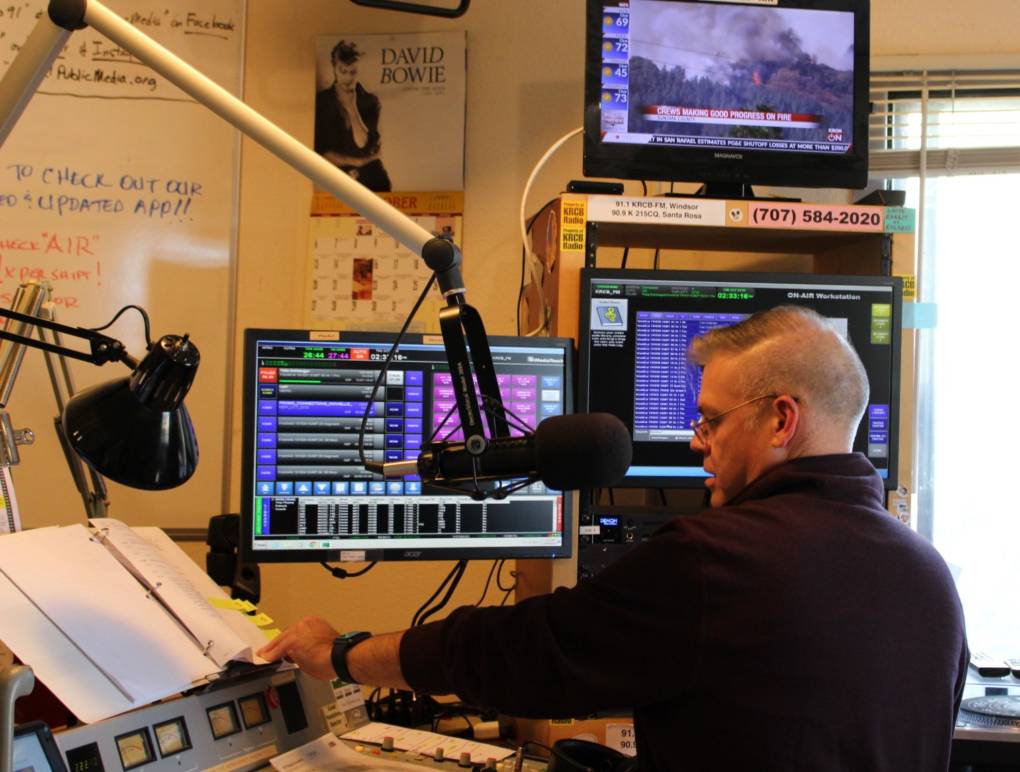
"caption": "Announcer/operator Mark Prell at the helm of KRCB-FM Radio 91 during Kincade Fire coverage.",
"description": "Man in a radio studio.",
"title": "mark-prell-edited",
"credit": "Danielle Venton/KQED",
"status": "inherit",
"isLoading": false,
"fetchFailed": false
},
"science_1950777": {
"type": "attachments",
"id": "science_1950777",
"meta": {
"index": "attachments_1716263798",
"site": "science",
"id": "1950777",
"found": true
},
"parent": 1950770,
"imgSizes": {
"twentyfourteen-full-width": {
"file": "https://ww2.kqed.org/app/uploads/sites/35/2019/11/Aerial-of-Tunnel-Tops_panoramic-2019-FINAL-1038x576.jpg",
"width": 1038,
"mimeType": "image/jpeg",
"height": 576
},
"thumbnail": {
"file": "https://ww2.kqed.org/app/uploads/sites/35/2019/11/Aerial-of-Tunnel-Tops_panoramic-2019-FINAL-160x46.jpg",
"width": 160,
"mimeType": "image/jpeg",
"height": 46
},
"post-thumbnail": {
"file": "https://ww2.kqed.org/app/uploads/sites/35/2019/11/Aerial-of-Tunnel-Tops_panoramic-2019-FINAL-672x372.jpg",
"width": 672,
"mimeType": "image/jpeg",
"height": 372
},
"kqedFullSize": {
"file": "https://ww2.kqed.org/app/uploads/sites/35/2019/11/Aerial-of-Tunnel-Tops_panoramic-2019-FINAL.jpg",
"width": 10202,
"height": 2925
},
"large": {
"file": "https://ww2.kqed.org/app/uploads/sites/35/2019/11/Aerial-of-Tunnel-Tops_panoramic-2019-FINAL-1020x292.jpg",
"width": 1020,
"mimeType": "image/jpeg",
"height": 292
},
"complete_open_graph": {
"file": "https://ww2.kqed.org/app/uploads/sites/35/2019/11/Aerial-of-Tunnel-Tops_panoramic-2019-FINAL-1200x344.jpg",
"width": 1200,
"mimeType": "image/jpeg",
"height": 344
},
"full-width": {
"file": "https://ww2.kqed.org/app/uploads/sites/35/2019/11/Aerial-of-Tunnel-Tops_panoramic-2019-FINAL-1920x550.jpg",
"width": 1920,
"mimeType": "image/jpeg",
"height": 550
},
"medium": {
"file": "https://ww2.kqed.org/app/uploads/sites/35/2019/11/Aerial-of-Tunnel-Tops_panoramic-2019-FINAL-800x229.jpg",
"width": 800,
"mimeType": "image/jpeg",
"height": 229
},
"medium_large": {
"file": "https://ww2.kqed.org/app/uploads/sites/35/2019/11/Aerial-of-Tunnel-Tops_panoramic-2019-FINAL-768x220.jpg",
"width": 768,
"mimeType": "image/jpeg",
"height": 220
}
},
"publishDate": 1573177408,
"modified": 1573177639,
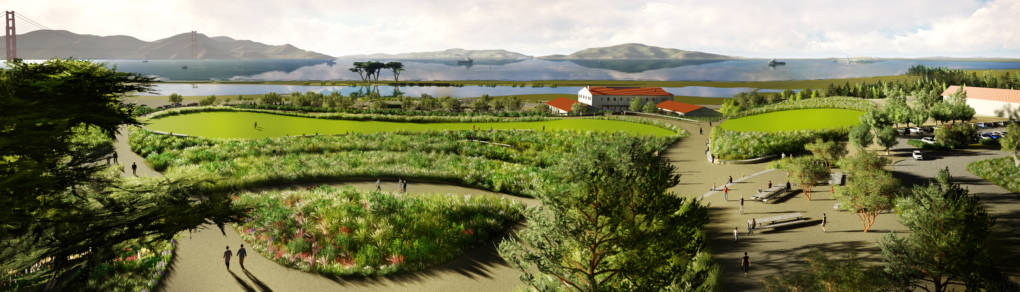
"caption": "Artist's rendering of Tunnel Tops Park atop the Presidio Parkway Tunnel.",
"description": null,
"title": "Artist's rendering of Tunnel Tops Park atop the Presidio Parkway Tunnel.",
"credit": "Presidio Trust, Golden Gate National Parks Conservancy",
"status": "inherit",
"isLoading": false,
"fetchFailed": false
},
"science_1950737": {
"type": "attachments",
"id": "science_1950737",
"meta": {
"index": "attachments_1716263798",
"site": "science",
"id": "1950737",
"found": true
},
"parent": 1950703,
"imgSizes": {
"twentyfourteen-full-width": {
"file": "https://ww2.kqed.org/app/uploads/sites/35/2019/11/GettyImages-1178969847-1038x576.jpg",
"width": 1038,
"mimeType": "image/jpeg",
"height": 576
},
"thumbnail": {
"file": "https://ww2.kqed.org/app/uploads/sites/35/2019/11/GettyImages-1178969847-160x107.jpg",
"width": 160,
"mimeType": "image/jpeg",
"height": 107
},
"post-thumbnail": {
"file": "https://ww2.kqed.org/app/uploads/sites/35/2019/11/GettyImages-1178969847-672x372.jpg",
"width": 672,
"mimeType": "image/jpeg",
"height": 372
},
"kqedFullSize": {
"file": "https://ww2.kqed.org/app/uploads/sites/35/2019/11/GettyImages-1178969847-e1573063276762.jpg",
"width": 1925,
"height": 1283
},
"large": {
"file": "https://ww2.kqed.org/app/uploads/sites/35/2019/11/GettyImages-1178969847-1020x680.jpg",
"width": 1020,
"mimeType": "image/jpeg",
"height": 680
},
"complete_open_graph": {
"file": "https://ww2.kqed.org/app/uploads/sites/35/2019/11/GettyImages-1178969847-1200x800.jpg",
"width": 1200,
"mimeType": "image/jpeg",
"height": 800
},
"full-width": {
"file": "https://ww2.kqed.org/app/uploads/sites/35/2019/11/GettyImages-1178969847-1920x1280.jpg",
"width": 1920,
"mimeType": "image/jpeg",
"height": 1280
},
"medium": {
"file": "https://ww2.kqed.org/app/uploads/sites/35/2019/11/GettyImages-1178969847-800x533.jpg",
"width": 800,
"mimeType": "image/jpeg",
"height": 533
},
"medium_large": {
"file": "https://ww2.kqed.org/app/uploads/sites/35/2019/11/GettyImages-1178969847-768x512.jpg",
"width": 768,
"mimeType": "image/jpeg",
"height": 512
}
},
"publishDate": 1573063217,
"modified": 1573074745,
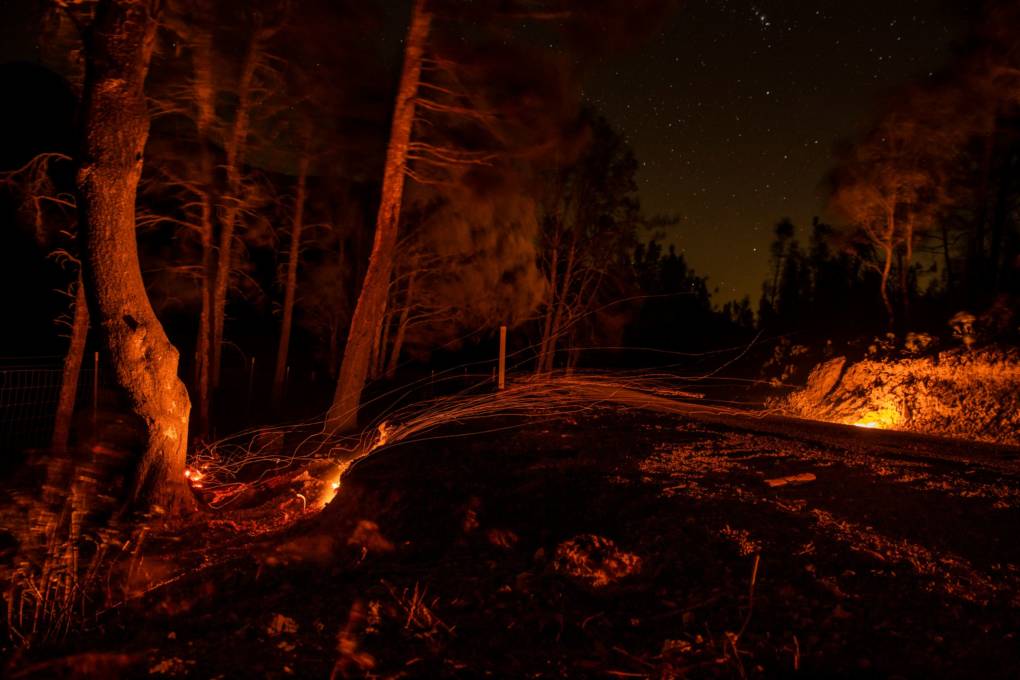
"caption": "A strong gust of wind blows embers from a burning tree across Ida Clayton Road during the Kincade fire near Knights Valley, east of Healdsburg, California on Oct. 29, 2019.",
"description": null,
"title": "TOPSHOT-US-CALIFORNIA-FIRES",
"credit": "PHILIP PACHECO/AFP via Getty Images",
"status": "inherit",
"isLoading": false,
"fetchFailed": false
},
"science_1934470": {
"type": "attachments",
"id": "science_1934470",
"meta": {
"index": "attachments_1716263798",
"site": "science",
"id": "1934470",
"found": true
},
"parent": 1934155,
"imgSizes": {
"small": {
"file": "https://ww2.kqed.org/app/uploads/sites/35/2018/11/RS33809_camp-fire-traffic-0198-qut-520x347.jpg",
"width": 520,
"mimeType": "image/jpeg",
"height": 347
},
"twentyfourteen-full-width": {
"file": "https://ww2.kqed.org/app/uploads/sites/35/2018/11/RS33809_camp-fire-traffic-0198-qut-1038x576.jpg",
"width": 1038,
"mimeType": "image/jpeg",
"height": 576
},
"thumbnail": {
"file": "https://ww2.kqed.org/app/uploads/sites/35/2018/11/RS33809_camp-fire-traffic-0198-qut-160x107.jpg",
"width": 160,
"mimeType": "image/jpeg",
"height": 107
},
"fd-sm": {
"file": "https://ww2.kqed.org/app/uploads/sites/35/2018/11/RS33809_camp-fire-traffic-0198-qut-960x640.jpg",
"width": 960,
"mimeType": "image/jpeg",
"height": 640
},
"post-thumbnail": {
"file": "https://ww2.kqed.org/app/uploads/sites/35/2018/11/RS33809_camp-fire-traffic-0198-qut-672x372.jpg",
"width": 672,
"mimeType": "image/jpeg",
"height": 372
},
"xsmall": {
"file": "https://ww2.kqed.org/app/uploads/sites/35/2018/11/RS33809_camp-fire-traffic-0198-qut-375x250.jpg",
"width": 375,
"mimeType": "image/jpeg",
"height": 250
},
"kqedFullSize": {
"file": "https://ww2.kqed.org/app/uploads/sites/35/2018/11/RS33809_camp-fire-traffic-0198-qut.jpg",
"width": 1920,
"height": 1280
},
"large": {
"file": "https://ww2.kqed.org/app/uploads/sites/35/2018/11/RS33809_camp-fire-traffic-0198-qut-1020x680.jpg",
"width": 1020,
"mimeType": "image/jpeg",
"height": 680
},
"xlarge": {
"file": "https://ww2.kqed.org/app/uploads/sites/35/2018/11/RS33809_camp-fire-traffic-0198-qut-1180x787.jpg",
"width": 1180,
"mimeType": "image/jpeg",
"height": 787
},
"complete_open_graph": {
"file": "https://ww2.kqed.org/app/uploads/sites/35/2018/11/RS33809_camp-fire-traffic-0198-qut-1200x800.jpg",
"width": 1200,
"mimeType": "image/jpeg",
"height": 800
},
"guest-author-50": {
"file": "https://ww2.kqed.org/app/uploads/sites/35/2018/11/RS33809_camp-fire-traffic-0198-qut-50x50.jpg",
"width": 50,
"mimeType": "image/jpeg",
"height": 50
},
"guest-author-96": {
"file": "https://ww2.kqed.org/app/uploads/sites/35/2018/11/RS33809_camp-fire-traffic-0198-qut-96x96.jpg",
"width": 96,
"mimeType": "image/jpeg",
"height": 96
},
"medium": {
"file": "https://ww2.kqed.org/app/uploads/sites/35/2018/11/RS33809_camp-fire-traffic-0198-qut-800x533.jpg",
"width": 800,
"mimeType": "image/jpeg",
"height": 533
},
"guest-author-64": {
"file": "https://ww2.kqed.org/app/uploads/sites/35/2018/11/RS33809_camp-fire-traffic-0198-qut-64x64.jpg",
"width": 64,
"mimeType": "image/jpeg",
"height": 64
},
"guest-author-32": {
"file": "https://ww2.kqed.org/app/uploads/sites/35/2018/11/RS33809_camp-fire-traffic-0198-qut-32x32.jpg",
"width": 32,
"mimeType": "image/jpeg",
"height": 32
},
"fd-lrg": {
"file": "https://ww2.kqed.org/app/uploads/sites/35/2018/11/RS33809_camp-fire-traffic-0198-qut-1920x1280.jpg",
"width": 1920,
"mimeType": "image/jpeg",
"height": 1280
},
"fd-med": {
"file": "https://ww2.kqed.org/app/uploads/sites/35/2018/11/RS33809_camp-fire-traffic-0198-qut-1180x787.jpg",
"width": 1180,
"mimeType": "image/jpeg",
"height": 787
},
"full-width": {
"file": "https://ww2.kqed.org/app/uploads/sites/35/2018/11/RS33809_camp-fire-traffic-0198-qut-1920x1280.jpg",
"width": 1920,
"mimeType": "image/jpeg",
"height": 1280
},
"detail": {
"file": "https://ww2.kqed.org/app/uploads/sites/35/2018/11/RS33809_camp-fire-traffic-0198-qut-150x150.jpg",
"width": 150,
"mimeType": "image/jpeg",
"height": 150
},
"medium_large": {
"file": "https://ww2.kqed.org/app/uploads/sites/35/2018/11/RS33809_camp-fire-traffic-0198-qut-768x512.jpg",
"width": 768,
"mimeType": "image/jpeg",
"height": 512
},
"guest-author-128": {
"file": "https://ww2.kqed.org/app/uploads/sites/35/2018/11/RS33809_camp-fire-traffic-0198-qut-128x128.jpg",
"width": 128,
"mimeType": "image/jpeg",
"height": 128
},
"xxsmall": {
"file": "https://ww2.kqed.org/app/uploads/sites/35/2018/11/RS33809_camp-fire-traffic-0198-qut-240x160.jpg",
"width": 240,
"mimeType": "image/jpeg",
"height": 160
}
},
"publishDate": 1542398401,
"modified": 1572914900,
"caption": "Smoke obscuring the view of San Francisco from the UC Berkeley campus during the Camp Fire.",
"description": "Smoke hides the view of San Francisco from the UC Berkeley campus during the Camp Fire, Nov. 16, 2018.",
"title": "RS33809_camp-fire-traffic-0198-qut",
"credit": "J.P. Dobrin/KQED",
"status": "inherit",
"isLoading": false,
"fetchFailed": false
},
"science_1950631": {
"type": "attachments",
"id": "science_1950631",
"meta": {
"index": "attachments_1716263798",
"site": "science",
"id": "1950631",
"found": true
},
"parent": 1950625,
"imgSizes": {
"thumbnail": {
"file": "https://ww2.kqed.org/app/uploads/sites/35/2019/11/Hinode_JAXA-NASA-PPARC-Nov2006-160x90.jpg",
"width": 160,
"mimeType": "image/jpeg",
"height": 90
},
"post-thumbnail": {
"file": "https://ww2.kqed.org/app/uploads/sites/35/2019/11/Hinode_JAXA-NASA-PPARC-Nov2006-672x372.jpg",
"width": 672,
"mimeType": "image/jpeg",
"height": 372
},
"kqedFullSize": {
"file": "https://ww2.kqed.org/app/uploads/sites/35/2019/11/Hinode_JAXA-NASA-PPARC-Nov2006.jpg",
"width": 800,
"height": 450
},
"medium": {
"file": "https://ww2.kqed.org/app/uploads/sites/35/2019/11/Hinode_JAXA-NASA-PPARC-Nov2006-800x450.jpg",
"width": 800,
"mimeType": "image/jpeg",
"height": 450
},
"medium_large": {
"file": "https://ww2.kqed.org/app/uploads/sites/35/2019/11/Hinode_JAXA-NASA-PPARC-Nov2006-768x432.jpg",
"width": 768,
"mimeType": "image/jpeg",
"height": 432
}
},
"publishDate": 1572894344,
"modified": 1572894423,
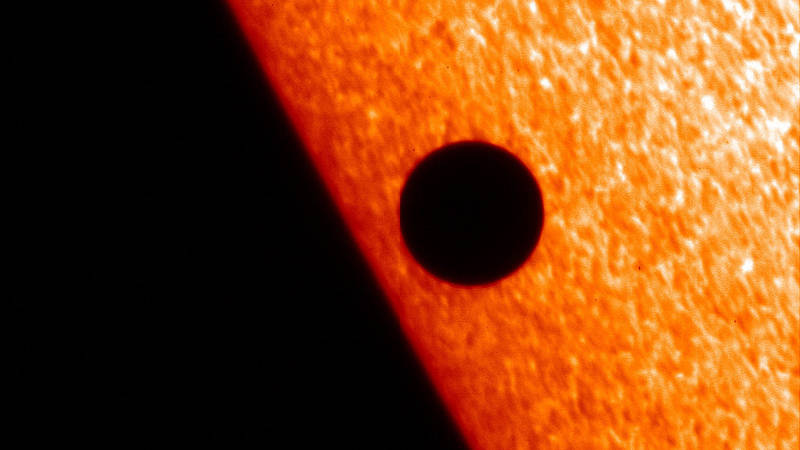
"caption": "Image of Mercury silhouetted against the sun during the November 2006 Transit of Mercury. The picture was captured by Japan's solar telescope spacecraft Hinode. ",
"description": "Image of Mercury silhouetted against the sun during the November 2006 Transit of Mercury. The picture was captured by Japan's solar telescope spacecraft Hinode. ",
"title": "Hinode_JAXA-NASA-PPARC-Nov2006",
"credit": "JAXA/NASA/PPARC",
"status": "inherit",
"isLoading": false,
"fetchFailed": false
},
"science_1994159": {
"type": "attachments",
"id": "science_1994159",
"meta": {
"index": "attachments_1716263798",
"site": "science",
"id": "1994159",
"found": true
},
"title": "DEEP_619_TN_Tarantulas-Take-Hooking-up-to-the-Next-Level_shield",
"publishDate": 1725556381,
"status": "inherit",
"parent": 1950117,
"modified": 1725556381,
"caption": null,
"credit": null,
"altTag": null,
"description": null,
"imgSizes": {
"medium": {
"file": "https://cdn.kqed.org/wp-content/uploads/sites/35/2019/11/DEEP_619_TN_Tarantulas-Take-Hooking-up-to-the-Next-Level_shield-800x450.jpg",
"width": 800,
"height": 450,
"mimeType": "image/jpeg"
},
"large": {
"file": "https://cdn.kqed.org/wp-content/uploads/sites/35/2019/11/DEEP_619_TN_Tarantulas-Take-Hooking-up-to-the-Next-Level_shield-1020x574.jpg",
"width": 1020,
"height": 574,
"mimeType": "image/jpeg"
},
"thumbnail": {
"file": "https://cdn.kqed.org/wp-content/uploads/sites/35/2019/11/DEEP_619_TN_Tarantulas-Take-Hooking-up-to-the-Next-Level_shield-160x90.jpg",
"width": 160,
"height": 90,
"mimeType": "image/jpeg"
},
"medium_large": {
"file": "https://cdn.kqed.org/wp-content/uploads/sites/35/2019/11/DEEP_619_TN_Tarantulas-Take-Hooking-up-to-the-Next-Level_shield-768x432.jpg",
"width": 768,
"height": 432,
"mimeType": "image/jpeg"
},
"1536x1536": {
"file": "https://cdn.kqed.org/wp-content/uploads/sites/35/2019/11/DEEP_619_TN_Tarantulas-Take-Hooking-up-to-the-Next-Level_shield-1536x864.jpg",
"width": 1536,
"height": 864,
"mimeType": "image/jpeg"
},
"2048x2048": {
"file": "https://cdn.kqed.org/wp-content/uploads/sites/35/2019/11/DEEP_619_TN_Tarantulas-Take-Hooking-up-to-the-Next-Level_shield-2048x1152.jpg",
"width": 2048,
"height": 1152,
"mimeType": "image/jpeg"
},
"post-thumbnail": {
"file": "https://cdn.kqed.org/wp-content/uploads/sites/35/2019/11/DEEP_619_TN_Tarantulas-Take-Hooking-up-to-the-Next-Level_shield-672x372.jpg",
"width": 672,
"height": 372,
"mimeType": "image/jpeg"
},
"twentyfourteen-full-width": {
"file": "https://cdn.kqed.org/wp-content/uploads/sites/35/2019/11/DEEP_619_TN_Tarantulas-Take-Hooking-up-to-the-Next-Level_shield-1038x576.jpg",
"width": 1038,
"height": 576,
"mimeType": "image/jpeg"
},
"full-width": {
"file": "https://cdn.kqed.org/wp-content/uploads/sites/35/2019/11/DEEP_619_TN_Tarantulas-Take-Hooking-up-to-the-Next-Level_shield-1920x1080.jpg",
"width": 1920,
"height": 1080,
"mimeType": "image/jpeg"
},
"kqedFullSize": {
"file": "https://cdn.kqed.org/wp-content/uploads/sites/35/2019/11/DEEP_619_TN_Tarantulas-Take-Hooking-up-to-the-Next-Level_shield-scaled.jpg",
"width": 2560,
"height": 1440
}
},
"isLoading": false,
"fetchFailed": false
},
"science_1950657": {
"type": "attachments",
"id": "science_1950657",
"meta": {
"index": "attachments_1716263798",
"site": "science",
"id": "1950657",
"found": true
},
"parent": 1950653,
"imgSizes": {
"twentyfourteen-full-width": {
"file": "https://ww2.kqed.org/app/uploads/sites/35/2019/11/GettyImages-1063103794-1038x576.jpg",
"width": 1038,
"mimeType": "image/jpeg",
"height": 576
},
"thumbnail": {
"file": "https://ww2.kqed.org/app/uploads/sites/35/2019/11/GettyImages-1063103794-160x107.jpg",
"width": 160,
"mimeType": "image/jpeg",
"height": 107
},
"post-thumbnail": {
"file": "https://ww2.kqed.org/app/uploads/sites/35/2019/11/GettyImages-1063103794-672x372.jpg",
"width": 672,
"mimeType": "image/jpeg",
"height": 372
},
"kqedFullSize": {
"file": "https://ww2.kqed.org/app/uploads/sites/35/2019/11/GettyImages-1063103794-e1572900161454.jpg",
"width": 1925,
"height": 1283
},
"large": {
"file": "https://ww2.kqed.org/app/uploads/sites/35/2019/11/GettyImages-1063103794-1020x680.jpg",
"width": 1020,
"mimeType": "image/jpeg",
"height": 680
},
"complete_open_graph": {
"file": "https://ww2.kqed.org/app/uploads/sites/35/2019/11/GettyImages-1063103794-1200x800.jpg",
"width": 1200,
"mimeType": "image/jpeg",
"height": 800
},
"full-width": {
"file": "https://ww2.kqed.org/app/uploads/sites/35/2019/11/GettyImages-1063103794-1920x1280.jpg",
"width": 1920,
"mimeType": "image/jpeg",
"height": 1280
},
"medium": {
"file": "https://ww2.kqed.org/app/uploads/sites/35/2019/11/GettyImages-1063103794-800x533.jpg",
"width": 800,
"mimeType": "image/jpeg",
"height": 533
},
"medium_large": {
"file": "https://ww2.kqed.org/app/uploads/sites/35/2019/11/GettyImages-1063103794-768x512.jpg",
"width": 768,
"mimeType": "image/jpeg",
"height": 512
}
},
"publishDate": 1572900058,
"modified": 1602865540,
"caption": "President Donald Trump frowns while taking in damage from the Woolsey fire alongside California Gov. Gavin Newsom, Los Angeles County Fire Chief Daryl Osby, Cal Fire Deputy Chief Nick Schuller and Former California Gov. Jerry Brown in Malibu on Nov. 17, 2018.",
"description": null,
"title": "GettyImages-1063103794",
"credit": "GENARO MOLINA/AFP via Getty Images",
"status": "inherit",
"isLoading": false,
"fetchFailed": false
},
"science_1950628": {
"type": "attachments",
"id": "science_1950628",
"meta": {
"index": "attachments_1716263798",
"site": "science",
"id": "1950628",
"found": true
},
"parent": 1950623,
"imgSizes": {
"thumbnail": {
"file": "https://ww2.kqed.org/app/uploads/sites/35/2019/11/Kincade-160x146.png",
"width": 160,
"mimeType": "image/png",
"height": 146
},
"post-thumbnail": {
"file": "https://ww2.kqed.org/app/uploads/sites/35/2019/11/Kincade-420x372.png",
"width": 420,
"mimeType": "image/png",
"height": 372
},
"kqedFullSize": {
"file": "https://ww2.kqed.org/app/uploads/sites/35/2019/11/Kincade.png",
"width": 420,
"height": 384
}
},
"publishDate": 1572894066,
"modified": 1572894066,
"caption": null,
"description": null,
"title": "Kincade",
"credit": null,
"status": "inherit",
"isLoading": false,
"fetchFailed": false
},
"science_1950579": {
"type": "attachments",
"id": "science_1950579",
"meta": {
"index": "attachments_1716263798",
"site": "science",
"id": "1950579",
"found": true
},
"parent": 1950575,
"imgSizes": {
"twentyfourteen-full-width": {
"file": "https://ww2.kqed.org/app/uploads/sites/35/2019/11/Home-battery-1038x576.jpg",
"width": 1038,
"mimeType": "image/jpeg",
"height": 576
},
"thumbnail": {
"file": "https://ww2.kqed.org/app/uploads/sites/35/2019/11/Home-battery-160x102.jpg",
"width": 160,
"mimeType": "image/jpeg",
"height": 102
},
"post-thumbnail": {
"file": "https://ww2.kqed.org/app/uploads/sites/35/2019/11/Home-battery-672x372.jpg",
"width": 672,
"mimeType": "image/jpeg",
"height": 372
},
"kqedFullSize": {
"file": "https://ww2.kqed.org/app/uploads/sites/35/2019/11/Home-battery.jpg",
"width": 1920,
"height": 1224
},
"large": {
"file": "https://ww2.kqed.org/app/uploads/sites/35/2019/11/Home-battery-1020x650.jpg",
"width": 1020,
"mimeType": "image/jpeg",
"height": 650
},
"complete_open_graph": {
"file": "https://ww2.kqed.org/app/uploads/sites/35/2019/11/Home-battery-1200x765.jpg",
"width": 1200,
"mimeType": "image/jpeg",
"height": 765
},
"full-width": {
"file": "https://ww2.kqed.org/app/uploads/sites/35/2019/11/Home-battery-1920x1224.jpg",
"width": 1920,
"mimeType": "image/jpeg",
"height": 1224
},
"medium": {
"file": "https://ww2.kqed.org/app/uploads/sites/35/2019/11/Home-battery-800x510.jpg",
"width": 800,
"mimeType": "image/jpeg",
"height": 510
},
"medium_large": {
"file": "https://ww2.kqed.org/app/uploads/sites/35/2019/11/Home-battery-768x490.jpg",
"width": 768,
"mimeType": "image/jpeg",
"height": 490
}
},
"publishDate": 1572646036,
"modified": 1572649453,
"caption": "Two Tesla batteries kept Howard Matis' lights on during the recent PG&E blackout.",
"description": null,
"title": "Home-battery",
"credit": "Lauren Sommer/KQED",
"status": "inherit",
"isLoading": false,
"fetchFailed": false
},
"science_1950561": {
"type": "attachments",
"id": "science_1950561",
"meta": {
"index": "attachments_1716263798",
"site": "science",
"id": "1950561",
"found": true
},
"parent": 1950560,
"imgSizes": {
"twentyfourteen-full-width": {
"file": "https://ww2.kqed.org/app/uploads/sites/35/2019/11/gettyimages-1164973165-c427b7fe407175ed4fcda0119df64d1ab965e77a-902x576.jpg",
"width": 902,
"mimeType": "image/jpeg",
"height": 576
},
"thumbnail": {
"file": "https://ww2.kqed.org/app/uploads/sites/35/2019/11/gettyimages-1164973165-c427b7fe407175ed4fcda0119df64d1ab965e77a-160x120.jpg",
"width": 160,
"mimeType": "image/jpeg",
"height": 120
},
"post-thumbnail": {
"file": "https://ww2.kqed.org/app/uploads/sites/35/2019/11/gettyimages-1164973165-c427b7fe407175ed4fcda0119df64d1ab965e77a-672x372.jpg",
"width": 672,
"mimeType": "image/jpeg",
"height": 372
},
"kqedFullSize": {
"file": "https://ww2.kqed.org/app/uploads/sites/35/2019/11/gettyimages-1164973165-c427b7fe407175ed4fcda0119df64d1ab965e77a.jpg",
"width": 902,
"height": 676
},
"medium": {
"file": "https://ww2.kqed.org/app/uploads/sites/35/2019/11/gettyimages-1164973165-c427b7fe407175ed4fcda0119df64d1ab965e77a-800x600.jpg",
"width": 800,
"mimeType": "image/jpeg",
"height": 600
},
"medium_large": {
"file": "https://ww2.kqed.org/app/uploads/sites/35/2019/11/gettyimages-1164973165-c427b7fe407175ed4fcda0119df64d1ab965e77a-768x576.jpg",
"width": 768,
"mimeType": "image/jpeg",
"height": 576
}
},
"publishDate": 1572626769,
"modified": 1572626769,
"caption": null,
"description": "A giant tortoise on Santa Cruz Island in the Galapagos Islands.",
"title": "A giant tortoise on Santa Cruz Island in the Galapagos Islands.",
"credit": null,
"status": "inherit",
"isLoading": false,
"fetchFailed": false
},
"science_1950489": {
"type": "attachments",
"id": "science_1950489",
"meta": {
"index": "attachments_1716263798",
"site": "science",
"id": "1950489",
"found": true
},
"parent": 1950485,
"imgSizes": {
"twentyfourteen-full-width": {
"file": "https://ww2.kqed.org/app/uploads/sites/35/2019/10/GretaThunberg-1038x576.jpg",
"width": 1038,
"mimeType": "image/jpeg",
"height": 576
},
"thumbnail": {
"file": "https://ww2.kqed.org/app/uploads/sites/35/2019/10/GretaThunberg-160x110.jpg",
"width": 160,
"mimeType": "image/jpeg",
"height": 110
},
"post-thumbnail": {
"file": "https://ww2.kqed.org/app/uploads/sites/35/2019/10/GretaThunberg-672x372.jpg",
"width": 672,
"mimeType": "image/jpeg",
"height": 372
},
"kqedFullSize": {
"file": "https://ww2.kqed.org/app/uploads/sites/35/2019/10/GretaThunberg-e1576088231134.jpg",
"width": 1920,
"height": 1324
},
"large": {
"file": "https://ww2.kqed.org/app/uploads/sites/35/2019/10/GretaThunberg-1020x703.jpg",
"width": 1020,
"mimeType": "image/jpeg",
"height": 703
},
"complete_open_graph": {
"file": "https://ww2.kqed.org/app/uploads/sites/35/2019/10/GretaThunberg-1200x827.jpg",
"width": 1200,
"mimeType": "image/jpeg",
"height": 827
},
"full-width": {
"file": "https://ww2.kqed.org/app/uploads/sites/35/2019/10/GretaThunberg-1920x1324.jpg",
"width": 1920,
"mimeType": "image/jpeg",
"height": 1324
},
"medium": {
"file": "https://ww2.kqed.org/app/uploads/sites/35/2019/10/GretaThunberg-800x552.jpg",
"width": 800,
"mimeType": "image/jpeg",
"height": 552
},
"medium_large": {
"file": "https://ww2.kqed.org/app/uploads/sites/35/2019/10/GretaThunberg-768x530.jpg",
"width": 768,
"mimeType": "image/jpeg",
"height": 530
}
},
"publishDate": 1572462193,
"modified": 1576088222,
"caption": "Swedish environmental activist, 16 year old Greta Thunberg attends a rally in Vancouver, British Columbia on Oct. 25, 2019. ",
"description": null,
"title": "GretaThunberg",
"credit": "DON MACKINNON/AFP via Getty Images",
"status": "inherit",
"isLoading": false,
"fetchFailed": false
}
},
"audioPlayerReducer": {
"postId": "stream_live",
"isPaused": true,
"isPlaying": false,
"pfsActive": false,
"pledgeModalIsOpen": true,
"playerDrawerIsOpen": false,
"liveAudioPlayStartedAt": 0,
"liveAudioPlayContext": ""
},
"authorsReducer": {
"byline_science_1950849": {
"type": "authors",
"id": "byline_science_1950849",
"meta": {
"override": true
},
"slug": "byline_science_1950849",
"name": "Jenny Gold \u003c/br>Kaiser Health News \u003cbr>",
"isLoading": false
},
"byline_science_1950770": {
"type": "authors",
"id": "byline_science_1950770",
"meta": {
"override": true
},
"slug": "byline_science_1950770",
"name": "Alice Woelfle",
"isLoading": false
},
"byline_science_1950648": {
"type": "authors",
"id": "byline_science_1950648",
"meta": {
"override": true
},
"slug": "byline_science_1950648",
"name": "Kevin Stark, Peter Arcuni and Jon Brooks",
"isLoading": false
},
"byline_science_1950653": {
"type": "authors",
"id": "byline_science_1950653",
"meta": {
"override": true
},
"slug": "byline_science_1950653",
"name": "Marianne Lavelle \u003cbr/>InsideClimate News\u003cbr>",
"isLoading": false
},
"byline_science_1950560": {
"type": "authors",
"id": "byline_science_1950560",
"meta": {
"override": true
},
"slug": "byline_science_1950560",
"name": "Genevieve Valentine \u003c/br>NPR\u003cbr>",
"isLoading": false
},
"byline_science_1950485": {
"type": "authors",
"id": "byline_science_1950485",
"meta": {
"override": true
},
"slug": "byline_science_1950485",
"name": "Merrit Kennedy\u003cbr />NPR",
"isLoading": false
},
"laurensommer": {
"type": "authors",
"id": "239",
"meta": {
"index": "authors_1716337520",
"id": "239",
"found": true
},
"name": "Lauren Sommer",
"firstName": "Lauren",
"lastName": "Sommer",
"slug": "laurensommer",
"email": "lsommer@kqed.org",
"display_author_email": false,
"staff_mastheads": [],
"title": "KQED Contributor",
"bio": "Lauren is a radio reporter formerly covering environment, water, and energy for KQED Science. As part of her day job, she has scaled Sierra Nevada peaks, run from charging elephant seals, and desperately tried to get her sea legs - all in pursuit of good radio. Her work has appeared on Marketplace, Living on Earth, Science Friday and NPR's Morning Edition and All Things Considered. You can find her on Twitter at \u003ca href=\"https://twitter.com/lesommer\">@lesommer\u003c/a>.",
"avatar": "https://secure.gravatar.com/avatar/33aa3772bb86c6ad45b8aca6a238bbdf?s=600&d=blank&r=g",
"twitter": null,
"facebook": null,
"instagram": null,
"linkedin": null,
"sites": [
{
"site": "news",
"roles": [
"author"
]
},
{
"site": "science",
"roles": [
"editor",
"manage_content_types",
"manage_taxonomies"
]
},
{
"site": "quest",
"roles": [
"editor"
]
}
],
"headData": {
"title": "Lauren Sommer | KQED",
"description": "KQED Contributor",
"ogImgSrc": "https://secure.gravatar.com/avatar/33aa3772bb86c6ad45b8aca6a238bbdf?s=600&d=blank&r=g",
"twImgSrc": "https://secure.gravatar.com/avatar/33aa3772bb86c6ad45b8aca6a238bbdf?s=600&d=blank&r=g"
},
"isLoading": false,
"link": "/author/laurensommer"
},
"ben-burress": {
"type": "authors",
"id": "6180",
"meta": {
"index": "authors_1716337520",
"id": "6180",
"found": true
},
"name": "Ben Burress",
"firstName": "Ben",
"lastName": "Burress",
"slug": "ben-burress",
"email": "bburress@chabotspace.org",
"display_author_email": false,
"staff_mastheads": [],
"title": null,
"bio": "\u003cstrong>Benjamin Burress\u003c/strong> has been a staff astronomer at Chabot Space & Science Center since July 1999. He graduated from Sonoma State University in 1985 with a bachelor’s degree in physics (and minor in astronomy), after which he signed on for a two-year stint in the Peace Corps, where he taught physics and mathematics in the African nation of Cameroon. From 1989-96 he served on the crew of NASA’s Kuiper Airborne Observatory at Ames Research Center in Mountain View, CA. From 1996-99, he was Head Observer at the Naval Prototype Optical Interferometer program at Lowell Observatory in Flagstaff, AZ.\r\n\r\nRead his \u003ca href=\"http://science.kqed.org/quest/author/ben-burress/\">previous contributions\u003c/a> to \u003ca href=\"http://science.kqed.org/quest/\">QUEST\u003c/a>, a project dedicated to exploring the Science of Sustainability.",
"avatar": "https://secure.gravatar.com/avatar/8263bffa345b7e4923a0b8b9f0f6a161?s=600&d=blank&r=g",
"twitter": null,
"facebook": null,
"instagram": null,
"linkedin": null,
"sites": [
{
"site": "science",
"roles": [
"editor"
]
},
{
"site": "quest",
"roles": [
"subscriber"
]
}
],
"headData": {
"title": "Ben Burress | KQED",
"description": null,
"ogImgSrc": "https://secure.gravatar.com/avatar/8263bffa345b7e4923a0b8b9f0f6a161?s=600&d=blank&r=g",
"twImgSrc": "https://secure.gravatar.com/avatar/8263bffa345b7e4923a0b8b9f0f6a161?s=600&d=blank&r=g"
},
"isLoading": false,
"link": "/author/ben-burress"
},
"dventon": {
"type": "authors",
"id": "11088",
"meta": {
"index": "authors_1716337520",
"id": "11088",
"found": true
},
"name": "Danielle Venton",
"firstName": "Danielle",
"lastName": "Venton",
"slug": "dventon",
"email": "dventon@kqed.org",
"display_author_email": true,
"staff_mastheads": [
"science"
],
"title": "Science reporter",
"bio": "Danielle Venton is a reporter for KQED Science. She covers wildfires, space and oceans (though she is prone to sea sickness).\r\n\r\nBefore joining KQED in 2015, Danielle was a staff reporter at KRCB in Sonoma County and a freelancer. She studied science communication at UC Santa Cruz and formerly worked at CERN in Geneva, Switzerland where she wrote about computing. She lives in Sonoma County and enjoys backpacking.",
"avatar": "https://secure.gravatar.com/avatar/37b292b5c40c8d93959c4f48d73b5286f41b7abd8588277e941905a3ed4c801c?s=600&d=blank&r=g",
"twitter": "DanielleVenton",
"bluesky": null,
"facebook": null,
"instagram": null,
"linkedin": null,
"sites": [
{
"site": "arts",
"roles": [
"contributor"
]
},
{
"site": "news",
"roles": [
"editor"
]
},
{
"site": "futureofyou",
"roles": [
"editor"
]
},
{
"site": "science",
"roles": [
"editor"
]
},
{
"site": "liveblog",
"roles": [
"contributor"
]
}
],
"headData": {
"title": "Danielle Venton | KQED",
"description": "Science reporter",
"ogImgSrc": "https://secure.gravatar.com/avatar/37b292b5c40c8d93959c4f48d73b5286f41b7abd8588277e941905a3ed4c801c?s=600&d=blank&r=g",
"twImgSrc": "https://secure.gravatar.com/avatar/37b292b5c40c8d93959c4f48d73b5286f41b7abd8588277e941905a3ed4c801c?s=600&d=blank&r=g"
},
"isLoading": false,
"link": "/author/dventon"
},
"ekennerson": {
"type": "authors",
"id": "11090",
"meta": {
"index": "authors_1716337520",
"id": "11090",
"found": true
},
"name": "Elliott Kennerson",
"firstName": "Elliott",
"lastName": "Kennerson",
"slug": "ekennerson",
"email": "ekennerson@kqed.org",
"display_author_email": false,
"staff_mastheads": [],
"title": null,
"bio": "Elliott Kennerson joined KQED Science as a Digital Media Producer in 2015. Before joining KQED, he produced the Kickstarter-funded series “Animal R&R” for KPBS in San Diego. Elliott received his M.F.A. training in wildlife documentary at Montana State in Bozeman and holds a B.A. from Yale in archaeology. In his former life as an actor, he was an associate artist with LightBox Theater Company in New York. Elliott is the recipient of a 2017 Regional Emmy for his work as a producer on “Deep Look.\"",
"avatar": "https://secure.gravatar.com/avatar/90ebfa58055409e54c8f8a4c120ecf91?s=600&d=blank&r=g",
"twitter": "edorank",
"facebook": null,
"instagram": null,
"linkedin": null,
"sites": [
{
"site": "science",
"roles": [
"editor"
]
}
],
"headData": {
"title": "Elliott Kennerson | KQED",
"description": null,
"ogImgSrc": "https://secure.gravatar.com/avatar/90ebfa58055409e54c8f8a4c120ecf91?s=600&d=blank&r=g",
"twImgSrc": "https://secure.gravatar.com/avatar/90ebfa58055409e54c8f8a4c120ecf91?s=600&d=blank&r=g"
},
"isLoading": false,
"link": "/author/ekennerson"
},
"thailye": {
"type": "authors",
"id": "11501",
"meta": {
"index": "authors_1716337520",
"id": "11501",
"found": true
},
"name": "Teodros Hailye",
"firstName": "Teodros",
"lastName": "Hailye",
"slug": "thailye",
"email": "thailye@KQED.org",
"display_author_email": false,
"staff_mastheads": [],
"title": "Information Designer",
"bio": null,
"avatar": "https://secure.gravatar.com/avatar/bfb755f5a66ebaccd414e310b7d7c94a?s=600&d=blank&r=g",
"twitter": null,
"facebook": null,
"instagram": null,
"linkedin": null,
"sites": [
{
"site": "science",
"roles": []
}
],
"headData": {
"title": "Teodros Hailye | KQED",
"description": "Information Designer",
"ogImgSrc": "https://secure.gravatar.com/avatar/bfb755f5a66ebaccd414e310b7d7c94a?s=600&d=blank&r=g",
"twImgSrc": "https://secure.gravatar.com/avatar/bfb755f5a66ebaccd414e310b7d7c94a?s=600&d=blank&r=g"
},
"isLoading": false,
"link": "/author/thailye"
},
"kevinstark": {
"type": "authors",
"id": "11608",
"meta": {
"index": "authors_1716337520",
"id": "11608",
"found": true
},
"name": "Kevin Stark",
"firstName": "Kevin",
"lastName": "Stark",
"slug": "kevinstark",
"email": "kstark@kqed.org",
"display_author_email": true,
"staff_mastheads": [
"science"
],
"title": "Senior Editor",
"bio": "Kevin is a senior editor for KQED Science, managing the station's health and climate desks. His journalism career began in the Pacific Northwest, and he later became a lead reporter for the San Francisco Public Press. His work has appeared in Pacific Standard magazine, the Energy News Network, the Center for Investigative Reporting's Reveal and WBEZ in Chicago. Kevin joined KQED in 2019, and has covered issues related to energy, wildfire, climate change and the environment.",
"avatar": "https://secure.gravatar.com/avatar/365aaa4b597d3a8374f67504ff0facd323d7906e8eb4be0a7efd2427408e802c?s=600&d=blank&r=g",
"twitter": "starkkev",
"bluesky": null,
"facebook": null,
"instagram": null,
"linkedin": null,
"sites": [
{
"site": "",
"roles": [
"editor"
]
},
{
"site": "news",
"roles": [
"editor"
]
},
{
"site": "science",
"roles": [
"administrator"
]
}
],
"headData": {
"title": "Kevin Stark | KQED",
"description": "Senior Editor",
"ogImgSrc": "https://secure.gravatar.com/avatar/365aaa4b597d3a8374f67504ff0facd323d7906e8eb4be0a7efd2427408e802c?s=600&d=blank&r=g",
"twImgSrc": "https://secure.gravatar.com/avatar/365aaa4b597d3a8374f67504ff0facd323d7906e8eb4be0a7efd2427408e802c?s=600&d=blank&r=g"
},
"isLoading": false,
"link": "/author/kevinstark"
}
},
"pagesReducer": {
"science_category_news": {
"type": "terms",
"id": "science_40",
"meta": {
"index": "terms_1716263798",
"site": "science",
"id": "40",
"score": 10.8141775
},
"featImg": null,
"name": "News",
"description": null,
"taxonomy": "category",
"headData": {
"twImgId": null,
"twTitle": null,
"ogTitle": null,
"ogImgId": null,
"twDescription": null,
"description": null,
"title": "News Archives | KQED Science",
"ogDescription": null
},
"ttid": 42,
"slug": "news",
"isLoading": false,
"title": "News",
"pageMeta": {
"site": "science",
"WpPageTemplate": "page-topic-editorial",
"currentPage": 120
},
"blocks": [
{
"blockName": "kqed/post-list",
"attrs": {
"layout": "cardArticle2",
"query": "posts/science?category=news",
"seeMore": false,
"paginated": true,
"page": 120
}
},
{
"blockName": "kqed/ad"
}
]
}
},
"pfsSessionReducer": {},
"postsReducer": {
"stream_live": {
"type": "live",
"id": "stream_live",
"audioUrl": "https://streams.kqed.org/kqedradio",
"title": "Live Stream",
"excerpt": "Live Stream information currently unavailable.",
"link": "/radio",
"featImg": "",
"label": {
"name": "KQED Live",
"link": "/"
}
},
"stream_kqedNewscast": {
"type": "posts",
"id": "stream_kqedNewscast",
"audioUrl": "https://www.kqed.org/.stream/anon/radio/RDnews/newscast.mp3?_=1",
"title": "KQED Newscast",
"featImg": "",
"label": {
"name": "88.5 FM",
"link": "/"
}
},
"science_1950849": {
"type": "posts",
"id": "science_1950849",
"meta": {
"index": "posts_1716263798",
"site": "science",
"id": "1950849",
"score": null,
"sort": [
1573610027000
]
},
"parent": 0,
"labelTerm": {},
"blocks": [],
"publishDate": 1573610027,
"format": "standard",
"title": "Vapers Turn to Home Brew as Flavored Nicotine Bans Mount",
"headTitle": "Vapers Turn to Home Brew as Flavored Nicotine Bans Mount | KQED",
"content": "\u003cp>Danielle Jones sits at her dining room table, studying the recipe for Nerd Lyfe (v2) vape juice. The supplies she’s ordered online are arrayed before her: a plastic jug of unflavored liquid nicotine, a baking scale and bottles of artificial flavors that, combined, promise to recreate the fruity taste of Nerds Rope candy in vapor form.\u003c/p>\n\u003cp>This is Jones’ first attempt to make her own e-liquid after buying it for the past five years. Jones, 32, wants to be prepared for the worst-case scenario: a ban on the sale of the e-liquids she depends on to avoid cigarettes.\u003c/p>\n\u003cp>“Even though I haven’t touched a cigarette in five years, the pull is always there. It’s so easy to go and buy a pack. And I don’t want to do that,” she said. “The only route I can see going forward if there is a ban is to try to create the product myself at home.”\u003c/p>\n\u003cp>As more states, cities and even the federal government consider banning flavored nicotine, thousands of do-it-yourself vapers like Jones are flocking to social media groups and websites to learn how to make e-liquids at home.\u003c/p>\n\u003cp>Users on the forums — many of whom have been mixing their own e-liquids for years — describe the process as simple, fun, cheap and, with the proper precautions, safe. But if not done carefully, making e-liquids at home may pose risks including accidental exposure to high doses of liquid nicotine, the use of dangerous oil-based flavors and possible product contamination.\u003c/p>\n\u003cfigure id=\"attachment_1950852\" class=\"wp-caption alignright\" style=\"max-width: 770px\">\u003cimg loading=\"lazy\" decoding=\"async\" class=\"size-full wp-image-1950852\" src=\"https://ww2.kqed.org/science/wp-content/uploads/sites/35/2019/11/diy-vape-juice-15_1350.jpg\" alt=\"\" width=\"770\" height=\"513\" srcset=\"https://cdn.kqed.org/wp-content/uploads/sites/35/2019/11/diy-vape-juice-15_1350.jpg 770w, https://cdn.kqed.org/wp-content/uploads/sites/35/2019/11/diy-vape-juice-15_1350-160x107.jpg 160w, https://cdn.kqed.org/wp-content/uploads/sites/35/2019/11/diy-vape-juice-15_1350-768x512.jpg 768w\" sizes=\"(max-width: 770px) 100vw, 770px\">\u003cfigcaption class=\"wp-caption-text\">Danielle Jones takes a deep hit, and great clouds of vapor billow out of her nose and mouth. Jones said she has no plans to stop vaping, despite warnings from the Centers for Disease Control and Prevention and mounting evidence that vaping may have serious health risks. \u003ccite>(Heidi de Marco/KHN)\u003c/cite>\u003c/figcaption>\u003c/figure>\n\u003cp>“To have people mixing their own e-cigarette liquid is crazy. These are very toxic chemicals,” said \u003ca href=\"https://profiles.ucsf.edu/stanton.glantz\" target=\"_blank\" rel=\"noopener noreferrer\">Stanton Glantz\u003c/a>, a professor of medicine and the director of the Center for Tobacco Control Research and Education at the University of California-San Francisco. “If you drop a little bit of nicotine on your skin, it can send you to the hospital.”\u003c/p>\n\u003cp>[ad fullwidth]\u003c/p>\n\u003cp>But Dr. \u003ca href=\"https://www.bu.edu/sph/profile/michael-siegel/\" target=\"_blank\" rel=\"noopener noreferrer\">Michael Siegel\u003c/a>, a professor of community health sciences at \u003ca href=\"https://www.usnews.com/best-colleges/boston-university-2130\" target=\"_blank\" rel=\"noopener noreferrer\">Boston University\u003c/a>, said many people are able to make vaping liquids safely at home, by seeking advice from other vapers and following a few safety measures, such as wearing gloves and goggles.\u003c/p>\n\u003cp>Siegel worries, however, about the risk of contaminated products as some people use the bans as an opportunity to make their own concoctions cheaply and sell them on the black market.\u003c/p>\n\u003cp>“Who knows what they’re going to put in there?” Siegel said. “This is just what happens when you use prohibition as a regulatory approach. What’s really needed in this situation is actual regulation of these products to try to make them as safe as possible.”\u003c/p>\n\u003cp>Michigan, Massachusetts, New York, Utah and Rhode Island have passed emergency rules to restrict the sale of e-cigarettes in response to the recent outbreak of vaping-related illnesses, which had \u003ca href=\"https://www.cdc.gov/tobacco/basic_information/e-cigarettes/severe-lung-disease.html#map-cases\" target=\"_blank\" rel=\"noopener noreferrer\">sickened 2,051 people\u003c/a> and killed 39 as of Nov. 5, according to the Centers for Disease Control and Prevention. In a potentially significant breakthrough, the CDC on Friday said it had identified \u003ca href=\"https://www.nytimes.com/2019/11/08/health/vaping-illness-cdc.html\" target=\"_blank\" rel=\"noopener noreferrer\">a link\u003c/a> between the mysterious outbreak and vitamin E acetate, an ingredient sometimes added to marijuana-based vaping products.\u003c/p>\n\u003cp>An additional 220 localities, including San Francisco \u003ca href=\"https://www.latimes.com/california/story/2019-10-01/l-a-county-supervisors-ban-flavored-tobacco-vaping\" target=\"_blank\" rel=\"noopener noreferrer\">and Los Angeles County\u003c/a>, have passed restrictions on the sale of flavored tobacco products, according to \u003ca href=\"https://www.tobaccofreekids.org/assets/factsheets/0398.pdf\" target=\"_blank\" rel=\"noopener noreferrer\">the Campaign for Tobacco Free Kids\u003c/a>. Details of an expected federal ban have not been released.\u003c/p>\n\u003cp>Following a rush of new bans in September, a Reddit forum on DIY e-juice saw a spike in membership, the group’s moderator reported. The daily number of new subscribers had long hovered around 30; that number spiked to 336 new subscribers in a single day, followed by more than 200 the next day, and it remained high throughout the month.\u003c/p>\n\u003cp>The group now has over 52,500 members sharing recipes for flavors such as white chocolate chip cookie, discussing how to make a watermelon that doesn’t taste “soapy,” and asking for tips on how to store supplies safely. Thousands of recipes for e-liquids in myriad flavors can be found in such forums and elsewhere on the internet.\u003c/p>\n\u003cp>Mike Olson, a resident of Illinois, has stockpiled a multiyear supply of highly concentrated nicotine because he’s so worried about a ban on the sale of flavored vapes. He said he uses gloves and safety goggles while handling it and stores it high up in a closet to keep it away from his dogs.\u003c/p>\n\u003cp>Not everyone, however, is so scrupulous about safety. A member of the Reddit group, for example,\u003ca href=\"https://www.reddit.com/r/DIY_eJuice/comments/cmzbwx/liquid_nicotine_base_accident/\" target=\"_blank\" rel=\"noopener noreferrer\"> recently posted\u003c/a> that he had accidentally sprayed liquid nicotine into his eyes as he tried to remove it from a vial with a syringe. He said his eyes were stinging and turned bright red within a minute, but he washed them out repeatedly. Other members responded with warnings to use protective equipment.\u003c/p>\n\u003cp>Poison control centers have \u003ca href=\"https://piper.filecamp.com/uniq/CHpgVOK4S0P1emdM.pdf\" target=\"_blank\" rel=\"noopener noreferrer\">received 3,583 calls\u003c/a> about exposure to e-cigarette devices and liquid nicotine so far this year, as of Sept. 30, according to the American Association of Poison Control Centers. About 50% of the calls are for \u003ca href=\"https://www.cdc.gov/tobacco/basic_information/e-cigarettes/Quick-Facts-on-the-Risks-of-E-cigarettes-for-Kids-Teens-and-Young-Adults.html\" target=\"_blank\" rel=\"noopener noreferrer\">children 5 years or younger\u003c/a>.\u003c/p>\n\u003cp>Many of the safety risks of DIY vaping also apply to commercial products. The safety of inhaling food flavorings, for example, has not been established, even in commercially manufactured e-liquids. The Flavor and Extract Manufacturers Association certifies flavored liquids for safety — but only when they are used in food, said John B. Hallagan, a senior adviser to the industry group.\u003c/p>\n\u003cp>But the U.S. Food and Drug Administration does regulate commercial vaping products to some extent. And while critics say regulation \u003ca href=\"https://khn.org/news/mysterious-vaping-lung-injuries-may-have-flown-under-regulatory-radar/https:/khn.org/news/mysterious-vaping-lung-injuries-may-have-flown-under-regulatory-radar/\" target=\"_blank\" rel=\"noopener noreferrer\">has been inadequate\u003c/a>, the agency has nonetheless conducted thousands of inspections of e-cigarette manufacturers and retailers. DIY e-liquids made at home for personal use do not fall under FDA jurisdiction.\u003c/p>\n\u003cp>Alex Clark, CEO of the Consumer Advocates for Smoke-Free Alternatives Association (CASAA), said he plans to warn the nonprofit’s more than 200,000 members about the dangers of making e-liquid at home.\u003c/p>\n\u003cp>Clark notes that people should not use flavors found in the baking aisle of a grocery store, such as peppermint oil and lemon extract, because heating and inhaling them can cause lipoid pneumonia, which is potentially life-threatening.\u003c/p>\n\u003cp>Though a first-time DIY-er, Danielle Jones may have better access than many people to advice on making e-juice safely at home. She works for a company that manufactures the cotton wicking used in vaping devices, sits on the board of CASAA and hosts a YouTube Live show about vaping.\u003c/p>\n\u003cp>Jones wants to make the process as simple as possible.\u003c/p>\n\u003cp>She went online to purchase unflavored nicotine that had already been mixed with additives and diluted to her desired concentration. All she needs to do is add the flavors, also purchased online.\u003c/p>\n\u003cp>“This is complicated,” Jones says, consulting the Nerd Lyfe recipe, which calls for a mix of five flavors: Dragonfruit, Marshmallow, Rainbow Drops, Red Licorice and Sweet and Tart. She opens each bottle and carefully squeezes out a few droplets at a time, her gray hair pulled safely out of her eyes into a loose topknot.\u003c/p>\n\u003cp>Next comes the nicotine, which resembles a doll-sized plastic jug of gasoline. As she peels off the seal, she gets a little of it on her fingers. But that does not worry her: “This is the same as my commercially available product, and I get that on my fingers all the time.”\u003c/p>\n\u003cp>The whole process takes Jones about 15 minutes, and the solution is ready to vape. She heads out into her garden, gives the bottle a final shake and squeezes some into her iridescent purple device.\u003c/p>\n\u003cp>She takes a deep hit, great clouds of vapor billowing out of her nose and mouth. The air smells candy sweet, like inhaling a box of Nerds.\u003c/p>\n\u003cp>[ad floatright]\u003c/p>\n\u003cp>\u003cem>This story was produced by \u003ca href=\"http://khn.org/\">Kaiser Health News\u003c/a>, an editorially independent program of the \u003ca href=\"https://www.kff.org/\">Kaiser Family Foundation\u003c/a>.\u003c/em>\u003c/p>\n\n",
"stats": {
"hasVideo": false,
"hasChartOrMap": false,
"hasAudio": false,
"hasPolis": false,
"wordCount": 1431,
"hasGoogleForm": false,
"hasGallery": false,
"hasHearkenModule": false,
"iframeSrcs": [],
"paragraphCount": 30
},
"modified": 1704848159,
"excerpt": "As more states, cities and even the federal government consider banning flavored nicotine, thousands of do-it-yourself vapers are flocking to social media groups and websites to learn how to make e-liquids at home.",
"headData": {
"twImgId": "",
"twTitle": "",
"ogTitle": "",
"ogImgId": "",
"twDescription": "",
"description": "As more states, cities and even the federal government consider banning flavored nicotine, thousands of do-it-yourself vapers are flocking to social media groups and websites to learn how to make e-liquids at home.",
"title": "Vapers Turn to Home Brew as Flavored Nicotine Bans Mount | KQED",
"ogDescription": "",
"schema": {
"@context": "https://schema.org",
"@type": "Article",
"headline": "Vapers Turn to Home Brew as Flavored Nicotine Bans Mount",
"datePublished": "2019-11-12T17:53:47-08:00",
"dateModified": "2024-01-09T16:55:59-08:00",
"image": "https://cdn.kqed.org/wp-content/uploads/2020/02/KQED-OG-Image@1x.png"
}
},
"guestAuthors": [],
"slug": "vapers-turn-to-home-brew-as-flavored-nicotine-bans-mount",
"status": "publish",
"nprByline": "Jenny Gold \u003c/br>Kaiser Health News \u003cbr>",
"sticky": false,
"source": "Kaiser Health News",
"path": "/science/1950849/vapers-turn-to-home-brew-as-flavored-nicotine-bans-mount",
"audioTrackLength": null,
"parsedContent": [
{
"type": "contentString",
"content": "\u003cdiv class=\"post-body\">\u003cp>\u003cp>Danielle Jones sits at her dining room table, studying the recipe for Nerd Lyfe (v2) vape juice. The supplies she’s ordered online are arrayed before her: a plastic jug of unflavored liquid nicotine, a baking scale and bottles of artificial flavors that, combined, promise to recreate the fruity taste of Nerds Rope candy in vapor form.\u003c/p>\n\u003cp>This is Jones’ first attempt to make her own e-liquid after buying it for the past five years. Jones, 32, wants to be prepared for the worst-case scenario: a ban on the sale of the e-liquids she depends on to avoid cigarettes.\u003c/p>\n\u003cp>“Even though I haven’t touched a cigarette in five years, the pull is always there. It’s so easy to go and buy a pack. And I don’t want to do that,” she said. “The only route I can see going forward if there is a ban is to try to create the product myself at home.”\u003c/p>\n\u003cp>As more states, cities and even the federal government consider banning flavored nicotine, thousands of do-it-yourself vapers like Jones are flocking to social media groups and websites to learn how to make e-liquids at home.\u003c/p>\n\u003cp>Users on the forums — many of whom have been mixing their own e-liquids for years — describe the process as simple, fun, cheap and, with the proper precautions, safe. But if not done carefully, making e-liquids at home may pose risks including accidental exposure to high doses of liquid nicotine, the use of dangerous oil-based flavors and possible product contamination.\u003c/p>\n\u003cfigure id=\"attachment_1950852\" class=\"wp-caption alignright\" style=\"max-width: 770px\">\u003cimg loading=\"lazy\" decoding=\"async\" class=\"size-full wp-image-1950852\" src=\"https://ww2.kqed.org/science/wp-content/uploads/sites/35/2019/11/diy-vape-juice-15_1350.jpg\" alt=\"\" width=\"770\" height=\"513\" srcset=\"https://cdn.kqed.org/wp-content/uploads/sites/35/2019/11/diy-vape-juice-15_1350.jpg 770w, https://cdn.kqed.org/wp-content/uploads/sites/35/2019/11/diy-vape-juice-15_1350-160x107.jpg 160w, https://cdn.kqed.org/wp-content/uploads/sites/35/2019/11/diy-vape-juice-15_1350-768x512.jpg 768w\" sizes=\"(max-width: 770px) 100vw, 770px\">\u003cfigcaption class=\"wp-caption-text\">Danielle Jones takes a deep hit, and great clouds of vapor billow out of her nose and mouth. Jones said she has no plans to stop vaping, despite warnings from the Centers for Disease Control and Prevention and mounting evidence that vaping may have serious health risks. \u003ccite>(Heidi de Marco/KHN)\u003c/cite>\u003c/figcaption>\u003c/figure>\n\u003cp>“To have people mixing their own e-cigarette liquid is crazy. These are very toxic chemicals,” said \u003ca href=\"https://profiles.ucsf.edu/stanton.glantz\" target=\"_blank\" rel=\"noopener noreferrer\">Stanton Glantz\u003c/a>, a professor of medicine and the director of the Center for Tobacco Control Research and Education at the University of California-San Francisco. “If you drop a little bit of nicotine on your skin, it can send you to the hospital.”\u003c/p>\n\u003cp>\u003c/p>\u003c/div>",
"attributes": {
"named": {},
"numeric": []
}
},
{
"type": "component",
"content": "",
"name": "ad",
"attributes": {
"named": {
"label": "fullwidth"
},
"numeric": [
"fullwidth"
]
}
},
{
"type": "contentString",
"content": "\u003cdiv class=\"post-body\">\u003cp>\u003c/p>\n\u003cp>But Dr. \u003ca href=\"https://www.bu.edu/sph/profile/michael-siegel/\" target=\"_blank\" rel=\"noopener noreferrer\">Michael Siegel\u003c/a>, a professor of community health sciences at \u003ca href=\"https://www.usnews.com/best-colleges/boston-university-2130\" target=\"_blank\" rel=\"noopener noreferrer\">Boston University\u003c/a>, said many people are able to make vaping liquids safely at home, by seeking advice from other vapers and following a few safety measures, such as wearing gloves and goggles.\u003c/p>\n\u003cp>Siegel worries, however, about the risk of contaminated products as some people use the bans as an opportunity to make their own concoctions cheaply and sell them on the black market.\u003c/p>\n\u003cp>“Who knows what they’re going to put in there?” Siegel said. “This is just what happens when you use prohibition as a regulatory approach. What’s really needed in this situation is actual regulation of these products to try to make them as safe as possible.”\u003c/p>\n\u003cp>Michigan, Massachusetts, New York, Utah and Rhode Island have passed emergency rules to restrict the sale of e-cigarettes in response to the recent outbreak of vaping-related illnesses, which had \u003ca href=\"https://www.cdc.gov/tobacco/basic_information/e-cigarettes/severe-lung-disease.html#map-cases\" target=\"_blank\" rel=\"noopener noreferrer\">sickened 2,051 people\u003c/a> and killed 39 as of Nov. 5, according to the Centers for Disease Control and Prevention. In a potentially significant breakthrough, the CDC on Friday said it had identified \u003ca href=\"https://www.nytimes.com/2019/11/08/health/vaping-illness-cdc.html\" target=\"_blank\" rel=\"noopener noreferrer\">a link\u003c/a> between the mysterious outbreak and vitamin E acetate, an ingredient sometimes added to marijuana-based vaping products.\u003c/p>\n\u003cp>An additional 220 localities, including San Francisco \u003ca href=\"https://www.latimes.com/california/story/2019-10-01/l-a-county-supervisors-ban-flavored-tobacco-vaping\" target=\"_blank\" rel=\"noopener noreferrer\">and Los Angeles County\u003c/a>, have passed restrictions on the sale of flavored tobacco products, according to \u003ca href=\"https://www.tobaccofreekids.org/assets/factsheets/0398.pdf\" target=\"_blank\" rel=\"noopener noreferrer\">the Campaign for Tobacco Free Kids\u003c/a>. Details of an expected federal ban have not been released.\u003c/p>\n\u003cp>Following a rush of new bans in September, a Reddit forum on DIY e-juice saw a spike in membership, the group’s moderator reported. The daily number of new subscribers had long hovered around 30; that number spiked to 336 new subscribers in a single day, followed by more than 200 the next day, and it remained high throughout the month.\u003c/p>\n\u003cp>The group now has over 52,500 members sharing recipes for flavors such as white chocolate chip cookie, discussing how to make a watermelon that doesn’t taste “soapy,” and asking for tips on how to store supplies safely. Thousands of recipes for e-liquids in myriad flavors can be found in such forums and elsewhere on the internet.\u003c/p>\n\u003cp>Mike Olson, a resident of Illinois, has stockpiled a multiyear supply of highly concentrated nicotine because he’s so worried about a ban on the sale of flavored vapes. He said he uses gloves and safety goggles while handling it and stores it high up in a closet to keep it away from his dogs.\u003c/p>\n\u003cp>Not everyone, however, is so scrupulous about safety. A member of the Reddit group, for example,\u003ca href=\"https://www.reddit.com/r/DIY_eJuice/comments/cmzbwx/liquid_nicotine_base_accident/\" target=\"_blank\" rel=\"noopener noreferrer\"> recently posted\u003c/a> that he had accidentally sprayed liquid nicotine into his eyes as he tried to remove it from a vial with a syringe. He said his eyes were stinging and turned bright red within a minute, but he washed them out repeatedly. Other members responded with warnings to use protective equipment.\u003c/p>\n\u003cp>Poison control centers have \u003ca href=\"https://piper.filecamp.com/uniq/CHpgVOK4S0P1emdM.pdf\" target=\"_blank\" rel=\"noopener noreferrer\">received 3,583 calls\u003c/a> about exposure to e-cigarette devices and liquid nicotine so far this year, as of Sept. 30, according to the American Association of Poison Control Centers. About 50% of the calls are for \u003ca href=\"https://www.cdc.gov/tobacco/basic_information/e-cigarettes/Quick-Facts-on-the-Risks-of-E-cigarettes-for-Kids-Teens-and-Young-Adults.html\" target=\"_blank\" rel=\"noopener noreferrer\">children 5 years or younger\u003c/a>.\u003c/p>\n\u003cp>Many of the safety risks of DIY vaping also apply to commercial products. The safety of inhaling food flavorings, for example, has not been established, even in commercially manufactured e-liquids. The Flavor and Extract Manufacturers Association certifies flavored liquids for safety — but only when they are used in food, said John B. Hallagan, a senior adviser to the industry group.\u003c/p>\n\u003cp>But the U.S. Food and Drug Administration does regulate commercial vaping products to some extent. And while critics say regulation \u003ca href=\"https://khn.org/news/mysterious-vaping-lung-injuries-may-have-flown-under-regulatory-radar/https:/khn.org/news/mysterious-vaping-lung-injuries-may-have-flown-under-regulatory-radar/\" target=\"_blank\" rel=\"noopener noreferrer\">has been inadequate\u003c/a>, the agency has nonetheless conducted thousands of inspections of e-cigarette manufacturers and retailers. DIY e-liquids made at home for personal use do not fall under FDA jurisdiction.\u003c/p>\n\u003cp>Alex Clark, CEO of the Consumer Advocates for Smoke-Free Alternatives Association (CASAA), said he plans to warn the nonprofit’s more than 200,000 members about the dangers of making e-liquid at home.\u003c/p>\n\u003cp>Clark notes that people should not use flavors found in the baking aisle of a grocery store, such as peppermint oil and lemon extract, because heating and inhaling them can cause lipoid pneumonia, which is potentially life-threatening.\u003c/p>\n\u003cp>Though a first-time DIY-er, Danielle Jones may have better access than many people to advice on making e-juice safely at home. She works for a company that manufactures the cotton wicking used in vaping devices, sits on the board of CASAA and hosts a YouTube Live show about vaping.\u003c/p>\n\u003cp>Jones wants to make the process as simple as possible.\u003c/p>\n\u003cp>She went online to purchase unflavored nicotine that had already been mixed with additives and diluted to her desired concentration. All she needs to do is add the flavors, also purchased online.\u003c/p>\n\u003cp>“This is complicated,” Jones says, consulting the Nerd Lyfe recipe, which calls for a mix of five flavors: Dragonfruit, Marshmallow, Rainbow Drops, Red Licorice and Sweet and Tart. She opens each bottle and carefully squeezes out a few droplets at a time, her gray hair pulled safely out of her eyes into a loose topknot.\u003c/p>\n\u003cp>Next comes the nicotine, which resembles a doll-sized plastic jug of gasoline. As she peels off the seal, she gets a little of it on her fingers. But that does not worry her: “This is the same as my commercially available product, and I get that on my fingers all the time.”\u003c/p>\n\u003cp>The whole process takes Jones about 15 minutes, and the solution is ready to vape. She heads out into her garden, gives the bottle a final shake and squeezes some into her iridescent purple device.\u003c/p>\n\u003cp>She takes a deep hit, great clouds of vapor billowing out of her nose and mouth. The air smells candy sweet, like inhaling a box of Nerds.\u003c/p>\n\u003cp>\u003c/p>\u003c/div>",
"attributes": {
"named": {},
"numeric": []
}
},
{
"type": "component",
"content": "",
"name": "ad",
"attributes": {
"named": {
"label": "floatright"
},
"numeric": [
"floatright"
]
}
},
{
"type": "contentString",
"content": "\u003cdiv class=\"post-body\">\u003cp>\u003c/p>\n\u003cp>\u003cem>This story was produced by \u003ca href=\"http://khn.org/\">Kaiser Health News\u003c/a>, an editorially independent program of the \u003ca href=\"https://www.kff.org/\">Kaiser Family Foundation\u003c/a>.\u003c/em>\u003c/p>\n\n\u003c/div>\u003c/p>",
"attributes": {
"named": {},
"numeric": []
}
}
],
"link": "/science/1950849/vapers-turn-to-home-brew-as-flavored-nicotine-bans-mount",
"authors": [
"byline_science_1950849"
],
"categories": [
"science_35",
"science_39",
"science_40"
],
"tags": [
"science_3370",
"science_5181",
"science_3838"
],
"featImg": "science_1950851",
"label": "source_science_1950849"
},
"science_1950762": {
"type": "posts",
"id": "science_1950762",
"meta": {
"index": "posts_1716263798",
"site": "science",
"id": "1950762",
"score": null,
"sort": [
1573232929000
]
},
"guestAuthors": [],
"slug": "when-your-powers-out-internets-off-and-theres-no-cell-service-radio-still-works",
"title": "When Your Power's Out, Internet's Off and There's No Cell Service, Radio Still Works",
"publishDate": 1573232929,
"format": "audio",
"headTitle": "When Your Power’s Out, Internet’s Off and There’s No Cell Service, Radio Still Works | KQED",
"labelTerm": {},
"content": "\u003cp>The Kincade Fire is 100 percent contained. Emergency officials are earning praise for the way they communicated evacuation orders and health advisories. But, along with mobile phone and social media alerts, the humble 100-year-old technology of radio proved its value again.\u003c/p>\n\u003cp>It’s reliable when everything else — the electrical grid, internet, cell service — is down. Radio can immediately relay information if it’s got backup power. It doesn’t require anyone to edit text or add visuals. And, during times of crisis, it calms anxious listeners eager to hear a familiar voice.\u003c/p>\n\u003cp>Tami Scharff of Santa Rosa says she never thought her town would face another crisis just two years after the wildfires of 2017.\u003c/p>\n\u003cp>“Unfortunately,” she says, “it was, OK, here we go again. And I really just right away go to KSRO.”\u003c/p>\n\u003cp>\u003ca href=\"https://www.ksro.com/2019/08/13/listen-live-to-ksro-1350-1035-am-fm/\" target=\"_blank\" rel=\"noopener\">KSRO\u003c/a> is a News-Talk radio station in Sonoma County. Two years ago and again this Fall, it offered rolling, 24/7 wildfire coverage, taking listener calls and amplifying officials and emergency responders on air.\u003c/p>\n\u003cp>“In 2017 it was such a lifeline,” Scharff says. “We were in an evacuation warning from the first day on.”\u003c/p>\n\u003cp>For days she carried in her car everything she planned to take in case that warning became an order.\u003c/p>\n\u003cp>“And I remember when the Annadel Fire was going on right near our home, I kept saying to my husband, ‘If I see flames, we’re going.’ ” Scharff says.\u003c/p>\n\u003cfigure id=\"attachment_1950784\" class=\"wp-caption alignright\" style=\"max-width: 800px\">\u003cimg loading=\"lazy\" decoding=\"async\" class=\"wp-image-1950784 size-medium\" src=\"https://ww2.kqed.org/science/wp-content/uploads/sites/35/2019/11/IMG_1410-800x533.jpg\" alt=\"A woman sits at microphone\" width=\"800\" height=\"533\" srcset=\"https://cdn.kqed.org/wp-content/uploads/sites/35/2019/11/IMG_1410-800x533.jpg 800w, https://cdn.kqed.org/wp-content/uploads/sites/35/2019/11/IMG_1410-160x107.jpg 160w, https://cdn.kqed.org/wp-content/uploads/sites/35/2019/11/IMG_1410-768x512.jpg 768w, https://cdn.kqed.org/wp-content/uploads/sites/35/2019/11/IMG_1410-1020x680.jpg 1020w, https://cdn.kqed.org/wp-content/uploads/sites/35/2019/11/IMG_1410-1200x800.jpg 1200w, https://cdn.kqed.org/wp-content/uploads/sites/35/2019/11/IMG_1410-1920x1280.jpg 1920w\" sizes=\"(max-width: 800px) 100vw, 800px\">\u003cfigcaption class=\"wp-caption-text\">KSRO News Director and Morning News Anchor, Pat Kerrigan came out of medical leave to help cover the Kincade Fire. Her coverage of the 2017 North Bay Fires won her a radio Marconi award. \u003ccite>(Danielle Venton/KQED)\u003c/cite>\u003c/figcaption>\u003c/figure>\n\u003cp>“All of a sudden, a huge [smoke] plume came up and I say, ‘We’ve got to go, we’ve got to go!’ Right then, I hear on the radio, which I had on the whole time, saying ‘Bennett Valley people, it’s a back fire!'”\u003c/p>\n\u003cp>Firefighters had set it on purpose to stop approaching flames. There was no need to evacuate. Scharff says she and her husband sighed with relief.\u003c/p>\n\u003cp>“Having the radio on, telling us what was going on minute-by-minute. It was so, so vital when you’re going through something like that.”\u003c/p>\n\u003cp>\u003cstrong>A Personal Connection\u003c/strong>\u003c/p>\n\u003cp>Steve Garner normally hosts a gardening and a culinary show on KSRO. But when he needs to, he steps easily into the role of news anchor.\u003c/p>\n\u003cp>“You have to be a rock,” he says. “You have to reassure people that it’s going to be OK. You have to make sure you don’t jump the gun and give out inaccurate information.”\u003c/p>\n\u003cfigure id=\"attachment_1950785\" class=\"wp-caption alignleft\" style=\"max-width: 800px\">\u003cimg loading=\"lazy\" decoding=\"async\" class=\"size-medium wp-image-1950785\" src=\"https://ww2.kqed.org/science/wp-content/uploads/sites/35/2019/11/IMG_1408-800x533.jpg\" alt=\"A man sits in a chair. \" width=\"800\" height=\"533\" srcset=\"https://cdn.kqed.org/wp-content/uploads/sites/35/2019/11/IMG_1408-800x533.jpg 800w, https://cdn.kqed.org/wp-content/uploads/sites/35/2019/11/IMG_1408-160x107.jpg 160w, https://cdn.kqed.org/wp-content/uploads/sites/35/2019/11/IMG_1408-768x512.jpg 768w, https://cdn.kqed.org/wp-content/uploads/sites/35/2019/11/IMG_1408-1020x680.jpg 1020w, https://cdn.kqed.org/wp-content/uploads/sites/35/2019/11/IMG_1408-1200x800.jpg 1200w, https://cdn.kqed.org/wp-content/uploads/sites/35/2019/11/IMG_1408-1920x1280.jpg 1920w\" sizes=\"(max-width: 800px) 100vw, 800px\">\u003cfigcaption class=\"wp-caption-text\">KSRO’s Steve Garner normally hosts gardening and food shows, but slips easily into news anchoring. During emergencies, he says, “I think we function as de facto therapists for the listeners.” \u003ccite>(Danielle Venton/KQED)\u003c/cite>\u003c/figcaption>\u003c/figure>\n\u003cp>Garner points to social media as an irritating source of incomplete, inaccurate or speculative information about what the first responders were doing.\u003c/p>\n\u003cp>“While they were out putting out literal fires, we were putting out fires because of misinformation, squelching the rumor line.”\u003c/p>\n\u003cp>There’s another reason people tune in, he says.\u003c/p>\n\u003cp>“Radio is about a personal connection. Hearing people’s voices rather than just reading their words.\u003c/p>\n\u003cp>“When I was on air I tried to balance the hard news, the hard interviews and something I saw in the community that was heartwarming, for instance when someone that told me they had just been reunited with their pet,” Garner says. “These are the stories that humanize us and bring us together and and momentarily can distract us enough to remember that this, too, will pass.”\u003c/p>\n\u003cp>\u003cstrong>Lessons from 2017 Pay Off in 2019\u003c/strong>\u003c/p>\n\u003cp>Redwood Empire Stereocasters owns five broadcast stations with formats from country to jazz. During 2017, and again this year, the stations merged their streams and provided continuous news coverage.\u003c/p>\n\u003cp>“We didn’t have a plan in 2017,” says general manager Frank Kulbertis. “It was haphazard and fly by the seat of our pants.”\u003c/p>\n\u003cp>This time, he says, his staff prepared for the task. He keeps on his desk a binder with emergency contacts for emergency and locally elected officials.\u003c/p>\n\u003cp>“When this broke out this time, it was kind of easy for me hop on the phone and line these people up to be on air and tell us what was going on,” Kulbertis says.\u003c/p>\n\u003cp>With an emergency staffing plan in place, everyone took on new job roles. He booked interviews and updated the website.\u003c/p>\n\u003cp>“We had on air-personalities that are typically doing music and happy talk and that sort of thing doing serious news reports,” the general manager recalls. “We had people from our sales staff who normally are trying to sell advertising, spending time on phones and online, contacting public officials, gathering information and getting notes into the studio.”\u003c/p>\n\u003cp>In preparation, the stations also outfitted the studios with two large generators, and installed generators at each of their tower sites. They were never off the air.\u003c/p>\n\u003cp>\u003cstrong>Fire Hits a Transmitter\u003c/strong>\u003c/p>\n\u003cfigure id=\"attachment_1950782\" class=\"wp-caption alignright\" style=\"max-width: 800px\">\u003cimg loading=\"lazy\" decoding=\"async\" class=\"size-medium wp-image-1950782\" src=\"https://ww2.kqed.org/science/wp-content/uploads/sites/35/2019/11/IMG_1406-800x533.jpg\" alt=\"A man sits at a microphone.\" width=\"800\" height=\"533\" srcset=\"https://cdn.kqed.org/wp-content/uploads/sites/35/2019/11/IMG_1406-800x533.jpg 800w, https://cdn.kqed.org/wp-content/uploads/sites/35/2019/11/IMG_1406-160x107.jpg 160w, https://cdn.kqed.org/wp-content/uploads/sites/35/2019/11/IMG_1406-768x512.jpg 768w, https://cdn.kqed.org/wp-content/uploads/sites/35/2019/11/IMG_1406-1020x680.jpg 1020w, https://cdn.kqed.org/wp-content/uploads/sites/35/2019/11/IMG_1406-1200x800.jpg 1200w, https://cdn.kqed.org/wp-content/uploads/sites/35/2019/11/IMG_1406-1920x1280.jpg 1920w\" sizes=\"(max-width: 800px) 100vw, 800px\">\u003cfigcaption class=\"wp-caption-text\">Steve Mencher, KRCB news director provided hourly updates during the Kincade Fire, even as the station temporarily lost one of its frequencies. \u003ccite>(Danielle Venton/KQED)\u003c/cite>\u003c/figcaption>\u003c/figure>\n\u003cp>That wasn’t the case for all of Sonoma County’s local stations. NPR member station \u003ca href=\"https://norcalpublicmedia.org/radio/radio\" target=\"_blank\" rel=\"noopener\">KRCB 91-FM\u003c/a> transmits on two frequencies: 90.9 and 91.1. After the Kincade Fire exploded on the night of Oct. 23, program director and operations manager Sean Knight was in his car and couldn’t hear his station on its 91.1 frequency.\u003c/p>\n\u003cp>“It was just off and I thought, ‘Well, that’s different.'”\u003c/p>\n\u003cp>A few calls and a little investigating indicated that the transmitter, 1,700 feet above sea level in the Geyser Hills area, had burned. The station had installed the high-definition transmitter in March.\u003c/p>\n\u003cp>Nature also took down the station’s previous set up, Knight says.\u003c/p>\n\u003cp>“It got knocked down in the rainstorms back in January. So we just got it replaced.” Knight adds. “We can’t catch a break with that thing.”\u003c/p>\n\u003cp>The transmitter loss reduced the station’s reach over the air. Still, like its commercial counterparts, KRCB stayed on the air throughout the wildfires.\u003c/p>\n\u003cp>“We still had 90.9, and all of our social media, and streams and the apps,” he says. “So I just said, ‘Keep the news flowing, and when there’s no news play some music.'”\u003c/p>\n\u003cp>In the meantime the station contacted NPR in Washington, D.C.. This year, the network created a \u003ca href=\"https://www.prss.org/news/npr-distribution-creates-emergency-backup-transmitter-antenna-studio-kits-stations\" target=\"_blank\" rel=\"noopener\">program to supply\u003c/a> temporary backup transmitters and antennas to stations that go off the air during emergencies.\u003c/p>\n\u003cp>Knight shows me the new replacement, set up in the station’s backyard in Rohnert Park. To the untrained eye it looks like a thick silver paper clip high up on a tower.\u003c/p>\n\u003cp>He proclaims: “We’re calling it Junior.”\u003c/p>\n\u003cp>91.1 FM is back up and running.\u003c/p>\n\u003cp>\u003cstrong>Radio Rises Again\u003c/strong>\u003c/p>\n\u003cp>Justin Lane lives in Cotati. He and his family lost electricity, internet and cell service. They found emergency alerts “basically unusable.”\u003c/p>\n\u003cp>If PG&E shuts off power again for an extended period of time, he’s not counting on using his phone.\u003c/p>\n\u003cp>“Moving forward, I’m just going to brace for the worst,” Lane says. “We’ve got a battery- operated radio now, which is great as long as the radio stations kind of keep doing what they did this last time, keeping us updated constantly.”\u003c/p>\n\u003cp>That’s one reason the American Red Cross \u003ca href=\"https://www.redcross.org/get-help/how-to-prepare-for-emergencies/survival-kit-supplies.html\" target=\"_blank\" rel=\"noopener\">recommends\u003c/a> that everyone’s emergency kit includes a radio.\u003c/p>\n\u003cp>After the 2017 North Bay Fires, the Napa County Grand Jury convened an investigation into what worked and what didn’t work in saving lives in Napa. The report reads, in part: When the power went out, and the public could no longer receive information from TV, the Internet or Nixle, it was old technology that saved the day. Residents got in their cars or dug out their battery powered radios to tune in to KVON.\u003c/p>\n\u003cp>“I really think that old school radio has been far too often overlooked too, because it is a major channel to reach the people who need it to get a mass message in a mass disaster,” says Doug Carlson, a former reporter and public information officer who \u003ca href=\"https://wildfirecrisis.com/\" target=\"_blank\" rel=\"noopener\">advocates for improved communications\u003c/a> during wildfire crises.\u003c/p>\n\u003cp>“It has worked for the last hundred years and we can’t ignore it going forward.”\u003c/p>\n\u003cfigure id=\"attachment_1950781\" class=\"wp-caption alignright\" style=\"max-width: 800px\">\u003cimg loading=\"lazy\" decoding=\"async\" class=\"size-medium wp-image-1950781\" src=\"https://ww2.kqed.org/science/wp-content/uploads/sites/35/2019/11/IMG_1398-800x533.jpg\" alt=\"A man sits at a microphone.\" width=\"800\" height=\"533\" srcset=\"https://cdn.kqed.org/wp-content/uploads/sites/35/2019/11/IMG_1398-800x533.jpg 800w, https://cdn.kqed.org/wp-content/uploads/sites/35/2019/11/IMG_1398-160x107.jpg 160w, https://cdn.kqed.org/wp-content/uploads/sites/35/2019/11/IMG_1398-768x512.jpg 768w, https://cdn.kqed.org/wp-content/uploads/sites/35/2019/11/IMG_1398-1020x680.jpg 1020w, https://cdn.kqed.org/wp-content/uploads/sites/35/2019/11/IMG_1398-1200x800.jpg 1200w, https://cdn.kqed.org/wp-content/uploads/sites/35/2019/11/IMG_1398-1920x1280.jpg 1920w\" sizes=\"(max-width: 800px) 100vw, 800px\">\u003cfigcaption class=\"wp-caption-text\">Mike Adams in the KZST studios. \u003ccite>(Danielle Venton/KQED)\u003c/cite>\u003c/figcaption>\u003c/figure>\n\u003cp>On \u003ca href=\"https://kzst.com/\" target=\"_blank\" rel=\"noopener\">KZST\u003c/a>, Mike Adams normally plays three decades of pop hits. When the station and its affiliates switched to fire coverage, he became part reporter, part emergency coordinator.\u003c/p>\n\u003cp>“We’re the ones that are going to give you the information you need,” he says. “We’re the ones that are are gonna be there for you when you call.”\u003c/p>\n\u003cp>Adams remembers a call from an elderly couple trying to evacuate their neighborhood and drive to safety. “They were broke down on the side of the road and they needed help.”\u003c/p>\n\u003cp>Unsure about what to do, they called the station.\u003c/p>\n\u003cp>“And you can see me tearing up over this,” Adams says“A listener pulled up and helped them. They got taken care of.”\u003c/p>\n\u003cp>Now that the emergency’s wound down, KZST, KSRO and other North Bay stations are back to their normal programming.\u003c/p>\n\u003cp>As they do, the boost in listenership will likely subside. That’s too bad, Kulbertis says, adding, “I wish it didn’t take circumstances like these for people to understand the value of radio.”\u003c/p>\n\u003cp>You can count on it, even though it’s not the newest technology.\u003c/p>\n\u003cp>“I mean, I honestly think we are the Rodney Dangerfield of all media,” he sighs. “We get no respect except maybe at times like this and then it’s fleeting.”\u003c/p>\n\u003cp>Until…of course…\u003cem>next\u003c/em> time.\u003c/p>\n\u003cp>\u003cem>KQED’s Miranda Leitsinger contributed reporting to this post.\u003c/em>\u003c/p>\n\u003cp>[ad fullwidth]\u003c/p>\n\u003cp>[ad floatright]\u003c/p>\n",
"blocks": [],
"excerpt": "During the Kincade Fire, when other communication methods failed, radio once again proved its worth.",
"status": "publish",
"parent": 0,
"modified": 1725576223,
"stats": {
"hasAudio": false,
"hasVideo": false,
"hasChartOrMap": false,
"iframeSrcs": [],
"hasGoogleForm": false,
"hasGallery": false,
"hasHearkenModule": false,
"hasPolis": false,
"paragraphCount": 60,
"wordCount": 1770
},
"headData": {
"title": "When Your Power's Out, Internet's Off and There's No Cell Service, Radio Still Works | KQED",
"description": "During the Kincade Fire, when other communication methods failed, radio once again proved its worth.",
"ogTitle": "",
"ogDescription": "",
"ogImgId": "",
"twTitle": "",
"twDescription": "",
"twImgId": "",
"schema": {
"@context": "https://schema.org",
"@type": "Article",
"headline": "When Your Power's Out, Internet's Off and There's No Cell Service, Radio Still Works",
"datePublished": "2019-11-08T09:08:49-08:00",
"dateModified": "2024-09-05T15:43:43-07:00",
"image": "https://cdn.kqed.org/wp-content/uploads/2020/02/KQED-OG-Image@1x.png"
}
},
"source": "Wildfire",
"audioUrl": "https://www.kqed.org/.stream/anon/radio/RDnews/2019/11/VentonDisasterRadio.mp3",
"sticky": false,
"audioTrackLength": 255,
"path": "/science/1950762/when-your-powers-out-internets-off-and-theres-no-cell-service-radio-still-works",
"parsedContent": [
{
"type": "contentString",
"content": "\u003cdiv class=\"post-body\">\u003cp>\u003cp>The Kincade Fire is 100 percent contained. Emergency officials are earning praise for the way they communicated evacuation orders and health advisories. But, along with mobile phone and social media alerts, the humble 100-year-old technology of radio proved its value again.\u003c/p>\n\u003cp>It’s reliable when everything else — the electrical grid, internet, cell service — is down. Radio can immediately relay information if it’s got backup power. It doesn’t require anyone to edit text or add visuals. And, during times of crisis, it calms anxious listeners eager to hear a familiar voice.\u003c/p>\n\u003cp>Tami Scharff of Santa Rosa says she never thought her town would face another crisis just two years after the wildfires of 2017.\u003c/p>\n\u003cp>“Unfortunately,” she says, “it was, OK, here we go again. And I really just right away go to KSRO.”\u003c/p>\n\u003cp>\u003ca href=\"https://www.ksro.com/2019/08/13/listen-live-to-ksro-1350-1035-am-fm/\" target=\"_blank\" rel=\"noopener\">KSRO\u003c/a> is a News-Talk radio station in Sonoma County. Two years ago and again this Fall, it offered rolling, 24/7 wildfire coverage, taking listener calls and amplifying officials and emergency responders on air.\u003c/p>\n\u003cp>“In 2017 it was such a lifeline,” Scharff says. “We were in an evacuation warning from the first day on.”\u003c/p>\n\u003cp>For days she carried in her car everything she planned to take in case that warning became an order.\u003c/p>\n\u003cp>“And I remember when the Annadel Fire was going on right near our home, I kept saying to my husband, ‘If I see flames, we’re going.’ ” Scharff says.\u003c/p>\n\u003cfigure id=\"attachment_1950784\" class=\"wp-caption alignright\" style=\"max-width: 800px\">\u003cimg loading=\"lazy\" decoding=\"async\" class=\"wp-image-1950784 size-medium\" src=\"https://ww2.kqed.org/science/wp-content/uploads/sites/35/2019/11/IMG_1410-800x533.jpg\" alt=\"A woman sits at microphone\" width=\"800\" height=\"533\" srcset=\"https://cdn.kqed.org/wp-content/uploads/sites/35/2019/11/IMG_1410-800x533.jpg 800w, https://cdn.kqed.org/wp-content/uploads/sites/35/2019/11/IMG_1410-160x107.jpg 160w, https://cdn.kqed.org/wp-content/uploads/sites/35/2019/11/IMG_1410-768x512.jpg 768w, https://cdn.kqed.org/wp-content/uploads/sites/35/2019/11/IMG_1410-1020x680.jpg 1020w, https://cdn.kqed.org/wp-content/uploads/sites/35/2019/11/IMG_1410-1200x800.jpg 1200w, https://cdn.kqed.org/wp-content/uploads/sites/35/2019/11/IMG_1410-1920x1280.jpg 1920w\" sizes=\"(max-width: 800px) 100vw, 800px\">\u003cfigcaption class=\"wp-caption-text\">KSRO News Director and Morning News Anchor, Pat Kerrigan came out of medical leave to help cover the Kincade Fire. Her coverage of the 2017 North Bay Fires won her a radio Marconi award. \u003ccite>(Danielle Venton/KQED)\u003c/cite>\u003c/figcaption>\u003c/figure>\n\u003cp>“All of a sudden, a huge [smoke] plume came up and I say, ‘We’ve got to go, we’ve got to go!’ Right then, I hear on the radio, which I had on the whole time, saying ‘Bennett Valley people, it’s a back fire!'”\u003c/p>\n\u003cp>Firefighters had set it on purpose to stop approaching flames. There was no need to evacuate. Scharff says she and her husband sighed with relief.\u003c/p>\n\u003cp>“Having the radio on, telling us what was going on minute-by-minute. It was so, so vital when you’re going through something like that.”\u003c/p>\n\u003cp>\u003cstrong>A Personal Connection\u003c/strong>\u003c/p>\n\u003cp>Steve Garner normally hosts a gardening and a culinary show on KSRO. But when he needs to, he steps easily into the role of news anchor.\u003c/p>\n\u003cp>“You have to be a rock,” he says. “You have to reassure people that it’s going to be OK. You have to make sure you don’t jump the gun and give out inaccurate information.”\u003c/p>\n\u003cfigure id=\"attachment_1950785\" class=\"wp-caption alignleft\" style=\"max-width: 800px\">\u003cimg loading=\"lazy\" decoding=\"async\" class=\"size-medium wp-image-1950785\" src=\"https://ww2.kqed.org/science/wp-content/uploads/sites/35/2019/11/IMG_1408-800x533.jpg\" alt=\"A man sits in a chair. \" width=\"800\" height=\"533\" srcset=\"https://cdn.kqed.org/wp-content/uploads/sites/35/2019/11/IMG_1408-800x533.jpg 800w, https://cdn.kqed.org/wp-content/uploads/sites/35/2019/11/IMG_1408-160x107.jpg 160w, https://cdn.kqed.org/wp-content/uploads/sites/35/2019/11/IMG_1408-768x512.jpg 768w, https://cdn.kqed.org/wp-content/uploads/sites/35/2019/11/IMG_1408-1020x680.jpg 1020w, https://cdn.kqed.org/wp-content/uploads/sites/35/2019/11/IMG_1408-1200x800.jpg 1200w, https://cdn.kqed.org/wp-content/uploads/sites/35/2019/11/IMG_1408-1920x1280.jpg 1920w\" sizes=\"(max-width: 800px) 100vw, 800px\">\u003cfigcaption class=\"wp-caption-text\">KSRO’s Steve Garner normally hosts gardening and food shows, but slips easily into news anchoring. During emergencies, he says, “I think we function as de facto therapists for the listeners.” \u003ccite>(Danielle Venton/KQED)\u003c/cite>\u003c/figcaption>\u003c/figure>\n\u003cp>Garner points to social media as an irritating source of incomplete, inaccurate or speculative information about what the first responders were doing.\u003c/p>\n\u003cp>“While they were out putting out literal fires, we were putting out fires because of misinformation, squelching the rumor line.”\u003c/p>\n\u003cp>There’s another reason people tune in, he says.\u003c/p>\n\u003cp>“Radio is about a personal connection. Hearing people’s voices rather than just reading their words.\u003c/p>\n\u003cp>“When I was on air I tried to balance the hard news, the hard interviews and something I saw in the community that was heartwarming, for instance when someone that told me they had just been reunited with their pet,” Garner says. “These are the stories that humanize us and bring us together and and momentarily can distract us enough to remember that this, too, will pass.”\u003c/p>\n\u003cp>\u003cstrong>Lessons from 2017 Pay Off in 2019\u003c/strong>\u003c/p>\n\u003cp>Redwood Empire Stereocasters owns five broadcast stations with formats from country to jazz. During 2017, and again this year, the stations merged their streams and provided continuous news coverage.\u003c/p>\n\u003cp>“We didn’t have a plan in 2017,” says general manager Frank Kulbertis. “It was haphazard and fly by the seat of our pants.”\u003c/p>\n\u003cp>This time, he says, his staff prepared for the task. He keeps on his desk a binder with emergency contacts for emergency and locally elected officials.\u003c/p>\n\u003cp>“When this broke out this time, it was kind of easy for me hop on the phone and line these people up to be on air and tell us what was going on,” Kulbertis says.\u003c/p>\n\u003cp>With an emergency staffing plan in place, everyone took on new job roles. He booked interviews and updated the website.\u003c/p>\n\u003cp>“We had on air-personalities that are typically doing music and happy talk and that sort of thing doing serious news reports,” the general manager recalls. “We had people from our sales staff who normally are trying to sell advertising, spending time on phones and online, contacting public officials, gathering information and getting notes into the studio.”\u003c/p>\n\u003cp>In preparation, the stations also outfitted the studios with two large generators, and installed generators at each of their tower sites. They were never off the air.\u003c/p>\n\u003cp>\u003cstrong>Fire Hits a Transmitter\u003c/strong>\u003c/p>\n\u003cfigure id=\"attachment_1950782\" class=\"wp-caption alignright\" style=\"max-width: 800px\">\u003cimg loading=\"lazy\" decoding=\"async\" class=\"size-medium wp-image-1950782\" src=\"https://ww2.kqed.org/science/wp-content/uploads/sites/35/2019/11/IMG_1406-800x533.jpg\" alt=\"A man sits at a microphone.\" width=\"800\" height=\"533\" srcset=\"https://cdn.kqed.org/wp-content/uploads/sites/35/2019/11/IMG_1406-800x533.jpg 800w, https://cdn.kqed.org/wp-content/uploads/sites/35/2019/11/IMG_1406-160x107.jpg 160w, https://cdn.kqed.org/wp-content/uploads/sites/35/2019/11/IMG_1406-768x512.jpg 768w, https://cdn.kqed.org/wp-content/uploads/sites/35/2019/11/IMG_1406-1020x680.jpg 1020w, https://cdn.kqed.org/wp-content/uploads/sites/35/2019/11/IMG_1406-1200x800.jpg 1200w, https://cdn.kqed.org/wp-content/uploads/sites/35/2019/11/IMG_1406-1920x1280.jpg 1920w\" sizes=\"(max-width: 800px) 100vw, 800px\">\u003cfigcaption class=\"wp-caption-text\">Steve Mencher, KRCB news director provided hourly updates during the Kincade Fire, even as the station temporarily lost one of its frequencies. \u003ccite>(Danielle Venton/KQED)\u003c/cite>\u003c/figcaption>\u003c/figure>\n\u003cp>That wasn’t the case for all of Sonoma County’s local stations. NPR member station \u003ca href=\"https://norcalpublicmedia.org/radio/radio\" target=\"_blank\" rel=\"noopener\">KRCB 91-FM\u003c/a> transmits on two frequencies: 90.9 and 91.1. After the Kincade Fire exploded on the night of Oct. 23, program director and operations manager Sean Knight was in his car and couldn’t hear his station on its 91.1 frequency.\u003c/p>\n\u003cp>“It was just off and I thought, ‘Well, that’s different.'”\u003c/p>\n\u003cp>A few calls and a little investigating indicated that the transmitter, 1,700 feet above sea level in the Geyser Hills area, had burned. The station had installed the high-definition transmitter in March.\u003c/p>\n\u003cp>Nature also took down the station’s previous set up, Knight says.\u003c/p>\n\u003cp>“It got knocked down in the rainstorms back in January. So we just got it replaced.” Knight adds. “We can’t catch a break with that thing.”\u003c/p>\n\u003cp>The transmitter loss reduced the station’s reach over the air. Still, like its commercial counterparts, KRCB stayed on the air throughout the wildfires.\u003c/p>\n\u003cp>“We still had 90.9, and all of our social media, and streams and the apps,” he says. “So I just said, ‘Keep the news flowing, and when there’s no news play some music.'”\u003c/p>\n\u003cp>In the meantime the station contacted NPR in Washington, D.C.. This year, the network created a \u003ca href=\"https://www.prss.org/news/npr-distribution-creates-emergency-backup-transmitter-antenna-studio-kits-stations\" target=\"_blank\" rel=\"noopener\">program to supply\u003c/a> temporary backup transmitters and antennas to stations that go off the air during emergencies.\u003c/p>\n\u003cp>Knight shows me the new replacement, set up in the station’s backyard in Rohnert Park. To the untrained eye it looks like a thick silver paper clip high up on a tower.\u003c/p>\n\u003cp>He proclaims: “We’re calling it Junior.”\u003c/p>\n\u003cp>91.1 FM is back up and running.\u003c/p>\n\u003cp>\u003cstrong>Radio Rises Again\u003c/strong>\u003c/p>\n\u003cp>Justin Lane lives in Cotati. He and his family lost electricity, internet and cell service. They found emergency alerts “basically unusable.”\u003c/p>\n\u003cp>If PG&E shuts off power again for an extended period of time, he’s not counting on using his phone.\u003c/p>\n\u003cp>“Moving forward, I’m just going to brace for the worst,” Lane says. “We’ve got a battery- operated radio now, which is great as long as the radio stations kind of keep doing what they did this last time, keeping us updated constantly.”\u003c/p>\n\u003cp>That’s one reason the American Red Cross \u003ca href=\"https://www.redcross.org/get-help/how-to-prepare-for-emergencies/survival-kit-supplies.html\" target=\"_blank\" rel=\"noopener\">recommends\u003c/a> that everyone’s emergency kit includes a radio.\u003c/p>\n\u003cp>After the 2017 North Bay Fires, the Napa County Grand Jury convened an investigation into what worked and what didn’t work in saving lives in Napa. The report reads, in part: When the power went out, and the public could no longer receive information from TV, the Internet or Nixle, it was old technology that saved the day. Residents got in their cars or dug out their battery powered radios to tune in to KVON.\u003c/p>\n\u003cp>“I really think that old school radio has been far too often overlooked too, because it is a major channel to reach the people who need it to get a mass message in a mass disaster,” says Doug Carlson, a former reporter and public information officer who \u003ca href=\"https://wildfirecrisis.com/\" target=\"_blank\" rel=\"noopener\">advocates for improved communications\u003c/a> during wildfire crises.\u003c/p>\n\u003cp>“It has worked for the last hundred years and we can’t ignore it going forward.”\u003c/p>\n\u003cfigure id=\"attachment_1950781\" class=\"wp-caption alignright\" style=\"max-width: 800px\">\u003cimg loading=\"lazy\" decoding=\"async\" class=\"size-medium wp-image-1950781\" src=\"https://ww2.kqed.org/science/wp-content/uploads/sites/35/2019/11/IMG_1398-800x533.jpg\" alt=\"A man sits at a microphone.\" width=\"800\" height=\"533\" srcset=\"https://cdn.kqed.org/wp-content/uploads/sites/35/2019/11/IMG_1398-800x533.jpg 800w, https://cdn.kqed.org/wp-content/uploads/sites/35/2019/11/IMG_1398-160x107.jpg 160w, https://cdn.kqed.org/wp-content/uploads/sites/35/2019/11/IMG_1398-768x512.jpg 768w, https://cdn.kqed.org/wp-content/uploads/sites/35/2019/11/IMG_1398-1020x680.jpg 1020w, https://cdn.kqed.org/wp-content/uploads/sites/35/2019/11/IMG_1398-1200x800.jpg 1200w, https://cdn.kqed.org/wp-content/uploads/sites/35/2019/11/IMG_1398-1920x1280.jpg 1920w\" sizes=\"(max-width: 800px) 100vw, 800px\">\u003cfigcaption class=\"wp-caption-text\">Mike Adams in the KZST studios. \u003ccite>(Danielle Venton/KQED)\u003c/cite>\u003c/figcaption>\u003c/figure>\n\u003cp>On \u003ca href=\"https://kzst.com/\" target=\"_blank\" rel=\"noopener\">KZST\u003c/a>, Mike Adams normally plays three decades of pop hits. When the station and its affiliates switched to fire coverage, he became part reporter, part emergency coordinator.\u003c/p>\n\u003cp>“We’re the ones that are going to give you the information you need,” he says. “We’re the ones that are are gonna be there for you when you call.”\u003c/p>\n\u003cp>Adams remembers a call from an elderly couple trying to evacuate their neighborhood and drive to safety. “They were broke down on the side of the road and they needed help.”\u003c/p>\n\u003cp>Unsure about what to do, they called the station.\u003c/p>\n\u003cp>“And you can see me tearing up over this,” Adams says“A listener pulled up and helped them. They got taken care of.”\u003c/p>\n\u003cp>Now that the emergency’s wound down, KZST, KSRO and other North Bay stations are back to their normal programming.\u003c/p>\n\u003cp>As they do, the boost in listenership will likely subside. That’s too bad, Kulbertis says, adding, “I wish it didn’t take circumstances like these for people to understand the value of radio.”\u003c/p>\n\u003cp>You can count on it, even though it’s not the newest technology.\u003c/p>\n\u003cp>“I mean, I honestly think we are the Rodney Dangerfield of all media,” he sighs. “We get no respect except maybe at times like this and then it’s fleeting.”\u003c/p>\n\u003cp>Until…of course…\u003cem>next\u003c/em> time.\u003c/p>\n\u003cp>\u003cem>KQED’s Miranda Leitsinger contributed reporting to this post.\u003c/em>\u003c/p>\n\u003cp>\u003c/p>\u003c/div>",
"attributes": {
"named": {},
"numeric": []
}
},
{
"type": "component",
"content": "",
"name": "ad",
"attributes": {
"named": {
"label": "fullwidth"
},
"numeric": [
"fullwidth"
]
}
},
{
"type": "contentString",
"content": "\u003cdiv class=\"post-body\">\u003cp>\u003c/p>\n\u003cp>\u003c/p>\u003c/div>",
"attributes": {
"named": {},
"numeric": []
}
},
{
"type": "component",
"content": "",
"name": "ad",
"attributes": {
"named": {
"label": "floatright"
},
"numeric": [
"floatright"
]
}
},
{
"type": "contentString",
"content": "\u003cdiv class=\"post-body\">\u003cp>\u003c/p>\n\u003c/div>\u003c/p>",
"attributes": {
"named": {},
"numeric": []
}
}
],
"link": "/science/1950762/when-your-powers-out-internets-off-and-theres-no-cell-service-radio-still-works",
"authors": [
"11088"
],
"categories": [
"science_39",
"science_40",
"science_43",
"science_3730"
],
"tags": [
"science_5181",
"science_113"
],
"featImg": "science_1950792",
"label": "source_science_1950762"
},
"science_1950770": {
"type": "posts",
"id": "science_1950770",
"meta": {
"index": "posts_1716263798",
"site": "science",
"id": "1950770",
"score": null,
"sort": [
1573200068000
]
},
"parent": 0,
"labelTerm": {},
"blocks": [],
"publishDate": 1573200068,
"format": "aside",
"title": "Elevated Park Will Connect Crissy Field With Presidio",
"headTitle": "Elevated Park Will Connect Crissy Field With Presidio | KQED",
"content": "\u003cp>\u003cspan style=\"font-weight: 400\">As Presidio Parkway traffic underneath carried people from San Francisco to the Golden Gate Bridge, a ceremony Thursday marked the beginning of something new: an\u003ca href=\"https://ww2.kqed.org/science/wp-content/uploads/sites/35/2019/11/Aerial-of-Tunnel-Tops_panoramic-2019-FINAL.jpg\" target=\"_blank\" rel=\"noopener noreferrer\"> elevated park\u003c/a> that will connect Crissy Field on the waterfront with the Presidio. \u003c/span>\u003c/p>\n\u003cp>\u003cspan style=\"font-weight: 400\">The roadway has divided the two areas for eight decades. Since the former U.S. Army base at the Presidio became a national park 25 years ago, planners have transformed it into more than two square miles of urban green space. The new project, Tunnel Tops Park, is the most ambitious addition yet. Its 14 acres will offer free public access to a 360-degree view of the Golden Gate Bridge, the Marin Headlands, the Presidio and the San Francisco skyline. \u003c/span>\u003c/p>\n\u003cp>\u003cspan style=\"font-weight: 400\">Since 1936, when crews built an elevated highway that linked San Francisco to the Golden Gate Bridge, vehicle traffic restricted access to the waterfront and blocked views of the bay. The highway’s demise presented an opportunity to build parts of the road underground and create public space. \u003c/span>\u003c/p>\n\u003cp>https://www.youtube.com/watch?time_continue=1&v=1ktqsq4NeI0&feature=emb_logo\u003c/p>\n\u003cp>\u003cstrong>Reimagining Urban Spaces\u003c/strong>\u003c/p>\n\u003cp>\u003cspan style=\"font-weight: 400\">Planners, including lead designer James Corner, best known as an architect of Lower Manhattan’s popular High Line park, expect Tunnel Tops to open in 2021. It reflects an international movement to repurpose neglected spaces like derelict bridges and railroad rights-of-way. It will add to the Presidio’s existing hiking and biking trails with almost two miles of paths, native plant meadows and picnic areas. The new park also will include a youth education campus and an immersive playground modeled on the habitat of the Presidio.\u003c/span>\u003c/p>\n\u003cp>\u003cspan style=\"font-weight: 400\">The nonprofit Golden Gate National Parks Conservancy has privately raised $86 million, and the Presidio Trust has donated another $20 million to the project. Organizers estimate its creation will cost $118 million.\u003c/span>\u003c/p>\n\u003cp>\u003cspan style=\"font-weight: 400\">“Tunnel Tops will provide greater access to fresh air, beautiful views, gardens, and gathering spaces where people can come to relax, play and connect with each other,” Fraser said.\u003c/span>\u003c/p>\n\u003cp>\u003cspan style=\"font-weight: 400\">During the launch ceremony Nov. 7, Presidio Trust chief executive Jean Fraser pledged that \u003c/span>\u003cspan style=\"font-weight: 400\">“\u003c/span>\u003cspan style=\"font-weight: 400\">visitors will be able to walk from Crissy Field to the Presidio’s Main Post for the first time in eight decades.” \u003c/span>\u003c/p>\n\u003cp>[ad fullwidth]\u003c/p>\n\u003cp>\u003cstrong>A Refuge For Many Species\u003c/strong>\u003c/p>\n\u003cp>\u003cspan style=\"font-weight: 400\">She isn’t just talking about human visitors. \u003c/span>\u003c/p>\n\u003cp>\u003cspan style=\"font-weight: 400\">Tunnel Top Park will act as a wildlife corridor, allowing access to Crissy Marsh and Quartermaster Reach Marsh. Those are among the richest habitats in the Presidio. Michael Boland, chief park officer for The Presidio Trust, said, “We are using 21st century ecological principles to stitch the landscape back together.” \u003c/span>\u003c/p>\n\u003cp>\u003cspan style=\"font-weight: 400\">The Presidio is located along the Pacific Flyway, an important route for migrating birds. Tunnel Tops Park’s water features will be designed to attract migrating birds and other wildlife. Its horticulture staff will encourage plants like coyotebush to grow naturally where they will succeed. \u003c/span>\u003c/p>\n\u003cp>\u003cspan style=\"font-weight: 400\">“Native species can flourish in urban areas when given the chance,” Boland said. “Tunnel Top is an ideal opportunity to explore the role cities can play in preserving biodiversity and addressing the extinction crisis.” \u003c/span>\u003c/p>\n\u003cp>\u003cstrong>Fast Facts About Tunnel Tops Park\u003c/strong>\u003c/p>\n\u003cul>\n\u003cli>Year project began: 2014\u003c/li>\n\u003cli>Acres of new parkland: 14\u003c/li>\n\u003cli>Total number of plants: 200,000\u003c/li>\n\u003cli>Number of native plants: 100,000\u003c/li>\n\u003cli>Total square feet of new construction: 6,528\u003c/li>\n\u003cli>Design scoping: 10,000 community participants\u003c/li>\n\u003cli>Year project opens: 2021\u003c/li>\n\u003c/ul>\n\u003cp>\u003c/p>\n",
"stats": {
"hasVideo": true,
"hasChartOrMap": false,
"hasAudio": false,
"hasPolis": false,
"wordCount": 583,
"hasGoogleForm": false,
"hasGallery": false,
"hasHearkenModule": false,
"iframeSrcs": [],
"paragraphCount": 16
},
"modified": 1704848164,
"excerpt": "In San Francisco, Tunnel Tops Park, scheduled to open in 2021, will offer free public access to a 360-degree view of the Golden Gate Bridge, Marin Headlands and San Francisco skyline.",
"headData": {
"twImgId": "",
"twTitle": "",
"ogTitle": "",
"ogImgId": "",
"twDescription": "",
"description": "In San Francisco, Tunnel Tops Park, scheduled to open in 2021, will offer free public access to a 360-degree view of the Golden Gate Bridge, Marin Headlands and San Francisco skyline.",
"title": "Elevated Park Will Connect Crissy Field With Presidio | KQED",
"ogDescription": "",
"schema": {
"@context": "https://schema.org",
"@type": "Article",
"headline": "Elevated Park Will Connect Crissy Field With Presidio",
"datePublished": "2019-11-08T00:01:08-08:00",
"dateModified": "2024-01-09T16:56:04-08:00",
"image": "https://cdn.kqed.org/wp-content/uploads/2020/02/KQED-OG-Image@1x.png"
}
},
"guestAuthors": [],
"slug": "presidio-parkway-tunnels-form-the-foundation-of-a-new-public-park",
"status": "publish",
"nprByline": "Alice Woelfle",
"sticky": false,
"source": "Parks",
"path": "/science/1950770/presidio-parkway-tunnels-form-the-foundation-of-a-new-public-park",
"audioTrackLength": null,
"parsedContent": [
{
"type": "contentString",
"content": "\u003cdiv class=\"post-body\">\u003cp>\u003cp>\u003cspan style=\"font-weight: 400\">As Presidio Parkway traffic underneath carried people from San Francisco to the Golden Gate Bridge, a ceremony Thursday marked the beginning of something new: an\u003ca href=\"https://ww2.kqed.org/science/wp-content/uploads/sites/35/2019/11/Aerial-of-Tunnel-Tops_panoramic-2019-FINAL.jpg\" target=\"_blank\" rel=\"noopener noreferrer\"> elevated park\u003c/a> that will connect Crissy Field on the waterfront with the Presidio. \u003c/span>\u003c/p>\n\u003cp>\u003cspan style=\"font-weight: 400\">The roadway has divided the two areas for eight decades. Since the former U.S. Army base at the Presidio became a national park 25 years ago, planners have transformed it into more than two square miles of urban green space. The new project, Tunnel Tops Park, is the most ambitious addition yet. Its 14 acres will offer free public access to a 360-degree view of the Golden Gate Bridge, the Marin Headlands, the Presidio and the San Francisco skyline. \u003c/span>\u003c/p>\n\u003cp>\u003cspan style=\"font-weight: 400\">Since 1936, when crews built an elevated highway that linked San Francisco to the Golden Gate Bridge, vehicle traffic restricted access to the waterfront and blocked views of the bay. The highway’s demise presented an opportunity to build parts of the road underground and create public space. \u003c/span>\u003c/p>\u003c/p>\u003cp>\u003cspan class='utils-parseShortcode-shortcodes-__youtubeShortcode__embedYoutube'>\n \u003cspan class='utils-parseShortcode-shortcodes-__youtubeShortcode__embedYoutubeInside'>\n \u003ciframe\n loading='lazy'\n class='utils-parseShortcode-shortcodes-__youtubeShortcode__youtubePlayer'\n type='text/html'\n src='//www.youtube.com/embed/1ktqsq4NeI0'\n title='//www.youtube.com/embed/1ktqsq4NeI0'\n allowfullscreen='true'\n style='border:0;'>\u003c/iframe>\n \u003c/span>\n \u003c/span>\u003c/p>\u003cp>\u003cp>\u003cstrong>Reimagining Urban Spaces\u003c/strong>\u003c/p>\n\u003cp>\u003cspan style=\"font-weight: 400\">Planners, including lead designer James Corner, best known as an architect of Lower Manhattan’s popular High Line park, expect Tunnel Tops to open in 2021. It reflects an international movement to repurpose neglected spaces like derelict bridges and railroad rights-of-way. It will add to the Presidio’s existing hiking and biking trails with almost two miles of paths, native plant meadows and picnic areas. The new park also will include a youth education campus and an immersive playground modeled on the habitat of the Presidio.\u003c/span>\u003c/p>\n\u003cp>\u003cspan style=\"font-weight: 400\">The nonprofit Golden Gate National Parks Conservancy has privately raised $86 million, and the Presidio Trust has donated another $20 million to the project. Organizers estimate its creation will cost $118 million.\u003c/span>\u003c/p>\n\u003cp>\u003cspan style=\"font-weight: 400\">“Tunnel Tops will provide greater access to fresh air, beautiful views, gardens, and gathering spaces where people can come to relax, play and connect with each other,” Fraser said.\u003c/span>\u003c/p>\n\u003cp>\u003cspan style=\"font-weight: 400\">During the launch ceremony Nov. 7, Presidio Trust chief executive Jean Fraser pledged that \u003c/span>\u003cspan style=\"font-weight: 400\">“\u003c/span>\u003cspan style=\"font-weight: 400\">visitors will be able to walk from Crissy Field to the Presidio’s Main Post for the first time in eight decades.” \u003c/span>\u003c/p>\n\u003cp>\u003c/p>\u003c/div>",
"attributes": {
"named": {},
"numeric": []
}
},
{
"type": "component",
"content": "",
"name": "ad",
"attributes": {
"named": {
"label": "fullwidth"
},
"numeric": [
"fullwidth"
]
}
},
{
"type": "contentString",
"content": "\u003cdiv class=\"post-body\">\u003cp>\u003c/p>\n\u003cp>\u003cstrong>A Refuge For Many Species\u003c/strong>\u003c/p>\n\u003cp>\u003cspan style=\"font-weight: 400\">She isn’t just talking about human visitors. \u003c/span>\u003c/p>\n\u003cp>\u003cspan style=\"font-weight: 400\">Tunnel Top Park will act as a wildlife corridor, allowing access to Crissy Marsh and Quartermaster Reach Marsh. Those are among the richest habitats in the Presidio. Michael Boland, chief park officer for The Presidio Trust, said, “We are using 21st century ecological principles to stitch the landscape back together.” \u003c/span>\u003c/p>\n\u003cp>\u003cspan style=\"font-weight: 400\">The Presidio is located along the Pacific Flyway, an important route for migrating birds. Tunnel Tops Park’s water features will be designed to attract migrating birds and other wildlife. Its horticulture staff will encourage plants like coyotebush to grow naturally where they will succeed. \u003c/span>\u003c/p>\n\u003cp>\u003cspan style=\"font-weight: 400\">“Native species can flourish in urban areas when given the chance,” Boland said. “Tunnel Top is an ideal opportunity to explore the role cities can play in preserving biodiversity and addressing the extinction crisis.” \u003c/span>\u003c/p>\n\u003cp>\u003cstrong>Fast Facts About Tunnel Tops Park\u003c/strong>\u003c/p>\n\u003cul>\n\u003cli>Year project began: 2014\u003c/li>\n\u003cli>Acres of new parkland: 14\u003c/li>\n\u003cli>Total number of plants: 200,000\u003c/li>\n\u003cli>Number of native plants: 100,000\u003c/li>\n\u003cli>Total square feet of new construction: 6,528\u003c/li>\n\u003cli>Design scoping: 10,000 community participants\u003c/li>\n\u003cli>Year project opens: 2021\u003c/li>\n\u003c/ul>\n\u003cp>\u003c/p>\n\u003c/div>\u003c/p>",
"attributes": {
"named": {},
"numeric": []
}
}
],
"link": "/science/1950770/presidio-parkway-tunnels-form-the-foundation-of-a-new-public-park",
"authors": [
"byline_science_1950770"
],
"categories": [
"science_35",
"science_40"
],
"tags": [
"science_205",
"science_1947",
"science_192",
"science_956",
"science_448"
],
"featImg": "science_1950777",
"label": "source_science_1950770"
},
"science_1950703": {
"type": "posts",
"id": "science_1950703",
"meta": {
"index": "posts_1716263798",
"site": "science",
"id": "1950703",
"score": null,
"sort": [
1573074769000
]
},
"parent": 0,
"labelTerm": {},
"blocks": [],
"publishDate": 1573074769,
"format": "standard",
"title": "Climate Change is Driving California’s Wildfires. The Kincade Fire? Not So Much",
"headTitle": "Climate Change is Driving California’s Wildfires. The Kincade Fire? Not So Much | KQED",
"content": "\u003cp>Let’s get something out of the way.\u003c/p>\n\u003cp>California’s wildfire activity has increased for five decades, and a strong body of research implicates climate change as a key driver.\u003c/p>\n\u003cp>One \u003ca href=\"https://www.kqed.org/science/1944993/study-climate-change-a-leading-driver-of-californias-wildfires\">study\u003c/a> from Columbia University found that warming is the \u003cem>lead \u003c/em>driver in a five-fold increase in the area of California that burns during any given year. The U.S. Forest Service policy of stomping out every fire as quickly as possible exacerbates the long-term trend, loading forests with fuel to burn.\u003c/p>\n\u003cp>That said, 2019 is an unusual year.\u003c/p>\n\u003cp>By several measures, it is so far the least destructive wildfire year of the last five.\u003c/p>\n\u003cp>[ad fullwidth]\u003c/p>\n\u003cp>As of this writing, California has experienced fewer fire incidents, acres burned, and structures destroyed in 2019 than any other year dating back to 2015, based on data from Cal Fire.\u003c/p>\n\u003cp>Three people have lost their lives to wildfire this year. The only recent year with fewer wildfire deaths was 2016, when there were none.\u003c/p>\n\u003cp>\u003c!-- iframe plugin v.4.3 wordpress.org/plugins/iframe/ -->\u003cbr>\n\u003ciframe loading=\"lazy\" title=\"California Wildfire\" aria-label=\"Table\" src=\"//datawrapper.dwcdn.net/mKMWX/1/\" scrolling=\"no\" frameborder=\"0\" style=\"border: none;\" width=\"600\" height=\"339\" class=\"iframe-class\">\u003c/iframe>\u003c/p>\n\u003cp>Yet wildfires have upended life across California. The Kincade Fire forced the evacuation of more than 180,000 people, a record for Sonoma County.\u003c/p>\n\u003cp>Meanwhile, PG&E cut power to hundreds of thousands of customers across 29 counties, to try and prevent more fires from starting. Some people went for days without electricity.\u003c/p>\n\u003cp>So, what’s going on?\u003c/p>\n\u003cp>\u003cstrong>No Forest Fires\u003c/strong>\u003c/p>\n\u003cp>To start, the fir, pine and other trees that fill the Sierra Nevada and higher elevations of Northern California are not burning much, thanks to a \u003ca href=\"https://www.kqed.org/science/1939675/big-snow-year-is-good-and-bad-news-for-california-but-mostly-good\">monster\u003c/a> \u003ca href=\"https://www.kqed.org/science/1939675/big-snow-year-is-good-and-bad-news-for-california-but-mostly-good\">snow\u003c/a> \u003ca href=\"https://www.kqed.org/science/1939675/big-snow-year-is-good-and-bad-news-for-california-but-mostly-good\">year\u003c/a> and a thorough soaking of \u003ca href=\"https://www.kqed.org/science/1942464/bay-area-logs-its-wettest-may-this-century\">May\u003c/a> \u003ca href=\"https://www.kqed.org/science/1942464/bay-area-logs-its-wettest-may-this-century\">rain\u003c/a>.\u003c/p>\n\u003cp>The Kincade Fire, the year’s largest, has burned more than 77,000 acres of Sonoma County’s chaparral. Sage, shrubs, coastal live oak and madrones spot the grassy woodlands. Sure, there are areas with forest canopies here, but they are not nearly as thick as in the Sierra.\u003c/p>\n\u003cp>Now that the fire is 100% contained, fire scientists say that strong winds, not forest fuel, drove the Kincade’s growth.\u003c/p>\n\u003cp>“The Sierra Nevada generally has less fires when we have wet years,” says Jon Keeley, a fire scientist with the U.S. Geological Survey. “But when you get into coastal California, rain isn’t necessarily a good predictor. It’s these extreme autumn winds which ultimately determine what happens.”\u003c/p>\n\u003cp>Keeley says that the Kincade Fire and other severe fires from the last few years, including the Thomas Fire, Woolsey Fire and the North Bay fires of 2017, were “all blown by extreme wind events.”\u003c/p>\n\u003cp>\u003cstrong>The People\u003c/strong>\u003c/p>\n\u003cp>Climate change “is probably secondary” as a cause, Oregon State University fire ecologist Meg Krawchuk says about the Kincade Fire.\u003c/p>\n\u003cp>Other incidents this year underscore California’s wildfire vulnerabilities beyond warming, she adds. “This year’s fires are showing more sensitivity associated with how California is growing, where populations are, building codes, and where people are allowed to live.”\u003c/p>\n\u003cp>Millions of Californians — about a third of the state’s population — live in what academics call the WUI, or the “\u003ca href=\"https://www.nrs.fs.fed.us/data/WUI/\">wildland-urban interface\u003c/a>” (pronounced whoo-ie). Wildfires \u003ca href=\"https://www.kqed.org/science/1917302/bay-area-sprawl-has-put-homes-in-the-path-of-fires-what-now\" target=\"_blank\" rel=\"noopener\">threaten\u003c/a> these neighborhoods, trailer parks and small developments that have sprawled into the forests.\u003c/p>\n\u003cp>The number of people expected to move into harm’s way is increasing. That means it’s likelier that somebody will ignite a fire when the winds are strong.\u003c/p>\n\u003cp>Increasingly, humans do not directly start fires. Our stuff does.\u003c/p>\n\u003cp>“Primarily, power lines,” Keeley says.\u003c/p>\n\u003cp>“If you look at acreage burned by power line ignitions from 2000 to the present, they burned about half a million acres in California. That’s five times more than burned in the previous 20 years.”\u003c/p>\n\u003cp>\u003cstrong>Climate Change\u003c/strong>\u003c/p>\n\u003cp>Warming temperatures play an important role in California’s uptick in wildfires.\u003c/p>\n\u003cp>Heat waves are more common. Snow is melting earlier in the spring. The state is at least three degrees warmer and less rain is falling, report \u003ca href=\"https://www.epa.gov/sites/production/files/2016-09/documents/climate-change-ca.pdf\">scientists\u003c/a> at the federal Environmental Protection Agency. The heat is expanding the area of the state prone to wildfire.\u003c/p>\n\u003cp>Fire needs three ingredients to burn: ignition, fuel and oxygen.\u003c/p>\n\u003cp>Warming temperatures are baking conifer forests in the Sierra Nevada and Northern California, increasing the available fuel.\u003c/p>\n\u003cp>“The strongest effect of that warming is in the summertime forest fires,” says Park Williams, a bioclimatologist at Columbia University’s Lamont-Doherty Earth Observatory.\u003c/p>\n\u003cp>The arrival of winter rains this year and strong dry winds were “essential ingredients” that likely contributed to the Kincade Fire, Williams says, but climate change may have been a contributing factor, too.\u003c/p>\n\u003cp>“If you have one of those ingredients, but not the other, then you’re not going to get big fires,” he says. “When both of those switches are on, then it suddenly becomes very relevant that California is about three degrees Fahrenheit warmer than it would be without global warming.”\u003c/p>\n\u003cp>\u003cstrong>The Wind\u003c/strong>\u003c/p>\n\u003cp>Between Oct. 23 and Nov. 1, the National Weather Service issued three red flag warnings for windy, dry conditions in Sonoma County.\u003c/p>\n\u003cp>Arriving back-to-back, the offshore winds were a kind of three-act play, with brief interludes in which the gusts calmed for a day before whipping up again and expanding the Kincade Fire.\u003c/p>\n\u003cp>\u003cspan style=\"font-weight: 400;\">James Matson battled it in a bulldozer. “The fire was outrunning us,” he recalls. “We couldn’t go as fast as the fire, it would jump ahead of us.” \u003c/span>\u003c/p>\n\u003cp>National Weather Service forecasters in the Bay Area had not seen these conditions before, says David King, one of the meteorologists. “At one point I stood up and asked if anyone has ever put out three red flag warnings in one week, and no one had an answer.”\u003c/p>\n\u003cp>The wind peaked the night of Saturday, Oct. 26 into Sunday, when gusts ripped faster than 90 miles per hour, in some locations.\u003c/p>\n\u003cp>https://youtu.be/Ot4H8Y-NtHs\u003c/p>\n\u003cp>\u003cem>The cellphone video above shows the Kincade Fire during one of the wind events. The video was provided by California Department of Corrections and Rehabilitation’s Ben Ingwerson, who led a \u003ca href=\"https://www.kqed.org/news/11784042/inmates-saved-homes-in-the-kincade-fire-theyll-face-an-uphill-battle-getting-firefighting-jobs-after-release\" target=\"_blank\" rel=\"noopener\">crew of inmate firefighters\u003c/a> in a fight against the wildfire. \u003c/em>\u003c/p>\n\u003cp>Some media outlets incorrectly reported the gusts as “hurricane force.” Scientists measure hurricane intensity by sustained wind speed, not gusts. Regardless, the winds were strong and \u003ca href=\"https://www.kqed.org/science/1950377/heres-what-makes-the-winds-driving-the-kincade-fire-so-unusual\">the event lasted\u003c/a> for about 30 hours, which itself, is uncommon (King says these wind storms normally last for about 12 hours).\u003c/p>\n\u003cp>While the gusts have subsided, the area remains bone dry.\u003c/p>\n\u003cp>King says measurements of the moisture in the atmosphere — known as precipitable water — tied the record for the lowest October reading ever recorded in the Bay Area.\u003c/p>\n\u003cp>https://twitter.com/NWSBayArea/status/1190300390106910720?s=20\u003c/p>\n\u003cp>While light winds are projected for the foreseeable future in Northern California, the reading is a reminder that fire season in California doesn’t adhere to a calendar. King suggests that 2019’s wildfire season could extend late into November or even December.\u003c/p>\n\u003cp>[ad floatright]\u003c/p>\n\u003cp>“There’s no on-off switch,” he says. “Once it’s this dry, you must be prepared until you get a good soaking of rain. But nothing in the models shows even a sliver of rain coming our way.”\u003c/p>\n\n",
"stats": {
"hasVideo": false,
"hasChartOrMap": true,
"hasAudio": false,
"hasPolis": false,
"wordCount": 1244,
"hasGoogleForm": false,
"hasGallery": false,
"hasHearkenModule": false,
"iframeSrcs": [
"//datawrapper.dwcdn.net/mKMWX/1/"
],
"paragraphCount": 47
},
"modified": 1704848166,
"excerpt": "By several measures, 2019 is so far the least destructive wildfire year of the last five.",
"headData": {
"twImgId": "",
"twTitle": "",
"ogTitle": "",
"ogImgId": "",
"twDescription": "",
"description": "By several measures, 2019 is so far the least destructive wildfire year of the last five.",
"title": "Climate Change is Driving California’s Wildfires. The Kincade Fire? Not So Much | KQED",
"ogDescription": "",
"schema": {
"@context": "https://schema.org",
"@type": "Article",
"headline": "Climate Change is Driving California’s Wildfires. The Kincade Fire? Not So Much",
"datePublished": "2019-11-06T13:12:49-08:00",
"dateModified": "2024-01-09T16:56:06-08:00",
"image": "https://cdn.kqed.org/wp-content/uploads/2020/02/KQED-OG-Image@1x.png"
}
},
"guestAuthors": [],
"slug": "climate-change-is-driving-californias-wildfires-the-kincade-fire-not-so-much",
"status": "publish",
"sticky": false,
"source": "Wildfire",
"path": "/science/1950703/climate-change-is-driving-californias-wildfires-the-kincade-fire-not-so-much",
"audioTrackLength": null,
"parsedContent": [
{
"type": "contentString",
"content": "\u003cdiv class=\"post-body\">\u003cp>\u003cp>Let’s get something out of the way.\u003c/p>\n\u003cp>California’s wildfire activity has increased for five decades, and a strong body of research implicates climate change as a key driver.\u003c/p>\n\u003cp>One \u003ca href=\"https://www.kqed.org/science/1944993/study-climate-change-a-leading-driver-of-californias-wildfires\">study\u003c/a> from Columbia University found that warming is the \u003cem>lead \u003c/em>driver in a five-fold increase in the area of California that burns during any given year. The U.S. Forest Service policy of stomping out every fire as quickly as possible exacerbates the long-term trend, loading forests with fuel to burn.\u003c/p>\n\u003cp>That said, 2019 is an unusual year.\u003c/p>\n\u003cp>By several measures, it is so far the least destructive wildfire year of the last five.\u003c/p>\n\u003cp>\u003c/p>\u003c/div>",
"attributes": {
"named": {},
"numeric": []
}
},
{
"type": "component",
"content": "",
"name": "ad",
"attributes": {
"named": {
"label": "fullwidth"
},
"numeric": [
"fullwidth"
]
}
},
{
"type": "contentString",
"content": "\u003cdiv class=\"post-body\">\u003cp>\u003c/p>\n\u003cp>As of this writing, California has experienced fewer fire incidents, acres burned, and structures destroyed in 2019 than any other year dating back to 2015, based on data from Cal Fire.\u003c/p>\n\u003cp>Three people have lost their lives to wildfire this year. The only recent year with fewer wildfire deaths was 2016, when there were none.\u003c/p>\n\u003cp>\u003c!-- iframe plugin v.4.3 wordpress.org/plugins/iframe/ -->\u003cbr>\n\u003ciframe loading=\"lazy\" title=\"California Wildfire\" aria-label=\"Table\" src=\"//datawrapper.dwcdn.net/mKMWX/1/\" scrolling=\"no\" frameborder=\"0\" style=\"border: none;\" width=\"600\" height=\"339\" class=\"iframe-class\">\u003c/iframe>\u003c/p>\n\u003cp>Yet wildfires have upended life across California. The Kincade Fire forced the evacuation of more than 180,000 people, a record for Sonoma County.\u003c/p>\n\u003cp>Meanwhile, PG&E cut power to hundreds of thousands of customers across 29 counties, to try and prevent more fires from starting. Some people went for days without electricity.\u003c/p>\n\u003cp>So, what’s going on?\u003c/p>\n\u003cp>\u003cstrong>No Forest Fires\u003c/strong>\u003c/p>\n\u003cp>To start, the fir, pine and other trees that fill the Sierra Nevada and higher elevations of Northern California are not burning much, thanks to a \u003ca href=\"https://www.kqed.org/science/1939675/big-snow-year-is-good-and-bad-news-for-california-but-mostly-good\">monster\u003c/a> \u003ca href=\"https://www.kqed.org/science/1939675/big-snow-year-is-good-and-bad-news-for-california-but-mostly-good\">snow\u003c/a> \u003ca href=\"https://www.kqed.org/science/1939675/big-snow-year-is-good-and-bad-news-for-california-but-mostly-good\">year\u003c/a> and a thorough soaking of \u003ca href=\"https://www.kqed.org/science/1942464/bay-area-logs-its-wettest-may-this-century\">May\u003c/a> \u003ca href=\"https://www.kqed.org/science/1942464/bay-area-logs-its-wettest-may-this-century\">rain\u003c/a>.\u003c/p>\n\u003cp>The Kincade Fire, the year’s largest, has burned more than 77,000 acres of Sonoma County’s chaparral. Sage, shrubs, coastal live oak and madrones spot the grassy woodlands. Sure, there are areas with forest canopies here, but they are not nearly as thick as in the Sierra.\u003c/p>\n\u003cp>Now that the fire is 100% contained, fire scientists say that strong winds, not forest fuel, drove the Kincade’s growth.\u003c/p>\n\u003cp>“The Sierra Nevada generally has less fires when we have wet years,” says Jon Keeley, a fire scientist with the U.S. Geological Survey. “But when you get into coastal California, rain isn’t necessarily a good predictor. It’s these extreme autumn winds which ultimately determine what happens.”\u003c/p>\n\u003cp>Keeley says that the Kincade Fire and other severe fires from the last few years, including the Thomas Fire, Woolsey Fire and the North Bay fires of 2017, were “all blown by extreme wind events.”\u003c/p>\n\u003cp>\u003cstrong>The People\u003c/strong>\u003c/p>\n\u003cp>Climate change “is probably secondary” as a cause, Oregon State University fire ecologist Meg Krawchuk says about the Kincade Fire.\u003c/p>\n\u003cp>Other incidents this year underscore California’s wildfire vulnerabilities beyond warming, she adds. “This year’s fires are showing more sensitivity associated with how California is growing, where populations are, building codes, and where people are allowed to live.”\u003c/p>\n\u003cp>Millions of Californians — about a third of the state’s population — live in what academics call the WUI, or the “\u003ca href=\"https://www.nrs.fs.fed.us/data/WUI/\">wildland-urban interface\u003c/a>” (pronounced whoo-ie). Wildfires \u003ca href=\"https://www.kqed.org/science/1917302/bay-area-sprawl-has-put-homes-in-the-path-of-fires-what-now\" target=\"_blank\" rel=\"noopener\">threaten\u003c/a> these neighborhoods, trailer parks and small developments that have sprawled into the forests.\u003c/p>\n\u003cp>The number of people expected to move into harm’s way is increasing. That means it’s likelier that somebody will ignite a fire when the winds are strong.\u003c/p>\n\u003cp>Increasingly, humans do not directly start fires. Our stuff does.\u003c/p>\n\u003cp>“Primarily, power lines,” Keeley says.\u003c/p>\n\u003cp>“If you look at acreage burned by power line ignitions from 2000 to the present, they burned about half a million acres in California. That’s five times more than burned in the previous 20 years.”\u003c/p>\n\u003cp>\u003cstrong>Climate Change\u003c/strong>\u003c/p>\n\u003cp>Warming temperatures play an important role in California’s uptick in wildfires.\u003c/p>\n\u003cp>Heat waves are more common. Snow is melting earlier in the spring. The state is at least three degrees warmer and less rain is falling, report \u003ca href=\"https://www.epa.gov/sites/production/files/2016-09/documents/climate-change-ca.pdf\">scientists\u003c/a> at the federal Environmental Protection Agency. The heat is expanding the area of the state prone to wildfire.\u003c/p>\n\u003cp>Fire needs three ingredients to burn: ignition, fuel and oxygen.\u003c/p>\n\u003cp>Warming temperatures are baking conifer forests in the Sierra Nevada and Northern California, increasing the available fuel.\u003c/p>\n\u003cp>“The strongest effect of that warming is in the summertime forest fires,” says Park Williams, a bioclimatologist at Columbia University’s Lamont-Doherty Earth Observatory.\u003c/p>\n\u003cp>The arrival of winter rains this year and strong dry winds were “essential ingredients” that likely contributed to the Kincade Fire, Williams says, but climate change may have been a contributing factor, too.\u003c/p>\n\u003cp>“If you have one of those ingredients, but not the other, then you’re not going to get big fires,” he says. “When both of those switches are on, then it suddenly becomes very relevant that California is about three degrees Fahrenheit warmer than it would be without global warming.”\u003c/p>\n\u003cp>\u003cstrong>The Wind\u003c/strong>\u003c/p>\n\u003cp>Between Oct. 23 and Nov. 1, the National Weather Service issued three red flag warnings for windy, dry conditions in Sonoma County.\u003c/p>\n\u003cp>Arriving back-to-back, the offshore winds were a kind of three-act play, with brief interludes in which the gusts calmed for a day before whipping up again and expanding the Kincade Fire.\u003c/p>\n\u003cp>\u003cspan style=\"font-weight: 400;\">James Matson battled it in a bulldozer. “The fire was outrunning us,” he recalls. “We couldn’t go as fast as the fire, it would jump ahead of us.” \u003c/span>\u003c/p>\n\u003cp>National Weather Service forecasters in the Bay Area had not seen these conditions before, says David King, one of the meteorologists. “At one point I stood up and asked if anyone has ever put out three red flag warnings in one week, and no one had an answer.”\u003c/p>\n\u003cp>The wind peaked the night of Saturday, Oct. 26 into Sunday, when gusts ripped faster than 90 miles per hour, in some locations.\u003c/p>\u003c/p>\u003cp>\u003cspan class='utils-parseShortcode-shortcodes-__youtubeShortcode__embedYoutube'>\n \u003cspan class='utils-parseShortcode-shortcodes-__youtubeShortcode__embedYoutubeInside'>\n \u003ciframe\n loading='lazy'\n class='utils-parseShortcode-shortcodes-__youtubeShortcode__youtubePlayer'\n type='text/html'\n src='//www.youtube.com/embed/Ot4H8Y-NtHs'\n title='//www.youtube.com/embed/Ot4H8Y-NtHs'\n allowfullscreen='true'\n style='border:0;'>\u003c/iframe>\n \u003c/span>\n \u003c/span>\u003c/p>\u003cp>\u003cp>\u003cem>The cellphone video above shows the Kincade Fire during one of the wind events. The video was provided by California Department of Corrections and Rehabilitation’s Ben Ingwerson, who led a \u003ca href=\"https://www.kqed.org/news/11784042/inmates-saved-homes-in-the-kincade-fire-theyll-face-an-uphill-battle-getting-firefighting-jobs-after-release\" target=\"_blank\" rel=\"noopener\">crew of inmate firefighters\u003c/a> in a fight against the wildfire. \u003c/em>\u003c/p>\n\u003cp>Some media outlets incorrectly reported the gusts as “hurricane force.” Scientists measure hurricane intensity by sustained wind speed, not gusts. Regardless, the winds were strong and \u003ca href=\"https://www.kqed.org/science/1950377/heres-what-makes-the-winds-driving-the-kincade-fire-so-unusual\">the event lasted\u003c/a> for about 30 hours, which itself, is uncommon (King says these wind storms normally last for about 12 hours).\u003c/p>\n\u003cp>While the gusts have subsided, the area remains bone dry.\u003c/p>\n\u003cp>King says measurements of the moisture in the atmosphere — known as precipitable water — tied the record for the lowest October reading ever recorded in the Bay Area.\u003c/p>\u003c/p>\u003c/div>",
"attributes": {
"named": {},
"numeric": []
}
},
{
"type": "component",
"content": "",
"name": "singleTwitterStatus",
"attributes": {
"named": {
"id": "1190300390106910720"
},
"numeric": []
}
},
{
"type": "contentString",
"content": "\u003cdiv class=\"post-body\">\u003cp>\n\u003cp>While light winds are projected for the foreseeable future in Northern California, the reading is a reminder that fire season in California doesn’t adhere to a calendar. King suggests that 2019’s wildfire season could extend late into November or even December.\u003c/p>\n\u003cp>\u003c/p>\u003c/div>",
"attributes": {
"named": {},
"numeric": []
}
},
{
"type": "component",
"content": "",
"name": "ad",
"attributes": {
"named": {
"label": "floatright"
},
"numeric": [
"floatright"
]
}
},
{
"type": "contentString",
"content": "\u003cdiv class=\"post-body\">\u003cp>\u003c/p>\n\u003cp>“There’s no on-off switch,” he says. “Once it’s this dry, you must be prepared until you get a good soaking of rain. But nothing in the models shows even a sliver of rain coming our way.”\u003c/p>\n\n\u003c/div>\u003c/p>",
"attributes": {
"named": {},
"numeric": []
}
}
],
"link": "/science/1950703/climate-change-is-driving-californias-wildfires-the-kincade-fire-not-so-much",
"authors": [
"11608"
],
"categories": [
"science_31",
"science_33",
"science_35",
"science_40",
"science_3730"
],
"tags": [
"science_194",
"science_4203",
"science_113",
"science_187"
],
"featImg": "science_1950737",
"label": "source_science_1950703"
},
"science_1950648": {
"type": "posts",
"id": "science_1950648",
"meta": {
"index": "posts_1716263798",
"site": "science",
"id": "1950648",
"score": null,
"sort": [
1572986451000
]
},
"parent": 0,
"labelTerm": {},
"blocks": [],
"publishDate": 1572986451,
"format": "standard",
"title": "Californians Turn to Low-Cost Sensors for Highly Local Air Quality Data",
"headTitle": "Californians Turn to Low-Cost Sensors for Highly Local Air Quality Data | KQED",
"content": "\u003cp>Last November, while the Camp Fire ripped through the town of Paradise, in Butte County, Bay Area residents 150 miles away choked on a thick layer of smoke carried southwest by the wind. For almost two straight weeks, San Franciscans, Oaklanders, and especially those living in the North Bay scrambled for N95 masks and air purifiers while experiencing some of the region’s \u003ca href=\"https://www.kqed.org/news/11712211/the-camp-fire-caused-nearly-two-straight-weeks-of-the-bay-areas-worst-air-quality-on-record\">worst\u003c/a> \u003ca href=\"https://www.kqed.org/news/11712211/the-camp-fire-caused-nearly-two-straight-weeks-of-the-bay-areas-worst-air-quality-on-record\">air\u003c/a> \u003ca href=\"https://www.kqed.org/news/11712211/the-camp-fire-caused-nearly-two-straight-weeks-of-the-bay-areas-worst-air-quality-on-record\">days\u003c/a> on record.\u003c/p>\n\u003cp>[pullquote citation=\"Millie Chu Baird, Environmental Defense Fund\"]‘If you live on one end of a block, pollution can vary widely from the air quality on the other end of the block. It’s an amazing thing to consider.’[/pullquote]\u003c/p>\n\u003cp>Besides getting geared up to protect themselves from the smoke, residents also flocked online to the Environmental Protection Agency’s color-coded air quality \u003ca href=\"https://airnow.gov/index.cfm?action=airnow.local_city&cityid=317\" target=\"_blank\" rel=\"noopener\">map\u003c/a> to see just how the bad air really was, on an official level. During the Camp Fire, about 3.2 million people visited the site in a \u003ca href=\"https://www.kqed.org/science/1934487/why-air-quality-monitoring-sites-kept-crashing-and-where-to-find-info-now\">single\u003c/a> \u003ca href=\"https://www.kqed.org/science/1934487/why-air-quality-monitoring-sites-kept-crashing-and-where-to-find-info-now\">week\u003c/a>, causing it to crash. KQED Science also saw a tremendous influx of web traffic to its \u003ca href=\"https://www.kqed.org/science/1930023/map-heres-your-daily-air-quality-report-for-the-bay-area\" target=\"_blank\" rel=\"noopener\">air quality map\u003c/a>, which mirrors the EPA data. That surge in web visitors repeated during the worst days of the Kincade Fire.\u003c/p>\n\u003cp>\u003cstrong>Air Quality Data Proliferates\u003c/strong>\u003c/p>\n\u003cp>When the EPA site, called AirNow, went down, web users rushed to alternative, unofficial websites like the interactive, crowdsourced map maintained by \u003ca href=\"https://www.purpleair.com/map?mylocation\">PurpleAir\u003c/a>, a manufacturer of low-cost air monitors. After AirNow crashed, PurpleAir immediately saw a 200-fold increase in web traffic, according to company founder Adrian Dybwad.\u003c/p>\n\u003cp>[ad fullwidth]\u003c/p>\n\u003cp>“People were using the network to try and find out how to escape the smoke,” he said. “It was a disaster and they needed to know where to go.”\u003c/p>\n\u003cp>The company also saw a surge in orders for its signature commercial air-monitoring device, which feeds the crowdsourced \u003ca href=\"https://www.purpleair.com/map?module=AQI&conversion=C0&average=10&layer=standard&advanced=false&inside=true&outside=true&mine=true#5.48/36.751/-117.255\" target=\"_blank\" rel=\"noopener\">map\u003c/a> and sells for a few hundred dollars. These types of lower-cost air quality monitors have proliferated in recent years, their attraction due in large part to their ability to detect pollution at precise locations. While air regulators operate more powerful sensors, they are located at fixed positions miles apart.\u003c/p>\n\u003cp>The Bay Area Air Quality Management District, for example, has 30 stations spread around the region to monitor different types of pollution, collecting data that then gets rolled into the federal AirNow map. Just 17 of the agency’s stations, each equipped with multiple monitors, detect the harmful particulate matter contained in smoke. In San Francisco, for instance, there’s just one station, located in the \u003ca href=\"https://www.google.com/maps/place/Potrero+Hill,+San+Francisco,+CA/@37.7589391,-122.4276804,13.25z/data=!4m5!3m4!1s0x808f7fcace5d80e7:0x806284c5204795dc!8m2!3d37.7604929!4d-122.400869\" target=\"_blank\" rel=\"noopener\"> Potrero Hill neighborhood\u003c/a> that is in an eastern-central part of the city.\u003c/p>\n\u003cp>Ranyee Chiang, the air district’s director of meteorology and measurement, said that the location of air-monitoring sites is “carefully selected” to be representative of the entire Bay Area. During the Kincade fire, she said, the district worked with the California Air Resources Board to add temporary monitoring sites in the North Bay, and used meteorological data to predict smoky conditions so the public could prepare.\u003c/p>\n\u003cp>During the recent round of intermittent poor air quality, some on social media \u003ca href=\"https://twitter.com/Caterina/status/1188728327273512960\" target=\"_blank\" rel=\"noopener\">questioned\u003c/a> the accuracy of AirNow’s Bay Area map, given BAAQMD’s limited number of monitoring stations.\u003c/p>\n\u003cfigure id=\"attachment_1934169\" class=\"wp-caption alignright\" style=\"max-width: 640px\">\u003ca href=\"https://ww2.kqed.org/science/wp-content/uploads/sites/35/2018/11/badsmoke.jpg\">\u003cimg loading=\"lazy\" decoding=\"async\" class=\"wp-image-1934169 size-complete_open_graph\" src=\"https://ww2.kqed.org/science/wp-content/uploads/sites/35/2018/11/badsmoke-1200x675.jpg\" alt=\"\" width=\"640\" height=\"360\" srcset=\"https://cdn.kqed.org/wp-content/uploads/sites/35/2018/11/badsmoke-1200x675.jpg 1200w, https://cdn.kqed.org/wp-content/uploads/sites/35/2018/11/badsmoke-160x90.jpg 160w, https://cdn.kqed.org/wp-content/uploads/sites/35/2018/11/badsmoke-800x450.jpg 800w, https://cdn.kqed.org/wp-content/uploads/sites/35/2018/11/badsmoke-768x432.jpg 768w, https://cdn.kqed.org/wp-content/uploads/sites/35/2018/11/badsmoke-1020x574.jpg 1020w, https://cdn.kqed.org/wp-content/uploads/sites/35/2018/11/badsmoke.jpg 1920w, https://cdn.kqed.org/wp-content/uploads/sites/35/2018/11/badsmoke-1180x664.jpg 1180w, https://cdn.kqed.org/wp-content/uploads/sites/35/2018/11/badsmoke-960x540.jpg 960w, https://cdn.kqed.org/wp-content/uploads/sites/35/2018/11/badsmoke-240x135.jpg 240w, https://cdn.kqed.org/wp-content/uploads/sites/35/2018/11/badsmoke-375x211.jpg 375w, https://cdn.kqed.org/wp-content/uploads/sites/35/2018/11/badsmoke-520x293.jpg 520w\" sizes=\"(max-width: 640px) 100vw, 640px\">\u003c/a>\u003cfigcaption class=\"wp-caption-text\">The EPA’s AirNow map showed dangerous pollution levels in the Bay Area during the Kincade Fire. \u003ccite>(AirNow)\u003c/cite>\u003c/figcaption>\u003c/figure>\n\u003cp>Kristine Roselius, a spokesperson for the air district, said in an email that “resources do not allow for placement of air pollution monitors in every city” but “air pollution levels, in the absence of significant local sources, are similar within each geographical region of the Bay Area.”\u003c/p>\n\u003cp>But how many levels of variation might there be within the color blocks that the map displays to signal the various levels of air quality? If a particular geographical tract shows green, for instance, indicating the air is “Good,” might specific locations within the area really be closer to yellow, orange, or worse, indicating a more degraded level?\u003c/p>\n\u003cp>“That would depend on many variables,” Roselius said. “For instance, on any given block in San Francisco, there could be impacts from someone burning wood in their fireplace, proximity to a major roadway, etc.”\u003c/p>\n\u003cp>She said crowdsourced data collected by monitors from private companies is “less accurate” than the agency’s monitors, and pollution readings “tend to run several times higher than the Air District’s EPA-certified monitors.”\u003c/p>\n\u003cp>“It’s important to note,” she said, “that our monitors are sited using strict EPA standards to get the most accurate data possible.” (PurpleAir says some studies showed its monitors run around 1.5 times the pollution readings of EPA sensors.)\u003c/p>\n\u003cp>Still, Roselius said, crowdsourced air sensor data like that publicized by Purple Air “can be useful,” because it “does show air quality trends in specific geographic locations and can complement” the air district’s data.\u003c/p>\n\u003cp>The South Coast Air Quality Management District, which includes Orange and most of Los Angeles counties, has the same take on consumer sensors. Andrea Polidori, manager of the district’s advanced monitoring technologies section, said “accuracy is not high” for many lower-cost monitors that detect particulate matter, but that the equipment can be “reliable … in detecting trends.”\u003c/p>\n\u003cp>“Absolute performance is not quite there yet,” Polidori said. “But they can still be very useful for the community.”\u003c/p>\n\u003cp>The district even uses some publicly available data from air sensor companies, saysJason Low, from the South Coast agency’s Science and Technology Advancement division. “We have a region-wide network, and having additional information that’s made available through a public data portal; we can look at that to supplement our measurements and network,” he said.\u003c/p>\n\u003cp>“We are a government agency. We have limited resources, and I’m pretty [sure people] don’t want government everywhere.”\u003c/p>\n\u003cp>\u003cstrong>Air Sensor Evaluations\u003c/strong>\u003c/p>\n\u003cp>Evaluations of commercial air monitors have started to come out over the past few years. The South Coast Air Quality district has been \u003ca href=\"http://www.aqmd.gov/aq-spec/sensors\">evaluating\u003c/a> \u003ca href=\"http://www.aqmd.gov/aq-spec/sensors\">monitors\u003c/a> under $2,000. The assessments include side-by-side testing with EPA-approved equipment, as well as laboratory testing “under a wide range of environmental conditions.” The EPA is running long-term evaluations on six models of commercial air sensors at seven locations around the country, as well as additional testing on a PurpleAir sensor. The agency also maintains a \u003ca href=\"https://www.epa.gov/air-sensor-toolbox/evaluation-emerging-air-pollution-sensor-performance\" target=\"_blank\" rel=\"noopener\">list of commercially available air sensors\u003c/a> that have been tested in studies, along with the results. You’ll have to look at the column labeled R\u003csup>2 \u003c/sup>for the final verdict on performance; the higher the number, the closer the results were to federally sanctioned monitors. Don’t expect anything close to a Consumer Reports-like reading experience for any of this material; the studies are filled with technical and statistical terms only a hardcore air quality nerd could love.\u003c/p>\n\u003cp>One \u003ca href=\"https://www.ncbi.nlm.nih.gov/pubmed/29683219\" target=\"_blank\" rel=\"noopener\">study, \u003c/a>published in 2018, looked at seven consumer monitors and two research monitors specifically in indoor settings, finding that the entire lot “substantially under-reported or missed events” when particles were smaller than 3 microns, a size that includes the particulate matter found in smoke.\u003c/p>\n\u003cp>\u003cstrong>West Oakland Air Quality Project\u003c/strong>\u003c/p>\n\u003cp>But if you want evidence that more localized air quality information can sometimes be critical, look to West Oakland.\u003c/p>\n\u003cfigure id=\"attachment_1945908\" class=\"wp-caption alignright\" style=\"max-width: 340px\">\u003ca href=\"https://ww2.kqed.org/science/wp-content/uploads/sites/35/2019/07/RS27160_GettyImages-463198440-qut.jpg\">\u003cimg loading=\"lazy\" decoding=\"async\" class=\" wp-image-1945908\" src=\"https://ww2.kqed.org/science/wp-content/uploads/sites/35/2019/07/RS27160_GettyImages-463198440-qut-1200x825.jpg\" alt=\"\" width=\"340\" height=\"234\" srcset=\"https://cdn.kqed.org/wp-content/uploads/sites/35/2019/07/RS27160_GettyImages-463198440-qut-1200x825.jpg 1200w, https://cdn.kqed.org/wp-content/uploads/sites/35/2019/07/RS27160_GettyImages-463198440-qut-160x110.jpg 160w, https://cdn.kqed.org/wp-content/uploads/sites/35/2019/07/RS27160_GettyImages-463198440-qut-800x550.jpg 800w, https://cdn.kqed.org/wp-content/uploads/sites/35/2019/07/RS27160_GettyImages-463198440-qut-768x528.jpg 768w, https://cdn.kqed.org/wp-content/uploads/sites/35/2019/07/RS27160_GettyImages-463198440-qut-1020x701.jpg 1020w, https://cdn.kqed.org/wp-content/uploads/sites/35/2019/07/RS27160_GettyImages-463198440-qut.jpg 1920w\" sizes=\"(max-width: 340px) 100vw, 340px\">\u003c/a>\u003cfigcaption class=\"wp-caption-text\">Trucks line up to enter a berth at the Port of Oakland on February 11, 2015 in Oakland, California. \u003ccite>(Justin Sullivan/Getty Images)\u003c/cite>\u003c/figcaption>\u003c/figure>\n\u003cp>The area is bound by interstate freeways and is home to the third busiest seaport in California. Residents have long noted punishing air pollution and high local asthma rates, which they say are caused in part by diesel fumes belched from trucks driving in and out of the port.\u003c/p>\n\u003cp>“If you walk by an intersection for [just] a moment, that has unhealthy air, that’s not a huge problem,” said Brian Beveridge, an organizer with the West Oakland Environmental Indicators Project . “Buf if you live there on the corner, you could be experiencing a higher level of exposure most of the time than any regulatory agency recommends.”\u003c/p>\n\u003cp>So the group recruited local residents to carry around backpacks with small sensors designed by researchers at UC Berkeley’s Intel Labs. The results showed a clear difference between the air quality as detected by the stationary equipment that air regulators use and what residents were breathing in their homes. In 2015, the group partnered with the Environmental Defense Fund and Google, among others, on an even more granular study, mounting air sensors on Google Street View cars that repeatedly drove around the neighborhood over the course of a year. The results showed big differences in air quality block by block across the neighborhood. Several pollution hotspots with heavy truck traffic were filled with concentrations of air pollutants consistently higher than nearby ambient levels, sometimes by more than 50%.\u003c/p>\n\u003cp>In June 2017, the project published its \u003ca href=\"https://pubs.acs.org/doi/pdf/10.1021/acs.est.7b00891\" target=\"_blank\" rel=\"noopener\">findings\u003c/a> in the journal \u003cem>Environmental Science & Technology.\u003c/em>\u003c/p>\n\u003cp>[ad floatright]\u003c/p>\n\u003cp>“If you live on one end of a block, pollution can vary widely from the air quality on the other end of the block,” said Millie Chu Baird, an executive in the Environmental Defense Fund’s Office of the Chief Scientist. “It’s an amazing thing to consider.”\u003c/p>\n\n",
"stats": {
"hasVideo": false,
"hasChartOrMap": false,
"hasAudio": false,
"hasPolis": false,
"wordCount": 1606,
"hasGoogleForm": false,
"hasGallery": false,
"hasHearkenModule": false,
"iframeSrcs": [],
"paragraphCount": 32
},
"modified": 1704848167,
"excerpt": "Smoke created by wildfires even long distances away have helped create a surge in demand for local air quality data. ",
"headData": {
"twImgId": "",
"twTitle": "",
"ogTitle": "",
"ogImgId": "",
"twDescription": "",
"description": "Smoke created by wildfires even long distances away have helped create a surge in demand for local air quality data. ",
"title": "Californians Turn to Low-Cost Sensors for Highly Local Air Quality Data | KQED",
"ogDescription": "",
"schema": {
"@context": "https://schema.org",
"@type": "Article",
"headline": "Californians Turn to Low-Cost Sensors for Highly Local Air Quality Data",
"datePublished": "2019-11-05T12:40:51-08:00",
"dateModified": "2024-01-09T16:56:07-08:00",
"image": "https://cdn.kqed.org/wp-content/uploads/2020/02/KQED-OG-Image@1x.png"
}
},
"guestAuthors": [],
"slug": "californians-turn-to-low-cost-sensors-for-highly-local-air-quality-info",
"status": "publish",
"nprByline": "Kevin Stark, Peter Arcuni and Jon Brooks",
"sticky": false,
"source": "Air Quality",
"path": "/science/1950648/californians-turn-to-low-cost-sensors-for-highly-local-air-quality-info",
"audioTrackLength": null,
"parsedContent": [
{
"type": "contentString",
"content": "\u003cdiv class=\"post-body\">\u003cp>\u003cp>Last November, while the Camp Fire ripped through the town of Paradise, in Butte County, Bay Area residents 150 miles away choked on a thick layer of smoke carried southwest by the wind. For almost two straight weeks, San Franciscans, Oaklanders, and especially those living in the North Bay scrambled for N95 masks and air purifiers while experiencing some of the region’s \u003ca href=\"https://www.kqed.org/news/11712211/the-camp-fire-caused-nearly-two-straight-weeks-of-the-bay-areas-worst-air-quality-on-record\">worst\u003c/a> \u003ca href=\"https://www.kqed.org/news/11712211/the-camp-fire-caused-nearly-two-straight-weeks-of-the-bay-areas-worst-air-quality-on-record\">air\u003c/a> \u003ca href=\"https://www.kqed.org/news/11712211/the-camp-fire-caused-nearly-two-straight-weeks-of-the-bay-areas-worst-air-quality-on-record\">days\u003c/a> on record.\u003c/p>\n\u003cp>\u003c/p>\u003c/div>",
"attributes": {
"named": {},
"numeric": []
}
},
{
"type": "component",
"content": "‘If you live on one end of a block, pollution can vary widely from the air quality on the other end of the block. It’s an amazing thing to consider.’",
"name": "pullquote",
"attributes": {
"named": {
"citation": "Millie Chu Baird, Environmental Defense Fund",
"label": ""
},
"numeric": []
}
},
{
"type": "contentString",
"content": "\u003cdiv class=\"post-body\">\u003cp>\u003c/p>\n\u003cp>Besides getting geared up to protect themselves from the smoke, residents also flocked online to the Environmental Protection Agency’s color-coded air quality \u003ca href=\"https://airnow.gov/index.cfm?action=airnow.local_city&cityid=317\" target=\"_blank\" rel=\"noopener\">map\u003c/a> to see just how the bad air really was, on an official level. During the Camp Fire, about 3.2 million people visited the site in a \u003ca href=\"https://www.kqed.org/science/1934487/why-air-quality-monitoring-sites-kept-crashing-and-where-to-find-info-now\">single\u003c/a> \u003ca href=\"https://www.kqed.org/science/1934487/why-air-quality-monitoring-sites-kept-crashing-and-where-to-find-info-now\">week\u003c/a>, causing it to crash. KQED Science also saw a tremendous influx of web traffic to its \u003ca href=\"https://www.kqed.org/science/1930023/map-heres-your-daily-air-quality-report-for-the-bay-area\" target=\"_blank\" rel=\"noopener\">air quality map\u003c/a>, which mirrors the EPA data. That surge in web visitors repeated during the worst days of the Kincade Fire.\u003c/p>\n\u003cp>\u003cstrong>Air Quality Data Proliferates\u003c/strong>\u003c/p>\n\u003cp>When the EPA site, called AirNow, went down, web users rushed to alternative, unofficial websites like the interactive, crowdsourced map maintained by \u003ca href=\"https://www.purpleair.com/map?mylocation\">PurpleAir\u003c/a>, a manufacturer of low-cost air monitors. After AirNow crashed, PurpleAir immediately saw a 200-fold increase in web traffic, according to company founder Adrian Dybwad.\u003c/p>\n\u003cp>\u003c/p>\u003c/div>",
"attributes": {
"named": {},
"numeric": []
}
},
{
"type": "component",
"content": "",
"name": "ad",
"attributes": {
"named": {
"label": "fullwidth"
},
"numeric": [
"fullwidth"
]
}
},
{
"type": "contentString",
"content": "\u003cdiv class=\"post-body\">\u003cp>\u003c/p>\n\u003cp>“People were using the network to try and find out how to escape the smoke,” he said. “It was a disaster and they needed to know where to go.”\u003c/p>\n\u003cp>The company also saw a surge in orders for its signature commercial air-monitoring device, which feeds the crowdsourced \u003ca href=\"https://www.purpleair.com/map?module=AQI&conversion=C0&average=10&layer=standard&advanced=false&inside=true&outside=true&mine=true#5.48/36.751/-117.255\" target=\"_blank\" rel=\"noopener\">map\u003c/a> and sells for a few hundred dollars. These types of lower-cost air quality monitors have proliferated in recent years, their attraction due in large part to their ability to detect pollution at precise locations. While air regulators operate more powerful sensors, they are located at fixed positions miles apart.\u003c/p>\n\u003cp>The Bay Area Air Quality Management District, for example, has 30 stations spread around the region to monitor different types of pollution, collecting data that then gets rolled into the federal AirNow map. Just 17 of the agency’s stations, each equipped with multiple monitors, detect the harmful particulate matter contained in smoke. In San Francisco, for instance, there’s just one station, located in the \u003ca href=\"https://www.google.com/maps/place/Potrero+Hill,+San+Francisco,+CA/@37.7589391,-122.4276804,13.25z/data=!4m5!3m4!1s0x808f7fcace5d80e7:0x806284c5204795dc!8m2!3d37.7604929!4d-122.400869\" target=\"_blank\" rel=\"noopener\"> Potrero Hill neighborhood\u003c/a> that is in an eastern-central part of the city.\u003c/p>\n\u003cp>Ranyee Chiang, the air district’s director of meteorology and measurement, said that the location of air-monitoring sites is “carefully selected” to be representative of the entire Bay Area. During the Kincade fire, she said, the district worked with the California Air Resources Board to add temporary monitoring sites in the North Bay, and used meteorological data to predict smoky conditions so the public could prepare.\u003c/p>\n\u003cp>During the recent round of intermittent poor air quality, some on social media \u003ca href=\"https://twitter.com/Caterina/status/1188728327273512960\" target=\"_blank\" rel=\"noopener\">questioned\u003c/a> the accuracy of AirNow’s Bay Area map, given BAAQMD’s limited number of monitoring stations.\u003c/p>\n\u003cfigure id=\"attachment_1934169\" class=\"wp-caption alignright\" style=\"max-width: 640px\">\u003ca href=\"https://ww2.kqed.org/science/wp-content/uploads/sites/35/2018/11/badsmoke.jpg\">\u003cimg loading=\"lazy\" decoding=\"async\" class=\"wp-image-1934169 size-complete_open_graph\" src=\"https://ww2.kqed.org/science/wp-content/uploads/sites/35/2018/11/badsmoke-1200x675.jpg\" alt=\"\" width=\"640\" height=\"360\" srcset=\"https://cdn.kqed.org/wp-content/uploads/sites/35/2018/11/badsmoke-1200x675.jpg 1200w, https://cdn.kqed.org/wp-content/uploads/sites/35/2018/11/badsmoke-160x90.jpg 160w, https://cdn.kqed.org/wp-content/uploads/sites/35/2018/11/badsmoke-800x450.jpg 800w, https://cdn.kqed.org/wp-content/uploads/sites/35/2018/11/badsmoke-768x432.jpg 768w, https://cdn.kqed.org/wp-content/uploads/sites/35/2018/11/badsmoke-1020x574.jpg 1020w, https://cdn.kqed.org/wp-content/uploads/sites/35/2018/11/badsmoke.jpg 1920w, https://cdn.kqed.org/wp-content/uploads/sites/35/2018/11/badsmoke-1180x664.jpg 1180w, https://cdn.kqed.org/wp-content/uploads/sites/35/2018/11/badsmoke-960x540.jpg 960w, https://cdn.kqed.org/wp-content/uploads/sites/35/2018/11/badsmoke-240x135.jpg 240w, https://cdn.kqed.org/wp-content/uploads/sites/35/2018/11/badsmoke-375x211.jpg 375w, https://cdn.kqed.org/wp-content/uploads/sites/35/2018/11/badsmoke-520x293.jpg 520w\" sizes=\"(max-width: 640px) 100vw, 640px\">\u003c/a>\u003cfigcaption class=\"wp-caption-text\">The EPA’s AirNow map showed dangerous pollution levels in the Bay Area during the Kincade Fire. \u003ccite>(AirNow)\u003c/cite>\u003c/figcaption>\u003c/figure>\n\u003cp>Kristine Roselius, a spokesperson for the air district, said in an email that “resources do not allow for placement of air pollution monitors in every city” but “air pollution levels, in the absence of significant local sources, are similar within each geographical region of the Bay Area.”\u003c/p>\n\u003cp>But how many levels of variation might there be within the color blocks that the map displays to signal the various levels of air quality? If a particular geographical tract shows green, for instance, indicating the air is “Good,” might specific locations within the area really be closer to yellow, orange, or worse, indicating a more degraded level?\u003c/p>\n\u003cp>“That would depend on many variables,” Roselius said. “For instance, on any given block in San Francisco, there could be impacts from someone burning wood in their fireplace, proximity to a major roadway, etc.”\u003c/p>\n\u003cp>She said crowdsourced data collected by monitors from private companies is “less accurate” than the agency’s monitors, and pollution readings “tend to run several times higher than the Air District’s EPA-certified monitors.”\u003c/p>\n\u003cp>“It’s important to note,” she said, “that our monitors are sited using strict EPA standards to get the most accurate data possible.” (PurpleAir says some studies showed its monitors run around 1.5 times the pollution readings of EPA sensors.)\u003c/p>\n\u003cp>Still, Roselius said, crowdsourced air sensor data like that publicized by Purple Air “can be useful,” because it “does show air quality trends in specific geographic locations and can complement” the air district’s data.\u003c/p>\n\u003cp>The South Coast Air Quality Management District, which includes Orange and most of Los Angeles counties, has the same take on consumer sensors. Andrea Polidori, manager of the district’s advanced monitoring technologies section, said “accuracy is not high” for many lower-cost monitors that detect particulate matter, but that the equipment can be “reliable … in detecting trends.”\u003c/p>\n\u003cp>“Absolute performance is not quite there yet,” Polidori said. “But they can still be very useful for the community.”\u003c/p>\n\u003cp>The district even uses some publicly available data from air sensor companies, saysJason Low, from the South Coast agency’s Science and Technology Advancement division. “We have a region-wide network, and having additional information that’s made available through a public data portal; we can look at that to supplement our measurements and network,” he said.\u003c/p>\n\u003cp>“We are a government agency. We have limited resources, and I’m pretty [sure people] don’t want government everywhere.”\u003c/p>\n\u003cp>\u003cstrong>Air Sensor Evaluations\u003c/strong>\u003c/p>\n\u003cp>Evaluations of commercial air monitors have started to come out over the past few years. The South Coast Air Quality district has been \u003ca href=\"http://www.aqmd.gov/aq-spec/sensors\">evaluating\u003c/a> \u003ca href=\"http://www.aqmd.gov/aq-spec/sensors\">monitors\u003c/a> under $2,000. The assessments include side-by-side testing with EPA-approved equipment, as well as laboratory testing “under a wide range of environmental conditions.” The EPA is running long-term evaluations on six models of commercial air sensors at seven locations around the country, as well as additional testing on a PurpleAir sensor. The agency also maintains a \u003ca href=\"https://www.epa.gov/air-sensor-toolbox/evaluation-emerging-air-pollution-sensor-performance\" target=\"_blank\" rel=\"noopener\">list of commercially available air sensors\u003c/a> that have been tested in studies, along with the results. You’ll have to look at the column labeled R\u003csup>2 \u003c/sup>for the final verdict on performance; the higher the number, the closer the results were to federally sanctioned monitors. Don’t expect anything close to a Consumer Reports-like reading experience for any of this material; the studies are filled with technical and statistical terms only a hardcore air quality nerd could love.\u003c/p>\n\u003cp>One \u003ca href=\"https://www.ncbi.nlm.nih.gov/pubmed/29683219\" target=\"_blank\" rel=\"noopener\">study, \u003c/a>published in 2018, looked at seven consumer monitors and two research monitors specifically in indoor settings, finding that the entire lot “substantially under-reported or missed events” when particles were smaller than 3 microns, a size that includes the particulate matter found in smoke.\u003c/p>\n\u003cp>\u003cstrong>West Oakland Air Quality Project\u003c/strong>\u003c/p>\n\u003cp>But if you want evidence that more localized air quality information can sometimes be critical, look to West Oakland.\u003c/p>\n\u003cfigure id=\"attachment_1945908\" class=\"wp-caption alignright\" style=\"max-width: 340px\">\u003ca href=\"https://ww2.kqed.org/science/wp-content/uploads/sites/35/2019/07/RS27160_GettyImages-463198440-qut.jpg\">\u003cimg loading=\"lazy\" decoding=\"async\" class=\" wp-image-1945908\" src=\"https://ww2.kqed.org/science/wp-content/uploads/sites/35/2019/07/RS27160_GettyImages-463198440-qut-1200x825.jpg\" alt=\"\" width=\"340\" height=\"234\" srcset=\"https://cdn.kqed.org/wp-content/uploads/sites/35/2019/07/RS27160_GettyImages-463198440-qut-1200x825.jpg 1200w, https://cdn.kqed.org/wp-content/uploads/sites/35/2019/07/RS27160_GettyImages-463198440-qut-160x110.jpg 160w, https://cdn.kqed.org/wp-content/uploads/sites/35/2019/07/RS27160_GettyImages-463198440-qut-800x550.jpg 800w, https://cdn.kqed.org/wp-content/uploads/sites/35/2019/07/RS27160_GettyImages-463198440-qut-768x528.jpg 768w, https://cdn.kqed.org/wp-content/uploads/sites/35/2019/07/RS27160_GettyImages-463198440-qut-1020x701.jpg 1020w, https://cdn.kqed.org/wp-content/uploads/sites/35/2019/07/RS27160_GettyImages-463198440-qut.jpg 1920w\" sizes=\"(max-width: 340px) 100vw, 340px\">\u003c/a>\u003cfigcaption class=\"wp-caption-text\">Trucks line up to enter a berth at the Port of Oakland on February 11, 2015 in Oakland, California. \u003ccite>(Justin Sullivan/Getty Images)\u003c/cite>\u003c/figcaption>\u003c/figure>\n\u003cp>The area is bound by interstate freeways and is home to the third busiest seaport in California. Residents have long noted punishing air pollution and high local asthma rates, which they say are caused in part by diesel fumes belched from trucks driving in and out of the port.\u003c/p>\n\u003cp>“If you walk by an intersection for [just] a moment, that has unhealthy air, that’s not a huge problem,” said Brian Beveridge, an organizer with the West Oakland Environmental Indicators Project . “Buf if you live there on the corner, you could be experiencing a higher level of exposure most of the time than any regulatory agency recommends.”\u003c/p>\n\u003cp>So the group recruited local residents to carry around backpacks with small sensors designed by researchers at UC Berkeley’s Intel Labs. The results showed a clear difference between the air quality as detected by the stationary equipment that air regulators use and what residents were breathing in their homes. In 2015, the group partnered with the Environmental Defense Fund and Google, among others, on an even more granular study, mounting air sensors on Google Street View cars that repeatedly drove around the neighborhood over the course of a year. The results showed big differences in air quality block by block across the neighborhood. Several pollution hotspots with heavy truck traffic were filled with concentrations of air pollutants consistently higher than nearby ambient levels, sometimes by more than 50%.\u003c/p>\n\u003cp>In June 2017, the project published its \u003ca href=\"https://pubs.acs.org/doi/pdf/10.1021/acs.est.7b00891\" target=\"_blank\" rel=\"noopener\">findings\u003c/a> in the journal \u003cem>Environmental Science & Technology.\u003c/em>\u003c/p>\n\u003cp>\u003c/p>\u003c/div>",
"attributes": {
"named": {},
"numeric": []
}
},
{
"type": "component",
"content": "",
"name": "ad",
"attributes": {
"named": {
"label": "floatright"
},
"numeric": [
"floatright"
]
}
},
{
"type": "contentString",
"content": "\u003cdiv class=\"post-body\">\u003cp>\u003c/p>\n\u003cp>“If you live on one end of a block, pollution can vary widely from the air quality on the other end of the block,” said Millie Chu Baird, an executive in the Environmental Defense Fund’s Office of the Chief Scientist. “It’s an amazing thing to consider.”\u003c/p>\n\n\u003c/div>\u003c/p>",
"attributes": {
"named": {},
"numeric": []
}
}
],
"link": "/science/1950648/californians-turn-to-low-cost-sensors-for-highly-local-air-quality-info",
"authors": [
"byline_science_1950648"
],
"categories": [
"science_39",
"science_40"
],
"tags": [
"science_524"
],
"featImg": "science_1934470",
"label": "source_science_1950648"
},
"science_1950625": {
"type": "posts",
"id": "science_1950625",
"meta": {
"index": "posts_1716263798",
"site": "science",
"id": "1950625",
"score": null,
"sort": [
1572985228000
]
},
"parent": 0,
"labelTerm": {},
"blocks": [],
"publishDate": 1572985228,
"format": "standard",
"title": "How, Where and When to Watch the Transit of Mercury in the Bay Area",
"headTitle": "How, Where and When to Watch the Transit of Mercury in the Bay Area | KQED",
"content": "\u003cp>On Nov. 11, a rare and awe-inspiring astronomical event will take place in our skies: The planet Mercury will cross directly between Earth and the sun, appearing in \u003ca href=\"https://youtu.be/MHhuyEzxv-U\" target=\"_blank\" rel=\"noopener\">silhouette against the sun’s bright face.\u003c/a>\u003c/p>\n\u003cfigure id=\"attachment_1950637\" class=\"wp-caption aligncenter\" style=\"max-width: 800px\">\u003cimg loading=\"lazy\" decoding=\"async\" class=\"size-medium wp-image-1950637\" src=\"https://ww2.kqed.org/science/wp-content/uploads/sites/35/2019/11/729223main_728322main_messenger_orbit_image20130218_2_full_full_full-800x450.jpg\" alt=\"A false color image of the planet Mercury captured by NASA's MESSENGER spacecraft. The colors represent differences in chemical and mineralogical composition on Mercury's surface. \" width=\"800\" height=\"450\" srcset=\"https://cdn.kqed.org/wp-content/uploads/sites/35/2019/11/729223main_728322main_messenger_orbit_image20130218_2_full_full_full-800x450.jpg 800w, https://cdn.kqed.org/wp-content/uploads/sites/35/2019/11/729223main_728322main_messenger_orbit_image20130218_2_full_full_full-160x90.jpg 160w, https://cdn.kqed.org/wp-content/uploads/sites/35/2019/11/729223main_728322main_messenger_orbit_image20130218_2_full_full_full-768x432.jpg 768w, https://cdn.kqed.org/wp-content/uploads/sites/35/2019/11/729223main_728322main_messenger_orbit_image20130218_2_full_full_full-1020x574.jpg 1020w, https://cdn.kqed.org/wp-content/uploads/sites/35/2019/11/729223main_728322main_messenger_orbit_image20130218_2_full_full_full.jpg 1041w\" sizes=\"(max-width: 800px) 100vw, 800px\">\u003cfigcaption class=\"wp-caption-text\">A false color image of the planet Mercury captured by NASA’s MESSENGER spacecraft. The colors represent differences in chemical and mineralogical composition on Mercury’s surface. \u003ccite>(NASA/JHUAPL/Carnegie Institution of Washington)\u003c/cite>\u003c/figcaption>\u003c/figure>\n\u003cp>Remember Mercury? That elusive, scarcely seen, rarely talked about and smallest of planets in the solar system? The \u003ca href=\"http://www.eclipsewise.com/oh/tm2019.html\">Nov. 11 event\u003c/a> will place the tiny planet in the spotlight for several hours and give us all something to talk about.\u003c/p>\n\u003cp>The event, called a \u003ca href=\"https://eclipse.gsfc.nasa.gov/transit/transit.html\">Transit\u003c/a> of Mercury, occurs at intervals measured in years and decades. On average, the planet transits only 13 times a century.\u003c/p>\n\u003cp>The last one happened on May 9, 2016. The next isn’t until Nov. 13, 2032—and that one won’t be visible from North America. The next one that people in the San Francisco Bay Area can see won’t take place until 2049.\u003c/p>\n\u003cfigure id=\"attachment_1950634\" class=\"wp-caption aligncenter\" style=\"max-width: 800px\">\u003cimg loading=\"lazy\" decoding=\"async\" class=\"size-medium wp-image-1950634\" src=\"https://ww2.kqed.org/science/wp-content/uploads/sites/35/2019/11/m16-050-800x450.jpg\" alt=\"A composite image showing the progress of Mercury across the sun's face during the November 2006 Transit of Mercury. Images captured by the ESA's SOHO spacecraft.\" width=\"800\" height=\"450\" srcset=\"https://cdn.kqed.org/wp-content/uploads/sites/35/2019/11/m16-050-800x450.jpg 800w, https://cdn.kqed.org/wp-content/uploads/sites/35/2019/11/m16-050-160x90.jpg 160w, https://cdn.kqed.org/wp-content/uploads/sites/35/2019/11/m16-050-768x432.jpg 768w, https://cdn.kqed.org/wp-content/uploads/sites/35/2019/11/m16-050-1020x574.jpg 1020w, https://cdn.kqed.org/wp-content/uploads/sites/35/2019/11/m16-050-1200x675.jpg 1200w, https://cdn.kqed.org/wp-content/uploads/sites/35/2019/11/m16-050.jpg 1280w\" sizes=\"(max-width: 800px) 100vw, 800px\">\u003cfigcaption class=\"wp-caption-text\">A composite image showing the progress of Mercury across the sun’s face during the November 2006 Transit of Mercury. Images captured by the ESA’s SOHO spacecraft. \u003ccite>(ESA/NASA)\u003c/cite>\u003c/figcaption>\u003c/figure>\n\u003cp>\u003cstrong>When to Observe\u003c/strong>\u003c/p>\n\u003cp>This year’s event begins on Monday Nov. 11 at 4:35 a.m. PST, when Mercury makes first contact with the sun’s limb and begins its crossing. Technically, there are two moments of contact between Mercury and the sun at the beginning of the transit. Contact I happens when the leading edge of Mercury’s disk first coincides with the limb of the sun. Contact II is the moment Mercury’s trailing edge crosses the solar limb and the planet’s silhouette becomes a complete circle against the sun’s backdrop.\u003c/p>\n\u003cp>The midpoint of transit is at 7:20 a.m. PST. On the Nov. 11 transit, Mercury’s path slices almost directly through the middle of the sun’s disk, so at midtransit it’ll be possible to find the planet at almost dead center.\u003c/p>\n\u003cp>Transit ends at 10:04 a.m. PST when Mercury departs the sun and returns to the backdrop of space. The discrete moments that Mercury’s disk begins and ends its crossing of the solar limb are called Contact III and Contact IV.\u003c/p>\n\u003cp>From the San Francisco Bay Area, the transit will already be in progress when the sun rises at 6:45 a.m. PST. The sun may not be immediately visible if there are buildings, trees or hills on your eastern horizon, but don’t worry. When the sun finally rises above all easterly obstructions, Mercury should still not have reached midtransit, and you’ll have a good three hours to enjoy the show.\u003c/p>\n\u003cp>[ad fullwidth]\u003c/p>\n\u003cp>\u003cstrong>Where to Observe\u003c/strong>\u003c/p>\n\u003cp>Finding Mercury during the transit couldn’t be easier. Just find the sun. By definition, Mercury will be located somewhere on the sun’s disk throughout the event.\u003c/p>\n\u003cp>But if you’re not properly equipped to observe the transit and need some seasoned assistance from people who are, you might check on any observing parties scheduled in your area. Sidewalk astronomers and other amateur enthusiast groups who set up observing camps and invite the public to join them will be equipped with special telescopes, viewing filters, and other methods for sighting Mercury’s solar silhouette.\u003c/p>\n\u003cfigure id=\"attachment_1950639\" class=\"wp-caption aligncenter\" style=\"max-width: 700px\">\u003cimg loading=\"lazy\" decoding=\"async\" class=\"size-full wp-image-1950639\" src=\"https://ww2.kqed.org/science/wp-content/uploads/sites/35/2019/11/crowd-at-chabot-watching-2012-eclipse.jpg\" alt=\"Public solar event viewing at Chabot Space & Science Center. \" width=\"700\" height=\"525\" srcset=\"https://cdn.kqed.org/wp-content/uploads/sites/35/2019/11/crowd-at-chabot-watching-2012-eclipse.jpg 700w, https://cdn.kqed.org/wp-content/uploads/sites/35/2019/11/crowd-at-chabot-watching-2012-eclipse-160x120.jpg 160w\" sizes=\"(max-width: 700px) 100vw, 700px\">\u003cfigcaption class=\"wp-caption-text\">Public solar event viewing at Chabot Space & Science Center. \u003ccite>(Chabot Space & Science Center)\u003c/cite>\u003c/figcaption>\u003c/figure>\n\u003cp>In the East Bay, Chabot Space & Science Center will open the gates to its observatory complex at 6:30 a.m. PST. You can find \u003ca href=\"https://chabotspace.org/calendar/transit-of-mercury/\" target=\"_blank\" rel=\"noopener\">details of the event on the Chabot website\u003c/a>.\u003c/p>\n\u003cp>\u003cstrong>How to Observe\u003c/strong>\u003c/p>\n\u003cp>When talking about how to observe the Transit of Mercury, the best place to start is how \u003cem>not\u003c/em> to.\u003c/p>\n\u003cp>\u003cstrong>Do not\u003c/strong> look directly at the sun, not even if you’re wearing sunglasses. \u003cem>This point cannot be stressed strongly enough\u003c/em>. Looking directly at the sun without proper eye protection or a specialized sun-viewing instrument is dangerous and can damage your eyes, possibly permanently.\u003c/p>\n\u003cp>You may safely look at the sun if you have the right kind of filter, such as industrial grade \u003ca href=\"https://www.amazon.com/Welders-Glass-Solar-Eclipse-Viewer-Pleasing/dp/B007O10Z80/ref=sr_1_1?keywords=shade+14+welders+glass&qid=1572895521&sr=8-1\">welder’s mask glass (#14)\u003c/a>, or other \u003ca href=\"https://www.rainbowsymphonystore.com/products/eclipse-glasses?variant=11648770441263¤cy=USD&gclid=Cj0KCQiAtf_tBRDtARIsAIbAKe2Brpn6laXjpHcQwkilqx9vCy2YpcrEwSuDou4lvTxqehQrq0qJKTwaAlrZEALw_wcB\">sun-safe-rated eyewear\u003c/a>. Both are specialty items designed to limit direct sunlight exposure to your eyes to safe levels in ways ordinary sunglasses do not.\u003c/p>\n\u003cp>Even with filters, it’ll be a challenge to see the tiny spot of Mercury’s silhouette without magnification.\u003c/p>\n\u003cfigure id=\"attachment_1950640\" class=\"wp-caption aligncenter\" style=\"max-width: 800px\">\u003cimg loading=\"lazy\" decoding=\"async\" class=\"size-medium wp-image-1950640\" src=\"https://ww2.kqed.org/science/wp-content/uploads/sites/35/2019/11/DSCF0004a-800x600.jpg\" alt='Magnified images of the sun may be projected onto a white surface, either with a small telescope or a specially designed sun-projecting instrument, such as the \"Sunspotter\" depicted in this image. ' width=\"800\" height=\"600\" srcset=\"https://cdn.kqed.org/wp-content/uploads/sites/35/2019/11/DSCF0004a-800x600.jpg 800w, https://cdn.kqed.org/wp-content/uploads/sites/35/2019/11/DSCF0004a-160x120.jpg 160w, https://cdn.kqed.org/wp-content/uploads/sites/35/2019/11/DSCF0004a-768x576.jpg 768w, https://cdn.kqed.org/wp-content/uploads/sites/35/2019/11/DSCF0004a-1020x765.jpg 1020w, https://cdn.kqed.org/wp-content/uploads/sites/35/2019/11/DSCF0004a-1200x900.jpg 1200w, https://cdn.kqed.org/wp-content/uploads/sites/35/2019/11/DSCF0004a.jpg 1280w\" sizes=\"(max-width: 800px) 100vw, 800px\">\u003cfigcaption class=\"wp-caption-text\">Magnified images of the sun may be projected onto a white surface, either with a small telescope or a specially designed sun-projecting instrument, such as the “Sunspotter” depicted in this image. \u003ccite>(Chabot Space & Science Center)\u003c/cite>\u003c/figcaption>\u003c/figure>\n\u003cp>Mercury’s angular size will be less than three-thousandths of a degree. That’s equivalent to the size of a nickel seen from a thousand feet away.\u003c/p>\n\u003cp>So, finding someone who has a telescope equipped with special filters is really the best way to see the Transit of Mercury.\u003c/p>\n\u003cp>\u003cstrong>What Can We Learn From Transiting Planets?\u003c/strong>\u003c/p>\n\u003cp>Planetary transits are not merely breathtaking spectacles of nature. They are also events of great scientific value that have aided us in exploring the universe.\u003c/p>\n\u003cp>In the 17th and 18th Centuries, astronomers used observations of transits of the planet Venus to geometrically triangulate the distances to Venus and the sun. Because those scientists already knew the relative proportions of the solar system, this observation revealed the actual distances to all the planets. A \u003ca href=\"https://www.forbes.com/sites/jamiecartereurope/2019/10/10/how-far-away-is-the-sun-next-month-citizen-scientists-will-use-a-transit-of-mercury-to-check/#12f0b6aa5c35\">Mercury transit may also be used\u003c/a> to make this calculation.\u003c/p>\n\u003cfigure id=\"attachment_1950641\" class=\"wp-caption aligncenter\" style=\"max-width: 600px\">\u003cimg loading=\"lazy\" decoding=\"async\" class=\"size-full wp-image-1950641\" src=\"https://ww2.kqed.org/science/wp-content/uploads/sites/35/2019/11/Artist%E2%80%99s_impression_of_a_Jupiter-sized_planet.jpg\" alt='Artist illustration of a \"Hot Jupiter\" extrasolar planet transiting its star. ' width=\"600\" height=\"480\" srcset=\"https://cdn.kqed.org/wp-content/uploads/sites/35/2019/11/Artist’s_impression_of_a_Jupiter-sized_planet.jpg 600w, https://cdn.kqed.org/wp-content/uploads/sites/35/2019/11/Artist’s_impression_of_a_Jupiter-sized_planet-160x128.jpg 160w\" sizes=\"(max-width: 600px) 100vw, 600px\">\u003cfigcaption class=\"wp-caption-text\">Artist illustration of a “Hot Jupiter” extrasolar planet transiting its star. \u003ccite>(NASA/ESA/G. Bacon (StSCI))\u003c/cite>\u003c/figcaption>\u003c/figure>\n\u003cp>By 1992, technology had advanced enough for astronomers to detect transiting planets in other star systems. To date, over 4,000 extra-solar planets, or exoplanets, have been detected and confirmed in more than 3,000 star systems in our neighborhood of the Milky Way galaxy. Transit observations led scientists to discover most of these exoplanets.\u003c/p>\n\u003cp>\u003c/p>\n",
"stats": {
"hasVideo": false,
"hasChartOrMap": false,
"hasAudio": false,
"hasPolis": false,
"wordCount": 1040,
"hasGoogleForm": false,
"hasGallery": false,
"hasHearkenModule": false,
"iframeSrcs": [],
"paragraphCount": 26
},
"modified": 1704848169,
"excerpt": "On Monday morning, a rare and awe-inspiring astronomical event will take place in our skies: The planet Mercury will cross directly between Earth and the sun, appearing in silhouette against the sun's bright face.",
"headData": {
"twImgId": "",
"twTitle": "",
"ogTitle": "",
"ogImgId": "",
"twDescription": "",
"description": "On Monday morning, a rare and awe-inspiring astronomical event will take place in our skies: The planet Mercury will cross directly between Earth and the sun, appearing in silhouette against the sun's bright face.",
"title": "How, Where and When to Watch the Transit of Mercury in the Bay Area | KQED",
"ogDescription": "",
"schema": {
"@context": "https://schema.org",
"@type": "Article",
"headline": "How, Where and When to Watch the Transit of Mercury in the Bay Area",
"datePublished": "2019-11-05T12:20:28-08:00",
"dateModified": "2024-01-09T16:56:09-08:00",
"image": "https://cdn.kqed.org/wp-content/uploads/2020/02/KQED-OG-Image@1x.png"
}
},
"guestAuthors": [],
"slug": "on-nov-11-you-can-see-an-astronomical-event-not-visible-in-bay-area-for-another-30-years",
"status": "publish",
"sticky": false,
"source": "Astronomy",
"path": "/science/1950625/on-nov-11-you-can-see-an-astronomical-event-not-visible-in-bay-area-for-another-30-years",
"audioTrackLength": null,
"parsedContent": [
{
"type": "contentString",
"content": "\u003cdiv class=\"post-body\">\u003cp>\u003cp>On Nov. 11, a rare and awe-inspiring astronomical event will take place in our skies: The planet Mercury will cross directly between Earth and the sun, appearing in \u003ca href=\"https://youtu.be/MHhuyEzxv-U\" target=\"_blank\" rel=\"noopener\">silhouette against the sun’s bright face.\u003c/a>\u003c/p>\n\u003cfigure id=\"attachment_1950637\" class=\"wp-caption aligncenter\" style=\"max-width: 800px\">\u003cimg loading=\"lazy\" decoding=\"async\" class=\"size-medium wp-image-1950637\" src=\"https://ww2.kqed.org/science/wp-content/uploads/sites/35/2019/11/729223main_728322main_messenger_orbit_image20130218_2_full_full_full-800x450.jpg\" alt=\"A false color image of the planet Mercury captured by NASA's MESSENGER spacecraft. The colors represent differences in chemical and mineralogical composition on Mercury's surface. \" width=\"800\" height=\"450\" srcset=\"https://cdn.kqed.org/wp-content/uploads/sites/35/2019/11/729223main_728322main_messenger_orbit_image20130218_2_full_full_full-800x450.jpg 800w, https://cdn.kqed.org/wp-content/uploads/sites/35/2019/11/729223main_728322main_messenger_orbit_image20130218_2_full_full_full-160x90.jpg 160w, https://cdn.kqed.org/wp-content/uploads/sites/35/2019/11/729223main_728322main_messenger_orbit_image20130218_2_full_full_full-768x432.jpg 768w, https://cdn.kqed.org/wp-content/uploads/sites/35/2019/11/729223main_728322main_messenger_orbit_image20130218_2_full_full_full-1020x574.jpg 1020w, https://cdn.kqed.org/wp-content/uploads/sites/35/2019/11/729223main_728322main_messenger_orbit_image20130218_2_full_full_full.jpg 1041w\" sizes=\"(max-width: 800px) 100vw, 800px\">\u003cfigcaption class=\"wp-caption-text\">A false color image of the planet Mercury captured by NASA’s MESSENGER spacecraft. The colors represent differences in chemical and mineralogical composition on Mercury’s surface. \u003ccite>(NASA/JHUAPL/Carnegie Institution of Washington)\u003c/cite>\u003c/figcaption>\u003c/figure>\n\u003cp>Remember Mercury? That elusive, scarcely seen, rarely talked about and smallest of planets in the solar system? The \u003ca href=\"http://www.eclipsewise.com/oh/tm2019.html\">Nov. 11 event\u003c/a> will place the tiny planet in the spotlight for several hours and give us all something to talk about.\u003c/p>\n\u003cp>The event, called a \u003ca href=\"https://eclipse.gsfc.nasa.gov/transit/transit.html\">Transit\u003c/a> of Mercury, occurs at intervals measured in years and decades. On average, the planet transits only 13 times a century.\u003c/p>\n\u003cp>The last one happened on May 9, 2016. The next isn’t until Nov. 13, 2032—and that one won’t be visible from North America. The next one that people in the San Francisco Bay Area can see won’t take place until 2049.\u003c/p>\n\u003cfigure id=\"attachment_1950634\" class=\"wp-caption aligncenter\" style=\"max-width: 800px\">\u003cimg loading=\"lazy\" decoding=\"async\" class=\"size-medium wp-image-1950634\" src=\"https://ww2.kqed.org/science/wp-content/uploads/sites/35/2019/11/m16-050-800x450.jpg\" alt=\"A composite image showing the progress of Mercury across the sun's face during the November 2006 Transit of Mercury. Images captured by the ESA's SOHO spacecraft.\" width=\"800\" height=\"450\" srcset=\"https://cdn.kqed.org/wp-content/uploads/sites/35/2019/11/m16-050-800x450.jpg 800w, https://cdn.kqed.org/wp-content/uploads/sites/35/2019/11/m16-050-160x90.jpg 160w, https://cdn.kqed.org/wp-content/uploads/sites/35/2019/11/m16-050-768x432.jpg 768w, https://cdn.kqed.org/wp-content/uploads/sites/35/2019/11/m16-050-1020x574.jpg 1020w, https://cdn.kqed.org/wp-content/uploads/sites/35/2019/11/m16-050-1200x675.jpg 1200w, https://cdn.kqed.org/wp-content/uploads/sites/35/2019/11/m16-050.jpg 1280w\" sizes=\"(max-width: 800px) 100vw, 800px\">\u003cfigcaption class=\"wp-caption-text\">A composite image showing the progress of Mercury across the sun’s face during the November 2006 Transit of Mercury. Images captured by the ESA’s SOHO spacecraft. \u003ccite>(ESA/NASA)\u003c/cite>\u003c/figcaption>\u003c/figure>\n\u003cp>\u003cstrong>When to Observe\u003c/strong>\u003c/p>\n\u003cp>This year’s event begins on Monday Nov. 11 at 4:35 a.m. PST, when Mercury makes first contact with the sun’s limb and begins its crossing. Technically, there are two moments of contact between Mercury and the sun at the beginning of the transit. Contact I happens when the leading edge of Mercury’s disk first coincides with the limb of the sun. Contact II is the moment Mercury’s trailing edge crosses the solar limb and the planet’s silhouette becomes a complete circle against the sun’s backdrop.\u003c/p>\n\u003cp>The midpoint of transit is at 7:20 a.m. PST. On the Nov. 11 transit, Mercury’s path slices almost directly through the middle of the sun’s disk, so at midtransit it’ll be possible to find the planet at almost dead center.\u003c/p>\n\u003cp>Transit ends at 10:04 a.m. PST when Mercury departs the sun and returns to the backdrop of space. The discrete moments that Mercury’s disk begins and ends its crossing of the solar limb are called Contact III and Contact IV.\u003c/p>\n\u003cp>From the San Francisco Bay Area, the transit will already be in progress when the sun rises at 6:45 a.m. PST. The sun may not be immediately visible if there are buildings, trees or hills on your eastern horizon, but don’t worry. When the sun finally rises above all easterly obstructions, Mercury should still not have reached midtransit, and you’ll have a good three hours to enjoy the show.\u003c/p>\n\u003cp>\u003c/p>\u003c/div>",
"attributes": {
"named": {},
"numeric": []
}
},
{
"type": "component",
"content": "",
"name": "ad",
"attributes": {
"named": {
"label": "fullwidth"
},
"numeric": [
"fullwidth"
]
}
},
{
"type": "contentString",
"content": "\u003cdiv class=\"post-body\">\u003cp>\u003c/p>\n\u003cp>\u003cstrong>Where to Observe\u003c/strong>\u003c/p>\n\u003cp>Finding Mercury during the transit couldn’t be easier. Just find the sun. By definition, Mercury will be located somewhere on the sun’s disk throughout the event.\u003c/p>\n\u003cp>But if you’re not properly equipped to observe the transit and need some seasoned assistance from people who are, you might check on any observing parties scheduled in your area. Sidewalk astronomers and other amateur enthusiast groups who set up observing camps and invite the public to join them will be equipped with special telescopes, viewing filters, and other methods for sighting Mercury’s solar silhouette.\u003c/p>\n\u003cfigure id=\"attachment_1950639\" class=\"wp-caption aligncenter\" style=\"max-width: 700px\">\u003cimg loading=\"lazy\" decoding=\"async\" class=\"size-full wp-image-1950639\" src=\"https://ww2.kqed.org/science/wp-content/uploads/sites/35/2019/11/crowd-at-chabot-watching-2012-eclipse.jpg\" alt=\"Public solar event viewing at Chabot Space & Science Center. \" width=\"700\" height=\"525\" srcset=\"https://cdn.kqed.org/wp-content/uploads/sites/35/2019/11/crowd-at-chabot-watching-2012-eclipse.jpg 700w, https://cdn.kqed.org/wp-content/uploads/sites/35/2019/11/crowd-at-chabot-watching-2012-eclipse-160x120.jpg 160w\" sizes=\"(max-width: 700px) 100vw, 700px\">\u003cfigcaption class=\"wp-caption-text\">Public solar event viewing at Chabot Space & Science Center. \u003ccite>(Chabot Space & Science Center)\u003c/cite>\u003c/figcaption>\u003c/figure>\n\u003cp>In the East Bay, Chabot Space & Science Center will open the gates to its observatory complex at 6:30 a.m. PST. You can find \u003ca href=\"https://chabotspace.org/calendar/transit-of-mercury/\" target=\"_blank\" rel=\"noopener\">details of the event on the Chabot website\u003c/a>.\u003c/p>\n\u003cp>\u003cstrong>How to Observe\u003c/strong>\u003c/p>\n\u003cp>When talking about how to observe the Transit of Mercury, the best place to start is how \u003cem>not\u003c/em> to.\u003c/p>\n\u003cp>\u003cstrong>Do not\u003c/strong> look directly at the sun, not even if you’re wearing sunglasses. \u003cem>This point cannot be stressed strongly enough\u003c/em>. Looking directly at the sun without proper eye protection or a specialized sun-viewing instrument is dangerous and can damage your eyes, possibly permanently.\u003c/p>\n\u003cp>You may safely look at the sun if you have the right kind of filter, such as industrial grade \u003ca href=\"https://www.amazon.com/Welders-Glass-Solar-Eclipse-Viewer-Pleasing/dp/B007O10Z80/ref=sr_1_1?keywords=shade+14+welders+glass&qid=1572895521&sr=8-1\">welder’s mask glass (#14)\u003c/a>, or other \u003ca href=\"https://www.rainbowsymphonystore.com/products/eclipse-glasses?variant=11648770441263¤cy=USD&gclid=Cj0KCQiAtf_tBRDtARIsAIbAKe2Brpn6laXjpHcQwkilqx9vCy2YpcrEwSuDou4lvTxqehQrq0qJKTwaAlrZEALw_wcB\">sun-safe-rated eyewear\u003c/a>. Both are specialty items designed to limit direct sunlight exposure to your eyes to safe levels in ways ordinary sunglasses do not.\u003c/p>\n\u003cp>Even with filters, it’ll be a challenge to see the tiny spot of Mercury’s silhouette without magnification.\u003c/p>\n\u003cfigure id=\"attachment_1950640\" class=\"wp-caption aligncenter\" style=\"max-width: 800px\">\u003cimg loading=\"lazy\" decoding=\"async\" class=\"size-medium wp-image-1950640\" src=\"https://ww2.kqed.org/science/wp-content/uploads/sites/35/2019/11/DSCF0004a-800x600.jpg\" alt='Magnified images of the sun may be projected onto a white surface, either with a small telescope or a specially designed sun-projecting instrument, such as the \"Sunspotter\" depicted in this image. ' width=\"800\" height=\"600\" srcset=\"https://cdn.kqed.org/wp-content/uploads/sites/35/2019/11/DSCF0004a-800x600.jpg 800w, https://cdn.kqed.org/wp-content/uploads/sites/35/2019/11/DSCF0004a-160x120.jpg 160w, https://cdn.kqed.org/wp-content/uploads/sites/35/2019/11/DSCF0004a-768x576.jpg 768w, https://cdn.kqed.org/wp-content/uploads/sites/35/2019/11/DSCF0004a-1020x765.jpg 1020w, https://cdn.kqed.org/wp-content/uploads/sites/35/2019/11/DSCF0004a-1200x900.jpg 1200w, https://cdn.kqed.org/wp-content/uploads/sites/35/2019/11/DSCF0004a.jpg 1280w\" sizes=\"(max-width: 800px) 100vw, 800px\">\u003cfigcaption class=\"wp-caption-text\">Magnified images of the sun may be projected onto a white surface, either with a small telescope or a specially designed sun-projecting instrument, such as the “Sunspotter” depicted in this image. \u003ccite>(Chabot Space & Science Center)\u003c/cite>\u003c/figcaption>\u003c/figure>\n\u003cp>Mercury’s angular size will be less than three-thousandths of a degree. That’s equivalent to the size of a nickel seen from a thousand feet away.\u003c/p>\n\u003cp>So, finding someone who has a telescope equipped with special filters is really the best way to see the Transit of Mercury.\u003c/p>\n\u003cp>\u003cstrong>What Can We Learn From Transiting Planets?\u003c/strong>\u003c/p>\n\u003cp>Planetary transits are not merely breathtaking spectacles of nature. They are also events of great scientific value that have aided us in exploring the universe.\u003c/p>\n\u003cp>In the 17th and 18th Centuries, astronomers used observations of transits of the planet Venus to geometrically triangulate the distances to Venus and the sun. Because those scientists already knew the relative proportions of the solar system, this observation revealed the actual distances to all the planets. A \u003ca href=\"https://www.forbes.com/sites/jamiecartereurope/2019/10/10/how-far-away-is-the-sun-next-month-citizen-scientists-will-use-a-transit-of-mercury-to-check/#12f0b6aa5c35\">Mercury transit may also be used\u003c/a> to make this calculation.\u003c/p>\n\u003cfigure id=\"attachment_1950641\" class=\"wp-caption aligncenter\" style=\"max-width: 600px\">\u003cimg loading=\"lazy\" decoding=\"async\" class=\"size-full wp-image-1950641\" src=\"https://ww2.kqed.org/science/wp-content/uploads/sites/35/2019/11/Artist%E2%80%99s_impression_of_a_Jupiter-sized_planet.jpg\" alt='Artist illustration of a \"Hot Jupiter\" extrasolar planet transiting its star. ' width=\"600\" height=\"480\" srcset=\"https://cdn.kqed.org/wp-content/uploads/sites/35/2019/11/Artist’s_impression_of_a_Jupiter-sized_planet.jpg 600w, https://cdn.kqed.org/wp-content/uploads/sites/35/2019/11/Artist’s_impression_of_a_Jupiter-sized_planet-160x128.jpg 160w\" sizes=\"(max-width: 600px) 100vw, 600px\">\u003cfigcaption class=\"wp-caption-text\">Artist illustration of a “Hot Jupiter” extrasolar planet transiting its star. \u003ccite>(NASA/ESA/G. Bacon (StSCI))\u003c/cite>\u003c/figcaption>\u003c/figure>\n\u003cp>By 1992, technology had advanced enough for astronomers to detect transiting planets in other star systems. To date, over 4,000 extra-solar planets, or exoplanets, have been detected and confirmed in more than 3,000 star systems in our neighborhood of the Milky Way galaxy. Transit observations led scientists to discover most of these exoplanets.\u003c/p>\n\u003cp>\u003c/p>\n\u003c/div>\u003c/p>",
"attributes": {
"named": {},
"numeric": []
}
}
],
"link": "/science/1950625/on-nov-11-you-can-see-an-astronomical-event-not-visible-in-bay-area-for-another-30-years",
"authors": [
"6180"
],
"categories": [
"science_28",
"science_40"
],
"featImg": "science_1950631",
"label": "source_science_1950625"
},
"science_1950117": {
"type": "posts",
"id": "science_1950117",
"meta": {
"index": "posts_1716263798",
"site": "science",
"id": "1950117",
"score": null,
"sort": [
1572962753000
]
},
"guestAuthors": [],
"slug": "tarantulas-take-hooking-up-to-the-next-level",
"title": "Tarantulas Take Hooking Up to the Next Level",
"publishDate": 1572962753,
"format": "video",
"headTitle": "Tarantulas Take Hooking Up to the Next Level | KQED",
"labelTerm": {
"term": 1935,
"site": "science"
},
"content": "\u003cp>[dl_subscribe]Why did the tarantula cross the road? It may sound like the setup of a joke, but it’s a very real question to anyone hoping to catch a glimpse of the annual tarantula migration in southeastern Colorado. Every September, a generation of newly mature male tarantulas leave their underground homes to wander the landscape south of La Junta to look for mates.\u003c/p>\n\u003cp>The local roads, some paved and some dirt, traverse a wide expanse of undeveloped prairie, the ideal place for an unobstructed view of tarantulas on the march. Town residents have even coined the term “tarantula tourism” to describe the annual swarm – of visitors. This year, they came from as far away as Texas and Michigan.\u003c/p>\n\u003cp>The tarantulas, which usually fit in the palm of your hand, are not aggressive, and rarely bite unless provoked. The bite itself is no more painful than a papercut.\u003c/p>\n\u003cp>“A decade ago, I started making a dedicated trip,” said Whitney Cranshaw, an entomology professor at Colorado State in Fort Collins. Cranshaw collects a few of the spiders every year to\u003cbr>\nuse in his freshman classes. “It’s always a hit,” he added.\u003c/p>\n\u003cp>The lucky males will find females, who remain near their dens the whole lives, and possibly mate, fulfilling the evolutionary goal of passing on their genes. But this so‐called “migration” is\u003cbr>\na one‐way trip.\u003c/p>\n\u003cfigure id=\"attachment_1950589\" class=\"wp-caption alignnone\" style=\"max-width: 800px\">\u003cimg loading=\"lazy\" decoding=\"async\" class=\"size-medium wp-image-1950589\" src=\"https://ww2.kqed.org/science/wp-content/uploads/sites/35/2019/11/DL619_tibial_hook-800x450.jpg\" alt=\"Newly-mature Texas brown tarantulas (Aphonopelma hentzi) cross a rural road in southeastern Colorado, in search of potential mates.\" width=\"800\" height=\"450\" srcset=\"https://cdn.kqed.org/wp-content/uploads/sites/35/2019/11/DL619_tibial_hook-800x450.jpg 800w, https://cdn.kqed.org/wp-content/uploads/sites/35/2019/11/DL619_tibial_hook-160x90.jpg 160w, https://cdn.kqed.org/wp-content/uploads/sites/35/2019/11/DL619_tibial_hook-768x432.jpg 768w, https://cdn.kqed.org/wp-content/uploads/sites/35/2019/11/DL619_tibial_hook-1020x574.jpg 1020w, https://cdn.kqed.org/wp-content/uploads/sites/35/2019/11/DL619_tibial_hook-1200x675.jpg 1200w, https://cdn.kqed.org/wp-content/uploads/sites/35/2019/11/DL619_tibial_hook-1920x1080.jpg 1920w\" sizes=\"auto, (max-width: 800px) 100vw, 800px\">\u003cfigcaption class=\"wp-caption-text\">Newly-mature Texas brown tarantulas (Aphonopelma hentzi) cross a rural road in southeastern Colorado, in search of potential mates. \u003ccite>(Kevin Collins)\u003c/cite>\u003c/figcaption>\u003c/figure>\n\u003cp>“The lifespan of a male, once they reach adulthood, is pretty short,” said Brent Hendrixson, an arachnologist from Millsaps College in Jackson, Mississippi, who researches the spiders.\u003cbr>\nAlmost all will be dead by the end of November.\u003c/p>\n\u003cp>[ad fullwidth]\u003c/p>\n\u003cp>“They only have a few months left until it starts getting cold down there. Winter temperatures, exposure, or predators eventually wear them out,” he said.\u003c/p>\n\u003cp>Among the many risks for these itinerant tarantulas, besides running out of time and becoming roadkill, are the local tarantula hawks. The two‐inch long, blue‐and‐gold wasps pounce on the unsuspecting arachnid travelers, hit them with a paralyzing sting, then drag them off to their lairs. Once there, the female wasp lays an egg on the spider that eventually hatches into a larva.\u003c/p>\n\u003cfigure id=\"attachment_1950591\" class=\"wp-caption alignnone\" style=\"max-width: 800px\">\u003cimg loading=\"lazy\" decoding=\"async\" class=\"size-medium wp-image-1950591\" src=\"https://ww2.kqed.org/science/wp-content/uploads/sites/35/2019/11/DL619_tarantula_hawk-800x450.jpg\" alt=\"This tarantula has been stung and paralyzed by one of its natural predators - the Tarantula hawk wasp (Pepsis sp.).\" width=\"800\" height=\"450\" srcset=\"https://cdn.kqed.org/wp-content/uploads/sites/35/2019/11/DL619_tarantula_hawk-800x450.jpg 800w, https://cdn.kqed.org/wp-content/uploads/sites/35/2019/11/DL619_tarantula_hawk-160x90.jpg 160w, https://cdn.kqed.org/wp-content/uploads/sites/35/2019/11/DL619_tarantula_hawk-768x432.jpg 768w, https://cdn.kqed.org/wp-content/uploads/sites/35/2019/11/DL619_tarantula_hawk-1020x574.jpg 1020w, https://cdn.kqed.org/wp-content/uploads/sites/35/2019/11/DL619_tarantula_hawk-1200x675.jpg 1200w, https://cdn.kqed.org/wp-content/uploads/sites/35/2019/11/DL619_tarantula_hawk-1920x1080.jpg 1920w\" sizes=\"auto, (max-width: 800px) 100vw, 800px\">\u003cfigcaption class=\"wp-caption-text\">This tarantula has been stung and paralyzed by one of its natural predators – the Tarantula hawk wasp (Pepsis sp.). \u003ccite>(Kevin Collins)\u003c/cite>\u003c/figcaption>\u003c/figure>\n\u003cp>The larva burrows inside him to feast and grow before emerging from his body, Alien‐like, as an adult.\u003c/p>\n\u003cp>Even though the tarantulas seem to be going in a straight line, their actual path is not so linear. “There’s no rhyme or reason to the direction,” said Hendrixson, “They’re moving around randomly in their environment and coming across some sort of cue – probably silk – on the ground.” Though the final trigger is not entirely understood, males tend to court once they\u003cbr>\ncome within a few feet of a female’s den.\u003c/p>\n\u003cp>If a male does survive long enough to find a den, he courts the female singing‐telegram style, first “knocking” at the entrance by tapping the ground with his front mouth parts, called pedipalps. He must rely on vibration to communicate his intentions, since tarantulas are mostly blind. If the larger and more dangerous female comes out to investigate, they face off at the\u003cbr>\nden entrance. She may reply with drumming of her own to indicate that she’s receptive ‐‐ or she might try to eat him.\u003c/p>\n\u003cp>But he’s come prepared. When male tarantulas reach maturity, right before they set out on their quest, they develop a special set of clasps on their front legs called “tibial hooks.” Tibial hooks serve a single purpose: to fasten underneath the female’s fangs during courtship, allowing him to keep danger at arm’s length, so to speak.\u003c/p>\n\u003cfigure id=\"attachment_1950594\" class=\"wp-caption alignnone\" style=\"max-width: 800px\">\u003cimg loading=\"lazy\" decoding=\"async\" class=\"size-medium wp-image-1950594\" src=\"https://ww2.kqed.org/science/wp-content/uploads/sites/35/2019/11/DL619_tibial_hook_XCU-800x450.jpg\" alt=\"Mature male tarantulas develop a special set of clasps on their front legs called “tibial hooks.” Tibial hooks serve a single purpose: to fasten underneath the female’s fangs during courtship.\" width=\"800\" height=\"450\" srcset=\"https://cdn.kqed.org/wp-content/uploads/sites/35/2019/11/DL619_tibial_hook_XCU-800x450.jpg 800w, https://cdn.kqed.org/wp-content/uploads/sites/35/2019/11/DL619_tibial_hook_XCU-160x90.jpg 160w, https://cdn.kqed.org/wp-content/uploads/sites/35/2019/11/DL619_tibial_hook_XCU-768x432.jpg 768w, https://cdn.kqed.org/wp-content/uploads/sites/35/2019/11/DL619_tibial_hook_XCU-1020x574.jpg 1020w, https://cdn.kqed.org/wp-content/uploads/sites/35/2019/11/DL619_tibial_hook_XCU-1200x675.jpg 1200w, https://cdn.kqed.org/wp-content/uploads/sites/35/2019/11/DL619_tibial_hook_XCU-1920x1080.jpg 1920w\" sizes=\"auto, (max-width: 800px) 100vw, 800px\">\u003cfigcaption class=\"wp-caption-text\">Mature male tarantulas develop a special set of clasps on their front legs called “tibial hooks.” Tibial hooks serve a single purpose: to fasten underneath the female’s fangs during courtship. \u003ccite>(Kevin Collins)\u003c/cite>\u003c/figcaption>\u003c/figure>\n\u003cp>With the clasps locked in, he tips her body upright to expose her underbelly before he passes her his sperm. “It’s literally hooking up,” Hendrixson said.\u003c/p>\n\u003cp>Even when the deed is done, she may still think he’s prey, so he breaks the hook‐to‐fang contact and runs for his life.\u003c/p>\n\u003cp>The tarantula migration isn’t limited to this one area of Colorado. The species inhabits a swath of western territory that stretches all the way to Louisiana. In fact, the species is known colloquially as the “Texas brown tarantula,” though its common name varies from place to\u003cbr>\nplace.\u003c/p>\n\u003cp>Most males never even find a female den in the short time they have, according to Hendrixson. As the season draws to a close, the tarantulas run out of gas. “By early November, they’re pretty ratty looking,” said Hendrixson, who’s observed dozens of migrations in his career. “They literally wear themselves to pieces by the end of the breeding season.”\u003c/p>\n\u003cp>\u003c/p>\n\u003cp>The spiders Cranshaw collects fare slightly better. “The mature males I collect typically die by December, which is longer than they survive outdoors,” he said. He gives them to students to care for as pets. “It helps generate healthy discussions about spiders.”\u003cbr>\n.\u003c/p>\n\n",
"blocks": [],
"excerpt": "Every fall, male tarantulas leave home for good with one thing on their minds: sex. But before these spiders can make the ultimate connection, they have to survive the perils of the open road...which include their potential mates.",
"status": "publish",
"parent": 0,
"modified": 1738964966,
"stats": {
"hasAudio": false,
"hasVideo": false,
"hasChartOrMap": false,
"iframeSrcs": [],
"hasGoogleForm": false,
"hasGallery": false,
"hasHearkenModule": false,
"hasPolis": false,
"paragraphCount": 19,
"wordCount": 939
},
"headData": {
"title": "Tarantulas Take Hooking Up to the Next Level | KQED",
"description": "Every fall, male tarantulas leave home for good with one thing on their minds: sex. But before these spiders can make the ultimate connection, they have to survive the perils of the open road...which include their potential mates.",
"ogTitle": "",
"ogDescription": "",
"ogImgId": "",
"twTitle": "",
"twDescription": "",
"twImgId": "",
"schema": {
"@context": "https://schema.org",
"@type": "Article",
"headline": "Tarantulas Take Hooking Up to the Next Level",
"datePublished": "2019-11-05T06:05:53-08:00",
"dateModified": "2025-02-07T13:49:26-08:00",
"image": "https://cdn.kqed.org/wp-content/uploads/2020/02/KQED-OG-Image@1x.png"
}
},
"videoEmbed": "https://www.youtube.com/watch?v=5gOKd4cqFaY",
"pbsMediaId": "3051954882",
"sticky": false,
"excludeFromSiteSearch": "Include",
"articleAge": "0",
"path": "/science/1950117/tarantulas-take-hooking-up-to-the-next-level",
"audioTrackLength": null,
"parsedContent": [
{
"type": "contentString",
"content": "\u003cdiv class=\"post-body\">\u003cp>\u003cp>\u003c/p>\u003c/div>",
"attributes": {
"named": {},
"numeric": []
}
},
{
"type": "component",
"content": "",
"name": "dl_subscribe",
"attributes": {
"named": {
"label": ""
},
"numeric": []
}
},
{
"type": "contentString",
"content": "\u003cdiv class=\"post-body\">\u003cp>Why did the tarantula cross the road? It may sound like the setup of a joke, but it’s a very real question to anyone hoping to catch a glimpse of the annual tarantula migration in southeastern Colorado. Every September, a generation of newly mature male tarantulas leave their underground homes to wander the landscape south of La Junta to look for mates.\u003c/p>\n\u003cp>The local roads, some paved and some dirt, traverse a wide expanse of undeveloped prairie, the ideal place for an unobstructed view of tarantulas on the march. Town residents have even coined the term “tarantula tourism” to describe the annual swarm – of visitors. This year, they came from as far away as Texas and Michigan.\u003c/p>\n\u003cp>The tarantulas, which usually fit in the palm of your hand, are not aggressive, and rarely bite unless provoked. The bite itself is no more painful than a papercut.\u003c/p>\n\u003cp>“A decade ago, I started making a dedicated trip,” said Whitney Cranshaw, an entomology professor at Colorado State in Fort Collins. Cranshaw collects a few of the spiders every year to\u003cbr>\nuse in his freshman classes. “It’s always a hit,” he added.\u003c/p>\n\u003cp>The lucky males will find females, who remain near their dens the whole lives, and possibly mate, fulfilling the evolutionary goal of passing on their genes. But this so‐called “migration” is\u003cbr>\na one‐way trip.\u003c/p>\n\u003cfigure id=\"attachment_1950589\" class=\"wp-caption alignnone\" style=\"max-width: 800px\">\u003cimg loading=\"lazy\" decoding=\"async\" class=\"size-medium wp-image-1950589\" src=\"https://ww2.kqed.org/science/wp-content/uploads/sites/35/2019/11/DL619_tibial_hook-800x450.jpg\" alt=\"Newly-mature Texas brown tarantulas (Aphonopelma hentzi) cross a rural road in southeastern Colorado, in search of potential mates.\" width=\"800\" height=\"450\" srcset=\"https://cdn.kqed.org/wp-content/uploads/sites/35/2019/11/DL619_tibial_hook-800x450.jpg 800w, https://cdn.kqed.org/wp-content/uploads/sites/35/2019/11/DL619_tibial_hook-160x90.jpg 160w, https://cdn.kqed.org/wp-content/uploads/sites/35/2019/11/DL619_tibial_hook-768x432.jpg 768w, https://cdn.kqed.org/wp-content/uploads/sites/35/2019/11/DL619_tibial_hook-1020x574.jpg 1020w, https://cdn.kqed.org/wp-content/uploads/sites/35/2019/11/DL619_tibial_hook-1200x675.jpg 1200w, https://cdn.kqed.org/wp-content/uploads/sites/35/2019/11/DL619_tibial_hook-1920x1080.jpg 1920w\" sizes=\"auto, (max-width: 800px) 100vw, 800px\">\u003cfigcaption class=\"wp-caption-text\">Newly-mature Texas brown tarantulas (Aphonopelma hentzi) cross a rural road in southeastern Colorado, in search of potential mates. \u003ccite>(Kevin Collins)\u003c/cite>\u003c/figcaption>\u003c/figure>\n\u003cp>“The lifespan of a male, once they reach adulthood, is pretty short,” said Brent Hendrixson, an arachnologist from Millsaps College in Jackson, Mississippi, who researches the spiders.\u003cbr>\nAlmost all will be dead by the end of November.\u003c/p>\n\u003cp>\u003c/p>\u003c/div>",
"attributes": {
"named": {},
"numeric": []
}
},
{
"type": "component",
"content": "",
"name": "ad",
"attributes": {
"named": {
"label": "fullwidth"
},
"numeric": [
"fullwidth"
]
}
},
{
"type": "contentString",
"content": "\u003cdiv class=\"post-body\">\u003cp>\u003c/p>\n\u003cp>“They only have a few months left until it starts getting cold down there. Winter temperatures, exposure, or predators eventually wear them out,” he said.\u003c/p>\n\u003cp>Among the many risks for these itinerant tarantulas, besides running out of time and becoming roadkill, are the local tarantula hawks. The two‐inch long, blue‐and‐gold wasps pounce on the unsuspecting arachnid travelers, hit them with a paralyzing sting, then drag them off to their lairs. Once there, the female wasp lays an egg on the spider that eventually hatches into a larva.\u003c/p>\n\u003cfigure id=\"attachment_1950591\" class=\"wp-caption alignnone\" style=\"max-width: 800px\">\u003cimg loading=\"lazy\" decoding=\"async\" class=\"size-medium wp-image-1950591\" src=\"https://ww2.kqed.org/science/wp-content/uploads/sites/35/2019/11/DL619_tarantula_hawk-800x450.jpg\" alt=\"This tarantula has been stung and paralyzed by one of its natural predators - the Tarantula hawk wasp (Pepsis sp.).\" width=\"800\" height=\"450\" srcset=\"https://cdn.kqed.org/wp-content/uploads/sites/35/2019/11/DL619_tarantula_hawk-800x450.jpg 800w, https://cdn.kqed.org/wp-content/uploads/sites/35/2019/11/DL619_tarantula_hawk-160x90.jpg 160w, https://cdn.kqed.org/wp-content/uploads/sites/35/2019/11/DL619_tarantula_hawk-768x432.jpg 768w, https://cdn.kqed.org/wp-content/uploads/sites/35/2019/11/DL619_tarantula_hawk-1020x574.jpg 1020w, https://cdn.kqed.org/wp-content/uploads/sites/35/2019/11/DL619_tarantula_hawk-1200x675.jpg 1200w, https://cdn.kqed.org/wp-content/uploads/sites/35/2019/11/DL619_tarantula_hawk-1920x1080.jpg 1920w\" sizes=\"auto, (max-width: 800px) 100vw, 800px\">\u003cfigcaption class=\"wp-caption-text\">This tarantula has been stung and paralyzed by one of its natural predators – the Tarantula hawk wasp (Pepsis sp.). \u003ccite>(Kevin Collins)\u003c/cite>\u003c/figcaption>\u003c/figure>\n\u003cp>The larva burrows inside him to feast and grow before emerging from his body, Alien‐like, as an adult.\u003c/p>\n\u003cp>Even though the tarantulas seem to be going in a straight line, their actual path is not so linear. “There’s no rhyme or reason to the direction,” said Hendrixson, “They’re moving around randomly in their environment and coming across some sort of cue – probably silk – on the ground.” Though the final trigger is not entirely understood, males tend to court once they\u003cbr>\ncome within a few feet of a female’s den.\u003c/p>\n\u003cp>If a male does survive long enough to find a den, he courts the female singing‐telegram style, first “knocking” at the entrance by tapping the ground with his front mouth parts, called pedipalps. He must rely on vibration to communicate his intentions, since tarantulas are mostly blind. If the larger and more dangerous female comes out to investigate, they face off at the\u003cbr>\nden entrance. She may reply with drumming of her own to indicate that she’s receptive ‐‐ or she might try to eat him.\u003c/p>\n\u003cp>But he’s come prepared. When male tarantulas reach maturity, right before they set out on their quest, they develop a special set of clasps on their front legs called “tibial hooks.” Tibial hooks serve a single purpose: to fasten underneath the female’s fangs during courtship, allowing him to keep danger at arm’s length, so to speak.\u003c/p>\n\u003cfigure id=\"attachment_1950594\" class=\"wp-caption alignnone\" style=\"max-width: 800px\">\u003cimg loading=\"lazy\" decoding=\"async\" class=\"size-medium wp-image-1950594\" src=\"https://ww2.kqed.org/science/wp-content/uploads/sites/35/2019/11/DL619_tibial_hook_XCU-800x450.jpg\" alt=\"Mature male tarantulas develop a special set of clasps on their front legs called “tibial hooks.” Tibial hooks serve a single purpose: to fasten underneath the female’s fangs during courtship.\" width=\"800\" height=\"450\" srcset=\"https://cdn.kqed.org/wp-content/uploads/sites/35/2019/11/DL619_tibial_hook_XCU-800x450.jpg 800w, https://cdn.kqed.org/wp-content/uploads/sites/35/2019/11/DL619_tibial_hook_XCU-160x90.jpg 160w, https://cdn.kqed.org/wp-content/uploads/sites/35/2019/11/DL619_tibial_hook_XCU-768x432.jpg 768w, https://cdn.kqed.org/wp-content/uploads/sites/35/2019/11/DL619_tibial_hook_XCU-1020x574.jpg 1020w, https://cdn.kqed.org/wp-content/uploads/sites/35/2019/11/DL619_tibial_hook_XCU-1200x675.jpg 1200w, https://cdn.kqed.org/wp-content/uploads/sites/35/2019/11/DL619_tibial_hook_XCU-1920x1080.jpg 1920w\" sizes=\"auto, (max-width: 800px) 100vw, 800px\">\u003cfigcaption class=\"wp-caption-text\">Mature male tarantulas develop a special set of clasps on their front legs called “tibial hooks.” Tibial hooks serve a single purpose: to fasten underneath the female’s fangs during courtship. \u003ccite>(Kevin Collins)\u003c/cite>\u003c/figcaption>\u003c/figure>\n\u003cp>With the clasps locked in, he tips her body upright to expose her underbelly before he passes her his sperm. “It’s literally hooking up,” Hendrixson said.\u003c/p>\n\u003cp>Even when the deed is done, she may still think he’s prey, so he breaks the hook‐to‐fang contact and runs for his life.\u003c/p>\n\u003cp>The tarantula migration isn’t limited to this one area of Colorado. The species inhabits a swath of western territory that stretches all the way to Louisiana. In fact, the species is known colloquially as the “Texas brown tarantula,” though its common name varies from place to\u003cbr>\nplace.\u003c/p>\n\u003cp>Most males never even find a female den in the short time they have, according to Hendrixson. As the season draws to a close, the tarantulas run out of gas. “By early November, they’re pretty ratty looking,” said Hendrixson, who’s observed dozens of migrations in his career. “They literally wear themselves to pieces by the end of the breeding season.”\u003c/p>\n\u003cp>\u003c/p>\n\u003cp>The spiders Cranshaw collects fare slightly better. “The mature males I collect typically die by December, which is longer than they survive outdoors,” he said. He gives them to students to care for as pets. “It helps generate healthy discussions about spiders.”\u003cbr>\n.\u003c/p>\n\n\u003c/div>\u003c/p>",
"attributes": {
"named": {},
"numeric": []
}
}
],
"link": "/science/1950117/tarantulas-take-hooking-up-to-the-next-level",
"authors": [
"11090"
],
"series": [
"science_1935"
],
"categories": [
"science_2874",
"science_40",
"science_86"
],
"tags": [
"science_3370"
],
"featImg": "science_1994159",
"label": "science_1935"
},
"science_1950653": {
"type": "posts",
"id": "science_1950653",
"meta": {
"index": "posts_1716263798",
"site": "science",
"id": "1950653",
"score": null,
"sort": [
1572901569000
]
},
"parent": 0,
"labelTerm": {},
"blocks": [],
"publishDate": 1572901569,
"format": "standard",
"title": "Trump Tries to Shred California Environmental Rep as Part of Multipronged Assault",
"headTitle": "Trump Tries to Shred California Environmental Rep as Part of Multipronged Assault | KQED",
"content": "\u003cp>As fierce Santa Ana winds whipped the wildfires outside of Los Angeles, stirring exactly the kind of infernos that scientists expect in a hotter, drier California, President Donald Trump was gloating over the new allies he has won in his epic battle to block that state’s efforts to fight climate change.\u003c/p>\n\u003cp>California has been a world innovator in crafting environmental policy, and its pioneering approach to the difficult issue of carbon emissions from cars helped put the United States on course to cleaner, more efficient vehicles. But a multipronged assault by the Trump administration now seeks both to hobble California’s climate efforts and to shred the state’s reputation as an environmental leader.\u003c/p>\n\u003cp>In its latest move, the Trump administration doubled down on \u003ca href=\"https://insideclimatenews.org/news/18092019/trump-auto-standards-rollback-california-waiver-electric-vehicles-climate-change\">its fight to eliminate the state’s carbon emissions rules\u003c/a> for vehicles. It had already revoked California’s authority to set higher standards. Now it was \u003ca href=\"https://www.nytimes.com/2019/10/30/climate/general-motors-toyota-emissions-white-house.html\">pressuring carmakers\u003c/a> to take its side in California’s lawsuit over the move. When GM, Fiat Chrysler and Toyota made the surprise decision to comply last week, Trump \u003ca href=\"https://twitter.com/realDonaldTrump/status/1189592785311223815?s=20\">tweeted\u003c/a>: “California has treated the Auto Industry very poorly for many years, harming Workers and Consumers. We are fixing this problem!”\u003c/p>\n\u003cp>The attack isn’t just on auto standards. On Sunday, Trump \u003ca href=\"https://twitter.com/realDonaldTrump/status/1190995034163892226?s=20\">tweeted \u003c/a>a threat to cut U.S. aid for fighting California wildfires, reiterating his previous \u003ca href=\"https://www.politifact.com/california/statements/2018/nov/12/donald-trump/trumps-overly-simplistic-and-false-claim-californi/\">false \u003c/a>claim that they are due to the state (which owns of just 2 percent of the forest land within its borders) failing to “clean” its forest floor. Trump’s Justice Department sued the state a week earlier, arguing that California exceeded its authority when it launched a cap-and-trade agreement with Quebec to lower fossil fuel emissions.\u003c/p>\n\u003cp>At the same time, Trump’s Environmental Protection Agency has threatened to use its authority under the Clean Air Act to withdraw federal highway funds from the state over air pollution, and to initiate enforcement action for water pollution violations. In a flourish, the EPA blamed the latter on human waste and needles from homeless people in San Francisco.\u003c/p>\n\u003cp>[ad fullwidth]\u003c/p>\n\u003cp>Those warnings, issued directly from the desk of EPA Administrator Andrew Wheeler, were at odds with the agency’s hands-off approach under Trump. At a time when EPA is weakening environmental standards on both air and water pollution and enforcement activity is at its \u003ca href=\"https://www.epa.gov/enforcement/enforcement-annual-results-fiscal-year-2018\">lowest level in a decade\u003c/a>, the agency was invoking one of the most severe penalties available, for a state that has \u003ca href=\"http://www.capradio.org/articles/2015/08/05/san-joaquin-valley-hits-air-quality-milestone/\">invested billions\u003c/a> in improved air quality and has among the best compliance records in the nation on water pollution.\u003c/p>\n\u003cp>California’s governor has called the moves “\u003ca href=\"https://www.reuters.com/article/us-usa-california/trump-epa-blasts-california-air-quality-threatens-to-withdraw-highway-funds-idUSKBN1W91ZO\">pure retaliation\u003c/a>,” while former federal officials say that the unusual nature of the enforcement actions, and the management of the cases by top Trump appointees in Washington, reeks of political score-settling.\u003c/p>\n\u003cp>Together, the Trump administration’s actions try to deliver the message that California is a laggard in addressing visible air pollution and sewage, and that the state’s aggressive focus on global warming is a misguided distraction at best.\u003c/p>\n\u003cp>But the Trump administration’s California narrative falls apart with a cursory review of the science and the state’s record as a national leader in environmental protection. And it remains to be seen whether it has the legal arguments to persuade the courts, which will have the final say.\u003c/p>\n\u003cp>\u003cstrong>The Road Here\u003c/strong>\u003c/p>\n\u003cp>This is not the first time that politicians have sought to caricature California as a victim of its own progressive policies.\u003c/p>\n\u003cp>Former Vice President Dick Cheney \u003ca href=\"https://www.nytimes.com/2001/05/01/us/cheney-promotes-increasing-supply-as-energy-policy.html\">famously used \u003c/a>California’s electricity crisis of 2001 as a pretext for expanded U.S. oil and natural gas production. Only later did it become clear that California’s power shortages were created, not by conservation-oriented policies, but by \u003ca href=\"https://www.nytimes.com/2005/02/04/us/tapes-show-enron-arranged-plant-shutdown.html\">profit-hungry energy traders like Enron\u003c/a> who took advantage of the state’s experiment with deregulation.\u003c/p>\n\u003cp>The same administration also \u003ca href=\"https://www.nytimes.com/2007/12/19/washington/20epa-web.html\">sought to block\u003c/a> California’s effort to regulate greenhouse gas emissions from passenger vehicles, but the auto industry’s collapse in 2008 forced it into the arms of the federal government for help. President Barack Obama’s administration brokered an historic $80.7 billion bailout of the carmakers, which included an agreement to put California’s standards into effect nationwide. It forced a gradual fleet-wide improvement in fuel economy that by 2025 would have cut 6 billion tons of carbon dioxide, the biggest step any nation has taken to reduce greenhouse gases.\u003c/p>\n\u003cp>Soon after Trump was elected, the carmakers \u003ca href=\"https://www.documentcloud.org/documents/4954121-Auto-Alliance-Letter-to-Trump-Transition.html\">sought to partially undo that deal\u003c/a>—they still wanted a nationwide standard, but more flexibility. The Trump administration, however, sought a head-on battle with California that the automakers had long said they hoped to avoid.\u003c/p>\n\u003cp>Launching such a war runs counter to the Trump administration’s stated goal of giving more environmental authority to the states. Just last month, for example, the Trump EPA \u003ca href=\"https://www.kxnet.com/news/state-news/north-dakota-epa-agree-to-let-nd-companies-self-report-minor-violations/\">delegated increased authority\u003c/a> to North Dakota for oversight of oil and gas sites, and waste facilities, and power plants.\u003c/p>\n\u003cp>But EPA Administrator Wheeler has portrayed California as a different case—a rogue state that needed to be reined in.\u003c/p>\n\u003cp>“We embrace federalism and the role of the states, but federalism does not mean that one state can dictate standards for the nation,” Wheeler said in a\u003ca href=\"https://www.epa.gov/newsreleases/administrator-wheeler-addresses-national-automobile-dealers-association\"> speech \u003c/a>to the National Automobile Dealers Association just before announcing that California would be stripped of its greenhouse gas emissions authority on vehicles.\u003c/p>\n\u003cp>The following week, Wheeler took two surprising steps. He threatened to withhold California’s federal highway funds for “failing to carry out its most basic tasks” under the Clean Air Act to control air pollution in its cities. Wheeler then fired off a letter to California Gov. Gavin Newsom, threatening enforcement action over what he said was his state’s “failure to protect Californians from degraded water” due to human waste from homeless people in its cities. The EPA followed up with a notice of violation to the San Francisco Public Utilities Commission.\u003c/p>\n\u003cp>\u003cstrong>California’s Environmental Record\u003c/strong>\u003c/p>\n\u003cp>Although the allegations by the Trump administration each contain a grain of truth, they paint a misleading picture of California’s record on clean air and water.\u003c/p>\n\u003cp>California does indeed have the largest backlog of Clean Air Act implementation plans, but that is in part because the state has 35 regional authorities responsible for pollution regulation. In many of the backlogged cases, California is \u003ca href=\"https://www.documentcloud.org/documents/6535947-Carb-Response-Letter-to-Epa.html\">awaiting EPA action \u003c/a>on proposed implementation plans, state authorities pointed out in a letter to Wheeler.\u003c/p>\n\u003cp>As the nation’s most populous state and the largest by far in the size of its economy (by GDP it is larger than \u003ca href=\"https://www.latimes.com/business/la-fi-california-economy-gdp-20180504-story.html\">all but four nations\u003c/a>), California indeed has more metropolitan areas than any other state that \u003ca href=\"https://www3.epa.gov/airquality/greenbook/jncty.html\">fail to meet\u003c/a> the national air quality standard for smog. But California, so prone to poor air quality in the valleys between its coastlines and mountain ranges, has been ahead of the nation in setting standards to control air pollution, greatly reducing it over the past 50 years.\u003c/p>\n\u003cp>“California historically\u003cem> has \u003c/em>had the worst air quality in the nation,” said Paul Billings, senior vice president for advocacy for the American Lung Association. “Also, since the late 1950s, no state has done more to reduce air pollution than the state of California. And they have done it as their population and economy have grown.”\u003c/p>\n\u003cp>Ironically, the greenhouse gas standards that Trump is seeking to overturn would have the benefit of further improving urban air quality. The rules are designed to drive greater adoption of electric cars, which would further reduce the fossil fuel pollutants that are precursors to smog.\u003c/p>\n\u003cp>The Trump administration’s attacks belie its stated concern on clean air, argues Billings. “It seems to be politically motivated and about scoring points in some game and not about trying to improve the air quality in California,” he said.\u003c/p>\n\u003cp>The threat to withhold federal highway funds from California was a shock for those familiar with EPA history, since that is a \u003ca href=\"https://www.everycrsreport.com/reports/97-959ENR.html\">rarely imposed\u003c/a> nuclear option in Clean Air Act enforcement.\u003c/p>\n\u003cp>“Sanctions are appropriate when a state is basically refusing to do what the law requires,” said Janet McCabe, who served as acting assistant administrator in charge of the air pollution program at EPA during the Obama administration. “Almost all the time, states are working very hard to implement their responsibilities under the Clean Air Act. It’s hard, and it takes a long time. As long as a state is working in good faith, I would say that is not a sanction situation.”\u003c/p>\n\u003cp>Similarly, the EPA’s allegations and threatened action against California on water pollution run counter to the administration’s hands-off approach. EPA enforcement actions, inspections and penalties all are at their \u003ca href=\"https://www.epa.gov/enforcement/enforcement-annual-results-fiscal-year-2018\">lowest levels in a decade\u003c/a> under the Trump administration. Moreover, \u003ca href=\"https://www.documentcloud.org/documents/6535940-Giles-Letter-to-Administrator-Wheeler-9-30-19.html\">45 states\u003c/a> have a higher percentage of water systems or dischargers in significant violation of federal water standards than California, according to an analysis of EPA’s own data by Cynthia Giles, a guest fellow at Harvard Law School who headed the EPA enforcement office during the Obama administration.\u003c/p>\n\u003cp>“You target California despite the fact that California has one of the best compliance records in the country,” Giles said in a letter to Wheeler.\u003c/p>\n\u003cp>\u003cstrong>Political Attacks\u003c/strong>\u003c/p>\n\u003cp>The EPA notice of violation to San Francisco came only days after the city’s water board adopted a more stringent water treatment permit, aimed at eliminating discharges of partially treated wastewater to the ocean. The EPA and California authorities had been working together on an enforcement action on San Francisco’s sewage system, but the EPA dropped the joint effort.\u003c/p>\n\u003cp>“This development is confounding, and contrary to [a] long history of productive state-federal cooperative enforcement,” California Environmental Protection Secretary Jared Blumenfeld wrote in \u003ca href=\"https://www.documentcloud.org/documents/6535943-Letter-to-US-EPA-Administrator-Wheeler-10-25-19.html\">an Oct. 25 letter\u003c/a> to Wheeler. Wheeler had \u003ca href=\"https://www.nytimes.com/2019/10/15/climate/epa-trump-california.html\">reportedly bypassed\u003c/a> the EPA’s West Coast team to handle the actions against California from headquarters in Washington, D.C.\u003c/p>\n\u003cp>Likewise, the Justice Department action seeking to dismantle California’s cap-and-trade agreement with Quebec is being advanced by an \u003ca href=\"https://legal-planet.org/2019/10/29/looking-into-usdojs-lawsuit-to-dismantle-the-california-quebec-greenhouse-gas-cap-and-trade-linkage-program/\">unusually limited team of lawyers\u003c/a>, pointed out Sean Hecht, a former deputy attorney general for California who is co-executive director of the Emmett Institute on Climate Change and the Environment at the University of California, Los Angeles, Law School.\u003c/p>\n\u003cp>That case is being led by Trump’s appointee to Justice’s Environment and Natural Resources Division, Jeffrey Bossert Clark, \u003ca href=\"https://insideclimatenews.org/news/06062017/trump-names-bp-oil-spill-lawyer-climate-policy-foe-top-doj-environment-attorney\">a former lawyer for oil giant BP\u003c/a> who has characterized Obama-era greenhouse gas regulation as “reminiscent of kind of a Leninistic program.” Only members of Clark’s own team are listed on the case. It doesn’t list members of the civil division of the Justice Department, who would ordinarily handle foreign treaty or compact cases, nor personnel from the local U.S. Attorney’s office.\u003c/p>\n\u003cp>“The idea the case ‘isn’t political’ seems fanciful,” \u003ca href=\"https://legal-planet.org/2019/10/29/looking-into-usdojs-lawsuit-to-dismantle-the-california-quebec-greenhouse-gas-cap-and-trade-linkage-program/\">Hecht wrote\u003c/a> on UCLA and Berkeley’s\u003ca href=\"https://legal-planet.org/\"> Legal Planet blog\u003c/a>.\u003c/p>\n\u003cp>Newsom, a Democrat, has described the Trump administration’s moves as “\u003ca href=\"https://www.reuters.com/article/us-usa-california/trump-epa-blasts-california-air-quality-threatens-to-withdraw-highway-funds-idUSKBN1W91ZO\">pure retaliation\u003c/a>” against a state that has sued the Trump administration \u003ca href=\"https://www.politifact.com/california/statements/2019/sep/25/xavier-becerra/california-really-winning-court-against-trump-admi/\">60 times\u003c/a>.\u003c/p>\n\u003cp>Nearly \u003ca href=\"https://www.latimes.com/politics/story/2019-10-10/former-epa-officials-trump-versus-california-pollution\">600 former EPA officials\u003c/a> also signed a letter to the House Committees on Oversight and Government Reform and Energy and Commerce calling for a probe into whether the agency’s recent actions were improper uses of its authority to punish a state for opposing Trump’s political agenda.\u003c/p>\n\u003cp>California Sens. Dianne Feinstein and Kamala Harris have asked the \u003ca href=\"https://www.feinstein.senate.gov/public/index.cfm/press-releases?id=64182EE9-0148-419A-BE58-5D41BF5D9581\">EPA inspector general for an investigation\u003c/a> into “whether the White House pressured the agency to abuse its law enforcement authority to single out California and the city of San Francisco.” San Francisco is home to House Speaker Nancy Pelosi, the Democrat who is now presiding over Trump’s impeachment inquiry.\u003c/p>\n\u003cp>\u003cstrong>Court Battles\u003c/strong>\u003c/p>\n\u003cp>It will likely be the courts that decide the outcome of the Trump administration’s battles with California. And on the state’s greenhouse gas emissions standards for autos, the legal hurdle that the Trump administration faces is high.\u003c/p>\n\u003cp>When Congress originally passed the Clean Air Act in the 1970s, lawmakers gave California authority to set its own standards, seeking not to disrupt the steps the state already had taken to address pollution \u003ca href=\"https://ww2.arb.ca.gov/about/history\">under then-Gov. Ronald Reagan.\u003c/a> All the state needs to do to obtain its “waiver” to act is show a compelling need, and that its action is not arbitrary or capricious and is at least as protective as the federal standard. \u003ca href=\"https://insideclimatenews.org/news/18092019/trump-auto-standards-rollback-california-waiver-electric-vehicles-climate-change\">Until Trump\u003c/a>, no administration had ever revoked a California waiver that already has been granted.\u003c/p>\n\u003cp>“To revoke a waiver that is already issued is a huge leap legally, and is sort of ironic in the light of other instances where the administration is taking the position of deferring to the states, and giving them more responsibility and autonomy,” said McCabe.\u003c/p>\n\u003cp>The Trump administration plans to make the legal argument that the greenhouse gas emissions standards are, in effect, fuel economy standards—and that Congress prohibited states from setting their own fuel economy standards when it established a national auto efficiency program in 1975.\u003c/p>\n\u003cp>Two federal courts—in Vermont and in California—rejected that legal reasoning during the George W. Bush administration.\u003c/p>\n\u003cp>Trump’s rollback of greenhouse gas standards could work to the automakers’ short-term benefit, since their less \u003ca href=\"https://insideclimatenews.org/news/15102018/automakers-gm-ford-pickup-suv-electric-vehicle-emissions-standards-climate-change-industry-bailout\">fuel-efficient SUVs and pickup trucks\u003c/a> are their most profitable vehicles.\u003c/p>\n\u003cp>In the long-run, though, automakers risk getting left behind in the competition to meet growing global demand for electric vehicles, which explains why Ford, Honda, BMW and Volkswagen struck a deal with California in July to voluntarily implement annual fuel economy improvements across their fleets even if the Trump administration weakened standards. The deal \u003ca href=\"https://www.nytimes.com/2019/08/20/climate/trump-auto-emissions-rollback-disarray.html?smid=tw-nytclimate&smtyp=cur\">reportedly enraged\u003c/a> Trump, and his administration has threatened them with antitrust action over the agreement.\u003c/p>\n\u003cp>When asked how it answers the charges that it is engaging in a political vendetta against California, the Trump EPA returned to its message on the environmental shortcomings of the state that is fighting the administration to keep environmental protections in place.\u003c/p>\n\u003cp>“Highlighting that California has very serious environmental failures both with air and water quality is not a political issue, and unlike previous Administrations, under this Administration the EPA is acting to protect public health and the environment for all Americans,” said Corry Schiermeyer, EPA’s associate administrator for public affairs in an email.\u003c/p>\n\u003cp>From a purely political standpoint, Trump has little to lose in warring with California. It resonates with the president’s base, if the response from his Twitter followers is any indication. “California is such a mess @potus!,” tweeted @carrieksada. “Fires everywhere. And they’re worried about exhaust fumes.”\u003c/p>\n\u003cp>Trump lost the state in 2016 by \u003ca href=\"https://www.nytimes.com/elections/2016/results/california\">30 percentage points\u003c/a>, but he won the election without the nation’s largest pot of electoral votes.\u003c/p>\n\u003cp>[ad floatright]\u003c/p>\n\u003cp>Of course, the state was not always so politically lopsided. California was the home of two Republican presidents elected in the past 50 years. But as Reagan’s daughter\u003ca href=\"https://www.washingtonpost.com/opinions/2019/10/30/my-fathers-library-will-likely-survive-fires-california-my-youth-is-gone/?hpid=hp_no-name_opinion-card-a%3Ahomepage%2Fstory-ans\"> Patti Davis wrote of her state\u003c/a> last week: with wildfires advancing on her father’s presidential library in Simi Valley, that California is gone.\u003c/p>\n\n",
"stats": {
"hasVideo": false,
"hasChartOrMap": false,
"hasAudio": false,
"hasPolis": false,
"wordCount": 2679,
"hasGoogleForm": false,
"hasGallery": false,
"hasHearkenModule": false,
"iframeSrcs": [],
"paragraphCount": 53
},
"modified": 1704848173,
"excerpt": "California has led the world in climate and environment policy. Trump appointees are now trying to erase that progress and shred its reputation.",
"headData": {
"twImgId": "",
"twTitle": "",
"ogTitle": "",
"ogImgId": "",
"twDescription": "",
"description": "California has led the world in climate and environment policy. Trump appointees are now trying to erase that progress and shred its reputation.",
"title": "Trump Tries to Shred California Environmental Rep as Part of Multipronged Assault | KQED",
"ogDescription": "",
"schema": {
"@context": "https://schema.org",
"@type": "Article",
"headline": "Trump Tries to Shred California Environmental Rep as Part of Multipronged Assault",
"datePublished": "2019-11-04T13:06:09-08:00",
"dateModified": "2024-01-09T16:56:13-08:00",
"image": "https://cdn.kqed.org/wp-content/uploads/2020/02/KQED-OG-Image@1x.png"
}
},
"guestAuthors": [],
"slug": "trump-tries-to-shred-california-environmental-rep-as-part-of-multipronged-assault",
"status": "publish",
"nprByline": "Marianne Lavelle \u003cbr/>InsideClimate News\u003cbr>",
"sticky": false,
"source": "Trump and California",
"path": "/science/1950653/trump-tries-to-shred-california-environmental-rep-as-part-of-multipronged-assault",
"audioTrackLength": null,
"parsedContent": [
{
"type": "contentString",
"content": "\u003cdiv class=\"post-body\">\u003cp>\u003cp>As fierce Santa Ana winds whipped the wildfires outside of Los Angeles, stirring exactly the kind of infernos that scientists expect in a hotter, drier California, President Donald Trump was gloating over the new allies he has won in his epic battle to block that state’s efforts to fight climate change.\u003c/p>\n\u003cp>California has been a world innovator in crafting environmental policy, and its pioneering approach to the difficult issue of carbon emissions from cars helped put the United States on course to cleaner, more efficient vehicles. But a multipronged assault by the Trump administration now seeks both to hobble California’s climate efforts and to shred the state’s reputation as an environmental leader.\u003c/p>\n\u003cp>In its latest move, the Trump administration doubled down on \u003ca href=\"https://insideclimatenews.org/news/18092019/trump-auto-standards-rollback-california-waiver-electric-vehicles-climate-change\">its fight to eliminate the state’s carbon emissions rules\u003c/a> for vehicles. It had already revoked California’s authority to set higher standards. Now it was \u003ca href=\"https://www.nytimes.com/2019/10/30/climate/general-motors-toyota-emissions-white-house.html\">pressuring carmakers\u003c/a> to take its side in California’s lawsuit over the move. When GM, Fiat Chrysler and Toyota made the surprise decision to comply last week, Trump \u003ca href=\"https://twitter.com/realDonaldTrump/status/1189592785311223815?s=20\">tweeted\u003c/a>: “California has treated the Auto Industry very poorly for many years, harming Workers and Consumers. We are fixing this problem!”\u003c/p>\n\u003cp>The attack isn’t just on auto standards. On Sunday, Trump \u003ca href=\"https://twitter.com/realDonaldTrump/status/1190995034163892226?s=20\">tweeted \u003c/a>a threat to cut U.S. aid for fighting California wildfires, reiterating his previous \u003ca href=\"https://www.politifact.com/california/statements/2018/nov/12/donald-trump/trumps-overly-simplistic-and-false-claim-californi/\">false \u003c/a>claim that they are due to the state (which owns of just 2 percent of the forest land within its borders) failing to “clean” its forest floor. Trump’s Justice Department sued the state a week earlier, arguing that California exceeded its authority when it launched a cap-and-trade agreement with Quebec to lower fossil fuel emissions.\u003c/p>\n\u003cp>At the same time, Trump’s Environmental Protection Agency has threatened to use its authority under the Clean Air Act to withdraw federal highway funds from the state over air pollution, and to initiate enforcement action for water pollution violations. In a flourish, the EPA blamed the latter on human waste and needles from homeless people in San Francisco.\u003c/p>\n\u003cp>\u003c/p>\u003c/div>",
"attributes": {
"named": {},
"numeric": []
}
},
{
"type": "component",
"content": "",
"name": "ad",
"attributes": {
"named": {
"label": "fullwidth"
},
"numeric": [
"fullwidth"
]
}
},
{
"type": "contentString",
"content": "\u003cdiv class=\"post-body\">\u003cp>\u003c/p>\n\u003cp>Those warnings, issued directly from the desk of EPA Administrator Andrew Wheeler, were at odds with the agency’s hands-off approach under Trump. At a time when EPA is weakening environmental standards on both air and water pollution and enforcement activity is at its \u003ca href=\"https://www.epa.gov/enforcement/enforcement-annual-results-fiscal-year-2018\">lowest level in a decade\u003c/a>, the agency was invoking one of the most severe penalties available, for a state that has \u003ca href=\"http://www.capradio.org/articles/2015/08/05/san-joaquin-valley-hits-air-quality-milestone/\">invested billions\u003c/a> in improved air quality and has among the best compliance records in the nation on water pollution.\u003c/p>\n\u003cp>California’s governor has called the moves “\u003ca href=\"https://www.reuters.com/article/us-usa-california/trump-epa-blasts-california-air-quality-threatens-to-withdraw-highway-funds-idUSKBN1W91ZO\">pure retaliation\u003c/a>,” while former federal officials say that the unusual nature of the enforcement actions, and the management of the cases by top Trump appointees in Washington, reeks of political score-settling.\u003c/p>\n\u003cp>Together, the Trump administration’s actions try to deliver the message that California is a laggard in addressing visible air pollution and sewage, and that the state’s aggressive focus on global warming is a misguided distraction at best.\u003c/p>\n\u003cp>But the Trump administration’s California narrative falls apart with a cursory review of the science and the state’s record as a national leader in environmental protection. And it remains to be seen whether it has the legal arguments to persuade the courts, which will have the final say.\u003c/p>\n\u003cp>\u003cstrong>The Road Here\u003c/strong>\u003c/p>\n\u003cp>This is not the first time that politicians have sought to caricature California as a victim of its own progressive policies.\u003c/p>\n\u003cp>Former Vice President Dick Cheney \u003ca href=\"https://www.nytimes.com/2001/05/01/us/cheney-promotes-increasing-supply-as-energy-policy.html\">famously used \u003c/a>California’s electricity crisis of 2001 as a pretext for expanded U.S. oil and natural gas production. Only later did it become clear that California’s power shortages were created, not by conservation-oriented policies, but by \u003ca href=\"https://www.nytimes.com/2005/02/04/us/tapes-show-enron-arranged-plant-shutdown.html\">profit-hungry energy traders like Enron\u003c/a> who took advantage of the state’s experiment with deregulation.\u003c/p>\n\u003cp>The same administration also \u003ca href=\"https://www.nytimes.com/2007/12/19/washington/20epa-web.html\">sought to block\u003c/a> California’s effort to regulate greenhouse gas emissions from passenger vehicles, but the auto industry’s collapse in 2008 forced it into the arms of the federal government for help. President Barack Obama’s administration brokered an historic $80.7 billion bailout of the carmakers, which included an agreement to put California’s standards into effect nationwide. It forced a gradual fleet-wide improvement in fuel economy that by 2025 would have cut 6 billion tons of carbon dioxide, the biggest step any nation has taken to reduce greenhouse gases.\u003c/p>\n\u003cp>Soon after Trump was elected, the carmakers \u003ca href=\"https://www.documentcloud.org/documents/4954121-Auto-Alliance-Letter-to-Trump-Transition.html\">sought to partially undo that deal\u003c/a>—they still wanted a nationwide standard, but more flexibility. The Trump administration, however, sought a head-on battle with California that the automakers had long said they hoped to avoid.\u003c/p>\n\u003cp>Launching such a war runs counter to the Trump administration’s stated goal of giving more environmental authority to the states. Just last month, for example, the Trump EPA \u003ca href=\"https://www.kxnet.com/news/state-news/north-dakota-epa-agree-to-let-nd-companies-self-report-minor-violations/\">delegated increased authority\u003c/a> to North Dakota for oversight of oil and gas sites, and waste facilities, and power plants.\u003c/p>\n\u003cp>But EPA Administrator Wheeler has portrayed California as a different case—a rogue state that needed to be reined in.\u003c/p>\n\u003cp>“We embrace federalism and the role of the states, but federalism does not mean that one state can dictate standards for the nation,” Wheeler said in a\u003ca href=\"https://www.epa.gov/newsreleases/administrator-wheeler-addresses-national-automobile-dealers-association\"> speech \u003c/a>to the National Automobile Dealers Association just before announcing that California would be stripped of its greenhouse gas emissions authority on vehicles.\u003c/p>\n\u003cp>The following week, Wheeler took two surprising steps. He threatened to withhold California’s federal highway funds for “failing to carry out its most basic tasks” under the Clean Air Act to control air pollution in its cities. Wheeler then fired off a letter to California Gov. Gavin Newsom, threatening enforcement action over what he said was his state’s “failure to protect Californians from degraded water” due to human waste from homeless people in its cities. The EPA followed up with a notice of violation to the San Francisco Public Utilities Commission.\u003c/p>\n\u003cp>\u003cstrong>California’s Environmental Record\u003c/strong>\u003c/p>\n\u003cp>Although the allegations by the Trump administration each contain a grain of truth, they paint a misleading picture of California’s record on clean air and water.\u003c/p>\n\u003cp>California does indeed have the largest backlog of Clean Air Act implementation plans, but that is in part because the state has 35 regional authorities responsible for pollution regulation. In many of the backlogged cases, California is \u003ca href=\"https://www.documentcloud.org/documents/6535947-Carb-Response-Letter-to-Epa.html\">awaiting EPA action \u003c/a>on proposed implementation plans, state authorities pointed out in a letter to Wheeler.\u003c/p>\n\u003cp>As the nation’s most populous state and the largest by far in the size of its economy (by GDP it is larger than \u003ca href=\"https://www.latimes.com/business/la-fi-california-economy-gdp-20180504-story.html\">all but four nations\u003c/a>), California indeed has more metropolitan areas than any other state that \u003ca href=\"https://www3.epa.gov/airquality/greenbook/jncty.html\">fail to meet\u003c/a> the national air quality standard for smog. But California, so prone to poor air quality in the valleys between its coastlines and mountain ranges, has been ahead of the nation in setting standards to control air pollution, greatly reducing it over the past 50 years.\u003c/p>\n\u003cp>“California historically\u003cem> has \u003c/em>had the worst air quality in the nation,” said Paul Billings, senior vice president for advocacy for the American Lung Association. “Also, since the late 1950s, no state has done more to reduce air pollution than the state of California. And they have done it as their population and economy have grown.”\u003c/p>\n\u003cp>Ironically, the greenhouse gas standards that Trump is seeking to overturn would have the benefit of further improving urban air quality. The rules are designed to drive greater adoption of electric cars, which would further reduce the fossil fuel pollutants that are precursors to smog.\u003c/p>\n\u003cp>The Trump administration’s attacks belie its stated concern on clean air, argues Billings. “It seems to be politically motivated and about scoring points in some game and not about trying to improve the air quality in California,” he said.\u003c/p>\n\u003cp>The threat to withhold federal highway funds from California was a shock for those familiar with EPA history, since that is a \u003ca href=\"https://www.everycrsreport.com/reports/97-959ENR.html\">rarely imposed\u003c/a> nuclear option in Clean Air Act enforcement.\u003c/p>\n\u003cp>“Sanctions are appropriate when a state is basically refusing to do what the law requires,” said Janet McCabe, who served as acting assistant administrator in charge of the air pollution program at EPA during the Obama administration. “Almost all the time, states are working very hard to implement their responsibilities under the Clean Air Act. It’s hard, and it takes a long time. As long as a state is working in good faith, I would say that is not a sanction situation.”\u003c/p>\n\u003cp>Similarly, the EPA’s allegations and threatened action against California on water pollution run counter to the administration’s hands-off approach. EPA enforcement actions, inspections and penalties all are at their \u003ca href=\"https://www.epa.gov/enforcement/enforcement-annual-results-fiscal-year-2018\">lowest levels in a decade\u003c/a> under the Trump administration. Moreover, \u003ca href=\"https://www.documentcloud.org/documents/6535940-Giles-Letter-to-Administrator-Wheeler-9-30-19.html\">45 states\u003c/a> have a higher percentage of water systems or dischargers in significant violation of federal water standards than California, according to an analysis of EPA’s own data by Cynthia Giles, a guest fellow at Harvard Law School who headed the EPA enforcement office during the Obama administration.\u003c/p>\n\u003cp>“You target California despite the fact that California has one of the best compliance records in the country,” Giles said in a letter to Wheeler.\u003c/p>\n\u003cp>\u003cstrong>Political Attacks\u003c/strong>\u003c/p>\n\u003cp>The EPA notice of violation to San Francisco came only days after the city’s water board adopted a more stringent water treatment permit, aimed at eliminating discharges of partially treated wastewater to the ocean. The EPA and California authorities had been working together on an enforcement action on San Francisco’s sewage system, but the EPA dropped the joint effort.\u003c/p>\n\u003cp>“This development is confounding, and contrary to [a] long history of productive state-federal cooperative enforcement,” California Environmental Protection Secretary Jared Blumenfeld wrote in \u003ca href=\"https://www.documentcloud.org/documents/6535943-Letter-to-US-EPA-Administrator-Wheeler-10-25-19.html\">an Oct. 25 letter\u003c/a> to Wheeler. Wheeler had \u003ca href=\"https://www.nytimes.com/2019/10/15/climate/epa-trump-california.html\">reportedly bypassed\u003c/a> the EPA’s West Coast team to handle the actions against California from headquarters in Washington, D.C.\u003c/p>\n\u003cp>Likewise, the Justice Department action seeking to dismantle California’s cap-and-trade agreement with Quebec is being advanced by an \u003ca href=\"https://legal-planet.org/2019/10/29/looking-into-usdojs-lawsuit-to-dismantle-the-california-quebec-greenhouse-gas-cap-and-trade-linkage-program/\">unusually limited team of lawyers\u003c/a>, pointed out Sean Hecht, a former deputy attorney general for California who is co-executive director of the Emmett Institute on Climate Change and the Environment at the University of California, Los Angeles, Law School.\u003c/p>\n\u003cp>That case is being led by Trump’s appointee to Justice’s Environment and Natural Resources Division, Jeffrey Bossert Clark, \u003ca href=\"https://insideclimatenews.org/news/06062017/trump-names-bp-oil-spill-lawyer-climate-policy-foe-top-doj-environment-attorney\">a former lawyer for oil giant BP\u003c/a> who has characterized Obama-era greenhouse gas regulation as “reminiscent of kind of a Leninistic program.” Only members of Clark’s own team are listed on the case. It doesn’t list members of the civil division of the Justice Department, who would ordinarily handle foreign treaty or compact cases, nor personnel from the local U.S. Attorney’s office.\u003c/p>\n\u003cp>“The idea the case ‘isn’t political’ seems fanciful,” \u003ca href=\"https://legal-planet.org/2019/10/29/looking-into-usdojs-lawsuit-to-dismantle-the-california-quebec-greenhouse-gas-cap-and-trade-linkage-program/\">Hecht wrote\u003c/a> on UCLA and Berkeley’s\u003ca href=\"https://legal-planet.org/\"> Legal Planet blog\u003c/a>.\u003c/p>\n\u003cp>Newsom, a Democrat, has described the Trump administration’s moves as “\u003ca href=\"https://www.reuters.com/article/us-usa-california/trump-epa-blasts-california-air-quality-threatens-to-withdraw-highway-funds-idUSKBN1W91ZO\">pure retaliation\u003c/a>” against a state that has sued the Trump administration \u003ca href=\"https://www.politifact.com/california/statements/2019/sep/25/xavier-becerra/california-really-winning-court-against-trump-admi/\">60 times\u003c/a>.\u003c/p>\n\u003cp>Nearly \u003ca href=\"https://www.latimes.com/politics/story/2019-10-10/former-epa-officials-trump-versus-california-pollution\">600 former EPA officials\u003c/a> also signed a letter to the House Committees on Oversight and Government Reform and Energy and Commerce calling for a probe into whether the agency’s recent actions were improper uses of its authority to punish a state for opposing Trump’s political agenda.\u003c/p>\n\u003cp>California Sens. Dianne Feinstein and Kamala Harris have asked the \u003ca href=\"https://www.feinstein.senate.gov/public/index.cfm/press-releases?id=64182EE9-0148-419A-BE58-5D41BF5D9581\">EPA inspector general for an investigation\u003c/a> into “whether the White House pressured the agency to abuse its law enforcement authority to single out California and the city of San Francisco.” San Francisco is home to House Speaker Nancy Pelosi, the Democrat who is now presiding over Trump’s impeachment inquiry.\u003c/p>\n\u003cp>\u003cstrong>Court Battles\u003c/strong>\u003c/p>\n\u003cp>It will likely be the courts that decide the outcome of the Trump administration’s battles with California. And on the state’s greenhouse gas emissions standards for autos, the legal hurdle that the Trump administration faces is high.\u003c/p>\n\u003cp>When Congress originally passed the Clean Air Act in the 1970s, lawmakers gave California authority to set its own standards, seeking not to disrupt the steps the state already had taken to address pollution \u003ca href=\"https://ww2.arb.ca.gov/about/history\">under then-Gov. Ronald Reagan.\u003c/a> All the state needs to do to obtain its “waiver” to act is show a compelling need, and that its action is not arbitrary or capricious and is at least as protective as the federal standard. \u003ca href=\"https://insideclimatenews.org/news/18092019/trump-auto-standards-rollback-california-waiver-electric-vehicles-climate-change\">Until Trump\u003c/a>, no administration had ever revoked a California waiver that already has been granted.\u003c/p>\n\u003cp>“To revoke a waiver that is already issued is a huge leap legally, and is sort of ironic in the light of other instances where the administration is taking the position of deferring to the states, and giving them more responsibility and autonomy,” said McCabe.\u003c/p>\n\u003cp>The Trump administration plans to make the legal argument that the greenhouse gas emissions standards are, in effect, fuel economy standards—and that Congress prohibited states from setting their own fuel economy standards when it established a national auto efficiency program in 1975.\u003c/p>\n\u003cp>Two federal courts—in Vermont and in California—rejected that legal reasoning during the George W. Bush administration.\u003c/p>\n\u003cp>Trump’s rollback of greenhouse gas standards could work to the automakers’ short-term benefit, since their less \u003ca href=\"https://insideclimatenews.org/news/15102018/automakers-gm-ford-pickup-suv-electric-vehicle-emissions-standards-climate-change-industry-bailout\">fuel-efficient SUVs and pickup trucks\u003c/a> are their most profitable vehicles.\u003c/p>\n\u003cp>In the long-run, though, automakers risk getting left behind in the competition to meet growing global demand for electric vehicles, which explains why Ford, Honda, BMW and Volkswagen struck a deal with California in July to voluntarily implement annual fuel economy improvements across their fleets even if the Trump administration weakened standards. The deal \u003ca href=\"https://www.nytimes.com/2019/08/20/climate/trump-auto-emissions-rollback-disarray.html?smid=tw-nytclimate&smtyp=cur\">reportedly enraged\u003c/a> Trump, and his administration has threatened them with antitrust action over the agreement.\u003c/p>\n\u003cp>When asked how it answers the charges that it is engaging in a political vendetta against California, the Trump EPA returned to its message on the environmental shortcomings of the state that is fighting the administration to keep environmental protections in place.\u003c/p>\n\u003cp>“Highlighting that California has very serious environmental failures both with air and water quality is not a political issue, and unlike previous Administrations, under this Administration the EPA is acting to protect public health and the environment for all Americans,” said Corry Schiermeyer, EPA’s associate administrator for public affairs in an email.\u003c/p>\n\u003cp>From a purely political standpoint, Trump has little to lose in warring with California. It resonates with the president’s base, if the response from his Twitter followers is any indication. “California is such a mess @potus!,” tweeted @carrieksada. “Fires everywhere. And they’re worried about exhaust fumes.”\u003c/p>\n\u003cp>Trump lost the state in 2016 by \u003ca href=\"https://www.nytimes.com/elections/2016/results/california\">30 percentage points\u003c/a>, but he won the election without the nation’s largest pot of electoral votes.\u003c/p>\n\u003cp>\u003c/p>\u003c/div>",
"attributes": {
"named": {},
"numeric": []
}
},
{
"type": "component",
"content": "",
"name": "ad",
"attributes": {
"named": {
"label": "floatright"
},
"numeric": [
"floatright"
]
}
},
{
"type": "contentString",
"content": "\u003cdiv class=\"post-body\">\u003cp>\u003c/p>\n\u003cp>Of course, the state was not always so politically lopsided. California was the home of two Republican presidents elected in the past 50 years. But as Reagan’s daughter\u003ca href=\"https://www.washingtonpost.com/opinions/2019/10/30/my-fathers-library-will-likely-survive-fires-california-my-youth-is-gone/?hpid=hp_no-name_opinion-card-a%3Ahomepage%2Fstory-ans\"> Patti Davis wrote of her state\u003c/a> last week: with wildfires advancing on her father’s presidential library in Simi Valley, that California is gone.\u003c/p>\n\n\u003c/div>\u003c/p>",
"attributes": {
"named": {},
"numeric": []
}
}
],
"link": "/science/1950653/trump-tries-to-shred-california-environmental-rep-as-part-of-multipronged-assault",
"authors": [
"byline_science_1950653"
],
"categories": [
"science_40"
],
"featImg": "science_1950657",
"label": "source_science_1950653"
},
"science_1950623": {
"type": "posts",
"id": "science_1950623",
"meta": {
"index": "posts_1716263798",
"site": "science",
"id": "1950623",
"score": null,
"sort": [
1572897960000
]
},
"parent": 0,
"labelTerm": {},
"blocks": [],
"publishDate": 1572897960,
"format": "video",
"title": "Video: Smoke From Kincade Fire Disperses Over California",
"headTitle": "Video: Smoke From Kincade Fire Disperses Over California | KQED",
"content": "\u003cp>High winds that kicked up during three separate periods within a week propelled the spread of the Kincade Fire in Sonoma County. The wind gusted, the fire raged and the smoke billowed over the Pacific Ocean. Then the wind died down, the fire smoldered and the smoke settled across Northern California. Rinse and repeat. Meteorologists say it’s incredibly rare to have three high-wind events within such a short period of time.\u003c/p>\n\u003cp>All the while, residents of Northern California found themselves, \u003ca href=\"https://www.kqed.org/science/1934639/video-watch-smoke-from-camp-fire-disperse-over-u-s\" target=\"_blank\" rel=\"noopener\">once again\u003c/a>, reaching for smoke-filtering masks and searching the web for clues as to when and where the smoke would arrive.\u003c/p>\n\u003cp>One place that information is available is at the website of the National Oceanic and Atmospheric Administration, which uses a supercomputer to predict smoke dispersal over the U.S. It’s called the \u003ca href=\"https://rapidrefresh.noaa.gov/\" target=\"_blank\" rel=\"noopener\">Rapid Refresh-Smoke model\u003c/a>, and it’s run out of NOAA’s Global Systems Division in Boulder, Colorado. Forecasts pull weather data gleaned from radar, airplanes and other sources to predict dispersal patterns over 36 hours. New forecasts are issued every six hours. While still designated as experimental, the model is slated to go operational in 2020, and it’s currently used by the National Weather Service to share information about air quality and visibility, the Global Systems Division says.\u003c/p>\n\u003cp>To create the video above, vertically integrated smoke model fields from NOAA’s Earth System Research Laboratory were downloaded for the start of the Kincade Fire on Oct. 23 to Nov. 1.\u003c/p>\n\u003cp>[ad fullwidth]\u003c/p>\u003cp>\u003c/p>\n",
"stats": {
"hasVideo": false,
"hasChartOrMap": false,
"hasAudio": false,
"hasPolis": false,
"wordCount": 258,
"hasGoogleForm": false,
"hasGallery": false,
"hasHearkenModule": false,
"iframeSrcs": [],
"paragraphCount": 6
},
"modified": 1704848175,
"excerpt": "Watch how smoke from the fire spread across Northern California. ",
"headData": {
"twImgId": "",
"twTitle": "",
"ogTitle": "",
"ogImgId": "",
"twDescription": "",
"description": "Watch how smoke from the fire spread across Northern California. ",
"title": "Video: Smoke From Kincade Fire Disperses Over California | KQED",
"ogDescription": "",
"schema": {
"@context": "https://schema.org",
"@type": "Article",
"headline": "Video: Smoke From Kincade Fire Disperses Over California",
"datePublished": "2019-11-04T12:06:00-08:00",
"dateModified": "2024-01-09T16:56:15-08:00",
"image": "https://cdn.kqed.org/wp-content/uploads/2020/02/KQED-OG-Image@1x.png"
}
},
"guestAuthors": [],
"slug": "video-smoke-from-kincade-fire-disperses-over-california",
"status": "publish",
"videoEmbed": "https://youtu.be/EohkJGmutXk",
"sticky": false,
"source": "Wildfire",
"path": "/science/1950623/video-smoke-from-kincade-fire-disperses-over-california",
"audioTrackLength": null,
"parsedContent": [
{
"type": "contentString",
"content": "\u003cdiv class=\"post-body\">\u003cp>\u003cp>High winds that kicked up during three separate periods within a week propelled the spread of the Kincade Fire in Sonoma County. The wind gusted, the fire raged and the smoke billowed over the Pacific Ocean. Then the wind died down, the fire smoldered and the smoke settled across Northern California. Rinse and repeat. Meteorologists say it’s incredibly rare to have three high-wind events within such a short period of time.\u003c/p>\n\u003cp>All the while, residents of Northern California found themselves, \u003ca href=\"https://www.kqed.org/science/1934639/video-watch-smoke-from-camp-fire-disperse-over-u-s\" target=\"_blank\" rel=\"noopener\">once again\u003c/a>, reaching for smoke-filtering masks and searching the web for clues as to when and where the smoke would arrive.\u003c/p>\n\u003cp>One place that information is available is at the website of the National Oceanic and Atmospheric Administration, which uses a supercomputer to predict smoke dispersal over the U.S. It’s called the \u003ca href=\"https://rapidrefresh.noaa.gov/\" target=\"_blank\" rel=\"noopener\">Rapid Refresh-Smoke model\u003c/a>, and it’s run out of NOAA’s Global Systems Division in Boulder, Colorado. Forecasts pull weather data gleaned from radar, airplanes and other sources to predict dispersal patterns over 36 hours. New forecasts are issued every six hours. While still designated as experimental, the model is slated to go operational in 2020, and it’s currently used by the National Weather Service to share information about air quality and visibility, the Global Systems Division says.\u003c/p>\n\u003cp>To create the video above, vertically integrated smoke model fields from NOAA’s Earth System Research Laboratory were downloaded for the start of the Kincade Fire on Oct. 23 to Nov. 1.\u003c/p>\n\u003cp>\u003c/p>\u003c/div>",
"attributes": {
"named": {},
"numeric": []
}
},
{
"type": "component",
"content": "",
"name": "ad",
"attributes": {
"named": {
"label": "fullwidth"
},
"numeric": [
"fullwidth"
]
}
},
{
"type": "contentString",
"content": "\u003cdiv class=\"post-body\">\u003cp>\u003c/p>\u003cp>\u003c/p>\n\u003c/div>\u003c/p>",
"attributes": {
"named": {},
"numeric": []
}
}
],
"link": "/science/1950623/video-smoke-from-kincade-fire-disperses-over-california",
"authors": [
"11501",
"11608"
],
"categories": [
"science_35",
"science_40",
"science_3730"
],
"tags": [
"science_524",
"science_3840",
"science_5182",
"science_3463",
"science_3674"
],
"featImg": "science_1950628",
"label": "source_science_1950623"
},
"science_1950575": {
"type": "posts",
"id": "science_1950575",
"meta": {
"index": "posts_1716263798",
"site": "science",
"id": "1950575",
"score": null,
"sort": [
1572854609000
]
},
"parent": 0,
"labelTerm": {},
"blocks": [],
"publishDate": 1572854609,
"format": "standard",
"title": "Solar and Batteries Work in a Blackout, But What Does That Mean for the Grid?",
"headTitle": "Solar and Batteries Work in a Blackout, But What Does That Mean for the Grid? | KQED",
"content": "\u003cp>While his neighbors’ homes in the Berkeley Hills sat in the dark during a recent PG&E outage, Howard Matis had working lights, a cold fridge and a fully functional garage door.\u003c/p>\n\u003cp>Two Tesla Powerwall batteries he installed just days before high winds prompted the utility to shut off electricity to millions in Northern California kept the power on in his house.\u003c/p>\n\u003caside class=\"pullquote alignright\">“How can we build a system so all those investments that people are making can bring a benefit to the grid as a whole?”\u003cbr>\n\u003ccite>Anne Hoskins, Sunrun\u003c/cite>\u003c/aside>\n\u003cp>Home solar suppliers have seen a surge in interest since the PG&E shutoffs began. Most battery owners are still early adopters, but as prices come down, the technology is sparking a debate over whether California’s electric grid will be supplied by far-reaching transmission lines or powered by hyper-local sources.\u003c/p>\n\u003cp>Solar panels on the roof charge Matis’ battery system, which can power most of his house. During an outage, those panels generally don’t work when they’re interconnected with the grid. A battery system, though, can store the solar energy and “island” a property from the grid.\u003c/p>\n\u003cp>“You see the garage door,” Matis said. “It’s too heavy for my wife to lift. That’s why we have electricity. If we had a real fire right now, a lot of people couldn’t flee.”\u003c/p>\n\u003cp>[ad fullwidth]\u003c/p>\n\u003cp>\u003cstrong>Lessons From Experience\u003c/strong>\u003c/p>\n\u003cp>He knows what it’s like to escape a wildfire. In 1991, the Oakland Hills fire consumed his neighborhood. Vehicles jammed the roads, so a policeman loaded Matis and his son into another car.\u003c/p>\n\u003cp>“This incredibly brave woman drove on a twisty road,” he recalled. “She couldn’t see through the flames. And then she drove us to safety.”\u003c/p>\n\u003cp>Some of his neighbors died trying to escape. Matis’ neighborhood is more fire aware now and the power lines are buried underground. But the people there are not immune from PG&E’s blackouts or from the frustration they cause.\u003c/p>\n\u003cp>“I’ve talked to PG&E in the past, and I realized they didn’t know what they’re talking about,” Matis said.\u003c/p>\n\u003cp>The utility would disagree, but other companies see an opportunity in that resentment.\u003c/p>\n\u003cp>“We’ve had a very big uptick,” said Anne Hoskins, chief policy officer at Sunrun, which sells solar and battery systems. The company saw 15 times more web traffic to its battery pages than usual during the most recent outages. “We have a better way than relying on this over-century-old system that has to take power from far distances to serve communities and people.”\u003c/p>\n\u003cp>Hoskins said home batteries aren’t just for emergencies. Homeowners can use them every day to store solar power for use when the sun goes down. Other solutions, like portable gas generators, are a temporary measure.\u003c/p>\n\u003cp>“They’re loud,” Hoskins said. “They’re dirty. And that also contributes to the problem, in our view, that we’re facing, which is climate change.”\u003c/p>\n\u003cp>Still, batteries are expensive. Telsa’s Powerwalls, the kind Howard Matis has in his garage, cost around $6,500 each, plus thousands more in installation. CEO Elon Musk recently \u003ca href=\"https://twitter.com/elonmusk/status/1188880437067665408?s=20\" target=\"_blank\" rel=\"noopener\">tweeted\u003c/a> that the company was knocking $1,000 off the price of their systems for Californians affected by the outages.\u003c/p>\n\u003cp>A 30% federal tax credit for solar and battery systems helps reduce the cost. So does California’s \u003ca href=\"https://www.selfgenca.com/\" target=\"_blank\" rel=\"noopener\">Self-Generation Incentive Program\u003c/a>, which provides rebates \u003ca href=\"https://www.tesla.com/support/energy/powerwall/learn/incentives\" target=\"_blank\" rel=\"noopener\">in the thousands of dollars\u003c/a>. The California Public Utilities Commission recently \u003ca href=\"https://www.greentechmedia.com/articles/read/recent-changes-to-californias-self-generation-incentive-program-explained\" target=\"_blank\" rel=\"noopener\">carved out $100 million\u003c/a> in rebates for low-income households or communities in high fire-risk areas.\u003c/p>\n\u003cp>Companies like Sunrun also offer leasing options with little money down for home batteries . That adds about $40 a month to a solar lease. But potentially, wealthier Californian homeowners could buy their way out of blackouts, leaving everyone else feeling the brunt.\u003c/p>\n\u003cp>\u003cstrong>Sharing the Benefits\u003c/strong>\u003c/p>\n\u003cp>“So what you want to do is get ahead of that and figure out, okay, how can we build a system so all those investments that people are making can bring a benefit to the grid as a whole?” Hoskins said.\u003c/p>\n\u003cp>She added that’s possible with “virtual power plants.” In \u003ca href=\"https://ebce.org/ebce-expands-its-renewable-energy-and-storage-portfolio-with-three-new-contracts/\" target=\"_blank\" rel=\"noopener\">one project\u003c/a> planned by \u003ca href=\"https://ebce.org/\" target=\"_blank\" rel=\"noopener\">East Bay Community Energy\u003c/a> in West Oakland, 500 low-income households will get solar and batteries. During times of high demand, those systems will feed power back onto the grid for everyone to use, almost like a traditional power plant.\u003c/p>\n\u003cp>The idea is that locally produced power reduces the need for big transmission lines to bring it in from far away.\u003c/p>\n\u003cp>“There’s definitely some truth to that, but there’s also some real cost to trying to operate smaller grids independently,” said Severin Borenstein, an energy economist at UC Berkeley.\u003c/p>\n\u003cp>California utilities could spend billions on these microgrids, he says, but they’ll also need to spend billions on improving the existing grid to prevent fires.\u003c/p>\n\u003cp>“When we make all these investments, if we load it all into electricity rates, we’re going to have even higher electricity rates,” he said.\u003c/p>\n\u003cp>Higher PG&E rates could encourage more Californians to install solar and batteries to avoid the rising costs. But when households make their own electricity, they buy less from PG&E, so the utility gets less revenue for grid improvements.\u003c/p>\n\u003cp>“What I have been arguing is that we really need to take some of these programs and take them off of electricity bills and put them into the state budget,” Borentsein said.\u003c/p>\n\u003cp>\u003c/p>\n\u003cp>Either way, PG&E’s blackouts and ongoing bankruptcy could add urgency to these conversations, as California looks for ways to create a safer and more reliable grid.\u003c/p>\n\n",
"stats": {
"hasVideo": false,
"hasChartOrMap": false,
"hasAudio": false,
"hasPolis": false,
"wordCount": 1006,
"hasGoogleForm": false,
"hasGallery": false,
"hasHearkenModule": false,
"iframeSrcs": [],
"paragraphCount": 29
},
"modified": 1704848177,
"excerpt": "Most battery owners are still early adopters, but the technology is sparking a debate over whether California’s electric grid will be supplied by far-reaching transmission lines or powered by hyper-local sources.",
"headData": {
"twImgId": "",
"twTitle": "",
"ogTitle": "",
"ogImgId": "",
"twDescription": "",
"description": "Most battery owners are still early adopters, but the technology is sparking a debate over whether California’s electric grid will be supplied by far-reaching transmission lines or powered by hyper-local sources.",
"title": "Solar and Batteries Work in a Blackout, But What Does That Mean for the Grid? | KQED",
"ogDescription": "",
"schema": {
"@context": "https://schema.org",
"@type": "Article",
"headline": "Solar and Batteries Work in a Blackout, But What Does That Mean for the Grid?",
"datePublished": "2019-11-04T00:03:29-08:00",
"dateModified": "2024-01-09T16:56:17-08:00",
"image": "https://cdn.kqed.org/wp-content/uploads/2020/02/KQED-OG-Image@1x.png"
}
},
"guestAuthors": [],
"slug": "solar-and-batteries-work-in-a-blackout-but-what-does-that-mean-for-the-grid",
"status": "publish",
"sticky": false,
"source": "PG&E Power Outages",
"path": "/science/1950575/solar-and-batteries-work-in-a-blackout-but-what-does-that-mean-for-the-grid",
"audioTrackLength": null,
"parsedContent": [
{
"type": "contentString",
"content": "\u003cdiv class=\"post-body\">\u003cp>\u003cp>While his neighbors’ homes in the Berkeley Hills sat in the dark during a recent PG&E outage, Howard Matis had working lights, a cold fridge and a fully functional garage door.\u003c/p>\n\u003cp>Two Tesla Powerwall batteries he installed just days before high winds prompted the utility to shut off electricity to millions in Northern California kept the power on in his house.\u003c/p>\n\u003caside class=\"pullquote alignright\">“How can we build a system so all those investments that people are making can bring a benefit to the grid as a whole?”\u003cbr>\n\u003ccite>Anne Hoskins, Sunrun\u003c/cite>\u003c/aside>\n\u003cp>Home solar suppliers have seen a surge in interest since the PG&E shutoffs began. Most battery owners are still early adopters, but as prices come down, the technology is sparking a debate over whether California’s electric grid will be supplied by far-reaching transmission lines or powered by hyper-local sources.\u003c/p>\n\u003cp>Solar panels on the roof charge Matis’ battery system, which can power most of his house. During an outage, those panels generally don’t work when they’re interconnected with the grid. A battery system, though, can store the solar energy and “island” a property from the grid.\u003c/p>\n\u003cp>“You see the garage door,” Matis said. “It’s too heavy for my wife to lift. That’s why we have electricity. If we had a real fire right now, a lot of people couldn’t flee.”\u003c/p>\n\u003cp>\u003c/p>\u003c/div>",
"attributes": {
"named": {},
"numeric": []
}
},
{
"type": "component",
"content": "",
"name": "ad",
"attributes": {
"named": {
"label": "fullwidth"
},
"numeric": [
"fullwidth"
]
}
},
{
"type": "contentString",
"content": "\u003cdiv class=\"post-body\">\u003cp>\u003c/p>\n\u003cp>\u003cstrong>Lessons From Experience\u003c/strong>\u003c/p>\n\u003cp>He knows what it’s like to escape a wildfire. In 1991, the Oakland Hills fire consumed his neighborhood. Vehicles jammed the roads, so a policeman loaded Matis and his son into another car.\u003c/p>\n\u003cp>“This incredibly brave woman drove on a twisty road,” he recalled. “She couldn’t see through the flames. And then she drove us to safety.”\u003c/p>\n\u003cp>Some of his neighbors died trying to escape. Matis’ neighborhood is more fire aware now and the power lines are buried underground. But the people there are not immune from PG&E’s blackouts or from the frustration they cause.\u003c/p>\n\u003cp>“I’ve talked to PG&E in the past, and I realized they didn’t know what they’re talking about,” Matis said.\u003c/p>\n\u003cp>The utility would disagree, but other companies see an opportunity in that resentment.\u003c/p>\n\u003cp>“We’ve had a very big uptick,” said Anne Hoskins, chief policy officer at Sunrun, which sells solar and battery systems. The company saw 15 times more web traffic to its battery pages than usual during the most recent outages. “We have a better way than relying on this over-century-old system that has to take power from far distances to serve communities and people.”\u003c/p>\n\u003cp>Hoskins said home batteries aren’t just for emergencies. Homeowners can use them every day to store solar power for use when the sun goes down. Other solutions, like portable gas generators, are a temporary measure.\u003c/p>\n\u003cp>“They’re loud,” Hoskins said. “They’re dirty. And that also contributes to the problem, in our view, that we’re facing, which is climate change.”\u003c/p>\n\u003cp>Still, batteries are expensive. Telsa’s Powerwalls, the kind Howard Matis has in his garage, cost around $6,500 each, plus thousands more in installation. CEO Elon Musk recently \u003ca href=\"https://twitter.com/elonmusk/status/1188880437067665408?s=20\" target=\"_blank\" rel=\"noopener\">tweeted\u003c/a> that the company was knocking $1,000 off the price of their systems for Californians affected by the outages.\u003c/p>\n\u003cp>A 30% federal tax credit for solar and battery systems helps reduce the cost. So does California’s \u003ca href=\"https://www.selfgenca.com/\" target=\"_blank\" rel=\"noopener\">Self-Generation Incentive Program\u003c/a>, which provides rebates \u003ca href=\"https://www.tesla.com/support/energy/powerwall/learn/incentives\" target=\"_blank\" rel=\"noopener\">in the thousands of dollars\u003c/a>. The California Public Utilities Commission recently \u003ca href=\"https://www.greentechmedia.com/articles/read/recent-changes-to-californias-self-generation-incentive-program-explained\" target=\"_blank\" rel=\"noopener\">carved out $100 million\u003c/a> in rebates for low-income households or communities in high fire-risk areas.\u003c/p>\n\u003cp>Companies like Sunrun also offer leasing options with little money down for home batteries . That adds about $40 a month to a solar lease. But potentially, wealthier Californian homeowners could buy their way out of blackouts, leaving everyone else feeling the brunt.\u003c/p>\n\u003cp>\u003cstrong>Sharing the Benefits\u003c/strong>\u003c/p>\n\u003cp>“So what you want to do is get ahead of that and figure out, okay, how can we build a system so all those investments that people are making can bring a benefit to the grid as a whole?” Hoskins said.\u003c/p>\n\u003cp>She added that’s possible with “virtual power plants.” In \u003ca href=\"https://ebce.org/ebce-expands-its-renewable-energy-and-storage-portfolio-with-three-new-contracts/\" target=\"_blank\" rel=\"noopener\">one project\u003c/a> planned by \u003ca href=\"https://ebce.org/\" target=\"_blank\" rel=\"noopener\">East Bay Community Energy\u003c/a> in West Oakland, 500 low-income households will get solar and batteries. During times of high demand, those systems will feed power back onto the grid for everyone to use, almost like a traditional power plant.\u003c/p>\n\u003cp>The idea is that locally produced power reduces the need for big transmission lines to bring it in from far away.\u003c/p>\n\u003cp>“There’s definitely some truth to that, but there’s also some real cost to trying to operate smaller grids independently,” said Severin Borenstein, an energy economist at UC Berkeley.\u003c/p>\n\u003cp>California utilities could spend billions on these microgrids, he says, but they’ll also need to spend billions on improving the existing grid to prevent fires.\u003c/p>\n\u003cp>“When we make all these investments, if we load it all into electricity rates, we’re going to have even higher electricity rates,” he said.\u003c/p>\n\u003cp>Higher PG&E rates could encourage more Californians to install solar and batteries to avoid the rising costs. But when households make their own electricity, they buy less from PG&E, so the utility gets less revenue for grid improvements.\u003c/p>\n\u003cp>“What I have been arguing is that we really need to take some of these programs and take them off of electricity bills and put them into the state budget,” Borentsein said.\u003c/p>\n\u003cp>\u003c/p>\n\u003cp>Either way, PG&E’s blackouts and ongoing bankruptcy could add urgency to these conversations, as California looks for ways to create a safer and more reliable grid.\u003c/p>\n\n\u003c/div>\u003c/p>",
"attributes": {
"named": {},
"numeric": []
}
}
],
"link": "/science/1950575/solar-and-batteries-work-in-a-blackout-but-what-does-that-mean-for-the-grid",
"authors": [
"239"
],
"categories": [
"science_33",
"science_89",
"science_35",
"science_40",
"science_43",
"science_3730"
],
"tags": [
"science_188",
"science_3370",
"science_136",
"science_138",
"science_113"
],
"featImg": "science_1950579",
"label": "source_science_1950575"
},
"science_1950560": {
"type": "posts",
"id": "science_1950560",
"meta": {
"index": "posts_1716263798",
"site": "science",
"id": "1950560",
"score": null,
"sort": [
1572628032000
]
},
"parent": 0,
"labelTerm": {},
"blocks": [],
"publishDate": 1572628032,
"format": "standard",
"title": "‘On The Backs Of Tortoises’ Details the Challenge of Conservation Amid Ecological Crisis",
"headTitle": "‘On The Backs Of Tortoises’ Details the Challenge of Conservation Amid Ecological Crisis | KQED",
"content": "\u003cp>One of the longest-running jokes in \u003cem>The Good Place \u003c/em>is about almond milk.\u003c/p>\n\u003cp>After the big twist in the show’s first season, moral philosopher Chidi Anagonye agonized about being condemned to The Bad Place, and decided early on what had tipped the scales: “I used almond milk in my coffee, even though I knew about the negative environmental impact.” For ages, it’s a running joke that such a particular infraction could be the thing that condemned him. But eventually, they get a look at the judgment system and realize he was right all along: Every decision has consequences, and nothing is decided in a vacuum.\u003c/p>\n\u003cp>It’s impossible not to think of Chidi and his many philosophical thought-exercises-slash-inescapable-moral-quagmires while reading \u003cem>On the Backs of Tortoises.\u003c/em> Nominally an environmental and social history of the Galápagos Islands, Prof. Elizabeth Hennessy lays bare the many intertwined issues that confront us as we attempt conservation efforts in complex situations, while faced with a sweeping ecological crisis.\u003c/p>\n\u003cp>The tortoises of the Galápagos are “keystone species and ecosystem engineers,” and since sailors first began using the islands in 1535, they have been the most obvious barometer of the effect of people on an ecosystem. (Hennessy notes grimly that “three of the fifteen species” that originally populated the islands “exist only as historical records.”)\u003c/p>\n\u003cp>Using tortoises as a marker, Hennessy traces the various ways the islands — and nature itself — has been framed, both by opportunists and by conservationists. By turns, tortoises are food or natural treasure; they must be carefully sheltered or made celebrities for their own good. The islands spend time as a prison colony, promised frontier for settlers, American military base, and national park with a controversial tourist industry. The thread of natural conservation runs throughout, but even there, the meaning has changed. For Walter Rothschild a century ago, it was collection of specimens. Now, it is attempts to breed tortoises for release into a wilderness that’s being shaped by the introduction of foreign animals and plants. (In 1957, fishers left three goats on Pinta island for food. Their eradication has become a cottage industry, with thousands of kills a month that are left to rot; nothing is easily parsed.)\u003c/p>\n\u003cp>[ad fullwidth]\u003c/p>\n\u003cp>And much like poor Chidi getting frequent moral paralysis in the face of complexities or a looming crisis, moments in \u003cem>On the Backs of Tortoises\u003c/em> can be tough reading, with very few answers for some very pressing questions about culture, politics, and blackberries (an invasive species whose presence on the island is a growing problem).\u003c/p>\n\u003cp>Hennessy is clear about the futility in dreaming of a pristine pre-1535 Galápagos, unpopulated and untouched — “There is no return to Eden,” she says — but the current problems can feel extremely immediate, and the current solutions not particularly hopeful. The tortoises that do hatch at the tourist-friendly breeding center are springing from a very small pool, and are released into islands full of rats that prey on them, goats that eat their food, and people whose needs will only grow. Where do you begin?\u003c/p>\n\u003cp>But this book isn’t meant to offer easy answers. Early on, we read the old story about “turtles all the way down” — the concept that the world is balanced on the back of an ever-expanding stack of helpful \u003cem>Testudinidae\u003c/em>. But as Hennessy points out, such an idea doesn’t actually indicate that there’s a single answer to a difficult question; rather, that stack of tortoises suggests that, if we’re looking for balance, there’s always something more to learn beneath the things we think we know.\u003c/p>\n\u003cp>This book works the same way, beginning with a gripping history and then delving deeper — the world of the Galapagos becomes more complicated as we go, until we understand the underpinnings of any decision (almond milk or otherwise). It’s a book about the ways we need to understand how deeply everything is entangled, and just how far down it goes. The result is a well-researched and thought-provoking read — whether you’re well-versed in the intricacies of conservation or have only just begun to long for a look at the tortoises yourself. \u003cem>On the Backs of Tortoises\u003c/em> is a natural history that asks important questions, and challenges us to think about how best to answer them.\u003c/p>\n\u003cp>\u003c/p>\n\u003cp>\u003cem>Genevieve Valentine’s latest novel is \u003c/em>Icon.\u003c/p>\n\u003cdiv class=\"fullattribution\">Copyright 2019 NPR. To see more, visit https://www.npr.org.\u003cimg decoding=\"async\" src=\"https://www.google-analytics.com/__utm.gif?utmac=UA-5828686-4&utmdt=%27On+The+Backs+Of+Tortoises%27+Challenges+Us+To+Consider+How+Much+Of+Life+Is+Intertwined&utme=8(APIKey)9(MDAxOTAwOTE4MDEyMTkxMDAzNjczZDljZA004)\">\u003c/div>\n\n",
"stats": {
"hasVideo": false,
"hasChartOrMap": false,
"hasAudio": false,
"hasPolis": false,
"wordCount": 781,
"hasGoogleForm": false,
"hasGallery": false,
"hasHearkenModule": false,
"iframeSrcs": [],
"paragraphCount": 12
},
"modified": 1704848178,
"excerpt": "Nominally an environmental and social history of the Galápagos Islands, it lays bare the entangled issues confronting us as we attempt conservation efforts while facing a sweeping ecological crisis.",
"headData": {
"twImgId": "",
"twTitle": "",
"ogTitle": "",
"ogImgId": "",
"twDescription": "",
"description": "Nominally an environmental and social history of the Galápagos Islands, it lays bare the entangled issues confronting us as we attempt conservation efforts while facing a sweeping ecological crisis.",
"title": "‘On The Backs Of Tortoises’ Details the Challenge of Conservation Amid Ecological Crisis | KQED",
"ogDescription": "",
"schema": {
"@context": "https://schema.org",
"@type": "Article",
"headline": "‘On The Backs Of Tortoises’ Details the Challenge of Conservation Amid Ecological Crisis",
"datePublished": "2019-11-01T10:07:12-07:00",
"dateModified": "2024-01-09T16:56:18-08:00",
"image": "https://cdn.kqed.org/wp-content/uploads/2020/02/KQED-OG-Image@1x.png"
}
},
"guestAuthors": [],
"slug": "on-the-backs-of-tortoises-details-the-challenge-of-conservation-amid-ecological-crisis",
"status": "publish",
"nprApiLink": "http://api.npr.org/query?id=774366961&apiKey=MDAxOTAwOTE4MDEyMTkxMDAzNjczZDljZA004",
"nprByline": "Genevieve Valentine \u003c/br>NPR\u003cbr>",
"nprStoryDate": "Fri, 01 Nov 2019 10:47:00 -0400",
"nprLastModifiedDate": "Fri, 01 Nov 2019 10:48:46 -0400",
"sticky": false,
"nprHtmlLink": "https://www.npr.org/2019/11/01/774366961/on-the-backs-of-tortoises-challenges-us-to-consider-how-much-of-life-is-intertwi?ft=nprml&f=774366961",
"nprImageAgency": "Education Images/Universal Image",
"source": "NPR",
"nprStoryId": "774366961",
"nprRetrievedStory": "1",
"nprPubDate": "Fri, 01 Nov 2019 10:48:00 -0400",
"path": "/science/1950560/on-the-backs-of-tortoises-details-the-challenge-of-conservation-amid-ecological-crisis",
"audioTrackLength": null,
"parsedContent": [
{
"type": "contentString",
"content": "\u003cdiv class=\"post-body\">\u003cp>\u003cp>One of the longest-running jokes in \u003cem>The Good Place \u003c/em>is about almond milk.\u003c/p>\n\u003cp>After the big twist in the show’s first season, moral philosopher Chidi Anagonye agonized about being condemned to The Bad Place, and decided early on what had tipped the scales: “I used almond milk in my coffee, even though I knew about the negative environmental impact.” For ages, it’s a running joke that such a particular infraction could be the thing that condemned him. But eventually, they get a look at the judgment system and realize he was right all along: Every decision has consequences, and nothing is decided in a vacuum.\u003c/p>\n\u003cp>It’s impossible not to think of Chidi and his many philosophical thought-exercises-slash-inescapable-moral-quagmires while reading \u003cem>On the Backs of Tortoises.\u003c/em> Nominally an environmental and social history of the Galápagos Islands, Prof. Elizabeth Hennessy lays bare the many intertwined issues that confront us as we attempt conservation efforts in complex situations, while faced with a sweeping ecological crisis.\u003c/p>\n\u003cp>The tortoises of the Galápagos are “keystone species and ecosystem engineers,” and since sailors first began using the islands in 1535, they have been the most obvious barometer of the effect of people on an ecosystem. (Hennessy notes grimly that “three of the fifteen species” that originally populated the islands “exist only as historical records.”)\u003c/p>\n\u003cp>Using tortoises as a marker, Hennessy traces the various ways the islands — and nature itself — has been framed, both by opportunists and by conservationists. By turns, tortoises are food or natural treasure; they must be carefully sheltered or made celebrities for their own good. The islands spend time as a prison colony, promised frontier for settlers, American military base, and national park with a controversial tourist industry. The thread of natural conservation runs throughout, but even there, the meaning has changed. For Walter Rothschild a century ago, it was collection of specimens. Now, it is attempts to breed tortoises for release into a wilderness that’s being shaped by the introduction of foreign animals and plants. (In 1957, fishers left three goats on Pinta island for food. Their eradication has become a cottage industry, with thousands of kills a month that are left to rot; nothing is easily parsed.)\u003c/p>\n\u003cp>\u003c/p>\u003c/div>",
"attributes": {
"named": {},
"numeric": []
}
},
{
"type": "component",
"content": "",
"name": "ad",
"attributes": {
"named": {
"label": "fullwidth"
},
"numeric": [
"fullwidth"
]
}
},
{
"type": "contentString",
"content": "\u003cdiv class=\"post-body\">\u003cp>\u003c/p>\n\u003cp>And much like poor Chidi getting frequent moral paralysis in the face of complexities or a looming crisis, moments in \u003cem>On the Backs of Tortoises\u003c/em> can be tough reading, with very few answers for some very pressing questions about culture, politics, and blackberries (an invasive species whose presence on the island is a growing problem).\u003c/p>\n\u003cp>Hennessy is clear about the futility in dreaming of a pristine pre-1535 Galápagos, unpopulated and untouched — “There is no return to Eden,” she says — but the current problems can feel extremely immediate, and the current solutions not particularly hopeful. The tortoises that do hatch at the tourist-friendly breeding center are springing from a very small pool, and are released into islands full of rats that prey on them, goats that eat their food, and people whose needs will only grow. Where do you begin?\u003c/p>\n\u003cp>But this book isn’t meant to offer easy answers. Early on, we read the old story about “turtles all the way down” — the concept that the world is balanced on the back of an ever-expanding stack of helpful \u003cem>Testudinidae\u003c/em>. But as Hennessy points out, such an idea doesn’t actually indicate that there’s a single answer to a difficult question; rather, that stack of tortoises suggests that, if we’re looking for balance, there’s always something more to learn beneath the things we think we know.\u003c/p>\n\u003cp>This book works the same way, beginning with a gripping history and then delving deeper — the world of the Galapagos becomes more complicated as we go, until we understand the underpinnings of any decision (almond milk or otherwise). It’s a book about the ways we need to understand how deeply everything is entangled, and just how far down it goes. The result is a well-researched and thought-provoking read — whether you’re well-versed in the intricacies of conservation or have only just begun to long for a look at the tortoises yourself. \u003cem>On the Backs of Tortoises\u003c/em> is a natural history that asks important questions, and challenges us to think about how best to answer them.\u003c/p>\n\u003cp>\u003c/p>\n\u003cp>\u003cem>Genevieve Valentine’s latest novel is \u003c/em>Icon.\u003c/p>\n\u003cdiv class=\"fullattribution\">Copyright 2019 NPR. To see more, visit https://www.npr.org.\u003cimg decoding=\"async\" src=\"https://www.google-analytics.com/__utm.gif?utmac=UA-5828686-4&utmdt=%27On+The+Backs+Of+Tortoises%27+Challenges+Us+To+Consider+How+Much+Of+Life+Is+Intertwined&utme=8(APIKey)9(MDAxOTAwOTE4MDEyMTkxMDAzNjczZDljZA004)\">\u003c/div>\n\n\u003c/div>\u003c/p>",
"attributes": {
"named": {},
"numeric": []
}
}
],
"link": "/science/1950560/on-the-backs-of-tortoises-details-the-challenge-of-conservation-amid-ecological-crisis",
"authors": [
"byline_science_1950560"
],
"categories": [
"science_2874",
"science_31",
"science_35",
"science_40"
],
"featImg": "science_1950561",
"label": "source_science_1950560"
},
"science_1950485": {
"type": "posts",
"id": "science_1950485",
"meta": {
"index": "posts_1716263798",
"site": "science",
"id": "1950485",
"score": null,
"sort": [
1572462291000
]
},
"parent": 0,
"labelTerm": {},
"blocks": [],
"publishDate": 1572462291,
"format": "standard",
"title": "Greta Thunberg, Chastising Leaders, Turns Down Major Environmental Award and $52,000",
"headTitle": "Greta Thunberg, Chastising Leaders, Turns Down Major Environmental Award and $52,000 | KQED",
"content": "\u003cp>Teenage environmental activist Greta Thunberg has turned down a major environmental prize.\u003c/p>\n\u003cp>“It is a huge honor,” Thunberg said of the Nordic Council Environment Prize. “But the climate movement does not need any more awards.”\u003c/p>\n\u003cp>“What we need is for our politicians and the people in power to start listening to the current, best available science,” she added.\u003c/p>\n\u003cp>The award Thunberg rejected came with prize money of 350,000 Danish kroner — about $52,000.\u003c/p>\n\u003cp>The Swedish activist, who is currently traveling in North America, was also a contender for the Nobel Peace Prize this year. That award ultimately went to Ethiopian Prime Minister Abiy Ahmed Ali.\u003c/p>\n\u003cp>[ad fullwidth]\u003c/p>\n\u003cp>The Nordic Council, an organization aimed at promoting cooperation between Nordic governments, \u003ca href=\"https://www.norden.org/en/news/greta-thunberg-declines-nordic-council-environment-prize\">awarded Thunberg the prize\u003c/a> for “breathing new life into the debate surrounding the environment and climate at a critical moment in world history.”\u003c/p>\n\u003cp>“She has stubbornly and persuasively urged the world to listen to research and act on the basis of facts,” the council said in a statement.\u003c/p>\n\u003cp>Council president Hans Wallmark \u003ca href=\"https://www.norden.org/en/news/nordic-council-respects-greta-thunbergs-decision\">said that the body respects\u003c/a> both Thunberg’s decision to turn down the award “and the reasons for this decision.”\u003c/p>\n\u003cp>As for the $52,000 award, Wallmark said the council “will now think carefully about what to do with the prize money.”\u003c/p>\n\u003cp>In a \u003ca href=\"https://www.instagram.com/p/B4Ns7PQpE5C/?utm_source=ig_web_copy_link\">statement on Instagram\u003c/a> explaining why she declined, Thunberg slammed the council’s member countries for not taking firmer action on climate change.\u003c/p>\n\u003cp>“The Nordic countries have a great reputation around the world when it comes to climate and environmental issues,” she said. “But when it comes to our actual emissions and our ecological footprints per capita — if we include our consumption, our imports as well as aviation and shipping — then it’s a whole other story.”\u003c/p>\n\u003cp>\u003c/p>\n\u003cp>Thunberg referenced a recent \u003ca href=\"https://www.footprintnetwork.org/content/uploads/2019/05/WWF-GFN-EU-Overshoot-Day-report.pdf\">WWF and Global Footprint Network\u003c/a> report that stated Swedes, and other EU residents, are depleting natural ecosystems far faster than they can renew.\u003c/p>\n\u003cdiv class=\"fullattribution\">Copyright 2019 NPR. To see more, visit https://www.npr.org.\u003cimg decoding=\"async\" src=\"https://www.google-analytics.com/__utm.gif?utmac=UA-5828686-4&utmdt=%27Start+Listening%27%3A+Greta+Thunberg+Rejects+Major+Environmental+Award&utme=8(APIKey)9(MDAxOTAwOTE4MDEyMTkxMDAzNjczZDljZA004)\">\u003c/div>\n\n",
"stats": {
"hasVideo": false,
"hasChartOrMap": false,
"hasAudio": false,
"hasPolis": false,
"wordCount": 354,
"hasGoogleForm": false,
"hasGallery": false,
"hasHearkenModule": false,
"iframeSrcs": [],
"paragraphCount": 14
},
"modified": 1704848182,
"excerpt": "'It is a huge honor,' the Swedish activist said of the Nordic Council Environment Prize. 'But the climate movement does not need any more awards.'",
"headData": {
"twImgId": "",
"twTitle": "",
"ogTitle": "",
"ogImgId": "",
"twDescription": "",
"description": "'It is a huge honor,' the Swedish activist said of the Nordic Council Environment Prize. 'But the climate movement does not need any more awards.'",
"title": "Greta Thunberg, Chastising Leaders, Turns Down Major Environmental Award and $52,000 | KQED",
"ogDescription": "",
"schema": {
"@context": "https://schema.org",
"@type": "Article",
"headline": "Greta Thunberg, Chastising Leaders, Turns Down Major Environmental Award and $52,000",
"datePublished": "2019-10-30T12:04:51-07:00",
"dateModified": "2024-01-09T16:56:22-08:00",
"image": "https://cdn.kqed.org/wp-content/uploads/2020/02/KQED-OG-Image@1x.png"
}
},
"guestAuthors": [],
"slug": "greta-thunberg-chastising-leaders-turns-down-major-environmental-award-and-52000",
"status": "publish",
"nprApiLink": "http://api.npr.org/query?id=774693218&apiKey=MDAxOTAwOTE4MDEyMTkxMDAzNjczZDljZA004",
"nprByline": "Merrit Kennedy\u003cbr />NPR",
"nprStoryDate": "Wed, 30 Oct 2019 12:07:00 -0400",
"nprLastModifiedDate": "Wed, 30 Oct 2019 12:47:16 -0400",
"sticky": false,
"nprHtmlLink": "https://www.npr.org/2019/10/30/774693218/start-listening-greta-thunberg-rejects-major-environmental-award?ft=nprml&f=774693218",
"nprImageAgency": "AP",
"nprImageCredit": "Eduardo Munoz Alvarez",
"source": "NPR",
"nprStoryId": "774693218",
"nprRetrievedStory": "1",
"nprPubDate": "Wed, 30 Oct 2019 12:47:00 -0400",
"path": "/science/1950485/greta-thunberg-chastising-leaders-turns-down-major-environmental-award-and-52000",
"audioTrackLength": null,
"parsedContent": [
{
"type": "contentString",
"content": "\u003cdiv class=\"post-body\">\u003cp>\u003cp>Teenage environmental activist Greta Thunberg has turned down a major environmental prize.\u003c/p>\n\u003cp>“It is a huge honor,” Thunberg said of the Nordic Council Environment Prize. “But the climate movement does not need any more awards.”\u003c/p>\n\u003cp>“What we need is for our politicians and the people in power to start listening to the current, best available science,” she added.\u003c/p>\n\u003cp>The award Thunberg rejected came with prize money of 350,000 Danish kroner — about $52,000.\u003c/p>\n\u003cp>The Swedish activist, who is currently traveling in North America, was also a contender for the Nobel Peace Prize this year. That award ultimately went to Ethiopian Prime Minister Abiy Ahmed Ali.\u003c/p>\n\u003cp>\u003c/p>\u003c/div>",
"attributes": {
"named": {},
"numeric": []
}
},
{
"type": "component",
"content": "",
"name": "ad",
"attributes": {
"named": {
"label": "fullwidth"
},
"numeric": [
"fullwidth"
]
}
},
{
"type": "contentString",
"content": "\u003cdiv class=\"post-body\">\u003cp>\u003c/p>\n\u003cp>The Nordic Council, an organization aimed at promoting cooperation between Nordic governments, \u003ca href=\"https://www.norden.org/en/news/greta-thunberg-declines-nordic-council-environment-prize\">awarded Thunberg the prize\u003c/a> for “breathing new life into the debate surrounding the environment and climate at a critical moment in world history.”\u003c/p>\n\u003cp>“She has stubbornly and persuasively urged the world to listen to research and act on the basis of facts,” the council said in a statement.\u003c/p>\n\u003cp>Council president Hans Wallmark \u003ca href=\"https://www.norden.org/en/news/nordic-council-respects-greta-thunbergs-decision\">said that the body respects\u003c/a> both Thunberg’s decision to turn down the award “and the reasons for this decision.”\u003c/p>\n\u003cp>As for the $52,000 award, Wallmark said the council “will now think carefully about what to do with the prize money.”\u003c/p>\n\u003cp>In a \u003ca href=\"https://www.instagram.com/p/B4Ns7PQpE5C/?utm_source=ig_web_copy_link\">statement on Instagram\u003c/a> explaining why she declined, Thunberg slammed the council’s member countries for not taking firmer action on climate change.\u003c/p>\n\u003cp>“The Nordic countries have a great reputation around the world when it comes to climate and environmental issues,” she said. “But when it comes to our actual emissions and our ecological footprints per capita — if we include our consumption, our imports as well as aviation and shipping — then it’s a whole other story.”\u003c/p>\n\u003cp>\u003c/p>\n\u003cp>Thunberg referenced a recent \u003ca href=\"https://www.footprintnetwork.org/content/uploads/2019/05/WWF-GFN-EU-Overshoot-Day-report.pdf\">WWF and Global Footprint Network\u003c/a> report that stated Swedes, and other EU residents, are depleting natural ecosystems far faster than they can renew.\u003c/p>\n\u003cdiv class=\"fullattribution\">Copyright 2019 NPR. To see more, visit https://www.npr.org.\u003cimg decoding=\"async\" src=\"https://www.google-analytics.com/__utm.gif?utmac=UA-5828686-4&utmdt=%27Start+Listening%27%3A+Greta+Thunberg+Rejects+Major+Environmental+Award&utme=8(APIKey)9(MDAxOTAwOTE4MDEyMTkxMDAzNjczZDljZA004)\">\u003c/div>\n\n\u003c/div>\u003c/p>",
"attributes": {
"named": {},
"numeric": []
}
}
],
"link": "/science/1950485/greta-thunberg-chastising-leaders-turns-down-major-environmental-award-and-52000",
"authors": [
"byline_science_1950485"
],
"categories": [
"science_31",
"science_40"
],
"featImg": "science_1950489",
"label": "source_science_1950485"
}
},
"podcastsReducer": {
"isFetching": false,
"fetchFailed": false,
"hasFetched": false,
"podcasts": {}
},
"radioProgramsReducer": {
"isFetching": false,
"fetchFailed": false,
"hasFetched": false,
"radioPrograms": {}
},
"radioSearchSegmentsReducer": {},
"programsReducer": {
"all-things-considered": {
"id": "all-things-considered",
"title": "All Things Considered",
"info": "Every weekday, \u003cem>All Things Considered\u003c/em> hosts Robert Siegel, Audie Cornish, Ari Shapiro, and Kelly McEvers present the program's trademark mix of news, interviews, commentaries, reviews, and offbeat features. Michel Martin hosts on the weekends.",
"airtime": "MON-FRI 1pm-2pm, 4:30pm-6:30pm\u003cbr />SAT-SUN 5pm-6pm",
"imageSrc": "https://cdn.kqed.org/wp-content/uploads/2024/04/All-Things-Considered-Podcast-Tile-360x360-1.jpg",
"officialWebsiteLink": "https://www.npr.org/programs/all-things-considered/",
"meta": {
"site": "news",
"source": "npr"
},
"link": "/radio/program/all-things-considered"
},
"american-suburb-podcast": {
"id": "american-suburb-podcast",
"title": "American Suburb: The Podcast",
"tagline": "The flip side of gentrification, told through one town",
"info": "Gentrification is changing cities across America, forcing people from neighborhoods they have long called home. Call them the displaced. Now those priced out of the Bay Area are looking for a better life in an unlikely place. American Suburb follows this migration to one California town along the Delta, 45 miles from San Francisco. But is this once sleepy suburb ready for them?",
"imageSrc": "https://cdn.kqed.org/wp-content/uploads/2024/04/American-Suburb-Podcast-Tile-703x703-1.jpg",
"officialWebsiteLink": "/news/series/american-suburb-podcast",
"meta": {
"site": "news",
"source": "kqed",
"order": 19
},
"link": "/news/series/american-suburb-podcast/",
"subscribe": {
"npr": "https://rpb3r.app.goo.gl/RBrW",
"apple": "https://itunes.apple.com/WebObjects/MZStore.woa/wa/viewPodcast?mt=2&id=1287748328",
"tuneIn": "https://tunein.com/radio/American-Suburb-p1086805/",
"rss": "https://ww2.kqed.org/news/series/american-suburb-podcast/feed/podcast",
"google": "https://podcasts.google.com/feed/aHR0cHM6Ly9mZWVkcy5tZWdhcGhvbmUuZm0vS1FJTkMzMDExODgxNjA5"
}
},
"baycurious": {
"id": "baycurious",
"title": "Bay Curious",
"tagline": "Exploring the Bay Area, one question at a time",
"info": "KQED’s new podcast, Bay Curious, gets to the bottom of the mysteries — both profound and peculiar — that give the Bay Area its unique identity. And we’ll do it with your help! You ask the questions. You decide what Bay Curious investigates. And you join us on the journey to find the answers.",
"imageSrc": "https://cdn.kqed.org/wp-content/uploads/2024/04/Bay-Curious-Podcast-Tile-703x703-1.jpg",
"imageAlt": "KQED Bay Curious",
"officialWebsiteLink": "/news/series/baycurious",
"meta": {
"site": "news",
"source": "kqed",
"order": 3
},
"link": "/podcasts/baycurious",
"subscribe": {
"apple": "https://podcasts.apple.com/us/podcast/bay-curious/id1172473406",
"npr": "https://www.npr.org/podcasts/500557090/bay-curious",
"rss": "https://ww2.kqed.org/news/category/bay-curious-podcast/feed/podcast",
"amazon": "https://music.amazon.com/podcasts/9a90d476-aa04-455d-9a4c-0871ed6216d4/bay-curious",
"stitcher": "https://www.stitcher.com/podcast/kqed/bay-curious",
"spotify": "https://open.spotify.com/show/6O76IdmhixfijmhTZLIJ8k"
}
},
"bbc-world-service": {
"id": "bbc-world-service",
"title": "BBC World Service",
"info": "The day's top stories from BBC News compiled twice daily in the week, once at weekends.",
"airtime": "MON-FRI 9pm-10pm, TUE-FRI 1am-2am",
"imageSrc": "https://cdn.kqed.org/wp-content/uploads/2024/04/BBC-World-Service-Podcast-Tile-360x360-1.jpg",
"officialWebsiteLink": "https://www.bbc.co.uk/sounds/play/live:bbc_world_service",
"meta": {
"site": "news",
"source": "BBC World Service"
},
"link": "/radio/program/bbc-world-service",
"subscribe": {
"apple": "https://itunes.apple.com/us/podcast/global-news-podcast/id135067274?mt=2",
"tuneIn": "https://tunein.com/radio/BBC-World-Service-p455581/",
"rss": "https://podcasts.files.bbci.co.uk/p02nq0gn.rss"
}
},
"californiareport": {
"id": "californiareport",
"title": "The California Report",
"tagline": "California, day by day",
"info": "KQED’s statewide radio news program providing daily coverage of issues, trends and public policy decisions.",
"imageSrc": "https://cdn.kqed.org/wp-content/uploads/2024/04/The-California-Report-Podcast-Tile-703x703-1.jpg",
"imageAlt": "KQED The California Report",
"officialWebsiteLink": "/californiareport",
"meta": {
"site": "news",
"source": "kqed",
"order": 8
},
"link": "/californiareport",
"subscribe": {
"apple": "https://podcasts.apple.com/us/podcast/kqeds-the-california-report/id79681292",
"amazon": "https://music.amazon.com/podcasts/26099305-72af-4542-9dde-ac1807fe36d5/kqed-s-the-california-report",
"npr": "https://www.npr.org/podcasts/432285393/the-california-report",
"stitcher": "https://www.stitcher.com/podcast/kqedfm-kqeds-the-california-report-podcast-8838",
"rss": "https://ww2.kqed.org/news/tag/tcram/feed/podcast"
}
},
"californiareportmagazine": {
"id": "californiareportmagazine",
"title": "The California Report Magazine",
"tagline": "Your state, your stories",
"info": "Every week, The California Report Magazine takes you on a road trip for the ears: to visit the places and meet the people who make California unique. The in-depth storytelling podcast from the California Report.",
"airtime": "FRI 4:30pm-5pm, 6:30pm-7pm, 11pm-11:30pm",
"imageSrc": "https://cdn.kqed.org/wp-content/uploads/2024/04/The-California-Report-Magazine-Podcast-Tile-703x703-1.jpg",
"imageAlt": "KQED The California Report Magazine",
"officialWebsiteLink": "/californiareportmagazine",
"meta": {
"site": "news",
"source": "kqed",
"order": 10
},
"link": "/californiareportmagazine",
"subscribe": {
"apple": "https://podcasts.apple.com/us/podcast/the-california-report-magazine/id1314750545",
"google": "https://podcasts.google.com/feed/aHR0cHM6Ly9mZWVkcy5tZWdhcGhvbmUuZm0vS1FJTkM3NjkwNjk1OTAz",
"npr": "https://www.npr.org/podcasts/564733126/the-california-report-magazine",
"stitcher": "https://www.stitcher.com/podcast/kqed/the-california-report-magazine",
"rss": "https://ww2.kqed.org/news/tag/tcrmag/feed/podcast"
}
},
"city-arts": {
"id": "city-arts",
"title": "City Arts & Lectures",
"info": "A one-hour radio program to hear celebrated writers, artists and thinkers address contemporary ideas and values, often discussing the creative process. Please note: tapes or transcripts are not available",
"imageSrc": "https://ww2.kqed.org/radio/wp-content/uploads/sites/50/2018/05/cityartsandlecture-300x300.jpg",
"officialWebsiteLink": "https://www.cityarts.net/",
"airtime": "SUN 1pm-2pm, TUE 10pm, WED 1am",
"meta": {
"site": "news",
"source": "City Arts & Lectures"
},
"link": "https://www.cityarts.net",
"subscribe": {
"tuneIn": "https://tunein.com/radio/City-Arts-and-Lectures-p692/",
"rss": "https://www.cityarts.net/feed/"
}
},
"closealltabs": {
"id": "closealltabs",
"title": "Close All Tabs",
"tagline": "Your irreverent guide to the trends redefining our world",
"info": "Close All Tabs breaks down how digital culture shapes our world through thoughtful insights and irreverent humor.",
"imageSrc": "https://cdn.kqed.org/wp-content/uploads/2025/02/CAT_2_Tile-scaled.jpg",
"imageAlt": "KQED Close All Tabs",
"officialWebsiteLink": "/podcasts/closealltabs",
"meta": {
"site": "news",
"source": "kqed",
"order": 1
},
"link": "/podcasts/closealltabs",
"subscribe": {
"apple": "https://podcasts.apple.com/us/podcast/close-all-tabs/id214663465",
"rss": "https://feeds.megaphone.fm/KQINC6993880386",
"amazon": "https://music.amazon.com/podcasts/92d9d4ac-67a3-4eed-b10a-fb45d45b1ef2/close-all-tabs",
"spotify": "https://open.spotify.com/show/6LAJFHnGK1pYXYzv6SIol6?si=deb0cae19813417c"
}
},
"code-switch-life-kit": {
"id": "code-switch-life-kit",
"title": "Code Switch / Life Kit",
"info": "\u003cem>Code Switch\u003c/em>, which listeners will hear in the first part of the hour, has fearless and much-needed conversations about race. Hosted by journalists of color, the show tackles the subject of race head-on, exploring how it impacts every part of society — from politics and pop culture to history, sports and more.\u003cbr />\u003cbr />\u003cem>Life Kit\u003c/em>, which will be in the second part of the hour, guides you through spaces and feelings no one prepares you for — from finances to mental health, from workplace microaggressions to imposter syndrome, from relationships to parenting. The show features experts with real world experience and shares their knowledge. Because everyone needs a little help being human.\u003cbr />\u003cbr />\u003ca href=\"https://www.npr.org/podcasts/510312/codeswitch\">\u003cem>Code Switch\u003c/em> offical site and podcast\u003c/a>\u003cbr />\u003ca href=\"https://www.npr.org/lifekit\">\u003cem>Life Kit\u003c/em> offical site and podcast\u003c/a>\u003cbr />",
"airtime": "SUN 9pm-10pm",
"imageSrc": "https://cdn.kqed.org/wp-content/uploads/2024/04/Code-Switch-Life-Kit-Podcast-Tile-360x360-1.jpg",
"meta": {
"site": "radio",
"source": "npr"
},
"link": "/radio/program/code-switch-life-kit",
"subscribe": {
"apple": "https://podcasts.apple.com/podcast/1112190608?mt=2&at=11l79Y&ct=nprdirectory",
"google": "https://podcasts.google.com/feed/aHR0cHM6Ly93d3cubnByLm9yZy9yc3MvcG9kY2FzdC5waHA_aWQ9NTEwMzEy",
"spotify": "https://open.spotify.com/show/3bExJ9JQpkwNhoHvaIIuyV",
"rss": "https://feeds.npr.org/510312/podcast.xml"
}
},
"commonwealth-club": {
"id": "commonwealth-club",
"title": "Commonwealth Club of California Podcast",
"info": "The Commonwealth Club of California is the nation's oldest and largest public affairs forum. As a non-partisan forum, The Club brings to the public airwaves diverse viewpoints on important topics. The Club's weekly radio broadcast - the oldest in the U.S., dating back to 1924 - is carried across the nation on public radio stations and is now podcasting. Our website archive features audio of our recent programs, as well as selected speeches from our long and distinguished history. This podcast feed is usually updated twice a week and is always un-edited.",
"airtime": "THU 10pm, FRI 1am",
"imageSrc": "https://cdn.kqed.org/wp-content/uploads/2024/04/Commonwealth-Club-Podcast-Tile-360x360-1.jpg",
"officialWebsiteLink": "https://www.commonwealthclub.org/podcasts",
"meta": {
"site": "news",
"source": "Commonwealth Club of California"
},
"link": "/radio/program/commonwealth-club",
"subscribe": {
"apple": "https://itunes.apple.com/us/podcast/commonwealth-club-of-california-podcast/id976334034?mt=2",
"google": "https://podcasts.google.com/feed/aHR0cDovL3d3dy5jb21tb253ZWFsdGhjbHViLm9yZy9hdWRpby9wb2RjYXN0L3dlZWtseS54bWw",
"tuneIn": "https://tunein.com/radio/Commonwealth-Club-of-California-p1060/"
}
},
"forum": {
"id": "forum",
"title": "Forum",
"tagline": "The conversation starts here",
"info": "KQED’s live call-in program discussing local, state, national and international issues, as well as in-depth interviews.",
"airtime": "MON-FRI 9am-11am, 10pm-11pm",
"imageSrc": "https://cdn.kqed.org/wp-content/uploads/2024/04/Forum-Podcast-Tile-703x703-1.jpg",
"imageAlt": "KQED Forum with Mina Kim and Alexis Madrigal",
"officialWebsiteLink": "/forum",
"meta": {
"site": "news",
"source": "kqed",
"order": 9
},
"link": "/forum",
"subscribe": {
"apple": "https://podcasts.apple.com/us/podcast/kqeds-forum/id73329719",
"google": "https://podcasts.google.com/feed/aHR0cHM6Ly9mZWVkcy5tZWdhcGhvbmUuZm0vS1FJTkM5NTU3MzgxNjMz",
"npr": "https://www.npr.org/podcasts/432307980/forum",
"stitcher": "https://www.stitcher.com/podcast/kqedfm-kqeds-forum-podcast",
"rss": "https://feeds.megaphone.fm/KQINC9557381633"
}
},
"freakonomics-radio": {
"id": "freakonomics-radio",
"title": "Freakonomics Radio",
"info": "Freakonomics Radio is a one-hour award-winning podcast and public-radio project hosted by Stephen Dubner, with co-author Steve Levitt as a regular guest. It is produced in partnership with WNYC.",
"imageSrc": "https://ww2.kqed.org/news/wp-content/uploads/sites/10/2018/05/freakonomicsRadio.png",
"officialWebsiteLink": "http://freakonomics.com/",
"airtime": "SUN 1am-2am, SAT 3pm-4pm",
"meta": {
"site": "radio",
"source": "WNYC"
},
"link": "/radio/program/freakonomics-radio",
"subscribe": {
"npr": "https://rpb3r.app.goo.gl/4s8b",
"apple": "https://itunes.apple.com/us/podcast/freakonomics-radio/id354668519",
"tuneIn": "https://tunein.com/podcasts/WNYC-Podcasts/Freakonomics-Radio-p272293/",
"rss": "https://feeds.feedburner.com/freakonomicsradio"
}
},
"fresh-air": {
"id": "fresh-air",
"title": "Fresh Air",
"info": "Hosted by Terry Gross, \u003cem>Fresh Air from WHYY\u003c/em> is the Peabody Award-winning weekday magazine of contemporary arts and issues. One of public radio's most popular programs, Fresh Air features intimate conversations with today's biggest luminaries.",
"airtime": "MON-FRI 7pm-8pm",
"imageSrc": "https://cdn.kqed.org/wp-content/uploads/2024/04/Fresh-Air-Podcast-Tile-360x360-1.jpg",
"officialWebsiteLink": "https://www.npr.org/programs/fresh-air/",
"meta": {
"site": "radio",
"source": "npr"
},
"link": "/radio/program/fresh-air",
"subscribe": {
"npr": "https://rpb3r.app.goo.gl/4s8b",
"apple": "https://itunes.apple.com/WebObjects/MZStore.woa/wa/viewPodcast?s=143441&mt=2&id=214089682&at=11l79Y&ct=nprdirectory",
"tuneIn": "https://tunein.com/radio/Fresh-Air-p17/",
"rss": "https://feeds.npr.org/381444908/podcast.xml"
}
},
"here-and-now": {
"id": "here-and-now",
"title": "Here & Now",
"info": "A live production of NPR and WBUR Boston, in collaboration with stations across the country, Here & Now reflects the fluid world of news as it's happening in the middle of the day, with timely, in-depth news, interviews and conversation. Hosted by Robin Young, Jeremy Hobson and Tonya Mosley.",
"airtime": "MON-THU 11am-12pm",
"imageSrc": "https://cdn.kqed.org/wp-content/uploads/2024/04/Here-And-Now-Podcast-Tile-360x360-1.jpg",
"officialWebsiteLink": "http://www.wbur.org/hereandnow",
"meta": {
"site": "news",
"source": "npr"
},
"link": "/radio/program/here-and-now",
"subsdcribe": {
"apple": "https://itunes.apple.com/WebObjects/MZStore.woa/wa/viewPodcast?mt=2&id=426698661",
"tuneIn": "https://tunein.com/radio/Here--Now-p211/",
"rss": "https://feeds.npr.org/510051/podcast.xml"
}
},
"hidden-brain": {
"id": "hidden-brain",
"title": "Hidden Brain",
"info": "Shankar Vedantam uses science and storytelling to reveal the unconscious patterns that drive human behavior, shape our choices and direct our relationships.",
"imageSrc": "https://ww2.kqed.org/radio/wp-content/uploads/sites/50/2018/05/hiddenbrain.jpg",
"officialWebsiteLink": "https://www.npr.org/series/423302056/hidden-brain",
"airtime": "SUN 7pm-8pm",
"meta": {
"site": "news",
"source": "NPR"
},
"link": "/radio/program/hidden-brain",
"subscribe": {
"apple": "https://itunes.apple.com/us/podcast/hidden-brain/id1028908750?mt=2",
"tuneIn": "https://tunein.com/podcasts/Science-Podcasts/Hidden-Brain-p787503/",
"rss": "https://feeds.npr.org/510308/podcast.xml"
}
},
"how-i-built-this": {
"id": "how-i-built-this",
"title": "How I Built This with Guy Raz",
"info": "Guy Raz dives into the stories behind some of the world's best known companies. How I Built This weaves a narrative journey about innovators, entrepreneurs and idealists—and the movements they built.",
"imageSrc": "https://ww2.kqed.org/news/wp-content/uploads/sites/10/2018/05/howIBuiltThis.png",
"officialWebsiteLink": "https://www.npr.org/podcasts/510313/how-i-built-this",
"airtime": "SUN 7:30pm-8pm",
"meta": {
"site": "news",
"source": "npr"
},
"link": "/radio/program/how-i-built-this",
"subscribe": {
"npr": "https://rpb3r.app.goo.gl/3zxy",
"apple": "https://itunes.apple.com/us/podcast/how-i-built-this-with-guy-raz/id1150510297?mt=2",
"tuneIn": "https://tunein.com/podcasts/Arts--Culture-Podcasts/How-I-Built-This-p910896/",
"rss": "https://feeds.npr.org/510313/podcast.xml"
}
},
"hyphenacion": {
"id": "hyphenacion",
"title": "Hyphenación",
"tagline": "Where conversation and cultura meet",
"info": "What kind of no sabo word is Hyphenación? For us, it’s about living within a hyphenation. Like being a third-gen Mexican-American from the Texas border now living that Bay Area Chicano life. Like Xorje! Each week we bring together a couple of hyphenated Latinos to talk all about personal life choices: family, careers, relationships, belonging … everything is on the table. ",
"imageSrc": "https://cdn.kqed.org/wp-content/uploads/2025/03/Hyphenacion_FinalAssets_PodcastTile.png",
"imageAlt": "KQED Hyphenación",
"officialWebsiteLink": "/podcasts/hyphenacion",
"meta": {
"site": "news",
"source": "kqed",
"order": 15
},
"link": "/podcasts/hyphenacion",
"subscribe": {
"apple": "https://podcasts.apple.com/us/podcast/hyphenaci%C3%B3n/id1191591838",
"spotify": "https://open.spotify.com/show/2p3Fifq96nw9BPcmFdIq0o?si=39209f7b25774f38",
"youtube": "https://www.youtube.com/c/kqedarts",
"amazon": "https://music.amazon.com/podcasts/6c3dd23c-93fb-4aab-97ba-1725fa6315f1/hyphenaci%C3%B3n",
"rss": "https://feeds.megaphone.fm/KQINC2275451163"
}
},
"jerrybrown": {
"id": "jerrybrown",
"title": "The Political Mind of Jerry Brown",
"tagline": "Lessons from a lifetime in politics",
"info": "The Political Mind of Jerry Brown brings listeners the wisdom of the former Governor, Mayor, and presidential candidate. Scott Shafer interviewed Brown for more than 40 hours, covering the former governor's life and half-century in the political game – and Brown has some lessons he'd like to share. ",
"imageSrc": "https://cdn.kqed.org/wp-content/uploads/2024/04/The-Political-Mind-of-Jerry-Brown-Podcast-Tile-703x703-1.jpg",
"imageAlt": "KQED The Political Mind of Jerry Brown",
"officialWebsiteLink": "/podcasts/jerrybrown",
"meta": {
"site": "news",
"source": "kqed",
"order": 18
},
"link": "/podcasts/jerrybrown",
"subscribe": {
"npr": "https://www.npr.org/podcasts/790253322/the-political-mind-of-jerry-brown",
"apple": "https://itunes.apple.com/us/podcast/id1492194549",
"rss": "https://ww2.kqed.org/news/series/jerrybrown/feed/podcast/",
"tuneIn": "http://tun.in/pjGcK",
"stitcher": "https://www.stitcher.com/podcast/kqed/the-political-mind-of-jerry-brown",
"spotify": "https://open.spotify.com/show/54C1dmuyFyKMFttY6X2j6r?si=K8SgRCoISNK6ZbjpXrX5-w",
"amazon": "https://music.amazon.com/podcasts/44420f75-3b0e-4301-ab3b-16da6b09e543/the-political-mind-of-jerry-brown"
}
},
"latino-usa": {
"id": "latino-usa",
"title": "Latino USA",
"airtime": "MON 1am-2am, SUN 6pm-7pm",
"info": "Latino USA, the radio journal of news and culture, is the only national, English-language radio program produced from a Latino perspective.",
"imageSrc": "https://ww2.kqed.org/radio/wp-content/uploads/sites/50/2018/04/latinoUsa.jpg",
"officialWebsiteLink": "http://latinousa.org/",
"meta": {
"site": "news",
"source": "npr"
},
"link": "/radio/program/latino-usa",
"subscribe": {
"npr": "https://rpb3r.app.goo.gl/xtTd",
"apple": "https://itunes.apple.com/WebObjects/MZStore.woa/wa/viewPodcast?s=143441&mt=2&id=79681317&at=11l79Y&ct=nprdirectory",
"tuneIn": "https://tunein.com/radio/Latino-USA-p621/",
"rss": "https://feeds.npr.org/510016/podcast.xml"
}
},
"marketplace": {
"id": "marketplace",
"title": "Marketplace",
"info": "Our flagship program, helmed by Kai Ryssdal, examines what the day in money delivered, through stories, conversations, newsworthy numbers and more. Updated Monday through Friday at about 3:30 p.m. PT.",
"airtime": "MON-FRI 4pm-4:30pm, MON-WED 6:30pm-7pm",
"imageSrc": "https://cdn.kqed.org/wp-content/uploads/2024/04/Marketplace-Podcast-Tile-360x360-1.jpg",
"officialWebsiteLink": "https://www.marketplace.org/",
"meta": {
"site": "news",
"source": "American Public Media"
},
"link": "/radio/program/marketplace",
"subscribe": {
"apple": "https://itunes.apple.com/WebObjects/MZStore.woa/wa/viewPodcast?s=143441&mt=2&id=201853034&at=11l79Y&ct=nprdirectory",
"tuneIn": "https://tunein.com/radio/APM-Marketplace-p88/",
"rss": "https://feeds.publicradio.org/public_feeds/marketplace-pm/rss/rss"
}
},
"masters-of-scale": {
"id": "masters-of-scale",
"title": "Masters of Scale",
"info": "Masters of Scale is an original podcast in which LinkedIn co-founder and Greylock Partner Reid Hoffman sets out to describe and prove theories that explain how great entrepreneurs take their companies from zero to a gazillion in ingenious fashion.",
"airtime": "Every other Wednesday June 12 through October 16 at 8pm (repeats Thursdays at 2am)",
"imageSrc": "https://cdn.kqed.org/wp-content/uploads/2024/04/Masters-of-Scale-Podcast-Tile-360x360-1.jpg",
"officialWebsiteLink": "https://mastersofscale.com/",
"meta": {
"site": "radio",
"source": "WaitWhat"
},
"link": "/radio/program/masters-of-scale",
"subscribe": {
"apple": "http://mastersofscale.app.link/",
"rss": "https://rss.art19.com/masters-of-scale"
}
},
"mindshift": {
"id": "mindshift",
"title": "MindShift",
"tagline": "A podcast about the future of learning and how we raise our kids",
"info": "The MindShift podcast explores the innovations in education that are shaping how kids learn. Hosts Ki Sung and Katrina Schwartz introduce listeners to educators, researchers, parents and students who are developing effective ways to improve how kids learn. We cover topics like how fed-up administrators are developing surprising tactics to deal with classroom disruptions; how listening to podcasts are helping kids develop reading skills; the consequences of overparenting; and why interdisciplinary learning can engage students on all ends of the traditional achievement spectrum. This podcast is part of the MindShift education site, a division of KQED News. KQED is an NPR/PBS member station based in San Francisco. You can also visit the MindShift website for episodes and supplemental blog posts or tweet us \u003ca href=\"https://twitter.com/MindShiftKQED\">@MindShiftKQED\u003c/a> or visit us at \u003ca href=\"/mindshift\">MindShift.KQED.org\u003c/a>",
"imageSrc": "https://cdn.kqed.org/wp-content/uploads/2024/04/Mindshift-Podcast-Tile-703x703-1.jpg",
"imageAlt": "KQED MindShift: How We Will Learn",
"officialWebsiteLink": "/mindshift/",
"meta": {
"site": "news",
"source": "kqed",
"order": 12
},
"link": "/podcasts/mindshift",
"subscribe": {
"apple": "https://podcasts.apple.com/us/podcast/mindshift-podcast/id1078765985",
"google": "https://podcasts.google.com/feed/aHR0cHM6Ly9mZWVkcy5tZWdhcGhvbmUuZm0vS1FJTkM1NzY0NjAwNDI5",
"npr": "https://www.npr.org/podcasts/464615685/mind-shift-podcast",
"stitcher": "https://www.stitcher.com/podcast/kqed/stories-teachers-share",
"spotify": "https://open.spotify.com/show/0MxSpNYZKNprFLCl7eEtyx"
}
},
"morning-edition": {
"id": "morning-edition",
"title": "Morning Edition",
"info": "\u003cem>Morning Edition\u003c/em> takes listeners around the country and the world with multi-faceted stories and commentaries every weekday. Hosts Steve Inskeep, David Greene and Rachel Martin bring you the latest breaking news and features to prepare you for the day.",
"airtime": "MON-FRI 3am-9am",
"imageSrc": "https://cdn.kqed.org/wp-content/uploads/2024/04/Morning-Edition-Podcast-Tile-360x360-1.jpg",
"officialWebsiteLink": "https://www.npr.org/programs/morning-edition/",
"meta": {
"site": "news",
"source": "npr"
},
"link": "/radio/program/morning-edition"
},
"onourwatch": {
"id": "onourwatch",
"title": "On Our Watch",
"tagline": "Deeply-reported investigative journalism",
"info": "For decades, the process for how police police themselves has been inconsistent – if not opaque. In some states, like California, these proceedings were completely hidden. After a new police transparency law unsealed scores of internal affairs files, our reporters set out to examine these cases and the shadow world of police discipline. On Our Watch brings listeners into the rooms where officers are questioned and witnesses are interrogated to find out who this system is really protecting. Is it the officers, or the public they've sworn to serve?",
"imageSrc": "https://cdn.kqed.org/wp-content/uploads/2024/04/On-Our-Watch-Podcast-Tile-703x703-1.jpg",
"imageAlt": "On Our Watch from NPR and KQED",
"officialWebsiteLink": "/podcasts/onourwatch",
"meta": {
"site": "news",
"source": "kqed",
"order": 11
},
"link": "/podcasts/onourwatch",
"subscribe": {
"apple": "https://podcasts.apple.com/podcast/id1567098962",
"google": "https://podcasts.google.com/feed/aHR0cHM6Ly9mZWVkcy5ucHIub3JnLzUxMDM2MC9wb2RjYXN0LnhtbD9zYz1nb29nbGVwb2RjYXN0cw",
"npr": "https://rpb3r.app.goo.gl/onourwatch",
"spotify": "https://open.spotify.com/show/0OLWoyizopu6tY1XiuX70x",
"tuneIn": "https://tunein.com/radio/On-Our-Watch-p1436229/",
"stitcher": "https://www.stitcher.com/show/on-our-watch",
"rss": "https://feeds.npr.org/510360/podcast.xml"
}
},
"on-the-media": {
"id": "on-the-media",
"title": "On The Media",
"info": "Our weekly podcast explores how the media 'sausage' is made, casts an incisive eye on fluctuations in the marketplace of ideas, and examines threats to the freedom of information and expression in America and abroad. For one hour a week, the show tries to lift the veil from the process of \"making media,\" especially news media, because it's through that lens that we see the world and the world sees us",
"airtime": "SUN 2pm-3pm, MON 12am-1am",
"imageSrc": "https://ww2.kqed.org/radio/wp-content/uploads/sites/50/2018/04/onTheMedia.png",
"officialWebsiteLink": "https://www.wnycstudios.org/shows/otm",
"meta": {
"site": "news",
"source": "wnyc"
},
"link": "/radio/program/on-the-media",
"subscribe": {
"apple": "https://itunes.apple.com/us/podcast/on-the-media/id73330715?mt=2",
"tuneIn": "https://tunein.com/radio/On-the-Media-p69/",
"rss": "http://feeds.wnyc.org/onthemedia"
}
},
"pbs-newshour": {
"id": "pbs-newshour",
"title": "PBS NewsHour",
"info": "Analysis, background reports and updates from the PBS NewsHour putting today's news in context.",
"airtime": "MON-FRI 3pm-4pm",
"imageSrc": "https://cdn.kqed.org/wp-content/uploads/2024/04/PBS-News-Hour-Podcast-Tile-360x360-1.jpg",
"officialWebsiteLink": "https://www.pbs.org/newshour/",
"meta": {
"site": "news",
"source": "pbs"
},
"link": "/radio/program/pbs-newshour",
"subscribe": {
"apple": "https://itunes.apple.com/us/podcast/pbs-newshour-full-show/id394432287?mt=2",
"tuneIn": "https://tunein.com/radio/PBS-NewsHour---Full-Show-p425698/",
"rss": "https://www.pbs.org/newshour/feeds/rss/podcasts/show"
}
},
"perspectives": {
"id": "perspectives",
"title": "Perspectives",
"tagline": "KQED's series of daily listener commentaries since 1991",
"info": "KQED's series of daily listener commentaries since 1991.",
"imageSrc": "https://cdn.kqed.org/wp-content/uploads/2025/01/Perspectives_Tile_Final.jpg",
"imageAlt": "KQED Perspectives",
"officialWebsiteLink": "/perspectives/",
"meta": {
"site": "radio",
"source": "kqed",
"order": 14
},
"link": "/perspectives",
"subscribe": {
"apple": "https://podcasts.apple.com/us/podcast/id73801135",
"npr": "https://www.npr.org/podcasts/432309616/perspectives",
"rss": "https://ww2.kqed.org/perspectives/category/perspectives/feed/",
"google": "https://podcasts.google.com/feed/aHR0cHM6Ly93dzIua3FlZC5vcmcvcGVyc3BlY3RpdmVzL2NhdGVnb3J5L3BlcnNwZWN0aXZlcy9mZWVkLw"
}
},
"planet-money": {
"id": "planet-money",
"title": "Planet Money",
"info": "The economy explained. Imagine you could call up a friend and say, Meet me at the bar and tell me what's going on with the economy. Now imagine that's actually a fun evening.",
"airtime": "SUN 3pm-4pm",
"imageSrc": "https://ww2.kqed.org/radio/wp-content/uploads/sites/50/2018/04/planetmoney.jpg",
"officialWebsiteLink": "https://www.npr.org/sections/money/",
"meta": {
"site": "news",
"source": "npr"
},
"link": "/radio/program/planet-money",
"subscribe": {
"npr": "https://rpb3r.app.goo.gl/M4f5",
"apple": "https://itunes.apple.com/us/podcast/planet-money/id290783428?mt=2",
"tuneIn": "https://tunein.com/podcasts/Business--Economics-Podcasts/Planet-Money-p164680/",
"rss": "https://feeds.npr.org/510289/podcast.xml"
}
},
"politicalbreakdown": {
"id": "politicalbreakdown",
"title": "Political Breakdown",
"tagline": "Politics from a personal perspective",
"info": "Political Breakdown is a new series that explores the political intersection of California and the nation. Each week hosts Scott Shafer and Marisa Lagos are joined with a new special guest to unpack politics -- with personality — and offer an insider’s glimpse at how politics happens.",
"airtime": "THU 6:30pm-7pm",
"imageSrc": "https://cdn.kqed.org/wp-content/uploads/2024/04/Political-Breakdown-2024-Podcast-Tile-703x703-1.jpg",
"imageAlt": "KQED Political Breakdown",
"officialWebsiteLink": "/podcasts/politicalbreakdown",
"meta": {
"site": "radio",
"source": "kqed",
"order": 5
},
"link": "/podcasts/politicalbreakdown",
"subscribe": {
"apple": "https://podcasts.apple.com/us/podcast/political-breakdown/id1327641087",
"amazon": "https://music.amazon.com/podcasts/e0c2d153-ad36-4c8d-901d-f1da6a724824/political-breakdown",
"npr": "https://www.npr.org/podcasts/572155894/political-breakdown",
"stitcher": "https://www.stitcher.com/podcast/kqed/political-breakdown",
"spotify": "https://open.spotify.com/show/07RVyIjIdk2WDuVehvBMoN",
"rss": "https://ww2.kqed.org/news/tag/political-breakdown/feed/podcast"
}
},
"possible": {
"id": "possible",
"title": "Possible",
"info": "Possible is hosted by entrepreneur Reid Hoffman and writer Aria Finger. Together in Possible, Hoffman and Finger lead enlightening discussions about building a brighter collective future. The show features interviews with visionary guests like Trevor Noah, Sam Altman and Janette Sadik-Khan. Possible paints an optimistic portrait of the world we can create through science, policy, business, art and our shared humanity. It asks: What if everything goes right for once? How can we get there? Each episode also includes a short fiction story generated by advanced AI GPT-4, serving as a thought-provoking springboard to speculate how humanity could leverage technology for good.",
"airtime": "SUN 2pm",
"imageSrc": "https://cdn.kqed.org/wp-content/uploads/2024/04/Possible-Podcast-Tile-360x360-1.jpg",
"officialWebsiteLink": "https://www.possible.fm/",
"meta": {
"site": "news",
"source": "Possible"
},
"link": "/radio/program/possible",
"subscribe": {
"apple": "https://podcasts.apple.com/us/podcast/possible/id1677184070",
"spotify": "https://open.spotify.com/show/730YpdUSNlMyPQwNnyjp4k"
}
},
"pri-the-world": {
"id": "pri-the-world",
"title": "PRI's The World: Latest Edition",
"info": "Each weekday, host Marco Werman and his team of producers bring you the world's most interesting stories in an hour of radio that reminds us just how small our planet really is.",
"airtime": "MON-FRI 2pm-3pm",
"imageSrc": "https://cdn.kqed.org/wp-content/uploads/2024/04/The-World-Podcast-Tile-360x360-1.jpg",
"officialWebsiteLink": "https://www.pri.org/programs/the-world",
"meta": {
"site": "news",
"source": "PRI"
},
"link": "/radio/program/pri-the-world",
"subscribe": {
"apple": "https://itunes.apple.com/us/podcast/pris-the-world-latest-edition/id278196007?mt=2",
"tuneIn": "https://tunein.com/podcasts/News--Politics-Podcasts/PRIs-The-World-p24/",
"rss": "http://feeds.feedburner.com/pri/theworld"
}
},
"radiolab": {
"id": "radiolab",
"title": "Radiolab",
"info": "A two-time Peabody Award-winner, Radiolab is an investigation told through sounds and stories, and centered around one big idea. In the Radiolab world, information sounds like music and science and culture collide. Hosted by Jad Abumrad and Robert Krulwich, the show is designed for listeners who demand skepticism, but appreciate wonder. WNYC Studios is the producer of other leading podcasts including Freakonomics Radio, Death, Sex & Money, On the Media and many more.",
"airtime": "SUN 12am-1am, SAT 2pm-3pm",
"imageSrc": "https://ww2.kqed.org/radio/wp-content/uploads/sites/50/2018/04/radiolab1400.png",
"officialWebsiteLink": "https://www.wnycstudios.org/shows/radiolab/",
"meta": {
"site": "science",
"source": "WNYC"
},
"link": "/radio/program/radiolab",
"subscribe": {
"apple": "https://itunes.apple.com/us/podcast/radiolab/id152249110?mt=2",
"tuneIn": "https://tunein.com/radio/RadioLab-p68032/",
"rss": "https://feeds.wnyc.org/radiolab"
}
},
"reveal": {
"id": "reveal",
"title": "Reveal",
"info": "Created by The Center for Investigative Reporting and PRX, Reveal is public radios first one-hour weekly radio show and podcast dedicated to investigative reporting. Credible, fact based and without a partisan agenda, Reveal combines the power and artistry of driveway moment storytelling with data-rich reporting on critically important issues. The result is stories that inform and inspire, arming our listeners with information to right injustices, hold the powerful accountable and improve lives.Reveal is hosted by Al Letson and showcases the award-winning work of CIR and newsrooms large and small across the nation. In a radio and podcast market crowded with choices, Reveal focuses on important and often surprising stories that illuminate the world for our listeners.",
"airtime": "SAT 4pm-5pm",
"imageSrc": "https://ww2.kqed.org/radio/wp-content/uploads/sites/50/2018/04/reveal300px.png",
"officialWebsiteLink": "https://www.revealnews.org/episodes/",
"meta": {
"site": "news",
"source": "npr"
},
"link": "/radio/program/reveal",
"subscribe": {
"apple": "https://itunes.apple.com/us/podcast/reveal/id886009669",
"tuneIn": "https://tunein.com/radio/Reveal-p679597/",
"rss": "http://feeds.revealradio.org/revealpodcast"
}
},
"rightnowish": {
"id": "rightnowish",
"title": "Rightnowish",
"tagline": "Art is where you find it",
"info": "Rightnowish digs into life in the Bay Area right now… ish. Journalist Pendarvis Harshaw takes us to galleries painted on the sides of liquor stores in West Oakland. We'll dance in warehouses in the Bayview, make smoothies with kids in South Berkeley, and listen to classical music in a 1984 Cutlass Supreme in Richmond. Every week, Pen talks to movers and shakers about how the Bay Area shapes what they create, and how they shape the place we call home.",
"imageSrc": "https://cdn.kqed.org/wp-content/uploads/2024/04/Rightnowish-Podcast-Tile-500x500-1.jpg",
"imageAlt": "KQED Rightnowish with Pendarvis Harshaw",
"officialWebsiteLink": "/podcasts/rightnowish",
"meta": {
"site": "arts",
"source": "kqed",
"order": 16
},
"link": "/podcasts/rightnowish",
"subscribe": {
"npr": "https://www.npr.org/podcasts/721590300/rightnowish",
"rss": "https://ww2.kqed.org/arts/programs/rightnowish/feed/podcast",
"apple": "https://podcasts.apple.com/us/podcast/rightnowish/id1482187648",
"stitcher": "https://www.stitcher.com/podcast/kqed/rightnowish",
"google": "https://podcasts.google.com/feed/aHR0cHM6Ly9mZWVkcy5tZWdhcGhvbmUuZm0vS1FJTkMxMjU5MTY3NDc4",
"spotify": "https://open.spotify.com/show/7kEJuafTzTVan7B78ttz1I"
}
},
"science-friday": {
"id": "science-friday",
"title": "Science Friday",
"info": "Science Friday is a weekly science talk show, broadcast live over public radio stations nationwide. Each week, the show focuses on science topics that are in the news and tries to bring an educated, balanced discussion to bear on the scientific issues at hand. Panels of expert guests join host Ira Flatow, a veteran science journalist, to discuss science and to take questions from listeners during the call-in portion of the program.",
"airtime": "FRI 11am-1pm",
"imageSrc": "https://cdn.kqed.org/wp-content/uploads/2024/04/Science-Friday-Podcast-Tile-360x360-1.jpg",
"officialWebsiteLink": "https://www.wnycstudios.org/shows/science-friday",
"meta": {
"site": "news",
"source": "npr"
},
"link": "/radio/program/science-friday",
"subscribe": {
"apple": "https://itunes.apple.com/WebObjects/MZStore.woa/wa/viewPodcast?s=143441&mt=2&id=73329284&at=11l79Y&ct=nprdirectory",
"tuneIn": "https://tunein.com/radio/Science-Friday-p394/",
"rss": "http://feeds.wnyc.org/science-friday"
}
},
"snap-judgment": {
"id": "snap-judgment",
"title": "Snap Judgment",
"tagline": "Real stories with killer beats",
"info": "The Snap Judgment radio show and podcast mixes real stories with killer beats to produce cinematic, dramatic radio. Snap's musical brand of storytelling dares listeners to see the world through the eyes of another. This is storytelling... with a BEAT!! Snap first aired on public radio stations nationwide in July 2010. Today, Snap Judgment airs on over 450 public radio stations and is brought to the airwaves by KQED & PRX.",
"airtime": "SAT 1pm-2pm, 9pm-10pm",
"imageSrc": "https://cdn.kqed.org/wp-content/uploads/2024/05/Snap-Judgment-Podcast-Tile-703x703-1.jpg",
"imageAlt": "KQED Snap Judgment",
"officialWebsiteLink": "https://snapjudgment.org",
"meta": {
"site": "arts",
"source": "kqed",
"order": 4
},
"link": "https://snapjudgment.org",
"subscribe": {
"apple": "https://podcasts.apple.com/us/podcast/snap-judgment/id283657561",
"npr": "https://www.npr.org/podcasts/449018144/snap-judgment",
"stitcher": "https://www.pandora.com/podcast/snap-judgment/PC:241?source=stitcher-sunset",
"spotify": "https://open.spotify.com/show/3Cct7ZWmxHNAtLgBTqjC5v",
"rss": "https://snap.feed.snapjudgment.org/"
}
},
"soldout": {
"id": "soldout",
"title": "SOLD OUT: Rethinking Housing in America",
"tagline": "A new future for housing",
"info": "Sold Out: Rethinking Housing in America",
"imageSrc": "https://cdn.kqed.org/wp-content/uploads/2024/04/Sold-Out-Podcast-Tile-703x703-1.jpg",
"imageAlt": "KQED Sold Out: Rethinking Housing in America",
"officialWebsiteLink": "/podcasts/soldout",
"meta": {
"site": "news",
"source": "kqed",
"order": 13
},
"link": "/podcasts/soldout",
"subscribe": {
"npr": "https://www.npr.org/podcasts/911586047/s-o-l-d-o-u-t-a-new-future-for-housing",
"apple": "https://podcasts.apple.com/us/podcast/introducing-sold-out-rethinking-housing-in-america/id1531354937",
"rss": "https://feeds.megaphone.fm/soldout",
"spotify": "https://open.spotify.com/show/38dTBSk2ISFoPiyYNoKn1X",
"stitcher": "https://www.stitcher.com/podcast/kqed/sold-out-rethinking-housing-in-america",
"tunein": "https://tunein.com/radio/SOLD-OUT-Rethinking-Housing-in-America-p1365871/"
}
},
"spooked": {
"id": "spooked",
"title": "Spooked",
"tagline": "True-life supernatural stories",
"info": "",
"imageSrc": "https://cdn.kqed.org/wp-content/uploads/2024/10/Spooked-Podcast-Tile-703x703-1.jpg",
"imageAlt": "KQED Spooked",
"officialWebsiteLink": "https://spookedpodcast.org/",
"meta": {
"site": "news",
"source": "kqed",
"order": 7
},
"link": "https://spookedpodcast.org/",
"subscribe": {
"apple": "https://podcasts.apple.com/us/podcast/spooked/id1279361017",
"npr": "https://www.npr.org/podcasts/549547848/snap-judgment-presents-spooked",
"spotify": "https://open.spotify.com/show/76571Rfl3m7PLJQZKQIGCT",
"rss": "https://feeds.simplecast.com/TBotaapn"
}
},
"tech-nation": {
"id": "tech-nation",
"title": "Tech Nation Radio Podcast",
"info": "Tech Nation is a weekly public radio program, hosted by Dr. Moira Gunn. Founded in 1993, it has grown from a simple interview show to a multi-faceted production, featuring conversations with noted technology and science leaders, and a weekly science and technology-related commentary.",
"airtime": "FRI 10pm",
"imageSrc": "https://cdn.kqed.org/wp-content/uploads/2024/04/Tech-Nation-Radio-Podcast-Tile-360x360-1.jpg",
"officialWebsiteLink": "http://technation.podomatic.com/",
"meta": {
"site": "science",
"source": "Tech Nation Media"
},
"link": "/radio/program/tech-nation",
"subscribe": {
"rss": "https://technation.podomatic.com/rss2.xml"
}
},
"ted-radio-hour": {
"id": "ted-radio-hour",
"title": "TED Radio Hour",
"info": "The TED Radio Hour is a journey through fascinating ideas, astonishing inventions, fresh approaches to old problems, and new ways to think and create.",
"airtime": "SUN 3pm-4pm, SAT 10pm-11pm",
"imageSrc": "https://ww2.kqed.org/radio/wp-content/uploads/sites/50/2018/04/tedRadioHour.jpg",
"officialWebsiteLink": "https://www.npr.org/programs/ted-radio-hour/?showDate=2018-06-22",
"meta": {
"site": "news",
"source": "npr"
},
"link": "/radio/program/ted-radio-hour",
"subscribe": {
"npr": "https://rpb3r.app.goo.gl/8vsS",
"apple": "https://itunes.apple.com/WebObjects/MZStore.woa/wa/viewPodcast?s=143441&mt=2&id=523121474&at=11l79Y&ct=nprdirectory",
"tuneIn": "https://tunein.com/radio/TED-Radio-Hour-p418021/",
"rss": "https://feeds.npr.org/510298/podcast.xml"
}
},
"thebay": {
"id": "thebay",
"title": "The Bay",
"tagline": "Local news to keep you rooted",
"info": "Host Devin Katayama walks you through the biggest story of the day with reporters and newsmakers.",
"imageSrc": "https://cdn.kqed.org/wp-content/uploads/2024/04/The-Bay-Podcast-Tile-703x703-1.jpg",
"imageAlt": "KQED The Bay",
"officialWebsiteLink": "/podcasts/thebay",
"meta": {
"site": "radio",
"source": "kqed",
"order": 2
},
"link": "/podcasts/thebay",
"subscribe": {
"apple": "https://podcasts.apple.com/us/podcast/the-bay/id1350043452",
"amazon": "https://music.amazon.com/podcasts/d800ea4c-7a2c-42f2-b861-edaf78a5db0b/the-bay",
"npr": "https://www.npr.org/podcasts/586725995/the-bay",
"stitcher": "https://www.stitcher.com/podcast/kqed/the-bay",
"spotify": "https://open.spotify.com/show/4BIKBKIujizLHlIlBNaAqQ",
"rss": "https://feeds.megaphone.fm/KQINC8259786327"
}
},
"thelatest": {
"id": "thelatest",
"title": "The Latest",
"tagline": "Trusted local news in real time",
"info": "",
"imageSrc": "https://cdn.kqed.org/wp-content/uploads/2025/05/The-Latest-2025-Podcast-Tile-703x703-1.jpg",
"imageAlt": "KQED The Latest",
"officialWebsiteLink": "/thelatest",
"meta": {
"site": "news",
"source": "kqed",
"order": 6
},
"link": "/thelatest",
"subscribe": {
"apple": "https://podcasts.apple.com/us/podcast/the-latest-from-kqed/id1197721799",
"npr": "https://www.npr.org/podcasts/1257949365/the-latest-from-k-q-e-d",
"spotify": "https://open.spotify.com/show/5KIIXMgM9GTi5AepwOYvIZ?si=bd3053fec7244dba",
"rss": "https://feeds.megaphone.fm/KQINC9137121918"
}
},
"theleap": {
"id": "theleap",
"title": "The Leap",
"tagline": "What if you closed your eyes, and jumped?",
"info": "Stories about people making dramatic, risky changes, told by award-winning public radio reporter Judy Campbell.",
"imageSrc": "https://cdn.kqed.org/wp-content/uploads/2024/04/The-Leap-Podcast-Tile-703x703-1.jpg",
"imageAlt": "KQED The Leap",
"officialWebsiteLink": "/podcasts/theleap",
"meta": {
"site": "news",
"source": "kqed",
"order": 17
},
"link": "/podcasts/theleap",
"subscribe": {
"apple": "https://podcasts.apple.com/us/podcast/the-leap/id1046668171",
"npr": "https://www.npr.org/podcasts/447248267/the-leap",
"stitcher": "https://www.stitcher.com/podcast/kqed/the-leap",
"spotify": "https://open.spotify.com/show/3sSlVHHzU0ytLwuGs1SD1U",
"rss": "https://ww2.kqed.org/news/programs/the-leap/feed/podcast"
}
},
"the-moth-radio-hour": {
"id": "the-moth-radio-hour",
"title": "The Moth Radio Hour",
"info": "Since its launch in 1997, The Moth has presented thousands of true stories, told live and without notes, to standing-room-only crowds worldwide. Moth storytellers stand alone, under a spotlight, with only a microphone and a roomful of strangers. The storyteller and the audience embark on a high-wire act of shared experience which is both terrifying and exhilarating. Since 2008, The Moth podcast has featured many of our favorite stories told live on Moth stages around the country. For information on all of our programs and live events, visit themoth.org.",
"airtime": "SAT 8pm-9pm and SUN 11am-12pm",
"imageSrc": "https://ww2.kqed.org/radio/wp-content/uploads/sites/50/2018/04/theMoth.jpg",
"officialWebsiteLink": "https://themoth.org/",
"meta": {
"site": "arts",
"source": "prx"
},
"link": "/radio/program/the-moth-radio-hour",
"subscribe": {
"apple": "https://itunes.apple.com/us/podcast/the-moth-podcast/id275699983?mt=2",
"tuneIn": "https://tunein.com/radio/The-Moth-p273888/",
"rss": "http://feeds.themoth.org/themothpodcast"
}
},
"the-new-yorker-radio-hour": {
"id": "the-new-yorker-radio-hour",
"title": "The New Yorker Radio Hour",
"info": "The New Yorker Radio Hour is a weekly program presented by the magazine's editor, David Remnick, and produced by WNYC Studios and The New Yorker. Each episode features a diverse mix of interviews, profiles, storytelling, and an occasional burst of humor inspired by the magazine, and shaped by its writers, artists, and editors. This isn't a radio version of a magazine, but something all its own, reflecting the rich possibilities of audio storytelling and conversation. Theme music for the show was composed and performed by Merrill Garbus of tUnE-YArDs.",
"airtime": "SAT 10am-11am",
"imageSrc": "https://cdn.kqed.org/wp-content/uploads/2024/04/The-New-Yorker-Podcast-Tile-360x360-1.jpg",
"officialWebsiteLink": "https://www.wnycstudios.org/shows/tnyradiohour",
"meta": {
"site": "arts",
"source": "WNYC"
},
"link": "/radio/program/the-new-yorker-radio-hour",
"subscribe": {
"apple": "https://itunes.apple.com/us/podcast/id1050430296",
"tuneIn": "https://tunein.com/podcasts/WNYC-Podcasts/New-Yorker-Radio-Hour-p803804/",
"rss": "https://feeds.feedburner.com/newyorkerradiohour"
}
},
"the-sam-sanders-show": {
"id": "the-sam-sanders-show",
"title": "The Sam Sanders Show",
"info": "One of public radio's most dynamic voices, Sam Sanders helped launch The NPR Politics Podcast and hosted NPR's hit show It's Been A Minute. Now, the award-winning host returns with something brand new, The Sam Sanders Show. Every week, Sam Sanders and friends dig into the culture that shapes our lives: what's driving the biggest trends, how artists really think, and even the memes you can't stop scrolling past. Sam is beloved for his way of unpacking the world and bringing you up close to fresh currents and engaging conversations. The Sam Sanders Show is smart, funny and always a good time.",
"airtime": "FRI 12-1pm AND SAT 11am-12pm",
"imageSrc": "https://cdn.kqed.org/wp-content/uploads/2025/11/The-Sam-Sanders-Show-Podcast-Tile-400x400-1.jpg",
"officialWebsiteLink": "https://www.kcrw.com/shows/the-sam-sanders-show/latest",
"meta": {
"site": "arts",
"source": "KCRW"
},
"link": "https://www.kcrw.com/shows/the-sam-sanders-show/latest",
"subscribe": {
"rss": "https://feed.cdnstream1.com/zjb/feed/download/ac/28/59/ac28594c-e1d0-4231-8728-61865cdc80e8.xml"
}
},
"the-splendid-table": {
"id": "the-splendid-table",
"title": "The Splendid Table",
"info": "\u003cem>The Splendid Table\u003c/em> hosts our nation's conversations about cooking, sustainability and food culture.",
"imageSrc": "https://cdn.kqed.org/wp-content/uploads/2024/04/The-Splendid-Table-Podcast-Tile-360x360-1.jpg",
"officialWebsiteLink": "https://www.splendidtable.org/",
"airtime": "SUN 10-11 pm",
"meta": {
"site": "radio",
"source": "npr"
},
"link": "/radio/program/the-splendid-table"
},
"this-american-life": {
"id": "this-american-life",
"title": "This American Life",
"info": "This American Life is a weekly public radio show, heard by 2.2 million people on more than 500 stations. Another 2.5 million people download the weekly podcast. It is hosted by Ira Glass, produced in collaboration with Chicago Public Media, delivered to stations by PRX The Public Radio Exchange, and has won all of the major broadcasting awards.",
"airtime": "SAT 12pm-1pm, 7pm-8pm",
"imageSrc": "https://ww2.kqed.org/radio/wp-content/uploads/sites/50/2018/04/thisAmericanLife.png",
"officialWebsiteLink": "https://www.thisamericanlife.org/",
"meta": {
"site": "news",
"source": "wbez"
},
"link": "/radio/program/this-american-life",
"subscribe": {
"apple": "https://itunes.apple.com/WebObjects/MZStore.woa/wa/viewPodcast?s=143441&mt=2&id=201671138&at=11l79Y&ct=nprdirectory",
"rss": "https://www.thisamericanlife.org/podcast/rss.xml"
}
},
"tinydeskradio": {
"id": "tinydeskradio",
"title": "Tiny Desk Radio",
"info": "We're bringing the best of Tiny Desk to the airwaves, only on public radio.",
"airtime": "SUN 8pm and SAT 9pm",
"imageSrc": "https://cdn.kqed.org/wp-content/uploads/2025/04/300x300-For-Member-Station-Logo-Tiny-Desk-Radio-@2x.png",
"officialWebsiteLink": "https://www.npr.org/series/g-s1-52030/tiny-desk-radio",
"meta": {
"site": "news",
"source": "npr"
},
"link": "/radio/program/tinydeskradio",
"subscribe": {
"rss": "https://feeds.npr.org/g-s1-52030/rss.xml"
}
},
"wait-wait-dont-tell-me": {
"id": "wait-wait-dont-tell-me",
"title": "Wait Wait... Don't Tell Me!",
"info": "Peter Sagal and Bill Kurtis host the weekly NPR News quiz show alongside some of the best and brightest news and entertainment personalities.",
"airtime": "SUN 10am-11am, SAT 11am-12pm, SAT 6pm-7pm",
"imageSrc": "https://cdn.kqed.org/wp-content/uploads/2024/04/Wait-Wait-Podcast-Tile-300x300-1.jpg",
"officialWebsiteLink": "https://www.npr.org/programs/wait-wait-dont-tell-me/",
"meta": {
"site": "news",
"source": "npr"
},
"link": "/radio/program/wait-wait-dont-tell-me",
"subscribe": {
"npr": "https://rpb3r.app.goo.gl/Xogv",
"apple": "https://itunes.apple.com/WebObjects/MZStore.woa/wa/viewPodcast?s=143441&mt=2&id=121493804&at=11l79Y&ct=nprdirectory",
"tuneIn": "https://tunein.com/radio/Wait-Wait-Dont-Tell-Me-p46/",
"rss": "https://feeds.npr.org/344098539/podcast.xml"
}
},
"weekend-edition-saturday": {
"id": "weekend-edition-saturday",
"title": "Weekend Edition Saturday",
"info": "Weekend Edition Saturday wraps up the week's news and offers a mix of analysis and features on a wide range of topics, including arts, sports, entertainment, and human interest stories. The two-hour program is hosted by NPR's Peabody Award-winning Scott Simon.",
"airtime": "SAT 5am-10am",
"imageSrc": "https://cdn.kqed.org/wp-content/uploads/2024/04/Weekend-Edition-Podcast-Tile-360x360-1.jpg",
"officialWebsiteLink": "https://www.npr.org/programs/weekend-edition-saturday/",
"meta": {
"site": "news",
"source": "npr"
},
"link": "/radio/program/weekend-edition-saturday"
},
"weekend-edition-sunday": {
"id": "weekend-edition-sunday",
"title": "Weekend Edition Sunday",
"info": "Weekend Edition Sunday features interviews with newsmakers, artists, scientists, politicians, musicians, writers, theologians and historians. The program has covered news events from Nelson Mandela's 1990 release from a South African prison to the capture of Saddam Hussein.",
"airtime": "SUN 5am-10am",
"imageSrc": "https://cdn.kqed.org/wp-content/uploads/2024/04/Weekend-Edition-Podcast-Tile-360x360-1.jpg",
"officialWebsiteLink": "https://www.npr.org/programs/weekend-edition-sunday/",
"meta": {
"site": "news",
"source": "npr"
},
"link": "/radio/program/weekend-edition-sunday"
}
},
"racesReducer": {},
"racesGenElectionReducer": {},
"racesGenElection2026Reducer": {},
"racesGenElection2026PresidentialReducer": {},
"radioSchedulesReducer": {},
"listsReducer": {
"posts/science?category=news": {
"isFetching": false,
"latestQuery": {
"from": 1428,
"size": 12
},
"vitalsOnly": false,
"totalRequested": 12,
"isLoading": false,
"isLoadingMore": true,
"total": {
"value": 3380,
"relation": "eq"
},
"items": [
"science_1950849",
"science_1950762",
"science_1950770",
"science_1950703",
"science_1950648",
"science_1950625",
"science_1950117",
"science_1950653",
"science_1950623",
"science_1950575",
"science_1950560",
"science_1950485"
],
"complete": true
}
},
"recallGuideReducer": {
"intros": {},
"policy": {},
"candidates": {}
},
"savedArticleReducer": {
"articles": [],
"status": {}
},
"newslettersReducer": {
"isFetching": false,
"fetchFailed": false,
"hasFetched": false,
"newsletters": {},
"isSubscribing": false,
"isUnsubscribing": false,
"subscribedNewsletters": {}
},
"termsReducer": {
"about": {
"name": "About",
"type": "terms",
"id": "about",
"slug": "about",
"link": "/about",
"taxonomy": "site"
},
"arts": {
"name": "Arts & Culture",
"grouping": [
"arts",
"pop",
"trulyca"
],
"description": "KQED Arts provides daily in-depth coverage of the Bay Area's music, art, film, performing arts, literature and arts news, as well as cultural commentary and criticism.",
"type": "terms",
"id": "arts",
"slug": "arts",
"link": "/arts",
"taxonomy": "site"
},
"artschool": {
"name": "Art School",
"parent": "arts",
"type": "terms",
"id": "artschool",
"slug": "artschool",
"link": "/artschool",
"taxonomy": "site"
},
"bayareabites": {
"name": "KQED food",
"grouping": [
"food",
"bayareabites",
"checkplease"
],
"parent": "food",
"type": "terms",
"id": "bayareabites",
"slug": "bayareabites",
"link": "/food",
"taxonomy": "site"
},
"bayareahiphop": {
"name": "Bay Area Hiphop",
"type": "terms",
"id": "bayareahiphop",
"slug": "bayareahiphop",
"link": "/bayareahiphop",
"taxonomy": "site"
},
"campaign21": {
"name": "Campaign 21",
"type": "terms",
"id": "campaign21",
"slug": "campaign21",
"link": "/campaign21",
"taxonomy": "site"
},
"careers": {
"name": "Careers",
"type": "terms",
"id": "careers",
"slug": "careers",
"link": "/careers",
"taxonomy": "site"
},
"checkplease": {
"name": "KQED food",
"grouping": [
"food",
"bayareabites",
"checkplease"
],
"parent": "food",
"type": "terms",
"id": "checkplease",
"slug": "checkplease",
"link": "/food",
"taxonomy": "site"
},
"education": {
"name": "Education",
"grouping": [
"education"
],
"type": "terms",
"id": "education",
"slug": "education",
"link": "/education",
"taxonomy": "site"
},
"elections": {
"name": "Elections",
"type": "terms",
"id": "elections",
"slug": "elections",
"link": "/elections",
"taxonomy": "site"
},
"events": {
"name": "Events",
"type": "terms",
"id": "events",
"slug": "events",
"link": "/events",
"taxonomy": "site"
},
"event": {
"name": "Event",
"alias": "events",
"type": "terms",
"id": "event",
"slug": "event",
"link": "/event",
"taxonomy": "site"
},
"filmschoolshorts": {
"name": "Film School Shorts",
"type": "terms",
"id": "filmschoolshorts",
"slug": "filmschoolshorts",
"link": "/filmschoolshorts",
"taxonomy": "site"
},
"food": {
"name": "KQED food",
"grouping": [
"food",
"bayareabites",
"checkplease"
],
"type": "terms",
"id": "food",
"slug": "food",
"link": "/food",
"taxonomy": "site"
},
"forum": {
"name": "Forum",
"relatedContentQuery": "posts/forum?",
"parent": "news",
"type": "terms",
"id": "forum",
"slug": "forum",
"link": "/forum",
"taxonomy": "site"
},
"futureofyou": {
"name": "Future of You",
"grouping": [
"science",
"futureofyou"
],
"parent": "science",
"type": "terms",
"id": "futureofyou",
"slug": "futureofyou",
"link": "/futureofyou",
"taxonomy": "site"
},
"jpepinheart": {
"name": "KQED food",
"relatedContentQuery": "posts/food,bayareabites,checkplease",
"parent": "food",
"type": "terms",
"id": "jpepinheart",
"slug": "jpepinheart",
"link": "/food",
"taxonomy": "site"
},
"liveblog": {
"name": "Live Blog",
"type": "terms",
"id": "liveblog",
"slug": "liveblog",
"link": "/liveblog",
"taxonomy": "site"
},
"livetv": {
"name": "Live TV",
"parent": "tv",
"type": "terms",
"id": "livetv",
"slug": "livetv",
"link": "/livetv",
"taxonomy": "site"
},
"lowdown": {
"name": "The Lowdown",
"relatedContentQuery": "posts/lowdown?",
"parent": "news",
"type": "terms",
"id": "lowdown",
"slug": "lowdown",
"link": "/lowdown",
"taxonomy": "site"
},
"mindshift": {
"name": "Mindshift",
"parent": "news",
"description": "MindShift explores the future of education by highlighting the innovative – and sometimes counterintuitive – ways educators and parents are helping all children succeed.",
"type": "terms",
"id": "mindshift",
"slug": "mindshift",
"link": "/mindshift",
"taxonomy": "site"
},
"news": {
"name": "News",
"grouping": [
"news",
"forum"
],
"type": "terms",
"id": "news",
"slug": "news",
"link": "/news",
"taxonomy": "site"
},
"newsletters": {
"name": "newsletters",
"type": "terms",
"id": "newsletters",
"slug": "newsletters",
"link": "/newsletters",
"taxonomy": "site"
},
"perspectives": {
"name": "Perspectives",
"parent": "radio",
"type": "terms",
"id": "perspectives",
"slug": "perspectives",
"link": "/perspectives",
"taxonomy": "site"
},
"podcasts": {
"name": "Podcasts",
"type": "terms",
"id": "podcasts",
"slug": "podcasts",
"link": "/podcasts",
"taxonomy": "site"
},
"pop": {
"name": "Pop",
"parent": "arts",
"type": "terms",
"id": "pop",
"slug": "pop",
"link": "/pop",
"taxonomy": "site"
},
"pressroom": {
"name": "Pressroom",
"type": "terms",
"id": "pressroom",
"slug": "pressroom",
"link": "/pressroom",
"taxonomy": "site"
},
"quest": {
"name": "Quest",
"parent": "science",
"type": "terms",
"id": "quest",
"slug": "quest",
"link": "/quest",
"taxonomy": "site"
},
"radio": {
"name": "Radio",
"grouping": [
"forum",
"perspectives"
],
"description": "Listen to KQED Public Radio – home of Forum and The California Report – on 88.5 FM in San Francisco, 89.3 FM in Sacramento, 88.3 FM in Santa Rosa and 88.1 FM in Martinez.",
"type": "terms",
"id": "radio",
"slug": "radio",
"link": "/radio",
"taxonomy": "site"
},
"root": {
"name": "KQED",
"image": "https://ww2.kqed.org/app/uploads/2020/02/KQED-OG-Image@1x.png",
"imageWidth": 1200,
"imageHeight": 630,
"headData": {
"title": "KQED | News, Radio, Podcasts, TV | Public Media for Northern California",
"description": "KQED provides public radio, television, and independent reporting on issues that matter to the Bay Area. We’re the NPR and PBS member station for Northern California."
},
"type": "terms",
"id": "root",
"slug": "root",
"link": "/root",
"taxonomy": "site"
},
"science": {
"name": "Science",
"grouping": [
"science",
"futureofyou"
],
"description": "KQED Science brings you award-winning science and environment coverage from the Bay Area and beyond.",
"type": "terms",
"id": "science",
"slug": "science",
"link": "/science",
"taxonomy": "site"
},
"stateofhealth": {
"name": "State of Health",
"parent": "science",
"type": "terms",
"id": "stateofhealth",
"slug": "stateofhealth",
"link": "/stateofhealth",
"taxonomy": "site"
},
"support": {
"name": "Support",
"type": "terms",
"id": "support",
"slug": "support",
"link": "/support",
"taxonomy": "site"
},
"thedolist": {
"name": "The Do List",
"parent": "arts",
"type": "terms",
"id": "thedolist",
"slug": "thedolist",
"link": "/thedolist",
"taxonomy": "site"
},
"trulyca": {
"name": "Truly CA",
"grouping": [
"arts",
"pop",
"trulyca"
],
"parent": "arts",
"type": "terms",
"id": "trulyca",
"slug": "trulyca",
"link": "/trulyca",
"taxonomy": "site"
},
"tv": {
"name": "TV",
"type": "terms",
"id": "tv",
"slug": "tv",
"link": "/tv",
"taxonomy": "site"
},
"voterguide": {
"name": "Voter Guide",
"parent": "elections",
"alias": "elections",
"type": "terms",
"id": "voterguide",
"slug": "voterguide",
"link": "/voterguide",
"taxonomy": "site"
},
"guiaelectoral": {
"name": "Guia Electoral",
"parent": "elections",
"alias": "elections",
"type": "terms",
"id": "guiaelectoral",
"slug": "guiaelectoral",
"link": "/guiaelectoral",
"taxonomy": "site"
},
"science_category_news": {
"isLoading": true
},
"science_40": {
"type": "terms",
"id": "science_40",
"meta": {
"index": "terms_1716263798",
"site": "science",
"id": "40",
"found": true
},
"relationships": {},
"featImg": null,
"name": "News",
"description": null,
"taxonomy": "category",
"headData": {
"twImgId": null,
"twTitle": null,
"ogTitle": null,
"ogImgId": null,
"twDescription": null,
"description": null,
"title": "News Archives | KQED Science",
"ogDescription": null
},
"ttid": 42,
"slug": "news",
"isLoading": false,
"link": "/science/category/news"
},
"source_science_1950849": {
"type": "terms",
"id": "source_science_1950849",
"meta": {
"override": true
},
"name": "Kaiser Health News",
"isLoading": false
},
"source_science_1950762": {
"type": "terms",
"id": "source_science_1950762",
"meta": {
"override": true
},
"name": "Wildfire",
"isLoading": false
},
"source_science_1950770": {
"type": "terms",
"id": "source_science_1950770",
"meta": {
"override": true
},
"name": "Parks",
"isLoading": false
},
"source_science_1950703": {
"type": "terms",
"id": "source_science_1950703",
"meta": {
"override": true
},
"name": "Wildfire",
"isLoading": false
},
"source_science_1950648": {
"type": "terms",
"id": "source_science_1950648",
"meta": {
"override": true
},
"name": "Air Quality",
"isLoading": false
},
"source_science_1950625": {
"type": "terms",
"id": "source_science_1950625",
"meta": {
"override": true
},
"name": "Astronomy",
"isLoading": false
},
"source_science_1950653": {
"type": "terms",
"id": "source_science_1950653",
"meta": {
"override": true
},
"name": "Trump and California",
"isLoading": false
},
"source_science_1950623": {
"type": "terms",
"id": "source_science_1950623",
"meta": {
"override": true
},
"name": "Wildfire",
"isLoading": false
},
"source_science_1950575": {
"type": "terms",
"id": "source_science_1950575",
"meta": {
"override": true
},
"name": "PG&E Power Outages",
"isLoading": false
},
"source_science_1950560": {
"type": "terms",
"id": "source_science_1950560",
"meta": {
"override": true
},
"name": "NPR",
"isLoading": false
},
"source_science_1950485": {
"type": "terms",
"id": "source_science_1950485",
"meta": {
"override": true
},
"name": "NPR",
"isLoading": false
},
"science_35": {
"type": "terms",
"id": "science_35",
"meta": {
"index": "terms_1716263798",
"site": "science",
"id": "35",
"found": true
},
"relationships": {},
"featImg": null,
"name": "Environment",
"description": null,
"taxonomy": "category",
"headData": {
"twImgId": null,
"twTitle": null,
"ogTitle": null,
"ogImgId": null,
"twDescription": null,
"description": null,
"title": "Environment Archives | KQED Science",
"ogDescription": null
},
"ttid": 37,
"slug": "environment",
"isLoading": false,
"link": "/science/category/environment"
},
"science_39": {
"type": "terms",
"id": "science_39",
"meta": {
"index": "terms_1716263798",
"site": "science",
"id": "39",
"found": true
},
"relationships": {},
"featImg": null,
"name": "Health",
"description": null,
"taxonomy": "category",
"headData": {
"twImgId": null,
"twTitle": null,
"ogTitle": null,
"ogImgId": null,
"twDescription": null,
"description": null,
"title": "Health Archives | KQED Science",
"ogDescription": null
},
"ttid": 41,
"slug": "health",
"isLoading": false,
"link": "/science/category/health"
},
"science_3370": {
"type": "terms",
"id": "science_3370",
"meta": {
"index": "terms_1716263798",
"site": "science",
"id": "3370",
"found": true
},
"relationships": {},
"featImg": null,
"name": "featured",
"description": null,
"taxonomy": "tag",
"headData": {
"twImgId": null,
"twTitle": null,
"ogTitle": null,
"ogImgId": null,
"twDescription": null,
"description": null,
"title": "featured Archives | KQED Science",
"ogDescription": null
},
"ttid": 3370,
"slug": "featured",
"isLoading": false,
"link": "/science/tag/featured"
},
"science_5181": {
"type": "terms",
"id": "science_5181",
"meta": {
"index": "terms_1716263798",
"site": "science",
"id": "5181",
"found": true
},
"relationships": {},
"featImg": null,
"name": "health",
"description": null,
"taxonomy": "tag",
"headData": {
"twImgId": null,
"twTitle": null,
"ogTitle": null,
"ogImgId": null,
"twDescription": null,
"description": null,
"title": "health Archives | KQED Science",
"ogDescription": null
},
"ttid": 5181,
"slug": "health",
"isLoading": false,
"link": "/science/tag/health"
},
"science_3838": {
"type": "terms",
"id": "science_3838",
"meta": {
"index": "terms_1716263798",
"site": "science",
"id": "3838",
"found": true
},
"relationships": {},
"featImg": null,
"name": "ingest",
"description": null,
"taxonomy": "tag",
"headData": {
"twImgId": null,
"twTitle": null,
"ogTitle": null,
"ogImgId": null,
"twDescription": null,
"description": null,
"title": "ingest Archives | KQED Science",
"ogDescription": null
},
"ttid": 3838,
"slug": "ingest",
"isLoading": false,
"link": "/science/tag/ingest"
},
"science_43": {
"type": "terms",
"id": "science_43",
"meta": {
"index": "terms_1716263798",
"site": "science",
"id": "43",
"found": true
},
"relationships": {},
"featImg": null,
"name": "Radio",
"description": null,
"taxonomy": "category",
"headData": {
"twImgId": null,
"twTitle": null,
"ogTitle": null,
"ogImgId": null,
"twDescription": null,
"description": null,
"title": "Radio Archives | KQED Science",
"ogDescription": null
},
"ttid": 45,
"slug": "radio",
"isLoading": false,
"link": "/science/category/radio"
},
"science_3730": {
"type": "terms",
"id": "science_3730",
"meta": {
"index": "terms_1716263798",
"site": "science",
"id": "3730",
"found": true
},
"relationships": {},
"featImg": null,
"name": "Wildfires",
"description": null,
"taxonomy": "category",
"headData": {
"twImgId": null,
"twTitle": null,
"ogTitle": null,
"ogImgId": null,
"twDescription": null,
"description": null,
"title": "Wildfires Archives | KQED Science",
"ogDescription": null
},
"ttid": 3730,
"slug": "wildfires",
"isLoading": false,
"link": "/science/category/wildfires"
},
"science_113": {
"type": "terms",
"id": "science_113",
"meta": {
"index": "terms_1716263798",
"site": "science",
"id": "113",
"found": true
},
"relationships": {},
"featImg": null,
"name": "wildfire",
"description": null,
"taxonomy": "tag",
"headData": {
"twImgId": null,
"twTitle": null,
"ogTitle": null,
"ogImgId": null,
"twDescription": null,
"description": null,
"title": "wildfire Archives | KQED Science",
"ogDescription": null
},
"ttid": 117,
"slug": "wildfire",
"isLoading": false,
"link": "/science/tag/wildfire"
},
"science_205": {
"type": "terms",
"id": "science_205",
"meta": {
"index": "terms_1716263798",
"site": "science",
"id": "205",
"found": true
},
"relationships": {},
"featImg": null,
"name": "conservation",
"description": null,
"taxonomy": "tag",
"headData": {
"twImgId": null,
"twTitle": null,
"ogTitle": null,
"ogImgId": null,
"twDescription": null,
"description": null,
"title": "conservation Archives | KQED Science",
"ogDescription": null
},
"ttid": 209,
"slug": "conservation",
"isLoading": false,
"link": "/science/tag/conservation"
},
"science_1947": {
"type": "terms",
"id": "science_1947",
"meta": {
"index": "terms_1716263798",
"site": "science",
"id": "1947",
"found": true
},
"relationships": {},
"featImg": null,
"name": "education",
"description": null,
"taxonomy": "tag",
"headData": {
"twImgId": null,
"twTitle": null,
"ogTitle": null,
"ogImgId": null,
"twDescription": null,
"description": null,
"title": "education Archives | KQED Science",
"ogDescription": null
},
"ttid": 1958,
"slug": "education-2",
"isLoading": false,
"link": "/science/tag/education-2"
},
"science_192": {
"type": "terms",
"id": "science_192",
"meta": {
"index": "terms_1716263798",
"site": "science",
"id": "192",
"found": true
},
"relationships": {},
"featImg": null,
"name": "environment",
"description": null,
"taxonomy": "tag",
"headData": {
"twImgId": null,
"twTitle": null,
"ogTitle": null,
"ogImgId": null,
"twDescription": null,
"description": null,
"title": "environment Archives | KQED Science",
"ogDescription": null
},
"ttid": 196,
"slug": "environment-2",
"isLoading": false,
"link": "/science/tag/environment-2"
},
"science_956": {
"type": "terms",
"id": "science_956",
"meta": {
"index": "terms_1716263798",
"site": "science",
"id": "956",
"found": true
},
"relationships": {},
"featImg": null,
"name": "national park service",
"description": null,
"taxonomy": "tag",
"headData": {
"twImgId": null,
"twTitle": null,
"ogTitle": null,
"ogImgId": null,
"twDescription": null,
"description": null,
"title": "national park service Archives | KQED Science",
"ogDescription": null
},
"ttid": 963,
"slug": "national-park-service",
"isLoading": false,
"link": "/science/tag/national-park-service"
},
"science_448": {
"type": "terms",
"id": "science_448",
"meta": {
"index": "terms_1716263798",
"site": "science",
"id": "448",
"found": true
},
"relationships": {},
"featImg": null,
"name": "parks",
"description": null,
"taxonomy": "tag",
"headData": {
"twImgId": null,
"twTitle": null,
"ogTitle": null,
"ogImgId": null,
"twDescription": null,
"description": null,
"title": "parks Archives | KQED Science",
"ogDescription": null
},
"ttid": 454,
"slug": "parks",
"isLoading": false,
"link": "/science/tag/parks"
},
"science_31": {
"type": "terms",
"id": "science_31",
"meta": {
"index": "terms_1716263798",
"site": "science",
"id": "31",
"found": true
},
"relationships": {},
"featImg": null,
"name": "Climate",
"description": null,
"taxonomy": "category",
"headData": {
"twImgId": null,
"twTitle": null,
"ogTitle": null,
"ogImgId": null,
"twDescription": null,
"description": null,
"title": "Climate Archives | KQED Science",
"ogDescription": null
},
"ttid": 33,
"slug": "climate",
"isLoading": false,
"link": "/science/category/climate"
},
"science_33": {
"type": "terms",
"id": "science_33",
"meta": {
"index": "terms_1716263798",
"site": "science",
"id": "33",
"found": true
},
"relationships": {},
"featImg": null,
"name": "Energy",
"description": null,
"taxonomy": "category",
"headData": {
"twImgId": null,
"twTitle": null,
"ogTitle": null,
"ogImgId": null,
"twDescription": null,
"description": null,
"title": "Energy Archives | KQED Science",
"ogDescription": null
},
"ttid": 35,
"slug": "energy",
"isLoading": false,
"link": "/science/category/energy"
},
"science_194": {
"type": "terms",
"id": "science_194",
"meta": {
"index": "terms_1716263798",
"site": "science",
"id": "194",
"found": true
},
"relationships": {},
"featImg": null,
"name": "climate change",
"description": null,
"taxonomy": "tag",
"headData": {
"twImgId": null,
"twTitle": null,
"ogTitle": null,
"ogImgId": null,
"twDescription": null,
"description": null,
"title": "climate change Archives | KQED Science",
"ogDescription": null
},
"ttid": 198,
"slug": "climate-change",
"isLoading": false,
"link": "/science/tag/climate-change"
},
"science_4203": {
"type": "terms",
"id": "science_4203",
"meta": {
"index": "terms_1716263798",
"site": "science",
"id": "4203",
"found": true
},
"relationships": {},
"featImg": null,
"name": "Covering Climate Now",
"description": null,
"taxonomy": "tag",
"headData": {
"twImgId": null,
"twTitle": null,
"ogTitle": null,
"ogImgId": null,
"twDescription": null,
"description": null,
"title": "Covering Climate Now Archives | KQED Science",
"ogDescription": null
},
"ttid": 4203,
"slug": "covering-climate-now",
"isLoading": false,
"link": "/science/tag/covering-climate-now"
},
"science_187": {
"type": "terms",
"id": "science_187",
"meta": {
"index": "terms_1716263798",
"site": "science",
"id": "187",
"found": true
},
"relationships": {},
"featImg": null,
"name": "wind",
"description": null,
"taxonomy": "tag",
"headData": {
"twImgId": null,
"twTitle": null,
"ogTitle": null,
"ogImgId": null,
"twDescription": null,
"description": null,
"title": "wind Archives | KQED Science",
"ogDescription": null
},
"ttid": 191,
"slug": "wind",
"isLoading": false,
"link": "/science/tag/wind"
},
"science_524": {
"type": "terms",
"id": "science_524",
"meta": {
"index": "terms_1716263798",
"site": "science",
"id": "524",
"found": true
},
"relationships": {},
"featImg": null,
"name": "air quality",
"description": null,
"taxonomy": "tag",
"headData": {
"twImgId": null,
"twTitle": null,
"ogTitle": null,
"ogImgId": null,
"twDescription": null,
"description": null,
"title": "air quality Archives | KQED Science",
"ogDescription": null
},
"ttid": 530,
"slug": "air-quality",
"isLoading": false,
"link": "/science/tag/air-quality"
},
"science_28": {
"type": "terms",
"id": "science_28",
"meta": {
"index": "terms_1716263798",
"site": "science",
"id": "28",
"found": true
},
"relationships": {},
"featImg": null,
"name": "Astronomy",
"description": "Explore the universe with KQED Science! Dive into the latest astronomy news, discover celestial events, and unravel the mysteries of outer space.",
"taxonomy": "category",
"headData": {
"twImgId": null,
"twTitle": null,
"ogTitle": null,
"ogImgId": null,
"twDescription": null,
"description": "Explore the universe with KQED Science! Dive into the latest astronomy news, discover celestial events, and unravel the mysteries of outer space.",
"title": "Astronomy Articles | KQED Science",
"ogDescription": null
},
"ttid": 30,
"slug": "astronomy",
"isLoading": false,
"link": "/science/category/astronomy"
},
"science_1935": {
"type": "terms",
"id": "science_1935",
"meta": {
"index": "terms_1716263798",
"site": "science",
"id": "1935",
"found": true
},
"relationships": {},
"featImg": null,
"name": "Deep Look",
"description": "[youtube https://www.youtube.com/watch?v=mpAc7SyETD4?rel=0&w=640&h=360]\r\n\r\n\u003cbr/>\r\n\r\n\u003ch2>About Deep Look\u003c/h2>\r\n\r\n[dl_subscribe]\r\n\r\n\u003cp>See the unseen at the very edge of our visible world. Get a new perspective on our place in the universe and meet extraordinary new friends. Explore big scientific mysteries by going incredibly small with Deep Look, a new ultra-HD (4K) short video series created by KQED San Francisco and presented by PBS Digital Studios.\u003c/p>\r\n\r\n\u003cp>Don't miss an episode! \u003ca href=\"http://goo.gl/8NwXqt\">SUBSCRIBE to Deep Look on YouTube.\u003c/a>\u003c/p>\r\n",
"taxonomy": "series",
"headData": {
"twImgId": null,
"twTitle": null,
"ogTitle": null,
"ogImgId": null,
"twDescription": null,
"description": "[youtube https://www.youtube.com/watch?v=mpAc7SyETD4?rel=0&w=640&h=360] About Deep Look [dl_subscribe] See the unseen at the very edge of our visible world. Get a new perspective on our place in the universe and meet extraordinary new friends. Explore big scientific mysteries by going incredibly small with Deep Look, a new ultra-HD (4K) short video series created by KQED San Francisco and presented by PBS Digital Studios. Don't miss an episode! SUBSCRIBE to Deep Look on YouTube.",
"title": "Deep Look Archives | KQED Science",
"ogDescription": null
},
"ttid": 1946,
"slug": "deep-look",
"isLoading": false,
"link": "/science/series/deep-look"
},
"science_2874": {
"type": "terms",
"id": "science_2874",
"meta": {
"index": "terms_1716263798",
"site": "science",
"id": "2874",
"found": true
},
"relationships": {},
"featImg": null,
"name": "Animals",
"description": null,
"taxonomy": "category",
"headData": {
"twImgId": null,
"twTitle": null,
"ogTitle": null,
"ogImgId": null,
"twDescription": null,
"description": null,
"title": "Animals Archives | KQED Science",
"ogDescription": null
},
"ttid": 2874,
"slug": "animals",
"isLoading": false,
"link": "/science/category/animals"
},
"science_86": {
"type": "terms",
"id": "science_86",
"meta": {
"index": "terms_1716263798",
"site": "science",
"id": "86",
"found": true
},
"relationships": {},
"featImg": null,
"name": "Video",
"description": null,
"taxonomy": "category",
"headData": {
"twImgId": null,
"twTitle": null,
"ogTitle": null,
"ogImgId": null,
"twDescription": null,
"description": null,
"title": "Video Archives | KQED Science",
"ogDescription": null
},
"ttid": 89,
"slug": "video",
"isLoading": false,
"link": "/science/category/video"
},
"science_3840": {
"type": "terms",
"id": "science_3840",
"meta": {
"index": "terms_1716263798",
"site": "science",
"id": "3840",
"found": true
},
"relationships": {},
"featImg": null,
"name": "daily",
"description": null,
"taxonomy": "tag",
"headData": {
"twImgId": null,
"twTitle": null,
"ogTitle": null,
"ogImgId": null,
"twDescription": null,
"description": null,
"title": "daily Archives | KQED Science",
"ogDescription": null
},
"ttid": 3840,
"slug": "daily",
"isLoading": false,
"link": "/science/tag/daily"
},
"science_5182": {
"type": "terms",
"id": "science_5182",
"meta": {
"index": "terms_1716263798",
"site": "science",
"id": "5182",
"found": true
},
"relationships": {},
"featImg": null,
"name": "NOAA",
"description": null,
"taxonomy": "tag",
"headData": {
"twImgId": null,
"twTitle": null,
"ogTitle": null,
"ogImgId": null,
"twDescription": null,
"description": null,
"title": "NOAA Archives | KQED Science",
"ogDescription": null
},
"ttid": 5182,
"slug": "noaa",
"isLoading": false,
"link": "/science/tag/noaa"
},
"science_3463": {
"type": "terms",
"id": "science_3463",
"meta": {
"index": "terms_1716263798",
"site": "science",
"id": "3463",
"found": true
},
"relationships": {},
"featImg": null,
"name": "smoke",
"description": null,
"taxonomy": "tag",
"headData": {
"twImgId": null,
"twTitle": null,
"ogTitle": null,
"ogImgId": null,
"twDescription": null,
"description": null,
"title": "smoke Archives | KQED Science",
"ogDescription": null
},
"ttid": 3463,
"slug": "smoke",
"isLoading": false,
"link": "/science/tag/smoke"
},
"science_3674": {
"type": "terms",
"id": "science_3674",
"meta": {
"index": "terms_1716263798",
"site": "science",
"id": "3674",
"found": true
},
"relationships": {},
"featImg": null,
"name": "video",
"description": null,
"taxonomy": "tag",
"headData": {
"twImgId": null,
"twTitle": null,
"ogTitle": null,
"ogImgId": null,
"twDescription": null,
"description": null,
"title": "video Archives | KQED Science",
"ogDescription": null
},
"ttid": 3674,
"slug": "video",
"isLoading": false,
"link": "/science/tag/video"
},
"science_89": {
"type": "terms",
"id": "science_89",
"meta": {
"index": "terms_1716263798",
"site": "science",
"id": "89",
"found": true
},
"relationships": {},
"featImg": null,
"name": "Engineering",
"description": null,
"taxonomy": "category",
"headData": {
"twImgId": null,
"twTitle": null,
"ogTitle": null,
"ogImgId": null,
"twDescription": null,
"description": null,
"title": "Engineering Archives | KQED Science",
"ogDescription": null
},
"ttid": 92,
"slug": "engineering",
"isLoading": false,
"link": "/science/category/engineering"
},
"science_188": {
"type": "terms",
"id": "science_188",
"meta": {
"index": "terms_1716263798",
"site": "science",
"id": "188",
"found": true
},
"relationships": {},
"featImg": null,
"name": "batteries",
"description": null,
"taxonomy": "tag",
"headData": {
"twImgId": null,
"twTitle": null,
"ogTitle": null,
"ogImgId": null,
"twDescription": null,
"description": null,
"title": "batteries Archives | KQED Science",
"ogDescription": null
},
"ttid": 192,
"slug": "batteries",
"isLoading": false,
"link": "/science/tag/batteries"
},
"science_136": {
"type": "terms",
"id": "science_136",
"meta": {
"index": "terms_1716263798",
"site": "science",
"id": "136",
"found": true
},
"relationships": {},
"featImg": null,
"name": "PG&E",
"description": null,
"taxonomy": "tag",
"headData": {
"twImgId": null,
"twTitle": null,
"ogTitle": null,
"ogImgId": null,
"twDescription": null,
"description": null,
"title": "PG&E Archives | KQED Science",
"ogDescription": null
},
"ttid": 140,
"slug": "pge",
"isLoading": false,
"link": "/science/tag/pge"
},
"science_138": {
"type": "terms",
"id": "science_138",
"meta": {
"index": "terms_1716263798",
"site": "science",
"id": "138",
"found": true
},
"relationships": {},
"featImg": null,
"name": "solar",
"description": null,
"taxonomy": "tag",
"headData": {
"twImgId": null,
"twTitle": null,
"ogTitle": null,
"ogImgId": null,
"twDescription": null,
"description": null,
"title": "solar Archives | KQED Science",
"ogDescription": null
},
"ttid": 142,
"slug": "solar",
"isLoading": false,
"link": "/science/tag/solar"
}
},
"userPermissionsReducer": {
"wpLoggedIn": false
},
"eventsReducer": {},
"fssReducer": {},
"tvDailyScheduleReducer": {},
"tvWeeklyScheduleReducer": {},
"tvPrimetimeScheduleReducer": {},
"tvMonthlyScheduleReducer": {},
"userAccountReducer": {
"user": {
"email": null,
"emailStatus": "EMAIL_UNVALIDATED",
"loggedStatus": "LOGGED_OUT",
"loggingChecked": false,
"articles": [],
"firstName": null,
"lastName": null,
"phoneNumber": null,
"fetchingMembership": false,
"membershipError": false,
"memberships": [
{
"id": null,
"startDate": null,
"firstName": null,
"lastName": null,
"familyNumber": null,
"memberNumber": null,
"memberSince": null,
"expirationDate": null,
"pfsEligible": false,
"isSustaining": false,
"membershipLevel": "Prospect",
"membershipStatus": "Non Member",
"lastGiftDate": null,
"renewalDate": null,
"lastDonationAmount": null
}
]
},
"authModal": {
"isOpen": false,
"view": "LANDING_VIEW"
},
"error": null
},
"youthMediaReducer": {},
"checkPleaseReducer": {
"filterData": {
"region": {
"key": "Restaurant Region",
"filters": [
"Any Region"
]
},
"cuisine": {
"key": "Restaurant Cuisine",
"filters": [
"Any Cuisine"
]
}
},
"restaurantDataById": {},
"restaurantIdsSorted": [],
"error": null
},
"userAgentReducer": {
"userAgent": "Mozilla/5.0 AppleWebKit/537.36 (KHTML, like Gecko; compatible; ClaudeBot/1.0; +claudebot@anthropic.com)",
"isBot": true
},
"requestOutcomesReducer": {
"notFound": []
}
}