window.__IS_SSR__=true
window.__INITIAL_STATE__={
"attachmentsReducer": {
"audio_0": {
"type": "attachments",
"id": "audio_0",
"imgSizes": {
"kqedFullSize": {
"file": "https://ww2.kqed.org/news/wp-content/themes/KQED-unified/img/audio_bgs/background0.jpg"
}
}
},
"audio_1": {
"type": "attachments",
"id": "audio_1",
"imgSizes": {
"kqedFullSize": {
"file": "https://ww2.kqed.org/news/wp-content/themes/KQED-unified/img/audio_bgs/background1.jpg"
}
}
},
"audio_2": {
"type": "attachments",
"id": "audio_2",
"imgSizes": {
"kqedFullSize": {
"file": "https://ww2.kqed.org/news/wp-content/themes/KQED-unified/img/audio_bgs/background2.jpg"
}
}
},
"audio_3": {
"type": "attachments",
"id": "audio_3",
"imgSizes": {
"kqedFullSize": {
"file": "https://ww2.kqed.org/news/wp-content/themes/KQED-unified/img/audio_bgs/background3.jpg"
}
}
},
"audio_4": {
"type": "attachments",
"id": "audio_4",
"imgSizes": {
"kqedFullSize": {
"file": "https://ww2.kqed.org/news/wp-content/themes/KQED-unified/img/audio_bgs/background4.jpg"
}
}
},
"placeholder": {
"type": "attachments",
"id": "placeholder",
"imgSizes": {
"thumbnail": {
"file": "https://cdn.kqed.org/wp-content/uploads/2024/12/KQED-Default-Image-816638274-2000x1333-1-160x107.jpg",
"width": 160,
"height": 107,
"mimeType": "image/jpeg"
},
"medium": {
"file": "https://cdn.kqed.org/wp-content/uploads/2024/12/KQED-Default-Image-816638274-2000x1333-1-800x533.jpg",
"width": 800,
"height": 533,
"mimeType": "image/jpeg"
},
"medium_large": {
"file": "https://cdn.kqed.org/wp-content/uploads/2024/12/KQED-Default-Image-816638274-2000x1333-1-768x512.jpg",
"width": 768,
"height": 512,
"mimeType": "image/jpeg"
},
"large": {
"file": "https://cdn.kqed.org/wp-content/uploads/2024/12/KQED-Default-Image-816638274-2000x1333-1-1020x680.jpg",
"width": 1020,
"height": 680,
"mimeType": "image/jpeg"
},
"1536x1536": {
"file": "https://cdn.kqed.org/wp-content/uploads/2024/12/KQED-Default-Image-816638274-2000x1333-1-1536x1024.jpg",
"width": 1536,
"height": 1024,
"mimeType": "image/jpeg"
},
"fd-lrg": {
"file": "https://cdn.kqed.org/wp-content/uploads/2024/12/KQED-Default-Image-816638274-2000x1333-1-1536x1024.jpg",
"width": 1536,
"height": 1024,
"mimeType": "image/jpeg"
},
"fd-med": {
"file": "https://cdn.kqed.org/wp-content/uploads/2024/12/KQED-Default-Image-816638274-2000x1333-1-1020x680.jpg",
"width": 1020,
"height": 680,
"mimeType": "image/jpeg"
},
"fd-sm": {
"file": "https://cdn.kqed.org/wp-content/uploads/2024/12/KQED-Default-Image-816638274-2000x1333-1-800x533.jpg",
"width": 800,
"height": 533,
"mimeType": "image/jpeg"
},
"post-thumbnail": {
"file": "https://cdn.kqed.org/wp-content/uploads/2024/12/KQED-Default-Image-816638274-2000x1333-1-672x372.jpg",
"width": 672,
"height": 372,
"mimeType": "image/jpeg"
},
"twentyfourteen-full-width": {
"file": "https://cdn.kqed.org/wp-content/uploads/2024/12/KQED-Default-Image-816638274-2000x1333-1-1038x576.jpg",
"width": 1038,
"height": 576,
"mimeType": "image/jpeg"
},
"xxsmall": {
"file": "https://cdn.kqed.org/wp-content/uploads/2024/12/KQED-Default-Image-816638274-2000x1333-1-160x107.jpg",
"width": 160,
"height": 107,
"mimeType": "image/jpeg"
},
"xsmall": {
"file": "https://cdn.kqed.org/wp-content/uploads/2024/12/KQED-Default-Image-816638274-2000x1333-1-672x372.jpg",
"width": 672,
"height": 372,
"mimeType": "image/jpeg"
},
"small": {
"file": "https://cdn.kqed.org/wp-content/uploads/2024/12/KQED-Default-Image-816638274-2000x1333-1-672x372.jpg",
"width": 672,
"height": 372,
"mimeType": "image/jpeg"
},
"xlarge": {
"file": "https://cdn.kqed.org/wp-content/uploads/2024/12/KQED-Default-Image-816638274-2000x1333-1-1020x680.jpg",
"width": 1020,
"height": 680,
"mimeType": "image/jpeg"
},
"full-width": {
"file": "https://cdn.kqed.org/wp-content/uploads/2024/12/KQED-Default-Image-816638274-2000x1333-1-1920x1280.jpg",
"width": 1920,
"height": 1280,
"mimeType": "image/jpeg"
},
"guest-author-32": {
"file": "https://cdn.kqed.org/wp-content/uploads/2025/01/KQED-Default-Image-816638274-1333x1333-1-160x160.jpg",
"width": 32,
"height": 32,
"mimeType": "image/jpeg"
},
"guest-author-50": {
"file": "https://cdn.kqed.org/wp-content/uploads/2025/01/KQED-Default-Image-816638274-1333x1333-1-160x160.jpg",
"width": 50,
"height": 50,
"mimeType": "image/jpeg"
},
"guest-author-64": {
"file": "https://cdn.kqed.org/wp-content/uploads/2025/01/KQED-Default-Image-816638274-1333x1333-1-160x160.jpg",
"width": 64,
"height": 64,
"mimeType": "image/jpeg"
},
"guest-author-96": {
"file": "https://cdn.kqed.org/wp-content/uploads/2025/01/KQED-Default-Image-816638274-1333x1333-1-160x160.jpg",
"width": 96,
"height": 96,
"mimeType": "image/jpeg"
},
"guest-author-128": {
"file": "https://cdn.kqed.org/wp-content/uploads/2025/01/KQED-Default-Image-816638274-1333x1333-1-160x160.jpg",
"width": 128,
"height": 128,
"mimeType": "image/jpeg"
},
"detail": {
"file": "https://cdn.kqed.org/wp-content/uploads/2025/01/KQED-Default-Image-816638274-1333x1333-1-160x160.jpg",
"width": 160,
"height": 160,
"mimeType": "image/jpeg"
},
"kqedFullSize": {
"file": "https://cdn.kqed.org/wp-content/uploads/2024/12/KQED-Default-Image-816638274-2000x1333-1.jpg",
"width": 2000,
"height": 1333
}
}
},
"science_22615": {
"type": "attachments",
"id": "science_22615",
"meta": {
"index": "attachments_1716263798",
"site": "science",
"id": "22615",
"found": true
},
"parent": 22613,
"imgSizes": {
"kqedFullSize": {
"file": "https://ww2.kqed.org/app/uploads/sites/35/2014/10/ManInRetirementHome.jpg",
"width": 800,
"height": 463
}
},
"publishDate": 1413482545,
"modified": 1413482545,
"caption": "The frailty that often comes with old age may one day be delayed by targeting antioxidants to the mitochondria. (Wikimedia Commons)",
"description": null,
"title": "ManInRetirementHome",
"credit": null,
"status": "inherit",
"isLoading": false,
"fetchFailed": false
},
"science_22653": {
"type": "attachments",
"id": "science_22653",
"meta": {
"index": "attachments_1716263798",
"site": "science",
"id": "22653",
"found": true
},
"parent": 0,
"imgSizes": {
"kqedFullSize": {
"file": "https://ww2.kqed.org/app/uploads/sites/35/2014/10/25-O.jpg",
"width": 3264,
"height": 2448
}
},
"publishDate": 1413502616,
"modified": 1413502616,
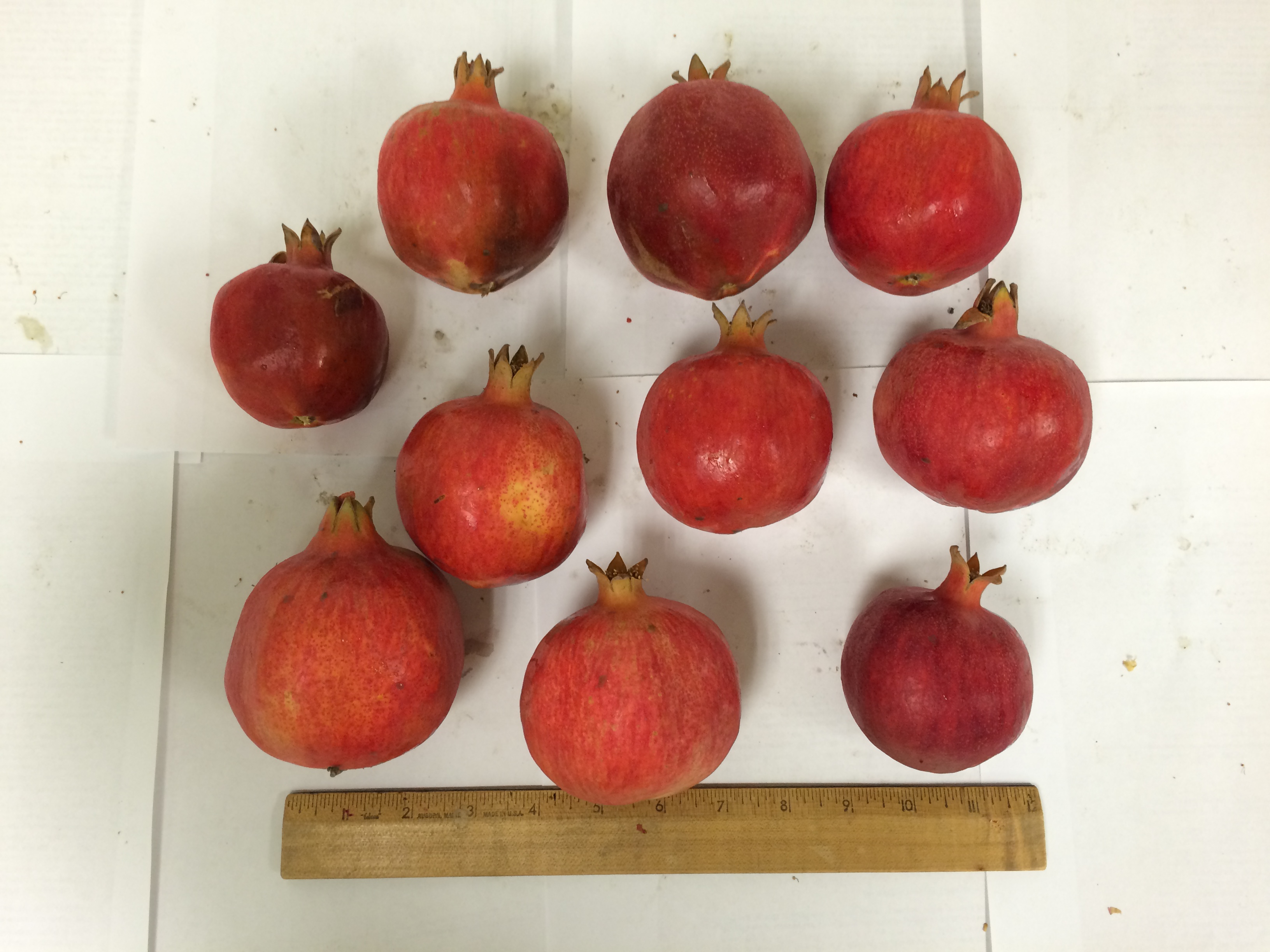
"caption": "These pomegranates are an inch or two smaller than the typical size, but they're packed with anti-oxidents. ",
"description": "These pomegranates are an inch or two smaller than the typical size, but they're packed with anti-oxidents.",
"title": "tiny pomegranates",
"credit": null,
"status": "inherit",
"isLoading": false,
"fetchFailed": false
},
"stateofhealth_22102": {
"type": "attachments",
"id": "stateofhealth_22102",
"meta": {
"index": "attachments_1716263798",
"site": "stateofhealth",
"id": "22102",
"found": true
},
"parent": 22097,
"imgSizes": {
"twentyfourteen-full-width": {
"file": "https://ww2.kqed.org/app/uploads/sites/27/2014/10/457255186-e1413484505507-1038x576.jpg",
"width": 1038,
"mimeType": "image/jpeg",
"height": 576
},
"thumbnail": {
"file": "https://ww2.kqed.org/app/uploads/sites/27/2014/10/457255186-e1413484505507-400x321.jpg",
"width": 400,
"mimeType": "image/jpeg",
"height": 321
},
"fd-sm": {
"file": "https://ww2.kqed.org/app/uploads/sites/27/2014/10/457255186-e1413484505507-320x257.jpg",
"width": 320,
"mimeType": "image/jpeg",
"height": 257
},
"post-thumbnail": {
"file": "https://ww2.kqed.org/app/uploads/sites/27/2014/10/457255186-e1413484505507-672x372.jpg",
"width": 672,
"mimeType": "image/jpeg",
"height": 372
},
"kqedFullSize": {
"file": "https://ww2.kqed.org/app/uploads/sites/27/2014/10/457255186-e1413484505507.jpg",
"width": 1440,
"height": 1156
},
"large": {
"file": "https://ww2.kqed.org/app/uploads/sites/27/2014/10/457255186-e1413484505507-1440x1156.jpg",
"width": 1440,
"mimeType": "image/jpeg",
"height": 1156
},
"guest-author-96": {
"file": "https://ww2.kqed.org/app/uploads/sites/27/2014/10/457255186-e1413484505507-96x96.jpg",
"width": 96,
"mimeType": "image/jpeg",
"height": 96
},
"medium": {
"file": "https://ww2.kqed.org/app/uploads/sites/27/2014/10/457255186-e1413484505507-800x642.jpg",
"width": 800,
"mimeType": "image/jpeg",
"height": 642
},
"guest-author-64": {
"file": "https://ww2.kqed.org/app/uploads/sites/27/2014/10/457255186-e1413484505507-64x64.jpg",
"width": 64,
"mimeType": "image/jpeg",
"height": 64
},
"guest-author-32": {
"file": "https://ww2.kqed.org/app/uploads/sites/27/2014/10/457255186-e1413484505507-32x32.jpg",
"width": 32,
"mimeType": "image/jpeg",
"height": 32
},
"fd-lrg": {
"file": "https://ww2.kqed.org/app/uploads/sites/27/2014/10/457255186-e1413484505507-1180x947.jpg",
"width": 1180,
"mimeType": "image/jpeg",
"height": 947
},
"fd-med": {
"file": "https://ww2.kqed.org/app/uploads/sites/27/2014/10/457255186-e1413484505507-768x617.jpg",
"width": 768,
"mimeType": "image/jpeg",
"height": 617
},
"detail": {
"file": "https://ww2.kqed.org/app/uploads/sites/27/2014/10/457255186-e1413484505507-75x75.jpg",
"width": 75,
"mimeType": "image/jpeg",
"height": 75
},
"guest-author-128": {
"file": "https://ww2.kqed.org/app/uploads/sites/27/2014/10/457255186-e1413484505507-128x128.jpg",
"width": 128,
"mimeType": "image/jpeg",
"height": 128
}
},
"publishDate": 1413484428,
"modified": 1413484428,
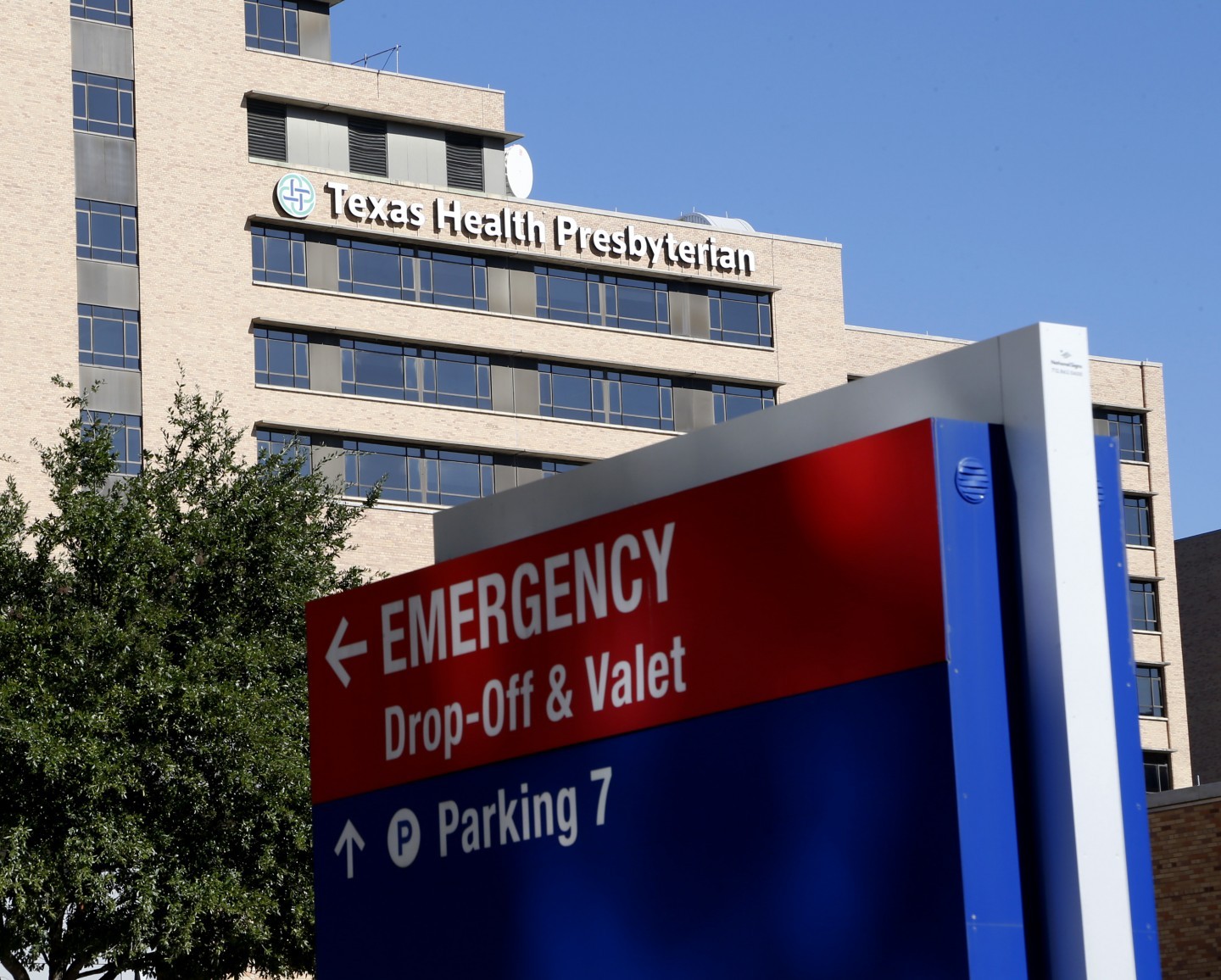
"caption": "Texas Health Presbyterian Hospital in Dallas where two health care workers. Two nurses there have tested positive for Ebola. (Stewart F. House/Getty Images)",
"description": "DALLAS, TX - OCTOBER 15: The hospital sign near the emergency room entrance off of Jackson Street at Texas Health Presbyterian Hospital. (Photo by Stewart F. House/Getty Images)",
"title": "Second Texas Healthcare Worker Tests Positive For Ebola",
"credit": null,
"status": "inherit",
"isLoading": false,
"fetchFailed": false
},
"quest_72198": {
"type": "attachments",
"id": "quest_72198",
"meta": {
"index": "attachments_1716263798",
"site": "quest",
"id": "72198",
"found": true
},
"parent": 70177,
"imgSizes": {
"thumbnail": {
"file": "https://ww2.kqed.org/app/uploads/sites/39/2014/04/Limpet-feature-image-e1412814233160-400x225.jpg",
"width": 400,
"mimeType": "image/jpeg",
"height": 225
},
"kqedFullSize": {
"file": "https://ww2.kqed.org/app/uploads/sites/39/2014/04/Limpet-feature-image-e1412814233160.jpg",
"width": 640,
"height": 360
},
"guest-author-96": {
"file": "https://ww2.kqed.org/app/uploads/sites/39/2014/04/Limpet-feature-image-e1412814233160-96x96.jpg",
"width": 96,
"mimeType": "image/jpeg",
"height": 96
},
"guest-author-64": {
"file": "https://ww2.kqed.org/app/uploads/sites/39/2014/04/Limpet-feature-image-e1412814233160-64x64.jpg",
"width": 64,
"mimeType": "image/jpeg",
"height": 64
},
"detail": {
"file": "https://ww2.kqed.org/app/uploads/sites/39/2014/04/Limpet-feature-image-e1412814233160-75x75.jpg",
"width": 75,
"mimeType": "image/jpeg",
"height": 75
},
"guest-author-32": {
"file": "https://ww2.kqed.org/app/uploads/sites/39/2014/04/Limpet-feature-image-e1412814233160-32x32.jpg",
"width": 32,
"mimeType": "image/jpeg",
"height": 32
},
"guest-author-128": {
"file": "https://ww2.kqed.org/app/uploads/sites/39/2014/04/Limpet-feature-image-e1412814233160-128x128.jpg",
"width": 128,
"mimeType": "image/jpeg",
"height": 128
}
},
"publishDate": 1412814067,
"modified": 1412814067,
"caption": null,
"description": null,
"title": "Limpet feature image",
"credit": null,
"status": "inherit",
"isLoading": false,
"fetchFailed": false
},
"stateofhealth_17415": {
"type": "attachments",
"id": "stateofhealth_17415",
"meta": {
"index": "attachments_1716263798",
"site": "stateofhealth",
"id": "17415",
"found": true
},
"parent": 17413,
"imgSizes": {
"thumbnail": {
"file": "https://ww2.kqed.org/app/uploads/sites/27/2014/01/RS8481_photo-hpf-400x300.jpg",
"width": 400,
"mimeType": "image/jpeg",
"height": 300
},
"fd-sm": {
"file": "https://ww2.kqed.org/app/uploads/sites/27/2014/01/RS8481_photo-hpf-320x240.jpg",
"width": 320,
"mimeType": "image/jpeg",
"height": 240
},
"post-thumbnail": {
"file": "https://ww2.kqed.org/app/uploads/sites/27/2014/01/RS8481_photo-hpf-640x372.jpg",
"width": 640,
"mimeType": "image/jpeg",
"height": 372
},
"kqedFullSize": {
"file": "https://ww2.kqed.org/app/uploads/sites/27/2014/01/RS8481_photo-hpf.jpg",
"width": 640,
"height": 480
},
"guest-author-96": {
"file": "https://ww2.kqed.org/app/uploads/sites/27/2014/01/RS8481_photo-hpf-96x96.jpg",
"width": 96,
"mimeType": "image/jpeg",
"height": 96
},
"guest-author-64": {
"file": "https://ww2.kqed.org/app/uploads/sites/27/2014/01/RS8481_photo-hpf-64x64.jpg",
"width": 64,
"mimeType": "image/jpeg",
"height": 64
},
"detail": {
"file": "https://ww2.kqed.org/app/uploads/sites/27/2014/01/RS8481_photo-hpf-75x75.jpg",
"width": 75,
"mimeType": "image/jpeg",
"height": 75
},
"guest-author-32": {
"file": "https://ww2.kqed.org/app/uploads/sites/27/2014/01/RS8481_photo-hpf-32x32.jpg",
"width": 32,
"mimeType": "image/jpeg",
"height": 32
},
"guest-author-128": {
"file": "https://ww2.kqed.org/app/uploads/sites/27/2014/01/RS8481_photo-hpf-128x128.jpg",
"width": 128,
"mimeType": "image/jpeg",
"height": 128
}
},
"publishDate": 1391216492,
"modified": 1391216492,
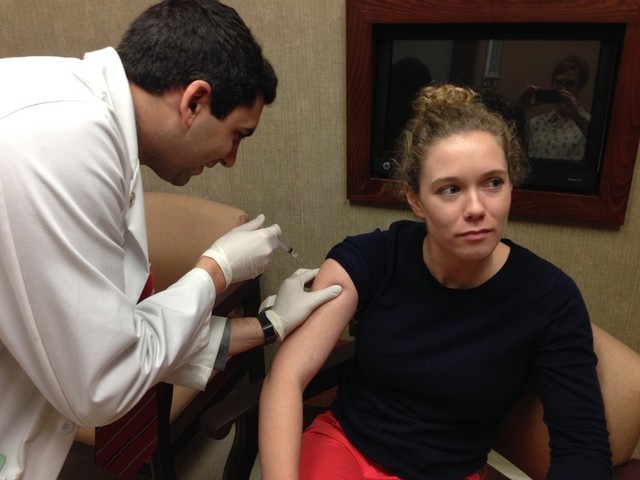
"caption": "KQED News social media editor Olivia Hubert-Allen gets her flu shot. (Lisa Pickoff-White/KQED)",
"description": "flu shot",
"title": "RS8481_photo-hpf",
"credit": null,
"status": "inherit",
"isLoading": false,
"fetchFailed": false
},
"science_22235": {
"type": "attachments",
"id": "science_22235",
"meta": {
"index": "attachments_1716263798",
"site": "science",
"id": "22235",
"found": true
},
"parent": 22234,
"imgSizes": {
"kqedFullSize": {
"file": "https://ww2.kqed.org/app/uploads/sites/35/2014/10/Bret-Parker.jpg",
"width": 2048,
"height": 1365
}
},
"publishDate": 1412291625,
"modified": 1412291625,
"caption": "This year Bret Parker went skydiving for the first time, as a fundraiser for the Michael J Fox Foundation. (Bret Parker)",
"description": null,
"title": "Bret Parker in Flight",
"credit": null,
"status": "inherit",
"isLoading": false,
"fetchFailed": false
},
"stateofhealth_21893": {
"type": "attachments",
"id": "stateofhealth_21893",
"meta": {
"index": "attachments_1716263798",
"site": "stateofhealth",
"id": "21893",
"found": true
},
"parent": 21886,
"imgSizes": {
"twentyfourteen-full-width": {
"file": "https://ww2.kqed.org/app/uploads/sites/27/2014/10/iStock_000005811185_Large-e1412270269953-1038x576.jpg",
"width": 1038,
"mimeType": "image/jpeg",
"height": 576
},
"thumbnail": {
"file": "https://ww2.kqed.org/app/uploads/sites/27/2014/10/iStock_000005811185_Large-e1412270269953-400x266.jpg",
"width": 400,
"mimeType": "image/jpeg",
"height": 266
},
"fd-sm": {
"file": "https://ww2.kqed.org/app/uploads/sites/27/2014/10/iStock_000005811185_Large-e1412270269953-320x212.jpg",
"width": 320,
"mimeType": "image/jpeg",
"height": 212
},
"post-thumbnail": {
"file": "https://ww2.kqed.org/app/uploads/sites/27/2014/10/iStock_000005811185_Large-e1412270269953-672x372.jpg",
"width": 672,
"mimeType": "image/jpeg",
"height": 372
},
"kqedFullSize": {
"file": "https://ww2.kqed.org/app/uploads/sites/27/2014/10/iStock_000005811185_Large-e1412270269953.jpg",
"width": 1440,
"height": 956
},
"large": {
"file": "https://ww2.kqed.org/app/uploads/sites/27/2014/10/iStock_000005811185_Large-e1412270269953-1440x956.jpg",
"width": 1440,
"mimeType": "image/jpeg",
"height": 956
},
"guest-author-96": {
"file": "https://ww2.kqed.org/app/uploads/sites/27/2014/10/iStock_000005811185_Large-e1412270269953-96x96.jpg",
"width": 96,
"mimeType": "image/jpeg",
"height": 96
},
"medium": {
"file": "https://ww2.kqed.org/app/uploads/sites/27/2014/10/iStock_000005811185_Large-e1412270269953-800x531.jpg",
"width": 800,
"mimeType": "image/jpeg",
"height": 531
},
"guest-author-64": {
"file": "https://ww2.kqed.org/app/uploads/sites/27/2014/10/iStock_000005811185_Large-e1412270269953-64x64.jpg",
"width": 64,
"mimeType": "image/jpeg",
"height": 64
},
"guest-author-32": {
"file": "https://ww2.kqed.org/app/uploads/sites/27/2014/10/iStock_000005811185_Large-e1412270269953-32x32.jpg",
"width": 32,
"mimeType": "image/jpeg",
"height": 32
},
"fd-lrg": {
"file": "https://ww2.kqed.org/app/uploads/sites/27/2014/10/iStock_000005811185_Large-e1412270269953-1180x783.jpg",
"width": 1180,
"mimeType": "image/jpeg",
"height": 783
},
"fd-med": {
"file": "https://ww2.kqed.org/app/uploads/sites/27/2014/10/iStock_000005811185_Large-e1412270269953-768x510.jpg",
"width": 768,
"mimeType": "image/jpeg",
"height": 510
},
"detail": {
"file": "https://ww2.kqed.org/app/uploads/sites/27/2014/10/iStock_000005811185_Large-e1412270269953-75x75.jpg",
"width": 75,
"mimeType": "image/jpeg",
"height": 75
},
"guest-author-128": {
"file": "https://ww2.kqed.org/app/uploads/sites/27/2014/10/iStock_000005811185_Large-e1412270269953-128x128.jpg",
"width": 128,
"mimeType": "image/jpeg",
"height": 128
}
},
"publishDate": 1412270250,
"modified": 1412270250,
"caption": "(iStock/Getty Images)",
"description": "A group of pasture raised chickens on a farm in Illinois",
"title": "pasture raised chickens",
"credit": null,
"status": "inherit",
"isLoading": false,
"fetchFailed": false
},
"science_22147": {
"type": "attachments",
"id": "science_22147",
"meta": {
"index": "attachments_1716263798",
"site": "science",
"id": "22147",
"found": true
},
"parent": 22146,
"imgSizes": {
"kqedFullSize": {
"file": "https://ww2.kqed.org/app/uploads/sites/35/2014/10/22146-thumb.jpg",
"width": 640,
"height": 360
}
},
"publishDate": 1412179331,
"modified": 1412179331,
"caption": null,
"description": null,
"title": "Thumbnail for 22146",
"credit": null,
"status": "inherit",
"isLoading": false,
"fetchFailed": false
},
"science_22086": {
"type": "attachments",
"id": "science_22086",
"meta": {
"index": "attachments_1716263798",
"site": "science",
"id": "22086",
"found": true
},
"parent": 22081,
"imgSizes": {
"kqedFullSize": {
"file": "https://ww2.kqed.org/app/uploads/sites/35/2014/09/4305510994_52ae7f40e1_b_flicr_Holtsman_800x450.jpg",
"width": 800,
"height": 450
}
},
"publishDate": 1411964159,
"modified": 1411964159,
"caption": "Kindergartener learning to read a book (Holtsman/flickr)",
"description": null,
"title": "4305510994_52ae7f40e1_b_flicr_Holtsman_800x450",
"credit": null,
"status": "inherit",
"isLoading": false,
"fetchFailed": false
},
"science_22009": {
"type": "attachments",
"id": "science_22009",
"meta": {
"index": "attachments_1716263798",
"site": "science",
"id": "22009",
"found": true
},
"parent": 21998,
"imgSizes": {
"kqedFullSize": {
"file": "https://ww2.kqed.org/app/uploads/sites/35/2014/09/computer-servers.jpg",
"width": 640,
"height": 360
}
},
"publishDate": 1411752533,
"modified": 1411752533,
"caption": null,
"description": null,
"title": "computer servers",
"credit": null,
"status": "inherit",
"isLoading": false,
"fetchFailed": false
},
"stateofhealth_21670": {
"type": "attachments",
"id": "stateofhealth_21670",
"meta": {
"index": "attachments_1716263798",
"site": "stateofhealth",
"id": "21670",
"found": true
},
"parent": 21669,
"imgSizes": {
"twentyfourteen-full-width": {
"file": "https://ww2.kqed.org/app/uploads/sites/27/2014/09/RS8413_reservoir-full-lpr-e1411165193389-1038x576.jpg",
"width": 1038,
"mimeType": "image/jpeg",
"height": 576
},
"thumbnail": {
"file": "https://ww2.kqed.org/app/uploads/sites/27/2014/09/RS8413_reservoir-full-lpr-e1411165193389-400x251.jpg",
"width": 400,
"mimeType": "image/jpeg",
"height": 251
},
"fd-sm": {
"file": "https://ww2.kqed.org/app/uploads/sites/27/2014/09/RS8413_reservoir-full-lpr-e1411165193389-320x201.jpg",
"width": 320,
"mimeType": "image/jpeg",
"height": 201
},
"post-thumbnail": {
"file": "https://ww2.kqed.org/app/uploads/sites/27/2014/09/RS8413_reservoir-full-lpr-e1411165193389-672x372.jpg",
"width": 672,
"mimeType": "image/jpeg",
"height": 372
},
"kqedFullSize": {
"file": "https://ww2.kqed.org/app/uploads/sites/27/2014/09/RS8413_reservoir-full-lpr-e1411165193389.jpg",
"width": 1400,
"height": 878
},
"guest-author-96": {
"file": "https://ww2.kqed.org/app/uploads/sites/27/2014/09/RS8413_reservoir-full-lpr-e1411165193389-96x96.jpg",
"width": 96,
"mimeType": "image/jpeg",
"height": 96
},
"medium": {
"file": "https://ww2.kqed.org/app/uploads/sites/27/2014/09/RS8413_reservoir-full-lpr-e1411165193389-800x502.jpg",
"width": 800,
"mimeType": "image/jpeg",
"height": 502
},
"guest-author-64": {
"file": "https://ww2.kqed.org/app/uploads/sites/27/2014/09/RS8413_reservoir-full-lpr-e1411165193389-64x64.jpg",
"width": 64,
"mimeType": "image/jpeg",
"height": 64
},
"guest-author-32": {
"file": "https://ww2.kqed.org/app/uploads/sites/27/2014/09/RS8413_reservoir-full-lpr-e1411165193389-32x32.jpg",
"width": 32,
"mimeType": "image/jpeg",
"height": 32
},
"fd-lrg": {
"file": "https://ww2.kqed.org/app/uploads/sites/27/2014/09/RS8413_reservoir-full-lpr-e1411165193389-1180x740.jpg",
"width": 1180,
"mimeType": "image/jpeg",
"height": 740
},
"fd-med": {
"file": "https://ww2.kqed.org/app/uploads/sites/27/2014/09/RS8413_reservoir-full-lpr-e1411165193389-768x482.jpg",
"width": 768,
"mimeType": "image/jpeg",
"height": 482
},
"detail": {
"file": "https://ww2.kqed.org/app/uploads/sites/27/2014/09/RS8413_reservoir-full-lpr-e1411165193389-75x75.jpg",
"width": 75,
"mimeType": "image/jpeg",
"height": 75
},
"guest-author-128": {
"file": "https://ww2.kqed.org/app/uploads/sites/27/2014/09/RS8413_reservoir-full-lpr-e1411165193389-128x128.jpg",
"width": 128,
"mimeType": "image/jpeg",
"height": 128
}
},
"publishDate": 1411165166,
"modified": 1411165166,
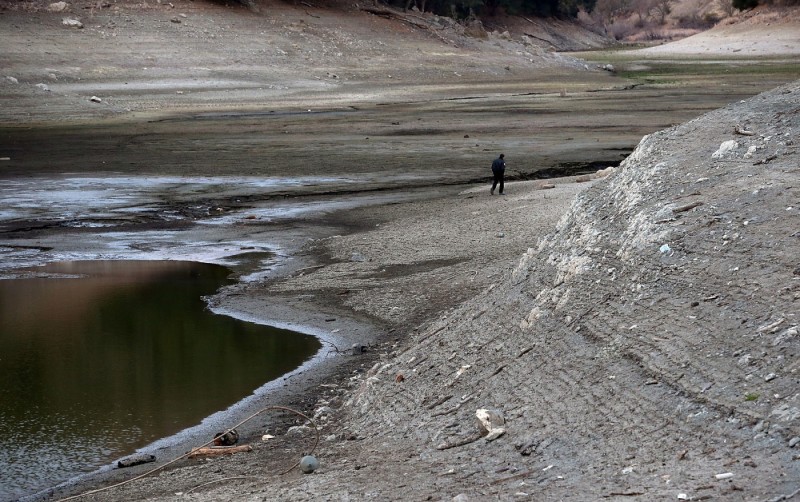
"caption": "A security guard walks the perimeter of the Almaden Reservoir on January 28, 2014 in San Jose, California. Now in its third straight year of drought conditions, California is experiencing its driest year on record, dating back 119 years, and reservoirs throughout the state have low water levels. Santa Clara County reservoirs are at 3 percent of capacity or lower. California Gov. Jerry Brown officially declared a drought emergency to speed up assistance to local governments, streamline water transfers and potentially ease environmental protection requirements for dam releases. (Photo by Justin Sullivan/Getty Images)\n",
"description": "A security guard walks the perimeter of the Almaden Reservoir on January 28, 2014 in San Jose, California. Now in its third straight year of drought conditions, California is experiencing its driest year on record, dating back 119 years, and reservoirs throughout the state have low water levels. Santa Clara County reservoirs are at 3 percent of capacity or lower. California Gov. Jerry Brown officially declared a drought emergency to speed up assistance to local governments, streamline water transfers and potentially ease environmental protection requirements for dam releases. (Photo by Justin Sullivan/Getty Images)\n",
"title": "RS8413_reservoir-full-lpr",
"credit": null,
"status": "inherit",
"isLoading": false,
"fetchFailed": false
}
},
"audioPlayerReducer": {
"postId": "stream_live",
"isPaused": true,
"isPlaying": false,
"pfsActive": false,
"pledgeModalIsOpen": true,
"playerDrawerIsOpen": false,
"liveAudioPlayStartedAt": 0,
"liveAudioPlayContext": ""
},
"authorsReducer": {
"amystanden": {
"type": "authors",
"id": "210",
"meta": {
"index": "authors_1716337520",
"id": "210",
"found": true
},
"name": "Amy Standen",
"firstName": "Amy",
"lastName": "Standen",
"slug": "amystanden",
"email": "astanden@kqed.org",
"display_author_email": false,
"staff_mastheads": [],
"title": "KQED Contributor",
"bio": "Amy Standen (@amystanden) is co-host of #\u003ca href=\"https://ww2.kqed.org/news/programs/the-leap\">TheLeapPodcast\u003c/a> (subscribe on iTunes or Stitcher!) and host of KQED and PBSDigital Studios' science video series, \u003ca href=\"https://www.youtube.com/user/KQEDDeepLook\">Deep Look\u003c/a>. Her science radio stories appear on KQED and NPR.\r\n\r\nEmail her at astanden@kqed.org",
"avatar": "https://secure.gravatar.com/avatar/3d021b72de685a788b0487b059d0a6a1?s=600&d=blank&r=g",
"twitter": null,
"facebook": null,
"instagram": null,
"linkedin": null,
"sites": [
{
"site": "news",
"roles": [
"subscriber"
]
},
{
"site": "futureofyou",
"roles": [
"subscriber"
]
},
{
"site": "stateofhealth",
"roles": [
"subscriber"
]
},
{
"site": "science",
"roles": []
},
{
"site": "quest",
"roles": [
"subscriber"
]
}
],
"headData": {
"title": "Amy Standen | KQED",
"description": "KQED Contributor",
"ogImgSrc": "https://secure.gravatar.com/avatar/3d021b72de685a788b0487b059d0a6a1?s=600&d=blank&r=g",
"twImgSrc": "https://secure.gravatar.com/avatar/3d021b72de685a788b0487b059d0a6a1?s=600&d=blank&r=g"
},
"isLoading": false,
"link": "/author/amystanden"
},
"sasha-khokha": {
"type": "authors",
"id": "254",
"meta": {
"index": "authors_1716337520",
"id": "254",
"found": true
},
"name": "Sasha Khokha",
"firstName": "Sasha",
"lastName": "Khokha",
"slug": "sasha-khokha",
"email": "skhokha@kqed.org",
"display_author_email": true,
"staff_mastheads": [
"news"
],
"title": "Host, The California Report Magazine",
"bio": "Sasha Khokha is the host of \u003cem>The California Report's \u003c/em> weekly magazine program, which takes listeners on sound-rich excursions to meet the people that make the Golden State unique -- through audio documentaries and long-form stories. As \u003cem>The California Report's\u003c/em> Central Valley Bureau Chief based in Fresno for nearly a dozen years, Sasha brought the lives and concerns of rural Californians to listeners around the state. Her reporting helped expose the hidden price immigrant women janitors and farmworkers may pay to keep their jobs: sexual assault at work. It inspired two new California laws to protect them from sexual harassment. She was a key member of the reporting team for the Frontline film \u003cem>Rape on the Night Shift, \u003c/em>which was nominated for two national Emmys. Sasha has also won a national Edward R. Murrow and a national PRNDI award for investigative reporting, as well as multiple prizes from the Society for Professional Journalists. Sasha is a proud alum of the UC Berkeley Graduate School of Journalism and Brown University and a member of the South Asian Journalists Association.",
"avatar": "https://secure.gravatar.com/avatar/e4b5e1541aaeea2aa356aa1fb2a68950?s=600&d=blank&r=g",
"twitter": "KQEDSashaKhokha",
"facebook": null,
"instagram": null,
"linkedin": null,
"sites": [
{
"site": "news",
"roles": [
"editor"
]
},
{
"site": "stateofhealth",
"roles": [
"author"
]
},
{
"site": "science",
"roles": [
"author"
]
},
{
"site": "quest",
"roles": [
"subscriber"
]
}
],
"headData": {
"title": "Sasha Khokha | KQED",
"description": "Host, The California Report Magazine",
"ogImgSrc": "https://secure.gravatar.com/avatar/e4b5e1541aaeea2aa356aa1fb2a68950?s=600&d=blank&r=g",
"twImgSrc": "https://secure.gravatar.com/avatar/e4b5e1541aaeea2aa356aa1fb2a68950?s=600&d=blank&r=g"
},
"isLoading": false,
"link": "/author/sasha-khokha"
},
"adembosky": {
"type": "authors",
"id": "3205",
"meta": {
"index": "authors_1716337520",
"id": "3205",
"found": true
},
"name": "April Dembosky",
"firstName": "April",
"lastName": "Dembosky",
"slug": "adembosky",
"email": "adembosky@kqed.org",
"display_author_email": false,
"staff_mastheads": [
"news",
"science"
],
"title": "KQED Health Correspondent",
"bio": "April Dembosky is the health correspondent for KQED News and a regular contributor to NPR. She specializes in covering altered states of mind, from postpartum depression to methamphetamine-induced psychosis to the insanity defense. Her investigative series on insurance companies sidestepping mental health laws won multiple awards, including first place in beat reporting from the national Association of Health Care Journalists. She is the recipient of numerous other prizes and fellowships, including a national Edward R. Murrow award for investigative reporting, a Society of Professional Journalists award for long-form storytelling, and a Carter Center Fellowship for Mental Health Journalism.\r\n\r\nDembosky reported and produced \u003cem>Soundtrack of Silence\u003c/em>, an audio documentary about music and memory that is currently being made into a feature film by Paramount Pictures.\r\n\r\nBefore joining KQED in 2013, Dembosky covered technology and Silicon Valley for \u003cem>The Financial Times of London,\u003c/em> and contributed business and arts stories to \u003cem>Marketplace \u003c/em>and \u003cem>The New York Times.\u003c/em> She got her undergraduate degree in philosophy from Smith College and her master's in journalism from the University of California, Berkeley. She is a classically trained violinist and proud alum of the first symphony orchestra at Burning Man.",
"avatar": "https://secure.gravatar.com/avatar/ef92999be4ceb9ea60701e7dc276f813?s=600&d=blank&r=g",
"twitter": "adembosky",
"facebook": null,
"instagram": null,
"linkedin": null,
"sites": [
{
"site": "arts",
"roles": [
"author"
]
},
{
"site": "news",
"roles": [
"editor"
]
},
{
"site": "futureofyou",
"roles": [
"author"
]
},
{
"site": "stateofhealth",
"roles": [
"editor"
]
},
{
"site": "science",
"roles": [
"editor"
]
},
{
"site": "forum",
"roles": [
"editor"
]
}
],
"headData": {
"title": "April Dembosky | KQED",
"description": "KQED Health Correspondent",
"ogImgSrc": "https://secure.gravatar.com/avatar/ef92999be4ceb9ea60701e7dc276f813?s=600&d=blank&r=g",
"twImgSrc": "https://secure.gravatar.com/avatar/ef92999be4ceb9ea60701e7dc276f813?s=600&d=blank&r=g"
},
"isLoading": false,
"link": "/author/adembosky"
},
"lindseyhoshaw": {
"type": "authors",
"id": "5432",
"meta": {
"index": "authors_1716337520",
"id": "5432",
"found": true
},
"name": "Lindsey Hoshaw",
"firstName": "Lindsey",
"lastName": "Hoshaw",
"slug": "lindseyhoshaw",
"email": "lhoshaw@kqed.org",
"display_author_email": false,
"staff_mastheads": [],
"title": "KQED Contributor",
"bio": "Lindsey Hoshaw is a former interactive producer for KQED Science. Before joining KQED, Lindsey was a science correspondent for The New York Times, The Boston Globe, Forbes and Scientific American. On Twitter @lindseyhoshaw",
"avatar": "https://secure.gravatar.com/avatar/274b07694c998eaa8f26cfabaa941186?s=600&d=mm&r=g",
"twitter": "lindseyhoshaw",
"facebook": "lindsey.hoshaw.9",
"instagram": null,
"linkedin": null,
"sites": [
{
"site": "arts",
"roles": [
"author"
]
},
{
"site": "news",
"roles": [
"subscriber"
]
},
{
"site": "futureofyou",
"roles": [
"editor"
]
},
{
"site": "bayareabites",
"roles": [
"contributor"
]
},
{
"site": "stateofhealth",
"roles": [
"author"
]
},
{
"site": "science",
"roles": [
"edit_theme_options",
"subscriber"
]
},
{
"site": "quest",
"roles": [
"edit_post_subscriptions",
"edit_usergroups",
"unfiltered_html",
"unfiltered_upload",
"leadcoordinator",
"editor"
]
},
{
"site": "food",
"roles": []
}
],
"headData": {
"title": "Lindsey Hoshaw | KQED",
"description": "KQED Contributor",
"ogImgSrc": "https://secure.gravatar.com/avatar/274b07694c998eaa8f26cfabaa941186?s=600&d=mm&r=g",
"twImgSrc": "https://secure.gravatar.com/avatar/274b07694c998eaa8f26cfabaa941186?s=600&d=mm&r=g"
},
"isLoading": false,
"link": "/author/lindseyhoshaw"
},
"dr-barry-starr": {
"type": "authors",
"id": "6177",
"meta": {
"index": "authors_1716337520",
"id": "6177",
"found": true
},
"name": "Dr. Barry Starr",
"firstName": "Dr. Barry",
"lastName": "Starr",
"slug": "dr-barry-starr",
"email": "bstarr@thetech.org",
"display_author_email": false,
"staff_mastheads": [],
"title": "KQED Contributor",
"bio": "Dr. Barry Starr (\u003ca href=\"https://twitter.com/geneticsboy\">@geneticsboy\u003c/a>) is a Geneticist-in-Residence at The Tech Museum of Innovation in San Jose, CA and runs their Stanford at The Tech program. The program is part of an ongoing collaboration between the \u003ca href=\"http://genetics.stanford.edu/\">Stanford Department of Genetics\u003c/a> and \u003ca href=\"http://www.thetech.org/\">The Tech Museum of Innovation\u003c/a>. Together these two partners created the \u003ca href=\"http://www.thetech.org/exhibits/permanent/index.php?sGalKey=gtwt&galKey=lt\">Genetics: Technology with a Twist\u003c/a> exhibition.\r\n\r\nYou can also see \u003ca href=\"https://ww2.kqed.org/science/author/dr-barry-starr/\">additional posts by Barry at KQED Science\u003c/a>, and read his \u003ca href=\"http://science.kqed.org/quest/author/dr-barry-starr/\">previous contributions\u003c/a> to \u003ca href=\"http://science.kqed.org/quest/\">QUEST\u003c/a>, a project dedicated to exploring the Science of Sustainability.",
"avatar": "https://secure.gravatar.com/avatar/4a5680e4c642ea0f0f3041af16018969?s=600&d=blank&r=g",
"twitter": "geneticsboy",
"facebook": null,
"instagram": null,
"linkedin": null,
"sites": [
{
"site": "futureofyou",
"roles": []
},
{
"site": "science",
"roles": [
"author"
]
},
{
"site": "quest",
"roles": [
"subscriber"
]
}
],
"headData": {
"title": "Dr. Barry Starr | KQED",
"description": "KQED Contributor",
"ogImgSrc": "https://secure.gravatar.com/avatar/4a5680e4c642ea0f0f3041af16018969?s=600&d=blank&r=g",
"twImgSrc": "https://secure.gravatar.com/avatar/4a5680e4c642ea0f0f3041af16018969?s=600&d=blank&r=g"
},
"isLoading": false,
"link": "/author/dr-barry-starr"
},
"jenniferhuber": {
"type": "authors",
"id": "6360",
"meta": {
"index": "authors_1716337520",
"id": "6360",
"found": true
},
"name": "Jennifer Huber",
"firstName": "Jennifer",
"lastName": "Huber",
"slug": "jenniferhuber",
"email": "jshuber@lbl.gov",
"display_author_email": false,
"staff_mastheads": [],
"title": null,
"bio": "Jennifer Huber is a medical imaging scientist at the Lawrence Berkeley National Laboratory with more than 20 years of experience in academic science writing. She received her Ph.D. in Physics from the University of California Santa Barbara. She is also a freelance science writer, editor and blogger, as well as a science-writing instructor for the University of California Berkeley Extension. Jennifer has lived in the San Francisco Bay Area most of her life and she frequently enjoys the eclectic cultural, culinary and outdoor activities available in the area.\r\n\r\nRead her \u003ca href=\"http://science.kqed.org/quest/author/jenniferhuber/\">previous contributions\u003c/a> to \u003ci>QUEST\u003c/i>, a project dedicated to exploring the Science of Sustainability.",
"avatar": "https://secure.gravatar.com/avatar/ca897c62a710c0bf8c5f429c89331765?s=600&d=blank&r=g",
"twitter": null,
"facebook": null,
"instagram": null,
"linkedin": null,
"sites": [
{
"site": "science",
"roles": [
"author"
]
},
{
"site": "quest",
"roles": [
"subscriber"
]
}
],
"headData": {
"title": "Jennifer Huber | KQED",
"description": null,
"ogImgSrc": "https://secure.gravatar.com/avatar/ca897c62a710c0bf8c5f429c89331765?s=600&d=blank&r=g",
"twImgSrc": "https://secure.gravatar.com/avatar/ca897c62a710c0bf8c5f429c89331765?s=600&d=blank&r=g"
},
"isLoading": false,
"link": "/author/jenniferhuber"
},
"kqedscience": {
"type": "authors",
"id": "6387",
"meta": {
"index": "authors_1716337520",
"id": "6387",
"found": true
},
"name": "KQED Science",
"firstName": "KQED",
"lastName": "Science",
"slug": "kqedscience",
"email": "kqedscience@gmail.com",
"display_author_email": false,
"staff_mastheads": [],
"title": null,
"bio": "KQED Science brings you award-winning science and environment coverage from the Bay Area and beyond by the flagship Northern California PBS and NPR affiliate.",
"avatar": "https://secure.gravatar.com/avatar/5a295ff49cf82a8c0f30937d3f788b2f?s=600&d=blank&r=g",
"twitter": null,
"facebook": null,
"instagram": null,
"linkedin": null,
"sites": [
{
"site": "science",
"roles": [
"contributor"
]
},
{
"site": "quest",
"roles": [
"editor"
]
},
{
"site": "food",
"roles": [
"contributor"
]
}
],
"headData": {
"title": "KQED Science | KQED",
"description": null,
"ogImgSrc": "https://secure.gravatar.com/avatar/5a295ff49cf82a8c0f30937d3f788b2f?s=600&d=blank&r=g",
"twImgSrc": "https://secure.gravatar.com/avatar/5a295ff49cf82a8c0f30937d3f788b2f?s=600&d=blank&r=g"
},
"isLoading": false,
"link": "/author/kqedscience"
},
"state-of-health": {
"type": "authors",
"id": "8344",
"meta": {
"index": "authors_1716337520",
"id": "8344",
"found": true
},
"name": "State of Health",
"firstName": "State of Health",
"lastName": null,
"slug": "state-of-health",
"email": "stateofhealth@kqed.org",
"display_author_email": false,
"staff_mastheads": [],
"title": null,
"bio": null,
"avatar": "https://secure.gravatar.com/avatar/66de4bf6d331fa7402bba1ffe8135e17?s=600&d=blank&r=g",
"twitter": null,
"facebook": null,
"instagram": null,
"linkedin": null,
"sites": [
{
"site": "arts",
"roles": [
"author"
]
},
{
"site": "stateofhealth",
"roles": [
"editor"
]
}
],
"headData": {
"title": "State of Health | KQED",
"description": null,
"ogImgSrc": "https://secure.gravatar.com/avatar/66de4bf6d331fa7402bba1ffe8135e17?s=600&d=blank&r=g",
"twImgSrc": "https://secure.gravatar.com/avatar/66de4bf6d331fa7402bba1ffe8135e17?s=600&d=blank&r=g"
},
"isLoading": false,
"link": "/author/state-of-health"
}
},
"pagesReducer": {
"science_category_health": {
"type": "terms",
"id": "science_39",
"meta": {
"index": "terms_1716263798",
"site": "science",
"id": "39",
"score": 10.889561
},
"featImg": null,
"name": "Health",
"description": null,
"taxonomy": "category",
"headData": {
"twImgId": null,
"twTitle": null,
"ogTitle": null,
"ogImgId": null,
"twDescription": null,
"description": null,
"title": "Health Archives | KQED Science",
"ogDescription": null
},
"ttid": 41,
"slug": "health",
"isLoading": false,
"title": "Health",
"pageMeta": {
"site": "science",
"WpPageTemplate": "page-topic-editorial",
"currentPage": 88
},
"blocks": [
{
"blockName": "kqed/post-list",
"attrs": {
"layout": "cardArticle2",
"query": "posts/science?category=health",
"seeMore": false,
"paginated": true,
"page": 88
}
},
{
"blockName": "kqed/ad"
}
]
}
},
"pfsSessionReducer": {},
"postsReducer": {
"stream_live": {
"type": "live",
"id": "stream_live",
"audioUrl": "https://streams.kqed.org/kqedradio",
"title": "Live Stream",
"excerpt": "Live Stream information currently unavailable.",
"link": "/radio",
"featImg": "",
"label": {
"name": "KQED Live",
"link": "/"
}
},
"stream_kqedNewscast": {
"type": "posts",
"id": "stream_kqedNewscast",
"audioUrl": "https://www.kqed.org/.stream/anon/radio/RDnews/newscast.mp3?_=1",
"title": "KQED Newscast",
"featImg": "",
"label": {
"name": "88.5 FM",
"link": "/"
}
},
"science_22613": {
"type": "posts",
"id": "science_22613",
"meta": {
"index": "posts_1716263798",
"site": "science",
"id": "22613",
"score": null,
"sort": [
1413900047000
]
},
"parent": 0,
"labelTerm": {
"site": "science"
},
"blocks": [],
"publishDate": 1413900047,
"format": "aside",
"title": "New Research Shows Targeted Antioxidants Help Mice Live Longer, Healthier Lives",
"headTitle": "New Research Shows Targeted Antioxidants Help Mice Live Longer, Healthier Lives | KQED",
"content": "\u003cfigure id=\"attachment_22615\" class=\"wp-caption aligncenter\" style=\"max-width: 800px\">\u003ca href=\"http://ww2.kqed.org/science/wp-content/uploads/sites/35/2014/10/Scid_mouse.jpg\">\u003cimg loading=\"lazy\" decoding=\"async\" class=\"size-full wp-image-22615\" src=\"http://ww2.kqed.org/science/wp-content/uploads/sites/35/2014/10/Scid_mouse.jpg\" alt=\"The frailty that often comes with old age may one day be delayed by targeting antioxidants to the mitochondria. (Wikimedia Commons)\" width=\"800\" height=\"463\">\u003c/a>\u003cfigcaption class=\"wp-caption-text\">Mice can avoid the frailty that comes with old age when antioxidants are targeted to their mitochondria. One day perhaps a similar treatment can help people have a healthier old age. (\u003ca class=\"nofancybox\" href=\"http://commons.wikimedia.org/wiki/File:Scid_mouse.jpg\">Wikimedia Commons\u003c/a>)\u003c/figcaption>\u003c/figure>\n\u003cp>You can’t go to a health website without reading about the praises of antioxidants. These miracle chemicals found in foods such as various berries, beans and artichokes are touted to help you lose weight, give you younger-looking skin, help fight off infections and so much more.\u003c/p>\n\u003cp>While many of the benefits of antioxidants are undoubtedly oversold, we do know that if given at high enough levels and targeted to the right place, antioxidants can help a mouse live 10-20% longer. If this holds up in people, that is equivalent to an extra 7-14 years for people here in the U.S.\u003c/p>\n\u003cp>And that isn’t all. These mice not only live longer but as Umanskya and coworkers show in a \u003ca href=\"http://www.ncbi.nlm.nih.gov/pubmed/25288763\">new study\u003c/a> in the journal \u003ca href=\"http://www.pnas.org/\">Proceedings of the National Academy of Sciences\u003c/a> (PNAS), they also stay stronger and healthier for longer too. So the antioxidant treatment isn’t just adding extra time at the end of the mouse’s life. It is adding better, more productive years.\u003c/p>\n\u003cfigure id=\"attachment_22618\" class=\"wp-caption alignright\" style=\"max-width: 300px\">\u003ca href=\"http://ww2.kqed.org/science/wp-content/uploads/sites/35/2014/10/MitochondriaFlashCard.jpg\">\u003cimg loading=\"lazy\" decoding=\"async\" class=\"size-full wp-image-22618\" src=\"http://ww2.kqed.org/science/wp-content/uploads/sites/35/2014/10/MitochondriaFlashCard.jpg\" alt=\"Protecting the mitochondria of mice with antioxidants helps the mice live longer, healthier lives. (Flickr)\" width=\"300\" height=\"429\">\u003c/a>\u003cfigcaption class=\"wp-caption-text\">Protecting the mitochondria of mice with antioxidants helps the mice live longer, healthier lives. (\u003ca href=\"https://c2.staticflickr.com/4/3613/3439703502_1ecb115c2b_z.jpg?zz=1\">Flickr\u003c/a>)\u003c/figcaption>\u003c/figure>\n\u003cp>Now don’t think that you can get the same effects from eating truckloads of blueberries (although they are both tasty and good for you). You can’t. These mice were genetically engineered to make antioxidants in the key part of the cell that needs protection—the mitochondria. They lived longer not because of what they ate but because of genetic modification.\u003c/p>\n\u003cp>This means that we need to wait until scientists figure out how to package antioxidants and deliver them specifically to the mitochondria to cash in on these benefits. And luckily for us, scientists \u003ca href=\"http://www.sciencedirect.com/science/article/pii/S1567724913000627\">are working furiously on this right now\u003c/a>. Not only would this sort of targeting help with aging, but it would help treat many other devastating mitochondrial diseases as well.\u003c/p>\n\u003cp>[ad fullwidth]\u003c/p>\n\u003cp>And who knows? Maybe in the not too distant future, scientists will be able to genetically engineer the mitochondria in human eggs so that the resulting child lives a longer, healthier life.\u003c/p>\n\u003cp>Right now, scientists are able to replace diseased mitochondria with healthy ones in the eggs of women suffering from mitochondrial disease (although they are being \u003ca href=\"http://ww2.kqed.org/science/2013/10/21/controversial-technique-can-prevent-fatal-illnesses-in-children/\">prevented from doing this right now for ethical reasons\u003c/a>). So it may not be too long before they can do the same with genetically engineered mitochondria. It won’t be happening tomorrow but the technology could be closer than you think.\u003c/p>\n\u003cp>\u003cstrong>Making Energy Produces Pollution\u003c/strong>\u003c/p>\n\u003cp>Targeting the mitochondria makes sense because these poor things take a beating during our lifetime. Mitochondria are the energy plants of the cells. After our food gets digested, the remains are sent to mitochondria to be turned into ATP, the main source of cellular energy.\u003c/p>\n\u003cp>Just like burning fossil fuels for energy creates all sorts of pollutants, making energy in the mitochondria does too. But instead of carbon dioxide, particulates and acid rain, the byproducts of making energy in the mitochondria are free radicals. And these are very, very nasty little chemicals.\u003c/p>\n\u003cfigure id=\"attachment_22621\" class=\"wp-caption alignleft\" style=\"max-width: 300px\">\u003ca href=\"http://ww2.kqed.org/science/wp-content/uploads/sites/35/2014/10/PowerPlant.jpg\">\u003cimg loading=\"lazy\" decoding=\"async\" class=\"size-full wp-image-22621\" src=\"http://ww2.kqed.org/science/wp-content/uploads/sites/35/2014/10/PowerPlant.jpg\" alt=\"The pollution from making energy in mitochondria are free radicals. (Wikimedia Commons)\" width=\"300\" height=\"214\">\u003c/a>\u003cfigcaption class=\"wp-caption-text\">The pollution from making energy in mitochondria are free radicals. (\u003ca class=\"nofancybox\" href=\"http://commons.wikimedia.org/wiki/File:Power_plant_in_P%C4%85tn%C3%B3w.jpg\">Wikimedia Commons\u003c/a>)\u003c/figcaption>\u003c/figure>\n\u003cp>Free radicals tend to quickly react with and so damage whatever is close by and in cells, that means the mitochondria and their DNA. These wounded mitochondria can no longer do their jobs properly and this is thought to be one of the big reasons we age.\u003c/p>\n\u003cp>Given this, it made perfect sense for the scientists to try to have mice live longer by adding something to the mitochondria that can defuse those free radicals. In this case, they added the catalase gene whose product is responsible for turning hydrogen peroxide (a precursor to free radicals) into water and oxygen.\u003c/p>\n\u003cp>Mice that had catalase added to their mitochondria lived longer. They also had fewer problems with age-related insulin resistance and energy imbalance. Overall, these mice did much better than their untreated littermates as they aged.\u003c/p>\n\u003cp>In the current study, Umanskya and coworkers found that the genetically engineered mice also suffered less age-related muscle weakness than regular old mice. This is more evidence that dealing with free radicals in the mitochondria can have a profound effect on the quality of life in old age. At least if you are a mouse…\u003c/p>\n\u003cp>\u003cstrong>Stronger Muscles, Better Old Age\u003c/strong>\u003c/p>\n\u003cp>Everyone knows that as you get older, your body slowly starts to break down. For example, your muscles can weaken as you age and this can have profound consequences in terms of falling and loss of independence. Something like \u003ca href=\"http://www.ncbi.nlm.nih.gov/pubmed/23395245\">30-50% of 80 year olds suffer from age-related muscle weakness\u003c/a>.\u003c/p>\n\u003cp>Obviously it would be a boon to an aging population if we could somehow prevent this from happening. And this is apparently what happened when the mitochondria in mice were protected from damage. The protected mice suffered from less muscle weakness, were more willing to exercise and were generally stronger than their unprotected litter mates.\u003c/p>\n\u003cp>\u003c/p>\n\u003cp>So if we can figure out how to safely and effectively get antioxidants to our mitochondria, we may end up living longer and healthier lives. Sure beats the idea of \u003ca href=\"http://www.medicalnewstoday.com/articles/274929.php\">protecting our mitochondria by starving ourselves\u003c/a>!\u003c/p>\n\n",
"stats": {
"hasVideo": false,
"hasChartOrMap": false,
"hasAudio": false,
"hasPolis": false,
"wordCount": 913,
"hasGoogleForm": false,
"hasGallery": false,
"hasHearkenModule": false,
"iframeSrcs": [],
"paragraphCount": 20
},
"modified": 1704932740,
"excerpt": "While many of the benefits of antioxidants are undoubtedly oversold, we do know that if given at high enough levels and targeted to the right place, antioxidants can help a mouse live 10-20% longer. If this holds up in people, that is equivalent to an extra 7-14 years for people here in the U.S.",
"headData": {
"twImgId": "",
"twTitle": "",
"ogTitle": "",
"ogImgId": "",
"twDescription": "",
"description": "While many of the benefits of antioxidants are undoubtedly oversold, we do know that if given at high enough levels and targeted to the right place, antioxidants can help a mouse live 10-20% longer. If this holds up in people, that is equivalent to an extra 7-14 years for people here in the U.S.",
"title": "New Research Shows Targeted Antioxidants Help Mice Live Longer, Healthier Lives | KQED",
"ogDescription": "",
"schema": {
"@context": "https://schema.org",
"@type": "Article",
"headline": "New Research Shows Targeted Antioxidants Help Mice Live Longer, Healthier Lives",
"datePublished": "2014-10-21T07:00:47-07:00",
"dateModified": "2024-01-10T16:25:40-08:00",
"image": "https://cdn.kqed.org/wp-content/uploads/2020/02/KQED-OG-Image@1x.png"
}
},
"guestAuthors": [],
"slug": "new-research-shows-targeted-antioxidants-help-mice-live-longer-healthier-lives",
"status": "publish",
"sticky": false,
"path": "/science/22613/new-research-shows-targeted-antioxidants-help-mice-live-longer-healthier-lives",
"audioTrackLength": null,
"parsedContent": [
{
"type": "contentString",
"content": "\u003cdiv class=\"post-body\">\u003cp>\u003cfigure id=\"attachment_22615\" class=\"wp-caption aligncenter\" style=\"max-width: 800px\">\u003ca href=\"http://ww2.kqed.org/science/wp-content/uploads/sites/35/2014/10/Scid_mouse.jpg\">\u003cimg loading=\"lazy\" decoding=\"async\" class=\"size-full wp-image-22615\" src=\"http://ww2.kqed.org/science/wp-content/uploads/sites/35/2014/10/Scid_mouse.jpg\" alt=\"The frailty that often comes with old age may one day be delayed by targeting antioxidants to the mitochondria. (Wikimedia Commons)\" width=\"800\" height=\"463\">\u003c/a>\u003cfigcaption class=\"wp-caption-text\">Mice can avoid the frailty that comes with old age when antioxidants are targeted to their mitochondria. One day perhaps a similar treatment can help people have a healthier old age. (\u003ca class=\"nofancybox\" href=\"http://commons.wikimedia.org/wiki/File:Scid_mouse.jpg\">Wikimedia Commons\u003c/a>)\u003c/figcaption>\u003c/figure>\n\u003cp>You can’t go to a health website without reading about the praises of antioxidants. These miracle chemicals found in foods such as various berries, beans and artichokes are touted to help you lose weight, give you younger-looking skin, help fight off infections and so much more.\u003c/p>\n\u003cp>While many of the benefits of antioxidants are undoubtedly oversold, we do know that if given at high enough levels and targeted to the right place, antioxidants can help a mouse live 10-20% longer. If this holds up in people, that is equivalent to an extra 7-14 years for people here in the U.S.\u003c/p>\n\u003cp>And that isn’t all. These mice not only live longer but as Umanskya and coworkers show in a \u003ca href=\"http://www.ncbi.nlm.nih.gov/pubmed/25288763\">new study\u003c/a> in the journal \u003ca href=\"http://www.pnas.org/\">Proceedings of the National Academy of Sciences\u003c/a> (PNAS), they also stay stronger and healthier for longer too. So the antioxidant treatment isn’t just adding extra time at the end of the mouse’s life. It is adding better, more productive years.\u003c/p>\n\u003cfigure id=\"attachment_22618\" class=\"wp-caption alignright\" style=\"max-width: 300px\">\u003ca href=\"http://ww2.kqed.org/science/wp-content/uploads/sites/35/2014/10/MitochondriaFlashCard.jpg\">\u003cimg loading=\"lazy\" decoding=\"async\" class=\"size-full wp-image-22618\" src=\"http://ww2.kqed.org/science/wp-content/uploads/sites/35/2014/10/MitochondriaFlashCard.jpg\" alt=\"Protecting the mitochondria of mice with antioxidants helps the mice live longer, healthier lives. (Flickr)\" width=\"300\" height=\"429\">\u003c/a>\u003cfigcaption class=\"wp-caption-text\">Protecting the mitochondria of mice with antioxidants helps the mice live longer, healthier lives. (\u003ca href=\"https://c2.staticflickr.com/4/3613/3439703502_1ecb115c2b_z.jpg?zz=1\">Flickr\u003c/a>)\u003c/figcaption>\u003c/figure>\n\u003cp>Now don’t think that you can get the same effects from eating truckloads of blueberries (although they are both tasty and good for you). You can’t. These mice were genetically engineered to make antioxidants in the key part of the cell that needs protection—the mitochondria. They lived longer not because of what they ate but because of genetic modification.\u003c/p>\n\u003cp>This means that we need to wait until scientists figure out how to package antioxidants and deliver them specifically to the mitochondria to cash in on these benefits. And luckily for us, scientists \u003ca href=\"http://www.sciencedirect.com/science/article/pii/S1567724913000627\">are working furiously on this right now\u003c/a>. Not only would this sort of targeting help with aging, but it would help treat many other devastating mitochondrial diseases as well.\u003c/p>\n\u003cp>\u003c/p>\u003c/div>",
"attributes": {
"named": {},
"numeric": []
}
},
{
"type": "component",
"content": "",
"name": "ad",
"attributes": {
"named": {
"label": "fullwidth"
},
"numeric": [
"fullwidth"
]
}
},
{
"type": "contentString",
"content": "\u003cdiv class=\"post-body\">\u003cp>\u003c/p>\n\u003cp>And who knows? Maybe in the not too distant future, scientists will be able to genetically engineer the mitochondria in human eggs so that the resulting child lives a longer, healthier life.\u003c/p>\n\u003cp>Right now, scientists are able to replace diseased mitochondria with healthy ones in the eggs of women suffering from mitochondrial disease (although they are being \u003ca href=\"http://ww2.kqed.org/science/2013/10/21/controversial-technique-can-prevent-fatal-illnesses-in-children/\">prevented from doing this right now for ethical reasons\u003c/a>). So it may not be too long before they can do the same with genetically engineered mitochondria. It won’t be happening tomorrow but the technology could be closer than you think.\u003c/p>\n\u003cp>\u003cstrong>Making Energy Produces Pollution\u003c/strong>\u003c/p>\n\u003cp>Targeting the mitochondria makes sense because these poor things take a beating during our lifetime. Mitochondria are the energy plants of the cells. After our food gets digested, the remains are sent to mitochondria to be turned into ATP, the main source of cellular energy.\u003c/p>\n\u003cp>Just like burning fossil fuels for energy creates all sorts of pollutants, making energy in the mitochondria does too. But instead of carbon dioxide, particulates and acid rain, the byproducts of making energy in the mitochondria are free radicals. And these are very, very nasty little chemicals.\u003c/p>\n\u003cfigure id=\"attachment_22621\" class=\"wp-caption alignleft\" style=\"max-width: 300px\">\u003ca href=\"http://ww2.kqed.org/science/wp-content/uploads/sites/35/2014/10/PowerPlant.jpg\">\u003cimg loading=\"lazy\" decoding=\"async\" class=\"size-full wp-image-22621\" src=\"http://ww2.kqed.org/science/wp-content/uploads/sites/35/2014/10/PowerPlant.jpg\" alt=\"The pollution from making energy in mitochondria are free radicals. (Wikimedia Commons)\" width=\"300\" height=\"214\">\u003c/a>\u003cfigcaption class=\"wp-caption-text\">The pollution from making energy in mitochondria are free radicals. (\u003ca class=\"nofancybox\" href=\"http://commons.wikimedia.org/wiki/File:Power_plant_in_P%C4%85tn%C3%B3w.jpg\">Wikimedia Commons\u003c/a>)\u003c/figcaption>\u003c/figure>\n\u003cp>Free radicals tend to quickly react with and so damage whatever is close by and in cells, that means the mitochondria and their DNA. These wounded mitochondria can no longer do their jobs properly and this is thought to be one of the big reasons we age.\u003c/p>\n\u003cp>Given this, it made perfect sense for the scientists to try to have mice live longer by adding something to the mitochondria that can defuse those free radicals. In this case, they added the catalase gene whose product is responsible for turning hydrogen peroxide (a precursor to free radicals) into water and oxygen.\u003c/p>\n\u003cp>Mice that had catalase added to their mitochondria lived longer. They also had fewer problems with age-related insulin resistance and energy imbalance. Overall, these mice did much better than their untreated littermates as they aged.\u003c/p>\n\u003cp>In the current study, Umanskya and coworkers found that the genetically engineered mice also suffered less age-related muscle weakness than regular old mice. This is more evidence that dealing with free radicals in the mitochondria can have a profound effect on the quality of life in old age. At least if you are a mouse…\u003c/p>\n\u003cp>\u003cstrong>Stronger Muscles, Better Old Age\u003c/strong>\u003c/p>\n\u003cp>Everyone knows that as you get older, your body slowly starts to break down. For example, your muscles can weaken as you age and this can have profound consequences in terms of falling and loss of independence. Something like \u003ca href=\"http://www.ncbi.nlm.nih.gov/pubmed/23395245\">30-50% of 80 year olds suffer from age-related muscle weakness\u003c/a>.\u003c/p>\n\u003cp>Obviously it would be a boon to an aging population if we could somehow prevent this from happening. And this is apparently what happened when the mitochondria in mice were protected from damage. The protected mice suffered from less muscle weakness, were more willing to exercise and were generally stronger than their unprotected litter mates.\u003c/p>\n\u003cp>\u003c/p>\n\u003cp>So if we can figure out how to safely and effectively get antioxidants to our mitochondria, we may end up living longer and healthier lives. Sure beats the idea of \u003ca href=\"http://www.medicalnewstoday.com/articles/274929.php\">protecting our mitochondria by starving ourselves\u003c/a>!\u003c/p>\n\n\u003c/div>\u003c/p>",
"attributes": {
"named": {},
"numeric": []
}
}
],
"link": "/science/22613/new-research-shows-targeted-antioxidants-help-mice-live-longer-healthier-lives",
"authors": [
"6177"
],
"categories": [
"science_30",
"science_39"
],
"tags": [
"science_791"
],
"featImg": "science_22615",
"label": "science"
},
"science_22666": {
"type": "posts",
"id": "science_22666",
"meta": {
"index": "posts_1716263798",
"site": "science",
"id": "22666",
"score": null,
"sort": [
1413810053000
]
},
"parent": 0,
"labelTerm": {},
"blocks": [],
"publishDate": 1413810053,
"format": "aside",
"title": "Drought-Stressed Crops May Be Better For You",
"headTitle": "Drought-Stressed Crops May Be Better For You | KQED",
"content": "\u003cdiv class=\"audio-wrap\">\n\u003ch2>Listen:\u003c/h2>\n\u003cp>http://www.kqed.org/.stream/anon/radio/science/2014/10/20141020science.mp3\u003c/p>\n\u003c/div>\n\u003cfigure id=\"attachment_22653\" class=\"wp-caption alignleft\" style=\"max-width: 3264px\">\u003ca href=\"http://ww2.kqed.org/science/wp-content/uploads/sites/35/2014/10/25-O.jpg\">\u003cimg loading=\"lazy\" decoding=\"async\" src=\"http://ww2.kqed.org/science/wp-content/uploads/sites/35/2014/10/25-O.jpg\" alt=\"These pomegranates are about an inch smaller than the typical size, but they're packed with antioxidents.\" width=\"3264\" height=\"2448\" class=\"size-full wp-image-22653\">\u003c/a>\u003cfigcaption class=\"wp-caption-text\">These pomegranates are about an inch smaller than the typical size, but they’re packed with antioxidents. (Courtesy of Tiziana Centofanti)\u003c/figcaption>\u003c/figure>\n\u003cp>Tiziana Centofanti carefully hand-waters some pomegranate trees with a tiny bucket. “The important thing is to go really slowly,” she says. “The soil is very dry right now.”\u003c/p>\n\u003cp>\u003ca href=\"http://tizianacentofanti.weebly.com/uploads/3/9/4/1/39411617/tiziana_centofanti_cv_2014_september.pdf\">Centofanti \u003c/a>is a research scientist affiliated with the \u003ca href=\"http://www.fresnostate.edu/jcast/cit/\">Center for Irrigation Technology\u003c/a> at Fresno State. She’s based at the \u003ca href=\"http://www.ars.usda.gov/main/site_main.htm?modecode=20-34-05-00\">U.S. Department of Agriculture lab in Parlier\u003c/a>, a sprawling campus of experimental farmland about half an hour south of Fresno.\u003c/p>\n\u003cp>One of the questions she’s asking is whether fruit from trees that don’t get much water are less nutritious, compared to fruit from trees that get plenty of water. \u003c/p>\n\u003cp>“My research is about physiological response to stresses,” Centofanti says, “and drought is one of those.”\u003c/p>\n\u003cp>Some of the pomegranate trees in these orchards are pretty stressed out. They’re planted inside a tile ring that constrains their root systems, so they burrow deep into the ground. Centofanti’s watering them with a solution of salt, boron and selenium; these are natural elements in the soil on many Central Valley farms that are also struggling with drought.\u003c/p>\n\u003cfigure id=\"attachment_22714\" class=\"wp-caption alignright\" style=\"max-width: 320px\">\u003ca href=\"http://ww2.kqed.org/science/wp-content/uploads/sites/35/2014/10/tiny-pomegranates-constrained-roots--e1413592464992.jpg\">\u003cimg loading=\"lazy\" decoding=\"async\" src=\"http://ww2.kqed.org/science/wp-content/uploads/sites/35/2014/10/tiny-pomegranates-constrained-roots--e1413592464992.jpg\" alt=\"The tile ring forces the roots of these trees to grow more deeply.\" width=\"320\" height=\"428\" class=\"size-full wp-image-22714\">\u003c/a>\u003cfigcaption class=\"wp-caption-text\">The tile ring prevents the roots of these trees from spreading out, forcing them to grow further down. (Tiziana Centofanti)\u003c/figcaption>\u003c/figure>\n\u003cp>“You will definitely see that these trees are much, much smaller,” she says.\u003c/p>\n\u003cp>[ad fullwidth]\u003c/p>\n\u003cp>They’re actually dwarfish, and the fruit on them is tiny, too.\u003c/p>\n\u003cp>Centofanti shows me another plot of pomegranates she’s watering with just 35 percent of what a tree would normally drink, and yet another group of trees that are getting half the normal amount of water. These trees are all growing to the usual height, but their fruit is cracked, so you can see the pomegranate seeds peeking out, like tiny rubies.\u003c/p>\n\u003cp>Research \u003ca href=\"http://www.ncbi.nlm.nih.gov/pubmed/11052704\">shows\u003c/a> that pomegranates have specific compounds that may reduce swelling and infection, even possibly fight \u003ca href=\"http://www.sciencedirect.com/science/article/pii/S1026309813000692\">DNA damage\u003c/a> and \u003ca href=\"http://www.panelamonitor.org/media/docrepo/document/files/dietary-antioxidants-and-cardiovascular-disease.pdf\">cardiovascular disease\u003c/a>.\u003c/p>\n\u003cp>To see how drought might change that fruit chemistry, Centofanti takes the water-stressed pomegranates into the lab. She cuts them and uses a french press to squeeze everything, including the peel, into juice. She shakes that onto a magnetic stirrer, and analyzes it with liquid chromatography.\u003c/p>\n\u003cp>Preliminary data, she says, confirm her suspicions about drought’s effect on the fruit’s nutritional value.\u003c/p>\n\u003cp>“Does not affect the fruit quality, so nothing, no differences at all,” Centofanti says, gesturing toward a deep freezer full of fruit samples.\u003c/p>\n\u003caside class=\"pullquote alignleft\">“The tiny pomegranates seem to have double the antioxidant content of pomegranates grown under normal conditions.”\u003c/aside>\n\u003cp>Preliminary results from this soon-to-be-published study show that the cracked pomegranates grown with much less water still have all the normal antioxidant levels — the same amount of vitamin C, micronutrients and macronutrients. Same with the drought-stressed grapes Centofanti’s tested.\u003c/p>\n\u003cp>But there is one interesting difference about the tiny pomegranate trees, the ones with constrained roots.\u003c/p>\n\u003cp>The tiny pomegranates \u003ca href=\"http://www.icwt.net/wrpi/2013/Zoldoske.pdf\">grown with the salt and boron\u003c/a> seem to have\u003cem> double\u003c/em> the antioxidant content of pomegranates grown under normal conditions.\u003c/p>\n\u003cp>“Plants when they are stressed, they tend to produce higher content of phenolics, antioxidants,” Centofanti says.\u003c/p>\n\u003cp>In other words, the trees under the most stress come out fighting, releasing more protective chemical compounds.\u003c/p>\n\u003cp>Centofanti’s now looking into whether there’s a similar effect on peaches. Those trials are still in the early stages and so far, like pomegranates, the peaches she’s grown with less water are tiny.\u003c/p>\n\u003cp>The big challenge? Convincing consumers that fruit that’s smaller or cracked might be better for you, and for the environment.\u003c/p>\n\u003cp>“I believe that if we’re able to market this fruit as environmentally friendly because it uses it less water, and it’s grown in the Central Valley where we have so much drought problems,” Centofanti says, “consumers will be ready to buy the fruit, because it’s environmentally friendly.”\u003c/p>\n\u003cfigure id=\"attachment_22723\" class=\"wp-caption alignright\" style=\"max-width: 4608px\">\u003ca href=\"http://ww2.kqed.org/science/wp-content/uploads/sites/35/2014/10/0341.jpg\">\u003cimg loading=\"lazy\" decoding=\"async\" src=\"http://ww2.kqed.org/science/wp-content/uploads/sites/35/2014/10/0341.jpg\" alt=\"Customers at the farmer's market in San Francisco's ferry building were snapping up these tomatoes from Dirty Girl Produce, grown without irrigation.\" width=\"4608\" height=\"3456\" class=\"size-full wp-image-22723\">\u003c/a>\u003cfigcaption class=\"wp-caption-text\">Customers at the farmers market at San Francisco’s Ferry building were snapping up these tomatoes from Dirty Girl Produce, grown without irrigation. (Adizah Eghan/KQED)\u003c/figcaption>\u003c/figure>\n\u003cp>That may be true at a foodie hub like the Ferry Building farmer’s market in San Francisco, where \u003ca href=\"http://www.dirtygirlproduce.com/\">Dirty Girl Produce \u003c/a>hands out free samples of dry-farmed tomatoes to enthusiastic customers. They’re grown in Santa Cruz, without irrigation — and that’s part of their appeal. \u003c/p>\n\u003cp>“Once we put the tomato plants into the ground, after they’ve got some roots, we don’t water them again,” says Dirty Girl’s Tristan Covello, “so they have to find their own water. Because of that, they’ll grow lots of really deep roots to find lots of nutrients and minerals that make them really delicious.”\u003c/p>\n\u003cp>In fact, \u003ca href=\"http://giannini.ucop.edu/CalAgBook/Chap1.pdf\">dry farming was the norm\u003c/a> back in the 19\u003csup>th\u003c/sup> century for many California farmers. They relied on limited natural rainfall for dry land crops like winter wheat and barely.\u003c/p>\n\u003cp>It wasn’t until massive irrigation projects plumbed water all over the state that the hot, arid Central Valley was transformed into the nation’s most productive farm belt.\u003c/p>\n\u003cp>But do those crops really need all that water?\u003c/p>\n\u003cp>In a sprawling vineyard near Delano, just north of Bakersfield, Andrew Zaninovich shows me a test plot of crimson seedless table grapes that get 50 to 70 percent of the water he’d usually use. Zaninovich runs \u003ca href=\"http://www.sunviewvineyards.com/sunview.htm\">Sunview Vineyards\u003c/a>, which supplies many of the nation’s biggest markets with table grapes, and he’s working with the USDA researchers.\u003c/p>\n\u003cp>The drought-stressed vines look surprisingly green to my eyes. I thought they’d be all shriveled up and dried.\u003c/p>\n\u003cp>“To the layperson, they do look pretty green and healthy,” Zaninovich says, “but to me, the person who’s responsible for delivering a box of fruit that a consumer would be happy with, this\u003cem> is\u003c/em> a problem.”\u003c/p>\n\u003cp>Zaninovich points out brown edges on the leaves, and the variable colors of the grapes. He takes a quarter from his pocket and holds it up next to a bunch of grapes on these vines. It’s a farmer’s trick to get a sense of their relative size.\u003c/p>\n\u003cfigure id=\"attachment_22726\" class=\"wp-caption alignright\" style=\"max-width: 4272px\">\u003ca href=\"http://ww2.kqed.org/science/wp-content/uploads/sites/35/2014/10/IMG_8844.jpg\">\u003cimg loading=\"lazy\" decoding=\"async\" src=\"http://ww2.kqed.org/science/wp-content/uploads/sites/35/2014/10/IMG_8844.jpg\" alt=\"Drought-stressed grapes have variable coloring, rather than a uniform deep red. And they're smaller than the shiny quarter -- a common test of grape quality.\" width=\"4272\" height=\"2848\" class=\"size-full wp-image-22726\">\u003c/a>\u003cfigcaption class=\"wp-caption-text\">These drought-stressed grapes have variable coloring, rather than a uniform deep red. And they’re smaller than the shiny quarter. (Sasha Khokha/KQED)\u003c/figcaption>\u003c/figure>\n\u003cp>“This wouldn’t be commercially acceptable,” Zaninovich says, shaking his head. “Many retailers are telling us they don’t want fruit that’s less than 13/16 of an inch in diameter. They want big, juicy looking grapes.”\u003c/p>\n\u003cp>Zaninovich doesn’t think much of the idea that mainstream consumers will want to buy grapes grown with less water, even if they don’t look as pretty.\u003c/p>\n\u003cp>“That’s a really niche, high-risk approach,” he says. “Our industry last week sold somewhere between 4½ and 5 million boxes. Those are the numbers that make this a viable industry in California. We need to have something that’s mainstream that the consumers around the world agree on is a desirable package.”\u003c/p>\n\u003cp>So if Zaninovich doesn’t see promising results from growing fruit with half the water, why is he still investing in the experiment?\u003c/p>\n\u003cp>“There’s a term that’s used, drops per crop, and I think we just need to figure out how to maximize that efficiency,” he says. “It’s worth the exercise, it’s worth the experiment, it’s worth the loss, just to learn.”\u003c/p>\n\u003cp>The USDA researchers in Parlier are hoping to get funding to continue looking at the antioxidant content of fruit grown with less water. They’re not only analyzing pomegranates and peaches, but \u003ca href=\"http://www.fresnostate.edu/jcast/cati/update/2013-fall/opuntia-study.html\">opuntia cacti,\u003c/a> and \u003ca href=\"http://foodblogga.blogspot.com/2011/06/what-is-agretti.html\">agretti \u003c/a>(salsola soda), a gourmet vegetable from Italy that can be watered with salt water.\u003c/p>\n\u003cp>[ad floatright]\u003c/p>\n\u003cp>Meanwhile, researchers in Mexico, Thailand, Taiwan and Spain have managed to grow spicier peppers by giving them less water. But when UC scientists working with jalapeño growers in Santa Clara and San Benito counties tried \u003ca href=\"http://ucanr.edu/blogs/blogcore/postdetail.cfm?postnum=15571\">repeating the experiment\u003c/a>, the results were only lukewarm.\u003c/p>\n\n",
"stats": {
"hasVideo": false,
"hasChartOrMap": false,
"hasAudio": true,
"hasPolis": false,
"wordCount": 1448,
"hasGoogleForm": false,
"hasGallery": false,
"hasHearkenModule": false,
"iframeSrcs": [],
"paragraphCount": 38
},
"modified": 1704932749,
"excerpt": "Scientists in California's Central Valley are testing the nutrient content of fruits grown with less-than-normal amounts of water. And the findings so far are raising a question: will consumers buy fruits that are just as nutritional, or sometimes higher in antioxidants, if they aren't as pretty?",
"headData": {
"twImgId": "",
"twTitle": "",
"ogTitle": "",
"ogImgId": "",
"twDescription": "",
"description": "Scientists in California's Central Valley are testing the nutrient content of fruits grown with less-than-normal amounts of water. And the findings so far are raising a question: will consumers buy fruits that are just as nutritional, or sometimes higher in antioxidants, if they aren't as pretty?",
"title": "Drought-Stressed Crops May Be Better For You | KQED",
"ogDescription": "",
"schema": {
"@context": "https://schema.org",
"@type": "Article",
"headline": "Drought-Stressed Crops May Be Better For You",
"datePublished": "2014-10-20T06:00:53-07:00",
"dateModified": "2024-01-10T16:25:49-08:00",
"image": "https://cdn.kqed.org/wp-content/uploads/2020/02/KQED-OG-Image@1x.png"
}
},
"guestAuthors": [],
"slug": "drought-stressed-crops-may-be-better-for-you",
"status": "publish",
"sourceUrl": "/food/",
"audioUrl": "http://www.kqed.org/.stream/anon/radio/science/2014/10/20141020science.mp3",
"sticky": false,
"source": "Food",
"path": "/science/22666/drought-stressed-crops-may-be-better-for-you",
"audioTrackLength": null,
"parsedContent": [
{
"type": "contentString",
"content": "\u003cdiv class=\"post-body\">\u003cp>\u003cdiv class=\"audio-wrap\">\n\u003ch2>Listen:\u003c/h2>\u003c/p>\u003c/div>",
"attributes": {
"named": {},
"numeric": []
}
},
{
"type": "component",
"content": "",
"name": "audioLink",
"attributes": {
"named": {
"src": "http://www.kqed.org/.stream/anon/radio/science/2014/10/20141020science.mp3"
},
"numeric": []
}
},
{
"type": "contentString",
"content": "\u003cdiv class=\"post-body\">\u003cp>\u003c/div>\n\u003cfigure id=\"attachment_22653\" class=\"wp-caption alignleft\" style=\"max-width: 3264px\">\u003ca href=\"http://ww2.kqed.org/science/wp-content/uploads/sites/35/2014/10/25-O.jpg\">\u003cimg loading=\"lazy\" decoding=\"async\" src=\"http://ww2.kqed.org/science/wp-content/uploads/sites/35/2014/10/25-O.jpg\" alt=\"These pomegranates are about an inch smaller than the typical size, but they're packed with antioxidents.\" width=\"3264\" height=\"2448\" class=\"size-full wp-image-22653\">\u003c/a>\u003cfigcaption class=\"wp-caption-text\">These pomegranates are about an inch smaller than the typical size, but they’re packed with antioxidents. (Courtesy of Tiziana Centofanti)\u003c/figcaption>\u003c/figure>\n\u003cp>Tiziana Centofanti carefully hand-waters some pomegranate trees with a tiny bucket. “The important thing is to go really slowly,” she says. “The soil is very dry right now.”\u003c/p>\n\u003cp>\u003ca href=\"http://tizianacentofanti.weebly.com/uploads/3/9/4/1/39411617/tiziana_centofanti_cv_2014_september.pdf\">Centofanti \u003c/a>is a research scientist affiliated with the \u003ca href=\"http://www.fresnostate.edu/jcast/cit/\">Center for Irrigation Technology\u003c/a> at Fresno State. She’s based at the \u003ca href=\"http://www.ars.usda.gov/main/site_main.htm?modecode=20-34-05-00\">U.S. Department of Agriculture lab in Parlier\u003c/a>, a sprawling campus of experimental farmland about half an hour south of Fresno.\u003c/p>\n\u003cp>One of the questions she’s asking is whether fruit from trees that don’t get much water are less nutritious, compared to fruit from trees that get plenty of water. \u003c/p>\n\u003cp>“My research is about physiological response to stresses,” Centofanti says, “and drought is one of those.”\u003c/p>\n\u003cp>Some of the pomegranate trees in these orchards are pretty stressed out. They’re planted inside a tile ring that constrains their root systems, so they burrow deep into the ground. Centofanti’s watering them with a solution of salt, boron and selenium; these are natural elements in the soil on many Central Valley farms that are also struggling with drought.\u003c/p>\n\u003cfigure id=\"attachment_22714\" class=\"wp-caption alignright\" style=\"max-width: 320px\">\u003ca href=\"http://ww2.kqed.org/science/wp-content/uploads/sites/35/2014/10/tiny-pomegranates-constrained-roots--e1413592464992.jpg\">\u003cimg loading=\"lazy\" decoding=\"async\" src=\"http://ww2.kqed.org/science/wp-content/uploads/sites/35/2014/10/tiny-pomegranates-constrained-roots--e1413592464992.jpg\" alt=\"The tile ring forces the roots of these trees to grow more deeply.\" width=\"320\" height=\"428\" class=\"size-full wp-image-22714\">\u003c/a>\u003cfigcaption class=\"wp-caption-text\">The tile ring prevents the roots of these trees from spreading out, forcing them to grow further down. (Tiziana Centofanti)\u003c/figcaption>\u003c/figure>\n\u003cp>“You will definitely see that these trees are much, much smaller,” she says.\u003c/p>\n\u003cp>\u003c/p>\u003c/div>",
"attributes": {
"named": {},
"numeric": []
}
},
{
"type": "component",
"content": "",
"name": "ad",
"attributes": {
"named": {
"label": "fullwidth"
},
"numeric": [
"fullwidth"
]
}
},
{
"type": "contentString",
"content": "\u003cdiv class=\"post-body\">\u003cp>\u003c/p>\n\u003cp>They’re actually dwarfish, and the fruit on them is tiny, too.\u003c/p>\n\u003cp>Centofanti shows me another plot of pomegranates she’s watering with just 35 percent of what a tree would normally drink, and yet another group of trees that are getting half the normal amount of water. These trees are all growing to the usual height, but their fruit is cracked, so you can see the pomegranate seeds peeking out, like tiny rubies.\u003c/p>\n\u003cp>Research \u003ca href=\"http://www.ncbi.nlm.nih.gov/pubmed/11052704\">shows\u003c/a> that pomegranates have specific compounds that may reduce swelling and infection, even possibly fight \u003ca href=\"http://www.sciencedirect.com/science/article/pii/S1026309813000692\">DNA damage\u003c/a> and \u003ca href=\"http://www.panelamonitor.org/media/docrepo/document/files/dietary-antioxidants-and-cardiovascular-disease.pdf\">cardiovascular disease\u003c/a>.\u003c/p>\n\u003cp>To see how drought might change that fruit chemistry, Centofanti takes the water-stressed pomegranates into the lab. She cuts them and uses a french press to squeeze everything, including the peel, into juice. She shakes that onto a magnetic stirrer, and analyzes it with liquid chromatography.\u003c/p>\n\u003cp>Preliminary data, she says, confirm her suspicions about drought’s effect on the fruit’s nutritional value.\u003c/p>\n\u003cp>“Does not affect the fruit quality, so nothing, no differences at all,” Centofanti says, gesturing toward a deep freezer full of fruit samples.\u003c/p>\n\u003caside class=\"pullquote alignleft\">“The tiny pomegranates seem to have double the antioxidant content of pomegranates grown under normal conditions.”\u003c/aside>\n\u003cp>Preliminary results from this soon-to-be-published study show that the cracked pomegranates grown with much less water still have all the normal antioxidant levels — the same amount of vitamin C, micronutrients and macronutrients. Same with the drought-stressed grapes Centofanti’s tested.\u003c/p>\n\u003cp>But there is one interesting difference about the tiny pomegranate trees, the ones with constrained roots.\u003c/p>\n\u003cp>The tiny pomegranates \u003ca href=\"http://www.icwt.net/wrpi/2013/Zoldoske.pdf\">grown with the salt and boron\u003c/a> seem to have\u003cem> double\u003c/em> the antioxidant content of pomegranates grown under normal conditions.\u003c/p>\n\u003cp>“Plants when they are stressed, they tend to produce higher content of phenolics, antioxidants,” Centofanti says.\u003c/p>\n\u003cp>In other words, the trees under the most stress come out fighting, releasing more protective chemical compounds.\u003c/p>\n\u003cp>Centofanti’s now looking into whether there’s a similar effect on peaches. Those trials are still in the early stages and so far, like pomegranates, the peaches she’s grown with less water are tiny.\u003c/p>\n\u003cp>The big challenge? Convincing consumers that fruit that’s smaller or cracked might be better for you, and for the environment.\u003c/p>\n\u003cp>“I believe that if we’re able to market this fruit as environmentally friendly because it uses it less water, and it’s grown in the Central Valley where we have so much drought problems,” Centofanti says, “consumers will be ready to buy the fruit, because it’s environmentally friendly.”\u003c/p>\n\u003cfigure id=\"attachment_22723\" class=\"wp-caption alignright\" style=\"max-width: 4608px\">\u003ca href=\"http://ww2.kqed.org/science/wp-content/uploads/sites/35/2014/10/0341.jpg\">\u003cimg loading=\"lazy\" decoding=\"async\" src=\"http://ww2.kqed.org/science/wp-content/uploads/sites/35/2014/10/0341.jpg\" alt=\"Customers at the farmer's market in San Francisco's ferry building were snapping up these tomatoes from Dirty Girl Produce, grown without irrigation.\" width=\"4608\" height=\"3456\" class=\"size-full wp-image-22723\">\u003c/a>\u003cfigcaption class=\"wp-caption-text\">Customers at the farmers market at San Francisco’s Ferry building were snapping up these tomatoes from Dirty Girl Produce, grown without irrigation. (Adizah Eghan/KQED)\u003c/figcaption>\u003c/figure>\n\u003cp>That may be true at a foodie hub like the Ferry Building farmer’s market in San Francisco, where \u003ca href=\"http://www.dirtygirlproduce.com/\">Dirty Girl Produce \u003c/a>hands out free samples of dry-farmed tomatoes to enthusiastic customers. They’re grown in Santa Cruz, without irrigation — and that’s part of their appeal. \u003c/p>\n\u003cp>“Once we put the tomato plants into the ground, after they’ve got some roots, we don’t water them again,” says Dirty Girl’s Tristan Covello, “so they have to find their own water. Because of that, they’ll grow lots of really deep roots to find lots of nutrients and minerals that make them really delicious.”\u003c/p>\n\u003cp>In fact, \u003ca href=\"http://giannini.ucop.edu/CalAgBook/Chap1.pdf\">dry farming was the norm\u003c/a> back in the 19\u003csup>th\u003c/sup> century for many California farmers. They relied on limited natural rainfall for dry land crops like winter wheat and barely.\u003c/p>\n\u003cp>It wasn’t until massive irrigation projects plumbed water all over the state that the hot, arid Central Valley was transformed into the nation’s most productive farm belt.\u003c/p>\n\u003cp>But do those crops really need all that water?\u003c/p>\n\u003cp>In a sprawling vineyard near Delano, just north of Bakersfield, Andrew Zaninovich shows me a test plot of crimson seedless table grapes that get 50 to 70 percent of the water he’d usually use. Zaninovich runs \u003ca href=\"http://www.sunviewvineyards.com/sunview.htm\">Sunview Vineyards\u003c/a>, which supplies many of the nation’s biggest markets with table grapes, and he’s working with the USDA researchers.\u003c/p>\n\u003cp>The drought-stressed vines look surprisingly green to my eyes. I thought they’d be all shriveled up and dried.\u003c/p>\n\u003cp>“To the layperson, they do look pretty green and healthy,” Zaninovich says, “but to me, the person who’s responsible for delivering a box of fruit that a consumer would be happy with, this\u003cem> is\u003c/em> a problem.”\u003c/p>\n\u003cp>Zaninovich points out brown edges on the leaves, and the variable colors of the grapes. He takes a quarter from his pocket and holds it up next to a bunch of grapes on these vines. It’s a farmer’s trick to get a sense of their relative size.\u003c/p>\n\u003cfigure id=\"attachment_22726\" class=\"wp-caption alignright\" style=\"max-width: 4272px\">\u003ca href=\"http://ww2.kqed.org/science/wp-content/uploads/sites/35/2014/10/IMG_8844.jpg\">\u003cimg loading=\"lazy\" decoding=\"async\" src=\"http://ww2.kqed.org/science/wp-content/uploads/sites/35/2014/10/IMG_8844.jpg\" alt=\"Drought-stressed grapes have variable coloring, rather than a uniform deep red. And they're smaller than the shiny quarter -- a common test of grape quality.\" width=\"4272\" height=\"2848\" class=\"size-full wp-image-22726\">\u003c/a>\u003cfigcaption class=\"wp-caption-text\">These drought-stressed grapes have variable coloring, rather than a uniform deep red. And they’re smaller than the shiny quarter. (Sasha Khokha/KQED)\u003c/figcaption>\u003c/figure>\n\u003cp>“This wouldn’t be commercially acceptable,” Zaninovich says, shaking his head. “Many retailers are telling us they don’t want fruit that’s less than 13/16 of an inch in diameter. They want big, juicy looking grapes.”\u003c/p>\n\u003cp>Zaninovich doesn’t think much of the idea that mainstream consumers will want to buy grapes grown with less water, even if they don’t look as pretty.\u003c/p>\n\u003cp>“That’s a really niche, high-risk approach,” he says. “Our industry last week sold somewhere between 4½ and 5 million boxes. Those are the numbers that make this a viable industry in California. We need to have something that’s mainstream that the consumers around the world agree on is a desirable package.”\u003c/p>\n\u003cp>So if Zaninovich doesn’t see promising results from growing fruit with half the water, why is he still investing in the experiment?\u003c/p>\n\u003cp>“There’s a term that’s used, drops per crop, and I think we just need to figure out how to maximize that efficiency,” he says. “It’s worth the exercise, it’s worth the experiment, it’s worth the loss, just to learn.”\u003c/p>\n\u003cp>The USDA researchers in Parlier are hoping to get funding to continue looking at the antioxidant content of fruit grown with less water. They’re not only analyzing pomegranates and peaches, but \u003ca href=\"http://www.fresnostate.edu/jcast/cati/update/2013-fall/opuntia-study.html\">opuntia cacti,\u003c/a> and \u003ca href=\"http://foodblogga.blogspot.com/2011/06/what-is-agretti.html\">agretti \u003c/a>(salsola soda), a gourmet vegetable from Italy that can be watered with salt water.\u003c/p>\n\u003cp>\u003c/p>\u003c/div>",
"attributes": {
"named": {},
"numeric": []
}
},
{
"type": "component",
"content": "",
"name": "ad",
"attributes": {
"named": {
"label": "floatright"
},
"numeric": [
"floatright"
]
}
},
{
"type": "contentString",
"content": "\u003cdiv class=\"post-body\">\u003cp>\u003c/p>\n\u003cp>Meanwhile, researchers in Mexico, Thailand, Taiwan and Spain have managed to grow spicier peppers by giving them less water. But when UC scientists working with jalapeño growers in Santa Clara and San Benito counties tried \u003ca href=\"http://ucanr.edu/blogs/blogcore/postdetail.cfm?postnum=15571\">repeating the experiment\u003c/a>, the results were only lukewarm.\u003c/p>\n\n\u003c/div>\u003c/p>",
"attributes": {
"named": {},
"numeric": []
}
}
],
"link": "/science/22666/drought-stressed-crops-may-be-better-for-you",
"authors": [
"254"
],
"series": [
"science_1151"
],
"categories": [
"science_46",
"science_36",
"science_39",
"science_40",
"science_43",
"science_98"
],
"tags": [
"science_392",
"science_1622",
"science_572",
"science_1879"
],
"featImg": "science_22653",
"label": "source_science_22666"
},
"stateofhealth_22097": {
"type": "posts",
"id": "stateofhealth_22097",
"meta": {
"index": "posts_1716263798",
"site": "stateofhealth",
"id": "22097",
"score": null,
"sort": [
1413484653000
]
},
"parent": 0,
"labelTerm": {
"site": "stateofhealth"
},
"blocks": [],
"publishDate": 1413484653,
"format": "aside",
"disqusTitle": "Poll: More Than Half of Americans Worry About Ebola Outbreak in U.S.",
"title": "Poll: More Than Half of Americans Worry About Ebola Outbreak in U.S.",
"headTitle": "State of Health | KQED News",
"content": "\u003cfigure id=\"attachment_22102\" class=\"wp-caption aligncenter\" style=\"max-width: 640px\">\u003ca href=\"http://ww2.kqed.org/stateofhealth/wp-content/uploads/sites/27/2014/10/457255186-e1413484505507.jpg\">\u003cimg class=\"size-large wp-image-22102\" title=\"\" src=\"http://ww2.kqed.org/stateofhealth/wp-content/uploads/sites/27/2014/10/457255186-640x513.jpg\" alt=\"Texas Health Presbyterian Hospital in Dallas where two health care workers. Two nurses there have tested positive for Ebola. (Stewart F. House/Getty Images)\" width=\"640\" height=\"513\">\u003c/a>\u003cfigcaption class=\"wp-caption-text\">Texas Health Presbyterian Hospital in Dallas where two health nurses have tested positive for Ebola. (Stewart F. House/Getty Images)\u003c/figcaption>\u003c/figure>\n\u003cp>\u003cstrong>By Scott Hensley,\u003c/strong> \u003ca title=\"http://www.npr.org/blogs/health/2014/10/16/356652215/poll-majority-of-americans-worried-about-u-s-ebola-outbreak\" href=\"http://www.npr.org/blogs/health/2014/10/16/356652215/poll-majority-of-americans-worried-about-u-s-ebola-outbreak\" target=\"_blank\">NPR\u003c/a>\u003c/p>\n\u003cp>A Harvard School of Public Health poll \u003ca title=\"http://www.hsph.harvard.edu/news/press-releases/poll-finds-most-believe-ebola-spread-by-multiple-routes/\" href=\"http://www.hsph.harvard.edu/news/press-releases/poll-finds-most-believe-ebola-spread-by-multiple-routes/\" target=\"_blank\">finds \u003c/a>that more than a third of Americans (38 percent) are worried that Ebola will infect them or a family member over the next year.\u003c/p>\n\u003caside class=\"pullquote alignleft\">\"\u003cspan style=\"color: #111111\">I think the public has received Ebola 101, but not Ebola 102.\"\u003c/span>\u003c/aside>\n\u003cp>Most (81 percent) believe Ebola can spread from someone who is sick and has symptoms. And that's correct.\u003c/p>\n\u003cp>Body fluids, such as blood, urine and feces, \u003ca title=\"http://www.cdc.gov/vhf/ebola/pdf/infographic.pdf\" href=\"http://www.cdc.gov/vhf/ebola/pdf/infographic.pdf\" target=\"_blank\">can carry the virus\u003c/a> from one person to another. And almost all the poll respondents (95 percent) agreed that direct contact with body fluids from a person with Ebola symptoms was likely to cause infection.\u003c/p>\n\u003cp>A large proportion (85 percent) of people believes the virus can be transmitted by a sneeze or cough. That's highly unlikely. \"Common sense and observation tell us that spread of the virus via coughing or sneezing is rare, if it happens at all,\" \u003ca title=\"http://www.who.int/mediacentre/news/ebola/06-october-2014/en/\" href=\"http://www.who.int/mediacentre/news/ebola/06-october-2014/en/\" target=\"_blank\">the World Health Organization says\u003c/a>.\u003c!--more-->\u003c/p>\n\u003cp>[ad fullwidth]\u003c/p>\n\u003cp>Dr. William Schaffner, an infectious disease specialist at Vanderbilt University Medical Center, says there is no known case of Ebola being spread that way.\u003c/p>\n\u003cp>\"I think the public has received Ebola 101, but not Ebola 102,\" he said of the Harvard poll results on\u003ca title=\"http://www.npr.org/2014/10/15/356451168/poll-40-percent-of-americans-feel-at-risk-for-getting-ebola\" href=\"http://www.npr.org/2014/10/15/356451168/poll-40-percent-of-americans-feel-at-risk-for-getting-ebola\" target=\"_blank\"> Wednesday's \u003cem>All Things Considered\u003c/em>\u003c/a>\u003cem>.\u003c/em> \"Those kinds of subtleties actually are pretty hard to communicate.\"\u003c/p>\n\u003cp>The telephone poll of 1,004 adults was conducted October 8-12. Thomas Eric Duncan \u003ca title=\"http://www.npr.org/blogs/thetwo-way/2014/10/08/354577799/dallas-ebola-patient-thomas-eric-duncan-dies-hospital-says\" href=\"http://www.npr.org/blogs/thetwo-way/2014/10/08/354577799/dallas-ebola-patient-thomas-eric-duncan-dies-hospital-says\" target=\"_blank\">died in Dallas\u003c/a> the day the poll was put into the field. The death of the first person diagnosed with Ebola in the U.S. may have weighed on poll respondents.\u003c/p>\n\u003cp>More than half of them (52 percent) said they were worried about an Ebola outbreak in the U.S. within a year. When asked the same question in August, 39 percent of people polled said they were concerned about an Ebola outbreak here.\u003c/p>\n\u003caside class=\"pullquote alignright\">\"Spread of the virus via coughing or sneezing is rare, if it happens at all.\u003cspan style=\"color: #111111\">\"\u003c/span>\u003c/aside>\n\u003cp>While there have been setbacks already in dealing with Ebola in the U.S., public health officials say that the country can cope with the virus.\u003c/p>\n\u003cp>\"As we learn from the recent importation case in Dallas and subsequent transmissions, and continue the public health response there, we remain confident that Ebola is not a significant public health threat to the United States,\" CDC Director Dr. Thomas Frieden said in \u003ca title=\"http://docs.house.gov/meetings/IF/IF02/20141016/102718/HHRG-113-IF02-Wstate-FriedenT-20141016.pdf\" href=\"http://docs.house.gov/meetings/IF/IF02/20141016/102718/HHRG-113-IF02-Wstate-FriedenT-20141016.pdf\" target=\"_blank\">written testimony\u003c/a> submitted for a House oversight committee Thursday.\u003c/p>\n\u003cp>Ebola, he wrote, \"is not transmitted easily, and it does not spread from people who are not ill, and cultural norms that contribute to the spread of the disease in Africa – such as burial customs and inadequate public-health measures – are not a factor in the United States. We know Ebola can be stopped with rapid diagnosis, appropriate triage, and meticulous infection-control practices in American hospitals.\"\u003c/p>\n\u003cp>\u003c/p>\n\u003cp>Americans appear confident that if they someone in their community gets sick with Ebola, they will receive good care. Some 80 percent said that someone infected with Ebola would survive an infection if they got prompt medical care.\u003c/p>\n\n",
"disqusIdentifier": "22097 http://blogs.kqed.org/stateofhealth/?p=22097",
"disqusUrl": "https://ww2.kqed.org/stateofhealth/2014/10/16/poll-more-than-half-of-americans-worry-about-ebola-outbreak-in-u-s/",
"stats": {
"hasVideo": false,
"hasChartOrMap": false,
"hasAudio": false,
"hasPolis": false,
"wordCount": 529,
"hasGoogleForm": false,
"hasGallery": false,
"hasHearkenModule": false,
"iframeSrcs": [],
"paragraphCount": 15
},
"modified": 1413568358,
"excerpt": "85 percent believe the virus can be transmitted via a sneeze, but that's highly unlikely.",
"headData": {
"twImgId": "",
"twTitle": "",
"ogTitle": "",
"ogImgId": "",
"twDescription": "",
"description": "85 percent believe the virus can be transmitted via a sneeze, but that's highly unlikely.",
"title": "Poll: More Than Half of Americans Worry About Ebola Outbreak in U.S. | KQED",
"ogDescription": "",
"schema": {
"@context": "https://schema.org",
"@type": "Article",
"headline": "Poll: More Than Half of Americans Worry About Ebola Outbreak in U.S.",
"datePublished": "2014-10-16T11:37:33-07:00",
"dateModified": "2014-10-17T10:52:38-07:00",
"image": "https://cdn.kqed.org/wp-content/uploads/2020/02/KQED-OG-Image@1x.png"
}
},
"guestAuthors": [],
"slug": "poll-more-than-half-of-americans-worry-about-ebola-outbreak-in-u-s",
"status": "publish",
"path": "/stateofhealth/22097/poll-more-than-half-of-americans-worry-about-ebola-outbreak-in-u-s",
"audioTrackLength": null,
"parsedContent": [
{
"type": "contentString",
"content": "\u003cdiv class=\"post-body\">\u003cp>\u003cfigure id=\"attachment_22102\" class=\"wp-caption aligncenter\" style=\"max-width: 640px\">\u003ca href=\"http://ww2.kqed.org/stateofhealth/wp-content/uploads/sites/27/2014/10/457255186-e1413484505507.jpg\">\u003cimg class=\"size-large wp-image-22102\" title=\"\" src=\"http://ww2.kqed.org/stateofhealth/wp-content/uploads/sites/27/2014/10/457255186-640x513.jpg\" alt=\"Texas Health Presbyterian Hospital in Dallas where two health care workers. Two nurses there have tested positive for Ebola. (Stewart F. House/Getty Images)\" width=\"640\" height=\"513\">\u003c/a>\u003cfigcaption class=\"wp-caption-text\">Texas Health Presbyterian Hospital in Dallas where two health nurses have tested positive for Ebola. (Stewart F. House/Getty Images)\u003c/figcaption>\u003c/figure>\n\u003cp>\u003cstrong>By Scott Hensley,\u003c/strong> \u003ca title=\"http://www.npr.org/blogs/health/2014/10/16/356652215/poll-majority-of-americans-worried-about-u-s-ebola-outbreak\" href=\"http://www.npr.org/blogs/health/2014/10/16/356652215/poll-majority-of-americans-worried-about-u-s-ebola-outbreak\" target=\"_blank\">NPR\u003c/a>\u003c/p>\n\u003cp>A Harvard School of Public Health poll \u003ca title=\"http://www.hsph.harvard.edu/news/press-releases/poll-finds-most-believe-ebola-spread-by-multiple-routes/\" href=\"http://www.hsph.harvard.edu/news/press-releases/poll-finds-most-believe-ebola-spread-by-multiple-routes/\" target=\"_blank\">finds \u003c/a>that more than a third of Americans (38 percent) are worried that Ebola will infect them or a family member over the next year.\u003c/p>\n\u003caside class=\"pullquote alignleft\">\"\u003cspan style=\"color: #111111\">I think the public has received Ebola 101, but not Ebola 102.\"\u003c/span>\u003c/aside>\n\u003cp>Most (81 percent) believe Ebola can spread from someone who is sick and has symptoms. And that's correct.\u003c/p>\n\u003cp>Body fluids, such as blood, urine and feces, \u003ca title=\"http://www.cdc.gov/vhf/ebola/pdf/infographic.pdf\" href=\"http://www.cdc.gov/vhf/ebola/pdf/infographic.pdf\" target=\"_blank\">can carry the virus\u003c/a> from one person to another. And almost all the poll respondents (95 percent) agreed that direct contact with body fluids from a person with Ebola symptoms was likely to cause infection.\u003c/p>\n\u003cp>A large proportion (85 percent) of people believes the virus can be transmitted by a sneeze or cough. That's highly unlikely. \"Common sense and observation tell us that spread of the virus via coughing or sneezing is rare, if it happens at all,\" \u003ca title=\"http://www.who.int/mediacentre/news/ebola/06-october-2014/en/\" href=\"http://www.who.int/mediacentre/news/ebola/06-october-2014/en/\" target=\"_blank\">the World Health Organization says\u003c/a>.\u003c!--more-->\u003c/p>\n\u003cp>\u003c/p>\u003c/div>",
"attributes": {
"named": {},
"numeric": []
}
},
{
"type": "component",
"content": "",
"name": "ad",
"attributes": {
"named": {
"label": "fullwidth"
},
"numeric": [
"fullwidth"
]
}
},
{
"type": "contentString",
"content": "\u003cdiv class=\"post-body\">\u003cp>\u003c/p>\n\u003cp>Dr. William Schaffner, an infectious disease specialist at Vanderbilt University Medical Center, says there is no known case of Ebola being spread that way.\u003c/p>\n\u003cp>\"I think the public has received Ebola 101, but not Ebola 102,\" he said of the Harvard poll results on\u003ca title=\"http://www.npr.org/2014/10/15/356451168/poll-40-percent-of-americans-feel-at-risk-for-getting-ebola\" href=\"http://www.npr.org/2014/10/15/356451168/poll-40-percent-of-americans-feel-at-risk-for-getting-ebola\" target=\"_blank\"> Wednesday's \u003cem>All Things Considered\u003c/em>\u003c/a>\u003cem>.\u003c/em> \"Those kinds of subtleties actually are pretty hard to communicate.\"\u003c/p>\n\u003cp>The telephone poll of 1,004 adults was conducted October 8-12. Thomas Eric Duncan \u003ca title=\"http://www.npr.org/blogs/thetwo-way/2014/10/08/354577799/dallas-ebola-patient-thomas-eric-duncan-dies-hospital-says\" href=\"http://www.npr.org/blogs/thetwo-way/2014/10/08/354577799/dallas-ebola-patient-thomas-eric-duncan-dies-hospital-says\" target=\"_blank\">died in Dallas\u003c/a> the day the poll was put into the field. The death of the first person diagnosed with Ebola in the U.S. may have weighed on poll respondents.\u003c/p>\n\u003cp>More than half of them (52 percent) said they were worried about an Ebola outbreak in the U.S. within a year. When asked the same question in August, 39 percent of people polled said they were concerned about an Ebola outbreak here.\u003c/p>\n\u003caside class=\"pullquote alignright\">\"Spread of the virus via coughing or sneezing is rare, if it happens at all.\u003cspan style=\"color: #111111\">\"\u003c/span>\u003c/aside>\n\u003cp>While there have been setbacks already in dealing with Ebola in the U.S., public health officials say that the country can cope with the virus.\u003c/p>\n\u003cp>\"As we learn from the recent importation case in Dallas and subsequent transmissions, and continue the public health response there, we remain confident that Ebola is not a significant public health threat to the United States,\" CDC Director Dr. Thomas Frieden said in \u003ca title=\"http://docs.house.gov/meetings/IF/IF02/20141016/102718/HHRG-113-IF02-Wstate-FriedenT-20141016.pdf\" href=\"http://docs.house.gov/meetings/IF/IF02/20141016/102718/HHRG-113-IF02-Wstate-FriedenT-20141016.pdf\" target=\"_blank\">written testimony\u003c/a> submitted for a House oversight committee Thursday.\u003c/p>\n\u003cp>Ebola, he wrote, \"is not transmitted easily, and it does not spread from people who are not ill, and cultural norms that contribute to the spread of the disease in Africa – such as burial customs and inadequate public-health measures – are not a factor in the United States. We know Ebola can be stopped with rapid diagnosis, appropriate triage, and meticulous infection-control practices in American hospitals.\"\u003c/p>\n\u003cp>\u003c/p>\n\u003cp>Americans appear confident that if they someone in their community gets sick with Ebola, they will receive good care. Some 80 percent said that someone infected with Ebola would survive an infection if they got prompt medical care.\u003c/p>\n\n\u003c/div>\u003c/p>",
"attributes": {
"named": {},
"numeric": []
}
}
],
"link": "/stateofhealth/22097/poll-more-than-half-of-americans-worry-about-ebola-outbreak-in-u-s",
"authors": [
"8344"
],
"categories": [
"stateofhealth_11"
],
"tags": [
"stateofhealth_840",
"stateofhealth_461"
],
"featImg": "stateofhealth_22102",
"label": "stateofhealth"
},
"quest_70177": {
"type": "posts",
"id": "quest_70177",
"meta": {
"index": "posts_1716263798",
"site": "quest",
"id": "70177",
"score": null,
"sort": [
1413468002000
]
},
"parent": 0,
"labelTerm": {
"site": "quest"
},
"blocks": [],
"publishDate": 1413468002,
"format": "video",
"disqusTitle": "In Rare Sea Snail, Scientists Find Compound That Could Help Cancer Patients",
"title": "In Rare Sea Snail, Scientists Find Compound That Could Help Cancer Patients",
"headTitle": "QUEST | KQED Science",
"content": "\u003cp>PORT HUENEME -- Frank Oakes is betting his future on a snail. Thousands are suctioned onto the walls of 19 outdoor aquaculture tanks behind his office in Port Hueneme, California, south of Santa Barbara.\u003c/p>\n\u003cp>Shaped like oblong cinnamon rolls, the black, tan, and striped snails may live up to 60 years, although their population may be dwindling.\u003c/p>\n\u003cp>“This fragile California resource could be the basis of multiple life-saving drugs,” said Oakes, who is the CEO of \u003ca href=\"http://www.stellarbiotechnologies.com/\">Stellar Biotechnologies Inc.\u003c/a>, a biomedical company.\u003c/p>\n\u003cp>Giant keyhole limpets contain a valuable protein called KLH, or \u003ca href=\"http://en.wikipedia.org/wiki/Keyhole_limpet_hemocyanin\">keyhole limpet hemocyanin\u003c/a>, which is being tested in more than 20 different types of cancer vaccines and on autoimmune diseases like Alzheimer’s.\u003c/p>\n\u003cfigure id=\"attachment_72272\" class=\"wp-caption alignleft\" style=\"max-width: 365px\">\u003ca href=\"http://ww2.kqed.org/quest/wp-content/uploads/sites/39/2014/04/Stellar-2014-copyright_GKL-AQJuveniles-18-1.jpg\">\u003cimg class=\" wp-image-72272\" src=\"http://ww2.kqed.org/quest/wp-content/uploads/sites/39/2014/04/Stellar-2014-copyright_GKL-AQJuveniles-18-1-379x253.jpg\" alt=\"Since the 1990s, limpets have been raised in captivity and their blood is being tested in treatments for cancer and automimmune diseases. Photo: Stellar Biotechnologies, Inc.\" width=\"365\" height=\"244\">\u003c/a>\u003cfigcaption class=\"wp-caption-text\">Since the 1990s, limpets have been raised in captivity and their blood is being tested in treatments for cancer and autoimmune diseases. Photo: Stellar Biotechnologies, Inc.\u003c/figcaption>\u003c/figure>\n\u003cp>The copper-based blood protein carries oxygen through the snail’s body, as hemoglobin does in humans.\u003c/p>\n\u003cp>[ad fullwidth]\u003c/p>\n\u003cp>In the 1950s, immunologists found that inserting KLH into patients triggered a powerful immune response. Such responses are critical in helping the body fight cancer and other diseases.\u003c/p>\n\u003cp>“There are lots of situations where we wish we could elicit an immune response,” said \u003ca href=\"http://www.oxy.edu/\">Occidental College\u003c/a> biology professor \u003ca href=\"https://www.oxy.edu/faculty/gary-martin\">Gary Martin\u003c/a>. “Cancer, for example, doesn’t stimulate a strong response.”\u003c/p>\n\u003cp>So researchers have figured out how to take markers for a specific type of cancer and attach KLH before inserting them into a vaccine.\u003c/p>\n\u003cp>Once administered, KLH wakes up the immune system and the patient’s antibodies see the markers. Like a signpost, the markers point toward the patient’s cancer. This process trains the immune system to fight the patient’s specific type of cancer.\u003c/p>\n\u003cp>“The hope with the cancer vaccines that contain KLH is that one day they will be preventative, much like the vaccines for measles and polio are today,” said \u003ca href=\"http://www.stellarbiotechnologies.com/about-stellar/leadership/management-team\">Catherine Brisson\u003c/a>, chief operating officer of Stellar Biotechnologies.\u003c/p>\n\u003cp>\u003cspan style=\"color: #ff8000\">\u003c/span>\u003c/p>\n\u003caside class=\"pullquote alignleft\">\"This fragile California resource could be the basis of multiple life-saving drugs\" -- Frank Oakes, CEO Stellar Biotechnologies, Inc.\u003c/aside>\n\u003cp>KLH-based vaccines are in phase III clinical trials, the last stage before a drug receives commercial approval from the \u003ca href=\"http://www.fda.gov/\">Food and Drug Administration\u003c/a>.\u003c/p>\n\u003cp>Other countries, including South Korea, China, and the Netherlands, have already approved KLH-based cancer vaccines. Stellar sells the purified blood protein to international companies for $50,000 per gram.\u003c/p>\n\u003cp>But generating a steady supply of KLH is tricky.\u003c/p>\n\u003cp>Giant keyhole limpets only live off the California coast and no one knows how many exist in the wild.\u003c/p>\n\u003cp>Most international pharmaceutical companies collect mollusks from the ocean, which are frozen and shipped overseas or bled to death and thrown back into the water.\u003c/p>\n\u003cfigure id=\"attachment_72274\" class=\"wp-caption alignleft\" style=\"max-width: 225px\">\u003ca href=\"http://ww2.kqed.org/quest/wp-content/uploads/sites/39/2014/04/Stellar-2014-copyright_KLH-IMG_8554-1.jpg\">\u003cimg class=\" wp-image-72274\" src=\"http://ww2.kqed.org/quest/wp-content/uploads/sites/39/2014/04/Stellar-2014-copyright_KLH-IMG_8554-1-168x253.jpg\" alt=\"One gram of the snails' purified blood protein is $50,000. Photo: Stellar Biotechnologies, Inc.\" width=\"225\" height=\"339\">\u003c/a>\u003cfigcaption class=\"wp-caption-text\">One gram of the snails' purified blood protein is sold to pharmaceutical companies for $50,000. Photo: Stellar Biotechnologies, Inc.\u003c/figcaption>\u003c/figure>\n\u003cp>“I have been working in our kelp forest since 1970 and have seen [them] become much more rare over the years,” \u003ca href=\"http://daytonlab.ucsd.edu/\">Paul Dayton\u003c/a>, a marine ecologist at \u003ca href=\"https://scripps.ucsd.edu/\">Scripps Institution of Oceanography\u003c/a>, said in an email.\u003c/p>\n\u003cp>Because of the market value for the blood protein, Dayton said, “it makes sense that they might be disappearing.”\u003c/p>\n\u003cp>What’s important, he said, is preserving a marine habitat that is vastly under studied.\u003c/p>\n\u003cp>“I do not think it is appropriate to have a commercial harvest…without first doing some research on the population biology.”\u003c/p>\n\u003cp>Dayton argued for restrictions on the number of snails that can be removed, since there are no catch limits.\u003c/p>\n\u003cp>And while Stellar is no longer taking limpets from the wild, it is relying on a supply that may not last if KLH-based treatments are approved.\u003c/p>\n\u003cp>“Should any of these clinical trials hit the jackpot, we don’t have a huge reservoir of these animals to supply the need for further clinical trials and treatments,” said Martin.\u003c/p>\n\u003cp>\u003c/p>\n\u003cp>\u003cstrong>\u003cem>This story was made possible, in part, by support from the \u003ca href=\"http://www.ijnr.org/\">Institute for Journalism & Natural Resources\u003c/a>.\u003c/em>\u003c/strong>\u003c/p>\n\n",
"disqusIdentifier": "70177 http://science.kqed.org/quest/?p=70177",
"disqusUrl": "https://ww2.kqed.org/quest/2014/10/16/in-rare-sea-snail-scientists-find-compound-that-could-help-cancer-patients/",
"stats": {
"hasVideo": false,
"hasChartOrMap": false,
"hasAudio": false,
"hasPolis": false,
"wordCount": 676,
"hasGoogleForm": false,
"hasGallery": false,
"hasHearkenModule": false,
"iframeSrcs": [],
"paragraphCount": 26
},
"modified": 1457553692,
"excerpt": "A marine mollusk with a coveted blood protein is shaping the way researchers treat cancer and autoimmune diseases.",
"headData": {
"twImgId": "",
"twTitle": "",
"ogTitle": "",
"ogImgId": "",
"twDescription": "",
"description": "A marine mollusk with a coveted blood protein is shaping the way researchers treat cancer and autoimmune diseases.",
"title": "In Rare Sea Snail, Scientists Find Compound That Could Help Cancer Patients | KQED",
"ogDescription": "",
"schema": {
"@context": "https://schema.org",
"@type": "Article",
"headline": "In Rare Sea Snail, Scientists Find Compound That Could Help Cancer Patients",
"datePublished": "2014-10-16T07:00:02-07:00",
"dateModified": "2016-03-09T12:01:32-08:00",
"image": "https://cdn.kqed.org/wp-content/uploads/2020/02/KQED-OG-Image@1x.png"
}
},
"guestAuthors": [],
"slug": "in-rare-sea-snail-scientists-find-compound-that-could-help-cancer-patients",
"status": "publish",
"videoEmbed": "https://www.youtube.com/watch?v=5wSMe9hh66M",
"path": "/quest/70177/in-rare-sea-snail-scientists-find-compound-that-could-help-cancer-patients",
"audioTrackLength": null,
"parsedContent": [
{
"type": "contentString",
"content": "\u003cdiv class=\"post-body\">\u003cp>\u003cp>PORT HUENEME -- Frank Oakes is betting his future on a snail. Thousands are suctioned onto the walls of 19 outdoor aquaculture tanks behind his office in Port Hueneme, California, south of Santa Barbara.\u003c/p>\n\u003cp>Shaped like oblong cinnamon rolls, the black, tan, and striped snails may live up to 60 years, although their population may be dwindling.\u003c/p>\n\u003cp>“This fragile California resource could be the basis of multiple life-saving drugs,” said Oakes, who is the CEO of \u003ca href=\"http://www.stellarbiotechnologies.com/\">Stellar Biotechnologies Inc.\u003c/a>, a biomedical company.\u003c/p>\n\u003cp>Giant keyhole limpets contain a valuable protein called KLH, or \u003ca href=\"http://en.wikipedia.org/wiki/Keyhole_limpet_hemocyanin\">keyhole limpet hemocyanin\u003c/a>, which is being tested in more than 20 different types of cancer vaccines and on autoimmune diseases like Alzheimer’s.\u003c/p>\n\u003cfigure id=\"attachment_72272\" class=\"wp-caption alignleft\" style=\"max-width: 365px\">\u003ca href=\"http://ww2.kqed.org/quest/wp-content/uploads/sites/39/2014/04/Stellar-2014-copyright_GKL-AQJuveniles-18-1.jpg\">\u003cimg class=\" wp-image-72272\" src=\"http://ww2.kqed.org/quest/wp-content/uploads/sites/39/2014/04/Stellar-2014-copyright_GKL-AQJuveniles-18-1-379x253.jpg\" alt=\"Since the 1990s, limpets have been raised in captivity and their blood is being tested in treatments for cancer and automimmune diseases. Photo: Stellar Biotechnologies, Inc.\" width=\"365\" height=\"244\">\u003c/a>\u003cfigcaption class=\"wp-caption-text\">Since the 1990s, limpets have been raised in captivity and their blood is being tested in treatments for cancer and autoimmune diseases. Photo: Stellar Biotechnologies, Inc.\u003c/figcaption>\u003c/figure>\n\u003cp>The copper-based blood protein carries oxygen through the snail’s body, as hemoglobin does in humans.\u003c/p>\n\u003cp>\u003c/p>\u003c/div>",
"attributes": {
"named": {},
"numeric": []
}
},
{
"type": "component",
"content": "",
"name": "ad",
"attributes": {
"named": {
"label": "fullwidth"
},
"numeric": [
"fullwidth"
]
}
},
{
"type": "contentString",
"content": "\u003cdiv class=\"post-body\">\u003cp>\u003c/p>\n\u003cp>In the 1950s, immunologists found that inserting KLH into patients triggered a powerful immune response. Such responses are critical in helping the body fight cancer and other diseases.\u003c/p>\n\u003cp>“There are lots of situations where we wish we could elicit an immune response,” said \u003ca href=\"http://www.oxy.edu/\">Occidental College\u003c/a> biology professor \u003ca href=\"https://www.oxy.edu/faculty/gary-martin\">Gary Martin\u003c/a>. “Cancer, for example, doesn’t stimulate a strong response.”\u003c/p>\n\u003cp>So researchers have figured out how to take markers for a specific type of cancer and attach KLH before inserting them into a vaccine.\u003c/p>\n\u003cp>Once administered, KLH wakes up the immune system and the patient’s antibodies see the markers. Like a signpost, the markers point toward the patient’s cancer. This process trains the immune system to fight the patient’s specific type of cancer.\u003c/p>\n\u003cp>“The hope with the cancer vaccines that contain KLH is that one day they will be preventative, much like the vaccines for measles and polio are today,” said \u003ca href=\"http://www.stellarbiotechnologies.com/about-stellar/leadership/management-team\">Catherine Brisson\u003c/a>, chief operating officer of Stellar Biotechnologies.\u003c/p>\n\u003cp>\u003cspan style=\"color: #ff8000\">\u003c/span>\u003c/p>\n\u003caside class=\"pullquote alignleft\">\"This fragile California resource could be the basis of multiple life-saving drugs\" -- Frank Oakes, CEO Stellar Biotechnologies, Inc.\u003c/aside>\n\u003cp>KLH-based vaccines are in phase III clinical trials, the last stage before a drug receives commercial approval from the \u003ca href=\"http://www.fda.gov/\">Food and Drug Administration\u003c/a>.\u003c/p>\n\u003cp>Other countries, including South Korea, China, and the Netherlands, have already approved KLH-based cancer vaccines. Stellar sells the purified blood protein to international companies for $50,000 per gram.\u003c/p>\n\u003cp>But generating a steady supply of KLH is tricky.\u003c/p>\n\u003cp>Giant keyhole limpets only live off the California coast and no one knows how many exist in the wild.\u003c/p>\n\u003cp>Most international pharmaceutical companies collect mollusks from the ocean, which are frozen and shipped overseas or bled to death and thrown back into the water.\u003c/p>\n\u003cfigure id=\"attachment_72274\" class=\"wp-caption alignleft\" style=\"max-width: 225px\">\u003ca href=\"http://ww2.kqed.org/quest/wp-content/uploads/sites/39/2014/04/Stellar-2014-copyright_KLH-IMG_8554-1.jpg\">\u003cimg class=\" wp-image-72274\" src=\"http://ww2.kqed.org/quest/wp-content/uploads/sites/39/2014/04/Stellar-2014-copyright_KLH-IMG_8554-1-168x253.jpg\" alt=\"One gram of the snails' purified blood protein is $50,000. Photo: Stellar Biotechnologies, Inc.\" width=\"225\" height=\"339\">\u003c/a>\u003cfigcaption class=\"wp-caption-text\">One gram of the snails' purified blood protein is sold to pharmaceutical companies for $50,000. Photo: Stellar Biotechnologies, Inc.\u003c/figcaption>\u003c/figure>\n\u003cp>“I have been working in our kelp forest since 1970 and have seen [them] become much more rare over the years,” \u003ca href=\"http://daytonlab.ucsd.edu/\">Paul Dayton\u003c/a>, a marine ecologist at \u003ca href=\"https://scripps.ucsd.edu/\">Scripps Institution of Oceanography\u003c/a>, said in an email.\u003c/p>\n\u003cp>Because of the market value for the blood protein, Dayton said, “it makes sense that they might be disappearing.”\u003c/p>\n\u003cp>What’s important, he said, is preserving a marine habitat that is vastly under studied.\u003c/p>\n\u003cp>“I do not think it is appropriate to have a commercial harvest…without first doing some research on the population biology.”\u003c/p>\n\u003cp>Dayton argued for restrictions on the number of snails that can be removed, since there are no catch limits.\u003c/p>\n\u003cp>And while Stellar is no longer taking limpets from the wild, it is relying on a supply that may not last if KLH-based treatments are approved.\u003c/p>\n\u003cp>“Should any of these clinical trials hit the jackpot, we don’t have a huge reservoir of these animals to supply the need for further clinical trials and treatments,” said Martin.\u003c/p>\n\u003cp>\u003c/p>\n\u003cp>\u003cstrong>\u003cem>This story was made possible, in part, by support from the \u003ca href=\"http://www.ijnr.org/\">Institute for Journalism & Natural Resources\u003c/a>.\u003c/em>\u003c/strong>\u003c/p>\n\n\u003c/div>\u003c/p>",
"attributes": {
"named": {},
"numeric": []
}
}
],
"link": "/quest/70177/in-rare-sea-snail-scientists-find-compound-that-could-help-cancer-patients",
"authors": [
"5432"
],
"categories": [
"quest_4",
"quest_9",
"quest_12"
],
"tags": [
"quest_12994",
"quest_326",
"quest_475",
"quest_12269",
"quest_12996",
"quest_2034",
"quest_12995",
"quest_13",
"quest_12997",
"quest_12992",
"quest_12993",
"quest_13365",
"quest_3056",
"quest_3071"
],
"featImg": "quest_72198",
"label": "quest"
},
"stateofhealth_22002": {
"type": "posts",
"id": "stateofhealth_22002",
"meta": {
"index": "posts_1716263798",
"site": "stateofhealth",
"id": "22002",
"score": null,
"sort": [
1412964638000
]
},
"parent": 0,
"labelTerm": {
"site": "stateofhealth"
},
"blocks": [],
"publishDate": 1412964638,
"format": "aside",
"disqusTitle": "32 Myths -- and Plenty of Facts -- About the Flu Vaccine",
"title": "32 Myths -- and Plenty of Facts -- About the Flu Vaccine",
"headTitle": "State of Health | KQED News",
"content": "\u003cfigure id=\"attachment_17415\" class=\"wp-caption aligncenter\" style=\"max-width: 640px\">\u003ca href=\"http://ww2.kqed.org/stateofhealth/wp-content/uploads/sites/27/2014/01/RS8481_photo-hpf.jpg\">\u003cimg class=\"size-full wp-image-17415\" title=\"\" src=\"http://ww2.kqed.org/stateofhealth/wp-content/uploads/sites/27/2014/01/RS8481_photo-hpf.jpg\" alt=\"KQED News social media editor Olivia Hubert-Allen gets her flu shot. (Lisa Pickoff-White/KQED)\" width=\"640\" height=\"480\" srcset=\"https://ww2.kqed.org/app/uploads/sites/27/2014/01/RS8481_photo-hpf.jpg 640w, https://ww2.kqed.org/app/uploads/sites/27/2014/01/RS8481_photo-hpf-400x300.jpg 400w, https://ww2.kqed.org/app/uploads/sites/27/2014/01/RS8481_photo-hpf-320x240.jpg 320w\" sizes=\"(max-width: 640px) 100vw, 640px\">\u003c/a>\u003cfigcaption class=\"wp-caption-text\">KQED News social media editor Olivia Allen-Price gets her flu shot. (Lisa Pickoff-White/KQED)\u003c/figcaption>\u003c/figure>\n\u003cp>\u003cstrong>By Tara Haelle\u003c/strong>,\u003ca title=\"http://www.npr.org/blogs/health/2014/10/10/354627818/32-myths-about-the-flu-vaccine-you-dont-need-to-fear\" href=\"http://www.npr.org/blogs/health/2014/10/10/354627818/32-myths-about-the-flu-vaccine-you-dont-need-to-fear\" target=\"_blank\"> NPR \u003c/a>\u003c/p>\n\u003cp>Brace yourselves: Flu season is coming. And along with the coughing, fevers and aches you can expect a lot of unreliable or downright wrong information about the flu vaccine.\u003c/p>\n\u003caside class=\"pullquote alignleft\">Flu kills more people in a year in the U.S. than Ebola has killed in the history of the world.\u003c/aside>\n\u003cp>Many people underestimate the health risks from flu. Thousands of Americans die from flu-related complications in a typical year, and last season's H1N1 strain\u003ca title=\"http://www.washingtonpost.com/national/health-science/death-toll-from-flu-rises-as-h1n1-strain-returnswith-young-invincibles-most-affected/2014/02/19/71f539f4-98b0-11e3-b931-0204122c514b_story.html\" href=\"http://www.washingtonpost.com/national/health-science/death-toll-from-flu-rises-as-h1n1-strain-returnswith-young-invincibles-most-affected/2014/02/19/71f539f4-98b0-11e3-b931-0204122c514b_story.html\" target=\"_blank\"> hit young adults particularly hard.\u003c/a>\u003c/p>\n\u003cp>Flu and pneumonia combined consistently rank among the top 10 causes of death in the U.S., according to the Centers for Disease Control and Prevention.\u003ca title=\"http://www.cdc.gov/nchs/data/nvsr/nvsr61/nvsr61_06.pdf\" href=\"http://www.cdc.gov/nchs/data/nvsr/nvsr61/nvsr61_06.pdf\" target=\"_blank\"> It was ranked eighth in 2011,\u003c/a> the most recent year for which data are available.\u003c!--more-->\u003c/p>\n\u003cp>Getting a shot (or an immunizing spritz up the nose) isn't a perfect defense against flu. Some years the strains used to make vaccines aren't a good match for the type of flu that eventually strikes. But vaccination remains the most reliable way to reduce the risk for illness.\u003c/p>\n\u003cp>[ad fullwidth]\u003c/p>\n\u003cp>The Centers for Disease Control and Prevention \u003ca title=\"http://www.cdc.gov/flu/protect/whoshouldvax.htm#annual-vaccination\" href=\"http://www.cdc.gov/flu/protect/whoshouldvax.htm#annual-vaccination\" target=\"_blank\">recommends\u003c/a> that everyone 6 months of age and older gets vaccinated against flu every year, with rare exceptions, such as those with \u003ca title=\"http://www.cdc.gov/flu/protect/whoshouldvax.htm\" href=\"http://www.cdc.gov/flu/protect/whoshouldvax.htm\" target=\"_blank\">severe, life-threatening allergies\u003c/a> to flu vaccine ingredients or potentially those with a \u003ca title=\"http://www.cdc.gov/vaccines/schedules/hcp/imz/adult-contraindications-shell.html\" href=\"http://www.cdc.gov/vaccines/schedules/hcp/imz/adult-contraindications-shell.html\" target=\"_blank\">history of Guillain-Barré syndrome\u003c/a> following a previous flu shot.\u003c/p>\n\u003cp>The options for the flu vaccine this year include a \u003ca title=\"http://www.cdc.gov/flu/protect/vaccine/qa_intradermal-vaccine.htm\" href=\"http://www.cdc.gov/flu/protect/vaccine/qa_intradermal-vaccine.htm\" target=\"_blank\">shot\u003c/a> that protects against the \u003ca title=\"http://www.cdc.gov/flu/about/qa/flushot.htm\" href=\"http://www.cdc.gov/flu/about/qa/flushot.htm\" target=\"_blank\">three different flu strains\u003c/a> the World Health Organization predicts will be circulating. There are also shots that include protection \u003ca title=\"http://www.cdc.gov/flu/protect/vaccine/quadrivalent.htm\" href=\"http://www.cdc.gov/flu/protect/vaccine/quadrivalent.htm\" target=\"_blank\">against four strains.\u003c/a> And the CDC recommends that \u003ca title=\"http://www.cdc.gov/flu/protect/vaccine/qa_fluzone.htm\" href=\"http://www.cdc.gov/flu/protect/vaccine/qa_fluzone.htm\" target=\"_blank\">adults aged 65 and older get a high-dose flu shot,\u003c/a> yet another variation.\u003c/p>\n\u003cp>Traditionally, flu vaccines have been made using chicken eggs, but new technologies have led to two relatively new vaccines without a trace of egg.\u003c/p>\n\u003cp>The nasal spray uses four live flu virus strains that have been weakened. The CDC recommends kids, ages 2 to 8, get the spray instead of the shot when available, though healthy adults up to age 49 can also get the spray. The live-flu vaccine isn't recommended for pregnant women, older adults and people whose immune systems are compromised.\u003c/p>\n\u003cp>Now is when doctor's offices, drugstores and many companies offer vaccinations in preparation for the \u003ca title=\"http://www.cdc.gov/flu/about/season/flu-season-2014-2015.htm\" href=\"http://www.cdc.gov/flu/about/season/flu-season-2014-2015.htm\" target=\"_blank\">this year's upcoming flu season\u003c/a>, which typically lasts from October to April.\u003c/p>\n\u003cp>So it seemed like the right time to round up a list of common misconceptions about the flu vaccine and some information to set them straight.\u003c/p>\n\u003cp>Each fact links to a more detailed explanation on \u003ca title=\"http://www.redwineandapplesauce.com/2014/10/10/33-flu-vaccine-myths/#ebola\" href=\"http://www.redwineandapplesauce.com/2014/10/10/33-flu-vaccine-myths/#ebola\" target=\"_blank\">Red Wine and Applesauce\u003c/a>, a blog where I write about parenting, health and science. Those posts contain links to peer-reviewed research and other sources.\u003c/p>\n\u003cp>If you have specific questions about vaccination, including which type of vaccine is appropriate for you, consult your doctor or other health professional.\u003c/p>\n\u003cp>\u003cstrong>Myth #1:\u003c/strong> You should fear Ebola more than the flu.\u003c/p>\n\u003cp>\u003ca title=\"http://www.redwineandapplesauce.com/2014/10/10/33-flu-vaccine-myths/#ebola\" href=\"http://www.redwineandapplesauce.com/2014/10/10/33-flu-vaccine-myths/#ebola\" target=\"_blank\">Fact: Flu kills more people in a year in the U.S. than Ebola has killed in the history of the world.\u003c/a>\u003c/p>\n\u003cp>\u003cstrong>Myth #2\u003c/strong>: You don't need the flu vaccine this year if you got it last year.\u003c/p>\n\u003cp>\u003ca title=\"http://www.redwineandapplesauce.com/2014/10/10/33-flu-vaccine-myths/#newshot\" href=\"http://www.redwineandapplesauce.com/2014/10/10/33-flu-vaccine-myths/#newshot\" target=\"_blank\">Fact: You need a new flu shot each year because the circulating strains change and immunity from the vaccine fades.\u003c/a>\u003c/p>\n\u003cp>\u003cstrong>Myth #3\u003c/strong>: The flu shot is a \"one size fits all\" approach that doesn't make sense for everyone.\u003c/p>\n\u003cp>\u003ca title=\"http://www.redwineandapplesauce.com/2014/10/10/33-flu-vaccine-myths/#newshot\" href=\"http://www.redwineandapplesauce.com/2014/10/10/33-flu-vaccine-myths/#newshot\" target=\"_blank\">Fact: You have many flu vaccine options, such as the shot, including egg-free versions, and a nasal spray.\u003c/a>\u003c/p>\n\u003cp>\u003cstrong>Myth #4\u003c/strong>: The flu shot makes some people able to only walk backward.\u003c/p>\n\u003cp>\u003ca title=\"http://www.redwineandapplesauce.com/2014/10/10/33-flu-vaccine-myths/#newshot\" href=\"http://www.redwineandapplesauce.com/2014/10/10/33-flu-vaccine-myths/#newshot\" target=\"_blank\">Fact: The condition of a young woman who could apparently only walk backward after getting a flu shot was found to be psychological, not neurological.\u003c/a>\u003c/p>\n\u003cp>\u003cstrong>Myth #5\u003c/strong>: Deaths from the flu are exaggerated.\u003c/p>\n\u003cp>\u003ca title=\"http://www.redwineandapplesauce.com/2014/10/10/33-flu-vaccine-myths/#newshot\" href=\"http://www.redwineandapplesauce.com/2014/10/10/33-flu-vaccine-myths/#newshot\" target=\"_blank\">Fact: Thousands of people die from flu in the U.S. in a typical year, including more than 20,000 in the 2006-2007 season.\u003c/a>\u003c/p>\n\u003cp>\u003cstrong>Myth #6\u003c/strong>: The flu vaccine can give you the flu.\u003c/p>\n\u003cp>\u003ca title=\"http://www.redwineandapplesauce.com/2014/10/10/33-flu-vaccine-myths/#newshot\" href=\"http://www.redwineandapplesauce.com/2014/10/10/33-flu-vaccine-myths/#newshot\" target=\"_blank\">Fact: The flu shot can't give you the flu because the virus it contains has been inactivated or severely weakened.\u003c/a>\u003c/p>\n\u003cp>\u003cstrong>Myth #7\u003c/strong>: Flu vaccines contain dangerous ingredients, such as mercury, formaldehyde and antifreeze.\u003c/p>\n\u003cp>\u003ca title=\"http://www.redwineandapplesauce.com/2014/10/10/33-flu-vaccine-myths/#newshot\" href=\"http://www.redwineandapplesauce.com/2014/10/10/33-flu-vaccine-myths/#newshot\" target=\"_blank\">Fact: Flu shot ingredients are safe, but people with allergies to ingredients in some vaccines, such as gelatin, should avoid vaccines with those ingredients.\u003c/a>\u003c/p>\n\u003cp>\u003cstrong>Myth #8\u003c/strong>: Pregnant women shouldn't get the flu vaccine.\u003c/p>\n\u003cp>\u003ca title=\"http://www.redwineandapplesauce.com/2014/10/10/33-flu-vaccine-myths/#newshot\" href=\"http://www.redwineandapplesauce.com/2014/10/10/33-flu-vaccine-myths/#newshot\" target=\"_blank\">Fact: Pregnant women should get the flu shot because flu can cause miscarriages.\u003c/a>\u003c/p>\n\u003cp>\u003cstrong>Myth #9\u003c/strong>: Flu vaccines can cause Alzheimer's disease.\u003c/p>\n\u003cp>\u003ca title=\"http://www.redwineandapplesauce.com/2014/10/10/33-flu-vaccine-myths/#newshot\" href=\"http://www.redwineandapplesauce.com/2014/10/10/33-flu-vaccine-myths/#newshot\" target=\"_blank\">Fact: There is no link between flu vaccination and Alzheimer's; flu vaccines protect older adults who are at increased risk for flu-related health consequences.\u003c/a>\u003c/p>\n\u003cp>\u003cstrong>Myth #10\u003c/strong>: Pharmaceutical companies make a massive profit off flu vaccines.\u003c/p>\n\u003cp>\u003ca title=\"http://www.redwineandapplesauce.com/2014/10/10/33-flu-vaccine-myths/#newshot\" href=\"http://www.redwineandapplesauce.com/2014/10/10/33-flu-vaccine-myths/#newshot\" target=\"_blank\">Fact: They're a tiny source of profit and are made by only a handful of companies.\u003c/a>\u003c/p>\n\u003cp>\u003cstrong>Myth #11\u003c/strong>: Flu vaccines don't work.\u003c/p>\n\u003cp>\u003ca title=\"http://www.redwineandapplesauce.com/2014/10/10/33-flu-vaccine-myths/#newshot\" href=\"http://www.redwineandapplesauce.com/2014/10/10/33-flu-vaccine-myths/#newshot\" target=\"_blank\">Fact: Flu vaccines reduce the risk of flu, though their effectiveness in any particular year varies.\u003c/a>\u003c/p>\n\u003cp>\u003cstrong>Myth #12:\u003c/strong> Flu vaccines don't work for children.\u003c/p>\n\u003cp>\u003ca title=\"http://www.redwineandapplesauce.com/2014/10/10/33-flu-vaccine-myths/#newshot\" href=\"http://www.redwineandapplesauce.com/2014/10/10/33-flu-vaccine-myths/#newshot\" target=\"_blank\">Fact: Flu vaccines effectively reduce the risk of flu for children ages 6 months and up.\u003c/a>\u003c/p>\n\u003cp>\u003cstrong>Myth #13\u003c/strong>: Flu vaccines make it easier for people to catch pneumonia or other infectious diseases.\u003c/p>\n\u003cp>\u003ca title=\"http://www.redwineandapplesauce.com/2014/10/10/33-flu-vaccine-myths/#newshot\" href=\"http://www.redwineandapplesauce.com/2014/10/10/33-flu-vaccine-myths/#newshot\" target=\"_blank\">Fact: Flu vaccines reduce the risk of pneumonia and other respiratory illnesses or complications from the flu.\u003c/a>\u003c/p>\n\u003cp>\u003cstrong>Myth #14\u003c/strong>: Flu vaccines cause heart problems and strokes.\u003c/p>\n\u003cp>\u003ca title=\"http://www.redwineandapplesauce.com/2014/10/10/33-flu-vaccine-myths/#newshot\" href=\"http://www.redwineandapplesauce.com/2014/10/10/33-flu-vaccine-myths/#newshot\" target=\"_blank\">Fact: Flu shots reduce the risk of heart attacks, strokes and other cardiovascular events.\u003c/a>\u003c/p>\n\u003cp>\u003cstrong>Myth #15\u003c/strong>: Flu vaccines can damage a protective barrier between the blood and the brain in young children, hindering their development.\u003c/p>\n\u003cp>\u003ca title=\"http://www.redwineandapplesauce.com/2014/10/10/33-flu-vaccine-myths/#newshot\" href=\"http://www.redwineandapplesauce.com/2014/10/10/33-flu-vaccine-myths/#newshot\" target=\"_blank\">Fact: Flu vaccines have been found safe for children 6 months and older.\u003c/a>\u003c/p>\n\u003cp>\u003cstrong>Myth #16\u003c/strong>: Flu vaccines cause narcolepsy.\u003c/p>\n\u003cp>\u003ca title=\"http://www.redwineandapplesauce.com/2014/10/10/33-flu-vaccine-myths/#newshot\" href=\"http://www.redwineandapplesauce.com/2014/10/10/33-flu-vaccine-myths/#newshot\" target=\"_blank\">Fact: A European vaccine against the swine flu in 2009 was linked to narcolepsy, but the U.S. seasonal flu vaccine does not cause narcolepsy.\u003c/a>\u003c/p>\n\u003cp>\u003cstrong>Myth #17\u003c/strong>: The flu vaccine weakens your body's immune response.\u003c/p>\n\u003cp>\u003ca title=\"http://www.redwineandapplesauce.com/2014/10/10/33-flu-vaccine-myths/#newshot\" href=\"http://www.redwineandapplesauce.com/2014/10/10/33-flu-vaccine-myths/#newshot\" target=\"_blank\">Fact: The flu vaccine prepares your immune system to fight influenza by stimulating antibody production.\u003c/a>\u003c/p>\n\u003cp>\u003cstrong>Myth #18\u003c/strong>: The flu vaccine causes nerve disorders such as Guillain-Barré syndrome.\u003c/p>\n\u003cp>\u003ca title=\"http://www.redwineandapplesauce.com/2014/10/10/33-flu-vaccine-myths/#newshot\" href=\"http://www.redwineandapplesauce.com/2014/10/10/33-flu-vaccine-myths/#newshot\" target=\"_blank\">Fact: Only the 1976 swine flu vaccine was linked to Guillain-Barré syndrome, and influenza is more likely to cause the nerve disorder than the flu vaccine; the CDC says those with the Guillain-Barré should consult a doctor before getting the flu shot.\u003c/a>\u003c/p>\n\u003cp>\u003cstrong>Myth #19\u003c/strong>: The flu vaccine can cause neurological disorders.\u003c/p>\n\u003cp>\u003ca title=\"http://www.redwineandapplesauce.com/2014/10/10/33-flu-vaccine-myths/#newshot\" href=\"http://www.redwineandapplesauce.com/2014/10/10/33-flu-vaccine-myths/#newshot\" target=\"_blank\">Fact: Neurological side effects linked to flu vaccination are extremely rare (see Myth #18); children with neurological disorders are actually at the highest risk for flu complications.\u003c/a>\u003c/p>\n\u003cp>\u003cstrong>Myth #20\u003c/strong>: Influenza isn't that bad. Or, people recover quickly from it.\u003c/p>\n\u003cp>\u003ca title=\"http://www.redwineandapplesauce.com/2014/10/10/33-flu-vaccine-myths/#newshot\" href=\"http://www.redwineandapplesauce.com/2014/10/10/33-flu-vaccine-myths/#newshot\" target=\"_blank\">Fact: Influenza can cause fever, muscle aches, cough, headaches and a sore throat for one to two weeks.\u003c/a>\u003c/p>\n\u003cp>\u003cstrong>Myth #21\u003c/strong>: People don't die from the flu unless they have another underlying condition already.\u003c/p>\n\u003cp>\u003ca title=\"http://www.redwineandapplesauce.com/2014/10/10/33-flu-vaccine-myths/#newshot\" href=\"http://www.redwineandapplesauce.com/2014/10/10/33-flu-vaccine-myths/#newshot\" target=\"_blank\">Fact: Otherwise healthy people do die from the flu. The elderly and young children are most vulnerable.\u003c/a> \u003ca title=\"http://www.cdc.gov/flu/spotlights/children-flu-deaths.htm\" href=\"http://www.cdc.gov/flu/spotlights/children-flu-deaths.htm\" target=\"_blank\">Last year, more than 100 children died of the flu. Most were not vaccinated and 40 percent had no recognized chronic health problem.\u003c/a>\u003c/p>\n\u003cp>\u003cstrong>Myth #22\u003c/strong>: People with egg allergies can't get vaccinated against flu.\u003c/p>\n\u003cp>\u003ca title=\"http://www.redwineandapplesauce.com/2014/10/10/33-flu-vaccine-myths/#newshot\" href=\"http://www.redwineandapplesauce.com/2014/10/10/33-flu-vaccine-myths/#newshot\" target=\"_blank\">Fact: People with egg allergies can get a flu shot but should consult their doctor or allergist on options if their allergy is severe.\u003c/a>\u003c/p>\n\u003cp>\u003cstrong>Myth #23\u003c/strong>: If I get the flu, antibiotics will help me get better.\u003c/p>\n\u003cp>\u003ca title=\"http://www.redwineandapplesauce.com/2014/10/10/33-flu-vaccine-myths/#newshot\" href=\"http://www.redwineandapplesauce.com/2014/10/10/33-flu-vaccine-myths/#newshot\" target=\"_blank\">Fact: Antibiotics can't treat a viral infection.\u003c/a>\u003c/p>\n\u003cp>\u003cstrong>Myth #24\u003c/strong>: The flu shot doesn't work for me, personally, because last time I got it, I got the flu anyway.\u003c/p>\n\u003cp>\u003ca title=\"http://www.redwineandapplesauce.com/2014/10/10/33-flu-vaccine-myths/#newshot\" href=\"http://www.redwineandapplesauce.com/2014/10/10/33-flu-vaccine-myths/#newshot\" target=\"_blank\">Fact: The flu shot cannot offer 100 percent protection against the flu, but it reduces your risk of getting it. Many people mistake symptoms from colds and other illnesses for the flu.\u003c/a>\u003c/p>\n\u003cp>\u003cstrong>Myth #25\u003c/strong>: I never get the flu, so I don't need the shot.\u003c/p>\n\u003cp>\u003ca title=\"http://www.redwineandapplesauce.com/2014/10/10/33-flu-vaccine-myths/#newshot\" href=\"http://www.redwineandapplesauce.com/2014/10/10/33-flu-vaccine-myths/#newshot\" target=\"_blank\">Fact: You can't predict whether you'll get the flu.\u003c/a>\u003c/p>\n\u003cp>\u003cstrong>Myth #26\u003c/strong>: I can protect myself from the flu by eating right and washing my hands regularly.\u003c/p>\n\u003cp>\u003ca title=\"http://www.redwineandapplesauce.com/2014/10/10/33-flu-vaccine-myths/#newshot\" href=\"http://www.redwineandapplesauce.com/2014/10/10/33-flu-vaccine-myths/#newshot\" target=\"_blank\">Fact: A good diet and good hygiene are healthful habits that reduce the risk of illness but cannot prevent the flu on their own.\u003c/a>\u003c/p>\n\u003cp>\u003cstrong>Myth #27\u003c/strong>: It's OK if I get the flu because it will make my immune system stronger.\u003c/p>\n\u003cp>\u003ca title=\"http://www.redwineandapplesauce.com/2014/10/10/33-flu-vaccine-myths/#newshot\" href=\"http://www.redwineandapplesauce.com/2014/10/10/33-flu-vaccine-myths/#newshot\" target=\"_blank\">Fact: Even if the flu in a future seasons resembles a strain you've had before, the protection is likely to be incomplete and fades over time. Flu weakens your immune system while your body is fighting it and puts others at risk.\u003c/a>\u003c/p>\n\u003cp>\u003cstrong>Myth #28\u003c/strong>: If I do get the flu, I'll just stay home so I'm not infecting others.\u003c/p>\n\u003cp>\u003ca title=\"http://www.redwineandapplesauce.com/2014/10/10/33-flu-vaccine-myths/#newshot\" href=\"http://www.redwineandapplesauce.com/2014/10/10/33-flu-vaccine-myths/#newshot\" target=\"_blank\">Fact: You can transmit the flu without showing symptoms.\u003c/a>\u003c/p>\n\u003cp>\u003cstrong>Myth #29\u003c/strong>: Making a new vaccine each year only makes influenza strains stronger.\u003c/p>\n\u003cp>\u003ca title=\"http://www.redwineandapplesauce.com/2014/10/10/33-flu-vaccine-myths/#newshot\" href=\"http://www.redwineandapplesauce.com/2014/10/10/33-flu-vaccine-myths/#newshot\" target=\"_blank\">Fact: There's no evidence flu vaccines have a major effect on virus mutations.\u003c/a>\u003c/p>\n\u003cp>\u003cstrong>Myth #30\u003c/strong>: The side effects of the flu shot are worse than the flu.\u003c/p>\n\u003cp>\u003ca title=\"http://www.redwineandapplesauce.com/2014/10/10/33-flu-vaccine-myths/#newshot\" href=\"http://www.redwineandapplesauce.com/2014/10/10/33-flu-vaccine-myths/#newshot\" target=\"_blank\">Fact: The most common side effects of the flu shot are mild, such as headache, fatigue, cough, low fever and arm soreness lasting a couple of days. Fewer than one in a million people experience severe allergic reactions.\u003c/a>\u003c/p>\n\u003cp>\u003cstrong>Myth #31\u003c/strong>: The \"stomach flu\" is the flu.\u003c/p>\n\u003cp>\u003ca title=\"http://www.redwineandapplesauce.com/2014/10/10/33-flu-vaccine-myths/#newshot\" href=\"http://www.redwineandapplesauce.com/2014/10/10/33-flu-vaccine-myths/#newshot\" target=\"_blank\">Fact: The stomach flu refers to a variety of gastrointestinal illnesses unrelated to influenza.\u003c/a>\u003c/p>\n\u003cp>\u003cstrong>Myth #32\u003c/strong>: If you haven't gotten a flu shot by November, there's no point in getting one.\u003c/p>\n\u003cp>\u003ca title=\"http://www.redwineandapplesauce.com/2014/10/10/33-flu-vaccine-myths/#newshot\" href=\"http://www.redwineandapplesauce.com/2014/10/10/33-flu-vaccine-myths/#newshot\" target=\"_blank\">Fact: Getting the flu shot any time during flu season will reduce your risk of getting the flu.\u003c/a>\u003c/p>\n\u003cp>[ad floatright]\u003c/p>\n\u003cp>\u003cem>Tara Haelle is a freelance health and science writer based in Peoria, Ill. She's on Twitter: \u003ca title=\"https://twitter.com/tarahaelle\" href=\"https://twitter.com/tarahaelle\" target=\"_blank\">@tarahaelle\u003c/a>\u003c/em>\u003c/p>\n\n",
"disqusIdentifier": "22002 http://blogs.kqed.org/stateofhealth/?p=22002",
"disqusUrl": "https://ww2.kqed.org/stateofhealth/2014/10/10/32-myths-and-plenty-of-facts-about-the-flu-vaccine/",
"stats": {
"hasVideo": false,
"hasChartOrMap": false,
"hasAudio": false,
"hasPolis": false,
"wordCount": 1636,
"hasGoogleForm": false,
"hasGallery": false,
"hasHearkenModule": false,
"iframeSrcs": [],
"paragraphCount": 80
},
"modified": 1413347977,
"excerpt": "Fact: Flu kills more people in a year in the U.S. than Ebola has killed in the history of the world.",
"headData": {
"twImgId": "",
"twTitle": "",
"ogTitle": "",
"ogImgId": "",
"twDescription": "",
"description": "Fact: Flu kills more people in a year in the U.S. than Ebola has killed in the history of the world.",
"title": "32 Myths -- and Plenty of Facts -- About the Flu Vaccine | KQED",
"ogDescription": "",
"schema": {
"@context": "https://schema.org",
"@type": "Article",
"headline": "32 Myths -- and Plenty of Facts -- About the Flu Vaccine",
"datePublished": "2014-10-10T11:10:38-07:00",
"dateModified": "2014-10-14T21:39:37-07:00",
"image": "https://cdn.kqed.org/wp-content/uploads/2020/02/KQED-OG-Image@1x.png"
}
},
"guestAuthors": [],
"slug": "32-myths-and-plenty-of-facts-about-the-flu-vaccine",
"status": "publish",
"path": "/stateofhealth/22002/32-myths-and-plenty-of-facts-about-the-flu-vaccine",
"audioTrackLength": null,
"parsedContent": [
{
"type": "contentString",
"content": "\u003cdiv class=\"post-body\">\u003cp>\u003cfigure id=\"attachment_17415\" class=\"wp-caption aligncenter\" style=\"max-width: 640px\">\u003ca href=\"http://ww2.kqed.org/stateofhealth/wp-content/uploads/sites/27/2014/01/RS8481_photo-hpf.jpg\">\u003cimg class=\"size-full wp-image-17415\" title=\"\" src=\"http://ww2.kqed.org/stateofhealth/wp-content/uploads/sites/27/2014/01/RS8481_photo-hpf.jpg\" alt=\"KQED News social media editor Olivia Hubert-Allen gets her flu shot. (Lisa Pickoff-White/KQED)\" width=\"640\" height=\"480\" srcset=\"https://ww2.kqed.org/app/uploads/sites/27/2014/01/RS8481_photo-hpf.jpg 640w, https://ww2.kqed.org/app/uploads/sites/27/2014/01/RS8481_photo-hpf-400x300.jpg 400w, https://ww2.kqed.org/app/uploads/sites/27/2014/01/RS8481_photo-hpf-320x240.jpg 320w\" sizes=\"(max-width: 640px) 100vw, 640px\">\u003c/a>\u003cfigcaption class=\"wp-caption-text\">KQED News social media editor Olivia Allen-Price gets her flu shot. (Lisa Pickoff-White/KQED)\u003c/figcaption>\u003c/figure>\n\u003cp>\u003cstrong>By Tara Haelle\u003c/strong>,\u003ca title=\"http://www.npr.org/blogs/health/2014/10/10/354627818/32-myths-about-the-flu-vaccine-you-dont-need-to-fear\" href=\"http://www.npr.org/blogs/health/2014/10/10/354627818/32-myths-about-the-flu-vaccine-you-dont-need-to-fear\" target=\"_blank\"> NPR \u003c/a>\u003c/p>\n\u003cp>Brace yourselves: Flu season is coming. And along with the coughing, fevers and aches you can expect a lot of unreliable or downright wrong information about the flu vaccine.\u003c/p>\n\u003caside class=\"pullquote alignleft\">Flu kills more people in a year in the U.S. than Ebola has killed in the history of the world.\u003c/aside>\n\u003cp>Many people underestimate the health risks from flu. Thousands of Americans die from flu-related complications in a typical year, and last season's H1N1 strain\u003ca title=\"http://www.washingtonpost.com/national/health-science/death-toll-from-flu-rises-as-h1n1-strain-returnswith-young-invincibles-most-affected/2014/02/19/71f539f4-98b0-11e3-b931-0204122c514b_story.html\" href=\"http://www.washingtonpost.com/national/health-science/death-toll-from-flu-rises-as-h1n1-strain-returnswith-young-invincibles-most-affected/2014/02/19/71f539f4-98b0-11e3-b931-0204122c514b_story.html\" target=\"_blank\"> hit young adults particularly hard.\u003c/a>\u003c/p>\n\u003cp>Flu and pneumonia combined consistently rank among the top 10 causes of death in the U.S., according to the Centers for Disease Control and Prevention.\u003ca title=\"http://www.cdc.gov/nchs/data/nvsr/nvsr61/nvsr61_06.pdf\" href=\"http://www.cdc.gov/nchs/data/nvsr/nvsr61/nvsr61_06.pdf\" target=\"_blank\"> It was ranked eighth in 2011,\u003c/a> the most recent year for which data are available.\u003c!--more-->\u003c/p>\n\u003cp>Getting a shot (or an immunizing spritz up the nose) isn't a perfect defense against flu. Some years the strains used to make vaccines aren't a good match for the type of flu that eventually strikes. But vaccination remains the most reliable way to reduce the risk for illness.\u003c/p>\n\u003cp>\u003c/p>\u003c/div>",
"attributes": {
"named": {},
"numeric": []
}
},
{
"type": "component",
"content": "",
"name": "ad",
"attributes": {
"named": {
"label": "fullwidth"
},
"numeric": [
"fullwidth"
]
}
},
{
"type": "contentString",
"content": "\u003cdiv class=\"post-body\">\u003cp>\u003c/p>\n\u003cp>The Centers for Disease Control and Prevention \u003ca title=\"http://www.cdc.gov/flu/protect/whoshouldvax.htm#annual-vaccination\" href=\"http://www.cdc.gov/flu/protect/whoshouldvax.htm#annual-vaccination\" target=\"_blank\">recommends\u003c/a> that everyone 6 months of age and older gets vaccinated against flu every year, with rare exceptions, such as those with \u003ca title=\"http://www.cdc.gov/flu/protect/whoshouldvax.htm\" href=\"http://www.cdc.gov/flu/protect/whoshouldvax.htm\" target=\"_blank\">severe, life-threatening allergies\u003c/a> to flu vaccine ingredients or potentially those with a \u003ca title=\"http://www.cdc.gov/vaccines/schedules/hcp/imz/adult-contraindications-shell.html\" href=\"http://www.cdc.gov/vaccines/schedules/hcp/imz/adult-contraindications-shell.html\" target=\"_blank\">history of Guillain-Barré syndrome\u003c/a> following a previous flu shot.\u003c/p>\n\u003cp>The options for the flu vaccine this year include a \u003ca title=\"http://www.cdc.gov/flu/protect/vaccine/qa_intradermal-vaccine.htm\" href=\"http://www.cdc.gov/flu/protect/vaccine/qa_intradermal-vaccine.htm\" target=\"_blank\">shot\u003c/a> that protects against the \u003ca title=\"http://www.cdc.gov/flu/about/qa/flushot.htm\" href=\"http://www.cdc.gov/flu/about/qa/flushot.htm\" target=\"_blank\">three different flu strains\u003c/a> the World Health Organization predicts will be circulating. There are also shots that include protection \u003ca title=\"http://www.cdc.gov/flu/protect/vaccine/quadrivalent.htm\" href=\"http://www.cdc.gov/flu/protect/vaccine/quadrivalent.htm\" target=\"_blank\">against four strains.\u003c/a> And the CDC recommends that \u003ca title=\"http://www.cdc.gov/flu/protect/vaccine/qa_fluzone.htm\" href=\"http://www.cdc.gov/flu/protect/vaccine/qa_fluzone.htm\" target=\"_blank\">adults aged 65 and older get a high-dose flu shot,\u003c/a> yet another variation.\u003c/p>\n\u003cp>Traditionally, flu vaccines have been made using chicken eggs, but new technologies have led to two relatively new vaccines without a trace of egg.\u003c/p>\n\u003cp>The nasal spray uses four live flu virus strains that have been weakened. The CDC recommends kids, ages 2 to 8, get the spray instead of the shot when available, though healthy adults up to age 49 can also get the spray. The live-flu vaccine isn't recommended for pregnant women, older adults and people whose immune systems are compromised.\u003c/p>\n\u003cp>Now is when doctor's offices, drugstores and many companies offer vaccinations in preparation for the \u003ca title=\"http://www.cdc.gov/flu/about/season/flu-season-2014-2015.htm\" href=\"http://www.cdc.gov/flu/about/season/flu-season-2014-2015.htm\" target=\"_blank\">this year's upcoming flu season\u003c/a>, which typically lasts from October to April.\u003c/p>\n\u003cp>So it seemed like the right time to round up a list of common misconceptions about the flu vaccine and some information to set them straight.\u003c/p>\n\u003cp>Each fact links to a more detailed explanation on \u003ca title=\"http://www.redwineandapplesauce.com/2014/10/10/33-flu-vaccine-myths/#ebola\" href=\"http://www.redwineandapplesauce.com/2014/10/10/33-flu-vaccine-myths/#ebola\" target=\"_blank\">Red Wine and Applesauce\u003c/a>, a blog where I write about parenting, health and science. Those posts contain links to peer-reviewed research and other sources.\u003c/p>\n\u003cp>If you have specific questions about vaccination, including which type of vaccine is appropriate for you, consult your doctor or other health professional.\u003c/p>\n\u003cp>\u003cstrong>Myth #1:\u003c/strong> You should fear Ebola more than the flu.\u003c/p>\n\u003cp>\u003ca title=\"http://www.redwineandapplesauce.com/2014/10/10/33-flu-vaccine-myths/#ebola\" href=\"http://www.redwineandapplesauce.com/2014/10/10/33-flu-vaccine-myths/#ebola\" target=\"_blank\">Fact: Flu kills more people in a year in the U.S. than Ebola has killed in the history of the world.\u003c/a>\u003c/p>\n\u003cp>\u003cstrong>Myth #2\u003c/strong>: You don't need the flu vaccine this year if you got it last year.\u003c/p>\n\u003cp>\u003ca title=\"http://www.redwineandapplesauce.com/2014/10/10/33-flu-vaccine-myths/#newshot\" href=\"http://www.redwineandapplesauce.com/2014/10/10/33-flu-vaccine-myths/#newshot\" target=\"_blank\">Fact: You need a new flu shot each year because the circulating strains change and immunity from the vaccine fades.\u003c/a>\u003c/p>\n\u003cp>\u003cstrong>Myth #3\u003c/strong>: The flu shot is a \"one size fits all\" approach that doesn't make sense for everyone.\u003c/p>\n\u003cp>\u003ca title=\"http://www.redwineandapplesauce.com/2014/10/10/33-flu-vaccine-myths/#newshot\" href=\"http://www.redwineandapplesauce.com/2014/10/10/33-flu-vaccine-myths/#newshot\" target=\"_blank\">Fact: You have many flu vaccine options, such as the shot, including egg-free versions, and a nasal spray.\u003c/a>\u003c/p>\n\u003cp>\u003cstrong>Myth #4\u003c/strong>: The flu shot makes some people able to only walk backward.\u003c/p>\n\u003cp>\u003ca title=\"http://www.redwineandapplesauce.com/2014/10/10/33-flu-vaccine-myths/#newshot\" href=\"http://www.redwineandapplesauce.com/2014/10/10/33-flu-vaccine-myths/#newshot\" target=\"_blank\">Fact: The condition of a young woman who could apparently only walk backward after getting a flu shot was found to be psychological, not neurological.\u003c/a>\u003c/p>\n\u003cp>\u003cstrong>Myth #5\u003c/strong>: Deaths from the flu are exaggerated.\u003c/p>\n\u003cp>\u003ca title=\"http://www.redwineandapplesauce.com/2014/10/10/33-flu-vaccine-myths/#newshot\" href=\"http://www.redwineandapplesauce.com/2014/10/10/33-flu-vaccine-myths/#newshot\" target=\"_blank\">Fact: Thousands of people die from flu in the U.S. in a typical year, including more than 20,000 in the 2006-2007 season.\u003c/a>\u003c/p>\n\u003cp>\u003cstrong>Myth #6\u003c/strong>: The flu vaccine can give you the flu.\u003c/p>\n\u003cp>\u003ca title=\"http://www.redwineandapplesauce.com/2014/10/10/33-flu-vaccine-myths/#newshot\" href=\"http://www.redwineandapplesauce.com/2014/10/10/33-flu-vaccine-myths/#newshot\" target=\"_blank\">Fact: The flu shot can't give you the flu because the virus it contains has been inactivated or severely weakened.\u003c/a>\u003c/p>\n\u003cp>\u003cstrong>Myth #7\u003c/strong>: Flu vaccines contain dangerous ingredients, such as mercury, formaldehyde and antifreeze.\u003c/p>\n\u003cp>\u003ca title=\"http://www.redwineandapplesauce.com/2014/10/10/33-flu-vaccine-myths/#newshot\" href=\"http://www.redwineandapplesauce.com/2014/10/10/33-flu-vaccine-myths/#newshot\" target=\"_blank\">Fact: Flu shot ingredients are safe, but people with allergies to ingredients in some vaccines, such as gelatin, should avoid vaccines with those ingredients.\u003c/a>\u003c/p>\n\u003cp>\u003cstrong>Myth #8\u003c/strong>: Pregnant women shouldn't get the flu vaccine.\u003c/p>\n\u003cp>\u003ca title=\"http://www.redwineandapplesauce.com/2014/10/10/33-flu-vaccine-myths/#newshot\" href=\"http://www.redwineandapplesauce.com/2014/10/10/33-flu-vaccine-myths/#newshot\" target=\"_blank\">Fact: Pregnant women should get the flu shot because flu can cause miscarriages.\u003c/a>\u003c/p>\n\u003cp>\u003cstrong>Myth #9\u003c/strong>: Flu vaccines can cause Alzheimer's disease.\u003c/p>\n\u003cp>\u003ca title=\"http://www.redwineandapplesauce.com/2014/10/10/33-flu-vaccine-myths/#newshot\" href=\"http://www.redwineandapplesauce.com/2014/10/10/33-flu-vaccine-myths/#newshot\" target=\"_blank\">Fact: There is no link between flu vaccination and Alzheimer's; flu vaccines protect older adults who are at increased risk for flu-related health consequences.\u003c/a>\u003c/p>\n\u003cp>\u003cstrong>Myth #10\u003c/strong>: Pharmaceutical companies make a massive profit off flu vaccines.\u003c/p>\n\u003cp>\u003ca title=\"http://www.redwineandapplesauce.com/2014/10/10/33-flu-vaccine-myths/#newshot\" href=\"http://www.redwineandapplesauce.com/2014/10/10/33-flu-vaccine-myths/#newshot\" target=\"_blank\">Fact: They're a tiny source of profit and are made by only a handful of companies.\u003c/a>\u003c/p>\n\u003cp>\u003cstrong>Myth #11\u003c/strong>: Flu vaccines don't work.\u003c/p>\n\u003cp>\u003ca title=\"http://www.redwineandapplesauce.com/2014/10/10/33-flu-vaccine-myths/#newshot\" href=\"http://www.redwineandapplesauce.com/2014/10/10/33-flu-vaccine-myths/#newshot\" target=\"_blank\">Fact: Flu vaccines reduce the risk of flu, though their effectiveness in any particular year varies.\u003c/a>\u003c/p>\n\u003cp>\u003cstrong>Myth #12:\u003c/strong> Flu vaccines don't work for children.\u003c/p>\n\u003cp>\u003ca title=\"http://www.redwineandapplesauce.com/2014/10/10/33-flu-vaccine-myths/#newshot\" href=\"http://www.redwineandapplesauce.com/2014/10/10/33-flu-vaccine-myths/#newshot\" target=\"_blank\">Fact: Flu vaccines effectively reduce the risk of flu for children ages 6 months and up.\u003c/a>\u003c/p>\n\u003cp>\u003cstrong>Myth #13\u003c/strong>: Flu vaccines make it easier for people to catch pneumonia or other infectious diseases.\u003c/p>\n\u003cp>\u003ca title=\"http://www.redwineandapplesauce.com/2014/10/10/33-flu-vaccine-myths/#newshot\" href=\"http://www.redwineandapplesauce.com/2014/10/10/33-flu-vaccine-myths/#newshot\" target=\"_blank\">Fact: Flu vaccines reduce the risk of pneumonia and other respiratory illnesses or complications from the flu.\u003c/a>\u003c/p>\n\u003cp>\u003cstrong>Myth #14\u003c/strong>: Flu vaccines cause heart problems and strokes.\u003c/p>\n\u003cp>\u003ca title=\"http://www.redwineandapplesauce.com/2014/10/10/33-flu-vaccine-myths/#newshot\" href=\"http://www.redwineandapplesauce.com/2014/10/10/33-flu-vaccine-myths/#newshot\" target=\"_blank\">Fact: Flu shots reduce the risk of heart attacks, strokes and other cardiovascular events.\u003c/a>\u003c/p>\n\u003cp>\u003cstrong>Myth #15\u003c/strong>: Flu vaccines can damage a protective barrier between the blood and the brain in young children, hindering their development.\u003c/p>\n\u003cp>\u003ca title=\"http://www.redwineandapplesauce.com/2014/10/10/33-flu-vaccine-myths/#newshot\" href=\"http://www.redwineandapplesauce.com/2014/10/10/33-flu-vaccine-myths/#newshot\" target=\"_blank\">Fact: Flu vaccines have been found safe for children 6 months and older.\u003c/a>\u003c/p>\n\u003cp>\u003cstrong>Myth #16\u003c/strong>: Flu vaccines cause narcolepsy.\u003c/p>\n\u003cp>\u003ca title=\"http://www.redwineandapplesauce.com/2014/10/10/33-flu-vaccine-myths/#newshot\" href=\"http://www.redwineandapplesauce.com/2014/10/10/33-flu-vaccine-myths/#newshot\" target=\"_blank\">Fact: A European vaccine against the swine flu in 2009 was linked to narcolepsy, but the U.S. seasonal flu vaccine does not cause narcolepsy.\u003c/a>\u003c/p>\n\u003cp>\u003cstrong>Myth #17\u003c/strong>: The flu vaccine weakens your body's immune response.\u003c/p>\n\u003cp>\u003ca title=\"http://www.redwineandapplesauce.com/2014/10/10/33-flu-vaccine-myths/#newshot\" href=\"http://www.redwineandapplesauce.com/2014/10/10/33-flu-vaccine-myths/#newshot\" target=\"_blank\">Fact: The flu vaccine prepares your immune system to fight influenza by stimulating antibody production.\u003c/a>\u003c/p>\n\u003cp>\u003cstrong>Myth #18\u003c/strong>: The flu vaccine causes nerve disorders such as Guillain-Barré syndrome.\u003c/p>\n\u003cp>\u003ca title=\"http://www.redwineandapplesauce.com/2014/10/10/33-flu-vaccine-myths/#newshot\" href=\"http://www.redwineandapplesauce.com/2014/10/10/33-flu-vaccine-myths/#newshot\" target=\"_blank\">Fact: Only the 1976 swine flu vaccine was linked to Guillain-Barré syndrome, and influenza is more likely to cause the nerve disorder than the flu vaccine; the CDC says those with the Guillain-Barré should consult a doctor before getting the flu shot.\u003c/a>\u003c/p>\n\u003cp>\u003cstrong>Myth #19\u003c/strong>: The flu vaccine can cause neurological disorders.\u003c/p>\n\u003cp>\u003ca title=\"http://www.redwineandapplesauce.com/2014/10/10/33-flu-vaccine-myths/#newshot\" href=\"http://www.redwineandapplesauce.com/2014/10/10/33-flu-vaccine-myths/#newshot\" target=\"_blank\">Fact: Neurological side effects linked to flu vaccination are extremely rare (see Myth #18); children with neurological disorders are actually at the highest risk for flu complications.\u003c/a>\u003c/p>\n\u003cp>\u003cstrong>Myth #20\u003c/strong>: Influenza isn't that bad. Or, people recover quickly from it.\u003c/p>\n\u003cp>\u003ca title=\"http://www.redwineandapplesauce.com/2014/10/10/33-flu-vaccine-myths/#newshot\" href=\"http://www.redwineandapplesauce.com/2014/10/10/33-flu-vaccine-myths/#newshot\" target=\"_blank\">Fact: Influenza can cause fever, muscle aches, cough, headaches and a sore throat for one to two weeks.\u003c/a>\u003c/p>\n\u003cp>\u003cstrong>Myth #21\u003c/strong>: People don't die from the flu unless they have another underlying condition already.\u003c/p>\n\u003cp>\u003ca title=\"http://www.redwineandapplesauce.com/2014/10/10/33-flu-vaccine-myths/#newshot\" href=\"http://www.redwineandapplesauce.com/2014/10/10/33-flu-vaccine-myths/#newshot\" target=\"_blank\">Fact: Otherwise healthy people do die from the flu. The elderly and young children are most vulnerable.\u003c/a> \u003ca title=\"http://www.cdc.gov/flu/spotlights/children-flu-deaths.htm\" href=\"http://www.cdc.gov/flu/spotlights/children-flu-deaths.htm\" target=\"_blank\">Last year, more than 100 children died of the flu. Most were not vaccinated and 40 percent had no recognized chronic health problem.\u003c/a>\u003c/p>\n\u003cp>\u003cstrong>Myth #22\u003c/strong>: People with egg allergies can't get vaccinated against flu.\u003c/p>\n\u003cp>\u003ca title=\"http://www.redwineandapplesauce.com/2014/10/10/33-flu-vaccine-myths/#newshot\" href=\"http://www.redwineandapplesauce.com/2014/10/10/33-flu-vaccine-myths/#newshot\" target=\"_blank\">Fact: People with egg allergies can get a flu shot but should consult their doctor or allergist on options if their allergy is severe.\u003c/a>\u003c/p>\n\u003cp>\u003cstrong>Myth #23\u003c/strong>: If I get the flu, antibiotics will help me get better.\u003c/p>\n\u003cp>\u003ca title=\"http://www.redwineandapplesauce.com/2014/10/10/33-flu-vaccine-myths/#newshot\" href=\"http://www.redwineandapplesauce.com/2014/10/10/33-flu-vaccine-myths/#newshot\" target=\"_blank\">Fact: Antibiotics can't treat a viral infection.\u003c/a>\u003c/p>\n\u003cp>\u003cstrong>Myth #24\u003c/strong>: The flu shot doesn't work for me, personally, because last time I got it, I got the flu anyway.\u003c/p>\n\u003cp>\u003ca title=\"http://www.redwineandapplesauce.com/2014/10/10/33-flu-vaccine-myths/#newshot\" href=\"http://www.redwineandapplesauce.com/2014/10/10/33-flu-vaccine-myths/#newshot\" target=\"_blank\">Fact: The flu shot cannot offer 100 percent protection against the flu, but it reduces your risk of getting it. Many people mistake symptoms from colds and other illnesses for the flu.\u003c/a>\u003c/p>\n\u003cp>\u003cstrong>Myth #25\u003c/strong>: I never get the flu, so I don't need the shot.\u003c/p>\n\u003cp>\u003ca title=\"http://www.redwineandapplesauce.com/2014/10/10/33-flu-vaccine-myths/#newshot\" href=\"http://www.redwineandapplesauce.com/2014/10/10/33-flu-vaccine-myths/#newshot\" target=\"_blank\">Fact: You can't predict whether you'll get the flu.\u003c/a>\u003c/p>\n\u003cp>\u003cstrong>Myth #26\u003c/strong>: I can protect myself from the flu by eating right and washing my hands regularly.\u003c/p>\n\u003cp>\u003ca title=\"http://www.redwineandapplesauce.com/2014/10/10/33-flu-vaccine-myths/#newshot\" href=\"http://www.redwineandapplesauce.com/2014/10/10/33-flu-vaccine-myths/#newshot\" target=\"_blank\">Fact: A good diet and good hygiene are healthful habits that reduce the risk of illness but cannot prevent the flu on their own.\u003c/a>\u003c/p>\n\u003cp>\u003cstrong>Myth #27\u003c/strong>: It's OK if I get the flu because it will make my immune system stronger.\u003c/p>\n\u003cp>\u003ca title=\"http://www.redwineandapplesauce.com/2014/10/10/33-flu-vaccine-myths/#newshot\" href=\"http://www.redwineandapplesauce.com/2014/10/10/33-flu-vaccine-myths/#newshot\" target=\"_blank\">Fact: Even if the flu in a future seasons resembles a strain you've had before, the protection is likely to be incomplete and fades over time. Flu weakens your immune system while your body is fighting it and puts others at risk.\u003c/a>\u003c/p>\n\u003cp>\u003cstrong>Myth #28\u003c/strong>: If I do get the flu, I'll just stay home so I'm not infecting others.\u003c/p>\n\u003cp>\u003ca title=\"http://www.redwineandapplesauce.com/2014/10/10/33-flu-vaccine-myths/#newshot\" href=\"http://www.redwineandapplesauce.com/2014/10/10/33-flu-vaccine-myths/#newshot\" target=\"_blank\">Fact: You can transmit the flu without showing symptoms.\u003c/a>\u003c/p>\n\u003cp>\u003cstrong>Myth #29\u003c/strong>: Making a new vaccine each year only makes influenza strains stronger.\u003c/p>\n\u003cp>\u003ca title=\"http://www.redwineandapplesauce.com/2014/10/10/33-flu-vaccine-myths/#newshot\" href=\"http://www.redwineandapplesauce.com/2014/10/10/33-flu-vaccine-myths/#newshot\" target=\"_blank\">Fact: There's no evidence flu vaccines have a major effect on virus mutations.\u003c/a>\u003c/p>\n\u003cp>\u003cstrong>Myth #30\u003c/strong>: The side effects of the flu shot are worse than the flu.\u003c/p>\n\u003cp>\u003ca title=\"http://www.redwineandapplesauce.com/2014/10/10/33-flu-vaccine-myths/#newshot\" href=\"http://www.redwineandapplesauce.com/2014/10/10/33-flu-vaccine-myths/#newshot\" target=\"_blank\">Fact: The most common side effects of the flu shot are mild, such as headache, fatigue, cough, low fever and arm soreness lasting a couple of days. Fewer than one in a million people experience severe allergic reactions.\u003c/a>\u003c/p>\n\u003cp>\u003cstrong>Myth #31\u003c/strong>: The \"stomach flu\" is the flu.\u003c/p>\n\u003cp>\u003ca title=\"http://www.redwineandapplesauce.com/2014/10/10/33-flu-vaccine-myths/#newshot\" href=\"http://www.redwineandapplesauce.com/2014/10/10/33-flu-vaccine-myths/#newshot\" target=\"_blank\">Fact: The stomach flu refers to a variety of gastrointestinal illnesses unrelated to influenza.\u003c/a>\u003c/p>\n\u003cp>\u003cstrong>Myth #32\u003c/strong>: If you haven't gotten a flu shot by November, there's no point in getting one.\u003c/p>\n\u003cp>\u003ca title=\"http://www.redwineandapplesauce.com/2014/10/10/33-flu-vaccine-myths/#newshot\" href=\"http://www.redwineandapplesauce.com/2014/10/10/33-flu-vaccine-myths/#newshot\" target=\"_blank\">Fact: Getting the flu shot any time during flu season will reduce your risk of getting the flu.\u003c/a>\u003c/p>\n\u003cp>\u003c/p>\u003c/div>",
"attributes": {
"named": {},
"numeric": []
}
},
{
"type": "component",
"content": "",
"name": "ad",
"attributes": {
"named": {
"label": "floatright"
},
"numeric": [
"floatright"
]
}
},
{
"type": "contentString",
"content": "\u003cdiv class=\"post-body\">\u003cp>\u003c/p>\n\u003cp>\u003cem>Tara Haelle is a freelance health and science writer based in Peoria, Ill. She's on Twitter: \u003ca title=\"https://twitter.com/tarahaelle\" href=\"https://twitter.com/tarahaelle\" target=\"_blank\">@tarahaelle\u003c/a>\u003c/em>\u003c/p>\n\n\u003c/div>\u003c/p>",
"attributes": {
"named": {},
"numeric": []
}
}
],
"link": "/stateofhealth/22002/32-myths-and-plenty-of-facts-about-the-flu-vaccine",
"authors": [
"8344"
],
"categories": [
"stateofhealth_12"
],
"tags": [
"stateofhealth_385",
"stateofhealth_461"
],
"featImg": "stateofhealth_17415",
"label": "stateofhealth"
},
"science_22234": {
"type": "posts",
"id": "science_22234",
"meta": {
"index": "posts_1716263798",
"site": "science",
"id": "22234",
"score": null,
"sort": [
1412600431000
]
},
"parent": 0,
"labelTerm": {
"site": "science"
},
"blocks": [],
"publishDate": 1412600431,
"format": "aside",
"title": "Do Wearables and Health Apps Belong in the Doctor’s Office?",
"headTitle": "Do Wearables and Health Apps Belong in the Doctor’s Office? | KQED",
"content": "\u003cdiv class=\"audio-wrap\">\n\u003ch2>Listen:\u003c/h2>\n\u003cp>http://www.kqed.org/.stream/anon/radio/science/2014/10/20141006science.mp3\u003c/p>\n\u003c/div>\n\u003cfigure id=\"attachment_22235\" class=\"wp-caption aligncenter\" style=\"max-width: 1024px\">\u003ca href=\"http://ww2.kqed.org/science/wp-content/uploads/sites/35/2014/10/Bret-Parker-1024x682.jpg\">\u003cimg loading=\"lazy\" decoding=\"async\" class=\"size-large wp-image-22235\" src=\"http://ww2.kqed.org/science/wp-content/uploads/sites/35/2014/10/Bret-Parker-1024x682.jpg\" alt=\"This year Bret Parker went skydiving for the first time, as a fundraiser for the Michael J Fox Foundation. (Bret Parker)\" width=\"1024\" height=\"682\">\u003c/a>\u003cfigcaption class=\"wp-caption-text\">Bret Parker went skydiving this year to raise money for the Michael J. Fox Foundation. Parker participated in a study earlier this year about whether a wearable tracker could effectively measure the severity of tremors caused by Parkinson’s. (Courtesy of Bret Parker)\u003c/figcaption>\u003c/figure>\n\u003cp>Apple’s smart watch is only the latest gadget with quasi-medical aspirations. The watch joins a fast-growing wearables industry worth between $3 billion and $5 billion, according to \u003ca href=\"https://doc.research-and-analytics.csfb.com/docView?language=ENG&source=ulg&format=PDF&document_id=805349560&serialid=g9lEUAU7uOFgKHIGT9ZG65xrGGoRvXYXhI1Ez/GEECU=\">Credit Suisse\u003c/a>. Add to that nearly 50,000 health apps and you have a booming new digital health industry aiming to disrupt healthcare the same way Amazon took on publishing.\u003c/p>\n\u003cp>But disruption is easier tweeted than done, especially when doctors aren’t as gung-ho.\u003c/p>\n\u003cp>Take, for example, Dr. Paul Abramson, a primary care doctor in San Francisco’s financial district.\u003c/p>\n\u003cp>Abramson is no techno-phobe. He sees patients in a sleek white office with a hydraulic standing desk from Denmark and listens to their hearts with a digital stethoscope.\u003c/p>\n\u003caside class=\"pullquote alignleft\">One patient had ‘twenty years of data in Excel spreadsheets and several other formats, everything from heart rate to symptoms to medications.’\u003ccite>— Dr. Paul Abramson\u003c/cite>\u003c/aside>\n\u003cp>“I like gadgets,” Abramson explains.\u003c/p>\n\u003cp>[ad fullwidth]\u003c/p>\n\u003cp>Abramson sees many patients from the tech industry. More and more, he says, people are coming in with data collected from consumer medical devices. One recent patient took this to an extreme.\u003c/p>\n\u003cp>He had, Abramson says, “twenty years of data in Excel spreadsheets and several other formats, everything from heart rate to symptoms to medications.”\u003c/p>\n\u003cp>Abramson says even the patient wasn’t sure what to make of it all.\u003c/p>\n\u003cp>“The thought of going through it and trying to put it into a format where you could then analyze it or extract meaning from it was not really feasible,” he says.\u003c/p>\n\u003cp>It wasn’t just that Abramson, like most doctors, doesn’t have time to pour through this data. It’s that he says he can learn a lot more from a simple conversation during a traditional doctor’s exam.\u003c/p>\n\u003cp>“I get information from watching people’s body language,” he says, “from observing their minor ticks and the tone of their voice, and the subtleties of being in a room with them that give me information that there’s way I can get. I’ve tried doing it on the phone, on video conferencing. You just don’t get as rich an experience to figure out what’s going on and give guidance.”\u003c/p>\n\u003cp>\u003cstrong>Fielding Pitches From Silicon Valley\u003c/strong>\u003c/p>\n\u003cp>But this wariness from doctors hasn’t deterred technology start-ups from trying to insert their products into the doctor’s office.\u003c/p>\n\u003cp>Michael Blum, a cardiologist at UCSF, says he gets pitches from entrepreneurs almost daily.\u003c/p>\n\u003cp>“Their perspective,” says Blum, “is, ‘You old doctors have kept things the same as they are for fifty years. We’ve got new technology and it’s going to disrupt healthcare.’”\u003c/p>\n\u003caside class=\"pullquote alignleft\">‘Their perspective is, “You old doctors have kept things the same as they are for fifty years. We’ve got new technology and it’s going to disrupt healthcare.”‘\u003ccite>— Dr. Michael Blum, UCSF\u003c/cite>\u003c/aside>\n\u003cp>Blum says he’s not entirely at odds with this statement. He agrees that healthcare needs to be disrupted with technology. But this transition is rarely as easy as the tech entrepreneurs predict.\u003c/p>\n\u003cp>Consider the wide-scale conversion from paper to electronic medical records.\u003c/p>\n\u003cp>More than 70 percent of medical centers now use electronic medical records, says Blum, but the transition \u003ca href=\"http://www.nytimes.com/2014/10/01/business/digital-medical-records-become-common-but-sharing-remains-challenging.html\">has been rocky\u003c/a>. Medical centers find themselves using proprietary database systems that aren’t compatible with systems in other medical centers, so electronic records can’t always be shared from one office to another.\u003c/p>\n\u003cp>The same problems are likely to pop up when consumer medical devices – for example, home heart or blood glucose monitors – become more widespread.\u003c/p>\n\u003cp>“There’s this perception that that data is just going to stream right into your doctor,” says Blum, “and that as soon as you show up they’re going to look at that data and know everything they need to know. And the reality is, we’re not there. We’re really not close to there yet.”\u003c/p>\n\u003cp>\u003cstrong>Yes, It’s Shiny and New. But Does It Work?\u003c/strong>\u003c/p>\n\u003cp>Then there’s the question of accuracy. Devices like the Nike+ FuelBand look shiny and hi-tech, but they are not currently regulated by the FDA.\u003c/p>\n\u003cp>“We can’t make the leap that just because this data is coming in digitally, it’s accurate,” Blum says.\u003c/p>\n\u003cp>If doctors are often wary of the shiny and the new, he says, it’s for a good reason.\u003c/p>\n\u003caside class=\"pullquote alignleft\">Doctors and hospitals must figure out which technologies are game-changing and which are dead ends. \u003c/aside>\n\u003cp>“Things that seem really fantastic can actually have very adverse outcomes,” Blum says. “There’s a long history of studies of medicine or therapies that looked promising and produced good results but shortly thereafter got completely overturned by larger data sets.”\u003c/p>\n\u003cp>It’s largely up to doctors and hospitals to do the vetting, to sort out which technologies are game-changing and which are dead ends.\u003c/p>\n\u003cp>Several providers, including Kaiser Permanente, have created entire new divisions to do this. UCSF recently opened the Center for Digital Health Innovation, which Blum directs.\u003c/p>\n\u003cp>The Center pairs entrepreneurs with medical researchers who can subject new technologies to rigorous medical testing, to make sure the devices live up to their manufacturers’ claims.\u003c/p>\n\u003cp>Meanwhile, Silicon Valley is focusing on specific diseases, looking for the specific niches where its products can be of real service to those with chronic illnesses, and not just healthy people trying to count their steps.\u003c/p>\n\u003cp>\u003cstrong>Can a Wearable Track the Tremors of Parkinson’s Disease?\u003c/strong>\u003c/p>\n\u003cp>One partnership between Intel and the Michael J. Fox Foundation is asking whether activity trackers can measure the severity of tremors caused by Parkinson’s disease. One of the participants is Bret Parker, a lawyer who lives in New York.\u003c/p>\n\u003cfigure id=\"attachment_22237\" class=\"wp-caption alignleft\" style=\"max-width: 224px\">\u003ca href=\"http://ww2.kqed.org/science/wp-content/uploads/sites/35/2014/10/Bret-Parker.2-107x162.jpg\">\u003cimg loading=\"lazy\" decoding=\"async\" class=\" wp-image-22237\" src=\"http://ww2.kqed.org/science/wp-content/uploads/sites/35/2014/10/Bret-Parker.2-107x162.jpg\" alt=\"New York lawyer Bret Parker runs marathons and has skydived to raise money for Parkinson's disease, which he has. \" width=\"224\" height=\"342\">\u003c/a>\u003cfigcaption class=\"wp-caption-text\">New York lawyer Bret Parker runs marathons and has skydived to raise money for Parkinson’s disease, which he has. (Courtesy of Bret Parker)\u003c/figcaption>\u003c/figure>\n\u003cp>Parker was diagnosed seven years ago, when he was 38. For a long time the symptoms were mild enough that he told no one outside his immediate family.\u003c/p>\n\u003cp>“My feeling was, don’t worry about things that you can’t control and that aren’t affecting you,” he said. “I’d rather just live my life and not think about it.”\u003c/p>\n\u003cp>But as the disease progressed, Parker found himself forced to think about it more. He came out publicly, with a \u003ca href=\"http://www.forbes.com/sites/randalllane/2012/03/12/the-last-workplace-secret/\">blog he wrote\u003c/a> for Forbes.com.\u003c/p>\n\u003cp>And, reluctantly, he’s come to realize that he needs to pay closer attention to his Parkinson’s — for instance, to the granular details of how his symptoms fluctuate.\u003c/p>\n\u003cp>“It’s become more important to get into the details of, ok, is my medication wearing off or not? Is eating something with it (the medication) or not eating something with it affecting it?”\u003c/p>\n\u003cp>And that’s where the technology could come in. It might provide a detailed recording of the severity of his tremors, while saving Parker from having to jot down notes all day.\u003c/p>\n\u003cp>“This disease is going to creep up on me,” says Parker. “As it advances, I need to be smarter about my role in it.”\u003c/p>\n\u003cp>Meanwhile, another project called the Health eHeart study at UCSF equips cardiology patients with wearable technology to see how everyday activities affect their health.\u003c/p>\n\u003cp>[ad floatright]\u003c/p>\n\u003cp>It’s part of a slew of studies to see whether consumer health tools will amount to more than trendy gadgets.\u003c/p>\n\n",
"stats": {
"hasVideo": false,
"hasChartOrMap": false,
"hasAudio": true,
"hasPolis": false,
"wordCount": 1366,
"hasGoogleForm": false,
"hasGallery": false,
"hasHearkenModule": false,
"iframeSrcs": [],
"paragraphCount": 42
},
"modified": 1704932811,
"excerpt": "Wearables and health apps made a multi-billion-dollar industry out of healthy peoples' desires to count calories and rack up steps. Now can this technology make the transition to a medical setting, to help people with chronic illnesses?",
"headData": {
"twImgId": "",
"twTitle": "",
"ogTitle": "",
"ogImgId": "",
"twDescription": "",
"description": "Wearables and health apps made a multi-billion-dollar industry out of healthy peoples' desires to count calories and rack up steps. Now can this technology make the transition to a medical setting, to help people with chronic illnesses?",
"title": "Do Wearables and Health Apps Belong in the Doctor’s Office? | KQED",
"ogDescription": "",
"schema": {
"@context": "https://schema.org",
"@type": "Article",
"headline": "Do Wearables and Health Apps Belong in the Doctor’s Office?",
"datePublished": "2014-10-06T06:00:31-07:00",
"dateModified": "2024-01-10T16:26:51-08:00",
"image": "https://cdn.kqed.org/wp-content/uploads/2020/02/KQED-OG-Image@1x.png"
}
},
"guestAuthors": [],
"slug": "do-wearables-and-health-apps-belong-in-the-doctors-office",
"status": "publish",
"audioUrl": "http://www.kqed.org/.stream/anon/radio/science/2014/10/20141006science.mp3",
"sticky": false,
"path": "/science/22234/do-wearables-and-health-apps-belong-in-the-doctors-office",
"audioTrackLength": null,
"parsedContent": [
{
"type": "contentString",
"content": "\u003cdiv class=\"post-body\">\u003cp>\u003cdiv class=\"audio-wrap\">\n\u003ch2>Listen:\u003c/h2>\u003c/p>\u003c/div>",
"attributes": {
"named": {},
"numeric": []
}
},
{
"type": "component",
"content": "",
"name": "audioLink",
"attributes": {
"named": {
"src": "http://www.kqed.org/.stream/anon/radio/science/2014/10/20141006science.mp3"
},
"numeric": []
}
},
{
"type": "contentString",
"content": "\u003cdiv class=\"post-body\">\u003cp>\u003c/div>\n\u003cfigure id=\"attachment_22235\" class=\"wp-caption aligncenter\" style=\"max-width: 1024px\">\u003ca href=\"http://ww2.kqed.org/science/wp-content/uploads/sites/35/2014/10/Bret-Parker-1024x682.jpg\">\u003cimg loading=\"lazy\" decoding=\"async\" class=\"size-large wp-image-22235\" src=\"http://ww2.kqed.org/science/wp-content/uploads/sites/35/2014/10/Bret-Parker-1024x682.jpg\" alt=\"This year Bret Parker went skydiving for the first time, as a fundraiser for the Michael J Fox Foundation. (Bret Parker)\" width=\"1024\" height=\"682\">\u003c/a>\u003cfigcaption class=\"wp-caption-text\">Bret Parker went skydiving this year to raise money for the Michael J. Fox Foundation. Parker participated in a study earlier this year about whether a wearable tracker could effectively measure the severity of tremors caused by Parkinson’s. (Courtesy of Bret Parker)\u003c/figcaption>\u003c/figure>\n\u003cp>Apple’s smart watch is only the latest gadget with quasi-medical aspirations. The watch joins a fast-growing wearables industry worth between $3 billion and $5 billion, according to \u003ca href=\"https://doc.research-and-analytics.csfb.com/docView?language=ENG&source=ulg&format=PDF&document_id=805349560&serialid=g9lEUAU7uOFgKHIGT9ZG65xrGGoRvXYXhI1Ez/GEECU=\">Credit Suisse\u003c/a>. Add to that nearly 50,000 health apps and you have a booming new digital health industry aiming to disrupt healthcare the same way Amazon took on publishing.\u003c/p>\n\u003cp>But disruption is easier tweeted than done, especially when doctors aren’t as gung-ho.\u003c/p>\n\u003cp>Take, for example, Dr. Paul Abramson, a primary care doctor in San Francisco’s financial district.\u003c/p>\n\u003cp>Abramson is no techno-phobe. He sees patients in a sleek white office with a hydraulic standing desk from Denmark and listens to their hearts with a digital stethoscope.\u003c/p>\n\u003caside class=\"pullquote alignleft\">One patient had ‘twenty years of data in Excel spreadsheets and several other formats, everything from heart rate to symptoms to medications.’\u003ccite>— Dr. Paul Abramson\u003c/cite>\u003c/aside>\n\u003cp>“I like gadgets,” Abramson explains.\u003c/p>\n\u003cp>\u003c/p>\u003c/div>",
"attributes": {
"named": {},
"numeric": []
}
},
{
"type": "component",
"content": "",
"name": "ad",
"attributes": {
"named": {
"label": "fullwidth"
},
"numeric": [
"fullwidth"
]
}
},
{
"type": "contentString",
"content": "\u003cdiv class=\"post-body\">\u003cp>\u003c/p>\n\u003cp>Abramson sees many patients from the tech industry. More and more, he says, people are coming in with data collected from consumer medical devices. One recent patient took this to an extreme.\u003c/p>\n\u003cp>He had, Abramson says, “twenty years of data in Excel spreadsheets and several other formats, everything from heart rate to symptoms to medications.”\u003c/p>\n\u003cp>Abramson says even the patient wasn’t sure what to make of it all.\u003c/p>\n\u003cp>“The thought of going through it and trying to put it into a format where you could then analyze it or extract meaning from it was not really feasible,” he says.\u003c/p>\n\u003cp>It wasn’t just that Abramson, like most doctors, doesn’t have time to pour through this data. It’s that he says he can learn a lot more from a simple conversation during a traditional doctor’s exam.\u003c/p>\n\u003cp>“I get information from watching people’s body language,” he says, “from observing their minor ticks and the tone of their voice, and the subtleties of being in a room with them that give me information that there’s way I can get. I’ve tried doing it on the phone, on video conferencing. You just don’t get as rich an experience to figure out what’s going on and give guidance.”\u003c/p>\n\u003cp>\u003cstrong>Fielding Pitches From Silicon Valley\u003c/strong>\u003c/p>\n\u003cp>But this wariness from doctors hasn’t deterred technology start-ups from trying to insert their products into the doctor’s office.\u003c/p>\n\u003cp>Michael Blum, a cardiologist at UCSF, says he gets pitches from entrepreneurs almost daily.\u003c/p>\n\u003cp>“Their perspective,” says Blum, “is, ‘You old doctors have kept things the same as they are for fifty years. We’ve got new technology and it’s going to disrupt healthcare.’”\u003c/p>\n\u003caside class=\"pullquote alignleft\">‘Their perspective is, “You old doctors have kept things the same as they are for fifty years. We’ve got new technology and it’s going to disrupt healthcare.”‘\u003ccite>— Dr. Michael Blum, UCSF\u003c/cite>\u003c/aside>\n\u003cp>Blum says he’s not entirely at odds with this statement. He agrees that healthcare needs to be disrupted with technology. But this transition is rarely as easy as the tech entrepreneurs predict.\u003c/p>\n\u003cp>Consider the wide-scale conversion from paper to electronic medical records.\u003c/p>\n\u003cp>More than 70 percent of medical centers now use electronic medical records, says Blum, but the transition \u003ca href=\"http://www.nytimes.com/2014/10/01/business/digital-medical-records-become-common-but-sharing-remains-challenging.html\">has been rocky\u003c/a>. Medical centers find themselves using proprietary database systems that aren’t compatible with systems in other medical centers, so electronic records can’t always be shared from one office to another.\u003c/p>\n\u003cp>The same problems are likely to pop up when consumer medical devices – for example, home heart or blood glucose monitors – become more widespread.\u003c/p>\n\u003cp>“There’s this perception that that data is just going to stream right into your doctor,” says Blum, “and that as soon as you show up they’re going to look at that data and know everything they need to know. And the reality is, we’re not there. We’re really not close to there yet.”\u003c/p>\n\u003cp>\u003cstrong>Yes, It’s Shiny and New. But Does It Work?\u003c/strong>\u003c/p>\n\u003cp>Then there’s the question of accuracy. Devices like the Nike+ FuelBand look shiny and hi-tech, but they are not currently regulated by the FDA.\u003c/p>\n\u003cp>“We can’t make the leap that just because this data is coming in digitally, it’s accurate,” Blum says.\u003c/p>\n\u003cp>If doctors are often wary of the shiny and the new, he says, it’s for a good reason.\u003c/p>\n\u003caside class=\"pullquote alignleft\">Doctors and hospitals must figure out which technologies are game-changing and which are dead ends. \u003c/aside>\n\u003cp>“Things that seem really fantastic can actually have very adverse outcomes,” Blum says. “There’s a long history of studies of medicine or therapies that looked promising and produced good results but shortly thereafter got completely overturned by larger data sets.”\u003c/p>\n\u003cp>It’s largely up to doctors and hospitals to do the vetting, to sort out which technologies are game-changing and which are dead ends.\u003c/p>\n\u003cp>Several providers, including Kaiser Permanente, have created entire new divisions to do this. UCSF recently opened the Center for Digital Health Innovation, which Blum directs.\u003c/p>\n\u003cp>The Center pairs entrepreneurs with medical researchers who can subject new technologies to rigorous medical testing, to make sure the devices live up to their manufacturers’ claims.\u003c/p>\n\u003cp>Meanwhile, Silicon Valley is focusing on specific diseases, looking for the specific niches where its products can be of real service to those with chronic illnesses, and not just healthy people trying to count their steps.\u003c/p>\n\u003cp>\u003cstrong>Can a Wearable Track the Tremors of Parkinson’s Disease?\u003c/strong>\u003c/p>\n\u003cp>One partnership between Intel and the Michael J. Fox Foundation is asking whether activity trackers can measure the severity of tremors caused by Parkinson’s disease. One of the participants is Bret Parker, a lawyer who lives in New York.\u003c/p>\n\u003cfigure id=\"attachment_22237\" class=\"wp-caption alignleft\" style=\"max-width: 224px\">\u003ca href=\"http://ww2.kqed.org/science/wp-content/uploads/sites/35/2014/10/Bret-Parker.2-107x162.jpg\">\u003cimg loading=\"lazy\" decoding=\"async\" class=\" wp-image-22237\" src=\"http://ww2.kqed.org/science/wp-content/uploads/sites/35/2014/10/Bret-Parker.2-107x162.jpg\" alt=\"New York lawyer Bret Parker runs marathons and has skydived to raise money for Parkinson's disease, which he has. \" width=\"224\" height=\"342\">\u003c/a>\u003cfigcaption class=\"wp-caption-text\">New York lawyer Bret Parker runs marathons and has skydived to raise money for Parkinson’s disease, which he has. (Courtesy of Bret Parker)\u003c/figcaption>\u003c/figure>\n\u003cp>Parker was diagnosed seven years ago, when he was 38. For a long time the symptoms were mild enough that he told no one outside his immediate family.\u003c/p>\n\u003cp>“My feeling was, don’t worry about things that you can’t control and that aren’t affecting you,” he said. “I’d rather just live my life and not think about it.”\u003c/p>\n\u003cp>But as the disease progressed, Parker found himself forced to think about it more. He came out publicly, with a \u003ca href=\"http://www.forbes.com/sites/randalllane/2012/03/12/the-last-workplace-secret/\">blog he wrote\u003c/a> for Forbes.com.\u003c/p>\n\u003cp>And, reluctantly, he’s come to realize that he needs to pay closer attention to his Parkinson’s — for instance, to the granular details of how his symptoms fluctuate.\u003c/p>\n\u003cp>“It’s become more important to get into the details of, ok, is my medication wearing off or not? Is eating something with it (the medication) or not eating something with it affecting it?”\u003c/p>\n\u003cp>And that’s where the technology could come in. It might provide a detailed recording of the severity of his tremors, while saving Parker from having to jot down notes all day.\u003c/p>\n\u003cp>“This disease is going to creep up on me,” says Parker. “As it advances, I need to be smarter about my role in it.”\u003c/p>\n\u003cp>Meanwhile, another project called the Health eHeart study at UCSF equips cardiology patients with wearable technology to see how everyday activities affect their health.\u003c/p>\n\u003cp>\u003c/p>\u003c/div>",
"attributes": {
"named": {},
"numeric": []
}
},
{
"type": "component",
"content": "",
"name": "ad",
"attributes": {
"named": {
"label": "floatright"
},
"numeric": [
"floatright"
]
}
},
{
"type": "contentString",
"content": "\u003cdiv class=\"post-body\">\u003cp>\u003c/p>\n\u003cp>It’s part of a slew of studies to see whether consumer health tools will amount to more than trendy gadgets.\u003c/p>\n\n\u003c/div>\u003c/p>",
"attributes": {
"named": {},
"numeric": []
}
}
],
"link": "/science/22234/do-wearables-and-health-apps-belong-in-the-doctors-office",
"authors": [
"210"
],
"categories": [
"science_46",
"science_39",
"science_40",
"science_43"
],
"tags": [
"science_1513",
"science_461",
"science_1504"
],
"featImg": "science_22235",
"label": "science"
},
"stateofhealth_21886": {
"type": "posts",
"id": "stateofhealth_21886",
"meta": {
"index": "posts_1716263798",
"site": "stateofhealth",
"id": "21886",
"score": null,
"sort": [
1412270339000
]
},
"parent": 0,
"labelTerm": {
"site": "stateofhealth"
},
"blocks": [],
"publishDate": 1412270339,
"format": "aside",
"disqusTitle": "Why Advocates Say Brown's Veto of Livestock Antibiotics Bill is a Good Thing",
"title": "Why Advocates Say Brown's Veto of Livestock Antibiotics Bill is a Good Thing",
"headTitle": "State of Health | KQED News",
"content": "\u003cfigure id=\"attachment_21893\" class=\"wp-caption aligncenter\" style=\"max-width: 640px\">\u003ca href=\"http://ww2.kqed.org/stateofhealth/wp-content/uploads/sites/27/2014/10/iStock_000005811185_Large-e1412270269953.jpg\">\u003cimg class=\"size-large wp-image-21893\" title=\"\" src=\"http://ww2.kqed.org/stateofhealth/wp-content/uploads/sites/27/2014/10/iStock_000005811185_Large-640x424.jpg\" alt=\"(iStock/Getty Images)\" width=\"640\" height=\"424\">\u003c/a>\u003cfigcaption class=\"wp-caption-text\">(iStock/Getty Images)\u003c/figcaption>\u003c/figure>\n\u003cp>\u003cstrong>By Joe Rubin\u003c/strong>\u003c/p>\n\u003cp>\u003ca title=\"http://leginfo.legislature.ca.gov/faces/billNavClient.xhtml?bill_id=201320140SB835\" href=\"http://leginfo.legislature.ca.gov/faces/billNavClient.xhtml?bill_id=201320140SB835\" target=\"_blank\">Senate Bill 835\u003c/a> was crafted as a measure aimed at limiting antibiotic use in livestock. To those concerned about the growing problem of antibiotic resistance, it might seem surprising that Gov. Jerry Brown vetoed the bill earlier this week. Yet advocates believe that in striking down the bill, California is poised to take a leading role on the issue.\u003c/p>\n\u003caside class=\"pullquote alignleft\">'The governor sent a message that he isn’t going to accept fig-leaf solutions to tackle this problem.' -- Natural Resources Defense Council spokesman \u003c/aside>\n\u003cp>Here's why: Critics had assailed the bill as too industry-friendly and unlikely to make much impact on antibiotic resistance.\u003c/p>\n\u003cp>SB835 would have codified a recent Food and Drug Administration \u003ca title=\"http://www.npr.org/blogs/thesalt/2012/04/11/150432234/fda-launches-voluntary-plan-to-reduce-use-of-antibiotics-in-animals\" href=\"http://www.npr.org/blogs/thesalt/2012/04/11/150432234/fda-launches-voluntary-plan-to-reduce-use-of-antibiotics-in-animals\" target=\"_blank\">voluntary ban\u003c/a> on the use of antibiotics for growth-promoting purposes. The measure had sailed through the Legislature. But a coalition, including the Natural Resources Defense Council (NRDC), Consumers Union and several leading medical experts on antibiotic resistance, \u003ca title=\"http://ww2.kqed.org/stateofhealth/2014/08/09/why-advocacy-groups-oppose-bill-limiting-use-of-antibiotics-in-animals/\" href=\"http://ww2.kqed.org/stateofhealth/2014/08/09/why-advocacy-groups-oppose-bill-limiting-use-of-antibiotics-in-animals/\" target=\"_blank\">quietly created a campaign\u003c/a> urging the governor to veto the bill.\u003c!--more-->\u003c/p>\n\u003cp>The reformers argued that bolder action is needed because the use of antibiotics in farm animals remains prolific. Livestock consume an estimated 80 percent of all antibiotics in the U.S. Opponents of the bill argued that the bill left open a gaping loophole. They say some meat producers continue to use antibiotics for growth-promoting purposes and can do so legally by simply claiming they are doing so for disease prevention purposes.\u003c/p>\n\u003cp>[ad fullwidth]\u003c/p>\n\u003cp>Jonathan Kaplan, director of the NRDC’s food and agricultural program, says his organization had several meetings with Brown staffers in which they outlined reasons why Brown should veto the bill. “Mostly they just listened,\" he said. \"They were very focused on understanding what the bill would actually do and how it would impact antibiotic use.\"\u003c/p>\n\u003cp>It seems the advocates' message got through. In \u003ca title=\"http://gov.ca.gov/docs/SB_835_Veto_Message.pdf\" href=\"http://gov.ca.gov/docs/SB_835_Veto_Message.pdf\" target=\"_blank\">his veto statement\u003c/a>, the governor noted:\u003c/p>\n\u003cblockquote>\u003cp>The Centers for Disease Control and Prevention estimates conservatively that at least two million illnesses and 23,000 deaths are caused by antibiotic-resistant bacteria in the United States each year. Scientists around the world are warning that we are over-using these life-saving medicines in both human medicine and to raise animals.\u003c/p>\u003c/blockquote>\n\u003cp>Brown directed the state's Department of Food and Agriculture to work with legislators to find \"new and effective ways to reduce the unnecessary antibiotics used for livestock and poultry.\"\u003c/p>\n\u003cp>“The governor sent a message that he isn’t going to accept fig-leaf solutions to tackle this problem,” Kaplan said.\u003c/p>\n\u003cp>It would be hard not to see the veto as a rebuke of the California Assembly's Agricultural Committee. Earlier this year a more reform-minded antibiotics and livestock bill, sponsored by Assemblyman Kevin Mullin (D-San Mateo), \u003ca title=\"http://ww2.kqed.org/stateofhealth/2014/04/23/california-legislature-to-consider-antibiotic-ban-in-animals/\" href=\"http://ww2.kqed.org/stateofhealth/2014/04/23/california-legislature-to-consider-antibiotic-ban-in-animals/\" target=\"_blank\">was up for an initial vote\u003c/a> in the committee. Mullin’s bill would have made reporting antibiotic use a legal requirement, something public health experts say is badly needed in the U.S., and cut down on disease prevention loopholes.\u003c/p>\n\u003cp>At the time I interviewed one of the bill’s opponents, Bill Mattos, president of the California Poultry Federation. Mattos seemed surprised that the Mullin bill would even merit a story. With the seasoned air of a lobbyist who knows how to count votes, Mattos told me that the “Mullin bill was going nowhere.” He said that it was going to be killed in committee. Mattos suggested I instead cover the “more reasonable” Hill bill.\u003c/p>\n\u003cp>Mullin could count votes, too. Facing a near-unanimous defeat, the assemblyman withdrew his bill. \"Better to fight another day,\" said Mullin’s dejected-sounding chief of staff, Hugh Bower.\u003c/p>\n\u003cp>Committee members left no doubt they would have indeed rejected Mullin’s bill. In a hearing, committee chair Susan Talamantes Eggman (D-Stockton) suggested that the earlier bill had been insulting to veterinarians. “I happen to know the vet at Foster Farms, who is a seasoned professional.” Eggman went on to say that she thought that the Foster Farms veterinarian would no more abuse his license than she would as a licensed social worker.\u003c/p>\n\u003cp>But serious concerns about antibiotic practices at large chicken companies like Foster Farms are growing.\u003c/p>\n\u003cp>Last month a \u003ca title=\"http://www.reuters.com/investigates/special-report/farmaceuticals-the-drugs-fed-to-farm-animals-and-the-risks-posed-to-humans/\" href=\"http://www.reuters.com/investigates/special-report/farmaceuticals-the-drugs-fed-to-farm-animals-and-the-risks-posed-to-humans/\" target=\"_blank\">hard-hitting Reuters investigation\u003c/a> detailed how the nation’s largest poultry producers continue to routinely feed chickens an array of antibiotics -– not just when sickness strikes, but as standard practice.\u003c/p>\n\u003cp>In 2013 an antibiotic-resistant form of salmonella linked to Foster Farms chicken \u003ca title=\"http://www.cdc.gov/salmonella/heidelberg-10-13/\" href=\"http://www.cdc.gov/salmonella/heidelberg-10-13/\" target=\"_blank\">hospitalized hundreds of people\u003c/a>, mostly in California. Many patients had serious complications, including blood poisoning. A CDC official who helped investigate the outbreak told Reuters that the use of \u003ca title=\"http://iaspub.epa.gov/tdb/pages/contaminant/contaminantOverview.do?contaminantId=10240\" href=\"http://iaspub.epa.gov/tdb/pages/contaminant/contaminantOverview.do?contaminantId=10240\" target=\"_blank\">chlortetracycline\u003c/a> and penicillin by Foster Farms could have contributed to the resistance patterns.\u003c/p>\n\u003cp>Last week the company\u003ca title=\"http://www.fsis.usda.gov/wps/portal/fsis/topics/recalls-and-public-health-alerts/recall-case-archive/archive/2014/recall-060-2014-release\" href=\"http://www.fsis.usda.gov/wps/portal/fsis/topics/recalls-and-public-health-alerts/recall-case-archive/archive/2014/recall-060-2014-release\" target=\"_blank\"> issued a new recal\u003c/a>l for frozen chicken they say could be contaminated with listeria. No one has contracted the disease, but listeria is one of the most frightening foodborne illnesses. A \u003ca title=\"http://www.cdc.gov/listeria/outbreaks/cantaloupes-jensen-farms/082712/\" href=\"http://www.cdc.gov/listeria/outbreaks/cantaloupes-jensen-farms/082712/\" target=\"_blank\">2011-2012 outbreak\u003c/a>, traced to cantaloupes, killed 33 people.\u003c/p>\n\u003cp>The treatment for listeria is a regimen of antibiotics. But in a \u003ca title=\"http://www.jidc.org/index.php/journal/article/viewFile/24727506/1038\" href=\"http://www.jidc.org/index.php/journal/article/viewFile/24727506/1038\" target=\"_blank\">study earlier this year\u003c/a> from the Zurich-based Institute of Food, Nutrition and Health, researchers noted that the overuse of antibiotics as a feed additive in livestock may be leading to increased instances of antibiotic-resistant listeria, potentially making the disease even more lethal.\u003c/p>\n\u003cp>For decades the debate over antibiotics in livestock has been in a kind of stalemate. Reformers push for tough regulations and industry pushes back. But that equation appears to be changing.\u003c/p>\n\u003cp>This summer the iconic chicken company Perdue Chicken, responding to growing public health concerns and what their director of food safety, Bruce Stewart Brown, said was “feedback from their own customers,” \u003ca title=\"http://www.npr.org/blogs/thesalt/2014/02/14/276976353/americans-want-antibiotic-free-chicken-and-the-industry-is-listening\" href=\"http://www.npr.org/blogs/thesalt/2014/02/14/276976353/americans-want-antibiotic-free-chicken-and-the-industry-is-listening\" target=\"_blank\">announced new antibiotic standards \u003c/a>that match even the toughest European regulatory standards. The fast food company Chick-fil-A has gone even further, pledging to go \u003ca title=\"http://www.chick-fil-a.com/antibiotic-free\" href=\"http://www.chick-fil-a.com/antibiotic-free\" target=\"_blank\">antibiotic free\u003c/a>.\u003c/p>\n\u003cp>Meanwhile the Obama administration has added to the sense of urgency to do more to address concerns over antibiotic resistance. The White House said in a Sept. 18 \u003ca title=\"http://www.whitehouse.gov/the-press-office/2014/09/18/executive-order-combating-antibiotic-resistant-bacteria\" href=\"http://www.whitehouse.gov/the-press-office/2014/09/18/executive-order-combating-antibiotic-resistant-bacteria\" target=\"_blank\">executive order\u003c/a> that \u003cspan class=\"Apple-style-span\" style=\"color: #000000\">\u003cspan style=\"color: #500050\">\"\u003c/span>combating antibiotic-resistant bacteria is a national security priority\u003c/span>.” An accompanying report detailed mounting evidence linking antibiotic resistance in people with corresponding overuse of antibiotics in agriculture.\u003c/p>\n\u003cp>By sending a bill he found lacking back to the Legislature, Brown has put California in the position to have more than a symbolic impact on those calls for reform.\u003c/p>\n\u003cp>“California has a long tradition of being a national model,\" the NRDC's Kaplan said. \"We’ve seen it in the past with climate change. We are a major agricultural state, and we have a big population. If we change livestock production in California, then it becomes a significant model for the rest of the nation.\"\u003c/p>\n\u003cp>[ad floatright]\u003c/p>\n\u003cp>If the legislative effort fails, Kaplan and other organizations that were involved in the lobbying effort to push for the veto said they would consider mounting a ballot initiative in 2016.\u003c/p>\n\n",
"disqusIdentifier": "21886 http://blogs.kqed.org/stateofhealth/?p=21886",
"disqusUrl": "https://ww2.kqed.org/stateofhealth/2014/10/02/why-advocates-say-browns-veto-of-livestock-antibiotics-bill-is-a-good-thing/",
"stats": {
"hasVideo": false,
"hasChartOrMap": false,
"hasAudio": false,
"hasPolis": false,
"wordCount": 1177,
"hasGoogleForm": false,
"hasGallery": false,
"hasHearkenModule": false,
"iframeSrcs": [],
"paragraphCount": 27
},
"modified": 1412297742,
"excerpt": "They say California is now positioned to take a leading role on the issue.",
"headData": {
"twImgId": "",
"twTitle": "",
"ogTitle": "",
"ogImgId": "",
"twDescription": "",
"description": "They say California is now positioned to take a leading role on the issue.",
"title": "Why Advocates Say Brown's Veto of Livestock Antibiotics Bill is a Good Thing | KQED",
"ogDescription": "",
"schema": {
"@context": "https://schema.org",
"@type": "Article",
"headline": "Why Advocates Say Brown's Veto of Livestock Antibiotics Bill is a Good Thing",
"datePublished": "2014-10-02T10:18:59-07:00",
"dateModified": "2014-10-02T17:55:42-07:00",
"image": "https://cdn.kqed.org/wp-content/uploads/2020/02/KQED-OG-Image@1x.png"
}
},
"guestAuthors": [],
"slug": "why-advocates-say-browns-veto-of-livestock-antibiotics-bill-is-a-good-thing",
"status": "publish",
"path": "/stateofhealth/21886/why-advocates-say-browns-veto-of-livestock-antibiotics-bill-is-a-good-thing",
"audioTrackLength": null,
"parsedContent": [
{
"type": "contentString",
"content": "\u003cdiv class=\"post-body\">\u003cp>\u003cfigure id=\"attachment_21893\" class=\"wp-caption aligncenter\" style=\"max-width: 640px\">\u003ca href=\"http://ww2.kqed.org/stateofhealth/wp-content/uploads/sites/27/2014/10/iStock_000005811185_Large-e1412270269953.jpg\">\u003cimg class=\"size-large wp-image-21893\" title=\"\" src=\"http://ww2.kqed.org/stateofhealth/wp-content/uploads/sites/27/2014/10/iStock_000005811185_Large-640x424.jpg\" alt=\"(iStock/Getty Images)\" width=\"640\" height=\"424\">\u003c/a>\u003cfigcaption class=\"wp-caption-text\">(iStock/Getty Images)\u003c/figcaption>\u003c/figure>\n\u003cp>\u003cstrong>By Joe Rubin\u003c/strong>\u003c/p>\n\u003cp>\u003ca title=\"http://leginfo.legislature.ca.gov/faces/billNavClient.xhtml?bill_id=201320140SB835\" href=\"http://leginfo.legislature.ca.gov/faces/billNavClient.xhtml?bill_id=201320140SB835\" target=\"_blank\">Senate Bill 835\u003c/a> was crafted as a measure aimed at limiting antibiotic use in livestock. To those concerned about the growing problem of antibiotic resistance, it might seem surprising that Gov. Jerry Brown vetoed the bill earlier this week. Yet advocates believe that in striking down the bill, California is poised to take a leading role on the issue.\u003c/p>\n\u003caside class=\"pullquote alignleft\">'The governor sent a message that he isn’t going to accept fig-leaf solutions to tackle this problem.' -- Natural Resources Defense Council spokesman \u003c/aside>\n\u003cp>Here's why: Critics had assailed the bill as too industry-friendly and unlikely to make much impact on antibiotic resistance.\u003c/p>\n\u003cp>SB835 would have codified a recent Food and Drug Administration \u003ca title=\"http://www.npr.org/blogs/thesalt/2012/04/11/150432234/fda-launches-voluntary-plan-to-reduce-use-of-antibiotics-in-animals\" href=\"http://www.npr.org/blogs/thesalt/2012/04/11/150432234/fda-launches-voluntary-plan-to-reduce-use-of-antibiotics-in-animals\" target=\"_blank\">voluntary ban\u003c/a> on the use of antibiotics for growth-promoting purposes. The measure had sailed through the Legislature. But a coalition, including the Natural Resources Defense Council (NRDC), Consumers Union and several leading medical experts on antibiotic resistance, \u003ca title=\"http://ww2.kqed.org/stateofhealth/2014/08/09/why-advocacy-groups-oppose-bill-limiting-use-of-antibiotics-in-animals/\" href=\"http://ww2.kqed.org/stateofhealth/2014/08/09/why-advocacy-groups-oppose-bill-limiting-use-of-antibiotics-in-animals/\" target=\"_blank\">quietly created a campaign\u003c/a> urging the governor to veto the bill.\u003c!--more-->\u003c/p>\n\u003cp>The reformers argued that bolder action is needed because the use of antibiotics in farm animals remains prolific. Livestock consume an estimated 80 percent of all antibiotics in the U.S. Opponents of the bill argued that the bill left open a gaping loophole. They say some meat producers continue to use antibiotics for growth-promoting purposes and can do so legally by simply claiming they are doing so for disease prevention purposes.\u003c/p>\n\u003cp>\u003c/p>\u003c/div>",
"attributes": {
"named": {},
"numeric": []
}
},
{
"type": "component",
"content": "",
"name": "ad",
"attributes": {
"named": {
"label": "fullwidth"
},
"numeric": [
"fullwidth"
]
}
},
{
"type": "contentString",
"content": "\u003cdiv class=\"post-body\">\u003cp>\u003c/p>\n\u003cp>Jonathan Kaplan, director of the NRDC’s food and agricultural program, says his organization had several meetings with Brown staffers in which they outlined reasons why Brown should veto the bill. “Mostly they just listened,\" he said. \"They were very focused on understanding what the bill would actually do and how it would impact antibiotic use.\"\u003c/p>\n\u003cp>It seems the advocates' message got through. In \u003ca title=\"http://gov.ca.gov/docs/SB_835_Veto_Message.pdf\" href=\"http://gov.ca.gov/docs/SB_835_Veto_Message.pdf\" target=\"_blank\">his veto statement\u003c/a>, the governor noted:\u003c/p>\n\u003cblockquote>\u003cp>The Centers for Disease Control and Prevention estimates conservatively that at least two million illnesses and 23,000 deaths are caused by antibiotic-resistant bacteria in the United States each year. Scientists around the world are warning that we are over-using these life-saving medicines in both human medicine and to raise animals.\u003c/p>\u003c/blockquote>\n\u003cp>Brown directed the state's Department of Food and Agriculture to work with legislators to find \"new and effective ways to reduce the unnecessary antibiotics used for livestock and poultry.\"\u003c/p>\n\u003cp>“The governor sent a message that he isn’t going to accept fig-leaf solutions to tackle this problem,” Kaplan said.\u003c/p>\n\u003cp>It would be hard not to see the veto as a rebuke of the California Assembly's Agricultural Committee. Earlier this year a more reform-minded antibiotics and livestock bill, sponsored by Assemblyman Kevin Mullin (D-San Mateo), \u003ca title=\"http://ww2.kqed.org/stateofhealth/2014/04/23/california-legislature-to-consider-antibiotic-ban-in-animals/\" href=\"http://ww2.kqed.org/stateofhealth/2014/04/23/california-legislature-to-consider-antibiotic-ban-in-animals/\" target=\"_blank\">was up for an initial vote\u003c/a> in the committee. Mullin’s bill would have made reporting antibiotic use a legal requirement, something public health experts say is badly needed in the U.S., and cut down on disease prevention loopholes.\u003c/p>\n\u003cp>At the time I interviewed one of the bill’s opponents, Bill Mattos, president of the California Poultry Federation. Mattos seemed surprised that the Mullin bill would even merit a story. With the seasoned air of a lobbyist who knows how to count votes, Mattos told me that the “Mullin bill was going nowhere.” He said that it was going to be killed in committee. Mattos suggested I instead cover the “more reasonable” Hill bill.\u003c/p>\n\u003cp>Mullin could count votes, too. Facing a near-unanimous defeat, the assemblyman withdrew his bill. \"Better to fight another day,\" said Mullin’s dejected-sounding chief of staff, Hugh Bower.\u003c/p>\n\u003cp>Committee members left no doubt they would have indeed rejected Mullin’s bill. In a hearing, committee chair Susan Talamantes Eggman (D-Stockton) suggested that the earlier bill had been insulting to veterinarians. “I happen to know the vet at Foster Farms, who is a seasoned professional.” Eggman went on to say that she thought that the Foster Farms veterinarian would no more abuse his license than she would as a licensed social worker.\u003c/p>\n\u003cp>But serious concerns about antibiotic practices at large chicken companies like Foster Farms are growing.\u003c/p>\n\u003cp>Last month a \u003ca title=\"http://www.reuters.com/investigates/special-report/farmaceuticals-the-drugs-fed-to-farm-animals-and-the-risks-posed-to-humans/\" href=\"http://www.reuters.com/investigates/special-report/farmaceuticals-the-drugs-fed-to-farm-animals-and-the-risks-posed-to-humans/\" target=\"_blank\">hard-hitting Reuters investigation\u003c/a> detailed how the nation’s largest poultry producers continue to routinely feed chickens an array of antibiotics -– not just when sickness strikes, but as standard practice.\u003c/p>\n\u003cp>In 2013 an antibiotic-resistant form of salmonella linked to Foster Farms chicken \u003ca title=\"http://www.cdc.gov/salmonella/heidelberg-10-13/\" href=\"http://www.cdc.gov/salmonella/heidelberg-10-13/\" target=\"_blank\">hospitalized hundreds of people\u003c/a>, mostly in California. Many patients had serious complications, including blood poisoning. A CDC official who helped investigate the outbreak told Reuters that the use of \u003ca title=\"http://iaspub.epa.gov/tdb/pages/contaminant/contaminantOverview.do?contaminantId=10240\" href=\"http://iaspub.epa.gov/tdb/pages/contaminant/contaminantOverview.do?contaminantId=10240\" target=\"_blank\">chlortetracycline\u003c/a> and penicillin by Foster Farms could have contributed to the resistance patterns.\u003c/p>\n\u003cp>Last week the company\u003ca title=\"http://www.fsis.usda.gov/wps/portal/fsis/topics/recalls-and-public-health-alerts/recall-case-archive/archive/2014/recall-060-2014-release\" href=\"http://www.fsis.usda.gov/wps/portal/fsis/topics/recalls-and-public-health-alerts/recall-case-archive/archive/2014/recall-060-2014-release\" target=\"_blank\"> issued a new recal\u003c/a>l for frozen chicken they say could be contaminated with listeria. No one has contracted the disease, but listeria is one of the most frightening foodborne illnesses. A \u003ca title=\"http://www.cdc.gov/listeria/outbreaks/cantaloupes-jensen-farms/082712/\" href=\"http://www.cdc.gov/listeria/outbreaks/cantaloupes-jensen-farms/082712/\" target=\"_blank\">2011-2012 outbreak\u003c/a>, traced to cantaloupes, killed 33 people.\u003c/p>\n\u003cp>The treatment for listeria is a regimen of antibiotics. But in a \u003ca title=\"http://www.jidc.org/index.php/journal/article/viewFile/24727506/1038\" href=\"http://www.jidc.org/index.php/journal/article/viewFile/24727506/1038\" target=\"_blank\">study earlier this year\u003c/a> from the Zurich-based Institute of Food, Nutrition and Health, researchers noted that the overuse of antibiotics as a feed additive in livestock may be leading to increased instances of antibiotic-resistant listeria, potentially making the disease even more lethal.\u003c/p>\n\u003cp>For decades the debate over antibiotics in livestock has been in a kind of stalemate. Reformers push for tough regulations and industry pushes back. But that equation appears to be changing.\u003c/p>\n\u003cp>This summer the iconic chicken company Perdue Chicken, responding to growing public health concerns and what their director of food safety, Bruce Stewart Brown, said was “feedback from their own customers,” \u003ca title=\"http://www.npr.org/blogs/thesalt/2014/02/14/276976353/americans-want-antibiotic-free-chicken-and-the-industry-is-listening\" href=\"http://www.npr.org/blogs/thesalt/2014/02/14/276976353/americans-want-antibiotic-free-chicken-and-the-industry-is-listening\" target=\"_blank\">announced new antibiotic standards \u003c/a>that match even the toughest European regulatory standards. The fast food company Chick-fil-A has gone even further, pledging to go \u003ca title=\"http://www.chick-fil-a.com/antibiotic-free\" href=\"http://www.chick-fil-a.com/antibiotic-free\" target=\"_blank\">antibiotic free\u003c/a>.\u003c/p>\n\u003cp>Meanwhile the Obama administration has added to the sense of urgency to do more to address concerns over antibiotic resistance. The White House said in a Sept. 18 \u003ca title=\"http://www.whitehouse.gov/the-press-office/2014/09/18/executive-order-combating-antibiotic-resistant-bacteria\" href=\"http://www.whitehouse.gov/the-press-office/2014/09/18/executive-order-combating-antibiotic-resistant-bacteria\" target=\"_blank\">executive order\u003c/a> that \u003cspan class=\"Apple-style-span\" style=\"color: #000000\">\u003cspan style=\"color: #500050\">\"\u003c/span>combating antibiotic-resistant bacteria is a national security priority\u003c/span>.” An accompanying report detailed mounting evidence linking antibiotic resistance in people with corresponding overuse of antibiotics in agriculture.\u003c/p>\n\u003cp>By sending a bill he found lacking back to the Legislature, Brown has put California in the position to have more than a symbolic impact on those calls for reform.\u003c/p>\n\u003cp>“California has a long tradition of being a national model,\" the NRDC's Kaplan said. \"We’ve seen it in the past with climate change. We are a major agricultural state, and we have a big population. If we change livestock production in California, then it becomes a significant model for the rest of the nation.\"\u003c/p>\n\u003cp>\u003c/p>\u003c/div>",
"attributes": {
"named": {},
"numeric": []
}
},
{
"type": "component",
"content": "",
"name": "ad",
"attributes": {
"named": {
"label": "floatright"
},
"numeric": [
"floatright"
]
}
},
{
"type": "contentString",
"content": "\u003cdiv class=\"post-body\">\u003cp>\u003c/p>\n\u003cp>If the legislative effort fails, Kaplan and other organizations that were involved in the lobbying effort to push for the veto said they would consider mounting a ballot initiative in 2016.\u003c/p>\n\n\u003c/div>\u003c/p>",
"attributes": {
"named": {},
"numeric": []
}
}
],
"link": "/stateofhealth/21886/why-advocates-say-browns-veto-of-livestock-antibiotics-bill-is-a-good-thing",
"authors": [
"8344"
],
"categories": [
"stateofhealth_14",
"stateofhealth_13"
],
"tags": [
"stateofhealth_366",
"stateofhealth_461"
],
"featImg": "stateofhealth_21893",
"label": "stateofhealth"
},
"science_22146": {
"type": "posts",
"id": "science_22146",
"meta": {
"index": "posts_1716263798",
"site": "science",
"id": "22146",
"score": null,
"sort": [
1412179324000
]
},
"parent": 0,
"labelTerm": {},
"blocks": [],
"publishDate": 1412179324,
"format": "aside",
"title": "California-Trained Doctor Helps Keep Liberian Hospital Open During Ebola Crisis",
"headTitle": "California-Trained Doctor Helps Keep Liberian Hospital Open During Ebola Crisis | KQED",
"content": "\u003cp>While many run from the Ebola outbreak in West Africa, some brave souls are running toward the region to help. Dr. James Appel is one of those. Trained in the Inland Empire at the Loma Linda University School of Medicine, he’s been working for Adventist Health International at hospitals in \u003ca href=\"http://www.californiareport.org/archive/R201408210850/b\" target=\"_blank\" rel=\"nofollow noopener\" class=\"rssmi_more\">…Read More\u003c/a> \u003c/p>\n\u003cp>Source: \u003ca href=\"http://www.californiareport.org/archive/R201408210850/b\" target=\"_blank\" title=\"California-Trained Doctor Helps Keep Liberian Hospital Open During Ebola Crisis\" rel=\"nofollow noopener\">The California Report – Science\u003c/a>\u003c/p>\n\u003cp>[ad fullwidth]\u003c/p>\u003cp>\u003c/p>\n",
"stats": {
"hasVideo": false,
"hasChartOrMap": false,
"hasAudio": false,
"hasPolis": false,
"wordCount": 63,
"hasGoogleForm": false,
"hasGallery": false,
"hasHearkenModule": false,
"iframeSrcs": [],
"paragraphCount": 4
},
"modified": 1704932852,
"excerpt": "While many run from the Ebola outbreak in West Africa, some brave souls are running toward the region to help. Dr. James Appel is one of those. Trained in the Inland Empire at the Loma Linda University School of Medicine, he's been working for Adventist Health International at hospitals in \u003ca href=\"http://www.californiareport.org/archive/R201408210850/b\" target=\"_blank\" rel=\"nofollow noopener\" class=\"rssmi_more\">...Read More\u003c/a>",
"headData": {
"twImgId": "",
"twTitle": "",
"ogTitle": "",
"ogImgId": "",
"twDescription": "",
"description": "While many run from the Ebola outbreak in West Africa, some brave souls are running toward the region to help. Dr. James Appel is one of those. Trained in the Inland Empire at the Loma Linda University School of Medicine, he's been working for Adventist Health International at hospitals in ...Read More",
"title": "California-Trained Doctor Helps Keep Liberian Hospital Open During Ebola Crisis | KQED",
"ogDescription": "",
"schema": {
"@context": "https://schema.org",
"@type": "Article",
"headline": "California-Trained Doctor Helps Keep Liberian Hospital Open During Ebola Crisis",
"datePublished": "2014-10-01T09:02:04-07:00",
"dateModified": "2024-01-10T16:27:32-08:00",
"image": "https://cdn.kqed.org/wp-content/uploads/2020/02/KQED-OG-Image@1x.png"
}
},
"guestAuthors": [],
"slug": "california-trained-doctor-helps-keep-liberian-hospital-open-during-ebola-crisis",
"status": "publish",
"redirect": {
"type": "external",
"url": "http://www.californiareport.org/archive/R201408210850/b"
},
"rssmiSourceLink": "http://www.californiareport.org/archive/R201408210850/b",
"sticky": false,
"path": "/science/22146/california-trained-doctor-helps-keep-liberian-hospital-open-during-ebola-crisis",
"audioTrackLength": null,
"parsedContent": [
{
"type": "contentString",
"content": "\u003cdiv class=\"post-body\">\u003cp>\u003cp>While many run from the Ebola outbreak in West Africa, some brave souls are running toward the region to help. Dr. James Appel is one of those. Trained in the Inland Empire at the Loma Linda University School of Medicine, he’s been working for Adventist Health International at hospitals in \u003ca href=\"http://www.californiareport.org/archive/R201408210850/b\" target=\"_blank\" rel=\"nofollow noopener\" class=\"rssmi_more\">…Read More\u003c/a> \u003c/p>\n\u003cp>Source: \u003ca href=\"http://www.californiareport.org/archive/R201408210850/b\" target=\"_blank\" title=\"California-Trained Doctor Helps Keep Liberian Hospital Open During Ebola Crisis\" rel=\"nofollow noopener\">The California Report – Science\u003c/a>\u003c/p>\n\u003cp>\u003c/p>\u003c/div>",
"attributes": {
"named": {},
"numeric": []
}
},
{
"type": "component",
"content": "",
"name": "ad",
"attributes": {
"named": {
"label": "fullwidth"
},
"numeric": [
"fullwidth"
]
}
},
{
"type": "contentString",
"content": "\u003cdiv class=\"post-body\">\u003cp>\u003c/p>\u003cp>\u003c/p>\n\u003c/div>\u003c/p>",
"attributes": {
"named": {},
"numeric": []
}
}
],
"link": "http://www.californiareport.org/archive/R201408210850/b",
"authors": [
"6387"
],
"categories": [
"science_39",
"science_16"
],
"featImg": "science_22147",
"label": "science"
},
"science_22081": {
"type": "posts",
"id": "science_22081",
"meta": {
"index": "posts_1716263798",
"site": "science",
"id": "22081",
"score": null,
"sort": [
1412021227000
]
},
"parent": 0,
"labelTerm": {
"site": "science"
},
"blocks": [],
"publishDate": 1412021227,
"format": "aside",
"title": "MRI Research at UCSF Could Help Diagnose Dyslexia Even Earlier in Children",
"headTitle": "MRI Research at UCSF Could Help Diagnose Dyslexia Even Earlier in Children | KQED",
"content": "\u003cfigure id=\"attachment_22086\" class=\"wp-caption alignleft\" style=\"max-width: 800px\">\u003ca href=\"http://ww2.kqed.org/science/wp-content/uploads/sites/35/2014/09/4305510994_52ae7f40e1_b_flicr_Holtsman_800x450.jpg\">\u003cimg loading=\"lazy\" decoding=\"async\" class=\"size-full wp-image-22086\" src=\"http://ww2.kqed.org/science/wp-content/uploads/sites/35/2014/09/4305510994_52ae7f40e1_b_flicr_Holtsman_800x450.jpg\" alt=\"Kindergartener learning to read a book (Holtsman/flickr)\" width=\"800\" height=\"450\">\u003c/a>\u003cfigcaption class=\"wp-caption-text\">Kindergartener learning to read a book (\u003ca href=\"https://www.flickr.com/photos/holtsman/4305510994/\">Holtsman/flickr\u003c/a>)\u003c/figcaption>\u003c/figure>\n\u003cp>For many, the word \u003ca title=\"dyslexia facts and statistics\" href=\"http://www.austinlearningsolutions.com/blog/38-dyslexia-facts-and-statistics.html\">dyslexia\u003c/a> represents painful struggles with reading and speech that impact their self-confidence –- 20 percent of school-aged children and over 40 million adults in the U.S. are dyslexic. Dyslexics are often very intelligent and can learn successfully with appropriate teaching methods, but early diagnosis and intervention are critical.\u003c/p>\n\u003cp>UC San Francisco (UCSF) researchers in the \u003ca title=\"UCSF Dyslexia Program\" href=\"http://74.50.49.198\">Dyslexia Program\u003c/a> aim to predict whether children will develop dyslexia before they show signs of reading and speech problems, so early intervention can improve their quality of life.\u003c/p>\n\u003cp>“Early identification and interventions are extremely important in children with dyslexia as well as most neurodevelopmental disorders,” said Fumiko Hoeft, UCSF associate professor and member of the UCSF Dyslexia Center, in a \u003ca title=\"UCSF press release\" href=\"http://www.ucsf.edu/news/2014/09/117256/study-first-use-brain-scans-forecast-early-reading-difficulties\">press release\u003c/a>. “Accumulation of research data such as ours may one day help us to identify kids who might be at risk for dyslexia, rather than waiting for children to become poor readers and experience failure.”\u003c/p>\n\u003cp>In a recent \u003ca title=\"Psychology Science\" href=\"http://pss.sagepub.com/content/early/2014/09/11/0956797614544511.full\">longitudinal study\u003c/a>, Hoeft’s research team studied 38 young children using structural MRI to track their brain development between kindergarten and third grade as they formally learned to read in school. The participating children were healthy, native-English speakers with varying preliteracy skills and family histories of reading difficulties. They had MRI brain scans at age 5 or 6 and again 3 years later. At both time points, they also completed a battery of standardized tests, including reading and cognitive assessments.\u003c/p>\n\u003cp>In particular, the researchers were interested in the children’s white matter development, which is critical for perceiving, thinking and learning. They found that volume changes in the left hemisphere white matter in the temporo-parietal region (just behind and above the left ear) was highly predictive of reading outcomes. This region is known to be important for language, reading and speech.\u003c/p>\n\u003cp>[ad fullwidth]\u003c/p>\n\u003cp>Using MRI brain scans to measure these developmental changes improved the prediction accuracy of reading difficulties by 60%, compared to traditional assessments alone.\u003c/p>\n\u003cp>“What was intriguing in this study was that brain development in regions important to reading predicted above and beyond all these (other) measures,” said Hoelt.\u003c/p>\n\u003cp>Despite this predictive relationship, MRI brain imaging is unlikely to be a widespread means of diagnosis because of cost and time constraints. Instead, the researchers hope their findings lead to further investigation of what may be influencing the brain during this critical period of reading development.\u003c/p>\n\u003cp>The UCSF Dyslexia Center is also investigating cheaper methods for early diagnosis of reading problems. For example, they are collaborating with research labs worldwide to construct growth charts for the \u003ca href=\"http://74.50.49.198/research/tools\">reading brain network\u003c/a>, similar to those one would find in a doctor’s office for height and weight.\u003c/p>\n\u003cp>Since screening for reading disorder risk is currently a resource-intensive process, UCSF is also developing a \u003ca title=\"UCSF app\" href=\"http://74.50.49.198/research/iscreener\">tablet-based mobile health application\u003c/a> that could be used by schools or parents as a fast, easy and cheap screening tool.\u003c/p>\n\u003cp>\u003c/p>\n\u003cp>UCSF researchers hope that understanding each child’s neurocognitive profile will help educators provide improved, personalized education and interventions.\u003c/p>\n\n",
"stats": {
"hasVideo": false,
"hasChartOrMap": false,
"hasAudio": false,
"hasPolis": false,
"wordCount": 523,
"hasGoogleForm": false,
"hasGallery": false,
"hasHearkenModule": false,
"iframeSrcs": [],
"paragraphCount": 13
},
"modified": 1704932863,
"excerpt": "UCSF researchers aim to predict whether children will develop dyslexia before they show signs of reading and speech problems, using a variety of methods including MRI brain scans.",
"headData": {
"twImgId": "",
"twTitle": "",
"ogTitle": "",
"ogImgId": "",
"twDescription": "",
"description": "UCSF researchers aim to predict whether children will develop dyslexia before they show signs of reading and speech problems, using a variety of methods including MRI brain scans.",
"title": "MRI Research at UCSF Could Help Diagnose Dyslexia Even Earlier in Children | KQED",
"ogDescription": "",
"schema": {
"@context": "https://schema.org",
"@type": "Article",
"headline": "MRI Research at UCSF Could Help Diagnose Dyslexia Even Earlier in Children",
"datePublished": "2014-09-29T13:07:07-07:00",
"dateModified": "2024-01-10T16:27:43-08:00",
"image": "https://cdn.kqed.org/wp-content/uploads/2020/02/KQED-OG-Image@1x.png"
}
},
"guestAuthors": [],
"slug": "mri-research-at-ucsf-could-help-diagnose-dyslexia-even-earlier-in-children",
"status": "publish",
"sticky": false,
"path": "/science/22081/mri-research-at-ucsf-could-help-diagnose-dyslexia-even-earlier-in-children",
"audioTrackLength": null,
"parsedContent": [
{
"type": "contentString",
"content": "\u003cdiv class=\"post-body\">\u003cp>\u003cfigure id=\"attachment_22086\" class=\"wp-caption alignleft\" style=\"max-width: 800px\">\u003ca href=\"http://ww2.kqed.org/science/wp-content/uploads/sites/35/2014/09/4305510994_52ae7f40e1_b_flicr_Holtsman_800x450.jpg\">\u003cimg loading=\"lazy\" decoding=\"async\" class=\"size-full wp-image-22086\" src=\"http://ww2.kqed.org/science/wp-content/uploads/sites/35/2014/09/4305510994_52ae7f40e1_b_flicr_Holtsman_800x450.jpg\" alt=\"Kindergartener learning to read a book (Holtsman/flickr)\" width=\"800\" height=\"450\">\u003c/a>\u003cfigcaption class=\"wp-caption-text\">Kindergartener learning to read a book (\u003ca href=\"https://www.flickr.com/photos/holtsman/4305510994/\">Holtsman/flickr\u003c/a>)\u003c/figcaption>\u003c/figure>\n\u003cp>For many, the word \u003ca title=\"dyslexia facts and statistics\" href=\"http://www.austinlearningsolutions.com/blog/38-dyslexia-facts-and-statistics.html\">dyslexia\u003c/a> represents painful struggles with reading and speech that impact their self-confidence –- 20 percent of school-aged children and over 40 million adults in the U.S. are dyslexic. Dyslexics are often very intelligent and can learn successfully with appropriate teaching methods, but early diagnosis and intervention are critical.\u003c/p>\n\u003cp>UC San Francisco (UCSF) researchers in the \u003ca title=\"UCSF Dyslexia Program\" href=\"http://74.50.49.198\">Dyslexia Program\u003c/a> aim to predict whether children will develop dyslexia before they show signs of reading and speech problems, so early intervention can improve their quality of life.\u003c/p>\n\u003cp>“Early identification and interventions are extremely important in children with dyslexia as well as most neurodevelopmental disorders,” said Fumiko Hoeft, UCSF associate professor and member of the UCSF Dyslexia Center, in a \u003ca title=\"UCSF press release\" href=\"http://www.ucsf.edu/news/2014/09/117256/study-first-use-brain-scans-forecast-early-reading-difficulties\">press release\u003c/a>. “Accumulation of research data such as ours may one day help us to identify kids who might be at risk for dyslexia, rather than waiting for children to become poor readers and experience failure.”\u003c/p>\n\u003cp>In a recent \u003ca title=\"Psychology Science\" href=\"http://pss.sagepub.com/content/early/2014/09/11/0956797614544511.full\">longitudinal study\u003c/a>, Hoeft’s research team studied 38 young children using structural MRI to track their brain development between kindergarten and third grade as they formally learned to read in school. The participating children were healthy, native-English speakers with varying preliteracy skills and family histories of reading difficulties. They had MRI brain scans at age 5 or 6 and again 3 years later. At both time points, they also completed a battery of standardized tests, including reading and cognitive assessments.\u003c/p>\n\u003cp>In particular, the researchers were interested in the children’s white matter development, which is critical for perceiving, thinking and learning. They found that volume changes in the left hemisphere white matter in the temporo-parietal region (just behind and above the left ear) was highly predictive of reading outcomes. This region is known to be important for language, reading and speech.\u003c/p>\n\u003cp>\u003c/p>\u003c/div>",
"attributes": {
"named": {},
"numeric": []
}
},
{
"type": "component",
"content": "",
"name": "ad",
"attributes": {
"named": {
"label": "fullwidth"
},
"numeric": [
"fullwidth"
]
}
},
{
"type": "contentString",
"content": "\u003cdiv class=\"post-body\">\u003cp>\u003c/p>\n\u003cp>Using MRI brain scans to measure these developmental changes improved the prediction accuracy of reading difficulties by 60%, compared to traditional assessments alone.\u003c/p>\n\u003cp>“What was intriguing in this study was that brain development in regions important to reading predicted above and beyond all these (other) measures,” said Hoelt.\u003c/p>\n\u003cp>Despite this predictive relationship, MRI brain imaging is unlikely to be a widespread means of diagnosis because of cost and time constraints. Instead, the researchers hope their findings lead to further investigation of what may be influencing the brain during this critical period of reading development.\u003c/p>\n\u003cp>The UCSF Dyslexia Center is also investigating cheaper methods for early diagnosis of reading problems. For example, they are collaborating with research labs worldwide to construct growth charts for the \u003ca href=\"http://74.50.49.198/research/tools\">reading brain network\u003c/a>, similar to those one would find in a doctor’s office for height and weight.\u003c/p>\n\u003cp>Since screening for reading disorder risk is currently a resource-intensive process, UCSF is also developing a \u003ca title=\"UCSF app\" href=\"http://74.50.49.198/research/iscreener\">tablet-based mobile health application\u003c/a> that could be used by schools or parents as a fast, easy and cheap screening tool.\u003c/p>\n\u003cp>\u003c/p>\n\u003cp>UCSF researchers hope that understanding each child’s neurocognitive profile will help educators provide improved, personalized education and interventions.\u003c/p>\n\n\u003c/div>\u003c/p>",
"attributes": {
"named": {},
"numeric": []
}
}
],
"link": "/science/22081/mri-research-at-ucsf-could-help-diagnose-dyslexia-even-earlier-in-children",
"authors": [
"6360"
],
"categories": [
"science_39"
],
"featImg": "science_22086",
"label": "science"
},
"science_21998": {
"type": "posts",
"id": "science_21998",
"meta": {
"index": "posts_1716263798",
"site": "science",
"id": "21998",
"score": null,
"sort": [
1411995642000
]
},
"parent": 0,
"labelTerm": {
"site": "science"
},
"blocks": [],
"publishDate": 1411995642,
"format": "aside",
"title": "How Big Data Is Changing Medicine",
"headTitle": "How Big Data Is Changing Medicine | KQED",
"content": "\u003cdiv class=\"audio-wrap\">\n\u003ch2>Listen:\u003c/h2>\n\u003cp>http://www.kqed.org/.stream/anon/radio/science/2014/09/20140929science.mp3\u003c/p>\n\u003c/div>\n\u003cfigure id=\"attachment_22009\" class=\"wp-caption aligncenter\" style=\"max-width: 640px\">\u003ca href=\"http://ww2.kqed.org/science/wp-content/uploads/sites/35/2014/09/computer-servers.jpg\">\u003cimg loading=\"lazy\" decoding=\"async\" class=\"wp-image-22009 size-full\" src=\"http://ww2.kqed.org/science/wp-content/uploads/sites/35/2014/09/computer-servers.jpg\" alt=\"computer servers\" width=\"640\" height=\"360\">\u003c/a>\u003cfigcaption class=\"wp-caption-text\">(Courtesy of \u003ca href=\"https://guillaumepaumier.com/\">Guillaume Paumier\u003c/a>)\u003c/figcaption>\u003c/figure>\n\u003cp>Here’s how science usually works: Come up with a question or a hypothesis. Develop an experiment to test it and create data. As any middle school student could tell you, it’s called the scientific method.\u003c/p>\n\u003cp>Now, some researchers and entrepreneurs in the Bay Area say that method is being upended, especially when it comes to medicine.\u003c/p>\n\u003cp>Consider what happened in the pediatric intensive care unit at Stanford’s Lucile Packard Children’s Hospital a few years ago.\u003c/p>\n\u003cp>In 2011, a young girl from Reno, Nevada, was flown by helicopter to the pediatric intensive care unit of the hospital.\u003c/p>\n\u003caside class=\"pullquote alignleft\">‘Giving the drug was risky. Not giving the drug was also risky.’\u003ccite>— Jennifer Frankovich, Lucile Packard Children’s Hospital\u003c/cite>\u003c/aside>\n\u003cp>“She was gravely ill. Her kidneys were shutting down,” recalls Jennifer Frankovich, at the time a young attending physician at the hospital.\u003c/p>\n\u003cp>[ad fullwidth]\u003c/p>\n\u003cp>The girl had been given morphine to dull her crushing abdominal pain. To Frankovich, the girl’s parents, who were from Mexico, looked like deer in the headlights.\u003c/p>\n\u003cp>“There were probably more doctors around her bed than they’d seen in their lives” she says. “I mean, the kidney doctor, the intensivist, the rheumatology team, the hematology team. There was a huge number of doctors around this poor girl’s bed.”\u003c/p>\n\u003cp>\u003cstrong>Weighing the Risks \u003c/strong>\u003c/p>\n\u003cp>Tests showed the girl had lupus, a disease in which the immune system goes rogue, attacking the body’s healthy tissues. Lupus can cause permanent kidney damage.\u003c/p>\n\u003cp>But Frankovich worried about something else, too. She’d seen kids like this before, and recalled that some of them also developed blood clots, which can travel to the heart or lungs and be deadly.\u003c/p>\n\u003cp>Blood clots can be prevented with an anti-coagulant, which keeps the blood flowing. But that, too, carries risks. A patient on blood thinners can have a stroke or bleed into an organ. Blood thinners can also complicate surgery.\u003c/p>\n\u003cp>Giving the drug was risky. Not giving the drug was also risky. Frankovich asked her colleagues: What should we do here?\u003c/p>\n\u003cp>“There wasn’t enough published literature to guide this decision,” Frankovich says. “[They said] the best route was to not do anything.”\u003c/p>\n\u003cp>Pediatric lupus is rare, which makes formal studies hard to come by. It would take years for a single institution to identify enough subjects to come up with a meaningful sample size.\u003c/p>\n\u003cp>And the question itself was fairly obscure. Whether or not pediatric lupus patients are at a high risk for developing blood clots is one of those matters that medical researchers haven’t gotten around to answering.\u003c/p>\n\u003cp>Frankovich needed data. And that is when she had her big idea.\u003c/p>\n\u003cfigure id=\"attachment_22096\" class=\"wp-caption aligncenter\" style=\"max-width: 1024px\">\u003ca href=\"http://ww2.kqed.org/science/wp-content/uploads/sites/35/2014/09/Big-data-2.jpg\">\u003cimg loading=\"lazy\" decoding=\"async\" class=\"size-full wp-image-22096\" src=\"http://ww2.kqed.org/science/wp-content/uploads/sites/35/2014/09/Big-data-2.jpg\" alt=\"(David Pierce/KQED)\" width=\"1024\" height=\"1391\">\u003c/a>\u003cfigcaption class=\"wp-caption-text\">(David Pierce/KQED)\u003c/figcaption>\u003c/figure>\n\u003cp>\u003cstrong>An Unconventional Decision\u003c/strong>\u003c/p>\n\u003cp>Frankovich had been helping build a database of pediatric lupus patients who had been seen previously at the hospital. She had digitized the charts and made them searchable with key words.\u003c/p>\n\u003cp>This isn’t typical.\u003c/p>\n\u003cp>Like any chronic medical condition, lupus generates a staggering amount of paperwork. Doctors follow each patient for years, even a decade.\u003c/p>\n\u003cp>“Our pediatric lupus patients have enough records to fill boxes,” Frankovich says.\u003c/p>\n\u003cp>She says the accumulated records of every kid with lupus who has come through Packard Hospital would fill a large room.\u003c/p>\n\u003cp>But now, all that data was accessible with a keystroke.\u003c/p>\n\u003cp>By looking for patterns within those medical records, Frankovich realized, she would, in a sense, be doing the study no one else had gotten around to doing.\u003c/p>\n\u003cp>She could look at every pediatric lupus patient that had come through the hospital to see how many of them developed blood clots, and what the risk factors were.\u003c/p>\n\u003cp>Based on that, she could calculate whether the risks of a blood clot in her current patient justified the risks of prescribing an anti-coagulant.\u003c/p>\n\u003cp>So she ran the search and presented her findings to her colleagues.\u003c/p>\n\u003caside class=\"pullquote alignleft\">‘The scientific method itself is growing obsolete.’\u003ccite>— Atul Butte, Stanford School of Medicine\u003c/cite>\u003c/aside>\n\u003cp>“And universally everyone said, ‘wow, based on those numbers, it seems like we should try to prevent a clot in her,’” Frankovich says.\u003c/p>\n\u003cp>The patient was given the anti-coagulant. Over time her lupus got better. As far as Frankovich knows, she’s doing well.\u003c/p>\n\u003cp>It may not seem like it, but what Frankovich did was fairly radical, noteworthy enough to warrant a \u003ca href=\"http://bmi205.stanford.edu/_media/jfrankovich-1.pdf\">paper published \u003c/a>in November 2011 in the New England Journal of Medicine.\u003c/p>\n\u003cp>Traditionally, doctors make decisions based on two factors: One, their own expertise and that of other doctors and specialists. In other words, that team of doctors who were gathered around the young lupus patient’s bed.\u003c/p>\n\u003cp>Two, doctors consult the scientific literature. They read studies and case reports that have been published in established medical journals.\u003c/p>\n\u003cp>Frankovich was taking a third route. She was using electronic medical records to search for answers that were already out there, but hadn’t been uncovered yet.\u003c/p>\n\u003cp>\u003cstrong>A Seismic Shift in Medicine\u003c/strong>\u003c/p>\n\u003cp>It’s an example, says \u003ca href=\"https://buttelab.stanford.edu/\">Atul Butte\u003c/a>, an entrepreneur and associate professor of pediatrics at the Stanford School of Medicine, of a seismic shift happening in medicine.\u003c/p>\n\u003cp>“The idea here is, the scientific method itself is growing obsolete,” Butte says.\u003c/p>\n\u003cfigure id=\"attachment_22031\" class=\"wp-caption alignleft\" style=\"max-width: 409px\">\u003ca href=\"http://ww2.kqed.org/science/wp-content/uploads/sites/35/2014/09/Physician-ipad-1024x682.jpg\">\u003cimg loading=\"lazy\" decoding=\"async\" class=\" wp-image-22031\" src=\"http://ww2.kqed.org/science/wp-content/uploads/sites/35/2014/09/Physician-ipad-1024x682.jpg\" alt=\"Healthcare providers increasingly use electronic medical records and other large data sets to understand patient responses to treatment over time. (NEC Corporation of America) \" width=\"409\" height=\"272\">\u003c/a>\u003cfigcaption class=\"wp-caption-text\">Healthcare providers increasingly use electronic medical records and other large data sets to understand patient responses to treatment over time. (NEC Corporation of America)\u003c/figcaption>\u003c/figure>\n\u003cp>This concept draws from \u003ca href=\"http://archive.wired.com/science/discoveries/magazine/16-07/pb_theory\">an essay\u003c/a> published in Wired Magazine in 2008 called “The End of Theory.”\u003c/p>\n\u003cp>According to the essay, so much information will be available at our fingertips in the future that there will be almost no need for experiments. The answers are already out there.\u003c/p>\n\u003cp>“Think about it,” Butte says. “The scientific method — we learned this in elementary school — is: We come up with a question, a hypothesis, and go make measurements to answer it. Now we’re living in this world where we already have the measurements and the data. The struggle is to figure out: What do we want to ask of all that data?”\u003c/p>\n\u003cp>Take, for example, a question Butte’s team has focused on recently: the rise in pre-term births in the United States. One theory, says Butte, points to an increase in exposure to environmental toxins.\u003c/p>\n\u003cp>Traditionally, this would be a challenging hypothesis to study. Medical records for these births aren’t necessarily in any one place, online. The same problem exists with records on air pollution, or weather patterns.\u003c/p>\n\u003caside class=\"pullquote alignleft\">‘We’re heading to a world where we’ll have the genome sequence of everyone on planet Earth.’\u003ccite>— Atul Butte, Stanford School of Medicine\u003c/cite>\u003c/aside>\n\u003cp>But that’s changing.\u003c/p>\n\u003cp>Now, Butte says, “you can connect pre-term births from the medical records and birth census data to weather patterns, pollution monitors and EPA data to see is there a correlation there or not.”\u003c/p>\n\u003cp>Correlation does not mean causation (as any statistician will tell you) but it’s a good jumping-off point for more targeted research.\u003c/p>\n\u003cp>\u003cstrong>The Ever-Expanding Cloud of Information\u003c/strong>\u003c/p>\n\u003cp>Big data is more than medical records and environmental data, Butte says. It could (or already does) include the results of every clinical trial that’s ever been done, every lab test, Google search, tweet. The data from your Fitbit.\u003c/p>\n\u003cp>Eventually, the challenge won’t be finding the data, it’ll be figuring out how to organize it all.\u003cbr>\n“I think the computational side of this is, let’s try to connect everything to everything,” Butte says.\u003c/p>\n\u003cp>Perhaps the biggest pool of data will be the genetic instructions written in each one of our cells.\u003c/p>\n\u003cp>It took $2.7 billion and 13 years to sequence the first human genome. Today, that same project costs $1,500 and takes about a day.\u003c/p>\n\u003cp>“We’re heading to a world where we’re going to have the genome sequence of everyone on planet Earth,” Butte says.\u003c/p>\n\u003cfigure id=\"attachment_17192\" class=\"wp-caption alignleft\" style=\"max-width: 333px\">\u003ca href=\"http://ww2.kqed.org/science/wp-content/uploads/sites/35/2014/05/Wojcicki-216x162.jpg\">\u003cimg loading=\"lazy\" decoding=\"async\" class=\" wp-image-17192\" src=\"http://ww2.kqed.org/science/wp-content/uploads/sites/35/2014/05/Wojcicki-216x162.jpg\" alt=\"23andMe CEO Anne Wojcicki, speaking at the annual SXSW festival in Austin, Texas in March 2014. (Jenny Oh/KQED)\" width=\"333\" height=\"250\">\u003c/a>\u003cfigcaption class=\"wp-caption-text\">23andMe CEO Anne Wojcicki, speaking at the annual SXSW festival in Austin, Texas in March 2014. (Jenny Oh/KQED)\u003c/figcaption>\u003c/figure>\n\u003cp>One of the world’s largest genetics databases belongs to the Mountain View-based company 23andMe.\u003c/p>\n\u003cp>CEO Anne Wojcicki says that huge pool of data is already providing answers.\u003c/p>\n\u003cp>Take for example, she says, a family that came to the company to learn more about three family members who had developed pancreatic cancer.\u003c/p>\n\u003cp>The family members also shared a specific gene mutation. They wanted to know: Is the mutation causing the cancer?\u003c/p>\n\u003cp>23andMe consulted its database of more than 500,000 partial genetic profiles. They found 157 people with the same mutation.\u003c/p>\n\u003cp>“What we saw,” Wojcicki says, “is that of those 157 people with that mutation, the majority said they don’t have the cancer, nor does anyone in their immediate family.”\u003c/p>\n\u003caside class=\"pullquote alignleft\">“We’re able to take the timeline down from years of research to a couple weeks.”\u003ccite>— Anne Wojcicki, 23andMe\u003c/cite>\u003c/aside>\n\u003cp>“So we were very quickly able to conclude, not with 100 percent certainty,” she says, “but with a high degree of certainty, that the mutation the family thought was causing pancreatic cancer was not causing the cancer.”\u003c/p>\n\u003cp>Normally, she says, this kind of question would require expensive research grants. Researchers would have to recruit subjects with and without the disease and then run genetic tests on all of them.\u003c/p>\n\u003cp>23andMe’s searchable database meant the answers were already there.\u003c/p>\n\u003cp>“We’re able to take the timeline down from years of research to a couple weeks,” Wojcicki says.\u003c/p>\n\u003cp>For 23andMe, big data is a business model. The company anonymizes its genetics information and sells it to researchers who want to study the genetic basis for Parkinson’s disease or diabetes, for example.\u003c/p>\n\u003cp>It recently \u003ca href=\"https://www.23andme.com/ibd/\">teamed up\u003c/a> with Pfizer on a project to research inflammatory bowel syndrome. In July, the company announced a $1.37 million \u003ca href=\"http://mediacenter.23andme.com/press-releases/nih_grant_2014/\">grant\u003c/a> from the National Institutes of Health to develop its database and research engine.\u003c/p>\n\u003cp>This work raises questions about privacy, and about who gets access to this data.\u003c/p>\n\u003cp>\u003cstrong>What’s Safer? Data Or a Team of Doctors?\u003c/strong>\u003c/p>\n\u003cp>And when medicine meets big data there are always questions about safety.\u003c/p>\n\u003cp>Remember Dr. Frankovich and the lupus patient?\u003c/p>\n\u003cp>Given the success of that experiment, you might think what she did is now standard at the hospital where she works. In fact, it’s the opposite.\u003c/p>\n\u003cp>“We’re actually not doing that anymore, says Frankovich.\u003c/p>\n\u003cp>In the end, hospital administrators decided — at least in urgent cases where time is short — that it is still safer to trust the wisdom of a team of doctors than to search medical records for data about what’s worked in the past.\u003c/p>\n\u003cp>Frankovich agrees. Analyzing data is complicated and requires specific expertise. What if the search engine has bugs, or the records are transcribed incorrectly? There’s just too much room for error, she says.\u003c/p>\n\u003cp>[ad floatright]\u003c/p>\n\u003cp>“It’s going to take a system to interpret the data,” she says. “And that’s what we don’t have yet. We don’t have that system. We will, I mean for sure, the data is there, right? Now we have to develop the system to use it in a thoughtful, safe way.”\u003c/p>\n\n",
"stats": {
"hasVideo": false,
"hasChartOrMap": false,
"hasAudio": true,
"hasPolis": false,
"wordCount": 1956,
"hasGoogleForm": false,
"hasGallery": false,
"hasHearkenModule": false,
"iframeSrcs": [],
"paragraphCount": 73
},
"modified": 1704932864,
"excerpt": "Used to be that medical researchers came up with a theory, recruited subjects, and gathered data, sometimes for years. Now, the answers are already there in data collections on the cloud. All researchers need is the right question.",
"headData": {
"twImgId": "",
"twTitle": "",
"ogTitle": "",
"ogImgId": "",
"twDescription": "",
"description": "Used to be that medical researchers came up with a theory, recruited subjects, and gathered data, sometimes for years. Now, the answers are already there in data collections on the cloud. All researchers need is the right question.",
"title": "How Big Data Is Changing Medicine | KQED",
"ogDescription": "",
"schema": {
"@context": "https://schema.org",
"@type": "Article",
"headline": "How Big Data Is Changing Medicine",
"datePublished": "2014-09-29T06:00:42-07:00",
"dateModified": "2024-01-10T16:27:44-08:00",
"image": "https://cdn.kqed.org/wp-content/uploads/2020/02/KQED-OG-Image@1x.png"
}
},
"guestAuthors": [],
"slug": "how-big-data-is-changing-medicine",
"status": "publish",
"audioUrl": "http://www.kqed.org/.stream/anon/radio/science/2014/09/20140929science.mp3",
"sticky": false,
"path": "/science/21998/how-big-data-is-changing-medicine",
"audioTrackLength": null,
"parsedContent": [
{
"type": "contentString",
"content": "\u003cdiv class=\"post-body\">\u003cp>\u003cdiv class=\"audio-wrap\">\n\u003ch2>Listen:\u003c/h2>\u003c/p>\u003c/div>",
"attributes": {
"named": {},
"numeric": []
}
},
{
"type": "component",
"content": "",
"name": "audioLink",
"attributes": {
"named": {
"src": "http://www.kqed.org/.stream/anon/radio/science/2014/09/20140929science.mp3"
},
"numeric": []
}
},
{
"type": "contentString",
"content": "\u003cdiv class=\"post-body\">\u003cp>\u003c/div>\n\u003cfigure id=\"attachment_22009\" class=\"wp-caption aligncenter\" style=\"max-width: 640px\">\u003ca href=\"http://ww2.kqed.org/science/wp-content/uploads/sites/35/2014/09/computer-servers.jpg\">\u003cimg loading=\"lazy\" decoding=\"async\" class=\"wp-image-22009 size-full\" src=\"http://ww2.kqed.org/science/wp-content/uploads/sites/35/2014/09/computer-servers.jpg\" alt=\"computer servers\" width=\"640\" height=\"360\">\u003c/a>\u003cfigcaption class=\"wp-caption-text\">(Courtesy of \u003ca href=\"https://guillaumepaumier.com/\">Guillaume Paumier\u003c/a>)\u003c/figcaption>\u003c/figure>\n\u003cp>Here’s how science usually works: Come up with a question or a hypothesis. Develop an experiment to test it and create data. As any middle school student could tell you, it’s called the scientific method.\u003c/p>\n\u003cp>Now, some researchers and entrepreneurs in the Bay Area say that method is being upended, especially when it comes to medicine.\u003c/p>\n\u003cp>Consider what happened in the pediatric intensive care unit at Stanford’s Lucile Packard Children’s Hospital a few years ago.\u003c/p>\n\u003cp>In 2011, a young girl from Reno, Nevada, was flown by helicopter to the pediatric intensive care unit of the hospital.\u003c/p>\n\u003caside class=\"pullquote alignleft\">‘Giving the drug was risky. Not giving the drug was also risky.’\u003ccite>— Jennifer Frankovich, Lucile Packard Children’s Hospital\u003c/cite>\u003c/aside>\n\u003cp>“She was gravely ill. Her kidneys were shutting down,” recalls Jennifer Frankovich, at the time a young attending physician at the hospital.\u003c/p>\n\u003cp>\u003c/p>\u003c/div>",
"attributes": {
"named": {},
"numeric": []
}
},
{
"type": "component",
"content": "",
"name": "ad",
"attributes": {
"named": {
"label": "fullwidth"
},
"numeric": [
"fullwidth"
]
}
},
{
"type": "contentString",
"content": "\u003cdiv class=\"post-body\">\u003cp>\u003c/p>\n\u003cp>The girl had been given morphine to dull her crushing abdominal pain. To Frankovich, the girl’s parents, who were from Mexico, looked like deer in the headlights.\u003c/p>\n\u003cp>“There were probably more doctors around her bed than they’d seen in their lives” she says. “I mean, the kidney doctor, the intensivist, the rheumatology team, the hematology team. There was a huge number of doctors around this poor girl’s bed.”\u003c/p>\n\u003cp>\u003cstrong>Weighing the Risks \u003c/strong>\u003c/p>\n\u003cp>Tests showed the girl had lupus, a disease in which the immune system goes rogue, attacking the body’s healthy tissues. Lupus can cause permanent kidney damage.\u003c/p>\n\u003cp>But Frankovich worried about something else, too. She’d seen kids like this before, and recalled that some of them also developed blood clots, which can travel to the heart or lungs and be deadly.\u003c/p>\n\u003cp>Blood clots can be prevented with an anti-coagulant, which keeps the blood flowing. But that, too, carries risks. A patient on blood thinners can have a stroke or bleed into an organ. Blood thinners can also complicate surgery.\u003c/p>\n\u003cp>Giving the drug was risky. Not giving the drug was also risky. Frankovich asked her colleagues: What should we do here?\u003c/p>\n\u003cp>“There wasn’t enough published literature to guide this decision,” Frankovich says. “[They said] the best route was to not do anything.”\u003c/p>\n\u003cp>Pediatric lupus is rare, which makes formal studies hard to come by. It would take years for a single institution to identify enough subjects to come up with a meaningful sample size.\u003c/p>\n\u003cp>And the question itself was fairly obscure. Whether or not pediatric lupus patients are at a high risk for developing blood clots is one of those matters that medical researchers haven’t gotten around to answering.\u003c/p>\n\u003cp>Frankovich needed data. And that is when she had her big idea.\u003c/p>\n\u003cfigure id=\"attachment_22096\" class=\"wp-caption aligncenter\" style=\"max-width: 1024px\">\u003ca href=\"http://ww2.kqed.org/science/wp-content/uploads/sites/35/2014/09/Big-data-2.jpg\">\u003cimg loading=\"lazy\" decoding=\"async\" class=\"size-full wp-image-22096\" src=\"http://ww2.kqed.org/science/wp-content/uploads/sites/35/2014/09/Big-data-2.jpg\" alt=\"(David Pierce/KQED)\" width=\"1024\" height=\"1391\">\u003c/a>\u003cfigcaption class=\"wp-caption-text\">(David Pierce/KQED)\u003c/figcaption>\u003c/figure>\n\u003cp>\u003cstrong>An Unconventional Decision\u003c/strong>\u003c/p>\n\u003cp>Frankovich had been helping build a database of pediatric lupus patients who had been seen previously at the hospital. She had digitized the charts and made them searchable with key words.\u003c/p>\n\u003cp>This isn’t typical.\u003c/p>\n\u003cp>Like any chronic medical condition, lupus generates a staggering amount of paperwork. Doctors follow each patient for years, even a decade.\u003c/p>\n\u003cp>“Our pediatric lupus patients have enough records to fill boxes,” Frankovich says.\u003c/p>\n\u003cp>She says the accumulated records of every kid with lupus who has come through Packard Hospital would fill a large room.\u003c/p>\n\u003cp>But now, all that data was accessible with a keystroke.\u003c/p>\n\u003cp>By looking for patterns within those medical records, Frankovich realized, she would, in a sense, be doing the study no one else had gotten around to doing.\u003c/p>\n\u003cp>She could look at every pediatric lupus patient that had come through the hospital to see how many of them developed blood clots, and what the risk factors were.\u003c/p>\n\u003cp>Based on that, she could calculate whether the risks of a blood clot in her current patient justified the risks of prescribing an anti-coagulant.\u003c/p>\n\u003cp>So she ran the search and presented her findings to her colleagues.\u003c/p>\n\u003caside class=\"pullquote alignleft\">‘The scientific method itself is growing obsolete.’\u003ccite>— Atul Butte, Stanford School of Medicine\u003c/cite>\u003c/aside>\n\u003cp>“And universally everyone said, ‘wow, based on those numbers, it seems like we should try to prevent a clot in her,’” Frankovich says.\u003c/p>\n\u003cp>The patient was given the anti-coagulant. Over time her lupus got better. As far as Frankovich knows, she’s doing well.\u003c/p>\n\u003cp>It may not seem like it, but what Frankovich did was fairly radical, noteworthy enough to warrant a \u003ca href=\"http://bmi205.stanford.edu/_media/jfrankovich-1.pdf\">paper published \u003c/a>in November 2011 in the New England Journal of Medicine.\u003c/p>\n\u003cp>Traditionally, doctors make decisions based on two factors: One, their own expertise and that of other doctors and specialists. In other words, that team of doctors who were gathered around the young lupus patient’s bed.\u003c/p>\n\u003cp>Two, doctors consult the scientific literature. They read studies and case reports that have been published in established medical journals.\u003c/p>\n\u003cp>Frankovich was taking a third route. She was using electronic medical records to search for answers that were already out there, but hadn’t been uncovered yet.\u003c/p>\n\u003cp>\u003cstrong>A Seismic Shift in Medicine\u003c/strong>\u003c/p>\n\u003cp>It’s an example, says \u003ca href=\"https://buttelab.stanford.edu/\">Atul Butte\u003c/a>, an entrepreneur and associate professor of pediatrics at the Stanford School of Medicine, of a seismic shift happening in medicine.\u003c/p>\n\u003cp>“The idea here is, the scientific method itself is growing obsolete,” Butte says.\u003c/p>\n\u003cfigure id=\"attachment_22031\" class=\"wp-caption alignleft\" style=\"max-width: 409px\">\u003ca href=\"http://ww2.kqed.org/science/wp-content/uploads/sites/35/2014/09/Physician-ipad-1024x682.jpg\">\u003cimg loading=\"lazy\" decoding=\"async\" class=\" wp-image-22031\" src=\"http://ww2.kqed.org/science/wp-content/uploads/sites/35/2014/09/Physician-ipad-1024x682.jpg\" alt=\"Healthcare providers increasingly use electronic medical records and other large data sets to understand patient responses to treatment over time. (NEC Corporation of America) \" width=\"409\" height=\"272\">\u003c/a>\u003cfigcaption class=\"wp-caption-text\">Healthcare providers increasingly use electronic medical records and other large data sets to understand patient responses to treatment over time. (NEC Corporation of America)\u003c/figcaption>\u003c/figure>\n\u003cp>This concept draws from \u003ca href=\"http://archive.wired.com/science/discoveries/magazine/16-07/pb_theory\">an essay\u003c/a> published in Wired Magazine in 2008 called “The End of Theory.”\u003c/p>\n\u003cp>According to the essay, so much information will be available at our fingertips in the future that there will be almost no need for experiments. The answers are already out there.\u003c/p>\n\u003cp>“Think about it,” Butte says. “The scientific method — we learned this in elementary school — is: We come up with a question, a hypothesis, and go make measurements to answer it. Now we’re living in this world where we already have the measurements and the data. The struggle is to figure out: What do we want to ask of all that data?”\u003c/p>\n\u003cp>Take, for example, a question Butte’s team has focused on recently: the rise in pre-term births in the United States. One theory, says Butte, points to an increase in exposure to environmental toxins.\u003c/p>\n\u003cp>Traditionally, this would be a challenging hypothesis to study. Medical records for these births aren’t necessarily in any one place, online. The same problem exists with records on air pollution, or weather patterns.\u003c/p>\n\u003caside class=\"pullquote alignleft\">‘We’re heading to a world where we’ll have the genome sequence of everyone on planet Earth.’\u003ccite>— Atul Butte, Stanford School of Medicine\u003c/cite>\u003c/aside>\n\u003cp>But that’s changing.\u003c/p>\n\u003cp>Now, Butte says, “you can connect pre-term births from the medical records and birth census data to weather patterns, pollution monitors and EPA data to see is there a correlation there or not.”\u003c/p>\n\u003cp>Correlation does not mean causation (as any statistician will tell you) but it’s a good jumping-off point for more targeted research.\u003c/p>\n\u003cp>\u003cstrong>The Ever-Expanding Cloud of Information\u003c/strong>\u003c/p>\n\u003cp>Big data is more than medical records and environmental data, Butte says. It could (or already does) include the results of every clinical trial that’s ever been done, every lab test, Google search, tweet. The data from your Fitbit.\u003c/p>\n\u003cp>Eventually, the challenge won’t be finding the data, it’ll be figuring out how to organize it all.\u003cbr>\n“I think the computational side of this is, let’s try to connect everything to everything,” Butte says.\u003c/p>\n\u003cp>Perhaps the biggest pool of data will be the genetic instructions written in each one of our cells.\u003c/p>\n\u003cp>It took $2.7 billion and 13 years to sequence the first human genome. Today, that same project costs $1,500 and takes about a day.\u003c/p>\n\u003cp>“We’re heading to a world where we’re going to have the genome sequence of everyone on planet Earth,” Butte says.\u003c/p>\n\u003cfigure id=\"attachment_17192\" class=\"wp-caption alignleft\" style=\"max-width: 333px\">\u003ca href=\"http://ww2.kqed.org/science/wp-content/uploads/sites/35/2014/05/Wojcicki-216x162.jpg\">\u003cimg loading=\"lazy\" decoding=\"async\" class=\" wp-image-17192\" src=\"http://ww2.kqed.org/science/wp-content/uploads/sites/35/2014/05/Wojcicki-216x162.jpg\" alt=\"23andMe CEO Anne Wojcicki, speaking at the annual SXSW festival in Austin, Texas in March 2014. (Jenny Oh/KQED)\" width=\"333\" height=\"250\">\u003c/a>\u003cfigcaption class=\"wp-caption-text\">23andMe CEO Anne Wojcicki, speaking at the annual SXSW festival in Austin, Texas in March 2014. (Jenny Oh/KQED)\u003c/figcaption>\u003c/figure>\n\u003cp>One of the world’s largest genetics databases belongs to the Mountain View-based company 23andMe.\u003c/p>\n\u003cp>CEO Anne Wojcicki says that huge pool of data is already providing answers.\u003c/p>\n\u003cp>Take for example, she says, a family that came to the company to learn more about three family members who had developed pancreatic cancer.\u003c/p>\n\u003cp>The family members also shared a specific gene mutation. They wanted to know: Is the mutation causing the cancer?\u003c/p>\n\u003cp>23andMe consulted its database of more than 500,000 partial genetic profiles. They found 157 people with the same mutation.\u003c/p>\n\u003cp>“What we saw,” Wojcicki says, “is that of those 157 people with that mutation, the majority said they don’t have the cancer, nor does anyone in their immediate family.”\u003c/p>\n\u003caside class=\"pullquote alignleft\">“We’re able to take the timeline down from years of research to a couple weeks.”\u003ccite>— Anne Wojcicki, 23andMe\u003c/cite>\u003c/aside>\n\u003cp>“So we were very quickly able to conclude, not with 100 percent certainty,” she says, “but with a high degree of certainty, that the mutation the family thought was causing pancreatic cancer was not causing the cancer.”\u003c/p>\n\u003cp>Normally, she says, this kind of question would require expensive research grants. Researchers would have to recruit subjects with and without the disease and then run genetic tests on all of them.\u003c/p>\n\u003cp>23andMe’s searchable database meant the answers were already there.\u003c/p>\n\u003cp>“We’re able to take the timeline down from years of research to a couple weeks,” Wojcicki says.\u003c/p>\n\u003cp>For 23andMe, big data is a business model. The company anonymizes its genetics information and sells it to researchers who want to study the genetic basis for Parkinson’s disease or diabetes, for example.\u003c/p>\n\u003cp>It recently \u003ca href=\"https://www.23andme.com/ibd/\">teamed up\u003c/a> with Pfizer on a project to research inflammatory bowel syndrome. In July, the company announced a $1.37 million \u003ca href=\"http://mediacenter.23andme.com/press-releases/nih_grant_2014/\">grant\u003c/a> from the National Institutes of Health to develop its database and research engine.\u003c/p>\n\u003cp>This work raises questions about privacy, and about who gets access to this data.\u003c/p>\n\u003cp>\u003cstrong>What’s Safer? Data Or a Team of Doctors?\u003c/strong>\u003c/p>\n\u003cp>And when medicine meets big data there are always questions about safety.\u003c/p>\n\u003cp>Remember Dr. Frankovich and the lupus patient?\u003c/p>\n\u003cp>Given the success of that experiment, you might think what she did is now standard at the hospital where she works. In fact, it’s the opposite.\u003c/p>\n\u003cp>“We’re actually not doing that anymore, says Frankovich.\u003c/p>\n\u003cp>In the end, hospital administrators decided — at least in urgent cases where time is short — that it is still safer to trust the wisdom of a team of doctors than to search medical records for data about what’s worked in the past.\u003c/p>\n\u003cp>Frankovich agrees. Analyzing data is complicated and requires specific expertise. What if the search engine has bugs, or the records are transcribed incorrectly? There’s just too much room for error, she says.\u003c/p>\n\u003cp>\u003c/p>\u003c/div>",
"attributes": {
"named": {},
"numeric": []
}
},
{
"type": "component",
"content": "",
"name": "ad",
"attributes": {
"named": {
"label": "floatright"
},
"numeric": [
"floatright"
]
}
},
{
"type": "contentString",
"content": "\u003cdiv class=\"post-body\">\u003cp>\u003c/p>\n\u003cp>“It’s going to take a system to interpret the data,” she says. “And that’s what we don’t have yet. We don’t have that system. We will, I mean for sure, the data is there, right? Now we have to develop the system to use it in a thoughtful, safe way.”\u003c/p>\n\n\u003c/div>\u003c/p>",
"attributes": {
"named": {},
"numeric": []
}
}
],
"link": "/science/21998/how-big-data-is-changing-medicine",
"authors": [
"210"
],
"categories": [
"science_39",
"science_40",
"science_43"
],
"tags": [
"science_304",
"science_64"
],
"featImg": "science_22009",
"label": "science"
},
"science_21675": {
"type": "posts",
"id": "science_21675",
"meta": {
"index": "posts_1716263798",
"site": "science",
"id": "21675",
"score": null,
"sort": [
1411394405000
]
},
"guestAuthors": [],
"slug": "genetic-tests-may-have-unexpected-side-effects-like-divorce",
"title": "Genetic Tests May Have Unexpected Side Effects -- Like Divorce",
"publishDate": 1411394405,
"format": "aside",
"headTitle": "Genetic Tests May Have Unexpected Side Effects — Like Divorce | KQED",
"labelTerm": {
"site": "science"
},
"content": "\u003cfigure id=\"attachment_21692\" class=\"wp-caption aligncenter\" style=\"max-width: 800px\">\u003ca href=\"http://ww2.kqed.org/science/wp-content/uploads/sites/35/2014/09/Divorce.jpg\">\u003cimg loading=\"lazy\" decoding=\"async\" class=\"size-full wp-image-21692\" src=\"http://ww2.kqed.org/science/wp-content/uploads/sites/35/2014/09/Divorce.jpg\" alt=\"A side effect of some genetic tests could be divorce. (Wikimedia Commons)\" width=\"800\" height=\"452\">\u003c/a>\u003cfigcaption class=\"wp-caption-text\">A side effect of some genetic tests could be divorce. (\u003ca class=\"nofancybox\" href=\"http://commons.wikimedia.org/wiki/File:Just_divorced.jpg\">Wikimedia Commons\u003c/a>)\u003c/figcaption>\u003c/figure>\n\u003cp>Direct-to-consumer (DTC) genetic tests are a fun way to learn about your family history, ancestry and maybe even a bit about your future health risks. But occasionally, they can also be a less-than-fun way to find relatives that can destroy a marriage.\u003c/p>\n\u003cp>This is \u003ca href=\"http://www.vox.com/2014/9/9/5975653/with-genetic-testing-i-gave-my-parents-the-gift-of-divorce-23andme\">exactly what happened\u003c/a> to a stem cell biologist’s family. He gave his parents a genetic test as a gift but instead of fun, they found a long-lost son the dad had fathered years ago with another woman. This was something the family could not deal with and the end result of this “misattributed paternity” was divorce.\u003c/p>\n\u003cp>Because of how these tests are set up, this kind of thing could happen to anyone who takes them (as long as they have a skeleton or two in their closet that is). As is often the case, our stem cell biologist’s results were compared against a database of everyone else that had been tested by that company. The comparison tool found someone who shared around 22% of his DNA with him and flagged that relative as a likely half-brother. (Click \u003ca href=\"http://genetics.thetech.org/ask-a-geneticist/siblings-are-around-fifty-percent-related\">here \u003c/a>to learn why half-siblings only share on average and not exactly 25% of their DNA.)\u003c/p>\n\u003cp>It might have ended there if he hadn’t given his parents a genetic test. But he did. When they looked at dad’s data they found that he shared 50% of his DNA with the same half-brother. Dad had fathered a child with a different woman and this genetic finding ultimately led to a divorce.\u003c/p>\n\u003cp>Now nothing is foolproof, but it seems like we need to do as much as we can to minimize the risk of this sort of thing happening. One thing that some of these companies do (including the company he used, 23andMe) is to make a customer opt in to use the relative finder tool instead of opting out. In theory, this gives the customer the power to decide whether or not to look before getting a sneak peek. (23andMe had talked about changing things to have customers opt out instead but \u003ca href=\"http://www.vox.com/2014/9/16/6226961/23andme-reverses-its-decision-to-move-to-more-lax-privacy-settings\">they have changed their mind\u003c/a>.)\u003c/p>\n\u003caside class=\"pullquote alignleft\">If you are considering one of these tests, don’t let any of this necessarily scare you off\u003c/aside>\n\u003cp>Unfortunately, if this story is anything to go by, this probably isn’t enough. At the time of their testing, our stem biologist and his family had to opt in to use the relative finder tool. They did so and still found their troubling result. In fact, our scientist, who had a Ph.D. in biology, had his father opt in \u003cem>after\u003c/em> he had already identified his half-brother.\u003c/p>\n\u003cp>[ad fullwidth]\u003c/p>\n\u003cp>Perhaps in addition to opting in, there should also be some sort of disclaimer. Something like those medicine ads on TV that describe all the horrific side effects of taking a particular medicine. “Warning: In some cases this test may identify unknown relatives that will lead to broken hearts and broken relationships.” Heck, this isn’t as bad as some of side effects I’ve heard in commercials!\u003c/p>\n\u003cp>This is probably the limit of what a company could do without just eliminating the relative finder tool. And not many people want that! These tests are incredibly useful for people searching for long lost dads or trying to figure out some relationship and so on. In fact, from the other side, this was an important find for the half-brother—he had found his real dad.\u003c/p>\n\u003cp>So if you are considering one of these tests, don’t let any of this necessarily scare you off. These genetic tests are a blast and I am glad I took mine.\u003c/p>\n\u003cp>Just prepare yourself for some unexpected results that could upset how you see your family. Some people \u003ca href=\"http://genetics.thetech.org/ask/ask450\">can handle such a finding\u003c/a> with little or no problem while others, like this poor scientist’s parents, can’t get past them. Definitely worth thinking about.\u003c/p>\n\u003cp>\u003cstrong>Evolution of Genetic Testing\u003c/strong>\u003c/p>\n\u003cp>This is a relatively new problem. In the old days this family would never have discovered the half-brother on their own.\u003c/p>\n\u003cfigure id=\"attachment_21677\" class=\"wp-caption alignright\" style=\"max-width: 350px\">\u003ca href=\"http://ww2.kqed.org/science/wp-content/uploads/sites/35/2014/09/DNAdivorce.jpg\">\u003cimg loading=\"lazy\" decoding=\"async\" class=\"size-full wp-image-21677\" src=\"http://ww2.kqed.org/science/wp-content/uploads/sites/35/2014/09/DNAdivorce.jpg\" alt=\"In the old days, people were more protected from the unintended, negative consequences of a genetic test. (Open clip art)\" width=\"350\" height=\"300\">\u003c/a>\u003cfigcaption class=\"wp-caption-text\">In the old days, people were more protected from the unintended, negative consequences of a genetic test. (\u003ca href=\"https://openclipart.org/detail/157777/child-of-divorce-by-marauder\">Open clip art\u003c/a>)\u003c/figcaption>\u003c/figure>\n\u003cp>Back then, genetic tests were ordered through a doctor and that doctor (or a genetic counselor) served as a gate keeper for the information. If a paternity issue arose, it was often ignored and the information not given out. This family would have had their genetic test and been none the wiser.\u003c/p>\n\u003cp>Now of course, these older tests wouldn’t have found out a dad either. Test results were not compared to a database which meant that only the mom, dad, and child’s results were compared. Given that mom had the baby (unless there was some sort of mix up at the hospital), the test could only find out whether or not the dad was the father. It could not find the child the dad had fathered outside of the marriage.\u003c/p>\n\u003cp>All of this is well and good, but I am not suggesting we necessarily go back to this time. I am not sure I am that comfortable with my information being withheld from me by a gate keeper even if it is for my own good. If I found out later, I almost certainly would have been outraged that the wool was kept over my eyes.\u003c/p>\n\u003cp>So there is probably no going back and we may not even want to. Our best bet is to work to minimize the risks of people finding out as best we can.\u003c/p>\n\u003cp>And keep in mind, these tests are very powerful. Since they can \u003ca href=\"http://genetics.thetech.org/ask-a-geneticist/dna-testing-first-cousins\">find long lost relatives easily\u003c/a>, they can find other indiscretions in generations past. No recent skeletons will be safe!\u003c/p>\n\u003cp>Click \u003ca href=\"http://genetics.thetech.org/online-exhibits/are-genetic-tests-right-you\">here \u003c/a>to learn about more unintended consequences of genetic testing. Here is an example video:\u003c/p>\n\u003cp>\u003c/p>\n\u003cp>http://www.youtube.com/watch?v=wJMzFvfdiAM\u003c/p>\n\n",
"blocks": [],
"excerpt": "Direct-to-consumer (DTC) genetic tests are a fun way to learn about your family history, ancestry and maybe even a bit about your future health risks. But sometimes, they can also lead to unforeseen negative consequences.",
"status": "publish",
"parent": 0,
"modified": 1727906663,
"stats": {
"hasAudio": false,
"hasVideo": false,
"hasChartOrMap": false,
"iframeSrcs": [],
"hasGoogleForm": false,
"hasGallery": false,
"hasHearkenModule": false,
"hasPolis": false,
"paragraphCount": 20,
"wordCount": 1029
},
"headData": {
"title": "Genetic Tests May Have Unexpected Side Effects -- Like Divorce | KQED",
"description": "Direct-to-consumer (DTC) genetic tests are a fun way to learn about your family history, ancestry and maybe even a bit about your future health risks. But sometimes, they can also lead to unforeseen negative consequences.",
"ogTitle": "",
"ogDescription": "",
"ogImgId": "",
"twTitle": "",
"twDescription": "",
"twImgId": "",
"schema": {
"@context": "https://schema.org",
"@type": "Article",
"headline": "Genetic Tests May Have Unexpected Side Effects -- Like Divorce",
"datePublished": "2014-09-22T07:00:05-07:00",
"dateModified": "2024-10-02T15:04:23-07:00",
"image": "https://cdn.kqed.org/wp-content/uploads/2020/02/KQED-OG-Image@1x.png"
}
},
"sticky": false,
"path": "/science/21675/genetic-tests-may-have-unexpected-side-effects-like-divorce",
"audioTrackLength": null,
"parsedContent": [
{
"type": "contentString",
"content": "\u003cdiv class=\"post-body\">\u003cp>\u003cfigure id=\"attachment_21692\" class=\"wp-caption aligncenter\" style=\"max-width: 800px\">\u003ca href=\"http://ww2.kqed.org/science/wp-content/uploads/sites/35/2014/09/Divorce.jpg\">\u003cimg loading=\"lazy\" decoding=\"async\" class=\"size-full wp-image-21692\" src=\"http://ww2.kqed.org/science/wp-content/uploads/sites/35/2014/09/Divorce.jpg\" alt=\"A side effect of some genetic tests could be divorce. (Wikimedia Commons)\" width=\"800\" height=\"452\">\u003c/a>\u003cfigcaption class=\"wp-caption-text\">A side effect of some genetic tests could be divorce. (\u003ca class=\"nofancybox\" href=\"http://commons.wikimedia.org/wiki/File:Just_divorced.jpg\">Wikimedia Commons\u003c/a>)\u003c/figcaption>\u003c/figure>\n\u003cp>Direct-to-consumer (DTC) genetic tests are a fun way to learn about your family history, ancestry and maybe even a bit about your future health risks. But occasionally, they can also be a less-than-fun way to find relatives that can destroy a marriage.\u003c/p>\n\u003cp>This is \u003ca href=\"http://www.vox.com/2014/9/9/5975653/with-genetic-testing-i-gave-my-parents-the-gift-of-divorce-23andme\">exactly what happened\u003c/a> to a stem cell biologist’s family. He gave his parents a genetic test as a gift but instead of fun, they found a long-lost son the dad had fathered years ago with another woman. This was something the family could not deal with and the end result of this “misattributed paternity” was divorce.\u003c/p>\n\u003cp>Because of how these tests are set up, this kind of thing could happen to anyone who takes them (as long as they have a skeleton or two in their closet that is). As is often the case, our stem cell biologist’s results were compared against a database of everyone else that had been tested by that company. The comparison tool found someone who shared around 22% of his DNA with him and flagged that relative as a likely half-brother. (Click \u003ca href=\"http://genetics.thetech.org/ask-a-geneticist/siblings-are-around-fifty-percent-related\">here \u003c/a>to learn why half-siblings only share on average and not exactly 25% of their DNA.)\u003c/p>\n\u003cp>It might have ended there if he hadn’t given his parents a genetic test. But he did. When they looked at dad’s data they found that he shared 50% of his DNA with the same half-brother. Dad had fathered a child with a different woman and this genetic finding ultimately led to a divorce.\u003c/p>\n\u003cp>Now nothing is foolproof, but it seems like we need to do as much as we can to minimize the risk of this sort of thing happening. One thing that some of these companies do (including the company he used, 23andMe) is to make a customer opt in to use the relative finder tool instead of opting out. In theory, this gives the customer the power to decide whether or not to look before getting a sneak peek. (23andMe had talked about changing things to have customers opt out instead but \u003ca href=\"http://www.vox.com/2014/9/16/6226961/23andme-reverses-its-decision-to-move-to-more-lax-privacy-settings\">they have changed their mind\u003c/a>.)\u003c/p>\n\u003caside class=\"pullquote alignleft\">If you are considering one of these tests, don’t let any of this necessarily scare you off\u003c/aside>\n\u003cp>Unfortunately, if this story is anything to go by, this probably isn’t enough. At the time of their testing, our stem biologist and his family had to opt in to use the relative finder tool. They did so and still found their troubling result. In fact, our scientist, who had a Ph.D. in biology, had his father opt in \u003cem>after\u003c/em> he had already identified his half-brother.\u003c/p>\n\u003cp>\u003c/p>\u003c/div>",
"attributes": {
"named": {},
"numeric": []
}
},
{
"type": "component",
"content": "",
"name": "ad",
"attributes": {
"named": {
"label": "fullwidth"
},
"numeric": [
"fullwidth"
]
}
},
{
"type": "contentString",
"content": "\u003cdiv class=\"post-body\">\u003cp>\u003c/p>\n\u003cp>Perhaps in addition to opting in, there should also be some sort of disclaimer. Something like those medicine ads on TV that describe all the horrific side effects of taking a particular medicine. “Warning: In some cases this test may identify unknown relatives that will lead to broken hearts and broken relationships.” Heck, this isn’t as bad as some of side effects I’ve heard in commercials!\u003c/p>\n\u003cp>This is probably the limit of what a company could do without just eliminating the relative finder tool. And not many people want that! These tests are incredibly useful for people searching for long lost dads or trying to figure out some relationship and so on. In fact, from the other side, this was an important find for the half-brother—he had found his real dad.\u003c/p>\n\u003cp>So if you are considering one of these tests, don’t let any of this necessarily scare you off. These genetic tests are a blast and I am glad I took mine.\u003c/p>\n\u003cp>Just prepare yourself for some unexpected results that could upset how you see your family. Some people \u003ca href=\"http://genetics.thetech.org/ask/ask450\">can handle such a finding\u003c/a> with little or no problem while others, like this poor scientist’s parents, can’t get past them. Definitely worth thinking about.\u003c/p>\n\u003cp>\u003cstrong>Evolution of Genetic Testing\u003c/strong>\u003c/p>\n\u003cp>This is a relatively new problem. In the old days this family would never have discovered the half-brother on their own.\u003c/p>\n\u003cfigure id=\"attachment_21677\" class=\"wp-caption alignright\" style=\"max-width: 350px\">\u003ca href=\"http://ww2.kqed.org/science/wp-content/uploads/sites/35/2014/09/DNAdivorce.jpg\">\u003cimg loading=\"lazy\" decoding=\"async\" class=\"size-full wp-image-21677\" src=\"http://ww2.kqed.org/science/wp-content/uploads/sites/35/2014/09/DNAdivorce.jpg\" alt=\"In the old days, people were more protected from the unintended, negative consequences of a genetic test. (Open clip art)\" width=\"350\" height=\"300\">\u003c/a>\u003cfigcaption class=\"wp-caption-text\">In the old days, people were more protected from the unintended, negative consequences of a genetic test. (\u003ca href=\"https://openclipart.org/detail/157777/child-of-divorce-by-marauder\">Open clip art\u003c/a>)\u003c/figcaption>\u003c/figure>\n\u003cp>Back then, genetic tests were ordered through a doctor and that doctor (or a genetic counselor) served as a gate keeper for the information. If a paternity issue arose, it was often ignored and the information not given out. This family would have had their genetic test and been none the wiser.\u003c/p>\n\u003cp>Now of course, these older tests wouldn’t have found out a dad either. Test results were not compared to a database which meant that only the mom, dad, and child’s results were compared. Given that mom had the baby (unless there was some sort of mix up at the hospital), the test could only find out whether or not the dad was the father. It could not find the child the dad had fathered outside of the marriage.\u003c/p>\n\u003cp>All of this is well and good, but I am not suggesting we necessarily go back to this time. I am not sure I am that comfortable with my information being withheld from me by a gate keeper even if it is for my own good. If I found out later, I almost certainly would have been outraged that the wool was kept over my eyes.\u003c/p>\n\u003cp>So there is probably no going back and we may not even want to. Our best bet is to work to minimize the risks of people finding out as best we can.\u003c/p>\n\u003cp>And keep in mind, these tests are very powerful. Since they can \u003ca href=\"http://genetics.thetech.org/ask-a-geneticist/dna-testing-first-cousins\">find long lost relatives easily\u003c/a>, they can find other indiscretions in generations past. No recent skeletons will be safe!\u003c/p>\n\u003cp>Click \u003ca href=\"http://genetics.thetech.org/online-exhibits/are-genetic-tests-right-you\">here \u003c/a>to learn about more unintended consequences of genetic testing. Here is an example video:\u003c/p>\n\u003cp>\u003c/p>\u003c/p>\u003cp>\u003cspan class='utils-parseShortcode-shortcodes-__youtubeShortcode__embedYoutube'>\n \u003cspan class='utils-parseShortcode-shortcodes-__youtubeShortcode__embedYoutubeInside'>\n \u003ciframe\n loading='lazy'\n class='utils-parseShortcode-shortcodes-__youtubeShortcode__youtubePlayer'\n type='text/html'\n src='//www.youtube.com/embed/wJMzFvfdiAM'\n title='//www.youtube.com/embed/wJMzFvfdiAM'\n allowfullscreen='true'\n style='border:0;'>\u003c/iframe>\n \u003c/span>\n \u003c/span>\u003c/p>\u003cp>\n\u003c/div>\u003c/p>",
"attributes": {
"named": {},
"numeric": []
}
}
],
"link": "/science/21675/genetic-tests-may-have-unexpected-side-effects-like-divorce",
"authors": [
"6177"
],
"categories": [
"science_30",
"science_39"
],
"tags": [
"science_5181"
],
"label": "science"
},
"stateofhealth_21669": {
"type": "posts",
"id": "stateofhealth_21669",
"meta": {
"index": "posts_1716263798",
"site": "stateofhealth",
"id": "21669",
"score": null,
"sort": [
1411362384000
]
},
"parent": 0,
"labelTerm": {
"site": "stateofhealth"
},
"blocks": [],
"publishDate": 1411362384,
"format": "aside",
"disqusTitle": "Drought May Be Driving Increase in West Nile ",
"title": "Drought May Be Driving Increase in West Nile ",
"headTitle": "State of Health | KQED News",
"content": "\u003cfigure id=\"attachment_21670\" class=\"wp-caption aligncenter\" style=\"max-width: 640px\">\u003ca href=\"http://ww2.kqed.org/stateofhealth/wp-content/uploads/sites/27/2014/09/RS8413_reservoir-full-lpr-e1411165193389.jpg\">\u003cimg class=\"wp-image-21670 size-large\" src=\"http://ww2.kqed.org/stateofhealth/wp-content/uploads/sites/27/2014/09/RS8413_reservoir-full-lpr-640x401.jpg\" alt=\"A security guard walks the perimeter of the Almaden Reservoir on January 28, 2014 in San Jose, California. Now in its third straight year of drought conditions, California is experiencing its driest year on record, dating back 119 years, and reservoirs throughout the state have low water levels. Santa Clara County reservoirs are at 3 percent of capacity or lower. California Gov. Jerry Brown officially declared a drought emergency to speed up assistance to local governments, streamline water transfers and potentially ease environmental protection requirements for dam releases. (Photo by Justin Sullivan/Getty Images) \" width=\"640\" height=\"401\">\u003c/a>\u003cfigcaption class=\"wp-caption-text\">A security guard walks the perimeter of the Almaden Reservoir in San Jose. (Justin Sullivan/Getty Images)\u003c/figcaption>\u003c/figure>\n\u003cp>Public health experts say the state’s historic drought is partly to blame for the recent rise in West Nile virus infections. \u003ca title=\"California's West Nile Virus page\" href=\"http://westnile.ca.gov/\" target=\"_blank\">Cases this year\u003c/a> have more than doubled to 311, compared to the same time last year.\u003c/p>\n\u003cp>West Nile virus is spread by mosquitoes. They contract the virus when they feed on infected birds, then spread it to other birds they bite next. A shortage of water can accelerate this cycle.\u003c/p>\n\u003cp>“When we have less water, birds and mosquitoes are seeking out the same water sources, and therefore are more likely to come in to closer proximity to one another, thus amplifying the virus,” said Vicki Kramer, chief of vector-borne diseases at the state department of public health.\u003c/p>\n\u003cp>Also, the water sources that do exist are more likely to stagnate. Stagnant water creates an excellent habitat for mosquitoes to breed.\u003c!--more-->\u003c/p>\n\u003cp>“It makes more mosquitoes and it makes them faster,” said Roger Nasci, chief of arboviral diseases branch at the Centers for Disease Control and Prevention.\u003c/p>\n\u003cp>[ad fullwidth]\u003c/p>\n\u003cp>High temperatures contribute, as well, and can be especially bad when it doesn’t cool down at night. That’s been the case in Orange County this year. It has the highest number of West Nile cases in humans this year – 116.\u003c/p>\n\u003cp>Local officials have been waiting for the right weather conditions to spray pesticides to kill mosquitoes and have been surveying the region by plane for backyard pools and birdbaths that have stagnated. High foreclosure rates in the region led to an increase in abandoned pools in recent years, and continue to be a factor in the current elevated rates of West Nile, Kramer said.\u003c/p>\n\u003cp>While case numbers are high in Orange and Los Angeles, some counties in Northern California have a higher concentration of cases. Glenn County, north of Sacramento, has the highest incidence of West Nile at 35 cases per 100,000 people. Orange County's incidence is just four per 100,000.\u003c/p>\n\u003cp>“There’s a broader type of habitat available for mosquitoes in the Sacramento Valley compared to Bay Area counties, for instance,” Kramer said.\u003c/p>\n\u003cp>This broader habitat draws two types of mosquitoes to the region: rural mosquitoes that breed in the rice fields and urban mosquitoes in surrounding towns.\u003c/p>\n\u003cp>“So those two mosquitoes working together will further amplify the virus,” she said.\u003c/p>\n\u003cp>The majority of people infected with West Nile virus show no symptoms. Twenty percent get flu-like aches and fever, and only 1.5 percent develop the \u003ca title=\"West Nile Virus Making the Rounds in California\" href=\"http://ww2.kqed.org/stateofhealth/2014/07/31/west-nile-virus-making-its-summer-trek-across-california/\" target=\"_blank\">most severe neuroinvasive form\u003c/a> of the disease. Ten percent of those who get very sick, die.\u003c/p>\n\u003cp>So far this year, 12 people in California have died, mainly the elderly and people with underlying conditions like diabetes or high blood pressure. In total, California has the most reported cases of West Nile in the country – 311 cases as of last Wednesday, September 17. Texas is second with 98 cases and Louisiana is third with 78, according to CDC data.\u003c/p>\n\u003cp>Dr. Nasci warned that the season for West Nile has yet to peak. Temperatures and infection rates are still rising.\u003c/p>\n\u003cp>“There’s still a substantial period of the year left,” he said. “How long that risk persists will depend on how many more mosquitoes are produced, how much longer they’re going to live, how many birds are susceptible.”\u003c/p>\n\u003cp>\u003c/p>\n\u003cp>Public health officials recommend \u003ca title=\"http://westnile.ca.gov/news.php?id=128\" href=\"http://westnile.ca.gov/news.php?id=128\" target=\"_blank\">individuals protect themselves\u003c/a> from infection by wearing long sleeves and long pants, and using insect repellent.\u003c/p>\n\n",
"disqusIdentifier": "21669 http://blogs.kqed.org/stateofhealth/?p=21669",
"disqusUrl": "https://ww2.kqed.org/stateofhealth/2014/09/21/drought-may-be-linked-to-increase-in-west-nile/",
"stats": {
"hasVideo": false,
"hasChartOrMap": false,
"hasAudio": false,
"hasPolis": false,
"wordCount": 608,
"hasGoogleForm": false,
"hasGallery": false,
"hasHearkenModule": false,
"iframeSrcs": [],
"paragraphCount": 18
},
"modified": 1411308918,
"excerpt": "Birds and mosquitoes are sharing limited water supplies, amplifying the virus and its spread to people.",
"headData": {
"twImgId": "",
"twTitle": "",
"ogTitle": "",
"ogImgId": "",
"twDescription": "",
"description": "Birds and mosquitoes are sharing limited water supplies, amplifying the virus and its spread to people.",
"title": "Drought May Be Driving Increase in West Nile | KQED",
"ogDescription": "",
"schema": {
"@context": "https://schema.org",
"@type": "Article",
"headline": "Drought May Be Driving Increase in West Nile ",
"datePublished": "2014-09-21T22:06:24-07:00",
"dateModified": "2014-09-21T07:15:18-07:00",
"image": "https://cdn.kqed.org/wp-content/uploads/2020/02/KQED-OG-Image@1x.png"
}
},
"guestAuthors": [],
"slug": "drought-may-be-linked-to-increase-in-west-nile",
"status": "publish",
"path": "/stateofhealth/21669/drought-may-be-linked-to-increase-in-west-nile",
"audioTrackLength": null,
"parsedContent": [
{
"type": "contentString",
"content": "\u003cdiv class=\"post-body\">\u003cp>\u003cfigure id=\"attachment_21670\" class=\"wp-caption aligncenter\" style=\"max-width: 640px\">\u003ca href=\"http://ww2.kqed.org/stateofhealth/wp-content/uploads/sites/27/2014/09/RS8413_reservoir-full-lpr-e1411165193389.jpg\">\u003cimg class=\"wp-image-21670 size-large\" src=\"http://ww2.kqed.org/stateofhealth/wp-content/uploads/sites/27/2014/09/RS8413_reservoir-full-lpr-640x401.jpg\" alt=\"A security guard walks the perimeter of the Almaden Reservoir on January 28, 2014 in San Jose, California. Now in its third straight year of drought conditions, California is experiencing its driest year on record, dating back 119 years, and reservoirs throughout the state have low water levels. Santa Clara County reservoirs are at 3 percent of capacity or lower. California Gov. Jerry Brown officially declared a drought emergency to speed up assistance to local governments, streamline water transfers and potentially ease environmental protection requirements for dam releases. (Photo by Justin Sullivan/Getty Images) \" width=\"640\" height=\"401\">\u003c/a>\u003cfigcaption class=\"wp-caption-text\">A security guard walks the perimeter of the Almaden Reservoir in San Jose. (Justin Sullivan/Getty Images)\u003c/figcaption>\u003c/figure>\n\u003cp>Public health experts say the state’s historic drought is partly to blame for the recent rise in West Nile virus infections. \u003ca title=\"California's West Nile Virus page\" href=\"http://westnile.ca.gov/\" target=\"_blank\">Cases this year\u003c/a> have more than doubled to 311, compared to the same time last year.\u003c/p>\n\u003cp>West Nile virus is spread by mosquitoes. They contract the virus when they feed on infected birds, then spread it to other birds they bite next. A shortage of water can accelerate this cycle.\u003c/p>\n\u003cp>“When we have less water, birds and mosquitoes are seeking out the same water sources, and therefore are more likely to come in to closer proximity to one another, thus amplifying the virus,” said Vicki Kramer, chief of vector-borne diseases at the state department of public health.\u003c/p>\n\u003cp>Also, the water sources that do exist are more likely to stagnate. Stagnant water creates an excellent habitat for mosquitoes to breed.\u003c!--more-->\u003c/p>\n\u003cp>“It makes more mosquitoes and it makes them faster,” said Roger Nasci, chief of arboviral diseases branch at the Centers for Disease Control and Prevention.\u003c/p>\n\u003cp>\u003c/p>\u003c/div>",
"attributes": {
"named": {},
"numeric": []
}
},
{
"type": "component",
"content": "",
"name": "ad",
"attributes": {
"named": {
"label": "fullwidth"
},
"numeric": [
"fullwidth"
]
}
},
{
"type": "contentString",
"content": "\u003cdiv class=\"post-body\">\u003cp>\u003c/p>\n\u003cp>High temperatures contribute, as well, and can be especially bad when it doesn’t cool down at night. That’s been the case in Orange County this year. It has the highest number of West Nile cases in humans this year – 116.\u003c/p>\n\u003cp>Local officials have been waiting for the right weather conditions to spray pesticides to kill mosquitoes and have been surveying the region by plane for backyard pools and birdbaths that have stagnated. High foreclosure rates in the region led to an increase in abandoned pools in recent years, and continue to be a factor in the current elevated rates of West Nile, Kramer said.\u003c/p>\n\u003cp>While case numbers are high in Orange and Los Angeles, some counties in Northern California have a higher concentration of cases. Glenn County, north of Sacramento, has the highest incidence of West Nile at 35 cases per 100,000 people. Orange County's incidence is just four per 100,000.\u003c/p>\n\u003cp>“There’s a broader type of habitat available for mosquitoes in the Sacramento Valley compared to Bay Area counties, for instance,” Kramer said.\u003c/p>\n\u003cp>This broader habitat draws two types of mosquitoes to the region: rural mosquitoes that breed in the rice fields and urban mosquitoes in surrounding towns.\u003c/p>\n\u003cp>“So those two mosquitoes working together will further amplify the virus,” she said.\u003c/p>\n\u003cp>The majority of people infected with West Nile virus show no symptoms. Twenty percent get flu-like aches and fever, and only 1.5 percent develop the \u003ca title=\"West Nile Virus Making the Rounds in California\" href=\"http://ww2.kqed.org/stateofhealth/2014/07/31/west-nile-virus-making-its-summer-trek-across-california/\" target=\"_blank\">most severe neuroinvasive form\u003c/a> of the disease. Ten percent of those who get very sick, die.\u003c/p>\n\u003cp>So far this year, 12 people in California have died, mainly the elderly and people with underlying conditions like diabetes or high blood pressure. In total, California has the most reported cases of West Nile in the country – 311 cases as of last Wednesday, September 17. Texas is second with 98 cases and Louisiana is third with 78, according to CDC data.\u003c/p>\n\u003cp>Dr. Nasci warned that the season for West Nile has yet to peak. Temperatures and infection rates are still rising.\u003c/p>\n\u003cp>“There’s still a substantial period of the year left,” he said. “How long that risk persists will depend on how many more mosquitoes are produced, how much longer they’re going to live, how many birds are susceptible.”\u003c/p>\n\u003cp>\u003c/p>\n\u003cp>Public health officials recommend \u003ca title=\"http://westnile.ca.gov/news.php?id=128\" href=\"http://westnile.ca.gov/news.php?id=128\" target=\"_blank\">individuals protect themselves\u003c/a> from infection by wearing long sleeves and long pants, and using insect repellent.\u003c/p>\n\n\u003c/div>\u003c/p>",
"attributes": {
"named": {},
"numeric": []
}
}
],
"link": "/stateofhealth/21669/drought-may-be-linked-to-increase-in-west-nile",
"authors": [
"3205"
],
"categories": [
"stateofhealth_11"
],
"tags": [
"stateofhealth_461",
"stateofhealth_564"
],
"featImg": "stateofhealth_21670",
"label": "stateofhealth"
}
},
"podcastsReducer": {
"isFetching": false,
"fetchFailed": false,
"hasFetched": false,
"podcasts": {}
},
"radioProgramsReducer": {
"isFetching": false,
"fetchFailed": false,
"hasFetched": false,
"radioPrograms": {}
},
"radioSearchSegmentsReducer": {},
"programsReducer": {
"all-things-considered": {
"id": "all-things-considered",
"title": "All Things Considered",
"info": "Every weekday, \u003cem>All Things Considered\u003c/em> hosts Robert Siegel, Audie Cornish, Ari Shapiro, and Kelly McEvers present the program's trademark mix of news, interviews, commentaries, reviews, and offbeat features. Michel Martin hosts on the weekends.",
"airtime": "MON-FRI 1pm-2pm, 4:30pm-6:30pm\u003cbr />SAT-SUN 5pm-6pm",
"imageSrc": "https://cdn.kqed.org/wp-content/uploads/2024/04/All-Things-Considered-Podcast-Tile-360x360-1.jpg",
"officialWebsiteLink": "https://www.npr.org/programs/all-things-considered/",
"meta": {
"site": "news",
"source": "npr"
},
"link": "/radio/program/all-things-considered"
},
"american-suburb-podcast": {
"id": "american-suburb-podcast",
"title": "American Suburb: The Podcast",
"tagline": "The flip side of gentrification, told through one town",
"info": "Gentrification is changing cities across America, forcing people from neighborhoods they have long called home. Call them the displaced. Now those priced out of the Bay Area are looking for a better life in an unlikely place. American Suburb follows this migration to one California town along the Delta, 45 miles from San Francisco. But is this once sleepy suburb ready for them?",
"imageSrc": "https://cdn.kqed.org/wp-content/uploads/2024/04/American-Suburb-Podcast-Tile-703x703-1.jpg",
"officialWebsiteLink": "/news/series/american-suburb-podcast",
"meta": {
"site": "news",
"source": "kqed",
"order": 19
},
"link": "/news/series/american-suburb-podcast/",
"subscribe": {
"npr": "https://rpb3r.app.goo.gl/RBrW",
"apple": "https://itunes.apple.com/WebObjects/MZStore.woa/wa/viewPodcast?mt=2&id=1287748328",
"tuneIn": "https://tunein.com/radio/American-Suburb-p1086805/",
"rss": "https://ww2.kqed.org/news/series/american-suburb-podcast/feed/podcast",
"google": "https://podcasts.google.com/feed/aHR0cHM6Ly9mZWVkcy5tZWdhcGhvbmUuZm0vS1FJTkMzMDExODgxNjA5"
}
},
"baycurious": {
"id": "baycurious",
"title": "Bay Curious",
"tagline": "Exploring the Bay Area, one question at a time",
"info": "KQED’s new podcast, Bay Curious, gets to the bottom of the mysteries — both profound and peculiar — that give the Bay Area its unique identity. And we’ll do it with your help! You ask the questions. You decide what Bay Curious investigates. And you join us on the journey to find the answers.",
"imageSrc": "https://cdn.kqed.org/wp-content/uploads/2024/04/Bay-Curious-Podcast-Tile-703x703-1.jpg",
"imageAlt": "KQED Bay Curious",
"officialWebsiteLink": "/news/series/baycurious",
"meta": {
"site": "news",
"source": "kqed",
"order": 3
},
"link": "/podcasts/baycurious",
"subscribe": {
"apple": "https://podcasts.apple.com/us/podcast/bay-curious/id1172473406",
"npr": "https://www.npr.org/podcasts/500557090/bay-curious",
"rss": "https://ww2.kqed.org/news/category/bay-curious-podcast/feed/podcast",
"amazon": "https://music.amazon.com/podcasts/9a90d476-aa04-455d-9a4c-0871ed6216d4/bay-curious",
"stitcher": "https://www.stitcher.com/podcast/kqed/bay-curious",
"spotify": "https://open.spotify.com/show/6O76IdmhixfijmhTZLIJ8k"
}
},
"bbc-world-service": {
"id": "bbc-world-service",
"title": "BBC World Service",
"info": "The day's top stories from BBC News compiled twice daily in the week, once at weekends.",
"airtime": "MON-FRI 9pm-10pm, TUE-FRI 1am-2am",
"imageSrc": "https://cdn.kqed.org/wp-content/uploads/2024/04/BBC-World-Service-Podcast-Tile-360x360-1.jpg",
"officialWebsiteLink": "https://www.bbc.co.uk/sounds/play/live:bbc_world_service",
"meta": {
"site": "news",
"source": "BBC World Service"
},
"link": "/radio/program/bbc-world-service",
"subscribe": {
"apple": "https://itunes.apple.com/us/podcast/global-news-podcast/id135067274?mt=2",
"tuneIn": "https://tunein.com/radio/BBC-World-Service-p455581/",
"rss": "https://podcasts.files.bbci.co.uk/p02nq0gn.rss"
}
},
"californiareport": {
"id": "californiareport",
"title": "The California Report",
"tagline": "California, day by day",
"info": "KQED’s statewide radio news program providing daily coverage of issues, trends and public policy decisions.",
"imageSrc": "https://cdn.kqed.org/wp-content/uploads/2024/04/The-California-Report-Podcast-Tile-703x703-1.jpg",
"imageAlt": "KQED The California Report",
"officialWebsiteLink": "/californiareport",
"meta": {
"site": "news",
"source": "kqed",
"order": 8
},
"link": "/californiareport",
"subscribe": {
"apple": "https://podcasts.apple.com/us/podcast/kqeds-the-california-report/id79681292",
"amazon": "https://music.amazon.com/podcasts/26099305-72af-4542-9dde-ac1807fe36d5/kqed-s-the-california-report",
"npr": "https://www.npr.org/podcasts/432285393/the-california-report",
"stitcher": "https://www.stitcher.com/podcast/kqedfm-kqeds-the-california-report-podcast-8838",
"rss": "https://ww2.kqed.org/news/tag/tcram/feed/podcast"
}
},
"californiareportmagazine": {
"id": "californiareportmagazine",
"title": "The California Report Magazine",
"tagline": "Your state, your stories",
"info": "Every week, The California Report Magazine takes you on a road trip for the ears: to visit the places and meet the people who make California unique. The in-depth storytelling podcast from the California Report.",
"airtime": "FRI 4:30pm-5pm, 6:30pm-7pm, 11pm-11:30pm",
"imageSrc": "https://cdn.kqed.org/wp-content/uploads/2024/04/The-California-Report-Magazine-Podcast-Tile-703x703-1.jpg",
"imageAlt": "KQED The California Report Magazine",
"officialWebsiteLink": "/californiareportmagazine",
"meta": {
"site": "news",
"source": "kqed",
"order": 10
},
"link": "/californiareportmagazine",
"subscribe": {
"apple": "https://podcasts.apple.com/us/podcast/the-california-report-magazine/id1314750545",
"google": "https://podcasts.google.com/feed/aHR0cHM6Ly9mZWVkcy5tZWdhcGhvbmUuZm0vS1FJTkM3NjkwNjk1OTAz",
"npr": "https://www.npr.org/podcasts/564733126/the-california-report-magazine",
"stitcher": "https://www.stitcher.com/podcast/kqed/the-california-report-magazine",
"rss": "https://ww2.kqed.org/news/tag/tcrmag/feed/podcast"
}
},
"city-arts": {
"id": "city-arts",
"title": "City Arts & Lectures",
"info": "A one-hour radio program to hear celebrated writers, artists and thinkers address contemporary ideas and values, often discussing the creative process. Please note: tapes or transcripts are not available",
"imageSrc": "https://ww2.kqed.org/radio/wp-content/uploads/sites/50/2018/05/cityartsandlecture-300x300.jpg",
"officialWebsiteLink": "https://www.cityarts.net/",
"airtime": "SUN 1pm-2pm, TUE 10pm, WED 1am",
"meta": {
"site": "news",
"source": "City Arts & Lectures"
},
"link": "https://www.cityarts.net",
"subscribe": {
"tuneIn": "https://tunein.com/radio/City-Arts-and-Lectures-p692/",
"rss": "https://www.cityarts.net/feed/"
}
},
"closealltabs": {
"id": "closealltabs",
"title": "Close All Tabs",
"tagline": "Your irreverent guide to the trends redefining our world",
"info": "Close All Tabs breaks down how digital culture shapes our world through thoughtful insights and irreverent humor.",
"imageSrc": "https://cdn.kqed.org/wp-content/uploads/2025/02/CAT_2_Tile-scaled.jpg",
"imageAlt": "KQED Close All Tabs",
"officialWebsiteLink": "/podcasts/closealltabs",
"meta": {
"site": "news",
"source": "kqed",
"order": 1
},
"link": "/podcasts/closealltabs",
"subscribe": {
"apple": "https://podcasts.apple.com/us/podcast/close-all-tabs/id214663465",
"rss": "https://feeds.megaphone.fm/KQINC6993880386",
"amazon": "https://music.amazon.com/podcasts/92d9d4ac-67a3-4eed-b10a-fb45d45b1ef2/close-all-tabs",
"spotify": "https://open.spotify.com/show/6LAJFHnGK1pYXYzv6SIol6?si=deb0cae19813417c"
}
},
"code-switch-life-kit": {
"id": "code-switch-life-kit",
"title": "Code Switch / Life Kit",
"info": "\u003cem>Code Switch\u003c/em>, which listeners will hear in the first part of the hour, has fearless and much-needed conversations about race. Hosted by journalists of color, the show tackles the subject of race head-on, exploring how it impacts every part of society — from politics and pop culture to history, sports and more.\u003cbr />\u003cbr />\u003cem>Life Kit\u003c/em>, which will be in the second part of the hour, guides you through spaces and feelings no one prepares you for — from finances to mental health, from workplace microaggressions to imposter syndrome, from relationships to parenting. The show features experts with real world experience and shares their knowledge. Because everyone needs a little help being human.\u003cbr />\u003cbr />\u003ca href=\"https://www.npr.org/podcasts/510312/codeswitch\">\u003cem>Code Switch\u003c/em> offical site and podcast\u003c/a>\u003cbr />\u003ca href=\"https://www.npr.org/lifekit\">\u003cem>Life Kit\u003c/em> offical site and podcast\u003c/a>\u003cbr />",
"airtime": "SUN 9pm-10pm",
"imageSrc": "https://cdn.kqed.org/wp-content/uploads/2024/04/Code-Switch-Life-Kit-Podcast-Tile-360x360-1.jpg",
"meta": {
"site": "radio",
"source": "npr"
},
"link": "/radio/program/code-switch-life-kit",
"subscribe": {
"apple": "https://podcasts.apple.com/podcast/1112190608?mt=2&at=11l79Y&ct=nprdirectory",
"google": "https://podcasts.google.com/feed/aHR0cHM6Ly93d3cubnByLm9yZy9yc3MvcG9kY2FzdC5waHA_aWQ9NTEwMzEy",
"spotify": "https://open.spotify.com/show/3bExJ9JQpkwNhoHvaIIuyV",
"rss": "https://feeds.npr.org/510312/podcast.xml"
}
},
"commonwealth-club": {
"id": "commonwealth-club",
"title": "Commonwealth Club of California Podcast",
"info": "The Commonwealth Club of California is the nation's oldest and largest public affairs forum. As a non-partisan forum, The Club brings to the public airwaves diverse viewpoints on important topics. The Club's weekly radio broadcast - the oldest in the U.S., dating back to 1924 - is carried across the nation on public radio stations and is now podcasting. Our website archive features audio of our recent programs, as well as selected speeches from our long and distinguished history. This podcast feed is usually updated twice a week and is always un-edited.",
"airtime": "THU 10pm, FRI 1am",
"imageSrc": "https://cdn.kqed.org/wp-content/uploads/2024/04/Commonwealth-Club-Podcast-Tile-360x360-1.jpg",
"officialWebsiteLink": "https://www.commonwealthclub.org/podcasts",
"meta": {
"site": "news",
"source": "Commonwealth Club of California"
},
"link": "/radio/program/commonwealth-club",
"subscribe": {
"apple": "https://itunes.apple.com/us/podcast/commonwealth-club-of-california-podcast/id976334034?mt=2",
"google": "https://podcasts.google.com/feed/aHR0cDovL3d3dy5jb21tb253ZWFsdGhjbHViLm9yZy9hdWRpby9wb2RjYXN0L3dlZWtseS54bWw",
"tuneIn": "https://tunein.com/radio/Commonwealth-Club-of-California-p1060/"
}
},
"forum": {
"id": "forum",
"title": "Forum",
"tagline": "The conversation starts here",
"info": "KQED’s live call-in program discussing local, state, national and international issues, as well as in-depth interviews.",
"airtime": "MON-FRI 9am-11am, 10pm-11pm",
"imageSrc": "https://cdn.kqed.org/wp-content/uploads/2024/04/Forum-Podcast-Tile-703x703-1.jpg",
"imageAlt": "KQED Forum with Mina Kim and Alexis Madrigal",
"officialWebsiteLink": "/forum",
"meta": {
"site": "news",
"source": "kqed",
"order": 9
},
"link": "/forum",
"subscribe": {
"apple": "https://podcasts.apple.com/us/podcast/kqeds-forum/id73329719",
"google": "https://podcasts.google.com/feed/aHR0cHM6Ly9mZWVkcy5tZWdhcGhvbmUuZm0vS1FJTkM5NTU3MzgxNjMz",
"npr": "https://www.npr.org/podcasts/432307980/forum",
"stitcher": "https://www.stitcher.com/podcast/kqedfm-kqeds-forum-podcast",
"rss": "https://feeds.megaphone.fm/KQINC9557381633"
}
},
"freakonomics-radio": {
"id": "freakonomics-radio",
"title": "Freakonomics Radio",
"info": "Freakonomics Radio is a one-hour award-winning podcast and public-radio project hosted by Stephen Dubner, with co-author Steve Levitt as a regular guest. It is produced in partnership with WNYC.",
"imageSrc": "https://ww2.kqed.org/news/wp-content/uploads/sites/10/2018/05/freakonomicsRadio.png",
"officialWebsiteLink": "http://freakonomics.com/",
"airtime": "SUN 1am-2am, SAT 3pm-4pm",
"meta": {
"site": "radio",
"source": "WNYC"
},
"link": "/radio/program/freakonomics-radio",
"subscribe": {
"npr": "https://rpb3r.app.goo.gl/4s8b",
"apple": "https://itunes.apple.com/us/podcast/freakonomics-radio/id354668519",
"tuneIn": "https://tunein.com/podcasts/WNYC-Podcasts/Freakonomics-Radio-p272293/",
"rss": "https://feeds.feedburner.com/freakonomicsradio"
}
},
"fresh-air": {
"id": "fresh-air",
"title": "Fresh Air",
"info": "Hosted by Terry Gross, \u003cem>Fresh Air from WHYY\u003c/em> is the Peabody Award-winning weekday magazine of contemporary arts and issues. One of public radio's most popular programs, Fresh Air features intimate conversations with today's biggest luminaries.",
"airtime": "MON-FRI 7pm-8pm",
"imageSrc": "https://cdn.kqed.org/wp-content/uploads/2024/04/Fresh-Air-Podcast-Tile-360x360-1.jpg",
"officialWebsiteLink": "https://www.npr.org/programs/fresh-air/",
"meta": {
"site": "radio",
"source": "npr"
},
"link": "/radio/program/fresh-air",
"subscribe": {
"npr": "https://rpb3r.app.goo.gl/4s8b",
"apple": "https://itunes.apple.com/WebObjects/MZStore.woa/wa/viewPodcast?s=143441&mt=2&id=214089682&at=11l79Y&ct=nprdirectory",
"tuneIn": "https://tunein.com/radio/Fresh-Air-p17/",
"rss": "https://feeds.npr.org/381444908/podcast.xml"
}
},
"here-and-now": {
"id": "here-and-now",
"title": "Here & Now",
"info": "A live production of NPR and WBUR Boston, in collaboration with stations across the country, Here & Now reflects the fluid world of news as it's happening in the middle of the day, with timely, in-depth news, interviews and conversation. Hosted by Robin Young, Jeremy Hobson and Tonya Mosley.",
"airtime": "MON-THU 11am-12pm",
"imageSrc": "https://cdn.kqed.org/wp-content/uploads/2024/04/Here-And-Now-Podcast-Tile-360x360-1.jpg",
"officialWebsiteLink": "http://www.wbur.org/hereandnow",
"meta": {
"site": "news",
"source": "npr"
},
"link": "/radio/program/here-and-now",
"subsdcribe": {
"apple": "https://itunes.apple.com/WebObjects/MZStore.woa/wa/viewPodcast?mt=2&id=426698661",
"tuneIn": "https://tunein.com/radio/Here--Now-p211/",
"rss": "https://feeds.npr.org/510051/podcast.xml"
}
},
"hidden-brain": {
"id": "hidden-brain",
"title": "Hidden Brain",
"info": "Shankar Vedantam uses science and storytelling to reveal the unconscious patterns that drive human behavior, shape our choices and direct our relationships.",
"imageSrc": "https://ww2.kqed.org/radio/wp-content/uploads/sites/50/2018/05/hiddenbrain.jpg",
"officialWebsiteLink": "https://www.npr.org/series/423302056/hidden-brain",
"airtime": "SUN 7pm-8pm",
"meta": {
"site": "news",
"source": "NPR"
},
"link": "/radio/program/hidden-brain",
"subscribe": {
"apple": "https://itunes.apple.com/us/podcast/hidden-brain/id1028908750?mt=2",
"tuneIn": "https://tunein.com/podcasts/Science-Podcasts/Hidden-Brain-p787503/",
"rss": "https://feeds.npr.org/510308/podcast.xml"
}
},
"how-i-built-this": {
"id": "how-i-built-this",
"title": "How I Built This with Guy Raz",
"info": "Guy Raz dives into the stories behind some of the world's best known companies. How I Built This weaves a narrative journey about innovators, entrepreneurs and idealists—and the movements they built.",
"imageSrc": "https://ww2.kqed.org/news/wp-content/uploads/sites/10/2018/05/howIBuiltThis.png",
"officialWebsiteLink": "https://www.npr.org/podcasts/510313/how-i-built-this",
"airtime": "SUN 7:30pm-8pm",
"meta": {
"site": "news",
"source": "npr"
},
"link": "/radio/program/how-i-built-this",
"subscribe": {
"npr": "https://rpb3r.app.goo.gl/3zxy",
"apple": "https://itunes.apple.com/us/podcast/how-i-built-this-with-guy-raz/id1150510297?mt=2",
"tuneIn": "https://tunein.com/podcasts/Arts--Culture-Podcasts/How-I-Built-This-p910896/",
"rss": "https://feeds.npr.org/510313/podcast.xml"
}
},
"hyphenacion": {
"id": "hyphenacion",
"title": "Hyphenación",
"tagline": "Where conversation and cultura meet",
"info": "What kind of no sabo word is Hyphenación? For us, it’s about living within a hyphenation. Like being a third-gen Mexican-American from the Texas border now living that Bay Area Chicano life. Like Xorje! Each week we bring together a couple of hyphenated Latinos to talk all about personal life choices: family, careers, relationships, belonging … everything is on the table. ",
"imageSrc": "https://cdn.kqed.org/wp-content/uploads/2025/03/Hyphenacion_FinalAssets_PodcastTile.png",
"imageAlt": "KQED Hyphenación",
"officialWebsiteLink": "/podcasts/hyphenacion",
"meta": {
"site": "news",
"source": "kqed",
"order": 15
},
"link": "/podcasts/hyphenacion",
"subscribe": {
"apple": "https://podcasts.apple.com/us/podcast/hyphenaci%C3%B3n/id1191591838",
"spotify": "https://open.spotify.com/show/2p3Fifq96nw9BPcmFdIq0o?si=39209f7b25774f38",
"youtube": "https://www.youtube.com/c/kqedarts",
"amazon": "https://music.amazon.com/podcasts/6c3dd23c-93fb-4aab-97ba-1725fa6315f1/hyphenaci%C3%B3n",
"rss": "https://feeds.megaphone.fm/KQINC2275451163"
}
},
"jerrybrown": {
"id": "jerrybrown",
"title": "The Political Mind of Jerry Brown",
"tagline": "Lessons from a lifetime in politics",
"info": "The Political Mind of Jerry Brown brings listeners the wisdom of the former Governor, Mayor, and presidential candidate. Scott Shafer interviewed Brown for more than 40 hours, covering the former governor's life and half-century in the political game – and Brown has some lessons he'd like to share. ",
"imageSrc": "https://cdn.kqed.org/wp-content/uploads/2024/04/The-Political-Mind-of-Jerry-Brown-Podcast-Tile-703x703-1.jpg",
"imageAlt": "KQED The Political Mind of Jerry Brown",
"officialWebsiteLink": "/podcasts/jerrybrown",
"meta": {
"site": "news",
"source": "kqed",
"order": 18
},
"link": "/podcasts/jerrybrown",
"subscribe": {
"npr": "https://www.npr.org/podcasts/790253322/the-political-mind-of-jerry-brown",
"apple": "https://itunes.apple.com/us/podcast/id1492194549",
"rss": "https://ww2.kqed.org/news/series/jerrybrown/feed/podcast/",
"tuneIn": "http://tun.in/pjGcK",
"stitcher": "https://www.stitcher.com/podcast/kqed/the-political-mind-of-jerry-brown",
"spotify": "https://open.spotify.com/show/54C1dmuyFyKMFttY6X2j6r?si=K8SgRCoISNK6ZbjpXrX5-w",
"amazon": "https://music.amazon.com/podcasts/44420f75-3b0e-4301-ab3b-16da6b09e543/the-political-mind-of-jerry-brown"
}
},
"latino-usa": {
"id": "latino-usa",
"title": "Latino USA",
"airtime": "MON 1am-2am, SUN 6pm-7pm",
"info": "Latino USA, the radio journal of news and culture, is the only national, English-language radio program produced from a Latino perspective.",
"imageSrc": "https://ww2.kqed.org/radio/wp-content/uploads/sites/50/2018/04/latinoUsa.jpg",
"officialWebsiteLink": "http://latinousa.org/",
"meta": {
"site": "news",
"source": "npr"
},
"link": "/radio/program/latino-usa",
"subscribe": {
"npr": "https://rpb3r.app.goo.gl/xtTd",
"apple": "https://itunes.apple.com/WebObjects/MZStore.woa/wa/viewPodcast?s=143441&mt=2&id=79681317&at=11l79Y&ct=nprdirectory",
"tuneIn": "https://tunein.com/radio/Latino-USA-p621/",
"rss": "https://feeds.npr.org/510016/podcast.xml"
}
},
"marketplace": {
"id": "marketplace",
"title": "Marketplace",
"info": "Our flagship program, helmed by Kai Ryssdal, examines what the day in money delivered, through stories, conversations, newsworthy numbers and more. Updated Monday through Friday at about 3:30 p.m. PT.",
"airtime": "MON-FRI 4pm-4:30pm, MON-WED 6:30pm-7pm",
"imageSrc": "https://cdn.kqed.org/wp-content/uploads/2024/04/Marketplace-Podcast-Tile-360x360-1.jpg",
"officialWebsiteLink": "https://www.marketplace.org/",
"meta": {
"site": "news",
"source": "American Public Media"
},
"link": "/radio/program/marketplace",
"subscribe": {
"apple": "https://itunes.apple.com/WebObjects/MZStore.woa/wa/viewPodcast?s=143441&mt=2&id=201853034&at=11l79Y&ct=nprdirectory",
"tuneIn": "https://tunein.com/radio/APM-Marketplace-p88/",
"rss": "https://feeds.publicradio.org/public_feeds/marketplace-pm/rss/rss"
}
},
"masters-of-scale": {
"id": "masters-of-scale",
"title": "Masters of Scale",
"info": "Masters of Scale is an original podcast in which LinkedIn co-founder and Greylock Partner Reid Hoffman sets out to describe and prove theories that explain how great entrepreneurs take their companies from zero to a gazillion in ingenious fashion.",
"airtime": "Every other Wednesday June 12 through October 16 at 8pm (repeats Thursdays at 2am)",
"imageSrc": "https://cdn.kqed.org/wp-content/uploads/2024/04/Masters-of-Scale-Podcast-Tile-360x360-1.jpg",
"officialWebsiteLink": "https://mastersofscale.com/",
"meta": {
"site": "radio",
"source": "WaitWhat"
},
"link": "/radio/program/masters-of-scale",
"subscribe": {
"apple": "http://mastersofscale.app.link/",
"rss": "https://rss.art19.com/masters-of-scale"
}
},
"mindshift": {
"id": "mindshift",
"title": "MindShift",
"tagline": "A podcast about the future of learning and how we raise our kids",
"info": "The MindShift podcast explores the innovations in education that are shaping how kids learn. Hosts Ki Sung and Katrina Schwartz introduce listeners to educators, researchers, parents and students who are developing effective ways to improve how kids learn. We cover topics like how fed-up administrators are developing surprising tactics to deal with classroom disruptions; how listening to podcasts are helping kids develop reading skills; the consequences of overparenting; and why interdisciplinary learning can engage students on all ends of the traditional achievement spectrum. This podcast is part of the MindShift education site, a division of KQED News. KQED is an NPR/PBS member station based in San Francisco. You can also visit the MindShift website for episodes and supplemental blog posts or tweet us \u003ca href=\"https://twitter.com/MindShiftKQED\">@MindShiftKQED\u003c/a> or visit us at \u003ca href=\"/mindshift\">MindShift.KQED.org\u003c/a>",
"imageSrc": "https://cdn.kqed.org/wp-content/uploads/2024/04/Mindshift-Podcast-Tile-703x703-1.jpg",
"imageAlt": "KQED MindShift: How We Will Learn",
"officialWebsiteLink": "/mindshift/",
"meta": {
"site": "news",
"source": "kqed",
"order": 12
},
"link": "/podcasts/mindshift",
"subscribe": {
"apple": "https://podcasts.apple.com/us/podcast/mindshift-podcast/id1078765985",
"google": "https://podcasts.google.com/feed/aHR0cHM6Ly9mZWVkcy5tZWdhcGhvbmUuZm0vS1FJTkM1NzY0NjAwNDI5",
"npr": "https://www.npr.org/podcasts/464615685/mind-shift-podcast",
"stitcher": "https://www.stitcher.com/podcast/kqed/stories-teachers-share",
"spotify": "https://open.spotify.com/show/0MxSpNYZKNprFLCl7eEtyx"
}
},
"morning-edition": {
"id": "morning-edition",
"title": "Morning Edition",
"info": "\u003cem>Morning Edition\u003c/em> takes listeners around the country and the world with multi-faceted stories and commentaries every weekday. Hosts Steve Inskeep, David Greene and Rachel Martin bring you the latest breaking news and features to prepare you for the day.",
"airtime": "MON-FRI 3am-9am",
"imageSrc": "https://cdn.kqed.org/wp-content/uploads/2024/04/Morning-Edition-Podcast-Tile-360x360-1.jpg",
"officialWebsiteLink": "https://www.npr.org/programs/morning-edition/",
"meta": {
"site": "news",
"source": "npr"
},
"link": "/radio/program/morning-edition"
},
"onourwatch": {
"id": "onourwatch",
"title": "On Our Watch",
"tagline": "Deeply-reported investigative journalism",
"info": "For decades, the process for how police police themselves has been inconsistent – if not opaque. In some states, like California, these proceedings were completely hidden. After a new police transparency law unsealed scores of internal affairs files, our reporters set out to examine these cases and the shadow world of police discipline. On Our Watch brings listeners into the rooms where officers are questioned and witnesses are interrogated to find out who this system is really protecting. Is it the officers, or the public they've sworn to serve?",
"imageSrc": "https://cdn.kqed.org/wp-content/uploads/2024/04/On-Our-Watch-Podcast-Tile-703x703-1.jpg",
"imageAlt": "On Our Watch from NPR and KQED",
"officialWebsiteLink": "/podcasts/onourwatch",
"meta": {
"site": "news",
"source": "kqed",
"order": 11
},
"link": "/podcasts/onourwatch",
"subscribe": {
"apple": "https://podcasts.apple.com/podcast/id1567098962",
"google": "https://podcasts.google.com/feed/aHR0cHM6Ly9mZWVkcy5ucHIub3JnLzUxMDM2MC9wb2RjYXN0LnhtbD9zYz1nb29nbGVwb2RjYXN0cw",
"npr": "https://rpb3r.app.goo.gl/onourwatch",
"spotify": "https://open.spotify.com/show/0OLWoyizopu6tY1XiuX70x",
"tuneIn": "https://tunein.com/radio/On-Our-Watch-p1436229/",
"stitcher": "https://www.stitcher.com/show/on-our-watch",
"rss": "https://feeds.npr.org/510360/podcast.xml"
}
},
"on-the-media": {
"id": "on-the-media",
"title": "On The Media",
"info": "Our weekly podcast explores how the media 'sausage' is made, casts an incisive eye on fluctuations in the marketplace of ideas, and examines threats to the freedom of information and expression in America and abroad. For one hour a week, the show tries to lift the veil from the process of \"making media,\" especially news media, because it's through that lens that we see the world and the world sees us",
"airtime": "SUN 2pm-3pm, MON 12am-1am",
"imageSrc": "https://ww2.kqed.org/radio/wp-content/uploads/sites/50/2018/04/onTheMedia.png",
"officialWebsiteLink": "https://www.wnycstudios.org/shows/otm",
"meta": {
"site": "news",
"source": "wnyc"
},
"link": "/radio/program/on-the-media",
"subscribe": {
"apple": "https://itunes.apple.com/us/podcast/on-the-media/id73330715?mt=2",
"tuneIn": "https://tunein.com/radio/On-the-Media-p69/",
"rss": "http://feeds.wnyc.org/onthemedia"
}
},
"pbs-newshour": {
"id": "pbs-newshour",
"title": "PBS NewsHour",
"info": "Analysis, background reports and updates from the PBS NewsHour putting today's news in context.",
"airtime": "MON-FRI 3pm-4pm",
"imageSrc": "https://cdn.kqed.org/wp-content/uploads/2024/04/PBS-News-Hour-Podcast-Tile-360x360-1.jpg",
"officialWebsiteLink": "https://www.pbs.org/newshour/",
"meta": {
"site": "news",
"source": "pbs"
},
"link": "/radio/program/pbs-newshour",
"subscribe": {
"apple": "https://itunes.apple.com/us/podcast/pbs-newshour-full-show/id394432287?mt=2",
"tuneIn": "https://tunein.com/radio/PBS-NewsHour---Full-Show-p425698/",
"rss": "https://www.pbs.org/newshour/feeds/rss/podcasts/show"
}
},
"perspectives": {
"id": "perspectives",
"title": "Perspectives",
"tagline": "KQED's series of daily listener commentaries since 1991",
"info": "KQED's series of daily listener commentaries since 1991.",
"imageSrc": "https://cdn.kqed.org/wp-content/uploads/2025/01/Perspectives_Tile_Final.jpg",
"imageAlt": "KQED Perspectives",
"officialWebsiteLink": "/perspectives/",
"meta": {
"site": "radio",
"source": "kqed",
"order": 14
},
"link": "/perspectives",
"subscribe": {
"apple": "https://podcasts.apple.com/us/podcast/id73801135",
"npr": "https://www.npr.org/podcasts/432309616/perspectives",
"rss": "https://ww2.kqed.org/perspectives/category/perspectives/feed/",
"google": "https://podcasts.google.com/feed/aHR0cHM6Ly93dzIua3FlZC5vcmcvcGVyc3BlY3RpdmVzL2NhdGVnb3J5L3BlcnNwZWN0aXZlcy9mZWVkLw"
}
},
"planet-money": {
"id": "planet-money",
"title": "Planet Money",
"info": "The economy explained. Imagine you could call up a friend and say, Meet me at the bar and tell me what's going on with the economy. Now imagine that's actually a fun evening.",
"airtime": "SUN 3pm-4pm",
"imageSrc": "https://ww2.kqed.org/radio/wp-content/uploads/sites/50/2018/04/planetmoney.jpg",
"officialWebsiteLink": "https://www.npr.org/sections/money/",
"meta": {
"site": "news",
"source": "npr"
},
"link": "/radio/program/planet-money",
"subscribe": {
"npr": "https://rpb3r.app.goo.gl/M4f5",
"apple": "https://itunes.apple.com/us/podcast/planet-money/id290783428?mt=2",
"tuneIn": "https://tunein.com/podcasts/Business--Economics-Podcasts/Planet-Money-p164680/",
"rss": "https://feeds.npr.org/510289/podcast.xml"
}
},
"politicalbreakdown": {
"id": "politicalbreakdown",
"title": "Political Breakdown",
"tagline": "Politics from a personal perspective",
"info": "Political Breakdown is a new series that explores the political intersection of California and the nation. Each week hosts Scott Shafer and Marisa Lagos are joined with a new special guest to unpack politics -- with personality — and offer an insider’s glimpse at how politics happens.",
"airtime": "THU 6:30pm-7pm",
"imageSrc": "https://cdn.kqed.org/wp-content/uploads/2024/04/Political-Breakdown-2024-Podcast-Tile-703x703-1.jpg",
"imageAlt": "KQED Political Breakdown",
"officialWebsiteLink": "/podcasts/politicalbreakdown",
"meta": {
"site": "radio",
"source": "kqed",
"order": 5
},
"link": "/podcasts/politicalbreakdown",
"subscribe": {
"apple": "https://podcasts.apple.com/us/podcast/political-breakdown/id1327641087",
"amazon": "https://music.amazon.com/podcasts/e0c2d153-ad36-4c8d-901d-f1da6a724824/political-breakdown",
"npr": "https://www.npr.org/podcasts/572155894/political-breakdown",
"stitcher": "https://www.stitcher.com/podcast/kqed/political-breakdown",
"spotify": "https://open.spotify.com/show/07RVyIjIdk2WDuVehvBMoN",
"rss": "https://ww2.kqed.org/news/tag/political-breakdown/feed/podcast"
}
},
"possible": {
"id": "possible",
"title": "Possible",
"info": "Possible is hosted by entrepreneur Reid Hoffman and writer Aria Finger. Together in Possible, Hoffman and Finger lead enlightening discussions about building a brighter collective future. The show features interviews with visionary guests like Trevor Noah, Sam Altman and Janette Sadik-Khan. Possible paints an optimistic portrait of the world we can create through science, policy, business, art and our shared humanity. It asks: What if everything goes right for once? How can we get there? Each episode also includes a short fiction story generated by advanced AI GPT-4, serving as a thought-provoking springboard to speculate how humanity could leverage technology for good.",
"airtime": "SUN 2pm",
"imageSrc": "https://cdn.kqed.org/wp-content/uploads/2024/04/Possible-Podcast-Tile-360x360-1.jpg",
"officialWebsiteLink": "https://www.possible.fm/",
"meta": {
"site": "news",
"source": "Possible"
},
"link": "/radio/program/possible",
"subscribe": {
"apple": "https://podcasts.apple.com/us/podcast/possible/id1677184070",
"spotify": "https://open.spotify.com/show/730YpdUSNlMyPQwNnyjp4k"
}
},
"pri-the-world": {
"id": "pri-the-world",
"title": "PRI's The World: Latest Edition",
"info": "Each weekday, host Marco Werman and his team of producers bring you the world's most interesting stories in an hour of radio that reminds us just how small our planet really is.",
"airtime": "MON-FRI 2pm-3pm",
"imageSrc": "https://cdn.kqed.org/wp-content/uploads/2024/04/The-World-Podcast-Tile-360x360-1.jpg",
"officialWebsiteLink": "https://www.pri.org/programs/the-world",
"meta": {
"site": "news",
"source": "PRI"
},
"link": "/radio/program/pri-the-world",
"subscribe": {
"apple": "https://itunes.apple.com/us/podcast/pris-the-world-latest-edition/id278196007?mt=2",
"tuneIn": "https://tunein.com/podcasts/News--Politics-Podcasts/PRIs-The-World-p24/",
"rss": "http://feeds.feedburner.com/pri/theworld"
}
},
"radiolab": {
"id": "radiolab",
"title": "Radiolab",
"info": "A two-time Peabody Award-winner, Radiolab is an investigation told through sounds and stories, and centered around one big idea. In the Radiolab world, information sounds like music and science and culture collide. Hosted by Jad Abumrad and Robert Krulwich, the show is designed for listeners who demand skepticism, but appreciate wonder. WNYC Studios is the producer of other leading podcasts including Freakonomics Radio, Death, Sex & Money, On the Media and many more.",
"airtime": "SUN 12am-1am, SAT 2pm-3pm",
"imageSrc": "https://ww2.kqed.org/radio/wp-content/uploads/sites/50/2018/04/radiolab1400.png",
"officialWebsiteLink": "https://www.wnycstudios.org/shows/radiolab/",
"meta": {
"site": "science",
"source": "WNYC"
},
"link": "/radio/program/radiolab",
"subscribe": {
"apple": "https://itunes.apple.com/us/podcast/radiolab/id152249110?mt=2",
"tuneIn": "https://tunein.com/radio/RadioLab-p68032/",
"rss": "https://feeds.wnyc.org/radiolab"
}
},
"reveal": {
"id": "reveal",
"title": "Reveal",
"info": "Created by The Center for Investigative Reporting and PRX, Reveal is public radios first one-hour weekly radio show and podcast dedicated to investigative reporting. Credible, fact based and without a partisan agenda, Reveal combines the power and artistry of driveway moment storytelling with data-rich reporting on critically important issues. The result is stories that inform and inspire, arming our listeners with information to right injustices, hold the powerful accountable and improve lives.Reveal is hosted by Al Letson and showcases the award-winning work of CIR and newsrooms large and small across the nation. In a radio and podcast market crowded with choices, Reveal focuses on important and often surprising stories that illuminate the world for our listeners.",
"airtime": "SAT 4pm-5pm",
"imageSrc": "https://ww2.kqed.org/radio/wp-content/uploads/sites/50/2018/04/reveal300px.png",
"officialWebsiteLink": "https://www.revealnews.org/episodes/",
"meta": {
"site": "news",
"source": "npr"
},
"link": "/radio/program/reveal",
"subscribe": {
"apple": "https://itunes.apple.com/us/podcast/reveal/id886009669",
"tuneIn": "https://tunein.com/radio/Reveal-p679597/",
"rss": "http://feeds.revealradio.org/revealpodcast"
}
},
"rightnowish": {
"id": "rightnowish",
"title": "Rightnowish",
"tagline": "Art is where you find it",
"info": "Rightnowish digs into life in the Bay Area right now… ish. Journalist Pendarvis Harshaw takes us to galleries painted on the sides of liquor stores in West Oakland. We'll dance in warehouses in the Bayview, make smoothies with kids in South Berkeley, and listen to classical music in a 1984 Cutlass Supreme in Richmond. Every week, Pen talks to movers and shakers about how the Bay Area shapes what they create, and how they shape the place we call home.",
"imageSrc": "https://cdn.kqed.org/wp-content/uploads/2024/04/Rightnowish-Podcast-Tile-500x500-1.jpg",
"imageAlt": "KQED Rightnowish with Pendarvis Harshaw",
"officialWebsiteLink": "/podcasts/rightnowish",
"meta": {
"site": "arts",
"source": "kqed",
"order": 16
},
"link": "/podcasts/rightnowish",
"subscribe": {
"npr": "https://www.npr.org/podcasts/721590300/rightnowish",
"rss": "https://ww2.kqed.org/arts/programs/rightnowish/feed/podcast",
"apple": "https://podcasts.apple.com/us/podcast/rightnowish/id1482187648",
"stitcher": "https://www.stitcher.com/podcast/kqed/rightnowish",
"google": "https://podcasts.google.com/feed/aHR0cHM6Ly9mZWVkcy5tZWdhcGhvbmUuZm0vS1FJTkMxMjU5MTY3NDc4",
"spotify": "https://open.spotify.com/show/7kEJuafTzTVan7B78ttz1I"
}
},
"science-friday": {
"id": "science-friday",
"title": "Science Friday",
"info": "Science Friday is a weekly science talk show, broadcast live over public radio stations nationwide. Each week, the show focuses on science topics that are in the news and tries to bring an educated, balanced discussion to bear on the scientific issues at hand. Panels of expert guests join host Ira Flatow, a veteran science journalist, to discuss science and to take questions from listeners during the call-in portion of the program.",
"airtime": "FRI 11am-1pm",
"imageSrc": "https://cdn.kqed.org/wp-content/uploads/2024/04/Science-Friday-Podcast-Tile-360x360-1.jpg",
"officialWebsiteLink": "https://www.wnycstudios.org/shows/science-friday",
"meta": {
"site": "news",
"source": "npr"
},
"link": "/radio/program/science-friday",
"subscribe": {
"apple": "https://itunes.apple.com/WebObjects/MZStore.woa/wa/viewPodcast?s=143441&mt=2&id=73329284&at=11l79Y&ct=nprdirectory",
"tuneIn": "https://tunein.com/radio/Science-Friday-p394/",
"rss": "http://feeds.wnyc.org/science-friday"
}
},
"snap-judgment": {
"id": "snap-judgment",
"title": "Snap Judgment",
"tagline": "Real stories with killer beats",
"info": "The Snap Judgment radio show and podcast mixes real stories with killer beats to produce cinematic, dramatic radio. Snap's musical brand of storytelling dares listeners to see the world through the eyes of another. This is storytelling... with a BEAT!! Snap first aired on public radio stations nationwide in July 2010. Today, Snap Judgment airs on over 450 public radio stations and is brought to the airwaves by KQED & PRX.",
"airtime": "SAT 1pm-2pm, 9pm-10pm",
"imageSrc": "https://cdn.kqed.org/wp-content/uploads/2024/05/Snap-Judgment-Podcast-Tile-703x703-1.jpg",
"imageAlt": "KQED Snap Judgment",
"officialWebsiteLink": "https://snapjudgment.org",
"meta": {
"site": "arts",
"source": "kqed",
"order": 4
},
"link": "https://snapjudgment.org",
"subscribe": {
"apple": "https://podcasts.apple.com/us/podcast/snap-judgment/id283657561",
"npr": "https://www.npr.org/podcasts/449018144/snap-judgment",
"stitcher": "https://www.pandora.com/podcast/snap-judgment/PC:241?source=stitcher-sunset",
"spotify": "https://open.spotify.com/show/3Cct7ZWmxHNAtLgBTqjC5v",
"rss": "https://snap.feed.snapjudgment.org/"
}
},
"soldout": {
"id": "soldout",
"title": "SOLD OUT: Rethinking Housing in America",
"tagline": "A new future for housing",
"info": "Sold Out: Rethinking Housing in America",
"imageSrc": "https://cdn.kqed.org/wp-content/uploads/2024/04/Sold-Out-Podcast-Tile-703x703-1.jpg",
"imageAlt": "KQED Sold Out: Rethinking Housing in America",
"officialWebsiteLink": "/podcasts/soldout",
"meta": {
"site": "news",
"source": "kqed",
"order": 13
},
"link": "/podcasts/soldout",
"subscribe": {
"npr": "https://www.npr.org/podcasts/911586047/s-o-l-d-o-u-t-a-new-future-for-housing",
"apple": "https://podcasts.apple.com/us/podcast/introducing-sold-out-rethinking-housing-in-america/id1531354937",
"rss": "https://feeds.megaphone.fm/soldout",
"spotify": "https://open.spotify.com/show/38dTBSk2ISFoPiyYNoKn1X",
"stitcher": "https://www.stitcher.com/podcast/kqed/sold-out-rethinking-housing-in-america",
"tunein": "https://tunein.com/radio/SOLD-OUT-Rethinking-Housing-in-America-p1365871/"
}
},
"spooked": {
"id": "spooked",
"title": "Spooked",
"tagline": "True-life supernatural stories",
"info": "",
"imageSrc": "https://cdn.kqed.org/wp-content/uploads/2024/10/Spooked-Podcast-Tile-703x703-1.jpg",
"imageAlt": "KQED Spooked",
"officialWebsiteLink": "https://spookedpodcast.org/",
"meta": {
"site": "news",
"source": "kqed",
"order": 7
},
"link": "https://spookedpodcast.org/",
"subscribe": {
"apple": "https://podcasts.apple.com/us/podcast/spooked/id1279361017",
"npr": "https://www.npr.org/podcasts/549547848/snap-judgment-presents-spooked",
"spotify": "https://open.spotify.com/show/76571Rfl3m7PLJQZKQIGCT",
"rss": "https://feeds.simplecast.com/TBotaapn"
}
},
"tech-nation": {
"id": "tech-nation",
"title": "Tech Nation Radio Podcast",
"info": "Tech Nation is a weekly public radio program, hosted by Dr. Moira Gunn. Founded in 1993, it has grown from a simple interview show to a multi-faceted production, featuring conversations with noted technology and science leaders, and a weekly science and technology-related commentary.",
"airtime": "FRI 10pm",
"imageSrc": "https://cdn.kqed.org/wp-content/uploads/2024/04/Tech-Nation-Radio-Podcast-Tile-360x360-1.jpg",
"officialWebsiteLink": "http://technation.podomatic.com/",
"meta": {
"site": "science",
"source": "Tech Nation Media"
},
"link": "/radio/program/tech-nation",
"subscribe": {
"rss": "https://technation.podomatic.com/rss2.xml"
}
},
"ted-radio-hour": {
"id": "ted-radio-hour",
"title": "TED Radio Hour",
"info": "The TED Radio Hour is a journey through fascinating ideas, astonishing inventions, fresh approaches to old problems, and new ways to think and create.",
"airtime": "SUN 3pm-4pm, SAT 10pm-11pm",
"imageSrc": "https://ww2.kqed.org/radio/wp-content/uploads/sites/50/2018/04/tedRadioHour.jpg",
"officialWebsiteLink": "https://www.npr.org/programs/ted-radio-hour/?showDate=2018-06-22",
"meta": {
"site": "news",
"source": "npr"
},
"link": "/radio/program/ted-radio-hour",
"subscribe": {
"npr": "https://rpb3r.app.goo.gl/8vsS",
"apple": "https://itunes.apple.com/WebObjects/MZStore.woa/wa/viewPodcast?s=143441&mt=2&id=523121474&at=11l79Y&ct=nprdirectory",
"tuneIn": "https://tunein.com/radio/TED-Radio-Hour-p418021/",
"rss": "https://feeds.npr.org/510298/podcast.xml"
}
},
"thebay": {
"id": "thebay",
"title": "The Bay",
"tagline": "Local news to keep you rooted",
"info": "Host Devin Katayama walks you through the biggest story of the day with reporters and newsmakers.",
"imageSrc": "https://cdn.kqed.org/wp-content/uploads/2024/04/The-Bay-Podcast-Tile-703x703-1.jpg",
"imageAlt": "KQED The Bay",
"officialWebsiteLink": "/podcasts/thebay",
"meta": {
"site": "radio",
"source": "kqed",
"order": 2
},
"link": "/podcasts/thebay",
"subscribe": {
"apple": "https://podcasts.apple.com/us/podcast/the-bay/id1350043452",
"amazon": "https://music.amazon.com/podcasts/d800ea4c-7a2c-42f2-b861-edaf78a5db0b/the-bay",
"npr": "https://www.npr.org/podcasts/586725995/the-bay",
"stitcher": "https://www.stitcher.com/podcast/kqed/the-bay",
"spotify": "https://open.spotify.com/show/4BIKBKIujizLHlIlBNaAqQ",
"rss": "https://feeds.megaphone.fm/KQINC8259786327"
}
},
"thelatest": {
"id": "thelatest",
"title": "The Latest",
"tagline": "Trusted local news in real time",
"info": "",
"imageSrc": "https://cdn.kqed.org/wp-content/uploads/2025/05/The-Latest-2025-Podcast-Tile-703x703-1.jpg",
"imageAlt": "KQED The Latest",
"officialWebsiteLink": "/thelatest",
"meta": {
"site": "news",
"source": "kqed",
"order": 6
},
"link": "/thelatest",
"subscribe": {
"apple": "https://podcasts.apple.com/us/podcast/the-latest-from-kqed/id1197721799",
"npr": "https://www.npr.org/podcasts/1257949365/the-latest-from-k-q-e-d",
"spotify": "https://open.spotify.com/show/5KIIXMgM9GTi5AepwOYvIZ?si=bd3053fec7244dba",
"rss": "https://feeds.megaphone.fm/KQINC9137121918"
}
},
"theleap": {
"id": "theleap",
"title": "The Leap",
"tagline": "What if you closed your eyes, and jumped?",
"info": "Stories about people making dramatic, risky changes, told by award-winning public radio reporter Judy Campbell.",
"imageSrc": "https://cdn.kqed.org/wp-content/uploads/2024/04/The-Leap-Podcast-Tile-703x703-1.jpg",
"imageAlt": "KQED The Leap",
"officialWebsiteLink": "/podcasts/theleap",
"meta": {
"site": "news",
"source": "kqed",
"order": 17
},
"link": "/podcasts/theleap",
"subscribe": {
"apple": "https://podcasts.apple.com/us/podcast/the-leap/id1046668171",
"npr": "https://www.npr.org/podcasts/447248267/the-leap",
"stitcher": "https://www.stitcher.com/podcast/kqed/the-leap",
"spotify": "https://open.spotify.com/show/3sSlVHHzU0ytLwuGs1SD1U",
"rss": "https://ww2.kqed.org/news/programs/the-leap/feed/podcast"
}
},
"the-moth-radio-hour": {
"id": "the-moth-radio-hour",
"title": "The Moth Radio Hour",
"info": "Since its launch in 1997, The Moth has presented thousands of true stories, told live and without notes, to standing-room-only crowds worldwide. Moth storytellers stand alone, under a spotlight, with only a microphone and a roomful of strangers. The storyteller and the audience embark on a high-wire act of shared experience which is both terrifying and exhilarating. Since 2008, The Moth podcast has featured many of our favorite stories told live on Moth stages around the country. For information on all of our programs and live events, visit themoth.org.",
"airtime": "SAT 8pm-9pm and SUN 11am-12pm",
"imageSrc": "https://ww2.kqed.org/radio/wp-content/uploads/sites/50/2018/04/theMoth.jpg",
"officialWebsiteLink": "https://themoth.org/",
"meta": {
"site": "arts",
"source": "prx"
},
"link": "/radio/program/the-moth-radio-hour",
"subscribe": {
"apple": "https://itunes.apple.com/us/podcast/the-moth-podcast/id275699983?mt=2",
"tuneIn": "https://tunein.com/radio/The-Moth-p273888/",
"rss": "http://feeds.themoth.org/themothpodcast"
}
},
"the-new-yorker-radio-hour": {
"id": "the-new-yorker-radio-hour",
"title": "The New Yorker Radio Hour",
"info": "The New Yorker Radio Hour is a weekly program presented by the magazine's editor, David Remnick, and produced by WNYC Studios and The New Yorker. Each episode features a diverse mix of interviews, profiles, storytelling, and an occasional burst of humor inspired by the magazine, and shaped by its writers, artists, and editors. This isn't a radio version of a magazine, but something all its own, reflecting the rich possibilities of audio storytelling and conversation. Theme music for the show was composed and performed by Merrill Garbus of tUnE-YArDs.",
"airtime": "SAT 10am-11am",
"imageSrc": "https://cdn.kqed.org/wp-content/uploads/2024/04/The-New-Yorker-Podcast-Tile-360x360-1.jpg",
"officialWebsiteLink": "https://www.wnycstudios.org/shows/tnyradiohour",
"meta": {
"site": "arts",
"source": "WNYC"
},
"link": "/radio/program/the-new-yorker-radio-hour",
"subscribe": {
"apple": "https://itunes.apple.com/us/podcast/id1050430296",
"tuneIn": "https://tunein.com/podcasts/WNYC-Podcasts/New-Yorker-Radio-Hour-p803804/",
"rss": "https://feeds.feedburner.com/newyorkerradiohour"
}
},
"the-sam-sanders-show": {
"id": "the-sam-sanders-show",
"title": "The Sam Sanders Show",
"info": "One of public radio's most dynamic voices, Sam Sanders helped launch The NPR Politics Podcast and hosted NPR's hit show It's Been A Minute. Now, the award-winning host returns with something brand new, The Sam Sanders Show. Every week, Sam Sanders and friends dig into the culture that shapes our lives: what's driving the biggest trends, how artists really think, and even the memes you can't stop scrolling past. Sam is beloved for his way of unpacking the world and bringing you up close to fresh currents and engaging conversations. The Sam Sanders Show is smart, funny and always a good time.",
"airtime": "FRI 12-1pm AND SAT 11am-12pm",
"imageSrc": "https://cdn.kqed.org/wp-content/uploads/2025/11/The-Sam-Sanders-Show-Podcast-Tile-400x400-1.jpg",
"officialWebsiteLink": "https://www.kcrw.com/shows/the-sam-sanders-show/latest",
"meta": {
"site": "arts",
"source": "KCRW"
},
"link": "https://www.kcrw.com/shows/the-sam-sanders-show/latest",
"subscribe": {
"rss": "https://feed.cdnstream1.com/zjb/feed/download/ac/28/59/ac28594c-e1d0-4231-8728-61865cdc80e8.xml"
}
},
"the-splendid-table": {
"id": "the-splendid-table",
"title": "The Splendid Table",
"info": "\u003cem>The Splendid Table\u003c/em> hosts our nation's conversations about cooking, sustainability and food culture.",
"imageSrc": "https://cdn.kqed.org/wp-content/uploads/2024/04/The-Splendid-Table-Podcast-Tile-360x360-1.jpg",
"officialWebsiteLink": "https://www.splendidtable.org/",
"airtime": "SUN 10-11 pm",
"meta": {
"site": "radio",
"source": "npr"
},
"link": "/radio/program/the-splendid-table"
},
"this-american-life": {
"id": "this-american-life",
"title": "This American Life",
"info": "This American Life is a weekly public radio show, heard by 2.2 million people on more than 500 stations. Another 2.5 million people download the weekly podcast. It is hosted by Ira Glass, produced in collaboration with Chicago Public Media, delivered to stations by PRX The Public Radio Exchange, and has won all of the major broadcasting awards.",
"airtime": "SAT 12pm-1pm, 7pm-8pm",
"imageSrc": "https://ww2.kqed.org/radio/wp-content/uploads/sites/50/2018/04/thisAmericanLife.png",
"officialWebsiteLink": "https://www.thisamericanlife.org/",
"meta": {
"site": "news",
"source": "wbez"
},
"link": "/radio/program/this-american-life",
"subscribe": {
"apple": "https://itunes.apple.com/WebObjects/MZStore.woa/wa/viewPodcast?s=143441&mt=2&id=201671138&at=11l79Y&ct=nprdirectory",
"rss": "https://www.thisamericanlife.org/podcast/rss.xml"
}
},
"tinydeskradio": {
"id": "tinydeskradio",
"title": "Tiny Desk Radio",
"info": "We're bringing the best of Tiny Desk to the airwaves, only on public radio.",
"airtime": "SUN 8pm and SAT 9pm",
"imageSrc": "https://cdn.kqed.org/wp-content/uploads/2025/04/300x300-For-Member-Station-Logo-Tiny-Desk-Radio-@2x.png",
"officialWebsiteLink": "https://www.npr.org/series/g-s1-52030/tiny-desk-radio",
"meta": {
"site": "news",
"source": "npr"
},
"link": "/radio/program/tinydeskradio",
"subscribe": {
"rss": "https://feeds.npr.org/g-s1-52030/rss.xml"
}
},
"wait-wait-dont-tell-me": {
"id": "wait-wait-dont-tell-me",
"title": "Wait Wait... Don't Tell Me!",
"info": "Peter Sagal and Bill Kurtis host the weekly NPR News quiz show alongside some of the best and brightest news and entertainment personalities.",
"airtime": "SUN 10am-11am, SAT 11am-12pm, SAT 6pm-7pm",
"imageSrc": "https://cdn.kqed.org/wp-content/uploads/2024/04/Wait-Wait-Podcast-Tile-300x300-1.jpg",
"officialWebsiteLink": "https://www.npr.org/programs/wait-wait-dont-tell-me/",
"meta": {
"site": "news",
"source": "npr"
},
"link": "/radio/program/wait-wait-dont-tell-me",
"subscribe": {
"npr": "https://rpb3r.app.goo.gl/Xogv",
"apple": "https://itunes.apple.com/WebObjects/MZStore.woa/wa/viewPodcast?s=143441&mt=2&id=121493804&at=11l79Y&ct=nprdirectory",
"tuneIn": "https://tunein.com/radio/Wait-Wait-Dont-Tell-Me-p46/",
"rss": "https://feeds.npr.org/344098539/podcast.xml"
}
},
"weekend-edition-saturday": {
"id": "weekend-edition-saturday",
"title": "Weekend Edition Saturday",
"info": "Weekend Edition Saturday wraps up the week's news and offers a mix of analysis and features on a wide range of topics, including arts, sports, entertainment, and human interest stories. The two-hour program is hosted by NPR's Peabody Award-winning Scott Simon.",
"airtime": "SAT 5am-10am",
"imageSrc": "https://cdn.kqed.org/wp-content/uploads/2024/04/Weekend-Edition-Podcast-Tile-360x360-1.jpg",
"officialWebsiteLink": "https://www.npr.org/programs/weekend-edition-saturday/",
"meta": {
"site": "news",
"source": "npr"
},
"link": "/radio/program/weekend-edition-saturday"
},
"weekend-edition-sunday": {
"id": "weekend-edition-sunday",
"title": "Weekend Edition Sunday",
"info": "Weekend Edition Sunday features interviews with newsmakers, artists, scientists, politicians, musicians, writers, theologians and historians. The program has covered news events from Nelson Mandela's 1990 release from a South African prison to the capture of Saddam Hussein.",
"airtime": "SUN 5am-10am",
"imageSrc": "https://cdn.kqed.org/wp-content/uploads/2024/04/Weekend-Edition-Podcast-Tile-360x360-1.jpg",
"officialWebsiteLink": "https://www.npr.org/programs/weekend-edition-sunday/",
"meta": {
"site": "news",
"source": "npr"
},
"link": "/radio/program/weekend-edition-sunday"
}
},
"racesReducer": {},
"racesGenElectionReducer": {},
"racesGenElection2026Reducer": {},
"radioSchedulesReducer": {},
"listsReducer": {
"posts/science?category=health": {
"isFetching": false,
"latestQuery": {
"from": 1044,
"size": 12
},
"vitalsOnly": false,
"totalRequested": 12,
"isLoading": false,
"isLoadingMore": true,
"total": {
"value": 1299,
"relation": "eq"
},
"items": [
"science_22613",
"science_22666",
"stateofhealth_22097",
"quest_70177",
"stateofhealth_22002",
"science_22234",
"stateofhealth_21886",
"science_22146",
"science_22081",
"science_21998",
"science_21675",
"stateofhealth_21669"
],
"complete": true
}
},
"recallGuideReducer": {
"intros": {},
"policy": {},
"candidates": {}
},
"savedArticleReducer": {
"articles": [],
"status": {}
},
"newslettersReducer": {
"isFetching": false,
"fetchFailed": false,
"hasFetched": false,
"newsletters": {},
"isSubscribing": false,
"isUnsubscribing": false,
"subscribedNewsletters": {}
},
"termsReducer": {
"about": {
"name": "About",
"type": "terms",
"id": "about",
"slug": "about",
"link": "/about",
"taxonomy": "site"
},
"arts": {
"name": "Arts & Culture",
"grouping": [
"arts",
"pop",
"trulyca"
],
"description": "KQED Arts provides daily in-depth coverage of the Bay Area's music, art, film, performing arts, literature and arts news, as well as cultural commentary and criticism.",
"type": "terms",
"id": "arts",
"slug": "arts",
"link": "/arts",
"taxonomy": "site"
},
"artschool": {
"name": "Art School",
"parent": "arts",
"type": "terms",
"id": "artschool",
"slug": "artschool",
"link": "/artschool",
"taxonomy": "site"
},
"bayareabites": {
"name": "KQED food",
"grouping": [
"food",
"bayareabites",
"checkplease"
],
"parent": "food",
"type": "terms",
"id": "bayareabites",
"slug": "bayareabites",
"link": "/food",
"taxonomy": "site"
},
"bayareahiphop": {
"name": "Bay Area Hiphop",
"type": "terms",
"id": "bayareahiphop",
"slug": "bayareahiphop",
"link": "/bayareahiphop",
"taxonomy": "site"
},
"campaign21": {
"name": "Campaign 21",
"type": "terms",
"id": "campaign21",
"slug": "campaign21",
"link": "/campaign21",
"taxonomy": "site"
},
"careers": {
"name": "Careers",
"type": "terms",
"id": "careers",
"slug": "careers",
"link": "/careers",
"taxonomy": "site"
},
"checkplease": {
"name": "KQED food",
"grouping": [
"food",
"bayareabites",
"checkplease"
],
"parent": "food",
"type": "terms",
"id": "checkplease",
"slug": "checkplease",
"link": "/food",
"taxonomy": "site"
},
"education": {
"name": "Education",
"grouping": [
"education"
],
"type": "terms",
"id": "education",
"slug": "education",
"link": "/education",
"taxonomy": "site"
},
"elections": {
"name": "Elections",
"type": "terms",
"id": "elections",
"slug": "elections",
"link": "/elections",
"taxonomy": "site"
},
"events": {
"name": "Events",
"type": "terms",
"id": "events",
"slug": "events",
"link": "/events",
"taxonomy": "site"
},
"event": {
"name": "Event",
"alias": "events",
"type": "terms",
"id": "event",
"slug": "event",
"link": "/event",
"taxonomy": "site"
},
"filmschoolshorts": {
"name": "Film School Shorts",
"type": "terms",
"id": "filmschoolshorts",
"slug": "filmschoolshorts",
"link": "/filmschoolshorts",
"taxonomy": "site"
},
"food": {
"name": "KQED food",
"grouping": [
"food",
"bayareabites",
"checkplease"
],
"type": "terms",
"id": "food",
"slug": "food",
"link": "/food",
"taxonomy": "site"
},
"forum": {
"name": "Forum",
"relatedContentQuery": "posts/forum?",
"parent": "news",
"type": "terms",
"id": "forum",
"slug": "forum",
"link": "/forum",
"taxonomy": "site"
},
"futureofyou": {
"name": "Future of You",
"grouping": [
"science",
"futureofyou"
],
"parent": "science",
"type": "terms",
"id": "futureofyou",
"slug": "futureofyou",
"link": "/futureofyou",
"taxonomy": "site"
},
"jpepinheart": {
"name": "KQED food",
"relatedContentQuery": "posts/food,bayareabites,checkplease",
"parent": "food",
"type": "terms",
"id": "jpepinheart",
"slug": "jpepinheart",
"link": "/food",
"taxonomy": "site"
},
"liveblog": {
"name": "Live Blog",
"type": "terms",
"id": "liveblog",
"slug": "liveblog",
"link": "/liveblog",
"taxonomy": "site"
},
"livetv": {
"name": "Live TV",
"parent": "tv",
"type": "terms",
"id": "livetv",
"slug": "livetv",
"link": "/livetv",
"taxonomy": "site"
},
"lowdown": {
"name": "The Lowdown",
"relatedContentQuery": "posts/lowdown?",
"parent": "news",
"type": "terms",
"id": "lowdown",
"slug": "lowdown",
"link": "/lowdown",
"taxonomy": "site"
},
"mindshift": {
"name": "Mindshift",
"parent": "news",
"description": "MindShift explores the future of education by highlighting the innovative – and sometimes counterintuitive – ways educators and parents are helping all children succeed.",
"type": "terms",
"id": "mindshift",
"slug": "mindshift",
"link": "/mindshift",
"taxonomy": "site"
},
"news": {
"name": "News",
"grouping": [
"news",
"forum"
],
"type": "terms",
"id": "news",
"slug": "news",
"link": "/news",
"taxonomy": "site"
},
"newsletters": {
"name": "newsletters",
"type": "terms",
"id": "newsletters",
"slug": "newsletters",
"link": "/newsletters",
"taxonomy": "site"
},
"perspectives": {
"name": "Perspectives",
"parent": "radio",
"type": "terms",
"id": "perspectives",
"slug": "perspectives",
"link": "/perspectives",
"taxonomy": "site"
},
"podcasts": {
"name": "Podcasts",
"type": "terms",
"id": "podcasts",
"slug": "podcasts",
"link": "/podcasts",
"taxonomy": "site"
},
"pop": {
"name": "Pop",
"parent": "arts",
"type": "terms",
"id": "pop",
"slug": "pop",
"link": "/pop",
"taxonomy": "site"
},
"pressroom": {
"name": "Pressroom",
"type": "terms",
"id": "pressroom",
"slug": "pressroom",
"link": "/pressroom",
"taxonomy": "site"
},
"quest": {
"name": "Quest",
"parent": "science",
"type": "terms",
"id": "quest",
"slug": "quest",
"link": "/quest",
"taxonomy": "site"
},
"radio": {
"name": "Radio",
"grouping": [
"forum",
"perspectives"
],
"description": "Listen to KQED Public Radio – home of Forum and The California Report – on 88.5 FM in San Francisco, 89.3 FM in Sacramento, 88.3 FM in Santa Rosa and 88.1 FM in Martinez.",
"type": "terms",
"id": "radio",
"slug": "radio",
"link": "/radio",
"taxonomy": "site"
},
"root": {
"name": "KQED",
"image": "https://ww2.kqed.org/app/uploads/2020/02/KQED-OG-Image@1x.png",
"imageWidth": 1200,
"imageHeight": 630,
"headData": {
"title": "KQED | News, Radio, Podcasts, TV | Public Media for Northern California",
"description": "KQED provides public radio, television, and independent reporting on issues that matter to the Bay Area. We’re the NPR and PBS member station for Northern California."
},
"type": "terms",
"id": "root",
"slug": "root",
"link": "/root",
"taxonomy": "site"
},
"science": {
"name": "Science",
"grouping": [
"science",
"futureofyou"
],
"description": "KQED Science brings you award-winning science and environment coverage from the Bay Area and beyond.",
"type": "terms",
"id": "science",
"slug": "science",
"link": "/science",
"taxonomy": "site"
},
"stateofhealth": {
"name": "State of Health",
"parent": "science",
"type": "terms",
"id": "stateofhealth",
"slug": "stateofhealth",
"link": "/stateofhealth",
"taxonomy": "site"
},
"support": {
"name": "Support",
"type": "terms",
"id": "support",
"slug": "support",
"link": "/support",
"taxonomy": "site"
},
"thedolist": {
"name": "The Do List",
"parent": "arts",
"type": "terms",
"id": "thedolist",
"slug": "thedolist",
"link": "/thedolist",
"taxonomy": "site"
},
"trulyca": {
"name": "Truly CA",
"grouping": [
"arts",
"pop",
"trulyca"
],
"parent": "arts",
"type": "terms",
"id": "trulyca",
"slug": "trulyca",
"link": "/trulyca",
"taxonomy": "site"
},
"tv": {
"name": "TV",
"type": "terms",
"id": "tv",
"slug": "tv",
"link": "/tv",
"taxonomy": "site"
},
"voterguide": {
"name": "Voter Guide",
"parent": "elections",
"alias": "elections",
"type": "terms",
"id": "voterguide",
"slug": "voterguide",
"link": "/voterguide",
"taxonomy": "site"
},
"guiaelectoral": {
"name": "Guia Electoral",
"parent": "elections",
"alias": "elections",
"type": "terms",
"id": "guiaelectoral",
"slug": "guiaelectoral",
"link": "/guiaelectoral",
"taxonomy": "site"
},
"science_category_health": {
"isLoading": true
},
"science_39": {
"type": "terms",
"id": "science_39",
"meta": {
"index": "terms_1716263798",
"site": "science",
"id": "39",
"found": true
},
"relationships": {},
"featImg": null,
"name": "Health",
"description": null,
"taxonomy": "category",
"headData": {
"twImgId": null,
"twTitle": null,
"ogTitle": null,
"ogImgId": null,
"twDescription": null,
"description": null,
"title": "Health Archives | KQED Science",
"ogDescription": null
},
"ttid": 41,
"slug": "health",
"isLoading": false,
"link": "/science/category/health"
},
"source_science_22666": {
"type": "terms",
"id": "source_science_22666",
"meta": {
"override": true
},
"name": "Food",
"link": "/food/",
"isLoading": false
},
"science_30": {
"type": "terms",
"id": "science_30",
"meta": {
"index": "terms_1716263798",
"site": "science",
"id": "30",
"found": true
},
"relationships": {},
"featImg": null,
"name": "Biology",
"description": null,
"taxonomy": "category",
"headData": {
"twImgId": null,
"twTitle": null,
"ogTitle": null,
"ogImgId": null,
"twDescription": null,
"description": null,
"title": "Biology Archives | KQED Science",
"ogDescription": null
},
"ttid": 32,
"slug": "biology",
"isLoading": false,
"link": "/science/category/biology"
},
"science_791": {
"type": "terms",
"id": "science_791",
"meta": {
"index": "terms_1716263798",
"site": "science",
"id": "791",
"found": true
},
"relationships": {},
"featImg": null,
"name": "genetic engineering",
"description": null,
"taxonomy": "tag",
"headData": {
"twImgId": null,
"twTitle": null,
"ogTitle": null,
"ogImgId": null,
"twDescription": null,
"description": null,
"title": "genetic engineering Archives | KQED Science",
"ogDescription": null
},
"ttid": 798,
"slug": "genetic-engineering",
"isLoading": false,
"link": "/science/tag/genetic-engineering"
},
"science_1151": {
"type": "terms",
"id": "science_1151",
"meta": {
"index": "terms_1716263798",
"site": "science",
"id": "1151",
"found": true
},
"relationships": {},
"featImg": null,
"name": "Drought Watch",
"description": "\u003cem>What California's reservoirs look like right now (From KQED's \u003ca href=\"http://ww2.kqed.org/lowdown/\">The Lowdown\u003c/a>)\u003c/em>\r\n\r\n[iframe src=\"http://kroodsma.com/KQED/water-supply-master/public/map.html\" width=\"640\" height=\"720\" frameborder=\"0\" scrolling=\"no\"]\r\n\r\n\u003cem>We’re collecting all of our California drought coverage here, starting with the current state of the drought, then providing the \u003ca href=\"#background\">background\u003c/a> and rounding up \u003ca href=\"#river\">all the stories\u003c/a> we’ve produced.\u003c/em>\r\n\r\n\u003cstrong>Relief at Last\r\n\u003c/strong>\r\n\r\nIn early April, after more than five years of the most withering drought on record, California Governor Jerry Brown finally lifted the emergency drought order he issued in January of 2014. By that time, the record-setting winter of 2016-17 had removed all doubt that the drought was over, though concerns over depleted groundwater levels still remain. According to the \u003ca href=\"http://droughtmonitor.unl.edu/\" target=\"_blank\">U.S. Drought Monitor\u003c/a>, less than 10 percent of California remains in “moderate drought” — compared to nearly 100 percent of the state a year ago.\r\n\r\n[http_redir]",
"taxonomy": "series",
"headData": {
"twImgId": null,
"twTitle": null,
"ogTitle": null,
"ogImgId": null,
"twDescription": null,
"description": "What California's reservoirs look like right now (From KQED's The Lowdown) [iframe src=\"http://kroodsma.com/KQED/water-supply-master/public/map.html\" width=\"640\" height=\"720\" frameborder=\"0\" scrolling=\"no\"] We’re collecting all of our California drought coverage here, starting with the current state of the drought, then providing the background and rounding up all the stories we’ve produced. Relief at Last In early April, after more than five years of the most withering drought on record, California Governor Jerry Brown finally lifted the emergency drought order he issued in January of 2014. By that time, the record-setting winter of 2016-17 had removed all doubt that the drought was over, though concerns over depleted groundwater levels still remain. According to the U.S. Drought Monitor, less than 10 percent of California remains in “moderate drought” — compared to nearly 100 percent of the state a year ago. [http_redir]",
"title": "Drought Watch Archives | KQED Science",
"ogDescription": null
},
"ttid": 1160,
"slug": "california-drought-watch",
"isLoading": false,
"link": "/science/series/california-drought-watch"
},
"science_46": {
"type": "terms",
"id": "science_46",
"meta": {
"index": "terms_1716263798",
"site": "science",
"id": "46",
"found": true
},
"relationships": {},
"featImg": null,
"name": "Audio",
"description": null,
"taxonomy": "category",
"headData": {
"twImgId": null,
"twTitle": null,
"ogTitle": null,
"ogImgId": null,
"twDescription": null,
"description": null,
"title": "Audio Archives | KQED Science",
"ogDescription": null
},
"ttid": 48,
"slug": "audio",
"isLoading": false,
"link": "/science/category/audio"
},
"science_36": {
"type": "terms",
"id": "science_36",
"meta": {
"index": "terms_1716263798",
"site": "science",
"id": "36",
"found": true
},
"relationships": {},
"featImg": null,
"name": "Food",
"description": null,
"taxonomy": "category",
"headData": {
"twImgId": null,
"twTitle": null,
"ogTitle": null,
"ogImgId": null,
"twDescription": null,
"description": null,
"title": "Food Archives | KQED Science",
"ogDescription": null
},
"ttid": 38,
"slug": "food",
"isLoading": false,
"link": "/science/category/food"
},
"science_40": {
"type": "terms",
"id": "science_40",
"meta": {
"index": "terms_1716263798",
"site": "science",
"id": "40",
"found": true
},
"relationships": {},
"featImg": null,
"name": "News",
"description": null,
"taxonomy": "category",
"headData": {
"twImgId": null,
"twTitle": null,
"ogTitle": null,
"ogImgId": null,
"twDescription": null,
"description": null,
"title": "News Archives | KQED Science",
"ogDescription": null
},
"ttid": 42,
"slug": "news",
"isLoading": false,
"link": "/science/category/news"
},
"science_43": {
"type": "terms",
"id": "science_43",
"meta": {
"index": "terms_1716263798",
"site": "science",
"id": "43",
"found": true
},
"relationships": {},
"featImg": null,
"name": "Radio",
"description": null,
"taxonomy": "category",
"headData": {
"twImgId": null,
"twTitle": null,
"ogTitle": null,
"ogImgId": null,
"twDescription": null,
"description": null,
"title": "Radio Archives | KQED Science",
"ogDescription": null
},
"ttid": 45,
"slug": "radio",
"isLoading": false,
"link": "/science/category/radio"
},
"science_98": {
"type": "terms",
"id": "science_98",
"meta": {
"index": "terms_1716263798",
"site": "science",
"id": "98",
"found": true
},
"relationships": {},
"featImg": null,
"name": "Water",
"description": null,
"taxonomy": "category",
"headData": {
"twImgId": null,
"twTitle": null,
"ogTitle": null,
"ogImgId": null,
"twDescription": null,
"description": null,
"title": "Water Archives | KQED Science",
"ogDescription": null
},
"ttid": 102,
"slug": "water",
"isLoading": false,
"link": "/science/category/water"
},
"science_392": {
"type": "terms",
"id": "science_392",
"meta": {
"index": "terms_1716263798",
"site": "science",
"id": "392",
"found": true
},
"relationships": {},
"featImg": null,
"name": "agriculture",
"description": null,
"taxonomy": "tag",
"headData": {
"twImgId": null,
"twTitle": null,
"ogTitle": null,
"ogImgId": null,
"twDescription": null,
"description": null,
"title": "agriculture Archives | KQED Science",
"ogDescription": null
},
"ttid": 398,
"slug": "agriculture",
"isLoading": false,
"link": "/science/tag/agriculture"
},
"science_1622": {
"type": "terms",
"id": "science_1622",
"meta": {
"index": "terms_1716263798",
"site": "science",
"id": "1622",
"found": true
},
"relationships": {},
"featImg": null,
"name": "California drought",
"description": null,
"taxonomy": "tag",
"headData": {
"twImgId": null,
"twTitle": null,
"ogTitle": null,
"ogImgId": null,
"twDescription": null,
"description": null,
"title": "California drought Archives | KQED Science",
"ogDescription": null
},
"ttid": 1631,
"slug": "california-drought",
"isLoading": false,
"link": "/science/tag/california-drought"
},
"science_572": {
"type": "terms",
"id": "science_572",
"meta": {
"index": "terms_1716263798",
"site": "science",
"id": "572",
"found": true
},
"relationships": {},
"featImg": null,
"name": "drought",
"description": null,
"taxonomy": "tag",
"headData": {
"twImgId": null,
"twTitle": null,
"ogTitle": null,
"ogImgId": null,
"twDescription": null,
"description": null,
"title": "drought Archives | KQED Science",
"ogDescription": null
},
"ttid": 578,
"slug": "drought",
"isLoading": false,
"link": "/science/tag/drought"
},
"science_1879": {
"type": "terms",
"id": "science_1879",
"meta": {
"index": "terms_1716263798",
"site": "science",
"id": "1879",
"found": true
},
"relationships": {},
"featImg": null,
"name": "drought watch",
"description": null,
"taxonomy": "tag",
"headData": {
"twImgId": null,
"twTitle": null,
"ogTitle": null,
"ogImgId": null,
"twDescription": null,
"description": null,
"title": "drought watch Archives | KQED Science",
"ogDescription": null
},
"ttid": 1890,
"slug": "drought-watch",
"isLoading": false,
"link": "/science/tag/drought-watch"
},
"stateofhealth_11": {
"type": "terms",
"id": "stateofhealth_11",
"meta": {
"index": "terms_1716263798",
"site": "stateofhealth",
"id": "11",
"found": true
},
"relationships": {},
"featImg": null,
"name": "Community Health",
"description": "\r\n\r\nFrom rural California to urban neighborhoods, where you live affects your health",
"taxonomy": "category",
"headData": {
"twImgId": null,
"twTitle": null,
"ogTitle": null,
"ogImgId": null,
"twDescription": null,
"description": "From rural California to urban neighborhoods, where you live affects your health",
"title": "Community Health Archives | KQED Arts",
"ogDescription": null
},
"ttid": 11,
"slug": "place-matters",
"isLoading": false,
"link": "/stateofhealth/category/place-matters"
},
"stateofhealth_840": {
"type": "terms",
"id": "stateofhealth_840",
"meta": {
"index": "terms_1716263798",
"site": "stateofhealth",
"id": "840",
"found": true
},
"relationships": {},
"featImg": null,
"name": "Ebola",
"description": null,
"taxonomy": "tag",
"headData": {
"twImgId": null,
"twTitle": null,
"ogTitle": null,
"ogImgId": null,
"twDescription": null,
"description": null,
"title": "Ebola Archives | KQED Arts",
"ogDescription": null
},
"ttid": 843,
"slug": "ebola",
"isLoading": false,
"link": "/stateofhealth/tag/ebola"
},
"stateofhealth_461": {
"type": "terms",
"id": "stateofhealth_461",
"meta": {
"index": "terms_1716263798",
"site": "stateofhealth",
"id": "461",
"found": true
},
"relationships": {},
"featImg": null,
"name": "Science",
"description": null,
"taxonomy": "tag",
"headData": {
"twImgId": null,
"twTitle": null,
"ogTitle": null,
"ogImgId": null,
"twDescription": null,
"description": null,
"title": "Science Archives | KQED Arts",
"ogDescription": null
},
"ttid": 462,
"slug": "science",
"isLoading": false,
"link": "/stateofhealth/tag/science"
},
"quest_4": {
"type": "terms",
"id": "quest_4",
"meta": {
"index": "terms_1716263798",
"site": "quest",
"id": "4",
"found": true
},
"relationships": {},
"featImg": null,
"name": "Biology",
"description": null,
"taxonomy": "category",
"headData": {
"twImgId": null,
"twTitle": null,
"ogTitle": null,
"ogImgId": null,
"twDescription": null,
"description": null,
"title": "Biology Archives | KQED Arts",
"ogDescription": null
},
"ttid": 4,
"slug": "biology",
"isLoading": false,
"link": "/quest/category/biology"
},
"quest_9": {
"type": "terms",
"id": "quest_9",
"meta": {
"index": "terms_1716263798",
"site": "quest",
"id": "9",
"found": true
},
"relationships": {},
"featImg": null,
"name": "Environment",
"description": null,
"taxonomy": "category",
"headData": {
"twImgId": null,
"twTitle": null,
"ogTitle": null,
"ogImgId": null,
"twDescription": null,
"description": null,
"title": "Environment Archives | KQED Arts",
"ogDescription": null
},
"ttid": 10,
"slug": "environment",
"isLoading": false,
"link": "/quest/category/environment"
},
"quest_12": {
"type": "terms",
"id": "quest_12",
"meta": {
"index": "terms_1716263798",
"site": "quest",
"id": "12",
"found": true
},
"relationships": {},
"featImg": null,
"name": "Health",
"description": null,
"taxonomy": "category",
"headData": {
"twImgId": null,
"twTitle": null,
"ogTitle": null,
"ogImgId": null,
"twDescription": null,
"description": null,
"title": "Health Archives | KQED Arts",
"ogDescription": null
},
"ttid": 13,
"slug": "health",
"isLoading": false,
"link": "/quest/category/health"
},
"quest_12994": {
"type": "terms",
"id": "quest_12994",
"meta": {
"index": "terms_1716263798",
"site": "quest",
"id": "12994",
"found": true
},
"relationships": {},
"featImg": null,
"name": "autoimmune diseases",
"description": null,
"taxonomy": "tag",
"headData": {
"twImgId": null,
"twTitle": null,
"ogTitle": null,
"ogImgId": null,
"twDescription": null,
"description": null,
"title": "autoimmune diseases Archives | KQED Arts",
"ogDescription": null
},
"ttid": 13165,
"slug": "autoimmune-diseases",
"isLoading": false,
"link": "/quest/tag/autoimmune-diseases"
},
"quest_326": {
"type": "terms",
"id": "quest_326",
"meta": {
"index": "terms_1716263798",
"site": "quest",
"id": "326",
"found": true
},
"relationships": {},
"featImg": null,
"name": "biodiversity",
"description": null,
"taxonomy": "tag",
"headData": {
"twImgId": null,
"twTitle": null,
"ogTitle": null,
"ogImgId": null,
"twDescription": null,
"description": null,
"title": "biodiversity Archives | KQED Arts",
"ogDescription": null
},
"ttid": 328,
"slug": "tag-biodiversity",
"isLoading": false,
"link": "/quest/tag/tag-biodiversity"
},
"quest_475": {
"type": "terms",
"id": "quest_475",
"meta": {
"index": "terms_1716263798",
"site": "quest",
"id": "475",
"found": true
},
"relationships": {},
"featImg": null,
"name": "cancer",
"description": null,
"taxonomy": "tag",
"headData": {
"twImgId": null,
"twTitle": null,
"ogTitle": null,
"ogImgId": null,
"twDescription": null,
"description": null,
"title": "cancer Archives | KQED Arts",
"ogDescription": null
},
"ttid": 478,
"slug": "cancer",
"isLoading": false,
"link": "/quest/tag/cancer"
},
"quest_12269": {
"type": "terms",
"id": "quest_12269",
"meta": {
"index": "terms_1716263798",
"site": "quest",
"id": "12269",
"found": true
},
"relationships": {},
"featImg": null,
"name": "full-image",
"description": null,
"taxonomy": "tag",
"headData": {
"twImgId": null,
"twTitle": null,
"ogTitle": null,
"ogImgId": null,
"twDescription": null,
"description": null,
"title": "full-image Archives | KQED Arts",
"ogDescription": null
},
"ttid": 12407,
"slug": "full-image",
"isLoading": false,
"link": "/quest/tag/full-image"
},
"quest_12996": {
"type": "terms",
"id": "quest_12996",
"meta": {
"index": "terms_1716263798",
"site": "quest",
"id": "12996",
"found": true
},
"relationships": {},
"featImg": null,
"name": "occidental college",
"description": null,
"taxonomy": "tag",
"headData": {
"twImgId": null,
"twTitle": null,
"ogTitle": null,
"ogImgId": null,
"twDescription": null,
"description": null,
"title": "occidental college Archives | KQED Arts",
"ogDescription": null
},
"ttid": 13167,
"slug": "occidental-college",
"isLoading": false,
"link": "/quest/tag/occidental-college"
},
"quest_2034": {
"type": "terms",
"id": "quest_2034",
"meta": {
"index": "terms_1716263798",
"site": "quest",
"id": "2034",
"found": true
},
"relationships": {},
"featImg": null,
"name": "ocean",
"description": null,
"taxonomy": "tag",
"headData": {
"twImgId": null,
"twTitle": null,
"ogTitle": null,
"ogImgId": null,
"twDescription": null,
"description": null,
"title": "ocean Archives | KQED Arts",
"ogDescription": null
},
"ttid": 2047,
"slug": "ocean",
"isLoading": false,
"link": "/quest/tag/ocean"
},
"quest_12995": {
"type": "terms",
"id": "quest_12995",
"meta": {
"index": "terms_1716263798",
"site": "quest",
"id": "12995",
"found": true
},
"relationships": {},
"featImg": null,
"name": "phase 3 clinical trials",
"description": null,
"taxonomy": "tag",
"headData": {
"twImgId": null,
"twTitle": null,
"ogTitle": null,
"ogImgId": null,
"twDescription": null,
"description": null,
"title": "phase 3 clinical trials Archives | KQED Arts",
"ogDescription": null
},
"ttid": 13166,
"slug": "phase-3-clinical-trials",
"isLoading": false,
"link": "/quest/tag/phase-3-clinical-trials"
},
"quest_13": {
"type": "terms",
"id": "quest_13",
"meta": {
"index": "terms_1716263798",
"site": "quest",
"id": "13",
"found": true
},
"relationships": {},
"featImg": null,
"name": "QUEST Northern California",
"description": null,
"taxonomy": "tag",
"headData": {
"twImgId": null,
"twTitle": null,
"ogTitle": null,
"ogImgId": null,
"twDescription": null,
"description": null,
"title": "QUEST Northern California Archives | KQED Arts",
"ogDescription": null
},
"ttid": 1594,
"slug": "northern-california",
"isLoading": false,
"link": "/quest/tag/northern-california"
},
"quest_12997": {
"type": "terms",
"id": "quest_12997",
"meta": {
"index": "terms_1716263798",
"site": "quest",
"id": "12997",
"found": true
},
"relationships": {},
"featImg": null,
"name": "santa barbara",
"description": null,
"taxonomy": "tag",
"headData": {
"twImgId": null,
"twTitle": null,
"ogTitle": null,
"ogImgId": null,
"twDescription": null,
"description": null,
"title": "santa barbara Archives | KQED Arts",
"ogDescription": null
},
"ttid": 13168,
"slug": "santa-barbara",
"isLoading": false,
"link": "/quest/tag/santa-barbara"
},
"quest_12992": {
"type": "terms",
"id": "quest_12992",
"meta": {
"index": "terms_1716263798",
"site": "quest",
"id": "12992",
"found": true
},
"relationships": {},
"featImg": null,
"name": "sea snail",
"description": null,
"taxonomy": "tag",
"headData": {
"twImgId": null,
"twTitle": null,
"ogTitle": null,
"ogImgId": null,
"twDescription": null,
"description": null,
"title": "sea snail Archives | KQED Arts",
"ogDescription": null
},
"ttid": 13163,
"slug": "sea-snail",
"isLoading": false,
"link": "/quest/tag/sea-snail"
},
"quest_12993": {
"type": "terms",
"id": "quest_12993",
"meta": {
"index": "terms_1716263798",
"site": "quest",
"id": "12993",
"found": true
},
"relationships": {},
"featImg": null,
"name": "stellar biotechnologies inc.",
"description": null,
"taxonomy": "tag",
"headData": {
"twImgId": null,
"twTitle": null,
"ogTitle": null,
"ogImgId": null,
"twDescription": null,
"description": null,
"title": "stellar biotechnologies inc. Archives | KQED Arts",
"ogDescription": null
},
"ttid": 13164,
"slug": "stellar-biotechnologies-inc",
"isLoading": false,
"link": "/quest/tag/stellar-biotechnologies-inc"
},
"quest_13365": {
"type": "terms",
"id": "quest_13365",
"meta": {
"index": "terms_1716263798",
"site": "quest",
"id": "13365",
"found": true
},
"relationships": {},
"featImg": null,
"name": "sustainable health",
"description": null,
"taxonomy": "tag",
"headData": {
"twImgId": null,
"twTitle": null,
"ogTitle": null,
"ogImgId": null,
"twDescription": null,
"description": null,
"title": "sustainable health Archives | KQED Arts",
"ogDescription": null
},
"ttid": 13373,
"slug": "sustainable-health",
"isLoading": false,
"link": "/quest/tag/sustainable-health"
},
"quest_3056": {
"type": "terms",
"id": "quest_3056",
"meta": {
"index": "terms_1716263798",
"site": "quest",
"id": "3056",
"found": true
},
"relationships": {},
"featImg": null,
"name": "vaccines",
"description": null,
"taxonomy": "tag",
"headData": {
"twImgId": null,
"twTitle": null,
"ogTitle": null,
"ogImgId": null,
"twDescription": null,
"description": null,
"title": "vaccines Archives | KQED Arts",
"ogDescription": null
},
"ttid": 3073,
"slug": "vaccines",
"isLoading": false,
"link": "/quest/tag/vaccines"
},
"quest_3071": {
"type": "terms",
"id": "quest_3071",
"meta": {
"index": "terms_1716263798",
"site": "quest",
"id": "3071",
"found": true
},
"relationships": {},
"featImg": null,
"name": "video",
"description": null,
"taxonomy": "tag",
"headData": {
"twImgId": null,
"twTitle": null,
"ogTitle": null,
"ogImgId": null,
"twDescription": null,
"description": null,
"title": "video Archives | KQED Arts",
"ogDescription": null
},
"ttid": 3088,
"slug": "tag-video",
"isLoading": false,
"link": "/quest/tag/tag-video"
},
"stateofhealth_12": {
"type": "terms",
"id": "stateofhealth_12",
"meta": {
"index": "terms_1716263798",
"site": "stateofhealth",
"id": "12",
"found": true
},
"relationships": {},
"featImg": null,
"name": "Living Healthy",
"description": "Health is about much more than medicine. We show you what's new to help you attain and maintain a healthy life",
"taxonomy": "category",
"headData": {
"twImgId": null,
"twTitle": null,
"ogTitle": null,
"ogImgId": null,
"twDescription": null,
"description": "Health is about much more than medicine. We show you what's new to help you attain and maintain a healthy life",
"title": "Living Healthy Archives | KQED Arts",
"ogDescription": null
},
"ttid": 12,
"slug": "living-healthy",
"isLoading": false,
"link": "/stateofhealth/category/living-healthy"
},
"stateofhealth_385": {
"type": "terms",
"id": "stateofhealth_385",
"meta": {
"index": "terms_1716263798",
"site": "stateofhealth",
"id": "385",
"found": true
},
"relationships": {},
"featImg": null,
"name": "Flu Vaccine",
"description": null,
"taxonomy": "tag",
"headData": {
"twImgId": null,
"twTitle": null,
"ogTitle": null,
"ogImgId": null,
"twDescription": null,
"description": null,
"title": "Flu Vaccine Archives | KQED Arts",
"ogDescription": null
},
"ttid": 386,
"slug": "flu-vaccine",
"isLoading": false,
"link": "/stateofhealth/tag/flu-vaccine"
},
"science_1513": {
"type": "terms",
"id": "science_1513",
"meta": {
"index": "terms_1716263798",
"site": "science",
"id": "1513",
"found": true
},
"relationships": {},
"featImg": null,
"name": "digital health",
"description": null,
"taxonomy": "tag",
"headData": {
"twImgId": null,
"twTitle": null,
"ogTitle": null,
"ogImgId": null,
"twDescription": null,
"description": null,
"title": "digital health Archives | KQED Science",
"ogDescription": null
},
"ttid": 1522,
"slug": "digital-health",
"isLoading": false,
"link": "/science/tag/digital-health"
},
"science_461": {
"type": "terms",
"id": "science_461",
"meta": {
"index": "terms_1716263798",
"site": "science",
"id": "461",
"found": true
},
"relationships": {},
"featImg": null,
"name": "technology",
"description": null,
"taxonomy": "tag",
"headData": {
"twImgId": null,
"twTitle": null,
"ogTitle": null,
"ogImgId": null,
"twDescription": null,
"description": null,
"title": "technology Archives | KQED Science",
"ogDescription": null
},
"ttid": 467,
"slug": "technology",
"isLoading": false,
"link": "/science/tag/technology"
},
"science_1504": {
"type": "terms",
"id": "science_1504",
"meta": {
"index": "terms_1716263798",
"site": "science",
"id": "1504",
"found": true
},
"relationships": {},
"featImg": null,
"name": "wearables",
"description": null,
"taxonomy": "tag",
"headData": {
"twImgId": null,
"twTitle": null,
"ogTitle": null,
"ogImgId": null,
"twDescription": null,
"description": null,
"title": "wearables Archives | KQED Science",
"ogDescription": null
},
"ttid": 1513,
"slug": "wearables",
"isLoading": false,
"link": "/science/tag/wearables"
},
"stateofhealth_14": {
"type": "terms",
"id": "stateofhealth_14",
"meta": {
"index": "terms_1716263798",
"site": "stateofhealth",
"id": "14",
"found": true
},
"relationships": {},
"featImg": null,
"name": "Policy",
"description": "Actions by people in power – lawmakers, regulators and the like – can make a difference to your health, for better or for worse. We keep you informed",
"taxonomy": "category",
"headData": {
"twImgId": null,
"twTitle": null,
"ogTitle": null,
"ogImgId": null,
"twDescription": null,
"description": "Actions by people in power – lawmakers, regulators and the like – can make a difference to your health, for better or for worse. We keep you informed",
"title": "Policy Archives | KQED Arts",
"ogDescription": null
},
"ttid": 14,
"slug": "policy",
"isLoading": false,
"link": "/stateofhealth/category/policy"
},
"stateofhealth_13": {
"type": "terms",
"id": "stateofhealth_13",
"meta": {
"index": "terms_1716263798",
"site": "stateofhealth",
"id": "13",
"found": true
},
"relationships": {},
"featImg": null,
"name": "Tests & Treatments",
"description": "Information and new research about advances in discovering and treating diseases and conditions.",
"taxonomy": "category",
"headData": {
"twImgId": null,
"twTitle": null,
"ogTitle": null,
"ogImgId": null,
"twDescription": null,
"description": "Information and new research about advances in discovering and treating diseases and conditions.",
"title": "Tests & Treatments Archives | KQED Arts",
"ogDescription": null
},
"ttid": 13,
"slug": "tests-treatments",
"isLoading": false,
"link": "/stateofhealth/category/tests-treatments"
},
"stateofhealth_366": {
"type": "terms",
"id": "stateofhealth_366",
"meta": {
"index": "terms_1716263798",
"site": "stateofhealth",
"id": "366",
"found": true
},
"relationships": {},
"featImg": null,
"name": "Antibiotic Resistance",
"description": null,
"taxonomy": "tag",
"headData": {
"twImgId": null,
"twTitle": null,
"ogTitle": null,
"ogImgId": null,
"twDescription": null,
"description": null,
"title": "Antibiotic Resistance Archives | KQED Arts",
"ogDescription": null
},
"ttid": 367,
"slug": "antibiotic-resistance",
"isLoading": false,
"link": "/stateofhealth/tag/antibiotic-resistance"
},
"science_16": {
"type": "terms",
"id": "science_16",
"meta": {
"index": "terms_1716263798",
"site": "science",
"id": "16",
"found": true
},
"relationships": {},
"featImg": null,
"name": "Import",
"description": null,
"taxonomy": "category",
"headData": {
"twImgId": null,
"twTitle": null,
"ogTitle": null,
"ogImgId": null,
"twDescription": null,
"description": null,
"title": "Import Archives | KQED Science",
"ogDescription": null
},
"ttid": 17,
"slug": "import",
"isLoading": false,
"link": "/science/category/import"
},
"science_304": {
"type": "terms",
"id": "science_304",
"meta": {
"index": "terms_1716263798",
"site": "science",
"id": "304",
"found": true
},
"relationships": {},
"featImg": null,
"name": "23andMe",
"description": null,
"taxonomy": "tag",
"headData": {
"twImgId": null,
"twTitle": null,
"ogTitle": null,
"ogImgId": null,
"twDescription": null,
"description": null,
"title": "23andMe Archives | KQED Science",
"ogDescription": null
},
"ttid": 309,
"slug": "23andme",
"isLoading": false,
"link": "/science/tag/23andme"
},
"science_64": {
"type": "terms",
"id": "science_64",
"meta": {
"index": "terms_1716263798",
"site": "science",
"id": "64",
"found": true
},
"relationships": {},
"featImg": null,
"name": "full-image",
"description": null,
"taxonomy": "tag",
"headData": {
"twImgId": null,
"twTitle": null,
"ogTitle": null,
"ogImgId": null,
"twDescription": null,
"description": null,
"title": "full-image Archives | KQED Science",
"ogDescription": null
},
"ttid": 67,
"slug": "full-image",
"isLoading": false,
"link": "/science/tag/full-image"
},
"science_5181": {
"type": "terms",
"id": "science_5181",
"meta": {
"index": "terms_1716263798",
"site": "science",
"id": "5181",
"found": true
},
"relationships": {},
"featImg": null,
"name": "health",
"description": null,
"taxonomy": "tag",
"headData": {
"twImgId": null,
"twTitle": null,
"ogTitle": null,
"ogImgId": null,
"twDescription": null,
"description": null,
"title": "health Archives | KQED Science",
"ogDescription": null
},
"ttid": 5181,
"slug": "health",
"isLoading": false,
"link": "/science/tag/health"
},
"stateofhealth_564": {
"type": "terms",
"id": "stateofhealth_564",
"meta": {
"index": "terms_1716263798",
"site": "stateofhealth",
"id": "564",
"found": true
},
"relationships": {},
"featImg": null,
"name": "West Nile virus",
"description": null,
"taxonomy": "tag",
"headData": {
"twImgId": null,
"twTitle": null,
"ogTitle": null,
"ogImgId": null,
"twDescription": null,
"description": null,
"title": "West Nile virus Archives | KQED Arts",
"ogDescription": null
},
"ttid": 565,
"slug": "west-nile-virus",
"isLoading": false,
"link": "/stateofhealth/tag/west-nile-virus"
}
},
"userPermissionsReducer": {
"wpLoggedIn": false
},
"eventsReducer": {},
"fssReducer": {},
"tvDailyScheduleReducer": {},
"tvWeeklyScheduleReducer": {},
"tvPrimetimeScheduleReducer": {},
"tvMonthlyScheduleReducer": {},
"userAccountReducer": {
"user": {
"email": null,
"emailStatus": "EMAIL_UNVALIDATED",
"loggedStatus": "LOGGED_OUT",
"loggingChecked": false,
"articles": [],
"firstName": null,
"lastName": null,
"phoneNumber": null,
"fetchingMembership": false,
"membershipError": false,
"memberships": [
{
"id": null,
"startDate": null,
"firstName": null,
"lastName": null,
"familyNumber": null,
"memberNumber": null,
"memberSince": null,
"expirationDate": null,
"pfsEligible": false,
"isSustaining": false,
"membershipLevel": "Prospect",
"membershipStatus": "Non Member",
"lastGiftDate": null,
"renewalDate": null,
"lastDonationAmount": null
}
]
},
"authModal": {
"isOpen": false,
"view": "LANDING_VIEW"
},
"error": null
},
"youthMediaReducer": {},
"checkPleaseReducer": {
"filterData": {
"region": {
"key": "Restaurant Region",
"filters": [
"Any Region"
]
},
"cuisine": {
"key": "Restaurant Cuisine",
"filters": [
"Any Cuisine"
]
}
},
"restaurantDataById": {},
"restaurantIdsSorted": [],
"error": null
},
"userAgentReducer": {
"userAgent": "Mozilla/5.0 AppleWebKit/537.36 (KHTML, like Gecko; compatible; ClaudeBot/1.0; +claudebot@anthropic.com)",
"isBot": true
},
"requestOutcomesReducer": {
"notFound": []
}
}