window.__IS_SSR__=true
window.__INITIAL_STATE__={
"attachmentsReducer": {
"audio_0": {
"type": "attachments",
"id": "audio_0",
"imgSizes": {
"kqedFullSize": {
"file": "https://ww2.kqed.org/news/wp-content/themes/KQED-unified/img/audio_bgs/background0.jpg"
}
}
},
"audio_1": {
"type": "attachments",
"id": "audio_1",
"imgSizes": {
"kqedFullSize": {
"file": "https://ww2.kqed.org/news/wp-content/themes/KQED-unified/img/audio_bgs/background1.jpg"
}
}
},
"audio_2": {
"type": "attachments",
"id": "audio_2",
"imgSizes": {
"kqedFullSize": {
"file": "https://ww2.kqed.org/news/wp-content/themes/KQED-unified/img/audio_bgs/background2.jpg"
}
}
},
"audio_3": {
"type": "attachments",
"id": "audio_3",
"imgSizes": {
"kqedFullSize": {
"file": "https://ww2.kqed.org/news/wp-content/themes/KQED-unified/img/audio_bgs/background3.jpg"
}
}
},
"audio_4": {
"type": "attachments",
"id": "audio_4",
"imgSizes": {
"kqedFullSize": {
"file": "https://ww2.kqed.org/news/wp-content/themes/KQED-unified/img/audio_bgs/background4.jpg"
}
}
},
"placeholder": {
"type": "attachments",
"id": "placeholder",
"imgSizes": {
"thumbnail": {
"file": "https://cdn.kqed.org/wp-content/uploads/2024/12/KQED-Default-Image-816638274-2000x1333-1-160x107.jpg",
"width": 160,
"height": 107,
"mimeType": "image/jpeg"
},
"medium": {
"file": "https://cdn.kqed.org/wp-content/uploads/2024/12/KQED-Default-Image-816638274-2000x1333-1-800x533.jpg",
"width": 800,
"height": 533,
"mimeType": "image/jpeg"
},
"medium_large": {
"file": "https://cdn.kqed.org/wp-content/uploads/2024/12/KQED-Default-Image-816638274-2000x1333-1-768x512.jpg",
"width": 768,
"height": 512,
"mimeType": "image/jpeg"
},
"large": {
"file": "https://cdn.kqed.org/wp-content/uploads/2024/12/KQED-Default-Image-816638274-2000x1333-1-1020x680.jpg",
"width": 1020,
"height": 680,
"mimeType": "image/jpeg"
},
"1536x1536": {
"file": "https://cdn.kqed.org/wp-content/uploads/2024/12/KQED-Default-Image-816638274-2000x1333-1-1536x1024.jpg",
"width": 1536,
"height": 1024,
"mimeType": "image/jpeg"
},
"fd-lrg": {
"file": "https://cdn.kqed.org/wp-content/uploads/2024/12/KQED-Default-Image-816638274-2000x1333-1-1536x1024.jpg",
"width": 1536,
"height": 1024,
"mimeType": "image/jpeg"
},
"fd-med": {
"file": "https://cdn.kqed.org/wp-content/uploads/2024/12/KQED-Default-Image-816638274-2000x1333-1-1020x680.jpg",
"width": 1020,
"height": 680,
"mimeType": "image/jpeg"
},
"fd-sm": {
"file": "https://cdn.kqed.org/wp-content/uploads/2024/12/KQED-Default-Image-816638274-2000x1333-1-800x533.jpg",
"width": 800,
"height": 533,
"mimeType": "image/jpeg"
},
"post-thumbnail": {
"file": "https://cdn.kqed.org/wp-content/uploads/2024/12/KQED-Default-Image-816638274-2000x1333-1-672x372.jpg",
"width": 672,
"height": 372,
"mimeType": "image/jpeg"
},
"twentyfourteen-full-width": {
"file": "https://cdn.kqed.org/wp-content/uploads/2024/12/KQED-Default-Image-816638274-2000x1333-1-1038x576.jpg",
"width": 1038,
"height": 576,
"mimeType": "image/jpeg"
},
"xxsmall": {
"file": "https://cdn.kqed.org/wp-content/uploads/2024/12/KQED-Default-Image-816638274-2000x1333-1-160x107.jpg",
"width": 160,
"height": 107,
"mimeType": "image/jpeg"
},
"xsmall": {
"file": "https://cdn.kqed.org/wp-content/uploads/2024/12/KQED-Default-Image-816638274-2000x1333-1-672x372.jpg",
"width": 672,
"height": 372,
"mimeType": "image/jpeg"
},
"small": {
"file": "https://cdn.kqed.org/wp-content/uploads/2024/12/KQED-Default-Image-816638274-2000x1333-1-672x372.jpg",
"width": 672,
"height": 372,
"mimeType": "image/jpeg"
},
"xlarge": {
"file": "https://cdn.kqed.org/wp-content/uploads/2024/12/KQED-Default-Image-816638274-2000x1333-1-1020x680.jpg",
"width": 1020,
"height": 680,
"mimeType": "image/jpeg"
},
"full-width": {
"file": "https://cdn.kqed.org/wp-content/uploads/2024/12/KQED-Default-Image-816638274-2000x1333-1-1920x1280.jpg",
"width": 1920,
"height": 1280,
"mimeType": "image/jpeg"
},
"guest-author-32": {
"file": "https://cdn.kqed.org/wp-content/uploads/2025/01/KQED-Default-Image-816638274-1333x1333-1-160x160.jpg",
"width": 32,
"height": 32,
"mimeType": "image/jpeg"
},
"guest-author-50": {
"file": "https://cdn.kqed.org/wp-content/uploads/2025/01/KQED-Default-Image-816638274-1333x1333-1-160x160.jpg",
"width": 50,
"height": 50,
"mimeType": "image/jpeg"
},
"guest-author-64": {
"file": "https://cdn.kqed.org/wp-content/uploads/2025/01/KQED-Default-Image-816638274-1333x1333-1-160x160.jpg",
"width": 64,
"height": 64,
"mimeType": "image/jpeg"
},
"guest-author-96": {
"file": "https://cdn.kqed.org/wp-content/uploads/2025/01/KQED-Default-Image-816638274-1333x1333-1-160x160.jpg",
"width": 96,
"height": 96,
"mimeType": "image/jpeg"
},
"guest-author-128": {
"file": "https://cdn.kqed.org/wp-content/uploads/2025/01/KQED-Default-Image-816638274-1333x1333-1-160x160.jpg",
"width": 128,
"height": 128,
"mimeType": "image/jpeg"
},
"detail": {
"file": "https://cdn.kqed.org/wp-content/uploads/2025/01/KQED-Default-Image-816638274-1333x1333-1-160x160.jpg",
"width": 160,
"height": 160,
"mimeType": "image/jpeg"
},
"kqedFullSize": {
"file": "https://cdn.kqed.org/wp-content/uploads/2024/12/KQED-Default-Image-816638274-2000x1333-1.jpg",
"width": 2000,
"height": 1333
}
}
},
"futureofyou_22042": {
"type": "attachments",
"id": "futureofyou_22042",
"meta": {
"index": "attachments_1716263798",
"site": "futureofyou",
"id": "22042",
"found": true
},
"parent": 22005,
"imgSizes": {
"twentyfourteen-full-width": {
"file": "https://ww2.kqed.org/app/uploads/sites/13/2015/08/3d-printer-1038x576.jpg",
"width": 1038,
"mimeType": "image/jpeg",
"height": 576
},
"thumbnail": {
"file": "https://ww2.kqed.org/app/uploads/sites/13/2015/08/3d-printer-400x300.jpg",
"width": 400,
"mimeType": "image/jpeg",
"height": 300
},
"fd-sm": {
"file": "https://ww2.kqed.org/app/uploads/sites/13/2015/08/3d-printer-960x720.jpg",
"width": 960,
"mimeType": "image/jpeg",
"height": 720
},
"post-thumbnail": {
"file": "https://ww2.kqed.org/app/uploads/sites/13/2015/08/3d-printer-672x372.jpg",
"width": 672,
"mimeType": "image/jpeg",
"height": 372
},
"kqedFullSize": {
"file": "https://ww2.kqed.org/app/uploads/sites/13/2015/08/3d-printer.jpg",
"width": 3244,
"height": 2433
},
"large": {
"file": "https://ww2.kqed.org/app/uploads/sites/13/2015/08/3d-printer-1180x885.jpg",
"width": 1180,
"mimeType": "image/jpeg",
"height": 885
},
"guest-author-96": {
"file": "https://ww2.kqed.org/app/uploads/sites/13/2015/08/3d-printer-96x96.jpg",
"width": 96,
"mimeType": "image/jpeg",
"height": 96
},
"medium": {
"file": "https://ww2.kqed.org/app/uploads/sites/13/2015/08/3d-printer-800x600.jpg",
"width": 800,
"mimeType": "image/jpeg",
"height": 600
},
"guest-author-64": {
"file": "https://ww2.kqed.org/app/uploads/sites/13/2015/08/3d-printer-64x64.jpg",
"width": 64,
"mimeType": "image/jpeg",
"height": 64
},
"guest-author-32": {
"file": "https://ww2.kqed.org/app/uploads/sites/13/2015/08/3d-printer-32x32.jpg",
"width": 32,
"mimeType": "image/jpeg",
"height": 32
},
"fd-lrg": {
"file": "https://ww2.kqed.org/app/uploads/sites/13/2015/08/3d-printer-1920x1440.jpg",
"width": 1920,
"mimeType": "image/jpeg",
"height": 1440
},
"fd-med": {
"file": "https://ww2.kqed.org/app/uploads/sites/13/2015/08/3d-printer-1180x885.jpg",
"width": 1180,
"mimeType": "image/jpeg",
"height": 885
},
"detail": {
"file": "https://ww2.kqed.org/app/uploads/sites/13/2015/08/3d-printer-75x75.jpg",
"width": 75,
"mimeType": "image/jpeg",
"height": 75
},
"guest-author-128": {
"file": "https://ww2.kqed.org/app/uploads/sites/13/2015/08/3d-printer-128x128.jpg",
"width": 128,
"mimeType": "image/jpeg",
"height": 128
}
},
"publishDate": 1438803162,
"modified": 1438819745,
"caption": "A trifecta of 3-D printers: A Replicator, MakerBot and a PrinterBot.",
"description": null,
"title": "3d printer",
"credit": "Alan Levine/Flickr ",
"status": "inherit",
"isLoading": false,
"fetchFailed": false
},
"futureofyou_22071": {
"type": "attachments",
"id": "futureofyou_22071",
"meta": {
"index": "attachments_1716263798",
"site": "futureofyou",
"id": "22071",
"found": true
},
"parent": 21516,
"imgSizes": {
"twentyfourteen-full-width": {
"file": "https://ww2.kqed.org/app/uploads/sites/13/2015/08/doctors-1038x576.jpg",
"width": 1038,
"mimeType": "image/jpeg",
"height": 576
},
"thumbnail": {
"file": "https://ww2.kqed.org/app/uploads/sites/13/2015/08/doctors-400x300.jpg",
"width": 400,
"mimeType": "image/jpeg",
"height": 300
},
"fd-sm": {
"file": "https://ww2.kqed.org/app/uploads/sites/13/2015/08/doctors-960x720.jpg",
"width": 960,
"mimeType": "image/jpeg",
"height": 720
},
"post-thumbnail": {
"file": "https://ww2.kqed.org/app/uploads/sites/13/2015/08/doctors-672x372.jpg",
"width": 672,
"mimeType": "image/jpeg",
"height": 372
},
"kqedFullSize": {
"file": "https://ww2.kqed.org/app/uploads/sites/13/2015/08/doctors.jpg",
"width": 1600,
"height": 1200
},
"large": {
"file": "https://ww2.kqed.org/app/uploads/sites/13/2015/08/doctors-1180x885.jpg",
"width": 1180,
"mimeType": "image/jpeg",
"height": 885
},
"guest-author-96": {
"file": "https://ww2.kqed.org/app/uploads/sites/13/2015/08/doctors-96x96.jpg",
"width": 96,
"mimeType": "image/jpeg",
"height": 96
},
"medium": {
"file": "https://ww2.kqed.org/app/uploads/sites/13/2015/08/doctors-800x600.jpg",
"width": 800,
"mimeType": "image/jpeg",
"height": 600
},
"guest-author-64": {
"file": "https://ww2.kqed.org/app/uploads/sites/13/2015/08/doctors-64x64.jpg",
"width": 64,
"mimeType": "image/jpeg",
"height": 64
},
"guest-author-32": {
"file": "https://ww2.kqed.org/app/uploads/sites/13/2015/08/doctors-32x32.jpg",
"width": 32,
"mimeType": "image/jpeg",
"height": 32
},
"fd-med": {
"file": "https://ww2.kqed.org/app/uploads/sites/13/2015/08/doctors-1180x885.jpg",
"width": 1180,
"mimeType": "image/jpeg",
"height": 885
},
"detail": {
"file": "https://ww2.kqed.org/app/uploads/sites/13/2015/08/doctors-75x75.jpg",
"width": 75,
"mimeType": "image/jpeg",
"height": 75
},
"guest-author-128": {
"file": "https://ww2.kqed.org/app/uploads/sites/13/2015/08/doctors-128x128.jpg",
"width": 128,
"mimeType": "image/jpeg",
"height": 128
}
},
"publishDate": 1438808550,
"modified": 1438808577,
"caption": "New websites want to help you find the right doctor ",
"description": null,
"title": "doctors",
"credit": "Waldo Jaquith / Flickr",
"status": "inherit",
"isLoading": false,
"fetchFailed": false
},
"stateofhealth_56793": {
"type": "attachments",
"id": "stateofhealth_56793",
"meta": {
"index": "attachments_1716263798",
"site": "stateofhealth",
"id": "56793",
"found": true
},
"parent": 56792,
"imgSizes": {
"twentyfourteen-full-width": {
"file": "https://ww2.kqed.org/app/uploads/sites/27/2015/08/RS16165_JV0A7516-qut-1038x576.jpg",
"width": 1038,
"mimeType": "image/jpeg",
"height": 576
},
"thumbnail": {
"file": "https://ww2.kqed.org/app/uploads/sites/27/2015/08/RS16165_JV0A7516-qut-400x267.jpg",
"width": 400,
"mimeType": "image/jpeg",
"height": 267
},
"fd-sm": {
"file": "https://ww2.kqed.org/app/uploads/sites/27/2015/08/RS16165_JV0A7516-qut-960x640.jpg",
"width": 960,
"mimeType": "image/jpeg",
"height": 640
},
"post-thumbnail": {
"file": "https://ww2.kqed.org/app/uploads/sites/27/2015/08/RS16165_JV0A7516-qut-672x372.jpg",
"width": 672,
"mimeType": "image/jpeg",
"height": 372
},
"kqedFullSize": {
"file": "https://ww2.kqed.org/app/uploads/sites/27/2015/08/RS16165_JV0A7516-qut.jpg",
"width": 1920,
"height": 1280
},
"large": {
"file": "https://ww2.kqed.org/app/uploads/sites/27/2015/08/RS16165_JV0A7516-qut-1440x960.jpg",
"width": 1440,
"mimeType": "image/jpeg",
"height": 960
},
"guest-author-96": {
"file": "https://ww2.kqed.org/app/uploads/sites/27/2015/08/RS16165_JV0A7516-qut-96x96.jpg",
"width": 96,
"mimeType": "image/jpeg",
"height": 96
},
"medium": {
"file": "https://ww2.kqed.org/app/uploads/sites/27/2015/08/RS16165_JV0A7516-qut-800x533.jpg",
"width": 800,
"mimeType": "image/jpeg",
"height": 533
},
"guest-author-64": {
"file": "https://ww2.kqed.org/app/uploads/sites/27/2015/08/RS16165_JV0A7516-qut-64x64.jpg",
"width": 64,
"mimeType": "image/jpeg",
"height": 64
},
"guest-author-32": {
"file": "https://ww2.kqed.org/app/uploads/sites/27/2015/08/RS16165_JV0A7516-qut-32x32.jpg",
"width": 32,
"mimeType": "image/jpeg",
"height": 32
},
"jmtc-small-thumb": {
"file": "https://ww2.kqed.org/app/uploads/sites/27/2015/08/RS16165_JV0A7516-qut-280x150.jpg",
"width": 280,
"mimeType": "image/jpeg",
"height": 150
},
"fd-lrg": {
"file": "https://ww2.kqed.org/app/uploads/sites/27/2015/08/RS16165_JV0A7516-qut-1920x1280.jpg",
"width": 1920,
"mimeType": "image/jpeg",
"height": 1280
},
"fd-med": {
"file": "https://ww2.kqed.org/app/uploads/sites/27/2015/08/RS16165_JV0A7516-qut-1180x787.jpg",
"width": 1180,
"mimeType": "image/jpeg",
"height": 787
},
"detail": {
"file": "https://ww2.kqed.org/app/uploads/sites/27/2015/08/RS16165_JV0A7516-qut-75x75.jpg",
"width": 75,
"mimeType": "image/jpeg",
"height": 75
},
"guest-author-128": {
"file": "https://ww2.kqed.org/app/uploads/sites/27/2015/08/RS16165_JV0A7516-qut-128x128.jpg",
"width": 128,
"mimeType": "image/jpeg",
"height": 128
}
},
"publishDate": 1438722597,
"modified": 1438722637,
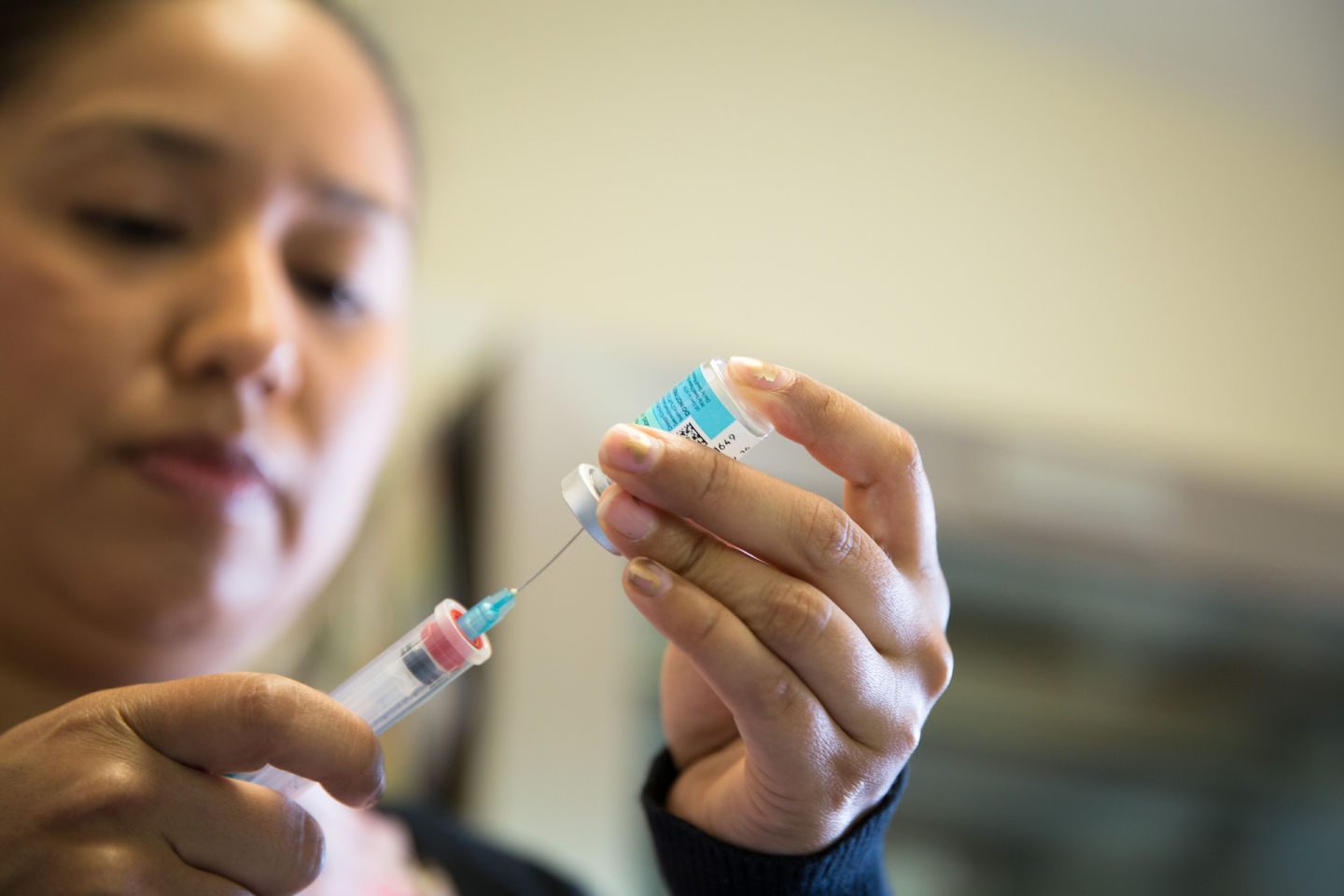
"caption": "Etzel Rubio at Berkeley Pediatrics fills a syringe in preparation to administer a vaccine.",
"description": null,
"title": "RS16165_JV0A7516-qut",
"credit": "Jeremy Raff/KQED",
"status": "inherit",
"isLoading": false,
"fetchFailed": false
},
"futureofyou_18576": {
"type": "attachments",
"id": "futureofyou_18576",
"meta": {
"index": "attachments_1716263798",
"site": "futureofyou",
"id": "18576",
"found": true
},
"parent": 18239,
"imgSizes": {
"thumbnail": {
"file": "https://ww2.kqed.org/app/uploads/sites/13/2015/07/woman-jogger-jogging-sport-large-400x267.jpg",
"width": 400,
"mimeType": "image/jpeg",
"height": 267
},
"post-thumbnail": {
"file": "https://ww2.kqed.org/app/uploads/sites/13/2015/07/woman-jogger-jogging-sport-large-672x372.jpg",
"width": 672,
"mimeType": "image/jpeg",
"height": 372
},
"kqedFullSize": {
"file": "https://ww2.kqed.org/app/uploads/sites/13/2015/07/woman-jogger-jogging-sport-large.jpg",
"width": 825,
"height": 550
},
"guest-author-96": {
"file": "https://ww2.kqed.org/app/uploads/sites/13/2015/07/woman-jogger-jogging-sport-large-96x96.jpg",
"width": 96,
"mimeType": "image/jpeg",
"height": 96
},
"medium": {
"file": "https://ww2.kqed.org/app/uploads/sites/13/2015/07/woman-jogger-jogging-sport-large-800x533.jpg",
"width": 800,
"mimeType": "image/jpeg",
"height": 533
},
"guest-author-64": {
"file": "https://ww2.kqed.org/app/uploads/sites/13/2015/07/woman-jogger-jogging-sport-large-64x64.jpg",
"width": 64,
"mimeType": "image/jpeg",
"height": 64
},
"detail": {
"file": "https://ww2.kqed.org/app/uploads/sites/13/2015/07/woman-jogger-jogging-sport-large-75x75.jpg",
"width": 75,
"mimeType": "image/jpeg",
"height": 75
},
"guest-author-32": {
"file": "https://ww2.kqed.org/app/uploads/sites/13/2015/07/woman-jogger-jogging-sport-large-32x32.jpg",
"width": 32,
"mimeType": "image/jpeg",
"height": 32
},
"guest-author-128": {
"file": "https://ww2.kqed.org/app/uploads/sites/13/2015/07/woman-jogger-jogging-sport-large-128x128.jpg",
"width": 128,
"mimeType": "image/jpeg",
"height": 128
}
},
"publishDate": 1438100563,
"modified": 1438100717,
"caption": "NYU researchers are launching a new public health study that leverages \"quantified self\" data ",
"description": null,
"title": "woman-jogger-jogging-sport-large",
"credit": "Pexels.com",
"status": "inherit",
"isLoading": false,
"fetchFailed": false
},
"futureofyou_12280": {
"type": "attachments",
"id": "futureofyou_12280",
"meta": {
"index": "attachments_1716263798",
"site": "futureofyou",
"id": "12280",
"found": true
},
"parent": 12279,
"imgSizes": {
"twentyfourteen-full-width": {
"file": "https://ww2.kqed.org/app/uploads/sites/13/2015/07/Billy-Rios_featured-image-1038x576.jpg",
"width": 1038,
"mimeType": "image/jpeg",
"height": 576
},
"thumbnail": {
"file": "https://ww2.kqed.org/app/uploads/sites/13/2015/07/Billy-Rios_featured-image-400x267.jpg",
"width": 400,
"mimeType": "image/jpeg",
"height": 267
},
"fd-sm": {
"file": "https://ww2.kqed.org/app/uploads/sites/13/2015/07/Billy-Rios_featured-image-960x640.jpg",
"width": 960,
"mimeType": "image/jpeg",
"height": 640
},
"post-thumbnail": {
"file": "https://ww2.kqed.org/app/uploads/sites/13/2015/07/Billy-Rios_featured-image-672x372.jpg",
"width": 672,
"mimeType": "image/jpeg",
"height": 372
},
"kqedFullSize": {
"file": "https://ww2.kqed.org/app/uploads/sites/13/2015/07/Billy-Rios_featured-image-e1441837201627.jpg",
"width": 1920,
"height": 1280
},
"large": {
"file": "https://ww2.kqed.org/app/uploads/sites/13/2015/07/Billy-Rios_featured-image-1180x787.jpg",
"width": 1180,
"mimeType": "image/jpeg",
"height": 787
},
"guest-author-96": {
"file": "https://ww2.kqed.org/app/uploads/sites/13/2015/07/Billy-Rios_featured-image-96x96.jpg",
"width": 96,
"mimeType": "image/jpeg",
"height": 96
},
"medium": {
"file": "https://ww2.kqed.org/app/uploads/sites/13/2015/07/Billy-Rios_featured-image-800x533.jpg",
"width": 800,
"mimeType": "image/jpeg",
"height": 533
},
"guest-author-64": {
"file": "https://ww2.kqed.org/app/uploads/sites/13/2015/07/Billy-Rios_featured-image-64x64.jpg",
"width": 64,
"mimeType": "image/jpeg",
"height": 64
},
"guest-author-32": {
"file": "https://ww2.kqed.org/app/uploads/sites/13/2015/07/Billy-Rios_featured-image-32x32.jpg",
"width": 32,
"mimeType": "image/jpeg",
"height": 32
},
"fd-med": {
"file": "https://ww2.kqed.org/app/uploads/sites/13/2015/07/Billy-Rios_featured-image-1180x787.jpg",
"width": 1180,
"mimeType": "image/jpeg",
"height": 787
},
"detail": {
"file": "https://ww2.kqed.org/app/uploads/sites/13/2015/07/Billy-Rios_featured-image-75x75.jpg",
"width": 75,
"mimeType": "image/jpeg",
"height": 75
},
"guest-author-128": {
"file": "https://ww2.kqed.org/app/uploads/sites/13/2015/07/Billy-Rios_featured-image-128x128.jpg",
"width": 128,
"mimeType": "image/jpeg",
"height": 128
}
},
"publishDate": 1436567295,
"modified": 1438396332,
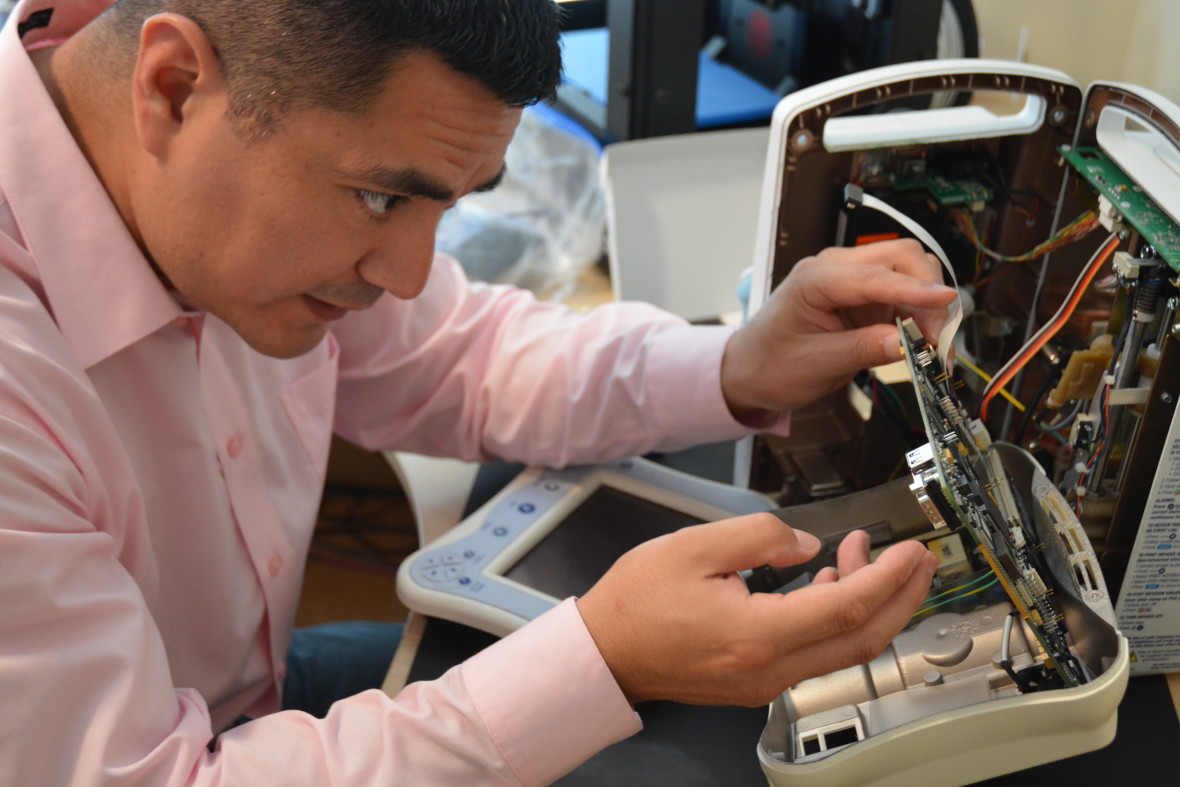
"caption": "Cyber security expert Billy Rios buys used medical devices online and searches for software vulnerabilities, which he reports to the government. ",
"description": null,
"title": "Billy Rios_featured image",
"credit": "David Gorn/KQED",
"status": "inherit",
"isLoading": false,
"fetchFailed": false
},
"stateofhealth_56246": {
"type": "attachments",
"id": "stateofhealth_56246",
"meta": {
"index": "attachments_1716263798",
"site": "stateofhealth",
"id": "56246",
"found": true
},
"parent": 56245,
"imgSizes": {
"twentyfourteen-full-width": {
"file": "https://ww2.kqed.org/app/uploads/sites/27/2015/08/john-clements-2_enl-ea29728975f50ad7220a05c8aa584faaad6ebf1f-1038x576.jpg",
"width": 1038,
"mimeType": "image/jpeg",
"height": 576
},
"thumbnail": {
"file": "https://ww2.kqed.org/app/uploads/sites/27/2015/08/john-clements-2_enl-ea29728975f50ad7220a05c8aa584faaad6ebf1f-400x267.jpg",
"width": 400,
"mimeType": "image/jpeg",
"height": 267
},
"fd-sm": {
"file": "https://ww2.kqed.org/app/uploads/sites/27/2015/08/john-clements-2_enl-ea29728975f50ad7220a05c8aa584faaad6ebf1f-960x641.jpg",
"width": 960,
"mimeType": "image/jpeg",
"height": 641
},
"post-thumbnail": {
"file": "https://ww2.kqed.org/app/uploads/sites/27/2015/08/john-clements-2_enl-ea29728975f50ad7220a05c8aa584faaad6ebf1f-672x372.jpg",
"width": 672,
"mimeType": "image/jpeg",
"height": 372
},
"kqedFullSize": {
"file": "https://ww2.kqed.org/app/uploads/sites/27/2015/08/john-clements-2_enl-ea29728975f50ad7220a05c8aa584faaad6ebf1f-e1438625730842.jpg",
"width": 1921,
"height": 1283
},
"large": {
"file": "https://ww2.kqed.org/app/uploads/sites/27/2015/08/john-clements-2_enl-ea29728975f50ad7220a05c8aa584faaad6ebf1f-1440x962.jpg",
"width": 1440,
"mimeType": "image/jpeg",
"height": 962
},
"guest-author-96": {
"file": "https://ww2.kqed.org/app/uploads/sites/27/2015/08/john-clements-2_enl-ea29728975f50ad7220a05c8aa584faaad6ebf1f-96x96.jpg",
"width": 96,
"mimeType": "image/jpeg",
"height": 96
},
"medium": {
"file": "https://ww2.kqed.org/app/uploads/sites/27/2015/08/john-clements-2_enl-ea29728975f50ad7220a05c8aa584faaad6ebf1f-800x534.jpg",
"width": 800,
"mimeType": "image/jpeg",
"height": 534
},
"guest-author-64": {
"file": "https://ww2.kqed.org/app/uploads/sites/27/2015/08/john-clements-2_enl-ea29728975f50ad7220a05c8aa584faaad6ebf1f-64x64.jpg",
"width": 64,
"mimeType": "image/jpeg",
"height": 64
},
"guest-author-32": {
"file": "https://ww2.kqed.org/app/uploads/sites/27/2015/08/john-clements-2_enl-ea29728975f50ad7220a05c8aa584faaad6ebf1f-32x32.jpg",
"width": 32,
"mimeType": "image/jpeg",
"height": 32
},
"jmtc-small-thumb": {
"file": "https://ww2.kqed.org/app/uploads/sites/27/2015/08/john-clements-2_enl-ea29728975f50ad7220a05c8aa584faaad6ebf1f-280x150.jpg",
"width": 280,
"mimeType": "image/jpeg",
"height": 150
},
"fd-lrg": {
"file": "https://ww2.kqed.org/app/uploads/sites/27/2015/08/john-clements-2_enl-ea29728975f50ad7220a05c8aa584faaad6ebf1f-1920x1283.jpg",
"width": 1920,
"mimeType": "image/jpeg",
"height": 1283
},
"fd-med": {
"file": "https://ww2.kqed.org/app/uploads/sites/27/2015/08/john-clements-2_enl-ea29728975f50ad7220a05c8aa584faaad6ebf1f-1180x788.jpg",
"width": 1180,
"mimeType": "image/jpeg",
"height": 788
},
"detail": {
"file": "https://ww2.kqed.org/app/uploads/sites/27/2015/08/john-clements-2_enl-ea29728975f50ad7220a05c8aa584faaad6ebf1f-75x75.jpg",
"width": 75,
"mimeType": "image/jpeg",
"height": 75
},
"guest-author-128": {
"file": "https://ww2.kqed.org/app/uploads/sites/27/2015/08/john-clements-2_enl-ea29728975f50ad7220a05c8aa584faaad6ebf1f-128x128.jpg",
"width": 128,
"mimeType": "image/jpeg",
"height": 128
}
},
"publishDate": 1438625045,
"modified": 1438625775,
"caption": "Researcher John Clements seen in the early 1980s at UCSF, after he figured out that lungs need surfactants to breathe.",
"description": "Researcher John Clements in the early 1980s, after he figured out that lungs need surfactants to breathe.",
"title": "Researcher John Clements in the early 1980s, after he figured out that lungs need surfactants to breathe.",
"credit": "David Powers/Courtesy of UCSF",
"status": "inherit",
"isLoading": false,
"fetchFailed": false
},
"stateofhealth_54846": {
"type": "attachments",
"id": "stateofhealth_54846",
"meta": {
"index": "attachments_1716263798",
"site": "stateofhealth",
"id": "54846",
"found": true
},
"parent": 54845,
"imgSizes": {
"jmtc-small-thumb": {
"file": "https://ww2.kqed.org/app/uploads/sites/27/2015/07/guinea-vaccines-2_wide-b1050b6d1d330e7ff8586e1d4aa2da6f4f0e2b25-280x150.jpg",
"width": 280,
"mimeType": "image/jpeg",
"height": 150
},
"thumbnail": {
"file": "https://ww2.kqed.org/app/uploads/sites/27/2015/07/guinea-vaccines-2_wide-b1050b6d1d330e7ff8586e1d4aa2da6f4f0e2b25-400x224.jpg",
"width": 400,
"mimeType": "image/jpeg",
"height": 224
},
"kqedFullSize": {
"file": "https://ww2.kqed.org/app/uploads/sites/27/2015/07/guinea-vaccines-2_wide-b1050b6d1d330e7ff8586e1d4aa2da6f4f0e2b25.jpg",
"width": 588,
"height": 330
},
"guest-author-96": {
"file": "https://ww2.kqed.org/app/uploads/sites/27/2015/07/guinea-vaccines-2_wide-b1050b6d1d330e7ff8586e1d4aa2da6f4f0e2b25-96x96.jpg",
"width": 96,
"mimeType": "image/jpeg",
"height": 96
},
"guest-author-64": {
"file": "https://ww2.kqed.org/app/uploads/sites/27/2015/07/guinea-vaccines-2_wide-b1050b6d1d330e7ff8586e1d4aa2da6f4f0e2b25-64x64.jpg",
"width": 64,
"mimeType": "image/jpeg",
"height": 64
},
"detail": {
"file": "https://ww2.kqed.org/app/uploads/sites/27/2015/07/guinea-vaccines-2_wide-b1050b6d1d330e7ff8586e1d4aa2da6f4f0e2b25-75x75.jpg",
"width": 75,
"mimeType": "image/jpeg",
"height": 75
},
"guest-author-32": {
"file": "https://ww2.kqed.org/app/uploads/sites/27/2015/07/guinea-vaccines-2_wide-b1050b6d1d330e7ff8586e1d4aa2da6f4f0e2b25-32x32.jpg",
"width": 32,
"mimeType": "image/jpeg",
"height": 32
},
"guest-author-128": {
"file": "https://ww2.kqed.org/app/uploads/sites/27/2015/07/guinea-vaccines-2_wide-b1050b6d1d330e7ff8586e1d4aa2da6f4f0e2b25-128x128.jpg",
"width": 128,
"mimeType": "image/jpeg",
"height": 128
}
},
"publishDate": 1438364760,
"modified": 1438365555,
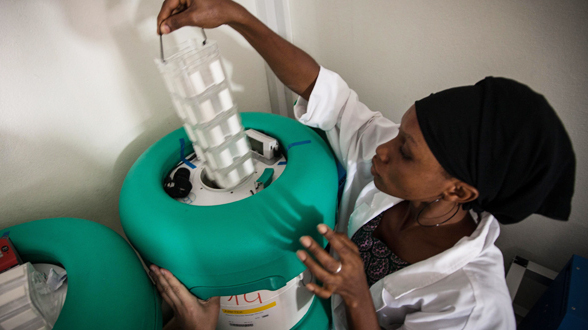
"caption": "The Ebola vaccine from a trial in Guinea needs to be kept at a temperature of minus 60 degrees Celsius, the World Health Organization says. Storage devices use jet fuel to keep the right temperature for up to five days in the field.",
"description": "The Ebola vaccine from a trial in Guinea needs to be kept at a temperature of minus 60 degrees Celsius, the World Health Organization says. Storage devices use jet fuel to keep the right temperature for up to five days in the field.",
"title": "The Ebola vaccine from a trial in Guinea needs to be kept at a temperature of minus 60 degrees Celsius, the World Health Organization says. Storage devices use jet fuel to keep the right temperature for up to five days in the field.",
"credit": "Sean Hawkey/Sean Hawkey",
"status": "inherit",
"isLoading": false,
"fetchFailed": false
},
"futureofyou_18645": {
"type": "attachments",
"id": "futureofyou_18645",
"meta": {
"index": "attachments_1716263798",
"site": "futureofyou",
"id": "18645",
"found": true
},
"parent": 18627,
"imgSizes": {
"twentyfourteen-full-width": {
"file": "https://ww2.kqed.org/app/uploads/sites/13/2015/07/eric-topol-1038x576.jpg",
"width": 1038,
"mimeType": "image/jpeg",
"height": 576
},
"thumbnail": {
"file": "https://ww2.kqed.org/app/uploads/sites/13/2015/07/eric-topol-400x267.jpg",
"width": 400,
"mimeType": "image/jpeg",
"height": 267
},
"fd-sm": {
"file": "https://ww2.kqed.org/app/uploads/sites/13/2015/07/eric-topol-960x640.jpg",
"width": 960,
"mimeType": "image/jpeg",
"height": 640
},
"post-thumbnail": {
"file": "https://ww2.kqed.org/app/uploads/sites/13/2015/07/eric-topol-672x372.jpg",
"width": 672,
"mimeType": "image/jpeg",
"height": 372
},
"kqedFullSize": {
"file": "https://ww2.kqed.org/app/uploads/sites/13/2015/07/eric-topol.jpg",
"width": 3518,
"height": 2346
},
"large": {
"file": "https://ww2.kqed.org/app/uploads/sites/13/2015/07/eric-topol-1180x787.jpg",
"width": 1180,
"mimeType": "image/jpeg",
"height": 787
},
"guest-author-96": {
"file": "https://ww2.kqed.org/app/uploads/sites/13/2015/07/eric-topol-96x96.jpg",
"width": 96,
"mimeType": "image/jpeg",
"height": 96
},
"medium": {
"file": "https://ww2.kqed.org/app/uploads/sites/13/2015/07/eric-topol-800x533.jpg",
"width": 800,
"mimeType": "image/jpeg",
"height": 533
},
"guest-author-64": {
"file": "https://ww2.kqed.org/app/uploads/sites/13/2015/07/eric-topol-64x64.jpg",
"width": 64,
"mimeType": "image/jpeg",
"height": 64
},
"guest-author-32": {
"file": "https://ww2.kqed.org/app/uploads/sites/13/2015/07/eric-topol-32x32.jpg",
"width": 32,
"mimeType": "image/jpeg",
"height": 32
},
"fd-lrg": {
"file": "https://ww2.kqed.org/app/uploads/sites/13/2015/07/eric-topol-1400x934.jpg",
"width": 1400,
"mimeType": "image/jpeg",
"height": 934
},
"fd-med": {
"file": "https://ww2.kqed.org/app/uploads/sites/13/2015/07/eric-topol-1180x787.jpg",
"width": 1180,
"mimeType": "image/jpeg",
"height": 787
},
"detail": {
"file": "https://ww2.kqed.org/app/uploads/sites/13/2015/07/eric-topol-75x75.jpg",
"width": 75,
"mimeType": "image/jpeg",
"height": 75
},
"guest-author-128": {
"file": "https://ww2.kqed.org/app/uploads/sites/13/2015/07/eric-topol-128x128.jpg",
"width": 128,
"mimeType": "image/jpeg",
"height": 128
}
},
"publishDate": 1438116551,
"modified": 1438116607,
"caption": "Dr. Eric Topol, a cardiologist, geneticist and author, sees promise in digital health. ",
"description": null,
"title": "eric topol",
"credit": " Ed Uthman/ Flickr",
"status": "inherit",
"isLoading": false,
"fetchFailed": false
},
"futureofyou_19361": {
"type": "attachments",
"id": "futureofyou_19361",
"meta": {
"index": "attachments_1716263798",
"site": "futureofyou",
"id": "19361",
"found": true
},
"parent": 19360,
"imgSizes": {
"twentyfourteen-full-width": {
"file": "https://ww2.kqed.org/app/uploads/sites/13/2015/07/sound-stethoscope_wide-913b5ff6402fbaa62d48b4bb8b671bbe6fc414a3-1038x576.jpg",
"width": 1038,
"mimeType": "image/jpeg",
"height": 576
},
"thumbnail": {
"file": "https://ww2.kqed.org/app/uploads/sites/13/2015/07/sound-stethoscope_wide-913b5ff6402fbaa62d48b4bb8b671bbe6fc414a3-400x225.jpg",
"width": 400,
"mimeType": "image/jpeg",
"height": 225
},
"fd-sm": {
"file": "https://ww2.kqed.org/app/uploads/sites/13/2015/07/sound-stethoscope_wide-913b5ff6402fbaa62d48b4bb8b671bbe6fc414a3-960x540.jpg",
"width": 960,
"mimeType": "image/jpeg",
"height": 540
},
"post-thumbnail": {
"file": "https://ww2.kqed.org/app/uploads/sites/13/2015/07/sound-stethoscope_wide-913b5ff6402fbaa62d48b4bb8b671bbe6fc414a3-672x372.jpg",
"width": 672,
"mimeType": "image/jpeg",
"height": 372
},
"kqedFullSize": {
"file": "https://ww2.kqed.org/app/uploads/sites/13/2015/07/sound-stethoscope_wide-913b5ff6402fbaa62d48b4bb8b671bbe6fc414a3.jpg",
"width": 2200,
"height": 1237
},
"large": {
"file": "https://ww2.kqed.org/app/uploads/sites/13/2015/07/sound-stethoscope_wide-913b5ff6402fbaa62d48b4bb8b671bbe6fc414a3-1180x663.jpg",
"width": 1180,
"mimeType": "image/jpeg",
"height": 663
},
"guest-author-96": {
"file": "https://ww2.kqed.org/app/uploads/sites/13/2015/07/sound-stethoscope_wide-913b5ff6402fbaa62d48b4bb8b671bbe6fc414a3-96x96.jpg",
"width": 96,
"mimeType": "image/jpeg",
"height": 96
},
"medium": {
"file": "https://ww2.kqed.org/app/uploads/sites/13/2015/07/sound-stethoscope_wide-913b5ff6402fbaa62d48b4bb8b671bbe6fc414a3-800x450.jpg",
"width": 800,
"mimeType": "image/jpeg",
"height": 450
},
"guest-author-64": {
"file": "https://ww2.kqed.org/app/uploads/sites/13/2015/07/sound-stethoscope_wide-913b5ff6402fbaa62d48b4bb8b671bbe6fc414a3-64x64.jpg",
"width": 64,
"mimeType": "image/jpeg",
"height": 64
},
"guest-author-32": {
"file": "https://ww2.kqed.org/app/uploads/sites/13/2015/07/sound-stethoscope_wide-913b5ff6402fbaa62d48b4bb8b671bbe6fc414a3-32x32.jpg",
"width": 32,
"mimeType": "image/jpeg",
"height": 32
},
"fd-lrg": {
"file": "https://ww2.kqed.org/app/uploads/sites/13/2015/07/sound-stethoscope_wide-913b5ff6402fbaa62d48b4bb8b671bbe6fc414a3-1920x1080.jpg",
"width": 1920,
"mimeType": "image/jpeg",
"height": 1080
},
"fd-med": {
"file": "https://ww2.kqed.org/app/uploads/sites/13/2015/07/sound-stethoscope_wide-913b5ff6402fbaa62d48b4bb8b671bbe6fc414a3-1180x663.jpg",
"width": 1180,
"mimeType": "image/jpeg",
"height": 663
},
"detail": {
"file": "https://ww2.kqed.org/app/uploads/sites/13/2015/07/sound-stethoscope_wide-913b5ff6402fbaa62d48b4bb8b671bbe6fc414a3-75x75.jpg",
"width": 75,
"mimeType": "image/jpeg",
"height": 75
},
"guest-author-128": {
"file": "https://ww2.kqed.org/app/uploads/sites/13/2015/07/sound-stethoscope_wide-913b5ff6402fbaa62d48b4bb8b671bbe6fc414a3-128x128.jpg",
"width": 128,
"mimeType": "image/jpeg",
"height": 128
}
},
"publishDate": 1438267811,
"modified": 1438267811,
"caption": null,
"description": "Hanna Barczyk for NPR",
"title": "Hanna Barczyk for NPR",
"credit": null,
"status": "inherit",
"isLoading": false,
"fetchFailed": false
},
"futureofyou_18197": {
"type": "attachments",
"id": "futureofyou_18197",
"meta": {
"index": "attachments_1716263798",
"site": "futureofyou",
"id": "18197",
"found": true
},
"parent": 18178,
"imgSizes": {
"twentyfourteen-full-width": {
"file": "https://ww2.kqed.org/app/uploads/sites/13/2015/07/smartphone-mole-1038x576.jpg",
"width": 1038,
"mimeType": "image/jpeg",
"height": 576
},
"thumbnail": {
"file": "https://ww2.kqed.org/app/uploads/sites/13/2015/07/smartphone-mole-400x267.jpg",
"width": 400,
"mimeType": "image/jpeg",
"height": 267
},
"fd-sm": {
"file": "https://ww2.kqed.org/app/uploads/sites/13/2015/07/smartphone-mole-960x640.jpg",
"width": 960,
"mimeType": "image/jpeg",
"height": 640
},
"post-thumbnail": {
"file": "https://ww2.kqed.org/app/uploads/sites/13/2015/07/smartphone-mole-672x372.jpg",
"width": 672,
"mimeType": "image/jpeg",
"height": 372
},
"kqedFullSize": {
"file": "https://ww2.kqed.org/app/uploads/sites/13/2015/07/smartphone-mole.jpg",
"width": 1280,
"height": 853
},
"large": {
"file": "https://ww2.kqed.org/app/uploads/sites/13/2015/07/smartphone-mole-1180x786.jpg",
"width": 1180,
"mimeType": "image/jpeg",
"height": 786
},
"guest-author-96": {
"file": "https://ww2.kqed.org/app/uploads/sites/13/2015/07/smartphone-mole-96x96.jpg",
"width": 96,
"mimeType": "image/jpeg",
"height": 96
},
"medium": {
"file": "https://ww2.kqed.org/app/uploads/sites/13/2015/07/smartphone-mole-800x533.jpg",
"width": 800,
"mimeType": "image/jpeg",
"height": 533
},
"guest-author-64": {
"file": "https://ww2.kqed.org/app/uploads/sites/13/2015/07/smartphone-mole-64x64.jpg",
"width": 64,
"mimeType": "image/jpeg",
"height": 64
},
"guest-author-32": {
"file": "https://ww2.kqed.org/app/uploads/sites/13/2015/07/smartphone-mole-32x32.jpg",
"width": 32,
"mimeType": "image/jpeg",
"height": 32
},
"fd-med": {
"file": "https://ww2.kqed.org/app/uploads/sites/13/2015/07/smartphone-mole-1180x786.jpg",
"width": 1180,
"mimeType": "image/jpeg",
"height": 786
},
"detail": {
"file": "https://ww2.kqed.org/app/uploads/sites/13/2015/07/smartphone-mole-75x75.jpg",
"width": 75,
"mimeType": "image/jpeg",
"height": 75
},
"guest-author-128": {
"file": "https://ww2.kqed.org/app/uploads/sites/13/2015/07/smartphone-mole-128x128.jpg",
"width": 128,
"mimeType": "image/jpeg",
"height": 128
}
},
"publishDate": 1438025951,
"modified": 1538667343,
"caption": null,
"description": null,
"title": "smartphone mole",
"credit": "Pixa Bay/ Creative Commons",
"status": "inherit",
"isLoading": false,
"fetchFailed": false
},
"futureofyou_18554": {
"type": "attachments",
"id": "futureofyou_18554",
"meta": {
"index": "attachments_1716263798",
"site": "futureofyou",
"id": "18554",
"found": true
},
"parent": 18550,
"imgSizes": {
"thumbnail": {
"file": "https://ww2.kqed.org/app/uploads/sites/13/2015/07/lihong-wang_wide-16ebac08b8cf175ff7d6486f5f5c2971a69dc98d-s800-c85-400x225.jpg",
"width": 400,
"mimeType": "image/jpeg",
"height": 225
},
"post-thumbnail": {
"file": "https://ww2.kqed.org/app/uploads/sites/13/2015/07/lihong-wang_wide-16ebac08b8cf175ff7d6486f5f5c2971a69dc98d-s800-c85-672x372.jpg",
"width": 672,
"mimeType": "image/jpeg",
"height": 372
},
"kqedFullSize": {
"file": "https://ww2.kqed.org/app/uploads/sites/13/2015/07/lihong-wang_wide-16ebac08b8cf175ff7d6486f5f5c2971a69dc98d-s800-c85.jpg",
"width": 800,
"height": 449
},
"guest-author-96": {
"file": "https://ww2.kqed.org/app/uploads/sites/13/2015/07/lihong-wang_wide-16ebac08b8cf175ff7d6486f5f5c2971a69dc98d-s800-c85-96x96.jpg",
"width": 96,
"mimeType": "image/jpeg",
"height": 96
},
"medium": {
"file": "https://ww2.kqed.org/app/uploads/sites/13/2015/07/lihong-wang_wide-16ebac08b8cf175ff7d6486f5f5c2971a69dc98d-s800-c85-800x449.jpg",
"width": 800,
"mimeType": "image/jpeg",
"height": 449
},
"guest-author-64": {
"file": "https://ww2.kqed.org/app/uploads/sites/13/2015/07/lihong-wang_wide-16ebac08b8cf175ff7d6486f5f5c2971a69dc98d-s800-c85-64x64.jpg",
"width": 64,
"mimeType": "image/jpeg",
"height": 64
},
"detail": {
"file": "https://ww2.kqed.org/app/uploads/sites/13/2015/07/lihong-wang_wide-16ebac08b8cf175ff7d6486f5f5c2971a69dc98d-s800-c85-75x75.jpg",
"width": 75,
"mimeType": "image/jpeg",
"height": 75
},
"guest-author-32": {
"file": "https://ww2.kqed.org/app/uploads/sites/13/2015/07/lihong-wang_wide-16ebac08b8cf175ff7d6486f5f5c2971a69dc98d-s800-c85-32x32.jpg",
"width": 32,
"mimeType": "image/jpeg",
"height": 32
},
"guest-author-128": {
"file": "https://ww2.kqed.org/app/uploads/sites/13/2015/07/lihong-wang_wide-16ebac08b8cf175ff7d6486f5f5c2971a69dc98d-s800-c85-128x128.jpg",
"width": 128,
"mimeType": "image/jpeg",
"height": 128
}
},
"publishDate": 1438099387,
"modified": 1438099400,
"caption": "Lihong Wang uses light and sound to create highly detailed images of the living brain.",
"description": null,
"title": "lihong-wang_wide-16ebac08b8cf175ff7d6486f5f5c2971a69dc98d-s800-c85",
"credit": "Chris Nickels for NPR",
"status": "inherit",
"isLoading": false,
"fetchFailed": false
},
"futureofyou_17004": {
"type": "attachments",
"id": "futureofyou_17004",
"meta": {
"index": "attachments_1716263798",
"site": "futureofyou",
"id": "17004",
"found": true
},
"parent": 17003,
"imgSizes": {
"twentyfourteen-full-width": {
"file": "https://ww2.kqed.org/app/uploads/sites/13/2015/07/Doctor-meeting-with-patient_FOY_edited-1038x576.jpg",
"width": 1038,
"mimeType": "image/jpeg",
"height": 576
},
"thumbnail": {
"file": "https://ww2.kqed.org/app/uploads/sites/13/2015/07/Doctor-meeting-with-patient_FOY_edited-400x225.jpg",
"width": 400,
"mimeType": "image/jpeg",
"height": 225
},
"fd-sm": {
"file": "https://ww2.kqed.org/app/uploads/sites/13/2015/07/Doctor-meeting-with-patient_FOY_edited-960x541.jpg",
"width": 960,
"mimeType": "image/jpeg",
"height": 541
},
"post-thumbnail": {
"file": "https://ww2.kqed.org/app/uploads/sites/13/2015/07/Doctor-meeting-with-patient_FOY_edited-672x372.jpg",
"width": 672,
"mimeType": "image/jpeg",
"height": 372
},
"kqedFullSize": {
"file": "https://ww2.kqed.org/app/uploads/sites/13/2015/07/Doctor-meeting-with-patient_FOY_edited.jpg",
"width": 2328,
"height": 1312
},
"large": {
"file": "https://ww2.kqed.org/app/uploads/sites/13/2015/07/Doctor-meeting-with-patient_FOY_edited-1180x665.jpg",
"width": 1180,
"mimeType": "image/jpeg",
"height": 665
},
"guest-author-96": {
"file": "https://ww2.kqed.org/app/uploads/sites/13/2015/07/Doctor-meeting-with-patient_FOY_edited-96x96.jpg",
"width": 96,
"mimeType": "image/jpeg",
"height": 96
},
"medium": {
"file": "https://ww2.kqed.org/app/uploads/sites/13/2015/07/Doctor-meeting-with-patient_FOY_edited-800x451.jpg",
"width": 800,
"mimeType": "image/jpeg",
"height": 451
},
"guest-author-64": {
"file": "https://ww2.kqed.org/app/uploads/sites/13/2015/07/Doctor-meeting-with-patient_FOY_edited-64x64.jpg",
"width": 64,
"mimeType": "image/jpeg",
"height": 64
},
"guest-author-32": {
"file": "https://ww2.kqed.org/app/uploads/sites/13/2015/07/Doctor-meeting-with-patient_FOY_edited-32x32.jpg",
"width": 32,
"mimeType": "image/jpeg",
"height": 32
},
"fd-lrg": {
"file": "https://ww2.kqed.org/app/uploads/sites/13/2015/07/Doctor-meeting-with-patient_FOY_edited-1400x789.jpg",
"width": 1400,
"mimeType": "image/jpeg",
"height": 789
},
"fd-med": {
"file": "https://ww2.kqed.org/app/uploads/sites/13/2015/07/Doctor-meeting-with-patient_FOY_edited-1180x665.jpg",
"width": 1180,
"mimeType": "image/jpeg",
"height": 665
},
"detail": {
"file": "https://ww2.kqed.org/app/uploads/sites/13/2015/07/Doctor-meeting-with-patient_FOY_edited-75x75.jpg",
"width": 75,
"mimeType": "image/jpeg",
"height": 75
},
"guest-author-128": {
"file": "https://ww2.kqed.org/app/uploads/sites/13/2015/07/Doctor-meeting-with-patient_FOY_edited-128x128.jpg",
"width": 128,
"mimeType": "image/jpeg",
"height": 128
}
},
"publishDate": 1437776418,
"modified": 1437776497,
"caption": "A doctor and patient use the MedTep patient engagement platform.",
"description": null,
"title": "unity stoakes",
"credit": "MedTep",
"status": "inherit",
"isLoading": false,
"fetchFailed": false
}
},
"audioPlayerReducer": {
"postId": "stream_live",
"isPaused": true,
"isPlaying": false,
"pfsActive": false,
"pledgeModalIsOpen": true,
"playerDrawerIsOpen": false,
"liveAudioPlayStartedAt": 0,
"liveAudioPlayContext": ""
},
"authorsReducer": {
"byline_futureofyou_21516": {
"type": "authors",
"id": "byline_futureofyou_21516",
"meta": {
"override": true
},
"slug": "byline_futureofyou_21516",
"name": "Rebecca Plevin",
"isLoading": false
},
"byline_stateofhealth_56792": {
"type": "authors",
"id": "byline_stateofhealth_56792",
"meta": {
"override": true
},
"slug": "byline_stateofhealth_56792",
"name": "David Gorn, California Healthline",
"isLoading": false
},
"byline_futureofyou_18239": {
"type": "authors",
"id": "byline_futureofyou_18239",
"meta": {
"override": true
},
"slug": "byline_futureofyou_18239",
"name": "Ernesto Ramirez ",
"isLoading": false
},
"byline_stateofhealth_56245": {
"type": "authors",
"id": "byline_stateofhealth_56245",
"meta": {
"override": true
},
"slug": "byline_stateofhealth_56245",
"name": "Joe Palca, NPR",
"isLoading": false
},
"byline_stateofhealth_54845": {
"type": "authors",
"id": "byline_stateofhealth_54845",
"meta": {
"override": true
},
"slug": "byline_stateofhealth_54845",
"name": "Bill Chappell",
"isLoading": false
},
"byline_futureofyou_19360": {
"type": "authors",
"id": "byline_futureofyou_19360",
"meta": {
"override": true
},
"slug": "byline_futureofyou_19360",
"name": "Christopher Joyce and Bill McQuay",
"isLoading": false
},
"byline_futureofyou_18550": {
"type": "authors",
"id": "byline_futureofyou_18550",
"meta": {
"override": true
},
"slug": "byline_futureofyou_18550",
"name": "Jon Hamilton",
"isLoading": false
},
"byline_futureofyou_17003": {
"type": "authors",
"id": "byline_futureofyou_17003",
"meta": {
"override": true
},
"slug": "byline_futureofyou_17003",
"name": "Unity Stoakes",
"isLoading": false
},
"cfarr": {
"type": "authors",
"id": "3252",
"meta": {
"index": "authors_1716337520",
"id": "3252",
"found": true
},
"name": "Christina Farr",
"firstName": "Christina",
"lastName": "Farr",
"slug": "cfarr",
"email": "cfarr@kqed.org",
"display_author_email": false,
"staff_mastheads": [],
"title": "KQED Contributor",
"bio": "Christina Farr (\u003ca href=\"https://twitter.com/chrissyfarr\">@chrissyfarr\u003c/a>) is the former editor and host of Future of You. She was previously with Reuters, covering digital health and Apple and before that, she reported for Venture Beat. Christina was born and raised in London and has graduate degrees from University of London and the Stanford School of Journalism. Farr’s work has appeared in a variety of publications, including the New York Times, the Daily Telegraph, the Bay Citizen and SFGate.com. She has appeared as a featured expert on NBC, ABC and Reuters TV, among others, and frequently speaks at health and technology conferences. She is also co-founder of Ladies Who Vino, a networking group for women in technology and business.",
"avatar": "https://secure.gravatar.com/avatar/22c63869a7901c61c15e204391c1261d?s=600&d=blank&r=g",
"twitter": null,
"facebook": null,
"instagram": null,
"linkedin": null,
"sites": [
{
"site": "futureofyou",
"roles": [
"administrator"
]
},
{
"site": "stateofhealth",
"roles": [
"author"
]
},
{
"site": "science",
"roles": []
}
],
"headData": {
"title": "Christina Farr | KQED",
"description": "KQED Contributor",
"ogImgSrc": "https://secure.gravatar.com/avatar/22c63869a7901c61c15e204391c1261d?s=600&d=blank&r=g",
"twImgSrc": "https://secure.gravatar.com/avatar/22c63869a7901c61c15e204391c1261d?s=600&d=blank&r=g"
},
"isLoading": false,
"link": "/author/cfarr"
},
"lindseyhoshaw": {
"type": "authors",
"id": "5432",
"meta": {
"index": "authors_1716337520",
"id": "5432",
"found": true
},
"name": "Lindsey Hoshaw",
"firstName": "Lindsey",
"lastName": "Hoshaw",
"slug": "lindseyhoshaw",
"email": "lhoshaw@kqed.org",
"display_author_email": false,
"staff_mastheads": [],
"title": "KQED Contributor",
"bio": "Lindsey Hoshaw is a former interactive producer for KQED Science. Before joining KQED, Lindsey was a science correspondent for The New York Times, The Boston Globe, Forbes and Scientific American. On Twitter @lindseyhoshaw",
"avatar": "https://secure.gravatar.com/avatar/274b07694c998eaa8f26cfabaa941186?s=600&d=mm&r=g",
"twitter": "lindseyhoshaw",
"facebook": "lindsey.hoshaw.9",
"instagram": null,
"linkedin": null,
"sites": [
{
"site": "arts",
"roles": [
"author"
]
},
{
"site": "news",
"roles": [
"subscriber"
]
},
{
"site": "futureofyou",
"roles": [
"editor"
]
},
{
"site": "bayareabites",
"roles": [
"contributor"
]
},
{
"site": "stateofhealth",
"roles": [
"author"
]
},
{
"site": "science",
"roles": [
"edit_theme_options",
"subscriber"
]
},
{
"site": "quest",
"roles": [
"edit_post_subscriptions",
"edit_usergroups",
"unfiltered_html",
"unfiltered_upload",
"leadcoordinator",
"editor"
]
},
{
"site": "food",
"roles": []
}
],
"headData": {
"title": "Lindsey Hoshaw | KQED",
"description": "KQED Contributor",
"ogImgSrc": "https://secure.gravatar.com/avatar/274b07694c998eaa8f26cfabaa941186?s=600&d=mm&r=g",
"twImgSrc": "https://secure.gravatar.com/avatar/274b07694c998eaa8f26cfabaa941186?s=600&d=mm&r=g"
},
"isLoading": false,
"link": "/author/lindseyhoshaw"
},
"mpickett": {
"type": "authors",
"id": "6616",
"meta": {
"index": "authors_1716337520",
"id": "6616",
"found": true
},
"name": "Mallory Pickett",
"firstName": "Mallory",
"lastName": "Pickett",
"slug": "mpickett",
"email": "mallorypickett@gmail.com",
"display_author_email": false,
"staff_mastheads": [],
"title": null,
"bio": "Mallory Pickett is an intern with KQED Science, where she mostly contributes to Deep Look. Before coming to KQED Mallory was a chemist, studying climate change and ocean acidification in her graduate studies at UC San Diego and Scripps Institution of Oceanography. Now she works as a freelance science and environmental reporter in Berkeley, California, and is also a student at the UC Berkeley Graduate School of Journalism.",
"avatar": "https://secure.gravatar.com/avatar/76041fb6f98596f1792b3673c61c09be?s=600&d=blank&r=g",
"twitter": null,
"facebook": null,
"instagram": null,
"linkedin": null,
"sites": [
{
"site": "futureofyou",
"roles": [
"author"
]
},
{
"site": "science",
"roles": [
"author"
]
}
],
"headData": {
"title": "Mallory Pickett | KQED",
"description": null,
"ogImgSrc": "https://secure.gravatar.com/avatar/76041fb6f98596f1792b3673c61c09be?s=600&d=blank&r=g",
"twImgSrc": "https://secure.gravatar.com/avatar/76041fb6f98596f1792b3673c61c09be?s=600&d=blank&r=g"
},
"isLoading": false,
"link": "/author/mpickett"
}
},
"pagesReducer": {
"science_category_health": {
"type": "terms",
"id": "science_39",
"meta": {
"index": "terms_1716263798",
"site": "science",
"id": "39",
"score": 10.889519
},
"featImg": null,
"name": "Health",
"description": null,
"taxonomy": "category",
"headData": {
"twImgId": null,
"twTitle": null,
"ogTitle": null,
"ogImgId": null,
"twDescription": null,
"description": null,
"title": "Health Archives | KQED Science",
"ogDescription": null
},
"ttid": 41,
"slug": "health",
"isLoading": false,
"title": "Health",
"pageMeta": {
"site": "science",
"WpPageTemplate": "page-topic-editorial",
"currentPage": 78
},
"blocks": [
{
"blockName": "kqed/post-list",
"attrs": {
"layout": "cardArticle2",
"query": "posts/science?category=health",
"seeMore": false,
"paginated": true,
"page": 78
}
},
{
"blockName": "kqed/ad"
}
]
}
},
"pfsSessionReducer": {},
"postsReducer": {
"stream_live": {
"type": "live",
"id": "stream_live",
"audioUrl": "https://streams.kqed.org/kqedradio",
"title": "Live Stream",
"excerpt": "Live Stream information currently unavailable.",
"link": "/radio",
"featImg": "",
"label": {
"name": "KQED Live",
"link": "/"
}
},
"stream_kqedNewscast": {
"type": "posts",
"id": "stream_kqedNewscast",
"audioUrl": "https://www.kqed.org/.stream/anon/radio/RDnews/newscast.mp3?_=1",
"title": "KQED Newscast",
"featImg": "",
"label": {
"name": "88.5 FM",
"link": "/"
}
},
"futureofyou_22005": {
"type": "posts",
"id": "futureofyou_22005",
"meta": {
"index": "posts_1716263798",
"site": "futureofyou",
"id": "22005",
"score": null,
"sort": [
1438876812000
]
},
"parent": 0,
"labelTerm": {
"site": "futureofyou"
},
"blocks": [],
"publishDate": 1438876812,
"format": "standard",
"disqusTitle": "Why 3D Printing has 'Tremendous Potential' for Big Pharma",
"title": "Why 3D Printing has 'Tremendous Potential' for Big Pharma",
"headTitle": "KQED Future of You | KQED Science",
"content": "\u003cp>Earlier this week, the federal Food and Drug Administration \u003ca href=\"http://www.npr.org/sections/thetwo-way/2015/08/04/429341196/your-pill-is-printing-fda-approves-first-3d-printed-drug\">gave approval for the first time \u003c/a>to a pharmaceutical company developing a pill made by a 3-D printer.\u003c/p>\n\u003cp>The drug, Spritam, was developed by a company called Aprecia Pharmaceuticals, to help patients control seizures brought on by epilepsy. Spritam is expected to hit the market in the first months of 2016.\u003c/p>\n\u003cp>I've written before about the \u003ca href=\"http://ww2.kqed.org/futureofyou/2015/06/05/at-autodesk-makers-explore-how-3-d-printing-is-transforming-medicine/\">rise of 3-D printing in medicine\u003c/a> and its range of potential applications. 3-D printing has been around since the 1980s, but in recent years the medical sector has found some exciting new biological applications for the technology, from prosthetic limbs to living tissue.\u003c/p>\n\u003cp>And 3-D printing offers new options to pharmaceutical companies. By leveraging the technology, \u003ca href=\"https://www.aprecia.com/pdf/2015_08_03_Spritam_FDA_Approval_Press_Release.pdf\">Aprecia\u003c/a> said it was able to make a more concentrated pill, meaning patients can access a high-strength dose in a single sip of liquid. Aprecia spokesperson Jennifer Zieverink said the 3-D printed version of the drug dissolves more easily with a sip of water.\u003c/p>\n\u003cfigure id=\"attachment_22044\" class=\"wp-caption alignright\" style=\"max-width: 800px\">\u003cimg class=\"size-medium wp-image-22044\" src=\"http://ww2.kqed.org/futureofyou/wp-content/uploads/sites/13/2015/08/spritam-800x376.jpg\" alt=\"The drug Spritam is the first to be approved by the FDA that was manufactured using 3D printing \" width=\"800\" height=\"376\" srcset=\"https://ww2.kqed.org/app/uploads/sites/13/2015/08/spritam-800x376.jpg 800w, https://ww2.kqed.org/app/uploads/sites/13/2015/08/spritam-400x188.jpg 400w, https://ww2.kqed.org/app/uploads/sites/13/2015/08/spritam-1180x555.jpg 1180w, https://ww2.kqed.org/app/uploads/sites/13/2015/08/spritam-1920x903.jpg 1920w, https://ww2.kqed.org/app/uploads/sites/13/2015/08/spritam-960x451.jpg 960w\" sizes=\"(max-width: 800px) 100vw, 800px\">\u003cfigcaption class=\"wp-caption-text\">Spritam is the first drug to be approved by the FDA that was manufactured using 3-D printing. \u003ccite>(Aprecia Pharmaceuticals)\u003c/cite>\u003c/figcaption>\u003c/figure>\n\u003cp>Zieverink said the company has received calls from other pharma companies that are interested in developing their own 3-D printed drugs. She said that Aprecia has three other candidates for 3-D printing in the pipeline.\u003c/p>\n\u003cp>[ad fullwidth]\u003c/p>\n\u003cp>To find out how 3-D printing might transform drug development, or benefit patients, I spoke with Bonnie I. Scott, a Washington D.C.-based lawyer specializing in health and life sciences. Scott, who works for the firm Epstein Becker & Green, has been following the intersection of 3-D printing and medicine closely, and has written a series of \u003ca href=\"http://www.pharmamedtechinsights.com/2014/11/3-d-printed-devices-pose-layers-of-regulatory-questions/\">blog posts on the topic\u003c/a>. This interview with Scott has been edited for brevity.\u003c/p>\n\u003cp>\u003cstrong>Why does the FDA's opinion about 3-D printing matter? \u003c/strong>\u003c/p>\n\u003cp>Drug companies can't reach the market unless they get approval from the FDA. It won't reach you, the patient, unless the FDA agrees that it's safe.\u003c/p>\n\u003cp>\u003cb>Have any other 3-D printed medical applications received FDA approval?\u003c/b>\u003c/p>\n\u003cp>Much of the conversation over the last couple of years has surrounded 3-D printed medical devices. The FDA has already cleared several, including knee, facial and cranial implants for reconstruction procedures, and more recently, a titanium bone tether plate\u003ca href=\"http://3dprint.com/41701/3d-printing-and-foot-deformity/\"> for the treatment of bunions\u003c/a>.\u003c/p>\n\u003cp>\u003cstrong>Do you have a sense for how the agency views 3-D printing? \u003c/strong>\u003c/p>\n\u003cp>Last fall, the FDA held a public workshop to discuss the technical challenges and patient safety concerns surrounding 3-D printed devices. An FDA official recently noted that the agency sees 3-D printing as a manufacturing technology that is 'not something exotic from what [it's] seen before.'\u003c/p>\n\u003cp>That means that the FDA views these 3-D printed devices as not significantly different to existing devices on the market. What is different is the manufacturing. Now, it seems that one of FDA’s main concerns is understanding the technology and manufacturing component.\u003c/p>\n\u003cfigure id=\"attachment_22045\" class=\"wp-caption aligncenter\" style=\"max-width: 800px\">\u003cimg class=\"size-medium wp-image-22045\" src=\"http://ww2.kqed.org/futureofyou/wp-content/uploads/sites/13/2015/08/Screen-Shot-2015-08-05-at-1.01.40-PM-800x470.png\" alt=\"A graphic that shows how the 3D printed version of the drug was developed \" width=\"800\" height=\"470\" srcset=\"https://ww2.kqed.org/app/uploads/sites/13/2015/08/Screen-Shot-2015-08-05-at-1.01.40-PM-800x470.png 800w, https://ww2.kqed.org/app/uploads/sites/13/2015/08/Screen-Shot-2015-08-05-at-1.01.40-PM-400x235.png 400w, https://ww2.kqed.org/app/uploads/sites/13/2015/08/Screen-Shot-2015-08-05-at-1.01.40-PM.png 932w\" sizes=\"(max-width: 800px) 100vw, 800px\">\u003cfigcaption class=\"wp-caption-text\">A graphic that shows how the 3-D printed version of the drug was developed \u003ccite>(Aprecia Pharmaceuticals)\u003c/cite>\u003c/figcaption>\u003c/figure>\n\u003cp>\u003cstrong>Do you anticipate that people will start printing their own drugs and medical devices?\u003c/strong>\u003c/p>\n\u003cp>I think it's possible, but it's far off. The kind of trajectory it may follow is to start with the traditional manufacturing environment, then move into the pharmacy space -- the pharmacist would have a 3-D printer to combine pills, for instance -- and once the kinks are worked out it might be used at home. Of course, there would still need to be some kind of screening process and buy-in from the doctor, pharmacist and patient to make sure everyone is on the same page.\u003c/p>\n\u003cp>\u003cb>Do you see this opening the door for other drug makers? \u003c/b>\u003c/p>\n\u003cp>3-D printed drugs and devices hold great promise for providing patient-specific treatments. Even though FDA has yet to solidify a regulatory stance on its evaluation of these products, innovators show no sign of slowing their development efforts.\u003c/p>\n\u003cp>\u003cstrong>It's interesting that a relative newcomer in the pharma space received FDA approval first. When will big pharma catch up? \u003c/strong>\u003c/p>\n\u003cp>In this case, it's a race to the finish line. Smaller firms can move quicker and show that 3-D printing could be cost-effective and beneficial for patients. Once it has traction, larger companies will take note.\u003c/p>\n\u003cp>\u003cb>What does this mean for the future of personalized treatment?\u003c/b>\u003c/p>\n\u003cp>3-D printing has tremendous potential in the pharmaceutical industry, and the technology will likely be utilized in that space down the road.\u003c/p>\n\u003cp>3-D printing could allow pharmacists to adapt medication doses specifically to patient needs (such as age, race, gender) and adjust those doses as needed. It also opens the door for producing new formulations of drugs, which could be particularly helpful for patients with multiple conditions. For example, a pharmacist could make one pill with multiple active ingredients. Reducing the amount of pills a patient has to take from ten to one may significantly improve medication compliance.\u003c/p>\n\u003cp>\u003c/p>\n\u003cp>It might be a useful tool for children with complex medical conditions to comply with medicine -- it could open the door for things like pills that could be modeled in the shape of a cute animal, or something else that would be easier for kids.\u003c/p>\n\n",
"disqusIdentifier": "22005 http://ww2.kqed.org/futureofyou/?p=22005",
"disqusUrl": "https://ww2.kqed.org/futureofyou/2015/08/06/why-3d-printing-has-tremendous-potential-for-big-pharma/",
"stats": {
"hasVideo": false,
"hasChartOrMap": false,
"hasAudio": false,
"hasPolis": false,
"wordCount": 919,
"hasGoogleForm": false,
"hasGallery": false,
"hasHearkenModule": false,
"iframeSrcs": [],
"paragraphCount": 25
},
"modified": 1477280094,
"excerpt": "Earlier this week, federal regulators gave its first green-light to a pharmaceutical company developing a 3-D printed pill. What are the implications for patients? ",
"headData": {
"twImgId": "",
"twTitle": "",
"ogTitle": "",
"ogImgId": "",
"twDescription": "",
"description": "Earlier this week, federal regulators gave its first green-light to a pharmaceutical company developing a 3-D printed pill. What are the implications for patients? ",
"title": "Why 3D Printing has 'Tremendous Potential' for Big Pharma | KQED",
"ogDescription": "",
"schema": {
"@context": "https://schema.org",
"@type": "Article",
"headline": "Why 3D Printing has 'Tremendous Potential' for Big Pharma",
"datePublished": "2015-08-06T09:00:12-07:00",
"dateModified": "2016-10-23T20:34:54-07:00",
"image": "https://cdn.kqed.org/wp-content/uploads/2020/02/KQED-OG-Image@1x.png"
}
},
"guestAuthors": [],
"slug": "why-3d-printing-has-tremendous-potential-for-big-pharma",
"status": "publish",
"path": "/futureofyou/22005/why-3d-printing-has-tremendous-potential-for-big-pharma",
"audioTrackLength": null,
"parsedContent": [
{
"type": "contentString",
"content": "\u003cdiv class=\"post-body\">\u003cp>\u003cp>Earlier this week, the federal Food and Drug Administration \u003ca href=\"http://www.npr.org/sections/thetwo-way/2015/08/04/429341196/your-pill-is-printing-fda-approves-first-3d-printed-drug\">gave approval for the first time \u003c/a>to a pharmaceutical company developing a pill made by a 3-D printer.\u003c/p>\n\u003cp>The drug, Spritam, was developed by a company called Aprecia Pharmaceuticals, to help patients control seizures brought on by epilepsy. Spritam is expected to hit the market in the first months of 2016.\u003c/p>\n\u003cp>I've written before about the \u003ca href=\"http://ww2.kqed.org/futureofyou/2015/06/05/at-autodesk-makers-explore-how-3-d-printing-is-transforming-medicine/\">rise of 3-D printing in medicine\u003c/a> and its range of potential applications. 3-D printing has been around since the 1980s, but in recent years the medical sector has found some exciting new biological applications for the technology, from prosthetic limbs to living tissue.\u003c/p>\n\u003cp>And 3-D printing offers new options to pharmaceutical companies. By leveraging the technology, \u003ca href=\"https://www.aprecia.com/pdf/2015_08_03_Spritam_FDA_Approval_Press_Release.pdf\">Aprecia\u003c/a> said it was able to make a more concentrated pill, meaning patients can access a high-strength dose in a single sip of liquid. Aprecia spokesperson Jennifer Zieverink said the 3-D printed version of the drug dissolves more easily with a sip of water.\u003c/p>\n\u003cfigure id=\"attachment_22044\" class=\"wp-caption alignright\" style=\"max-width: 800px\">\u003cimg class=\"size-medium wp-image-22044\" src=\"http://ww2.kqed.org/futureofyou/wp-content/uploads/sites/13/2015/08/spritam-800x376.jpg\" alt=\"The drug Spritam is the first to be approved by the FDA that was manufactured using 3D printing \" width=\"800\" height=\"376\" srcset=\"https://ww2.kqed.org/app/uploads/sites/13/2015/08/spritam-800x376.jpg 800w, https://ww2.kqed.org/app/uploads/sites/13/2015/08/spritam-400x188.jpg 400w, https://ww2.kqed.org/app/uploads/sites/13/2015/08/spritam-1180x555.jpg 1180w, https://ww2.kqed.org/app/uploads/sites/13/2015/08/spritam-1920x903.jpg 1920w, https://ww2.kqed.org/app/uploads/sites/13/2015/08/spritam-960x451.jpg 960w\" sizes=\"(max-width: 800px) 100vw, 800px\">\u003cfigcaption class=\"wp-caption-text\">Spritam is the first drug to be approved by the FDA that was manufactured using 3-D printing. \u003ccite>(Aprecia Pharmaceuticals)\u003c/cite>\u003c/figcaption>\u003c/figure>\n\u003cp>Zieverink said the company has received calls from other pharma companies that are interested in developing their own 3-D printed drugs. She said that Aprecia has three other candidates for 3-D printing in the pipeline.\u003c/p>\n\u003cp>\u003c/p>\u003c/div>",
"attributes": {
"named": {},
"numeric": []
}
},
{
"type": "component",
"content": "",
"name": "ad",
"attributes": {
"named": {
"label": "fullwidth"
},
"numeric": [
"fullwidth"
]
}
},
{
"type": "contentString",
"content": "\u003cdiv class=\"post-body\">\u003cp>\u003c/p>\n\u003cp>To find out how 3-D printing might transform drug development, or benefit patients, I spoke with Bonnie I. Scott, a Washington D.C.-based lawyer specializing in health and life sciences. Scott, who works for the firm Epstein Becker & Green, has been following the intersection of 3-D printing and medicine closely, and has written a series of \u003ca href=\"http://www.pharmamedtechinsights.com/2014/11/3-d-printed-devices-pose-layers-of-regulatory-questions/\">blog posts on the topic\u003c/a>. This interview with Scott has been edited for brevity.\u003c/p>\n\u003cp>\u003cstrong>Why does the FDA's opinion about 3-D printing matter? \u003c/strong>\u003c/p>\n\u003cp>Drug companies can't reach the market unless they get approval from the FDA. It won't reach you, the patient, unless the FDA agrees that it's safe.\u003c/p>\n\u003cp>\u003cb>Have any other 3-D printed medical applications received FDA approval?\u003c/b>\u003c/p>\n\u003cp>Much of the conversation over the last couple of years has surrounded 3-D printed medical devices. The FDA has already cleared several, including knee, facial and cranial implants for reconstruction procedures, and more recently, a titanium bone tether plate\u003ca href=\"http://3dprint.com/41701/3d-printing-and-foot-deformity/\"> for the treatment of bunions\u003c/a>.\u003c/p>\n\u003cp>\u003cstrong>Do you have a sense for how the agency views 3-D printing? \u003c/strong>\u003c/p>\n\u003cp>Last fall, the FDA held a public workshop to discuss the technical challenges and patient safety concerns surrounding 3-D printed devices. An FDA official recently noted that the agency sees 3-D printing as a manufacturing technology that is 'not something exotic from what [it's] seen before.'\u003c/p>\n\u003cp>That means that the FDA views these 3-D printed devices as not significantly different to existing devices on the market. What is different is the manufacturing. Now, it seems that one of FDA’s main concerns is understanding the technology and manufacturing component.\u003c/p>\n\u003cfigure id=\"attachment_22045\" class=\"wp-caption aligncenter\" style=\"max-width: 800px\">\u003cimg class=\"size-medium wp-image-22045\" src=\"http://ww2.kqed.org/futureofyou/wp-content/uploads/sites/13/2015/08/Screen-Shot-2015-08-05-at-1.01.40-PM-800x470.png\" alt=\"A graphic that shows how the 3D printed version of the drug was developed \" width=\"800\" height=\"470\" srcset=\"https://ww2.kqed.org/app/uploads/sites/13/2015/08/Screen-Shot-2015-08-05-at-1.01.40-PM-800x470.png 800w, https://ww2.kqed.org/app/uploads/sites/13/2015/08/Screen-Shot-2015-08-05-at-1.01.40-PM-400x235.png 400w, https://ww2.kqed.org/app/uploads/sites/13/2015/08/Screen-Shot-2015-08-05-at-1.01.40-PM.png 932w\" sizes=\"(max-width: 800px) 100vw, 800px\">\u003cfigcaption class=\"wp-caption-text\">A graphic that shows how the 3-D printed version of the drug was developed \u003ccite>(Aprecia Pharmaceuticals)\u003c/cite>\u003c/figcaption>\u003c/figure>\n\u003cp>\u003cstrong>Do you anticipate that people will start printing their own drugs and medical devices?\u003c/strong>\u003c/p>\n\u003cp>I think it's possible, but it's far off. The kind of trajectory it may follow is to start with the traditional manufacturing environment, then move into the pharmacy space -- the pharmacist would have a 3-D printer to combine pills, for instance -- and once the kinks are worked out it might be used at home. Of course, there would still need to be some kind of screening process and buy-in from the doctor, pharmacist and patient to make sure everyone is on the same page.\u003c/p>\n\u003cp>\u003cb>Do you see this opening the door for other drug makers? \u003c/b>\u003c/p>\n\u003cp>3-D printed drugs and devices hold great promise for providing patient-specific treatments. Even though FDA has yet to solidify a regulatory stance on its evaluation of these products, innovators show no sign of slowing their development efforts.\u003c/p>\n\u003cp>\u003cstrong>It's interesting that a relative newcomer in the pharma space received FDA approval first. When will big pharma catch up? \u003c/strong>\u003c/p>\n\u003cp>In this case, it's a race to the finish line. Smaller firms can move quicker and show that 3-D printing could be cost-effective and beneficial for patients. Once it has traction, larger companies will take note.\u003c/p>\n\u003cp>\u003cb>What does this mean for the future of personalized treatment?\u003c/b>\u003c/p>\n\u003cp>3-D printing has tremendous potential in the pharmaceutical industry, and the technology will likely be utilized in that space down the road.\u003c/p>\n\u003cp>3-D printing could allow pharmacists to adapt medication doses specifically to patient needs (such as age, race, gender) and adjust those doses as needed. It also opens the door for producing new formulations of drugs, which could be particularly helpful for patients with multiple conditions. For example, a pharmacist could make one pill with multiple active ingredients. Reducing the amount of pills a patient has to take from ten to one may significantly improve medication compliance.\u003c/p>\n\u003cp>\u003c/p>\n\u003cp>It might be a useful tool for children with complex medical conditions to comply with medicine -- it could open the door for things like pills that could be modeled in the shape of a cute animal, or something else that would be easier for kids.\u003c/p>\n\n\u003c/div>\u003c/p>",
"attributes": {
"named": {},
"numeric": []
}
}
],
"link": "/futureofyou/22005/why-3d-printing-has-tremendous-potential-for-big-pharma",
"authors": [
"3252"
],
"categories": [
"futureofyou_1062"
],
"tags": [
"futureofyou_411",
"futureofyou_552",
"futureofyou_80"
],
"featImg": "futureofyou_22042",
"label": "futureofyou"
},
"futureofyou_21516": {
"type": "posts",
"id": "futureofyou_21516",
"meta": {
"index": "posts_1716263798",
"site": "futureofyou",
"id": "21516",
"score": null,
"sort": [
1438793823000
]
},
"parent": 0,
"labelTerm": {
"site": "futureofyou"
},
"blocks": [],
"publishDate": 1438793823,
"format": "standard",
"disqusTitle": "Frustrated Looking for a Doctor? These Websites Aim to Help",
"title": "Frustrated Looking for a Doctor? These Websites Aim to Help",
"headTitle": "KQED Future of You | KQED Science",
"content": "\u003cp>\u003cem>\u003ca href=\"http://www.scpr.org/blogs/health/2015/07/29/18052/looking-for-a-doctor-word-of-mouth-data-both-helpf/\">This post originally appeared on KPCC's consumer health blog, Impatient.\u003c/a>\u003c/em>\u003c/p>\n\u003cp>My friend Sarah Rothbard recently started a new job. That meant switching insurance plans and finding a primary care doctor in her network that she liked.\u003c/p>\n\u003cp>And that proved to be a challenging task, even though she took a textbook approach to finding a doctor:\u003c/p>\n\u003cul>\n\u003cli>She tried asking friends for recommendations.\u003c/li>\n\u003cli>When that didn't work, she went to the website of her insurance company, Aetna, and searched for in-network doctors near her home or work.\u003c/li>\n\u003cli>She checked out where the doctors went to medical school and when they graduated, and cross-referenced this information with online reviews.\u003c/li>\n\u003c/ul>\n\u003cp>\"I'm a pretty meticulous planner, so when I plan a vacation, I'll Google it, then I'll ask friends and I'll also go to TripAdvisor,\" Rothbard, 31, says. \"I thought I would do this kind of thing for finding a doctor and it didn't really work out that way.\"\u003c/p>\n\u003cfigure id=\"attachment_21572\" class=\"wp-caption aligncenter\" style=\"max-width: 736px\">\u003cimg class=\"size-medium wp-image-21572\" src=\"http://ww2.kqed.org/futureofyou/wp-content/uploads/sites/13/2015/08/109389-full-736x600.jpg\" alt=\"Looking for the right doctor can be a frustrating procces\" width=\"736\" height=\"600\" srcset=\"https://ww2.kqed.org/app/uploads/sites/13/2015/08/109389-full-736x600.jpg 736w, https://ww2.kqed.org/app/uploads/sites/13/2015/08/109389-full-400x326.jpg 400w, https://ww2.kqed.org/app/uploads/sites/13/2015/08/109389-full-960x783.jpg 960w, https://ww2.kqed.org/app/uploads/sites/13/2015/08/109389-full.jpg 1024w\" sizes=\"(max-width: 736px) 100vw, 736px\">\u003cfigcaption class=\"wp-caption-text\">Looking for the right doctor can be a frustrating process \u003ccite>(Sybren Stüvel via Flickr Creative Commons)\u003c/cite>\u003c/figcaption>\u003c/figure>\n\u003cp>She eventually selected a doctor based on her research, but after visiting his office, she decided he was not the right fit for her.\u003c/p>\n\u003cp>[ad fullwidth]\u003c/p>\n\u003cp>\u003cstrong>Data \"Inadequate\" \u003c/strong>\u003c/p>\n\u003cp>Finding a high-quality primary care doctor that you like and is covered by your insurance is a challenge. That's even true for other doctors, admits Dr. Bob Wachter, professor and interim chairman of the UC San Francisco Department of Medicine.\u003c/p>\n\u003cp>\"I think the data that are available to patients to help them make these decisions are really inadequate,\" Wachter says. He adds that he runs a department of some 700 doctors and \"even in my position, I don't have any great way of figuring out who's really good at what they do.\"\u003c/p>\n\u003cp>That being said, Wachter says there are some basic things to do when searching for a high-quality doctor:\u003c/p>\n\u003cul>\n\u003cli>Check whether the doctor went through reputable training programs\u003c/li>\n\u003cli>Ensure the doctor is board-certified in his or her specialty\u003c/li>\n\u003cli>Check online review sites, but take the feedback with a grain of salt.\u003c/li>\n\u003c/ul>\n\u003cp>\"There are doctors who have wonderful bedside manner and get terrific reviews and yet are dangerous,\" Wachter cautions. \"And there are other doctors who are a little bit grumpy, who are really terrific technically at surgery or cognitively.\"\u003c/p>\n\u003cp>\"When you're looking at the online reviews, chances are you're really getting a snapshot into their bedside manner, which is clearly important but not the only thing you care about.\"\u003c/p>\n\u003cp>Consumer Reports also offers \u003ca href=\"http://www.consumerreports.org/cro/2014/09/how-to-choose-a-doctor/index.htm\">these tips\u003c/a> for finding a doctor.\u003c/p>\n\u003cp>\u003cstrong>Some Websites Offer More Data \u003c/strong>\u003c/p>\n\u003cp>Rothbard and Wachter are not alone in this struggle. In fact, it's spurred the development of at least two startup companies that aim to empower patients to connect with high quality, in-network doctors that they like and trust.\u003c/p>\n\u003cp>Through \u003ca href=\"https://www.zocdoc.com/\">ZocDoc\u003c/a>, you can search for a type of doctor, filtered by zip code and your insurance carrier. A list of doctors pops up; you can then click on their individual profiles to get information about their medical education, hospital affiliations, board certifications and which insurance plans they accept. You can also see how other ZocDoc users reviewed the doctor.\u003c/p>\n\u003cp>Another cool thing about ZocDoc: You can book an appointment with a doctor through the site.\u003c/p>\n\u003cp>With \u003ca href=\"https://betterdoctor.com/\">BetterDoctor\u003c/a>, you can search for doctors by specialty and location. Again, a list of doctors pops up; you can check out their individual profiles to learn about their medical education and specialties, as well as patients' Yelp reviews.\u003c/p>\n\u003caside class=\"pullquote alignright\">“Why should it be that I get more information about buying a car or a refrigerator than trying to find a doctor for my cancer or my heart disease?\"\u003cbr>\n\u003ccite>Bob Wachter, professor and interim chairman of the UC San Francisco Department of Medicine.\u003c/cite>\u003c/aside>\n\u003cp>The site also integrates data from the \u003ca href=\"http://www.cms.gov/\">Centers for Medicare and Medicaid Services\u003c/a> regarding how often other physicians refer patients to this particular doctor and how often the doctor performs certain procedures.\u003c/p>\n\u003cp>I asked Wachter to look at both sites and he liked what he saw. He called the emergence of sites like these a \"healthy trend\" toward making quality and safety data more accessible to patients.\u003c/p>\n\u003cp>\"Why should it be that I get more information about buying a car or a refrigerator than trying to find a doctor for my cancer or my heart disease,\" Wachter says. \"It's crazy but it's changing very, very quickly.\"\u003c/p>\n\u003cp>\u003cstrong>'Word-of-Mouth Trumps All'\u003c/strong>\u003c/p>\n\u003cp>Back to my friend Sarah Rothbard: Not satisfied with the doctor she had selected, she went back to the drawing board. This time, she got a recommendation from one of her new colleagues.\u003c/p>\n\u003cp>\"When you're overwhelmed, word-of-mouth trumps all,\" says Rothbard, noting that she hasn't yet visited the new physician. \"I think when it comes to finding a doctor, it pretty quickly becomes overwhelming.\"\u003c/p>\n\u003cp>I ran this idea by Ari Tulla, co-founder and CEO of BetterDoctor. He says his site provides a sort of second opinion during the doctor search.\u003c/p>\n\u003cp>\"I'm a huge believer of peer recommendations and word-of-mouth,\" Tulla says. \"I think BetterDoctor and other tools are good at augmenting it.\"\u003c/p>\n\u003cp>\u003c/p>\n\u003cp>\u003cem>Have you had trouble finding a doctor or specialist that you like? What strategies have you used to find a doctor? Tell me all about it in the comments section below or e-mail me at Impatient@scpr.org.\u003c/em>\u003c/p>\n\n",
"disqusIdentifier": "21516 http://ww2.kqed.org/futureofyou/?p=21516",
"disqusUrl": "https://ww2.kqed.org/futureofyou/2015/08/05/frustrated-looking-for-a-doctor-these-websites-aim-to-help/",
"stats": {
"hasVideo": false,
"hasChartOrMap": false,
"hasAudio": false,
"hasPolis": false,
"wordCount": 915,
"hasGoogleForm": false,
"hasGallery": false,
"hasHearkenModule": false,
"iframeSrcs": [],
"paragraphCount": 28
},
"modified": 1477280100,
"excerpt": "Finding a high-quality doctor that you like and is covered by your insurance can be a challenge. At least two sites are offering data to help you make a choice.",
"headData": {
"twImgId": "",
"twTitle": "",
"ogTitle": "",
"ogImgId": "",
"twDescription": "",
"description": "Finding a high-quality doctor that you like and is covered by your insurance can be a challenge. At least two sites are offering data to help you make a choice.",
"title": "Frustrated Looking for a Doctor? These Websites Aim to Help | KQED",
"ogDescription": "",
"schema": {
"@context": "https://schema.org",
"@type": "Article",
"headline": "Frustrated Looking for a Doctor? These Websites Aim to Help",
"datePublished": "2015-08-05T09:57:03-07:00",
"dateModified": "2016-10-23T20:35:00-07:00",
"image": "https://cdn.kqed.org/wp-content/uploads/2020/02/KQED-OG-Image@1x.png"
}
},
"guestAuthors": [],
"slug": "frustrated-looking-for-a-doctor-these-websites-aim-to-help",
"status": "publish",
"nprByline": "Rebecca Plevin",
"path": "/futureofyou/21516/frustrated-looking-for-a-doctor-these-websites-aim-to-help",
"audioTrackLength": null,
"parsedContent": [
{
"type": "contentString",
"content": "\u003cdiv class=\"post-body\">\u003cp>\u003cp>\u003cem>\u003ca href=\"http://www.scpr.org/blogs/health/2015/07/29/18052/looking-for-a-doctor-word-of-mouth-data-both-helpf/\">This post originally appeared on KPCC's consumer health blog, Impatient.\u003c/a>\u003c/em>\u003c/p>\n\u003cp>My friend Sarah Rothbard recently started a new job. That meant switching insurance plans and finding a primary care doctor in her network that she liked.\u003c/p>\n\u003cp>And that proved to be a challenging task, even though she took a textbook approach to finding a doctor:\u003c/p>\n\u003cul>\n\u003cli>She tried asking friends for recommendations.\u003c/li>\n\u003cli>When that didn't work, she went to the website of her insurance company, Aetna, and searched for in-network doctors near her home or work.\u003c/li>\n\u003cli>She checked out where the doctors went to medical school and when they graduated, and cross-referenced this information with online reviews.\u003c/li>\n\u003c/ul>\n\u003cp>\"I'm a pretty meticulous planner, so when I plan a vacation, I'll Google it, then I'll ask friends and I'll also go to TripAdvisor,\" Rothbard, 31, says. \"I thought I would do this kind of thing for finding a doctor and it didn't really work out that way.\"\u003c/p>\n\u003cfigure id=\"attachment_21572\" class=\"wp-caption aligncenter\" style=\"max-width: 736px\">\u003cimg class=\"size-medium wp-image-21572\" src=\"http://ww2.kqed.org/futureofyou/wp-content/uploads/sites/13/2015/08/109389-full-736x600.jpg\" alt=\"Looking for the right doctor can be a frustrating procces\" width=\"736\" height=\"600\" srcset=\"https://ww2.kqed.org/app/uploads/sites/13/2015/08/109389-full-736x600.jpg 736w, https://ww2.kqed.org/app/uploads/sites/13/2015/08/109389-full-400x326.jpg 400w, https://ww2.kqed.org/app/uploads/sites/13/2015/08/109389-full-960x783.jpg 960w, https://ww2.kqed.org/app/uploads/sites/13/2015/08/109389-full.jpg 1024w\" sizes=\"(max-width: 736px) 100vw, 736px\">\u003cfigcaption class=\"wp-caption-text\">Looking for the right doctor can be a frustrating process \u003ccite>(Sybren Stüvel via Flickr Creative Commons)\u003c/cite>\u003c/figcaption>\u003c/figure>\n\u003cp>She eventually selected a doctor based on her research, but after visiting his office, she decided he was not the right fit for her.\u003c/p>\n\u003cp>\u003c/p>\u003c/div>",
"attributes": {
"named": {},
"numeric": []
}
},
{
"type": "component",
"content": "",
"name": "ad",
"attributes": {
"named": {
"label": "fullwidth"
},
"numeric": [
"fullwidth"
]
}
},
{
"type": "contentString",
"content": "\u003cdiv class=\"post-body\">\u003cp>\u003c/p>\n\u003cp>\u003cstrong>Data \"Inadequate\" \u003c/strong>\u003c/p>\n\u003cp>Finding a high-quality primary care doctor that you like and is covered by your insurance is a challenge. That's even true for other doctors, admits Dr. Bob Wachter, professor and interim chairman of the UC San Francisco Department of Medicine.\u003c/p>\n\u003cp>\"I think the data that are available to patients to help them make these decisions are really inadequate,\" Wachter says. He adds that he runs a department of some 700 doctors and \"even in my position, I don't have any great way of figuring out who's really good at what they do.\"\u003c/p>\n\u003cp>That being said, Wachter says there are some basic things to do when searching for a high-quality doctor:\u003c/p>\n\u003cul>\n\u003cli>Check whether the doctor went through reputable training programs\u003c/li>\n\u003cli>Ensure the doctor is board-certified in his or her specialty\u003c/li>\n\u003cli>Check online review sites, but take the feedback with a grain of salt.\u003c/li>\n\u003c/ul>\n\u003cp>\"There are doctors who have wonderful bedside manner and get terrific reviews and yet are dangerous,\" Wachter cautions. \"And there are other doctors who are a little bit grumpy, who are really terrific technically at surgery or cognitively.\"\u003c/p>\n\u003cp>\"When you're looking at the online reviews, chances are you're really getting a snapshot into their bedside manner, which is clearly important but not the only thing you care about.\"\u003c/p>\n\u003cp>Consumer Reports also offers \u003ca href=\"http://www.consumerreports.org/cro/2014/09/how-to-choose-a-doctor/index.htm\">these tips\u003c/a> for finding a doctor.\u003c/p>\n\u003cp>\u003cstrong>Some Websites Offer More Data \u003c/strong>\u003c/p>\n\u003cp>Rothbard and Wachter are not alone in this struggle. In fact, it's spurred the development of at least two startup companies that aim to empower patients to connect with high quality, in-network doctors that they like and trust.\u003c/p>\n\u003cp>Through \u003ca href=\"https://www.zocdoc.com/\">ZocDoc\u003c/a>, you can search for a type of doctor, filtered by zip code and your insurance carrier. A list of doctors pops up; you can then click on their individual profiles to get information about their medical education, hospital affiliations, board certifications and which insurance plans they accept. You can also see how other ZocDoc users reviewed the doctor.\u003c/p>\n\u003cp>Another cool thing about ZocDoc: You can book an appointment with a doctor through the site.\u003c/p>\n\u003cp>With \u003ca href=\"https://betterdoctor.com/\">BetterDoctor\u003c/a>, you can search for doctors by specialty and location. Again, a list of doctors pops up; you can check out their individual profiles to learn about their medical education and specialties, as well as patients' Yelp reviews.\u003c/p>\n\u003caside class=\"pullquote alignright\">“Why should it be that I get more information about buying a car or a refrigerator than trying to find a doctor for my cancer or my heart disease?\"\u003cbr>\n\u003ccite>Bob Wachter, professor and interim chairman of the UC San Francisco Department of Medicine.\u003c/cite>\u003c/aside>\n\u003cp>The site also integrates data from the \u003ca href=\"http://www.cms.gov/\">Centers for Medicare and Medicaid Services\u003c/a> regarding how often other physicians refer patients to this particular doctor and how often the doctor performs certain procedures.\u003c/p>\n\u003cp>I asked Wachter to look at both sites and he liked what he saw. He called the emergence of sites like these a \"healthy trend\" toward making quality and safety data more accessible to patients.\u003c/p>\n\u003cp>\"Why should it be that I get more information about buying a car or a refrigerator than trying to find a doctor for my cancer or my heart disease,\" Wachter says. \"It's crazy but it's changing very, very quickly.\"\u003c/p>\n\u003cp>\u003cstrong>'Word-of-Mouth Trumps All'\u003c/strong>\u003c/p>\n\u003cp>Back to my friend Sarah Rothbard: Not satisfied with the doctor she had selected, she went back to the drawing board. This time, she got a recommendation from one of her new colleagues.\u003c/p>\n\u003cp>\"When you're overwhelmed, word-of-mouth trumps all,\" says Rothbard, noting that she hasn't yet visited the new physician. \"I think when it comes to finding a doctor, it pretty quickly becomes overwhelming.\"\u003c/p>\n\u003cp>I ran this idea by Ari Tulla, co-founder and CEO of BetterDoctor. He says his site provides a sort of second opinion during the doctor search.\u003c/p>\n\u003cp>\"I'm a huge believer of peer recommendations and word-of-mouth,\" Tulla says. \"I think BetterDoctor and other tools are good at augmenting it.\"\u003c/p>\n\u003cp>\u003c/p>\n\u003cp>\u003cem>Have you had trouble finding a doctor or specialist that you like? What strategies have you used to find a doctor? Tell me all about it in the comments section below or e-mail me at Impatient@scpr.org.\u003c/em>\u003c/p>\n\n\u003c/div>\u003c/p>",
"attributes": {
"named": {},
"numeric": []
}
}
],
"link": "/futureofyou/21516/frustrated-looking-for-a-doctor-these-websites-aim-to-help",
"authors": [
"byline_futureofyou_21516"
],
"categories": [
"futureofyou_1060",
"futureofyou_452"
],
"tags": [
"futureofyou_259",
"futureofyou_270",
"futureofyou_80"
],
"featImg": "futureofyou_22071",
"label": "futureofyou"
},
"stateofhealth_56792": {
"type": "posts",
"id": "stateofhealth_56792",
"meta": {
"index": "posts_1716263798",
"site": "stateofhealth",
"id": "56792",
"score": null,
"sort": [
1438722795000
]
},
"parent": 0,
"labelTerm": {
"site": "stateofhealth"
},
"blocks": [],
"publishDate": 1438722795,
"format": "standard",
"disqusTitle": "State Issues Whooping Cough Warning",
"title": "State Issues Whooping Cough Warning",
"headTitle": "State of Health | KQED News",
"content": "\u003cp>The California Department of Public Health \u003ca href=\"http://www.cdph.ca.gov/Pages/NR15-053.aspx\" target=\"_blank\">issued a warning\u003c/a> Monday, particularly to pregnant women, about the prevalence and danger of whooping cough, and the need to increase the vaccination rate against the disease.\u003c/p>\n\u003cp>Whooping cough, also called pertussis, can be deadly for infants and is responsible for one infant death already this year, according to Karen Smith, director of the state Public Health department.\u003c/p>\n\u003cp>Smith said, so far this year, there have been 126 infant hospitalizations due to whooping cough, along with the death of one baby -- and they're preventable, she said.\u003c/p>\n\u003cp>\"Right now, it's estimated that fewer than half of all pregnant women in California are vaccinated against whooping cough,\" Smith said. \"We need to increase that number to help improve the health of our children and of our communities.\"\u003c/p>\n\u003cp>Pregnant women need to \u003ca href=\"http://www.cdc.gov/pertussis/pregnant/mom/get-vaccinated.html\" target=\"_blank\">receive the whooping cough vaccination \u003c/a>in the last trimester of each pregnancy, Smith said, because the immunity decreases over time. Getting the vaccine is critical to stemming the spread of the illness, she said, which can be particularly dangerous for children under the age of one.\u003c/p>\n\u003cp>[ad fullwidth]\u003c/p>\n\u003cp>\"Vaccinated mothers pass protective antibodies to their infants during pregnancy,\" Smith said.\u003c/p>\n\u003cp>The whooping cough vaccine called Tdap is designed to prevent tetanus and diphtheria, as well as pertussis. Whooping cough causes a severe, persistent cough, sometimes strong enough to make infants vomit.\u003c/p>\n\u003cp>In 2014, the state declared a \u003ca href=\"http://ww2.kqed.org/stateofhealth/2014/06/27/whooping-cough-epidemic-continues-1100-new-cases-in-last-two-weeks/\" target=\"_blank\">whooping cough epidemic\u003c/a> and reported the highest rate of the disease since the 1950s, Smith said.\u003c/p>\n\u003cp>The higher incidence of whooping cough in California, along with last year's measles outbreak that originated at Disneyland, led to legislation signed last month by Gov. Jerry Brown that \u003ca href=\"http://ww2.kqed.org/stateofhealth/2015/06/29/bill-ending-vaccine-exemptions-passes-california-senate-moves-to-governors-desk/\" target=\"_blank\">eliminated the religious and \"personal belief\" exemptions\u003c/a> for childhood immunizations.\u003c/p>\n\u003cp>\u003c/p>\n\u003cp>That law goes into effect July 1, 2016.\u003c/p>\n\n",
"disqusIdentifier": "56792 http://ww2.kqed.org/stateofhealth/?p=56792",
"disqusUrl": "https://ww2.kqed.org/stateofhealth/2015/08/04/state-issues-whooping-cough-warning/",
"stats": {
"hasVideo": false,
"hasChartOrMap": false,
"hasAudio": false,
"hasPolis": false,
"wordCount": 300,
"hasGoogleForm": false,
"hasGallery": false,
"hasHearkenModule": false,
"iframeSrcs": [],
"paragraphCount": 12
},
"modified": 1438723344,
"excerpt": "The state urged that pregnant women, in particular, receive vaccinations. Antibodies can be passed to the baby during pregnancy.",
"headData": {
"twImgId": "",
"twTitle": "",
"ogTitle": "",
"ogImgId": "",
"twDescription": "",
"description": "The state urged that pregnant women, in particular, receive vaccinations. Antibodies can be passed to the baby during pregnancy.",
"title": "State Issues Whooping Cough Warning | KQED",
"ogDescription": "",
"schema": {
"@context": "https://schema.org",
"@type": "Article",
"headline": "State Issues Whooping Cough Warning",
"datePublished": "2015-08-04T14:13:15-07:00",
"dateModified": "2015-08-04T14:22:24-07:00",
"image": "https://cdn.kqed.org/wp-content/uploads/2020/02/KQED-OG-Image@1x.png"
}
},
"guestAuthors": [],
"slug": "state-issues-whooping-cough-warning",
"status": "publish",
"nprByline": "David Gorn, California Healthline",
"path": "/stateofhealth/56792/state-issues-whooping-cough-warning",
"audioTrackLength": null,
"parsedContent": [
{
"type": "contentString",
"content": "\u003cdiv class=\"post-body\">\u003cp>\u003cp>The California Department of Public Health \u003ca href=\"http://www.cdph.ca.gov/Pages/NR15-053.aspx\" target=\"_blank\">issued a warning\u003c/a> Monday, particularly to pregnant women, about the prevalence and danger of whooping cough, and the need to increase the vaccination rate against the disease.\u003c/p>\n\u003cp>Whooping cough, also called pertussis, can be deadly for infants and is responsible for one infant death already this year, according to Karen Smith, director of the state Public Health department.\u003c/p>\n\u003cp>Smith said, so far this year, there have been 126 infant hospitalizations due to whooping cough, along with the death of one baby -- and they're preventable, she said.\u003c/p>\n\u003cp>\"Right now, it's estimated that fewer than half of all pregnant women in California are vaccinated against whooping cough,\" Smith said. \"We need to increase that number to help improve the health of our children and of our communities.\"\u003c/p>\n\u003cp>Pregnant women need to \u003ca href=\"http://www.cdc.gov/pertussis/pregnant/mom/get-vaccinated.html\" target=\"_blank\">receive the whooping cough vaccination \u003c/a>in the last trimester of each pregnancy, Smith said, because the immunity decreases over time. Getting the vaccine is critical to stemming the spread of the illness, she said, which can be particularly dangerous for children under the age of one.\u003c/p>\n\u003cp>\u003c/p>\u003c/div>",
"attributes": {
"named": {},
"numeric": []
}
},
{
"type": "component",
"content": "",
"name": "ad",
"attributes": {
"named": {
"label": "fullwidth"
},
"numeric": [
"fullwidth"
]
}
},
{
"type": "contentString",
"content": "\u003cdiv class=\"post-body\">\u003cp>\u003c/p>\n\u003cp>\"Vaccinated mothers pass protective antibodies to their infants during pregnancy,\" Smith said.\u003c/p>\n\u003cp>The whooping cough vaccine called Tdap is designed to prevent tetanus and diphtheria, as well as pertussis. Whooping cough causes a severe, persistent cough, sometimes strong enough to make infants vomit.\u003c/p>\n\u003cp>In 2014, the state declared a \u003ca href=\"http://ww2.kqed.org/stateofhealth/2014/06/27/whooping-cough-epidemic-continues-1100-new-cases-in-last-two-weeks/\" target=\"_blank\">whooping cough epidemic\u003c/a> and reported the highest rate of the disease since the 1950s, Smith said.\u003c/p>\n\u003cp>The higher incidence of whooping cough in California, along with last year's measles outbreak that originated at Disneyland, led to legislation signed last month by Gov. Jerry Brown that \u003ca href=\"http://ww2.kqed.org/stateofhealth/2015/06/29/bill-ending-vaccine-exemptions-passes-california-senate-moves-to-governors-desk/\" target=\"_blank\">eliminated the religious and \"personal belief\" exemptions\u003c/a> for childhood immunizations.\u003c/p>\n\u003cp>\u003c/p>\n\u003cp>That law goes into effect July 1, 2016.\u003c/p>\n\n\u003c/div>\u003c/p>",
"attributes": {
"named": {},
"numeric": []
}
}
],
"link": "/stateofhealth/56792/state-issues-whooping-cough-warning",
"authors": [
"byline_stateofhealth_56792"
],
"categories": [
"stateofhealth_11"
],
"tags": [
"stateofhealth_461",
"stateofhealth_725",
"stateofhealth_152"
],
"featImg": "stateofhealth_56793",
"label": "stateofhealth"
},
"futureofyou_18239": {
"type": "posts",
"id": "futureofyou_18239",
"meta": {
"index": "posts_1716263798",
"site": "futureofyou",
"id": "18239",
"score": null,
"sort": [
1438707616000
]
},
"parent": 0,
"labelTerm": {
"site": "futureofyou"
},
"blocks": [],
"publishDate": 1438707616,
"format": "standard",
"disqusTitle": "Sharing Your Fitness Tracker Data? 'Pace' Yourself",
"title": "Sharing Your Fitness Tracker Data? 'Pace' Yourself",
"headTitle": "KQED Future of You | KQED Science",
"content": "\u003cp>\u003cem>Ernesto Ramirez is a program director at \u003ca href=\"http://quantifiedself.com/aboutqs-labs/\">Quantified Self Labs\u003c/a> and a PhD candidate in a Joint Doctoral Program in Public Health at San Diego State University and the University of California, San Diego.\u003c/em>\u003c/p>\n\u003cp class=\"p1\">\u003cspan class=\"s1\">Recently, I laced up my running shoes, connected my bluetooth headphones, turned on my Spotify playlist, and hit “Go Running” on my Runkeeper mobile app. About an hour later, the app notified me that I had run six miles at a decent pace of around eight minutes per mile.\u003c/span>\u003c/p>\n\u003cp>\u003cimg class=\"aligncenter size-full wp-image-18577\" src=\"http://ww2.kqed.org/futureofyou/wp-content/uploads/sites/13/2015/07/1-BtZdcexFcasFSVVHZsZg8g.png\" alt=\"1-BtZdcexFcasFSVVHZsZg8g\" width=\"637\" height=\"267\" srcset=\"https://ww2.kqed.org/app/uploads/sites/13/2015/07/1-BtZdcexFcasFSVVHZsZg8g.png 637w, https://ww2.kqed.org/app/uploads/sites/13/2015/07/1-BtZdcexFcasFSVVHZsZg8g-400x168.png 400w\" sizes=\"(max-width: 637px) 100vw, 637px\">\u003c/p>\n\u003cp class=\"p1\">\u003cspan class=\"s1\">Founded in 2008, Runkeeper is designed to assist individuals who want to track their activities with precision, whether that is walking, running, hiking, or cycling. If you’re moving outdoors, Runkeeper and similar mobile apps, such as Strava or MapMyRun, use your smartphone’s GPS to pinpoint exactly where you are and how fast you’re moving. With all that data, you can train for your next marathon, discover new routes, and now, thanks to efforts by New York University researchers, take part in advancing public health.\u003c/span>\u003c/p>\n\u003cp class=\"p1\">\u003cspan class=\"s1\">This month, Dr. Rumi Chunara and her colleagues at NYU launched a study called \u003ca href=\"https://keeping-pace.chunaralab.com/\">Keeping Pace\u003c/a>, which is supported by the Robert Wood Johnson Foundation. Over the next few months they will enroll participants who are willing to share their geo-located exercise data from Runkeeper. Because Runkeeper keeps a log of not only what you did, but where you did it, researchers hope to use the large amount of aggregated data to better understand physical activity patterns in communities around the United States.\u003c/span>\u003c/p>\n\u003cp>[ad fullwidth]\u003c/p>\n\u003cp class=\"p1\">\u003cspan class=\"s1\">[Disclosure: QS Labs also has funding from the Robert Wood Johnson Foundation.]\u003c/span>\u003c/p>\n\u003cp class=\"p1\">\u003cspan class=\"s1\">“Typically, this type of research takes a long time and includes long, arduous surveys or giving out GPS devices to participants,” said Dr. Chunara. “But with this type of data from apps people already use, we will be able to understand how the environment and exercise are related over more rapid and longer time periods.”\u003c/span>\u003c/p>\n\u003cp class=\"p1\">\u003cspan class=\"s1\">By analyzing the data, the research team hopes to understand differences in exercise choice between commuting and recreational activities, variation in activities among neighborhoods, and where people spend their time while being active.\u003c/span>\u003c/p>\n\u003cp class=\"p1\">\u003cspan class=\"s1\">Participants who enroll in Keeping Pace will be asked to complete a short demographic survey and then connect their Runkeeper account so researchers can access the type of activities they do and the GPS-based map associated with the activity.\u003c/span>\u003c/p>\n\u003cp class=\"p1\">\u003cstrong>\u003cspan class=\"s1\">The Genesis for Keeping Pace\u003c/span>\u003c/strong>\u003c/p>\n\u003cp class=\"p1\">\u003cspan class=\"s1\">A few years ago, Dr. Rumi Chunara was at a meeting hosted by the \u003ca href=\"http://www.hhs.gov/\">U.S. Department of Health and Human Services \u003c/a>in Washington D.C.. She was invited to present and speak with colleagues about the growing importance of citizen science and crowdsourced data. There she met Jason Bobe, executive director of \u003ca href=\"http://personalgenomes.org/\">PersonalGenomes.org\u003c/a>, a project that hosts publicly-available health and genetic data.\u003c/span>\u003c/p>\n\u003cp class=\"p1\">\u003cspan class=\"s1\">Bobe and Chunara chatted about some of their common interests in creating new models for research participation. This year, when it came to build out the infrastructure for the Keeping Pace study, Chunara decided to get back in touch with Bobe and his colleagues, who were now developing a project called \u003ca href=\"http://openhumans.org/\">OpenHumans.org\u003c/a>.\u003c/span>\u003c/p>\n\u003cp class=\"p1\">\u003cspan class=\"s1\">Open Humans represents a new way of thinking about research studies, participants, and the data being transferred between the two. The mission is to make health-related data available for researchers and scientists to mine for discoveries. Bobe has previously described it as “\u003ca href=\"http://www.reuters.com/article/2015/03/24/us-health-openhumans-idUSKBN0MK0CR20150324\">like open-sourcing your body\u003c/a>.”\u003c/span>\u003c/p>\n\u003cp class=\"p1\">\u003cspan class=\"s1\">The two teams, Open Humans and Dr. Chunara’s lab at NYU, worked together to develop an easy method for individuals to let researchers access their Runkeeper data, and also maintain control over where and how that data flowed. It sounds like a lot of work, but it takes no more than five minutes for a participant to complete.\u003c/span>\u003c/p>\n\u003cp class=\"p1\">\u003cstrong>\u003cspan class=\"s1\">An Explosion of Health Data\u003c/span>\u003c/strong>\u003c/p>\n\u003cp class=\"p1\">\u003cspan class=\"s1\">It’s an exciting time for public health researchers. Thanks to the proliferation of sensors, wearables and smartphones, we are generating a vast amount of data about our lives. Meanwhile, the federal government is setting aside millions in funding for projects like the \u003ca href=\"http://www.nih.gov/precisionmedicine/\">Precision Medicine Initiative\u003c/a>, which are aimed at deriving insights from all this health and genetic data. \u003c/span>\u003c/p>\n\u003cp class=\"p1\">\u003cspan class=\"s1\">But what about the individuals who create that valuable data? People, like myself, who strap on their phones when they go out for a run or log onto a website to report their flu symptoms? What do they have a right to in regards to their data? This is the question many researchers and scientific institutions are still grappling with. But some have already taken a stand.\u003c/span>\u003c/p>\n\u003cp class=\"p1\">\u003cspan class=\"s1\">Dr. Chunara and her colleagues chose to work with Open Humans because they shared the same perspective — that the individual should ultimately be in control of their data.\u003c/span>\u003c/p>\n\u003cp class=\"p1\">\u003cspan class=\"s1\">The researchers are approaching the study with a different approach in mind. But as with any study, recruitment is a challenge. Dr. Chunara and her colleagues hope to enroll a thousand individuals by the end of summer. But it remains to be seen whether people really want to “open source” their personal data and engage in this new type of research. \u003c/span>\u003c/p>\n\u003cp>\u003c/p>\n\u003cp class=\"p1\">\u003cspan class=\"s1\">Today, Keeping Pace is the first study to use Open Humans for data access and management for a research study. If successful, researchers may not only learn about exercise and the environment, but also about how studies that place an emphasis on participants’ data access and control may engage the public in new ways.\u003c/span>\u003c/p>\n\u003csection class=\" section--body\">\n\u003cdiv class=\"section-content\">\n\u003cdiv class=\"section-inner layoutSingleColumn\">\n\u003cp class=\"graf--p graf--last\">\u003cem>\u003cstrong class=\"markup--strong markup--p-strong\">Keeping Pace is currently enrolling participants. If you’re a Runkeeper user and want to contribute your data to research, \u003c/strong>\u003ca class=\"markup--anchor markup--p-anchor\" href=\"https://keeping-pace.chunaralab.com/\" rel=\"nofollow\">\u003cstrong class=\"markup--strong markup--p-strong\">please visit the study website\u003c/strong>\u003c/a>\u003cstrong class=\"markup--strong markup--p-strong\"> to learn more.\u003c/strong>\u003c/em>\u003c/p>\n\u003c/div>\n\u003c/div>\n\u003c/section>\n\n",
"disqusIdentifier": "18239 http://ww2.kqed.org/futureofyou/?p=18239",
"disqusUrl": "https://ww2.kqed.org/futureofyou/2015/08/04/sharing-your-fitness-tracker-data-pace-yourself/",
"stats": {
"hasVideo": false,
"hasChartOrMap": false,
"hasAudio": false,
"hasPolis": false,
"wordCount": 961,
"hasGoogleForm": false,
"hasGallery": false,
"hasHearkenModule": false,
"iframeSrcs": [],
"paragraphCount": 4
},
"modified": 1477280108,
"excerpt": "Researchers from New York University hope to use a large amount of aggregated data from the app, Runkeeper to better understand physical activity patterns in communities around the United States. ",
"headData": {
"twImgId": "",
"twTitle": "",
"ogTitle": "",
"ogImgId": "",
"twDescription": "",
"description": "Researchers from New York University hope to use a large amount of aggregated data from the app, Runkeeper to better understand physical activity patterns in communities around the United States. ",
"title": "Sharing Your Fitness Tracker Data? 'Pace' Yourself | KQED",
"ogDescription": "",
"schema": {
"@context": "https://schema.org",
"@type": "Article",
"headline": "Sharing Your Fitness Tracker Data? 'Pace' Yourself",
"datePublished": "2015-08-04T10:00:16-07:00",
"dateModified": "2016-10-23T20:35:08-07:00",
"image": "https://cdn.kqed.org/wp-content/uploads/2020/02/KQED-OG-Image@1x.png"
}
},
"guestAuthors": [],
"slug": "sharing-your-fitness-tracker-data-pace-yourself",
"status": "publish",
"nprByline": "Ernesto Ramirez ",
"path": "/futureofyou/18239/sharing-your-fitness-tracker-data-pace-yourself",
"audioTrackLength": null,
"parsedContent": [
{
"type": "contentString",
"content": "\u003cdiv class=\"post-body\">\u003cp>\u003cp>\u003cem>Ernesto Ramirez is a program director at \u003ca href=\"http://quantifiedself.com/aboutqs-labs/\">Quantified Self Labs\u003c/a> and a PhD candidate in a Joint Doctoral Program in Public Health at San Diego State University and the University of California, San Diego.\u003c/em>\u003c/p>\n\u003cp class=\"p1\">\u003cspan class=\"s1\">Recently, I laced up my running shoes, connected my bluetooth headphones, turned on my Spotify playlist, and hit “Go Running” on my Runkeeper mobile app. About an hour later, the app notified me that I had run six miles at a decent pace of around eight minutes per mile.\u003c/span>\u003c/p>\n\u003cp>\u003cimg class=\"aligncenter size-full wp-image-18577\" src=\"http://ww2.kqed.org/futureofyou/wp-content/uploads/sites/13/2015/07/1-BtZdcexFcasFSVVHZsZg8g.png\" alt=\"1-BtZdcexFcasFSVVHZsZg8g\" width=\"637\" height=\"267\" srcset=\"https://ww2.kqed.org/app/uploads/sites/13/2015/07/1-BtZdcexFcasFSVVHZsZg8g.png 637w, https://ww2.kqed.org/app/uploads/sites/13/2015/07/1-BtZdcexFcasFSVVHZsZg8g-400x168.png 400w\" sizes=\"(max-width: 637px) 100vw, 637px\">\u003c/p>\n\u003cp class=\"p1\">\u003cspan class=\"s1\">Founded in 2008, Runkeeper is designed to assist individuals who want to track their activities with precision, whether that is walking, running, hiking, or cycling. If you’re moving outdoors, Runkeeper and similar mobile apps, such as Strava or MapMyRun, use your smartphone’s GPS to pinpoint exactly where you are and how fast you’re moving. With all that data, you can train for your next marathon, discover new routes, and now, thanks to efforts by New York University researchers, take part in advancing public health.\u003c/span>\u003c/p>\n\u003cp class=\"p1\">\u003cspan class=\"s1\">This month, Dr. Rumi Chunara and her colleagues at NYU launched a study called \u003ca href=\"https://keeping-pace.chunaralab.com/\">Keeping Pace\u003c/a>, which is supported by the Robert Wood Johnson Foundation. Over the next few months they will enroll participants who are willing to share their geo-located exercise data from Runkeeper. Because Runkeeper keeps a log of not only what you did, but where you did it, researchers hope to use the large amount of aggregated data to better understand physical activity patterns in communities around the United States.\u003c/span>\u003c/p>\n\u003cp>\u003c/p>\u003c/div>",
"attributes": {
"named": {},
"numeric": []
}
},
{
"type": "component",
"content": "",
"name": "ad",
"attributes": {
"named": {
"label": "fullwidth"
},
"numeric": [
"fullwidth"
]
}
},
{
"type": "contentString",
"content": "\u003cdiv class=\"post-body\">\u003cp>\u003c/p>\n\u003cp class=\"p1\">\u003cspan class=\"s1\">[Disclosure: QS Labs also has funding from the Robert Wood Johnson Foundation.]\u003c/span>\u003c/p>\n\u003cp class=\"p1\">\u003cspan class=\"s1\">“Typically, this type of research takes a long time and includes long, arduous surveys or giving out GPS devices to participants,” said Dr. Chunara. “But with this type of data from apps people already use, we will be able to understand how the environment and exercise are related over more rapid and longer time periods.”\u003c/span>\u003c/p>\n\u003cp class=\"p1\">\u003cspan class=\"s1\">By analyzing the data, the research team hopes to understand differences in exercise choice between commuting and recreational activities, variation in activities among neighborhoods, and where people spend their time while being active.\u003c/span>\u003c/p>\n\u003cp class=\"p1\">\u003cspan class=\"s1\">Participants who enroll in Keeping Pace will be asked to complete a short demographic survey and then connect their Runkeeper account so researchers can access the type of activities they do and the GPS-based map associated with the activity.\u003c/span>\u003c/p>\n\u003cp class=\"p1\">\u003cstrong>\u003cspan class=\"s1\">The Genesis for Keeping Pace\u003c/span>\u003c/strong>\u003c/p>\n\u003cp class=\"p1\">\u003cspan class=\"s1\">A few years ago, Dr. Rumi Chunara was at a meeting hosted by the \u003ca href=\"http://www.hhs.gov/\">U.S. Department of Health and Human Services \u003c/a>in Washington D.C.. She was invited to present and speak with colleagues about the growing importance of citizen science and crowdsourced data. There she met Jason Bobe, executive director of \u003ca href=\"http://personalgenomes.org/\">PersonalGenomes.org\u003c/a>, a project that hosts publicly-available health and genetic data.\u003c/span>\u003c/p>\n\u003cp class=\"p1\">\u003cspan class=\"s1\">Bobe and Chunara chatted about some of their common interests in creating new models for research participation. This year, when it came to build out the infrastructure for the Keeping Pace study, Chunara decided to get back in touch with Bobe and his colleagues, who were now developing a project called \u003ca href=\"http://openhumans.org/\">OpenHumans.org\u003c/a>.\u003c/span>\u003c/p>\n\u003cp class=\"p1\">\u003cspan class=\"s1\">Open Humans represents a new way of thinking about research studies, participants, and the data being transferred between the two. The mission is to make health-related data available for researchers and scientists to mine for discoveries. Bobe has previously described it as “\u003ca href=\"http://www.reuters.com/article/2015/03/24/us-health-openhumans-idUSKBN0MK0CR20150324\">like open-sourcing your body\u003c/a>.”\u003c/span>\u003c/p>\n\u003cp class=\"p1\">\u003cspan class=\"s1\">The two teams, Open Humans and Dr. Chunara’s lab at NYU, worked together to develop an easy method for individuals to let researchers access their Runkeeper data, and also maintain control over where and how that data flowed. It sounds like a lot of work, but it takes no more than five minutes for a participant to complete.\u003c/span>\u003c/p>\n\u003cp class=\"p1\">\u003cstrong>\u003cspan class=\"s1\">An Explosion of Health Data\u003c/span>\u003c/strong>\u003c/p>\n\u003cp class=\"p1\">\u003cspan class=\"s1\">It’s an exciting time for public health researchers. Thanks to the proliferation of sensors, wearables and smartphones, we are generating a vast amount of data about our lives. Meanwhile, the federal government is setting aside millions in funding for projects like the \u003ca href=\"http://www.nih.gov/precisionmedicine/\">Precision Medicine Initiative\u003c/a>, which are aimed at deriving insights from all this health and genetic data. \u003c/span>\u003c/p>\n\u003cp class=\"p1\">\u003cspan class=\"s1\">But what about the individuals who create that valuable data? People, like myself, who strap on their phones when they go out for a run or log onto a website to report their flu symptoms? What do they have a right to in regards to their data? This is the question many researchers and scientific institutions are still grappling with. But some have already taken a stand.\u003c/span>\u003c/p>\n\u003cp class=\"p1\">\u003cspan class=\"s1\">Dr. Chunara and her colleagues chose to work with Open Humans because they shared the same perspective — that the individual should ultimately be in control of their data.\u003c/span>\u003c/p>\n\u003cp class=\"p1\">\u003cspan class=\"s1\">The researchers are approaching the study with a different approach in mind. But as with any study, recruitment is a challenge. Dr. Chunara and her colleagues hope to enroll a thousand individuals by the end of summer. But it remains to be seen whether people really want to “open source” their personal data and engage in this new type of research. \u003c/span>\u003c/p>\n\u003cp>\u003c/p>\n\u003cp class=\"p1\">\u003cspan class=\"s1\">Today, Keeping Pace is the first study to use Open Humans for data access and management for a research study. If successful, researchers may not only learn about exercise and the environment, but also about how studies that place an emphasis on participants’ data access and control may engage the public in new ways.\u003c/span>\u003c/p>\n\u003csection class=\" section--body\">\n\u003cdiv class=\"section-content\">\n\u003cdiv class=\"section-inner layoutSingleColumn\">\n\u003cp class=\"graf--p graf--last\">\u003cem>\u003cstrong class=\"markup--strong markup--p-strong\">Keeping Pace is currently enrolling participants. If you’re a Runkeeper user and want to contribute your data to research, \u003c/strong>\u003ca class=\"markup--anchor markup--p-anchor\" href=\"https://keeping-pace.chunaralab.com/\" rel=\"nofollow\">\u003cstrong class=\"markup--strong markup--p-strong\">please visit the study website\u003c/strong>\u003c/a>\u003cstrong class=\"markup--strong markup--p-strong\"> to learn more.\u003c/strong>\u003c/em>\u003c/p>\n\u003c/div>\n\u003c/div>\n\u003c/section>\n\n\u003c/div>\u003c/p>",
"attributes": {
"named": {},
"numeric": []
}
}
],
"link": "/futureofyou/18239/sharing-your-fitness-tracker-data-pace-yourself",
"authors": [
"byline_futureofyou_18239"
],
"categories": [
"futureofyou_1060"
],
"tags": [
"futureofyou_546",
"futureofyou_138",
"futureofyou_80",
"futureofyou_545"
],
"featImg": "futureofyou_18576",
"label": "futureofyou"
},
"futureofyou_12279": {
"type": "posts",
"id": "futureofyou_12279",
"meta": {
"index": "posts_1716263798",
"site": "futureofyou",
"id": "12279",
"score": null,
"sort": [
1438606844000
]
},
"parent": 0,
"labelTerm": {
"site": "futureofyou"
},
"blocks": [],
"publishDate": 1438606844,
"format": "audio",
"disqusTitle": "Millions of Americans Use Medical Devices That May Be Vulnerable to Hacking",
"title": "Millions of Americans Use Medical Devices That May Be Vulnerable to Hacking",
"headTitle": "KQED Future of You | KQED Science",
"content": "\u003cp>\u003cstrong>Listen to the story:\u003c/strong>\u003cbr>\nhttp://www.kqed.org/.stream/anon/radio/science/2015/08/20150803ScienceMedicaldeviceshacking.mp3\u003cbr>\nYou have passwords for your smart phone and laptop, but what about your pacemaker or insulin pump?\u003c/p>\n\u003cp>Last Friday, the federal \u003ca href=\"http://www.fda.gov/MedicalDevices/Safety/AlertsandNotices/ucm456815.htm\">Food and Drug Administration recommended\u003c/a> that all hospitals in California and across the country stop using a medical device that it says is vulnerable to cyber attacks.\u003c/p>\n\u003caside class=\"pullquote alignright\">'Someone will find a reason to change a counter on an insulin pump or take over a defibrillator just because they can.'\u003ccite>Jamie Court,\u003cbr>\nConsumer Watchdog president\u003c/cite>\u003c/aside>\n\u003cp>The device is an infusion pump that delivers medications or nutrients to patients. A hacker who accessed it could change the drug dosage to give a patient not enough -- or a lethal amount.\u003c/p>\n\u003cp>California security expert Billy Rios says he identified the problem \u003ca href=\"http://xs-sniper.com/blog/\" target=\"_blank\">more than a year ago\u003c/a> and notified the FDA and the Department of Homeland Security.\u003c/p>\n\u003cp>\"Some of these pumps are really dangerous,\" says Rios, who founded digital security company Laconicly. \"If we ever gain access to a hospital network and we know of a vulnerability affecting a particular device, what that really means is we can go from one location and touch one hundred different devices all at once.\"\u003c/p>\n\u003cp>[ad fullwidth]\u003c/p>\n\u003cp>These pumps are not the only medical devices vulnerable to hacking. More than 10 million Americans rely on devices like pacemakers and defibrillators.\u003c/p>\n\u003cp>https://youtu.be/MmQZIRJPfLM\u003c/p>\n\u003cp>\u003cspan style=\"font-size: medium\">(Cyber security expert Billy Rios remotely hacks into Hospira’s Symbiq infusion pump, which the FDA has encouraged all medical centers to stop using .)\u003c/span>\u003c/p>\n\u003cp>If you are a fan of the Showtime television series \u003ca href=\"https://vimeo.com/63176830\">Homeland\u003c/a>, you may remember an episode where assassins killed the vice president by hacking into his pacemaker and disabling it.\u003c/p>\n\u003cp>This episode wasn’t just Hollywood making up stuff. Former Vice President Dick Cheney was so \u003ca href=\"http://abcnews.go.com/US/vice-president-dick-cheney-feared-pacemaker-hacking/story?id=20621434\">afraid of a cyber attack on his own pacemaker\u003c/a> that he had the wireless feature on it disabled.\u003c/p>\n\u003cp>As technology has become more connected, so have medical devices. While some, like pacemakers, can only send information, others, can send and receive data.\u003c/p>\n\u003cp>And that leaves some patients vulnerable to a hacker trying to harm them or use their device as a portal to access medical data.\u003c/p>\n\u003cp>\"All the tools that are required to do software debugging, to get software off of chips and basically to do hardware hacking,\" Rios says, \"it’s become available to just any person.\"\u003c/p>\n\u003caside class=\"pullquote alignleft\">'My biggest fear is that somebody will take out a large number of devices across an institution.'\u003ccite>Kevin McDonald,\u003cbr>\nClinical Information Security Director\u003cbr>\nMayo Clinic\u003c/cite>\u003c/aside>\n\u003cp>As a benign or “white hat” hacker, Rios does research in his Half Moon Bay garage to help the Department of Homeland Security.\u003c/p>\n\u003cp>He proved he could remotely administer a lethal dose of drugs through a patient’s insulin pump. He has also hacked pre-programmed passwords from hundreds of devices. He and his colleague were able to figure out the passwords after acquiring embedded software and technical manuals from several vendors.\u003c/p>\n\u003cp>\"We knew what those 300 passwords were,\" Rios says. \"We could go to any device we wanted to and we had a set of usernames and passwords that would work against all these devices, and so that was pretty alarming.\"\u003c/p>\n\u003cp>The Food and Drug Administration, which regulates the sale of medical devices, has been issuing formal guidelines on the issue.\u003c/p>\n\u003cp>Suzanne Schwartz is the FDA’s Director of Emergency Preparedness. Last year, she helped publish \u003ca href=\"http://www.fda.gov/ucm/groups/fdagov-public/@fdagov-meddev-gen/documents/document/ucm356190.pdf\">new recommendations\u003c/a> for how medical device makers should take cyber-security attacks into account.\u003c/p>\n\u003cfigure id=\"attachment_19957\" class=\"wp-caption aligncenter\" style=\"max-width: 800px\">\u003ca href=\"http://ww2.kqed.org/futureofyou/wp-content/uploads/sites/13/2015/07/Implantable-medical-devices_graphic_WHITE.jpg\">\u003cimg class=\"size-medium wp-image-19957\" src=\"http://ww2.kqed.org/futureofyou/wp-content/uploads/sites/13/2015/07/Implantable-medical-devices_graphic_WHITE-800x567.jpg\" alt=\"Many there are many implantable medical devices on the market that have vulnerabilities, in fact, the Food and Drug Administration has received approximately 56,000 reports of adverse events associated with the use of infusion pumps, including numerous injuries and deaths. \" width=\"800\" height=\"567\" srcset=\"https://ww2.kqed.org/app/uploads/sites/13/2015/07/Implantable-medical-devices_graphic_WHITE-800x567.jpg 800w, https://ww2.kqed.org/app/uploads/sites/13/2015/07/Implantable-medical-devices_graphic_WHITE-400x283.jpg 400w, https://ww2.kqed.org/app/uploads/sites/13/2015/07/Implantable-medical-devices_graphic_WHITE-1180x836.jpg 1180w, https://ww2.kqed.org/app/uploads/sites/13/2015/07/Implantable-medical-devices_graphic_WHITE-960x680.jpg 960w, https://ww2.kqed.org/app/uploads/sites/13/2015/07/Implantable-medical-devices_graphic_WHITE.jpg 1493w\" sizes=\"(max-width: 800px) 100vw, 800px\">\u003c/a>\u003cfigcaption class=\"wp-caption-text\">There are many implantable medical devices on the market that have vulnerabilities, in fact, the Food and Drug Administration has received approximately 56,000 reports of adverse events associated with the use of infusion pumps, including numerous injuries and deaths. \u003ccite>(Massachusetts Institute of Technology)\u003c/cite>\u003c/figcaption>\u003c/figure>\n\u003cp>\"That is something, yes, that we continuously monitor and it’s something important that we want to hear about,\" Schwartz says, \"whether it’s directly from the healthcare organizations or from the medical device manufacturers.\"\u003c/p>\n\u003cp>But Consumer Watchdog president Jamie Court says the FDA’s guidelines for medical devices fall short. He says what's needed is a law -- not recommendations -- requiring medical manufacturers and hospitals to upgrade systems to prevent cyber attacks.\u003c/p>\n\u003cp>\"The reality is if they don’t someone is going to die,\" Court says. \"Because it’s not safe. Someone will find a reason to change a counter on an insulin pump or take over a defibrillator just because they can.\"\u003c/p>\n\u003cp>Without legally binding rules, medical device security is left in the hands of hospitals and device makers. And they are required to report device malfunctions only if patients are injured or they die.\u003c/p>\n\u003cp>Medtronic, the nation's largest medical device manufacturer, has not reported any incidents so far.\u003c/p>\n\u003cp>The company declined to be interviewed and sent KQED a statement saying it aims to manufacture products that are as safe and secure as possible.\u003c/p>\n\u003cfigure id=\"attachment_19938\" class=\"wp-caption alignleft\" style=\"max-width: 800px\">\u003ca href=\"http://ww2.kqed.org/futureofyou/wp-content/uploads/sites/13/2015/07/Kevin-McDonald_Mayo-Clinic_photo.jpg\">\u003cimg class=\"size-medium wp-image-19938\" src=\"http://ww2.kqed.org/futureofyou/wp-content/uploads/sites/13/2015/07/Kevin-McDonald_Mayo-Clinic_photo-800x600.jpg\" alt=\"Clinical Information Security Director Kevin McDonald (left) at Mayo Clinic in Minnesota leads a team checking medical devices for software vulnerabilities that could cause a device to be infected with malware or exploited by hackers.\" width=\"800\" height=\"600\" srcset=\"https://ww2.kqed.org/app/uploads/sites/13/2015/07/Kevin-McDonald_Mayo-Clinic_photo-800x600.jpg 800w, https://ww2.kqed.org/app/uploads/sites/13/2015/07/Kevin-McDonald_Mayo-Clinic_photo-400x300.jpg 400w, https://ww2.kqed.org/app/uploads/sites/13/2015/07/Kevin-McDonald_Mayo-Clinic_photo-1180x885.jpg 1180w, https://ww2.kqed.org/app/uploads/sites/13/2015/07/Kevin-McDonald_Mayo-Clinic_photo-1920x1440.jpg 1920w, https://ww2.kqed.org/app/uploads/sites/13/2015/07/Kevin-McDonald_Mayo-Clinic_photo-960x720.jpg 960w\" sizes=\"(max-width: 800px) 100vw, 800px\">\u003c/a>\u003cfigcaption class=\"wp-caption-text\">Clinical Information Security Director Kevin McDonald (left) at Mayo Clinic in Minnesota leads a team checking medical devices for software vulnerabilities that could cause a device to be infected with malware or exploited by hackers. \u003ccite>(Mayo Clinic)\u003c/cite>\u003c/figcaption>\u003c/figure>\n\u003cp>But Mayo Clinic cyber security expert Kevin McDonald says, while they haven't been catastrophic, some incidents have already occurred.\u003c/p>\n\u003cp>\"Back in 2010,\" he says, \"there was a heart catheterization lab out on the East Coast, that, because of some malware viruses, was put out of business for about three days. So they had to divert their patients to other places.\"\u003c/p>\n\u003cp>McDonald leads a team that’s trying to prevent harmful medical incidents.\u003c/p>\n\u003cp>\"My biggest fear,\" he says, \"is that somebody will take out a large number of devices across an institution.\"\u003c/p>\n\u003cp>To increase patient safety, the Mayo Clinic brought in researchers to analyze some of the devices it uses. It then reported vulnerabilities to the manufacturers.\u003c/p>\n\u003cp>But cyber security expert Rios says no matter what precautions one takes, medical devices are imperfect and will always need monitoring.\u003c/p>\n\u003cp>\"At the end of the day, at the core of it, it's really just a computer,\" he says. \"It's a processor and it's software that someone wrote. And so we can't treat those devices as if they're magical devices; they're not magical devices.\"\u003c/p>\n\u003cp>[ad floatright]\u003c/p>\n\u003cp>While last year the FDA issued guidelines for the manufacture of these devices, this year the agency is expected to \u003ca href=\"http://blogs.fda.gov/fdavoice/index.php/2015/02/moving-toward-a-national-medical-device-postmarket-surveillance-system/\">release additional guidelines\u003c/a> for how companies should update the devices’ software after they’re on the market.\u003c/p>\n\n",
"disqusIdentifier": "12279 http://ww2.kqed.org/futureofyou/?p=12279",
"disqusUrl": "https://ww2.kqed.org/futureofyou/2015/08/03/millions-of-americans-use-medical-devices-that-are-vulnerable-to-hacking/",
"stats": {
"hasVideo": false,
"hasChartOrMap": false,
"hasAudio": true,
"hasPolis": false,
"wordCount": 1096,
"hasGoogleForm": false,
"hasGallery": false,
"hasHearkenModule": false,
"iframeSrcs": [],
"paragraphCount": 33
},
"modified": 1474307623,
"excerpt": "The Food and Drug Administration last Friday advised U.S. medical facilities to stop using a pump that has cyber security flaws.",
"headData": {
"twImgId": "",
"twTitle": "",
"ogTitle": "",
"ogImgId": "",
"twDescription": "",
"description": "The Food and Drug Administration last Friday advised U.S. medical facilities to stop using a pump that has cyber security flaws.",
"title": "Millions of Americans Use Medical Devices That May Be Vulnerable to Hacking | KQED",
"ogDescription": "",
"schema": {
"@context": "https://schema.org",
"@type": "Article",
"headline": "Millions of Americans Use Medical Devices That May Be Vulnerable to Hacking",
"datePublished": "2015-08-03T06:00:44-07:00",
"dateModified": "2016-09-19T10:53:43-07:00",
"image": "https://cdn.kqed.org/wp-content/uploads/2020/02/KQED-OG-Image@1x.png"
}
},
"guestAuthors": [],
"slug": "millions-of-americans-use-medical-devices-that-are-vulnerable-to-hacking",
"status": "publish",
"path": "/futureofyou/12279/millions-of-americans-use-medical-devices-that-are-vulnerable-to-hacking",
"audioUrl": "http://www.kqed.org/.stream/anon/radio/science/2015/08/20150803ScienceMedicaldeviceshacking.mp3",
"audioDuration": null,
"audioTrackLength": null,
"parsedContent": [
{
"type": "contentString",
"content": "\u003cdiv class=\"post-body\">\u003cp>\u003cp>\u003cstrong>Listen to the story:\u003c/strong>\u003cbr>\nhttp://www.kqed.org/.stream/anon/radio/science/2015/08/20150803ScienceMedicaldeviceshacking.mp3\u003cbr>\nYou have passwords for your smart phone and laptop, but what about your pacemaker or insulin pump?\u003c/p>\n\u003cp>Last Friday, the federal \u003ca href=\"http://www.fda.gov/MedicalDevices/Safety/AlertsandNotices/ucm456815.htm\">Food and Drug Administration recommended\u003c/a> that all hospitals in California and across the country stop using a medical device that it says is vulnerable to cyber attacks.\u003c/p>\n\u003caside class=\"pullquote alignright\">'Someone will find a reason to change a counter on an insulin pump or take over a defibrillator just because they can.'\u003ccite>Jamie Court,\u003cbr>\nConsumer Watchdog president\u003c/cite>\u003c/aside>\n\u003cp>The device is an infusion pump that delivers medications or nutrients to patients. A hacker who accessed it could change the drug dosage to give a patient not enough -- or a lethal amount.\u003c/p>\n\u003cp>California security expert Billy Rios says he identified the problem \u003ca href=\"http://xs-sniper.com/blog/\" target=\"_blank\">more than a year ago\u003c/a> and notified the FDA and the Department of Homeland Security.\u003c/p>\n\u003cp>\"Some of these pumps are really dangerous,\" says Rios, who founded digital security company Laconicly. \"If we ever gain access to a hospital network and we know of a vulnerability affecting a particular device, what that really means is we can go from one location and touch one hundred different devices all at once.\"\u003c/p>\n\u003cp>\u003c/p>\u003c/div>",
"attributes": {
"named": {},
"numeric": []
}
},
{
"type": "component",
"content": "",
"name": "ad",
"attributes": {
"named": {
"label": "fullwidth"
},
"numeric": [
"fullwidth"
]
}
},
{
"type": "contentString",
"content": "\u003cdiv class=\"post-body\">\u003cp>\u003c/p>\n\u003cp>These pumps are not the only medical devices vulnerable to hacking. More than 10 million Americans rely on devices like pacemakers and defibrillators.\u003c/p>\u003c/p>\u003cp>\u003cspan class='utils-parseShortcode-shortcodes-__youtubeShortcode__embedYoutube'>\n \u003cspan class='utils-parseShortcode-shortcodes-__youtubeShortcode__embedYoutubeInside'>\n \u003ciframe\n loading='lazy'\n class='utils-parseShortcode-shortcodes-__youtubeShortcode__youtubePlayer'\n type='text/html'\n src='//www.youtube.com/embed/MmQZIRJPfLM'\n title='//www.youtube.com/embed/MmQZIRJPfLM'\n allowfullscreen='true'\n style='border:0;'>\u003c/iframe>\n \u003c/span>\n \u003c/span>\u003c/p>\u003cp>\u003cp>\u003cspan style=\"font-size: medium\">(Cyber security expert Billy Rios remotely hacks into Hospira’s Symbiq infusion pump, which the FDA has encouraged all medical centers to stop using .)\u003c/span>\u003c/p>\n\u003cp>If you are a fan of the Showtime television series \u003ca href=\"https://vimeo.com/63176830\">Homeland\u003c/a>, you may remember an episode where assassins killed the vice president by hacking into his pacemaker and disabling it.\u003c/p>\n\u003cp>This episode wasn’t just Hollywood making up stuff. Former Vice President Dick Cheney was so \u003ca href=\"http://abcnews.go.com/US/vice-president-dick-cheney-feared-pacemaker-hacking/story?id=20621434\">afraid of a cyber attack on his own pacemaker\u003c/a> that he had the wireless feature on it disabled.\u003c/p>\n\u003cp>As technology has become more connected, so have medical devices. While some, like pacemakers, can only send information, others, can send and receive data.\u003c/p>\n\u003cp>And that leaves some patients vulnerable to a hacker trying to harm them or use their device as a portal to access medical data.\u003c/p>\n\u003cp>\"All the tools that are required to do software debugging, to get software off of chips and basically to do hardware hacking,\" Rios says, \"it’s become available to just any person.\"\u003c/p>\n\u003caside class=\"pullquote alignleft\">'My biggest fear is that somebody will take out a large number of devices across an institution.'\u003ccite>Kevin McDonald,\u003cbr>\nClinical Information Security Director\u003cbr>\nMayo Clinic\u003c/cite>\u003c/aside>\n\u003cp>As a benign or “white hat” hacker, Rios does research in his Half Moon Bay garage to help the Department of Homeland Security.\u003c/p>\n\u003cp>He proved he could remotely administer a lethal dose of drugs through a patient’s insulin pump. He has also hacked pre-programmed passwords from hundreds of devices. He and his colleague were able to figure out the passwords after acquiring embedded software and technical manuals from several vendors.\u003c/p>\n\u003cp>\"We knew what those 300 passwords were,\" Rios says. \"We could go to any device we wanted to and we had a set of usernames and passwords that would work against all these devices, and so that was pretty alarming.\"\u003c/p>\n\u003cp>The Food and Drug Administration, which regulates the sale of medical devices, has been issuing formal guidelines on the issue.\u003c/p>\n\u003cp>Suzanne Schwartz is the FDA’s Director of Emergency Preparedness. Last year, she helped publish \u003ca href=\"http://www.fda.gov/ucm/groups/fdagov-public/@fdagov-meddev-gen/documents/document/ucm356190.pdf\">new recommendations\u003c/a> for how medical device makers should take cyber-security attacks into account.\u003c/p>\n\u003cfigure id=\"attachment_19957\" class=\"wp-caption aligncenter\" style=\"max-width: 800px\">\u003ca href=\"http://ww2.kqed.org/futureofyou/wp-content/uploads/sites/13/2015/07/Implantable-medical-devices_graphic_WHITE.jpg\">\u003cimg class=\"size-medium wp-image-19957\" src=\"http://ww2.kqed.org/futureofyou/wp-content/uploads/sites/13/2015/07/Implantable-medical-devices_graphic_WHITE-800x567.jpg\" alt=\"Many there are many implantable medical devices on the market that have vulnerabilities, in fact, the Food and Drug Administration has received approximately 56,000 reports of adverse events associated with the use of infusion pumps, including numerous injuries and deaths. \" width=\"800\" height=\"567\" srcset=\"https://ww2.kqed.org/app/uploads/sites/13/2015/07/Implantable-medical-devices_graphic_WHITE-800x567.jpg 800w, https://ww2.kqed.org/app/uploads/sites/13/2015/07/Implantable-medical-devices_graphic_WHITE-400x283.jpg 400w, https://ww2.kqed.org/app/uploads/sites/13/2015/07/Implantable-medical-devices_graphic_WHITE-1180x836.jpg 1180w, https://ww2.kqed.org/app/uploads/sites/13/2015/07/Implantable-medical-devices_graphic_WHITE-960x680.jpg 960w, https://ww2.kqed.org/app/uploads/sites/13/2015/07/Implantable-medical-devices_graphic_WHITE.jpg 1493w\" sizes=\"(max-width: 800px) 100vw, 800px\">\u003c/a>\u003cfigcaption class=\"wp-caption-text\">There are many implantable medical devices on the market that have vulnerabilities, in fact, the Food and Drug Administration has received approximately 56,000 reports of adverse events associated with the use of infusion pumps, including numerous injuries and deaths. \u003ccite>(Massachusetts Institute of Technology)\u003c/cite>\u003c/figcaption>\u003c/figure>\n\u003cp>\"That is something, yes, that we continuously monitor and it’s something important that we want to hear about,\" Schwartz says, \"whether it’s directly from the healthcare organizations or from the medical device manufacturers.\"\u003c/p>\n\u003cp>But Consumer Watchdog president Jamie Court says the FDA’s guidelines for medical devices fall short. He says what's needed is a law -- not recommendations -- requiring medical manufacturers and hospitals to upgrade systems to prevent cyber attacks.\u003c/p>\n\u003cp>\"The reality is if they don’t someone is going to die,\" Court says. \"Because it’s not safe. Someone will find a reason to change a counter on an insulin pump or take over a defibrillator just because they can.\"\u003c/p>\n\u003cp>Without legally binding rules, medical device security is left in the hands of hospitals and device makers. And they are required to report device malfunctions only if patients are injured or they die.\u003c/p>\n\u003cp>Medtronic, the nation's largest medical device manufacturer, has not reported any incidents so far.\u003c/p>\n\u003cp>The company declined to be interviewed and sent KQED a statement saying it aims to manufacture products that are as safe and secure as possible.\u003c/p>\n\u003cfigure id=\"attachment_19938\" class=\"wp-caption alignleft\" style=\"max-width: 800px\">\u003ca href=\"http://ww2.kqed.org/futureofyou/wp-content/uploads/sites/13/2015/07/Kevin-McDonald_Mayo-Clinic_photo.jpg\">\u003cimg class=\"size-medium wp-image-19938\" src=\"http://ww2.kqed.org/futureofyou/wp-content/uploads/sites/13/2015/07/Kevin-McDonald_Mayo-Clinic_photo-800x600.jpg\" alt=\"Clinical Information Security Director Kevin McDonald (left) at Mayo Clinic in Minnesota leads a team checking medical devices for software vulnerabilities that could cause a device to be infected with malware or exploited by hackers.\" width=\"800\" height=\"600\" srcset=\"https://ww2.kqed.org/app/uploads/sites/13/2015/07/Kevin-McDonald_Mayo-Clinic_photo-800x600.jpg 800w, https://ww2.kqed.org/app/uploads/sites/13/2015/07/Kevin-McDonald_Mayo-Clinic_photo-400x300.jpg 400w, https://ww2.kqed.org/app/uploads/sites/13/2015/07/Kevin-McDonald_Mayo-Clinic_photo-1180x885.jpg 1180w, https://ww2.kqed.org/app/uploads/sites/13/2015/07/Kevin-McDonald_Mayo-Clinic_photo-1920x1440.jpg 1920w, https://ww2.kqed.org/app/uploads/sites/13/2015/07/Kevin-McDonald_Mayo-Clinic_photo-960x720.jpg 960w\" sizes=\"(max-width: 800px) 100vw, 800px\">\u003c/a>\u003cfigcaption class=\"wp-caption-text\">Clinical Information Security Director Kevin McDonald (left) at Mayo Clinic in Minnesota leads a team checking medical devices for software vulnerabilities that could cause a device to be infected with malware or exploited by hackers. \u003ccite>(Mayo Clinic)\u003c/cite>\u003c/figcaption>\u003c/figure>\n\u003cp>But Mayo Clinic cyber security expert Kevin McDonald says, while they haven't been catastrophic, some incidents have already occurred.\u003c/p>\n\u003cp>\"Back in 2010,\" he says, \"there was a heart catheterization lab out on the East Coast, that, because of some malware viruses, was put out of business for about three days. So they had to divert their patients to other places.\"\u003c/p>\n\u003cp>McDonald leads a team that’s trying to prevent harmful medical incidents.\u003c/p>\n\u003cp>\"My biggest fear,\" he says, \"is that somebody will take out a large number of devices across an institution.\"\u003c/p>\n\u003cp>To increase patient safety, the Mayo Clinic brought in researchers to analyze some of the devices it uses. It then reported vulnerabilities to the manufacturers.\u003c/p>\n\u003cp>But cyber security expert Rios says no matter what precautions one takes, medical devices are imperfect and will always need monitoring.\u003c/p>\n\u003cp>\"At the end of the day, at the core of it, it's really just a computer,\" he says. \"It's a processor and it's software that someone wrote. And so we can't treat those devices as if they're magical devices; they're not magical devices.\"\u003c/p>\n\u003cp>\u003c/p>\u003c/div>",
"attributes": {
"named": {},
"numeric": []
}
},
{
"type": "component",
"content": "",
"name": "ad",
"attributes": {
"named": {
"label": "floatright"
},
"numeric": [
"floatright"
]
}
},
{
"type": "contentString",
"content": "\u003cdiv class=\"post-body\">\u003cp>\u003c/p>\n\u003cp>While last year the FDA issued guidelines for the manufacture of these devices, this year the agency is expected to \u003ca href=\"http://blogs.fda.gov/fdavoice/index.php/2015/02/moving-toward-a-national-medical-device-postmarket-surveillance-system/\">release additional guidelines\u003c/a> for how companies should update the devices’ software after they’re on the market.\u003c/p>\n\n\u003c/div>\u003c/p>",
"attributes": {
"named": {},
"numeric": []
}
}
],
"link": "/futureofyou/12279/millions-of-americans-use-medical-devices-that-are-vulnerable-to-hacking",
"authors": [
"5432"
],
"categories": [
"futureofyou_1",
"futureofyou_73"
],
"tags": [
"futureofyou_508",
"futureofyou_509",
"futureofyou_80",
"futureofyou_510"
],
"featImg": "futureofyou_12280",
"label": "futureofyou"
},
"stateofhealth_56245": {
"type": "posts",
"id": "stateofhealth_56245",
"meta": {
"index": "posts_1716263798",
"site": "stateofhealth",
"id": "56245",
"score": null,
"sort": [
1438625839000
]
},
"parent": 0,
"labelTerm": {
"site": "stateofhealth"
},
"blocks": [],
"publishDate": 1438625839,
"format": "standard",
"disqusTitle": "Veteran UCSF Scientist Looks Back on Key Discovery That Helped Save Preemies' Lives",
"title": "Veteran UCSF Scientist Looks Back on Key Discovery That Helped Save Preemies' Lives",
"headTitle": "State of Health | KQED News",
"content": "\u003cp>In 1953, Dr. John Clements realized something fundamental about the way the lung functions — an insight that would ultimately save the lives of millions of premature babies.\u003c/p>\n\u003cp>The story begins in 1950, when the U.S. Army sent Clements, a newly graduated physician, to the medical division of what was then called the Army Chemical Center in Edgewood, Md. Clements was interested in doing research in biochemistry. His commanding officer was of a different mind.\u003c/p>\n\u003cp>\" 'We don't need any biochemists,' \" Clements recalls the officer saying. \" 'You're going to be a physiologist.' And I became a physiologist because the Army said so.\"\u003c/p>\n\u003cp>At the time, the Army was worried about the Soviet Union using chemical weapons.\u003c/p>\n\u003cp>\"My assignment was to find out how nerve gases worked on the lungs,\" says Clements. So he set out to learn all he could about human lungs.\u003c/p>\n\u003cp>[ad fullwidth]\u003c/p>\n\u003cp>Lungs are made up of thin, pliable sacs called alveoli. You can think of them as tiny, somewhat permeable balloons. Oxygen enters the bloodstream though the outer membranes of these sacs.\u003c/p>\n\u003cp>When the sacs inflate, there's more surface area for oxygen to cross into the blood.\u003c/p>\n\u003cp>\u003ca href=\"http://ww2.kqed.org/stateofhealth/wp-content/uploads/sites/27/2015/08/alveoli-5174afd0613caa985beba806758415caeaccc0ef.jpg\">\u003cimg class=\"aligncenter wp-image-56247 size-full\" src=\"http://ww2.kqed.org/stateofhealth/wp-content/uploads/sites/27/2015/08/alveoli-5174afd0613caa985beba806758415caeaccc0ef-e1438625823518.jpg\" alt=\"The tiny sacs in the lungs, called alveoli, move oxygen into the blood and carbon dioxide out.\" width=\"1920\" height=\"1440\">\u003c/a>\u003c/p>\n\u003cp>But how much surface area is there in the normal lung? This wasn't an easy question to answer. Researchers who had looked at lung tissue through the microscope said the surface area was huge — maybe the size of a football field if you spread it all out.\u003c/p>\n\u003cp>But physiologists who estimated the energy that's used to inflate the sacs came up with a much, much smaller area.\u003c/p>\n\u003cp>\"That huge discrepancy between two supposedly correct methods bothered me,\" Clements says.\u003c/p>\n\u003cp>In 1953, he suggested \u003ca href=\"http://www.fasebj.org/content/18/13/1624e.full\">an explanation\u003c/a> for the discrepancy. Maybe there was a substance in the lung that made the alveoli easier to inflate and keep inflated. A few years later, Clements and others found it — a slippery substance known as a surfactant that reduces surface tension in the alveolar membranes. Soon scientists showed that a lack of surfactant is involved in human lung disease.\u003c/p>\n\u003cp>\"At that point the research, to use the trite term, exploded,\" Clements says.\u003c/p>\n\u003cp>Clements was doing basic research, not trying to cure a disease. But his work did contribute to a cure. In 1959, a researcher named \u003ca href=\"http://www.nlm.nih.gov/changingthefaceofmedicine/physicians/biography_17.html\">Dr. Mary Ellen Avery,\u003c/a> who was then at Harvard Medical School, showed that the lungs of premature babies can't make that surfactant. In those days, many children born at less than 37 weeks' gestation would die from something called \u003ca href=\"http://www.nlm.nih.gov/medlineplus/ency/article/001563.htm\">respiratory distress syndrome\u003c/a>, or RDS.\u003c/p>\n\u003cp>The FDA has since approved \u003ca href=\"http://www.fda.gov/NewsEvents/Newsroom/PressAnnouncements/ucm294984.htm\">five synthetic surfactants\u003c/a> to prevent respiratory distress syndrome in premature babies. Surfaxin, approved in 2012, is the latest to hit the market. (The first, \u003ca href=\"https://www.pharmamedtechbi.com/publications/the-pink-sheet/52/032/burroughs-wellcomes-exosurf-is-approved\">Exosurf, \u003c/a>is no longer sold.)\u003c/p>\n\u003cp>\"It took 40 years — from the initial discovery in the early '50s to the first approval of the FDA in the 1990s,\" says Dr. Sam Hawgood, a neonatologist who once worked in Clements' lab and is now chancellor at the University of California, San Francisco.\u003c/p>\n\u003cp>\"All of us would like to compress that timeline,\" Hawgood says. \"But if you think that we had no idea that this substance even existed or was needed in the '50s, to an actual drug four decades later — it's pretty remarkable.\"\u003c/p>\n\u003cp>What's also remarkable is John Clements himself. Today he has a lab at UCSF. At 92, he still heads in every day and is proud of what his work has meant for treating premature infants with respiratory distress syndrome.\u003c/p>\n\u003cp>\"When we began this work back in the 1950s, the mortality from RDS was above 90 percent,\" he says. \"Today, that mortality is 5 percent or less.\"\u003c/p>\n\u003cp>I asked Clements why he still works — surely he's achieved enough to rest on his laurels. He says there's always the chance that a new day will bring a new scientific insight.\u003c/p>\n\u003cp>\u003c/p>\n\u003cp>\"The thrill of that is the best thing there is. At my age, I'd put it even higher than sex,\" says Clements with a laugh. Then his tone is more serious. \"It's a big, big thrill when you think you've made a discovery — found an idea — that no one else has had,\" he says. \"That's as good as it gets.\"\u003c/p>\n\u003cdiv class=\"fullattribution\">Copyright 2015 NPR. To see more, visit http://www.npr.org/.\u003cimg src=\"http://www.google-analytics.com/__utm.gif?utmac=UA-5828686-4&utmdt=How+A+Scientist%27s+Slick+Discovery+Helped+Save+Preemies%27+Lives&utme=8(APIKey)9(MDAxOTAwOTE4MDEyMTkxMDAzNjczZDljZA004)\" alt=\"\">\u003c/div>\n\n",
"disqusIdentifier": "56245 http://ww2.kqed.org/stateofhealth/?p=56245",
"disqusUrl": "https://ww2.kqed.org/stateofhealth/2015/08/03/veteran-ucsf-scientist-looks-back-on-key-discovery-that-helped-save-preemies-lives/",
"stats": {
"hasVideo": false,
"hasChartOrMap": false,
"hasAudio": false,
"hasPolis": false,
"wordCount": 726,
"hasGoogleForm": false,
"hasGallery": false,
"hasHearkenModule": false,
"iframeSrcs": [],
"paragraphCount": 23
},
"modified": 1438625839,
"excerpt": " Before John Clements' discovery many babies born before 37 weeks would die -- from respiratory distress syndrome.",
"headData": {
"twImgId": "",
"twTitle": "",
"ogTitle": "",
"ogImgId": "",
"twDescription": "",
"description": " Before John Clements' discovery many babies born before 37 weeks would die -- from respiratory distress syndrome.",
"title": "Veteran UCSF Scientist Looks Back on Key Discovery That Helped Save Preemies' Lives | KQED",
"ogDescription": "",
"schema": {
"@context": "https://schema.org",
"@type": "Article",
"headline": "Veteran UCSF Scientist Looks Back on Key Discovery That Helped Save Preemies' Lives",
"datePublished": "2015-08-03T11:17:19-07:00",
"dateModified": "2015-08-03T11:17:19-07:00",
"image": "https://cdn.kqed.org/wp-content/uploads/2020/02/KQED-OG-Image@1x.png"
}
},
"guestAuthors": [],
"slug": "veteran-ucsf-scientist-looks-back-on-key-discovery-that-helped-save-preemies-lives",
"status": "publish",
"nprApiLink": "http://api.npr.org/query?id=422620170&apiKey=MDAxOTAwOTE4MDEyMTkxMDAzNjczZDljZA004",
"nprByline": "Joe Palca, NPR",
"nprStoryDate": "Mon, 03 Aug 2015 04:57:00 -0400",
"nprLastModifiedDate": "Mon, 03 Aug 2015 13:23:41 -0400",
"nprHtmlLink": "http://www.npr.org/sections/health-shots/2015/08/03/422620170/how-a-scientists-slick-discovery-helped-save-preemies-lives?ft=nprml&f=422620170",
"nprAudio": "http://pd.npr.org/anon.npr-mp3/npr/me/2015/08/20150803_me_how_a_scientists_slick_discovery_helped_save_preemies_lives.mp3?orgId=1&topicId=1128&aggIds=156490415&d=257&p=3&story=422620170&t=progseg&e=428899939&seg=6&ft=nprml&f=422620170",
"nprAudioM3u": "http://api.npr.org/m3u/1428901769-6aed1b.m3u?orgId=1&topicId=1128&aggIds=156490415&d=257&p=3&story=422620170&t=progseg&e=428899939&seg=6&ft=nprml&f=422620170",
"nprStoryId": "422620170",
"nprRetrievedStory": "1",
"nprPubDate": "Mon, 03 Aug 2015 13:23:00 -0400",
"path": "/stateofhealth/56245/veteran-ucsf-scientist-looks-back-on-key-discovery-that-helped-save-preemies-lives",
"audioUrl": "http://pd.npr.org/anon.npr-mp3/npr/me/2015/08/20150803_me_how_a_scientists_slick_discovery_helped_save_preemies_lives.mp3?orgId=1&topicId=1128&aggIds=156490415&d=257&p=3&story=422620170&t=progseg&e=428899939&seg=6&ft=nprml&f=422620170",
"audioTrackLength": null,
"parsedContent": [
{
"type": "contentString",
"content": "\u003cdiv class=\"post-body\">\u003cp>\u003cp>In 1953, Dr. John Clements realized something fundamental about the way the lung functions — an insight that would ultimately save the lives of millions of premature babies.\u003c/p>\n\u003cp>The story begins in 1950, when the U.S. Army sent Clements, a newly graduated physician, to the medical division of what was then called the Army Chemical Center in Edgewood, Md. Clements was interested in doing research in biochemistry. His commanding officer was of a different mind.\u003c/p>\n\u003cp>\" 'We don't need any biochemists,' \" Clements recalls the officer saying. \" 'You're going to be a physiologist.' And I became a physiologist because the Army said so.\"\u003c/p>\n\u003cp>At the time, the Army was worried about the Soviet Union using chemical weapons.\u003c/p>\n\u003cp>\"My assignment was to find out how nerve gases worked on the lungs,\" says Clements. So he set out to learn all he could about human lungs.\u003c/p>\n\u003cp>\u003c/p>\u003c/div>",
"attributes": {
"named": {},
"numeric": []
}
},
{
"type": "component",
"content": "",
"name": "ad",
"attributes": {
"named": {
"label": "fullwidth"
},
"numeric": [
"fullwidth"
]
}
},
{
"type": "contentString",
"content": "\u003cdiv class=\"post-body\">\u003cp>\u003c/p>\n\u003cp>Lungs are made up of thin, pliable sacs called alveoli. You can think of them as tiny, somewhat permeable balloons. Oxygen enters the bloodstream though the outer membranes of these sacs.\u003c/p>\n\u003cp>When the sacs inflate, there's more surface area for oxygen to cross into the blood.\u003c/p>\n\u003cp>\u003ca href=\"http://ww2.kqed.org/stateofhealth/wp-content/uploads/sites/27/2015/08/alveoli-5174afd0613caa985beba806758415caeaccc0ef.jpg\">\u003cimg class=\"aligncenter wp-image-56247 size-full\" src=\"http://ww2.kqed.org/stateofhealth/wp-content/uploads/sites/27/2015/08/alveoli-5174afd0613caa985beba806758415caeaccc0ef-e1438625823518.jpg\" alt=\"The tiny sacs in the lungs, called alveoli, move oxygen into the blood and carbon dioxide out.\" width=\"1920\" height=\"1440\">\u003c/a>\u003c/p>\n\u003cp>But how much surface area is there in the normal lung? This wasn't an easy question to answer. Researchers who had looked at lung tissue through the microscope said the surface area was huge — maybe the size of a football field if you spread it all out.\u003c/p>\n\u003cp>But physiologists who estimated the energy that's used to inflate the sacs came up with a much, much smaller area.\u003c/p>\n\u003cp>\"That huge discrepancy between two supposedly correct methods bothered me,\" Clements says.\u003c/p>\n\u003cp>In 1953, he suggested \u003ca href=\"http://www.fasebj.org/content/18/13/1624e.full\">an explanation\u003c/a> for the discrepancy. Maybe there was a substance in the lung that made the alveoli easier to inflate and keep inflated. A few years later, Clements and others found it — a slippery substance known as a surfactant that reduces surface tension in the alveolar membranes. Soon scientists showed that a lack of surfactant is involved in human lung disease.\u003c/p>\n\u003cp>\"At that point the research, to use the trite term, exploded,\" Clements says.\u003c/p>\n\u003cp>Clements was doing basic research, not trying to cure a disease. But his work did contribute to a cure. In 1959, a researcher named \u003ca href=\"http://www.nlm.nih.gov/changingthefaceofmedicine/physicians/biography_17.html\">Dr. Mary Ellen Avery,\u003c/a> who was then at Harvard Medical School, showed that the lungs of premature babies can't make that surfactant. In those days, many children born at less than 37 weeks' gestation would die from something called \u003ca href=\"http://www.nlm.nih.gov/medlineplus/ency/article/001563.htm\">respiratory distress syndrome\u003c/a>, or RDS.\u003c/p>\n\u003cp>The FDA has since approved \u003ca href=\"http://www.fda.gov/NewsEvents/Newsroom/PressAnnouncements/ucm294984.htm\">five synthetic surfactants\u003c/a> to prevent respiratory distress syndrome in premature babies. Surfaxin, approved in 2012, is the latest to hit the market. (The first, \u003ca href=\"https://www.pharmamedtechbi.com/publications/the-pink-sheet/52/032/burroughs-wellcomes-exosurf-is-approved\">Exosurf, \u003c/a>is no longer sold.)\u003c/p>\n\u003cp>\"It took 40 years — from the initial discovery in the early '50s to the first approval of the FDA in the 1990s,\" says Dr. Sam Hawgood, a neonatologist who once worked in Clements' lab and is now chancellor at the University of California, San Francisco.\u003c/p>\n\u003cp>\"All of us would like to compress that timeline,\" Hawgood says. \"But if you think that we had no idea that this substance even existed or was needed in the '50s, to an actual drug four decades later — it's pretty remarkable.\"\u003c/p>\n\u003cp>What's also remarkable is John Clements himself. Today he has a lab at UCSF. At 92, he still heads in every day and is proud of what his work has meant for treating premature infants with respiratory distress syndrome.\u003c/p>\n\u003cp>\"When we began this work back in the 1950s, the mortality from RDS was above 90 percent,\" he says. \"Today, that mortality is 5 percent or less.\"\u003c/p>\n\u003cp>I asked Clements why he still works — surely he's achieved enough to rest on his laurels. He says there's always the chance that a new day will bring a new scientific insight.\u003c/p>\n\u003cp>\u003c/p>\n\u003cp>\"The thrill of that is the best thing there is. At my age, I'd put it even higher than sex,\" says Clements with a laugh. Then his tone is more serious. \"It's a big, big thrill when you think you've made a discovery — found an idea — that no one else has had,\" he says. \"That's as good as it gets.\"\u003c/p>\n\u003cdiv class=\"fullattribution\">Copyright 2015 NPR. To see more, visit http://www.npr.org/.\u003cimg src=\"http://www.google-analytics.com/__utm.gif?utmac=UA-5828686-4&utmdt=How+A+Scientist%27s+Slick+Discovery+Helped+Save+Preemies%27+Lives&utme=8(APIKey)9(MDAxOTAwOTE4MDEyMTkxMDAzNjczZDljZA004)\" alt=\"\">\u003c/div>\n\n\u003c/div>\u003c/p>",
"attributes": {
"named": {},
"numeric": []
}
}
],
"link": "/stateofhealth/56245/veteran-ucsf-scientist-looks-back-on-key-discovery-that-helped-save-preemies-lives",
"authors": [
"byline_stateofhealth_56245"
],
"categories": [
"stateofhealth_13"
],
"tags": [
"stateofhealth_96",
"stateofhealth_461"
],
"featImg": "stateofhealth_56246",
"label": "stateofhealth"
},
"stateofhealth_54845": {
"type": "posts",
"id": "stateofhealth_54845",
"meta": {
"index": "posts_1716263798",
"site": "stateofhealth",
"id": "54845",
"score": null,
"sort": [
1438364891000
]
},
"parent": 0,
"labelTerm": {
"site": "stateofhealth"
},
"blocks": [],
"publishDate": 1438364891,
"format": "standard",
"disqusTitle": "New Ebola Vaccine Has '100 Percent' Effectiveness In Early Results",
"title": "New Ebola Vaccine Has '100 Percent' Effectiveness In Early Results",
"headTitle": "State of Health | KQED News",
"content": "\u003cp>In a development that could change the way the deadly Ebola disease is fought, researchers have announced promising results of a new vaccine's trial in Guinea, one of several countries affected by a historic outbreak in West Africa.\u003c/p>\n\u003cp>\"The estimated vaccine efficacy was 100 percent,\" a team of researchers say.\u003c/p>\n\u003cp>The trial was called \u003cem>Ebola ça Suffit\u003c/em> — French for \"Ebola that's enough.\" Funded by the World Health Organization and other groups, it started in April and ended on July 20, relying on 7,651 participants who consented to be part of the trial. The more than 20 researchers who took part published their findings \u003ca href=\"http://www.thelancet.com/pb/assets/raw/Lancet/pdfs/S0140673615611175.pdf\">in The Lancet medical journal\u003c/a> on Friday.\u003c/p>\n\u003cp>\"The current data basically tells us that the vaccine works to protect people against Ebola,\" says Dr. Bertrand Draguez, medical director of Médecins Sans Frontières, \u003ca href=\"http://www.msf.org/article/ebola-getting-closer-ebola-vaccine\">which took part in the research\u003c/a> along with WHO and authorities in Guinea.\u003c/p>\n\u003cp>Draguez and other experts are heartened by the new results — but they also warn that as testing expands, the effectiveness rate of the vaccine will likely fall below 100 percent. The trial used the \"ring vaccination\" method, in which all suspected contacts receive treatment. No placebos were administered.\u003c/p>\n\u003cp>[ad fullwidth]\u003c/p>\n\u003cp>\"Even if the sample size is quite small and more research and analysis is needed,\" Draguez says, \"the enormity of the public health emergency should lead us to continue using this vaccine right now to protect those who might get exposed to the disease: contacts of infected patients and front-line workers.\"\u003c/p>\n\u003cp>The trial vaccine, formally called rVSV-ZEBOV but more commonly known as VSV-EBOV, was supplied by the pharmaceutical firm Merck Sharp & Dohme. The drug was initially developed by Canada's Public Health Agency and was tested \u003ca href=\"http://jid.oxfordjournals.org/content/204/suppl_3/S1066.full\">as early as 2011\u003c/a>.\u003c/p>\n\u003cp>To conduct the Guinea trial, researchers used newly confirmed Ebola cases to identify clusters of people with whom the patients had contact. On a random basis, those clusters then received the vaccine either immediately or after a 21-day delay.\u003c/p>\n\u003cp>\"In the immediate vaccination group, there were no cases of Ebola virus disease with symptom onset at least 10 days after randomization,\" the researchers say, \"whereas in the delayed vaccination group there were 16 cases of Ebola virus disease from seven clusters, showing a vaccine efficacy of 100 percent.\"\u003c/p>\n\u003cp>Researchers say that for both groups — those who got the vaccine immediately and those who received it after a delay — no new Ebola cases were diagnosed starting at six days after vaccination.\u003c/p>\n\u003cp>The randomization phase of the trial was stopped this week, WHO says, \"to allow for all people at risk to receive the vaccine immediately.\" It will also now include younger people than the adults involved in the trial.\u003c/p>\n\u003cp>The first person to receive the trial vaccine in Guinea was Mohamed Soumah, 27. \u003ca href=\"http://www.who.int/features/2015/guinea-ebola-vaccine/en/\">He tells WHO\u003c/a>:\u003c/p>\n\u003cblockquote>\u003cp>\"It wasn't easy. People in the village said that the injection was to kill me. I was afraid. I was the first one to be injected, the very first, here in my village on 23 March 2015. I've been monitored for 3 months and I've had no problems. The last follow-up, 84 days after the vaccination, was all clear.\"\u003c/p>\u003c/blockquote>\n\u003cp>The vaccine is administered via a shot to the upper arm. The researchers who ran the trial say their results suggest a single injection is highly effective, and that protection against Ebola can be established quickly. They're also still analyzing possible adverse reactions to the drug.\u003c/p>\n\u003cp>The interim findings on the Guinea trial are the latest to bolster the belief that VSV-EBOV could be the drug Ebola-fighters have been waiting for. Earlier this year, it showed positive results in clinical trials at the Walter Reed Army Institute of Research and the National Institute of Allergy and Infectious Diseases.\u003c/p>\n\u003cp>\u003ca href=\"http://wrair-www.army.mil/Documents/NEJM%20Press%20Release%20Ebola%20Vaccine%20Trial%201%20Apr%2015.pdf\">A Walter Reed release\u003c/a> about that study explained how the drug is derived:\u003c/p>\n\u003cblockquote>\u003cp>\"VSV-EBOV is based in part on a genetically engineered version of vesicular stomatitis virus, which primarily affects rodents, cattle, swine and horses. Human VSV infections are rare and mild. In the VSV-EBOV investigational vaccine, the gene for the outer protein of VSV replaces the same gene segment of the Zaire Ebola virus species.\"\u003c/p>\u003c/blockquote>\n\u003cp>\u003c/p>\n\u003cp>Researchers in the Guinea trial say the number of new clusters of potential patients is falling, because the rate of new diagnoses in the country has dropped. The next immediate step, they say, is to continue the trial and vaccinate more people. Last Friday, Guinea's government and medical ethics groups approved that plan.\u003c/p>\n\u003cdiv class=\"fullattribution\">Copyright 2015 NPR. To see more, visit http://www.npr.org/.\u003cimg src=\"http://www.google-analytics.com/__utm.gif?utmac=UA-5828686-4&utmdt=New+Ebola+Vaccine+Has+%27100+Percent%27+Effectiveness+In+Early+Results&utme=8(APIKey)9(MDAxOTAwOTE4MDEyMTkxMDAzNjczZDljZA004)\" alt=\"\">\u003c/div>\n\n",
"disqusIdentifier": "54845 http://ww2.kqed.org/stateofhealth/?p=54845",
"disqusUrl": "https://ww2.kqed.org/stateofhealth/2015/07/31/new-ebola-vaccine-has-100-percent-effectiveness-in-early-results/",
"stats": {
"hasVideo": false,
"hasChartOrMap": false,
"hasAudio": false,
"hasPolis": false,
"wordCount": 777,
"hasGoogleForm": false,
"hasGallery": false,
"hasHearkenModule": false,
"iframeSrcs": [],
"paragraphCount": 20
},
"modified": 1438365559,
"excerpt": "The trial of the VSV-EBOV vaccine was called \u003cem>Ebola ça Suffit\u003c/em> — French for \"Ebola that's enough.\"",
"headData": {
"twImgId": "",
"twTitle": "",
"ogTitle": "",
"ogImgId": "",
"twDescription": "",
"description": "The trial of the VSV-EBOV vaccine was called Ebola ça Suffit — French for "Ebola that's enough."",
"title": "New Ebola Vaccine Has '100 Percent' Effectiveness In Early Results | KQED",
"ogDescription": "",
"schema": {
"@context": "https://schema.org",
"@type": "Article",
"headline": "New Ebola Vaccine Has '100 Percent' Effectiveness In Early Results",
"datePublished": "2015-07-31T10:48:11-07:00",
"dateModified": "2015-07-31T10:59:19-07:00",
"image": "https://cdn.kqed.org/wp-content/uploads/2020/02/KQED-OG-Image@1x.png"
}
},
"guestAuthors": [],
"slug": "new-ebola-vaccine-has-100-percent-effectiveness-in-early-results",
"status": "publish",
"nprApiLink": "http://api.npr.org/query?id=428018501&apiKey=MDAxOTAwOTE4MDEyMTkxMDAzNjczZDljZA004",
"nprByline": "Bill Chappell",
"nprStoryDate": "Fri, 31 Jul 2015 11:22:00 -0400",
"nprLastModifiedDate": "Fri, 31 Jul 2015 13:09:13 -0400",
"nprHtmlLink": "http://www.npr.org/sections/thetwo-way/2015/07/31/428018501/new-ebola-vaccine-has-100-percent-effectiveness-in-early-results?ft=nprml&f=428018501",
"nprStoryId": "428018501",
"nprRetrievedStory": "1",
"nprPubDate": "Fri, 31 Jul 2015 13:09:00 -0400",
"path": "/stateofhealth/54845/new-ebola-vaccine-has-100-percent-effectiveness-in-early-results",
"audioTrackLength": null,
"parsedContent": [
{
"type": "contentString",
"content": "\u003cdiv class=\"post-body\">\u003cp>\u003cp>In a development that could change the way the deadly Ebola disease is fought, researchers have announced promising results of a new vaccine's trial in Guinea, one of several countries affected by a historic outbreak in West Africa.\u003c/p>\n\u003cp>\"The estimated vaccine efficacy was 100 percent,\" a team of researchers say.\u003c/p>\n\u003cp>The trial was called \u003cem>Ebola ça Suffit\u003c/em> — French for \"Ebola that's enough.\" Funded by the World Health Organization and other groups, it started in April and ended on July 20, relying on 7,651 participants who consented to be part of the trial. The more than 20 researchers who took part published their findings \u003ca href=\"http://www.thelancet.com/pb/assets/raw/Lancet/pdfs/S0140673615611175.pdf\">in The Lancet medical journal\u003c/a> on Friday.\u003c/p>\n\u003cp>\"The current data basically tells us that the vaccine works to protect people against Ebola,\" says Dr. Bertrand Draguez, medical director of Médecins Sans Frontières, \u003ca href=\"http://www.msf.org/article/ebola-getting-closer-ebola-vaccine\">which took part in the research\u003c/a> along with WHO and authorities in Guinea.\u003c/p>\n\u003cp>Draguez and other experts are heartened by the new results — but they also warn that as testing expands, the effectiveness rate of the vaccine will likely fall below 100 percent. The trial used the \"ring vaccination\" method, in which all suspected contacts receive treatment. No placebos were administered.\u003c/p>\n\u003cp>\u003c/p>\u003c/div>",
"attributes": {
"named": {},
"numeric": []
}
},
{
"type": "component",
"content": "",
"name": "ad",
"attributes": {
"named": {
"label": "fullwidth"
},
"numeric": [
"fullwidth"
]
}
},
{
"type": "contentString",
"content": "\u003cdiv class=\"post-body\">\u003cp>\u003c/p>\n\u003cp>\"Even if the sample size is quite small and more research and analysis is needed,\" Draguez says, \"the enormity of the public health emergency should lead us to continue using this vaccine right now to protect those who might get exposed to the disease: contacts of infected patients and front-line workers.\"\u003c/p>\n\u003cp>The trial vaccine, formally called rVSV-ZEBOV but more commonly known as VSV-EBOV, was supplied by the pharmaceutical firm Merck Sharp & Dohme. The drug was initially developed by Canada's Public Health Agency and was tested \u003ca href=\"http://jid.oxfordjournals.org/content/204/suppl_3/S1066.full\">as early as 2011\u003c/a>.\u003c/p>\n\u003cp>To conduct the Guinea trial, researchers used newly confirmed Ebola cases to identify clusters of people with whom the patients had contact. On a random basis, those clusters then received the vaccine either immediately or after a 21-day delay.\u003c/p>\n\u003cp>\"In the immediate vaccination group, there were no cases of Ebola virus disease with symptom onset at least 10 days after randomization,\" the researchers say, \"whereas in the delayed vaccination group there were 16 cases of Ebola virus disease from seven clusters, showing a vaccine efficacy of 100 percent.\"\u003c/p>\n\u003cp>Researchers say that for both groups — those who got the vaccine immediately and those who received it after a delay — no new Ebola cases were diagnosed starting at six days after vaccination.\u003c/p>\n\u003cp>The randomization phase of the trial was stopped this week, WHO says, \"to allow for all people at risk to receive the vaccine immediately.\" It will also now include younger people than the adults involved in the trial.\u003c/p>\n\u003cp>The first person to receive the trial vaccine in Guinea was Mohamed Soumah, 27. \u003ca href=\"http://www.who.int/features/2015/guinea-ebola-vaccine/en/\">He tells WHO\u003c/a>:\u003c/p>\n\u003cblockquote>\u003cp>\"It wasn't easy. People in the village said that the injection was to kill me. I was afraid. I was the first one to be injected, the very first, here in my village on 23 March 2015. I've been monitored for 3 months and I've had no problems. The last follow-up, 84 days after the vaccination, was all clear.\"\u003c/p>\u003c/blockquote>\n\u003cp>The vaccine is administered via a shot to the upper arm. The researchers who ran the trial say their results suggest a single injection is highly effective, and that protection against Ebola can be established quickly. They're also still analyzing possible adverse reactions to the drug.\u003c/p>\n\u003cp>The interim findings on the Guinea trial are the latest to bolster the belief that VSV-EBOV could be the drug Ebola-fighters have been waiting for. Earlier this year, it showed positive results in clinical trials at the Walter Reed Army Institute of Research and the National Institute of Allergy and Infectious Diseases.\u003c/p>\n\u003cp>\u003ca href=\"http://wrair-www.army.mil/Documents/NEJM%20Press%20Release%20Ebola%20Vaccine%20Trial%201%20Apr%2015.pdf\">A Walter Reed release\u003c/a> about that study explained how the drug is derived:\u003c/p>\n\u003cblockquote>\u003cp>\"VSV-EBOV is based in part on a genetically engineered version of vesicular stomatitis virus, which primarily affects rodents, cattle, swine and horses. Human VSV infections are rare and mild. In the VSV-EBOV investigational vaccine, the gene for the outer protein of VSV replaces the same gene segment of the Zaire Ebola virus species.\"\u003c/p>\u003c/blockquote>\n\u003cp>\u003c/p>\n\u003cp>Researchers in the Guinea trial say the number of new clusters of potential patients is falling, because the rate of new diagnoses in the country has dropped. The next immediate step, they say, is to continue the trial and vaccinate more people. Last Friday, Guinea's government and medical ethics groups approved that plan.\u003c/p>\n\u003cdiv class=\"fullattribution\">Copyright 2015 NPR. To see more, visit http://www.npr.org/.\u003cimg src=\"http://www.google-analytics.com/__utm.gif?utmac=UA-5828686-4&utmdt=New+Ebola+Vaccine+Has+%27100+Percent%27+Effectiveness+In+Early+Results&utme=8(APIKey)9(MDAxOTAwOTE4MDEyMTkxMDAzNjczZDljZA004)\" alt=\"\">\u003c/div>\n\n\u003c/div>\u003c/p>",
"attributes": {
"named": {},
"numeric": []
}
}
],
"link": "/stateofhealth/54845/new-ebola-vaccine-has-100-percent-effectiveness-in-early-results",
"authors": [
"byline_stateofhealth_54845"
],
"categories": [
"stateofhealth_11"
],
"tags": [
"stateofhealth_840",
"stateofhealth_461",
"stateofhealth_31"
],
"featImg": "stateofhealth_54846",
"label": "stateofhealth"
},
"futureofyou_18627": {
"type": "posts",
"id": "futureofyou_18627",
"meta": {
"index": "posts_1716263798",
"site": "futureofyou",
"id": "18627",
"score": null,
"sort": [
1438358401000
]
},
"parent": 0,
"labelTerm": {
"site": "futureofyou"
},
"blocks": [],
"publishDate": 1438358401,
"format": "audio",
"disqusTitle": "Inside Dr. Eric Topol's 'Modern Black Bag'",
"title": "Inside Dr. Eric Topol's 'Modern Black Bag'",
"headTitle": "KQED Future of You | KQED Science",
"content": "\u003cp>\u003cstrong>Listen to the talk:\u003c/strong>\u003cbr>\nhttp://www.kqed.org/.stream/anon/radio/science/2015/07/Topoltalk.mp3\u003c/p>\n\u003cp>In the not-so-distant past, it was the fashion for doctors to carry black bags filled with stethoscopes, blood pressure cuffs and other gadgets.\u003c/p>\n\u003cp>Eric Topol, a cardiologist and chief academic officer at Scripps Health is one of the few doctors whose black bag isn't gathering dust. But Topol's black bag is no relic of the past: It contains an assortment of the latest wearable devices and gizmos. He describes it as \"exponentially more powerful\" than an equivalent bag from a century ago.\u003c/p>\n\u003cp class=\"p1\">\u003cspan class=\"s1\">I met with Topol at a KQED event in San Francisco hosted by \u003ca href=\"https://rockhealth.com/\">\u003cspan class=\"s2\">Rock Health\u003c/span>\u003c/a>, an early-stage venture firm that invests in digital health. Topol is a cardiologist and geneticist who has written several books about how technology — and the smartphone, in particular — is changing medicine.\u003c/span>\u003c/p>\n\u003cp>Within minutes, Topol granted me a peek inside his black bag and described its contents: A heart health monitor from \u003ca href=\"alivecor.com\">AliveCor\u003c/a> that attaches to an iPhone; a miniature scanning device called the \u003ca href=\"https://www.scanadu.com/scout/\">Scanadu Scout\u003c/a> that measures body temperature and blood pressure in a matter of seconds, a coin-shaped sensor that tracks blood sugar levels, and an early-stage prototype of a wristwatch that monitors blood pressure.\u003c/p>\n\u003cfigure id=\"attachment_18646\" class=\"wp-caption aligncenter\" style=\"max-width: 800px\">\u003cimg class=\"size-medium wp-image-18646\" src=\"http://ww2.kqed.org/futureofyou/wp-content/uploads/sites/13/2015/07/topol-2-800x600.jpg\" alt='Dr. Eric Topol shows me his \"modern black bag\" ' width=\"800\" height=\"600\" srcset=\"https://ww2.kqed.org/app/uploads/sites/13/2015/07/topol-2-800x600.jpg 800w, https://ww2.kqed.org/app/uploads/sites/13/2015/07/topol-2-400x300.jpg 400w, https://ww2.kqed.org/app/uploads/sites/13/2015/07/topol-2-1180x885.jpg 1180w, https://ww2.kqed.org/app/uploads/sites/13/2015/07/topol-2-1400x1050.jpg 1400w, https://ww2.kqed.org/app/uploads/sites/13/2015/07/topol-2-960x720.jpg 960w\" sizes=\"(max-width: 800px) 100vw, 800px\">\u003cfigcaption class=\"wp-caption-text\">Dr. Eric Topol opens up his\"modern black bag\" \u003ccite>(Christina Farr / KQED)\u003c/cite>\u003c/figcaption>\u003c/figure>\n\u003cp>Topol is no ordinary doctor. \u003ca href=\"http://www.nytimes.com/2015/02/15/books/review/the-patient-will-see-you-now-by-eric-topol.html?_r=0\">The New York Times described him\u003c/a> as a \"digital geek\" with an \"enthusiasm for all things wireless [that] would make any Wired subscriber proud.\" While many of his physician colleagues are skeptical about all this new medical technology, he is already recommending that his patients use some of the new tools to monitor their vitals between visits. In Topol's view, that's the basis for a new kind of dialogue between doctor and patient: One where you and I can take a far more active role.\u003c/p>\n\u003cp>[ad fullwidth]\u003c/p>\n\u003cp>Here are some of the highlights from our talk. Note: The conversation was recorded for broadcast and will air on KQED on September 23rd at 8pm PT.\u003c/p>\n\u003cp>\u003cstrong>On The Hype and Promise of Digital Health \u003c/strong>\u003c/p>\n\u003cp>Five years ago, few people saw potential in digital health. But in 2014, \u003ca href=\"http://rockhealth.com/2015/01/digital-health-funding-tops-4-1b-2014-year-review/\">investment in the space topped $4.1 billion\u003c/a> as technology entered health care in a big way.\u003c/p>\n\u003cp>Topol was one of the earliest physicians to publicly praise the new medical technology, and try it out in his own practice. One of the key benefits, he says, is the ability to keep an eye on patients once they've left the hospital. Patients with cardiac issues, for instance, can pickup an \u003ca href=\"alivecor.com\">Alivecor\u003c/a> mobile electrocardiogram, which fits onto a smartphone, and regularly check their heart function for signs of distress.\u003c/p>\n\u003cfigure id=\"attachment_18953\" class=\"wp-caption alignright\" style=\"max-width: 348px\">\u003cimg class=\" wp-image-18953\" src=\"http://ww2.kqed.org/futureofyou/wp-content/uploads/sites/13/2015/07/topol-1-450x600.jpg\" alt=\"Eric Topol at the Rock Health offices in San Francisco \" width=\"348\" height=\"464\" srcset=\"https://ww2.kqed.org/app/uploads/sites/13/2015/07/topol-1-450x600.jpg 450w, https://ww2.kqed.org/app/uploads/sites/13/2015/07/topol-1-400x533.jpg 400w, https://ww2.kqed.org/app/uploads/sites/13/2015/07/topol-1-885x1180.jpg 885w, https://ww2.kqed.org/app/uploads/sites/13/2015/07/topol-1-1920x2560.jpg 1920w, https://ww2.kqed.org/app/uploads/sites/13/2015/07/topol-1-1180x1573.jpg 1180w, https://ww2.kqed.org/app/uploads/sites/13/2015/07/topol-1-960x1280.jpg 960w\" sizes=\"(max-width: 348px) 100vw, 348px\">\u003cfigcaption class=\"wp-caption-text\">Eric Topol at the Rock Health offices in San Francisco \u003ccite>(Christina Farr / KQED )\u003c/cite>\u003c/figcaption>\u003c/figure>\n\u003cp>Throughout our conversation, Topol shared stories of patients who were able to avoid a deadly outcome by using a mobile medical tool. \u003ca href=\"http://medcitynews.com/2015/07/topol-apple-watch-helps-colleagues-patient-self-diagnose-heart-condition/\">One of his patients \u003c/a>came into his office and requested to be fit with a pacemaker. This patient said he had been feeling dizzy with a fluctuating heart rate, which he was monitoring with his Apple Watch. After performing a Google search of these symptoms, the patient guessed that it might be sick sinus syndrome That diagnosis proved to be accurate.\u003c/p>\n\u003cp>That's all well and good, but it's still early days for mobile health. What are the potential drawbacks of using these tools?\u003c/p>\n\u003cp>For one thing, not every digital health company takes patient privacy all that seriously. Unlike Apple, many companies make money by selling your data to third parties, including pharmaceutical companies, advertisers and marketers.\u003c/p>\n\u003cp>Moreover, many of the new systems that store your data are not secure. Topol recently shared a graphic on Twitter showing that a patient in the U.S. is five times more likely to have their medical record hacked than to access it at all. (In July, just a few months after he shared that stat, hackers broke into UCLA and accessed computers with medical records of 4.5 million people.)\u003c/p>\n\u003cp>https://twitter.com/EricTopol/status/617325499094708224\u003c/p>\n\u003cp>One of the limitations of his latest book, \"The Patient Will See You Now,\" is that it doesn't grapple with the issue of whether some patients will misinterpret the data and diagnose themselves with all manner of ills. Topol does concede that mobile health isn't for everyone -- he refers to those who are addicted to Google searching symptoms as \"anxious and wired\" and \"cyber-chondriacs.\" But he thinks that \"most people will do well,\" and use these tools in moderation.\u003c/p>\n\u003cp>\u003cb>On Medical Paternalism\u003c/b>\u003c/p>\n\u003cp>Topol has observed that many doctors today maintain the view that patients shouldn't have much of a voice. \u003ca href=\"http://www.goodhousekeeping.com/health/wellness/news/a31841/doctors-not-telling-patients-alzheimers/\">In the 1960s, many doctors wouldn't tell their patients they had cancer\u003c/a>, fearing they would get too distressed. It wasn't until the 1980s that the AMA and other groups included the notion of \u003ca href=\"http://www.ama-assn.org/ama/pub/physician-resources/medical-ethics/code-medical-ethics/opinion808.page?\">\"informed consent\"\u003c/a> in their code of ethics.\u003c/p>\n\u003cp>https://twitter.com/rvaughnmd/status/440225195131826176\u003c/p>\n\u003cp>In 2012, three medical institutions agreed to conduct an experimen\u003ca href=\"http://www.healthcareitnews.com/news/opennotes-not-software-package-movement\">t called \"Open Notes,\" \u003c/a>which involved doctors sharing their notes with patients. According to Topol, some physicians feared that patients would be horrified to see \"obese\" scrawled in their notes, or they might misinterpret medical jargon like \"SOB.\" But the experiment proved to be a success. Despite these positive results, more recent surveys show that many doctors are still reluctant to share their notes with patients.\u003c/p>\n\u003cp>\u003cstrong>On That Time He Gave Stephen Colbert an Ear Exam\u003c/strong>\u003c/p>\n\u003cp>Many doctors across the country are still tentative about digital health. But Topol is one of its most avid and earliest supporters. In 2013, he showed off the armory of mobile medical devices in his black bag on the Colbert Show. On live television, he examined Stephen Colbert's heart and \u003ca href=\"http://medcitynews.com/2013/03/eric-topol-gives-stephen-colbert-ear-exam-heart-attack-ringtones-and-other-colbert-highlights/\">performed an ear exam \u003c/a>using a mobile otoscope from CellScope.\u003c/p>\n\u003cp>\"The best part was using a handheld device to examine his [Colbert's] heart -- he had to bare his chest on TV. I told Colbert he had an aortic aneurysm to have some fun. Unfortunately, much of that was edited out,\" Topol said.\u003c/p>\n\u003cp>[youtube https://www.youtube.com/watch?v=-4iZQYlygno]\u003c/p>\n\u003cp>\u003cstrong>On the Reign of the Quitbits \u003c/strong>\u003c/p>\n\u003cp>The market is flooded with devices that serve the \"worried well,\" meaning those who are perfectly healthy but are constantly unnerved about getting sick. This set might rush to adopt new devices, such as the Fitbit (which Topol refers to as a \"Quitbit\"), \u003ca href=\"http://www.fool.com/investing/general/2015/06/24/1-red-flag-that-fitbit-inc-investors-cant-ignore.aspx\">but they don't use them for long\u003c/a>. Topol hopes that Silicon Valley will divert its attention away from building tools for the worried well and instead focus on \"devices that are giving clinically relevant information.\"\u003c/p>\n\u003cp>But there are barriers to entry for those who are developing true medical devices. These entrepreneurs will need to gain clearance from the U.S. Food and Drug Administration. This process can take months, and sometimes years.\u003c/p>\n\u003cp>\u003cstrong>On His Bad Luck on Flights\u003c/strong>\u003c/p>\n\u003cp>\"If you see me getting on your flight, reconsider. I seem to have some bad luck in this regard,\" Topol said. He's only slightly kidding. On three occasions in recent years, he's made an emergency diagnosis in the air. Fortunately, his black bag was on hand.\u003c/p>\n\u003cp>In one case, he used an Alivecor to make a \"very quick diagnosis\" that a patient was having a heart attack. The plane made an emergency landing. In his book, 'The Patient Will See You Now,' he recalls another emergency situation where he checked a patient's ECG in the air, as well as performing a cardiac ultrasound and taking their blood pressure -- and concluded that the patient was fine. He writes that in the future, a doctor's intervention wouldn't be required: \"All that was needed were the tools to collect the data.\" This might be taking it a bit far. I would argue that mobile health will improve the doctor-patient relationship, but it isn't going to replace the doctor anytime.\u003c/p>\n\u003cp>[ad floatright]\u003c/p>\n\u003cp>https://twitter.com/EricTopol/status/600848164267110400\u003c/p>\n\n",
"disqusIdentifier": "18627 http://ww2.kqed.org/futureofyou/?p=18627",
"disqusUrl": "https://ww2.kqed.org/futureofyou/2015/07/31/inside-dr-eric-topols-modern-black-bag/",
"stats": {
"hasVideo": true,
"hasChartOrMap": false,
"hasAudio": true,
"hasPolis": false,
"wordCount": 1362,
"hasGoogleForm": false,
"hasGallery": false,
"hasHearkenModule": false,
"iframeSrcs": [],
"paragraphCount": 29
},
"modified": 1477280213,
"excerpt": "KQED spoke with Dr. Eric Topol, a cardiologist and author, at an event hosted by Rock Health. Here are some of the highlights from our wide-ranging conversation about how mobile technology is changing health care. ",
"headData": {
"twImgId": "",
"twTitle": "",
"ogTitle": "",
"ogImgId": "",
"twDescription": "",
"description": "KQED spoke with Dr. Eric Topol, a cardiologist and author, at an event hosted by Rock Health. Here are some of the highlights from our wide-ranging conversation about how mobile technology is changing health care. ",
"title": "Inside Dr. Eric Topol's 'Modern Black Bag' | KQED",
"ogDescription": "",
"schema": {
"@context": "https://schema.org",
"@type": "Article",
"headline": "Inside Dr. Eric Topol's 'Modern Black Bag'",
"datePublished": "2015-07-31T09:00:01-07:00",
"dateModified": "2016-10-23T20:36:53-07:00",
"image": "https://cdn.kqed.org/wp-content/uploads/2020/02/KQED-OG-Image@1x.png"
}
},
"guestAuthors": [],
"slug": "inside-dr-eric-topols-modern-black-bag",
"status": "publish",
"path": "/futureofyou/18627/inside-dr-eric-topols-modern-black-bag",
"audioUrl": "http://www.kqed.org/.stream/anon/radio/science/2015/07/Topoltalk.mp3",
"audioDuration": null,
"audioTrackLength": null,
"parsedContent": [
{
"type": "contentString",
"content": "\u003cdiv class=\"post-body\">\u003cp>\u003cp>\u003cstrong>Listen to the talk:\u003c/strong>\u003cbr>\u003c/p>\u003c/div>",
"attributes": {
"named": {},
"numeric": []
}
},
{
"type": "component",
"content": "",
"name": "audioLink",
"attributes": {
"named": {
"src": "http://www.kqed.org/.stream/anon/radio/science/2015/07/Topoltalk.mp3"
},
"numeric": []
}
},
{
"type": "contentString",
"content": "\u003cdiv class=\"post-body\">\u003cp>\u003cp>In the not-so-distant past, it was the fashion for doctors to carry black bags filled with stethoscopes, blood pressure cuffs and other gadgets.\u003c/p>\n\u003cp>Eric Topol, a cardiologist and chief academic officer at Scripps Health is one of the few doctors whose black bag isn't gathering dust. But Topol's black bag is no relic of the past: It contains an assortment of the latest wearable devices and gizmos. He describes it as \"exponentially more powerful\" than an equivalent bag from a century ago.\u003c/p>\n\u003cp class=\"p1\">\u003cspan class=\"s1\">I met with Topol at a KQED event in San Francisco hosted by \u003ca href=\"https://rockhealth.com/\">\u003cspan class=\"s2\">Rock Health\u003c/span>\u003c/a>, an early-stage venture firm that invests in digital health. Topol is a cardiologist and geneticist who has written several books about how technology — and the smartphone, in particular — is changing medicine.\u003c/span>\u003c/p>\n\u003cp>Within minutes, Topol granted me a peek inside his black bag and described its contents: A heart health monitor from \u003ca href=\"alivecor.com\">AliveCor\u003c/a> that attaches to an iPhone; a miniature scanning device called the \u003ca href=\"https://www.scanadu.com/scout/\">Scanadu Scout\u003c/a> that measures body temperature and blood pressure in a matter of seconds, a coin-shaped sensor that tracks blood sugar levels, and an early-stage prototype of a wristwatch that monitors blood pressure.\u003c/p>\n\u003cfigure id=\"attachment_18646\" class=\"wp-caption aligncenter\" style=\"max-width: 800px\">\u003cimg class=\"size-medium wp-image-18646\" src=\"http://ww2.kqed.org/futureofyou/wp-content/uploads/sites/13/2015/07/topol-2-800x600.jpg\" alt='Dr. Eric Topol shows me his \"modern black bag\" ' width=\"800\" height=\"600\" srcset=\"https://ww2.kqed.org/app/uploads/sites/13/2015/07/topol-2-800x600.jpg 800w, https://ww2.kqed.org/app/uploads/sites/13/2015/07/topol-2-400x300.jpg 400w, https://ww2.kqed.org/app/uploads/sites/13/2015/07/topol-2-1180x885.jpg 1180w, https://ww2.kqed.org/app/uploads/sites/13/2015/07/topol-2-1400x1050.jpg 1400w, https://ww2.kqed.org/app/uploads/sites/13/2015/07/topol-2-960x720.jpg 960w\" sizes=\"(max-width: 800px) 100vw, 800px\">\u003cfigcaption class=\"wp-caption-text\">Dr. Eric Topol opens up his\"modern black bag\" \u003ccite>(Christina Farr / KQED)\u003c/cite>\u003c/figcaption>\u003c/figure>\n\u003cp>Topol is no ordinary doctor. \u003ca href=\"http://www.nytimes.com/2015/02/15/books/review/the-patient-will-see-you-now-by-eric-topol.html?_r=0\">The New York Times described him\u003c/a> as a \"digital geek\" with an \"enthusiasm for all things wireless [that] would make any Wired subscriber proud.\" While many of his physician colleagues are skeptical about all this new medical technology, he is already recommending that his patients use some of the new tools to monitor their vitals between visits. In Topol's view, that's the basis for a new kind of dialogue between doctor and patient: One where you and I can take a far more active role.\u003c/p>\n\u003cp>\u003c/p>\u003c/div>",
"attributes": {
"named": {},
"numeric": []
}
},
{
"type": "component",
"content": "",
"name": "ad",
"attributes": {
"named": {
"label": "fullwidth"
},
"numeric": [
"fullwidth"
]
}
},
{
"type": "contentString",
"content": "\u003cdiv class=\"post-body\">\u003cp>\u003c/p>\n\u003cp>Here are some of the highlights from our talk. Note: The conversation was recorded for broadcast and will air on KQED on September 23rd at 8pm PT.\u003c/p>\n\u003cp>\u003cstrong>On The Hype and Promise of Digital Health \u003c/strong>\u003c/p>\n\u003cp>Five years ago, few people saw potential in digital health. But in 2014, \u003ca href=\"http://rockhealth.com/2015/01/digital-health-funding-tops-4-1b-2014-year-review/\">investment in the space topped $4.1 billion\u003c/a> as technology entered health care in a big way.\u003c/p>\n\u003cp>Topol was one of the earliest physicians to publicly praise the new medical technology, and try it out in his own practice. One of the key benefits, he says, is the ability to keep an eye on patients once they've left the hospital. Patients with cardiac issues, for instance, can pickup an \u003ca href=\"alivecor.com\">Alivecor\u003c/a> mobile electrocardiogram, which fits onto a smartphone, and regularly check their heart function for signs of distress.\u003c/p>\n\u003cfigure id=\"attachment_18953\" class=\"wp-caption alignright\" style=\"max-width: 348px\">\u003cimg class=\" wp-image-18953\" src=\"http://ww2.kqed.org/futureofyou/wp-content/uploads/sites/13/2015/07/topol-1-450x600.jpg\" alt=\"Eric Topol at the Rock Health offices in San Francisco \" width=\"348\" height=\"464\" srcset=\"https://ww2.kqed.org/app/uploads/sites/13/2015/07/topol-1-450x600.jpg 450w, https://ww2.kqed.org/app/uploads/sites/13/2015/07/topol-1-400x533.jpg 400w, https://ww2.kqed.org/app/uploads/sites/13/2015/07/topol-1-885x1180.jpg 885w, https://ww2.kqed.org/app/uploads/sites/13/2015/07/topol-1-1920x2560.jpg 1920w, https://ww2.kqed.org/app/uploads/sites/13/2015/07/topol-1-1180x1573.jpg 1180w, https://ww2.kqed.org/app/uploads/sites/13/2015/07/topol-1-960x1280.jpg 960w\" sizes=\"(max-width: 348px) 100vw, 348px\">\u003cfigcaption class=\"wp-caption-text\">Eric Topol at the Rock Health offices in San Francisco \u003ccite>(Christina Farr / KQED )\u003c/cite>\u003c/figcaption>\u003c/figure>\n\u003cp>Throughout our conversation, Topol shared stories of patients who were able to avoid a deadly outcome by using a mobile medical tool. \u003ca href=\"http://medcitynews.com/2015/07/topol-apple-watch-helps-colleagues-patient-self-diagnose-heart-condition/\">One of his patients \u003c/a>came into his office and requested to be fit with a pacemaker. This patient said he had been feeling dizzy with a fluctuating heart rate, which he was monitoring with his Apple Watch. After performing a Google search of these symptoms, the patient guessed that it might be sick sinus syndrome That diagnosis proved to be accurate.\u003c/p>\n\u003cp>That's all well and good, but it's still early days for mobile health. What are the potential drawbacks of using these tools?\u003c/p>\n\u003cp>For one thing, not every digital health company takes patient privacy all that seriously. Unlike Apple, many companies make money by selling your data to third parties, including pharmaceutical companies, advertisers and marketers.\u003c/p>\n\u003cp>Moreover, many of the new systems that store your data are not secure. Topol recently shared a graphic on Twitter showing that a patient in the U.S. is five times more likely to have their medical record hacked than to access it at all. (In July, just a few months after he shared that stat, hackers broke into UCLA and accessed computers with medical records of 4.5 million people.)\u003c/p>\u003c/p>\u003c/div>",
"attributes": {
"named": {},
"numeric": []
}
},
{
"type": "component",
"content": "",
"name": "singleTwitterStatus",
"attributes": {
"named": {
"id": "617325499094708224"
},
"numeric": []
}
},
{
"type": "contentString",
"content": "\u003cdiv class=\"post-body\">\u003cp>\n\u003cp>One of the limitations of his latest book, \"The Patient Will See You Now,\" is that it doesn't grapple with the issue of whether some patients will misinterpret the data and diagnose themselves with all manner of ills. Topol does concede that mobile health isn't for everyone -- he refers to those who are addicted to Google searching symptoms as \"anxious and wired\" and \"cyber-chondriacs.\" But he thinks that \"most people will do well,\" and use these tools in moderation.\u003c/p>\n\u003cp>\u003cb>On Medical Paternalism\u003c/b>\u003c/p>\n\u003cp>Topol has observed that many doctors today maintain the view that patients shouldn't have much of a voice. \u003ca href=\"http://www.goodhousekeeping.com/health/wellness/news/a31841/doctors-not-telling-patients-alzheimers/\">In the 1960s, many doctors wouldn't tell their patients they had cancer\u003c/a>, fearing they would get too distressed. It wasn't until the 1980s that the AMA and other groups included the notion of \u003ca href=\"http://www.ama-assn.org/ama/pub/physician-resources/medical-ethics/code-medical-ethics/opinion808.page?\">\"informed consent\"\u003c/a> in their code of ethics.\u003c/p>\u003c/p>\u003c/div>",
"attributes": {
"named": {},
"numeric": []
}
},
{
"type": "component",
"content": "",
"name": "singleTwitterStatus",
"attributes": {
"named": {
"id": "440225195131826176"
},
"numeric": []
}
},
{
"type": "contentString",
"content": "\u003cdiv class=\"post-body\">\u003cp>\n\u003cp>In 2012, three medical institutions agreed to conduct an experimen\u003ca href=\"http://www.healthcareitnews.com/news/opennotes-not-software-package-movement\">t called \"Open Notes,\" \u003c/a>which involved doctors sharing their notes with patients. According to Topol, some physicians feared that patients would be horrified to see \"obese\" scrawled in their notes, or they might misinterpret medical jargon like \"SOB.\" But the experiment proved to be a success. Despite these positive results, more recent surveys show that many doctors are still reluctant to share their notes with patients.\u003c/p>\n\u003cp>\u003cstrong>On That Time He Gave Stephen Colbert an Ear Exam\u003c/strong>\u003c/p>\n\u003cp>Many doctors across the country are still tentative about digital health. But Topol is one of its most avid and earliest supporters. In 2013, he showed off the armory of mobile medical devices in his black bag on the Colbert Show. On live television, he examined Stephen Colbert's heart and \u003ca href=\"http://medcitynews.com/2013/03/eric-topol-gives-stephen-colbert-ear-exam-heart-attack-ringtones-and-other-colbert-highlights/\">performed an ear exam \u003c/a>using a mobile otoscope from CellScope.\u003c/p>\n\u003cp>\"The best part was using a handheld device to examine his [Colbert's] heart -- he had to bare his chest on TV. I told Colbert he had an aortic aneurysm to have some fun. Unfortunately, much of that was edited out,\" Topol said.\u003c/p>\n\u003cp>\u003c/p>\u003cp>\u003cspan class='utils-parseShortcode-shortcodes-__youtubeShortcode__embedYoutube'>\n \u003cspan class='utils-parseShortcode-shortcodes-__youtubeShortcode__embedYoutubeInside'>\n \u003ciframe\n loading='lazy'\n class='utils-parseShortcode-shortcodes-__youtubeShortcode__youtubePlayer'\n type='text/html'\n src='//www.youtube.com/embed/-4iZQYlygno'\n title='//www.youtube.com/embed/-4iZQYlygno'\n allowfullscreen='true'\n style='border:0;'>\u003c/iframe>\n \u003c/span>\n \u003c/span>\u003c/p>\u003cp>\u003c/p>\n\u003cp>\u003cstrong>On the Reign of the Quitbits \u003c/strong>\u003c/p>\n\u003cp>The market is flooded with devices that serve the \"worried well,\" meaning those who are perfectly healthy but are constantly unnerved about getting sick. This set might rush to adopt new devices, such as the Fitbit (which Topol refers to as a \"Quitbit\"), \u003ca href=\"http://www.fool.com/investing/general/2015/06/24/1-red-flag-that-fitbit-inc-investors-cant-ignore.aspx\">but they don't use them for long\u003c/a>. Topol hopes that Silicon Valley will divert its attention away from building tools for the worried well and instead focus on \"devices that are giving clinically relevant information.\"\u003c/p>\n\u003cp>But there are barriers to entry for those who are developing true medical devices. These entrepreneurs will need to gain clearance from the U.S. Food and Drug Administration. This process can take months, and sometimes years.\u003c/p>\n\u003cp>\u003cstrong>On His Bad Luck on Flights\u003c/strong>\u003c/p>\n\u003cp>\"If you see me getting on your flight, reconsider. I seem to have some bad luck in this regard,\" Topol said. He's only slightly kidding. On three occasions in recent years, he's made an emergency diagnosis in the air. Fortunately, his black bag was on hand.\u003c/p>\n\u003cp>In one case, he used an Alivecor to make a \"very quick diagnosis\" that a patient was having a heart attack. The plane made an emergency landing. In his book, 'The Patient Will See You Now,' he recalls another emergency situation where he checked a patient's ECG in the air, as well as performing a cardiac ultrasound and taking their blood pressure -- and concluded that the patient was fine. He writes that in the future, a doctor's intervention wouldn't be required: \"All that was needed were the tools to collect the data.\" This might be taking it a bit far. I would argue that mobile health will improve the doctor-patient relationship, but it isn't going to replace the doctor anytime.\u003c/p>\n\u003cp>\u003c/p>\u003c/div>",
"attributes": {
"named": {},
"numeric": []
}
},
{
"type": "component",
"content": "",
"name": "ad",
"attributes": {
"named": {
"label": "floatright"
},
"numeric": [
"floatright"
]
}
},
{
"type": "contentString",
"content": "\u003cdiv class=\"post-body\">\u003cp>\u003c/p>\u003c/p>\u003c/div>",
"attributes": {
"named": {},
"numeric": []
}
},
{
"type": "component",
"content": "",
"name": "singleTwitterStatus",
"attributes": {
"named": {
"id": "600848164267110400"
},
"numeric": []
}
},
{
"type": "contentString",
"content": "\u003cdiv class=\"post-body\">\u003cp>\n\n\u003c/div>\u003c/p>",
"attributes": {
"named": {},
"numeric": []
}
}
],
"link": "/futureofyou/18627/inside-dr-eric-topols-modern-black-bag",
"authors": [
"3252"
],
"categories": [
"futureofyou_1060"
],
"tags": [
"futureofyou_26",
"futureofyou_138",
"futureofyou_80",
"futureofyou_547",
"futureofyou_339",
"futureofyou_25"
],
"featImg": "futureofyou_18645",
"label": "futureofyou"
},
"futureofyou_19360": {
"type": "posts",
"id": "futureofyou_19360",
"meta": {
"index": "posts_1716263798",
"site": "futureofyou",
"id": "19360",
"score": null,
"sort": [
1438268135000
]
},
"parent": 0,
"labelTerm": {
"site": "futureofyou"
},
"blocks": [],
"publishDate": 1438268135,
"format": "audio",
"disqusTitle": "Close Listening: How Sound Reveals the Invisible",
"title": "Close Listening: How Sound Reveals the Invisible",
"headTitle": "KQED Future of You | KQED Science",
"content": "\u003cp>\u003cstrong>Listen to the story:\u003c/strong>\u003cbr>\nhttp://pd.npr.org/anon.npr-mp3/npr/me/2015/07/20150730_me_close_listening_how_sound_reveals_the_invisible.mp3\u003c/p>\n\u003cp>\u003cem>Over the years, scientists have mostly interpreted the world through what they can see. But in the last few decades, a culture of listening has blossomed, especially among biologists who seek to understand how animals communicate. This week \u003c/em>Morning Edition\u003cem> embarks on a weekly summer series called \u003c/em>Close Listening: Decoding Nature Through Sound\u003cem>. We begin with an innovation that transformed medicine by searching sounds for clues to illness and health.\u003c/em>\u003c/p>\n\u003cp>Microscopes illuminate the invisibly tiny; telescopes reveal the heavens. But sound? Scientists didn't really see it as all that important, until an amazing invention came along that opened new worlds: the stethoscope.\u003c/p>\n\u003cp>\"I think the first time one can see this kind of 'listening culture,' is with the development of the stethoscope at the beginning of the 19th century in Paris,\" says \u003ca href=\"http://sts.cornell.edu/people/tjp2.cfm\">Trevor Pinch\u003c/a>, a Cornell University sociologist.\u003c/p>\n\u003cp>\"You couldn't see inside a body back then,\" Pinch says, \"unless of course it was dead, which was a bit late for anyone except a pathologist.\" But a stethoscope told a living story — of circulating blood, or the seesawing of lungs.\u003c/p>\n\u003cfigure id=\"attachment_19364\" class=\"wp-caption aligncenter\" style=\"max-width: 800px\">\u003cimg class=\"size-medium wp-image-19364\" src=\"http://ww2.kqed.org/futureofyou/wp-content/uploads/sites/13/2015/07/early-stethoscopes_custom-4017714c2df9ca6e45eaaafa8f4ec57e20f92c5f-s800-c85-800x321.jpg\" alt=\"Early stethoscopes from the 1874 book Clinical Lectures on the Principles and Practices of Medicine. Later, binaural stethoscopes were developed that allowed the listener to hear the sound with both ears.\" width=\"800\" height=\"321\" srcset=\"https://ww2.kqed.org/app/uploads/sites/13/2015/07/early-stethoscopes_custom-4017714c2df9ca6e45eaaafa8f4ec57e20f92c5f-s800-c85.jpg 800w, https://ww2.kqed.org/app/uploads/sites/13/2015/07/early-stethoscopes_custom-4017714c2df9ca6e45eaaafa8f4ec57e20f92c5f-s800-c85-400x161.jpg 400w\" sizes=\"(max-width: 800px) 100vw, 800px\">\u003cfigcaption class=\"wp-caption-text\">Early stethoscopes from the 1874 book Clinical Lectures on the Principles and Practices of Medicine. Later, binaural stethoscopes were developed that allowed the listener to hear the sound with both ears. \u003ccite>(Internet Archive Book Imaging/Flickr)\u003c/cite>\u003c/figcaption>\u003c/figure>\n\u003cp>\"It was one of the first ways of getting a diagnosis on a patient independent of their own version of what was happening,\" says Pinch. \"In fact, it's become so important that the emblem of the physician is often the stethoscope around the neck — that's how you tell who the doc is.\"\u003c/p>\n\u003cp>[ad fullwidth]\u003c/p>\n\u003cp>We asked one of those doctors to help us hear the way he hears. \u003ca href=\"http://ithacamed.com/?page_id=33\">Dr. Adam Law\u003c/a>, an endocrinologist and primary care physician in Ithaca, N.Y., was teaching a medical student how to use a stethoscope to diagnose a heart problem in one of his patients, and we brought along recording equipment so we could listen in. Law's student is Nick Maston, in his third year at Weill Cornell Medical College.\u003c/p>\n\u003cp>Law ushered the patient into the examining room, and turned to his student. \"Nick, why don't you examine this patient's cardiovascular system?\" We'd already plugged our recorder into the electronic stethoscope, but Law and Maston both warned us — interpreting sounds from inside a body is not for amateurs.\u003c/p>\n\u003cp>\"As a student,\" said Maston, \"it's hard to learn ... you have to listen to thousands of hearts to find that out.\"\u003c/p>\n\u003cp>Maston placed the bell of the instrument on the patient's neck — right on the carotid artery – and we all heard this:\u003c/p>\n\u003cp>\u003ciframe src=\"http://www.npr.org/player/embed/425395825/427431862\" width=\"100%\" height=\"290\" frameborder=\"0\" scrolling=\"no\">\u003c/iframe>\u003c/p>\n\u003cp>It's the sound of the heart pumping blood through its aortic valve and out into the pulsing carotid artery. Then Maston moved the bell to the patient's side, placing it just under the man's armpit. A slightly different sound came through:\u003c/p>\n\u003cp>\u003ciframe src=\"http://www.npr.org/player/embed/425395825/427431942\" width=\"100%\" height=\"290\" frameborder=\"0\" scrolling=\"no\">\u003c/iframe>\u003c/p>\n\u003cp>Law turned to his student: \"Hear the difference in quality?\" Maston didn't hesitate: \"Yeah; very loud second heart sound.\"\u003c/p>\n\u003cp>Law's patient has a heart murmur — a malfunction of the heart valves that control blood flow. Textbooks say you can hear a murmur's \"swishing\" sound. But if you didn't hear it, don't feel bad — we journalists couldn't make out any swishing sound, either.\u003c/p>\n\u003cp>Nick apparently can. \"So do you want me to talk about what I heard?\" he asked us. \"It sounded like a mitral murmur; but I heard it best where I expect to hear an aortic murmur. So ... this is a situation where Dr. Law is going to have to jump in and rescue me.\"\u003c/p>\n\u003cp>Law confirmed that Nick had it right. The patient's heart has a little bit of both types of murmur, he said, from the mitral and aortic valves.\u003c/p>\n\u003cp>We amateurs didn't hear it because we simply didn't know what to listen for. Think of the sound as if it were the audio version of a fossil bone or relic lying in the dirt; a seasoned archaeologist can pick those out more readily than other people because the pros have a sort of \"search image\" in their brain.\u003c/p>\n\u003cp>\"The musical note of the heart is actually complicated,\" Law said. \"It has harmonics; it has overtones. And that gives the sound — and the murmurs — in the heart a certain quality,\" he explained. \"One has to tune one's ears.\"\u003c/p>\n\u003cp>So how do you tune your ears? \"Pattern recognition is the key,\" Pinch told us later.\u003c/p>\n\u003cp>Some patterns, like the start of Beethoven's Fifth Symphony, are easy.\u003c/p>\n\u003cp>Easily recognized. But it gets harder as the sounds get more complex. Two \u003ca href=\"http://neotropical.birds.cornell.edu/portal/species/identification?p_p_spp=533196\">moustached wrens\u003c/a> singing a duet start as two seemingly random singers. Then they suddenly synchronize their songs, and a pattern emerges:\u003c/p>\n\u003cp>\u003ciframe src=\"http://www.npr.org/player/embed/425395825/427431801\" width=\"100%\" height=\"290\" frameborder=\"0\" scrolling=\"no\">\u003c/iframe>\u003c/p>\n\u003cp>Pinch has made a career of studying how scientists listen. He notes that listening has certain advantages over vision. \"The visual field is kind of in front of us — like a kind of screen,\" he says, while sound is \"all around.\"\u003c/p>\n\u003cp>If seeing is like being in an art gallery, hearing is more being in a swimming pool – where we're swimming all the time. At night, we'll wake up to a baby's cry, or to the sound of danger — a predator, perhaps. Such sounds trigger an \u003ca href=\"http://www.npr.org/sections/health-shots/2015/07/16/423493616/screaming-for-science-the-secrets-of-crying-babies-and-car-alarms\">ancient alarm system\u003c/a> buried deep within our species' brains. Listening, says Pinch, especially at night \"has probably been evolutionarily very, very important.\"\u003c/p>\n\u003cp>The problem of using sound to understand physical phenomena — from the weather to animal behavior, to the fact that an engine needs oil — is that sound is ephemeral. It's in one ear and out the other.\u003c/p>\n\u003cp>That is, until, as Pinch points out, people invented a way to nail down sound. \"I think the development of the phonograph, in particular, around 1880 ... really does change how we think about sound,\" Pinch says. \"Because, for the first time ever, sound is really transportable ... you can store it in a medium.\"\u003c/p>\n\u003cp>Once people could capture sound, and really listen, Pinch says, that \u003ca href=\"http://www.npr.org/series/93588962/wild-sounds\">opened up a universe\u003c/a> of new possibilities.\u003c/p>\n\u003chr>\n\u003cp>[ad floatright]\u003c/p>\n\u003cp>\u003ca href=\"http://www.birds.cornell.edu/Page.aspx?pid=1735&id=164\">Bill McQuay\u003c/a>\u003cem> is an audio producer at the \u003c/em>\u003ca href=\"http://www.birds.cornell.edu/Page.aspx?pid=1478\">Cornell Lab of Ornithology\u003c/a>\u003cem>.\u003cbr>\n\u003c/em>He's on Twitter: @mcquay_bill\u003c/p>\n\u003cdiv class=\"fullattribution\">Copyright 2015 NPR. To see more, visit http://www.npr.org/.\u003cimg src=\"http://www.google-analytics.com/__utm.gif?utmac=UA-5828686-4&utmdt=Close+Listening%3A+How+Sound+Reveals+The+Invisible&utme=8(APIKey)9(MDAxOTAwOTE4MDEyMTkxMDAzNjczZDljZA004)\" alt=\"\">\u003c/div>\n\n",
"disqusIdentifier": "19360 http://ww2.kqed.org/futureofyou/?p=19360",
"disqusUrl": "https://ww2.kqed.org/futureofyou/2015/07/30/close-listening-how-sound-reveals-the-invisible/",
"stats": {
"hasVideo": false,
"hasChartOrMap": false,
"hasAudio": false,
"hasPolis": false,
"wordCount": 1078,
"hasGoogleForm": false,
"hasGallery": false,
"hasHearkenModule": false,
"iframeSrcs": [],
"paragraphCount": 31
},
"modified": 1438276703,
"excerpt": "The stethoscope seems so simple — a 19th century tool for listening more closely to the human heart or lungs. It also sparked a culture of listening that is transforming the way scientists learn.",
"headData": {
"twImgId": "",
"twTitle": "",
"ogTitle": "",
"ogImgId": "",
"twDescription": "",
"description": "The stethoscope seems so simple — a 19th century tool for listening more closely to the human heart or lungs. It also sparked a culture of listening that is transforming the way scientists learn.",
"title": "Close Listening: How Sound Reveals the Invisible | KQED",
"ogDescription": "",
"schema": {
"@context": "https://schema.org",
"@type": "Article",
"headline": "Close Listening: How Sound Reveals the Invisible",
"datePublished": "2015-07-30T07:55:35-07:00",
"dateModified": "2015-07-30T10:18:23-07:00",
"image": "https://cdn.kqed.org/wp-content/uploads/2020/02/KQED-OG-Image@1x.png"
}
},
"guestAuthors": [],
"slug": "close-listening-how-sound-reveals-the-invisible",
"status": "publish",
"nprApiLink": "http://api.npr.org/query?id=425395825&apiKey=MDAxOTAwOTE4MDEyMTkxMDAzNjczZDljZA004",
"nprByline": "Christopher Joyce and Bill McQuay",
"nprStoryDate": "Thu, 30 Jul 2015 04:47:00 -0400",
"nprLastModifiedDate": "Thu, 30 Jul 2015 09:45:42 -0400",
"nprHtmlLink": "http://www.npr.org/sections/health-shots/2015/07/30/425395825/close-listening-how-sound-reveals-the-invisible?ft=nprml&f=425395825",
"nprAudio": "http://pd.npr.org/anon.npr-mp3/npr/me/2015/07/20150730_me_close_listening_how_sound_reveals_the_invisible.mp3?orgId=1&topicId=1128&d=439&p=3&story=425395825&t=progseg&e=427647217&seg=10&ft=nprml&f=425395825",
"nprAudioM3u": "http://api.npr.org/m3u/1427648687-16052a.m3u?orgId=1&topicId=1128&d=439&p=3&story=425395825&t=progseg&e=427647217&seg=10&ft=nprml&f=425395825",
"nprStoryId": "425395825",
"nprRetrievedStory": "1",
"nprPubDate": "Thu, 30 Jul 2015 09:45:00 -0400",
"path": "/futureofyou/19360/close-listening-how-sound-reveals-the-invisible",
"audioUrl": "http://pd.npr.org/anon.npr-mp3/npr/me/2015/07/20150730_me_close_listening_how_sound_reveals_the_invisible.mp3",
"audioDuration": null,
"audioTrackLength": null,
"parsedContent": [
{
"type": "contentString",
"content": "\u003cdiv class=\"post-body\">\u003cp>\u003cp>\u003cstrong>Listen to the story:\u003c/strong>\u003cbr>\nhttp://pd.npr.org/anon.npr-mp3/npr/me/2015/07/20150730_me_close_listening_how_sound_reveals_the_invisible.mp3\u003c/p>\n\u003cp>\u003cem>Over the years, scientists have mostly interpreted the world through what they can see. But in the last few decades, a culture of listening has blossomed, especially among biologists who seek to understand how animals communicate. This week \u003c/em>Morning Edition\u003cem> embarks on a weekly summer series called \u003c/em>Close Listening: Decoding Nature Through Sound\u003cem>. We begin with an innovation that transformed medicine by searching sounds for clues to illness and health.\u003c/em>\u003c/p>\n\u003cp>Microscopes illuminate the invisibly tiny; telescopes reveal the heavens. But sound? Scientists didn't really see it as all that important, until an amazing invention came along that opened new worlds: the stethoscope.\u003c/p>\n\u003cp>\"I think the first time one can see this kind of 'listening culture,' is with the development of the stethoscope at the beginning of the 19th century in Paris,\" says \u003ca href=\"http://sts.cornell.edu/people/tjp2.cfm\">Trevor Pinch\u003c/a>, a Cornell University sociologist.\u003c/p>\n\u003cp>\"You couldn't see inside a body back then,\" Pinch says, \"unless of course it was dead, which was a bit late for anyone except a pathologist.\" But a stethoscope told a living story — of circulating blood, or the seesawing of lungs.\u003c/p>\n\u003cfigure id=\"attachment_19364\" class=\"wp-caption aligncenter\" style=\"max-width: 800px\">\u003cimg class=\"size-medium wp-image-19364\" src=\"http://ww2.kqed.org/futureofyou/wp-content/uploads/sites/13/2015/07/early-stethoscopes_custom-4017714c2df9ca6e45eaaafa8f4ec57e20f92c5f-s800-c85-800x321.jpg\" alt=\"Early stethoscopes from the 1874 book Clinical Lectures on the Principles and Practices of Medicine. Later, binaural stethoscopes were developed that allowed the listener to hear the sound with both ears.\" width=\"800\" height=\"321\" srcset=\"https://ww2.kqed.org/app/uploads/sites/13/2015/07/early-stethoscopes_custom-4017714c2df9ca6e45eaaafa8f4ec57e20f92c5f-s800-c85.jpg 800w, https://ww2.kqed.org/app/uploads/sites/13/2015/07/early-stethoscopes_custom-4017714c2df9ca6e45eaaafa8f4ec57e20f92c5f-s800-c85-400x161.jpg 400w\" sizes=\"(max-width: 800px) 100vw, 800px\">\u003cfigcaption class=\"wp-caption-text\">Early stethoscopes from the 1874 book Clinical Lectures on the Principles and Practices of Medicine. Later, binaural stethoscopes were developed that allowed the listener to hear the sound with both ears. \u003ccite>(Internet Archive Book Imaging/Flickr)\u003c/cite>\u003c/figcaption>\u003c/figure>\n\u003cp>\"It was one of the first ways of getting a diagnosis on a patient independent of their own version of what was happening,\" says Pinch. \"In fact, it's become so important that the emblem of the physician is often the stethoscope around the neck — that's how you tell who the doc is.\"\u003c/p>\n\u003cp>\u003c/p>\u003c/div>",
"attributes": {
"named": {},
"numeric": []
}
},
{
"type": "component",
"content": "",
"name": "ad",
"attributes": {
"named": {
"label": "fullwidth"
},
"numeric": [
"fullwidth"
]
}
},
{
"type": "contentString",
"content": "\u003cdiv class=\"post-body\">\u003cp>\u003c/p>\n\u003cp>We asked one of those doctors to help us hear the way he hears. \u003ca href=\"http://ithacamed.com/?page_id=33\">Dr. Adam Law\u003c/a>, an endocrinologist and primary care physician in Ithaca, N.Y., was teaching a medical student how to use a stethoscope to diagnose a heart problem in one of his patients, and we brought along recording equipment so we could listen in. Law's student is Nick Maston, in his third year at Weill Cornell Medical College.\u003c/p>\n\u003cp>Law ushered the patient into the examining room, and turned to his student. \"Nick, why don't you examine this patient's cardiovascular system?\" We'd already plugged our recorder into the electronic stethoscope, but Law and Maston both warned us — interpreting sounds from inside a body is not for amateurs.\u003c/p>\n\u003cp>\"As a student,\" said Maston, \"it's hard to learn ... you have to listen to thousands of hearts to find that out.\"\u003c/p>\n\u003cp>Maston placed the bell of the instrument on the patient's neck — right on the carotid artery – and we all heard this:\u003c/p>\n\u003cp>\u003ciframe src=\"http://www.npr.org/player/embed/425395825/427431862\" width=\"100%\" height=\"290\" frameborder=\"0\" scrolling=\"no\">\u003c/iframe>\u003c/p>\n\u003cp>It's the sound of the heart pumping blood through its aortic valve and out into the pulsing carotid artery. Then Maston moved the bell to the patient's side, placing it just under the man's armpit. A slightly different sound came through:\u003c/p>\n\u003cp>\u003ciframe src=\"http://www.npr.org/player/embed/425395825/427431942\" width=\"100%\" height=\"290\" frameborder=\"0\" scrolling=\"no\">\u003c/iframe>\u003c/p>\n\u003cp>Law turned to his student: \"Hear the difference in quality?\" Maston didn't hesitate: \"Yeah; very loud second heart sound.\"\u003c/p>\n\u003cp>Law's patient has a heart murmur — a malfunction of the heart valves that control blood flow. Textbooks say you can hear a murmur's \"swishing\" sound. But if you didn't hear it, don't feel bad — we journalists couldn't make out any swishing sound, either.\u003c/p>\n\u003cp>Nick apparently can. \"So do you want me to talk about what I heard?\" he asked us. \"It sounded like a mitral murmur; but I heard it best where I expect to hear an aortic murmur. So ... this is a situation where Dr. Law is going to have to jump in and rescue me.\"\u003c/p>\n\u003cp>Law confirmed that Nick had it right. The patient's heart has a little bit of both types of murmur, he said, from the mitral and aortic valves.\u003c/p>\n\u003cp>We amateurs didn't hear it because we simply didn't know what to listen for. Think of the sound as if it were the audio version of a fossil bone or relic lying in the dirt; a seasoned archaeologist can pick those out more readily than other people because the pros have a sort of \"search image\" in their brain.\u003c/p>\n\u003cp>\"The musical note of the heart is actually complicated,\" Law said. \"It has harmonics; it has overtones. And that gives the sound — and the murmurs — in the heart a certain quality,\" he explained. \"One has to tune one's ears.\"\u003c/p>\n\u003cp>So how do you tune your ears? \"Pattern recognition is the key,\" Pinch told us later.\u003c/p>\n\u003cp>Some patterns, like the start of Beethoven's Fifth Symphony, are easy.\u003c/p>\n\u003cp>Easily recognized. But it gets harder as the sounds get more complex. Two \u003ca href=\"http://neotropical.birds.cornell.edu/portal/species/identification?p_p_spp=533196\">moustached wrens\u003c/a> singing a duet start as two seemingly random singers. Then they suddenly synchronize their songs, and a pattern emerges:\u003c/p>\n\u003cp>\u003ciframe src=\"http://www.npr.org/player/embed/425395825/427431801\" width=\"100%\" height=\"290\" frameborder=\"0\" scrolling=\"no\">\u003c/iframe>\u003c/p>\n\u003cp>Pinch has made a career of studying how scientists listen. He notes that listening has certain advantages over vision. \"The visual field is kind of in front of us — like a kind of screen,\" he says, while sound is \"all around.\"\u003c/p>\n\u003cp>If seeing is like being in an art gallery, hearing is more being in a swimming pool – where we're swimming all the time. At night, we'll wake up to a baby's cry, or to the sound of danger — a predator, perhaps. Such sounds trigger an \u003ca href=\"http://www.npr.org/sections/health-shots/2015/07/16/423493616/screaming-for-science-the-secrets-of-crying-babies-and-car-alarms\">ancient alarm system\u003c/a> buried deep within our species' brains. Listening, says Pinch, especially at night \"has probably been evolutionarily very, very important.\"\u003c/p>\n\u003cp>The problem of using sound to understand physical phenomena — from the weather to animal behavior, to the fact that an engine needs oil — is that sound is ephemeral. It's in one ear and out the other.\u003c/p>\n\u003cp>That is, until, as Pinch points out, people invented a way to nail down sound. \"I think the development of the phonograph, in particular, around 1880 ... really does change how we think about sound,\" Pinch says. \"Because, for the first time ever, sound is really transportable ... you can store it in a medium.\"\u003c/p>\n\u003cp>Once people could capture sound, and really listen, Pinch says, that \u003ca href=\"http://www.npr.org/series/93588962/wild-sounds\">opened up a universe\u003c/a> of new possibilities.\u003c/p>\n\u003chr>\n\u003cp>\u003c/p>\u003c/div>",
"attributes": {
"named": {},
"numeric": []
}
},
{
"type": "component",
"content": "",
"name": "ad",
"attributes": {
"named": {
"label": "floatright"
},
"numeric": [
"floatright"
]
}
},
{
"type": "contentString",
"content": "\u003cdiv class=\"post-body\">\u003cp>\u003c/p>\n\u003cp>\u003ca href=\"http://www.birds.cornell.edu/Page.aspx?pid=1735&id=164\">Bill McQuay\u003c/a>\u003cem> is an audio producer at the \u003c/em>\u003ca href=\"http://www.birds.cornell.edu/Page.aspx?pid=1478\">Cornell Lab of Ornithology\u003c/a>\u003cem>.\u003cbr>\n\u003c/em>He's on Twitter: @mcquay_bill\u003c/p>\n\u003cdiv class=\"fullattribution\">Copyright 2015 NPR. To see more, visit http://www.npr.org/.\u003cimg src=\"http://www.google-analytics.com/__utm.gif?utmac=UA-5828686-4&utmdt=Close+Listening%3A+How+Sound+Reveals+The+Invisible&utme=8(APIKey)9(MDAxOTAwOTE4MDEyMTkxMDAzNjczZDljZA004)\" alt=\"\">\u003c/div>\n\n\u003c/div>\u003c/p>",
"attributes": {
"named": {},
"numeric": []
}
}
],
"link": "/futureofyou/19360/close-listening-how-sound-reveals-the-invisible",
"authors": [
"byline_futureofyou_19360"
],
"categories": [
"futureofyou_1"
],
"tags": [
"futureofyou_80",
"futureofyou_548",
"futureofyou_544"
],
"featImg": "futureofyou_19361",
"label": "futureofyou"
},
"futureofyou_18178": {
"type": "posts",
"id": "futureofyou_18178",
"meta": {
"index": "posts_1716263798",
"site": "futureofyou",
"id": "18178",
"score": null,
"sort": [
1438184507000
]
},
"parent": 0,
"labelTerm": {
"site": "futureofyou"
},
"blocks": [],
"publishDate": 1438184507,
"format": "standard",
"disqusTitle": "Your Smartphone as Dermatologist: Fast, Cheap...and Often Wrong",
"title": "Your Smartphone as Dermatologist: Fast, Cheap...and Often Wrong",
"headTitle": "KQED Future of You | KQED Science",
"content": "\u003cp>We are often told that the best protection against melanoma skin cancer is staying out of the sun. But the other defense is detection. Spotted early, melanoma is easily treated. Found too late and it's potentially fatal.\u003c/p>\n\u003cp>This year, \u003ca href=\"http://www.cancer.org/cancer/skincancer-melanoma/detailedguide/melanoma-skin-cancer-key-statistics\">some seventy-three thousand\u003c/a> Americans will be diagnosed with melanoma. The disease kills almost ten thousand of these people.\u003c/p>\n\u003cp>That's why doctors recommend that patients undergo frequent skin checks, especially for those who are prone to developing worrisome moles. Bryce Zaffarano, a 23 year-old physical therapy student in Denver, is one of these people. His first encounter with melanoma was when he was just 16-years-old, when he noticed a dark spot on his chest.\u003c/p>\n\u003cp>“It was concerning,” he says, “but I was like, okay, I’m destined,” — both his mother and uncle had been diagnosed with melanomas, and Zaffarano, like them, had spent most of his childhood in the sun.\u003c/p>\n\u003cfigure id=\"attachment_18234\" class=\"wp-caption alignright\" style=\"max-width: 399px\">\u003cimg class=\" wp-image-18234\" src=\"http://ww2.kqed.org/futureofyou/wp-content/uploads/sites/13/2015/07/bryce-750x600.jpg\" alt=\"ryce Zaffarano, a high-risk melanoma patient, still enjoys outdoor activities, like triathlons.\" width=\"399\" height=\"319\" srcset=\"https://ww2.kqed.org/app/uploads/sites/13/2015/07/bryce-750x600.jpg 750w, https://ww2.kqed.org/app/uploads/sites/13/2015/07/bryce-400x320.jpg 400w, https://ww2.kqed.org/app/uploads/sites/13/2015/07/bryce-960x768.jpg 960w, https://ww2.kqed.org/app/uploads/sites/13/2015/07/bryce.jpg 1000w\" sizes=\"(max-width: 399px) 100vw, 399px\">\u003cfigcaption class=\"wp-caption-text\">Bryce Zaffarano, a high-risk melanoma patient, still enjoys outdoor activities like triathlons. \u003ccite>(Jorts Photography/Craig Ricke)\u003c/cite>\u003c/figcaption>\u003c/figure>\n\u003cp>The doctors removed his mole right away, catching it early enough. Now, Zaffarano visits the dermatologist every three months for an all-over body check, an appointment he has kept faithfully for the past seven years. He’s already had one more scare he was glad the doctors spotted right away: another melanoma, this time on his lower back.\u003c/p>\n\u003cp>[ad fullwidth]\u003c/p>\n\u003cp>But those who don't have an existing relationship with a dermatologist may face challenges booking an appointment. The average wait-time for a dermatologist across the country is over four weeks, up from just three weeks in 2009. \u003ca href=\"http://www.merritthawkins.com/uploadedFiles/MerrittHawkings/Surveys/mha2014waitsurvPDF.pdf\">In some cities, like Boston, the average wait is three months. \u003c/a>\u003c/p>\n\u003cp>Now, some companies are trying to capitalize on impatient patients, offering a fast-paced alternative to old-fashioned doctors: smartphones. Why wait months for an hour-long dermatologist appointment, if an app can do the job?\u003c/p>\n\u003cp>\u003cstrong>Missing the Obvious \u003c/strong>\u003c/p>\n\u003cp>There are 39 mobile applications for Apple and Android platforms currently on the market that claim to diagnose or screen for melanoma using images of moles you take with your phone. Some use automated analysis of the photos, similar to popular apps like LeafSnap or MealSnap that use computer vision to identify plant species or food calories. Others claim photos are analyzed by licensed dermatologists.\u003c/p>\n\u003cp>Snapping photos of concerning spots and getting instant feedback may sound convenient but doctors warn about over-reliance on these apps. Laura Ferris, a dermatologist at the University of Pittsburgh, said she had heard of these dermatologist-impersonating apps, but didn’t think many people were actually using them -- until patients starting asking questions.\u003c/p>\n\u003cp>Ferris and two of her students decided to see if the apps worked. They tested four of the most popular apps on the market for accuracy using 188 images of skin lesions, of which 60 were melanomas, and asked the apps to diagnose them as benign or malignant. The results were troubling: three out of four of the apps misclassified 30 percent or more of melanomas as benign. The fourth app, which relied on a dermatologist analyzing the photos, was more accurate, but it cost $5 per lesion evaluated.\u003c/p>\n\u003cp>These photos were “very obvious melanomas,” Ferris says, but the team found that the computer couldn't recognize them.\u003c/p>\n\u003cp>Ferris says the inaccuracy of these apps is especially dangerous for people who feel they can’t afford the time and money to visit to the dermatologist. An incorrect diagnosis via an app would be dangerous for patients who need to get in to the doctor quickly.\u003c/p>\n\u003cp>In more recent years, other studies have questioned the legitimacy of mobile dermatology apps. A review \u003ca href=\"http://onlinelibrary.wiley.com/doi/10.1111/bjd.13665/full\">published last month in the British Journal of Dermatology\u003c/a> found that melanoma detection apps have potential but are largely inaccurate. The majority not been vetted by dermatologists, and make false promises.\u003c/p>\n\u003cp>“No tool is perfect [and] no drug is perfect. But people need to be able to make informed decisions,” Ferris says. “[These apps] need to have data to backup the claims that they’re making.” Right now, there's no watchdog organization that can prove to both doctors and patients that this data is accurate.\u003c/p>\n\u003cp>\u003cb>Wanted: A Mobile Health Watchdog \u003c/b>\u003c/p>\n\u003cp>This lack of clinical evidence is not unique to the so-called melanoma-detection apps. \u003ca href=\"http://www.ncbi.nlm.nih.gov/pmc/articles/PMC3875901/\">A 2013 paper in the Journal of Medical Internet Research\u003c/a> found that of the approximately 295 cancer-focused (prevention, education, or diagnostic) apps on the market, very few had been evaluated by medical professionals. Likewise, a \u003ca href=\"http://www.ncbi.nlm.nih.gov/pubmed/22646729\">2012 paper on colorectal smartphone apps\u003c/a> found that nearly all the available apps lacked scientific or medical input.\u003c/p>\n\u003cp>The problem is that many health apps don’t have any more restrictions than dating or gaming apps. The FDA only regulates mobile apps that attach to a medical device, or that transform a mobile phone into a medical device.\u003c/p>\n\u003cp>The Federal Trade Commission has taken a more active role than the FDA in policing melanoma-finding smartphone apps. \u003ca href=\"https://www.ftc.gov/system/files/documents/cases/complaint.pdf\">In February of this year, it challenged two companies,\u003c/a> MelApp and Mole Detective, for making false advertising that they could diagnose melanoma accurately. The claim with MelApp was just settled in April, and and the company was fined over $17,000.\u003c/p>\n\u003cp>\u003ca href=\"http://www.reuters.com/article/2014/06/10/mobilephone-healthcare-idUSL1N0OG2JO20140610\">For now, it's largely up to consumers\u003c/a> to decide whether an app developer can be trusted. Ferris warns that it's not enough to give these apps a stamp of approval just because they appear in the App Store.\u003c/p>\n\u003cp>\u003cstrong>A Tool for the Future?\u003c/strong>\u003c/p>\n\u003cp>The skeptical reception from dermatologists and researchers like Ferris doesn’t seem to have deterred app developers.\u003c/p>\n\u003caside class=\"pullquote alignright\">“[These apps] have to have data to backup the claims that they’re making.\"\u003cbr>\n\u003ccite>Laura Ferris, a dermatologist at the University of Pittsburgh\u003c/cite>\u003c/aside>\n\u003cp>Professor Xiaojing Yuan, who studies computer vision in the engineering department at the University of Houston, is in the process of commercializing a fully-automated smartphone tool she’s developed to detect melanoma.\u003c/p>\n\u003cp>Yuan stresses that the app is a screening tool that informs patients whether or not they should worry about a mole -- and isn't intended to replace a doctor. “Diagnosis is a strong word,” she says.\u003c/p>\n\u003cp>But the tool is intended to help patients decide whether or not to visit the dermatologist, which is exactly the decision Ferris is worried about.\u003c/p>\n\u003cp>Yuan admits there are several challenges to using computer vision technology to screen for skin conditions: Melanomas can vary a lot, and the difference between healthy skin and cancerous tissue can be hard even for dermatologists to determine. Moreover, Yuan has to contend with the relative poor quality of smartphone photos as compared to those taken in a doctor’s office.\u003c/p>\n\u003cp>Challenges aside, Yuan claims her tool performs much better than those currently on the market — but she would never recommend that it replace dermatologists altogether. Not yet, at least.\u003c/p>\n\u003cp>\u003cstrong>Establishing a Connection\u003c/strong>\u003c/p>\n\u003cp>And although she’s skeptical of many of the apps she’s tested, Ferris is still excited about the potential of using technology in her practice.\u003c/p>\n\u003cp>She’s especially interested in the emerging field of \"telemedicine\" companies that use smartphones to connect dermatologists to patients in remote areas. Some of the other doctors in her practice are currently testing out telemedicine products.\u003c/p>\n\u003cp>What's most important for Ferris is establishing a real connection between a human doctor and patient -- both in the diagnosis and in the follow-up. This rings true for Zaffarano.\u003c/p>\n\u003cp>[ad floatright]\u003c/p>\n\u003cp>“When there have been problems, they [dermatologists] have taken immediate action,” he said. It’s inconvenient to spend 45 minutes naked in the doctor’s office every three months, but he’s too skeptical of these smartphone apps to trust them with his life.\u003c/p>\n\n",
"disqusIdentifier": "18178 http://ww2.kqed.org/futureofyou/?p=18178",
"disqusUrl": "https://ww2.kqed.org/futureofyou/2015/07/29/your-smartphone-as-dermatologist-fast-cheap-and-often-wrong/",
"stats": {
"hasVideo": false,
"hasChartOrMap": false,
"hasAudio": false,
"hasPolis": false,
"wordCount": 1350,
"hasGoogleForm": false,
"hasGallery": false,
"hasHearkenModule": false,
"iframeSrcs": [],
"paragraphCount": 34
},
"modified": 1477280252,
"excerpt": "Mobile health apps that claim to diagnose diseases like melanoma may seem convenient. But they are largely unregulated, often inaccurate, and doctors warn that reliance on them could be dangerous.",
"headData": {
"twImgId": "",
"twTitle": "",
"ogTitle": "",
"ogImgId": "",
"twDescription": "",
"description": "Mobile health apps that claim to diagnose diseases like melanoma may seem convenient. But they are largely unregulated, often inaccurate, and doctors warn that reliance on them could be dangerous.",
"title": "Your Smartphone as Dermatologist: Fast, Cheap...and Often Wrong | KQED",
"ogDescription": "",
"schema": {
"@context": "https://schema.org",
"@type": "Article",
"headline": "Your Smartphone as Dermatologist: Fast, Cheap...and Often Wrong",
"datePublished": "2015-07-29T08:41:47-07:00",
"dateModified": "2016-10-23T20:37:32-07:00",
"image": "https://cdn.kqed.org/wp-content/uploads/2020/02/KQED-OG-Image@1x.png"
}
},
"guestAuthors": [],
"slug": "your-smartphone-as-dermatologist-fast-cheap-and-often-wrong",
"status": "publish",
"path": "/futureofyou/18178/your-smartphone-as-dermatologist-fast-cheap-and-often-wrong",
"audioTrackLength": null,
"parsedContent": [
{
"type": "contentString",
"content": "\u003cdiv class=\"post-body\">\u003cp>\u003cp>We are often told that the best protection against melanoma skin cancer is staying out of the sun. But the other defense is detection. Spotted early, melanoma is easily treated. Found too late and it's potentially fatal.\u003c/p>\n\u003cp>This year, \u003ca href=\"http://www.cancer.org/cancer/skincancer-melanoma/detailedguide/melanoma-skin-cancer-key-statistics\">some seventy-three thousand\u003c/a> Americans will be diagnosed with melanoma. The disease kills almost ten thousand of these people.\u003c/p>\n\u003cp>That's why doctors recommend that patients undergo frequent skin checks, especially for those who are prone to developing worrisome moles. Bryce Zaffarano, a 23 year-old physical therapy student in Denver, is one of these people. His first encounter with melanoma was when he was just 16-years-old, when he noticed a dark spot on his chest.\u003c/p>\n\u003cp>“It was concerning,” he says, “but I was like, okay, I’m destined,” — both his mother and uncle had been diagnosed with melanomas, and Zaffarano, like them, had spent most of his childhood in the sun.\u003c/p>\n\u003cfigure id=\"attachment_18234\" class=\"wp-caption alignright\" style=\"max-width: 399px\">\u003cimg class=\" wp-image-18234\" src=\"http://ww2.kqed.org/futureofyou/wp-content/uploads/sites/13/2015/07/bryce-750x600.jpg\" alt=\"ryce Zaffarano, a high-risk melanoma patient, still enjoys outdoor activities, like triathlons.\" width=\"399\" height=\"319\" srcset=\"https://ww2.kqed.org/app/uploads/sites/13/2015/07/bryce-750x600.jpg 750w, https://ww2.kqed.org/app/uploads/sites/13/2015/07/bryce-400x320.jpg 400w, https://ww2.kqed.org/app/uploads/sites/13/2015/07/bryce-960x768.jpg 960w, https://ww2.kqed.org/app/uploads/sites/13/2015/07/bryce.jpg 1000w\" sizes=\"(max-width: 399px) 100vw, 399px\">\u003cfigcaption class=\"wp-caption-text\">Bryce Zaffarano, a high-risk melanoma patient, still enjoys outdoor activities like triathlons. \u003ccite>(Jorts Photography/Craig Ricke)\u003c/cite>\u003c/figcaption>\u003c/figure>\n\u003cp>The doctors removed his mole right away, catching it early enough. Now, Zaffarano visits the dermatologist every three months for an all-over body check, an appointment he has kept faithfully for the past seven years. He’s already had one more scare he was glad the doctors spotted right away: another melanoma, this time on his lower back.\u003c/p>\n\u003cp>\u003c/p>\u003c/div>",
"attributes": {
"named": {},
"numeric": []
}
},
{
"type": "component",
"content": "",
"name": "ad",
"attributes": {
"named": {
"label": "fullwidth"
},
"numeric": [
"fullwidth"
]
}
},
{
"type": "contentString",
"content": "\u003cdiv class=\"post-body\">\u003cp>\u003c/p>\n\u003cp>But those who don't have an existing relationship with a dermatologist may face challenges booking an appointment. The average wait-time for a dermatologist across the country is over four weeks, up from just three weeks in 2009. \u003ca href=\"http://www.merritthawkins.com/uploadedFiles/MerrittHawkings/Surveys/mha2014waitsurvPDF.pdf\">In some cities, like Boston, the average wait is three months. \u003c/a>\u003c/p>\n\u003cp>Now, some companies are trying to capitalize on impatient patients, offering a fast-paced alternative to old-fashioned doctors: smartphones. Why wait months for an hour-long dermatologist appointment, if an app can do the job?\u003c/p>\n\u003cp>\u003cstrong>Missing the Obvious \u003c/strong>\u003c/p>\n\u003cp>There are 39 mobile applications for Apple and Android platforms currently on the market that claim to diagnose or screen for melanoma using images of moles you take with your phone. Some use automated analysis of the photos, similar to popular apps like LeafSnap or MealSnap that use computer vision to identify plant species or food calories. Others claim photos are analyzed by licensed dermatologists.\u003c/p>\n\u003cp>Snapping photos of concerning spots and getting instant feedback may sound convenient but doctors warn about over-reliance on these apps. Laura Ferris, a dermatologist at the University of Pittsburgh, said she had heard of these dermatologist-impersonating apps, but didn’t think many people were actually using them -- until patients starting asking questions.\u003c/p>\n\u003cp>Ferris and two of her students decided to see if the apps worked. They tested four of the most popular apps on the market for accuracy using 188 images of skin lesions, of which 60 were melanomas, and asked the apps to diagnose them as benign or malignant. The results were troubling: three out of four of the apps misclassified 30 percent or more of melanomas as benign. The fourth app, which relied on a dermatologist analyzing the photos, was more accurate, but it cost $5 per lesion evaluated.\u003c/p>\n\u003cp>These photos were “very obvious melanomas,” Ferris says, but the team found that the computer couldn't recognize them.\u003c/p>\n\u003cp>Ferris says the inaccuracy of these apps is especially dangerous for people who feel they can’t afford the time and money to visit to the dermatologist. An incorrect diagnosis via an app would be dangerous for patients who need to get in to the doctor quickly.\u003c/p>\n\u003cp>In more recent years, other studies have questioned the legitimacy of mobile dermatology apps. A review \u003ca href=\"http://onlinelibrary.wiley.com/doi/10.1111/bjd.13665/full\">published last month in the British Journal of Dermatology\u003c/a> found that melanoma detection apps have potential but are largely inaccurate. The majority not been vetted by dermatologists, and make false promises.\u003c/p>\n\u003cp>“No tool is perfect [and] no drug is perfect. But people need to be able to make informed decisions,” Ferris says. “[These apps] need to have data to backup the claims that they’re making.” Right now, there's no watchdog organization that can prove to both doctors and patients that this data is accurate.\u003c/p>\n\u003cp>\u003cb>Wanted: A Mobile Health Watchdog \u003c/b>\u003c/p>\n\u003cp>This lack of clinical evidence is not unique to the so-called melanoma-detection apps. \u003ca href=\"http://www.ncbi.nlm.nih.gov/pmc/articles/PMC3875901/\">A 2013 paper in the Journal of Medical Internet Research\u003c/a> found that of the approximately 295 cancer-focused (prevention, education, or diagnostic) apps on the market, very few had been evaluated by medical professionals. Likewise, a \u003ca href=\"http://www.ncbi.nlm.nih.gov/pubmed/22646729\">2012 paper on colorectal smartphone apps\u003c/a> found that nearly all the available apps lacked scientific or medical input.\u003c/p>\n\u003cp>The problem is that many health apps don’t have any more restrictions than dating or gaming apps. The FDA only regulates mobile apps that attach to a medical device, or that transform a mobile phone into a medical device.\u003c/p>\n\u003cp>The Federal Trade Commission has taken a more active role than the FDA in policing melanoma-finding smartphone apps. \u003ca href=\"https://www.ftc.gov/system/files/documents/cases/complaint.pdf\">In February of this year, it challenged two companies,\u003c/a> MelApp and Mole Detective, for making false advertising that they could diagnose melanoma accurately. The claim with MelApp was just settled in April, and and the company was fined over $17,000.\u003c/p>\n\u003cp>\u003ca href=\"http://www.reuters.com/article/2014/06/10/mobilephone-healthcare-idUSL1N0OG2JO20140610\">For now, it's largely up to consumers\u003c/a> to decide whether an app developer can be trusted. Ferris warns that it's not enough to give these apps a stamp of approval just because they appear in the App Store.\u003c/p>\n\u003cp>\u003cstrong>A Tool for the Future?\u003c/strong>\u003c/p>\n\u003cp>The skeptical reception from dermatologists and researchers like Ferris doesn’t seem to have deterred app developers.\u003c/p>\n\u003caside class=\"pullquote alignright\">“[These apps] have to have data to backup the claims that they’re making.\"\u003cbr>\n\u003ccite>Laura Ferris, a dermatologist at the University of Pittsburgh\u003c/cite>\u003c/aside>\n\u003cp>Professor Xiaojing Yuan, who studies computer vision in the engineering department at the University of Houston, is in the process of commercializing a fully-automated smartphone tool she’s developed to detect melanoma.\u003c/p>\n\u003cp>Yuan stresses that the app is a screening tool that informs patients whether or not they should worry about a mole -- and isn't intended to replace a doctor. “Diagnosis is a strong word,” she says.\u003c/p>\n\u003cp>But the tool is intended to help patients decide whether or not to visit the dermatologist, which is exactly the decision Ferris is worried about.\u003c/p>\n\u003cp>Yuan admits there are several challenges to using computer vision technology to screen for skin conditions: Melanomas can vary a lot, and the difference between healthy skin and cancerous tissue can be hard even for dermatologists to determine. Moreover, Yuan has to contend with the relative poor quality of smartphone photos as compared to those taken in a doctor’s office.\u003c/p>\n\u003cp>Challenges aside, Yuan claims her tool performs much better than those currently on the market — but she would never recommend that it replace dermatologists altogether. Not yet, at least.\u003c/p>\n\u003cp>\u003cstrong>Establishing a Connection\u003c/strong>\u003c/p>\n\u003cp>And although she’s skeptical of many of the apps she’s tested, Ferris is still excited about the potential of using technology in her practice.\u003c/p>\n\u003cp>She’s especially interested in the emerging field of \"telemedicine\" companies that use smartphones to connect dermatologists to patients in remote areas. Some of the other doctors in her practice are currently testing out telemedicine products.\u003c/p>\n\u003cp>What's most important for Ferris is establishing a real connection between a human doctor and patient -- both in the diagnosis and in the follow-up. This rings true for Zaffarano.\u003c/p>\n\u003cp>\u003c/p>\u003c/div>",
"attributes": {
"named": {},
"numeric": []
}
},
{
"type": "component",
"content": "",
"name": "ad",
"attributes": {
"named": {
"label": "floatright"
},
"numeric": [
"floatright"
]
}
},
{
"type": "contentString",
"content": "\u003cdiv class=\"post-body\">\u003cp>\u003c/p>\n\u003cp>“When there have been problems, they [dermatologists] have taken immediate action,” he said. It’s inconvenient to spend 45 minutes naked in the doctor’s office every three months, but he’s too skeptical of these smartphone apps to trust them with his life.\u003c/p>\n\n\u003c/div>\u003c/p>",
"attributes": {
"named": {},
"numeric": []
}
}
],
"link": "/futureofyou/18178/your-smartphone-as-dermatologist-fast-cheap-and-often-wrong",
"authors": [
"6616"
],
"categories": [
"futureofyou_1060"
],
"tags": [
"futureofyou_542",
"futureofyou_138",
"futureofyou_80",
"futureofyou_541"
],
"featImg": "futureofyou_18197",
"label": "futureofyou"
},
"futureofyou_18550": {
"type": "posts",
"id": "futureofyou_18550",
"meta": {
"index": "posts_1716263798",
"site": "futureofyou",
"id": "18550",
"score": null,
"sort": [
1438099560000
]
},
"parent": 0,
"labelTerm": {
"site": "futureofyou"
},
"blocks": [],
"publishDate": 1438099560,
"format": "standard",
"disqusTitle": "A Scientist Deploys Light and Sound to Reveal the Brain",
"title": "A Scientist Deploys Light and Sound to Reveal the Brain",
"headTitle": "KQED Future of You | KQED Science",
"content": "\u003cp>Lihong Wang creates the sort of medical technology you'd expect to find on the starship Enterprise.\u003c/p>\n\u003cp>Wang, a professor of biomedical engineering at Washington University in St. Louis, has already helped develop instruments that can detect individual cancer cells in the bloodstream and oxygen consumption deep within the body. He has also created a camera that shoots at 100 billion frames a second, fast enough to freeze an object traveling at the speed of light.\u003c/p>\n\u003cp>\"It's really about turning some of these ideas that we thought were science fiction into fact,\" says \u003ca href=\"http://www.nibib.nih.gov/about-nibib/staff/richard-conroy\">Richard Conroy\u003c/a>, who directs the Division of Applied Science & Technology at the National Institute of Biomedical Imaging and Bioengineering.\u003c/p>\n\u003cp>Wang's ultimate goal is to use a combination of light and sound to solve the mysteries of the human brain. The brain is a \"magical black box we still don't understand,\" he says.\u003c/p>\n\u003cp>Wang describes himself as a toolmaker. And when President Obama unveiled his \u003ca href=\"http://www.npr.org/sections/health-shots/2013/04/02/176060875/obama-s-brain-map-plan-a-most-audacious-project\">BRAIN initiative\u003c/a> a couple of years ago to accelerate efforts to understand how we think and learn and remember, Wang realized that brain researchers really needed a tool he'd been working on for years.\u003c/p>\n\u003cp>[ad fullwidth]\u003c/p>\n\u003cp>\"We want to conquer the brain,\" \u003ca href=\"http://bme.wustl.edu/people/Pages/faculty-bio.aspx?faculty=19\">Wang\u003c/a> says. \"But even for a mouse brain, which is only a few millimeters thick, we really don't have a technique that allows us to see throughout the whole brain.\"\u003c/p>\n\u003cp>Current brain-imaging techniques such as functional MRI or PET scans all have drawbacks. They're slow, or not sharp enough, or they can only see things near the surface.\u003c/p>\n\u003cp>So Wang has been developing another approach, one he believes will be fast enough to monitor brain activity in real time and sharp enough to reveal an individual brain cell.\u003c/p>\n\u003cp>Wang's initial idea was to use light. There was a problem, though — one that's obvious if you hold your hand up to a light bulb. When light enters the body, it starts bouncing around.\u003c/p>\n\u003cfigure id=\"attachment_18556\" class=\"wp-caption aligncenter\" style=\"max-width: 800px\">\u003cimg class=\"size-medium wp-image-18556\" src=\"http://ww2.kqed.org/futureofyou/wp-content/uploads/sites/13/2015/07/laser-1_custom-fc17ee201db1c2ba9294b981d9ef20d7556924d7-s800-c85-800x533.jpg\" alt=\"A nanosecond pulsed laser beam starts the photoacoustic imaging process.\" width=\"800\" height=\"533\" srcset=\"https://ww2.kqed.org/app/uploads/sites/13/2015/07/laser-1_custom-fc17ee201db1c2ba9294b981d9ef20d7556924d7-s800-c85.jpg 800w, https://ww2.kqed.org/app/uploads/sites/13/2015/07/laser-1_custom-fc17ee201db1c2ba9294b981d9ef20d7556924d7-s800-c85-400x267.jpg 400w\" sizes=\"(max-width: 800px) 100vw, 800px\">\u003cfigcaption class=\"wp-caption-text\">A nanosecond pulsed laser beam starts the photoacoustic imaging process. \u003ccite>(Geoff Story/Courtesy of Washington University in St. Louis)\u003c/cite>\u003c/figcaption>\u003c/figure>\n\u003cp>\"This is why we can't even see our own bone in the hands,\" Wang says. \"Because light, after, like, a millimeter, it becomes hopeless to get a very good sharp image.\"\u003c/p>\n\u003cp>Wang thought he had a solution. It involved sound. Sound waves don't bounce around much in the body, which is why an ultrasound can show a growing fetus.\u003c/p>\n\u003cp>But ultrasound images are blurry, sometimes so blurry it's hard to tell a boy from a girl. So Wang began experimenting with a technique that blends the speed and precision of light with the penetrating ability of sound. It's called photoacoustic imaging.\u003c/p>\n\u003cp>\"We're combining the strengths of two forms of energy, light and sound, in a single form of imaging,\" Wang says.\u003c/p>\n\u003cp>In the past few years, photoacoustic imaging has become a very big deal in the scientific world. And so has Wang.\u003c/p>\n\u003cp>Last year, he published more than 50 scientific papers. So far his research has attracted nearly $50 million in grant funding. And Caltech was impressed enough to lure him away from Washington University. His lab will be moved from St. Louis to Pasadena over the next year.\u003c/p>\n\u003cp>In the meantime, Wang seems to be everywhere, delivering speeches, leading meetings and sitting on scientific advisory boards. \"It's really nonstop, right? You have to sleep, but then, other than that, you try to work all the time,\" he says.\u003c/p>\n\u003cp>Wang has so many projects going that his lab now has teams working on four different floors of one research building at Washington University.\u003c/p>\n\u003cp>One of those projects is Wang's latest photoacoustic microscope, which occupies much of a metal workbench the size of a pingpong table. Jinyang Liang, a postdoc, shows me how the device turns light into sound and sound into images of a living brain.\u003c/p>\n\u003cp>\"So that big guy, metal box there, is a laser,\" Liang tells me. During an experiment, the laser generates pulses of light that travel through a maze of mirrors and filters before reaching an anesthetized mouse on the other side of the table.\u003c/p>\n\u003cp>Once the pulses of light enter the mouse's skull and brain, they start to bounce around. But enough light energy gets through to cause molecules of brain tissue to vibrate. And those vibrations produce distinctive sound waves.\u003c/p>\n\u003cp>So light goes into the brain, and sounds come out. And just a few months ago, those sounds allowed a lab team to create high-speed, highly detailed, three-dimensional images of a mouse brain at work. \"When I first saw that, I was amazed,\" Liang says.\u003c/p>\n\u003cp>So was Richard Conroy at the National Institute of Biomedical Imaging and Bioengineering. He says he's often amazed by Wang, who has been funded by the institute for more than a decade.\u003c/p>\n\u003cp>\"He's one of these unique people who's able to take technologies and ideas from one field and apply them to a different field,\" Conroy says. \"So, for example, his work trying to target light at individual cells within the body — that's really borrowing ideas from astronomy.\"\u003c/p>\n\u003cp>Photoacoustic imaging can do more than reveal the brain, Conroy says. Wang's lab has helped develop systems that use the technique to show tumors of the breast and skin, and even detect individual cancer cells in the bloodstream.\u003c/p>\n\u003cp>And Conroy says that's just the beginning. \"It's research that really pushes the limits of our understanding of how to image in space and time,\" he says.\u003c/p>\n\u003cp>And that could eventually lead to devices as futuristic as the medical tricorder on the starship Enterprise, Conroy says. \"It would be great to have a device like they had in \u003cem>Star Trek\u003c/em>. You could just lie there, the beam of light would pass over you, it would be able to tell everything that was wrong with you.\"\u003c/p>\n\u003cp>Photoacoustic imaging can't do that yet. It still hasn't been used on a human brain. But Wang says he follows a simple rule in his lab: \"Never say impossible.\"\u003c/p>\n\u003cp>And for Wang, that approach seems to work. A couple of years ago, he got some very special funding from the National Institutes of Health. \"This is a grant that gives you unbridled funds for you to do anything you see fit, essentially,\" he says. \"So we were really emboldened to explore very new directions.\"\u003c/p>\n\u003cp>One of those directions involved a camera. The goal was to build the fastest camera ever — a camera so fast it could take pictures of light itself.\u003c/p>\n\u003cp>Wang picked a small team that included Jinyang Liang, an expert in optics. \"We thought, man, I mean, it sounds crazy, but can we see the propagation of light? Because that's literally the fastest object in the universe,\" Liang says.\u003c/p>\n\u003cp>Wang suggested an approach to achieve this seemingly impossible feat. And about six months later, the team was showing their boss the first movie ever of a pulse of light reflecting off a mirror.\u003c/p>\n\u003cp>\"At the moment, I feel like he is speechless because, you know, no one has ever seen this before,\" Liang says.\u003c/p>\n\u003cp>Wang recalls being awed, but not exactly surprised. \"Science really has no limit, you know,\" he says. \"The minute that you reach one limit, you are trying to break it, trying to reach the next limit.\"\u003c/p>\n\u003cp>[ad floatright]\u003c/p>\n\u003cp>And for Wang, that next limit lies somewhere inside the black box that is the human brain.\u003c/p>\n\u003cdiv class=\"fullattribution\">\u003cem>Copyright 2015 NPR. To see more, visit http://www.npr.org/.\u003cimg src=\"http://www.google-analytics.com/__utm.gif?utmac=UA-5828686-4&utmdt=A+Scientist+Deploys+Light+And+Sound+To+Reveal+The+Brain&utme=8(APIKey)9(MDAxOTAwOTE4MDEyMTkxMDAzNjczZDljZA004)\" alt=\"\">\u003c/em>\u003c/div>\n\n",
"disqusIdentifier": "18550 http://ww2.kqed.org/futureofyou/?p=18550",
"disqusUrl": "https://ww2.kqed.org/futureofyou/2015/07/28/a-scientist-deploys-light-and-sound-to-reveal-the-brain/",
"stats": {
"hasVideo": false,
"hasChartOrMap": false,
"hasAudio": false,
"hasPolis": false,
"wordCount": 1267,
"hasGoogleForm": false,
"hasGallery": false,
"hasHearkenModule": false,
"iframeSrcs": [],
"paragraphCount": 36
},
"modified": 1477280363,
"excerpt": "Try to look inside the brain, and you're not going to get very far. But photoacoustic imaging may be a solution for the shortcomings of conventional imaging. It uses lasers to make the brain sing.",
"headData": {
"twImgId": "",
"twTitle": "",
"ogTitle": "",
"ogImgId": "",
"twDescription": "",
"description": "Try to look inside the brain, and you're not going to get very far. But photoacoustic imaging may be a solution for the shortcomings of conventional imaging. It uses lasers to make the brain sing.",
"title": "A Scientist Deploys Light and Sound to Reveal the Brain | KQED",
"ogDescription": "",
"schema": {
"@context": "https://schema.org",
"@type": "Article",
"headline": "A Scientist Deploys Light and Sound to Reveal the Brain",
"datePublished": "2015-07-28T09:06:00-07:00",
"dateModified": "2016-10-23T20:39:23-07:00",
"image": "https://cdn.kqed.org/wp-content/uploads/2020/02/KQED-OG-Image@1x.png"
}
},
"guestAuthors": [],
"slug": "a-scientist-deploys-light-and-sound-to-reveal-the-brain",
"status": "publish",
"nprApiLink": "http://api.npr.org/query?id=425068015&apiKey=MDAxOTAwOTE4MDEyMTkxMDAzNjczZDljZA004",
"nprByline": "Jon Hamilton",
"nprStoryDate": "Mon, 27 Jul 2015 03:57:00 -0400",
"nprLastModifiedDate": "Tue, 28 Jul 2015 08:10:39 -0400",
"nprHtmlLink": "http://www.npr.org/sections/health-shots/2015/07/27/425068015/a-scientist-deploys-light-and-sound-to-reveal-the-brain?ft=nprml&f=425068015",
"nprAudio": "http://pd.npr.org/anon.npr-mp3/npr/me/2015/07/20150727_me_a_scientist_deploys_light_and_sound_to_reveal_the_brain.mp3?orgId=1&topicId=1128&d=409&p=3&story=425068015&t=progseg&e=426670248&seg=7&ft=nprml&f=425068015",
"nprAudioM3u": "http://api.npr.org/m3u/1426674391-182a3e.m3u?orgId=1&topicId=1128&d=409&p=3&story=425068015&t=progseg&e=426670248&seg=7&ft=nprml&f=425068015",
"nprStoryId": "425068015",
"nprRetrievedStory": "1",
"nprPubDate": "Tue, 28 Jul 2015 08:10:00 -0400",
"path": "/futureofyou/18550/a-scientist-deploys-light-and-sound-to-reveal-the-brain",
"audioUrl": "http://pd.npr.org/anon.npr-mp3/npr/me/2015/07/20150727_me_a_scientist_deploys_light_and_sound_to_reveal_the_brain.mp3?orgId=1&topicId=1128&d=409&p=3&story=425068015&t=progseg&e=426670248&seg=7&ft=nprml&f=425068015",
"audioTrackLength": null,
"parsedContent": [
{
"type": "contentString",
"content": "\u003cdiv class=\"post-body\">\u003cp>\u003cp>Lihong Wang creates the sort of medical technology you'd expect to find on the starship Enterprise.\u003c/p>\n\u003cp>Wang, a professor of biomedical engineering at Washington University in St. Louis, has already helped develop instruments that can detect individual cancer cells in the bloodstream and oxygen consumption deep within the body. He has also created a camera that shoots at 100 billion frames a second, fast enough to freeze an object traveling at the speed of light.\u003c/p>\n\u003cp>\"It's really about turning some of these ideas that we thought were science fiction into fact,\" says \u003ca href=\"http://www.nibib.nih.gov/about-nibib/staff/richard-conroy\">Richard Conroy\u003c/a>, who directs the Division of Applied Science & Technology at the National Institute of Biomedical Imaging and Bioengineering.\u003c/p>\n\u003cp>Wang's ultimate goal is to use a combination of light and sound to solve the mysteries of the human brain. The brain is a \"magical black box we still don't understand,\" he says.\u003c/p>\n\u003cp>Wang describes himself as a toolmaker. And when President Obama unveiled his \u003ca href=\"http://www.npr.org/sections/health-shots/2013/04/02/176060875/obama-s-brain-map-plan-a-most-audacious-project\">BRAIN initiative\u003c/a> a couple of years ago to accelerate efforts to understand how we think and learn and remember, Wang realized that brain researchers really needed a tool he'd been working on for years.\u003c/p>\n\u003cp>\u003c/p>\u003c/div>",
"attributes": {
"named": {},
"numeric": []
}
},
{
"type": "component",
"content": "",
"name": "ad",
"attributes": {
"named": {
"label": "fullwidth"
},
"numeric": [
"fullwidth"
]
}
},
{
"type": "contentString",
"content": "\u003cdiv class=\"post-body\">\u003cp>\u003c/p>\n\u003cp>\"We want to conquer the brain,\" \u003ca href=\"http://bme.wustl.edu/people/Pages/faculty-bio.aspx?faculty=19\">Wang\u003c/a> says. \"But even for a mouse brain, which is only a few millimeters thick, we really don't have a technique that allows us to see throughout the whole brain.\"\u003c/p>\n\u003cp>Current brain-imaging techniques such as functional MRI or PET scans all have drawbacks. They're slow, or not sharp enough, or they can only see things near the surface.\u003c/p>\n\u003cp>So Wang has been developing another approach, one he believes will be fast enough to monitor brain activity in real time and sharp enough to reveal an individual brain cell.\u003c/p>\n\u003cp>Wang's initial idea was to use light. There was a problem, though — one that's obvious if you hold your hand up to a light bulb. When light enters the body, it starts bouncing around.\u003c/p>\n\u003cfigure id=\"attachment_18556\" class=\"wp-caption aligncenter\" style=\"max-width: 800px\">\u003cimg class=\"size-medium wp-image-18556\" src=\"http://ww2.kqed.org/futureofyou/wp-content/uploads/sites/13/2015/07/laser-1_custom-fc17ee201db1c2ba9294b981d9ef20d7556924d7-s800-c85-800x533.jpg\" alt=\"A nanosecond pulsed laser beam starts the photoacoustic imaging process.\" width=\"800\" height=\"533\" srcset=\"https://ww2.kqed.org/app/uploads/sites/13/2015/07/laser-1_custom-fc17ee201db1c2ba9294b981d9ef20d7556924d7-s800-c85.jpg 800w, https://ww2.kqed.org/app/uploads/sites/13/2015/07/laser-1_custom-fc17ee201db1c2ba9294b981d9ef20d7556924d7-s800-c85-400x267.jpg 400w\" sizes=\"(max-width: 800px) 100vw, 800px\">\u003cfigcaption class=\"wp-caption-text\">A nanosecond pulsed laser beam starts the photoacoustic imaging process. \u003ccite>(Geoff Story/Courtesy of Washington University in St. Louis)\u003c/cite>\u003c/figcaption>\u003c/figure>\n\u003cp>\"This is why we can't even see our own bone in the hands,\" Wang says. \"Because light, after, like, a millimeter, it becomes hopeless to get a very good sharp image.\"\u003c/p>\n\u003cp>Wang thought he had a solution. It involved sound. Sound waves don't bounce around much in the body, which is why an ultrasound can show a growing fetus.\u003c/p>\n\u003cp>But ultrasound images are blurry, sometimes so blurry it's hard to tell a boy from a girl. So Wang began experimenting with a technique that blends the speed and precision of light with the penetrating ability of sound. It's called photoacoustic imaging.\u003c/p>\n\u003cp>\"We're combining the strengths of two forms of energy, light and sound, in a single form of imaging,\" Wang says.\u003c/p>\n\u003cp>In the past few years, photoacoustic imaging has become a very big deal in the scientific world. And so has Wang.\u003c/p>\n\u003cp>Last year, he published more than 50 scientific papers. So far his research has attracted nearly $50 million in grant funding. And Caltech was impressed enough to lure him away from Washington University. His lab will be moved from St. Louis to Pasadena over the next year.\u003c/p>\n\u003cp>In the meantime, Wang seems to be everywhere, delivering speeches, leading meetings and sitting on scientific advisory boards. \"It's really nonstop, right? You have to sleep, but then, other than that, you try to work all the time,\" he says.\u003c/p>\n\u003cp>Wang has so many projects going that his lab now has teams working on four different floors of one research building at Washington University.\u003c/p>\n\u003cp>One of those projects is Wang's latest photoacoustic microscope, which occupies much of a metal workbench the size of a pingpong table. Jinyang Liang, a postdoc, shows me how the device turns light into sound and sound into images of a living brain.\u003c/p>\n\u003cp>\"So that big guy, metal box there, is a laser,\" Liang tells me. During an experiment, the laser generates pulses of light that travel through a maze of mirrors and filters before reaching an anesthetized mouse on the other side of the table.\u003c/p>\n\u003cp>Once the pulses of light enter the mouse's skull and brain, they start to bounce around. But enough light energy gets through to cause molecules of brain tissue to vibrate. And those vibrations produce distinctive sound waves.\u003c/p>\n\u003cp>So light goes into the brain, and sounds come out. And just a few months ago, those sounds allowed a lab team to create high-speed, highly detailed, three-dimensional images of a mouse brain at work. \"When I first saw that, I was amazed,\" Liang says.\u003c/p>\n\u003cp>So was Richard Conroy at the National Institute of Biomedical Imaging and Bioengineering. He says he's often amazed by Wang, who has been funded by the institute for more than a decade.\u003c/p>\n\u003cp>\"He's one of these unique people who's able to take technologies and ideas from one field and apply them to a different field,\" Conroy says. \"So, for example, his work trying to target light at individual cells within the body — that's really borrowing ideas from astronomy.\"\u003c/p>\n\u003cp>Photoacoustic imaging can do more than reveal the brain, Conroy says. Wang's lab has helped develop systems that use the technique to show tumors of the breast and skin, and even detect individual cancer cells in the bloodstream.\u003c/p>\n\u003cp>And Conroy says that's just the beginning. \"It's research that really pushes the limits of our understanding of how to image in space and time,\" he says.\u003c/p>\n\u003cp>And that could eventually lead to devices as futuristic as the medical tricorder on the starship Enterprise, Conroy says. \"It would be great to have a device like they had in \u003cem>Star Trek\u003c/em>. You could just lie there, the beam of light would pass over you, it would be able to tell everything that was wrong with you.\"\u003c/p>\n\u003cp>Photoacoustic imaging can't do that yet. It still hasn't been used on a human brain. But Wang says he follows a simple rule in his lab: \"Never say impossible.\"\u003c/p>\n\u003cp>And for Wang, that approach seems to work. A couple of years ago, he got some very special funding from the National Institutes of Health. \"This is a grant that gives you unbridled funds for you to do anything you see fit, essentially,\" he says. \"So we were really emboldened to explore very new directions.\"\u003c/p>\n\u003cp>One of those directions involved a camera. The goal was to build the fastest camera ever — a camera so fast it could take pictures of light itself.\u003c/p>\n\u003cp>Wang picked a small team that included Jinyang Liang, an expert in optics. \"We thought, man, I mean, it sounds crazy, but can we see the propagation of light? Because that's literally the fastest object in the universe,\" Liang says.\u003c/p>\n\u003cp>Wang suggested an approach to achieve this seemingly impossible feat. And about six months later, the team was showing their boss the first movie ever of a pulse of light reflecting off a mirror.\u003c/p>\n\u003cp>\"At the moment, I feel like he is speechless because, you know, no one has ever seen this before,\" Liang says.\u003c/p>\n\u003cp>Wang recalls being awed, but not exactly surprised. \"Science really has no limit, you know,\" he says. \"The minute that you reach one limit, you are trying to break it, trying to reach the next limit.\"\u003c/p>\n\u003cp>\u003c/p>\u003c/div>",
"attributes": {
"named": {},
"numeric": []
}
},
{
"type": "component",
"content": "",
"name": "ad",
"attributes": {
"named": {
"label": "floatright"
},
"numeric": [
"floatright"
]
}
},
{
"type": "contentString",
"content": "\u003cdiv class=\"post-body\">\u003cp>\u003c/p>\n\u003cp>And for Wang, that next limit lies somewhere inside the black box that is the human brain.\u003c/p>\n\u003cdiv class=\"fullattribution\">\u003cem>Copyright 2015 NPR. To see more, visit http://www.npr.org/.\u003cimg src=\"http://www.google-analytics.com/__utm.gif?utmac=UA-5828686-4&utmdt=A+Scientist+Deploys+Light+And+Sound+To+Reveal+The+Brain&utme=8(APIKey)9(MDAxOTAwOTE4MDEyMTkxMDAzNjczZDljZA004)\" alt=\"\">\u003c/em>\u003c/div>\n\n\u003c/div>\u003c/p>",
"attributes": {
"named": {},
"numeric": []
}
}
],
"link": "/futureofyou/18550/a-scientist-deploys-light-and-sound-to-reveal-the-brain",
"authors": [
"byline_futureofyou_18550"
],
"categories": [
"futureofyou_1062"
],
"tags": [
"futureofyou_56",
"futureofyou_138",
"futureofyou_80",
"futureofyou_543",
"futureofyou_544"
],
"featImg": "futureofyou_18554",
"label": "futureofyou"
},
"futureofyou_17003": {
"type": "posts",
"id": "futureofyou_17003",
"meta": {
"index": "posts_1716263798",
"site": "futureofyou",
"id": "17003",
"score": null,
"sort": [
1438002030000
]
},
"parent": 0,
"labelTerm": {
"site": "futureofyou",
"term": 54
},
"blocks": [],
"publishDate": 1438002030,
"format": "standard",
"disqusTitle": "5 Digital Health Trends Today’s Tech-Savvy Doctors Are Adopting",
"title": "5 Digital Health Trends Today’s Tech-Savvy Doctors Are Adopting",
"headTitle": "Contributor | Future of You | KQED Future of You | KQED Science",
"content": "\u003cp>Doctors around the world who want to be at the forefront of medicine have many more tools today than they had 20 years ago. Technology and research have come a long way, and primary care is a testing ground for innovative models that embrace these advancements.\u003c/p>\n\u003cp>While many doctors still practice medicine in an analog world, others are grabbing hold of digital tools to empower their patients and improve human health. These avant-garde clinicians are challenging the assumptions of their predecessors, and bringing medicine into the 21st century.\u003c/p>\n\u003caside class=\"pullquote alignright\">\"We are moving toward a world where it is not your doctor's job to 'fix' you.\"\u003ccite>Dr. Robin Berzin, Parsley Health\u003c/cite>\u003c/aside>\n\u003cp>During the early 1990s, before the Web, mobile, sensor and consumer genomics revolutions made today’s era of digital health advancements possible, “sick care” was at its zenith. For decades, much of the focus of healthcare has emphasized the reactive treatment of acute ailments instead of the proactive focus on wellness. Communication between patients and their providers at this time didn’t have the connected devices and smart tools available today.\u003c/p>\n\u003cp>Moreover, the process of care delivery (especially in the West) is based on a fragmented system of providers who often don’t collaborate or have access to data to give them an integrated understanding of each patient’s whole-health continuum.\u003c/p>\n\u003cfigure id=\"attachment_17006\" class=\"wp-caption alignleft\" style=\"max-width: 399px\">\u003ca href=\"http://ww2.kqed.org/futureofyou/wp-content/uploads/sites/13/2015/07/Patient-using-MedTep-platform.jpg\">\u003cimg class=\" wp-image-17006\" src=\"http://ww2.kqed.org/futureofyou/wp-content/uploads/sites/13/2015/07/Patient-using-MedTep-platform-800x600.jpg\" alt=\"Patients can use the MedTep engagement platform in Spanish and English.\" width=\"399\" height=\"299\" srcset=\"https://ww2.kqed.org/app/uploads/sites/13/2015/07/Patient-using-MedTep-platform-800x600.jpg 800w, https://ww2.kqed.org/app/uploads/sites/13/2015/07/Patient-using-MedTep-platform-400x300.jpg 400w, https://ww2.kqed.org/app/uploads/sites/13/2015/07/Patient-using-MedTep-platform-1180x885.jpg 1180w, https://ww2.kqed.org/app/uploads/sites/13/2015/07/Patient-using-MedTep-platform-1400x1050.jpg 1400w, https://ww2.kqed.org/app/uploads/sites/13/2015/07/Patient-using-MedTep-platform-960x720.jpg 960w, https://ww2.kqed.org/app/uploads/sites/13/2015/07/Patient-using-MedTep-platform.jpg 1920w\" sizes=\"(max-width: 399px) 100vw, 399px\">\u003c/a>\u003cfigcaption class=\"wp-caption-text\">Patients can use the MedTep engagement platform in Spanish and English. \u003ccite>(MedTep)\u003c/cite>\u003c/figcaption>\u003c/figure>\n\u003cp>In recent years, research on genomics, the microbiome, brain science and the immune system has changed our understanding of human biology. The quantified-self movement taught us how minute changes in diet or daily activity over time can have lasting impacts—both on gross biology (such as liver or cardiac health) and also on more subtle predictors of health (such as immune health and microbiome activity). And new communications platforms are making it possible to connect the dots, not only between patient and clinician, but also between all those involved in the process of providing care.\u003c/p>\n\u003cp>[ad fullwidth]\u003c/p>\n\u003cp>Today, many doctors are rethinking this fragmented approach to caring for their patients by combining advanced technology and diagnostic platforms, an integrated philosophy and a holistic approach that focuses much more on lifestyle development. Most significantly, the patient is a key player in driving the process. Dr. Robin Berzin, founder of \u003ca href=\"http://parsleyhealth.co/\">Parsley Health\u003c/a>, is one of these pioneering practitioners.\u003c/p>\n\u003cp>“We are moving toward a world where it is not your doctor’s job to ‘fix’ you,” Berzin said. “Instead, doctors and patients are coming together to generate health rather than treat illness.”\u003c/p>\n\u003cfigure id=\"attachment_17007\" class=\"wp-caption alignright\" style=\"max-width: 461px\">\u003ca href=\"http://ww2.kqed.org/futureofyou/wp-content/uploads/sites/13/2015/07/image1.jpg\">\u003cimg class=\" wp-image-17007\" src=\"http://ww2.kqed.org/futureofyou/wp-content/uploads/sites/13/2015/07/image1-800x450.jpg\" alt=\"Unity Stoakes interviews Dr. Douglas Wood, Medical Director of the Mayo Clinic Center for Innovation, about the future of healthcare.\" width=\"461\" height=\"259\" srcset=\"https://ww2.kqed.org/app/uploads/sites/13/2015/07/image1-800x450.jpg 800w, https://ww2.kqed.org/app/uploads/sites/13/2015/07/image1-400x225.jpg 400w, https://ww2.kqed.org/app/uploads/sites/13/2015/07/image1-960x541.jpg 960w, https://ww2.kqed.org/app/uploads/sites/13/2015/07/image1.jpg 1023w\" sizes=\"(max-width: 461px) 100vw, 461px\">\u003c/a>\u003cfigcaption class=\"wp-caption-text\">Unity Stoakes interviews Dr. Douglas Wood, Medical Director of the Mayo Clinic Center for Innovation, about the future of healthcare. \u003ccite>(StartUp Health)\u003c/cite>\u003c/figcaption>\u003c/figure>\n\u003cp>[ad floatright]\u003c/p>\n\u003cp>At \u003ca href=\"http://www.startuphealth.com/\">StartUp Health\u003c/a>, a global network fostering innovation in digital health, I’ve had the opportunity to meet hundreds of bright minds like Dr. Berzin, who are thinking differently about the practice of medicine. I have identified five practices clinicians should be pursuing to keep pace with today’s innovations, and that patients should be demanding from their doctors:\u003c/p>\n\u003cul>\n\u003cli>\u003cstrong>Digital Integration\u003c/strong>\u003c/li>\n\u003cp>Today, streams of data are swirling around us. There’s data streaming from your FitBit or Apple Watch, there are notes from your recent doctor’s visit, and there are past medical records. But too few doctors are integrating this data and helping you access it. Forward-thinking doctors are not only making it simpler for you to get your data but also interacting with patients through online “platforms,” or patient portals. These shouldn’t be complicated electronic health records; the best platforms are as intuitive as your mobile banking app. They allow patients to track their medical records and communicate with their doctor through secure email or chat. Keeping all this information in one place helps patients take control over their data and, more importantly, spot important personal health trends.\u003c/p>\n\u003cli>\u003cstrong>Analyzing More Data, Not Less\u003c/strong>\u003c/li>\n\u003cp>Unfortunately, many doctors still shun the idea that more data is better—often for logical reasons like the rate of false-positives, the cost of diagnostics or their lack of knowledge about how the data could be useful. These providers may be wary of genetic testing, for example, because the information may cause unnecessary stress. They may be cautious about quantifying the microbiome because the analytics systems have not been perfected. But costs are coming down rapidly for new types of diagnostics, and analytics are quickly becoming elegant enough to weed out the false alarms and spot patterns in the chaos. Many people find that knowing about a genetic marker or a certain biometric pattern can help them better understand their health.\u003c/p>\n\u003cul>\n\u003cli>\u003cstrong>Functional Medicine \u003c/strong>\u003c/li>\n\u003cp>The concept of “functional medicine” is something Dr. Berzin is executing with her health services at Parsley Health. It’s the simple idea that doctors should be focused on disease prevention rather than triaging patients after they have already become ill. This concept is not just a grassroots movement. Cleveland Clinic, one of the nation’s largest healthcare and research centers, recently founded a \u003ca href=\"http://my.clevelandclinic.org/services/center-for-functional-medicine\">Center for Functional Medicine\u003c/a>. And \u003ca href=\"https://www.functionalmedicine.org/files/library/evidence.pdf\">Research shows\u003c/a> people live longer, healthier lives when they integrate meditation, exercise and proper diet—not just take medications. The best practitioners are treating you holistically, as your doctor and your life coach, helping you achieve all health goals, whether they're traditionally “medical,” or fall under the purview of emotional and lifestyle support.\u003c/p>\n\u003cli>\u003cstrong>Care Anywhere\u003c/strong>\u003c/li>\n\u003cp>Most of your health happens outside the hospital, as you’re living life. Tragically, a patient’s first experience with the healthcare system is usually after it’s too late—after a stroke, hypoglycemic attack or late-stage cancer, for example. “We need to shift the focus of care out of the hospital and into the community,” Dr. Berzin says. A savvy doctor should be able to bring care into your home, instead of making you trek to a hospital or clinic. Sometimes, they can do this via telemedicine solutions like video conferencing. Harkening back to the mid-19th century, a new brand of doctors is out making house calls. A company called \u003ca href=\"https://www.medicast.com/\">Medicast\u003c/a> is helping doctors and hospitals coordinate the logistics of house visits. Companies like \u003ca href=\"http://carepredict.com/\">CarePredict\u003c/a> and \u003ca href=\"http://www.mylively.com/\">Lively\u003c/a> are developing devices that can track patients’ health in the home. \u003cem>(Disclaimer: Medicast and CarePredict are StartUp Health portfolio companies.)\u003c/em>\u003c/p>\n\u003cul>\n\u003cli>\u003cstrong>Team-Based Care\u003c/strong>\u003c/li>\n\u003cp>Your doctor shouldn’t be the only person directly involved in your care. Instead, you could have an entire team of experts, including patient advocates, nurses, wellness coaches, chiropractors, acupuncturists, nutritionist, lifestyle coaches and financial advisors. Instead of bombarding you with advice separately, this team comes together to craft a care plan that’s specifically suited to you. Most importantly YOU should be the key member of the team. Team-based care is not a new concept. In fact, the World Health Organization and the Institutes of Medicine both emphasize team-based care \u003ca href=\"http://www.ihi.org/communities/blogs/_layouts/ihi/community/blog/itemview.aspx?List=0f316db6-7f8a-430f-a63a-ed7602d1366a&ID=29\">in their recommendations for primary care doctors\u003c/a>. Yet realistically speaking, the practical execution of team-based care at scale is only recently becoming possible, as a result of new digital solutions, and data and communications platforms connecting everyone involved.\n\u003c/p>\u003c/ul>\n\u003cp>\u003cem>Unity Stoakes is cofounder and president of StartUp Health, a health innovation company with more than 100 digital health and wellness companies in its portfolio. Learn more at \u003ca href=\"http://www.startuphealth.com/\">www.startuphealth.com\u003c/a> or @startuphealth.\u003c/em>\u003c/p>\n\u003c/ul>\u003c/ul>\n",
"disqusIdentifier": "17003 http://ww2.kqed.org/futureofyou/?p=17003",
"disqusUrl": "https://ww2.kqed.org/futureofyou/2015/07/27/5-digital-health-trends-todays-tech-savvy-doctors-are-adopting/",
"stats": {
"hasVideo": false,
"hasChartOrMap": false,
"hasAudio": false,
"hasPolis": false,
"wordCount": 1251,
"hasGoogleForm": false,
"hasGallery": false,
"hasHearkenModule": false,
"iframeSrcs": [],
"paragraphCount": 16
},
"modified": 1437783144,
"excerpt": null,
"headData": {
"twImgId": "",
"twTitle": "",
"ogTitle": "",
"ogImgId": "",
"twDescription": "",
"description": "Doctors around the world who want to be at the forefront of medicine have many more tools today than they had 20 years ago. Technology and research have come a long way, and primary care is a testing ground for innovative models that embrace these advancements. While many doctors still practice medicine in an analog",
"title": "5 Digital Health Trends Today’s Tech-Savvy Doctors Are Adopting | KQED",
"ogDescription": "",
"schema": {
"@context": "https://schema.org",
"@type": "Article",
"headline": "5 Digital Health Trends Today’s Tech-Savvy Doctors Are Adopting",
"datePublished": "2015-07-27T06:00:30-07:00",
"dateModified": "2015-07-24T17:12:24-07:00",
"image": "https://cdn.kqed.org/wp-content/uploads/2020/02/KQED-OG-Image@1x.png"
}
},
"guestAuthors": [],
"slug": "5-digital-health-trends-todays-tech-savvy-doctors-are-adopting",
"status": "publish",
"nprByline": "Unity Stoakes",
"path": "/futureofyou/17003/5-digital-health-trends-todays-tech-savvy-doctors-are-adopting",
"audioTrackLength": null,
"parsedContent": [
{
"type": "contentString",
"content": "\u003cdiv class=\"post-body\">\u003cp>\u003cp>Doctors around the world who want to be at the forefront of medicine have many more tools today than they had 20 years ago. Technology and research have come a long way, and primary care is a testing ground for innovative models that embrace these advancements.\u003c/p>\n\u003cp>While many doctors still practice medicine in an analog world, others are grabbing hold of digital tools to empower their patients and improve human health. These avant-garde clinicians are challenging the assumptions of their predecessors, and bringing medicine into the 21st century.\u003c/p>\n\u003caside class=\"pullquote alignright\">\"We are moving toward a world where it is not your doctor's job to 'fix' you.\"\u003ccite>Dr. Robin Berzin, Parsley Health\u003c/cite>\u003c/aside>\n\u003cp>During the early 1990s, before the Web, mobile, sensor and consumer genomics revolutions made today’s era of digital health advancements possible, “sick care” was at its zenith. For decades, much of the focus of healthcare has emphasized the reactive treatment of acute ailments instead of the proactive focus on wellness. Communication between patients and their providers at this time didn’t have the connected devices and smart tools available today.\u003c/p>\n\u003cp>Moreover, the process of care delivery (especially in the West) is based on a fragmented system of providers who often don’t collaborate or have access to data to give them an integrated understanding of each patient’s whole-health continuum.\u003c/p>\n\u003cfigure id=\"attachment_17006\" class=\"wp-caption alignleft\" style=\"max-width: 399px\">\u003ca href=\"http://ww2.kqed.org/futureofyou/wp-content/uploads/sites/13/2015/07/Patient-using-MedTep-platform.jpg\">\u003cimg class=\" wp-image-17006\" src=\"http://ww2.kqed.org/futureofyou/wp-content/uploads/sites/13/2015/07/Patient-using-MedTep-platform-800x600.jpg\" alt=\"Patients can use the MedTep engagement platform in Spanish and English.\" width=\"399\" height=\"299\" srcset=\"https://ww2.kqed.org/app/uploads/sites/13/2015/07/Patient-using-MedTep-platform-800x600.jpg 800w, https://ww2.kqed.org/app/uploads/sites/13/2015/07/Patient-using-MedTep-platform-400x300.jpg 400w, https://ww2.kqed.org/app/uploads/sites/13/2015/07/Patient-using-MedTep-platform-1180x885.jpg 1180w, https://ww2.kqed.org/app/uploads/sites/13/2015/07/Patient-using-MedTep-platform-1400x1050.jpg 1400w, https://ww2.kqed.org/app/uploads/sites/13/2015/07/Patient-using-MedTep-platform-960x720.jpg 960w, https://ww2.kqed.org/app/uploads/sites/13/2015/07/Patient-using-MedTep-platform.jpg 1920w\" sizes=\"(max-width: 399px) 100vw, 399px\">\u003c/a>\u003cfigcaption class=\"wp-caption-text\">Patients can use the MedTep engagement platform in Spanish and English. \u003ccite>(MedTep)\u003c/cite>\u003c/figcaption>\u003c/figure>\n\u003cp>In recent years, research on genomics, the microbiome, brain science and the immune system has changed our understanding of human biology. The quantified-self movement taught us how minute changes in diet or daily activity over time can have lasting impacts—both on gross biology (such as liver or cardiac health) and also on more subtle predictors of health (such as immune health and microbiome activity). And new communications platforms are making it possible to connect the dots, not only between patient and clinician, but also between all those involved in the process of providing care.\u003c/p>\n\u003cp>\u003c/p>\u003c/div>",
"attributes": {
"named": {},
"numeric": []
}
},
{
"type": "component",
"content": "",
"name": "ad",
"attributes": {
"named": {
"label": "fullwidth"
},
"numeric": [
"fullwidth"
]
}
},
{
"type": "contentString",
"content": "\u003cdiv class=\"post-body\">\u003cp>\u003c/p>\n\u003cp>Today, many doctors are rethinking this fragmented approach to caring for their patients by combining advanced technology and diagnostic platforms, an integrated philosophy and a holistic approach that focuses much more on lifestyle development. Most significantly, the patient is a key player in driving the process. Dr. Robin Berzin, founder of \u003ca href=\"http://parsleyhealth.co/\">Parsley Health\u003c/a>, is one of these pioneering practitioners.\u003c/p>\n\u003cp>“We are moving toward a world where it is not your doctor’s job to ‘fix’ you,” Berzin said. “Instead, doctors and patients are coming together to generate health rather than treat illness.”\u003c/p>\n\u003cfigure id=\"attachment_17007\" class=\"wp-caption alignright\" style=\"max-width: 461px\">\u003ca href=\"http://ww2.kqed.org/futureofyou/wp-content/uploads/sites/13/2015/07/image1.jpg\">\u003cimg class=\" wp-image-17007\" src=\"http://ww2.kqed.org/futureofyou/wp-content/uploads/sites/13/2015/07/image1-800x450.jpg\" alt=\"Unity Stoakes interviews Dr. Douglas Wood, Medical Director of the Mayo Clinic Center for Innovation, about the future of healthcare.\" width=\"461\" height=\"259\" srcset=\"https://ww2.kqed.org/app/uploads/sites/13/2015/07/image1-800x450.jpg 800w, https://ww2.kqed.org/app/uploads/sites/13/2015/07/image1-400x225.jpg 400w, https://ww2.kqed.org/app/uploads/sites/13/2015/07/image1-960x541.jpg 960w, https://ww2.kqed.org/app/uploads/sites/13/2015/07/image1.jpg 1023w\" sizes=\"(max-width: 461px) 100vw, 461px\">\u003c/a>\u003cfigcaption class=\"wp-caption-text\">Unity Stoakes interviews Dr. Douglas Wood, Medical Director of the Mayo Clinic Center for Innovation, about the future of healthcare. \u003ccite>(StartUp Health)\u003c/cite>\u003c/figcaption>\u003c/figure>\n\u003cp>\u003c/p>\u003c/div>",
"attributes": {
"named": {},
"numeric": []
}
},
{
"type": "component",
"content": "",
"name": "ad",
"attributes": {
"named": {
"label": "floatright"
},
"numeric": [
"floatright"
]
}
},
{
"type": "contentString",
"content": "\u003cdiv class=\"post-body\">\u003cp>\u003c/p>\n\u003cp>At \u003ca href=\"http://www.startuphealth.com/\">StartUp Health\u003c/a>, a global network fostering innovation in digital health, I’ve had the opportunity to meet hundreds of bright minds like Dr. Berzin, who are thinking differently about the practice of medicine. I have identified five practices clinicians should be pursuing to keep pace with today’s innovations, and that patients should be demanding from their doctors:\u003c/p>\n\u003cul>\n\u003cli>\u003cstrong>Digital Integration\u003c/strong>\u003c/li>\n\u003cp>Today, streams of data are swirling around us. There’s data streaming from your FitBit or Apple Watch, there are notes from your recent doctor’s visit, and there are past medical records. But too few doctors are integrating this data and helping you access it. Forward-thinking doctors are not only making it simpler for you to get your data but also interacting with patients through online “platforms,” or patient portals. These shouldn’t be complicated electronic health records; the best platforms are as intuitive as your mobile banking app. They allow patients to track their medical records and communicate with their doctor through secure email or chat. Keeping all this information in one place helps patients take control over their data and, more importantly, spot important personal health trends.\u003c/p>\n\u003cli>\u003cstrong>Analyzing More Data, Not Less\u003c/strong>\u003c/li>\n\u003cp>Unfortunately, many doctors still shun the idea that more data is better—often for logical reasons like the rate of false-positives, the cost of diagnostics or their lack of knowledge about how the data could be useful. These providers may be wary of genetic testing, for example, because the information may cause unnecessary stress. They may be cautious about quantifying the microbiome because the analytics systems have not been perfected. But costs are coming down rapidly for new types of diagnostics, and analytics are quickly becoming elegant enough to weed out the false alarms and spot patterns in the chaos. Many people find that knowing about a genetic marker or a certain biometric pattern can help them better understand their health.\u003c/p>\n\u003cul>\n\u003cli>\u003cstrong>Functional Medicine \u003c/strong>\u003c/li>\n\u003cp>The concept of “functional medicine” is something Dr. Berzin is executing with her health services at Parsley Health. It’s the simple idea that doctors should be focused on disease prevention rather than triaging patients after they have already become ill. This concept is not just a grassroots movement. Cleveland Clinic, one of the nation’s largest healthcare and research centers, recently founded a \u003ca href=\"http://my.clevelandclinic.org/services/center-for-functional-medicine\">Center for Functional Medicine\u003c/a>. And \u003ca href=\"https://www.functionalmedicine.org/files/library/evidence.pdf\">Research shows\u003c/a> people live longer, healthier lives when they integrate meditation, exercise and proper diet—not just take medications. The best practitioners are treating you holistically, as your doctor and your life coach, helping you achieve all health goals, whether they're traditionally “medical,” or fall under the purview of emotional and lifestyle support.\u003c/p>\n\u003cli>\u003cstrong>Care Anywhere\u003c/strong>\u003c/li>\n\u003cp>Most of your health happens outside the hospital, as you’re living life. Tragically, a patient’s first experience with the healthcare system is usually after it’s too late—after a stroke, hypoglycemic attack or late-stage cancer, for example. “We need to shift the focus of care out of the hospital and into the community,” Dr. Berzin says. A savvy doctor should be able to bring care into your home, instead of making you trek to a hospital or clinic. Sometimes, they can do this via telemedicine solutions like video conferencing. Harkening back to the mid-19th century, a new brand of doctors is out making house calls. A company called \u003ca href=\"https://www.medicast.com/\">Medicast\u003c/a> is helping doctors and hospitals coordinate the logistics of house visits. Companies like \u003ca href=\"http://carepredict.com/\">CarePredict\u003c/a> and \u003ca href=\"http://www.mylively.com/\">Lively\u003c/a> are developing devices that can track patients’ health in the home. \u003cem>(Disclaimer: Medicast and CarePredict are StartUp Health portfolio companies.)\u003c/em>\u003c/p>\n\u003cul>\n\u003cli>\u003cstrong>Team-Based Care\u003c/strong>\u003c/li>\n\u003cp>Your doctor shouldn’t be the only person directly involved in your care. Instead, you could have an entire team of experts, including patient advocates, nurses, wellness coaches, chiropractors, acupuncturists, nutritionist, lifestyle coaches and financial advisors. Instead of bombarding you with advice separately, this team comes together to craft a care plan that’s specifically suited to you. Most importantly YOU should be the key member of the team. Team-based care is not a new concept. In fact, the World Health Organization and the Institutes of Medicine both emphasize team-based care \u003ca href=\"http://www.ihi.org/communities/blogs/_layouts/ihi/community/blog/itemview.aspx?List=0f316db6-7f8a-430f-a63a-ed7602d1366a&ID=29\">in their recommendations for primary care doctors\u003c/a>. Yet realistically speaking, the practical execution of team-based care at scale is only recently becoming possible, as a result of new digital solutions, and data and communications platforms connecting everyone involved.\n\u003c/p>\u003c/ul>\n\u003cp>\u003cem>Unity Stoakes is cofounder and president of StartUp Health, a health innovation company with more than 100 digital health and wellness companies in its portfolio. Learn more at \u003ca href=\"http://www.startuphealth.com/\">www.startuphealth.com\u003c/a> or @startuphealth.\u003c/em>\u003c/p>\n\u003c/ul>\u003c/ul>\n\u003c/div>\u003c/p>",
"attributes": {
"named": {},
"numeric": []
}
}
],
"link": "/futureofyou/17003/5-digital-health-trends-todays-tech-savvy-doctors-are-adopting",
"authors": [
"byline_futureofyou_17003"
],
"programs": [
"futureofyou_54"
],
"series": [
"futureofyou_172"
],
"categories": [
"futureofyou_1"
],
"tags": [
"futureofyou_80",
"futureofyou_52",
"futureofyou_540",
"futureofyou_457"
],
"featImg": "futureofyou_17004",
"label": "futureofyou_54"
}
},
"podcastsReducer": {
"isFetching": false,
"fetchFailed": false,
"hasFetched": false,
"podcasts": {}
},
"radioProgramsReducer": {
"isFetching": false,
"fetchFailed": false,
"hasFetched": false,
"radioPrograms": {}
},
"radioSearchSegmentsReducer": {},
"programsReducer": {
"all-things-considered": {
"id": "all-things-considered",
"title": "All Things Considered",
"info": "Every weekday, \u003cem>All Things Considered\u003c/em> hosts Robert Siegel, Audie Cornish, Ari Shapiro, and Kelly McEvers present the program's trademark mix of news, interviews, commentaries, reviews, and offbeat features. Michel Martin hosts on the weekends.",
"airtime": "MON-FRI 1pm-2pm, 4:30pm-6:30pm\u003cbr />SAT-SUN 5pm-6pm",
"imageSrc": "https://cdn.kqed.org/wp-content/uploads/2024/04/All-Things-Considered-Podcast-Tile-360x360-1.jpg",
"officialWebsiteLink": "https://www.npr.org/programs/all-things-considered/",
"meta": {
"site": "news",
"source": "npr"
},
"link": "/radio/program/all-things-considered"
},
"american-suburb-podcast": {
"id": "american-suburb-podcast",
"title": "American Suburb: The Podcast",
"tagline": "The flip side of gentrification, told through one town",
"info": "Gentrification is changing cities across America, forcing people from neighborhoods they have long called home. Call them the displaced. Now those priced out of the Bay Area are looking for a better life in an unlikely place. American Suburb follows this migration to one California town along the Delta, 45 miles from San Francisco. But is this once sleepy suburb ready for them?",
"imageSrc": "https://cdn.kqed.org/wp-content/uploads/2024/04/American-Suburb-Podcast-Tile-703x703-1.jpg",
"officialWebsiteLink": "/news/series/american-suburb-podcast",
"meta": {
"site": "news",
"source": "kqed",
"order": 19
},
"link": "/news/series/american-suburb-podcast/",
"subscribe": {
"npr": "https://rpb3r.app.goo.gl/RBrW",
"apple": "https://itunes.apple.com/WebObjects/MZStore.woa/wa/viewPodcast?mt=2&id=1287748328",
"tuneIn": "https://tunein.com/radio/American-Suburb-p1086805/",
"rss": "https://ww2.kqed.org/news/series/american-suburb-podcast/feed/podcast",
"google": "https://podcasts.google.com/feed/aHR0cHM6Ly9mZWVkcy5tZWdhcGhvbmUuZm0vS1FJTkMzMDExODgxNjA5"
}
},
"baycurious": {
"id": "baycurious",
"title": "Bay Curious",
"tagline": "Exploring the Bay Area, one question at a time",
"info": "KQED’s new podcast, Bay Curious, gets to the bottom of the mysteries — both profound and peculiar — that give the Bay Area its unique identity. And we’ll do it with your help! You ask the questions. You decide what Bay Curious investigates. And you join us on the journey to find the answers.",
"imageSrc": "https://cdn.kqed.org/wp-content/uploads/2024/04/Bay-Curious-Podcast-Tile-703x703-1.jpg",
"imageAlt": "KQED Bay Curious",
"officialWebsiteLink": "/news/series/baycurious",
"meta": {
"site": "news",
"source": "kqed",
"order": 3
},
"link": "/podcasts/baycurious",
"subscribe": {
"apple": "https://podcasts.apple.com/us/podcast/bay-curious/id1172473406",
"npr": "https://www.npr.org/podcasts/500557090/bay-curious",
"rss": "https://ww2.kqed.org/news/category/bay-curious-podcast/feed/podcast",
"amazon": "https://music.amazon.com/podcasts/9a90d476-aa04-455d-9a4c-0871ed6216d4/bay-curious",
"stitcher": "https://www.stitcher.com/podcast/kqed/bay-curious",
"spotify": "https://open.spotify.com/show/6O76IdmhixfijmhTZLIJ8k"
}
},
"bbc-world-service": {
"id": "bbc-world-service",
"title": "BBC World Service",
"info": "The day's top stories from BBC News compiled twice daily in the week, once at weekends.",
"airtime": "MON-FRI 9pm-10pm, TUE-FRI 1am-2am",
"imageSrc": "https://cdn.kqed.org/wp-content/uploads/2024/04/BBC-World-Service-Podcast-Tile-360x360-1.jpg",
"officialWebsiteLink": "https://www.bbc.co.uk/sounds/play/live:bbc_world_service",
"meta": {
"site": "news",
"source": "BBC World Service"
},
"link": "/radio/program/bbc-world-service",
"subscribe": {
"apple": "https://itunes.apple.com/us/podcast/global-news-podcast/id135067274?mt=2",
"tuneIn": "https://tunein.com/radio/BBC-World-Service-p455581/",
"rss": "https://podcasts.files.bbci.co.uk/p02nq0gn.rss"
}
},
"californiareport": {
"id": "californiareport",
"title": "The California Report",
"tagline": "California, day by day",
"info": "KQED’s statewide radio news program providing daily coverage of issues, trends and public policy decisions.",
"imageSrc": "https://cdn.kqed.org/wp-content/uploads/2024/04/The-California-Report-Podcast-Tile-703x703-1.jpg",
"imageAlt": "KQED The California Report",
"officialWebsiteLink": "/californiareport",
"meta": {
"site": "news",
"source": "kqed",
"order": 8
},
"link": "/californiareport",
"subscribe": {
"apple": "https://podcasts.apple.com/us/podcast/kqeds-the-california-report/id79681292",
"amazon": "https://music.amazon.com/podcasts/26099305-72af-4542-9dde-ac1807fe36d5/kqed-s-the-california-report",
"npr": "https://www.npr.org/podcasts/432285393/the-california-report",
"stitcher": "https://www.stitcher.com/podcast/kqedfm-kqeds-the-california-report-podcast-8838",
"rss": "https://ww2.kqed.org/news/tag/tcram/feed/podcast"
}
},
"californiareportmagazine": {
"id": "californiareportmagazine",
"title": "The California Report Magazine",
"tagline": "Your state, your stories",
"info": "Every week, The California Report Magazine takes you on a road trip for the ears: to visit the places and meet the people who make California unique. The in-depth storytelling podcast from the California Report.",
"airtime": "FRI 4:30pm-5pm, 6:30pm-7pm, 11pm-11:30pm",
"imageSrc": "https://cdn.kqed.org/wp-content/uploads/2024/04/The-California-Report-Magazine-Podcast-Tile-703x703-1.jpg",
"imageAlt": "KQED The California Report Magazine",
"officialWebsiteLink": "/californiareportmagazine",
"meta": {
"site": "news",
"source": "kqed",
"order": 10
},
"link": "/californiareportmagazine",
"subscribe": {
"apple": "https://podcasts.apple.com/us/podcast/the-california-report-magazine/id1314750545",
"google": "https://podcasts.google.com/feed/aHR0cHM6Ly9mZWVkcy5tZWdhcGhvbmUuZm0vS1FJTkM3NjkwNjk1OTAz",
"npr": "https://www.npr.org/podcasts/564733126/the-california-report-magazine",
"stitcher": "https://www.stitcher.com/podcast/kqed/the-california-report-magazine",
"rss": "https://ww2.kqed.org/news/tag/tcrmag/feed/podcast"
}
},
"city-arts": {
"id": "city-arts",
"title": "City Arts & Lectures",
"info": "A one-hour radio program to hear celebrated writers, artists and thinkers address contemporary ideas and values, often discussing the creative process. Please note: tapes or transcripts are not available",
"imageSrc": "https://ww2.kqed.org/radio/wp-content/uploads/sites/50/2018/05/cityartsandlecture-300x300.jpg",
"officialWebsiteLink": "https://www.cityarts.net/",
"airtime": "SUN 1pm-2pm, TUE 10pm, WED 1am",
"meta": {
"site": "news",
"source": "City Arts & Lectures"
},
"link": "https://www.cityarts.net",
"subscribe": {
"tuneIn": "https://tunein.com/radio/City-Arts-and-Lectures-p692/",
"rss": "https://www.cityarts.net/feed/"
}
},
"closealltabs": {
"id": "closealltabs",
"title": "Close All Tabs",
"tagline": "Your irreverent guide to the trends redefining our world",
"info": "Close All Tabs breaks down how digital culture shapes our world through thoughtful insights and irreverent humor.",
"imageSrc": "https://cdn.kqed.org/wp-content/uploads/2025/02/CAT_2_Tile-scaled.jpg",
"imageAlt": "KQED Close All Tabs",
"officialWebsiteLink": "/podcasts/closealltabs",
"meta": {
"site": "news",
"source": "kqed",
"order": 1
},
"link": "/podcasts/closealltabs",
"subscribe": {
"apple": "https://podcasts.apple.com/us/podcast/close-all-tabs/id214663465",
"rss": "https://feeds.megaphone.fm/KQINC6993880386",
"amazon": "https://music.amazon.com/podcasts/92d9d4ac-67a3-4eed-b10a-fb45d45b1ef2/close-all-tabs",
"spotify": "https://open.spotify.com/show/6LAJFHnGK1pYXYzv6SIol6?si=deb0cae19813417c"
}
},
"code-switch-life-kit": {
"id": "code-switch-life-kit",
"title": "Code Switch / Life Kit",
"info": "\u003cem>Code Switch\u003c/em>, which listeners will hear in the first part of the hour, has fearless and much-needed conversations about race. Hosted by journalists of color, the show tackles the subject of race head-on, exploring how it impacts every part of society — from politics and pop culture to history, sports and more.\u003cbr />\u003cbr />\u003cem>Life Kit\u003c/em>, which will be in the second part of the hour, guides you through spaces and feelings no one prepares you for — from finances to mental health, from workplace microaggressions to imposter syndrome, from relationships to parenting. The show features experts with real world experience and shares their knowledge. Because everyone needs a little help being human.\u003cbr />\u003cbr />\u003ca href=\"https://www.npr.org/podcasts/510312/codeswitch\">\u003cem>Code Switch\u003c/em> offical site and podcast\u003c/a>\u003cbr />\u003ca href=\"https://www.npr.org/lifekit\">\u003cem>Life Kit\u003c/em> offical site and podcast\u003c/a>\u003cbr />",
"airtime": "SUN 9pm-10pm",
"imageSrc": "https://cdn.kqed.org/wp-content/uploads/2024/04/Code-Switch-Life-Kit-Podcast-Tile-360x360-1.jpg",
"meta": {
"site": "radio",
"source": "npr"
},
"link": "/radio/program/code-switch-life-kit",
"subscribe": {
"apple": "https://podcasts.apple.com/podcast/1112190608?mt=2&at=11l79Y&ct=nprdirectory",
"google": "https://podcasts.google.com/feed/aHR0cHM6Ly93d3cubnByLm9yZy9yc3MvcG9kY2FzdC5waHA_aWQ9NTEwMzEy",
"spotify": "https://open.spotify.com/show/3bExJ9JQpkwNhoHvaIIuyV",
"rss": "https://feeds.npr.org/510312/podcast.xml"
}
},
"commonwealth-club": {
"id": "commonwealth-club",
"title": "Commonwealth Club of California Podcast",
"info": "The Commonwealth Club of California is the nation's oldest and largest public affairs forum. As a non-partisan forum, The Club brings to the public airwaves diverse viewpoints on important topics. The Club's weekly radio broadcast - the oldest in the U.S., dating back to 1924 - is carried across the nation on public radio stations and is now podcasting. Our website archive features audio of our recent programs, as well as selected speeches from our long and distinguished history. This podcast feed is usually updated twice a week and is always un-edited.",
"airtime": "THU 10pm, FRI 1am",
"imageSrc": "https://cdn.kqed.org/wp-content/uploads/2024/04/Commonwealth-Club-Podcast-Tile-360x360-1.jpg",
"officialWebsiteLink": "https://www.commonwealthclub.org/podcasts",
"meta": {
"site": "news",
"source": "Commonwealth Club of California"
},
"link": "/radio/program/commonwealth-club",
"subscribe": {
"apple": "https://itunes.apple.com/us/podcast/commonwealth-club-of-california-podcast/id976334034?mt=2",
"google": "https://podcasts.google.com/feed/aHR0cDovL3d3dy5jb21tb253ZWFsdGhjbHViLm9yZy9hdWRpby9wb2RjYXN0L3dlZWtseS54bWw",
"tuneIn": "https://tunein.com/radio/Commonwealth-Club-of-California-p1060/"
}
},
"forum": {
"id": "forum",
"title": "Forum",
"tagline": "The conversation starts here",
"info": "KQED’s live call-in program discussing local, state, national and international issues, as well as in-depth interviews.",
"airtime": "MON-FRI 9am-11am, 10pm-11pm",
"imageSrc": "https://cdn.kqed.org/wp-content/uploads/2024/04/Forum-Podcast-Tile-703x703-1.jpg",
"imageAlt": "KQED Forum with Mina Kim and Alexis Madrigal",
"officialWebsiteLink": "/forum",
"meta": {
"site": "news",
"source": "kqed",
"order": 9
},
"link": "/forum",
"subscribe": {
"apple": "https://podcasts.apple.com/us/podcast/kqeds-forum/id73329719",
"google": "https://podcasts.google.com/feed/aHR0cHM6Ly9mZWVkcy5tZWdhcGhvbmUuZm0vS1FJTkM5NTU3MzgxNjMz",
"npr": "https://www.npr.org/podcasts/432307980/forum",
"stitcher": "https://www.stitcher.com/podcast/kqedfm-kqeds-forum-podcast",
"rss": "https://feeds.megaphone.fm/KQINC9557381633"
}
},
"freakonomics-radio": {
"id": "freakonomics-radio",
"title": "Freakonomics Radio",
"info": "Freakonomics Radio is a one-hour award-winning podcast and public-radio project hosted by Stephen Dubner, with co-author Steve Levitt as a regular guest. It is produced in partnership with WNYC.",
"imageSrc": "https://ww2.kqed.org/news/wp-content/uploads/sites/10/2018/05/freakonomicsRadio.png",
"officialWebsiteLink": "http://freakonomics.com/",
"airtime": "SUN 1am-2am, SAT 3pm-4pm",
"meta": {
"site": "radio",
"source": "WNYC"
},
"link": "/radio/program/freakonomics-radio",
"subscribe": {
"npr": "https://rpb3r.app.goo.gl/4s8b",
"apple": "https://itunes.apple.com/us/podcast/freakonomics-radio/id354668519",
"tuneIn": "https://tunein.com/podcasts/WNYC-Podcasts/Freakonomics-Radio-p272293/",
"rss": "https://feeds.feedburner.com/freakonomicsradio"
}
},
"fresh-air": {
"id": "fresh-air",
"title": "Fresh Air",
"info": "Hosted by Terry Gross, \u003cem>Fresh Air from WHYY\u003c/em> is the Peabody Award-winning weekday magazine of contemporary arts and issues. One of public radio's most popular programs, Fresh Air features intimate conversations with today's biggest luminaries.",
"airtime": "MON-FRI 7pm-8pm",
"imageSrc": "https://cdn.kqed.org/wp-content/uploads/2024/04/Fresh-Air-Podcast-Tile-360x360-1.jpg",
"officialWebsiteLink": "https://www.npr.org/programs/fresh-air/",
"meta": {
"site": "radio",
"source": "npr"
},
"link": "/radio/program/fresh-air",
"subscribe": {
"npr": "https://rpb3r.app.goo.gl/4s8b",
"apple": "https://itunes.apple.com/WebObjects/MZStore.woa/wa/viewPodcast?s=143441&mt=2&id=214089682&at=11l79Y&ct=nprdirectory",
"tuneIn": "https://tunein.com/radio/Fresh-Air-p17/",
"rss": "https://feeds.npr.org/381444908/podcast.xml"
}
},
"here-and-now": {
"id": "here-and-now",
"title": "Here & Now",
"info": "A live production of NPR and WBUR Boston, in collaboration with stations across the country, Here & Now reflects the fluid world of news as it's happening in the middle of the day, with timely, in-depth news, interviews and conversation. Hosted by Robin Young, Jeremy Hobson and Tonya Mosley.",
"airtime": "MON-THU 11am-12pm",
"imageSrc": "https://cdn.kqed.org/wp-content/uploads/2024/04/Here-And-Now-Podcast-Tile-360x360-1.jpg",
"officialWebsiteLink": "http://www.wbur.org/hereandnow",
"meta": {
"site": "news",
"source": "npr"
},
"link": "/radio/program/here-and-now",
"subsdcribe": {
"apple": "https://itunes.apple.com/WebObjects/MZStore.woa/wa/viewPodcast?mt=2&id=426698661",
"tuneIn": "https://tunein.com/radio/Here--Now-p211/",
"rss": "https://feeds.npr.org/510051/podcast.xml"
}
},
"hidden-brain": {
"id": "hidden-brain",
"title": "Hidden Brain",
"info": "Shankar Vedantam uses science and storytelling to reveal the unconscious patterns that drive human behavior, shape our choices and direct our relationships.",
"imageSrc": "https://ww2.kqed.org/radio/wp-content/uploads/sites/50/2018/05/hiddenbrain.jpg",
"officialWebsiteLink": "https://www.npr.org/series/423302056/hidden-brain",
"airtime": "SUN 7pm-8pm",
"meta": {
"site": "news",
"source": "NPR"
},
"link": "/radio/program/hidden-brain",
"subscribe": {
"apple": "https://itunes.apple.com/us/podcast/hidden-brain/id1028908750?mt=2",
"tuneIn": "https://tunein.com/podcasts/Science-Podcasts/Hidden-Brain-p787503/",
"rss": "https://feeds.npr.org/510308/podcast.xml"
}
},
"how-i-built-this": {
"id": "how-i-built-this",
"title": "How I Built This with Guy Raz",
"info": "Guy Raz dives into the stories behind some of the world's best known companies. How I Built This weaves a narrative journey about innovators, entrepreneurs and idealists—and the movements they built.",
"imageSrc": "https://ww2.kqed.org/news/wp-content/uploads/sites/10/2018/05/howIBuiltThis.png",
"officialWebsiteLink": "https://www.npr.org/podcasts/510313/how-i-built-this",
"airtime": "SUN 7:30pm-8pm",
"meta": {
"site": "news",
"source": "npr"
},
"link": "/radio/program/how-i-built-this",
"subscribe": {
"npr": "https://rpb3r.app.goo.gl/3zxy",
"apple": "https://itunes.apple.com/us/podcast/how-i-built-this-with-guy-raz/id1150510297?mt=2",
"tuneIn": "https://tunein.com/podcasts/Arts--Culture-Podcasts/How-I-Built-This-p910896/",
"rss": "https://feeds.npr.org/510313/podcast.xml"
}
},
"hyphenacion": {
"id": "hyphenacion",
"title": "Hyphenación",
"tagline": "Where conversation and cultura meet",
"info": "What kind of no sabo word is Hyphenación? For us, it’s about living within a hyphenation. Like being a third-gen Mexican-American from the Texas border now living that Bay Area Chicano life. Like Xorje! Each week we bring together a couple of hyphenated Latinos to talk all about personal life choices: family, careers, relationships, belonging … everything is on the table. ",
"imageSrc": "https://cdn.kqed.org/wp-content/uploads/2025/03/Hyphenacion_FinalAssets_PodcastTile.png",
"imageAlt": "KQED Hyphenación",
"officialWebsiteLink": "/podcasts/hyphenacion",
"meta": {
"site": "news",
"source": "kqed",
"order": 15
},
"link": "/podcasts/hyphenacion",
"subscribe": {
"apple": "https://podcasts.apple.com/us/podcast/hyphenaci%C3%B3n/id1191591838",
"spotify": "https://open.spotify.com/show/2p3Fifq96nw9BPcmFdIq0o?si=39209f7b25774f38",
"youtube": "https://www.youtube.com/c/kqedarts",
"amazon": "https://music.amazon.com/podcasts/6c3dd23c-93fb-4aab-97ba-1725fa6315f1/hyphenaci%C3%B3n",
"rss": "https://feeds.megaphone.fm/KQINC2275451163"
}
},
"jerrybrown": {
"id": "jerrybrown",
"title": "The Political Mind of Jerry Brown",
"tagline": "Lessons from a lifetime in politics",
"info": "The Political Mind of Jerry Brown brings listeners the wisdom of the former Governor, Mayor, and presidential candidate. Scott Shafer interviewed Brown for more than 40 hours, covering the former governor's life and half-century in the political game – and Brown has some lessons he'd like to share. ",
"imageSrc": "https://cdn.kqed.org/wp-content/uploads/2024/04/The-Political-Mind-of-Jerry-Brown-Podcast-Tile-703x703-1.jpg",
"imageAlt": "KQED The Political Mind of Jerry Brown",
"officialWebsiteLink": "/podcasts/jerrybrown",
"meta": {
"site": "news",
"source": "kqed",
"order": 18
},
"link": "/podcasts/jerrybrown",
"subscribe": {
"npr": "https://www.npr.org/podcasts/790253322/the-political-mind-of-jerry-brown",
"apple": "https://itunes.apple.com/us/podcast/id1492194549",
"rss": "https://ww2.kqed.org/news/series/jerrybrown/feed/podcast/",
"tuneIn": "http://tun.in/pjGcK",
"stitcher": "https://www.stitcher.com/podcast/kqed/the-political-mind-of-jerry-brown",
"spotify": "https://open.spotify.com/show/54C1dmuyFyKMFttY6X2j6r?si=K8SgRCoISNK6ZbjpXrX5-w",
"amazon": "https://music.amazon.com/podcasts/44420f75-3b0e-4301-ab3b-16da6b09e543/the-political-mind-of-jerry-brown"
}
},
"latino-usa": {
"id": "latino-usa",
"title": "Latino USA",
"airtime": "MON 1am-2am, SUN 6pm-7pm",
"info": "Latino USA, the radio journal of news and culture, is the only national, English-language radio program produced from a Latino perspective.",
"imageSrc": "https://ww2.kqed.org/radio/wp-content/uploads/sites/50/2018/04/latinoUsa.jpg",
"officialWebsiteLink": "http://latinousa.org/",
"meta": {
"site": "news",
"source": "npr"
},
"link": "/radio/program/latino-usa",
"subscribe": {
"npr": "https://rpb3r.app.goo.gl/xtTd",
"apple": "https://itunes.apple.com/WebObjects/MZStore.woa/wa/viewPodcast?s=143441&mt=2&id=79681317&at=11l79Y&ct=nprdirectory",
"tuneIn": "https://tunein.com/radio/Latino-USA-p621/",
"rss": "https://feeds.npr.org/510016/podcast.xml"
}
},
"marketplace": {
"id": "marketplace",
"title": "Marketplace",
"info": "Our flagship program, helmed by Kai Ryssdal, examines what the day in money delivered, through stories, conversations, newsworthy numbers and more. Updated Monday through Friday at about 3:30 p.m. PT.",
"airtime": "MON-FRI 4pm-4:30pm, MON-WED 6:30pm-7pm",
"imageSrc": "https://cdn.kqed.org/wp-content/uploads/2024/04/Marketplace-Podcast-Tile-360x360-1.jpg",
"officialWebsiteLink": "https://www.marketplace.org/",
"meta": {
"site": "news",
"source": "American Public Media"
},
"link": "/radio/program/marketplace",
"subscribe": {
"apple": "https://itunes.apple.com/WebObjects/MZStore.woa/wa/viewPodcast?s=143441&mt=2&id=201853034&at=11l79Y&ct=nprdirectory",
"tuneIn": "https://tunein.com/radio/APM-Marketplace-p88/",
"rss": "https://feeds.publicradio.org/public_feeds/marketplace-pm/rss/rss"
}
},
"masters-of-scale": {
"id": "masters-of-scale",
"title": "Masters of Scale",
"info": "Masters of Scale is an original podcast in which LinkedIn co-founder and Greylock Partner Reid Hoffman sets out to describe and prove theories that explain how great entrepreneurs take their companies from zero to a gazillion in ingenious fashion.",
"airtime": "Every other Wednesday June 12 through October 16 at 8pm (repeats Thursdays at 2am)",
"imageSrc": "https://cdn.kqed.org/wp-content/uploads/2024/04/Masters-of-Scale-Podcast-Tile-360x360-1.jpg",
"officialWebsiteLink": "https://mastersofscale.com/",
"meta": {
"site": "radio",
"source": "WaitWhat"
},
"link": "/radio/program/masters-of-scale",
"subscribe": {
"apple": "http://mastersofscale.app.link/",
"rss": "https://rss.art19.com/masters-of-scale"
}
},
"mindshift": {
"id": "mindshift",
"title": "MindShift",
"tagline": "A podcast about the future of learning and how we raise our kids",
"info": "The MindShift podcast explores the innovations in education that are shaping how kids learn. Hosts Ki Sung and Katrina Schwartz introduce listeners to educators, researchers, parents and students who are developing effective ways to improve how kids learn. We cover topics like how fed-up administrators are developing surprising tactics to deal with classroom disruptions; how listening to podcasts are helping kids develop reading skills; the consequences of overparenting; and why interdisciplinary learning can engage students on all ends of the traditional achievement spectrum. This podcast is part of the MindShift education site, a division of KQED News. KQED is an NPR/PBS member station based in San Francisco. You can also visit the MindShift website for episodes and supplemental blog posts or tweet us \u003ca href=\"https://twitter.com/MindShiftKQED\">@MindShiftKQED\u003c/a> or visit us at \u003ca href=\"/mindshift\">MindShift.KQED.org\u003c/a>",
"imageSrc": "https://cdn.kqed.org/wp-content/uploads/2024/04/Mindshift-Podcast-Tile-703x703-1.jpg",
"imageAlt": "KQED MindShift: How We Will Learn",
"officialWebsiteLink": "/mindshift/",
"meta": {
"site": "news",
"source": "kqed",
"order": 12
},
"link": "/podcasts/mindshift",
"subscribe": {
"apple": "https://podcasts.apple.com/us/podcast/mindshift-podcast/id1078765985",
"google": "https://podcasts.google.com/feed/aHR0cHM6Ly9mZWVkcy5tZWdhcGhvbmUuZm0vS1FJTkM1NzY0NjAwNDI5",
"npr": "https://www.npr.org/podcasts/464615685/mind-shift-podcast",
"stitcher": "https://www.stitcher.com/podcast/kqed/stories-teachers-share",
"spotify": "https://open.spotify.com/show/0MxSpNYZKNprFLCl7eEtyx"
}
},
"morning-edition": {
"id": "morning-edition",
"title": "Morning Edition",
"info": "\u003cem>Morning Edition\u003c/em> takes listeners around the country and the world with multi-faceted stories and commentaries every weekday. Hosts Steve Inskeep, David Greene and Rachel Martin bring you the latest breaking news and features to prepare you for the day.",
"airtime": "MON-FRI 3am-9am",
"imageSrc": "https://cdn.kqed.org/wp-content/uploads/2024/04/Morning-Edition-Podcast-Tile-360x360-1.jpg",
"officialWebsiteLink": "https://www.npr.org/programs/morning-edition/",
"meta": {
"site": "news",
"source": "npr"
},
"link": "/radio/program/morning-edition"
},
"onourwatch": {
"id": "onourwatch",
"title": "On Our Watch",
"tagline": "Deeply-reported investigative journalism",
"info": "For decades, the process for how police police themselves has been inconsistent – if not opaque. In some states, like California, these proceedings were completely hidden. After a new police transparency law unsealed scores of internal affairs files, our reporters set out to examine these cases and the shadow world of police discipline. On Our Watch brings listeners into the rooms where officers are questioned and witnesses are interrogated to find out who this system is really protecting. Is it the officers, or the public they've sworn to serve?",
"imageSrc": "https://cdn.kqed.org/wp-content/uploads/2024/04/On-Our-Watch-Podcast-Tile-703x703-1.jpg",
"imageAlt": "On Our Watch from NPR and KQED",
"officialWebsiteLink": "/podcasts/onourwatch",
"meta": {
"site": "news",
"source": "kqed",
"order": 11
},
"link": "/podcasts/onourwatch",
"subscribe": {
"apple": "https://podcasts.apple.com/podcast/id1567098962",
"google": "https://podcasts.google.com/feed/aHR0cHM6Ly9mZWVkcy5ucHIub3JnLzUxMDM2MC9wb2RjYXN0LnhtbD9zYz1nb29nbGVwb2RjYXN0cw",
"npr": "https://rpb3r.app.goo.gl/onourwatch",
"spotify": "https://open.spotify.com/show/0OLWoyizopu6tY1XiuX70x",
"tuneIn": "https://tunein.com/radio/On-Our-Watch-p1436229/",
"stitcher": "https://www.stitcher.com/show/on-our-watch",
"rss": "https://feeds.npr.org/510360/podcast.xml"
}
},
"on-the-media": {
"id": "on-the-media",
"title": "On The Media",
"info": "Our weekly podcast explores how the media 'sausage' is made, casts an incisive eye on fluctuations in the marketplace of ideas, and examines threats to the freedom of information and expression in America and abroad. For one hour a week, the show tries to lift the veil from the process of \"making media,\" especially news media, because it's through that lens that we see the world and the world sees us",
"airtime": "SUN 2pm-3pm, MON 12am-1am",
"imageSrc": "https://ww2.kqed.org/radio/wp-content/uploads/sites/50/2018/04/onTheMedia.png",
"officialWebsiteLink": "https://www.wnycstudios.org/shows/otm",
"meta": {
"site": "news",
"source": "wnyc"
},
"link": "/radio/program/on-the-media",
"subscribe": {
"apple": "https://itunes.apple.com/us/podcast/on-the-media/id73330715?mt=2",
"tuneIn": "https://tunein.com/radio/On-the-Media-p69/",
"rss": "http://feeds.wnyc.org/onthemedia"
}
},
"pbs-newshour": {
"id": "pbs-newshour",
"title": "PBS NewsHour",
"info": "Analysis, background reports and updates from the PBS NewsHour putting today's news in context.",
"airtime": "MON-FRI 3pm-4pm",
"imageSrc": "https://cdn.kqed.org/wp-content/uploads/2024/04/PBS-News-Hour-Podcast-Tile-360x360-1.jpg",
"officialWebsiteLink": "https://www.pbs.org/newshour/",
"meta": {
"site": "news",
"source": "pbs"
},
"link": "/radio/program/pbs-newshour",
"subscribe": {
"apple": "https://itunes.apple.com/us/podcast/pbs-newshour-full-show/id394432287?mt=2",
"tuneIn": "https://tunein.com/radio/PBS-NewsHour---Full-Show-p425698/",
"rss": "https://www.pbs.org/newshour/feeds/rss/podcasts/show"
}
},
"perspectives": {
"id": "perspectives",
"title": "Perspectives",
"tagline": "KQED's series of daily listener commentaries since 1991",
"info": "KQED's series of daily listener commentaries since 1991.",
"imageSrc": "https://cdn.kqed.org/wp-content/uploads/2025/01/Perspectives_Tile_Final.jpg",
"imageAlt": "KQED Perspectives",
"officialWebsiteLink": "/perspectives/",
"meta": {
"site": "radio",
"source": "kqed",
"order": 14
},
"link": "/perspectives",
"subscribe": {
"apple": "https://podcasts.apple.com/us/podcast/id73801135",
"npr": "https://www.npr.org/podcasts/432309616/perspectives",
"rss": "https://ww2.kqed.org/perspectives/category/perspectives/feed/",
"google": "https://podcasts.google.com/feed/aHR0cHM6Ly93dzIua3FlZC5vcmcvcGVyc3BlY3RpdmVzL2NhdGVnb3J5L3BlcnNwZWN0aXZlcy9mZWVkLw"
}
},
"planet-money": {
"id": "planet-money",
"title": "Planet Money",
"info": "The economy explained. Imagine you could call up a friend and say, Meet me at the bar and tell me what's going on with the economy. Now imagine that's actually a fun evening.",
"airtime": "SUN 3pm-4pm",
"imageSrc": "https://ww2.kqed.org/radio/wp-content/uploads/sites/50/2018/04/planetmoney.jpg",
"officialWebsiteLink": "https://www.npr.org/sections/money/",
"meta": {
"site": "news",
"source": "npr"
},
"link": "/radio/program/planet-money",
"subscribe": {
"npr": "https://rpb3r.app.goo.gl/M4f5",
"apple": "https://itunes.apple.com/us/podcast/planet-money/id290783428?mt=2",
"tuneIn": "https://tunein.com/podcasts/Business--Economics-Podcasts/Planet-Money-p164680/",
"rss": "https://feeds.npr.org/510289/podcast.xml"
}
},
"politicalbreakdown": {
"id": "politicalbreakdown",
"title": "Political Breakdown",
"tagline": "Politics from a personal perspective",
"info": "Political Breakdown is a new series that explores the political intersection of California and the nation. Each week hosts Scott Shafer and Marisa Lagos are joined with a new special guest to unpack politics -- with personality — and offer an insider’s glimpse at how politics happens.",
"airtime": "THU 6:30pm-7pm",
"imageSrc": "https://cdn.kqed.org/wp-content/uploads/2024/04/Political-Breakdown-2024-Podcast-Tile-703x703-1.jpg",
"imageAlt": "KQED Political Breakdown",
"officialWebsiteLink": "/podcasts/politicalbreakdown",
"meta": {
"site": "radio",
"source": "kqed",
"order": 5
},
"link": "/podcasts/politicalbreakdown",
"subscribe": {
"apple": "https://podcasts.apple.com/us/podcast/political-breakdown/id1327641087",
"amazon": "https://music.amazon.com/podcasts/e0c2d153-ad36-4c8d-901d-f1da6a724824/political-breakdown",
"npr": "https://www.npr.org/podcasts/572155894/political-breakdown",
"stitcher": "https://www.stitcher.com/podcast/kqed/political-breakdown",
"spotify": "https://open.spotify.com/show/07RVyIjIdk2WDuVehvBMoN",
"rss": "https://ww2.kqed.org/news/tag/political-breakdown/feed/podcast"
}
},
"possible": {
"id": "possible",
"title": "Possible",
"info": "Possible is hosted by entrepreneur Reid Hoffman and writer Aria Finger. Together in Possible, Hoffman and Finger lead enlightening discussions about building a brighter collective future. The show features interviews with visionary guests like Trevor Noah, Sam Altman and Janette Sadik-Khan. Possible paints an optimistic portrait of the world we can create through science, policy, business, art and our shared humanity. It asks: What if everything goes right for once? How can we get there? Each episode also includes a short fiction story generated by advanced AI GPT-4, serving as a thought-provoking springboard to speculate how humanity could leverage technology for good.",
"airtime": "SUN 2pm",
"imageSrc": "https://cdn.kqed.org/wp-content/uploads/2024/04/Possible-Podcast-Tile-360x360-1.jpg",
"officialWebsiteLink": "https://www.possible.fm/",
"meta": {
"site": "news",
"source": "Possible"
},
"link": "/radio/program/possible",
"subscribe": {
"apple": "https://podcasts.apple.com/us/podcast/possible/id1677184070",
"spotify": "https://open.spotify.com/show/730YpdUSNlMyPQwNnyjp4k"
}
},
"pri-the-world": {
"id": "pri-the-world",
"title": "PRI's The World: Latest Edition",
"info": "Each weekday, host Marco Werman and his team of producers bring you the world's most interesting stories in an hour of radio that reminds us just how small our planet really is.",
"airtime": "MON-FRI 2pm-3pm",
"imageSrc": "https://cdn.kqed.org/wp-content/uploads/2024/04/The-World-Podcast-Tile-360x360-1.jpg",
"officialWebsiteLink": "https://www.pri.org/programs/the-world",
"meta": {
"site": "news",
"source": "PRI"
},
"link": "/radio/program/pri-the-world",
"subscribe": {
"apple": "https://itunes.apple.com/us/podcast/pris-the-world-latest-edition/id278196007?mt=2",
"tuneIn": "https://tunein.com/podcasts/News--Politics-Podcasts/PRIs-The-World-p24/",
"rss": "http://feeds.feedburner.com/pri/theworld"
}
},
"radiolab": {
"id": "radiolab",
"title": "Radiolab",
"info": "A two-time Peabody Award-winner, Radiolab is an investigation told through sounds and stories, and centered around one big idea. In the Radiolab world, information sounds like music and science and culture collide. Hosted by Jad Abumrad and Robert Krulwich, the show is designed for listeners who demand skepticism, but appreciate wonder. WNYC Studios is the producer of other leading podcasts including Freakonomics Radio, Death, Sex & Money, On the Media and many more.",
"airtime": "SUN 12am-1am, SAT 2pm-3pm",
"imageSrc": "https://ww2.kqed.org/radio/wp-content/uploads/sites/50/2018/04/radiolab1400.png",
"officialWebsiteLink": "https://www.wnycstudios.org/shows/radiolab/",
"meta": {
"site": "science",
"source": "WNYC"
},
"link": "/radio/program/radiolab",
"subscribe": {
"apple": "https://itunes.apple.com/us/podcast/radiolab/id152249110?mt=2",
"tuneIn": "https://tunein.com/radio/RadioLab-p68032/",
"rss": "https://feeds.wnyc.org/radiolab"
}
},
"reveal": {
"id": "reveal",
"title": "Reveal",
"info": "Created by The Center for Investigative Reporting and PRX, Reveal is public radios first one-hour weekly radio show and podcast dedicated to investigative reporting. Credible, fact based and without a partisan agenda, Reveal combines the power and artistry of driveway moment storytelling with data-rich reporting on critically important issues. The result is stories that inform and inspire, arming our listeners with information to right injustices, hold the powerful accountable and improve lives.Reveal is hosted by Al Letson and showcases the award-winning work of CIR and newsrooms large and small across the nation. In a radio and podcast market crowded with choices, Reveal focuses on important and often surprising stories that illuminate the world for our listeners.",
"airtime": "SAT 4pm-5pm",
"imageSrc": "https://ww2.kqed.org/radio/wp-content/uploads/sites/50/2018/04/reveal300px.png",
"officialWebsiteLink": "https://www.revealnews.org/episodes/",
"meta": {
"site": "news",
"source": "npr"
},
"link": "/radio/program/reveal",
"subscribe": {
"apple": "https://itunes.apple.com/us/podcast/reveal/id886009669",
"tuneIn": "https://tunein.com/radio/Reveal-p679597/",
"rss": "http://feeds.revealradio.org/revealpodcast"
}
},
"rightnowish": {
"id": "rightnowish",
"title": "Rightnowish",
"tagline": "Art is where you find it",
"info": "Rightnowish digs into life in the Bay Area right now… ish. Journalist Pendarvis Harshaw takes us to galleries painted on the sides of liquor stores in West Oakland. We'll dance in warehouses in the Bayview, make smoothies with kids in South Berkeley, and listen to classical music in a 1984 Cutlass Supreme in Richmond. Every week, Pen talks to movers and shakers about how the Bay Area shapes what they create, and how they shape the place we call home.",
"imageSrc": "https://cdn.kqed.org/wp-content/uploads/2024/04/Rightnowish-Podcast-Tile-500x500-1.jpg",
"imageAlt": "KQED Rightnowish with Pendarvis Harshaw",
"officialWebsiteLink": "/podcasts/rightnowish",
"meta": {
"site": "arts",
"source": "kqed",
"order": 16
},
"link": "/podcasts/rightnowish",
"subscribe": {
"npr": "https://www.npr.org/podcasts/721590300/rightnowish",
"rss": "https://ww2.kqed.org/arts/programs/rightnowish/feed/podcast",
"apple": "https://podcasts.apple.com/us/podcast/rightnowish/id1482187648",
"stitcher": "https://www.stitcher.com/podcast/kqed/rightnowish",
"google": "https://podcasts.google.com/feed/aHR0cHM6Ly9mZWVkcy5tZWdhcGhvbmUuZm0vS1FJTkMxMjU5MTY3NDc4",
"spotify": "https://open.spotify.com/show/7kEJuafTzTVan7B78ttz1I"
}
},
"science-friday": {
"id": "science-friday",
"title": "Science Friday",
"info": "Science Friday is a weekly science talk show, broadcast live over public radio stations nationwide. Each week, the show focuses on science topics that are in the news and tries to bring an educated, balanced discussion to bear on the scientific issues at hand. Panels of expert guests join host Ira Flatow, a veteran science journalist, to discuss science and to take questions from listeners during the call-in portion of the program.",
"airtime": "FRI 11am-1pm",
"imageSrc": "https://cdn.kqed.org/wp-content/uploads/2024/04/Science-Friday-Podcast-Tile-360x360-1.jpg",
"officialWebsiteLink": "https://www.wnycstudios.org/shows/science-friday",
"meta": {
"site": "news",
"source": "npr"
},
"link": "/radio/program/science-friday",
"subscribe": {
"apple": "https://itunes.apple.com/WebObjects/MZStore.woa/wa/viewPodcast?s=143441&mt=2&id=73329284&at=11l79Y&ct=nprdirectory",
"tuneIn": "https://tunein.com/radio/Science-Friday-p394/",
"rss": "http://feeds.wnyc.org/science-friday"
}
},
"snap-judgment": {
"id": "snap-judgment",
"title": "Snap Judgment",
"tagline": "Real stories with killer beats",
"info": "The Snap Judgment radio show and podcast mixes real stories with killer beats to produce cinematic, dramatic radio. Snap's musical brand of storytelling dares listeners to see the world through the eyes of another. This is storytelling... with a BEAT!! Snap first aired on public radio stations nationwide in July 2010. Today, Snap Judgment airs on over 450 public radio stations and is brought to the airwaves by KQED & PRX.",
"airtime": "SAT 1pm-2pm, 9pm-10pm",
"imageSrc": "https://cdn.kqed.org/wp-content/uploads/2024/05/Snap-Judgment-Podcast-Tile-703x703-1.jpg",
"imageAlt": "KQED Snap Judgment",
"officialWebsiteLink": "https://snapjudgment.org",
"meta": {
"site": "arts",
"source": "kqed",
"order": 4
},
"link": "https://snapjudgment.org",
"subscribe": {
"apple": "https://podcasts.apple.com/us/podcast/snap-judgment/id283657561",
"npr": "https://www.npr.org/podcasts/449018144/snap-judgment",
"stitcher": "https://www.pandora.com/podcast/snap-judgment/PC:241?source=stitcher-sunset",
"spotify": "https://open.spotify.com/show/3Cct7ZWmxHNAtLgBTqjC5v",
"rss": "https://snap.feed.snapjudgment.org/"
}
},
"soldout": {
"id": "soldout",
"title": "SOLD OUT: Rethinking Housing in America",
"tagline": "A new future for housing",
"info": "Sold Out: Rethinking Housing in America",
"imageSrc": "https://cdn.kqed.org/wp-content/uploads/2024/04/Sold-Out-Podcast-Tile-703x703-1.jpg",
"imageAlt": "KQED Sold Out: Rethinking Housing in America",
"officialWebsiteLink": "/podcasts/soldout",
"meta": {
"site": "news",
"source": "kqed",
"order": 13
},
"link": "/podcasts/soldout",
"subscribe": {
"npr": "https://www.npr.org/podcasts/911586047/s-o-l-d-o-u-t-a-new-future-for-housing",
"apple": "https://podcasts.apple.com/us/podcast/introducing-sold-out-rethinking-housing-in-america/id1531354937",
"rss": "https://feeds.megaphone.fm/soldout",
"spotify": "https://open.spotify.com/show/38dTBSk2ISFoPiyYNoKn1X",
"stitcher": "https://www.stitcher.com/podcast/kqed/sold-out-rethinking-housing-in-america",
"tunein": "https://tunein.com/radio/SOLD-OUT-Rethinking-Housing-in-America-p1365871/"
}
},
"spooked": {
"id": "spooked",
"title": "Spooked",
"tagline": "True-life supernatural stories",
"info": "",
"imageSrc": "https://cdn.kqed.org/wp-content/uploads/2024/10/Spooked-Podcast-Tile-703x703-1.jpg",
"imageAlt": "KQED Spooked",
"officialWebsiteLink": "https://spookedpodcast.org/",
"meta": {
"site": "news",
"source": "kqed",
"order": 7
},
"link": "https://spookedpodcast.org/",
"subscribe": {
"apple": "https://podcasts.apple.com/us/podcast/spooked/id1279361017",
"npr": "https://www.npr.org/podcasts/549547848/snap-judgment-presents-spooked",
"spotify": "https://open.spotify.com/show/76571Rfl3m7PLJQZKQIGCT",
"rss": "https://feeds.simplecast.com/TBotaapn"
}
},
"tech-nation": {
"id": "tech-nation",
"title": "Tech Nation Radio Podcast",
"info": "Tech Nation is a weekly public radio program, hosted by Dr. Moira Gunn. Founded in 1993, it has grown from a simple interview show to a multi-faceted production, featuring conversations with noted technology and science leaders, and a weekly science and technology-related commentary.",
"airtime": "FRI 10pm",
"imageSrc": "https://cdn.kqed.org/wp-content/uploads/2024/04/Tech-Nation-Radio-Podcast-Tile-360x360-1.jpg",
"officialWebsiteLink": "http://technation.podomatic.com/",
"meta": {
"site": "science",
"source": "Tech Nation Media"
},
"link": "/radio/program/tech-nation",
"subscribe": {
"rss": "https://technation.podomatic.com/rss2.xml"
}
},
"ted-radio-hour": {
"id": "ted-radio-hour",
"title": "TED Radio Hour",
"info": "The TED Radio Hour is a journey through fascinating ideas, astonishing inventions, fresh approaches to old problems, and new ways to think and create.",
"airtime": "SUN 3pm-4pm, SAT 10pm-11pm",
"imageSrc": "https://ww2.kqed.org/radio/wp-content/uploads/sites/50/2018/04/tedRadioHour.jpg",
"officialWebsiteLink": "https://www.npr.org/programs/ted-radio-hour/?showDate=2018-06-22",
"meta": {
"site": "news",
"source": "npr"
},
"link": "/radio/program/ted-radio-hour",
"subscribe": {
"npr": "https://rpb3r.app.goo.gl/8vsS",
"apple": "https://itunes.apple.com/WebObjects/MZStore.woa/wa/viewPodcast?s=143441&mt=2&id=523121474&at=11l79Y&ct=nprdirectory",
"tuneIn": "https://tunein.com/radio/TED-Radio-Hour-p418021/",
"rss": "https://feeds.npr.org/510298/podcast.xml"
}
},
"thebay": {
"id": "thebay",
"title": "The Bay",
"tagline": "Local news to keep you rooted",
"info": "Host Devin Katayama walks you through the biggest story of the day with reporters and newsmakers.",
"imageSrc": "https://cdn.kqed.org/wp-content/uploads/2024/04/The-Bay-Podcast-Tile-703x703-1.jpg",
"imageAlt": "KQED The Bay",
"officialWebsiteLink": "/podcasts/thebay",
"meta": {
"site": "radio",
"source": "kqed",
"order": 2
},
"link": "/podcasts/thebay",
"subscribe": {
"apple": "https://podcasts.apple.com/us/podcast/the-bay/id1350043452",
"amazon": "https://music.amazon.com/podcasts/d800ea4c-7a2c-42f2-b861-edaf78a5db0b/the-bay",
"npr": "https://www.npr.org/podcasts/586725995/the-bay",
"stitcher": "https://www.stitcher.com/podcast/kqed/the-bay",
"spotify": "https://open.spotify.com/show/4BIKBKIujizLHlIlBNaAqQ",
"rss": "https://feeds.megaphone.fm/KQINC8259786327"
}
},
"thelatest": {
"id": "thelatest",
"title": "The Latest",
"tagline": "Trusted local news in real time",
"info": "",
"imageSrc": "https://cdn.kqed.org/wp-content/uploads/2025/05/The-Latest-2025-Podcast-Tile-703x703-1.jpg",
"imageAlt": "KQED The Latest",
"officialWebsiteLink": "/thelatest",
"meta": {
"site": "news",
"source": "kqed",
"order": 6
},
"link": "/thelatest",
"subscribe": {
"apple": "https://podcasts.apple.com/us/podcast/the-latest-from-kqed/id1197721799",
"npr": "https://www.npr.org/podcasts/1257949365/the-latest-from-k-q-e-d",
"spotify": "https://open.spotify.com/show/5KIIXMgM9GTi5AepwOYvIZ?si=bd3053fec7244dba",
"rss": "https://feeds.megaphone.fm/KQINC9137121918"
}
},
"theleap": {
"id": "theleap",
"title": "The Leap",
"tagline": "What if you closed your eyes, and jumped?",
"info": "Stories about people making dramatic, risky changes, told by award-winning public radio reporter Judy Campbell.",
"imageSrc": "https://cdn.kqed.org/wp-content/uploads/2024/04/The-Leap-Podcast-Tile-703x703-1.jpg",
"imageAlt": "KQED The Leap",
"officialWebsiteLink": "/podcasts/theleap",
"meta": {
"site": "news",
"source": "kqed",
"order": 17
},
"link": "/podcasts/theleap",
"subscribe": {
"apple": "https://podcasts.apple.com/us/podcast/the-leap/id1046668171",
"npr": "https://www.npr.org/podcasts/447248267/the-leap",
"stitcher": "https://www.stitcher.com/podcast/kqed/the-leap",
"spotify": "https://open.spotify.com/show/3sSlVHHzU0ytLwuGs1SD1U",
"rss": "https://ww2.kqed.org/news/programs/the-leap/feed/podcast"
}
},
"the-moth-radio-hour": {
"id": "the-moth-radio-hour",
"title": "The Moth Radio Hour",
"info": "Since its launch in 1997, The Moth has presented thousands of true stories, told live and without notes, to standing-room-only crowds worldwide. Moth storytellers stand alone, under a spotlight, with only a microphone and a roomful of strangers. The storyteller and the audience embark on a high-wire act of shared experience which is both terrifying and exhilarating. Since 2008, The Moth podcast has featured many of our favorite stories told live on Moth stages around the country. For information on all of our programs and live events, visit themoth.org.",
"airtime": "SAT 8pm-9pm and SUN 11am-12pm",
"imageSrc": "https://ww2.kqed.org/radio/wp-content/uploads/sites/50/2018/04/theMoth.jpg",
"officialWebsiteLink": "https://themoth.org/",
"meta": {
"site": "arts",
"source": "prx"
},
"link": "/radio/program/the-moth-radio-hour",
"subscribe": {
"apple": "https://itunes.apple.com/us/podcast/the-moth-podcast/id275699983?mt=2",
"tuneIn": "https://tunein.com/radio/The-Moth-p273888/",
"rss": "http://feeds.themoth.org/themothpodcast"
}
},
"the-new-yorker-radio-hour": {
"id": "the-new-yorker-radio-hour",
"title": "The New Yorker Radio Hour",
"info": "The New Yorker Radio Hour is a weekly program presented by the magazine's editor, David Remnick, and produced by WNYC Studios and The New Yorker. Each episode features a diverse mix of interviews, profiles, storytelling, and an occasional burst of humor inspired by the magazine, and shaped by its writers, artists, and editors. This isn't a radio version of a magazine, but something all its own, reflecting the rich possibilities of audio storytelling and conversation. Theme music for the show was composed and performed by Merrill Garbus of tUnE-YArDs.",
"airtime": "SAT 10am-11am",
"imageSrc": "https://cdn.kqed.org/wp-content/uploads/2024/04/The-New-Yorker-Podcast-Tile-360x360-1.jpg",
"officialWebsiteLink": "https://www.wnycstudios.org/shows/tnyradiohour",
"meta": {
"site": "arts",
"source": "WNYC"
},
"link": "/radio/program/the-new-yorker-radio-hour",
"subscribe": {
"apple": "https://itunes.apple.com/us/podcast/id1050430296",
"tuneIn": "https://tunein.com/podcasts/WNYC-Podcasts/New-Yorker-Radio-Hour-p803804/",
"rss": "https://feeds.feedburner.com/newyorkerradiohour"
}
},
"the-sam-sanders-show": {
"id": "the-sam-sanders-show",
"title": "The Sam Sanders Show",
"info": "One of public radio's most dynamic voices, Sam Sanders helped launch The NPR Politics Podcast and hosted NPR's hit show It's Been A Minute. Now, the award-winning host returns with something brand new, The Sam Sanders Show. Every week, Sam Sanders and friends dig into the culture that shapes our lives: what's driving the biggest trends, how artists really think, and even the memes you can't stop scrolling past. Sam is beloved for his way of unpacking the world and bringing you up close to fresh currents and engaging conversations. The Sam Sanders Show is smart, funny and always a good time.",
"airtime": "FRI 12-1pm AND SAT 11am-12pm",
"imageSrc": "https://cdn.kqed.org/wp-content/uploads/2025/11/The-Sam-Sanders-Show-Podcast-Tile-400x400-1.jpg",
"officialWebsiteLink": "https://www.kcrw.com/shows/the-sam-sanders-show/latest",
"meta": {
"site": "arts",
"source": "KCRW"
},
"link": "https://www.kcrw.com/shows/the-sam-sanders-show/latest",
"subscribe": {
"rss": "https://feed.cdnstream1.com/zjb/feed/download/ac/28/59/ac28594c-e1d0-4231-8728-61865cdc80e8.xml"
}
},
"the-splendid-table": {
"id": "the-splendid-table",
"title": "The Splendid Table",
"info": "\u003cem>The Splendid Table\u003c/em> hosts our nation's conversations about cooking, sustainability and food culture.",
"imageSrc": "https://cdn.kqed.org/wp-content/uploads/2024/04/The-Splendid-Table-Podcast-Tile-360x360-1.jpg",
"officialWebsiteLink": "https://www.splendidtable.org/",
"airtime": "SUN 10-11 pm",
"meta": {
"site": "radio",
"source": "npr"
},
"link": "/radio/program/the-splendid-table"
},
"this-american-life": {
"id": "this-american-life",
"title": "This American Life",
"info": "This American Life is a weekly public radio show, heard by 2.2 million people on more than 500 stations. Another 2.5 million people download the weekly podcast. It is hosted by Ira Glass, produced in collaboration with Chicago Public Media, delivered to stations by PRX The Public Radio Exchange, and has won all of the major broadcasting awards.",
"airtime": "SAT 12pm-1pm, 7pm-8pm",
"imageSrc": "https://ww2.kqed.org/radio/wp-content/uploads/sites/50/2018/04/thisAmericanLife.png",
"officialWebsiteLink": "https://www.thisamericanlife.org/",
"meta": {
"site": "news",
"source": "wbez"
},
"link": "/radio/program/this-american-life",
"subscribe": {
"apple": "https://itunes.apple.com/WebObjects/MZStore.woa/wa/viewPodcast?s=143441&mt=2&id=201671138&at=11l79Y&ct=nprdirectory",
"rss": "https://www.thisamericanlife.org/podcast/rss.xml"
}
},
"tinydeskradio": {
"id": "tinydeskradio",
"title": "Tiny Desk Radio",
"info": "We're bringing the best of Tiny Desk to the airwaves, only on public radio.",
"airtime": "SUN 8pm and SAT 9pm",
"imageSrc": "https://cdn.kqed.org/wp-content/uploads/2025/04/300x300-For-Member-Station-Logo-Tiny-Desk-Radio-@2x.png",
"officialWebsiteLink": "https://www.npr.org/series/g-s1-52030/tiny-desk-radio",
"meta": {
"site": "news",
"source": "npr"
},
"link": "/radio/program/tinydeskradio",
"subscribe": {
"rss": "https://feeds.npr.org/g-s1-52030/rss.xml"
}
},
"wait-wait-dont-tell-me": {
"id": "wait-wait-dont-tell-me",
"title": "Wait Wait... Don't Tell Me!",
"info": "Peter Sagal and Bill Kurtis host the weekly NPR News quiz show alongside some of the best and brightest news and entertainment personalities.",
"airtime": "SUN 10am-11am, SAT 11am-12pm, SAT 6pm-7pm",
"imageSrc": "https://cdn.kqed.org/wp-content/uploads/2024/04/Wait-Wait-Podcast-Tile-300x300-1.jpg",
"officialWebsiteLink": "https://www.npr.org/programs/wait-wait-dont-tell-me/",
"meta": {
"site": "news",
"source": "npr"
},
"link": "/radio/program/wait-wait-dont-tell-me",
"subscribe": {
"npr": "https://rpb3r.app.goo.gl/Xogv",
"apple": "https://itunes.apple.com/WebObjects/MZStore.woa/wa/viewPodcast?s=143441&mt=2&id=121493804&at=11l79Y&ct=nprdirectory",
"tuneIn": "https://tunein.com/radio/Wait-Wait-Dont-Tell-Me-p46/",
"rss": "https://feeds.npr.org/344098539/podcast.xml"
}
},
"weekend-edition-saturday": {
"id": "weekend-edition-saturday",
"title": "Weekend Edition Saturday",
"info": "Weekend Edition Saturday wraps up the week's news and offers a mix of analysis and features on a wide range of topics, including arts, sports, entertainment, and human interest stories. The two-hour program is hosted by NPR's Peabody Award-winning Scott Simon.",
"airtime": "SAT 5am-10am",
"imageSrc": "https://cdn.kqed.org/wp-content/uploads/2024/04/Weekend-Edition-Podcast-Tile-360x360-1.jpg",
"officialWebsiteLink": "https://www.npr.org/programs/weekend-edition-saturday/",
"meta": {
"site": "news",
"source": "npr"
},
"link": "/radio/program/weekend-edition-saturday"
},
"weekend-edition-sunday": {
"id": "weekend-edition-sunday",
"title": "Weekend Edition Sunday",
"info": "Weekend Edition Sunday features interviews with newsmakers, artists, scientists, politicians, musicians, writers, theologians and historians. The program has covered news events from Nelson Mandela's 1990 release from a South African prison to the capture of Saddam Hussein.",
"airtime": "SUN 5am-10am",
"imageSrc": "https://cdn.kqed.org/wp-content/uploads/2024/04/Weekend-Edition-Podcast-Tile-360x360-1.jpg",
"officialWebsiteLink": "https://www.npr.org/programs/weekend-edition-sunday/",
"meta": {
"site": "news",
"source": "npr"
},
"link": "/radio/program/weekend-edition-sunday"
}
},
"racesReducer": {},
"racesGenElectionReducer": {},
"racesGenElection2026Reducer": {},
"radioSchedulesReducer": {},
"listsReducer": {
"posts/science?category=health": {
"isFetching": false,
"latestQuery": {
"from": 924,
"size": 12
},
"vitalsOnly": false,
"totalRequested": 12,
"isLoading": false,
"isLoadingMore": true,
"total": {
"value": 1299,
"relation": "eq"
},
"items": [
"futureofyou_22005",
"futureofyou_21516",
"stateofhealth_56792",
"futureofyou_18239",
"futureofyou_12279",
"stateofhealth_56245",
"stateofhealth_54845",
"futureofyou_18627",
"futureofyou_19360",
"futureofyou_18178",
"futureofyou_18550",
"futureofyou_17003"
],
"complete": true
}
},
"recallGuideReducer": {
"intros": {},
"policy": {},
"candidates": {}
},
"savedArticleReducer": {
"articles": [],
"status": {}
},
"newslettersReducer": {
"isFetching": false,
"fetchFailed": false,
"hasFetched": false,
"newsletters": {},
"isSubscribing": false,
"isUnsubscribing": false,
"subscribedNewsletters": {}
},
"termsReducer": {
"about": {
"name": "About",
"type": "terms",
"id": "about",
"slug": "about",
"link": "/about",
"taxonomy": "site"
},
"arts": {
"name": "Arts & Culture",
"grouping": [
"arts",
"pop",
"trulyca"
],
"description": "KQED Arts provides daily in-depth coverage of the Bay Area's music, art, film, performing arts, literature and arts news, as well as cultural commentary and criticism.",
"type": "terms",
"id": "arts",
"slug": "arts",
"link": "/arts",
"taxonomy": "site"
},
"artschool": {
"name": "Art School",
"parent": "arts",
"type": "terms",
"id": "artschool",
"slug": "artschool",
"link": "/artschool",
"taxonomy": "site"
},
"bayareabites": {
"name": "KQED food",
"grouping": [
"food",
"bayareabites",
"checkplease"
],
"parent": "food",
"type": "terms",
"id": "bayareabites",
"slug": "bayareabites",
"link": "/food",
"taxonomy": "site"
},
"bayareahiphop": {
"name": "Bay Area Hiphop",
"type": "terms",
"id": "bayareahiphop",
"slug": "bayareahiphop",
"link": "/bayareahiphop",
"taxonomy": "site"
},
"campaign21": {
"name": "Campaign 21",
"type": "terms",
"id": "campaign21",
"slug": "campaign21",
"link": "/campaign21",
"taxonomy": "site"
},
"careers": {
"name": "Careers",
"type": "terms",
"id": "careers",
"slug": "careers",
"link": "/careers",
"taxonomy": "site"
},
"checkplease": {
"name": "KQED food",
"grouping": [
"food",
"bayareabites",
"checkplease"
],
"parent": "food",
"type": "terms",
"id": "checkplease",
"slug": "checkplease",
"link": "/food",
"taxonomy": "site"
},
"education": {
"name": "Education",
"grouping": [
"education"
],
"type": "terms",
"id": "education",
"slug": "education",
"link": "/education",
"taxonomy": "site"
},
"elections": {
"name": "Elections",
"type": "terms",
"id": "elections",
"slug": "elections",
"link": "/elections",
"taxonomy": "site"
},
"events": {
"name": "Events",
"type": "terms",
"id": "events",
"slug": "events",
"link": "/events",
"taxonomy": "site"
},
"event": {
"name": "Event",
"alias": "events",
"type": "terms",
"id": "event",
"slug": "event",
"link": "/event",
"taxonomy": "site"
},
"filmschoolshorts": {
"name": "Film School Shorts",
"type": "terms",
"id": "filmschoolshorts",
"slug": "filmschoolshorts",
"link": "/filmschoolshorts",
"taxonomy": "site"
},
"food": {
"name": "KQED food",
"grouping": [
"food",
"bayareabites",
"checkplease"
],
"type": "terms",
"id": "food",
"slug": "food",
"link": "/food",
"taxonomy": "site"
},
"forum": {
"name": "Forum",
"relatedContentQuery": "posts/forum?",
"parent": "news",
"type": "terms",
"id": "forum",
"slug": "forum",
"link": "/forum",
"taxonomy": "site"
},
"futureofyou": {
"name": "Future of You",
"grouping": [
"science",
"futureofyou"
],
"parent": "science",
"type": "terms",
"id": "futureofyou",
"slug": "futureofyou",
"link": "/futureofyou",
"taxonomy": "site"
},
"jpepinheart": {
"name": "KQED food",
"relatedContentQuery": "posts/food,bayareabites,checkplease",
"parent": "food",
"type": "terms",
"id": "jpepinheart",
"slug": "jpepinheart",
"link": "/food",
"taxonomy": "site"
},
"liveblog": {
"name": "Live Blog",
"type": "terms",
"id": "liveblog",
"slug": "liveblog",
"link": "/liveblog",
"taxonomy": "site"
},
"livetv": {
"name": "Live TV",
"parent": "tv",
"type": "terms",
"id": "livetv",
"slug": "livetv",
"link": "/livetv",
"taxonomy": "site"
},
"lowdown": {
"name": "The Lowdown",
"relatedContentQuery": "posts/lowdown?",
"parent": "news",
"type": "terms",
"id": "lowdown",
"slug": "lowdown",
"link": "/lowdown",
"taxonomy": "site"
},
"mindshift": {
"name": "Mindshift",
"parent": "news",
"description": "MindShift explores the future of education by highlighting the innovative – and sometimes counterintuitive – ways educators and parents are helping all children succeed.",
"type": "terms",
"id": "mindshift",
"slug": "mindshift",
"link": "/mindshift",
"taxonomy": "site"
},
"news": {
"name": "News",
"grouping": [
"news",
"forum"
],
"type": "terms",
"id": "news",
"slug": "news",
"link": "/news",
"taxonomy": "site"
},
"newsletters": {
"name": "newsletters",
"type": "terms",
"id": "newsletters",
"slug": "newsletters",
"link": "/newsletters",
"taxonomy": "site"
},
"perspectives": {
"name": "Perspectives",
"parent": "radio",
"type": "terms",
"id": "perspectives",
"slug": "perspectives",
"link": "/perspectives",
"taxonomy": "site"
},
"podcasts": {
"name": "Podcasts",
"type": "terms",
"id": "podcasts",
"slug": "podcasts",
"link": "/podcasts",
"taxonomy": "site"
},
"pop": {
"name": "Pop",
"parent": "arts",
"type": "terms",
"id": "pop",
"slug": "pop",
"link": "/pop",
"taxonomy": "site"
},
"pressroom": {
"name": "Pressroom",
"type": "terms",
"id": "pressroom",
"slug": "pressroom",
"link": "/pressroom",
"taxonomy": "site"
},
"quest": {
"name": "Quest",
"parent": "science",
"type": "terms",
"id": "quest",
"slug": "quest",
"link": "/quest",
"taxonomy": "site"
},
"radio": {
"name": "Radio",
"grouping": [
"forum",
"perspectives"
],
"description": "Listen to KQED Public Radio – home of Forum and The California Report – on 88.5 FM in San Francisco, 89.3 FM in Sacramento, 88.3 FM in Santa Rosa and 88.1 FM in Martinez.",
"type": "terms",
"id": "radio",
"slug": "radio",
"link": "/radio",
"taxonomy": "site"
},
"root": {
"name": "KQED",
"image": "https://ww2.kqed.org/app/uploads/2020/02/KQED-OG-Image@1x.png",
"imageWidth": 1200,
"imageHeight": 630,
"headData": {
"title": "KQED | News, Radio, Podcasts, TV | Public Media for Northern California",
"description": "KQED provides public radio, television, and independent reporting on issues that matter to the Bay Area. We’re the NPR and PBS member station for Northern California."
},
"type": "terms",
"id": "root",
"slug": "root",
"link": "/root",
"taxonomy": "site"
},
"science": {
"name": "Science",
"grouping": [
"science",
"futureofyou"
],
"description": "KQED Science brings you award-winning science and environment coverage from the Bay Area and beyond.",
"type": "terms",
"id": "science",
"slug": "science",
"link": "/science",
"taxonomy": "site"
},
"stateofhealth": {
"name": "State of Health",
"parent": "science",
"type": "terms",
"id": "stateofhealth",
"slug": "stateofhealth",
"link": "/stateofhealth",
"taxonomy": "site"
},
"support": {
"name": "Support",
"type": "terms",
"id": "support",
"slug": "support",
"link": "/support",
"taxonomy": "site"
},
"thedolist": {
"name": "The Do List",
"parent": "arts",
"type": "terms",
"id": "thedolist",
"slug": "thedolist",
"link": "/thedolist",
"taxonomy": "site"
},
"trulyca": {
"name": "Truly CA",
"grouping": [
"arts",
"pop",
"trulyca"
],
"parent": "arts",
"type": "terms",
"id": "trulyca",
"slug": "trulyca",
"link": "/trulyca",
"taxonomy": "site"
},
"tv": {
"name": "TV",
"type": "terms",
"id": "tv",
"slug": "tv",
"link": "/tv",
"taxonomy": "site"
},
"voterguide": {
"name": "Voter Guide",
"parent": "elections",
"alias": "elections",
"type": "terms",
"id": "voterguide",
"slug": "voterguide",
"link": "/voterguide",
"taxonomy": "site"
},
"guiaelectoral": {
"name": "Guia Electoral",
"parent": "elections",
"alias": "elections",
"type": "terms",
"id": "guiaelectoral",
"slug": "guiaelectoral",
"link": "/guiaelectoral",
"taxonomy": "site"
},
"science_category_health": {
"isLoading": true
},
"science_39": {
"type": "terms",
"id": "science_39",
"meta": "[Circular]",
"relationships": {},
"featImg": null,
"name": "Health",
"description": null,
"taxonomy": "category",
"headData": {
"twImgId": null,
"twTitle": null,
"ogTitle": null,
"ogImgId": null,
"twDescription": null,
"description": null,
"title": "Health Archives | KQED Science",
"ogDescription": null
},
"ttid": 41,
"slug": "health",
"isLoading": false,
"link": "/science/category/health"
},
"futureofyou_1062": {
"type": "terms",
"id": "futureofyou_1062",
"meta": {
"index": "terms_1716263798",
"site": "futureofyou",
"id": "1062",
"found": true
},
"relationships": {},
"featImg": null,
"name": "Hope/Hype",
"description": null,
"taxonomy": "category",
"headData": {
"twImgId": null,
"twTitle": null,
"ogTitle": null,
"ogImgId": null,
"twDescription": null,
"description": null,
"title": "Hope/Hype Archives | KQED Arts",
"ogDescription": null
},
"ttid": 1062,
"slug": "hopehype",
"isLoading": false,
"link": "/futureofyou/category/hopehype"
},
"futureofyou_411": {
"type": "terms",
"id": "futureofyou_411",
"meta": {
"index": "terms_1716263798",
"site": "futureofyou",
"id": "411",
"found": true
},
"relationships": {},
"featImg": null,
"name": "3-D printing",
"description": null,
"taxonomy": "tag",
"headData": {
"twImgId": null,
"twTitle": null,
"ogTitle": null,
"ogImgId": null,
"twDescription": null,
"description": null,
"title": "3-D printing Archives | KQED Arts",
"ogDescription": null
},
"ttid": 411,
"slug": "3-d-printing",
"isLoading": false,
"link": "/futureofyou/tag/3-d-printing"
},
"futureofyou_552": {
"type": "terms",
"id": "futureofyou_552",
"meta": {
"index": "terms_1716263798",
"site": "futureofyou",
"id": "552",
"found": true
},
"relationships": {},
"featImg": null,
"name": "drug",
"description": null,
"taxonomy": "tag",
"headData": {
"twImgId": null,
"twTitle": null,
"ogTitle": null,
"ogImgId": null,
"twDescription": null,
"description": null,
"title": "drug Archives | KQED Arts",
"ogDescription": null
},
"ttid": 552,
"slug": "drug",
"isLoading": false,
"link": "/futureofyou/tag/drug"
},
"futureofyou_80": {
"type": "terms",
"id": "futureofyou_80",
"meta": {
"index": "terms_1716263798",
"site": "futureofyou",
"id": "80",
"found": true
},
"relationships": {},
"featImg": null,
"name": "kqedscience",
"description": null,
"taxonomy": "tag",
"headData": {
"twImgId": null,
"twTitle": null,
"ogTitle": null,
"ogImgId": null,
"twDescription": null,
"description": null,
"title": "kqedscience Archives | KQED Arts",
"ogDescription": null
},
"ttid": 80,
"slug": "kqedscience",
"isLoading": false,
"link": "/futureofyou/tag/kqedscience"
},
"futureofyou_1060": {
"type": "terms",
"id": "futureofyou_1060",
"meta": {
"index": "terms_1716263798",
"site": "futureofyou",
"id": "1060",
"found": true
},
"relationships": {},
"featImg": null,
"name": "DIY Health",
"description": null,
"taxonomy": "category",
"headData": {
"twImgId": null,
"twTitle": null,
"ogTitle": null,
"ogImgId": null,
"twDescription": null,
"description": null,
"title": "DIY Health Archives | KQED Arts",
"ogDescription": null
},
"ttid": 1060,
"slug": "diy-health",
"isLoading": false,
"link": "/futureofyou/category/diy-health"
},
"futureofyou_452": {
"type": "terms",
"id": "futureofyou_452",
"meta": {
"index": "terms_1716263798",
"site": "futureofyou",
"id": "452",
"found": true
},
"relationships": {},
"featImg": null,
"name": "Health Policy",
"description": null,
"taxonomy": "category",
"headData": {
"twImgId": null,
"twTitle": null,
"ogTitle": null,
"ogImgId": null,
"twDescription": null,
"description": null,
"title": "Health Policy Archives | KQED Arts",
"ogDescription": null
},
"ttid": 452,
"slug": "health-policy",
"isLoading": false,
"link": "/futureofyou/category/health-policy"
},
"futureofyou_259": {
"type": "terms",
"id": "futureofyou_259",
"meta": {
"index": "terms_1716263798",
"site": "futureofyou",
"id": "259",
"found": true
},
"relationships": {},
"featImg": null,
"name": "doctor",
"description": null,
"taxonomy": "tag",
"headData": {
"twImgId": null,
"twTitle": null,
"ogTitle": null,
"ogImgId": null,
"twDescription": null,
"description": null,
"title": "doctor Archives | KQED Arts",
"ogDescription": null
},
"ttid": 259,
"slug": "doctor",
"isLoading": false,
"link": "/futureofyou/tag/doctor"
},
"futureofyou_270": {
"type": "terms",
"id": "futureofyou_270",
"meta": {
"index": "terms_1716263798",
"site": "futureofyou",
"id": "270",
"found": true
},
"relationships": {},
"featImg": null,
"name": "kqednews",
"description": null,
"taxonomy": "tag",
"headData": {
"twImgId": null,
"twTitle": null,
"ogTitle": null,
"ogImgId": null,
"twDescription": null,
"description": null,
"title": "kqednews Archives | KQED Arts",
"ogDescription": null
},
"ttid": 270,
"slug": "kqednews",
"isLoading": false,
"link": "/futureofyou/tag/kqednews"
},
"stateofhealth_11": {
"type": "terms",
"id": "stateofhealth_11",
"meta": {
"index": "terms_1716263798",
"site": "stateofhealth",
"id": "11",
"found": true
},
"relationships": {},
"featImg": null,
"name": "Community Health",
"description": "\r\n\r\nFrom rural California to urban neighborhoods, where you live affects your health",
"taxonomy": "category",
"headData": {
"twImgId": null,
"twTitle": null,
"ogTitle": null,
"ogImgId": null,
"twDescription": null,
"description": "From rural California to urban neighborhoods, where you live affects your health",
"title": "Community Health Archives | KQED Arts",
"ogDescription": null
},
"ttid": 11,
"slug": "place-matters",
"isLoading": false,
"link": "/stateofhealth/category/place-matters"
},
"stateofhealth_461": {
"type": "terms",
"id": "stateofhealth_461",
"meta": {
"index": "terms_1716263798",
"site": "stateofhealth",
"id": "461",
"found": true
},
"relationships": {},
"featImg": null,
"name": "Science",
"description": null,
"taxonomy": "tag",
"headData": {
"twImgId": null,
"twTitle": null,
"ogTitle": null,
"ogImgId": null,
"twDescription": null,
"description": null,
"title": "Science Archives | KQED Arts",
"ogDescription": null
},
"ttid": 462,
"slug": "science",
"isLoading": false,
"link": "/stateofhealth/tag/science"
},
"stateofhealth_725": {
"type": "terms",
"id": "stateofhealth_725",
"meta": {
"index": "terms_1716263798",
"site": "stateofhealth",
"id": "725",
"found": true
},
"relationships": {},
"featImg": null,
"name": "Vaccine",
"description": null,
"taxonomy": "tag",
"headData": {
"twImgId": null,
"twTitle": null,
"ogTitle": null,
"ogImgId": null,
"twDescription": null,
"description": null,
"title": "Vaccine Archives | KQED Arts",
"ogDescription": null
},
"ttid": 727,
"slug": "vaccine",
"isLoading": false,
"link": "/stateofhealth/tag/vaccine"
},
"stateofhealth_152": {
"type": "terms",
"id": "stateofhealth_152",
"meta": {
"index": "terms_1716263798",
"site": "stateofhealth",
"id": "152",
"found": true
},
"relationships": {},
"featImg": null,
"name": "Whooping Cough",
"description": null,
"taxonomy": "tag",
"headData": {
"twImgId": null,
"twTitle": null,
"ogTitle": null,
"ogImgId": null,
"twDescription": null,
"description": null,
"title": "Whooping Cough Archives | KQED Arts",
"ogDescription": null
},
"ttid": 152,
"slug": "whooping-cough",
"isLoading": false,
"link": "/stateofhealth/tag/whooping-cough"
},
"futureofyou_546": {
"type": "terms",
"id": "futureofyou_546",
"meta": {
"index": "terms_1716263798",
"site": "futureofyou",
"id": "546",
"found": true
},
"relationships": {},
"featImg": null,
"name": "ernestoramirez",
"description": null,
"taxonomy": "tag",
"headData": {
"twImgId": null,
"twTitle": null,
"ogTitle": null,
"ogImgId": null,
"twDescription": null,
"description": null,
"title": "ernestoramirez Archives | KQED Arts",
"ogDescription": null
},
"ttid": 546,
"slug": "ernestoramirez",
"isLoading": false,
"link": "/futureofyou/tag/ernestoramirez"
},
"futureofyou_138": {
"type": "terms",
"id": "futureofyou_138",
"meta": {
"index": "terms_1716263798",
"site": "futureofyou",
"id": "138",
"found": true
},
"relationships": {},
"featImg": null,
"name": "futureofyou",
"description": null,
"taxonomy": "tag",
"headData": {
"twImgId": null,
"twTitle": null,
"ogTitle": null,
"ogImgId": null,
"twDescription": null,
"description": null,
"title": "futureofyou Archives | KQED Arts",
"ogDescription": null
},
"ttid": 138,
"slug": "futureofyou",
"isLoading": false,
"link": "/futureofyou/tag/futureofyou"
},
"futureofyou_545": {
"type": "terms",
"id": "futureofyou_545",
"meta": {
"index": "terms_1716263798",
"site": "futureofyou",
"id": "545",
"found": true
},
"relationships": {},
"featImg": null,
"name": "quantifiedself",
"description": null,
"taxonomy": "tag",
"headData": {
"twImgId": null,
"twTitle": null,
"ogTitle": null,
"ogImgId": null,
"twDescription": null,
"description": null,
"title": "quantifiedself Archives | KQED Arts",
"ogDescription": null
},
"ttid": 545,
"slug": "quantifiedself",
"isLoading": false,
"link": "/futureofyou/tag/quantifiedself"
},
"futureofyou_1": {
"type": "terms",
"id": "futureofyou_1",
"meta": {
"index": "terms_1716263798",
"site": "futureofyou",
"id": "1",
"found": true
},
"relationships": {},
"featImg": null,
"name": "KQED Future Of You",
"description": null,
"taxonomy": "category",
"headData": {
"twImgId": null,
"twTitle": null,
"ogTitle": null,
"ogImgId": null,
"twDescription": null,
"description": null,
"title": "KQED Future Of You Archives | KQED Arts",
"ogDescription": null
},
"ttid": 1,
"slug": "future-of-you",
"isLoading": false,
"link": "/futureofyou/category/future-of-you"
},
"futureofyou_73": {
"type": "terms",
"id": "futureofyou_73",
"meta": {
"index": "terms_1716263798",
"site": "futureofyou",
"id": "73",
"found": true
},
"relationships": {},
"featImg": null,
"name": "KQED News",
"description": null,
"taxonomy": "category",
"headData": {
"twImgId": null,
"twTitle": null,
"ogTitle": null,
"ogImgId": null,
"twDescription": null,
"description": null,
"title": "KQED News Archives | KQED Arts",
"ogDescription": null
},
"ttid": 73,
"slug": "kqed-news",
"isLoading": false,
"link": "/futureofyou/category/kqed-news"
},
"futureofyou_508": {
"type": "terms",
"id": "futureofyou_508",
"meta": {
"index": "terms_1716263798",
"site": "futureofyou",
"id": "508",
"found": true
},
"relationships": {},
"featImg": null,
"name": "cyber security",
"description": null,
"taxonomy": "tag",
"headData": {
"twImgId": null,
"twTitle": null,
"ogTitle": null,
"ogImgId": null,
"twDescription": null,
"description": null,
"title": "cyber security Archives | KQED Arts",
"ogDescription": null
},
"ttid": 508,
"slug": "cyber-security",
"isLoading": false,
"link": "/futureofyou/tag/cyber-security"
},
"futureofyou_509": {
"type": "terms",
"id": "futureofyou_509",
"meta": {
"index": "terms_1716263798",
"site": "futureofyou",
"id": "509",
"found": true
},
"relationships": {},
"featImg": null,
"name": "hacking",
"description": null,
"taxonomy": "tag",
"headData": {
"twImgId": null,
"twTitle": null,
"ogTitle": null,
"ogImgId": null,
"twDescription": null,
"description": null,
"title": "hacking Archives | KQED Arts",
"ogDescription": null
},
"ttid": 509,
"slug": "hacking",
"isLoading": false,
"link": "/futureofyou/tag/hacking"
},
"futureofyou_510": {
"type": "terms",
"id": "futureofyou_510",
"meta": {
"index": "terms_1716263798",
"site": "futureofyou",
"id": "510",
"found": true
},
"relationships": {},
"featImg": null,
"name": "medical devices",
"description": null,
"taxonomy": "tag",
"headData": {
"twImgId": null,
"twTitle": null,
"ogTitle": null,
"ogImgId": null,
"twDescription": null,
"description": null,
"title": "medical devices Archives | KQED Arts",
"ogDescription": null
},
"ttid": 510,
"slug": "medical-devices",
"isLoading": false,
"link": "/futureofyou/tag/medical-devices"
},
"stateofhealth_13": {
"type": "terms",
"id": "stateofhealth_13",
"meta": {
"index": "terms_1716263798",
"site": "stateofhealth",
"id": "13",
"found": true
},
"relationships": {},
"featImg": null,
"name": "Tests & Treatments",
"description": "Information and new research about advances in discovering and treating diseases and conditions.",
"taxonomy": "category",
"headData": {
"twImgId": null,
"twTitle": null,
"ogTitle": null,
"ogImgId": null,
"twDescription": null,
"description": "Information and new research about advances in discovering and treating diseases and conditions.",
"title": "Tests & Treatments Archives | KQED Arts",
"ogDescription": null
},
"ttid": 13,
"slug": "tests-treatments",
"isLoading": false,
"link": "/stateofhealth/category/tests-treatments"
},
"stateofhealth_96": {
"type": "terms",
"id": "stateofhealth_96",
"meta": {
"index": "terms_1716263798",
"site": "stateofhealth",
"id": "96",
"found": true
},
"relationships": {},
"featImg": null,
"name": "Children's Health",
"description": null,
"taxonomy": "tag",
"headData": {
"twImgId": null,
"twTitle": null,
"ogTitle": null,
"ogImgId": null,
"twDescription": null,
"description": null,
"title": "Children's Health Archives | KQED Arts",
"ogDescription": null
},
"ttid": 96,
"slug": "childrens-health",
"isLoading": false,
"link": "/stateofhealth/tag/childrens-health"
},
"stateofhealth_840": {
"type": "terms",
"id": "stateofhealth_840",
"meta": {
"index": "terms_1716263798",
"site": "stateofhealth",
"id": "840",
"found": true
},
"relationships": {},
"featImg": null,
"name": "Ebola",
"description": null,
"taxonomy": "tag",
"headData": {
"twImgId": null,
"twTitle": null,
"ogTitle": null,
"ogImgId": null,
"twDescription": null,
"description": null,
"title": "Ebola Archives | KQED Arts",
"ogDescription": null
},
"ttid": 843,
"slug": "ebola",
"isLoading": false,
"link": "/stateofhealth/tag/ebola"
},
"stateofhealth_31": {
"type": "terms",
"id": "stateofhealth_31",
"meta": {
"index": "terms_1716263798",
"site": "stateofhealth",
"id": "31",
"found": true
},
"relationships": {},
"featImg": null,
"name": "Vaccines",
"description": null,
"taxonomy": "tag",
"headData": {
"twImgId": null,
"twTitle": null,
"ogTitle": null,
"ogImgId": null,
"twDescription": null,
"description": null,
"title": "Vaccines Archives | KQED Arts",
"ogDescription": null
},
"ttid": 31,
"slug": "vaccines",
"isLoading": false,
"link": "/stateofhealth/tag/vaccines"
},
"futureofyou_26": {
"type": "terms",
"id": "futureofyou_26",
"meta": {
"index": "terms_1716263798",
"site": "futureofyou",
"id": "26",
"found": true
},
"relationships": {},
"featImg": null,
"name": "digital health",
"description": null,
"taxonomy": "tag",
"headData": {
"twImgId": null,
"twTitle": null,
"ogTitle": null,
"ogImgId": null,
"twDescription": null,
"description": null,
"title": "digital health Archives | KQED Arts",
"ogDescription": null
},
"ttid": 26,
"slug": "digital-health",
"isLoading": false,
"link": "/futureofyou/tag/digital-health"
},
"futureofyou_547": {
"type": "terms",
"id": "futureofyou_547",
"meta": {
"index": "terms_1716263798",
"site": "futureofyou",
"id": "547",
"found": true
},
"relationships": {},
"featImg": null,
"name": "mobile health",
"description": null,
"taxonomy": "tag",
"headData": {
"twImgId": null,
"twTitle": null,
"ogTitle": null,
"ogImgId": null,
"twDescription": null,
"description": null,
"title": "mobile health Archives | KQED Arts",
"ogDescription": null
},
"ttid": 547,
"slug": "mobile-health",
"isLoading": false,
"link": "/futureofyou/tag/mobile-health"
},
"futureofyou_339": {
"type": "terms",
"id": "futureofyou_339",
"meta": {
"index": "terms_1716263798",
"site": "futureofyou",
"id": "339",
"found": true
},
"relationships": {},
"featImg": null,
"name": "rock health",
"description": null,
"taxonomy": "tag",
"headData": {
"twImgId": null,
"twTitle": null,
"ogTitle": null,
"ogImgId": null,
"twDescription": null,
"description": null,
"title": "rock health Archives | KQED Arts",
"ogDescription": null
},
"ttid": 339,
"slug": "rock-health",
"isLoading": false,
"link": "/futureofyou/tag/rock-health"
},
"futureofyou_25": {
"type": "terms",
"id": "futureofyou_25",
"meta": {
"index": "terms_1716263798",
"site": "futureofyou",
"id": "25",
"found": true
},
"relationships": {},
"featImg": null,
"name": "wearables",
"description": null,
"taxonomy": "tag",
"headData": {
"twImgId": null,
"twTitle": null,
"ogTitle": null,
"ogImgId": null,
"twDescription": null,
"description": null,
"title": "wearables Archives | KQED Arts",
"ogDescription": null
},
"ttid": 25,
"slug": "wearables",
"isLoading": false,
"link": "/futureofyou/tag/wearables"
},
"futureofyou_548": {
"type": "terms",
"id": "futureofyou_548",
"meta": {
"index": "terms_1716263798",
"site": "futureofyou",
"id": "548",
"found": true
},
"relationships": {},
"featImg": null,
"name": "listening",
"description": null,
"taxonomy": "tag",
"headData": {
"twImgId": null,
"twTitle": null,
"ogTitle": null,
"ogImgId": null,
"twDescription": null,
"description": null,
"title": "listening Archives | KQED Arts",
"ogDescription": null
},
"ttid": 548,
"slug": "listening",
"isLoading": false,
"link": "/futureofyou/tag/listening"
},
"futureofyou_544": {
"type": "terms",
"id": "futureofyou_544",
"meta": {
"index": "terms_1716263798",
"site": "futureofyou",
"id": "544",
"found": true
},
"relationships": {},
"featImg": null,
"name": "sound",
"description": null,
"taxonomy": "tag",
"headData": {
"twImgId": null,
"twTitle": null,
"ogTitle": null,
"ogImgId": null,
"twDescription": null,
"description": null,
"title": "sound Archives | KQED Arts",
"ogDescription": null
},
"ttid": 544,
"slug": "sound",
"isLoading": false,
"link": "/futureofyou/tag/sound"
},
"futureofyou_542": {
"type": "terms",
"id": "futureofyou_542",
"meta": {
"index": "terms_1716263798",
"site": "futureofyou",
"id": "542",
"found": true
},
"relationships": {},
"featImg": null,
"name": "apps",
"description": null,
"taxonomy": "tag",
"headData": {
"twImgId": null,
"twTitle": null,
"ogTitle": null,
"ogImgId": null,
"twDescription": null,
"description": null,
"title": "apps Archives | KQED Arts",
"ogDescription": null
},
"ttid": 542,
"slug": "apps",
"isLoading": false,
"link": "/futureofyou/tag/apps"
},
"futureofyou_541": {
"type": "terms",
"id": "futureofyou_541",
"meta": {
"index": "terms_1716263798",
"site": "futureofyou",
"id": "541",
"found": true
},
"relationships": {},
"featImg": null,
"name": "melanoma",
"description": null,
"taxonomy": "tag",
"headData": {
"twImgId": null,
"twTitle": null,
"ogTitle": null,
"ogImgId": null,
"twDescription": null,
"description": null,
"title": "melanoma Archives | KQED Arts",
"ogDescription": null
},
"ttid": 541,
"slug": "melanoma",
"isLoading": false,
"link": "/futureofyou/tag/melanoma"
},
"futureofyou_56": {
"type": "terms",
"id": "futureofyou_56",
"meta": {
"index": "terms_1716263798",
"site": "futureofyou",
"id": "56",
"found": true
},
"relationships": {},
"featImg": null,
"name": "brain",
"description": null,
"taxonomy": "tag",
"headData": {
"twImgId": null,
"twTitle": null,
"ogTitle": null,
"ogImgId": null,
"twDescription": null,
"description": null,
"title": "brain Archives | KQED Arts",
"ogDescription": null
},
"ttid": 56,
"slug": "brain",
"isLoading": false,
"link": "/futureofyou/tag/brain"
},
"futureofyou_543": {
"type": "terms",
"id": "futureofyou_543",
"meta": {
"index": "terms_1716263798",
"site": "futureofyou",
"id": "543",
"found": true
},
"relationships": {},
"featImg": null,
"name": "light",
"description": null,
"taxonomy": "tag",
"headData": {
"twImgId": null,
"twTitle": null,
"ogTitle": null,
"ogImgId": null,
"twDescription": null,
"description": null,
"title": "light Archives | KQED Arts",
"ogDescription": null
},
"ttid": 543,
"slug": "light",
"isLoading": false,
"link": "/futureofyou/tag/light"
},
"futureofyou_54": {
"type": "terms",
"id": "futureofyou_54",
"meta": {
"index": "terms_1716263798",
"site": "futureofyou",
"id": "54",
"found": true
},
"relationships": {},
"featImg": null,
"name": "Future of You",
"description": null,
"taxonomy": "program",
"headData": {
"twImgId": null,
"twTitle": null,
"ogTitle": null,
"ogImgId": null,
"twDescription": null,
"description": null,
"title": "Future of You Archives | KQED Arts",
"ogDescription": null
},
"ttid": 54,
"slug": "future-of-you",
"isLoading": false,
"link": "/futureofyou/program/future-of-you"
},
"futureofyou_172": {
"type": "terms",
"id": "futureofyou_172",
"meta": {
"index": "terms_1716263798",
"site": "futureofyou",
"id": "172",
"found": true
},
"relationships": {},
"featImg": null,
"name": "Contributor",
"description": null,
"taxonomy": "series",
"headData": {
"twImgId": null,
"twTitle": null,
"ogTitle": null,
"ogImgId": null,
"twDescription": null,
"description": null,
"title": "Contributor Archives | KQED Arts",
"ogDescription": null
},
"ttid": 172,
"slug": "contributor",
"isLoading": false,
"link": "/futureofyou/series/contributor"
},
"futureofyou_52": {
"type": "terms",
"id": "futureofyou_52",
"meta": {
"index": "terms_1716263798",
"site": "futureofyou",
"id": "52",
"found": true
},
"relationships": {},
"featImg": null,
"name": "quantified self",
"description": null,
"taxonomy": "tag",
"headData": {
"twImgId": null,
"twTitle": null,
"ogTitle": null,
"ogImgId": null,
"twDescription": null,
"description": null,
"title": "quantified self Archives | KQED Arts",
"ogDescription": null
},
"ttid": 52,
"slug": "quantified-self",
"isLoading": false,
"link": "/futureofyou/tag/quantified-self"
},
"futureofyou_540": {
"type": "terms",
"id": "futureofyou_540",
"meta": {
"index": "terms_1716263798",
"site": "futureofyou",
"id": "540",
"found": true
},
"relationships": {},
"featImg": null,
"name": "StartUp Health",
"description": null,
"taxonomy": "tag",
"headData": {
"twImgId": null,
"twTitle": null,
"ogTitle": null,
"ogImgId": null,
"twDescription": null,
"description": null,
"title": "StartUp Health Archives | KQED Arts",
"ogDescription": null
},
"ttid": 540,
"slug": "startup-health",
"isLoading": false,
"link": "/futureofyou/tag/startup-health"
},
"futureofyou_457": {
"type": "terms",
"id": "futureofyou_457",
"meta": {
"index": "terms_1716263798",
"site": "futureofyou",
"id": "457",
"found": true
},
"relationships": {},
"featImg": null,
"name": "Unity Stoakes",
"description": null,
"taxonomy": "tag",
"headData": {
"twImgId": null,
"twTitle": null,
"ogTitle": null,
"ogImgId": null,
"twDescription": null,
"description": null,
"title": "Unity Stoakes Archives | KQED Arts",
"ogDescription": null
},
"ttid": 457,
"slug": "unity-stoakes",
"isLoading": false,
"link": "/futureofyou/tag/unity-stoakes"
}
},
"userPermissionsReducer": {
"wpLoggedIn": false
},
"eventsReducer": {},
"fssReducer": {},
"tvDailyScheduleReducer": {},
"tvWeeklyScheduleReducer": {},
"tvPrimetimeScheduleReducer": {},
"tvMonthlyScheduleReducer": {},
"userAccountReducer": {
"user": {
"email": null,
"emailStatus": "EMAIL_UNVALIDATED",
"loggedStatus": "LOGGED_OUT",
"loggingChecked": false,
"articles": [],
"firstName": null,
"lastName": null,
"phoneNumber": null,
"fetchingMembership": false,
"membershipError": false,
"memberships": [
{
"id": null,
"startDate": null,
"firstName": null,
"lastName": null,
"familyNumber": null,
"memberNumber": null,
"memberSince": null,
"expirationDate": null,
"pfsEligible": false,
"isSustaining": false,
"membershipLevel": "Prospect",
"membershipStatus": "Non Member",
"lastGiftDate": null,
"renewalDate": null,
"lastDonationAmount": null
}
]
},
"authModal": {
"isOpen": false,
"view": "LANDING_VIEW"
},
"error": null
},
"youthMediaReducer": {},
"checkPleaseReducer": {
"filterData": {
"region": {
"key": "Restaurant Region",
"filters": [
"Any Region"
]
},
"cuisine": {
"key": "Restaurant Cuisine",
"filters": [
"Any Cuisine"
]
}
},
"restaurantDataById": {},
"restaurantIdsSorted": [],
"error": null
},
"userAgentReducer": {
"userAgent": "Mozilla/5.0 AppleWebKit/537.36 (KHTML, like Gecko; compatible; ClaudeBot/1.0; +claudebot@anthropic.com)",
"isBot": true
},
"requestOutcomesReducer": {
"notFound": []
}
}