window.__IS_SSR__=true
window.__INITIAL_STATE__={
"attachmentsReducer": {
"audio_0": {
"type": "attachments",
"id": "audio_0",
"imgSizes": {
"kqedFullSize": {
"file": "https://ww2.kqed.org/news/wp-content/themes/KQED-unified/img/audio_bgs/background0.jpg"
}
}
},
"audio_1": {
"type": "attachments",
"id": "audio_1",
"imgSizes": {
"kqedFullSize": {
"file": "https://ww2.kqed.org/news/wp-content/themes/KQED-unified/img/audio_bgs/background1.jpg"
}
}
},
"audio_2": {
"type": "attachments",
"id": "audio_2",
"imgSizes": {
"kqedFullSize": {
"file": "https://ww2.kqed.org/news/wp-content/themes/KQED-unified/img/audio_bgs/background2.jpg"
}
}
},
"audio_3": {
"type": "attachments",
"id": "audio_3",
"imgSizes": {
"kqedFullSize": {
"file": "https://ww2.kqed.org/news/wp-content/themes/KQED-unified/img/audio_bgs/background3.jpg"
}
}
},
"audio_4": {
"type": "attachments",
"id": "audio_4",
"imgSizes": {
"kqedFullSize": {
"file": "https://ww2.kqed.org/news/wp-content/themes/KQED-unified/img/audio_bgs/background4.jpg"
}
}
},
"placeholder": {
"type": "attachments",
"id": "placeholder",
"imgSizes": {
"thumbnail": {
"file": "https://cdn.kqed.org/wp-content/uploads/2024/12/KQED-Default-Image-816638274-2000x1333-1-160x107.jpg",
"width": 160,
"height": 107,
"mimeType": "image/jpeg"
},
"medium": {
"file": "https://cdn.kqed.org/wp-content/uploads/2024/12/KQED-Default-Image-816638274-2000x1333-1-800x533.jpg",
"width": 800,
"height": 533,
"mimeType": "image/jpeg"
},
"medium_large": {
"file": "https://cdn.kqed.org/wp-content/uploads/2024/12/KQED-Default-Image-816638274-2000x1333-1-768x512.jpg",
"width": 768,
"height": 512,
"mimeType": "image/jpeg"
},
"large": {
"file": "https://cdn.kqed.org/wp-content/uploads/2024/12/KQED-Default-Image-816638274-2000x1333-1-1020x680.jpg",
"width": 1020,
"height": 680,
"mimeType": "image/jpeg"
},
"1536x1536": {
"file": "https://cdn.kqed.org/wp-content/uploads/2024/12/KQED-Default-Image-816638274-2000x1333-1-1536x1024.jpg",
"width": 1536,
"height": 1024,
"mimeType": "image/jpeg"
},
"fd-lrg": {
"file": "https://cdn.kqed.org/wp-content/uploads/2024/12/KQED-Default-Image-816638274-2000x1333-1-1536x1024.jpg",
"width": 1536,
"height": 1024,
"mimeType": "image/jpeg"
},
"fd-med": {
"file": "https://cdn.kqed.org/wp-content/uploads/2024/12/KQED-Default-Image-816638274-2000x1333-1-1020x680.jpg",
"width": 1020,
"height": 680,
"mimeType": "image/jpeg"
},
"fd-sm": {
"file": "https://cdn.kqed.org/wp-content/uploads/2024/12/KQED-Default-Image-816638274-2000x1333-1-800x533.jpg",
"width": 800,
"height": 533,
"mimeType": "image/jpeg"
},
"post-thumbnail": {
"file": "https://cdn.kqed.org/wp-content/uploads/2024/12/KQED-Default-Image-816638274-2000x1333-1-672x372.jpg",
"width": 672,
"height": 372,
"mimeType": "image/jpeg"
},
"twentyfourteen-full-width": {
"file": "https://cdn.kqed.org/wp-content/uploads/2024/12/KQED-Default-Image-816638274-2000x1333-1-1038x576.jpg",
"width": 1038,
"height": 576,
"mimeType": "image/jpeg"
},
"xxsmall": {
"file": "https://cdn.kqed.org/wp-content/uploads/2024/12/KQED-Default-Image-816638274-2000x1333-1-160x107.jpg",
"width": 160,
"height": 107,
"mimeType": "image/jpeg"
},
"xsmall": {
"file": "https://cdn.kqed.org/wp-content/uploads/2024/12/KQED-Default-Image-816638274-2000x1333-1-672x372.jpg",
"width": 672,
"height": 372,
"mimeType": "image/jpeg"
},
"small": {
"file": "https://cdn.kqed.org/wp-content/uploads/2024/12/KQED-Default-Image-816638274-2000x1333-1-672x372.jpg",
"width": 672,
"height": 372,
"mimeType": "image/jpeg"
},
"xlarge": {
"file": "https://cdn.kqed.org/wp-content/uploads/2024/12/KQED-Default-Image-816638274-2000x1333-1-1020x680.jpg",
"width": 1020,
"height": 680,
"mimeType": "image/jpeg"
},
"full-width": {
"file": "https://cdn.kqed.org/wp-content/uploads/2024/12/KQED-Default-Image-816638274-2000x1333-1-1920x1280.jpg",
"width": 1920,
"height": 1280,
"mimeType": "image/jpeg"
},
"guest-author-32": {
"file": "https://cdn.kqed.org/wp-content/uploads/2025/01/KQED-Default-Image-816638274-1333x1333-1-160x160.jpg",
"width": 32,
"height": 32,
"mimeType": "image/jpeg"
},
"guest-author-50": {
"file": "https://cdn.kqed.org/wp-content/uploads/2025/01/KQED-Default-Image-816638274-1333x1333-1-160x160.jpg",
"width": 50,
"height": 50,
"mimeType": "image/jpeg"
},
"guest-author-64": {
"file": "https://cdn.kqed.org/wp-content/uploads/2025/01/KQED-Default-Image-816638274-1333x1333-1-160x160.jpg",
"width": 64,
"height": 64,
"mimeType": "image/jpeg"
},
"guest-author-96": {
"file": "https://cdn.kqed.org/wp-content/uploads/2025/01/KQED-Default-Image-816638274-1333x1333-1-160x160.jpg",
"width": 96,
"height": 96,
"mimeType": "image/jpeg"
},
"guest-author-128": {
"file": "https://cdn.kqed.org/wp-content/uploads/2025/01/KQED-Default-Image-816638274-1333x1333-1-160x160.jpg",
"width": 128,
"height": 128,
"mimeType": "image/jpeg"
},
"detail": {
"file": "https://cdn.kqed.org/wp-content/uploads/2025/01/KQED-Default-Image-816638274-1333x1333-1-160x160.jpg",
"width": 160,
"height": 160,
"mimeType": "image/jpeg"
},
"kqedFullSize": {
"file": "https://cdn.kqed.org/wp-content/uploads/2024/12/KQED-Default-Image-816638274-2000x1333-1.jpg",
"width": 2000,
"height": 1333
}
}
},
"science_1991161": {
"type": "attachments",
"id": "science_1991161",
"meta": {
"index": "attachments_1716263798",
"site": "science",
"id": "1991161",
"found": true
},
"parent": 1991160,
"imgSizes": {
"twentyfourteen-full-width": {
"file": "https://cdn.kqed.org/wp-content/uploads/sites/35/2024/01/Oil-Pump-2048x1366-1-1038x576.jpg",
"width": 1038,
"mimeType": "image/jpeg",
"height": 576
},
"thumbnail": {
"file": "https://cdn.kqed.org/wp-content/uploads/sites/35/2024/01/Oil-Pump-2048x1366-1-160x107.jpg",
"width": 160,
"mimeType": "image/jpeg",
"height": 107
},
"post-thumbnail": {
"file": "https://cdn.kqed.org/wp-content/uploads/sites/35/2024/01/Oil-Pump-2048x1366-1-672x372.jpg",
"width": 672,
"mimeType": "image/jpeg",
"height": 372
},
"kqedFullSize": {
"file": "https://cdn.kqed.org/wp-content/uploads/sites/35/2024/01/Oil-Pump-2048x1366-1.jpg",
"width": 2048,
"height": 1366
},
"large": {
"file": "https://cdn.kqed.org/wp-content/uploads/sites/35/2024/01/Oil-Pump-2048x1366-1-1020x680.jpg",
"width": 1020,
"mimeType": "image/jpeg",
"height": 680
},
"1536x1536": {
"file": "https://cdn.kqed.org/wp-content/uploads/sites/35/2024/01/Oil-Pump-2048x1366-1-1536x1025.jpg",
"width": 1536,
"mimeType": "image/jpeg",
"height": 1025
},
"full-width": {
"file": "https://cdn.kqed.org/wp-content/uploads/sites/35/2024/01/Oil-Pump-2048x1366-1-1920x1281.jpg",
"width": 1920,
"mimeType": "image/jpeg",
"height": 1281
},
"medium": {
"file": "https://cdn.kqed.org/wp-content/uploads/sites/35/2024/01/Oil-Pump-2048x1366-1-800x534.jpg",
"width": 800,
"mimeType": "image/jpeg",
"height": 534
},
"medium_large": {
"file": "https://cdn.kqed.org/wp-content/uploads/sites/35/2024/01/Oil-Pump-2048x1366-1-768x512.jpg",
"width": 768,
"mimeType": "image/jpeg",
"height": 512
}
},
"publishDate": 1705605897,
"modified": 1705613742,
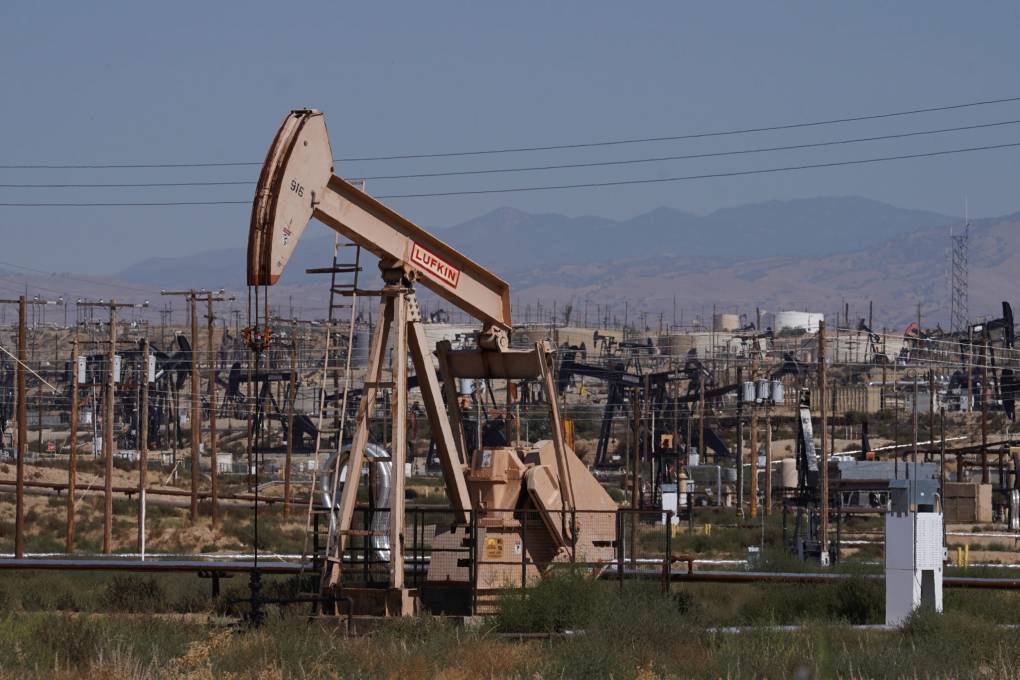
"caption": "An oil pumpjack in Kern County, California.",
"description": null,
"title": "Oil pumpjack",
"credit": "Harika Maddala",
"status": "inherit",
"altTag": "An oil pump is shown beneath a dusty sky.",
"isLoading": false,
"fetchFailed": false
},
"science_1991120": {
"type": "attachments",
"id": "science_1991120",
"meta": {
"index": "attachments_1716263798",
"site": "science",
"id": "1991120",
"found": true
},
"parent": 0,
"imgSizes": {
"twentyfourteen-full-width": {
"file": "https://cdn.kqed.org/wp-content/uploads/sites/35/2024/01/240116-RECOMPOSE-AD-01-KQED-1038x576.jpg",
"width": 1038,
"mimeType": "image/jpeg",
"height": 576
},
"thumbnail": {
"file": "https://cdn.kqed.org/wp-content/uploads/sites/35/2024/01/240116-RECOMPOSE-AD-01-KQED-160x107.jpg",
"width": 160,
"mimeType": "image/jpeg",
"height": 107
},
"post-thumbnail": {
"file": "https://cdn.kqed.org/wp-content/uploads/sites/35/2024/01/240116-RECOMPOSE-AD-01-KQED-672x372.jpg",
"width": 672,
"mimeType": "image/jpeg",
"height": 372
},
"kqedFullSize": {
"file": "https://cdn.kqed.org/wp-content/uploads/sites/35/2024/01/240116-RECOMPOSE-AD-01-KQED.jpg",
"width": 2000,
"height": 1333
},
"large": {
"file": "https://cdn.kqed.org/wp-content/uploads/sites/35/2024/01/240116-RECOMPOSE-AD-01-KQED-1020x680.jpg",
"width": 1020,
"mimeType": "image/jpeg",
"height": 680
},
"1536x1536": {
"file": "https://cdn.kqed.org/wp-content/uploads/sites/35/2024/01/240116-RECOMPOSE-AD-01-KQED-1536x1024.jpg",
"width": 1536,
"mimeType": "image/jpeg",
"height": 1024
},
"full-width": {
"file": "https://cdn.kqed.org/wp-content/uploads/sites/35/2024/01/240116-RECOMPOSE-AD-01-KQED-1920x1280.jpg",
"width": 1920,
"mimeType": "image/jpeg",
"height": 1280
},
"medium": {
"file": "https://cdn.kqed.org/wp-content/uploads/sites/35/2024/01/240116-RECOMPOSE-AD-01-KQED-800x533.jpg",
"width": 800,
"mimeType": "image/jpeg",
"height": 533
},
"medium_large": {
"file": "https://cdn.kqed.org/wp-content/uploads/sites/35/2024/01/240116-RECOMPOSE-AD-01-KQED-768x512.jpg",
"width": 768,
"mimeType": "image/jpeg",
"height": 512
}
},
"publishDate": 1705520240,
"modified": 1705526510,
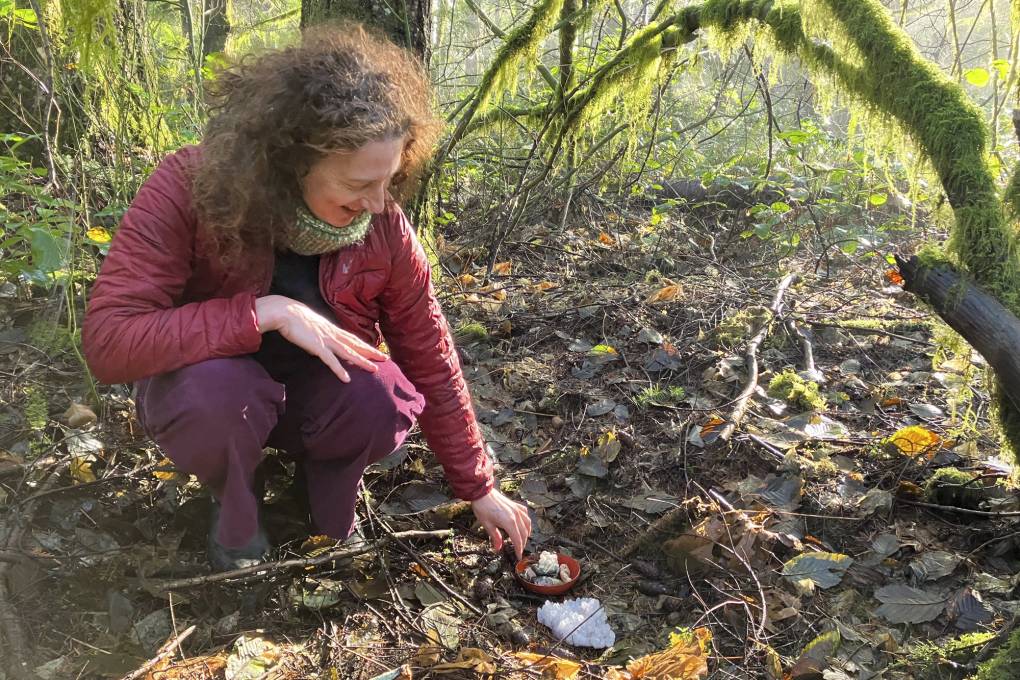
"caption": "Miranda Mellis tends to an altar she built behind her home where she buried some of her father’s composted remains in Olympia, Washington on Dec. 20, 2023. ",
"description": null,
"title": "240116-RECOMPOSE-AD-01-KQED",
"credit": "April Dembosky/KQED",
"status": "inherit",
"altTag": "A person with long hair kneels near some small objects on the ground in a wooded area.",
"isLoading": false,
"fetchFailed": false
},
"science_1986051": {
"type": "attachments",
"id": "science_1986051",
"meta": {
"index": "attachments_1716263798",
"site": "science",
"id": "1986051",
"found": true
},
"parent": 0,
"imgSizes": {
"twentyfourteen-full-width": {
"file": "https://cdn.kqed.org/wp-content/uploads/sites/35/2024/01/240109-BridgeSafetyNet-04-BL-KQED-1038x576.jpg",
"width": 1038,
"mimeType": "image/jpeg",
"height": 576
},
"thumbnail": {
"file": "https://cdn.kqed.org/wp-content/uploads/sites/35/2024/01/240109-BridgeSafetyNet-04-BL-KQED-160x107.jpg",
"width": 160,
"mimeType": "image/jpeg",
"height": 107
},
"post-thumbnail": {
"file": "https://cdn.kqed.org/wp-content/uploads/sites/35/2024/01/240109-BridgeSafetyNet-04-BL-KQED-672x372.jpg",
"width": 672,
"mimeType": "image/jpeg",
"height": 372
},
"kqedFullSize": {
"file": "https://cdn.kqed.org/wp-content/uploads/sites/35/2024/01/240109-BridgeSafetyNet-04-BL-KQED.jpg",
"width": 2000,
"height": 1333
},
"large": {
"file": "https://cdn.kqed.org/wp-content/uploads/sites/35/2024/01/240109-BridgeSafetyNet-04-BL-KQED-1020x680.jpg",
"width": 1020,
"mimeType": "image/jpeg",
"height": 680
},
"1536x1536": {
"file": "https://cdn.kqed.org/wp-content/uploads/sites/35/2024/01/240109-BridgeSafetyNet-04-BL-KQED-1536x1024.jpg",
"width": 1536,
"mimeType": "image/jpeg",
"height": 1024
},
"full-width": {
"file": "https://cdn.kqed.org/wp-content/uploads/sites/35/2024/01/240109-BridgeSafetyNet-04-BL-KQED-1920x1280.jpg",
"width": 1920,
"mimeType": "image/jpeg",
"height": 1280
},
"medium": {
"file": "https://cdn.kqed.org/wp-content/uploads/sites/35/2024/01/240109-BridgeSafetyNet-04-BL-KQED-800x533.jpg",
"width": 800,
"mimeType": "image/jpeg",
"height": 533
},
"medium_large": {
"file": "https://cdn.kqed.org/wp-content/uploads/sites/35/2024/01/240109-BridgeSafetyNet-04-BL-KQED-768x512.jpg",
"width": 768,
"mimeType": "image/jpeg",
"height": 512
}
},
"publishDate": 1704832625,
"modified": 1705084170,
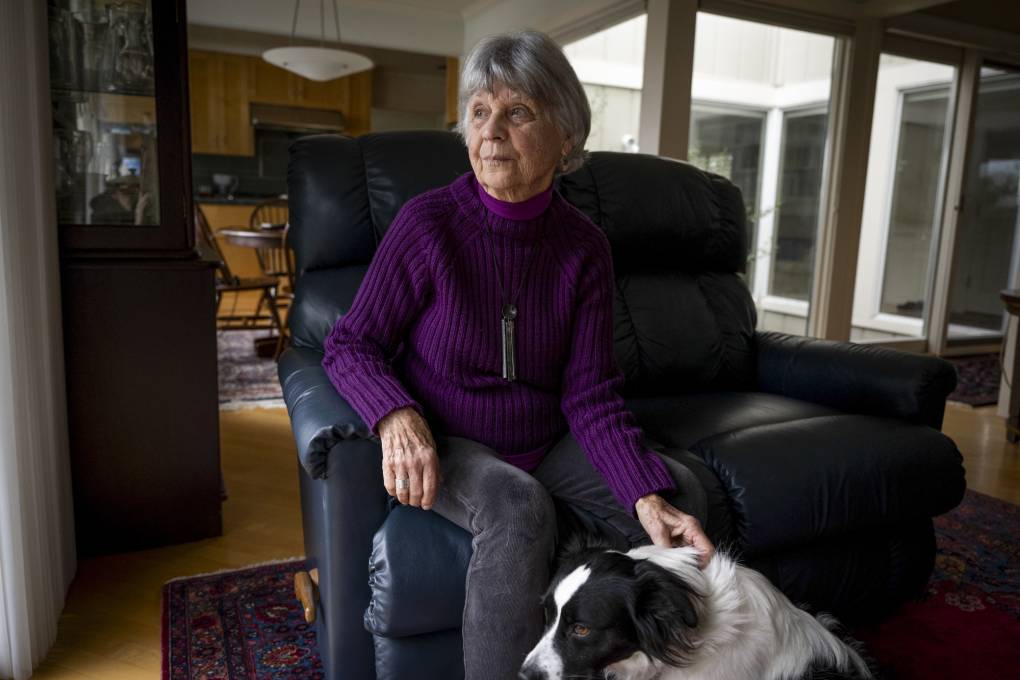
"caption": "Kay James sits with her dog Lily at her home in Moraga on Jan. 9, 2024. Her son, Michael Bishop, died jumping off of the Golden Gate Bridge in 2011.",
"description": null,
"title": "240109-BridgeSafetyNet-04-BL-KQED",
"credit": "Beth LaBerge/KQED",
"status": "inherit",
"altTag": "An older woman sits in a leather chair and pets her dog.",
"isLoading": false,
"fetchFailed": false
},
"science_1985978": {
"type": "attachments",
"id": "science_1985978",
"meta": {
"index": "attachments_1716263798",
"site": "science",
"id": "1985978",
"found": true
},
"parent": 0,
"imgSizes": {
"twentyfourteen-full-width": {
"file": "https://cdn.kqed.org/wp-content/uploads/sites/35/2024/01/231213-WAR-MENTAL-HEALTH-MD-04_1-KQED-2-1038x576.jpg",
"width": 1038,
"mimeType": "image/jpeg",
"height": 576
},
"thumbnail": {
"file": "https://cdn.kqed.org/wp-content/uploads/sites/35/2024/01/231213-WAR-MENTAL-HEALTH-MD-04_1-KQED-2-160x107.jpg",
"width": 160,
"mimeType": "image/jpeg",
"height": 107
},
"post-thumbnail": {
"file": "https://cdn.kqed.org/wp-content/uploads/sites/35/2024/01/231213-WAR-MENTAL-HEALTH-MD-04_1-KQED-2-672x372.jpg",
"width": 672,
"mimeType": "image/jpeg",
"height": 372
},
"kqedFullSize": {
"file": "https://cdn.kqed.org/wp-content/uploads/sites/35/2024/01/231213-WAR-MENTAL-HEALTH-MD-04_1-KQED-2.jpg",
"width": 2000,
"height": 1333
},
"large": {
"file": "https://cdn.kqed.org/wp-content/uploads/sites/35/2024/01/231213-WAR-MENTAL-HEALTH-MD-04_1-KQED-2-1020x680.jpg",
"width": 1020,
"mimeType": "image/jpeg",
"height": 680
},
"1536x1536": {
"file": "https://cdn.kqed.org/wp-content/uploads/sites/35/2024/01/231213-WAR-MENTAL-HEALTH-MD-04_1-KQED-2-1536x1024.jpg",
"width": 1536,
"mimeType": "image/jpeg",
"height": 1024
},
"full-width": {
"file": "https://cdn.kqed.org/wp-content/uploads/sites/35/2024/01/231213-WAR-MENTAL-HEALTH-MD-04_1-KQED-2-1920x1280.jpg",
"width": 1920,
"mimeType": "image/jpeg",
"height": 1280
},
"medium": {
"file": "https://cdn.kqed.org/wp-content/uploads/sites/35/2024/01/231213-WAR-MENTAL-HEALTH-MD-04_1-KQED-2-800x533.jpg",
"width": 800,
"mimeType": "image/jpeg",
"height": 533
},
"medium_large": {
"file": "https://cdn.kqed.org/wp-content/uploads/sites/35/2024/01/231213-WAR-MENTAL-HEALTH-MD-04_1-KQED-2-768x512.jpg",
"width": 768,
"mimeType": "image/jpeg",
"height": 512
}
},
"publishDate": 1704308534,
"modified": 1704477510,
"caption": "Haleema Bharoocha on the UC Berkeley Campus on Dec. 13, 2023.",
"description": null,
"title": "Haleema Bharoocha-Jobe on the UC Berkeley Campus on Dec. 13, 2023.",
"credit": "Martin do Nascimento/KQED",
"status": "inherit",
"altTag": "A person wearing a headscarf sits on a set of stairs in an outdoor setting.",
"isLoading": false,
"fetchFailed": false
},
"science_1985871": {
"type": "attachments",
"id": "science_1985871",
"meta": {
"index": "attachments_1716263798",
"site": "science",
"id": "1985871",
"found": true
},
"parent": 0,
"imgSizes": {
"twentyfourteen-full-width": {
"file": "https://cdn.kqed.org/wp-content/uploads/sites/35/2023/12/23125-Brexanolone-01-KQED-1038x576.jpg",
"width": 1038,
"mimeType": "image/jpeg",
"height": 576
},
"thumbnail": {
"file": "https://cdn.kqed.org/wp-content/uploads/sites/35/2023/12/23125-Brexanolone-01-KQED-160x107.jpg",
"width": 160,
"mimeType": "image/jpeg",
"height": 107
},
"post-thumbnail": {
"file": "https://cdn.kqed.org/wp-content/uploads/sites/35/2023/12/23125-Brexanolone-01-KQED-672x372.jpg",
"width": 672,
"mimeType": "image/jpeg",
"height": 372
},
"kqedFullSize": {
"file": "https://cdn.kqed.org/wp-content/uploads/sites/35/2023/12/23125-Brexanolone-01-KQED.jpg",
"width": 2000,
"height": 1333
},
"large": {
"file": "https://cdn.kqed.org/wp-content/uploads/sites/35/2023/12/23125-Brexanolone-01-KQED-1020x680.jpg",
"width": 1020,
"mimeType": "image/jpeg",
"height": 680
},
"1536x1536": {
"file": "https://cdn.kqed.org/wp-content/uploads/sites/35/2023/12/23125-Brexanolone-01-KQED-1536x1024.jpg",
"width": 1536,
"mimeType": "image/jpeg",
"height": 1024
},
"full-width": {
"file": "https://cdn.kqed.org/wp-content/uploads/sites/35/2023/12/23125-Brexanolone-01-KQED-1920x1280.jpg",
"width": 1920,
"mimeType": "image/jpeg",
"height": 1280
},
"medium": {
"file": "https://cdn.kqed.org/wp-content/uploads/sites/35/2023/12/23125-Brexanolone-01-KQED-800x533.jpg",
"width": 800,
"mimeType": "image/jpeg",
"height": 533
},
"medium_large": {
"file": "https://cdn.kqed.org/wp-content/uploads/sites/35/2023/12/23125-Brexanolone-01-KQED-768x512.jpg",
"width": 768,
"mimeType": "image/jpeg",
"height": 512
}
},
"publishDate": 1702673559,
"modified": 1704416876,
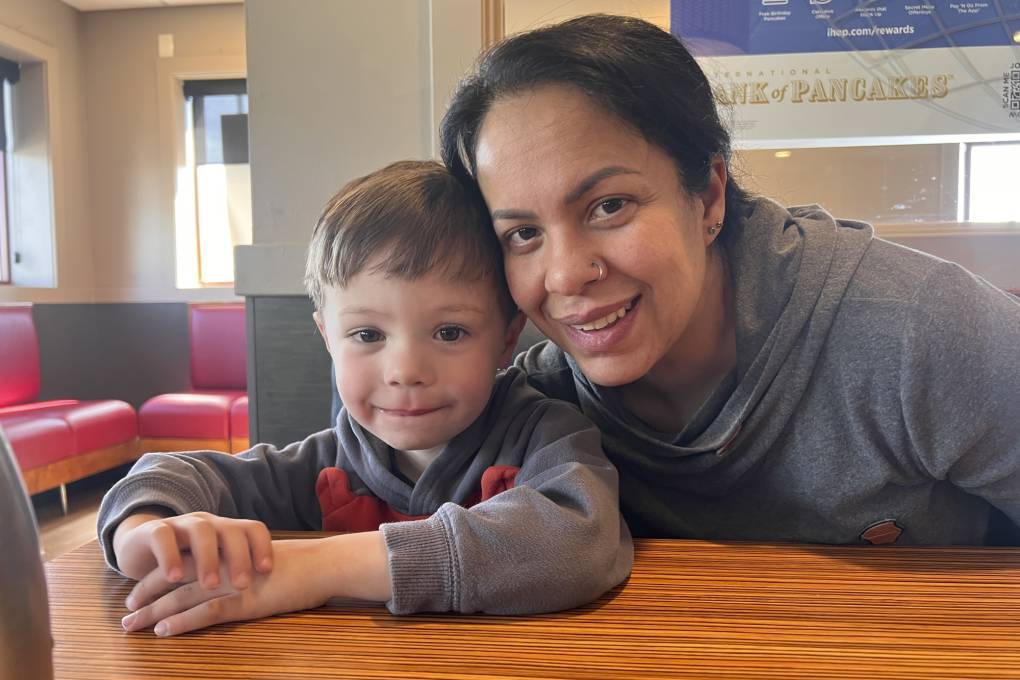
"caption": "Miriam McDonald with her now 4-year-old son, Nico, in 2023. McDonald’s story of struggling to get care for postpartum depression at Kaiser Permanente led to significant policy changes at the insurer.",
"description": null,
"title": "23125-Brexanolone-01-KQED",
"credit": "Courtesy of Keith McDonald",
"status": "inherit",
"altTag": "An adult and a child sit together at a table smiling at the camera.",
"isLoading": false,
"fetchFailed": false
},
"science_1985801": {
"type": "attachments",
"id": "science_1985801",
"meta": {
"index": "attachments_1716263798",
"site": "science",
"id": "1985801",
"found": true
},
"parent": 0,
"imgSizes": {
"twentyfourteen-full-width": {
"file": "https://cdn.kqed.org/wp-content/uploads/sites/35/2023/12/231211-COVID-VACCINE-GETTY-RB-KQED-1038x576.jpg",
"width": 1038,
"mimeType": "image/jpeg",
"height": 576
},
"thumbnail": {
"file": "https://cdn.kqed.org/wp-content/uploads/sites/35/2023/12/231211-COVID-VACCINE-GETTY-RB-KQED-160x107.jpg",
"width": 160,
"mimeType": "image/jpeg",
"height": 107
},
"post-thumbnail": {
"file": "https://cdn.kqed.org/wp-content/uploads/sites/35/2023/12/231211-COVID-VACCINE-GETTY-RB-KQED-672x372.jpg",
"width": 672,
"mimeType": "image/jpeg",
"height": 372
},
"kqedFullSize": {
"file": "https://cdn.kqed.org/wp-content/uploads/sites/35/2023/12/231211-COVID-VACCINE-GETTY-RB-KQED.jpg",
"width": 2000,
"height": 1333
},
"large": {
"file": "https://cdn.kqed.org/wp-content/uploads/sites/35/2023/12/231211-COVID-VACCINE-GETTY-RB-KQED-1020x680.jpg",
"width": 1020,
"mimeType": "image/jpeg",
"height": 680
},
"1536x1536": {
"file": "https://cdn.kqed.org/wp-content/uploads/sites/35/2023/12/231211-COVID-VACCINE-GETTY-RB-KQED-1536x1024.jpg",
"width": 1536,
"mimeType": "image/jpeg",
"height": 1024
},
"full-width": {
"file": "https://cdn.kqed.org/wp-content/uploads/sites/35/2023/12/231211-COVID-VACCINE-GETTY-RB-KQED-1920x1280.jpg",
"width": 1920,
"mimeType": "image/jpeg",
"height": 1280
},
"medium": {
"file": "https://cdn.kqed.org/wp-content/uploads/sites/35/2023/12/231211-COVID-VACCINE-GETTY-RB-KQED-800x533.jpg",
"width": 800,
"mimeType": "image/jpeg",
"height": 533
},
"medium_large": {
"file": "https://cdn.kqed.org/wp-content/uploads/sites/35/2023/12/231211-COVID-VACCINE-GETTY-RB-KQED-768x512.jpg",
"width": 768,
"mimeType": "image/jpeg",
"height": 512
}
},
"publishDate": 1702341523,
"modified": 1702341905,
"caption": "A nurse reaches for a vial of Pfizer-BioNTech COVID-19 vaccine.",
"description": null,
"title": "US-HEALTH-VIRUS-VACCINE",
"credit": "ROBYN BECK/AFP via Getty Images",
"status": "inherit",
"altTag": "A gloved hand reaches toward a small vial on a pink tray.",
"isLoading": false,
"fetchFailed": false
},
"science_1985763": {
"type": "attachments",
"id": "science_1985763",
"meta": {
"index": "attachments_1716263798",
"site": "science",
"id": "1985763",
"found": true
},
"parent": 1985749,
"imgSizes": {
"twentyfourteen-full-width": {
"file": "https://cdn.kqed.org/wp-content/uploads/sites/35/2023/12/EndWell2023211-1038x576.jpg",
"width": 1038,
"mimeType": "image/jpeg",
"height": 576
},
"thumbnail": {
"file": "https://cdn.kqed.org/wp-content/uploads/sites/35/2023/12/EndWell2023211-160x107.jpg",
"width": 160,
"mimeType": "image/jpeg",
"height": 107
},
"post-thumbnail": {
"file": "https://cdn.kqed.org/wp-content/uploads/sites/35/2023/12/EndWell2023211-672x372.jpg",
"width": 672,
"mimeType": "image/jpeg",
"height": 372
},
"kqedFullSize": {
"file": "https://cdn.kqed.org/wp-content/uploads/sites/35/2023/12/EndWell2023211-scaled.jpg",
"width": 2560,
"height": 1707
},
"2048x2048": {
"file": "https://cdn.kqed.org/wp-content/uploads/sites/35/2023/12/EndWell2023211-2048x1365.jpg",
"width": 2048,
"mimeType": "image/jpeg",
"height": 1365
},
"large": {
"file": "https://cdn.kqed.org/wp-content/uploads/sites/35/2023/12/EndWell2023211-1020x680.jpg",
"width": 1020,
"mimeType": "image/jpeg",
"height": 680
},
"1536x1536": {
"file": "https://cdn.kqed.org/wp-content/uploads/sites/35/2023/12/EndWell2023211-1536x1024.jpg",
"width": 1536,
"mimeType": "image/jpeg",
"height": 1024
},
"full-width": {
"file": "https://cdn.kqed.org/wp-content/uploads/sites/35/2023/12/EndWell2023211-1920x1280.jpg",
"width": 1920,
"mimeType": "image/jpeg",
"height": 1280
},
"medium": {
"file": "https://cdn.kqed.org/wp-content/uploads/sites/35/2023/12/EndWell2023211-800x533.jpg",
"width": 800,
"mimeType": "image/jpeg",
"height": 533
},
"medium_large": {
"file": "https://cdn.kqed.org/wp-content/uploads/sites/35/2023/12/EndWell2023211-768x512.jpg",
"width": 768,
"mimeType": "image/jpeg",
"height": 512
}
},
"publishDate": 1702329565,
"modified": 1702331479,
"caption": "End Well founder Dr. Shoshana Ungerleider (right) interviews comedian Tig Notaro about drawing humor from her breast cancer diagnosis at End Well's 2023 conference in Los Angeles in November.",
"description": null,
"title": "EndWell2023211",
"credit": "Courtesy of End Well",
"status": "inherit",
"altTag": "One woman interviews another woman on a stage. On the wall behind them, it says 'Endwell.'",
"isLoading": false,
"fetchFailed": false
},
"science_1985711": {
"type": "attachments",
"id": "science_1985711",
"meta": {
"index": "attachments_1716263798",
"site": "science",
"id": "1985711",
"found": true
},
"parent": 1985709,
"imgSizes": {
"twentyfourteen-full-width": {
"file": "https://cdn.kqed.org/wp-content/uploads/sites/35/2023/12/victoriagray2023_gili_9133-5b7aa056901903dbddf862500af9a13a4610a85f-s1600-c85-copy-1038x576.jpg",
"width": 1038,
"mimeType": "image/jpeg",
"height": 576
},
"thumbnail": {
"file": "https://cdn.kqed.org/wp-content/uploads/sites/35/2023/12/victoriagray2023_gili_9133-5b7aa056901903dbddf862500af9a13a4610a85f-s1600-c85-copy-160x120.jpg",
"width": 160,
"mimeType": "image/jpeg",
"height": 120
},
"post-thumbnail": {
"file": "https://cdn.kqed.org/wp-content/uploads/sites/35/2023/12/victoriagray2023_gili_9133-5b7aa056901903dbddf862500af9a13a4610a85f-s1600-c85-copy-672x372.jpg",
"width": 672,
"mimeType": "image/jpeg",
"height": 372
},
"kqedFullSize": {
"file": "https://cdn.kqed.org/wp-content/uploads/sites/35/2023/12/victoriagray2023_gili_9133-5b7aa056901903dbddf862500af9a13a4610a85f-s1600-c85-copy.jpg",
"width": 1092,
"height": 819
},
"large": {
"file": "https://cdn.kqed.org/wp-content/uploads/sites/35/2023/12/victoriagray2023_gili_9133-5b7aa056901903dbddf862500af9a13a4610a85f-s1600-c85-copy-1020x765.jpg",
"width": 1020,
"mimeType": "image/jpeg",
"height": 765
},
"medium": {
"file": "https://cdn.kqed.org/wp-content/uploads/sites/35/2023/12/victoriagray2023_gili_9133-5b7aa056901903dbddf862500af9a13a4610a85f-s1600-c85-copy-800x600.jpg",
"width": 800,
"mimeType": "image/jpeg",
"height": 600
},
"medium_large": {
"file": "https://cdn.kqed.org/wp-content/uploads/sites/35/2023/12/victoriagray2023_gili_9133-5b7aa056901903dbddf862500af9a13a4610a85f-s1600-c85-copy-768x576.jpg",
"width": 768,
"mimeType": "image/jpeg",
"height": 576
}
},
"publishDate": 1702064543,
"modified": 1702064681,
"caption": "'I'm ecstatic. It's a blessing that they approved this therapy,' said Victoria Gray, the first person in the US to undergo CRISPR gene-editing for sickle cell, of the Food and Drug Administration's decision.",
"description": null,
"title": "victoriagray2023_gili_9133-5b7aa056901903dbddf862500af9a13a4610a85f-s1600-c85 copy",
"credit": "Orlando Gili/NPR",
"status": "inherit",
"altTag": "A young African American woman with white t-shirt and blazer looks away from the camera with a slight smile.",
"isLoading": false,
"fetchFailed": false
},
"science_1985296": {
"type": "attachments",
"id": "science_1985296",
"meta": {
"index": "attachments_1716263798",
"site": "science",
"id": "1985296",
"found": true
},
"parent": 1985295,
"imgSizes": {
"twentyfourteen-full-width": {
"file": "https://ww2.kqed.org/app/uploads/sites/35/2023/11/ap20216281153675_custom-1d05a45fb29ce62970daa40e712f1e61d079949e-1038x576.jpg",
"width": 1038,
"mimeType": "image/jpeg",
"height": 576
},
"thumbnail": {
"file": "https://ww2.kqed.org/app/uploads/sites/35/2023/11/ap20216281153675_custom-1d05a45fb29ce62970daa40e712f1e61d079949e-160x107.jpg",
"width": 160,
"mimeType": "image/jpeg",
"height": 107
},
"post-thumbnail": {
"file": "https://ww2.kqed.org/app/uploads/sites/35/2023/11/ap20216281153675_custom-1d05a45fb29ce62970daa40e712f1e61d079949e-672x372.jpg",
"width": 672,
"mimeType": "image/jpeg",
"height": 372
},
"kqedFullSize": {
"file": "https://ww2.kqed.org/app/uploads/sites/35/2023/11/ap20216281153675_custom-1d05a45fb29ce62970daa40e712f1e61d079949e-scaled.jpg",
"width": 2560,
"height": 1705
},
"2048x2048": {
"file": "https://ww2.kqed.org/app/uploads/sites/35/2023/11/ap20216281153675_custom-1d05a45fb29ce62970daa40e712f1e61d079949e-2048x1364.jpg",
"width": 2048,
"mimeType": "image/jpeg",
"height": 1364
},
"large": {
"file": "https://ww2.kqed.org/app/uploads/sites/35/2023/11/ap20216281153675_custom-1d05a45fb29ce62970daa40e712f1e61d079949e-1020x679.jpg",
"width": 1020,
"mimeType": "image/jpeg",
"height": 679
},
"1536x1536": {
"file": "https://ww2.kqed.org/app/uploads/sites/35/2023/11/ap20216281153675_custom-1d05a45fb29ce62970daa40e712f1e61d079949e-1536x1023.jpg",
"width": 1536,
"mimeType": "image/jpeg",
"height": 1023
},
"full-width": {
"file": "https://ww2.kqed.org/app/uploads/sites/35/2023/11/ap20216281153675_custom-1d05a45fb29ce62970daa40e712f1e61d079949e-1920x1279.jpg",
"width": 1920,
"mimeType": "image/jpeg",
"height": 1279
},
"medium": {
"file": "https://ww2.kqed.org/app/uploads/sites/35/2023/11/ap20216281153675_custom-1d05a45fb29ce62970daa40e712f1e61d079949e-800x533.jpg",
"width": 800,
"mimeType": "image/jpeg",
"height": 533
},
"medium_large": {
"file": "https://ww2.kqed.org/app/uploads/sites/35/2023/11/ap20216281153675_custom-1d05a45fb29ce62970daa40e712f1e61d079949e-768x511.jpg",
"width": 768,
"mimeType": "image/jpeg",
"height": 511
}
},
"publishDate": 1699981444,
"modified": 1699988123,
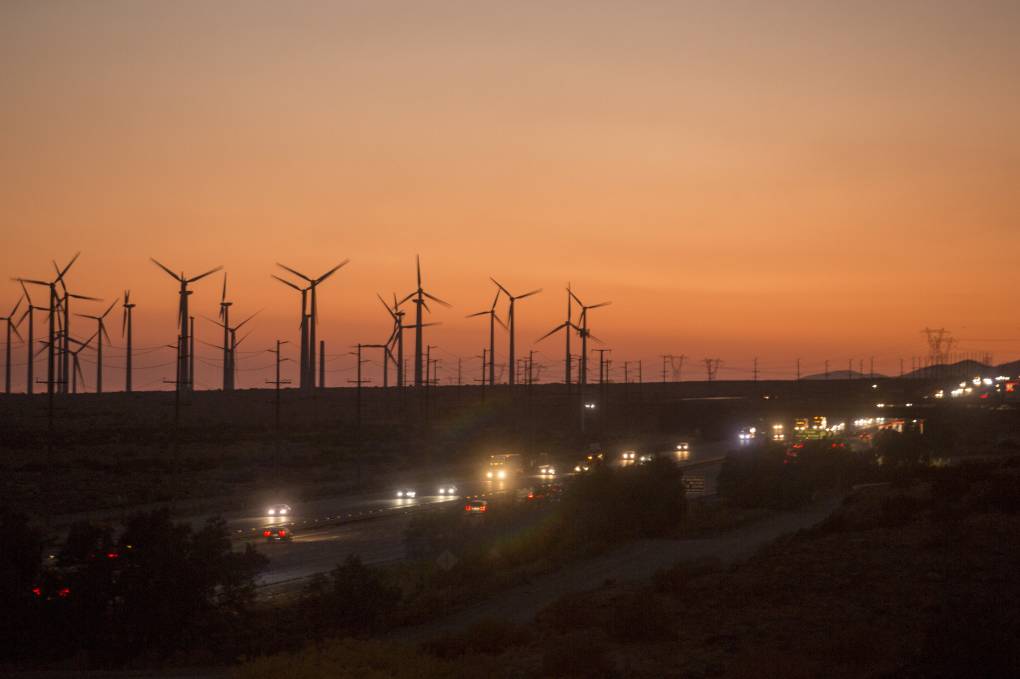
"caption": "Windmills near Whitewater, Calif., in 2020. Reducing fossil fuel use and investing more in renewable energy sources such as wind will help the U.S. avoid billions of dollars of economic costs and help Americans live longer, healthier lives according to the Fifth National Climate Assessment.",
"description": "Windmills near Whitewater, Calif., in 2020. Reducing fossil fuel use and investing more in renewable energy sources such as wind will help the U.S. avoid billions of dollars of economic costs and help Americans live longer, healthier lives according to the Fifth National Climate Assessment.",
"title": "Windmills near Whitewater, Calif.",
"credit": "AP Photo/Ringo H.W. Chiu",
"status": "inherit",
"altTag": "Windmills are seen on a backdrop of orange skies.",
"isLoading": false,
"fetchFailed": false
},
"science_1984856": {
"type": "attachments",
"id": "science_1984856",
"meta": {
"index": "attachments_1716263798",
"site": "science",
"id": "1984856",
"found": true
},
"parent": 1984855,
"imgSizes": {
"twentyfourteen-full-width": {
"file": "https://ww2.kqed.org/app/uploads/sites/35/2023/10/GettyImages-1080389274-qut-1038x576.jpg",
"width": 1038,
"mimeType": "image/jpeg",
"height": 576
},
"thumbnail": {
"file": "https://ww2.kqed.org/app/uploads/sites/35/2023/10/GettyImages-1080389274-qut-160x107.jpg",
"width": 160,
"mimeType": "image/jpeg",
"height": 107
},
"post-thumbnail": {
"file": "https://ww2.kqed.org/app/uploads/sites/35/2023/10/GettyImages-1080389274-qut-672x372.jpg",
"width": 672,
"mimeType": "image/jpeg",
"height": 372
},
"kqedFullSize": {
"file": "https://ww2.kqed.org/app/uploads/sites/35/2023/10/GettyImages-1080389274-qut.jpg",
"width": 1920,
"height": 1289
},
"large": {
"file": "https://ww2.kqed.org/app/uploads/sites/35/2023/10/GettyImages-1080389274-qut-1020x685.jpg",
"width": 1020,
"mimeType": "image/jpeg",
"height": 685
},
"1536x1536": {
"file": "https://ww2.kqed.org/app/uploads/sites/35/2023/10/GettyImages-1080389274-qut-1536x1031.jpg",
"width": 1536,
"mimeType": "image/jpeg",
"height": 1031
},
"medium": {
"file": "https://ww2.kqed.org/app/uploads/sites/35/2023/10/GettyImages-1080389274-qut-800x537.jpg",
"width": 800,
"mimeType": "image/jpeg",
"height": 537
},
"medium_large": {
"file": "https://ww2.kqed.org/app/uploads/sites/35/2023/10/GettyImages-1080389274-qut-768x516.jpg",
"width": 768,
"mimeType": "image/jpeg",
"height": 516
}
},
"publishDate": 1697825493,
"modified": 1697831914,
"caption": "Kaiser Permanente mental health workers carry signs as they march in front of Kaiser Permanente San Francisco Medical Center on December 10, 2018.",
"description": null,
"title": "Thousands Of Mental Health Workers go On Strike In CA To Protest Kaiser Permanente",
"credit": "Justin Sullivan/Getty Images",
"status": "inherit",
"altTag": "Workers in red shirts and carrying protest signs walk in a tight crowd.",
"isLoading": false,
"fetchFailed": false
},
"science_1984535": {
"type": "attachments",
"id": "science_1984535",
"meta": {
"index": "attachments_1716263798",
"site": "science",
"id": "1984535",
"found": true
},
"parent": 1984534,
"imgSizes": {
"twentyfourteen-full-width": {
"file": "https://ww2.kqed.org/app/uploads/sites/35/2023/10/04262023_ksuzuki_warmweather-103-qut-1038x576.jpg",
"width": 1038,
"mimeType": "image/jpeg",
"height": 576
},
"thumbnail": {
"file": "https://ww2.kqed.org/app/uploads/sites/35/2023/10/04262023_ksuzuki_warmweather-103-qut-160x106.jpg",
"width": 160,
"mimeType": "image/jpeg",
"height": 106
},
"post-thumbnail": {
"file": "https://ww2.kqed.org/app/uploads/sites/35/2023/10/04262023_ksuzuki_warmweather-103-qut-672x372.jpg",
"width": 672,
"mimeType": "image/jpeg",
"height": 372
},
"kqedFullSize": {
"file": "https://ww2.kqed.org/app/uploads/sites/35/2023/10/04262023_ksuzuki_warmweather-103-qut.jpg",
"width": 1920,
"height": 1277
},
"large": {
"file": "https://ww2.kqed.org/app/uploads/sites/35/2023/10/04262023_ksuzuki_warmweather-103-qut-1020x678.jpg",
"width": 1020,
"mimeType": "image/jpeg",
"height": 678
},
"1536x1536": {
"file": "https://ww2.kqed.org/app/uploads/sites/35/2023/10/04262023_ksuzuki_warmweather-103-qut-1536x1022.jpg",
"width": 1536,
"mimeType": "image/jpeg",
"height": 1022
},
"medium": {
"file": "https://ww2.kqed.org/app/uploads/sites/35/2023/10/04262023_ksuzuki_warmweather-103-qut-800x532.jpg",
"width": 800,
"mimeType": "image/jpeg",
"height": 532
},
"medium_large": {
"file": "https://ww2.kqed.org/app/uploads/sites/35/2023/10/04262023_ksuzuki_warmweather-103-qut-768x511.jpg",
"width": 768,
"mimeType": "image/jpeg",
"height": 511
}
},
"publishDate": 1696613195,
"modified": 1696640443,
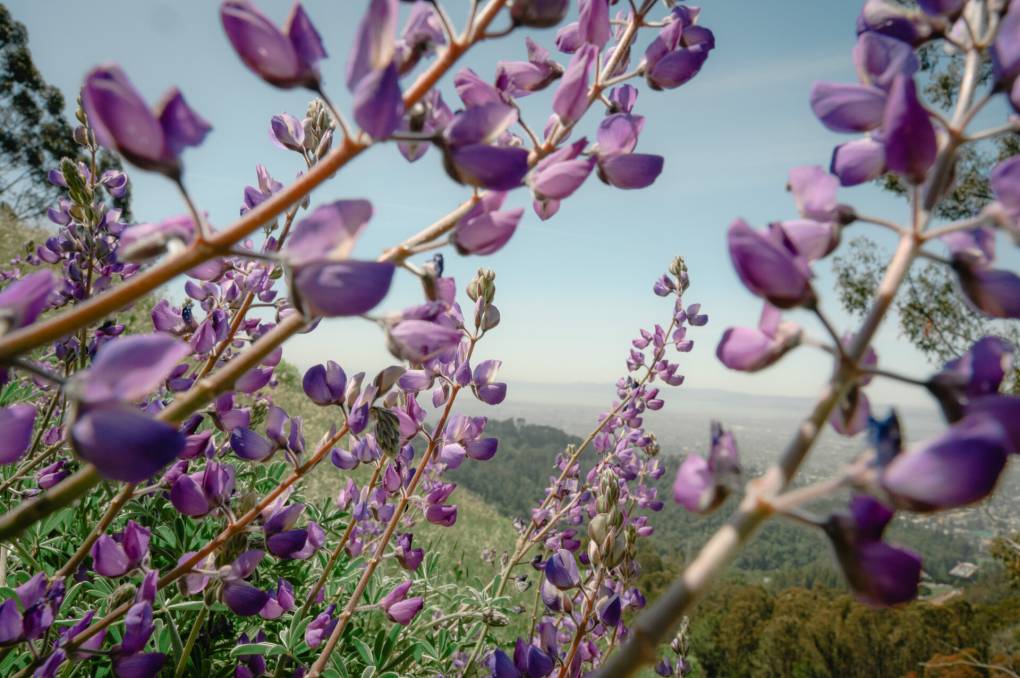
"caption": "Stems of purple lupine blossom along Grizzly Peak Boulevard in Berkeley, on April 26, 2023.",
"description": null,
"title": "Wildflowers",
"credit": "Kori Suzuki/KQED",
"status": "inherit",
"altTag": "Purple wildflowers blossom.",
"isLoading": false,
"fetchFailed": false
},
"science_1984452": {
"type": "attachments",
"id": "science_1984452",
"meta": {
"index": "attachments_1716263798",
"site": "science",
"id": "1984452",
"found": true
},
"parent": 1984443,
"imgSizes": {
"twentyfourteen-full-width": {
"file": "https://ww2.kqed.org/app/uploads/sites/35/2023/09/230928-EAGLE-ROCK-SETTLE-MD-02-KQED-1038x576.jpg",
"width": 1038,
"mimeType": "image/jpeg",
"height": 576
},
"thumbnail": {
"file": "https://ww2.kqed.org/app/uploads/sites/35/2023/09/230928-EAGLE-ROCK-SETTLE-MD-02-KQED-160x107.jpg",
"width": 160,
"mimeType": "image/jpeg",
"height": 107
},
"post-thumbnail": {
"file": "https://ww2.kqed.org/app/uploads/sites/35/2023/09/230928-EAGLE-ROCK-SETTLE-MD-02-KQED-672x372.jpg",
"width": 672,
"mimeType": "image/jpeg",
"height": 372
},
"kqedFullSize": {
"file": "https://ww2.kqed.org/app/uploads/sites/35/2023/09/230928-EAGLE-ROCK-SETTLE-MD-02-KQED.jpg",
"width": 2000,
"height": 1333
},
"large": {
"file": "https://ww2.kqed.org/app/uploads/sites/35/2023/09/230928-EAGLE-ROCK-SETTLE-MD-02-KQED-1020x680.jpg",
"width": 1020,
"mimeType": "image/jpeg",
"height": 680
},
"1536x1536": {
"file": "https://ww2.kqed.org/app/uploads/sites/35/2023/09/230928-EAGLE-ROCK-SETTLE-MD-02-KQED-1536x1024.jpg",
"width": 1536,
"mimeType": "image/jpeg",
"height": 1024
},
"full-width": {
"file": "https://ww2.kqed.org/app/uploads/sites/35/2023/09/230928-EAGLE-ROCK-SETTLE-MD-02-KQED-1920x1280.jpg",
"width": 1920,
"mimeType": "image/jpeg",
"height": 1280
},
"medium": {
"file": "https://ww2.kqed.org/app/uploads/sites/35/2023/09/230928-EAGLE-ROCK-SETTLE-MD-02-KQED-800x533.jpg",
"width": 800,
"mimeType": "image/jpeg",
"height": 533
},
"medium_large": {
"file": "https://ww2.kqed.org/app/uploads/sites/35/2023/09/230928-EAGLE-ROCK-SETTLE-MD-02-KQED-768x512.jpg",
"width": 768,
"mimeType": "image/jpeg",
"height": 512
}
},
"publishDate": 1695944136,
"modified": 1695946593,
"caption": "Trucks leave the Port of Oakland on Sept. 28, 2023.",
"description": null,
"title": "230928-EAGLE ROCK SETTLE-MD-02-KQED",
"credit": "Martin do Nascimento/KQED",
"status": "inherit",
"altTag": "Several trucks drive through an industrial area with cranes in the background.",
"isLoading": false,
"fetchFailed": false
}
},
"audioPlayerReducer": {
"postId": "stream_live",
"isPaused": true,
"isPlaying": false,
"pfsActive": false,
"pledgeModalIsOpen": true,
"playerDrawerIsOpen": false,
"liveAudioPlayStartedAt": 0,
"liveAudioPlayContext": ""
},
"authorsReducer": {
"byline_science_1991160": {
"type": "authors",
"id": "byline_science_1991160",
"meta": {
"override": true
},
"slug": "byline_science_1991160",
"name": "\u003ca href=\"https://insideclimatenews.org/profile/emma-foehringer-merchant/\"> Emma Foehringer Merchant, Inside Climate News\u003c/a>\u003cbr>\u003ca href=\"https://www.kvpr.org/people/joshua-yeager/\">Joshua Yeager, KVPR\u003c/a>",
"isLoading": false
},
"byline_science_1985709": {
"type": "authors",
"id": "byline_science_1985709",
"meta": {
"override": true
},
"slug": "byline_science_1985709",
"name": "\u003ca href=\"https://www.npr.org/people/146944972/rob-stein\">Rob Stein\u003c/a>",
"isLoading": false
},
"byline_science_1985295": {
"type": "authors",
"id": "byline_science_1985295",
"meta": {
"override": true
},
"slug": "byline_science_1985295",
"name": "Alejandra Borunda, Lauren Sommer, Rebecca Hersher",
"isLoading": false
},
"adembosky": {
"type": "authors",
"id": "3205",
"meta": {
"index": "authors_1716337520",
"id": "3205",
"found": true
},
"name": "April Dembosky",
"firstName": "April",
"lastName": "Dembosky",
"slug": "adembosky",
"email": "adembosky@kqed.org",
"display_author_email": false,
"staff_mastheads": [
"news",
"science"
],
"title": "KQED Health Correspondent",
"bio": "April Dembosky is the health correspondent for KQED News and a regular contributor to NPR. She specializes in covering altered states of mind, from postpartum depression to methamphetamine-induced psychosis to the insanity defense. Her investigative series on insurance companies sidestepping mental health laws won multiple awards, including first place in beat reporting from the national Association of Health Care Journalists. She is the recipient of numerous other prizes and fellowships, including a national Edward R. Murrow award for investigative reporting, a Society of Professional Journalists award for long-form storytelling, and a Carter Center Fellowship for Mental Health Journalism.\r\n\r\nDembosky reported and produced \u003cem>Soundtrack of Silence\u003c/em>, an audio documentary about music and memory that is currently being made into a feature film by Paramount Pictures.\r\n\r\nBefore joining KQED in 2013, Dembosky covered technology and Silicon Valley for \u003cem>The Financial Times of London,\u003c/em> and contributed business and arts stories to \u003cem>Marketplace \u003c/em>and \u003cem>The New York Times.\u003c/em> She got her undergraduate degree in philosophy from Smith College and her master's in journalism from the University of California, Berkeley. She is a classically trained violinist and proud alum of the first symphony orchestra at Burning Man.",
"avatar": "https://secure.gravatar.com/avatar/ef92999be4ceb9ea60701e7dc276f813?s=600&d=blank&r=g",
"twitter": "adembosky",
"facebook": null,
"instagram": null,
"linkedin": null,
"sites": [
{
"site": "arts",
"roles": [
"author"
]
},
{
"site": "news",
"roles": [
"editor"
]
},
{
"site": "futureofyou",
"roles": [
"author"
]
},
{
"site": "stateofhealth",
"roles": [
"editor"
]
},
{
"site": "science",
"roles": [
"editor"
]
},
{
"site": "forum",
"roles": [
"editor"
]
}
],
"headData": {
"title": "April Dembosky | KQED",
"description": "KQED Health Correspondent",
"ogImgSrc": "https://secure.gravatar.com/avatar/ef92999be4ceb9ea60701e7dc276f813?s=600&d=blank&r=g",
"twImgSrc": "https://secure.gravatar.com/avatar/ef92999be4ceb9ea60701e7dc276f813?s=600&d=blank&r=g"
},
"isLoading": false,
"link": "/author/adembosky"
},
"lesleymcclurg": {
"type": "authors",
"id": "11229",
"meta": {
"index": "authors_1716337520",
"id": "11229",
"found": true
},
"name": "Lesley McClurg",
"firstName": "Lesley",
"lastName": "McClurg",
"slug": "lesleymcclurg",
"email": "lmcclurg@KQED.org",
"display_author_email": false,
"staff_mastheads": [
"news",
"science"
],
"title": "KQED Health Correspondent",
"bio": "Lesley McClurg is a health correspondent and fill-in host whose work is regularly rebroadcast on NPR and PBS programs. She’s earned multiple regional Emmy awards, a national and a regional Edward R. Murrow award, and was named Best Beat Reporter by the Association of Health Care Journalists. The Society of Professional Journalists has recognized her work several times, and the Society of Environmental Journalists spotlighted her coverage of California’s historic drought.\r\n\r\nBefore joining KQED in 2016, Lesley covered food and sustainability for Capital Public Radio, environmental issues for Colorado Public Radio, and reported for KUOW and KCTS 9 in Seattle. Away from the newsroom, she loves skiing with her daughter, mountain biking with her partner, and playing with Ollie, the family’s goldendoodle. On deadline, she runs almost entirely on chocolate chips.\r\n\r\n ",
"avatar": "https://secure.gravatar.com/avatar/bab49e972ea10c774fe0f5e29dba1722b158f7c0d58a360923d1389d380b2978?s=600&d=blank&r=g",
"twitter": "lesleywmcclurg",
"bluesky": null,
"facebook": null,
"instagram": null,
"linkedin": null,
"sites": [
{
"site": "arts",
"roles": [
"author"
]
},
{
"site": "news",
"roles": [
"editor"
]
},
{
"site": "futureofyou",
"roles": [
"editor"
]
},
{
"site": "stateofhealth",
"roles": [
"author"
]
},
{
"site": "science",
"roles": [
"editor"
]
},
{
"site": "quest",
"roles": [
"subscriber"
]
},
{
"site": "forum",
"roles": [
"administrator"
]
},
{
"site": "liveblog",
"roles": [
"author"
]
}
],
"headData": {
"title": "Lesley McClurg | KQED",
"description": "KQED Health Correspondent",
"ogImgSrc": "https://secure.gravatar.com/avatar/bab49e972ea10c774fe0f5e29dba1722b158f7c0d58a360923d1389d380b2978?s=600&d=blank&r=g",
"twImgSrc": "https://secure.gravatar.com/avatar/bab49e972ea10c774fe0f5e29dba1722b158f7c0d58a360923d1389d380b2978?s=600&d=blank&r=g"
},
"isLoading": false,
"link": "/author/lesleymcclurg"
},
"smohamad": {
"type": "authors",
"id": "11631",
"meta": {
"index": "authors_1716337520",
"id": "11631",
"found": true
},
"name": "Sarah Mohamad",
"firstName": "Sarah",
"lastName": "Mohamad",
"slug": "smohamad",
"email": "smohamad@KQED.org",
"display_author_email": true,
"staff_mastheads": [],
"title": "Engagement Producer and Reporter, KQED Science",
"bio": "Sarah Mohamad is an audience engagement reporter and producer for KQED Science. She reports on audience-focused science and environment stories and manages the team's social media, newsletter, and engagement efforts. Prior to this role, she played a key role as project manager for NSF's \u003ca href=\"https://www.kqed.org/crackingthecode\">\u003cem>Cracking the Code: Influencing Millennial Science Engagement\u003c/em> \u003c/a>audience research.",
"avatar": "https://secure.gravatar.com/avatar/e6224957cd82d015183756ddde1f928013a563d7ca2e4565f8c4de1ec64886c5?s=600&d=blank&r=g",
"twitter": "sarahkmohamad",
"bluesky": null,
"facebook": null,
"instagram": null,
"linkedin": null,
"sites": [
{
"site": "",
"roles": [
"editor"
]
},
{
"site": "arts",
"roles": [
"editor"
]
},
{
"site": "news",
"roles": [
"editor"
]
},
{
"site": "about",
"roles": [
"editor"
]
},
{
"site": "science",
"roles": [
"editor"
]
}
],
"headData": {
"title": "Sarah Mohamad | KQED",
"description": "Engagement Producer and Reporter, KQED Science",
"ogImgSrc": "https://secure.gravatar.com/avatar/e6224957cd82d015183756ddde1f928013a563d7ca2e4565f8c4de1ec64886c5?s=600&d=blank&r=g",
"twImgSrc": "https://secure.gravatar.com/avatar/e6224957cd82d015183756ddde1f928013a563d7ca2e4565f8c4de1ec64886c5?s=600&d=blank&r=g"
},
"isLoading": false,
"link": "/author/smohamad"
},
"hmcdede": {
"type": "authors",
"id": "11635",
"meta": {
"index": "authors_1716337520",
"id": "11635",
"found": true
},
"name": "Holly McDede",
"firstName": "Holly",
"lastName": "McDede",
"slug": "hmcdede",
"email": "hmcdede@KQED.org",
"display_author_email": false,
"staff_mastheads": [],
"title": "KQED Contributor",
"bio": null,
"avatar": "https://secure.gravatar.com/avatar/999d9bf31bb3a2f0511932d99526cb3e?s=600&d=blank&r=g",
"twitter": null,
"facebook": null,
"instagram": null,
"linkedin": null,
"sites": [
{
"site": "arts",
"roles": [
"editor"
]
},
{
"site": "news",
"roles": [
"edit_others_posts",
"editor"
]
},
{
"site": "science",
"roles": [
"editor"
]
},
{
"site": "forum",
"roles": [
"editor"
]
},
{
"site": "perspectives",
"roles": [
"administrator"
]
}
],
"headData": {
"title": "Holly McDede | KQED",
"description": "KQED Contributor",
"ogImgSrc": "https://secure.gravatar.com/avatar/999d9bf31bb3a2f0511932d99526cb3e?s=600&d=blank&r=g",
"twImgSrc": "https://secure.gravatar.com/avatar/999d9bf31bb3a2f0511932d99526cb3e?s=600&d=blank&r=g"
},
"isLoading": false,
"link": "/author/hmcdede"
}
},
"pagesReducer": {
"science_category_health": {
"type": "terms",
"id": "science_39",
"meta": {
"index": "terms_1716263798",
"site": "science",
"id": "39",
"score": 10.889475
},
"featImg": null,
"name": "Health",
"description": null,
"taxonomy": "category",
"headData": {
"twImgId": null,
"twTitle": null,
"ogTitle": null,
"ogImgId": null,
"twDescription": null,
"description": null,
"title": "Health Archives | KQED Science",
"ogDescription": null
},
"ttid": 41,
"slug": "health",
"isLoading": false,
"title": "Health",
"pageMeta": {
"site": "science",
"WpPageTemplate": "page-topic-editorial",
"currentPage": 7
},
"blocks": [
{
"blockName": "kqed/post-list",
"attrs": {
"layout": "cardArticle2",
"query": "posts/science?category=health",
"seeMore": false,
"paginated": true,
"page": 7
}
},
{
"blockName": "kqed/ad"
}
]
}
},
"pfsSessionReducer": {},
"postsReducer": {
"stream_live": {
"type": "live",
"id": "stream_live",
"audioUrl": "https://streams.kqed.org/kqedradio",
"title": "Live Stream",
"excerpt": "Live Stream information currently unavailable.",
"link": "/radio",
"featImg": "",
"label": {
"name": "KQED Live",
"link": "/"
}
},
"stream_kqedNewscast": {
"type": "posts",
"id": "stream_kqedNewscast",
"audioUrl": "https://www.kqed.org/.stream/anon/radio/RDnews/newscast.mp3?_=1",
"title": "KQED Newscast",
"featImg": "",
"label": {
"name": "88.5 FM",
"link": "/"
}
},
"science_1991160": {
"type": "posts",
"id": "science_1991160",
"meta": {
"index": "posts_1716263798",
"site": "science",
"id": "1991160",
"score": null,
"sort": [
1705615482000
]
},
"parent": 0,
"labelTerm": {},
"blocks": [],
"publishDate": 1705615482,
"format": "standard",
"title": "How Kern County's Carbon Removal Industry Can Save California's Oil Country",
"headTitle": "How Kern County’s Carbon Removal Industry Can Save California’s Oil Country | KQED",
"content": "\u003cp>Omar Hayat sees the future in a patch of dirt near Bakersfield, California, where oil was discovered more than a century ago. That discovery paved the way for Kern County’s lucrative petroleum industry. Now, Hayat hopes to use the same dirt patch to launch a new business — one that may help California reach its ambitious climate goals.\u003c/p>\n\u003cp>“We want to be accepted as a solution,” said Hayat, the executive vice president of operations at California Resources Corporation, one of the state’s leading oil producers.\u003c/p>\n\u003cp>Hayat is leading the company’s push to store climate-warming carbon more than a mile underground in the cracks and crevices of ancient rock formations. The firm is one of several companies developing plans to capture carbon from oil and gas plants and the air and store it deep beneath California’s oil country at the foot of the San Joaquin Valley.\u003c/p>\n\u003cp>Kern County is betting those projects will make it the center of California’s nascent carbon removal and storage industry. The county is already the state’s largest oil producer and a top producer of agricultural products, but climate change — and the state’s effort to mitigate it — threatens those economic mainstays. The county hopes the new carbon management industry will help make up for the hundreds of millions in tax revenue it anticipates losing by 2045 when California plans to phase out all oil drilling and eliminate most carbon emissions.\u003c/p>\n\u003cp>“Our economy is built on oil and agriculture. This is how we keep our libraries open. This is how we provide Meals on Wheels. This is how we provide our services to the million people here,” said Lorelei Oviatt, the county’s director of planning and natural resources.\u003c/p>\n\u003cp>[ad fullwidth]\u003c/p>\n\u003cp>In late December, Kern and the federal government took steps that could allow CRC to begin capturing and storing carbon next year. The county published its draft environmental review of the company’s project, and the U.S. \u003ca href=\"https://www.epa.gov/publicnotices/intent-issue-class-vi-underground-injection-control-permits-carbon-terravault-jv\">Environmental Protection Agency said it plans to approve\u003c/a> permits to allow CRC to inject carbon under an oil field.\u003c/p>\n\u003cp>Kern has found opportunity in renewable energy, becoming the state’s biggest producer of solar and wind energy. But the county’s push for carbon management amounts to a huge experiment — with its economy and community, as well as California’s climate commitments, hanging in the balance.\u003c/p>\n\u003cp>In the \u003ca href=\"https://psbweb.kerncounty.com/planning/pdfs/eirs/ctv1/CTV1_DEIR_Vol_1_Ch_1-12_upd.pdf\">900-page environmental assessment (PDF)\u003c/a>, Kern officials determined that CRC’s project is likely to have “significant and unavoidable” impacts on local air quality, even with measures taken to curb emissions. The report also notes the proximity of proposed pipelines to schools and neighborhoods. Those are among several issues likely to be contested when the public begins weighing in on the project this week.\u003c/p>\n\u003cp>Still, the county sees carbon management as critical to its future.\u003c/p>\n\u003cp>“It’s existential,” Oviatt said. “What is this place going to look like in 30 years? What’s it going to look like in five?”\u003c/p>\n\u003ch2>‘Enormous Numbers’\u003c/h2>\n\u003cp>In addition to moving quickly towards clean sources of energy, countries \u003ca href=\"https://www.ipcc.ch/report/ar6/syr/downloads/report/IPCC_AR6_SYR_LongerReport.pdf\">will need to remove carbon from the air (PDF)\u003c/a> in order to avoid the worst effects of climate change, according to the IPCC, the United Nations panel that assesses the science of climate change.\u003c/p>\n\u003cp>Today, \u003ca href=\"https://res.cloudinary.com/dbtfcnfij/images/v1700717007/Global-Status-of-CCS-Report-Update-23-Nov/Global-Status-of-CCS-Report-Update-23-Nov.pdf?_i=AA\">41 commercial carbon capture facilities (PDF)\u003c/a> are \u003ca href=\"https://www.iea.org/energy-system/carbon-capture-utilisation-and-storage/direct-air-capture\">operating worldwide\u003c/a>. Together, they have the capacity to capture much less than 1% of the emissions that countries produce every year — negating annual emissions equivalent to 49 million metric tons of carbon per year.\u003c/p>\n\u003cp>California, which has positioned itself as a global leader in climate action, wants to pull an unprecedented amount of carbon from the air — 100 million metric tons — by 2045. That represents nearly a quarter of the emissions the state produces today.\u003c/p>\n\u003cp>“Those are enormous numbers, relative to where not just California is today, but where the world is today,” said Michael Wara, director of the climate and energy policy program at Stanford University.\u003c/p>\n\u003cp>Still, the Biden administration is pouring billions into the carbon capture and storage industry, and Kern is racing to get a piece of it. Much of that money goes to regions led by Republican lawmakers who support boosting domestic energy production. Until he resigned from Congress last month, Bakersfield Republican and former House Speaker Kevin McCarthy represented much of Kern County.\u003c/p>\n\u003cp>Last year, the U.S. Department of Energy announced it would offer $3.5 billion for companies to demonstrate direct air capture, a process that sucks carbon from the air so that it can be stowed underground. The department recently said it would give $1.2 billion in grants for “Direct Air Capture hubs” in Louisiana and Texas.\u003c/p>\n\u003cp>Carbon removal projects proposed in California, all located in the conservative-leaning Central Valley, earned more than $20 million from the pool of federal funding for feasibility and planning studies, including roughly $12 million to a group led in part by CRC, Hayat’s company, and the city of Bakersfield. The amount is small compared to the billions to be disbursed elsewhere but significant enough to continue fueling ambitions in Kern.\u003c/p>\n\u003cfigure id=\"attachment_1991162\" class=\"wp-caption alignnone\" style=\"max-width: 1536px\">\u003cimg loading=\"lazy\" decoding=\"async\" class=\"size-full wp-image-1991162\" src=\"https://cdn.kqed.org/wp-content/uploads/sites/35/2024/01/Omar-Hayat-1536x1024-1.jpg\" alt=\"\" width=\"1536\" height=\"1024\" srcset=\"https://cdn.kqed.org/wp-content/uploads/sites/35/2024/01/Omar-Hayat-1536x1024-1.jpg 1536w, https://cdn.kqed.org/wp-content/uploads/sites/35/2024/01/Omar-Hayat-1536x1024-1-800x533.jpg 800w, https://cdn.kqed.org/wp-content/uploads/sites/35/2024/01/Omar-Hayat-1536x1024-1-1020x680.jpg 1020w, https://cdn.kqed.org/wp-content/uploads/sites/35/2024/01/Omar-Hayat-1536x1024-1-160x107.jpg 160w, https://cdn.kqed.org/wp-content/uploads/sites/35/2024/01/Omar-Hayat-1536x1024-1-768x512.jpg 768w\" sizes=\"(max-width: 1536px) 100vw, 1536px\">\u003cfigcaption class=\"wp-caption-text\">Omar Hayat, executive vice president of operations at California Resources Corporation. \u003ccite>(Harika Maddala)\u003c/cite>\u003c/figcaption>\u003c/figure>\n\u003cp>Several other major oil and gas companies are also racing to launch their own carbon capture facilities in Kern, including Chevron and \u003ca href=\"https://www.aeraenergy.com/responsibility/carbon-frontier/\">Aera Energy\u003c/a>. Though certain details of CRC’s carbon removal proposal have not been made public, its ambitions center on a project called “Carbon TerraVault 1.” The project would be located in the Elk Hills Oil Field, one of the most productive in the nation, near the site where oil was discovered in 1911. The company wants to inject millions of tons of liquefied carbon a mile underground, beginning with carbon dioxide from the oilfield.\u003c/p>\n\u003ch2>‘Looking for Hope’\u003c/h2>\n\u003cp>If all of the projects proposed for the county come online, planning director Oviatt said Kern could be home to most of the storage required to achieve the state’s carbon removal goals. Oviatt frames the growth of this industry as inevitable. Even if the projects currently proposed don’t win regulatory approval, she’s confident that more proposals will follow them, she said at a recent public forum.\u003c/p>\n\u003cp>The county estimates that the carbon removal industry could generate as much as $64 million per year in tax revenues and create thousands of jobs. Kern envisions much of that money coming from a proposed \u003ca href=\"https://cmbp.kernplanning.com/\">Carbon Management Business Park\u003c/a>, which it sees as a way to bring in emerging climate-friendly industries — including future direct air capture projects.\u003c/p>\n\u003cp>If the oil industry leaves Kern, more than 16,000 jobs could disappear, and the area’s already-high poverty and unemployment rates could climb. A county-commissioned study estimates the business park could support up to 22,000 permanent jobs, both in carbon removal and adjacent industries.\u003c/p>\n\u003cp>“That’s encouraging,” Oviatt said. “We are looking for hope.”\u003c/p>\n\u003cp>But realizing that vision is dependent on buy-in from the private sector. Oviatt said a handful of companies have expressed interest in the idea, but so far, none have submitted formal applications.\u003c/p>\n\u003cp>And community support for the county’s vision is hardly unanimous. At an October county Board of Supervisors meeting, residents and environmental activists expressed concerns about the need for pipelines to carry carbon across the state, which could rupture or leak.\u003c/p>\n\u003cp>They also questioned whether the proposed TerraVault and business park would worsen air quality. The American Lung Association consistently ranks Kern County’s air as among the most polluted in the country.\u003c/p>\n\u003cp>“It does not make sense to proceed with this park given the current health and air quality conditions in Kern County,” said Emma De La Rosa, an advocate with the Leadership Counsel for Justice and Accountability.\u003c/p>\n\u003cp>Other community organizers like Ileana Navarro with the Central California Environmental Justice Network called for greater transparency and questioned the technology’s track record.\u003c/p>\n\u003cp>“Projects worldwide have failed to live up to their promise on climate benefits, so why take the risk here in our backyards and in the backyards of already overburdened communities?” the Bakersfield resident asked.\u003c/p>\n\u003cfigure id=\"attachment_1991163\" class=\"wp-caption alignnone\" style=\"max-width: 1536px\">\u003cimg loading=\"lazy\" decoding=\"async\" class=\"size-full wp-image-1991163\" src=\"https://cdn.kqed.org/wp-content/uploads/sites/35/2024/01/Oil-Pumps-1536x1024-1.jpg\" alt=\"\" width=\"1536\" height=\"1024\" srcset=\"https://cdn.kqed.org/wp-content/uploads/sites/35/2024/01/Oil-Pumps-1536x1024-1.jpg 1536w, https://cdn.kqed.org/wp-content/uploads/sites/35/2024/01/Oil-Pumps-1536x1024-1-800x533.jpg 800w, https://cdn.kqed.org/wp-content/uploads/sites/35/2024/01/Oil-Pumps-1536x1024-1-1020x680.jpg 1020w, https://cdn.kqed.org/wp-content/uploads/sites/35/2024/01/Oil-Pumps-1536x1024-1-160x107.jpg 160w, https://cdn.kqed.org/wp-content/uploads/sites/35/2024/01/Oil-Pumps-1536x1024-1-768x512.jpg 768w\" sizes=\"(max-width: 1536px) 100vw, 1536px\">\u003cfigcaption class=\"wp-caption-text\">Pumping jacks spread throughout an oilfield in Kern County, California.\u003c/figcaption>\u003c/figure>\n\u003cp>The county’s environmental review shows that pipelines carrying carbon dioxide and injection sites are slated to sit within a few miles of a handful of elementary schools and a couple of towns.\u003c/p>\n\u003cp>Oviatt said that any future project would be located far away from neighborhoods to reduce the health risks to residents. But she was frank about the county’s prospects if a thriving carbon removal industry fails to take off in the region.\u003c/p>\n\u003cp>“I think we’re all concerned about our health, but we’re also concerned: Will Kern County survive these policies of the state of California?” Oviatt told the meeting. “I wanted to make sure the community understands that we are at a very, very difficult crossroads.”\u003c/p>\n\u003ch2>Kern County’s ‘Gift From God’\u003c/h2>\n\u003cp>Carbon can’t be injected and permanently stowed underground just anywhere, but the storage potential in the Central Valley is “a gift from God,” George Peridas, the energy program director at Lawrence Livermore National Laboratory, said at an April symposium on carbon management. The San Joaquin Valley is one of about three dozen areas nationwide with the potential to store the climate pollutant, according to assessments by the U.S. Geological Survey. That’s because, in theory, depleted oil and gas fields can make ideal reservoirs for captured carbon.\u003c/p>\n\u003cp>For decades, petroleum companies operating in the region have made billions pumping fossil fuels out of the ground. Now, these same corporations hope to also make money by pumping liquefied carbon back underground.\u003c/p>\n\u003cp>“It’s just like reconfiguring a Lego set,” Hayat, the oil executive, said. “Instead of using that CO2, for example, for increasing oil and gas production, we’re just putting it away for storage.”\u003c/p>\n\u003cp>But critics say it’s not so simple.\u003c/p>\n\u003cp>Storing carbon permanently and safely remains a complex technological challenge full of potential pitfalls. Extracting oil is different than ensuring carbon stays buried for thousands of years without leaking, according to Daniel Ress, a staff attorney at the Center on Race, Poverty and the Environment. California already has \u003ca href=\"https://www.kvpr.org/local-news/2023-07-21/state-releases-draft-plan-to-plug-leaky-oil-wells-many-of-them-in-kern-county\">thousands of uncapped oil wells\u003c/a>, many of which are leaking greenhouse gasses and other pollutants into the air. Ress is concerned that carbon stored underground could escape.\u003c/p>\n\u003cp>“I’m skeptical that this can be done well in this area where there’s so much oil and gas exploration,” Ress said.\u003c/p>\n\u003cp>Until now, oil companies have almost exclusively injected carbon to extract more oil from the earth. The CEO of Occidental Petroleum — CRC’s former parent company — \u003ca href=\"https://www.politico.com/newsletters/power-switch/2023/12/18/carbon-removal-climate-savior-or-distraction-00132266\">said last year\u003c/a> that carbon removal could give the petroleum industry “a license to continue to operate for the next 60, 70, 80 years.” California law prohibits companies from using captured carbon to enhance drilling in the state. Still, some environmentalists like Ress worry that injecting carbon could be used to extend the life of fossil fuels.\u003c/p>\n\u003cp>Several major obstacles remain on the path to building and operating carbon capture and storage plants. California has just \u003ca href=\"https://www.reuters.com/sustainability/climate-energy/climate-tech-company-heirloom-opens-us-commercial-carbon-capture-plant-2023-11-09/\">one commercial carbon removal project\u003c/a> in operation. The state has also banned new carbon pipelines until federal regulations are put in place, which could challenge CRC’s ambitious plans. Without pipelines to move the carbon from industrial centers to the vault, the company’s potential customer base is limited.\u003c/p>\n\u003cp>But last month, the county and the EPA’s actions boosted CRC’s hope for its TerraVault project. Company president and CEO Francisco Leon called the moves a “significant milestone” in attaining California’s “ambitious climate goals.”\u003c/p>\n\u003cp>Kern is the first county in the state to assess the environmental risks of a carbon storage project, working on the draft for about a year. Still, CRC’s project is facing a potentially lengthy approval process. The planning commission is expected to vote on the project in March, with a vote from county supervisors likely this summer.\u003c/p>\n\u003cp>\u003cem>This story is a collaboration between \u003ca href=\"https://www.kvpr.org/\">KVPR\u003c/a>, Inside Climate News, the Investigative Editing Corps and Report for America.\u003c/em>\u003c/p>\n\u003cp>[ad floatright]\u003c/p>\n\u003cp>\u003cem>\u003ca href=\"https://insideclimatenews.org/\">Inside Climate News\u003c/a> is a nonprofit, independent news organization that covers climate, energy and the environment. Sign up for the ICN newsletter \u003ca href=\"https://insideclimatenews.org/newsletter/\">here\u003c/a>.\u003c/em>\u003c/p>\n\n",
"stats": {
"hasVideo": false,
"hasChartOrMap": false,
"hasAudio": false,
"hasPolis": false,
"wordCount": 2136,
"hasGoogleForm": false,
"hasGallery": false,
"hasHearkenModule": false,
"iframeSrcs": [],
"paragraphCount": 45
},
"modified": 1705621077,
"excerpt": "The county is already the state’s largest oil producer and a top producer of agricultural products, but climate change — and the state’s effort to mitigate it — threatens those economic mainstays.",
"headData": {
"twImgId": "",
"twTitle": "",
"ogTitle": "",
"ogImgId": "",
"twDescription": "",
"description": "The county is already the state’s largest oil producer and a top producer of agricultural products, but climate change — and the state’s effort to mitigate it — threatens those economic mainstays.",
"title": "How Kern County's Carbon Removal Industry Can Save California's Oil Country | KQED",
"ogDescription": "",
"schema": {
"@context": "https://schema.org",
"@type": "Article",
"headline": "How Kern County's Carbon Removal Industry Can Save California's Oil Country",
"datePublished": "2024-01-18T14:04:42-08:00",
"dateModified": "2024-01-18T15:37:57-08:00",
"image": "https://cdn.kqed.org/wp-content/uploads/2020/02/KQED-OG-Image@1x.png"
}
},
"guestAuthors": [],
"slug": "how-kern-countys-carbon-removal-industry-can-save-californias-oil-country",
"status": "publish",
"nprByline": "\u003ca href=\"https://insideclimatenews.org/profile/emma-foehringer-merchant/\"> Emma Foehringer Merchant, Inside Climate News\u003c/a>\u003cbr>\u003ca href=\"https://www.kvpr.org/people/joshua-yeager/\">Joshua Yeager, KVPR\u003c/a>",
"excludeFromSiteSearch": "Include",
"sticky": false,
"source": "Inside Climate News",
"showOnAuthorArchivePages": "No",
"articleAge": "0",
"path": "/science/1991160/how-kern-countys-carbon-removal-industry-can-save-californias-oil-country",
"audioTrackLength": null,
"parsedContent": [
{
"type": "contentString",
"content": "\u003cdiv class=\"post-body\">\u003cp>\u003cp>Omar Hayat sees the future in a patch of dirt near Bakersfield, California, where oil was discovered more than a century ago. That discovery paved the way for Kern County’s lucrative petroleum industry. Now, Hayat hopes to use the same dirt patch to launch a new business — one that may help California reach its ambitious climate goals.\u003c/p>\n\u003cp>“We want to be accepted as a solution,” said Hayat, the executive vice president of operations at California Resources Corporation, one of the state’s leading oil producers.\u003c/p>\n\u003cp>Hayat is leading the company’s push to store climate-warming carbon more than a mile underground in the cracks and crevices of ancient rock formations. The firm is one of several companies developing plans to capture carbon from oil and gas plants and the air and store it deep beneath California’s oil country at the foot of the San Joaquin Valley.\u003c/p>\n\u003cp>Kern County is betting those projects will make it the center of California’s nascent carbon removal and storage industry. The county is already the state’s largest oil producer and a top producer of agricultural products, but climate change — and the state’s effort to mitigate it — threatens those economic mainstays. The county hopes the new carbon management industry will help make up for the hundreds of millions in tax revenue it anticipates losing by 2045 when California plans to phase out all oil drilling and eliminate most carbon emissions.\u003c/p>\n\u003cp>“Our economy is built on oil and agriculture. This is how we keep our libraries open. This is how we provide Meals on Wheels. This is how we provide our services to the million people here,” said Lorelei Oviatt, the county’s director of planning and natural resources.\u003c/p>\n\u003cp>\u003c/p>\u003c/div>",
"attributes": {
"named": {},
"numeric": []
}
},
{
"type": "component",
"content": "",
"name": "ad",
"attributes": {
"named": {
"label": "fullwidth"
},
"numeric": [
"fullwidth"
]
}
},
{
"type": "contentString",
"content": "\u003cdiv class=\"post-body\">\u003cp>\u003c/p>\n\u003cp>In late December, Kern and the federal government took steps that could allow CRC to begin capturing and storing carbon next year. The county published its draft environmental review of the company’s project, and the U.S. \u003ca href=\"https://www.epa.gov/publicnotices/intent-issue-class-vi-underground-injection-control-permits-carbon-terravault-jv\">Environmental Protection Agency said it plans to approve\u003c/a> permits to allow CRC to inject carbon under an oil field.\u003c/p>\n\u003cp>Kern has found opportunity in renewable energy, becoming the state’s biggest producer of solar and wind energy. But the county’s push for carbon management amounts to a huge experiment — with its economy and community, as well as California’s climate commitments, hanging in the balance.\u003c/p>\n\u003cp>In the \u003ca href=\"https://psbweb.kerncounty.com/planning/pdfs/eirs/ctv1/CTV1_DEIR_Vol_1_Ch_1-12_upd.pdf\">900-page environmental assessment (PDF)\u003c/a>, Kern officials determined that CRC’s project is likely to have “significant and unavoidable” impacts on local air quality, even with measures taken to curb emissions. The report also notes the proximity of proposed pipelines to schools and neighborhoods. Those are among several issues likely to be contested when the public begins weighing in on the project this week.\u003c/p>\n\u003cp>Still, the county sees carbon management as critical to its future.\u003c/p>\n\u003cp>“It’s existential,” Oviatt said. “What is this place going to look like in 30 years? What’s it going to look like in five?”\u003c/p>\n\u003ch2>‘Enormous Numbers’\u003c/h2>\n\u003cp>In addition to moving quickly towards clean sources of energy, countries \u003ca href=\"https://www.ipcc.ch/report/ar6/syr/downloads/report/IPCC_AR6_SYR_LongerReport.pdf\">will need to remove carbon from the air (PDF)\u003c/a> in order to avoid the worst effects of climate change, according to the IPCC, the United Nations panel that assesses the science of climate change.\u003c/p>\n\u003cp>Today, \u003ca href=\"https://res.cloudinary.com/dbtfcnfij/images/v1700717007/Global-Status-of-CCS-Report-Update-23-Nov/Global-Status-of-CCS-Report-Update-23-Nov.pdf?_i=AA\">41 commercial carbon capture facilities (PDF)\u003c/a> are \u003ca href=\"https://www.iea.org/energy-system/carbon-capture-utilisation-and-storage/direct-air-capture\">operating worldwide\u003c/a>. Together, they have the capacity to capture much less than 1% of the emissions that countries produce every year — negating annual emissions equivalent to 49 million metric tons of carbon per year.\u003c/p>\n\u003cp>California, which has positioned itself as a global leader in climate action, wants to pull an unprecedented amount of carbon from the air — 100 million metric tons — by 2045. That represents nearly a quarter of the emissions the state produces today.\u003c/p>\n\u003cp>“Those are enormous numbers, relative to where not just California is today, but where the world is today,” said Michael Wara, director of the climate and energy policy program at Stanford University.\u003c/p>\n\u003cp>Still, the Biden administration is pouring billions into the carbon capture and storage industry, and Kern is racing to get a piece of it. Much of that money goes to regions led by Republican lawmakers who support boosting domestic energy production. Until he resigned from Congress last month, Bakersfield Republican and former House Speaker Kevin McCarthy represented much of Kern County.\u003c/p>\n\u003cp>Last year, the U.S. Department of Energy announced it would offer $3.5 billion for companies to demonstrate direct air capture, a process that sucks carbon from the air so that it can be stowed underground. The department recently said it would give $1.2 billion in grants for “Direct Air Capture hubs” in Louisiana and Texas.\u003c/p>\n\u003cp>Carbon removal projects proposed in California, all located in the conservative-leaning Central Valley, earned more than $20 million from the pool of federal funding for feasibility and planning studies, including roughly $12 million to a group led in part by CRC, Hayat’s company, and the city of Bakersfield. The amount is small compared to the billions to be disbursed elsewhere but significant enough to continue fueling ambitions in Kern.\u003c/p>\n\u003cfigure id=\"attachment_1991162\" class=\"wp-caption alignnone\" style=\"max-width: 1536px\">\u003cimg loading=\"lazy\" decoding=\"async\" class=\"size-full wp-image-1991162\" src=\"https://cdn.kqed.org/wp-content/uploads/sites/35/2024/01/Omar-Hayat-1536x1024-1.jpg\" alt=\"\" width=\"1536\" height=\"1024\" srcset=\"https://cdn.kqed.org/wp-content/uploads/sites/35/2024/01/Omar-Hayat-1536x1024-1.jpg 1536w, https://cdn.kqed.org/wp-content/uploads/sites/35/2024/01/Omar-Hayat-1536x1024-1-800x533.jpg 800w, https://cdn.kqed.org/wp-content/uploads/sites/35/2024/01/Omar-Hayat-1536x1024-1-1020x680.jpg 1020w, https://cdn.kqed.org/wp-content/uploads/sites/35/2024/01/Omar-Hayat-1536x1024-1-160x107.jpg 160w, https://cdn.kqed.org/wp-content/uploads/sites/35/2024/01/Omar-Hayat-1536x1024-1-768x512.jpg 768w\" sizes=\"(max-width: 1536px) 100vw, 1536px\">\u003cfigcaption class=\"wp-caption-text\">Omar Hayat, executive vice president of operations at California Resources Corporation. \u003ccite>(Harika Maddala)\u003c/cite>\u003c/figcaption>\u003c/figure>\n\u003cp>Several other major oil and gas companies are also racing to launch their own carbon capture facilities in Kern, including Chevron and \u003ca href=\"https://www.aeraenergy.com/responsibility/carbon-frontier/\">Aera Energy\u003c/a>. Though certain details of CRC’s carbon removal proposal have not been made public, its ambitions center on a project called “Carbon TerraVault 1.” The project would be located in the Elk Hills Oil Field, one of the most productive in the nation, near the site where oil was discovered in 1911. The company wants to inject millions of tons of liquefied carbon a mile underground, beginning with carbon dioxide from the oilfield.\u003c/p>\n\u003ch2>‘Looking for Hope’\u003c/h2>\n\u003cp>If all of the projects proposed for the county come online, planning director Oviatt said Kern could be home to most of the storage required to achieve the state’s carbon removal goals. Oviatt frames the growth of this industry as inevitable. Even if the projects currently proposed don’t win regulatory approval, she’s confident that more proposals will follow them, she said at a recent public forum.\u003c/p>\n\u003cp>The county estimates that the carbon removal industry could generate as much as $64 million per year in tax revenues and create thousands of jobs. Kern envisions much of that money coming from a proposed \u003ca href=\"https://cmbp.kernplanning.com/\">Carbon Management Business Park\u003c/a>, which it sees as a way to bring in emerging climate-friendly industries — including future direct air capture projects.\u003c/p>\n\u003cp>If the oil industry leaves Kern, more than 16,000 jobs could disappear, and the area’s already-high poverty and unemployment rates could climb. A county-commissioned study estimates the business park could support up to 22,000 permanent jobs, both in carbon removal and adjacent industries.\u003c/p>\n\u003cp>“That’s encouraging,” Oviatt said. “We are looking for hope.”\u003c/p>\n\u003cp>But realizing that vision is dependent on buy-in from the private sector. Oviatt said a handful of companies have expressed interest in the idea, but so far, none have submitted formal applications.\u003c/p>\n\u003cp>And community support for the county’s vision is hardly unanimous. At an October county Board of Supervisors meeting, residents and environmental activists expressed concerns about the need for pipelines to carry carbon across the state, which could rupture or leak.\u003c/p>\n\u003cp>They also questioned whether the proposed TerraVault and business park would worsen air quality. The American Lung Association consistently ranks Kern County’s air as among the most polluted in the country.\u003c/p>\n\u003cp>“It does not make sense to proceed with this park given the current health and air quality conditions in Kern County,” said Emma De La Rosa, an advocate with the Leadership Counsel for Justice and Accountability.\u003c/p>\n\u003cp>Other community organizers like Ileana Navarro with the Central California Environmental Justice Network called for greater transparency and questioned the technology’s track record.\u003c/p>\n\u003cp>“Projects worldwide have failed to live up to their promise on climate benefits, so why take the risk here in our backyards and in the backyards of already overburdened communities?” the Bakersfield resident asked.\u003c/p>\n\u003cfigure id=\"attachment_1991163\" class=\"wp-caption alignnone\" style=\"max-width: 1536px\">\u003cimg loading=\"lazy\" decoding=\"async\" class=\"size-full wp-image-1991163\" src=\"https://cdn.kqed.org/wp-content/uploads/sites/35/2024/01/Oil-Pumps-1536x1024-1.jpg\" alt=\"\" width=\"1536\" height=\"1024\" srcset=\"https://cdn.kqed.org/wp-content/uploads/sites/35/2024/01/Oil-Pumps-1536x1024-1.jpg 1536w, https://cdn.kqed.org/wp-content/uploads/sites/35/2024/01/Oil-Pumps-1536x1024-1-800x533.jpg 800w, https://cdn.kqed.org/wp-content/uploads/sites/35/2024/01/Oil-Pumps-1536x1024-1-1020x680.jpg 1020w, https://cdn.kqed.org/wp-content/uploads/sites/35/2024/01/Oil-Pumps-1536x1024-1-160x107.jpg 160w, https://cdn.kqed.org/wp-content/uploads/sites/35/2024/01/Oil-Pumps-1536x1024-1-768x512.jpg 768w\" sizes=\"(max-width: 1536px) 100vw, 1536px\">\u003cfigcaption class=\"wp-caption-text\">Pumping jacks spread throughout an oilfield in Kern County, California.\u003c/figcaption>\u003c/figure>\n\u003cp>The county’s environmental review shows that pipelines carrying carbon dioxide and injection sites are slated to sit within a few miles of a handful of elementary schools and a couple of towns.\u003c/p>\n\u003cp>Oviatt said that any future project would be located far away from neighborhoods to reduce the health risks to residents. But she was frank about the county’s prospects if a thriving carbon removal industry fails to take off in the region.\u003c/p>\n\u003cp>“I think we’re all concerned about our health, but we’re also concerned: Will Kern County survive these policies of the state of California?” Oviatt told the meeting. “I wanted to make sure the community understands that we are at a very, very difficult crossroads.”\u003c/p>\n\u003ch2>Kern County’s ‘Gift From God’\u003c/h2>\n\u003cp>Carbon can’t be injected and permanently stowed underground just anywhere, but the storage potential in the Central Valley is “a gift from God,” George Peridas, the energy program director at Lawrence Livermore National Laboratory, said at an April symposium on carbon management. The San Joaquin Valley is one of about three dozen areas nationwide with the potential to store the climate pollutant, according to assessments by the U.S. Geological Survey. That’s because, in theory, depleted oil and gas fields can make ideal reservoirs for captured carbon.\u003c/p>\n\u003cp>For decades, petroleum companies operating in the region have made billions pumping fossil fuels out of the ground. Now, these same corporations hope to also make money by pumping liquefied carbon back underground.\u003c/p>\n\u003cp>“It’s just like reconfiguring a Lego set,” Hayat, the oil executive, said. “Instead of using that CO2, for example, for increasing oil and gas production, we’re just putting it away for storage.”\u003c/p>\n\u003cp>But critics say it’s not so simple.\u003c/p>\n\u003cp>Storing carbon permanently and safely remains a complex technological challenge full of potential pitfalls. Extracting oil is different than ensuring carbon stays buried for thousands of years without leaking, according to Daniel Ress, a staff attorney at the Center on Race, Poverty and the Environment. California already has \u003ca href=\"https://www.kvpr.org/local-news/2023-07-21/state-releases-draft-plan-to-plug-leaky-oil-wells-many-of-them-in-kern-county\">thousands of uncapped oil wells\u003c/a>, many of which are leaking greenhouse gasses and other pollutants into the air. Ress is concerned that carbon stored underground could escape.\u003c/p>\n\u003cp>“I’m skeptical that this can be done well in this area where there’s so much oil and gas exploration,” Ress said.\u003c/p>\n\u003cp>Until now, oil companies have almost exclusively injected carbon to extract more oil from the earth. The CEO of Occidental Petroleum — CRC’s former parent company — \u003ca href=\"https://www.politico.com/newsletters/power-switch/2023/12/18/carbon-removal-climate-savior-or-distraction-00132266\">said last year\u003c/a> that carbon removal could give the petroleum industry “a license to continue to operate for the next 60, 70, 80 years.” California law prohibits companies from using captured carbon to enhance drilling in the state. Still, some environmentalists like Ress worry that injecting carbon could be used to extend the life of fossil fuels.\u003c/p>\n\u003cp>Several major obstacles remain on the path to building and operating carbon capture and storage plants. California has just \u003ca href=\"https://www.reuters.com/sustainability/climate-energy/climate-tech-company-heirloom-opens-us-commercial-carbon-capture-plant-2023-11-09/\">one commercial carbon removal project\u003c/a> in operation. The state has also banned new carbon pipelines until federal regulations are put in place, which could challenge CRC’s ambitious plans. Without pipelines to move the carbon from industrial centers to the vault, the company’s potential customer base is limited.\u003c/p>\n\u003cp>But last month, the county and the EPA’s actions boosted CRC’s hope for its TerraVault project. Company president and CEO Francisco Leon called the moves a “significant milestone” in attaining California’s “ambitious climate goals.”\u003c/p>\n\u003cp>Kern is the first county in the state to assess the environmental risks of a carbon storage project, working on the draft for about a year. Still, CRC’s project is facing a potentially lengthy approval process. The planning commission is expected to vote on the project in March, with a vote from county supervisors likely this summer.\u003c/p>\n\u003cp>\u003cem>This story is a collaboration between \u003ca href=\"https://www.kvpr.org/\">KVPR\u003c/a>, Inside Climate News, the Investigative Editing Corps and Report for America.\u003c/em>\u003c/p>\n\u003cp>\u003c/p>\u003c/div>",
"attributes": {
"named": {},
"numeric": []
}
},
{
"type": "component",
"content": "",
"name": "ad",
"attributes": {
"named": {
"label": "floatright"
},
"numeric": [
"floatright"
]
}
},
{
"type": "contentString",
"content": "\u003cdiv class=\"post-body\">\u003cp>\u003c/p>\n\u003cp>\u003cem>\u003ca href=\"https://insideclimatenews.org/\">Inside Climate News\u003c/a> is a nonprofit, independent news organization that covers climate, energy and the environment. Sign up for the ICN newsletter \u003ca href=\"https://insideclimatenews.org/newsletter/\">here\u003c/a>.\u003c/em>\u003c/p>\n\n\u003c/div>\u003c/p>",
"attributes": {
"named": {},
"numeric": []
}
}
],
"link": "/science/1991160/how-kern-countys-carbon-removal-industry-can-save-californias-oil-country",
"authors": [
"byline_science_1991160"
],
"categories": [
"science_31",
"science_35",
"science_39",
"science_40",
"science_4450"
],
"tags": [
"science_182",
"science_194",
"science_192",
"science_952"
],
"featImg": "science_1991161",
"label": "source_science_1991160"
},
"science_1991112": {
"type": "posts",
"id": "science_1991112",
"meta": {
"index": "posts_1716263798",
"site": "science",
"id": "1991112",
"score": null,
"sort": [
1705591842000
]
},
"parent": 0,
"labelTerm": {
"site": "science"
},
"blocks": [],
"publishDate": 1705591842,
"format": "standard",
"title": "Californians Eager for Human Composting After They Die",
"headTitle": "Californians Eager for Human Composting After They Die | KQED",
"content": "\u003cp>When Dennis Cunningham was diagnosed with terminal cancer, he wanted his death to reflect the values he lived by.\u003c/p>\n\u003cp>A committed civil rights lawyer, he defended the Black Panthers, AIDS protestors, and later, environmental activists from Earth First. In his spare time, he built sculptures out of driftwood, bottle caps, and rusted car parts in his backyard studio in Bernal Heights.[pullquote size=\"medium\" align=\"right\" citation=\"Miranda Mellis, Dennis Cunningham’s daughter\"]‘It was totally in keeping with who he was to not make waste, but to use waste.’[/pullquote]He wanted his body to be part of that same cycle of decay and regeneration. He instructed his kids to have him composted after he died.\u003c/p>\n\u003cp>“It was totally in keeping with who he was to not make waste, but to use waste,” said Cunningham’s daughter, Miranda Mellis.\u003c/p>\n\u003cp>To Cunningham, being turned into soil and spread on the forest floor to fertilize new trees was much more appealing than being burned to ash or entombed in a concrete vault underground.\u003c/p>\n\u003cp>Likewise, a growing number of Americans are eager to see more environmentally friendly alternatives to conventional burial and cremation. Human composting is the latest option, though the number of facilities and states that offer it are scarce.\u003c/p>\n\u003cp>[ad fullwidth]\u003c/p>\n\u003cp>“It’s literally illegal to compost a body in the state of California,” said Joe Mellis, Cunningham’s son. “We had to transport his body from California to Washington to do this.”\u003c/p>\n\u003cp>Seven states have legalized human composting to date, including Washington, Colorado, Nevada and New York. It took California lawmakers three tries to pass a law to do the same, but it won’t take effect until 2027.\u003c/p>\n\u003cfigure id=\"attachment_1991119\" class=\"wp-caption aligncenter\" style=\"max-width: 2000px\">\u003cimg loading=\"lazy\" decoding=\"async\" class=\"size-full wp-image-1991119\" src=\"https://cdn.kqed.org/wp-content/uploads/sites/35/2024/01/231211-RECOMPOSE-GETTY-MH-03-KQED.jpg\" alt=\"A person smiles and holds a pot in their hands in front of a brightly painted building.\" width=\"2000\" height=\"1333\" srcset=\"https://cdn.kqed.org/wp-content/uploads/sites/35/2024/01/231211-RECOMPOSE-GETTY-MH-03-KQED.jpg 2000w, https://cdn.kqed.org/wp-content/uploads/sites/35/2024/01/231211-RECOMPOSE-GETTY-MH-03-KQED-800x533.jpg 800w, https://cdn.kqed.org/wp-content/uploads/sites/35/2024/01/231211-RECOMPOSE-GETTY-MH-03-KQED-1020x680.jpg 1020w, https://cdn.kqed.org/wp-content/uploads/sites/35/2024/01/231211-RECOMPOSE-GETTY-MH-03-KQED-160x107.jpg 160w, https://cdn.kqed.org/wp-content/uploads/sites/35/2024/01/231211-RECOMPOSE-GETTY-MH-03-KQED-768x512.jpg 768w, https://cdn.kqed.org/wp-content/uploads/sites/35/2024/01/231211-RECOMPOSE-GETTY-MH-03-KQED-1536x1024.jpg 1536w, https://cdn.kqed.org/wp-content/uploads/sites/35/2024/01/231211-RECOMPOSE-GETTY-MH-03-KQED-1920x1280.jpg 1920w\" sizes=\"(max-width: 2000px) 100vw, 2000px\">\u003cfigcaption class=\"wp-caption-text\">Katrina Spade, founder and CEO of Recompose, in front of the company’s Seattle facility holding a box of soil that was once a human at Recompose Seattle on Oct. 06, 2022, in Seattle, Washington. \u003ccite>(Mat Hayward/Getty Images for Recompose)\u003c/cite>\u003c/figcaption>\u003c/figure>\n\u003cp>Cunningham ended up at Recompose, a human composting facility in Seattle. Founder and CEO Katrina Spade said about 15% of their clients are shipped from California and another 14% from other states.[aside label='More Stories on Health' tag='health']“We pick them up at Sea-Tac,” she said about the Seattle-Tacoma airport.\u003c/p>\n\u003cp>Walking into the lobby of Recompose is like walking into a spa. Meditation music whispers from hidden speakers. Living art tapestries decorate the walls; earthy green and yellow shades cover the windows.\u003c/p>\n\u003cp>“When the light comes through, we hope it reminds you of the forest light,” Spade said as she toured the gathering space where families can hold ceremonies.\u003c/p>\n\u003ch2>The science of human composting\u003c/h2>\n\u003cp>The composting itself happens in a cavernous warehouse in the back that Spade calls the greenhouse. She describes the smell alternately as that of a grassy meadow after a rain and a barnyard. Inside are 34 white hexagonal cylinders, or individual vessels, stacked on top of each other in the shape of a beehive.\u003c/p>\n\u003cp>When a new body comes in, the staff lay it in one of the vessels on a bed of wood chips, alfalfa, and straw, Spade said, then they cover it with more of the same.\u003c/p>\n\u003cfigure id=\"attachment_1991118\" class=\"wp-caption aligncenter\" style=\"max-width: 2000px\">\u003cimg loading=\"lazy\" decoding=\"async\" class=\"size-full wp-image-1991118\" src=\"https://cdn.kqed.org/wp-content/uploads/sites/35/2024/01/231211-RECOMPOSE-GETTY-MH-02-KQED.jpg\" alt=\"A pile of hay sits on a bed inside an opening in a wall.\" width=\"2000\" height=\"1333\" srcset=\"https://cdn.kqed.org/wp-content/uploads/sites/35/2024/01/231211-RECOMPOSE-GETTY-MH-02-KQED.jpg 2000w, https://cdn.kqed.org/wp-content/uploads/sites/35/2024/01/231211-RECOMPOSE-GETTY-MH-02-KQED-800x533.jpg 800w, https://cdn.kqed.org/wp-content/uploads/sites/35/2024/01/231211-RECOMPOSE-GETTY-MH-02-KQED-1020x680.jpg 1020w, https://cdn.kqed.org/wp-content/uploads/sites/35/2024/01/231211-RECOMPOSE-GETTY-MH-02-KQED-160x107.jpg 160w, https://cdn.kqed.org/wp-content/uploads/sites/35/2024/01/231211-RECOMPOSE-GETTY-MH-02-KQED-768x512.jpg 768w, https://cdn.kqed.org/wp-content/uploads/sites/35/2024/01/231211-RECOMPOSE-GETTY-MH-02-KQED-1536x1024.jpg 1536w, https://cdn.kqed.org/wp-content/uploads/sites/35/2024/01/231211-RECOMPOSE-GETTY-MH-02-KQED-1920x1280.jpg 1920w\" sizes=\"(max-width: 2000px) 100vw, 2000px\">\u003cfigcaption class=\"wp-caption-text\">A mannequin covered in wood chips and straw rests inside the Threshold Vessel at Recompose Seattle on Oct. 06, 2022, in Seattle, Washington. \u003ccite>(Mat Hayward/Getty Images for Recompose)\u003c/cite>\u003c/figcaption>\u003c/figure>\n\u003cp>“The idea to me of being cocooned in that plant material, it’s very safe feeling,” Spade said. “If you were alive, it would probably be a little itchy.”\u003c/p>\n\u003cp>Wrapped in that cocoon, the microbes and bacteria go to work on the body, naturally raising the temperature inside the vessel to 150 degrees Fahrenheit. Under\u003ca href=\"https://app.leg.wa.gov/WAC/default.aspx?cite=308-47-065\"> Washington state regulations\u003c/a>, natural heat has to be sustained for three straight days to kill off any pathogens.[pullquote size=\"medium\" align=\"right\" citation=\"Katrina Spade, founder and CEO, Recompose\"]‘The idea to me of being cocooned in that plant material, it’s very safe feeling.’[/pullquote]“Seven or eight years I’ve been doing this, and still, when I see that temperature spike, I think, ‘Holy mackerel!’” Spade said, channeling her inner 8th-grade science fair nerd. “It just feels like some sort of miracle, even though it is nature.”\u003cem> \u003c/em>\u003c/p>\n\u003cp>The body stays in the vessel for about 30 to 40 days. Every week or so, the staff rotate it to let air through, and the body transforms and consolidates into a cubic yard of dark brown dirt, enough to fill the bed of a pickup truck. The staff removes any titanium hips or knees left over in the process, then grinds the bones down to sand and mixes them back in with the soil.\u003c/p>\n\u003cp>The process takes about two months altogether and costs about \u003ca href=\"https://recompose.life/death-care/#pricing\">$7,000\u003c/a> — about twice the cost of cremation but half that of conventional burial. Environmentally, Spade said composting is way better than both, citing internal company research that shows it saves more than a metric ton of carbon compared to the alternatives.\u003c/p>\n\u003ch2>Inspiration and opposition to human composting\u003c/h2>\n\u003cp>During the deadliest period of the COVID-19 pandemic, so many people were being cremated in California, and the emissions violated local air district rules.\u003c/p>\n\u003cp>This is one of the factors that inspired Assemblymember Cristina Garcia, a Democrat from Bell Gardens, to carry a bill to legalize human composting in California,\u003ca href=\"https://leginfo.legislature.ca.gov/faces/billNavClient.xhtml?bill_id=202120220AB351\"> AB 351\u003c/a>. It passed the state legislature in 2022 but won’t take effect until 2027 to give regulatory agencies time to prepare.\u003c/p>\n\u003cfigure id=\"attachment_1991116\" class=\"wp-caption aligncenter\" style=\"max-width: 2000px\">\u003cimg loading=\"lazy\" decoding=\"async\" class=\"size-full wp-image-1991116\" src=\"https://cdn.kqed.org/wp-content/uploads/sites/35/2024/01/231211-RECOMPOSE-GETTY-05-KQED.jpg\" alt=\"A room with a large stretcher-like device in it.\" width=\"2000\" height=\"1333\" srcset=\"https://cdn.kqed.org/wp-content/uploads/sites/35/2024/01/231211-RECOMPOSE-GETTY-05-KQED.jpg 2000w, https://cdn.kqed.org/wp-content/uploads/sites/35/2024/01/231211-RECOMPOSE-GETTY-05-KQED-800x533.jpg 800w, https://cdn.kqed.org/wp-content/uploads/sites/35/2024/01/231211-RECOMPOSE-GETTY-05-KQED-1020x680.jpg 1020w, https://cdn.kqed.org/wp-content/uploads/sites/35/2024/01/231211-RECOMPOSE-GETTY-05-KQED-160x107.jpg 160w, https://cdn.kqed.org/wp-content/uploads/sites/35/2024/01/231211-RECOMPOSE-GETTY-05-KQED-768x512.jpg 768w, https://cdn.kqed.org/wp-content/uploads/sites/35/2024/01/231211-RECOMPOSE-GETTY-05-KQED-1536x1024.jpg 1536w, https://cdn.kqed.org/wp-content/uploads/sites/35/2024/01/231211-RECOMPOSE-GETTY-05-KQED-1920x1280.jpg 1920w\" sizes=\"(max-width: 2000px) 100vw, 2000px\">\u003cfigcaption class=\"wp-caption-text\">The Recompose Gathering Space is where the laying-in (funeral) ceremony takes place. The body, shrouded in natural cloth, lies on a dark green bed called the cradle. \u003ccite>(Courtesy of Recompose)\u003c/cite>\u003c/figcaption>\u003c/figure>\n\u003cp>“The pandemic exacerbated the situation and reminded us of the importance of the choices we make throughout our life cycle,” Garcia told KQED after the bill was signed into law. “It added a sense of urgency of why this needed to be a reality sooner than later here in California.”\u003c/p>\n\u003cp>Garcia’s effort was the third time lawmakers tried to pass the bill. It was held up mainly due to administrative logjams, as the opposition to human composting was minimal and tepid.[pullquote size=\"medium\" align=\"right\" citation=\"Assemblymember Cristina Garcia\"]‘The pandemic exacerbated the situation and reminded us of the importance of the choices we make throughout our life cycle. It added a sense of urgency of why this needed to be a reality sooner than later here in California.’[/pullquote]“I find this bill disgusting and I completely oppose it,” said Serea Abdosh, a 19-year-old student and one of a handful of residents who lodged objections at state legislative hearings in the spring of 2022.\u003c/p>\n\u003cp>The California Catholic Conference also raised concerns about the safety of composted human remains, pointing out that supporters of the bill relied on just one small, non-peer-reviewed study from Recompose to contend that all toxic elements of the body, like dental implants or chemotherapy treatments, were properly eliminated.\u003c/p>\n\u003cp>The bishops also argued that composting a human body and scattering the remains was undignified. It “risks people treading over human remains without their knowledge,” the Catholic Conference wrote in a statement, “while repeated dispersions in the same area are tantamount to a mass grave.”\u003c/p>\n\u003cp>Recompose’s Spade countered by saying her company has composted many Catholics.\u003c/p>\n\u003cp>“We’ve had priests bless the body before,” she said. “We’ve had priests bless the soil after.”\u003c/p>\n\u003cp>Rabbis have also considered how human composting can comply with Jewish death care rituals, and “some are even creating liturgy, or creating words to say around these kinds of processes,” according to Courtney Applewhite, who studied death and grief during her doctoral research at UC Santa Barbara.\u003c/p>\n\u003ch2>Rituals after composting\u003c/h2>\n\u003cp>Composting certainly affected the grieving process for Joe and Miranda Mellis after their dad died. Most of his soil was spread on the floor of a forest in Southwest Washington. Another portion went under a beloved hemlock tree on his family’s land in Michigan.\u003c/p>\n\u003cp>Some of the kids kept some compost for themselves. Joe has a box in his home office in Los Angeles. Miranda buried some in the woods behind her house in Olympia. In \u003ca href=\"https://app.leg.wa.gov/wac/default.aspx?cite=308-47A-020\">Washington\u003c/a>, human compost can be spread anywhere as long as \u003ca href=\"https://app.leg.wa.gov/wac/default.aspx?cite=308-47A-020\">the landowner says it’s OK\u003c/a>. California plans to \u003ca href=\"https://leginfo.legislature.ca.gov/faces/billTextClient.xhtml?bill_id=202120220AB351\">follow suit\u003c/a>.\u003c/p>\n\u003cfigure id=\"attachment_1991115\" class=\"wp-caption aligncenter\" style=\"max-width: 2000px\">\u003cimg loading=\"lazy\" decoding=\"async\" class=\"size-full wp-image-1991115\" src=\"https://cdn.kqed.org/wp-content/uploads/sites/35/2024/01/231211-RECOMPOSE-GETTY-04-KQED.jpg\" alt=\"A vibrant forest scene.\" width=\"2000\" height=\"1333\" srcset=\"https://cdn.kqed.org/wp-content/uploads/sites/35/2024/01/231211-RECOMPOSE-GETTY-04-KQED.jpg 2000w, https://cdn.kqed.org/wp-content/uploads/sites/35/2024/01/231211-RECOMPOSE-GETTY-04-KQED-800x533.jpg 800w, https://cdn.kqed.org/wp-content/uploads/sites/35/2024/01/231211-RECOMPOSE-GETTY-04-KQED-1020x680.jpg 1020w, https://cdn.kqed.org/wp-content/uploads/sites/35/2024/01/231211-RECOMPOSE-GETTY-04-KQED-160x107.jpg 160w, https://cdn.kqed.org/wp-content/uploads/sites/35/2024/01/231211-RECOMPOSE-GETTY-04-KQED-768x512.jpg 768w, https://cdn.kqed.org/wp-content/uploads/sites/35/2024/01/231211-RECOMPOSE-GETTY-04-KQED-1536x1024.jpg 1536w, https://cdn.kqed.org/wp-content/uploads/sites/35/2024/01/231211-RECOMPOSE-GETTY-04-KQED-1920x1280.jpg 1920w\" sizes=\"(max-width: 2000px) 100vw, 2000px\">\u003cfigcaption class=\"wp-caption-text\">Bells Mountain Forest is a permanently protected natural wilderness. The stewards of Bells Mountain use the soil donated by the Recompose community to revitalize wetlands, riparian habitats, local plants and vulnerable wildlife species. \u003ccite>(Courtesy of Recompose)\u003c/cite>\u003c/figcaption>\u003c/figure>\n\u003cp>“This tree is a vine maple,” Miranda said as she dodged a spider web and ducked under the low, thin, mossy branches arching out in all directions, a spot she chose because it feels “parental.”[pullquote size=\"medium\" align=\"right\" citation=\"Miranda Mellis, Dennis Cunningham’s daughter\"]‘I meditate here, and sometimes I talk to him here. I think of this as like a telephone booth to the afterworld. I can just hear him as if he’s sitting right next to me.’[/pullquote]She kneeled next to a little altar she built over the roots, tending a small bowl of rocks and shells her father collected and a jagged crystal surrounded by a ring of pinecones.\u003c/p>\n\u003cp>“I meditate here, and sometimes I talk to him here. I think of this as like a telephone booth to the afterworld,” she said. “I can just hear him as if he’s sitting right next to me.”\u003c/p>\n\u003cp>Having her father here, the sense of his body giving back to the earth, it all somehow mitigated the pain of the loss, she said. It made her less afraid of her own mortality.\u003c/p>\n\u003cp>“After all of this, I thought, ‘I think I want to do it, too,’” she said.\u003c/p>\n\u003cp>Both Miranda and Joe say they also want to be composted when they die.\u003c/p>\n\u003cp>[ad floatright]\u003c/p>\n",
"stats": {
"hasVideo": false,
"hasChartOrMap": false,
"hasAudio": false,
"hasPolis": false,
"wordCount": 1717,
"hasGoogleForm": false,
"hasGallery": false,
"hasHearkenModule": false,
"iframeSrcs": [],
"paragraphCount": 34
},
"modified": 1705690487,
"excerpt": "California legalized human composting in 2022, but the law won’t take effect until 2027. This San Francisco man didn’t want to wait.",
"headData": {
"twImgId": "",
"twTitle": "",
"ogTitle": "",
"ogImgId": "",
"twDescription": "",
"description": "California legalized human composting in 2022, but the law won’t take effect until 2027. This San Francisco man didn’t want to wait.",
"title": "Californians Eager for Human Composting After They Die | KQED",
"ogDescription": "",
"schema": {
"@context": "https://schema.org",
"@type": "Article",
"headline": "Californians Eager for Human Composting After They Die",
"datePublished": "2024-01-18T07:30:42-08:00",
"dateModified": "2024-01-19T10:54:47-08:00",
"image": "https://cdn.kqed.org/wp-content/uploads/2020/02/KQED-OG-Image@1x.png"
}
},
"guestAuthors": [],
"slug": "californians-are-being-shipped-to-washington-after-they-die-to-be-composted",
"status": "publish",
"audioUrl": "https://traffic.omny.fm/d/clips/0af137ef-751e-4b19-a055-aaef00d2d578/ffca7e9f-6831-41c5-bcaf-aaef00f5a073/c2ae2619-2d30-47f5-8759-b0fa011af056/audio.mp3",
"excludeFromSiteSearch": "Include",
"sticky": false,
"articleAge": "0",
"path": "/science/1991112/californians-are-being-shipped-to-washington-after-they-die-to-be-composted",
"audioTrackLength": null,
"parsedContent": [
{
"type": "contentString",
"content": "\u003cdiv class=\"post-body\">\u003cp>\u003cp>When Dennis Cunningham was diagnosed with terminal cancer, he wanted his death to reflect the values he lived by.\u003c/p>\n\u003cp>A committed civil rights lawyer, he defended the Black Panthers, AIDS protestors, and later, environmental activists from Earth First. In his spare time, he built sculptures out of driftwood, bottle caps, and rusted car parts in his backyard studio in Bernal Heights.\u003c/p>\u003c/div>",
"attributes": {
"named": {},
"numeric": []
}
},
{
"type": "component",
"content": "‘It was totally in keeping with who he was to not make waste, but to use waste.’",
"name": "pullquote",
"attributes": {
"named": {
"size": "medium",
"align": "right",
"citation": "Miranda Mellis, Dennis Cunningham’s daughter",
"label": ""
},
"numeric": []
}
},
{
"type": "contentString",
"content": "\u003cdiv class=\"post-body\">\u003cp>He wanted his body to be part of that same cycle of decay and regeneration. He instructed his kids to have him composted after he died.\u003c/p>\n\u003cp>“It was totally in keeping with who he was to not make waste, but to use waste,” said Cunningham’s daughter, Miranda Mellis.\u003c/p>\n\u003cp>To Cunningham, being turned into soil and spread on the forest floor to fertilize new trees was much more appealing than being burned to ash or entombed in a concrete vault underground.\u003c/p>\n\u003cp>Likewise, a growing number of Americans are eager to see more environmentally friendly alternatives to conventional burial and cremation. Human composting is the latest option, though the number of facilities and states that offer it are scarce.\u003c/p>\n\u003cp>\u003c/p>\u003c/div>",
"attributes": {
"named": {},
"numeric": []
}
},
{
"type": "component",
"content": "",
"name": "ad",
"attributes": {
"named": {
"label": "fullwidth"
},
"numeric": [
"fullwidth"
]
}
},
{
"type": "contentString",
"content": "\u003cdiv class=\"post-body\">\u003cp>\u003c/p>\n\u003cp>“It’s literally illegal to compost a body in the state of California,” said Joe Mellis, Cunningham’s son. “We had to transport his body from California to Washington to do this.”\u003c/p>\n\u003cp>Seven states have legalized human composting to date, including Washington, Colorado, Nevada and New York. It took California lawmakers three tries to pass a law to do the same, but it won’t take effect until 2027.\u003c/p>\n\u003cfigure id=\"attachment_1991119\" class=\"wp-caption aligncenter\" style=\"max-width: 2000px\">\u003cimg loading=\"lazy\" decoding=\"async\" class=\"size-full wp-image-1991119\" src=\"https://cdn.kqed.org/wp-content/uploads/sites/35/2024/01/231211-RECOMPOSE-GETTY-MH-03-KQED.jpg\" alt=\"A person smiles and holds a pot in their hands in front of a brightly painted building.\" width=\"2000\" height=\"1333\" srcset=\"https://cdn.kqed.org/wp-content/uploads/sites/35/2024/01/231211-RECOMPOSE-GETTY-MH-03-KQED.jpg 2000w, https://cdn.kqed.org/wp-content/uploads/sites/35/2024/01/231211-RECOMPOSE-GETTY-MH-03-KQED-800x533.jpg 800w, https://cdn.kqed.org/wp-content/uploads/sites/35/2024/01/231211-RECOMPOSE-GETTY-MH-03-KQED-1020x680.jpg 1020w, https://cdn.kqed.org/wp-content/uploads/sites/35/2024/01/231211-RECOMPOSE-GETTY-MH-03-KQED-160x107.jpg 160w, https://cdn.kqed.org/wp-content/uploads/sites/35/2024/01/231211-RECOMPOSE-GETTY-MH-03-KQED-768x512.jpg 768w, https://cdn.kqed.org/wp-content/uploads/sites/35/2024/01/231211-RECOMPOSE-GETTY-MH-03-KQED-1536x1024.jpg 1536w, https://cdn.kqed.org/wp-content/uploads/sites/35/2024/01/231211-RECOMPOSE-GETTY-MH-03-KQED-1920x1280.jpg 1920w\" sizes=\"(max-width: 2000px) 100vw, 2000px\">\u003cfigcaption class=\"wp-caption-text\">Katrina Spade, founder and CEO of Recompose, in front of the company’s Seattle facility holding a box of soil that was once a human at Recompose Seattle on Oct. 06, 2022, in Seattle, Washington. \u003ccite>(Mat Hayward/Getty Images for Recompose)\u003c/cite>\u003c/figcaption>\u003c/figure>\n\u003cp>Cunningham ended up at Recompose, a human composting facility in Seattle. Founder and CEO Katrina Spade said about 15% of their clients are shipped from California and another 14% from other states.\u003c/p>\u003c/div>",
"attributes": {
"named": {},
"numeric": []
}
},
{
"type": "component",
"content": "",
"name": "aside",
"attributes": {
"named": {
"label": "More Stories on Health ",
"tag": "health"
},
"numeric": []
}
},
{
"type": "contentString",
"content": "\u003cdiv class=\"post-body\">\u003cp>“We pick them up at Sea-Tac,” she said about the Seattle-Tacoma airport.\u003c/p>\n\u003cp>Walking into the lobby of Recompose is like walking into a spa. Meditation music whispers from hidden speakers. Living art tapestries decorate the walls; earthy green and yellow shades cover the windows.\u003c/p>\n\u003cp>“When the light comes through, we hope it reminds you of the forest light,” Spade said as she toured the gathering space where families can hold ceremonies.\u003c/p>\n\u003ch2>The science of human composting\u003c/h2>\n\u003cp>The composting itself happens in a cavernous warehouse in the back that Spade calls the greenhouse. She describes the smell alternately as that of a grassy meadow after a rain and a barnyard. Inside are 34 white hexagonal cylinders, or individual vessels, stacked on top of each other in the shape of a beehive.\u003c/p>\n\u003cp>When a new body comes in, the staff lay it in one of the vessels on a bed of wood chips, alfalfa, and straw, Spade said, then they cover it with more of the same.\u003c/p>\n\u003cfigure id=\"attachment_1991118\" class=\"wp-caption aligncenter\" style=\"max-width: 2000px\">\u003cimg loading=\"lazy\" decoding=\"async\" class=\"size-full wp-image-1991118\" src=\"https://cdn.kqed.org/wp-content/uploads/sites/35/2024/01/231211-RECOMPOSE-GETTY-MH-02-KQED.jpg\" alt=\"A pile of hay sits on a bed inside an opening in a wall.\" width=\"2000\" height=\"1333\" srcset=\"https://cdn.kqed.org/wp-content/uploads/sites/35/2024/01/231211-RECOMPOSE-GETTY-MH-02-KQED.jpg 2000w, https://cdn.kqed.org/wp-content/uploads/sites/35/2024/01/231211-RECOMPOSE-GETTY-MH-02-KQED-800x533.jpg 800w, https://cdn.kqed.org/wp-content/uploads/sites/35/2024/01/231211-RECOMPOSE-GETTY-MH-02-KQED-1020x680.jpg 1020w, https://cdn.kqed.org/wp-content/uploads/sites/35/2024/01/231211-RECOMPOSE-GETTY-MH-02-KQED-160x107.jpg 160w, https://cdn.kqed.org/wp-content/uploads/sites/35/2024/01/231211-RECOMPOSE-GETTY-MH-02-KQED-768x512.jpg 768w, https://cdn.kqed.org/wp-content/uploads/sites/35/2024/01/231211-RECOMPOSE-GETTY-MH-02-KQED-1536x1024.jpg 1536w, https://cdn.kqed.org/wp-content/uploads/sites/35/2024/01/231211-RECOMPOSE-GETTY-MH-02-KQED-1920x1280.jpg 1920w\" sizes=\"(max-width: 2000px) 100vw, 2000px\">\u003cfigcaption class=\"wp-caption-text\">A mannequin covered in wood chips and straw rests inside the Threshold Vessel at Recompose Seattle on Oct. 06, 2022, in Seattle, Washington. \u003ccite>(Mat Hayward/Getty Images for Recompose)\u003c/cite>\u003c/figcaption>\u003c/figure>\n\u003cp>“The idea to me of being cocooned in that plant material, it’s very safe feeling,” Spade said. “If you were alive, it would probably be a little itchy.”\u003c/p>\n\u003cp>Wrapped in that cocoon, the microbes and bacteria go to work on the body, naturally raising the temperature inside the vessel to 150 degrees Fahrenheit. Under\u003ca href=\"https://app.leg.wa.gov/WAC/default.aspx?cite=308-47-065\"> Washington state regulations\u003c/a>, natural heat has to be sustained for three straight days to kill off any pathogens.\u003c/p>\u003c/div>",
"attributes": {
"named": {},
"numeric": []
}
},
{
"type": "component",
"content": "‘The idea to me of being cocooned in that plant material, it’s very safe feeling.’",
"name": "pullquote",
"attributes": {
"named": {
"size": "medium",
"align": "right",
"citation": "Katrina Spade, founder and CEO, Recompose",
"label": ""
},
"numeric": []
}
},
{
"type": "contentString",
"content": "\u003cdiv class=\"post-body\">\u003cp>“Seven or eight years I’ve been doing this, and still, when I see that temperature spike, I think, ‘Holy mackerel!’” Spade said, channeling her inner 8th-grade science fair nerd. “It just feels like some sort of miracle, even though it is nature.”\u003cem> \u003c/em>\u003c/p>\n\u003cp>The body stays in the vessel for about 30 to 40 days. Every week or so, the staff rotate it to let air through, and the body transforms and consolidates into a cubic yard of dark brown dirt, enough to fill the bed of a pickup truck. The staff removes any titanium hips or knees left over in the process, then grinds the bones down to sand and mixes them back in with the soil.\u003c/p>\n\u003cp>The process takes about two months altogether and costs about \u003ca href=\"https://recompose.life/death-care/#pricing\">$7,000\u003c/a> — about twice the cost of cremation but half that of conventional burial. Environmentally, Spade said composting is way better than both, citing internal company research that shows it saves more than a metric ton of carbon compared to the alternatives.\u003c/p>\n\u003ch2>Inspiration and opposition to human composting\u003c/h2>\n\u003cp>During the deadliest period of the COVID-19 pandemic, so many people were being cremated in California, and the emissions violated local air district rules.\u003c/p>\n\u003cp>This is one of the factors that inspired Assemblymember Cristina Garcia, a Democrat from Bell Gardens, to carry a bill to legalize human composting in California,\u003ca href=\"https://leginfo.legislature.ca.gov/faces/billNavClient.xhtml?bill_id=202120220AB351\"> AB 351\u003c/a>. It passed the state legislature in 2022 but won’t take effect until 2027 to give regulatory agencies time to prepare.\u003c/p>\n\u003cfigure id=\"attachment_1991116\" class=\"wp-caption aligncenter\" style=\"max-width: 2000px\">\u003cimg loading=\"lazy\" decoding=\"async\" class=\"size-full wp-image-1991116\" src=\"https://cdn.kqed.org/wp-content/uploads/sites/35/2024/01/231211-RECOMPOSE-GETTY-05-KQED.jpg\" alt=\"A room with a large stretcher-like device in it.\" width=\"2000\" height=\"1333\" srcset=\"https://cdn.kqed.org/wp-content/uploads/sites/35/2024/01/231211-RECOMPOSE-GETTY-05-KQED.jpg 2000w, https://cdn.kqed.org/wp-content/uploads/sites/35/2024/01/231211-RECOMPOSE-GETTY-05-KQED-800x533.jpg 800w, https://cdn.kqed.org/wp-content/uploads/sites/35/2024/01/231211-RECOMPOSE-GETTY-05-KQED-1020x680.jpg 1020w, https://cdn.kqed.org/wp-content/uploads/sites/35/2024/01/231211-RECOMPOSE-GETTY-05-KQED-160x107.jpg 160w, https://cdn.kqed.org/wp-content/uploads/sites/35/2024/01/231211-RECOMPOSE-GETTY-05-KQED-768x512.jpg 768w, https://cdn.kqed.org/wp-content/uploads/sites/35/2024/01/231211-RECOMPOSE-GETTY-05-KQED-1536x1024.jpg 1536w, https://cdn.kqed.org/wp-content/uploads/sites/35/2024/01/231211-RECOMPOSE-GETTY-05-KQED-1920x1280.jpg 1920w\" sizes=\"(max-width: 2000px) 100vw, 2000px\">\u003cfigcaption class=\"wp-caption-text\">The Recompose Gathering Space is where the laying-in (funeral) ceremony takes place. The body, shrouded in natural cloth, lies on a dark green bed called the cradle. \u003ccite>(Courtesy of Recompose)\u003c/cite>\u003c/figcaption>\u003c/figure>\n\u003cp>“The pandemic exacerbated the situation and reminded us of the importance of the choices we make throughout our life cycle,” Garcia told KQED after the bill was signed into law. “It added a sense of urgency of why this needed to be a reality sooner than later here in California.”\u003c/p>\n\u003cp>Garcia’s effort was the third time lawmakers tried to pass the bill. It was held up mainly due to administrative logjams, as the opposition to human composting was minimal and tepid.\u003c/p>\u003c/div>",
"attributes": {
"named": {},
"numeric": []
}
},
{
"type": "component",
"content": "‘The pandemic exacerbated the situation and reminded us of the importance of the choices we make throughout our life cycle. It added a sense of urgency of why this needed to be a reality sooner than later here in California.’",
"name": "pullquote",
"attributes": {
"named": {
"size": "medium",
"align": "right",
"citation": "Assemblymember Cristina Garcia",
"label": ""
},
"numeric": []
}
},
{
"type": "contentString",
"content": "\u003cdiv class=\"post-body\">\u003cp>“I find this bill disgusting and I completely oppose it,” said Serea Abdosh, a 19-year-old student and one of a handful of residents who lodged objections at state legislative hearings in the spring of 2022.\u003c/p>\n\u003cp>The California Catholic Conference also raised concerns about the safety of composted human remains, pointing out that supporters of the bill relied on just one small, non-peer-reviewed study from Recompose to contend that all toxic elements of the body, like dental implants or chemotherapy treatments, were properly eliminated.\u003c/p>\n\u003cp>The bishops also argued that composting a human body and scattering the remains was undignified. It “risks people treading over human remains without their knowledge,” the Catholic Conference wrote in a statement, “while repeated dispersions in the same area are tantamount to a mass grave.”\u003c/p>\n\u003cp>Recompose’s Spade countered by saying her company has composted many Catholics.\u003c/p>\n\u003cp>“We’ve had priests bless the body before,” she said. “We’ve had priests bless the soil after.”\u003c/p>\n\u003cp>Rabbis have also considered how human composting can comply with Jewish death care rituals, and “some are even creating liturgy, or creating words to say around these kinds of processes,” according to Courtney Applewhite, who studied death and grief during her doctoral research at UC Santa Barbara.\u003c/p>\n\u003ch2>Rituals after composting\u003c/h2>\n\u003cp>Composting certainly affected the grieving process for Joe and Miranda Mellis after their dad died. Most of his soil was spread on the floor of a forest in Southwest Washington. Another portion went under a beloved hemlock tree on his family’s land in Michigan.\u003c/p>\n\u003cp>Some of the kids kept some compost for themselves. Joe has a box in his home office in Los Angeles. Miranda buried some in the woods behind her house in Olympia. In \u003ca href=\"https://app.leg.wa.gov/wac/default.aspx?cite=308-47A-020\">Washington\u003c/a>, human compost can be spread anywhere as long as \u003ca href=\"https://app.leg.wa.gov/wac/default.aspx?cite=308-47A-020\">the landowner says it’s OK\u003c/a>. California plans to \u003ca href=\"https://leginfo.legislature.ca.gov/faces/billTextClient.xhtml?bill_id=202120220AB351\">follow suit\u003c/a>.\u003c/p>\n\u003cfigure id=\"attachment_1991115\" class=\"wp-caption aligncenter\" style=\"max-width: 2000px\">\u003cimg loading=\"lazy\" decoding=\"async\" class=\"size-full wp-image-1991115\" src=\"https://cdn.kqed.org/wp-content/uploads/sites/35/2024/01/231211-RECOMPOSE-GETTY-04-KQED.jpg\" alt=\"A vibrant forest scene.\" width=\"2000\" height=\"1333\" srcset=\"https://cdn.kqed.org/wp-content/uploads/sites/35/2024/01/231211-RECOMPOSE-GETTY-04-KQED.jpg 2000w, https://cdn.kqed.org/wp-content/uploads/sites/35/2024/01/231211-RECOMPOSE-GETTY-04-KQED-800x533.jpg 800w, https://cdn.kqed.org/wp-content/uploads/sites/35/2024/01/231211-RECOMPOSE-GETTY-04-KQED-1020x680.jpg 1020w, https://cdn.kqed.org/wp-content/uploads/sites/35/2024/01/231211-RECOMPOSE-GETTY-04-KQED-160x107.jpg 160w, https://cdn.kqed.org/wp-content/uploads/sites/35/2024/01/231211-RECOMPOSE-GETTY-04-KQED-768x512.jpg 768w, https://cdn.kqed.org/wp-content/uploads/sites/35/2024/01/231211-RECOMPOSE-GETTY-04-KQED-1536x1024.jpg 1536w, https://cdn.kqed.org/wp-content/uploads/sites/35/2024/01/231211-RECOMPOSE-GETTY-04-KQED-1920x1280.jpg 1920w\" sizes=\"(max-width: 2000px) 100vw, 2000px\">\u003cfigcaption class=\"wp-caption-text\">Bells Mountain Forest is a permanently protected natural wilderness. The stewards of Bells Mountain use the soil donated by the Recompose community to revitalize wetlands, riparian habitats, local plants and vulnerable wildlife species. \u003ccite>(Courtesy of Recompose)\u003c/cite>\u003c/figcaption>\u003c/figure>\n\u003cp>“This tree is a vine maple,” Miranda said as she dodged a spider web and ducked under the low, thin, mossy branches arching out in all directions, a spot she chose because it feels “parental.”\u003c/p>\u003c/div>",
"attributes": {
"named": {},
"numeric": []
}
},
{
"type": "component",
"content": "‘I meditate here, and sometimes I talk to him here. I think of this as like a telephone booth to the afterworld. I can just hear him as if he’s sitting right next to me.’",
"name": "pullquote",
"attributes": {
"named": {
"size": "medium",
"align": "right",
"citation": "Miranda Mellis, Dennis Cunningham’s daughter",
"label": ""
},
"numeric": []
}
},
{
"type": "contentString",
"content": "\u003cdiv class=\"post-body\">\u003cp>She kneeled next to a little altar she built over the roots, tending a small bowl of rocks and shells her father collected and a jagged crystal surrounded by a ring of pinecones.\u003c/p>\n\u003cp>“I meditate here, and sometimes I talk to him here. I think of this as like a telephone booth to the afterworld,” she said. “I can just hear him as if he’s sitting right next to me.”\u003c/p>\n\u003cp>Having her father here, the sense of his body giving back to the earth, it all somehow mitigated the pain of the loss, she said. It made her less afraid of her own mortality.\u003c/p>\n\u003cp>“After all of this, I thought, ‘I think I want to do it, too,’” she said.\u003c/p>\n\u003cp>Both Miranda and Joe say they also want to be composted when they die.\u003c/p>\n\u003cp>\u003c/p>\u003c/div>",
"attributes": {
"named": {},
"numeric": []
}
},
{
"type": "component",
"content": "",
"name": "ad",
"attributes": {
"named": {
"label": "floatright"
},
"numeric": [
"floatright"
]
}
},
{
"type": "contentString",
"content": "\u003cdiv class=\"post-body\">\u003cp>\u003c/p>\n\u003c/div>\u003c/p>",
"attributes": {
"named": {},
"numeric": []
}
}
],
"link": "/science/1991112/californians-are-being-shipped-to-washington-after-they-die-to-be-composted",
"authors": [
"3205"
],
"categories": [
"science_39",
"science_40",
"science_4450"
],
"tags": [
"science_5178",
"science_192",
"science_4417",
"science_5181"
],
"featImg": "science_1991120",
"label": "science"
},
"science_1991079": {
"type": "posts",
"id": "science_1991079",
"meta": {
"index": "posts_1716263798",
"site": "science",
"id": "1991079",
"score": null,
"sort": [
1705073455000
]
},
"parent": 0,
"labelTerm": {
"site": "science"
},
"blocks": [],
"publishDate": 1705073455,
"format": "audio",
"title": "One Mother's Struggle to Prevent Suicides on the Golden Gate Bridge",
"headTitle": "One Mother’s Struggle to Prevent Suicides on the Golden Gate Bridge | KQED",
"content": "\u003cp>Golden Gate Bridge officials \u003ca class=\"c-link\" href=\"https://www.kqed.org/news/11971560/san-francisco-finally-installs-suicide-prevention-nets-on-golden-gate-bridge\" target=\"_blank\" rel=\"noopener noreferrer\" data-stringify-link=\"https://www.kqed.org/news/11971560/san-francisco-finally-installs-suicide-prevention-nets-on-golden-gate-bridge\" data-sk=\"tooltip_parent\">have finally installed a stainless steel suicide deterrent net\u003c/a> that extends 1.7 miles along the west and east sides of the bridge. It looks like a chain link fence suspended 20 feet below the pedestrian walkway, connected to the iconic reddish-orange beams of the bridge. The project cost $224 million, and city officials approved it more than a decade ago after years of pushing from suicide prevention advocates. After years of meetings and delays, the advocate’s dreams are a reality. What follows is the story of one family’s struggle and contains the description of suicide.\u003c/p>\n\u003cp>Michael James Bishop pulled out of his garage on Pine Street in San Francisco around 8:45 a.m. on March 28, 2011. He drove his gray Honda to the parking lot at the Golden Gate Bridge. He scrawled a detailed suicide note and laid it on the passenger seat of his car.\u003c/p>\n\u003cp>The sun was shining for the first time in weeks. It was 51 degrees outside. The 28-year-old with brown curly hair, green eyes and silver-rimmed glasses stepped out of his car and walked to the middle of the bridge. Then Bishop turned toward San Francisco and leaped.\u003c/p>\n\u003cp>“A motorist who was driving by happened to see my son go over the rail,” said Kay James, Bishop’s mother.\u003c/p>\n\u003cfigure id=\"attachment_11972462\" class=\"wp-caption alignnone\" style=\"max-width: 2000px\">\u003cimg loading=\"lazy\" decoding=\"async\" class=\"size-full wp-image-11972462\" src=\"https://cdn.kqed.org/wp-content/uploads/sites/10/2024/01/240105-BridgeSafetyNet-41-BL-KQED.jpg\" alt=\"Swirling ocean waters with nets in foreground seen from above, on a bridge.\" width=\"2000\" height=\"1333\">\u003cfigcaption class=\"wp-caption-text\">Waves crash below the Golden Gate Bridge’s new safety net on Jan. 5, 2024.\u003c/figcaption>\u003c/figure>\n\u003cp>A half-hour later, U.S. Coast Guard workers recovered his body in the swirling waters below the bridge.\u003c/p>\n\u003cp>When James received a call from the sheriff, she was shocked. “That he would kill himself — never entered my mind. He was so sweet. He was a very gentle young man.”\u003c/p>\n\u003cp>Her son had a lot going for him. He was in a relationship with a woman he adored. He played the violin in an orchestra. He was on tap to start a new job at an environmental fund. In fact, that fatal day was supposed to be his first day at work.\u003c/p>\n\u003cp>But he’d struggled with depression in the past, and he was overwhelmed. The suicide note said, “I’m so sorry. I just can’t handle things.”\u003c/p>\n\u003cp>“I just felt so devastated,” James said. “You feel like your world is coming to an end.”\u003c/p>\n\u003cfigure id=\"attachment_1986047\" class=\"wp-caption alignnone\" style=\"max-width: 2000px\">\u003cimg loading=\"lazy\" decoding=\"async\" class=\"size-full wp-image-1986047\" src=\"https://cdn.kqed.org/wp-content/uploads/sites/35/2024/01/240105-BridgeSafetyNet-43-BL-KQED.jpg\" alt=\"\" width=\"2000\" height=\"1333\" srcset=\"https://cdn.kqed.org/wp-content/uploads/sites/35/2024/01/240105-BridgeSafetyNet-43-BL-KQED.jpg 2000w, https://cdn.kqed.org/wp-content/uploads/sites/35/2024/01/240105-BridgeSafetyNet-43-BL-KQED-800x533.jpg 800w, https://cdn.kqed.org/wp-content/uploads/sites/35/2024/01/240105-BridgeSafetyNet-43-BL-KQED-1020x680.jpg 1020w, https://cdn.kqed.org/wp-content/uploads/sites/35/2024/01/240105-BridgeSafetyNet-43-BL-KQED-160x107.jpg 160w, https://cdn.kqed.org/wp-content/uploads/sites/35/2024/01/240105-BridgeSafetyNet-43-BL-KQED-768x512.jpg 768w, https://cdn.kqed.org/wp-content/uploads/sites/35/2024/01/240105-BridgeSafetyNet-43-BL-KQED-1536x1024.jpg 1536w, https://cdn.kqed.org/wp-content/uploads/sites/35/2024/01/240105-BridgeSafetyNet-43-BL-KQED-1920x1280.jpg 1920w\" sizes=\"(max-width: 2000px) 100vw, 2000px\">\u003cfigcaption class=\"wp-caption-text\">Pedestrians and the recently installed safety net on the Golden Gate Bridge on Jan. 5, 2024. \u003ccite>(Beth LaBerge/KQED)\u003c/cite>\u003c/figcaption>\u003c/figure>\n\u003cp>Her son’s computer history revealed he had researched the Golden Gate Bridge. It’s an iconic landmark, but it’s also a lethal one. Since 1937, about 2000 people have leaped over the guardrail — an average of two to three people a month. Bishop was one of 37 people who jumped to their deaths in 2011.\u003c/p>\n\u003cp>In the years that followed, James tirelessly advocated for a deterrent net. When she first started attending meetings before the transit district board of directors, she said they were not convinced a barrier was necessary.\u003c/p>\n\u003cp>“But, when they heard from the families of loved ones, they were very moved, and they changed their minds,” James said.\u003c/p>\n\u003ch2>Why people choose the Golden Gate Bridge\u003c/h2>\n\u003cp>The stunning location is commonly thought to be one reason why people jump from the magnificent structure into the crashing waves below. But mental health experts say the view is not the draw — instead, accessibility is usually the primary driver.\u003c/p>\n\u003cfigure id=\"attachment_11972469\" class=\"wp-caption alignnone\" style=\"max-width: 2000px\">\u003cimg loading=\"lazy\" decoding=\"async\" class=\"size-full wp-image-11972469\" src=\"https://cdn.kqed.org/wp-content/uploads/sites/10/2024/01/240109-BridgeSafetyNet-09-BL-KQED.jpg\" alt=\"Old photos of a mother and son on a wall. \" width=\"2000\" height=\"1333\">\u003cfigcaption class=\"wp-caption-text\">Photos of Kay James and her son Michael Bishop hang on the wall of her home in Moraga on Jan. 9, 2024.\u003c/figcaption>\u003c/figure>\n\u003cp>“People who have attempted suicide will say that they felt more comfortable with a given method,” said Matthew Nock, professor and chair of the Department of Psychology at Harvard University, “They were comfortable jumping off a bridge, whereas they were afraid to hang themselves or take an overdose, or they didn’t have access to a firearm.”\u003c/p>\n\u003cp>“The Golden Gate Bridge is the perfect target,” said Mel Blaustein, a psychiatrist at St. Mary’s Medical Center in San Francisco who has \u003ca href=\"https://ajp.psychiatryonline.org/doi/full/10.1176/appi.ajp.2009.09020296\">researched\u003c/a> bridge suicides for many years. “There’s a parking lot, and there’s a bus that takes you there. It’s easy and fast. And when I say fast, it takes four seconds to hit the water.”\u003c/p>\n\u003cp>[aside postID=news_11971560 hero='https://cdn.kqed.org/wp-content/uploads/sites/10/2024/01/AP23355641681751-1020x680.jpg']One jumper \u003ca href=\"https://ajp.psychiatryonline.org/doi/10.1176/appi.ajp.2009.09020296\">reportedly\u003c/a> left a note on the bridge reading, “Why do you make it so easy?”\u003c/p>\n\u003cp>The net is intended to make people rethink their decision.\u003c/p>\n\u003cp>“There’s pretty universal agreement that if we know that people are going to try and kill themselves by jumping off a specific bridge, then it’s ethical, reasonable, and clinically wise to put up a netting and prevent those suicides because some percentage of folks who are deterred are never going to try and kill themselves again,” Nock said.\u003c/p>\n\u003cp>A UC Berkeley researcher in the 1970s followed people after they had been stopped on the bridge during a suicide attempt, publishing the findings in a landmark \u003ca href=\"https://urldefense.com/v3/__https:/www.goldengate.org/assets/1/6/suicide-deterrent-seiden-study.pdf__;!!Iwwt!WQL2fS495XM_tK3zg56PranBFZsA2LlOqkQexKhe-RTXTTHKT0brzzUEv6qYoRpvUt7i4DAo4Rpn2w%24\">study (PDF)\u003c/a>. The vast majority of people did not go on to die by suicide somewhere else, even years later.\u003c/p>\n\u003cp>“For some people, suicide is impulsive,” Nock said. “If they’re stopped from making a suicide, they may never make a suicide attempt again.”\u003c/p>\n\u003cfigure id=\"attachment_11972468\" class=\"wp-caption alignnone\" style=\"max-width: 2000px\">\u003cimg loading=\"lazy\" decoding=\"async\" class=\"size-full wp-image-11972468\" src=\"https://cdn.kqed.org/wp-content/uploads/sites/10/2024/01/240108-BridgeSafetyNet-61-BL-KQED.jpg\" alt=\"A memorial to suicides with the Golden Gate Bridge in the background. \" width=\"2000\" height=\"1333\">\u003cfigcaption class=\"wp-caption-text\">A memorial for those who have died on the Golden Gate Bridge covers a fence at Fort Point in San Francisco on Jan. 8, 2024.\u003c/figcaption>\u003c/figure>\n\u003cp>Kay James wished a net would have deterred her son Michael. She has talked to people who survived suicide attempts at the Golden Gate. They told her they regretted their decision the minute they let go of the guardrail.\u003c/p>\n\u003cp>“That’s really hard for me because I think, ‘If only he would have had a second chance.’ And, of course, with a net, you definitely have a second chance.”\u003c/p>\n\u003cp>\u003cem>If you or someone you know may be considering suicide or is in crisis, call or text 988 to reach the \u003ca href=\"https://988lifeline.org/\">Suicide & Crisis Lifeline\u003c/a>.\u003c/em>\u003c/p>\n\u003cp>[ad fullwidth]\u003c/p>\n\u003cp>\u003c/p>\n",
"stats": {
"hasVideo": false,
"hasChartOrMap": false,
"hasAudio": false,
"hasPolis": false,
"wordCount": 1060,
"hasGoogleForm": false,
"hasGallery": false,
"hasHearkenModule": false,
"iframeSrcs": [],
"paragraphCount": 25
},
"modified": 1705085018,
"excerpt": "After years of delays, the newly installed stainless steel suicide-deterrent safety net on Golden Gate Bridge may offer a literal lifeline to families and individuals struggling with depression.",
"headData": {
"twImgId": "",
"twTitle": "",
"ogTitle": "",
"ogImgId": "",
"twDescription": "",
"description": "After years of delays, the newly installed stainless steel suicide-deterrent safety net on Golden Gate Bridge may offer a literal lifeline to families and individuals struggling with depression.",
"title": "One Mother's Struggle to Prevent Suicides on the Golden Gate Bridge | KQED",
"ogDescription": "",
"schema": {
"@context": "https://schema.org",
"@type": "Article",
"headline": "One Mother's Struggle to Prevent Suicides on the Golden Gate Bridge",
"datePublished": "2024-01-12T07:30:55-08:00",
"dateModified": "2024-01-12T10:43:38-08:00",
"image": "https://cdn.kqed.org/wp-content/uploads/2020/02/KQED-OG-Image@1x.png"
}
},
"guestAuthors": [],
"slug": "one-mothers-struggle-to-prevent-suicides-on-the-golden-gate-bridge",
"status": "publish",
"audioUrl": "https://traffic.omny.fm/d/clips/0af137ef-751e-4b19-a055-aaef00d2d578/ffca7e9f-6831-4[…]f-aaef00f5a073/96c99e7b-c225-4037-b8fc-b0f50115905c/audio.mp3",
"excludeFromSiteSearch": "Include",
"sticky": false,
"articleAge": "0",
"path": "/science/1991079/one-mothers-struggle-to-prevent-suicides-on-the-golden-gate-bridge",
"audioTrackLength": null,
"parsedContent": [
{
"type": "contentString",
"content": "\u003cdiv class=\"post-body\">\u003cp>\u003cp>Golden Gate Bridge officials \u003ca class=\"c-link\" href=\"https://www.kqed.org/news/11971560/san-francisco-finally-installs-suicide-prevention-nets-on-golden-gate-bridge\" target=\"_blank\" rel=\"noopener noreferrer\" data-stringify-link=\"https://www.kqed.org/news/11971560/san-francisco-finally-installs-suicide-prevention-nets-on-golden-gate-bridge\" data-sk=\"tooltip_parent\">have finally installed a stainless steel suicide deterrent net\u003c/a> that extends 1.7 miles along the west and east sides of the bridge. It looks like a chain link fence suspended 20 feet below the pedestrian walkway, connected to the iconic reddish-orange beams of the bridge. The project cost $224 million, and city officials approved it more than a decade ago after years of pushing from suicide prevention advocates. After years of meetings and delays, the advocate’s dreams are a reality. What follows is the story of one family’s struggle and contains the description of suicide.\u003c/p>\n\u003cp>Michael James Bishop pulled out of his garage on Pine Street in San Francisco around 8:45 a.m. on March 28, 2011. He drove his gray Honda to the parking lot at the Golden Gate Bridge. He scrawled a detailed suicide note and laid it on the passenger seat of his car.\u003c/p>\n\u003cp>The sun was shining for the first time in weeks. It was 51 degrees outside. The 28-year-old with brown curly hair, green eyes and silver-rimmed glasses stepped out of his car and walked to the middle of the bridge. Then Bishop turned toward San Francisco and leaped.\u003c/p>\n\u003cp>“A motorist who was driving by happened to see my son go over the rail,” said Kay James, Bishop’s mother.\u003c/p>\n\u003cfigure id=\"attachment_11972462\" class=\"wp-caption alignnone\" style=\"max-width: 2000px\">\u003cimg loading=\"lazy\" decoding=\"async\" class=\"size-full wp-image-11972462\" src=\"https://cdn.kqed.org/wp-content/uploads/sites/10/2024/01/240105-BridgeSafetyNet-41-BL-KQED.jpg\" alt=\"Swirling ocean waters with nets in foreground seen from above, on a bridge.\" width=\"2000\" height=\"1333\">\u003cfigcaption class=\"wp-caption-text\">Waves crash below the Golden Gate Bridge’s new safety net on Jan. 5, 2024.\u003c/figcaption>\u003c/figure>\n\u003cp>A half-hour later, U.S. Coast Guard workers recovered his body in the swirling waters below the bridge.\u003c/p>\n\u003cp>When James received a call from the sheriff, she was shocked. “That he would kill himself — never entered my mind. He was so sweet. He was a very gentle young man.”\u003c/p>\n\u003cp>Her son had a lot going for him. He was in a relationship with a woman he adored. He played the violin in an orchestra. He was on tap to start a new job at an environmental fund. In fact, that fatal day was supposed to be his first day at work.\u003c/p>\n\u003cp>But he’d struggled with depression in the past, and he was overwhelmed. The suicide note said, “I’m so sorry. I just can’t handle things.”\u003c/p>\n\u003cp>“I just felt so devastated,” James said. “You feel like your world is coming to an end.”\u003c/p>\n\u003cfigure id=\"attachment_1986047\" class=\"wp-caption alignnone\" style=\"max-width: 2000px\">\u003cimg loading=\"lazy\" decoding=\"async\" class=\"size-full wp-image-1986047\" src=\"https://cdn.kqed.org/wp-content/uploads/sites/35/2024/01/240105-BridgeSafetyNet-43-BL-KQED.jpg\" alt=\"\" width=\"2000\" height=\"1333\" srcset=\"https://cdn.kqed.org/wp-content/uploads/sites/35/2024/01/240105-BridgeSafetyNet-43-BL-KQED.jpg 2000w, https://cdn.kqed.org/wp-content/uploads/sites/35/2024/01/240105-BridgeSafetyNet-43-BL-KQED-800x533.jpg 800w, https://cdn.kqed.org/wp-content/uploads/sites/35/2024/01/240105-BridgeSafetyNet-43-BL-KQED-1020x680.jpg 1020w, https://cdn.kqed.org/wp-content/uploads/sites/35/2024/01/240105-BridgeSafetyNet-43-BL-KQED-160x107.jpg 160w, https://cdn.kqed.org/wp-content/uploads/sites/35/2024/01/240105-BridgeSafetyNet-43-BL-KQED-768x512.jpg 768w, https://cdn.kqed.org/wp-content/uploads/sites/35/2024/01/240105-BridgeSafetyNet-43-BL-KQED-1536x1024.jpg 1536w, https://cdn.kqed.org/wp-content/uploads/sites/35/2024/01/240105-BridgeSafetyNet-43-BL-KQED-1920x1280.jpg 1920w\" sizes=\"(max-width: 2000px) 100vw, 2000px\">\u003cfigcaption class=\"wp-caption-text\">Pedestrians and the recently installed safety net on the Golden Gate Bridge on Jan. 5, 2024. \u003ccite>(Beth LaBerge/KQED)\u003c/cite>\u003c/figcaption>\u003c/figure>\n\u003cp>Her son’s computer history revealed he had researched the Golden Gate Bridge. It’s an iconic landmark, but it’s also a lethal one. Since 1937, about 2000 people have leaped over the guardrail — an average of two to three people a month. Bishop was one of 37 people who jumped to their deaths in 2011.\u003c/p>\n\u003cp>In the years that followed, James tirelessly advocated for a deterrent net. When she first started attending meetings before the transit district board of directors, she said they were not convinced a barrier was necessary.\u003c/p>\n\u003cp>“But, when they heard from the families of loved ones, they were very moved, and they changed their minds,” James said.\u003c/p>\n\u003ch2>Why people choose the Golden Gate Bridge\u003c/h2>\n\u003cp>The stunning location is commonly thought to be one reason why people jump from the magnificent structure into the crashing waves below. But mental health experts say the view is not the draw — instead, accessibility is usually the primary driver.\u003c/p>\n\u003cfigure id=\"attachment_11972469\" class=\"wp-caption alignnone\" style=\"max-width: 2000px\">\u003cimg loading=\"lazy\" decoding=\"async\" class=\"size-full wp-image-11972469\" src=\"https://cdn.kqed.org/wp-content/uploads/sites/10/2024/01/240109-BridgeSafetyNet-09-BL-KQED.jpg\" alt=\"Old photos of a mother and son on a wall. \" width=\"2000\" height=\"1333\">\u003cfigcaption class=\"wp-caption-text\">Photos of Kay James and her son Michael Bishop hang on the wall of her home in Moraga on Jan. 9, 2024.\u003c/figcaption>\u003c/figure>\n\u003cp>“People who have attempted suicide will say that they felt more comfortable with a given method,” said Matthew Nock, professor and chair of the Department of Psychology at Harvard University, “They were comfortable jumping off a bridge, whereas they were afraid to hang themselves or take an overdose, or they didn’t have access to a firearm.”\u003c/p>\n\u003cp>“The Golden Gate Bridge is the perfect target,” said Mel Blaustein, a psychiatrist at St. Mary’s Medical Center in San Francisco who has \u003ca href=\"https://ajp.psychiatryonline.org/doi/full/10.1176/appi.ajp.2009.09020296\">researched\u003c/a> bridge suicides for many years. “There’s a parking lot, and there’s a bus that takes you there. It’s easy and fast. And when I say fast, it takes four seconds to hit the water.”\u003c/p>\n\u003cp>\u003c/p>\u003c/div>",
"attributes": {
"named": {},
"numeric": []
}
},
{
"type": "component",
"content": "",
"name": "aside",
"attributes": {
"named": {
"postid": "news_11971560",
"hero": "https://cdn.kqed.org/wp-content/uploads/sites/10/2024/01/AP23355641681751-1020x680.jpg",
"label": ""
},
"numeric": []
}
},
{
"type": "contentString",
"content": "\u003cdiv class=\"post-body\">\u003cp>One jumper \u003ca href=\"https://ajp.psychiatryonline.org/doi/10.1176/appi.ajp.2009.09020296\">reportedly\u003c/a> left a note on the bridge reading, “Why do you make it so easy?”\u003c/p>\n\u003cp>The net is intended to make people rethink their decision.\u003c/p>\n\u003cp>“There’s pretty universal agreement that if we know that people are going to try and kill themselves by jumping off a specific bridge, then it’s ethical, reasonable, and clinically wise to put up a netting and prevent those suicides because some percentage of folks who are deterred are never going to try and kill themselves again,” Nock said.\u003c/p>\n\u003cp>A UC Berkeley researcher in the 1970s followed people after they had been stopped on the bridge during a suicide attempt, publishing the findings in a landmark \u003ca href=\"https://urldefense.com/v3/__https:/www.goldengate.org/assets/1/6/suicide-deterrent-seiden-study.pdf__;!!Iwwt!WQL2fS495XM_tK3zg56PranBFZsA2LlOqkQexKhe-RTXTTHKT0brzzUEv6qYoRpvUt7i4DAo4Rpn2w%24\">study (PDF)\u003c/a>. The vast majority of people did not go on to die by suicide somewhere else, even years later.\u003c/p>\n\u003cp>“For some people, suicide is impulsive,” Nock said. “If they’re stopped from making a suicide, they may never make a suicide attempt again.”\u003c/p>\n\u003cfigure id=\"attachment_11972468\" class=\"wp-caption alignnone\" style=\"max-width: 2000px\">\u003cimg loading=\"lazy\" decoding=\"async\" class=\"size-full wp-image-11972468\" src=\"https://cdn.kqed.org/wp-content/uploads/sites/10/2024/01/240108-BridgeSafetyNet-61-BL-KQED.jpg\" alt=\"A memorial to suicides with the Golden Gate Bridge in the background. \" width=\"2000\" height=\"1333\">\u003cfigcaption class=\"wp-caption-text\">A memorial for those who have died on the Golden Gate Bridge covers a fence at Fort Point in San Francisco on Jan. 8, 2024.\u003c/figcaption>\u003c/figure>\n\u003cp>Kay James wished a net would have deterred her son Michael. She has talked to people who survived suicide attempts at the Golden Gate. They told her they regretted their decision the minute they let go of the guardrail.\u003c/p>\n\u003cp>“That’s really hard for me because I think, ‘If only he would have had a second chance.’ And, of course, with a net, you definitely have a second chance.”\u003c/p>\n\u003cp>\u003cem>If you or someone you know may be considering suicide or is in crisis, call or text 988 to reach the \u003ca href=\"https://988lifeline.org/\">Suicide & Crisis Lifeline\u003c/a>.\u003c/em>\u003c/p>\n\u003cp>\u003c/p>\u003c/div>",
"attributes": {
"named": {},
"numeric": []
}
},
{
"type": "component",
"content": "",
"name": "ad",
"attributes": {
"named": {
"label": "fullwidth"
},
"numeric": [
"fullwidth"
]
}
},
{
"type": "contentString",
"content": "\u003cdiv class=\"post-body\">\u003cp>\u003c/p>\n\u003cp>\u003c/p>\n\u003c/div>\u003c/p>",
"attributes": {
"named": {},
"numeric": []
}
}
],
"link": "/science/1991079/one-mothers-struggle-to-prevent-suicides-on-the-golden-gate-bridge",
"authors": [
"11229"
],
"categories": [
"science_39",
"science_40",
"science_4450"
],
"tags": [
"science_4417",
"science_4414",
"science_5201",
"science_5181",
"science_309",
"science_5202"
],
"featImg": "science_1986051",
"label": "science"
},
"science_1985952": {
"type": "posts",
"id": "science_1985952",
"meta": {
"index": "posts_1716263798",
"site": "science",
"id": "1985952",
"score": null,
"sort": [
1704456004000
]
},
"parent": 0,
"labelTerm": {
"site": "science"
},
"blocks": [],
"publishDate": 1704456004,
"format": "audio",
"title": "How to Protect Your Mental Health When Viewing War on Social Media",
"headTitle": "How to Protect Your Mental Health When Viewing War on Social Media | KQED",
"content": "\u003cp>The moment Haleema Bharoocha wakes up in the morning, she scrolls through social media to find out what’s happening in Gaza. The 25-year-old Muslim UC Berkeley graduate student said the footage makes her want to vomit, scream and cry.\u003c/p>\n\u003cp>Bharoocha couldn’t eat after watching footage \u003ca href=\"https://www.cnn.com/2023/12/08/middleeast/babies-al-nasr-gaza-hospital-what-we-know-intl/index.html#:~:text=Infants%20found%20dead%20and%20decomposing%20in%20evacuated%20hospital%20ICU%20in,Here's%20what%20we%20know&text=The%20bodies%20of%20decomposing%20babies,Baalousha%2C%20reportedly%20on%20November%2027.\">of newborns found dead at a hospital in Gaza\u003c/a>. Nurses had fled during intense fighting.[pullquote size=\"medium\" align=\"right\" citation=\"Sara Ghalaini, a licensed psychotherapist in Berkeley\"]‘If you’re surrounded by it, or witnessing it, you yourself are also part of that even if you don’t realize you are.’[/pullquote]\u003c/p>\n\u003cp>“How could you have an appetite after you saw decomposing babies in a hospital?” she asked. “It really does feel like I’m kind of hanging on by the last thread that I have in myself.”\u003c/p>\n\u003cp>Recently, while studying at the library, she said she started to hallucinate.\u003c/p>\n\u003cp>“There was a plastic wrapper that fell. But in my mind, for like two seconds, I thought it was a rat crawling towards me, and I just jumped,” she said. “Or I thought the person sitting next to me was moving. But they weren’t.”\u003c/p>\n\u003cp>As the Israel-Hamas war stretches into its 12th week, videos from overseas continue to shock viewers and listeners in the Bay Area. Footage from war has never been palatable. But today, social media provides instantaneous images from the battleground; horrific and violent videos — both real and fake. Every day, social media platforms are rivers of atrocities, which can leave people emotionally triggered, overwhelmed and unstable.\u003c/p>\n\u003cp>Shoshanna Howard learned about the initial attacks by Hamas on Israel when she was scrolling through social media. In the days following the Oct. 7 offensive, she happened upon a video that went viral showing what appeared to be \u003ca href=\"https://www.cnn.com/videos/world/2023/10/07/gaza-hostages-jeep-woman-amanpour-israel-vpx.cnn\">Hamas fighters pulling a woman with blood seeping through her sweatpants out of a truck\u003c/a>. She was limping, handcuffed and blindfolded.\u003c/p>\n\u003cp>“That broke me,” Howard said. “I could not fathom what was happening. And then seeing friends calling it liberation.”\u003c/p>\n\u003cp>[ad fullwidth]\u003c/p>\n\u003cp>Howard, who is Jewish and has cousins living in Israel, was mortified that people she cared about were responding to the horrific acts by making statements that, to her, felt anti-Jewish. As the days passed, it became harder and harder to focus on running her communications business in Oakland.\u003c/p>\n\u003cp>“That’s when I started to have night terrors,” Howard said. “I was ending my days going into my closet. I would just cry and turn off the lights. Close the door. It just felt like what I had to do.”\u003c/p>\n\u003cp>These symptoms reflect \u003ca href=\"https://compassionbehavioralhealth.com/blog/signs-and-symptoms-of-secondary-trauma/\">secondary trauma\u003c/a>, according to \u003ca href=\"https://www.yusracoachinganddevelopment.com/meet-sara\">Sara Ghalaini\u003c/a>, a licensed psychotherapist in Berkeley. She said an individual may experience symptoms of post-traumatic stress disorder if they are exposed to people who have been traumatized or hear descriptions of traumatic events.\u003c/p>\n\u003cp>“If you’re surrounded by it or witnessing it, you yourself are also part of that, even if you don’t realize you are,” Ghalaini said.\u003c/p>\n\u003cp>She recommended people who are suffering surround themselves with community. Some people may find relief praying at a mosque, temple or church. Others may feel better after hitting the gym. Ghalaini said we are experiencing a “collective grief” and advised people to be gentle on themselves as there is no quick fix.\u003c/p>\n\u003cp>Bharoocha said she feels less helpless when she is protesting. She volunteers for groups that have organized numerous rallies, including a \u003ca href=\"https://www.berkeleyside.org/2023/10/25/students-walk-out-class-demanding-uc-berkeley-support-palestine\">mass student walkout on Oct. 25\u003c/a>. “For me, those are spaces to grieve and process,” she said.\u003c/p>\n\u003cp>[aside tag=\"mental-health, war\" label=\"More Related Stories\"]Howard found relief in listening to sermons or Hebrew songs online. She said she has \u003ca href=\"https://www.songtell.com/karolina-israel/af-echad-lo-ba-li\">Karolina’s “Af Echad Lo Ba li”\u003c/a> on repeat. But Howard’s major lifeline is talking to her psychotherapist, who recommended taking a break from social media.\u003c/p>\n\u003cp>Howard said that has been “really, really significant” for her mental health. She also suggests people find somewhere safe to talk.\u003c/p>\n\u003cp>“A place that you can go, that you can let down your guard, that you can speak your truth, and even do the work of accessing deeper truths,” said Robyn Bloom, the director of adult services for Jewish Family and Children’s Services in San Francisco.\u003c/p>\n\u003cp>Many organizations in the Bay Area, like the \u003ca href=\"https://khalilcenter.com/\">Khalil Center\u003c/a> or \u003ca href=\"https://www.jfcs.org/about/resources-during-israel-hamas-war/\">Jewish Family and Children Services\u003c/a> offer mental health support. You can also join a sewing circle or take a walk in nature.\u003c/p>\n\u003cp>“What’s happening is not normal,” Ghalaini said. “What’s happening is awful, and it’s happening to a lot of people whether you’re there or not.”\u003c/p>\n\u003cp>Ghalaini’s best advice is to slow down. Give yourself and the people around you a lot of grace.\u003c/p>\n\u003cp>\u003c/p>\n",
"stats": {
"hasVideo": false,
"hasChartOrMap": false,
"hasAudio": false,
"hasPolis": false,
"wordCount": 841,
"hasGoogleForm": false,
"hasGallery": false,
"hasHearkenModule": false,
"iframeSrcs": [],
"paragraphCount": 22
},
"modified": 1706641598,
"excerpt": "As the Israel-Hamas war stretches on, videos from overseas continue to shock viewers and listeners in the Bay Area. Social media platforms are rivers of atrocities, which can leave people emotionally triggered and overwhelmed. Here's advice from mental health professionals on how to cope.",
"headData": {
"twImgId": "",
"twTitle": "",
"ogTitle": "",
"ogImgId": "",
"twDescription": "",
"description": "As the Israel-Hamas war stretches on, videos from overseas continue to shock viewers and listeners in the Bay Area. Social media platforms are rivers of atrocities, which can leave people emotionally triggered and overwhelmed. Here's advice from mental health professionals on how to cope.",
"title": "How to Protect Your Mental Health When Viewing War on Social Media | KQED",
"ogDescription": "",
"schema": {
"@context": "https://schema.org",
"@type": "Article",
"headline": "How to Protect Your Mental Health When Viewing War on Social Media",
"datePublished": "2024-01-05T04:00:04-08:00",
"dateModified": "2024-01-30T11:06:38-08:00",
"image": "https://cdn.kqed.org/wp-content/uploads/2020/02/KQED-OG-Image@1x.png"
}
},
"guestAuthors": [],
"slug": "how-to-support-your-mental-health-amidst-vicarious-trauma-and-war",
"status": "publish",
"audioUrl": "https://traffic.omny.fm/d/clips/0af137ef-751e-4b19-a055-aaef00d2d578/ffca7e9f-6831-4[…]f-aaef00f5a073/b03c84bf-5738-4724-b23e-b0d901296f02/audio.mp3",
"excludeFromSiteSearch": "Include",
"sticky": false,
"articleAge": "0",
"path": "/science/1985952/how-to-support-your-mental-health-amidst-vicarious-trauma-and-war",
"audioTrackLength": null,
"parsedContent": [
{
"type": "contentString",
"content": "\u003cdiv class=\"post-body\">\u003cp>\u003cp>The moment Haleema Bharoocha wakes up in the morning, she scrolls through social media to find out what’s happening in Gaza. The 25-year-old Muslim UC Berkeley graduate student said the footage makes her want to vomit, scream and cry.\u003c/p>\n\u003cp>Bharoocha couldn’t eat after watching footage \u003ca href=\"https://www.cnn.com/2023/12/08/middleeast/babies-al-nasr-gaza-hospital-what-we-know-intl/index.html#:~:text=Infants%20found%20dead%20and%20decomposing%20in%20evacuated%20hospital%20ICU%20in,Here's%20what%20we%20know&text=The%20bodies%20of%20decomposing%20babies,Baalousha%2C%20reportedly%20on%20November%2027.\">of newborns found dead at a hospital in Gaza\u003c/a>. Nurses had fled during intense fighting.\u003c/p>\u003c/div>",
"attributes": {
"named": {},
"numeric": []
}
},
{
"type": "component",
"content": "‘If you’re surrounded by it, or witnessing it, you yourself are also part of that even if you don’t realize you are.’",
"name": "pullquote",
"attributes": {
"named": {
"size": "medium",
"align": "right",
"citation": "Sara Ghalaini, a licensed psychotherapist in Berkeley",
"label": ""
},
"numeric": []
}
},
{
"type": "contentString",
"content": "\u003cdiv class=\"post-body\">\u003cp>\u003c/p>\n\u003cp>“How could you have an appetite after you saw decomposing babies in a hospital?” she asked. “It really does feel like I’m kind of hanging on by the last thread that I have in myself.”\u003c/p>\n\u003cp>Recently, while studying at the library, she said she started to hallucinate.\u003c/p>\n\u003cp>“There was a plastic wrapper that fell. But in my mind, for like two seconds, I thought it was a rat crawling towards me, and I just jumped,” she said. “Or I thought the person sitting next to me was moving. But they weren’t.”\u003c/p>\n\u003cp>As the Israel-Hamas war stretches into its 12th week, videos from overseas continue to shock viewers and listeners in the Bay Area. Footage from war has never been palatable. But today, social media provides instantaneous images from the battleground; horrific and violent videos — both real and fake. Every day, social media platforms are rivers of atrocities, which can leave people emotionally triggered, overwhelmed and unstable.\u003c/p>\n\u003cp>Shoshanna Howard learned about the initial attacks by Hamas on Israel when she was scrolling through social media. In the days following the Oct. 7 offensive, she happened upon a video that went viral showing what appeared to be \u003ca href=\"https://www.cnn.com/videos/world/2023/10/07/gaza-hostages-jeep-woman-amanpour-israel-vpx.cnn\">Hamas fighters pulling a woman with blood seeping through her sweatpants out of a truck\u003c/a>. She was limping, handcuffed and blindfolded.\u003c/p>\n\u003cp>“That broke me,” Howard said. “I could not fathom what was happening. And then seeing friends calling it liberation.”\u003c/p>\n\u003cp>\u003c/p>\u003c/div>",
"attributes": {
"named": {},
"numeric": []
}
},
{
"type": "component",
"content": "",
"name": "ad",
"attributes": {
"named": {
"label": "fullwidth"
},
"numeric": [
"fullwidth"
]
}
},
{
"type": "contentString",
"content": "\u003cdiv class=\"post-body\">\u003cp>\u003c/p>\n\u003cp>Howard, who is Jewish and has cousins living in Israel, was mortified that people she cared about were responding to the horrific acts by making statements that, to her, felt anti-Jewish. As the days passed, it became harder and harder to focus on running her communications business in Oakland.\u003c/p>\n\u003cp>“That’s when I started to have night terrors,” Howard said. “I was ending my days going into my closet. I would just cry and turn off the lights. Close the door. It just felt like what I had to do.”\u003c/p>\n\u003cp>These symptoms reflect \u003ca href=\"https://compassionbehavioralhealth.com/blog/signs-and-symptoms-of-secondary-trauma/\">secondary trauma\u003c/a>, according to \u003ca href=\"https://www.yusracoachinganddevelopment.com/meet-sara\">Sara Ghalaini\u003c/a>, a licensed psychotherapist in Berkeley. She said an individual may experience symptoms of post-traumatic stress disorder if they are exposed to people who have been traumatized or hear descriptions of traumatic events.\u003c/p>\n\u003cp>“If you’re surrounded by it or witnessing it, you yourself are also part of that, even if you don’t realize you are,” Ghalaini said.\u003c/p>\n\u003cp>She recommended people who are suffering surround themselves with community. Some people may find relief praying at a mosque, temple or church. Others may feel better after hitting the gym. Ghalaini said we are experiencing a “collective grief” and advised people to be gentle on themselves as there is no quick fix.\u003c/p>\n\u003cp>Bharoocha said she feels less helpless when she is protesting. She volunteers for groups that have organized numerous rallies, including a \u003ca href=\"https://www.berkeleyside.org/2023/10/25/students-walk-out-class-demanding-uc-berkeley-support-palestine\">mass student walkout on Oct. 25\u003c/a>. “For me, those are spaces to grieve and process,” she said.\u003c/p>\n\u003cp>\u003c/p>\u003c/div>",
"attributes": {
"named": {},
"numeric": []
}
},
{
"type": "component",
"content": "",
"name": "aside",
"attributes": {
"named": {
"tag": "mental-health, war",
"label": "More Related Stories "
},
"numeric": []
}
},
{
"type": "contentString",
"content": "\u003cdiv class=\"post-body\">\u003cp>Howard found relief in listening to sermons or Hebrew songs online. She said she has \u003ca href=\"https://www.songtell.com/karolina-israel/af-echad-lo-ba-li\">Karolina’s “Af Echad Lo Ba li”\u003c/a> on repeat. But Howard’s major lifeline is talking to her psychotherapist, who recommended taking a break from social media.\u003c/p>\n\u003cp>Howard said that has been “really, really significant” for her mental health. She also suggests people find somewhere safe to talk.\u003c/p>\n\u003cp>“A place that you can go, that you can let down your guard, that you can speak your truth, and even do the work of accessing deeper truths,” said Robyn Bloom, the director of adult services for Jewish Family and Children’s Services in San Francisco.\u003c/p>\n\u003cp>Many organizations in the Bay Area, like the \u003ca href=\"https://khalilcenter.com/\">Khalil Center\u003c/a> or \u003ca href=\"https://www.jfcs.org/about/resources-during-israel-hamas-war/\">Jewish Family and Children Services\u003c/a> offer mental health support. You can also join a sewing circle or take a walk in nature.\u003c/p>\n\u003cp>“What’s happening is not normal,” Ghalaini said. “What’s happening is awful, and it’s happening to a lot of people whether you’re there or not.”\u003c/p>\n\u003cp>Ghalaini’s best advice is to slow down. Give yourself and the people around you a lot of grace.\u003c/p>\n\u003cp>\u003c/p>\n\u003c/div>\u003c/p>",
"attributes": {
"named": {},
"numeric": []
}
}
],
"link": "/science/1985952/how-to-support-your-mental-health-amidst-vicarious-trauma-and-war",
"authors": [
"11229"
],
"categories": [
"science_39",
"science_40",
"science_4450"
],
"tags": [
"science_4414",
"science_249",
"science_697"
],
"featImg": "science_1985978",
"label": "science"
},
"science_1985979": {
"type": "posts",
"id": "science_1985979",
"meta": {
"index": "posts_1716263798",
"site": "science",
"id": "1985979",
"score": null,
"sort": [
1704398406000
]
},
"parent": 0,
"labelTerm": {
"site": "science",
"term": 4951
},
"blocks": [],
"publishDate": 1704398406,
"format": "standard",
"title": "Kaiser Eases Restrictions on Postpartum Depression Care After Investigations",
"headTitle": "Kaiser Eases Restrictions on Postpartum Depression Care After Investigations | KQED",
"content": "\u003cp>A year after her son, Nico, was born and she still felt like an empty shell of herself despite multiple attempts to find treatment, Miriam McDonald “came out” as suffering from debilitating postpartum depression, a decision she now says was totally worth it.\u003c/p>\n\u003cp>For months, McDonald battled her health provider and insurer, Kaiser Permanente, which denied her the one and only FDA-approved medication for postpartum depression, brexanolone. [pullquote size=\"medium\" align=\"right\" citation=\"Miriam McDonald, mother\"]‘No woman should suffer like I did after having a child. The policy was completely unfair. I was in purgatory.’[/pullquote]But since she shared the details of her struggle in a\u003ca href=\"https://www.kqed.org/news/11879309/theres-only-1-drug-for-postpartum-depression-why-does-kaiser-permanente-make-it-so-hard-to-get\"> 2021 KQED investigation\u003c/a>, Kaiser has revamped its coverage guidelines twice, according to internal documents recently obtained by KQED, and federal regulators — citing KQED’s reporting — have launched an investigation into the insurer that is still ongoing.\u003c/p>\n\u003cp>“This will prevent other women from having to go through a year of depression to find something that works,” McDonald said after learning of Kaiser’s policy changes. “No woman should suffer like I did after having a child. The policy was completely unfair. I was in purgatory.”\u003c/p>\n\u003cp>When McDonald experienced her first symptoms of postpartum depression in 2019, including suicidal thoughts, Kaiser’s written guidelines required patients to try and fail four medications and electroconvulsive therapy before they would be eligible for brexanolone. But, because the drug was only approved for use up to six months postpartum, experts said this amounted to a blanket denial for all Kaiser patients, a potential violation of state and federal law.\u003c/p>\n\u003cp>[ad fullwidth]\u003c/p>\n\u003cp>One month after KQED published its investigation, Kaiser overhauled its guidelines, instead recommending women try just one medication before becoming eligible for brexanolone, and if that trial could not be completed before the six-month window expired, women could bypass it and go straight to brexanolone.\u003c/p>\n\u003cp>“Kaiser basically went from having the most restrictive policy to the most robust,” said Joy Burkhard, executive director of the nonprofit\u003ca href=\"https://www.2020mom.org/\"> Policy Center for Maternal Mental Health\u003c/a>. “It’s now a gold standard for the rest of the industry.”\u003c/p>\n\u003ch2>Next, a federal investigation\u003c/h2>\n\u003cp>But the scrutiny over Kaiser didn’t stop there. By late 2022, the federal Department of Labor had launched an investigation into the insurer, according to emails reviewed by KQED. Investigators called McDonald and contacted other patients to discuss the difficulty they had accessing postpartum mental health care, including brexanolone.\u003c/p>\n\u003cp>A few months later, in March 2023, Kaiser revised its brexanolone guidelines again, removing all fail-first recommendations. Patients need only decline a trial of another medication. [pullquote size=\"medium\" align=\"right\" citation=\"Kaiser Permanente statement\"]‘Kaiser Permanente is committed to ensuring brexanolone is available when physicians and patients determine it is an appropriate treatment.’[/pullquote]“Since brexanolone was first approved for use, more experience and research have added to information about its efficacy and safety,” Kaiser said in a statement. “Kaiser Permanente is committed to ensuring brexanolone is available when physicians and patients determine it is an appropriate treatment.”\u003c/p>\n\u003cp>The Department of Labor said in an email to KQED that it “will not confirm or deny the existence of an ongoing investigation” as a matter of policy but added the agency could sue a private insurer and force it to change its policies if they violate federal law. It can also force insurers to provide treatment or reimburse patients who paid out of pocket for treatments the department found improperly denied.\u003c/p>\n\u003ch2>A new era for postpartum therapies\u003c/h2>\n\u003cp>Brexanolone came on the market in 2019 with the hope of revolutionizing the treatment of postpartum depression by targeting hormone function instead of the brain’s serotonin system, as typical antidepressants do. \u003ca href=\"https://www.fda.gov/news-events/press-announcements/fda-approves-first-treatment-post-partum-depression\">In early trials,\u003c/a> women with moderate to severe depression reported relief immediately after the three-day treatment. But brexanolone is expensive, $34,000 per treatment, and must be delivered intravenously during an inpatient hospital stay where patients can be closely monitored for side effects like fainting.\u003c/p>\n\u003cp>Both the price and finding a hospital certified to administer the drug proved to be prohibitive barriers for new mothers pursuing the treatment. Until recently, Kaiser did not have its own certification and had to refer women to one of only three other approved hospitals in California. [aside label='More Stories on health' tag='health']A new, more accessible pill form of the medication, zuranolone, taken once a day at home over 14 days, \u003ca href=\"https://www.fda.gov/news-events/press-announcements/fda-approves-first-oral-treatment-postpartum-depression\">was approved by the FDA in August\u003c/a>. In November, Sage Therapeutics, the company that makes both drugs, set the price for zuranolone at $15,900.\u003c/p>\n\u003cp>Since then, less than 1% of health plans have established criteria for when they will cover it, according to \u003ca href=\"https://www.2020mom.org/blog/2023/12/15/zurzuvae-the-new-postpartum-depression-drug-now-available-in-the-us-this-is-how-insurers-have-responded\">an analysis\u003c/a> using data from \u003ca href=\"https://www.policyreporter.com/\">Policy Reporter\u003c/a>, a website that tracks insurance policies. Regulators, lawyers, and advocates are watching closely to see how insurance companies will shape policies for the new drug.\u003c/p>\n\u003cp>“We’ll have to see if insurers cover this drug and what fail-first requirements they put in,” said \u003ca href=\"https://psych-appeal.com/meiram-bendat-attorney-founder/\">Meiram Bendat\u003c/a>, an attorney and licensed psychotherapist who represents patients.\u003c/p>\n\u003cp>These new policies will be written at a time when the regulatory environment around mental health treatment is shifting. The federal Department of Labor is now cracking down more on potential violations of the \u003ca href=\"https://www.cms.gov/marketplace/private-health-insurance/mental-health-parity-addiction-equity\">2008 Mental Health Parity and Addiction Equity Act\u003c/a>, which requires insurers to cover psychiatric treatments on par with physical treatments.\u003c/p>\n\u003cp>As of this summer, insurers must comply with new, stricter reporting and auditing requirements that are intended to increase patient access to mental health care and, advocates say, could compel them to be more careful about the policies they write in the first place. [pullquote size=\"medium\" align=\"right\" citation=\"Meiram Bendat, attorney and licensed psychotherapist, who represents patients\"]‘We’ll have to see if insurers cover this drug and what fail-first requirements they put in.’[/pullquote]In California, insurers must also comply with an even broader state mental health parity law from 2021, making sure their coverage policies are aligned with generally accepted standards of care. Highly awaited \u003ca href=\"https://www.kqed.org/science/1984855/is-californias-landmark-mental-health-law-working\">regulations for the law\u003c/a> are expected to be released this spring.\u003c/p>\n\u003cp>Many perinatal psychiatrists told KQED it is imperative to treat postpartum depression as quickly as possible to avoid negative impacts, including cognitive and social problems in the baby, anxiety or depression in the husband or partner, or the death of the mother to suicide, which accounts for \u003ca href=\"https://www.ncbi.nlm.nih.gov/pmc/articles/PMC4113321/\">up to 20% of maternal deaths\u003c/a>.\u003c/p>\n\u003cp>It’s possible this reasoning is why Kaiser was quick to revise its guidelines for brexanolone for the first time in 2021, Burkhard said, who worked at an insurance company before becoming an advocate. But it is unclear what criteria Kaiser will set for the new pill zuranolone.\u003c/p>\n\u003cp>“We will apply the same evidence-based, expert review process to zuranolone as we do with all medications,” Kaiser said.\u003c/p>\n\u003cp>McDonald is hopeful that women will now have more choices for care in policy and practice, including treatments that work faster and they can access immediately. She doesn’t want them to be forced on a trial-and-error medication merry-go-round like she was and can choose the treatment that’s right for them.\u003c/p>\n\u003cp>“There has to be more options for women,” she said.\u003c/p>\n\u003cp>[ad floatright]\u003c/p>\n",
"stats": {
"hasVideo": false,
"hasChartOrMap": false,
"hasAudio": false,
"hasPolis": false,
"wordCount": 1244,
"hasGoogleForm": false,
"hasGallery": false,
"hasHearkenModule": false,
"iframeSrcs": [],
"paragraphCount": 22
},
"modified": 1705619333,
"excerpt": "California patients are waiting to see what coverage policies insurers will set for the new pill form of the drug, zuranolone.",
"headData": {
"twImgId": "",
"twTitle": "",
"ogTitle": "",
"ogImgId": "",
"twDescription": "",
"description": "California patients are waiting to see what coverage policies insurers will set for the new pill form of the drug, zuranolone.",
"title": "Kaiser Eases Restrictions on Postpartum Depression Care After Investigations | KQED",
"ogDescription": "",
"schema": {
"@context": "https://schema.org",
"@type": "Article",
"headline": "Kaiser Eases Restrictions on Postpartum Depression Care After Investigations",
"datePublished": "2024-01-04T12:00:06-08:00",
"dateModified": "2024-01-18T15:08:53-08:00",
"image": "https://cdn.kqed.org/wp-content/uploads/2020/02/KQED-OG-Image@1x.png"
}
},
"guestAuthors": [],
"slug": "kaiser-eases-restrictions-on-postpartum-depression-care-after-investigations",
"status": "publish",
"audioUrl": "https://traffic.omny.fm/d/clips/0af137ef-751e-4b19-a055-aaef00d2d578/ffca7e9f-6831-41c5-bcaf-aaef00f5a073/7b44e5c3-5f3a-4063-be7e-b0ec0114f3cc/audio.mp3",
"excludeFromSiteSearch": "Include",
"sticky": false,
"articleAge": "0",
"path": "/science/1985979/kaiser-eases-restrictions-on-postpartum-depression-care-after-investigations",
"audioTrackLength": null,
"parsedContent": [
{
"type": "contentString",
"content": "\u003cdiv class=\"post-body\">\u003cp>\u003cp>A year after her son, Nico, was born and she still felt like an empty shell of herself despite multiple attempts to find treatment, Miriam McDonald “came out” as suffering from debilitating postpartum depression, a decision she now says was totally worth it.\u003c/p>\n\u003cp>For months, McDonald battled her health provider and insurer, Kaiser Permanente, which denied her the one and only FDA-approved medication for postpartum depression, brexanolone. \u003c/p>\u003c/div>",
"attributes": {
"named": {},
"numeric": []
}
},
{
"type": "component",
"content": "‘No woman should suffer like I did after having a child. The policy was completely unfair. I was in purgatory.’",
"name": "pullquote",
"attributes": {
"named": {
"size": "medium",
"align": "right",
"citation": "Miriam McDonald, mother",
"label": ""
},
"numeric": []
}
},
{
"type": "contentString",
"content": "\u003cdiv class=\"post-body\">\u003cp>But since she shared the details of her struggle in a\u003ca href=\"https://www.kqed.org/news/11879309/theres-only-1-drug-for-postpartum-depression-why-does-kaiser-permanente-make-it-so-hard-to-get\"> 2021 KQED investigation\u003c/a>, Kaiser has revamped its coverage guidelines twice, according to internal documents recently obtained by KQED, and federal regulators — citing KQED’s reporting — have launched an investigation into the insurer that is still ongoing.\u003c/p>\n\u003cp>“This will prevent other women from having to go through a year of depression to find something that works,” McDonald said after learning of Kaiser’s policy changes. “No woman should suffer like I did after having a child. The policy was completely unfair. I was in purgatory.”\u003c/p>\n\u003cp>When McDonald experienced her first symptoms of postpartum depression in 2019, including suicidal thoughts, Kaiser’s written guidelines required patients to try and fail four medications and electroconvulsive therapy before they would be eligible for brexanolone. But, because the drug was only approved for use up to six months postpartum, experts said this amounted to a blanket denial for all Kaiser patients, a potential violation of state and federal law.\u003c/p>\n\u003cp>\u003c/p>\u003c/div>",
"attributes": {
"named": {},
"numeric": []
}
},
{
"type": "component",
"content": "",
"name": "ad",
"attributes": {
"named": {
"label": "fullwidth"
},
"numeric": [
"fullwidth"
]
}
},
{
"type": "contentString",
"content": "\u003cdiv class=\"post-body\">\u003cp>\u003c/p>\n\u003cp>One month after KQED published its investigation, Kaiser overhauled its guidelines, instead recommending women try just one medication before becoming eligible for brexanolone, and if that trial could not be completed before the six-month window expired, women could bypass it and go straight to brexanolone.\u003c/p>\n\u003cp>“Kaiser basically went from having the most restrictive policy to the most robust,” said Joy Burkhard, executive director of the nonprofit\u003ca href=\"https://www.2020mom.org/\"> Policy Center for Maternal Mental Health\u003c/a>. “It’s now a gold standard for the rest of the industry.”\u003c/p>\n\u003ch2>Next, a federal investigation\u003c/h2>\n\u003cp>But the scrutiny over Kaiser didn’t stop there. By late 2022, the federal Department of Labor had launched an investigation into the insurer, according to emails reviewed by KQED. Investigators called McDonald and contacted other patients to discuss the difficulty they had accessing postpartum mental health care, including brexanolone.\u003c/p>\n\u003cp>A few months later, in March 2023, Kaiser revised its brexanolone guidelines again, removing all fail-first recommendations. Patients need only decline a trial of another medication. \u003c/p>\u003c/div>",
"attributes": {
"named": {},
"numeric": []
}
},
{
"type": "component",
"content": "‘Kaiser Permanente is committed to ensuring brexanolone is available when physicians and patients determine it is an appropriate treatment.’",
"name": "pullquote",
"attributes": {
"named": {
"size": "medium",
"align": "right",
"citation": "Kaiser Permanente statement",
"label": ""
},
"numeric": []
}
},
{
"type": "contentString",
"content": "\u003cdiv class=\"post-body\">\u003cp>“Since brexanolone was first approved for use, more experience and research have added to information about its efficacy and safety,” Kaiser said in a statement. “Kaiser Permanente is committed to ensuring brexanolone is available when physicians and patients determine it is an appropriate treatment.”\u003c/p>\n\u003cp>The Department of Labor said in an email to KQED that it “will not confirm or deny the existence of an ongoing investigation” as a matter of policy but added the agency could sue a private insurer and force it to change its policies if they violate federal law. It can also force insurers to provide treatment or reimburse patients who paid out of pocket for treatments the department found improperly denied.\u003c/p>\n\u003ch2>A new era for postpartum therapies\u003c/h2>\n\u003cp>Brexanolone came on the market in 2019 with the hope of revolutionizing the treatment of postpartum depression by targeting hormone function instead of the brain’s serotonin system, as typical antidepressants do. \u003ca href=\"https://www.fda.gov/news-events/press-announcements/fda-approves-first-treatment-post-partum-depression\">In early trials,\u003c/a> women with moderate to severe depression reported relief immediately after the three-day treatment. But brexanolone is expensive, $34,000 per treatment, and must be delivered intravenously during an inpatient hospital stay where patients can be closely monitored for side effects like fainting.\u003c/p>\n\u003cp>Both the price and finding a hospital certified to administer the drug proved to be prohibitive barriers for new mothers pursuing the treatment. Until recently, Kaiser did not have its own certification and had to refer women to one of only three other approved hospitals in California. \u003c/p>\u003c/div>",
"attributes": {
"named": {},
"numeric": []
}
},
{
"type": "component",
"content": "",
"name": "aside",
"attributes": {
"named": {
"label": "More Stories on health ",
"tag": "health"
},
"numeric": []
}
},
{
"type": "contentString",
"content": "\u003cdiv class=\"post-body\">\u003cp>A new, more accessible pill form of the medication, zuranolone, taken once a day at home over 14 days, \u003ca href=\"https://www.fda.gov/news-events/press-announcements/fda-approves-first-oral-treatment-postpartum-depression\">was approved by the FDA in August\u003c/a>. In November, Sage Therapeutics, the company that makes both drugs, set the price for zuranolone at $15,900.\u003c/p>\n\u003cp>Since then, less than 1% of health plans have established criteria for when they will cover it, according to \u003ca href=\"https://www.2020mom.org/blog/2023/12/15/zurzuvae-the-new-postpartum-depression-drug-now-available-in-the-us-this-is-how-insurers-have-responded\">an analysis\u003c/a> using data from \u003ca href=\"https://www.policyreporter.com/\">Policy Reporter\u003c/a>, a website that tracks insurance policies. Regulators, lawyers, and advocates are watching closely to see how insurance companies will shape policies for the new drug.\u003c/p>\n\u003cp>“We’ll have to see if insurers cover this drug and what fail-first requirements they put in,” said \u003ca href=\"https://psych-appeal.com/meiram-bendat-attorney-founder/\">Meiram Bendat\u003c/a>, an attorney and licensed psychotherapist who represents patients.\u003c/p>\n\u003cp>These new policies will be written at a time when the regulatory environment around mental health treatment is shifting. The federal Department of Labor is now cracking down more on potential violations of the \u003ca href=\"https://www.cms.gov/marketplace/private-health-insurance/mental-health-parity-addiction-equity\">2008 Mental Health Parity and Addiction Equity Act\u003c/a>, which requires insurers to cover psychiatric treatments on par with physical treatments.\u003c/p>\n\u003cp>As of this summer, insurers must comply with new, stricter reporting and auditing requirements that are intended to increase patient access to mental health care and, advocates say, could compel them to be more careful about the policies they write in the first place. \u003c/p>\u003c/div>",
"attributes": {
"named": {},
"numeric": []
}
},
{
"type": "component",
"content": "‘We’ll have to see if insurers cover this drug and what fail-first requirements they put in.’",
"name": "pullquote",
"attributes": {
"named": {
"size": "medium",
"align": "right",
"citation": "Meiram Bendat, attorney and licensed psychotherapist, who represents patients",
"label": ""
},
"numeric": []
}
},
{
"type": "contentString",
"content": "\u003cdiv class=\"post-body\">\u003cp>In California, insurers must also comply with an even broader state mental health parity law from 2021, making sure their coverage policies are aligned with generally accepted standards of care. Highly awaited \u003ca href=\"https://www.kqed.org/science/1984855/is-californias-landmark-mental-health-law-working\">regulations for the law\u003c/a> are expected to be released this spring.\u003c/p>\n\u003cp>Many perinatal psychiatrists told KQED it is imperative to treat postpartum depression as quickly as possible to avoid negative impacts, including cognitive and social problems in the baby, anxiety or depression in the husband or partner, or the death of the mother to suicide, which accounts for \u003ca href=\"https://www.ncbi.nlm.nih.gov/pmc/articles/PMC4113321/\">up to 20% of maternal deaths\u003c/a>.\u003c/p>\n\u003cp>It’s possible this reasoning is why Kaiser was quick to revise its guidelines for brexanolone for the first time in 2021, Burkhard said, who worked at an insurance company before becoming an advocate. But it is unclear what criteria Kaiser will set for the new pill zuranolone.\u003c/p>\n\u003cp>“We will apply the same evidence-based, expert review process to zuranolone as we do with all medications,” Kaiser said.\u003c/p>\n\u003cp>McDonald is hopeful that women will now have more choices for care in policy and practice, including treatments that work faster and they can access immediately. She doesn’t want them to be forced on a trial-and-error medication merry-go-round like she was and can choose the treatment that’s right for them.\u003c/p>\n\u003cp>“There has to be more options for women,” she said.\u003c/p>\n\u003cp>\u003c/p>\u003c/div>",
"attributes": {
"named": {},
"numeric": []
}
},
{
"type": "component",
"content": "",
"name": "ad",
"attributes": {
"named": {
"label": "floatright"
},
"numeric": [
"floatright"
]
}
},
{
"type": "contentString",
"content": "\u003cdiv class=\"post-body\">\u003cp>\u003c/p>\n\u003c/div>\u003c/p>",
"attributes": {
"named": {},
"numeric": []
}
}
],
"link": "/science/1985979/kaiser-eases-restrictions-on-postpartum-depression-care-after-investigations",
"authors": [
"3205"
],
"programs": [
"science_4951"
],
"categories": [
"science_39",
"science_40",
"science_4450"
],
"tags": [
"science_4417",
"science_4414",
"science_5181",
"science_249",
"science_4277"
],
"featImg": "science_1985871",
"label": "science_4951"
},
"science_1985786": {
"type": "posts",
"id": "science_1985786",
"meta": {
"index": "posts_1716263798",
"site": "science",
"id": "1985786",
"score": null,
"sort": [
1702393208000
]
},
"guestAuthors": [],
"slug": "bay-area-covid-flu-cases-on-the-rise-but-not-surging-like-last-year",
"title": "Bay Area Faces Viral Uptick: COVID-19, RSV and Flu on the Rise",
"publishDate": 1702393208,
"format": "standard",
"headTitle": "Bay Area Faces Viral Uptick: COVID-19, RSV and Flu on the Rise | KQED",
"labelTerm": {
"site": "science"
},
"content": "\u003cp>A steady rise in respiratory viruses is hitting California hospitals.\u003c/p>\n\u003cp>Three-quarters of the state’s intensive care beds are full, according to the Centers for Disease Control and Prevention.\u003c/p>\n\u003cp>Wastewater data shows that flu, RSV and COVID-19 cases are increasing across the Bay Area, albeit not surging to the overwhelming heights witnessed last winter. COVID-19 concentrations are equal to the region’s previous surge in September, according to Alexandria Boehm, a professor at Stanford who oversees the SCAN system.\u003c/p>\n\u003cp>However, flu and cold season typically peaks in January and February.\u003c/p>\n\u003cp>“I’m not celebrating yet,” said Dr. Peter Chin-Hong, an infectious disease specialist at UCSF. “We’re just crossing our fingers because I’m not sure yet if this is going to be where [viral loads] settle down to.”\u003c/p>\n\u003cp>[ad fullwidth]\u003c/p>\n\u003cp>He said the number of patients in UCSF hospitals with COVID-19 has doubled since November. They’re about 90% full, which sounds bad, but that’s on par with pre-pandemic levels for this time of year.\u003c/p>\n\u003cp>“If we get through this season OK, I think it will be a bellwether for the remaining seasons with COVID in the mix,” Chin-Hong said.\u003c/p>\n\u003cp>[aside postID=news_11968709,news_11957790]However, there’s a wild card this year: mycoplasma pneumoniae, sometimes called “walking” pneumonia. Although it is not known to be circulating in the Bay Area, cases have been recorded in other parts of the country and overseas. Every few years, the bacteria emerges, which can inflict this mild pneumonia.\u003c/p>\n\u003cp>“Most kids who get mycoplasma are going to be fine,” Chin-Hong said. “It usually feels like a cold. In more serious cases, patients may get a rash and struggle to breathe.”\u003c/p>\n\u003cp>It’s rare, but mycoplasma can trigger lung infections that may require hospital care.\u003c/p>\n\u003cp>For now, current data warrant a vigilant stance, especially for vulnerable demographics, notably individuals aged 65 and older. Chin-Hong said he always carries a mask with him and will don it in a small space like an elevator or inside a crowded venue.\u003c/p>\n\u003cp>“Certainly, I’d wear it when I’m traveling across the country to see my mom because she’s older,” he said. “I wouldn’t want to pick up something to give to her.”\u003c/p>\n\u003cp>He emphasized the efficacy of this year’s flu shot against the prevailing flu strain, urging individuals to capitalize on this preventative measure along with the latest COVID-19 booster. He said it’s definitely not too late to protect yourself.\u003c/p>\n\u003cp>\u003c/p>\n\u003cp>San Francisco’s health department strongly recommends that San Franciscans take what they describe as “simple but effective actions” to stay healthy this holiday season. Stay home if you’re sick, test for COVID-19 and seek treatment if you test positive.\u003c/p>\n\n",
"blocks": [],
"excerpt": "UCSF hospitals are about 90% full — that sounds bad, but that’s on par with pre-pandemic levels for this time of year.",
"status": "publish",
"parent": 0,
"modified": 1725575916,
"stats": {
"hasAudio": false,
"hasVideo": false,
"hasChartOrMap": false,
"iframeSrcs": [],
"hasGoogleForm": false,
"hasGallery": false,
"hasHearkenModule": false,
"hasPolis": false,
"paragraphCount": 16,
"wordCount": 495
},
"headData": {
"title": "Bay Area Faces Viral Uptick: COVID-19, RSV and Flu on the Rise | KQED",
"description": "UCSF hospitals are about 90% full — that sounds bad, but that’s on par with pre-pandemic levels for this time of year.",
"ogTitle": "",
"ogDescription": "",
"ogImgId": "",
"twTitle": "",
"twDescription": "",
"twImgId": "",
"schema": {
"@context": "https://schema.org",
"@type": "Article",
"headline": "Bay Area Faces Viral Uptick: COVID-19, RSV and Flu on the Rise",
"datePublished": "2023-12-12T07:00:08-08:00",
"dateModified": "2024-09-05T15:38:36-07:00",
"image": "https://cdn.kqed.org/wp-content/uploads/2020/02/KQED-OG-Image@1x.png"
}
},
"sticky": false,
"excludeFromSiteSearch": "Include",
"articleAge": "0",
"path": "/science/1985786/bay-area-covid-flu-cases-on-the-rise-but-not-surging-like-last-year",
"audioTrackLength": null,
"parsedContent": [
{
"type": "contentString",
"content": "\u003cdiv class=\"post-body\">\u003cp>\u003cp>A steady rise in respiratory viruses is hitting California hospitals.\u003c/p>\n\u003cp>Three-quarters of the state’s intensive care beds are full, according to the Centers for Disease Control and Prevention.\u003c/p>\n\u003cp>Wastewater data shows that flu, RSV and COVID-19 cases are increasing across the Bay Area, albeit not surging to the overwhelming heights witnessed last winter. COVID-19 concentrations are equal to the region’s previous surge in September, according to Alexandria Boehm, a professor at Stanford who oversees the SCAN system.\u003c/p>\n\u003cp>However, flu and cold season typically peaks in January and February.\u003c/p>\n\u003cp>“I’m not celebrating yet,” said Dr. Peter Chin-Hong, an infectious disease specialist at UCSF. “We’re just crossing our fingers because I’m not sure yet if this is going to be where [viral loads] settle down to.”\u003c/p>\n\u003cp>\u003c/p>\u003c/div>",
"attributes": {
"named": {},
"numeric": []
}
},
{
"type": "component",
"content": "",
"name": "ad",
"attributes": {
"named": {
"label": "fullwidth"
},
"numeric": [
"fullwidth"
]
}
},
{
"type": "contentString",
"content": "\u003cdiv class=\"post-body\">\u003cp>\u003c/p>\n\u003cp>He said the number of patients in UCSF hospitals with COVID-19 has doubled since November. They’re about 90% full, which sounds bad, but that’s on par with pre-pandemic levels for this time of year.\u003c/p>\n\u003cp>“If we get through this season OK, I think it will be a bellwether for the remaining seasons with COVID in the mix,” Chin-Hong said.\u003c/p>\n\u003cp>\u003c/p>\u003c/div>",
"attributes": {
"named": {},
"numeric": []
}
},
{
"type": "component",
"content": "",
"name": "aside",
"attributes": {
"named": {
"postid": "news_11968709,news_11957790",
"label": ""
},
"numeric": []
}
},
{
"type": "contentString",
"content": "\u003cdiv class=\"post-body\">\u003cp>However, there’s a wild card this year: mycoplasma pneumoniae, sometimes called “walking” pneumonia. Although it is not known to be circulating in the Bay Area, cases have been recorded in other parts of the country and overseas. Every few years, the bacteria emerges, which can inflict this mild pneumonia.\u003c/p>\n\u003cp>“Most kids who get mycoplasma are going to be fine,” Chin-Hong said. “It usually feels like a cold. In more serious cases, patients may get a rash and struggle to breathe.”\u003c/p>\n\u003cp>It’s rare, but mycoplasma can trigger lung infections that may require hospital care.\u003c/p>\n\u003cp>For now, current data warrant a vigilant stance, especially for vulnerable demographics, notably individuals aged 65 and older. Chin-Hong said he always carries a mask with him and will don it in a small space like an elevator or inside a crowded venue.\u003c/p>\n\u003cp>“Certainly, I’d wear it when I’m traveling across the country to see my mom because she’s older,” he said. “I wouldn’t want to pick up something to give to her.”\u003c/p>\n\u003cp>He emphasized the efficacy of this year’s flu shot against the prevailing flu strain, urging individuals to capitalize on this preventative measure along with the latest COVID-19 booster. He said it’s definitely not too late to protect yourself.\u003c/p>\n\u003cp>\u003c/p>\n\u003cp>San Francisco’s health department strongly recommends that San Franciscans take what they describe as “simple but effective actions” to stay healthy this holiday season. Stay home if you’re sick, test for COVID-19 and seek treatment if you test positive.\u003c/p>\n\n\u003c/div>\u003c/p>",
"attributes": {
"named": {},
"numeric": []
}
}
],
"link": "/science/1985786/bay-area-covid-flu-cases-on-the-rise-but-not-surging-like-last-year",
"authors": [
"11229"
],
"categories": [
"science_39",
"science_40",
"science_4450"
],
"tags": [
"science_4368",
"science_5181"
],
"featImg": "science_1985801",
"label": "science"
},
"science_1985749": {
"type": "posts",
"id": "science_1985749",
"meta": {
"index": "posts_1716263798",
"site": "science",
"id": "1985749",
"score": null,
"sort": [
1702332023000
]
},
"guestAuthors": [],
"slug": "why-some-doctors-are-pushing-hollywood-to-depict-death-and-dying-more-realistically-on-tv",
"title": "Why Some Doctors Are Pushing Hollywood to Depict Death and Dying More Realistically on TV",
"publishDate": 1702332023,
"format": "standard",
"headTitle": "Why Some Doctors Are Pushing Hollywood to Depict Death and Dying More Realistically on TV | KQED",
"labelTerm": {
"site": "science"
},
"content": "\u003cp>We’ve seen it so many times: A young, handsome man rushed into the emergency room with a gunshot wound. A flurry of white coats racing the clock. CPR, the heart zapper, the order for a scalpel. Stat! Then, finally, the flatline.\u003c/p>\n\u003cp>This is Dr. Shoshana Ungerleider’s biggest pet peeve. Where are the TV scripts about the elderly grandmothers dying of heart failure at home? What about an episode on the daughter still grieving her father’s fatal lung cancer 10 years later?\u003c/p>\n\u003cp>“Acute, violent death is portrayed many, many, many times more than a natural death,” said Ungerleider, a practicing internal medicine doctor at California Pacific Medical Center in San Francisco and the founder of \u003ca href=\"https://endwellproject.org/\">End Well\u003c/a>, a nonprofit focused on shifting the American conversation around death.[pullquote align=\"right\" size=\"medium\" citation=\"Dr. Shoshana Ungerleider, founder of End Well\"]‘We’re trying to embed ourselves within Hollywood. Our goal is to encourage them to write different kinds of inspiring, nuanced and diverse storylines that are more representative of what’s actually possible.’[/pullquote]Don’t even get her started on all the miraculous CPR recoveries where people’s eyes flutter open and they pop out of the hospital the next day.\u003c/p>\n\u003cp>All these television tropes are causing real harm and ignore the complexity and choices people face at the end of life, Ungerleider said. They create unrealistic expectations that incurable diseases can be cured and false hope that our dying loved one won’t actually die, she added. And that has people begging for aggressive, painful treatments that will never work when they could be focusing on saying goodbye.\u003c/p>\n\u003ch2>Flipping the script on death\u003c/h2>\n\u003cp>Ungerleider thinks Hollywood can do better. Through End Well’s annual speakers’ conference and collaboration with entertainment experts at USC Annenberg, she is on a mission to influence writers and producers to flip the script on the American way of death.\u003c/p>\n\u003cp>“We’re trying to embed ourselves within Hollywood,” she said. “Our goal is to encourage them to write different kinds of inspiring, nuanced and diverse storylines that are more representative of what’s actually possible.” End Well’s signature conference — a kind of TED-style symposium on death and dying — has been held in San Francisco since 2017. But this November, Ungerleider moved it to Los Angeles so a few dozen writers, producers, and social media influencers could attend alongside the hundreds of hospice nurses and grief counselors in the audience.\u003c/p>\n\u003cfigure id=\"attachment_1985764\" class=\"wp-caption alignnone\" style=\"max-width: 2560px\">\u003ca href=\"https://cdn.kqed.org/wp-content/uploads/sites/35/2023/12/EndWell2023070-scaled.jpg\">\u003cimg loading=\"lazy\" decoding=\"async\" class=\"size-full wp-image-1985764\" src=\"https://cdn.kqed.org/wp-content/uploads/sites/35/2023/12/EndWell2023070-scaled.jpg\" alt=\"A crowd of people sit in a large auditorium and watch a female speaker on a stage, with a screen behind her.\" width=\"2560\" height=\"1707\" srcset=\"https://cdn.kqed.org/wp-content/uploads/sites/35/2023/12/EndWell2023070-scaled.jpg 2560w, https://cdn.kqed.org/wp-content/uploads/sites/35/2023/12/EndWell2023070-800x533.jpg 800w, https://cdn.kqed.org/wp-content/uploads/sites/35/2023/12/EndWell2023070-1020x680.jpg 1020w, https://cdn.kqed.org/wp-content/uploads/sites/35/2023/12/EndWell2023070-160x107.jpg 160w, https://cdn.kqed.org/wp-content/uploads/sites/35/2023/12/EndWell2023070-768x512.jpg 768w, https://cdn.kqed.org/wp-content/uploads/sites/35/2023/12/EndWell2023070-1536x1024.jpg 1536w, https://cdn.kqed.org/wp-content/uploads/sites/35/2023/12/EndWell2023070-2048x1365.jpg 2048w, https://cdn.kqed.org/wp-content/uploads/sites/35/2023/12/EndWell2023070-1920x1280.jpg 1920w\" sizes=\"(max-width: 2560px) 100vw, 2560px\">\u003c/a>\u003cfigcaption class=\"wp-caption-text\">About 600 attendees listened to a day’s worth of TED-style talks about death and dying at the End Well conference in Los Angeles in November 2023. Thousands more tuned into the livestream. \u003ccite>(Courtesy of End Well)\u003c/cite>\u003c/figcaption>\u003c/figure>\n\u003cp>The speaker’s stage was also studded with stars. Talk show host and former Rockette, Amanda Kloots, talked about losing her husband to COVID-19. Comedian Tig Notaro told jokes about being diagnosed with breast cancer. Actress Yvette Nicole Brown, from network sitcoms like NBC’s \u003ci>Community\u003c/i> and CBS’ \u003ci>The Odd Couple\u003c/i>, was the emcee.\u003c/p>\n\u003cp>“When my mom passed, I called all my friends whose mom had passed before and apologized,” Brown said. “Because until this moment, I had no idea. And my ‘It’s going to be better tomorrow’ and ‘She’s in a better place’ — that helps, not at all. And I now know that.”\u003c/p>\n\u003cp>While other actors use their platforms to campaign against higher-profile causes like climate change and world poverty, Brown is using hers to talk about taking care of her father before he died.\u003c/p>\n\u003ch2>‘Talk about death’\u003c/h2>\n\u003cp>“If you are a writer or producer or a comedian, talk about grief. Talk about death,” she told the conference audience.\u003c/p>\n\u003cp>[ad fullwidth]\u003c/p>\n\u003cp>End Well also collaborates with researchers at USC Annenberg’s \u003ca href=\"https://hollywoodhealthandsociety.org/about-us/\">Hollywood, Health & Society\u003c/a> program, which offers free consultations with medical experts to TV and movie writers. It was launched in 2001 with funding from the Centers for Disease Control and Prevention, recognizing that entertainment profoundly impacts viewers’ health knowledge and behavior.[pullquote align=\"right\" size=\"medium\" citation=\"Yvette Nicole Brown, actress\"]‘If you are a writer or producer or a comedian, talk about grief. Talk about death.’[/pullquote]The program’s \u003ca href=\"https://endwellproject.org/pdf-death-on-tv/\">linguistic analysis\u003c/a> of TV and film scripts found writers were 82 times more likely to use the word “killing” and 30 times more likely to use the word “murder” than they were to use any one of 16 end-of-life terms, including “hospice,” “last will and testament,” or “chronic conditions.”\u003c/p>\n\u003cp>Ungerleider hopes writers will consult with her on how to portray end-of-life more accurately or read \u003ca href=\"https://endwellproject.org/pdf-death-on-tv/\">End Well’s white paper\u003c/a> on diversifying and expanding their storylines.\u003c/p>\n\u003cp>She said some shows are getting it right, like the last season of \u003ci>This Is Us \u003c/i>on NBC, which depicted Rebecca Pearson, the show’s matriarch, played by Mandy Moore, dying of Alzheimer’s and also featured several family discussions around advance planning and caretaking. Also notable, she said, is a depiction of hospice at home on the Netflix show \u003cem>From Scratch\u003c/em> and a storyline from ABC’s \u003ci>A Million Little Things\u003c/i> about a man with cancer choosing to end his life with aid-in-dying medication.\u003c/p>\n\u003cp>Researchers at USC are also working to understand what’s stopping most producers from using more realistic death narratives.\u003c/p>\n\u003cp>“Entertainment is still a profit-driven system and the bottom line is viewership,” said Erica Rosenthal, director of research at USC Annenberg’s Norman Lear Center, which examines entertainment’s social, cultural and political impacts.\u003c/p>\n\u003cp>And viewers want comfort and humor from their entertainment, she said. According to the group’s research from 2022, Hollywood executives were wary of storylines about death and dying, fearing they would alienate viewers who were already hungover from the pandemic.\u003c/p>\n\u003ch2>Making end-of-life care funny\u003c/h2>\n\u003cp>“There was a bit of a backlash against heavy-handed health storylines,” Rosenthal said, noting that comes with some real challenges for writers: “How do you make end-of-life care funny?”[aside postID=\"news_11838180,news_11813006,news_11810405\" label=\"Related coverage\"]Some industry outliers are convinced they can.\u003c/p>\n\u003cp>“Death stories don’t have to be sad or sappy or depressing. You can tell death stories and laugh and learn,” said J.J. Duncan, the showrunner of the \u003ci>Gentle Art of Swedish Death Cleaning\u003c/i>, a new reality show on Peacock, narrated by Amy Poehler.\u003c/p>\n\u003cp>“What is Swedish death cleaning, you say?” Poehler asks in the show’s trailer. “Basically, cleaning out your crap so that others don’t have to do it when you’re gone.”\u003c/p>\n\u003cp>In the show’s first episode, three Swedes help a 75-year-old woman, Suzi Sanderson, sort through her belongings and her memories, which include working as a singing waitress in Aspen.\u003c/p>\n\u003cp>“I sang there for 11 years. And then I got married, and well, I have to tell the truth, it ruined my sex life,” she said, sending the Swedes into a fit of laughter.\u003c/p>\n\u003cp>Hollywood is slowly opening up, Duncan said, who couldn’t believe producers were willing to do a show with the word “death” in the title.\u003c/p>\n\u003cp>“I mean, that alone is amazing,” she said. “We had studio people say, ‘Oh, don’t say death too much,’ because it’s scary.”\u003c/p>\n\u003cp>Any good story has set up, conflict, and resolution, Duncan added. Maybe a hero’s journey. And there’s no reason death can’t fit into the formula.\u003c/p>\n\u003cp>[ad floatright]\u003c/p>\n",
"blocks": [],
"excerpt": "Many clinicians who work with people at the end of life say the most common television depictions of death aren’t representative of what happens in the real world. They want to flip the script.",
"status": "publish",
"parent": 0,
"modified": 1725575918,
"stats": {
"hasAudio": false,
"hasVideo": false,
"hasChartOrMap": false,
"iframeSrcs": [],
"hasGoogleForm": false,
"hasGallery": false,
"hasHearkenModule": false,
"hasPolis": false,
"paragraphCount": 26,
"wordCount": 1331
},
"headData": {
"title": "Why Some Doctors Are Pushing Hollywood to Depict Death and Dying More Realistically on TV | KQED",
"description": "Many clinicians who work with people at the end of life say the most common television depictions of death aren’t representative of what happens in the real world. They want to flip the script.",
"ogTitle": "",
"ogDescription": "",
"ogImgId": "",
"twTitle": "",
"twDescription": "",
"twImgId": "",
"schema": {
"@context": "https://schema.org",
"@type": "Article",
"headline": "Why Some Doctors Are Pushing Hollywood to Depict Death and Dying More Realistically on TV",
"datePublished": "2023-12-11T14:00:23-08:00",
"dateModified": "2024-09-05T15:38:38-07:00",
"image": "https://cdn.kqed.org/wp-content/uploads/2020/02/KQED-OG-Image@1x.png"
}
},
"audioUrl": "https://traffic.omny.fm/d/clips/0af137ef-751e-4b19-a055-aaef00d2d578/ffca7e9f-6831-41c5-bcaf-aaef00f5a073/2e047d34-60c4-49c0-a0be-b0c7010eedf4/audio.mp3",
"sticky": false,
"excludeFromSiteSearch": "Include",
"articleAge": "0",
"path": "/science/1985749/why-some-doctors-are-pushing-hollywood-to-depict-death-and-dying-more-realistically-on-tv",
"audioTrackLength": null,
"parsedContent": [
{
"type": "contentString",
"content": "\u003cdiv class=\"post-body\">\u003cp>\u003cp>We’ve seen it so many times: A young, handsome man rushed into the emergency room with a gunshot wound. A flurry of white coats racing the clock. CPR, the heart zapper, the order for a scalpel. Stat! Then, finally, the flatline.\u003c/p>\n\u003cp>This is Dr. Shoshana Ungerleider’s biggest pet peeve. Where are the TV scripts about the elderly grandmothers dying of heart failure at home? What about an episode on the daughter still grieving her father’s fatal lung cancer 10 years later?\u003c/p>\n\u003cp>“Acute, violent death is portrayed many, many, many times more than a natural death,” said Ungerleider, a practicing internal medicine doctor at California Pacific Medical Center in San Francisco and the founder of \u003ca href=\"https://endwellproject.org/\">End Well\u003c/a>, a nonprofit focused on shifting the American conversation around death.\u003c/p>\u003c/div>",
"attributes": {
"named": {},
"numeric": []
}
},
{
"type": "component",
"content": "‘We’re trying to embed ourselves within Hollywood. Our goal is to encourage them to write different kinds of inspiring, nuanced and diverse storylines that are more representative of what’s actually possible.’",
"name": "pullquote",
"attributes": {
"named": {
"align": "right",
"size": "medium",
"citation": "Dr. Shoshana Ungerleider, founder of End Well",
"label": ""
},
"numeric": []
}
},
{
"type": "contentString",
"content": "\u003cdiv class=\"post-body\">\u003cp>Don’t even get her started on all the miraculous CPR recoveries where people’s eyes flutter open and they pop out of the hospital the next day.\u003c/p>\n\u003cp>All these television tropes are causing real harm and ignore the complexity and choices people face at the end of life, Ungerleider said. They create unrealistic expectations that incurable diseases can be cured and false hope that our dying loved one won’t actually die, she added. And that has people begging for aggressive, painful treatments that will never work when they could be focusing on saying goodbye.\u003c/p>\n\u003ch2>Flipping the script on death\u003c/h2>\n\u003cp>Ungerleider thinks Hollywood can do better. Through End Well’s annual speakers’ conference and collaboration with entertainment experts at USC Annenberg, she is on a mission to influence writers and producers to flip the script on the American way of death.\u003c/p>\n\u003cp>“We’re trying to embed ourselves within Hollywood,” she said. “Our goal is to encourage them to write different kinds of inspiring, nuanced and diverse storylines that are more representative of what’s actually possible.” End Well’s signature conference — a kind of TED-style symposium on death and dying — has been held in San Francisco since 2017. But this November, Ungerleider moved it to Los Angeles so a few dozen writers, producers, and social media influencers could attend alongside the hundreds of hospice nurses and grief counselors in the audience.\u003c/p>\n\u003cfigure id=\"attachment_1985764\" class=\"wp-caption alignnone\" style=\"max-width: 2560px\">\u003ca href=\"https://cdn.kqed.org/wp-content/uploads/sites/35/2023/12/EndWell2023070-scaled.jpg\">\u003cimg loading=\"lazy\" decoding=\"async\" class=\"size-full wp-image-1985764\" src=\"https://cdn.kqed.org/wp-content/uploads/sites/35/2023/12/EndWell2023070-scaled.jpg\" alt=\"A crowd of people sit in a large auditorium and watch a female speaker on a stage, with a screen behind her.\" width=\"2560\" height=\"1707\" srcset=\"https://cdn.kqed.org/wp-content/uploads/sites/35/2023/12/EndWell2023070-scaled.jpg 2560w, https://cdn.kqed.org/wp-content/uploads/sites/35/2023/12/EndWell2023070-800x533.jpg 800w, https://cdn.kqed.org/wp-content/uploads/sites/35/2023/12/EndWell2023070-1020x680.jpg 1020w, https://cdn.kqed.org/wp-content/uploads/sites/35/2023/12/EndWell2023070-160x107.jpg 160w, https://cdn.kqed.org/wp-content/uploads/sites/35/2023/12/EndWell2023070-768x512.jpg 768w, https://cdn.kqed.org/wp-content/uploads/sites/35/2023/12/EndWell2023070-1536x1024.jpg 1536w, https://cdn.kqed.org/wp-content/uploads/sites/35/2023/12/EndWell2023070-2048x1365.jpg 2048w, https://cdn.kqed.org/wp-content/uploads/sites/35/2023/12/EndWell2023070-1920x1280.jpg 1920w\" sizes=\"(max-width: 2560px) 100vw, 2560px\">\u003c/a>\u003cfigcaption class=\"wp-caption-text\">About 600 attendees listened to a day’s worth of TED-style talks about death and dying at the End Well conference in Los Angeles in November 2023. Thousands more tuned into the livestream. \u003ccite>(Courtesy of End Well)\u003c/cite>\u003c/figcaption>\u003c/figure>\n\u003cp>The speaker’s stage was also studded with stars. Talk show host and former Rockette, Amanda Kloots, talked about losing her husband to COVID-19. Comedian Tig Notaro told jokes about being diagnosed with breast cancer. Actress Yvette Nicole Brown, from network sitcoms like NBC’s \u003ci>Community\u003c/i> and CBS’ \u003ci>The Odd Couple\u003c/i>, was the emcee.\u003c/p>\n\u003cp>“When my mom passed, I called all my friends whose mom had passed before and apologized,” Brown said. “Because until this moment, I had no idea. And my ‘It’s going to be better tomorrow’ and ‘She’s in a better place’ — that helps, not at all. And I now know that.”\u003c/p>\n\u003cp>While other actors use their platforms to campaign against higher-profile causes like climate change and world poverty, Brown is using hers to talk about taking care of her father before he died.\u003c/p>\n\u003ch2>‘Talk about death’\u003c/h2>\n\u003cp>“If you are a writer or producer or a comedian, talk about grief. Talk about death,” she told the conference audience.\u003c/p>\n\u003cp>\u003c/p>\u003c/div>",
"attributes": {
"named": {},
"numeric": []
}
},
{
"type": "component",
"content": "",
"name": "ad",
"attributes": {
"named": {
"label": "fullwidth"
},
"numeric": [
"fullwidth"
]
}
},
{
"type": "contentString",
"content": "\u003cdiv class=\"post-body\">\u003cp>\u003c/p>\n\u003cp>End Well also collaborates with researchers at USC Annenberg’s \u003ca href=\"https://hollywoodhealthandsociety.org/about-us/\">Hollywood, Health & Society\u003c/a> program, which offers free consultations with medical experts to TV and movie writers. It was launched in 2001 with funding from the Centers for Disease Control and Prevention, recognizing that entertainment profoundly impacts viewers’ health knowledge and behavior.\u003c/p>\u003c/div>",
"attributes": {
"named": {},
"numeric": []
}
},
{
"type": "component",
"content": "‘If you are a writer or producer or a comedian, talk about grief. Talk about death.’",
"name": "pullquote",
"attributes": {
"named": {
"align": "right",
"size": "medium",
"citation": "Yvette Nicole Brown, actress",
"label": ""
},
"numeric": []
}
},
{
"type": "contentString",
"content": "\u003cdiv class=\"post-body\">\u003cp>The program’s \u003ca href=\"https://endwellproject.org/pdf-death-on-tv/\">linguistic analysis\u003c/a> of TV and film scripts found writers were 82 times more likely to use the word “killing” and 30 times more likely to use the word “murder” than they were to use any one of 16 end-of-life terms, including “hospice,” “last will and testament,” or “chronic conditions.”\u003c/p>\n\u003cp>Ungerleider hopes writers will consult with her on how to portray end-of-life more accurately or read \u003ca href=\"https://endwellproject.org/pdf-death-on-tv/\">End Well’s white paper\u003c/a> on diversifying and expanding their storylines.\u003c/p>\n\u003cp>She said some shows are getting it right, like the last season of \u003ci>This Is Us \u003c/i>on NBC, which depicted Rebecca Pearson, the show’s matriarch, played by Mandy Moore, dying of Alzheimer’s and also featured several family discussions around advance planning and caretaking. Also notable, she said, is a depiction of hospice at home on the Netflix show \u003cem>From Scratch\u003c/em> and a storyline from ABC’s \u003ci>A Million Little Things\u003c/i> about a man with cancer choosing to end his life with aid-in-dying medication.\u003c/p>\n\u003cp>Researchers at USC are also working to understand what’s stopping most producers from using more realistic death narratives.\u003c/p>\n\u003cp>“Entertainment is still a profit-driven system and the bottom line is viewership,” said Erica Rosenthal, director of research at USC Annenberg’s Norman Lear Center, which examines entertainment’s social, cultural and political impacts.\u003c/p>\n\u003cp>And viewers want comfort and humor from their entertainment, she said. According to the group’s research from 2022, Hollywood executives were wary of storylines about death and dying, fearing they would alienate viewers who were already hungover from the pandemic.\u003c/p>\n\u003ch2>Making end-of-life care funny\u003c/h2>\n\u003cp>“There was a bit of a backlash against heavy-handed health storylines,” Rosenthal said, noting that comes with some real challenges for writers: “How do you make end-of-life care funny?”\u003c/p>\u003c/div>",
"attributes": {
"named": {},
"numeric": []
}
},
{
"type": "component",
"content": "",
"name": "aside",
"attributes": {
"named": {
"postid": "news_11838180,news_11813006,news_11810405",
"label": "Related coverage "
},
"numeric": []
}
},
{
"type": "contentString",
"content": "\u003cdiv class=\"post-body\">\u003cp>Some industry outliers are convinced they can.\u003c/p>\n\u003cp>“Death stories don’t have to be sad or sappy or depressing. You can tell death stories and laugh and learn,” said J.J. Duncan, the showrunner of the \u003ci>Gentle Art of Swedish Death Cleaning\u003c/i>, a new reality show on Peacock, narrated by Amy Poehler.\u003c/p>\n\u003cp>“What is Swedish death cleaning, you say?” Poehler asks in the show’s trailer. “Basically, cleaning out your crap so that others don’t have to do it when you’re gone.”\u003c/p>\n\u003cp>In the show’s first episode, three Swedes help a 75-year-old woman, Suzi Sanderson, sort through her belongings and her memories, which include working as a singing waitress in Aspen.\u003c/p>\n\u003cp>“I sang there for 11 years. And then I got married, and well, I have to tell the truth, it ruined my sex life,” she said, sending the Swedes into a fit of laughter.\u003c/p>\n\u003cp>Hollywood is slowly opening up, Duncan said, who couldn’t believe producers were willing to do a show with the word “death” in the title.\u003c/p>\n\u003cp>“I mean, that alone is amazing,” she said. “We had studio people say, ‘Oh, don’t say death too much,’ because it’s scary.”\u003c/p>\n\u003cp>Any good story has set up, conflict, and resolution, Duncan added. Maybe a hero’s journey. And there’s no reason death can’t fit into the formula.\u003c/p>\n\u003cp>\u003c/p>\u003c/div>",
"attributes": {
"named": {},
"numeric": []
}
},
{
"type": "component",
"content": "",
"name": "ad",
"attributes": {
"named": {
"label": "floatright"
},
"numeric": [
"floatright"
]
}
},
{
"type": "contentString",
"content": "\u003cdiv class=\"post-body\">\u003cp>\u003c/p>\n\u003c/div>\u003c/p>",
"attributes": {
"named": {},
"numeric": []
}
}
],
"link": "/science/1985749/why-some-doctors-are-pushing-hollywood-to-depict-death-and-dying-more-realistically-on-tv",
"authors": [
"3205"
],
"categories": [
"science_39",
"science_40",
"science_4450"
],
"tags": [
"science_4417",
"science_5181"
],
"featImg": "science_1985763",
"label": "science"
},
"science_1985709": {
"type": "posts",
"id": "science_1985709",
"meta": {
"index": "posts_1716263798",
"site": "science",
"id": "1985709",
"score": null,
"sort": [
1702123233000
]
},
"parent": 0,
"labelTerm": {},
"blocks": [],
"publishDate": 1702123233,
"format": "standard",
"title": "'It's Transformed My Life': FDA Approves First Gene-Editing Treatment for Illness",
"headTitle": "‘It’s Transformed My Life’: FDA Approves First Gene-Editing Treatment for Illness | KQED",
"content": "\u003cp>In a landmark decision, the Food and Drug Administration on Friday approved the first gene-editing treatment to alleviate human illness.\u003c/p>\n\u003cp>The FDA approved two gene therapies for anyone 12 and older suffering from the most severe form of \u003ca href=\"https://www.nhlbi.nih.gov/health/sickle-cell-disease\">sickle cell disease\u003c/a>. This brutal blood disorder has long been neglected by medical research.\u003c/p>\n\u003cp>The decisions are being hailed as milestones for treating sickle cell and for the rapidly advancing field of gene therapy, which is stirring excitement for the treatment of many diseases.\u003c/p>\n\u003cp>[ad fullwidth]\u003c/p>\n\u003cp>“Sickle cell disease is a rare, debilitating and life-threatening blood disorder with significant unmet need, and we are excited to advance the field, especially for individuals whose lives have been severely disrupted by the disease by approving two cell-based gene therapies today,” says Dr. Nicole Verdun, director of the Office of Therapeutic Products within the FDA’s Center for Biologics Evaluation and Research, in a statement. “Gene therapy holds the promise of delivering more targeted and effective treatments, especially for individuals with rare diseases where the current treatment options are limited.”\u003c/p>\n\u003cp>“I’m elated, excited, in awe,” \u003ca href=\"https://vcresearch.berkeley.edu/faculty/jennifer-doudna\">Jennifer Doudna\u003c/a> of the University of California, Berkeley, who helped discover the gene-editing technique called \u003ca href=\"https://www.npr.org/series/773368439/the-crispr-revolution\">CRISPR\u003c/a> used in one of the sickle cell treatments, told NPR in an interview. “It’s an exciting day and the beginning of a new day in medicine.”\u003c/p>\n\u003cp>[pullquote align=\"right\" size=\"medium\" citation=\"Jennifer Doudna, biochemistry professor, UC Berkeley,\"]‘I’m elated, excited, in awe. It’s an exciting day and the beginning of a new day in medicine.’[/pullquote]For the CRISPR treatment, which was developed by \u003ca href=\"https://www.vrtx.com/\">Vertex Pharmaceuticals\u003c/a> and \u003ca href=\"https://crisprtx.com/\">CRISPR Therapeutics\u003c/a>, both in Boston, doctors remove cells from each patient’s bone marrow, edit a gene with CRISPR and then infuse billions of the modified cells back into patients.\u003c/p>\n\u003cp>The edited cells produce a form of hemoglobin known as fetal hemoglobin, restoring the normal function of red blood cells. While not a cure for the disease, the hope is the therapy, brand name Casgevy, is designed to be a one-time treatment that will alleviate symptoms for a lifetime.\u003c/p>\n\u003cp>In\u003ca href=\"https://www.fda.gov/media/173472/download\"> data presented to the FDA\u003c/a>, the treatment resolved the severe pain crises for at least 18 months for 29 of the subjects — 96.7%. The treatment has produced similar results for patients with a related condition known as \u003ca href=\"https://medlineplus.gov/genetics/condition/beta-thalassemia/\">beta thalassemia.\u003c/a>\u003c/p>\n\u003cp>The FDA approved another gene therapy called Lyfgenia, developed by \u003ca href=\"https://www.bluebirdbio.com/\">bluebird bio Inc\u003c/a>. of Somerville, Massachusetts, that doesn’t use CRISPR to treat sickle cell disease.\u003c/p>\n\u003ch2>Treatment comes with a high price\u003c/h2>\n\u003cp>However, the elation over the approvals was tempered by concerns the breakthrough treatments may not be accessible to many sickle cell patients.\u003c/p>\n\u003cp>They are both very expensive. Vertex says the wholesale price for Casgevy will be $2.2 million. Bluebird set the wholesale price of Lyfgenia at $3.1 million.\u003c/p>\n\u003cp>The treatments also require a complicated, arduous procedure many hospitals cannot provide. Many patients may find the treatment too physically and logistically daunting.\u003c/p>\n\u003cp>“We have a lot more work to do” to make gene-editing treatments widely available, Berkeley’s Doudna says.\u003c/p>\n\u003cp>Gene-editing, which allows scientists to manipulate the basic building blocks of life more easily than ever before, is being studied as a treatment for illnesses ranging from rare genetic disorders like muscular dystrophy to common ailments like cancer, heart disease, diabetes, AIDS and Alzheimer’s.\u003c/p>\n\u003cfigure id=\"attachment_1985712\" class=\"wp-caption alignnone\" style=\"max-width: 1024px\">\u003cimg loading=\"lazy\" decoding=\"async\" class=\"size-full wp-image-1985712\" src=\"https://cdn.kqed.org/wp-content/uploads/sites/35/2023/12/GettyImages-528038920.jpg\" alt=\"A blond white woman in a lab coat stands looking to the camera with a smile and arms crossed in a laboratory as people work behind her.\" width=\"1024\" height=\"683\" srcset=\"https://cdn.kqed.org/wp-content/uploads/sites/35/2023/12/GettyImages-528038920.jpg 1024w, https://cdn.kqed.org/wp-content/uploads/sites/35/2023/12/GettyImages-528038920-800x534.jpg 800w, https://cdn.kqed.org/wp-content/uploads/sites/35/2023/12/GettyImages-528038920-1020x680.jpg 1020w, https://cdn.kqed.org/wp-content/uploads/sites/35/2023/12/GettyImages-528038920-160x107.jpg 160w, https://cdn.kqed.org/wp-content/uploads/sites/35/2023/12/GettyImages-528038920-768x512.jpg 768w\" sizes=\"(max-width: 1024px) 100vw, 1024px\">\u003cfigcaption class=\"wp-caption-text\">Jennifer Doudna, who helped discover the revolutionary gene-editing tool CRISPR, photographed in the Li Ka Shing Center on the Campus of UC Berkeley on Feb. 19, 2016. \u003ccite>(Nick Otto For The Washington Post via Getty Images)\u003c/cite>\u003c/figcaption>\u003c/figure>\n\u003cp>Sickle cell disease is caused by a genetic defect that produces an abnormal form of the protein hemoglobin, which red blood cells need to carry oxygen through the body. As a result, the red blood cells of sickle cell patients become misshapen sickle-shaped cells that get jammed inside blood vessels. That causes excruciating, unpredictable attacks of pain and damages vital organs, cutting patients’ lives short.\u003c/p>\n\u003cp>Sickle cell disproportionately occurs among people of African, Middle Eastern and Indian descent, affecting millions around the world and about 100,000 in the U.S. Although a rare disease, sickle cell is one of the most common genetic disorders.\u003c/p>\n\u003cp>Bone marrow transplants can cure some patients, but most can’t find a suitable donor. About 20,000 patients in the U.S. have the severe form of the disease the CRISPR treatment would initially be used to treat.\u003c/p>\n\u003cp>“I’m really excited,” Dr. \u003ca href=\"https://hospital.uillinois.edu/find-a-doctor/lewis-hsu\">Lewis Hsu\u003c/a>, a pediatric hematologist at the University of Illinois at Chicago who serves as the chief medical officer at the Sickle Cell Association of America, told NPR in an interview. “This is something that we’ve been waiting for in the sickle cell community for basically 70 years. This is a very big deal.”\u003c/p>\n\u003ch2>A life transformed\u003c/h2>\n\u003cp>The approval of the CRISPR gene-editing treatment was also welcomed by\u003ca href=\"https://www.npr.org/sections/health-shots/2019/12/25/784395525/a-young-mississippi-womans-journey-through-a-pioneering-gene-editing-experiment\"> Victoria Gray\u003c/a>, a Forest, Mississippi, sickle cell patient who was the first person to receive it in the U.S. NPR has had exclusive access to chronicle her experience since she was treated in 2019.\u003c/p>\n\u003cp>[pullquote align=\"right\" size=\"medium\" citation=\"Victoria Gray, sickle cell patient\"]‘Since I received the CRISPR treatment, I’ve had a new beginning. Most of all, I no longer have to fear dying and leaving my kids behind without a mother. My life is limitless now. I’m full of energy. I don’t have pain. It’s a real transformation.’[/pullquote]“I’m ecstatic. It’s a blessing that they approved this therapy. It’s a new beginning for people with sickle cell disease,” Gray told NPR in her latest interview with NPR.\u003c/p>\n\u003cp>Like many sickle cell patients, Gray was forced throughout her life to repeatedly rush to the hospital for powerful pain drugs and blood transfusions. She could not finish school, hold jobs or often even care for herself or her children.\u003c/p>\n\u003cp>“This has turned my life around. It gave me a new lease on life. It’s transformed my life more than I could have ever imagined,” Gray says.\u003c/p>\n\u003cp>Since the treatment, Gray has been much more energetic and able to start working full-time selling cosmetics at Walmart and spend more time with her four children, who are now teenagers.\u003c/p>\n\u003cp>“Since I received the CRISPR treatment, I’ve had a new beginning. Most of all, I no longer have to fear dying and leaving my kids behind without a mother,” Gray says. “My life is limitless now. I’m full of energy. I don’t have pain. It’s a real transformation.”\u003c/p>\n\u003ch2>Technical complexity and lengthy hospitalization\u003c/h2>\n\u003cp>Aside from the price of the treatments, another concern is the procedures are long, difficult and complex, requiring multiple trips to a hospital for testing, a grueling and potentially dangerous bone marrow transplant, and lengthy hospitalization. Those factors may put the treatment out of reach for those who need it most in the U.S., as well as in less affluent countries where the disease is most common.\u003c/p>\n\u003cp>[pullquote align=\"right\" size=\"medium\" citation=\"Melissa Creary, assistant professor, University of Michigan School of Public Health\"]‘I have a mixed reaction. … as this technology comes to market, it’s going to be really interesting to see the ways in which profit overtakes social justice.’[/pullquote]“I have a mixed reaction,” says \u003ca href=\"https://sph.umich.edu/faculty-profiles/creary-melissa.html\">Melissa Creary\u003c/a>, an assistant professor at the University of Michigan who studies sickle cell at the University of Michigan School of Public Health and has the disease herself. “I am excited about the promise that this technology has for those living with sickle cell disease. But as this technology comes to market, it’s going to be really interesting to see the ways in which profit overtakes social justice.”\u003c/p>\n\u003cp>Many of the countries where most sickle cell patients live don’t have enough sophisticated medical centers to provide complicated treatment. Even in the U.S., the treatment may not be widely available, making it difficult to access.\u003c/p>\n\u003cp>“Rural patients will likely to be at a disadvantage. And there might be whole states or regions with no gene-therapy options,” Hsu says.\u003c/p>\n\u003ch2>More gene-editing treatments are in the works\u003c/h2>\n\u003cp>Doudna heads a center at Berkeley to try to make gene-editing treatments simpler and, therefore, more accessible. The National Institutes of Health is also trying to address the problem.\u003c/p>\n\u003cp>The biotech companies say they are working with private and public insurers to cover the procedure. Advocates note that the high price could easily be offset by the savings of avoiding a lifetime of sickle cell complications.\u003c/p>\n\u003cp>Another concern is whether sufficient research had been done to spot “off-target” effects of the treatment — unintended editing errors that missed their mark in the DNA and that could potentially cause long-term health problems.\u003c/p>\n\u003cp>The companies plan to follow all the patients treated in the study for 15 years to see how long the benefits last, if the treatment actually helps patients live longer, and watch for any signs of long-term complications.\u003c/p>\n\u003cp>CRISPR-based treatments have also shown promise for treating a rare liver condition known as amyloidosis, as well as an inherited form of high cholesterol known as familial hypercholesterolemia.\u003c/p>\n\u003cp>“It’s only the beginning,” CRISPR researcher Doudna says.\u003c/p>\n\u003cp>[ad floatright]\u003c/p>\n",
"stats": {
"hasVideo": false,
"hasChartOrMap": false,
"hasAudio": false,
"hasPolis": false,
"wordCount": 1627,
"hasGoogleForm": false,
"hasGallery": false,
"hasHearkenModule": false,
"iframeSrcs": [],
"paragraphCount": 36
},
"modified": 1704845806,
"excerpt": "The FDA approved two gene therapies for anyone 12 and older suffering from the most severe form of sickle cell disease, a brutal blood disorder long neglected by medical research.",
"headData": {
"twImgId": "",
"twTitle": "",
"ogTitle": "",
"ogImgId": "",
"twDescription": "",
"description": "The FDA approved two gene therapies for anyone 12 and older suffering from the most severe form of sickle cell disease, a brutal blood disorder long neglected by medical research.",
"title": "'It's Transformed My Life': FDA Approves First Gene-Editing Treatment for Illness | KQED",
"ogDescription": "",
"schema": {
"@context": "https://schema.org",
"@type": "Article",
"headline": "'It's Transformed My Life': FDA Approves First Gene-Editing Treatment for Illness",
"datePublished": "2023-12-09T04:00:33-08:00",
"dateModified": "2024-01-09T16:16:46-08:00",
"image": "https://cdn.kqed.org/wp-content/uploads/2020/02/KQED-OG-Image@1x.png"
}
},
"guestAuthors": [],
"slug": "fda-approves-first-gene-editing-treatment-for-human-illness",
"status": "publish",
"sourceUrl": "https://www.kqed.org/arts/affiliate/npr",
"nprByline": "\u003ca href=\"https://www.npr.org/people/146944972/rob-stein\">Rob Stein\u003c/a>",
"excludeFromSiteSearch": "Include",
"sticky": false,
"source": "NPR",
"showOnAuthorArchivePages": "No",
"articleAge": "0",
"path": "/science/1985709/fda-approves-first-gene-editing-treatment-for-human-illness",
"audioTrackLength": null,
"parsedContent": [
{
"type": "contentString",
"content": "\u003cdiv class=\"post-body\">\u003cp>\u003cp>In a landmark decision, the Food and Drug Administration on Friday approved the first gene-editing treatment to alleviate human illness.\u003c/p>\n\u003cp>The FDA approved two gene therapies for anyone 12 and older suffering from the most severe form of \u003ca href=\"https://www.nhlbi.nih.gov/health/sickle-cell-disease\">sickle cell disease\u003c/a>. This brutal blood disorder has long been neglected by medical research.\u003c/p>\n\u003cp>The decisions are being hailed as milestones for treating sickle cell and for the rapidly advancing field of gene therapy, which is stirring excitement for the treatment of many diseases.\u003c/p>\n\u003cp>\u003c/p>\u003c/div>",
"attributes": {
"named": {},
"numeric": []
}
},
{
"type": "component",
"content": "",
"name": "ad",
"attributes": {
"named": {
"label": "fullwidth"
},
"numeric": [
"fullwidth"
]
}
},
{
"type": "contentString",
"content": "\u003cdiv class=\"post-body\">\u003cp>\u003c/p>\n\u003cp>“Sickle cell disease is a rare, debilitating and life-threatening blood disorder with significant unmet need, and we are excited to advance the field, especially for individuals whose lives have been severely disrupted by the disease by approving two cell-based gene therapies today,” says Dr. Nicole Verdun, director of the Office of Therapeutic Products within the FDA’s Center for Biologics Evaluation and Research, in a statement. “Gene therapy holds the promise of delivering more targeted and effective treatments, especially for individuals with rare diseases where the current treatment options are limited.”\u003c/p>\n\u003cp>“I’m elated, excited, in awe,” \u003ca href=\"https://vcresearch.berkeley.edu/faculty/jennifer-doudna\">Jennifer Doudna\u003c/a> of the University of California, Berkeley, who helped discover the gene-editing technique called \u003ca href=\"https://www.npr.org/series/773368439/the-crispr-revolution\">CRISPR\u003c/a> used in one of the sickle cell treatments, told NPR in an interview. “It’s an exciting day and the beginning of a new day in medicine.”\u003c/p>\n\u003cp>\u003c/p>\u003c/div>",
"attributes": {
"named": {},
"numeric": []
}
},
{
"type": "component",
"content": "‘I’m elated, excited, in awe. It’s an exciting day and the beginning of a new day in medicine.’",
"name": "pullquote",
"attributes": {
"named": {
"align": "right",
"size": "medium",
"citation": "Jennifer Doudna, biochemistry professor, UC Berkeley,",
"label": ""
},
"numeric": []
}
},
{
"type": "contentString",
"content": "\u003cdiv class=\"post-body\">\u003cp>For the CRISPR treatment, which was developed by \u003ca href=\"https://www.vrtx.com/\">Vertex Pharmaceuticals\u003c/a> and \u003ca href=\"https://crisprtx.com/\">CRISPR Therapeutics\u003c/a>, both in Boston, doctors remove cells from each patient’s bone marrow, edit a gene with CRISPR and then infuse billions of the modified cells back into patients.\u003c/p>\n\u003cp>The edited cells produce a form of hemoglobin known as fetal hemoglobin, restoring the normal function of red blood cells. While not a cure for the disease, the hope is the therapy, brand name Casgevy, is designed to be a one-time treatment that will alleviate symptoms for a lifetime.\u003c/p>\n\u003cp>In\u003ca href=\"https://www.fda.gov/media/173472/download\"> data presented to the FDA\u003c/a>, the treatment resolved the severe pain crises for at least 18 months for 29 of the subjects — 96.7%. The treatment has produced similar results for patients with a related condition known as \u003ca href=\"https://medlineplus.gov/genetics/condition/beta-thalassemia/\">beta thalassemia.\u003c/a>\u003c/p>\n\u003cp>The FDA approved another gene therapy called Lyfgenia, developed by \u003ca href=\"https://www.bluebirdbio.com/\">bluebird bio Inc\u003c/a>. of Somerville, Massachusetts, that doesn’t use CRISPR to treat sickle cell disease.\u003c/p>\n\u003ch2>Treatment comes with a high price\u003c/h2>\n\u003cp>However, the elation over the approvals was tempered by concerns the breakthrough treatments may not be accessible to many sickle cell patients.\u003c/p>\n\u003cp>They are both very expensive. Vertex says the wholesale price for Casgevy will be $2.2 million. Bluebird set the wholesale price of Lyfgenia at $3.1 million.\u003c/p>\n\u003cp>The treatments also require a complicated, arduous procedure many hospitals cannot provide. Many patients may find the treatment too physically and logistically daunting.\u003c/p>\n\u003cp>“We have a lot more work to do” to make gene-editing treatments widely available, Berkeley’s Doudna says.\u003c/p>\n\u003cp>Gene-editing, which allows scientists to manipulate the basic building blocks of life more easily than ever before, is being studied as a treatment for illnesses ranging from rare genetic disorders like muscular dystrophy to common ailments like cancer, heart disease, diabetes, AIDS and Alzheimer’s.\u003c/p>\n\u003cfigure id=\"attachment_1985712\" class=\"wp-caption alignnone\" style=\"max-width: 1024px\">\u003cimg loading=\"lazy\" decoding=\"async\" class=\"size-full wp-image-1985712\" src=\"https://cdn.kqed.org/wp-content/uploads/sites/35/2023/12/GettyImages-528038920.jpg\" alt=\"A blond white woman in a lab coat stands looking to the camera with a smile and arms crossed in a laboratory as people work behind her.\" width=\"1024\" height=\"683\" srcset=\"https://cdn.kqed.org/wp-content/uploads/sites/35/2023/12/GettyImages-528038920.jpg 1024w, https://cdn.kqed.org/wp-content/uploads/sites/35/2023/12/GettyImages-528038920-800x534.jpg 800w, https://cdn.kqed.org/wp-content/uploads/sites/35/2023/12/GettyImages-528038920-1020x680.jpg 1020w, https://cdn.kqed.org/wp-content/uploads/sites/35/2023/12/GettyImages-528038920-160x107.jpg 160w, https://cdn.kqed.org/wp-content/uploads/sites/35/2023/12/GettyImages-528038920-768x512.jpg 768w\" sizes=\"(max-width: 1024px) 100vw, 1024px\">\u003cfigcaption class=\"wp-caption-text\">Jennifer Doudna, who helped discover the revolutionary gene-editing tool CRISPR, photographed in the Li Ka Shing Center on the Campus of UC Berkeley on Feb. 19, 2016. \u003ccite>(Nick Otto For The Washington Post via Getty Images)\u003c/cite>\u003c/figcaption>\u003c/figure>\n\u003cp>Sickle cell disease is caused by a genetic defect that produces an abnormal form of the protein hemoglobin, which red blood cells need to carry oxygen through the body. As a result, the red blood cells of sickle cell patients become misshapen sickle-shaped cells that get jammed inside blood vessels. That causes excruciating, unpredictable attacks of pain and damages vital organs, cutting patients’ lives short.\u003c/p>\n\u003cp>Sickle cell disproportionately occurs among people of African, Middle Eastern and Indian descent, affecting millions around the world and about 100,000 in the U.S. Although a rare disease, sickle cell is one of the most common genetic disorders.\u003c/p>\n\u003cp>Bone marrow transplants can cure some patients, but most can’t find a suitable donor. About 20,000 patients in the U.S. have the severe form of the disease the CRISPR treatment would initially be used to treat.\u003c/p>\n\u003cp>“I’m really excited,” Dr. \u003ca href=\"https://hospital.uillinois.edu/find-a-doctor/lewis-hsu\">Lewis Hsu\u003c/a>, a pediatric hematologist at the University of Illinois at Chicago who serves as the chief medical officer at the Sickle Cell Association of America, told NPR in an interview. “This is something that we’ve been waiting for in the sickle cell community for basically 70 years. This is a very big deal.”\u003c/p>\n\u003ch2>A life transformed\u003c/h2>\n\u003cp>The approval of the CRISPR gene-editing treatment was also welcomed by\u003ca href=\"https://www.npr.org/sections/health-shots/2019/12/25/784395525/a-young-mississippi-womans-journey-through-a-pioneering-gene-editing-experiment\"> Victoria Gray\u003c/a>, a Forest, Mississippi, sickle cell patient who was the first person to receive it in the U.S. NPR has had exclusive access to chronicle her experience since she was treated in 2019.\u003c/p>\n\u003cp>\u003c/p>\u003c/div>",
"attributes": {
"named": {},
"numeric": []
}
},
{
"type": "component",
"content": "‘Since I received the CRISPR treatment, I’ve had a new beginning. Most of all, I no longer have to fear dying and leaving my kids behind without a mother. My life is limitless now. I’m full of energy. I don’t have pain. It’s a real transformation.’",
"name": "pullquote",
"attributes": {
"named": {
"align": "right",
"size": "medium",
"citation": "Victoria Gray, sickle cell patient",
"label": ""
},
"numeric": []
}
},
{
"type": "contentString",
"content": "\u003cdiv class=\"post-body\">\u003cp>“I’m ecstatic. It’s a blessing that they approved this therapy. It’s a new beginning for people with sickle cell disease,” Gray told NPR in her latest interview with NPR.\u003c/p>\n\u003cp>Like many sickle cell patients, Gray was forced throughout her life to repeatedly rush to the hospital for powerful pain drugs and blood transfusions. She could not finish school, hold jobs or often even care for herself or her children.\u003c/p>\n\u003cp>“This has turned my life around. It gave me a new lease on life. It’s transformed my life more than I could have ever imagined,” Gray says.\u003c/p>\n\u003cp>Since the treatment, Gray has been much more energetic and able to start working full-time selling cosmetics at Walmart and spend more time with her four children, who are now teenagers.\u003c/p>\n\u003cp>“Since I received the CRISPR treatment, I’ve had a new beginning. Most of all, I no longer have to fear dying and leaving my kids behind without a mother,” Gray says. “My life is limitless now. I’m full of energy. I don’t have pain. It’s a real transformation.”\u003c/p>\n\u003ch2>Technical complexity and lengthy hospitalization\u003c/h2>\n\u003cp>Aside from the price of the treatments, another concern is the procedures are long, difficult and complex, requiring multiple trips to a hospital for testing, a grueling and potentially dangerous bone marrow transplant, and lengthy hospitalization. Those factors may put the treatment out of reach for those who need it most in the U.S., as well as in less affluent countries where the disease is most common.\u003c/p>\n\u003cp>\u003c/p>\u003c/div>",
"attributes": {
"named": {},
"numeric": []
}
},
{
"type": "component",
"content": "‘I have a mixed reaction. … as this technology comes to market, it’s going to be really interesting to see the ways in which profit overtakes social justice.’",
"name": "pullquote",
"attributes": {
"named": {
"align": "right",
"size": "medium",
"citation": "Melissa Creary, assistant professor, University of Michigan School of Public Health",
"label": ""
},
"numeric": []
}
},
{
"type": "contentString",
"content": "\u003cdiv class=\"post-body\">\u003cp>“I have a mixed reaction,” says \u003ca href=\"https://sph.umich.edu/faculty-profiles/creary-melissa.html\">Melissa Creary\u003c/a>, an assistant professor at the University of Michigan who studies sickle cell at the University of Michigan School of Public Health and has the disease herself. “I am excited about the promise that this technology has for those living with sickle cell disease. But as this technology comes to market, it’s going to be really interesting to see the ways in which profit overtakes social justice.”\u003c/p>\n\u003cp>Many of the countries where most sickle cell patients live don’t have enough sophisticated medical centers to provide complicated treatment. Even in the U.S., the treatment may not be widely available, making it difficult to access.\u003c/p>\n\u003cp>“Rural patients will likely to be at a disadvantage. And there might be whole states or regions with no gene-therapy options,” Hsu says.\u003c/p>\n\u003ch2>More gene-editing treatments are in the works\u003c/h2>\n\u003cp>Doudna heads a center at Berkeley to try to make gene-editing treatments simpler and, therefore, more accessible. The National Institutes of Health is also trying to address the problem.\u003c/p>\n\u003cp>The biotech companies say they are working with private and public insurers to cover the procedure. Advocates note that the high price could easily be offset by the savings of avoiding a lifetime of sickle cell complications.\u003c/p>\n\u003cp>Another concern is whether sufficient research had been done to spot “off-target” effects of the treatment — unintended editing errors that missed their mark in the DNA and that could potentially cause long-term health problems.\u003c/p>\n\u003cp>The companies plan to follow all the patients treated in the study for 15 years to see how long the benefits last, if the treatment actually helps patients live longer, and watch for any signs of long-term complications.\u003c/p>\n\u003cp>CRISPR-based treatments have also shown promise for treating a rare liver condition known as amyloidosis, as well as an inherited form of high cholesterol known as familial hypercholesterolemia.\u003c/p>\n\u003cp>“It’s only the beginning,” CRISPR researcher Doudna says.\u003c/p>\n\u003cp>\u003c/p>\u003c/div>",
"attributes": {
"named": {},
"numeric": []
}
},
{
"type": "component",
"content": "",
"name": "ad",
"attributes": {
"named": {
"label": "floatright"
},
"numeric": [
"floatright"
]
}
},
{
"type": "contentString",
"content": "\u003cdiv class=\"post-body\">\u003cp>\u003c/p>\n\u003c/div>\u003c/p>",
"attributes": {
"named": {},
"numeric": []
}
}
],
"link": "/science/1985709/fda-approves-first-gene-editing-treatment-for-human-illness",
"authors": [
"byline_science_1985709"
],
"categories": [
"science_39",
"science_3890",
"science_40",
"science_4450"
],
"tags": [
"science_1287",
"science_1050",
"science_4417",
"science_4414",
"science_327",
"science_190"
],
"featImg": "science_1985711",
"label": "source_science_1985709"
},
"science_1985295": {
"type": "posts",
"id": "science_1985295",
"meta": {
"index": "posts_1716263798",
"site": "science",
"id": "1985295",
"score": null,
"sort": [
1699999247000
]
},
"guestAuthors": [],
"slug": "how-climate-change-affects-your-life-in-the-us",
"title": "How Climate Change Affects Your Life in the US",
"publishDate": 1699999247,
"format": "aside",
"headTitle": "How Climate Change Affects Your Life in the US | KQED",
"labelTerm": {},
"content": "\u003cfigure id=\"attachment_1985305\" class=\"wp-caption alignnone\" style=\"max-width: 1300px\">\u003cimg loading=\"lazy\" decoding=\"async\" class=\"size-full wp-image-1985305\" src=\"https://ww2.kqed.org/app/uploads/sites/35/2023/11/fema-1_custom-b66ce655e4b269118416609d9fcc1af1f259f12a-s1300-c85.jpg\" alt=\"\" width=\"1300\" height=\"867\" srcset=\"https://cdn.kqed.org/wp-content/uploads/sites/35/2023/11/fema-1_custom-b66ce655e4b269118416609d9fcc1af1f259f12a-s1300-c85.jpg 1300w, https://cdn.kqed.org/wp-content/uploads/sites/35/2023/11/fema-1_custom-b66ce655e4b269118416609d9fcc1af1f259f12a-s1300-c85-800x534.jpg 800w, https://cdn.kqed.org/wp-content/uploads/sites/35/2023/11/fema-1_custom-b66ce655e4b269118416609d9fcc1af1f259f12a-s1300-c85-1020x680.jpg 1020w, https://cdn.kqed.org/wp-content/uploads/sites/35/2023/11/fema-1_custom-b66ce655e4b269118416609d9fcc1af1f259f12a-s1300-c85-160x107.jpg 160w, https://cdn.kqed.org/wp-content/uploads/sites/35/2023/11/fema-1_custom-b66ce655e4b269118416609d9fcc1af1f259f12a-s1300-c85-768x512.jpg 768w\" sizes=\"(max-width: 1300px) 100vw, 1300px\">\u003cfigcaption class=\"wp-caption-text\">Climate change causes tens of billions of dollars in economic damage in the United States every year, according to a new assessment. Many survivors of climate-driven disasters, including hurricanes, floods and wildfires, struggle for months or even years to repair their homes or find new stable housing. Here, a Louisiana home damaged by a hurricane sits waiting for unaffordable repairs. \u003ccite>(Ryan Kellman/NPR)\u003c/cite>\u003c/figcaption>\u003c/figure>\n\u003cp>Climate change is expensive, deadly and preventable, according to the new National Climate Assessment, the most sweeping, sophisticated federal analysis of climate change compiled to date.\u003c/p>\n\u003cp>Released every five years, the National Climate Assessment is a congressionally mandated evaluation of the effects of climate change on American life. This new fifth edition paints a picture of a nation simultaneously beset by climate-driven disasters and capable of dramatically reducing emissions of planet-warming gasses in the near future.\u003c/p>\n\u003cp>This is the first time the assessment includes standalone chapters about climate change’s toll on the American economy, as well as the complex social factors driving climate change and the nation’s responses. And, unlike past installments, the new assessment draws heavily from social science, including history, sociology, philosophy and Indigenous studies.\u003c/p>\n\u003cp>The new approach adds context and relevance to the assessment’s robust scientific findings and underscores the disproportionate danger that climate change poses to poor people, marginalized communities, older Americans, and those who work outdoors.\u003c/p>\n\u003cp>“Climate change affects us all, but it doesn’t affect us all equally,” says climate scientist Katharine Hayhoe, one of the authors of the assessment. But threaded throughout the report are case studies and research summaries highlighting ways “climate action can create a more resilient and just country,” she says.\u003c/p>\n\u003cp>[ad fullwidth]\u003c/p>\n\u003cp>This is also the first time the National Climate Assessment will be translated into Spanish, although the Spanish-language version won’t be available until the spring, according to the White House.\u003c/p>\n\u003cp>The National Climate Assessment is extremely influential in legal and policy circles, and affects everything from court cases about who should foot the bill for wildfire damage to local decisions about how tall to build coastal flood barriers. “It really shapes the way that people understand, and therefore act, in relation to climate change,” says Michael Burger, the director of the Sabin Center for Climate Change Law at Columbia University.\u003c/p>\n\u003cp>Hundreds of scientists from universities, industry, and federal agencies contributed to the report. They reviewed cutting-edge research published since the last report and contextualized it in decades of foundational climate research.\u003c/p>\n\u003cp>The fifth edition of the assessment arrives as millions of Americans struggle with the effects of a hotter Earth. Dramatic and deadly wildfires, floods and heat waves killed hundreds of people in the United States in 2023.\u003c/p>\n\u003cp>And, while federal spending on renewable energy and disaster preparedness has increased, the U.S. is also \u003ca href=\"https://www.npr.org/2023/03/29/1166802809/gulf-of-mexico-oil-gas-leases-drilling\">investing in new fossil fuel infrastructure\u003c/a> that is incompatible with avoiding catastrophic warming later this century.\u003c/p>\n\u003cp>Here are the three big takeaways from the \u003ca href=\"https://nca2023.globalchange.gov/\">Fifth National Climate Assessment\u003c/a>. More information about the specific effects of climate change in your area can be found in the assessment’s \u003ca href=\"https://nca2023.globalchange.gov/chapter/22/\">regional chapters\u003c/a>.\u003c/p>\n\u003cfigure id=\"attachment_1985296\" class=\"wp-caption alignnone\" style=\"max-width: 2560px\">\u003cimg loading=\"lazy\" decoding=\"async\" class=\"size-full wp-image-1985296\" src=\"https://ww2.kqed.org/app/uploads/sites/35/2023/11/ap20216281153675_custom-1d05a45fb29ce62970daa40e712f1e61d079949e-scaled.jpg\" alt=\"Windmills is seen on a backdrop of orange skies.\" width=\"2560\" height=\"1705\" srcset=\"https://cdn.kqed.org/wp-content/uploads/sites/35/2023/11/ap20216281153675_custom-1d05a45fb29ce62970daa40e712f1e61d079949e-scaled.jpg 2560w, https://cdn.kqed.org/wp-content/uploads/sites/35/2023/11/ap20216281153675_custom-1d05a45fb29ce62970daa40e712f1e61d079949e-800x533.jpg 800w, https://cdn.kqed.org/wp-content/uploads/sites/35/2023/11/ap20216281153675_custom-1d05a45fb29ce62970daa40e712f1e61d079949e-1020x679.jpg 1020w, https://cdn.kqed.org/wp-content/uploads/sites/35/2023/11/ap20216281153675_custom-1d05a45fb29ce62970daa40e712f1e61d079949e-160x107.jpg 160w, https://cdn.kqed.org/wp-content/uploads/sites/35/2023/11/ap20216281153675_custom-1d05a45fb29ce62970daa40e712f1e61d079949e-768x511.jpg 768w, https://cdn.kqed.org/wp-content/uploads/sites/35/2023/11/ap20216281153675_custom-1d05a45fb29ce62970daa40e712f1e61d079949e-1536x1023.jpg 1536w, https://cdn.kqed.org/wp-content/uploads/sites/35/2023/11/ap20216281153675_custom-1d05a45fb29ce62970daa40e712f1e61d079949e-2048x1364.jpg 2048w, https://cdn.kqed.org/wp-content/uploads/sites/35/2023/11/ap20216281153675_custom-1d05a45fb29ce62970daa40e712f1e61d079949e-1920x1279.jpg 1920w\" sizes=\"(max-width: 2560px) 100vw, 2560px\">\u003cfigcaption class=\"wp-caption-text\">Windmills near Whitewater, Calif., in 2020. Reducing fossil fuel use and investing more in renewable energy sources such as wind will help the U.S. avoid billions of dollars of economic costs and help Americans live longer, healthier lives, according to the Fifth National Climate Assessment. \u003ccite>(AP Photo/Ringo H.W. Chiu)\u003c/cite>\u003c/figcaption>\u003c/figure>\n\u003ch2>Climate change makes life more expensive\u003c/h2>\n\u003cp>Food, housing, labor — it all gets pricier as the Earth heats up, according to the National Climate Assessment.\u003c/p>\n\u003cp>Climate-driven weather disasters, like heat waves, floods, hurricanes and wildfires, are particularly expensive. They destroy homes and businesses, wreck crops and create supply shortages by delaying trucks, ships and trains. Such disasters make it more likely that families will go bankrupt, and that municipal governments will run deficits, the authors note.\u003c/p>\n\u003cp>Weather-related disasters in the U.S. cause about $150 billion each year in direct losses, according to the report. That’s a lot of money — roughly equal to the annual budget for the Energy Department — and it’s only expected to go up as the Earth gets hotter.\u003c/p>\n\u003cp>\u003c!-- iframe plugin v.4.3 wordpress.org/plugins/iframe/ -->\u003cbr>\n\u003ciframe loading=\"lazy\" src=\"https://apps.npr.org/dailygraphics/graphics/billion-dollar-disasters-us-20231107/?initialWidth=1288&childId=responsive-embed-billion-dollar-disasters-us-20231107&parentTitle=How%20climate%20change%20affects%20life%20in%20the%20U.S.%20%3A%20NPR&parentUrl=https%3A%2F%2Fwww.npr.org%2F2023%2F11%2F14%2F1206506962%2Fclimate-change-affects-your-life-in-3-big-ways-a-new-report-warns\" width=\"1000\" height=\"850\" scrolling=\"yes\" class=\"iframe-class\" frameborder=\"0\">\u003c/iframe>\u003c/p>\n\u003cp>And that’s all before factoring in the less obvious or tangible costs of climate change. For example, healthcare bills for people who are sicker because of extreme heat or have respiratory illness brought on by breathing in mold after a flood. Exposure to wildfire smoke alone costs billions of dollars a year in lost earnings, the assessment notes — a burden that falls disproportionately on poor people who work outdoors.\u003c/p>\n\u003cp>“The research indicates that people who are lower income have more trouble adapting [to climate change] because adaptation comes at a cost,” says Solomon Hsiang, a climate economist at the University of California, Berkeley and a lead author of the assessment.\u003c/p>\n\u003cp>For example, one of the simplest ways to adapt to severe heat waves is to run your air conditioner more. But “if people can’t pay for it, then [they] can’t protect themselves,” explains Hsiang.\u003c/p>\n\u003cp>And the hotter it gets, the more profound the economic harm, assessment warns. Twice as much planetary warming leads to more than twice as much economic harm, the assessment warns.\u003c/p>\n\u003cp>\u003cimg loading=\"lazy\" decoding=\"async\" class=\"alignnone size-full wp-image-1985298\" src=\"https://ww2.kqed.org/app/uploads/sites/35/2023/11/20230825-_dsc8063_slide-4e6669f7eb264958eac6f36ad2bfc98e49e293db-scaled.jpg\" alt=\"\" width=\"2560\" height=\"1706\" srcset=\"https://cdn.kqed.org/wp-content/uploads/sites/35/2023/11/20230825-_dsc8063_slide-4e6669f7eb264958eac6f36ad2bfc98e49e293db-scaled.jpg 2560w, https://cdn.kqed.org/wp-content/uploads/sites/35/2023/11/20230825-_dsc8063_slide-4e6669f7eb264958eac6f36ad2bfc98e49e293db-800x533.jpg 800w, https://cdn.kqed.org/wp-content/uploads/sites/35/2023/11/20230825-_dsc8063_slide-4e6669f7eb264958eac6f36ad2bfc98e49e293db-1020x680.jpg 1020w, https://cdn.kqed.org/wp-content/uploads/sites/35/2023/11/20230825-_dsc8063_slide-4e6669f7eb264958eac6f36ad2bfc98e49e293db-160x107.jpg 160w, https://cdn.kqed.org/wp-content/uploads/sites/35/2023/11/20230825-_dsc8063_slide-4e6669f7eb264958eac6f36ad2bfc98e49e293db-768x512.jpg 768w, https://cdn.kqed.org/wp-content/uploads/sites/35/2023/11/20230825-_dsc8063_slide-4e6669f7eb264958eac6f36ad2bfc98e49e293db-1536x1023.jpg 1536w, https://cdn.kqed.org/wp-content/uploads/sites/35/2023/11/20230825-_dsc8063_slide-4e6669f7eb264958eac6f36ad2bfc98e49e293db-2048x1365.jpg 2048w, https://cdn.kqed.org/wp-content/uploads/sites/35/2023/11/20230825-_dsc8063_slide-4e6669f7eb264958eac6f36ad2bfc98e49e293db-1920x1279.jpg 1920w\" sizes=\"(max-width: 2560px) 100vw, 2560px\">\u003c/p>\n\u003ch2>Climate change makes people sick and often kills them\u003c/h2>\n\u003cp>Since the previous NCA was released five years ago, the health costs of climate change have gone from theoretical to personal for many Americans.\u003c/p>\n\u003cp>The most obvious risk? Extreme weather, particularly heat, says Mary Hayden, the lead author of the chapter examining human health. Heat waves have become hotter, longer, and more dangerous, and they’re hitting areas that aren’t ready for them — like the “record-shattering” heat dome that descended on the Pacific Northwest in 2021 and caused hundreds of deaths.\u003c/p>\n\u003cp>But it’s not just heat. Wildfire smoke can send people thousands of miles from the fires to hospitals with respiratory problems and heart disease complications. Hurricanes can disrupt people’s access to healthcare: when a clinic is flooded or people are displaced, for example, \u003ca href=\"https://www.ncbi.nlm.nih.gov/pmc/articles/PMC9529177/\">kidney patients can’t get dialysis treatment\u003c/a>.\u003c/p>\n\u003cp>In most cases, the people who bear the brunt of the disasters are those already at risk: poor communities, communities of color, women, people with disabilities, and other marginalized groups. Temperatures in formerly redlined neighborhoods in cities across the country can\u003ca href=\"https://www.npr.org/2020/01/14/795961381/racist-housing-practices-from-the-1930s-linked-to-hotter-neighborhoods-today\"> soar nearly 15 degrees Fahrenheit hotter\u003c/a> than wealthier areas just blocks away, putting residents at a much higher risk of heat exposure.\u003c/p>\n\u003cp>The assessment also homes in on research tracking less-obvious health impacts. Living through climate disasters, for example, can leave lasting emotional scars. “We’re not just talking about [people’s] physical health — we’re talking about their mental health. We’re talking about their spiritual health. We’re talking about the health and well-being of communities that are being affected by this,” Hayden says.\u003c/p>\n\u003cp>That means recognizing the long-term effects on communities like Paradise, California, where people still deal with \u003ca href=\"https://www.mdpi.com/1660-4601/18/4/1487\">deep emotional trauma\u003c/a> five years after their town burned in the 2018 Camp Fire. The report also flags the growing emotional toll on children and young people, for whom anxiety about the future of the planet is bleeding into all parts of their lives.\u003c/p>\n\u003cp>\u003cimg loading=\"lazy\" decoding=\"async\" class=\"alignnone size-full wp-image-1985299\" src=\"https://ww2.kqed.org/app/uploads/sites/35/2023/11/mg_2639-enhanced-nr-e29d7c7e3b36de7b81d92f4533a05120d38427f0.jpg\" alt=\"\" width=\"2220\" height=\"1665\" srcset=\"https://cdn.kqed.org/wp-content/uploads/sites/35/2023/11/mg_2639-enhanced-nr-e29d7c7e3b36de7b81d92f4533a05120d38427f0.jpg 2220w, https://cdn.kqed.org/wp-content/uploads/sites/35/2023/11/mg_2639-enhanced-nr-e29d7c7e3b36de7b81d92f4533a05120d38427f0-800x600.jpg 800w, https://cdn.kqed.org/wp-content/uploads/sites/35/2023/11/mg_2639-enhanced-nr-e29d7c7e3b36de7b81d92f4533a05120d38427f0-1020x765.jpg 1020w, https://cdn.kqed.org/wp-content/uploads/sites/35/2023/11/mg_2639-enhanced-nr-e29d7c7e3b36de7b81d92f4533a05120d38427f0-160x120.jpg 160w, https://cdn.kqed.org/wp-content/uploads/sites/35/2023/11/mg_2639-enhanced-nr-e29d7c7e3b36de7b81d92f4533a05120d38427f0-768x576.jpg 768w, https://cdn.kqed.org/wp-content/uploads/sites/35/2023/11/mg_2639-enhanced-nr-e29d7c7e3b36de7b81d92f4533a05120d38427f0-1536x1152.jpg 1536w, https://cdn.kqed.org/wp-content/uploads/sites/35/2023/11/mg_2639-enhanced-nr-e29d7c7e3b36de7b81d92f4533a05120d38427f0-2048x1536.jpg 2048w, https://cdn.kqed.org/wp-content/uploads/sites/35/2023/11/mg_2639-enhanced-nr-e29d7c7e3b36de7b81d92f4533a05120d38427f0-1920x1440.jpg 1920w\" sizes=\"(max-width: 2220px) 100vw, 2220px\">\u003c/p>\n\u003ch2>Climate change threatens people’s special, sacred places and practices\u003c/h2>\n\u003cp>The places, cultural practices, and traditions that anchor many communities are also in flux because of climate change.\u003c/p>\n\u003cp>Fishing communities are seeing their livelihoods shift or collapse. The Northeast’s iconic lobster fishery, the single most economically valuable in the country, has\u003ca href=\"https://nca5preview.globalchange.gov/chapter/10/#key-message-2\"> withered as marine heatwaves sweep through the regional seas\u003c/a>. Shrinking snowpack and too-warm temperatures are interrupting opportunities for beloved recreational activities,\u003ca href=\"https://nca5preview.globalchange.gov/chapter/27/#key-message-3\"> like skiing or ice fishing\u003c/a>.\u003c/p>\n\u003cp>Indigenous communities are being forced to adjust to new climate realities, which are disrupting traditional food-gathering traditions. In Palau, a monthly tradition of catching fish at a particularly low tide has been upset by sea-level rise, which keeps water levels too high to trap fish in the historically used\u003ca href=\"https://nca5preview.globalchange.gov/chapter/30/#fig-30-6\"> places\u003c/a>. Sea-level rise is also forcing coastal communities to \u003ca href=\"https://www.npr.org/2023/11/06/1204923950/arizona-california-new-jersey-climate-flood-wildfire-drought-building-homes\">re-think their very existence,\u003c/a> pulling apart the social fabric that has developed over generations.\u003c/p>\n\u003cp>But many communities — Indigenous people, farmers and fishers, groups that have lived tightly connected to their environments for a long time — have deep stores of resilience from which to draw, says Elizabeth Marino, a sociologist and the lead author of the chapter on social transformations. “There is quite a lot of wisdom in place to adapt to and even mitigate climate change,” she says. “It allows people to come up with solutions that fit the lives that they lead, and that’s also a place of hope.”\u003c/p>\n\u003ch2>The fixes to climate change can make Americans’ lives better\u003c/h2>\n\u003cp>The fifth assessment lays out a stark picture of the climate challenges the U.S. faces. Keeping planetary warming to “well below” 2 degrees Celsius (3.6 degrees Fahrenheit), the goal of the international Paris Agreement will require immediate, enormous cuts to fossil fuel emissions in the U.S. and beyond. Keeping warming below 1.5 degrees Celsius (2.7 degrees Fahrenheit), an ambitious target written into the Agreement, will be even harder, the report says.\u003c/p>\n\u003cp>But it also points out many successful efforts underway to adapt to the new reality and to prevent worse outcomes.\u003c/p>\n\u003cp>“It’s not the message that if we don’t hit 1.5 degrees, we’re all going to die,” Hayhoe says. “It’s the message that everything we do matters. Every 10th of a degree of warming we avoid, there’s a benefit to that.”\u003c/p>\n\u003cp>Addressing fossil fuel-driven climate change can also help people live healthier lives, stresses J. Jason West, the lead author of a chapter on air quality. Dialing back fossil fuel emissions would help prevent further climate change and also lessen the kinds of air pollution most harmful to human health.” There really is a lot of opportunity to take action that would resolve both of those problems at the same time,” West says.\u003c/p>\n\u003cp>There’s been a subtle shift in the report’s perspective since the last one, says Candis Callison, a sociologist and author of the report. There’s now a clear acknowledgment, developed through years of rigorous research, that the fossil fuel-powered society the U.S. built over generations was profoundly unjust. Many pollution-producing coal or gas power plants were \u003ca href=\"https://www.npr.org/2021/12/05/1061600376/communities-of-color-face-disproportionate-exposure-to-pollution\">sited in communities of color\u003c/a> rather than white communities, affecting people’s health outcomes for generations. And decisions about land and water use for energy extraction \u003ca href=\"https://www.npr.org/2023/04/27/1172273665/tribal-nations-were-once-excluded-from-colorado-river-talks-now-theyre-key-playe\">often excluded tribal communities\u003c/a>, with consequences still playing out today.\u003c/p>\n\u003cp>[ad floatright]\u003c/p>\n\u003cp>The transition forward can look different, she says. “Climate change actually provides us with an opportunity to address some of those inequities and injustices — and to respond to these impacts,” Callison says. “That’s really a powerful thing.”\u003c/p>\n\u003cdiv class=\"fullattribution\">\u003cem>Copyright 2023 NPR. To see more, visit https://www.npr.org.\u003cimg decoding=\"async\" src=\"https://www.google-analytics.com/__utm.gif?utmac=UA-5828686-4&utmdt=Climate+change+affects+your+life+in+3+big+ways%2C+a+new+report+warns&utme=8(APIKey)9(MDAxOTAwOTE4MDEyMTkxMDAzNjczZDljZA004)\">\u003c/em>\u003c/div>\n\n",
"blocks": [],
"excerpt": "Climate change costs tens of billions of dollars each year, harms Americans' health and disrupts everyday life, including how we work, eat, play and mourn, according to a major new assessment.",
"status": "publish",
"parent": 0,
"modified": 1725575920,
"stats": {
"hasAudio": false,
"hasVideo": false,
"hasChartOrMap": true,
"iframeSrcs": [
"https://apps.npr.org/dailygraphics/graphics/billion-dollar-disasters-us-20231107/"
],
"hasGoogleForm": false,
"hasGallery": false,
"hasHearkenModule": false,
"hasPolis": false,
"paragraphCount": 39,
"wordCount": 1897
},
"headData": {
"title": "How Climate Change Affects Your Life in the US | KQED",
"description": "Climate change costs tens of billions of dollars each year, harms Americans' health and disrupts everyday life, including how we work, eat, play and mourn, according to a major new assessment.",
"ogTitle": "",
"ogDescription": "",
"ogImgId": "",
"twTitle": "",
"twDescription": "",
"twImgId": "",
"schema": {
"@context": "https://schema.org",
"@type": "Article",
"headline": "How Climate Change Affects Your Life in the US",
"datePublished": "2023-11-14T14:00:47-08:00",
"dateModified": "2024-09-05T15:38:40-07:00",
"image": "https://cdn.kqed.org/wp-content/uploads/2020/02/KQED-OG-Image@1x.png"
}
},
"source": "NPR",
"sticky": false,
"nprImageCredit": "Ringo H.W. Chiu",
"nprByline": "Alejandra Borunda, Lauren Sommer, Rebecca Hersher",
"nprImageAgency": "AP",
"nprStoryId": "1206506962",
"nprApiLink": "http://api.npr.org/query?id=1206506962&apiKey=MDAxOTAwOTE4MDEyMTkxMDAzNjczZDljZA004",
"nprHtmlLink": "https://www.npr.org/2023/11/14/1206506962/climate-change-affects-your-life-in-3-big-ways-a-new-report-warns?ft=nprml&f=1206506962",
"nprRetrievedStory": "1",
"nprPubDate": "Tue, 14 Nov 2023 08:07:00 -0500",
"nprStoryDate": "Tue, 14 Nov 2023 05:00:46 -0500",
"nprLastModifiedDate": "Tue, 14 Nov 2023 05:37:33 -0500",
"nprAudio": "https://play.podtrac.com/npr-191676894/ondemand.npr.org/anon.npr-mp3/npr/me/2023/11/20231114_me_climate_change_affects_your_life_in_3_big_ways_a_new_report_warns.mp3?orgId=1&topicId=1167&d=211&p=3&story=1206506962&ft=nprml&f=1206506962",
"nprAudioM3u": "http://api.npr.org/m3u/11212836760-e56aaa.m3u?orgId=1&topicId=1167&d=211&p=3&story=1206506962&ft=nprml&f=1206506962",
"excludeFromSiteSearch": "Include",
"showOnAuthorArchivePages": "No",
"articleAge": "0",
"path": "/science/1985295/how-climate-change-affects-your-life-in-the-us",
"audioUrl": "https://play.podtrac.com/npr-191676894/ondemand.npr.org/anon.npr-mp3/npr/me/2023/11/20231114_me_climate_change_affects_your_life_in_3_big_ways_a_new_report_warns.mp3?orgId=1&topicId=1167&d=211&p=3&story=1206506962&ft=nprml&f=1206506962",
"audioTrackLength": null,
"parsedContent": [
{
"type": "contentString",
"content": "\u003cdiv class=\"post-body\">\u003cp>\u003cfigure id=\"attachment_1985305\" class=\"wp-caption alignnone\" style=\"max-width: 1300px\">\u003cimg loading=\"lazy\" decoding=\"async\" class=\"size-full wp-image-1985305\" src=\"https://ww2.kqed.org/app/uploads/sites/35/2023/11/fema-1_custom-b66ce655e4b269118416609d9fcc1af1f259f12a-s1300-c85.jpg\" alt=\"\" width=\"1300\" height=\"867\" srcset=\"https://cdn.kqed.org/wp-content/uploads/sites/35/2023/11/fema-1_custom-b66ce655e4b269118416609d9fcc1af1f259f12a-s1300-c85.jpg 1300w, https://cdn.kqed.org/wp-content/uploads/sites/35/2023/11/fema-1_custom-b66ce655e4b269118416609d9fcc1af1f259f12a-s1300-c85-800x534.jpg 800w, https://cdn.kqed.org/wp-content/uploads/sites/35/2023/11/fema-1_custom-b66ce655e4b269118416609d9fcc1af1f259f12a-s1300-c85-1020x680.jpg 1020w, https://cdn.kqed.org/wp-content/uploads/sites/35/2023/11/fema-1_custom-b66ce655e4b269118416609d9fcc1af1f259f12a-s1300-c85-160x107.jpg 160w, https://cdn.kqed.org/wp-content/uploads/sites/35/2023/11/fema-1_custom-b66ce655e4b269118416609d9fcc1af1f259f12a-s1300-c85-768x512.jpg 768w\" sizes=\"(max-width: 1300px) 100vw, 1300px\">\u003cfigcaption class=\"wp-caption-text\">Climate change causes tens of billions of dollars in economic damage in the United States every year, according to a new assessment. Many survivors of climate-driven disasters, including hurricanes, floods and wildfires, struggle for months or even years to repair their homes or find new stable housing. Here, a Louisiana home damaged by a hurricane sits waiting for unaffordable repairs. \u003ccite>(Ryan Kellman/NPR)\u003c/cite>\u003c/figcaption>\u003c/figure>\n\u003cp>Climate change is expensive, deadly and preventable, according to the new National Climate Assessment, the most sweeping, sophisticated federal analysis of climate change compiled to date.\u003c/p>\n\u003cp>Released every five years, the National Climate Assessment is a congressionally mandated evaluation of the effects of climate change on American life. This new fifth edition paints a picture of a nation simultaneously beset by climate-driven disasters and capable of dramatically reducing emissions of planet-warming gasses in the near future.\u003c/p>\n\u003cp>This is the first time the assessment includes standalone chapters about climate change’s toll on the American economy, as well as the complex social factors driving climate change and the nation’s responses. And, unlike past installments, the new assessment draws heavily from social science, including history, sociology, philosophy and Indigenous studies.\u003c/p>\n\u003cp>The new approach adds context and relevance to the assessment’s robust scientific findings and underscores the disproportionate danger that climate change poses to poor people, marginalized communities, older Americans, and those who work outdoors.\u003c/p>\n\u003cp>“Climate change affects us all, but it doesn’t affect us all equally,” says climate scientist Katharine Hayhoe, one of the authors of the assessment. But threaded throughout the report are case studies and research summaries highlighting ways “climate action can create a more resilient and just country,” she says.\u003c/p>\n\u003cp>\u003c/p>\u003c/div>",
"attributes": {
"named": {},
"numeric": []
}
},
{
"type": "component",
"content": "",
"name": "ad",
"attributes": {
"named": {
"label": "fullwidth"
},
"numeric": [
"fullwidth"
]
}
},
{
"type": "contentString",
"content": "\u003cdiv class=\"post-body\">\u003cp>\u003c/p>\n\u003cp>This is also the first time the National Climate Assessment will be translated into Spanish, although the Spanish-language version won’t be available until the spring, according to the White House.\u003c/p>\n\u003cp>The National Climate Assessment is extremely influential in legal and policy circles, and affects everything from court cases about who should foot the bill for wildfire damage to local decisions about how tall to build coastal flood barriers. “It really shapes the way that people understand, and therefore act, in relation to climate change,” says Michael Burger, the director of the Sabin Center for Climate Change Law at Columbia University.\u003c/p>\n\u003cp>Hundreds of scientists from universities, industry, and federal agencies contributed to the report. They reviewed cutting-edge research published since the last report and contextualized it in decades of foundational climate research.\u003c/p>\n\u003cp>The fifth edition of the assessment arrives as millions of Americans struggle with the effects of a hotter Earth. Dramatic and deadly wildfires, floods and heat waves killed hundreds of people in the United States in 2023.\u003c/p>\n\u003cp>And, while federal spending on renewable energy and disaster preparedness has increased, the U.S. is also \u003ca href=\"https://www.npr.org/2023/03/29/1166802809/gulf-of-mexico-oil-gas-leases-drilling\">investing in new fossil fuel infrastructure\u003c/a> that is incompatible with avoiding catastrophic warming later this century.\u003c/p>\n\u003cp>Here are the three big takeaways from the \u003ca href=\"https://nca2023.globalchange.gov/\">Fifth National Climate Assessment\u003c/a>. More information about the specific effects of climate change in your area can be found in the assessment’s \u003ca href=\"https://nca2023.globalchange.gov/chapter/22/\">regional chapters\u003c/a>.\u003c/p>\n\u003cfigure id=\"attachment_1985296\" class=\"wp-caption alignnone\" style=\"max-width: 2560px\">\u003cimg loading=\"lazy\" decoding=\"async\" class=\"size-full wp-image-1985296\" src=\"https://ww2.kqed.org/app/uploads/sites/35/2023/11/ap20216281153675_custom-1d05a45fb29ce62970daa40e712f1e61d079949e-scaled.jpg\" alt=\"Windmills is seen on a backdrop of orange skies.\" width=\"2560\" height=\"1705\" srcset=\"https://cdn.kqed.org/wp-content/uploads/sites/35/2023/11/ap20216281153675_custom-1d05a45fb29ce62970daa40e712f1e61d079949e-scaled.jpg 2560w, https://cdn.kqed.org/wp-content/uploads/sites/35/2023/11/ap20216281153675_custom-1d05a45fb29ce62970daa40e712f1e61d079949e-800x533.jpg 800w, https://cdn.kqed.org/wp-content/uploads/sites/35/2023/11/ap20216281153675_custom-1d05a45fb29ce62970daa40e712f1e61d079949e-1020x679.jpg 1020w, https://cdn.kqed.org/wp-content/uploads/sites/35/2023/11/ap20216281153675_custom-1d05a45fb29ce62970daa40e712f1e61d079949e-160x107.jpg 160w, https://cdn.kqed.org/wp-content/uploads/sites/35/2023/11/ap20216281153675_custom-1d05a45fb29ce62970daa40e712f1e61d079949e-768x511.jpg 768w, https://cdn.kqed.org/wp-content/uploads/sites/35/2023/11/ap20216281153675_custom-1d05a45fb29ce62970daa40e712f1e61d079949e-1536x1023.jpg 1536w, https://cdn.kqed.org/wp-content/uploads/sites/35/2023/11/ap20216281153675_custom-1d05a45fb29ce62970daa40e712f1e61d079949e-2048x1364.jpg 2048w, https://cdn.kqed.org/wp-content/uploads/sites/35/2023/11/ap20216281153675_custom-1d05a45fb29ce62970daa40e712f1e61d079949e-1920x1279.jpg 1920w\" sizes=\"(max-width: 2560px) 100vw, 2560px\">\u003cfigcaption class=\"wp-caption-text\">Windmills near Whitewater, Calif., in 2020. Reducing fossil fuel use and investing more in renewable energy sources such as wind will help the U.S. avoid billions of dollars of economic costs and help Americans live longer, healthier lives, according to the Fifth National Climate Assessment. \u003ccite>(AP Photo/Ringo H.W. Chiu)\u003c/cite>\u003c/figcaption>\u003c/figure>\n\u003ch2>Climate change makes life more expensive\u003c/h2>\n\u003cp>Food, housing, labor — it all gets pricier as the Earth heats up, according to the National Climate Assessment.\u003c/p>\n\u003cp>Climate-driven weather disasters, like heat waves, floods, hurricanes and wildfires, are particularly expensive. They destroy homes and businesses, wreck crops and create supply shortages by delaying trucks, ships and trains. Such disasters make it more likely that families will go bankrupt, and that municipal governments will run deficits, the authors note.\u003c/p>\n\u003cp>Weather-related disasters in the U.S. cause about $150 billion each year in direct losses, according to the report. That’s a lot of money — roughly equal to the annual budget for the Energy Department — and it’s only expected to go up as the Earth gets hotter.\u003c/p>\n\u003cp>\u003c!-- iframe plugin v.4.3 wordpress.org/plugins/iframe/ -->\u003cbr>\n\u003ciframe loading=\"lazy\" src=\"https://apps.npr.org/dailygraphics/graphics/billion-dollar-disasters-us-20231107/?initialWidth=1288&childId=responsive-embed-billion-dollar-disasters-us-20231107&parentTitle=How%20climate%20change%20affects%20life%20in%20the%20U.S.%20%3A%20NPR&parentUrl=https%3A%2F%2Fwww.npr.org%2F2023%2F11%2F14%2F1206506962%2Fclimate-change-affects-your-life-in-3-big-ways-a-new-report-warns\" width=\"1000\" height=\"850\" scrolling=\"yes\" class=\"iframe-class\" frameborder=\"0\">\u003c/iframe>\u003c/p>\n\u003cp>And that’s all before factoring in the less obvious or tangible costs of climate change. For example, healthcare bills for people who are sicker because of extreme heat or have respiratory illness brought on by breathing in mold after a flood. Exposure to wildfire smoke alone costs billions of dollars a year in lost earnings, the assessment notes — a burden that falls disproportionately on poor people who work outdoors.\u003c/p>\n\u003cp>“The research indicates that people who are lower income have more trouble adapting [to climate change] because adaptation comes at a cost,” says Solomon Hsiang, a climate economist at the University of California, Berkeley and a lead author of the assessment.\u003c/p>\n\u003cp>For example, one of the simplest ways to adapt to severe heat waves is to run your air conditioner more. But “if people can’t pay for it, then [they] can’t protect themselves,” explains Hsiang.\u003c/p>\n\u003cp>And the hotter it gets, the more profound the economic harm, assessment warns. Twice as much planetary warming leads to more than twice as much economic harm, the assessment warns.\u003c/p>\n\u003cp>\u003cimg loading=\"lazy\" decoding=\"async\" class=\"alignnone size-full wp-image-1985298\" src=\"https://ww2.kqed.org/app/uploads/sites/35/2023/11/20230825-_dsc8063_slide-4e6669f7eb264958eac6f36ad2bfc98e49e293db-scaled.jpg\" alt=\"\" width=\"2560\" height=\"1706\" srcset=\"https://cdn.kqed.org/wp-content/uploads/sites/35/2023/11/20230825-_dsc8063_slide-4e6669f7eb264958eac6f36ad2bfc98e49e293db-scaled.jpg 2560w, https://cdn.kqed.org/wp-content/uploads/sites/35/2023/11/20230825-_dsc8063_slide-4e6669f7eb264958eac6f36ad2bfc98e49e293db-800x533.jpg 800w, https://cdn.kqed.org/wp-content/uploads/sites/35/2023/11/20230825-_dsc8063_slide-4e6669f7eb264958eac6f36ad2bfc98e49e293db-1020x680.jpg 1020w, https://cdn.kqed.org/wp-content/uploads/sites/35/2023/11/20230825-_dsc8063_slide-4e6669f7eb264958eac6f36ad2bfc98e49e293db-160x107.jpg 160w, https://cdn.kqed.org/wp-content/uploads/sites/35/2023/11/20230825-_dsc8063_slide-4e6669f7eb264958eac6f36ad2bfc98e49e293db-768x512.jpg 768w, https://cdn.kqed.org/wp-content/uploads/sites/35/2023/11/20230825-_dsc8063_slide-4e6669f7eb264958eac6f36ad2bfc98e49e293db-1536x1023.jpg 1536w, https://cdn.kqed.org/wp-content/uploads/sites/35/2023/11/20230825-_dsc8063_slide-4e6669f7eb264958eac6f36ad2bfc98e49e293db-2048x1365.jpg 2048w, https://cdn.kqed.org/wp-content/uploads/sites/35/2023/11/20230825-_dsc8063_slide-4e6669f7eb264958eac6f36ad2bfc98e49e293db-1920x1279.jpg 1920w\" sizes=\"(max-width: 2560px) 100vw, 2560px\">\u003c/p>\n\u003ch2>Climate change makes people sick and often kills them\u003c/h2>\n\u003cp>Since the previous NCA was released five years ago, the health costs of climate change have gone from theoretical to personal for many Americans.\u003c/p>\n\u003cp>The most obvious risk? Extreme weather, particularly heat, says Mary Hayden, the lead author of the chapter examining human health. Heat waves have become hotter, longer, and more dangerous, and they’re hitting areas that aren’t ready for them — like the “record-shattering” heat dome that descended on the Pacific Northwest in 2021 and caused hundreds of deaths.\u003c/p>\n\u003cp>But it’s not just heat. Wildfire smoke can send people thousands of miles from the fires to hospitals with respiratory problems and heart disease complications. Hurricanes can disrupt people’s access to healthcare: when a clinic is flooded or people are displaced, for example, \u003ca href=\"https://www.ncbi.nlm.nih.gov/pmc/articles/PMC9529177/\">kidney patients can’t get dialysis treatment\u003c/a>.\u003c/p>\n\u003cp>In most cases, the people who bear the brunt of the disasters are those already at risk: poor communities, communities of color, women, people with disabilities, and other marginalized groups. Temperatures in formerly redlined neighborhoods in cities across the country can\u003ca href=\"https://www.npr.org/2020/01/14/795961381/racist-housing-practices-from-the-1930s-linked-to-hotter-neighborhoods-today\"> soar nearly 15 degrees Fahrenheit hotter\u003c/a> than wealthier areas just blocks away, putting residents at a much higher risk of heat exposure.\u003c/p>\n\u003cp>The assessment also homes in on research tracking less-obvious health impacts. Living through climate disasters, for example, can leave lasting emotional scars. “We’re not just talking about [people’s] physical health — we’re talking about their mental health. We’re talking about their spiritual health. We’re talking about the health and well-being of communities that are being affected by this,” Hayden says.\u003c/p>\n\u003cp>That means recognizing the long-term effects on communities like Paradise, California, where people still deal with \u003ca href=\"https://www.mdpi.com/1660-4601/18/4/1487\">deep emotional trauma\u003c/a> five years after their town burned in the 2018 Camp Fire. The report also flags the growing emotional toll on children and young people, for whom anxiety about the future of the planet is bleeding into all parts of their lives.\u003c/p>\n\u003cp>\u003cimg loading=\"lazy\" decoding=\"async\" class=\"alignnone size-full wp-image-1985299\" src=\"https://ww2.kqed.org/app/uploads/sites/35/2023/11/mg_2639-enhanced-nr-e29d7c7e3b36de7b81d92f4533a05120d38427f0.jpg\" alt=\"\" width=\"2220\" height=\"1665\" srcset=\"https://cdn.kqed.org/wp-content/uploads/sites/35/2023/11/mg_2639-enhanced-nr-e29d7c7e3b36de7b81d92f4533a05120d38427f0.jpg 2220w, https://cdn.kqed.org/wp-content/uploads/sites/35/2023/11/mg_2639-enhanced-nr-e29d7c7e3b36de7b81d92f4533a05120d38427f0-800x600.jpg 800w, https://cdn.kqed.org/wp-content/uploads/sites/35/2023/11/mg_2639-enhanced-nr-e29d7c7e3b36de7b81d92f4533a05120d38427f0-1020x765.jpg 1020w, https://cdn.kqed.org/wp-content/uploads/sites/35/2023/11/mg_2639-enhanced-nr-e29d7c7e3b36de7b81d92f4533a05120d38427f0-160x120.jpg 160w, https://cdn.kqed.org/wp-content/uploads/sites/35/2023/11/mg_2639-enhanced-nr-e29d7c7e3b36de7b81d92f4533a05120d38427f0-768x576.jpg 768w, https://cdn.kqed.org/wp-content/uploads/sites/35/2023/11/mg_2639-enhanced-nr-e29d7c7e3b36de7b81d92f4533a05120d38427f0-1536x1152.jpg 1536w, https://cdn.kqed.org/wp-content/uploads/sites/35/2023/11/mg_2639-enhanced-nr-e29d7c7e3b36de7b81d92f4533a05120d38427f0-2048x1536.jpg 2048w, https://cdn.kqed.org/wp-content/uploads/sites/35/2023/11/mg_2639-enhanced-nr-e29d7c7e3b36de7b81d92f4533a05120d38427f0-1920x1440.jpg 1920w\" sizes=\"(max-width: 2220px) 100vw, 2220px\">\u003c/p>\n\u003ch2>Climate change threatens people’s special, sacred places and practices\u003c/h2>\n\u003cp>The places, cultural practices, and traditions that anchor many communities are also in flux because of climate change.\u003c/p>\n\u003cp>Fishing communities are seeing their livelihoods shift or collapse. The Northeast’s iconic lobster fishery, the single most economically valuable in the country, has\u003ca href=\"https://nca5preview.globalchange.gov/chapter/10/#key-message-2\"> withered as marine heatwaves sweep through the regional seas\u003c/a>. Shrinking snowpack and too-warm temperatures are interrupting opportunities for beloved recreational activities,\u003ca href=\"https://nca5preview.globalchange.gov/chapter/27/#key-message-3\"> like skiing or ice fishing\u003c/a>.\u003c/p>\n\u003cp>Indigenous communities are being forced to adjust to new climate realities, which are disrupting traditional food-gathering traditions. In Palau, a monthly tradition of catching fish at a particularly low tide has been upset by sea-level rise, which keeps water levels too high to trap fish in the historically used\u003ca href=\"https://nca5preview.globalchange.gov/chapter/30/#fig-30-6\"> places\u003c/a>. Sea-level rise is also forcing coastal communities to \u003ca href=\"https://www.npr.org/2023/11/06/1204923950/arizona-california-new-jersey-climate-flood-wildfire-drought-building-homes\">re-think their very existence,\u003c/a> pulling apart the social fabric that has developed over generations.\u003c/p>\n\u003cp>But many communities — Indigenous people, farmers and fishers, groups that have lived tightly connected to their environments for a long time — have deep stores of resilience from which to draw, says Elizabeth Marino, a sociologist and the lead author of the chapter on social transformations. “There is quite a lot of wisdom in place to adapt to and even mitigate climate change,” she says. “It allows people to come up with solutions that fit the lives that they lead, and that’s also a place of hope.”\u003c/p>\n\u003ch2>The fixes to climate change can make Americans’ lives better\u003c/h2>\n\u003cp>The fifth assessment lays out a stark picture of the climate challenges the U.S. faces. Keeping planetary warming to “well below” 2 degrees Celsius (3.6 degrees Fahrenheit), the goal of the international Paris Agreement will require immediate, enormous cuts to fossil fuel emissions in the U.S. and beyond. Keeping warming below 1.5 degrees Celsius (2.7 degrees Fahrenheit), an ambitious target written into the Agreement, will be even harder, the report says.\u003c/p>\n\u003cp>But it also points out many successful efforts underway to adapt to the new reality and to prevent worse outcomes.\u003c/p>\n\u003cp>“It’s not the message that if we don’t hit 1.5 degrees, we’re all going to die,” Hayhoe says. “It’s the message that everything we do matters. Every 10th of a degree of warming we avoid, there’s a benefit to that.”\u003c/p>\n\u003cp>Addressing fossil fuel-driven climate change can also help people live healthier lives, stresses J. Jason West, the lead author of a chapter on air quality. Dialing back fossil fuel emissions would help prevent further climate change and also lessen the kinds of air pollution most harmful to human health.” There really is a lot of opportunity to take action that would resolve both of those problems at the same time,” West says.\u003c/p>\n\u003cp>There’s been a subtle shift in the report’s perspective since the last one, says Candis Callison, a sociologist and author of the report. There’s now a clear acknowledgment, developed through years of rigorous research, that the fossil fuel-powered society the U.S. built over generations was profoundly unjust. Many pollution-producing coal or gas power plants were \u003ca href=\"https://www.npr.org/2021/12/05/1061600376/communities-of-color-face-disproportionate-exposure-to-pollution\">sited in communities of color\u003c/a> rather than white communities, affecting people’s health outcomes for generations. And decisions about land and water use for energy extraction \u003ca href=\"https://www.npr.org/2023/04/27/1172273665/tribal-nations-were-once-excluded-from-colorado-river-talks-now-theyre-key-playe\">often excluded tribal communities\u003c/a>, with consequences still playing out today.\u003c/p>\n\u003cp>\u003c/p>\u003c/div>",
"attributes": {
"named": {},
"numeric": []
}
},
{
"type": "component",
"content": "",
"name": "ad",
"attributes": {
"named": {
"label": "floatright"
},
"numeric": [
"floatright"
]
}
},
{
"type": "contentString",
"content": "\u003cdiv class=\"post-body\">\u003cp>\u003c/p>\n\u003cp>The transition forward can look different, she says. “Climate change actually provides us with an opportunity to address some of those inequities and injustices — and to respond to these impacts,” Callison says. “That’s really a powerful thing.”\u003c/p>\n\u003cdiv class=\"fullattribution\">\u003cem>Copyright 2023 NPR. To see more, visit https://www.npr.org.\u003cimg decoding=\"async\" src=\"https://www.google-analytics.com/__utm.gif?utmac=UA-5828686-4&utmdt=Climate+change+affects+your+life+in+3+big+ways%2C+a+new+report+warns&utme=8(APIKey)9(MDAxOTAwOTE4MDEyMTkxMDAzNjczZDljZA004)\">\u003c/em>\u003c/div>\n\n\u003c/div>\u003c/p>",
"attributes": {
"named": {},
"numeric": []
}
}
],
"link": "/science/1985295/how-climate-change-affects-your-life-in-the-us",
"authors": [
"byline_science_1985295"
],
"categories": [
"science_31",
"science_39",
"science_40",
"science_4450"
],
"tags": [
"science_182",
"science_194",
"science_3780",
"science_5181",
"science_113"
],
"featImg": "science_1985296",
"label": "source_science_1985295"
},
"science_1984855": {
"type": "posts",
"id": "science_1984855",
"meta": {
"index": "posts_1716263798",
"site": "science",
"id": "1984855",
"score": null,
"sort": [
1698058827000
]
},
"parent": 0,
"labelTerm": {},
"blocks": [],
"publishDate": 1698058827,
"format": "standard",
"title": "Patients Demand California Enforce Its Landmark Mental Health Law",
"headTitle": "Patients Demand California Enforce Its Landmark Mental Health Law | KQED",
"content": "\u003cp>California’s top health insurance authority faces mounting criticism and impatience from lawmakers and advocates who accuse the regulator of going easy on health insurers and failing to ensure they abide by a three-year-old law to provide timely mental health care to their consumers.\u003c/p>\n\u003cp>A barrage of complaints was lodged at an oversight hearing in Sacramento on Wednesday, just days after the Department of Managed Health Care relied on the same law to \u003ca href=\"https://www.dmhc.ca.gov/AbouttheDMHC/Newsroom/October12,2023.aspx\" target=\"_blank\" rel=\"noopener\">levy a historic $50 million fine\u003c/a> against Kaiser Permanente for failing to provide timely mental health care.\u003c/p>\n\u003cfigure id=\"attachment_1984869\" class=\"wp-caption alignright\" style=\"max-width: 1920px\">\u003cimg loading=\"lazy\" decoding=\"async\" class=\"size-full wp-image-1984869\" src=\"https://ww2.kqed.org/app/uploads/sites/35/2023/10/Parity-screenshot.png\" alt=\"A woman holds her hands together emphasising a point, wearing a black blazer and a green shirt. \" width=\"1920\" height=\"1080\" srcset=\"https://cdn.kqed.org/wp-content/uploads/sites/35/2023/10/Parity-screenshot.png 1920w, https://cdn.kqed.org/wp-content/uploads/sites/35/2023/10/Parity-screenshot-800x450.png 800w, https://cdn.kqed.org/wp-content/uploads/sites/35/2023/10/Parity-screenshot-1020x574.png 1020w, https://cdn.kqed.org/wp-content/uploads/sites/35/2023/10/Parity-screenshot-160x90.png 160w, https://cdn.kqed.org/wp-content/uploads/sites/35/2023/10/Parity-screenshot-768x432.png 768w, https://cdn.kqed.org/wp-content/uploads/sites/35/2023/10/Parity-screenshot-1536x864.png 1536w\" sizes=\"(max-width: 1920px) 100vw, 1920px\">\u003cfigcaption class=\"wp-caption-text\">Mary Watanabe, director of the Department of Managed Health Care, speaks to a Senate mental health oversight committee.\u003c/figcaption>\u003c/figure>\n\u003cp>“I know everybody’s framing this as ‘I’m in the hot seat,’” Mary Watanabe, director of the department, told the Senate mental health committee. “I’m happy to be here. This is an issue that is deeply important and personal to me.”\u003c/p>\n\u003cp>The Department of Managed Health Care oversees 96% of the state’s commercial and government health plans covering 30 million Californians. In 2021, a new state law took effect, \u003ca href=\"https://leginfo.legislature.ca.gov/faces/billTextClient.xhtml?bill_id=201920200SB855\">SB 855\u003c/a>, which was designed to curb insurers’ ability to deny mental health and substance abuse treatments for arbitrary or cost reasons. Instead, the law requires them to use clinical guidelines established by nonprofit health associations.\u003c/p>\n\u003cp>However, clinicians and health administrators testified in the Senate that health plans continue to violate the law. They said Anthem and other insurers were relying on unqualified doctors who ignored the standards set by the American Society of Addiction Medicine when deciding how long a person could stay in residential treatment.\u003c/p>\n\u003cp>“You can’t send a podiatrist to determine whether a stage 4 liver cancer patient needs chemotherapy,” said Joan Borsten, executive director of Summit Estate Recovery Center, which runs rehabs in Saratoga and San Jose. “It’s essentially what they’re doing.”\u003c/p>\n\u003cp>She gave the example of a 40-year-old man, a father of two small children, who came to rehab when his wife kicked him out of the house because of his alcohol addiction. After two weeks, two doctors working for Anthem, including a geriatric psychiatrist, reviewed the man’s medical record and said he had to go home.\u003c/p>\n\u003cp>“If I had left residential treatment early, I probably would have relapsed, lost my job and my family,” the man told his clinicians.\u003c/p>\n\u003cp>[pullquote align='right' size='medium' citation='Kaiser Patient Rebecca Farmer']‘The recent settlement aside, the Department of Managed Health Care has been an absent regulator, allowing Kaiser and likely other health insurance companies to effectively withhold adequate and timely mental health care when we need it the most.’[/pullquote]Borsten’s team helped the patient appeal the decision to state regulators, who overturned the denial, saying he needed to stay in residential treatment and the insurer had to pay for it. Anthem declined to comment.\u003c/p>\n\u003cp>Since the new mental health parity law took affect, about two-thirds of addiction and mental health treatment appeals had the same outcome, with the insurer ordered to pay for treatment it initially denied, according to state data.\u003c/p>\n\u003cp>This is a backward system, patients argued. They shouldn’t be forced to wade through layers of bureaucratic red tape, when they’re at the most vulnerable time in their lives, to get the treatment insurers should have granted in the first place.\u003c/p>\n\u003cp>“No one should have to have specialized knowledge to get basic access to health care that we deserve, let alone that we also pay for,” said Rebecca Farmer, a Kaiser patient who said she faced weeks-long delays and “obstacle after obstacle” trying to get care for major depression, anxiety and ADHD.\u003c/p>\n\u003cp>She struggled through multiple attempts to get help from regulators and ultimately found a therapist on her own, whom she paid $4,000 per year, out of pocket, for treatment.\u003c/p>\n\u003cp>“The recent settlement aside, the Department of Managed Health Care has been an absent regulator,” she said, “allowing Kaiser and likely other health insurance companies to effectively withhold adequate and timely mental health care when we need it the most.”\u003c/p>\n\u003cp>[ad fullwidth]\u003c/p>\n\u003cp>\u003ca href=\"https://about.kaiserpermanente.org/news/our-commitment-to-transforming-mental-health-care-in-california\">In its defense,\u003c/a> Kaiser’s CEO Greg Adams pointed to the sharp increase in demand for mental health care during and after the pandemic, coupled with clinician burnout and turnover, but also acknowledged its “shortcomings” and said the regulatory action “provides an opportunity for Kaiser Permanente and all health plans to step up in a new way, to ensure that we are meeting the mental health care needs of our communities.”\u003c/p>\n\u003cp>Several advocates who track the regulatory department testified that enforcement staff worked too slowly, resolving patient complaints in twice the time allowed by law and taking three years and counting to issue rules and regulations for SB 855 that would give insurers more clarity on their responsibilities under the law.\u003c/p>\n\u003cp>When it was her turn at the microphone, Watanabe, the director of the Department of Managed Health Care, addressed the complaints outlined during the hearing one by one.\u003c/p>\n\u003cp>SB 855 regulations? She expects them to be finalized this fall and take effect next April, she said, having been through several drafts and public comment periods.\u003c/p>\n\u003cp>Slow appeals process? These take time, she said. The department has to determine jurisdiction, obtain medical records, review them and get more information from the health plan. Cases are getting more complex. “It’s very nuanced and case-specific, but I appreciate the urgency and the need to move this as quickly as possible,” she said.\u003c/p>\n\u003cp>Are unqualified doctors determining addiction coverage? Doctors need to be trained on the nonprofit clinical guidelines and follow them, but we will not require them to be certified in addiction medicine, Watanabe said. There aren’t enough addiction specialists, and we don’t want to pull them out of the workforce, seeing patients, to do administrative jobs.\u003c/p>\n\u003cp>Too cozy with insurers? The $50 million fine against Kaiser was the largest in the regulator’s history, and Kaiser agreed to invest another $150 million in additional behavioral health services. This was the result of an investigation the department initiated after noticing an uptick in complaints from Kaiser patients, Watanabe said. They plan to do more nonroutine audits like this on top of its regular investigations into five commercial plans every year, starting with the largest insurers in the state.\u003c/p>\n\u003cp>“I want to make sure that all health plan enrollees in our jurisdiction have access to appropriate behavioral health services when they need them,” Watanabe concluded. “This is one of my highest priorities.”\u003c/p>\n\u003cp>[ad floatright]\u003c/p>\n",
"stats": {
"hasVideo": false,
"hasChartOrMap": false,
"hasAudio": false,
"hasPolis": false,
"wordCount": 1139,
"hasGoogleForm": false,
"hasGallery": false,
"hasHearkenModule": false,
"iframeSrcs": [],
"paragraphCount": 24
},
"modified": 1704845859,
"excerpt": "California’s top health insurance authority faces mounting criticism and impatience from lawmakers and advocates who accuse the regulator of going easy on health insurers.",
"headData": {
"twImgId": "",
"twTitle": "",
"ogTitle": "",
"ogImgId": "",
"twDescription": "",
"description": "California’s top health insurance authority faces mounting criticism and impatience from lawmakers and advocates who accuse the regulator of going easy on health insurers.",
"title": "Patients Demand California Enforce Its Landmark Mental Health Law | KQED",
"ogDescription": "",
"schema": {
"@context": "https://schema.org",
"@type": "Article",
"headline": "Patients Demand California Enforce Its Landmark Mental Health Law",
"datePublished": "2023-10-23T04:00:27-07:00",
"dateModified": "2024-01-09T16:17:39-08:00",
"image": "https://cdn.kqed.org/wp-content/uploads/2020/02/KQED-OG-Image@1x.png"
}
},
"guestAuthors": [],
"slug": "is-californias-landmark-mental-health-law-working",
"status": "publish",
"excludeFromSiteSearch": "Include",
"sticky": false,
"source": "Mental Health",
"articleAge": "0",
"path": "/science/1984855/is-californias-landmark-mental-health-law-working",
"audioTrackLength": null,
"parsedContent": [
{
"type": "contentString",
"content": "\u003cdiv class=\"post-body\">\u003cp>\u003cp>California’s top health insurance authority faces mounting criticism and impatience from lawmakers and advocates who accuse the regulator of going easy on health insurers and failing to ensure they abide by a three-year-old law to provide timely mental health care to their consumers.\u003c/p>\n\u003cp>A barrage of complaints was lodged at an oversight hearing in Sacramento on Wednesday, just days after the Department of Managed Health Care relied on the same law to \u003ca href=\"https://www.dmhc.ca.gov/AbouttheDMHC/Newsroom/October12,2023.aspx\" target=\"_blank\" rel=\"noopener\">levy a historic $50 million fine\u003c/a> against Kaiser Permanente for failing to provide timely mental health care.\u003c/p>\n\u003cfigure id=\"attachment_1984869\" class=\"wp-caption alignright\" style=\"max-width: 1920px\">\u003cimg loading=\"lazy\" decoding=\"async\" class=\"size-full wp-image-1984869\" src=\"https://ww2.kqed.org/app/uploads/sites/35/2023/10/Parity-screenshot.png\" alt=\"A woman holds her hands together emphasising a point, wearing a black blazer and a green shirt. \" width=\"1920\" height=\"1080\" srcset=\"https://cdn.kqed.org/wp-content/uploads/sites/35/2023/10/Parity-screenshot.png 1920w, https://cdn.kqed.org/wp-content/uploads/sites/35/2023/10/Parity-screenshot-800x450.png 800w, https://cdn.kqed.org/wp-content/uploads/sites/35/2023/10/Parity-screenshot-1020x574.png 1020w, https://cdn.kqed.org/wp-content/uploads/sites/35/2023/10/Parity-screenshot-160x90.png 160w, https://cdn.kqed.org/wp-content/uploads/sites/35/2023/10/Parity-screenshot-768x432.png 768w, https://cdn.kqed.org/wp-content/uploads/sites/35/2023/10/Parity-screenshot-1536x864.png 1536w\" sizes=\"(max-width: 1920px) 100vw, 1920px\">\u003cfigcaption class=\"wp-caption-text\">Mary Watanabe, director of the Department of Managed Health Care, speaks to a Senate mental health oversight committee.\u003c/figcaption>\u003c/figure>\n\u003cp>“I know everybody’s framing this as ‘I’m in the hot seat,’” Mary Watanabe, director of the department, told the Senate mental health committee. “I’m happy to be here. This is an issue that is deeply important and personal to me.”\u003c/p>\n\u003cp>The Department of Managed Health Care oversees 96% of the state’s commercial and government health plans covering 30 million Californians. In 2021, a new state law took effect, \u003ca href=\"https://leginfo.legislature.ca.gov/faces/billTextClient.xhtml?bill_id=201920200SB855\">SB 855\u003c/a>, which was designed to curb insurers’ ability to deny mental health and substance abuse treatments for arbitrary or cost reasons. Instead, the law requires them to use clinical guidelines established by nonprofit health associations.\u003c/p>\n\u003cp>However, clinicians and health administrators testified in the Senate that health plans continue to violate the law. They said Anthem and other insurers were relying on unqualified doctors who ignored the standards set by the American Society of Addiction Medicine when deciding how long a person could stay in residential treatment.\u003c/p>\n\u003cp>“You can’t send a podiatrist to determine whether a stage 4 liver cancer patient needs chemotherapy,” said Joan Borsten, executive director of Summit Estate Recovery Center, which runs rehabs in Saratoga and San Jose. “It’s essentially what they’re doing.”\u003c/p>\n\u003cp>She gave the example of a 40-year-old man, a father of two small children, who came to rehab when his wife kicked him out of the house because of his alcohol addiction. After two weeks, two doctors working for Anthem, including a geriatric psychiatrist, reviewed the man’s medical record and said he had to go home.\u003c/p>\n\u003cp>“If I had left residential treatment early, I probably would have relapsed, lost my job and my family,” the man told his clinicians.\u003c/p>\n\u003cp>\u003c/p>\u003c/div>",
"attributes": {
"named": {},
"numeric": []
}
},
{
"type": "component",
"content": "‘The recent settlement aside, the Department of Managed Health Care has been an absent regulator, allowing Kaiser and likely other health insurance companies to effectively withhold adequate and timely mental health care when we need it the most.’",
"name": "pullquote",
"attributes": {
"named": {
"align": "right",
"size": "medium",
"citation": "Kaiser Patient Rebecca Farmer",
"label": ""
},
"numeric": []
}
},
{
"type": "contentString",
"content": "\u003cdiv class=\"post-body\">\u003cp>Borsten’s team helped the patient appeal the decision to state regulators, who overturned the denial, saying he needed to stay in residential treatment and the insurer had to pay for it. Anthem declined to comment.\u003c/p>\n\u003cp>Since the new mental health parity law took affect, about two-thirds of addiction and mental health treatment appeals had the same outcome, with the insurer ordered to pay for treatment it initially denied, according to state data.\u003c/p>\n\u003cp>This is a backward system, patients argued. They shouldn’t be forced to wade through layers of bureaucratic red tape, when they’re at the most vulnerable time in their lives, to get the treatment insurers should have granted in the first place.\u003c/p>\n\u003cp>“No one should have to have specialized knowledge to get basic access to health care that we deserve, let alone that we also pay for,” said Rebecca Farmer, a Kaiser patient who said she faced weeks-long delays and “obstacle after obstacle” trying to get care for major depression, anxiety and ADHD.\u003c/p>\n\u003cp>She struggled through multiple attempts to get help from regulators and ultimately found a therapist on her own, whom she paid $4,000 per year, out of pocket, for treatment.\u003c/p>\n\u003cp>“The recent settlement aside, the Department of Managed Health Care has been an absent regulator,” she said, “allowing Kaiser and likely other health insurance companies to effectively withhold adequate and timely mental health care when we need it the most.”\u003c/p>\n\u003cp>\u003c/p>\u003c/div>",
"attributes": {
"named": {},
"numeric": []
}
},
{
"type": "component",
"content": "",
"name": "ad",
"attributes": {
"named": {
"label": "fullwidth"
},
"numeric": [
"fullwidth"
]
}
},
{
"type": "contentString",
"content": "\u003cdiv class=\"post-body\">\u003cp>\u003c/p>\n\u003cp>\u003ca href=\"https://about.kaiserpermanente.org/news/our-commitment-to-transforming-mental-health-care-in-california\">In its defense,\u003c/a> Kaiser’s CEO Greg Adams pointed to the sharp increase in demand for mental health care during and after the pandemic, coupled with clinician burnout and turnover, but also acknowledged its “shortcomings” and said the regulatory action “provides an opportunity for Kaiser Permanente and all health plans to step up in a new way, to ensure that we are meeting the mental health care needs of our communities.”\u003c/p>\n\u003cp>Several advocates who track the regulatory department testified that enforcement staff worked too slowly, resolving patient complaints in twice the time allowed by law and taking three years and counting to issue rules and regulations for SB 855 that would give insurers more clarity on their responsibilities under the law.\u003c/p>\n\u003cp>When it was her turn at the microphone, Watanabe, the director of the Department of Managed Health Care, addressed the complaints outlined during the hearing one by one.\u003c/p>\n\u003cp>SB 855 regulations? She expects them to be finalized this fall and take effect next April, she said, having been through several drafts and public comment periods.\u003c/p>\n\u003cp>Slow appeals process? These take time, she said. The department has to determine jurisdiction, obtain medical records, review them and get more information from the health plan. Cases are getting more complex. “It’s very nuanced and case-specific, but I appreciate the urgency and the need to move this as quickly as possible,” she said.\u003c/p>\n\u003cp>Are unqualified doctors determining addiction coverage? Doctors need to be trained on the nonprofit clinical guidelines and follow them, but we will not require them to be certified in addiction medicine, Watanabe said. There aren’t enough addiction specialists, and we don’t want to pull them out of the workforce, seeing patients, to do administrative jobs.\u003c/p>\n\u003cp>Too cozy with insurers? The $50 million fine against Kaiser was the largest in the regulator’s history, and Kaiser agreed to invest another $150 million in additional behavioral health services. This was the result of an investigation the department initiated after noticing an uptick in complaints from Kaiser patients, Watanabe said. They plan to do more nonroutine audits like this on top of its regular investigations into five commercial plans every year, starting with the largest insurers in the state.\u003c/p>\n\u003cp>“I want to make sure that all health plan enrollees in our jurisdiction have access to appropriate behavioral health services when they need them,” Watanabe concluded. “This is one of my highest priorities.”\u003c/p>\n\u003cp>\u003c/p>\u003c/div>",
"attributes": {
"named": {},
"numeric": []
}
},
{
"type": "component",
"content": "",
"name": "ad",
"attributes": {
"named": {
"label": "floatright"
},
"numeric": [
"floatright"
]
}
},
{
"type": "contentString",
"content": "\u003cdiv class=\"post-body\">\u003cp>\u003c/p>\n\u003c/div>\u003c/p>",
"attributes": {
"named": {},
"numeric": []
}
}
],
"link": "/science/1984855/is-californias-landmark-mental-health-law-working",
"authors": [
"3205"
],
"categories": [
"science_39",
"science_40",
"science_4450"
],
"tags": [
"science_249"
],
"featImg": "science_1984856",
"label": "source_science_1984855"
},
"science_1984534": {
"type": "posts",
"id": "science_1984534",
"meta": {
"index": "posts_1716263798",
"site": "science",
"id": "1984534",
"score": null,
"sort": [
1696849228000
]
},
"guestAuthors": [],
"slug": "why-nature-is-great-for-your-mental-health",
"title": "How Nature Boosts Your Mental Health: 4 Benefits",
"publishDate": 1696849228,
"format": "standard",
"headTitle": "How Nature Boosts Your Mental Health: 4 Benefits | KQED",
"labelTerm": {
"site": "science"
},
"content": "\u003cp>Nesrin Tarablosi is the founder of \u003ca href=\"https://www.instagram.com/adventuremamaof3/\">Adventure Mama of 3\u003c/a>, an Instagram page where she shares her tips for exploring the outdoors with her three kids. Tarablosi has always loved the outdoors, but previously felt like she needed someone with her for protection, a feeling that held her back for many years.\u003c/p>\n\u003cp>She cherishes her memories of spending time with her father watching a sunrise, or running on the beach. But a few years ago her father suffered a stroke, was in an induced coma for about a month, and never returned to his normal state. This was around the same time Tarablosi gave birth, and was experiencing postpartum depression alongside grief from her father’s condition.\u003c/p>\n\u003cp>During this period, at her lowest point, she thought to herself: “There’s no way I can heal from this.”\u003c/p>\n\u003cp>She got into her car and decided to embark on a solo hike. She drove from San José to Point Reyes National Seashore. When she arrived, it was close to sunset, and the doubts crept in.\u003c/p>\n\u003cp>“I remember seeing a ranger in the parking lot and I’m just like, ‘Oh my God, what am I doing?’” she said.\u003c/p>\n\u003cp>She decided to proceed and the ranger recommended the \u003ca href=\"https://www.nps.gov/thingstodo/hike-to-divide-meadow.htm\">Divide Meadows trail\u003c/a>, which meanders from the Bear Valley trailhead to Bear Valley Creek, toward a meadow.\u003c/p>\n\u003cp>Tarablosi recalls asking the ranger: “How do I know what the Divide Meadow trail is?” He said: “Trust me, you’re going to know.”\u003c/p>\n\u003cp>“Once we got there, I saw this big opening with the cloud[s] just coming in over the trees, and it just completely took my breath away,” Tarablosi said.\u003c/p>\n\u003cp>“I remember coming back from that hike, and I just felt completely uplifted,” she said.\u003c/p>\n\u003cp>https://www.instagram.com/p/CxDhmlNLfFt/\u003c/p>\n\u003cp>Whether it’s hiking a trail or simply sitting on the grass while enjoying a good book, we’ve all experienced that dose of happiness that comes from spending time in nature. What is it about immersing ourselves in nature that makes us feel so good? It turns out, there’s some fascinating science behind those feelings.\u003c/p>\n\u003ch2>What the research suggests: Just 20 minutes in blue spaces might do the trick\u003c/h2>\n\u003cp>Spending time in nature has positive effects on both short-term and long-term mental health outcomes and can improve the quality of life, according to \u003ca href=\"https://apps.who.int/iris/bitstream/handle/10665/342931/9789289055666-eng.pdf\">researchers at the World Health Organization (PDF)\u003c/a>.\u003c/p>\n\u003cp>[aside postID='mindshift_50949,science_1984306,news_11910495' label='Related coverage']In fact, spending time in forests, parks, gardens, or coastlines can even reduce climate anxiety, according to the research.\u003c/p>\n\u003cp>Other studies have demonstrated that \u003ca href=\"https://www.sciencedirect.com/science/article/abs/pii/S0013935120307076?via%3Dihub\">just 20 minutes in blue spaces\u003c/a>, near the water swimming in a lake, soaking in a river, or splashing in the ocean’s waves can positively impact our mental well-being and physical activity levels. Residents living in neighborhoods with parks and other green spaces or along the coast report \u003ca href=\"https://www.nature.com/articles/s41598-021-87675-0\">better overall health\u003c/a>.\u003c/p>\n\u003cp>You might have heard of nature rituals such as the Japanese practice known as shinrin-yoku or “\u003ca href=\"https://develop.kqed.org/mindshift/50949/suffering-from-nature-deficit-disorder-try-forest-bathing\">forest bathing\u003c/a>,” which involves spending extended periods of time with trees to reap their many health benefits. \u003ca href=\"https://www.ncbi.nlm.nih.gov/pmc/articles/PMC6589172/\">Research\u003c/a> has shown that this practice can reduce stress, anxiety, depression and anger.\u003c/p>\n\u003ch2>Nature helps your brain relax and restore\u003c/h2>\n\u003cp>Being out in nature has a restorative effect on individuals living in cities. Bustling urban life \u003ca href=\"https://doi.org/10.1016/0272-4944(95)90001-2\">can lead to mental fatigue\u003c/a>, consume our brain energy, and leave people stressed out, according to Dr. Nooshin Razani, a pediatrician, clinical scientist, and associate professor at UCSF, where she directs the Center for Nature and Health. The organization’s mission is to improve children’s health and well-being through connections with nature.\u003c/p>\n\u003cp>Nature captures our attention effortlessly, helping to relax our brains and, over time, enhance our creativity. Within just minutes of being immersed in a natural environment, many people \u003ca href=\"https://positivepsychology.com/attention-restoration-theory/\">can restore their attention\u003c/a> leading to an improved state of mind. Nature has also been proven to help improve working memory, which helps the brain with tasks like learning, problem-solving and reasoning, according to Razani.\u003c/p>\n\u003cp>[pullquote align=\"right\" size=\"medium\" citation=\"Preethi Chandrasekhar, content creator and founder, Outdoorsy South Asians\"]‘It was magical. It didn’t feel judgmental. It felt very freeing.’[/pullquote]\u003ca href=\"https://www.instagram.com/eagertravele/\">Preethi Chandrasekhar\u003c/a>, a content creator and founder of \u003ca href=\"https://www.facebook.com/groups/658280768830411/\">Outdoorsy South Asians\u003c/a>, moved to the U.S. as a child and had to grapple with fitting into a new culture and navigating life in the Midwest as a pre-teen at an all-white school. “Because I had been made fun of so much in school for being a different color, I honestly didn’t want to be who I was,” she recalled.\u003c/p>\n\u003cp>Her passion for the outdoors began as an adult, as a way to “get out of my own head,” she said. It all started on a backpacking trip with friends one summer in the Inyo National Forest.\u003c/p>\n\u003cp>https://www.instagram.com/p/CsEYlmZRF3O/?img_index=2\u003c/p>\n\u003cp>While immersing herself in nature, she discovered solace, self-confidence and acceptance. “It was magical. It didn’t feel judgmental. It felt very freeing,” she said.\u003c/p>\n\u003cp>“It genuinely allowed me to meet myself for the first time and also learn to start liking myself and then accepting myself just the way that I was,” she said.\u003c/p>\n\u003cp>When people are in nature, they \u003ca href=\"https://www.frontiersin.org/articles/10.3389/fpsyg.2021.700709/full\">feel more connected to natural life cycles\u003c/a> and to animals and plants. “We are part of a larger family and plants and animals are a part of that family,” said Razani. People have reported feeling less lonely and more connected when they are in natural spaces according to Razani.\u003c/p>\n\u003cp>“It could even be a connection to yourself, like being more physically present in your body at that time,” she said.\u003c/p>\n\u003cp>[ad fullwidth]\u003c/p>\n\u003ch2>Happiness hormones are released when we’re in nature\u003c/h2>\n\u003cp>Being in a natural environment changes our brain chemistry, tweaking chemicals like dopamine and serotonin that affect how we feel, flooding our bodies with positive signals, according to Dr. Leticia Márquez-Magaña, a scientist and professor of biology at San Francisco State University.\u003c/p>\n\u003cp>Several other factors can also help make a person feel happy, including being with loved ones, or feeling a sense of service, said Márquez-Magaña.\u003c/p>\n\u003cp>Being in nature can also help people \u003ca href=\"https://ggsc.berkeley.edu/images/uploads/GGSC-JTF_White_Paper-Awe_FINAL.pdf\">experience awe (PDF)\u003c/a>. “Being in a state of awe triggers hormonal reactions that are important for well-being,” Márquez-Magaña said.\u003c/p>\n\u003cp>Deandre Latour felt that sense of awe as a child when he first experienced snow, hail and sunshine all in a single day during his visit to Yosemite National Park.\u003c/p>\n\u003cp>[pullquote align=\"right\" size=\"medium\" citation=\"Leslie Hammer, clinical social worker and ecotherapist\"]‘When we are in a relationship with the land, water, sun and the plants we eat, it’s all in our nature. It’s all part of our human history to be that way and to be in those relationships.’[/pullquote]“Being so young and seeing that, not even knowing that those things could happen in one day, had a huge impact on me,” Latour said.\u003c/p>\n\u003cp>When he first started hiking, he mostly did it alone, which provided him with time to reflect. “When do you really have time to sit back, reflect on things, consider things, and see where you want to head? That’s what nature gave me, the opportunity to sit next to a waterfall or a flowing stream of water. You don’t realize how relaxing and calming that is,” he said.\u003c/p>\n\u003cp>He says hiking played a significant role in helping him overcome depression following the loss of his parents. “When I found hiking, it was like I had something to live for all over again,” Latour said.\u003c/p>\n\u003cp>When people spend a lot of time indoors or get sucked into social media, they can feel isolated and lonely.\u003c/p>\n\u003cp>This can increase feelings of depression, according to Bita Shooshani, a queer Iranian therapist based in Oakland. “Just being outside with others breaks that sense of isolation, and isolation is often associated with mental illness,” Shooshani said. “When we’re in nature, our senses are much more engaged.”\u003c/p>\n\u003cp>Today, Latour is the founder of the Bay Area hiking community, \u003ca href=\"https://www.instagram.com/melanatedadventures_/\">Melanated Adventures\u003c/a>, a group he started to encourage folks to “discover their capabilities in new and interesting ways.” It’s also a safe space for Black people and people of color looking for a hiking community in the Bay Area.\u003c/p>\n\u003cp>https://www.instagram.com/p/CsrDOMBJ-lI/\u003c/p>\n\u003cp>Latour started the group in 2021, aiming to share his hiking experiences with others in the community. He loves witnessing people’s reactions when they reach the summit of a hike for the first time. “It is uplifting. It keeps me going,” he said.\u003c/p>\n\u003cp>In his experience leading groups of new hikers, he emphasizes the importance of overcoming fear. “It’s not always how you perceive it to be. Yes, it looks impossible from ground zero, ‘we’ll never make it up there.’ And yet, here we are [at the top], standing up here,” he said.\u003c/p>\n\u003ch2>Being in a relationship with nature helps with mindfulness\u003c/h2>\n\u003cp>Mindfulness — an awareness of your body and connecting to your body and mind is enhanced through nature. It’s a sensory experience that allows you to connect with what you smell, see and hear.\u003c/p>\n\u003cp>“It helps alter our state of mind when we go outside and connect with the greater world around us,” said Leslie Hammer, a clinical social worker and ecotherapist.\u003c/p>\n\u003cp>[aside postID='science_1984360,news_11953853,news_11953794' label='Related coverage']For children, nature provides an excellent landscape for exploration and helps them become mindful when they are playing. It’s valuable for their development, said Razani.\u003c/p>\n\u003cp>The same can be said for how nature benefits adults. Adults need to adopt a child-centric view when they’re in nature, Razani said, adding “Adults need play too.”\u003c/p>\n\u003cp>Hammer emphasizes that having a relationship with nature is a two-way street; as much as we enjoy nature’s benefits, we should also take care of our environment in return.\u003c/p>\n\u003cp>“When we are in a relationship with the land, water, sun and the plants we eat — it’s all in our nature. It’s all part of our human history. … to be in those relationships,” Hammer said.\u003c/p>\n\u003cp>[ad floatright]\u003c/p>\n",
"blocks": [],
"excerpt": "What is it about immersing ourselves in nature that makes us feel so good? It turns out, there's some fascinating science behind those feelings.",
"status": "publish",
"parent": 0,
"modified": 1749130873,
"stats": {
"hasAudio": false,
"hasVideo": false,
"hasChartOrMap": false,
"iframeSrcs": [],
"hasGoogleForm": false,
"hasGallery": false,
"hasHearkenModule": false,
"hasPolis": false,
"paragraphCount": 42,
"wordCount": 1802
},
"headData": {
"title": "Nature's Impact on Mental Health: 4 Key Benefits | KQED",
"description": "Discover how spending time in nature can lower stress, improve mood & enhance mental well-being. Learn about the positive effects of natural environments.",
"ogTitle": "",
"ogDescription": "",
"ogImgId": "",
"twTitle": "",
"twDescription": "",
"twImgId": "",
"socialTitle": "Nature's Impact on Mental Health: 4 Key Benefits | KQED",
"socialDescription": "Discover how spending time in nature can lower stress, improve mood & enhance mental well-being. Learn about the positive effects of natural environments.",
"schema": {
"@context": "https://schema.org",
"@type": "Article",
"headline": "How Nature Boosts Your Mental Health: 4 Benefits",
"datePublished": "2023-10-09T04:00:28-07:00",
"dateModified": "2025-06-05T06:41:13-07:00",
"image": "https://cdn.kqed.org/wp-content/uploads/2020/02/KQED-OG-Image@1x.png"
}
},
"sticky": false,
"templateType": "standard",
"featuredImageType": "standard",
"excludeFromSiteSearch": "Include",
"articleAge": "0",
"path": "/science/1984534/why-nature-is-great-for-your-mental-health",
"audioTrackLength": null,
"parsedContent": [
{
"type": "contentString",
"content": "\u003cdiv class=\"post-body\">\u003cp>\u003cp>Nesrin Tarablosi is the founder of \u003ca href=\"https://www.instagram.com/adventuremamaof3/\">Adventure Mama of 3\u003c/a>, an Instagram page where she shares her tips for exploring the outdoors with her three kids. Tarablosi has always loved the outdoors, but previously felt like she needed someone with her for protection, a feeling that held her back for many years.\u003c/p>\n\u003cp>She cherishes her memories of spending time with her father watching a sunrise, or running on the beach. But a few years ago her father suffered a stroke, was in an induced coma for about a month, and never returned to his normal state. This was around the same time Tarablosi gave birth, and was experiencing postpartum depression alongside grief from her father’s condition.\u003c/p>\n\u003cp>During this period, at her lowest point, she thought to herself: “There’s no way I can heal from this.”\u003c/p>\n\u003cp>She got into her car and decided to embark on a solo hike. She drove from San José to Point Reyes National Seashore. When she arrived, it was close to sunset, and the doubts crept in.\u003c/p>\n\u003cp>“I remember seeing a ranger in the parking lot and I’m just like, ‘Oh my God, what am I doing?’” she said.\u003c/p>\n\u003cp>She decided to proceed and the ranger recommended the \u003ca href=\"https://www.nps.gov/thingstodo/hike-to-divide-meadow.htm\">Divide Meadows trail\u003c/a>, which meanders from the Bear Valley trailhead to Bear Valley Creek, toward a meadow.\u003c/p>\n\u003cp>Tarablosi recalls asking the ranger: “How do I know what the Divide Meadow trail is?” He said: “Trust me, you’re going to know.”\u003c/p>\n\u003cp>“Once we got there, I saw this big opening with the cloud[s] just coming in over the trees, and it just completely took my breath away,” Tarablosi said.\u003c/p>\n\u003cp>“I remember coming back from that hike, and I just felt completely uplifted,” she said.\u003c/p>\u003c/p>\u003c/div>",
"attributes": {
"named": {},
"numeric": []
}
},
{
"type": "component",
"content": "",
"name": "instagramLink",
"attributes": {
"named": {
"instagramUrl": "https://www.instagram.com/p/CxDhmlNLfFt/"
},
"numeric": []
}
},
{
"type": "contentString",
"content": "\u003cdiv class=\"post-body\">\u003cp>\u003cp>Whether it’s hiking a trail or simply sitting on the grass while enjoying a good book, we’ve all experienced that dose of happiness that comes from spending time in nature. What is it about immersing ourselves in nature that makes us feel so good? It turns out, there’s some fascinating science behind those feelings.\u003c/p>\n\u003ch2>What the research suggests: Just 20 minutes in blue spaces might do the trick\u003c/h2>\n\u003cp>Spending time in nature has positive effects on both short-term and long-term mental health outcomes and can improve the quality of life, according to \u003ca href=\"https://apps.who.int/iris/bitstream/handle/10665/342931/9789289055666-eng.pdf\">researchers at the World Health Organization (PDF)\u003c/a>.\u003c/p>\n\u003cp>\u003c/p>\u003c/div>",
"attributes": {
"named": {},
"numeric": []
}
},
{
"type": "component",
"content": "",
"name": "aside",
"attributes": {
"named": {
"postid": "mindshift_50949,science_1984306,news_11910495",
"label": "Related coverage "
},
"numeric": []
}
},
{
"type": "contentString",
"content": "\u003cdiv class=\"post-body\">\u003cp>In fact, spending time in forests, parks, gardens, or coastlines can even reduce climate anxiety, according to the research.\u003c/p>\n\u003cp>Other studies have demonstrated that \u003ca href=\"https://www.sciencedirect.com/science/article/abs/pii/S0013935120307076?via%3Dihub\">just 20 minutes in blue spaces\u003c/a>, near the water swimming in a lake, soaking in a river, or splashing in the ocean’s waves can positively impact our mental well-being and physical activity levels. Residents living in neighborhoods with parks and other green spaces or along the coast report \u003ca href=\"https://www.nature.com/articles/s41598-021-87675-0\">better overall health\u003c/a>.\u003c/p>\n\u003cp>You might have heard of nature rituals such as the Japanese practice known as shinrin-yoku or “\u003ca href=\"https://develop.kqed.org/mindshift/50949/suffering-from-nature-deficit-disorder-try-forest-bathing\">forest bathing\u003c/a>,” which involves spending extended periods of time with trees to reap their many health benefits. \u003ca href=\"https://www.ncbi.nlm.nih.gov/pmc/articles/PMC6589172/\">Research\u003c/a> has shown that this practice can reduce stress, anxiety, depression and anger.\u003c/p>\n\u003ch2>Nature helps your brain relax and restore\u003c/h2>\n\u003cp>Being out in nature has a restorative effect on individuals living in cities. Bustling urban life \u003ca href=\"https://doi.org/10.1016/0272-4944(95)90001-2\">can lead to mental fatigue\u003c/a>, consume our brain energy, and leave people stressed out, according to Dr. Nooshin Razani, a pediatrician, clinical scientist, and associate professor at UCSF, where she directs the Center for Nature and Health. The organization’s mission is to improve children’s health and well-being through connections with nature.\u003c/p>\n\u003cp>Nature captures our attention effortlessly, helping to relax our brains and, over time, enhance our creativity. Within just minutes of being immersed in a natural environment, many people \u003ca href=\"https://positivepsychology.com/attention-restoration-theory/\">can restore their attention\u003c/a> leading to an improved state of mind. Nature has also been proven to help improve working memory, which helps the brain with tasks like learning, problem-solving and reasoning, according to Razani.\u003c/p>\n\u003cp>\u003c/p>\u003c/div>",
"attributes": {
"named": {},
"numeric": []
}
},
{
"type": "component",
"content": "‘It was magical. It didn’t feel judgmental. It felt very freeing.’",
"name": "pullquote",
"attributes": {
"named": {
"align": "right",
"size": "medium",
"citation": "Preethi Chandrasekhar, content creator and founder, Outdoorsy South Asians",
"label": ""
},
"numeric": []
}
},
{
"type": "contentString",
"content": "\u003cdiv class=\"post-body\">\u003cp>\u003ca href=\"https://www.instagram.com/eagertravele/\">Preethi Chandrasekhar\u003c/a>, a content creator and founder of \u003ca href=\"https://www.facebook.com/groups/658280768830411/\">Outdoorsy South Asians\u003c/a>, moved to the U.S. as a child and had to grapple with fitting into a new culture and navigating life in the Midwest as a pre-teen at an all-white school. “Because I had been made fun of so much in school for being a different color, I honestly didn’t want to be who I was,” she recalled.\u003c/p>\n\u003cp>Her passion for the outdoors began as an adult, as a way to “get out of my own head,” she said. It all started on a backpacking trip with friends one summer in the Inyo National Forest.\u003c/p>\u003c/p>\u003c/div>",
"attributes": {
"named": {},
"numeric": []
}
},
{
"type": "component",
"content": "",
"name": "instagramLink",
"attributes": {
"named": {
"instagramUrl": "https://www.instagram.com/p/CsEYlmZRF3O/?img_index=2"
},
"numeric": []
}
},
{
"type": "contentString",
"content": "\u003cdiv class=\"post-body\">\u003cp>\u003cp>While immersing herself in nature, she discovered solace, self-confidence and acceptance. “It was magical. It didn’t feel judgmental. It felt very freeing,” she said.\u003c/p>\n\u003cp>“It genuinely allowed me to meet myself for the first time and also learn to start liking myself and then accepting myself just the way that I was,” she said.\u003c/p>\n\u003cp>When people are in nature, they \u003ca href=\"https://www.frontiersin.org/articles/10.3389/fpsyg.2021.700709/full\">feel more connected to natural life cycles\u003c/a> and to animals and plants. “We are part of a larger family and plants and animals are a part of that family,” said Razani. People have reported feeling less lonely and more connected when they are in natural spaces according to Razani.\u003c/p>\n\u003cp>“It could even be a connection to yourself, like being more physically present in your body at that time,” she said.\u003c/p>\n\u003cp>\u003c/p>\u003c/div>",
"attributes": {
"named": {},
"numeric": []
}
},
{
"type": "component",
"content": "",
"name": "ad",
"attributes": {
"named": {
"label": "fullwidth"
},
"numeric": [
"fullwidth"
]
}
},
{
"type": "contentString",
"content": "\u003cdiv class=\"post-body\">\u003cp>\u003c/p>\n\u003ch2>Happiness hormones are released when we’re in nature\u003c/h2>\n\u003cp>Being in a natural environment changes our brain chemistry, tweaking chemicals like dopamine and serotonin that affect how we feel, flooding our bodies with positive signals, according to Dr. Leticia Márquez-Magaña, a scientist and professor of biology at San Francisco State University.\u003c/p>\n\u003cp>Several other factors can also help make a person feel happy, including being with loved ones, or feeling a sense of service, said Márquez-Magaña.\u003c/p>\n\u003cp>Being in nature can also help people \u003ca href=\"https://ggsc.berkeley.edu/images/uploads/GGSC-JTF_White_Paper-Awe_FINAL.pdf\">experience awe (PDF)\u003c/a>. “Being in a state of awe triggers hormonal reactions that are important for well-being,” Márquez-Magaña said.\u003c/p>\n\u003cp>Deandre Latour felt that sense of awe as a child when he first experienced snow, hail and sunshine all in a single day during his visit to Yosemite National Park.\u003c/p>\n\u003cp>\u003c/p>\u003c/div>",
"attributes": {
"named": {},
"numeric": []
}
},
{
"type": "component",
"content": "‘When we are in a relationship with the land, water, sun and the plants we eat, it’s all in our nature. It’s all part of our human history to be that way and to be in those relationships.’",
"name": "pullquote",
"attributes": {
"named": {
"align": "right",
"size": "medium",
"citation": "Leslie Hammer, clinical social worker and ecotherapist",
"label": ""
},
"numeric": []
}
},
{
"type": "contentString",
"content": "\u003cdiv class=\"post-body\">\u003cp>“Being so young and seeing that, not even knowing that those things could happen in one day, had a huge impact on me,” Latour said.\u003c/p>\n\u003cp>When he first started hiking, he mostly did it alone, which provided him with time to reflect. “When do you really have time to sit back, reflect on things, consider things, and see where you want to head? That’s what nature gave me, the opportunity to sit next to a waterfall or a flowing stream of water. You don’t realize how relaxing and calming that is,” he said.\u003c/p>\n\u003cp>He says hiking played a significant role in helping him overcome depression following the loss of his parents. “When I found hiking, it was like I had something to live for all over again,” Latour said.\u003c/p>\n\u003cp>When people spend a lot of time indoors or get sucked into social media, they can feel isolated and lonely.\u003c/p>\n\u003cp>This can increase feelings of depression, according to Bita Shooshani, a queer Iranian therapist based in Oakland. “Just being outside with others breaks that sense of isolation, and isolation is often associated with mental illness,” Shooshani said. “When we’re in nature, our senses are much more engaged.”\u003c/p>\n\u003cp>Today, Latour is the founder of the Bay Area hiking community, \u003ca href=\"https://www.instagram.com/melanatedadventures_/\">Melanated Adventures\u003c/a>, a group he started to encourage folks to “discover their capabilities in new and interesting ways.” It’s also a safe space for Black people and people of color looking for a hiking community in the Bay Area.\u003c/p>\u003c/p>\u003c/div>",
"attributes": {
"named": {},
"numeric": []
}
},
{
"type": "component",
"content": "",
"name": "instagramLink",
"attributes": {
"named": {
"instagramUrl": "https://www.instagram.com/p/CsrDOMBJ-lI/"
},
"numeric": []
}
},
{
"type": "contentString",
"content": "\u003cdiv class=\"post-body\">\u003cp>\u003cp>Latour started the group in 2021, aiming to share his hiking experiences with others in the community. He loves witnessing people’s reactions when they reach the summit of a hike for the first time. “It is uplifting. It keeps me going,” he said.\u003c/p>\n\u003cp>In his experience leading groups of new hikers, he emphasizes the importance of overcoming fear. “It’s not always how you perceive it to be. Yes, it looks impossible from ground zero, ‘we’ll never make it up there.’ And yet, here we are [at the top], standing up here,” he said.\u003c/p>\n\u003ch2>Being in a relationship with nature helps with mindfulness\u003c/h2>\n\u003cp>Mindfulness — an awareness of your body and connecting to your body and mind is enhanced through nature. It’s a sensory experience that allows you to connect with what you smell, see and hear.\u003c/p>\n\u003cp>“It helps alter our state of mind when we go outside and connect with the greater world around us,” said Leslie Hammer, a clinical social worker and ecotherapist.\u003c/p>\n\u003cp>\u003c/p>\u003c/div>",
"attributes": {
"named": {},
"numeric": []
}
},
{
"type": "component",
"content": "",
"name": "aside",
"attributes": {
"named": {
"postid": "science_1984360,news_11953853,news_11953794",
"label": "Related coverage "
},
"numeric": []
}
},
{
"type": "contentString",
"content": "\u003cdiv class=\"post-body\">\u003cp>For children, nature provides an excellent landscape for exploration and helps them become mindful when they are playing. It’s valuable for their development, said Razani.\u003c/p>\n\u003cp>The same can be said for how nature benefits adults. Adults need to adopt a child-centric view when they’re in nature, Razani said, adding “Adults need play too.”\u003c/p>\n\u003cp>Hammer emphasizes that having a relationship with nature is a two-way street; as much as we enjoy nature’s benefits, we should also take care of our environment in return.\u003c/p>\n\u003cp>“When we are in a relationship with the land, water, sun and the plants we eat — it’s all in our nature. It’s all part of our human history. … to be in those relationships,” Hammer said.\u003c/p>\n\u003cp>\u003c/p>\u003c/div>",
"attributes": {
"named": {},
"numeric": []
}
},
{
"type": "component",
"content": "",
"name": "ad",
"attributes": {
"named": {
"label": "floatright"
},
"numeric": [
"floatright"
]
}
},
{
"type": "contentString",
"content": "\u003cdiv class=\"post-body\">\u003cp>\u003c/p>\n\u003c/div>\u003c/p>",
"attributes": {
"named": {},
"numeric": []
}
}
],
"link": "/science/1984534/why-nature-is-great-for-your-mental-health",
"authors": [
"11631"
],
"categories": [
"science_39",
"science_40",
"science_4450"
],
"tags": [
"science_4992",
"science_856",
"science_5196",
"science_254",
"science_249",
"science_179",
"science_4729"
],
"featImg": "science_1984535",
"label": "science"
},
"science_1984443": {
"type": "posts",
"id": "science_1984443",
"meta": {
"index": "posts_1716263798",
"site": "science",
"id": "1984443",
"score": null,
"sort": [
1695948335000
]
},
"parent": 0,
"labelTerm": {},
"blocks": [],
"publishDate": 1695948335,
"format": "standard",
"title": "After Final Vote, Open-Air Gravel Plant Appears Headed to Oakland's Port",
"headTitle": "After Final Vote, Open-Air Gravel Plant Appears Headed to Oakland’s Port | KQED",
"content": "\u003cp>Oakland’s Port Commission on Thursday gave the sign-off for a construction aggregate company to build an open-air sand and gravel facility at the Port of Oakland. That move marks the last step in finalizing a settlement with the Port and the West Oakland Environmental Indicators Project. The environmental group sued to stop the project in March 2022 on the grounds that it would “expose an entire new generation of West Oaklanders to increased air pollution.”\u003c/p>\n\u003cp>The settlement requires the developer to put in place watering and monitoring protocols to reduce dust from aggregate stockpiles. They also must use vessels that are powered by the grid and connected to the shore, when they are docked, instead of burning heavy diesel fuel.\u003c/p>\n\u003cp>“They were talking about electric trucks, but that was as far as they wanted to go. So now they’re going further,” said Margaret Gordon, co-director of the West Oakland Environmental Indicators Project. “We didn’t get everything, but we got enough to say there’s a change coming.”\u003c/p>\n\u003cfigure id=\"attachment_1984451\" class=\"wp-caption aligncenter\" style=\"max-width: 2000px\">\u003cimg loading=\"lazy\" decoding=\"async\" class=\"wp-image-1984451 size-full\" src=\"https://ww2.kqed.org/app/uploads/sites/35/2023/09/230928-EAGLE-ROCK-SETTLE-MD-01-KQED.jpg\" alt=\"A person leans on a railing outside a building.\" width=\"2000\" height=\"1333\" srcset=\"https://cdn.kqed.org/wp-content/uploads/sites/35/2023/09/230928-EAGLE-ROCK-SETTLE-MD-01-KQED.jpg 2000w, https://cdn.kqed.org/wp-content/uploads/sites/35/2023/09/230928-EAGLE-ROCK-SETTLE-MD-01-KQED-800x533.jpg 800w, https://cdn.kqed.org/wp-content/uploads/sites/35/2023/09/230928-EAGLE-ROCK-SETTLE-MD-01-KQED-1020x680.jpg 1020w, https://cdn.kqed.org/wp-content/uploads/sites/35/2023/09/230928-EAGLE-ROCK-SETTLE-MD-01-KQED-160x107.jpg 160w, https://cdn.kqed.org/wp-content/uploads/sites/35/2023/09/230928-EAGLE-ROCK-SETTLE-MD-01-KQED-768x512.jpg 768w, https://cdn.kqed.org/wp-content/uploads/sites/35/2023/09/230928-EAGLE-ROCK-SETTLE-MD-01-KQED-1536x1024.jpg 1536w, https://cdn.kqed.org/wp-content/uploads/sites/35/2023/09/230928-EAGLE-ROCK-SETTLE-MD-01-KQED-1920x1280.jpg 1920w\" sizes=\"(max-width: 2000px) 100vw, 2000px\">\u003cfigcaption class=\"wp-caption-text\">Margaret Gordon, co-founder of the West Oakland Environmental Indicators Project (WOEIP), outside the WOEIP offices in Oakland on Sept. 28, 2023. \u003ccite>(Martin do Nascimento/KQED)\u003c/cite>\u003c/figcaption>\u003c/figure>\n\u003cp>The lease agreement allows Eagle Rock Aggregates to build and run a Port terminal for importing, storing and distributing sand and gravel. Under the project estimates, trucks would take 70,000 trips annually to carry the material, and the facility could store as much as 2.5 million tons of sand and gravel each year.\u003c/p>\n\u003cp>\u003cspan style=\"font-weight: 400\">In a statement, Eagle Rock President Scott Dryden said he is “excited to continue serving the Bay Area and to solidify the collaborative relationship with our neighbors in West Oakland.” \u003c/span>\u003c/p>\n\u003cp>\u003cspan style=\"font-weight: 400\">Bryan Brandes, the director of maritime for the Port of Oakland, said he was pleased with the outcome and appreciates the push from the community for lower emissions and clean air. He said he understands residents’ concerns, \u003ca href=\"https://www.portofoakland.com/press-releases/port-of-oakland-achieved-86-reduction-in-diesel-emissions/\">and the Port has reduced emissions significantly over the last decade. \u003c/a>\u003c/span>\u003c/p>\n\u003cp>“The Port is a much cleaner area than it was ten, fifteen years ago,” Brandes said. “We’re going to continue to drive down to zero emissions.”\u003c/p>\n\u003cp>\u003cspan style=\"font-weight: 400\">He said construction material from the project will also help the city of Oakland meet its housing development goals while boosting revenue for the Port. \u003c/span>\u003c/p>\n\u003cp>The environmentalists argued in their lawsuit that the project put residents at risk by storing construction aggregates in stockpiles as high as 25 feet, holding as much as 329,000 tons each, “with no covering to block wind or rain, allowing dust and particulates to blow off the site or run off the piles.”\u003c/p>\n\u003cp>“They would not cover the material that would blow out the port area, but we did get them to develop a plan to water it down so the particulates will not be generated through the port area,” Gordon said.\u003c/p>\n\u003cp>[ad fullwidth]\u003c/p>\n\u003cp>The group said the lawsuit brought necessary attention to concerns about the project’s impact on the community, and forced that conversation. The lawsuit also requires the Port or Eagle Rock to hold an educational session for the community regarding the aggregate terminal operations.\u003c/p>\n\u003cp>“That’s part of the settlement. They have to come out and talk to us,” Gordon said.\u003c/p>\n\u003cp>California Attorney General Rob Bonta had also joined the lawsuit over his concerns about the Port’s environmental analysis of the project, noting that the Bay Area Air Quality Management District is required to reduce air pollution in West Oakland.\u003c/p>\n\u003cp>His office said in \u003ca href=\"https://oag.ca.gov/news/press-releases/attorney-general-bonta-announces-settlement-protect-environmental-justice\" target=\"_blank\" rel=\"noopener\">a statement that the settlement secured binding commitments\u003c/a> to mitigate the Eagle Rock project’s air quality impacts and provide other benefits for West Oakland residents.\u003c/p>\n\u003cp>“For too long, environmental concerns raised by West Oakland residents have not been heeded. The Bureau of Environmental Justice within my office exists to right those wrongs, and today is proof that our efforts are making a positive difference,” Bonta said in the statement.\u003c/p>\n\u003cp>[pullquote size=\"medium\" align=\"right\" citation=\"Attorney General Rob Bonta\"]‘For too long, environmental concerns raised by West Oakland residents have not been heeded.’[/pullquote]Residents in West Oakland, a historically Black neighborhood, are already breathing air that \u003ca href=\"https://www.kqed.org/science/1962832/west-oakland-environmental-justice-leaders-on-whats-changed-what-hasnt-in-the-neighborhood\">contains high levels of toxic diesel particulates\u003c/a>. They face higher rates of asthma, cardiovascular disease, premature death and other poor health outcomes related to air pollution than other parts of the region, \u003ca href=\"https://www.baaqmd.gov/~/media/files/ab617-community-health/west-oakland/100219-files/owning-our-air-plan-summary-pdf.pdf\">according to state air officials (PDF)\u003c/a>.\u003c/p>\n\u003cp>Oakland, meanwhile, is caught in a \u003ca href=\"https://www.mercurynews.com/2023/07/08/oaklands-long-running-coal-war-goes-to-trial-with-developers-pitted-against-the-city/\">legal fight\u003c/a> with a developer \u003ca href=\"https://oaklandside.org/2023/07/11/trial-begins-in-oakland-coal-fight/\">who has sought to build an export terminal at the old West Oakland Army Base located at the port.\u003c/a> Gordon’s group have pressed back on that project as well in an effort to prevent the transport of coal through their neighborhood.\u003c/p>\n\u003cp>Environmental groups have \u003ca href=\"https://oaklandside.org/2023/08/01/oakland-environmentalists-say-airport-expansion-bad-pollution-climate/\">also raised concern\u003c/a> about the Port’s plan to expand the airport.\u003c/p>\n\u003cp>As for the future of the Eagle Rock project, Brian Beveridge, co-director of the West Oakland Environmental Indicators Project, said the group will continue to keep an eye on whether the Port is keeping its part of the deal, and will keep residents informed.\u003c/p>\n\u003cp>“Everyone in a neighborhood [cannot] spend their life trying to keep an eye on whether a gravel terminal is doing the right thing or not,” Beveridge said. “And so we try to serve that role and help. When there’s something the community needs to think about, we make sure they know about it.”\u003c/p>\n\u003cp>\u003c/p>\n",
"stats": {
"hasVideo": false,
"hasChartOrMap": false,
"hasAudio": false,
"hasPolis": false,
"wordCount": 939,
"hasGoogleForm": false,
"hasGallery": false,
"hasHearkenModule": false,
"iframeSrcs": [],
"paragraphCount": 22
},
"modified": 1704845890,
"excerpt": "The Port of Oakland settled a lawsuit with West Oakland environmentalists who argued the project would expose residents to pollution. ",
"headData": {
"twImgId": "",
"twTitle": "",
"ogTitle": "",
"ogImgId": "",
"twDescription": "",
"description": "The Port of Oakland settled a lawsuit with West Oakland environmentalists who argued the project would expose residents to pollution. ",
"title": "After Final Vote, Open-Air Gravel Plant Appears Headed to Oakland's Port | KQED",
"ogDescription": "",
"schema": {
"@context": "https://schema.org",
"@type": "Article",
"headline": "After Final Vote, Open-Air Gravel Plant Appears Headed to Oakland's Port",
"datePublished": "2023-09-28T17:45:35-07:00",
"dateModified": "2024-01-09T16:18:10-08:00",
"image": "https://cdn.kqed.org/wp-content/uploads/2020/02/KQED-OG-Image@1x.png"
}
},
"guestAuthors": [],
"slug": "after-final-vote-open-air-gravel-plant-appears-headed-to-oaklands-port",
"status": "publish",
"excludeFromSiteSearch": "Include",
"sticky": false,
"source": "Environmental Justice",
"articleAge": "0",
"path": "/science/1984443/after-final-vote-open-air-gravel-plant-appears-headed-to-oaklands-port",
"audioTrackLength": null,
"parsedContent": [
{
"type": "contentString",
"content": "\u003cdiv class=\"post-body\">\u003cp>\u003cp>Oakland’s Port Commission on Thursday gave the sign-off for a construction aggregate company to build an open-air sand and gravel facility at the Port of Oakland. That move marks the last step in finalizing a settlement with the Port and the West Oakland Environmental Indicators Project. The environmental group sued to stop the project in March 2022 on the grounds that it would “expose an entire new generation of West Oaklanders to increased air pollution.”\u003c/p>\n\u003cp>The settlement requires the developer to put in place watering and monitoring protocols to reduce dust from aggregate stockpiles. They also must use vessels that are powered by the grid and connected to the shore, when they are docked, instead of burning heavy diesel fuel.\u003c/p>\n\u003cp>“They were talking about electric trucks, but that was as far as they wanted to go. So now they’re going further,” said Margaret Gordon, co-director of the West Oakland Environmental Indicators Project. “We didn’t get everything, but we got enough to say there’s a change coming.”\u003c/p>\n\u003cfigure id=\"attachment_1984451\" class=\"wp-caption aligncenter\" style=\"max-width: 2000px\">\u003cimg loading=\"lazy\" decoding=\"async\" class=\"wp-image-1984451 size-full\" src=\"https://ww2.kqed.org/app/uploads/sites/35/2023/09/230928-EAGLE-ROCK-SETTLE-MD-01-KQED.jpg\" alt=\"A person leans on a railing outside a building.\" width=\"2000\" height=\"1333\" srcset=\"https://cdn.kqed.org/wp-content/uploads/sites/35/2023/09/230928-EAGLE-ROCK-SETTLE-MD-01-KQED.jpg 2000w, https://cdn.kqed.org/wp-content/uploads/sites/35/2023/09/230928-EAGLE-ROCK-SETTLE-MD-01-KQED-800x533.jpg 800w, https://cdn.kqed.org/wp-content/uploads/sites/35/2023/09/230928-EAGLE-ROCK-SETTLE-MD-01-KQED-1020x680.jpg 1020w, https://cdn.kqed.org/wp-content/uploads/sites/35/2023/09/230928-EAGLE-ROCK-SETTLE-MD-01-KQED-160x107.jpg 160w, https://cdn.kqed.org/wp-content/uploads/sites/35/2023/09/230928-EAGLE-ROCK-SETTLE-MD-01-KQED-768x512.jpg 768w, https://cdn.kqed.org/wp-content/uploads/sites/35/2023/09/230928-EAGLE-ROCK-SETTLE-MD-01-KQED-1536x1024.jpg 1536w, https://cdn.kqed.org/wp-content/uploads/sites/35/2023/09/230928-EAGLE-ROCK-SETTLE-MD-01-KQED-1920x1280.jpg 1920w\" sizes=\"(max-width: 2000px) 100vw, 2000px\">\u003cfigcaption class=\"wp-caption-text\">Margaret Gordon, co-founder of the West Oakland Environmental Indicators Project (WOEIP), outside the WOEIP offices in Oakland on Sept. 28, 2023. \u003ccite>(Martin do Nascimento/KQED)\u003c/cite>\u003c/figcaption>\u003c/figure>\n\u003cp>The lease agreement allows Eagle Rock Aggregates to build and run a Port terminal for importing, storing and distributing sand and gravel. Under the project estimates, trucks would take 70,000 trips annually to carry the material, and the facility could store as much as 2.5 million tons of sand and gravel each year.\u003c/p>\n\u003cp>\u003cspan style=\"font-weight: 400\">In a statement, Eagle Rock President Scott Dryden said he is “excited to continue serving the Bay Area and to solidify the collaborative relationship with our neighbors in West Oakland.” \u003c/span>\u003c/p>\n\u003cp>\u003cspan style=\"font-weight: 400\">Bryan Brandes, the director of maritime for the Port of Oakland, said he was pleased with the outcome and appreciates the push from the community for lower emissions and clean air. He said he understands residents’ concerns, \u003ca href=\"https://www.portofoakland.com/press-releases/port-of-oakland-achieved-86-reduction-in-diesel-emissions/\">and the Port has reduced emissions significantly over the last decade. \u003c/a>\u003c/span>\u003c/p>\n\u003cp>“The Port is a much cleaner area than it was ten, fifteen years ago,” Brandes said. “We’re going to continue to drive down to zero emissions.”\u003c/p>\n\u003cp>\u003cspan style=\"font-weight: 400\">He said construction material from the project will also help the city of Oakland meet its housing development goals while boosting revenue for the Port. \u003c/span>\u003c/p>\n\u003cp>The environmentalists argued in their lawsuit that the project put residents at risk by storing construction aggregates in stockpiles as high as 25 feet, holding as much as 329,000 tons each, “with no covering to block wind or rain, allowing dust and particulates to blow off the site or run off the piles.”\u003c/p>\n\u003cp>“They would not cover the material that would blow out the port area, but we did get them to develop a plan to water it down so the particulates will not be generated through the port area,” Gordon said.\u003c/p>\n\u003cp>\u003c/p>\u003c/div>",
"attributes": {
"named": {},
"numeric": []
}
},
{
"type": "component",
"content": "",
"name": "ad",
"attributes": {
"named": {
"label": "fullwidth"
},
"numeric": [
"fullwidth"
]
}
},
{
"type": "contentString",
"content": "\u003cdiv class=\"post-body\">\u003cp>\u003c/p>\n\u003cp>The group said the lawsuit brought necessary attention to concerns about the project’s impact on the community, and forced that conversation. The lawsuit also requires the Port or Eagle Rock to hold an educational session for the community regarding the aggregate terminal operations.\u003c/p>\n\u003cp>“That’s part of the settlement. They have to come out and talk to us,” Gordon said.\u003c/p>\n\u003cp>California Attorney General Rob Bonta had also joined the lawsuit over his concerns about the Port’s environmental analysis of the project, noting that the Bay Area Air Quality Management District is required to reduce air pollution in West Oakland.\u003c/p>\n\u003cp>His office said in \u003ca href=\"https://oag.ca.gov/news/press-releases/attorney-general-bonta-announces-settlement-protect-environmental-justice\" target=\"_blank\" rel=\"noopener\">a statement that the settlement secured binding commitments\u003c/a> to mitigate the Eagle Rock project’s air quality impacts and provide other benefits for West Oakland residents.\u003c/p>\n\u003cp>“For too long, environmental concerns raised by West Oakland residents have not been heeded. The Bureau of Environmental Justice within my office exists to right those wrongs, and today is proof that our efforts are making a positive difference,” Bonta said in the statement.\u003c/p>\n\u003cp>\u003c/p>\u003c/div>",
"attributes": {
"named": {},
"numeric": []
}
},
{
"type": "component",
"content": "‘For too long, environmental concerns raised by West Oakland residents have not been heeded.’",
"name": "pullquote",
"attributes": {
"named": {
"size": "medium",
"align": "right",
"citation": "Attorney General Rob Bonta",
"label": ""
},
"numeric": []
}
},
{
"type": "contentString",
"content": "\u003cdiv class=\"post-body\">\u003cp>Residents in West Oakland, a historically Black neighborhood, are already breathing air that \u003ca href=\"https://www.kqed.org/science/1962832/west-oakland-environmental-justice-leaders-on-whats-changed-what-hasnt-in-the-neighborhood\">contains high levels of toxic diesel particulates\u003c/a>. They face higher rates of asthma, cardiovascular disease, premature death and other poor health outcomes related to air pollution than other parts of the region, \u003ca href=\"https://www.baaqmd.gov/~/media/files/ab617-community-health/west-oakland/100219-files/owning-our-air-plan-summary-pdf.pdf\">according to state air officials (PDF)\u003c/a>.\u003c/p>\n\u003cp>Oakland, meanwhile, is caught in a \u003ca href=\"https://www.mercurynews.com/2023/07/08/oaklands-long-running-coal-war-goes-to-trial-with-developers-pitted-against-the-city/\">legal fight\u003c/a> with a developer \u003ca href=\"https://oaklandside.org/2023/07/11/trial-begins-in-oakland-coal-fight/\">who has sought to build an export terminal at the old West Oakland Army Base located at the port.\u003c/a> Gordon’s group have pressed back on that project as well in an effort to prevent the transport of coal through their neighborhood.\u003c/p>\n\u003cp>Environmental groups have \u003ca href=\"https://oaklandside.org/2023/08/01/oakland-environmentalists-say-airport-expansion-bad-pollution-climate/\">also raised concern\u003c/a> about the Port’s plan to expand the airport.\u003c/p>\n\u003cp>As for the future of the Eagle Rock project, Brian Beveridge, co-director of the West Oakland Environmental Indicators Project, said the group will continue to keep an eye on whether the Port is keeping its part of the deal, and will keep residents informed.\u003c/p>\n\u003cp>“Everyone in a neighborhood [cannot] spend their life trying to keep an eye on whether a gravel terminal is doing the right thing or not,” Beveridge said. “And so we try to serve that role and help. When there’s something the community needs to think about, we make sure they know about it.”\u003c/p>\n\u003cp>\u003c/p>\n\u003c/div>\u003c/p>",
"attributes": {
"named": {},
"numeric": []
}
}
],
"link": "/science/1984443/after-final-vote-open-air-gravel-plant-appears-headed-to-oaklands-port",
"authors": [
"11635"
],
"categories": [
"science_35",
"science_39",
"science_40",
"science_4450"
],
"tags": [
"science_192",
"science_1754",
"science_4417",
"science_4414",
"science_3532"
],
"featImg": "science_1984452",
"label": "source_science_1984443"
}
},
"podcastsReducer": {
"isFetching": false,
"fetchFailed": false,
"hasFetched": false,
"podcasts": {}
},
"radioProgramsReducer": {
"isFetching": false,
"fetchFailed": false,
"hasFetched": false,
"radioPrograms": {}
},
"radioSearchSegmentsReducer": {},
"programsReducer": {
"all-things-considered": {
"id": "all-things-considered",
"title": "All Things Considered",
"info": "Every weekday, \u003cem>All Things Considered\u003c/em> hosts Robert Siegel, Audie Cornish, Ari Shapiro, and Kelly McEvers present the program's trademark mix of news, interviews, commentaries, reviews, and offbeat features. Michel Martin hosts on the weekends.",
"airtime": "MON-FRI 1pm-2pm, 4:30pm-6:30pm\u003cbr />SAT-SUN 5pm-6pm",
"imageSrc": "https://cdn.kqed.org/wp-content/uploads/2024/04/All-Things-Considered-Podcast-Tile-360x360-1.jpg",
"officialWebsiteLink": "https://www.npr.org/programs/all-things-considered/",
"meta": {
"site": "news",
"source": "npr"
},
"link": "/radio/program/all-things-considered"
},
"american-suburb-podcast": {
"id": "american-suburb-podcast",
"title": "American Suburb: The Podcast",
"tagline": "The flip side of gentrification, told through one town",
"info": "Gentrification is changing cities across America, forcing people from neighborhoods they have long called home. Call them the displaced. Now those priced out of the Bay Area are looking for a better life in an unlikely place. American Suburb follows this migration to one California town along the Delta, 45 miles from San Francisco. But is this once sleepy suburb ready for them?",
"imageSrc": "https://cdn.kqed.org/wp-content/uploads/2024/04/American-Suburb-Podcast-Tile-703x703-1.jpg",
"officialWebsiteLink": "/news/series/american-suburb-podcast",
"meta": {
"site": "news",
"source": "kqed",
"order": 19
},
"link": "/news/series/american-suburb-podcast/",
"subscribe": {
"npr": "https://rpb3r.app.goo.gl/RBrW",
"apple": "https://itunes.apple.com/WebObjects/MZStore.woa/wa/viewPodcast?mt=2&id=1287748328",
"tuneIn": "https://tunein.com/radio/American-Suburb-p1086805/",
"rss": "https://ww2.kqed.org/news/series/american-suburb-podcast/feed/podcast",
"google": "https://podcasts.google.com/feed/aHR0cHM6Ly9mZWVkcy5tZWdhcGhvbmUuZm0vS1FJTkMzMDExODgxNjA5"
}
},
"baycurious": {
"id": "baycurious",
"title": "Bay Curious",
"tagline": "Exploring the Bay Area, one question at a time",
"info": "KQED’s new podcast, Bay Curious, gets to the bottom of the mysteries — both profound and peculiar — that give the Bay Area its unique identity. And we’ll do it with your help! You ask the questions. You decide what Bay Curious investigates. And you join us on the journey to find the answers.",
"imageSrc": "https://cdn.kqed.org/wp-content/uploads/2024/04/Bay-Curious-Podcast-Tile-703x703-1.jpg",
"imageAlt": "KQED Bay Curious",
"officialWebsiteLink": "/news/series/baycurious",
"meta": {
"site": "news",
"source": "kqed",
"order": 3
},
"link": "/podcasts/baycurious",
"subscribe": {
"apple": "https://podcasts.apple.com/us/podcast/bay-curious/id1172473406",
"npr": "https://www.npr.org/podcasts/500557090/bay-curious",
"rss": "https://ww2.kqed.org/news/category/bay-curious-podcast/feed/podcast",
"amazon": "https://music.amazon.com/podcasts/9a90d476-aa04-455d-9a4c-0871ed6216d4/bay-curious",
"stitcher": "https://www.stitcher.com/podcast/kqed/bay-curious",
"spotify": "https://open.spotify.com/show/6O76IdmhixfijmhTZLIJ8k"
}
},
"bbc-world-service": {
"id": "bbc-world-service",
"title": "BBC World Service",
"info": "The day's top stories from BBC News compiled twice daily in the week, once at weekends.",
"airtime": "MON-FRI 9pm-10pm, TUE-FRI 1am-2am",
"imageSrc": "https://cdn.kqed.org/wp-content/uploads/2024/04/BBC-World-Service-Podcast-Tile-360x360-1.jpg",
"officialWebsiteLink": "https://www.bbc.co.uk/sounds/play/live:bbc_world_service",
"meta": {
"site": "news",
"source": "BBC World Service"
},
"link": "/radio/program/bbc-world-service",
"subscribe": {
"apple": "https://itunes.apple.com/us/podcast/global-news-podcast/id135067274?mt=2",
"tuneIn": "https://tunein.com/radio/BBC-World-Service-p455581/",
"rss": "https://podcasts.files.bbci.co.uk/p02nq0gn.rss"
}
},
"californiareport": {
"id": "californiareport",
"title": "The California Report",
"tagline": "California, day by day",
"info": "KQED’s statewide radio news program providing daily coverage of issues, trends and public policy decisions.",
"imageSrc": "https://cdn.kqed.org/wp-content/uploads/2024/04/The-California-Report-Podcast-Tile-703x703-1.jpg",
"imageAlt": "KQED The California Report",
"officialWebsiteLink": "/californiareport",
"meta": {
"site": "news",
"source": "kqed",
"order": 8
},
"link": "/californiareport",
"subscribe": {
"apple": "https://podcasts.apple.com/us/podcast/kqeds-the-california-report/id79681292",
"amazon": "https://music.amazon.com/podcasts/26099305-72af-4542-9dde-ac1807fe36d5/kqed-s-the-california-report",
"npr": "https://www.npr.org/podcasts/432285393/the-california-report",
"stitcher": "https://www.stitcher.com/podcast/kqedfm-kqeds-the-california-report-podcast-8838",
"rss": "https://ww2.kqed.org/news/tag/tcram/feed/podcast"
}
},
"californiareportmagazine": {
"id": "californiareportmagazine",
"title": "The California Report Magazine",
"tagline": "Your state, your stories",
"info": "Every week, The California Report Magazine takes you on a road trip for the ears: to visit the places and meet the people who make California unique. The in-depth storytelling podcast from the California Report.",
"airtime": "FRI 4:30pm-5pm, 6:30pm-7pm, 11pm-11:30pm",
"imageSrc": "https://cdn.kqed.org/wp-content/uploads/2024/04/The-California-Report-Magazine-Podcast-Tile-703x703-1.jpg",
"imageAlt": "KQED The California Report Magazine",
"officialWebsiteLink": "/californiareportmagazine",
"meta": {
"site": "news",
"source": "kqed",
"order": 10
},
"link": "/californiareportmagazine",
"subscribe": {
"apple": "https://podcasts.apple.com/us/podcast/the-california-report-magazine/id1314750545",
"google": "https://podcasts.google.com/feed/aHR0cHM6Ly9mZWVkcy5tZWdhcGhvbmUuZm0vS1FJTkM3NjkwNjk1OTAz",
"npr": "https://www.npr.org/podcasts/564733126/the-california-report-magazine",
"stitcher": "https://www.stitcher.com/podcast/kqed/the-california-report-magazine",
"rss": "https://ww2.kqed.org/news/tag/tcrmag/feed/podcast"
}
},
"city-arts": {
"id": "city-arts",
"title": "City Arts & Lectures",
"info": "A one-hour radio program to hear celebrated writers, artists and thinkers address contemporary ideas and values, often discussing the creative process. Please note: tapes or transcripts are not available",
"imageSrc": "https://ww2.kqed.org/radio/wp-content/uploads/sites/50/2018/05/cityartsandlecture-300x300.jpg",
"officialWebsiteLink": "https://www.cityarts.net/",
"airtime": "SUN 1pm-2pm, TUE 10pm, WED 1am",
"meta": {
"site": "news",
"source": "City Arts & Lectures"
},
"link": "https://www.cityarts.net",
"subscribe": {
"tuneIn": "https://tunein.com/radio/City-Arts-and-Lectures-p692/",
"rss": "https://www.cityarts.net/feed/"
}
},
"closealltabs": {
"id": "closealltabs",
"title": "Close All Tabs",
"tagline": "Your irreverent guide to the trends redefining our world",
"info": "Close All Tabs breaks down how digital culture shapes our world through thoughtful insights and irreverent humor.",
"imageSrc": "https://cdn.kqed.org/wp-content/uploads/2025/02/CAT_2_Tile-scaled.jpg",
"imageAlt": "KQED Close All Tabs",
"officialWebsiteLink": "/podcasts/closealltabs",
"meta": {
"site": "news",
"source": "kqed",
"order": 1
},
"link": "/podcasts/closealltabs",
"subscribe": {
"apple": "https://podcasts.apple.com/us/podcast/close-all-tabs/id214663465",
"rss": "https://feeds.megaphone.fm/KQINC6993880386",
"amazon": "https://music.amazon.com/podcasts/92d9d4ac-67a3-4eed-b10a-fb45d45b1ef2/close-all-tabs",
"spotify": "https://open.spotify.com/show/6LAJFHnGK1pYXYzv6SIol6?si=deb0cae19813417c"
}
},
"code-switch-life-kit": {
"id": "code-switch-life-kit",
"title": "Code Switch / Life Kit",
"info": "\u003cem>Code Switch\u003c/em>, which listeners will hear in the first part of the hour, has fearless and much-needed conversations about race. Hosted by journalists of color, the show tackles the subject of race head-on, exploring how it impacts every part of society — from politics and pop culture to history, sports and more.\u003cbr />\u003cbr />\u003cem>Life Kit\u003c/em>, which will be in the second part of the hour, guides you through spaces and feelings no one prepares you for — from finances to mental health, from workplace microaggressions to imposter syndrome, from relationships to parenting. The show features experts with real world experience and shares their knowledge. Because everyone needs a little help being human.\u003cbr />\u003cbr />\u003ca href=\"https://www.npr.org/podcasts/510312/codeswitch\">\u003cem>Code Switch\u003c/em> offical site and podcast\u003c/a>\u003cbr />\u003ca href=\"https://www.npr.org/lifekit\">\u003cem>Life Kit\u003c/em> offical site and podcast\u003c/a>\u003cbr />",
"airtime": "SUN 9pm-10pm",
"imageSrc": "https://cdn.kqed.org/wp-content/uploads/2024/04/Code-Switch-Life-Kit-Podcast-Tile-360x360-1.jpg",
"meta": {
"site": "radio",
"source": "npr"
},
"link": "/radio/program/code-switch-life-kit",
"subscribe": {
"apple": "https://podcasts.apple.com/podcast/1112190608?mt=2&at=11l79Y&ct=nprdirectory",
"google": "https://podcasts.google.com/feed/aHR0cHM6Ly93d3cubnByLm9yZy9yc3MvcG9kY2FzdC5waHA_aWQ9NTEwMzEy",
"spotify": "https://open.spotify.com/show/3bExJ9JQpkwNhoHvaIIuyV",
"rss": "https://feeds.npr.org/510312/podcast.xml"
}
},
"commonwealth-club": {
"id": "commonwealth-club",
"title": "Commonwealth Club of California Podcast",
"info": "The Commonwealth Club of California is the nation's oldest and largest public affairs forum. As a non-partisan forum, The Club brings to the public airwaves diverse viewpoints on important topics. The Club's weekly radio broadcast - the oldest in the U.S., dating back to 1924 - is carried across the nation on public radio stations and is now podcasting. Our website archive features audio of our recent programs, as well as selected speeches from our long and distinguished history. This podcast feed is usually updated twice a week and is always un-edited.",
"airtime": "THU 10pm, FRI 1am",
"imageSrc": "https://cdn.kqed.org/wp-content/uploads/2024/04/Commonwealth-Club-Podcast-Tile-360x360-1.jpg",
"officialWebsiteLink": "https://www.commonwealthclub.org/podcasts",
"meta": {
"site": "news",
"source": "Commonwealth Club of California"
},
"link": "/radio/program/commonwealth-club",
"subscribe": {
"apple": "https://itunes.apple.com/us/podcast/commonwealth-club-of-california-podcast/id976334034?mt=2",
"google": "https://podcasts.google.com/feed/aHR0cDovL3d3dy5jb21tb253ZWFsdGhjbHViLm9yZy9hdWRpby9wb2RjYXN0L3dlZWtseS54bWw",
"tuneIn": "https://tunein.com/radio/Commonwealth-Club-of-California-p1060/"
}
},
"forum": {
"id": "forum",
"title": "Forum",
"tagline": "The conversation starts here",
"info": "KQED’s live call-in program discussing local, state, national and international issues, as well as in-depth interviews.",
"airtime": "MON-FRI 9am-11am, 10pm-11pm",
"imageSrc": "https://cdn.kqed.org/wp-content/uploads/2024/04/Forum-Podcast-Tile-703x703-1.jpg",
"imageAlt": "KQED Forum with Mina Kim and Alexis Madrigal",
"officialWebsiteLink": "/forum",
"meta": {
"site": "news",
"source": "kqed",
"order": 9
},
"link": "/forum",
"subscribe": {
"apple": "https://podcasts.apple.com/us/podcast/kqeds-forum/id73329719",
"google": "https://podcasts.google.com/feed/aHR0cHM6Ly9mZWVkcy5tZWdhcGhvbmUuZm0vS1FJTkM5NTU3MzgxNjMz",
"npr": "https://www.npr.org/podcasts/432307980/forum",
"stitcher": "https://www.stitcher.com/podcast/kqedfm-kqeds-forum-podcast",
"rss": "https://feeds.megaphone.fm/KQINC9557381633"
}
},
"freakonomics-radio": {
"id": "freakonomics-radio",
"title": "Freakonomics Radio",
"info": "Freakonomics Radio is a one-hour award-winning podcast and public-radio project hosted by Stephen Dubner, with co-author Steve Levitt as a regular guest. It is produced in partnership with WNYC.",
"imageSrc": "https://ww2.kqed.org/news/wp-content/uploads/sites/10/2018/05/freakonomicsRadio.png",
"officialWebsiteLink": "http://freakonomics.com/",
"airtime": "SUN 1am-2am, SAT 3pm-4pm",
"meta": {
"site": "radio",
"source": "WNYC"
},
"link": "/radio/program/freakonomics-radio",
"subscribe": {
"npr": "https://rpb3r.app.goo.gl/4s8b",
"apple": "https://itunes.apple.com/us/podcast/freakonomics-radio/id354668519",
"tuneIn": "https://tunein.com/podcasts/WNYC-Podcasts/Freakonomics-Radio-p272293/",
"rss": "https://feeds.feedburner.com/freakonomicsradio"
}
},
"fresh-air": {
"id": "fresh-air",
"title": "Fresh Air",
"info": "Hosted by Terry Gross, \u003cem>Fresh Air from WHYY\u003c/em> is the Peabody Award-winning weekday magazine of contemporary arts and issues. One of public radio's most popular programs, Fresh Air features intimate conversations with today's biggest luminaries.",
"airtime": "MON-FRI 7pm-8pm",
"imageSrc": "https://cdn.kqed.org/wp-content/uploads/2024/04/Fresh-Air-Podcast-Tile-360x360-1.jpg",
"officialWebsiteLink": "https://www.npr.org/programs/fresh-air/",
"meta": {
"site": "radio",
"source": "npr"
},
"link": "/radio/program/fresh-air",
"subscribe": {
"npr": "https://rpb3r.app.goo.gl/4s8b",
"apple": "https://itunes.apple.com/WebObjects/MZStore.woa/wa/viewPodcast?s=143441&mt=2&id=214089682&at=11l79Y&ct=nprdirectory",
"tuneIn": "https://tunein.com/radio/Fresh-Air-p17/",
"rss": "https://feeds.npr.org/381444908/podcast.xml"
}
},
"here-and-now": {
"id": "here-and-now",
"title": "Here & Now",
"info": "A live production of NPR and WBUR Boston, in collaboration with stations across the country, Here & Now reflects the fluid world of news as it's happening in the middle of the day, with timely, in-depth news, interviews and conversation. Hosted by Robin Young, Jeremy Hobson and Tonya Mosley.",
"airtime": "MON-THU 11am-12pm",
"imageSrc": "https://cdn.kqed.org/wp-content/uploads/2024/04/Here-And-Now-Podcast-Tile-360x360-1.jpg",
"officialWebsiteLink": "http://www.wbur.org/hereandnow",
"meta": {
"site": "news",
"source": "npr"
},
"link": "/radio/program/here-and-now",
"subsdcribe": {
"apple": "https://itunes.apple.com/WebObjects/MZStore.woa/wa/viewPodcast?mt=2&id=426698661",
"tuneIn": "https://tunein.com/radio/Here--Now-p211/",
"rss": "https://feeds.npr.org/510051/podcast.xml"
}
},
"hidden-brain": {
"id": "hidden-brain",
"title": "Hidden Brain",
"info": "Shankar Vedantam uses science and storytelling to reveal the unconscious patterns that drive human behavior, shape our choices and direct our relationships.",
"imageSrc": "https://ww2.kqed.org/radio/wp-content/uploads/sites/50/2018/05/hiddenbrain.jpg",
"officialWebsiteLink": "https://www.npr.org/series/423302056/hidden-brain",
"airtime": "SUN 7pm-8pm",
"meta": {
"site": "news",
"source": "NPR"
},
"link": "/radio/program/hidden-brain",
"subscribe": {
"apple": "https://itunes.apple.com/us/podcast/hidden-brain/id1028908750?mt=2",
"tuneIn": "https://tunein.com/podcasts/Science-Podcasts/Hidden-Brain-p787503/",
"rss": "https://feeds.npr.org/510308/podcast.xml"
}
},
"how-i-built-this": {
"id": "how-i-built-this",
"title": "How I Built This with Guy Raz",
"info": "Guy Raz dives into the stories behind some of the world's best known companies. How I Built This weaves a narrative journey about innovators, entrepreneurs and idealists—and the movements they built.",
"imageSrc": "https://ww2.kqed.org/news/wp-content/uploads/sites/10/2018/05/howIBuiltThis.png",
"officialWebsiteLink": "https://www.npr.org/podcasts/510313/how-i-built-this",
"airtime": "SUN 7:30pm-8pm",
"meta": {
"site": "news",
"source": "npr"
},
"link": "/radio/program/how-i-built-this",
"subscribe": {
"npr": "https://rpb3r.app.goo.gl/3zxy",
"apple": "https://itunes.apple.com/us/podcast/how-i-built-this-with-guy-raz/id1150510297?mt=2",
"tuneIn": "https://tunein.com/podcasts/Arts--Culture-Podcasts/How-I-Built-This-p910896/",
"rss": "https://feeds.npr.org/510313/podcast.xml"
}
},
"hyphenacion": {
"id": "hyphenacion",
"title": "Hyphenación",
"tagline": "Where conversation and cultura meet",
"info": "What kind of no sabo word is Hyphenación? For us, it’s about living within a hyphenation. Like being a third-gen Mexican-American from the Texas border now living that Bay Area Chicano life. Like Xorje! Each week we bring together a couple of hyphenated Latinos to talk all about personal life choices: family, careers, relationships, belonging … everything is on the table. ",
"imageSrc": "https://cdn.kqed.org/wp-content/uploads/2025/03/Hyphenacion_FinalAssets_PodcastTile.png",
"imageAlt": "KQED Hyphenación",
"officialWebsiteLink": "/podcasts/hyphenacion",
"meta": {
"site": "news",
"source": "kqed",
"order": 15
},
"link": "/podcasts/hyphenacion",
"subscribe": {
"apple": "https://podcasts.apple.com/us/podcast/hyphenaci%C3%B3n/id1191591838",
"spotify": "https://open.spotify.com/show/2p3Fifq96nw9BPcmFdIq0o?si=39209f7b25774f38",
"youtube": "https://www.youtube.com/c/kqedarts",
"amazon": "https://music.amazon.com/podcasts/6c3dd23c-93fb-4aab-97ba-1725fa6315f1/hyphenaci%C3%B3n",
"rss": "https://feeds.megaphone.fm/KQINC2275451163"
}
},
"jerrybrown": {
"id": "jerrybrown",
"title": "The Political Mind of Jerry Brown",
"tagline": "Lessons from a lifetime in politics",
"info": "The Political Mind of Jerry Brown brings listeners the wisdom of the former Governor, Mayor, and presidential candidate. Scott Shafer interviewed Brown for more than 40 hours, covering the former governor's life and half-century in the political game – and Brown has some lessons he'd like to share. ",
"imageSrc": "https://cdn.kqed.org/wp-content/uploads/2024/04/The-Political-Mind-of-Jerry-Brown-Podcast-Tile-703x703-1.jpg",
"imageAlt": "KQED The Political Mind of Jerry Brown",
"officialWebsiteLink": "/podcasts/jerrybrown",
"meta": {
"site": "news",
"source": "kqed",
"order": 18
},
"link": "/podcasts/jerrybrown",
"subscribe": {
"npr": "https://www.npr.org/podcasts/790253322/the-political-mind-of-jerry-brown",
"apple": "https://itunes.apple.com/us/podcast/id1492194549",
"rss": "https://ww2.kqed.org/news/series/jerrybrown/feed/podcast/",
"tuneIn": "http://tun.in/pjGcK",
"stitcher": "https://www.stitcher.com/podcast/kqed/the-political-mind-of-jerry-brown",
"spotify": "https://open.spotify.com/show/54C1dmuyFyKMFttY6X2j6r?si=K8SgRCoISNK6ZbjpXrX5-w",
"amazon": "https://music.amazon.com/podcasts/44420f75-3b0e-4301-ab3b-16da6b09e543/the-political-mind-of-jerry-brown"
}
},
"latino-usa": {
"id": "latino-usa",
"title": "Latino USA",
"airtime": "MON 1am-2am, SUN 6pm-7pm",
"info": "Latino USA, the radio journal of news and culture, is the only national, English-language radio program produced from a Latino perspective.",
"imageSrc": "https://ww2.kqed.org/radio/wp-content/uploads/sites/50/2018/04/latinoUsa.jpg",
"officialWebsiteLink": "http://latinousa.org/",
"meta": {
"site": "news",
"source": "npr"
},
"link": "/radio/program/latino-usa",
"subscribe": {
"npr": "https://rpb3r.app.goo.gl/xtTd",
"apple": "https://itunes.apple.com/WebObjects/MZStore.woa/wa/viewPodcast?s=143441&mt=2&id=79681317&at=11l79Y&ct=nprdirectory",
"tuneIn": "https://tunein.com/radio/Latino-USA-p621/",
"rss": "https://feeds.npr.org/510016/podcast.xml"
}
},
"marketplace": {
"id": "marketplace",
"title": "Marketplace",
"info": "Our flagship program, helmed by Kai Ryssdal, examines what the day in money delivered, through stories, conversations, newsworthy numbers and more. Updated Monday through Friday at about 3:30 p.m. PT.",
"airtime": "MON-FRI 4pm-4:30pm, MON-WED 6:30pm-7pm",
"imageSrc": "https://cdn.kqed.org/wp-content/uploads/2024/04/Marketplace-Podcast-Tile-360x360-1.jpg",
"officialWebsiteLink": "https://www.marketplace.org/",
"meta": {
"site": "news",
"source": "American Public Media"
},
"link": "/radio/program/marketplace",
"subscribe": {
"apple": "https://itunes.apple.com/WebObjects/MZStore.woa/wa/viewPodcast?s=143441&mt=2&id=201853034&at=11l79Y&ct=nprdirectory",
"tuneIn": "https://tunein.com/radio/APM-Marketplace-p88/",
"rss": "https://feeds.publicradio.org/public_feeds/marketplace-pm/rss/rss"
}
},
"masters-of-scale": {
"id": "masters-of-scale",
"title": "Masters of Scale",
"info": "Masters of Scale is an original podcast in which LinkedIn co-founder and Greylock Partner Reid Hoffman sets out to describe and prove theories that explain how great entrepreneurs take their companies from zero to a gazillion in ingenious fashion.",
"airtime": "Every other Wednesday June 12 through October 16 at 8pm (repeats Thursdays at 2am)",
"imageSrc": "https://cdn.kqed.org/wp-content/uploads/2024/04/Masters-of-Scale-Podcast-Tile-360x360-1.jpg",
"officialWebsiteLink": "https://mastersofscale.com/",
"meta": {
"site": "radio",
"source": "WaitWhat"
},
"link": "/radio/program/masters-of-scale",
"subscribe": {
"apple": "http://mastersofscale.app.link/",
"rss": "https://rss.art19.com/masters-of-scale"
}
},
"mindshift": {
"id": "mindshift",
"title": "MindShift",
"tagline": "A podcast about the future of learning and how we raise our kids",
"info": "The MindShift podcast explores the innovations in education that are shaping how kids learn. Hosts Ki Sung and Katrina Schwartz introduce listeners to educators, researchers, parents and students who are developing effective ways to improve how kids learn. We cover topics like how fed-up administrators are developing surprising tactics to deal with classroom disruptions; how listening to podcasts are helping kids develop reading skills; the consequences of overparenting; and why interdisciplinary learning can engage students on all ends of the traditional achievement spectrum. This podcast is part of the MindShift education site, a division of KQED News. KQED is an NPR/PBS member station based in San Francisco. You can also visit the MindShift website for episodes and supplemental blog posts or tweet us \u003ca href=\"https://twitter.com/MindShiftKQED\">@MindShiftKQED\u003c/a> or visit us at \u003ca href=\"/mindshift\">MindShift.KQED.org\u003c/a>",
"imageSrc": "https://cdn.kqed.org/wp-content/uploads/2024/04/Mindshift-Podcast-Tile-703x703-1.jpg",
"imageAlt": "KQED MindShift: How We Will Learn",
"officialWebsiteLink": "/mindshift/",
"meta": {
"site": "news",
"source": "kqed",
"order": 12
},
"link": "/podcasts/mindshift",
"subscribe": {
"apple": "https://podcasts.apple.com/us/podcast/mindshift-podcast/id1078765985",
"google": "https://podcasts.google.com/feed/aHR0cHM6Ly9mZWVkcy5tZWdhcGhvbmUuZm0vS1FJTkM1NzY0NjAwNDI5",
"npr": "https://www.npr.org/podcasts/464615685/mind-shift-podcast",
"stitcher": "https://www.stitcher.com/podcast/kqed/stories-teachers-share",
"spotify": "https://open.spotify.com/show/0MxSpNYZKNprFLCl7eEtyx"
}
},
"morning-edition": {
"id": "morning-edition",
"title": "Morning Edition",
"info": "\u003cem>Morning Edition\u003c/em> takes listeners around the country and the world with multi-faceted stories and commentaries every weekday. Hosts Steve Inskeep, David Greene and Rachel Martin bring you the latest breaking news and features to prepare you for the day.",
"airtime": "MON-FRI 3am-9am",
"imageSrc": "https://cdn.kqed.org/wp-content/uploads/2024/04/Morning-Edition-Podcast-Tile-360x360-1.jpg",
"officialWebsiteLink": "https://www.npr.org/programs/morning-edition/",
"meta": {
"site": "news",
"source": "npr"
},
"link": "/radio/program/morning-edition"
},
"onourwatch": {
"id": "onourwatch",
"title": "On Our Watch",
"tagline": "Deeply-reported investigative journalism",
"info": "For decades, the process for how police police themselves has been inconsistent – if not opaque. In some states, like California, these proceedings were completely hidden. After a new police transparency law unsealed scores of internal affairs files, our reporters set out to examine these cases and the shadow world of police discipline. On Our Watch brings listeners into the rooms where officers are questioned and witnesses are interrogated to find out who this system is really protecting. Is it the officers, or the public they've sworn to serve?",
"imageSrc": "https://cdn.kqed.org/wp-content/uploads/2024/04/On-Our-Watch-Podcast-Tile-703x703-1.jpg",
"imageAlt": "On Our Watch from NPR and KQED",
"officialWebsiteLink": "/podcasts/onourwatch",
"meta": {
"site": "news",
"source": "kqed",
"order": 11
},
"link": "/podcasts/onourwatch",
"subscribe": {
"apple": "https://podcasts.apple.com/podcast/id1567098962",
"google": "https://podcasts.google.com/feed/aHR0cHM6Ly9mZWVkcy5ucHIub3JnLzUxMDM2MC9wb2RjYXN0LnhtbD9zYz1nb29nbGVwb2RjYXN0cw",
"npr": "https://rpb3r.app.goo.gl/onourwatch",
"spotify": "https://open.spotify.com/show/0OLWoyizopu6tY1XiuX70x",
"tuneIn": "https://tunein.com/radio/On-Our-Watch-p1436229/",
"stitcher": "https://www.stitcher.com/show/on-our-watch",
"rss": "https://feeds.npr.org/510360/podcast.xml"
}
},
"on-the-media": {
"id": "on-the-media",
"title": "On The Media",
"info": "Our weekly podcast explores how the media 'sausage' is made, casts an incisive eye on fluctuations in the marketplace of ideas, and examines threats to the freedom of information and expression in America and abroad. For one hour a week, the show tries to lift the veil from the process of \"making media,\" especially news media, because it's through that lens that we see the world and the world sees us",
"airtime": "SUN 2pm-3pm, MON 12am-1am",
"imageSrc": "https://ww2.kqed.org/radio/wp-content/uploads/sites/50/2018/04/onTheMedia.png",
"officialWebsiteLink": "https://www.wnycstudios.org/shows/otm",
"meta": {
"site": "news",
"source": "wnyc"
},
"link": "/radio/program/on-the-media",
"subscribe": {
"apple": "https://itunes.apple.com/us/podcast/on-the-media/id73330715?mt=2",
"tuneIn": "https://tunein.com/radio/On-the-Media-p69/",
"rss": "http://feeds.wnyc.org/onthemedia"
}
},
"pbs-newshour": {
"id": "pbs-newshour",
"title": "PBS NewsHour",
"info": "Analysis, background reports and updates from the PBS NewsHour putting today's news in context.",
"airtime": "MON-FRI 3pm-4pm",
"imageSrc": "https://cdn.kqed.org/wp-content/uploads/2024/04/PBS-News-Hour-Podcast-Tile-360x360-1.jpg",
"officialWebsiteLink": "https://www.pbs.org/newshour/",
"meta": {
"site": "news",
"source": "pbs"
},
"link": "/radio/program/pbs-newshour",
"subscribe": {
"apple": "https://itunes.apple.com/us/podcast/pbs-newshour-full-show/id394432287?mt=2",
"tuneIn": "https://tunein.com/radio/PBS-NewsHour---Full-Show-p425698/",
"rss": "https://www.pbs.org/newshour/feeds/rss/podcasts/show"
}
},
"perspectives": {
"id": "perspectives",
"title": "Perspectives",
"tagline": "KQED's series of daily listener commentaries since 1991",
"info": "KQED's series of daily listener commentaries since 1991.",
"imageSrc": "https://cdn.kqed.org/wp-content/uploads/2025/01/Perspectives_Tile_Final.jpg",
"imageAlt": "KQED Perspectives",
"officialWebsiteLink": "/perspectives/",
"meta": {
"site": "radio",
"source": "kqed",
"order": 14
},
"link": "/perspectives",
"subscribe": {
"apple": "https://podcasts.apple.com/us/podcast/id73801135",
"npr": "https://www.npr.org/podcasts/432309616/perspectives",
"rss": "https://ww2.kqed.org/perspectives/category/perspectives/feed/",
"google": "https://podcasts.google.com/feed/aHR0cHM6Ly93dzIua3FlZC5vcmcvcGVyc3BlY3RpdmVzL2NhdGVnb3J5L3BlcnNwZWN0aXZlcy9mZWVkLw"
}
},
"planet-money": {
"id": "planet-money",
"title": "Planet Money",
"info": "The economy explained. Imagine you could call up a friend and say, Meet me at the bar and tell me what's going on with the economy. Now imagine that's actually a fun evening.",
"airtime": "SUN 3pm-4pm",
"imageSrc": "https://ww2.kqed.org/radio/wp-content/uploads/sites/50/2018/04/planetmoney.jpg",
"officialWebsiteLink": "https://www.npr.org/sections/money/",
"meta": {
"site": "news",
"source": "npr"
},
"link": "/radio/program/planet-money",
"subscribe": {
"npr": "https://rpb3r.app.goo.gl/M4f5",
"apple": "https://itunes.apple.com/us/podcast/planet-money/id290783428?mt=2",
"tuneIn": "https://tunein.com/podcasts/Business--Economics-Podcasts/Planet-Money-p164680/",
"rss": "https://feeds.npr.org/510289/podcast.xml"
}
},
"politicalbreakdown": {
"id": "politicalbreakdown",
"title": "Political Breakdown",
"tagline": "Politics from a personal perspective",
"info": "Political Breakdown is a new series that explores the political intersection of California and the nation. Each week hosts Scott Shafer and Marisa Lagos are joined with a new special guest to unpack politics -- with personality — and offer an insider’s glimpse at how politics happens.",
"airtime": "THU 6:30pm-7pm",
"imageSrc": "https://cdn.kqed.org/wp-content/uploads/2024/04/Political-Breakdown-2024-Podcast-Tile-703x703-1.jpg",
"imageAlt": "KQED Political Breakdown",
"officialWebsiteLink": "/podcasts/politicalbreakdown",
"meta": {
"site": "radio",
"source": "kqed",
"order": 5
},
"link": "/podcasts/politicalbreakdown",
"subscribe": {
"apple": "https://podcasts.apple.com/us/podcast/political-breakdown/id1327641087",
"amazon": "https://music.amazon.com/podcasts/e0c2d153-ad36-4c8d-901d-f1da6a724824/political-breakdown",
"npr": "https://www.npr.org/podcasts/572155894/political-breakdown",
"stitcher": "https://www.stitcher.com/podcast/kqed/political-breakdown",
"spotify": "https://open.spotify.com/show/07RVyIjIdk2WDuVehvBMoN",
"rss": "https://ww2.kqed.org/news/tag/political-breakdown/feed/podcast"
}
},
"possible": {
"id": "possible",
"title": "Possible",
"info": "Possible is hosted by entrepreneur Reid Hoffman and writer Aria Finger. Together in Possible, Hoffman and Finger lead enlightening discussions about building a brighter collective future. The show features interviews with visionary guests like Trevor Noah, Sam Altman and Janette Sadik-Khan. Possible paints an optimistic portrait of the world we can create through science, policy, business, art and our shared humanity. It asks: What if everything goes right for once? How can we get there? Each episode also includes a short fiction story generated by advanced AI GPT-4, serving as a thought-provoking springboard to speculate how humanity could leverage technology for good.",
"airtime": "SUN 2pm",
"imageSrc": "https://cdn.kqed.org/wp-content/uploads/2024/04/Possible-Podcast-Tile-360x360-1.jpg",
"officialWebsiteLink": "https://www.possible.fm/",
"meta": {
"site": "news",
"source": "Possible"
},
"link": "/radio/program/possible",
"subscribe": {
"apple": "https://podcasts.apple.com/us/podcast/possible/id1677184070",
"spotify": "https://open.spotify.com/show/730YpdUSNlMyPQwNnyjp4k"
}
},
"pri-the-world": {
"id": "pri-the-world",
"title": "PRI's The World: Latest Edition",
"info": "Each weekday, host Marco Werman and his team of producers bring you the world's most interesting stories in an hour of radio that reminds us just how small our planet really is.",
"airtime": "MON-FRI 2pm-3pm",
"imageSrc": "https://cdn.kqed.org/wp-content/uploads/2024/04/The-World-Podcast-Tile-360x360-1.jpg",
"officialWebsiteLink": "https://www.pri.org/programs/the-world",
"meta": {
"site": "news",
"source": "PRI"
},
"link": "/radio/program/pri-the-world",
"subscribe": {
"apple": "https://itunes.apple.com/us/podcast/pris-the-world-latest-edition/id278196007?mt=2",
"tuneIn": "https://tunein.com/podcasts/News--Politics-Podcasts/PRIs-The-World-p24/",
"rss": "http://feeds.feedburner.com/pri/theworld"
}
},
"radiolab": {
"id": "radiolab",
"title": "Radiolab",
"info": "A two-time Peabody Award-winner, Radiolab is an investigation told through sounds and stories, and centered around one big idea. In the Radiolab world, information sounds like music and science and culture collide. Hosted by Jad Abumrad and Robert Krulwich, the show is designed for listeners who demand skepticism, but appreciate wonder. WNYC Studios is the producer of other leading podcasts including Freakonomics Radio, Death, Sex & Money, On the Media and many more.",
"airtime": "SUN 12am-1am, SAT 2pm-3pm",
"imageSrc": "https://ww2.kqed.org/radio/wp-content/uploads/sites/50/2018/04/radiolab1400.png",
"officialWebsiteLink": "https://www.wnycstudios.org/shows/radiolab/",
"meta": {
"site": "science",
"source": "WNYC"
},
"link": "/radio/program/radiolab",
"subscribe": {
"apple": "https://itunes.apple.com/us/podcast/radiolab/id152249110?mt=2",
"tuneIn": "https://tunein.com/radio/RadioLab-p68032/",
"rss": "https://feeds.wnyc.org/radiolab"
}
},
"reveal": {
"id": "reveal",
"title": "Reveal",
"info": "Created by The Center for Investigative Reporting and PRX, Reveal is public radios first one-hour weekly radio show and podcast dedicated to investigative reporting. Credible, fact based and without a partisan agenda, Reveal combines the power and artistry of driveway moment storytelling with data-rich reporting on critically important issues. The result is stories that inform and inspire, arming our listeners with information to right injustices, hold the powerful accountable and improve lives.Reveal is hosted by Al Letson and showcases the award-winning work of CIR and newsrooms large and small across the nation. In a radio and podcast market crowded with choices, Reveal focuses on important and often surprising stories that illuminate the world for our listeners.",
"airtime": "SAT 4pm-5pm",
"imageSrc": "https://ww2.kqed.org/radio/wp-content/uploads/sites/50/2018/04/reveal300px.png",
"officialWebsiteLink": "https://www.revealnews.org/episodes/",
"meta": {
"site": "news",
"source": "npr"
},
"link": "/radio/program/reveal",
"subscribe": {
"apple": "https://itunes.apple.com/us/podcast/reveal/id886009669",
"tuneIn": "https://tunein.com/radio/Reveal-p679597/",
"rss": "http://feeds.revealradio.org/revealpodcast"
}
},
"rightnowish": {
"id": "rightnowish",
"title": "Rightnowish",
"tagline": "Art is where you find it",
"info": "Rightnowish digs into life in the Bay Area right now… ish. Journalist Pendarvis Harshaw takes us to galleries painted on the sides of liquor stores in West Oakland. We'll dance in warehouses in the Bayview, make smoothies with kids in South Berkeley, and listen to classical music in a 1984 Cutlass Supreme in Richmond. Every week, Pen talks to movers and shakers about how the Bay Area shapes what they create, and how they shape the place we call home.",
"imageSrc": "https://cdn.kqed.org/wp-content/uploads/2024/04/Rightnowish-Podcast-Tile-500x500-1.jpg",
"imageAlt": "KQED Rightnowish with Pendarvis Harshaw",
"officialWebsiteLink": "/podcasts/rightnowish",
"meta": {
"site": "arts",
"source": "kqed",
"order": 16
},
"link": "/podcasts/rightnowish",
"subscribe": {
"npr": "https://www.npr.org/podcasts/721590300/rightnowish",
"rss": "https://ww2.kqed.org/arts/programs/rightnowish/feed/podcast",
"apple": "https://podcasts.apple.com/us/podcast/rightnowish/id1482187648",
"stitcher": "https://www.stitcher.com/podcast/kqed/rightnowish",
"google": "https://podcasts.google.com/feed/aHR0cHM6Ly9mZWVkcy5tZWdhcGhvbmUuZm0vS1FJTkMxMjU5MTY3NDc4",
"spotify": "https://open.spotify.com/show/7kEJuafTzTVan7B78ttz1I"
}
},
"science-friday": {
"id": "science-friday",
"title": "Science Friday",
"info": "Science Friday is a weekly science talk show, broadcast live over public radio stations nationwide. Each week, the show focuses on science topics that are in the news and tries to bring an educated, balanced discussion to bear on the scientific issues at hand. Panels of expert guests join host Ira Flatow, a veteran science journalist, to discuss science and to take questions from listeners during the call-in portion of the program.",
"airtime": "FRI 11am-1pm",
"imageSrc": "https://cdn.kqed.org/wp-content/uploads/2024/04/Science-Friday-Podcast-Tile-360x360-1.jpg",
"officialWebsiteLink": "https://www.wnycstudios.org/shows/science-friday",
"meta": {
"site": "news",
"source": "npr"
},
"link": "/radio/program/science-friday",
"subscribe": {
"apple": "https://itunes.apple.com/WebObjects/MZStore.woa/wa/viewPodcast?s=143441&mt=2&id=73329284&at=11l79Y&ct=nprdirectory",
"tuneIn": "https://tunein.com/radio/Science-Friday-p394/",
"rss": "http://feeds.wnyc.org/science-friday"
}
},
"snap-judgment": {
"id": "snap-judgment",
"title": "Snap Judgment",
"tagline": "Real stories with killer beats",
"info": "The Snap Judgment radio show and podcast mixes real stories with killer beats to produce cinematic, dramatic radio. Snap's musical brand of storytelling dares listeners to see the world through the eyes of another. This is storytelling... with a BEAT!! Snap first aired on public radio stations nationwide in July 2010. Today, Snap Judgment airs on over 450 public radio stations and is brought to the airwaves by KQED & PRX.",
"airtime": "SAT 1pm-2pm, 9pm-10pm",
"imageSrc": "https://cdn.kqed.org/wp-content/uploads/2024/05/Snap-Judgment-Podcast-Tile-703x703-1.jpg",
"imageAlt": "KQED Snap Judgment",
"officialWebsiteLink": "https://snapjudgment.org",
"meta": {
"site": "arts",
"source": "kqed",
"order": 4
},
"link": "https://snapjudgment.org",
"subscribe": {
"apple": "https://podcasts.apple.com/us/podcast/snap-judgment/id283657561",
"npr": "https://www.npr.org/podcasts/449018144/snap-judgment",
"stitcher": "https://www.pandora.com/podcast/snap-judgment/PC:241?source=stitcher-sunset",
"spotify": "https://open.spotify.com/show/3Cct7ZWmxHNAtLgBTqjC5v",
"rss": "https://snap.feed.snapjudgment.org/"
}
},
"soldout": {
"id": "soldout",
"title": "SOLD OUT: Rethinking Housing in America",
"tagline": "A new future for housing",
"info": "Sold Out: Rethinking Housing in America",
"imageSrc": "https://cdn.kqed.org/wp-content/uploads/2024/04/Sold-Out-Podcast-Tile-703x703-1.jpg",
"imageAlt": "KQED Sold Out: Rethinking Housing in America",
"officialWebsiteLink": "/podcasts/soldout",
"meta": {
"site": "news",
"source": "kqed",
"order": 13
},
"link": "/podcasts/soldout",
"subscribe": {
"npr": "https://www.npr.org/podcasts/911586047/s-o-l-d-o-u-t-a-new-future-for-housing",
"apple": "https://podcasts.apple.com/us/podcast/introducing-sold-out-rethinking-housing-in-america/id1531354937",
"rss": "https://feeds.megaphone.fm/soldout",
"spotify": "https://open.spotify.com/show/38dTBSk2ISFoPiyYNoKn1X",
"stitcher": "https://www.stitcher.com/podcast/kqed/sold-out-rethinking-housing-in-america",
"tunein": "https://tunein.com/radio/SOLD-OUT-Rethinking-Housing-in-America-p1365871/"
}
},
"spooked": {
"id": "spooked",
"title": "Spooked",
"tagline": "True-life supernatural stories",
"info": "",
"imageSrc": "https://cdn.kqed.org/wp-content/uploads/2024/10/Spooked-Podcast-Tile-703x703-1.jpg",
"imageAlt": "KQED Spooked",
"officialWebsiteLink": "https://spookedpodcast.org/",
"meta": {
"site": "news",
"source": "kqed",
"order": 7
},
"link": "https://spookedpodcast.org/",
"subscribe": {
"apple": "https://podcasts.apple.com/us/podcast/spooked/id1279361017",
"npr": "https://www.npr.org/podcasts/549547848/snap-judgment-presents-spooked",
"spotify": "https://open.spotify.com/show/76571Rfl3m7PLJQZKQIGCT",
"rss": "https://feeds.simplecast.com/TBotaapn"
}
},
"tech-nation": {
"id": "tech-nation",
"title": "Tech Nation Radio Podcast",
"info": "Tech Nation is a weekly public radio program, hosted by Dr. Moira Gunn. Founded in 1993, it has grown from a simple interview show to a multi-faceted production, featuring conversations with noted technology and science leaders, and a weekly science and technology-related commentary.",
"airtime": "FRI 10pm",
"imageSrc": "https://cdn.kqed.org/wp-content/uploads/2024/04/Tech-Nation-Radio-Podcast-Tile-360x360-1.jpg",
"officialWebsiteLink": "http://technation.podomatic.com/",
"meta": {
"site": "science",
"source": "Tech Nation Media"
},
"link": "/radio/program/tech-nation",
"subscribe": {
"rss": "https://technation.podomatic.com/rss2.xml"
}
},
"ted-radio-hour": {
"id": "ted-radio-hour",
"title": "TED Radio Hour",
"info": "The TED Radio Hour is a journey through fascinating ideas, astonishing inventions, fresh approaches to old problems, and new ways to think and create.",
"airtime": "SUN 3pm-4pm, SAT 10pm-11pm",
"imageSrc": "https://ww2.kqed.org/radio/wp-content/uploads/sites/50/2018/04/tedRadioHour.jpg",
"officialWebsiteLink": "https://www.npr.org/programs/ted-radio-hour/?showDate=2018-06-22",
"meta": {
"site": "news",
"source": "npr"
},
"link": "/radio/program/ted-radio-hour",
"subscribe": {
"npr": "https://rpb3r.app.goo.gl/8vsS",
"apple": "https://itunes.apple.com/WebObjects/MZStore.woa/wa/viewPodcast?s=143441&mt=2&id=523121474&at=11l79Y&ct=nprdirectory",
"tuneIn": "https://tunein.com/radio/TED-Radio-Hour-p418021/",
"rss": "https://feeds.npr.org/510298/podcast.xml"
}
},
"thebay": {
"id": "thebay",
"title": "The Bay",
"tagline": "Local news to keep you rooted",
"info": "Host Devin Katayama walks you through the biggest story of the day with reporters and newsmakers.",
"imageSrc": "https://cdn.kqed.org/wp-content/uploads/2024/04/The-Bay-Podcast-Tile-703x703-1.jpg",
"imageAlt": "KQED The Bay",
"officialWebsiteLink": "/podcasts/thebay",
"meta": {
"site": "radio",
"source": "kqed",
"order": 2
},
"link": "/podcasts/thebay",
"subscribe": {
"apple": "https://podcasts.apple.com/us/podcast/the-bay/id1350043452",
"amazon": "https://music.amazon.com/podcasts/d800ea4c-7a2c-42f2-b861-edaf78a5db0b/the-bay",
"npr": "https://www.npr.org/podcasts/586725995/the-bay",
"stitcher": "https://www.stitcher.com/podcast/kqed/the-bay",
"spotify": "https://open.spotify.com/show/4BIKBKIujizLHlIlBNaAqQ",
"rss": "https://feeds.megaphone.fm/KQINC8259786327"
}
},
"thelatest": {
"id": "thelatest",
"title": "The Latest",
"tagline": "Trusted local news in real time",
"info": "",
"imageSrc": "https://cdn.kqed.org/wp-content/uploads/2025/05/The-Latest-2025-Podcast-Tile-703x703-1.jpg",
"imageAlt": "KQED The Latest",
"officialWebsiteLink": "/thelatest",
"meta": {
"site": "news",
"source": "kqed",
"order": 6
},
"link": "/thelatest",
"subscribe": {
"apple": "https://podcasts.apple.com/us/podcast/the-latest-from-kqed/id1197721799",
"npr": "https://www.npr.org/podcasts/1257949365/the-latest-from-k-q-e-d",
"spotify": "https://open.spotify.com/show/5KIIXMgM9GTi5AepwOYvIZ?si=bd3053fec7244dba",
"rss": "https://feeds.megaphone.fm/KQINC9137121918"
}
},
"theleap": {
"id": "theleap",
"title": "The Leap",
"tagline": "What if you closed your eyes, and jumped?",
"info": "Stories about people making dramatic, risky changes, told by award-winning public radio reporter Judy Campbell.",
"imageSrc": "https://cdn.kqed.org/wp-content/uploads/2024/04/The-Leap-Podcast-Tile-703x703-1.jpg",
"imageAlt": "KQED The Leap",
"officialWebsiteLink": "/podcasts/theleap",
"meta": {
"site": "news",
"source": "kqed",
"order": 17
},
"link": "/podcasts/theleap",
"subscribe": {
"apple": "https://podcasts.apple.com/us/podcast/the-leap/id1046668171",
"npr": "https://www.npr.org/podcasts/447248267/the-leap",
"stitcher": "https://www.stitcher.com/podcast/kqed/the-leap",
"spotify": "https://open.spotify.com/show/3sSlVHHzU0ytLwuGs1SD1U",
"rss": "https://ww2.kqed.org/news/programs/the-leap/feed/podcast"
}
},
"the-moth-radio-hour": {
"id": "the-moth-radio-hour",
"title": "The Moth Radio Hour",
"info": "Since its launch in 1997, The Moth has presented thousands of true stories, told live and without notes, to standing-room-only crowds worldwide. Moth storytellers stand alone, under a spotlight, with only a microphone and a roomful of strangers. The storyteller and the audience embark on a high-wire act of shared experience which is both terrifying and exhilarating. Since 2008, The Moth podcast has featured many of our favorite stories told live on Moth stages around the country. For information on all of our programs and live events, visit themoth.org.",
"airtime": "SAT 8pm-9pm and SUN 11am-12pm",
"imageSrc": "https://ww2.kqed.org/radio/wp-content/uploads/sites/50/2018/04/theMoth.jpg",
"officialWebsiteLink": "https://themoth.org/",
"meta": {
"site": "arts",
"source": "prx"
},
"link": "/radio/program/the-moth-radio-hour",
"subscribe": {
"apple": "https://itunes.apple.com/us/podcast/the-moth-podcast/id275699983?mt=2",
"tuneIn": "https://tunein.com/radio/The-Moth-p273888/",
"rss": "http://feeds.themoth.org/themothpodcast"
}
},
"the-new-yorker-radio-hour": {
"id": "the-new-yorker-radio-hour",
"title": "The New Yorker Radio Hour",
"info": "The New Yorker Radio Hour is a weekly program presented by the magazine's editor, David Remnick, and produced by WNYC Studios and The New Yorker. Each episode features a diverse mix of interviews, profiles, storytelling, and an occasional burst of humor inspired by the magazine, and shaped by its writers, artists, and editors. This isn't a radio version of a magazine, but something all its own, reflecting the rich possibilities of audio storytelling and conversation. Theme music for the show was composed and performed by Merrill Garbus of tUnE-YArDs.",
"airtime": "SAT 10am-11am",
"imageSrc": "https://cdn.kqed.org/wp-content/uploads/2024/04/The-New-Yorker-Podcast-Tile-360x360-1.jpg",
"officialWebsiteLink": "https://www.wnycstudios.org/shows/tnyradiohour",
"meta": {
"site": "arts",
"source": "WNYC"
},
"link": "/radio/program/the-new-yorker-radio-hour",
"subscribe": {
"apple": "https://itunes.apple.com/us/podcast/id1050430296",
"tuneIn": "https://tunein.com/podcasts/WNYC-Podcasts/New-Yorker-Radio-Hour-p803804/",
"rss": "https://feeds.feedburner.com/newyorkerradiohour"
}
},
"the-sam-sanders-show": {
"id": "the-sam-sanders-show",
"title": "The Sam Sanders Show",
"info": "One of public radio's most dynamic voices, Sam Sanders helped launch The NPR Politics Podcast and hosted NPR's hit show It's Been A Minute. Now, the award-winning host returns with something brand new, The Sam Sanders Show. Every week, Sam Sanders and friends dig into the culture that shapes our lives: what's driving the biggest trends, how artists really think, and even the memes you can't stop scrolling past. Sam is beloved for his way of unpacking the world and bringing you up close to fresh currents and engaging conversations. The Sam Sanders Show is smart, funny and always a good time.",
"airtime": "FRI 12-1pm AND SAT 11am-12pm",
"imageSrc": "https://cdn.kqed.org/wp-content/uploads/2025/11/The-Sam-Sanders-Show-Podcast-Tile-400x400-1.jpg",
"officialWebsiteLink": "https://www.kcrw.com/shows/the-sam-sanders-show/latest",
"meta": {
"site": "arts",
"source": "KCRW"
},
"link": "https://www.kcrw.com/shows/the-sam-sanders-show/latest",
"subscribe": {
"rss": "https://feed.cdnstream1.com/zjb/feed/download/ac/28/59/ac28594c-e1d0-4231-8728-61865cdc80e8.xml"
}
},
"the-splendid-table": {
"id": "the-splendid-table",
"title": "The Splendid Table",
"info": "\u003cem>The Splendid Table\u003c/em> hosts our nation's conversations about cooking, sustainability and food culture.",
"imageSrc": "https://cdn.kqed.org/wp-content/uploads/2024/04/The-Splendid-Table-Podcast-Tile-360x360-1.jpg",
"officialWebsiteLink": "https://www.splendidtable.org/",
"airtime": "SUN 10-11 pm",
"meta": {
"site": "radio",
"source": "npr"
},
"link": "/radio/program/the-splendid-table"
},
"this-american-life": {
"id": "this-american-life",
"title": "This American Life",
"info": "This American Life is a weekly public radio show, heard by 2.2 million people on more than 500 stations. Another 2.5 million people download the weekly podcast. It is hosted by Ira Glass, produced in collaboration with Chicago Public Media, delivered to stations by PRX The Public Radio Exchange, and has won all of the major broadcasting awards.",
"airtime": "SAT 12pm-1pm, 7pm-8pm",
"imageSrc": "https://ww2.kqed.org/radio/wp-content/uploads/sites/50/2018/04/thisAmericanLife.png",
"officialWebsiteLink": "https://www.thisamericanlife.org/",
"meta": {
"site": "news",
"source": "wbez"
},
"link": "/radio/program/this-american-life",
"subscribe": {
"apple": "https://itunes.apple.com/WebObjects/MZStore.woa/wa/viewPodcast?s=143441&mt=2&id=201671138&at=11l79Y&ct=nprdirectory",
"rss": "https://www.thisamericanlife.org/podcast/rss.xml"
}
},
"tinydeskradio": {
"id": "tinydeskradio",
"title": "Tiny Desk Radio",
"info": "We're bringing the best of Tiny Desk to the airwaves, only on public radio.",
"airtime": "SUN 8pm and SAT 9pm",
"imageSrc": "https://cdn.kqed.org/wp-content/uploads/2025/04/300x300-For-Member-Station-Logo-Tiny-Desk-Radio-@2x.png",
"officialWebsiteLink": "https://www.npr.org/series/g-s1-52030/tiny-desk-radio",
"meta": {
"site": "news",
"source": "npr"
},
"link": "/radio/program/tinydeskradio",
"subscribe": {
"rss": "https://feeds.npr.org/g-s1-52030/rss.xml"
}
},
"wait-wait-dont-tell-me": {
"id": "wait-wait-dont-tell-me",
"title": "Wait Wait... Don't Tell Me!",
"info": "Peter Sagal and Bill Kurtis host the weekly NPR News quiz show alongside some of the best and brightest news and entertainment personalities.",
"airtime": "SUN 10am-11am, SAT 11am-12pm, SAT 6pm-7pm",
"imageSrc": "https://cdn.kqed.org/wp-content/uploads/2024/04/Wait-Wait-Podcast-Tile-300x300-1.jpg",
"officialWebsiteLink": "https://www.npr.org/programs/wait-wait-dont-tell-me/",
"meta": {
"site": "news",
"source": "npr"
},
"link": "/radio/program/wait-wait-dont-tell-me",
"subscribe": {
"npr": "https://rpb3r.app.goo.gl/Xogv",
"apple": "https://itunes.apple.com/WebObjects/MZStore.woa/wa/viewPodcast?s=143441&mt=2&id=121493804&at=11l79Y&ct=nprdirectory",
"tuneIn": "https://tunein.com/radio/Wait-Wait-Dont-Tell-Me-p46/",
"rss": "https://feeds.npr.org/344098539/podcast.xml"
}
},
"weekend-edition-saturday": {
"id": "weekend-edition-saturday",
"title": "Weekend Edition Saturday",
"info": "Weekend Edition Saturday wraps up the week's news and offers a mix of analysis and features on a wide range of topics, including arts, sports, entertainment, and human interest stories. The two-hour program is hosted by NPR's Peabody Award-winning Scott Simon.",
"airtime": "SAT 5am-10am",
"imageSrc": "https://cdn.kqed.org/wp-content/uploads/2024/04/Weekend-Edition-Podcast-Tile-360x360-1.jpg",
"officialWebsiteLink": "https://www.npr.org/programs/weekend-edition-saturday/",
"meta": {
"site": "news",
"source": "npr"
},
"link": "/radio/program/weekend-edition-saturday"
},
"weekend-edition-sunday": {
"id": "weekend-edition-sunday",
"title": "Weekend Edition Sunday",
"info": "Weekend Edition Sunday features interviews with newsmakers, artists, scientists, politicians, musicians, writers, theologians and historians. The program has covered news events from Nelson Mandela's 1990 release from a South African prison to the capture of Saddam Hussein.",
"airtime": "SUN 5am-10am",
"imageSrc": "https://cdn.kqed.org/wp-content/uploads/2024/04/Weekend-Edition-Podcast-Tile-360x360-1.jpg",
"officialWebsiteLink": "https://www.npr.org/programs/weekend-edition-sunday/",
"meta": {
"site": "news",
"source": "npr"
},
"link": "/radio/program/weekend-edition-sunday"
}
},
"racesReducer": {},
"racesGenElectionReducer": {},
"racesGenElection2026Reducer": {},
"radioSchedulesReducer": {},
"listsReducer": {
"posts/science?category=health": {
"isFetching": false,
"latestQuery": {
"from": 72,
"size": 12
},
"vitalsOnly": false,
"totalRequested": 12,
"isLoading": false,
"isLoadingMore": true,
"total": {
"value": 1299,
"relation": "eq"
},
"items": [
"science_1991160",
"science_1991112",
"science_1991079",
"science_1985952",
"science_1985979",
"science_1985786",
"science_1985749",
"science_1985709",
"science_1985295",
"science_1984855",
"science_1984534",
"science_1984443"
],
"complete": true
}
},
"recallGuideReducer": {
"intros": {},
"policy": {},
"candidates": {}
},
"savedArticleReducer": {
"articles": [],
"status": {}
},
"newslettersReducer": {
"isFetching": false,
"fetchFailed": false,
"hasFetched": false,
"newsletters": {},
"isSubscribing": false,
"isUnsubscribing": false,
"subscribedNewsletters": {}
},
"termsReducer": {
"about": {
"name": "About",
"type": "terms",
"id": "about",
"slug": "about",
"link": "/about",
"taxonomy": "site"
},
"arts": {
"name": "Arts & Culture",
"grouping": [
"arts",
"pop",
"trulyca"
],
"description": "KQED Arts provides daily in-depth coverage of the Bay Area's music, art, film, performing arts, literature and arts news, as well as cultural commentary and criticism.",
"type": "terms",
"id": "arts",
"slug": "arts",
"link": "/arts",
"taxonomy": "site"
},
"artschool": {
"name": "Art School",
"parent": "arts",
"type": "terms",
"id": "artschool",
"slug": "artschool",
"link": "/artschool",
"taxonomy": "site"
},
"bayareabites": {
"name": "KQED food",
"grouping": [
"food",
"bayareabites",
"checkplease"
],
"parent": "food",
"type": "terms",
"id": "bayareabites",
"slug": "bayareabites",
"link": "/food",
"taxonomy": "site"
},
"bayareahiphop": {
"name": "Bay Area Hiphop",
"type": "terms",
"id": "bayareahiphop",
"slug": "bayareahiphop",
"link": "/bayareahiphop",
"taxonomy": "site"
},
"campaign21": {
"name": "Campaign 21",
"type": "terms",
"id": "campaign21",
"slug": "campaign21",
"link": "/campaign21",
"taxonomy": "site"
},
"careers": {
"name": "Careers",
"type": "terms",
"id": "careers",
"slug": "careers",
"link": "/careers",
"taxonomy": "site"
},
"checkplease": {
"name": "KQED food",
"grouping": [
"food",
"bayareabites",
"checkplease"
],
"parent": "food",
"type": "terms",
"id": "checkplease",
"slug": "checkplease",
"link": "/food",
"taxonomy": "site"
},
"education": {
"name": "Education",
"grouping": [
"education"
],
"type": "terms",
"id": "education",
"slug": "education",
"link": "/education",
"taxonomy": "site"
},
"elections": {
"name": "Elections",
"type": "terms",
"id": "elections",
"slug": "elections",
"link": "/elections",
"taxonomy": "site"
},
"events": {
"name": "Events",
"type": "terms",
"id": "events",
"slug": "events",
"link": "/events",
"taxonomy": "site"
},
"event": {
"name": "Event",
"alias": "events",
"type": "terms",
"id": "event",
"slug": "event",
"link": "/event",
"taxonomy": "site"
},
"filmschoolshorts": {
"name": "Film School Shorts",
"type": "terms",
"id": "filmschoolshorts",
"slug": "filmschoolshorts",
"link": "/filmschoolshorts",
"taxonomy": "site"
},
"food": {
"name": "KQED food",
"grouping": [
"food",
"bayareabites",
"checkplease"
],
"type": "terms",
"id": "food",
"slug": "food",
"link": "/food",
"taxonomy": "site"
},
"forum": {
"name": "Forum",
"relatedContentQuery": "posts/forum?",
"parent": "news",
"type": "terms",
"id": "forum",
"slug": "forum",
"link": "/forum",
"taxonomy": "site"
},
"futureofyou": {
"name": "Future of You",
"grouping": [
"science",
"futureofyou"
],
"parent": "science",
"type": "terms",
"id": "futureofyou",
"slug": "futureofyou",
"link": "/futureofyou",
"taxonomy": "site"
},
"jpepinheart": {
"name": "KQED food",
"relatedContentQuery": "posts/food,bayareabites,checkplease",
"parent": "food",
"type": "terms",
"id": "jpepinheart",
"slug": "jpepinheart",
"link": "/food",
"taxonomy": "site"
},
"liveblog": {
"name": "Live Blog",
"type": "terms",
"id": "liveblog",
"slug": "liveblog",
"link": "/liveblog",
"taxonomy": "site"
},
"livetv": {
"name": "Live TV",
"parent": "tv",
"type": "terms",
"id": "livetv",
"slug": "livetv",
"link": "/livetv",
"taxonomy": "site"
},
"lowdown": {
"name": "The Lowdown",
"relatedContentQuery": "posts/lowdown?",
"parent": "news",
"type": "terms",
"id": "lowdown",
"slug": "lowdown",
"link": "/lowdown",
"taxonomy": "site"
},
"mindshift": {
"name": "Mindshift",
"parent": "news",
"description": "MindShift explores the future of education by highlighting the innovative – and sometimes counterintuitive – ways educators and parents are helping all children succeed.",
"type": "terms",
"id": "mindshift",
"slug": "mindshift",
"link": "/mindshift",
"taxonomy": "site"
},
"news": {
"name": "News",
"grouping": [
"news",
"forum"
],
"type": "terms",
"id": "news",
"slug": "news",
"link": "/news",
"taxonomy": "site"
},
"newsletters": {
"name": "newsletters",
"type": "terms",
"id": "newsletters",
"slug": "newsletters",
"link": "/newsletters",
"taxonomy": "site"
},
"perspectives": {
"name": "Perspectives",
"parent": "radio",
"type": "terms",
"id": "perspectives",
"slug": "perspectives",
"link": "/perspectives",
"taxonomy": "site"
},
"podcasts": {
"name": "Podcasts",
"type": "terms",
"id": "podcasts",
"slug": "podcasts",
"link": "/podcasts",
"taxonomy": "site"
},
"pop": {
"name": "Pop",
"parent": "arts",
"type": "terms",
"id": "pop",
"slug": "pop",
"link": "/pop",
"taxonomy": "site"
},
"pressroom": {
"name": "Pressroom",
"type": "terms",
"id": "pressroom",
"slug": "pressroom",
"link": "/pressroom",
"taxonomy": "site"
},
"quest": {
"name": "Quest",
"parent": "science",
"type": "terms",
"id": "quest",
"slug": "quest",
"link": "/quest",
"taxonomy": "site"
},
"radio": {
"name": "Radio",
"grouping": [
"forum",
"perspectives"
],
"description": "Listen to KQED Public Radio – home of Forum and The California Report – on 88.5 FM in San Francisco, 89.3 FM in Sacramento, 88.3 FM in Santa Rosa and 88.1 FM in Martinez.",
"type": "terms",
"id": "radio",
"slug": "radio",
"link": "/radio",
"taxonomy": "site"
},
"root": {
"name": "KQED",
"image": "https://ww2.kqed.org/app/uploads/2020/02/KQED-OG-Image@1x.png",
"imageWidth": 1200,
"imageHeight": 630,
"headData": {
"title": "KQED | News, Radio, Podcasts, TV | Public Media for Northern California",
"description": "KQED provides public radio, television, and independent reporting on issues that matter to the Bay Area. We’re the NPR and PBS member station for Northern California."
},
"type": "terms",
"id": "root",
"slug": "root",
"link": "/root",
"taxonomy": "site"
},
"science": {
"name": "Science",
"grouping": [
"science",
"futureofyou"
],
"description": "KQED Science brings you award-winning science and environment coverage from the Bay Area and beyond.",
"type": "terms",
"id": "science",
"slug": "science",
"link": "/science",
"taxonomy": "site"
},
"stateofhealth": {
"name": "State of Health",
"parent": "science",
"type": "terms",
"id": "stateofhealth",
"slug": "stateofhealth",
"link": "/stateofhealth",
"taxonomy": "site"
},
"support": {
"name": "Support",
"type": "terms",
"id": "support",
"slug": "support",
"link": "/support",
"taxonomy": "site"
},
"thedolist": {
"name": "The Do List",
"parent": "arts",
"type": "terms",
"id": "thedolist",
"slug": "thedolist",
"link": "/thedolist",
"taxonomy": "site"
},
"trulyca": {
"name": "Truly CA",
"grouping": [
"arts",
"pop",
"trulyca"
],
"parent": "arts",
"type": "terms",
"id": "trulyca",
"slug": "trulyca",
"link": "/trulyca",
"taxonomy": "site"
},
"tv": {
"name": "TV",
"type": "terms",
"id": "tv",
"slug": "tv",
"link": "/tv",
"taxonomy": "site"
},
"voterguide": {
"name": "Voter Guide",
"parent": "elections",
"alias": "elections",
"type": "terms",
"id": "voterguide",
"slug": "voterguide",
"link": "/voterguide",
"taxonomy": "site"
},
"guiaelectoral": {
"name": "Guia Electoral",
"parent": "elections",
"alias": "elections",
"type": "terms",
"id": "guiaelectoral",
"slug": "guiaelectoral",
"link": "/guiaelectoral",
"taxonomy": "site"
},
"science_category_health": {
"isLoading": true
},
"science_39": {
"type": "terms",
"id": "science_39",
"meta": {
"index": "terms_1716263798",
"site": "science",
"id": "39",
"found": true
},
"relationships": {},
"featImg": null,
"name": "Health",
"description": null,
"taxonomy": "category",
"headData": {
"twImgId": null,
"twTitle": null,
"ogTitle": null,
"ogImgId": null,
"twDescription": null,
"description": null,
"title": "Health Archives | KQED Science",
"ogDescription": null
},
"ttid": 41,
"slug": "health",
"isLoading": false,
"link": "/science/category/health"
},
"source_science_1991160": {
"type": "terms",
"id": "source_science_1991160",
"meta": {
"override": true
},
"name": "Inside Climate News",
"isLoading": false
},
"source_science_1985709": {
"type": "terms",
"id": "source_science_1985709",
"meta": {
"override": true
},
"name": "NPR",
"link": "https://www.kqed.org/arts/affiliate/npr",
"isLoading": false
},
"source_science_1985295": {
"type": "terms",
"id": "source_science_1985295",
"meta": {
"override": true
},
"name": "NPR",
"isLoading": false
},
"source_science_1984855": {
"type": "terms",
"id": "source_science_1984855",
"meta": {
"override": true
},
"name": "Mental Health",
"isLoading": false
},
"source_science_1984443": {
"type": "terms",
"id": "source_science_1984443",
"meta": {
"override": true
},
"name": "Environmental Justice",
"isLoading": false
},
"science_31": {
"type": "terms",
"id": "science_31",
"meta": {
"index": "terms_1716263798",
"site": "science",
"id": "31",
"found": true
},
"relationships": {},
"featImg": null,
"name": "Climate",
"description": null,
"taxonomy": "category",
"headData": {
"twImgId": null,
"twTitle": null,
"ogTitle": null,
"ogImgId": null,
"twDescription": null,
"description": null,
"title": "Climate Archives | KQED Science",
"ogDescription": null
},
"ttid": 33,
"slug": "climate",
"isLoading": false,
"link": "/science/category/climate"
},
"science_35": {
"type": "terms",
"id": "science_35",
"meta": {
"index": "terms_1716263798",
"site": "science",
"id": "35",
"found": true
},
"relationships": {},
"featImg": null,
"name": "Environment",
"description": null,
"taxonomy": "category",
"headData": {
"twImgId": null,
"twTitle": null,
"ogTitle": null,
"ogImgId": null,
"twDescription": null,
"description": null,
"title": "Environment Archives | KQED Science",
"ogDescription": null
},
"ttid": 37,
"slug": "environment",
"isLoading": false,
"link": "/science/category/environment"
},
"science_40": {
"type": "terms",
"id": "science_40",
"meta": {
"index": "terms_1716263798",
"site": "science",
"id": "40",
"found": true
},
"relationships": {},
"featImg": null,
"name": "News",
"description": null,
"taxonomy": "category",
"headData": {
"twImgId": null,
"twTitle": null,
"ogTitle": null,
"ogImgId": null,
"twDescription": null,
"description": null,
"title": "News Archives | KQED Science",
"ogDescription": null
},
"ttid": 42,
"slug": "news",
"isLoading": false,
"link": "/science/category/news"
},
"science_4450": {
"type": "terms",
"id": "science_4450",
"meta": {
"index": "terms_1716263798",
"site": "science",
"id": "4450",
"found": true
},
"relationships": {},
"featImg": null,
"name": "Science",
"description": null,
"taxonomy": "category",
"headData": {
"twImgId": null,
"twTitle": null,
"ogTitle": null,
"ogImgId": null,
"twDescription": null,
"description": null,
"title": "Science Archives | KQED Science",
"ogDescription": null
},
"ttid": 4450,
"slug": "science",
"isLoading": false,
"link": "/science/category/science"
},
"science_182": {
"type": "terms",
"id": "science_182",
"meta": {
"index": "terms_1716263798",
"site": "science",
"id": "182",
"found": true
},
"relationships": {},
"featImg": null,
"name": "climate",
"description": null,
"taxonomy": "tag",
"headData": {
"twImgId": null,
"twTitle": null,
"ogTitle": null,
"ogImgId": null,
"twDescription": null,
"description": null,
"title": "climate Archives | KQED Science",
"ogDescription": null
},
"ttid": 186,
"slug": "climate-2",
"isLoading": false,
"link": "/science/tag/climate-2"
},
"science_194": {
"type": "terms",
"id": "science_194",
"meta": {
"index": "terms_1716263798",
"site": "science",
"id": "194",
"found": true
},
"relationships": {},
"featImg": null,
"name": "climate change",
"description": null,
"taxonomy": "tag",
"headData": {
"twImgId": null,
"twTitle": null,
"ogTitle": null,
"ogImgId": null,
"twDescription": null,
"description": null,
"title": "climate change Archives | KQED Science",
"ogDescription": null
},
"ttid": 198,
"slug": "climate-change",
"isLoading": false,
"link": "/science/tag/climate-change"
},
"science_192": {
"type": "terms",
"id": "science_192",
"meta": {
"index": "terms_1716263798",
"site": "science",
"id": "192",
"found": true
},
"relationships": {},
"featImg": null,
"name": "environment",
"description": null,
"taxonomy": "tag",
"headData": {
"twImgId": null,
"twTitle": null,
"ogTitle": null,
"ogImgId": null,
"twDescription": null,
"description": null,
"title": "environment Archives | KQED Science",
"ogDescription": null
},
"ttid": 196,
"slug": "environment-2",
"isLoading": false,
"link": "/science/tag/environment-2"
},
"science_952": {
"type": "terms",
"id": "science_952",
"meta": {
"index": "terms_1716263798",
"site": "science",
"id": "952",
"found": true
},
"relationships": {},
"featImg": null,
"name": "oil",
"description": null,
"taxonomy": "tag",
"headData": {
"twImgId": null,
"twTitle": null,
"ogTitle": null,
"ogImgId": null,
"twDescription": null,
"description": null,
"title": "oil Archives | KQED Science",
"ogDescription": null
},
"ttid": 959,
"slug": "oil",
"isLoading": false,
"link": "/science/tag/oil"
},
"science_5178": {
"type": "terms",
"id": "science_5178",
"meta": {
"index": "terms_1716263798",
"site": "science",
"id": "5178",
"found": true
},
"relationships": {},
"featImg": null,
"name": "California",
"description": null,
"taxonomy": "tag",
"headData": {
"twImgId": null,
"twTitle": null,
"ogTitle": null,
"ogImgId": null,
"twDescription": null,
"description": null,
"title": "California Archives | KQED Science",
"ogDescription": null
},
"ttid": 5178,
"slug": "california",
"isLoading": false,
"link": "/science/tag/california"
},
"science_4417": {
"type": "terms",
"id": "science_4417",
"meta": {
"index": "terms_1716263798",
"site": "science",
"id": "4417",
"found": true
},
"relationships": {},
"featImg": null,
"name": "featured-news",
"description": null,
"taxonomy": "tag",
"headData": {
"twImgId": null,
"twTitle": null,
"ogTitle": null,
"ogImgId": null,
"twDescription": null,
"description": null,
"title": "featured-news Archives | KQED Science",
"ogDescription": null
},
"ttid": 4417,
"slug": "featured-news",
"isLoading": false,
"link": "/science/tag/featured-news"
},
"science_5181": {
"type": "terms",
"id": "science_5181",
"meta": {
"index": "terms_1716263798",
"site": "science",
"id": "5181",
"found": true
},
"relationships": {},
"featImg": null,
"name": "health",
"description": null,
"taxonomy": "tag",
"headData": {
"twImgId": null,
"twTitle": null,
"ogTitle": null,
"ogImgId": null,
"twDescription": null,
"description": null,
"title": "health Archives | KQED Science",
"ogDescription": null
},
"ttid": 5181,
"slug": "health",
"isLoading": false,
"link": "/science/tag/health"
},
"science_4414": {
"type": "terms",
"id": "science_4414",
"meta": {
"index": "terms_1716263798",
"site": "science",
"id": "4414",
"found": true
},
"relationships": {},
"featImg": null,
"name": "featured-science",
"description": null,
"taxonomy": "tag",
"headData": {
"twImgId": null,
"twTitle": null,
"ogTitle": null,
"ogImgId": null,
"twDescription": null,
"description": null,
"title": "featured-science Archives | KQED Science",
"ogDescription": null
},
"ttid": 4414,
"slug": "featured-science",
"isLoading": false,
"link": "/science/tag/featured-science"
},
"science_5201": {
"type": "terms",
"id": "science_5201",
"meta": {
"index": "terms_1716263798",
"site": "science",
"id": "5201",
"found": true
},
"relationships": {},
"featImg": null,
"name": "golden gate bridge",
"description": null,
"taxonomy": "tag",
"headData": {
"twImgId": null,
"twTitle": null,
"ogTitle": null,
"ogImgId": null,
"twDescription": null,
"description": null,
"title": "golden gate bridge Archives | KQED Science",
"ogDescription": null
},
"ttid": 5201,
"slug": "golden-gate-bridge",
"isLoading": false,
"link": "/science/tag/golden-gate-bridge"
},
"science_309": {
"type": "terms",
"id": "science_309",
"meta": {
"index": "terms_1716263798",
"site": "science",
"id": "309",
"found": true
},
"relationships": {},
"featImg": null,
"name": "science",
"description": null,
"taxonomy": "tag",
"headData": {
"twImgId": null,
"twTitle": null,
"ogTitle": null,
"ogImgId": null,
"twDescription": null,
"description": null,
"title": "science Archives | KQED Science",
"ogDescription": null
},
"ttid": 314,
"slug": "science",
"isLoading": false,
"link": "/science/tag/science"
},
"science_5202": {
"type": "terms",
"id": "science_5202",
"meta": {
"index": "terms_1716263798",
"site": "science",
"id": "5202",
"found": true
},
"relationships": {},
"featImg": null,
"name": "suicide",
"description": null,
"taxonomy": "tag",
"headData": {
"twImgId": null,
"twTitle": null,
"ogTitle": null,
"ogImgId": null,
"twDescription": null,
"description": null,
"title": "suicide Archives | KQED Science",
"ogDescription": null
},
"ttid": 5202,
"slug": "suicide",
"isLoading": false,
"link": "/science/tag/suicide"
},
"science_249": {
"type": "terms",
"id": "science_249",
"meta": {
"index": "terms_1716263798",
"site": "science",
"id": "249",
"found": true
},
"relationships": {},
"featImg": null,
"name": "mental health",
"description": null,
"taxonomy": "tag",
"headData": {
"twImgId": null,
"twTitle": null,
"ogTitle": null,
"ogImgId": null,
"twDescription": null,
"description": null,
"title": "mental health Archives | KQED Science",
"ogDescription": null
},
"ttid": 253,
"slug": "mental-health",
"isLoading": false,
"link": "/science/tag/mental-health"
},
"science_697": {
"type": "terms",
"id": "science_697",
"meta": {
"index": "terms_1716263798",
"site": "science",
"id": "697",
"found": true
},
"relationships": {},
"featImg": null,
"name": "social media",
"description": null,
"taxonomy": "tag",
"headData": {
"twImgId": null,
"twTitle": null,
"ogTitle": null,
"ogImgId": null,
"twDescription": null,
"description": null,
"title": "social media Archives | KQED Science",
"ogDescription": null
},
"ttid": 704,
"slug": "social-media",
"isLoading": false,
"link": "/science/tag/social-media"
},
"science_4951": {
"type": "terms",
"id": "science_4951",
"meta": {
"index": "terms_1716263798",
"site": "science",
"id": "4951",
"found": true
},
"relationships": {},
"featImg": null,
"name": "The California Report",
"description": null,
"taxonomy": "program",
"headData": {
"twImgId": null,
"twTitle": null,
"ogTitle": null,
"ogImgId": null,
"twDescription": null,
"description": null,
"title": "The California Report Archives | KQED Science",
"ogDescription": null
},
"ttid": 4951,
"slug": "the-california-report",
"isLoading": false,
"link": "/science/program/the-california-report"
},
"science_4277": {
"type": "terms",
"id": "science_4277",
"meta": {
"index": "terms_1716263798",
"site": "science",
"id": "4277",
"found": true
},
"relationships": {},
"featImg": null,
"name": "Public health",
"description": null,
"taxonomy": "tag",
"headData": {
"twImgId": null,
"twTitle": null,
"ogTitle": null,
"ogImgId": null,
"twDescription": null,
"description": null,
"title": "Public health Archives | KQED Science",
"ogDescription": null
},
"ttid": 4277,
"slug": "public-health",
"isLoading": false,
"link": "/science/tag/public-health"
},
"science_4368": {
"type": "terms",
"id": "science_4368",
"meta": {
"index": "terms_1716263798",
"site": "science",
"id": "4368",
"found": true
},
"relationships": {},
"featImg": null,
"name": "COVID-19",
"description": null,
"taxonomy": "tag",
"headData": {
"twImgId": null,
"twTitle": null,
"ogTitle": null,
"ogImgId": null,
"twDescription": null,
"description": null,
"title": "COVID-19 Archives | KQED Science",
"ogDescription": null
},
"ttid": 4368,
"slug": "covid-19",
"isLoading": false,
"link": "/science/tag/covid-19"
},
"science_3890": {
"type": "terms",
"id": "science_3890",
"meta": {
"index": "terms_1716263798",
"site": "science",
"id": "3890",
"found": true
},
"relationships": {},
"featImg": null,
"name": "Medical Science",
"description": null,
"taxonomy": "category",
"headData": {
"twImgId": null,
"twTitle": null,
"ogTitle": null,
"ogImgId": null,
"twDescription": null,
"description": null,
"title": "Medical Science Archives | KQED Science",
"ogDescription": null
},
"ttid": 3890,
"slug": "medical-science",
"isLoading": false,
"link": "/science/category/medical-science"
},
"science_1287": {
"type": "terms",
"id": "science_1287",
"meta": {
"index": "terms_1716263798",
"site": "science",
"id": "1287",
"found": true
},
"relationships": {},
"featImg": null,
"name": "CRISPR",
"description": null,
"taxonomy": "tag",
"headData": {
"twImgId": null,
"twTitle": null,
"ogTitle": null,
"ogImgId": null,
"twDescription": null,
"description": null,
"title": "CRISPR Archives | KQED Science",
"ogDescription": null
},
"ttid": 1296,
"slug": "crispr",
"isLoading": false,
"link": "/science/tag/crispr"
},
"science_1050": {
"type": "terms",
"id": "science_1050",
"meta": {
"index": "terms_1716263798",
"site": "science",
"id": "1050",
"found": true
},
"relationships": {},
"featImg": null,
"name": "FDA",
"description": null,
"taxonomy": "tag",
"headData": {
"twImgId": null,
"twTitle": null,
"ogTitle": null,
"ogImgId": null,
"twDescription": null,
"description": null,
"title": "FDA Archives | KQED Science",
"ogDescription": null
},
"ttid": 1058,
"slug": "fda",
"isLoading": false,
"link": "/science/tag/fda"
},
"science_327": {
"type": "terms",
"id": "science_327",
"meta": {
"index": "terms_1716263798",
"site": "science",
"id": "327",
"found": true
},
"relationships": {},
"featImg": null,
"name": "genetics",
"description": null,
"taxonomy": "tag",
"headData": {
"twImgId": null,
"twTitle": null,
"ogTitle": null,
"ogImgId": null,
"twDescription": null,
"description": null,
"title": "genetics Archives | KQED Science",
"ogDescription": null
},
"ttid": 333,
"slug": "genetics",
"isLoading": false,
"link": "/science/tag/genetics"
},
"science_190": {
"type": "terms",
"id": "science_190",
"meta": {
"index": "terms_1716263798",
"site": "science",
"id": "190",
"found": true
},
"relationships": {},
"featImg": null,
"name": "UC Berkeley",
"description": null,
"taxonomy": "tag",
"headData": {
"twImgId": null,
"twTitle": null,
"ogTitle": null,
"ogImgId": null,
"twDescription": null,
"description": null,
"title": "UC Berkeley Archives | KQED Science",
"ogDescription": null
},
"ttid": 194,
"slug": "uc-berkeley",
"isLoading": false,
"link": "/science/tag/uc-berkeley"
},
"science_3780": {
"type": "terms",
"id": "science_3780",
"meta": {
"index": "terms_1716263798",
"site": "science",
"id": "3780",
"found": true
},
"relationships": {},
"featImg": null,
"name": "economics",
"description": null,
"taxonomy": "tag",
"headData": {
"twImgId": null,
"twTitle": null,
"ogTitle": null,
"ogImgId": null,
"twDescription": null,
"description": null,
"title": "economics Archives | KQED Science",
"ogDescription": null
},
"ttid": 3780,
"slug": "economics",
"isLoading": false,
"link": "/science/tag/economics"
},
"science_113": {
"type": "terms",
"id": "science_113",
"meta": {
"index": "terms_1716263798",
"site": "science",
"id": "113",
"found": true
},
"relationships": {},
"featImg": null,
"name": "wildfire",
"description": null,
"taxonomy": "tag",
"headData": {
"twImgId": null,
"twTitle": null,
"ogTitle": null,
"ogImgId": null,
"twDescription": null,
"description": null,
"title": "wildfire Archives | KQED Science",
"ogDescription": null
},
"ttid": 117,
"slug": "wildfire",
"isLoading": false,
"link": "/science/tag/wildfire"
},
"science_4992": {
"type": "terms",
"id": "science_4992",
"meta": {
"index": "terms_1716263798",
"site": "science",
"id": "4992",
"found": true
},
"relationships": {},
"featImg": null,
"name": "audience-news",
"description": null,
"taxonomy": "tag",
"headData": {
"twImgId": null,
"twTitle": null,
"ogTitle": null,
"ogImgId": null,
"twDescription": null,
"description": null,
"title": "audience-news Archives | KQED Science",
"ogDescription": null
},
"ttid": 4992,
"slug": "audience-news",
"isLoading": false,
"link": "/science/tag/audience-news"
},
"science_856": {
"type": "terms",
"id": "science_856",
"meta": {
"index": "terms_1716263798",
"site": "science",
"id": "856",
"found": true
},
"relationships": {},
"featImg": null,
"name": "bay area",
"description": null,
"taxonomy": "tag",
"headData": {
"twImgId": null,
"twTitle": null,
"ogTitle": null,
"ogImgId": null,
"twDescription": null,
"description": null,
"title": "bay area Archives | KQED Science",
"ogDescription": null
},
"ttid": 862,
"slug": "bay-area",
"isLoading": false,
"link": "/science/tag/bay-area"
},
"science_5196": {
"type": "terms",
"id": "science_5196",
"meta": {
"index": "terms_1716263798",
"site": "science",
"id": "5196",
"found": true
},
"relationships": {},
"featImg": null,
"name": "biology",
"description": null,
"taxonomy": "tag",
"headData": {
"twImgId": null,
"twTitle": null,
"ogTitle": null,
"ogImgId": null,
"twDescription": null,
"description": null,
"title": "biology Archives | KQED Science",
"ogDescription": null
},
"ttid": 5196,
"slug": "biology",
"isLoading": false,
"link": "/science/tag/biology"
},
"science_254": {
"type": "terms",
"id": "science_254",
"meta": {
"index": "terms_1716263798",
"site": "science",
"id": "254",
"found": true
},
"relationships": {},
"featImg": null,
"name": "hiking",
"description": null,
"taxonomy": "tag",
"headData": {
"twImgId": null,
"twTitle": null,
"ogTitle": null,
"ogImgId": null,
"twDescription": null,
"description": null,
"title": "hiking Archives | KQED Science",
"ogDescription": null
},
"ttid": 258,
"slug": "hiking",
"isLoading": false,
"link": "/science/tag/hiking"
},
"science_179": {
"type": "terms",
"id": "science_179",
"meta": {
"index": "terms_1716263798",
"site": "science",
"id": "179",
"found": true
},
"relationships": {},
"featImg": null,
"name": "nature",
"description": null,
"taxonomy": "tag",
"headData": {
"twImgId": null,
"twTitle": null,
"ogTitle": null,
"ogImgId": null,
"twDescription": null,
"description": null,
"title": "nature Archives | KQED Science",
"ogDescription": null
},
"ttid": 183,
"slug": "nature",
"isLoading": false,
"link": "/science/tag/nature"
},
"science_4729": {
"type": "terms",
"id": "science_4729",
"meta": {
"index": "terms_1716263798",
"site": "science",
"id": "4729",
"found": true
},
"relationships": {},
"featImg": null,
"name": "outdoors",
"description": null,
"taxonomy": "tag",
"headData": {
"twImgId": null,
"twTitle": null,
"ogTitle": null,
"ogImgId": null,
"twDescription": null,
"description": null,
"title": "outdoors Archives | KQED Science",
"ogDescription": null
},
"ttid": 4729,
"slug": "outdoors",
"isLoading": false,
"link": "/science/tag/outdoors"
},
"science_1754": {
"type": "terms",
"id": "science_1754",
"meta": {
"index": "terms_1716263798",
"site": "science",
"id": "1754",
"found": true
},
"relationships": {},
"featImg": null,
"name": "environmental justice",
"description": null,
"taxonomy": "tag",
"headData": {
"twImgId": null,
"twTitle": null,
"ogTitle": null,
"ogImgId": null,
"twDescription": null,
"description": null,
"title": "environmental justice Archives | KQED Science",
"ogDescription": null
},
"ttid": 1764,
"slug": "environmental-justice",
"isLoading": false,
"link": "/science/tag/environmental-justice"
},
"science_3532": {
"type": "terms",
"id": "science_3532",
"meta": {
"index": "terms_1716263798",
"site": "science",
"id": "3532",
"found": true
},
"relationships": {},
"featImg": null,
"name": "West Oakland",
"description": null,
"taxonomy": "tag",
"headData": {
"twImgId": null,
"twTitle": null,
"ogTitle": null,
"ogImgId": null,
"twDescription": null,
"description": null,
"title": "West Oakland Archives | KQED Science",
"ogDescription": null
},
"ttid": 3532,
"slug": "west-oakland",
"isLoading": false,
"link": "/science/tag/west-oakland"
}
},
"userPermissionsReducer": {
"wpLoggedIn": false
},
"eventsReducer": {},
"fssReducer": {},
"tvDailyScheduleReducer": {},
"tvWeeklyScheduleReducer": {},
"tvPrimetimeScheduleReducer": {},
"tvMonthlyScheduleReducer": {},
"userAccountReducer": {
"user": {
"email": null,
"emailStatus": "EMAIL_UNVALIDATED",
"loggedStatus": "LOGGED_OUT",
"loggingChecked": false,
"articles": [],
"firstName": null,
"lastName": null,
"phoneNumber": null,
"fetchingMembership": false,
"membershipError": false,
"memberships": [
{
"id": null,
"startDate": null,
"firstName": null,
"lastName": null,
"familyNumber": null,
"memberNumber": null,
"memberSince": null,
"expirationDate": null,
"pfsEligible": false,
"isSustaining": false,
"membershipLevel": "Prospect",
"membershipStatus": "Non Member",
"lastGiftDate": null,
"renewalDate": null,
"lastDonationAmount": null
}
]
},
"authModal": {
"isOpen": false,
"view": "LANDING_VIEW"
},
"error": null
},
"youthMediaReducer": {},
"checkPleaseReducer": {
"filterData": {
"region": {
"key": "Restaurant Region",
"filters": [
"Any Region"
]
},
"cuisine": {
"key": "Restaurant Cuisine",
"filters": [
"Any Cuisine"
]
}
},
"restaurantDataById": {},
"restaurantIdsSorted": [],
"error": null
},
"userAgentReducer": {
"userAgent": "Mozilla/5.0 AppleWebKit/537.36 (KHTML, like Gecko; compatible; ClaudeBot/1.0; +claudebot@anthropic.com)",
"isBot": true
},
"requestOutcomesReducer": {
"notFound": []
}
}