window.__IS_SSR__=true
window.__INITIAL_STATE__={
"attachmentsReducer": {
"audio_0": {
"type": "attachments",
"id": "audio_0",
"imgSizes": {
"kqedFullSize": {
"file": "https://ww2.kqed.org/news/wp-content/themes/KQED-unified/img/audio_bgs/background0.jpg"
}
}
},
"audio_1": {
"type": "attachments",
"id": "audio_1",
"imgSizes": {
"kqedFullSize": {
"file": "https://ww2.kqed.org/news/wp-content/themes/KQED-unified/img/audio_bgs/background1.jpg"
}
}
},
"audio_2": {
"type": "attachments",
"id": "audio_2",
"imgSizes": {
"kqedFullSize": {
"file": "https://ww2.kqed.org/news/wp-content/themes/KQED-unified/img/audio_bgs/background2.jpg"
}
}
},
"audio_3": {
"type": "attachments",
"id": "audio_3",
"imgSizes": {
"kqedFullSize": {
"file": "https://ww2.kqed.org/news/wp-content/themes/KQED-unified/img/audio_bgs/background3.jpg"
}
}
},
"audio_4": {
"type": "attachments",
"id": "audio_4",
"imgSizes": {
"kqedFullSize": {
"file": "https://ww2.kqed.org/news/wp-content/themes/KQED-unified/img/audio_bgs/background4.jpg"
}
}
},
"placeholder": {
"type": "attachments",
"id": "placeholder",
"imgSizes": {
"thumbnail": {
"file": "https://cdn.kqed.org/wp-content/uploads/2024/12/KQED-Default-Image-816638274-2000x1333-1-160x107.jpg",
"width": 160,
"height": 107,
"mimeType": "image/jpeg"
},
"medium": {
"file": "https://cdn.kqed.org/wp-content/uploads/2024/12/KQED-Default-Image-816638274-2000x1333-1-800x533.jpg",
"width": 800,
"height": 533,
"mimeType": "image/jpeg"
},
"medium_large": {
"file": "https://cdn.kqed.org/wp-content/uploads/2024/12/KQED-Default-Image-816638274-2000x1333-1-768x512.jpg",
"width": 768,
"height": 512,
"mimeType": "image/jpeg"
},
"large": {
"file": "https://cdn.kqed.org/wp-content/uploads/2024/12/KQED-Default-Image-816638274-2000x1333-1-1020x680.jpg",
"width": 1020,
"height": 680,
"mimeType": "image/jpeg"
},
"1536x1536": {
"file": "https://cdn.kqed.org/wp-content/uploads/2024/12/KQED-Default-Image-816638274-2000x1333-1-1536x1024.jpg",
"width": 1536,
"height": 1024,
"mimeType": "image/jpeg"
},
"fd-lrg": {
"file": "https://cdn.kqed.org/wp-content/uploads/2024/12/KQED-Default-Image-816638274-2000x1333-1-1536x1024.jpg",
"width": 1536,
"height": 1024,
"mimeType": "image/jpeg"
},
"fd-med": {
"file": "https://cdn.kqed.org/wp-content/uploads/2024/12/KQED-Default-Image-816638274-2000x1333-1-1020x680.jpg",
"width": 1020,
"height": 680,
"mimeType": "image/jpeg"
},
"fd-sm": {
"file": "https://cdn.kqed.org/wp-content/uploads/2024/12/KQED-Default-Image-816638274-2000x1333-1-800x533.jpg",
"width": 800,
"height": 533,
"mimeType": "image/jpeg"
},
"post-thumbnail": {
"file": "https://cdn.kqed.org/wp-content/uploads/2024/12/KQED-Default-Image-816638274-2000x1333-1-672x372.jpg",
"width": 672,
"height": 372,
"mimeType": "image/jpeg"
},
"twentyfourteen-full-width": {
"file": "https://cdn.kqed.org/wp-content/uploads/2024/12/KQED-Default-Image-816638274-2000x1333-1-1038x576.jpg",
"width": 1038,
"height": 576,
"mimeType": "image/jpeg"
},
"xxsmall": {
"file": "https://cdn.kqed.org/wp-content/uploads/2024/12/KQED-Default-Image-816638274-2000x1333-1-160x107.jpg",
"width": 160,
"height": 107,
"mimeType": "image/jpeg"
},
"xsmall": {
"file": "https://cdn.kqed.org/wp-content/uploads/2024/12/KQED-Default-Image-816638274-2000x1333-1-672x372.jpg",
"width": 672,
"height": 372,
"mimeType": "image/jpeg"
},
"small": {
"file": "https://cdn.kqed.org/wp-content/uploads/2024/12/KQED-Default-Image-816638274-2000x1333-1-672x372.jpg",
"width": 672,
"height": 372,
"mimeType": "image/jpeg"
},
"xlarge": {
"file": "https://cdn.kqed.org/wp-content/uploads/2024/12/KQED-Default-Image-816638274-2000x1333-1-1020x680.jpg",
"width": 1020,
"height": 680,
"mimeType": "image/jpeg"
},
"full-width": {
"file": "https://cdn.kqed.org/wp-content/uploads/2024/12/KQED-Default-Image-816638274-2000x1333-1-1920x1280.jpg",
"width": 1920,
"height": 1280,
"mimeType": "image/jpeg"
},
"guest-author-32": {
"file": "https://cdn.kqed.org/wp-content/uploads/2025/01/KQED-Default-Image-816638274-1333x1333-1-160x160.jpg",
"width": 32,
"height": 32,
"mimeType": "image/jpeg"
},
"guest-author-50": {
"file": "https://cdn.kqed.org/wp-content/uploads/2025/01/KQED-Default-Image-816638274-1333x1333-1-160x160.jpg",
"width": 50,
"height": 50,
"mimeType": "image/jpeg"
},
"guest-author-64": {
"file": "https://cdn.kqed.org/wp-content/uploads/2025/01/KQED-Default-Image-816638274-1333x1333-1-160x160.jpg",
"width": 64,
"height": 64,
"mimeType": "image/jpeg"
},
"guest-author-96": {
"file": "https://cdn.kqed.org/wp-content/uploads/2025/01/KQED-Default-Image-816638274-1333x1333-1-160x160.jpg",
"width": 96,
"height": 96,
"mimeType": "image/jpeg"
},
"guest-author-128": {
"file": "https://cdn.kqed.org/wp-content/uploads/2025/01/KQED-Default-Image-816638274-1333x1333-1-160x160.jpg",
"width": 128,
"height": 128,
"mimeType": "image/jpeg"
},
"detail": {
"file": "https://cdn.kqed.org/wp-content/uploads/2025/01/KQED-Default-Image-816638274-1333x1333-1-160x160.jpg",
"width": 160,
"height": 160,
"mimeType": "image/jpeg"
},
"kqedFullSize": {
"file": "https://cdn.kqed.org/wp-content/uploads/2024/12/KQED-Default-Image-816638274-2000x1333-1.jpg",
"width": 2000,
"height": 1333
}
}
},
"stateofhealth_177018": {
"type": "attachments",
"id": "stateofhealth_177018",
"meta": {
"index": "attachments_1716263798",
"site": "stateofhealth",
"id": "177018",
"found": true
},
"parent": 177017,
"imgSizes": {
"twentyfourteen-full-width": {
"file": "https://ww2.kqed.org/app/uploads/sites/27/2016/04/herzenberg-1-371fdb3eb7469f095c98cec664008d2cdd80f20f-1038x576.jpg",
"width": 1038,
"mimeType": "image/jpeg",
"height": 576
},
"thumbnail": {
"file": "https://ww2.kqed.org/app/uploads/sites/27/2016/04/herzenberg-1-371fdb3eb7469f095c98cec664008d2cdd80f20f-400x300.jpg",
"width": 400,
"mimeType": "image/jpeg",
"height": 300
},
"fd-sm": {
"file": "https://ww2.kqed.org/app/uploads/sites/27/2016/04/herzenberg-1-371fdb3eb7469f095c98cec664008d2cdd80f20f-960x720.jpg",
"width": 960,
"mimeType": "image/jpeg",
"height": 720
},
"post-thumbnail": {
"file": "https://ww2.kqed.org/app/uploads/sites/27/2016/04/herzenberg-1-371fdb3eb7469f095c98cec664008d2cdd80f20f-672x372.jpg",
"width": 672,
"mimeType": "image/jpeg",
"height": 372
},
"kqedFullSize": {
"file": "https://ww2.kqed.org/app/uploads/sites/27/2016/04/herzenberg-1-371fdb3eb7469f095c98cec664008d2cdd80f20f.jpg",
"width": 1998,
"height": 1499
},
"large": {
"file": "https://ww2.kqed.org/app/uploads/sites/27/2016/04/herzenberg-1-371fdb3eb7469f095c98cec664008d2cdd80f20f-1440x1080.jpg",
"width": 1440,
"mimeType": "image/jpeg",
"height": 1080
},
"guest-author-96": {
"file": "https://ww2.kqed.org/app/uploads/sites/27/2016/04/herzenberg-1-371fdb3eb7469f095c98cec664008d2cdd80f20f-96x96.jpg",
"width": 96,
"mimeType": "image/jpeg",
"height": 96
},
"medium": {
"file": "https://ww2.kqed.org/app/uploads/sites/27/2016/04/herzenberg-1-371fdb3eb7469f095c98cec664008d2cdd80f20f-800x600.jpg",
"width": 800,
"mimeType": "image/jpeg",
"height": 600
},
"guest-author-64": {
"file": "https://ww2.kqed.org/app/uploads/sites/27/2016/04/herzenberg-1-371fdb3eb7469f095c98cec664008d2cdd80f20f-64x64.jpg",
"width": 64,
"mimeType": "image/jpeg",
"height": 64
},
"guest-author-32": {
"file": "https://ww2.kqed.org/app/uploads/sites/27/2016/04/herzenberg-1-371fdb3eb7469f095c98cec664008d2cdd80f20f-32x32.jpg",
"width": 32,
"mimeType": "image/jpeg",
"height": 32
},
"jmtc-small-thumb": {
"file": "https://ww2.kqed.org/app/uploads/sites/27/2016/04/herzenberg-1-371fdb3eb7469f095c98cec664008d2cdd80f20f-280x150.jpg",
"width": 280,
"mimeType": "image/jpeg",
"height": 150
},
"fd-lrg": {
"file": "https://ww2.kqed.org/app/uploads/sites/27/2016/04/herzenberg-1-371fdb3eb7469f095c98cec664008d2cdd80f20f-1920x1440.jpg",
"width": 1920,
"mimeType": "image/jpeg",
"height": 1440
},
"fd-med": {
"file": "https://ww2.kqed.org/app/uploads/sites/27/2016/04/herzenberg-1-371fdb3eb7469f095c98cec664008d2cdd80f20f-1180x885.jpg",
"width": 1180,
"mimeType": "image/jpeg",
"height": 885
},
"detail": {
"file": "https://ww2.kqed.org/app/uploads/sites/27/2016/04/herzenberg-1-371fdb3eb7469f095c98cec664008d2cdd80f20f-75x75.jpg",
"width": 75,
"mimeType": "image/jpeg",
"height": 75
},
"medium_large": {
"file": "https://ww2.kqed.org/app/uploads/sites/27/2016/04/herzenberg-1-371fdb3eb7469f095c98cec664008d2cdd80f20f-768x576.jpg",
"width": 768,
"mimeType": "image/jpeg",
"height": 576
},
"guest-author-128": {
"file": "https://ww2.kqed.org/app/uploads/sites/27/2016/04/herzenberg-1-371fdb3eb7469f095c98cec664008d2cdd80f20f-128x128.jpg",
"width": 128,
"mimeType": "image/jpeg",
"height": 128
}
},
"publishDate": 1461692199,
"modified": 1461692199,
"caption": null,
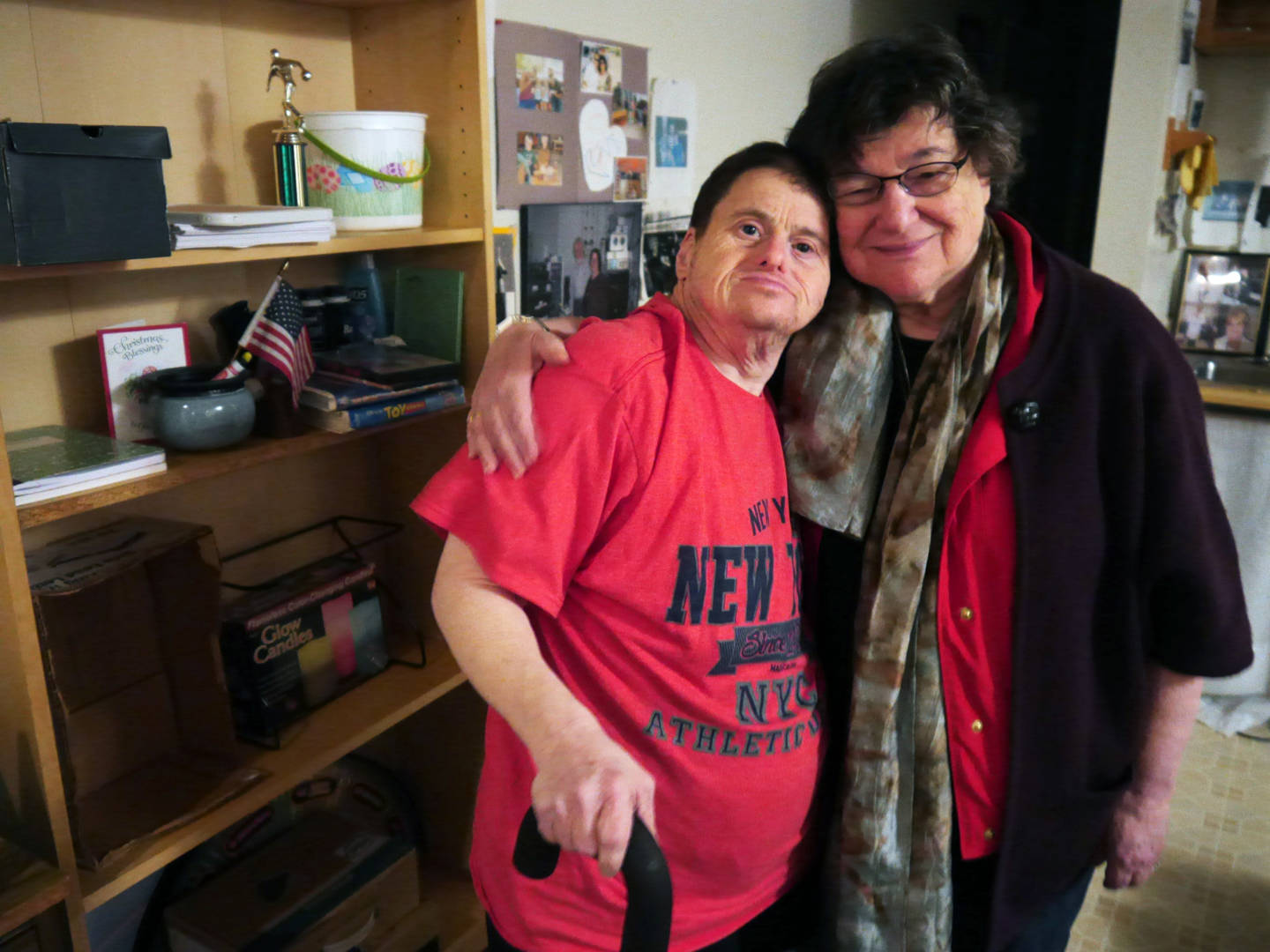
"description": "Michael Herzenberg and his birth mother, Lee.",
"title": "Michael Herzenberg and his birth mother, Lee.",
"credit": null,
"status": "inherit",
"isLoading": false,
"fetchFailed": false
},
"futureofyou_152270": {
"type": "attachments",
"id": "futureofyou_152270",
"meta": {
"index": "attachments_1716263798",
"site": "futureofyou",
"id": "152270",
"found": true
},
"parent": 152205,
"imgSizes": {
"twentyfourteen-full-width": {
"file": "https://ww2.kqed.org/app/uploads/sites/13/2016/04/Reproduce-1-1038x576.jpg",
"width": 1038,
"mimeType": "image/jpeg",
"height": 576
},
"thumbnail": {
"file": "https://ww2.kqed.org/app/uploads/sites/13/2016/04/Reproduce-1-400x300.jpg",
"width": 400,
"mimeType": "image/jpeg",
"height": 300
},
"fd-sm": {
"file": "https://ww2.kqed.org/app/uploads/sites/13/2016/04/Reproduce-1-960x720.jpg",
"width": 960,
"mimeType": "image/jpeg",
"height": 720
},
"post-thumbnail": {
"file": "https://ww2.kqed.org/app/uploads/sites/13/2016/04/Reproduce-1-672x372.jpg",
"width": 672,
"mimeType": "image/jpeg",
"height": 372
},
"kqedFullSize": {
"file": "https://ww2.kqed.org/app/uploads/sites/13/2016/04/Reproduce-1.jpg",
"width": 4000,
"height": 3000
},
"large": {
"file": "https://ww2.kqed.org/app/uploads/sites/13/2016/04/Reproduce-1-1180x885.jpg",
"width": 1180,
"mimeType": "image/jpeg",
"height": 885
},
"guest-author-96": {
"file": "https://ww2.kqed.org/app/uploads/sites/13/2016/04/Reproduce-1-96x96.jpg",
"width": 96,
"mimeType": "image/jpeg",
"height": 96
},
"medium": {
"file": "https://ww2.kqed.org/app/uploads/sites/13/2016/04/Reproduce-1-800x600.jpg",
"width": 800,
"mimeType": "image/jpeg",
"height": 600
},
"guest-author-64": {
"file": "https://ww2.kqed.org/app/uploads/sites/13/2016/04/Reproduce-1-64x64.jpg",
"width": 64,
"mimeType": "image/jpeg",
"height": 64
},
"guest-author-32": {
"file": "https://ww2.kqed.org/app/uploads/sites/13/2016/04/Reproduce-1-32x32.jpg",
"width": 32,
"mimeType": "image/jpeg",
"height": 32
},
"fd-lrg": {
"file": "https://ww2.kqed.org/app/uploads/sites/13/2016/04/Reproduce-1-1920x1440.jpg",
"width": 1920,
"mimeType": "image/jpeg",
"height": 1440
},
"fd-med": {
"file": "https://ww2.kqed.org/app/uploads/sites/13/2016/04/Reproduce-1-1180x885.jpg",
"width": 1180,
"mimeType": "image/jpeg",
"height": 885
},
"detail": {
"file": "https://ww2.kqed.org/app/uploads/sites/13/2016/04/Reproduce-1-75x75.jpg",
"width": 75,
"mimeType": "image/jpeg",
"height": 75
},
"medium_large": {
"file": "https://ww2.kqed.org/app/uploads/sites/13/2016/04/Reproduce-1-768x576.jpg",
"width": 768,
"mimeType": "image/jpeg",
"height": 576
},
"guest-author-128": {
"file": "https://ww2.kqed.org/app/uploads/sites/13/2016/04/Reproduce-1-128x128.jpg",
"width": 128,
"mimeType": "image/jpeg",
"height": 128
}
},
"publishDate": 1461613728,
"modified": 1461613754,
"caption": null,
"description": null,
"title": "Reproduce",
"credit": "abluecup/iStock",
"status": "inherit",
"isLoading": false,
"fetchFailed": false
},
"futureofyou_145998": {
"type": "attachments",
"id": "futureofyou_145998",
"meta": {
"index": "attachments_1716263798",
"site": "futureofyou",
"id": "145998",
"found": true
},
"parent": 145993,
"imgSizes": {
"twentyfourteen-full-width": {
"file": "https://ww2.kqed.org/app/uploads/sites/13/2016/04/IMG_0136-1038x576.jpg",
"width": 1038,
"mimeType": "image/jpeg",
"height": 576
},
"thumbnail": {
"file": "https://ww2.kqed.org/app/uploads/sites/13/2016/04/IMG_0136-400x300.jpg",
"width": 400,
"mimeType": "image/jpeg",
"height": 300
},
"fd-sm": {
"file": "https://ww2.kqed.org/app/uploads/sites/13/2016/04/IMG_0136-960x720.jpg",
"width": 960,
"mimeType": "image/jpeg",
"height": 720
},
"post-thumbnail": {
"file": "https://ww2.kqed.org/app/uploads/sites/13/2016/04/IMG_0136-672x372.jpg",
"width": 672,
"mimeType": "image/jpeg",
"height": 372
},
"kqedFullSize": {
"file": "https://ww2.kqed.org/app/uploads/sites/13/2016/04/IMG_0136-e1461619234788.jpg",
"width": 1920,
"height": 1440
},
"large": {
"file": "https://ww2.kqed.org/app/uploads/sites/13/2016/04/IMG_0136-1180x885.jpg",
"width": 1180,
"mimeType": "image/jpeg",
"height": 885
},
"guest-author-96": {
"file": "https://ww2.kqed.org/app/uploads/sites/13/2016/04/IMG_0136-96x96.jpg",
"width": 96,
"mimeType": "image/jpeg",
"height": 96
},
"medium": {
"file": "https://ww2.kqed.org/app/uploads/sites/13/2016/04/IMG_0136-800x600.jpg",
"width": 800,
"mimeType": "image/jpeg",
"height": 600
},
"guest-author-64": {
"file": "https://ww2.kqed.org/app/uploads/sites/13/2016/04/IMG_0136-64x64.jpg",
"width": 64,
"mimeType": "image/jpeg",
"height": 64
},
"guest-author-32": {
"file": "https://ww2.kqed.org/app/uploads/sites/13/2016/04/IMG_0136-32x32.jpg",
"width": 32,
"mimeType": "image/jpeg",
"height": 32
},
"fd-lrg": {
"file": "https://ww2.kqed.org/app/uploads/sites/13/2016/04/IMG_0136-1920x1440.jpg",
"width": 1920,
"mimeType": "image/jpeg",
"height": 1440
},
"fd-med": {
"file": "https://ww2.kqed.org/app/uploads/sites/13/2016/04/IMG_0136-1180x885.jpg",
"width": 1180,
"mimeType": "image/jpeg",
"height": 885
},
"detail": {
"file": "https://ww2.kqed.org/app/uploads/sites/13/2016/04/IMG_0136-75x75.jpg",
"width": 75,
"mimeType": "image/jpeg",
"height": 75
},
"medium_large": {
"file": "https://ww2.kqed.org/app/uploads/sites/13/2016/04/IMG_0136-768x576.jpg",
"width": 768,
"mimeType": "image/jpeg",
"height": 576
},
"guest-author-128": {
"file": "https://ww2.kqed.org/app/uploads/sites/13/2016/04/IMG_0136-128x128.jpg",
"width": 128,
"mimeType": "image/jpeg",
"height": 128
}
},
"publishDate": 1460675384,
"modified": 1461019644,
"caption": "Hemophilia patient Randy Curtis injects his blood with the missing clotting factor.",
"description": null,
"title": "IMG_0136",
"credit": "Lesley McClurg/KQED",
"status": "inherit",
"isLoading": false,
"fetchFailed": false
},
"stateofhealth_175363": {
"type": "attachments",
"id": "stateofhealth_175363",
"meta": {
"index": "attachments_1716263798",
"site": "stateofhealth",
"id": "175363",
"found": true
},
"parent": 175362,
"imgSizes": {
"twentyfourteen-full-width": {
"file": "https://ww2.kqed.org/app/uploads/sites/27/2016/04/awakeatnight_enl-9c4134df87e47a078f3e348fb337f24622c74083-1038x576.jpg",
"width": 1038,
"mimeType": "image/jpeg",
"height": 576
},
"thumbnail": {
"file": "https://ww2.kqed.org/app/uploads/sites/27/2016/04/awakeatnight_enl-9c4134df87e47a078f3e348fb337f24622c74083-400x266.jpg",
"width": 400,
"mimeType": "image/jpeg",
"height": 266
},
"fd-sm": {
"file": "https://ww2.kqed.org/app/uploads/sites/27/2016/04/awakeatnight_enl-9c4134df87e47a078f3e348fb337f24622c74083-960x639.jpg",
"width": 960,
"mimeType": "image/jpeg",
"height": 639
},
"post-thumbnail": {
"file": "https://ww2.kqed.org/app/uploads/sites/27/2016/04/awakeatnight_enl-9c4134df87e47a078f3e348fb337f24622c74083-672x372.jpg",
"width": 672,
"mimeType": "image/jpeg",
"height": 372
},
"kqedFullSize": {
"file": "https://ww2.kqed.org/app/uploads/sites/27/2016/04/awakeatnight_enl-9c4134df87e47a078f3e348fb337f24622c74083-e1461257710573.jpg",
"width": 1920,
"height": 1278
},
"large": {
"file": "https://ww2.kqed.org/app/uploads/sites/27/2016/04/awakeatnight_enl-9c4134df87e47a078f3e348fb337f24622c74083-1440x958.jpg",
"width": 1440,
"mimeType": "image/jpeg",
"height": 958
},
"guest-author-96": {
"file": "https://ww2.kqed.org/app/uploads/sites/27/2016/04/awakeatnight_enl-9c4134df87e47a078f3e348fb337f24622c74083-96x96.jpg",
"width": 96,
"mimeType": "image/jpeg",
"height": 96
},
"medium": {
"file": "https://ww2.kqed.org/app/uploads/sites/27/2016/04/awakeatnight_enl-9c4134df87e47a078f3e348fb337f24622c74083-800x532.jpg",
"width": 800,
"mimeType": "image/jpeg",
"height": 532
},
"guest-author-64": {
"file": "https://ww2.kqed.org/app/uploads/sites/27/2016/04/awakeatnight_enl-9c4134df87e47a078f3e348fb337f24622c74083-64x64.jpg",
"width": 64,
"mimeType": "image/jpeg",
"height": 64
},
"guest-author-32": {
"file": "https://ww2.kqed.org/app/uploads/sites/27/2016/04/awakeatnight_enl-9c4134df87e47a078f3e348fb337f24622c74083-32x32.jpg",
"width": 32,
"mimeType": "image/jpeg",
"height": 32
},
"jmtc-small-thumb": {
"file": "https://ww2.kqed.org/app/uploads/sites/27/2016/04/awakeatnight_enl-9c4134df87e47a078f3e348fb337f24622c74083-280x150.jpg",
"width": 280,
"mimeType": "image/jpeg",
"height": 150
},
"fd-lrg": {
"file": "https://ww2.kqed.org/app/uploads/sites/27/2016/04/awakeatnight_enl-9c4134df87e47a078f3e348fb337f24622c74083-1920x1278.jpg",
"width": 1920,
"mimeType": "image/jpeg",
"height": 1278
},
"fd-med": {
"file": "https://ww2.kqed.org/app/uploads/sites/27/2016/04/awakeatnight_enl-9c4134df87e47a078f3e348fb337f24622c74083-1180x785.jpg",
"width": 1180,
"mimeType": "image/jpeg",
"height": 785
},
"detail": {
"file": "https://ww2.kqed.org/app/uploads/sites/27/2016/04/awakeatnight_enl-9c4134df87e47a078f3e348fb337f24622c74083-75x75.jpg",
"width": 75,
"mimeType": "image/jpeg",
"height": 75
},
"medium_large": {
"file": "https://ww2.kqed.org/app/uploads/sites/27/2016/04/awakeatnight_enl-9c4134df87e47a078f3e348fb337f24622c74083-768x511.jpg",
"width": 768,
"mimeType": "image/jpeg",
"height": 511
},
"guest-author-128": {
"file": "https://ww2.kqed.org/app/uploads/sites/27/2016/04/awakeatnight_enl-9c4134df87e47a078f3e348fb337f24622c74083-128x128.jpg",
"width": 128,
"mimeType": "image/jpeg",
"height": 128
}
},
"publishDate": 1461257590,
"modified": 1461257730,
"caption": null,
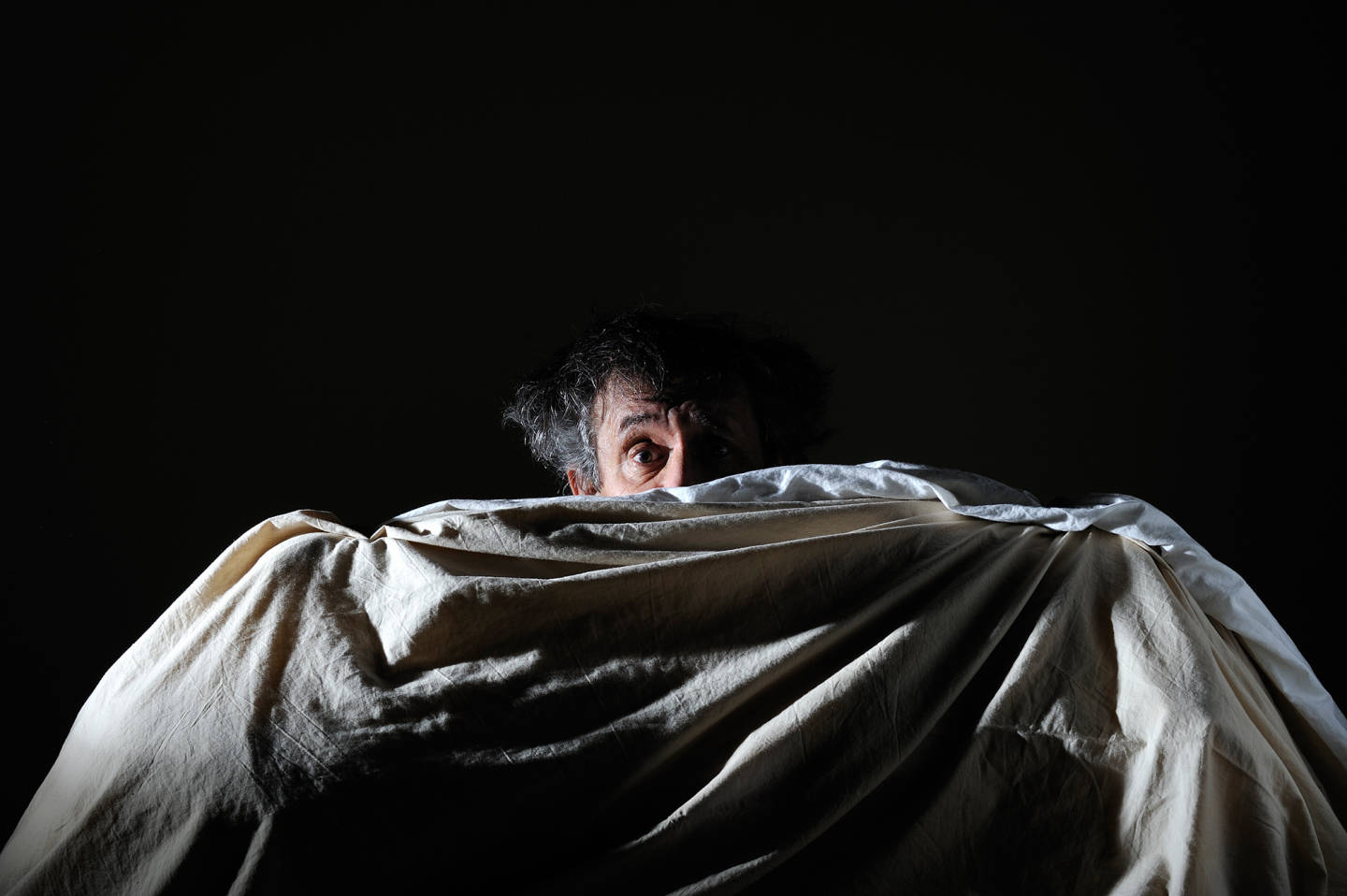
"description": "Panic, sleep",
"title": "Panic",
"credit": "parema/Getty Images",
"status": "inherit",
"isLoading": false,
"fetchFailed": false
},
"stateofhealth_174444": {
"type": "attachments",
"id": "stateofhealth_174444",
"meta": {
"index": "attachments_1716263798",
"site": "stateofhealth",
"id": "174444",
"found": true
},
"parent": 174428,
"imgSizes": {
"jmtc-small-thumb": {
"file": "https://ww2.kqed.org/app/uploads/sites/27/2016/04/Screen-Shot-2016-04-18-at-2.49.28-PM-280x150.png",
"width": 280,
"mimeType": "image/png",
"height": 150
},
"thumbnail": {
"file": "https://ww2.kqed.org/app/uploads/sites/27/2016/04/Screen-Shot-2016-04-18-at-2.49.28-PM-400x205.png",
"width": 400,
"mimeType": "image/png",
"height": 205
},
"post-thumbnail": {
"file": "https://ww2.kqed.org/app/uploads/sites/27/2016/04/Screen-Shot-2016-04-18-at-2.49.28-PM-672x372.png",
"width": 672,
"mimeType": "image/png",
"height": 372
},
"kqedFullSize": {
"file": "https://ww2.kqed.org/app/uploads/sites/27/2016/04/Screen-Shot-2016-04-18-at-2.49.28-PM.png",
"width": 841,
"height": 430
},
"guest-author-96": {
"file": "https://ww2.kqed.org/app/uploads/sites/27/2016/04/Screen-Shot-2016-04-18-at-2.49.28-PM-96x96.png",
"width": 96,
"mimeType": "image/png",
"height": 96
},
"medium": {
"file": "https://ww2.kqed.org/app/uploads/sites/27/2016/04/Screen-Shot-2016-04-18-at-2.49.28-PM-800x409.png",
"width": 800,
"mimeType": "image/png",
"height": 409
},
"guest-author-64": {
"file": "https://ww2.kqed.org/app/uploads/sites/27/2016/04/Screen-Shot-2016-04-18-at-2.49.28-PM-64x64.png",
"width": 64,
"mimeType": "image/png",
"height": 64
},
"detail": {
"file": "https://ww2.kqed.org/app/uploads/sites/27/2016/04/Screen-Shot-2016-04-18-at-2.49.28-PM-75x75.png",
"width": 75,
"mimeType": "image/png",
"height": 75
},
"guest-author-32": {
"file": "https://ww2.kqed.org/app/uploads/sites/27/2016/04/Screen-Shot-2016-04-18-at-2.49.28-PM-32x32.png",
"width": 32,
"mimeType": "image/png",
"height": 32
},
"medium_large": {
"file": "https://ww2.kqed.org/app/uploads/sites/27/2016/04/Screen-Shot-2016-04-18-at-2.49.28-PM-768x393.png",
"width": 768,
"mimeType": "image/png",
"height": 393
},
"guest-author-128": {
"file": "https://ww2.kqed.org/app/uploads/sites/27/2016/04/Screen-Shot-2016-04-18-at-2.49.28-PM-128x128.png",
"width": 128,
"mimeType": "image/png",
"height": 128
}
},
"publishDate": 1461016202,
"modified": 1461016233,
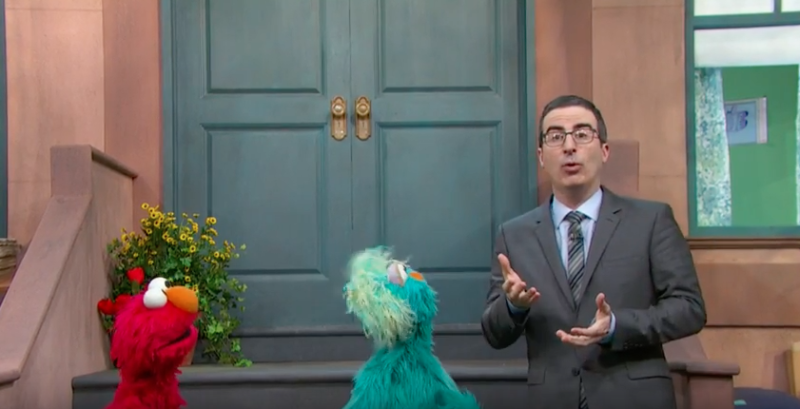
"caption": "John Oliver with Sesame Street characters Elmo and Rosita. ",
"description": "John Oliver with Sesame Street characters Elmo and Rosita. ",
"title": "Screen Shot 2016-04-18 at 2.49.28 PM",
"credit": "Courtesy: Last Week Tonight",
"status": "inherit",
"isLoading": false,
"fetchFailed": false
},
"stateofhealth_173136": {
"type": "attachments",
"id": "stateofhealth_173136",
"meta": {
"index": "attachments_1716263798",
"site": "stateofhealth",
"id": "173136",
"found": true
},
"parent": 173135,
"imgSizes": {
"twentyfourteen-full-width": {
"file": "https://ww2.kqed.org/app/uploads/sites/27/2016/04/lsdtrip_enl-7f54accda4f3733ce56c70fd742b7f334dd169ce-1038x576.jpg",
"width": 1038,
"mimeType": "image/jpeg",
"height": 576
},
"thumbnail": {
"file": "https://ww2.kqed.org/app/uploads/sites/27/2016/04/lsdtrip_enl-7f54accda4f3733ce56c70fd742b7f334dd169ce-400x282.jpg",
"width": 400,
"mimeType": "image/jpeg",
"height": 282
},
"fd-sm": {
"file": "https://ww2.kqed.org/app/uploads/sites/27/2016/04/lsdtrip_enl-7f54accda4f3733ce56c70fd742b7f334dd169ce-960x677.jpg",
"width": 960,
"mimeType": "image/jpeg",
"height": 677
},
"post-thumbnail": {
"file": "https://ww2.kqed.org/app/uploads/sites/27/2016/04/lsdtrip_enl-7f54accda4f3733ce56c70fd742b7f334dd169ce-672x372.jpg",
"width": 672,
"mimeType": "image/jpeg",
"height": 372
},
"kqedFullSize": {
"file": "https://ww2.kqed.org/app/uploads/sites/27/2016/04/lsdtrip_enl-7f54accda4f3733ce56c70fd742b7f334dd169ce-e1460747366671.jpg",
"width": 1921,
"height": 1355
},
"large": {
"file": "https://ww2.kqed.org/app/uploads/sites/27/2016/04/lsdtrip_enl-7f54accda4f3733ce56c70fd742b7f334dd169ce-1440x1016.jpg",
"width": 1440,
"mimeType": "image/jpeg",
"height": 1016
},
"guest-author-96": {
"file": "https://ww2.kqed.org/app/uploads/sites/27/2016/04/lsdtrip_enl-7f54accda4f3733ce56c70fd742b7f334dd169ce-96x96.jpg",
"width": 96,
"mimeType": "image/jpeg",
"height": 96
},
"medium": {
"file": "https://ww2.kqed.org/app/uploads/sites/27/2016/04/lsdtrip_enl-7f54accda4f3733ce56c70fd742b7f334dd169ce-800x564.jpg",
"width": 800,
"mimeType": "image/jpeg",
"height": 564
},
"guest-author-64": {
"file": "https://ww2.kqed.org/app/uploads/sites/27/2016/04/lsdtrip_enl-7f54accda4f3733ce56c70fd742b7f334dd169ce-64x64.jpg",
"width": 64,
"mimeType": "image/jpeg",
"height": 64
},
"guest-author-32": {
"file": "https://ww2.kqed.org/app/uploads/sites/27/2016/04/lsdtrip_enl-7f54accda4f3733ce56c70fd742b7f334dd169ce-32x32.jpg",
"width": 32,
"mimeType": "image/jpeg",
"height": 32
},
"jmtc-small-thumb": {
"file": "https://ww2.kqed.org/app/uploads/sites/27/2016/04/lsdtrip_enl-7f54accda4f3733ce56c70fd742b7f334dd169ce-280x150.jpg",
"width": 280,
"mimeType": "image/jpeg",
"height": 150
},
"fd-lrg": {
"file": "https://ww2.kqed.org/app/uploads/sites/27/2016/04/lsdtrip_enl-7f54accda4f3733ce56c70fd742b7f334dd169ce-1920x1355.jpg",
"width": 1920,
"mimeType": "image/jpeg",
"height": 1355
},
"fd-med": {
"file": "https://ww2.kqed.org/app/uploads/sites/27/2016/04/lsdtrip_enl-7f54accda4f3733ce56c70fd742b7f334dd169ce-1180x832.jpg",
"width": 1180,
"mimeType": "image/jpeg",
"height": 832
},
"detail": {
"file": "https://ww2.kqed.org/app/uploads/sites/27/2016/04/lsdtrip_enl-7f54accda4f3733ce56c70fd742b7f334dd169ce-75x75.jpg",
"width": 75,
"mimeType": "image/jpeg",
"height": 75
},
"medium_large": {
"file": "https://ww2.kqed.org/app/uploads/sites/27/2016/04/lsdtrip_enl-7f54accda4f3733ce56c70fd742b7f334dd169ce-768x542.jpg",
"width": 768,
"mimeType": "image/jpeg",
"height": 542
},
"guest-author-128": {
"file": "https://ww2.kqed.org/app/uploads/sites/27/2016/04/lsdtrip_enl-7f54accda4f3733ce56c70fd742b7f334dd169ce-128x128.jpg",
"width": 128,
"mimeType": "image/jpeg",
"height": 128
}
},
"publishDate": 1460747210,
"modified": 1460747401,
"caption": "That out-of-body experience is happening in your brain.",
"description": null,
"title": "That out-of-body experience is happening in your brain.",
"credit": "Charles Bigeast/Getty Images/Ikon Images",
"status": "inherit",
"isLoading": false,
"fetchFailed": false
},
"futureofyou_145288": {
"type": "attachments",
"id": "futureofyou_145288",
"meta": {
"index": "attachments_1716263798",
"site": "futureofyou",
"id": "145288",
"found": true
},
"parent": 145287,
"imgSizes": {
"twentyfourteen-full-width": {
"file": "https://ww2.kqed.org/app/uploads/sites/13/2016/04/ian-burkhart_enl-3f8da50f703d7dafa289de38428b15b5aaf50ba3-1038x576.jpg",
"width": 1038,
"mimeType": "image/jpeg",
"height": 576
},
"thumbnail": {
"file": "https://ww2.kqed.org/app/uploads/sites/13/2016/04/ian-burkhart_enl-3f8da50f703d7dafa289de38428b15b5aaf50ba3-400x270.jpg",
"width": 400,
"mimeType": "image/jpeg",
"height": 270
},
"fd-sm": {
"file": "https://ww2.kqed.org/app/uploads/sites/13/2016/04/ian-burkhart_enl-3f8da50f703d7dafa289de38428b15b5aaf50ba3-960x649.jpg",
"width": 960,
"mimeType": "image/jpeg",
"height": 649
},
"post-thumbnail": {
"file": "https://ww2.kqed.org/app/uploads/sites/13/2016/04/ian-burkhart_enl-3f8da50f703d7dafa289de38428b15b5aaf50ba3-672x372.jpg",
"width": 672,
"mimeType": "image/jpeg",
"height": 372
},
"kqedFullSize": {
"file": "https://ww2.kqed.org/app/uploads/sites/13/2016/04/ian-burkhart_enl-3f8da50f703d7dafa289de38428b15b5aaf50ba3.jpg",
"width": 2000,
"height": 1352
},
"large": {
"file": "https://ww2.kqed.org/app/uploads/sites/13/2016/04/ian-burkhart_enl-3f8da50f703d7dafa289de38428b15b5aaf50ba3-1180x798.jpg",
"width": 1180,
"mimeType": "image/jpeg",
"height": 798
},
"guest-author-96": {
"file": "https://ww2.kqed.org/app/uploads/sites/13/2016/04/ian-burkhart_enl-3f8da50f703d7dafa289de38428b15b5aaf50ba3-96x96.jpg",
"width": 96,
"mimeType": "image/jpeg",
"height": 96
},
"medium": {
"file": "https://ww2.kqed.org/app/uploads/sites/13/2016/04/ian-burkhart_enl-3f8da50f703d7dafa289de38428b15b5aaf50ba3-800x541.jpg",
"width": 800,
"mimeType": "image/jpeg",
"height": 541
},
"guest-author-64": {
"file": "https://ww2.kqed.org/app/uploads/sites/13/2016/04/ian-burkhart_enl-3f8da50f703d7dafa289de38428b15b5aaf50ba3-64x64.jpg",
"width": 64,
"mimeType": "image/jpeg",
"height": 64
},
"guest-author-32": {
"file": "https://ww2.kqed.org/app/uploads/sites/13/2016/04/ian-burkhart_enl-3f8da50f703d7dafa289de38428b15b5aaf50ba3-32x32.jpg",
"width": 32,
"mimeType": "image/jpeg",
"height": 32
},
"fd-lrg": {
"file": "https://ww2.kqed.org/app/uploads/sites/13/2016/04/ian-burkhart_enl-3f8da50f703d7dafa289de38428b15b5aaf50ba3-1920x1298.jpg",
"width": 1920,
"mimeType": "image/jpeg",
"height": 1298
},
"fd-med": {
"file": "https://ww2.kqed.org/app/uploads/sites/13/2016/04/ian-burkhart_enl-3f8da50f703d7dafa289de38428b15b5aaf50ba3-1180x798.jpg",
"width": 1180,
"mimeType": "image/jpeg",
"height": 798
},
"detail": {
"file": "https://ww2.kqed.org/app/uploads/sites/13/2016/04/ian-burkhart_enl-3f8da50f703d7dafa289de38428b15b5aaf50ba3-75x75.jpg",
"width": 75,
"mimeType": "image/jpeg",
"height": 75
},
"medium_large": {
"file": "https://ww2.kqed.org/app/uploads/sites/13/2016/04/ian-burkhart_enl-3f8da50f703d7dafa289de38428b15b5aaf50ba3-768x519.jpg",
"width": 768,
"mimeType": "image/jpeg",
"height": 519
},
"guest-author-128": {
"file": "https://ww2.kqed.org/app/uploads/sites/13/2016/04/ian-burkhart_enl-3f8da50f703d7dafa289de38428b15b5aaf50ba3-128x128.jpg",
"width": 128,
"mimeType": "image/jpeg",
"height": 128
}
},
"publishDate": 1460574861,
"modified": 1460574861,
"caption": null,
"description": "Ian Burkhart prepares for a training session in Columbus, Ohio. To move muscles in Burkhart's hand, the system relies on electrodes implanted in his brain, a computer interface attached to his skull, and electrical stimulators wrapped around his forearm.",
"title": "Ian Burkhart prepares for a training session in Columbus, Ohio. To move muscles in Burkhart's hand, the system relies on electrodes implanted in his brain, a computer interface attached to his skull, and electrical stimulators wrapped around his forearm.",
"credit": null,
"status": "inherit",
"isLoading": false,
"fetchFailed": false
},
"futureofyou_145165": {
"type": "attachments",
"id": "futureofyou_145165",
"meta": {
"index": "attachments_1716263798",
"site": "futureofyou",
"id": "145165",
"found": true
},
"parent": 145162,
"imgSizes": {
"twentyfourteen-full-width": {
"file": "https://ww2.kqed.org/app/uploads/sites/13/2016/04/Sean-Parker-1038x576.jpg",
"width": 1038,
"mimeType": "image/jpeg",
"height": 576
},
"thumbnail": {
"file": "https://ww2.kqed.org/app/uploads/sites/13/2016/04/Sean-Parker-400x300.jpg",
"width": 400,
"mimeType": "image/jpeg",
"height": 300
},
"fd-sm": {
"file": "https://ww2.kqed.org/app/uploads/sites/13/2016/04/Sean-Parker-960x720.jpg",
"width": 960,
"mimeType": "image/jpeg",
"height": 720
},
"post-thumbnail": {
"file": "https://ww2.kqed.org/app/uploads/sites/13/2016/04/Sean-Parker-672x372.jpg",
"width": 672,
"mimeType": "image/jpeg",
"height": 372
},
"kqedFullSize": {
"file": "https://ww2.kqed.org/app/uploads/sites/13/2016/04/Sean-Parker.jpg",
"width": 2560,
"height": 1920
},
"large": {
"file": "https://ww2.kqed.org/app/uploads/sites/13/2016/04/Sean-Parker-1180x885.jpg",
"width": 1180,
"mimeType": "image/jpeg",
"height": 885
},
"guest-author-96": {
"file": "https://ww2.kqed.org/app/uploads/sites/13/2016/04/Sean-Parker-96x96.jpg",
"width": 96,
"mimeType": "image/jpeg",
"height": 96
},
"medium": {
"file": "https://ww2.kqed.org/app/uploads/sites/13/2016/04/Sean-Parker-800x600.jpg",
"width": 800,
"mimeType": "image/jpeg",
"height": 600
},
"guest-author-64": {
"file": "https://ww2.kqed.org/app/uploads/sites/13/2016/04/Sean-Parker-64x64.jpg",
"width": 64,
"mimeType": "image/jpeg",
"height": 64
},
"guest-author-32": {
"file": "https://ww2.kqed.org/app/uploads/sites/13/2016/04/Sean-Parker-32x32.jpg",
"width": 32,
"mimeType": "image/jpeg",
"height": 32
},
"fd-lrg": {
"file": "https://ww2.kqed.org/app/uploads/sites/13/2016/04/Sean-Parker-1920x1440.jpg",
"width": 1920,
"mimeType": "image/jpeg",
"height": 1440
},
"fd-med": {
"file": "https://ww2.kqed.org/app/uploads/sites/13/2016/04/Sean-Parker-1180x885.jpg",
"width": 1180,
"mimeType": "image/jpeg",
"height": 885
},
"detail": {
"file": "https://ww2.kqed.org/app/uploads/sites/13/2016/04/Sean-Parker-75x75.jpg",
"width": 75,
"mimeType": "image/jpeg",
"height": 75
},
"medium_large": {
"file": "https://ww2.kqed.org/app/uploads/sites/13/2016/04/Sean-Parker-768x576.jpg",
"width": 768,
"mimeType": "image/jpeg",
"height": 576
},
"guest-author-128": {
"file": "https://ww2.kqed.org/app/uploads/sites/13/2016/04/Sean-Parker-128x128.jpg",
"width": 128,
"mimeType": "image/jpeg",
"height": 128
}
},
"publishDate": 1460562339,
"modified": 1460562517,
"caption": "Sean Parker in 2011.",
"description": "Sean Parker in 2011.",
"title": "PB300503",
"credit": "Andrew Mager/Flickr",
"status": "inherit",
"isLoading": false,
"fetchFailed": false
},
"futureofyou_149565": {
"type": "attachments",
"id": "futureofyou_149565",
"meta": {
"index": "attachments_1716263798",
"site": "futureofyou",
"id": "149565",
"found": true
},
"parent": 142228,
"imgSizes": {
"twentyfourteen-full-width": {
"file": "https://ww2.kqed.org/app/uploads/sites/13/2016/04/iStock_000073257165_Large-1038x576.jpg",
"width": 1038,
"mimeType": "image/jpeg",
"height": 576
},
"thumbnail": {
"file": "https://ww2.kqed.org/app/uploads/sites/13/2016/04/iStock_000073257165_Large-400x267.jpg",
"width": 400,
"mimeType": "image/jpeg",
"height": 267
},
"fd-sm": {
"file": "https://ww2.kqed.org/app/uploads/sites/13/2016/04/iStock_000073257165_Large-960x640.jpg",
"width": 960,
"mimeType": "image/jpeg",
"height": 640
},
"post-thumbnail": {
"file": "https://ww2.kqed.org/app/uploads/sites/13/2016/04/iStock_000073257165_Large-672x372.jpg",
"width": 672,
"mimeType": "image/jpeg",
"height": 372
},
"kqedFullSize": {
"file": "https://ww2.kqed.org/app/uploads/sites/13/2016/04/iStock_000073257165_Large.jpg",
"width": 2716,
"height": 1810
},
"large": {
"file": "https://ww2.kqed.org/app/uploads/sites/13/2016/04/iStock_000073257165_Large-1180x786.jpg",
"width": 1180,
"mimeType": "image/jpeg",
"height": 786
},
"guest-author-96": {
"file": "https://ww2.kqed.org/app/uploads/sites/13/2016/04/iStock_000073257165_Large-96x96.jpg",
"width": 96,
"mimeType": "image/jpeg",
"height": 96
},
"medium": {
"file": "https://ww2.kqed.org/app/uploads/sites/13/2016/04/iStock_000073257165_Large-800x533.jpg",
"width": 800,
"mimeType": "image/jpeg",
"height": 533
},
"guest-author-64": {
"file": "https://ww2.kqed.org/app/uploads/sites/13/2016/04/iStock_000073257165_Large-64x64.jpg",
"width": 64,
"mimeType": "image/jpeg",
"height": 64
},
"guest-author-32": {
"file": "https://ww2.kqed.org/app/uploads/sites/13/2016/04/iStock_000073257165_Large-32x32.jpg",
"width": 32,
"mimeType": "image/jpeg",
"height": 32
},
"fd-lrg": {
"file": "https://ww2.kqed.org/app/uploads/sites/13/2016/04/iStock_000073257165_Large-1920x1280.jpg",
"width": 1920,
"mimeType": "image/jpeg",
"height": 1280
},
"fd-med": {
"file": "https://ww2.kqed.org/app/uploads/sites/13/2016/04/iStock_000073257165_Large-1180x786.jpg",
"width": 1180,
"mimeType": "image/jpeg",
"height": 786
},
"detail": {
"file": "https://ww2.kqed.org/app/uploads/sites/13/2016/04/iStock_000073257165_Large-75x75.jpg",
"width": 75,
"mimeType": "image/jpeg",
"height": 75
},
"medium_large": {
"file": "https://ww2.kqed.org/app/uploads/sites/13/2016/04/iStock_000073257165_Large-768x512.jpg",
"width": 768,
"mimeType": "image/jpeg",
"height": 512
},
"guest-author-128": {
"file": "https://ww2.kqed.org/app/uploads/sites/13/2016/04/iStock_000073257165_Large-128x128.jpg",
"width": 128,
"mimeType": "image/jpeg",
"height": 128
}
},
"publishDate": 1461190025,
"modified": 1528393842,
"caption": "Guns are the most common method used for suicide, accounting for the deaths of almost half the people who kill themselves, a Centers for Disease Control and Prevention study finds.",
"description": null,
"title": "depression suicide",
"credit": "iStock",
"status": "inherit",
"isLoading": false,
"fetchFailed": false
},
"futureofyou_138438": {
"type": "attachments",
"id": "futureofyou_138438",
"meta": {
"index": "attachments_1716263798",
"site": "futureofyou",
"id": "138438",
"found": true
},
"parent": 138396,
"imgSizes": {
"twentyfourteen-full-width": {
"file": "https://ww2.kqed.org/app/uploads/sites/13/2016/04/Gabby_feature-image-1038x576.jpg",
"width": 1038,
"mimeType": "image/jpeg",
"height": 576
},
"thumbnail": {
"file": "https://ww2.kqed.org/app/uploads/sites/13/2016/04/Gabby_feature-image-400x267.jpg",
"width": 400,
"mimeType": "image/jpeg",
"height": 267
},
"fd-sm": {
"file": "https://ww2.kqed.org/app/uploads/sites/13/2016/04/Gabby_feature-image-960x640.jpg",
"width": 960,
"mimeType": "image/jpeg",
"height": 640
},
"post-thumbnail": {
"file": "https://ww2.kqed.org/app/uploads/sites/13/2016/04/Gabby_feature-image-672x372.jpg",
"width": 672,
"mimeType": "image/jpeg",
"height": 372
},
"kqedFullSize": {
"file": "https://ww2.kqed.org/app/uploads/sites/13/2016/04/Gabby_feature-image.jpg",
"width": 5472,
"height": 3648
},
"large": {
"file": "https://ww2.kqed.org/app/uploads/sites/13/2016/04/Gabby_feature-image-1180x787.jpg",
"width": 1180,
"mimeType": "image/jpeg",
"height": 787
},
"guest-author-96": {
"file": "https://ww2.kqed.org/app/uploads/sites/13/2016/04/Gabby_feature-image-96x96.jpg",
"width": 96,
"mimeType": "image/jpeg",
"height": 96
},
"medium": {
"file": "https://ww2.kqed.org/app/uploads/sites/13/2016/04/Gabby_feature-image-800x533.jpg",
"width": 800,
"mimeType": "image/jpeg",
"height": 533
},
"guest-author-64": {
"file": "https://ww2.kqed.org/app/uploads/sites/13/2016/04/Gabby_feature-image-64x64.jpg",
"width": 64,
"mimeType": "image/jpeg",
"height": 64
},
"guest-author-32": {
"file": "https://ww2.kqed.org/app/uploads/sites/13/2016/04/Gabby_feature-image-32x32.jpg",
"width": 32,
"mimeType": "image/jpeg",
"height": 32
},
"fd-lrg": {
"file": "https://ww2.kqed.org/app/uploads/sites/13/2016/04/Gabby_feature-image-1920x1280.jpg",
"width": 1920,
"mimeType": "image/jpeg",
"height": 1280
},
"fd-med": {
"file": "https://ww2.kqed.org/app/uploads/sites/13/2016/04/Gabby_feature-image-1180x787.jpg",
"width": 1180,
"mimeType": "image/jpeg",
"height": 787
},
"detail": {
"file": "https://ww2.kqed.org/app/uploads/sites/13/2016/04/Gabby_feature-image-75x75.jpg",
"width": 75,
"mimeType": "image/jpeg",
"height": 75
},
"medium_large": {
"file": "https://ww2.kqed.org/app/uploads/sites/13/2016/04/Gabby_feature-image-768x512.jpg",
"width": 768,
"mimeType": "image/jpeg",
"height": 512
},
"guest-author-128": {
"file": "https://ww2.kqed.org/app/uploads/sites/13/2016/04/Gabby_feature-image-128x128.jpg",
"width": 128,
"mimeType": "image/jpeg",
"height": 128
}
},
"publishDate": 1459558348,
"modified": 1459990178,
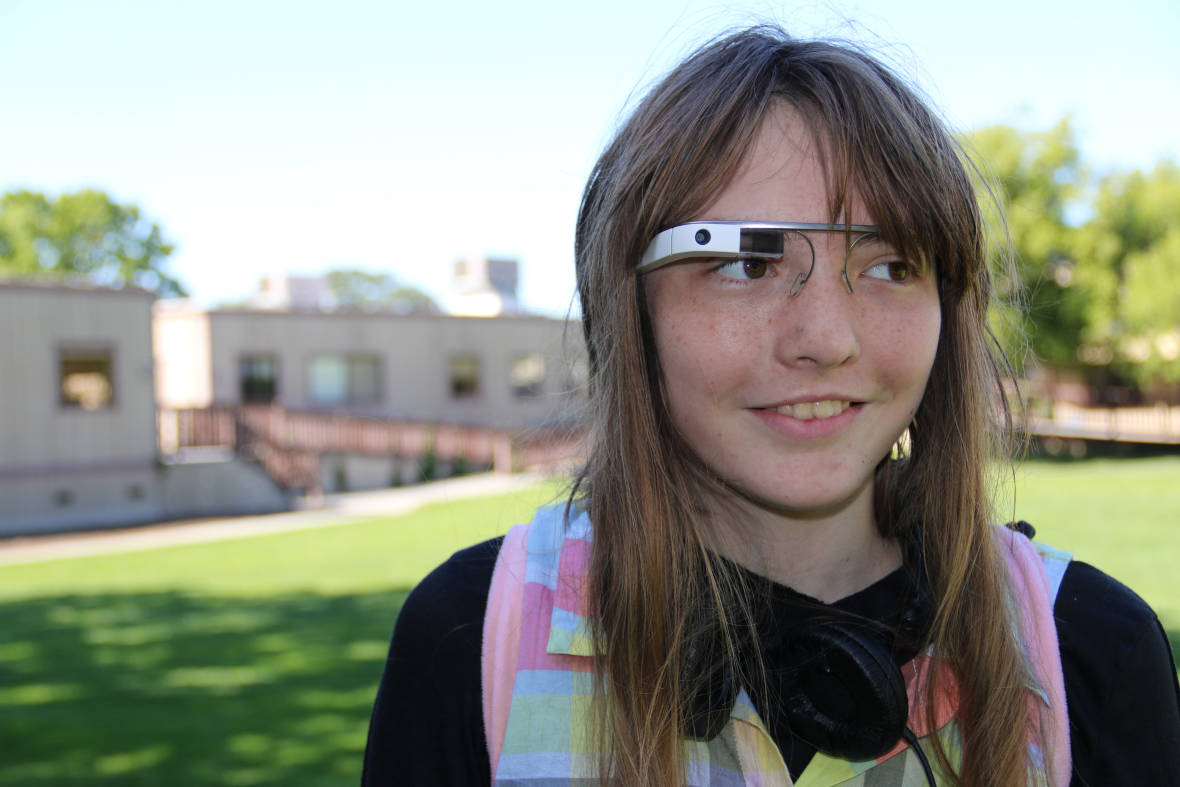
"caption": "Gabby Warner is a participant in Stanford's Google Glass Autism study. She hopes the project morphs into a commercial enterprise that will sell learning aids \n to help kids with autism. ",
"description": null,
"title": "Gabby_feature image",
"credit": "Lindsey Hoshaw/KQED",
"status": "inherit",
"isLoading": false,
"fetchFailed": false
},
"futureofyou_1194": {
"type": "attachments",
"id": "futureofyou_1194",
"meta": {
"index": "attachments_1716263798",
"site": "futureofyou",
"id": "1194",
"found": true
},
"parent": 1168,
"imgSizes": {
"twentyfourteen-full-width": {
"file": "https://ww2.kqed.org/app/uploads/sites/13/2015/04/NHGRIcrispr-1038x576.jpg",
"width": 1038,
"mimeType": "image/jpeg",
"height": 576
},
"thumbnail": {
"file": "https://ww2.kqed.org/app/uploads/sites/13/2015/04/NHGRIcrispr-400x267.jpg",
"width": 400,
"mimeType": "image/jpeg",
"height": 267
},
"fd-sm": {
"file": "https://ww2.kqed.org/app/uploads/sites/13/2015/04/NHGRIcrispr-320x213.jpg",
"width": 320,
"mimeType": "image/jpeg",
"height": 213
},
"post-thumbnail": {
"file": "https://ww2.kqed.org/app/uploads/sites/13/2015/04/NHGRIcrispr-672x372.jpg",
"width": 672,
"mimeType": "image/jpeg",
"height": 372
},
"kqedFullSize": {
"file": "https://ww2.kqed.org/app/uploads/sites/13/2015/04/NHGRIcrispr.jpg",
"width": 1920,
"height": 1280
},
"large": {
"file": "https://ww2.kqed.org/app/uploads/sites/13/2015/04/NHGRIcrispr-1180x787.jpg",
"width": 1180,
"mimeType": "image/jpeg",
"height": 787
},
"guest-author-96": {
"file": "https://ww2.kqed.org/app/uploads/sites/13/2015/04/NHGRIcrispr-96x96.jpg",
"width": 96,
"mimeType": "image/jpeg",
"height": 96
},
"medium": {
"file": "https://ww2.kqed.org/app/uploads/sites/13/2015/04/NHGRIcrispr-800x533.jpg",
"width": 800,
"mimeType": "image/jpeg",
"height": 533
},
"guest-author-64": {
"file": "https://ww2.kqed.org/app/uploads/sites/13/2015/04/NHGRIcrispr-64x64.jpg",
"width": 64,
"mimeType": "image/jpeg",
"height": 64
},
"guest-author-32": {
"file": "https://ww2.kqed.org/app/uploads/sites/13/2015/04/NHGRIcrispr-32x32.jpg",
"width": 32,
"mimeType": "image/jpeg",
"height": 32
},
"fd-lrg": {
"file": "https://ww2.kqed.org/app/uploads/sites/13/2015/04/NHGRIcrispr-1180x787.jpg",
"width": 1180,
"mimeType": "image/jpeg",
"height": 787
},
"fd-med": {
"file": "https://ww2.kqed.org/app/uploads/sites/13/2015/04/NHGRIcrispr-768x512.jpg",
"width": 768,
"mimeType": "image/jpeg",
"height": 512
},
"detail": {
"file": "https://ww2.kqed.org/app/uploads/sites/13/2015/04/NHGRIcrispr-75x75.jpg",
"width": 75,
"mimeType": "image/jpeg",
"height": 75
},
"guest-author-128": {
"file": "https://ww2.kqed.org/app/uploads/sites/13/2015/04/NHGRIcrispr-128x128.jpg",
"width": 128,
"mimeType": "image/jpeg",
"height": 128
}
},
"publishDate": 1428078628,
"modified": 1460050960,
"caption": "The gene editing tool CRISPR allows scientists to remove a damaged part of DNA and replace it with a healthy one.",
"description": null,
"title": "NHGRIcrispr",
"credit": "Ernesto del Aguila III/NHGRI",
"status": "inherit",
"isLoading": false,
"fetchFailed": false
},
"futureofyou_140159": {
"type": "attachments",
"id": "futureofyou_140159",
"meta": {
"index": "attachments_1716263798",
"site": "futureofyou",
"id": "140159",
"found": true
},
"parent": 139647,
"imgSizes": {
"twentyfourteen-full-width": {
"file": "https://ww2.kqed.org/app/uploads/sites/13/2016/04/Redmeat-1038x576.jpg",
"width": 1038,
"mimeType": "image/jpeg",
"height": 576
},
"thumbnail": {
"file": "https://ww2.kqed.org/app/uploads/sites/13/2016/04/Redmeat-400x239.jpg",
"width": 400,
"mimeType": "image/jpeg",
"height": 239
},
"fd-sm": {
"file": "https://ww2.kqed.org/app/uploads/sites/13/2016/04/Redmeat-960x575.jpg",
"width": 960,
"mimeType": "image/jpeg",
"height": 575
},
"post-thumbnail": {
"file": "https://ww2.kqed.org/app/uploads/sites/13/2016/04/Redmeat-672x372.jpg",
"width": 672,
"mimeType": "image/jpeg",
"height": 372
},
"kqedFullSize": {
"file": "https://ww2.kqed.org/app/uploads/sites/13/2016/04/Redmeat.jpg",
"width": 1920,
"height": 1149
},
"large": {
"file": "https://ww2.kqed.org/app/uploads/sites/13/2016/04/Redmeat-1180x706.jpg",
"width": 1180,
"mimeType": "image/jpeg",
"height": 706
},
"guest-author-96": {
"file": "https://ww2.kqed.org/app/uploads/sites/13/2016/04/Redmeat-96x96.jpg",
"width": 96,
"mimeType": "image/jpeg",
"height": 96
},
"medium": {
"file": "https://ww2.kqed.org/app/uploads/sites/13/2016/04/Redmeat-800x479.jpg",
"width": 800,
"mimeType": "image/jpeg",
"height": 479
},
"guest-author-64": {
"file": "https://ww2.kqed.org/app/uploads/sites/13/2016/04/Redmeat-64x64.jpg",
"width": 64,
"mimeType": "image/jpeg",
"height": 64
},
"guest-author-32": {
"file": "https://ww2.kqed.org/app/uploads/sites/13/2016/04/Redmeat-32x32.jpg",
"width": 32,
"mimeType": "image/jpeg",
"height": 32
},
"fd-lrg": {
"file": "https://ww2.kqed.org/app/uploads/sites/13/2016/04/Redmeat-1920x1149.jpg",
"width": 1920,
"mimeType": "image/jpeg",
"height": 1149
},
"fd-med": {
"file": "https://ww2.kqed.org/app/uploads/sites/13/2016/04/Redmeat-1180x706.jpg",
"width": 1180,
"mimeType": "image/jpeg",
"height": 706
},
"detail": {
"file": "https://ww2.kqed.org/app/uploads/sites/13/2016/04/Redmeat-75x75.jpg",
"width": 75,
"mimeType": "image/jpeg",
"height": 75
},
"medium_large": {
"file": "https://ww2.kqed.org/app/uploads/sites/13/2016/04/Redmeat-768x460.jpg",
"width": 768,
"mimeType": "image/jpeg",
"height": 460
},
"guest-author-128": {
"file": "https://ww2.kqed.org/app/uploads/sites/13/2016/04/Redmeat-128x128.jpg",
"width": 128,
"mimeType": "image/jpeg",
"height": 128
}
},
"publishDate": 1459864459,
"modified": 1459864508,
"caption": "What your ancestors ate might affect how red meat affects your health.",
"description": null,
"title": "Redmeat",
"credit": "Wikimedia Commons",
"status": "inherit",
"isLoading": false,
"fetchFailed": false
}
},
"audioPlayerReducer": {
"postId": "stream_live",
"isPaused": true,
"isPlaying": false,
"pfsActive": false,
"pledgeModalIsOpen": true,
"playerDrawerIsOpen": false,
"liveAudioPlayStartedAt": 0,
"liveAudioPlayContext": ""
},
"authorsReducer": {
"byline_stateofhealth_177017": {
"type": "authors",
"id": "byline_stateofhealth_177017",
"meta": {
"override": true
},
"slug": "byline_stateofhealth_177017",
"name": "Mary Harris\u003cbr />\u003ca href=\"http://www.npr.org/sections/health-shots/\">NPR Shots\u003c/a>",
"isLoading": false
},
"byline_futureofyou_152205": {
"type": "authors",
"id": "byline_futureofyou_152205",
"meta": {
"override": true
},
"slug": "byline_futureofyou_152205",
"name": "Deborah Berry, Georgetown University\u003cbr />The Conversation",
"isLoading": false
},
"byline_stateofhealth_175362": {
"type": "authors",
"id": "byline_stateofhealth_175362",
"meta": {
"override": true
},
"slug": "byline_stateofhealth_175362",
"name": "Jon Hamilton\u003cbr />\u003ca href=\"http://www.npr.org/sections/health-shots/\">NPR Shots\u003c/a>",
"isLoading": false
},
"byline_stateofhealth_173135": {
"type": "authors",
"id": "byline_stateofhealth_173135",
"meta": {
"override": true
},
"slug": "byline_stateofhealth_173135",
"name": "Angus Chen\u003cbr />\u003ca href=\"http://www.npr.org/sections/health-shots/\">NPR Shots\u003c/a>",
"isLoading": false
},
"byline_futureofyou_145287": {
"type": "authors",
"id": "byline_futureofyou_145287",
"meta": {
"override": true
},
"slug": "byline_futureofyou_145287",
"name": "Jon Hamilton\u003cbr />NPR Shots",
"isLoading": false
},
"byline_futureofyou_145162": {
"type": "authors",
"id": "byline_futureofyou_145162",
"meta": {
"override": true
},
"slug": "byline_futureofyou_145162",
"name": "Linda A. Johnson\u003cbr />Associated Press",
"isLoading": false
},
"byline_futureofyou_141522": {
"type": "authors",
"id": "byline_futureofyou_141522",
"meta": {
"override": true
},
"slug": "byline_futureofyou_141522",
"name": "Future of You ",
"isLoading": false
},
"lisaaliferis": {
"type": "authors",
"id": "240",
"meta": {
"index": "authors_1716337520",
"id": "240",
"found": true
},
"name": "Lisa Aliferis",
"firstName": "Lisa",
"lastName": "Aliferis",
"slug": "lisaaliferis",
"email": "laliferis@kqed.org",
"display_author_email": false,
"staff_mastheads": [],
"title": "KQED Contributor",
"bio": "Lisa Aliferis is the founding editor of KQED's \u003cem>State of Health\u003c/em> blog. Since 2011, she's been writing and editing stories for the site. Before taking up blogging, she toiled for many years (more than we can count) producing health stories for television, including\u003cem> Dateline NBC\u003c/em> and San Francisco's CBS affiliate, KPIX-TV. She also wrote up a \u003ca title=\"http://www.kqed.org/news/health/obamacare/obamacare-guide.jsp\" href=\"http://www.kqed.org/news/health/obamacare/obamacare-guide.jsp\">handy guide to the Affordable Care Act\u003c/a>, especially for Californians. Her work has been honored for many awards. Most recently she was a finalist for \"Best Topical Reporting\" from the Online News Association. You can follow her on Twitter: \u003ca title=\"https://twitter.com/laliferis\" href=\"https://twitter.com/laliferis\">@laliferis\u003c/a>",
"avatar": "https://secure.gravatar.com/avatar/86c339d5cdcb0dcd2b6cf5d7c3f5886b?s=600&d=mm&r=g",
"twitter": "laliferis",
"facebook": null,
"instagram": null,
"linkedin": null,
"sites": [
{
"site": "news",
"roles": [
"subscriber"
]
},
{
"site": "futureofyou",
"roles": [
"subscriber"
]
},
{
"site": "stateofhealth",
"roles": [
"subscriber"
]
},
{
"site": "science",
"roles": [
"subscriber"
]
},
{
"site": "food",
"roles": []
}
],
"headData": {
"title": "Lisa Aliferis | KQED",
"description": "KQED Contributor",
"ogImgSrc": "https://secure.gravatar.com/avatar/86c339d5cdcb0dcd2b6cf5d7c3f5886b?s=600&d=mm&r=g",
"twImgSrc": "https://secure.gravatar.com/avatar/86c339d5cdcb0dcd2b6cf5d7c3f5886b?s=600&d=mm&r=g"
},
"isLoading": false,
"link": "/author/lisaaliferis"
},
"lindseyhoshaw": {
"type": "authors",
"id": "5432",
"meta": {
"index": "authors_1716337520",
"id": "5432",
"found": true
},
"name": "Lindsey Hoshaw",
"firstName": "Lindsey",
"lastName": "Hoshaw",
"slug": "lindseyhoshaw",
"email": "lhoshaw@kqed.org",
"display_author_email": false,
"staff_mastheads": [],
"title": "KQED Contributor",
"bio": "Lindsey Hoshaw is a former interactive producer for KQED Science. Before joining KQED, Lindsey was a science correspondent for The New York Times, The Boston Globe, Forbes and Scientific American. On Twitter @lindseyhoshaw",
"avatar": "https://secure.gravatar.com/avatar/274b07694c998eaa8f26cfabaa941186?s=600&d=mm&r=g",
"twitter": "lindseyhoshaw",
"facebook": "lindsey.hoshaw.9",
"instagram": null,
"linkedin": null,
"sites": [
{
"site": "arts",
"roles": [
"author"
]
},
{
"site": "news",
"roles": [
"subscriber"
]
},
{
"site": "futureofyou",
"roles": [
"editor"
]
},
{
"site": "bayareabites",
"roles": [
"contributor"
]
},
{
"site": "stateofhealth",
"roles": [
"author"
]
},
{
"site": "science",
"roles": [
"edit_theme_options",
"subscriber"
]
},
{
"site": "quest",
"roles": [
"edit_post_subscriptions",
"edit_usergroups",
"unfiltered_html",
"unfiltered_upload",
"leadcoordinator",
"editor"
]
},
{
"site": "food",
"roles": []
}
],
"headData": {
"title": "Lindsey Hoshaw | KQED",
"description": "KQED Contributor",
"ogImgSrc": "https://secure.gravatar.com/avatar/274b07694c998eaa8f26cfabaa941186?s=600&d=mm&r=g",
"twImgSrc": "https://secure.gravatar.com/avatar/274b07694c998eaa8f26cfabaa941186?s=600&d=mm&r=g"
},
"isLoading": false,
"link": "/author/lindseyhoshaw"
},
"dr-barry-starr": {
"type": "authors",
"id": "6177",
"meta": {
"index": "authors_1716337520",
"id": "6177",
"found": true
},
"name": "Dr. Barry Starr",
"firstName": "Dr. Barry",
"lastName": "Starr",
"slug": "dr-barry-starr",
"email": "bstarr@thetech.org",
"display_author_email": false,
"staff_mastheads": [],
"title": "KQED Contributor",
"bio": "Dr. Barry Starr (\u003ca href=\"https://twitter.com/geneticsboy\">@geneticsboy\u003c/a>) is a Geneticist-in-Residence at The Tech Museum of Innovation in San Jose, CA and runs their Stanford at The Tech program. The program is part of an ongoing collaboration between the \u003ca href=\"http://genetics.stanford.edu/\">Stanford Department of Genetics\u003c/a> and \u003ca href=\"http://www.thetech.org/\">The Tech Museum of Innovation\u003c/a>. Together these two partners created the \u003ca href=\"http://www.thetech.org/exhibits/permanent/index.php?sGalKey=gtwt&galKey=lt\">Genetics: Technology with a Twist\u003c/a> exhibition.\r\n\r\nYou can also see \u003ca href=\"https://ww2.kqed.org/science/author/dr-barry-starr/\">additional posts by Barry at KQED Science\u003c/a>, and read his \u003ca href=\"http://science.kqed.org/quest/author/dr-barry-starr/\">previous contributions\u003c/a> to \u003ca href=\"http://science.kqed.org/quest/\">QUEST\u003c/a>, a project dedicated to exploring the Science of Sustainability.",
"avatar": "https://secure.gravatar.com/avatar/4a5680e4c642ea0f0f3041af16018969?s=600&d=blank&r=g",
"twitter": "geneticsboy",
"facebook": null,
"instagram": null,
"linkedin": null,
"sites": [
{
"site": "futureofyou",
"roles": []
},
{
"site": "science",
"roles": [
"author"
]
},
{
"site": "quest",
"roles": [
"subscriber"
]
}
],
"headData": {
"title": "Dr. Barry Starr | KQED",
"description": "KQED Contributor",
"ogImgSrc": "https://secure.gravatar.com/avatar/4a5680e4c642ea0f0f3041af16018969?s=600&d=blank&r=g",
"twImgSrc": "https://secure.gravatar.com/avatar/4a5680e4c642ea0f0f3041af16018969?s=600&d=blank&r=g"
},
"isLoading": false,
"link": "/author/dr-barry-starr"
},
"lesleymcclurg": {
"type": "authors",
"id": "11229",
"meta": {
"index": "authors_1716337520",
"id": "11229",
"found": true
},
"name": "Lesley McClurg",
"firstName": "Lesley",
"lastName": "McClurg",
"slug": "lesleymcclurg",
"email": "lmcclurg@KQED.org",
"display_author_email": false,
"staff_mastheads": [
"news",
"science"
],
"title": "KQED Health Correspondent",
"bio": "Lesley McClurg is a health correspondent and fill-in host whose work is regularly rebroadcast on NPR and PBS programs. She’s earned multiple regional Emmy awards, a national and a regional Edward R. Murrow award, and was named Best Beat Reporter by the Association of Health Care Journalists. The Society of Professional Journalists has recognized her work several times, and the Society of Environmental Journalists spotlighted her coverage of California’s historic drought.\r\n\r\nBefore joining KQED in 2016, Lesley covered food and sustainability for Capital Public Radio, environmental issues for Colorado Public Radio, and reported for KUOW and KCTS 9 in Seattle. Away from the newsroom, she loves skiing with her daughter, mountain biking with her partner, and playing with Ollie, the family’s goldendoodle. On deadline, she runs almost entirely on chocolate chips.\r\n\r\n ",
"avatar": "https://secure.gravatar.com/avatar/bab49e972ea10c774fe0f5e29dba1722b158f7c0d58a360923d1389d380b2978?s=600&d=blank&r=g",
"twitter": "lesleywmcclurg",
"bluesky": null,
"facebook": null,
"instagram": null,
"linkedin": null,
"sites": [
{
"site": "arts",
"roles": [
"author"
]
},
{
"site": "news",
"roles": [
"editor"
]
},
{
"site": "futureofyou",
"roles": [
"editor"
]
},
{
"site": "stateofhealth",
"roles": [
"author"
]
},
{
"site": "science",
"roles": [
"editor"
]
},
{
"site": "quest",
"roles": [
"subscriber"
]
},
{
"site": "forum",
"roles": [
"administrator"
]
},
{
"site": "liveblog",
"roles": [
"author"
]
}
],
"headData": {
"title": "Lesley McClurg | KQED",
"description": "KQED Health Correspondent",
"ogImgSrc": "https://secure.gravatar.com/avatar/bab49e972ea10c774fe0f5e29dba1722b158f7c0d58a360923d1389d380b2978?s=600&d=blank&r=g",
"twImgSrc": "https://secure.gravatar.com/avatar/bab49e972ea10c774fe0f5e29dba1722b158f7c0d58a360923d1389d380b2978?s=600&d=blank&r=g"
},
"isLoading": false,
"link": "/author/lesleymcclurg"
}
},
"pagesReducer": {
"science_category_health": {
"type": "terms",
"id": "science_39",
"meta": {
"index": "terms_1716263798",
"site": "science",
"id": "39",
"score": 10.889561
},
"featImg": null,
"name": "Health",
"description": null,
"taxonomy": "category",
"headData": {
"twImgId": null,
"twTitle": null,
"ogTitle": null,
"ogImgId": null,
"twDescription": null,
"description": null,
"title": "Health Archives | KQED Science",
"ogDescription": null
},
"ttid": 41,
"slug": "health",
"isLoading": false,
"title": "Health",
"pageMeta": {
"site": "science",
"WpPageTemplate": "page-topic-editorial",
"currentPage": 62
},
"blocks": [
{
"blockName": "kqed/post-list",
"attrs": {
"layout": "cardArticle2",
"query": "posts/science?category=health",
"seeMore": false,
"paginated": true,
"page": 62
}
},
{
"blockName": "kqed/ad"
}
]
}
},
"pfsSessionReducer": {},
"postsReducer": {
"stream_live": {
"type": "live",
"id": "stream_live",
"audioUrl": "https://streams.kqed.org/kqedradio",
"title": "Live Stream",
"excerpt": "Live Stream information currently unavailable.",
"link": "/radio",
"featImg": "",
"label": {
"name": "KQED Live",
"link": "/"
}
},
"stream_kqedNewscast": {
"type": "posts",
"id": "stream_kqedNewscast",
"audioUrl": "https://www.kqed.org/.stream/anon/radio/RDnews/newscast.mp3?_=1",
"title": "KQED Newscast",
"featImg": "",
"label": {
"name": "88.5 FM",
"link": "/"
}
},
"stateofhealth_177017": {
"type": "posts",
"id": "stateofhealth_177017",
"meta": {
"index": "posts_1716263798",
"site": "stateofhealth",
"id": "177017",
"score": null,
"sort": [
1461695800000
]
},
"parent": 0,
"labelTerm": {
"site": "stateofhealth"
},
"blocks": [],
"publishDate": 1461695800,
"format": "standard",
"disqusTitle": "How A Birth at Stanford 50 Years Ago Launched Search for Down Syndrome Test",
"title": "How A Birth at Stanford 50 Years Ago Launched Search for Down Syndrome Test",
"headTitle": "State of Health | KQED News",
"content": "\u003cp>\u003cem>This story comes to us via\u003c/em> Only Human, \u003cem>a new podcast from WNYC Studios. Hosted by Mary Harris, \u003c/em>\u003ca href=\"http://www.wnyc.org/shows/onlyhuman/\" target=\"_blank\">Only Human\u003c/a>\u003cem> tells stories we all can relate to. Because every body has a story. Subscribe to \u003c/em>Only Human\u003cem> on iTunes or wherever you like to get your podcasts. \u003c/em>\u003c/p>\n\u003chr>\n\u003cp>When Lee Herzenberg remembers the day her son Michael was born, she laughs and calls it a \"cool birth.\" Her obstetrician was a friend, and she describes it almost like a party — \"a little bit painful, but that you forget very quickly.\" Lee even got a kick out of the fact that a resident learned to do an episiotomy on her.\u003c/p>\n\u003cp>It was November 1961, and she was at the newly christened Palo Alto-Stanford Hospital Center; her husband, Len, was a biology professor on campus. Like most fathers at the time, he didn't attend the birth, which meant he wasn't there when Michael started turning blue.\u003c/p>\n\u003cp>The nurses whisked the newborn off to the nursery without telling Lee anything was wrong.\u003c/p>\n\u003cp>It was then that a doctor noticed the characteristic features of Down syndrome: floppy muscles, eyes that slanted upward. They got Michael breathing again, but doctors thought his prognosis was grim. They gave Michael just a few months to live. A daisy chain of physicians was called, and Lee says it was a pediatrics professor who told her husband what had happened. Then Len was dispatched to tell Lee.\u003c/p>\n\u003cp>[ad fullwidth]\u003c/p>\n\u003cp>She remembers the moment with uncharacteristic emotion. \"We hugged each other, and it was a terrible conversation to realize that you'd lost the baby, but the baby was lost,\" Lee says now. \"We knew immediately what we'd do. We had already made the decision that it was not a good thing to take the baby home, and so we didn't.\"\u003c/p>\n\u003cp>In the 1960s — an era before neurodiversity movements and early intervention programs — many people still called people with Down syndrome \"mongoloids.\" Playwright Arthur Miller institutionalized his son, Daniel, in 1966. A few years later, \u003ca href=\"https://repository.library.georgetown.edu/handle/10822/1031271\" target=\"_blank\">an article\u003c/a> in \u003cem>The Atlantic Monthly\u003c/em> argued that \"a Down's is not a person.\"\u003c/p>\n\u003cp>Lee and Len Herzenberg had seen friends struggle with the birth of a child with Down syndrome and had even gone with a colleague to an institution, where he dropped off his own infant daughter.\u003c/p>\n\u003cp>So, they decided Michael would never come home.\u003c/p>\n\u003cp>But Michael wasn't absolutely lost to them. Michael's birth sparked their search for a blood test that has revolutionized prenatal care in this country.\u003c/p>\n\u003cp>I made the mistake of telling one scientist I was reporting about \"Len Herzenberg's lab.\" He corrected me instantly: \"Len \u003cem>and Lee's\u003c/em> lab.\" Because Lee Herzenberg was \"leaning in\" decades before Sheryl Sandberg coined the phrase. At 81, Lee, a professor of genetics, is still running the lab she and her husband founded more than 50 years ago. Len died in 2013.\u003c/p>\n\u003cp>The lab is a quirky place, even by Stanford standards. Lee rarely sits on chairs, preferring cushions on the floor. She's often accompanied by her bichon frise, Gigi. Researchers can often be found working in this basement office well into the night.\u003c/p>\n\u003cp>But Lee Herzenberg isn't just quirky. She is one of the few professors at Stanford — possibly the only one — never to have officially graduated from college. Instead, she trained by her husband's side, auditing courses while he got his Ph.D. at Caltech (women weren't allowed to attend at the time) and working at his labs at the Pasteur Institute in Paris and the National Institutes of Health.\u003c/p>\n\u003cp>And the science that's been done here has changed the course of medicine.\u003c/p>\n\u003cp>The Herzenbergs are best known as the creators of the modern-day \u003ca href=\"http://www.bio.umass.edu/micro/immunology/facs542/facswhat.htm\" target=\"_blank\">fluorescence-activated flow cytometer\u003c/a>, or FACS. It was a machine born out of frustration: Len couldn't stand squinting down a microscope looking at cells.\u003c/p>\n\u003cp>Before the FACS, a biologist peering at slides could feel like he was playing a really intense round of \"Where's Waldo,\" staring at crowds of all kinds of cells, trying to pinpoint the exact ones he was looking for. Not only was it annoying — Len Herzenberg worried it wasn't particularly scientific. He wanted a way to find and describe cells that didn't rely on his worn-out eyes.\u003c/p>\n\u003cp>The FACS allows you to pour cells in, program the machine to find whatever it is you're looking for, and then it will spit out a little tube of just those cells alone. And the FACS gives you all kinds of information, too: how big the cells are and how much DNA they have inside.\u003c/p>\n\u003cp>The FACS was used to diagnose AIDS because the technology can quickly and easily sort out T cells. The FACS was used to find the first stem cells. When Len Herzenberg died, one colleague \u003ca href=\"http://www.nytimes.com/2013/11/11/us/leonard-herzenberg-immunologist-who-revolutionized-research-dies-at-81.html?_r=0\" target=\"_blank\">told\u003c/a> \u003cem>T\u003c/em>\u003cem>he New York Times\u003c/em> that \"without Len, tens of thousands of people now alive would not be.\"\u003c/p>\n\u003cp>But in the 1970s, the Herzenbergs were still proving the value of this machine. That's when they started thinking about using it to create a blood test for Down syndrome.\u003c/p>\n\u003cfigure id=\"attachment_177037\" class=\"wp-caption aligncenter\" style=\"max-width: 800px\">\u003cimg class=\"size-full wp-image-177037\" src=\"http://ww2.kqed.org/stateofhealth/wp-content/uploads/sites/27/2016/04/herzenberg-2-8b2c93f342bef3820866b27fb8d5fb69f300d149-s800-c85.jpg\" alt=\"One of Michael's albums, with a photo of his birth parents, Lee and Len Herzenberg. \" width=\"800\" height=\"599\" srcset=\"https://ww2.kqed.org/app/uploads/sites/27/2016/04/herzenberg-2-8b2c93f342bef3820866b27fb8d5fb69f300d149-s800-c85.jpg 800w, https://ww2.kqed.org/app/uploads/sites/27/2016/04/herzenberg-2-8b2c93f342bef3820866b27fb8d5fb69f300d149-s800-c85-400x300.jpg 400w, https://ww2.kqed.org/app/uploads/sites/27/2016/04/herzenberg-2-8b2c93f342bef3820866b27fb8d5fb69f300d149-s800-c85-768x575.jpg 768w\" sizes=\"(max-width: 800px) 100vw, 800px\">\u003cfigcaption class=\"wp-caption-text\">One of Michael's albums, with a photo of his birth parents, Lee and Len Herzenberg. \u003ccite>(Mary Harris/WNYC)\u003c/cite>\u003c/figcaption>\u003c/figure>\n\u003cp>Len had seen research from Finland claiming it was possible to see a fetus's cells in a mother's blood. It was hard to believe. But he figured that FACS, with its nearly magical sorting capabilities, could figure it out. So he took on a medical student named Diana Bianchi as a research associate and made sorting out these cells her project.\u003c/p>\n\u003cp>If they could isolate these cells, he could learn a lot about the developing fetus, including whether the fetus had chromosomal abnormalities.\u003c/p>\n\u003cp>\"They had a very personal reason for doing this, because of their son Michael,\" Bianchi says now. \"They wanted to have a test that could be offered to any pregnant woman — that would be noninvasive and would allow them to know if a child had Down syndrome. The first step, however, was to show that you could pull out fetal cells.\"\u003c/p>\n\u003cp>Scientists now estimate that for every 200 billion cells in a mother's bloodstream, about 10 of those are fetal cells. Bianchi was one of the first people to see them.\u003c/p>\n\u003cp>\u003cem>The New York Times\u003c/em> quoted Len saying the work was a \"first step\" toward a blood test for Down syndrome for all pregnant women. But it would take 30 years for a practical test to become a reality.\u003c/p>\n\u003cp>As it turned out, Len's FACS wasn't the right tool for prenatal diagnosis. There weren't very many fetal cells to be sorted, and if a pregnant woman already had children, scientists couldn't be sure if the cells in her blood came from the current fetus or one of her older kids.\u003c/p>\n\u003cp>But in 2008, Len helped ensure the right tool was found.\u003c/p>\n\u003cp>A researcher named Stephen Quake had discovered a way to sequence chunks of fetal DNA floating in expectant mothers' blood. As a member of the National Academy of Sciences, Len made sure the \u003ca href=\"http://www.pnas.org/content/early/2008/10/03/0808319105\" target=\"_blank\">paper was published\u003c/a> in the academy's journal. Another researcher, Dennis Lo, confirmed Quake's findings. Three years later, the tests were on the market.\u003c/p>\n\u003cp>Now, at just 10 weeks into a pregnancy, a whole range of things can be revealed with this test. Not just Down syndrome, but a host of other chromosomal abnormalities as well as the sex of the child to be.\u003c/p>\n\u003cp>Until this test, doctors had to rely on amniocentesis, an invasive procedure that involves inserting a needle in the womb to sample amniotic fluid, or biopsying the placenta, to tell them with any reliability whether a fetus had a chromosomal abnormality. These tests aren't just uncomfortable; they come with a risk of miscarriage. By some estimates, in the past five years the number of these procedures performed in this country \u003ca href=\"http://www.npr.org/sections/health-shots/2015/01/26/368449371/dna-blood-test-gives-women-a-new-option-for-prenatal-screening\" target=\"_blank\">has plummeted\u003c/a> by more than 50 percent.\u003c/p>\n\u003cp>To some parents, this knowledge can be alarming. Advocates in Ohio are trying to pass a law preventing abortions if Down syndrome is the reason (North Dakota and \u003ca href=\"http://www.npr.org/sections/thetwo-way/2016/03/25/471842196/indiana-governor-signs-new-abortion-restrictions-into-law\" target=\"_blank\">Indiana\u003c/a> have already passed similar laws).\u003c/p>\n\u003cp>Lee Herzenberg is honest about what she would have done if she'd known early on in her pregnancy that Michael had Down syndrome.\u003c/p>\n\u003cp>\"I'd say if I had the choice of not pushing Michael into this life — if I at that time would know I was carrying a Down syndrome child — I would have aborted the child,\" she says. \"I see no reason Michael has to live the life he leads. The fact that we've made it very happy for him or that he's made it very happy for us — all of that is adapting to a situation, but I don't think it's fair or proper.\"\u003c/p>\n\u003cp>But Lee is alarmed that these tests are now being used to determine the sex of unborn babies. She worries about parents choosing to abort girls.\u003c/p>\n\u003cp>Diana Bianchi, that medical student from the Herzenberg lab, is now a professor at Tufts, where she founded the \u003ca href=\"https://www.tuftsmedicalcenter.org/Research-Clinical-Trials/Institutes-Centers-Labs/Mother-Infant-Research-Institute/Laboratories/Bianchi-Laboratory.aspx\" target=\"_blank\">Mother Infant Research Institute\u003c/a>. She's still working in prenatal testing. In fact, perfecting these tests has become her life's work.\u003c/p>\n\u003cp>But her focus has shifted. Now that she can detect Down syndrome so early, she wants to treat it early, too — in the womb. Because finding this chromosomal abnormality at 10 weeks means there's a window of opportunity: The brain changes associated with Down syndrome don't occur until a month or so later. Theoretically, you could treat a fetus before some brain changes occur at all.\u003c/p>\n\u003cp>Bianchi's work is still early. She's experimenting with mice, giving them existing drugs in utero to see if she can forestall brain damage.\u003c/p>\n\u003cp>There's an often-quoted statistic, that 90 percent of parents who find out that their fetus has Down syndrome will abort. But that statistic is from a study done in the United Kingdom. In the U.S., far fewer women terminate.\u003c/p>\n\u003cp>\"We have to unpack this connection between prenatal testing and abortion,\" she says. \"We have good data to suggest that approximately 40 plus percent of women who know their fetus has Down syndrome continue their pregnancy. There are many women who speak very highly of the fact that this allows them to prepare.\"\u003c/p>\n\u003cp>The Down syndrome baby who kicked off the search for this blood test is now a 54-year-old man. He lives in a squat house in Redwood City, Calif., just a 30-minute drive from his birth mother's home.\u003c/p>\n\u003cp>For years, Michael lived with a local woman named Barbara Jennings, who raised a number of children with developmental challenges. The Herzenbergs' pediatrician helped them find her when Michael was a newborn. The Herzenbergs would visit Michael every month or so, but they never felt they should bring him home. When Barbara died, Michael moved to this group home.\u003c/p>\n\u003cp>It's hard to know how much Michael understands when I speak to him, though he has learned to read and use a cellphone. And he's stubborn. A lot like his mother, actually. \"Michael has the hardest head in the whole world,\" says Janet Thomas, the caretaker who runs this house. \"He does whatever he wants to do. He does not care whatever you say. He's going to do whatever it is he wants to do — that's Michael.\"\u003c/p>\n\u003cp>I asked Lee if she ever regretted not raising Michael, and she said no. \"It was a decision that was selfish, if you like, because we had things we wanted to do. In retrospect, a lot of things would never have gotten done. There would be no FACS had we decided to do this. Because it would have been a very intensive kind of upbringing.\"\u003c/p>\n\u003cp>[ad floatright]\u003c/p>\n\u003cp>As for Michael, he clearly loves his mother, no matter what she decided. In Michael's room, there are photos on almost every surface, with snapshots of his biological and adopted families. In the corner is a huge poster of his father, celebrating when \u003ca href=\"//www.the-scientist.com/?articles.view/articleNo/24076/title/Herzenberg-wins-Kyoto-Prize/\" target=\"_blank\">he won the Kyoto Prize\u003c/a> for his contributions to biotechnology. And deep in one album, there's a picture of Len and Lee together. The caption reads: \"Michael's Other Mom + Dad.\"\u003c/p>\n\u003cdiv class=\"fullattribution\">Copyright 2016 WNYC Radio. To see more, visit \u003ca href=\"http://www.wnyc.org/\" target=\"_blank\">WNYC Radio\u003c/a>.\u003cimg src=\"http://www.google-analytics.com/__utm.gif?utmac=UA-5828686-4&utmdt=Only+Human%3A+A+Birth+That+Launched+The+Search+For+A+Down+Syndrome+Test&utme=8(APIKey)9(MDAxOTAwOTE4MDEyMTkxMDAzNjczZDljZA004)\">\u003c/div>\n\n",
"disqusIdentifier": "177017 http://ww2.kqed.org/stateofhealth/?p=177017",
"disqusUrl": "https://ww2.kqed.org/stateofhealth/2016/04/26/how-a-birth-at-stanford-50-years-ago-launched-search-for-down-syndrome-test/",
"stats": {
"hasVideo": false,
"hasChartOrMap": false,
"hasAudio": false,
"hasPolis": false,
"wordCount": 2086,
"hasGoogleForm": false,
"hasGallery": false,
"hasHearkenModule": false,
"iframeSrcs": [],
"paragraphCount": 45
},
"modified": 1461705498,
"excerpt": "After Stanford scientist Lee Herzenberg gave birth to a son with Down syndrome, she and her husband worked to find a noninvasive prenatal test.",
"headData": {
"twImgId": "",
"twTitle": "",
"ogTitle": "",
"ogImgId": "",
"twDescription": "",
"description": "After Stanford scientist Lee Herzenberg gave birth to a son with Down syndrome, she and her husband worked to find a noninvasive prenatal test.",
"title": "How A Birth at Stanford 50 Years Ago Launched Search for Down Syndrome Test | KQED",
"ogDescription": "",
"schema": {
"@context": "https://schema.org",
"@type": "Article",
"headline": "How A Birth at Stanford 50 Years Ago Launched Search for Down Syndrome Test",
"datePublished": "2016-04-26T11:36:40-07:00",
"dateModified": "2016-04-26T14:18:18-07:00",
"image": "https://cdn.kqed.org/wp-content/uploads/2020/02/KQED-OG-Image@1x.png"
}
},
"guestAuthors": [],
"slug": "how-a-birth-at-stanford-50-years-ago-launched-search-for-down-syndrome-test",
"status": "publish",
"nprApiLink": "http://api.npr.org/query?id=475637228&apiKey=MDAxOTAwOTE4MDEyMTkxMDAzNjczZDljZA004",
"nprByline": "Mary Harris\u003cbr />\u003ca href=\"http://www.npr.org/sections/health-shots/\">NPR Shots\u003c/a>",
"nprStoryDate": "Tue, 26 Apr 2016 07:17:00 -0400",
"nprLastModifiedDate": "Tue, 26 Apr 2016 11:49:16 -0400",
"nprHtmlLink": "http://www.npr.org/sections/health-shots/2016/04/26/475637228/only-human-a-birth-that-launched-the-search-for-a-down-syndrome-test?ft=nprml&f=475637228",
"nprImageAgency": "Mary Harris/WNYC",
"nprStoryId": "475637228",
"nprRetrievedStory": "1",
"nprPubDate": "Tue, 26 Apr 2016 11:49:00 -0400",
"path": "/stateofhealth/177017/how-a-birth-at-stanford-50-years-ago-launched-search-for-down-syndrome-test",
"audioTrackLength": null,
"parsedContent": [
{
"type": "contentString",
"content": "\u003cdiv class=\"post-body\">\u003cp>\u003cp>\u003cem>This story comes to us via\u003c/em> Only Human, \u003cem>a new podcast from WNYC Studios. Hosted by Mary Harris, \u003c/em>\u003ca href=\"http://www.wnyc.org/shows/onlyhuman/\" target=\"_blank\">Only Human\u003c/a>\u003cem> tells stories we all can relate to. Because every body has a story. Subscribe to \u003c/em>Only Human\u003cem> on iTunes or wherever you like to get your podcasts. \u003c/em>\u003c/p>\n\u003chr>\n\u003cp>When Lee Herzenberg remembers the day her son Michael was born, she laughs and calls it a \"cool birth.\" Her obstetrician was a friend, and she describes it almost like a party — \"a little bit painful, but that you forget very quickly.\" Lee even got a kick out of the fact that a resident learned to do an episiotomy on her.\u003c/p>\n\u003cp>It was November 1961, and she was at the newly christened Palo Alto-Stanford Hospital Center; her husband, Len, was a biology professor on campus. Like most fathers at the time, he didn't attend the birth, which meant he wasn't there when Michael started turning blue.\u003c/p>\n\u003cp>The nurses whisked the newborn off to the nursery without telling Lee anything was wrong.\u003c/p>\n\u003cp>It was then that a doctor noticed the characteristic features of Down syndrome: floppy muscles, eyes that slanted upward. They got Michael breathing again, but doctors thought his prognosis was grim. They gave Michael just a few months to live. A daisy chain of physicians was called, and Lee says it was a pediatrics professor who told her husband what had happened. Then Len was dispatched to tell Lee.\u003c/p>\n\u003cp>\u003c/p>\u003c/div>",
"attributes": {
"named": {},
"numeric": []
}
},
{
"type": "component",
"content": "",
"name": "ad",
"attributes": {
"named": {
"label": "fullwidth"
},
"numeric": [
"fullwidth"
]
}
},
{
"type": "contentString",
"content": "\u003cdiv class=\"post-body\">\u003cp>\u003c/p>\n\u003cp>She remembers the moment with uncharacteristic emotion. \"We hugged each other, and it was a terrible conversation to realize that you'd lost the baby, but the baby was lost,\" Lee says now. \"We knew immediately what we'd do. We had already made the decision that it was not a good thing to take the baby home, and so we didn't.\"\u003c/p>\n\u003cp>In the 1960s — an era before neurodiversity movements and early intervention programs — many people still called people with Down syndrome \"mongoloids.\" Playwright Arthur Miller institutionalized his son, Daniel, in 1966. A few years later, \u003ca href=\"https://repository.library.georgetown.edu/handle/10822/1031271\" target=\"_blank\">an article\u003c/a> in \u003cem>The Atlantic Monthly\u003c/em> argued that \"a Down's is not a person.\"\u003c/p>\n\u003cp>Lee and Len Herzenberg had seen friends struggle with the birth of a child with Down syndrome and had even gone with a colleague to an institution, where he dropped off his own infant daughter.\u003c/p>\n\u003cp>So, they decided Michael would never come home.\u003c/p>\n\u003cp>But Michael wasn't absolutely lost to them. Michael's birth sparked their search for a blood test that has revolutionized prenatal care in this country.\u003c/p>\n\u003cp>I made the mistake of telling one scientist I was reporting about \"Len Herzenberg's lab.\" He corrected me instantly: \"Len \u003cem>and Lee's\u003c/em> lab.\" Because Lee Herzenberg was \"leaning in\" decades before Sheryl Sandberg coined the phrase. At 81, Lee, a professor of genetics, is still running the lab she and her husband founded more than 50 years ago. Len died in 2013.\u003c/p>\n\u003cp>The lab is a quirky place, even by Stanford standards. Lee rarely sits on chairs, preferring cushions on the floor. She's often accompanied by her bichon frise, Gigi. Researchers can often be found working in this basement office well into the night.\u003c/p>\n\u003cp>But Lee Herzenberg isn't just quirky. She is one of the few professors at Stanford — possibly the only one — never to have officially graduated from college. Instead, she trained by her husband's side, auditing courses while he got his Ph.D. at Caltech (women weren't allowed to attend at the time) and working at his labs at the Pasteur Institute in Paris and the National Institutes of Health.\u003c/p>\n\u003cp>And the science that's been done here has changed the course of medicine.\u003c/p>\n\u003cp>The Herzenbergs are best known as the creators of the modern-day \u003ca href=\"http://www.bio.umass.edu/micro/immunology/facs542/facswhat.htm\" target=\"_blank\">fluorescence-activated flow cytometer\u003c/a>, or FACS. It was a machine born out of frustration: Len couldn't stand squinting down a microscope looking at cells.\u003c/p>\n\u003cp>Before the FACS, a biologist peering at slides could feel like he was playing a really intense round of \"Where's Waldo,\" staring at crowds of all kinds of cells, trying to pinpoint the exact ones he was looking for. Not only was it annoying — Len Herzenberg worried it wasn't particularly scientific. He wanted a way to find and describe cells that didn't rely on his worn-out eyes.\u003c/p>\n\u003cp>The FACS allows you to pour cells in, program the machine to find whatever it is you're looking for, and then it will spit out a little tube of just those cells alone. And the FACS gives you all kinds of information, too: how big the cells are and how much DNA they have inside.\u003c/p>\n\u003cp>The FACS was used to diagnose AIDS because the technology can quickly and easily sort out T cells. The FACS was used to find the first stem cells. When Len Herzenberg died, one colleague \u003ca href=\"http://www.nytimes.com/2013/11/11/us/leonard-herzenberg-immunologist-who-revolutionized-research-dies-at-81.html?_r=0\" target=\"_blank\">told\u003c/a> \u003cem>T\u003c/em>\u003cem>he New York Times\u003c/em> that \"without Len, tens of thousands of people now alive would not be.\"\u003c/p>\n\u003cp>But in the 1970s, the Herzenbergs were still proving the value of this machine. That's when they started thinking about using it to create a blood test for Down syndrome.\u003c/p>\n\u003cfigure id=\"attachment_177037\" class=\"wp-caption aligncenter\" style=\"max-width: 800px\">\u003cimg class=\"size-full wp-image-177037\" src=\"http://ww2.kqed.org/stateofhealth/wp-content/uploads/sites/27/2016/04/herzenberg-2-8b2c93f342bef3820866b27fb8d5fb69f300d149-s800-c85.jpg\" alt=\"One of Michael's albums, with a photo of his birth parents, Lee and Len Herzenberg. \" width=\"800\" height=\"599\" srcset=\"https://ww2.kqed.org/app/uploads/sites/27/2016/04/herzenberg-2-8b2c93f342bef3820866b27fb8d5fb69f300d149-s800-c85.jpg 800w, https://ww2.kqed.org/app/uploads/sites/27/2016/04/herzenberg-2-8b2c93f342bef3820866b27fb8d5fb69f300d149-s800-c85-400x300.jpg 400w, https://ww2.kqed.org/app/uploads/sites/27/2016/04/herzenberg-2-8b2c93f342bef3820866b27fb8d5fb69f300d149-s800-c85-768x575.jpg 768w\" sizes=\"(max-width: 800px) 100vw, 800px\">\u003cfigcaption class=\"wp-caption-text\">One of Michael's albums, with a photo of his birth parents, Lee and Len Herzenberg. \u003ccite>(Mary Harris/WNYC)\u003c/cite>\u003c/figcaption>\u003c/figure>\n\u003cp>Len had seen research from Finland claiming it was possible to see a fetus's cells in a mother's blood. It was hard to believe. But he figured that FACS, with its nearly magical sorting capabilities, could figure it out. So he took on a medical student named Diana Bianchi as a research associate and made sorting out these cells her project.\u003c/p>\n\u003cp>If they could isolate these cells, he could learn a lot about the developing fetus, including whether the fetus had chromosomal abnormalities.\u003c/p>\n\u003cp>\"They had a very personal reason for doing this, because of their son Michael,\" Bianchi says now. \"They wanted to have a test that could be offered to any pregnant woman — that would be noninvasive and would allow them to know if a child had Down syndrome. The first step, however, was to show that you could pull out fetal cells.\"\u003c/p>\n\u003cp>Scientists now estimate that for every 200 billion cells in a mother's bloodstream, about 10 of those are fetal cells. Bianchi was one of the first people to see them.\u003c/p>\n\u003cp>\u003cem>The New York Times\u003c/em> quoted Len saying the work was a \"first step\" toward a blood test for Down syndrome for all pregnant women. But it would take 30 years for a practical test to become a reality.\u003c/p>\n\u003cp>As it turned out, Len's FACS wasn't the right tool for prenatal diagnosis. There weren't very many fetal cells to be sorted, and if a pregnant woman already had children, scientists couldn't be sure if the cells in her blood came from the current fetus or one of her older kids.\u003c/p>\n\u003cp>But in 2008, Len helped ensure the right tool was found.\u003c/p>\n\u003cp>A researcher named Stephen Quake had discovered a way to sequence chunks of fetal DNA floating in expectant mothers' blood. As a member of the National Academy of Sciences, Len made sure the \u003ca href=\"http://www.pnas.org/content/early/2008/10/03/0808319105\" target=\"_blank\">paper was published\u003c/a> in the academy's journal. Another researcher, Dennis Lo, confirmed Quake's findings. Three years later, the tests were on the market.\u003c/p>\n\u003cp>Now, at just 10 weeks into a pregnancy, a whole range of things can be revealed with this test. Not just Down syndrome, but a host of other chromosomal abnormalities as well as the sex of the child to be.\u003c/p>\n\u003cp>Until this test, doctors had to rely on amniocentesis, an invasive procedure that involves inserting a needle in the womb to sample amniotic fluid, or biopsying the placenta, to tell them with any reliability whether a fetus had a chromosomal abnormality. These tests aren't just uncomfortable; they come with a risk of miscarriage. By some estimates, in the past five years the number of these procedures performed in this country \u003ca href=\"http://www.npr.org/sections/health-shots/2015/01/26/368449371/dna-blood-test-gives-women-a-new-option-for-prenatal-screening\" target=\"_blank\">has plummeted\u003c/a> by more than 50 percent.\u003c/p>\n\u003cp>To some parents, this knowledge can be alarming. Advocates in Ohio are trying to pass a law preventing abortions if Down syndrome is the reason (North Dakota and \u003ca href=\"http://www.npr.org/sections/thetwo-way/2016/03/25/471842196/indiana-governor-signs-new-abortion-restrictions-into-law\" target=\"_blank\">Indiana\u003c/a> have already passed similar laws).\u003c/p>\n\u003cp>Lee Herzenberg is honest about what she would have done if she'd known early on in her pregnancy that Michael had Down syndrome.\u003c/p>\n\u003cp>\"I'd say if I had the choice of not pushing Michael into this life — if I at that time would know I was carrying a Down syndrome child — I would have aborted the child,\" she says. \"I see no reason Michael has to live the life he leads. The fact that we've made it very happy for him or that he's made it very happy for us — all of that is adapting to a situation, but I don't think it's fair or proper.\"\u003c/p>\n\u003cp>But Lee is alarmed that these tests are now being used to determine the sex of unborn babies. She worries about parents choosing to abort girls.\u003c/p>\n\u003cp>Diana Bianchi, that medical student from the Herzenberg lab, is now a professor at Tufts, where she founded the \u003ca href=\"https://www.tuftsmedicalcenter.org/Research-Clinical-Trials/Institutes-Centers-Labs/Mother-Infant-Research-Institute/Laboratories/Bianchi-Laboratory.aspx\" target=\"_blank\">Mother Infant Research Institute\u003c/a>. She's still working in prenatal testing. In fact, perfecting these tests has become her life's work.\u003c/p>\n\u003cp>But her focus has shifted. Now that she can detect Down syndrome so early, she wants to treat it early, too — in the womb. Because finding this chromosomal abnormality at 10 weeks means there's a window of opportunity: The brain changes associated with Down syndrome don't occur until a month or so later. Theoretically, you could treat a fetus before some brain changes occur at all.\u003c/p>\n\u003cp>Bianchi's work is still early. She's experimenting with mice, giving them existing drugs in utero to see if she can forestall brain damage.\u003c/p>\n\u003cp>There's an often-quoted statistic, that 90 percent of parents who find out that their fetus has Down syndrome will abort. But that statistic is from a study done in the United Kingdom. In the U.S., far fewer women terminate.\u003c/p>\n\u003cp>\"We have to unpack this connection between prenatal testing and abortion,\" she says. \"We have good data to suggest that approximately 40 plus percent of women who know their fetus has Down syndrome continue their pregnancy. There are many women who speak very highly of the fact that this allows them to prepare.\"\u003c/p>\n\u003cp>The Down syndrome baby who kicked off the search for this blood test is now a 54-year-old man. He lives in a squat house in Redwood City, Calif., just a 30-minute drive from his birth mother's home.\u003c/p>\n\u003cp>For years, Michael lived with a local woman named Barbara Jennings, who raised a number of children with developmental challenges. The Herzenbergs' pediatrician helped them find her when Michael was a newborn. The Herzenbergs would visit Michael every month or so, but they never felt they should bring him home. When Barbara died, Michael moved to this group home.\u003c/p>\n\u003cp>It's hard to know how much Michael understands when I speak to him, though he has learned to read and use a cellphone. And he's stubborn. A lot like his mother, actually. \"Michael has the hardest head in the whole world,\" says Janet Thomas, the caretaker who runs this house. \"He does whatever he wants to do. He does not care whatever you say. He's going to do whatever it is he wants to do — that's Michael.\"\u003c/p>\n\u003cp>I asked Lee if she ever regretted not raising Michael, and she said no. \"It was a decision that was selfish, if you like, because we had things we wanted to do. In retrospect, a lot of things would never have gotten done. There would be no FACS had we decided to do this. Because it would have been a very intensive kind of upbringing.\"\u003c/p>\n\u003cp>\u003c/p>\u003c/div>",
"attributes": {
"named": {},
"numeric": []
}
},
{
"type": "component",
"content": "",
"name": "ad",
"attributes": {
"named": {
"label": "floatright"
},
"numeric": [
"floatright"
]
}
},
{
"type": "contentString",
"content": "\u003cdiv class=\"post-body\">\u003cp>\u003c/p>\n\u003cp>As for Michael, he clearly loves his mother, no matter what she decided. In Michael's room, there are photos on almost every surface, with snapshots of his biological and adopted families. In the corner is a huge poster of his father, celebrating when \u003ca href=\"//www.the-scientist.com/?articles.view/articleNo/24076/title/Herzenberg-wins-Kyoto-Prize/\" target=\"_blank\">he won the Kyoto Prize\u003c/a> for his contributions to biotechnology. And deep in one album, there's a picture of Len and Lee together. The caption reads: \"Michael's Other Mom + Dad.\"\u003c/p>\n\u003cdiv class=\"fullattribution\">Copyright 2016 WNYC Radio. To see more, visit \u003ca href=\"http://www.wnyc.org/\" target=\"_blank\">WNYC Radio\u003c/a>.\u003cimg src=\"http://www.google-analytics.com/__utm.gif?utmac=UA-5828686-4&utmdt=Only+Human%3A+A+Birth+That+Launched+The+Search+For+A+Down+Syndrome+Test&utme=8(APIKey)9(MDAxOTAwOTE4MDEyMTkxMDAzNjczZDljZA004)\">\u003c/div>\n\n\u003c/div>\u003c/p>",
"attributes": {
"named": {},
"numeric": []
}
}
],
"link": "/stateofhealth/177017/how-a-birth-at-stanford-50-years-ago-launched-search-for-down-syndrome-test",
"authors": [
"byline_stateofhealth_177017"
],
"categories": [
"stateofhealth_2407",
"stateofhealth_13"
],
"tags": [
"stateofhealth_2519",
"stateofhealth_349",
"stateofhealth_461"
],
"featImg": "stateofhealth_177018",
"label": "stateofhealth"
},
"futureofyou_152205": {
"type": "posts",
"id": "futureofyou_152205",
"meta": {
"index": "posts_1716263798",
"site": "futureofyou",
"id": "152205",
"score": null,
"sort": [
1461615239000
]
},
"parent": 0,
"labelTerm": {
"site": "futureofyou"
},
"blocks": [],
"publishDate": 1461615239,
"format": "standard",
"disqusTitle": "Science Tries to Address Crisis in Reproducing Results",
"title": "Science Tries to Address Crisis in Reproducing Results",
"headTitle": "KQED Future of You | KQED Science",
"content": "\u003cp>Recently a friend of mine on Facebook posted a link whose headline quoted a scientist saying, “Most cancer research is largely a fraud.” The quote is both out of context and many decades old. But its appearance still makes a strong point: the general public has a \u003ca href=\"https://www.washingtonpost.com/posteverything/wp/2015/01/30/even-in-2015-the-public-doesnt-trust-scientists/\">growing distrust\u003c/a> of science and research.\u003c/p>\n\u003caside class=\"pullquote alignright\">Many scientific findings can't be replicated.\u003c/aside>\n\u003cp>Recent reports in the \u003ca href=\"https://www.washingtonpost.com/news/speaking-of-science/wp/2015/08/27/trouble-in-science-massive-effort-to-reproduce-100-experimental-results-succeeds-only-36-times/\">Washington Post\u003c/a> and the \u003ca href=\"http://www.economist.com/news/leaders/21588069-scientific-research-has-changed-world-now-it-needs-change-itself-how-science-goes-wrong\">Economist,\u003c/a> among others, raise the concern that \u003ca href=\"https://theconversation.com/we-found-only-one-third-of-published-psychology-research-is-reliable-now-what-46596\">relatively few\u003c/a> scientists' experimental findings \u003ca href=\"https://theconversation.com/real-crisis-in-psychology-isnt-that-studies-dont-replicate-but-that-we-usually-dont-even-try-47249\">can be replicated\u003c/a>. This is worrying: replicating an experiment is a main foundation of the scientific method.\u003c/p>\n\u003cp>As scientists, we build on knowledge gained and published by others. We develop new experiments and questions based on the knowledge we gain from those published reports. If those papers are valid, our work is supported and knowledge advances.\u003c/p>\n\u003cp>On the other hand, if published research is not actually valid, if it can’t be replicated, it delivers only an incidental finding, not scientific knowledge. Any subsequent questions will either be wrong or flawed in important ways. Identifying which reports are invalid is critical to prevent wasting money and time pursuing an incorrect idea based on bad data. How can we know which findings to trust?\u003c/p>\n\u003ch2>Why Would a Repeat Fail?\u003c/h2>\n\u003cp>Repeating a result is not always a simple task. Say you flip a coin three times and get heads each time. You may conclude that coins always land on heads. As an independent test, your friend flips a coin five more times and gets four tails and one heads. The friend concludes your results were incorrect, not reproducible and that coins usually land on tails. Repeating the research can both correct inaccuracies and deepen our understanding of the real truth: the coin lands on heads and tails equally.\u003c/p>\n\u003cp>[ad fullwidth]\u003c/p>\n\u003cp>\u003cimg class=\"alignright size-thumbnail wp-image-152331\" src=\"http://ww2.kqed.org/futureofyou/wp-content/uploads/sites/13/2016/04/The-Conversation-1-400x32.png\" alt=\"The Conversation\" width=\"400\" height=\"32\">This is much harder in studies that are more complex than coin-flipping. In a recent \u003ca href=\"http://dx.doi.org/10.1126/science.aad7243\">commentary\u003c/a> in Science, lead author and Harvard psychologist Daniel Gilbert notes that the 2015 study that reported low reproducibility of psychology research \u003ca href=\"http://news.harvard.edu/gazette/story/2016/03/study-that-undercut-psych-research-got-it-wrong/\">did not correctly replicate\u003c/a> the methods or approaches of the original studies. For example, a study of race and affirmative action performed at Stanford University was “replicated” at the University of Amsterdam in the Netherlands -- a different country with different racial diversity. When the study was later repeated at Stanford, the original published results were indeed replicated.\u003c/p>\n\u003caside class=\"pullquote alignright\">Publishing data that contradicts a fellow researcher’s results risks alienating peers.\u003c/aside>\n\u003cp> Gilbert’s analysis suggests that the reproducibility “problem” may be more complex. Perhaps some studies cannot be repeated due to problems with the initial study, while others aren’t replicable because the follow-up research did not follow the methods or use the same tools as the original study. Likely both contribute to the reproducibility problem.\u003c/p>\n\u003ch2>Focusing on the Details\u003c/h2>\n\u003cp>The scientific community is addressing this challenge in several ways. For example, scholarly journals are requiring much more detailed explanations of how we did our experiments. More detail allows scholars to better evaluate and understand what parts of the experiment could \u003ca href=\"http://www.nature.com/news/journals-unite-for-reproducibility-1.16259\">influence the result\u003c/a>.\u003c/p>\n\u003cp>Also, when reviewing requests for government research grant money, the National Institutes of Health now \u003ca href=\"http://www.nature.com/news/repetitive-flaws-1.19192\">requires\u003c/a> scientists to detail both the tools they will use and the tests they used to confirm the tools are exactly what they should be.\u003c/p>\n\u003cp>One way scientists can get results that can’t be reproduced is if one or more of the tools used doesn’t work as the researchers assume or intend. Researchers have \u003ca href=\"http://www.nature.com/news/announcement-time-to-tackle-cells-mistaken-identity-1.17316\">found\u003c/a> that tools such as cell lines can become contaminated, mislabeled or mixed up. Antibodies used to identify one protein may actually identify the \u003ca href=\"http://www.nature.com/news/reproducibility-crisis-blame-it-on-the-antibodies-1.17586\">wrong protein\u003c/a> or more than one protein. Even variations in the type of food given to lab mice have shown to significantly \u003ca href=\"http://www.nature.com/news/chow-down-1.19378\">change experiment results\u003c/a>.\u003c/p>\n\u003cp>To combat this type of problem, researchers have begun sequencing DNA to ensure they are working with the cell lines they intend. Some lab supply companies are \u003ca href=\"http://www.nature.com/nature/journal/v527/n7579/full/527545a.html\">testing their antibodies in-house\u003c/a> to confirm they work as expected. Other companies are using the \u003ca href=\"https://theconversation.com/the-sharing-economy-comes-to-scientific-research-55368\">online lab-services marketplace\u003c/a> \u003ca href=\"http://www.scienceexchange.com\">Science Exchange\u003c/a> to find expert labs like mine to independently test their antibodies. (I am on Science Exchange’s Lab Advisory Board, but have no financial interest in the company.) The results of those tests can “validate” an antibody as good or bad for a particular experiment, letting future scientists know which antibodies are the best tools for their research.\u003c/p>\n\u003ch2>Finding Time to Reproduce Important Studies\u003c/h2>\n\u003cp>Those steps address future and ongoing research. But how do we know which already published experiments are reproducible and which are not? Most journals focus on publishing new and groundbreaking findings, rather than publishing a replication of a previous study. Further, research that finds a study’s results can’t be replicated – getting what are called “negative results” – can also be difficult for scientists and journals to publish. Collaboration and support from colleagues are key to academic success; publishing data that contradicts a fellow researcher’s results risks alienating peers.\u003c/p>\n\u003cp>In 2012, the biopharmaceutical company Amgen \u003ca href=\"http://www.nature.com/news/biotech-giant-publishes-failures-to-confirm-high-profile-science-1.19269\">reported\u003c/a> that it had been unable to reproduce 47 of 53 “landmark” cancer papers. For confidentiality reasons, however, the company did not release which papers it could not replicate and thus did not provide details about how it repeated the experiments. As with the psychology studies, this leaves the possibility that Amgen got different results because the experiments were not performed the same way as the original study. It opens the door to doubt about which result – the first or the repeat test – was correct.\u003c/p>\n\u003cp>\u003ca href=\"http://validation.scienceexchange.com/\">Several initiatives\u003c/a> are addressing this problem in multiple disciplines. Science Exchange; the \u003ca href=\"https://cos.io/\">Center for Open Science\u003c/a>, dedicated to “openness, integrity and reproducibility of scientific research\"; and \u003ca href=\"http://f1000research.com/\">F1000Research\u003c/a>, a team focused on \u003ca href=\"http://f1000research.com/channels/PRR\">immediate and transparent publishing\u003c/a> have all introduced initiatives along this line.\u003c/p>\n\u003cp>Science Exchange and the Center for Open Science have launched a specific effort in this direction regarding cancer research. Their effort, the \u003ca href=\"https://osf.io/e81xl/\">Reproducibility Project: Cancer Biology\u003c/a>, has received $1.3 million from the \u003ca href=\"http://www.arnoldfoundation.org/\">Arnold Foundation\u003c/a> to repeat selected experiments from a number of high-profile cancer biology papers. The project will publish comprehensive details of how scientists attempted to reproduce each study, reporting whether they confirm, contradict or change the findings of the study being repeated.\u003c/p>\n\u003cp>In addition, Science Exchange, the open-access journal \u003cem>\u003ca href=\"https://www.plos.org/\">P\u003c/a>\u003c/em>\u003cem>\u003ca href=\"https://www.plos.org/\">LoS\u003c/a>,\u003c/em> the data management site \u003ca href=\"https://figshare.com/\">figshare\u003c/a> and the reference management site \u003ca href=\"https://www.mendeley.com/\">Mendeley\u003c/a> joined forces in 2012 to identify and document high-quality reproducible research. This effort, called the \u003ca href=\"https://www.scienceexchange.com/applications/reproducibility\">Reproducibility Initiative\u003c/a>, allows scientists to apply to have key parts of their projects repeated in independent expert labs identified by Science Exchange.\u003c/p>\n\u003cp>The results of the repeat tests can be published in the special PLoS \u003ca href=\"http://journals.plos.org/plosone/browse/reproducibility\">reproducibility collection\u003c/a>. The data are made openly available through figshare, and the impact the work has on future studies and publications can be tracked in the Mendeley reproducibility \u003ca href=\"https://www.mendeley.com/groups/2473351/reproducibility-initiative/\">collection\u003c/a>. Many journals have agreed to add an \u003ca href=\"http://www.slate.com/articles/health_and_science/science/2012/08/reproducing_scientific_studies_a_good_housekeeping_seal_of_approval_.html\">“Independently Validated” badge\u003c/a> to original articles that are successfully repeated, indicating their high quality.\u003c/p>\n\u003ch2>Doing It Right Again and Again\u003c/h2>\n\u003cp>To prevent problems in the repetition of the experiments, the Reproducibility Initiative spends months reviewing the details of an experiment with the original author to ensure the project is repeated accurately. Once reviewed, Science Exchange splits the project into types of experiments and outsources each type to a lab with that expertise. By dividing and outsourcing the project, the testing labs do not know the original paper, results, or authors, eliminating chances for bias in testing.\u003c/p>\n\u003cp>Testing labs like mine create a detailed report of the experiments to be done. Every step, every reagent down to the catalog number and company is carefully documented and published in an \u003ca href=\"http://dx.doi.org/10.1371/journal.pone.0114614\">independent report\u003c/a> in \u003cem>PLoS One\u003c/em>. That way, whether the result of the repetition is positive or negative, the full details of the experiment are available for review. Upon completion of the repeat testing, the results are published in \u003cem>PLoS One\u003c/em>, whether they validate or contradict the original findings. The results of the first full replication of a study are expected to be published later this year.\u003c/p>\n\u003cp>As scientists, we are working to dispel concerns about scientific research like those raised by my Facebook friend. With improved reporting and tools for future research, the science community can counter and reduce existing problems of reproducibility, which will help us build a strong and valid foundation for future scientific studies.\u003c/p>\n\u003cp>\u003cimg src=\"https://counter.theconversation.edu.au/content/55369/count.gif\" alt=\"The Conversation\" width=\"1\" height=\"1\">\u003cem>\u003ca href=\"http://theconversation.com/profiles/deborah-berry-231763\">Deborah Berry\u003c/a>, Assistant Professor and Co-Director of the Histopathology and Tissue Shared Resource, \u003ca href=\"http://theconversation.com/institutions/georgetown-university\">Georgetown University\u003c/a>\u003c/em>\u003c/p>\n\u003cp>[ad floatright]\u003c/p>\n\u003cp>\u003cem>This article was originally published on \u003ca href=\"http://theconversation.com\">The Conversation\u003c/a>. Read the \u003ca href=\"https://theconversation.com/it-bears-repeating-how-scientists-are-addressing-the-reproducibility-problem-55369\">original article\u003c/a>.\u003c/em>\u003c/p>\n\n",
"disqusIdentifier": "152205 http://ww2.kqed.org/futureofyou/?p=152205",
"disqusUrl": "https://ww2.kqed.org/futureofyou/2016/04/25/science-tries-to-address-crisis-in-reproducing-results/",
"stats": {
"hasVideo": false,
"hasChartOrMap": false,
"hasAudio": false,
"hasPolis": false,
"wordCount": 1456,
"hasGoogleForm": false,
"hasGallery": false,
"hasHearkenModule": false,
"iframeSrcs": [],
"paragraphCount": 23
},
"modified": 1476852206,
"excerpt": "Over the past several years, reports have raised concern that relatively few scientists' experimental findings can be replicated. ",
"headData": {
"twImgId": "",
"twTitle": "",
"ogTitle": "",
"ogImgId": "",
"twDescription": "",
"description": "Over the past several years, reports have raised concern that relatively few scientists' experimental findings can be replicated. ",
"title": "Science Tries to Address Crisis in Reproducing Results | KQED",
"ogDescription": "",
"schema": {
"@context": "https://schema.org",
"@type": "Article",
"headline": "Science Tries to Address Crisis in Reproducing Results",
"datePublished": "2016-04-25T13:13:59-07:00",
"dateModified": "2016-10-18T21:43:26-07:00",
"image": "https://cdn.kqed.org/wp-content/uploads/2020/02/KQED-OG-Image@1x.png"
}
},
"guestAuthors": [],
"slug": "science-tries-to-address-crisis-in-reproducing-results",
"status": "publish",
"nprByline": "Deborah Berry, Georgetown University\u003cbr />The Conversation",
"path": "/futureofyou/152205/science-tries-to-address-crisis-in-reproducing-results",
"audioTrackLength": null,
"parsedContent": [
{
"type": "contentString",
"content": "\u003cdiv class=\"post-body\">\u003cp>\u003cp>Recently a friend of mine on Facebook posted a link whose headline quoted a scientist saying, “Most cancer research is largely a fraud.” The quote is both out of context and many decades old. But its appearance still makes a strong point: the general public has a \u003ca href=\"https://www.washingtonpost.com/posteverything/wp/2015/01/30/even-in-2015-the-public-doesnt-trust-scientists/\">growing distrust\u003c/a> of science and research.\u003c/p>\n\u003caside class=\"pullquote alignright\">Many scientific findings can't be replicated.\u003c/aside>\n\u003cp>Recent reports in the \u003ca href=\"https://www.washingtonpost.com/news/speaking-of-science/wp/2015/08/27/trouble-in-science-massive-effort-to-reproduce-100-experimental-results-succeeds-only-36-times/\">Washington Post\u003c/a> and the \u003ca href=\"http://www.economist.com/news/leaders/21588069-scientific-research-has-changed-world-now-it-needs-change-itself-how-science-goes-wrong\">Economist,\u003c/a> among others, raise the concern that \u003ca href=\"https://theconversation.com/we-found-only-one-third-of-published-psychology-research-is-reliable-now-what-46596\">relatively few\u003c/a> scientists' experimental findings \u003ca href=\"https://theconversation.com/real-crisis-in-psychology-isnt-that-studies-dont-replicate-but-that-we-usually-dont-even-try-47249\">can be replicated\u003c/a>. This is worrying: replicating an experiment is a main foundation of the scientific method.\u003c/p>\n\u003cp>As scientists, we build on knowledge gained and published by others. We develop new experiments and questions based on the knowledge we gain from those published reports. If those papers are valid, our work is supported and knowledge advances.\u003c/p>\n\u003cp>On the other hand, if published research is not actually valid, if it can’t be replicated, it delivers only an incidental finding, not scientific knowledge. Any subsequent questions will either be wrong or flawed in important ways. Identifying which reports are invalid is critical to prevent wasting money and time pursuing an incorrect idea based on bad data. How can we know which findings to trust?\u003c/p>\n\u003ch2>Why Would a Repeat Fail?\u003c/h2>\n\u003cp>Repeating a result is not always a simple task. Say you flip a coin three times and get heads each time. You may conclude that coins always land on heads. As an independent test, your friend flips a coin five more times and gets four tails and one heads. The friend concludes your results were incorrect, not reproducible and that coins usually land on tails. Repeating the research can both correct inaccuracies and deepen our understanding of the real truth: the coin lands on heads and tails equally.\u003c/p>\n\u003cp>\u003c/p>\u003c/div>",
"attributes": {
"named": {},
"numeric": []
}
},
{
"type": "component",
"content": "",
"name": "ad",
"attributes": {
"named": {
"label": "fullwidth"
},
"numeric": [
"fullwidth"
]
}
},
{
"type": "contentString",
"content": "\u003cdiv class=\"post-body\">\u003cp>\u003c/p>\n\u003cp>\u003cimg class=\"alignright size-thumbnail wp-image-152331\" src=\"http://ww2.kqed.org/futureofyou/wp-content/uploads/sites/13/2016/04/The-Conversation-1-400x32.png\" alt=\"The Conversation\" width=\"400\" height=\"32\">This is much harder in studies that are more complex than coin-flipping. In a recent \u003ca href=\"http://dx.doi.org/10.1126/science.aad7243\">commentary\u003c/a> in Science, lead author and Harvard psychologist Daniel Gilbert notes that the 2015 study that reported low reproducibility of psychology research \u003ca href=\"http://news.harvard.edu/gazette/story/2016/03/study-that-undercut-psych-research-got-it-wrong/\">did not correctly replicate\u003c/a> the methods or approaches of the original studies. For example, a study of race and affirmative action performed at Stanford University was “replicated” at the University of Amsterdam in the Netherlands -- a different country with different racial diversity. When the study was later repeated at Stanford, the original published results were indeed replicated.\u003c/p>\n\u003caside class=\"pullquote alignright\">Publishing data that contradicts a fellow researcher’s results risks alienating peers.\u003c/aside>\n\u003cp> Gilbert’s analysis suggests that the reproducibility “problem” may be more complex. Perhaps some studies cannot be repeated due to problems with the initial study, while others aren’t replicable because the follow-up research did not follow the methods or use the same tools as the original study. Likely both contribute to the reproducibility problem.\u003c/p>\n\u003ch2>Focusing on the Details\u003c/h2>\n\u003cp>The scientific community is addressing this challenge in several ways. For example, scholarly journals are requiring much more detailed explanations of how we did our experiments. More detail allows scholars to better evaluate and understand what parts of the experiment could \u003ca href=\"http://www.nature.com/news/journals-unite-for-reproducibility-1.16259\">influence the result\u003c/a>.\u003c/p>\n\u003cp>Also, when reviewing requests for government research grant money, the National Institutes of Health now \u003ca href=\"http://www.nature.com/news/repetitive-flaws-1.19192\">requires\u003c/a> scientists to detail both the tools they will use and the tests they used to confirm the tools are exactly what they should be.\u003c/p>\n\u003cp>One way scientists can get results that can’t be reproduced is if one or more of the tools used doesn’t work as the researchers assume or intend. Researchers have \u003ca href=\"http://www.nature.com/news/announcement-time-to-tackle-cells-mistaken-identity-1.17316\">found\u003c/a> that tools such as cell lines can become contaminated, mislabeled or mixed up. Antibodies used to identify one protein may actually identify the \u003ca href=\"http://www.nature.com/news/reproducibility-crisis-blame-it-on-the-antibodies-1.17586\">wrong protein\u003c/a> or more than one protein. Even variations in the type of food given to lab mice have shown to significantly \u003ca href=\"http://www.nature.com/news/chow-down-1.19378\">change experiment results\u003c/a>.\u003c/p>\n\u003cp>To combat this type of problem, researchers have begun sequencing DNA to ensure they are working with the cell lines they intend. Some lab supply companies are \u003ca href=\"http://www.nature.com/nature/journal/v527/n7579/full/527545a.html\">testing their antibodies in-house\u003c/a> to confirm they work as expected. Other companies are using the \u003ca href=\"https://theconversation.com/the-sharing-economy-comes-to-scientific-research-55368\">online lab-services marketplace\u003c/a> \u003ca href=\"http://www.scienceexchange.com\">Science Exchange\u003c/a> to find expert labs like mine to independently test their antibodies. (I am on Science Exchange’s Lab Advisory Board, but have no financial interest in the company.) The results of those tests can “validate” an antibody as good or bad for a particular experiment, letting future scientists know which antibodies are the best tools for their research.\u003c/p>\n\u003ch2>Finding Time to Reproduce Important Studies\u003c/h2>\n\u003cp>Those steps address future and ongoing research. But how do we know which already published experiments are reproducible and which are not? Most journals focus on publishing new and groundbreaking findings, rather than publishing a replication of a previous study. Further, research that finds a study’s results can’t be replicated – getting what are called “negative results” – can also be difficult for scientists and journals to publish. Collaboration and support from colleagues are key to academic success; publishing data that contradicts a fellow researcher’s results risks alienating peers.\u003c/p>\n\u003cp>In 2012, the biopharmaceutical company Amgen \u003ca href=\"http://www.nature.com/news/biotech-giant-publishes-failures-to-confirm-high-profile-science-1.19269\">reported\u003c/a> that it had been unable to reproduce 47 of 53 “landmark” cancer papers. For confidentiality reasons, however, the company did not release which papers it could not replicate and thus did not provide details about how it repeated the experiments. As with the psychology studies, this leaves the possibility that Amgen got different results because the experiments were not performed the same way as the original study. It opens the door to doubt about which result – the first or the repeat test – was correct.\u003c/p>\n\u003cp>\u003ca href=\"http://validation.scienceexchange.com/\">Several initiatives\u003c/a> are addressing this problem in multiple disciplines. Science Exchange; the \u003ca href=\"https://cos.io/\">Center for Open Science\u003c/a>, dedicated to “openness, integrity and reproducibility of scientific research\"; and \u003ca href=\"http://f1000research.com/\">F1000Research\u003c/a>, a team focused on \u003ca href=\"http://f1000research.com/channels/PRR\">immediate and transparent publishing\u003c/a> have all introduced initiatives along this line.\u003c/p>\n\u003cp>Science Exchange and the Center for Open Science have launched a specific effort in this direction regarding cancer research. Their effort, the \u003ca href=\"https://osf.io/e81xl/\">Reproducibility Project: Cancer Biology\u003c/a>, has received $1.3 million from the \u003ca href=\"http://www.arnoldfoundation.org/\">Arnold Foundation\u003c/a> to repeat selected experiments from a number of high-profile cancer biology papers. The project will publish comprehensive details of how scientists attempted to reproduce each study, reporting whether they confirm, contradict or change the findings of the study being repeated.\u003c/p>\n\u003cp>In addition, Science Exchange, the open-access journal \u003cem>\u003ca href=\"https://www.plos.org/\">P\u003c/a>\u003c/em>\u003cem>\u003ca href=\"https://www.plos.org/\">LoS\u003c/a>,\u003c/em> the data management site \u003ca href=\"https://figshare.com/\">figshare\u003c/a> and the reference management site \u003ca href=\"https://www.mendeley.com/\">Mendeley\u003c/a> joined forces in 2012 to identify and document high-quality reproducible research. This effort, called the \u003ca href=\"https://www.scienceexchange.com/applications/reproducibility\">Reproducibility Initiative\u003c/a>, allows scientists to apply to have key parts of their projects repeated in independent expert labs identified by Science Exchange.\u003c/p>\n\u003cp>The results of the repeat tests can be published in the special PLoS \u003ca href=\"http://journals.plos.org/plosone/browse/reproducibility\">reproducibility collection\u003c/a>. The data are made openly available through figshare, and the impact the work has on future studies and publications can be tracked in the Mendeley reproducibility \u003ca href=\"https://www.mendeley.com/groups/2473351/reproducibility-initiative/\">collection\u003c/a>. Many journals have agreed to add an \u003ca href=\"http://www.slate.com/articles/health_and_science/science/2012/08/reproducing_scientific_studies_a_good_housekeeping_seal_of_approval_.html\">“Independently Validated” badge\u003c/a> to original articles that are successfully repeated, indicating their high quality.\u003c/p>\n\u003ch2>Doing It Right Again and Again\u003c/h2>\n\u003cp>To prevent problems in the repetition of the experiments, the Reproducibility Initiative spends months reviewing the details of an experiment with the original author to ensure the project is repeated accurately. Once reviewed, Science Exchange splits the project into types of experiments and outsources each type to a lab with that expertise. By dividing and outsourcing the project, the testing labs do not know the original paper, results, or authors, eliminating chances for bias in testing.\u003c/p>\n\u003cp>Testing labs like mine create a detailed report of the experiments to be done. Every step, every reagent down to the catalog number and company is carefully documented and published in an \u003ca href=\"http://dx.doi.org/10.1371/journal.pone.0114614\">independent report\u003c/a> in \u003cem>PLoS One\u003c/em>. That way, whether the result of the repetition is positive or negative, the full details of the experiment are available for review. Upon completion of the repeat testing, the results are published in \u003cem>PLoS One\u003c/em>, whether they validate or contradict the original findings. The results of the first full replication of a study are expected to be published later this year.\u003c/p>\n\u003cp>As scientists, we are working to dispel concerns about scientific research like those raised by my Facebook friend. With improved reporting and tools for future research, the science community can counter and reduce existing problems of reproducibility, which will help us build a strong and valid foundation for future scientific studies.\u003c/p>\n\u003cp>\u003cimg src=\"https://counter.theconversation.edu.au/content/55369/count.gif\" alt=\"The Conversation\" width=\"1\" height=\"1\">\u003cem>\u003ca href=\"http://theconversation.com/profiles/deborah-berry-231763\">Deborah Berry\u003c/a>, Assistant Professor and Co-Director of the Histopathology and Tissue Shared Resource, \u003ca href=\"http://theconversation.com/institutions/georgetown-university\">Georgetown University\u003c/a>\u003c/em>\u003c/p>\n\u003cp>\u003c/p>\u003c/div>",
"attributes": {
"named": {},
"numeric": []
}
},
{
"type": "component",
"content": "",
"name": "ad",
"attributes": {
"named": {
"label": "floatright"
},
"numeric": [
"floatright"
]
}
},
{
"type": "contentString",
"content": "\u003cdiv class=\"post-body\">\u003cp>\u003c/p>\n\u003cp>\u003cem>This article was originally published on \u003ca href=\"http://theconversation.com\">The Conversation\u003c/a>. Read the \u003ca href=\"https://theconversation.com/it-bears-repeating-how-scientists-are-addressing-the-reproducibility-problem-55369\">original article\u003c/a>.\u003c/em>\u003c/p>\n\n\u003c/div>\u003c/p>",
"attributes": {
"named": {},
"numeric": []
}
}
],
"link": "/futureofyou/152205/science-tries-to-address-crisis-in-reproducing-results",
"authors": [
"byline_futureofyou_152205"
],
"categories": [
"futureofyou_1062"
],
"tags": [
"futureofyou_80",
"futureofyou_884"
],
"featImg": "futureofyou_152270",
"label": "futureofyou"
},
"futureofyou_145993": {
"type": "posts",
"id": "futureofyou_145993",
"meta": {
"index": "posts_1716263798",
"site": "futureofyou",
"id": "145993",
"score": null,
"sort": [
1461596421000
]
},
"parent": 0,
"labelTerm": {
"site": "futureofyou"
},
"blocks": [],
"publishDate": 1461596421,
"format": "audio",
"disqusTitle": "The Generation That Survived a Death Sentence—Three Times",
"title": "The Generation That Survived a Death Sentence—Three Times",
"headTitle": "KQED Future of You | KQED Science",
"content": "\u003cp>Many people with the rare blood disease, hemophilia, never expected to be alive today because they were told at a young age they would likely die from uncontrolled bleeding.\u003c/p>\n\u003caside class=\"pullquote alignright\">'My mom had taken me to the hematologist and he said, \"You know, these kids don’t live much past 13.\" ’\u003ccite>Randy Curtis, hemophilia patient\u003c/cite>\u003c/aside>\n\u003cp>When Randy Curtis bumped his knee in second grade he received devastating news.\u003c/p>\n\u003cp>“I had fallen or something like that and my mom had taken me to the hematologist and he said, ‘You know, these kids don’t really live past 13.’ So, I went back to school the next day and told my math teacher, 'I don't have to learn this stuff. I’m going to be dead!'” says Curtis.\u003c/p>\n\u003cp>But, he was wrong. He’s now 61-years-old.\u003c/p>\n\u003cp>\u003cb>What Is Hemophilia?\u003c/b>\u003c/p>\n\u003cp>[ad fullwidth]\u003c/p>\n\u003cp>Curtis has hemophilia, a rare genetic disease, where his liver fails to produce a protein that helps his blood clot. Only \u003ca href=\"http://www.wfh.org/en/page.aspx?pid=646\" target=\"_blank\">one in 10,000\u003c/a> boys are born with hemophilia.\u003c/p>\n\u003cp>To prevent something as benign as a bump or a fall, Curtis wore protective gear growing up. He went to school in a wheelchair. He wore braces on his elbows and knees. He spent recess in the school office because injuries could spark days of internal bleeding.\u003c/p>\n\u003cp>“For these children the bleeding doesn’t stop,\" says \u003ca href=\"http://profiles.ucsf.edu/marion.koerper\" target=\"_blank\">Marion Koerper\u003c/a>, a retired UCSF hematologist. \"And, after six or eight hours the ankle or the knee joint is swollen to the point where it’s extremely painful. They can’t straighten their leg, they can’t walk on their leg and they need to be brought in for treatment.\"\u003c/p>\n\u003cfigure id=\"attachment_145999\" class=\"wp-caption alignright\" style=\"max-width: 800px\">\u003cimg class=\"size-medium wp-image-145999\" src=\"http://ww2.kqed.org/futureofyou/wp-content/uploads/sites/13/2016/04/2yrs-old-800x600.jpg\" alt=\"Randy Curtis at 2-years-old with a bruised eye.\" width=\"800\" height=\"600\" srcset=\"https://ww2.kqed.org/app/uploads/sites/13/2016/04/2yrs-old-800x600.jpg 800w, https://ww2.kqed.org/app/uploads/sites/13/2016/04/2yrs-old-400x300.jpg 400w, https://ww2.kqed.org/app/uploads/sites/13/2016/04/2yrs-old-768x576.jpg 768w, https://ww2.kqed.org/app/uploads/sites/13/2016/04/2yrs-old-1180x885.jpg 1180w, https://ww2.kqed.org/app/uploads/sites/13/2016/04/2yrs-old-960x720.jpg 960w, https://ww2.kqed.org/app/uploads/sites/13/2016/04/2yrs-old.jpg 1739w\" sizes=\"(max-width: 800px) 100vw, 800px\">\u003cfigcaption class=\"wp-caption-text\">Randy Curtis at 2-years-old with a bruised eye. \u003ccite>(Curtis family)\u003c/cite>\u003c/figcaption>\u003c/figure>\n\u003cp>Curtis' childhood was peppered with weeklong trips to the hospital every month or so. He lived in fear of an intracranial bleed that would take his life.\u003c/p>\n\u003cp>\u003cb>A Royal History\u003c/b>\u003c/p>\n\u003cp>Hemophilia has often been called the \"royal disease\" because it spread through many noble families in Europe in the 1900s.\u003c/p>\n\u003cp>British monarch Queen Victoria, who ruled from 1837-1901, is believed to have had one son who had hemophilia, and two daughters who were carriers of the disease. One of the princesses married Tsar Nicholas II of Russia, whose son Alexei had hemophilia at the turn of the 20th century. The tale is featured in the 1971 Academy Award winning film \"\u003ca href=\"https://www.youtube.com/watch?v=fCQahAJnW1g\" target=\"_blank\">Nicholas and Alexandra\u003c/a>.\"\u003c/p>\n\u003cp>Hemophilia was carried through various royal family members for three generations before it disappeared.\u003c/p>\n\u003cp>\u003cb>Breakthrough\u003c/b>\u003c/p>\n\u003cp>In the 1950s scientists discovered that fresh frozen plasma, could be transfused in patients in a hospital. But it took days to transfuse enough clotting factor to provide relief for a joint bleed. In 1960 the \u003ca href=\"https://www.hemophilia.org/Bleeding-Disorders/History-of-Bleeding-Disorders\" target=\"_blank\">life expectancy\u003c/a> for severe hemophiliacs was less than 20 years.\u003c/p>\n\u003cp>Then in the late 1960s scientists discovered how to make the missing clotting factor in freeze-dried powder concentrate from human blood plasma. It was a huge breakthrough because suddenly patients could infuse the missing factor at home.\u003c/p>\n\u003cfigure id=\"attachment_146024\" class=\"wp-caption alignright\" style=\"max-width: 450px\">\u003cimg class=\"size-medium wp-image-146024\" src=\"http://ww2.kqed.org/futureofyou/wp-content/uploads/sites/13/2016/04/Casts-450x600.jpg\" alt=\"Doctors put casts on Randy Curtis's ankles during summer months to immobilize his ankles and prevent injuries. \" width=\"450\" height=\"600\" srcset=\"https://ww2.kqed.org/app/uploads/sites/13/2016/04/Casts-450x600.jpg 450w, https://ww2.kqed.org/app/uploads/sites/13/2016/04/Casts-400x533.jpg 400w, https://ww2.kqed.org/app/uploads/sites/13/2016/04/Casts-768x1023.jpg 768w, https://ww2.kqed.org/app/uploads/sites/13/2016/04/Casts.jpg 872w\" sizes=\"(max-width: 450px) 100vw, 450px\">\u003cfigcaption class=\"wp-caption-text\">Doctors put casts on Randy Curtis during summer months to immobilize his ankles and prevent injuries. \u003ccite>(Curtis family)\u003c/cite>\u003c/figcaption>\u003c/figure>\n\u003cp>Randy Curtis has given himself an intravenous injection of clotting factor every few days since he was 14-years-old.\u003c/p>\n\u003cp>The home regimen gave Curtis his life back. No more bleeds. No more hospitals. As long as Curtis injected his medicine his blood would clot normally.\u003c/p>\n\u003cp>“About my second year in college I realized that with the new products that they had out, I was going to have to get a job!” exclaims Curtis. “It was a shocking revelation. And I had a plan for employment.”\u003c/p>\n\u003cp>He graduated with a degree in genetics. He married, had a son and started an MBA program.\u003c/p>\n\u003cp>\u003cb>Elation Turns to Devastation \u003c/b>\u003c/p>\n\u003cp>“Then it all came crashing down when we discovered how many were infected with HIV,” says hematologist Dr. Koerper.\u003c/p>\n\u003cp>Koerper is referring to a medical disaster that occurred in the early 1980s. The clotting factor medication for hemophiliacs was accidentally contaminated with HIV and hepatitis C from human blood donations.\u003c/p>\n\u003cp>“Those were really dark days,” Koeper says hauntingly. “I looked at my patients and said you’re gonna die.”\u003c/p>\n\u003cp>Just as hemophiliac patients received a new lease on life, half (about 10,000) of the hemophiliacs in the U.S. were infected with HIV.\u003c/p>\n\u003cp>\u003c!-- iframe plugin v.4.3 wordpress.org/plugins/iframe/ -->\u003cbr>\n\u003ciframe src=\"//datawrapper.dwcdn.net/3tZGx/12/\" frameborder=\"0\" allowtransparency=\"true\" allowfullscreen=\"allowfullscreen\" webkitallowfullscreen=\"webkitallowfullscreen\" mozallowfullscreen=\"mozallowfullscreen\" oallowfullscreen=\"oallowfullscreen\" msallowfullscreen=\"msallowfullscreen\" width=\"748\" height=\"500\" scrolling=\"yes\" class=\"iframe-class\">\u003c/iframe>\u003c/p>\n\u003cp>“A lot of my really good friends are gone,” says Curtis. “A lot of their wives are gone because there was a lot of spread of HIV before we even knew it was HIV.”\u003c/p>\n\u003cp>Curtis was one of the lucky ones, he never became infected.\u003c/p>\n\u003cp>But a few years ago, he was diagnosed with hepatitis C, a virus he likely acquired at the same time as the HIV crisis when the nation's blood supply was tainted.\u003c/p>\n\u003cp>“This was 48 weeks of hell. This was inteferon, ribavirin and all this stuff that gave you basically the flu everyday for 48 weeks,” explains Curtis.\u003c/p>\n\u003cp>The drugs successfully knocked out hepatitis C. But, the treatment took a toll. Curtis’ system is still recovering a year later from all the drugs. Fortunately, virus contamination is no longer a threat because today’s hemophilia medication is often developed in a lab through the use of DNA technology rather than sourced from human blood.\u003c/p>\n\u003cp>\u003cb>The Future\u003c/b>\u003c/p>\n\u003cp>Pharmaceutical companies manufacture hemophilia medication at plants like \u003ca href=\"http://pharma.bayer.com/en/innovation-partnering/research-focus/hematology/\" target=\"_blank\">Bayer HealthCare's\u003c/a> biotech plant in Berkeley. The company was one of the early players in helping to develop the breakthrough clotting factor.\u003c/p>\n\u003cp>Now researchers are looking beyond treatment, toward a cure using some of the latest, albeit controversial, advances in genetics.\u003c/p>\n\u003cp>“The hope could be that in about ten years a gene therapy product could become available,” says Hans Duerr, who is with Bayer’s hematology unit.\u003c/p>\n\u003cfigure id=\"attachment_146025\" class=\"wp-caption aligncenter\" style=\"max-width: 709px\">\u003cimg class=\"wp-image-146025 size-full\" src=\"http://ww2.kqed.org/futureofyou/wp-content/uploads/sites/13/2016/04/Bayer.jpg\" alt=\"\" width=\"709\" height=\"473\" srcset=\"https://ww2.kqed.org/app/uploads/sites/13/2016/04/Bayer.jpg 709w, https://ww2.kqed.org/app/uploads/sites/13/2016/04/Bayer-400x267.jpg 400w\" sizes=\"(max-width: 709px) 100vw, 709px\">\u003cfigcaption class=\"wp-caption-text\">Bayer scientists manufacturing hemophilia medication at the company's plant in Berkeley, California. \u003ccite>(Bayer HealthCare)\u003c/cite>\u003c/figcaption>\u003c/figure>\n\u003cp>The company recently partnered with \u003ca href=\"http://crisprtx.com/\" target=\"_blank\">CRISPR Therapeutics \u003c/a>— a gene editing startup. Bayer is investing $300 million in the partnership in hopes of altering the genes involved in the disease.\u003c/p>\n\u003cp>\u003cb>First World Success Story\u003c/b>\u003c/p>\n\u003cp>Meanwhile, Randy Curtis is enjoying retirement. He's almost giddy when he looks back on his life.\u003c/p>\n\u003cp>“I’ve been really lucky!” exclaims Curtis. “I mean I’m vertical! Right? I can’t complain!”\u003c/p>\n\u003cp>But, his journey is a First World tale. Hemophilia treatment is extremely expensive. Curtis’ annual treatment is around $250,000.\u003c/p>\n\u003cp>The high cost and lack of access to drugs leaves most hemophiliacs in developing countries without treatment. The majority of patients in the world still don't see puberty.\u003c/p>\n\u003cp>Curtis plans to spend a lot of his retirement volunteering with the National Hemophilia Foundation and World Federation of Hemophilia to improve international care.\u003c/p>\n\u003cp>“We’re building tools for developing countries and showing them how to collect data and do their own advocacy,” says Curtis.\u003c/p>\n\u003cp>[ad floatright]\u003c/p>\n\u003cp>He says he hopes someday \u003cem>all\u003c/em> hemophiliacs will live full active lives.\u003c/p>\n\n",
"disqusIdentifier": "145993 http://ww2.kqed.org/futureofyou/?p=145993",
"disqusUrl": "https://ww2.kqed.org/futureofyou/2016/04/25/the-generation-that-survived-a-death-sentence-three-times/",
"stats": {
"hasVideo": false,
"hasChartOrMap": false,
"hasAudio": false,
"hasPolis": false,
"wordCount": 1204,
"hasGoogleForm": false,
"hasGallery": false,
"hasHearkenModule": false,
"iframeSrcs": [],
"paragraphCount": 46
},
"modified": 1466025383,
"excerpt": "Many people with the rare blood disorder hemophilia never expected to be alive today. But many are now facing retirement thanks to improved treatment.",
"headData": {
"twImgId": "",
"twTitle": "",
"ogTitle": "",
"ogImgId": "",
"twDescription": "",
"description": "Many people with the rare blood disorder hemophilia never expected to be alive today. But many are now facing retirement thanks to improved treatment.",
"title": "The Generation That Survived a Death Sentence—Three Times | KQED",
"ogDescription": "",
"schema": {
"@context": "https://schema.org",
"@type": "Article",
"headline": "The Generation That Survived a Death Sentence—Three Times",
"datePublished": "2016-04-25T08:00:21-07:00",
"dateModified": "2016-06-15T14:16:23-07:00",
"image": "https://cdn.kqed.org/wp-content/uploads/2020/02/KQED-OG-Image@1x.png"
}
},
"guestAuthors": [],
"slug": "the-generation-that-survived-a-death-sentence-three-times",
"status": "publish",
"audioUrl": "http://www.kqed.org/.stream/anon/radio/science/2016/04/WEBHemophiliaMcClurg160422.mp3",
"path": "/futureofyou/145993/the-generation-that-survived-a-death-sentence-three-times",
"audioTrackLength": null,
"parsedContent": [
{
"type": "contentString",
"content": "\u003cdiv class=\"post-body\">\u003cp>\u003cp>Many people with the rare blood disease, hemophilia, never expected to be alive today because they were told at a young age they would likely die from uncontrolled bleeding.\u003c/p>\n\u003caside class=\"pullquote alignright\">'My mom had taken me to the hematologist and he said, \"You know, these kids don’t live much past 13.\" ’\u003ccite>Randy Curtis, hemophilia patient\u003c/cite>\u003c/aside>\n\u003cp>When Randy Curtis bumped his knee in second grade he received devastating news.\u003c/p>\n\u003cp>“I had fallen or something like that and my mom had taken me to the hematologist and he said, ‘You know, these kids don’t really live past 13.’ So, I went back to school the next day and told my math teacher, 'I don't have to learn this stuff. I’m going to be dead!'” says Curtis.\u003c/p>\n\u003cp>But, he was wrong. He’s now 61-years-old.\u003c/p>\n\u003cp>\u003cb>What Is Hemophilia?\u003c/b>\u003c/p>\n\u003cp>\u003c/p>\u003c/div>",
"attributes": {
"named": {},
"numeric": []
}
},
{
"type": "component",
"content": "",
"name": "ad",
"attributes": {
"named": {
"label": "fullwidth"
},
"numeric": [
"fullwidth"
]
}
},
{
"type": "contentString",
"content": "\u003cdiv class=\"post-body\">\u003cp>\u003c/p>\n\u003cp>Curtis has hemophilia, a rare genetic disease, where his liver fails to produce a protein that helps his blood clot. Only \u003ca href=\"http://www.wfh.org/en/page.aspx?pid=646\" target=\"_blank\">one in 10,000\u003c/a> boys are born with hemophilia.\u003c/p>\n\u003cp>To prevent something as benign as a bump or a fall, Curtis wore protective gear growing up. He went to school in a wheelchair. He wore braces on his elbows and knees. He spent recess in the school office because injuries could spark days of internal bleeding.\u003c/p>\n\u003cp>“For these children the bleeding doesn’t stop,\" says \u003ca href=\"http://profiles.ucsf.edu/marion.koerper\" target=\"_blank\">Marion Koerper\u003c/a>, a retired UCSF hematologist. \"And, after six or eight hours the ankle or the knee joint is swollen to the point where it’s extremely painful. They can’t straighten their leg, they can’t walk on their leg and they need to be brought in for treatment.\"\u003c/p>\n\u003cfigure id=\"attachment_145999\" class=\"wp-caption alignright\" style=\"max-width: 800px\">\u003cimg class=\"size-medium wp-image-145999\" src=\"http://ww2.kqed.org/futureofyou/wp-content/uploads/sites/13/2016/04/2yrs-old-800x600.jpg\" alt=\"Randy Curtis at 2-years-old with a bruised eye.\" width=\"800\" height=\"600\" srcset=\"https://ww2.kqed.org/app/uploads/sites/13/2016/04/2yrs-old-800x600.jpg 800w, https://ww2.kqed.org/app/uploads/sites/13/2016/04/2yrs-old-400x300.jpg 400w, https://ww2.kqed.org/app/uploads/sites/13/2016/04/2yrs-old-768x576.jpg 768w, https://ww2.kqed.org/app/uploads/sites/13/2016/04/2yrs-old-1180x885.jpg 1180w, https://ww2.kqed.org/app/uploads/sites/13/2016/04/2yrs-old-960x720.jpg 960w, https://ww2.kqed.org/app/uploads/sites/13/2016/04/2yrs-old.jpg 1739w\" sizes=\"(max-width: 800px) 100vw, 800px\">\u003cfigcaption class=\"wp-caption-text\">Randy Curtis at 2-years-old with a bruised eye. \u003ccite>(Curtis family)\u003c/cite>\u003c/figcaption>\u003c/figure>\n\u003cp>Curtis' childhood was peppered with weeklong trips to the hospital every month or so. He lived in fear of an intracranial bleed that would take his life.\u003c/p>\n\u003cp>\u003cb>A Royal History\u003c/b>\u003c/p>\n\u003cp>Hemophilia has often been called the \"royal disease\" because it spread through many noble families in Europe in the 1900s.\u003c/p>\n\u003cp>British monarch Queen Victoria, who ruled from 1837-1901, is believed to have had one son who had hemophilia, and two daughters who were carriers of the disease. One of the princesses married Tsar Nicholas II of Russia, whose son Alexei had hemophilia at the turn of the 20th century. The tale is featured in the 1971 Academy Award winning film \"\u003ca href=\"https://www.youtube.com/watch?v=fCQahAJnW1g\" target=\"_blank\">Nicholas and Alexandra\u003c/a>.\"\u003c/p>\n\u003cp>Hemophilia was carried through various royal family members for three generations before it disappeared.\u003c/p>\n\u003cp>\u003cb>Breakthrough\u003c/b>\u003c/p>\n\u003cp>In the 1950s scientists discovered that fresh frozen plasma, could be transfused in patients in a hospital. But it took days to transfuse enough clotting factor to provide relief for a joint bleed. In 1960 the \u003ca href=\"https://www.hemophilia.org/Bleeding-Disorders/History-of-Bleeding-Disorders\" target=\"_blank\">life expectancy\u003c/a> for severe hemophiliacs was less than 20 years.\u003c/p>\n\u003cp>Then in the late 1960s scientists discovered how to make the missing clotting factor in freeze-dried powder concentrate from human blood plasma. It was a huge breakthrough because suddenly patients could infuse the missing factor at home.\u003c/p>\n\u003cfigure id=\"attachment_146024\" class=\"wp-caption alignright\" style=\"max-width: 450px\">\u003cimg class=\"size-medium wp-image-146024\" src=\"http://ww2.kqed.org/futureofyou/wp-content/uploads/sites/13/2016/04/Casts-450x600.jpg\" alt=\"Doctors put casts on Randy Curtis's ankles during summer months to immobilize his ankles and prevent injuries. \" width=\"450\" height=\"600\" srcset=\"https://ww2.kqed.org/app/uploads/sites/13/2016/04/Casts-450x600.jpg 450w, https://ww2.kqed.org/app/uploads/sites/13/2016/04/Casts-400x533.jpg 400w, https://ww2.kqed.org/app/uploads/sites/13/2016/04/Casts-768x1023.jpg 768w, https://ww2.kqed.org/app/uploads/sites/13/2016/04/Casts.jpg 872w\" sizes=\"(max-width: 450px) 100vw, 450px\">\u003cfigcaption class=\"wp-caption-text\">Doctors put casts on Randy Curtis during summer months to immobilize his ankles and prevent injuries. \u003ccite>(Curtis family)\u003c/cite>\u003c/figcaption>\u003c/figure>\n\u003cp>Randy Curtis has given himself an intravenous injection of clotting factor every few days since he was 14-years-old.\u003c/p>\n\u003cp>The home regimen gave Curtis his life back. No more bleeds. No more hospitals. As long as Curtis injected his medicine his blood would clot normally.\u003c/p>\n\u003cp>“About my second year in college I realized that with the new products that they had out, I was going to have to get a job!” exclaims Curtis. “It was a shocking revelation. And I had a plan for employment.”\u003c/p>\n\u003cp>He graduated with a degree in genetics. He married, had a son and started an MBA program.\u003c/p>\n\u003cp>\u003cb>Elation Turns to Devastation \u003c/b>\u003c/p>\n\u003cp>“Then it all came crashing down when we discovered how many were infected with HIV,” says hematologist Dr. Koerper.\u003c/p>\n\u003cp>Koerper is referring to a medical disaster that occurred in the early 1980s. The clotting factor medication for hemophiliacs was accidentally contaminated with HIV and hepatitis C from human blood donations.\u003c/p>\n\u003cp>“Those were really dark days,” Koeper says hauntingly. “I looked at my patients and said you’re gonna die.”\u003c/p>\n\u003cp>Just as hemophiliac patients received a new lease on life, half (about 10,000) of the hemophiliacs in the U.S. were infected with HIV.\u003c/p>\n\u003cp>\u003c!-- iframe plugin v.4.3 wordpress.org/plugins/iframe/ -->\u003cbr>\n\u003ciframe src=\"//datawrapper.dwcdn.net/3tZGx/12/\" frameborder=\"0\" allowtransparency=\"true\" allowfullscreen=\"allowfullscreen\" webkitallowfullscreen=\"webkitallowfullscreen\" mozallowfullscreen=\"mozallowfullscreen\" oallowfullscreen=\"oallowfullscreen\" msallowfullscreen=\"msallowfullscreen\" width=\"748\" height=\"500\" scrolling=\"yes\" class=\"iframe-class\">\u003c/iframe>\u003c/p>\n\u003cp>“A lot of my really good friends are gone,” says Curtis. “A lot of their wives are gone because there was a lot of spread of HIV before we even knew it was HIV.”\u003c/p>\n\u003cp>Curtis was one of the lucky ones, he never became infected.\u003c/p>\n\u003cp>But a few years ago, he was diagnosed with hepatitis C, a virus he likely acquired at the same time as the HIV crisis when the nation's blood supply was tainted.\u003c/p>\n\u003cp>“This was 48 weeks of hell. This was inteferon, ribavirin and all this stuff that gave you basically the flu everyday for 48 weeks,” explains Curtis.\u003c/p>\n\u003cp>The drugs successfully knocked out hepatitis C. But, the treatment took a toll. Curtis’ system is still recovering a year later from all the drugs. Fortunately, virus contamination is no longer a threat because today’s hemophilia medication is often developed in a lab through the use of DNA technology rather than sourced from human blood.\u003c/p>\n\u003cp>\u003cb>The Future\u003c/b>\u003c/p>\n\u003cp>Pharmaceutical companies manufacture hemophilia medication at plants like \u003ca href=\"http://pharma.bayer.com/en/innovation-partnering/research-focus/hematology/\" target=\"_blank\">Bayer HealthCare's\u003c/a> biotech plant in Berkeley. The company was one of the early players in helping to develop the breakthrough clotting factor.\u003c/p>\n\u003cp>Now researchers are looking beyond treatment, toward a cure using some of the latest, albeit controversial, advances in genetics.\u003c/p>\n\u003cp>“The hope could be that in about ten years a gene therapy product could become available,” says Hans Duerr, who is with Bayer’s hematology unit.\u003c/p>\n\u003cfigure id=\"attachment_146025\" class=\"wp-caption aligncenter\" style=\"max-width: 709px\">\u003cimg class=\"wp-image-146025 size-full\" src=\"http://ww2.kqed.org/futureofyou/wp-content/uploads/sites/13/2016/04/Bayer.jpg\" alt=\"\" width=\"709\" height=\"473\" srcset=\"https://ww2.kqed.org/app/uploads/sites/13/2016/04/Bayer.jpg 709w, https://ww2.kqed.org/app/uploads/sites/13/2016/04/Bayer-400x267.jpg 400w\" sizes=\"(max-width: 709px) 100vw, 709px\">\u003cfigcaption class=\"wp-caption-text\">Bayer scientists manufacturing hemophilia medication at the company's plant in Berkeley, California. \u003ccite>(Bayer HealthCare)\u003c/cite>\u003c/figcaption>\u003c/figure>\n\u003cp>The company recently partnered with \u003ca href=\"http://crisprtx.com/\" target=\"_blank\">CRISPR Therapeutics \u003c/a>— a gene editing startup. Bayer is investing $300 million in the partnership in hopes of altering the genes involved in the disease.\u003c/p>\n\u003cp>\u003cb>First World Success Story\u003c/b>\u003c/p>\n\u003cp>Meanwhile, Randy Curtis is enjoying retirement. He's almost giddy when he looks back on his life.\u003c/p>\n\u003cp>“I’ve been really lucky!” exclaims Curtis. “I mean I’m vertical! Right? I can’t complain!”\u003c/p>\n\u003cp>But, his journey is a First World tale. Hemophilia treatment is extremely expensive. Curtis’ annual treatment is around $250,000.\u003c/p>\n\u003cp>The high cost and lack of access to drugs leaves most hemophiliacs in developing countries without treatment. The majority of patients in the world still don't see puberty.\u003c/p>\n\u003cp>Curtis plans to spend a lot of his retirement volunteering with the National Hemophilia Foundation and World Federation of Hemophilia to improve international care.\u003c/p>\n\u003cp>“We’re building tools for developing countries and showing them how to collect data and do their own advocacy,” says Curtis.\u003c/p>\n\u003cp>\u003c/p>\u003c/div>",
"attributes": {
"named": {},
"numeric": []
}
},
{
"type": "component",
"content": "",
"name": "ad",
"attributes": {
"named": {
"label": "floatright"
},
"numeric": [
"floatright"
]
}
},
{
"type": "contentString",
"content": "\u003cdiv class=\"post-body\">\u003cp>\u003c/p>\n\u003cp>He says he hopes someday \u003cem>all\u003c/em> hemophiliacs will live full active lives.\u003c/p>\n\n\u003c/div>\u003c/p>",
"attributes": {
"named": {},
"numeric": []
}
}
],
"link": "/futureofyou/145993/the-generation-that-survived-a-death-sentence-three-times",
"authors": [
"11229"
],
"categories": [
"futureofyou_1",
"futureofyou_73"
],
"tags": [
"futureofyou_871",
"futureofyou_94",
"futureofyou_295",
"futureofyou_870",
"futureofyou_80"
],
"featImg": "futureofyou_145998",
"label": "futureofyou"
},
"stateofhealth_175362": {
"type": "posts",
"id": "stateofhealth_175362",
"meta": {
"index": "posts_1716263798",
"site": "stateofhealth",
"id": "175362",
"score": null,
"sort": [
1461257800000
]
},
"parent": 0,
"labelTerm": {
"site": "stateofhealth"
},
"blocks": [],
"publishDate": 1461257800,
"format": "standard",
"disqusTitle": "When Sleeping in a New Place, Half Your Brain Stands Guard",
"title": "When Sleeping in a New Place, Half Your Brain Stands Guard",
"headTitle": "State of Health | KQED News",
"content": "\u003cp>When you sleep in unfamiliar surroundings, only half your brain is getting a good night's rest.\u003c/p>\n\u003cp>\"The left side seems to be more awake than the right side,\" says \u003ca href=\"http://www.brown.edu/Departments/CLPS/people/yuka-sasaki\">Yuka Sasaki\u003c/a>, an associate professor of cognitive, linguistic and psychological sciences at Brown University.\u003c/p>\n\u003cp>The finding, \u003ca href=\"http://www.cell.com/current-biology/fulltext/S0960-9822(16)30174-9\" target=\"_blank\">reported\u003c/a> Thursday in the journal \u003cem>Current Biology\u003c/em>, helps explain why people tend to feel tired after sleeping in a new place. And it suggests people have something in common with birds and sea mammals, which frequently put half their brain to sleep while the other half remains on guard.\u003c/p>\n\u003cp>Sleep researchers discovered the \"first-night effect\" decades ago, when they began studying people in sleep labs. The first night in a lab, a person's sleep is usually so bad that researchers simply toss out any data they collect.\u003c/p>\n\u003cp>But Sasaki wanted to know what was going on in the brain during that first night. So she and a team of researchers studied the brain wave patterns of 35 Brown University students.\u003c/p>\n\u003cp>[ad fullwidth]\u003c/p>\n\u003cp>The team measured something called slow-wave activity, which appears during deep sleep. And they found that during a student's first night in the lab, slow wave activity was greater in certain areas of the right hemisphere than in the corresponding areas of the left hemisphere.\u003c/p>\n\u003cp>After the first night, though, the difference went away.\u003c/p>\n\u003cp>To confirm that the left side of the brain really was more alert, the team did two other experiments. First, they had the sleeping students listen to a repeated standard tone followed by a single tone of a different pitch.\u003c/p>\n\u003cp>When someone is awake or sleeping lightly, the brain responds to this \"deviant tone.\" And the students' brains did respond -- but only on the left side.\u003c/p>\n\u003cp>Then the researchers played a sound loud enough to wake someone who was sleeping lightly. And they found that students woke up faster when the sound was played into the right ear, which is connected to the left side of the brain.\u003c/p>\n\u003cp>The ability to rest just one side of the brain has never been demonstrated in people before, says \u003ca href=\"http://www.orn.mpg.de/employees/26373/672697\">Niels Rattenborg\u003c/a>, leader of the avian sleep group at the Max Planck Institute for Ornithology in Seewiesen, Germany. But he says it's a trick many animals can do.\u003c/p>\n\u003cp>\"We've known for quite a while that some marine mammals like dolphins and some of the seals as well as many birds can sleep with one half of the brain at a time,\" he says.\u003c/p>\n\u003cp>A few years ago, Rattenborg did an \u003ca href=\"http://www.nature.com/nature/journal/v397/n6718/full/397397a0.html\" target=\"_blank\">experiment\u003c/a> with ducks that suggests at least one way in which half-brain sleeping provided an evolutionary advantage. The experiment involved putting ducks in a row, literally, and watching them sleep.\u003c/p>\n\u003cp>Rattenborg found that ducks with a bird on either side of them put their entire brain to sleep and kept both eyes closed. \"However, the ducks at the end of the row slept more with one half of the brain at a time,\" he says. \"And when they did that they directed the open eye away from the other birds, as if they were looking for approaching predators.\"\u003c/p>\n\u003cp>Predators aren't a big problem for people these days. But the human brain was shaped during a time when nights were dark and full of terrors, Rattenborg says.\u003c/p>\n\u003cp>\"When we're sleeping in a new environment and we don't know how many predators are around,\" he says, \"it would make sense to keep half the brain more alert and more responsive to bumps in the night.\"\u003c/p>\n\u003cp>\u003c/p>\n\u003cp>Sasaki says that brain response is involuntary and there's nothing people can do to prevent it, even if they've just flown in for a big presentation the next morning. So lots of coffee the next morning.\u003c/p>\n\u003cdiv class=\"fullattribution\">Copyright 2016 NPR. To see more, visit http://www.npr.org/.\u003cimg src=\"http://www.google-analytics.com/__utm.gif?utmac=UA-5828686-4&utmdt=Half+Your+Brain+Stands+Guard+When+Sleeping+In+A+New+Place&utme=8(APIKey)9(MDAxOTAwOTE4MDEyMTkxMDAzNjczZDljZA004)\" alt=\"\">\u003c/div>\n\n",
"disqusIdentifier": "175362 http://ww2.kqed.org/stateofhealth/?p=175362",
"disqusUrl": "https://ww2.kqed.org/stateofhealth/2016/04/21/when-sleeping-in-a-new-place-half-your-brain-stands-guard/",
"stats": {
"hasVideo": false,
"hasChartOrMap": false,
"hasAudio": false,
"hasPolis": false,
"wordCount": 640,
"hasGoogleForm": false,
"hasGallery": false,
"hasHearkenModule": false,
"iframeSrcs": [],
"paragraphCount": 19
},
"modified": 1461271345,
"excerpt": "No wonder you don't feel rested after a first night in a new place: Half your brain has stayed alert while the other half enjoyed deeper sleep.",
"headData": {
"twImgId": "",
"twTitle": "",
"ogTitle": "",
"ogImgId": "",
"twDescription": "",
"description": "No wonder you don't feel rested after a first night in a new place: Half your brain has stayed alert while the other half enjoyed deeper sleep.",
"title": "When Sleeping in a New Place, Half Your Brain Stands Guard | KQED",
"ogDescription": "",
"schema": {
"@context": "https://schema.org",
"@type": "Article",
"headline": "When Sleeping in a New Place, Half Your Brain Stands Guard",
"datePublished": "2016-04-21T09:56:40-07:00",
"dateModified": "2016-04-21T13:42:25-07:00",
"image": "https://cdn.kqed.org/wp-content/uploads/2020/02/KQED-OG-Image@1x.png"
}
},
"guestAuthors": [],
"slug": "when-sleeping-in-a-new-place-half-your-brain-stands-guard",
"status": "publish",
"nprApiLink": "http://api.npr.org/query?id=474691141&apiKey=MDAxOTAwOTE4MDEyMTkxMDAzNjczZDljZA004",
"nprByline": "Jon Hamilton\u003cbr />\u003ca href=\"http://www.npr.org/sections/health-shots/\">NPR Shots\u003c/a>",
"nprStoryDate": "Thu, 21 Apr 2016 12:03:01 -0400",
"nprLastModifiedDate": "Thu, 21 Apr 2016 12:03:01 -0400",
"nprHtmlLink": "http://www.npr.org/sections/health-shots/2016/04/21/474691141/half-your-brain-stands-guard-when-sleeping-in-a-new-place?ft=nprml&f=474691141",
"nprImageAgency": "Getty Images",
"nprImageCredit": "parema",
"nprStoryId": "474691141",
"nprRetrievedStory": "1",
"nprPubDate": "Thu, 21 Apr 2016 12:03:00 -0400",
"path": "/stateofhealth/175362/when-sleeping-in-a-new-place-half-your-brain-stands-guard",
"audioTrackLength": null,
"parsedContent": [
{
"type": "contentString",
"content": "\u003cdiv class=\"post-body\">\u003cp>\u003cp>When you sleep in unfamiliar surroundings, only half your brain is getting a good night's rest.\u003c/p>\n\u003cp>\"The left side seems to be more awake than the right side,\" says \u003ca href=\"http://www.brown.edu/Departments/CLPS/people/yuka-sasaki\">Yuka Sasaki\u003c/a>, an associate professor of cognitive, linguistic and psychological sciences at Brown University.\u003c/p>\n\u003cp>The finding, \u003ca href=\"http://www.cell.com/current-biology/fulltext/S0960-9822(16)30174-9\" target=\"_blank\">reported\u003c/a> Thursday in the journal \u003cem>Current Biology\u003c/em>, helps explain why people tend to feel tired after sleeping in a new place. And it suggests people have something in common with birds and sea mammals, which frequently put half their brain to sleep while the other half remains on guard.\u003c/p>\n\u003cp>Sleep researchers discovered the \"first-night effect\" decades ago, when they began studying people in sleep labs. The first night in a lab, a person's sleep is usually so bad that researchers simply toss out any data they collect.\u003c/p>\n\u003cp>But Sasaki wanted to know what was going on in the brain during that first night. So she and a team of researchers studied the brain wave patterns of 35 Brown University students.\u003c/p>\n\u003cp>\u003c/p>\u003c/div>",
"attributes": {
"named": {},
"numeric": []
}
},
{
"type": "component",
"content": "",
"name": "ad",
"attributes": {
"named": {
"label": "fullwidth"
},
"numeric": [
"fullwidth"
]
}
},
{
"type": "contentString",
"content": "\u003cdiv class=\"post-body\">\u003cp>\u003c/p>\n\u003cp>The team measured something called slow-wave activity, which appears during deep sleep. And they found that during a student's first night in the lab, slow wave activity was greater in certain areas of the right hemisphere than in the corresponding areas of the left hemisphere.\u003c/p>\n\u003cp>After the first night, though, the difference went away.\u003c/p>\n\u003cp>To confirm that the left side of the brain really was more alert, the team did two other experiments. First, they had the sleeping students listen to a repeated standard tone followed by a single tone of a different pitch.\u003c/p>\n\u003cp>When someone is awake or sleeping lightly, the brain responds to this \"deviant tone.\" And the students' brains did respond -- but only on the left side.\u003c/p>\n\u003cp>Then the researchers played a sound loud enough to wake someone who was sleeping lightly. And they found that students woke up faster when the sound was played into the right ear, which is connected to the left side of the brain.\u003c/p>\n\u003cp>The ability to rest just one side of the brain has never been demonstrated in people before, says \u003ca href=\"http://www.orn.mpg.de/employees/26373/672697\">Niels Rattenborg\u003c/a>, leader of the avian sleep group at the Max Planck Institute for Ornithology in Seewiesen, Germany. But he says it's a trick many animals can do.\u003c/p>\n\u003cp>\"We've known for quite a while that some marine mammals like dolphins and some of the seals as well as many birds can sleep with one half of the brain at a time,\" he says.\u003c/p>\n\u003cp>A few years ago, Rattenborg did an \u003ca href=\"http://www.nature.com/nature/journal/v397/n6718/full/397397a0.html\" target=\"_blank\">experiment\u003c/a> with ducks that suggests at least one way in which half-brain sleeping provided an evolutionary advantage. The experiment involved putting ducks in a row, literally, and watching them sleep.\u003c/p>\n\u003cp>Rattenborg found that ducks with a bird on either side of them put their entire brain to sleep and kept both eyes closed. \"However, the ducks at the end of the row slept more with one half of the brain at a time,\" he says. \"And when they did that they directed the open eye away from the other birds, as if they were looking for approaching predators.\"\u003c/p>\n\u003cp>Predators aren't a big problem for people these days. But the human brain was shaped during a time when nights were dark and full of terrors, Rattenborg says.\u003c/p>\n\u003cp>\"When we're sleeping in a new environment and we don't know how many predators are around,\" he says, \"it would make sense to keep half the brain more alert and more responsive to bumps in the night.\"\u003c/p>\n\u003cp>\u003c/p>\n\u003cp>Sasaki says that brain response is involuntary and there's nothing people can do to prevent it, even if they've just flown in for a big presentation the next morning. So lots of coffee the next morning.\u003c/p>\n\u003cdiv class=\"fullattribution\">Copyright 2016 NPR. To see more, visit http://www.npr.org/.\u003cimg src=\"http://www.google-analytics.com/__utm.gif?utmac=UA-5828686-4&utmdt=Half+Your+Brain+Stands+Guard+When+Sleeping+In+A+New+Place&utme=8(APIKey)9(MDAxOTAwOTE4MDEyMTkxMDAzNjczZDljZA004)\" alt=\"\">\u003c/div>\n\n\u003c/div>\u003c/p>",
"attributes": {
"named": {},
"numeric": []
}
}
],
"link": "/stateofhealth/175362/when-sleeping-in-a-new-place-half-your-brain-stands-guard",
"authors": [
"byline_stateofhealth_175362"
],
"categories": [
"stateofhealth_12"
],
"tags": [
"stateofhealth_461",
"stateofhealth_2597"
],
"featImg": "stateofhealth_175363",
"label": "stateofhealth"
},
"stateofhealth_174428": {
"type": "posts",
"id": "stateofhealth_174428",
"meta": {
"index": "posts_1716263798",
"site": "stateofhealth",
"id": "174428",
"score": null,
"sort": [
1461016615000
]
},
"parent": 0,
"labelTerm": {
"site": "stateofhealth"
},
"blocks": [],
"publishDate": 1461016615,
"format": "video",
"disqusTitle": "John Oliver Recruits 'Sesame Street' to Sing About Lead Poisoning (Video)",
"title": "John Oliver Recruits 'Sesame Street' to Sing About Lead Poisoning (Video)",
"headTitle": "State of Health | KQED News",
"content": "\u003cp>John Oliver turned his righteous outrage to lead poisoning in his \u003ca href=\"https://www.youtube.com/watch?v=GUizvEjR-0U\" target=\"_blank\">weekly show \u003c/a>last night. And, as he tends to do, did it with humor.\u003c/p>\n\u003cp>\"There is no safe level of lead,\" Oliver said. \"It's one of those things so dangerous that you shouldn't even let a little bit inside you, like heroin, or Jeremy Piven.\"\u003c/p>\n\u003cp>He started with the Flint, Michigan water crisis and expanded from there, pointing out that there are 2.1 million homes in the U.S. where children under age six live that also have a lead dust hazard. The Centers for Disease Control and Prevention\u003ca href=\"http://www.cdc.gov/mmwr/preview/mmwrhtml/mm6213a3.htm\" target=\"_blank\">estimates that 535,000 children\u003c/a> under age six have an elevated blood lead level.\u003c/p>\n\u003cp>\"Lead is almost as much a scourge in young children's homes as 'Frozen' merchandise,\" he said, to laughter.\u003c/p>\n\u003cp>Lead is a naturally occurring mineral, but is toxic to humans, especially children, and \u003ca href=\"http://www.who.int/mediacentre/factsheets/fs379/en/\" target=\"_blank\">can lead to irreversible neurodevelopmental \u003c/a>problems, including intellectual disability.\u003c/p>\n\u003cp>[ad fullwidth]\u003c/p>\n\u003cp>Oliver recounted the \"major public health victory\" starting in the U.S. in the 1970s when lead was removed from paint and then from gasoline. Children's blood lead levels plummeted.\u003c/p>\n\u003cp>In 2000, the federal government determined that totally removing lead from all homes, nationwide, would cost $16.6 billion every year for a decade, a very steep price tag.\u003c/p>\n\u003cp>Instead, the federal government funded a lead hazard control program in homes where families where low-income families lived. While $230 million was recommended, the HUD's Lead Hazard Control Program was never funded above $176 million, Oliver said, and has been steadily declining since 2003.\u003c/p>\n\u003cp>This year, the allocation is $110 million, not even as much as Ride Along 2 \u003ca href=\"http://www.the-numbers.com/movie/Ride-Along-2#tab=summary\" target=\"_blank\">has made so far\u003c/a>, a movie the \u003ca href=\"http://nypost.com/2016/01/13/the-worst-part-about-being-a-movie-critic-ride-along-2/\" target=\"_blank\">New York Post said \u003c/a>was \"as funny as lead poisoning.\" (How Oliver put those facts together, I don't know, but it' s true, follow the links.)\u003c/p>\n\u003cp>Oliver turned to all manner of archival news clips during his history lesson, including a 20-year-old clip from \"Sesame Street\" featuring a song about protecting yourself from lead.\u003c/p>\n\u003cp>\u003c/p>\n\u003cp>\"It's clearly time to address the problem again,\" Oliver said, and went off to visit \"Sesame Street\" where Elmo, Rosita and even Oscar teamed up to sing a song motivating everyone to conquer the problem.\u003c/p>\n\n",
"disqusIdentifier": "174428 http://ww2.kqed.org/stateofhealth/?p=174428",
"disqusUrl": "https://ww2.kqed.org/stateofhealth/2016/04/18/john-oliver-recruits-sesame-street-to-sing-about-lead-poisoning-video/",
"stats": {
"hasVideo": false,
"hasChartOrMap": false,
"hasAudio": false,
"hasPolis": false,
"wordCount": 385,
"hasGoogleForm": false,
"hasGallery": false,
"hasHearkenModule": false,
"iframeSrcs": [],
"paragraphCount": 13
},
"modified": 1461112587,
"excerpt": "\"Lead is almost as much a scourge in young children's homes as 'Frozen' merchandise.\"",
"headData": {
"twImgId": "",
"twTitle": "",
"ogTitle": "",
"ogImgId": "",
"twDescription": "",
"description": ""Lead is almost as much a scourge in young children's homes as 'Frozen' merchandise."",
"title": "John Oliver Recruits 'Sesame Street' to Sing About Lead Poisoning (Video) | KQED",
"ogDescription": "",
"schema": {
"@context": "https://schema.org",
"@type": "Article",
"headline": "John Oliver Recruits 'Sesame Street' to Sing About Lead Poisoning (Video)",
"datePublished": "2016-04-18T14:56:55-07:00",
"dateModified": "2016-04-19T17:36:27-07:00",
"image": "https://cdn.kqed.org/wp-content/uploads/2020/02/KQED-OG-Image@1x.png"
}
},
"guestAuthors": [],
"slug": "john-oliver-recruits-sesame-street-to-sing-about-lead-poisoning-video",
"status": "publish",
"videoEmbed": "https://www.youtube.com/watch?v=GUizvEjR-0U",
"path": "/stateofhealth/174428/john-oliver-recruits-sesame-street-to-sing-about-lead-poisoning-video",
"audioTrackLength": null,
"parsedContent": [
{
"type": "contentString",
"content": "\u003cdiv class=\"post-body\">\u003cp>\u003cp>John Oliver turned his righteous outrage to lead poisoning in his \u003ca href=\"https://www.youtube.com/watch?v=GUizvEjR-0U\" target=\"_blank\">weekly show \u003c/a>last night. And, as he tends to do, did it with humor.\u003c/p>\n\u003cp>\"There is no safe level of lead,\" Oliver said. \"It's one of those things so dangerous that you shouldn't even let a little bit inside you, like heroin, or Jeremy Piven.\"\u003c/p>\n\u003cp>He started with the Flint, Michigan water crisis and expanded from there, pointing out that there are 2.1 million homes in the U.S. where children under age six live that also have a lead dust hazard. The Centers for Disease Control and Prevention\u003ca href=\"http://www.cdc.gov/mmwr/preview/mmwrhtml/mm6213a3.htm\" target=\"_blank\">estimates that 535,000 children\u003c/a> under age six have an elevated blood lead level.\u003c/p>\n\u003cp>\"Lead is almost as much a scourge in young children's homes as 'Frozen' merchandise,\" he said, to laughter.\u003c/p>\n\u003cp>Lead is a naturally occurring mineral, but is toxic to humans, especially children, and \u003ca href=\"http://www.who.int/mediacentre/factsheets/fs379/en/\" target=\"_blank\">can lead to irreversible neurodevelopmental \u003c/a>problems, including intellectual disability.\u003c/p>\n\u003cp>\u003c/p>\u003c/div>",
"attributes": {
"named": {},
"numeric": []
}
},
{
"type": "component",
"content": "",
"name": "ad",
"attributes": {
"named": {
"label": "fullwidth"
},
"numeric": [
"fullwidth"
]
}
},
{
"type": "contentString",
"content": "\u003cdiv class=\"post-body\">\u003cp>\u003c/p>\n\u003cp>Oliver recounted the \"major public health victory\" starting in the U.S. in the 1970s when lead was removed from paint and then from gasoline. Children's blood lead levels plummeted.\u003c/p>\n\u003cp>In 2000, the federal government determined that totally removing lead from all homes, nationwide, would cost $16.6 billion every year for a decade, a very steep price tag.\u003c/p>\n\u003cp>Instead, the federal government funded a lead hazard control program in homes where families where low-income families lived. While $230 million was recommended, the HUD's Lead Hazard Control Program was never funded above $176 million, Oliver said, and has been steadily declining since 2003.\u003c/p>\n\u003cp>This year, the allocation is $110 million, not even as much as Ride Along 2 \u003ca href=\"http://www.the-numbers.com/movie/Ride-Along-2#tab=summary\" target=\"_blank\">has made so far\u003c/a>, a movie the \u003ca href=\"http://nypost.com/2016/01/13/the-worst-part-about-being-a-movie-critic-ride-along-2/\" target=\"_blank\">New York Post said \u003c/a>was \"as funny as lead poisoning.\" (How Oliver put those facts together, I don't know, but it' s true, follow the links.)\u003c/p>\n\u003cp>Oliver turned to all manner of archival news clips during his history lesson, including a 20-year-old clip from \"Sesame Street\" featuring a song about protecting yourself from lead.\u003c/p>\n\u003cp>\u003c/p>\n\u003cp>\"It's clearly time to address the problem again,\" Oliver said, and went off to visit \"Sesame Street\" where Elmo, Rosita and even Oscar teamed up to sing a song motivating everyone to conquer the problem.\u003c/p>\n\n\u003c/div>\u003c/p>",
"attributes": {
"named": {},
"numeric": []
}
}
],
"link": "/stateofhealth/174428/john-oliver-recruits-sesame-street-to-sing-about-lead-poisoning-video",
"authors": [
"240"
],
"categories": [
"stateofhealth_11"
],
"tags": [
"stateofhealth_2598",
"stateofhealth_20",
"stateofhealth_268",
"stateofhealth_461"
],
"featImg": "stateofhealth_174444",
"label": "stateofhealth"
},
"stateofhealth_173135": {
"type": "posts",
"id": "stateofhealth_173135",
"meta": {
"index": "posts_1716263798",
"site": "stateofhealth",
"id": "173135",
"score": null,
"sort": [
1460747424000
]
},
"parent": 0,
"labelTerm": {
"site": "stateofhealth"
},
"blocks": [],
"publishDate": 1460747424,
"format": "standard",
"disqusTitle": "How LSD Makes Your Brain One With The Universe",
"title": "How LSD Makes Your Brain One With The Universe",
"headTitle": "State of Health | KQED News",
"content": "\u003cp>Some users of LSD say one of the most profound parts of the experience is a deep oneness with the universe. The hallucinogenic drug might be causing this by blurring boundaries in the brain, too.\u003c/p>\n\u003cp>The sensation that the boundaries between yourself and the world around you are erasing correlates to changes in brain connectivity while on LSD, according to a \u003ca href=\"http://www.cell.com/current-biology/fulltext/S0960-9822(16)30062-8\" target=\"_blank\">study \u003c/a>published Wednesday in \u003cem>Current Biology\u003c/em>. Scientists gave 15 volunteers either a drop of acid or a placebo and slid them into an MRI scanner to monitor brain activity.\u003c/p>\n\u003cp>After about an hour, when the high begins peaking, the brains of people on acid looked markedly different than those on the placebo. For those on LSD, activity in certain areas of their brain, particularly areas rich in neurons associated with serotonin, ramped up.\u003c/p>\n\u003cp>Their sensory cortices, which process sensations like sight and touch, became far more connected than usual to the frontal parietal network, which is involved with our sense of self. \"The stronger that communication, the stronger the experience of the dissolution [of self],\" says Enzo Tagliazucchi, the lead author and a researcher at the Netherlands Institute for Neuroscience.\u003c/p>\n\u003cp>Tagliazucchi speculates that what's happening is a confusion of information. Your brain on acid, flooded with signals crisscrossing between these regions, begins muddling the things you see, feel, taste or hear around you with you. This can create the perception that you and, say, the pizza you're eating are no longer separate entities. You are the pizza and the world beyond the windowsill. You are the church and the tree and the hill.\u003c/p>\n\u003cp>[ad fullwidth]\u003c/p>\n\u003cp>Albert Hofmann, the discoverer of LSD, described this in his book \u003cem>LSD: My Problem Child\u003c/em>. \"A portion of the self overflows into the outer world, into objects, which begin to live, to have another, a deeper meaning,\" he wrote. He felt the world would be a better place if more people understood this. \"What is needed today is a fundamental re-experience of the oneness of all living things.\"\u003c/p>\n\u003cp>The sensation is neurologically similar to synesthesia, Tagliazucchi thinks. \"In synesthesia, you mix up sensory modalities. You can feel the color of a sound or smell the sound. This happens in LSD, too,\" Tagliazucchi says. \"And ego dissolution is a form of synesthesia, but it's a synesthesia of areas of brain with consciousness of self and the external environment. You lose track of which is which.\"\u003c/p>\n\u003cp>Tagliazucchi and other researchers also measured the volunteers' brain electrical activity with another device. Our brains normally generate a regular rhythm of electrical activity called the alpha rhythm, which links to our brain's ability to suppress irrelevant activity. But in a different \u003ca href=\"http://www.pnas.org/content/early/2016/04/05/1518377113.full?sid=4396f1ed-3885-49bd-bab1-21b161793e12\" target=\"_blank\">paper \u003c/a>published on Monday in the \u003cem>Proceedings of the National Academy of Sciences\u003c/em>, he and several co-authors show that LSD weakens the alpha rhythm. He thinks this weakening could make the hallucinations seem more real.\u003c/p>\n\u003cp>The idea is intriguing if still somewhat speculative, says \u003ca href=\"http://www.harboruclapsych.com/charles-s-grob-m-d/\" target=\"_blank\">Dr. Charles Grob\u003c/a>, a psychiatrist at the Harbor-UCLA Medical Center who was not involved with the work. \"They may genuinely be on to something. This should really further our understanding of the brain and consciousness.\" And, he says, the work highlights hallucinogens' powerful therapeutic potential.\u003c/p>\n\u003cp>The altered state of reality that comes with psychedelics might enhance psychotherapy, Grob thinks. \"Hallucinogens are a catalyst,\" he says. \"In well-prepared subjects, you might elicit powerful, altered states of consciousness. [That] has been predicative of positive therapeutic outcomes.\"\u003c/p>\n\u003cp>In recent years, psychedelics have been trickling their way back to psychiatric research. LSD was considered a good candidate for psychiatric treatment until 1966, when it was outlawed and became very difficult to obtain for study. Grob has done work testing the treatment potential of psilocybin, the active compound in hallucinogenic mushrooms.\u003c/p>\n\u003cp>He imagines a future where psychedelics are commonly used to treat a range of conditions. \"[There could] be a peaceful room attractively fixed up with nice paintings, objects to look at, fresh flowers, a chair or recliner for the patient and two therapists in the room,\" he muses. \"A safe container for that individual as they explore deep inner space, inner terrain.\"\u003c/p>\n\u003cp>Grob believes the right candidate would benefit greatly from LSD or other hallucinogen therapy, though he cautions that bad experiences can still happen for some on the drugs. Those who are at risk for schizophrenia may want to avoid psychedelics, Tagliazucchi says. \"There has been evidence saying what could happen is LSD could trigger the disease and turn it into full-fledged schizophrenia,\" he says. \"There is a lot of debate around this. It's an open topic.\"\u003c/p>\n\u003cp>Tagliazucchi thinks that this particular ability of psychedelics to evoke a sense of dissolution of self and unity with the external environment has already helped some patients. \"Psilocybin has been used to \u003ca href=\"http://archpsyc.jamanetwork.com/article.aspx?articleid=210962#ref-yoa05049-27\" target=\"_blank\">treat anxiety with terminal cancer patients\u003c/a>,\" he says. \"One reason why they felt so good after treatment is the ego dissolution is they become part of something larger: the universe. This led them to a new perspective on their death.\"\u003c/p>\n\u003cp>\u003c/p>\n\u003cp>\u003cem>Follow Angus Chen on Twitter @angrchen.\u003c/em>\u003c/p>\n\u003cdiv class=\"fullattribution\">Copyright 2016 NPR. To see more, visit http://www.npr.org/.\u003cimg src=\"http://www.google-analytics.com/__utm.gif?utmac=UA-5828686-4&utmdt=How+LSD+Makes+Your+Brain+One+With+The+Universe&utme=8(APIKey)9(MDAxOTAwOTE4MDEyMTkxMDAzNjczZDljZA004)\" alt=\"\">\u003c/div>\n\n",
"disqusIdentifier": "173135 http://ww2.kqed.org/stateofhealth/?p=173135",
"disqusUrl": "https://ww2.kqed.org/stateofhealth/2016/04/15/how-lsd-makes-your-brain-one-with-the-universe/",
"stats": {
"hasVideo": false,
"hasChartOrMap": false,
"hasAudio": false,
"hasPolis": false,
"wordCount": 859,
"hasGoogleForm": false,
"hasGallery": false,
"hasHearkenModule": false,
"iframeSrcs": [],
"paragraphCount": 17
},
"modified": 1460747424,
"excerpt": "A sensation that the self is merging with the world could be due to changes in brain connections, a study says.",
"headData": {
"twImgId": "",
"twTitle": "",
"ogTitle": "",
"ogImgId": "",
"twDescription": "",
"description": "A sensation that the self is merging with the world could be due to changes in brain connections, a study says.",
"title": "How LSD Makes Your Brain One With The Universe | KQED",
"ogDescription": "",
"schema": {
"@context": "https://schema.org",
"@type": "Article",
"headline": "How LSD Makes Your Brain One With The Universe",
"datePublished": "2016-04-15T12:10:24-07:00",
"dateModified": "2016-04-15T12:10:24-07:00",
"image": "https://cdn.kqed.org/wp-content/uploads/2020/02/KQED-OG-Image@1x.png"
}
},
"guestAuthors": [],
"slug": "how-lsd-makes-your-brain-one-with-the-universe",
"status": "publish",
"nprApiLink": "http://api.npr.org/query?id=474071268&apiKey=MDAxOTAwOTE4MDEyMTkxMDAzNjczZDljZA004",
"nprByline": "Angus Chen\u003cbr />\u003ca href=\"http://www.npr.org/sections/health-shots/\">NPR Shots\u003c/a>",
"nprStoryDate": "Wed, 13 Apr 2016 12:12:00 -0400",
"nprLastModifiedDate": "Thu, 14 Apr 2016 15:03:56 -0400",
"nprHtmlLink": "http://www.npr.org/sections/health-shots/2016/04/13/474071268/how-lsd-makes-your-brain-one-with-the-universe?ft=nprml&f=474071268",
"nprImageAgency": "Getty Images/Ikon Images",
"nprImageCredit": "Charles Bigeast",
"nprStoryId": "474071268",
"nprRetrievedStory": "1",
"nprPubDate": "Thu, 14 Apr 2016 15:03:00 -0400",
"path": "/stateofhealth/173135/how-lsd-makes-your-brain-one-with-the-universe",
"audioTrackLength": null,
"parsedContent": [
{
"type": "contentString",
"content": "\u003cdiv class=\"post-body\">\u003cp>\u003cp>Some users of LSD say one of the most profound parts of the experience is a deep oneness with the universe. The hallucinogenic drug might be causing this by blurring boundaries in the brain, too.\u003c/p>\n\u003cp>The sensation that the boundaries between yourself and the world around you are erasing correlates to changes in brain connectivity while on LSD, according to a \u003ca href=\"http://www.cell.com/current-biology/fulltext/S0960-9822(16)30062-8\" target=\"_blank\">study \u003c/a>published Wednesday in \u003cem>Current Biology\u003c/em>. Scientists gave 15 volunteers either a drop of acid or a placebo and slid them into an MRI scanner to monitor brain activity.\u003c/p>\n\u003cp>After about an hour, when the high begins peaking, the brains of people on acid looked markedly different than those on the placebo. For those on LSD, activity in certain areas of their brain, particularly areas rich in neurons associated with serotonin, ramped up.\u003c/p>\n\u003cp>Their sensory cortices, which process sensations like sight and touch, became far more connected than usual to the frontal parietal network, which is involved with our sense of self. \"The stronger that communication, the stronger the experience of the dissolution [of self],\" says Enzo Tagliazucchi, the lead author and a researcher at the Netherlands Institute for Neuroscience.\u003c/p>\n\u003cp>Tagliazucchi speculates that what's happening is a confusion of information. Your brain on acid, flooded with signals crisscrossing between these regions, begins muddling the things you see, feel, taste or hear around you with you. This can create the perception that you and, say, the pizza you're eating are no longer separate entities. You are the pizza and the world beyond the windowsill. You are the church and the tree and the hill.\u003c/p>\n\u003cp>\u003c/p>\u003c/div>",
"attributes": {
"named": {},
"numeric": []
}
},
{
"type": "component",
"content": "",
"name": "ad",
"attributes": {
"named": {
"label": "fullwidth"
},
"numeric": [
"fullwidth"
]
}
},
{
"type": "contentString",
"content": "\u003cdiv class=\"post-body\">\u003cp>\u003c/p>\n\u003cp>Albert Hofmann, the discoverer of LSD, described this in his book \u003cem>LSD: My Problem Child\u003c/em>. \"A portion of the self overflows into the outer world, into objects, which begin to live, to have another, a deeper meaning,\" he wrote. He felt the world would be a better place if more people understood this. \"What is needed today is a fundamental re-experience of the oneness of all living things.\"\u003c/p>\n\u003cp>The sensation is neurologically similar to synesthesia, Tagliazucchi thinks. \"In synesthesia, you mix up sensory modalities. You can feel the color of a sound or smell the sound. This happens in LSD, too,\" Tagliazucchi says. \"And ego dissolution is a form of synesthesia, but it's a synesthesia of areas of brain with consciousness of self and the external environment. You lose track of which is which.\"\u003c/p>\n\u003cp>Tagliazucchi and other researchers also measured the volunteers' brain electrical activity with another device. Our brains normally generate a regular rhythm of electrical activity called the alpha rhythm, which links to our brain's ability to suppress irrelevant activity. But in a different \u003ca href=\"http://www.pnas.org/content/early/2016/04/05/1518377113.full?sid=4396f1ed-3885-49bd-bab1-21b161793e12\" target=\"_blank\">paper \u003c/a>published on Monday in the \u003cem>Proceedings of the National Academy of Sciences\u003c/em>, he and several co-authors show that LSD weakens the alpha rhythm. He thinks this weakening could make the hallucinations seem more real.\u003c/p>\n\u003cp>The idea is intriguing if still somewhat speculative, says \u003ca href=\"http://www.harboruclapsych.com/charles-s-grob-m-d/\" target=\"_blank\">Dr. Charles Grob\u003c/a>, a psychiatrist at the Harbor-UCLA Medical Center who was not involved with the work. \"They may genuinely be on to something. This should really further our understanding of the brain and consciousness.\" And, he says, the work highlights hallucinogens' powerful therapeutic potential.\u003c/p>\n\u003cp>The altered state of reality that comes with psychedelics might enhance psychotherapy, Grob thinks. \"Hallucinogens are a catalyst,\" he says. \"In well-prepared subjects, you might elicit powerful, altered states of consciousness. [That] has been predicative of positive therapeutic outcomes.\"\u003c/p>\n\u003cp>In recent years, psychedelics have been trickling their way back to psychiatric research. LSD was considered a good candidate for psychiatric treatment until 1966, when it was outlawed and became very difficult to obtain for study. Grob has done work testing the treatment potential of psilocybin, the active compound in hallucinogenic mushrooms.\u003c/p>\n\u003cp>He imagines a future where psychedelics are commonly used to treat a range of conditions. \"[There could] be a peaceful room attractively fixed up with nice paintings, objects to look at, fresh flowers, a chair or recliner for the patient and two therapists in the room,\" he muses. \"A safe container for that individual as they explore deep inner space, inner terrain.\"\u003c/p>\n\u003cp>Grob believes the right candidate would benefit greatly from LSD or other hallucinogen therapy, though he cautions that bad experiences can still happen for some on the drugs. Those who are at risk for schizophrenia may want to avoid psychedelics, Tagliazucchi says. \"There has been evidence saying what could happen is LSD could trigger the disease and turn it into full-fledged schizophrenia,\" he says. \"There is a lot of debate around this. It's an open topic.\"\u003c/p>\n\u003cp>Tagliazucchi thinks that this particular ability of psychedelics to evoke a sense of dissolution of self and unity with the external environment has already helped some patients. \"Psilocybin has been used to \u003ca href=\"http://archpsyc.jamanetwork.com/article.aspx?articleid=210962#ref-yoa05049-27\" target=\"_blank\">treat anxiety with terminal cancer patients\u003c/a>,\" he says. \"One reason why they felt so good after treatment is the ego dissolution is they become part of something larger: the universe. This led them to a new perspective on their death.\"\u003c/p>\n\u003cp>\u003c/p>\n\u003cp>\u003cem>Follow Angus Chen on Twitter @angrchen.\u003c/em>\u003c/p>\n\u003cdiv class=\"fullattribution\">Copyright 2016 NPR. To see more, visit http://www.npr.org/.\u003cimg src=\"http://www.google-analytics.com/__utm.gif?utmac=UA-5828686-4&utmdt=How+LSD+Makes+Your+Brain+One+With+The+Universe&utme=8(APIKey)9(MDAxOTAwOTE4MDEyMTkxMDAzNjczZDljZA004)\" alt=\"\">\u003c/div>\n\n\u003c/div>\u003c/p>",
"attributes": {
"named": {},
"numeric": []
}
}
],
"link": "/stateofhealth/173135/how-lsd-makes-your-brain-one-with-the-universe",
"authors": [
"byline_stateofhealth_173135"
],
"categories": [
"stateofhealth_13"
],
"tags": [
"stateofhealth_68",
"stateofhealth_461"
],
"featImg": "stateofhealth_173136",
"label": "stateofhealth"
},
"futureofyou_145287": {
"type": "posts",
"id": "futureofyou_145287",
"meta": {
"index": "posts_1716263798",
"site": "futureofyou",
"id": "145287",
"score": null,
"sort": [
1460681454000
]
},
"parent": 0,
"labelTerm": {
"site": "futureofyou"
},
"blocks": [],
"publishDate": 1460681454,
"format": "standard",
"disqusTitle": "Paralyzed Man Regains Use of Hand Through Rerouted Brain Signals (Video)",
"title": "Paralyzed Man Regains Use of Hand Through Rerouted Brain Signals (Video)",
"headTitle": "KQED Future of You | KQED Science",
"content": "\u003cp>Ian Burkhart, now 24, was paralyzed in 2010 after diving into a wave in shallow water. The accident left him with some arm movement but no use of his hands.\u003c/p>\n\u003cp>Then, about two years ago, scientists in Ohio equipped Burkhart with a \u003ca href=\"http://www.battelle.org/our-work/pharmaceutical-medical-devices/medical-devices/neurorehab-battelle-neurolife-neural-bypass-technology\">system\u003c/a> that allowed him to control his right wrist and hand with his thoughts.\u003c/p>\n\u003cp>https://www.youtube.com/watch?v=60fAjaRfwnU\u003c/p>\n\u003cp>\"The first time moving my hand — that was really just like that flicker of hope,\" Burkhart told reporters during a media briefing Tuesday. The briefing was held to publicize a \u003ca href=\"http://nature.com/articles/doi:10.1038/nature17435\">study\u003c/a> in this week's issue of \u003cem>Nature, \u003c/em>which describes Burkhart's progress since he started using the system.\u003c/p>\n\u003cp>After many months of practice, Burkhart can now perform tasks like pouring water from a bottle, grasping small objects, and swiping a credit card through a card reader. He can also control the movement of individual fingers.\u003c/p>\n\u003cp>[ad fullwidth]\u003c/p>\n\u003cp>It's all possible because of technology that intercepts and decodes electrical signals from the brain before they reach Burkhart's damaged spine.\u003c/p>\n\u003cp>\"We're actually routing them around the spinal cord injury and then reinserting those signals into the muscles,\" says \u003ca href=\"http://www.feinsteininstitute.org/our-researchers/chad-bouton/\">Chad Bouton\u003c/a>, the study's first author and vice president of advanced engineering at the Feinstein Institute for Medical Research in Manhasset, N.Y.\u003c/p>\n\u003cp>The system relies on electrodes implanted in Burkhart's brain, a computer interface attached to his skull, and electrical stimulators wrapped around his forearm. It was developed by a team at Ohio State University and Battelle Memorial Institute, in Columbus, Ohio, where Bouton used to work.\u003c/p>\n\u003cp>At first, Burkhart could grasp objects, but he would drop them when he moved his arm. His skill has improved steadily, though, Bouton says.\u003c/p>\n\u003cp>\"Ian is learning how to think about very detailed movements and the machine is actually learning how to decipher those signals more effectively as well,\" Bouton says. \"So they're actually learning together.\"\u003c/p>\n\u003cp>Burkhart's achievements have received a great deal of media attention. But he is just one of many paralyzed people using technology that allows them to perform daily tasks using their thoughts.\u003c/p>\n\u003cp>And much of the technology Burkhart relies on is also in use at other research centers, says \u003ca href=\"http://fescenter.org/about-fes-center/leadership/kirsch-robert-phd/\">Robert Kirsch\u003c/a>, chairman of the department of biomedical engineering at Case Western Reserve University and executive director of the Cleveland Functional Electrical Stimulation Center.\u003c/p>\n\u003cp>\"The brain computer interfacing that they did is kind of garden variety,\" Kirsch says. \"And the electrical stimulation that they've done is really old-fashioned.\"\u003c/p>\n\u003cp>Other groups have obtained better results using electrical stimulators that are implanted in muscles, instead of placed on the skin, Kirsch says. That approach requires extra surgery but allows more precise control of muscles, he says.\u003c/p>\n\u003cp>At a scientific meeting last year, a member of Kirsch's team \u003ca href=\"http://www.abstractsonline.com/plan/ViewAbstract.aspx?cKey=d6f2efec-2e7c-4724-b4cb-3cf7d620158f&mID=3744&mKey=d0ff4555-8574-4fbb-b9d4-04eec8ba0c84&sKey=aa75df3c-e7d5-4de2-8dfc-16fd0ed43f11\">reported\u003c/a> on a person using their technology who is able to use thoughts to trigger muscles in both the arm and hand. That's important, Kirsch says, because, unlike Burkhart, many other paralyzed people have no use of their arms or shoulders.\u003c/p>\n\u003cp>More than a decade of experiments has shown that paralyzed people can learn to use their thoughts to control computers, robotic arms and even their own limbs, says \u003ca href=\"https://vivo.brown.edu/display/lhochber\">Leigh Hochberg\u003c/a>, a professor of engineering at Brown University. Unfortunately, the systems that make this possible still aren't suitable for use at home, he says.\u003c/p>\n\u003cp>What people who are paralyzed really want, Hochberg says, is \"a fully implanted technology, one that doesn't have wires or plugs that are sticking up above the scalp, doesn't have wires that are wrapped around the outside of the arm.\"\u003c/p>\n\u003cp>And that, he says, will require technological advances — including the ability to transmit signals from the brain without using wires.\u003c/p>\n\u003cp>\"The process of getting from where we are today, which is some exciting early clinical research, all the way through to a clinically useful, vetted device that will help someone with paralysis is still a long one,\" Hochberg says.\u003c/p>\n\u003cp>\u003c/p>\n\u003cp>Even so, Hochberg and other paralysis researchers say the wait will probably be measured in years, not decades.\u003c/p>\n\u003cdiv class=\"fullattribution\">Copyright 2016 NPR. To see more, visit http://www.npr.org/.\u003cimg src=\"http://www.google-analytics.com/__utm.gif?utmac=UA-5828686-4&utmdt=Technology+Helps+A+Paralyzed+Man+Transform+Thought+Into+Movement&utme=8(APIKey)9(MDAxOTAwOTE4MDEyMTkxMDAzNjczZDljZA004)\" alt=\"\">\u003c/div>\n\n",
"disqusIdentifier": "145287 http://ww2.kqed.org/futureofyou/?p=145287",
"disqusUrl": "https://ww2.kqed.org/futureofyou/2016/04/14/completely-paralyzed-man-regains-use-of-hand-through-insertion-of-brain-signals/",
"stats": {
"hasVideo": true,
"hasChartOrMap": false,
"hasAudio": false,
"hasPolis": false,
"wordCount": 695,
"hasGoogleForm": false,
"hasGallery": false,
"hasHearkenModule": false,
"iframeSrcs": [],
"paragraphCount": 21
},
"modified": 1460693395,
"excerpt": "An implant and wires that reroute nerve signals from a man's brain to his hand allow him to grasp and lift objects. ",
"headData": {
"twImgId": "",
"twTitle": "",
"ogTitle": "",
"ogImgId": "",
"twDescription": "",
"description": "An implant and wires that reroute nerve signals from a man's brain to his hand allow him to grasp and lift objects. ",
"title": "Paralyzed Man Regains Use of Hand Through Rerouted Brain Signals (Video) | KQED",
"ogDescription": "",
"schema": {
"@context": "https://schema.org",
"@type": "Article",
"headline": "Paralyzed Man Regains Use of Hand Through Rerouted Brain Signals (Video)",
"datePublished": "2016-04-14T17:50:54-07:00",
"dateModified": "2016-04-14T21:09:55-07:00",
"image": "https://cdn.kqed.org/wp-content/uploads/2020/02/KQED-OG-Image@1x.png"
}
},
"guestAuthors": [],
"slug": "completely-paralyzed-man-regains-use-of-hand-through-insertion-of-brain-signals",
"status": "publish",
"nprApiLink": "http://api.npr.org/query?id=473821367&apiKey=MDAxOTAwOTE4MDEyMTkxMDAzNjczZDljZA004",
"nprByline": "Jon Hamilton\u003cbr />NPR Shots",
"nprStoryDate": "Wed, 13 Apr 2016 13:18:00 -0400",
"nprLastModifiedDate": "Wed, 13 Apr 2016 14:01:43 -0400",
"nprHtmlLink": "http://www.npr.org/sections/health-shots/2016/04/13/473821367/technology-helps-a-paralyzed-man-transform-thought-into-movement?ft=nprml&f=473821367",
"nprImageAgency": "The Washington Post/Getty Images",
"nprImageCredit": "Lee Powell",
"nprStoryId": "473821367",
"nprRetrievedStory": "1",
"nprPubDate": "Wed, 13 Apr 2016 14:01:00 -0400",
"path": "/futureofyou/145287/completely-paralyzed-man-regains-use-of-hand-through-insertion-of-brain-signals",
"audioTrackLength": null,
"parsedContent": [
{
"type": "contentString",
"content": "\u003cdiv class=\"post-body\">\u003cp>\u003cp>Ian Burkhart, now 24, was paralyzed in 2010 after diving into a wave in shallow water. The accident left him with some arm movement but no use of his hands.\u003c/p>\n\u003cp>Then, about two years ago, scientists in Ohio equipped Burkhart with a \u003ca href=\"http://www.battelle.org/our-work/pharmaceutical-medical-devices/medical-devices/neurorehab-battelle-neurolife-neural-bypass-technology\">system\u003c/a> that allowed him to control his right wrist and hand with his thoughts.\u003c/p>\u003c/p>\u003cp>\u003cspan class='utils-parseShortcode-shortcodes-__youtubeShortcode__embedYoutube'>\n \u003cspan class='utils-parseShortcode-shortcodes-__youtubeShortcode__embedYoutubeInside'>\n \u003ciframe\n loading='lazy'\n class='utils-parseShortcode-shortcodes-__youtubeShortcode__youtubePlayer'\n type='text/html'\n src='//www.youtube.com/embed/60fAjaRfwnU'\n title='//www.youtube.com/embed/60fAjaRfwnU'\n allowfullscreen='true'\n style='border:0;'>\u003c/iframe>\n \u003c/span>\n \u003c/span>\u003c/p>\u003cp>\u003cp>\"The first time moving my hand — that was really just like that flicker of hope,\" Burkhart told reporters during a media briefing Tuesday. The briefing was held to publicize a \u003ca href=\"http://nature.com/articles/doi:10.1038/nature17435\">study\u003c/a> in this week's issue of \u003cem>Nature, \u003c/em>which describes Burkhart's progress since he started using the system.\u003c/p>\n\u003cp>After many months of practice, Burkhart can now perform tasks like pouring water from a bottle, grasping small objects, and swiping a credit card through a card reader. He can also control the movement of individual fingers.\u003c/p>\n\u003cp>\u003c/p>\u003c/div>",
"attributes": {
"named": {},
"numeric": []
}
},
{
"type": "component",
"content": "",
"name": "ad",
"attributes": {
"named": {
"label": "fullwidth"
},
"numeric": [
"fullwidth"
]
}
},
{
"type": "contentString",
"content": "\u003cdiv class=\"post-body\">\u003cp>\u003c/p>\n\u003cp>It's all possible because of technology that intercepts and decodes electrical signals from the brain before they reach Burkhart's damaged spine.\u003c/p>\n\u003cp>\"We're actually routing them around the spinal cord injury and then reinserting those signals into the muscles,\" says \u003ca href=\"http://www.feinsteininstitute.org/our-researchers/chad-bouton/\">Chad Bouton\u003c/a>, the study's first author and vice president of advanced engineering at the Feinstein Institute for Medical Research in Manhasset, N.Y.\u003c/p>\n\u003cp>The system relies on electrodes implanted in Burkhart's brain, a computer interface attached to his skull, and electrical stimulators wrapped around his forearm. It was developed by a team at Ohio State University and Battelle Memorial Institute, in Columbus, Ohio, where Bouton used to work.\u003c/p>\n\u003cp>At first, Burkhart could grasp objects, but he would drop them when he moved his arm. His skill has improved steadily, though, Bouton says.\u003c/p>\n\u003cp>\"Ian is learning how to think about very detailed movements and the machine is actually learning how to decipher those signals more effectively as well,\" Bouton says. \"So they're actually learning together.\"\u003c/p>\n\u003cp>Burkhart's achievements have received a great deal of media attention. But he is just one of many paralyzed people using technology that allows them to perform daily tasks using their thoughts.\u003c/p>\n\u003cp>And much of the technology Burkhart relies on is also in use at other research centers, says \u003ca href=\"http://fescenter.org/about-fes-center/leadership/kirsch-robert-phd/\">Robert Kirsch\u003c/a>, chairman of the department of biomedical engineering at Case Western Reserve University and executive director of the Cleveland Functional Electrical Stimulation Center.\u003c/p>\n\u003cp>\"The brain computer interfacing that they did is kind of garden variety,\" Kirsch says. \"And the electrical stimulation that they've done is really old-fashioned.\"\u003c/p>\n\u003cp>Other groups have obtained better results using electrical stimulators that are implanted in muscles, instead of placed on the skin, Kirsch says. That approach requires extra surgery but allows more precise control of muscles, he says.\u003c/p>\n\u003cp>At a scientific meeting last year, a member of Kirsch's team \u003ca href=\"http://www.abstractsonline.com/plan/ViewAbstract.aspx?cKey=d6f2efec-2e7c-4724-b4cb-3cf7d620158f&mID=3744&mKey=d0ff4555-8574-4fbb-b9d4-04eec8ba0c84&sKey=aa75df3c-e7d5-4de2-8dfc-16fd0ed43f11\">reported\u003c/a> on a person using their technology who is able to use thoughts to trigger muscles in both the arm and hand. That's important, Kirsch says, because, unlike Burkhart, many other paralyzed people have no use of their arms or shoulders.\u003c/p>\n\u003cp>More than a decade of experiments has shown that paralyzed people can learn to use their thoughts to control computers, robotic arms and even their own limbs, says \u003ca href=\"https://vivo.brown.edu/display/lhochber\">Leigh Hochberg\u003c/a>, a professor of engineering at Brown University. Unfortunately, the systems that make this possible still aren't suitable for use at home, he says.\u003c/p>\n\u003cp>What people who are paralyzed really want, Hochberg says, is \"a fully implanted technology, one that doesn't have wires or plugs that are sticking up above the scalp, doesn't have wires that are wrapped around the outside of the arm.\"\u003c/p>\n\u003cp>And that, he says, will require technological advances — including the ability to transmit signals from the brain without using wires.\u003c/p>\n\u003cp>\"The process of getting from where we are today, which is some exciting early clinical research, all the way through to a clinically useful, vetted device that will help someone with paralysis is still a long one,\" Hochberg says.\u003c/p>\n\u003cp>\u003c/p>\n\u003cp>Even so, Hochberg and other paralysis researchers say the wait will probably be measured in years, not decades.\u003c/p>\n\u003cdiv class=\"fullattribution\">Copyright 2016 NPR. To see more, visit http://www.npr.org/.\u003cimg src=\"http://www.google-analytics.com/__utm.gif?utmac=UA-5828686-4&utmdt=Technology+Helps+A+Paralyzed+Man+Transform+Thought+Into+Movement&utme=8(APIKey)9(MDAxOTAwOTE4MDEyMTkxMDAzNjczZDljZA004)\" alt=\"\">\u003c/div>\n\n\u003c/div>\u003c/p>",
"attributes": {
"named": {},
"numeric": []
}
}
],
"link": "/futureofyou/145287/completely-paralyzed-man-regains-use-of-hand-through-insertion-of-brain-signals",
"authors": [
"byline_futureofyou_145287"
],
"categories": [
"futureofyou_452",
"futureofyou_1"
],
"tags": [
"futureofyou_80"
],
"featImg": "futureofyou_145288",
"label": "futureofyou"
},
"futureofyou_145162": {
"type": "posts",
"id": "futureofyou_145162",
"meta": {
"index": "posts_1716263798",
"site": "futureofyou",
"id": "145162",
"score": null,
"sort": [
1460562417000
]
},
"parent": 0,
"labelTerm": {
"site": "futureofyou"
},
"blocks": [],
"publishDate": 1460562417,
"format": "standard",
"disqusTitle": "Cancer Immunotherapy Research Gets $250 Million Boost From Sean Parker",
"title": "Cancer Immunotherapy Research Gets $250 Million Boost From Sean Parker",
"headTitle": "KQED Future of You | KQED Science",
"content": "\u003cp>A project to speed development of cancer-fighting drugs that harness the immune system has academic and drug industry researchers collaborating and sharing their findings like never before.\u003c/p>\n\u003cp>The newly created Parker Institute for Cancer Immunotherapy is being funded by a $250 million grant from Sean Parker, the co-founder of the file-sharing site Napster and Facebook's first president. It brings together partners at six top academic cancer centers, dozens of drugmakers and other groups.\u003c/p>\n\u003cp>\"Everybody knows that we need to move forward and change the model\" for cancer research, Jeffrey Bluestone, an immunology researcher and the institute's CEO, told The Associated Press Tuesday. \"The goal here is to rapidly move our discoveries to patients.\"\u003c/p>\n\u003cp>For decades, fiercely competitive and secretive drugmakers protected their money-making discoveries with patents and lawsuits. Academic researchers likewise often guarded their work closely until it was published because their promotions, awards and sometimes revenue from licensing patents depended on individual achievement. That often slowed progress.\u003c/p>\n\u003cp>With the increasing cost and complexity of research, drugmakers began licensing or buying patents and research programs from university researchers. Then big drugmakers began collaborating with each other and buying smaller companies, to share research costs, speed up the drug development process and get an edge on rivals.\u003c/p>\n\u003cp>[ad fullwidth]\u003c/p>\n\u003cp>The Parker Institute, founded nine months ago, pushes those trends to a new level, by creating a virtual \"sandbox\" in which scientists at different institutions can work collaboratively, Bluestone said.\u003c/p>\n\u003cp>About 300 scientists at leading cancer institutions — Memorial Sloan Kettering Cancer Center; Stanford Medicine; University of California, Los Angeles; University of California, San Francisco; University of Pennsylvania; and The University of Texas MD Anderson Cancer Center — will share their findings.\u003c/p>\n\u003cp>They'll focus on early research. After initial patient testing, the institute's technology-transfer committee will strike licensing deals with drugmakers best able to develop those drugs, providing funding for other early research. Those drugmakers, from industry giants Amgen Inc. and Pfizer Inc., to small drug and diagnostic test developers, will fund the much-larger tests needed for drug approval, which can include hundreds or thousands of patients and cost hundreds of millions of dollars.\u003c/p>\n\u003cp>Parker worked with hundreds of scientists to create a roadmap for the institute's work. It will quickly fund projects fitting its scientific targets and then rapidly enroll many of the 300,000 or more patients treated at the six centers each year in tests of resulting experimental drugs.\u003c/p>\n\u003cp>\"We'll make progress against three or four cancer types in the next several years,\" Parker predicts.\u003c/p>\n\u003cp>He added that to be most effective, immunotherapy must become an initial treatment. Now it's usually reserved until patients relapse after chemotherapy and other standard treatments that weaken the immune system.\u003c/p>\n\u003cp>Scientists have tried less-sophisticated strategies to use the immune system against cancer for about a century, with limited success, noted Dr. Eric Rubin, head of early stage cancer drug development at Merck & Co. It took recent advances in cell biology, genetics and related science to make progress. Now there are a handful of approved immunotherapy drugs that greatly extend lives of some patients with lung cancer and melanoma.\u003c/p>\n\u003cp>Those include Merck's Keytruda and Bristol-Myers Squibb Co.'s Yervoy and Opdivo. They are so-called \"checkpoint inhibitors,\" which block molecules that slow down or turn off the immune system's ability to attack cancer cells.\u003c/p>\n\u003cp>Other immunotherapy approaches that will be part of the institute's initial work include CAR-T therapy, in which a patient's T-cells are removed from the blood, engineered to be \"cancer assassins,\" then injected into the patient, Parker said. Researchers also will develop therapeutic viruses and vaccines to drive the immune system to recognize and attack tumors.\u003c/p>\n\u003cp>\u003c/p>\n\u003cp>\"The Parker Institute does have the potential to accelerate development (of drugs) that will enable a greater number of cures,\" Rubin said. \"We're very happy to be part of this.\"\u003c/p>\n\n",
"disqusIdentifier": "145162 http://ww2.kqed.org/futureofyou/?p=145162",
"disqusUrl": "https://ww2.kqed.org/futureofyou/2016/04/13/cancer-immunotherapy-research-gets-250-million-boost-from-sean-parker/",
"stats": {
"hasVideo": false,
"hasChartOrMap": false,
"hasAudio": false,
"hasPolis": false,
"wordCount": 658,
"hasGoogleForm": false,
"hasGallery": false,
"hasHearkenModule": false,
"iframeSrcs": [],
"paragraphCount": 17
},
"modified": 1460572736,
"excerpt": "Project to speed development of cancer-fighting drugs that harness immune system has academic and drug industry researchers collaborating like never before.",
"headData": {
"twImgId": "",
"twTitle": "",
"ogTitle": "",
"ogImgId": "",
"twDescription": "",
"description": "Project to speed development of cancer-fighting drugs that harness immune system has academic and drug industry researchers collaborating like never before.",
"title": "Cancer Immunotherapy Research Gets $250 Million Boost From Sean Parker | KQED",
"ogDescription": "",
"schema": {
"@context": "https://schema.org",
"@type": "Article",
"headline": "Cancer Immunotherapy Research Gets $250 Million Boost From Sean Parker",
"datePublished": "2016-04-13T08:46:57-07:00",
"dateModified": "2016-04-13T11:38:56-07:00",
"image": "https://cdn.kqed.org/wp-content/uploads/2020/02/KQED-OG-Image@1x.png"
}
},
"guestAuthors": [],
"slug": "cancer-immunotherapy-research-gets-250-million-boost-from-sean-parker",
"status": "publish",
"nprByline": "Linda A. Johnson\u003cbr />Associated Press",
"path": "/futureofyou/145162/cancer-immunotherapy-research-gets-250-million-boost-from-sean-parker",
"audioTrackLength": null,
"parsedContent": [
{
"type": "contentString",
"content": "\u003cdiv class=\"post-body\">\u003cp>\u003cp>A project to speed development of cancer-fighting drugs that harness the immune system has academic and drug industry researchers collaborating and sharing their findings like never before.\u003c/p>\n\u003cp>The newly created Parker Institute for Cancer Immunotherapy is being funded by a $250 million grant from Sean Parker, the co-founder of the file-sharing site Napster and Facebook's first president. It brings together partners at six top academic cancer centers, dozens of drugmakers and other groups.\u003c/p>\n\u003cp>\"Everybody knows that we need to move forward and change the model\" for cancer research, Jeffrey Bluestone, an immunology researcher and the institute's CEO, told The Associated Press Tuesday. \"The goal here is to rapidly move our discoveries to patients.\"\u003c/p>\n\u003cp>For decades, fiercely competitive and secretive drugmakers protected their money-making discoveries with patents and lawsuits. Academic researchers likewise often guarded their work closely until it was published because their promotions, awards and sometimes revenue from licensing patents depended on individual achievement. That often slowed progress.\u003c/p>\n\u003cp>With the increasing cost and complexity of research, drugmakers began licensing or buying patents and research programs from university researchers. Then big drugmakers began collaborating with each other and buying smaller companies, to share research costs, speed up the drug development process and get an edge on rivals.\u003c/p>\n\u003cp>\u003c/p>\u003c/div>",
"attributes": {
"named": {},
"numeric": []
}
},
{
"type": "component",
"content": "",
"name": "ad",
"attributes": {
"named": {
"label": "fullwidth"
},
"numeric": [
"fullwidth"
]
}
},
{
"type": "contentString",
"content": "\u003cdiv class=\"post-body\">\u003cp>\u003c/p>\n\u003cp>The Parker Institute, founded nine months ago, pushes those trends to a new level, by creating a virtual \"sandbox\" in which scientists at different institutions can work collaboratively, Bluestone said.\u003c/p>\n\u003cp>About 300 scientists at leading cancer institutions — Memorial Sloan Kettering Cancer Center; Stanford Medicine; University of California, Los Angeles; University of California, San Francisco; University of Pennsylvania; and The University of Texas MD Anderson Cancer Center — will share their findings.\u003c/p>\n\u003cp>They'll focus on early research. After initial patient testing, the institute's technology-transfer committee will strike licensing deals with drugmakers best able to develop those drugs, providing funding for other early research. Those drugmakers, from industry giants Amgen Inc. and Pfizer Inc., to small drug and diagnostic test developers, will fund the much-larger tests needed for drug approval, which can include hundreds or thousands of patients and cost hundreds of millions of dollars.\u003c/p>\n\u003cp>Parker worked with hundreds of scientists to create a roadmap for the institute's work. It will quickly fund projects fitting its scientific targets and then rapidly enroll many of the 300,000 or more patients treated at the six centers each year in tests of resulting experimental drugs.\u003c/p>\n\u003cp>\"We'll make progress against three or four cancer types in the next several years,\" Parker predicts.\u003c/p>\n\u003cp>He added that to be most effective, immunotherapy must become an initial treatment. Now it's usually reserved until patients relapse after chemotherapy and other standard treatments that weaken the immune system.\u003c/p>\n\u003cp>Scientists have tried less-sophisticated strategies to use the immune system against cancer for about a century, with limited success, noted Dr. Eric Rubin, head of early stage cancer drug development at Merck & Co. It took recent advances in cell biology, genetics and related science to make progress. Now there are a handful of approved immunotherapy drugs that greatly extend lives of some patients with lung cancer and melanoma.\u003c/p>\n\u003cp>Those include Merck's Keytruda and Bristol-Myers Squibb Co.'s Yervoy and Opdivo. They are so-called \"checkpoint inhibitors,\" which block molecules that slow down or turn off the immune system's ability to attack cancer cells.\u003c/p>\n\u003cp>Other immunotherapy approaches that will be part of the institute's initial work include CAR-T therapy, in which a patient's T-cells are removed from the blood, engineered to be \"cancer assassins,\" then injected into the patient, Parker said. Researchers also will develop therapeutic viruses and vaccines to drive the immune system to recognize and attack tumors.\u003c/p>\n\u003cp>\u003c/p>\n\u003cp>\"The Parker Institute does have the potential to accelerate development (of drugs) that will enable a greater number of cures,\" Rubin said. \"We're very happy to be part of this.\"\u003c/p>\n\n\u003c/div>\u003c/p>",
"attributes": {
"named": {},
"numeric": []
}
}
],
"link": "/futureofyou/145162/cancer-immunotherapy-research-gets-250-million-boost-from-sean-parker",
"authors": [
"byline_futureofyou_145162"
],
"categories": [
"futureofyou_452",
"futureofyou_1",
"futureofyou_73"
],
"tags": [
"futureofyou_686",
"futureofyou_80",
"futureofyou_858",
"futureofyou_857"
],
"featImg": "futureofyou_145165",
"label": "futureofyou"
},
"futureofyou_142228": {
"type": "posts",
"id": "futureofyou_142228",
"meta": {
"index": "posts_1716263798",
"site": "futureofyou",
"id": "142228",
"score": null,
"sort": [
1460491148000
]
},
"parent": 0,
"labelTerm": {},
"blocks": [],
"publishDate": 1460491148,
"format": "standard",
"disqusTitle": "Your Risk for Committing Suicide Can Be Found in Your Blood, Scientists Find",
"title": "Your Risk for Committing Suicide Can Be Found in Your Blood, Scientists Find",
"headTitle": "KQED Future of You | KQED Science",
"content": "\u003cp>Every \u003ca href=\"http://www.who.int/mental_health/prevention/suicide/suicideprevent/en/\" target=\"_blank\">40 seconds\u003c/a> there is a suicide somewhere in the world.\u003c/p>\n\u003cp>\u003ca href=\"http://www.neurophenomics.info/MP%20Suicidality%20in%20women%202016.pdf\">New research \u003c/a>reveals how blood tests combined with questionnaires can accurately measure the risk of suicide in women. The results corroborate \u003ca href=\"http://www.nature.com/mp/journal/v20/n11/full/mp2015112a.html\" target=\"_blank\">previous research\u003c/a> that found the tools can predict suicide in men.\u003c/p>\n\u003cp>The study also found women and men have different reasons for taking their lives.\u003c/p>\n\u003caside class=\"pullquote alignright\">Some chemicals in the blood change when you're thinking about taking your life.\u003c/aside>\n\u003cp>Data has already shown women are three times more likely to attempt suicide than men, though men are more than three times as \u003ca href=\"http://afsp.org/about-suicide/suicide-statistics/\" target=\"_blank\">likely\u003c/a> to succeed due to their use of more violent means, usually guns. (Females more often use pills.)\u003c/p>\n\u003cp>The new findings suggest women are more likely to attempt suicide if they feel socially isolated, while men try to kill themselves when they're under too much pressure.\u003c/p>\n\u003cp>[ad fullwidth]\u003c/p>\n\u003cp>The results also demonstrate why gender is a factor when recommending therapy, the study's lead author, Alexander B. Niculescu III, says. For example, women may benefit from support groups, whereas men might improve with meditation or relaxation techniques.\u003c/p>\n\u003cp>The study, from the Indiana University School of Medicine, was published online in the journal Molecular Psychiatry.\u003c/p>\n\u003cp>\u003cstrong>Why Blood?\u003c/strong>\u003c/p>\n\u003cp>Researchers followed 51 female patients who had been diagnosed with mental health issues such as bipolar disorder, depression and schizophrenia, in order to track their risk for suicide.\u003c/p>\n\u003cp>For four years, both their mental health status and their blood were tested every three to six months. The goal was to see if combining mental self-evaluations with biological tests could accurately predict whether someone would attempt to take her own life.\u003c/p>\n\u003cp>The goal of the blood tests was to offer a more objective measure of suicide risk, one that didn't rely on patients telling the truth.\u003c/p>\n\u003cp>“The problem with people who are really serious about committing suicide is they do not share that [information] with their clinicians, or with their loved ones, or friends, for fear of being hospitalized or stopped from committing the act,” said Niculescu, a professor of psychiatry and medical neuroscience at Indiana University.\u003c/p>\n\u003caside class=\"pullquote alignright\">The new findings suggest women are more likely to attempt suicide if they feel socially isolated, while men try to kill themselves when they're under too much pressure.\u003c/aside>\n\u003cp>So researchers looked for molecular changes or chemicals in the blood, called RNA biomarkers, that appear to correlate with suicidal thoughts.\u003c/p>\n\u003cp>In other words, some chemicals in the blood change when you're thinking about ending your life.\u003c/p>\n\u003cp>\"We were able to identify markers that changed between a state where [the patients] had absolutely no suicidal ideation and a state where they had very high suicidal ideation,\" Niculescu says. “Just like you would look at high cholesterol, or inflammatory markers in cardiovascular diseases, here you would have these markers that would alert you that somebody is at high risk.\"\u003c/p>\n\u003cp>\u003cstrong>Evaluating Mental Health\u003c/strong>\u003c/p>\n\u003cp>In concert with the blood tests, researchers used two apps to evaluate the mental health of study participants.\u003c/p>\n\u003cp>The first app tracked mood and anxiety. Throughout the day, patients responded to simple prompts asking about their mood at a particular time.\u003c/p>\n\u003cp>\"[The app] is kind of like an odometer on a car,” said Niculescu. “It says, ‘Compared to the lowest your mood has ever been and the highest it’s ever been, where are you at this moment in time.’”\u003c/p>\n\u003cp>The second app measured suicidal risk by asking questions in 22 different areas, including life history, psychiatric history, addictions, recent deaths,\u003cstrong> \u003c/strong>chronic pain and current sources of stress. When a patient completed the questionnaire, a risk assessment was generated. Niculescu likens it to a FICO mortgage score that instead of measuring credit risk evaluates a tendency toward suicide.\u003c/p>\n\u003cp>\u003cb>High Accuracy \u003c/b>\u003c/p>\n\u003cp>\"We looked at how the suicide predicter app, the mood and anxiety scores and the biomarkers combined can predict suicide. And there's synergy,\" says Niculescu. \"The biomarkers by themselves are predictive. The apps by themselves are predictive. And when you combine them, you get an even better prediction.\"\u003c/p>\n\u003cp>Through this combination the researchers were able to predict suicidal risk with more than 80 percent accuracy. Niculescu says he was thrilled blood tests might offer psychiatrists a concrete tool to predict behavior.\u003c/p>\n\u003cp>“You can make psychiatry just like every other medical field where you use objective tests to support diagnoses!\" he exclaimed. “You can give people the best care in a tailored fashion based on their gender, based on their diagnoses and based on their risk factors.”\u003c/p>\n\u003cp>\u003cstrong>What's Next?\u003c/strong>\u003c/p>\n\u003cp>During the four-year study, one participant committed suicide. And, when the analyses were completed, her risk prediction score was at the 100th percentile of all participants. Researchers hope earlier predictions can prevent future tragedies.\u003c/p>\n\u003cp>The study was limited to high-risk females with psychiatric diagnoses in a VA hospital, so researchers are not certain the combined tests will work to predict suicidal risk in a more general population.\u003c/p>\n\u003cp>\"I suspect that our findings will be more generalizeable, but we do have a lot of work to do to establish levels in different populations by gender, by age, by diagnosis, by ethnicity and so on,\" says Niculescu.\u003c/p>\n\u003cp>\u003c/p>\n\u003cp>He and his team have larger studies in the works, he said.\u003c/p>\n\n",
"disqusIdentifier": "142228 http://ww2.kqed.org/futureofyou/?p=142228",
"disqusUrl": "https://ww2.kqed.org/futureofyou/2016/04/12/suicide-risk-can-be-found-in-your-blood-scientists-find/",
"stats": {
"hasVideo": false,
"hasChartOrMap": false,
"hasAudio": false,
"hasPolis": false,
"wordCount": 915,
"hasGoogleForm": false,
"hasGallery": false,
"hasHearkenModule": false,
"iframeSrcs": [],
"paragraphCount": 31
},
"modified": 1476853125,
"excerpt": "Blood tests combined with questionnaires can measure when risk for suicide is high, according to two studies.",
"headData": {
"twImgId": "",
"twTitle": "",
"ogTitle": "",
"ogImgId": "",
"twDescription": "",
"description": "Blood tests combined with questionnaires can measure when risk for suicide is high, according to two studies.",
"title": "Your Risk for Committing Suicide Can Be Found in Your Blood, Scientists Find | KQED",
"ogDescription": "",
"schema": {
"@context": "https://schema.org",
"@type": "Article",
"headline": "Your Risk for Committing Suicide Can Be Found in Your Blood, Scientists Find",
"datePublished": "2016-04-12T12:59:08-07:00",
"dateModified": "2016-10-18T21:58:45-07:00",
"image": "https://cdn.kqed.org/wp-content/uploads/2020/02/KQED-OG-Image@1x.png"
}
},
"guestAuthors": [],
"slug": "suicide-risk-can-be-found-in-your-blood-scientists-find",
"status": "publish",
"source": "Behavioral Health",
"path": "/futureofyou/142228/suicide-risk-can-be-found-in-your-blood-scientists-find",
"audioTrackLength": null,
"parsedContent": [
{
"type": "contentString",
"content": "\u003cdiv class=\"post-body\">\u003cp>\u003cp>Every \u003ca href=\"http://www.who.int/mental_health/prevention/suicide/suicideprevent/en/\" target=\"_blank\">40 seconds\u003c/a> there is a suicide somewhere in the world.\u003c/p>\n\u003cp>\u003ca href=\"http://www.neurophenomics.info/MP%20Suicidality%20in%20women%202016.pdf\">New research \u003c/a>reveals how blood tests combined with questionnaires can accurately measure the risk of suicide in women. The results corroborate \u003ca href=\"http://www.nature.com/mp/journal/v20/n11/full/mp2015112a.html\" target=\"_blank\">previous research\u003c/a> that found the tools can predict suicide in men.\u003c/p>\n\u003cp>The study also found women and men have different reasons for taking their lives.\u003c/p>\n\u003caside class=\"pullquote alignright\">Some chemicals in the blood change when you're thinking about taking your life.\u003c/aside>\n\u003cp>Data has already shown women are three times more likely to attempt suicide than men, though men are more than three times as \u003ca href=\"http://afsp.org/about-suicide/suicide-statistics/\" target=\"_blank\">likely\u003c/a> to succeed due to their use of more violent means, usually guns. (Females more often use pills.)\u003c/p>\n\u003cp>The new findings suggest women are more likely to attempt suicide if they feel socially isolated, while men try to kill themselves when they're under too much pressure.\u003c/p>\n\u003cp>\u003c/p>\u003c/div>",
"attributes": {
"named": {},
"numeric": []
}
},
{
"type": "component",
"content": "",
"name": "ad",
"attributes": {
"named": {
"label": "fullwidth"
},
"numeric": [
"fullwidth"
]
}
},
{
"type": "contentString",
"content": "\u003cdiv class=\"post-body\">\u003cp>\u003c/p>\n\u003cp>The results also demonstrate why gender is a factor when recommending therapy, the study's lead author, Alexander B. Niculescu III, says. For example, women may benefit from support groups, whereas men might improve with meditation or relaxation techniques.\u003c/p>\n\u003cp>The study, from the Indiana University School of Medicine, was published online in the journal Molecular Psychiatry.\u003c/p>\n\u003cp>\u003cstrong>Why Blood?\u003c/strong>\u003c/p>\n\u003cp>Researchers followed 51 female patients who had been diagnosed with mental health issues such as bipolar disorder, depression and schizophrenia, in order to track their risk for suicide.\u003c/p>\n\u003cp>For four years, both their mental health status and their blood were tested every three to six months. The goal was to see if combining mental self-evaluations with biological tests could accurately predict whether someone would attempt to take her own life.\u003c/p>\n\u003cp>The goal of the blood tests was to offer a more objective measure of suicide risk, one that didn't rely on patients telling the truth.\u003c/p>\n\u003cp>“The problem with people who are really serious about committing suicide is they do not share that [information] with their clinicians, or with their loved ones, or friends, for fear of being hospitalized or stopped from committing the act,” said Niculescu, a professor of psychiatry and medical neuroscience at Indiana University.\u003c/p>\n\u003caside class=\"pullquote alignright\">The new findings suggest women are more likely to attempt suicide if they feel socially isolated, while men try to kill themselves when they're under too much pressure.\u003c/aside>\n\u003cp>So researchers looked for molecular changes or chemicals in the blood, called RNA biomarkers, that appear to correlate with suicidal thoughts.\u003c/p>\n\u003cp>In other words, some chemicals in the blood change when you're thinking about ending your life.\u003c/p>\n\u003cp>\"We were able to identify markers that changed between a state where [the patients] had absolutely no suicidal ideation and a state where they had very high suicidal ideation,\" Niculescu says. “Just like you would look at high cholesterol, or inflammatory markers in cardiovascular diseases, here you would have these markers that would alert you that somebody is at high risk.\"\u003c/p>\n\u003cp>\u003cstrong>Evaluating Mental Health\u003c/strong>\u003c/p>\n\u003cp>In concert with the blood tests, researchers used two apps to evaluate the mental health of study participants.\u003c/p>\n\u003cp>The first app tracked mood and anxiety. Throughout the day, patients responded to simple prompts asking about their mood at a particular time.\u003c/p>\n\u003cp>\"[The app] is kind of like an odometer on a car,” said Niculescu. “It says, ‘Compared to the lowest your mood has ever been and the highest it’s ever been, where are you at this moment in time.’”\u003c/p>\n\u003cp>The second app measured suicidal risk by asking questions in 22 different areas, including life history, psychiatric history, addictions, recent deaths,\u003cstrong> \u003c/strong>chronic pain and current sources of stress. When a patient completed the questionnaire, a risk assessment was generated. Niculescu likens it to a FICO mortgage score that instead of measuring credit risk evaluates a tendency toward suicide.\u003c/p>\n\u003cp>\u003cb>High Accuracy \u003c/b>\u003c/p>\n\u003cp>\"We looked at how the suicide predicter app, the mood and anxiety scores and the biomarkers combined can predict suicide. And there's synergy,\" says Niculescu. \"The biomarkers by themselves are predictive. The apps by themselves are predictive. And when you combine them, you get an even better prediction.\"\u003c/p>\n\u003cp>Through this combination the researchers were able to predict suicidal risk with more than 80 percent accuracy. Niculescu says he was thrilled blood tests might offer psychiatrists a concrete tool to predict behavior.\u003c/p>\n\u003cp>“You can make psychiatry just like every other medical field where you use objective tests to support diagnoses!\" he exclaimed. “You can give people the best care in a tailored fashion based on their gender, based on their diagnoses and based on their risk factors.”\u003c/p>\n\u003cp>\u003cstrong>What's Next?\u003c/strong>\u003c/p>\n\u003cp>During the four-year study, one participant committed suicide. And, when the analyses were completed, her risk prediction score was at the 100th percentile of all participants. Researchers hope earlier predictions can prevent future tragedies.\u003c/p>\n\u003cp>The study was limited to high-risk females with psychiatric diagnoses in a VA hospital, so researchers are not certain the combined tests will work to predict suicidal risk in a more general population.\u003c/p>\n\u003cp>\"I suspect that our findings will be more generalizeable, but we do have a lot of work to do to establish levels in different populations by gender, by age, by diagnosis, by ethnicity and so on,\" says Niculescu.\u003c/p>\n\u003cp>\u003c/p>\n\u003cp>He and his team have larger studies in the works, he said.\u003c/p>\n\n\u003c/div>\u003c/p>",
"attributes": {
"named": {},
"numeric": []
}
}
],
"link": "/futureofyou/142228/suicide-risk-can-be-found-in-your-blood-scientists-find",
"authors": [
"11229"
],
"categories": [
"futureofyou_1062"
],
"tags": [
"futureofyou_80"
],
"featImg": "futureofyou_149565",
"label": "source_futureofyou_142228"
},
"futureofyou_138396": {
"type": "posts",
"id": "futureofyou_138396",
"meta": {
"index": "posts_1716263798",
"site": "futureofyou",
"id": "138396",
"score": null,
"sort": [
1466715654000
]
},
"parent": 0,
"labelTerm": {},
"blocks": [],
"publishDate": 1466715654,
"format": "standard",
"disqusTitle": "Google Glass Flopped. But Kids With Autism Are Using It to Recognize Emotions",
"title": "Google Glass Flopped. But Kids With Autism Are Using It to Recognize Emotions",
"headTitle": "KQED Future of You | KQED Science",
"content": "\u003cp>Gabby Warner coveted a Google Glass headset when it first became available so she could search the web. But now, she's using it for a more profound\u003cb> \u003c/b>purpose.\u003c/p>\n\u003cp>\"It’s helped me to understand some people’s emotions,\" says Warner, who has autism. \"I can tell when a friend is upset better now than I could before.\"\u003c/p>\n\u003caside class=\"pullquote alignright\">“I can tell when a friend is upset better now than I could before.”\u003ccite>Gabby Warner\u003c/cite>\u003c/aside>\n\u003cp>The 14-year-old attends Westmont High School in Campbell, California and is one of the first study participants in Stanford's Autism Glass Project. Currently, children ages six to 17 are participating, and researchers are \u003ca href=\"http://autismglass.stanford.edu/\" target=\"_blank\">looking for\u003c/a> more volunteers for the next phase.\u003c/p>\n\u003cp>The goal is to validate the technology as a learning aid that helps students recognize human emotions.\u003c/p>\n\u003cp>Some children with autism struggle to understand social interactions, make eye contact or recognize facial expressions. So the Stanford researchers developed facial-recognition software specifically for Glass. The software acts as a coach, helping the kids search for and correctly identify emotions expressed on people's faces.\u003c/p>\n\u003cp>[ad fullwidth]\u003c/p>\n\u003cp>The technology could impact millions of children. In 2014, one in 68 children was diagnosed with autism, according to \u003ca href=\"http://www.cdc.gov/media/releases/2014/p0327-autism-spectrum-disorder.html\" target=\"_blank\">a report \u003c/a>from the Centers for Disease Control and Prevention. That's up about 30 percent from the previous estimate in 2012.\u003c/p>\n\u003cp>Early results of the Stanford study have shown benefits.\u003c/p>\n\u003cfigure id=\"attachment_141584\" class=\"wp-caption aligncenter\" style=\"max-width: 800px\">\u003ca href=\"http://ww2.kqed.org/futureofyou/wp-content/uploads/sites/13/2016/04/Gabby_tutorial_lighter.jpg\" rel=\"attachment wp-att-141584\">\u003cimg class=\"size-medium wp-image-141584\" src=\"http://ww2.kqed.org/futureofyou/wp-content/uploads/sites/13/2016/04/Gabby_tutorial_lighter-800x533.jpg\" alt=\"Study manager Beth McCarthy shows study participant Gabby Warner new features on the smartphone app that connects to Google Glass.\" width=\"800\" height=\"533\" srcset=\"https://ww2.kqed.org/app/uploads/sites/13/2016/04/Gabby_tutorial_lighter-800x533.jpg 800w, https://ww2.kqed.org/app/uploads/sites/13/2016/04/Gabby_tutorial_lighter-400x267.jpg 400w, https://ww2.kqed.org/app/uploads/sites/13/2016/04/Gabby_tutorial_lighter-768x512.jpg 768w, https://ww2.kqed.org/app/uploads/sites/13/2016/04/Gabby_tutorial_lighter-1180x787.jpg 1180w, https://ww2.kqed.org/app/uploads/sites/13/2016/04/Gabby_tutorial_lighter-1920x1280.jpg 1920w, https://ww2.kqed.org/app/uploads/sites/13/2016/04/Gabby_tutorial_lighter-960x640.jpg 960w\" sizes=\"(max-width: 800px) 100vw, 800px\">\u003c/a>\u003cfigcaption class=\"wp-caption-text\">Study manager Beth McCarthy shows study participant Gabby Warner new features on the smartphone app that connects to Google Glass. \u003ccite>(Lindsey Hoshaw/KQED)\u003c/cite>\u003c/figcaption>\u003c/figure>\n\u003cp>\"We are really seeing improvements in social acuity,\" says Stanford University associate professor of pediatrics Dennis Wall. Parents, he said, are also spending more focused therapeutic time with their kids.\u003c/p>\n\u003cp>Wall is leading the project with entrepreneur and Stanford University computer science undergrad Catalin Voss, at the \u003ca href=\"http://wall-lab.stanford.edu/\" target=\"_blank\">Wall Lab\u003c/a>, housed within \u003ca href=\"http://med.stanford.edu/\" target=\"_blank\">Stanford's School of Medicine\u003c/a>. The team started phase I clinical trials in February 2015 by having students wear Google Glass and an eye-tracker while they looked at a monitor.\u003c/p>\n\u003caside class=\"pullquote alignright\">Children in the study looked more frequently at people's faces and eyes and were better able to differentiate emotions.\u003c/aside>\n\u003cp>During phase I, the screen showed an image and then a list of seven emotions from which the kids could choose. The first round of images was used for a baseline test, where the kids tried to identify the emotions on their own; in the second round, Glass provided them with audio and visual cues, such as emoticons or playful sound effects, which were linked to different emotions.\u003c/p>\n\u003cp>In the third round, the students again identified the emotions on their own. Researchers wanted to see if they were any better at it having used Glass.\u003c/p>\n\u003cp>Wall said the participants could better differentiate the emotions they saw and were less likely to confuse emotions like surprise and fear. They also looked more frequently at people's faces and made more eye contact. (The researchers couldn't provide KQED statistics on the study because a published scientific paper is forthcoming.)\u003c/p>\n\u003cp>\"They were generally more socially confident,\" says Wall, \"and a side benefit is that they feel less isolated.\"\u003c/p>\n\u003cp>\u003cstrong>Taking Glass Home\u003c/strong>\u003c/p>\n\u003cp>But a lab setting is nothing like the real world. So the study is now sending children home with Glass to measure how they interact with their families and record changes in their social skills.\u003c/p>\n\u003cp>Over the course of four months, the kids and their families will participate in the therapy. During three 20-minute sessions per day, anything a child sees while wearing Glass is recorded and saved onto a smartphone app developed by the lab.\u003c/p>\n\u003cp>Kids and parents can then review the footage together, and the parents can point out the emotions they were feeling at specific moments. As this occurs, corresponding color-coded bars at the bottom of the screen are linked to those feelings. A red bar at the bottom of the screen means someone is upset, for example, and a yellow bar indicates they are happy. In the photo below, the blue dot is centered over a yellow bar.\u003c/p>\n\u003cfigure id=\"attachment_142201\" class=\"wp-caption aligncenter\" style=\"max-width: 800px\">\u003ca href=\"http://ww2.kqed.org/futureofyou/wp-content/uploads/sites/13/2016/04/Catalin_glass_app_color_corrected.jpg\" rel=\"attachment wp-att-142201\">\u003cimg class=\"size-medium wp-image-142201\" src=\"http://ww2.kqed.org/futureofyou/wp-content/uploads/sites/13/2016/04/Catalin_glass_app_color_corrected-800x450.jpg\" alt=\"The smartphone app that kids use to review human interaction color codes different facial expressions. \" width=\"800\" height=\"450\" srcset=\"https://ww2.kqed.org/app/uploads/sites/13/2016/04/Catalin_glass_app_color_corrected-800x450.jpg 800w, https://ww2.kqed.org/app/uploads/sites/13/2016/04/Catalin_glass_app_color_corrected-400x225.jpg 400w, https://ww2.kqed.org/app/uploads/sites/13/2016/04/Catalin_glass_app_color_corrected-768x432.jpg 768w, https://ww2.kqed.org/app/uploads/sites/13/2016/04/Catalin_glass_app_color_corrected-1180x664.jpg 1180w, https://ww2.kqed.org/app/uploads/sites/13/2016/04/Catalin_glass_app_color_corrected-1920x1080.jpg 1920w, https://ww2.kqed.org/app/uploads/sites/13/2016/04/Catalin_glass_app_color_corrected-960x540.jpg 960w\" sizes=\"(max-width: 800px) 100vw, 800px\">\u003c/a>\u003cfigcaption class=\"wp-caption-text\">The smartphone app that kids use to review human interaction color codes different facial expressions. \u003ccite>(Autism Glass Project)\u003c/cite>\u003c/figcaption>\u003c/figure>\n\u003cp>These color-coded videos help kids remember what emotions they saw and in what context.\u003c/p>\n\u003cp>\"As we do this face tracking, we start to develop some very quantifiable metrics that weren’t available in autism before,\" Voss says. \"Now we actually know how much you are looking at your mom.\" Potentially, he says, the lab could send a weekly eye contact report to families who want to know if there's been improvement.\u003c/p>\n\u003cp>Gabby Warner has been using Glass at home for almost two months, and it's helped her socialize at school.\u003c/p>\n\u003cp>\"I've been applying what I saw with the Google Glass to situations without the Google Glass,\" Warner says. \"I would see my friend’s face and it would look similar to one of the faces I saw on my parents when they were upset so then I could ask my friend, 'What happened?'”\u003c/p>\n\u003cp>The end goal is to make a product that is commercially available and medically reimbursable through health insurance. Researchers say they hope to have a new product could be on the market within two years.\u003c/p>\n\u003cp>\u003c/p>\n\u003cp>\"There are so many kids we have to reach,\" Wall says, \"not just kids in Silicon Valley but globally.\"\u003c/p>\n\n",
"disqusIdentifier": "138396 http://ww2.kqed.org/futureofyou/?p=138396",
"disqusUrl": "https://ww2.kqed.org/futureofyou/2016/06/23/google-glass-flopped-but-kids-with-autism-are-using-it-to-learn-emotions/",
"stats": {
"hasVideo": false,
"hasChartOrMap": false,
"hasAudio": false,
"hasPolis": false,
"wordCount": 949,
"hasGoogleForm": false,
"hasGallery": false,
"hasHearkenModule": false,
"iframeSrcs": [],
"paragraphCount": 25
},
"modified": 1512958766,
"excerpt": "Stanford University researchers hope a learning aid they are testing for kids with autism will be commercially available within two years.",
"headData": {
"twImgId": "",
"twTitle": "",
"ogTitle": "",
"ogImgId": "",
"twDescription": "",
"description": "Stanford University researchers hope a learning aid they are testing for kids with autism will be commercially available within two years.",
"title": "Google Glass Flopped. But Kids With Autism Are Using It to Recognize Emotions | KQED",
"ogDescription": "",
"schema": {
"@context": "https://schema.org",
"@type": "Article",
"headline": "Google Glass Flopped. But Kids With Autism Are Using It to Recognize Emotions",
"datePublished": "2016-06-23T14:00:54-07:00",
"dateModified": "2017-12-10T18:19:26-08:00",
"image": "https://cdn.kqed.org/wp-content/uploads/2020/02/KQED-OG-Image@1x.png"
}
},
"guestAuthors": [],
"slug": "google-glass-flopped-but-kids-with-autism-are-using-it-to-learn-emotions",
"status": "publish",
"customPermalink": "2016/04/08/google-glass-flopped-but-kids-with-autism-are-using-it-to-learn-emotions/",
"source": "Future of You",
"path": "/futureofyou/138396/google-glass-flopped-but-kids-with-autism-are-using-it-to-learn-emotions",
"audioTrackLength": null,
"parsedContent": [
{
"type": "contentString",
"content": "\u003cdiv class=\"post-body\">\u003cp>\u003cp>Gabby Warner coveted a Google Glass headset when it first became available so she could search the web. But now, she's using it for a more profound\u003cb> \u003c/b>purpose.\u003c/p>\n\u003cp>\"It’s helped me to understand some people’s emotions,\" says Warner, who has autism. \"I can tell when a friend is upset better now than I could before.\"\u003c/p>\n\u003caside class=\"pullquote alignright\">“I can tell when a friend is upset better now than I could before.”\u003ccite>Gabby Warner\u003c/cite>\u003c/aside>\n\u003cp>The 14-year-old attends Westmont High School in Campbell, California and is one of the first study participants in Stanford's Autism Glass Project. Currently, children ages six to 17 are participating, and researchers are \u003ca href=\"http://autismglass.stanford.edu/\" target=\"_blank\">looking for\u003c/a> more volunteers for the next phase.\u003c/p>\n\u003cp>The goal is to validate the technology as a learning aid that helps students recognize human emotions.\u003c/p>\n\u003cp>Some children with autism struggle to understand social interactions, make eye contact or recognize facial expressions. So the Stanford researchers developed facial-recognition software specifically for Glass. The software acts as a coach, helping the kids search for and correctly identify emotions expressed on people's faces.\u003c/p>\n\u003cp>\u003c/p>\u003c/div>",
"attributes": {
"named": {},
"numeric": []
}
},
{
"type": "component",
"content": "",
"name": "ad",
"attributes": {
"named": {
"label": "fullwidth"
},
"numeric": [
"fullwidth"
]
}
},
{
"type": "contentString",
"content": "\u003cdiv class=\"post-body\">\u003cp>\u003c/p>\n\u003cp>The technology could impact millions of children. In 2014, one in 68 children was diagnosed with autism, according to \u003ca href=\"http://www.cdc.gov/media/releases/2014/p0327-autism-spectrum-disorder.html\" target=\"_blank\">a report \u003c/a>from the Centers for Disease Control and Prevention. That's up about 30 percent from the previous estimate in 2012.\u003c/p>\n\u003cp>Early results of the Stanford study have shown benefits.\u003c/p>\n\u003cfigure id=\"attachment_141584\" class=\"wp-caption aligncenter\" style=\"max-width: 800px\">\u003ca href=\"http://ww2.kqed.org/futureofyou/wp-content/uploads/sites/13/2016/04/Gabby_tutorial_lighter.jpg\" rel=\"attachment wp-att-141584\">\u003cimg class=\"size-medium wp-image-141584\" src=\"http://ww2.kqed.org/futureofyou/wp-content/uploads/sites/13/2016/04/Gabby_tutorial_lighter-800x533.jpg\" alt=\"Study manager Beth McCarthy shows study participant Gabby Warner new features on the smartphone app that connects to Google Glass.\" width=\"800\" height=\"533\" srcset=\"https://ww2.kqed.org/app/uploads/sites/13/2016/04/Gabby_tutorial_lighter-800x533.jpg 800w, https://ww2.kqed.org/app/uploads/sites/13/2016/04/Gabby_tutorial_lighter-400x267.jpg 400w, https://ww2.kqed.org/app/uploads/sites/13/2016/04/Gabby_tutorial_lighter-768x512.jpg 768w, https://ww2.kqed.org/app/uploads/sites/13/2016/04/Gabby_tutorial_lighter-1180x787.jpg 1180w, https://ww2.kqed.org/app/uploads/sites/13/2016/04/Gabby_tutorial_lighter-1920x1280.jpg 1920w, https://ww2.kqed.org/app/uploads/sites/13/2016/04/Gabby_tutorial_lighter-960x640.jpg 960w\" sizes=\"(max-width: 800px) 100vw, 800px\">\u003c/a>\u003cfigcaption class=\"wp-caption-text\">Study manager Beth McCarthy shows study participant Gabby Warner new features on the smartphone app that connects to Google Glass. \u003ccite>(Lindsey Hoshaw/KQED)\u003c/cite>\u003c/figcaption>\u003c/figure>\n\u003cp>\"We are really seeing improvements in social acuity,\" says Stanford University associate professor of pediatrics Dennis Wall. Parents, he said, are also spending more focused therapeutic time with their kids.\u003c/p>\n\u003cp>Wall is leading the project with entrepreneur and Stanford University computer science undergrad Catalin Voss, at the \u003ca href=\"http://wall-lab.stanford.edu/\" target=\"_blank\">Wall Lab\u003c/a>, housed within \u003ca href=\"http://med.stanford.edu/\" target=\"_blank\">Stanford's School of Medicine\u003c/a>. The team started phase I clinical trials in February 2015 by having students wear Google Glass and an eye-tracker while they looked at a monitor.\u003c/p>\n\u003caside class=\"pullquote alignright\">Children in the study looked more frequently at people's faces and eyes and were better able to differentiate emotions.\u003c/aside>\n\u003cp>During phase I, the screen showed an image and then a list of seven emotions from which the kids could choose. The first round of images was used for a baseline test, where the kids tried to identify the emotions on their own; in the second round, Glass provided them with audio and visual cues, such as emoticons or playful sound effects, which were linked to different emotions.\u003c/p>\n\u003cp>In the third round, the students again identified the emotions on their own. Researchers wanted to see if they were any better at it having used Glass.\u003c/p>\n\u003cp>Wall said the participants could better differentiate the emotions they saw and were less likely to confuse emotions like surprise and fear. They also looked more frequently at people's faces and made more eye contact. (The researchers couldn't provide KQED statistics on the study because a published scientific paper is forthcoming.)\u003c/p>\n\u003cp>\"They were generally more socially confident,\" says Wall, \"and a side benefit is that they feel less isolated.\"\u003c/p>\n\u003cp>\u003cstrong>Taking Glass Home\u003c/strong>\u003c/p>\n\u003cp>But a lab setting is nothing like the real world. So the study is now sending children home with Glass to measure how they interact with their families and record changes in their social skills.\u003c/p>\n\u003cp>Over the course of four months, the kids and their families will participate in the therapy. During three 20-minute sessions per day, anything a child sees while wearing Glass is recorded and saved onto a smartphone app developed by the lab.\u003c/p>\n\u003cp>Kids and parents can then review the footage together, and the parents can point out the emotions they were feeling at specific moments. As this occurs, corresponding color-coded bars at the bottom of the screen are linked to those feelings. A red bar at the bottom of the screen means someone is upset, for example, and a yellow bar indicates they are happy. In the photo below, the blue dot is centered over a yellow bar.\u003c/p>\n\u003cfigure id=\"attachment_142201\" class=\"wp-caption aligncenter\" style=\"max-width: 800px\">\u003ca href=\"http://ww2.kqed.org/futureofyou/wp-content/uploads/sites/13/2016/04/Catalin_glass_app_color_corrected.jpg\" rel=\"attachment wp-att-142201\">\u003cimg class=\"size-medium wp-image-142201\" src=\"http://ww2.kqed.org/futureofyou/wp-content/uploads/sites/13/2016/04/Catalin_glass_app_color_corrected-800x450.jpg\" alt=\"The smartphone app that kids use to review human interaction color codes different facial expressions. \" width=\"800\" height=\"450\" srcset=\"https://ww2.kqed.org/app/uploads/sites/13/2016/04/Catalin_glass_app_color_corrected-800x450.jpg 800w, https://ww2.kqed.org/app/uploads/sites/13/2016/04/Catalin_glass_app_color_corrected-400x225.jpg 400w, https://ww2.kqed.org/app/uploads/sites/13/2016/04/Catalin_glass_app_color_corrected-768x432.jpg 768w, https://ww2.kqed.org/app/uploads/sites/13/2016/04/Catalin_glass_app_color_corrected-1180x664.jpg 1180w, https://ww2.kqed.org/app/uploads/sites/13/2016/04/Catalin_glass_app_color_corrected-1920x1080.jpg 1920w, https://ww2.kqed.org/app/uploads/sites/13/2016/04/Catalin_glass_app_color_corrected-960x540.jpg 960w\" sizes=\"(max-width: 800px) 100vw, 800px\">\u003c/a>\u003cfigcaption class=\"wp-caption-text\">The smartphone app that kids use to review human interaction color codes different facial expressions. \u003ccite>(Autism Glass Project)\u003c/cite>\u003c/figcaption>\u003c/figure>\n\u003cp>These color-coded videos help kids remember what emotions they saw and in what context.\u003c/p>\n\u003cp>\"As we do this face tracking, we start to develop some very quantifiable metrics that weren’t available in autism before,\" Voss says. \"Now we actually know how much you are looking at your mom.\" Potentially, he says, the lab could send a weekly eye contact report to families who want to know if there's been improvement.\u003c/p>\n\u003cp>Gabby Warner has been using Glass at home for almost two months, and it's helped her socialize at school.\u003c/p>\n\u003cp>\"I've been applying what I saw with the Google Glass to situations without the Google Glass,\" Warner says. \"I would see my friend’s face and it would look similar to one of the faces I saw on my parents when they were upset so then I could ask my friend, 'What happened?'”\u003c/p>\n\u003cp>The end goal is to make a product that is commercially available and medically reimbursable through health insurance. Researchers say they hope to have a new product could be on the market within two years.\u003c/p>\n\u003cp>\u003c/p>\n\u003cp>\"There are so many kids we have to reach,\" Wall says, \"not just kids in Silicon Valley but globally.\"\u003c/p>\n\n\u003c/div>\u003c/p>",
"attributes": {
"named": {},
"numeric": []
}
}
],
"link": "/futureofyou/138396/google-glass-flopped-but-kids-with-autism-are-using-it-to-learn-emotions",
"authors": [
"5432"
],
"categories": [
"futureofyou_1060"
],
"tags": [
"futureofyou_555",
"futureofyou_226"
],
"featImg": "futureofyou_138438",
"label": "source_futureofyou_138396"
},
"futureofyou_141522": {
"type": "posts",
"id": "futureofyou_141522",
"meta": {
"index": "posts_1716263798",
"site": "futureofyou",
"id": "141522",
"score": null,
"sort": [
1460051052000
]
},
"parent": 0,
"labelTerm": {
"site": "futureofyou"
},
"blocks": [],
"publishDate": 1460051052,
"format": "standard",
"disqusTitle": "HIV Defeats CRISPR, for Now",
"title": "HIV Defeats CRISPR, for Now",
"headTitle": "KQED Future of You | KQED Science",
"content": "\u003cp>Last month Temple University scientists published \u003ca href=\"http://www.nature.com/articles/srep22555\" target=\"_blank\">research\u003c/a> on their \u003ca href=\"http://articles.philly.com/2016-03-24/entertainment/71762044_1_cells-gene-editing-latent-hiv\" target=\"_blank\">removal of HIV DNA\u003c/a> from immune cells, curtailing replication by the virus -- in lab dishes, at least.\u003c/p>\n\u003cp>Today, \u003ca href=\"http://www.cell.com/cell-reports/abstract/S2211-1247(16)30298-4\" target=\"_blank\">new research\u003c/a> from a different group, published in Cell Reports, shows the notoriously wily virus in some cases was strengthened by the technique. It also became resistant to CRISPR attacks.\u003c/p>\n\u003cp>Commenting on the recent discouraging development, Kamel Khalili, from the Temple research group, told New Scientist that \"carpet-bombing\" the virus could solve the problem.\u003c/p>\n\u003cp>“The key could be using multiple viral sites for editing,” he said. “This would reduce any chance for virus escape or the emergence of virus resistant to the initial treatment.\"\u003c/p>\n\u003cp>Read the New Scientist report below ...\u003c/p>\n\u003cp>[ad fullwidth]\u003c/p>\n\u003cp>\u003c/p>\n\u003cp>https://www.newscientist.com/article/2083404-hiv-defies-attempt-to-edit-virus-out-of-human-cells-with-crispr/?utm_source=NSNS&utm_medium=SOC&utm_campaign=hoot&cmpid=SOC%7CNSNS%7C2016-GLOBAL-twitter\u003c/p>\n\n",
"disqusIdentifier": "141522 http://ww2.kqed.org/futureofyou/?p=141522",
"disqusUrl": "https://ww2.kqed.org/futureofyou/2016/04/07/hiv-defeats-crispr-for-now/",
"stats": {
"hasVideo": false,
"hasChartOrMap": false,
"hasAudio": false,
"hasPolis": false,
"wordCount": 161,
"hasGoogleForm": false,
"hasGallery": false,
"hasHearkenModule": false,
"iframeSrcs": [],
"paragraphCount": 7
},
"modified": 1476933502,
"excerpt": "New research is a setback to hopes that the gene-editing technique can snip out HIV DNA.",
"headData": {
"twImgId": "",
"twTitle": "",
"ogTitle": "",
"ogImgId": "",
"twDescription": "",
"description": "New research is a setback to hopes that the gene-editing technique can snip out HIV DNA.",
"title": "HIV Defeats CRISPR, for Now | KQED",
"ogDescription": "",
"schema": {
"@context": "https://schema.org",
"@type": "Article",
"headline": "HIV Defeats CRISPR, for Now",
"datePublished": "2016-04-07T10:44:12-07:00",
"dateModified": "2016-10-19T20:18:22-07:00",
"image": "https://cdn.kqed.org/wp-content/uploads/2020/02/KQED-OG-Image@1x.png"
}
},
"guestAuthors": [],
"slug": "hiv-defeats-crispr-for-now",
"status": "publish",
"nprByline": "Future of You ",
"path": "/futureofyou/141522/hiv-defeats-crispr-for-now",
"audioTrackLength": null,
"parsedContent": [
{
"type": "contentString",
"content": "\u003cdiv class=\"post-body\">\u003cp>\u003cp>Last month Temple University scientists published \u003ca href=\"http://www.nature.com/articles/srep22555\" target=\"_blank\">research\u003c/a> on their \u003ca href=\"http://articles.philly.com/2016-03-24/entertainment/71762044_1_cells-gene-editing-latent-hiv\" target=\"_blank\">removal of HIV DNA\u003c/a> from immune cells, curtailing replication by the virus -- in lab dishes, at least.\u003c/p>\n\u003cp>Today, \u003ca href=\"http://www.cell.com/cell-reports/abstract/S2211-1247(16)30298-4\" target=\"_blank\">new research\u003c/a> from a different group, published in Cell Reports, shows the notoriously wily virus in some cases was strengthened by the technique. It also became resistant to CRISPR attacks.\u003c/p>\n\u003cp>Commenting on the recent discouraging development, Kamel Khalili, from the Temple research group, told New Scientist that \"carpet-bombing\" the virus could solve the problem.\u003c/p>\n\u003cp>“The key could be using multiple viral sites for editing,” he said. “This would reduce any chance for virus escape or the emergence of virus resistant to the initial treatment.\"\u003c/p>\n\u003cp>Read the New Scientist report below ...\u003c/p>\n\u003cp>\u003c/p>\u003c/div>",
"attributes": {
"named": {},
"numeric": []
}
},
{
"type": "component",
"content": "",
"name": "ad",
"attributes": {
"named": {
"label": "fullwidth"
},
"numeric": [
"fullwidth"
]
}
},
{
"type": "contentString",
"content": "\u003cdiv class=\"post-body\">\u003cp>\u003c/p>\n\u003cp>\u003c/p>\n\u003cp>https://www.newscientist.com/article/2083404-hiv-defies-attempt-to-edit-virus-out-of-human-cells-with-crispr/?utm_source=NSNS&utm_medium=SOC&utm_campaign=hoot&cmpid=SOC%7CNSNS%7C2016-GLOBAL-twitter\u003c/p>\n\n\u003c/div>\u003c/p>",
"attributes": {
"named": {},
"numeric": []
}
}
],
"link": "/futureofyou/141522/hiv-defeats-crispr-for-now",
"authors": [
"byline_futureofyou_141522"
],
"categories": [
"futureofyou_1064"
],
"tags": [
"futureofyou_94",
"futureofyou_651",
"futureofyou_80"
],
"featImg": "futureofyou_1194",
"label": "futureofyou"
},
"futureofyou_139647": {
"type": "posts",
"id": "futureofyou_139647",
"meta": {
"index": "posts_1716263798",
"site": "futureofyou",
"id": "139647",
"score": null,
"sort": [
1459881574000
]
},
"parent": 0,
"labelTerm": {
"site": "futureofyou",
"term": 54
},
"blocks": [],
"publishDate": 1459881574,
"format": "standard",
"disqusTitle": "Is Red Meat Bad for You? That Might Depend on What Your Ancestors Ate",
"title": "Is Red Meat Bad for You? That Might Depend on What Your Ancestors Ate",
"headTitle": "Future of You | KQED Future of You | KQED Science",
"content": "\u003cp>Some people can get away with eating red meat their whole lives and stay fit as a fiddle. For others, their carnivorous ways may end up contributing to heart disease, cancer or even \u003ca href=\"http://www.foxnews.com/health/2013/08/23/red-meat-consumption-linked-to-alzheimer.html\" target=\"_blank\">Alzheimer's\u003c/a>\u003cstrong>.\u003c/strong>\u003c/p>\n\u003caside class=\"pullquote alignright\">People who have a variation of a certain gene might want to eat more veggies and less red meat to stay healthy, while others may be able to tolerate more meat.\u003c/aside>\n\u003cp>A new \u003ca href=\"http://mbe.oxfordjournals.org/content/early/2016/03/09/molbev.msw049.abstract\">study\u003c/a> in the journal Molecular Biology and Evolution suggests our different responses to diet may stem from where our ancestors lived. That's because the food available to our forebears resulted in differences in DNA that still linger today.\u003c/p>\n\u003cp>In some ways, this isn’t surprising. In the past, if there were mostly vegetables available in a certain geographical area, the people who do best eating vegetables would have thrived. Over the generations, those people would be healthier, have more kids and more frequently pass their genes on. Sooner than you may think, most people in the group would have a set of genes more conducive to eating vegetables and less tolerant of red meat.\u003c/p>\n\u003cp>\u003cstrong>You Are What Your Ancestors Ate\u003c/strong>\u003c/p>\n\u003cp>This is exactly what these researchers found when they looked at the DNA of over 1,000 people. Those whose ancestors ate very little red meat have a key variation in the \u003ca href=\"http://www.genecards.org/cgi-bin/carddisp.pl?gene=FADS2\" target=\"_blank\">FADS2\u003c/a> gene that allows them to flourish on a mostly plant-based diet. The variation boosts their ability to make long-chain polyunsaturated fatty acids (LCPUFA), critical for brain development and the control of inflammation. Thus, when these vegetarian-inclined people eat red meat, they may become more susceptible to inflammation, leading to disease.\u003c/p>\n\u003cp>[ad fullwidth]\u003c/p>\n\u003cp>The researchers first compared a group of 234 primarily vegetarian people of Indian origin to 311 people from the U.S., who presumably ate a more Western diet with lots of meat and processed food. Sixty-eight percent of the Indian vegetarian group had the genetic difference that optimized their bodies for a plant-based diet while only 18 percent of the group from the U.S. did.\u003c/p>\n\u003cp>The researchers then expanded the study, using the DNA available in the \u003ca href=\"http://www.1000genomes.org/\">1000 Genomes Project\u003c/a>. This public database contains the DNA from people all over the world. The results were similar to what they found with the smaller group. For example, around 70 percent of South Asians had the “vegetarian” DNA difference while only 17 percent of Europeans did.\u003c/p>\n\u003cp>This suggests that what our ancestors ate might affect what our optimal diet is today. People with a “vegetarian” version of this gene might want to eat more veggies and less red meat to stay healthy, while those who lack this variation may be able to tolerate more red meat. There may be no one-size-fits-all diet that works best for everyone.\u003c/p>\n\u003cp>Of course, this calls into question diets like the \u003ca href=\"https://en.wikipedia.org/wiki/Paleolithic_diet\">paleo diet\u003c/a>, which recommends we eat like our ancestors did because that is what our bodies have been configured for. But as this study shows, not everyone's body is the same.\u003c/p>\n\u003cfigure id=\"attachment_139649\" class=\"wp-caption aligncenter\" style=\"max-width: 800px\">\u003cimg class=\"size-medium wp-image-139649\" src=\"http://ww2.kqed.org/futureofyou/wp-content/uploads/sites/13/2016/04/CavePeople-800x463.jpg\" alt=\"Eating what they ate may not be ideal for you depending on your ancestors. Modern people are genetically different from these folks.\" width=\"800\" height=\"463\" srcset=\"https://ww2.kqed.org/app/uploads/sites/13/2016/04/CavePeople-800x463.jpg 800w, https://ww2.kqed.org/app/uploads/sites/13/2016/04/CavePeople-400x232.jpg 400w, https://ww2.kqed.org/app/uploads/sites/13/2016/04/CavePeople-768x445.jpg 768w, https://ww2.kqed.org/app/uploads/sites/13/2016/04/CavePeople-1180x683.jpg 1180w, https://ww2.kqed.org/app/uploads/sites/13/2016/04/CavePeople.jpg 1920w, https://ww2.kqed.org/app/uploads/sites/13/2016/04/CavePeople-960x556.jpg 960w\" sizes=\"(max-width: 800px) 100vw, 800px\">\u003cfigcaption class=\"wp-caption-text\">Eating what they ate may not be ideal for you, depending on your ancestors. Modern people are genetically different from these folks. (\u003ca href=\"https://upload.wikimedia.org/wikipedia/commons/a/ae/Diorama,_cavemen_-_National_Museum_of_Mongolian_History.jpg\">Wikimedia Commons\u003c/a>) \u003ccite>(Wikimedia Commons)\u003c/cite>\u003c/figcaption>\u003c/figure>\n\u003cp>Keep in mind, of course, that the genetic difference looked at in this study is one of many bits of DNA that affect how well our bodies process food. There are probably people with the \"vegetarian\" genetic variation who have other DNA that makes them better able to process red meat, and vice versa.\u003c/p>\n\u003cp>We do not yet understand our genetics well enough to predict from our DNA what our ideal diet maybe. This finding is one piece in that puzzle, but we still have a long way to go.\u003c/p>\n\u003cp>\u003c/p>\n\u003cp>When we do get there, we will be able to go to our doctor and find out what diet is best for us. But we'll have to see if our future selves are any better at listening to nutritional advice.\u003c/p>\n\n",
"disqusIdentifier": "139647 http://ww2.kqed.org/futureofyou/?p=139647",
"disqusUrl": "https://ww2.kqed.org/futureofyou/2016/04/05/how-bad-for-you-is-red-meat-might-depend-on-what-your-ancestors-ate/",
"stats": {
"hasVideo": false,
"hasChartOrMap": false,
"hasAudio": false,
"hasPolis": false,
"wordCount": 704,
"hasGoogleForm": false,
"hasGallery": false,
"hasHearkenModule": false,
"iframeSrcs": [],
"paragraphCount": 14
},
"modified": 1476933645,
"excerpt": "Study suggests why some people can get away with eating a lot of red meat and others will thrive on a mostly plant-based diet. ",
"headData": {
"twImgId": "",
"twTitle": "",
"ogTitle": "",
"ogImgId": "",
"twDescription": "",
"description": "Study suggests why some people can get away with eating a lot of red meat and others will thrive on a mostly plant-based diet. ",
"title": "Is Red Meat Bad for You? That Might Depend on What Your Ancestors Ate | KQED",
"ogDescription": "",
"schema": {
"@context": "https://schema.org",
"@type": "Article",
"headline": "Is Red Meat Bad for You? That Might Depend on What Your Ancestors Ate",
"datePublished": "2016-04-05T11:39:34-07:00",
"dateModified": "2016-10-19T20:20:45-07:00",
"image": "https://cdn.kqed.org/wp-content/uploads/2020/02/KQED-OG-Image@1x.png"
}
},
"guestAuthors": [],
"slug": "how-bad-for-you-is-red-meat-might-depend-on-what-your-ancestors-ate",
"status": "publish",
"path": "/futureofyou/139647/how-bad-for-you-is-red-meat-might-depend-on-what-your-ancestors-ate",
"audioTrackLength": null,
"parsedContent": [
{
"type": "contentString",
"content": "\u003cdiv class=\"post-body\">\u003cp>\u003cp>Some people can get away with eating red meat their whole lives and stay fit as a fiddle. For others, their carnivorous ways may end up contributing to heart disease, cancer or even \u003ca href=\"http://www.foxnews.com/health/2013/08/23/red-meat-consumption-linked-to-alzheimer.html\" target=\"_blank\">Alzheimer's\u003c/a>\u003cstrong>.\u003c/strong>\u003c/p>\n\u003caside class=\"pullquote alignright\">People who have a variation of a certain gene might want to eat more veggies and less red meat to stay healthy, while others may be able to tolerate more meat.\u003c/aside>\n\u003cp>A new \u003ca href=\"http://mbe.oxfordjournals.org/content/early/2016/03/09/molbev.msw049.abstract\">study\u003c/a> in the journal Molecular Biology and Evolution suggests our different responses to diet may stem from where our ancestors lived. That's because the food available to our forebears resulted in differences in DNA that still linger today.\u003c/p>\n\u003cp>In some ways, this isn’t surprising. In the past, if there were mostly vegetables available in a certain geographical area, the people who do best eating vegetables would have thrived. Over the generations, those people would be healthier, have more kids and more frequently pass their genes on. Sooner than you may think, most people in the group would have a set of genes more conducive to eating vegetables and less tolerant of red meat.\u003c/p>\n\u003cp>\u003cstrong>You Are What Your Ancestors Ate\u003c/strong>\u003c/p>\n\u003cp>This is exactly what these researchers found when they looked at the DNA of over 1,000 people. Those whose ancestors ate very little red meat have a key variation in the \u003ca href=\"http://www.genecards.org/cgi-bin/carddisp.pl?gene=FADS2\" target=\"_blank\">FADS2\u003c/a> gene that allows them to flourish on a mostly plant-based diet. The variation boosts their ability to make long-chain polyunsaturated fatty acids (LCPUFA), critical for brain development and the control of inflammation. Thus, when these vegetarian-inclined people eat red meat, they may become more susceptible to inflammation, leading to disease.\u003c/p>\n\u003cp>\u003c/p>\u003c/div>",
"attributes": {
"named": {},
"numeric": []
}
},
{
"type": "component",
"content": "",
"name": "ad",
"attributes": {
"named": {
"label": "fullwidth"
},
"numeric": [
"fullwidth"
]
}
},
{
"type": "contentString",
"content": "\u003cdiv class=\"post-body\">\u003cp>\u003c/p>\n\u003cp>The researchers first compared a group of 234 primarily vegetarian people of Indian origin to 311 people from the U.S., who presumably ate a more Western diet with lots of meat and processed food. Sixty-eight percent of the Indian vegetarian group had the genetic difference that optimized their bodies for a plant-based diet while only 18 percent of the group from the U.S. did.\u003c/p>\n\u003cp>The researchers then expanded the study, using the DNA available in the \u003ca href=\"http://www.1000genomes.org/\">1000 Genomes Project\u003c/a>. This public database contains the DNA from people all over the world. The results were similar to what they found with the smaller group. For example, around 70 percent of South Asians had the “vegetarian” DNA difference while only 17 percent of Europeans did.\u003c/p>\n\u003cp>This suggests that what our ancestors ate might affect what our optimal diet is today. People with a “vegetarian” version of this gene might want to eat more veggies and less red meat to stay healthy, while those who lack this variation may be able to tolerate more red meat. There may be no one-size-fits-all diet that works best for everyone.\u003c/p>\n\u003cp>Of course, this calls into question diets like the \u003ca href=\"https://en.wikipedia.org/wiki/Paleolithic_diet\">paleo diet\u003c/a>, which recommends we eat like our ancestors did because that is what our bodies have been configured for. But as this study shows, not everyone's body is the same.\u003c/p>\n\u003cfigure id=\"attachment_139649\" class=\"wp-caption aligncenter\" style=\"max-width: 800px\">\u003cimg class=\"size-medium wp-image-139649\" src=\"http://ww2.kqed.org/futureofyou/wp-content/uploads/sites/13/2016/04/CavePeople-800x463.jpg\" alt=\"Eating what they ate may not be ideal for you depending on your ancestors. Modern people are genetically different from these folks.\" width=\"800\" height=\"463\" srcset=\"https://ww2.kqed.org/app/uploads/sites/13/2016/04/CavePeople-800x463.jpg 800w, https://ww2.kqed.org/app/uploads/sites/13/2016/04/CavePeople-400x232.jpg 400w, https://ww2.kqed.org/app/uploads/sites/13/2016/04/CavePeople-768x445.jpg 768w, https://ww2.kqed.org/app/uploads/sites/13/2016/04/CavePeople-1180x683.jpg 1180w, https://ww2.kqed.org/app/uploads/sites/13/2016/04/CavePeople.jpg 1920w, https://ww2.kqed.org/app/uploads/sites/13/2016/04/CavePeople-960x556.jpg 960w\" sizes=\"(max-width: 800px) 100vw, 800px\">\u003cfigcaption class=\"wp-caption-text\">Eating what they ate may not be ideal for you, depending on your ancestors. Modern people are genetically different from these folks. (\u003ca href=\"https://upload.wikimedia.org/wikipedia/commons/a/ae/Diorama,_cavemen_-_National_Museum_of_Mongolian_History.jpg\">Wikimedia Commons\u003c/a>) \u003ccite>(Wikimedia Commons)\u003c/cite>\u003c/figcaption>\u003c/figure>\n\u003cp>Keep in mind, of course, that the genetic difference looked at in this study is one of many bits of DNA that affect how well our bodies process food. There are probably people with the \"vegetarian\" genetic variation who have other DNA that makes them better able to process red meat, and vice versa.\u003c/p>\n\u003cp>We do not yet understand our genetics well enough to predict from our DNA what our ideal diet maybe. This finding is one piece in that puzzle, but we still have a long way to go.\u003c/p>\n\u003cp>\u003c/p>\n\u003cp>When we do get there, we will be able to go to our doctor and find out what diet is best for us. But we'll have to see if our future selves are any better at listening to nutritional advice.\u003c/p>\n\n\u003c/div>\u003c/p>",
"attributes": {
"named": {},
"numeric": []
}
}
],
"link": "/futureofyou/139647/how-bad-for-you-is-red-meat-might-depend-on-what-your-ancestors-ate",
"authors": [
"6177"
],
"programs": [
"futureofyou_54"
],
"categories": [
"futureofyou_1064"
],
"tags": [
"futureofyou_17",
"futureofyou_120",
"futureofyou_80"
],
"featImg": "futureofyou_140159",
"label": "futureofyou_54"
}
},
"podcastsReducer": {
"isFetching": false,
"fetchFailed": false,
"hasFetched": false,
"podcasts": {}
},
"radioProgramsReducer": {
"isFetching": false,
"fetchFailed": false,
"hasFetched": false,
"radioPrograms": {}
},
"radioSearchSegmentsReducer": {},
"programsReducer": {
"all-things-considered": {
"id": "all-things-considered",
"title": "All Things Considered",
"info": "Every weekday, \u003cem>All Things Considered\u003c/em> hosts Robert Siegel, Audie Cornish, Ari Shapiro, and Kelly McEvers present the program's trademark mix of news, interviews, commentaries, reviews, and offbeat features. Michel Martin hosts on the weekends.",
"airtime": "MON-FRI 1pm-2pm, 4:30pm-6:30pm\u003cbr />SAT-SUN 5pm-6pm",
"imageSrc": "https://cdn.kqed.org/wp-content/uploads/2024/04/All-Things-Considered-Podcast-Tile-360x360-1.jpg",
"officialWebsiteLink": "https://www.npr.org/programs/all-things-considered/",
"meta": {
"site": "news",
"source": "npr"
},
"link": "/radio/program/all-things-considered"
},
"american-suburb-podcast": {
"id": "american-suburb-podcast",
"title": "American Suburb: The Podcast",
"tagline": "The flip side of gentrification, told through one town",
"info": "Gentrification is changing cities across America, forcing people from neighborhoods they have long called home. Call them the displaced. Now those priced out of the Bay Area are looking for a better life in an unlikely place. American Suburb follows this migration to one California town along the Delta, 45 miles from San Francisco. But is this once sleepy suburb ready for them?",
"imageSrc": "https://cdn.kqed.org/wp-content/uploads/2024/04/American-Suburb-Podcast-Tile-703x703-1.jpg",
"officialWebsiteLink": "/news/series/american-suburb-podcast",
"meta": {
"site": "news",
"source": "kqed",
"order": 19
},
"link": "/news/series/american-suburb-podcast/",
"subscribe": {
"npr": "https://rpb3r.app.goo.gl/RBrW",
"apple": "https://itunes.apple.com/WebObjects/MZStore.woa/wa/viewPodcast?mt=2&id=1287748328",
"tuneIn": "https://tunein.com/radio/American-Suburb-p1086805/",
"rss": "https://ww2.kqed.org/news/series/american-suburb-podcast/feed/podcast",
"google": "https://podcasts.google.com/feed/aHR0cHM6Ly9mZWVkcy5tZWdhcGhvbmUuZm0vS1FJTkMzMDExODgxNjA5"
}
},
"baycurious": {
"id": "baycurious",
"title": "Bay Curious",
"tagline": "Exploring the Bay Area, one question at a time",
"info": "KQED’s new podcast, Bay Curious, gets to the bottom of the mysteries — both profound and peculiar — that give the Bay Area its unique identity. And we’ll do it with your help! You ask the questions. You decide what Bay Curious investigates. And you join us on the journey to find the answers.",
"imageSrc": "https://cdn.kqed.org/wp-content/uploads/2024/04/Bay-Curious-Podcast-Tile-703x703-1.jpg",
"imageAlt": "KQED Bay Curious",
"officialWebsiteLink": "/news/series/baycurious",
"meta": {
"site": "news",
"source": "kqed",
"order": 3
},
"link": "/podcasts/baycurious",
"subscribe": {
"apple": "https://podcasts.apple.com/us/podcast/bay-curious/id1172473406",
"npr": "https://www.npr.org/podcasts/500557090/bay-curious",
"rss": "https://ww2.kqed.org/news/category/bay-curious-podcast/feed/podcast",
"amazon": "https://music.amazon.com/podcasts/9a90d476-aa04-455d-9a4c-0871ed6216d4/bay-curious",
"stitcher": "https://www.stitcher.com/podcast/kqed/bay-curious",
"spotify": "https://open.spotify.com/show/6O76IdmhixfijmhTZLIJ8k"
}
},
"bbc-world-service": {
"id": "bbc-world-service",
"title": "BBC World Service",
"info": "The day's top stories from BBC News compiled twice daily in the week, once at weekends.",
"airtime": "MON-FRI 9pm-10pm, TUE-FRI 1am-2am",
"imageSrc": "https://cdn.kqed.org/wp-content/uploads/2024/04/BBC-World-Service-Podcast-Tile-360x360-1.jpg",
"officialWebsiteLink": "https://www.bbc.co.uk/sounds/play/live:bbc_world_service",
"meta": {
"site": "news",
"source": "BBC World Service"
},
"link": "/radio/program/bbc-world-service",
"subscribe": {
"apple": "https://itunes.apple.com/us/podcast/global-news-podcast/id135067274?mt=2",
"tuneIn": "https://tunein.com/radio/BBC-World-Service-p455581/",
"rss": "https://podcasts.files.bbci.co.uk/p02nq0gn.rss"
}
},
"californiareport": {
"id": "californiareport",
"title": "The California Report",
"tagline": "California, day by day",
"info": "KQED’s statewide radio news program providing daily coverage of issues, trends and public policy decisions.",
"imageSrc": "https://cdn.kqed.org/wp-content/uploads/2024/04/The-California-Report-Podcast-Tile-703x703-1.jpg",
"imageAlt": "KQED The California Report",
"officialWebsiteLink": "/californiareport",
"meta": {
"site": "news",
"source": "kqed",
"order": 8
},
"link": "/californiareport",
"subscribe": {
"apple": "https://podcasts.apple.com/us/podcast/kqeds-the-california-report/id79681292",
"amazon": "https://music.amazon.com/podcasts/26099305-72af-4542-9dde-ac1807fe36d5/kqed-s-the-california-report",
"npr": "https://www.npr.org/podcasts/432285393/the-california-report",
"stitcher": "https://www.stitcher.com/podcast/kqedfm-kqeds-the-california-report-podcast-8838",
"rss": "https://ww2.kqed.org/news/tag/tcram/feed/podcast"
}
},
"californiareportmagazine": {
"id": "californiareportmagazine",
"title": "The California Report Magazine",
"tagline": "Your state, your stories",
"info": "Every week, The California Report Magazine takes you on a road trip for the ears: to visit the places and meet the people who make California unique. The in-depth storytelling podcast from the California Report.",
"airtime": "FRI 4:30pm-5pm, 6:30pm-7pm, 11pm-11:30pm",
"imageSrc": "https://cdn.kqed.org/wp-content/uploads/2024/04/The-California-Report-Magazine-Podcast-Tile-703x703-1.jpg",
"imageAlt": "KQED The California Report Magazine",
"officialWebsiteLink": "/californiareportmagazine",
"meta": {
"site": "news",
"source": "kqed",
"order": 10
},
"link": "/californiareportmagazine",
"subscribe": {
"apple": "https://podcasts.apple.com/us/podcast/the-california-report-magazine/id1314750545",
"google": "https://podcasts.google.com/feed/aHR0cHM6Ly9mZWVkcy5tZWdhcGhvbmUuZm0vS1FJTkM3NjkwNjk1OTAz",
"npr": "https://www.npr.org/podcasts/564733126/the-california-report-magazine",
"stitcher": "https://www.stitcher.com/podcast/kqed/the-california-report-magazine",
"rss": "https://ww2.kqed.org/news/tag/tcrmag/feed/podcast"
}
},
"city-arts": {
"id": "city-arts",
"title": "City Arts & Lectures",
"info": "A one-hour radio program to hear celebrated writers, artists and thinkers address contemporary ideas and values, often discussing the creative process. Please note: tapes or transcripts are not available",
"imageSrc": "https://ww2.kqed.org/radio/wp-content/uploads/sites/50/2018/05/cityartsandlecture-300x300.jpg",
"officialWebsiteLink": "https://www.cityarts.net/",
"airtime": "SUN 1pm-2pm, TUE 10pm, WED 1am",
"meta": {
"site": "news",
"source": "City Arts & Lectures"
},
"link": "https://www.cityarts.net",
"subscribe": {
"tuneIn": "https://tunein.com/radio/City-Arts-and-Lectures-p692/",
"rss": "https://www.cityarts.net/feed/"
}
},
"closealltabs": {
"id": "closealltabs",
"title": "Close All Tabs",
"tagline": "Your irreverent guide to the trends redefining our world",
"info": "Close All Tabs breaks down how digital culture shapes our world through thoughtful insights and irreverent humor.",
"imageSrc": "https://cdn.kqed.org/wp-content/uploads/2025/02/CAT_2_Tile-scaled.jpg",
"imageAlt": "KQED Close All Tabs",
"officialWebsiteLink": "/podcasts/closealltabs",
"meta": {
"site": "news",
"source": "kqed",
"order": 1
},
"link": "/podcasts/closealltabs",
"subscribe": {
"apple": "https://podcasts.apple.com/us/podcast/close-all-tabs/id214663465",
"rss": "https://feeds.megaphone.fm/KQINC6993880386",
"amazon": "https://music.amazon.com/podcasts/92d9d4ac-67a3-4eed-b10a-fb45d45b1ef2/close-all-tabs",
"spotify": "https://open.spotify.com/show/6LAJFHnGK1pYXYzv6SIol6?si=deb0cae19813417c"
}
},
"code-switch-life-kit": {
"id": "code-switch-life-kit",
"title": "Code Switch / Life Kit",
"info": "\u003cem>Code Switch\u003c/em>, which listeners will hear in the first part of the hour, has fearless and much-needed conversations about race. Hosted by journalists of color, the show tackles the subject of race head-on, exploring how it impacts every part of society — from politics and pop culture to history, sports and more.\u003cbr />\u003cbr />\u003cem>Life Kit\u003c/em>, which will be in the second part of the hour, guides you through spaces and feelings no one prepares you for — from finances to mental health, from workplace microaggressions to imposter syndrome, from relationships to parenting. The show features experts with real world experience and shares their knowledge. Because everyone needs a little help being human.\u003cbr />\u003cbr />\u003ca href=\"https://www.npr.org/podcasts/510312/codeswitch\">\u003cem>Code Switch\u003c/em> offical site and podcast\u003c/a>\u003cbr />\u003ca href=\"https://www.npr.org/lifekit\">\u003cem>Life Kit\u003c/em> offical site and podcast\u003c/a>\u003cbr />",
"airtime": "SUN 9pm-10pm",
"imageSrc": "https://cdn.kqed.org/wp-content/uploads/2024/04/Code-Switch-Life-Kit-Podcast-Tile-360x360-1.jpg",
"meta": {
"site": "radio",
"source": "npr"
},
"link": "/radio/program/code-switch-life-kit",
"subscribe": {
"apple": "https://podcasts.apple.com/podcast/1112190608?mt=2&at=11l79Y&ct=nprdirectory",
"google": "https://podcasts.google.com/feed/aHR0cHM6Ly93d3cubnByLm9yZy9yc3MvcG9kY2FzdC5waHA_aWQ9NTEwMzEy",
"spotify": "https://open.spotify.com/show/3bExJ9JQpkwNhoHvaIIuyV",
"rss": "https://feeds.npr.org/510312/podcast.xml"
}
},
"commonwealth-club": {
"id": "commonwealth-club",
"title": "Commonwealth Club of California Podcast",
"info": "The Commonwealth Club of California is the nation's oldest and largest public affairs forum. As a non-partisan forum, The Club brings to the public airwaves diverse viewpoints on important topics. The Club's weekly radio broadcast - the oldest in the U.S., dating back to 1924 - is carried across the nation on public radio stations and is now podcasting. Our website archive features audio of our recent programs, as well as selected speeches from our long and distinguished history. This podcast feed is usually updated twice a week and is always un-edited.",
"airtime": "THU 10pm, FRI 1am",
"imageSrc": "https://cdn.kqed.org/wp-content/uploads/2024/04/Commonwealth-Club-Podcast-Tile-360x360-1.jpg",
"officialWebsiteLink": "https://www.commonwealthclub.org/podcasts",
"meta": {
"site": "news",
"source": "Commonwealth Club of California"
},
"link": "/radio/program/commonwealth-club",
"subscribe": {
"apple": "https://itunes.apple.com/us/podcast/commonwealth-club-of-california-podcast/id976334034?mt=2",
"google": "https://podcasts.google.com/feed/aHR0cDovL3d3dy5jb21tb253ZWFsdGhjbHViLm9yZy9hdWRpby9wb2RjYXN0L3dlZWtseS54bWw",
"tuneIn": "https://tunein.com/radio/Commonwealth-Club-of-California-p1060/"
}
},
"forum": {
"id": "forum",
"title": "Forum",
"tagline": "The conversation starts here",
"info": "KQED’s live call-in program discussing local, state, national and international issues, as well as in-depth interviews.",
"airtime": "MON-FRI 9am-11am, 10pm-11pm",
"imageSrc": "https://cdn.kqed.org/wp-content/uploads/2024/04/Forum-Podcast-Tile-703x703-1.jpg",
"imageAlt": "KQED Forum with Mina Kim and Alexis Madrigal",
"officialWebsiteLink": "/forum",
"meta": {
"site": "news",
"source": "kqed",
"order": 9
},
"link": "/forum",
"subscribe": {
"apple": "https://podcasts.apple.com/us/podcast/kqeds-forum/id73329719",
"google": "https://podcasts.google.com/feed/aHR0cHM6Ly9mZWVkcy5tZWdhcGhvbmUuZm0vS1FJTkM5NTU3MzgxNjMz",
"npr": "https://www.npr.org/podcasts/432307980/forum",
"stitcher": "https://www.stitcher.com/podcast/kqedfm-kqeds-forum-podcast",
"rss": "https://feeds.megaphone.fm/KQINC9557381633"
}
},
"freakonomics-radio": {
"id": "freakonomics-radio",
"title": "Freakonomics Radio",
"info": "Freakonomics Radio is a one-hour award-winning podcast and public-radio project hosted by Stephen Dubner, with co-author Steve Levitt as a regular guest. It is produced in partnership with WNYC.",
"imageSrc": "https://ww2.kqed.org/news/wp-content/uploads/sites/10/2018/05/freakonomicsRadio.png",
"officialWebsiteLink": "http://freakonomics.com/",
"airtime": "SUN 1am-2am, SAT 3pm-4pm",
"meta": {
"site": "radio",
"source": "WNYC"
},
"link": "/radio/program/freakonomics-radio",
"subscribe": {
"npr": "https://rpb3r.app.goo.gl/4s8b",
"apple": "https://itunes.apple.com/us/podcast/freakonomics-radio/id354668519",
"tuneIn": "https://tunein.com/podcasts/WNYC-Podcasts/Freakonomics-Radio-p272293/",
"rss": "https://feeds.feedburner.com/freakonomicsradio"
}
},
"fresh-air": {
"id": "fresh-air",
"title": "Fresh Air",
"info": "Hosted by Terry Gross, \u003cem>Fresh Air from WHYY\u003c/em> is the Peabody Award-winning weekday magazine of contemporary arts and issues. One of public radio's most popular programs, Fresh Air features intimate conversations with today's biggest luminaries.",
"airtime": "MON-FRI 7pm-8pm",
"imageSrc": "https://cdn.kqed.org/wp-content/uploads/2024/04/Fresh-Air-Podcast-Tile-360x360-1.jpg",
"officialWebsiteLink": "https://www.npr.org/programs/fresh-air/",
"meta": {
"site": "radio",
"source": "npr"
},
"link": "/radio/program/fresh-air",
"subscribe": {
"npr": "https://rpb3r.app.goo.gl/4s8b",
"apple": "https://itunes.apple.com/WebObjects/MZStore.woa/wa/viewPodcast?s=143441&mt=2&id=214089682&at=11l79Y&ct=nprdirectory",
"tuneIn": "https://tunein.com/radio/Fresh-Air-p17/",
"rss": "https://feeds.npr.org/381444908/podcast.xml"
}
},
"here-and-now": {
"id": "here-and-now",
"title": "Here & Now",
"info": "A live production of NPR and WBUR Boston, in collaboration with stations across the country, Here & Now reflects the fluid world of news as it's happening in the middle of the day, with timely, in-depth news, interviews and conversation. Hosted by Robin Young, Jeremy Hobson and Tonya Mosley.",
"airtime": "MON-THU 11am-12pm",
"imageSrc": "https://cdn.kqed.org/wp-content/uploads/2024/04/Here-And-Now-Podcast-Tile-360x360-1.jpg",
"officialWebsiteLink": "http://www.wbur.org/hereandnow",
"meta": {
"site": "news",
"source": "npr"
},
"link": "/radio/program/here-and-now",
"subsdcribe": {
"apple": "https://itunes.apple.com/WebObjects/MZStore.woa/wa/viewPodcast?mt=2&id=426698661",
"tuneIn": "https://tunein.com/radio/Here--Now-p211/",
"rss": "https://feeds.npr.org/510051/podcast.xml"
}
},
"hidden-brain": {
"id": "hidden-brain",
"title": "Hidden Brain",
"info": "Shankar Vedantam uses science and storytelling to reveal the unconscious patterns that drive human behavior, shape our choices and direct our relationships.",
"imageSrc": "https://ww2.kqed.org/radio/wp-content/uploads/sites/50/2018/05/hiddenbrain.jpg",
"officialWebsiteLink": "https://www.npr.org/series/423302056/hidden-brain",
"airtime": "SUN 7pm-8pm",
"meta": {
"site": "news",
"source": "NPR"
},
"link": "/radio/program/hidden-brain",
"subscribe": {
"apple": "https://itunes.apple.com/us/podcast/hidden-brain/id1028908750?mt=2",
"tuneIn": "https://tunein.com/podcasts/Science-Podcasts/Hidden-Brain-p787503/",
"rss": "https://feeds.npr.org/510308/podcast.xml"
}
},
"how-i-built-this": {
"id": "how-i-built-this",
"title": "How I Built This with Guy Raz",
"info": "Guy Raz dives into the stories behind some of the world's best known companies. How I Built This weaves a narrative journey about innovators, entrepreneurs and idealists—and the movements they built.",
"imageSrc": "https://ww2.kqed.org/news/wp-content/uploads/sites/10/2018/05/howIBuiltThis.png",
"officialWebsiteLink": "https://www.npr.org/podcasts/510313/how-i-built-this",
"airtime": "SUN 7:30pm-8pm",
"meta": {
"site": "news",
"source": "npr"
},
"link": "/radio/program/how-i-built-this",
"subscribe": {
"npr": "https://rpb3r.app.goo.gl/3zxy",
"apple": "https://itunes.apple.com/us/podcast/how-i-built-this-with-guy-raz/id1150510297?mt=2",
"tuneIn": "https://tunein.com/podcasts/Arts--Culture-Podcasts/How-I-Built-This-p910896/",
"rss": "https://feeds.npr.org/510313/podcast.xml"
}
},
"hyphenacion": {
"id": "hyphenacion",
"title": "Hyphenación",
"tagline": "Where conversation and cultura meet",
"info": "What kind of no sabo word is Hyphenación? For us, it’s about living within a hyphenation. Like being a third-gen Mexican-American from the Texas border now living that Bay Area Chicano life. Like Xorje! Each week we bring together a couple of hyphenated Latinos to talk all about personal life choices: family, careers, relationships, belonging … everything is on the table. ",
"imageSrc": "https://cdn.kqed.org/wp-content/uploads/2025/03/Hyphenacion_FinalAssets_PodcastTile.png",
"imageAlt": "KQED Hyphenación",
"officialWebsiteLink": "/podcasts/hyphenacion",
"meta": {
"site": "news",
"source": "kqed",
"order": 15
},
"link": "/podcasts/hyphenacion",
"subscribe": {
"apple": "https://podcasts.apple.com/us/podcast/hyphenaci%C3%B3n/id1191591838",
"spotify": "https://open.spotify.com/show/2p3Fifq96nw9BPcmFdIq0o?si=39209f7b25774f38",
"youtube": "https://www.youtube.com/c/kqedarts",
"amazon": "https://music.amazon.com/podcasts/6c3dd23c-93fb-4aab-97ba-1725fa6315f1/hyphenaci%C3%B3n",
"rss": "https://feeds.megaphone.fm/KQINC2275451163"
}
},
"jerrybrown": {
"id": "jerrybrown",
"title": "The Political Mind of Jerry Brown",
"tagline": "Lessons from a lifetime in politics",
"info": "The Political Mind of Jerry Brown brings listeners the wisdom of the former Governor, Mayor, and presidential candidate. Scott Shafer interviewed Brown for more than 40 hours, covering the former governor's life and half-century in the political game – and Brown has some lessons he'd like to share. ",
"imageSrc": "https://cdn.kqed.org/wp-content/uploads/2024/04/The-Political-Mind-of-Jerry-Brown-Podcast-Tile-703x703-1.jpg",
"imageAlt": "KQED The Political Mind of Jerry Brown",
"officialWebsiteLink": "/podcasts/jerrybrown",
"meta": {
"site": "news",
"source": "kqed",
"order": 18
},
"link": "/podcasts/jerrybrown",
"subscribe": {
"npr": "https://www.npr.org/podcasts/790253322/the-political-mind-of-jerry-brown",
"apple": "https://itunes.apple.com/us/podcast/id1492194549",
"rss": "https://ww2.kqed.org/news/series/jerrybrown/feed/podcast/",
"tuneIn": "http://tun.in/pjGcK",
"stitcher": "https://www.stitcher.com/podcast/kqed/the-political-mind-of-jerry-brown",
"spotify": "https://open.spotify.com/show/54C1dmuyFyKMFttY6X2j6r?si=K8SgRCoISNK6ZbjpXrX5-w",
"amazon": "https://music.amazon.com/podcasts/44420f75-3b0e-4301-ab3b-16da6b09e543/the-political-mind-of-jerry-brown"
}
},
"latino-usa": {
"id": "latino-usa",
"title": "Latino USA",
"airtime": "MON 1am-2am, SUN 6pm-7pm",
"info": "Latino USA, the radio journal of news and culture, is the only national, English-language radio program produced from a Latino perspective.",
"imageSrc": "https://ww2.kqed.org/radio/wp-content/uploads/sites/50/2018/04/latinoUsa.jpg",
"officialWebsiteLink": "http://latinousa.org/",
"meta": {
"site": "news",
"source": "npr"
},
"link": "/radio/program/latino-usa",
"subscribe": {
"npr": "https://rpb3r.app.goo.gl/xtTd",
"apple": "https://itunes.apple.com/WebObjects/MZStore.woa/wa/viewPodcast?s=143441&mt=2&id=79681317&at=11l79Y&ct=nprdirectory",
"tuneIn": "https://tunein.com/radio/Latino-USA-p621/",
"rss": "https://feeds.npr.org/510016/podcast.xml"
}
},
"marketplace": {
"id": "marketplace",
"title": "Marketplace",
"info": "Our flagship program, helmed by Kai Ryssdal, examines what the day in money delivered, through stories, conversations, newsworthy numbers and more. Updated Monday through Friday at about 3:30 p.m. PT.",
"airtime": "MON-FRI 4pm-4:30pm, MON-WED 6:30pm-7pm",
"imageSrc": "https://cdn.kqed.org/wp-content/uploads/2024/04/Marketplace-Podcast-Tile-360x360-1.jpg",
"officialWebsiteLink": "https://www.marketplace.org/",
"meta": {
"site": "news",
"source": "American Public Media"
},
"link": "/radio/program/marketplace",
"subscribe": {
"apple": "https://itunes.apple.com/WebObjects/MZStore.woa/wa/viewPodcast?s=143441&mt=2&id=201853034&at=11l79Y&ct=nprdirectory",
"tuneIn": "https://tunein.com/radio/APM-Marketplace-p88/",
"rss": "https://feeds.publicradio.org/public_feeds/marketplace-pm/rss/rss"
}
},
"masters-of-scale": {
"id": "masters-of-scale",
"title": "Masters of Scale",
"info": "Masters of Scale is an original podcast in which LinkedIn co-founder and Greylock Partner Reid Hoffman sets out to describe and prove theories that explain how great entrepreneurs take their companies from zero to a gazillion in ingenious fashion.",
"airtime": "Every other Wednesday June 12 through October 16 at 8pm (repeats Thursdays at 2am)",
"imageSrc": "https://cdn.kqed.org/wp-content/uploads/2024/04/Masters-of-Scale-Podcast-Tile-360x360-1.jpg",
"officialWebsiteLink": "https://mastersofscale.com/",
"meta": {
"site": "radio",
"source": "WaitWhat"
},
"link": "/radio/program/masters-of-scale",
"subscribe": {
"apple": "http://mastersofscale.app.link/",
"rss": "https://rss.art19.com/masters-of-scale"
}
},
"mindshift": {
"id": "mindshift",
"title": "MindShift",
"tagline": "A podcast about the future of learning and how we raise our kids",
"info": "The MindShift podcast explores the innovations in education that are shaping how kids learn. Hosts Ki Sung and Katrina Schwartz introduce listeners to educators, researchers, parents and students who are developing effective ways to improve how kids learn. We cover topics like how fed-up administrators are developing surprising tactics to deal with classroom disruptions; how listening to podcasts are helping kids develop reading skills; the consequences of overparenting; and why interdisciplinary learning can engage students on all ends of the traditional achievement spectrum. This podcast is part of the MindShift education site, a division of KQED News. KQED is an NPR/PBS member station based in San Francisco. You can also visit the MindShift website for episodes and supplemental blog posts or tweet us \u003ca href=\"https://twitter.com/MindShiftKQED\">@MindShiftKQED\u003c/a> or visit us at \u003ca href=\"/mindshift\">MindShift.KQED.org\u003c/a>",
"imageSrc": "https://cdn.kqed.org/wp-content/uploads/2024/04/Mindshift-Podcast-Tile-703x703-1.jpg",
"imageAlt": "KQED MindShift: How We Will Learn",
"officialWebsiteLink": "/mindshift/",
"meta": {
"site": "news",
"source": "kqed",
"order": 12
},
"link": "/podcasts/mindshift",
"subscribe": {
"apple": "https://podcasts.apple.com/us/podcast/mindshift-podcast/id1078765985",
"google": "https://podcasts.google.com/feed/aHR0cHM6Ly9mZWVkcy5tZWdhcGhvbmUuZm0vS1FJTkM1NzY0NjAwNDI5",
"npr": "https://www.npr.org/podcasts/464615685/mind-shift-podcast",
"stitcher": "https://www.stitcher.com/podcast/kqed/stories-teachers-share",
"spotify": "https://open.spotify.com/show/0MxSpNYZKNprFLCl7eEtyx"
}
},
"morning-edition": {
"id": "morning-edition",
"title": "Morning Edition",
"info": "\u003cem>Morning Edition\u003c/em> takes listeners around the country and the world with multi-faceted stories and commentaries every weekday. Hosts Steve Inskeep, David Greene and Rachel Martin bring you the latest breaking news and features to prepare you for the day.",
"airtime": "MON-FRI 3am-9am",
"imageSrc": "https://cdn.kqed.org/wp-content/uploads/2024/04/Morning-Edition-Podcast-Tile-360x360-1.jpg",
"officialWebsiteLink": "https://www.npr.org/programs/morning-edition/",
"meta": {
"site": "news",
"source": "npr"
},
"link": "/radio/program/morning-edition"
},
"onourwatch": {
"id": "onourwatch",
"title": "On Our Watch",
"tagline": "Deeply-reported investigative journalism",
"info": "For decades, the process for how police police themselves has been inconsistent – if not opaque. In some states, like California, these proceedings were completely hidden. After a new police transparency law unsealed scores of internal affairs files, our reporters set out to examine these cases and the shadow world of police discipline. On Our Watch brings listeners into the rooms where officers are questioned and witnesses are interrogated to find out who this system is really protecting. Is it the officers, or the public they've sworn to serve?",
"imageSrc": "https://cdn.kqed.org/wp-content/uploads/2024/04/On-Our-Watch-Podcast-Tile-703x703-1.jpg",
"imageAlt": "On Our Watch from NPR and KQED",
"officialWebsiteLink": "/podcasts/onourwatch",
"meta": {
"site": "news",
"source": "kqed",
"order": 11
},
"link": "/podcasts/onourwatch",
"subscribe": {
"apple": "https://podcasts.apple.com/podcast/id1567098962",
"google": "https://podcasts.google.com/feed/aHR0cHM6Ly9mZWVkcy5ucHIub3JnLzUxMDM2MC9wb2RjYXN0LnhtbD9zYz1nb29nbGVwb2RjYXN0cw",
"npr": "https://rpb3r.app.goo.gl/onourwatch",
"spotify": "https://open.spotify.com/show/0OLWoyizopu6tY1XiuX70x",
"tuneIn": "https://tunein.com/radio/On-Our-Watch-p1436229/",
"stitcher": "https://www.stitcher.com/show/on-our-watch",
"rss": "https://feeds.npr.org/510360/podcast.xml"
}
},
"on-the-media": {
"id": "on-the-media",
"title": "On The Media",
"info": "Our weekly podcast explores how the media 'sausage' is made, casts an incisive eye on fluctuations in the marketplace of ideas, and examines threats to the freedom of information and expression in America and abroad. For one hour a week, the show tries to lift the veil from the process of \"making media,\" especially news media, because it's through that lens that we see the world and the world sees us",
"airtime": "SUN 2pm-3pm, MON 12am-1am",
"imageSrc": "https://ww2.kqed.org/radio/wp-content/uploads/sites/50/2018/04/onTheMedia.png",
"officialWebsiteLink": "https://www.wnycstudios.org/shows/otm",
"meta": {
"site": "news",
"source": "wnyc"
},
"link": "/radio/program/on-the-media",
"subscribe": {
"apple": "https://itunes.apple.com/us/podcast/on-the-media/id73330715?mt=2",
"tuneIn": "https://tunein.com/radio/On-the-Media-p69/",
"rss": "http://feeds.wnyc.org/onthemedia"
}
},
"pbs-newshour": {
"id": "pbs-newshour",
"title": "PBS NewsHour",
"info": "Analysis, background reports and updates from the PBS NewsHour putting today's news in context.",
"airtime": "MON-FRI 3pm-4pm",
"imageSrc": "https://cdn.kqed.org/wp-content/uploads/2024/04/PBS-News-Hour-Podcast-Tile-360x360-1.jpg",
"officialWebsiteLink": "https://www.pbs.org/newshour/",
"meta": {
"site": "news",
"source": "pbs"
},
"link": "/radio/program/pbs-newshour",
"subscribe": {
"apple": "https://itunes.apple.com/us/podcast/pbs-newshour-full-show/id394432287?mt=2",
"tuneIn": "https://tunein.com/radio/PBS-NewsHour---Full-Show-p425698/",
"rss": "https://www.pbs.org/newshour/feeds/rss/podcasts/show"
}
},
"perspectives": {
"id": "perspectives",
"title": "Perspectives",
"tagline": "KQED's series of daily listener commentaries since 1991",
"info": "KQED's series of daily listener commentaries since 1991.",
"imageSrc": "https://cdn.kqed.org/wp-content/uploads/2025/01/Perspectives_Tile_Final.jpg",
"imageAlt": "KQED Perspectives",
"officialWebsiteLink": "/perspectives/",
"meta": {
"site": "radio",
"source": "kqed",
"order": 14
},
"link": "/perspectives",
"subscribe": {
"apple": "https://podcasts.apple.com/us/podcast/id73801135",
"npr": "https://www.npr.org/podcasts/432309616/perspectives",
"rss": "https://ww2.kqed.org/perspectives/category/perspectives/feed/",
"google": "https://podcasts.google.com/feed/aHR0cHM6Ly93dzIua3FlZC5vcmcvcGVyc3BlY3RpdmVzL2NhdGVnb3J5L3BlcnNwZWN0aXZlcy9mZWVkLw"
}
},
"planet-money": {
"id": "planet-money",
"title": "Planet Money",
"info": "The economy explained. Imagine you could call up a friend and say, Meet me at the bar and tell me what's going on with the economy. Now imagine that's actually a fun evening.",
"airtime": "SUN 3pm-4pm",
"imageSrc": "https://ww2.kqed.org/radio/wp-content/uploads/sites/50/2018/04/planetmoney.jpg",
"officialWebsiteLink": "https://www.npr.org/sections/money/",
"meta": {
"site": "news",
"source": "npr"
},
"link": "/radio/program/planet-money",
"subscribe": {
"npr": "https://rpb3r.app.goo.gl/M4f5",
"apple": "https://itunes.apple.com/us/podcast/planet-money/id290783428?mt=2",
"tuneIn": "https://tunein.com/podcasts/Business--Economics-Podcasts/Planet-Money-p164680/",
"rss": "https://feeds.npr.org/510289/podcast.xml"
}
},
"politicalbreakdown": {
"id": "politicalbreakdown",
"title": "Political Breakdown",
"tagline": "Politics from a personal perspective",
"info": "Political Breakdown is a new series that explores the political intersection of California and the nation. Each week hosts Scott Shafer and Marisa Lagos are joined with a new special guest to unpack politics -- with personality — and offer an insider’s glimpse at how politics happens.",
"airtime": "THU 6:30pm-7pm",
"imageSrc": "https://cdn.kqed.org/wp-content/uploads/2024/04/Political-Breakdown-2024-Podcast-Tile-703x703-1.jpg",
"imageAlt": "KQED Political Breakdown",
"officialWebsiteLink": "/podcasts/politicalbreakdown",
"meta": {
"site": "radio",
"source": "kqed",
"order": 5
},
"link": "/podcasts/politicalbreakdown",
"subscribe": {
"apple": "https://podcasts.apple.com/us/podcast/political-breakdown/id1327641087",
"amazon": "https://music.amazon.com/podcasts/e0c2d153-ad36-4c8d-901d-f1da6a724824/political-breakdown",
"npr": "https://www.npr.org/podcasts/572155894/political-breakdown",
"stitcher": "https://www.stitcher.com/podcast/kqed/political-breakdown",
"spotify": "https://open.spotify.com/show/07RVyIjIdk2WDuVehvBMoN",
"rss": "https://ww2.kqed.org/news/tag/political-breakdown/feed/podcast"
}
},
"possible": {
"id": "possible",
"title": "Possible",
"info": "Possible is hosted by entrepreneur Reid Hoffman and writer Aria Finger. Together in Possible, Hoffman and Finger lead enlightening discussions about building a brighter collective future. The show features interviews with visionary guests like Trevor Noah, Sam Altman and Janette Sadik-Khan. Possible paints an optimistic portrait of the world we can create through science, policy, business, art and our shared humanity. It asks: What if everything goes right for once? How can we get there? Each episode also includes a short fiction story generated by advanced AI GPT-4, serving as a thought-provoking springboard to speculate how humanity could leverage technology for good.",
"airtime": "SUN 2pm",
"imageSrc": "https://cdn.kqed.org/wp-content/uploads/2024/04/Possible-Podcast-Tile-360x360-1.jpg",
"officialWebsiteLink": "https://www.possible.fm/",
"meta": {
"site": "news",
"source": "Possible"
},
"link": "/radio/program/possible",
"subscribe": {
"apple": "https://podcasts.apple.com/us/podcast/possible/id1677184070",
"spotify": "https://open.spotify.com/show/730YpdUSNlMyPQwNnyjp4k"
}
},
"pri-the-world": {
"id": "pri-the-world",
"title": "PRI's The World: Latest Edition",
"info": "Each weekday, host Marco Werman and his team of producers bring you the world's most interesting stories in an hour of radio that reminds us just how small our planet really is.",
"airtime": "MON-FRI 2pm-3pm",
"imageSrc": "https://cdn.kqed.org/wp-content/uploads/2024/04/The-World-Podcast-Tile-360x360-1.jpg",
"officialWebsiteLink": "https://www.pri.org/programs/the-world",
"meta": {
"site": "news",
"source": "PRI"
},
"link": "/radio/program/pri-the-world",
"subscribe": {
"apple": "https://itunes.apple.com/us/podcast/pris-the-world-latest-edition/id278196007?mt=2",
"tuneIn": "https://tunein.com/podcasts/News--Politics-Podcasts/PRIs-The-World-p24/",
"rss": "http://feeds.feedburner.com/pri/theworld"
}
},
"radiolab": {
"id": "radiolab",
"title": "Radiolab",
"info": "A two-time Peabody Award-winner, Radiolab is an investigation told through sounds and stories, and centered around one big idea. In the Radiolab world, information sounds like music and science and culture collide. Hosted by Jad Abumrad and Robert Krulwich, the show is designed for listeners who demand skepticism, but appreciate wonder. WNYC Studios is the producer of other leading podcasts including Freakonomics Radio, Death, Sex & Money, On the Media and many more.",
"airtime": "SUN 12am-1am, SAT 2pm-3pm",
"imageSrc": "https://ww2.kqed.org/radio/wp-content/uploads/sites/50/2018/04/radiolab1400.png",
"officialWebsiteLink": "https://www.wnycstudios.org/shows/radiolab/",
"meta": {
"site": "science",
"source": "WNYC"
},
"link": "/radio/program/radiolab",
"subscribe": {
"apple": "https://itunes.apple.com/us/podcast/radiolab/id152249110?mt=2",
"tuneIn": "https://tunein.com/radio/RadioLab-p68032/",
"rss": "https://feeds.wnyc.org/radiolab"
}
},
"reveal": {
"id": "reveal",
"title": "Reveal",
"info": "Created by The Center for Investigative Reporting and PRX, Reveal is public radios first one-hour weekly radio show and podcast dedicated to investigative reporting. Credible, fact based and without a partisan agenda, Reveal combines the power and artistry of driveway moment storytelling with data-rich reporting on critically important issues. The result is stories that inform and inspire, arming our listeners with information to right injustices, hold the powerful accountable and improve lives.Reveal is hosted by Al Letson and showcases the award-winning work of CIR and newsrooms large and small across the nation. In a radio and podcast market crowded with choices, Reveal focuses on important and often surprising stories that illuminate the world for our listeners.",
"airtime": "SAT 4pm-5pm",
"imageSrc": "https://ww2.kqed.org/radio/wp-content/uploads/sites/50/2018/04/reveal300px.png",
"officialWebsiteLink": "https://www.revealnews.org/episodes/",
"meta": {
"site": "news",
"source": "npr"
},
"link": "/radio/program/reveal",
"subscribe": {
"apple": "https://itunes.apple.com/us/podcast/reveal/id886009669",
"tuneIn": "https://tunein.com/radio/Reveal-p679597/",
"rss": "http://feeds.revealradio.org/revealpodcast"
}
},
"rightnowish": {
"id": "rightnowish",
"title": "Rightnowish",
"tagline": "Art is where you find it",
"info": "Rightnowish digs into life in the Bay Area right now… ish. Journalist Pendarvis Harshaw takes us to galleries painted on the sides of liquor stores in West Oakland. We'll dance in warehouses in the Bayview, make smoothies with kids in South Berkeley, and listen to classical music in a 1984 Cutlass Supreme in Richmond. Every week, Pen talks to movers and shakers about how the Bay Area shapes what they create, and how they shape the place we call home.",
"imageSrc": "https://cdn.kqed.org/wp-content/uploads/2024/04/Rightnowish-Podcast-Tile-500x500-1.jpg",
"imageAlt": "KQED Rightnowish with Pendarvis Harshaw",
"officialWebsiteLink": "/podcasts/rightnowish",
"meta": {
"site": "arts",
"source": "kqed",
"order": 16
},
"link": "/podcasts/rightnowish",
"subscribe": {
"npr": "https://www.npr.org/podcasts/721590300/rightnowish",
"rss": "https://ww2.kqed.org/arts/programs/rightnowish/feed/podcast",
"apple": "https://podcasts.apple.com/us/podcast/rightnowish/id1482187648",
"stitcher": "https://www.stitcher.com/podcast/kqed/rightnowish",
"google": "https://podcasts.google.com/feed/aHR0cHM6Ly9mZWVkcy5tZWdhcGhvbmUuZm0vS1FJTkMxMjU5MTY3NDc4",
"spotify": "https://open.spotify.com/show/7kEJuafTzTVan7B78ttz1I"
}
},
"science-friday": {
"id": "science-friday",
"title": "Science Friday",
"info": "Science Friday is a weekly science talk show, broadcast live over public radio stations nationwide. Each week, the show focuses on science topics that are in the news and tries to bring an educated, balanced discussion to bear on the scientific issues at hand. Panels of expert guests join host Ira Flatow, a veteran science journalist, to discuss science and to take questions from listeners during the call-in portion of the program.",
"airtime": "FRI 11am-1pm",
"imageSrc": "https://cdn.kqed.org/wp-content/uploads/2024/04/Science-Friday-Podcast-Tile-360x360-1.jpg",
"officialWebsiteLink": "https://www.wnycstudios.org/shows/science-friday",
"meta": {
"site": "news",
"source": "npr"
},
"link": "/radio/program/science-friday",
"subscribe": {
"apple": "https://itunes.apple.com/WebObjects/MZStore.woa/wa/viewPodcast?s=143441&mt=2&id=73329284&at=11l79Y&ct=nprdirectory",
"tuneIn": "https://tunein.com/radio/Science-Friday-p394/",
"rss": "http://feeds.wnyc.org/science-friday"
}
},
"snap-judgment": {
"id": "snap-judgment",
"title": "Snap Judgment",
"tagline": "Real stories with killer beats",
"info": "The Snap Judgment radio show and podcast mixes real stories with killer beats to produce cinematic, dramatic radio. Snap's musical brand of storytelling dares listeners to see the world through the eyes of another. This is storytelling... with a BEAT!! Snap first aired on public radio stations nationwide in July 2010. Today, Snap Judgment airs on over 450 public radio stations and is brought to the airwaves by KQED & PRX.",
"airtime": "SAT 1pm-2pm, 9pm-10pm",
"imageSrc": "https://cdn.kqed.org/wp-content/uploads/2024/05/Snap-Judgment-Podcast-Tile-703x703-1.jpg",
"imageAlt": "KQED Snap Judgment",
"officialWebsiteLink": "https://snapjudgment.org",
"meta": {
"site": "arts",
"source": "kqed",
"order": 4
},
"link": "https://snapjudgment.org",
"subscribe": {
"apple": "https://podcasts.apple.com/us/podcast/snap-judgment/id283657561",
"npr": "https://www.npr.org/podcasts/449018144/snap-judgment",
"stitcher": "https://www.pandora.com/podcast/snap-judgment/PC:241?source=stitcher-sunset",
"spotify": "https://open.spotify.com/show/3Cct7ZWmxHNAtLgBTqjC5v",
"rss": "https://snap.feed.snapjudgment.org/"
}
},
"soldout": {
"id": "soldout",
"title": "SOLD OUT: Rethinking Housing in America",
"tagline": "A new future for housing",
"info": "Sold Out: Rethinking Housing in America",
"imageSrc": "https://cdn.kqed.org/wp-content/uploads/2024/04/Sold-Out-Podcast-Tile-703x703-1.jpg",
"imageAlt": "KQED Sold Out: Rethinking Housing in America",
"officialWebsiteLink": "/podcasts/soldout",
"meta": {
"site": "news",
"source": "kqed",
"order": 13
},
"link": "/podcasts/soldout",
"subscribe": {
"npr": "https://www.npr.org/podcasts/911586047/s-o-l-d-o-u-t-a-new-future-for-housing",
"apple": "https://podcasts.apple.com/us/podcast/introducing-sold-out-rethinking-housing-in-america/id1531354937",
"rss": "https://feeds.megaphone.fm/soldout",
"spotify": "https://open.spotify.com/show/38dTBSk2ISFoPiyYNoKn1X",
"stitcher": "https://www.stitcher.com/podcast/kqed/sold-out-rethinking-housing-in-america",
"tunein": "https://tunein.com/radio/SOLD-OUT-Rethinking-Housing-in-America-p1365871/"
}
},
"spooked": {
"id": "spooked",
"title": "Spooked",
"tagline": "True-life supernatural stories",
"info": "",
"imageSrc": "https://cdn.kqed.org/wp-content/uploads/2024/10/Spooked-Podcast-Tile-703x703-1.jpg",
"imageAlt": "KQED Spooked",
"officialWebsiteLink": "https://spookedpodcast.org/",
"meta": {
"site": "news",
"source": "kqed",
"order": 7
},
"link": "https://spookedpodcast.org/",
"subscribe": {
"apple": "https://podcasts.apple.com/us/podcast/spooked/id1279361017",
"npr": "https://www.npr.org/podcasts/549547848/snap-judgment-presents-spooked",
"spotify": "https://open.spotify.com/show/76571Rfl3m7PLJQZKQIGCT",
"rss": "https://feeds.simplecast.com/TBotaapn"
}
},
"tech-nation": {
"id": "tech-nation",
"title": "Tech Nation Radio Podcast",
"info": "Tech Nation is a weekly public radio program, hosted by Dr. Moira Gunn. Founded in 1993, it has grown from a simple interview show to a multi-faceted production, featuring conversations with noted technology and science leaders, and a weekly science and technology-related commentary.",
"airtime": "FRI 10pm",
"imageSrc": "https://cdn.kqed.org/wp-content/uploads/2024/04/Tech-Nation-Radio-Podcast-Tile-360x360-1.jpg",
"officialWebsiteLink": "http://technation.podomatic.com/",
"meta": {
"site": "science",
"source": "Tech Nation Media"
},
"link": "/radio/program/tech-nation",
"subscribe": {
"rss": "https://technation.podomatic.com/rss2.xml"
}
},
"ted-radio-hour": {
"id": "ted-radio-hour",
"title": "TED Radio Hour",
"info": "The TED Radio Hour is a journey through fascinating ideas, astonishing inventions, fresh approaches to old problems, and new ways to think and create.",
"airtime": "SUN 3pm-4pm, SAT 10pm-11pm",
"imageSrc": "https://ww2.kqed.org/radio/wp-content/uploads/sites/50/2018/04/tedRadioHour.jpg",
"officialWebsiteLink": "https://www.npr.org/programs/ted-radio-hour/?showDate=2018-06-22",
"meta": {
"site": "news",
"source": "npr"
},
"link": "/radio/program/ted-radio-hour",
"subscribe": {
"npr": "https://rpb3r.app.goo.gl/8vsS",
"apple": "https://itunes.apple.com/WebObjects/MZStore.woa/wa/viewPodcast?s=143441&mt=2&id=523121474&at=11l79Y&ct=nprdirectory",
"tuneIn": "https://tunein.com/radio/TED-Radio-Hour-p418021/",
"rss": "https://feeds.npr.org/510298/podcast.xml"
}
},
"thebay": {
"id": "thebay",
"title": "The Bay",
"tagline": "Local news to keep you rooted",
"info": "Host Devin Katayama walks you through the biggest story of the day with reporters and newsmakers.",
"imageSrc": "https://cdn.kqed.org/wp-content/uploads/2024/04/The-Bay-Podcast-Tile-703x703-1.jpg",
"imageAlt": "KQED The Bay",
"officialWebsiteLink": "/podcasts/thebay",
"meta": {
"site": "radio",
"source": "kqed",
"order": 2
},
"link": "/podcasts/thebay",
"subscribe": {
"apple": "https://podcasts.apple.com/us/podcast/the-bay/id1350043452",
"amazon": "https://music.amazon.com/podcasts/d800ea4c-7a2c-42f2-b861-edaf78a5db0b/the-bay",
"npr": "https://www.npr.org/podcasts/586725995/the-bay",
"stitcher": "https://www.stitcher.com/podcast/kqed/the-bay",
"spotify": "https://open.spotify.com/show/4BIKBKIujizLHlIlBNaAqQ",
"rss": "https://feeds.megaphone.fm/KQINC8259786327"
}
},
"thelatest": {
"id": "thelatest",
"title": "The Latest",
"tagline": "Trusted local news in real time",
"info": "",
"imageSrc": "https://cdn.kqed.org/wp-content/uploads/2025/05/The-Latest-2025-Podcast-Tile-703x703-1.jpg",
"imageAlt": "KQED The Latest",
"officialWebsiteLink": "/thelatest",
"meta": {
"site": "news",
"source": "kqed",
"order": 6
},
"link": "/thelatest",
"subscribe": {
"apple": "https://podcasts.apple.com/us/podcast/the-latest-from-kqed/id1197721799",
"npr": "https://www.npr.org/podcasts/1257949365/the-latest-from-k-q-e-d",
"spotify": "https://open.spotify.com/show/5KIIXMgM9GTi5AepwOYvIZ?si=bd3053fec7244dba",
"rss": "https://feeds.megaphone.fm/KQINC9137121918"
}
},
"theleap": {
"id": "theleap",
"title": "The Leap",
"tagline": "What if you closed your eyes, and jumped?",
"info": "Stories about people making dramatic, risky changes, told by award-winning public radio reporter Judy Campbell.",
"imageSrc": "https://cdn.kqed.org/wp-content/uploads/2024/04/The-Leap-Podcast-Tile-703x703-1.jpg",
"imageAlt": "KQED The Leap",
"officialWebsiteLink": "/podcasts/theleap",
"meta": {
"site": "news",
"source": "kqed",
"order": 17
},
"link": "/podcasts/theleap",
"subscribe": {
"apple": "https://podcasts.apple.com/us/podcast/the-leap/id1046668171",
"npr": "https://www.npr.org/podcasts/447248267/the-leap",
"stitcher": "https://www.stitcher.com/podcast/kqed/the-leap",
"spotify": "https://open.spotify.com/show/3sSlVHHzU0ytLwuGs1SD1U",
"rss": "https://ww2.kqed.org/news/programs/the-leap/feed/podcast"
}
},
"the-moth-radio-hour": {
"id": "the-moth-radio-hour",
"title": "The Moth Radio Hour",
"info": "Since its launch in 1997, The Moth has presented thousands of true stories, told live and without notes, to standing-room-only crowds worldwide. Moth storytellers stand alone, under a spotlight, with only a microphone and a roomful of strangers. The storyteller and the audience embark on a high-wire act of shared experience which is both terrifying and exhilarating. Since 2008, The Moth podcast has featured many of our favorite stories told live on Moth stages around the country. For information on all of our programs and live events, visit themoth.org.",
"airtime": "SAT 8pm-9pm and SUN 11am-12pm",
"imageSrc": "https://ww2.kqed.org/radio/wp-content/uploads/sites/50/2018/04/theMoth.jpg",
"officialWebsiteLink": "https://themoth.org/",
"meta": {
"site": "arts",
"source": "prx"
},
"link": "/radio/program/the-moth-radio-hour",
"subscribe": {
"apple": "https://itunes.apple.com/us/podcast/the-moth-podcast/id275699983?mt=2",
"tuneIn": "https://tunein.com/radio/The-Moth-p273888/",
"rss": "http://feeds.themoth.org/themothpodcast"
}
},
"the-new-yorker-radio-hour": {
"id": "the-new-yorker-radio-hour",
"title": "The New Yorker Radio Hour",
"info": "The New Yorker Radio Hour is a weekly program presented by the magazine's editor, David Remnick, and produced by WNYC Studios and The New Yorker. Each episode features a diverse mix of interviews, profiles, storytelling, and an occasional burst of humor inspired by the magazine, and shaped by its writers, artists, and editors. This isn't a radio version of a magazine, but something all its own, reflecting the rich possibilities of audio storytelling and conversation. Theme music for the show was composed and performed by Merrill Garbus of tUnE-YArDs.",
"airtime": "SAT 10am-11am",
"imageSrc": "https://cdn.kqed.org/wp-content/uploads/2024/04/The-New-Yorker-Podcast-Tile-360x360-1.jpg",
"officialWebsiteLink": "https://www.wnycstudios.org/shows/tnyradiohour",
"meta": {
"site": "arts",
"source": "WNYC"
},
"link": "/radio/program/the-new-yorker-radio-hour",
"subscribe": {
"apple": "https://itunes.apple.com/us/podcast/id1050430296",
"tuneIn": "https://tunein.com/podcasts/WNYC-Podcasts/New-Yorker-Radio-Hour-p803804/",
"rss": "https://feeds.feedburner.com/newyorkerradiohour"
}
},
"the-sam-sanders-show": {
"id": "the-sam-sanders-show",
"title": "The Sam Sanders Show",
"info": "One of public radio's most dynamic voices, Sam Sanders helped launch The NPR Politics Podcast and hosted NPR's hit show It's Been A Minute. Now, the award-winning host returns with something brand new, The Sam Sanders Show. Every week, Sam Sanders and friends dig into the culture that shapes our lives: what's driving the biggest trends, how artists really think, and even the memes you can't stop scrolling past. Sam is beloved for his way of unpacking the world and bringing you up close to fresh currents and engaging conversations. The Sam Sanders Show is smart, funny and always a good time.",
"airtime": "FRI 12-1pm AND SAT 11am-12pm",
"imageSrc": "https://cdn.kqed.org/wp-content/uploads/2025/11/The-Sam-Sanders-Show-Podcast-Tile-400x400-1.jpg",
"officialWebsiteLink": "https://www.kcrw.com/shows/the-sam-sanders-show/latest",
"meta": {
"site": "arts",
"source": "KCRW"
},
"link": "https://www.kcrw.com/shows/the-sam-sanders-show/latest",
"subscribe": {
"rss": "https://feed.cdnstream1.com/zjb/feed/download/ac/28/59/ac28594c-e1d0-4231-8728-61865cdc80e8.xml"
}
},
"the-splendid-table": {
"id": "the-splendid-table",
"title": "The Splendid Table",
"info": "\u003cem>The Splendid Table\u003c/em> hosts our nation's conversations about cooking, sustainability and food culture.",
"imageSrc": "https://cdn.kqed.org/wp-content/uploads/2024/04/The-Splendid-Table-Podcast-Tile-360x360-1.jpg",
"officialWebsiteLink": "https://www.splendidtable.org/",
"airtime": "SUN 10-11 pm",
"meta": {
"site": "radio",
"source": "npr"
},
"link": "/radio/program/the-splendid-table"
},
"this-american-life": {
"id": "this-american-life",
"title": "This American Life",
"info": "This American Life is a weekly public radio show, heard by 2.2 million people on more than 500 stations. Another 2.5 million people download the weekly podcast. It is hosted by Ira Glass, produced in collaboration with Chicago Public Media, delivered to stations by PRX The Public Radio Exchange, and has won all of the major broadcasting awards.",
"airtime": "SAT 12pm-1pm, 7pm-8pm",
"imageSrc": "https://ww2.kqed.org/radio/wp-content/uploads/sites/50/2018/04/thisAmericanLife.png",
"officialWebsiteLink": "https://www.thisamericanlife.org/",
"meta": {
"site": "news",
"source": "wbez"
},
"link": "/radio/program/this-american-life",
"subscribe": {
"apple": "https://itunes.apple.com/WebObjects/MZStore.woa/wa/viewPodcast?s=143441&mt=2&id=201671138&at=11l79Y&ct=nprdirectory",
"rss": "https://www.thisamericanlife.org/podcast/rss.xml"
}
},
"tinydeskradio": {
"id": "tinydeskradio",
"title": "Tiny Desk Radio",
"info": "We're bringing the best of Tiny Desk to the airwaves, only on public radio.",
"airtime": "SUN 8pm and SAT 9pm",
"imageSrc": "https://cdn.kqed.org/wp-content/uploads/2025/04/300x300-For-Member-Station-Logo-Tiny-Desk-Radio-@2x.png",
"officialWebsiteLink": "https://www.npr.org/series/g-s1-52030/tiny-desk-radio",
"meta": {
"site": "news",
"source": "npr"
},
"link": "/radio/program/tinydeskradio",
"subscribe": {
"rss": "https://feeds.npr.org/g-s1-52030/rss.xml"
}
},
"wait-wait-dont-tell-me": {
"id": "wait-wait-dont-tell-me",
"title": "Wait Wait... Don't Tell Me!",
"info": "Peter Sagal and Bill Kurtis host the weekly NPR News quiz show alongside some of the best and brightest news and entertainment personalities.",
"airtime": "SUN 10am-11am, SAT 11am-12pm, SAT 6pm-7pm",
"imageSrc": "https://cdn.kqed.org/wp-content/uploads/2024/04/Wait-Wait-Podcast-Tile-300x300-1.jpg",
"officialWebsiteLink": "https://www.npr.org/programs/wait-wait-dont-tell-me/",
"meta": {
"site": "news",
"source": "npr"
},
"link": "/radio/program/wait-wait-dont-tell-me",
"subscribe": {
"npr": "https://rpb3r.app.goo.gl/Xogv",
"apple": "https://itunes.apple.com/WebObjects/MZStore.woa/wa/viewPodcast?s=143441&mt=2&id=121493804&at=11l79Y&ct=nprdirectory",
"tuneIn": "https://tunein.com/radio/Wait-Wait-Dont-Tell-Me-p46/",
"rss": "https://feeds.npr.org/344098539/podcast.xml"
}
},
"weekend-edition-saturday": {
"id": "weekend-edition-saturday",
"title": "Weekend Edition Saturday",
"info": "Weekend Edition Saturday wraps up the week's news and offers a mix of analysis and features on a wide range of topics, including arts, sports, entertainment, and human interest stories. The two-hour program is hosted by NPR's Peabody Award-winning Scott Simon.",
"airtime": "SAT 5am-10am",
"imageSrc": "https://cdn.kqed.org/wp-content/uploads/2024/04/Weekend-Edition-Podcast-Tile-360x360-1.jpg",
"officialWebsiteLink": "https://www.npr.org/programs/weekend-edition-saturday/",
"meta": {
"site": "news",
"source": "npr"
},
"link": "/radio/program/weekend-edition-saturday"
},
"weekend-edition-sunday": {
"id": "weekend-edition-sunday",
"title": "Weekend Edition Sunday",
"info": "Weekend Edition Sunday features interviews with newsmakers, artists, scientists, politicians, musicians, writers, theologians and historians. The program has covered news events from Nelson Mandela's 1990 release from a South African prison to the capture of Saddam Hussein.",
"airtime": "SUN 5am-10am",
"imageSrc": "https://cdn.kqed.org/wp-content/uploads/2024/04/Weekend-Edition-Podcast-Tile-360x360-1.jpg",
"officialWebsiteLink": "https://www.npr.org/programs/weekend-edition-sunday/",
"meta": {
"site": "news",
"source": "npr"
},
"link": "/radio/program/weekend-edition-sunday"
}
},
"racesReducer": {},
"racesGenElectionReducer": {},
"racesGenElection2026Reducer": {},
"radioSchedulesReducer": {},
"listsReducer": {
"posts/science?category=health": {
"isFetching": false,
"latestQuery": {
"from": 732,
"size": 12
},
"vitalsOnly": false,
"totalRequested": 12,
"isLoading": false,
"isLoadingMore": true,
"total": {
"value": 1299,
"relation": "eq"
},
"items": [
"stateofhealth_177017",
"futureofyou_152205",
"futureofyou_145993",
"stateofhealth_175362",
"stateofhealth_174428",
"stateofhealth_173135",
"futureofyou_145287",
"futureofyou_145162",
"futureofyou_142228",
"futureofyou_138396",
"futureofyou_141522",
"futureofyou_139647"
],
"complete": true
}
},
"recallGuideReducer": {
"intros": {},
"policy": {},
"candidates": {}
},
"savedArticleReducer": {
"articles": [],
"status": {}
},
"newslettersReducer": {
"isFetching": false,
"fetchFailed": false,
"hasFetched": false,
"newsletters": {},
"isSubscribing": false,
"isUnsubscribing": false,
"subscribedNewsletters": {}
},
"termsReducer": {
"about": {
"name": "About",
"type": "terms",
"id": "about",
"slug": "about",
"link": "/about",
"taxonomy": "site"
},
"arts": {
"name": "Arts & Culture",
"grouping": [
"arts",
"pop",
"trulyca"
],
"description": "KQED Arts provides daily in-depth coverage of the Bay Area's music, art, film, performing arts, literature and arts news, as well as cultural commentary and criticism.",
"type": "terms",
"id": "arts",
"slug": "arts",
"link": "/arts",
"taxonomy": "site"
},
"artschool": {
"name": "Art School",
"parent": "arts",
"type": "terms",
"id": "artschool",
"slug": "artschool",
"link": "/artschool",
"taxonomy": "site"
},
"bayareabites": {
"name": "KQED food",
"grouping": [
"food",
"bayareabites",
"checkplease"
],
"parent": "food",
"type": "terms",
"id": "bayareabites",
"slug": "bayareabites",
"link": "/food",
"taxonomy": "site"
},
"bayareahiphop": {
"name": "Bay Area Hiphop",
"type": "terms",
"id": "bayareahiphop",
"slug": "bayareahiphop",
"link": "/bayareahiphop",
"taxonomy": "site"
},
"campaign21": {
"name": "Campaign 21",
"type": "terms",
"id": "campaign21",
"slug": "campaign21",
"link": "/campaign21",
"taxonomy": "site"
},
"careers": {
"name": "Careers",
"type": "terms",
"id": "careers",
"slug": "careers",
"link": "/careers",
"taxonomy": "site"
},
"checkplease": {
"name": "KQED food",
"grouping": [
"food",
"bayareabites",
"checkplease"
],
"parent": "food",
"type": "terms",
"id": "checkplease",
"slug": "checkplease",
"link": "/food",
"taxonomy": "site"
},
"education": {
"name": "Education",
"grouping": [
"education"
],
"type": "terms",
"id": "education",
"slug": "education",
"link": "/education",
"taxonomy": "site"
},
"elections": {
"name": "Elections",
"type": "terms",
"id": "elections",
"slug": "elections",
"link": "/elections",
"taxonomy": "site"
},
"events": {
"name": "Events",
"type": "terms",
"id": "events",
"slug": "events",
"link": "/events",
"taxonomy": "site"
},
"event": {
"name": "Event",
"alias": "events",
"type": "terms",
"id": "event",
"slug": "event",
"link": "/event",
"taxonomy": "site"
},
"filmschoolshorts": {
"name": "Film School Shorts",
"type": "terms",
"id": "filmschoolshorts",
"slug": "filmschoolshorts",
"link": "/filmschoolshorts",
"taxonomy": "site"
},
"food": {
"name": "KQED food",
"grouping": [
"food",
"bayareabites",
"checkplease"
],
"type": "terms",
"id": "food",
"slug": "food",
"link": "/food",
"taxonomy": "site"
},
"forum": {
"name": "Forum",
"relatedContentQuery": "posts/forum?",
"parent": "news",
"type": "terms",
"id": "forum",
"slug": "forum",
"link": "/forum",
"taxonomy": "site"
},
"futureofyou": {
"name": "Future of You",
"grouping": [
"science",
"futureofyou"
],
"parent": "science",
"type": "terms",
"id": "futureofyou",
"slug": "futureofyou",
"link": "/futureofyou",
"taxonomy": "site"
},
"jpepinheart": {
"name": "KQED food",
"relatedContentQuery": "posts/food,bayareabites,checkplease",
"parent": "food",
"type": "terms",
"id": "jpepinheart",
"slug": "jpepinheart",
"link": "/food",
"taxonomy": "site"
},
"liveblog": {
"name": "Live Blog",
"type": "terms",
"id": "liveblog",
"slug": "liveblog",
"link": "/liveblog",
"taxonomy": "site"
},
"livetv": {
"name": "Live TV",
"parent": "tv",
"type": "terms",
"id": "livetv",
"slug": "livetv",
"link": "/livetv",
"taxonomy": "site"
},
"lowdown": {
"name": "The Lowdown",
"relatedContentQuery": "posts/lowdown?",
"parent": "news",
"type": "terms",
"id": "lowdown",
"slug": "lowdown",
"link": "/lowdown",
"taxonomy": "site"
},
"mindshift": {
"name": "Mindshift",
"parent": "news",
"description": "MindShift explores the future of education by highlighting the innovative – and sometimes counterintuitive – ways educators and parents are helping all children succeed.",
"type": "terms",
"id": "mindshift",
"slug": "mindshift",
"link": "/mindshift",
"taxonomy": "site"
},
"news": {
"name": "News",
"grouping": [
"news",
"forum"
],
"type": "terms",
"id": "news",
"slug": "news",
"link": "/news",
"taxonomy": "site"
},
"newsletters": {
"name": "newsletters",
"type": "terms",
"id": "newsletters",
"slug": "newsletters",
"link": "/newsletters",
"taxonomy": "site"
},
"perspectives": {
"name": "Perspectives",
"parent": "radio",
"type": "terms",
"id": "perspectives",
"slug": "perspectives",
"link": "/perspectives",
"taxonomy": "site"
},
"podcasts": {
"name": "Podcasts",
"type": "terms",
"id": "podcasts",
"slug": "podcasts",
"link": "/podcasts",
"taxonomy": "site"
},
"pop": {
"name": "Pop",
"parent": "arts",
"type": "terms",
"id": "pop",
"slug": "pop",
"link": "/pop",
"taxonomy": "site"
},
"pressroom": {
"name": "Pressroom",
"type": "terms",
"id": "pressroom",
"slug": "pressroom",
"link": "/pressroom",
"taxonomy": "site"
},
"quest": {
"name": "Quest",
"parent": "science",
"type": "terms",
"id": "quest",
"slug": "quest",
"link": "/quest",
"taxonomy": "site"
},
"radio": {
"name": "Radio",
"grouping": [
"forum",
"perspectives"
],
"description": "Listen to KQED Public Radio – home of Forum and The California Report – on 88.5 FM in San Francisco, 89.3 FM in Sacramento, 88.3 FM in Santa Rosa and 88.1 FM in Martinez.",
"type": "terms",
"id": "radio",
"slug": "radio",
"link": "/radio",
"taxonomy": "site"
},
"root": {
"name": "KQED",
"image": "https://ww2.kqed.org/app/uploads/2020/02/KQED-OG-Image@1x.png",
"imageWidth": 1200,
"imageHeight": 630,
"headData": {
"title": "KQED | News, Radio, Podcasts, TV | Public Media for Northern California",
"description": "KQED provides public radio, television, and independent reporting on issues that matter to the Bay Area. We’re the NPR and PBS member station for Northern California."
},
"type": "terms",
"id": "root",
"slug": "root",
"link": "/root",
"taxonomy": "site"
},
"science": {
"name": "Science",
"grouping": [
"science",
"futureofyou"
],
"description": "KQED Science brings you award-winning science and environment coverage from the Bay Area and beyond.",
"type": "terms",
"id": "science",
"slug": "science",
"link": "/science",
"taxonomy": "site"
},
"stateofhealth": {
"name": "State of Health",
"parent": "science",
"type": "terms",
"id": "stateofhealth",
"slug": "stateofhealth",
"link": "/stateofhealth",
"taxonomy": "site"
},
"support": {
"name": "Support",
"type": "terms",
"id": "support",
"slug": "support",
"link": "/support",
"taxonomy": "site"
},
"thedolist": {
"name": "The Do List",
"parent": "arts",
"type": "terms",
"id": "thedolist",
"slug": "thedolist",
"link": "/thedolist",
"taxonomy": "site"
},
"trulyca": {
"name": "Truly CA",
"grouping": [
"arts",
"pop",
"trulyca"
],
"parent": "arts",
"type": "terms",
"id": "trulyca",
"slug": "trulyca",
"link": "/trulyca",
"taxonomy": "site"
},
"tv": {
"name": "TV",
"type": "terms",
"id": "tv",
"slug": "tv",
"link": "/tv",
"taxonomy": "site"
},
"voterguide": {
"name": "Voter Guide",
"parent": "elections",
"alias": "elections",
"type": "terms",
"id": "voterguide",
"slug": "voterguide",
"link": "/voterguide",
"taxonomy": "site"
},
"guiaelectoral": {
"name": "Guia Electoral",
"parent": "elections",
"alias": "elections",
"type": "terms",
"id": "guiaelectoral",
"slug": "guiaelectoral",
"link": "/guiaelectoral",
"taxonomy": "site"
},
"science_category_health": {
"isLoading": true
},
"science_39": {
"type": "terms",
"id": "science_39",
"meta": "[Circular]",
"relationships": {},
"featImg": null,
"name": "Health",
"description": null,
"taxonomy": "category",
"headData": {
"twImgId": null,
"twTitle": null,
"ogTitle": null,
"ogImgId": null,
"twDescription": null,
"description": null,
"title": "Health Archives | KQED Science",
"ogDescription": null
},
"ttid": 41,
"slug": "health",
"isLoading": false,
"link": "/science/category/health"
},
"source_futureofyou_142228": {
"type": "terms",
"id": "source_futureofyou_142228",
"meta": {
"override": true
},
"name": "Behavioral Health",
"isLoading": false
},
"source_futureofyou_138396": {
"type": "terms",
"id": "source_futureofyou_138396",
"meta": {
"override": true
},
"name": "Future of You",
"isLoading": false
},
"stateofhealth_2407": {
"type": "terms",
"id": "stateofhealth_2407",
"meta": {
"index": "terms_1716263798",
"site": "stateofhealth",
"id": "2407",
"found": true
},
"relationships": {},
"featImg": null,
"name": "Digital Health",
"description": null,
"taxonomy": "category",
"headData": {
"twImgId": null,
"twTitle": null,
"ogTitle": null,
"ogImgId": null,
"twDescription": null,
"description": null,
"title": "Digital Health Archives | KQED Arts",
"ogDescription": null
},
"ttid": 2418,
"slug": "digital-health",
"isLoading": false,
"link": "/stateofhealth/category/digital-health"
},
"stateofhealth_13": {
"type": "terms",
"id": "stateofhealth_13",
"meta": {
"index": "terms_1716263798",
"site": "stateofhealth",
"id": "13",
"found": true
},
"relationships": {},
"featImg": null,
"name": "Tests & Treatments",
"description": "Information and new research about advances in discovering and treating diseases and conditions.",
"taxonomy": "category",
"headData": {
"twImgId": null,
"twTitle": null,
"ogTitle": null,
"ogImgId": null,
"twDescription": null,
"description": "Information and new research about advances in discovering and treating diseases and conditions.",
"title": "Tests & Treatments Archives | KQED Arts",
"ogDescription": null
},
"ttid": 13,
"slug": "tests-treatments",
"isLoading": false,
"link": "/stateofhealth/category/tests-treatments"
},
"stateofhealth_2519": {
"type": "terms",
"id": "stateofhealth_2519",
"meta": {
"index": "terms_1716263798",
"site": "stateofhealth",
"id": "2519",
"found": true
},
"relationships": {},
"featImg": null,
"name": "News",
"description": null,
"taxonomy": "tag",
"headData": {
"twImgId": null,
"twTitle": null,
"ogTitle": null,
"ogImgId": null,
"twDescription": null,
"description": null,
"title": "News Archives | KQED Arts",
"ogDescription": null
},
"ttid": 2528,
"slug": "news",
"isLoading": false,
"link": "/stateofhealth/tag/news"
},
"stateofhealth_349": {
"type": "terms",
"id": "stateofhealth_349",
"meta": {
"index": "terms_1716263798",
"site": "stateofhealth",
"id": "349",
"found": true
},
"relationships": {},
"featImg": null,
"name": "Pregnancy",
"description": null,
"taxonomy": "tag",
"headData": {
"twImgId": null,
"twTitle": null,
"ogTitle": null,
"ogImgId": null,
"twDescription": null,
"description": null,
"title": "Pregnancy Archives | KQED Arts",
"ogDescription": null
},
"ttid": 350,
"slug": "pregnancy",
"isLoading": false,
"link": "/stateofhealth/tag/pregnancy"
},
"stateofhealth_461": {
"type": "terms",
"id": "stateofhealth_461",
"meta": {
"index": "terms_1716263798",
"site": "stateofhealth",
"id": "461",
"found": true
},
"relationships": {},
"featImg": null,
"name": "Science",
"description": null,
"taxonomy": "tag",
"headData": {
"twImgId": null,
"twTitle": null,
"ogTitle": null,
"ogImgId": null,
"twDescription": null,
"description": null,
"title": "Science Archives | KQED Arts",
"ogDescription": null
},
"ttid": 462,
"slug": "science",
"isLoading": false,
"link": "/stateofhealth/tag/science"
},
"futureofyou_1062": {
"type": "terms",
"id": "futureofyou_1062",
"meta": {
"index": "terms_1716263798",
"site": "futureofyou",
"id": "1062",
"found": true
},
"relationships": {},
"featImg": null,
"name": "Hope/Hype",
"description": null,
"taxonomy": "category",
"headData": {
"twImgId": null,
"twTitle": null,
"ogTitle": null,
"ogImgId": null,
"twDescription": null,
"description": null,
"title": "Hope/Hype Archives | KQED Arts",
"ogDescription": null
},
"ttid": 1062,
"slug": "hopehype",
"isLoading": false,
"link": "/futureofyou/category/hopehype"
},
"futureofyou_80": {
"type": "terms",
"id": "futureofyou_80",
"meta": {
"index": "terms_1716263798",
"site": "futureofyou",
"id": "80",
"found": true
},
"relationships": {},
"featImg": null,
"name": "kqedscience",
"description": null,
"taxonomy": "tag",
"headData": {
"twImgId": null,
"twTitle": null,
"ogTitle": null,
"ogImgId": null,
"twDescription": null,
"description": null,
"title": "kqedscience Archives | KQED Arts",
"ogDescription": null
},
"ttid": 80,
"slug": "kqedscience",
"isLoading": false,
"link": "/futureofyou/tag/kqedscience"
},
"futureofyou_884": {
"type": "terms",
"id": "futureofyou_884",
"meta": {
"index": "terms_1716263798",
"site": "futureofyou",
"id": "884",
"found": true
},
"relationships": {},
"featImg": null,
"name": "reproducibility crisis",
"description": null,
"taxonomy": "tag",
"headData": {
"twImgId": null,
"twTitle": null,
"ogTitle": null,
"ogImgId": null,
"twDescription": null,
"description": null,
"title": "reproducibility crisis Archives | KQED Arts",
"ogDescription": null
},
"ttid": 884,
"slug": "reproducibility-crisis",
"isLoading": false,
"link": "/futureofyou/tag/reproducibility-crisis"
},
"futureofyou_1": {
"type": "terms",
"id": "futureofyou_1",
"meta": {
"index": "terms_1716263798",
"site": "futureofyou",
"id": "1",
"found": true
},
"relationships": {},
"featImg": null,
"name": "KQED Future Of You",
"description": null,
"taxonomy": "category",
"headData": {
"twImgId": null,
"twTitle": null,
"ogTitle": null,
"ogImgId": null,
"twDescription": null,
"description": null,
"title": "KQED Future Of You Archives | KQED Arts",
"ogDescription": null
},
"ttid": 1,
"slug": "future-of-you",
"isLoading": false,
"link": "/futureofyou/category/future-of-you"
},
"futureofyou_73": {
"type": "terms",
"id": "futureofyou_73",
"meta": {
"index": "terms_1716263798",
"site": "futureofyou",
"id": "73",
"found": true
},
"relationships": {},
"featImg": null,
"name": "KQED News",
"description": null,
"taxonomy": "category",
"headData": {
"twImgId": null,
"twTitle": null,
"ogTitle": null,
"ogImgId": null,
"twDescription": null,
"description": null,
"title": "KQED News Archives | KQED Arts",
"ogDescription": null
},
"ttid": 73,
"slug": "kqed-news",
"isLoading": false,
"link": "/futureofyou/category/kqed-news"
},
"futureofyou_871": {
"type": "terms",
"id": "futureofyou_871",
"meta": {
"index": "terms_1716263798",
"site": "futureofyou",
"id": "871",
"found": true
},
"relationships": {},
"featImg": null,
"name": "Bayer",
"description": null,
"taxonomy": "tag",
"headData": {
"twImgId": null,
"twTitle": null,
"ogTitle": null,
"ogImgId": null,
"twDescription": null,
"description": null,
"title": "Bayer Archives | KQED Arts",
"ogDescription": null
},
"ttid": 871,
"slug": "bayer",
"isLoading": false,
"link": "/futureofyou/tag/bayer"
},
"futureofyou_94": {
"type": "terms",
"id": "futureofyou_94",
"meta": {
"index": "terms_1716263798",
"site": "futureofyou",
"id": "94",
"found": true
},
"relationships": {},
"featImg": null,
"name": "CRISPR",
"description": null,
"taxonomy": "tag",
"headData": {
"twImgId": null,
"twTitle": null,
"ogTitle": null,
"ogImgId": null,
"twDescription": null,
"description": null,
"title": "CRISPR Archives | KQED Arts",
"ogDescription": null
},
"ttid": 94,
"slug": "crispr",
"isLoading": false,
"link": "/futureofyou/tag/crispr"
},
"futureofyou_295": {
"type": "terms",
"id": "futureofyou_295",
"meta": {
"index": "terms_1716263798",
"site": "futureofyou",
"id": "295",
"found": true
},
"relationships": {},
"featImg": null,
"name": "gene editing",
"description": null,
"taxonomy": "tag",
"headData": {
"twImgId": null,
"twTitle": null,
"ogTitle": null,
"ogImgId": null,
"twDescription": null,
"description": null,
"title": "gene editing Archives | KQED Arts",
"ogDescription": null
},
"ttid": 295,
"slug": "gene-editing",
"isLoading": false,
"link": "/futureofyou/tag/gene-editing"
},
"futureofyou_870": {
"type": "terms",
"id": "futureofyou_870",
"meta": {
"index": "terms_1716263798",
"site": "futureofyou",
"id": "870",
"found": true
},
"relationships": {},
"featImg": null,
"name": "Hemophilia",
"description": null,
"taxonomy": "tag",
"headData": {
"twImgId": null,
"twTitle": null,
"ogTitle": null,
"ogImgId": null,
"twDescription": null,
"description": null,
"title": "Hemophilia Archives | KQED Arts",
"ogDescription": null
},
"ttid": 870,
"slug": "hemophilia",
"isLoading": false,
"link": "/futureofyou/tag/hemophilia"
},
"stateofhealth_12": {
"type": "terms",
"id": "stateofhealth_12",
"meta": {
"index": "terms_1716263798",
"site": "stateofhealth",
"id": "12",
"found": true
},
"relationships": {},
"featImg": null,
"name": "Living Healthy",
"description": "Health is about much more than medicine. We show you what's new to help you attain and maintain a healthy life",
"taxonomy": "category",
"headData": {
"twImgId": null,
"twTitle": null,
"ogTitle": null,
"ogImgId": null,
"twDescription": null,
"description": "Health is about much more than medicine. We show you what's new to help you attain and maintain a healthy life",
"title": "Living Healthy Archives | KQED Arts",
"ogDescription": null
},
"ttid": 12,
"slug": "living-healthy",
"isLoading": false,
"link": "/stateofhealth/category/living-healthy"
},
"stateofhealth_2597": {
"type": "terms",
"id": "stateofhealth_2597",
"meta": {
"index": "terms_1716263798",
"site": "stateofhealth",
"id": "2597",
"found": true
},
"relationships": {},
"featImg": null,
"name": "Sleep",
"description": null,
"taxonomy": "tag",
"headData": {
"twImgId": null,
"twTitle": null,
"ogTitle": null,
"ogImgId": null,
"twDescription": null,
"description": null,
"title": "Sleep Archives | KQED Arts",
"ogDescription": null
},
"ttid": 2606,
"slug": "sleep",
"isLoading": false,
"link": "/stateofhealth/tag/sleep"
},
"stateofhealth_11": {
"type": "terms",
"id": "stateofhealth_11",
"meta": {
"index": "terms_1716263798",
"site": "stateofhealth",
"id": "11",
"found": true
},
"relationships": {},
"featImg": null,
"name": "Community Health",
"description": "\r\n\r\nFrom rural California to urban neighborhoods, where you live affects your health",
"taxonomy": "category",
"headData": {
"twImgId": null,
"twTitle": null,
"ogTitle": null,
"ogImgId": null,
"twDescription": null,
"description": "From rural California to urban neighborhoods, where you live affects your health",
"title": "Community Health Archives | KQED Arts",
"ogDescription": null
},
"ttid": 11,
"slug": "place-matters",
"isLoading": false,
"link": "/stateofhealth/category/place-matters"
},
"stateofhealth_2598": {
"type": "terms",
"id": "stateofhealth_2598",
"meta": {
"index": "terms_1716263798",
"site": "stateofhealth",
"id": "2598",
"found": true
},
"relationships": {},
"featImg": null,
"name": "Arts",
"description": null,
"taxonomy": "tag",
"headData": {
"twImgId": null,
"twTitle": null,
"ogTitle": null,
"ogImgId": null,
"twDescription": null,
"description": null,
"title": "Arts Archives | KQED Arts",
"ogDescription": null
},
"ttid": 2607,
"slug": "arts",
"isLoading": false,
"link": "/stateofhealth/tag/arts"
},
"stateofhealth_20": {
"type": "terms",
"id": "stateofhealth_20",
"meta": {
"index": "terms_1716263798",
"site": "stateofhealth",
"id": "20",
"found": true
},
"relationships": {},
"featImg": null,
"name": "environmental health",
"description": null,
"taxonomy": "tag",
"headData": {
"twImgId": null,
"twTitle": null,
"ogTitle": null,
"ogImgId": null,
"twDescription": null,
"description": null,
"title": "environmental health Archives | KQED Arts",
"ogDescription": null
},
"ttid": 20,
"slug": "environmental-health",
"isLoading": false,
"link": "/stateofhealth/tag/environmental-health"
},
"stateofhealth_268": {
"type": "terms",
"id": "stateofhealth_268",
"meta": {
"index": "terms_1716263798",
"site": "stateofhealth",
"id": "268",
"found": true
},
"relationships": {},
"featImg": null,
"name": "Lead Poisoning",
"description": null,
"taxonomy": "tag",
"headData": {
"twImgId": null,
"twTitle": null,
"ogTitle": null,
"ogImgId": null,
"twDescription": null,
"description": null,
"title": "Lead Poisoning Archives | KQED Arts",
"ogDescription": null
},
"ttid": 268,
"slug": "lead-poisoning",
"isLoading": false,
"link": "/stateofhealth/tag/lead-poisoning"
},
"stateofhealth_68": {
"type": "terms",
"id": "stateofhealth_68",
"meta": {
"index": "terms_1716263798",
"site": "stateofhealth",
"id": "68",
"found": true
},
"relationships": {},
"featImg": null,
"name": "Mental Health",
"description": null,
"taxonomy": "tag",
"headData": {
"twImgId": null,
"twTitle": null,
"ogTitle": null,
"ogImgId": null,
"twDescription": null,
"description": null,
"title": "Mental Health Archives | KQED Arts",
"ogDescription": null
},
"ttid": 68,
"slug": "mental-health",
"isLoading": false,
"link": "/stateofhealth/tag/mental-health"
},
"futureofyou_452": {
"type": "terms",
"id": "futureofyou_452",
"meta": {
"index": "terms_1716263798",
"site": "futureofyou",
"id": "452",
"found": true
},
"relationships": {},
"featImg": null,
"name": "Health Policy",
"description": null,
"taxonomy": "category",
"headData": {
"twImgId": null,
"twTitle": null,
"ogTitle": null,
"ogImgId": null,
"twDescription": null,
"description": null,
"title": "Health Policy Archives | KQED Arts",
"ogDescription": null
},
"ttid": 452,
"slug": "health-policy",
"isLoading": false,
"link": "/futureofyou/category/health-policy"
},
"futureofyou_686": {
"type": "terms",
"id": "futureofyou_686",
"meta": {
"index": "terms_1716263798",
"site": "futureofyou",
"id": "686",
"found": true
},
"relationships": {},
"featImg": null,
"name": "immunotherapy",
"description": null,
"taxonomy": "tag",
"headData": {
"twImgId": null,
"twTitle": null,
"ogTitle": null,
"ogImgId": null,
"twDescription": null,
"description": null,
"title": "immunotherapy Archives | KQED Arts",
"ogDescription": null
},
"ttid": 686,
"slug": "immunotherapy",
"isLoading": false,
"link": "/futureofyou/tag/immunotherapy"
},
"futureofyou_858": {
"type": "terms",
"id": "futureofyou_858",
"meta": {
"index": "terms_1716263798",
"site": "futureofyou",
"id": "858",
"found": true
},
"relationships": {},
"featImg": null,
"name": "Parker Institute",
"description": null,
"taxonomy": "tag",
"headData": {
"twImgId": null,
"twTitle": null,
"ogTitle": null,
"ogImgId": null,
"twDescription": null,
"description": null,
"title": "Parker Institute Archives | KQED Arts",
"ogDescription": null
},
"ttid": 858,
"slug": "parker-institute",
"isLoading": false,
"link": "/futureofyou/tag/parker-institute"
},
"futureofyou_857": {
"type": "terms",
"id": "futureofyou_857",
"meta": {
"index": "terms_1716263798",
"site": "futureofyou",
"id": "857",
"found": true
},
"relationships": {},
"featImg": null,
"name": "Sean Parker",
"description": null,
"taxonomy": "tag",
"headData": {
"twImgId": null,
"twTitle": null,
"ogTitle": null,
"ogImgId": null,
"twDescription": null,
"description": null,
"title": "Sean Parker Archives | KQED Arts",
"ogDescription": null
},
"ttid": 857,
"slug": "sean-parker",
"isLoading": false,
"link": "/futureofyou/tag/sean-parker"
},
"futureofyou_1060": {
"type": "terms",
"id": "futureofyou_1060",
"meta": {
"index": "terms_1716263798",
"site": "futureofyou",
"id": "1060",
"found": true
},
"relationships": {},
"featImg": null,
"name": "DIY Health",
"description": null,
"taxonomy": "category",
"headData": {
"twImgId": null,
"twTitle": null,
"ogTitle": null,
"ogImgId": null,
"twDescription": null,
"description": null,
"title": "DIY Health Archives | KQED Arts",
"ogDescription": null
},
"ttid": 1060,
"slug": "diy-health",
"isLoading": false,
"link": "/futureofyou/category/diy-health"
},
"futureofyou_555": {
"type": "terms",
"id": "futureofyou_555",
"meta": {
"index": "terms_1716263798",
"site": "futureofyou",
"id": "555",
"found": true
},
"relationships": {},
"featImg": null,
"name": "autism",
"description": null,
"taxonomy": "tag",
"headData": {
"twImgId": null,
"twTitle": null,
"ogTitle": null,
"ogImgId": null,
"twDescription": null,
"description": null,
"title": "autism Archives | KQED Arts",
"ogDescription": null
},
"ttid": 555,
"slug": "autism",
"isLoading": false,
"link": "/futureofyou/tag/autism"
},
"futureofyou_226": {
"type": "terms",
"id": "futureofyou_226",
"meta": {
"index": "terms_1716263798",
"site": "futureofyou",
"id": "226",
"found": true
},
"relationships": {},
"featImg": null,
"name": "google glass",
"description": null,
"taxonomy": "tag",
"headData": {
"twImgId": null,
"twTitle": null,
"ogTitle": null,
"ogImgId": null,
"twDescription": null,
"description": null,
"title": "google glass Archives | KQED Arts",
"ogDescription": null
},
"ttid": 226,
"slug": "google-glass",
"isLoading": false,
"link": "/futureofyou/tag/google-glass"
},
"futureofyou_1064": {
"type": "terms",
"id": "futureofyou_1064",
"meta": {
"index": "terms_1716263798",
"site": "futureofyou",
"id": "1064",
"found": true
},
"relationships": {},
"featImg": null,
"name": "Your Genes",
"description": null,
"taxonomy": "category",
"headData": {
"twImgId": null,
"twTitle": null,
"ogTitle": null,
"ogImgId": null,
"twDescription": null,
"description": null,
"title": "Your Genes Archives | KQED Arts",
"ogDescription": null
},
"ttid": 1064,
"slug": "your-genes",
"isLoading": false,
"link": "/futureofyou/category/your-genes"
},
"futureofyou_651": {
"type": "terms",
"id": "futureofyou_651",
"meta": {
"index": "terms_1716263798",
"site": "futureofyou",
"id": "651",
"found": true
},
"relationships": {},
"featImg": null,
"name": "HIV",
"description": null,
"taxonomy": "tag",
"headData": {
"twImgId": null,
"twTitle": null,
"ogTitle": null,
"ogImgId": null,
"twDescription": null,
"description": null,
"title": "HIV Archives | KQED Arts",
"ogDescription": null
},
"ttid": 651,
"slug": "hiv",
"isLoading": false,
"link": "/futureofyou/tag/hiv"
},
"futureofyou_54": {
"type": "terms",
"id": "futureofyou_54",
"meta": {
"index": "terms_1716263798",
"site": "futureofyou",
"id": "54",
"found": true
},
"relationships": {},
"featImg": null,
"name": "Future of You",
"description": null,
"taxonomy": "program",
"headData": {
"twImgId": null,
"twTitle": null,
"ogTitle": null,
"ogImgId": null,
"twDescription": null,
"description": null,
"title": "Future of You Archives | KQED Arts",
"ogDescription": null
},
"ttid": 54,
"slug": "future-of-you",
"isLoading": false,
"link": "/futureofyou/program/future-of-you"
},
"futureofyou_17": {
"type": "terms",
"id": "futureofyou_17",
"meta": {
"index": "terms_1716263798",
"site": "futureofyou",
"id": "17",
"found": true
},
"relationships": {},
"featImg": null,
"name": "DNA",
"description": null,
"taxonomy": "tag",
"headData": {
"twImgId": null,
"twTitle": null,
"ogTitle": null,
"ogImgId": null,
"twDescription": null,
"description": null,
"title": "DNA Archives | KQED Arts",
"ogDescription": null
},
"ttid": 17,
"slug": "dna",
"isLoading": false,
"link": "/futureofyou/tag/dna"
},
"futureofyou_120": {
"type": "terms",
"id": "futureofyou_120",
"meta": {
"index": "terms_1716263798",
"site": "futureofyou",
"id": "120",
"found": true
},
"relationships": {},
"featImg": null,
"name": "genetics",
"description": null,
"taxonomy": "tag",
"headData": {
"twImgId": null,
"twTitle": null,
"ogTitle": null,
"ogImgId": null,
"twDescription": null,
"description": null,
"title": "genetics Archives | KQED Arts",
"ogDescription": null
},
"ttid": 120,
"slug": "genetics",
"isLoading": false,
"link": "/futureofyou/tag/genetics"
}
},
"userPermissionsReducer": {
"wpLoggedIn": false
},
"eventsReducer": {},
"fssReducer": {},
"tvDailyScheduleReducer": {},
"tvWeeklyScheduleReducer": {},
"tvPrimetimeScheduleReducer": {},
"tvMonthlyScheduleReducer": {},
"userAccountReducer": {
"user": {
"email": null,
"emailStatus": "EMAIL_UNVALIDATED",
"loggedStatus": "LOGGED_OUT",
"loggingChecked": false,
"articles": [],
"firstName": null,
"lastName": null,
"phoneNumber": null,
"fetchingMembership": false,
"membershipError": false,
"memberships": [
{
"id": null,
"startDate": null,
"firstName": null,
"lastName": null,
"familyNumber": null,
"memberNumber": null,
"memberSince": null,
"expirationDate": null,
"pfsEligible": false,
"isSustaining": false,
"membershipLevel": "Prospect",
"membershipStatus": "Non Member",
"lastGiftDate": null,
"renewalDate": null,
"lastDonationAmount": null
}
]
},
"authModal": {
"isOpen": false,
"view": "LANDING_VIEW"
},
"error": null
},
"youthMediaReducer": {},
"checkPleaseReducer": {
"filterData": {
"region": {
"key": "Restaurant Region",
"filters": [
"Any Region"
]
},
"cuisine": {
"key": "Restaurant Cuisine",
"filters": [
"Any Cuisine"
]
}
},
"restaurantDataById": {},
"restaurantIdsSorted": [],
"error": null
},
"userAgentReducer": {
"userAgent": "Mozilla/5.0 AppleWebKit/537.36 (KHTML, like Gecko; compatible; ClaudeBot/1.0; +claudebot@anthropic.com)",
"isBot": true
},
"requestOutcomesReducer": {
"notFound": []
}
}