window.__IS_SSR__=true
window.__INITIAL_STATE__={
"attachmentsReducer": {
"audio_0": {
"type": "attachments",
"id": "audio_0",
"imgSizes": {
"kqedFullSize": {
"file": "https://ww2.kqed.org/news/wp-content/themes/KQED-unified/img/audio_bgs/background0.jpg"
}
}
},
"audio_1": {
"type": "attachments",
"id": "audio_1",
"imgSizes": {
"kqedFullSize": {
"file": "https://ww2.kqed.org/news/wp-content/themes/KQED-unified/img/audio_bgs/background1.jpg"
}
}
},
"audio_2": {
"type": "attachments",
"id": "audio_2",
"imgSizes": {
"kqedFullSize": {
"file": "https://ww2.kqed.org/news/wp-content/themes/KQED-unified/img/audio_bgs/background2.jpg"
}
}
},
"audio_3": {
"type": "attachments",
"id": "audio_3",
"imgSizes": {
"kqedFullSize": {
"file": "https://ww2.kqed.org/news/wp-content/themes/KQED-unified/img/audio_bgs/background3.jpg"
}
}
},
"audio_4": {
"type": "attachments",
"id": "audio_4",
"imgSizes": {
"kqedFullSize": {
"file": "https://ww2.kqed.org/news/wp-content/themes/KQED-unified/img/audio_bgs/background4.jpg"
}
}
},
"placeholder": {
"type": "attachments",
"id": "placeholder",
"imgSizes": {
"thumbnail": {
"file": "https://cdn.kqed.org/wp-content/uploads/2024/12/KQED-Default-Image-816638274-2000x1333-1-160x107.jpg",
"width": 160,
"height": 107,
"mimeType": "image/jpeg"
},
"medium": {
"file": "https://cdn.kqed.org/wp-content/uploads/2024/12/KQED-Default-Image-816638274-2000x1333-1-800x533.jpg",
"width": 800,
"height": 533,
"mimeType": "image/jpeg"
},
"medium_large": {
"file": "https://cdn.kqed.org/wp-content/uploads/2024/12/KQED-Default-Image-816638274-2000x1333-1-768x512.jpg",
"width": 768,
"height": 512,
"mimeType": "image/jpeg"
},
"large": {
"file": "https://cdn.kqed.org/wp-content/uploads/2024/12/KQED-Default-Image-816638274-2000x1333-1-1020x680.jpg",
"width": 1020,
"height": 680,
"mimeType": "image/jpeg"
},
"1536x1536": {
"file": "https://cdn.kqed.org/wp-content/uploads/2024/12/KQED-Default-Image-816638274-2000x1333-1-1536x1024.jpg",
"width": 1536,
"height": 1024,
"mimeType": "image/jpeg"
},
"fd-lrg": {
"file": "https://cdn.kqed.org/wp-content/uploads/2024/12/KQED-Default-Image-816638274-2000x1333-1-1536x1024.jpg",
"width": 1536,
"height": 1024,
"mimeType": "image/jpeg"
},
"fd-med": {
"file": "https://cdn.kqed.org/wp-content/uploads/2024/12/KQED-Default-Image-816638274-2000x1333-1-1020x680.jpg",
"width": 1020,
"height": 680,
"mimeType": "image/jpeg"
},
"fd-sm": {
"file": "https://cdn.kqed.org/wp-content/uploads/2024/12/KQED-Default-Image-816638274-2000x1333-1-800x533.jpg",
"width": 800,
"height": 533,
"mimeType": "image/jpeg"
},
"post-thumbnail": {
"file": "https://cdn.kqed.org/wp-content/uploads/2024/12/KQED-Default-Image-816638274-2000x1333-1-672x372.jpg",
"width": 672,
"height": 372,
"mimeType": "image/jpeg"
},
"twentyfourteen-full-width": {
"file": "https://cdn.kqed.org/wp-content/uploads/2024/12/KQED-Default-Image-816638274-2000x1333-1-1038x576.jpg",
"width": 1038,
"height": 576,
"mimeType": "image/jpeg"
},
"xxsmall": {
"file": "https://cdn.kqed.org/wp-content/uploads/2024/12/KQED-Default-Image-816638274-2000x1333-1-160x107.jpg",
"width": 160,
"height": 107,
"mimeType": "image/jpeg"
},
"xsmall": {
"file": "https://cdn.kqed.org/wp-content/uploads/2024/12/KQED-Default-Image-816638274-2000x1333-1-672x372.jpg",
"width": 672,
"height": 372,
"mimeType": "image/jpeg"
},
"small": {
"file": "https://cdn.kqed.org/wp-content/uploads/2024/12/KQED-Default-Image-816638274-2000x1333-1-672x372.jpg",
"width": 672,
"height": 372,
"mimeType": "image/jpeg"
},
"xlarge": {
"file": "https://cdn.kqed.org/wp-content/uploads/2024/12/KQED-Default-Image-816638274-2000x1333-1-1020x680.jpg",
"width": 1020,
"height": 680,
"mimeType": "image/jpeg"
},
"full-width": {
"file": "https://cdn.kqed.org/wp-content/uploads/2024/12/KQED-Default-Image-816638274-2000x1333-1-1920x1280.jpg",
"width": 1920,
"height": 1280,
"mimeType": "image/jpeg"
},
"guest-author-32": {
"file": "https://cdn.kqed.org/wp-content/uploads/2025/01/KQED-Default-Image-816638274-1333x1333-1-160x160.jpg",
"width": 32,
"height": 32,
"mimeType": "image/jpeg"
},
"guest-author-50": {
"file": "https://cdn.kqed.org/wp-content/uploads/2025/01/KQED-Default-Image-816638274-1333x1333-1-160x160.jpg",
"width": 50,
"height": 50,
"mimeType": "image/jpeg"
},
"guest-author-64": {
"file": "https://cdn.kqed.org/wp-content/uploads/2025/01/KQED-Default-Image-816638274-1333x1333-1-160x160.jpg",
"width": 64,
"height": 64,
"mimeType": "image/jpeg"
},
"guest-author-96": {
"file": "https://cdn.kqed.org/wp-content/uploads/2025/01/KQED-Default-Image-816638274-1333x1333-1-160x160.jpg",
"width": 96,
"height": 96,
"mimeType": "image/jpeg"
},
"guest-author-128": {
"file": "https://cdn.kqed.org/wp-content/uploads/2025/01/KQED-Default-Image-816638274-1333x1333-1-160x160.jpg",
"width": 128,
"height": 128,
"mimeType": "image/jpeg"
},
"detail": {
"file": "https://cdn.kqed.org/wp-content/uploads/2025/01/KQED-Default-Image-816638274-1333x1333-1-160x160.jpg",
"width": 160,
"height": 160,
"mimeType": "image/jpeg"
},
"kqedFullSize": {
"file": "https://cdn.kqed.org/wp-content/uploads/2024/12/KQED-Default-Image-816638274-2000x1333-1.jpg",
"width": 2000,
"height": 1333
}
}
},
"science_796277": {
"type": "attachments",
"id": "science_796277",
"meta": {
"index": "attachments_1716263798",
"site": "science",
"id": "796277",
"found": true
},
"parent": 796263,
"imgSizes": {
"thumbnail": {
"file": "https://ww2.kqed.org/app/uploads/sites/35/2016/06/NPR_running-pic-400x266.jpg",
"width": 400,
"mimeType": "image/jpeg",
"height": 266
},
"post-thumbnail": {
"file": "https://ww2.kqed.org/app/uploads/sites/35/2016/06/NPR_running-pic-672x372.jpg",
"width": 672,
"mimeType": "image/jpeg",
"height": 372
},
"kqedFullSize": {
"file": "https://ww2.kqed.org/app/uploads/sites/35/2016/06/NPR_running-pic.jpg",
"width": 800,
"height": 532
},
"guest-author-50": {
"file": "https://ww2.kqed.org/app/uploads/sites/35/2016/06/NPR_running-pic-50x50.jpg",
"width": 50,
"mimeType": "image/jpeg",
"height": 50
},
"guest-author-96": {
"file": "https://ww2.kqed.org/app/uploads/sites/35/2016/06/NPR_running-pic-96x96.jpg",
"width": 96,
"mimeType": "image/jpeg",
"height": 96
},
"medium": {
"file": "https://ww2.kqed.org/app/uploads/sites/35/2016/06/NPR_running-pic-800x532.jpg",
"width": 800,
"mimeType": "image/jpeg",
"height": 532
},
"guest-author-64": {
"file": "https://ww2.kqed.org/app/uploads/sites/35/2016/06/NPR_running-pic-64x64.jpg",
"width": 64,
"mimeType": "image/jpeg",
"height": 64
},
"detail": {
"file": "https://ww2.kqed.org/app/uploads/sites/35/2016/06/NPR_running-pic-150x150.jpg",
"width": 150,
"mimeType": "image/jpeg",
"height": 150
},
"guest-author-32": {
"file": "https://ww2.kqed.org/app/uploads/sites/35/2016/06/NPR_running-pic-32x32.jpg",
"width": 32,
"mimeType": "image/jpeg",
"height": 32
},
"medium_large": {
"file": "https://ww2.kqed.org/app/uploads/sites/35/2016/06/NPR_running-pic-768x511.jpg",
"width": 768,
"mimeType": "image/jpeg",
"height": 511
},
"guest-author-128": {
"file": "https://ww2.kqed.org/app/uploads/sites/35/2016/06/NPR_running-pic-128x128.jpg",
"width": 128,
"mimeType": "image/jpeg",
"height": 128
}
},
"publishDate": 1466705105,
"modified": 1466705123,
"caption": "Researchers have long known that exercise is good for the brain. An enzyme produced by muscles might help explain why.\n",
"description": null,
"title": "NPR_running pic",
"credit": "Monalyn Gracia/Corbis/VCG/Getty Images",
"status": "inherit",
"isLoading": false,
"fetchFailed": false
},
"stateofhealth_202741": {
"type": "attachments",
"id": "stateofhealth_202741",
"meta": {
"index": "attachments_1716263798",
"site": "stateofhealth",
"id": "202741",
"found": true
},
"parent": 202738,
"imgSizes": {
"twentyfourteen-full-width": {
"file": "https://ww2.kqed.org/app/uploads/sites/27/2016/06/RS12665_20141017_vaccines_jt_002-2-1038x576.jpg",
"width": 1038,
"mimeType": "image/jpeg",
"height": 576
},
"thumbnail": {
"file": "https://ww2.kqed.org/app/uploads/sites/27/2016/06/RS12665_20141017_vaccines_jt_002-2-400x267.jpg",
"width": 400,
"mimeType": "image/jpeg",
"height": 267
},
"fd-sm": {
"file": "https://ww2.kqed.org/app/uploads/sites/27/2016/06/RS12665_20141017_vaccines_jt_002-2-960x640.jpg",
"width": 960,
"mimeType": "image/jpeg",
"height": 640
},
"post-thumbnail": {
"file": "https://ww2.kqed.org/app/uploads/sites/27/2016/06/RS12665_20141017_vaccines_jt_002-2-672x372.jpg",
"width": 672,
"mimeType": "image/jpeg",
"height": 372
},
"kqedFullSize": {
"file": "https://ww2.kqed.org/app/uploads/sites/27/2016/06/RS12665_20141017_vaccines_jt_002-2.jpg",
"width": 5616,
"height": 3744
},
"large": {
"file": "https://ww2.kqed.org/app/uploads/sites/27/2016/06/RS12665_20141017_vaccines_jt_002-2-1440x960.jpg",
"width": 1440,
"mimeType": "image/jpeg",
"height": 960
},
"guest-author-50": {
"file": "https://ww2.kqed.org/app/uploads/sites/27/2016/06/RS12665_20141017_vaccines_jt_002-2-50x50.jpg",
"width": 50,
"mimeType": "image/jpeg",
"height": 50
},
"guest-author-96": {
"file": "https://ww2.kqed.org/app/uploads/sites/27/2016/06/RS12665_20141017_vaccines_jt_002-2-96x96.jpg",
"width": 96,
"mimeType": "image/jpeg",
"height": 96
},
"medium": {
"file": "https://ww2.kqed.org/app/uploads/sites/27/2016/06/RS12665_20141017_vaccines_jt_002-2-800x533.jpg",
"width": 800,
"mimeType": "image/jpeg",
"height": 533
},
"guest-author-64": {
"file": "https://ww2.kqed.org/app/uploads/sites/27/2016/06/RS12665_20141017_vaccines_jt_002-2-64x64.jpg",
"width": 64,
"mimeType": "image/jpeg",
"height": 64
},
"guest-author-32": {
"file": "https://ww2.kqed.org/app/uploads/sites/27/2016/06/RS12665_20141017_vaccines_jt_002-2-32x32.jpg",
"width": 32,
"mimeType": "image/jpeg",
"height": 32
},
"jmtc-small-thumb": {
"file": "https://ww2.kqed.org/app/uploads/sites/27/2016/06/RS12665_20141017_vaccines_jt_002-2-280x150.jpg",
"width": 280,
"mimeType": "image/jpeg",
"height": 150
},
"fd-lrg": {
"file": "https://ww2.kqed.org/app/uploads/sites/27/2016/06/RS12665_20141017_vaccines_jt_002-2-1920x1280.jpg",
"width": 1920,
"mimeType": "image/jpeg",
"height": 1280
},
"fd-med": {
"file": "https://ww2.kqed.org/app/uploads/sites/27/2016/06/RS12665_20141017_vaccines_jt_002-2-1180x787.jpg",
"width": 1180,
"mimeType": "image/jpeg",
"height": 787
},
"detail": {
"file": "https://ww2.kqed.org/app/uploads/sites/27/2016/06/RS12665_20141017_vaccines_jt_002-2-150x150.jpg",
"width": 150,
"mimeType": "image/jpeg",
"height": 150
},
"medium_large": {
"file": "https://ww2.kqed.org/app/uploads/sites/27/2016/06/RS12665_20141017_vaccines_jt_002-2-768x512.jpg",
"width": 768,
"mimeType": "image/jpeg",
"height": 512
},
"guest-author-128": {
"file": "https://ww2.kqed.org/app/uploads/sites/27/2016/06/RS12665_20141017_vaccines_jt_002-2-128x128.jpg",
"width": 128,
"mimeType": "image/jpeg",
"height": 128
}
},
"publishDate": 1466701035,
"modified": 1466701105,
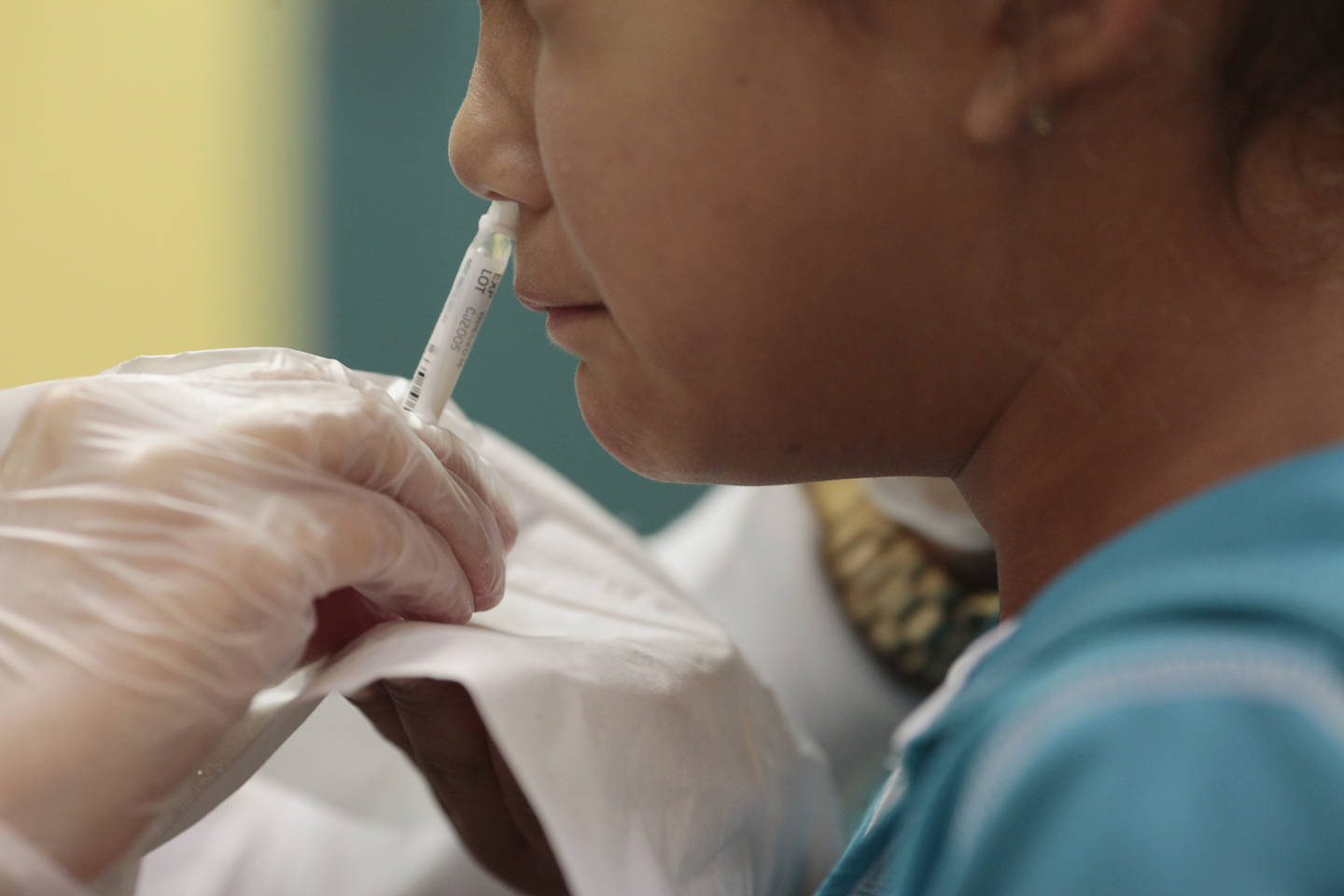
"caption": "A student at an Oakland Elementary school receives the flu vaccine via nasal mist in 2014 -- back when the CDC permitted it. ",
"description": null,
"title": "RS12665_20141017_vaccines_jt_002-2",
"credit": "James Tensuan/KQED",
"status": "inherit",
"isLoading": false,
"fetchFailed": false
},
"stateofhealth_202378": {
"type": "attachments",
"id": "stateofhealth_202378",
"meta": {
"index": "attachments_1716263798",
"site": "stateofhealth",
"id": "202378",
"found": true
},
"parent": 202377,
"imgSizes": {
"twentyfourteen-full-width": {
"file": "https://ww2.kqed.org/app/uploads/sites/27/2016/06/20160622_temporary-blindness-9968_custom-73021ff08f7512e4a3d342d0967b8df6cdc5b37c-1000x576.jpg",
"width": 1000,
"mimeType": "image/jpeg",
"height": 576
},
"thumbnail": {
"file": "https://ww2.kqed.org/app/uploads/sites/27/2016/06/20160622_temporary-blindness-9968_custom-73021ff08f7512e4a3d342d0967b8df6cdc5b37c-400x267.jpg",
"width": 400,
"mimeType": "image/jpeg",
"height": 267
},
"fd-sm": {
"file": "https://ww2.kqed.org/app/uploads/sites/27/2016/06/20160622_temporary-blindness-9968_custom-73021ff08f7512e4a3d342d0967b8df6cdc5b37c-960x640.jpg",
"width": 960,
"mimeType": "image/jpeg",
"height": 640
},
"post-thumbnail": {
"file": "https://ww2.kqed.org/app/uploads/sites/27/2016/06/20160622_temporary-blindness-9968_custom-73021ff08f7512e4a3d342d0967b8df6cdc5b37c-672x372.jpg",
"width": 672,
"mimeType": "image/jpeg",
"height": 372
},
"kqedFullSize": {
"file": "https://ww2.kqed.org/app/uploads/sites/27/2016/06/20160622_temporary-blindness-9968_custom-73021ff08f7512e4a3d342d0967b8df6cdc5b37c.jpg",
"width": 1000,
"height": 667
},
"guest-author-50": {
"file": "https://ww2.kqed.org/app/uploads/sites/27/2016/06/20160622_temporary-blindness-9968_custom-73021ff08f7512e4a3d342d0967b8df6cdc5b37c-50x50.jpg",
"width": 50,
"mimeType": "image/jpeg",
"height": 50
},
"guest-author-96": {
"file": "https://ww2.kqed.org/app/uploads/sites/27/2016/06/20160622_temporary-blindness-9968_custom-73021ff08f7512e4a3d342d0967b8df6cdc5b37c-96x96.jpg",
"width": 96,
"mimeType": "image/jpeg",
"height": 96
},
"medium": {
"file": "https://ww2.kqed.org/app/uploads/sites/27/2016/06/20160622_temporary-blindness-9968_custom-73021ff08f7512e4a3d342d0967b8df6cdc5b37c-800x534.jpg",
"width": 800,
"mimeType": "image/jpeg",
"height": 534
},
"guest-author-64": {
"file": "https://ww2.kqed.org/app/uploads/sites/27/2016/06/20160622_temporary-blindness-9968_custom-73021ff08f7512e4a3d342d0967b8df6cdc5b37c-64x64.jpg",
"width": 64,
"mimeType": "image/jpeg",
"height": 64
},
"guest-author-32": {
"file": "https://ww2.kqed.org/app/uploads/sites/27/2016/06/20160622_temporary-blindness-9968_custom-73021ff08f7512e4a3d342d0967b8df6cdc5b37c-32x32.jpg",
"width": 32,
"mimeType": "image/jpeg",
"height": 32
},
"jmtc-small-thumb": {
"file": "https://ww2.kqed.org/app/uploads/sites/27/2016/06/20160622_temporary-blindness-9968_custom-73021ff08f7512e4a3d342d0967b8df6cdc5b37c-280x150.jpg",
"width": 280,
"mimeType": "image/jpeg",
"height": 150
},
"detail": {
"file": "https://ww2.kqed.org/app/uploads/sites/27/2016/06/20160622_temporary-blindness-9968_custom-73021ff08f7512e4a3d342d0967b8df6cdc5b37c-150x150.jpg",
"width": 150,
"mimeType": "image/jpeg",
"height": 150
},
"medium_large": {
"file": "https://ww2.kqed.org/app/uploads/sites/27/2016/06/20160622_temporary-blindness-9968_custom-73021ff08f7512e4a3d342d0967b8df6cdc5b37c-768x512.jpg",
"width": 768,
"mimeType": "image/jpeg",
"height": 512
},
"guest-author-128": {
"file": "https://ww2.kqed.org/app/uploads/sites/27/2016/06/20160622_temporary-blindness-9968_custom-73021ff08f7512e4a3d342d0967b8df6cdc5b37c-128x128.jpg",
"width": 128,
"mimeType": "image/jpeg",
"height": 128
}
},
"publishDate": 1466638693,
"modified": 1466638693,
"caption": null,
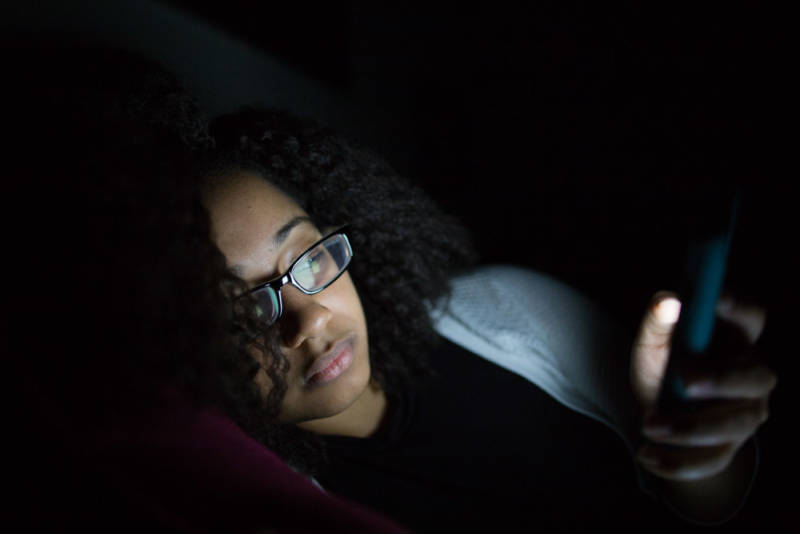
"description": "Gazing at a smartphone in the dark can give people the feeling that they've temporarily lost vision in one eye.",
"title": "Gazing at a smartphone in the dark can give people the feeling that they've temporarily lost vision in one eye.",
"credit": null,
"status": "inherit",
"isLoading": false,
"fetchFailed": false
},
"science_778830": {
"type": "attachments",
"id": "science_778830",
"meta": {
"index": "attachments_1716263798",
"site": "science",
"id": "778830",
"found": true
},
"parent": 778828,
"imgSizes": {
"twentyfourteen-full-width": {
"file": "https://ww2.kqed.org/app/uploads/sites/35/2016/06/California-Drought-Dry-Town2-1038x576.jpg",
"width": 1038,
"mimeType": "image/jpeg",
"height": 576
},
"thumbnail": {
"file": "https://ww2.kqed.org/app/uploads/sites/35/2016/06/California-Drought-Dry-Town2-400x300.jpg",
"width": 400,
"mimeType": "image/jpeg",
"height": 300
},
"fd-sm": {
"file": "https://ww2.kqed.org/app/uploads/sites/35/2016/06/California-Drought-Dry-Town2-960x720.jpg",
"width": 960,
"mimeType": "image/jpeg",
"height": 720
},
"post-thumbnail": {
"file": "https://ww2.kqed.org/app/uploads/sites/35/2016/06/California-Drought-Dry-Town2-672x372.jpg",
"width": 672,
"mimeType": "image/jpeg",
"height": 372
},
"kqedFullSize": {
"file": "https://ww2.kqed.org/app/uploads/sites/35/2016/06/California-Drought-Dry-Town2.jpg",
"width": 1280,
"height": 960
},
"guest-author-50": {
"file": "https://ww2.kqed.org/app/uploads/sites/35/2016/06/California-Drought-Dry-Town2-50x50.jpg",
"width": 50,
"mimeType": "image/jpeg",
"height": 50
},
"guest-author-96": {
"file": "https://ww2.kqed.org/app/uploads/sites/35/2016/06/California-Drought-Dry-Town2-96x96.jpg",
"width": 96,
"mimeType": "image/jpeg",
"height": 96
},
"medium": {
"file": "https://ww2.kqed.org/app/uploads/sites/35/2016/06/California-Drought-Dry-Town2-800x600.jpg",
"width": 800,
"mimeType": "image/jpeg",
"height": 600
},
"guest-author-64": {
"file": "https://ww2.kqed.org/app/uploads/sites/35/2016/06/California-Drought-Dry-Town2-64x64.jpg",
"width": 64,
"mimeType": "image/jpeg",
"height": 64
},
"guest-author-32": {
"file": "https://ww2.kqed.org/app/uploads/sites/35/2016/06/California-Drought-Dry-Town2-32x32.jpg",
"width": 32,
"mimeType": "image/jpeg",
"height": 32
},
"fd-med": {
"file": "https://ww2.kqed.org/app/uploads/sites/35/2016/06/California-Drought-Dry-Town2-1180x885.jpg",
"width": 1180,
"mimeType": "image/jpeg",
"height": 885
},
"detail": {
"file": "https://ww2.kqed.org/app/uploads/sites/35/2016/06/California-Drought-Dry-Town2-150x150.jpg",
"width": 150,
"mimeType": "image/jpeg",
"height": 150
},
"medium_large": {
"file": "https://ww2.kqed.org/app/uploads/sites/35/2016/06/California-Drought-Dry-Town2-768x576.jpg",
"width": 768,
"mimeType": "image/jpeg",
"height": 576
},
"guest-author-128": {
"file": "https://ww2.kqed.org/app/uploads/sites/35/2016/06/California-Drought-Dry-Town2-128x128.jpg",
"width": 128,
"mimeType": "image/jpeg",
"height": 128
}
},
"publishDate": 1466105270,
"modified": 1466105319,
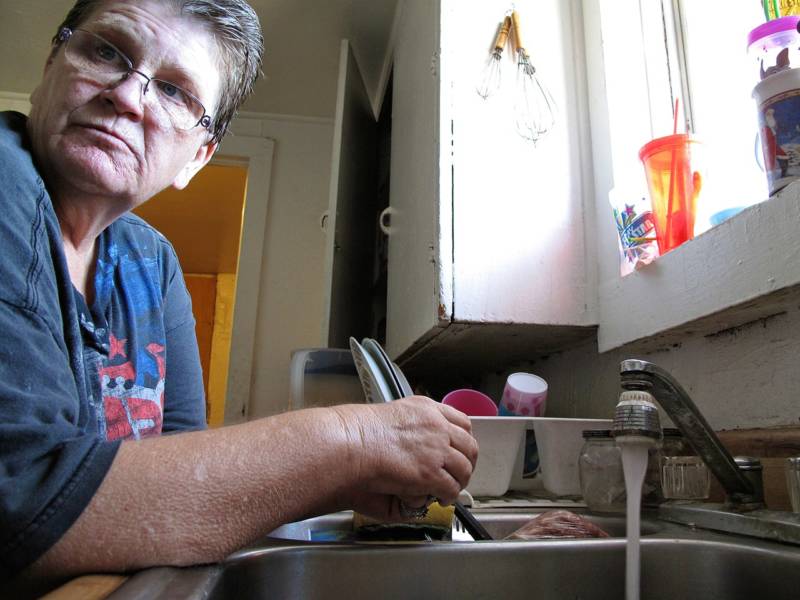
"caption": "Kathy Findley leans over her kitchen sink inside a rental home in East Porterville, Calif., which she shares with her two daughters and five grandchildren. Their well dried up earlier in the year. Hundreds of domestic wells in California’s drought-parched Central Valley farming region have run dry. A recent survey was conducted by the health department on the drought’s impact.",
"description": "Kathy Findley leans over her kitchen sink inside a rental home in East Porterville, Calif., which she shares with her two daughters and five grandchildren. Their well dried up earlier in the year. Hundreds of domestic wells in California’s drought-parched Central Valley farming region have run dry. A recent survey was conducted by the health department on the drought’s impact.",
"title": "California-Drought-Dry-Town2",
"credit": "Scott Smith/AP",
"status": "inherit",
"isLoading": false,
"fetchFailed": false
},
"futureofyou_181212": {
"type": "attachments",
"id": "futureofyou_181212",
"meta": {
"index": "attachments_1716263798",
"site": "futureofyou",
"id": "181212",
"found": true
},
"parent": 181211,
"imgSizes": {
"twentyfourteen-full-width": {
"file": "https://ww2.kqed.org/app/uploads/sites/13/2016/06/gettyimages-539669823-7cc12f1f1cd2663ebb2e22d75face7bb75ab0035-1038x576.jpg",
"width": 1038,
"mimeType": "image/jpeg",
"height": 576
},
"thumbnail": {
"file": "https://ww2.kqed.org/app/uploads/sites/13/2016/06/gettyimages-539669823-7cc12f1f1cd2663ebb2e22d75face7bb75ab0035-400x299.jpg",
"width": 400,
"mimeType": "image/jpeg",
"height": 299
},
"fd-sm": {
"file": "https://ww2.kqed.org/app/uploads/sites/13/2016/06/gettyimages-539669823-7cc12f1f1cd2663ebb2e22d75face7bb75ab0035-960x719.jpg",
"width": 960,
"mimeType": "image/jpeg",
"height": 719
},
"post-thumbnail": {
"file": "https://ww2.kqed.org/app/uploads/sites/13/2016/06/gettyimages-539669823-7cc12f1f1cd2663ebb2e22d75face7bb75ab0035-672x372.jpg",
"width": 672,
"mimeType": "image/jpeg",
"height": 372
},
"kqedFullSize": {
"file": "https://ww2.kqed.org/app/uploads/sites/13/2016/06/gettyimages-539669823-7cc12f1f1cd2663ebb2e22d75face7bb75ab0035.jpg",
"width": 4557,
"height": 3412
},
"large": {
"file": "https://ww2.kqed.org/app/uploads/sites/13/2016/06/gettyimages-539669823-7cc12f1f1cd2663ebb2e22d75face7bb75ab0035-1180x884.jpg",
"width": 1180,
"mimeType": "image/jpeg",
"height": 884
},
"guest-author-50": {
"file": "https://ww2.kqed.org/app/uploads/sites/13/2016/06/gettyimages-539669823-7cc12f1f1cd2663ebb2e22d75face7bb75ab0035-50x50.jpg",
"width": 50,
"mimeType": "image/jpeg",
"height": 50
},
"guest-author-96": {
"file": "https://ww2.kqed.org/app/uploads/sites/13/2016/06/gettyimages-539669823-7cc12f1f1cd2663ebb2e22d75face7bb75ab0035-96x96.jpg",
"width": 96,
"mimeType": "image/jpeg",
"height": 96
},
"medium": {
"file": "https://ww2.kqed.org/app/uploads/sites/13/2016/06/gettyimages-539669823-7cc12f1f1cd2663ebb2e22d75face7bb75ab0035-800x600.jpg",
"width": 800,
"mimeType": "image/jpeg",
"height": 600
},
"guest-author-64": {
"file": "https://ww2.kqed.org/app/uploads/sites/13/2016/06/gettyimages-539669823-7cc12f1f1cd2663ebb2e22d75face7bb75ab0035-64x64.jpg",
"width": 64,
"mimeType": "image/jpeg",
"height": 64
},
"guest-author-32": {
"file": "https://ww2.kqed.org/app/uploads/sites/13/2016/06/gettyimages-539669823-7cc12f1f1cd2663ebb2e22d75face7bb75ab0035-32x32.jpg",
"width": 32,
"mimeType": "image/jpeg",
"height": 32
},
"fd-lrg": {
"file": "https://ww2.kqed.org/app/uploads/sites/13/2016/06/gettyimages-539669823-7cc12f1f1cd2663ebb2e22d75face7bb75ab0035-1920x1438.jpg",
"width": 1920,
"mimeType": "image/jpeg",
"height": 1438
},
"fd-med": {
"file": "https://ww2.kqed.org/app/uploads/sites/13/2016/06/gettyimages-539669823-7cc12f1f1cd2663ebb2e22d75face7bb75ab0035-1180x884.jpg",
"width": 1180,
"mimeType": "image/jpeg",
"height": 884
},
"detail": {
"file": "https://ww2.kqed.org/app/uploads/sites/13/2016/06/gettyimages-539669823-7cc12f1f1cd2663ebb2e22d75face7bb75ab0035-150x150.jpg",
"width": 150,
"mimeType": "image/jpeg",
"height": 150
},
"medium_large": {
"file": "https://ww2.kqed.org/app/uploads/sites/13/2016/06/gettyimages-539669823-7cc12f1f1cd2663ebb2e22d75face7bb75ab0035-768x575.jpg",
"width": 768,
"mimeType": "image/jpeg",
"height": 575
},
"guest-author-128": {
"file": "https://ww2.kqed.org/app/uploads/sites/13/2016/06/gettyimages-539669823-7cc12f1f1cd2663ebb2e22d75face7bb75ab0035-128x128.jpg",
"width": 128,
"mimeType": "image/jpeg",
"height": 128
}
},
"publishDate": 1465596977,
"modified": 1465597010,
"caption": null,
"description": "What role should big data play in public health?",
"title": "What role should big data play in public health?",
"credit": "Jamie Grill/Tetra images RF/Getty Images",
"status": "inherit",
"isLoading": false,
"fetchFailed": false
},
"stateofhealth_196144": {
"type": "attachments",
"id": "stateofhealth_196144",
"meta": {
"index": "attachments_1716263798",
"site": "stateofhealth",
"id": "196144",
"found": true
},
"parent": 196103,
"imgSizes": {
"twentyfourteen-full-width": {
"file": "https://ww2.kqed.org/app/uploads/sites/27/2016/06/GettyImages-167275831-1038x576.jpg",
"width": 1038,
"mimeType": "image/jpeg",
"height": 576
},
"thumbnail": {
"file": "https://ww2.kqed.org/app/uploads/sites/27/2016/06/GettyImages-167275831-400x265.jpg",
"width": 400,
"mimeType": "image/jpeg",
"height": 265
},
"fd-sm": {
"file": "https://ww2.kqed.org/app/uploads/sites/27/2016/06/GettyImages-167275831-960x637.jpg",
"width": 960,
"mimeType": "image/jpeg",
"height": 637
},
"post-thumbnail": {
"file": "https://ww2.kqed.org/app/uploads/sites/27/2016/06/GettyImages-167275831-672x372.jpg",
"width": 672,
"mimeType": "image/jpeg",
"height": 372
},
"kqedFullSize": {
"file": "https://ww2.kqed.org/app/uploads/sites/27/2016/06/GettyImages-167275831-e1465514890908.jpg",
"width": 1920,
"height": 1274
},
"large": {
"file": "https://ww2.kqed.org/app/uploads/sites/27/2016/06/GettyImages-167275831-1440x956.jpg",
"width": 1440,
"mimeType": "image/jpeg",
"height": 956
},
"guest-author-50": {
"file": "https://ww2.kqed.org/app/uploads/sites/27/2016/06/GettyImages-167275831-50x50.jpg",
"width": 50,
"mimeType": "image/jpeg",
"height": 50
},
"guest-author-96": {
"file": "https://ww2.kqed.org/app/uploads/sites/27/2016/06/GettyImages-167275831-96x96.jpg",
"width": 96,
"mimeType": "image/jpeg",
"height": 96
},
"medium": {
"file": "https://ww2.kqed.org/app/uploads/sites/27/2016/06/GettyImages-167275831-800x531.jpg",
"width": 800,
"mimeType": "image/jpeg",
"height": 531
},
"guest-author-64": {
"file": "https://ww2.kqed.org/app/uploads/sites/27/2016/06/GettyImages-167275831-64x64.jpg",
"width": 64,
"mimeType": "image/jpeg",
"height": 64
},
"guest-author-32": {
"file": "https://ww2.kqed.org/app/uploads/sites/27/2016/06/GettyImages-167275831-32x32.jpg",
"width": 32,
"mimeType": "image/jpeg",
"height": 32
},
"jmtc-small-thumb": {
"file": "https://ww2.kqed.org/app/uploads/sites/27/2016/06/GettyImages-167275831-280x150.jpg",
"width": 280,
"mimeType": "image/jpeg",
"height": 150
},
"fd-lrg": {
"file": "https://ww2.kqed.org/app/uploads/sites/27/2016/06/GettyImages-167275831-1920x1274.jpg",
"width": 1920,
"mimeType": "image/jpeg",
"height": 1274
},
"fd-med": {
"file": "https://ww2.kqed.org/app/uploads/sites/27/2016/06/GettyImages-167275831-1180x783.jpg",
"width": 1180,
"mimeType": "image/jpeg",
"height": 783
},
"detail": {
"file": "https://ww2.kqed.org/app/uploads/sites/27/2016/06/GettyImages-167275831-150x150.jpg",
"width": 150,
"mimeType": "image/jpeg",
"height": 150
},
"medium_large": {
"file": "https://ww2.kqed.org/app/uploads/sites/27/2016/06/GettyImages-167275831-768x510.jpg",
"width": 768,
"mimeType": "image/jpeg",
"height": 510
},
"guest-author-128": {
"file": "https://ww2.kqed.org/app/uploads/sites/27/2016/06/GettyImages-167275831-128x128.jpg",
"width": 128,
"mimeType": "image/jpeg",
"height": 128
}
},
"publishDate": 1465514868,
"modified": 1465514948,
"caption": null,
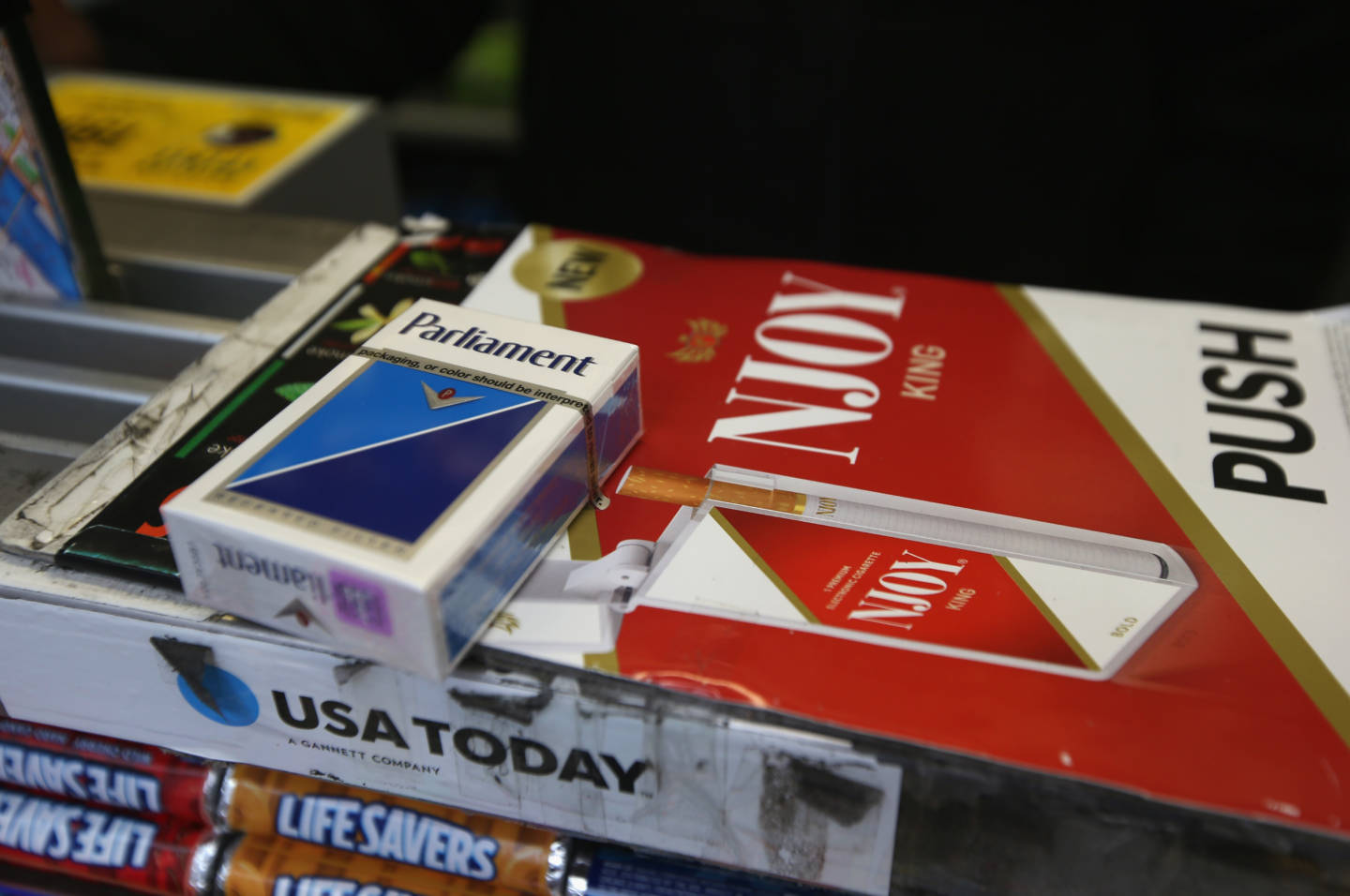
"description": "tobacco, cigarettes for sale",
"title": "New York City Council Proposes Bill To Raise Minimum Age For Buying Cigarettes To 21",
"credit": "John Moore/Getty Images",
"status": "inherit",
"isLoading": false,
"fetchFailed": false
},
"futureofyou_179244": {
"type": "attachments",
"id": "futureofyou_179244",
"meta": {
"index": "attachments_1716263798",
"site": "futureofyou",
"id": "179244",
"found": true
},
"parent": 175807,
"imgSizes": {
"twentyfourteen-full-width": {
"file": "https://ww2.kqed.org/app/uploads/sites/13/2016/06/iStock_34133278_LARGE-1038x576.jpg",
"width": 1038,
"mimeType": "image/jpeg",
"height": 576
},
"thumbnail": {
"file": "https://ww2.kqed.org/app/uploads/sites/13/2016/06/iStock_34133278_LARGE-400x267.jpg",
"width": 400,
"mimeType": "image/jpeg",
"height": 267
},
"fd-sm": {
"file": "https://ww2.kqed.org/app/uploads/sites/13/2016/06/iStock_34133278_LARGE-960x640.jpg",
"width": 960,
"mimeType": "image/jpeg",
"height": 640
},
"post-thumbnail": {
"file": "https://ww2.kqed.org/app/uploads/sites/13/2016/06/iStock_34133278_LARGE-672x372.jpg",
"width": 672,
"mimeType": "image/jpeg",
"height": 372
},
"kqedFullSize": {
"file": "https://ww2.kqed.org/app/uploads/sites/13/2016/06/iStock_34133278_LARGE.jpg",
"width": 2715,
"height": 1810
},
"large": {
"file": "https://ww2.kqed.org/app/uploads/sites/13/2016/06/iStock_34133278_LARGE-1180x787.jpg",
"width": 1180,
"mimeType": "image/jpeg",
"height": 787
},
"guest-author-50": {
"file": "https://ww2.kqed.org/app/uploads/sites/13/2016/06/iStock_34133278_LARGE-50x50.jpg",
"width": 50,
"mimeType": "image/jpeg",
"height": 50
},
"guest-author-96": {
"file": "https://ww2.kqed.org/app/uploads/sites/13/2016/06/iStock_34133278_LARGE-96x96.jpg",
"width": 96,
"mimeType": "image/jpeg",
"height": 96
},
"medium": {
"file": "https://ww2.kqed.org/app/uploads/sites/13/2016/06/iStock_34133278_LARGE-800x533.jpg",
"width": 800,
"mimeType": "image/jpeg",
"height": 533
},
"guest-author-64": {
"file": "https://ww2.kqed.org/app/uploads/sites/13/2016/06/iStock_34133278_LARGE-64x64.jpg",
"width": 64,
"mimeType": "image/jpeg",
"height": 64
},
"guest-author-32": {
"file": "https://ww2.kqed.org/app/uploads/sites/13/2016/06/iStock_34133278_LARGE-32x32.jpg",
"width": 32,
"mimeType": "image/jpeg",
"height": 32
},
"fd-lrg": {
"file": "https://ww2.kqed.org/app/uploads/sites/13/2016/06/iStock_34133278_LARGE-1920x1280.jpg",
"width": 1920,
"mimeType": "image/jpeg",
"height": 1280
},
"fd-med": {
"file": "https://ww2.kqed.org/app/uploads/sites/13/2016/06/iStock_34133278_LARGE-1180x787.jpg",
"width": 1180,
"mimeType": "image/jpeg",
"height": 787
},
"detail": {
"file": "https://ww2.kqed.org/app/uploads/sites/13/2016/06/iStock_34133278_LARGE-150x150.jpg",
"width": 150,
"mimeType": "image/jpeg",
"height": 150
},
"medium_large": {
"file": "https://ww2.kqed.org/app/uploads/sites/13/2016/06/iStock_34133278_LARGE-768x512.jpg",
"width": 768,
"mimeType": "image/jpeg",
"height": 512
},
"guest-author-128": {
"file": "https://ww2.kqed.org/app/uploads/sites/13/2016/06/iStock_34133278_LARGE-128x128.jpg",
"width": 128,
"mimeType": "image/jpeg",
"height": 128
}
},
"publishDate": 1465346916,
"modified": 1465346943,
"caption": null,
"description": null,
"title": "Broken heart",
"credit": "iStock",
"status": "inherit",
"isLoading": false,
"fetchFailed": false
},
"science_728199": {
"type": "attachments",
"id": "science_728199",
"meta": {
"index": "attachments_1716263798",
"site": "science",
"id": "728199",
"found": true
},
"parent": 728086,
"imgSizes": {
"twentyfourteen-full-width": {
"file": "https://ww2.kqed.org/app/uploads/sites/35/2016/06/DL_310MosquitoBite_Featured_Image_fr_web_page-1038x576.jpg",
"width": 1038,
"mimeType": "image/jpeg",
"height": 576
},
"thumbnail": {
"file": "https://ww2.kqed.org/app/uploads/sites/35/2016/06/DL_310MosquitoBite_Featured_Image_fr_web_page-400x225.jpg",
"width": 400,
"mimeType": "image/jpeg",
"height": 225
},
"fd-sm": {
"file": "https://ww2.kqed.org/app/uploads/sites/35/2016/06/DL_310MosquitoBite_Featured_Image_fr_web_page-960x540.jpg",
"width": 960,
"mimeType": "image/jpeg",
"height": 540
},
"post-thumbnail": {
"file": "https://ww2.kqed.org/app/uploads/sites/35/2016/06/DL_310MosquitoBite_Featured_Image_fr_web_page-672x372.jpg",
"width": 672,
"mimeType": "image/jpeg",
"height": 372
},
"kqedFullSize": {
"file": "https://ww2.kqed.org/app/uploads/sites/35/2016/06/DL_310MosquitoBite_Featured_Image_fr_web_page.jpg",
"width": 1920,
"height": 1080
},
"large": {
"file": "https://ww2.kqed.org/app/uploads/sites/35/2016/06/DL_310MosquitoBite_Featured_Image_fr_web_page-1440x810.jpg",
"width": 1440,
"mimeType": "image/jpeg",
"height": 810
},
"guest-author-50": {
"file": "https://ww2.kqed.org/app/uploads/sites/35/2016/06/DL_310MosquitoBite_Featured_Image_fr_web_page-50x50.jpg",
"width": 50,
"mimeType": "image/jpeg",
"height": 50
},
"guest-author-96": {
"file": "https://ww2.kqed.org/app/uploads/sites/35/2016/06/DL_310MosquitoBite_Featured_Image_fr_web_page-96x96.jpg",
"width": 96,
"mimeType": "image/jpeg",
"height": 96
},
"medium": {
"file": "https://ww2.kqed.org/app/uploads/sites/35/2016/06/DL_310MosquitoBite_Featured_Image_fr_web_page-800x450.jpg",
"width": 800,
"mimeType": "image/jpeg",
"height": 450
},
"guest-author-64": {
"file": "https://ww2.kqed.org/app/uploads/sites/35/2016/06/DL_310MosquitoBite_Featured_Image_fr_web_page-64x64.jpg",
"width": 64,
"mimeType": "image/jpeg",
"height": 64
},
"guest-author-32": {
"file": "https://ww2.kqed.org/app/uploads/sites/35/2016/06/DL_310MosquitoBite_Featured_Image_fr_web_page-32x32.jpg",
"width": 32,
"mimeType": "image/jpeg",
"height": 32
},
"fd-lrg": {
"file": "https://ww2.kqed.org/app/uploads/sites/35/2016/06/DL_310MosquitoBite_Featured_Image_fr_web_page-1920x1080.jpg",
"width": 1920,
"mimeType": "image/jpeg",
"height": 1080
},
"fd-med": {
"file": "https://ww2.kqed.org/app/uploads/sites/35/2016/06/DL_310MosquitoBite_Featured_Image_fr_web_page-1180x664.jpg",
"width": 1180,
"mimeType": "image/jpeg",
"height": 664
},
"detail": {
"file": "https://ww2.kqed.org/app/uploads/sites/35/2016/06/DL_310MosquitoBite_Featured_Image_fr_web_page-150x150.jpg",
"width": 150,
"mimeType": "image/jpeg",
"height": 150
},
"medium_large": {
"file": "https://ww2.kqed.org/app/uploads/sites/35/2016/06/DL_310MosquitoBite_Featured_Image_fr_web_page-768x432.jpg",
"width": 768,
"mimeType": "image/jpeg",
"height": 432
},
"guest-author-128": {
"file": "https://ww2.kqed.org/app/uploads/sites/35/2016/06/DL_310MosquitoBite_Featured_Image_fr_web_page-128x128.jpg",
"width": 128,
"mimeType": "image/jpeg",
"height": 128
}
},
"publishDate": 1464289182,
"modified": 1464290815,
"caption": "A common house mosquito bites into a human arm. ",
"description": null,
"title": "DL_310MosquitoBite_Featured_Image_fr_web_page",
"credit": "Josh Cassidy/KQED",
"status": "inherit",
"isLoading": false,
"fetchFailed": false
},
"futureofyou_175930": {
"type": "attachments",
"id": "futureofyou_175930",
"meta": {
"index": "attachments_1716263798",
"site": "futureofyou",
"id": "175930",
"found": true
},
"parent": 175839,
"imgSizes": {
"twentyfourteen-full-width": {
"file": "https://ww2.kqed.org/app/uploads/sites/13/2016/06/feature-image-1038x576.jpg",
"width": 1038,
"mimeType": "image/jpeg",
"height": 576
},
"thumbnail": {
"file": "https://ww2.kqed.org/app/uploads/sites/13/2016/06/feature-image-400x300.jpg",
"width": 400,
"mimeType": "image/jpeg",
"height": 300
},
"fd-sm": {
"file": "https://ww2.kqed.org/app/uploads/sites/13/2016/06/feature-image-960x720.jpg",
"width": 960,
"mimeType": "image/jpeg",
"height": 720
},
"post-thumbnail": {
"file": "https://ww2.kqed.org/app/uploads/sites/13/2016/06/feature-image-672x372.jpg",
"width": 672,
"mimeType": "image/jpeg",
"height": 372
},
"kqedFullSize": {
"file": "https://ww2.kqed.org/app/uploads/sites/13/2016/06/feature-image-e1465262947212.jpg",
"width": 1920,
"height": 1440
},
"large": {
"file": "https://ww2.kqed.org/app/uploads/sites/13/2016/06/feature-image-1180x885.jpg",
"width": 1180,
"mimeType": "image/jpeg",
"height": 885
},
"guest-author-50": {
"file": "https://ww2.kqed.org/app/uploads/sites/13/2016/06/feature-image-50x50.jpg",
"width": 50,
"mimeType": "image/jpeg",
"height": 50
},
"guest-author-96": {
"file": "https://ww2.kqed.org/app/uploads/sites/13/2016/06/feature-image-96x96.jpg",
"width": 96,
"mimeType": "image/jpeg",
"height": 96
},
"medium": {
"file": "https://ww2.kqed.org/app/uploads/sites/13/2016/06/feature-image-800x600.jpg",
"width": 800,
"mimeType": "image/jpeg",
"height": 600
},
"guest-author-64": {
"file": "https://ww2.kqed.org/app/uploads/sites/13/2016/06/feature-image-64x64.jpg",
"width": 64,
"mimeType": "image/jpeg",
"height": 64
},
"guest-author-32": {
"file": "https://ww2.kqed.org/app/uploads/sites/13/2016/06/feature-image-32x32.jpg",
"width": 32,
"mimeType": "image/jpeg",
"height": 32
},
"fd-lrg": {
"file": "https://ww2.kqed.org/app/uploads/sites/13/2016/06/feature-image-1920x1440.jpg",
"width": 1920,
"mimeType": "image/jpeg",
"height": 1440
},
"fd-med": {
"file": "https://ww2.kqed.org/app/uploads/sites/13/2016/06/feature-image-1180x885.jpg",
"width": 1180,
"mimeType": "image/jpeg",
"height": 885
},
"detail": {
"file": "https://ww2.kqed.org/app/uploads/sites/13/2016/06/feature-image-150x150.jpg",
"width": 150,
"mimeType": "image/jpeg",
"height": 150
},
"medium_large": {
"file": "https://ww2.kqed.org/app/uploads/sites/13/2016/06/feature-image-768x576.jpg",
"width": 768,
"mimeType": "image/jpeg",
"height": 576
},
"guest-author-128": {
"file": "https://ww2.kqed.org/app/uploads/sites/13/2016/06/feature-image-128x128.jpg",
"width": 128,
"mimeType": "image/jpeg",
"height": 128
}
},
"publishDate": 1464912644,
"modified": 1464988565,
"caption": "Zunika Crenshaw helps her 3-year-old daughter Jhase Crenshaw Bass with an asthma inhaler. ",
"description": null,
"title": "feature image",
"credit": "Lesley McClurg/KQED",
"status": "inherit",
"isLoading": false,
"fetchFailed": false
},
"futureofyou_176454": {
"type": "attachments",
"id": "futureofyou_176454",
"meta": {
"index": "attachments_1716263798",
"site": "futureofyou",
"id": "176454",
"found": true
},
"parent": 176453,
"imgSizes": {
"twentyfourteen-full-width": {
"file": "https://ww2.kqed.org/app/uploads/sites/13/2016/06/dnadoublehelix_enl-f62de1efb73fb17f271fb27c2efcad8a5567d302-1038x576.jpg",
"width": 1038,
"mimeType": "image/jpeg",
"height": 576
},
"thumbnail": {
"file": "https://ww2.kqed.org/app/uploads/sites/13/2016/06/dnadoublehelix_enl-f62de1efb73fb17f271fb27c2efcad8a5567d302-400x266.jpg",
"width": 400,
"mimeType": "image/jpeg",
"height": 266
},
"fd-sm": {
"file": "https://ww2.kqed.org/app/uploads/sites/13/2016/06/dnadoublehelix_enl-f62de1efb73fb17f271fb27c2efcad8a5567d302-960x639.jpg",
"width": 960,
"mimeType": "image/jpeg",
"height": 639
},
"post-thumbnail": {
"file": "https://ww2.kqed.org/app/uploads/sites/13/2016/06/dnadoublehelix_enl-f62de1efb73fb17f271fb27c2efcad8a5567d302-672x372.jpg",
"width": 672,
"mimeType": "image/jpeg",
"height": 372
},
"kqedFullSize": {
"file": "https://ww2.kqed.org/app/uploads/sites/13/2016/06/dnadoublehelix_enl-f62de1efb73fb17f271fb27c2efcad8a5567d302.jpg",
"width": 2000,
"height": 1332
},
"large": {
"file": "https://ww2.kqed.org/app/uploads/sites/13/2016/06/dnadoublehelix_enl-f62de1efb73fb17f271fb27c2efcad8a5567d302-1180x786.jpg",
"width": 1180,
"mimeType": "image/jpeg",
"height": 786
},
"guest-author-50": {
"file": "https://ww2.kqed.org/app/uploads/sites/13/2016/06/dnadoublehelix_enl-f62de1efb73fb17f271fb27c2efcad8a5567d302-50x50.jpg",
"width": 50,
"mimeType": "image/jpeg",
"height": 50
},
"guest-author-96": {
"file": "https://ww2.kqed.org/app/uploads/sites/13/2016/06/dnadoublehelix_enl-f62de1efb73fb17f271fb27c2efcad8a5567d302-96x96.jpg",
"width": 96,
"mimeType": "image/jpeg",
"height": 96
},
"medium": {
"file": "https://ww2.kqed.org/app/uploads/sites/13/2016/06/dnadoublehelix_enl-f62de1efb73fb17f271fb27c2efcad8a5567d302-800x533.jpg",
"width": 800,
"mimeType": "image/jpeg",
"height": 533
},
"guest-author-64": {
"file": "https://ww2.kqed.org/app/uploads/sites/13/2016/06/dnadoublehelix_enl-f62de1efb73fb17f271fb27c2efcad8a5567d302-64x64.jpg",
"width": 64,
"mimeType": "image/jpeg",
"height": 64
},
"guest-author-32": {
"file": "https://ww2.kqed.org/app/uploads/sites/13/2016/06/dnadoublehelix_enl-f62de1efb73fb17f271fb27c2efcad8a5567d302-32x32.jpg",
"width": 32,
"mimeType": "image/jpeg",
"height": 32
},
"fd-lrg": {
"file": "https://ww2.kqed.org/app/uploads/sites/13/2016/06/dnadoublehelix_enl-f62de1efb73fb17f271fb27c2efcad8a5567d302-1920x1279.jpg",
"width": 1920,
"mimeType": "image/jpeg",
"height": 1279
},
"fd-med": {
"file": "https://ww2.kqed.org/app/uploads/sites/13/2016/06/dnadoublehelix_enl-f62de1efb73fb17f271fb27c2efcad8a5567d302-1180x786.jpg",
"width": 1180,
"mimeType": "image/jpeg",
"height": 786
},
"detail": {
"file": "https://ww2.kqed.org/app/uploads/sites/13/2016/06/dnadoublehelix_enl-f62de1efb73fb17f271fb27c2efcad8a5567d302-150x150.jpg",
"width": 150,
"mimeType": "image/jpeg",
"height": 150
},
"medium_large": {
"file": "https://ww2.kqed.org/app/uploads/sites/13/2016/06/dnadoublehelix_enl-f62de1efb73fb17f271fb27c2efcad8a5567d302-768x511.jpg",
"width": 768,
"mimeType": "image/jpeg",
"height": 511
},
"guest-author-128": {
"file": "https://ww2.kqed.org/app/uploads/sites/13/2016/06/dnadoublehelix_enl-f62de1efb73fb17f271fb27c2efcad8a5567d302-128x128.jpg",
"width": 128,
"mimeType": "image/jpeg",
"height": 128
}
},
"publishDate": 1464980233,
"modified": 1464980233,
"caption": null,
"description": "Active strand of human DNA.",
"title": "Active strand of human DNA.",
"credit": null,
"status": "inherit",
"isLoading": false,
"fetchFailed": false
},
"science_711650": {
"type": "attachments",
"id": "science_711650",
"meta": {
"index": "attachments_1716263798",
"site": "science",
"id": "711650",
"found": true
},
"parent": 711545,
"imgSizes": {
"thumbnail": {
"file": "https://ww2.kqed.org/app/uploads/sites/35/2016/05/RS10628_185492786-sfi-400x280.jpg",
"width": 400,
"mimeType": "image/jpeg",
"height": 280
},
"kqedFullSize": {
"file": "https://ww2.kqed.org/app/uploads/sites/35/2016/05/RS10628_185492786-sfi.jpg",
"width": 515,
"height": 360
},
"guest-author-50": {
"file": "https://ww2.kqed.org/app/uploads/sites/35/2016/05/RS10628_185492786-sfi-50x50.jpg",
"width": 50,
"mimeType": "image/jpeg",
"height": 50
},
"guest-author-96": {
"file": "https://ww2.kqed.org/app/uploads/sites/35/2016/05/RS10628_185492786-sfi-96x96.jpg",
"width": 96,
"mimeType": "image/jpeg",
"height": 96
},
"guest-author-64": {
"file": "https://ww2.kqed.org/app/uploads/sites/35/2016/05/RS10628_185492786-sfi-64x64.jpg",
"width": 64,
"mimeType": "image/jpeg",
"height": 64
},
"detail": {
"file": "https://ww2.kqed.org/app/uploads/sites/35/2016/05/RS10628_185492786-sfi-150x150.jpg",
"width": 150,
"mimeType": "image/jpeg",
"height": 150
},
"guest-author-32": {
"file": "https://ww2.kqed.org/app/uploads/sites/35/2016/05/RS10628_185492786-sfi-32x32.jpg",
"width": 32,
"mimeType": "image/jpeg",
"height": 32
},
"guest-author-128": {
"file": "https://ww2.kqed.org/app/uploads/sites/35/2016/05/RS10628_185492786-sfi-128x128.jpg",
"width": 128,
"mimeType": "image/jpeg",
"height": 128
}
},
"publishDate": 1463701700,
"modified": 1464390198,
"caption": "Morning commuters inch toward the San Francisco-Oakland Bay Bridge. Their vehicles' tailpipes emit exhaust, a precursor to harmful ozone. ",
"description": null,
"title": "Bay Bridge Traffic",
"credit": "Justin Sullivan/Getty Images",
"status": "inherit",
"isLoading": false,
"fetchFailed": false
}
},
"audioPlayerReducer": {
"postId": "stream_live",
"isPaused": true,
"isPlaying": false,
"pfsActive": false,
"pledgeModalIsOpen": true,
"playerDrawerIsOpen": false,
"liveAudioPlayStartedAt": 0,
"liveAudioPlayContext": ""
},
"authorsReducer": {
"byline_science_796263": {
"type": "authors",
"id": "byline_science_796263",
"meta": {
"override": true
},
"slug": "byline_science_796263",
"name": "Jon Hamilton\u003c/br>NPR",
"isLoading": false
},
"byline_stateofhealth_202377": {
"type": "authors",
"id": "byline_stateofhealth_202377",
"meta": {
"override": true
},
"slug": "byline_stateofhealth_202377",
"name": "Rae Ellen Bichell\u003cbr />\u003ca href=\"http://www.npr.org/sections/health-shots/\">NPR Shots\u003c/a>",
"isLoading": false
},
"byline_science_778828": {
"type": "authors",
"id": "byline_science_778828",
"meta": {
"override": true
},
"slug": "byline_science_778828",
"name": "Matt Weiser\u003cbr>Water Deeply",
"isLoading": false
},
"byline_futureofyou_181211": {
"type": "authors",
"id": "byline_futureofyou_181211",
"meta": {
"override": true
},
"slug": "byline_futureofyou_181211",
"name": "Alina Selyukh\u003cbr />All Tech Considered",
"isLoading": false
},
"byline_futureofyou_175807": {
"type": "authors",
"id": "byline_futureofyou_175807",
"meta": {
"override": true
},
"slug": "byline_futureofyou_175807",
"name": "Kara Platoni",
"isLoading": false
},
"byline_futureofyou_176453": {
"type": "authors",
"id": "byline_futureofyou_176453",
"meta": {
"override": true
},
"slug": "byline_futureofyou_176453",
"name": "Rob Stein\u003cbr />NPR Shots",
"isLoading": false
},
"lisaaliferis": {
"type": "authors",
"id": "240",
"meta": {
"index": "authors_1716337520",
"id": "240",
"found": true
},
"name": "Lisa Aliferis",
"firstName": "Lisa",
"lastName": "Aliferis",
"slug": "lisaaliferis",
"email": "laliferis@kqed.org",
"display_author_email": false,
"staff_mastheads": [],
"title": "KQED Contributor",
"bio": "Lisa Aliferis is the founding editor of KQED's \u003cem>State of Health\u003c/em> blog. Since 2011, she's been writing and editing stories for the site. Before taking up blogging, she toiled for many years (more than we can count) producing health stories for television, including\u003cem> Dateline NBC\u003c/em> and San Francisco's CBS affiliate, KPIX-TV. She also wrote up a \u003ca title=\"http://www.kqed.org/news/health/obamacare/obamacare-guide.jsp\" href=\"http://www.kqed.org/news/health/obamacare/obamacare-guide.jsp\">handy guide to the Affordable Care Act\u003c/a>, especially for Californians. Her work has been honored for many awards. Most recently she was a finalist for \"Best Topical Reporting\" from the Online News Association. You can follow her on Twitter: \u003ca title=\"https://twitter.com/laliferis\" href=\"https://twitter.com/laliferis\">@laliferis\u003c/a>",
"avatar": "https://secure.gravatar.com/avatar/86c339d5cdcb0dcd2b6cf5d7c3f5886b?s=600&d=mm&r=g",
"twitter": "laliferis",
"facebook": null,
"instagram": null,
"linkedin": null,
"sites": [
{
"site": "news",
"roles": [
"subscriber"
]
},
{
"site": "futureofyou",
"roles": [
"subscriber"
]
},
{
"site": "stateofhealth",
"roles": [
"subscriber"
]
},
{
"site": "science",
"roles": [
"subscriber"
]
},
{
"site": "food",
"roles": []
}
],
"headData": {
"title": "Lisa Aliferis | KQED",
"description": "KQED Contributor",
"ogImgSrc": "https://secure.gravatar.com/avatar/86c339d5cdcb0dcd2b6cf5d7c3f5886b?s=600&d=mm&r=g",
"twImgSrc": "https://secure.gravatar.com/avatar/86c339d5cdcb0dcd2b6cf5d7c3f5886b?s=600&d=mm&r=g"
},
"isLoading": false,
"link": "/author/lisaaliferis"
},
"gabriela-quiros": {
"type": "authors",
"id": "6186",
"meta": {
"index": "authors_1716337520",
"id": "6186",
"found": true
},
"name": "Gabriela Quirós",
"firstName": "Gabriela",
"lastName": "Quirós",
"slug": "gabriela-quiros",
"email": "gquiros@kqed.org",
"display_author_email": false,
"staff_mastheads": [],
"title": "Supervising Producer",
"bio": "Gabriela Quirós is the \u003cstrong>supervising producer for KQED's web science video series \u003ca href=\"https://www.kqed.org/deeplook\">Deep Look\u003c/a>\u003c/strong>. She joined KQED as a TV producer when its science series QUEST started in 2006 and has covered everything from Alzheimer’s to bee die-offs to dark energy.\r\n\r\nShe won a 2022 AAAS Kavli Science Journalism Award with a team of her Deep Look colleagues. She has won six regional Emmys as a video producer and has shared eight more as the coordinating producer of Deep Look. The episode she produced about \u003ca href=\"https://www.kqed.org/science/728086/how-mosquitoes-use-six-needles-to-suck-your-blood\">How Mosquitoes Use Six Needles to Suck Your Blood\u003c/a> won a Webby \"People's Voice\" award. She has also earned awards from the Jackson Hole Wildlife Film Festival, the Society of Professional Journalists and the Society of Environmental Journalists.\r\n\r\nHer videos for KQED have also aired on NOVA scienceNOW and the PBS NewsHour, and appeared on NPR.org.\r\n\r\nAs an independent filmmaker, she produced and directed the hour-long documentary \u003ca href=\"http://lpbp.org/beautiful-sin-qa-with-producer-gabriela-quiros/\">\u003cem>Beautiful Sin\u003c/em>\u003c/a>, about the surprising story of how Costa Rica became the only country in the world to outlaw in vitro fertilization. The film aired in 2015 on public television stations throughout the U.S., and in Costa Rica.\r\n\r\nShe started her journalism career as a newspaper reporter in Costa Rica, where she grew up. She won the National Science Journalism Award there for a series of articles about organic agriculture, and developed a life-long interest in health reporting. She moved to the Bay Area in 1996 to study documentary filmmaking at the University of California, Berkeley, where she received master’s degrees in journalism and Latin American studies.",
"avatar": "https://secure.gravatar.com/avatar/6d82c20152affd1b434c31a904c40809?s=600&d=blank&r=g",
"twitter": "gabrielaquirosr",
"facebook": null,
"instagram": null,
"linkedin": null,
"sites": [
{
"site": "science",
"roles": []
},
{
"site": "quest",
"roles": [
"ef_view_calendar",
"ef_view_story_budget"
]
}
],
"headData": {
"title": "Gabriela Quirós | KQED",
"description": "Supervising Producer",
"ogImgSrc": "https://secure.gravatar.com/avatar/6d82c20152affd1b434c31a904c40809?s=600&d=blank&r=g",
"twImgSrc": "https://secure.gravatar.com/avatar/6d82c20152affd1b434c31a904c40809?s=600&d=blank&r=g"
},
"isLoading": false,
"link": "/author/gabriela-quiros"
},
"lisapotter": {
"type": "authors",
"id": "11210",
"meta": {
"index": "authors_1716337520",
"id": "11210",
"found": true
},
"name": "Lisa Marie Potter",
"firstName": "Lisa Marie",
"lastName": "Potter",
"slug": "lisapotter",
"email": "lpotter@kqed.org",
"display_author_email": false,
"staff_mastheads": [],
"title": null,
"bio": null,
"avatar": "https://secure.gravatar.com/avatar/5c784e5994b32cdf18d3ffc9990f44a8?s=600&d=blank&r=g",
"twitter": null,
"facebook": null,
"instagram": null,
"linkedin": null,
"sites": [
{
"site": "science",
"roles": [
"author"
]
}
],
"headData": {
"title": "Lisa Marie Potter | KQED",
"description": null,
"ogImgSrc": "https://secure.gravatar.com/avatar/5c784e5994b32cdf18d3ffc9990f44a8?s=600&d=blank&r=g",
"twImgSrc": "https://secure.gravatar.com/avatar/5c784e5994b32cdf18d3ffc9990f44a8?s=600&d=blank&r=g"
},
"isLoading": false,
"link": "/author/lisapotter"
},
"lesleymcclurg": {
"type": "authors",
"id": "11229",
"meta": {
"index": "authors_1716337520",
"id": "11229",
"found": true
},
"name": "Lesley McClurg",
"firstName": "Lesley",
"lastName": "McClurg",
"slug": "lesleymcclurg",
"email": "lmcclurg@KQED.org",
"display_author_email": false,
"staff_mastheads": [
"news",
"science"
],
"title": "KQED Health Correspondent",
"bio": "Lesley McClurg is a health correspondent and fill-in host whose work is regularly rebroadcast on NPR and PBS programs. She’s earned multiple regional Emmy awards, a national and a regional Edward R. Murrow award, and was named Best Beat Reporter by the Association of Health Care Journalists. The Society of Professional Journalists has recognized her work several times, and the Society of Environmental Journalists spotlighted her coverage of California’s historic drought.\r\n\r\nBefore joining KQED in 2016, Lesley covered food and sustainability for Capital Public Radio, environmental issues for Colorado Public Radio, and reported for KUOW and KCTS 9 in Seattle. Away from the newsroom, she loves skiing with her daughter, mountain biking with her partner, and playing with Ollie, the family’s goldendoodle. On deadline, she runs almost entirely on chocolate chips.\r\n\r\n ",
"avatar": "https://secure.gravatar.com/avatar/bab49e972ea10c774fe0f5e29dba1722b158f7c0d58a360923d1389d380b2978?s=600&d=blank&r=g",
"twitter": "lesleywmcclurg",
"bluesky": null,
"facebook": null,
"instagram": null,
"linkedin": null,
"sites": [
{
"site": "arts",
"roles": [
"author"
]
},
{
"site": "news",
"roles": [
"editor"
]
},
{
"site": "futureofyou",
"roles": [
"editor"
]
},
{
"site": "stateofhealth",
"roles": [
"author"
]
},
{
"site": "science",
"roles": [
"editor"
]
},
{
"site": "quest",
"roles": [
"subscriber"
]
},
{
"site": "forum",
"roles": [
"administrator"
]
},
{
"site": "liveblog",
"roles": [
"author"
]
}
],
"headData": {
"title": "Lesley McClurg | KQED",
"description": "KQED Health Correspondent",
"ogImgSrc": "https://secure.gravatar.com/avatar/bab49e972ea10c774fe0f5e29dba1722b158f7c0d58a360923d1389d380b2978?s=600&d=blank&r=g",
"twImgSrc": "https://secure.gravatar.com/avatar/bab49e972ea10c774fe0f5e29dba1722b158f7c0d58a360923d1389d380b2978?s=600&d=blank&r=g"
},
"isLoading": false,
"link": "/author/lesleymcclurg"
}
},
"pagesReducer": {
"science_category_health": {
"type": "terms",
"id": "science_39",
"meta": {
"index": "terms_1716263798",
"site": "science",
"id": "39",
"score": 10.889561
},
"featImg": null,
"name": "Health",
"description": null,
"taxonomy": "category",
"headData": {
"twImgId": null,
"twTitle": null,
"ogTitle": null,
"ogImgId": null,
"twDescription": null,
"description": null,
"title": "Health Archives | KQED Science",
"ogDescription": null
},
"ttid": 41,
"slug": "health",
"isLoading": false,
"title": "Health",
"pageMeta": {
"site": "science",
"WpPageTemplate": "page-topic-editorial",
"currentPage": 60
},
"blocks": [
{
"blockName": "kqed/post-list",
"attrs": {
"layout": "cardArticle2",
"query": "posts/science?category=health",
"seeMore": false,
"paginated": true,
"page": 60
}
},
{
"blockName": "kqed/ad"
}
]
}
},
"pfsSessionReducer": {},
"postsReducer": {
"stream_live": {
"type": "live",
"id": "stream_live",
"audioUrl": "https://streams.kqed.org/kqedradio",
"title": "Live Stream",
"excerpt": "Live Stream information currently unavailable.",
"link": "/radio",
"featImg": "",
"label": {
"name": "KQED Live",
"link": "/"
}
},
"stream_kqedNewscast": {
"type": "posts",
"id": "stream_kqedNewscast",
"audioUrl": "https://www.kqed.org/.stream/anon/radio/RDnews/newscast.mp3?_=1",
"title": "KQED Newscast",
"featImg": "",
"label": {
"name": "88.5 FM",
"link": "/"
}
},
"science_796263": {
"type": "posts",
"id": "science_796263",
"meta": {
"index": "posts_1716263798",
"site": "science",
"id": "796263",
"score": null,
"sort": [
1466705225000
]
},
"parent": 0,
"labelTerm": {},
"blocks": [],
"publishDate": 1466705225,
"format": "standard",
"title": "A Protein That Moves From Muscle to Brain May Tie Exercise to Memory",
"headTitle": "A Protein That Moves From Muscle to Brain May Tie Exercise to Memory | KQED",
"content": "\u003cp>Researchers have identified a substance in muscles that helps explain the \u003ca href=\"http://www.ncbi.nlm.nih.gov/pmc/articles/PMC3786463/\">connection\u003c/a> between a fit body and a sharp mind.\u003c/p>\n\u003cp>When muscles work, they release a protein that appears to generate new cells and connections in a part of the brain that is critical to memory, a team \u003ca href=\"http://www.cell.com/cell-metabolism/fulltext/S1550-4131(16)30247-9\">reports\u003c/a> Thursday in the journal \u003cem>Cell Metabolism.\u003c/em>\u003c/p>\n\u003cp>The finding “provides another piece to the puzzle,” says \u003ca href=\"https://neuroscience.nih.gov/Faculty/Profile/henriette-van-praag.aspx\">Henriette van Praag\u003c/a>, an author of the study and an investigator in brain science at the National Institute on Aging. Previous research, she says, had revealed factors in the brain itself that responded to exercise.\u003c/p>\n\u003cp>The discovery came after van Praag and a team of researchers decided to “cast a wide net” in searching for factors that could explain the well-known link between fitness and memory.\u003c/p>\n\u003cp>They began by looking for substances produced by muscle cells in response to exercise. That search turned up cathepsin B, a protein best known for its association with cell death and some diseases.\u003c/p>\n\u003cp>[ad fullwidth]\u003c/p>\n\u003cp>Experiments showed that blood levels of cathepsin B rose in mice that spent a lot of time on their exercise wheels. What’s more, as levels of the protein rose, the mice did better on a memory test in which they had to swim to a platform hidden just beneath the surface of a small pool.\u003c/p>\n\u003cp>The team also found evidence that, in mice, cathepsin B was causing the growth of new cells and connections in the hippocampus, an area of the brain that is central to memory.\u003c/p>\n\u003cp>But the researchers needed to know whether the substance worked the same way in other species. So they tested monkeys, and found that exercise did, indeed, raise circulating levels of cathepsin in the blood.\u003c/p>\n\u003cp>Next, they studied 43 people who hadn’t been getting much exercise.\u003c/p>\n\u003cp>“The people were university students that were couch potatoes — they didn’t exercise much,” says \u003ca href=\"https://www.dzne.de/en/sites/magdeburg/research-groups/duezel.html\">Dr. Emrah Duzel\u003c/a>, a neurologist and team member from the German Center for Neurodegenerative Diseases.\u003c/p>\n\u003cp>Half the students remained sedentary. The other half began a regimen of tough treadmill workouts several times a week.\u003c/p>\n\u003cp>“Within four months we really made them fit,” Duzel says.\u003c/p>\n\u003cp>And, just like mice, the students who exercised saw their cathepsin B levels rise as their fitness improved. They also got better at a memory task: reproducing a geometric pattern they’d seen several minutes earlier.\u003c/p>\n\u003cp>But the clincher was the link between memory improvement and cathepsin levels, Duzel says.\u003c/p>\n\u003cp>“Those individuals that showed the largest gains in memory also were those that had the largest increase in cathepsin,” he says.\u003c/p>\n\u003cp>Of course, cathepsin is probably just one of several factors linking exercise and brain function, van Praag says.\u003c/p>\n\u003cp>“I don’t think we have fully explained how exercise improves memory,” she says, “but I think we’ve made a significant step forward.”\u003c/p>\n\u003cp>Also, cathepsin has a dark side. It’s produced by tumor cells and has been linked to the brain plaques associated with Alzheimer’s. So, trying to artificially raise levels might not be a good idea, van Praag says.\u003c/p>\n\u003cp>However van Praag says she’s trying to keep her own cathepsin levels up naturally by jogging — when she can.\u003c/p>\n\u003cp>\u003c/p>\n\u003cp>“It takes a lot of time and effort to do all this research,” she says. “So sometimes the exercise regimen suffers a little bit.”\u003c/p>\n\u003cdiv class=\"fullattribution\">Copyright 2016 NPR. To see more, visit http://www.npr.org/.\u003cimg decoding=\"async\" src=\"http://www.google-analytics.com/__utm.gif?utmac=UA-5828686-4&utmdt=A+Protein+That+Moves+From+Muscle+To+Brain+May+Tie+Exercise+To+Memory&utme=8(APIKey)9(MDAxOTAwOTE4MDEyMTkxMDAzNjczZDljZA004)\">\u003c/div>\n\n",
"stats": {
"hasVideo": false,
"hasChartOrMap": false,
"hasAudio": false,
"hasPolis": false,
"wordCount": 595,
"hasGoogleForm": false,
"hasGallery": false,
"hasHearkenModule": false,
"iframeSrcs": [],
"paragraphCount": 22
},
"modified": 1704930024,
"excerpt": "In mice, monkeys and people, exercise releases a protein called cathepsin B. And as blood and brain levels of this protein rise, memory gets better. But the protein has a dark side, too.",
"headData": {
"twImgId": "",
"twTitle": "",
"ogTitle": "",
"ogImgId": "",
"twDescription": "",
"description": "In mice, monkeys and people, exercise releases a protein called cathepsin B. And as blood and brain levels of this protein rise, memory gets better. But the protein has a dark side, too.",
"title": "A Protein That Moves From Muscle to Brain May Tie Exercise to Memory | KQED",
"ogDescription": "",
"schema": {
"@context": "https://schema.org",
"@type": "Article",
"headline": "A Protein That Moves From Muscle to Brain May Tie Exercise to Memory",
"datePublished": "2016-06-23T11:07:05-07:00",
"dateModified": "2024-01-10T15:40:24-08:00",
"image": "https://cdn.kqed.org/wp-content/uploads/2020/02/KQED-OG-Image@1x.png"
}
},
"guestAuthors": [],
"slug": "a-protein-that-moves-from-muscle-to-brain-may-tie-exercise-to-memory",
"status": "publish",
"sourceUrl": "http://www.npr.org/",
"nprApiLink": "http://api.npr.org/query?id=483245084&apiKey=MDAxOTAwOTE4MDEyMTkxMDAzNjczZDljZA004",
"nprByline": "Jon Hamilton\u003c/br>NPR",
"nprStoryDate": "Thu, 23 Jun 2016 13:33:00 -0400",
"nprLastModifiedDate": "Thu, 23 Jun 2016 13:36:21 -0400",
"sticky": false,
"nprHtmlLink": "http://www.npr.org/sections/health-shots/2016/06/23/483245084/a-protein-that-moves-from-muscle-to-brain-may-tie-exercise-to-memory?ft=nprml&f=483245084",
"source": "NPR",
"nprStoryId": "483245084",
"nprRetrievedStory": "1",
"nprPubDate": "Thu, 23 Jun 2016 13:36:00 -0400",
"path": "/science/796263/a-protein-that-moves-from-muscle-to-brain-may-tie-exercise-to-memory",
"audioTrackLength": null,
"parsedContent": [
{
"type": "contentString",
"content": "\u003cdiv class=\"post-body\">\u003cp>\u003cp>Researchers have identified a substance in muscles that helps explain the \u003ca href=\"http://www.ncbi.nlm.nih.gov/pmc/articles/PMC3786463/\">connection\u003c/a> between a fit body and a sharp mind.\u003c/p>\n\u003cp>When muscles work, they release a protein that appears to generate new cells and connections in a part of the brain that is critical to memory, a team \u003ca href=\"http://www.cell.com/cell-metabolism/fulltext/S1550-4131(16)30247-9\">reports\u003c/a> Thursday in the journal \u003cem>Cell Metabolism.\u003c/em>\u003c/p>\n\u003cp>The finding “provides another piece to the puzzle,” says \u003ca href=\"https://neuroscience.nih.gov/Faculty/Profile/henriette-van-praag.aspx\">Henriette van Praag\u003c/a>, an author of the study and an investigator in brain science at the National Institute on Aging. Previous research, she says, had revealed factors in the brain itself that responded to exercise.\u003c/p>\n\u003cp>The discovery came after van Praag and a team of researchers decided to “cast a wide net” in searching for factors that could explain the well-known link between fitness and memory.\u003c/p>\n\u003cp>They began by looking for substances produced by muscle cells in response to exercise. That search turned up cathepsin B, a protein best known for its association with cell death and some diseases.\u003c/p>\n\u003cp>\u003c/p>\u003c/div>",
"attributes": {
"named": {},
"numeric": []
}
},
{
"type": "component",
"content": "",
"name": "ad",
"attributes": {
"named": {
"label": "fullwidth"
},
"numeric": [
"fullwidth"
]
}
},
{
"type": "contentString",
"content": "\u003cdiv class=\"post-body\">\u003cp>\u003c/p>\n\u003cp>Experiments showed that blood levels of cathepsin B rose in mice that spent a lot of time on their exercise wheels. What’s more, as levels of the protein rose, the mice did better on a memory test in which they had to swim to a platform hidden just beneath the surface of a small pool.\u003c/p>\n\u003cp>The team also found evidence that, in mice, cathepsin B was causing the growth of new cells and connections in the hippocampus, an area of the brain that is central to memory.\u003c/p>\n\u003cp>But the researchers needed to know whether the substance worked the same way in other species. So they tested monkeys, and found that exercise did, indeed, raise circulating levels of cathepsin in the blood.\u003c/p>\n\u003cp>Next, they studied 43 people who hadn’t been getting much exercise.\u003c/p>\n\u003cp>“The people were university students that were couch potatoes — they didn’t exercise much,” says \u003ca href=\"https://www.dzne.de/en/sites/magdeburg/research-groups/duezel.html\">Dr. Emrah Duzel\u003c/a>, a neurologist and team member from the German Center for Neurodegenerative Diseases.\u003c/p>\n\u003cp>Half the students remained sedentary. The other half began a regimen of tough treadmill workouts several times a week.\u003c/p>\n\u003cp>“Within four months we really made them fit,” Duzel says.\u003c/p>\n\u003cp>And, just like mice, the students who exercised saw their cathepsin B levels rise as their fitness improved. They also got better at a memory task: reproducing a geometric pattern they’d seen several minutes earlier.\u003c/p>\n\u003cp>But the clincher was the link between memory improvement and cathepsin levels, Duzel says.\u003c/p>\n\u003cp>“Those individuals that showed the largest gains in memory also were those that had the largest increase in cathepsin,” he says.\u003c/p>\n\u003cp>Of course, cathepsin is probably just one of several factors linking exercise and brain function, van Praag says.\u003c/p>\n\u003cp>“I don’t think we have fully explained how exercise improves memory,” she says, “but I think we’ve made a significant step forward.”\u003c/p>\n\u003cp>Also, cathepsin has a dark side. It’s produced by tumor cells and has been linked to the brain plaques associated with Alzheimer’s. So, trying to artificially raise levels might not be a good idea, van Praag says.\u003c/p>\n\u003cp>However van Praag says she’s trying to keep her own cathepsin levels up naturally by jogging — when she can.\u003c/p>\n\u003cp>\u003c/p>\n\u003cp>“It takes a lot of time and effort to do all this research,” she says. “So sometimes the exercise regimen suffers a little bit.”\u003c/p>\n\u003cdiv class=\"fullattribution\">Copyright 2016 NPR. To see more, visit http://www.npr.org/.\u003cimg decoding=\"async\" src=\"http://www.google-analytics.com/__utm.gif?utmac=UA-5828686-4&utmdt=A+Protein+That+Moves+From+Muscle+To+Brain+May+Tie+Exercise+To+Memory&utme=8(APIKey)9(MDAxOTAwOTE4MDEyMTkxMDAzNjczZDljZA004)\">\u003c/div>\n\n\u003c/div>\u003c/p>",
"attributes": {
"named": {},
"numeric": []
}
}
],
"link": "/science/796263/a-protein-that-moves-from-muscle-to-brain-may-tie-exercise-to-memory",
"authors": [
"byline_science_796263"
],
"categories": [
"science_39",
"science_40"
],
"featImg": "science_796277",
"label": "source_science_796263"
},
"stateofhealth_202738": {
"type": "posts",
"id": "stateofhealth_202738",
"meta": {
"index": "posts_1716263798",
"site": "stateofhealth",
"id": "202738",
"score": null,
"sort": [
1466702771000
]
},
"parent": 0,
"labelTerm": {
"site": "stateofhealth"
},
"blocks": [],
"publishDate": 1466702771,
"format": "standard",
"disqusTitle": "Parent Alert: Nasal Flu Vaccine Doesn't Actually Work",
"title": "Parent Alert: Nasal Flu Vaccine Doesn't Actually Work",
"headTitle": "State of Health | KQED News",
"content": "\u003cp>What you see in the photo above is a young child getting a flu vaccine via nasal mist. The picture was taken in 2014. But you likely won't see any children getting that version of the vaccine this year.\u003c/p>\n\u003cp>Health officials have studied its effectiveness and found \"no evidence\" the spray actually prevented the flu.\u003c/p>\n\u003cp>When I found this out last night, all I could think was \"My kids are going to have a cow.\" My son is at sleepaway camp, so is temporarily spared the news. But when I told my 15-year-old daughter that she would have to switch to a shot, she exclaimed, \"OH NO\" and threw her head in my lap.\u003c/p>\n\u003cfigure id=\"attachment_202763\" class=\"wp-caption aligncenter\" style=\"max-width: 1920px\">\u003cimg class=\"size-full wp-image-202763\" src=\"http://ww2.kqed.org/stateofhealth/wp-content/uploads/sites/27/2016/06/IMG_1756-e1466702366826.jpg\" alt=\"A 15-year-old girl in mock horror after learning she can no longer get a flu vaccine via nasal mist. \" width=\"1920\" height=\"1715\">\u003cfigcaption class=\"wp-caption-text\">A 15-year-old girl in mock horror after learning she can no longer get a flu vaccine via nasal mist. \u003ccite>(John Storella)\u003c/cite>\u003c/figcaption>\u003c/figure>\n\u003cp>(She quickly recovered.)\u003c/p>\n\u003cp>The sad news comes from the Center for Disease Control's Advisory Committee on Immunization Practice which voted Wednesday that the live attenuated influenza vaccine (that's the \"nasal spray\" vaccine) should not be used in the 2016-2017 influenza season.\u003c/p>\n\u003cp>[ad fullwidth]\u003c/p>\n\u003cp>The CDC usually adopts the committee's recommendations.\u003c/p>\n\u003cp>\u003ca href=\"http://www.npr.org/sections/health-shots/2016/06/23/483239744/bad-news-for-kids-who-dont-like-flu-shots\" target=\"_blank\">NPR reports \u003c/a>that scientists aren't really sure why the nasal spray is no longer working:\u003c/p>\n\u003cblockquote>\u003cp>\"The company [that manufactures FluMist], the FDA, and other investigators still haven't been able to put their scientific finger on the exact reason, but there are several studies that have indicated that in the United States the vaccine has underperformed in a very substantial way,\" said \u003ca href=\"https://medicine.mc.vanderbilt.edu/node/451\" target=\"_blank\">Dr. William Schaffner\u003c/a>, an infectious disease specialist at the Vanderbilt University School of Medicine and longtime member of the Influenza Vaccine Working Group.\u003c/p>\n\u003cp>Schaffner did note, however, that the spray began performing poorly when all flu vaccines were adjusted to protect against four influenza strains instead of three.\u003c/p>\u003c/blockquote>\n\u003cp>Meanwhile, AstraZeneca, the maker of FluMist, \u003ca href=\"https://www.astrazeneca.com/media-centre/press-releases/2016/astrazeneca-provides-update-on-flumist-quadrivalent-vaccine-in-the-us-for-the-2016-17-influenza-season-23062016.html\" target=\"_blank\">said in a statement \u003c/a>that it \"is working with the CDC to better understand its data to help ensure eligible patients continue to receive the vaccine in future seasons in the U.S.\"\u003c/p>\n\u003cp>Early studies, including randomized trials coordinated by the manufacturer, showed FluMist was highly effective, and in children performed better than traditional flu shots.\u003c/p>\n\u003cp>The numbers looked so good that in 2014 the committee made the unusual decision to advise doctors that FluMist was better at preventing flu in healthy kids ages 2 through 8.\u003c/p>\n\u003cp>But since then, studies have shown the vaccine didn't work well against the most common flu strains in any of the past three flu seasons. All flu vaccines performed poorly two winters ago, but data show FluMist performed poorly the two other seasons as well.\u003c/p>\n\u003cp>During the winter that just ended, flu shots were nearly 50 percent effective against the flu strain that made most people sick. But FluMist didn't work at all, CDC researchers said, citing preliminary results from a study of about 2,300 U.S. children.\u003c/p>\n\u003cp>Dr. Joseph Bresee, a flu expert at the CDC said there's no evidence of an increase in flu deaths among kids who had the FluMist.\u003c/p>\n\u003cp>CDC recommends that everyone over age six months receives a flu vaccine every year.\u003c/p>\n\u003cp>\u003c/p>\n\u003cp>\u003cem>The Associated Press contributed to this report. \u003c/em>\u003c/p>\n\n",
"disqusIdentifier": "202738 http://ww2.kqed.org/stateofhealth/?p=202738",
"disqusUrl": "https://ww2.kqed.org/stateofhealth/2016/06/23/parents-nasal-flu-vaccine-doesnt-actually-work/",
"stats": {
"hasVideo": false,
"hasChartOrMap": false,
"hasAudio": false,
"hasPolis": false,
"wordCount": 545,
"hasGoogleForm": false,
"hasGallery": false,
"hasHearkenModule": false,
"iframeSrcs": [],
"paragraphCount": 19
},
"modified": 1466717034,
"excerpt": "An expert panel at the Centers for Disease Control found \"FluMist\" did not prevent the flu. Kids need to switch back to shots. ",
"headData": {
"twImgId": "",
"twTitle": "",
"ogTitle": "",
"ogImgId": "",
"twDescription": "",
"description": "An expert panel at the Centers for Disease Control found "FluMist" did not prevent the flu. Kids need to switch back to shots. ",
"title": "Parent Alert: Nasal Flu Vaccine Doesn't Actually Work | KQED",
"ogDescription": "",
"schema": {
"@context": "https://schema.org",
"@type": "Article",
"headline": "Parent Alert: Nasal Flu Vaccine Doesn't Actually Work",
"datePublished": "2016-06-23T10:26:11-07:00",
"dateModified": "2016-06-23T14:23:54-07:00",
"image": "https://cdn.kqed.org/wp-content/uploads/2020/02/KQED-OG-Image@1x.png"
}
},
"guestAuthors": [],
"slug": "parents-nasal-flu-vaccine-doesnt-actually-work",
"status": "publish",
"path": "/stateofhealth/202738/parents-nasal-flu-vaccine-doesnt-actually-work",
"audioTrackLength": null,
"parsedContent": [
{
"type": "contentString",
"content": "\u003cdiv class=\"post-body\">\u003cp>\u003cp>What you see in the photo above is a young child getting a flu vaccine via nasal mist. The picture was taken in 2014. But you likely won't see any children getting that version of the vaccine this year.\u003c/p>\n\u003cp>Health officials have studied its effectiveness and found \"no evidence\" the spray actually prevented the flu.\u003c/p>\n\u003cp>When I found this out last night, all I could think was \"My kids are going to have a cow.\" My son is at sleepaway camp, so is temporarily spared the news. But when I told my 15-year-old daughter that she would have to switch to a shot, she exclaimed, \"OH NO\" and threw her head in my lap.\u003c/p>\n\u003cfigure id=\"attachment_202763\" class=\"wp-caption aligncenter\" style=\"max-width: 1920px\">\u003cimg class=\"size-full wp-image-202763\" src=\"http://ww2.kqed.org/stateofhealth/wp-content/uploads/sites/27/2016/06/IMG_1756-e1466702366826.jpg\" alt=\"A 15-year-old girl in mock horror after learning she can no longer get a flu vaccine via nasal mist. \" width=\"1920\" height=\"1715\">\u003cfigcaption class=\"wp-caption-text\">A 15-year-old girl in mock horror after learning she can no longer get a flu vaccine via nasal mist. \u003ccite>(John Storella)\u003c/cite>\u003c/figcaption>\u003c/figure>\n\u003cp>(She quickly recovered.)\u003c/p>\n\u003cp>The sad news comes from the Center for Disease Control's Advisory Committee on Immunization Practice which voted Wednesday that the live attenuated influenza vaccine (that's the \"nasal spray\" vaccine) should not be used in the 2016-2017 influenza season.\u003c/p>\n\u003cp>\u003c/p>\u003c/div>",
"attributes": {
"named": {},
"numeric": []
}
},
{
"type": "component",
"content": "",
"name": "ad",
"attributes": {
"named": {
"label": "fullwidth"
},
"numeric": [
"fullwidth"
]
}
},
{
"type": "contentString",
"content": "\u003cdiv class=\"post-body\">\u003cp>\u003c/p>\n\u003cp>The CDC usually adopts the committee's recommendations.\u003c/p>\n\u003cp>\u003ca href=\"http://www.npr.org/sections/health-shots/2016/06/23/483239744/bad-news-for-kids-who-dont-like-flu-shots\" target=\"_blank\">NPR reports \u003c/a>that scientists aren't really sure why the nasal spray is no longer working:\u003c/p>\n\u003cblockquote>\u003cp>\"The company [that manufactures FluMist], the FDA, and other investigators still haven't been able to put their scientific finger on the exact reason, but there are several studies that have indicated that in the United States the vaccine has underperformed in a very substantial way,\" said \u003ca href=\"https://medicine.mc.vanderbilt.edu/node/451\" target=\"_blank\">Dr. William Schaffner\u003c/a>, an infectious disease specialist at the Vanderbilt University School of Medicine and longtime member of the Influenza Vaccine Working Group.\u003c/p>\n\u003cp>Schaffner did note, however, that the spray began performing poorly when all flu vaccines were adjusted to protect against four influenza strains instead of three.\u003c/p>\u003c/blockquote>\n\u003cp>Meanwhile, AstraZeneca, the maker of FluMist, \u003ca href=\"https://www.astrazeneca.com/media-centre/press-releases/2016/astrazeneca-provides-update-on-flumist-quadrivalent-vaccine-in-the-us-for-the-2016-17-influenza-season-23062016.html\" target=\"_blank\">said in a statement \u003c/a>that it \"is working with the CDC to better understand its data to help ensure eligible patients continue to receive the vaccine in future seasons in the U.S.\"\u003c/p>\n\u003cp>Early studies, including randomized trials coordinated by the manufacturer, showed FluMist was highly effective, and in children performed better than traditional flu shots.\u003c/p>\n\u003cp>The numbers looked so good that in 2014 the committee made the unusual decision to advise doctors that FluMist was better at preventing flu in healthy kids ages 2 through 8.\u003c/p>\n\u003cp>But since then, studies have shown the vaccine didn't work well against the most common flu strains in any of the past three flu seasons. All flu vaccines performed poorly two winters ago, but data show FluMist performed poorly the two other seasons as well.\u003c/p>\n\u003cp>During the winter that just ended, flu shots were nearly 50 percent effective against the flu strain that made most people sick. But FluMist didn't work at all, CDC researchers said, citing preliminary results from a study of about 2,300 U.S. children.\u003c/p>\n\u003cp>Dr. Joseph Bresee, a flu expert at the CDC said there's no evidence of an increase in flu deaths among kids who had the FluMist.\u003c/p>\n\u003cp>CDC recommends that everyone over age six months receives a flu vaccine every year.\u003c/p>\n\u003cp>\u003c/p>\n\u003cp>\u003cem>The Associated Press contributed to this report. \u003c/em>\u003c/p>\n\n\u003c/div>\u003c/p>",
"attributes": {
"named": {},
"numeric": []
}
}
],
"link": "/stateofhealth/202738/parents-nasal-flu-vaccine-doesnt-actually-work",
"authors": [
"240"
],
"categories": [
"stateofhealth_12"
],
"tags": [
"stateofhealth_96",
"stateofhealth_385",
"stateofhealth_2519",
"stateofhealth_461"
],
"featImg": "stateofhealth_202741",
"label": "stateofhealth"
},
"stateofhealth_202377": {
"type": "posts",
"id": "stateofhealth_202377",
"meta": {
"index": "posts_1716263798",
"site": "stateofhealth",
"id": "202377",
"score": null,
"sort": [
1466639009000
]
},
"parent": 0,
"labelTerm": {
"site": "stateofhealth"
},
"blocks": [],
"publishDate": 1466639009,
"format": "standard",
"disqusTitle": "Using A Smartphone In Bed Made Women Momentarily Blind",
"title": "Using A Smartphone In Bed Made Women Momentarily Blind",
"headTitle": "State of Health | KQED News",
"content": "\u003cp>A 22-year-old woman in England thought she was going blind in one eye. She could always see fine out of her left eye. But on some nights, the right eye failed her. All she could see out of it were vague shapes in the room.\u003c/p>\n\u003cp>At first, it happened about two or three times a week. Then it started happening every night.\u003c/p>\n\u003cp>When she went to the doctor, her vision appeared normal. So did brain scans. But it was a disturbing trend.\u003c/p>\n\u003cp>Around the same time, another woman noticed the same thing. On some mornings, she'd lose vision in just one eye for up to 20 minutes. It was bothersome enough to land her in the emergency room.\u003c/p>\n\u003cp>Vision loss in one eye can be a sign that a person is having a small stroke, which is why one of the women was put on blood thinners and the other got a brain scan. It can also signal a compressed optic nerve.\u003c/p>\n\u003cp>[ad fullwidth]\u003c/p>\n\u003cp>But after further investigation, \u003ca href=\"http://www.nejm.org/doi/full/10.1056/NEJMc1514294\">researchers writing\u003c/a> Wednesday in \u003cem>The New England Journal of Medicine\u003c/em> think the problem is much simpler. They're calling the affliction \"transient smartphone 'blindness.' \"\u003c/p>\n\u003cp>\"They were looking at their smartphones and they just happened to have one eye covered because they were lying in bed,\" says \u003ca href=\"http://www.kcl.ac.uk/lsm/research/divisions/dns/about/people/Profiles/omar-mahroo.aspx\">Omar Mahroo\u003c/a>, an ophthalmologist at Moorfields Eye Hospital in London and an author on the letter.\u003c/p>\n\u003cp>The first patient had a habit of gazing at her smartphone before falling asleep. She'd lie on her left side and look at the screen primarily with her right eye. Her left eye was often covered by the pillow.\u003c/p>\n\u003cp>The other patient, who was in her 40s, had similar problems when she woke up in the morning before sunrise and checked the news on her smartphone before sitting up. It had been going on for about a year, ever since she'd injured her cornea. But around the same time, she'd bought an iPhone.\u003c/p>\n\u003cp>In both cases, nothing bad was going on. Mahroo says. It's just that one retina was adapted to light, and the other to dark.\u003c/p>\n\u003cp>\"The retina is pretty amazing because it can adapt to lots of different light levels, probably better than any camera,\" he says. \"It can reduce its sensitivity, so that when you're on the beach or in the bright snow you can still see relatively well,\" he says. In the dark on a clear sky, it can adjust to detect extremely dim, far away points of light like stars in the sky.\u003c/p>\n\u003cp>Retinas constantly adjust when someone leaves a room and enters a slightly dimmer room, or goes inside after being outdoors. But these patients experienced a rare scenario in which that change would actually be noticeable.\u003c/p>\n\u003cp>Here's how it happens: Light makes the pigment in rod-shaped cells change shape, which changes the electrical current running to another set of cells, which determines how much of a chemical those cells release to nerve cells, which eventually pass the message on to the brain.\u003c/p>\n\u003cp>After exposure to a bright light, it can take 40 minutes for that process to reset, after which a person can again see in the dark.\u003c/p>\n\u003cp>The researchers asked the two patients to do a little experiment, viewing the smartphone with just the left eye, then just the right eye on separate occasions. They realized that the eye going temporarily \"blind\" was always the one that was being used to look at the bright screen. The other eye was likely hidden by a pillow, blocking the light from the screen.\u003c/p>\n\u003cp>To confirm the hypothesis, Mahroo and his colleagues did a little experiment on themselves. Mahroo went in a dark room and with one eye covered, gazed at a smartphone for 20 minutes before turning off the screen. \"It did actually feel quite strange,\" he says of his self-experiment. \"It would be very alarming if you didn't know what was going on.\"\u003c/p>\n\u003cp>Then, he connected himself to a device that measured the current flowing in the photoreceptors in his retinas using electrodes. And sure enough, after flashes of dim light, the retina that had been exposed to the screen took longer to adjust to new light settings.\u003c/p>\n\u003cp>\"The retina is like a minibrain in our eye, and we're still trying to understand what goes on there,\" says Mahroo, who studies the cascade of cell communication that happens constantly between the retina and the brain.\u003c/p>\n\u003cp>Mahroo says since he and his colleagues made their finding, multiple other patients have said they experienced concerning vision loss because of smartphone use.\u003c/p>\n\u003cp>So, should you not read a phone with one eye in a dark room? \"We don't know of any ill effects,\" Mahroo says. But it can be jarring.\u003c/p>\n\u003cp>OK, this next bit has nothing to do with smartphones. But Mahroo says there's an urban legend that speculates that pirates' eye patches could have been used to manipulate vision.\u003c/p>\n\u003cp>\"Wearing an eye patch allows the eye that's covered to be in a constant state of darkness, which keeps the rod cells in that eye at their maximum sensitivity, what we call 'dark adapted,' \" Mahroo says. \"So simply by wearing an eye patch in bright light, and then, when in the dark, switching it over to the other eye, a pirate should, in theory, have instantly been able to see well in the dark.\"\u003c/p>\n\u003cp>\u003c/p>\n\u003cp>That of course presumes that the pirates were hip to the effect, and not merely wearing an eye patch to cover the unfortunate result of a sword fight.\u003c/p>\n\u003cdiv class=\"fullattribution\">Copyright 2016 NPR. To see more, visit http://www.npr.org/.\u003cimg src=\"http://www.google-analytics.com/__utm.gif?utmac=UA-5828686-4&utmdt=Using+A+Smartphone+In+Bed+Made+Women+Momentarily+Blind&utme=8(APIKey)9(MDAxOTAwOTE4MDEyMTkxMDAzNjczZDljZA004)\">\u003c/div>\n\n",
"disqusIdentifier": "202377 http://ww2.kqed.org/stateofhealth/?p=202377",
"disqusUrl": "https://ww2.kqed.org/stateofhealth/2016/06/22/using-a-smartphone-in-bed-made-women-momentarily-blind/",
"stats": {
"hasVideo": false,
"hasChartOrMap": false,
"hasAudio": false,
"hasPolis": false,
"wordCount": 943,
"hasGoogleForm": false,
"hasGallery": false,
"hasHearkenModule": false,
"iframeSrcs": [],
"paragraphCount": 25
},
"modified": 1466639009,
"excerpt": "Two women woke up to find they were blind in one eye. Then their eyesight quickly returned to normal. The likely cause? Gazing at their smartphone screens in the dark.",
"headData": {
"twImgId": "",
"twTitle": "",
"ogTitle": "",
"ogImgId": "",
"twDescription": "",
"description": "Two women woke up to find they were blind in one eye. Then their eyesight quickly returned to normal. The likely cause? Gazing at their smartphone screens in the dark.",
"title": "Using A Smartphone In Bed Made Women Momentarily Blind | KQED",
"ogDescription": "",
"schema": {
"@context": "https://schema.org",
"@type": "Article",
"headline": "Using A Smartphone In Bed Made Women Momentarily Blind",
"datePublished": "2016-06-22T16:43:29-07:00",
"dateModified": "2016-06-22T16:43:29-07:00",
"image": "https://cdn.kqed.org/wp-content/uploads/2020/02/KQED-OG-Image@1x.png"
}
},
"guestAuthors": [],
"slug": "using-a-smartphone-in-bed-made-women-momentarily-blind",
"status": "publish",
"nprApiLink": "http://api.npr.org/query?id=482817177&apiKey=MDAxOTAwOTE4MDEyMTkxMDAzNjczZDljZA004",
"nprByline": "Rae Ellen Bichell\u003cbr />\u003ca href=\"http://www.npr.org/sections/health-shots/\">NPR Shots\u003c/a>",
"nprStoryDate": "Wed, 22 Jun 2016 17:02:00 -0400",
"nprLastModifiedDate": "Wed, 22 Jun 2016 17:53:33 -0400",
"nprHtmlLink": "http://www.npr.org/sections/health-shots/2016/06/22/482817177/using-a-smartphone-in-bed-made-women-momentarily-blind?ft=nprml&f=482817177",
"nprImageAgency": "NPR",
"nprImageCredit": "Joy Sharon Yi",
"nprStoryId": "482817177",
"nprRetrievedStory": "1",
"nprPubDate": "Wed, 22 Jun 2016 17:53:00 -0400",
"path": "/stateofhealth/202377/using-a-smartphone-in-bed-made-women-momentarily-blind",
"audioTrackLength": null,
"parsedContent": [
{
"type": "contentString",
"content": "\u003cdiv class=\"post-body\">\u003cp>\u003cp>A 22-year-old woman in England thought she was going blind in one eye. She could always see fine out of her left eye. But on some nights, the right eye failed her. All she could see out of it were vague shapes in the room.\u003c/p>\n\u003cp>At first, it happened about two or three times a week. Then it started happening every night.\u003c/p>\n\u003cp>When she went to the doctor, her vision appeared normal. So did brain scans. But it was a disturbing trend.\u003c/p>\n\u003cp>Around the same time, another woman noticed the same thing. On some mornings, she'd lose vision in just one eye for up to 20 minutes. It was bothersome enough to land her in the emergency room.\u003c/p>\n\u003cp>Vision loss in one eye can be a sign that a person is having a small stroke, which is why one of the women was put on blood thinners and the other got a brain scan. It can also signal a compressed optic nerve.\u003c/p>\n\u003cp>\u003c/p>\u003c/div>",
"attributes": {
"named": {},
"numeric": []
}
},
{
"type": "component",
"content": "",
"name": "ad",
"attributes": {
"named": {
"label": "fullwidth"
},
"numeric": [
"fullwidth"
]
}
},
{
"type": "contentString",
"content": "\u003cdiv class=\"post-body\">\u003cp>\u003c/p>\n\u003cp>But after further investigation, \u003ca href=\"http://www.nejm.org/doi/full/10.1056/NEJMc1514294\">researchers writing\u003c/a> Wednesday in \u003cem>The New England Journal of Medicine\u003c/em> think the problem is much simpler. They're calling the affliction \"transient smartphone 'blindness.' \"\u003c/p>\n\u003cp>\"They were looking at their smartphones and they just happened to have one eye covered because they were lying in bed,\" says \u003ca href=\"http://www.kcl.ac.uk/lsm/research/divisions/dns/about/people/Profiles/omar-mahroo.aspx\">Omar Mahroo\u003c/a>, an ophthalmologist at Moorfields Eye Hospital in London and an author on the letter.\u003c/p>\n\u003cp>The first patient had a habit of gazing at her smartphone before falling asleep. She'd lie on her left side and look at the screen primarily with her right eye. Her left eye was often covered by the pillow.\u003c/p>\n\u003cp>The other patient, who was in her 40s, had similar problems when she woke up in the morning before sunrise and checked the news on her smartphone before sitting up. It had been going on for about a year, ever since she'd injured her cornea. But around the same time, she'd bought an iPhone.\u003c/p>\n\u003cp>In both cases, nothing bad was going on. Mahroo says. It's just that one retina was adapted to light, and the other to dark.\u003c/p>\n\u003cp>\"The retina is pretty amazing because it can adapt to lots of different light levels, probably better than any camera,\" he says. \"It can reduce its sensitivity, so that when you're on the beach or in the bright snow you can still see relatively well,\" he says. In the dark on a clear sky, it can adjust to detect extremely dim, far away points of light like stars in the sky.\u003c/p>\n\u003cp>Retinas constantly adjust when someone leaves a room and enters a slightly dimmer room, or goes inside after being outdoors. But these patients experienced a rare scenario in which that change would actually be noticeable.\u003c/p>\n\u003cp>Here's how it happens: Light makes the pigment in rod-shaped cells change shape, which changes the electrical current running to another set of cells, which determines how much of a chemical those cells release to nerve cells, which eventually pass the message on to the brain.\u003c/p>\n\u003cp>After exposure to a bright light, it can take 40 minutes for that process to reset, after which a person can again see in the dark.\u003c/p>\n\u003cp>The researchers asked the two patients to do a little experiment, viewing the smartphone with just the left eye, then just the right eye on separate occasions. They realized that the eye going temporarily \"blind\" was always the one that was being used to look at the bright screen. The other eye was likely hidden by a pillow, blocking the light from the screen.\u003c/p>\n\u003cp>To confirm the hypothesis, Mahroo and his colleagues did a little experiment on themselves. Mahroo went in a dark room and with one eye covered, gazed at a smartphone for 20 minutes before turning off the screen. \"It did actually feel quite strange,\" he says of his self-experiment. \"It would be very alarming if you didn't know what was going on.\"\u003c/p>\n\u003cp>Then, he connected himself to a device that measured the current flowing in the photoreceptors in his retinas using electrodes. And sure enough, after flashes of dim light, the retina that had been exposed to the screen took longer to adjust to new light settings.\u003c/p>\n\u003cp>\"The retina is like a minibrain in our eye, and we're still trying to understand what goes on there,\" says Mahroo, who studies the cascade of cell communication that happens constantly between the retina and the brain.\u003c/p>\n\u003cp>Mahroo says since he and his colleagues made their finding, multiple other patients have said they experienced concerning vision loss because of smartphone use.\u003c/p>\n\u003cp>So, should you not read a phone with one eye in a dark room? \"We don't know of any ill effects,\" Mahroo says. But it can be jarring.\u003c/p>\n\u003cp>OK, this next bit has nothing to do with smartphones. But Mahroo says there's an urban legend that speculates that pirates' eye patches could have been used to manipulate vision.\u003c/p>\n\u003cp>\"Wearing an eye patch allows the eye that's covered to be in a constant state of darkness, which keeps the rod cells in that eye at their maximum sensitivity, what we call 'dark adapted,' \" Mahroo says. \"So simply by wearing an eye patch in bright light, and then, when in the dark, switching it over to the other eye, a pirate should, in theory, have instantly been able to see well in the dark.\"\u003c/p>\n\u003cp>\u003c/p>\n\u003cp>That of course presumes that the pirates were hip to the effect, and not merely wearing an eye patch to cover the unfortunate result of a sword fight.\u003c/p>\n\u003cdiv class=\"fullattribution\">Copyright 2016 NPR. To see more, visit http://www.npr.org/.\u003cimg src=\"http://www.google-analytics.com/__utm.gif?utmac=UA-5828686-4&utmdt=Using+A+Smartphone+In+Bed+Made+Women+Momentarily+Blind&utme=8(APIKey)9(MDAxOTAwOTE4MDEyMTkxMDAzNjczZDljZA004)\">\u003c/div>\n\n\u003c/div>\u003c/p>",
"attributes": {
"named": {},
"numeric": []
}
}
],
"link": "/stateofhealth/202377/using-a-smartphone-in-bed-made-women-momentarily-blind",
"authors": [
"byline_stateofhealth_202377"
],
"categories": [
"stateofhealth_12"
],
"tags": [
"stateofhealth_461"
],
"featImg": "stateofhealth_202378",
"label": "stateofhealth"
},
"science_778828": {
"type": "posts",
"id": "science_778828",
"meta": {
"index": "posts_1716263798",
"site": "science",
"id": "778828",
"score": null,
"sort": [
1466113219000
]
},
"parent": 0,
"labelTerm": {
"site": "science",
"term": 1151
},
"blocks": [],
"publishDate": 1466113219,
"format": "standard",
"title": "The Unexpected Health Risks of Drought",
"headTitle": "The Unexpected Health Risks of Drought | KQED",
"content": "\u003cp>No place has been hit harder by the California drought than Tulare County in the San Joaquin Valley. By now, most Americans have read or heard stories about residential wells going dry in the county’s rural towns, such as East Porterville, Orosi and Cutler.\u003c/p>\n\u003cp>But it has remained unclear how water shortages are affecting people in these towns. How do they cope without running water in their kitchens and bathrooms? How has this affected their physical health and mental well-being?\u003c/p>\n\u003caside class=\"pullquote alignright\">‘Providing water for drinking and water for animals is going to take precedence over washing hands or washing food because there’s such a limited amount.’\u003ccite>Kelsey Hinton, Community Water Center\u003c/cite>\u003c/aside>\n\u003cp>Now there is polling data to answer such questions. For the first time ever, a survey tool developed by the Centers for Disease Control to assess public health in disaster settings has been applied to a drought. Specifically, it has been applied in Tulare County, which has had the state’s greatest number of residential well failures for several years running.\u003c/p>\n\u003cp>The survey, conducted by the California Department of Public Health and Tulare County Health and Human Services Agency, was conducted over several days in October 2015. Interviewers visited more than 390 homes in north and south Tulare County to speak with residents about the drought. The north survey region included the towns of Cutler and Orosi; the southern region included East Porterville.\u003c/p>\n\u003cp>Results were released on May 16. David Rozell, Tulare County’s public health emergency preparedness manager, said it has already proved valuable.\u003c/p>\n\u003cp>[ad fullwidth]\u003c/p>\n\u003cp>“We had a lot of anecdotal information,” Rozell said, “and we really just didn’t have anything that said, in a statistically valid way, that this drought was having an effect on people’s physical health, on their mental health. For me, I think validating those concerns was a very important outcome.”\u003c/p>\n\u003cp>In Cutler and Orosi, 67 percent of the interviews were conducted in Spanish; in East Porterville, 48 percent.\u003c/p>\n\u003cp>At the time of the survey, about 9 percent of the homes surveyed in Cutler and Orosi did not have running water, compared to about 12 percent in East Porterville.\u003c/p>\n\u003cp>Among the results, people reported the following drought effects:\u003c/p>\n\u003cul>\n\u003cli>Decrease in well water production: 21 percent in Cutler and Orosi; 53 percent in East Porterville\u003c/li>\n\u003cli>Impact on finances: 38 percent in Cutler and Orosi; 40 percent in East Porterville\u003c/li>\n\u003cli>Impact on health: 10 percent in Cutler and Orosi; 20 percent in East Porterville\u003c/li>\n\u003cli>Impact on peace of mind: 33 percent in Cutler and Orosi; 49 percent in East Porterville\u003c/li>\n\u003cli>Chronic health condition worsened: 23 percent in Cutler and Orosi; 28 percent in East Porterville\u003c/li>\n\u003cli>Decreased income caused by drought: 35 percent in Cutler and Orosi; 29 percent in East Porterville\u003c/li>\n\u003c/ul>\n\u003cp>\u003cspan class=\"s1\">Tomas Garcia, a homeowner in East Porterville, hauled water for more than a year after his well went dry in 2014. The experience led him to launch East Porterville for Water Justice, a group of residents working with state and county officials on a permanent water-supply solution.\u003c/span>\u003c/p>\n\u003cp>\u003cspan class=\"s1\">\u003cspan class=\"s2\">[contextly_sidebar id=”2BSCxMa9dhItkIN3SsavRC8eBx87gkfB”] \u003c/span>“It’s very, very hard to get off of work and haul water. My day was over around 10:30, 11 o’clock at night,” said Garcia, who works in a tire shop and has lived in East Porterville for 30 years. The family got a temporary water tank installed at their home about a year ago. “Now, I can take my kids to church in the morning instead of hauling water on Sundays. We’re surviving. It’s pretty crazy.”\u003c/span>\u003c/p>\n\u003cp>\u003cspan class=\"s1\">About 95 percent of residents reported they have taken a number of actions to reduce their water consumption during the drought, from cutting showering time to repairing leaks and replacing appliances. More than 70 percent said there is still more they could do.\u003c/span>\u003c/p>\n\u003cp>\u003cspan class=\"s1\">But many also reported taking steps that could present a health concern. For instance, 58 percent in Cutler and Orosi said they reduced hand-washing frequency, while 68 percent reported this in East Porterville. In both areas, about 63 percent said they cut back on washing food.\u003c/span>\u003c/p>\n\u003cp>\u003cspan class=\"s1\">Also, 60 percent in Cutler and Orosi and 70 percent in East Porterville said they stopped gardening, suggesting they were no longer growing their own food and likely switched to something less healthful.\u003c/span>\u003c/p>\n\u003cfigure id=\"attachment_778831\" class=\"wp-caption aligncenter\" style=\"max-width: 1400px\">\u003cimg loading=\"lazy\" decoding=\"async\" class=\"size-full wp-image-778831\" src=\"http://ww2.kqed.org/science/wp-content/uploads/sites/35/2016/06/California-Drought-Dry-Town-2.jpg\" alt=\"Residents whose wells have run dry can draw water from this 5,000-gallon (18,900-liter) water tank in East Porterville, Calif. The health department recently completed a survey about the impacts of the drought on East Porterville and a neighboring community.\" width=\"1400\" height=\"987\" srcset=\"https://cdn.kqed.org/wp-content/uploads/sites/35/2016/06/California-Drought-Dry-Town-2.jpg 1400w, https://cdn.kqed.org/wp-content/uploads/sites/35/2016/06/California-Drought-Dry-Town-2-400x282.jpg 400w, https://cdn.kqed.org/wp-content/uploads/sites/35/2016/06/California-Drought-Dry-Town-2-800x564.jpg 800w, https://cdn.kqed.org/wp-content/uploads/sites/35/2016/06/California-Drought-Dry-Town-2-768x541.jpg 768w, https://cdn.kqed.org/wp-content/uploads/sites/35/2016/06/California-Drought-Dry-Town-2-1180x832.jpg 1180w, https://cdn.kqed.org/wp-content/uploads/sites/35/2016/06/California-Drought-Dry-Town-2-960x677.jpg 960w\" sizes=\"(max-width: 1400px) 100vw, 1400px\">\u003cfigcaption class=\"wp-caption-text\">Residents whose wells have run dry can draw water from this 5,000-gallon (18,900-liter) water tank in East Porterville, Calif. The health department recently completed a survey about the impacts of the drought on East Porterville and a neighboring community. \u003ccite>(Scott Smith/AP)\u003c/cite>\u003c/figcaption>\u003c/figure>\n\u003cp>\u003cspan class=\"s1\">“Unfortunately, people are forced to make these decisions about what’s most important,” said Kelsey Hinton, a Vista fellow at Community Water Center, a nonprofit group in Visalia working on water problems in the San Joaquin Valley. “Providing water for drinking and water for animals, things like that, are going to take precedence over washing hands or washing food because there’s such a limited amount.”\u003c/span>\u003c/p>\n\u003cp>\u003cspan class=\"s1\">When people were asked why they hadn’t already come up with a permanent water solution on their own, the most common answers were either that it was too expensive, or that it was the landlord’s responsibility.\u003c/span>\u003c/p>\n\u003cp>\u003cspan class=\"s1\">In the first case, the only solution available to many homeowners is to drill a deeper well, because they are not close enough to an existing municipal water service to simply plug in a pipe. It can cost tens of thousands of dollars to drill a new water well, without a guarantee of hitting water.\u003c/span>\u003c/p>\n\u003cp>To try to hold landlords more accountable, Rozell said Tulare County recently passed rules that forbid a landlord from charging rent if there is no running water in the home.\u003c/p>\n\u003cp>\u003cspan class=\"s1\">The county is also working with state officials on a permanent solution for unincorporated East Porterville, which has the greatest concentration of failed wells. It involves extending municipal water service from the adjacent city of Porterville. After a number of \u003ca href=\"http://www.visaliatimesdelta.com/story/news/local/2015/12/10/county-porterville-trying-hash-conflict/77128608/\" target=\"_blank\" rel=\"noopener\">\u003cspan class=\"s2\">false starts\u003c/span>\u003c/a>, that project now appears to be moving forward steadily.\u003c/span>\u003c/p>\n\u003cp>\u003cspan class=\"s1\">“I have a lot of hope that by the end of this year, some of our members in our community will have some water hooked up,” Garcia said.\u003c/span>\u003c/p>\n\u003cp>\u003cspan class=\"s1\">Susana De Anda, co-executive director of the Community Water Center, said the survey is helpful to paint a better picture of the Tulare water crisis. But she said it isn’t enough. For instance, it captures only a small slice of the affected population, in areas where homes are concentrated. Many people in more rural areas were not surveyed and their situation has not been quantified.\u003c/span>\u003c/p>\n\u003cp>\u003cspan class=\"s1\">“I think these studies and surveys are great to the extent they can help get information out to people,” De Anda said. “My question would be, how are we going to use it to help people?”\u003c/span>\u003c/p>\n\u003cp>\u003cspan class=\"s1\">Rozell said the county is working on that. One of the important findings from the study was that most residents rely on television to get information about the drought. So the county plans to approach local TV stations about running public service announcements and providing specific coverage of the water crisis.\u003c/span>\u003c/p>\n\u003cp>\u003cspan class=\"s1\">The county will also develop public information materials urging people not to cut back on basic hygiene practices, such as washing hands and food.\u003c/span>\u003c/p>\n\u003cp>\u003cspan class=\"s1\">Last week, the county applied for a grant from the Centers for Disease Control to gather more data and use it to develop solutions to help people affected by the drought.\u003c/span>\u003c/p>\n\u003cp>\u003cspan class=\"s1\">One of the things Rozell found encouraging about the survey was the participation. Merely by knocking on doors unannounced, surveyors achieved a response rate in the survey of about 80 percent. This suggests people are eager for solutions and want to be involved.\u003c/span>\u003c/p>\n\u003cp>\u003cspan class=\"s1\">“We thought that was really tremendous,” he said. “It puts it on us now to go and do something useful with it.”\u003c/span>\u003c/p>\n\u003cp>[ad floatright]\u003c/p>\n\u003cp>\u003cem>\u003cspan class=\"start\">\u003ca href=\"https://www.newsdeeply.com/water/about/\">Water Deeply\u003c/a> is\u003c/span> an independent digital media project dedicated to covering California’s water crisis. The project is part of \u003ca href=\"http://www.newsdeeply.com/\" target=\"_blank\" rel=\"noopener\">News Deeply\u003c/a>, a new media startup and social enterprise based in New York.\u003c/em>\u003c/p>\n\n",
"stats": {
"hasVideo": false,
"hasChartOrMap": false,
"hasAudio": false,
"hasPolis": false,
"wordCount": 1381,
"hasGoogleForm": false,
"hasGallery": false,
"hasHearkenModule": false,
"iframeSrcs": [],
"paragraphCount": 30
},
"modified": 1704930060,
"excerpt": null,
"headData": {
"twImgId": "",
"twTitle": "",
"ogTitle": "",
"ogImgId": "",
"twDescription": "",
"description": "No place has been hit harder by the California drought than Tulare County in the San Joaquin Valley. By now, most Americans have read or heard stories about residential wells going dry in the county’s rural towns, such as East Porterville, Orosi and Cutler. But it has remained unclear how water shortages are affecting people",
"title": "The Unexpected Health Risks of Drought | KQED",
"ogDescription": "",
"schema": {
"@context": "https://schema.org",
"@type": "Article",
"headline": "The Unexpected Health Risks of Drought",
"datePublished": "2016-06-16T14:40:19-07:00",
"dateModified": "2024-01-10T15:41:00-08:00",
"image": "https://cdn.kqed.org/wp-content/uploads/2020/02/KQED-OG-Image@1x.png"
}
},
"guestAuthors": [],
"slug": "the-unexpected-health-risks-of-drought",
"status": "publish",
"nprByline": "Matt Weiser\u003cbr>Water Deeply",
"sticky": false,
"path": "/science/778828/the-unexpected-health-risks-of-drought",
"audioTrackLength": null,
"parsedContent": [
{
"type": "contentString",
"content": "\u003cdiv class=\"post-body\">\u003cp>\u003cp>No place has been hit harder by the California drought than Tulare County in the San Joaquin Valley. By now, most Americans have read or heard stories about residential wells going dry in the county’s rural towns, such as East Porterville, Orosi and Cutler.\u003c/p>\n\u003cp>But it has remained unclear how water shortages are affecting people in these towns. How do they cope without running water in their kitchens and bathrooms? How has this affected their physical health and mental well-being?\u003c/p>\n\u003caside class=\"pullquote alignright\">‘Providing water for drinking and water for animals is going to take precedence over washing hands or washing food because there’s such a limited amount.’\u003ccite>Kelsey Hinton, Community Water Center\u003c/cite>\u003c/aside>\n\u003cp>Now there is polling data to answer such questions. For the first time ever, a survey tool developed by the Centers for Disease Control to assess public health in disaster settings has been applied to a drought. Specifically, it has been applied in Tulare County, which has had the state’s greatest number of residential well failures for several years running.\u003c/p>\n\u003cp>The survey, conducted by the California Department of Public Health and Tulare County Health and Human Services Agency, was conducted over several days in October 2015. Interviewers visited more than 390 homes in north and south Tulare County to speak with residents about the drought. The north survey region included the towns of Cutler and Orosi; the southern region included East Porterville.\u003c/p>\n\u003cp>Results were released on May 16. David Rozell, Tulare County’s public health emergency preparedness manager, said it has already proved valuable.\u003c/p>\n\u003cp>\u003c/p>\u003c/div>",
"attributes": {
"named": {},
"numeric": []
}
},
{
"type": "component",
"content": "",
"name": "ad",
"attributes": {
"named": {
"label": "fullwidth"
},
"numeric": [
"fullwidth"
]
}
},
{
"type": "contentString",
"content": "\u003cdiv class=\"post-body\">\u003cp>\u003c/p>\n\u003cp>“We had a lot of anecdotal information,” Rozell said, “and we really just didn’t have anything that said, in a statistically valid way, that this drought was having an effect on people’s physical health, on their mental health. For me, I think validating those concerns was a very important outcome.”\u003c/p>\n\u003cp>In Cutler and Orosi, 67 percent of the interviews were conducted in Spanish; in East Porterville, 48 percent.\u003c/p>\n\u003cp>At the time of the survey, about 9 percent of the homes surveyed in Cutler and Orosi did not have running water, compared to about 12 percent in East Porterville.\u003c/p>\n\u003cp>Among the results, people reported the following drought effects:\u003c/p>\n\u003cul>\n\u003cli>Decrease in well water production: 21 percent in Cutler and Orosi; 53 percent in East Porterville\u003c/li>\n\u003cli>Impact on finances: 38 percent in Cutler and Orosi; 40 percent in East Porterville\u003c/li>\n\u003cli>Impact on health: 10 percent in Cutler and Orosi; 20 percent in East Porterville\u003c/li>\n\u003cli>Impact on peace of mind: 33 percent in Cutler and Orosi; 49 percent in East Porterville\u003c/li>\n\u003cli>Chronic health condition worsened: 23 percent in Cutler and Orosi; 28 percent in East Porterville\u003c/li>\n\u003cli>Decreased income caused by drought: 35 percent in Cutler and Orosi; 29 percent in East Porterville\u003c/li>\n\u003c/ul>\n\u003cp>\u003cspan class=\"s1\">Tomas Garcia, a homeowner in East Porterville, hauled water for more than a year after his well went dry in 2014. The experience led him to launch East Porterville for Water Justice, a group of residents working with state and county officials on a permanent water-supply solution.\u003c/span>\u003c/p>\n\u003cp>\u003cspan class=\"s1\">\u003cspan class=\"s2\">\u003c/p>\u003cp>\u003c/p>\u003cp> \u003c/span>“It’s very, very hard to get off of work and haul water. My day was over around 10:30, 11 o’clock at night,” said Garcia, who works in a tire shop and has lived in East Porterville for 30 years. The family got a temporary water tank installed at their home about a year ago. “Now, I can take my kids to church in the morning instead of hauling water on Sundays. We’re surviving. It’s pretty crazy.”\u003c/span>\u003c/p>\n\u003cp>\u003cspan class=\"s1\">About 95 percent of residents reported they have taken a number of actions to reduce their water consumption during the drought, from cutting showering time to repairing leaks and replacing appliances. More than 70 percent said there is still more they could do.\u003c/span>\u003c/p>\n\u003cp>\u003cspan class=\"s1\">But many also reported taking steps that could present a health concern. For instance, 58 percent in Cutler and Orosi said they reduced hand-washing frequency, while 68 percent reported this in East Porterville. In both areas, about 63 percent said they cut back on washing food.\u003c/span>\u003c/p>\n\u003cp>\u003cspan class=\"s1\">Also, 60 percent in Cutler and Orosi and 70 percent in East Porterville said they stopped gardening, suggesting they were no longer growing their own food and likely switched to something less healthful.\u003c/span>\u003c/p>\n\u003cfigure id=\"attachment_778831\" class=\"wp-caption aligncenter\" style=\"max-width: 1400px\">\u003cimg loading=\"lazy\" decoding=\"async\" class=\"size-full wp-image-778831\" src=\"http://ww2.kqed.org/science/wp-content/uploads/sites/35/2016/06/California-Drought-Dry-Town-2.jpg\" alt=\"Residents whose wells have run dry can draw water from this 5,000-gallon (18,900-liter) water tank in East Porterville, Calif. The health department recently completed a survey about the impacts of the drought on East Porterville and a neighboring community.\" width=\"1400\" height=\"987\" srcset=\"https://cdn.kqed.org/wp-content/uploads/sites/35/2016/06/California-Drought-Dry-Town-2.jpg 1400w, https://cdn.kqed.org/wp-content/uploads/sites/35/2016/06/California-Drought-Dry-Town-2-400x282.jpg 400w, https://cdn.kqed.org/wp-content/uploads/sites/35/2016/06/California-Drought-Dry-Town-2-800x564.jpg 800w, https://cdn.kqed.org/wp-content/uploads/sites/35/2016/06/California-Drought-Dry-Town-2-768x541.jpg 768w, https://cdn.kqed.org/wp-content/uploads/sites/35/2016/06/California-Drought-Dry-Town-2-1180x832.jpg 1180w, https://cdn.kqed.org/wp-content/uploads/sites/35/2016/06/California-Drought-Dry-Town-2-960x677.jpg 960w\" sizes=\"(max-width: 1400px) 100vw, 1400px\">\u003cfigcaption class=\"wp-caption-text\">Residents whose wells have run dry can draw water from this 5,000-gallon (18,900-liter) water tank in East Porterville, Calif. The health department recently completed a survey about the impacts of the drought on East Porterville and a neighboring community. \u003ccite>(Scott Smith/AP)\u003c/cite>\u003c/figcaption>\u003c/figure>\n\u003cp>\u003cspan class=\"s1\">“Unfortunately, people are forced to make these decisions about what’s most important,” said Kelsey Hinton, a Vista fellow at Community Water Center, a nonprofit group in Visalia working on water problems in the San Joaquin Valley. “Providing water for drinking and water for animals, things like that, are going to take precedence over washing hands or washing food because there’s such a limited amount.”\u003c/span>\u003c/p>\n\u003cp>\u003cspan class=\"s1\">When people were asked why they hadn’t already come up with a permanent water solution on their own, the most common answers were either that it was too expensive, or that it was the landlord’s responsibility.\u003c/span>\u003c/p>\n\u003cp>\u003cspan class=\"s1\">In the first case, the only solution available to many homeowners is to drill a deeper well, because they are not close enough to an existing municipal water service to simply plug in a pipe. It can cost tens of thousands of dollars to drill a new water well, without a guarantee of hitting water.\u003c/span>\u003c/p>\n\u003cp>To try to hold landlords more accountable, Rozell said Tulare County recently passed rules that forbid a landlord from charging rent if there is no running water in the home.\u003c/p>\n\u003cp>\u003cspan class=\"s1\">The county is also working with state officials on a permanent solution for unincorporated East Porterville, which has the greatest concentration of failed wells. It involves extending municipal water service from the adjacent city of Porterville. After a number of \u003ca href=\"http://www.visaliatimesdelta.com/story/news/local/2015/12/10/county-porterville-trying-hash-conflict/77128608/\" target=\"_blank\" rel=\"noopener\">\u003cspan class=\"s2\">false starts\u003c/span>\u003c/a>, that project now appears to be moving forward steadily.\u003c/span>\u003c/p>\n\u003cp>\u003cspan class=\"s1\">“I have a lot of hope that by the end of this year, some of our members in our community will have some water hooked up,” Garcia said.\u003c/span>\u003c/p>\n\u003cp>\u003cspan class=\"s1\">Susana De Anda, co-executive director of the Community Water Center, said the survey is helpful to paint a better picture of the Tulare water crisis. But she said it isn’t enough. For instance, it captures only a small slice of the affected population, in areas where homes are concentrated. Many people in more rural areas were not surveyed and their situation has not been quantified.\u003c/span>\u003c/p>\n\u003cp>\u003cspan class=\"s1\">“I think these studies and surveys are great to the extent they can help get information out to people,” De Anda said. “My question would be, how are we going to use it to help people?”\u003c/span>\u003c/p>\n\u003cp>\u003cspan class=\"s1\">Rozell said the county is working on that. One of the important findings from the study was that most residents rely on television to get information about the drought. So the county plans to approach local TV stations about running public service announcements and providing specific coverage of the water crisis.\u003c/span>\u003c/p>\n\u003cp>\u003cspan class=\"s1\">The county will also develop public information materials urging people not to cut back on basic hygiene practices, such as washing hands and food.\u003c/span>\u003c/p>\n\u003cp>\u003cspan class=\"s1\">Last week, the county applied for a grant from the Centers for Disease Control to gather more data and use it to develop solutions to help people affected by the drought.\u003c/span>\u003c/p>\n\u003cp>\u003cspan class=\"s1\">One of the things Rozell found encouraging about the survey was the participation. Merely by knocking on doors unannounced, surveyors achieved a response rate in the survey of about 80 percent. This suggests people are eager for solutions and want to be involved.\u003c/span>\u003c/p>\n\u003cp>\u003cspan class=\"s1\">“We thought that was really tremendous,” he said. “It puts it on us now to go and do something useful with it.”\u003c/span>\u003c/p>\n\u003cp>\u003c/p>\u003c/div>",
"attributes": {
"named": {},
"numeric": []
}
},
{
"type": "component",
"content": "",
"name": "ad",
"attributes": {
"named": {
"label": "floatright"
},
"numeric": [
"floatright"
]
}
},
{
"type": "contentString",
"content": "\u003cdiv class=\"post-body\">\u003cp>\u003c/p>\n\u003cp>\u003cem>\u003cspan class=\"start\">\u003ca href=\"https://www.newsdeeply.com/water/about/\">Water Deeply\u003c/a> is\u003c/span> an independent digital media project dedicated to covering California’s water crisis. The project is part of \u003ca href=\"http://www.newsdeeply.com/\" target=\"_blank\" rel=\"noopener\">News Deeply\u003c/a>, a new media startup and social enterprise based in New York.\u003c/em>\u003c/p>\n\n\u003c/div>\u003c/p>",
"attributes": {
"named": {},
"numeric": []
}
}
],
"link": "/science/778828/the-unexpected-health-risks-of-drought",
"authors": [
"byline_science_778828"
],
"series": [
"science_1151"
],
"categories": [
"science_31",
"science_35",
"science_39",
"science_98"
],
"tags": [
"science_1622"
],
"featImg": "science_778830",
"label": "science_1151"
},
"futureofyou_181211": {
"type": "posts",
"id": "futureofyou_181211",
"meta": {
"index": "posts_1716263798",
"site": "futureofyou",
"id": "181211",
"score": null,
"sort": [
1465597604000
]
},
"parent": 0,
"labelTerm": {
"site": "futureofyou"
},
"blocks": [],
"publishDate": 1465597604,
"format": "standard",
"disqusTitle": "Microsoft Says Searches Predicted Pancreatic Cancer",
"title": "Microsoft Says Searches Predicted Pancreatic Cancer",
"headTitle": "KQED Future of You | KQED Science",
"content": "\u003cp>\"Big data\" is a very 21st-century kind of buzzword, which ambiguously invokes the idea of using large sets of data to draw computer-assisted conclusions about trends, patterns and correlations, often about people and their behavior.\u003c/p>\n\u003cp>But if you wanted to trace the origin of using big data for health research, you'd have to go back — way back, to 17th-century England.\u003c/p>\n\u003cp>There, you'll find a haberdasher by the name of \u003ca href=\"http://www.britannica.com/biography/John-Graunt\" target=\"_blank\">John Graunt\u003c/a>, who undertook a peculiar project. He began to study so-called bills of mortality, death records kept during the plague-riddled times, and compiled death details into tables, noting age, gender, cause, location and time.\u003c/p>\n\u003cp>This vital statistics research later turned into a \u003ca href=\"http://www.neonatology.org/pdf/graunt.pdf\" target=\"_blank\">1662 tome\u003c/a>. It marked a seminal moment in demography, the statistical study of populations, but also in epidemiology, the study of what causes diseases and how they spread among different groups of people.\u003c/p>\n\u003cp>\"It was totally groundbreaking for its time. It was a much larger scale of looking at trends in disease than anyone had looked at previously,\" says \u003ca href=\"http://blogs.cuit.columbia.edu/sjm2186/\" target=\"_blank\">Stephen Mooney\u003c/a>, an epidemiologist at Columbia University's Mailman School of Public Health.\u003c/p>\n\u003cp>[ad fullwidth]\u003c/p>\n\u003cp>\"At some point you have to think about what it means to put together a table and look at patterns in year-over-year,\" he says. \"For the time, that was big data.\"\u003c/p>\n\u003cp>Of course, the groundbreaking \u003ca href=\"http://www.npr.org/tags/161337202/big-data\" target=\"_blank\">big data\u003c/a> of today is a far cry from hand-crafted tables. It allows researchers to use super-fast computers to query billions of digital records we leave in our wake on social media, on our wearable devices, in our search history — our \"digital exhaust,\" as Boston Children's Hospital Chief Innovation Officer \u003ca href=\"http://scholar.harvard.edu/john/home\" target=\"_blank\">John Brownstein\u003c/a> puts it.\u003c/p>\n\u003cp>And isn't that a \u003cem>good\u003c/em> thing?\u003c/p>\n\u003cp>The promise of big data for modern health is \u003ca href=\"http://www.forbes.com/sites/bernardmarr/2015/04/21/how-big-data-is-changing-healthcare/#2852198032d9\" target=\"_blank\">much extolled\u003c/a>. This week came the latest feat. Scientists at Microsoft \u003ca href=\"http://jop.ascopubs.org/content/early/2016/06/02/JOP.2015.010504.full?version=meter+at+0&module=meter-Links&pgtype=article&contentId=&mediaId=&referrer=&priority=true&action=click&contentCollection=meter-links-click\" target=\"_blank\">published a study\u003c/a> showing that Web search queries (on Microsoft's Bing search engine) may hold clues to a future diagnosis of pancreatic cancer, one of the fastest and most fatal.\u003c/p>\n\u003cp>In essence what Microsoft researchers did was this: They studied millions of anonymized searches on Microsoft's Bing to find queries suggestive of a user's recent diagnosis, such as \"Why did I get cancer in pancreas\" or \"Just diagnosed with pancreatic cancer.\" They then backtracked the digital footprints left by the same computer to locate searches for earlier symptoms of the disease, and to create a statistical model that they say could predict 5 percent to 15 percent of the ultimate diagnoses based on earlier search activity, with \u003ca href=\"http://www.nytimes.com/2016/06/08/technology/online-searches-can-identify-cancer-victims-study-finds.html\" target=\"_blank\">pretty low false positives\u003c/a>.\u003c/p>\n\u003cp>\"My take is that it's exciting but preliminary,\" says Mooney, who \u003ca href=\"http://www.ncbi.nlm.nih.gov/pmc/articles/PMC4385465/\" target=\"_blank\">has studied\u003c/a> the use of big data in public health. \"The potential benefit is huge,\" he says, but \"it would be easy to naively assume we know more about this than we do.\" It's one thing to detect early digital clues to a diagnosis, but another to actually prevent or delay a death.\u003c/p>\n\u003cp>The Microsoft scientists themselves acknowledge this in the study. \"Clinical trials are necessary to understand whether our learned model has practical utility, including in combination with other screening methods,\" they write.\u003c/p>\n\u003cp>Therein lies the crux of this big data future: It's a logical progression for the modern hyper-connected world, but one that will continue to require the solid grounding of a traditional health professional, to steer data toward usefulness, to avoid unwarranted anxiety or even unnecessary testing, and to zero in on actual causes, not just correlations within particular health trends.\u003c/p>\n\u003cp>\"That's why I think, if you talk to a lot of epidemiologists, they may be suspicious of some of these big data-type approaches,\" says Mooney, \"because they'd be concerned that there's a loss of attention to causation.\"\u003c/p>\n\u003cp>The most high-profile lesson in failed causation was \u003ca href=\"http://www.npr.org/sections/health-shots/2009/05/google_flu_trends.html\" target=\"_blank\">Google Flu Trends\u003c/a>.\u003c/p>\n\u003cp>In 2008, Google researchers decided to measure flu activity, in real time, based on users' Web searches. It was a headline-grabbing project and worked well — for a while. Academic researchers who later did a postmortem on the project, David Lazer and Ryan Kennedy, \u003ca href=\"http://www.wired.com/2015/10/can-learn-epic-failure-google-flu-trends/\" target=\"_blank\">wrote in\u003c/a> \u003cem>Wired\u003c/em> magazine:\u003c/p>\n\u003cblockquote>\u003cp>\"GFT failed — and failed spectacularly — missing at the peak of the 2013 flu season by 140 percent. ...\u003c/p>\n\u003cp>\"While Google's efforts in projecting the flu were well meaning, they were remarkably opaque in terms of method and data — making it dangerous to rely on Google Flu Trends for any decision-making.\u003c/p>\n\u003cp>\"For example, Google's algorithm was quite vulnerable to overfitting to seasonal terms unrelated to the flu, like 'high school basketball.' ... There were bound to be searches that were strongly correlated by pure chance, and these terms were unlikely to be driven by actual flu cases or predictive of future trends.\"\u003c/p>\u003c/blockquote>\n\u003cp>The project's failure, however, does not negate the promise of big data in health. Beyond analyses of large-scale trends, capturing passively created data on people's sentiments, mental ups and downs, things you may not ever think to bring up with your physician can be \"very powerful,\" Brownstein says. (Of course, with proper privacy and security protections in mind.)\u003c/p>\n\u003cp>\"It's not data that can be used in a sil, it's one gear in the system,\" he says, \"so it's not like this holy grail. It's just data that can be used, that can be harnessed, in conjunction with other types of information strains.\"\u003c/p>\n\u003cp>To Mooney, Google Flu Trends was a case of a \u003ca href=\"http://www.npr.org/sections/alltechconsidered/2014/09/09/347135536/the-apple-watch-is-here-and-another-tech-hype-cycle-commences\" target=\"_blank\">hype cycle\u003c/a>, \"this concept that technologies get overhyped and then are disappointing, but sometime after the disappointment, can often return to a sort of plateau of usefulness.\"\u003c/p>\n\u003cp>And in that is a lesson on big data in health: It deserves both enthusiasm and caution.\u003c/p>\n\u003cp>\u003c/p>\n\u003cp>\"Ideally, I'd like people to embrace both of them,\" says Mooney, \"to recognize that it's exciting and concerning at the same time. Because the world is messy and it's possible to be exciting and concerning at the same time.\"\u003c/p>\n\u003cdiv class=\"fullattribution\">Copyright 2016 NPR. To see more, visit http://www.npr.org/.\u003cimg src=\"http://www.google-analytics.com/__utm.gif?utmac=UA-5828686-4&utmdt=Can+Web+Search+Predict+Cancer%3F+Promise+And+Worry+Of+Big+Data+And+Health&utme=8(APIKey)9(MDAxOTAwOTE4MDEyMTkxMDAzNjczZDljZA004)\">\u003c/div>\n\n",
"disqusIdentifier": "181211 http://ww2.kqed.org/futureofyou/?p=181211",
"disqusUrl": "https://ww2.kqed.org/futureofyou/2016/06/10/microsoft-says-searches-predicted-pancreatic-cancer/",
"stats": {
"hasVideo": false,
"hasChartOrMap": false,
"hasAudio": false,
"hasPolis": false,
"wordCount": 1022,
"hasGoogleForm": false,
"hasGallery": false,
"hasHearkenModule": false,
"iframeSrcs": [],
"paragraphCount": 26
},
"modified": 1467391189,
"excerpt": "A new study says Bing searches held clues to pancreatic cancer diagnoses. ",
"headData": {
"twImgId": "",
"twTitle": "",
"ogTitle": "",
"ogImgId": "",
"twDescription": "",
"description": "A new study says Bing searches held clues to pancreatic cancer diagnoses. ",
"title": "Microsoft Says Searches Predicted Pancreatic Cancer | KQED",
"ogDescription": "",
"schema": {
"@context": "https://schema.org",
"@type": "Article",
"headline": "Microsoft Says Searches Predicted Pancreatic Cancer",
"datePublished": "2016-06-10T15:26:44-07:00",
"dateModified": "2016-07-01T09:39:49-07:00",
"image": "https://cdn.kqed.org/wp-content/uploads/2020/02/KQED-OG-Image@1x.png"
}
},
"guestAuthors": [],
"slug": "microsoft-says-searches-predicted-pancreatic-cancer",
"status": "publish",
"nprApiLink": "http://api.npr.org/query?id=481262383&apiKey=MDAxOTAwOTE4MDEyMTkxMDAzNjczZDljZA004",
"nprByline": "Alina Selyukh\u003cbr />All Tech Considered",
"nprStoryDate": "Fri, 10 Jun 2016 07:01:00 -0400",
"nprLastModifiedDate": "Fri, 10 Jun 2016 17:48:42 -0400",
"nprHtmlLink": "http://www.npr.org/2016/06/10/481262383/can-web-search-predict-cancer-promise-and-worry-of-big-data-and-health?ft=nprml&f=481262383",
"nprImageAgency": "Tetra images RF/Getty Images",
"nprImageCredit": "Jamie Grill",
"WpOldSlug": "can-web-search-predict-cancer-promise-and-worry-of-big-data-and-health",
"nprStoryId": "481262383",
"nprRetrievedStory": "1",
"nprPubDate": "Fri, 10 Jun 2016 17:48:00 -0400",
"path": "/futureofyou/181211/microsoft-says-searches-predicted-pancreatic-cancer",
"audioTrackLength": null,
"parsedContent": [
{
"type": "contentString",
"content": "\u003cdiv class=\"post-body\">\u003cp>\u003cp>\"Big data\" is a very 21st-century kind of buzzword, which ambiguously invokes the idea of using large sets of data to draw computer-assisted conclusions about trends, patterns and correlations, often about people and their behavior.\u003c/p>\n\u003cp>But if you wanted to trace the origin of using big data for health research, you'd have to go back — way back, to 17th-century England.\u003c/p>\n\u003cp>There, you'll find a haberdasher by the name of \u003ca href=\"http://www.britannica.com/biography/John-Graunt\" target=\"_blank\">John Graunt\u003c/a>, who undertook a peculiar project. He began to study so-called bills of mortality, death records kept during the plague-riddled times, and compiled death details into tables, noting age, gender, cause, location and time.\u003c/p>\n\u003cp>This vital statistics research later turned into a \u003ca href=\"http://www.neonatology.org/pdf/graunt.pdf\" target=\"_blank\">1662 tome\u003c/a>. It marked a seminal moment in demography, the statistical study of populations, but also in epidemiology, the study of what causes diseases and how they spread among different groups of people.\u003c/p>\n\u003cp>\"It was totally groundbreaking for its time. It was a much larger scale of looking at trends in disease than anyone had looked at previously,\" says \u003ca href=\"http://blogs.cuit.columbia.edu/sjm2186/\" target=\"_blank\">Stephen Mooney\u003c/a>, an epidemiologist at Columbia University's Mailman School of Public Health.\u003c/p>\n\u003cp>\u003c/p>\u003c/div>",
"attributes": {
"named": {},
"numeric": []
}
},
{
"type": "component",
"content": "",
"name": "ad",
"attributes": {
"named": {
"label": "fullwidth"
},
"numeric": [
"fullwidth"
]
}
},
{
"type": "contentString",
"content": "\u003cdiv class=\"post-body\">\u003cp>\u003c/p>\n\u003cp>\"At some point you have to think about what it means to put together a table and look at patterns in year-over-year,\" he says. \"For the time, that was big data.\"\u003c/p>\n\u003cp>Of course, the groundbreaking \u003ca href=\"http://www.npr.org/tags/161337202/big-data\" target=\"_blank\">big data\u003c/a> of today is a far cry from hand-crafted tables. It allows researchers to use super-fast computers to query billions of digital records we leave in our wake on social media, on our wearable devices, in our search history — our \"digital exhaust,\" as Boston Children's Hospital Chief Innovation Officer \u003ca href=\"http://scholar.harvard.edu/john/home\" target=\"_blank\">John Brownstein\u003c/a> puts it.\u003c/p>\n\u003cp>And isn't that a \u003cem>good\u003c/em> thing?\u003c/p>\n\u003cp>The promise of big data for modern health is \u003ca href=\"http://www.forbes.com/sites/bernardmarr/2015/04/21/how-big-data-is-changing-healthcare/#2852198032d9\" target=\"_blank\">much extolled\u003c/a>. This week came the latest feat. Scientists at Microsoft \u003ca href=\"http://jop.ascopubs.org/content/early/2016/06/02/JOP.2015.010504.full?version=meter+at+0&module=meter-Links&pgtype=article&contentId=&mediaId=&referrer=&priority=true&action=click&contentCollection=meter-links-click\" target=\"_blank\">published a study\u003c/a> showing that Web search queries (on Microsoft's Bing search engine) may hold clues to a future diagnosis of pancreatic cancer, one of the fastest and most fatal.\u003c/p>\n\u003cp>In essence what Microsoft researchers did was this: They studied millions of anonymized searches on Microsoft's Bing to find queries suggestive of a user's recent diagnosis, such as \"Why did I get cancer in pancreas\" or \"Just diagnosed with pancreatic cancer.\" They then backtracked the digital footprints left by the same computer to locate searches for earlier symptoms of the disease, and to create a statistical model that they say could predict 5 percent to 15 percent of the ultimate diagnoses based on earlier search activity, with \u003ca href=\"http://www.nytimes.com/2016/06/08/technology/online-searches-can-identify-cancer-victims-study-finds.html\" target=\"_blank\">pretty low false positives\u003c/a>.\u003c/p>\n\u003cp>\"My take is that it's exciting but preliminary,\" says Mooney, who \u003ca href=\"http://www.ncbi.nlm.nih.gov/pmc/articles/PMC4385465/\" target=\"_blank\">has studied\u003c/a> the use of big data in public health. \"The potential benefit is huge,\" he says, but \"it would be easy to naively assume we know more about this than we do.\" It's one thing to detect early digital clues to a diagnosis, but another to actually prevent or delay a death.\u003c/p>\n\u003cp>The Microsoft scientists themselves acknowledge this in the study. \"Clinical trials are necessary to understand whether our learned model has practical utility, including in combination with other screening methods,\" they write.\u003c/p>\n\u003cp>Therein lies the crux of this big data future: It's a logical progression for the modern hyper-connected world, but one that will continue to require the solid grounding of a traditional health professional, to steer data toward usefulness, to avoid unwarranted anxiety or even unnecessary testing, and to zero in on actual causes, not just correlations within particular health trends.\u003c/p>\n\u003cp>\"That's why I think, if you talk to a lot of epidemiologists, they may be suspicious of some of these big data-type approaches,\" says Mooney, \"because they'd be concerned that there's a loss of attention to causation.\"\u003c/p>\n\u003cp>The most high-profile lesson in failed causation was \u003ca href=\"http://www.npr.org/sections/health-shots/2009/05/google_flu_trends.html\" target=\"_blank\">Google Flu Trends\u003c/a>.\u003c/p>\n\u003cp>In 2008, Google researchers decided to measure flu activity, in real time, based on users' Web searches. It was a headline-grabbing project and worked well — for a while. Academic researchers who later did a postmortem on the project, David Lazer and Ryan Kennedy, \u003ca href=\"http://www.wired.com/2015/10/can-learn-epic-failure-google-flu-trends/\" target=\"_blank\">wrote in\u003c/a> \u003cem>Wired\u003c/em> magazine:\u003c/p>\n\u003cblockquote>\u003cp>\"GFT failed — and failed spectacularly — missing at the peak of the 2013 flu season by 140 percent. ...\u003c/p>\n\u003cp>\"While Google's efforts in projecting the flu were well meaning, they were remarkably opaque in terms of method and data — making it dangerous to rely on Google Flu Trends for any decision-making.\u003c/p>\n\u003cp>\"For example, Google's algorithm was quite vulnerable to overfitting to seasonal terms unrelated to the flu, like 'high school basketball.' ... There were bound to be searches that were strongly correlated by pure chance, and these terms were unlikely to be driven by actual flu cases or predictive of future trends.\"\u003c/p>\u003c/blockquote>\n\u003cp>The project's failure, however, does not negate the promise of big data in health. Beyond analyses of large-scale trends, capturing passively created data on people's sentiments, mental ups and downs, things you may not ever think to bring up with your physician can be \"very powerful,\" Brownstein says. (Of course, with proper privacy and security protections in mind.)\u003c/p>\n\u003cp>\"It's not data that can be used in a sil, it's one gear in the system,\" he says, \"so it's not like this holy grail. It's just data that can be used, that can be harnessed, in conjunction with other types of information strains.\"\u003c/p>\n\u003cp>To Mooney, Google Flu Trends was a case of a \u003ca href=\"http://www.npr.org/sections/alltechconsidered/2014/09/09/347135536/the-apple-watch-is-here-and-another-tech-hype-cycle-commences\" target=\"_blank\">hype cycle\u003c/a>, \"this concept that technologies get overhyped and then are disappointing, but sometime after the disappointment, can often return to a sort of plateau of usefulness.\"\u003c/p>\n\u003cp>And in that is a lesson on big data in health: It deserves both enthusiasm and caution.\u003c/p>\n\u003cp>\u003c/p>\n\u003cp>\"Ideally, I'd like people to embrace both of them,\" says Mooney, \"to recognize that it's exciting and concerning at the same time. Because the world is messy and it's possible to be exciting and concerning at the same time.\"\u003c/p>\n\u003cdiv class=\"fullattribution\">Copyright 2016 NPR. To see more, visit http://www.npr.org/.\u003cimg src=\"http://www.google-analytics.com/__utm.gif?utmac=UA-5828686-4&utmdt=Can+Web+Search+Predict+Cancer%3F+Promise+And+Worry+Of+Big+Data+And+Health&utme=8(APIKey)9(MDAxOTAwOTE4MDEyMTkxMDAzNjczZDljZA004)\">\u003c/div>\n\n\u003c/div>\u003c/p>",
"attributes": {
"named": {},
"numeric": []
}
}
],
"link": "/futureofyou/181211/microsoft-says-searches-predicted-pancreatic-cancer",
"authors": [
"byline_futureofyou_181211"
],
"categories": [
"futureofyou_1"
],
"tags": [
"futureofyou_29",
"futureofyou_80"
],
"featImg": "futureofyou_181212",
"label": "futureofyou"
},
"stateofhealth_196103": {
"type": "posts",
"id": "stateofhealth_196103",
"meta": {
"index": "posts_1716263798",
"site": "stateofhealth",
"id": "196103",
"score": null,
"sort": [
1465514959000
]
},
"parent": 0,
"labelTerm": {
"site": "stateofhealth"
},
"blocks": [],
"publishDate": 1465514959,
"format": "standard",
"disqusTitle": "Buying Tobacco or E-Cigarettes in California? You Need to be 21",
"title": "Buying Tobacco or E-Cigarettes in California? You Need to be 21",
"headTitle": "State of Health | KQED News",
"content": "\u003cp>Effective today, the legal age to buy tobacco products-- including e-cigarettes -- in California is now 21 years old.\u003c/p>\n\u003cp>For 144 years the legal age to buy tobacco in California was 18. But a package of anti-tobacco bills moved through the legislature and Gov. Jerry Brown\u003ca href=\"http://ww2.kqed.org/stateofhealth/2016/05/04/gov-brown-signs-major-tobacco-bills-raises-legal-age-to-21/\" target=\"_blank\"> signed five of them\u003c/a> last month.\u003c/p>\n\u003cp>The intent of the higher age is to get tobacco products out of the hands of teenagers. Many 18-year-olds are in high school and can share their lawfully-purchased cigarettes with those too young to buy.\u003c/p>\n\u003cp>Moving the tobacco age to 21 moves legal purchasers out of the orbit of teens. An Institute of Medicine \u003ca href=\"http://www.nationalacademies.org/hmd/Activities/PublicHealth/TobaccoMinimumAge.aspx\" target=\"_blank\">analysis \u003c/a>last year concluded that raising the tobacco age to 21 nationwide would result in a 12 percent drop in the number of teen and young adult smokers.\u003c/p>\n\u003cp>An estimated 240,000 18- to 20-year-olds use tobacco products.\u003c/p>\n\u003cp>[ad fullwidth]\u003c/p>\n\u003cp>In a press conference Thursday morning, the California Department of Public Health announced an education program targeted at vape shops and tobacco retailers.\u003c/p>\n\u003cp>[contextly_sidebar id=\"aaK9djuMZIqMps7F1Q0KzQpISKHWwGXB\"]\"Our goal is to help retailers comply with these important new laws governing the sale of tobacco products,\" said Dr. Karen Smith, director of the health department.\u003c/p>\n\u003cp>Smith also pointed out that 70 percent of tobacco retailers also sell alcohol, and now the age of sale for tobacco matches that of alcohol products.\u003c/p>\n\u003cp>The \u003ca href=\"https://www.cdph.ca.gov/programs/Pages/FDB.aspx\" target=\"_blank\">food and drug branch\u003c/a> of the health department oversees enforcement of tobacco control. The Stop Tobacco Access to Kids Enforcement Act, commonly known as the Stake Act, has netted a significant drop in illegal sales of tobacco to minors.\u003c/p>\n\u003cp>Smith said that in 1995 one in three California stores illegally sold tobacco products to minors under age 18. \"In 2015, it was just one in 13 stores violating the law,\" Smith said.\u003c/p>\n\u003cp>Active members of the United States military are exempt from the new law and can still purchase tobacco at 18 with military-issued ID.\u003c/p>\n\u003cp>Also effective today -- e-cigarettes are subject to the same smoke-free laws traditional cigarettes are. So, wherever cigarettes can't be smoked, e-cigarettes can't be used either. This includes hookah products as well.\u003c/p>\n\u003cp>The only indoor places where smoking is allowed are \"tobacco-only retailers.\" These are businesses that sell only tobacco. Use of tobacco products would not be permitted, for example, in a business that sells tobacco along with food and drinks.\u003c/p>\n\u003cp>Smith said that success in the implementation of the new laws would mean fewer people under age 21 are smoking.\u003c/p>\n\u003cp>\u003c/p>\n\u003cp>\"We really do want to save lives,\" she said.\u003c/p>\n\n",
"disqusIdentifier": "196103 http://ww2.kqed.org/stateofhealth/?p=196103",
"disqusUrl": "https://ww2.kqed.org/stateofhealth/2016/06/09/buying-tobacco-or-e-cigarettes-in-california-you-need-to-be-21/",
"stats": {
"hasVideo": false,
"hasChartOrMap": false,
"hasAudio": false,
"hasPolis": false,
"wordCount": 437,
"hasGoogleForm": false,
"hasGallery": false,
"hasHearkenModule": false,
"iframeSrcs": [],
"paragraphCount": 17
},
"modified": 1465515007,
"excerpt": "A package of anti-tobacco laws took effect today, including one that bars the use of e-cigarettes in most public places.",
"headData": {
"twImgId": "",
"twTitle": "",
"ogTitle": "",
"ogImgId": "",
"twDescription": "",
"description": "A package of anti-tobacco laws took effect today, including one that bars the use of e-cigarettes in most public places.",
"title": "Buying Tobacco or E-Cigarettes in California? You Need to be 21 | KQED",
"ogDescription": "",
"schema": {
"@context": "https://schema.org",
"@type": "Article",
"headline": "Buying Tobacco or E-Cigarettes in California? You Need to be 21",
"datePublished": "2016-06-09T16:29:19-07:00",
"dateModified": "2016-06-09T16:30:07-07:00",
"image": "https://cdn.kqed.org/wp-content/uploads/2020/02/KQED-OG-Image@1x.png"
}
},
"guestAuthors": [],
"slug": "buying-tobacco-or-e-cigarettes-in-california-you-need-to-be-21",
"status": "publish",
"path": "/stateofhealth/196103/buying-tobacco-or-e-cigarettes-in-california-you-need-to-be-21",
"audioTrackLength": null,
"parsedContent": [
{
"type": "contentString",
"content": "\u003cdiv class=\"post-body\">\u003cp>\u003cp>Effective today, the legal age to buy tobacco products-- including e-cigarettes -- in California is now 21 years old.\u003c/p>\n\u003cp>For 144 years the legal age to buy tobacco in California was 18. But a package of anti-tobacco bills moved through the legislature and Gov. Jerry Brown\u003ca href=\"http://ww2.kqed.org/stateofhealth/2016/05/04/gov-brown-signs-major-tobacco-bills-raises-legal-age-to-21/\" target=\"_blank\"> signed five of them\u003c/a> last month.\u003c/p>\n\u003cp>The intent of the higher age is to get tobacco products out of the hands of teenagers. Many 18-year-olds are in high school and can share their lawfully-purchased cigarettes with those too young to buy.\u003c/p>\n\u003cp>Moving the tobacco age to 21 moves legal purchasers out of the orbit of teens. An Institute of Medicine \u003ca href=\"http://www.nationalacademies.org/hmd/Activities/PublicHealth/TobaccoMinimumAge.aspx\" target=\"_blank\">analysis \u003c/a>last year concluded that raising the tobacco age to 21 nationwide would result in a 12 percent drop in the number of teen and young adult smokers.\u003c/p>\n\u003cp>An estimated 240,000 18- to 20-year-olds use tobacco products.\u003c/p>\n\u003cp>\u003c/p>\u003c/div>",
"attributes": {
"named": {},
"numeric": []
}
},
{
"type": "component",
"content": "",
"name": "ad",
"attributes": {
"named": {
"label": "fullwidth"
},
"numeric": [
"fullwidth"
]
}
},
{
"type": "contentString",
"content": "\u003cdiv class=\"post-body\">\u003cp>\u003c/p>\n\u003cp>In a press conference Thursday morning, the California Department of Public Health announced an education program targeted at vape shops and tobacco retailers.\u003c/p>\n\u003cp>\u003c/p>\u003cp>\u003c/p>\u003cp>\"Our goal is to help retailers comply with these important new laws governing the sale of tobacco products,\" said Dr. Karen Smith, director of the health department.\u003c/p>\n\u003cp>Smith also pointed out that 70 percent of tobacco retailers also sell alcohol, and now the age of sale for tobacco matches that of alcohol products.\u003c/p>\n\u003cp>The \u003ca href=\"https://www.cdph.ca.gov/programs/Pages/FDB.aspx\" target=\"_blank\">food and drug branch\u003c/a> of the health department oversees enforcement of tobacco control. The Stop Tobacco Access to Kids Enforcement Act, commonly known as the Stake Act, has netted a significant drop in illegal sales of tobacco to minors.\u003c/p>\n\u003cp>Smith said that in 1995 one in three California stores illegally sold tobacco products to minors under age 18. \"In 2015, it was just one in 13 stores violating the law,\" Smith said.\u003c/p>\n\u003cp>Active members of the United States military are exempt from the new law and can still purchase tobacco at 18 with military-issued ID.\u003c/p>\n\u003cp>Also effective today -- e-cigarettes are subject to the same smoke-free laws traditional cigarettes are. So, wherever cigarettes can't be smoked, e-cigarettes can't be used either. This includes hookah products as well.\u003c/p>\n\u003cp>The only indoor places where smoking is allowed are \"tobacco-only retailers.\" These are businesses that sell only tobacco. Use of tobacco products would not be permitted, for example, in a business that sells tobacco along with food and drinks.\u003c/p>\n\u003cp>Smith said that success in the implementation of the new laws would mean fewer people under age 21 are smoking.\u003c/p>\n\u003cp>\u003c/p>\n\u003cp>\"We really do want to save lives,\" she said.\u003c/p>\n\n\u003c/div>\u003c/p>",
"attributes": {
"named": {},
"numeric": []
}
}
],
"link": "/stateofhealth/196103/buying-tobacco-or-e-cigarettes-in-california-you-need-to-be-21",
"authors": [
"240"
],
"categories": [
"stateofhealth_14",
"stateofhealth_2746"
],
"tags": [
"stateofhealth_680",
"stateofhealth_2519",
"stateofhealth_461",
"stateofhealth_127"
],
"featImg": "stateofhealth_196144",
"label": "stateofhealth"
},
"futureofyou_175807": {
"type": "posts",
"id": "futureofyou_175807",
"meta": {
"index": "posts_1716263798",
"site": "futureofyou",
"id": "175807",
"score": null,
"sort": [
1465320552000
]
},
"parent": 0,
"labelTerm": {
"site": "futureofyou"
},
"blocks": [],
"publishDate": 1465320552,
"format": "standard",
"disqusTitle": "Taking Tylenol for Heartache: The Relationship Between Physical and Emotional Pain",
"title": "Taking Tylenol for Heartache: The Relationship Between Physical and Emotional Pain",
"headTitle": "KQED Future of You | KQED Science",
"content": "\u003cp>\u003cem>Adapted excerpt from WE HAVE THE TECHNOLOGY: How Biohackers, Foodies, Physicians, and Scientists are Transforming Human Perception, Once Sense at a Time by Kara Platoni. Copyright (c) 2015. Available from Basic Books, an imprint of Perseus Books, a division of PBG Publishing, LLC, a subsidiary of Hachette Book Group, Inc.\u003c/em>\u003c/p>\n\u003cp>\u003cspan style=\"font-size: 4.6875em;float: left;line-height: 0.733em;padding: 0.05em 0.1em 0 0;font-family: times, serif, georgia\">N\u003c/span>aomi Eisenberger's office overlooks the sprawling UCLA campus. She’s been here her entire career, starting as a graduate student in health psychology. She was intrigued right off the bat by the connection between the social and the physical— “How is it that what goes on in our heads seems to influence what goes on in our bodies? Why does stress make us sick?”— and drawn to the neuroscientific techniques that have made these connections increasingly possible to examine.\u003c/p>\n\u003cp>She got hooked on studying social pain from the very beginning. “I think I have just always been curious about rejection,” she says in a soft, soothing voice. “Why does it seem to affect people so much? A lot of people have memories of early childhood experiences of being picked last for teams or left out by their friends on the playground.” In her own life as a grad student, she’d noticed this fear of rejection showing up as nervousness about public speaking.\u003c/p>\n\u003caside class=\"pullquote alignright\">If we turn up physical pain, does that turn up social pain? If we turn down social pain, does that turn down physical pain?\u003c/aside>\n\u003cp>One time, when she had a quiet moment by herself before a speech, she became suddenly aware of how rapidly her heart was beating. “It really feels like I’m being held up at gunpoint,” she thought to herself, “and this is weird, because all I’m doing is giving a talk.”\u003c/p>\n\u003cp>Eisenberger began studying the brain activity of people who had been socially rejected as part of a lab experiment. One day as she was looking at her data, she happened to be sitting next to a friend who was analyzing data from a pain study of patients with irritable bowel syndrome. “We just sort of noticed, ‘Isn’t that weird? The activations that you are seeing in your irritable bowel syndrome patients who are being exposed to painful stimulation look really similar to what we are seeing in this rejection study,’ ” she recalls. “These two things, maybe they are more similar than we thought. Maybe it’s not just a metaphor.”\u003c/p>\n\u003cp>[ad fullwidth]\u003c/p>\n\u003cp>\u003cstrong>What is Pain?\u003c/strong>\u003c/p>\n\u003cp>Now if you want to get to the bottom of whether social rejection actually hurts, the first dumb question you have to ask is, well, what is pain? And it turns out that the answer is not so obvious. When I ask Eisenberger, there’s a long pause. “That’s a super hard question!” she finally says with a light laugh.\u003c/p>\n\u003cp>“And I think depending on who you are talking to, different people care about different aspects of pain.”\u003c/p>\n\u003cp>For the record, she points out, there is an official definition, issued in 1979 by the International Association for the Study of Pain, a group of scientists, doctors, and others who research and advocate for pain relief. Their definition is “an unpleasant sensory and emotional experience associated with actual or potential tissue damage, or described in terms of such damage.” That’s incredibly broad; it really tells you a lot more about how pain feels (bad) than how it works. But it’s telling that it encompasses the very linguistic mystery that Eisenberger and her colleagues set out to unpack. What is a broken heart if not an emotional experience described in terms of tissue damage?\u003c/p>\n\u003cp>There are reasons why describing pain is so hard. For one thing, it’s difficult to objectively measure something that is inherently subjective, points out Dr. Sean Mackey, chief of the Division of Pain Medicine at Stanford University, whose lab has also researched the idea of overlap between social and physical pain. How do you turn the sensation of pain into something you can count? “There is not a direct one-to-one correspondence between a specific quantum of stimulus and experience of pain,” Mackey says. How much pain a person experiences from a given stimulus can vary greatly— what is awful for one person might be tolerable, or even barely noticeable, for the next. Without an objective way to measure how much pain a person is in, medical and mental health practitioners must rely on the same feedback mechanism: the patient's self-report.\u003c/p>\n\u003caside class=\"pullquote alignright\">After three weeks, subjects taking acetaminophen reported fewer hurt feelings than those on a placebo.\u003c/aside>\n\u003cp>Pain is also polysensory; we feel it through many channels. People often think of touch first when it comes to pain, and some researchers indeed classify pain as a subset of somatosensation, the larger category that includes touch and temperature. We have nociceptors, or pain sensors, throughout our skin and soft tissue that are sensitive to environmental changes that might cause us bodily damage— pressure, temperature, chemical acidity. These nociceptors let us know when we’ve pinched our fingers in a drawer or burned our tongues on hot pizza or gotten shampoo in our eyes. It’s important to note that when we experience pain this way, it’s not because we’ve overstimulated the regular touch mechanoreceptors. We’ve actually activated an entirely separate system of receptors that don’t kick on until the force, temperature, or chemical irritant we are experiencing reaches a certain dangerous level. These impulses are relayed to the brain through a pathway separate from touch.\u003c/p>\n\u003cp class=\"p1\">But, Mackey argues, you can experience pain through any of your senses, not just touch. Ordinary light doesn’t hurt the eyes, but if the light’s too bright, he asks, “ doesn’t the light stimulus then become painful? And the same with sound. If you happen to have your ear next to a gunshot, isn’t that painful? You are exceeding a certain threshold for the sound pressure waves to be perceived as painful. What we believe is that these other sensory inputs can actually engage the same type of pain systems as if you hit your thumb with a hammer.”\u003c/p>\n\u003cp class=\"p1\">That’s an important idea: Pain has multiple sensory pathways that all feedback to the brain. Technically, Mackey says, what happens in the body (what a neuroscientist would refer to as the periphery, made up of the nerves and the spinal cord) is not exactly pain. It’s nociception, or the translation of real-world data into electrochemical signals signaling pain. Those signals get piped to the brain, where perception truly happens. “Pain is fundamentally a brain-related phenomenon,” Mackey says. The brain is where it all registers, “where the perception of pain is processed and perceived and modulated.”\u003c/p>\n\u003cfigure id=\"attachment_178526\" class=\"wp-caption alignright\" style=\"max-width: 321px\">\u003cimg class=\"wp-image-178526 size-full\" src=\"http://ww2.kqed.org/futureofyou/wp-content/uploads/sites/13/2017/06/havetech.jpg\" alt=\"Excerpt from 'We Have the Technology,' by Kara Platoni.\" width=\"321\" height=\"499\">\u003cfigcaption class=\"wp-caption-text\">Book excerpt from 'We Have the Technology,' by Kara Platoni.\u003c/figcaption>\u003c/figure>\n\u003cp class=\"p1\">Another complication is that pain has several components, although not all researchers tally them up the same way. Eisenberger likes to speak of pain as having two main parts. The first is its sensory component, which is mainly objective information: Where is the pain coming from on the body, how intense is it, what is its nature? For example, she says, “is it a burning pain or an aching pain?” The second is its affective or emotional valence, how distressing or bothersome it is, and your urge to reduce its unpleasantness. Mackey thinks there are at least three components, possibly four. The third he calls the “cognitive evaluative” component, or your thought processes about how to get away from the pain and what the pain means. The fourth, which he says is less accepted and perhaps related to the third, is the idea of behavioral avoidance, or doing things to prevent future pain. In fact, that behavioral and motivational aspect of pain is probably the key missing component of the definition of pain, Mackey says. (Some experts combine these last three categories under a broader \"affective- motivational” heading.)\u003c/p>\n\u003cp>Different brain areas seem to be in charge of handling these dimensions of pain. As you might expect, the somatosensory cortex, which is involved with sensing touch, is involved with sensory pain. The anterior cingulate cortex and insular cortex— involved in processing emotion— are involved with pain’s affective dimension. The prefrontal area, which is involved in planning and decision making, is linked with its cognitive aspects. But, says Mackey, there’s really no clean break between these areas, which function as part of a larger system. “All of these regions are intimately connected to each other and each one is modulating the others,” he says. Many researchers refer to this as the “pain matrix,” says Eisenberger, a distributed network of regions that activate when you feel pain. “Some are involved more in sensory components, and some are more involved in the affective experience,” she says.\u003c/p>\n\u003cp>\u003cstrong>Tylenol and Lost Love\u003c/strong>\u003c/p>\n\u003cp class=\"p1\">And it’s here, within this idea of overlap and blur, that we get to Tylenol and lost love and \u003ca href=\"http://fmri.ucsd.edu/Research/whatisfmri.html\" target=\"_blank\">fMRI scanners\u003c/a>. If these areas are truly cross-chatting, painkillers that work to calm muscle tension should work to quell heartache, and vice versa -- love should be a balm. Or in experimental terms, says Eisenberger, “if we turn up physical pain, does that turn up social pain? If we turn down social pain, does that turn down physical pain?”\u003c/p>\n\u003cp class=\"p1\">This idea has its roots in the 1970s, when neuroscientist Jaak Panksepp realized that giving infant monkeys morphine— a potent painkiller— made them produce fewer distress cries when separated from their mothers. It was an important clue that an analgesic for physical pain reduced social pain. Other research avenues have explored how psychological factors can influence physical pain perception, like how the context of pain changes how strongly you feel it. Then there’s the placebo effect: Why do people taking inactive pills report that they feel better? But Eisenberger’s group was the first to test Panksepp’s idea in humans by putting people into a scanner and, well, rejecting them.\u003c/p>\n\u003cp class=\"p1\">It’s actually hard to reject someone who is lying inside a giant magnet. You can’t get anyone else in there. They’re not allowed to talk or move. It’s so noisy that they can’t really hear. But they can play Cyberball. Cyberball is the brainchild of Kipling Williams, a psychology professor at Purdue University, who came up with the idea after being slowly excluded from a real-life game of Frisbee that he’d run across in a park. In Cyberball, study subjects are asked to pass a virtual ball back and forth with several other players. At first, the other players pass the ball back. Then they start ignoring the subject, making it a game of virtual keep-away. The other “players” are actually a computer, programmed to eventually exclude the person. But the subject doesn’t know that, and feels stung by the snub.\u003c/p>\n\u003cp class=\"p1\">In their first 2003 study, Eisenberger and Williams’ group found that rejecting Cyberball players caused greater activity in the dorsal anterior cingular cortex (dACC) and anterior insula (AI), both regions otherwise associated with physical pain. And over the next several years, Eisenberger’s lab explored variations on this theme. They found that people who score high on tests for sensitivity to rejection have a heightened dACC response when shown images of disapproving faces. People asked to participate in an interview and then get feedback from an “evaluator” (really, a lab researcher) while lying in the scanner showed a bounce in dACC and AI activity after hearing themselves described with words like “boring” that connote rejection, but not after hearing neutral or accepting words. Teenagers who spend more time with friends show less activity in these pain areas when rejected during Cyberball.\u003c/p>\n\u003cp class=\"p1\">Other labs were exploring, too. One particularly interesting 2011 study, led by social psychologist Ethan Kross at the University of Michigan, asked people who had just been through unwanted breakups to look at pictures of their exes, arguing that this painful stimulus would be even more acute than being left out of an imaginary game or criticized by strangers. Subjects lying in the scanner either looked at a picture of their former partner and thought about being rejected by them or viewed a photo of a friend and recalled a recent positive experience with them. To establish a baseline of which brain areas react to physical pain, a separate group of subjects was scanned while feeling either painfully hot or neutrally warm stimulation on their forearms. (Pain in these experiments is typically administered to the arm using a small\u003cbr>\nwand with an electric thermode at the end that delivers a sharp heat; it feels, Eisenberger says, more like a sting than a burn.) The researchers found that not only did people report more pain when looking at their exes, but their brains showed more activity in the dACC and AI areas— the same ones that became more active for the people touching the hot object.\u003c/p>\n\u003cp class=\"p1\">With the evidence mounting that social pain inflames the brain’s physical pain centers, it was time to try the reverse: to see if you could use physical pain remedies to calm social pain down. In 2010, social psychologist Dr. C. Nathan DeWall at the University of Kentucky, collaborating with Eisenberger and others, tested the social pain-killing power of Tylenol, or rather, the generic acetaminophen. DeWall first asked his subjects to take either acetaminophen or placebo pills daily. Every night, they logged how much social pain they had experienced that day using a “Hurt Feelings Scale” developed to gauge the pain of rejection, but not other negative emotions. They also recorded their day using a separate scale that measured positive feelings. After three weeks, the subjects taking the acetaminophen reported fewer hurt feelings than those on the placebo, but not an increase in good ones, suggesting that the drug was tamping down bad feelings, not enhancing the positive ones.\u003c/p>\n\u003cp class=\"p1\">In the next stage of the study, DeWall’s subjects once again took either acetaminophen or a placebo for three weeks, and then got in the scanner to play Cyberball and be roundly rejected. The participants who took the acetaminophen showed less activation in both the dACC and the bilateral anterior insula. (Interestingly, while their brain activity differed, being left out of Cyberball felt equally distressing to both groups.) These results, DeWall says, suggest that “we put all of these different painful or unpleasant events in separate buckets in our heads, but there is a common mechanism underlying them.”\u003c/p>\n\u003cp class=\"p1\">So should doctors start prescribing Tylenol for people going through breakups? “I don’t know,” DeWall muses. While the authors didn’t go so far as to recommend that people start routinely popping Tylenol to inure themselves to negative feelings, they did write that it might offer temporary relief from social pain, and suggested further research to see if it can also dampen the aggression and antisocial behavior that can follow rejection. Since the study came out, DeWall says, he’s gotten a lot of letters from people sharing anecdotes about their own attempts to self- medicate for a broken heart, but so far there’s been no clinical trial testing Tylenol on the lovelorn.\u003c/p>\n\u003cp>[ad floatright]\u003c/p>\n\u003cp class=\"p1\">There’s an X factor, too, in that it’s not very well understood how acetaminophen kills pain in the first place. “Does it work on central pain versus peripheral pain?” asks DeWall. “Honestly, we don’t know enough to make a definitive statement about it.” But he does know that it activates cannabinoid1 brain receptors, which are also activated by THC, the psychoactive component of marijuana. In 2013, along with several collaborators, he published the results of four studies investigating the effect of pot on social pain. The first three were correlational analyses, in which they argued that marijuana use correlates with lower self-reports of loneliness and incidents of serious depression, both indicators of social alienation. The fourth asked people to play Cyberball, but only half of them got a version in which other players excluded them. Afterward, the players filled out a scale that assessed how threatened they felt their emotional needs— self-esteem, belonging, control— were during the game. Frequent marijuana smokers reported feeling less threatened than the infrequent ones. Again, the authors didn’t suggest everyone light up to avoid social pain—in fact, they wrote, people might smoke pot because they feel socially rejected. But they did suggest that both drugs suppress social pain by acting on the same cannabinoid 1 receptors, and pointed out that once again a drug that is—at least in some states— legally used for physical pain seems to also alleviate social distress.\u003c/p>\n\n",
"disqusIdentifier": "175807 http://ww2.kqed.org/futureofyou/?p=175807",
"disqusUrl": "https://ww2.kqed.org/futureofyou/2016/06/07/can-taking-tylenol-help-you-get-over-a-romantic-breakup-maybe/",
"stats": {
"hasVideo": false,
"hasChartOrMap": false,
"hasAudio": false,
"hasPolis": false,
"wordCount": 3073,
"hasGoogleForm": false,
"hasGallery": false,
"hasHearkenModule": false,
"iframeSrcs": [],
"paragraphCount": 15
},
"modified": 1514569141,
"excerpt": "The pain from hitting your thumb with a hammer and the pain from getting dumped engage the same areas of the brain. Meaning painkillers that work to calm muscle tension could work to quell heartache, and vice versa.",
"headData": {
"twImgId": "",
"twTitle": "",
"ogTitle": "",
"ogImgId": "",
"twDescription": "",
"description": "The pain from hitting your thumb with a hammer and the pain from getting dumped engage the same areas of the brain. Meaning painkillers that work to calm muscle tension could work to quell heartache, and vice versa.",
"title": "Taking Tylenol for Heartache: The Relationship Between Physical and Emotional Pain | KQED",
"ogDescription": "",
"schema": {
"@context": "https://schema.org",
"@type": "Article",
"headline": "Taking Tylenol for Heartache: The Relationship Between Physical and Emotional Pain",
"datePublished": "2016-06-07T10:29:12-07:00",
"dateModified": "2017-12-29T09:39:01-08:00",
"image": "https://cdn.kqed.org/wp-content/uploads/2020/02/KQED-OG-Image@1x.png"
}
},
"guestAuthors": [],
"slug": "can-taking-tylenol-help-you-get-over-a-romantic-breakup-maybe",
"status": "publish",
"nprByline": "Kara Platoni",
"path": "/futureofyou/175807/can-taking-tylenol-help-you-get-over-a-romantic-breakup-maybe",
"audioTrackLength": null,
"parsedContent": [
{
"type": "contentString",
"content": "\u003cdiv class=\"post-body\">\u003cp>\u003cp>\u003cem>Adapted excerpt from WE HAVE THE TECHNOLOGY: How Biohackers, Foodies, Physicians, and Scientists are Transforming Human Perception, Once Sense at a Time by Kara Platoni. Copyright (c) 2015. Available from Basic Books, an imprint of Perseus Books, a division of PBG Publishing, LLC, a subsidiary of Hachette Book Group, Inc.\u003c/em>\u003c/p>\n\u003cp>\u003cspan style=\"font-size: 4.6875em;float: left;line-height: 0.733em;padding: 0.05em 0.1em 0 0;font-family: times, serif, georgia\">N\u003c/span>aomi Eisenberger's office overlooks the sprawling UCLA campus. She’s been here her entire career, starting as a graduate student in health psychology. She was intrigued right off the bat by the connection between the social and the physical— “How is it that what goes on in our heads seems to influence what goes on in our bodies? Why does stress make us sick?”— and drawn to the neuroscientific techniques that have made these connections increasingly possible to examine.\u003c/p>\n\u003cp>She got hooked on studying social pain from the very beginning. “I think I have just always been curious about rejection,” she says in a soft, soothing voice. “Why does it seem to affect people so much? A lot of people have memories of early childhood experiences of being picked last for teams or left out by their friends on the playground.” In her own life as a grad student, she’d noticed this fear of rejection showing up as nervousness about public speaking.\u003c/p>\n\u003caside class=\"pullquote alignright\">If we turn up physical pain, does that turn up social pain? If we turn down social pain, does that turn down physical pain?\u003c/aside>\n\u003cp>One time, when she had a quiet moment by herself before a speech, she became suddenly aware of how rapidly her heart was beating. “It really feels like I’m being held up at gunpoint,” she thought to herself, “and this is weird, because all I’m doing is giving a talk.”\u003c/p>\n\u003cp>Eisenberger began studying the brain activity of people who had been socially rejected as part of a lab experiment. One day as she was looking at her data, she happened to be sitting next to a friend who was analyzing data from a pain study of patients with irritable bowel syndrome. “We just sort of noticed, ‘Isn’t that weird? The activations that you are seeing in your irritable bowel syndrome patients who are being exposed to painful stimulation look really similar to what we are seeing in this rejection study,’ ” she recalls. “These two things, maybe they are more similar than we thought. Maybe it’s not just a metaphor.”\u003c/p>\n\u003cp>\u003c/p>\u003c/div>",
"attributes": {
"named": {},
"numeric": []
}
},
{
"type": "component",
"content": "",
"name": "ad",
"attributes": {
"named": {
"label": "fullwidth"
},
"numeric": [
"fullwidth"
]
}
},
{
"type": "contentString",
"content": "\u003cdiv class=\"post-body\">\u003cp>\u003c/p>\n\u003cp>\u003cstrong>What is Pain?\u003c/strong>\u003c/p>\n\u003cp>Now if you want to get to the bottom of whether social rejection actually hurts, the first dumb question you have to ask is, well, what is pain? And it turns out that the answer is not so obvious. When I ask Eisenberger, there’s a long pause. “That’s a super hard question!” she finally says with a light laugh.\u003c/p>\n\u003cp>“And I think depending on who you are talking to, different people care about different aspects of pain.”\u003c/p>\n\u003cp>For the record, she points out, there is an official definition, issued in 1979 by the International Association for the Study of Pain, a group of scientists, doctors, and others who research and advocate for pain relief. Their definition is “an unpleasant sensory and emotional experience associated with actual or potential tissue damage, or described in terms of such damage.” That’s incredibly broad; it really tells you a lot more about how pain feels (bad) than how it works. But it’s telling that it encompasses the very linguistic mystery that Eisenberger and her colleagues set out to unpack. What is a broken heart if not an emotional experience described in terms of tissue damage?\u003c/p>\n\u003cp>There are reasons why describing pain is so hard. For one thing, it’s difficult to objectively measure something that is inherently subjective, points out Dr. Sean Mackey, chief of the Division of Pain Medicine at Stanford University, whose lab has also researched the idea of overlap between social and physical pain. How do you turn the sensation of pain into something you can count? “There is not a direct one-to-one correspondence between a specific quantum of stimulus and experience of pain,” Mackey says. How much pain a person experiences from a given stimulus can vary greatly— what is awful for one person might be tolerable, or even barely noticeable, for the next. Without an objective way to measure how much pain a person is in, medical and mental health practitioners must rely on the same feedback mechanism: the patient's self-report.\u003c/p>\n\u003caside class=\"pullquote alignright\">After three weeks, subjects taking acetaminophen reported fewer hurt feelings than those on a placebo.\u003c/aside>\n\u003cp>Pain is also polysensory; we feel it through many channels. People often think of touch first when it comes to pain, and some researchers indeed classify pain as a subset of somatosensation, the larger category that includes touch and temperature. We have nociceptors, or pain sensors, throughout our skin and soft tissue that are sensitive to environmental changes that might cause us bodily damage— pressure, temperature, chemical acidity. These nociceptors let us know when we’ve pinched our fingers in a drawer or burned our tongues on hot pizza or gotten shampoo in our eyes. It’s important to note that when we experience pain this way, it’s not because we’ve overstimulated the regular touch mechanoreceptors. We’ve actually activated an entirely separate system of receptors that don’t kick on until the force, temperature, or chemical irritant we are experiencing reaches a certain dangerous level. These impulses are relayed to the brain through a pathway separate from touch.\u003c/p>\n\u003cp class=\"p1\">But, Mackey argues, you can experience pain through any of your senses, not just touch. Ordinary light doesn’t hurt the eyes, but if the light’s too bright, he asks, “ doesn’t the light stimulus then become painful? And the same with sound. If you happen to have your ear next to a gunshot, isn’t that painful? You are exceeding a certain threshold for the sound pressure waves to be perceived as painful. What we believe is that these other sensory inputs can actually engage the same type of pain systems as if you hit your thumb with a hammer.”\u003c/p>\n\u003cp class=\"p1\">That’s an important idea: Pain has multiple sensory pathways that all feedback to the brain. Technically, Mackey says, what happens in the body (what a neuroscientist would refer to as the periphery, made up of the nerves and the spinal cord) is not exactly pain. It’s nociception, or the translation of real-world data into electrochemical signals signaling pain. Those signals get piped to the brain, where perception truly happens. “Pain is fundamentally a brain-related phenomenon,” Mackey says. The brain is where it all registers, “where the perception of pain is processed and perceived and modulated.”\u003c/p>\n\u003cfigure id=\"attachment_178526\" class=\"wp-caption alignright\" style=\"max-width: 321px\">\u003cimg class=\"wp-image-178526 size-full\" src=\"http://ww2.kqed.org/futureofyou/wp-content/uploads/sites/13/2017/06/havetech.jpg\" alt=\"Excerpt from 'We Have the Technology,' by Kara Platoni.\" width=\"321\" height=\"499\">\u003cfigcaption class=\"wp-caption-text\">Book excerpt from 'We Have the Technology,' by Kara Platoni.\u003c/figcaption>\u003c/figure>\n\u003cp class=\"p1\">Another complication is that pain has several components, although not all researchers tally them up the same way. Eisenberger likes to speak of pain as having two main parts. The first is its sensory component, which is mainly objective information: Where is the pain coming from on the body, how intense is it, what is its nature? For example, she says, “is it a burning pain or an aching pain?” The second is its affective or emotional valence, how distressing or bothersome it is, and your urge to reduce its unpleasantness. Mackey thinks there are at least three components, possibly four. The third he calls the “cognitive evaluative” component, or your thought processes about how to get away from the pain and what the pain means. The fourth, which he says is less accepted and perhaps related to the third, is the idea of behavioral avoidance, or doing things to prevent future pain. In fact, that behavioral and motivational aspect of pain is probably the key missing component of the definition of pain, Mackey says. (Some experts combine these last three categories under a broader \"affective- motivational” heading.)\u003c/p>\n\u003cp>Different brain areas seem to be in charge of handling these dimensions of pain. As you might expect, the somatosensory cortex, which is involved with sensing touch, is involved with sensory pain. The anterior cingulate cortex and insular cortex— involved in processing emotion— are involved with pain’s affective dimension. The prefrontal area, which is involved in planning and decision making, is linked with its cognitive aspects. But, says Mackey, there’s really no clean break between these areas, which function as part of a larger system. “All of these regions are intimately connected to each other and each one is modulating the others,” he says. Many researchers refer to this as the “pain matrix,” says Eisenberger, a distributed network of regions that activate when you feel pain. “Some are involved more in sensory components, and some are more involved in the affective experience,” she says.\u003c/p>\n\u003cp>\u003cstrong>Tylenol and Lost Love\u003c/strong>\u003c/p>\n\u003cp class=\"p1\">And it’s here, within this idea of overlap and blur, that we get to Tylenol and lost love and \u003ca href=\"http://fmri.ucsd.edu/Research/whatisfmri.html\" target=\"_blank\">fMRI scanners\u003c/a>. If these areas are truly cross-chatting, painkillers that work to calm muscle tension should work to quell heartache, and vice versa -- love should be a balm. Or in experimental terms, says Eisenberger, “if we turn up physical pain, does that turn up social pain? If we turn down social pain, does that turn down physical pain?”\u003c/p>\n\u003cp class=\"p1\">This idea has its roots in the 1970s, when neuroscientist Jaak Panksepp realized that giving infant monkeys morphine— a potent painkiller— made them produce fewer distress cries when separated from their mothers. It was an important clue that an analgesic for physical pain reduced social pain. Other research avenues have explored how psychological factors can influence physical pain perception, like how the context of pain changes how strongly you feel it. Then there’s the placebo effect: Why do people taking inactive pills report that they feel better? But Eisenberger’s group was the first to test Panksepp’s idea in humans by putting people into a scanner and, well, rejecting them.\u003c/p>\n\u003cp class=\"p1\">It’s actually hard to reject someone who is lying inside a giant magnet. You can’t get anyone else in there. They’re not allowed to talk or move. It’s so noisy that they can’t really hear. But they can play Cyberball. Cyberball is the brainchild of Kipling Williams, a psychology professor at Purdue University, who came up with the idea after being slowly excluded from a real-life game of Frisbee that he’d run across in a park. In Cyberball, study subjects are asked to pass a virtual ball back and forth with several other players. At first, the other players pass the ball back. Then they start ignoring the subject, making it a game of virtual keep-away. The other “players” are actually a computer, programmed to eventually exclude the person. But the subject doesn’t know that, and feels stung by the snub.\u003c/p>\n\u003cp class=\"p1\">In their first 2003 study, Eisenberger and Williams’ group found that rejecting Cyberball players caused greater activity in the dorsal anterior cingular cortex (dACC) and anterior insula (AI), both regions otherwise associated with physical pain. And over the next several years, Eisenberger’s lab explored variations on this theme. They found that people who score high on tests for sensitivity to rejection have a heightened dACC response when shown images of disapproving faces. People asked to participate in an interview and then get feedback from an “evaluator” (really, a lab researcher) while lying in the scanner showed a bounce in dACC and AI activity after hearing themselves described with words like “boring” that connote rejection, but not after hearing neutral or accepting words. Teenagers who spend more time with friends show less activity in these pain areas when rejected during Cyberball.\u003c/p>\n\u003cp class=\"p1\">Other labs were exploring, too. One particularly interesting 2011 study, led by social psychologist Ethan Kross at the University of Michigan, asked people who had just been through unwanted breakups to look at pictures of their exes, arguing that this painful stimulus would be even more acute than being left out of an imaginary game or criticized by strangers. Subjects lying in the scanner either looked at a picture of their former partner and thought about being rejected by them or viewed a photo of a friend and recalled a recent positive experience with them. To establish a baseline of which brain areas react to physical pain, a separate group of subjects was scanned while feeling either painfully hot or neutrally warm stimulation on their forearms. (Pain in these experiments is typically administered to the arm using a small\u003cbr>\nwand with an electric thermode at the end that delivers a sharp heat; it feels, Eisenberger says, more like a sting than a burn.) The researchers found that not only did people report more pain when looking at their exes, but their brains showed more activity in the dACC and AI areas— the same ones that became more active for the people touching the hot object.\u003c/p>\n\u003cp class=\"p1\">With the evidence mounting that social pain inflames the brain’s physical pain centers, it was time to try the reverse: to see if you could use physical pain remedies to calm social pain down. In 2010, social psychologist Dr. C. Nathan DeWall at the University of Kentucky, collaborating with Eisenberger and others, tested the social pain-killing power of Tylenol, or rather, the generic acetaminophen. DeWall first asked his subjects to take either acetaminophen or placebo pills daily. Every night, they logged how much social pain they had experienced that day using a “Hurt Feelings Scale” developed to gauge the pain of rejection, but not other negative emotions. They also recorded their day using a separate scale that measured positive feelings. After three weeks, the subjects taking the acetaminophen reported fewer hurt feelings than those on the placebo, but not an increase in good ones, suggesting that the drug was tamping down bad feelings, not enhancing the positive ones.\u003c/p>\n\u003cp class=\"p1\">In the next stage of the study, DeWall’s subjects once again took either acetaminophen or a placebo for three weeks, and then got in the scanner to play Cyberball and be roundly rejected. The participants who took the acetaminophen showed less activation in both the dACC and the bilateral anterior insula. (Interestingly, while their brain activity differed, being left out of Cyberball felt equally distressing to both groups.) These results, DeWall says, suggest that “we put all of these different painful or unpleasant events in separate buckets in our heads, but there is a common mechanism underlying them.”\u003c/p>\n\u003cp class=\"p1\">So should doctors start prescribing Tylenol for people going through breakups? “I don’t know,” DeWall muses. While the authors didn’t go so far as to recommend that people start routinely popping Tylenol to inure themselves to negative feelings, they did write that it might offer temporary relief from social pain, and suggested further research to see if it can also dampen the aggression and antisocial behavior that can follow rejection. Since the study came out, DeWall says, he’s gotten a lot of letters from people sharing anecdotes about their own attempts to self- medicate for a broken heart, but so far there’s been no clinical trial testing Tylenol on the lovelorn.\u003c/p>\n\u003cp>\u003c/p>\u003c/div>",
"attributes": {
"named": {},
"numeric": []
}
},
{
"type": "component",
"content": "",
"name": "ad",
"attributes": {
"named": {
"label": "floatright"
},
"numeric": [
"floatright"
]
}
},
{
"type": "contentString",
"content": "\u003cdiv class=\"post-body\">\u003cp>\u003c/p>\n\u003cp class=\"p1\">There’s an X factor, too, in that it’s not very well understood how acetaminophen kills pain in the first place. “Does it work on central pain versus peripheral pain?” asks DeWall. “Honestly, we don’t know enough to make a definitive statement about it.” But he does know that it activates cannabinoid1 brain receptors, which are also activated by THC, the psychoactive component of marijuana. In 2013, along with several collaborators, he published the results of four studies investigating the effect of pot on social pain. The first three were correlational analyses, in which they argued that marijuana use correlates with lower self-reports of loneliness and incidents of serious depression, both indicators of social alienation. The fourth asked people to play Cyberball, but only half of them got a version in which other players excluded them. Afterward, the players filled out a scale that assessed how threatened they felt their emotional needs— self-esteem, belonging, control— were during the game. Frequent marijuana smokers reported feeling less threatened than the infrequent ones. Again, the authors didn’t suggest everyone light up to avoid social pain—in fact, they wrote, people might smoke pot because they feel socially rejected. But they did suggest that both drugs suppress social pain by acting on the same cannabinoid 1 receptors, and pointed out that once again a drug that is—at least in some states— legally used for physical pain seems to also alleviate social distress.\u003c/p>\n\n\u003c/div>\u003c/p>",
"attributes": {
"named": {},
"numeric": []
}
}
],
"link": "/futureofyou/175807/can-taking-tylenol-help-you-get-over-a-romantic-breakup-maybe",
"authors": [
"byline_futureofyou_175807"
],
"categories": [
"futureofyou_1062"
],
"tags": [
"futureofyou_1439",
"futureofyou_880",
"futureofyou_80",
"futureofyou_379",
"futureofyou_881"
],
"featImg": "futureofyou_179244",
"label": "futureofyou"
},
"science_728086": {
"type": "posts",
"id": "science_728086",
"meta": {
"index": "posts_1716263798",
"site": "science",
"id": "728086",
"score": null,
"sort": [
1465304423000
]
},
"guestAuthors": [],
"slug": "how-mosquitoes-use-six-needles-to-suck-your-blood",
"title": "How Mosquitoes Use Six Needles to Suck Your Blood",
"publishDate": 1465304423,
"format": "video",
"headTitle": "How Mosquitoes Use Six Needles to Suck Your Blood | KQED",
"labelTerm": {
"term": 1935,
"site": "science"
},
"content": "\u003cp>[dl_subscribe]As summer approaches, we can look forward to picnics, hiking, camping and the mosquito bites that come with spending time outdoors.\u003c/p>\n\u003cp>It’s a good thing you can’t really see what that mosquito is doing when it bites — you probably wouldn’t want to watch as it buries six needles into you. But scientists have been figuring out all the bloody details. And it’s not just for idle curiosity: mosquito bites are more dangerous to humans than any other animal bite. While female mosquitoes — only females bite us — are drinking our blood to grow their eggs, they can leave behind viruses and parasites that cause diseases like West Nile, Zika, malaria and dengue.\u003c/p>\n\u003cp>\u003ca href=\"http://ww2.kqed.org/science/wp-content/uploads/sites/35/2016/06/DL_310MosquitoBite_ANOPHELESSAWS_500.gif\">\u003cimg decoding=\"async\" class=\"size-full wp-image-728196\" src=\"http://ww2.kqed.org/science/wp-content/uploads/sites/35/2016/06/DL_310MosquitoBite_ANOPHELESSAWS_500.gif\" alt=\"An Anopheles mosquito bites into a human arm.\" width=\"100%\">\u003c/a> An \u003cem>Anopheles\u003c/em> mosquito bites into a human arm.\u003c/p>\n\u003cp>Part of what makes mosquitoes so good at getting humans sick, researchers say, is the effectiveness of their bite. Scientists have discovered that the mosquito’s mouth, called a proboscis (pronounced pro-BOSS-iss), isn’t just one tiny spear. It’s a sophisticated system of thin needles, each of which pierces the skin, finds blood vessels and makes it easy for mosquitoes to suck blood out of them.\u003c/p>\n\u003cp>Mosquitoes also have more than 150 receptors — proteins on their antennae and proboscis that help them find victims or figure out if the water is nutritious enough to lay eggs in. When malaria-causing \u003cem>Anopheles \u003c/em>mosquitoes come out at night to look for blood, they track the carbon dioxide we exhale as we sleep. As they get closer to us, they detect body heat and substances called volatile fatty acids that waft up from our skin, said University of California, Davis, parasitologist and entomologist Shirley Luckhart.\u003c/p>\n\u003cp>[ad fullwidth]\u003c/p>\n\u003cp>“Why are some people more likely to get bitten than others?” asked Luckhart. “The volatile fatty acids given off by our skin are quite different. They reflect differences between men and women, even what we’ve eaten. Those cues are different from person to person. There’s probably not one or two. It’s the blend that’s more or less attractive.”\u003c/p>\n\u003cp>Researchers still haven’t figured out what about their volatile fatty acids makes some people more attractive to mosquitoes than others. What scientists have recently discovered is that once a mosquito’s proboscis pierces the skin, one of its six needles, called the labrum, uses receptors on its tip to find a blood vessel.\u003c/p>\n\u003cp>“Those receptors responded to the chemicals in the blood,” said UC Davis biochemist Walter Leal, whose lab made the finding. “Mosquitoes don’t find the blood vessel randomly.”\u003c/p>\n\u003cp>Instead, chemicals in our blood waft up like a “bouquet of smells” that guides the way — unwittingly, but surely — to our blood vessel. The labrum then pierces the vessel and serves as a straw.\u003c/p>\n\u003cp>UC Davis post-doctoral researcher Young-Moo Choo, in Leal’s lab, \u003ca href=\"http://www.ncbi.nlm.nih.gov/pmc/articles/PMC4625056/\">discovered a receptor\u003c/a> by dissecting mosquitoes’ mouthparts and genetically testing them. Choo hopes his finding of this receptor, called 4EP, and the discovery of other receptors on the labrum, will help drug companies develop new mosquito repellents.\u003c/p>\n\u003cp>“First they’d need to find a repellent against the receptors,” said Choo. “Then they’d treat people’s skin with it. When the mosquito tried to penetrate the skin, it would taste or smell something repulsive and fly away.”\u003c/p>\n\u003cp>Scientists have been trying to figure out the anatomy of the mosquito bite for decades. It’s a job made difficult by the challenge of dissecting mosquitoes’ delicate mouthparts, which tend to fall apart in the hands of beginners. Choo attributed his dissecting abilities to his experience using chopsticks in his native South Korea. Video, powerful microscopes and genetic analyses have helped researchers figure out how the feeding system works.\u003c/p>\n\u003cfigure id=\"attachment_742332\" class=\"wp-caption aligncenter\" style=\"max-width: 640px\">\u003ca href=\"http://ww2.kqed.org/science/wp-content/uploads/sites/35/2016/06/DL_310MosquitoBite_LABIUM.jpg\">\u003cimg loading=\"lazy\" decoding=\"async\" class=\"size-large wp-image-742332\" src=\"http://ww2.kqed.org/science/wp-content/uploads/sites/35/2016/06/DL_310MosquitoBite_LABIUM-1440x810.jpg\" alt=\"A protective sheath called the labium bends back as a mosquito pushes needle-like mouthparts into human skin.\" width=\"640\" height=\"360\" srcset=\"https://cdn.kqed.org/wp-content/uploads/sites/35/2016/06/DL_310MosquitoBite_LABIUM-1440x810.jpg 1440w, https://cdn.kqed.org/wp-content/uploads/sites/35/2016/06/DL_310MosquitoBite_LABIUM-400x225.jpg 400w, https://cdn.kqed.org/wp-content/uploads/sites/35/2016/06/DL_310MosquitoBite_LABIUM-800x450.jpg 800w, https://cdn.kqed.org/wp-content/uploads/sites/35/2016/06/DL_310MosquitoBite_LABIUM-768x432.jpg 768w, https://cdn.kqed.org/wp-content/uploads/sites/35/2016/06/DL_310MosquitoBite_LABIUM.jpg 1920w, https://cdn.kqed.org/wp-content/uploads/sites/35/2016/06/DL_310MosquitoBite_LABIUM-1180x664.jpg 1180w, https://cdn.kqed.org/wp-content/uploads/sites/35/2016/06/DL_310MosquitoBite_LABIUM-960x540.jpg 960w\" sizes=\"auto, (max-width: 640px) 100vw, 640px\">\u003c/a>\u003cfigcaption class=\"wp-caption-text\">A protective sheath called the labium bends back as a mosquito pushes needle-like mouthparts into human skin. \u003ccite>(Josh Cassidy/KQED)\u003c/cite>\u003c/figcaption>\u003c/figure>\n\u003cp>When a mosquito pierces the skin, a flexible lip-like sheath called the labium scrolls up and stays outside as she pushes in six needle-like parts that scientists refer to as stylets.\u003c/p>\n\u003cp>Two of these needles, called maxillae, have tiny teeth. The mosquito uses them to saw through the skin. They’re so sharp you can barely feel the mosquito biting you.\u003c/p>\n\u003cp>“They’re like drill bits,” said Leal.\u003c/p>\n\u003cp>Another set of needles, the mandibles, hold tissues apart while the mosquito works.\u003c/p>\n\u003cfigure id=\"attachment_745410\" class=\"wp-caption aligncenter\" style=\"max-width: 640px\">\u003ca href=\"http://ww2.kqed.org/science/wp-content/uploads/sites/35/2016/06/DL_310MosquitoBite_ColorNeedles.jpg\">\u003cimg loading=\"lazy\" decoding=\"async\" class=\"size-large wp-image-745410\" src=\"http://ww2.kqed.org/science/wp-content/uploads/sites/35/2016/06/DL_310MosquitoBite_ColorNeedles-1440x810.jpg\" alt=\"This illustration shows the six needle-like mouthparts that female mosquitoes use to bite us. They use two maxillae (blue) to saw into the skin and two mandibles (yellow) to hold the tissues apart as they saw. They drool saliva into us with the hypopharynx (green) and suck up blood with the labrum (red). \" width=\"640\" height=\"360\" srcset=\"https://cdn.kqed.org/wp-content/uploads/sites/35/2016/06/DL_310MosquitoBite_ColorNeedles-1440x810.jpg 1440w, https://cdn.kqed.org/wp-content/uploads/sites/35/2016/06/DL_310MosquitoBite_ColorNeedles-400x225.jpg 400w, https://cdn.kqed.org/wp-content/uploads/sites/35/2016/06/DL_310MosquitoBite_ColorNeedles-800x450.jpg 800w, https://cdn.kqed.org/wp-content/uploads/sites/35/2016/06/DL_310MosquitoBite_ColorNeedles-768x432.jpg 768w, https://cdn.kqed.org/wp-content/uploads/sites/35/2016/06/DL_310MosquitoBite_ColorNeedles.jpg 1920w, https://cdn.kqed.org/wp-content/uploads/sites/35/2016/06/DL_310MosquitoBite_ColorNeedles-1180x664.jpg 1180w, https://cdn.kqed.org/wp-content/uploads/sites/35/2016/06/DL_310MosquitoBite_ColorNeedles-960x540.jpg 960w\" sizes=\"auto, (max-width: 640px) 100vw, 640px\">\u003c/a>\u003cfigcaption class=\"wp-caption-text\">This illustration shows the six needle-like mouthparts that female mosquitoes use to bite us. They use two maxillae (blue) to saw into the skin and two mandibles (yellow) to hold the tissues apart as they saw. They drool saliva into us with the hypopharynx (green) and suck up blood with the labrum (red). \u003ccite>(Teodros Hailye/KQED, based on research by Young-Moo Choo and colleagues)\u003c/cite>\u003c/figcaption>\u003c/figure>\n\u003cp>In 2012, scientists at the Pasteur Institute in France filmed what happened once a mosquito proboscis had penetrated through mouse skin. The \u003ca href=\"http://journals.plos.org/plosone/article?id=10.1371/journal.pone.0050464\">video \u003c/a>shows the sharp-tipped labrum needle probing under the mouse’s skin, then piercing a vessel and sucking blood from it.\u003c/p>\n\u003cp>The labrum is shaped like a gutter. In order to become a straw it actually needs another mouthpart to lay over it. That mouthpart, called the hypopharynx, serves a dual purpose, as it also allows the mosquito to drool saliva into us.\u003c/p>\n\u003cp>\u003ca href=\"http://ww2.kqed.org/science/wp-content/uploads/sites/35/2016/06/DL_310MosquitoBite_DROPOFWATER_500.gif\">\u003cimg decoding=\"async\" src=\"http://ww2.kqed.org/science/wp-content/uploads/sites/35/2016/06/DL_310MosquitoBite_DROPOFWATER_500.gif\" alt=\"When a female mosquito feeds, she separates the water from the red blood cells and squeezes it out through her rear end to make room for more blood.\" width=\"100%\">\u003c/a> When a female mosquito feeds, she separates the water from the red blood cells and squeezes it out through her rear end to make room for more blood.\u003c/p>\n\u003cp>As a mosquito’s gut fills up with blood, she separates the water in the blood from the red blood cells and squeezes it out through her rear end.\u003c/p>\n\u003cp>“She does that to concentrate the red blood cells,” said Luckhart. “The red blood cells provide a large protein component.”\u003c/p>\n\u003cp>By squeezing water out, she can fit five to ten times more blood inside her.\u003c/p>\n\u003cp>The sixth needle — called the hypopharynx — drips saliva into us which contains chemicals that keep our blood flowing.\u003c/p>\n\u003cp>“Your blood tends to coagulate immediately upon contact with the air,” said Leal. “They spit some chemicals so the blood doesn’t coagulate.”\u003c/p>\n\u003cfigure id=\"attachment_728197\" class=\"wp-caption aligncenter\" style=\"max-width: 640px\">\u003ca href=\"http://ww2.kqed.org/science/wp-content/uploads/sites/35/2016/06/DL_310MosquitoBite_CULEXPIPIENSLOOKSFORSPOT.jpg\">\u003cimg loading=\"lazy\" decoding=\"async\" class=\"size-large wp-image-728197\" src=\"http://ww2.kqed.org/science/wp-content/uploads/sites/35/2016/06/DL_310MosquitoBite_CULEXPIPIENSLOOKSFORSPOT-1440x810.jpg\" alt=\"The common house mosquito in California (Culex pipiens) can transmit West Nile virus by biting infected birds, then biting humans. \" width=\"640\" height=\"360\" srcset=\"https://cdn.kqed.org/wp-content/uploads/sites/35/2016/06/DL_310MosquitoBite_CULEXPIPIENSLOOKSFORSPOT-1440x810.jpg 1440w, https://cdn.kqed.org/wp-content/uploads/sites/35/2016/06/DL_310MosquitoBite_CULEXPIPIENSLOOKSFORSPOT-400x225.jpg 400w, https://cdn.kqed.org/wp-content/uploads/sites/35/2016/06/DL_310MosquitoBite_CULEXPIPIENSLOOKSFORSPOT-800x450.jpg 800w, https://cdn.kqed.org/wp-content/uploads/sites/35/2016/06/DL_310MosquitoBite_CULEXPIPIENSLOOKSFORSPOT-768x432.jpg 768w, https://cdn.kqed.org/wp-content/uploads/sites/35/2016/06/DL_310MosquitoBite_CULEXPIPIENSLOOKSFORSPOT.jpg 1920w, https://cdn.kqed.org/wp-content/uploads/sites/35/2016/06/DL_310MosquitoBite_CULEXPIPIENSLOOKSFORSPOT-1180x664.jpg 1180w, https://cdn.kqed.org/wp-content/uploads/sites/35/2016/06/DL_310MosquitoBite_CULEXPIPIENSLOOKSFORSPOT-960x540.jpg 960w\" sizes=\"auto, (max-width: 640px) 100vw, 640px\">\u003c/a>\u003cfigcaption class=\"wp-caption-text\">The common house mosquito in California (Culex pipiens) can transmit West Nile virus by biting infected birds, then biting humans. \u003ccite>(Josh Cassidy/KQED)\u003c/cite>\u003c/figcaption>\u003c/figure>\n\u003cp>Mosquito saliva also makes our blood vessels dilate, blocks our immune response and lubricates the proboscis. And it causes us to develop itchy welts, and serves as a conduit for dangerous viruses and parasites.\u003c/p>\n\u003cp>“Infected mosquitoes spit highly variable doses, anywhere from one infectious virion to 10,000,” said UC Davis virologist Lark Coffey, referring to virus particles. “The number of virions needed to productively infect mice can be as low as one. In theory, \u003cem>one \u003c/em>might be enough to cause diseases like dengue or West Nile.”\u003c/p>\n\u003cp>It only takes eight to 20 early-stage malaria organisms to cause the disease.\u003c/p>\n\u003cp>“Within 20 minutes they make it to the human liver,” said Luckhart. “It’s a very fast process.”\u003c/p>\n\u003cp>The results of that speedy delivery are deadly. Malaria sickened more than 300 million people in 2015, and killed roughly 635,000, mostly children under the age of five and pregnant women in sub-Saharan Africa.\u003c/p>\n\u003cp>“It’s probably an underestimate,” said UC Davis medical entomologist Gregory Lanzaro, “because reporting is terrible.”\u003c/p>\n\u003cp>Dengue fever, a disease transmitted by striped black and white mosquitoes called \u003cem>Aedes aegypti\u003c/em>, is estimated to make almost 400 million people sick with jabbing joint pain each year, including a recent outbreak in Hawaii that sickened 260.\u003c/p>\n\u003cfigure id=\"attachment_742335\" class=\"wp-caption aligncenter\" style=\"max-width: 640px\">\u003ca href=\"http://ww2.kqed.org/science/wp-content/uploads/sites/35/2016/06/DL_310MosquitoBite_AEDESAEGYPTI2.jpg\">\u003cimg loading=\"lazy\" decoding=\"async\" class=\"size-large wp-image-742335\" src=\"http://ww2.kqed.org/science/wp-content/uploads/sites/35/2016/06/DL_310MosquitoBite_AEDESAEGYPTI2-1440x810.jpg\" alt=\"Aedes aegypti mosquitoes transmit the viruses that cause Zika and dengue. They bite during the day and can lay their eggs in as little as a bottle-cap-full of water.\" width=\"640\" height=\"360\" srcset=\"https://cdn.kqed.org/wp-content/uploads/sites/35/2016/06/DL_310MosquitoBite_AEDESAEGYPTI2-1440x810.jpg 1440w, https://cdn.kqed.org/wp-content/uploads/sites/35/2016/06/DL_310MosquitoBite_AEDESAEGYPTI2-400x225.jpg 400w, https://cdn.kqed.org/wp-content/uploads/sites/35/2016/06/DL_310MosquitoBite_AEDESAEGYPTI2-800x450.jpg 800w, https://cdn.kqed.org/wp-content/uploads/sites/35/2016/06/DL_310MosquitoBite_AEDESAEGYPTI2-768x432.jpg 768w, https://cdn.kqed.org/wp-content/uploads/sites/35/2016/06/DL_310MosquitoBite_AEDESAEGYPTI2.jpg 1920w, https://cdn.kqed.org/wp-content/uploads/sites/35/2016/06/DL_310MosquitoBite_AEDESAEGYPTI2-1180x664.jpg 1180w, https://cdn.kqed.org/wp-content/uploads/sites/35/2016/06/DL_310MosquitoBite_AEDESAEGYPTI2-960x540.jpg 960w\" sizes=\"auto, (max-width: 640px) 100vw, 640px\">\u003c/a>\u003cfigcaption class=\"wp-caption-text\">Aedes aegypti mosquitoes transmit the viruses that cause Zika and dengue. They bite during the day and can lay their eggs in as little as a bottle cap full of water. \u003ccite>(Josh Cassidy/KQED)\u003c/cite>\u003c/figcaption>\u003c/figure>\n\u003cp>Scientists also believe that \u003cem>Aedes aegypti\u003c/em> mosquitoes are the main culprit for more than 350 confirmed cases of congenital malformations associated with the Zika virus in the northeastern Brazilian state of Pernambuco. Since last October, an unusually high number of babies have been born there with small heads and a host of health problems like convulsions and persistent crying suspected of being caused by a Zika virus infection early in their mother’s pregnancy.\u003c/p>\n\u003cp>“We don’t yet know these babies’ life expectancy,” said Dr. Regina Ramos, who cares for these babies at the University of Pernambuco’s Oswaldo Cruz Hospital and participated via Skype in a symposium on Zika at UC Davis on May 26.\u003c/p>\n\u003cp>\u003cem>Aedes aegypti\u003c/em> mosquitoes arrived in California in 2013, to the town of Clovis, near Fresno, and they’ve since been \u003ca href=\"http://www.cdph.ca.gov/HealthInfo/discond/Pages/Zika.aspx\">found in pockets throughout California\u003c/a>, including Hayward and San Mateo. No locally transmitted cases of Zika have occurred in the continental U.S., though three babies with malformations associated to the virus have been born to mothers who contracted the disease elsewhere.\u003c/p>\n\u003cp>Mosquitoes don’t get anything out of making us sick ― they just incidentally pass germs onto us. In fact, researchers have found that some viruses started out as mosquito-only viruses. This isn’t hard to believe, as mosquitoes developed 200 million years before humans.\u003c/p>\n\u003cp>“As mosquitoes evolved the habit of drinking blood, some viruses have tracked that evolutionary path and become human-vectored viruses,” said microbiologist Shannon Bennett, chief of science at the California Academy of Sciences.\u003c/p>\n\u003cfigure id=\"attachment_728202\" class=\"wp-caption aligncenter\" style=\"max-width: 640px\">\u003ca href=\"http://ww2.kqed.org/science/wp-content/uploads/sites/35/2016/06/DL310MosquitoBite_CAL_ACADEMY_SHANNON_BENNETT_BITTEN_BY_UNINFECTED_MOSQUITO.jpg\">\u003cimg loading=\"lazy\" decoding=\"async\" class=\"size-large wp-image-728202\" src=\"http://ww2.kqed.org/science/wp-content/uploads/sites/35/2016/06/DL310MosquitoBite_CAL_ACADEMY_SHANNON_BENNETT_BITTEN_BY_UNINFECTED_MOSQUITO-1440x810.jpg\" alt=\"Shannon Bennett, chief of science at the California Academy of Sciences, lets herself be bitten by an uninfected common house mosquito during the production of a KQED Deep Look video.\" width=\"640\" height=\"360\" srcset=\"https://cdn.kqed.org/wp-content/uploads/sites/35/2016/06/DL310MosquitoBite_CAL_ACADEMY_SHANNON_BENNETT_BITTEN_BY_UNINFECTED_MOSQUITO-1440x810.jpg 1440w, https://cdn.kqed.org/wp-content/uploads/sites/35/2016/06/DL310MosquitoBite_CAL_ACADEMY_SHANNON_BENNETT_BITTEN_BY_UNINFECTED_MOSQUITO-400x225.jpg 400w, https://cdn.kqed.org/wp-content/uploads/sites/35/2016/06/DL310MosquitoBite_CAL_ACADEMY_SHANNON_BENNETT_BITTEN_BY_UNINFECTED_MOSQUITO-800x450.jpg 800w, https://cdn.kqed.org/wp-content/uploads/sites/35/2016/06/DL310MosquitoBite_CAL_ACADEMY_SHANNON_BENNETT_BITTEN_BY_UNINFECTED_MOSQUITO-768x432.jpg 768w, https://cdn.kqed.org/wp-content/uploads/sites/35/2016/06/DL310MosquitoBite_CAL_ACADEMY_SHANNON_BENNETT_BITTEN_BY_UNINFECTED_MOSQUITO.jpg 1920w, https://cdn.kqed.org/wp-content/uploads/sites/35/2016/06/DL310MosquitoBite_CAL_ACADEMY_SHANNON_BENNETT_BITTEN_BY_UNINFECTED_MOSQUITO-1180x664.jpg 1180w, https://cdn.kqed.org/wp-content/uploads/sites/35/2016/06/DL310MosquitoBite_CAL_ACADEMY_SHANNON_BENNETT_BITTEN_BY_UNINFECTED_MOSQUITO-960x540.jpg 960w\" sizes=\"auto, (max-width: 640px) 100vw, 640px\">\u003c/a>\u003cfigcaption class=\"wp-caption-text\">Shannon Bennett, chief of science at the California Academy of Sciences, lets herself be bitten by an uninfected common house mosquito during the production of a KQED Deep Look video. \u003ccite>(Gabriela Quirós/KQED)\u003c/cite>\u003c/figcaption>\u003c/figure>\n\u003cfigure id=\"attachment_728200\" class=\"wp-caption aligncenter\" style=\"max-width: 640px\">\u003ca href=\"http://ww2.kqed.org/science/wp-content/uploads/sites/35/2016/06/DL_310MosquitoBite_MOSQUITOLARVA.jpg\">\u003cimg loading=\"lazy\" decoding=\"async\" class=\"size-large wp-image-728200\" src=\"http://ww2.kqed.org/science/wp-content/uploads/sites/35/2016/06/DL_310MosquitoBite_MOSQUITOLARVA-1440x810.jpg\" alt=\"In California, larvae of the common house mosquito grow in water that pools in discarded containers, pet dishes and rain gutters. \" width=\"640\" height=\"360\" srcset=\"https://cdn.kqed.org/wp-content/uploads/sites/35/2016/06/DL_310MosquitoBite_MOSQUITOLARVA-1440x810.jpg 1440w, https://cdn.kqed.org/wp-content/uploads/sites/35/2016/06/DL_310MosquitoBite_MOSQUITOLARVA-400x225.jpg 400w, https://cdn.kqed.org/wp-content/uploads/sites/35/2016/06/DL_310MosquitoBite_MOSQUITOLARVA-800x450.jpg 800w, https://cdn.kqed.org/wp-content/uploads/sites/35/2016/06/DL_310MosquitoBite_MOSQUITOLARVA-768x432.jpg 768w, https://cdn.kqed.org/wp-content/uploads/sites/35/2016/06/DL_310MosquitoBite_MOSQUITOLARVA.jpg 1920w, https://cdn.kqed.org/wp-content/uploads/sites/35/2016/06/DL_310MosquitoBite_MOSQUITOLARVA-1180x664.jpg 1180w, https://cdn.kqed.org/wp-content/uploads/sites/35/2016/06/DL_310MosquitoBite_MOSQUITOLARVA-960x540.jpg 960w\" sizes=\"auto, (max-width: 640px) 100vw, 640px\">\u003c/a>\u003cfigcaption class=\"wp-caption-text\">In California, larvae of the common house mosquito grow in water that pools in discarded containers, pet dishes and rain gutters. \u003ccite>(Josh Cassidy/KQED)\u003c/cite>\u003c/figcaption>\u003c/figure>\n\u003cp>To reduce the chances of contracting a mosquito-borne disease, public health experts recommend \u003ca href=\"http://wwwnc.cdc.gov/travel/yellowbook/2016/the-pre-travel-consultation/protection-against-mosquitoes-ticks-other-arthropods\">wearing mosquito repellent\u003c/a>, checking the screens on doors and windows and \u003ca href=\"http://msmvcd.s3.amazonaws.com/brochures/AYRM-2011_0.pdf\">eliminating standing water inside and around our homes (.pdf)\u003c/a>. Mosquitoes lay their eggs in the water that pools in gutters and bits of trash, as well as in decorative ponds, potted plants, pet dishes and uncovered rain barrels.\u003c/p>\n\u003cp>[ad floatright]\u003c/p>\n\u003cp>“We’ve created the ecological niche that they’re well-adapted to,” said Bennett.\u003c/p>\n\n",
"blocks": [],
"excerpt": "With six needle-like mouthparts, mosquitoes saw into you, drink your blood and sometimes make you sick.",
"status": "publish",
"parent": 0,
"modified": 1738716232,
"stats": {
"hasAudio": false,
"hasVideo": false,
"hasChartOrMap": false,
"iframeSrcs": [],
"hasGoogleForm": false,
"hasGallery": false,
"hasHearkenModule": false,
"hasPolis": false,
"paragraphCount": 40,
"wordCount": 1762
},
"headData": {
"title": "How Mosquitoes Use Six Needles to Suck Your Blood | KQED",
"description": "With six needle-like mouthparts, mosquitoes saw into you, drink your blood and sometimes make you sick.",
"ogTitle": "",
"ogDescription": "",
"ogImgId": "",
"twTitle": "",
"twDescription": "",
"twImgId": "",
"schema": {
"@context": "https://schema.org",
"@type": "Article",
"headline": "How Mosquitoes Use Six Needles to Suck Your Blood",
"datePublished": "2016-06-07T06:00:23-07:00",
"dateModified": "2025-02-04T16:43:52-08:00",
"image": "https://cdn.kqed.org/wp-content/uploads/2020/02/KQED-OG-Image@1x.png"
}
},
"videoEmbed": "https://youtu.be/rD8SmacBUcU",
"pbsMediaId": "2365797432",
"sticky": false,
"excludeFromSiteSearch": "Include",
"articleAge": "0",
"path": "/science/728086/how-mosquitoes-use-six-needles-to-suck-your-blood",
"audioTrackLength": null,
"parsedContent": [
{
"type": "contentString",
"content": "\u003cdiv class=\"post-body\">\u003cp>\u003cp>\u003c/p>\u003c/div>",
"attributes": {
"named": {},
"numeric": []
}
},
{
"type": "component",
"content": "",
"name": "dl_subscribe",
"attributes": {
"named": {
"label": ""
},
"numeric": []
}
},
{
"type": "contentString",
"content": "\u003cdiv class=\"post-body\">\u003cp>As summer approaches, we can look forward to picnics, hiking, camping and the mosquito bites that come with spending time outdoors.\u003c/p>\n\u003cp>It’s a good thing you can’t really see what that mosquito is doing when it bites — you probably wouldn’t want to watch as it buries six needles into you. But scientists have been figuring out all the bloody details. And it’s not just for idle curiosity: mosquito bites are more dangerous to humans than any other animal bite. While female mosquitoes — only females bite us — are drinking our blood to grow their eggs, they can leave behind viruses and parasites that cause diseases like West Nile, Zika, malaria and dengue.\u003c/p>\n\u003cp>\u003ca href=\"http://ww2.kqed.org/science/wp-content/uploads/sites/35/2016/06/DL_310MosquitoBite_ANOPHELESSAWS_500.gif\">\u003cimg decoding=\"async\" class=\"size-full wp-image-728196\" src=\"http://ww2.kqed.org/science/wp-content/uploads/sites/35/2016/06/DL_310MosquitoBite_ANOPHELESSAWS_500.gif\" alt=\"An Anopheles mosquito bites into a human arm.\" width=\"100%\">\u003c/a> An \u003cem>Anopheles\u003c/em> mosquito bites into a human arm.\u003c/p>\n\u003cp>Part of what makes mosquitoes so good at getting humans sick, researchers say, is the effectiveness of their bite. Scientists have discovered that the mosquito’s mouth, called a proboscis (pronounced pro-BOSS-iss), isn’t just one tiny spear. It’s a sophisticated system of thin needles, each of which pierces the skin, finds blood vessels and makes it easy for mosquitoes to suck blood out of them.\u003c/p>\n\u003cp>Mosquitoes also have more than 150 receptors — proteins on their antennae and proboscis that help them find victims or figure out if the water is nutritious enough to lay eggs in. When malaria-causing \u003cem>Anopheles \u003c/em>mosquitoes come out at night to look for blood, they track the carbon dioxide we exhale as we sleep. As they get closer to us, they detect body heat and substances called volatile fatty acids that waft up from our skin, said University of California, Davis, parasitologist and entomologist Shirley Luckhart.\u003c/p>\n\u003cp>\u003c/p>\u003c/div>",
"attributes": {
"named": {},
"numeric": []
}
},
{
"type": "component",
"content": "",
"name": "ad",
"attributes": {
"named": {
"label": "fullwidth"
},
"numeric": [
"fullwidth"
]
}
},
{
"type": "contentString",
"content": "\u003cdiv class=\"post-body\">\u003cp>\u003c/p>\n\u003cp>“Why are some people more likely to get bitten than others?” asked Luckhart. “The volatile fatty acids given off by our skin are quite different. They reflect differences between men and women, even what we’ve eaten. Those cues are different from person to person. There’s probably not one or two. It’s the blend that’s more or less attractive.”\u003c/p>\n\u003cp>Researchers still haven’t figured out what about their volatile fatty acids makes some people more attractive to mosquitoes than others. What scientists have recently discovered is that once a mosquito’s proboscis pierces the skin, one of its six needles, called the labrum, uses receptors on its tip to find a blood vessel.\u003c/p>\n\u003cp>“Those receptors responded to the chemicals in the blood,” said UC Davis biochemist Walter Leal, whose lab made the finding. “Mosquitoes don’t find the blood vessel randomly.”\u003c/p>\n\u003cp>Instead, chemicals in our blood waft up like a “bouquet of smells” that guides the way — unwittingly, but surely — to our blood vessel. The labrum then pierces the vessel and serves as a straw.\u003c/p>\n\u003cp>UC Davis post-doctoral researcher Young-Moo Choo, in Leal’s lab, \u003ca href=\"http://www.ncbi.nlm.nih.gov/pmc/articles/PMC4625056/\">discovered a receptor\u003c/a> by dissecting mosquitoes’ mouthparts and genetically testing them. Choo hopes his finding of this receptor, called 4EP, and the discovery of other receptors on the labrum, will help drug companies develop new mosquito repellents.\u003c/p>\n\u003cp>“First they’d need to find a repellent against the receptors,” said Choo. “Then they’d treat people’s skin with it. When the mosquito tried to penetrate the skin, it would taste or smell something repulsive and fly away.”\u003c/p>\n\u003cp>Scientists have been trying to figure out the anatomy of the mosquito bite for decades. It’s a job made difficult by the challenge of dissecting mosquitoes’ delicate mouthparts, which tend to fall apart in the hands of beginners. Choo attributed his dissecting abilities to his experience using chopsticks in his native South Korea. Video, powerful microscopes and genetic analyses have helped researchers figure out how the feeding system works.\u003c/p>\n\u003cfigure id=\"attachment_742332\" class=\"wp-caption aligncenter\" style=\"max-width: 640px\">\u003ca href=\"http://ww2.kqed.org/science/wp-content/uploads/sites/35/2016/06/DL_310MosquitoBite_LABIUM.jpg\">\u003cimg loading=\"lazy\" decoding=\"async\" class=\"size-large wp-image-742332\" src=\"http://ww2.kqed.org/science/wp-content/uploads/sites/35/2016/06/DL_310MosquitoBite_LABIUM-1440x810.jpg\" alt=\"A protective sheath called the labium bends back as a mosquito pushes needle-like mouthparts into human skin.\" width=\"640\" height=\"360\" srcset=\"https://cdn.kqed.org/wp-content/uploads/sites/35/2016/06/DL_310MosquitoBite_LABIUM-1440x810.jpg 1440w, https://cdn.kqed.org/wp-content/uploads/sites/35/2016/06/DL_310MosquitoBite_LABIUM-400x225.jpg 400w, https://cdn.kqed.org/wp-content/uploads/sites/35/2016/06/DL_310MosquitoBite_LABIUM-800x450.jpg 800w, https://cdn.kqed.org/wp-content/uploads/sites/35/2016/06/DL_310MosquitoBite_LABIUM-768x432.jpg 768w, https://cdn.kqed.org/wp-content/uploads/sites/35/2016/06/DL_310MosquitoBite_LABIUM.jpg 1920w, https://cdn.kqed.org/wp-content/uploads/sites/35/2016/06/DL_310MosquitoBite_LABIUM-1180x664.jpg 1180w, https://cdn.kqed.org/wp-content/uploads/sites/35/2016/06/DL_310MosquitoBite_LABIUM-960x540.jpg 960w\" sizes=\"auto, (max-width: 640px) 100vw, 640px\">\u003c/a>\u003cfigcaption class=\"wp-caption-text\">A protective sheath called the labium bends back as a mosquito pushes needle-like mouthparts into human skin. \u003ccite>(Josh Cassidy/KQED)\u003c/cite>\u003c/figcaption>\u003c/figure>\n\u003cp>When a mosquito pierces the skin, a flexible lip-like sheath called the labium scrolls up and stays outside as she pushes in six needle-like parts that scientists refer to as stylets.\u003c/p>\n\u003cp>Two of these needles, called maxillae, have tiny teeth. The mosquito uses them to saw through the skin. They’re so sharp you can barely feel the mosquito biting you.\u003c/p>\n\u003cp>“They’re like drill bits,” said Leal.\u003c/p>\n\u003cp>Another set of needles, the mandibles, hold tissues apart while the mosquito works.\u003c/p>\n\u003cfigure id=\"attachment_745410\" class=\"wp-caption aligncenter\" style=\"max-width: 640px\">\u003ca href=\"http://ww2.kqed.org/science/wp-content/uploads/sites/35/2016/06/DL_310MosquitoBite_ColorNeedles.jpg\">\u003cimg loading=\"lazy\" decoding=\"async\" class=\"size-large wp-image-745410\" src=\"http://ww2.kqed.org/science/wp-content/uploads/sites/35/2016/06/DL_310MosquitoBite_ColorNeedles-1440x810.jpg\" alt=\"This illustration shows the six needle-like mouthparts that female mosquitoes use to bite us. They use two maxillae (blue) to saw into the skin and two mandibles (yellow) to hold the tissues apart as they saw. They drool saliva into us with the hypopharynx (green) and suck up blood with the labrum (red). \" width=\"640\" height=\"360\" srcset=\"https://cdn.kqed.org/wp-content/uploads/sites/35/2016/06/DL_310MosquitoBite_ColorNeedles-1440x810.jpg 1440w, https://cdn.kqed.org/wp-content/uploads/sites/35/2016/06/DL_310MosquitoBite_ColorNeedles-400x225.jpg 400w, https://cdn.kqed.org/wp-content/uploads/sites/35/2016/06/DL_310MosquitoBite_ColorNeedles-800x450.jpg 800w, https://cdn.kqed.org/wp-content/uploads/sites/35/2016/06/DL_310MosquitoBite_ColorNeedles-768x432.jpg 768w, https://cdn.kqed.org/wp-content/uploads/sites/35/2016/06/DL_310MosquitoBite_ColorNeedles.jpg 1920w, https://cdn.kqed.org/wp-content/uploads/sites/35/2016/06/DL_310MosquitoBite_ColorNeedles-1180x664.jpg 1180w, https://cdn.kqed.org/wp-content/uploads/sites/35/2016/06/DL_310MosquitoBite_ColorNeedles-960x540.jpg 960w\" sizes=\"auto, (max-width: 640px) 100vw, 640px\">\u003c/a>\u003cfigcaption class=\"wp-caption-text\">This illustration shows the six needle-like mouthparts that female mosquitoes use to bite us. They use two maxillae (blue) to saw into the skin and two mandibles (yellow) to hold the tissues apart as they saw. They drool saliva into us with the hypopharynx (green) and suck up blood with the labrum (red). \u003ccite>(Teodros Hailye/KQED, based on research by Young-Moo Choo and colleagues)\u003c/cite>\u003c/figcaption>\u003c/figure>\n\u003cp>In 2012, scientists at the Pasteur Institute in France filmed what happened once a mosquito proboscis had penetrated through mouse skin. The \u003ca href=\"http://journals.plos.org/plosone/article?id=10.1371/journal.pone.0050464\">video \u003c/a>shows the sharp-tipped labrum needle probing under the mouse’s skin, then piercing a vessel and sucking blood from it.\u003c/p>\n\u003cp>The labrum is shaped like a gutter. In order to become a straw it actually needs another mouthpart to lay over it. That mouthpart, called the hypopharynx, serves a dual purpose, as it also allows the mosquito to drool saliva into us.\u003c/p>\n\u003cp>\u003ca href=\"http://ww2.kqed.org/science/wp-content/uploads/sites/35/2016/06/DL_310MosquitoBite_DROPOFWATER_500.gif\">\u003cimg decoding=\"async\" src=\"http://ww2.kqed.org/science/wp-content/uploads/sites/35/2016/06/DL_310MosquitoBite_DROPOFWATER_500.gif\" alt=\"When a female mosquito feeds, she separates the water from the red blood cells and squeezes it out through her rear end to make room for more blood.\" width=\"100%\">\u003c/a> When a female mosquito feeds, she separates the water from the red blood cells and squeezes it out through her rear end to make room for more blood.\u003c/p>\n\u003cp>As a mosquito’s gut fills up with blood, she separates the water in the blood from the red blood cells and squeezes it out through her rear end.\u003c/p>\n\u003cp>“She does that to concentrate the red blood cells,” said Luckhart. “The red blood cells provide a large protein component.”\u003c/p>\n\u003cp>By squeezing water out, she can fit five to ten times more blood inside her.\u003c/p>\n\u003cp>The sixth needle — called the hypopharynx — drips saliva into us which contains chemicals that keep our blood flowing.\u003c/p>\n\u003cp>“Your blood tends to coagulate immediately upon contact with the air,” said Leal. “They spit some chemicals so the blood doesn’t coagulate.”\u003c/p>\n\u003cfigure id=\"attachment_728197\" class=\"wp-caption aligncenter\" style=\"max-width: 640px\">\u003ca href=\"http://ww2.kqed.org/science/wp-content/uploads/sites/35/2016/06/DL_310MosquitoBite_CULEXPIPIENSLOOKSFORSPOT.jpg\">\u003cimg loading=\"lazy\" decoding=\"async\" class=\"size-large wp-image-728197\" src=\"http://ww2.kqed.org/science/wp-content/uploads/sites/35/2016/06/DL_310MosquitoBite_CULEXPIPIENSLOOKSFORSPOT-1440x810.jpg\" alt=\"The common house mosquito in California (Culex pipiens) can transmit West Nile virus by biting infected birds, then biting humans. \" width=\"640\" height=\"360\" srcset=\"https://cdn.kqed.org/wp-content/uploads/sites/35/2016/06/DL_310MosquitoBite_CULEXPIPIENSLOOKSFORSPOT-1440x810.jpg 1440w, https://cdn.kqed.org/wp-content/uploads/sites/35/2016/06/DL_310MosquitoBite_CULEXPIPIENSLOOKSFORSPOT-400x225.jpg 400w, https://cdn.kqed.org/wp-content/uploads/sites/35/2016/06/DL_310MosquitoBite_CULEXPIPIENSLOOKSFORSPOT-800x450.jpg 800w, https://cdn.kqed.org/wp-content/uploads/sites/35/2016/06/DL_310MosquitoBite_CULEXPIPIENSLOOKSFORSPOT-768x432.jpg 768w, https://cdn.kqed.org/wp-content/uploads/sites/35/2016/06/DL_310MosquitoBite_CULEXPIPIENSLOOKSFORSPOT.jpg 1920w, https://cdn.kqed.org/wp-content/uploads/sites/35/2016/06/DL_310MosquitoBite_CULEXPIPIENSLOOKSFORSPOT-1180x664.jpg 1180w, https://cdn.kqed.org/wp-content/uploads/sites/35/2016/06/DL_310MosquitoBite_CULEXPIPIENSLOOKSFORSPOT-960x540.jpg 960w\" sizes=\"auto, (max-width: 640px) 100vw, 640px\">\u003c/a>\u003cfigcaption class=\"wp-caption-text\">The common house mosquito in California (Culex pipiens) can transmit West Nile virus by biting infected birds, then biting humans. \u003ccite>(Josh Cassidy/KQED)\u003c/cite>\u003c/figcaption>\u003c/figure>\n\u003cp>Mosquito saliva also makes our blood vessels dilate, blocks our immune response and lubricates the proboscis. And it causes us to develop itchy welts, and serves as a conduit for dangerous viruses and parasites.\u003c/p>\n\u003cp>“Infected mosquitoes spit highly variable doses, anywhere from one infectious virion to 10,000,” said UC Davis virologist Lark Coffey, referring to virus particles. “The number of virions needed to productively infect mice can be as low as one. In theory, \u003cem>one \u003c/em>might be enough to cause diseases like dengue or West Nile.”\u003c/p>\n\u003cp>It only takes eight to 20 early-stage malaria organisms to cause the disease.\u003c/p>\n\u003cp>“Within 20 minutes they make it to the human liver,” said Luckhart. “It’s a very fast process.”\u003c/p>\n\u003cp>The results of that speedy delivery are deadly. Malaria sickened more than 300 million people in 2015, and killed roughly 635,000, mostly children under the age of five and pregnant women in sub-Saharan Africa.\u003c/p>\n\u003cp>“It’s probably an underestimate,” said UC Davis medical entomologist Gregory Lanzaro, “because reporting is terrible.”\u003c/p>\n\u003cp>Dengue fever, a disease transmitted by striped black and white mosquitoes called \u003cem>Aedes aegypti\u003c/em>, is estimated to make almost 400 million people sick with jabbing joint pain each year, including a recent outbreak in Hawaii that sickened 260.\u003c/p>\n\u003cfigure id=\"attachment_742335\" class=\"wp-caption aligncenter\" style=\"max-width: 640px\">\u003ca href=\"http://ww2.kqed.org/science/wp-content/uploads/sites/35/2016/06/DL_310MosquitoBite_AEDESAEGYPTI2.jpg\">\u003cimg loading=\"lazy\" decoding=\"async\" class=\"size-large wp-image-742335\" src=\"http://ww2.kqed.org/science/wp-content/uploads/sites/35/2016/06/DL_310MosquitoBite_AEDESAEGYPTI2-1440x810.jpg\" alt=\"Aedes aegypti mosquitoes transmit the viruses that cause Zika and dengue. They bite during the day and can lay their eggs in as little as a bottle-cap-full of water.\" width=\"640\" height=\"360\" srcset=\"https://cdn.kqed.org/wp-content/uploads/sites/35/2016/06/DL_310MosquitoBite_AEDESAEGYPTI2-1440x810.jpg 1440w, https://cdn.kqed.org/wp-content/uploads/sites/35/2016/06/DL_310MosquitoBite_AEDESAEGYPTI2-400x225.jpg 400w, https://cdn.kqed.org/wp-content/uploads/sites/35/2016/06/DL_310MosquitoBite_AEDESAEGYPTI2-800x450.jpg 800w, https://cdn.kqed.org/wp-content/uploads/sites/35/2016/06/DL_310MosquitoBite_AEDESAEGYPTI2-768x432.jpg 768w, https://cdn.kqed.org/wp-content/uploads/sites/35/2016/06/DL_310MosquitoBite_AEDESAEGYPTI2.jpg 1920w, https://cdn.kqed.org/wp-content/uploads/sites/35/2016/06/DL_310MosquitoBite_AEDESAEGYPTI2-1180x664.jpg 1180w, https://cdn.kqed.org/wp-content/uploads/sites/35/2016/06/DL_310MosquitoBite_AEDESAEGYPTI2-960x540.jpg 960w\" sizes=\"auto, (max-width: 640px) 100vw, 640px\">\u003c/a>\u003cfigcaption class=\"wp-caption-text\">Aedes aegypti mosquitoes transmit the viruses that cause Zika and dengue. They bite during the day and can lay their eggs in as little as a bottle cap full of water. \u003ccite>(Josh Cassidy/KQED)\u003c/cite>\u003c/figcaption>\u003c/figure>\n\u003cp>Scientists also believe that \u003cem>Aedes aegypti\u003c/em> mosquitoes are the main culprit for more than 350 confirmed cases of congenital malformations associated with the Zika virus in the northeastern Brazilian state of Pernambuco. Since last October, an unusually high number of babies have been born there with small heads and a host of health problems like convulsions and persistent crying suspected of being caused by a Zika virus infection early in their mother’s pregnancy.\u003c/p>\n\u003cp>“We don’t yet know these babies’ life expectancy,” said Dr. Regina Ramos, who cares for these babies at the University of Pernambuco’s Oswaldo Cruz Hospital and participated via Skype in a symposium on Zika at UC Davis on May 26.\u003c/p>\n\u003cp>\u003cem>Aedes aegypti\u003c/em> mosquitoes arrived in California in 2013, to the town of Clovis, near Fresno, and they’ve since been \u003ca href=\"http://www.cdph.ca.gov/HealthInfo/discond/Pages/Zika.aspx\">found in pockets throughout California\u003c/a>, including Hayward and San Mateo. No locally transmitted cases of Zika have occurred in the continental U.S., though three babies with malformations associated to the virus have been born to mothers who contracted the disease elsewhere.\u003c/p>\n\u003cp>Mosquitoes don’t get anything out of making us sick ― they just incidentally pass germs onto us. In fact, researchers have found that some viruses started out as mosquito-only viruses. This isn’t hard to believe, as mosquitoes developed 200 million years before humans.\u003c/p>\n\u003cp>“As mosquitoes evolved the habit of drinking blood, some viruses have tracked that evolutionary path and become human-vectored viruses,” said microbiologist Shannon Bennett, chief of science at the California Academy of Sciences.\u003c/p>\n\u003cfigure id=\"attachment_728202\" class=\"wp-caption aligncenter\" style=\"max-width: 640px\">\u003ca href=\"http://ww2.kqed.org/science/wp-content/uploads/sites/35/2016/06/DL310MosquitoBite_CAL_ACADEMY_SHANNON_BENNETT_BITTEN_BY_UNINFECTED_MOSQUITO.jpg\">\u003cimg loading=\"lazy\" decoding=\"async\" class=\"size-large wp-image-728202\" src=\"http://ww2.kqed.org/science/wp-content/uploads/sites/35/2016/06/DL310MosquitoBite_CAL_ACADEMY_SHANNON_BENNETT_BITTEN_BY_UNINFECTED_MOSQUITO-1440x810.jpg\" alt=\"Shannon Bennett, chief of science at the California Academy of Sciences, lets herself be bitten by an uninfected common house mosquito during the production of a KQED Deep Look video.\" width=\"640\" height=\"360\" srcset=\"https://cdn.kqed.org/wp-content/uploads/sites/35/2016/06/DL310MosquitoBite_CAL_ACADEMY_SHANNON_BENNETT_BITTEN_BY_UNINFECTED_MOSQUITO-1440x810.jpg 1440w, https://cdn.kqed.org/wp-content/uploads/sites/35/2016/06/DL310MosquitoBite_CAL_ACADEMY_SHANNON_BENNETT_BITTEN_BY_UNINFECTED_MOSQUITO-400x225.jpg 400w, https://cdn.kqed.org/wp-content/uploads/sites/35/2016/06/DL310MosquitoBite_CAL_ACADEMY_SHANNON_BENNETT_BITTEN_BY_UNINFECTED_MOSQUITO-800x450.jpg 800w, https://cdn.kqed.org/wp-content/uploads/sites/35/2016/06/DL310MosquitoBite_CAL_ACADEMY_SHANNON_BENNETT_BITTEN_BY_UNINFECTED_MOSQUITO-768x432.jpg 768w, https://cdn.kqed.org/wp-content/uploads/sites/35/2016/06/DL310MosquitoBite_CAL_ACADEMY_SHANNON_BENNETT_BITTEN_BY_UNINFECTED_MOSQUITO.jpg 1920w, https://cdn.kqed.org/wp-content/uploads/sites/35/2016/06/DL310MosquitoBite_CAL_ACADEMY_SHANNON_BENNETT_BITTEN_BY_UNINFECTED_MOSQUITO-1180x664.jpg 1180w, https://cdn.kqed.org/wp-content/uploads/sites/35/2016/06/DL310MosquitoBite_CAL_ACADEMY_SHANNON_BENNETT_BITTEN_BY_UNINFECTED_MOSQUITO-960x540.jpg 960w\" sizes=\"auto, (max-width: 640px) 100vw, 640px\">\u003c/a>\u003cfigcaption class=\"wp-caption-text\">Shannon Bennett, chief of science at the California Academy of Sciences, lets herself be bitten by an uninfected common house mosquito during the production of a KQED Deep Look video. \u003ccite>(Gabriela Quirós/KQED)\u003c/cite>\u003c/figcaption>\u003c/figure>\n\u003cfigure id=\"attachment_728200\" class=\"wp-caption aligncenter\" style=\"max-width: 640px\">\u003ca href=\"http://ww2.kqed.org/science/wp-content/uploads/sites/35/2016/06/DL_310MosquitoBite_MOSQUITOLARVA.jpg\">\u003cimg loading=\"lazy\" decoding=\"async\" class=\"size-large wp-image-728200\" src=\"http://ww2.kqed.org/science/wp-content/uploads/sites/35/2016/06/DL_310MosquitoBite_MOSQUITOLARVA-1440x810.jpg\" alt=\"In California, larvae of the common house mosquito grow in water that pools in discarded containers, pet dishes and rain gutters. \" width=\"640\" height=\"360\" srcset=\"https://cdn.kqed.org/wp-content/uploads/sites/35/2016/06/DL_310MosquitoBite_MOSQUITOLARVA-1440x810.jpg 1440w, https://cdn.kqed.org/wp-content/uploads/sites/35/2016/06/DL_310MosquitoBite_MOSQUITOLARVA-400x225.jpg 400w, https://cdn.kqed.org/wp-content/uploads/sites/35/2016/06/DL_310MosquitoBite_MOSQUITOLARVA-800x450.jpg 800w, https://cdn.kqed.org/wp-content/uploads/sites/35/2016/06/DL_310MosquitoBite_MOSQUITOLARVA-768x432.jpg 768w, https://cdn.kqed.org/wp-content/uploads/sites/35/2016/06/DL_310MosquitoBite_MOSQUITOLARVA.jpg 1920w, https://cdn.kqed.org/wp-content/uploads/sites/35/2016/06/DL_310MosquitoBite_MOSQUITOLARVA-1180x664.jpg 1180w, https://cdn.kqed.org/wp-content/uploads/sites/35/2016/06/DL_310MosquitoBite_MOSQUITOLARVA-960x540.jpg 960w\" sizes=\"auto, (max-width: 640px) 100vw, 640px\">\u003c/a>\u003cfigcaption class=\"wp-caption-text\">In California, larvae of the common house mosquito grow in water that pools in discarded containers, pet dishes and rain gutters. \u003ccite>(Josh Cassidy/KQED)\u003c/cite>\u003c/figcaption>\u003c/figure>\n\u003cp>To reduce the chances of contracting a mosquito-borne disease, public health experts recommend \u003ca href=\"http://wwwnc.cdc.gov/travel/yellowbook/2016/the-pre-travel-consultation/protection-against-mosquitoes-ticks-other-arthropods\">wearing mosquito repellent\u003c/a>, checking the screens on doors and windows and \u003ca href=\"http://msmvcd.s3.amazonaws.com/brochures/AYRM-2011_0.pdf\">eliminating standing water inside and around our homes (.pdf)\u003c/a>. Mosquitoes lay their eggs in the water that pools in gutters and bits of trash, as well as in decorative ponds, potted plants, pet dishes and uncovered rain barrels.\u003c/p>\n\u003cp>\u003c/p>\u003c/div>",
"attributes": {
"named": {},
"numeric": []
}
},
{
"type": "component",
"content": "",
"name": "ad",
"attributes": {
"named": {
"label": "floatright"
},
"numeric": [
"floatright"
]
}
},
{
"type": "contentString",
"content": "\u003cdiv class=\"post-body\">\u003cp>\u003c/p>\n\u003cp>“We’ve created the ecological niche that they’re well-adapted to,” said Bennett.\u003c/p>\n\n\u003c/div>\u003c/p>",
"attributes": {
"named": {},
"numeric": []
}
}
],
"link": "/science/728086/how-mosquitoes-use-six-needles-to-suck-your-blood",
"authors": [
"6186"
],
"series": [
"science_1935"
],
"categories": [
"science_2874",
"science_39",
"science_40",
"science_86"
],
"tags": [
"science_1759"
],
"featImg": "science_728199",
"label": "science_1935"
},
"futureofyou_175839": {
"type": "posts",
"id": "futureofyou_175839",
"meta": {
"index": "posts_1716263798",
"site": "futureofyou",
"id": "175839",
"score": null,
"sort": [
1465228852000
]
},
"parent": 0,
"labelTerm": {
"site": "futureofyou"
},
"blocks": [],
"publishDate": 1465228852,
"format": "audio",
"disqusTitle": "Blacks Die From Asthma at Steep Rates, But Are Absent From Many Studies",
"title": "Blacks Die From Asthma at Steep Rates, But Are Absent From Many Studies",
"headTitle": "KQED Future of You | KQED Science",
"content": "\u003cp>Zunika Crenshaw cringes as a tire swing whips her children around in circles just a little too fast. It's a sunny afternoon in the park, in the East Bay town of Pleasanton. As her children play, she keeps a close watch on their breathing.\u003c/p>\n\u003cp>She says asthma is in her genes.\u003c/p>\n\u003cp>“You have a family, a person who has four kids, and all of them have it, including me,\" she says. \"And then my mom has it, and my sister’s two kids.\"\u003c/p>\n\u003cp>A little girl -- 3-year-old Jhase -- runs over to her, wheezing. Crenshaw grabs an inhaler, and her daughter breathes deeply from it.\u003c/p>\n\u003cp>“Perfect!” says Jhase. She lays her head against her mother’s chest, then runs back to her brothers.\u003c/p>\n\u003cfigure id=\"attachment_175958\" class=\"wp-caption aligncenter\" style=\"max-width: 4032px\">\u003cimg class=\"wp-image-175958 size-full\" src=\"http://ww2.kqed.org/futureofyou/wp-content/uploads/sites/13/2016/06/IMG_0391.jpg\" alt=\"The Crenshaw family at a park in Pleasanton, CA. Everyone in the family struggles with allergies or asthma. \" width=\"4032\" height=\"3024\" srcset=\"https://ww2.kqed.org/app/uploads/sites/13/2016/06/IMG_0391.jpg 4032w, https://ww2.kqed.org/app/uploads/sites/13/2016/06/IMG_0391-400x300.jpg 400w, https://ww2.kqed.org/app/uploads/sites/13/2016/06/IMG_0391-800x600.jpg 800w, https://ww2.kqed.org/app/uploads/sites/13/2016/06/IMG_0391-768x576.jpg 768w, https://ww2.kqed.org/app/uploads/sites/13/2016/06/IMG_0391-1180x885.jpg 1180w, https://ww2.kqed.org/app/uploads/sites/13/2016/06/IMG_0391-1920x1440.jpg 1920w, https://ww2.kqed.org/app/uploads/sites/13/2016/06/IMG_0391-960x720.jpg 960w\" sizes=\"(max-width: 4032px) 100vw, 4032px\">\u003cfigcaption class=\"wp-caption-text\">Zunika Crenshaw packs her purse full of asthma and allergy medications for all her kids when they come to the park near their house in Pleasanton. \u003ccite>(Lesley McClurg/ KQED)\u003c/cite>\u003c/figcaption>\u003c/figure>\n\u003cp>Crenshaw drops the inhaler in a pile of medications in her purse. She points to various pill bottles.\u003c/p>\n\u003cp>[ad fullwidth]\u003c/p>\n\u003cp>“Zyrtec, and this is ClariSpray. And there’s albuterol and Dulera.”\u003c/p>\n\u003cp>There are more drugs at home.\u003c/p>\n\u003cp>\u003cstrong>Asthma Hits Black Children Harder\u003c/strong>\u003c/p>\n\u003cp>Asthma is the \u003ca href=\"http://www.who.int/respiratory/asthma/en/\" target=\"_blank\">leading\u003c/a> chronic disease among children, but it hits \u003ca href=\"http://minorityhealth.hhs.gov/omh/browse.aspx?lvl=4&lvlID=15\" target=\"_blank\">some populations harder\u003c/a> than others.\u003c/p>\n\u003cp>According to the federal \u003ca href=\"http://www.cdc.gov/asthma/most_recent_data.htm\" target=\"_blank\">Centers for Disease Control and Prevention\u003c/a>, black children are twice as likely to have asthma as white children. And black children are 10 times more likely than white kids to die of complications from asthma.\u003c/p>\n\u003cp>A team of UCSF scientists is on a mission to understand why. The researchers are digging into genetic clues that may have been overlooked until now.\u003c/p>\n\u003cp>\u003c!-- iframe plugin v.4.3 wordpress.org/plugins/iframe/ -->\u003cbr>\n\u003ciframe id=\"datawrapper-chart-17wUy\" src=\"//datawrapper.dwcdn.net/17wUy/4/\" frameborder=\"0\" allowtransparency=\"true\" allowfullscreen=\"allowfullscreen\" webkitallowfullscreen=\"webkitallowfullscreen\" mozallowfullscreen=\"mozallowfullscreen\" oallowfullscreen=\"oallowfullscreen\" msallowfullscreen=\"msallowfullscreen\" width=\"100%\" height=\"400\" scrolling=\"yes\" class=\"iframe-class\">\u003c/iframe>\u003c/p>\n\u003cp>UCSF geneticist Marquitta White just published a \u003ca href=\"http://link.springer.com/article/10.1007%2Fs00251-016-0914-1\" target=\"_blank\">study\u003c/a> finding the majority of genetic information scientists have on asthma patients doesn’t apply to African-Americans.\u003c/p>\n\u003cp>“The majority of genetic studies, not just in asthma but in most diseases, are done in Caucasian- or European-descent populations,\" White explains. \"The longest studies do not really include very many minority populations, which means that most patients aren’t getting the best care, because we don’t really know what the disease etiology is in their particular population.\"\u003c/p>\n\u003cp>UCSF pulmonologist Esteban Buchard emphasizes that medications also work differently in different populations. As an example, he points to the small print on the instructions for a common asthma medication called Advair.\u003c/p>\n\u003cp>\"It specifically says that if you’re African-American and you take this, you have an eightfold risk of dying,” he says.\u003c/p>\n\u003caside class=\"pullquote alignright\">'I think that what we should be striving for is equal care for everyone. And in order to do that you have to know what the disease is doing in everyone. That’s step one.'\u003ccite>Marquitta White, UCSF\u003c/cite>\u003c/aside>\n\u003cp>The UCSF team is analyzing the genes of black, Mexican-American, and Puerto Rican children to better understand drug responses in each population.\u003c/p>\n\u003cp>\"One of our hypotheses is that what’s underlying this huge mortality in African-American children is the fact that the most commonly prescribed drug for asthma is albuterol,\" says White. \"The problem is that not everyone responds to albuterol the same way. And actually, Puerto Rican and African-American children have the worst drug response. So, you’re looking at two populations with the worst drug response with the highest mortality. We have a feeling those things might be related.\"\u003c/p>\n\u003cp>\u003cstrong>The Right Drugs Matter\u003c/strong>\u003c/p>\n\u003cp>Good treatment is key to preventing the kinds of serious asthma attacks that keep kids home sick.\u003c/p>\n\u003cp>The Crenshaw children are missing fewer school days since they started visiting the \u003ca href=\"http://prescottjoseph.org/programs/breathmobile/\" target=\"_blank\">Breathmobile\u003c/a> -- a long motorhome converted into an asthma clinic. The clinic is run by a non-profit called the \u003ca href=\"http://prescottjoseph.org/\" target=\"_blank\">Prescott-Joseph Center\u003c/a>. It travels throughout the East Bay offering free treatment to low-income families.\u003c/p>\n\u003cp>Inside, a medical assistant tests the lungs of a 5-year-old girl who's fiddling with her tight braids. The clinician pauses several times so the girl can blow her nose.\u003c/p>\n\u003cfigure id=\"attachment_175961\" class=\"wp-caption aligncenter\" style=\"max-width: 640px\">\u003cimg class=\"size-large wp-image-175961\" src=\"http://ww2.kqed.org/futureofyou/wp-content/uploads/sites/13/2016/06/IMG_0352-1180x869.jpg\" alt=\"A lung test on the Breathmobile reveals five-year-old Brooklyn's pulmonary function is compromised by her asthma. \" width=\"640\" height=\"471\" srcset=\"https://ww2.kqed.org/app/uploads/sites/13/2016/06/IMG_0352-1180x869.jpg 1180w, https://ww2.kqed.org/app/uploads/sites/13/2016/06/IMG_0352-400x295.jpg 400w, https://ww2.kqed.org/app/uploads/sites/13/2016/06/IMG_0352-800x589.jpg 800w, https://ww2.kqed.org/app/uploads/sites/13/2016/06/IMG_0352-768x566.jpg 768w, https://ww2.kqed.org/app/uploads/sites/13/2016/06/IMG_0352-1920x1414.jpg 1920w, https://ww2.kqed.org/app/uploads/sites/13/2016/06/IMG_0352-960x707.jpg 960w\" sizes=\"(max-width: 640px) 100vw, 640px\">\u003cfigcaption class=\"wp-caption-text\">A lung test on the Breathmobile reveals 5-year-old Brooklyn Turner's pulmonary function is compromised by her asthma. \u003ccite>(Lesley McClurg/ KQED)\u003c/cite>\u003c/figcaption>\u003c/figure>\n\u003cp>Dr. Pat Granberg, a pediatrician, asks the girl's mother about their living conditions, their neighborhood and their financial situation, to determine likely triggers for asthma. The disease can be caused by a number of factors, including obesity, air pollution, access to healthcare, molds, mildews, pets, perfumes and smoking. But Granberg begins an assessment by asking whether asthma runs in the family, because there's usually a genetic link.\u003c/p>\n\u003cp>\u003cstrong>One Size Doesn't Fit All\u003cbr>\n\u003c/strong>\u003c/p>\n\u003cp>\"On average, \u003ca href=\"http://www.ncbi.nlm.nih.gov/pmc/articles/PMC3151648/\" target=\"_blank\">60 percent\u003c/a> of what's going to determine whether or not you have asthma is going to be due to genetic factors,” says Marquitta White.\u003c/p>\n\u003cp>She says depending on the population, that number could range from 35 to 90 percent.\u003c/p>\n\u003cp>[contextly_sidebar id=\"qMdUf5hNB0R65Qr3W4tyx9d9sJI9YAHP\"]\u003cbr>\n\"I think that what we should be striving for is equal care for everyone,\" says White, \"and in order to do that you have to know what the disease is doing in everyone. That’s step one.\"\u003c/p>\n\u003cp>Buchard believes a lot of health disparities could be explained if more minorities were included in genetic research. To illustrate his point, he looks back to when researchers studied heart disease only in men.\u003c/p>\n\u003cp>“Women present differently than men do for heart attacks,\" says Buchard. \"So a whole generation of physicians were misclassifying and misdiagnosing women simply because women were not involved in the original clinical trials.”\u003c/p>\n\u003cp>The general focus on white patients in research pushed Congress to pass\u003ca href=\"https://grants.nih.gov/grants/funding/women_min/guidelines_amended_10_2001.htm\"> legislation\u003c/a> in 1993 requiring that publicly funded medical studies include more minorities.\u003c/p>\n\u003cp>\u003c/p>\n\u003cp>But a recent\u003ca href=\"http://www.atsjournals.org/doi/abs/10.1164/rccm.201410-1944PP#.V0TCyuSLWYi\" target=\"_blank\"> review\u003c/a> of lung disease studies found only five percent of publicly funded research included patients of color.\u003c/p>\n\n",
"disqusIdentifier": "175839 http://ww2.kqed.org/futureofyou/?p=175839",
"disqusUrl": "https://ww2.kqed.org/futureofyou/2016/06/06/could-more-diverse-studies-reduce-health-disparities/",
"stats": {
"hasVideo": false,
"hasChartOrMap": false,
"hasAudio": false,
"hasPolis": false,
"wordCount": 979,
"hasGoogleForm": false,
"hasGallery": false,
"hasHearkenModule": false,
"iframeSrcs": [],
"paragraphCount": 34
},
"modified": 1465254887,
"excerpt": "UCSF scientists are on a mission to understand why black kids suffer from asthma much worse than white kids. ",
"headData": {
"twImgId": "",
"twTitle": "",
"ogTitle": "",
"ogImgId": "",
"twDescription": "",
"description": "UCSF scientists are on a mission to understand why black kids suffer from asthma much worse than white kids. ",
"title": "Blacks Die From Asthma at Steep Rates, But Are Absent From Many Studies | KQED",
"ogDescription": "",
"schema": {
"@context": "https://schema.org",
"@type": "Article",
"headline": "Blacks Die From Asthma at Steep Rates, But Are Absent From Many Studies",
"datePublished": "2016-06-06T09:00:52-07:00",
"dateModified": "2016-06-06T16:14:47-07:00",
"image": "https://cdn.kqed.org/wp-content/uploads/2020/02/KQED-OG-Image@1x.png"
}
},
"guestAuthors": [],
"slug": "could-more-diverse-studies-reduce-health-disparities",
"status": "publish",
"audioUrl": "http://www.kqed.org/.stream/anon/radio/science/2016/06/WEBBlackAsthmaMcClurg160606.mp3",
"path": "/futureofyou/175839/could-more-diverse-studies-reduce-health-disparities",
"audioTrackLength": null,
"parsedContent": [
{
"type": "contentString",
"content": "\u003cdiv class=\"post-body\">\u003cp>\u003cp>Zunika Crenshaw cringes as a tire swing whips her children around in circles just a little too fast. It's a sunny afternoon in the park, in the East Bay town of Pleasanton. As her children play, she keeps a close watch on their breathing.\u003c/p>\n\u003cp>She says asthma is in her genes.\u003c/p>\n\u003cp>“You have a family, a person who has four kids, and all of them have it, including me,\" she says. \"And then my mom has it, and my sister’s two kids.\"\u003c/p>\n\u003cp>A little girl -- 3-year-old Jhase -- runs over to her, wheezing. Crenshaw grabs an inhaler, and her daughter breathes deeply from it.\u003c/p>\n\u003cp>“Perfect!” says Jhase. She lays her head against her mother’s chest, then runs back to her brothers.\u003c/p>\n\u003cfigure id=\"attachment_175958\" class=\"wp-caption aligncenter\" style=\"max-width: 4032px\">\u003cimg class=\"wp-image-175958 size-full\" src=\"http://ww2.kqed.org/futureofyou/wp-content/uploads/sites/13/2016/06/IMG_0391.jpg\" alt=\"The Crenshaw family at a park in Pleasanton, CA. Everyone in the family struggles with allergies or asthma. \" width=\"4032\" height=\"3024\" srcset=\"https://ww2.kqed.org/app/uploads/sites/13/2016/06/IMG_0391.jpg 4032w, https://ww2.kqed.org/app/uploads/sites/13/2016/06/IMG_0391-400x300.jpg 400w, https://ww2.kqed.org/app/uploads/sites/13/2016/06/IMG_0391-800x600.jpg 800w, https://ww2.kqed.org/app/uploads/sites/13/2016/06/IMG_0391-768x576.jpg 768w, https://ww2.kqed.org/app/uploads/sites/13/2016/06/IMG_0391-1180x885.jpg 1180w, https://ww2.kqed.org/app/uploads/sites/13/2016/06/IMG_0391-1920x1440.jpg 1920w, https://ww2.kqed.org/app/uploads/sites/13/2016/06/IMG_0391-960x720.jpg 960w\" sizes=\"(max-width: 4032px) 100vw, 4032px\">\u003cfigcaption class=\"wp-caption-text\">Zunika Crenshaw packs her purse full of asthma and allergy medications for all her kids when they come to the park near their house in Pleasanton. \u003ccite>(Lesley McClurg/ KQED)\u003c/cite>\u003c/figcaption>\u003c/figure>\n\u003cp>Crenshaw drops the inhaler in a pile of medications in her purse. She points to various pill bottles.\u003c/p>\n\u003cp>\u003c/p>\u003c/div>",
"attributes": {
"named": {},
"numeric": []
}
},
{
"type": "component",
"content": "",
"name": "ad",
"attributes": {
"named": {
"label": "fullwidth"
},
"numeric": [
"fullwidth"
]
}
},
{
"type": "contentString",
"content": "\u003cdiv class=\"post-body\">\u003cp>\u003c/p>\n\u003cp>“Zyrtec, and this is ClariSpray. And there’s albuterol and Dulera.”\u003c/p>\n\u003cp>There are more drugs at home.\u003c/p>\n\u003cp>\u003cstrong>Asthma Hits Black Children Harder\u003c/strong>\u003c/p>\n\u003cp>Asthma is the \u003ca href=\"http://www.who.int/respiratory/asthma/en/\" target=\"_blank\">leading\u003c/a> chronic disease among children, but it hits \u003ca href=\"http://minorityhealth.hhs.gov/omh/browse.aspx?lvl=4&lvlID=15\" target=\"_blank\">some populations harder\u003c/a> than others.\u003c/p>\n\u003cp>According to the federal \u003ca href=\"http://www.cdc.gov/asthma/most_recent_data.htm\" target=\"_blank\">Centers for Disease Control and Prevention\u003c/a>, black children are twice as likely to have asthma as white children. And black children are 10 times more likely than white kids to die of complications from asthma.\u003c/p>\n\u003cp>A team of UCSF scientists is on a mission to understand why. The researchers are digging into genetic clues that may have been overlooked until now.\u003c/p>\n\u003cp>\u003c!-- iframe plugin v.4.3 wordpress.org/plugins/iframe/ -->\u003cbr>\n\u003ciframe id=\"datawrapper-chart-17wUy\" src=\"//datawrapper.dwcdn.net/17wUy/4/\" frameborder=\"0\" allowtransparency=\"true\" allowfullscreen=\"allowfullscreen\" webkitallowfullscreen=\"webkitallowfullscreen\" mozallowfullscreen=\"mozallowfullscreen\" oallowfullscreen=\"oallowfullscreen\" msallowfullscreen=\"msallowfullscreen\" width=\"100%\" height=\"400\" scrolling=\"yes\" class=\"iframe-class\">\u003c/iframe>\u003c/p>\n\u003cp>UCSF geneticist Marquitta White just published a \u003ca href=\"http://link.springer.com/article/10.1007%2Fs00251-016-0914-1\" target=\"_blank\">study\u003c/a> finding the majority of genetic information scientists have on asthma patients doesn’t apply to African-Americans.\u003c/p>\n\u003cp>“The majority of genetic studies, not just in asthma but in most diseases, are done in Caucasian- or European-descent populations,\" White explains. \"The longest studies do not really include very many minority populations, which means that most patients aren’t getting the best care, because we don’t really know what the disease etiology is in their particular population.\"\u003c/p>\n\u003cp>UCSF pulmonologist Esteban Buchard emphasizes that medications also work differently in different populations. As an example, he points to the small print on the instructions for a common asthma medication called Advair.\u003c/p>\n\u003cp>\"It specifically says that if you’re African-American and you take this, you have an eightfold risk of dying,” he says.\u003c/p>\n\u003caside class=\"pullquote alignright\">'I think that what we should be striving for is equal care for everyone. And in order to do that you have to know what the disease is doing in everyone. That’s step one.'\u003ccite>Marquitta White, UCSF\u003c/cite>\u003c/aside>\n\u003cp>The UCSF team is analyzing the genes of black, Mexican-American, and Puerto Rican children to better understand drug responses in each population.\u003c/p>\n\u003cp>\"One of our hypotheses is that what’s underlying this huge mortality in African-American children is the fact that the most commonly prescribed drug for asthma is albuterol,\" says White. \"The problem is that not everyone responds to albuterol the same way. And actually, Puerto Rican and African-American children have the worst drug response. So, you’re looking at two populations with the worst drug response with the highest mortality. We have a feeling those things might be related.\"\u003c/p>\n\u003cp>\u003cstrong>The Right Drugs Matter\u003c/strong>\u003c/p>\n\u003cp>Good treatment is key to preventing the kinds of serious asthma attacks that keep kids home sick.\u003c/p>\n\u003cp>The Crenshaw children are missing fewer school days since they started visiting the \u003ca href=\"http://prescottjoseph.org/programs/breathmobile/\" target=\"_blank\">Breathmobile\u003c/a> -- a long motorhome converted into an asthma clinic. The clinic is run by a non-profit called the \u003ca href=\"http://prescottjoseph.org/\" target=\"_blank\">Prescott-Joseph Center\u003c/a>. It travels throughout the East Bay offering free treatment to low-income families.\u003c/p>\n\u003cp>Inside, a medical assistant tests the lungs of a 5-year-old girl who's fiddling with her tight braids. The clinician pauses several times so the girl can blow her nose.\u003c/p>\n\u003cfigure id=\"attachment_175961\" class=\"wp-caption aligncenter\" style=\"max-width: 640px\">\u003cimg class=\"size-large wp-image-175961\" src=\"http://ww2.kqed.org/futureofyou/wp-content/uploads/sites/13/2016/06/IMG_0352-1180x869.jpg\" alt=\"A lung test on the Breathmobile reveals five-year-old Brooklyn's pulmonary function is compromised by her asthma. \" width=\"640\" height=\"471\" srcset=\"https://ww2.kqed.org/app/uploads/sites/13/2016/06/IMG_0352-1180x869.jpg 1180w, https://ww2.kqed.org/app/uploads/sites/13/2016/06/IMG_0352-400x295.jpg 400w, https://ww2.kqed.org/app/uploads/sites/13/2016/06/IMG_0352-800x589.jpg 800w, https://ww2.kqed.org/app/uploads/sites/13/2016/06/IMG_0352-768x566.jpg 768w, https://ww2.kqed.org/app/uploads/sites/13/2016/06/IMG_0352-1920x1414.jpg 1920w, https://ww2.kqed.org/app/uploads/sites/13/2016/06/IMG_0352-960x707.jpg 960w\" sizes=\"(max-width: 640px) 100vw, 640px\">\u003cfigcaption class=\"wp-caption-text\">A lung test on the Breathmobile reveals 5-year-old Brooklyn Turner's pulmonary function is compromised by her asthma. \u003ccite>(Lesley McClurg/ KQED)\u003c/cite>\u003c/figcaption>\u003c/figure>\n\u003cp>Dr. Pat Granberg, a pediatrician, asks the girl's mother about their living conditions, their neighborhood and their financial situation, to determine likely triggers for asthma. The disease can be caused by a number of factors, including obesity, air pollution, access to healthcare, molds, mildews, pets, perfumes and smoking. But Granberg begins an assessment by asking whether asthma runs in the family, because there's usually a genetic link.\u003c/p>\n\u003cp>\u003cstrong>One Size Doesn't Fit All\u003cbr>\n\u003c/strong>\u003c/p>\n\u003cp>\"On average, \u003ca href=\"http://www.ncbi.nlm.nih.gov/pmc/articles/PMC3151648/\" target=\"_blank\">60 percent\u003c/a> of what's going to determine whether or not you have asthma is going to be due to genetic factors,” says Marquitta White.\u003c/p>\n\u003cp>She says depending on the population, that number could range from 35 to 90 percent.\u003c/p>\n\u003cp>\u003c/p>\u003cp>\u003c/p>\u003cp>\u003cbr>\n\"I think that what we should be striving for is equal care for everyone,\" says White, \"and in order to do that you have to know what the disease is doing in everyone. That’s step one.\"\u003c/p>\n\u003cp>Buchard believes a lot of health disparities could be explained if more minorities were included in genetic research. To illustrate his point, he looks back to when researchers studied heart disease only in men.\u003c/p>\n\u003cp>“Women present differently than men do for heart attacks,\" says Buchard. \"So a whole generation of physicians were misclassifying and misdiagnosing women simply because women were not involved in the original clinical trials.”\u003c/p>\n\u003cp>The general focus on white patients in research pushed Congress to pass\u003ca href=\"https://grants.nih.gov/grants/funding/women_min/guidelines_amended_10_2001.htm\"> legislation\u003c/a> in 1993 requiring that publicly funded medical studies include more minorities.\u003c/p>\n\u003cp>\u003c/p>\n\u003cp>But a recent\u003ca href=\"http://www.atsjournals.org/doi/abs/10.1164/rccm.201410-1944PP#.V0TCyuSLWYi\" target=\"_blank\"> review\u003c/a> of lung disease studies found only five percent of publicly funded research included patients of color.\u003c/p>\n\n\u003c/div>\u003c/p>",
"attributes": {
"named": {},
"numeric": []
}
}
],
"link": "/futureofyou/175839/could-more-diverse-studies-reduce-health-disparities",
"authors": [
"11229"
],
"categories": [
"futureofyou_452",
"futureofyou_1",
"futureofyou_73"
],
"tags": [
"futureofyou_147",
"futureofyou_946",
"futureofyou_80",
"futureofyou_945"
],
"featImg": "futureofyou_175930",
"label": "futureofyou"
},
"futureofyou_176453": {
"type": "posts",
"id": "futureofyou_176453",
"meta": {
"index": "posts_1716263798",
"site": "futureofyou",
"id": "176453",
"score": null,
"sort": [
1464980518000
]
},
"parent": 0,
"labelTerm": {
"site": "futureofyou"
},
"blocks": [],
"publishDate": 1464980518,
"format": "standard",
"disqusTitle": "Scientists Want to Make Human Genome in Lab",
"title": "Scientists Want to Make Human Genome in Lab",
"headTitle": "KQED Future of You | KQED Science",
"content": "\u003cp>A group of scientists say they want work toward being able to create a synthetic version of the entire human genetic code in the laboratory.\u003c/p>\n\u003cp>Their hope is that a complete set of synthetic human DNA, known as a genome, could someday lead to important medical breakthroughs.\u003c/p>\n\u003cp>\"We just had a revolution in our ability to read genomes,\" says \u003ca href=\"http://arep.med.harvard.edu/gmc/\">George Church\u003c/a>, a geneticist at Harvard University who is part of the group that \u003ca href=\"http://science.sciencemag.org/cgi/doi/10.1126/science.aaf6850\">outlined\u003c/a> the plan Thursday in the journal \u003cem>Science\u003c/em>. \"The same thing is happening now with writing genomes.\"\u003c/p>\n\u003cp>But science is very far away from being able to create a whole human genome, and the idea of manufacturing human genomes in the lab raises many concerns, critics say.\u003c/p>\n\u003cp>\"The worry is that we're going to be synthesizing entire optimized human genomes — manufacturing chromosomes that could be used ultimately to produce synthetic human beings that they see as improved models,\" says \u003ca href=\"http://www.geneticsandsociety.org/article.php?id=2081\">Marcy Darnovsky\u003c/a>, who heads the Center for Genetics and Society.\u003c/p>\n\u003cp>[ad fullwidth]\u003c/p>\n\u003cp>Scientists first made a synthetic gene in the lab in 1970; it was a gene for yeast. They have since progressed to making genomes for viruses and bacteria. But manufacturing a synthetic human genome would be far more complex and daunting task.\u003c/p>\n\u003cp>It took years of effort for scientists to complete the first rough draft of a map of the human genome in 2000, and that's just reading. In recent years, researchers have used that information to develop ways to create, or \"write,\" small synthetic pieces of human genetic code by combining the chemical building blocks of DNA.\u003c/p>\n\u003cp>\"We have the ability to synthesize bacterial genomes and we can synthesize parts of human genomes. We would like to be able to scale that up so we can make larger and larger collections of genomes,\" Church says.\u003c/p>\n\u003cp>Scientists could use synthetic genomes for a variety of purposes, Church says. They might, for example, be inserted into stem cells to make them safer to use to treat diseases, he says.\u003c/p>\n\u003cp>Another possible use would be to make cell lines that manufacture new drugs and vaccines, according to Church. Or they might be used to make cells that are impervious to viruses or cancer.\u003c/p>\n\u003cp>Synthetic human DNA might also provide a way to create \"humanized animals\" that grow organs to be transplanted into people, he says.\u003c/p>\n\u003cp>But critics like Darnovsky worry that synthetic human genomes could also be used to try to make designer babies — infants with traits desired by parents. She even worries the technology could be used to attempt to create some kind of genetic super-race.\u003c/p>\n\u003cp>\"That's a goal that many, many people think is something we should not do and in fact that it should be a no-go zone,\" Darnovsky says.\u003c/p>\n\u003cp>Others also question whether creating synthetic human DNA is the best use of new synthetic biology techniques.\u003c/p>\n\u003cp>\"This is a big new idea and has to be carefully thought through,\" says \u003ca href=\"http://www.religion.northwestern.edu/people/faculty/laurie-zoloth.html\">Laurie Zoloth\u003c/a>, a bioethicist at Northwestern University. \"We've had big ideas in science before, and some of them have worked out and some have led to very dark places in human history.\"\u003c/p>\n\u003cp>Church and his colleagues acknowledge that the technology raises ethical concerns that need to be addressed. But the scientists deny that they have any intention of using this particular project to try to engineer the human race.\u003c/p>\n\u003cp>\"That's only a concern if you're talking about making people, and we're not talking about doing that,\" says \u003ca href=\"http://www.med.nyu.edu/research/boeke-lab\">Jef Boeke\u003c/a>, a geneticist at the New York University Langone Medical Center and another member of the group.\u003c/p>\n\u003cp>Others agree that pushing the field forward has merit.\u003c/p>\n\u003cp>\"The ability to synthesize long stretches of DNA would clearly provide us with an experimental tool that would be quite valuable for understanding how life works and how disease occurs,\" says \u003ca href=\"https://www.nih.gov/about-nih/who-we-are/nih-director\">Francis Collins\u003c/a>, who heads the National Institutes of Health.\u003c/p>\n\u003cp>But Collins says scientists are nowhere near being able to create an entire human genome in the laboratory. And he agrees that any attempt to try to engineer the human race would be unethical.\u003c/p>\n\u003cp>\u003c/p>\n\u003cp>For now, the NIH has no plans to fund any major new projects like the one being proposed, Collins says.\u003c/p>\n\u003cdiv class=\"fullattribution\">Copyright 2016 NPR. To see more, visit http://www.npr.org/.\u003cimg src=\"http://www.google-analytics.com/__utm.gif?utmac=UA-5828686-4&utmdt=Scientists+Say+They+Hope+To+Create+A+Human+Genome+In+The+Lab&utme=8(APIKey)9(MDAxOTAwOTE4MDEyMTkxMDAzNjczZDljZA004)\">\u003c/div>\n\n",
"disqusIdentifier": "176453 http://ww2.kqed.org/futureofyou/?p=176453",
"disqusUrl": "https://ww2.kqed.org/futureofyou/2016/06/03/scientists-want-to-make-human-genome-in-lab/",
"stats": {
"hasVideo": false,
"hasChartOrMap": false,
"hasAudio": false,
"hasPolis": false,
"wordCount": 716,
"hasGoogleForm": false,
"hasGallery": false,
"hasHearkenModule": false,
"iframeSrcs": [],
"paragraphCount": 23
},
"modified": 1475121175,
"excerpt": "A synthetic version of the human genetic blueprint might used for a wide range of medical research, scientists say. But it's far from reality, and comes with big ethical and safety questions.",
"headData": {
"twImgId": "",
"twTitle": "",
"ogTitle": "",
"ogImgId": "",
"twDescription": "",
"description": "A synthetic version of the human genetic blueprint might used for a wide range of medical research, scientists say. But it's far from reality, and comes with big ethical and safety questions.",
"title": "Scientists Want to Make Human Genome in Lab | KQED",
"ogDescription": "",
"schema": {
"@context": "https://schema.org",
"@type": "Article",
"headline": "Scientists Want to Make Human Genome in Lab",
"datePublished": "2016-06-03T12:01:58-07:00",
"dateModified": "2016-09-28T20:52:55-07:00",
"image": "https://cdn.kqed.org/wp-content/uploads/2020/02/KQED-OG-Image@1x.png"
}
},
"guestAuthors": [],
"slug": "scientists-want-to-make-human-genome-in-lab",
"status": "publish",
"nprApiLink": "http://api.npr.org/query?id=480466940&apiKey=MDAxOTAwOTE4MDEyMTkxMDAzNjczZDljZA004",
"nprByline": "Rob Stein\u003cbr />NPR Shots",
"nprStoryDate": "Thu, 02 Jun 2016 16:51:00 -0400",
"nprLastModifiedDate": "Thu, 02 Jun 2016 22:43:39 -0400",
"nprHtmlLink": "http://www.npr.org/sections/health-shots/2016/06/02/480466940/scientists-say-they-hope-to-create-a-human-genome-in-the-lab?ft=nprml&f=480466940",
"nprAudio": "http://pd.npr.org/anon.npr-mp3/npr/atc/2016/06/20160602_atc_scientists_launch_plan_to_manufacture_human_genome_for_research.mp3?orgId=1&topicId=1128&d=216&p=2&story=480466940&t=progseg&e=480398721&seg=11&ft=nprml&f=480466940",
"nprImageAgency": "Getty Images",
"nprImageCredit": "Scott Tysick",
"nprAudioM3u": "http://api.npr.org/m3u/1480487342-a1de6d.m3u?orgId=1&topicId=1128&d=216&p=2&story=480466940&t=progseg&e=480398721&seg=11&ft=nprml&f=480466940",
"nprStoryId": "480466940",
"nprRetrievedStory": "1",
"nprPubDate": "Thu, 02 Jun 2016 22:43:00 -0400",
"path": "/futureofyou/176453/scientists-want-to-make-human-genome-in-lab",
"audioUrl": "http://pd.npr.org/anon.npr-mp3/npr/atc/2016/06/20160602_atc_scientists_launch_plan_to_manufacture_human_genome_for_research.mp3?orgId=1&topicId=1128&d=216&p=2&story=480466940&t=progseg&e=480398721&seg=11&ft=nprml&f=480466940",
"audioTrackLength": null,
"parsedContent": [
{
"type": "contentString",
"content": "\u003cdiv class=\"post-body\">\u003cp>\u003cp>A group of scientists say they want work toward being able to create a synthetic version of the entire human genetic code in the laboratory.\u003c/p>\n\u003cp>Their hope is that a complete set of synthetic human DNA, known as a genome, could someday lead to important medical breakthroughs.\u003c/p>\n\u003cp>\"We just had a revolution in our ability to read genomes,\" says \u003ca href=\"http://arep.med.harvard.edu/gmc/\">George Church\u003c/a>, a geneticist at Harvard University who is part of the group that \u003ca href=\"http://science.sciencemag.org/cgi/doi/10.1126/science.aaf6850\">outlined\u003c/a> the plan Thursday in the journal \u003cem>Science\u003c/em>. \"The same thing is happening now with writing genomes.\"\u003c/p>\n\u003cp>But science is very far away from being able to create a whole human genome, and the idea of manufacturing human genomes in the lab raises many concerns, critics say.\u003c/p>\n\u003cp>\"The worry is that we're going to be synthesizing entire optimized human genomes — manufacturing chromosomes that could be used ultimately to produce synthetic human beings that they see as improved models,\" says \u003ca href=\"http://www.geneticsandsociety.org/article.php?id=2081\">Marcy Darnovsky\u003c/a>, who heads the Center for Genetics and Society.\u003c/p>\n\u003cp>\u003c/p>\u003c/div>",
"attributes": {
"named": {},
"numeric": []
}
},
{
"type": "component",
"content": "",
"name": "ad",
"attributes": {
"named": {
"label": "fullwidth"
},
"numeric": [
"fullwidth"
]
}
},
{
"type": "contentString",
"content": "\u003cdiv class=\"post-body\">\u003cp>\u003c/p>\n\u003cp>Scientists first made a synthetic gene in the lab in 1970; it was a gene for yeast. They have since progressed to making genomes for viruses and bacteria. But manufacturing a synthetic human genome would be far more complex and daunting task.\u003c/p>\n\u003cp>It took years of effort for scientists to complete the first rough draft of a map of the human genome in 2000, and that's just reading. In recent years, researchers have used that information to develop ways to create, or \"write,\" small synthetic pieces of human genetic code by combining the chemical building blocks of DNA.\u003c/p>\n\u003cp>\"We have the ability to synthesize bacterial genomes and we can synthesize parts of human genomes. We would like to be able to scale that up so we can make larger and larger collections of genomes,\" Church says.\u003c/p>\n\u003cp>Scientists could use synthetic genomes for a variety of purposes, Church says. They might, for example, be inserted into stem cells to make them safer to use to treat diseases, he says.\u003c/p>\n\u003cp>Another possible use would be to make cell lines that manufacture new drugs and vaccines, according to Church. Or they might be used to make cells that are impervious to viruses or cancer.\u003c/p>\n\u003cp>Synthetic human DNA might also provide a way to create \"humanized animals\" that grow organs to be transplanted into people, he says.\u003c/p>\n\u003cp>But critics like Darnovsky worry that synthetic human genomes could also be used to try to make designer babies — infants with traits desired by parents. She even worries the technology could be used to attempt to create some kind of genetic super-race.\u003c/p>\n\u003cp>\"That's a goal that many, many people think is something we should not do and in fact that it should be a no-go zone,\" Darnovsky says.\u003c/p>\n\u003cp>Others also question whether creating synthetic human DNA is the best use of new synthetic biology techniques.\u003c/p>\n\u003cp>\"This is a big new idea and has to be carefully thought through,\" says \u003ca href=\"http://www.religion.northwestern.edu/people/faculty/laurie-zoloth.html\">Laurie Zoloth\u003c/a>, a bioethicist at Northwestern University. \"We've had big ideas in science before, and some of them have worked out and some have led to very dark places in human history.\"\u003c/p>\n\u003cp>Church and his colleagues acknowledge that the technology raises ethical concerns that need to be addressed. But the scientists deny that they have any intention of using this particular project to try to engineer the human race.\u003c/p>\n\u003cp>\"That's only a concern if you're talking about making people, and we're not talking about doing that,\" says \u003ca href=\"http://www.med.nyu.edu/research/boeke-lab\">Jef Boeke\u003c/a>, a geneticist at the New York University Langone Medical Center and another member of the group.\u003c/p>\n\u003cp>Others agree that pushing the field forward has merit.\u003c/p>\n\u003cp>\"The ability to synthesize long stretches of DNA would clearly provide us with an experimental tool that would be quite valuable for understanding how life works and how disease occurs,\" says \u003ca href=\"https://www.nih.gov/about-nih/who-we-are/nih-director\">Francis Collins\u003c/a>, who heads the National Institutes of Health.\u003c/p>\n\u003cp>But Collins says scientists are nowhere near being able to create an entire human genome in the laboratory. And he agrees that any attempt to try to engineer the human race would be unethical.\u003c/p>\n\u003cp>\u003c/p>\n\u003cp>For now, the NIH has no plans to fund any major new projects like the one being proposed, Collins says.\u003c/p>\n\u003cdiv class=\"fullattribution\">Copyright 2016 NPR. To see more, visit http://www.npr.org/.\u003cimg src=\"http://www.google-analytics.com/__utm.gif?utmac=UA-5828686-4&utmdt=Scientists+Say+They+Hope+To+Create+A+Human+Genome+In+The+Lab&utme=8(APIKey)9(MDAxOTAwOTE4MDEyMTkxMDAzNjczZDljZA004)\">\u003c/div>\n\n\u003c/div>\u003c/p>",
"attributes": {
"named": {},
"numeric": []
}
}
],
"link": "/futureofyou/176453/scientists-want-to-make-human-genome-in-lab",
"authors": [
"byline_futureofyou_176453"
],
"categories": [
"futureofyou_1064"
],
"tags": [
"futureofyou_899",
"futureofyou_80"
],
"featImg": "futureofyou_176454",
"label": "futureofyou"
},
"science_711545": {
"type": "posts",
"id": "science_711545",
"meta": {
"index": "posts_1716263798",
"site": "science",
"id": "711545",
"score": null,
"sort": [
1464361258000
]
},
"parent": 0,
"labelTerm": {},
"blocks": [],
"publishDate": 1464361258,
"format": "standard",
"title": "Do People Drive Less on Spare the Air Days?",
"headTitle": "Do People Drive Less on Spare the Air Days? | KQED",
"content": "\u003cp>\u003cem>As part of our series, \u003ca href=\"http://ww2.kqed.org/news/series/baycurious\" target=\"_blank\" rel=\"noopener\">Bay Curious\u003c/a>, we are answering questions from KQED listeners and readers.\u003c/em>\u003c/p>\n\u003cp>On some warm summer days, Bay Area resident Sprague Terplan watches a brown haze settle over the bay and wonders about air quality.\u003c/p>\n\u003cp>“I guess because I grew up here, I’ve always cared about the local environment,” he says.\u003c/p>\n\u003cp>Terplan thinks about cars on the roads, hundreds of thousands of them, spurting exhaust into the atmosphere and into his kids’ lungs. This led him to ask \u003ca href=\"http://ww2.kqed.org/news/series/baycurious\" target=\"_blank\" rel=\"noopener\">Bay Curious\u003c/a>:\u003c/p>\n\u003cp>\u003cstrong>On Spare the Air days, is there a reduction in driving/pollution? If so, by how much? Why not automatically raise bridge tolls on such days?\u003c/strong>\u003c/p>\n\u003caside class=\"alignleft\">\u003ca href=\"https://ww2.kqed.org/news/series/baycurious\" target=\"_blank\" rel=\"noopener\">\u003cimg decoding=\"async\" style=\"margin-bottom: 10px\" src=\"http://u.s.kqed.net/2015/04/20/baycurious.png\" alt=\"\">\u003c/a>\u003cbr>\nWhat do you wonder about the Bay Area, its culture or people that you want\u003cbr>\nKQED to investigate? \u003ca href=\"https://ww2.kqed.org/news/series/baycurious\" target=\"_blank\" rel=\"noopener\">Ask Bay\u003cbr>\nCurious.\u003c/a>\u003c/aside>\n\u003cp>This year marks the 25th anniversary of \u003ca href=\"http://www.sparetheair.org\" target=\"_blank\" rel=\"noopener\">Spare the Air\u003c/a>, a program run by the Bay Area Air Quality Management District. The district calls a Spare the Air alert when weather conditions in any of the nine counties under its jurisdiction indicate there could be unhealthy levels of pollution that day.\u003c/p>\n\u003cp>[ad fullwidth]\u003c/p>\n\u003cp>Summertime alerts warn people sensitive to smog to stay indoors. For kids, older folks and people with respiratory issues, smog can aggravate asthma and allergies or inflame the lungs. (How does the ozone forecast \u003ca href=\"https://airnow.gov/index.cfm?action=airnow.local_state&stateid=5&mapcenter=0&tabs=0\" target=\"_blank\" rel=\"noopener\">look today\u003c/a>?)\u003c/p>\n\u003cp>In winter, the alerts ban wood burning. In summer, they prompt people to reduce air pollution by driving less, taking transit or carpooling. Terplan, our question-asker, doesn’t buy it.\u003c/p>\n\u003cp>“I really question—or, quite frankly, doubt—that people are reducing their driving,” he says.\u003c/p>\n\u003cp>So Terplan and I set off to investigate.\u003c/p>\n\u003cp>\u003cstrong>Do People Cut Back on Driving?\u003c/strong>\u003c/p>\n\u003cp>We called Randy Rentschler of the Metropolitan Transportation Commission. The MTC counts the cars that pass over the Bay Area bridges. He was blunt.\u003c/p>\n\u003cp>“We generally do not see a meaningful change on Spare the Air days with respect to traffic counts,” Rentschler told us.\u003c/p>\n\u003cp>Terplan said that on Spare the Air days, anyone can see the air is polluted.\u003c/p>\n\u003cp>“It’s a shame that public policy is not effective in altering people’s behavior and, I guess, we all suffer as a result,” he pressed Rentschler.\u003c/p>\n\u003cp>“Yeah, I think you’re on to something important there,” Rentschler responded. “Generally what we find is people have their way to get to work everyday—they have to get to work everyday, or to school, or whatever else their trips are and they tend to just do what people normally do which is to have a routine and just stay with it.”\u003c/p>\n\u003cfigure id=\"attachment_726276\" class=\"wp-caption aligncenter\" style=\"max-width: 983px\">\u003ca href=\"http://ww2.kqed.org/science/wp-content/uploads/sites/35/2016/05/smog.jpg\">\u003cimg loading=\"lazy\" decoding=\"async\" class=\"size-full wp-image-726276\" src=\"http://ww2.kqed.org/science/wp-content/uploads/sites/35/2016/05/smog.jpg\" alt=\"Pollution over the South Bay on January 3, 2015.\" width=\"983\" height=\"610\" srcset=\"https://cdn.kqed.org/wp-content/uploads/sites/35/2016/05/smog.jpg 983w, https://cdn.kqed.org/wp-content/uploads/sites/35/2016/05/smog-400x248.jpg 400w, https://cdn.kqed.org/wp-content/uploads/sites/35/2016/05/smog-800x496.jpg 800w, https://cdn.kqed.org/wp-content/uploads/sites/35/2016/05/smog-768x477.jpg 768w, https://cdn.kqed.org/wp-content/uploads/sites/35/2016/05/smog-960x596.jpg 960w\" sizes=\"(max-width: 983px) 100vw, 983px\">\u003c/a>\u003cfigcaption class=\"wp-caption-text\">Pollution over the South Bay on January 3, 2015. \u003ccite>(\u003ca href=\"https://www.flickr.com/photos/au_ears/17442532079/in/photolist-aYvLqF-aYvLtx-gjpkJ-dkPLV6-dkPMNs-ifdyE-dkPQY3-dkPQuJ-szkx6H-ghWpE-i8Xxn-jmi1hQ-idGWSd\" target=\"_blank\">au_ears/Flickr Creative Commons\u003c/a>)\u003c/cite>\u003c/figcaption>\u003c/figure>\n\u003cp>Terplan wasn’t surprised by Rentschler’s response.\u003c/p>\n\u003cp>“People are so reluctant to change their daily ways despite the filth in the sky at times. We just got to live with it,” he said.\u003c/p>\n\u003cp>So far, we were a little discouraged.\u003c/p>\n\u003cp>\u003cstrong>What Spare the Air Does Accomplish\u003c/strong>\u003c/p>\n\u003cp>Most people have heard the catchy Spare the Air slogan, mainly because of a campaign that gave people free rides on public transit on Spare the Air days from 2004 and 2008.\u003c/p>\n\u003caside class=\"pullquote alignright\">“Personally, I’d like to see more, but that’s just my humble opinion.”\u003ccite>Sprague Terplan\u003c/cite>\u003c/aside>\n\u003cp>The Air District no longer has funding for the free rides, says spokeswoman Kristine Roselius, but it did wonders for name recognition. An Air District survey in 2011 found more than 75 percent of responders knew about the program. And less than 4 percent said they cut at least one car trip due to a Spare the Air alert.\u003c/p>\n\u003cp>That may not sound like a lot but it adds up to a significant amount of cars, Roselius says. Using a formula from the California Air Resources Board, the survey estimated that more than 200,000 drivers reduced one car trip in response to Spare the Air.\u003c/p>\n\u003cp>\u003cstrong>It’s All About the Ozone\u003c/strong>\u003c/p>\n\u003cp>To make ozone, combine three oxygen atoms to form O3. When I read this, I thought, “Wait, isn’t ozone a good thing? Didn’t that hole in the ozone layer increase my chance of skin cancer?” I was right—in the upper atmosphere, O3 is the Earth’s ultimate SPF. It blocks most of the sun’s ultra-violet radiation from getting to the surface and burning your skin.\u003c/p>\n\u003cp>Confused, I called meteorologist Jan Null, who told me the trouble starts when ozone forms on the ground.\u003c/p>\n\u003cp>In the early morning, commuters congest the roadways. Drivers spout curse words while our cars expel exhaust, a ‘precursor’ to ozone. On hot days, the sun cooks all those pollutants, sparking a chemical reaction that creates O3. When inland temperatures get to be about 90 degrees, the Spare the Air folks take notice.\u003c/p>\n\u003cfigure id=\"attachment_711754\" class=\"wp-caption aligncenter\" style=\"max-width: 800px\">\u003ca href=\"http://ww2.kqed.org/science/wp-content/uploads/sites/35/2016/05/WATER-TO-LAND_PHOTO_SHOWS_SMOG_OVER_SAN_FRANCISCO_-_NARA_-_544697-e1464220638653.jpg\">\u003cimg loading=\"lazy\" decoding=\"async\" class=\"size-medium wp-image-711754\" src=\"http://ww2.kqed.org/science/wp-content/uploads/sites/35/2016/05/WATER-TO-LAND_PHOTO_SHOWS_SMOG_OVER_SAN_FRANCISCO_-_NARA_-_544697-e1464220638653-800x638.jpg\" alt=\"A view of San Francisco through a filter of smog in 1972.\" width=\"800\" height=\"638\" srcset=\"https://cdn.kqed.org/wp-content/uploads/sites/35/2016/05/WATER-TO-LAND_PHOTO_SHOWS_SMOG_OVER_SAN_FRANCISCO_-_NARA_-_544697-e1464220638653-800x638.jpg 800w, https://cdn.kqed.org/wp-content/uploads/sites/35/2016/05/WATER-TO-LAND_PHOTO_SHOWS_SMOG_OVER_SAN_FRANCISCO_-_NARA_-_544697-e1464220638653-400x319.jpg 400w, https://cdn.kqed.org/wp-content/uploads/sites/35/2016/05/WATER-TO-LAND_PHOTO_SHOWS_SMOG_OVER_SAN_FRANCISCO_-_NARA_-_544697-e1464220638653-768x613.jpg 768w, https://cdn.kqed.org/wp-content/uploads/sites/35/2016/05/WATER-TO-LAND_PHOTO_SHOWS_SMOG_OVER_SAN_FRANCISCO_-_NARA_-_544697-e1464220638653-1440x1149.jpg 1440w, https://cdn.kqed.org/wp-content/uploads/sites/35/2016/05/WATER-TO-LAND_PHOTO_SHOWS_SMOG_OVER_SAN_FRANCISCO_-_NARA_-_544697-e1464220638653-1920x1531.jpg 1920w, https://cdn.kqed.org/wp-content/uploads/sites/35/2016/05/WATER-TO-LAND_PHOTO_SHOWS_SMOG_OVER_SAN_FRANCISCO_-_NARA_-_544697-e1464220638653-1180x941.jpg 1180w, https://cdn.kqed.org/wp-content/uploads/sites/35/2016/05/WATER-TO-LAND_PHOTO_SHOWS_SMOG_OVER_SAN_FRANCISCO_-_NARA_-_544697-e1464220638653-960x766.jpg 960w, https://cdn.kqed.org/wp-content/uploads/sites/35/2016/05/WATER-TO-LAND_PHOTO_SHOWS_SMOG_OVER_SAN_FRANCISCO_-_NARA_-_544697-e1464220638653.jpg 1927w\" sizes=\"(max-width: 800px) 100vw, 800px\">\u003c/a>\u003cfigcaption class=\"wp-caption-text\">A view of San Francisco through a filter of smog in 1972. \u003ccite>(Belinda Rain/U.S. National Archives and Records Administration)\u003c/cite>\u003c/figcaption>\u003c/figure>\n\u003cp>“The number of Spare the Air days is going to be very dependent on how hot the summer is,” Null told me. They’re also dependent on days with low wind. “Now, fortunately the ozone season is during the sea breeze season.”\u003c/p>\n\u003cp>We have a natural ventilator in the Pacific Ocean. When inland parts of the Bay Area heat up, the hot air rises and makes room for a cool sea breeze to fill the gap. The pollutant-ridden ground air gets mixed up and out before it can cook into ozone. On days with low wind, the Bay Area terrain blocks the weak breezes, Null says. If air district meteorologists see the heat combined with low wind, they’re likely to call a Spare the Air alert.\u003c/p>\n\u003cp>\u003cstrong>Why Not Raise Bridge Tolls on Spare the Air Days?\u003c/strong>\u003c/p>\n\u003cp>The MTC doesn’t have the authority to raise bridge tolls on Spare the Air Days, Rentschler told us. Even if they did, they probably wouldn’t do it.\u003c/p>\n\u003cp>“On the food chain of things, putting our effort on intermittent Spare the Air Days is something we did do in the past,” he says. “I can’t see us focusing on it as a primary item in the future. I just can’t see it.”\u003c/p>\n\u003cp>The main reason, he says, is because Bay Area air quality is pretty good. The American Lung Association’s \u003ca href=\"http://www.lung.org/local-content/california/documents/state-of-the-air/2016/sota-2016_ca_greater-bay-fact.pdf\" target=\"_blank\" rel=\"noopener\">State of the Air 2016\u003c/a> found that since 2000, Bay Area counties had a 73 percent fewer unhealthy ozone days. Their analysis includes San Joaquin County.\u003c/p>\n\u003cp>\u003ca href=\"http://ww2.kqed.org/science/wp-content/uploads/sites/35/2016/05/8100629626_3c5a4ce578_k.jpg\">\u003cimg loading=\"lazy\" decoding=\"async\" class=\"aligncenter size-full wp-image-726278\" src=\"http://ww2.kqed.org/science/wp-content/uploads/sites/35/2016/05/8100629626_3c5a4ce578_k.jpg\" alt=\"spare the air\" width=\"2048\" height=\"2048\" srcset=\"https://cdn.kqed.org/wp-content/uploads/sites/35/2016/05/8100629626_3c5a4ce578_k.jpg 2048w, https://cdn.kqed.org/wp-content/uploads/sites/35/2016/05/8100629626_3c5a4ce578_k-400x400.jpg 400w, https://cdn.kqed.org/wp-content/uploads/sites/35/2016/05/8100629626_3c5a4ce578_k-800x800.jpg 800w, https://cdn.kqed.org/wp-content/uploads/sites/35/2016/05/8100629626_3c5a4ce578_k-768x768.jpg 768w, https://cdn.kqed.org/wp-content/uploads/sites/35/2016/05/8100629626_3c5a4ce578_k-1440x1440.jpg 1440w, https://cdn.kqed.org/wp-content/uploads/sites/35/2016/05/8100629626_3c5a4ce578_k-1920x1920.jpg 1920w, https://cdn.kqed.org/wp-content/uploads/sites/35/2016/05/8100629626_3c5a4ce578_k-1180x1180.jpg 1180w, https://cdn.kqed.org/wp-content/uploads/sites/35/2016/05/8100629626_3c5a4ce578_k-960x960.jpg 960w, https://cdn.kqed.org/wp-content/uploads/sites/35/2016/05/8100629626_3c5a4ce578_k-32x32.jpg 32w, https://cdn.kqed.org/wp-content/uploads/sites/35/2016/05/8100629626_3c5a4ce578_k-50x50.jpg 50w, https://cdn.kqed.org/wp-content/uploads/sites/35/2016/05/8100629626_3c5a4ce578_k-64x64.jpg 64w, https://cdn.kqed.org/wp-content/uploads/sites/35/2016/05/8100629626_3c5a4ce578_k-96x96.jpg 96w, https://cdn.kqed.org/wp-content/uploads/sites/35/2016/05/8100629626_3c5a4ce578_k-128x128.jpg 128w, https://cdn.kqed.org/wp-content/uploads/sites/35/2016/05/8100629626_3c5a4ce578_k-150x150.jpg 150w\" sizes=\"(max-width: 2048px) 100vw, 2048px\">\u003c/a>\u003c/p>\n\u003cp>But Terplan says there are still reasons to strengthen Spare the Air day efforts. Remember that sea breeze that carries pollutants up and out of the Bay Area? Sometimes that air ends up in the San Joaquin Valley, which has some of the worst air quality in the United States.\u003c/p>\n\u003cp>According to the San Joaquin Valley Pollution Control District, \u003ca href=\"http://www.valleyair.org/general_info/frequently_asked_questions.htm\">about 27 percent\u003c/a> of the air pollution in the valley’s northern counties blows in from the Bay Area and Sacramento.\u003c/p>\n\u003cp>“Maybe I’m just being an idealist here,” he says, “but just the idea that, on the days that they’ve got really bad air quality, if the Bay Area would do that much more to reduce their emissions, ideally, that could have a tangible benefit, as well, for San Joaquin Valley.”\u003c/p>\n\u003cp>I asked Rentschler what he would tell someone like Sprague Terplan, who says, if we can do more, why not do it?\u003c/p>\n\u003cp>“I would try to look at him,” Rentschler says, “and say, ‘Sprague, look, we’ve had this incredible win. Now, it ain’t over yet, but let’s just talk about the kind of win we’ve had because we’ve had a good one.’”\u003c/p>\n\u003cp>I put this answer to Terplan.\u003c/p>\n\u003cp>“Personally, I’d like to see more, but that’s just my humble opinion,” he says, laughing.\u003c/p>\n\u003cp>[ad floatright]\u003c/p>\n\u003cp>\u003cem>Got a question you want the Bay Area team to tackle? \u003ca href=\"http://ww2.kqed.org/news/series/baycurious\">Submit it\u003c/a>!\u003c/em>\u003c/p>\n\n",
"stats": {
"hasVideo": false,
"hasChartOrMap": false,
"hasAudio": false,
"hasPolis": false,
"wordCount": 1388,
"hasGoogleForm": false,
"hasGallery": false,
"hasHearkenModule": false,
"iframeSrcs": [],
"paragraphCount": 44
},
"modified": 1704930121,
"excerpt": "Bay Area resident Sprague Terplan would like to see more done to improve air quality.",
"headData": {
"twImgId": "",
"twTitle": "",
"ogTitle": "",
"ogImgId": "",
"twDescription": "",
"description": "Bay Area resident Sprague Terplan would like to see more done to improve air quality.",
"title": "Do People Drive Less on Spare the Air Days? | KQED",
"ogDescription": "",
"schema": {
"@context": "https://schema.org",
"@type": "Article",
"headline": "Do People Drive Less on Spare the Air Days?",
"datePublished": "2016-05-27T08:00:58-07:00",
"dateModified": "2024-01-10T15:42:01-08:00",
"image": "https://cdn.kqed.org/wp-content/uploads/2020/02/KQED-OG-Image@1x.png"
}
},
"guestAuthors": [],
"slug": "do-people-drive-less-on-spare-the-air-days",
"status": "publish",
"sticky": false,
"source": "Bay Curious",
"path": "/science/711545/do-people-drive-less-on-spare-the-air-days",
"audioTrackLength": null,
"parsedContent": [
{
"type": "contentString",
"content": "\u003cdiv class=\"post-body\">\u003cp>\u003cp>\u003cem>As part of our series, \u003ca href=\"http://ww2.kqed.org/news/series/baycurious\" target=\"_blank\" rel=\"noopener\">Bay Curious\u003c/a>, we are answering questions from KQED listeners and readers.\u003c/em>\u003c/p>\n\u003cp>On some warm summer days, Bay Area resident Sprague Terplan watches a brown haze settle over the bay and wonders about air quality.\u003c/p>\n\u003cp>“I guess because I grew up here, I’ve always cared about the local environment,” he says.\u003c/p>\n\u003cp>Terplan thinks about cars on the roads, hundreds of thousands of them, spurting exhaust into the atmosphere and into his kids’ lungs. This led him to ask \u003ca href=\"http://ww2.kqed.org/news/series/baycurious\" target=\"_blank\" rel=\"noopener\">Bay Curious\u003c/a>:\u003c/p>\n\u003cp>\u003cstrong>On Spare the Air days, is there a reduction in driving/pollution? If so, by how much? Why not automatically raise bridge tolls on such days?\u003c/strong>\u003c/p>\n\u003caside class=\"alignleft\">\u003ca href=\"https://ww2.kqed.org/news/series/baycurious\" target=\"_blank\" rel=\"noopener\">\u003cimg decoding=\"async\" style=\"margin-bottom: 10px\" src=\"http://u.s.kqed.net/2015/04/20/baycurious.png\" alt=\"\">\u003c/a>\u003cbr>\nWhat do you wonder about the Bay Area, its culture or people that you want\u003cbr>\nKQED to investigate? \u003ca href=\"https://ww2.kqed.org/news/series/baycurious\" target=\"_blank\" rel=\"noopener\">Ask Bay\u003cbr>\nCurious.\u003c/a>\u003c/aside>\n\u003cp>This year marks the 25th anniversary of \u003ca href=\"http://www.sparetheair.org\" target=\"_blank\" rel=\"noopener\">Spare the Air\u003c/a>, a program run by the Bay Area Air Quality Management District. The district calls a Spare the Air alert when weather conditions in any of the nine counties under its jurisdiction indicate there could be unhealthy levels of pollution that day.\u003c/p>\n\u003cp>\u003c/p>\u003c/div>",
"attributes": {
"named": {},
"numeric": []
}
},
{
"type": "component",
"content": "",
"name": "ad",
"attributes": {
"named": {
"label": "fullwidth"
},
"numeric": [
"fullwidth"
]
}
},
{
"type": "contentString",
"content": "\u003cdiv class=\"post-body\">\u003cp>\u003c/p>\n\u003cp>Summertime alerts warn people sensitive to smog to stay indoors. For kids, older folks and people with respiratory issues, smog can aggravate asthma and allergies or inflame the lungs. (How does the ozone forecast \u003ca href=\"https://airnow.gov/index.cfm?action=airnow.local_state&stateid=5&mapcenter=0&tabs=0\" target=\"_blank\" rel=\"noopener\">look today\u003c/a>?)\u003c/p>\n\u003cp>In winter, the alerts ban wood burning. In summer, they prompt people to reduce air pollution by driving less, taking transit or carpooling. Terplan, our question-asker, doesn’t buy it.\u003c/p>\n\u003cp>“I really question—or, quite frankly, doubt—that people are reducing their driving,” he says.\u003c/p>\n\u003cp>So Terplan and I set off to investigate.\u003c/p>\n\u003cp>\u003cstrong>Do People Cut Back on Driving?\u003c/strong>\u003c/p>\n\u003cp>We called Randy Rentschler of the Metropolitan Transportation Commission. The MTC counts the cars that pass over the Bay Area bridges. He was blunt.\u003c/p>\n\u003cp>“We generally do not see a meaningful change on Spare the Air days with respect to traffic counts,” Rentschler told us.\u003c/p>\n\u003cp>Terplan said that on Spare the Air days, anyone can see the air is polluted.\u003c/p>\n\u003cp>“It’s a shame that public policy is not effective in altering people’s behavior and, I guess, we all suffer as a result,” he pressed Rentschler.\u003c/p>\n\u003cp>“Yeah, I think you’re on to something important there,” Rentschler responded. “Generally what we find is people have their way to get to work everyday—they have to get to work everyday, or to school, or whatever else their trips are and they tend to just do what people normally do which is to have a routine and just stay with it.”\u003c/p>\n\u003cfigure id=\"attachment_726276\" class=\"wp-caption aligncenter\" style=\"max-width: 983px\">\u003ca href=\"http://ww2.kqed.org/science/wp-content/uploads/sites/35/2016/05/smog.jpg\">\u003cimg loading=\"lazy\" decoding=\"async\" class=\"size-full wp-image-726276\" src=\"http://ww2.kqed.org/science/wp-content/uploads/sites/35/2016/05/smog.jpg\" alt=\"Pollution over the South Bay on January 3, 2015.\" width=\"983\" height=\"610\" srcset=\"https://cdn.kqed.org/wp-content/uploads/sites/35/2016/05/smog.jpg 983w, https://cdn.kqed.org/wp-content/uploads/sites/35/2016/05/smog-400x248.jpg 400w, https://cdn.kqed.org/wp-content/uploads/sites/35/2016/05/smog-800x496.jpg 800w, https://cdn.kqed.org/wp-content/uploads/sites/35/2016/05/smog-768x477.jpg 768w, https://cdn.kqed.org/wp-content/uploads/sites/35/2016/05/smog-960x596.jpg 960w\" sizes=\"(max-width: 983px) 100vw, 983px\">\u003c/a>\u003cfigcaption class=\"wp-caption-text\">Pollution over the South Bay on January 3, 2015. \u003ccite>(\u003ca href=\"https://www.flickr.com/photos/au_ears/17442532079/in/photolist-aYvLqF-aYvLtx-gjpkJ-dkPLV6-dkPMNs-ifdyE-dkPQY3-dkPQuJ-szkx6H-ghWpE-i8Xxn-jmi1hQ-idGWSd\" target=\"_blank\">au_ears/Flickr Creative Commons\u003c/a>)\u003c/cite>\u003c/figcaption>\u003c/figure>\n\u003cp>Terplan wasn’t surprised by Rentschler’s response.\u003c/p>\n\u003cp>“People are so reluctant to change their daily ways despite the filth in the sky at times. We just got to live with it,” he said.\u003c/p>\n\u003cp>So far, we were a little discouraged.\u003c/p>\n\u003cp>\u003cstrong>What Spare the Air Does Accomplish\u003c/strong>\u003c/p>\n\u003cp>Most people have heard the catchy Spare the Air slogan, mainly because of a campaign that gave people free rides on public transit on Spare the Air days from 2004 and 2008.\u003c/p>\n\u003caside class=\"pullquote alignright\">“Personally, I’d like to see more, but that’s just my humble opinion.”\u003ccite>Sprague Terplan\u003c/cite>\u003c/aside>\n\u003cp>The Air District no longer has funding for the free rides, says spokeswoman Kristine Roselius, but it did wonders for name recognition. An Air District survey in 2011 found more than 75 percent of responders knew about the program. And less than 4 percent said they cut at least one car trip due to a Spare the Air alert.\u003c/p>\n\u003cp>That may not sound like a lot but it adds up to a significant amount of cars, Roselius says. Using a formula from the California Air Resources Board, the survey estimated that more than 200,000 drivers reduced one car trip in response to Spare the Air.\u003c/p>\n\u003cp>\u003cstrong>It’s All About the Ozone\u003c/strong>\u003c/p>\n\u003cp>To make ozone, combine three oxygen atoms to form O3. When I read this, I thought, “Wait, isn’t ozone a good thing? Didn’t that hole in the ozone layer increase my chance of skin cancer?” I was right—in the upper atmosphere, O3 is the Earth’s ultimate SPF. It blocks most of the sun’s ultra-violet radiation from getting to the surface and burning your skin.\u003c/p>\n\u003cp>Confused, I called meteorologist Jan Null, who told me the trouble starts when ozone forms on the ground.\u003c/p>\n\u003cp>In the early morning, commuters congest the roadways. Drivers spout curse words while our cars expel exhaust, a ‘precursor’ to ozone. On hot days, the sun cooks all those pollutants, sparking a chemical reaction that creates O3. When inland temperatures get to be about 90 degrees, the Spare the Air folks take notice.\u003c/p>\n\u003cfigure id=\"attachment_711754\" class=\"wp-caption aligncenter\" style=\"max-width: 800px\">\u003ca href=\"http://ww2.kqed.org/science/wp-content/uploads/sites/35/2016/05/WATER-TO-LAND_PHOTO_SHOWS_SMOG_OVER_SAN_FRANCISCO_-_NARA_-_544697-e1464220638653.jpg\">\u003cimg loading=\"lazy\" decoding=\"async\" class=\"size-medium wp-image-711754\" src=\"http://ww2.kqed.org/science/wp-content/uploads/sites/35/2016/05/WATER-TO-LAND_PHOTO_SHOWS_SMOG_OVER_SAN_FRANCISCO_-_NARA_-_544697-e1464220638653-800x638.jpg\" alt=\"A view of San Francisco through a filter of smog in 1972.\" width=\"800\" height=\"638\" srcset=\"https://cdn.kqed.org/wp-content/uploads/sites/35/2016/05/WATER-TO-LAND_PHOTO_SHOWS_SMOG_OVER_SAN_FRANCISCO_-_NARA_-_544697-e1464220638653-800x638.jpg 800w, https://cdn.kqed.org/wp-content/uploads/sites/35/2016/05/WATER-TO-LAND_PHOTO_SHOWS_SMOG_OVER_SAN_FRANCISCO_-_NARA_-_544697-e1464220638653-400x319.jpg 400w, https://cdn.kqed.org/wp-content/uploads/sites/35/2016/05/WATER-TO-LAND_PHOTO_SHOWS_SMOG_OVER_SAN_FRANCISCO_-_NARA_-_544697-e1464220638653-768x613.jpg 768w, https://cdn.kqed.org/wp-content/uploads/sites/35/2016/05/WATER-TO-LAND_PHOTO_SHOWS_SMOG_OVER_SAN_FRANCISCO_-_NARA_-_544697-e1464220638653-1440x1149.jpg 1440w, https://cdn.kqed.org/wp-content/uploads/sites/35/2016/05/WATER-TO-LAND_PHOTO_SHOWS_SMOG_OVER_SAN_FRANCISCO_-_NARA_-_544697-e1464220638653-1920x1531.jpg 1920w, https://cdn.kqed.org/wp-content/uploads/sites/35/2016/05/WATER-TO-LAND_PHOTO_SHOWS_SMOG_OVER_SAN_FRANCISCO_-_NARA_-_544697-e1464220638653-1180x941.jpg 1180w, https://cdn.kqed.org/wp-content/uploads/sites/35/2016/05/WATER-TO-LAND_PHOTO_SHOWS_SMOG_OVER_SAN_FRANCISCO_-_NARA_-_544697-e1464220638653-960x766.jpg 960w, https://cdn.kqed.org/wp-content/uploads/sites/35/2016/05/WATER-TO-LAND_PHOTO_SHOWS_SMOG_OVER_SAN_FRANCISCO_-_NARA_-_544697-e1464220638653.jpg 1927w\" sizes=\"(max-width: 800px) 100vw, 800px\">\u003c/a>\u003cfigcaption class=\"wp-caption-text\">A view of San Francisco through a filter of smog in 1972. \u003ccite>(Belinda Rain/U.S. National Archives and Records Administration)\u003c/cite>\u003c/figcaption>\u003c/figure>\n\u003cp>“The number of Spare the Air days is going to be very dependent on how hot the summer is,” Null told me. They’re also dependent on days with low wind. “Now, fortunately the ozone season is during the sea breeze season.”\u003c/p>\n\u003cp>We have a natural ventilator in the Pacific Ocean. When inland parts of the Bay Area heat up, the hot air rises and makes room for a cool sea breeze to fill the gap. The pollutant-ridden ground air gets mixed up and out before it can cook into ozone. On days with low wind, the Bay Area terrain blocks the weak breezes, Null says. If air district meteorologists see the heat combined with low wind, they’re likely to call a Spare the Air alert.\u003c/p>\n\u003cp>\u003cstrong>Why Not Raise Bridge Tolls on Spare the Air Days?\u003c/strong>\u003c/p>\n\u003cp>The MTC doesn’t have the authority to raise bridge tolls on Spare the Air Days, Rentschler told us. Even if they did, they probably wouldn’t do it.\u003c/p>\n\u003cp>“On the food chain of things, putting our effort on intermittent Spare the Air Days is something we did do in the past,” he says. “I can’t see us focusing on it as a primary item in the future. I just can’t see it.”\u003c/p>\n\u003cp>The main reason, he says, is because Bay Area air quality is pretty good. The American Lung Association’s \u003ca href=\"http://www.lung.org/local-content/california/documents/state-of-the-air/2016/sota-2016_ca_greater-bay-fact.pdf\" target=\"_blank\" rel=\"noopener\">State of the Air 2016\u003c/a> found that since 2000, Bay Area counties had a 73 percent fewer unhealthy ozone days. Their analysis includes San Joaquin County.\u003c/p>\n\u003cp>\u003ca href=\"http://ww2.kqed.org/science/wp-content/uploads/sites/35/2016/05/8100629626_3c5a4ce578_k.jpg\">\u003cimg loading=\"lazy\" decoding=\"async\" class=\"aligncenter size-full wp-image-726278\" src=\"http://ww2.kqed.org/science/wp-content/uploads/sites/35/2016/05/8100629626_3c5a4ce578_k.jpg\" alt=\"spare the air\" width=\"2048\" height=\"2048\" srcset=\"https://cdn.kqed.org/wp-content/uploads/sites/35/2016/05/8100629626_3c5a4ce578_k.jpg 2048w, https://cdn.kqed.org/wp-content/uploads/sites/35/2016/05/8100629626_3c5a4ce578_k-400x400.jpg 400w, https://cdn.kqed.org/wp-content/uploads/sites/35/2016/05/8100629626_3c5a4ce578_k-800x800.jpg 800w, https://cdn.kqed.org/wp-content/uploads/sites/35/2016/05/8100629626_3c5a4ce578_k-768x768.jpg 768w, https://cdn.kqed.org/wp-content/uploads/sites/35/2016/05/8100629626_3c5a4ce578_k-1440x1440.jpg 1440w, https://cdn.kqed.org/wp-content/uploads/sites/35/2016/05/8100629626_3c5a4ce578_k-1920x1920.jpg 1920w, https://cdn.kqed.org/wp-content/uploads/sites/35/2016/05/8100629626_3c5a4ce578_k-1180x1180.jpg 1180w, https://cdn.kqed.org/wp-content/uploads/sites/35/2016/05/8100629626_3c5a4ce578_k-960x960.jpg 960w, https://cdn.kqed.org/wp-content/uploads/sites/35/2016/05/8100629626_3c5a4ce578_k-32x32.jpg 32w, https://cdn.kqed.org/wp-content/uploads/sites/35/2016/05/8100629626_3c5a4ce578_k-50x50.jpg 50w, https://cdn.kqed.org/wp-content/uploads/sites/35/2016/05/8100629626_3c5a4ce578_k-64x64.jpg 64w, https://cdn.kqed.org/wp-content/uploads/sites/35/2016/05/8100629626_3c5a4ce578_k-96x96.jpg 96w, https://cdn.kqed.org/wp-content/uploads/sites/35/2016/05/8100629626_3c5a4ce578_k-128x128.jpg 128w, https://cdn.kqed.org/wp-content/uploads/sites/35/2016/05/8100629626_3c5a4ce578_k-150x150.jpg 150w\" sizes=\"(max-width: 2048px) 100vw, 2048px\">\u003c/a>\u003c/p>\n\u003cp>But Terplan says there are still reasons to strengthen Spare the Air day efforts. Remember that sea breeze that carries pollutants up and out of the Bay Area? Sometimes that air ends up in the San Joaquin Valley, which has some of the worst air quality in the United States.\u003c/p>\n\u003cp>According to the San Joaquin Valley Pollution Control District, \u003ca href=\"http://www.valleyair.org/general_info/frequently_asked_questions.htm\">about 27 percent\u003c/a> of the air pollution in the valley’s northern counties blows in from the Bay Area and Sacramento.\u003c/p>\n\u003cp>“Maybe I’m just being an idealist here,” he says, “but just the idea that, on the days that they’ve got really bad air quality, if the Bay Area would do that much more to reduce their emissions, ideally, that could have a tangible benefit, as well, for San Joaquin Valley.”\u003c/p>\n\u003cp>I asked Rentschler what he would tell someone like Sprague Terplan, who says, if we can do more, why not do it?\u003c/p>\n\u003cp>“I would try to look at him,” Rentschler says, “and say, ‘Sprague, look, we’ve had this incredible win. Now, it ain’t over yet, but let’s just talk about the kind of win we’ve had because we’ve had a good one.’”\u003c/p>\n\u003cp>I put this answer to Terplan.\u003c/p>\n\u003cp>“Personally, I’d like to see more, but that’s just my humble opinion,” he says, laughing.\u003c/p>\n\u003cp>\u003c/p>\u003c/div>",
"attributes": {
"named": {},
"numeric": []
}
},
{
"type": "component",
"content": "",
"name": "ad",
"attributes": {
"named": {
"label": "floatright"
},
"numeric": [
"floatright"
]
}
},
{
"type": "contentString",
"content": "\u003cdiv class=\"post-body\">\u003cp>\u003c/p>\n\u003cp>\u003cem>Got a question you want the Bay Area team to tackle? \u003ca href=\"http://ww2.kqed.org/news/series/baycurious\">Submit it\u003c/a>!\u003c/em>\u003c/p>\n\n\u003c/div>\u003c/p>",
"attributes": {
"named": {},
"numeric": []
}
}
],
"link": "/science/711545/do-people-drive-less-on-spare-the-air-days",
"authors": [
"11210"
],
"categories": [
"science_29",
"science_35",
"science_39",
"science_40"
],
"featImg": "science_711650",
"label": "source_science_711545"
}
},
"podcastsReducer": {
"isFetching": false,
"fetchFailed": false,
"hasFetched": false,
"podcasts": {}
},
"radioProgramsReducer": {
"isFetching": false,
"fetchFailed": false,
"hasFetched": false,
"radioPrograms": {}
},
"radioSearchSegmentsReducer": {},
"programsReducer": {
"all-things-considered": {
"id": "all-things-considered",
"title": "All Things Considered",
"info": "Every weekday, \u003cem>All Things Considered\u003c/em> hosts Robert Siegel, Audie Cornish, Ari Shapiro, and Kelly McEvers present the program's trademark mix of news, interviews, commentaries, reviews, and offbeat features. Michel Martin hosts on the weekends.",
"airtime": "MON-FRI 1pm-2pm, 4:30pm-6:30pm\u003cbr />SAT-SUN 5pm-6pm",
"imageSrc": "https://cdn.kqed.org/wp-content/uploads/2024/04/All-Things-Considered-Podcast-Tile-360x360-1.jpg",
"officialWebsiteLink": "https://www.npr.org/programs/all-things-considered/",
"meta": {
"site": "news",
"source": "npr"
},
"link": "/radio/program/all-things-considered"
},
"american-suburb-podcast": {
"id": "american-suburb-podcast",
"title": "American Suburb: The Podcast",
"tagline": "The flip side of gentrification, told through one town",
"info": "Gentrification is changing cities across America, forcing people from neighborhoods they have long called home. Call them the displaced. Now those priced out of the Bay Area are looking for a better life in an unlikely place. American Suburb follows this migration to one California town along the Delta, 45 miles from San Francisco. But is this once sleepy suburb ready for them?",
"imageSrc": "https://cdn.kqed.org/wp-content/uploads/2024/04/American-Suburb-Podcast-Tile-703x703-1.jpg",
"officialWebsiteLink": "/news/series/american-suburb-podcast",
"meta": {
"site": "news",
"source": "kqed",
"order": 19
},
"link": "/news/series/american-suburb-podcast/",
"subscribe": {
"npr": "https://rpb3r.app.goo.gl/RBrW",
"apple": "https://itunes.apple.com/WebObjects/MZStore.woa/wa/viewPodcast?mt=2&id=1287748328",
"tuneIn": "https://tunein.com/radio/American-Suburb-p1086805/",
"rss": "https://ww2.kqed.org/news/series/american-suburb-podcast/feed/podcast",
"google": "https://podcasts.google.com/feed/aHR0cHM6Ly9mZWVkcy5tZWdhcGhvbmUuZm0vS1FJTkMzMDExODgxNjA5"
}
},
"baycurious": {
"id": "baycurious",
"title": "Bay Curious",
"tagline": "Exploring the Bay Area, one question at a time",
"info": "KQED’s new podcast, Bay Curious, gets to the bottom of the mysteries — both profound and peculiar — that give the Bay Area its unique identity. And we’ll do it with your help! You ask the questions. You decide what Bay Curious investigates. And you join us on the journey to find the answers.",
"imageSrc": "https://cdn.kqed.org/wp-content/uploads/2024/04/Bay-Curious-Podcast-Tile-703x703-1.jpg",
"imageAlt": "KQED Bay Curious",
"officialWebsiteLink": "/news/series/baycurious",
"meta": {
"site": "news",
"source": "kqed",
"order": 3
},
"link": "/podcasts/baycurious",
"subscribe": {
"apple": "https://podcasts.apple.com/us/podcast/bay-curious/id1172473406",
"npr": "https://www.npr.org/podcasts/500557090/bay-curious",
"rss": "https://ww2.kqed.org/news/category/bay-curious-podcast/feed/podcast",
"amazon": "https://music.amazon.com/podcasts/9a90d476-aa04-455d-9a4c-0871ed6216d4/bay-curious",
"stitcher": "https://www.stitcher.com/podcast/kqed/bay-curious",
"spotify": "https://open.spotify.com/show/6O76IdmhixfijmhTZLIJ8k"
}
},
"bbc-world-service": {
"id": "bbc-world-service",
"title": "BBC World Service",
"info": "The day's top stories from BBC News compiled twice daily in the week, once at weekends.",
"airtime": "MON-FRI 9pm-10pm, TUE-FRI 1am-2am",
"imageSrc": "https://cdn.kqed.org/wp-content/uploads/2024/04/BBC-World-Service-Podcast-Tile-360x360-1.jpg",
"officialWebsiteLink": "https://www.bbc.co.uk/sounds/play/live:bbc_world_service",
"meta": {
"site": "news",
"source": "BBC World Service"
},
"link": "/radio/program/bbc-world-service",
"subscribe": {
"apple": "https://itunes.apple.com/us/podcast/global-news-podcast/id135067274?mt=2",
"tuneIn": "https://tunein.com/radio/BBC-World-Service-p455581/",
"rss": "https://podcasts.files.bbci.co.uk/p02nq0gn.rss"
}
},
"californiareport": {
"id": "californiareport",
"title": "The California Report",
"tagline": "California, day by day",
"info": "KQED’s statewide radio news program providing daily coverage of issues, trends and public policy decisions.",
"imageSrc": "https://cdn.kqed.org/wp-content/uploads/2024/04/The-California-Report-Podcast-Tile-703x703-1.jpg",
"imageAlt": "KQED The California Report",
"officialWebsiteLink": "/californiareport",
"meta": {
"site": "news",
"source": "kqed",
"order": 8
},
"link": "/californiareport",
"subscribe": {
"apple": "https://podcasts.apple.com/us/podcast/kqeds-the-california-report/id79681292",
"amazon": "https://music.amazon.com/podcasts/26099305-72af-4542-9dde-ac1807fe36d5/kqed-s-the-california-report",
"npr": "https://www.npr.org/podcasts/432285393/the-california-report",
"stitcher": "https://www.stitcher.com/podcast/kqedfm-kqeds-the-california-report-podcast-8838",
"rss": "https://ww2.kqed.org/news/tag/tcram/feed/podcast"
}
},
"californiareportmagazine": {
"id": "californiareportmagazine",
"title": "The California Report Magazine",
"tagline": "Your state, your stories",
"info": "Every week, The California Report Magazine takes you on a road trip for the ears: to visit the places and meet the people who make California unique. The in-depth storytelling podcast from the California Report.",
"airtime": "FRI 4:30pm-5pm, 6:30pm-7pm, 11pm-11:30pm",
"imageSrc": "https://cdn.kqed.org/wp-content/uploads/2024/04/The-California-Report-Magazine-Podcast-Tile-703x703-1.jpg",
"imageAlt": "KQED The California Report Magazine",
"officialWebsiteLink": "/californiareportmagazine",
"meta": {
"site": "news",
"source": "kqed",
"order": 10
},
"link": "/californiareportmagazine",
"subscribe": {
"apple": "https://podcasts.apple.com/us/podcast/the-california-report-magazine/id1314750545",
"google": "https://podcasts.google.com/feed/aHR0cHM6Ly9mZWVkcy5tZWdhcGhvbmUuZm0vS1FJTkM3NjkwNjk1OTAz",
"npr": "https://www.npr.org/podcasts/564733126/the-california-report-magazine",
"stitcher": "https://www.stitcher.com/podcast/kqed/the-california-report-magazine",
"rss": "https://ww2.kqed.org/news/tag/tcrmag/feed/podcast"
}
},
"city-arts": {
"id": "city-arts",
"title": "City Arts & Lectures",
"info": "A one-hour radio program to hear celebrated writers, artists and thinkers address contemporary ideas and values, often discussing the creative process. Please note: tapes or transcripts are not available",
"imageSrc": "https://ww2.kqed.org/radio/wp-content/uploads/sites/50/2018/05/cityartsandlecture-300x300.jpg",
"officialWebsiteLink": "https://www.cityarts.net/",
"airtime": "SUN 1pm-2pm, TUE 10pm, WED 1am",
"meta": {
"site": "news",
"source": "City Arts & Lectures"
},
"link": "https://www.cityarts.net",
"subscribe": {
"tuneIn": "https://tunein.com/radio/City-Arts-and-Lectures-p692/",
"rss": "https://www.cityarts.net/feed/"
}
},
"closealltabs": {
"id": "closealltabs",
"title": "Close All Tabs",
"tagline": "Your irreverent guide to the trends redefining our world",
"info": "Close All Tabs breaks down how digital culture shapes our world through thoughtful insights and irreverent humor.",
"imageSrc": "https://cdn.kqed.org/wp-content/uploads/2025/02/CAT_2_Tile-scaled.jpg",
"imageAlt": "KQED Close All Tabs",
"officialWebsiteLink": "/podcasts/closealltabs",
"meta": {
"site": "news",
"source": "kqed",
"order": 1
},
"link": "/podcasts/closealltabs",
"subscribe": {
"apple": "https://podcasts.apple.com/us/podcast/close-all-tabs/id214663465",
"rss": "https://feeds.megaphone.fm/KQINC6993880386",
"amazon": "https://music.amazon.com/podcasts/92d9d4ac-67a3-4eed-b10a-fb45d45b1ef2/close-all-tabs",
"spotify": "https://open.spotify.com/show/6LAJFHnGK1pYXYzv6SIol6?si=deb0cae19813417c"
}
},
"code-switch-life-kit": {
"id": "code-switch-life-kit",
"title": "Code Switch / Life Kit",
"info": "\u003cem>Code Switch\u003c/em>, which listeners will hear in the first part of the hour, has fearless and much-needed conversations about race. Hosted by journalists of color, the show tackles the subject of race head-on, exploring how it impacts every part of society — from politics and pop culture to history, sports and more.\u003cbr />\u003cbr />\u003cem>Life Kit\u003c/em>, which will be in the second part of the hour, guides you through spaces and feelings no one prepares you for — from finances to mental health, from workplace microaggressions to imposter syndrome, from relationships to parenting. The show features experts with real world experience and shares their knowledge. Because everyone needs a little help being human.\u003cbr />\u003cbr />\u003ca href=\"https://www.npr.org/podcasts/510312/codeswitch\">\u003cem>Code Switch\u003c/em> offical site and podcast\u003c/a>\u003cbr />\u003ca href=\"https://www.npr.org/lifekit\">\u003cem>Life Kit\u003c/em> offical site and podcast\u003c/a>\u003cbr />",
"airtime": "SUN 9pm-10pm",
"imageSrc": "https://cdn.kqed.org/wp-content/uploads/2024/04/Code-Switch-Life-Kit-Podcast-Tile-360x360-1.jpg",
"meta": {
"site": "radio",
"source": "npr"
},
"link": "/radio/program/code-switch-life-kit",
"subscribe": {
"apple": "https://podcasts.apple.com/podcast/1112190608?mt=2&at=11l79Y&ct=nprdirectory",
"google": "https://podcasts.google.com/feed/aHR0cHM6Ly93d3cubnByLm9yZy9yc3MvcG9kY2FzdC5waHA_aWQ9NTEwMzEy",
"spotify": "https://open.spotify.com/show/3bExJ9JQpkwNhoHvaIIuyV",
"rss": "https://feeds.npr.org/510312/podcast.xml"
}
},
"commonwealth-club": {
"id": "commonwealth-club",
"title": "Commonwealth Club of California Podcast",
"info": "The Commonwealth Club of California is the nation's oldest and largest public affairs forum. As a non-partisan forum, The Club brings to the public airwaves diverse viewpoints on important topics. The Club's weekly radio broadcast - the oldest in the U.S., dating back to 1924 - is carried across the nation on public radio stations and is now podcasting. Our website archive features audio of our recent programs, as well as selected speeches from our long and distinguished history. This podcast feed is usually updated twice a week and is always un-edited.",
"airtime": "THU 10pm, FRI 1am",
"imageSrc": "https://cdn.kqed.org/wp-content/uploads/2024/04/Commonwealth-Club-Podcast-Tile-360x360-1.jpg",
"officialWebsiteLink": "https://www.commonwealthclub.org/podcasts",
"meta": {
"site": "news",
"source": "Commonwealth Club of California"
},
"link": "/radio/program/commonwealth-club",
"subscribe": {
"apple": "https://itunes.apple.com/us/podcast/commonwealth-club-of-california-podcast/id976334034?mt=2",
"google": "https://podcasts.google.com/feed/aHR0cDovL3d3dy5jb21tb253ZWFsdGhjbHViLm9yZy9hdWRpby9wb2RjYXN0L3dlZWtseS54bWw",
"tuneIn": "https://tunein.com/radio/Commonwealth-Club-of-California-p1060/"
}
},
"forum": {
"id": "forum",
"title": "Forum",
"tagline": "The conversation starts here",
"info": "KQED’s live call-in program discussing local, state, national and international issues, as well as in-depth interviews.",
"airtime": "MON-FRI 9am-11am, 10pm-11pm",
"imageSrc": "https://cdn.kqed.org/wp-content/uploads/2024/04/Forum-Podcast-Tile-703x703-1.jpg",
"imageAlt": "KQED Forum with Mina Kim and Alexis Madrigal",
"officialWebsiteLink": "/forum",
"meta": {
"site": "news",
"source": "kqed",
"order": 9
},
"link": "/forum",
"subscribe": {
"apple": "https://podcasts.apple.com/us/podcast/kqeds-forum/id73329719",
"google": "https://podcasts.google.com/feed/aHR0cHM6Ly9mZWVkcy5tZWdhcGhvbmUuZm0vS1FJTkM5NTU3MzgxNjMz",
"npr": "https://www.npr.org/podcasts/432307980/forum",
"stitcher": "https://www.stitcher.com/podcast/kqedfm-kqeds-forum-podcast",
"rss": "https://feeds.megaphone.fm/KQINC9557381633"
}
},
"freakonomics-radio": {
"id": "freakonomics-radio",
"title": "Freakonomics Radio",
"info": "Freakonomics Radio is a one-hour award-winning podcast and public-radio project hosted by Stephen Dubner, with co-author Steve Levitt as a regular guest. It is produced in partnership with WNYC.",
"imageSrc": "https://ww2.kqed.org/news/wp-content/uploads/sites/10/2018/05/freakonomicsRadio.png",
"officialWebsiteLink": "http://freakonomics.com/",
"airtime": "SUN 1am-2am, SAT 3pm-4pm",
"meta": {
"site": "radio",
"source": "WNYC"
},
"link": "/radio/program/freakonomics-radio",
"subscribe": {
"npr": "https://rpb3r.app.goo.gl/4s8b",
"apple": "https://itunes.apple.com/us/podcast/freakonomics-radio/id354668519",
"tuneIn": "https://tunein.com/podcasts/WNYC-Podcasts/Freakonomics-Radio-p272293/",
"rss": "https://feeds.feedburner.com/freakonomicsradio"
}
},
"fresh-air": {
"id": "fresh-air",
"title": "Fresh Air",
"info": "Hosted by Terry Gross, \u003cem>Fresh Air from WHYY\u003c/em> is the Peabody Award-winning weekday magazine of contemporary arts and issues. One of public radio's most popular programs, Fresh Air features intimate conversations with today's biggest luminaries.",
"airtime": "MON-FRI 7pm-8pm",
"imageSrc": "https://cdn.kqed.org/wp-content/uploads/2024/04/Fresh-Air-Podcast-Tile-360x360-1.jpg",
"officialWebsiteLink": "https://www.npr.org/programs/fresh-air/",
"meta": {
"site": "radio",
"source": "npr"
},
"link": "/radio/program/fresh-air",
"subscribe": {
"npr": "https://rpb3r.app.goo.gl/4s8b",
"apple": "https://itunes.apple.com/WebObjects/MZStore.woa/wa/viewPodcast?s=143441&mt=2&id=214089682&at=11l79Y&ct=nprdirectory",
"tuneIn": "https://tunein.com/radio/Fresh-Air-p17/",
"rss": "https://feeds.npr.org/381444908/podcast.xml"
}
},
"here-and-now": {
"id": "here-and-now",
"title": "Here & Now",
"info": "A live production of NPR and WBUR Boston, in collaboration with stations across the country, Here & Now reflects the fluid world of news as it's happening in the middle of the day, with timely, in-depth news, interviews and conversation. Hosted by Robin Young, Jeremy Hobson and Tonya Mosley.",
"airtime": "MON-THU 11am-12pm",
"imageSrc": "https://cdn.kqed.org/wp-content/uploads/2024/04/Here-And-Now-Podcast-Tile-360x360-1.jpg",
"officialWebsiteLink": "http://www.wbur.org/hereandnow",
"meta": {
"site": "news",
"source": "npr"
},
"link": "/radio/program/here-and-now",
"subsdcribe": {
"apple": "https://itunes.apple.com/WebObjects/MZStore.woa/wa/viewPodcast?mt=2&id=426698661",
"tuneIn": "https://tunein.com/radio/Here--Now-p211/",
"rss": "https://feeds.npr.org/510051/podcast.xml"
}
},
"hidden-brain": {
"id": "hidden-brain",
"title": "Hidden Brain",
"info": "Shankar Vedantam uses science and storytelling to reveal the unconscious patterns that drive human behavior, shape our choices and direct our relationships.",
"imageSrc": "https://ww2.kqed.org/radio/wp-content/uploads/sites/50/2018/05/hiddenbrain.jpg",
"officialWebsiteLink": "https://www.npr.org/series/423302056/hidden-brain",
"airtime": "SUN 7pm-8pm",
"meta": {
"site": "news",
"source": "NPR"
},
"link": "/radio/program/hidden-brain",
"subscribe": {
"apple": "https://itunes.apple.com/us/podcast/hidden-brain/id1028908750?mt=2",
"tuneIn": "https://tunein.com/podcasts/Science-Podcasts/Hidden-Brain-p787503/",
"rss": "https://feeds.npr.org/510308/podcast.xml"
}
},
"how-i-built-this": {
"id": "how-i-built-this",
"title": "How I Built This with Guy Raz",
"info": "Guy Raz dives into the stories behind some of the world's best known companies. How I Built This weaves a narrative journey about innovators, entrepreneurs and idealists—and the movements they built.",
"imageSrc": "https://ww2.kqed.org/news/wp-content/uploads/sites/10/2018/05/howIBuiltThis.png",
"officialWebsiteLink": "https://www.npr.org/podcasts/510313/how-i-built-this",
"airtime": "SUN 7:30pm-8pm",
"meta": {
"site": "news",
"source": "npr"
},
"link": "/radio/program/how-i-built-this",
"subscribe": {
"npr": "https://rpb3r.app.goo.gl/3zxy",
"apple": "https://itunes.apple.com/us/podcast/how-i-built-this-with-guy-raz/id1150510297?mt=2",
"tuneIn": "https://tunein.com/podcasts/Arts--Culture-Podcasts/How-I-Built-This-p910896/",
"rss": "https://feeds.npr.org/510313/podcast.xml"
}
},
"hyphenacion": {
"id": "hyphenacion",
"title": "Hyphenación",
"tagline": "Where conversation and cultura meet",
"info": "What kind of no sabo word is Hyphenación? For us, it’s about living within a hyphenation. Like being a third-gen Mexican-American from the Texas border now living that Bay Area Chicano life. Like Xorje! Each week we bring together a couple of hyphenated Latinos to talk all about personal life choices: family, careers, relationships, belonging … everything is on the table. ",
"imageSrc": "https://cdn.kqed.org/wp-content/uploads/2025/03/Hyphenacion_FinalAssets_PodcastTile.png",
"imageAlt": "KQED Hyphenación",
"officialWebsiteLink": "/podcasts/hyphenacion",
"meta": {
"site": "news",
"source": "kqed",
"order": 15
},
"link": "/podcasts/hyphenacion",
"subscribe": {
"apple": "https://podcasts.apple.com/us/podcast/hyphenaci%C3%B3n/id1191591838",
"spotify": "https://open.spotify.com/show/2p3Fifq96nw9BPcmFdIq0o?si=39209f7b25774f38",
"youtube": "https://www.youtube.com/c/kqedarts",
"amazon": "https://music.amazon.com/podcasts/6c3dd23c-93fb-4aab-97ba-1725fa6315f1/hyphenaci%C3%B3n",
"rss": "https://feeds.megaphone.fm/KQINC2275451163"
}
},
"jerrybrown": {
"id": "jerrybrown",
"title": "The Political Mind of Jerry Brown",
"tagline": "Lessons from a lifetime in politics",
"info": "The Political Mind of Jerry Brown brings listeners the wisdom of the former Governor, Mayor, and presidential candidate. Scott Shafer interviewed Brown for more than 40 hours, covering the former governor's life and half-century in the political game – and Brown has some lessons he'd like to share. ",
"imageSrc": "https://cdn.kqed.org/wp-content/uploads/2024/04/The-Political-Mind-of-Jerry-Brown-Podcast-Tile-703x703-1.jpg",
"imageAlt": "KQED The Political Mind of Jerry Brown",
"officialWebsiteLink": "/podcasts/jerrybrown",
"meta": {
"site": "news",
"source": "kqed",
"order": 18
},
"link": "/podcasts/jerrybrown",
"subscribe": {
"npr": "https://www.npr.org/podcasts/790253322/the-political-mind-of-jerry-brown",
"apple": "https://itunes.apple.com/us/podcast/id1492194549",
"rss": "https://ww2.kqed.org/news/series/jerrybrown/feed/podcast/",
"tuneIn": "http://tun.in/pjGcK",
"stitcher": "https://www.stitcher.com/podcast/kqed/the-political-mind-of-jerry-brown",
"spotify": "https://open.spotify.com/show/54C1dmuyFyKMFttY6X2j6r?si=K8SgRCoISNK6ZbjpXrX5-w",
"amazon": "https://music.amazon.com/podcasts/44420f75-3b0e-4301-ab3b-16da6b09e543/the-political-mind-of-jerry-brown"
}
},
"latino-usa": {
"id": "latino-usa",
"title": "Latino USA",
"airtime": "MON 1am-2am, SUN 6pm-7pm",
"info": "Latino USA, the radio journal of news and culture, is the only national, English-language radio program produced from a Latino perspective.",
"imageSrc": "https://ww2.kqed.org/radio/wp-content/uploads/sites/50/2018/04/latinoUsa.jpg",
"officialWebsiteLink": "http://latinousa.org/",
"meta": {
"site": "news",
"source": "npr"
},
"link": "/radio/program/latino-usa",
"subscribe": {
"npr": "https://rpb3r.app.goo.gl/xtTd",
"apple": "https://itunes.apple.com/WebObjects/MZStore.woa/wa/viewPodcast?s=143441&mt=2&id=79681317&at=11l79Y&ct=nprdirectory",
"tuneIn": "https://tunein.com/radio/Latino-USA-p621/",
"rss": "https://feeds.npr.org/510016/podcast.xml"
}
},
"marketplace": {
"id": "marketplace",
"title": "Marketplace",
"info": "Our flagship program, helmed by Kai Ryssdal, examines what the day in money delivered, through stories, conversations, newsworthy numbers and more. Updated Monday through Friday at about 3:30 p.m. PT.",
"airtime": "MON-FRI 4pm-4:30pm, MON-WED 6:30pm-7pm",
"imageSrc": "https://cdn.kqed.org/wp-content/uploads/2024/04/Marketplace-Podcast-Tile-360x360-1.jpg",
"officialWebsiteLink": "https://www.marketplace.org/",
"meta": {
"site": "news",
"source": "American Public Media"
},
"link": "/radio/program/marketplace",
"subscribe": {
"apple": "https://itunes.apple.com/WebObjects/MZStore.woa/wa/viewPodcast?s=143441&mt=2&id=201853034&at=11l79Y&ct=nprdirectory",
"tuneIn": "https://tunein.com/radio/APM-Marketplace-p88/",
"rss": "https://feeds.publicradio.org/public_feeds/marketplace-pm/rss/rss"
}
},
"masters-of-scale": {
"id": "masters-of-scale",
"title": "Masters of Scale",
"info": "Masters of Scale is an original podcast in which LinkedIn co-founder and Greylock Partner Reid Hoffman sets out to describe and prove theories that explain how great entrepreneurs take their companies from zero to a gazillion in ingenious fashion.",
"airtime": "Every other Wednesday June 12 through October 16 at 8pm (repeats Thursdays at 2am)",
"imageSrc": "https://cdn.kqed.org/wp-content/uploads/2024/04/Masters-of-Scale-Podcast-Tile-360x360-1.jpg",
"officialWebsiteLink": "https://mastersofscale.com/",
"meta": {
"site": "radio",
"source": "WaitWhat"
},
"link": "/radio/program/masters-of-scale",
"subscribe": {
"apple": "http://mastersofscale.app.link/",
"rss": "https://rss.art19.com/masters-of-scale"
}
},
"mindshift": {
"id": "mindshift",
"title": "MindShift",
"tagline": "A podcast about the future of learning and how we raise our kids",
"info": "The MindShift podcast explores the innovations in education that are shaping how kids learn. Hosts Ki Sung and Katrina Schwartz introduce listeners to educators, researchers, parents and students who are developing effective ways to improve how kids learn. We cover topics like how fed-up administrators are developing surprising tactics to deal with classroom disruptions; how listening to podcasts are helping kids develop reading skills; the consequences of overparenting; and why interdisciplinary learning can engage students on all ends of the traditional achievement spectrum. This podcast is part of the MindShift education site, a division of KQED News. KQED is an NPR/PBS member station based in San Francisco. You can also visit the MindShift website for episodes and supplemental blog posts or tweet us \u003ca href=\"https://twitter.com/MindShiftKQED\">@MindShiftKQED\u003c/a> or visit us at \u003ca href=\"/mindshift\">MindShift.KQED.org\u003c/a>",
"imageSrc": "https://cdn.kqed.org/wp-content/uploads/2024/04/Mindshift-Podcast-Tile-703x703-1.jpg",
"imageAlt": "KQED MindShift: How We Will Learn",
"officialWebsiteLink": "/mindshift/",
"meta": {
"site": "news",
"source": "kqed",
"order": 12
},
"link": "/podcasts/mindshift",
"subscribe": {
"apple": "https://podcasts.apple.com/us/podcast/mindshift-podcast/id1078765985",
"google": "https://podcasts.google.com/feed/aHR0cHM6Ly9mZWVkcy5tZWdhcGhvbmUuZm0vS1FJTkM1NzY0NjAwNDI5",
"npr": "https://www.npr.org/podcasts/464615685/mind-shift-podcast",
"stitcher": "https://www.stitcher.com/podcast/kqed/stories-teachers-share",
"spotify": "https://open.spotify.com/show/0MxSpNYZKNprFLCl7eEtyx"
}
},
"morning-edition": {
"id": "morning-edition",
"title": "Morning Edition",
"info": "\u003cem>Morning Edition\u003c/em> takes listeners around the country and the world with multi-faceted stories and commentaries every weekday. Hosts Steve Inskeep, David Greene and Rachel Martin bring you the latest breaking news and features to prepare you for the day.",
"airtime": "MON-FRI 3am-9am",
"imageSrc": "https://cdn.kqed.org/wp-content/uploads/2024/04/Morning-Edition-Podcast-Tile-360x360-1.jpg",
"officialWebsiteLink": "https://www.npr.org/programs/morning-edition/",
"meta": {
"site": "news",
"source": "npr"
},
"link": "/radio/program/morning-edition"
},
"onourwatch": {
"id": "onourwatch",
"title": "On Our Watch",
"tagline": "Deeply-reported investigative journalism",
"info": "For decades, the process for how police police themselves has been inconsistent – if not opaque. In some states, like California, these proceedings were completely hidden. After a new police transparency law unsealed scores of internal affairs files, our reporters set out to examine these cases and the shadow world of police discipline. On Our Watch brings listeners into the rooms where officers are questioned and witnesses are interrogated to find out who this system is really protecting. Is it the officers, or the public they've sworn to serve?",
"imageSrc": "https://cdn.kqed.org/wp-content/uploads/2024/04/On-Our-Watch-Podcast-Tile-703x703-1.jpg",
"imageAlt": "On Our Watch from NPR and KQED",
"officialWebsiteLink": "/podcasts/onourwatch",
"meta": {
"site": "news",
"source": "kqed",
"order": 11
},
"link": "/podcasts/onourwatch",
"subscribe": {
"apple": "https://podcasts.apple.com/podcast/id1567098962",
"google": "https://podcasts.google.com/feed/aHR0cHM6Ly9mZWVkcy5ucHIub3JnLzUxMDM2MC9wb2RjYXN0LnhtbD9zYz1nb29nbGVwb2RjYXN0cw",
"npr": "https://rpb3r.app.goo.gl/onourwatch",
"spotify": "https://open.spotify.com/show/0OLWoyizopu6tY1XiuX70x",
"tuneIn": "https://tunein.com/radio/On-Our-Watch-p1436229/",
"stitcher": "https://www.stitcher.com/show/on-our-watch",
"rss": "https://feeds.npr.org/510360/podcast.xml"
}
},
"on-the-media": {
"id": "on-the-media",
"title": "On The Media",
"info": "Our weekly podcast explores how the media 'sausage' is made, casts an incisive eye on fluctuations in the marketplace of ideas, and examines threats to the freedom of information and expression in America and abroad. For one hour a week, the show tries to lift the veil from the process of \"making media,\" especially news media, because it's through that lens that we see the world and the world sees us",
"airtime": "SUN 2pm-3pm, MON 12am-1am",
"imageSrc": "https://ww2.kqed.org/radio/wp-content/uploads/sites/50/2018/04/onTheMedia.png",
"officialWebsiteLink": "https://www.wnycstudios.org/shows/otm",
"meta": {
"site": "news",
"source": "wnyc"
},
"link": "/radio/program/on-the-media",
"subscribe": {
"apple": "https://itunes.apple.com/us/podcast/on-the-media/id73330715?mt=2",
"tuneIn": "https://tunein.com/radio/On-the-Media-p69/",
"rss": "http://feeds.wnyc.org/onthemedia"
}
},
"pbs-newshour": {
"id": "pbs-newshour",
"title": "PBS NewsHour",
"info": "Analysis, background reports and updates from the PBS NewsHour putting today's news in context.",
"airtime": "MON-FRI 3pm-4pm",
"imageSrc": "https://cdn.kqed.org/wp-content/uploads/2024/04/PBS-News-Hour-Podcast-Tile-360x360-1.jpg",
"officialWebsiteLink": "https://www.pbs.org/newshour/",
"meta": {
"site": "news",
"source": "pbs"
},
"link": "/radio/program/pbs-newshour",
"subscribe": {
"apple": "https://itunes.apple.com/us/podcast/pbs-newshour-full-show/id394432287?mt=2",
"tuneIn": "https://tunein.com/radio/PBS-NewsHour---Full-Show-p425698/",
"rss": "https://www.pbs.org/newshour/feeds/rss/podcasts/show"
}
},
"perspectives": {
"id": "perspectives",
"title": "Perspectives",
"tagline": "KQED's series of daily listener commentaries since 1991",
"info": "KQED's series of daily listener commentaries since 1991.",
"imageSrc": "https://cdn.kqed.org/wp-content/uploads/2025/01/Perspectives_Tile_Final.jpg",
"imageAlt": "KQED Perspectives",
"officialWebsiteLink": "/perspectives/",
"meta": {
"site": "radio",
"source": "kqed",
"order": 14
},
"link": "/perspectives",
"subscribe": {
"apple": "https://podcasts.apple.com/us/podcast/id73801135",
"npr": "https://www.npr.org/podcasts/432309616/perspectives",
"rss": "https://ww2.kqed.org/perspectives/category/perspectives/feed/",
"google": "https://podcasts.google.com/feed/aHR0cHM6Ly93dzIua3FlZC5vcmcvcGVyc3BlY3RpdmVzL2NhdGVnb3J5L3BlcnNwZWN0aXZlcy9mZWVkLw"
}
},
"planet-money": {
"id": "planet-money",
"title": "Planet Money",
"info": "The economy explained. Imagine you could call up a friend and say, Meet me at the bar and tell me what's going on with the economy. Now imagine that's actually a fun evening.",
"airtime": "SUN 3pm-4pm",
"imageSrc": "https://ww2.kqed.org/radio/wp-content/uploads/sites/50/2018/04/planetmoney.jpg",
"officialWebsiteLink": "https://www.npr.org/sections/money/",
"meta": {
"site": "news",
"source": "npr"
},
"link": "/radio/program/planet-money",
"subscribe": {
"npr": "https://rpb3r.app.goo.gl/M4f5",
"apple": "https://itunes.apple.com/us/podcast/planet-money/id290783428?mt=2",
"tuneIn": "https://tunein.com/podcasts/Business--Economics-Podcasts/Planet-Money-p164680/",
"rss": "https://feeds.npr.org/510289/podcast.xml"
}
},
"politicalbreakdown": {
"id": "politicalbreakdown",
"title": "Political Breakdown",
"tagline": "Politics from a personal perspective",
"info": "Political Breakdown is a new series that explores the political intersection of California and the nation. Each week hosts Scott Shafer and Marisa Lagos are joined with a new special guest to unpack politics -- with personality — and offer an insider’s glimpse at how politics happens.",
"airtime": "THU 6:30pm-7pm",
"imageSrc": "https://cdn.kqed.org/wp-content/uploads/2024/04/Political-Breakdown-2024-Podcast-Tile-703x703-1.jpg",
"imageAlt": "KQED Political Breakdown",
"officialWebsiteLink": "/podcasts/politicalbreakdown",
"meta": {
"site": "radio",
"source": "kqed",
"order": 5
},
"link": "/podcasts/politicalbreakdown",
"subscribe": {
"apple": "https://podcasts.apple.com/us/podcast/political-breakdown/id1327641087",
"amazon": "https://music.amazon.com/podcasts/e0c2d153-ad36-4c8d-901d-f1da6a724824/political-breakdown",
"npr": "https://www.npr.org/podcasts/572155894/political-breakdown",
"stitcher": "https://www.stitcher.com/podcast/kqed/political-breakdown",
"spotify": "https://open.spotify.com/show/07RVyIjIdk2WDuVehvBMoN",
"rss": "https://ww2.kqed.org/news/tag/political-breakdown/feed/podcast"
}
},
"possible": {
"id": "possible",
"title": "Possible",
"info": "Possible is hosted by entrepreneur Reid Hoffman and writer Aria Finger. Together in Possible, Hoffman and Finger lead enlightening discussions about building a brighter collective future. The show features interviews with visionary guests like Trevor Noah, Sam Altman and Janette Sadik-Khan. Possible paints an optimistic portrait of the world we can create through science, policy, business, art and our shared humanity. It asks: What if everything goes right for once? How can we get there? Each episode also includes a short fiction story generated by advanced AI GPT-4, serving as a thought-provoking springboard to speculate how humanity could leverage technology for good.",
"airtime": "SUN 2pm",
"imageSrc": "https://cdn.kqed.org/wp-content/uploads/2024/04/Possible-Podcast-Tile-360x360-1.jpg",
"officialWebsiteLink": "https://www.possible.fm/",
"meta": {
"site": "news",
"source": "Possible"
},
"link": "/radio/program/possible",
"subscribe": {
"apple": "https://podcasts.apple.com/us/podcast/possible/id1677184070",
"spotify": "https://open.spotify.com/show/730YpdUSNlMyPQwNnyjp4k"
}
},
"pri-the-world": {
"id": "pri-the-world",
"title": "PRI's The World: Latest Edition",
"info": "Each weekday, host Marco Werman and his team of producers bring you the world's most interesting stories in an hour of radio that reminds us just how small our planet really is.",
"airtime": "MON-FRI 2pm-3pm",
"imageSrc": "https://cdn.kqed.org/wp-content/uploads/2024/04/The-World-Podcast-Tile-360x360-1.jpg",
"officialWebsiteLink": "https://www.pri.org/programs/the-world",
"meta": {
"site": "news",
"source": "PRI"
},
"link": "/radio/program/pri-the-world",
"subscribe": {
"apple": "https://itunes.apple.com/us/podcast/pris-the-world-latest-edition/id278196007?mt=2",
"tuneIn": "https://tunein.com/podcasts/News--Politics-Podcasts/PRIs-The-World-p24/",
"rss": "http://feeds.feedburner.com/pri/theworld"
}
},
"radiolab": {
"id": "radiolab",
"title": "Radiolab",
"info": "A two-time Peabody Award-winner, Radiolab is an investigation told through sounds and stories, and centered around one big idea. In the Radiolab world, information sounds like music and science and culture collide. Hosted by Jad Abumrad and Robert Krulwich, the show is designed for listeners who demand skepticism, but appreciate wonder. WNYC Studios is the producer of other leading podcasts including Freakonomics Radio, Death, Sex & Money, On the Media and many more.",
"airtime": "SUN 12am-1am, SAT 2pm-3pm",
"imageSrc": "https://ww2.kqed.org/radio/wp-content/uploads/sites/50/2018/04/radiolab1400.png",
"officialWebsiteLink": "https://www.wnycstudios.org/shows/radiolab/",
"meta": {
"site": "science",
"source": "WNYC"
},
"link": "/radio/program/radiolab",
"subscribe": {
"apple": "https://itunes.apple.com/us/podcast/radiolab/id152249110?mt=2",
"tuneIn": "https://tunein.com/radio/RadioLab-p68032/",
"rss": "https://feeds.wnyc.org/radiolab"
}
},
"reveal": {
"id": "reveal",
"title": "Reveal",
"info": "Created by The Center for Investigative Reporting and PRX, Reveal is public radios first one-hour weekly radio show and podcast dedicated to investigative reporting. Credible, fact based and without a partisan agenda, Reveal combines the power and artistry of driveway moment storytelling with data-rich reporting on critically important issues. The result is stories that inform and inspire, arming our listeners with information to right injustices, hold the powerful accountable and improve lives.Reveal is hosted by Al Letson and showcases the award-winning work of CIR and newsrooms large and small across the nation. In a radio and podcast market crowded with choices, Reveal focuses on important and often surprising stories that illuminate the world for our listeners.",
"airtime": "SAT 4pm-5pm",
"imageSrc": "https://ww2.kqed.org/radio/wp-content/uploads/sites/50/2018/04/reveal300px.png",
"officialWebsiteLink": "https://www.revealnews.org/episodes/",
"meta": {
"site": "news",
"source": "npr"
},
"link": "/radio/program/reveal",
"subscribe": {
"apple": "https://itunes.apple.com/us/podcast/reveal/id886009669",
"tuneIn": "https://tunein.com/radio/Reveal-p679597/",
"rss": "http://feeds.revealradio.org/revealpodcast"
}
},
"rightnowish": {
"id": "rightnowish",
"title": "Rightnowish",
"tagline": "Art is where you find it",
"info": "Rightnowish digs into life in the Bay Area right now… ish. Journalist Pendarvis Harshaw takes us to galleries painted on the sides of liquor stores in West Oakland. We'll dance in warehouses in the Bayview, make smoothies with kids in South Berkeley, and listen to classical music in a 1984 Cutlass Supreme in Richmond. Every week, Pen talks to movers and shakers about how the Bay Area shapes what they create, and how they shape the place we call home.",
"imageSrc": "https://cdn.kqed.org/wp-content/uploads/2024/04/Rightnowish-Podcast-Tile-500x500-1.jpg",
"imageAlt": "KQED Rightnowish with Pendarvis Harshaw",
"officialWebsiteLink": "/podcasts/rightnowish",
"meta": {
"site": "arts",
"source": "kqed",
"order": 16
},
"link": "/podcasts/rightnowish",
"subscribe": {
"npr": "https://www.npr.org/podcasts/721590300/rightnowish",
"rss": "https://ww2.kqed.org/arts/programs/rightnowish/feed/podcast",
"apple": "https://podcasts.apple.com/us/podcast/rightnowish/id1482187648",
"stitcher": "https://www.stitcher.com/podcast/kqed/rightnowish",
"google": "https://podcasts.google.com/feed/aHR0cHM6Ly9mZWVkcy5tZWdhcGhvbmUuZm0vS1FJTkMxMjU5MTY3NDc4",
"spotify": "https://open.spotify.com/show/7kEJuafTzTVan7B78ttz1I"
}
},
"science-friday": {
"id": "science-friday",
"title": "Science Friday",
"info": "Science Friday is a weekly science talk show, broadcast live over public radio stations nationwide. Each week, the show focuses on science topics that are in the news and tries to bring an educated, balanced discussion to bear on the scientific issues at hand. Panels of expert guests join host Ira Flatow, a veteran science journalist, to discuss science and to take questions from listeners during the call-in portion of the program.",
"airtime": "FRI 11am-1pm",
"imageSrc": "https://cdn.kqed.org/wp-content/uploads/2024/04/Science-Friday-Podcast-Tile-360x360-1.jpg",
"officialWebsiteLink": "https://www.wnycstudios.org/shows/science-friday",
"meta": {
"site": "news",
"source": "npr"
},
"link": "/radio/program/science-friday",
"subscribe": {
"apple": "https://itunes.apple.com/WebObjects/MZStore.woa/wa/viewPodcast?s=143441&mt=2&id=73329284&at=11l79Y&ct=nprdirectory",
"tuneIn": "https://tunein.com/radio/Science-Friday-p394/",
"rss": "http://feeds.wnyc.org/science-friday"
}
},
"snap-judgment": {
"id": "snap-judgment",
"title": "Snap Judgment",
"tagline": "Real stories with killer beats",
"info": "The Snap Judgment radio show and podcast mixes real stories with killer beats to produce cinematic, dramatic radio. Snap's musical brand of storytelling dares listeners to see the world through the eyes of another. This is storytelling... with a BEAT!! Snap first aired on public radio stations nationwide in July 2010. Today, Snap Judgment airs on over 450 public radio stations and is brought to the airwaves by KQED & PRX.",
"airtime": "SAT 1pm-2pm, 9pm-10pm",
"imageSrc": "https://cdn.kqed.org/wp-content/uploads/2024/05/Snap-Judgment-Podcast-Tile-703x703-1.jpg",
"imageAlt": "KQED Snap Judgment",
"officialWebsiteLink": "https://snapjudgment.org",
"meta": {
"site": "arts",
"source": "kqed",
"order": 4
},
"link": "https://snapjudgment.org",
"subscribe": {
"apple": "https://podcasts.apple.com/us/podcast/snap-judgment/id283657561",
"npr": "https://www.npr.org/podcasts/449018144/snap-judgment",
"stitcher": "https://www.pandora.com/podcast/snap-judgment/PC:241?source=stitcher-sunset",
"spotify": "https://open.spotify.com/show/3Cct7ZWmxHNAtLgBTqjC5v",
"rss": "https://snap.feed.snapjudgment.org/"
}
},
"soldout": {
"id": "soldout",
"title": "SOLD OUT: Rethinking Housing in America",
"tagline": "A new future for housing",
"info": "Sold Out: Rethinking Housing in America",
"imageSrc": "https://cdn.kqed.org/wp-content/uploads/2024/04/Sold-Out-Podcast-Tile-703x703-1.jpg",
"imageAlt": "KQED Sold Out: Rethinking Housing in America",
"officialWebsiteLink": "/podcasts/soldout",
"meta": {
"site": "news",
"source": "kqed",
"order": 13
},
"link": "/podcasts/soldout",
"subscribe": {
"npr": "https://www.npr.org/podcasts/911586047/s-o-l-d-o-u-t-a-new-future-for-housing",
"apple": "https://podcasts.apple.com/us/podcast/introducing-sold-out-rethinking-housing-in-america/id1531354937",
"rss": "https://feeds.megaphone.fm/soldout",
"spotify": "https://open.spotify.com/show/38dTBSk2ISFoPiyYNoKn1X",
"stitcher": "https://www.stitcher.com/podcast/kqed/sold-out-rethinking-housing-in-america",
"tunein": "https://tunein.com/radio/SOLD-OUT-Rethinking-Housing-in-America-p1365871/"
}
},
"spooked": {
"id": "spooked",
"title": "Spooked",
"tagline": "True-life supernatural stories",
"info": "",
"imageSrc": "https://cdn.kqed.org/wp-content/uploads/2024/10/Spooked-Podcast-Tile-703x703-1.jpg",
"imageAlt": "KQED Spooked",
"officialWebsiteLink": "https://spookedpodcast.org/",
"meta": {
"site": "news",
"source": "kqed",
"order": 7
},
"link": "https://spookedpodcast.org/",
"subscribe": {
"apple": "https://podcasts.apple.com/us/podcast/spooked/id1279361017",
"npr": "https://www.npr.org/podcasts/549547848/snap-judgment-presents-spooked",
"spotify": "https://open.spotify.com/show/76571Rfl3m7PLJQZKQIGCT",
"rss": "https://feeds.simplecast.com/TBotaapn"
}
},
"tech-nation": {
"id": "tech-nation",
"title": "Tech Nation Radio Podcast",
"info": "Tech Nation is a weekly public radio program, hosted by Dr. Moira Gunn. Founded in 1993, it has grown from a simple interview show to a multi-faceted production, featuring conversations with noted technology and science leaders, and a weekly science and technology-related commentary.",
"airtime": "FRI 10pm",
"imageSrc": "https://cdn.kqed.org/wp-content/uploads/2024/04/Tech-Nation-Radio-Podcast-Tile-360x360-1.jpg",
"officialWebsiteLink": "http://technation.podomatic.com/",
"meta": {
"site": "science",
"source": "Tech Nation Media"
},
"link": "/radio/program/tech-nation",
"subscribe": {
"rss": "https://technation.podomatic.com/rss2.xml"
}
},
"ted-radio-hour": {
"id": "ted-radio-hour",
"title": "TED Radio Hour",
"info": "The TED Radio Hour is a journey through fascinating ideas, astonishing inventions, fresh approaches to old problems, and new ways to think and create.",
"airtime": "SUN 3pm-4pm, SAT 10pm-11pm",
"imageSrc": "https://ww2.kqed.org/radio/wp-content/uploads/sites/50/2018/04/tedRadioHour.jpg",
"officialWebsiteLink": "https://www.npr.org/programs/ted-radio-hour/?showDate=2018-06-22",
"meta": {
"site": "news",
"source": "npr"
},
"link": "/radio/program/ted-radio-hour",
"subscribe": {
"npr": "https://rpb3r.app.goo.gl/8vsS",
"apple": "https://itunes.apple.com/WebObjects/MZStore.woa/wa/viewPodcast?s=143441&mt=2&id=523121474&at=11l79Y&ct=nprdirectory",
"tuneIn": "https://tunein.com/radio/TED-Radio-Hour-p418021/",
"rss": "https://feeds.npr.org/510298/podcast.xml"
}
},
"thebay": {
"id": "thebay",
"title": "The Bay",
"tagline": "Local news to keep you rooted",
"info": "Host Devin Katayama walks you through the biggest story of the day with reporters and newsmakers.",
"imageSrc": "https://cdn.kqed.org/wp-content/uploads/2024/04/The-Bay-Podcast-Tile-703x703-1.jpg",
"imageAlt": "KQED The Bay",
"officialWebsiteLink": "/podcasts/thebay",
"meta": {
"site": "radio",
"source": "kqed",
"order": 2
},
"link": "/podcasts/thebay",
"subscribe": {
"apple": "https://podcasts.apple.com/us/podcast/the-bay/id1350043452",
"amazon": "https://music.amazon.com/podcasts/d800ea4c-7a2c-42f2-b861-edaf78a5db0b/the-bay",
"npr": "https://www.npr.org/podcasts/586725995/the-bay",
"stitcher": "https://www.stitcher.com/podcast/kqed/the-bay",
"spotify": "https://open.spotify.com/show/4BIKBKIujizLHlIlBNaAqQ",
"rss": "https://feeds.megaphone.fm/KQINC8259786327"
}
},
"thelatest": {
"id": "thelatest",
"title": "The Latest",
"tagline": "Trusted local news in real time",
"info": "",
"imageSrc": "https://cdn.kqed.org/wp-content/uploads/2025/05/The-Latest-2025-Podcast-Tile-703x703-1.jpg",
"imageAlt": "KQED The Latest",
"officialWebsiteLink": "/thelatest",
"meta": {
"site": "news",
"source": "kqed",
"order": 6
},
"link": "/thelatest",
"subscribe": {
"apple": "https://podcasts.apple.com/us/podcast/the-latest-from-kqed/id1197721799",
"npr": "https://www.npr.org/podcasts/1257949365/the-latest-from-k-q-e-d",
"spotify": "https://open.spotify.com/show/5KIIXMgM9GTi5AepwOYvIZ?si=bd3053fec7244dba",
"rss": "https://feeds.megaphone.fm/KQINC9137121918"
}
},
"theleap": {
"id": "theleap",
"title": "The Leap",
"tagline": "What if you closed your eyes, and jumped?",
"info": "Stories about people making dramatic, risky changes, told by award-winning public radio reporter Judy Campbell.",
"imageSrc": "https://cdn.kqed.org/wp-content/uploads/2024/04/The-Leap-Podcast-Tile-703x703-1.jpg",
"imageAlt": "KQED The Leap",
"officialWebsiteLink": "/podcasts/theleap",
"meta": {
"site": "news",
"source": "kqed",
"order": 17
},
"link": "/podcasts/theleap",
"subscribe": {
"apple": "https://podcasts.apple.com/us/podcast/the-leap/id1046668171",
"npr": "https://www.npr.org/podcasts/447248267/the-leap",
"stitcher": "https://www.stitcher.com/podcast/kqed/the-leap",
"spotify": "https://open.spotify.com/show/3sSlVHHzU0ytLwuGs1SD1U",
"rss": "https://ww2.kqed.org/news/programs/the-leap/feed/podcast"
}
},
"the-moth-radio-hour": {
"id": "the-moth-radio-hour",
"title": "The Moth Radio Hour",
"info": "Since its launch in 1997, The Moth has presented thousands of true stories, told live and without notes, to standing-room-only crowds worldwide. Moth storytellers stand alone, under a spotlight, with only a microphone and a roomful of strangers. The storyteller and the audience embark on a high-wire act of shared experience which is both terrifying and exhilarating. Since 2008, The Moth podcast has featured many of our favorite stories told live on Moth stages around the country. For information on all of our programs and live events, visit themoth.org.",
"airtime": "SAT 8pm-9pm and SUN 11am-12pm",
"imageSrc": "https://ww2.kqed.org/radio/wp-content/uploads/sites/50/2018/04/theMoth.jpg",
"officialWebsiteLink": "https://themoth.org/",
"meta": {
"site": "arts",
"source": "prx"
},
"link": "/radio/program/the-moth-radio-hour",
"subscribe": {
"apple": "https://itunes.apple.com/us/podcast/the-moth-podcast/id275699983?mt=2",
"tuneIn": "https://tunein.com/radio/The-Moth-p273888/",
"rss": "http://feeds.themoth.org/themothpodcast"
}
},
"the-new-yorker-radio-hour": {
"id": "the-new-yorker-radio-hour",
"title": "The New Yorker Radio Hour",
"info": "The New Yorker Radio Hour is a weekly program presented by the magazine's editor, David Remnick, and produced by WNYC Studios and The New Yorker. Each episode features a diverse mix of interviews, profiles, storytelling, and an occasional burst of humor inspired by the magazine, and shaped by its writers, artists, and editors. This isn't a radio version of a magazine, but something all its own, reflecting the rich possibilities of audio storytelling and conversation. Theme music for the show was composed and performed by Merrill Garbus of tUnE-YArDs.",
"airtime": "SAT 10am-11am",
"imageSrc": "https://cdn.kqed.org/wp-content/uploads/2024/04/The-New-Yorker-Podcast-Tile-360x360-1.jpg",
"officialWebsiteLink": "https://www.wnycstudios.org/shows/tnyradiohour",
"meta": {
"site": "arts",
"source": "WNYC"
},
"link": "/radio/program/the-new-yorker-radio-hour",
"subscribe": {
"apple": "https://itunes.apple.com/us/podcast/id1050430296",
"tuneIn": "https://tunein.com/podcasts/WNYC-Podcasts/New-Yorker-Radio-Hour-p803804/",
"rss": "https://feeds.feedburner.com/newyorkerradiohour"
}
},
"the-sam-sanders-show": {
"id": "the-sam-sanders-show",
"title": "The Sam Sanders Show",
"info": "One of public radio's most dynamic voices, Sam Sanders helped launch The NPR Politics Podcast and hosted NPR's hit show It's Been A Minute. Now, the award-winning host returns with something brand new, The Sam Sanders Show. Every week, Sam Sanders and friends dig into the culture that shapes our lives: what's driving the biggest trends, how artists really think, and even the memes you can't stop scrolling past. Sam is beloved for his way of unpacking the world and bringing you up close to fresh currents and engaging conversations. The Sam Sanders Show is smart, funny and always a good time.",
"airtime": "FRI 12-1pm AND SAT 11am-12pm",
"imageSrc": "https://cdn.kqed.org/wp-content/uploads/2025/11/The-Sam-Sanders-Show-Podcast-Tile-400x400-1.jpg",
"officialWebsiteLink": "https://www.kcrw.com/shows/the-sam-sanders-show/latest",
"meta": {
"site": "arts",
"source": "KCRW"
},
"link": "https://www.kcrw.com/shows/the-sam-sanders-show/latest",
"subscribe": {
"rss": "https://feed.cdnstream1.com/zjb/feed/download/ac/28/59/ac28594c-e1d0-4231-8728-61865cdc80e8.xml"
}
},
"the-splendid-table": {
"id": "the-splendid-table",
"title": "The Splendid Table",
"info": "\u003cem>The Splendid Table\u003c/em> hosts our nation's conversations about cooking, sustainability and food culture.",
"imageSrc": "https://cdn.kqed.org/wp-content/uploads/2024/04/The-Splendid-Table-Podcast-Tile-360x360-1.jpg",
"officialWebsiteLink": "https://www.splendidtable.org/",
"airtime": "SUN 10-11 pm",
"meta": {
"site": "radio",
"source": "npr"
},
"link": "/radio/program/the-splendid-table"
},
"this-american-life": {
"id": "this-american-life",
"title": "This American Life",
"info": "This American Life is a weekly public radio show, heard by 2.2 million people on more than 500 stations. Another 2.5 million people download the weekly podcast. It is hosted by Ira Glass, produced in collaboration with Chicago Public Media, delivered to stations by PRX The Public Radio Exchange, and has won all of the major broadcasting awards.",
"airtime": "SAT 12pm-1pm, 7pm-8pm",
"imageSrc": "https://ww2.kqed.org/radio/wp-content/uploads/sites/50/2018/04/thisAmericanLife.png",
"officialWebsiteLink": "https://www.thisamericanlife.org/",
"meta": {
"site": "news",
"source": "wbez"
},
"link": "/radio/program/this-american-life",
"subscribe": {
"apple": "https://itunes.apple.com/WebObjects/MZStore.woa/wa/viewPodcast?s=143441&mt=2&id=201671138&at=11l79Y&ct=nprdirectory",
"rss": "https://www.thisamericanlife.org/podcast/rss.xml"
}
},
"tinydeskradio": {
"id": "tinydeskradio",
"title": "Tiny Desk Radio",
"info": "We're bringing the best of Tiny Desk to the airwaves, only on public radio.",
"airtime": "SUN 8pm and SAT 9pm",
"imageSrc": "https://cdn.kqed.org/wp-content/uploads/2025/04/300x300-For-Member-Station-Logo-Tiny-Desk-Radio-@2x.png",
"officialWebsiteLink": "https://www.npr.org/series/g-s1-52030/tiny-desk-radio",
"meta": {
"site": "news",
"source": "npr"
},
"link": "/radio/program/tinydeskradio",
"subscribe": {
"rss": "https://feeds.npr.org/g-s1-52030/rss.xml"
}
},
"wait-wait-dont-tell-me": {
"id": "wait-wait-dont-tell-me",
"title": "Wait Wait... Don't Tell Me!",
"info": "Peter Sagal and Bill Kurtis host the weekly NPR News quiz show alongside some of the best and brightest news and entertainment personalities.",
"airtime": "SUN 10am-11am, SAT 11am-12pm, SAT 6pm-7pm",
"imageSrc": "https://cdn.kqed.org/wp-content/uploads/2024/04/Wait-Wait-Podcast-Tile-300x300-1.jpg",
"officialWebsiteLink": "https://www.npr.org/programs/wait-wait-dont-tell-me/",
"meta": {
"site": "news",
"source": "npr"
},
"link": "/radio/program/wait-wait-dont-tell-me",
"subscribe": {
"npr": "https://rpb3r.app.goo.gl/Xogv",
"apple": "https://itunes.apple.com/WebObjects/MZStore.woa/wa/viewPodcast?s=143441&mt=2&id=121493804&at=11l79Y&ct=nprdirectory",
"tuneIn": "https://tunein.com/radio/Wait-Wait-Dont-Tell-Me-p46/",
"rss": "https://feeds.npr.org/344098539/podcast.xml"
}
},
"weekend-edition-saturday": {
"id": "weekend-edition-saturday",
"title": "Weekend Edition Saturday",
"info": "Weekend Edition Saturday wraps up the week's news and offers a mix of analysis and features on a wide range of topics, including arts, sports, entertainment, and human interest stories. The two-hour program is hosted by NPR's Peabody Award-winning Scott Simon.",
"airtime": "SAT 5am-10am",
"imageSrc": "https://cdn.kqed.org/wp-content/uploads/2024/04/Weekend-Edition-Podcast-Tile-360x360-1.jpg",
"officialWebsiteLink": "https://www.npr.org/programs/weekend-edition-saturday/",
"meta": {
"site": "news",
"source": "npr"
},
"link": "/radio/program/weekend-edition-saturday"
},
"weekend-edition-sunday": {
"id": "weekend-edition-sunday",
"title": "Weekend Edition Sunday",
"info": "Weekend Edition Sunday features interviews with newsmakers, artists, scientists, politicians, musicians, writers, theologians and historians. The program has covered news events from Nelson Mandela's 1990 release from a South African prison to the capture of Saddam Hussein.",
"airtime": "SUN 5am-10am",
"imageSrc": "https://cdn.kqed.org/wp-content/uploads/2024/04/Weekend-Edition-Podcast-Tile-360x360-1.jpg",
"officialWebsiteLink": "https://www.npr.org/programs/weekend-edition-sunday/",
"meta": {
"site": "news",
"source": "npr"
},
"link": "/radio/program/weekend-edition-sunday"
}
},
"racesReducer": {},
"racesGenElectionReducer": {},
"racesGenElection2026Reducer": {},
"radioSchedulesReducer": {},
"listsReducer": {
"posts/science?category=health": {
"isFetching": false,
"latestQuery": {
"from": 708,
"size": 12
},
"vitalsOnly": false,
"totalRequested": 12,
"isLoading": false,
"isLoadingMore": true,
"total": {
"value": 1299,
"relation": "eq"
},
"items": [
"science_796263",
"stateofhealth_202738",
"stateofhealth_202738",
"stateofhealth_202377",
"science_778828",
"futureofyou_181211",
"stateofhealth_196103",
"futureofyou_175807",
"science_728086",
"futureofyou_175839",
"futureofyou_176453",
"science_711545"
],
"complete": true
}
},
"recallGuideReducer": {
"intros": {},
"policy": {},
"candidates": {}
},
"savedArticleReducer": {
"articles": [],
"status": {}
},
"newslettersReducer": {
"isFetching": false,
"fetchFailed": false,
"hasFetched": false,
"newsletters": {},
"isSubscribing": false,
"isUnsubscribing": false,
"subscribedNewsletters": {}
},
"termsReducer": {
"about": {
"name": "About",
"type": "terms",
"id": "about",
"slug": "about",
"link": "/about",
"taxonomy": "site"
},
"arts": {
"name": "Arts & Culture",
"grouping": [
"arts",
"pop",
"trulyca"
],
"description": "KQED Arts provides daily in-depth coverage of the Bay Area's music, art, film, performing arts, literature and arts news, as well as cultural commentary and criticism.",
"type": "terms",
"id": "arts",
"slug": "arts",
"link": "/arts",
"taxonomy": "site"
},
"artschool": {
"name": "Art School",
"parent": "arts",
"type": "terms",
"id": "artschool",
"slug": "artschool",
"link": "/artschool",
"taxonomy": "site"
},
"bayareabites": {
"name": "KQED food",
"grouping": [
"food",
"bayareabites",
"checkplease"
],
"parent": "food",
"type": "terms",
"id": "bayareabites",
"slug": "bayareabites",
"link": "/food",
"taxonomy": "site"
},
"bayareahiphop": {
"name": "Bay Area Hiphop",
"type": "terms",
"id": "bayareahiphop",
"slug": "bayareahiphop",
"link": "/bayareahiphop",
"taxonomy": "site"
},
"campaign21": {
"name": "Campaign 21",
"type": "terms",
"id": "campaign21",
"slug": "campaign21",
"link": "/campaign21",
"taxonomy": "site"
},
"careers": {
"name": "Careers",
"type": "terms",
"id": "careers",
"slug": "careers",
"link": "/careers",
"taxonomy": "site"
},
"checkplease": {
"name": "KQED food",
"grouping": [
"food",
"bayareabites",
"checkplease"
],
"parent": "food",
"type": "terms",
"id": "checkplease",
"slug": "checkplease",
"link": "/food",
"taxonomy": "site"
},
"education": {
"name": "Education",
"grouping": [
"education"
],
"type": "terms",
"id": "education",
"slug": "education",
"link": "/education",
"taxonomy": "site"
},
"elections": {
"name": "Elections",
"type": "terms",
"id": "elections",
"slug": "elections",
"link": "/elections",
"taxonomy": "site"
},
"events": {
"name": "Events",
"type": "terms",
"id": "events",
"slug": "events",
"link": "/events",
"taxonomy": "site"
},
"event": {
"name": "Event",
"alias": "events",
"type": "terms",
"id": "event",
"slug": "event",
"link": "/event",
"taxonomy": "site"
},
"filmschoolshorts": {
"name": "Film School Shorts",
"type": "terms",
"id": "filmschoolshorts",
"slug": "filmschoolshorts",
"link": "/filmschoolshorts",
"taxonomy": "site"
},
"food": {
"name": "KQED food",
"grouping": [
"food",
"bayareabites",
"checkplease"
],
"type": "terms",
"id": "food",
"slug": "food",
"link": "/food",
"taxonomy": "site"
},
"forum": {
"name": "Forum",
"relatedContentQuery": "posts/forum?",
"parent": "news",
"type": "terms",
"id": "forum",
"slug": "forum",
"link": "/forum",
"taxonomy": "site"
},
"futureofyou": {
"name": "Future of You",
"grouping": [
"science",
"futureofyou"
],
"parent": "science",
"type": "terms",
"id": "futureofyou",
"slug": "futureofyou",
"link": "/futureofyou",
"taxonomy": "site"
},
"jpepinheart": {
"name": "KQED food",
"relatedContentQuery": "posts/food,bayareabites,checkplease",
"parent": "food",
"type": "terms",
"id": "jpepinheart",
"slug": "jpepinheart",
"link": "/food",
"taxonomy": "site"
},
"liveblog": {
"name": "Live Blog",
"type": "terms",
"id": "liveblog",
"slug": "liveblog",
"link": "/liveblog",
"taxonomy": "site"
},
"livetv": {
"name": "Live TV",
"parent": "tv",
"type": "terms",
"id": "livetv",
"slug": "livetv",
"link": "/livetv",
"taxonomy": "site"
},
"lowdown": {
"name": "The Lowdown",
"relatedContentQuery": "posts/lowdown?",
"parent": "news",
"type": "terms",
"id": "lowdown",
"slug": "lowdown",
"link": "/lowdown",
"taxonomy": "site"
},
"mindshift": {
"name": "Mindshift",
"parent": "news",
"description": "MindShift explores the future of education by highlighting the innovative – and sometimes counterintuitive – ways educators and parents are helping all children succeed.",
"type": "terms",
"id": "mindshift",
"slug": "mindshift",
"link": "/mindshift",
"taxonomy": "site"
},
"news": {
"name": "News",
"grouping": [
"news",
"forum"
],
"type": "terms",
"id": "news",
"slug": "news",
"link": "/news",
"taxonomy": "site"
},
"newsletters": {
"name": "newsletters",
"type": "terms",
"id": "newsletters",
"slug": "newsletters",
"link": "/newsletters",
"taxonomy": "site"
},
"perspectives": {
"name": "Perspectives",
"parent": "radio",
"type": "terms",
"id": "perspectives",
"slug": "perspectives",
"link": "/perspectives",
"taxonomy": "site"
},
"podcasts": {
"name": "Podcasts",
"type": "terms",
"id": "podcasts",
"slug": "podcasts",
"link": "/podcasts",
"taxonomy": "site"
},
"pop": {
"name": "Pop",
"parent": "arts",
"type": "terms",
"id": "pop",
"slug": "pop",
"link": "/pop",
"taxonomy": "site"
},
"pressroom": {
"name": "Pressroom",
"type": "terms",
"id": "pressroom",
"slug": "pressroom",
"link": "/pressroom",
"taxonomy": "site"
},
"quest": {
"name": "Quest",
"parent": "science",
"type": "terms",
"id": "quest",
"slug": "quest",
"link": "/quest",
"taxonomy": "site"
},
"radio": {
"name": "Radio",
"grouping": [
"forum",
"perspectives"
],
"description": "Listen to KQED Public Radio – home of Forum and The California Report – on 88.5 FM in San Francisco, 89.3 FM in Sacramento, 88.3 FM in Santa Rosa and 88.1 FM in Martinez.",
"type": "terms",
"id": "radio",
"slug": "radio",
"link": "/radio",
"taxonomy": "site"
},
"root": {
"name": "KQED",
"image": "https://ww2.kqed.org/app/uploads/2020/02/KQED-OG-Image@1x.png",
"imageWidth": 1200,
"imageHeight": 630,
"headData": {
"title": "KQED | News, Radio, Podcasts, TV | Public Media for Northern California",
"description": "KQED provides public radio, television, and independent reporting on issues that matter to the Bay Area. We’re the NPR and PBS member station for Northern California."
},
"type": "terms",
"id": "root",
"slug": "root",
"link": "/root",
"taxonomy": "site"
},
"science": {
"name": "Science",
"grouping": [
"science",
"futureofyou"
],
"description": "KQED Science brings you award-winning science and environment coverage from the Bay Area and beyond.",
"type": "terms",
"id": "science",
"slug": "science",
"link": "/science",
"taxonomy": "site"
},
"stateofhealth": {
"name": "State of Health",
"parent": "science",
"type": "terms",
"id": "stateofhealth",
"slug": "stateofhealth",
"link": "/stateofhealth",
"taxonomy": "site"
},
"support": {
"name": "Support",
"type": "terms",
"id": "support",
"slug": "support",
"link": "/support",
"taxonomy": "site"
},
"thedolist": {
"name": "The Do List",
"parent": "arts",
"type": "terms",
"id": "thedolist",
"slug": "thedolist",
"link": "/thedolist",
"taxonomy": "site"
},
"trulyca": {
"name": "Truly CA",
"grouping": [
"arts",
"pop",
"trulyca"
],
"parent": "arts",
"type": "terms",
"id": "trulyca",
"slug": "trulyca",
"link": "/trulyca",
"taxonomy": "site"
},
"tv": {
"name": "TV",
"type": "terms",
"id": "tv",
"slug": "tv",
"link": "/tv",
"taxonomy": "site"
},
"voterguide": {
"name": "Voter Guide",
"parent": "elections",
"alias": "elections",
"type": "terms",
"id": "voterguide",
"slug": "voterguide",
"link": "/voterguide",
"taxonomy": "site"
},
"guiaelectoral": {
"name": "Guia Electoral",
"parent": "elections",
"alias": "elections",
"type": "terms",
"id": "guiaelectoral",
"slug": "guiaelectoral",
"link": "/guiaelectoral",
"taxonomy": "site"
},
"science_category_health": {
"isLoading": true
},
"science_39": {
"type": "terms",
"id": "science_39",
"meta": {
"index": "terms_1716263798",
"site": "science",
"id": "39",
"found": true
},
"relationships": {},
"featImg": null,
"name": "Health",
"description": null,
"taxonomy": "category",
"headData": {
"twImgId": null,
"twTitle": null,
"ogTitle": null,
"ogImgId": null,
"twDescription": null,
"description": null,
"title": "Health Archives | KQED Science",
"ogDescription": null
},
"ttid": 41,
"slug": "health",
"isLoading": false,
"link": "/science/category/health"
},
"source_science_796263": {
"type": "terms",
"id": "source_science_796263",
"meta": {
"override": true
},
"name": "NPR",
"link": "http://www.npr.org/",
"isLoading": false
},
"source_science_711545": {
"type": "terms",
"id": "source_science_711545",
"meta": {
"override": true
},
"name": "Bay Curious",
"isLoading": false
},
"science_40": {
"type": "terms",
"id": "science_40",
"meta": {
"index": "terms_1716263798",
"site": "science",
"id": "40",
"found": true
},
"relationships": {},
"featImg": null,
"name": "News",
"description": null,
"taxonomy": "category",
"headData": {
"twImgId": null,
"twTitle": null,
"ogTitle": null,
"ogImgId": null,
"twDescription": null,
"description": null,
"title": "News Archives | KQED Science",
"ogDescription": null
},
"ttid": 42,
"slug": "news",
"isLoading": false,
"link": "/science/category/news"
},
"stateofhealth_12": {
"type": "terms",
"id": "stateofhealth_12",
"meta": {
"index": "terms_1716263798",
"site": "stateofhealth",
"id": "12",
"found": true
},
"relationships": {},
"featImg": null,
"name": "Living Healthy",
"description": "Health is about much more than medicine. We show you what's new to help you attain and maintain a healthy life",
"taxonomy": "category",
"headData": {
"twImgId": null,
"twTitle": null,
"ogTitle": null,
"ogImgId": null,
"twDescription": null,
"description": "Health is about much more than medicine. We show you what's new to help you attain and maintain a healthy life",
"title": "Living Healthy Archives | KQED Arts",
"ogDescription": null
},
"ttid": 12,
"slug": "living-healthy",
"isLoading": false,
"link": "/stateofhealth/category/living-healthy"
},
"stateofhealth_96": {
"type": "terms",
"id": "stateofhealth_96",
"meta": {
"index": "terms_1716263798",
"site": "stateofhealth",
"id": "96",
"found": true
},
"relationships": {},
"featImg": null,
"name": "Children's Health",
"description": null,
"taxonomy": "tag",
"headData": {
"twImgId": null,
"twTitle": null,
"ogTitle": null,
"ogImgId": null,
"twDescription": null,
"description": null,
"title": "Children's Health Archives | KQED Arts",
"ogDescription": null
},
"ttid": 96,
"slug": "childrens-health",
"isLoading": false,
"link": "/stateofhealth/tag/childrens-health"
},
"stateofhealth_385": {
"type": "terms",
"id": "stateofhealth_385",
"meta": {
"index": "terms_1716263798",
"site": "stateofhealth",
"id": "385",
"found": true
},
"relationships": {},
"featImg": null,
"name": "Flu Vaccine",
"description": null,
"taxonomy": "tag",
"headData": {
"twImgId": null,
"twTitle": null,
"ogTitle": null,
"ogImgId": null,
"twDescription": null,
"description": null,
"title": "Flu Vaccine Archives | KQED Arts",
"ogDescription": null
},
"ttid": 386,
"slug": "flu-vaccine",
"isLoading": false,
"link": "/stateofhealth/tag/flu-vaccine"
},
"stateofhealth_2519": {
"type": "terms",
"id": "stateofhealth_2519",
"meta": {
"index": "terms_1716263798",
"site": "stateofhealth",
"id": "2519",
"found": true
},
"relationships": {},
"featImg": null,
"name": "News",
"description": null,
"taxonomy": "tag",
"headData": {
"twImgId": null,
"twTitle": null,
"ogTitle": null,
"ogImgId": null,
"twDescription": null,
"description": null,
"title": "News Archives | KQED Arts",
"ogDescription": null
},
"ttid": 2528,
"slug": "news",
"isLoading": false,
"link": "/stateofhealth/tag/news"
},
"stateofhealth_461": {
"type": "terms",
"id": "stateofhealth_461",
"meta": {
"index": "terms_1716263798",
"site": "stateofhealth",
"id": "461",
"found": true
},
"relationships": {},
"featImg": null,
"name": "Science",
"description": null,
"taxonomy": "tag",
"headData": {
"twImgId": null,
"twTitle": null,
"ogTitle": null,
"ogImgId": null,
"twDescription": null,
"description": null,
"title": "Science Archives | KQED Arts",
"ogDescription": null
},
"ttid": 462,
"slug": "science",
"isLoading": false,
"link": "/stateofhealth/tag/science"
},
"science_1151": {
"type": "terms",
"id": "science_1151",
"meta": {
"index": "terms_1716263798",
"site": "science",
"id": "1151",
"found": true
},
"relationships": {},
"featImg": null,
"name": "Drought Watch",
"description": "\u003cem>What California's reservoirs look like right now (From KQED's \u003ca href=\"http://ww2.kqed.org/lowdown/\">The Lowdown\u003c/a>)\u003c/em>\r\n\r\n[iframe src=\"http://kroodsma.com/KQED/water-supply-master/public/map.html\" width=\"640\" height=\"720\" frameborder=\"0\" scrolling=\"no\"]\r\n\r\n\u003cem>We’re collecting all of our California drought coverage here, starting with the current state of the drought, then providing the \u003ca href=\"#background\">background\u003c/a> and rounding up \u003ca href=\"#river\">all the stories\u003c/a> we’ve produced.\u003c/em>\r\n\r\n\u003cstrong>Relief at Last\r\n\u003c/strong>\r\n\r\nIn early April, after more than five years of the most withering drought on record, California Governor Jerry Brown finally lifted the emergency drought order he issued in January of 2014. By that time, the record-setting winter of 2016-17 had removed all doubt that the drought was over, though concerns over depleted groundwater levels still remain. According to the \u003ca href=\"http://droughtmonitor.unl.edu/\" target=\"_blank\">U.S. Drought Monitor\u003c/a>, less than 10 percent of California remains in “moderate drought” — compared to nearly 100 percent of the state a year ago.\r\n\r\n[http_redir]",
"taxonomy": "series",
"headData": {
"twImgId": null,
"twTitle": null,
"ogTitle": null,
"ogImgId": null,
"twDescription": null,
"description": "What California's reservoirs look like right now (From KQED's The Lowdown) [iframe src=\"http://kroodsma.com/KQED/water-supply-master/public/map.html\" width=\"640\" height=\"720\" frameborder=\"0\" scrolling=\"no\"] We’re collecting all of our California drought coverage here, starting with the current state of the drought, then providing the background and rounding up all the stories we’ve produced. Relief at Last In early April, after more than five years of the most withering drought on record, California Governor Jerry Brown finally lifted the emergency drought order he issued in January of 2014. By that time, the record-setting winter of 2016-17 had removed all doubt that the drought was over, though concerns over depleted groundwater levels still remain. According to the U.S. Drought Monitor, less than 10 percent of California remains in “moderate drought” — compared to nearly 100 percent of the state a year ago. [http_redir]",
"title": "Drought Watch Archives | KQED Science",
"ogDescription": null
},
"ttid": 1160,
"slug": "california-drought-watch",
"isLoading": false,
"link": "/science/series/california-drought-watch"
},
"science_31": {
"type": "terms",
"id": "science_31",
"meta": {
"index": "terms_1716263798",
"site": "science",
"id": "31",
"found": true
},
"relationships": {},
"featImg": null,
"name": "Climate",
"description": null,
"taxonomy": "category",
"headData": {
"twImgId": null,
"twTitle": null,
"ogTitle": null,
"ogImgId": null,
"twDescription": null,
"description": null,
"title": "Climate Archives | KQED Science",
"ogDescription": null
},
"ttid": 33,
"slug": "climate",
"isLoading": false,
"link": "/science/category/climate"
},
"science_35": {
"type": "terms",
"id": "science_35",
"meta": {
"index": "terms_1716263798",
"site": "science",
"id": "35",
"found": true
},
"relationships": {},
"featImg": null,
"name": "Environment",
"description": null,
"taxonomy": "category",
"headData": {
"twImgId": null,
"twTitle": null,
"ogTitle": null,
"ogImgId": null,
"twDescription": null,
"description": null,
"title": "Environment Archives | KQED Science",
"ogDescription": null
},
"ttid": 37,
"slug": "environment",
"isLoading": false,
"link": "/science/category/environment"
},
"science_98": {
"type": "terms",
"id": "science_98",
"meta": {
"index": "terms_1716263798",
"site": "science",
"id": "98",
"found": true
},
"relationships": {},
"featImg": null,
"name": "Water",
"description": null,
"taxonomy": "category",
"headData": {
"twImgId": null,
"twTitle": null,
"ogTitle": null,
"ogImgId": null,
"twDescription": null,
"description": null,
"title": "Water Archives | KQED Science",
"ogDescription": null
},
"ttid": 102,
"slug": "water",
"isLoading": false,
"link": "/science/category/water"
},
"science_1622": {
"type": "terms",
"id": "science_1622",
"meta": {
"index": "terms_1716263798",
"site": "science",
"id": "1622",
"found": true
},
"relationships": {},
"featImg": null,
"name": "California drought",
"description": null,
"taxonomy": "tag",
"headData": {
"twImgId": null,
"twTitle": null,
"ogTitle": null,
"ogImgId": null,
"twDescription": null,
"description": null,
"title": "California drought Archives | KQED Science",
"ogDescription": null
},
"ttid": 1631,
"slug": "california-drought",
"isLoading": false,
"link": "/science/tag/california-drought"
},
"futureofyou_1": {
"type": "terms",
"id": "futureofyou_1",
"meta": {
"index": "terms_1716263798",
"site": "futureofyou",
"id": "1",
"found": true
},
"relationships": {},
"featImg": null,
"name": "KQED Future Of You",
"description": null,
"taxonomy": "category",
"headData": {
"twImgId": null,
"twTitle": null,
"ogTitle": null,
"ogImgId": null,
"twDescription": null,
"description": null,
"title": "KQED Future Of You Archives | KQED Arts",
"ogDescription": null
},
"ttid": 1,
"slug": "future-of-you",
"isLoading": false,
"link": "/futureofyou/category/future-of-you"
},
"futureofyou_29": {
"type": "terms",
"id": "futureofyou_29",
"meta": {
"index": "terms_1716263798",
"site": "futureofyou",
"id": "29",
"found": true
},
"relationships": {},
"featImg": null,
"name": "Big Data",
"description": null,
"taxonomy": "tag",
"headData": {
"twImgId": null,
"twTitle": null,
"ogTitle": null,
"ogImgId": null,
"twDescription": null,
"description": null,
"title": "Big Data Archives | KQED Arts",
"ogDescription": null
},
"ttid": 29,
"slug": "big-data",
"isLoading": false,
"link": "/futureofyou/tag/big-data"
},
"futureofyou_80": {
"type": "terms",
"id": "futureofyou_80",
"meta": {
"index": "terms_1716263798",
"site": "futureofyou",
"id": "80",
"found": true
},
"relationships": {},
"featImg": null,
"name": "kqedscience",
"description": null,
"taxonomy": "tag",
"headData": {
"twImgId": null,
"twTitle": null,
"ogTitle": null,
"ogImgId": null,
"twDescription": null,
"description": null,
"title": "kqedscience Archives | KQED Arts",
"ogDescription": null
},
"ttid": 80,
"slug": "kqedscience",
"isLoading": false,
"link": "/futureofyou/tag/kqedscience"
},
"stateofhealth_14": {
"type": "terms",
"id": "stateofhealth_14",
"meta": {
"index": "terms_1716263798",
"site": "stateofhealth",
"id": "14",
"found": true
},
"relationships": {},
"featImg": null,
"name": "Policy",
"description": "Actions by people in power – lawmakers, regulators and the like – can make a difference to your health, for better or for worse. We keep you informed",
"taxonomy": "category",
"headData": {
"twImgId": null,
"twTitle": null,
"ogTitle": null,
"ogImgId": null,
"twDescription": null,
"description": "Actions by people in power – lawmakers, regulators and the like – can make a difference to your health, for better or for worse. We keep you informed",
"title": "Policy Archives | KQED Arts",
"ogDescription": null
},
"ttid": 14,
"slug": "policy",
"isLoading": false,
"link": "/stateofhealth/category/policy"
},
"stateofhealth_2746": {
"type": "terms",
"id": "stateofhealth_2746",
"meta": {
"index": "terms_1716263798",
"site": "stateofhealth",
"id": "2746",
"found": true
},
"relationships": {},
"featImg": null,
"name": "Public Health",
"description": null,
"taxonomy": "category",
"headData": {
"twImgId": null,
"twTitle": null,
"ogTitle": null,
"ogImgId": null,
"twDescription": null,
"description": null,
"title": "Public Health Archives | KQED Arts",
"ogDescription": null
},
"ttid": 2755,
"slug": "public-health",
"isLoading": false,
"link": "/stateofhealth/category/public-health"
},
"stateofhealth_680": {
"type": "terms",
"id": "stateofhealth_680",
"meta": {
"index": "terms_1716263798",
"site": "stateofhealth",
"id": "680",
"found": true
},
"relationships": {},
"featImg": null,
"name": "E-Cigarettes",
"description": null,
"taxonomy": "tag",
"headData": {
"twImgId": null,
"twTitle": null,
"ogTitle": null,
"ogImgId": null,
"twDescription": null,
"description": null,
"title": "E-Cigarettes Archives | KQED Arts",
"ogDescription": null
},
"ttid": 681,
"slug": "e-cigarettes",
"isLoading": false,
"link": "/stateofhealth/tag/e-cigarettes"
},
"stateofhealth_127": {
"type": "terms",
"id": "stateofhealth_127",
"meta": {
"index": "terms_1716263798",
"site": "stateofhealth",
"id": "127",
"found": true
},
"relationships": {},
"featImg": null,
"name": "Tobacco",
"description": null,
"taxonomy": "tag",
"headData": {
"twImgId": null,
"twTitle": null,
"ogTitle": null,
"ogImgId": null,
"twDescription": null,
"description": null,
"title": "Tobacco Archives | KQED Arts",
"ogDescription": null
},
"ttid": 127,
"slug": "tobacco",
"isLoading": false,
"link": "/stateofhealth/tag/tobacco"
},
"futureofyou_1062": {
"type": "terms",
"id": "futureofyou_1062",
"meta": {
"index": "terms_1716263798",
"site": "futureofyou",
"id": "1062",
"found": true
},
"relationships": {},
"featImg": null,
"name": "Hope/Hype",
"description": null,
"taxonomy": "category",
"headData": {
"twImgId": null,
"twTitle": null,
"ogTitle": null,
"ogImgId": null,
"twDescription": null,
"description": null,
"title": "Hope/Hype Archives | KQED Arts",
"ogDescription": null
},
"ttid": 1062,
"slug": "hopehype",
"isLoading": false,
"link": "/futureofyou/category/hopehype"
},
"futureofyou_1439": {
"type": "terms",
"id": "futureofyou_1439",
"meta": {
"index": "terms_1716263798",
"site": "futureofyou",
"id": "1439",
"found": true
},
"relationships": {},
"featImg": null,
"name": "book excerpts",
"description": null,
"taxonomy": "tag",
"headData": {
"twImgId": null,
"twTitle": null,
"ogTitle": null,
"ogImgId": null,
"twDescription": null,
"description": null,
"title": "book excerpts Archives | KQED Arts",
"ogDescription": null
},
"ttid": 1439,
"slug": "book-excerpts",
"isLoading": false,
"link": "/futureofyou/tag/book-excerpts"
},
"futureofyou_880": {
"type": "terms",
"id": "futureofyou_880",
"meta": {
"index": "terms_1716263798",
"site": "futureofyou",
"id": "880",
"found": true
},
"relationships": {},
"featImg": null,
"name": "Kara Platoni",
"description": null,
"taxonomy": "tag",
"headData": {
"twImgId": null,
"twTitle": null,
"ogTitle": null,
"ogImgId": null,
"twDescription": null,
"description": null,
"title": "Kara Platoni Archives | KQED Arts",
"ogDescription": null
},
"ttid": 880,
"slug": "kara-platoni",
"isLoading": false,
"link": "/futureofyou/tag/kara-platoni"
},
"futureofyou_379": {
"type": "terms",
"id": "futureofyou_379",
"meta": {
"index": "terms_1716263798",
"site": "futureofyou",
"id": "379",
"found": true
},
"relationships": {},
"featImg": null,
"name": "pain",
"description": null,
"taxonomy": "tag",
"headData": {
"twImgId": null,
"twTitle": null,
"ogTitle": null,
"ogImgId": null,
"twDescription": null,
"description": null,
"title": "pain Archives | KQED Arts",
"ogDescription": null
},
"ttid": 379,
"slug": "pain",
"isLoading": false,
"link": "/futureofyou/tag/pain"
},
"futureofyou_881": {
"type": "terms",
"id": "futureofyou_881",
"meta": {
"index": "terms_1716263798",
"site": "futureofyou",
"id": "881",
"found": true
},
"relationships": {},
"featImg": null,
"name": "We Have the Technology",
"description": null,
"taxonomy": "tag",
"headData": {
"twImgId": null,
"twTitle": null,
"ogTitle": null,
"ogImgId": null,
"twDescription": null,
"description": null,
"title": "We Have the Technology Archives | KQED Arts",
"ogDescription": null
},
"ttid": 881,
"slug": "we-have-the-technology",
"isLoading": false,
"link": "/futureofyou/tag/we-have-the-technology"
},
"science_1935": {
"type": "terms",
"id": "science_1935",
"meta": {
"index": "terms_1716263798",
"site": "science",
"id": "1935",
"found": true
},
"relationships": {},
"featImg": null,
"name": "Deep Look",
"description": "[youtube https://www.youtube.com/watch?v=mpAc7SyETD4?rel=0&w=640&h=360]\r\n\r\n\u003cbr/>\r\n\r\n\u003ch2>About Deep Look\u003c/h2>\r\n\r\n[dl_subscribe]\r\n\r\n\u003cp>See the unseen at the very edge of our visible world. Get a new perspective on our place in the universe and meet extraordinary new friends. Explore big scientific mysteries by going incredibly small with Deep Look, a new ultra-HD (4K) short video series created by KQED San Francisco and presented by PBS Digital Studios.\u003c/p>\r\n\r\n\u003cp>Don't miss an episode! \u003ca href=\"http://goo.gl/8NwXqt\">SUBSCRIBE to Deep Look on YouTube.\u003c/a>\u003c/p>\r\n",
"taxonomy": "series",
"headData": {
"twImgId": null,
"twTitle": null,
"ogTitle": null,
"ogImgId": null,
"twDescription": null,
"description": "[youtube https://www.youtube.com/watch?v=mpAc7SyETD4?rel=0&w=640&h=360] About Deep Look [dl_subscribe] See the unseen at the very edge of our visible world. Get a new perspective on our place in the universe and meet extraordinary new friends. Explore big scientific mysteries by going incredibly small with Deep Look, a new ultra-HD (4K) short video series created by KQED San Francisco and presented by PBS Digital Studios. Don't miss an episode! SUBSCRIBE to Deep Look on YouTube.",
"title": "Deep Look Archives | KQED Science",
"ogDescription": null
},
"ttid": 1946,
"slug": "deep-look",
"isLoading": false,
"link": "/science/series/deep-look"
},
"science_2874": {
"type": "terms",
"id": "science_2874",
"meta": {
"index": "terms_1716263798",
"site": "science",
"id": "2874",
"found": true
},
"relationships": {},
"featImg": null,
"name": "Animals",
"description": null,
"taxonomy": "category",
"headData": {
"twImgId": null,
"twTitle": null,
"ogTitle": null,
"ogImgId": null,
"twDescription": null,
"description": null,
"title": "Animals Archives | KQED Science",
"ogDescription": null
},
"ttid": 2874,
"slug": "animals",
"isLoading": false,
"link": "/science/category/animals"
},
"science_86": {
"type": "terms",
"id": "science_86",
"meta": {
"index": "terms_1716263798",
"site": "science",
"id": "86",
"found": true
},
"relationships": {},
"featImg": null,
"name": "Video",
"description": null,
"taxonomy": "category",
"headData": {
"twImgId": null,
"twTitle": null,
"ogTitle": null,
"ogImgId": null,
"twDescription": null,
"description": null,
"title": "Video Archives | KQED Science",
"ogDescription": null
},
"ttid": 89,
"slug": "video",
"isLoading": false,
"link": "/science/category/video"
},
"science_1759": {
"type": "terms",
"id": "science_1759",
"meta": {
"index": "terms_1716263798",
"site": "science",
"id": "1759",
"found": true
},
"relationships": {},
"featImg": null,
"name": "mosquito",
"description": null,
"taxonomy": "tag",
"headData": {
"twImgId": null,
"twTitle": null,
"ogTitle": null,
"ogImgId": null,
"twDescription": null,
"description": null,
"title": "mosquito Archives | KQED Science",
"ogDescription": null
},
"ttid": 1769,
"slug": "mosquito",
"isLoading": false,
"link": "/science/tag/mosquito"
},
"futureofyou_452": {
"type": "terms",
"id": "futureofyou_452",
"meta": {
"index": "terms_1716263798",
"site": "futureofyou",
"id": "452",
"found": true
},
"relationships": {},
"featImg": null,
"name": "Health Policy",
"description": null,
"taxonomy": "category",
"headData": {
"twImgId": null,
"twTitle": null,
"ogTitle": null,
"ogImgId": null,
"twDescription": null,
"description": null,
"title": "Health Policy Archives | KQED Arts",
"ogDescription": null
},
"ttid": 452,
"slug": "health-policy",
"isLoading": false,
"link": "/futureofyou/category/health-policy"
},
"futureofyou_73": {
"type": "terms",
"id": "futureofyou_73",
"meta": {
"index": "terms_1716263798",
"site": "futureofyou",
"id": "73",
"found": true
},
"relationships": {},
"featImg": null,
"name": "KQED News",
"description": null,
"taxonomy": "category",
"headData": {
"twImgId": null,
"twTitle": null,
"ogTitle": null,
"ogImgId": null,
"twDescription": null,
"description": null,
"title": "KQED News Archives | KQED Arts",
"ogDescription": null
},
"ttid": 73,
"slug": "kqed-news",
"isLoading": false,
"link": "/futureofyou/category/kqed-news"
},
"futureofyou_147": {
"type": "terms",
"id": "futureofyou_147",
"meta": {
"index": "terms_1716263798",
"site": "futureofyou",
"id": "147",
"found": true
},
"relationships": {},
"featImg": null,
"name": "asthma",
"description": null,
"taxonomy": "tag",
"headData": {
"twImgId": null,
"twTitle": null,
"ogTitle": null,
"ogImgId": null,
"twDescription": null,
"description": null,
"title": "asthma Archives | KQED Arts",
"ogDescription": null
},
"ttid": 147,
"slug": "asthma",
"isLoading": false,
"link": "/futureofyou/tag/asthma"
},
"futureofyou_946": {
"type": "terms",
"id": "futureofyou_946",
"meta": {
"index": "terms_1716263798",
"site": "futureofyou",
"id": "946",
"found": true
},
"relationships": {},
"featImg": null,
"name": "blacks",
"description": null,
"taxonomy": "tag",
"headData": {
"twImgId": null,
"twTitle": null,
"ogTitle": null,
"ogImgId": null,
"twDescription": null,
"description": null,
"title": "blacks Archives | KQED Arts",
"ogDescription": null
},
"ttid": 946,
"slug": "blacks",
"isLoading": false,
"link": "/futureofyou/tag/blacks"
},
"futureofyou_945": {
"type": "terms",
"id": "futureofyou_945",
"meta": {
"index": "terms_1716263798",
"site": "futureofyou",
"id": "945",
"found": true
},
"relationships": {},
"featImg": null,
"name": "mortality",
"description": null,
"taxonomy": "tag",
"headData": {
"twImgId": null,
"twTitle": null,
"ogTitle": null,
"ogImgId": null,
"twDescription": null,
"description": null,
"title": "mortality Archives | KQED Arts",
"ogDescription": null
},
"ttid": 945,
"slug": "mortality",
"isLoading": false,
"link": "/futureofyou/tag/mortality"
},
"futureofyou_1064": {
"type": "terms",
"id": "futureofyou_1064",
"meta": {
"index": "terms_1716263798",
"site": "futureofyou",
"id": "1064",
"found": true
},
"relationships": {},
"featImg": null,
"name": "Your Genes",
"description": null,
"taxonomy": "category",
"headData": {
"twImgId": null,
"twTitle": null,
"ogTitle": null,
"ogImgId": null,
"twDescription": null,
"description": null,
"title": "Your Genes Archives | KQED Arts",
"ogDescription": null
},
"ttid": 1064,
"slug": "your-genes",
"isLoading": false,
"link": "/futureofyou/category/your-genes"
},
"futureofyou_899": {
"type": "terms",
"id": "futureofyou_899",
"meta": {
"index": "terms_1716263798",
"site": "futureofyou",
"id": "899",
"found": true
},
"relationships": {},
"featImg": null,
"name": "human genome",
"description": null,
"taxonomy": "tag",
"headData": {
"twImgId": null,
"twTitle": null,
"ogTitle": null,
"ogImgId": null,
"twDescription": null,
"description": null,
"title": "human genome Archives | KQED Arts",
"ogDescription": null
},
"ttid": 899,
"slug": "human-genome",
"isLoading": false,
"link": "/futureofyou/tag/human-genome"
},
"science_29": {
"type": "terms",
"id": "science_29",
"meta": {
"index": "terms_1716263798",
"site": "science",
"id": "29",
"found": true
},
"relationships": {},
"featImg": null,
"name": "Chemistry",
"description": null,
"taxonomy": "category",
"headData": {
"twImgId": null,
"twTitle": null,
"ogTitle": null,
"ogImgId": null,
"twDescription": null,
"description": null,
"title": "Chemistry Archives | KQED Science",
"ogDescription": null
},
"ttid": 31,
"slug": "chemistry",
"isLoading": false,
"link": "/science/category/chemistry"
}
},
"userPermissionsReducer": {
"wpLoggedIn": false
},
"eventsReducer": {},
"fssReducer": {},
"tvDailyScheduleReducer": {},
"tvWeeklyScheduleReducer": {},
"tvPrimetimeScheduleReducer": {},
"tvMonthlyScheduleReducer": {},
"userAccountReducer": {
"user": {
"email": null,
"emailStatus": "EMAIL_UNVALIDATED",
"loggedStatus": "LOGGED_OUT",
"loggingChecked": false,
"articles": [],
"firstName": null,
"lastName": null,
"phoneNumber": null,
"fetchingMembership": false,
"membershipError": false,
"memberships": [
{
"id": null,
"startDate": null,
"firstName": null,
"lastName": null,
"familyNumber": null,
"memberNumber": null,
"memberSince": null,
"expirationDate": null,
"pfsEligible": false,
"isSustaining": false,
"membershipLevel": "Prospect",
"membershipStatus": "Non Member",
"lastGiftDate": null,
"renewalDate": null,
"lastDonationAmount": null
}
]
},
"authModal": {
"isOpen": false,
"view": "LANDING_VIEW"
},
"error": null
},
"youthMediaReducer": {},
"checkPleaseReducer": {
"filterData": {
"region": {
"key": "Restaurant Region",
"filters": [
"Any Region"
]
},
"cuisine": {
"key": "Restaurant Cuisine",
"filters": [
"Any Cuisine"
]
}
},
"restaurantDataById": {},
"restaurantIdsSorted": [],
"error": null
},
"userAgentReducer": {
"userAgent": "Mozilla/5.0 AppleWebKit/537.36 (KHTML, like Gecko; compatible; ClaudeBot/1.0; +claudebot@anthropic.com)",
"isBot": true
},
"requestOutcomesReducer": {
"notFound": []
}
}