window.__IS_SSR__=true
window.__INITIAL_STATE__={
"attachmentsReducer": {
"audio_0": {
"type": "attachments",
"id": "audio_0",
"imgSizes": {
"kqedFullSize": {
"file": "https://ww2.kqed.org/news/wp-content/themes/KQED-unified/img/audio_bgs/background0.jpg"
}
}
},
"audio_1": {
"type": "attachments",
"id": "audio_1",
"imgSizes": {
"kqedFullSize": {
"file": "https://ww2.kqed.org/news/wp-content/themes/KQED-unified/img/audio_bgs/background1.jpg"
}
}
},
"audio_2": {
"type": "attachments",
"id": "audio_2",
"imgSizes": {
"kqedFullSize": {
"file": "https://ww2.kqed.org/news/wp-content/themes/KQED-unified/img/audio_bgs/background2.jpg"
}
}
},
"audio_3": {
"type": "attachments",
"id": "audio_3",
"imgSizes": {
"kqedFullSize": {
"file": "https://ww2.kqed.org/news/wp-content/themes/KQED-unified/img/audio_bgs/background3.jpg"
}
}
},
"audio_4": {
"type": "attachments",
"id": "audio_4",
"imgSizes": {
"kqedFullSize": {
"file": "https://ww2.kqed.org/news/wp-content/themes/KQED-unified/img/audio_bgs/background4.jpg"
}
}
},
"placeholder": {
"type": "attachments",
"id": "placeholder",
"imgSizes": {
"thumbnail": {
"file": "https://cdn.kqed.org/wp-content/uploads/2024/12/KQED-Default-Image-816638274-2000x1333-1-160x107.jpg",
"width": 160,
"height": 107,
"mimeType": "image/jpeg"
},
"medium": {
"file": "https://cdn.kqed.org/wp-content/uploads/2024/12/KQED-Default-Image-816638274-2000x1333-1-800x533.jpg",
"width": 800,
"height": 533,
"mimeType": "image/jpeg"
},
"medium_large": {
"file": "https://cdn.kqed.org/wp-content/uploads/2024/12/KQED-Default-Image-816638274-2000x1333-1-768x512.jpg",
"width": 768,
"height": 512,
"mimeType": "image/jpeg"
},
"large": {
"file": "https://cdn.kqed.org/wp-content/uploads/2024/12/KQED-Default-Image-816638274-2000x1333-1-1020x680.jpg",
"width": 1020,
"height": 680,
"mimeType": "image/jpeg"
},
"1536x1536": {
"file": "https://cdn.kqed.org/wp-content/uploads/2024/12/KQED-Default-Image-816638274-2000x1333-1-1536x1024.jpg",
"width": 1536,
"height": 1024,
"mimeType": "image/jpeg"
},
"fd-lrg": {
"file": "https://cdn.kqed.org/wp-content/uploads/2024/12/KQED-Default-Image-816638274-2000x1333-1-1536x1024.jpg",
"width": 1536,
"height": 1024,
"mimeType": "image/jpeg"
},
"fd-med": {
"file": "https://cdn.kqed.org/wp-content/uploads/2024/12/KQED-Default-Image-816638274-2000x1333-1-1020x680.jpg",
"width": 1020,
"height": 680,
"mimeType": "image/jpeg"
},
"fd-sm": {
"file": "https://cdn.kqed.org/wp-content/uploads/2024/12/KQED-Default-Image-816638274-2000x1333-1-800x533.jpg",
"width": 800,
"height": 533,
"mimeType": "image/jpeg"
},
"post-thumbnail": {
"file": "https://cdn.kqed.org/wp-content/uploads/2024/12/KQED-Default-Image-816638274-2000x1333-1-672x372.jpg",
"width": 672,
"height": 372,
"mimeType": "image/jpeg"
},
"twentyfourteen-full-width": {
"file": "https://cdn.kqed.org/wp-content/uploads/2024/12/KQED-Default-Image-816638274-2000x1333-1-1038x576.jpg",
"width": 1038,
"height": 576,
"mimeType": "image/jpeg"
},
"xxsmall": {
"file": "https://cdn.kqed.org/wp-content/uploads/2024/12/KQED-Default-Image-816638274-2000x1333-1-160x107.jpg",
"width": 160,
"height": 107,
"mimeType": "image/jpeg"
},
"xsmall": {
"file": "https://cdn.kqed.org/wp-content/uploads/2024/12/KQED-Default-Image-816638274-2000x1333-1-672x372.jpg",
"width": 672,
"height": 372,
"mimeType": "image/jpeg"
},
"small": {
"file": "https://cdn.kqed.org/wp-content/uploads/2024/12/KQED-Default-Image-816638274-2000x1333-1-672x372.jpg",
"width": 672,
"height": 372,
"mimeType": "image/jpeg"
},
"xlarge": {
"file": "https://cdn.kqed.org/wp-content/uploads/2024/12/KQED-Default-Image-816638274-2000x1333-1-1020x680.jpg",
"width": 1020,
"height": 680,
"mimeType": "image/jpeg"
},
"full-width": {
"file": "https://cdn.kqed.org/wp-content/uploads/2024/12/KQED-Default-Image-816638274-2000x1333-1-1920x1280.jpg",
"width": 1920,
"height": 1280,
"mimeType": "image/jpeg"
},
"guest-author-32": {
"file": "https://cdn.kqed.org/wp-content/uploads/2025/01/KQED-Default-Image-816638274-1333x1333-1-160x160.jpg",
"width": 32,
"height": 32,
"mimeType": "image/jpeg"
},
"guest-author-50": {
"file": "https://cdn.kqed.org/wp-content/uploads/2025/01/KQED-Default-Image-816638274-1333x1333-1-160x160.jpg",
"width": 50,
"height": 50,
"mimeType": "image/jpeg"
},
"guest-author-64": {
"file": "https://cdn.kqed.org/wp-content/uploads/2025/01/KQED-Default-Image-816638274-1333x1333-1-160x160.jpg",
"width": 64,
"height": 64,
"mimeType": "image/jpeg"
},
"guest-author-96": {
"file": "https://cdn.kqed.org/wp-content/uploads/2025/01/KQED-Default-Image-816638274-1333x1333-1-160x160.jpg",
"width": 96,
"height": 96,
"mimeType": "image/jpeg"
},
"guest-author-128": {
"file": "https://cdn.kqed.org/wp-content/uploads/2025/01/KQED-Default-Image-816638274-1333x1333-1-160x160.jpg",
"width": 128,
"height": 128,
"mimeType": "image/jpeg"
},
"detail": {
"file": "https://cdn.kqed.org/wp-content/uploads/2025/01/KQED-Default-Image-816638274-1333x1333-1-160x160.jpg",
"width": 160,
"height": 160,
"mimeType": "image/jpeg"
},
"kqedFullSize": {
"file": "https://cdn.kqed.org/wp-content/uploads/2024/12/KQED-Default-Image-816638274-2000x1333-1.jpg",
"width": 2000,
"height": 1333
}
}
},
"futureofyou_244067": {
"type": "attachments",
"id": "futureofyou_244067",
"meta": {
"index": "attachments_1716263798",
"site": "futureofyou",
"id": "244067",
"found": true
},
"parent": 243892,
"imgSizes": {
"thumbnail": {
"file": "https://ww2.kqed.org/app/uploads/sites/13/2016/09/monkeytype-400x249.jpg",
"width": 400,
"mimeType": "image/jpeg",
"height": 249
},
"post-thumbnail": {
"file": "https://ww2.kqed.org/app/uploads/sites/13/2016/09/monkeytype-634x372.jpg",
"width": 634,
"mimeType": "image/jpeg",
"height": 372
},
"kqedFullSize": {
"file": "https://ww2.kqed.org/app/uploads/sites/13/2016/09/monkeytype.jpg",
"width": 634,
"height": 395
},
"guest-author-50": {
"file": "https://ww2.kqed.org/app/uploads/sites/13/2016/09/monkeytype-50x50.jpg",
"width": 50,
"mimeType": "image/jpeg",
"height": 50
},
"guest-author-96": {
"file": "https://ww2.kqed.org/app/uploads/sites/13/2016/09/monkeytype-96x96.jpg",
"width": 96,
"mimeType": "image/jpeg",
"height": 96
},
"guest-author-64": {
"file": "https://ww2.kqed.org/app/uploads/sites/13/2016/09/monkeytype-64x64.jpg",
"width": 64,
"mimeType": "image/jpeg",
"height": 64
},
"detail": {
"file": "https://ww2.kqed.org/app/uploads/sites/13/2016/09/monkeytype-150x150.jpg",
"width": 150,
"mimeType": "image/jpeg",
"height": 150
},
"guest-author-32": {
"file": "https://ww2.kqed.org/app/uploads/sites/13/2016/09/monkeytype-32x32.jpg",
"width": 32,
"mimeType": "image/jpeg",
"height": 32
},
"guest-author-128": {
"file": "https://ww2.kqed.org/app/uploads/sites/13/2016/09/monkeytype-128x128.jpg",
"width": 128,
"mimeType": "image/jpeg",
"height": 128
}
},
"publishDate": 1473718498,
"modified": 1473718636,
"caption": null,
"description": "Monkeys chased colored lights to 'select' a circle. The keyboard was overlaid in post-production.",
"title": "monkeytype",
"credit": "Stanford University",
"status": "inherit",
"isLoading": false,
"fetchFailed": false
},
"futureofyou_242691": {
"type": "attachments",
"id": "futureofyou_242691",
"meta": {
"index": "attachments_1716263798",
"site": "futureofyou",
"id": "242691",
"found": true
},
"parent": 242687,
"imgSizes": {
"twentyfourteen-full-width": {
"file": "https://ww2.kqed.org/app/uploads/sites/13/2016/09/Stem-Cell-1038x576.jpg",
"width": 1038,
"mimeType": "image/jpeg",
"height": 576
},
"thumbnail": {
"file": "https://ww2.kqed.org/app/uploads/sites/13/2016/09/Stem-Cell-400x276.jpg",
"width": 400,
"mimeType": "image/jpeg",
"height": 276
},
"fd-sm": {
"file": "https://ww2.kqed.org/app/uploads/sites/13/2016/09/Stem-Cell-960x661.jpg",
"width": 960,
"mimeType": "image/jpeg",
"height": 661
},
"post-thumbnail": {
"file": "https://ww2.kqed.org/app/uploads/sites/13/2016/09/Stem-Cell-672x372.jpg",
"width": 672,
"mimeType": "image/jpeg",
"height": 372
},
"kqedFullSize": {
"file": "https://ww2.kqed.org/app/uploads/sites/13/2016/09/Stem-Cell-e1473526384488.jpg",
"width": 1920,
"height": 1322
},
"large": {
"file": "https://ww2.kqed.org/app/uploads/sites/13/2016/09/Stem-Cell-1180x813.jpg",
"width": 1180,
"mimeType": "image/jpeg",
"height": 813
},
"guest-author-50": {
"file": "https://ww2.kqed.org/app/uploads/sites/13/2016/09/Stem-Cell-50x50.jpg",
"width": 50,
"mimeType": "image/jpeg",
"height": 50
},
"guest-author-96": {
"file": "https://ww2.kqed.org/app/uploads/sites/13/2016/09/Stem-Cell-96x96.jpg",
"width": 96,
"mimeType": "image/jpeg",
"height": 96
},
"medium": {
"file": "https://ww2.kqed.org/app/uploads/sites/13/2016/09/Stem-Cell-800x551.jpg",
"width": 800,
"mimeType": "image/jpeg",
"height": 551
},
"guest-author-64": {
"file": "https://ww2.kqed.org/app/uploads/sites/13/2016/09/Stem-Cell-64x64.jpg",
"width": 64,
"mimeType": "image/jpeg",
"height": 64
},
"guest-author-32": {
"file": "https://ww2.kqed.org/app/uploads/sites/13/2016/09/Stem-Cell-32x32.jpg",
"width": 32,
"mimeType": "image/jpeg",
"height": 32
},
"fd-lrg": {
"file": "https://ww2.kqed.org/app/uploads/sites/13/2016/09/Stem-Cell-1920x1322.jpg",
"width": 1920,
"mimeType": "image/jpeg",
"height": 1322
},
"fd-med": {
"file": "https://ww2.kqed.org/app/uploads/sites/13/2016/09/Stem-Cell-1180x813.jpg",
"width": 1180,
"mimeType": "image/jpeg",
"height": 813
},
"detail": {
"file": "https://ww2.kqed.org/app/uploads/sites/13/2016/09/Stem-Cell-150x150.jpg",
"width": 150,
"mimeType": "image/jpeg",
"height": 150
},
"medium_large": {
"file": "https://ww2.kqed.org/app/uploads/sites/13/2016/09/Stem-Cell-768x529.jpg",
"width": 768,
"mimeType": "image/jpeg",
"height": 529
},
"guest-author-128": {
"file": "https://ww2.kqed.org/app/uploads/sites/13/2016/09/Stem-Cell-128x128.jpg",
"width": 128,
"mimeType": "image/jpeg",
"height": 128
}
},
"publishDate": 1473526343,
"modified": 1489697206,
"caption": "Kris Boesen in 2016, after doctors at Keck Medical Center of USC injected 10 million stem cells into his damaged spine as part of a multisite clinical trial.",
"description": "Shortly after doctors at Keck Medical Center of USC injected 10 million stem cells into his spine as part of a multi-site clinical trial, Kris Boesen began to show signs of improvement.",
"title": "Stem Cell",
"credit": "Greg Iger/Keck Medicine of USC)",
"status": "inherit",
"isLoading": false,
"fetchFailed": false
},
"futureofyou_242114": {
"type": "attachments",
"id": "futureofyou_242114",
"meta": {
"index": "attachments_1716263798",
"site": "futureofyou",
"id": "242114",
"found": true
},
"parent": 242111,
"imgSizes": {
"thumbnail": {
"file": "https://ww2.kqed.org/app/uploads/sites/13/2016/09/picnic-400x236.jpg",
"width": 400,
"mimeType": "image/jpeg",
"height": 236
},
"post-thumbnail": {
"file": "https://ww2.kqed.org/app/uploads/sites/13/2016/09/picnic-668x372.jpg",
"width": 668,
"mimeType": "image/jpeg",
"height": 372
},
"kqedFullSize": {
"file": "https://ww2.kqed.org/app/uploads/sites/13/2016/09/picnic.jpg",
"width": 668,
"height": 394
},
"guest-author-50": {
"file": "https://ww2.kqed.org/app/uploads/sites/13/2016/09/picnic-50x50.jpg",
"width": 50,
"mimeType": "image/jpeg",
"height": 50
},
"guest-author-96": {
"file": "https://ww2.kqed.org/app/uploads/sites/13/2016/09/picnic-96x96.jpg",
"width": 96,
"mimeType": "image/jpeg",
"height": 96
},
"guest-author-64": {
"file": "https://ww2.kqed.org/app/uploads/sites/13/2016/09/picnic-64x64.jpg",
"width": 64,
"mimeType": "image/jpeg",
"height": 64
},
"detail": {
"file": "https://ww2.kqed.org/app/uploads/sites/13/2016/09/picnic-150x150.jpg",
"width": 150,
"mimeType": "image/jpeg",
"height": 150
},
"guest-author-32": {
"file": "https://ww2.kqed.org/app/uploads/sites/13/2016/09/picnic-32x32.jpg",
"width": 32,
"mimeType": "image/jpeg",
"height": 32
},
"guest-author-128": {
"file": "https://ww2.kqed.org/app/uploads/sites/13/2016/09/picnic-128x128.jpg",
"width": 128,
"mimeType": "image/jpeg",
"height": 128
}
},
"publishDate": 1473445679,
"modified": 1473445960,
"caption": "Part of a schematic from the tumor mapping program PiCnIc.",
"description": null,
"title": "picnic",
"credit": null,
"status": "inherit",
"isLoading": false,
"fetchFailed": false
},
"futureofyou_241653": {
"type": "attachments",
"id": "futureofyou_241653",
"meta": {
"index": "attachments_1716263798",
"site": "futureofyou",
"id": "241653",
"found": true
},
"parent": 234678,
"imgSizes": {
"twentyfourteen-full-width": {
"file": "https://ww2.kqed.org/app/uploads/sites/13/2016/09/rednumbers-1038x576.jpg",
"width": 1038,
"mimeType": "image/jpeg",
"height": 576
},
"thumbnail": {
"file": "https://ww2.kqed.org/app/uploads/sites/13/2016/09/rednumbers-400x300.jpg",
"width": 400,
"mimeType": "image/jpeg",
"height": 300
},
"fd-sm": {
"file": "https://ww2.kqed.org/app/uploads/sites/13/2016/09/rednumbers-960x720.jpg",
"width": 960,
"mimeType": "image/jpeg",
"height": 720
},
"post-thumbnail": {
"file": "https://ww2.kqed.org/app/uploads/sites/13/2016/09/rednumbers-672x372.jpg",
"width": 672,
"mimeType": "image/jpeg",
"height": 372
},
"kqedFullSize": {
"file": "https://ww2.kqed.org/app/uploads/sites/13/2016/09/rednumbers-e1473378137547.jpg",
"width": 1920,
"height": 1440
},
"large": {
"file": "https://ww2.kqed.org/app/uploads/sites/13/2016/09/rednumbers-1180x885.jpg",
"width": 1180,
"mimeType": "image/jpeg",
"height": 885
},
"guest-author-50": {
"file": "https://ww2.kqed.org/app/uploads/sites/13/2016/09/rednumbers-50x50.jpg",
"width": 50,
"mimeType": "image/jpeg",
"height": 50
},
"guest-author-96": {
"file": "https://ww2.kqed.org/app/uploads/sites/13/2016/09/rednumbers-96x96.jpg",
"width": 96,
"mimeType": "image/jpeg",
"height": 96
},
"medium": {
"file": "https://ww2.kqed.org/app/uploads/sites/13/2016/09/rednumbers-800x600.jpg",
"width": 800,
"mimeType": "image/jpeg",
"height": 600
},
"guest-author-64": {
"file": "https://ww2.kqed.org/app/uploads/sites/13/2016/09/rednumbers-64x64.jpg",
"width": 64,
"mimeType": "image/jpeg",
"height": 64
},
"guest-author-32": {
"file": "https://ww2.kqed.org/app/uploads/sites/13/2016/09/rednumbers-32x32.jpg",
"width": 32,
"mimeType": "image/jpeg",
"height": 32
},
"fd-lrg": {
"file": "https://ww2.kqed.org/app/uploads/sites/13/2016/09/rednumbers-1920x1440.jpg",
"width": 1920,
"mimeType": "image/jpeg",
"height": 1440
},
"fd-med": {
"file": "https://ww2.kqed.org/app/uploads/sites/13/2016/09/rednumbers-1180x885.jpg",
"width": 1180,
"mimeType": "image/jpeg",
"height": 885
},
"detail": {
"file": "https://ww2.kqed.org/app/uploads/sites/13/2016/09/rednumbers-150x150.jpg",
"width": 150,
"mimeType": "image/jpeg",
"height": 150
},
"medium_large": {
"file": "https://ww2.kqed.org/app/uploads/sites/13/2016/09/rednumbers-768x576.jpg",
"width": 768,
"mimeType": "image/jpeg",
"height": 576
},
"guest-author-128": {
"file": "https://ww2.kqed.org/app/uploads/sites/13/2016/09/rednumbers-128x128.jpg",
"width": 128,
"mimeType": "image/jpeg",
"height": 128
}
},
"publishDate": 1473378096,
"modified": 1473378218,
"caption": "Figuring out the right numbers to look at in research studies can be difficult.",
"description": null,
"title": "rednumbers",
"credit": "Krissyho/\u003ca href=\"https://www.flickr.com/photos/missyho/140387211/in/photolist-dpwea-naWCjv-5pf3JR-6q7D14-3deLNN-qJyamo-pnNLmy-7ixpfM-qAzegD-a1DxLo-7mwEUD-pEgSWu-5UdUki-pnMNrB-fYfgZq-9tM3Lx-oHqqL6-eoTrMt-9tQ1qE-6Smdj9-iQhVK-58TTn-kwYL7-9iKGTP-pxqEHB-wtPhA-5pKQyP-eeetA6-oHqozy-oeAB3X-ns9Hjp-ns9VNo-4ztThd-b9qaMM-9dVvsM-8w5pvT-9jSVkZ-4MANmA-7Th7o2-4LSijh-6Nyaaq-pctKo-mY9zc-9f8fKX-buw58e-naWKAW-cJLQko-8JfmKJ-3bhAJW-75f96t\">Flickr\u003c/a>",
"status": "inherit",
"isLoading": false,
"fetchFailed": false
},
"science_961772": {
"type": "attachments",
"id": "science_961772",
"meta": {
"index": "attachments_1716263798",
"site": "science",
"id": "961772",
"found": true
},
"parent": 961771,
"imgSizes": {
"thumbnail": {
"file": "https://ww2.kqed.org/app/uploads/sites/35/2016/09/961771-thumb-400x209.png",
"width": 400,
"mimeType": "image/png",
"height": 209
},
"kqedFullSize": {
"file": "https://ww2.kqed.org/app/uploads/sites/35/2016/09/961771-thumb.png",
"width": 400,
"height": 209
},
"guest-author-50": {
"file": "https://ww2.kqed.org/app/uploads/sites/35/2016/09/961771-thumb-50x50.png",
"width": 50,
"mimeType": "image/png",
"height": 50
},
"guest-author-96": {
"file": "https://ww2.kqed.org/app/uploads/sites/35/2016/09/961771-thumb-96x96.png",
"width": 96,
"mimeType": "image/png",
"height": 96
},
"guest-author-64": {
"file": "https://ww2.kqed.org/app/uploads/sites/35/2016/09/961771-thumb-64x64.png",
"width": 64,
"mimeType": "image/png",
"height": 64
},
"detail": {
"file": "https://ww2.kqed.org/app/uploads/sites/35/2016/09/961771-thumb-150x150.png",
"width": 150,
"mimeType": "image/png",
"height": 150
},
"guest-author-32": {
"file": "https://ww2.kqed.org/app/uploads/sites/35/2016/09/961771-thumb-32x32.png",
"width": 32,
"mimeType": "image/png",
"height": 32
},
"guest-author-128": {
"file": "https://ww2.kqed.org/app/uploads/sites/35/2016/09/961771-thumb-128x128.png",
"width": 128,
"mimeType": "image/png",
"height": 128
}
},
"publishDate": 1472750306,
"modified": 1472750306,
"caption": null,
"description": null,
"title": "Thumbnail for 961771",
"credit": null,
"status": "inherit",
"isLoading": false,
"fetchFailed": false
},
"science_959257": {
"type": "attachments",
"id": "science_959257",
"meta": {
"index": "attachments_1716263798",
"site": "science",
"id": "959257",
"found": true
},
"parent": 959253,
"imgSizes": {
"twentyfourteen-full-width": {
"file": "https://ww2.kqed.org/app/uploads/sites/35/2016/08/5228190088_afabd8c890_o-1038x576.jpg",
"width": 1038,
"mimeType": "image/jpeg",
"height": 576
},
"thumbnail": {
"file": "https://ww2.kqed.org/app/uploads/sites/35/2016/08/5228190088_afabd8c890_o-400x300.jpg",
"width": 400,
"mimeType": "image/jpeg",
"height": 300
},
"fd-sm": {
"file": "https://ww2.kqed.org/app/uploads/sites/35/2016/08/5228190088_afabd8c890_o-960x720.jpg",
"width": 960,
"mimeType": "image/jpeg",
"height": 720
},
"post-thumbnail": {
"file": "https://ww2.kqed.org/app/uploads/sites/35/2016/08/5228190088_afabd8c890_o-672x372.jpg",
"width": 672,
"mimeType": "image/jpeg",
"height": 372
},
"kqedFullSize": {
"file": "https://ww2.kqed.org/app/uploads/sites/35/2016/08/5228190088_afabd8c890_o.jpg",
"width": 2880,
"height": 2160
},
"large": {
"file": "https://ww2.kqed.org/app/uploads/sites/35/2016/08/5228190088_afabd8c890_o-1440x1080.jpg",
"width": 1440,
"mimeType": "image/jpeg",
"height": 1080
},
"guest-author-50": {
"file": "https://ww2.kqed.org/app/uploads/sites/35/2016/08/5228190088_afabd8c890_o-50x50.jpg",
"width": 50,
"mimeType": "image/jpeg",
"height": 50
},
"guest-author-96": {
"file": "https://ww2.kqed.org/app/uploads/sites/35/2016/08/5228190088_afabd8c890_o-96x96.jpg",
"width": 96,
"mimeType": "image/jpeg",
"height": 96
},
"medium": {
"file": "https://ww2.kqed.org/app/uploads/sites/35/2016/08/5228190088_afabd8c890_o-800x600.jpg",
"width": 800,
"mimeType": "image/jpeg",
"height": 600
},
"guest-author-64": {
"file": "https://ww2.kqed.org/app/uploads/sites/35/2016/08/5228190088_afabd8c890_o-64x64.jpg",
"width": 64,
"mimeType": "image/jpeg",
"height": 64
},
"guest-author-32": {
"file": "https://ww2.kqed.org/app/uploads/sites/35/2016/08/5228190088_afabd8c890_o-32x32.jpg",
"width": 32,
"mimeType": "image/jpeg",
"height": 32
},
"fd-lrg": {
"file": "https://ww2.kqed.org/app/uploads/sites/35/2016/08/5228190088_afabd8c890_o-1920x1440.jpg",
"width": 1920,
"mimeType": "image/jpeg",
"height": 1440
},
"fd-med": {
"file": "https://ww2.kqed.org/app/uploads/sites/35/2016/08/5228190088_afabd8c890_o-1180x885.jpg",
"width": 1180,
"mimeType": "image/jpeg",
"height": 885
},
"detail": {
"file": "https://ww2.kqed.org/app/uploads/sites/35/2016/08/5228190088_afabd8c890_o-150x150.jpg",
"width": 150,
"mimeType": "image/jpeg",
"height": 150
},
"medium_large": {
"file": "https://ww2.kqed.org/app/uploads/sites/35/2016/08/5228190088_afabd8c890_o-768x576.jpg",
"width": 768,
"mimeType": "image/jpeg",
"height": 576
},
"guest-author-128": {
"file": "https://ww2.kqed.org/app/uploads/sites/35/2016/08/5228190088_afabd8c890_o-128x128.jpg",
"width": 128,
"mimeType": "image/jpeg",
"height": 128
}
},
"publishDate": 1472669024,
"modified": 1472669211,
"caption": "Preparing a drought-friendly yard in Los Angeles.",
"description": null,
"title": "drought, xeriscape",
"credit": "\u003ca href=\"https://flic.kr/p/8XZQLq\">Steve & Michelle Gerdes\u003c/a>/Flickr",
"status": "inherit",
"isLoading": false,
"fetchFailed": false
},
"futureofyou_234073": {
"type": "attachments",
"id": "futureofyou_234073",
"meta": {
"index": "attachments_1716263798",
"site": "futureofyou",
"id": "234073",
"found": true
},
"parent": 231484,
"imgSizes": {
"twentyfourteen-full-width": {
"file": "https://ww2.kqed.org/app/uploads/sites/13/2016/08/UniversityTokyoElectronicTattoo-1038x576.jpg",
"width": 1038,
"mimeType": "image/jpeg",
"height": 576
},
"thumbnail": {
"file": "https://ww2.kqed.org/app/uploads/sites/13/2016/08/UniversityTokyoElectronicTattoo-400x226.jpg",
"width": 400,
"mimeType": "image/jpeg",
"height": 226
},
"fd-sm": {
"file": "https://ww2.kqed.org/app/uploads/sites/13/2016/08/UniversityTokyoElectronicTattoo-960x542.jpg",
"width": 960,
"mimeType": "image/jpeg",
"height": 542
},
"post-thumbnail": {
"file": "https://ww2.kqed.org/app/uploads/sites/13/2016/08/UniversityTokyoElectronicTattoo-672x372.jpg",
"width": 672,
"mimeType": "image/jpeg",
"height": 372
},
"kqedFullSize": {
"file": "https://ww2.kqed.org/app/uploads/sites/13/2016/08/UniversityTokyoElectronicTattoo.jpg",
"width": 1432,
"height": 808
},
"large": {
"file": "https://ww2.kqed.org/app/uploads/sites/13/2016/08/UniversityTokyoElectronicTattoo-1180x666.jpg",
"width": 1180,
"mimeType": "image/jpeg",
"height": 666
},
"guest-author-50": {
"file": "https://ww2.kqed.org/app/uploads/sites/13/2016/08/UniversityTokyoElectronicTattoo-50x50.jpg",
"width": 50,
"mimeType": "image/jpeg",
"height": 50
},
"guest-author-96": {
"file": "https://ww2.kqed.org/app/uploads/sites/13/2016/08/UniversityTokyoElectronicTattoo-96x96.jpg",
"width": 96,
"mimeType": "image/jpeg",
"height": 96
},
"medium": {
"file": "https://ww2.kqed.org/app/uploads/sites/13/2016/08/UniversityTokyoElectronicTattoo-800x451.jpg",
"width": 800,
"mimeType": "image/jpeg",
"height": 451
},
"guest-author-64": {
"file": "https://ww2.kqed.org/app/uploads/sites/13/2016/08/UniversityTokyoElectronicTattoo-64x64.jpg",
"width": 64,
"mimeType": "image/jpeg",
"height": 64
},
"guest-author-32": {
"file": "https://ww2.kqed.org/app/uploads/sites/13/2016/08/UniversityTokyoElectronicTattoo-32x32.jpg",
"width": 32,
"mimeType": "image/jpeg",
"height": 32
},
"fd-med": {
"file": "https://ww2.kqed.org/app/uploads/sites/13/2016/08/UniversityTokyoElectronicTattoo-1180x666.jpg",
"width": 1180,
"mimeType": "image/jpeg",
"height": 666
},
"detail": {
"file": "https://ww2.kqed.org/app/uploads/sites/13/2016/08/UniversityTokyoElectronicTattoo-150x150.jpg",
"width": 150,
"mimeType": "image/jpeg",
"height": 150
},
"medium_large": {
"file": "https://ww2.kqed.org/app/uploads/sites/13/2016/08/UniversityTokyoElectronicTattoo-768x433.jpg",
"width": 768,
"mimeType": "image/jpeg",
"height": 433
},
"guest-author-128": {
"file": "https://ww2.kqed.org/app/uploads/sites/13/2016/08/UniversityTokyoElectronicTattoo-128x128.jpg",
"width": 128,
"mimeType": "image/jpeg",
"height": 128
}
},
"publishDate": 1472587205,
"modified": 1472587381,
"caption": "An ultrathin 'electronic tattoo' from University of Tokyo researchers.",
"description": null,
"title": "UniversityTokyoElectronicTattoo",
"credit": "Someya Laboratory",
"status": "inherit",
"isLoading": false,
"fetchFailed": false
},
"futureofyou_230022": {
"type": "attachments",
"id": "futureofyou_230022",
"meta": {
"index": "attachments_1716263798",
"site": "futureofyou",
"id": "230022",
"found": true
},
"parent": 229777,
"imgSizes": {
"twentyfourteen-full-width": {
"file": "https://ww2.kqed.org/app/uploads/sites/13/2016/08/476952193-1024x576.jpg",
"width": 1024,
"mimeType": "image/jpeg",
"height": 576
},
"thumbnail": {
"file": "https://ww2.kqed.org/app/uploads/sites/13/2016/08/476952193-400x267.jpg",
"width": 400,
"mimeType": "image/jpeg",
"height": 267
},
"fd-sm": {
"file": "https://ww2.kqed.org/app/uploads/sites/13/2016/08/476952193-960x640.jpg",
"width": 960,
"mimeType": "image/jpeg",
"height": 640
},
"post-thumbnail": {
"file": "https://ww2.kqed.org/app/uploads/sites/13/2016/08/476952193-672x372.jpg",
"width": 672,
"mimeType": "image/jpeg",
"height": 372
},
"kqedFullSize": {
"file": "https://ww2.kqed.org/app/uploads/sites/13/2016/08/476952193.jpg",
"width": 1024,
"height": 683
},
"guest-author-50": {
"file": "https://ww2.kqed.org/app/uploads/sites/13/2016/08/476952193-50x50.jpg",
"width": 50,
"mimeType": "image/jpeg",
"height": 50
},
"guest-author-96": {
"file": "https://ww2.kqed.org/app/uploads/sites/13/2016/08/476952193-96x96.jpg",
"width": 96,
"mimeType": "image/jpeg",
"height": 96
},
"medium": {
"file": "https://ww2.kqed.org/app/uploads/sites/13/2016/08/476952193-800x534.jpg",
"width": 800,
"mimeType": "image/jpeg",
"height": 534
},
"guest-author-64": {
"file": "https://ww2.kqed.org/app/uploads/sites/13/2016/08/476952193-64x64.jpg",
"width": 64,
"mimeType": "image/jpeg",
"height": 64
},
"guest-author-32": {
"file": "https://ww2.kqed.org/app/uploads/sites/13/2016/08/476952193-32x32.jpg",
"width": 32,
"mimeType": "image/jpeg",
"height": 32
},
"detail": {
"file": "https://ww2.kqed.org/app/uploads/sites/13/2016/08/476952193-150x150.jpg",
"width": 150,
"mimeType": "image/jpeg",
"height": 150
},
"medium_large": {
"file": "https://ww2.kqed.org/app/uploads/sites/13/2016/08/476952193-768x512.jpg",
"width": 768,
"mimeType": "image/jpeg",
"height": 512
},
"guest-author-128": {
"file": "https://ww2.kqed.org/app/uploads/sites/13/2016/08/476952193-128x128.jpg",
"width": 128,
"mimeType": "image/jpeg",
"height": 128
}
},
"publishDate": 1472075333,
"modified": 1472075359,
"caption": "Chemotherapy drug bag.",
"description": "Chemotherapy drug bag.",
"title": "476952193",
"credit": "Getty Images",
"status": "inherit",
"isLoading": false,
"fetchFailed": false
},
"futureofyou_225685": {
"type": "attachments",
"id": "futureofyou_225685",
"meta": {
"index": "attachments_1716263798",
"site": "futureofyou",
"id": "225685",
"found": true
},
"parent": 224250,
"imgSizes": {
"twentyfourteen-full-width": {
"file": "https://ww2.kqed.org/app/uploads/sites/13/2016/08/depressedwomanrain-1038x576.jpg",
"width": 1038,
"mimeType": "image/jpeg",
"height": 576
},
"thumbnail": {
"file": "https://ww2.kqed.org/app/uploads/sites/13/2016/08/depressedwomanrain-400x236.jpg",
"width": 400,
"mimeType": "image/jpeg",
"height": 236
},
"fd-sm": {
"file": "https://ww2.kqed.org/app/uploads/sites/13/2016/08/depressedwomanrain-960x568.jpg",
"width": 960,
"mimeType": "image/jpeg",
"height": 568
},
"post-thumbnail": {
"file": "https://ww2.kqed.org/app/uploads/sites/13/2016/08/depressedwomanrain-672x372.jpg",
"width": 672,
"mimeType": "image/jpeg",
"height": 372
},
"kqedFullSize": {
"file": "https://ww2.kqed.org/app/uploads/sites/13/2016/08/depressedwomanrain.jpg",
"width": 1920,
"height": 1135
},
"large": {
"file": "https://ww2.kqed.org/app/uploads/sites/13/2016/08/depressedwomanrain-1180x698.jpg",
"width": 1180,
"mimeType": "image/jpeg",
"height": 698
},
"guest-author-50": {
"file": "https://ww2.kqed.org/app/uploads/sites/13/2016/08/depressedwomanrain-50x50.jpg",
"width": 50,
"mimeType": "image/jpeg",
"height": 50
},
"guest-author-96": {
"file": "https://ww2.kqed.org/app/uploads/sites/13/2016/08/depressedwomanrain-96x96.jpg",
"width": 96,
"mimeType": "image/jpeg",
"height": 96
},
"medium": {
"file": "https://ww2.kqed.org/app/uploads/sites/13/2016/08/depressedwomanrain-800x473.jpg",
"width": 800,
"mimeType": "image/jpeg",
"height": 473
},
"guest-author-64": {
"file": "https://ww2.kqed.org/app/uploads/sites/13/2016/08/depressedwomanrain-64x64.jpg",
"width": 64,
"mimeType": "image/jpeg",
"height": 64
},
"guest-author-32": {
"file": "https://ww2.kqed.org/app/uploads/sites/13/2016/08/depressedwomanrain-32x32.jpg",
"width": 32,
"mimeType": "image/jpeg",
"height": 32
},
"fd-lrg": {
"file": "https://ww2.kqed.org/app/uploads/sites/13/2016/08/depressedwomanrain-1920x1135.jpg",
"width": 1920,
"mimeType": "image/jpeg",
"height": 1135
},
"fd-med": {
"file": "https://ww2.kqed.org/app/uploads/sites/13/2016/08/depressedwomanrain-1180x698.jpg",
"width": 1180,
"mimeType": "image/jpeg",
"height": 698
},
"detail": {
"file": "https://ww2.kqed.org/app/uploads/sites/13/2016/08/depressedwomanrain-150x150.jpg",
"width": 150,
"mimeType": "image/jpeg",
"height": 150
},
"medium_large": {
"file": "https://ww2.kqed.org/app/uploads/sites/13/2016/08/depressedwomanrain-768x454.jpg",
"width": 768,
"mimeType": "image/jpeg",
"height": 454
},
"guest-author-128": {
"file": "https://ww2.kqed.org/app/uploads/sites/13/2016/08/depressedwomanrain-128x128.jpg",
"width": 128,
"mimeType": "image/jpeg",
"height": 128
}
},
"publishDate": 1471543818,
"modified": 1475692675,
"caption": null,
"description": null,
"title": "depressedwomanrain",
"credit": "Image by (Eva Bee/Ikon Images/Getty Images",
"status": "inherit",
"isLoading": false,
"fetchFailed": false
},
"futureofyou_224152": {
"type": "attachments",
"id": "futureofyou_224152",
"meta": {
"index": "attachments_1716263798",
"site": "futureofyou",
"id": "224152",
"found": true
},
"parent": 223729,
"imgSizes": {
"twentyfourteen-full-width": {
"file": "https://ww2.kqed.org/app/uploads/sites/13/2016/08/precisionmed-1038x576.jpg",
"width": 1038,
"mimeType": "image/jpeg",
"height": 576
},
"thumbnail": {
"file": "https://ww2.kqed.org/app/uploads/sites/13/2016/08/precisionmed-400x300.jpg",
"width": 400,
"mimeType": "image/jpeg",
"height": 300
},
"fd-sm": {
"file": "https://ww2.kqed.org/app/uploads/sites/13/2016/08/precisionmed-960x720.jpg",
"width": 960,
"mimeType": "image/jpeg",
"height": 720
},
"post-thumbnail": {
"file": "https://ww2.kqed.org/app/uploads/sites/13/2016/08/precisionmed-672x372.jpg",
"width": 672,
"mimeType": "image/jpeg",
"height": 372
},
"kqedFullSize": {
"file": "https://ww2.kqed.org/app/uploads/sites/13/2016/08/precisionmed-e1471361488386.jpg",
"width": 1920,
"height": 1440
},
"large": {
"file": "https://ww2.kqed.org/app/uploads/sites/13/2016/08/precisionmed-1180x885.jpg",
"width": 1180,
"mimeType": "image/jpeg",
"height": 885
},
"guest-author-50": {
"file": "https://ww2.kqed.org/app/uploads/sites/13/2016/08/precisionmed-50x50.jpg",
"width": 50,
"mimeType": "image/jpeg",
"height": 50
},
"guest-author-96": {
"file": "https://ww2.kqed.org/app/uploads/sites/13/2016/08/precisionmed-96x96.jpg",
"width": 96,
"mimeType": "image/jpeg",
"height": 96
},
"medium": {
"file": "https://ww2.kqed.org/app/uploads/sites/13/2016/08/precisionmed-800x600.jpg",
"width": 800,
"mimeType": "image/jpeg",
"height": 600
},
"guest-author-64": {
"file": "https://ww2.kqed.org/app/uploads/sites/13/2016/08/precisionmed-64x64.jpg",
"width": 64,
"mimeType": "image/jpeg",
"height": 64
},
"guest-author-32": {
"file": "https://ww2.kqed.org/app/uploads/sites/13/2016/08/precisionmed-32x32.jpg",
"width": 32,
"mimeType": "image/jpeg",
"height": 32
},
"fd-lrg": {
"file": "https://ww2.kqed.org/app/uploads/sites/13/2016/08/precisionmed-1920x1440.jpg",
"width": 1920,
"mimeType": "image/jpeg",
"height": 1440
},
"fd-med": {
"file": "https://ww2.kqed.org/app/uploads/sites/13/2016/08/precisionmed-1180x885.jpg",
"width": 1180,
"mimeType": "image/jpeg",
"height": 885
},
"detail": {
"file": "https://ww2.kqed.org/app/uploads/sites/13/2016/08/precisionmed-150x150.jpg",
"width": 150,
"mimeType": "image/jpeg",
"height": 150
},
"medium_large": {
"file": "https://ww2.kqed.org/app/uploads/sites/13/2016/08/precisionmed-768x576.jpg",
"width": 768,
"mimeType": "image/jpeg",
"height": 576
},
"guest-author-128": {
"file": "https://ww2.kqed.org/app/uploads/sites/13/2016/08/precisionmed-128x128.jpg",
"width": 128,
"mimeType": "image/jpeg",
"height": 128
}
},
"publishDate": 1471361469,
"modified": 1471361762,
"caption": "Mariela Medina in 2004, at home with her favorite visiting nurse, Matt. Medina received treatment for Hodgkin Lymphoma between 2003 and 2005. She now works with kids who are going through their own cancer battles.",
"description": null,
"title": "precisionmed",
"credit": "Courtesy of Mariela Medina",
"status": "inherit",
"isLoading": false,
"fetchFailed": false
},
"futureofyou_223573": {
"type": "attachments",
"id": "futureofyou_223573",
"meta": {
"index": "attachments_1716263798",
"site": "futureofyou",
"id": "223573",
"found": true
},
"parent": 223572,
"imgSizes": {
"twentyfourteen-full-width": {
"file": "https://ww2.kqed.org/app/uploads/sites/13/2016/08/q1a1058_smaller_enl-1e241f4147b76305343634a5208b03bc566ce68b-1038x576.jpg",
"width": 1038,
"mimeType": "image/jpeg",
"height": 576
},
"thumbnail": {
"file": "https://ww2.kqed.org/app/uploads/sites/13/2016/08/q1a1058_smaller_enl-1e241f4147b76305343634a5208b03bc566ce68b-400x266.jpg",
"width": 400,
"mimeType": "image/jpeg",
"height": 266
},
"fd-sm": {
"file": "https://ww2.kqed.org/app/uploads/sites/13/2016/08/q1a1058_smaller_enl-1e241f4147b76305343634a5208b03bc566ce68b-960x639.jpg",
"width": 960,
"mimeType": "image/jpeg",
"height": 639
},
"post-thumbnail": {
"file": "https://ww2.kqed.org/app/uploads/sites/13/2016/08/q1a1058_smaller_enl-1e241f4147b76305343634a5208b03bc566ce68b-672x372.jpg",
"width": 672,
"mimeType": "image/jpeg",
"height": 372
},
"kqedFullSize": {
"file": "https://ww2.kqed.org/app/uploads/sites/13/2016/08/q1a1058_smaller_enl-1e241f4147b76305343634a5208b03bc566ce68b-e1471280582824.jpg",
"width": 1920,
"height": 1279
},
"large": {
"file": "https://ww2.kqed.org/app/uploads/sites/13/2016/08/q1a1058_smaller_enl-1e241f4147b76305343634a5208b03bc566ce68b-1180x786.jpg",
"width": 1180,
"mimeType": "image/jpeg",
"height": 786
},
"guest-author-50": {
"file": "https://ww2.kqed.org/app/uploads/sites/13/2016/08/q1a1058_smaller_enl-1e241f4147b76305343634a5208b03bc566ce68b-50x50.jpg",
"width": 50,
"mimeType": "image/jpeg",
"height": 50
},
"guest-author-96": {
"file": "https://ww2.kqed.org/app/uploads/sites/13/2016/08/q1a1058_smaller_enl-1e241f4147b76305343634a5208b03bc566ce68b-96x96.jpg",
"width": 96,
"mimeType": "image/jpeg",
"height": 96
},
"medium": {
"file": "https://ww2.kqed.org/app/uploads/sites/13/2016/08/q1a1058_smaller_enl-1e241f4147b76305343634a5208b03bc566ce68b-800x533.jpg",
"width": 800,
"mimeType": "image/jpeg",
"height": 533
},
"guest-author-64": {
"file": "https://ww2.kqed.org/app/uploads/sites/13/2016/08/q1a1058_smaller_enl-1e241f4147b76305343634a5208b03bc566ce68b-64x64.jpg",
"width": 64,
"mimeType": "image/jpeg",
"height": 64
},
"guest-author-32": {
"file": "https://ww2.kqed.org/app/uploads/sites/13/2016/08/q1a1058_smaller_enl-1e241f4147b76305343634a5208b03bc566ce68b-32x32.jpg",
"width": 32,
"mimeType": "image/jpeg",
"height": 32
},
"fd-lrg": {
"file": "https://ww2.kqed.org/app/uploads/sites/13/2016/08/q1a1058_smaller_enl-1e241f4147b76305343634a5208b03bc566ce68b-1920x1279.jpg",
"width": 1920,
"mimeType": "image/jpeg",
"height": 1279
},
"fd-med": {
"file": "https://ww2.kqed.org/app/uploads/sites/13/2016/08/q1a1058_smaller_enl-1e241f4147b76305343634a5208b03bc566ce68b-1180x786.jpg",
"width": 1180,
"mimeType": "image/jpeg",
"height": 786
},
"detail": {
"file": "https://ww2.kqed.org/app/uploads/sites/13/2016/08/q1a1058_smaller_enl-1e241f4147b76305343634a5208b03bc566ce68b-150x150.jpg",
"width": 150,
"mimeType": "image/jpeg",
"height": 150
},
"medium_large": {
"file": "https://ww2.kqed.org/app/uploads/sites/13/2016/08/q1a1058_smaller_enl-1e241f4147b76305343634a5208b03bc566ce68b-768x511.jpg",
"width": 768,
"mimeType": "image/jpeg",
"height": 511
},
"guest-author-128": {
"file": "https://ww2.kqed.org/app/uploads/sites/13/2016/08/q1a1058_smaller_enl-1e241f4147b76305343634a5208b03bc566ce68b-128x128.jpg",
"width": 128,
"mimeType": "image/jpeg",
"height": 128
}
},
"publishDate": 1471279973,
"modified": 1471280530,
"caption": "Researchers at the New York Genome Center are working with IBM Watson to make better treatment plans for cancer patients.",
"description": "Researchers at the New York Genome Center are working with IBM Watson to make better treatment plans for cancer patients.",
"title": "Researchers at the New York Genome Center are working with IBM Watson to make better treatment plans for cancer patients.",
"credit": "New York Genome Center",
"status": "inherit",
"isLoading": false,
"fetchFailed": false
},
"science_916889": {
"type": "attachments",
"id": "science_916889",
"meta": {
"index": "attachments_1716263798",
"site": "science",
"id": "916889",
"found": true
},
"parent": 916677,
"imgSizes": {
"twentyfourteen-full-width": {
"file": "https://ww2.kqed.org/app/uploads/sites/35/2016/08/nanodevice-1038x576.jpg",
"width": 1038,
"mimeType": "image/jpeg",
"height": 576
},
"thumbnail": {
"file": "https://ww2.kqed.org/app/uploads/sites/35/2016/08/nanodevice-400x257.jpg",
"width": 400,
"mimeType": "image/jpeg",
"height": 257
},
"fd-sm": {
"file": "https://ww2.kqed.org/app/uploads/sites/35/2016/08/nanodevice-960x616.jpg",
"width": 960,
"mimeType": "image/jpeg",
"height": 616
},
"post-thumbnail": {
"file": "https://ww2.kqed.org/app/uploads/sites/35/2016/08/nanodevice-672x372.jpg",
"width": 672,
"mimeType": "image/jpeg",
"height": 372
},
"kqedFullSize": {
"file": "https://ww2.kqed.org/app/uploads/sites/35/2016/08/nanodevice.jpg",
"width": 1965,
"height": 1261
},
"large": {
"file": "https://ww2.kqed.org/app/uploads/sites/35/2016/08/nanodevice-1440x924.jpg",
"width": 1440,
"mimeType": "image/jpeg",
"height": 924
},
"guest-author-50": {
"file": "https://ww2.kqed.org/app/uploads/sites/35/2016/08/nanodevice-50x50.jpg",
"width": 50,
"mimeType": "image/jpeg",
"height": 50
},
"guest-author-96": {
"file": "https://ww2.kqed.org/app/uploads/sites/35/2016/08/nanodevice-96x96.jpg",
"width": 96,
"mimeType": "image/jpeg",
"height": 96
},
"medium": {
"file": "https://ww2.kqed.org/app/uploads/sites/35/2016/08/nanodevice-800x513.jpg",
"width": 800,
"mimeType": "image/jpeg",
"height": 513
},
"guest-author-64": {
"file": "https://ww2.kqed.org/app/uploads/sites/35/2016/08/nanodevice-64x64.jpg",
"width": 64,
"mimeType": "image/jpeg",
"height": 64
},
"guest-author-32": {
"file": "https://ww2.kqed.org/app/uploads/sites/35/2016/08/nanodevice-32x32.jpg",
"width": 32,
"mimeType": "image/jpeg",
"height": 32
},
"fd-lrg": {
"file": "https://ww2.kqed.org/app/uploads/sites/35/2016/08/nanodevice-1920x1232.jpg",
"width": 1920,
"mimeType": "image/jpeg",
"height": 1232
},
"fd-med": {
"file": "https://ww2.kqed.org/app/uploads/sites/35/2016/08/nanodevice-1180x757.jpg",
"width": 1180,
"mimeType": "image/jpeg",
"height": 757
},
"detail": {
"file": "https://ww2.kqed.org/app/uploads/sites/35/2016/08/nanodevice-150x150.jpg",
"width": 150,
"mimeType": "image/jpeg",
"height": 150
},
"medium_large": {
"file": "https://ww2.kqed.org/app/uploads/sites/35/2016/08/nanodevice-768x493.jpg",
"width": 768,
"mimeType": "image/jpeg",
"height": 493
},
"guest-author-128": {
"file": "https://ww2.kqed.org/app/uploads/sites/35/2016/08/nanodevice-128x128.jpg",
"width": 128,
"mimeType": "image/jpeg",
"height": 128
}
},
"publishDate": 1471042836,
"modified": 1471272527,
"caption": "The tiny water purifier doesn't require batteries and uses the visible spectrum of light to help kill bacteria. ",
"description": null,
"title": "nanodevice",
"credit": "Chong Liu and Jin Xie/Stanford University",
"status": "inherit",
"isLoading": false,
"fetchFailed": false
}
},
"audioPlayerReducer": {
"postId": "stream_live",
"isPaused": true,
"isPlaying": false,
"pfsActive": false,
"pledgeModalIsOpen": true,
"playerDrawerIsOpen": false,
"liveAudioPlayStartedAt": 0,
"liveAudioPlayContext": ""
},
"authorsReducer": {
"byline_futureofyou_242111": {
"type": "authors",
"id": "byline_futureofyou_242111",
"meta": {
"override": true
},
"slug": "byline_futureofyou_242111",
"name": "Mark H. Kim\u003cbr />NPR Shots",
"isLoading": false
},
"byline_science_959253": {
"type": "authors",
"id": "byline_science_959253",
"meta": {
"override": true
},
"slug": "byline_science_959253",
"name": "\u003cstrong>John Upton\u003cbr>Climate Central\u003c/strong>",
"isLoading": false
},
"byline_futureofyou_224250": {
"type": "authors",
"id": "byline_futureofyou_224250",
"meta": {
"override": true
},
"slug": "byline_futureofyou_224250",
"name": "Barry Starr\u003cbr /> Tech Museum and Stanford University",
"isLoading": false
},
"byline_futureofyou_223729": {
"type": "authors",
"id": "byline_futureofyou_223729",
"meta": {
"override": true
},
"slug": "byline_futureofyou_223729",
"name": "Danielle Venton",
"isLoading": false
},
"byline_futureofyou_223572": {
"type": "authors",
"id": "byline_futureofyou_223572",
"meta": {
"override": true
},
"slug": "byline_futureofyou_223572",
"name": "Mark H. Kim",
"isLoading": false
},
"jbrooks": {
"type": "authors",
"id": "80",
"meta": {
"index": "authors_1716337520",
"id": "80",
"found": true
},
"name": "Jon Brooks",
"firstName": "Jon",
"lastName": "Brooks",
"slug": "jbrooks",
"email": "jbrooks@kqed.org",
"display_author_email": true,
"staff_mastheads": [
"science"
],
"title": "Digital Editor",
"bio": "Jon Brooks is a former Digital Editor for KQED Science. He is the former editor of KQED’s daily news blog, News Fix. In 2014, he won a California Journalism Award for his coverage of ride services like Uber and Lyft and the taxi industry. A veteran blogger, he previously worked for Yahoo! in various news writing and editing roles. Jon is also a playwright whose work has been produced in San Francisco, New York, Italy, and around the U.S. He has written about film for his own blog and studied film at Boston University.",
"avatar": "https://secure.gravatar.com/avatar/98887f7ed1c876ed414d4c915e969584?s=600&d=blank&r=g",
"twitter": "jbrooksfoy",
"facebook": null,
"instagram": null,
"linkedin": null,
"sites": [
{
"site": "arts",
"roles": [
"Contributor",
"editor"
]
},
{
"site": "news",
"roles": [
"author"
]
},
{
"site": "futureofyou",
"roles": [
"administrator"
]
},
{
"site": "mindshift",
"roles": [
"editor"
]
},
{
"site": "stateofhealth",
"roles": [
"editor"
]
},
{
"site": "science",
"roles": [
"administrator"
]
},
{
"site": "quest",
"roles": [
"editor"
]
}
],
"headData": {
"title": "Jon Brooks | KQED",
"description": "Digital Editor",
"ogImgSrc": "https://secure.gravatar.com/avatar/98887f7ed1c876ed414d4c915e969584?s=600&d=blank&r=g",
"twImgSrc": "https://secure.gravatar.com/avatar/98887f7ed1c876ed414d4c915e969584?s=600&d=blank&r=g"
},
"isLoading": false,
"link": "/author/jbrooks"
},
"katsnow": {
"type": "authors",
"id": "235",
"meta": {
"index": "authors_1716337520",
"id": "235",
"found": true
},
"name": "Katrin Snow",
"firstName": "Katrin",
"lastName": "Snow",
"slug": "katsnow",
"email": "ksnow@kqed.org",
"display_author_email": true,
"staff_mastheads": [
"science"
],
"title": "Senior Editor",
"bio": "Kat started in radio in 1985 at KMUN in Astoria, Oregon, where the Columbia River meets the sea. She worked several years protecting monarch butterfly habitat in California with the Xerces Society, an invertebrate conservation organization, before a love for radio news drew her back into journalism. Kat came to KQED in 2002, and before that was a reporter and news director at KUER in Salt Lake City, covering the state legislature, the environment and health. Kat coaches reporters and others in embodied narration and public speaking. She is a certified teacher of Soul Motion®, a conscious dance practice, and can sometimes be found in the Mojave desert or the Eastern Sierra.",
"avatar": "https://secure.gravatar.com/avatar/fa6bf8a74a2692973a5484e64ebd2b52?s=600&d=blank&r=g",
"twitter": "cosmologicalkat",
"facebook": null,
"instagram": null,
"linkedin": null,
"sites": [
{
"site": "arts",
"roles": [
"contributor"
]
},
{
"site": "news",
"roles": [
"editor"
]
},
{
"site": "futureofyou",
"roles": [
"editor"
]
},
{
"site": "science",
"roles": [
"editor"
]
}
],
"headData": {
"title": "Katrin Snow | KQED",
"description": "Senior Editor",
"ogImgSrc": "https://secure.gravatar.com/avatar/fa6bf8a74a2692973a5484e64ebd2b52?s=600&d=blank&r=g",
"twImgSrc": "https://secure.gravatar.com/avatar/fa6bf8a74a2692973a5484e64ebd2b52?s=600&d=blank&r=g"
},
"isLoading": false,
"link": "/author/katsnow"
},
"lindseyhoshaw": {
"type": "authors",
"id": "5432",
"meta": {
"index": "authors_1716337520",
"id": "5432",
"found": true
},
"name": "Lindsey Hoshaw",
"firstName": "Lindsey",
"lastName": "Hoshaw",
"slug": "lindseyhoshaw",
"email": "lhoshaw@kqed.org",
"display_author_email": false,
"staff_mastheads": [],
"title": "KQED Contributor",
"bio": "Lindsey Hoshaw is a former interactive producer for KQED Science. Before joining KQED, Lindsey was a science correspondent for The New York Times, The Boston Globe, Forbes and Scientific American. On Twitter @lindseyhoshaw",
"avatar": "https://secure.gravatar.com/avatar/274b07694c998eaa8f26cfabaa941186?s=600&d=mm&r=g",
"twitter": "lindseyhoshaw",
"facebook": "lindsey.hoshaw.9",
"instagram": null,
"linkedin": null,
"sites": [
{
"site": "arts",
"roles": [
"author"
]
},
{
"site": "news",
"roles": [
"subscriber"
]
},
{
"site": "futureofyou",
"roles": [
"editor"
]
},
{
"site": "bayareabites",
"roles": [
"contributor"
]
},
{
"site": "stateofhealth",
"roles": [
"author"
]
},
{
"site": "science",
"roles": [
"edit_theme_options",
"subscriber"
]
},
{
"site": "quest",
"roles": [
"edit_post_subscriptions",
"edit_usergroups",
"unfiltered_html",
"unfiltered_upload",
"leadcoordinator",
"editor"
]
},
{
"site": "food",
"roles": []
}
],
"headData": {
"title": "Lindsey Hoshaw | KQED",
"description": "KQED Contributor",
"ogImgSrc": "https://secure.gravatar.com/avatar/274b07694c998eaa8f26cfabaa941186?s=600&d=mm&r=g",
"twImgSrc": "https://secure.gravatar.com/avatar/274b07694c998eaa8f26cfabaa941186?s=600&d=mm&r=g"
},
"isLoading": false,
"link": "/author/lindseyhoshaw"
},
"dr-barry-starr": {
"type": "authors",
"id": "6177",
"meta": {
"index": "authors_1716337520",
"id": "6177",
"found": true
},
"name": "Dr. Barry Starr",
"firstName": "Dr. Barry",
"lastName": "Starr",
"slug": "dr-barry-starr",
"email": "bstarr@thetech.org",
"display_author_email": false,
"staff_mastheads": [],
"title": "KQED Contributor",
"bio": "Dr. Barry Starr (\u003ca href=\"https://twitter.com/geneticsboy\">@geneticsboy\u003c/a>) is a Geneticist-in-Residence at The Tech Museum of Innovation in San Jose, CA and runs their Stanford at The Tech program. The program is part of an ongoing collaboration between the \u003ca href=\"http://genetics.stanford.edu/\">Stanford Department of Genetics\u003c/a> and \u003ca href=\"http://www.thetech.org/\">The Tech Museum of Innovation\u003c/a>. Together these two partners created the \u003ca href=\"http://www.thetech.org/exhibits/permanent/index.php?sGalKey=gtwt&galKey=lt\">Genetics: Technology with a Twist\u003c/a> exhibition.\r\n\r\nYou can also see \u003ca href=\"https://ww2.kqed.org/science/author/dr-barry-starr/\">additional posts by Barry at KQED Science\u003c/a>, and read his \u003ca href=\"http://science.kqed.org/quest/author/dr-barry-starr/\">previous contributions\u003c/a> to \u003ca href=\"http://science.kqed.org/quest/\">QUEST\u003c/a>, a project dedicated to exploring the Science of Sustainability.",
"avatar": "https://secure.gravatar.com/avatar/4a5680e4c642ea0f0f3041af16018969?s=600&d=blank&r=g",
"twitter": "geneticsboy",
"facebook": null,
"instagram": null,
"linkedin": null,
"sites": [
{
"site": "futureofyou",
"roles": []
},
{
"site": "science",
"roles": [
"author"
]
},
{
"site": "quest",
"roles": [
"subscriber"
]
}
],
"headData": {
"title": "Dr. Barry Starr | KQED",
"description": "KQED Contributor",
"ogImgSrc": "https://secure.gravatar.com/avatar/4a5680e4c642ea0f0f3041af16018969?s=600&d=blank&r=g",
"twImgSrc": "https://secure.gravatar.com/avatar/4a5680e4c642ea0f0f3041af16018969?s=600&d=blank&r=g"
},
"isLoading": false,
"link": "/author/dr-barry-starr"
},
"kqedscience": {
"type": "authors",
"id": "6387",
"meta": {
"index": "authors_1716337520",
"id": "6387",
"found": true
},
"name": "KQED Science",
"firstName": "KQED",
"lastName": "Science",
"slug": "kqedscience",
"email": "kqedscience@gmail.com",
"display_author_email": false,
"staff_mastheads": [],
"title": null,
"bio": "KQED Science brings you award-winning science and environment coverage from the Bay Area and beyond by the flagship Northern California PBS and NPR affiliate.",
"avatar": "https://secure.gravatar.com/avatar/5a295ff49cf82a8c0f30937d3f788b2f?s=600&d=blank&r=g",
"twitter": null,
"facebook": null,
"instagram": null,
"linkedin": null,
"sites": [
{
"site": "science",
"roles": [
"contributor"
]
},
{
"site": "quest",
"roles": [
"editor"
]
},
{
"site": "food",
"roles": [
"contributor"
]
}
],
"headData": {
"title": "KQED Science | KQED",
"description": null,
"ogImgSrc": "https://secure.gravatar.com/avatar/5a295ff49cf82a8c0f30937d3f788b2f?s=600&d=blank&r=g",
"twImgSrc": "https://secure.gravatar.com/avatar/5a295ff49cf82a8c0f30937d3f788b2f?s=600&d=blank&r=g"
},
"isLoading": false,
"link": "/author/kqedscience"
},
"dgorn": {
"type": "authors",
"id": "8656",
"meta": {
"index": "authors_1716337520",
"id": "8656",
"found": true
},
"name": "David Gorn",
"firstName": "David",
"lastName": "Gorn",
"slug": "dgorn",
"email": "dgorn+donotmail@sbcglobal.net",
"display_author_email": false,
"staff_mastheads": [],
"title": "KQED Contributor",
"bio": "David Gorn is the former Deputy News Director of KQED Radio. His public radio pieces have appeared on NPR, the World, Marketplace and the California Report.",
"avatar": "https://secure.gravatar.com/avatar/a6ad3e1eec1712e19b986b9395614010?s=600&d=blank&r=g",
"twitter": null,
"facebook": null,
"instagram": null,
"linkedin": null,
"sites": [
{
"site": "news",
"roles": [
"subscriber"
]
},
{
"site": "futureofyou",
"roles": [
"author"
]
},
{
"site": "science",
"roles": [
"author"
]
},
{
"site": "quest",
"roles": [
"editor"
]
}
],
"headData": {
"title": "David Gorn | KQED",
"description": "KQED Contributor",
"ogImgSrc": "https://secure.gravatar.com/avatar/a6ad3e1eec1712e19b986b9395614010?s=600&d=blank&r=g",
"twImgSrc": "https://secure.gravatar.com/avatar/a6ad3e1eec1712e19b986b9395614010?s=600&d=blank&r=g"
},
"isLoading": false,
"link": "/author/dgorn"
},
"lesleymcclurg": {
"type": "authors",
"id": "11229",
"meta": {
"index": "authors_1716337520",
"id": "11229",
"found": true
},
"name": "Lesley McClurg",
"firstName": "Lesley",
"lastName": "McClurg",
"slug": "lesleymcclurg",
"email": "lmcclurg@KQED.org",
"display_author_email": false,
"staff_mastheads": [
"news",
"science"
],
"title": "KQED Health Correspondent",
"bio": "Lesley McClurg is a health correspondent and fill-in host whose work is regularly rebroadcast on NPR and PBS programs. She’s earned multiple regional Emmy awards, a national and a regional Edward R. Murrow award, and was named Best Beat Reporter by the Association of Health Care Journalists. The Society of Professional Journalists has recognized her work several times, and the Society of Environmental Journalists spotlighted her coverage of California’s historic drought.\r\n\r\nBefore joining KQED in 2016, Lesley covered food and sustainability for Capital Public Radio, environmental issues for Colorado Public Radio, and reported for KUOW and KCTS 9 in Seattle. Away from the newsroom, she loves skiing with her daughter, mountain biking with her partner, and playing with Ollie, the family’s goldendoodle. On deadline, she runs almost entirely on chocolate chips.\r\n\r\n ",
"avatar": "https://secure.gravatar.com/avatar/bab49e972ea10c774fe0f5e29dba1722b158f7c0d58a360923d1389d380b2978?s=600&d=blank&r=g",
"twitter": "lesleywmcclurg",
"bluesky": null,
"facebook": null,
"instagram": null,
"linkedin": null,
"sites": [
{
"site": "arts",
"roles": [
"author"
]
},
{
"site": "news",
"roles": [
"editor"
]
},
{
"site": "futureofyou",
"roles": [
"editor"
]
},
{
"site": "stateofhealth",
"roles": [
"author"
]
},
{
"site": "science",
"roles": [
"editor"
]
},
{
"site": "quest",
"roles": [
"subscriber"
]
},
{
"site": "forum",
"roles": [
"administrator"
]
},
{
"site": "liveblog",
"roles": [
"author"
]
}
],
"headData": {
"title": "Lesley McClurg | KQED",
"description": "KQED Health Correspondent",
"ogImgSrc": "https://secure.gravatar.com/avatar/bab49e972ea10c774fe0f5e29dba1722b158f7c0d58a360923d1389d380b2978?s=600&d=blank&r=g",
"twImgSrc": "https://secure.gravatar.com/avatar/bab49e972ea10c774fe0f5e29dba1722b158f7c0d58a360923d1389d380b2978?s=600&d=blank&r=g"
},
"isLoading": false,
"link": "/author/lesleymcclurg"
}
},
"pagesReducer": {
"science_category_health": {
"type": "terms",
"id": "science_39",
"meta": {
"index": "terms_1716263798",
"site": "science",
"id": "39",
"score": 10.889519
},
"featImg": null,
"name": "Health",
"description": null,
"taxonomy": "category",
"headData": {
"twImgId": null,
"twTitle": null,
"ogTitle": null,
"ogImgId": null,
"twDescription": null,
"description": null,
"title": "Health Archives | KQED Science",
"ogDescription": null
},
"ttid": 41,
"slug": "health",
"isLoading": false,
"title": "Health",
"pageMeta": {
"site": "science",
"WpPageTemplate": "page-topic-editorial",
"currentPage": 57
},
"blocks": [
{
"blockName": "kqed/post-list",
"attrs": {
"layout": "cardArticle2",
"query": "posts/science?category=health",
"seeMore": false,
"paginated": true,
"page": 57
}
},
{
"blockName": "kqed/ad"
}
]
}
},
"pfsSessionReducer": {},
"postsReducer": {
"stream_live": {
"type": "live",
"id": "stream_live",
"audioUrl": "https://streams.kqed.org/kqedradio",
"title": "Live Stream",
"excerpt": "Live Stream information currently unavailable.",
"link": "/radio",
"featImg": "",
"label": {
"name": "KQED Live",
"link": "/"
}
},
"stream_kqedNewscast": {
"type": "posts",
"id": "stream_kqedNewscast",
"audioUrl": "https://www.kqed.org/.stream/anon/radio/RDnews/newscast.mp3?_=1",
"title": "KQED Newscast",
"featImg": "",
"label": {
"name": "88.5 FM",
"link": "/"
}
},
"futureofyou_243892": {
"type": "posts",
"id": "futureofyou_243892",
"meta": {
"index": "posts_1716263798",
"site": "futureofyou",
"id": "243892",
"score": null,
"sort": [
1473719412000
]
},
"parent": 0,
"labelTerm": {},
"blocks": [],
"publishDate": 1473719412,
"format": "aside",
"disqusTitle": "New Brain-Computer Interface Has Monkeys 'Typing' Up a Storm",
"title": "New Brain-Computer Interface Has Monkeys 'Typing' Up a Storm",
"headTitle": "KQED Future of You | KQED Science",
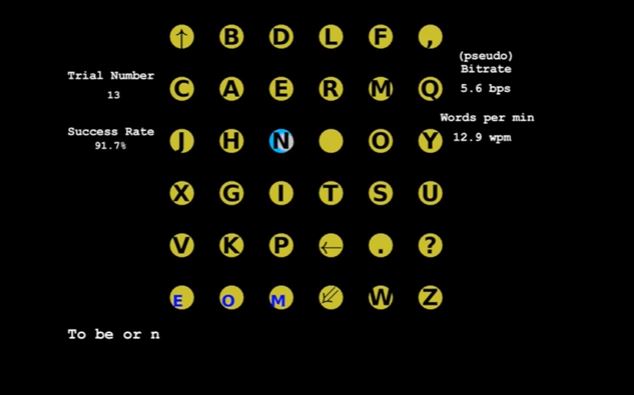
"content": "\u003cp>Check out this video.\u003c/p>\n\u003cp>https://www.youtube.com/watch?v=nxD2KDq18_E\u003c/p>\n\u003cp>Okay, so it has the look and feel of a circa-1980 video game—maybe something they let high school English students play in an attempt to foster an appreciation of Shakespeare.\u003c/p>\n\u003cp>But not so fast. It's a lot more interesting when you know the action, such as it is, is being driven by the \u003cem>thoughts\u003c/em> of monkeys.\u003c/p>\n\u003caside class=\"pullquote alignright\">'This system can work for a person as well.'\u003ccite>Stanford researcher Paul Nuyujukian\u003c/cite>\u003c/aside>\n\u003cp>In a paper published in the journal \u003ca href=\"http://spectrum.ieee.org/the-human-os/biomedical/bionics/monkeys-type-12-words-per-minute-with-braintokeyboard-communication\" target=\"_blank\">\u003cem>IEEE\u003c/em>\u003c/a> Monday, Stanford University researchers say they have achieved the equivalent of a \"typing\" rate of up to 12 words per minute in monkeys. The monkeys moved a cursor to a green dot with their minds by thinking about the green dot. (The primates, alas, were not thinking about actual letters of the alphabet.)\u003c/p>\n\u003cp>[ad fullwidth]\u003c/p>\n\u003cp>The monkeys' cerebral cortexes had been implanted with electrode arrays, which read their brain signals and translated them into cursor movements. The animals received a reward in the form of a beverage, delivered electronically, after each successful trial.\u003c/p>\n\u003cp>The experiments outlined in the paper were primarily conducted in 2011 and 2012.\u003c/p>\n\u003cp>Researchers hope the system could eventually be used by patients with \u003ca href=\"http://rarediseases.org/rare-diseases/locked-in-syndrome/\" target=\"_blank\">locked-in syndrome\u003c/a> and other illnesses that render people incapable of moving or speaking, in order to help them communicate more quickly.\u003c/p>\n\u003cp>We put the word \"typing\" in quotes because, first off, the monkeys were doing it virtually, and secondly, the keyboard you see in the video was actually overlaid in post-production, according to Paul Nuyujukian, a Stanford bioengineering department faculty member, who along with engineering professor Krishna Shenoy developed the system.\u003c/p>\n\u003cp>\u003cstrong>Trained to Select the Dots\u003c/strong>\u003c/p>\n\u003cp>What the monkeys were actually trained to do was navigate the cursor to the green dots as they appeared on a screen, selecting each dot by mentally dwelling on it for about a half-second, or by mentally intending to select it.\u003c/p>\n\u003cp>In human trials taking place now, Nuyujukian says, participants see the actual letters, as in a keyboard. \"We don’t have these results published, but this system can work for a person as well,\" he says.\u003c/p>\n\u003cfigure id=\"attachment_244040\" class=\"wp-caption alignright\" style=\"max-width: 795px\">\u003ca href=\"http://ww2.kqed.org/futureofyou/wp-content/uploads/sites/13/2016/09/paul.jpg\">\u003cimg class=\"size-full wp-image-244040\" src=\"http://ww2.kqed.org/futureofyou/wp-content/uploads/sites/13/2016/09/paul.jpg\" alt=\"Stanford Bio-X researcher Paul Nuyujukian.\" width=\"795\" height=\"531\" srcset=\"https://ww2.kqed.org/app/uploads/sites/13/2016/09/paul.jpg 795w, https://ww2.kqed.org/app/uploads/sites/13/2016/09/paul-400x267.jpg 400w, https://ww2.kqed.org/app/uploads/sites/13/2016/09/paul-768x513.jpg 768w\" sizes=\"(max-width: 795px) 100vw, 795px\">\u003c/a>\u003cfigcaption class=\"wp-caption-text\">Stanford Bio-X researcher Paul Nuyujukian. \u003ccite>(L.A. Cicero)\u003c/cite>\u003c/figcaption>\u003c/figure>\n\u003cp>The words-per-minute results the monkeys achieved do not account for the actual time it might take a human, who is not simply responding to colored lights, to type similar passages, the researchers acknowledge. \"However, for a copy typing task as is commonly used for measuring typing performance, this may be a close approximation,\" they wrote.\u003c/p>\n\u003cp>The trials achieved a typing rate up to three times as fast as recorded in other brain-computer interface studies, Nuyujukian says. However, the comparison was calculated using a measure called bit rate, and then converted into words per minute. That was necessary in order to compare these results with those recorded in previous studies.\u003c/p>\n\u003cp>\u003cstrong>Multiple Systems Available\u003c/strong>\u003c/p>\n\u003cp>If you've seen the film \"The Diving Bell and the Butterfly,\" you know that other systems of communication have long been used by severely disabled patients to communicate.\u003c/p>\n\u003cp>https://www.youtube.com/watch?v=4Ss0QiJUlXE\u003c/p>\n\u003cp>Perhaps the most famous method was used by physicist Stephen Hawking, who communicated using a sensor on his glasses to detect movement in his cheek muscle. (That has since been \u003ca href=\"https://www.wired.com/2015/01/intel-gave-stephen-hawking-voice/\" target=\"_blank\">upgraded\u003c/a>.) There are also eye-gaze systems that scroll letters across a screen and sense when patients fix their gaze on particular characters.\u003c/p>\n\u003cp>Those systems can be fatiguing, says Nuyujukian. Another problem, he says: You can’t look away without throwing the system off. And there can be reflection-related problems for those who wear eyeglasses. Though using an eye-gaze system is fast, he says, \"It’s not gotten as much adoption as we’d hope from a technology.\"\u003c/p>\n\u003cp>Another type of brain-computer interface reads brain signals using sensors arrayed across the scalp. The interfaces are less accurate than an invasive system like the one from Stanford, says Melanie Fried-Oken, a professor of neurology at Oregon Health & Science University in Portland.\u003c/p>\n\u003cp>\"You sneeze, you yawn, you blink, they affect the system more than if you have a circuit board on your brain,\" says Fried-Oken, who works with locked-in patients.\u003c/p>\n\u003cp>While she welcomed the system described in \u003cem>IEEE\u003c/em>, she thought the researchers' claim of comparative speediness with other systems was a stretch.\u003c/p>\n\u003cp>\"They’re looking at bit rate and humans are looking at words per minute,\" Fried-Oken said. \"That translation from bit rate to words per minute is very difficult. The monkeys are not conceptualizing words as they type.\"\u003c/p>\n\u003cp>She also said locked-in patients with whom she has worked think efficiency is more important than speed. \"They are happy to communicate slowly,\" she says.\u003c/p>\n\u003cp>Fried-Oken said that although some implanted systems have the best signal quality, \"you look like a tree's coming out of your head,\" although this is beginning to change.\u003c/p>\n\u003cp>\"Every system is difficult,\" she said. \"There will never be a system that’s not difficult.\"\u003c/p>\n\u003cp>Eduardo Miranda, who has developed brain-computer interface technology related to music, gave this assessment of the study in an email:\u003c/p>\n\u003cp>\"Even though the work does not address the actual cognitive processing required to form words and sentences, this certainly is a significant development. The great challenge of this invasive approach to BCI research is to translate what we learn from experiments with macaques to real-world applications for humans: using implanted electrodes is not practical, as it involves surgical procedures and the risk of infection is extremely high. Nevertheless the results are exciting.\u003c/p>\n\u003cp>\u003c/p>\n\u003cp>\"The significance of this research will probably become more apparent, and indeed useful, when far more sophisticated non-invasive technology to read the EEG becomes available.\"\u003c/p>\n\n",
"disqusIdentifier": "243892 http://ww2.kqed.org/futureofyou/?p=243892",
"disqusUrl": "https://ww2.kqed.org/futureofyou/2016/09/12/new-brain-computer-interface-has-monkeys-typing-up-a-storm/",
"stats": {
"hasVideo": true,
"hasChartOrMap": false,
"hasAudio": false,
"hasPolis": false,
"wordCount": 998,
"hasGoogleForm": false,
"hasGallery": false,
"hasHearkenModule": false,
"iframeSrcs": [],
"paragraphCount": 29
},
"modified": 1475111733,
"excerpt": "Researchers say a brain-computer interface implanted in the cerebral cortex enables fast typewritten communication.",
"headData": {
"twImgId": "",
"twTitle": "",
"ogTitle": "",
"ogImgId": "",
"twDescription": "",
"description": "Researchers say a brain-computer interface implanted in the cerebral cortex enables fast typewritten communication.",
"title": "New Brain-Computer Interface Has Monkeys 'Typing' Up a Storm | KQED",
"ogDescription": "",
"schema": {
"@context": "https://schema.org",
"@type": "Article",
"headline": "New Brain-Computer Interface Has Monkeys 'Typing' Up a Storm",
"datePublished": "2016-09-12T15:30:12-07:00",
"dateModified": "2016-09-28T18:15:33-07:00",
"image": "https://cdn.kqed.org/wp-content/uploads/2020/02/KQED-OG-Image@1x.png"
}
},
"guestAuthors": [],
"slug": "new-brain-computer-interface-has-monkeys-typing-up-a-storm",
"status": "publish",
"source": "Future of You",
"path": "/futureofyou/243892/new-brain-computer-interface-has-monkeys-typing-up-a-storm",
"audioTrackLength": null,
"parsedContent": [
{
"type": "contentString",
"content": "\u003cdiv class=\"post-body\">\u003cp>\u003cp>Check out this video.\u003c/p>\u003c/p>\u003cp>\u003cspan class='utils-parseShortcode-shortcodes-__youtubeShortcode__embedYoutube'>\n \u003cspan class='utils-parseShortcode-shortcodes-__youtubeShortcode__embedYoutubeInside'>\n \u003ciframe\n loading='lazy'\n class='utils-parseShortcode-shortcodes-__youtubeShortcode__youtubePlayer'\n type='text/html'\n src='//www.youtube.com/embed/nxD2KDq18_E'\n title='//www.youtube.com/embed/nxD2KDq18_E'\n allowfullscreen='true'\n style='border:0;'>\u003c/iframe>\n \u003c/span>\n \u003c/span>\u003c/p>\u003cp>\u003cp>Okay, so it has the look and feel of a circa-1980 video game—maybe something they let high school English students play in an attempt to foster an appreciation of Shakespeare.\u003c/p>\n\u003cp>But not so fast. It's a lot more interesting when you know the action, such as it is, is being driven by the \u003cem>thoughts\u003c/em> of monkeys.\u003c/p>\n\u003caside class=\"pullquote alignright\">'This system can work for a person as well.'\u003ccite>Stanford researcher Paul Nuyujukian\u003c/cite>\u003c/aside>\n\u003cp>In a paper published in the journal \u003ca href=\"http://spectrum.ieee.org/the-human-os/biomedical/bionics/monkeys-type-12-words-per-minute-with-braintokeyboard-communication\" target=\"_blank\">\u003cem>IEEE\u003c/em>\u003c/a> Monday, Stanford University researchers say they have achieved the equivalent of a \"typing\" rate of up to 12 words per minute in monkeys. The monkeys moved a cursor to a green dot with their minds by thinking about the green dot. (The primates, alas, were not thinking about actual letters of the alphabet.)\u003c/p>\n\u003cp>\u003c/p>\u003c/div>",
"attributes": {
"named": {},
"numeric": []
}
},
{
"type": "component",
"content": "",
"name": "ad",
"attributes": {
"named": {
"label": "fullwidth"
},
"numeric": [
"fullwidth"
]
}
},
{
"type": "contentString",
"content": "\u003cdiv class=\"post-body\">\u003cp>\u003c/p>\n\u003cp>The monkeys' cerebral cortexes had been implanted with electrode arrays, which read their brain signals and translated them into cursor movements. The animals received a reward in the form of a beverage, delivered electronically, after each successful trial.\u003c/p>\n\u003cp>The experiments outlined in the paper were primarily conducted in 2011 and 2012.\u003c/p>\n\u003cp>Researchers hope the system could eventually be used by patients with \u003ca href=\"http://rarediseases.org/rare-diseases/locked-in-syndrome/\" target=\"_blank\">locked-in syndrome\u003c/a> and other illnesses that render people incapable of moving or speaking, in order to help them communicate more quickly.\u003c/p>\n\u003cp>We put the word \"typing\" in quotes because, first off, the monkeys were doing it virtually, and secondly, the keyboard you see in the video was actually overlaid in post-production, according to Paul Nuyujukian, a Stanford bioengineering department faculty member, who along with engineering professor Krishna Shenoy developed the system.\u003c/p>\n\u003cp>\u003cstrong>Trained to Select the Dots\u003c/strong>\u003c/p>\n\u003cp>What the monkeys were actually trained to do was navigate the cursor to the green dots as they appeared on a screen, selecting each dot by mentally dwelling on it for about a half-second, or by mentally intending to select it.\u003c/p>\n\u003cp>In human trials taking place now, Nuyujukian says, participants see the actual letters, as in a keyboard. \"We don’t have these results published, but this system can work for a person as well,\" he says.\u003c/p>\n\u003cfigure id=\"attachment_244040\" class=\"wp-caption alignright\" style=\"max-width: 795px\">\u003ca href=\"http://ww2.kqed.org/futureofyou/wp-content/uploads/sites/13/2016/09/paul.jpg\">\u003cimg class=\"size-full wp-image-244040\" src=\"http://ww2.kqed.org/futureofyou/wp-content/uploads/sites/13/2016/09/paul.jpg\" alt=\"Stanford Bio-X researcher Paul Nuyujukian.\" width=\"795\" height=\"531\" srcset=\"https://ww2.kqed.org/app/uploads/sites/13/2016/09/paul.jpg 795w, https://ww2.kqed.org/app/uploads/sites/13/2016/09/paul-400x267.jpg 400w, https://ww2.kqed.org/app/uploads/sites/13/2016/09/paul-768x513.jpg 768w\" sizes=\"(max-width: 795px) 100vw, 795px\">\u003c/a>\u003cfigcaption class=\"wp-caption-text\">Stanford Bio-X researcher Paul Nuyujukian. \u003ccite>(L.A. Cicero)\u003c/cite>\u003c/figcaption>\u003c/figure>\n\u003cp>The words-per-minute results the monkeys achieved do not account for the actual time it might take a human, who is not simply responding to colored lights, to type similar passages, the researchers acknowledge. \"However, for a copy typing task as is commonly used for measuring typing performance, this may be a close approximation,\" they wrote.\u003c/p>\n\u003cp>The trials achieved a typing rate up to three times as fast as recorded in other brain-computer interface studies, Nuyujukian says. However, the comparison was calculated using a measure called bit rate, and then converted into words per minute. That was necessary in order to compare these results with those recorded in previous studies.\u003c/p>\n\u003cp>\u003cstrong>Multiple Systems Available\u003c/strong>\u003c/p>\n\u003cp>If you've seen the film \"The Diving Bell and the Butterfly,\" you know that other systems of communication have long been used by severely disabled patients to communicate.\u003c/p>\u003c/p>\u003cp>\u003cspan class='utils-parseShortcode-shortcodes-__youtubeShortcode__embedYoutube'>\n \u003cspan class='utils-parseShortcode-shortcodes-__youtubeShortcode__embedYoutubeInside'>\n \u003ciframe\n loading='lazy'\n class='utils-parseShortcode-shortcodes-__youtubeShortcode__youtubePlayer'\n type='text/html'\n src='//www.youtube.com/embed/4Ss0QiJUlXE'\n title='//www.youtube.com/embed/4Ss0QiJUlXE'\n allowfullscreen='true'\n style='border:0;'>\u003c/iframe>\n \u003c/span>\n \u003c/span>\u003c/p>\u003cp>\u003cp>Perhaps the most famous method was used by physicist Stephen Hawking, who communicated using a sensor on his glasses to detect movement in his cheek muscle. (That has since been \u003ca href=\"https://www.wired.com/2015/01/intel-gave-stephen-hawking-voice/\" target=\"_blank\">upgraded\u003c/a>.) There are also eye-gaze systems that scroll letters across a screen and sense when patients fix their gaze on particular characters.\u003c/p>\n\u003cp>Those systems can be fatiguing, says Nuyujukian. Another problem, he says: You can’t look away without throwing the system off. And there can be reflection-related problems for those who wear eyeglasses. Though using an eye-gaze system is fast, he says, \"It’s not gotten as much adoption as we’d hope from a technology.\"\u003c/p>\n\u003cp>Another type of brain-computer interface reads brain signals using sensors arrayed across the scalp. The interfaces are less accurate than an invasive system like the one from Stanford, says Melanie Fried-Oken, a professor of neurology at Oregon Health & Science University in Portland.\u003c/p>\n\u003cp>\"You sneeze, you yawn, you blink, they affect the system more than if you have a circuit board on your brain,\" says Fried-Oken, who works with locked-in patients.\u003c/p>\n\u003cp>While she welcomed the system described in \u003cem>IEEE\u003c/em>, she thought the researchers' claim of comparative speediness with other systems was a stretch.\u003c/p>\n\u003cp>\"They’re looking at bit rate and humans are looking at words per minute,\" Fried-Oken said. \"That translation from bit rate to words per minute is very difficult. The monkeys are not conceptualizing words as they type.\"\u003c/p>\n\u003cp>She also said locked-in patients with whom she has worked think efficiency is more important than speed. \"They are happy to communicate slowly,\" she says.\u003c/p>\n\u003cp>Fried-Oken said that although some implanted systems have the best signal quality, \"you look like a tree's coming out of your head,\" although this is beginning to change.\u003c/p>\n\u003cp>\"Every system is difficult,\" she said. \"There will never be a system that’s not difficult.\"\u003c/p>\n\u003cp>Eduardo Miranda, who has developed brain-computer interface technology related to music, gave this assessment of the study in an email:\u003c/p>\n\u003cp>\"Even though the work does not address the actual cognitive processing required to form words and sentences, this certainly is a significant development. The great challenge of this invasive approach to BCI research is to translate what we learn from experiments with macaques to real-world applications for humans: using implanted electrodes is not practical, as it involves surgical procedures and the risk of infection is extremely high. Nevertheless the results are exciting.\u003c/p>\n\u003cp>\u003c/p>\n\u003cp>\"The significance of this research will probably become more apparent, and indeed useful, when far more sophisticated non-invasive technology to read the EEG becomes available.\"\u003c/p>\n\n\u003c/div>\u003c/p>",
"attributes": {
"named": {},
"numeric": []
}
}
],
"link": "/futureofyou/243892/new-brain-computer-interface-has-monkeys-typing-up-a-storm",
"authors": [
"80"
],
"categories": [
"futureofyou_1061"
],
"tags": [
"futureofyou_1043",
"futureofyou_587",
"futureofyou_80",
"futureofyou_1045"
],
"featImg": "futureofyou_244067",
"label": "source_futureofyou_243892"
},
"futureofyou_242687": {
"type": "posts",
"id": "futureofyou_242687",
"meta": {
"index": "posts_1716263798",
"site": "futureofyou",
"id": "242687",
"score": null,
"sort": [
1474644619000
]
},
"parent": 0,
"labelTerm": {},
"blocks": [],
"publishDate": 1474644619,
"format": "standard",
"disqusTitle": "Paralyzed Patients in Stem Cell Study Regain Some Movement, Company Says",
"title": "Paralyzed Patients in Stem Cell Study Regain Some Movement, Company Says",
"headTitle": "KQED Future of You | KQED Science",
"content": "\u003cp>\u003cstrong>Update Sept. 23:\u003c/strong> You can read our original post about the remarkable case of Kris Boesen after this update. But some \u003ca href=\"http://asteriasbiotherapeutics.com/wp-content/uploads/2016/09/Wirth-ISCoS-14SEP2016-talk-FINAL.pdf\" target=\"_blank\">data\u003c/a> on the trial that Boesen is participating in was released last week by Asterias Biotherapeutics, the company that developed the stem cells injected into Boesen and other patients with cervical spinal cord injuries.\u003c/p>\n\u003cp>Asterias \u003ca href=\"http://asteriasbiotherapeutics.com/asterias-biotherapeutics-announces-positive-efficacy-data-in-patients-with-complete-cervical-spinal-cord-injuries-treated-with-ast-opc1/\" target=\"_blank\">says\u003c/a> the trial results to date are encouraging. The sample is still extremely small and nothing is really proven at this point, but the data are certainly positive for other patients besides Boesen.\u003c/p>\n\u003cp>There are two groups of patients: three who received a dose of 2 million stem cells and five who received a larger dose of 10 million.\u003c/p>\n\u003cp>To measure improvement, researchers use the \u003ca href=\"http://www.nature.com/sc/journal/v45/n3/fig_tab/3102008t1.html\" target=\"_blank\">Upper Extremity Motor Scale\u003c/a>, or UEMS. The scale runs from zero, which indicates total paralysis, to five, which means a patient has active movement.\u003c/p>\n\u003cp>The results:\u003c/p>\n\u003cp>[ad fullwidth]\u003c/p>\n\u003cp>First cohort, 2 million stem cells injected: On the six-point UEMS scale, one of three patients improved one motor level on one side of the body, while the other two patients improved one level on both sides.\u003c/p>\n\u003cp>Second cohort, 10 million stem cells: One of four patients improved two levels on both sides. Two other patients showed two levels of improvement on one side. And the fourth patient improved one level on one side. (One of the five patients in this group has not yet reached the 90-day point at which results are measured, so no report on that patient yet.)\u003c/p>\n\u003cp>The other significant finding, Asterias said, is that no one showed any measurable negative effects of the therapy -- researchers started with the smaller dose to make sure patients weren't harmed by the experimental trial, then went to the higher 10-million-cell dose.\u003c/p>\n\u003cp>Researchers have said the optimal dosage target is 20 million cells, but that point has not been reached yet in the trial.\u003c/p>\n\u003cp>The next milestone for getting a clearer picture of the results will be at the six-month mark for the second cohort, in January 2017.\u003c/p>\n\u003cp>All patients in the trial, being conducted at six sites around the country, have either \"lost all movement below their injury site and experience severe paralysis of the upper and lower limbs,\" or \"lost all motor function but may retain some minimal sensory function below their injury site,\" according to Asterias.\u003c/p>\n\u003cp>You can see more info on the study, which is called \u003ca href=\"http://www.scistar-study.com/\" target=\"_blank\">SCIStar\u003c/a>, at\u003ca href=\"https://clinicaltrials.gov/ct2/show/study/NCT02302157?term=NCT02302157&rank=1\" target=\"_blank\"> ClinicalTrials.gov.\u003c/a>\u003c/p>\n\u003cp>\u003cstrong>Original post\u003c/strong>\u003c/p>\n\u003cp class=\"p2\">\u003cspan class=\"s1\">Rod Boesen says his son, Kris, was so bad off he couldn't move a muscle from the neck down, and needed a ventilator to keep him drawing breath.\u003c/span>\u003c/p>\n\u003cp class=\"p2\">In March, Kris, then 20, was driving on a wet road when he crashed his car into a tree and a telephone poll, crushing three of his vertebrae. The accident left him with almost no feeling south of his neck, and doctors foresaw that he would lead the life of a paraplegic.\u003c/p>\n\u003cp class=\"p2\">\u003cspan class=\"s1\">\"They thought he was going to be totally, from the head on down, paralyzed,\" says Rod\u003c/span>\u003c/p>\n\u003cp class=\"p2\">But that has not been the case; Kris has regained the use of his hands and arms.\u003c/p>\n\u003caside class=\"pullquote alignright\">'They thought he was going to be totally, from the head on down, paralyzed.'\u003c/aside>\n\u003cp class=\"p2\">\u003cspan class=\"s1\">In April, as part of a research trial, a surgical team from USC's Keck Medical Center injected millions of embryonic stem cells into Boesen's spine. Two weeks later, Boesen began to show some improvement. After six weeks, he was discharged and returned home to Bakersfield, California to continue his rehabilitation.\u003cbr>\n\u003c/span>\u003c/p>\n\u003cp class=\"p2\">Now, five months after the stem cell injection, Boesen is remarkably self-sufficient, considering the initial prognosis. From feeding himself to talking on the phone to being able to twist the cap off a soda bottle, life is a degree more normal than anyone thought possible.\u003c/p>\n\u003cp class=\"p2\">\"We used to lift weights, that's something we used to do together,\" his dad says. \"Now we're doing that again. Only it's a lot less weight.\"\u003c/p>\n\u003cp class=\"p2\">The goal of the experimental stem cell treatment is to regrow the protective myelin sheath around each nerve, giving them a chance to heal. Whether this has occurred in Boesen yet is unknown--doctors would need to administer a spinal tap to find out, and that is dangerous for patients in this condition.\u003c/p>\n\u003cp class=\"p2\">So researchers don't know yet whether Boesen's recovery is due to the injection of stem cells. All they can say is that his progress has been remarkable, if not unprecedented for this type of spine injury.\u003c/p>\n\u003cfigure id=\"attachment_243385\" class=\"wp-caption alignright\" style=\"max-width: 640px\">\u003ca href=\"http://ww2.kqed.org/futureofyou/wp-content/uploads/sites/13/2016/09/Neurosurgery-Stem-Cell-spine-patient-Kris-Boesen_04.jpg\">\u003cimg class=\"wp-image-243385 size-large\" src=\"http://ww2.kqed.org/futureofyou/wp-content/uploads/sites/13/2016/09/Neurosurgery-Stem-Cell-spine-patient-Kris-Boesen_04-1180x775.jpg\" alt=\"Lifting weights is part of Kris Boesen’s regular program of physical therapy. \" width=\"640\" height=\"420\">\u003c/a>\u003cfigcaption class=\"wp-caption-text\">Lifting weights is part of Kris Boesen’s regular program of physical therapy. \u003ccite>(Greg Iger/Keck Medicine of USC))\u003c/cite>\u003c/figcaption>\u003c/figure>\n\u003cp class=\"p2\">\u003cspan class=\"s1\">The clinical mid-stage trial is very small; if it's successful, FDA approval would still be many years away. But the results in Boesen and four other patients have thus far been very encouraging.\u003c/span>\u003c/p>\n\u003cp class=\"p2\">\u003cspan class=\"s1\">With most spinal injuries, doctors and physical therapists usually look to see what's still intact, then try to make incremental improvements. As a matter of course, people don't recover much of the movement or function they've lost.\u003c/span>\u003c/p>\n\u003cp class=\"p2\">\u003cspan class=\"s1\">Charles Liu, a neurosurgeon and director of the USC Neurorestoration Center that's leading the research, \u003c/span>\u003cspan class=\"s1\">says the goal is not to attempt to repair the entire vertebral column, but to target the \u003ca href=\"http://www.spine-health.com/video/cervical-spine-anatomy-video\" target=\"_blank\">cervical spine\u003c/a> and restore neurological function.\u003c/span>\u003c/p>\n\u003cp class=\"p2\">\u003cspan class=\"s1\">The other four patients in the cohort have shown some progress, but not as much as Boesen, according to Liu. Each person received one shot of stem cells, and the other patients got lower doses than the 10 million stem cells injected into Boesen's cervical spinal cord. \u003c/span>\u003c/p>\n\u003cp class=\"p2\">\u003cspan class=\"s1\">Boesen's recovery may have been helped by his young age, and by the fact that he received the stem-cell injection so soon – just five weeks after his car crash, Liu said. \u003c/span>\u003c/p>\n\u003cp class=\"p2\">\u003cspan class=\"s1\">\"This is unique, yes,\" Liu said of the clinical trial. \"No one has taken this approach before.\" \u003c/span>\u003c/p>\n\u003cp class=\"p2\">\u003cspan class=\"s1\">Or achieved these kind of results. Liu cautioned that not all spinal injury victims will benefit from this type of treatment, but he said it does offer hope that there may be a remedy for some spinal injuries.\u003c/span>\u003c/p>\n\u003cp>[ad floatright]\u003c/p>\n\u003cp class=\"p2\">Data from patients in the study is set to be released on Wednesday.\u003c/p>\n\n",
"disqusIdentifier": "242687 http://ww2.kqed.org/futureofyou/?p=242687",
"disqusUrl": "https://ww2.kqed.org/futureofyou/2016/09/23/stem-cells-may-have-restored-use-of-hands-and-arms-in-paralyzed-man/",
"stats": {
"hasVideo": false,
"hasChartOrMap": false,
"hasAudio": false,
"hasPolis": false,
"wordCount": 1079,
"hasGoogleForm": false,
"hasGallery": false,
"hasHearkenModule": false,
"iframeSrcs": [],
"paragraphCount": 15
},
"modified": 1490133459,
"excerpt": "Researchers at Keck Medical Center in L.A. may have achieved a breakthrough by injecting millions of embryonic stem cells into the spines of paralyzed patients.",
"headData": {
"twImgId": "",
"twTitle": "",
"ogTitle": "",
"ogImgId": "",
"twDescription": "",
"description": "Researchers at Keck Medical Center in L.A. may have achieved a breakthrough by injecting millions of embryonic stem cells into the spines of paralyzed patients.",
"title": "Paralyzed Patients in Stem Cell Study Regain Some Movement, Company Says | KQED",
"ogDescription": "",
"schema": {
"@context": "https://schema.org",
"@type": "Article",
"headline": "Paralyzed Patients in Stem Cell Study Regain Some Movement, Company Says",
"datePublished": "2016-09-23T08:30:19-07:00",
"dateModified": "2017-03-21T14:57:39-07:00",
"image": "https://cdn.kqed.org/wp-content/uploads/2020/02/KQED-OG-Image@1x.png"
}
},
"guestAuthors": [],
"slug": "stem-cells-may-have-restored-use-of-hands-and-arms-in-paralyzed-man",
"status": "publish",
"customPermalink": "2016/09/12/stem-cells-may-have-restored-use-of-hands-and-arms-in-paralyzed-man/",
"source": "Future of You",
"path": "/futureofyou/242687/stem-cells-may-have-restored-use-of-hands-and-arms-in-paralyzed-man",
"audioTrackLength": null,
"parsedContent": [
{
"type": "contentString",
"content": "\u003cdiv class=\"post-body\">\u003cp>\u003cp>\u003cstrong>Update Sept. 23:\u003c/strong> You can read our original post about the remarkable case of Kris Boesen after this update. But some \u003ca href=\"http://asteriasbiotherapeutics.com/wp-content/uploads/2016/09/Wirth-ISCoS-14SEP2016-talk-FINAL.pdf\" target=\"_blank\">data\u003c/a> on the trial that Boesen is participating in was released last week by Asterias Biotherapeutics, the company that developed the stem cells injected into Boesen and other patients with cervical spinal cord injuries.\u003c/p>\n\u003cp>Asterias \u003ca href=\"http://asteriasbiotherapeutics.com/asterias-biotherapeutics-announces-positive-efficacy-data-in-patients-with-complete-cervical-spinal-cord-injuries-treated-with-ast-opc1/\" target=\"_blank\">says\u003c/a> the trial results to date are encouraging. The sample is still extremely small and nothing is really proven at this point, but the data are certainly positive for other patients besides Boesen.\u003c/p>\n\u003cp>There are two groups of patients: three who received a dose of 2 million stem cells and five who received a larger dose of 10 million.\u003c/p>\n\u003cp>To measure improvement, researchers use the \u003ca href=\"http://www.nature.com/sc/journal/v45/n3/fig_tab/3102008t1.html\" target=\"_blank\">Upper Extremity Motor Scale\u003c/a>, or UEMS. The scale runs from zero, which indicates total paralysis, to five, which means a patient has active movement.\u003c/p>\n\u003cp>The results:\u003c/p>\n\u003cp>\u003c/p>\u003c/div>",
"attributes": {
"named": {},
"numeric": []
}
},
{
"type": "component",
"content": "",
"name": "ad",
"attributes": {
"named": {
"label": "fullwidth"
},
"numeric": [
"fullwidth"
]
}
},
{
"type": "contentString",
"content": "\u003cdiv class=\"post-body\">\u003cp>\u003c/p>\n\u003cp>First cohort, 2 million stem cells injected: On the six-point UEMS scale, one of three patients improved one motor level on one side of the body, while the other two patients improved one level on both sides.\u003c/p>\n\u003cp>Second cohort, 10 million stem cells: One of four patients improved two levels on both sides. Two other patients showed two levels of improvement on one side. And the fourth patient improved one level on one side. (One of the five patients in this group has not yet reached the 90-day point at which results are measured, so no report on that patient yet.)\u003c/p>\n\u003cp>The other significant finding, Asterias said, is that no one showed any measurable negative effects of the therapy -- researchers started with the smaller dose to make sure patients weren't harmed by the experimental trial, then went to the higher 10-million-cell dose.\u003c/p>\n\u003cp>Researchers have said the optimal dosage target is 20 million cells, but that point has not been reached yet in the trial.\u003c/p>\n\u003cp>The next milestone for getting a clearer picture of the results will be at the six-month mark for the second cohort, in January 2017.\u003c/p>\n\u003cp>All patients in the trial, being conducted at six sites around the country, have either \"lost all movement below their injury site and experience severe paralysis of the upper and lower limbs,\" or \"lost all motor function but may retain some minimal sensory function below their injury site,\" according to Asterias.\u003c/p>\n\u003cp>You can see more info on the study, which is called \u003ca href=\"http://www.scistar-study.com/\" target=\"_blank\">SCIStar\u003c/a>, at\u003ca href=\"https://clinicaltrials.gov/ct2/show/study/NCT02302157?term=NCT02302157&rank=1\" target=\"_blank\"> ClinicalTrials.gov.\u003c/a>\u003c/p>\n\u003cp>\u003cstrong>Original post\u003c/strong>\u003c/p>\n\u003cp class=\"p2\">\u003cspan class=\"s1\">Rod Boesen says his son, Kris, was so bad off he couldn't move a muscle from the neck down, and needed a ventilator to keep him drawing breath.\u003c/span>\u003c/p>\n\u003cp class=\"p2\">In March, Kris, then 20, was driving on a wet road when he crashed his car into a tree and a telephone poll, crushing three of his vertebrae. The accident left him with almost no feeling south of his neck, and doctors foresaw that he would lead the life of a paraplegic.\u003c/p>\n\u003cp class=\"p2\">\u003cspan class=\"s1\">\"They thought he was going to be totally, from the head on down, paralyzed,\" says Rod\u003c/span>\u003c/p>\n\u003cp class=\"p2\">But that has not been the case; Kris has regained the use of his hands and arms.\u003c/p>\n\u003caside class=\"pullquote alignright\">'They thought he was going to be totally, from the head on down, paralyzed.'\u003c/aside>\n\u003cp class=\"p2\">\u003cspan class=\"s1\">In April, as part of a research trial, a surgical team from USC's Keck Medical Center injected millions of embryonic stem cells into Boesen's spine. Two weeks later, Boesen began to show some improvement. After six weeks, he was discharged and returned home to Bakersfield, California to continue his rehabilitation.\u003cbr>\n\u003c/span>\u003c/p>\n\u003cp class=\"p2\">Now, five months after the stem cell injection, Boesen is remarkably self-sufficient, considering the initial prognosis. From feeding himself to talking on the phone to being able to twist the cap off a soda bottle, life is a degree more normal than anyone thought possible.\u003c/p>\n\u003cp class=\"p2\">\"We used to lift weights, that's something we used to do together,\" his dad says. \"Now we're doing that again. Only it's a lot less weight.\"\u003c/p>\n\u003cp class=\"p2\">The goal of the experimental stem cell treatment is to regrow the protective myelin sheath around each nerve, giving them a chance to heal. Whether this has occurred in Boesen yet is unknown--doctors would need to administer a spinal tap to find out, and that is dangerous for patients in this condition.\u003c/p>\n\u003cp class=\"p2\">So researchers don't know yet whether Boesen's recovery is due to the injection of stem cells. All they can say is that his progress has been remarkable, if not unprecedented for this type of spine injury.\u003c/p>\n\u003cfigure id=\"attachment_243385\" class=\"wp-caption alignright\" style=\"max-width: 640px\">\u003ca href=\"http://ww2.kqed.org/futureofyou/wp-content/uploads/sites/13/2016/09/Neurosurgery-Stem-Cell-spine-patient-Kris-Boesen_04.jpg\">\u003cimg class=\"wp-image-243385 size-large\" src=\"http://ww2.kqed.org/futureofyou/wp-content/uploads/sites/13/2016/09/Neurosurgery-Stem-Cell-spine-patient-Kris-Boesen_04-1180x775.jpg\" alt=\"Lifting weights is part of Kris Boesen’s regular program of physical therapy. \" width=\"640\" height=\"420\">\u003c/a>\u003cfigcaption class=\"wp-caption-text\">Lifting weights is part of Kris Boesen’s regular program of physical therapy. \u003ccite>(Greg Iger/Keck Medicine of USC))\u003c/cite>\u003c/figcaption>\u003c/figure>\n\u003cp class=\"p2\">\u003cspan class=\"s1\">The clinical mid-stage trial is very small; if it's successful, FDA approval would still be many years away. But the results in Boesen and four other patients have thus far been very encouraging.\u003c/span>\u003c/p>\n\u003cp class=\"p2\">\u003cspan class=\"s1\">With most spinal injuries, doctors and physical therapists usually look to see what's still intact, then try to make incremental improvements. As a matter of course, people don't recover much of the movement or function they've lost.\u003c/span>\u003c/p>\n\u003cp class=\"p2\">\u003cspan class=\"s1\">Charles Liu, a neurosurgeon and director of the USC Neurorestoration Center that's leading the research, \u003c/span>\u003cspan class=\"s1\">says the goal is not to attempt to repair the entire vertebral column, but to target the \u003ca href=\"http://www.spine-health.com/video/cervical-spine-anatomy-video\" target=\"_blank\">cervical spine\u003c/a> and restore neurological function.\u003c/span>\u003c/p>\n\u003cp class=\"p2\">\u003cspan class=\"s1\">The other four patients in the cohort have shown some progress, but not as much as Boesen, according to Liu. Each person received one shot of stem cells, and the other patients got lower doses than the 10 million stem cells injected into Boesen's cervical spinal cord. \u003c/span>\u003c/p>\n\u003cp class=\"p2\">\u003cspan class=\"s1\">Boesen's recovery may have been helped by his young age, and by the fact that he received the stem-cell injection so soon – just five weeks after his car crash, Liu said. \u003c/span>\u003c/p>\n\u003cp class=\"p2\">\u003cspan class=\"s1\">\"This is unique, yes,\" Liu said of the clinical trial. \"No one has taken this approach before.\" \u003c/span>\u003c/p>\n\u003cp class=\"p2\">\u003cspan class=\"s1\">Or achieved these kind of results. Liu cautioned that not all spinal injury victims will benefit from this type of treatment, but he said it does offer hope that there may be a remedy for some spinal injuries.\u003c/span>\u003c/p>\n\u003cp>\u003c/p>\u003c/div>",
"attributes": {
"named": {},
"numeric": []
}
},
{
"type": "component",
"content": "",
"name": "ad",
"attributes": {
"named": {
"label": "floatright"
},
"numeric": [
"floatright"
]
}
},
{
"type": "contentString",
"content": "\u003cdiv class=\"post-body\">\u003cp>\u003c/p>\n\u003cp class=\"p2\">Data from patients in the study is set to be released on Wednesday.\u003c/p>\n\n\u003c/div>\u003c/p>",
"attributes": {
"named": {},
"numeric": []
}
}
],
"link": "/futureofyou/242687/stem-cells-may-have-restored-use-of-hands-and-arms-in-paralyzed-man",
"authors": [
"8656"
],
"categories": [
"futureofyou_1062"
],
"tags": [
"futureofyou_80",
"futureofyou_1042",
"futureofyou_680"
],
"featImg": "futureofyou_242691",
"label": "source_futureofyou_242687"
},
"futureofyou_242111": {
"type": "posts",
"id": "futureofyou_242111",
"meta": {
"index": "posts_1716263798",
"site": "futureofyou",
"id": "242111",
"score": null,
"sort": [
1473446151000
]
},
"parent": 0,
"labelTerm": {
"site": "futureofyou"
},
"blocks": [],
"publishDate": 1473446151,
"format": "standard",
"disqusTitle": "Computer Program Maps Cancer Progression",
"title": "Computer Program Maps Cancer Progression",
"headTitle": "KQED Future of You | KQED Science",
"content": "\u003cp>What if doctors could call up a computerized map that would show them how a case of cancer is likely to progress?\u003c/p>\n\u003cp>Tumor cells can mutate in unexpected ways. And cancers can suddenly grow. For doctors, anticipating cancer's next moves can help guide timely, effective patient treatment.\u003c/p>\n\u003caside class=\"pullquote alignright\">The program maps cancer progression in much the same way historical explorers drew maps of the Earth without satellite imaging.\u003c/aside>\n\u003cp>A mapping program, called \u003ca href=\"https://sites.google.com/site/troncopackage/picnic\">PiCnIc\u003c/a> for short, aims to help physicians in staying a step ahead of cancer and preparing long-term treatment plans with fewer elements of surprise.\u003c/p>\n\u003cp>How does it work?\u003c/p>\n\u003cp>PiCnIc \"takes in patient data, guesses potential scenarios and tells you the most likely scenario,\" says \u003ca href=\"https://cs.nyu.edu/mishra/\">Bud Mishra\u003c/a>, a professor at New York University's Courant Institute of Mathematical Sciences who led a multinational team in developing the program.\u003c/p>\n\u003cp>[ad fullwidth]\u003c/p>\n\u003cp>PiCnIc produces maps of cancer progression in much the same way historical explorers drew maps of the Earth without satellite imaging. The program, like the explorers, draws tiny regional maps and then pieces them together like a puzzle.\u003c/p>\n\u003cp>The program extracts the simplest pieces of information from medical data, which Mishra calls \"little blocks of causality.\" They describe one stage of cancer, along with a potential outcome.\u003c/p>\n\u003cp>Once the blocks of causality are constructed, PiCnIc examines them to retain only the likeliest paths. This process is akin to discarding poorly drawn regional maps before attempting to put together a global map.\u003c/p>\n\u003cp>The end result is a graphical representation of the possible scenarios a cancer patient might encounter. From it, physicians can hypothesize how cancer will progress and plan accordingly.\u003c/p>\n\u003cp>Just like a good cartographer, PiCnIc is capable of drawing all kinds of maps, as long as appropriate medical data are available. \"[PiCnIc] is quite flexible. It can incorporate pretty much any cancer type,\" says \u003ca href=\"http://faculty.mdanderson.org/Nicholas_Navin/Default.asp?SNID=0\">Nicholas Navin\u003c/a>, a professor at the University of Texas MD Anderson Cancer Center who wasn't involved in the creation of PiCnIc. Navin says that PiCnIc, at its current stage of development, \"already gives [us] enough information to be clinically useful.\"\u003c/p>\n\u003cp>The program can also update the maps to factor in advances in cancer research as well, says \u003ca href=\"https://sites.google.com/site/giuliocaravagna/\" target=\"_blank\">Giulio Caravagna\u003c/a>, a computational biologist at the University of Edinburgh who participated in the research project. As new medical data become available, researchers can rerun PiCnIc with ease to generate updated maps of cancer. \"And there is already a pretty good amount of data, like the \u003ca href=\"http://cancergenome.nih.gov/\" target=\"_blank\">Cancer Genome Atlas\u003c/a>,\" says Caravagna.\u003c/p>\n\u003cp>The research work was published on the \u003cem>Proceedings of the National Academy of Sciences\u003c/em> \u003ca href=\"http://www.pnas.org/content/113/28/E4025.abstract\">in late June\u003c/a>. Mishra says that he plans to look into \"commercial opportunities\" for PiCnIc and collaborations with \"large research labs\" to improve it.\u003c/p>\n\u003cp>For now, though, the PiCnIc maps \"shouldn't be interpreted too much in making decisions for individual patient,\" says Navin.\u003c/p>\n\u003cp>\"We are a little bit underpowered to comprehensively build these [maps of cancer]... there are still little ways to go,\" says \u003ca href=\"http://compbio.cs.brown.edu/\">Ben Raphael\u003c/a>, a computational biologist at Brown University.\u003c/p>\n\u003cp>\u003c/p>\n\u003cp>A cartographer is only as good as the measurements the explorers bring in, after all.\u003c/p>\n\u003cdiv class=\"fullattribution\">Copyright 2016 NPR. To see more, visit http://www.npr.org/.\u003cimg src=\"http://www.google-analytics.com/__utm.gif?utmac=UA-5828686-4&utmdt=A+Map+To+Help+Cancer+Doctors+Find+Their+Way&utme=8(APIKey)9(MDAxOTAwOTE4MDEyMTkxMDAzNjczZDljZA004)\">\u003c/div>\n\n",
"disqusIdentifier": "242111 http://ww2.kqed.org/futureofyou/?p=242111",
"disqusUrl": "https://ww2.kqed.org/futureofyou/2016/09/09/computer-program-maps-cancer-progression/",
"stats": {
"hasVideo": false,
"hasChartOrMap": false,
"hasAudio": false,
"hasPolis": false,
"wordCount": 528,
"hasGoogleForm": false,
"hasGallery": false,
"hasHearkenModule": false,
"iframeSrcs": [],
"paragraphCount": 17
},
"modified": 1473447005,
"excerpt": "A computer program can map cancer progression in much the same way historical explorers drew maps of the Earth without satellite imaging. Small bits of data can be pieced together to form a picture.",
"headData": {
"twImgId": "",
"twTitle": "",
"ogTitle": "",
"ogImgId": "",
"twDescription": "",
"description": "A computer program can map cancer progression in much the same way historical explorers drew maps of the Earth without satellite imaging. Small bits of data can be pieced together to form a picture.",
"title": "Computer Program Maps Cancer Progression | KQED",
"ogDescription": "",
"schema": {
"@context": "https://schema.org",
"@type": "Article",
"headline": "Computer Program Maps Cancer Progression",
"datePublished": "2016-09-09T11:35:51-07:00",
"dateModified": "2016-09-09T11:50:05-07:00",
"image": "https://cdn.kqed.org/wp-content/uploads/2020/02/KQED-OG-Image@1x.png"
}
},
"guestAuthors": [],
"slug": "computer-program-maps-cancer-progression",
"status": "publish",
"nprApiLink": "http://api.npr.org/query?id=484048919&apiKey=MDAxOTAwOTE4MDEyMTkxMDAzNjczZDljZA004",
"nprByline": "Mark H. Kim\u003cbr />NPR Shots",
"nprStoryDate": "Fri, 09 Sep 2016 09:32:00 -0400",
"nprLastModifiedDate": "Fri, 09 Sep 2016 12:30:14 -0400",
"nprHtmlLink": "http://www.npr.org/sections/health-shots/2016/09/09/484048919/a-map-to-help-cancer-doctors-find-their-way?ft=nprml&f=484048919",
"nprImageAgency": "Science Source",
"nprImageCredit": "Jennifer C. Waters",
"nprStoryId": "484048919",
"nprRetrievedStory": "1",
"nprPubDate": "Fri, 09 Sep 2016 12:30:00 -0400",
"path": "/futureofyou/242111/computer-program-maps-cancer-progression",
"audioTrackLength": null,
"parsedContent": [
{
"type": "contentString",
"content": "\u003cdiv class=\"post-body\">\u003cp>\u003cp>What if doctors could call up a computerized map that would show them how a case of cancer is likely to progress?\u003c/p>\n\u003cp>Tumor cells can mutate in unexpected ways. And cancers can suddenly grow. For doctors, anticipating cancer's next moves can help guide timely, effective patient treatment.\u003c/p>\n\u003caside class=\"pullquote alignright\">The program maps cancer progression in much the same way historical explorers drew maps of the Earth without satellite imaging.\u003c/aside>\n\u003cp>A mapping program, called \u003ca href=\"https://sites.google.com/site/troncopackage/picnic\">PiCnIc\u003c/a> for short, aims to help physicians in staying a step ahead of cancer and preparing long-term treatment plans with fewer elements of surprise.\u003c/p>\n\u003cp>How does it work?\u003c/p>\n\u003cp>PiCnIc \"takes in patient data, guesses potential scenarios and tells you the most likely scenario,\" says \u003ca href=\"https://cs.nyu.edu/mishra/\">Bud Mishra\u003c/a>, a professor at New York University's Courant Institute of Mathematical Sciences who led a multinational team in developing the program.\u003c/p>\n\u003cp>\u003c/p>\u003c/div>",
"attributes": {
"named": {},
"numeric": []
}
},
{
"type": "component",
"content": "",
"name": "ad",
"attributes": {
"named": {
"label": "fullwidth"
},
"numeric": [
"fullwidth"
]
}
},
{
"type": "contentString",
"content": "\u003cdiv class=\"post-body\">\u003cp>\u003c/p>\n\u003cp>PiCnIc produces maps of cancer progression in much the same way historical explorers drew maps of the Earth without satellite imaging. The program, like the explorers, draws tiny regional maps and then pieces them together like a puzzle.\u003c/p>\n\u003cp>The program extracts the simplest pieces of information from medical data, which Mishra calls \"little blocks of causality.\" They describe one stage of cancer, along with a potential outcome.\u003c/p>\n\u003cp>Once the blocks of causality are constructed, PiCnIc examines them to retain only the likeliest paths. This process is akin to discarding poorly drawn regional maps before attempting to put together a global map.\u003c/p>\n\u003cp>The end result is a graphical representation of the possible scenarios a cancer patient might encounter. From it, physicians can hypothesize how cancer will progress and plan accordingly.\u003c/p>\n\u003cp>Just like a good cartographer, PiCnIc is capable of drawing all kinds of maps, as long as appropriate medical data are available. \"[PiCnIc] is quite flexible. It can incorporate pretty much any cancer type,\" says \u003ca href=\"http://faculty.mdanderson.org/Nicholas_Navin/Default.asp?SNID=0\">Nicholas Navin\u003c/a>, a professor at the University of Texas MD Anderson Cancer Center who wasn't involved in the creation of PiCnIc. Navin says that PiCnIc, at its current stage of development, \"already gives [us] enough information to be clinically useful.\"\u003c/p>\n\u003cp>The program can also update the maps to factor in advances in cancer research as well, says \u003ca href=\"https://sites.google.com/site/giuliocaravagna/\" target=\"_blank\">Giulio Caravagna\u003c/a>, a computational biologist at the University of Edinburgh who participated in the research project. As new medical data become available, researchers can rerun PiCnIc with ease to generate updated maps of cancer. \"And there is already a pretty good amount of data, like the \u003ca href=\"http://cancergenome.nih.gov/\" target=\"_blank\">Cancer Genome Atlas\u003c/a>,\" says Caravagna.\u003c/p>\n\u003cp>The research work was published on the \u003cem>Proceedings of the National Academy of Sciences\u003c/em> \u003ca href=\"http://www.pnas.org/content/113/28/E4025.abstract\">in late June\u003c/a>. Mishra says that he plans to look into \"commercial opportunities\" for PiCnIc and collaborations with \"large research labs\" to improve it.\u003c/p>\n\u003cp>For now, though, the PiCnIc maps \"shouldn't be interpreted too much in making decisions for individual patient,\" says Navin.\u003c/p>\n\u003cp>\"We are a little bit underpowered to comprehensively build these [maps of cancer]... there are still little ways to go,\" says \u003ca href=\"http://compbio.cs.brown.edu/\">Ben Raphael\u003c/a>, a computational biologist at Brown University.\u003c/p>\n\u003cp>\u003c/p>\n\u003cp>A cartographer is only as good as the measurements the explorers bring in, after all.\u003c/p>\n\u003cdiv class=\"fullattribution\">Copyright 2016 NPR. To see more, visit http://www.npr.org/.\u003cimg src=\"http://www.google-analytics.com/__utm.gif?utmac=UA-5828686-4&utmdt=A+Map+To+Help+Cancer+Doctors+Find+Their+Way&utme=8(APIKey)9(MDAxOTAwOTE4MDEyMTkxMDAzNjczZDljZA004)\">\u003c/div>\n\n\u003c/div>\u003c/p>",
"attributes": {
"named": {},
"numeric": []
}
}
],
"link": "/futureofyou/242111/computer-program-maps-cancer-progression",
"authors": [
"byline_futureofyou_242111"
],
"categories": [
"futureofyou_452",
"futureofyou_1"
],
"tags": [
"futureofyou_103",
"futureofyou_80",
"futureofyou_1039"
],
"featImg": "futureofyou_242114",
"label": "futureofyou"
},
"futureofyou_234678": {
"type": "posts",
"id": "futureofyou_234678",
"meta": {
"index": "posts_1716263798",
"site": "futureofyou",
"id": "234678",
"score": null,
"sort": [
1473370208000
]
},
"parent": 0,
"labelTerm": {
"site": "futureofyou"
},
"blocks": [],
"publishDate": 1473370208,
"format": "standard",
"disqusTitle": "Lies, Damned Lies, and Statistics: How to Judge Research Study Results",
"title": "Lies, Damned Lies, and Statistics: How to Judge Research Study Results",
"headTitle": "KQED Future of You | KQED Science",
"content": "\u003cp>A recent study making \u003ca href=\"https://ww2.kqed.org/futureofyou/2016/08/24/with-gene-test-some-breast-cancer-patients-can-skip-chemo-study/\" target=\"_blank\">headlines\u003c/a> around the world found that some early-stage breast cancer patients could avoid chemotherapy with only a slightly higher risk of the cancer recurring and spreading than those who underwent the treatment.\u003c/p>\n\u003caside class=\"pullquote alignright\">There is often potential variation in study numbers that make the headlines.\u003c/aside>\n\u003cp>The study found that after five years, women with a particular genetic profile--uncovered in a genetic test--fared hardly any better after chemo than woman who skipped the treatment.\u003c/p>\n\u003cp>The cancer failed to spread in 95.9 percent of the women who received chemotherapy, compared to 94.5 percent of those who went without it.\u003c/p>\n\u003cp>This appears to mean that if you have the right genetic profile, you would be taking on only a 1.5 percent greater risk by avoiding a costly treatment known for side effects such as hair loss, mouth sores, diarrhea and, in rare cases, leukemia or other diseases.\u003c/p>\n\u003cp>[contextly_sidebar id=\"umpVHsLRM86oNnIerZgYm9lySd4eYGjp\"]Deanna Attai, assistant clinical professor of surgery at the David Geffen School of Medicine at the University of California, Los Angeles, told Health News Review that one of her takeaways from the study was that it is \"very clear that not all patients benefit from chemotherapy. Our old habit of recommending chemotherapy 'just to be sure' is not appropriate.\"\u003c/p>\n\u003cp>[ad fullwidth]\u003c/p>\n\u003cp>While that may be true for some clinicians and patients, a close look at the study results shows there is more potential variation in the risk rates than the headline number of 1.5 percent suggests.\u003c/p>\n\u003cp>That's because the narrow, 1.5 percent difference between the two groups could be just \u003ca href=\"http://www.wisegeek.com/what-is-statistical-noise.htm\" target=\"_blank\">statistical noise\u003c/a>--a random variation that would not be duplicated if the experiment were run again. If and when someone replicates this study, it could turn out that women who get chemo might do a bit worse or might do a bit better. And the same is true for women who don't get chemo.\u003c/p>\n\u003cp>How would you know that?\u003c/p>\n\u003cp>You'd have to look for two numbers that are sometimes deep in the data. These numbers are really different sides of the same coin and are related to each other. These two measures can often give you some idea about how significant a result really is.\u003c/p>\n\u003cp>\u003cstrong>Are the Results Significant?\u003c/strong>\u003c/p>\n\u003cp>One way to tell if a result is significant--meaning not due to chance-- is by looking for the number that tells you how likely it is the result is random. That number is called the p-value.\u003c/p>\n\u003cfigure id=\"attachment_234680\" class=\"wp-caption alignright\" style=\"max-width: 800px\">\u003ca href=\"http://ww2.kqed.org/futureofyou/wp-content/uploads/sites/13/2016/08/ChemoNCI.jpg\">\u003cimg class=\"wp-image-234680 size-medium\" src=\"http://ww2.kqed.org/futureofyou/wp-content/uploads/sites/13/2016/08/ChemoNCI-800x475.jpg\" alt=\"Woman receiving chemotherapy.\" width=\"800\" height=\"475\">\u003c/a>\u003cfigcaption class=\"wp-caption-text\">Woman receiving chemotherapy.\u003c/figcaption>\u003c/figure>\n\u003cp>A p-value of 0.1 means there is a 10 percent chance the result happened randomly. A 0.2 translates into a 20 percent chance the result is random, and so on. Scientists have decided that in most experiments, a result is significant if the p-value is less than 0.05. (Though this threshold of validity is not without \u003ca href=\"http://amstat.tandfonline.com/doi/abs/10.1080/00031305.2016.1154108\" target=\"_blank\">controversy\u003c/a>.)\u003c/p>\n\u003cp>So when trying to determine the significance of a particular result, you should look for the p-value that's associated with it. Ideally you want this number to be lower than 0.05. Anything much higher could be a red flag.\u003c/p>\n\u003cp>In the breast cancer study, it turns out that the p-value for the 1.5 percent lower risk offered by chemotherapy is 0.27. That is very high for a scientific study. It means there is a 27 percent chance the result was random.\u003c/p>\n\u003cp>\"That is pretty highly insignificant,\" Susan Wei, an assistant professor in the Division of Biostatistics at the University of Minnesota, told \u003ca href=\"http://www.healthnewsreview.org/2016/08/much-significance-health-news-give-statistically-nonsignificant-results-case-study-stories-skipping-breast-cancer-chemo/\" target=\"_blank\">Health News Review\u003c/a>.\u003c/p>\n\u003cp>In other words, the study can’t say with certainty that a woman who chooses not to have chemo actually takes on only a 1.5 percent higher risk. The risk could be somewhat higher or lower, and this may or may not make a difference in someone's treatment decisions.\u003c/p>\n\u003cp>\u003cstrong>How Confident Can You Be in the Results?\u003c/strong>\u003c/p>\n\u003cp>Another way to evaluate a result involves looking at how confident researchers are that they would get the same result if they repeated the experiment. This is another way of asking whether or not the study is relevant for a broader population.\u003c/p>\n\u003cp>This measure is called the \"95 percent confidence interval,\" or CI.\u003c/p>\n\u003cp>The CI tells you that 95 percent of the time, when the experiment is repeated, the result will fall between a specific range of numbers. Ideally, you want this range to be small. The wider the range of possible results, the less confidence the researcher can have in the particular result they got.\u003c/p>\n\u003cp>It's something like the margin of error in a poll: If it's too great, it will put the outcome in doubt.\u003c/p>\n\u003cp>Let's take a made-up poll that shows Hillary Clinton beating Donald Trump 40-33. That sounds very good for Clinton supporters. But if the margin of error were 10 percent, that would mean the poll results could actually be 50-23 in favor of Clinton or 30-43 in favor of Trump. When the margin of error is so large it can swing the outcome in the opposite direction, that means the poll results are statistically in question.\u003c/p>\n\u003cp>If the margin of error were only, say, three percent, the narrowest lead Clinton could have would be 37 to 36; there is no potential change in the outcome -- she still wins.\u003c/p>\n\u003cp>Now let's look at the breast cancer study.\u003c/p>\n\u003cp>Of the women who received chemo, 95.9 percent of them made it to the 5-year mark with no breast cancer spreading.\u003c/p>\n\u003cp>But a more complete reporting of the results shows the CI for that group of women is a range between 94 and 97.2 percent. That means if someone repeats the experiment, the number of women who receive chemo and make it five years with no cancer spreading could be anywhere between 94 and 97.2 percent. So the benefit of getting chemo could be higher or lower than the study suggests.\u003c/p>\n\u003cp>For the women who didn't get chemo, the CI is between 92.3 and 95.9 percent.\u003c/p>\n\u003cp>Chemo: 94 to 97.2 percent\u003c/p>\n\u003cp>No Chemo: 92.3 to 95.9 percent\u003c/p>\n\u003cp>It means the study isn't able to say that if you have a particular genetic profile, you can avoid chemotherapy and do just as well after five years as women who get chemo. You can't know the answer to that because the possible results have such a wide range and overlap that they can even swing the outcome in the opposite direction:\u003c/p>\n\u003cp>\u003c!-- iframe plugin v.4.3 wordpress.org/plugins/iframe/ -->\u003cbr>\n\u003ciframe id=\"datawrapper-chart-eJ9aC\" src=\"//datawrapper.dwcdn.net/eJ9aC/3/\" frameborder=\"0\" allowtransparency=\"true\" allowfullscreen=\"allowfullscreen\" webkitallowfullscreen=\"webkitallowfullscreen\" mozallowfullscreen=\"mozallowfullscreen\" oallowfullscreen=\"oallowfullscreen\" msallowfullscreen=\"msallowfullscreen\" width=\"100%\" height=\"230\" scrolling=\"yes\" class=\"iframe-class\">\u003c/iframe>\u003c/p>\n\u003cp>Bottom line, the CI tells you the study can't say whether or not women with this particular genetic profile can safely avoid chemo and do almost as well five years later as those who got chemo. Researchers would need to repeat the experiment, maybe several times, maybe with a larger group or by making other changes, to get a more confident answer.\u003c/p>\n\u003cp>That doesn't make this a bad study; it still showed that a lot of women with a certain genetic profile did not have their cancer spread despite foregoing chemo. However, the results still need to be more firmly proved.\u003c/p>\n\u003cp>[ad floatright]\u003c/p>\n\u003cp>Attai, the UCLA surgery professor, told Health News Review: \"Studies like these often raise more questions and prompt discussion. It is important to note that we do not yet have the 'crystal ball' that will tell an individual patient with absolute certainty that their cancer will recur or not. We are closer than we’ve ever been, but we do not have a test that will predict the outcome with 100 percent certainty.\"\u003c/p>\n\n",
"disqusIdentifier": "234678 http://ww2.kqed.org/futureofyou/?p=234678",
"disqusUrl": "https://ww2.kqed.org/futureofyou/2016/09/08/lies-damned-lies-and-statistics-2-ways-to-judge-research-study-results/",
"stats": {
"hasVideo": false,
"hasChartOrMap": false,
"hasAudio": false,
"hasPolis": false,
"wordCount": 1322,
"hasGoogleForm": false,
"hasGallery": false,
"hasHearkenModule": false,
"iframeSrcs": [],
"paragraphCount": 36
},
"modified": 1475111813,
"excerpt": "Two measures not always reported by the media can help people determine how much weight to put on research studies.",
"headData": {
"twImgId": "",
"twTitle": "",
"ogTitle": "",
"ogImgId": "",
"twDescription": "",
"description": "Two measures not always reported by the media can help people determine how much weight to put on research studies.",
"title": "Lies, Damned Lies, and Statistics: How to Judge Research Study Results | KQED",
"ogDescription": "",
"schema": {
"@context": "https://schema.org",
"@type": "Article",
"headline": "Lies, Damned Lies, and Statistics: How to Judge Research Study Results",
"datePublished": "2016-09-08T14:30:08-07:00",
"dateModified": "2016-09-28T18:16:53-07:00",
"image": "https://cdn.kqed.org/wp-content/uploads/2020/02/KQED-OG-Image@1x.png"
}
},
"guestAuthors": [],
"slug": "lies-damned-lies-and-statistics-2-ways-to-judge-research-study-results",
"status": "publish",
"path": "/futureofyou/234678/lies-damned-lies-and-statistics-2-ways-to-judge-research-study-results",
"audioTrackLength": null,
"parsedContent": [
{
"type": "contentString",
"content": "\u003cdiv class=\"post-body\">\u003cp>\u003cp>A recent study making \u003ca href=\"https://ww2.kqed.org/futureofyou/2016/08/24/with-gene-test-some-breast-cancer-patients-can-skip-chemo-study/\" target=\"_blank\">headlines\u003c/a> around the world found that some early-stage breast cancer patients could avoid chemotherapy with only a slightly higher risk of the cancer recurring and spreading than those who underwent the treatment.\u003c/p>\n\u003caside class=\"pullquote alignright\">There is often potential variation in study numbers that make the headlines.\u003c/aside>\n\u003cp>The study found that after five years, women with a particular genetic profile--uncovered in a genetic test--fared hardly any better after chemo than woman who skipped the treatment.\u003c/p>\n\u003cp>The cancer failed to spread in 95.9 percent of the women who received chemotherapy, compared to 94.5 percent of those who went without it.\u003c/p>\n\u003cp>This appears to mean that if you have the right genetic profile, you would be taking on only a 1.5 percent greater risk by avoiding a costly treatment known for side effects such as hair loss, mouth sores, diarrhea and, in rare cases, leukemia or other diseases.\u003c/p>\n\u003cp>\u003c/p>\u003cp>\u003c/p>\u003cp>Deanna Attai, assistant clinical professor of surgery at the David Geffen School of Medicine at the University of California, Los Angeles, told Health News Review that one of her takeaways from the study was that it is \"very clear that not all patients benefit from chemotherapy. Our old habit of recommending chemotherapy 'just to be sure' is not appropriate.\"\u003c/p>\n\u003cp>\u003c/p>\u003c/div>",
"attributes": {
"named": {},
"numeric": []
}
},
{
"type": "component",
"content": "",
"name": "ad",
"attributes": {
"named": {
"label": "fullwidth"
},
"numeric": [
"fullwidth"
]
}
},
{
"type": "contentString",
"content": "\u003cdiv class=\"post-body\">\u003cp>\u003c/p>\n\u003cp>While that may be true for some clinicians and patients, a close look at the study results shows there is more potential variation in the risk rates than the headline number of 1.5 percent suggests.\u003c/p>\n\u003cp>That's because the narrow, 1.5 percent difference between the two groups could be just \u003ca href=\"http://www.wisegeek.com/what-is-statistical-noise.htm\" target=\"_blank\">statistical noise\u003c/a>--a random variation that would not be duplicated if the experiment were run again. If and when someone replicates this study, it could turn out that women who get chemo might do a bit worse or might do a bit better. And the same is true for women who don't get chemo.\u003c/p>\n\u003cp>How would you know that?\u003c/p>\n\u003cp>You'd have to look for two numbers that are sometimes deep in the data. These numbers are really different sides of the same coin and are related to each other. These two measures can often give you some idea about how significant a result really is.\u003c/p>\n\u003cp>\u003cstrong>Are the Results Significant?\u003c/strong>\u003c/p>\n\u003cp>One way to tell if a result is significant--meaning not due to chance-- is by looking for the number that tells you how likely it is the result is random. That number is called the p-value.\u003c/p>\n\u003cfigure id=\"attachment_234680\" class=\"wp-caption alignright\" style=\"max-width: 800px\">\u003ca href=\"http://ww2.kqed.org/futureofyou/wp-content/uploads/sites/13/2016/08/ChemoNCI.jpg\">\u003cimg class=\"wp-image-234680 size-medium\" src=\"http://ww2.kqed.org/futureofyou/wp-content/uploads/sites/13/2016/08/ChemoNCI-800x475.jpg\" alt=\"Woman receiving chemotherapy.\" width=\"800\" height=\"475\">\u003c/a>\u003cfigcaption class=\"wp-caption-text\">Woman receiving chemotherapy.\u003c/figcaption>\u003c/figure>\n\u003cp>A p-value of 0.1 means there is a 10 percent chance the result happened randomly. A 0.2 translates into a 20 percent chance the result is random, and so on. Scientists have decided that in most experiments, a result is significant if the p-value is less than 0.05. (Though this threshold of validity is not without \u003ca href=\"http://amstat.tandfonline.com/doi/abs/10.1080/00031305.2016.1154108\" target=\"_blank\">controversy\u003c/a>.)\u003c/p>\n\u003cp>So when trying to determine the significance of a particular result, you should look for the p-value that's associated with it. Ideally you want this number to be lower than 0.05. Anything much higher could be a red flag.\u003c/p>\n\u003cp>In the breast cancer study, it turns out that the p-value for the 1.5 percent lower risk offered by chemotherapy is 0.27. That is very high for a scientific study. It means there is a 27 percent chance the result was random.\u003c/p>\n\u003cp>\"That is pretty highly insignificant,\" Susan Wei, an assistant professor in the Division of Biostatistics at the University of Minnesota, told \u003ca href=\"http://www.healthnewsreview.org/2016/08/much-significance-health-news-give-statistically-nonsignificant-results-case-study-stories-skipping-breast-cancer-chemo/\" target=\"_blank\">Health News Review\u003c/a>.\u003c/p>\n\u003cp>In other words, the study can’t say with certainty that a woman who chooses not to have chemo actually takes on only a 1.5 percent higher risk. The risk could be somewhat higher or lower, and this may or may not make a difference in someone's treatment decisions.\u003c/p>\n\u003cp>\u003cstrong>How Confident Can You Be in the Results?\u003c/strong>\u003c/p>\n\u003cp>Another way to evaluate a result involves looking at how confident researchers are that they would get the same result if they repeated the experiment. This is another way of asking whether or not the study is relevant for a broader population.\u003c/p>\n\u003cp>This measure is called the \"95 percent confidence interval,\" or CI.\u003c/p>\n\u003cp>The CI tells you that 95 percent of the time, when the experiment is repeated, the result will fall between a specific range of numbers. Ideally, you want this range to be small. The wider the range of possible results, the less confidence the researcher can have in the particular result they got.\u003c/p>\n\u003cp>It's something like the margin of error in a poll: If it's too great, it will put the outcome in doubt.\u003c/p>\n\u003cp>Let's take a made-up poll that shows Hillary Clinton beating Donald Trump 40-33. That sounds very good for Clinton supporters. But if the margin of error were 10 percent, that would mean the poll results could actually be 50-23 in favor of Clinton or 30-43 in favor of Trump. When the margin of error is so large it can swing the outcome in the opposite direction, that means the poll results are statistically in question.\u003c/p>\n\u003cp>If the margin of error were only, say, three percent, the narrowest lead Clinton could have would be 37 to 36; there is no potential change in the outcome -- she still wins.\u003c/p>\n\u003cp>Now let's look at the breast cancer study.\u003c/p>\n\u003cp>Of the women who received chemo, 95.9 percent of them made it to the 5-year mark with no breast cancer spreading.\u003c/p>\n\u003cp>But a more complete reporting of the results shows the CI for that group of women is a range between 94 and 97.2 percent. That means if someone repeats the experiment, the number of women who receive chemo and make it five years with no cancer spreading could be anywhere between 94 and 97.2 percent. So the benefit of getting chemo could be higher or lower than the study suggests.\u003c/p>\n\u003cp>For the women who didn't get chemo, the CI is between 92.3 and 95.9 percent.\u003c/p>\n\u003cp>Chemo: 94 to 97.2 percent\u003c/p>\n\u003cp>No Chemo: 92.3 to 95.9 percent\u003c/p>\n\u003cp>It means the study isn't able to say that if you have a particular genetic profile, you can avoid chemotherapy and do just as well after five years as women who get chemo. You can't know the answer to that because the possible results have such a wide range and overlap that they can even swing the outcome in the opposite direction:\u003c/p>\n\u003cp>\u003c!-- iframe plugin v.4.3 wordpress.org/plugins/iframe/ -->\u003cbr>\n\u003ciframe id=\"datawrapper-chart-eJ9aC\" src=\"//datawrapper.dwcdn.net/eJ9aC/3/\" frameborder=\"0\" allowtransparency=\"true\" allowfullscreen=\"allowfullscreen\" webkitallowfullscreen=\"webkitallowfullscreen\" mozallowfullscreen=\"mozallowfullscreen\" oallowfullscreen=\"oallowfullscreen\" msallowfullscreen=\"msallowfullscreen\" width=\"100%\" height=\"230\" scrolling=\"yes\" class=\"iframe-class\">\u003c/iframe>\u003c/p>\n\u003cp>Bottom line, the CI tells you the study can't say whether or not women with this particular genetic profile can safely avoid chemo and do almost as well five years later as those who got chemo. Researchers would need to repeat the experiment, maybe several times, maybe with a larger group or by making other changes, to get a more confident answer.\u003c/p>\n\u003cp>That doesn't make this a bad study; it still showed that a lot of women with a certain genetic profile did not have their cancer spread despite foregoing chemo. However, the results still need to be more firmly proved.\u003c/p>\n\u003cp>\u003c/p>\u003c/div>",
"attributes": {
"named": {},
"numeric": []
}
},
{
"type": "component",
"content": "",
"name": "ad",
"attributes": {
"named": {
"label": "floatright"
},
"numeric": [
"floatright"
]
}
},
{
"type": "contentString",
"content": "\u003cdiv class=\"post-body\">\u003cp>\u003c/p>\n\u003cp>Attai, the UCLA surgery professor, told Health News Review: \"Studies like these often raise more questions and prompt discussion. It is important to note that we do not yet have the 'crystal ball' that will tell an individual patient with absolute certainty that their cancer will recur or not. We are closer than we’ve ever been, but we do not have a test that will predict the outcome with 100 percent certainty.\"\u003c/p>\n\n\u003c/div>\u003c/p>",
"attributes": {
"named": {},
"numeric": []
}
}
],
"link": "/futureofyou/234678/lies-damned-lies-and-statistics-2-ways-to-judge-research-study-results",
"authors": [
"6177",
"80",
"235"
],
"categories": [
"futureofyou_1062"
],
"tags": [
"futureofyou_1036",
"futureofyou_80",
"futureofyou_1038",
"futureofyou_1037"
],
"featImg": "futureofyou_241653",
"label": "futureofyou"
},
"science_961771": {
"type": "posts",
"id": "science_961771",
"meta": {
"index": "posts_1716263798",
"site": "science",
"id": "961771",
"score": null,
"sort": [
1472749427000
]
},
"parent": 0,
"labelTerm": {
"site": "futureofyou"
},
"blocks": [],
"publishDate": 1472749427,
"format": "standard",
"title": "Wait, an Edible Battery? Not So Hard to Swallow",
"headTitle": "Wait, an Edible Battery? Not So Hard to Swallow | KQED",
"content": "\u003cp>“I’m not comfortable eating a watch battery.”\u003c/p>\n\u003cp>That’s how researcher \u003ca target=\"_self\" rel=\"nofollow noopener\" href=\"http://biomicrosystems.net/\">Christopher Bettinger\u003c/a> describes one of the biggest obstacles for sending tiny medical robots into the human body for diagnosing and treating diseases.\u003c/p>\n\u003cp>These devices run on batteries (like those in watches) and they are usually made of toxic materials such as \u003ca href=\"https://ww2.kqed.org/futureofyou/2016/08/31/edible-battery/\" target=\"_self\" rel=\"nofollow noopener\" id=\"rssmi_more\">Read More …\u003c/a> \u003c/p>\n\u003cp>Source:: \u003ca href=\"https://ww2.kqed.org/futureofyou/2016/08/31/edible-battery/\" target=\"_self\" title=\"Wait, an Edible Battery? Not So Hard to Swallow\" rel=\"nofollow noopener\">Future of You – tagged “kqedscience”\u003c/a>\u003c/p>\n\u003cp>[ad fullwidth]\u003c/p>\u003cp>\u003c/p>\n",
"stats": {
"hasVideo": false,
"hasChartOrMap": false,
"hasAudio": false,
"hasPolis": false,
"wordCount": 71,
"hasGoogleForm": false,
"hasGallery": false,
"hasHearkenModule": false,
"iframeSrcs": [],
"paragraphCount": 6
},
"modified": 1704929689,
"excerpt": null,
"headData": {
"twImgId": "",
"twTitle": "",
"ogTitle": "",
"ogImgId": "",
"twDescription": "",
"description": "“I'm not comfortable eating a watch battery.” That's how researcher Christopher Bettinger describes one of the biggest obstacles for sending tiny medical robots into the human body for diagnosing and treating diseases. These devices run on batteries (like those in watches) and they are usually made of toxic materials such as Read More ... Source::",
"title": "Wait, an Edible Battery? Not So Hard to Swallow | KQED",
"ogDescription": "",
"schema": {
"@context": "https://schema.org",
"@type": "Article",
"headline": "Wait, an Edible Battery? Not So Hard to Swallow",
"datePublished": "2016-09-01T10:03:47-07:00",
"dateModified": "2024-01-10T15:34:49-08:00",
"image": "https://cdn.kqed.org/wp-content/uploads/2020/02/KQED-OG-Image@1x.png"
}
},
"guestAuthors": [],
"slug": "wait-an-edible-battery-not-so-hard-to-swallow",
"status": "publish",
"redirect": {
"type": "external",
"url": "https://ww2.kqed.org/futureofyou/2016/08/31/edible-battery/"
},
"rssmiSourceLink": "https://ww2.kqed.org/futureofyou/2016/08/31/edible-battery/",
"sticky": false,
"path": "/science/961771/wait-an-edible-battery-not-so-hard-to-swallow",
"audioTrackLength": null,
"parsedContent": [
{
"type": "contentString",
"content": "\u003cdiv class=\"post-body\">\u003cp>\u003cp>“I’m not comfortable eating a watch battery.”\u003c/p>\n\u003cp>That’s how researcher \u003ca target=\"_self\" rel=\"nofollow noopener\" href=\"http://biomicrosystems.net/\">Christopher Bettinger\u003c/a> describes one of the biggest obstacles for sending tiny medical robots into the human body for diagnosing and treating diseases.\u003c/p>\n\u003cp>These devices run on batteries (like those in watches) and they are usually made of toxic materials such as \u003ca href=\"https://ww2.kqed.org/futureofyou/2016/08/31/edible-battery/\" target=\"_self\" rel=\"nofollow noopener\" id=\"rssmi_more\">Read More …\u003c/a> \u003c/p>\n\u003cp>Source:: \u003ca href=\"https://ww2.kqed.org/futureofyou/2016/08/31/edible-battery/\" target=\"_self\" title=\"Wait, an Edible Battery? Not So Hard to Swallow\" rel=\"nofollow noopener\">Future of You – tagged “kqedscience”\u003c/a>\u003c/p>\n\u003cp>\u003c/p>\u003c/div>",
"attributes": {
"named": {},
"numeric": []
}
},
{
"type": "component",
"content": "",
"name": "ad",
"attributes": {
"named": {
"label": "fullwidth"
},
"numeric": [
"fullwidth"
]
}
},
{
"type": "contentString",
"content": "\u003cdiv class=\"post-body\">\u003cp>\u003c/p>\u003cp>\u003c/p>\n\u003c/div>\u003c/p>",
"attributes": {
"named": {},
"numeric": []
}
}
],
"link": "https://ww2.kqed.org/futureofyou/2016/08/31/edible-battery/",
"authors": [
"6387"
],
"categories": [
"science_39"
],
"featImg": "science_961772",
"label": "science"
},
"science_959253": {
"type": "posts",
"id": "science_959253",
"meta": {
"index": "posts_1716263798",
"site": "science",
"id": "959253",
"score": null,
"sort": [
1472676736000
]
},
"parent": 0,
"labelTerm": {
"site": "science",
"term": 1151
},
"blocks": [],
"publishDate": 1472676736,
"format": "standard",
"title": "Landscaping for Drought Could Make Warm Nights Cooler",
"headTitle": "Landscaping for Drought Could Make Warm Nights Cooler | KQED",
"content": "\u003cp>As drought-stricken residents of Los Angeles’s hottest neighborhoods replace thirsty lawns with native plants, pavers and bare soil, new research has shown how their local climates could begin tipping back in the direction of their desert-like origins.\u003c/p>\n\u003caside class=\"pullquote alignright\">Nighttime lows help people recover daily even as heat waves persist.\u003c/aside>\n\u003cp>In a \u003ca href=\"http://www.latimes.com/local/lanow/la-me-ln-heat-wave-temperature-records-los-angeles-20160619-snap-story.html\">region beset this year\u003c/a> by drought and powerful heat waves, the widespread adoption of drought-proof landscaping is expected to bring warmer days — and much cooler nights. Overall, experts say the changes would help to protect residents from heat waves, which are being made worse by global warming.\u003c/p>\n\u003cp>California, naturally prone to drought, is enduring the fifth year of a historically bad one. Droughts are projected to intensify in California as temperatures rise, \u003ca href=\"http://www.climatecentral.org/news/california-snowpack-returns-fears-future-20166\">reducing mountain snowpacks\u003c/a> and \u003ca href=\"http://www.climatecentral.org/news/climate-change-bully-california-drought-19354\">soil moisture\u003c/a> and \u003ca href=\"http://www.climatecentral.org/news/california-drought-heatwave-and-warming-20513\">potentially altering weather patterns\u003c/a>.\u003c/p>\n\u003cp>To cut water use, utilities and agencies have been helping Californians swap out their lawns for drought-hardy native landscapes. The L.A. Department of Water and Power says more than 24,000 of its water customers have worked to make the switch since 2009.\u003c/p>\n\u003cp>“You can see the beginnings of some real change in landscaping practices,” said \u003ca href=\"http://www.environment.ucla.edu/people/alex-hall\">Alex Hall\u003c/a>, a professor at UCLA who studies regional and global climate change.\u003c/p>\n\u003cp>[ad fullwidth]\u003c/p>\n\u003cp>Done at a large enough scale, University of Southern California research \u003ca href=\"http://onlinelibrary.wiley.com/doi/10.1002/2016GL069658/abstract\">published in Geographical Research Letters\u003c/a> this month shows how the landscaping changes could affect the weather.\u003c/p>\n\u003cfigure id=\"attachment_959261\" class=\"wp-caption aligncenter\" style=\"max-width: 720px\">\u003ca href=\"http://ww2.kqed.org/science/wp-content/uploads/sites/35/2016/08/temps.png\">\u003cimg loading=\"lazy\" decoding=\"async\" class=\"size-full wp-image-959261\" src=\"http://ww2.kqed.org/science/wp-content/uploads/sites/35/2016/08/temps.png\" alt=\"Summertime temperatures in Los Angeles since the 1940s.\" width=\"720\" height=\"424\" srcset=\"https://cdn.kqed.org/wp-content/uploads/sites/35/2016/08/temps.png 720w, https://cdn.kqed.org/wp-content/uploads/sites/35/2016/08/temps-400x236.png 400w\" sizes=\"(max-width: 720px) 100vw, 720px\">\u003c/a>\u003cfigcaption class=\"wp-caption-text\">Summertime temperatures in Los Angeles since the 1940s. \u003ccite>(NOAA)\u003c/cite>\u003c/figcaption>\u003c/figure>\n\u003cp>Worsening heat waves are among the \u003ca href=\"http://www.climatecentral.org/news/extreme-heat-climate-change-19641\">clearest and deadliest effects\u003c/a> of climate change. The research focused on July temperatures, when heat waves in southern California can be oppressive, taking their heaviest tolls on the elderly, the sick and the poor.\u003c/p>\n\u003cp>“We were interested in understanding these impacts on a summer month,” said \u003ca href=\"http://cee.usc.edu/faculty-staff/faculty-directory/georgeban-weiss.htm\">George Ban-Weiss\u003c/a>, who researches relationships between local and global climate and who led the new study. “One of our concerns is the health consequences of extreme heat, so we wanted to be sure to study a hot baseline period.”\u003c/p>\n\u003cp>\u003cstrong>Hotter Days, But Much Cooler Nights\u003c/strong>\u003c/p>\n\u003cp>Using models, Ban-Weiss and a colleague found that replacing lawns and grassy parks with native bushes and other drought-hardy landscapes would increase daytime temperatures throughout the metropolitan area by 1.3°F on average. That’s largely because irrigation water acts like sweat, cooling down landscapes.\u003c/p>\n\u003cp>The study helps to inform a ‘what if’ thought experiment, in which a future L.A. morphs back toward its original state, free of irrigation, driven by worsening Western droughts.\u003c/p>\n\u003cp>The findings may also be relevant to other cities where soils are wettened during summer more by sprinklers and hoses than by rainfall.\u003c/p>\n\u003cp>[contextly_sidebar id=”pwCrebyEW6F5MuCRM6WDVi6bVHjjmJKt”]In the suburban San Fernando Valley, where temperatures are among the highest, and where the natural environment was described in the 1880s as resembling \u003ca href=\"http://www.boomcalifornia.com/2013/10/myth-of-a-desert-metropolis/\">that of a desert\u003c/a>, daytime temperatures were projected to rise the most — by 3.4°F.\u003c/p>\n\u003cp>That would seem to be bad news. Greenhouse gas pollution has warmed the planet’s surface \u003ca href=\"http://www.climatecentral.org/news/world-flirts-with-1.5C-threshold-20260\">nearly 2°F\u003c/a> on average, and \u003ca href=\"http://www.climatecentral.org/news/west-coast-warming-natural-variability-18067\">natural weather cycles\u003c/a> have caused the West to warm faster than most other places in recent decades. Compounding the problem is the \u003ca href=\"http://www.climatecentral.org/news/urban-heat-islands-threaten-us-health-17919\">urban heat island effect\u003c/a>, with concrete causing L.A. and other cities to warm faster than rural regions.\u003c/p>\n\u003cp>But there was a nocturnal twist to the findings.\u003c/p>\n\u003cp>“If you stop irrigating, you’re making the system go back to the arid system that it really is,” said \u003ca href=\"http://www.atmos.washington.edu/~aswann/Main.html\">Abigail Swann\u003c/a>, a University of Washington ecoclimate researcher. “If you’ve spent any time in arid places, you know that they cool very quickly at night and they also heat very quickly during the day.”\u003c/p>\n\u003cp>\u003cstrong>Nighttime Lows Help People Recover\u003c/strong>\u003c/p>\n\u003cp>At night, the modeling projected a cooling effect from the changing landscapes that would be exceed the daytime warming effect. Across L.A., nighttime lows were projected to fall by an average of nearly 6°F if irrigation suddenly ended.\u003c/p>\n\u003cp>That’s a key finding, because nighttime lows help people recover daily even as heat waves persist. From a public health perspective, the findings point to a “net positive,” said \u003ca href=\"https://www.mailman.columbia.edu/people/our-faculty/plk3\">Patrick Kinney\u003c/a>, a professor who directs Columbia University’s climate and health program.\u003c/p>\n\u003cp>“It’s generally thought that nighttime minimum temperatures are more important for health risks than daytime highs during extreme heat events,” Kinney said.\u003c/p>\n\u003cp>Most of the water used in Los Angeles is piped in from other counties and regions, and most of that is used to water lawns and gardens. The new findings show that cutting back on irrigation in the low-rainfall metropolis could do more than just save water and the energy needed to transport it — it could save lives.\u003c/p>\n\u003cp>\u003c/p>\n\u003cp>\u003cem>\u003ca href=\"http://www.climatecentral.org/\" target=\"_blank\" rel=\"noopener\">Climate Central\u003c/a> is an independent organization that researches and reports on climate change.\u003c/em>\u003c/p>\n\n",
"stats": {
"hasVideo": false,
"hasChartOrMap": false,
"hasAudio": false,
"hasPolis": false,
"wordCount": 832,
"hasGoogleForm": false,
"hasGallery": false,
"hasHearkenModule": false,
"iframeSrcs": [],
"paragraphCount": 24
},
"modified": 1704929695,
"excerpt": "Cooler nights are more important than lower daytime temperatures for helping people recover from heat waves, say health scientists.",
"headData": {
"twImgId": "",
"twTitle": "",
"ogTitle": "",
"ogImgId": "",
"twDescription": "",
"description": "Cooler nights are more important than lower daytime temperatures for helping people recover from heat waves, say health scientists.",
"title": "Landscaping for Drought Could Make Warm Nights Cooler | KQED",
"ogDescription": "",
"schema": {
"@context": "https://schema.org",
"@type": "Article",
"headline": "Landscaping for Drought Could Make Warm Nights Cooler",
"datePublished": "2016-08-31T13:52:16-07:00",
"dateModified": "2024-01-10T15:34:55-08:00",
"image": "https://cdn.kqed.org/wp-content/uploads/2020/02/KQED-OG-Image@1x.png"
}
},
"guestAuthors": [],
"slug": "landscaping-for-drought-could-make-warm-nights-cooler",
"status": "publish",
"nprByline": "\u003cstrong>John Upton\u003cbr>Climate Central\u003c/strong>",
"sticky": false,
"path": "/science/959253/landscaping-for-drought-could-make-warm-nights-cooler",
"audioTrackLength": null,
"parsedContent": [
{
"type": "contentString",
"content": "\u003cdiv class=\"post-body\">\u003cp>\u003cp>As drought-stricken residents of Los Angeles’s hottest neighborhoods replace thirsty lawns with native plants, pavers and bare soil, new research has shown how their local climates could begin tipping back in the direction of their desert-like origins.\u003c/p>\n\u003caside class=\"pullquote alignright\">Nighttime lows help people recover daily even as heat waves persist.\u003c/aside>\n\u003cp>In a \u003ca href=\"http://www.latimes.com/local/lanow/la-me-ln-heat-wave-temperature-records-los-angeles-20160619-snap-story.html\">region beset this year\u003c/a> by drought and powerful heat waves, the widespread adoption of drought-proof landscaping is expected to bring warmer days — and much cooler nights. Overall, experts say the changes would help to protect residents from heat waves, which are being made worse by global warming.\u003c/p>\n\u003cp>California, naturally prone to drought, is enduring the fifth year of a historically bad one. Droughts are projected to intensify in California as temperatures rise, \u003ca href=\"http://www.climatecentral.org/news/california-snowpack-returns-fears-future-20166\">reducing mountain snowpacks\u003c/a> and \u003ca href=\"http://www.climatecentral.org/news/climate-change-bully-california-drought-19354\">soil moisture\u003c/a> and \u003ca href=\"http://www.climatecentral.org/news/california-drought-heatwave-and-warming-20513\">potentially altering weather patterns\u003c/a>.\u003c/p>\n\u003cp>To cut water use, utilities and agencies have been helping Californians swap out their lawns for drought-hardy native landscapes. The L.A. Department of Water and Power says more than 24,000 of its water customers have worked to make the switch since 2009.\u003c/p>\n\u003cp>“You can see the beginnings of some real change in landscaping practices,” said \u003ca href=\"http://www.environment.ucla.edu/people/alex-hall\">Alex Hall\u003c/a>, a professor at UCLA who studies regional and global climate change.\u003c/p>\n\u003cp>\u003c/p>\u003c/div>",
"attributes": {
"named": {},
"numeric": []
}
},
{
"type": "component",
"content": "",
"name": "ad",
"attributes": {
"named": {
"label": "fullwidth"
},
"numeric": [
"fullwidth"
]
}
},
{
"type": "contentString",
"content": "\u003cdiv class=\"post-body\">\u003cp>\u003c/p>\n\u003cp>Done at a large enough scale, University of Southern California research \u003ca href=\"http://onlinelibrary.wiley.com/doi/10.1002/2016GL069658/abstract\">published in Geographical Research Letters\u003c/a> this month shows how the landscaping changes could affect the weather.\u003c/p>\n\u003cfigure id=\"attachment_959261\" class=\"wp-caption aligncenter\" style=\"max-width: 720px\">\u003ca href=\"http://ww2.kqed.org/science/wp-content/uploads/sites/35/2016/08/temps.png\">\u003cimg loading=\"lazy\" decoding=\"async\" class=\"size-full wp-image-959261\" src=\"http://ww2.kqed.org/science/wp-content/uploads/sites/35/2016/08/temps.png\" alt=\"Summertime temperatures in Los Angeles since the 1940s.\" width=\"720\" height=\"424\" srcset=\"https://cdn.kqed.org/wp-content/uploads/sites/35/2016/08/temps.png 720w, https://cdn.kqed.org/wp-content/uploads/sites/35/2016/08/temps-400x236.png 400w\" sizes=\"(max-width: 720px) 100vw, 720px\">\u003c/a>\u003cfigcaption class=\"wp-caption-text\">Summertime temperatures in Los Angeles since the 1940s. \u003ccite>(NOAA)\u003c/cite>\u003c/figcaption>\u003c/figure>\n\u003cp>Worsening heat waves are among the \u003ca href=\"http://www.climatecentral.org/news/extreme-heat-climate-change-19641\">clearest and deadliest effects\u003c/a> of climate change. The research focused on July temperatures, when heat waves in southern California can be oppressive, taking their heaviest tolls on the elderly, the sick and the poor.\u003c/p>\n\u003cp>“We were interested in understanding these impacts on a summer month,” said \u003ca href=\"http://cee.usc.edu/faculty-staff/faculty-directory/georgeban-weiss.htm\">George Ban-Weiss\u003c/a>, who researches relationships between local and global climate and who led the new study. “One of our concerns is the health consequences of extreme heat, so we wanted to be sure to study a hot baseline period.”\u003c/p>\n\u003cp>\u003cstrong>Hotter Days, But Much Cooler Nights\u003c/strong>\u003c/p>\n\u003cp>Using models, Ban-Weiss and a colleague found that replacing lawns and grassy parks with native bushes and other drought-hardy landscapes would increase daytime temperatures throughout the metropolitan area by 1.3°F on average. That’s largely because irrigation water acts like sweat, cooling down landscapes.\u003c/p>\n\u003cp>The study helps to inform a ‘what if’ thought experiment, in which a future L.A. morphs back toward its original state, free of irrigation, driven by worsening Western droughts.\u003c/p>\n\u003cp>The findings may also be relevant to other cities where soils are wettened during summer more by sprinklers and hoses than by rainfall.\u003c/p>\n\u003cp>\u003c/p>\u003cp>\u003c/p>\u003cp>In the suburban San Fernando Valley, where temperatures are among the highest, and where the natural environment was described in the 1880s as resembling \u003ca href=\"http://www.boomcalifornia.com/2013/10/myth-of-a-desert-metropolis/\">that of a desert\u003c/a>, daytime temperatures were projected to rise the most — by 3.4°F.\u003c/p>\n\u003cp>That would seem to be bad news. Greenhouse gas pollution has warmed the planet’s surface \u003ca href=\"http://www.climatecentral.org/news/world-flirts-with-1.5C-threshold-20260\">nearly 2°F\u003c/a> on average, and \u003ca href=\"http://www.climatecentral.org/news/west-coast-warming-natural-variability-18067\">natural weather cycles\u003c/a> have caused the West to warm faster than most other places in recent decades. Compounding the problem is the \u003ca href=\"http://www.climatecentral.org/news/urban-heat-islands-threaten-us-health-17919\">urban heat island effect\u003c/a>, with concrete causing L.A. and other cities to warm faster than rural regions.\u003c/p>\n\u003cp>But there was a nocturnal twist to the findings.\u003c/p>\n\u003cp>“If you stop irrigating, you’re making the system go back to the arid system that it really is,” said \u003ca href=\"http://www.atmos.washington.edu/~aswann/Main.html\">Abigail Swann\u003c/a>, a University of Washington ecoclimate researcher. “If you’ve spent any time in arid places, you know that they cool very quickly at night and they also heat very quickly during the day.”\u003c/p>\n\u003cp>\u003cstrong>Nighttime Lows Help People Recover\u003c/strong>\u003c/p>\n\u003cp>At night, the modeling projected a cooling effect from the changing landscapes that would be exceed the daytime warming effect. Across L.A., nighttime lows were projected to fall by an average of nearly 6°F if irrigation suddenly ended.\u003c/p>\n\u003cp>That’s a key finding, because nighttime lows help people recover daily even as heat waves persist. From a public health perspective, the findings point to a “net positive,” said \u003ca href=\"https://www.mailman.columbia.edu/people/our-faculty/plk3\">Patrick Kinney\u003c/a>, a professor who directs Columbia University’s climate and health program.\u003c/p>\n\u003cp>“It’s generally thought that nighttime minimum temperatures are more important for health risks than daytime highs during extreme heat events,” Kinney said.\u003c/p>\n\u003cp>Most of the water used in Los Angeles is piped in from other counties and regions, and most of that is used to water lawns and gardens. The new findings show that cutting back on irrigation in the low-rainfall metropolis could do more than just save water and the energy needed to transport it — it could save lives.\u003c/p>\n\u003cp>\u003c/p>\n\u003cp>\u003cem>\u003ca href=\"http://www.climatecentral.org/\" target=\"_blank\" rel=\"noopener\">Climate Central\u003c/a> is an independent organization that researches and reports on climate change.\u003c/em>\u003c/p>\n\n\u003c/div>\u003c/p>",
"attributes": {
"named": {},
"numeric": []
}
}
],
"link": "/science/959253/landscaping-for-drought-could-make-warm-nights-cooler",
"authors": [
"byline_science_959253"
],
"series": [
"science_1151"
],
"categories": [
"science_31",
"science_35",
"science_39",
"science_40"
],
"tags": [
"science_572"
],
"featImg": "science_959257",
"label": "science_1151"
},
"futureofyou_231484": {
"type": "posts",
"id": "futureofyou_231484",
"meta": {
"index": "posts_1716263798",
"site": "futureofyou",
"id": "231484",
"score": null,
"sort": [
1472657407000
]
},
"parent": 0,
"labelTerm": {
"site": "futureofyou"
},
"blocks": [],
"publishDate": 1472657407,
"format": "standard",
"disqusTitle": "'Electronic Tattoos' Could Monitor Pregnant Moms at Home",
"title": "'Electronic Tattoos' Could Monitor Pregnant Moms at Home",
"headTitle": "KQED Future of You | KQED Science",
"content": "\u003cp>The \"electronic tattoo\" may sound like an attempt by Silicon Valley to encroach on one of the last few activities still requiring an actual human being.\u003c/p>\n\u003cp>But what the term actually refers to is a sensor that adheres like a Band-Aid to parts of your body in order to monitor vital signs like heart rate, blood pressure and breathing. Another name for the devices-- equally evocative--is \"smart skin.\"\u003c/p>\n\u003caside class=\"pullquote alignright\">Women experiencing complications of pregnancy could potentially stay out of the hospital and have their vital signs monitored at home.\u003c/aside>\n\u003cp>Researchers around the country are designing electronic tattoos, which look a bit like a child's sticker but come outfitted with wireless antennae.\u003c/p>\n\u003cp>“The patch is a medical adhesive with an electronic sensor that can measure biological information,” says Todd Coleman, a bioengineering professor at the University of California, San Diego. “It’s not a watch. It’s something you peel and stick and mount right on your body.\"\u003c/p>\n\u003cp>This could be a boon to pregnant women forced into hospital stays due to complications, Coleman says. \"In the case of a pregnant woman, she would put it right on her abdomen to track her pregnancy.\"\u003c/p>\n\u003cp>[ad fullwidth]\u003c/p>\n\u003cp>The device moves easily when you pull or push the skin, even on curved areas like someone's stomach or an infant's forehead. The electronic patch might flash green, yellow or red to alert mothers when their signals go awry, Coleman said.\u003c/p>\n\u003cp>In the video below, Coleman shows how electronic tattoos can help an expectant mother track fetal development or monitor a newborn's brain function.\u003c/p>\n\u003cp>https://www.youtube.com/watch?v=bhKLz1boyyY\u003c/p>\n\u003cp>Engineers are also working on devices that will include a screen like those developed from University of Tokyo researchers.\u003c/p>\n\u003cp>\"The advent of mobile phones has changed the way we communicate, said Takao Someya, a University of Tokyo researcher who worked on the device, in an April \u003ca href=\"http://www.eurekalert.org/pub_releases/2016-04/uot-uom041216.phphttp://www.eurekalert.org/pub_releases/2016-04/uot-uom041216.php\" target=\"_blank\">press release\u003c/a>. \"While these communication tools are getting smaller and smaller, they are still discrete devices that we have to carry with us.\u003c/p>\n\u003cp>\"What would the world be like if we had displays that could adhere to our bodies and even show our emotions or level of stress or unease?\"\u003c/p>\n\u003cp>https://www.youtube.com/watch?v=ItsO4J9E98g\u003c/p>\n\u003cp>Despite that potential, it's going to be awhile before electronic tattoos hit the commercial market -- the FDA will have to approve them for use. For now, in terms of pregnancy wearables, \u003ca href=\"http://bloom.life/#hello\" target=\"_blank\">Bloom Technologies\u003c/a> offers a silicon sensor that tracks the frequency and duration of contractions. The device is much larger than electronic tattoo prototypes, and Coleman predicts it will evolve into something much slimmer.\u003c/p>\n\u003cfigure id=\"attachment_946914\" class=\"wp-caption aligncenter\" style=\"max-width: 800px\">\u003cimg class=\"size-medium wp-image-946914\" src=\"http://ww2.kqed.org/science/wp-content/uploads/sites/35/2016/08/Bloom-Day2-0131-020437-sq-1-800x800.jpg\" alt=\"Bloom Technologies Belli sensor to monitor pregnancy contractions. \" width=\"800\" height=\"800\">\u003cfigcaption class=\"wp-caption-text\">Bloom Technologies Belli sensor to monitor pregnancy contractions. (Bloom Technologies)\u003c/figcaption>\u003c/figure>\n\u003cp>\u003c/p>\n\u003cp> \u003c/p>\n\n",
"disqusIdentifier": "231484 http://ww2.kqed.org/futureofyou/?p=231484",
"disqusUrl": "https://ww2.kqed.org/futureofyou/2016/08/31/electronic-tattoos-could-keep-pregnant-moms-out-of-hospital/",
"stats": {
"hasVideo": true,
"hasChartOrMap": false,
"hasAudio": false,
"hasPolis": false,
"wordCount": 470,
"hasGoogleForm": false,
"hasGallery": false,
"hasHearkenModule": false,
"iframeSrcs": [],
"paragraphCount": 13
},
"modified": 1517014562,
"excerpt": "Also known as 'smart skin,' these pliable sensors capture crucial health data like heart rate or brain activity through a tiny elastic sheath similar to a sticker. ",
"headData": {
"twImgId": "",
"twTitle": "",
"ogTitle": "",
"ogImgId": "",
"twDescription": "",
"description": "Also known as 'smart skin,' these pliable sensors capture crucial health data like heart rate or brain activity through a tiny elastic sheath similar to a sticker. ",
"title": "'Electronic Tattoos' Could Monitor Pregnant Moms at Home | KQED",
"ogDescription": "",
"schema": {
"@context": "https://schema.org",
"@type": "Article",
"headline": "'Electronic Tattoos' Could Monitor Pregnant Moms at Home",
"datePublished": "2016-08-31T08:30:07-07:00",
"dateModified": "2018-01-26T16:56:02-08:00",
"image": "https://cdn.kqed.org/wp-content/uploads/2020/02/KQED-OG-Image@1x.png"
}
},
"guestAuthors": [],
"slug": "electronic-tattoos-could-keep-pregnant-moms-out-of-hospital",
"status": "publish",
"path": "/futureofyou/231484/electronic-tattoos-could-keep-pregnant-moms-out-of-hospital",
"audioTrackLength": null,
"parsedContent": [
{
"type": "contentString",
"content": "\u003cdiv class=\"post-body\">\u003cp>\u003cp>The \"electronic tattoo\" may sound like an attempt by Silicon Valley to encroach on one of the last few activities still requiring an actual human being.\u003c/p>\n\u003cp>But what the term actually refers to is a sensor that adheres like a Band-Aid to parts of your body in order to monitor vital signs like heart rate, blood pressure and breathing. Another name for the devices-- equally evocative--is \"smart skin.\"\u003c/p>\n\u003caside class=\"pullquote alignright\">Women experiencing complications of pregnancy could potentially stay out of the hospital and have their vital signs monitored at home.\u003c/aside>\n\u003cp>Researchers around the country are designing electronic tattoos, which look a bit like a child's sticker but come outfitted with wireless antennae.\u003c/p>\n\u003cp>“The patch is a medical adhesive with an electronic sensor that can measure biological information,” says Todd Coleman, a bioengineering professor at the University of California, San Diego. “It’s not a watch. It’s something you peel and stick and mount right on your body.\"\u003c/p>\n\u003cp>This could be a boon to pregnant women forced into hospital stays due to complications, Coleman says. \"In the case of a pregnant woman, she would put it right on her abdomen to track her pregnancy.\"\u003c/p>\n\u003cp>\u003c/p>\u003c/div>",
"attributes": {
"named": {},
"numeric": []
}
},
{
"type": "component",
"content": "",
"name": "ad",
"attributes": {
"named": {
"label": "fullwidth"
},
"numeric": [
"fullwidth"
]
}
},
{
"type": "contentString",
"content": "\u003cdiv class=\"post-body\">\u003cp>\u003c/p>\n\u003cp>The device moves easily when you pull or push the skin, even on curved areas like someone's stomach or an infant's forehead. The electronic patch might flash green, yellow or red to alert mothers when their signals go awry, Coleman said.\u003c/p>\n\u003cp>In the video below, Coleman shows how electronic tattoos can help an expectant mother track fetal development or monitor a newborn's brain function.\u003c/p>\u003c/p>\u003cp>\u003cspan class='utils-parseShortcode-shortcodes-__youtubeShortcode__embedYoutube'>\n \u003cspan class='utils-parseShortcode-shortcodes-__youtubeShortcode__embedYoutubeInside'>\n \u003ciframe\n loading='lazy'\n class='utils-parseShortcode-shortcodes-__youtubeShortcode__youtubePlayer'\n type='text/html'\n src='//www.youtube.com/embed/bhKLz1boyyY'\n title='//www.youtube.com/embed/bhKLz1boyyY'\n allowfullscreen='true'\n style='border:0;'>\u003c/iframe>\n \u003c/span>\n \u003c/span>\u003c/p>\u003cp>\u003cp>Engineers are also working on devices that will include a screen like those developed from University of Tokyo researchers.\u003c/p>\n\u003cp>\"The advent of mobile phones has changed the way we communicate, said Takao Someya, a University of Tokyo researcher who worked on the device, in an April \u003ca href=\"http://www.eurekalert.org/pub_releases/2016-04/uot-uom041216.phphttp://www.eurekalert.org/pub_releases/2016-04/uot-uom041216.php\" target=\"_blank\">press release\u003c/a>. \"While these communication tools are getting smaller and smaller, they are still discrete devices that we have to carry with us.\u003c/p>\n\u003cp>\"What would the world be like if we had displays that could adhere to our bodies and even show our emotions or level of stress or unease?\"\u003c/p>\u003c/p>\u003cp>\u003cspan class='utils-parseShortcode-shortcodes-__youtubeShortcode__embedYoutube'>\n \u003cspan class='utils-parseShortcode-shortcodes-__youtubeShortcode__embedYoutubeInside'>\n \u003ciframe\n loading='lazy'\n class='utils-parseShortcode-shortcodes-__youtubeShortcode__youtubePlayer'\n type='text/html'\n src='//www.youtube.com/embed/ItsO4J9E98g'\n title='//www.youtube.com/embed/ItsO4J9E98g'\n allowfullscreen='true'\n style='border:0;'>\u003c/iframe>\n \u003c/span>\n \u003c/span>\u003c/p>\u003cp>\u003cp>Despite that potential, it's going to be awhile before electronic tattoos hit the commercial market -- the FDA will have to approve them for use. For now, in terms of pregnancy wearables, \u003ca href=\"http://bloom.life/#hello\" target=\"_blank\">Bloom Technologies\u003c/a> offers a silicon sensor that tracks the frequency and duration of contractions. The device is much larger than electronic tattoo prototypes, and Coleman predicts it will evolve into something much slimmer.\u003c/p>\n\u003cfigure id=\"attachment_946914\" class=\"wp-caption aligncenter\" style=\"max-width: 800px\">\u003cimg class=\"size-medium wp-image-946914\" src=\"http://ww2.kqed.org/science/wp-content/uploads/sites/35/2016/08/Bloom-Day2-0131-020437-sq-1-800x800.jpg\" alt=\"Bloom Technologies Belli sensor to monitor pregnancy contractions. \" width=\"800\" height=\"800\">\u003cfigcaption class=\"wp-caption-text\">Bloom Technologies Belli sensor to monitor pregnancy contractions. (Bloom Technologies)\u003c/figcaption>\u003c/figure>\n\u003cp>\u003c/p>\n\u003cp> \u003c/p>\n\n\u003c/div>\u003c/p>",
"attributes": {
"named": {},
"numeric": []
}
}
],
"link": "/futureofyou/231484/electronic-tattoos-could-keep-pregnant-moms-out-of-hospital",
"authors": [
"11229"
],
"categories": [
"futureofyou_1"
],
"tags": [
"futureofyou_26",
"futureofyou_1030",
"futureofyou_80",
"futureofyou_520",
"futureofyou_1031",
"futureofyou_25"
],
"featImg": "futureofyou_234073",
"label": "futureofyou"
},
"futureofyou_229777": {
"type": "posts",
"id": "futureofyou_229777",
"meta": {
"index": "posts_1716263798",
"site": "futureofyou",
"id": "229777",
"score": null,
"sort": [
1472080984000
]
},
"parent": 0,
"labelTerm": {},
"blocks": [],
"publishDate": 1472080984,
"format": "standard",
"disqusTitle": "With Gene Test, Some Breast Cancer Patients Can Skip Chemo: Study",
"title": "With Gene Test, Some Breast Cancer Patients Can Skip Chemo: Study",
"headTitle": "KQED Future of You | KQED Science",
"content": "\u003cp>Some early-stage, post-operative breast cancer patients meeting a certain genetic profile can avoid potentially dangerous and expensive chemotherapy with only a slightly lower survival rate, and without the cancer spreading, a \u003ca href=\"http://www.nejm.org/doi/full/10.1056/NEJMoa1602253\">major study\u003c/a> published in The New England Journal of Medicine Wednesday has found.\u003c/p>\n\u003cp>The study said that 46 percent of subjects who were classified as high-risk by traditional clinical criteria but low-risk according to their genetics could skip chemo and expose themselves to just a slightly greater risk – 1.5 percent -- of the cancer \u003ca href=\"http://www.cancer.gov/publications/dictionaries/cancer-terms?cdrid=46283\" target=\"_blank\">metastasizing\u003c/a> after five years.\u003c/p>\n\u003cp>Those who received chemo had a 95.9 percent rate of success after five years, compared to 94.4 percent of those who did not get the treatment.\u003c/p>\n\u003cfigure id=\"attachment_230055\" class=\"wp-caption aligncenter\" style=\"max-width: 460px\">\u003cimg class=\"size-medium wp-image-230055\" src=\"http://ww2.kqed.org/futureofyou/wp-content/uploads/sites/13/2016/08/iStock_000067189851_Large-1920x2502-460x600.jpg\" alt=\"A mammogram image.\" width=\"460\" height=\"600\" srcset=\"https://ww2.kqed.org/app/uploads/sites/13/2016/08/iStock_000067189851_Large-1920x2502-460x600.jpg 460w, https://ww2.kqed.org/app/uploads/sites/13/2016/08/iStock_000067189851_Large-1920x2502-400x521.jpg 400w, https://ww2.kqed.org/app/uploads/sites/13/2016/08/iStock_000067189851_Large-1920x2502-768x1001.jpg 768w, https://ww2.kqed.org/app/uploads/sites/13/2016/08/iStock_000067189851_Large-1920x2502-906x1180.jpg 906w, https://ww2.kqed.org/app/uploads/sites/13/2016/08/iStock_000067189851_Large-1920x2502.jpg 1920w, https://ww2.kqed.org/app/uploads/sites/13/2016/08/iStock_000067189851_Large-1920x2502-1180x1538.jpg 1180w, https://ww2.kqed.org/app/uploads/sites/13/2016/08/iStock_000067189851_Large-1920x2502-960x1251.jpg 960w\" sizes=\"(max-width: 460px) 100vw, 460px\">\u003cfigcaption class=\"wp-caption-text\">A mammogram image. \u003ccite>(Getty Images)\u003c/cite>\u003c/figcaption>\u003c/figure>\n\u003cp>In other words, the difference between opting for chemo or not is so small that \"You would have to treat 100 of those [patients] with chemotherapy for the benefit of one,\" said Dr. Laura van't Veer, one of the leaders of the breast oncology program at the University of California, San Francisco, who helped develop the test that the researchers used to determine the genetic risk level of recurrence for each patient.\u003c/p>\n\u003cp>That still may be enough of a difference for some patients and their doctors to choose chemo. In an \u003ca href=\"http://www.nejm.org/doi/full/10.1056/NEJMe1607947?query=featured_genetics\" target=\"_blank\">editorial\u003c/a> that accompanied the study in the NEJM, Dr. Clifford A. Hudis, chief executive officer of the American Society of Clinical Oncology, and Dr. Maura Dickler, a researcher who also treats breast cancer patients at Memorial Sloan Kettering Cancer Center in New York City, said the decision whether to undergo chemo or not won't be a slam dunk, even with the new information provided by the test.\u003c/p>\n\u003caside class=\"pullquote alignright\">'It's such a low benefit that many breast cancer patients will decide not to take chemotherapy.'\u003ccite>Prof. Laura van't Veer, UCSF\u003c/cite>\u003c/aside>\n\u003cp>\"(A) difference of 1.5 percentage points, if real, might mean more to one patient than to another,\" they wrote. \"Thus, the stated difference does not precisely exclude a benefit that clinicians and patients might find meaningful.\"\u003c/p>\n\u003cp>[ad fullwidth]\u003c/p>\n\u003cp>Dr. van't Veer said, nevertheless, many whose risk is low according to the test would opt out: \"It doesn't mean you should not acknowledge [the risk], but it's such a low benefit that many breast cancer patients will decide not to take chemotherapy.\"\u003c/p>\n\u003cp>Dr. Fatima Cardoso, the study's lead author and a breast cancer specialist at the Champalimaud Clinical Center in Lisbon, Portugal, said that women at her clinic shown to be at low genetic risk through MammaPrint usually choose to forego chemo.\u003c/p>\n\u003cp>\"But there always [are] some patients for whom 1 percent benefit is enough — and you need to respect the wishes of each individual patient.\"\u003c/p>\n\u003cp>Side effects from chemotherapy can include hair loss, mouth sores, diarrhea, early menopause, dental issues and in rare cases leukemia and other diseases.\u003c/p>\n\u003cp>MammaPrint is priced at $4,200 and is covered by some insurance in the U.S.\u003c/p>\n\u003cp>\u003cstrong>European Study\u003c/strong>\u003c/p>\n\u003cp>The phase 3 study, called MINDACT, enrolled 6,693 breast cancer patients, recruited from 2007 to 2011 from 112 hospitals in nine European countries. Patients were between 18 and 70.\u003c/p>\n\u003cp>The point of the study was to compare a 70-gene risk-assessment test called \u003ca href=\"http://www.agendia.com/healthcare-professionals/breast-cancer/mammaprint/\" target=\"_blank\">MammaPrint\u003c/a> to a risk classification system that ignores genetics but takes into account clinical characteristics like a patient's age, tumor diameter, and whether the cancer has spread to the lymph nodes. The researchers wanted to know whether patients who were classified as high-risk according to the clinical criteria but low-risk according to MammaPrint had better or worse outcomes if they did not receive chemo.\u003c/p>\n\u003cp>Dr. van’t Veer and other researchers in the study are part of a company, \u003ca href=\"http://www.agendia.com/about/executive-management/\">Agendia\u003c/a>, that has sold MammaPrint commercially in the U.S. since 2008.\u003c/p>\n\u003cp>A total of 1,550 patients fell under a group with either high clinical and low genetic risk profiles or low clinical and high genetic risk profiles. Those patients were then randomized into either receiving chemo or not. After five years, those who had not received the treatment were 1.5 percent more likely to avoid seeing the cancer spread into distant areas than those who had received the treatment. [contextly_sidebar id=\"ZGXIiKTBs6PgwGIe3Te78GFDOl9QSCmS\"]\u003c/p>\n\u003cp>The study focused on women with stage 1, stage 2 and operable stage 3 breast cancer, with up to three affected lymph nodes.\u003c/p>\n\u003cp>About 246,660 patients will receive an invasive breast cancer diagnosis in 2016, according to the \u003ca href=\"http://www.cancer.org/cancer/breastcancer/detailedguide/breast-cancer-key-statistics\" target=\"_blank\">American Cancer Society\u003c/a>. Of that group, van't Veer estimated that MammaPrint could flag 35,000 to 40,000 breast cancer patients as being in a position not to pursue chemotherapy and still experience a statistically small chance of recurrence.\u003c/p>\n\u003cp>Karuna Jaggar, the executive director of Breast Cancer Action, a breast cancer advocacy organization, thought the study was significant, and a win for what's known as precision medicine -- tailoring treatments according to the individual characteristics of patients.\u003c/p>\n\u003cp>\"We know that there are harms that come with any treatment, whether it's surgery, radiation or chemotherapy. And it's very important for patients to be able to weigh the risks and benefits when making their own treatment decisions.\"\u003c/p>\n\u003cp>Jaggar said the financial fallout from receiving chemotherapy can be significant. Besides the cost of treatment, which she said can reach well over $100,000, \"There's a lot of data that shows even several years after treatment, women who have undergone chemotherapy are more likely to be un- and underemployed.\"\u003c/p>\n\u003cp>\u003c/p>\n\u003cp>\u003cem>\u003ca href=\"http://www.npr.org/sections/health-shots/2016/08/24/491213713/study-of-breast-cancer-treatment-reveals-paradox-of-precision-medicine\" target=\"_blank\">NPR\u003c/a> contributed to this report.\u003c/em>\u003c/p>\n\n",
"disqusIdentifier": "229777 http://ww2.kqed.org/futureofyou/?p=229777",
"disqusUrl": "https://ww2.kqed.org/futureofyou/2016/08/24/with-gene-test-some-breast-cancer-patients-can-skip-chemo-study/",
"stats": {
"hasVideo": false,
"hasChartOrMap": false,
"hasAudio": false,
"hasPolis": false,
"wordCount": 969,
"hasGoogleForm": false,
"hasGallery": false,
"hasHearkenModule": false,
"iframeSrcs": [],
"paragraphCount": 24
},
"modified": 1472176697,
"excerpt": "Up to 46 percent of breast cancer patients who receive chemotherapy may find it no more effective than if they had skipped it altogether, and a genetic test can spare them the unnecessary treatment, a new study says.",
"headData": {
"twImgId": "",
"twTitle": "",
"ogTitle": "",
"ogImgId": "",
"twDescription": "",
"description": "Up to 46 percent of breast cancer patients who receive chemotherapy may find it no more effective than if they had skipped it altogether, and a genetic test can spare them the unnecessary treatment, a new study says.",
"title": "With Gene Test, Some Breast Cancer Patients Can Skip Chemo: Study | KQED",
"ogDescription": "",
"schema": {
"@context": "https://schema.org",
"@type": "Article",
"headline": "With Gene Test, Some Breast Cancer Patients Can Skip Chemo: Study",
"datePublished": "2016-08-24T16:23:04-07:00",
"dateModified": "2016-08-25T18:58:17-07:00",
"image": "https://cdn.kqed.org/wp-content/uploads/2020/02/KQED-OG-Image@1x.png"
}
},
"guestAuthors": [],
"slug": "with-gene-test-some-breast-cancer-patients-can-skip-chemo-study",
"status": "publish",
"source": "Future of You",
"path": "/futureofyou/229777/with-gene-test-some-breast-cancer-patients-can-skip-chemo-study",
"audioTrackLength": null,
"parsedContent": [
{
"type": "contentString",
"content": "\u003cdiv class=\"post-body\">\u003cp>\u003cp>Some early-stage, post-operative breast cancer patients meeting a certain genetic profile can avoid potentially dangerous and expensive chemotherapy with only a slightly lower survival rate, and without the cancer spreading, a \u003ca href=\"http://www.nejm.org/doi/full/10.1056/NEJMoa1602253\">major study\u003c/a> published in The New England Journal of Medicine Wednesday has found.\u003c/p>\n\u003cp>The study said that 46 percent of subjects who were classified as high-risk by traditional clinical criteria but low-risk according to their genetics could skip chemo and expose themselves to just a slightly greater risk – 1.5 percent -- of the cancer \u003ca href=\"http://www.cancer.gov/publications/dictionaries/cancer-terms?cdrid=46283\" target=\"_blank\">metastasizing\u003c/a> after five years.\u003c/p>\n\u003cp>Those who received chemo had a 95.9 percent rate of success after five years, compared to 94.4 percent of those who did not get the treatment.\u003c/p>\n\u003cfigure id=\"attachment_230055\" class=\"wp-caption aligncenter\" style=\"max-width: 460px\">\u003cimg class=\"size-medium wp-image-230055\" src=\"http://ww2.kqed.org/futureofyou/wp-content/uploads/sites/13/2016/08/iStock_000067189851_Large-1920x2502-460x600.jpg\" alt=\"A mammogram image.\" width=\"460\" height=\"600\" srcset=\"https://ww2.kqed.org/app/uploads/sites/13/2016/08/iStock_000067189851_Large-1920x2502-460x600.jpg 460w, https://ww2.kqed.org/app/uploads/sites/13/2016/08/iStock_000067189851_Large-1920x2502-400x521.jpg 400w, https://ww2.kqed.org/app/uploads/sites/13/2016/08/iStock_000067189851_Large-1920x2502-768x1001.jpg 768w, https://ww2.kqed.org/app/uploads/sites/13/2016/08/iStock_000067189851_Large-1920x2502-906x1180.jpg 906w, https://ww2.kqed.org/app/uploads/sites/13/2016/08/iStock_000067189851_Large-1920x2502.jpg 1920w, https://ww2.kqed.org/app/uploads/sites/13/2016/08/iStock_000067189851_Large-1920x2502-1180x1538.jpg 1180w, https://ww2.kqed.org/app/uploads/sites/13/2016/08/iStock_000067189851_Large-1920x2502-960x1251.jpg 960w\" sizes=\"(max-width: 460px) 100vw, 460px\">\u003cfigcaption class=\"wp-caption-text\">A mammogram image. \u003ccite>(Getty Images)\u003c/cite>\u003c/figcaption>\u003c/figure>\n\u003cp>In other words, the difference between opting for chemo or not is so small that \"You would have to treat 100 of those [patients] with chemotherapy for the benefit of one,\" said Dr. Laura van't Veer, one of the leaders of the breast oncology program at the University of California, San Francisco, who helped develop the test that the researchers used to determine the genetic risk level of recurrence for each patient.\u003c/p>\n\u003cp>That still may be enough of a difference for some patients and their doctors to choose chemo. In an \u003ca href=\"http://www.nejm.org/doi/full/10.1056/NEJMe1607947?query=featured_genetics\" target=\"_blank\">editorial\u003c/a> that accompanied the study in the NEJM, Dr. Clifford A. Hudis, chief executive officer of the American Society of Clinical Oncology, and Dr. Maura Dickler, a researcher who also treats breast cancer patients at Memorial Sloan Kettering Cancer Center in New York City, said the decision whether to undergo chemo or not won't be a slam dunk, even with the new information provided by the test.\u003c/p>\n\u003caside class=\"pullquote alignright\">'It's such a low benefit that many breast cancer patients will decide not to take chemotherapy.'\u003ccite>Prof. Laura van't Veer, UCSF\u003c/cite>\u003c/aside>\n\u003cp>\"(A) difference of 1.5 percentage points, if real, might mean more to one patient than to another,\" they wrote. \"Thus, the stated difference does not precisely exclude a benefit that clinicians and patients might find meaningful.\"\u003c/p>\n\u003cp>\u003c/p>\u003c/div>",
"attributes": {
"named": {},
"numeric": []
}
},
{
"type": "component",
"content": "",
"name": "ad",
"attributes": {
"named": {
"label": "fullwidth"
},
"numeric": [
"fullwidth"
]
}
},
{
"type": "contentString",
"content": "\u003cdiv class=\"post-body\">\u003cp>\u003c/p>\n\u003cp>Dr. van't Veer said, nevertheless, many whose risk is low according to the test would opt out: \"It doesn't mean you should not acknowledge [the risk], but it's such a low benefit that many breast cancer patients will decide not to take chemotherapy.\"\u003c/p>\n\u003cp>Dr. Fatima Cardoso, the study's lead author and a breast cancer specialist at the Champalimaud Clinical Center in Lisbon, Portugal, said that women at her clinic shown to be at low genetic risk through MammaPrint usually choose to forego chemo.\u003c/p>\n\u003cp>\"But there always [are] some patients for whom 1 percent benefit is enough — and you need to respect the wishes of each individual patient.\"\u003c/p>\n\u003cp>Side effects from chemotherapy can include hair loss, mouth sores, diarrhea, early menopause, dental issues and in rare cases leukemia and other diseases.\u003c/p>\n\u003cp>MammaPrint is priced at $4,200 and is covered by some insurance in the U.S.\u003c/p>\n\u003cp>\u003cstrong>European Study\u003c/strong>\u003c/p>\n\u003cp>The phase 3 study, called MINDACT, enrolled 6,693 breast cancer patients, recruited from 2007 to 2011 from 112 hospitals in nine European countries. Patients were between 18 and 70.\u003c/p>\n\u003cp>The point of the study was to compare a 70-gene risk-assessment test called \u003ca href=\"http://www.agendia.com/healthcare-professionals/breast-cancer/mammaprint/\" target=\"_blank\">MammaPrint\u003c/a> to a risk classification system that ignores genetics but takes into account clinical characteristics like a patient's age, tumor diameter, and whether the cancer has spread to the lymph nodes. The researchers wanted to know whether patients who were classified as high-risk according to the clinical criteria but low-risk according to MammaPrint had better or worse outcomes if they did not receive chemo.\u003c/p>\n\u003cp>Dr. van’t Veer and other researchers in the study are part of a company, \u003ca href=\"http://www.agendia.com/about/executive-management/\">Agendia\u003c/a>, that has sold MammaPrint commercially in the U.S. since 2008.\u003c/p>\n\u003cp>A total of 1,550 patients fell under a group with either high clinical and low genetic risk profiles or low clinical and high genetic risk profiles. Those patients were then randomized into either receiving chemo or not. After five years, those who had not received the treatment were 1.5 percent more likely to avoid seeing the cancer spread into distant areas than those who had received the treatment. \u003c/p>\u003cp>\u003c/p>\u003cp>\u003c/p>\n\u003cp>The study focused on women with stage 1, stage 2 and operable stage 3 breast cancer, with up to three affected lymph nodes.\u003c/p>\n\u003cp>About 246,660 patients will receive an invasive breast cancer diagnosis in 2016, according to the \u003ca href=\"http://www.cancer.org/cancer/breastcancer/detailedguide/breast-cancer-key-statistics\" target=\"_blank\">American Cancer Society\u003c/a>. Of that group, van't Veer estimated that MammaPrint could flag 35,000 to 40,000 breast cancer patients as being in a position not to pursue chemotherapy and still experience a statistically small chance of recurrence.\u003c/p>\n\u003cp>Karuna Jaggar, the executive director of Breast Cancer Action, a breast cancer advocacy organization, thought the study was significant, and a win for what's known as precision medicine -- tailoring treatments according to the individual characteristics of patients.\u003c/p>\n\u003cp>\"We know that there are harms that come with any treatment, whether it's surgery, radiation or chemotherapy. And it's very important for patients to be able to weigh the risks and benefits when making their own treatment decisions.\"\u003c/p>\n\u003cp>Jaggar said the financial fallout from receiving chemotherapy can be significant. Besides the cost of treatment, which she said can reach well over $100,000, \"There's a lot of data that shows even several years after treatment, women who have undergone chemotherapy are more likely to be un- and underemployed.\"\u003c/p>\n\u003cp>\u003c/p>\n\u003cp>\u003cem>\u003ca href=\"http://www.npr.org/sections/health-shots/2016/08/24/491213713/study-of-breast-cancer-treatment-reveals-paradox-of-precision-medicine\" target=\"_blank\">NPR\u003c/a> contributed to this report.\u003c/em>\u003c/p>\n\n\u003c/div>\u003c/p>",
"attributes": {
"named": {},
"numeric": []
}
}
],
"link": "/futureofyou/229777/with-gene-test-some-breast-cancer-patients-can-skip-chemo-study",
"authors": [
"80"
],
"categories": [
"futureofyou_452",
"futureofyou_1",
"futureofyou_73"
],
"tags": [
"futureofyou_264",
"futureofyou_120",
"futureofyou_80",
"futureofyou_1025"
],
"featImg": "futureofyou_230022",
"label": "source_futureofyou_229777"
},
"futureofyou_224250": {
"type": "posts",
"id": "futureofyou_224250",
"meta": {
"index": "posts_1716263798",
"site": "futureofyou",
"id": "224250",
"score": null,
"sort": [
1471542924000
]
},
"parent": 0,
"labelTerm": {},
"blocks": [],
"publishDate": 1471542924,
"format": "standard",
"disqusTitle": "23andMe Crowdsources Customers' Genetic Data to Find Depression Link",
"title": "23andMe Crowdsources Customers' Genetic Data to Find Depression Link",
"headTitle": "KQED Future of You | KQED Science",
"content": "\u003cp>A \u003ca href=\"http://www.ncbi.nlm.nih.gov/pubmed/27479909\">study\u003c/a> from the consumer genetic-testing company \u003ca href=\"https://www.23andme.com/\">23andMe\u003c/a> and pharmaceutical giant \u003ca href=\"http://www.pfizer.com/\">Pfizer\u003c/a> has found 15 new DNA regions associated with mutations that could predispose individuals to major depression.\u003c/p>\n\u003caside class=\"pullquote alignright\">The study was huge, looking at the DNA of over 300,000 people. Pfizer and other companies have been lining up to gain access to 23andMe's trove of genetic data.\u003c/aside>\n\u003cp>The study was huge: Researchers took the DNA of over 75,000 people who reported being clinically diagnosed with depression and compared it with more than 230,000 customers who reported no such diagnosis.\u003c/p>\n\u003cp>The 15 regions in the scrutinized DNA are the first to be linked to major depression in people of European descent. A previous \u003ca href=\"http://www.ncbi.nlm.nih.gov/pubmed/26176920\">study \u003c/a>looking at over 10,000 people of Han Chinese ancestry found two such regions, but those are insignificant in people whose ancestors are from Europe.\u003c/p>\n\u003cp>[contextly_sidebar id=\"XDX5gp8Cm1U2zHm2QCy38vPPyPcK5Wof\"]This type of DNA analysis does not usually find the exact gene or mutation involved in a disease or condition, but it does narrow down considerably the areas in which to look. The 23andMe research will allow scientists to study a handful of locations from different DNA regions, instead of looking at all 20,000 human genes.\u003c/p>\n\u003cp>Because depression is so complicated genetically, the discovery is unlikely to prove useful as a predictive tool. Meaning, the research won’t be turned into a genetic test anytime soon. But what it can do is give scientists a deeper understanding of how major depression works.\u003c/p>\n\u003cp>[ad fullwidth]\u003c/p>\n\u003cp>This is becoming a common theme in genetic studies of complex diseases like major depression, type 2 diabetes and heart disease. Rather than leading to predictive genetic tests, the studies are bringing a better understanding of what causes the illness, opening up new approaches to treatment.\u003c/p>\n\u003cp>\u003cstrong>A Combo of Genes\u003c/strong>\u003c/p>\n\u003cp>In the U.S., an estimated 15.7 million adults aged 18 or older have suffered at least one major depressive episode in the past year, \u003ca href=\"http://www.nimh.nih.gov/health/statistics/prevalence/major-depression-among-adults.shtml\" target=\"_blank\">according to\u003c/a> the National Institute of Mental Health.\u003c/p>\n\u003cp>Over the last 70 years, scientists have used twin, family and adoption studies to figure out that the risk of experiencing major depression is roughly half genetic\u003cstrong> -- \u003c/strong> \u003ca href=\"http://depressiongenetics.stanford.edu/mddandgenes.html\">somewhere around 40-50\u003c/a> percent -- while the rest is due to environmental factors, such as emotional abuse or neglect.\u003c/p>\n\u003cp>Because we have studied depression for so long, you might think we would have uncovered the guilty gene by now. And we probably would have if there were a single culprit.\u003c/p>\n\u003cp>But it turns out it's the combination of many different genes working in concert that creates someone's risk for the disorder. Thus, two people suffering from major depression may have acquired it for completely different genetic reasons. Add to that all kinds of different environmental factors, and you start to get a feel for what a daunting task homing in on the exact causes of depression are.\u003c/p>\n\u003cp>The 23andMe study, however, could at least bring us closer.\u003c/p>\n\u003cfigure id=\"attachment_224921\" class=\"wp-caption aligncenter\" style=\"max-width: 750px\">\u003cimg class=\"size-full wp-image-224921\" src=\"http://ww2.kqed.org/futureofyou/wp-content/uploads/sites/13/2016/08/Crowd23andMe.jpg\" alt=\"You need a lot of people to find genes involved in complex diseases. (Pixabay)\" width=\"750\" height=\"316\" srcset=\"https://ww2.kqed.org/app/uploads/sites/13/2016/08/Crowd23andMe.jpg 750w, https://ww2.kqed.org/app/uploads/sites/13/2016/08/Crowd23andMe-400x169.jpg 400w\" sizes=\"(max-width: 750px) 100vw, 750px\">\u003cfigcaption class=\"wp-caption-text\">You need a lot of people to find genes involved in complex diseases. (\u003ca href=\"https://pixabay.com/static/uploads/photo/2015/01/08/11/08/human-592734_960_720.jpg\">Pixabay\u003c/a>)\u003c/figcaption>\u003c/figure>\n\u003cp>\u003cstrong>Profitable Crowdsourcing\u003c/strong>\u003c/p>\n\u003cp>23andMe is a consumer genetics company that analyzes your DNA and reports back on your health and ancestry. To date it has accumulated data from over one million of its customers, 850,000 of whom have given the company permission to use their genetic profile for research.\u003c/p>\n\u003cp>This database, combined with participants' self reporting of health conditions like depression, is one of the largest repository of individuals' genetic data in the world. Such a large sample allows scientists to detect patterns that often remain hidden when analyzing a smaller number of participants.\u003c/p>\n\u003cp>Corporations and universities are ponying up to access this trove. In 2015 it was \u003ca href=\"http://venturebeat.com/2015/01/14/23andme-has-signed-12-other-genetic-data-partnerships-beyond-pfizer-and-genentech/\">reported \u003c/a>that 14 universities and companies, including heavy hitters like Genentech and Pfizer, had signed up for access.\u003c/p>\n\u003cp>Companies like 23andMe have sometimes been \u003ca href=\"http://www.nytimes.com/roomfordebate/2015/03/02/23andme-and-the-promise-of-anonymous-genetic-testing-10/23andmes-dangerous-business-model-17\" target=\"_blank\">criticized\u003c/a> for what detractors would call an exploitation of people's genetic data for commercial purposes.\u003c/p>\n\u003cp>\u003c/p>\n\u003cp>But if the collaborations do lead to new treatments for devastating diseases, some of that criticism may go by the wayside.\u003c/p>\n\n",
"disqusIdentifier": "224250 http://ww2.kqed.org/futureofyou/?p=224250",
"disqusUrl": "https://ww2.kqed.org/futureofyou/2016/08/18/23andme-crowdsources-hundreds-of-thousands-of-customers-to-find-depression-link/",
"stats": {
"hasVideo": false,
"hasChartOrMap": false,
"hasAudio": false,
"hasPolis": false,
"wordCount": 733,
"hasGoogleForm": false,
"hasGallery": false,
"hasHearkenModule": false,
"iframeSrcs": [],
"paragraphCount": 20
},
"modified": 1475113172,
"excerpt": "A study from the consumer genetic-testing company 23andMe and pharmaceutical giant Pfizer looked at the DNA of over 300,000 people.",
"headData": {
"twImgId": "",
"twTitle": "",
"ogTitle": "",
"ogImgId": "",
"twDescription": "",
"description": "A study from the consumer genetic-testing company 23andMe and pharmaceutical giant Pfizer looked at the DNA of over 300,000 people.",
"title": "23andMe Crowdsources Customers' Genetic Data to Find Depression Link | KQED",
"ogDescription": "",
"schema": {
"@context": "https://schema.org",
"@type": "Article",
"headline": "23andMe Crowdsources Customers' Genetic Data to Find Depression Link",
"datePublished": "2016-08-18T10:55:24-07:00",
"dateModified": "2016-09-28T18:39:32-07:00",
"image": "https://cdn.kqed.org/wp-content/uploads/2020/02/KQED-OG-Image@1x.png"
}
},
"guestAuthors": [],
"slug": "23andme-crowdsources-hundreds-of-thousands-of-customers-to-find-depression-link",
"status": "publish",
"nprByline": "Barry Starr\u003cbr /> Tech Museum and Stanford University",
"source": "Future of You",
"path": "/futureofyou/224250/23andme-crowdsources-hundreds-of-thousands-of-customers-to-find-depression-link",
"audioTrackLength": null,
"parsedContent": [
{
"type": "contentString",
"content": "\u003cdiv class=\"post-body\">\u003cp>\u003cp>A \u003ca href=\"http://www.ncbi.nlm.nih.gov/pubmed/27479909\">study\u003c/a> from the consumer genetic-testing company \u003ca href=\"https://www.23andme.com/\">23andMe\u003c/a> and pharmaceutical giant \u003ca href=\"http://www.pfizer.com/\">Pfizer\u003c/a> has found 15 new DNA regions associated with mutations that could predispose individuals to major depression.\u003c/p>\n\u003caside class=\"pullquote alignright\">The study was huge, looking at the DNA of over 300,000 people. Pfizer and other companies have been lining up to gain access to 23andMe's trove of genetic data.\u003c/aside>\n\u003cp>The study was huge: Researchers took the DNA of over 75,000 people who reported being clinically diagnosed with depression and compared it with more than 230,000 customers who reported no such diagnosis.\u003c/p>\n\u003cp>The 15 regions in the scrutinized DNA are the first to be linked to major depression in people of European descent. A previous \u003ca href=\"http://www.ncbi.nlm.nih.gov/pubmed/26176920\">study \u003c/a>looking at over 10,000 people of Han Chinese ancestry found two such regions, but those are insignificant in people whose ancestors are from Europe.\u003c/p>\n\u003cp>\u003c/p>\u003cp>\u003c/p>\u003cp>This type of DNA analysis does not usually find the exact gene or mutation involved in a disease or condition, but it does narrow down considerably the areas in which to look. The 23andMe research will allow scientists to study a handful of locations from different DNA regions, instead of looking at all 20,000 human genes.\u003c/p>\n\u003cp>Because depression is so complicated genetically, the discovery is unlikely to prove useful as a predictive tool. Meaning, the research won’t be turned into a genetic test anytime soon. But what it can do is give scientists a deeper understanding of how major depression works.\u003c/p>\n\u003cp>\u003c/p>\u003c/div>",
"attributes": {
"named": {},
"numeric": []
}
},
{
"type": "component",
"content": "",
"name": "ad",
"attributes": {
"named": {
"label": "fullwidth"
},
"numeric": [
"fullwidth"
]
}
},
{
"type": "contentString",
"content": "\u003cdiv class=\"post-body\">\u003cp>\u003c/p>\n\u003cp>This is becoming a common theme in genetic studies of complex diseases like major depression, type 2 diabetes and heart disease. Rather than leading to predictive genetic tests, the studies are bringing a better understanding of what causes the illness, opening up new approaches to treatment.\u003c/p>\n\u003cp>\u003cstrong>A Combo of Genes\u003c/strong>\u003c/p>\n\u003cp>In the U.S., an estimated 15.7 million adults aged 18 or older have suffered at least one major depressive episode in the past year, \u003ca href=\"http://www.nimh.nih.gov/health/statistics/prevalence/major-depression-among-adults.shtml\" target=\"_blank\">according to\u003c/a> the National Institute of Mental Health.\u003c/p>\n\u003cp>Over the last 70 years, scientists have used twin, family and adoption studies to figure out that the risk of experiencing major depression is roughly half genetic\u003cstrong> -- \u003c/strong> \u003ca href=\"http://depressiongenetics.stanford.edu/mddandgenes.html\">somewhere around 40-50\u003c/a> percent -- while the rest is due to environmental factors, such as emotional abuse or neglect.\u003c/p>\n\u003cp>Because we have studied depression for so long, you might think we would have uncovered the guilty gene by now. And we probably would have if there were a single culprit.\u003c/p>\n\u003cp>But it turns out it's the combination of many different genes working in concert that creates someone's risk for the disorder. Thus, two people suffering from major depression may have acquired it for completely different genetic reasons. Add to that all kinds of different environmental factors, and you start to get a feel for what a daunting task homing in on the exact causes of depression are.\u003c/p>\n\u003cp>The 23andMe study, however, could at least bring us closer.\u003c/p>\n\u003cfigure id=\"attachment_224921\" class=\"wp-caption aligncenter\" style=\"max-width: 750px\">\u003cimg class=\"size-full wp-image-224921\" src=\"http://ww2.kqed.org/futureofyou/wp-content/uploads/sites/13/2016/08/Crowd23andMe.jpg\" alt=\"You need a lot of people to find genes involved in complex diseases. (Pixabay)\" width=\"750\" height=\"316\" srcset=\"https://ww2.kqed.org/app/uploads/sites/13/2016/08/Crowd23andMe.jpg 750w, https://ww2.kqed.org/app/uploads/sites/13/2016/08/Crowd23andMe-400x169.jpg 400w\" sizes=\"(max-width: 750px) 100vw, 750px\">\u003cfigcaption class=\"wp-caption-text\">You need a lot of people to find genes involved in complex diseases. (\u003ca href=\"https://pixabay.com/static/uploads/photo/2015/01/08/11/08/human-592734_960_720.jpg\">Pixabay\u003c/a>)\u003c/figcaption>\u003c/figure>\n\u003cp>\u003cstrong>Profitable Crowdsourcing\u003c/strong>\u003c/p>\n\u003cp>23andMe is a consumer genetics company that analyzes your DNA and reports back on your health and ancestry. To date it has accumulated data from over one million of its customers, 850,000 of whom have given the company permission to use their genetic profile for research.\u003c/p>\n\u003cp>This database, combined with participants' self reporting of health conditions like depression, is one of the largest repository of individuals' genetic data in the world. Such a large sample allows scientists to detect patterns that often remain hidden when analyzing a smaller number of participants.\u003c/p>\n\u003cp>Corporations and universities are ponying up to access this trove. In 2015 it was \u003ca href=\"http://venturebeat.com/2015/01/14/23andme-has-signed-12-other-genetic-data-partnerships-beyond-pfizer-and-genentech/\">reported \u003c/a>that 14 universities and companies, including heavy hitters like Genentech and Pfizer, had signed up for access.\u003c/p>\n\u003cp>Companies like 23andMe have sometimes been \u003ca href=\"http://www.nytimes.com/roomfordebate/2015/03/02/23andme-and-the-promise-of-anonymous-genetic-testing-10/23andmes-dangerous-business-model-17\" target=\"_blank\">criticized\u003c/a> for what detractors would call an exploitation of people's genetic data for commercial purposes.\u003c/p>\n\u003cp>\u003c/p>\n\u003cp>But if the collaborations do lead to new treatments for devastating diseases, some of that criticism may go by the wayside.\u003c/p>\n\n\u003c/div>\u003c/p>",
"attributes": {
"named": {},
"numeric": []
}
}
],
"link": "/futureofyou/224250/23andme-crowdsources-hundreds-of-thousands-of-customers-to-find-depression-link",
"authors": [
"byline_futureofyou_224250"
],
"categories": [
"futureofyou_1064"
],
"tags": [
"futureofyou_15",
"futureofyou_124",
"futureofyou_120",
"futureofyou_80"
],
"featImg": "futureofyou_225685",
"label": "source_futureofyou_224250"
},
"futureofyou_223729": {
"type": "posts",
"id": "futureofyou_223729",
"meta": {
"index": "posts_1716263798",
"site": "futureofyou",
"id": "223729",
"score": null,
"sort": [
1471369859000
]
},
"parent": 0,
"labelTerm": {},
"blocks": [],
"publishDate": 1471369859,
"format": "standard",
"disqusTitle": "Precision Medicine: Little Benefit So Far, But Lots of Hope",
"title": "Precision Medicine: Little Benefit So Far, But Lots of Hope",
"headTitle": "KQED Future of You | KQED Science",
"content": "\u003cp>There was one boy, eight years old, who Olena Morozova thinks about still.\u003c/p>\n\u003cp>He was being treated for sarcoma, a rare cancer found in bones or connective tissue. A genetic mutation was found that might partly explain his illness, but there was no therapy to fix it.\u003c/p>\n\u003caside class=\"pullquote alignright\">'I think of all the names and all the faces of kids who have died, and I think, 'There's been too many of them. Let's change this.'\u003c/aside>\n\u003cp>“So the patient was back to square one. Even though he was in the trial, there was nothing that the trial could do,\" says Morozova, the principal researcher in the \u003ca href=\"https://treehouse.soe.ucsc.edu/CKCC\" target=\"_blank\">California Kids Cancer Comparison\u003c/a>. The project attempts to find treatment for children who haven't responded to standard therapy, by analyzing the genetics of their tumors.\u003c/p>\n\u003cp>Morozova's team had developed a tumor map, a graphical representation of how different or similar individual tumors are at a molecular level. Curiously, the boy’s tumor was genetically similar to another type of cancer called neuroblastoma, which is treated with a particular therapy considered to be ill-suited for sarcoma.\u003c/p>\n\u003cp>Out of options, the doctors gave it a try.\u003c/p>\n\u003cp>[ad fullwidth]\u003c/p>\n\u003cp>\"The patient had a partial response,\" says Morozova, \"It wasn't a complete remission, but just the idea that somebody could benefit from this analysis and we could learn something new was very exciting for us as a bioinformatics institution.\"\u003c/p>\n\u003cp>More analysis, another drug, sending the tumor into remission for several months. That gave \u003cspan class=\"\">the boy back something resembling a normal\u003cspan class=\"x_apple-converted-space\"> \u003c/span>\u003c/span>\u003cspan class=\"\">\u003cspan class=\"\">childhood.\u003c/span>\u003cspan class=\"\"> He ran, he played. His appetite returned.\u003c/span>\u003c/span>\u003c/p>\n\u003cp>But the tumor proved resilient.\u003c/p>\n\u003cp>In January, the boy died.\u003c/p>\n\u003cp>Amidst the tragedy, Morozova and her researchers found something to be hopeful about: His temporary recovery showed them their project possessed greater potential to help patients currently fighting disease.\u003c/p>\n\u003cp>It \"started us on this vision,\" she says. \"In the beginning we started out as just a research project. We didn't think that this would be immediately of clinical benefit to patients.\"\u003c/p>\n\u003cp>Now, the California Kids Cancer Comparison gets involved on an individual level, participating in the tumor board at Stanford Hospital, sharing their results with panels of experts from different medical specialties who decide, together, on treatments for patients.\u003c/p>\n\u003cp>\u003cstrong>Results Not There Yet\u003c/strong>\u003c/p>\n\u003cp>Still, the death of group's child patient points to an unhappy reality: What we call \"precision medicine\" -- tailoring treatments according to the genetics, environment and lifestyle of individual patients --still isn’t precise enough. And our growing knowledge of the genetics of cancer has yet to save many lives.\u003c/p>\n\u003cp>The concept of precision medicine grows out of a longstanding frustration in tackling disease: Some patients just do not respond to a treatment that normally works. Not only does this failure necessitate a different remedy, it also puts someone who is ill through a costly and often painful process for no benefit.\u003c/p>\n\u003cfigure id=\"attachment_224189\" class=\"wp-caption alignright\" style=\"max-width: 381px\">\u003ca href=\"http://ww2.kqed.org/futureofyou/wp-content/uploads/sites/13/2016/08/olena.jpg\">\u003cimg class=\" wp-image-224189\" src=\"http://ww2.kqed.org/futureofyou/wp-content/uploads/sites/13/2016/08/olena-541x600.jpg\" alt=\"Olena Morozova, principal researcher of the California Kids Cancer Comparison.\" width=\"381\" height=\"423\" srcset=\"https://ww2.kqed.org/app/uploads/sites/13/2016/08/olena-541x600.jpg 541w, https://ww2.kqed.org/app/uploads/sites/13/2016/08/olena-400x443.jpg 400w, https://ww2.kqed.org/app/uploads/sites/13/2016/08/olena.jpg 692w\" sizes=\"(max-width: 381px) 100vw, 381px\">\u003c/a>\u003cfigcaption class=\"wp-caption-text\">Olena Morozova, principal researcher of the California Kids Cancer Comparison. \u003ccite>(University of California, Santa Cruz)\u003c/cite>\u003c/figcaption>\u003c/figure>\n\u003cp>Being able to choose the right treatment from the start would be an enormous advance. The government is on board. The 2016 federal budget includes $215 million for the \u003ca href=\"https://www.whitehouse.gov/precision-medicine\" target=\"_blank\">Precision Medicine Initiative\u003c/a>. A major part of the project is the creation of a \"national research cohort,\" a group of volunteers willing to share their genomes and daily living habits with researchers from the National Institutes of Health as part of \u003ca href=\"https://www.nih.gov/precision-medicine-initiative-cohort-program\">a 10-year study\u003c/a>.\u003c/p>\n\u003cp>In the nation’s most populous state, Gov. Jerry Brown has supported the launch of the \u003ca href=\"http://www.ciapm.org/\" target=\"_blank\">California Initiative to Advance Precision Medicine\u003c/a>. But so far, public and private funders have dedicated just $3 million to the project. Still, the researchers at the California Kids Cancer Comparison, a pilot project of CIAPM, aren’t complaining.\u003c/p>\n\u003cp>\"Pediatric cancer research is very poorly funded,\" says Isabel Bjork, director of the Cancer Comparison. \"It's a demonstration project -- that was important for us, because we had some theories that we had seen work a few times, but we need bigger comparisons to really test them.\"\u003c/p>\n\u003cp>Many hospitals are conducting their own precision medicine trials, sequencing genetic information from their patients and their patients’ tumors in the hopes of finding an \"actionable mutation\" that might respond to a treatment.\u003c/p>\n\u003cp>The results to date have been underwhelming. \"In the majority of the clinical trials, the benefit has been very small, measured as two months of longer survival,\" Antonio Fojo, an oncologist at Columbia University \u003ca href=\"https://www.aacc.org/publications/cln/articles/2016/july/the-perils-and-promise-of-precision-medicine\" target=\"_blank\">reported at the American Association for Clinical Chemistry\u003c/a> in July.\u003c/p>\n\u003cp>\u003cb>'Let's Change This'\u003c/b>\u003c/p>\n\u003cp>When President Obama said in his 2015 State of the Union Address that the national initiative would \"bring us closer to curing diseases like cancer and diabetes,\" \u003ca href=\"http://www.nytimes.com/2015/01/29/opinion/moonshot-medicine-will-let-us-down.html?_r=0\" target=\"_blank\">some experts were skeptical. \u003c/a>The interplay of genetics and daily life habits are too complicated to figure out, they argued.\u003c/p>\n\u003cp>But for those who work with pediatric cancer patients, any medical advance, even the most incremental, is cause for hope.\u003c/p>\n\u003cp>Mariela Medina works at Jacob's Heart, an organization in Watsonville, California that helps kids with cancer, and their families, cope with the disease. Many of the children cared for by the organization are also part of the California Kids Cancer Comparison.\u003c/p>\n\u003cp>Medina specializes in working with teens, and she knows first-hand what they're going through. More than a decade ago, just before she turned 14, she was diagnosed with Hodgkin Lymphoma, stage IV. She's been cancer-free for 10 years now, but not before a trio of relapses.\u003c/p>\n\u003cp>Her memory of her cancer years is foggy, something she attributes to chemotherapy, but from what she recalls, the treatment was rough, with bad nausea. \"I couldn't keep anything down, I was on so many medicines,\" she says.\u003c/p>\n\u003cp>Lori Butterworth, founder and director of Jacob's Heart, says her hope is that researchers like Olena Morozova will put her out of business.\u003c/p>\n\u003cp>\u003c/p>\n\u003cp>\"I think of all the names and all the faces of kids who have died,\" she says, \"and I think, 'There's been too many of them. Let's change this.' \"\u003c/p>\n\n",
"disqusIdentifier": "223729 http://ww2.kqed.org/futureofyou/?p=223729",
"disqusUrl": "https://ww2.kqed.org/futureofyou/2016/08/16/precision-medicine-waits-to-come-of-age/",
"stats": {
"hasVideo": false,
"hasChartOrMap": false,
"hasAudio": false,
"hasPolis": false,
"wordCount": 1051,
"hasGoogleForm": false,
"hasGallery": false,
"hasHearkenModule": false,
"iframeSrcs": [],
"paragraphCount": 30
},
"modified": 1475113260,
"excerpt": "Despite high expectations for tailoring treatments to individual patients based on genetics and lifestyle, results so far have been underwhelming.",
"headData": {
"twImgId": "",
"twTitle": "",
"ogTitle": "",
"ogImgId": "",
"twDescription": "",
"description": "Despite high expectations for tailoring treatments to individual patients based on genetics and lifestyle, results so far have been underwhelming.",
"title": "Precision Medicine: Little Benefit So Far, But Lots of Hope | KQED",
"ogDescription": "",
"schema": {
"@context": "https://schema.org",
"@type": "Article",
"headline": "Precision Medicine: Little Benefit So Far, But Lots of Hope",
"datePublished": "2016-08-16T10:50:59-07:00",
"dateModified": "2016-09-28T18:41:00-07:00",
"image": "https://cdn.kqed.org/wp-content/uploads/2020/02/KQED-OG-Image@1x.png"
}
},
"guestAuthors": [],
"slug": "precision-medicine-waits-to-come-of-age",
"status": "publish",
"sourceUrl": "https://ww2.kqed.org/futureofyou/",
"nprByline": "Danielle Venton",
"source": "Future of You",
"path": "/futureofyou/223729/precision-medicine-waits-to-come-of-age",
"audioTrackLength": null,
"parsedContent": [
{
"type": "contentString",
"content": "\u003cdiv class=\"post-body\">\u003cp>\u003cp>There was one boy, eight years old, who Olena Morozova thinks about still.\u003c/p>\n\u003cp>He was being treated for sarcoma, a rare cancer found in bones or connective tissue. A genetic mutation was found that might partly explain his illness, but there was no therapy to fix it.\u003c/p>\n\u003caside class=\"pullquote alignright\">'I think of all the names and all the faces of kids who have died, and I think, 'There's been too many of them. Let's change this.'\u003c/aside>\n\u003cp>“So the patient was back to square one. Even though he was in the trial, there was nothing that the trial could do,\" says Morozova, the principal researcher in the \u003ca href=\"https://treehouse.soe.ucsc.edu/CKCC\" target=\"_blank\">California Kids Cancer Comparison\u003c/a>. The project attempts to find treatment for children who haven't responded to standard therapy, by analyzing the genetics of their tumors.\u003c/p>\n\u003cp>Morozova's team had developed a tumor map, a graphical representation of how different or similar individual tumors are at a molecular level. Curiously, the boy’s tumor was genetically similar to another type of cancer called neuroblastoma, which is treated with a particular therapy considered to be ill-suited for sarcoma.\u003c/p>\n\u003cp>Out of options, the doctors gave it a try.\u003c/p>\n\u003cp>\u003c/p>\u003c/div>",
"attributes": {
"named": {},
"numeric": []
}
},
{
"type": "component",
"content": "",
"name": "ad",
"attributes": {
"named": {
"label": "fullwidth"
},
"numeric": [
"fullwidth"
]
}
},
{
"type": "contentString",
"content": "\u003cdiv class=\"post-body\">\u003cp>\u003c/p>\n\u003cp>\"The patient had a partial response,\" says Morozova, \"It wasn't a complete remission, but just the idea that somebody could benefit from this analysis and we could learn something new was very exciting for us as a bioinformatics institution.\"\u003c/p>\n\u003cp>More analysis, another drug, sending the tumor into remission for several months. That gave \u003cspan class=\"\">the boy back something resembling a normal\u003cspan class=\"x_apple-converted-space\"> \u003c/span>\u003c/span>\u003cspan class=\"\">\u003cspan class=\"\">childhood.\u003c/span>\u003cspan class=\"\"> He ran, he played. His appetite returned.\u003c/span>\u003c/span>\u003c/p>\n\u003cp>But the tumor proved resilient.\u003c/p>\n\u003cp>In January, the boy died.\u003c/p>\n\u003cp>Amidst the tragedy, Morozova and her researchers found something to be hopeful about: His temporary recovery showed them their project possessed greater potential to help patients currently fighting disease.\u003c/p>\n\u003cp>It \"started us on this vision,\" she says. \"In the beginning we started out as just a research project. We didn't think that this would be immediately of clinical benefit to patients.\"\u003c/p>\n\u003cp>Now, the California Kids Cancer Comparison gets involved on an individual level, participating in the tumor board at Stanford Hospital, sharing their results with panels of experts from different medical specialties who decide, together, on treatments for patients.\u003c/p>\n\u003cp>\u003cstrong>Results Not There Yet\u003c/strong>\u003c/p>\n\u003cp>Still, the death of group's child patient points to an unhappy reality: What we call \"precision medicine\" -- tailoring treatments according to the genetics, environment and lifestyle of individual patients --still isn’t precise enough. And our growing knowledge of the genetics of cancer has yet to save many lives.\u003c/p>\n\u003cp>The concept of precision medicine grows out of a longstanding frustration in tackling disease: Some patients just do not respond to a treatment that normally works. Not only does this failure necessitate a different remedy, it also puts someone who is ill through a costly and often painful process for no benefit.\u003c/p>\n\u003cfigure id=\"attachment_224189\" class=\"wp-caption alignright\" style=\"max-width: 381px\">\u003ca href=\"http://ww2.kqed.org/futureofyou/wp-content/uploads/sites/13/2016/08/olena.jpg\">\u003cimg class=\" wp-image-224189\" src=\"http://ww2.kqed.org/futureofyou/wp-content/uploads/sites/13/2016/08/olena-541x600.jpg\" alt=\"Olena Morozova, principal researcher of the California Kids Cancer Comparison.\" width=\"381\" height=\"423\" srcset=\"https://ww2.kqed.org/app/uploads/sites/13/2016/08/olena-541x600.jpg 541w, https://ww2.kqed.org/app/uploads/sites/13/2016/08/olena-400x443.jpg 400w, https://ww2.kqed.org/app/uploads/sites/13/2016/08/olena.jpg 692w\" sizes=\"(max-width: 381px) 100vw, 381px\">\u003c/a>\u003cfigcaption class=\"wp-caption-text\">Olena Morozova, principal researcher of the California Kids Cancer Comparison. \u003ccite>(University of California, Santa Cruz)\u003c/cite>\u003c/figcaption>\u003c/figure>\n\u003cp>Being able to choose the right treatment from the start would be an enormous advance. The government is on board. The 2016 federal budget includes $215 million for the \u003ca href=\"https://www.whitehouse.gov/precision-medicine\" target=\"_blank\">Precision Medicine Initiative\u003c/a>. A major part of the project is the creation of a \"national research cohort,\" a group of volunteers willing to share their genomes and daily living habits with researchers from the National Institutes of Health as part of \u003ca href=\"https://www.nih.gov/precision-medicine-initiative-cohort-program\">a 10-year study\u003c/a>.\u003c/p>\n\u003cp>In the nation’s most populous state, Gov. Jerry Brown has supported the launch of the \u003ca href=\"http://www.ciapm.org/\" target=\"_blank\">California Initiative to Advance Precision Medicine\u003c/a>. But so far, public and private funders have dedicated just $3 million to the project. Still, the researchers at the California Kids Cancer Comparison, a pilot project of CIAPM, aren’t complaining.\u003c/p>\n\u003cp>\"Pediatric cancer research is very poorly funded,\" says Isabel Bjork, director of the Cancer Comparison. \"It's a demonstration project -- that was important for us, because we had some theories that we had seen work a few times, but we need bigger comparisons to really test them.\"\u003c/p>\n\u003cp>Many hospitals are conducting their own precision medicine trials, sequencing genetic information from their patients and their patients’ tumors in the hopes of finding an \"actionable mutation\" that might respond to a treatment.\u003c/p>\n\u003cp>The results to date have been underwhelming. \"In the majority of the clinical trials, the benefit has been very small, measured as two months of longer survival,\" Antonio Fojo, an oncologist at Columbia University \u003ca href=\"https://www.aacc.org/publications/cln/articles/2016/july/the-perils-and-promise-of-precision-medicine\" target=\"_blank\">reported at the American Association for Clinical Chemistry\u003c/a> in July.\u003c/p>\n\u003cp>\u003cb>'Let's Change This'\u003c/b>\u003c/p>\n\u003cp>When President Obama said in his 2015 State of the Union Address that the national initiative would \"bring us closer to curing diseases like cancer and diabetes,\" \u003ca href=\"http://www.nytimes.com/2015/01/29/opinion/moonshot-medicine-will-let-us-down.html?_r=0\" target=\"_blank\">some experts were skeptical. \u003c/a>The interplay of genetics and daily life habits are too complicated to figure out, they argued.\u003c/p>\n\u003cp>But for those who work with pediatric cancer patients, any medical advance, even the most incremental, is cause for hope.\u003c/p>\n\u003cp>Mariela Medina works at Jacob's Heart, an organization in Watsonville, California that helps kids with cancer, and their families, cope with the disease. Many of the children cared for by the organization are also part of the California Kids Cancer Comparison.\u003c/p>\n\u003cp>Medina specializes in working with teens, and she knows first-hand what they're going through. More than a decade ago, just before she turned 14, she was diagnosed with Hodgkin Lymphoma, stage IV. She's been cancer-free for 10 years now, but not before a trio of relapses.\u003c/p>\n\u003cp>Her memory of her cancer years is foggy, something she attributes to chemotherapy, but from what she recalls, the treatment was rough, with bad nausea. \"I couldn't keep anything down, I was on so many medicines,\" she says.\u003c/p>\n\u003cp>Lori Butterworth, founder and director of Jacob's Heart, says her hope is that researchers like Olena Morozova will put her out of business.\u003c/p>\n\u003cp>\u003c/p>\n\u003cp>\"I think of all the names and all the faces of kids who have died,\" she says, \"and I think, 'There's been too many of them. Let's change this.' \"\u003c/p>\n\n\u003c/div>\u003c/p>",
"attributes": {
"named": {},
"numeric": []
}
}
],
"link": "/futureofyou/223729/precision-medicine-waits-to-come-of-age",
"authors": [
"byline_futureofyou_223729"
],
"categories": [
"futureofyou_1062"
],
"tags": [
"futureofyou_103",
"futureofyou_80",
"futureofyou_112"
],
"featImg": "futureofyou_224152",
"label": "source_futureofyou_223729"
},
"futureofyou_223572": {
"type": "posts",
"id": "futureofyou_223572",
"meta": {
"index": "posts_1716263798",
"site": "futureofyou",
"id": "223572",
"score": null,
"sort": [
1471282184000
]
},
"parent": 0,
"labelTerm": {
"site": "futureofyou"
},
"blocks": [],
"publishDate": 1471282184,
"format": "standard",
"disqusTitle": "IBM Watson Replaces Experts' Brainpower for Cancer Treatment",
"title": "IBM Watson Replaces Experts' Brainpower for Cancer Treatment",
"headTitle": "KQED Future of You | KQED Science",
"content": "\u003cp>A computer may soon be able to offer highly personalized treatment suggestions for cancer patients based on the specifics of their cases and the full sweep of the most relevant scientific research.\u003c/p>\n\u003caside class=\"pullquote alignright\">Time is of the essence in formulating precision treatment plans for cancer patients. 'By the time we got through with this patient, the patient died.'\u003c/aside>\n\u003cp>IBM and the New York Genome Center, a consortium of medical research institutions in New York City, are collaborating on a \u003ca href=\"https://clinicaltrials.gov/ct2/show/NCT02725684\">project\u003c/a> to speed up cancer diagnoses and treatment.\u003c/p>\n\u003cp>The work, which got underway in 2013, is exploring the use of computers to help analyze a wide range of genetic information and the scientific literature with the goal of quickly formulating precise treatment plans for cancer patients.\u003c/p>\n\u003cp>The line of research is being orchestrated by \u003ca href=\"http://www.nygenome.org/authorbio/robert-b-darnell/\">Robert Darnell\u003c/a>, the founding director of the New York Genome Center and a neuro-oncologist at Rockefeller University. A project on brain tumors aims to bring cancer experts in New York City to bear on treatment plans that take advantage of the very latest scientific evidence.\u003c/p>\n\u003cp>An essential assistant on Darnell's team is supercomputer \u003ca href=\"https://www.ibm.com/watson/\">IBM Watson\u003c/a>, which helps by comparing the genetic differences between healthy cells and tumor cells in patients, as well as fetching the newest treatment ideas from medical journals.\u003c/p>\n\u003cp>[ad fullwidth]\u003c/p>\n\u003cp>Watson wasn't always part of Darnell's lineup. When he started the project, he relied on the collective brainpower of a bunch of medical researchers in New York City. Fifteen of them, including Darnell, spent three weeks evaluating the case of the first patient of the project. But, he says, \"by the time we got through with this patient, the patient died.\"\u003c/p>\n\u003cp>Speed matters, given how fast cancer can spread. Information overload is a particular challenge.\u003c/p>\n\u003cp>\"Cancer is not giving you the luxury of time,\" says \u003ca href=\"http://researcher.watson.ibm.com/\">Ajay Royyuru\u003c/a>, the director of IBM's Healthcare and Life Sciences Research. And, he adds, there are \"more papers published in each year than cancer researchers can read and remember.\"\u003c/p>\n\u003cp>In contrast, IBM's supercomputer Watson, famous for defeating former champions in \u003cem>Jeopardy!\u003c/em> \u003ca href=\"https://www.youtube.com/watch?v=WFR3lOm_xhE\">in 2011\u003c/a>, is able to read \"800 million pages per second ... from medical literature to patient records to doctors' notes,\" according to Christine Douglass at IBM Watson Health.\u003c/p>\n\u003cp>Upon learning about Watson's abilities, Darnell approached IBM. By 2014, a human-computer coalition to fight cancer \u003ca href=\"https://www.washingtonpost.com/business/on-it/ibms-watson-new-york-genome-center-partner-on-brain-cancer-treatment/2014/03/18/35019894-aba7-11e3-af5f-4c56b834c4bf_story.html\">was born\u003c/a>.\u003c/p>\n\u003cp>\"Compare what the genetics in the healthy cell looks like to what the genetics in the cancer cell looks like, you get the list of differences,\" says \u003ca href=\"http://stevejamesharvey.com/\">Steve Harvey\u003c/a>, vice president of Watson Health at IBM. \"Watson will first try to figure out what are the differences that could be causing cancer. For each of those potential genetic issues, it will go through databases and literature to find\" known treatment options, he says.\u003c/p>\n\u003cp>With the help of Watson, Darnell's group studied 30 patients with glioblastoma, an aggressive form of brain cancer, and developed personalized treatment options for each patient \"based on genetic mutations present in the tumor,\" according to Darnell. Darnell declined to comment on the specifics of the findings before they're published. But, he says, \"there are patients who will benefit\" from this study. A preliminary report on the findings has been submitted to \u003cem>The Journal of Clinical Oncology\u003c/em>.\u003c/p>\n\u003cp>Both IBM and the New York Genome Center are moving on to find out whether Watson can apply what he learned from Darnell's research to a larger group of glioblastoma patients.\u003c/p>\n\u003cp>\"We'll be \u003ca href=\"https://www.whitehouse.gov/the-press-office/2016/06/28/fact-sheet-cancer-moonshot-summit-vice-president-biden-announces-new\">working with\u003c/a> the Veterans Health Administration,\" says Harvey. According to Harvey, \"The VHA overseas the largest population of cancer patients — 3.5 percent of all cancer patients in the US are from the VHA.\"\u003c/p>\n\u003cp>According to Darnell, the paper his group submitted will \"lay the groundwork for the larger, more comprehensive paper on the same study.\" Darnell says the current research project is not yet a clinical trial, and he hopes to execute a large-scale clinical trial in the future, recruiting \"any cancer patient who is sick, not necessarily from glioblastoma.\"\u003c/p>\n\u003cp>\u003c/p>\n\u003cp>\"It's not going to be doable without the machines,\" says Darnell.\u003c/p>\n\u003cdiv class=\"fullattribution\">Copyright 2016 NPR. To see more, visit http://www.npr.org/.\u003cimg src=\"http://www.google-analytics.com/__utm.gif?utmac=UA-5828686-4&utmdt=Why+Doctors+Want+A+Computerized+Assistant+For+Cancer+Care&utme=8(APIKey)9(MDAxOTAwOTE4MDEyMTkxMDAzNjczZDljZA004)\">\u003c/div>\n\n",
"disqusIdentifier": "223572 http://ww2.kqed.org/futureofyou/?p=223572",
"disqusUrl": "https://ww2.kqed.org/futureofyou/2016/08/15/ibm-watson-replaces-experts-brainpower-in-cancer-treatment/",
"stats": {
"hasVideo": false,
"hasChartOrMap": false,
"hasAudio": false,
"hasPolis": false,
"wordCount": 698,
"hasGoogleForm": false,
"hasGallery": false,
"hasHearkenModule": false,
"iframeSrcs": [],
"paragraphCount": 18
},
"modified": 1471282273,
"excerpt": "There's more information on genetic mutations and in the scientific literature than cancer doctors can process easily. Smart, fast computers might be able to help.",
"headData": {
"twImgId": "",
"twTitle": "",
"ogTitle": "",
"ogImgId": "",
"twDescription": "",
"description": "There's more information on genetic mutations and in the scientific literature than cancer doctors can process easily. Smart, fast computers might be able to help.",
"title": "IBM Watson Replaces Experts' Brainpower for Cancer Treatment | KQED",
"ogDescription": "",
"schema": {
"@context": "https://schema.org",
"@type": "Article",
"headline": "IBM Watson Replaces Experts' Brainpower for Cancer Treatment",
"datePublished": "2016-08-15T10:29:44-07:00",
"dateModified": "2016-08-15T10:31:13-07:00",
"image": "https://cdn.kqed.org/wp-content/uploads/2020/02/KQED-OG-Image@1x.png"
}
},
"guestAuthors": [],
"slug": "ibm-watson-replaces-experts-brainpower-in-cancer-treatment",
"status": "publish",
"nprApiLink": "http://api.npr.org/query?id=487943961&apiKey=MDAxOTAwOTE4MDEyMTkxMDAzNjczZDljZA004",
"nprByline": "Mark H. Kim",
"nprStoryDate": "Fri, 12 Aug 2016 12:35:31 -0400",
"nprLastModifiedDate": "Fri, 12 Aug 2016 12:35:31 -0400",
"nprHtmlLink": "http://www.npr.org/sections/health-shots/2016/08/12/487943961/why-doctors-want-a-computerized-assistant-for-cancer-care?ft=nprml&f=487943961",
"nprImageAgency": "Courtesy of New York Genome Center",
"nprStoryId": "487943961",
"nprRetrievedStory": "1",
"nprPubDate": "Fri, 12 Aug 2016 12:35:00 -0400",
"path": "/futureofyou/223572/ibm-watson-replaces-experts-brainpower-in-cancer-treatment",
"audioTrackLength": null,
"parsedContent": [
{
"type": "contentString",
"content": "\u003cdiv class=\"post-body\">\u003cp>\u003cp>A computer may soon be able to offer highly personalized treatment suggestions for cancer patients based on the specifics of their cases and the full sweep of the most relevant scientific research.\u003c/p>\n\u003caside class=\"pullquote alignright\">Time is of the essence in formulating precision treatment plans for cancer patients. 'By the time we got through with this patient, the patient died.'\u003c/aside>\n\u003cp>IBM and the New York Genome Center, a consortium of medical research institutions in New York City, are collaborating on a \u003ca href=\"https://clinicaltrials.gov/ct2/show/NCT02725684\">project\u003c/a> to speed up cancer diagnoses and treatment.\u003c/p>\n\u003cp>The work, which got underway in 2013, is exploring the use of computers to help analyze a wide range of genetic information and the scientific literature with the goal of quickly formulating precise treatment plans for cancer patients.\u003c/p>\n\u003cp>The line of research is being orchestrated by \u003ca href=\"http://www.nygenome.org/authorbio/robert-b-darnell/\">Robert Darnell\u003c/a>, the founding director of the New York Genome Center and a neuro-oncologist at Rockefeller University. A project on brain tumors aims to bring cancer experts in New York City to bear on treatment plans that take advantage of the very latest scientific evidence.\u003c/p>\n\u003cp>An essential assistant on Darnell's team is supercomputer \u003ca href=\"https://www.ibm.com/watson/\">IBM Watson\u003c/a>, which helps by comparing the genetic differences between healthy cells and tumor cells in patients, as well as fetching the newest treatment ideas from medical journals.\u003c/p>\n\u003cp>\u003c/p>\u003c/div>",
"attributes": {
"named": {},
"numeric": []
}
},
{
"type": "component",
"content": "",
"name": "ad",
"attributes": {
"named": {
"label": "fullwidth"
},
"numeric": [
"fullwidth"
]
}
},
{
"type": "contentString",
"content": "\u003cdiv class=\"post-body\">\u003cp>\u003c/p>\n\u003cp>Watson wasn't always part of Darnell's lineup. When he started the project, he relied on the collective brainpower of a bunch of medical researchers in New York City. Fifteen of them, including Darnell, spent three weeks evaluating the case of the first patient of the project. But, he says, \"by the time we got through with this patient, the patient died.\"\u003c/p>\n\u003cp>Speed matters, given how fast cancer can spread. Information overload is a particular challenge.\u003c/p>\n\u003cp>\"Cancer is not giving you the luxury of time,\" says \u003ca href=\"http://researcher.watson.ibm.com/\">Ajay Royyuru\u003c/a>, the director of IBM's Healthcare and Life Sciences Research. And, he adds, there are \"more papers published in each year than cancer researchers can read and remember.\"\u003c/p>\n\u003cp>In contrast, IBM's supercomputer Watson, famous for defeating former champions in \u003cem>Jeopardy!\u003c/em> \u003ca href=\"https://www.youtube.com/watch?v=WFR3lOm_xhE\">in 2011\u003c/a>, is able to read \"800 million pages per second ... from medical literature to patient records to doctors' notes,\" according to Christine Douglass at IBM Watson Health.\u003c/p>\n\u003cp>Upon learning about Watson's abilities, Darnell approached IBM. By 2014, a human-computer coalition to fight cancer \u003ca href=\"https://www.washingtonpost.com/business/on-it/ibms-watson-new-york-genome-center-partner-on-brain-cancer-treatment/2014/03/18/35019894-aba7-11e3-af5f-4c56b834c4bf_story.html\">was born\u003c/a>.\u003c/p>\n\u003cp>\"Compare what the genetics in the healthy cell looks like to what the genetics in the cancer cell looks like, you get the list of differences,\" says \u003ca href=\"http://stevejamesharvey.com/\">Steve Harvey\u003c/a>, vice president of Watson Health at IBM. \"Watson will first try to figure out what are the differences that could be causing cancer. For each of those potential genetic issues, it will go through databases and literature to find\" known treatment options, he says.\u003c/p>\n\u003cp>With the help of Watson, Darnell's group studied 30 patients with glioblastoma, an aggressive form of brain cancer, and developed personalized treatment options for each patient \"based on genetic mutations present in the tumor,\" according to Darnell. Darnell declined to comment on the specifics of the findings before they're published. But, he says, \"there are patients who will benefit\" from this study. A preliminary report on the findings has been submitted to \u003cem>The Journal of Clinical Oncology\u003c/em>.\u003c/p>\n\u003cp>Both IBM and the New York Genome Center are moving on to find out whether Watson can apply what he learned from Darnell's research to a larger group of glioblastoma patients.\u003c/p>\n\u003cp>\"We'll be \u003ca href=\"https://www.whitehouse.gov/the-press-office/2016/06/28/fact-sheet-cancer-moonshot-summit-vice-president-biden-announces-new\">working with\u003c/a> the Veterans Health Administration,\" says Harvey. According to Harvey, \"The VHA overseas the largest population of cancer patients — 3.5 percent of all cancer patients in the US are from the VHA.\"\u003c/p>\n\u003cp>According to Darnell, the paper his group submitted will \"lay the groundwork for the larger, more comprehensive paper on the same study.\" Darnell says the current research project is not yet a clinical trial, and he hopes to execute a large-scale clinical trial in the future, recruiting \"any cancer patient who is sick, not necessarily from glioblastoma.\"\u003c/p>\n\u003cp>\u003c/p>\n\u003cp>\"It's not going to be doable without the machines,\" says Darnell.\u003c/p>\n\u003cdiv class=\"fullattribution\">Copyright 2016 NPR. To see more, visit http://www.npr.org/.\u003cimg src=\"http://www.google-analytics.com/__utm.gif?utmac=UA-5828686-4&utmdt=Why+Doctors+Want+A+Computerized+Assistant+For+Cancer+Care&utme=8(APIKey)9(MDAxOTAwOTE4MDEyMTkxMDAzNjczZDljZA004)\">\u003c/div>\n\n\u003c/div>\u003c/p>",
"attributes": {
"named": {},
"numeric": []
}
}
],
"link": "/futureofyou/223572/ibm-watson-replaces-experts-brainpower-in-cancer-treatment",
"authors": [
"byline_futureofyou_223572"
],
"categories": [
"futureofyou_452",
"futureofyou_1"
],
"tags": [
"futureofyou_120",
"futureofyou_1014",
"futureofyou_80",
"futureofyou_112"
],
"featImg": "futureofyou_223573",
"label": "futureofyou"
},
"science_916677": {
"type": "posts",
"id": "science_916677",
"meta": {
"index": "posts_1716263798",
"site": "science",
"id": "916677",
"score": null,
"sort": [
1471273272000
]
},
"parent": 0,
"labelTerm": {
"site": "science"
},
"blocks": [],
"publishDate": 1471273272,
"format": "standard",
"title": "Stanford Develops Chiclet-Sized Device That Purifies Water Using Sunlight",
"headTitle": "Stanford Develops Chiclet-Sized Device That Purifies Water Using Sunlight | KQED",
"content": "\u003cp>A tiny black tablet could prove to be a very big deal from impoverished countries to the Pacific Crest Trail.\u003c/p>\n\u003cp>Researchers at SLAC National Accelerator Laboratory and Stanford University have developed a tiny, Chiclet-sized device that uses solar energy to disinfect water.\u003c/p>\n\u003caside class=\"pullquote alignright\">During lab experiments, the device killed 99.999 percent of bacteria present after just 20 minutes.\u003c/aside>\n\u003cp>Unlike boiling a pot of water which requires fuel or purifying water with an ultraviolet wand, which requires charging, the tiny tab needs only sunlight, and can be infinitely reused.\u003c/p>\n\u003cp>It’s also more efficient. UV rays, commonly used to purify water, carry just 4 percent of the sun’s total energy but the still unnamed device harnesses the the visible spectrum, which contains 50 percent of the sun’s energy.\u003c/p>\n\u003cp>The device looks like smooth black glass to the naked eye, but when its microscopic layers of “nanoflakes” are exposed to sunlight, they trigger chemical reactions that kill bacteria in water.\u003c/p>\n\u003cp>[ad fullwidth]\u003c/p>\n\u003cp>The key compound — molybdenum disulfide — is a lubricant found in industrial grease. Sunlight stirs its electrons to move and the holes they leave behind \u003cspan style=\"font-weight: 400\">have activated energy. This means they can participate in chemical reactions with oxygen and water to \u003c/span>produce hydrogen peroxide, which kills the bacteria. After the bacteria died, the chemicals quickly dissipated, leaving pure water behind.\u003c/p>\n\u003cp>“When you see there’s no bacteria growing, it’s really exciting,” says Chong Liu, lead author on the report, which was published in \u003ca href=\"http://www.nature.com/nnano/journal/vaop/ncurrent/full/nnano.2016.138.html\" target=\"_blank\" rel=\"noopener\">Nature Nanotechnology\u003c/a> on Monday. “We didn’t expect it to work that well at first.”\u003c/p>\n\u003cp>But during lab experiments, Liu says the device killed 99.999 percent of the bacteria present after just 20 minutes.\u003c/p>\n\u003cp>The tiny purifier could have a big impact. \u003ca href=\"http://www.unwater.org/water-cooperation-2013/water-cooperation/facts-and-figures/en/\" target=\"_blank\" rel=\"noopener\">According to the United Nations\u003c/a>, more than 780 million people around the world lack access to clean drinking water.\u003c/p>\n\u003cfigure id=\"attachment_922630\" class=\"wp-caption aligncenter\" style=\"max-width: 1181px\">\u003cimg loading=\"lazy\" decoding=\"async\" class=\"size-full wp-image-922630\" src=\"http://ww2.kqed.org/science/wp-content/uploads/sites/35/2016/08/device.jpg\" alt=\"Inside the device, molybdenum disulfide is arranged like a maze and topped with a thin layer of copper. Light falling on the walls triggers the formation of hydrogen peroxide and other disinfecting chemicals that kill bacteria.\" width=\"1181\" height=\"886\" srcset=\"https://cdn.kqed.org/wp-content/uploads/sites/35/2016/08/device.jpg 1181w, https://cdn.kqed.org/wp-content/uploads/sites/35/2016/08/device-400x300.jpg 400w, https://cdn.kqed.org/wp-content/uploads/sites/35/2016/08/device-800x600.jpg 800w, https://cdn.kqed.org/wp-content/uploads/sites/35/2016/08/device-768x576.jpg 768w, https://cdn.kqed.org/wp-content/uploads/sites/35/2016/08/device-1180x885.jpg 1180w, https://cdn.kqed.org/wp-content/uploads/sites/35/2016/08/device-960x720.jpg 960w\" sizes=\"(max-width: 1181px) 100vw, 1181px\">\u003cfigcaption class=\"wp-caption-text\">Inside the device, molybdenum disulfide is arranged like a maze and topped with a thin layer of copper. Light falling on the walls triggers the formation of hydrogen peroxide and other disinfecting chemicals that kill bacteria. \u003ccite>(SLAC National Accelerator Laboratory)\u003c/cite>\u003c/figcaption>\u003c/figure>\n\u003cp>It has its limitations, however. The device can’t remove chemical pollutants like lead and hasn’t been tested on viruses yet.\u003c/p>\n\u003cp>Researchers say it was 100 percent effective when tested on two types of E.coli and Enterococcus, a type of lactic acid bacteria.\u003c/p>\n\u003cp>One can imagine the potential market for wilderness backpackers, but Liu says a prime motivator for her was the chance to improve environmental conditions in developing countries.\u003c/p>\n\u003cp>“As a researcher it’s really exciting for us to see that by developing technologies you have the potential to help a lot of people.”\u003c/p>\n\u003cp>The next step will be testing the device in real-world settings.\u003c/p>\n\u003cp>\u003c/p>\n\u003cp>After that, it would take a few years before the purifier is commercially available and will, ideally, cost less than $30.\u003c/p>\n\n",
"stats": {
"hasVideo": false,
"hasChartOrMap": false,
"hasAudio": false,
"hasPolis": false,
"wordCount": 517,
"hasGoogleForm": false,
"hasGallery": false,
"hasHearkenModule": false,
"iframeSrcs": [],
"paragraphCount": 17
},
"modified": 1704929773,
"excerpt": "Scientists in Menlo Park might have a quick, cheap solution for contaminated water -- but it has its limitations.",
"headData": {
"twImgId": "",
"twTitle": "",
"ogTitle": "",
"ogImgId": "",
"twDescription": "",
"description": "Scientists in Menlo Park might have a quick, cheap solution for contaminated water -- but it has its limitations.",
"title": "Stanford Develops Chiclet-Sized Device That Purifies Water Using Sunlight | KQED",
"ogDescription": "",
"schema": {
"@context": "https://schema.org",
"@type": "Article",
"headline": "Stanford Develops Chiclet-Sized Device That Purifies Water Using Sunlight",
"datePublished": "2016-08-15T08:01:12-07:00",
"dateModified": "2024-01-10T15:36:13-08:00",
"image": "https://cdn.kqed.org/wp-content/uploads/2020/02/KQED-OG-Image@1x.png"
}
},
"guestAuthors": [],
"slug": "stanford-develops-chiclet-sized-device-that-purifies-water-using-sunlight",
"status": "publish",
"sticky": false,
"path": "/science/916677/stanford-develops-chiclet-sized-device-that-purifies-water-using-sunlight",
"audioTrackLength": null,
"parsedContent": [
{
"type": "contentString",
"content": "\u003cdiv class=\"post-body\">\u003cp>\u003cp>A tiny black tablet could prove to be a very big deal from impoverished countries to the Pacific Crest Trail.\u003c/p>\n\u003cp>Researchers at SLAC National Accelerator Laboratory and Stanford University have developed a tiny, Chiclet-sized device that uses solar energy to disinfect water.\u003c/p>\n\u003caside class=\"pullquote alignright\">During lab experiments, the device killed 99.999 percent of bacteria present after just 20 minutes.\u003c/aside>\n\u003cp>Unlike boiling a pot of water which requires fuel or purifying water with an ultraviolet wand, which requires charging, the tiny tab needs only sunlight, and can be infinitely reused.\u003c/p>\n\u003cp>It’s also more efficient. UV rays, commonly used to purify water, carry just 4 percent of the sun’s total energy but the still unnamed device harnesses the the visible spectrum, which contains 50 percent of the sun’s energy.\u003c/p>\n\u003cp>The device looks like smooth black glass to the naked eye, but when its microscopic layers of “nanoflakes” are exposed to sunlight, they trigger chemical reactions that kill bacteria in water.\u003c/p>\n\u003cp>\u003c/p>\u003c/div>",
"attributes": {
"named": {},
"numeric": []
}
},
{
"type": "component",
"content": "",
"name": "ad",
"attributes": {
"named": {
"label": "fullwidth"
},
"numeric": [
"fullwidth"
]
}
},
{
"type": "contentString",
"content": "\u003cdiv class=\"post-body\">\u003cp>\u003c/p>\n\u003cp>The key compound — molybdenum disulfide — is a lubricant found in industrial grease. Sunlight stirs its electrons to move and the holes they leave behind \u003cspan style=\"font-weight: 400\">have activated energy. This means they can participate in chemical reactions with oxygen and water to \u003c/span>produce hydrogen peroxide, which kills the bacteria. After the bacteria died, the chemicals quickly dissipated, leaving pure water behind.\u003c/p>\n\u003cp>“When you see there’s no bacteria growing, it’s really exciting,” says Chong Liu, lead author on the report, which was published in \u003ca href=\"http://www.nature.com/nnano/journal/vaop/ncurrent/full/nnano.2016.138.html\" target=\"_blank\" rel=\"noopener\">Nature Nanotechnology\u003c/a> on Monday. “We didn’t expect it to work that well at first.”\u003c/p>\n\u003cp>But during lab experiments, Liu says the device killed 99.999 percent of the bacteria present after just 20 minutes.\u003c/p>\n\u003cp>The tiny purifier could have a big impact. \u003ca href=\"http://www.unwater.org/water-cooperation-2013/water-cooperation/facts-and-figures/en/\" target=\"_blank\" rel=\"noopener\">According to the United Nations\u003c/a>, more than 780 million people around the world lack access to clean drinking water.\u003c/p>\n\u003cfigure id=\"attachment_922630\" class=\"wp-caption aligncenter\" style=\"max-width: 1181px\">\u003cimg loading=\"lazy\" decoding=\"async\" class=\"size-full wp-image-922630\" src=\"http://ww2.kqed.org/science/wp-content/uploads/sites/35/2016/08/device.jpg\" alt=\"Inside the device, molybdenum disulfide is arranged like a maze and topped with a thin layer of copper. Light falling on the walls triggers the formation of hydrogen peroxide and other disinfecting chemicals that kill bacteria.\" width=\"1181\" height=\"886\" srcset=\"https://cdn.kqed.org/wp-content/uploads/sites/35/2016/08/device.jpg 1181w, https://cdn.kqed.org/wp-content/uploads/sites/35/2016/08/device-400x300.jpg 400w, https://cdn.kqed.org/wp-content/uploads/sites/35/2016/08/device-800x600.jpg 800w, https://cdn.kqed.org/wp-content/uploads/sites/35/2016/08/device-768x576.jpg 768w, https://cdn.kqed.org/wp-content/uploads/sites/35/2016/08/device-1180x885.jpg 1180w, https://cdn.kqed.org/wp-content/uploads/sites/35/2016/08/device-960x720.jpg 960w\" sizes=\"(max-width: 1181px) 100vw, 1181px\">\u003cfigcaption class=\"wp-caption-text\">Inside the device, molybdenum disulfide is arranged like a maze and topped with a thin layer of copper. Light falling on the walls triggers the formation of hydrogen peroxide and other disinfecting chemicals that kill bacteria. \u003ccite>(SLAC National Accelerator Laboratory)\u003c/cite>\u003c/figcaption>\u003c/figure>\n\u003cp>It has its limitations, however. The device can’t remove chemical pollutants like lead and hasn’t been tested on viruses yet.\u003c/p>\n\u003cp>Researchers say it was 100 percent effective when tested on two types of E.coli and Enterococcus, a type of lactic acid bacteria.\u003c/p>\n\u003cp>One can imagine the potential market for wilderness backpackers, but Liu says a prime motivator for her was the chance to improve environmental conditions in developing countries.\u003c/p>\n\u003cp>“As a researcher it’s really exciting for us to see that by developing technologies you have the potential to help a lot of people.”\u003c/p>\n\u003cp>The next step will be testing the device in real-world settings.\u003c/p>\n\u003cp>\u003c/p>\n\u003cp>After that, it would take a few years before the purifier is commercially available and will, ideally, cost less than $30.\u003c/p>\n\n\u003c/div>\u003c/p>",
"attributes": {
"named": {},
"numeric": []
}
}
],
"link": "/science/916677/stanford-develops-chiclet-sized-device-that-purifies-water-using-sunlight",
"authors": [
"5432"
],
"categories": [
"science_29",
"science_89",
"science_39",
"science_40",
"science_98"
],
"tags": [
"science_1066",
"science_5187"
],
"featImg": "science_916889",
"label": "science"
}
},
"podcastsReducer": {
"isFetching": false,
"fetchFailed": false,
"hasFetched": false,
"podcasts": {}
},
"radioProgramsReducer": {
"isFetching": false,
"fetchFailed": false,
"hasFetched": false,
"radioPrograms": {}
},
"radioSearchSegmentsReducer": {},
"programsReducer": {
"all-things-considered": {
"id": "all-things-considered",
"title": "All Things Considered",
"info": "Every weekday, \u003cem>All Things Considered\u003c/em> hosts Robert Siegel, Audie Cornish, Ari Shapiro, and Kelly McEvers present the program's trademark mix of news, interviews, commentaries, reviews, and offbeat features. Michel Martin hosts on the weekends.",
"airtime": "MON-FRI 1pm-2pm, 4:30pm-6:30pm\u003cbr />SAT-SUN 5pm-6pm",
"imageSrc": "https://cdn.kqed.org/wp-content/uploads/2024/04/All-Things-Considered-Podcast-Tile-360x360-1.jpg",
"officialWebsiteLink": "https://www.npr.org/programs/all-things-considered/",
"meta": {
"site": "news",
"source": "npr"
},
"link": "/radio/program/all-things-considered"
},
"american-suburb-podcast": {
"id": "american-suburb-podcast",
"title": "American Suburb: The Podcast",
"tagline": "The flip side of gentrification, told through one town",
"info": "Gentrification is changing cities across America, forcing people from neighborhoods they have long called home. Call them the displaced. Now those priced out of the Bay Area are looking for a better life in an unlikely place. American Suburb follows this migration to one California town along the Delta, 45 miles from San Francisco. But is this once sleepy suburb ready for them?",
"imageSrc": "https://cdn.kqed.org/wp-content/uploads/2024/04/American-Suburb-Podcast-Tile-703x703-1.jpg",
"officialWebsiteLink": "/news/series/american-suburb-podcast",
"meta": {
"site": "news",
"source": "kqed",
"order": 19
},
"link": "/news/series/american-suburb-podcast/",
"subscribe": {
"npr": "https://rpb3r.app.goo.gl/RBrW",
"apple": "https://itunes.apple.com/WebObjects/MZStore.woa/wa/viewPodcast?mt=2&id=1287748328",
"tuneIn": "https://tunein.com/radio/American-Suburb-p1086805/",
"rss": "https://ww2.kqed.org/news/series/american-suburb-podcast/feed/podcast",
"google": "https://podcasts.google.com/feed/aHR0cHM6Ly9mZWVkcy5tZWdhcGhvbmUuZm0vS1FJTkMzMDExODgxNjA5"
}
},
"baycurious": {
"id": "baycurious",
"title": "Bay Curious",
"tagline": "Exploring the Bay Area, one question at a time",
"info": "KQED’s new podcast, Bay Curious, gets to the bottom of the mysteries — both profound and peculiar — that give the Bay Area its unique identity. And we’ll do it with your help! You ask the questions. You decide what Bay Curious investigates. And you join us on the journey to find the answers.",
"imageSrc": "https://cdn.kqed.org/wp-content/uploads/2024/04/Bay-Curious-Podcast-Tile-703x703-1.jpg",
"imageAlt": "KQED Bay Curious",
"officialWebsiteLink": "/news/series/baycurious",
"meta": {
"site": "news",
"source": "kqed",
"order": 3
},
"link": "/podcasts/baycurious",
"subscribe": {
"apple": "https://podcasts.apple.com/us/podcast/bay-curious/id1172473406",
"npr": "https://www.npr.org/podcasts/500557090/bay-curious",
"rss": "https://ww2.kqed.org/news/category/bay-curious-podcast/feed/podcast",
"amazon": "https://music.amazon.com/podcasts/9a90d476-aa04-455d-9a4c-0871ed6216d4/bay-curious",
"stitcher": "https://www.stitcher.com/podcast/kqed/bay-curious",
"spotify": "https://open.spotify.com/show/6O76IdmhixfijmhTZLIJ8k"
}
},
"bbc-world-service": {
"id": "bbc-world-service",
"title": "BBC World Service",
"info": "The day's top stories from BBC News compiled twice daily in the week, once at weekends.",
"airtime": "MON-FRI 9pm-10pm, TUE-FRI 1am-2am",
"imageSrc": "https://cdn.kqed.org/wp-content/uploads/2024/04/BBC-World-Service-Podcast-Tile-360x360-1.jpg",
"officialWebsiteLink": "https://www.bbc.co.uk/sounds/play/live:bbc_world_service",
"meta": {
"site": "news",
"source": "BBC World Service"
},
"link": "/radio/program/bbc-world-service",
"subscribe": {
"apple": "https://itunes.apple.com/us/podcast/global-news-podcast/id135067274?mt=2",
"tuneIn": "https://tunein.com/radio/BBC-World-Service-p455581/",
"rss": "https://podcasts.files.bbci.co.uk/p02nq0gn.rss"
}
},
"californiareport": {
"id": "californiareport",
"title": "The California Report",
"tagline": "California, day by day",
"info": "KQED’s statewide radio news program providing daily coverage of issues, trends and public policy decisions.",
"imageSrc": "https://cdn.kqed.org/wp-content/uploads/2024/04/The-California-Report-Podcast-Tile-703x703-1.jpg",
"imageAlt": "KQED The California Report",
"officialWebsiteLink": "/californiareport",
"meta": {
"site": "news",
"source": "kqed",
"order": 8
},
"link": "/californiareport",
"subscribe": {
"apple": "https://podcasts.apple.com/us/podcast/kqeds-the-california-report/id79681292",
"amazon": "https://music.amazon.com/podcasts/26099305-72af-4542-9dde-ac1807fe36d5/kqed-s-the-california-report",
"npr": "https://www.npr.org/podcasts/432285393/the-california-report",
"stitcher": "https://www.stitcher.com/podcast/kqedfm-kqeds-the-california-report-podcast-8838",
"rss": "https://ww2.kqed.org/news/tag/tcram/feed/podcast"
}
},
"californiareportmagazine": {
"id": "californiareportmagazine",
"title": "The California Report Magazine",
"tagline": "Your state, your stories",
"info": "Every week, The California Report Magazine takes you on a road trip for the ears: to visit the places and meet the people who make California unique. The in-depth storytelling podcast from the California Report.",
"airtime": "FRI 4:30pm-5pm, 6:30pm-7pm, 11pm-11:30pm",
"imageSrc": "https://cdn.kqed.org/wp-content/uploads/2024/04/The-California-Report-Magazine-Podcast-Tile-703x703-1.jpg",
"imageAlt": "KQED The California Report Magazine",
"officialWebsiteLink": "/californiareportmagazine",
"meta": {
"site": "news",
"source": "kqed",
"order": 10
},
"link": "/californiareportmagazine",
"subscribe": {
"apple": "https://podcasts.apple.com/us/podcast/the-california-report-magazine/id1314750545",
"google": "https://podcasts.google.com/feed/aHR0cHM6Ly9mZWVkcy5tZWdhcGhvbmUuZm0vS1FJTkM3NjkwNjk1OTAz",
"npr": "https://www.npr.org/podcasts/564733126/the-california-report-magazine",
"stitcher": "https://www.stitcher.com/podcast/kqed/the-california-report-magazine",
"rss": "https://ww2.kqed.org/news/tag/tcrmag/feed/podcast"
}
},
"city-arts": {
"id": "city-arts",
"title": "City Arts & Lectures",
"info": "A one-hour radio program to hear celebrated writers, artists and thinkers address contemporary ideas and values, often discussing the creative process. Please note: tapes or transcripts are not available",
"imageSrc": "https://ww2.kqed.org/radio/wp-content/uploads/sites/50/2018/05/cityartsandlecture-300x300.jpg",
"officialWebsiteLink": "https://www.cityarts.net/",
"airtime": "SUN 1pm-2pm, TUE 10pm, WED 1am",
"meta": {
"site": "news",
"source": "City Arts & Lectures"
},
"link": "https://www.cityarts.net",
"subscribe": {
"tuneIn": "https://tunein.com/radio/City-Arts-and-Lectures-p692/",
"rss": "https://www.cityarts.net/feed/"
}
},
"closealltabs": {
"id": "closealltabs",
"title": "Close All Tabs",
"tagline": "Your irreverent guide to the trends redefining our world",
"info": "Close All Tabs breaks down how digital culture shapes our world through thoughtful insights and irreverent humor.",
"imageSrc": "https://cdn.kqed.org/wp-content/uploads/2025/02/CAT_2_Tile-scaled.jpg",
"imageAlt": "KQED Close All Tabs",
"officialWebsiteLink": "/podcasts/closealltabs",
"meta": {
"site": "news",
"source": "kqed",
"order": 1
},
"link": "/podcasts/closealltabs",
"subscribe": {
"apple": "https://podcasts.apple.com/us/podcast/close-all-tabs/id214663465",
"rss": "https://feeds.megaphone.fm/KQINC6993880386",
"amazon": "https://music.amazon.com/podcasts/92d9d4ac-67a3-4eed-b10a-fb45d45b1ef2/close-all-tabs",
"spotify": "https://open.spotify.com/show/6LAJFHnGK1pYXYzv6SIol6?si=deb0cae19813417c"
}
},
"code-switch-life-kit": {
"id": "code-switch-life-kit",
"title": "Code Switch / Life Kit",
"info": "\u003cem>Code Switch\u003c/em>, which listeners will hear in the first part of the hour, has fearless and much-needed conversations about race. Hosted by journalists of color, the show tackles the subject of race head-on, exploring how it impacts every part of society — from politics and pop culture to history, sports and more.\u003cbr />\u003cbr />\u003cem>Life Kit\u003c/em>, which will be in the second part of the hour, guides you through spaces and feelings no one prepares you for — from finances to mental health, from workplace microaggressions to imposter syndrome, from relationships to parenting. The show features experts with real world experience and shares their knowledge. Because everyone needs a little help being human.\u003cbr />\u003cbr />\u003ca href=\"https://www.npr.org/podcasts/510312/codeswitch\">\u003cem>Code Switch\u003c/em> offical site and podcast\u003c/a>\u003cbr />\u003ca href=\"https://www.npr.org/lifekit\">\u003cem>Life Kit\u003c/em> offical site and podcast\u003c/a>\u003cbr />",
"airtime": "SUN 9pm-10pm",
"imageSrc": "https://cdn.kqed.org/wp-content/uploads/2024/04/Code-Switch-Life-Kit-Podcast-Tile-360x360-1.jpg",
"meta": {
"site": "radio",
"source": "npr"
},
"link": "/radio/program/code-switch-life-kit",
"subscribe": {
"apple": "https://podcasts.apple.com/podcast/1112190608?mt=2&at=11l79Y&ct=nprdirectory",
"google": "https://podcasts.google.com/feed/aHR0cHM6Ly93d3cubnByLm9yZy9yc3MvcG9kY2FzdC5waHA_aWQ9NTEwMzEy",
"spotify": "https://open.spotify.com/show/3bExJ9JQpkwNhoHvaIIuyV",
"rss": "https://feeds.npr.org/510312/podcast.xml"
}
},
"commonwealth-club": {
"id": "commonwealth-club",
"title": "Commonwealth Club of California Podcast",
"info": "The Commonwealth Club of California is the nation's oldest and largest public affairs forum. As a non-partisan forum, The Club brings to the public airwaves diverse viewpoints on important topics. The Club's weekly radio broadcast - the oldest in the U.S., dating back to 1924 - is carried across the nation on public radio stations and is now podcasting. Our website archive features audio of our recent programs, as well as selected speeches from our long and distinguished history. This podcast feed is usually updated twice a week and is always un-edited.",
"airtime": "THU 10pm, FRI 1am",
"imageSrc": "https://cdn.kqed.org/wp-content/uploads/2024/04/Commonwealth-Club-Podcast-Tile-360x360-1.jpg",
"officialWebsiteLink": "https://www.commonwealthclub.org/podcasts",
"meta": {
"site": "news",
"source": "Commonwealth Club of California"
},
"link": "/radio/program/commonwealth-club",
"subscribe": {
"apple": "https://itunes.apple.com/us/podcast/commonwealth-club-of-california-podcast/id976334034?mt=2",
"google": "https://podcasts.google.com/feed/aHR0cDovL3d3dy5jb21tb253ZWFsdGhjbHViLm9yZy9hdWRpby9wb2RjYXN0L3dlZWtseS54bWw",
"tuneIn": "https://tunein.com/radio/Commonwealth-Club-of-California-p1060/"
}
},
"forum": {
"id": "forum",
"title": "Forum",
"tagline": "The conversation starts here",
"info": "KQED’s live call-in program discussing local, state, national and international issues, as well as in-depth interviews.",
"airtime": "MON-FRI 9am-11am, 10pm-11pm",
"imageSrc": "https://cdn.kqed.org/wp-content/uploads/2024/04/Forum-Podcast-Tile-703x703-1.jpg",
"imageAlt": "KQED Forum with Mina Kim and Alexis Madrigal",
"officialWebsiteLink": "/forum",
"meta": {
"site": "news",
"source": "kqed",
"order": 9
},
"link": "/forum",
"subscribe": {
"apple": "https://podcasts.apple.com/us/podcast/kqeds-forum/id73329719",
"google": "https://podcasts.google.com/feed/aHR0cHM6Ly9mZWVkcy5tZWdhcGhvbmUuZm0vS1FJTkM5NTU3MzgxNjMz",
"npr": "https://www.npr.org/podcasts/432307980/forum",
"stitcher": "https://www.stitcher.com/podcast/kqedfm-kqeds-forum-podcast",
"rss": "https://feeds.megaphone.fm/KQINC9557381633"
}
},
"freakonomics-radio": {
"id": "freakonomics-radio",
"title": "Freakonomics Radio",
"info": "Freakonomics Radio is a one-hour award-winning podcast and public-radio project hosted by Stephen Dubner, with co-author Steve Levitt as a regular guest. It is produced in partnership with WNYC.",
"imageSrc": "https://ww2.kqed.org/news/wp-content/uploads/sites/10/2018/05/freakonomicsRadio.png",
"officialWebsiteLink": "http://freakonomics.com/",
"airtime": "SUN 1am-2am, SAT 3pm-4pm",
"meta": {
"site": "radio",
"source": "WNYC"
},
"link": "/radio/program/freakonomics-radio",
"subscribe": {
"npr": "https://rpb3r.app.goo.gl/4s8b",
"apple": "https://itunes.apple.com/us/podcast/freakonomics-radio/id354668519",
"tuneIn": "https://tunein.com/podcasts/WNYC-Podcasts/Freakonomics-Radio-p272293/",
"rss": "https://feeds.feedburner.com/freakonomicsradio"
}
},
"fresh-air": {
"id": "fresh-air",
"title": "Fresh Air",
"info": "Hosted by Terry Gross, \u003cem>Fresh Air from WHYY\u003c/em> is the Peabody Award-winning weekday magazine of contemporary arts and issues. One of public radio's most popular programs, Fresh Air features intimate conversations with today's biggest luminaries.",
"airtime": "MON-FRI 7pm-8pm",
"imageSrc": "https://cdn.kqed.org/wp-content/uploads/2024/04/Fresh-Air-Podcast-Tile-360x360-1.jpg",
"officialWebsiteLink": "https://www.npr.org/programs/fresh-air/",
"meta": {
"site": "radio",
"source": "npr"
},
"link": "/radio/program/fresh-air",
"subscribe": {
"npr": "https://rpb3r.app.goo.gl/4s8b",
"apple": "https://itunes.apple.com/WebObjects/MZStore.woa/wa/viewPodcast?s=143441&mt=2&id=214089682&at=11l79Y&ct=nprdirectory",
"tuneIn": "https://tunein.com/radio/Fresh-Air-p17/",
"rss": "https://feeds.npr.org/381444908/podcast.xml"
}
},
"here-and-now": {
"id": "here-and-now",
"title": "Here & Now",
"info": "A live production of NPR and WBUR Boston, in collaboration with stations across the country, Here & Now reflects the fluid world of news as it's happening in the middle of the day, with timely, in-depth news, interviews and conversation. Hosted by Robin Young, Jeremy Hobson and Tonya Mosley.",
"airtime": "MON-THU 11am-12pm",
"imageSrc": "https://cdn.kqed.org/wp-content/uploads/2024/04/Here-And-Now-Podcast-Tile-360x360-1.jpg",
"officialWebsiteLink": "http://www.wbur.org/hereandnow",
"meta": {
"site": "news",
"source": "npr"
},
"link": "/radio/program/here-and-now",
"subsdcribe": {
"apple": "https://itunes.apple.com/WebObjects/MZStore.woa/wa/viewPodcast?mt=2&id=426698661",
"tuneIn": "https://tunein.com/radio/Here--Now-p211/",
"rss": "https://feeds.npr.org/510051/podcast.xml"
}
},
"hidden-brain": {
"id": "hidden-brain",
"title": "Hidden Brain",
"info": "Shankar Vedantam uses science and storytelling to reveal the unconscious patterns that drive human behavior, shape our choices and direct our relationships.",
"imageSrc": "https://ww2.kqed.org/radio/wp-content/uploads/sites/50/2018/05/hiddenbrain.jpg",
"officialWebsiteLink": "https://www.npr.org/series/423302056/hidden-brain",
"airtime": "SUN 7pm-8pm",
"meta": {
"site": "news",
"source": "NPR"
},
"link": "/radio/program/hidden-brain",
"subscribe": {
"apple": "https://itunes.apple.com/us/podcast/hidden-brain/id1028908750?mt=2",
"tuneIn": "https://tunein.com/podcasts/Science-Podcasts/Hidden-Brain-p787503/",
"rss": "https://feeds.npr.org/510308/podcast.xml"
}
},
"how-i-built-this": {
"id": "how-i-built-this",
"title": "How I Built This with Guy Raz",
"info": "Guy Raz dives into the stories behind some of the world's best known companies. How I Built This weaves a narrative journey about innovators, entrepreneurs and idealists—and the movements they built.",
"imageSrc": "https://ww2.kqed.org/news/wp-content/uploads/sites/10/2018/05/howIBuiltThis.png",
"officialWebsiteLink": "https://www.npr.org/podcasts/510313/how-i-built-this",
"airtime": "SUN 7:30pm-8pm",
"meta": {
"site": "news",
"source": "npr"
},
"link": "/radio/program/how-i-built-this",
"subscribe": {
"npr": "https://rpb3r.app.goo.gl/3zxy",
"apple": "https://itunes.apple.com/us/podcast/how-i-built-this-with-guy-raz/id1150510297?mt=2",
"tuneIn": "https://tunein.com/podcasts/Arts--Culture-Podcasts/How-I-Built-This-p910896/",
"rss": "https://feeds.npr.org/510313/podcast.xml"
}
},
"hyphenacion": {
"id": "hyphenacion",
"title": "Hyphenación",
"tagline": "Where conversation and cultura meet",
"info": "What kind of no sabo word is Hyphenación? For us, it’s about living within a hyphenation. Like being a third-gen Mexican-American from the Texas border now living that Bay Area Chicano life. Like Xorje! Each week we bring together a couple of hyphenated Latinos to talk all about personal life choices: family, careers, relationships, belonging … everything is on the table. ",
"imageSrc": "https://cdn.kqed.org/wp-content/uploads/2025/03/Hyphenacion_FinalAssets_PodcastTile.png",
"imageAlt": "KQED Hyphenación",
"officialWebsiteLink": "/podcasts/hyphenacion",
"meta": {
"site": "news",
"source": "kqed",
"order": 15
},
"link": "/podcasts/hyphenacion",
"subscribe": {
"apple": "https://podcasts.apple.com/us/podcast/hyphenaci%C3%B3n/id1191591838",
"spotify": "https://open.spotify.com/show/2p3Fifq96nw9BPcmFdIq0o?si=39209f7b25774f38",
"youtube": "https://www.youtube.com/c/kqedarts",
"amazon": "https://music.amazon.com/podcasts/6c3dd23c-93fb-4aab-97ba-1725fa6315f1/hyphenaci%C3%B3n",
"rss": "https://feeds.megaphone.fm/KQINC2275451163"
}
},
"jerrybrown": {
"id": "jerrybrown",
"title": "The Political Mind of Jerry Brown",
"tagline": "Lessons from a lifetime in politics",
"info": "The Political Mind of Jerry Brown brings listeners the wisdom of the former Governor, Mayor, and presidential candidate. Scott Shafer interviewed Brown for more than 40 hours, covering the former governor's life and half-century in the political game – and Brown has some lessons he'd like to share. ",
"imageSrc": "https://cdn.kqed.org/wp-content/uploads/2024/04/The-Political-Mind-of-Jerry-Brown-Podcast-Tile-703x703-1.jpg",
"imageAlt": "KQED The Political Mind of Jerry Brown",
"officialWebsiteLink": "/podcasts/jerrybrown",
"meta": {
"site": "news",
"source": "kqed",
"order": 18
},
"link": "/podcasts/jerrybrown",
"subscribe": {
"npr": "https://www.npr.org/podcasts/790253322/the-political-mind-of-jerry-brown",
"apple": "https://itunes.apple.com/us/podcast/id1492194549",
"rss": "https://ww2.kqed.org/news/series/jerrybrown/feed/podcast/",
"tuneIn": "http://tun.in/pjGcK",
"stitcher": "https://www.stitcher.com/podcast/kqed/the-political-mind-of-jerry-brown",
"spotify": "https://open.spotify.com/show/54C1dmuyFyKMFttY6X2j6r?si=K8SgRCoISNK6ZbjpXrX5-w",
"amazon": "https://music.amazon.com/podcasts/44420f75-3b0e-4301-ab3b-16da6b09e543/the-political-mind-of-jerry-brown"
}
},
"latino-usa": {
"id": "latino-usa",
"title": "Latino USA",
"airtime": "MON 1am-2am, SUN 6pm-7pm",
"info": "Latino USA, the radio journal of news and culture, is the only national, English-language radio program produced from a Latino perspective.",
"imageSrc": "https://ww2.kqed.org/radio/wp-content/uploads/sites/50/2018/04/latinoUsa.jpg",
"officialWebsiteLink": "http://latinousa.org/",
"meta": {
"site": "news",
"source": "npr"
},
"link": "/radio/program/latino-usa",
"subscribe": {
"npr": "https://rpb3r.app.goo.gl/xtTd",
"apple": "https://itunes.apple.com/WebObjects/MZStore.woa/wa/viewPodcast?s=143441&mt=2&id=79681317&at=11l79Y&ct=nprdirectory",
"tuneIn": "https://tunein.com/radio/Latino-USA-p621/",
"rss": "https://feeds.npr.org/510016/podcast.xml"
}
},
"marketplace": {
"id": "marketplace",
"title": "Marketplace",
"info": "Our flagship program, helmed by Kai Ryssdal, examines what the day in money delivered, through stories, conversations, newsworthy numbers and more. Updated Monday through Friday at about 3:30 p.m. PT.",
"airtime": "MON-FRI 4pm-4:30pm, MON-WED 6:30pm-7pm",
"imageSrc": "https://cdn.kqed.org/wp-content/uploads/2024/04/Marketplace-Podcast-Tile-360x360-1.jpg",
"officialWebsiteLink": "https://www.marketplace.org/",
"meta": {
"site": "news",
"source": "American Public Media"
},
"link": "/radio/program/marketplace",
"subscribe": {
"apple": "https://itunes.apple.com/WebObjects/MZStore.woa/wa/viewPodcast?s=143441&mt=2&id=201853034&at=11l79Y&ct=nprdirectory",
"tuneIn": "https://tunein.com/radio/APM-Marketplace-p88/",
"rss": "https://feeds.publicradio.org/public_feeds/marketplace-pm/rss/rss"
}
},
"masters-of-scale": {
"id": "masters-of-scale",
"title": "Masters of Scale",
"info": "Masters of Scale is an original podcast in which LinkedIn co-founder and Greylock Partner Reid Hoffman sets out to describe and prove theories that explain how great entrepreneurs take their companies from zero to a gazillion in ingenious fashion.",
"airtime": "Every other Wednesday June 12 through October 16 at 8pm (repeats Thursdays at 2am)",
"imageSrc": "https://cdn.kqed.org/wp-content/uploads/2024/04/Masters-of-Scale-Podcast-Tile-360x360-1.jpg",
"officialWebsiteLink": "https://mastersofscale.com/",
"meta": {
"site": "radio",
"source": "WaitWhat"
},
"link": "/radio/program/masters-of-scale",
"subscribe": {
"apple": "http://mastersofscale.app.link/",
"rss": "https://rss.art19.com/masters-of-scale"
}
},
"mindshift": {
"id": "mindshift",
"title": "MindShift",
"tagline": "A podcast about the future of learning and how we raise our kids",
"info": "The MindShift podcast explores the innovations in education that are shaping how kids learn. Hosts Ki Sung and Katrina Schwartz introduce listeners to educators, researchers, parents and students who are developing effective ways to improve how kids learn. We cover topics like how fed-up administrators are developing surprising tactics to deal with classroom disruptions; how listening to podcasts are helping kids develop reading skills; the consequences of overparenting; and why interdisciplinary learning can engage students on all ends of the traditional achievement spectrum. This podcast is part of the MindShift education site, a division of KQED News. KQED is an NPR/PBS member station based in San Francisco. You can also visit the MindShift website for episodes and supplemental blog posts or tweet us \u003ca href=\"https://twitter.com/MindShiftKQED\">@MindShiftKQED\u003c/a> or visit us at \u003ca href=\"/mindshift\">MindShift.KQED.org\u003c/a>",
"imageSrc": "https://cdn.kqed.org/wp-content/uploads/2024/04/Mindshift-Podcast-Tile-703x703-1.jpg",
"imageAlt": "KQED MindShift: How We Will Learn",
"officialWebsiteLink": "/mindshift/",
"meta": {
"site": "news",
"source": "kqed",
"order": 12
},
"link": "/podcasts/mindshift",
"subscribe": {
"apple": "https://podcasts.apple.com/us/podcast/mindshift-podcast/id1078765985",
"google": "https://podcasts.google.com/feed/aHR0cHM6Ly9mZWVkcy5tZWdhcGhvbmUuZm0vS1FJTkM1NzY0NjAwNDI5",
"npr": "https://www.npr.org/podcasts/464615685/mind-shift-podcast",
"stitcher": "https://www.stitcher.com/podcast/kqed/stories-teachers-share",
"spotify": "https://open.spotify.com/show/0MxSpNYZKNprFLCl7eEtyx"
}
},
"morning-edition": {
"id": "morning-edition",
"title": "Morning Edition",
"info": "\u003cem>Morning Edition\u003c/em> takes listeners around the country and the world with multi-faceted stories and commentaries every weekday. Hosts Steve Inskeep, David Greene and Rachel Martin bring you the latest breaking news and features to prepare you for the day.",
"airtime": "MON-FRI 3am-9am",
"imageSrc": "https://cdn.kqed.org/wp-content/uploads/2024/04/Morning-Edition-Podcast-Tile-360x360-1.jpg",
"officialWebsiteLink": "https://www.npr.org/programs/morning-edition/",
"meta": {
"site": "news",
"source": "npr"
},
"link": "/radio/program/morning-edition"
},
"onourwatch": {
"id": "onourwatch",
"title": "On Our Watch",
"tagline": "Deeply-reported investigative journalism",
"info": "For decades, the process for how police police themselves has been inconsistent – if not opaque. In some states, like California, these proceedings were completely hidden. After a new police transparency law unsealed scores of internal affairs files, our reporters set out to examine these cases and the shadow world of police discipline. On Our Watch brings listeners into the rooms where officers are questioned and witnesses are interrogated to find out who this system is really protecting. Is it the officers, or the public they've sworn to serve?",
"imageSrc": "https://cdn.kqed.org/wp-content/uploads/2024/04/On-Our-Watch-Podcast-Tile-703x703-1.jpg",
"imageAlt": "On Our Watch from NPR and KQED",
"officialWebsiteLink": "/podcasts/onourwatch",
"meta": {
"site": "news",
"source": "kqed",
"order": 11
},
"link": "/podcasts/onourwatch",
"subscribe": {
"apple": "https://podcasts.apple.com/podcast/id1567098962",
"google": "https://podcasts.google.com/feed/aHR0cHM6Ly9mZWVkcy5ucHIub3JnLzUxMDM2MC9wb2RjYXN0LnhtbD9zYz1nb29nbGVwb2RjYXN0cw",
"npr": "https://rpb3r.app.goo.gl/onourwatch",
"spotify": "https://open.spotify.com/show/0OLWoyizopu6tY1XiuX70x",
"tuneIn": "https://tunein.com/radio/On-Our-Watch-p1436229/",
"stitcher": "https://www.stitcher.com/show/on-our-watch",
"rss": "https://feeds.npr.org/510360/podcast.xml"
}
},
"on-the-media": {
"id": "on-the-media",
"title": "On The Media",
"info": "Our weekly podcast explores how the media 'sausage' is made, casts an incisive eye on fluctuations in the marketplace of ideas, and examines threats to the freedom of information and expression in America and abroad. For one hour a week, the show tries to lift the veil from the process of \"making media,\" especially news media, because it's through that lens that we see the world and the world sees us",
"airtime": "SUN 2pm-3pm, MON 12am-1am",
"imageSrc": "https://ww2.kqed.org/radio/wp-content/uploads/sites/50/2018/04/onTheMedia.png",
"officialWebsiteLink": "https://www.wnycstudios.org/shows/otm",
"meta": {
"site": "news",
"source": "wnyc"
},
"link": "/radio/program/on-the-media",
"subscribe": {
"apple": "https://itunes.apple.com/us/podcast/on-the-media/id73330715?mt=2",
"tuneIn": "https://tunein.com/radio/On-the-Media-p69/",
"rss": "http://feeds.wnyc.org/onthemedia"
}
},
"pbs-newshour": {
"id": "pbs-newshour",
"title": "PBS NewsHour",
"info": "Analysis, background reports and updates from the PBS NewsHour putting today's news in context.",
"airtime": "MON-FRI 3pm-4pm",
"imageSrc": "https://cdn.kqed.org/wp-content/uploads/2024/04/PBS-News-Hour-Podcast-Tile-360x360-1.jpg",
"officialWebsiteLink": "https://www.pbs.org/newshour/",
"meta": {
"site": "news",
"source": "pbs"
},
"link": "/radio/program/pbs-newshour",
"subscribe": {
"apple": "https://itunes.apple.com/us/podcast/pbs-newshour-full-show/id394432287?mt=2",
"tuneIn": "https://tunein.com/radio/PBS-NewsHour---Full-Show-p425698/",
"rss": "https://www.pbs.org/newshour/feeds/rss/podcasts/show"
}
},
"perspectives": {
"id": "perspectives",
"title": "Perspectives",
"tagline": "KQED's series of daily listener commentaries since 1991",
"info": "KQED's series of daily listener commentaries since 1991.",
"imageSrc": "https://cdn.kqed.org/wp-content/uploads/2025/01/Perspectives_Tile_Final.jpg",
"imageAlt": "KQED Perspectives",
"officialWebsiteLink": "/perspectives/",
"meta": {
"site": "radio",
"source": "kqed",
"order": 14
},
"link": "/perspectives",
"subscribe": {
"apple": "https://podcasts.apple.com/us/podcast/id73801135",
"npr": "https://www.npr.org/podcasts/432309616/perspectives",
"rss": "https://ww2.kqed.org/perspectives/category/perspectives/feed/",
"google": "https://podcasts.google.com/feed/aHR0cHM6Ly93dzIua3FlZC5vcmcvcGVyc3BlY3RpdmVzL2NhdGVnb3J5L3BlcnNwZWN0aXZlcy9mZWVkLw"
}
},
"planet-money": {
"id": "planet-money",
"title": "Planet Money",
"info": "The economy explained. Imagine you could call up a friend and say, Meet me at the bar and tell me what's going on with the economy. Now imagine that's actually a fun evening.",
"airtime": "SUN 3pm-4pm",
"imageSrc": "https://ww2.kqed.org/radio/wp-content/uploads/sites/50/2018/04/planetmoney.jpg",
"officialWebsiteLink": "https://www.npr.org/sections/money/",
"meta": {
"site": "news",
"source": "npr"
},
"link": "/radio/program/planet-money",
"subscribe": {
"npr": "https://rpb3r.app.goo.gl/M4f5",
"apple": "https://itunes.apple.com/us/podcast/planet-money/id290783428?mt=2",
"tuneIn": "https://tunein.com/podcasts/Business--Economics-Podcasts/Planet-Money-p164680/",
"rss": "https://feeds.npr.org/510289/podcast.xml"
}
},
"politicalbreakdown": {
"id": "politicalbreakdown",
"title": "Political Breakdown",
"tagline": "Politics from a personal perspective",
"info": "Political Breakdown is a new series that explores the political intersection of California and the nation. Each week hosts Scott Shafer and Marisa Lagos are joined with a new special guest to unpack politics -- with personality — and offer an insider’s glimpse at how politics happens.",
"airtime": "THU 6:30pm-7pm",
"imageSrc": "https://cdn.kqed.org/wp-content/uploads/2024/04/Political-Breakdown-2024-Podcast-Tile-703x703-1.jpg",
"imageAlt": "KQED Political Breakdown",
"officialWebsiteLink": "/podcasts/politicalbreakdown",
"meta": {
"site": "radio",
"source": "kqed",
"order": 5
},
"link": "/podcasts/politicalbreakdown",
"subscribe": {
"apple": "https://podcasts.apple.com/us/podcast/political-breakdown/id1327641087",
"amazon": "https://music.amazon.com/podcasts/e0c2d153-ad36-4c8d-901d-f1da6a724824/political-breakdown",
"npr": "https://www.npr.org/podcasts/572155894/political-breakdown",
"stitcher": "https://www.stitcher.com/podcast/kqed/political-breakdown",
"spotify": "https://open.spotify.com/show/07RVyIjIdk2WDuVehvBMoN",
"rss": "https://ww2.kqed.org/news/tag/political-breakdown/feed/podcast"
}
},
"possible": {
"id": "possible",
"title": "Possible",
"info": "Possible is hosted by entrepreneur Reid Hoffman and writer Aria Finger. Together in Possible, Hoffman and Finger lead enlightening discussions about building a brighter collective future. The show features interviews with visionary guests like Trevor Noah, Sam Altman and Janette Sadik-Khan. Possible paints an optimistic portrait of the world we can create through science, policy, business, art and our shared humanity. It asks: What if everything goes right for once? How can we get there? Each episode also includes a short fiction story generated by advanced AI GPT-4, serving as a thought-provoking springboard to speculate how humanity could leverage technology for good.",
"airtime": "SUN 2pm",
"imageSrc": "https://cdn.kqed.org/wp-content/uploads/2024/04/Possible-Podcast-Tile-360x360-1.jpg",
"officialWebsiteLink": "https://www.possible.fm/",
"meta": {
"site": "news",
"source": "Possible"
},
"link": "/radio/program/possible",
"subscribe": {
"apple": "https://podcasts.apple.com/us/podcast/possible/id1677184070",
"spotify": "https://open.spotify.com/show/730YpdUSNlMyPQwNnyjp4k"
}
},
"pri-the-world": {
"id": "pri-the-world",
"title": "PRI's The World: Latest Edition",
"info": "Each weekday, host Marco Werman and his team of producers bring you the world's most interesting stories in an hour of radio that reminds us just how small our planet really is.",
"airtime": "MON-FRI 2pm-3pm",
"imageSrc": "https://cdn.kqed.org/wp-content/uploads/2024/04/The-World-Podcast-Tile-360x360-1.jpg",
"officialWebsiteLink": "https://www.pri.org/programs/the-world",
"meta": {
"site": "news",
"source": "PRI"
},
"link": "/radio/program/pri-the-world",
"subscribe": {
"apple": "https://itunes.apple.com/us/podcast/pris-the-world-latest-edition/id278196007?mt=2",
"tuneIn": "https://tunein.com/podcasts/News--Politics-Podcasts/PRIs-The-World-p24/",
"rss": "http://feeds.feedburner.com/pri/theworld"
}
},
"radiolab": {
"id": "radiolab",
"title": "Radiolab",
"info": "A two-time Peabody Award-winner, Radiolab is an investigation told through sounds and stories, and centered around one big idea. In the Radiolab world, information sounds like music and science and culture collide. Hosted by Jad Abumrad and Robert Krulwich, the show is designed for listeners who demand skepticism, but appreciate wonder. WNYC Studios is the producer of other leading podcasts including Freakonomics Radio, Death, Sex & Money, On the Media and many more.",
"airtime": "SUN 12am-1am, SAT 2pm-3pm",
"imageSrc": "https://ww2.kqed.org/radio/wp-content/uploads/sites/50/2018/04/radiolab1400.png",
"officialWebsiteLink": "https://www.wnycstudios.org/shows/radiolab/",
"meta": {
"site": "science",
"source": "WNYC"
},
"link": "/radio/program/radiolab",
"subscribe": {
"apple": "https://itunes.apple.com/us/podcast/radiolab/id152249110?mt=2",
"tuneIn": "https://tunein.com/radio/RadioLab-p68032/",
"rss": "https://feeds.wnyc.org/radiolab"
}
},
"reveal": {
"id": "reveal",
"title": "Reveal",
"info": "Created by The Center for Investigative Reporting and PRX, Reveal is public radios first one-hour weekly radio show and podcast dedicated to investigative reporting. Credible, fact based and without a partisan agenda, Reveal combines the power and artistry of driveway moment storytelling with data-rich reporting on critically important issues. The result is stories that inform and inspire, arming our listeners with information to right injustices, hold the powerful accountable and improve lives.Reveal is hosted by Al Letson and showcases the award-winning work of CIR and newsrooms large and small across the nation. In a radio and podcast market crowded with choices, Reveal focuses on important and often surprising stories that illuminate the world for our listeners.",
"airtime": "SAT 4pm-5pm",
"imageSrc": "https://ww2.kqed.org/radio/wp-content/uploads/sites/50/2018/04/reveal300px.png",
"officialWebsiteLink": "https://www.revealnews.org/episodes/",
"meta": {
"site": "news",
"source": "npr"
},
"link": "/radio/program/reveal",
"subscribe": {
"apple": "https://itunes.apple.com/us/podcast/reveal/id886009669",
"tuneIn": "https://tunein.com/radio/Reveal-p679597/",
"rss": "http://feeds.revealradio.org/revealpodcast"
}
},
"rightnowish": {
"id": "rightnowish",
"title": "Rightnowish",
"tagline": "Art is where you find it",
"info": "Rightnowish digs into life in the Bay Area right now… ish. Journalist Pendarvis Harshaw takes us to galleries painted on the sides of liquor stores in West Oakland. We'll dance in warehouses in the Bayview, make smoothies with kids in South Berkeley, and listen to classical music in a 1984 Cutlass Supreme in Richmond. Every week, Pen talks to movers and shakers about how the Bay Area shapes what they create, and how they shape the place we call home.",
"imageSrc": "https://cdn.kqed.org/wp-content/uploads/2024/04/Rightnowish-Podcast-Tile-500x500-1.jpg",
"imageAlt": "KQED Rightnowish with Pendarvis Harshaw",
"officialWebsiteLink": "/podcasts/rightnowish",
"meta": {
"site": "arts",
"source": "kqed",
"order": 16
},
"link": "/podcasts/rightnowish",
"subscribe": {
"npr": "https://www.npr.org/podcasts/721590300/rightnowish",
"rss": "https://ww2.kqed.org/arts/programs/rightnowish/feed/podcast",
"apple": "https://podcasts.apple.com/us/podcast/rightnowish/id1482187648",
"stitcher": "https://www.stitcher.com/podcast/kqed/rightnowish",
"google": "https://podcasts.google.com/feed/aHR0cHM6Ly9mZWVkcy5tZWdhcGhvbmUuZm0vS1FJTkMxMjU5MTY3NDc4",
"spotify": "https://open.spotify.com/show/7kEJuafTzTVan7B78ttz1I"
}
},
"science-friday": {
"id": "science-friday",
"title": "Science Friday",
"info": "Science Friday is a weekly science talk show, broadcast live over public radio stations nationwide. Each week, the show focuses on science topics that are in the news and tries to bring an educated, balanced discussion to bear on the scientific issues at hand. Panels of expert guests join host Ira Flatow, a veteran science journalist, to discuss science and to take questions from listeners during the call-in portion of the program.",
"airtime": "FRI 11am-1pm",
"imageSrc": "https://cdn.kqed.org/wp-content/uploads/2024/04/Science-Friday-Podcast-Tile-360x360-1.jpg",
"officialWebsiteLink": "https://www.wnycstudios.org/shows/science-friday",
"meta": {
"site": "news",
"source": "npr"
},
"link": "/radio/program/science-friday",
"subscribe": {
"apple": "https://itunes.apple.com/WebObjects/MZStore.woa/wa/viewPodcast?s=143441&mt=2&id=73329284&at=11l79Y&ct=nprdirectory",
"tuneIn": "https://tunein.com/radio/Science-Friday-p394/",
"rss": "http://feeds.wnyc.org/science-friday"
}
},
"snap-judgment": {
"id": "snap-judgment",
"title": "Snap Judgment",
"tagline": "Real stories with killer beats",
"info": "The Snap Judgment radio show and podcast mixes real stories with killer beats to produce cinematic, dramatic radio. Snap's musical brand of storytelling dares listeners to see the world through the eyes of another. This is storytelling... with a BEAT!! Snap first aired on public radio stations nationwide in July 2010. Today, Snap Judgment airs on over 450 public radio stations and is brought to the airwaves by KQED & PRX.",
"airtime": "SAT 1pm-2pm, 9pm-10pm",
"imageSrc": "https://cdn.kqed.org/wp-content/uploads/2024/05/Snap-Judgment-Podcast-Tile-703x703-1.jpg",
"imageAlt": "KQED Snap Judgment",
"officialWebsiteLink": "https://snapjudgment.org",
"meta": {
"site": "arts",
"source": "kqed",
"order": 4
},
"link": "https://snapjudgment.org",
"subscribe": {
"apple": "https://podcasts.apple.com/us/podcast/snap-judgment/id283657561",
"npr": "https://www.npr.org/podcasts/449018144/snap-judgment",
"stitcher": "https://www.pandora.com/podcast/snap-judgment/PC:241?source=stitcher-sunset",
"spotify": "https://open.spotify.com/show/3Cct7ZWmxHNAtLgBTqjC5v",
"rss": "https://snap.feed.snapjudgment.org/"
}
},
"soldout": {
"id": "soldout",
"title": "SOLD OUT: Rethinking Housing in America",
"tagline": "A new future for housing",
"info": "Sold Out: Rethinking Housing in America",
"imageSrc": "https://cdn.kqed.org/wp-content/uploads/2024/04/Sold-Out-Podcast-Tile-703x703-1.jpg",
"imageAlt": "KQED Sold Out: Rethinking Housing in America",
"officialWebsiteLink": "/podcasts/soldout",
"meta": {
"site": "news",
"source": "kqed",
"order": 13
},
"link": "/podcasts/soldout",
"subscribe": {
"npr": "https://www.npr.org/podcasts/911586047/s-o-l-d-o-u-t-a-new-future-for-housing",
"apple": "https://podcasts.apple.com/us/podcast/introducing-sold-out-rethinking-housing-in-america/id1531354937",
"rss": "https://feeds.megaphone.fm/soldout",
"spotify": "https://open.spotify.com/show/38dTBSk2ISFoPiyYNoKn1X",
"stitcher": "https://www.stitcher.com/podcast/kqed/sold-out-rethinking-housing-in-america",
"tunein": "https://tunein.com/radio/SOLD-OUT-Rethinking-Housing-in-America-p1365871/"
}
},
"spooked": {
"id": "spooked",
"title": "Spooked",
"tagline": "True-life supernatural stories",
"info": "",
"imageSrc": "https://cdn.kqed.org/wp-content/uploads/2024/10/Spooked-Podcast-Tile-703x703-1.jpg",
"imageAlt": "KQED Spooked",
"officialWebsiteLink": "https://spookedpodcast.org/",
"meta": {
"site": "news",
"source": "kqed",
"order": 7
},
"link": "https://spookedpodcast.org/",
"subscribe": {
"apple": "https://podcasts.apple.com/us/podcast/spooked/id1279361017",
"npr": "https://www.npr.org/podcasts/549547848/snap-judgment-presents-spooked",
"spotify": "https://open.spotify.com/show/76571Rfl3m7PLJQZKQIGCT",
"rss": "https://feeds.simplecast.com/TBotaapn"
}
},
"tech-nation": {
"id": "tech-nation",
"title": "Tech Nation Radio Podcast",
"info": "Tech Nation is a weekly public radio program, hosted by Dr. Moira Gunn. Founded in 1993, it has grown from a simple interview show to a multi-faceted production, featuring conversations with noted technology and science leaders, and a weekly science and technology-related commentary.",
"airtime": "FRI 10pm",
"imageSrc": "https://cdn.kqed.org/wp-content/uploads/2024/04/Tech-Nation-Radio-Podcast-Tile-360x360-1.jpg",
"officialWebsiteLink": "http://technation.podomatic.com/",
"meta": {
"site": "science",
"source": "Tech Nation Media"
},
"link": "/radio/program/tech-nation",
"subscribe": {
"rss": "https://technation.podomatic.com/rss2.xml"
}
},
"ted-radio-hour": {
"id": "ted-radio-hour",
"title": "TED Radio Hour",
"info": "The TED Radio Hour is a journey through fascinating ideas, astonishing inventions, fresh approaches to old problems, and new ways to think and create.",
"airtime": "SUN 3pm-4pm, SAT 10pm-11pm",
"imageSrc": "https://ww2.kqed.org/radio/wp-content/uploads/sites/50/2018/04/tedRadioHour.jpg",
"officialWebsiteLink": "https://www.npr.org/programs/ted-radio-hour/?showDate=2018-06-22",
"meta": {
"site": "news",
"source": "npr"
},
"link": "/radio/program/ted-radio-hour",
"subscribe": {
"npr": "https://rpb3r.app.goo.gl/8vsS",
"apple": "https://itunes.apple.com/WebObjects/MZStore.woa/wa/viewPodcast?s=143441&mt=2&id=523121474&at=11l79Y&ct=nprdirectory",
"tuneIn": "https://tunein.com/radio/TED-Radio-Hour-p418021/",
"rss": "https://feeds.npr.org/510298/podcast.xml"
}
},
"thebay": {
"id": "thebay",
"title": "The Bay",
"tagline": "Local news to keep you rooted",
"info": "Host Devin Katayama walks you through the biggest story of the day with reporters and newsmakers.",
"imageSrc": "https://cdn.kqed.org/wp-content/uploads/2024/04/The-Bay-Podcast-Tile-703x703-1.jpg",
"imageAlt": "KQED The Bay",
"officialWebsiteLink": "/podcasts/thebay",
"meta": {
"site": "radio",
"source": "kqed",
"order": 2
},
"link": "/podcasts/thebay",
"subscribe": {
"apple": "https://podcasts.apple.com/us/podcast/the-bay/id1350043452",
"amazon": "https://music.amazon.com/podcasts/d800ea4c-7a2c-42f2-b861-edaf78a5db0b/the-bay",
"npr": "https://www.npr.org/podcasts/586725995/the-bay",
"stitcher": "https://www.stitcher.com/podcast/kqed/the-bay",
"spotify": "https://open.spotify.com/show/4BIKBKIujizLHlIlBNaAqQ",
"rss": "https://feeds.megaphone.fm/KQINC8259786327"
}
},
"thelatest": {
"id": "thelatest",
"title": "The Latest",
"tagline": "Trusted local news in real time",
"info": "",
"imageSrc": "https://cdn.kqed.org/wp-content/uploads/2025/05/The-Latest-2025-Podcast-Tile-703x703-1.jpg",
"imageAlt": "KQED The Latest",
"officialWebsiteLink": "/thelatest",
"meta": {
"site": "news",
"source": "kqed",
"order": 6
},
"link": "/thelatest",
"subscribe": {
"apple": "https://podcasts.apple.com/us/podcast/the-latest-from-kqed/id1197721799",
"npr": "https://www.npr.org/podcasts/1257949365/the-latest-from-k-q-e-d",
"spotify": "https://open.spotify.com/show/5KIIXMgM9GTi5AepwOYvIZ?si=bd3053fec7244dba",
"rss": "https://feeds.megaphone.fm/KQINC9137121918"
}
},
"theleap": {
"id": "theleap",
"title": "The Leap",
"tagline": "What if you closed your eyes, and jumped?",
"info": "Stories about people making dramatic, risky changes, told by award-winning public radio reporter Judy Campbell.",
"imageSrc": "https://cdn.kqed.org/wp-content/uploads/2024/04/The-Leap-Podcast-Tile-703x703-1.jpg",
"imageAlt": "KQED The Leap",
"officialWebsiteLink": "/podcasts/theleap",
"meta": {
"site": "news",
"source": "kqed",
"order": 17
},
"link": "/podcasts/theleap",
"subscribe": {
"apple": "https://podcasts.apple.com/us/podcast/the-leap/id1046668171",
"npr": "https://www.npr.org/podcasts/447248267/the-leap",
"stitcher": "https://www.stitcher.com/podcast/kqed/the-leap",
"spotify": "https://open.spotify.com/show/3sSlVHHzU0ytLwuGs1SD1U",
"rss": "https://ww2.kqed.org/news/programs/the-leap/feed/podcast"
}
},
"the-moth-radio-hour": {
"id": "the-moth-radio-hour",
"title": "The Moth Radio Hour",
"info": "Since its launch in 1997, The Moth has presented thousands of true stories, told live and without notes, to standing-room-only crowds worldwide. Moth storytellers stand alone, under a spotlight, with only a microphone and a roomful of strangers. The storyteller and the audience embark on a high-wire act of shared experience which is both terrifying and exhilarating. Since 2008, The Moth podcast has featured many of our favorite stories told live on Moth stages around the country. For information on all of our programs and live events, visit themoth.org.",
"airtime": "SAT 8pm-9pm and SUN 11am-12pm",
"imageSrc": "https://ww2.kqed.org/radio/wp-content/uploads/sites/50/2018/04/theMoth.jpg",
"officialWebsiteLink": "https://themoth.org/",
"meta": {
"site": "arts",
"source": "prx"
},
"link": "/radio/program/the-moth-radio-hour",
"subscribe": {
"apple": "https://itunes.apple.com/us/podcast/the-moth-podcast/id275699983?mt=2",
"tuneIn": "https://tunein.com/radio/The-Moth-p273888/",
"rss": "http://feeds.themoth.org/themothpodcast"
}
},
"the-new-yorker-radio-hour": {
"id": "the-new-yorker-radio-hour",
"title": "The New Yorker Radio Hour",
"info": "The New Yorker Radio Hour is a weekly program presented by the magazine's editor, David Remnick, and produced by WNYC Studios and The New Yorker. Each episode features a diverse mix of interviews, profiles, storytelling, and an occasional burst of humor inspired by the magazine, and shaped by its writers, artists, and editors. This isn't a radio version of a magazine, but something all its own, reflecting the rich possibilities of audio storytelling and conversation. Theme music for the show was composed and performed by Merrill Garbus of tUnE-YArDs.",
"airtime": "SAT 10am-11am",
"imageSrc": "https://cdn.kqed.org/wp-content/uploads/2024/04/The-New-Yorker-Podcast-Tile-360x360-1.jpg",
"officialWebsiteLink": "https://www.wnycstudios.org/shows/tnyradiohour",
"meta": {
"site": "arts",
"source": "WNYC"
},
"link": "/radio/program/the-new-yorker-radio-hour",
"subscribe": {
"apple": "https://itunes.apple.com/us/podcast/id1050430296",
"tuneIn": "https://tunein.com/podcasts/WNYC-Podcasts/New-Yorker-Radio-Hour-p803804/",
"rss": "https://feeds.feedburner.com/newyorkerradiohour"
}
},
"the-sam-sanders-show": {
"id": "the-sam-sanders-show",
"title": "The Sam Sanders Show",
"info": "One of public radio's most dynamic voices, Sam Sanders helped launch The NPR Politics Podcast and hosted NPR's hit show It's Been A Minute. Now, the award-winning host returns with something brand new, The Sam Sanders Show. Every week, Sam Sanders and friends dig into the culture that shapes our lives: what's driving the biggest trends, how artists really think, and even the memes you can't stop scrolling past. Sam is beloved for his way of unpacking the world and bringing you up close to fresh currents and engaging conversations. The Sam Sanders Show is smart, funny and always a good time.",
"airtime": "FRI 12-1pm AND SAT 11am-12pm",
"imageSrc": "https://cdn.kqed.org/wp-content/uploads/2025/11/The-Sam-Sanders-Show-Podcast-Tile-400x400-1.jpg",
"officialWebsiteLink": "https://www.kcrw.com/shows/the-sam-sanders-show/latest",
"meta": {
"site": "arts",
"source": "KCRW"
},
"link": "https://www.kcrw.com/shows/the-sam-sanders-show/latest",
"subscribe": {
"rss": "https://feed.cdnstream1.com/zjb/feed/download/ac/28/59/ac28594c-e1d0-4231-8728-61865cdc80e8.xml"
}
},
"the-splendid-table": {
"id": "the-splendid-table",
"title": "The Splendid Table",
"info": "\u003cem>The Splendid Table\u003c/em> hosts our nation's conversations about cooking, sustainability and food culture.",
"imageSrc": "https://cdn.kqed.org/wp-content/uploads/2024/04/The-Splendid-Table-Podcast-Tile-360x360-1.jpg",
"officialWebsiteLink": "https://www.splendidtable.org/",
"airtime": "SUN 10-11 pm",
"meta": {
"site": "radio",
"source": "npr"
},
"link": "/radio/program/the-splendid-table"
},
"this-american-life": {
"id": "this-american-life",
"title": "This American Life",
"info": "This American Life is a weekly public radio show, heard by 2.2 million people on more than 500 stations. Another 2.5 million people download the weekly podcast. It is hosted by Ira Glass, produced in collaboration with Chicago Public Media, delivered to stations by PRX The Public Radio Exchange, and has won all of the major broadcasting awards.",
"airtime": "SAT 12pm-1pm, 7pm-8pm",
"imageSrc": "https://ww2.kqed.org/radio/wp-content/uploads/sites/50/2018/04/thisAmericanLife.png",
"officialWebsiteLink": "https://www.thisamericanlife.org/",
"meta": {
"site": "news",
"source": "wbez"
},
"link": "/radio/program/this-american-life",
"subscribe": {
"apple": "https://itunes.apple.com/WebObjects/MZStore.woa/wa/viewPodcast?s=143441&mt=2&id=201671138&at=11l79Y&ct=nprdirectory",
"rss": "https://www.thisamericanlife.org/podcast/rss.xml"
}
},
"tinydeskradio": {
"id": "tinydeskradio",
"title": "Tiny Desk Radio",
"info": "We're bringing the best of Tiny Desk to the airwaves, only on public radio.",
"airtime": "SUN 8pm and SAT 9pm",
"imageSrc": "https://cdn.kqed.org/wp-content/uploads/2025/04/300x300-For-Member-Station-Logo-Tiny-Desk-Radio-@2x.png",
"officialWebsiteLink": "https://www.npr.org/series/g-s1-52030/tiny-desk-radio",
"meta": {
"site": "news",
"source": "npr"
},
"link": "/radio/program/tinydeskradio",
"subscribe": {
"rss": "https://feeds.npr.org/g-s1-52030/rss.xml"
}
},
"wait-wait-dont-tell-me": {
"id": "wait-wait-dont-tell-me",
"title": "Wait Wait... Don't Tell Me!",
"info": "Peter Sagal and Bill Kurtis host the weekly NPR News quiz show alongside some of the best and brightest news and entertainment personalities.",
"airtime": "SUN 10am-11am, SAT 11am-12pm, SAT 6pm-7pm",
"imageSrc": "https://cdn.kqed.org/wp-content/uploads/2024/04/Wait-Wait-Podcast-Tile-300x300-1.jpg",
"officialWebsiteLink": "https://www.npr.org/programs/wait-wait-dont-tell-me/",
"meta": {
"site": "news",
"source": "npr"
},
"link": "/radio/program/wait-wait-dont-tell-me",
"subscribe": {
"npr": "https://rpb3r.app.goo.gl/Xogv",
"apple": "https://itunes.apple.com/WebObjects/MZStore.woa/wa/viewPodcast?s=143441&mt=2&id=121493804&at=11l79Y&ct=nprdirectory",
"tuneIn": "https://tunein.com/radio/Wait-Wait-Dont-Tell-Me-p46/",
"rss": "https://feeds.npr.org/344098539/podcast.xml"
}
},
"weekend-edition-saturday": {
"id": "weekend-edition-saturday",
"title": "Weekend Edition Saturday",
"info": "Weekend Edition Saturday wraps up the week's news and offers a mix of analysis and features on a wide range of topics, including arts, sports, entertainment, and human interest stories. The two-hour program is hosted by NPR's Peabody Award-winning Scott Simon.",
"airtime": "SAT 5am-10am",
"imageSrc": "https://cdn.kqed.org/wp-content/uploads/2024/04/Weekend-Edition-Podcast-Tile-360x360-1.jpg",
"officialWebsiteLink": "https://www.npr.org/programs/weekend-edition-saturday/",
"meta": {
"site": "news",
"source": "npr"
},
"link": "/radio/program/weekend-edition-saturday"
},
"weekend-edition-sunday": {
"id": "weekend-edition-sunday",
"title": "Weekend Edition Sunday",
"info": "Weekend Edition Sunday features interviews with newsmakers, artists, scientists, politicians, musicians, writers, theologians and historians. The program has covered news events from Nelson Mandela's 1990 release from a South African prison to the capture of Saddam Hussein.",
"airtime": "SUN 5am-10am",
"imageSrc": "https://cdn.kqed.org/wp-content/uploads/2024/04/Weekend-Edition-Podcast-Tile-360x360-1.jpg",
"officialWebsiteLink": "https://www.npr.org/programs/weekend-edition-sunday/",
"meta": {
"site": "news",
"source": "npr"
},
"link": "/radio/program/weekend-edition-sunday"
}
},
"racesReducer": {},
"racesGenElectionReducer": {},
"racesGenElection2026Reducer": {},
"radioSchedulesReducer": {},
"listsReducer": {
"posts/science?category=health": {
"isFetching": false,
"latestQuery": {
"from": 672,
"size": 12
},
"vitalsOnly": false,
"totalRequested": 12,
"isLoading": false,
"isLoadingMore": true,
"total": {
"value": 1299,
"relation": "eq"
},
"items": [
"futureofyou_243892",
"futureofyou_242687",
"futureofyou_242111",
"futureofyou_234678",
"science_961771",
"science_959253",
"futureofyou_231484",
"futureofyou_229777",
"futureofyou_224250",
"futureofyou_223729",
"futureofyou_223572",
"science_916677"
],
"complete": true
}
},
"recallGuideReducer": {
"intros": {},
"policy": {},
"candidates": {}
},
"savedArticleReducer": {
"articles": [],
"status": {}
},
"newslettersReducer": {
"isFetching": false,
"fetchFailed": false,
"hasFetched": false,
"newsletters": {},
"isSubscribing": false,
"isUnsubscribing": false,
"subscribedNewsletters": {}
},
"termsReducer": {
"about": {
"name": "About",
"type": "terms",
"id": "about",
"slug": "about",
"link": "/about",
"taxonomy": "site"
},
"arts": {
"name": "Arts & Culture",
"grouping": [
"arts",
"pop",
"trulyca"
],
"description": "KQED Arts provides daily in-depth coverage of the Bay Area's music, art, film, performing arts, literature and arts news, as well as cultural commentary and criticism.",
"type": "terms",
"id": "arts",
"slug": "arts",
"link": "/arts",
"taxonomy": "site"
},
"artschool": {
"name": "Art School",
"parent": "arts",
"type": "terms",
"id": "artschool",
"slug": "artschool",
"link": "/artschool",
"taxonomy": "site"
},
"bayareabites": {
"name": "KQED food",
"grouping": [
"food",
"bayareabites",
"checkplease"
],
"parent": "food",
"type": "terms",
"id": "bayareabites",
"slug": "bayareabites",
"link": "/food",
"taxonomy": "site"
},
"bayareahiphop": {
"name": "Bay Area Hiphop",
"type": "terms",
"id": "bayareahiphop",
"slug": "bayareahiphop",
"link": "/bayareahiphop",
"taxonomy": "site"
},
"campaign21": {
"name": "Campaign 21",
"type": "terms",
"id": "campaign21",
"slug": "campaign21",
"link": "/campaign21",
"taxonomy": "site"
},
"careers": {
"name": "Careers",
"type": "terms",
"id": "careers",
"slug": "careers",
"link": "/careers",
"taxonomy": "site"
},
"checkplease": {
"name": "KQED food",
"grouping": [
"food",
"bayareabites",
"checkplease"
],
"parent": "food",
"type": "terms",
"id": "checkplease",
"slug": "checkplease",
"link": "/food",
"taxonomy": "site"
},
"education": {
"name": "Education",
"grouping": [
"education"
],
"type": "terms",
"id": "education",
"slug": "education",
"link": "/education",
"taxonomy": "site"
},
"elections": {
"name": "Elections",
"type": "terms",
"id": "elections",
"slug": "elections",
"link": "/elections",
"taxonomy": "site"
},
"events": {
"name": "Events",
"type": "terms",
"id": "events",
"slug": "events",
"link": "/events",
"taxonomy": "site"
},
"event": {
"name": "Event",
"alias": "events",
"type": "terms",
"id": "event",
"slug": "event",
"link": "/event",
"taxonomy": "site"
},
"filmschoolshorts": {
"name": "Film School Shorts",
"type": "terms",
"id": "filmschoolshorts",
"slug": "filmschoolshorts",
"link": "/filmschoolshorts",
"taxonomy": "site"
},
"food": {
"name": "KQED food",
"grouping": [
"food",
"bayareabites",
"checkplease"
],
"type": "terms",
"id": "food",
"slug": "food",
"link": "/food",
"taxonomy": "site"
},
"forum": {
"name": "Forum",
"relatedContentQuery": "posts/forum?",
"parent": "news",
"type": "terms",
"id": "forum",
"slug": "forum",
"link": "/forum",
"taxonomy": "site"
},
"futureofyou": {
"name": "Future of You",
"grouping": [
"science",
"futureofyou"
],
"parent": "science",
"type": "terms",
"id": "futureofyou",
"slug": "futureofyou",
"link": "/futureofyou",
"taxonomy": "site"
},
"jpepinheart": {
"name": "KQED food",
"relatedContentQuery": "posts/food,bayareabites,checkplease",
"parent": "food",
"type": "terms",
"id": "jpepinheart",
"slug": "jpepinheart",
"link": "/food",
"taxonomy": "site"
},
"liveblog": {
"name": "Live Blog",
"type": "terms",
"id": "liveblog",
"slug": "liveblog",
"link": "/liveblog",
"taxonomy": "site"
},
"livetv": {
"name": "Live TV",
"parent": "tv",
"type": "terms",
"id": "livetv",
"slug": "livetv",
"link": "/livetv",
"taxonomy": "site"
},
"lowdown": {
"name": "The Lowdown",
"relatedContentQuery": "posts/lowdown?",
"parent": "news",
"type": "terms",
"id": "lowdown",
"slug": "lowdown",
"link": "/lowdown",
"taxonomy": "site"
},
"mindshift": {
"name": "Mindshift",
"parent": "news",
"description": "MindShift explores the future of education by highlighting the innovative – and sometimes counterintuitive – ways educators and parents are helping all children succeed.",
"type": "terms",
"id": "mindshift",
"slug": "mindshift",
"link": "/mindshift",
"taxonomy": "site"
},
"news": {
"name": "News",
"grouping": [
"news",
"forum"
],
"type": "terms",
"id": "news",
"slug": "news",
"link": "/news",
"taxonomy": "site"
},
"newsletters": {
"name": "newsletters",
"type": "terms",
"id": "newsletters",
"slug": "newsletters",
"link": "/newsletters",
"taxonomy": "site"
},
"perspectives": {
"name": "Perspectives",
"parent": "radio",
"type": "terms",
"id": "perspectives",
"slug": "perspectives",
"link": "/perspectives",
"taxonomy": "site"
},
"podcasts": {
"name": "Podcasts",
"type": "terms",
"id": "podcasts",
"slug": "podcasts",
"link": "/podcasts",
"taxonomy": "site"
},
"pop": {
"name": "Pop",
"parent": "arts",
"type": "terms",
"id": "pop",
"slug": "pop",
"link": "/pop",
"taxonomy": "site"
},
"pressroom": {
"name": "Pressroom",
"type": "terms",
"id": "pressroom",
"slug": "pressroom",
"link": "/pressroom",
"taxonomy": "site"
},
"quest": {
"name": "Quest",
"parent": "science",
"type": "terms",
"id": "quest",
"slug": "quest",
"link": "/quest",
"taxonomy": "site"
},
"radio": {
"name": "Radio",
"grouping": [
"forum",
"perspectives"
],
"description": "Listen to KQED Public Radio – home of Forum and The California Report – on 88.5 FM in San Francisco, 89.3 FM in Sacramento, 88.3 FM in Santa Rosa and 88.1 FM in Martinez.",
"type": "terms",
"id": "radio",
"slug": "radio",
"link": "/radio",
"taxonomy": "site"
},
"root": {
"name": "KQED",
"image": "https://ww2.kqed.org/app/uploads/2020/02/KQED-OG-Image@1x.png",
"imageWidth": 1200,
"imageHeight": 630,
"headData": {
"title": "KQED | News, Radio, Podcasts, TV | Public Media for Northern California",
"description": "KQED provides public radio, television, and independent reporting on issues that matter to the Bay Area. We’re the NPR and PBS member station for Northern California."
},
"type": "terms",
"id": "root",
"slug": "root",
"link": "/root",
"taxonomy": "site"
},
"science": {
"name": "Science",
"grouping": [
"science",
"futureofyou"
],
"description": "KQED Science brings you award-winning science and environment coverage from the Bay Area and beyond.",
"type": "terms",
"id": "science",
"slug": "science",
"link": "/science",
"taxonomy": "site"
},
"stateofhealth": {
"name": "State of Health",
"parent": "science",
"type": "terms",
"id": "stateofhealth",
"slug": "stateofhealth",
"link": "/stateofhealth",
"taxonomy": "site"
},
"support": {
"name": "Support",
"type": "terms",
"id": "support",
"slug": "support",
"link": "/support",
"taxonomy": "site"
},
"thedolist": {
"name": "The Do List",
"parent": "arts",
"type": "terms",
"id": "thedolist",
"slug": "thedolist",
"link": "/thedolist",
"taxonomy": "site"
},
"trulyca": {
"name": "Truly CA",
"grouping": [
"arts",
"pop",
"trulyca"
],
"parent": "arts",
"type": "terms",
"id": "trulyca",
"slug": "trulyca",
"link": "/trulyca",
"taxonomy": "site"
},
"tv": {
"name": "TV",
"type": "terms",
"id": "tv",
"slug": "tv",
"link": "/tv",
"taxonomy": "site"
},
"voterguide": {
"name": "Voter Guide",
"parent": "elections",
"alias": "elections",
"type": "terms",
"id": "voterguide",
"slug": "voterguide",
"link": "/voterguide",
"taxonomy": "site"
},
"guiaelectoral": {
"name": "Guia Electoral",
"parent": "elections",
"alias": "elections",
"type": "terms",
"id": "guiaelectoral",
"slug": "guiaelectoral",
"link": "/guiaelectoral",
"taxonomy": "site"
},
"science_category_health": {
"isLoading": true
},
"science_39": {
"type": "terms",
"id": "science_39",
"meta": {
"index": "terms_1716263798",
"site": "science",
"id": "39",
"found": true
},
"relationships": {},
"featImg": null,
"name": "Health",
"description": null,
"taxonomy": "category",
"headData": {
"twImgId": null,
"twTitle": null,
"ogTitle": null,
"ogImgId": null,
"twDescription": null,
"description": null,
"title": "Health Archives | KQED Science",
"ogDescription": null
},
"ttid": 41,
"slug": "health",
"isLoading": false,
"link": "/science/category/health"
},
"source_futureofyou_243892": {
"type": "terms",
"id": "source_futureofyou_243892",
"meta": {
"override": true
},
"name": "Future of You",
"isLoading": false
},
"source_futureofyou_242687": {
"type": "terms",
"id": "source_futureofyou_242687",
"meta": {
"override": true
},
"name": "Future of You",
"isLoading": false
},
"source_futureofyou_229777": {
"type": "terms",
"id": "source_futureofyou_229777",
"meta": {
"override": true
},
"name": "Future of You",
"isLoading": false
},
"source_futureofyou_224250": {
"type": "terms",
"id": "source_futureofyou_224250",
"meta": {
"override": true
},
"name": "Future of You",
"isLoading": false
},
"source_futureofyou_223729": {
"type": "terms",
"id": "source_futureofyou_223729",
"meta": {
"override": true
},
"name": "Future of You",
"link": "https://ww2.kqed.org/futureofyou/",
"isLoading": false
},
"futureofyou_1061": {
"type": "terms",
"id": "futureofyou_1061",
"meta": {
"index": "terms_1716263798",
"site": "futureofyou",
"id": "1061",
"found": true
},
"relationships": {},
"featImg": null,
"name": "Your Brain on Tech",
"description": null,
"taxonomy": "category",
"headData": {
"twImgId": null,
"twTitle": null,
"ogTitle": null,
"ogImgId": null,
"twDescription": null,
"description": null,
"title": "Your Brain on Tech Archives | KQED Arts",
"ogDescription": null
},
"ttid": 1061,
"slug": "your-brain-on-tech",
"isLoading": false,
"link": "/futureofyou/category/your-brain-on-tech"
},
"futureofyou_1043": {
"type": "terms",
"id": "futureofyou_1043",
"meta": {
"index": "terms_1716263798",
"site": "futureofyou",
"id": "1043",
"found": true
},
"relationships": {},
"featImg": null,
"name": "brain-computer interface",
"description": null,
"taxonomy": "tag",
"headData": {
"twImgId": null,
"twTitle": null,
"ogTitle": null,
"ogImgId": null,
"twDescription": null,
"description": null,
"title": "brain-computer interface Archives | KQED Arts",
"ogDescription": null
},
"ttid": 1043,
"slug": "brain-computer-interface",
"isLoading": false,
"link": "/futureofyou/tag/brain-computer-interface"
},
"futureofyou_587": {
"type": "terms",
"id": "futureofyou_587",
"meta": {
"index": "terms_1716263798",
"site": "futureofyou",
"id": "587",
"found": true
},
"relationships": {},
"featImg": null,
"name": "disabilities",
"description": null,
"taxonomy": "tag",
"headData": {
"twImgId": null,
"twTitle": null,
"ogTitle": null,
"ogImgId": null,
"twDescription": null,
"description": null,
"title": "disabilities Archives | KQED Arts",
"ogDescription": null
},
"ttid": 587,
"slug": "disabilities",
"isLoading": false,
"link": "/futureofyou/tag/disabilities"
},
"futureofyou_80": {
"type": "terms",
"id": "futureofyou_80",
"meta": {
"index": "terms_1716263798",
"site": "futureofyou",
"id": "80",
"found": true
},
"relationships": {},
"featImg": null,
"name": "kqedscience",
"description": null,
"taxonomy": "tag",
"headData": {
"twImgId": null,
"twTitle": null,
"ogTitle": null,
"ogImgId": null,
"twDescription": null,
"description": null,
"title": "kqedscience Archives | KQED Arts",
"ogDescription": null
},
"ttid": 80,
"slug": "kqedscience",
"isLoading": false,
"link": "/futureofyou/tag/kqedscience"
},
"futureofyou_1045": {
"type": "terms",
"id": "futureofyou_1045",
"meta": {
"index": "terms_1716263798",
"site": "futureofyou",
"id": "1045",
"found": true
},
"relationships": {},
"featImg": null,
"name": "locked-in syndrome",
"description": null,
"taxonomy": "tag",
"headData": {
"twImgId": null,
"twTitle": null,
"ogTitle": null,
"ogImgId": null,
"twDescription": null,
"description": null,
"title": "locked-in syndrome Archives | KQED Arts",
"ogDescription": null
},
"ttid": 1045,
"slug": "locked-in-syndrome",
"isLoading": false,
"link": "/futureofyou/tag/locked-in-syndrome"
},
"futureofyou_1062": {
"type": "terms",
"id": "futureofyou_1062",
"meta": {
"index": "terms_1716263798",
"site": "futureofyou",
"id": "1062",
"found": true
},
"relationships": {},
"featImg": null,
"name": "Hope/Hype",
"description": null,
"taxonomy": "category",
"headData": {
"twImgId": null,
"twTitle": null,
"ogTitle": null,
"ogImgId": null,
"twDescription": null,
"description": null,
"title": "Hope/Hype Archives | KQED Arts",
"ogDescription": null
},
"ttid": 1062,
"slug": "hopehype",
"isLoading": false,
"link": "/futureofyou/category/hopehype"
},
"futureofyou_1042": {
"type": "terms",
"id": "futureofyou_1042",
"meta": {
"index": "terms_1716263798",
"site": "futureofyou",
"id": "1042",
"found": true
},
"relationships": {},
"featImg": null,
"name": "spine injuries",
"description": null,
"taxonomy": "tag",
"headData": {
"twImgId": null,
"twTitle": null,
"ogTitle": null,
"ogImgId": null,
"twDescription": null,
"description": null,
"title": "spine injuries Archives | KQED Arts",
"ogDescription": null
},
"ttid": 1042,
"slug": "spine-injuries",
"isLoading": false,
"link": "/futureofyou/tag/spine-injuries"
},
"futureofyou_680": {
"type": "terms",
"id": "futureofyou_680",
"meta": {
"index": "terms_1716263798",
"site": "futureofyou",
"id": "680",
"found": true
},
"relationships": {},
"featImg": null,
"name": "stem cells",
"description": null,
"taxonomy": "tag",
"headData": {
"twImgId": null,
"twTitle": null,
"ogTitle": null,
"ogImgId": null,
"twDescription": null,
"description": null,
"title": "stem cells Archives | KQED Arts",
"ogDescription": null
},
"ttid": 680,
"slug": "stem-cells",
"isLoading": false,
"link": "/futureofyou/tag/stem-cells"
},
"futureofyou_452": {
"type": "terms",
"id": "futureofyou_452",
"meta": {
"index": "terms_1716263798",
"site": "futureofyou",
"id": "452",
"found": true
},
"relationships": {},
"featImg": null,
"name": "Health Policy",
"description": null,
"taxonomy": "category",
"headData": {
"twImgId": null,
"twTitle": null,
"ogTitle": null,
"ogImgId": null,
"twDescription": null,
"description": null,
"title": "Health Policy Archives | KQED Arts",
"ogDescription": null
},
"ttid": 452,
"slug": "health-policy",
"isLoading": false,
"link": "/futureofyou/category/health-policy"
},
"futureofyou_1": {
"type": "terms",
"id": "futureofyou_1",
"meta": {
"index": "terms_1716263798",
"site": "futureofyou",
"id": "1",
"found": true
},
"relationships": {},
"featImg": null,
"name": "KQED Future Of You",
"description": null,
"taxonomy": "category",
"headData": {
"twImgId": null,
"twTitle": null,
"ogTitle": null,
"ogImgId": null,
"twDescription": null,
"description": null,
"title": "KQED Future Of You Archives | KQED Arts",
"ogDescription": null
},
"ttid": 1,
"slug": "future-of-you",
"isLoading": false,
"link": "/futureofyou/category/future-of-you"
},
"futureofyou_103": {
"type": "terms",
"id": "futureofyou_103",
"meta": {
"index": "terms_1716263798",
"site": "futureofyou",
"id": "103",
"found": true
},
"relationships": {},
"featImg": null,
"name": "cancer",
"description": null,
"taxonomy": "tag",
"headData": {
"twImgId": null,
"twTitle": null,
"ogTitle": null,
"ogImgId": null,
"twDescription": null,
"description": null,
"title": "cancer Archives | KQED Arts",
"ogDescription": null
},
"ttid": 103,
"slug": "cancer",
"isLoading": false,
"link": "/futureofyou/tag/cancer"
},
"futureofyou_1039": {
"type": "terms",
"id": "futureofyou_1039",
"meta": {
"index": "terms_1716263798",
"site": "futureofyou",
"id": "1039",
"found": true
},
"relationships": {},
"featImg": null,
"name": "PiCnic",
"description": null,
"taxonomy": "tag",
"headData": {
"twImgId": null,
"twTitle": null,
"ogTitle": null,
"ogImgId": null,
"twDescription": null,
"description": null,
"title": "PiCnic Archives | KQED Arts",
"ogDescription": null
},
"ttid": 1039,
"slug": "picnic",
"isLoading": false,
"link": "/futureofyou/tag/picnic"
},
"futureofyou_1036": {
"type": "terms",
"id": "futureofyou_1036",
"meta": {
"index": "terms_1716263798",
"site": "futureofyou",
"id": "1036",
"found": true
},
"relationships": {},
"featImg": null,
"name": "confidence index",
"description": null,
"taxonomy": "tag",
"headData": {
"twImgId": null,
"twTitle": null,
"ogTitle": null,
"ogImgId": null,
"twDescription": null,
"description": null,
"title": "confidence index Archives | KQED Arts",
"ogDescription": null
},
"ttid": 1036,
"slug": "confidence-index",
"isLoading": false,
"link": "/futureofyou/tag/confidence-index"
},
"futureofyou_1038": {
"type": "terms",
"id": "futureofyou_1038",
"meta": {
"index": "terms_1716263798",
"site": "futureofyou",
"id": "1038",
"found": true
},
"relationships": {},
"featImg": null,
"name": "p-value",
"description": null,
"taxonomy": "tag",
"headData": {
"twImgId": null,
"twTitle": null,
"ogTitle": null,
"ogImgId": null,
"twDescription": null,
"description": null,
"title": "p-value Archives | KQED Arts",
"ogDescription": null
},
"ttid": 1038,
"slug": "p-value",
"isLoading": false,
"link": "/futureofyou/tag/p-value"
},
"futureofyou_1037": {
"type": "terms",
"id": "futureofyou_1037",
"meta": {
"index": "terms_1716263798",
"site": "futureofyou",
"id": "1037",
"found": true
},
"relationships": {},
"featImg": null,
"name": "research studies",
"description": null,
"taxonomy": "tag",
"headData": {
"twImgId": null,
"twTitle": null,
"ogTitle": null,
"ogImgId": null,
"twDescription": null,
"description": null,
"title": "research studies Archives | KQED Arts",
"ogDescription": null
},
"ttid": 1037,
"slug": "research-studies",
"isLoading": false,
"link": "/futureofyou/tag/research-studies"
},
"science_1151": {
"type": "terms",
"id": "science_1151",
"meta": {
"index": "terms_1716263798",
"site": "science",
"id": "1151",
"found": true
},
"relationships": {},
"featImg": null,
"name": "Drought Watch",
"description": "\u003cem>What California's reservoirs look like right now (From KQED's \u003ca href=\"http://ww2.kqed.org/lowdown/\">The Lowdown\u003c/a>)\u003c/em>\r\n\r\n[iframe src=\"http://kroodsma.com/KQED/water-supply-master/public/map.html\" width=\"640\" height=\"720\" frameborder=\"0\" scrolling=\"no\"]\r\n\r\n\u003cem>We’re collecting all of our California drought coverage here, starting with the current state of the drought, then providing the \u003ca href=\"#background\">background\u003c/a> and rounding up \u003ca href=\"#river\">all the stories\u003c/a> we’ve produced.\u003c/em>\r\n\r\n\u003cstrong>Relief at Last\r\n\u003c/strong>\r\n\r\nIn early April, after more than five years of the most withering drought on record, California Governor Jerry Brown finally lifted the emergency drought order he issued in January of 2014. By that time, the record-setting winter of 2016-17 had removed all doubt that the drought was over, though concerns over depleted groundwater levels still remain. According to the \u003ca href=\"http://droughtmonitor.unl.edu/\" target=\"_blank\">U.S. Drought Monitor\u003c/a>, less than 10 percent of California remains in “moderate drought” — compared to nearly 100 percent of the state a year ago.\r\n\r\n[http_redir]",
"taxonomy": "series",
"headData": {
"twImgId": null,
"twTitle": null,
"ogTitle": null,
"ogImgId": null,
"twDescription": null,
"description": "What California's reservoirs look like right now (From KQED's The Lowdown) [iframe src=\"http://kroodsma.com/KQED/water-supply-master/public/map.html\" width=\"640\" height=\"720\" frameborder=\"0\" scrolling=\"no\"] We’re collecting all of our California drought coverage here, starting with the current state of the drought, then providing the background and rounding up all the stories we’ve produced. Relief at Last In early April, after more than five years of the most withering drought on record, California Governor Jerry Brown finally lifted the emergency drought order he issued in January of 2014. By that time, the record-setting winter of 2016-17 had removed all doubt that the drought was over, though concerns over depleted groundwater levels still remain. According to the U.S. Drought Monitor, less than 10 percent of California remains in “moderate drought” — compared to nearly 100 percent of the state a year ago. [http_redir]",
"title": "Drought Watch Archives | KQED Science",
"ogDescription": null
},
"ttid": 1160,
"slug": "california-drought-watch",
"isLoading": false,
"link": "/science/series/california-drought-watch"
},
"science_31": {
"type": "terms",
"id": "science_31",
"meta": {
"index": "terms_1716263798",
"site": "science",
"id": "31",
"found": true
},
"relationships": {},
"featImg": null,
"name": "Climate",
"description": null,
"taxonomy": "category",
"headData": {
"twImgId": null,
"twTitle": null,
"ogTitle": null,
"ogImgId": null,
"twDescription": null,
"description": null,
"title": "Climate Archives | KQED Science",
"ogDescription": null
},
"ttid": 33,
"slug": "climate",
"isLoading": false,
"link": "/science/category/climate"
},
"science_35": {
"type": "terms",
"id": "science_35",
"meta": {
"index": "terms_1716263798",
"site": "science",
"id": "35",
"found": true
},
"relationships": {},
"featImg": null,
"name": "Environment",
"description": null,
"taxonomy": "category",
"headData": {
"twImgId": null,
"twTitle": null,
"ogTitle": null,
"ogImgId": null,
"twDescription": null,
"description": null,
"title": "Environment Archives | KQED Science",
"ogDescription": null
},
"ttid": 37,
"slug": "environment",
"isLoading": false,
"link": "/science/category/environment"
},
"science_40": {
"type": "terms",
"id": "science_40",
"meta": {
"index": "terms_1716263798",
"site": "science",
"id": "40",
"found": true
},
"relationships": {},
"featImg": null,
"name": "News",
"description": null,
"taxonomy": "category",
"headData": {
"twImgId": null,
"twTitle": null,
"ogTitle": null,
"ogImgId": null,
"twDescription": null,
"description": null,
"title": "News Archives | KQED Science",
"ogDescription": null
},
"ttid": 42,
"slug": "news",
"isLoading": false,
"link": "/science/category/news"
},
"science_572": {
"type": "terms",
"id": "science_572",
"meta": {
"index": "terms_1716263798",
"site": "science",
"id": "572",
"found": true
},
"relationships": {},
"featImg": null,
"name": "drought",
"description": null,
"taxonomy": "tag",
"headData": {
"twImgId": null,
"twTitle": null,
"ogTitle": null,
"ogImgId": null,
"twDescription": null,
"description": null,
"title": "drought Archives | KQED Science",
"ogDescription": null
},
"ttid": 578,
"slug": "drought",
"isLoading": false,
"link": "/science/tag/drought"
},
"futureofyou_26": {
"type": "terms",
"id": "futureofyou_26",
"meta": {
"index": "terms_1716263798",
"site": "futureofyou",
"id": "26",
"found": true
},
"relationships": {},
"featImg": null,
"name": "digital health",
"description": null,
"taxonomy": "tag",
"headData": {
"twImgId": null,
"twTitle": null,
"ogTitle": null,
"ogImgId": null,
"twDescription": null,
"description": null,
"title": "digital health Archives | KQED Arts",
"ogDescription": null
},
"ttid": 26,
"slug": "digital-health",
"isLoading": false,
"link": "/futureofyou/tag/digital-health"
},
"futureofyou_1030": {
"type": "terms",
"id": "futureofyou_1030",
"meta": {
"index": "terms_1716263798",
"site": "futureofyou",
"id": "1030",
"found": true
},
"relationships": {},
"featImg": null,
"name": "electronic tattoos",
"description": null,
"taxonomy": "tag",
"headData": {
"twImgId": null,
"twTitle": null,
"ogTitle": null,
"ogImgId": null,
"twDescription": null,
"description": null,
"title": "electronic tattoos Archives | KQED Arts",
"ogDescription": null
},
"ttid": 1030,
"slug": "electronic-tattoos",
"isLoading": false,
"link": "/futureofyou/tag/electronic-tattoos"
},
"futureofyou_520": {
"type": "terms",
"id": "futureofyou_520",
"meta": {
"index": "terms_1716263798",
"site": "futureofyou",
"id": "520",
"found": true
},
"relationships": {},
"featImg": null,
"name": "pregnancy",
"description": null,
"taxonomy": "tag",
"headData": {
"twImgId": null,
"twTitle": null,
"ogTitle": null,
"ogImgId": null,
"twDescription": null,
"description": null,
"title": "pregnancy Archives | KQED Arts",
"ogDescription": null
},
"ttid": 520,
"slug": "pregnancy",
"isLoading": false,
"link": "/futureofyou/tag/pregnancy"
},
"futureofyou_1031": {
"type": "terms",
"id": "futureofyou_1031",
"meta": {
"index": "terms_1716263798",
"site": "futureofyou",
"id": "1031",
"found": true
},
"relationships": {},
"featImg": null,
"name": "smart skins",
"description": null,
"taxonomy": "tag",
"headData": {
"twImgId": null,
"twTitle": null,
"ogTitle": null,
"ogImgId": null,
"twDescription": null,
"description": null,
"title": "smart skins Archives | KQED Arts",
"ogDescription": null
},
"ttid": 1031,
"slug": "smart-skins",
"isLoading": false,
"link": "/futureofyou/tag/smart-skins"
},
"futureofyou_25": {
"type": "terms",
"id": "futureofyou_25",
"meta": {
"index": "terms_1716263798",
"site": "futureofyou",
"id": "25",
"found": true
},
"relationships": {},
"featImg": null,
"name": "wearables",
"description": null,
"taxonomy": "tag",
"headData": {
"twImgId": null,
"twTitle": null,
"ogTitle": null,
"ogImgId": null,
"twDescription": null,
"description": null,
"title": "wearables Archives | KQED Arts",
"ogDescription": null
},
"ttid": 25,
"slug": "wearables",
"isLoading": false,
"link": "/futureofyou/tag/wearables"
},
"futureofyou_73": {
"type": "terms",
"id": "futureofyou_73",
"meta": {
"index": "terms_1716263798",
"site": "futureofyou",
"id": "73",
"found": true
},
"relationships": {},
"featImg": null,
"name": "KQED News",
"description": null,
"taxonomy": "category",
"headData": {
"twImgId": null,
"twTitle": null,
"ogTitle": null,
"ogImgId": null,
"twDescription": null,
"description": null,
"title": "KQED News Archives | KQED Arts",
"ogDescription": null
},
"ttid": 73,
"slug": "kqed-news",
"isLoading": false,
"link": "/futureofyou/category/kqed-news"
},
"futureofyou_264": {
"type": "terms",
"id": "futureofyou_264",
"meta": {
"index": "terms_1716263798",
"site": "futureofyou",
"id": "264",
"found": true
},
"relationships": {},
"featImg": null,
"name": "breast cancer",
"description": null,
"taxonomy": "tag",
"headData": {
"twImgId": null,
"twTitle": null,
"ogTitle": null,
"ogImgId": null,
"twDescription": null,
"description": null,
"title": "breast cancer Archives | KQED Arts",
"ogDescription": null
},
"ttid": 264,
"slug": "breast-cancer",
"isLoading": false,
"link": "/futureofyou/tag/breast-cancer"
},
"futureofyou_120": {
"type": "terms",
"id": "futureofyou_120",
"meta": {
"index": "terms_1716263798",
"site": "futureofyou",
"id": "120",
"found": true
},
"relationships": {},
"featImg": null,
"name": "genetics",
"description": null,
"taxonomy": "tag",
"headData": {
"twImgId": null,
"twTitle": null,
"ogTitle": null,
"ogImgId": null,
"twDescription": null,
"description": null,
"title": "genetics Archives | KQED Arts",
"ogDescription": null
},
"ttid": 120,
"slug": "genetics",
"isLoading": false,
"link": "/futureofyou/tag/genetics"
},
"futureofyou_1025": {
"type": "terms",
"id": "futureofyou_1025",
"meta": {
"index": "terms_1716263798",
"site": "futureofyou",
"id": "1025",
"found": true
},
"relationships": {},
"featImg": null,
"name": "mammaprint",
"description": null,
"taxonomy": "tag",
"headData": {
"twImgId": null,
"twTitle": null,
"ogTitle": null,
"ogImgId": null,
"twDescription": null,
"description": null,
"title": "mammaprint Archives | KQED Arts",
"ogDescription": null
},
"ttid": 1025,
"slug": "mammaprint",
"isLoading": false,
"link": "/futureofyou/tag/mammaprint"
},
"futureofyou_1064": {
"type": "terms",
"id": "futureofyou_1064",
"meta": {
"index": "terms_1716263798",
"site": "futureofyou",
"id": "1064",
"found": true
},
"relationships": {},
"featImg": null,
"name": "Your Genes",
"description": null,
"taxonomy": "category",
"headData": {
"twImgId": null,
"twTitle": null,
"ogTitle": null,
"ogImgId": null,
"twDescription": null,
"description": null,
"title": "Your Genes Archives | KQED Arts",
"ogDescription": null
},
"ttid": 1064,
"slug": "your-genes",
"isLoading": false,
"link": "/futureofyou/category/your-genes"
},
"futureofyou_15": {
"type": "terms",
"id": "futureofyou_15",
"meta": {
"index": "terms_1716263798",
"site": "futureofyou",
"id": "15",
"found": true
},
"relationships": {},
"featImg": null,
"name": "23andMe",
"description": null,
"taxonomy": "tag",
"headData": {
"twImgId": null,
"twTitle": null,
"ogTitle": null,
"ogImgId": null,
"twDescription": null,
"description": null,
"title": "23andMe Archives | KQED Arts",
"ogDescription": null
},
"ttid": 15,
"slug": "23andme",
"isLoading": false,
"link": "/futureofyou/tag/23andme"
},
"futureofyou_124": {
"type": "terms",
"id": "futureofyou_124",
"meta": {
"index": "terms_1716263798",
"site": "futureofyou",
"id": "124",
"found": true
},
"relationships": {},
"featImg": null,
"name": "crowdsourcing",
"description": null,
"taxonomy": "tag",
"headData": {
"twImgId": null,
"twTitle": null,
"ogTitle": null,
"ogImgId": null,
"twDescription": null,
"description": null,
"title": "crowdsourcing Archives | KQED Arts",
"ogDescription": null
},
"ttid": 124,
"slug": "crowdsourcing",
"isLoading": false,
"link": "/futureofyou/tag/crowdsourcing"
},
"futureofyou_112": {
"type": "terms",
"id": "futureofyou_112",
"meta": {
"index": "terms_1716263798",
"site": "futureofyou",
"id": "112",
"found": true
},
"relationships": {},
"featImg": null,
"name": "precision medicine",
"description": null,
"taxonomy": "tag",
"headData": {
"twImgId": null,
"twTitle": null,
"ogTitle": null,
"ogImgId": null,
"twDescription": null,
"description": null,
"title": "precision medicine Archives | KQED Arts",
"ogDescription": null
},
"ttid": 112,
"slug": "precision-medicine",
"isLoading": false,
"link": "/futureofyou/tag/precision-medicine"
},
"futureofyou_1014": {
"type": "terms",
"id": "futureofyou_1014",
"meta": {
"index": "terms_1716263798",
"site": "futureofyou",
"id": "1014",
"found": true
},
"relationships": {},
"featImg": null,
"name": "IBM Watson",
"description": null,
"taxonomy": "tag",
"headData": {
"twImgId": null,
"twTitle": null,
"ogTitle": null,
"ogImgId": null,
"twDescription": null,
"description": null,
"title": "IBM Watson Archives | KQED Arts",
"ogDescription": null
},
"ttid": 1014,
"slug": "ibm-watson",
"isLoading": false,
"link": "/futureofyou/tag/ibm-watson"
},
"science_29": {
"type": "terms",
"id": "science_29",
"meta": {
"index": "terms_1716263798",
"site": "science",
"id": "29",
"found": true
},
"relationships": {},
"featImg": null,
"name": "Chemistry",
"description": null,
"taxonomy": "category",
"headData": {
"twImgId": null,
"twTitle": null,
"ogTitle": null,
"ogImgId": null,
"twDescription": null,
"description": null,
"title": "Chemistry Archives | KQED Science",
"ogDescription": null
},
"ttid": 31,
"slug": "chemistry",
"isLoading": false,
"link": "/science/category/chemistry"
},
"science_89": {
"type": "terms",
"id": "science_89",
"meta": {
"index": "terms_1716263798",
"site": "science",
"id": "89",
"found": true
},
"relationships": {},
"featImg": null,
"name": "Engineering",
"description": null,
"taxonomy": "category",
"headData": {
"twImgId": null,
"twTitle": null,
"ogTitle": null,
"ogImgId": null,
"twDescription": null,
"description": null,
"title": "Engineering Archives | KQED Science",
"ogDescription": null
},
"ttid": 92,
"slug": "engineering",
"isLoading": false,
"link": "/science/category/engineering"
},
"science_98": {
"type": "terms",
"id": "science_98",
"meta": {
"index": "terms_1716263798",
"site": "science",
"id": "98",
"found": true
},
"relationships": {},
"featImg": null,
"name": "Water",
"description": null,
"taxonomy": "category",
"headData": {
"twImgId": null,
"twTitle": null,
"ogTitle": null,
"ogImgId": null,
"twDescription": null,
"description": null,
"title": "Water Archives | KQED Science",
"ogDescription": null
},
"ttid": 102,
"slug": "water",
"isLoading": false,
"link": "/science/category/water"
},
"science_1066": {
"type": "terms",
"id": "science_1066",
"meta": {
"index": "terms_1716263798",
"site": "science",
"id": "1066",
"found": true
},
"relationships": {},
"featImg": null,
"name": "solar energy",
"description": null,
"taxonomy": "tag",
"headData": {
"twImgId": null,
"twTitle": null,
"ogTitle": null,
"ogImgId": null,
"twDescription": null,
"description": null,
"title": "solar energy Archives | KQED Science",
"ogDescription": null
},
"ttid": 1074,
"slug": "solar-energy",
"isLoading": false,
"link": "/science/tag/solar-energy"
},
"science_5187": {
"type": "terms",
"id": "science_5187",
"meta": {
"index": "terms_1716263798",
"site": "science",
"id": "5187",
"found": true
},
"relationships": {},
"featImg": null,
"name": "Stanford University",
"description": null,
"taxonomy": "tag",
"headData": {
"twImgId": null,
"twTitle": null,
"ogTitle": null,
"ogImgId": null,
"twDescription": null,
"description": null,
"title": "Stanford University Archives | KQED Science",
"ogDescription": null
},
"ttid": 5187,
"slug": "stanford-university",
"isLoading": false,
"link": "/science/tag/stanford-university"
}
},
"userPermissionsReducer": {
"wpLoggedIn": false
},
"eventsReducer": {},
"fssReducer": {},
"tvDailyScheduleReducer": {},
"tvWeeklyScheduleReducer": {},
"tvPrimetimeScheduleReducer": {},
"tvMonthlyScheduleReducer": {},
"userAccountReducer": {
"user": {
"email": null,
"emailStatus": "EMAIL_UNVALIDATED",
"loggedStatus": "LOGGED_OUT",
"loggingChecked": false,
"articles": [],
"firstName": null,
"lastName": null,
"phoneNumber": null,
"fetchingMembership": false,
"membershipError": false,
"memberships": [
{
"id": null,
"startDate": null,
"firstName": null,
"lastName": null,
"familyNumber": null,
"memberNumber": null,
"memberSince": null,
"expirationDate": null,
"pfsEligible": false,
"isSustaining": false,
"membershipLevel": "Prospect",
"membershipStatus": "Non Member",
"lastGiftDate": null,
"renewalDate": null,
"lastDonationAmount": null
}
]
},
"authModal": {
"isOpen": false,
"view": "LANDING_VIEW"
},
"error": null
},
"youthMediaReducer": {},
"checkPleaseReducer": {
"filterData": {
"region": {
"key": "Restaurant Region",
"filters": [
"Any Region"
]
},
"cuisine": {
"key": "Restaurant Cuisine",
"filters": [
"Any Cuisine"
]
}
},
"restaurantDataById": {},
"restaurantIdsSorted": [],
"error": null
},
"userAgentReducer": {
"userAgent": "Mozilla/5.0 AppleWebKit/537.36 (KHTML, like Gecko; compatible; ClaudeBot/1.0; +claudebot@anthropic.com)",
"isBot": true
},
"requestOutcomesReducer": {
"notFound": []
}
}