window.__IS_SSR__=true
window.__INITIAL_STATE__={
"attachmentsReducer": {
"audio_0": {
"type": "attachments",
"id": "audio_0",
"imgSizes": {
"kqedFullSize": {
"file": "https://ww2.kqed.org/news/wp-content/themes/KQED-unified/img/audio_bgs/background0.jpg"
}
}
},
"audio_1": {
"type": "attachments",
"id": "audio_1",
"imgSizes": {
"kqedFullSize": {
"file": "https://ww2.kqed.org/news/wp-content/themes/KQED-unified/img/audio_bgs/background1.jpg"
}
}
},
"audio_2": {
"type": "attachments",
"id": "audio_2",
"imgSizes": {
"kqedFullSize": {
"file": "https://ww2.kqed.org/news/wp-content/themes/KQED-unified/img/audio_bgs/background2.jpg"
}
}
},
"audio_3": {
"type": "attachments",
"id": "audio_3",
"imgSizes": {
"kqedFullSize": {
"file": "https://ww2.kqed.org/news/wp-content/themes/KQED-unified/img/audio_bgs/background3.jpg"
}
}
},
"audio_4": {
"type": "attachments",
"id": "audio_4",
"imgSizes": {
"kqedFullSize": {
"file": "https://ww2.kqed.org/news/wp-content/themes/KQED-unified/img/audio_bgs/background4.jpg"
}
}
},
"placeholder": {
"type": "attachments",
"id": "placeholder",
"imgSizes": {
"thumbnail": {
"file": "https://cdn.kqed.org/wp-content/uploads/2024/12/KQED-Default-Image-816638274-2000x1333-1-160x107.jpg",
"width": 160,
"height": 107,
"mimeType": "image/jpeg"
},
"medium": {
"file": "https://cdn.kqed.org/wp-content/uploads/2024/12/KQED-Default-Image-816638274-2000x1333-1-800x533.jpg",
"width": 800,
"height": 533,
"mimeType": "image/jpeg"
},
"medium_large": {
"file": "https://cdn.kqed.org/wp-content/uploads/2024/12/KQED-Default-Image-816638274-2000x1333-1-768x512.jpg",
"width": 768,
"height": 512,
"mimeType": "image/jpeg"
},
"large": {
"file": "https://cdn.kqed.org/wp-content/uploads/2024/12/KQED-Default-Image-816638274-2000x1333-1-1020x680.jpg",
"width": 1020,
"height": 680,
"mimeType": "image/jpeg"
},
"1536x1536": {
"file": "https://cdn.kqed.org/wp-content/uploads/2024/12/KQED-Default-Image-816638274-2000x1333-1-1536x1024.jpg",
"width": 1536,
"height": 1024,
"mimeType": "image/jpeg"
},
"fd-lrg": {
"file": "https://cdn.kqed.org/wp-content/uploads/2024/12/KQED-Default-Image-816638274-2000x1333-1-1536x1024.jpg",
"width": 1536,
"height": 1024,
"mimeType": "image/jpeg"
},
"fd-med": {
"file": "https://cdn.kqed.org/wp-content/uploads/2024/12/KQED-Default-Image-816638274-2000x1333-1-1020x680.jpg",
"width": 1020,
"height": 680,
"mimeType": "image/jpeg"
},
"fd-sm": {
"file": "https://cdn.kqed.org/wp-content/uploads/2024/12/KQED-Default-Image-816638274-2000x1333-1-800x533.jpg",
"width": 800,
"height": 533,
"mimeType": "image/jpeg"
},
"post-thumbnail": {
"file": "https://cdn.kqed.org/wp-content/uploads/2024/12/KQED-Default-Image-816638274-2000x1333-1-672x372.jpg",
"width": 672,
"height": 372,
"mimeType": "image/jpeg"
},
"twentyfourteen-full-width": {
"file": "https://cdn.kqed.org/wp-content/uploads/2024/12/KQED-Default-Image-816638274-2000x1333-1-1038x576.jpg",
"width": 1038,
"height": 576,
"mimeType": "image/jpeg"
},
"xxsmall": {
"file": "https://cdn.kqed.org/wp-content/uploads/2024/12/KQED-Default-Image-816638274-2000x1333-1-160x107.jpg",
"width": 160,
"height": 107,
"mimeType": "image/jpeg"
},
"xsmall": {
"file": "https://cdn.kqed.org/wp-content/uploads/2024/12/KQED-Default-Image-816638274-2000x1333-1-672x372.jpg",
"width": 672,
"height": 372,
"mimeType": "image/jpeg"
},
"small": {
"file": "https://cdn.kqed.org/wp-content/uploads/2024/12/KQED-Default-Image-816638274-2000x1333-1-672x372.jpg",
"width": 672,
"height": 372,
"mimeType": "image/jpeg"
},
"xlarge": {
"file": "https://cdn.kqed.org/wp-content/uploads/2024/12/KQED-Default-Image-816638274-2000x1333-1-1020x680.jpg",
"width": 1020,
"height": 680,
"mimeType": "image/jpeg"
},
"full-width": {
"file": "https://cdn.kqed.org/wp-content/uploads/2024/12/KQED-Default-Image-816638274-2000x1333-1-1920x1280.jpg",
"width": 1920,
"height": 1280,
"mimeType": "image/jpeg"
},
"guest-author-32": {
"file": "https://cdn.kqed.org/wp-content/uploads/2025/01/KQED-Default-Image-816638274-1333x1333-1-160x160.jpg",
"width": 32,
"height": 32,
"mimeType": "image/jpeg"
},
"guest-author-50": {
"file": "https://cdn.kqed.org/wp-content/uploads/2025/01/KQED-Default-Image-816638274-1333x1333-1-160x160.jpg",
"width": 50,
"height": 50,
"mimeType": "image/jpeg"
},
"guest-author-64": {
"file": "https://cdn.kqed.org/wp-content/uploads/2025/01/KQED-Default-Image-816638274-1333x1333-1-160x160.jpg",
"width": 64,
"height": 64,
"mimeType": "image/jpeg"
},
"guest-author-96": {
"file": "https://cdn.kqed.org/wp-content/uploads/2025/01/KQED-Default-Image-816638274-1333x1333-1-160x160.jpg",
"width": 96,
"height": 96,
"mimeType": "image/jpeg"
},
"guest-author-128": {
"file": "https://cdn.kqed.org/wp-content/uploads/2025/01/KQED-Default-Image-816638274-1333x1333-1-160x160.jpg",
"width": 128,
"height": 128,
"mimeType": "image/jpeg"
},
"detail": {
"file": "https://cdn.kqed.org/wp-content/uploads/2025/01/KQED-Default-Image-816638274-1333x1333-1-160x160.jpg",
"width": 160,
"height": 160,
"mimeType": "image/jpeg"
},
"kqedFullSize": {
"file": "https://cdn.kqed.org/wp-content/uploads/2024/12/KQED-Default-Image-816638274-2000x1333-1.jpg",
"width": 2000,
"height": 1333
}
}
},
"science_1969920": {
"type": "attachments",
"id": "science_1969920",
"meta": {
"index": "attachments_1716263798",
"site": "science",
"id": "1969920",
"found": true
},
"parent": 1969918,
"imgSizes": {
"twentyfourteen-full-width": {
"file": "https://ww2.kqed.org/app/uploads/sites/35/2020/09/IMG_9644-1038x576.jpg",
"width": 1038,
"mimeType": "image/jpeg",
"height": 576
},
"thumbnail": {
"file": "https://ww2.kqed.org/app/uploads/sites/35/2020/09/IMG_9644-160x120.jpg",
"width": 160,
"mimeType": "image/jpeg",
"height": 120
},
"post-thumbnail": {
"file": "https://ww2.kqed.org/app/uploads/sites/35/2020/09/IMG_9644-672x372.jpg",
"width": 672,
"mimeType": "image/jpeg",
"height": 372
},
"kqedFullSize": {
"file": "https://ww2.kqed.org/app/uploads/sites/35/2020/09/IMG_9644.jpg",
"width": 2000,
"height": 1500
},
"large": {
"file": "https://ww2.kqed.org/app/uploads/sites/35/2020/09/IMG_9644-1020x765.jpg",
"width": 1020,
"mimeType": "image/jpeg",
"height": 765
},
"1536x1536": {
"file": "https://ww2.kqed.org/app/uploads/sites/35/2020/09/IMG_9644-1536x1152.jpg",
"width": 1536,
"mimeType": "image/jpeg",
"height": 1152
},
"full-width": {
"file": "https://ww2.kqed.org/app/uploads/sites/35/2020/09/IMG_9644-1920x1440.jpg",
"width": 1920,
"mimeType": "image/jpeg",
"height": 1440
},
"medium": {
"file": "https://ww2.kqed.org/app/uploads/sites/35/2020/09/IMG_9644-800x600.jpg",
"width": 800,
"mimeType": "image/jpeg",
"height": 600
},
"medium_large": {
"file": "https://ww2.kqed.org/app/uploads/sites/35/2020/09/IMG_9644-768x576.jpg",
"width": 768,
"mimeType": "image/jpeg",
"height": 576
}
},
"publishDate": 1601417434,
"modified": 1601490618,
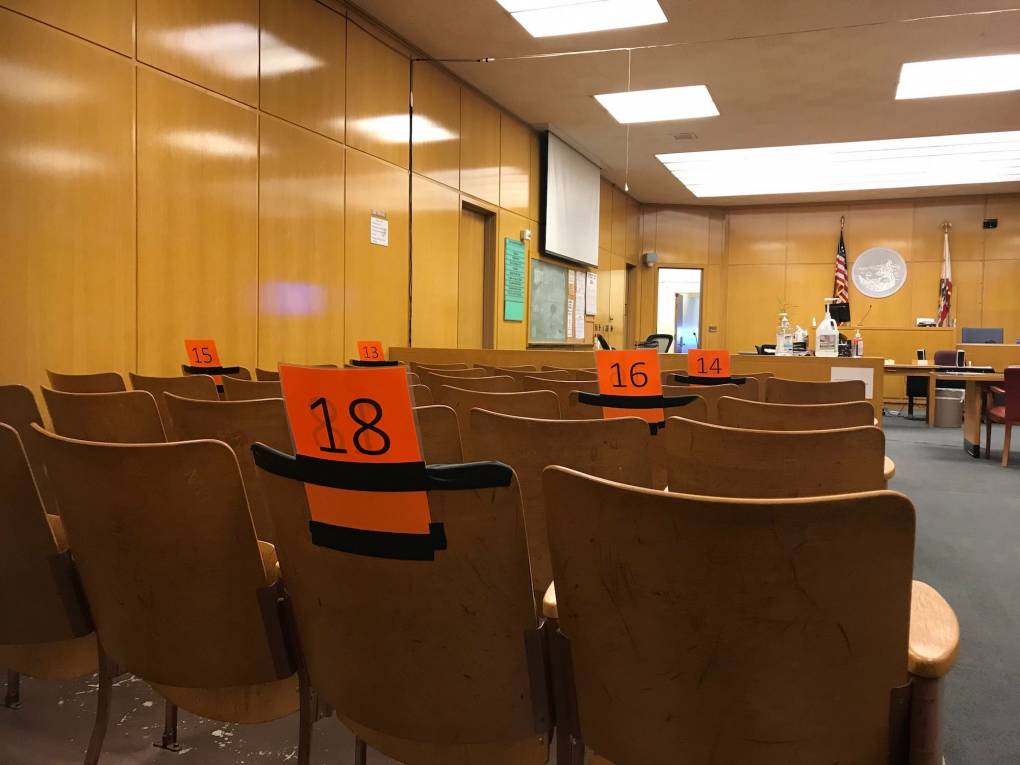
"caption": "Assigned numbered seats keep prospective jurors separated in a San Francisco courtroom. ",
"description": "Assigned numbered seats keep prospective jurors separated in a San Francisco courtroom.",
"title": "IMG_9644",
"credit": "Polly Stryker/KQED",
"status": "inherit",
"isLoading": false,
"fetchFailed": false
},
"science_1969740": {
"type": "attachments",
"id": "science_1969740",
"meta": {
"index": "attachments_1716263798",
"site": "science",
"id": "1969740",
"found": true
},
"parent": 1969739,
"imgSizes": {
"twentyfourteen-full-width": {
"file": "https://ww2.kqed.org/app/uploads/sites/35/2020/09/RS44992_GettyImages-1228427177-qut-1038x576.jpg",
"width": 1038,
"mimeType": "image/jpeg",
"height": 576
},
"thumbnail": {
"file": "https://ww2.kqed.org/app/uploads/sites/35/2020/09/RS44992_GettyImages-1228427177-qut-160x107.jpg",
"width": 160,
"mimeType": "image/jpeg",
"height": 107
},
"post-thumbnail": {
"file": "https://ww2.kqed.org/app/uploads/sites/35/2020/09/RS44992_GettyImages-1228427177-qut-672x372.jpg",
"width": 672,
"mimeType": "image/jpeg",
"height": 372
},
"kqedFullSize": {
"file": "https://ww2.kqed.org/app/uploads/sites/35/2020/09/RS44992_GettyImages-1228427177-qut.jpg",
"width": 1920,
"height": 1280
},
"large": {
"file": "https://ww2.kqed.org/app/uploads/sites/35/2020/09/RS44992_GettyImages-1228427177-qut-1020x680.jpg",
"width": 1020,
"mimeType": "image/jpeg",
"height": 680
},
"1536x1536": {
"file": "https://ww2.kqed.org/app/uploads/sites/35/2020/09/RS44992_GettyImages-1228427177-qut-1536x1024.jpg",
"width": 1536,
"mimeType": "image/jpeg",
"height": 1024
},
"medium": {
"file": "https://ww2.kqed.org/app/uploads/sites/35/2020/09/RS44992_GettyImages-1228427177-qut-800x533.jpg",
"width": 800,
"mimeType": "image/jpeg",
"height": 533
},
"medium_large": {
"file": "https://ww2.kqed.org/app/uploads/sites/35/2020/09/RS44992_GettyImages-1228427177-qut-768x512.jpg",
"width": 768,
"mimeType": "image/jpeg",
"height": 512
}
},
"publishDate": 1600731807,
"modified": 1600811275,
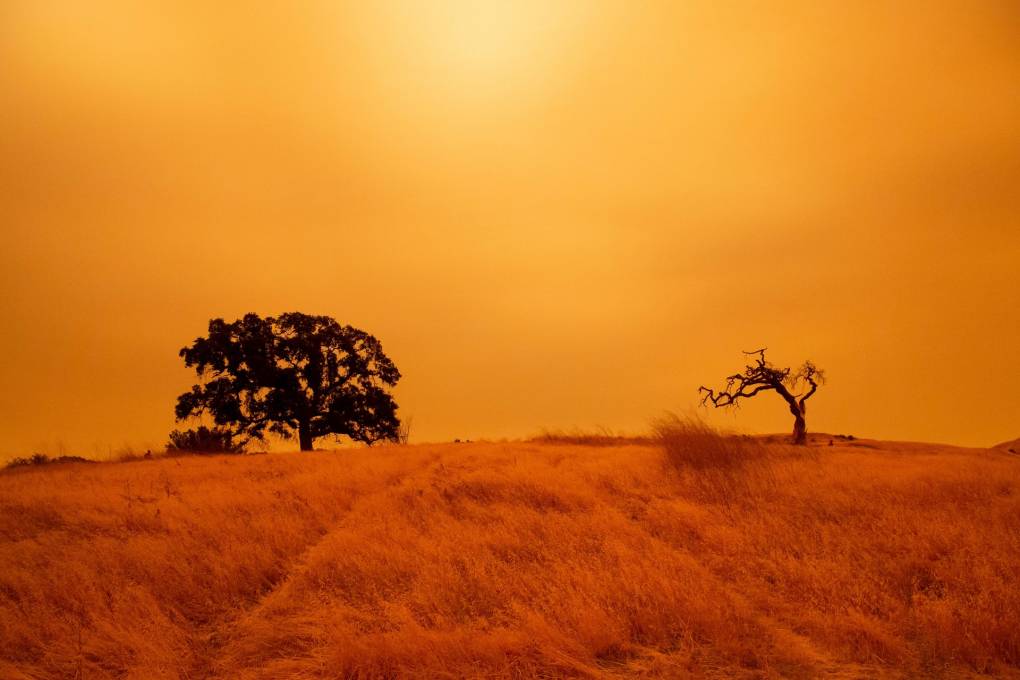
"caption": "An orange sky filled with wildfire smoke hangs above hiking trails at the Limeridge Open Space in Concord, Calif., on Sept. 9, 2020. ",
"description": null,
"title": "RS44992_GettyImages-1228427177-qut",
"credit": "Brittany Hosea-Small/AFP via Getty Images",
"status": "inherit",
"isLoading": false,
"fetchFailed": false
},
"science_1969721": {
"type": "attachments",
"id": "science_1969721",
"meta": {
"index": "attachments_1716263798",
"site": "science",
"id": "1969721",
"found": true
},
"parent": 1969718,
"imgSizes": {
"twentyfourteen-full-width": {
"file": "https://ww2.kqed.org/app/uploads/sites/35/2020/09/RS44991_GettyImages-1209790461-qut-1038x576.jpg",
"width": 1038,
"mimeType": "image/jpeg",
"height": 576
},
"thumbnail": {
"file": "https://ww2.kqed.org/app/uploads/sites/35/2020/09/RS44991_GettyImages-1209790461-qut-160x107.jpg",
"width": 160,
"mimeType": "image/jpeg",
"height": 107
},
"post-thumbnail": {
"file": "https://ww2.kqed.org/app/uploads/sites/35/2020/09/RS44991_GettyImages-1209790461-qut-672x372.jpg",
"width": 672,
"mimeType": "image/jpeg",
"height": 372
},
"kqedFullSize": {
"file": "https://ww2.kqed.org/app/uploads/sites/35/2020/09/RS44991_GettyImages-1209790461-qut.jpg",
"width": 1920,
"height": 1280
},
"large": {
"file": "https://ww2.kqed.org/app/uploads/sites/35/2020/09/RS44991_GettyImages-1209790461-qut-1020x680.jpg",
"width": 1020,
"mimeType": "image/jpeg",
"height": 680
},
"1536x1536": {
"file": "https://ww2.kqed.org/app/uploads/sites/35/2020/09/RS44991_GettyImages-1209790461-qut-1536x1024.jpg",
"width": 1536,
"mimeType": "image/jpeg",
"height": 1024
},
"medium": {
"file": "https://ww2.kqed.org/app/uploads/sites/35/2020/09/RS44991_GettyImages-1209790461-qut-800x533.jpg",
"width": 800,
"mimeType": "image/jpeg",
"height": 533
},
"medium_large": {
"file": "https://ww2.kqed.org/app/uploads/sites/35/2020/09/RS44991_GettyImages-1209790461-qut-768x512.jpg",
"width": 768,
"mimeType": "image/jpeg",
"height": 512
}
},
"publishDate": 1600721558,
"modified": 1600731029,
"caption": "Paramedics of the LAFD Station No. 9 board a women in the ambulance to go to a hospital on April 12, 2020, in downtown Los Angeles.",
"description": null,
"title": "RS44991_GettyImages-1209790461-qut",
"credit": "Apu Gomes/AFP via Getty Images",
"status": "inherit",
"isLoading": false,
"fetchFailed": false
},
"science_1969664": {
"type": "attachments",
"id": "science_1969664",
"meta": {
"index": "attachments_1716263798",
"site": "science",
"id": "1969664",
"found": true
},
"parent": 1969663,
"imgSizes": {
"twentyfourteen-full-width": {
"file": "https://ww2.kqed.org/app/uploads/sites/35/2020/09/jesse_zhang_npr_vaccine_covid_enl-d95c432cefb1f19b4889f35e22347c7c593f69b3-1038x576.jpg",
"width": 1038,
"mimeType": "image/jpeg",
"height": 576
},
"thumbnail": {
"file": "https://ww2.kqed.org/app/uploads/sites/35/2020/09/jesse_zhang_npr_vaccine_covid_enl-d95c432cefb1f19b4889f35e22347c7c593f69b3-160x90.jpg",
"width": 160,
"mimeType": "image/jpeg",
"height": 90
},
"post-thumbnail": {
"file": "https://ww2.kqed.org/app/uploads/sites/35/2020/09/jesse_zhang_npr_vaccine_covid_enl-d95c432cefb1f19b4889f35e22347c7c593f69b3-672x372.jpg",
"width": 672,
"mimeType": "image/jpeg",
"height": 372
},
"kqedFullSize": {
"file": "https://ww2.kqed.org/app/uploads/sites/35/2020/09/jesse_zhang_npr_vaccine_covid_enl-d95c432cefb1f19b4889f35e22347c7c593f69b3-scaled-e1600451063926.jpg",
"width": 1920,
"height": 1081
},
"2048x2048": {
"file": "https://ww2.kqed.org/app/uploads/sites/35/2020/09/jesse_zhang_npr_vaccine_covid_enl-d95c432cefb1f19b4889f35e22347c7c593f69b3-2048x1153.jpg",
"width": 2048,
"mimeType": "image/jpeg",
"height": 1153
},
"large": {
"file": "https://ww2.kqed.org/app/uploads/sites/35/2020/09/jesse_zhang_npr_vaccine_covid_enl-d95c432cefb1f19b4889f35e22347c7c593f69b3-1020x574.jpg",
"width": 1020,
"mimeType": "image/jpeg",
"height": 574
},
"1536x1536": {
"file": "https://ww2.kqed.org/app/uploads/sites/35/2020/09/jesse_zhang_npr_vaccine_covid_enl-d95c432cefb1f19b4889f35e22347c7c593f69b3-1536x865.jpg",
"width": 1536,
"mimeType": "image/jpeg",
"height": 865
},
"full-width": {
"file": "https://ww2.kqed.org/app/uploads/sites/35/2020/09/jesse_zhang_npr_vaccine_covid_enl-d95c432cefb1f19b4889f35e22347c7c593f69b3-1920x1081.jpg",
"width": 1920,
"mimeType": "image/jpeg",
"height": 1081
},
"medium": {
"file": "https://ww2.kqed.org/app/uploads/sites/35/2020/09/jesse_zhang_npr_vaccine_covid_enl-d95c432cefb1f19b4889f35e22347c7c593f69b3-800x450.jpg",
"width": 800,
"mimeType": "image/jpeg",
"height": 450
},
"medium_large": {
"file": "https://ww2.kqed.org/app/uploads/sites/35/2020/09/jesse_zhang_npr_vaccine_covid_enl-d95c432cefb1f19b4889f35e22347c7c593f69b3-768x432.jpg",
"width": 768,
"mimeType": "image/jpeg",
"height": 432
}
},
"publishDate": 1600450998,
"modified": 1600455797,
"caption": "As we get closer to a COVID-19 vaccine, it's exciting to imagine a day when the virus is gone. But a vaccine will not be a magic bullet. In fact, it may be only about 50% effective.",
"description": null,
"title": "As we get closer to a COVID-19 vaccine, it's exciting to imagine a day when the virus is gone. But a vaccine will not be a magic bullet. In fact, it may be only about 50% effective.",
"credit": "Courtesy of Jesse Zhang for NPR",
"status": "inherit",
"isLoading": false,
"fetchFailed": false
},
"science_1969476": {
"type": "attachments",
"id": "science_1969476",
"meta": {
"index": "attachments_1716263798",
"site": "science",
"id": "1969476",
"found": true
},
"parent": 1969474,
"imgSizes": {
"twentyfourteen-full-width": {
"file": "https://ww2.kqed.org/app/uploads/sites/35/2020/09/RS44807_GettyImages-1211212859-qut-1038x576.jpg",
"width": 1038,
"mimeType": "image/jpeg",
"height": 576
},
"thumbnail": {
"file": "https://ww2.kqed.org/app/uploads/sites/35/2020/09/RS44807_GettyImages-1211212859-qut-160x107.jpg",
"width": 160,
"mimeType": "image/jpeg",
"height": 107
},
"post-thumbnail": {
"file": "https://ww2.kqed.org/app/uploads/sites/35/2020/09/RS44807_GettyImages-1211212859-qut-672x372.jpg",
"width": 672,
"mimeType": "image/jpeg",
"height": 372
},
"kqedFullSize": {
"file": "https://ww2.kqed.org/app/uploads/sites/35/2020/09/RS44807_GettyImages-1211212859-qut.jpg",
"width": 1920,
"height": 1280
},
"large": {
"file": "https://ww2.kqed.org/app/uploads/sites/35/2020/09/RS44807_GettyImages-1211212859-qut-1020x680.jpg",
"width": 1020,
"mimeType": "image/jpeg",
"height": 680
},
"1536x1536": {
"file": "https://ww2.kqed.org/app/uploads/sites/35/2020/09/RS44807_GettyImages-1211212859-qut-1536x1024.jpg",
"width": 1536,
"mimeType": "image/jpeg",
"height": 1024
},
"medium": {
"file": "https://ww2.kqed.org/app/uploads/sites/35/2020/09/RS44807_GettyImages-1211212859-qut-800x533.jpg",
"width": 800,
"mimeType": "image/jpeg",
"height": 533
},
"medium_large": {
"file": "https://ww2.kqed.org/app/uploads/sites/35/2020/09/RS44807_GettyImages-1211212859-qut-768x512.jpg",
"width": 768,
"mimeType": "image/jpeg",
"height": 512
}
},
"publishDate": 1599770925,
"modified": 1599771051,
"caption": "Jenni Morgan switches out an air filter in her salon as she prepares to open for business in Greeley, Colorado.",
"description": "Jenni Morgan switches out an air filter in her salon as she prepares to open for business in Greeley, Colorado.",
"title": "Colorado Begins To Reopen Some Businesses As Government Eases Economic Restrictions",
"credit": "Michael Ciaglo/Getty Images",
"status": "inherit",
"isLoading": false,
"fetchFailed": false
},
"science_1969496": {
"type": "attachments",
"id": "science_1969496",
"meta": {
"index": "attachments_1716263798",
"site": "science",
"id": "1969496",
"found": true
},
"parent": 1969495,
"imgSizes": {
"twentyfourteen-full-width": {
"file": "https://ww2.kqed.org/app/uploads/sites/35/2020/09/gettyimages-1228385733-220fd021fd357af0432e83f9c8881a2342e5b135-1-1038x576.jpg",
"width": 1038,
"mimeType": "image/jpeg",
"height": 576
},
"thumbnail": {
"file": "https://ww2.kqed.org/app/uploads/sites/35/2020/09/gettyimages-1228385733-220fd021fd357af0432e83f9c8881a2342e5b135-1-160x120.jpg",
"width": 160,
"mimeType": "image/jpeg",
"height": 120
},
"post-thumbnail": {
"file": "https://ww2.kqed.org/app/uploads/sites/35/2020/09/gettyimages-1228385733-220fd021fd357af0432e83f9c8881a2342e5b135-1-672x372.jpg",
"width": 672,
"mimeType": "image/jpeg",
"height": 372
},
"kqedFullSize": {
"file": "https://ww2.kqed.org/app/uploads/sites/35/2020/09/gettyimages-1228385733-220fd021fd357af0432e83f9c8881a2342e5b135-1.jpg",
"width": 1086,
"height": 814
},
"large": {
"file": "https://ww2.kqed.org/app/uploads/sites/35/2020/09/gettyimages-1228385733-220fd021fd357af0432e83f9c8881a2342e5b135-1-1020x765.jpg",
"width": 1020,
"mimeType": "image/jpeg",
"height": 765
},
"medium": {
"file": "https://ww2.kqed.org/app/uploads/sites/35/2020/09/gettyimages-1228385733-220fd021fd357af0432e83f9c8881a2342e5b135-1-800x600.jpg",
"width": 800,
"mimeType": "image/jpeg",
"height": 600
},
"medium_large": {
"file": "https://ww2.kqed.org/app/uploads/sites/35/2020/09/gettyimages-1228385733-220fd021fd357af0432e83f9c8881a2342e5b135-1-768x576.jpg",
"width": 768,
"mimeType": "image/jpeg",
"height": 576
}
},
"publishDate": 1599847504,
"modified": 1599858179,
"caption": "A firefighter works the scene as flames push toward homes during the Creek Fire in the Cascadel Woods area of unincorporated Madera County, Calif., on Sept. 7, 2020. ",
"description": null,
"title": "Wildfires across the West, such as the Creek Fire here in Madera County, Calif., are pushing firefighters to their limits.",
"credit": "Josh Edelson/AFP via Getty Images",
"status": "inherit",
"isLoading": false,
"fetchFailed": false
},
"science_1969205": {
"type": "attachments",
"id": "science_1969205",
"meta": {
"index": "attachments_1716263798",
"site": "science",
"id": "1969205",
"found": true
},
"parent": 1969199,
"imgSizes": {
"twentyfourteen-full-width": {
"file": "https://ww2.kqed.org/app/uploads/sites/35/2020/09/GettyImages-1214819350-1038x576.jpg",
"width": 1038,
"mimeType": "image/jpeg",
"height": 576
},
"thumbnail": {
"file": "https://ww2.kqed.org/app/uploads/sites/35/2020/09/GettyImages-1214819350-160x107.jpg",
"width": 160,
"mimeType": "image/jpeg",
"height": 107
},
"post-thumbnail": {
"file": "https://ww2.kqed.org/app/uploads/sites/35/2020/09/GettyImages-1214819350-672x372.jpg",
"width": 672,
"mimeType": "image/jpeg",
"height": 372
},
"kqedFullSize": {
"file": "https://ww2.kqed.org/app/uploads/sites/35/2020/09/GettyImages-1214819350-scaled.jpg",
"width": 2560,
"height": 1706
},
"2048x2048": {
"file": "https://ww2.kqed.org/app/uploads/sites/35/2020/09/GettyImages-1214819350-2048x1365.jpg",
"width": 2048,
"mimeType": "image/jpeg",
"height": 1365
},
"large": {
"file": "https://ww2.kqed.org/app/uploads/sites/35/2020/09/GettyImages-1214819350-1020x680.jpg",
"width": 1020,
"mimeType": "image/jpeg",
"height": 680
},
"1536x1536": {
"file": "https://ww2.kqed.org/app/uploads/sites/35/2020/09/GettyImages-1214819350-1536x1024.jpg",
"width": 1536,
"mimeType": "image/jpeg",
"height": 1024
},
"full-width": {
"file": "https://ww2.kqed.org/app/uploads/sites/35/2020/09/GettyImages-1214819350-1920x1280.jpg",
"width": 1920,
"mimeType": "image/jpeg",
"height": 1280
},
"medium": {
"file": "https://ww2.kqed.org/app/uploads/sites/35/2020/09/GettyImages-1214819350-800x533.jpg",
"width": 800,
"mimeType": "image/jpeg",
"height": 533
},
"medium_large": {
"file": "https://ww2.kqed.org/app/uploads/sites/35/2020/09/GettyImages-1214819350-768x512.jpg",
"width": 768,
"mimeType": "image/jpeg",
"height": 512
}
},
"publishDate": 1599150307,
"modified": 1602002937,
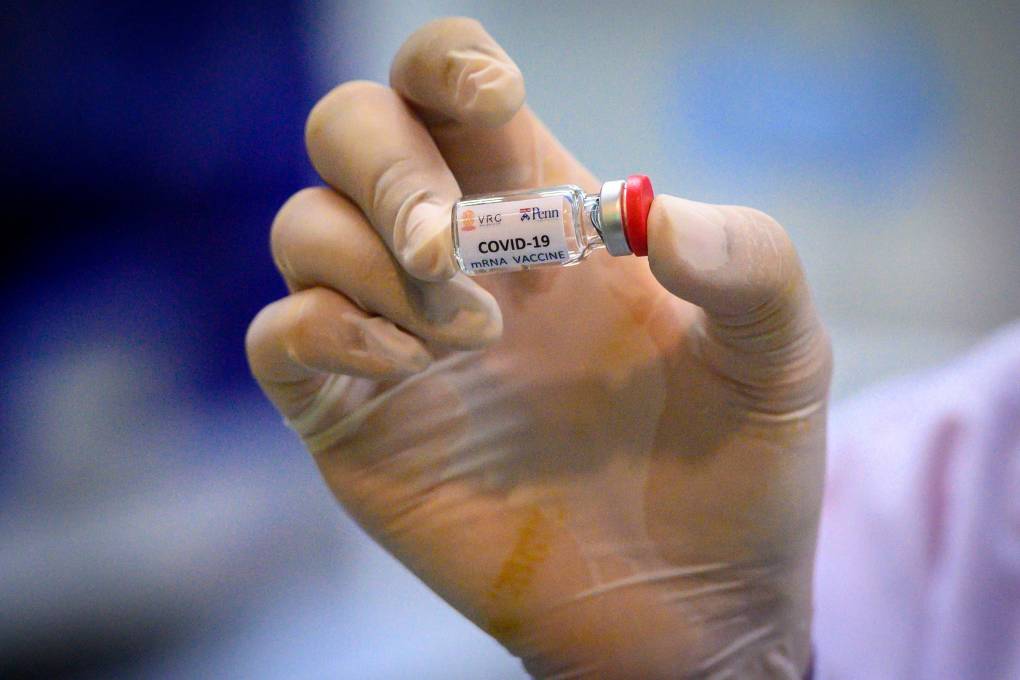
"caption": "A laboratory technician holds a dose of a coronavirus vaccine candidate ready for trial on monkeys at the National Primate Research Center of Thailand at Chulalongkorn University in Saraburi. ",
"description": null,
"title": "THAILAND-HEALTH-VIRUS-ANIMAL-VACCINE",
"credit": "Mladen Antonov/AFP",
"status": "inherit",
"isLoading": false,
"fetchFailed": false
},
"science_1969238": {
"type": "attachments",
"id": "science_1969238",
"meta": {
"index": "attachments_1716263798",
"site": "science",
"id": "1969238",
"found": true
},
"parent": 1969237,
"imgSizes": {
"twentyfourteen-full-width": {
"file": "https://ww2.kqed.org/app/uploads/sites/35/2020/09/gettyimages-1220586822_enl-9e4e3ea65ebefcce9a23fbfc208ffceb105e7275-1018x576.jpg",
"width": 1018,
"mimeType": "image/jpeg",
"height": 576
},
"thumbnail": {
"file": "https://ww2.kqed.org/app/uploads/sites/35/2020/09/gettyimages-1220586822_enl-9e4e3ea65ebefcce9a23fbfc208ffceb105e7275-160x107.jpg",
"width": 160,
"mimeType": "image/jpeg",
"height": 107
},
"post-thumbnail": {
"file": "https://ww2.kqed.org/app/uploads/sites/35/2020/09/gettyimages-1220586822_enl-9e4e3ea65ebefcce9a23fbfc208ffceb105e7275-672x372.jpg",
"width": 672,
"mimeType": "image/jpeg",
"height": 372
},
"kqedFullSize": {
"file": "https://ww2.kqed.org/app/uploads/sites/35/2020/09/gettyimages-1220586822_enl-9e4e3ea65ebefcce9a23fbfc208ffceb105e7275.jpg",
"width": 1018,
"height": 681
},
"medium": {
"file": "https://ww2.kqed.org/app/uploads/sites/35/2020/09/gettyimages-1220586822_enl-9e4e3ea65ebefcce9a23fbfc208ffceb105e7275-800x535.jpg",
"width": 800,
"mimeType": "image/jpeg",
"height": 535
},
"medium_large": {
"file": "https://ww2.kqed.org/app/uploads/sites/35/2020/09/gettyimages-1220586822_enl-9e4e3ea65ebefcce9a23fbfc208ffceb105e7275-768x514.jpg",
"width": 768,
"mimeType": "image/jpeg",
"height": 514
}
},
"publishDate": 1599171826,
"modified": 1599247708,
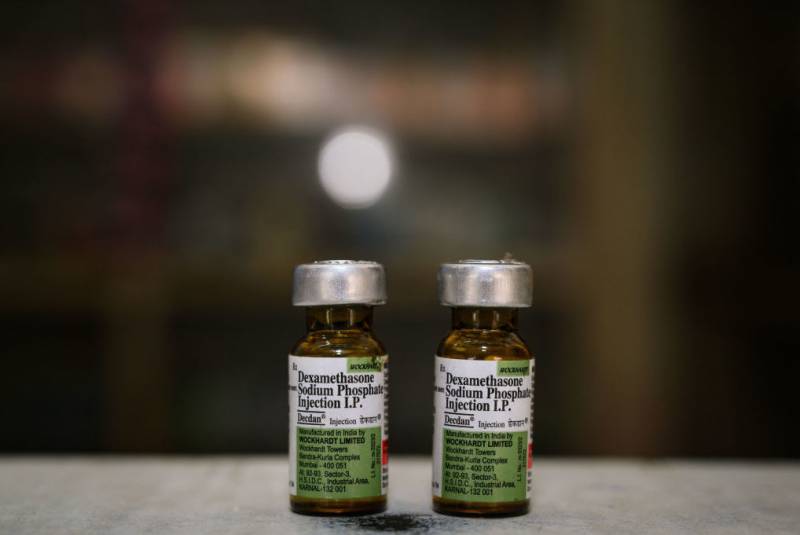
"caption": "A box of dexamethasone drugs in Tehatta, Nadia, West Bengal, India, on June 17, 2020. In what would be a major breakthrough, scientists in the U.K. claim that the generic steroid drug dexamethasone reduced deaths by up to one third in severely ill hospitalized patients. ",
"description": "In this photo illustration a box of Dexamethasone drugs in Tehatta, Nadia, West Bengal, India on June 17, 2020. In a major breakthrough in Covid-19 treatment, scientists in UK have claimed that the generic steroid drug dexamethasone reduced deaths by up to one third in severely ill hospitalized patients. (Photo Illustration by Soumyabrata Roy/NurPhoto via Getty Images)",
"title": "Studies of steroids, including the generic drug dexamethasone, have found that these drugs can reduce deaths in patients hospitalized with serious cases of COVID-19.",
"credit": "Soumyabrata Roy/NurPhoto via Getty Images",
"status": "inherit",
"isLoading": false,
"fetchFailed": false
},
"science_1969053": {
"type": "attachments",
"id": "science_1969053",
"meta": {
"index": "attachments_1716263798",
"site": "science",
"id": "1969053",
"found": true
},
"parent": 1969052,
"imgSizes": {
"twentyfourteen-full-width": {
"file": "https://ww2.kqed.org/app/uploads/sites/35/2020/08/Plasma-Vitalant-1038x576.jpg",
"width": 1038,
"mimeType": "image/jpeg",
"height": 576
},
"thumbnail": {
"file": "https://ww2.kqed.org/app/uploads/sites/35/2020/08/Plasma-Vitalant-160x120.jpg",
"width": 160,
"mimeType": "image/jpeg",
"height": 120
},
"post-thumbnail": {
"file": "https://ww2.kqed.org/app/uploads/sites/35/2020/08/Plasma-Vitalant-672x372.jpg",
"width": 672,
"mimeType": "image/jpeg",
"height": 372
},
"kqedFullSize": {
"file": "https://ww2.kqed.org/app/uploads/sites/35/2020/08/Plasma-Vitalant-scaled.jpg",
"width": 2560,
"height": 1920
},
"2048x2048": {
"file": "https://ww2.kqed.org/app/uploads/sites/35/2020/08/Plasma-Vitalant-2048x1536.jpg",
"width": 2048,
"mimeType": "image/jpeg",
"height": 1536
},
"large": {
"file": "https://ww2.kqed.org/app/uploads/sites/35/2020/08/Plasma-Vitalant-1020x765.jpg",
"width": 1020,
"mimeType": "image/jpeg",
"height": 765
},
"1536x1536": {
"file": "https://ww2.kqed.org/app/uploads/sites/35/2020/08/Plasma-Vitalant-1536x1152.jpg",
"width": 1536,
"mimeType": "image/jpeg",
"height": 1152
},
"full-width": {
"file": "https://ww2.kqed.org/app/uploads/sites/35/2020/08/Plasma-Vitalant-1920x1440.jpg",
"width": 1920,
"mimeType": "image/jpeg",
"height": 1440
},
"medium": {
"file": "https://ww2.kqed.org/app/uploads/sites/35/2020/08/Plasma-Vitalant-800x600.jpg",
"width": 800,
"mimeType": "image/jpeg",
"height": 600
},
"medium_large": {
"file": "https://ww2.kqed.org/app/uploads/sites/35/2020/08/Plasma-Vitalant-768x576.jpg",
"width": 768,
"mimeType": "image/jpeg",
"height": 576
}
},
"publishDate": 1598660278,
"modified": 1598663380,
"caption": "A bag of COVID-19 convalescent plasma at a Vitalant blood bank. The treatment was authorized by the FDA this month for hospitalized coronavirus patients.",
"description": null,
"title": "Plasma Vitalant",
"credit": "Courtesy of Vitalant",
"status": "inherit",
"isLoading": false,
"fetchFailed": false
},
"science_1968851": {
"type": "attachments",
"id": "science_1968851",
"meta": {
"index": "attachments_1716263798",
"site": "science",
"id": "1968851",
"found": true
},
"parent": 1968824,
"imgSizes": {
"twentyfourteen-full-width": {
"file": "https://ww2.kqed.org/app/uploads/sites/35/2029/08/convalescent-plasma-therapy-1038x576.jpg",
"width": 1038,
"mimeType": "image/jpeg",
"height": 576
},
"thumbnail": {
"file": "https://ww2.kqed.org/app/uploads/sites/35/2029/08/convalescent-plasma-therapy-160x90.jpg",
"width": 160,
"mimeType": "image/jpeg",
"height": 90
},
"post-thumbnail": {
"file": "https://ww2.kqed.org/app/uploads/sites/35/2029/08/convalescent-plasma-therapy-672x372.jpg",
"width": 672,
"mimeType": "image/jpeg",
"height": 372
},
"kqedFullSize": {
"file": "https://ww2.kqed.org/app/uploads/sites/35/2029/08/convalescent-plasma-therapy.jpg",
"width": 1600,
"height": 900
},
"large": {
"file": "https://ww2.kqed.org/app/uploads/sites/35/2029/08/convalescent-plasma-therapy-1020x574.jpg",
"width": 1020,
"mimeType": "image/jpeg",
"height": 574
},
"1536x1536": {
"file": "https://ww2.kqed.org/app/uploads/sites/35/2029/08/convalescent-plasma-therapy-1536x864.jpg",
"width": 1536,
"mimeType": "image/jpeg",
"height": 864
},
"medium": {
"file": "https://ww2.kqed.org/app/uploads/sites/35/2029/08/convalescent-plasma-therapy-800x450.jpg",
"width": 800,
"mimeType": "image/jpeg",
"height": 450
},
"medium_large": {
"file": "https://ww2.kqed.org/app/uploads/sites/35/2029/08/convalescent-plasma-therapy-768x432.jpg",
"width": 768,
"mimeType": "image/jpeg",
"height": 432
}
},
"publishDate": 1598376320,
"modified": 1598380379,
"caption": null,
"description": "convalescent plasma therapy",
"title": "convalescent plasma therapy",
"credit": null,
"status": "inherit",
"isLoading": false,
"fetchFailed": false
},
"science_1968575": {
"type": "attachments",
"id": "science_1968575",
"meta": {
"index": "attachments_1716263798",
"site": "science",
"id": "1968575",
"found": true
},
"parent": 1968571,
"imgSizes": {
"twentyfourteen-full-width": {
"file": "https://ww2.kqed.org/app/uploads/sites/35/2020/08/Bay-Area-Wildfire-Smoke-1038x576.jpg",
"width": 1038,
"mimeType": "image/jpeg",
"height": 576
},
"thumbnail": {
"file": "https://ww2.kqed.org/app/uploads/sites/35/2020/08/Bay-Area-Wildfire-Smoke-160x107.jpg",
"width": 160,
"mimeType": "image/jpeg",
"height": 107
},
"post-thumbnail": {
"file": "https://ww2.kqed.org/app/uploads/sites/35/2020/08/Bay-Area-Wildfire-Smoke-672x372.jpg",
"width": 672,
"mimeType": "image/jpeg",
"height": 372
},
"kqedFullSize": {
"file": "https://ww2.kqed.org/app/uploads/sites/35/2020/08/Bay-Area-Wildfire-Smoke-scaled-e1597872508993.jpg",
"width": 1920,
"height": 1280
},
"2048x2048": {
"file": "https://ww2.kqed.org/app/uploads/sites/35/2020/08/Bay-Area-Wildfire-Smoke-2048x1365.jpg",
"width": 2048,
"mimeType": "image/jpeg",
"height": 1365
},
"large": {
"file": "https://ww2.kqed.org/app/uploads/sites/35/2020/08/Bay-Area-Wildfire-Smoke-1020x680.jpg",
"width": 1020,
"mimeType": "image/jpeg",
"height": 680
},
"1536x1536": {
"file": "https://ww2.kqed.org/app/uploads/sites/35/2020/08/Bay-Area-Wildfire-Smoke-1536x1024.jpg",
"width": 1536,
"mimeType": "image/jpeg",
"height": 1024
},
"full-width": {
"file": "https://ww2.kqed.org/app/uploads/sites/35/2020/08/Bay-Area-Wildfire-Smoke-1920x1280.jpg",
"width": 1920,
"mimeType": "image/jpeg",
"height": 1280
},
"medium": {
"file": "https://ww2.kqed.org/app/uploads/sites/35/2020/08/Bay-Area-Wildfire-Smoke-800x533.jpg",
"width": 800,
"mimeType": "image/jpeg",
"height": 533
},
"medium_large": {
"file": "https://ww2.kqed.org/app/uploads/sites/35/2020/08/Bay-Area-Wildfire-Smoke-768x512.jpg",
"width": 768,
"mimeType": "image/jpeg",
"height": 512
}
},
"publishDate": 1597872472,
"modified": 1597885768,
"caption": "Fire and smoke surround a boat rental shop in the Spanish Flat area of Napa, Calif., as flames rage through on Aug. 18, 2020. ",
"description": null,
"title": "US-FIRE-CALIFORNIA-WILDFIRE-NAPA",
"credit": "Josh Edelson/AFP via Getty Images",
"status": "inherit",
"isLoading": false,
"fetchFailed": false
},
"science_1968375": {
"type": "attachments",
"id": "science_1968375",
"meta": {
"index": "attachments_1716263798",
"site": "science",
"id": "1968375",
"found": true
},
"parent": 1968289,
"imgSizes": {
"twentyfourteen-full-width": {
"file": "https://ww2.kqed.org/app/uploads/sites/35/2020/08/05-07-2020_DrBradDreifuss_KathleenDreierPhotography__MG_0140-1-1038x576.jpg",
"width": 1038,
"mimeType": "image/jpeg",
"height": 576
},
"thumbnail": {
"file": "https://ww2.kqed.org/app/uploads/sites/35/2020/08/05-07-2020_DrBradDreifuss_KathleenDreierPhotography__MG_0140-1-160x107.jpg",
"width": 160,
"mimeType": "image/jpeg",
"height": 107
},
"post-thumbnail": {
"file": "https://ww2.kqed.org/app/uploads/sites/35/2020/08/05-07-2020_DrBradDreifuss_KathleenDreierPhotography__MG_0140-1-672x372.jpg",
"width": 672,
"mimeType": "image/jpeg",
"height": 372
},
"kqedFullSize": {
"file": "https://ww2.kqed.org/app/uploads/sites/35/2020/08/05-07-2020_DrBradDreifuss_KathleenDreierPhotography__MG_0140-1-scaled.jpg",
"width": 2560,
"height": 1707
},
"2048x2048": {
"file": "https://ww2.kqed.org/app/uploads/sites/35/2020/08/05-07-2020_DrBradDreifuss_KathleenDreierPhotography__MG_0140-1-2048x1365.jpg",
"width": 2048,
"mimeType": "image/jpeg",
"height": 1365
},
"large": {
"file": "https://ww2.kqed.org/app/uploads/sites/35/2020/08/05-07-2020_DrBradDreifuss_KathleenDreierPhotography__MG_0140-1-1020x680.jpg",
"width": 1020,
"mimeType": "image/jpeg",
"height": 680
},
"1536x1536": {
"file": "https://ww2.kqed.org/app/uploads/sites/35/2020/08/05-07-2020_DrBradDreifuss_KathleenDreierPhotography__MG_0140-1-1536x1024.jpg",
"width": 1536,
"mimeType": "image/jpeg",
"height": 1024
},
"full-width": {
"file": "https://ww2.kqed.org/app/uploads/sites/35/2020/08/05-07-2020_DrBradDreifuss_KathleenDreierPhotography__MG_0140-1-1920x1280.jpg",
"width": 1920,
"mimeType": "image/jpeg",
"height": 1280
},
"medium": {
"file": "https://ww2.kqed.org/app/uploads/sites/35/2020/08/05-07-2020_DrBradDreifuss_KathleenDreierPhotography__MG_0140-1-800x533.jpg",
"width": 800,
"mimeType": "image/jpeg",
"height": 533
},
"medium_large": {
"file": "https://ww2.kqed.org/app/uploads/sites/35/2020/08/05-07-2020_DrBradDreifuss_KathleenDreierPhotography__MG_0140-1-768x512.jpg",
"width": 768,
"mimeType": "image/jpeg",
"height": 512
}
},
"publishDate": 1597260426,
"modified": 1597345617,
"caption": "Dr. Bradly Dreifuss has been living in an Airbnb for months to ensure he doesn't bring the virus home to his wife and daughter.",
"description": null,
"title": "05-07-2020_DrBradDreifuss_KathleenDreierPhotography__MG_0140",
"credit": "Courtesy of Kathleen Dreier",
"status": "inherit",
"isLoading": false,
"fetchFailed": false
}
},
"audioPlayerReducer": {
"postId": "stream_live",
"isPaused": true,
"isPlaying": false,
"pfsActive": false,
"pledgeModalIsOpen": true,
"playerDrawerIsOpen": false,
"liveAudioPlayStartedAt": 0,
"liveAudioPlayContext": ""
},
"authorsReducer": {
"byline_science_1969718": {
"type": "authors",
"id": "byline_science_1969718",
"meta": {
"override": true
},
"slug": "byline_science_1969718",
"name": "Phillip Reese \u003cbr />Kaiser Health News\u003cbr>",
"isLoading": false
},
"byline_science_1969663": {
"type": "authors",
"id": "byline_science_1969663",
"meta": {
"override": true
},
"slug": "byline_science_1969663",
"name": "Allison Aubrey",
"isLoading": false
},
"byline_science_1969495": {
"type": "authors",
"id": "byline_science_1969495",
"meta": {
"override": true
},
"slug": "byline_science_1969495",
"name": "Lauren Sommer and Nathan Rott \u003cbr />NPR\u003cbr>",
"isLoading": false
},
"byline_science_1969237": {
"type": "authors",
"id": "byline_science_1969237",
"meta": {
"override": true
},
"slug": "byline_science_1969237",
"name": "Richard Harris\u003cbr />NPR",
"isLoading": false
},
"byline_science_1968824": {
"type": "authors",
"id": "byline_science_1968824",
"meta": {
"override": true
},
"slug": "byline_science_1968824",
"name": "Lev Facher\u003cbr />STAT",
"isLoading": false
},
"pollystryker": {
"type": "authors",
"id": "250",
"meta": {
"index": "authors_1716337520",
"id": "250",
"found": true
},
"name": "Polly Stryker",
"firstName": "Polly",
"lastName": "Stryker",
"slug": "pollystryker",
"email": "pstryker@kqed.org",
"display_author_email": false,
"staff_mastheads": [
"science"
],
"title": "Editor",
"bio": "Polly Stryker is a former editor for KQED's Science desk. She and reporter/host Rachael Myrow produced the KQED podcast, \u003ca href=\"http://www.npr.org/podcasts/448072249/love-in-the-digital-age\">Love in the Digital Age\u003c/a>.\r\n\r\nPolly has worked for a variety of news and public affairs programs, including most recently as editor of \u003cem>The California Report\u003c/em>. She also edited \u003ca href=\"https://ww2.kqed.org/news/programs/the-california-report\" target=\"_blank\" rel=\"noopener noreferrer\">\u003cem>The California Report'\u003c/em>s\u003c/a> \u003ca href=\"http://www.californiareport.org/healthdialogues/\" target=\"_blank\" rel=\"noopener noreferrer\">“Health Dialogues.”\u003c/a> Before that, she was a producer on \u003cem>\u003ca href=\"http://www.scpr.org/programs/airtalk/\" target=\"_blank\" rel=\"noopener noreferrer\">AirTalk\u003c/a>\u003c/em> with Larry Mantle on \u003ca href=\"http://www.scpr.org/\" target=\"_blank\" rel=\"noopener noreferrer\">KPCC\u003c/a> radio, and \u003cem>\u003ca href=\"http://www.kpbs.org/news/midday-edition/\">These Days\u003c/a>\u003c/em> on KPBS. Polly’s work has won awards from the Radio and Television News Directors Association of Northern California, the Society of Professional Journalists (Southern California and Northern California chapters), the Radio and Television News Association. She's also won a Taste Award.\r\n\r\nShe considers herself to be a citizen of the world, having grown up in Cairo before coming to the United States. Polly speaks Arabic and can say, \"I’d like a martini, please\" in Swahili.",
"avatar": "https://secure.gravatar.com/avatar/5012854a99868cb15a517a876d88f736?s=600&d=blank&r=g",
"twitter": null,
"facebook": null,
"instagram": null,
"linkedin": null,
"sites": [
{
"site": "",
"roles": [
"editor"
]
},
{
"site": "arts",
"roles": [
"administrator"
]
},
{
"site": "news",
"roles": [
"subscriber"
]
},
{
"site": "stateofhealth",
"roles": [
"author"
]
},
{
"site": "science",
"roles": [
"editor"
]
},
{
"site": "forum",
"roles": [
"editor"
]
}
],
"headData": {
"title": "Polly Stryker | KQED",
"description": "Editor",
"ogImgSrc": "https://secure.gravatar.com/avatar/5012854a99868cb15a517a876d88f736?s=600&d=blank&r=g",
"twImgSrc": "https://secure.gravatar.com/avatar/5012854a99868cb15a517a876d88f736?s=600&d=blank&r=g"
},
"isLoading": false,
"link": "/author/pollystryker"
},
"lklivans": {
"type": "authors",
"id": "8648",
"meta": {
"index": "authors_1716337520",
"id": "8648",
"found": true
},
"name": "Laura Klivans",
"firstName": "Laura",
"lastName": "Klivans",
"slug": "lklivans",
"email": "lklivans@kqed.org",
"display_author_email": true,
"staff_mastheads": [
"news",
"science"
],
"title": "Reporter",
"bio": "Laura Klivans is an award-winning science reporter for KQED News, where she covers climate change with an eye on both groundbreaking progress and gaps in action. She is the former host of KQED's blockbuster video series about tiny, amazing animals, \u003cem>Deep Look\u003c/em>. Her work reaches national audiences through NPR, \u003cem>Here & Now, \u003c/em>PRI, and other major outlets. \r\n\r\nLaura’s won five Northern California Area Emmy Awards for Deep Look and First Place in the Greater Bay Area Journalism Awards for a podcast exploring how one Oakland neighborhood teamed up to reduce planet-heating pollution.\r\n\r\nBeyond her reporting, she hosts and moderates events. In the past, she taught audio storytelling at the UC Berkeley Graduate School of Journalism, led international education programs, worked with immigrants and refugees along the Thai-Burmese border, taught high schoolers sex ed, and was an actress. \r\n\r\nShe's a former UC Berkeley Human Rights Fellow, USC Center for Health Journalism's California Fellow and Coro Fellow in Public Affairs. Laura has a master’s in journalism from UC Berkeley, a master’s in education from Harvard, and an undergraduate degree from Northwestern University.\r\n\r\nShe loves trying to riddle the meaning out of vanity license plates.",
"avatar": "https://secure.gravatar.com/avatar/2d2ecd1550a494cc10ad4a503406965585902124739e775a9b3817eebf1d88be?s=600&d=blank&r=g",
"twitter": "lauraklivans",
"bluesky": null,
"facebook": null,
"instagram": null,
"linkedin": null,
"sites": [
{
"site": "news",
"roles": [
"editor"
]
},
{
"site": "stateofhealth",
"roles": [
"contributor",
"editor"
]
},
{
"site": "science",
"roles": [
"editor"
]
},
{
"site": "forum",
"roles": [
"editor"
]
}
],
"headData": {
"title": "Laura Klivans | KQED",
"description": "Reporter",
"ogImgSrc": "https://secure.gravatar.com/avatar/2d2ecd1550a494cc10ad4a503406965585902124739e775a9b3817eebf1d88be?s=600&d=blank&r=g",
"twImgSrc": "https://secure.gravatar.com/avatar/2d2ecd1550a494cc10ad4a503406965585902124739e775a9b3817eebf1d88be?s=600&d=blank&r=g"
},
"isLoading": false,
"link": "/author/lklivans"
},
"lesleymcclurg": {
"type": "authors",
"id": "11229",
"meta": {
"index": "authors_1716337520",
"id": "11229",
"found": true
},
"name": "Lesley McClurg",
"firstName": "Lesley",
"lastName": "McClurg",
"slug": "lesleymcclurg",
"email": "lmcclurg@KQED.org",
"display_author_email": false,
"staff_mastheads": [
"news",
"science"
],
"title": "KQED Health Correspondent",
"bio": "Lesley McClurg is a health correspondent and fill-in host whose work is regularly rebroadcast on NPR and PBS programs. She’s earned multiple regional Emmy awards, a national and a regional Edward R. Murrow award, and was named Best Beat Reporter by the Association of Health Care Journalists. The Society of Professional Journalists has recognized her work several times, and the Society of Environmental Journalists spotlighted her coverage of California’s historic drought.\r\n\r\nBefore joining KQED in 2016, Lesley covered food and sustainability for Capital Public Radio, environmental issues for Colorado Public Radio, and reported for KUOW and KCTS 9 in Seattle. Away from the newsroom, she loves skiing with her daughter, mountain biking with her partner, and playing with Ollie, the family’s goldendoodle. On deadline, she runs almost entirely on chocolate chips.\r\n\r\n ",
"avatar": "https://secure.gravatar.com/avatar/bab49e972ea10c774fe0f5e29dba1722b158f7c0d58a360923d1389d380b2978?s=600&d=blank&r=g",
"twitter": "lesleywmcclurg",
"bluesky": null,
"facebook": null,
"instagram": null,
"linkedin": null,
"sites": [
{
"site": "arts",
"roles": [
"author"
]
},
{
"site": "news",
"roles": [
"editor"
]
},
{
"site": "futureofyou",
"roles": [
"editor"
]
},
{
"site": "stateofhealth",
"roles": [
"author"
]
},
{
"site": "science",
"roles": [
"editor"
]
},
{
"site": "quest",
"roles": [
"subscriber"
]
},
{
"site": "forum",
"roles": [
"administrator"
]
},
{
"site": "liveblog",
"roles": [
"author"
]
}
],
"headData": {
"title": "Lesley McClurg | KQED",
"description": "KQED Health Correspondent",
"ogImgSrc": "https://secure.gravatar.com/avatar/bab49e972ea10c774fe0f5e29dba1722b158f7c0d58a360923d1389d380b2978?s=600&d=blank&r=g",
"twImgSrc": "https://secure.gravatar.com/avatar/bab49e972ea10c774fe0f5e29dba1722b158f7c0d58a360923d1389d380b2978?s=600&d=blank&r=g"
},
"isLoading": false,
"link": "/author/lesleymcclurg"
},
"parcuni": {
"type": "authors",
"id": "11368",
"meta": {
"index": "authors_1716337520",
"id": "11368",
"found": true
},
"name": "Peter Arcuni",
"firstName": "Peter",
"lastName": "Arcuni",
"slug": "parcuni",
"email": "parcuni@KQED.org",
"display_author_email": false,
"staff_mastheads": [
"science"
],
"title": "Reporter",
"bio": "Peter reports radio and online stories for \u003cem>KQED Science\u003c/em>. His work has also appeared on the \u003cem>The California Report\u003c/em> morning show and \u003cem>KQED News\u003c/em>. His production credits include \u003cem>The California Report, The California Report Magazine\u003c/em> and KQED's local news podcast \u003cem>The Bay\u003c/em>. Other credits include NPR's \u003cem>All Things Considered\u003c/em>, WNYC's \u003cem>Science Friday\u003c/em>, WBUR's \u003cem>Here & Now\u003c/em>, WIRED and SFGate. Peter graduated from Brown University and earned a master's degree in journalism from Stanford. He's covered everything from homelessness to wildfires, health, the environment, arts and Thanksgiving in San Quentin prison. In other lives, he played rock n roll music and studied neuroscience. You can email him at: parcuni@kqed.org",
"avatar": "https://secure.gravatar.com/avatar/d5032f6f27199d478af34ad2e1d98732?s=600&d=blank&r=g",
"twitter": "peterarcuni",
"facebook": null,
"instagram": null,
"linkedin": null,
"sites": [
{
"site": "news",
"roles": [
"editor"
]
},
{
"site": "science",
"roles": [
"editor"
]
}
],
"headData": {
"title": "Peter Arcuni | KQED",
"description": "Reporter",
"ogImgSrc": "https://secure.gravatar.com/avatar/d5032f6f27199d478af34ad2e1d98732?s=600&d=blank&r=g",
"twImgSrc": "https://secure.gravatar.com/avatar/d5032f6f27199d478af34ad2e1d98732?s=600&d=blank&r=g"
},
"isLoading": false,
"link": "/author/parcuni"
},
"kevinstark": {
"type": "authors",
"id": "11608",
"meta": {
"index": "authors_1716337520",
"id": "11608",
"found": true
},
"name": "Kevin Stark",
"firstName": "Kevin",
"lastName": "Stark",
"slug": "kevinstark",
"email": "kstark@kqed.org",
"display_author_email": true,
"staff_mastheads": [
"science"
],
"title": "Senior Editor",
"bio": "Kevin is a senior editor for KQED Science, managing the station's health and climate desks. His journalism career began in the Pacific Northwest, and he later became a lead reporter for the San Francisco Public Press. His work has appeared in Pacific Standard magazine, the Energy News Network, the Center for Investigative Reporting's Reveal and WBEZ in Chicago. Kevin joined KQED in 2019, and has covered issues related to energy, wildfire, climate change and the environment.",
"avatar": "https://secure.gravatar.com/avatar/365aaa4b597d3a8374f67504ff0facd323d7906e8eb4be0a7efd2427408e802c?s=600&d=blank&r=g",
"twitter": "starkkev",
"bluesky": null,
"facebook": null,
"instagram": null,
"linkedin": null,
"sites": [
{
"site": "",
"roles": [
"editor"
]
},
{
"site": "news",
"roles": [
"editor"
]
},
{
"site": "science",
"roles": [
"administrator"
]
}
],
"headData": {
"title": "Kevin Stark | KQED",
"description": "Senior Editor",
"ogImgSrc": "https://secure.gravatar.com/avatar/365aaa4b597d3a8374f67504ff0facd323d7906e8eb4be0a7efd2427408e802c?s=600&d=blank&r=g",
"twImgSrc": "https://secure.gravatar.com/avatar/365aaa4b597d3a8374f67504ff0facd323d7906e8eb4be0a7efd2427408e802c?s=600&d=blank&r=g"
},
"isLoading": false,
"link": "/author/kevinstark"
}
},
"pagesReducer": {
"science_category_health": {
"type": "terms",
"id": "science_39",
"meta": {
"index": "terms_1716263798",
"site": "science",
"id": "39",
"score": 10.889561
},
"featImg": null,
"name": "Health",
"description": null,
"taxonomy": "category",
"headData": {
"twImgId": null,
"twTitle": null,
"ogTitle": null,
"ogImgId": null,
"twDescription": null,
"description": null,
"title": "Health Archives | KQED Science",
"ogDescription": null
},
"ttid": 41,
"slug": "health",
"isLoading": false,
"title": "Health",
"pageMeta": {
"site": "science",
"WpPageTemplate": "page-topic-editorial",
"currentPage": 17
},
"blocks": [
{
"blockName": "kqed/post-list",
"attrs": {
"layout": "cardArticle2",
"query": "posts/science?category=health",
"seeMore": false,
"paginated": true,
"page": 17
}
},
{
"blockName": "kqed/ad"
}
]
}
},
"pfsSessionReducer": {},
"postsReducer": {
"stream_live": {
"type": "live",
"id": "stream_live",
"audioUrl": "https://streams.kqed.org/kqedradio",
"title": "Live Stream",
"excerpt": "Live Stream information currently unavailable.",
"link": "/radio",
"featImg": "",
"label": {
"name": "KQED Live",
"link": "/"
}
},
"stream_kqedNewscast": {
"type": "posts",
"id": "stream_kqedNewscast",
"audioUrl": "https://www.kqed.org/.stream/anon/radio/RDnews/newscast.mp3?_=1",
"title": "KQED Newscast",
"featImg": "",
"label": {
"name": "88.5 FM",
"link": "/"
}
},
"science_1969918": {
"type": "posts",
"id": "science_1969918",
"meta": {
"index": "posts_1716263798",
"site": "science",
"id": "1969918",
"score": null,
"sort": [
1601499635000
]
},
"parent": 0,
"labelTerm": {},
"blocks": [],
"publishDate": 1601499635,
"format": "audio",
"title": "Jury Duty During a Pandemic: How Safe Is It?",
"headTitle": "Jury Duty During a Pandemic: How Safe Is It? | KQED",
"content": "\u003cp>When I recently received a jury summons in the mail, it brought with it more than the usual onset of angst. It included a flyer titled “Attention Prospective Jurors,” outlining COVID protections the courts had put in place.\u003c/p>\n\u003cp>Some of the bullet points didn’t offer a lot of solace. “With current social distancing rules,” the flyer read, “the assembly room will only seat a maximum of 40 to 50 prospective jurors.” Given the current guidelines of social pods not exceeding 12 people, this made me nervous. So, I decided to explore COVID protections put in place by Superior Courts around the Bay Area. I reached out to courts in\u003ca href=\"https://www.sfsuperiorcourt.org/\"> San Francisco\u003c/a>,\u003ca href=\"https://www.sanmateocourt.org/\"> San Mateo\u003c/a>,\u003ca href=\"http://www.alameda.courts.ca.gov/\"> Alameda, \u003c/a>\u003ca href=\"https://www.scscourt.org/\"> Santa Clara\u003c/a> and \u003ca href=\"https://www.marincourt.org/juror_services_overview.htm\">Marin\u003c/a> counties.\u003c/p>\n\u003cp>When the coronavirus hit and lockdowns began in mid-March, jury trials\u003ca href=\"https://www.cc-courts.org/general/docs/StatewideOrderByTheChiefJustice-COVID19Order-03-23-2020.pdf\"> paused\u003c/a>. The Judicial Council of California, the court system’s policymaking body, created a pandemic working group. In June, it issued a 75-page\u003ca href=\"https://live-jcc-newsroom.pantheonsite.io/sites/default/files/newsroom/2020-09/Pandemic%20Working%20Group%20Resource%20Guide.pdf\"> resource guide,\u003c/a> a set of best practices or recommendations. According to a spokesperson for the JCC, the working group used information from state, local and national health officials — including the federal Occupational Safety and Health Administration, Centers for Disease Control and Prevention, and the National Center for State Courts. The council also consulted an industrial hygienist regarding physical layout and social distancing guidelines. The guide is a working document, and the spokesperson said version 2.0 is expected sometime this fall.\u003c/p>\n\u003cp>Nonetheless, I wanted to visit a courthouse and see the coronavirus protections for myself. So, I called up Ken Garcia, the San Francisco Superior Court’s communications director, who agreed to show me around the Hall of Justice at 850 Bryant St. I’d been in a jury pool in this building before, and was familiar with the scene, pre-pandemic.\u003c/p>\n\u003cfigure id=\"attachment_1969958\" class=\"wp-caption aligncenter\" style=\"max-width: 800px\">\u003ca href=\"https://ww2.kqed.org/app/uploads/sites/35/2020/09/IMG_9532.jpg\">\u003cimg loading=\"lazy\" decoding=\"async\" class=\"wp-image-1969958 size-medium\" src=\"https://ww2.kqed.org/app/uploads/sites/35/2020/09/IMG_9532-800x600.jpg\" alt=\"Photo: empty corridor at SF Hall of Justice\" width=\"800\" height=\"600\" srcset=\"https://cdn.kqed.org/wp-content/uploads/sites/35/2020/09/IMG_9532-800x600.jpg 800w, https://cdn.kqed.org/wp-content/uploads/sites/35/2020/09/IMG_9532-1020x765.jpg 1020w, https://cdn.kqed.org/wp-content/uploads/sites/35/2020/09/IMG_9532-160x120.jpg 160w, https://cdn.kqed.org/wp-content/uploads/sites/35/2020/09/IMG_9532-768x576.jpg 768w, https://cdn.kqed.org/wp-content/uploads/sites/35/2020/09/IMG_9532-1536x1152.jpg 1536w, https://cdn.kqed.org/wp-content/uploads/sites/35/2020/09/IMG_9532-1920x1440.jpg 1920w, https://cdn.kqed.org/wp-content/uploads/sites/35/2020/09/IMG_9532.jpg 2000w\" sizes=\"(max-width: 800px) 100vw, 800px\">\u003c/a>\u003cfigcaption class=\"wp-caption-text\">The normally crowded corridors at San Francisco’s Hall of Justice stand eerily deserted. \u003ccite>(Polly Stryker/KQED)\u003c/cite>\u003c/figcaption>\u003c/figure>\n\u003cp>\u003cb>The Courthouse\u003c/b>\u003c/p>\n\u003cp>[ad fullwidth]\u003c/p>\n\u003cp>Courthouses are normally \u003ci>really\u003c/i> busy places, Garcia said, hallways filled “with lawyers, police officers, sheriff’s deputies, the public, jurors, people coming to court to do business.”\u003c/p>\n\u003cp>But on the day I visited, the halls were strangely empty and echoed with the occasional chamber door closing, even though an electronic calendar indicated dozens of hearings, most of them done in-person, while other cases are being conducted online.\u003c/p>\n\u003cp>“We are setting up a remote operation, essentially,” explained Garcia, who said that’s presented some IT challenges. “This building is so old, it’s not wired properly for any kind of new technology.” Nonetheless, the court at 850 Bryant has adapted to hearings via Zoom or YouTube channel.\u003cbr>\n[pullquote size='large' align='right' citation='Ken Garcia, San Francisco Superior Court']‘Justice doesn’t stop. All the cases that were going to go to court at the beginning of March are still going to go to court.’[/pullquote]\u003c/p>\n\u003cp>We peeked inside a couple of courtrooms. The witness stand had plexiglass around it on three sides, separating the judge and anyone in front of the stand from the witness. The jury box and the entire gallery had laminated numbers taped to some of the chairs. The jury had taken over the gallery, socially distanced among the rows. “So, no more than 23 people can be in the courtroom during a trial. And that’s based on the spacing that’s been measured,” Garcia told me, at least 6 feet. Everyone has to wear masks in the courthouse, over their noses, and bottles of hand sanitizer dot the courtrooms. If the public wants to see a criminal trial, he told me, the court can set up a livestream feed.\u003c/p>\n\u003cp>Counties have taken various approaches to vetting their prospective jury pools. San Mateo County screens people in tents outside the courthouse. Alameda County screens people online for hardship, but then does a COVID health screening and a check-in inside the courthouse. San Francisco Superior Court sends out an online survey, with questions to help screen people for vulnerability to the coronavirus, with questions about health concerns\u003ci>, \u003c/i>age, employment — if you’re an essential employee. Garcia said the pandemic has created a case backlog but, “Justice doesn’t stop. It’s just there’s been a lag time. All the cases that were going to go to court at the beginning of March are still going to go to court.” He did add that more litigants are choosing to settle out of court.\u003c/p>\n\u003cp>\u003cb>The Juror\u003c/b>\u003c/p>\n\u003cp>I wanted to hear from someone who had served on a jury since the pandemic began, and I found Kyle Barlow. The 32 year-old computational biologist recently served on a monthlong criminal trial in San Francisco.\u003c/p>\n\u003cp>Given the long exposure involved, he decided to take extra precautions. “I made the personal decision just to shave the facial hair I had. I could wear a KN95 [mask] and just maybe have a little bit more protection for myself during the trial.”\u003cbr>\n[pullquote size='large' align='right' citation='Dr. John Swartzberg']‘People have to understand that it’s [risk] mitigation and it’s not elimination.’[/pullquote]\u003c/p>\n\u003cp>Barlow says some interesting moments occurred when witnesses wore masks with clear plastic over their mouths, so the jury could see their expressions. He said they were “moderately effective, but they tended to fog up when people were talking.”\u003c/p>\n\u003cp>Would he serve again? “Yeah,” says Barlow.\u003ci>“\u003c/i>I think even in these strange times, I definitely would do it again. And I kind of came away with that feeling like enough precautions had been taken, and that it was worth it just to make sure that our justice system is still working.”\u003c/p>\n\u003cp>\u003cb>The Experts\u003c/b>\u003c/p>\n\u003cp>Even with all the precautions in place, jury duty doesn’t come with a guarantee against COVID-19.\u003c/p>\n\u003cp>“People have to understand that it’s mitigation and it’s not elimination,” says infectious diseases specialist Dr. John Swartzberg, who served as a scientific adviser for the American Board of Trial Advocates’ guide to conducting civil trials during the pandemic\u003cb>. \u003c/b>He said the courts are challenged by a lack of funds, but “from everything I can tell, I think they’ve done a good job with what they have.”\u003c/p>\n\u003cp>Would Swartzberg feel comfortable serving on a jury if called? He says he would serve, but since he is older, he would still feel a bit nervous. He’d want to make sure he had at least 6 feet distance from others, that everyone wore masks, used sanitizer, and one more thing: air exchange. He’d want to know how long it takes to filter and fully refresh all the air in the courtroom. “A lot of the older buildings have like two air exchanges per hour. Whereas in a hospital room, you’d be held to a standard anywhere between eight and 12 exchanges an hour.”\u003c/p>\n\u003cp>Dr. Dean Winslow, professor of medicine and specialist in infectious diseases at Stanford, agrees. He says it takes a very efficient HVAC system to filter out small particle aerosols that can remain suspended “for up to several hours.” For him, “the most important thing would be limiting even large rooms to no more than about 25 people, even in a fairly large room and requiring, very, very strictly that people wear face masks or appropriate face coverings during that time.\u003ci>” \u003c/i>And, he, too, would want to see a high rate of air exchange. \u003ci> \u003c/i>\u003c/p>\n\u003cp>Although the courthouses are mostly older buildings, a quick survey reveals that some (but not all) have upgraded filtration systems, and officials at several of the courthouses in Bay Area counties told me they have been running their air filtration system intakes at 100%.\u003c/p>\n\u003cp>A spokesman for the Marin County Superior Court said the air exchange rate in the county Superior Court rooms is three-four times per hour. However, the recent fires complicated opening filtration system dampers for maximum air intake, so the courts brought in “air scrubbers,” loud, industrial machines, to clean the inside air.\u003c/p>\n\u003cp>\u003cb>The Judge\u003c/b>\u003c/p>\n\u003cp>Moving some trial elements online has had some benefits, according to Judge Tara Desautels, presiding judge for the Alameda County Superior Court. With some witnesses testifying via Zoom or other remote means, she says,\u003ci> “\u003c/i>Jurors have, in fact, said that they enjoy that opportunity because it enables them to be really upfront and close to the witness as compared to in a pre-COVID jury setting where you would have the 12 jurors on the side of the room in the jury box, depending on where your seat is and your vision abilities.” She says, in addition to the standard mask requirements and distancing, each juror now has their own separate table in deliberation, with personal copies of jury instructions and evidence.\u003c/p>\n\u003cp>I asked Desautels if fewer people were showing up to serve on juries, or if more were trying to get out of serving. “One of the reasons why we have had to create overflow rooms is because we have had more than our normal, normally expected turnout rate,” she said. “We were very afraid that we would receive no jurors, that no one would be willing to come to our courthouses when we began our jury selection, and we have been very pleasantly surprised.”\u003c/p>\n\u003cp>[ad floatright]\u003c/p>\n\u003cp>Okay, back to one of the doctors. I had to ask: what about going to the bathroom in a shared facility with strangers? Is that a problem? “There have been no outbreaks that I’m aware of related to public restrooms or flushing toilets,” Winslow said. “It’s more of a theoretical risk.”\u003c/p>\n\n",
"stats": {
"hasVideo": false,
"hasChartOrMap": false,
"hasAudio": false,
"hasPolis": false,
"wordCount": 1668,
"hasGoogleForm": false,
"hasGallery": false,
"hasHearkenModule": false,
"iframeSrcs": [],
"paragraphCount": 28
},
"modified": 1704847020,
"excerpt": "Bay Area courts are working through the backlog of jury trials with an array of COVID precautions. Here's how they're protecting jurors.",
"headData": {
"twImgId": "",
"twTitle": "",
"ogTitle": "",
"ogImgId": "",
"twDescription": "",
"description": "Bay Area courts are working through the backlog of jury trials with an array of COVID precautions. Here's how they're protecting jurors.",
"socialDescription": "Bay Area courts are working through the backlog of jury trials with an array of COVID precautions. Here's how they're protecting jurors.",
"title": "Jury Duty During a Pandemic: How Safe Is It? | KQED",
"ogDescription": "",
"schema": {
"@context": "https://schema.org",
"@type": "Article",
"headline": "Jury Duty During a Pandemic: How Safe Is It?",
"datePublished": "2020-09-30T14:00:35-07:00",
"dateModified": "2024-01-09T16:37:00-08:00",
"image": "https://cdn.kqed.org/wp-content/uploads/2020/02/KQED-OG-Image@1x.png"
}
},
"guestAuthors": [],
"slug": "jury-duty-during-a-pandemic-how-safe-is-it",
"status": "publish",
"audioUrl": "https://traffic.omny.fm/d/clips/0af137ef-751e-4b19-a055-aaef00d2d578/ffca7e9f-6831-41c5-bcaf-aaef00f5a073/12995da1-5b34-4bfc-9d99-ac550125bca4/audio.mp3",
"sticky": false,
"subhead": "The courts are taking precautions and some jurors are actually enjoying it",
"source": "Coronavirus",
"path": "/science/1969918/jury-duty-during-a-pandemic-how-safe-is-it",
"audioTrackLength": null,
"parsedContent": [
{
"type": "contentString",
"content": "\u003cdiv class=\"post-body\">\u003cp>\u003cp>When I recently received a jury summons in the mail, it brought with it more than the usual onset of angst. It included a flyer titled “Attention Prospective Jurors,” outlining COVID protections the courts had put in place.\u003c/p>\n\u003cp>Some of the bullet points didn’t offer a lot of solace. “With current social distancing rules,” the flyer read, “the assembly room will only seat a maximum of 40 to 50 prospective jurors.” Given the current guidelines of social pods not exceeding 12 people, this made me nervous. So, I decided to explore COVID protections put in place by Superior Courts around the Bay Area. I reached out to courts in\u003ca href=\"https://www.sfsuperiorcourt.org/\"> San Francisco\u003c/a>,\u003ca href=\"https://www.sanmateocourt.org/\"> San Mateo\u003c/a>,\u003ca href=\"http://www.alameda.courts.ca.gov/\"> Alameda, \u003c/a>\u003ca href=\"https://www.scscourt.org/\"> Santa Clara\u003c/a> and \u003ca href=\"https://www.marincourt.org/juror_services_overview.htm\">Marin\u003c/a> counties.\u003c/p>\n\u003cp>When the coronavirus hit and lockdowns began in mid-March, jury trials\u003ca href=\"https://www.cc-courts.org/general/docs/StatewideOrderByTheChiefJustice-COVID19Order-03-23-2020.pdf\"> paused\u003c/a>. The Judicial Council of California, the court system’s policymaking body, created a pandemic working group. In June, it issued a 75-page\u003ca href=\"https://live-jcc-newsroom.pantheonsite.io/sites/default/files/newsroom/2020-09/Pandemic%20Working%20Group%20Resource%20Guide.pdf\"> resource guide,\u003c/a> a set of best practices or recommendations. According to a spokesperson for the JCC, the working group used information from state, local and national health officials — including the federal Occupational Safety and Health Administration, Centers for Disease Control and Prevention, and the National Center for State Courts. The council also consulted an industrial hygienist regarding physical layout and social distancing guidelines. The guide is a working document, and the spokesperson said version 2.0 is expected sometime this fall.\u003c/p>\n\u003cp>Nonetheless, I wanted to visit a courthouse and see the coronavirus protections for myself. So, I called up Ken Garcia, the San Francisco Superior Court’s communications director, who agreed to show me around the Hall of Justice at 850 Bryant St. I’d been in a jury pool in this building before, and was familiar with the scene, pre-pandemic.\u003c/p>\n\u003cfigure id=\"attachment_1969958\" class=\"wp-caption aligncenter\" style=\"max-width: 800px\">\u003ca href=\"https://ww2.kqed.org/app/uploads/sites/35/2020/09/IMG_9532.jpg\">\u003cimg loading=\"lazy\" decoding=\"async\" class=\"wp-image-1969958 size-medium\" src=\"https://ww2.kqed.org/app/uploads/sites/35/2020/09/IMG_9532-800x600.jpg\" alt=\"Photo: empty corridor at SF Hall of Justice\" width=\"800\" height=\"600\" srcset=\"https://cdn.kqed.org/wp-content/uploads/sites/35/2020/09/IMG_9532-800x600.jpg 800w, https://cdn.kqed.org/wp-content/uploads/sites/35/2020/09/IMG_9532-1020x765.jpg 1020w, https://cdn.kqed.org/wp-content/uploads/sites/35/2020/09/IMG_9532-160x120.jpg 160w, https://cdn.kqed.org/wp-content/uploads/sites/35/2020/09/IMG_9532-768x576.jpg 768w, https://cdn.kqed.org/wp-content/uploads/sites/35/2020/09/IMG_9532-1536x1152.jpg 1536w, https://cdn.kqed.org/wp-content/uploads/sites/35/2020/09/IMG_9532-1920x1440.jpg 1920w, https://cdn.kqed.org/wp-content/uploads/sites/35/2020/09/IMG_9532.jpg 2000w\" sizes=\"(max-width: 800px) 100vw, 800px\">\u003c/a>\u003cfigcaption class=\"wp-caption-text\">The normally crowded corridors at San Francisco’s Hall of Justice stand eerily deserted. \u003ccite>(Polly Stryker/KQED)\u003c/cite>\u003c/figcaption>\u003c/figure>\n\u003cp>\u003cb>The Courthouse\u003c/b>\u003c/p>\n\u003cp>\u003c/p>\u003c/div>",
"attributes": {
"named": {},
"numeric": []
}
},
{
"type": "component",
"content": "",
"name": "ad",
"attributes": {
"named": {
"label": "fullwidth"
},
"numeric": [
"fullwidth"
]
}
},
{
"type": "contentString",
"content": "\u003cdiv class=\"post-body\">\u003cp>\u003c/p>\n\u003cp>Courthouses are normally \u003ci>really\u003c/i> busy places, Garcia said, hallways filled “with lawyers, police officers, sheriff’s deputies, the public, jurors, people coming to court to do business.”\u003c/p>\n\u003cp>But on the day I visited, the halls were strangely empty and echoed with the occasional chamber door closing, even though an electronic calendar indicated dozens of hearings, most of them done in-person, while other cases are being conducted online.\u003c/p>\n\u003cp>“We are setting up a remote operation, essentially,” explained Garcia, who said that’s presented some IT challenges. “This building is so old, it’s not wired properly for any kind of new technology.” Nonetheless, the court at 850 Bryant has adapted to hearings via Zoom or YouTube channel.\u003cbr>\n\u003c/p>\u003c/div>",
"attributes": {
"named": {},
"numeric": []
}
},
{
"type": "component",
"content": "‘Justice doesn’t stop. All the cases that were going to go to court at the beginning of March are still going to go to court.’",
"name": "pullquote",
"attributes": {
"named": {
"size": "large",
"align": "right",
"citation": "Ken Garcia, San Francisco Superior Court",
"label": ""
},
"numeric": []
}
},
{
"type": "contentString",
"content": "\u003cdiv class=\"post-body\">\u003cp>\u003c/p>\n\u003cp>We peeked inside a couple of courtrooms. The witness stand had plexiglass around it on three sides, separating the judge and anyone in front of the stand from the witness. The jury box and the entire gallery had laminated numbers taped to some of the chairs. The jury had taken over the gallery, socially distanced among the rows. “So, no more than 23 people can be in the courtroom during a trial. And that’s based on the spacing that’s been measured,” Garcia told me, at least 6 feet. Everyone has to wear masks in the courthouse, over their noses, and bottles of hand sanitizer dot the courtrooms. If the public wants to see a criminal trial, he told me, the court can set up a livestream feed.\u003c/p>\n\u003cp>Counties have taken various approaches to vetting their prospective jury pools. San Mateo County screens people in tents outside the courthouse. Alameda County screens people online for hardship, but then does a COVID health screening and a check-in inside the courthouse. San Francisco Superior Court sends out an online survey, with questions to help screen people for vulnerability to the coronavirus, with questions about health concerns\u003ci>, \u003c/i>age, employment — if you’re an essential employee. Garcia said the pandemic has created a case backlog but, “Justice doesn’t stop. It’s just there’s been a lag time. All the cases that were going to go to court at the beginning of March are still going to go to court.” He did add that more litigants are choosing to settle out of court.\u003c/p>\n\u003cp>\u003cb>The Juror\u003c/b>\u003c/p>\n\u003cp>I wanted to hear from someone who had served on a jury since the pandemic began, and I found Kyle Barlow. The 32 year-old computational biologist recently served on a monthlong criminal trial in San Francisco.\u003c/p>\n\u003cp>Given the long exposure involved, he decided to take extra precautions. “I made the personal decision just to shave the facial hair I had. I could wear a KN95 [mask] and just maybe have a little bit more protection for myself during the trial.”\u003cbr>\n\u003c/p>\u003c/div>",
"attributes": {
"named": {},
"numeric": []
}
},
{
"type": "component",
"content": "‘People have to understand that it’s [risk] mitigation and it’s not elimination.’",
"name": "pullquote",
"attributes": {
"named": {
"size": "large",
"align": "right",
"citation": "Dr. John Swartzberg",
"label": ""
},
"numeric": []
}
},
{
"type": "contentString",
"content": "\u003cdiv class=\"post-body\">\u003cp>\u003c/p>\n\u003cp>Barlow says some interesting moments occurred when witnesses wore masks with clear plastic over their mouths, so the jury could see their expressions. He said they were “moderately effective, but they tended to fog up when people were talking.”\u003c/p>\n\u003cp>Would he serve again? “Yeah,” says Barlow.\u003ci>“\u003c/i>I think even in these strange times, I definitely would do it again. And I kind of came away with that feeling like enough precautions had been taken, and that it was worth it just to make sure that our justice system is still working.”\u003c/p>\n\u003cp>\u003cb>The Experts\u003c/b>\u003c/p>\n\u003cp>Even with all the precautions in place, jury duty doesn’t come with a guarantee against COVID-19.\u003c/p>\n\u003cp>“People have to understand that it’s mitigation and it’s not elimination,” says infectious diseases specialist Dr. John Swartzberg, who served as a scientific adviser for the American Board of Trial Advocates’ guide to conducting civil trials during the pandemic\u003cb>. \u003c/b>He said the courts are challenged by a lack of funds, but “from everything I can tell, I think they’ve done a good job with what they have.”\u003c/p>\n\u003cp>Would Swartzberg feel comfortable serving on a jury if called? He says he would serve, but since he is older, he would still feel a bit nervous. He’d want to make sure he had at least 6 feet distance from others, that everyone wore masks, used sanitizer, and one more thing: air exchange. He’d want to know how long it takes to filter and fully refresh all the air in the courtroom. “A lot of the older buildings have like two air exchanges per hour. Whereas in a hospital room, you’d be held to a standard anywhere between eight and 12 exchanges an hour.”\u003c/p>\n\u003cp>Dr. Dean Winslow, professor of medicine and specialist in infectious diseases at Stanford, agrees. He says it takes a very efficient HVAC system to filter out small particle aerosols that can remain suspended “for up to several hours.” For him, “the most important thing would be limiting even large rooms to no more than about 25 people, even in a fairly large room and requiring, very, very strictly that people wear face masks or appropriate face coverings during that time.\u003ci>” \u003c/i>And, he, too, would want to see a high rate of air exchange. \u003ci> \u003c/i>\u003c/p>\n\u003cp>Although the courthouses are mostly older buildings, a quick survey reveals that some (but not all) have upgraded filtration systems, and officials at several of the courthouses in Bay Area counties told me they have been running their air filtration system intakes at 100%.\u003c/p>\n\u003cp>A spokesman for the Marin County Superior Court said the air exchange rate in the county Superior Court rooms is three-four times per hour. However, the recent fires complicated opening filtration system dampers for maximum air intake, so the courts brought in “air scrubbers,” loud, industrial machines, to clean the inside air.\u003c/p>\n\u003cp>\u003cb>The Judge\u003c/b>\u003c/p>\n\u003cp>Moving some trial elements online has had some benefits, according to Judge Tara Desautels, presiding judge for the Alameda County Superior Court. With some witnesses testifying via Zoom or other remote means, she says,\u003ci> “\u003c/i>Jurors have, in fact, said that they enjoy that opportunity because it enables them to be really upfront and close to the witness as compared to in a pre-COVID jury setting where you would have the 12 jurors on the side of the room in the jury box, depending on where your seat is and your vision abilities.” She says, in addition to the standard mask requirements and distancing, each juror now has their own separate table in deliberation, with personal copies of jury instructions and evidence.\u003c/p>\n\u003cp>I asked Desautels if fewer people were showing up to serve on juries, or if more were trying to get out of serving. “One of the reasons why we have had to create overflow rooms is because we have had more than our normal, normally expected turnout rate,” she said. “We were very afraid that we would receive no jurors, that no one would be willing to come to our courthouses when we began our jury selection, and we have been very pleasantly surprised.”\u003c/p>\n\u003cp>\u003c/p>\u003c/div>",
"attributes": {
"named": {},
"numeric": []
}
},
{
"type": "component",
"content": "",
"name": "ad",
"attributes": {
"named": {
"label": "floatright"
},
"numeric": [
"floatright"
]
}
},
{
"type": "contentString",
"content": "\u003cdiv class=\"post-body\">\u003cp>\u003c/p>\n\u003cp>Okay, back to one of the doctors. I had to ask: what about going to the bathroom in a shared facility with strangers? Is that a problem? “There have been no outbreaks that I’m aware of related to public restrooms or flushing toilets,” Winslow said. “It’s more of a theoretical risk.”\u003c/p>\n\n\u003c/div>\u003c/p>",
"attributes": {
"named": {},
"numeric": []
}
}
],
"link": "/science/1969918/jury-duty-during-a-pandemic-how-safe-is-it",
"authors": [
"250"
],
"categories": [
"science_39",
"science_4450"
],
"tags": [
"science_4329",
"science_4368",
"science_3370"
],
"featImg": "science_1969920",
"label": "source_science_1969918"
},
"science_1969739": {
"type": "posts",
"id": "science_1969739",
"meta": {
"index": "posts_1716263798",
"site": "science",
"id": "1969739",
"score": null,
"sort": [
1600797055000
]
},
"parent": 0,
"labelTerm": {},
"blocks": [],
"publishDate": 1600797055,
"format": "standard",
"title": "Smoke From California's Record Wildfires Is Its Own Disaster",
"headTitle": "Smoke From California’s Record Wildfires Is Its Own Disaster | KQED",
"content": "\u003cp class=\"p1\">Hundreds of wildfires have scorched over 3 million acres in California this year. That’s the most burned land for any year on record in the state, and we’re still only about halfway through the fire season.\u003c/p>\n\u003cp class=\"p3\">\u003cspan class=\"s1\">Smoke from those fires \u003c/span>polluted the air in the Bay Area for 30 straight days in August and September, prompting the Bay Area Air Quality Management District to issue the longest consecutive string of “Spare the Air” alerts in its history, more than doubling the previous record of 14, set during the Camp Fire in November 2018. Within the recent period of smoke inundation came the six worst air quality days in the Bay Area in 20 years.\u003c/p>\n\u003cp class=\"p3\">“Smoke is everywhere,” Wayne Kino, a pollution control officer with the regional air district, told the agency’s board last week. “Smoke generated at the fires, smoke lingering out at the ocean, is coming in. It’s some of the worst air quality we’ve experienced.”\u003c/p>\n\u003cp class=\"p5\">Emergency room doctors at Sutter’s Alta Bates Summit Medical Center in Oakland have begun to see patients sickened by\u003cspan class=\"Apple-converted-space\"> \u003c/span>the smoke, reporting a flare-up in asthma and emphysema-related admissions.\u003c/p>\n\u003cp>“We’re starting to see a cumulative effect,” said Ronn Berrol, medical director of Alta Bates’ emergency department. “Our numbers are going up — respiratory, throat irritation, coughing, chest pain, heart palpitations. A real gamut of things; the uptick is definitely noticeable.”\u003c/p>\n\u003cp class=\"p5\">In the South Bay, Dr. Mary Prunicki, director of air pollution and health research at Stanford’s allergy and asthma research center, analyzed hospital records during the fires and found admissions of patients with asthma attacks up 10%. For people with stroke-like symptoms, the increase was 23%, including 43% for seniors.\u003cbr>\n\u003cspan class=\"s2\">\u003cbr>\n“This is the first time the Bay Area has ever really experienced something like this,” Prunicki said, about the persistently degraded air quality, which she described as “remarkably bad.”\u003cbr>\n\u003c/span>\u003c/p>\n\u003cp>[ad fullwidth]\u003c/p>\n\u003cp class=\"p3\">\u003cb>A Choking Fog of Particulate Matter\u003c/b>\u003c/p>\n\u003cp class=\"p1\">While officials have been focused on the severe damage caused by the fires, the profusion of smoke is a disastrous event on its own, touching the lives of nearly every person breathing on the West Coast.\u003c/p>\n\u003cp class=\"p1\">At times the “smokestorm” was so thick, it obscured and filtered the sunlight, bathing the Bay Area in an orange hue reminiscent of one of the bleak sci-fi landscapes in\u003cspan class=\"Apple-converted-space\"> \u003c/span>“Blade Runner 2049.”\u003c/p>\n\u003cp class=\"p5\">Plumes of wildfire smoke blanketed the West Coast from Seattle to San Diego and beyond. Last week, an early-season storm blew the smoke clouds east across the continental U.S., shrouding the sun in faraway states like \u003ca href=\"https://twitter.com/NWSNewYorkNY/status/1305666259141312514?ref_src=twsrc%5Etfw%7Ctwcamp%5Etweetembed%7Ctwterm%5E1305666259141312514%7Ctwgr%5Eshare_3&ref_url=https%3A%2F%2Fwww.bbc.com%2Fnews%2Fworld-54173615\">\u003cspan class=\"s3\">New York\u003c/span>\u003c/a> and giving the Bay Area a much needed breather, literally, from the dirty air.\u003c/p>\n\u003cp>https://twitter.com/WMO/status/1307990230696431617?s=20\u003c/p>\n\u003cp>At a time when the coronavirus pandemic has prevented much indoor socializing, the wildfire smoke inhibited Californians’ already restricted access to the outdoors.\u003c/p>\n\u003cp class=\"p3\">The smokestorm could make the worst public health crisis in a century even worse, \u003cspan class=\"s5\">Prunicki says. \u003c/span>\u003c/p>\n\u003cp>“Exposure to smoke pollution will make you more susceptible to viruses,” she said. “And studies have shown that higher COVID-19 rates are associated with increased air pollution.”\u003c/p>\n\u003cp>Some research has also found exposure to wildfire smoke associated with \u003ca href=\"https://www.ncbi.nlm.nih.gov/pmc/articles/PMC3440113/\" target=\"_blank\" rel=\"noopener noreferrer\">slightly lower birth weights\u003c/a> and a greater risk of \u003ca href=\"https://www.ncbi.nlm.nih.gov/pmc/articles/PMC6801422/\" target=\"_blank\" rel=\"noopener noreferrer\">preterm birth\u003c/a>. An ongoing UC Davis \u003ca href=\"https://environmentalhealth.ucdavis.edu/wildfire-pregnancy-research-B-SAFE\" target=\"_blank\" rel=\"noopener noreferrer\">study\u003c/a> is looking at wildfire smoke’s effect on the health of pregnant women and their babies.\u003c/p>\n\u003cp>\u003cb>The Fall Wildfire Outlook Does Not Look Good\u003c/b>\u003c/p>\n\u003cp>The full consequences of the terrible air quality won’t be known until the fires — already existing and yet to come — stop burning.\u003c/p>\n\u003cp class=\"p1\">The table was set for this year’s record-breaking wildfires by a century of fire suppression that allowed vegetation to build up and feed the recent conflagrations, and a\u003ca href=\"https://twitter.com/CAgovernor/status/1305591609434796032?s=20\">\u003cspan class=\"s3\"> three-degree climb\u003c/span>\u003c/a> over two decades in California’s average summer temperatures.\u003c/p>\n\u003cp class=\"p1\">The warming temperatures, driven by climate change, exacerbated drought conditions and primed Sierra and North Coast forests to burn. When thunderstorms swept across the hillsides in August, thousands of dry lightning strikes sparked hundreds of fires.\u003c/p>\n\u003cp class=\"p3\">In recent years, Northern California’s biggest fires — like last year’s Kincade Fire in Sonoma County — occurred when Diablo winds ripped across dried-out hillsides full of tinder in the fall.\u003c/p>\n\u003cp>During a NOAA climate assessment briefing last week, federal meteorologist Brad Pugh said Northern California faces a worse-than-average autumn wildfire outlook.\u003c/p>\n\u003cp>“With expanding drought and above-normal temperatures during October, November, December, that elevates the chances for continued wildfire risk,” he said.\u003c/p>\n\u003cp>NOAA estimates the total cost of California’s August wildfires at a billion dollars, minimum.\u003c/p>\n\u003cp>\u003cem>Jon Brooks contributed to this report.\u003c/em>\u003c/p>\n\u003cp>\u003c/p>\n",
"stats": {
"hasVideo": false,
"hasChartOrMap": false,
"hasAudio": false,
"hasPolis": false,
"wordCount": 821,
"hasGoogleForm": false,
"hasGallery": false,
"hasHearkenModule": false,
"iframeSrcs": [],
"paragraphCount": 12
},
"modified": 1704847030,
"excerpt": "The recent inundation of wildfire smoke in the Bay Area was associated with an increased number of patients seeking treatment for respiratory conditions and other ailments.",
"headData": {
"twImgId": "",
"twTitle": "",
"ogTitle": "",
"ogImgId": "",
"twDescription": "",
"description": "The recent inundation of wildfire smoke in the Bay Area was associated with an increased number of patients seeking treatment for respiratory conditions and other ailments.",
"title": "Smoke From California's Record Wildfires Is Its Own Disaster | KQED",
"ogDescription": "",
"schema": {
"@context": "https://schema.org",
"@type": "Article",
"headline": "Smoke From California's Record Wildfires Is Its Own Disaster",
"datePublished": "2020-09-22T10:50:55-07:00",
"dateModified": "2024-01-09T16:37:10-08:00",
"image": "https://cdn.kqed.org/wp-content/uploads/2020/02/KQED-OG-Image@1x.png"
}
},
"guestAuthors": [],
"slug": "smoke-from-californias-record-wildfires-is-its-own-disaster",
"status": "publish",
"audioUrl": "https://traffic.omny.fm/d/clips/0af137ef-751e-4b19-a055-aaef00d2d578/ffca7e9f-6831-41c5-bcaf-aaef00f5a073/d640a3f2-07c4-48cd-b664-ac3e01240a5d/audio.mp3",
"sticky": false,
"source": "Air Quality",
"path": "/science/1969739/smoke-from-californias-record-wildfires-is-its-own-disaster",
"audioDuration": 417000,
"audioTrackLength": null,
"parsedContent": [
{
"type": "contentString",
"content": "\u003cdiv class=\"post-body\">\u003cp>\u003cp class=\"p1\">Hundreds of wildfires have scorched over 3 million acres in California this year. That’s the most burned land for any year on record in the state, and we’re still only about halfway through the fire season.\u003c/p>\n\u003cp class=\"p3\">\u003cspan class=\"s1\">Smoke from those fires \u003c/span>polluted the air in the Bay Area for 30 straight days in August and September, prompting the Bay Area Air Quality Management District to issue the longest consecutive string of “Spare the Air” alerts in its history, more than doubling the previous record of 14, set during the Camp Fire in November 2018. Within the recent period of smoke inundation came the six worst air quality days in the Bay Area in 20 years.\u003c/p>\n\u003cp class=\"p3\">“Smoke is everywhere,” Wayne Kino, a pollution control officer with the regional air district, told the agency’s board last week. “Smoke generated at the fires, smoke lingering out at the ocean, is coming in. It’s some of the worst air quality we’ve experienced.”\u003c/p>\n\u003cp class=\"p5\">Emergency room doctors at Sutter’s Alta Bates Summit Medical Center in Oakland have begun to see patients sickened by\u003cspan class=\"Apple-converted-space\"> \u003c/span>the smoke, reporting a flare-up in asthma and emphysema-related admissions.\u003c/p>\n\u003cp>“We’re starting to see a cumulative effect,” said Ronn Berrol, medical director of Alta Bates’ emergency department. “Our numbers are going up — respiratory, throat irritation, coughing, chest pain, heart palpitations. A real gamut of things; the uptick is definitely noticeable.”\u003c/p>\n\u003cp class=\"p5\">In the South Bay, Dr. Mary Prunicki, director of air pollution and health research at Stanford’s allergy and asthma research center, analyzed hospital records during the fires and found admissions of patients with asthma attacks up 10%. For people with stroke-like symptoms, the increase was 23%, including 43% for seniors.\u003cbr>\n\u003cspan class=\"s2\">\u003cbr>\n“This is the first time the Bay Area has ever really experienced something like this,” Prunicki said, about the persistently degraded air quality, which she described as “remarkably bad.”\u003cbr>\n\u003c/span>\u003c/p>\n\u003cp>\u003c/p>\u003c/div>",
"attributes": {
"named": {},
"numeric": []
}
},
{
"type": "component",
"content": "",
"name": "ad",
"attributes": {
"named": {
"label": "fullwidth"
},
"numeric": [
"fullwidth"
]
}
},
{
"type": "contentString",
"content": "\u003cdiv class=\"post-body\">\u003cp>\u003c/p>\n\u003cp class=\"p3\">\u003cb>A Choking Fog of Particulate Matter\u003c/b>\u003c/p>\n\u003cp class=\"p1\">While officials have been focused on the severe damage caused by the fires, the profusion of smoke is a disastrous event on its own, touching the lives of nearly every person breathing on the West Coast.\u003c/p>\n\u003cp class=\"p1\">At times the “smokestorm” was so thick, it obscured and filtered the sunlight, bathing the Bay Area in an orange hue reminiscent of one of the bleak sci-fi landscapes in\u003cspan class=\"Apple-converted-space\"> \u003c/span>“Blade Runner 2049.”\u003c/p>\n\u003cp class=\"p5\">Plumes of wildfire smoke blanketed the West Coast from Seattle to San Diego and beyond. Last week, an early-season storm blew the smoke clouds east across the continental U.S., shrouding the sun in faraway states like \u003ca href=\"https://twitter.com/NWSNewYorkNY/status/1305666259141312514?ref_src=twsrc%5Etfw%7Ctwcamp%5Etweetembed%7Ctwterm%5E1305666259141312514%7Ctwgr%5Eshare_3&ref_url=https%3A%2F%2Fwww.bbc.com%2Fnews%2Fworld-54173615\">\u003cspan class=\"s3\">New York\u003c/span>\u003c/a> and giving the Bay Area a much needed breather, literally, from the dirty air.\u003c/p>\u003c/p>\u003c/div>",
"attributes": {
"named": {},
"numeric": []
}
},
{
"type": "component",
"content": "",
"name": "singleTwitterStatus",
"attributes": {
"named": {
"id": "1307990230696431617"
},
"numeric": []
}
},
{
"type": "contentString",
"content": "\u003cdiv class=\"post-body\">\u003cp>\n\u003cp>At a time when the coronavirus pandemic has prevented much indoor socializing, the wildfire smoke inhibited Californians’ already restricted access to the outdoors.\u003c/p>\n\u003cp class=\"p3\">The smokestorm could make the worst public health crisis in a century even worse, \u003cspan class=\"s5\">Prunicki says. \u003c/span>\u003c/p>\n\u003cp>“Exposure to smoke pollution will make you more susceptible to viruses,” she said. “And studies have shown that higher COVID-19 rates are associated with increased air pollution.”\u003c/p>\n\u003cp>Some research has also found exposure to wildfire smoke associated with \u003ca href=\"https://www.ncbi.nlm.nih.gov/pmc/articles/PMC3440113/\" target=\"_blank\" rel=\"noopener noreferrer\">slightly lower birth weights\u003c/a> and a greater risk of \u003ca href=\"https://www.ncbi.nlm.nih.gov/pmc/articles/PMC6801422/\" target=\"_blank\" rel=\"noopener noreferrer\">preterm birth\u003c/a>. An ongoing UC Davis \u003ca href=\"https://environmentalhealth.ucdavis.edu/wildfire-pregnancy-research-B-SAFE\" target=\"_blank\" rel=\"noopener noreferrer\">study\u003c/a> is looking at wildfire smoke’s effect on the health of pregnant women and their babies.\u003c/p>\n\u003cp>\u003cb>The Fall Wildfire Outlook Does Not Look Good\u003c/b>\u003c/p>\n\u003cp>The full consequences of the terrible air quality won’t be known until the fires — already existing and yet to come — stop burning.\u003c/p>\n\u003cp class=\"p1\">The table was set for this year’s record-breaking wildfires by a century of fire suppression that allowed vegetation to build up and feed the recent conflagrations, and a\u003ca href=\"https://twitter.com/CAgovernor/status/1305591609434796032?s=20\">\u003cspan class=\"s3\"> three-degree climb\u003c/span>\u003c/a> over two decades in California’s average summer temperatures.\u003c/p>\n\u003cp class=\"p1\">The warming temperatures, driven by climate change, exacerbated drought conditions and primed Sierra and North Coast forests to burn. When thunderstorms swept across the hillsides in August, thousands of dry lightning strikes sparked hundreds of fires.\u003c/p>\n\u003cp class=\"p3\">In recent years, Northern California’s biggest fires — like last year’s Kincade Fire in Sonoma County — occurred when Diablo winds ripped across dried-out hillsides full of tinder in the fall.\u003c/p>\n\u003cp>During a NOAA climate assessment briefing last week, federal meteorologist Brad Pugh said Northern California faces a worse-than-average autumn wildfire outlook.\u003c/p>\n\u003cp>“With expanding drought and above-normal temperatures during October, November, December, that elevates the chances for continued wildfire risk,” he said.\u003c/p>\n\u003cp>NOAA estimates the total cost of California’s August wildfires at a billion dollars, minimum.\u003c/p>\n\u003cp>\u003cem>Jon Brooks contributed to this report.\u003c/em>\u003c/p>\n\u003cp>\u003c/p>\n\u003c/div>\u003c/p>",
"attributes": {
"named": {},
"numeric": []
}
}
],
"link": "/science/1969739/smoke-from-californias-record-wildfires-is-its-own-disaster",
"authors": [
"11608"
],
"categories": [
"science_35",
"science_39",
"science_40",
"science_4450",
"science_3730"
],
"tags": [
"science_113"
],
"featImg": "science_1969740",
"label": "source_science_1969739"
},
"science_1969718": {
"type": "posts",
"id": "science_1969718",
"meta": {
"index": "posts_1716263798",
"site": "science",
"id": "1969718",
"score": null,
"sort": [
1600723134000
]
},
"parent": 0,
"labelTerm": {},
"blocks": [],
"publishDate": 1600723134,
"format": "aside",
"title": "California's Deadly Spring Suggests COVID-19 Deaths Are Undercounted",
"headTitle": "California’s Deadly Spring Suggests COVID-19 Deaths Are Undercounted | KQED",
"content": "\u003cp>The first five months of the COVID-19 pandemic in California rank among the deadliest in state history, deadlier than any other consecutive five-month period in at least 20 years.\u003c/p>\n\u003cp>And the grim milestone encompasses thousands of “excess” deaths not accounted for in the state’s official COVID death tally: a loss of life concentrated among Blacks, Asians and Latinos, afflicting people who experts say likely didn’t get preventive medical care amid the far-reaching shutdowns or who were wrongly excluded from the coronavirus death count.\u003c/p>\n\u003cp>\u003ciframe loading=\"lazy\" title=\"Excess Deaths in California, By County\" aria-label=\"Map\" id=\"datawrapper-chart-WmugB\" src=\"https://datawrapper.dwcdn.net/WmugB/8/\" scrolling=\"no\" frameborder=\"0\" style=\"border: none;\" width=\"600\" height=\"814\">\u003c/iframe>\u003c/p>\n\u003cp>About 125,000 Californians died from March through July, up by 14,200, or 13%, from the average for the same five months during the prior three years, according to a review of \u003ca href=\"https://www.cdph.ca.gov/Programs/CHSI/Pages/Statistical-Reports.aspx\">data\u003c/a> from the state Department of Public Health.\u003c/p>\n\u003cp>By the end of July, California had logged about 9,200 deaths officially attributed to COVID-19 in county death records. That left about 5,000 “excess” deaths for those months — meaning deaths above the norm not attributed to COVID-19. Deaths tend to increase from year to year as the population grows, but typically not by that much.\u003c/p>\n\u003cp>A closer look at California’s excess deaths during the period reveals a disturbing racial and ethnic variance: All the excess deaths not officially linked to COVID infection were concentrated in minority communities. Latinos make up the vast majority, accounting for 3,350 of those excess deaths, followed by Asians (1,150), Blacks (860) and other Californians of color (350).\u003c/p>\n\u003cp>[pullquote]All the excess deaths not officially linked to COVID-19 infection were concentrated in minority communities.[/pullquote]The overall number of excess deaths across all races and ethnicities was ultimately tempered because, compared with the three prior years, there were actually 383 fewer deaths among white Californians than would be expected in the absence of COVID-19. In addition, California Healthline adjusted the overall numbers to reflect more than 320 COVID deaths that could not be categorized by race or ethnicity because that information was missing from state records.\u003c/p>\n\u003cp>Several epidemiologists interviewed said they believe a sizable portion of the excess deaths among people of color did, in fact, stem from COVID infections but went undetected for a variety of reasons. Among them: a shortage of coronavirus tests in the early months of the pandemic; an uneven strategy for how and when to administer those tests, which persists; and inadequate access to health care providers in many low-income and immigrant communities.\u003c/p>\n\u003cp>\u003ca href=\"https://profiles.ucsf.edu/kirsten.bibbins-domingo\" target=\"_blank\" rel=\"noopener noreferrer\">Dr. Kirsten Bibbins-Domingo\u003c/a>, chair of the Department of Epidemiology and Biostatistics at the UC San Francisco, is among those who suspect the excess deaths reflect a COVID undercount in minority communities. She noted that several chronic health conditions that disproportionately affect Blacks and Latinos — including diabetes, high blood pressure and heart disease — also place them at higher risk for severe complications from COVID-19.\u003c/p>\n\u003cp>[ad fullwidth]\u003c/p>\n\u003cp>In addition, Bibbins-Domingo said, the prolonged shutdown of medical offices in the early months of the pandemic — and with them non-urgent surgeries and routine medical care — likely accelerated death among people with those chronic conditions.\u003c/p>\n\u003cp>“Shutdowns always come at a cost,” she said. “It is our most marginalized communities that experience the cost of a shutdown.”\u003c/p>\n\u003cp>According to state Department of Public Health data, deaths in California attributed to diabetes rose 12% from March through July when compared with the average for the same period over the past three years. In addition, deaths attributed to Alzheimer’s disease rose 11%.\u003c/p>\n\u003cp>“Dementia is also a disease where we have racial, ethnic minorities already at greater risk,” said \u003ca href=\"https://andreapolonijo.com/about\" target=\"_blank\" rel=\"noopener noreferrer\">Andrea Polonijo\u003c/a>, a medical sociologist at the UC Riverside. “Now that we have the pandemic, they’re more socially isolated. Social isolation we know can cause deeper cognitive decline.”\u003c/p>\n\u003cp>It’s hard to determine whether a death is due to COVID-19 if the victim never sought medical care, said \u003ca href=\"http://www.lchc.org/who-we-are/staff/\" target=\"_blank\" rel=\"noopener noreferrer\">Jeffrey Reynoso\u003c/a>, executive director of the nonprofit Latino Coalition for a Healthy California. Latinos in California are less likely to have health insurance, he said. They may face language barriers if their medical provider — or contact tracer — does not speak Spanish. Latino immigrants working in the U.S. without authorization may hesitate to visit the doctor.\u003c/p>\n\u003cp>“Immigration is definitely a driver in creating a fear and a mistrust of systems, and that includes our health care system,” Reynoso said.\u003c/p>\n\u003cp>Polonijo said the fact that Latinos make up the bulk of the excess deaths correlates with their dominant role in farming, meat processing, manufacturing and food service, jobs all deemed essential during the pandemic.\u003c/p>\n\u003cp>“This population is also more likely to live in more crowded conditions,” she said. “So not only are they exposed at work, but they are bringing disease home and with it the possibility of spreading it to their family, bringing it to the community.”\u003c/p>\n\u003cp>Bibbins-Domingo noted that, while a major portion of COVID deaths overall have occurred among seniors and nursing home residents, a disproportionate number of the state’s excess deaths are of working-age adults.\u003c/p>\n\u003cp>“The excess deaths that we’re seeing in communities of color and in low-income communities are deaths that are occurring at younger ages,” she said. “These are deaths that are occurring in these ages from 20 to 60, generally speaking — the ages when people would be out working.”\u003c/p>\n\u003cp>\u003ca href=\"https://www.apiahf.org/leadership/kathy-ko-chin/\" target=\"_blank\" rel=\"noopener noreferrer\">Kathy Ko Chin\u003c/a>, president of the Oakland-based Asian & Pacific Islander American Health Forum, said Asian Americans also tend to be overrepresented in essential worker occupations, noting that a large proportion of the state’s nurses are Filipino. In addition, she said, government officials have not done enough to translate COVID educational materials into the many languages spoken by California’s Asian Americans. The Trump administration’s rhetoric on immigration during the past four years, she added, has had a “chilling effect” that has kept many foreign-born Asian Americans from visiting a doctor.\u003c/p>\n\u003cp>“People were really, really scared,” Chin said.\u003c/p>\n\u003cp>Counties in Southern California and the largely rural Central Valley — places with a high proportion of Latino residents — tended to have high rates of excess deaths from March to July. Among counties with at least 100,000 people, Kings County, an arid expanse north of Los Angeles that is home to industrial-scale agriculture, had the highest rate of excess deaths per capita.\u003c/p>\n\u003cp>Officials at the Kings County Department of Public Health did not return a message seeking comment.\u003c/p>\n\u003cp>Bibbins-Domingo and others said it is important for state and county health officials to take a hard look at their excess death numbers. Excess deaths matter, she said, because they expose shortcomings in health care delivery. In addition, local and state responses to COVID-19 are grounded in data; if that data is inaccurate, the responses may be misguided.\u003c/p>\n\u003cp>“Deaths are important because they also help us to understand how much severe COVID is there in the community that we have to worry about,” Bibbins-Domingo said. “I think when we undercount that, we both fly blind for the overall pandemic management, and we might fly particularly blind in understanding the impact of the pandemic in particular communities.”\u003c/p>\n\u003cp>\u003cem>Phillip Reese is a data reporting specialist and an assistant professor of journalism at California State University, Sacramento.\u003c/em>\u003c/p>\n\u003cp>\u003cem>This \u003ca href=\"https://khn.org\">KHN\u003c/a> story first published on \u003ca href=\"http://www.californiahealthline.org/\" target=\"_blank\" rel=\"noopener noreferrer\">California Healthline\u003c/a>, a service of the \u003ca href=\"http://www.chcf.org/\" target=\"_blank\" rel=\"noopener noreferrer\">California Health Care Foundation\u003c/a>.\u003c/em>\u003c/p>\n\u003cp>\u003cem>\u003ca href=\"http://www.kaiserhealthnews.org/\" target=\"_blank\" rel=\"noopener noreferrer\">Kaiser Health News\u003c/a> (KHN) is a national health policy news service. It is an editorially independent program of the \u003ca href=\"http://www.kff.org/\" target=\"_blank\" rel=\"noopener noreferrer\">Henry J. Kaiser Family Foundation\u003c/a> which is not affiliated with Kaiser Permanente.\u003c/em>\u003c/p>\n\u003cp>\u003cimg decoding=\"async\" src=\"https://ssl.google-analytics.com/collect?v=1&t=event&ec=Republish&tid=UA-53070700-2&z=1600720483034&cid=6a21b6bd-c27b-40cb-a4a3-f69c9cb4e27b&ea=https%3A%2F%2Fkhn.org%2Fnews%2Fcalifornias-deadliest-spring-in-20-years-suggests-covid-undercount%2F&el=California%E2%80%99s%20Deadliest%20Spring%20in%2020%20Years%20Suggests%20COVID%20Undercount\">\u003c/p>\n\u003cp>[ad floatright]\u003c/p>\n",
"stats": {
"hasVideo": false,
"hasChartOrMap": true,
"hasAudio": false,
"hasPolis": false,
"wordCount": 1305,
"hasGoogleForm": false,
"hasGallery": false,
"hasHearkenModule": false,
"iframeSrcs": [
"https://datawrapper.dwcdn.net/WmugB/8/"
],
"paragraphCount": 31
},
"modified": 1704847033,
"excerpt": "The first five months of the COVID-19 pandemic in California rank among the deadliest in state history.",
"headData": {
"twImgId": "",
"twTitle": "",
"ogTitle": "",
"ogImgId": "",
"twDescription": "",
"description": "The first five months of the COVID-19 pandemic in California rank among the deadliest in state history.",
"title": "California's Deadly Spring Suggests COVID-19 Deaths Are Undercounted | KQED",
"ogDescription": "",
"schema": {
"@context": "https://schema.org",
"@type": "Article",
"headline": "California's Deadly Spring Suggests COVID-19 Deaths Are Undercounted",
"datePublished": "2020-09-21T14:18:54-07:00",
"dateModified": "2024-01-09T16:37:13-08:00",
"image": "https://cdn.kqed.org/wp-content/uploads/2020/02/KQED-OG-Image@1x.png"
}
},
"guestAuthors": [],
"slug": "californias-deadly-spring-suggests-covid-19-deaths-are-undercounted",
"status": "publish",
"nprByline": "Phillip Reese \u003cbr />Kaiser Health News\u003cbr>",
"sticky": false,
"source": "Kaiser Health News",
"path": "/science/1969718/californias-deadly-spring-suggests-covid-19-deaths-are-undercounted",
"audioTrackLength": null,
"parsedContent": [
{
"type": "contentString",
"content": "\u003cdiv class=\"post-body\">\u003cp>\u003cp>The first five months of the COVID-19 pandemic in California rank among the deadliest in state history, deadlier than any other consecutive five-month period in at least 20 years.\u003c/p>\n\u003cp>And the grim milestone encompasses thousands of “excess” deaths not accounted for in the state’s official COVID death tally: a loss of life concentrated among Blacks, Asians and Latinos, afflicting people who experts say likely didn’t get preventive medical care amid the far-reaching shutdowns or who were wrongly excluded from the coronavirus death count.\u003c/p>\n\u003cp>\u003ciframe loading=\"lazy\" title=\"Excess Deaths in California, By County\" aria-label=\"Map\" id=\"datawrapper-chart-WmugB\" src=\"https://datawrapper.dwcdn.net/WmugB/8/\" scrolling=\"no\" frameborder=\"0\" style=\"border: none;\" width=\"600\" height=\"814\">\u003c/iframe>\u003c/p>\n\u003cp>About 125,000 Californians died from March through July, up by 14,200, or 13%, from the average for the same five months during the prior three years, according to a review of \u003ca href=\"https://www.cdph.ca.gov/Programs/CHSI/Pages/Statistical-Reports.aspx\">data\u003c/a> from the state Department of Public Health.\u003c/p>\n\u003cp>By the end of July, California had logged about 9,200 deaths officially attributed to COVID-19 in county death records. That left about 5,000 “excess” deaths for those months — meaning deaths above the norm not attributed to COVID-19. Deaths tend to increase from year to year as the population grows, but typically not by that much.\u003c/p>\n\u003cp>A closer look at California’s excess deaths during the period reveals a disturbing racial and ethnic variance: All the excess deaths not officially linked to COVID infection were concentrated in minority communities. Latinos make up the vast majority, accounting for 3,350 of those excess deaths, followed by Asians (1,150), Blacks (860) and other Californians of color (350).\u003c/p>\n\u003cp>\u003c/p>\u003c/div>",
"attributes": {
"named": {},
"numeric": []
}
},
{
"type": "component",
"content": "All the excess deaths not officially linked to COVID-19 infection were concentrated in minority communities.",
"name": "pullquote",
"attributes": {
"named": {
"label": ""
},
"numeric": []
}
},
{
"type": "contentString",
"content": "\u003cdiv class=\"post-body\">\u003cp>The overall number of excess deaths across all races and ethnicities was ultimately tempered because, compared with the three prior years, there were actually 383 fewer deaths among white Californians than would be expected in the absence of COVID-19. In addition, California Healthline adjusted the overall numbers to reflect more than 320 COVID deaths that could not be categorized by race or ethnicity because that information was missing from state records.\u003c/p>\n\u003cp>Several epidemiologists interviewed said they believe a sizable portion of the excess deaths among people of color did, in fact, stem from COVID infections but went undetected for a variety of reasons. Among them: a shortage of coronavirus tests in the early months of the pandemic; an uneven strategy for how and when to administer those tests, which persists; and inadequate access to health care providers in many low-income and immigrant communities.\u003c/p>\n\u003cp>\u003ca href=\"https://profiles.ucsf.edu/kirsten.bibbins-domingo\" target=\"_blank\" rel=\"noopener noreferrer\">Dr. Kirsten Bibbins-Domingo\u003c/a>, chair of the Department of Epidemiology and Biostatistics at the UC San Francisco, is among those who suspect the excess deaths reflect a COVID undercount in minority communities. She noted that several chronic health conditions that disproportionately affect Blacks and Latinos — including diabetes, high blood pressure and heart disease — also place them at higher risk for severe complications from COVID-19.\u003c/p>\n\u003cp>\u003c/p>\u003c/div>",
"attributes": {
"named": {},
"numeric": []
}
},
{
"type": "component",
"content": "",
"name": "ad",
"attributes": {
"named": {
"label": "fullwidth"
},
"numeric": [
"fullwidth"
]
}
},
{
"type": "contentString",
"content": "\u003cdiv class=\"post-body\">\u003cp>\u003c/p>\n\u003cp>In addition, Bibbins-Domingo said, the prolonged shutdown of medical offices in the early months of the pandemic — and with them non-urgent surgeries and routine medical care — likely accelerated death among people with those chronic conditions.\u003c/p>\n\u003cp>“Shutdowns always come at a cost,” she said. “It is our most marginalized communities that experience the cost of a shutdown.”\u003c/p>\n\u003cp>According to state Department of Public Health data, deaths in California attributed to diabetes rose 12% from March through July when compared with the average for the same period over the past three years. In addition, deaths attributed to Alzheimer’s disease rose 11%.\u003c/p>\n\u003cp>“Dementia is also a disease where we have racial, ethnic minorities already at greater risk,” said \u003ca href=\"https://andreapolonijo.com/about\" target=\"_blank\" rel=\"noopener noreferrer\">Andrea Polonijo\u003c/a>, a medical sociologist at the UC Riverside. “Now that we have the pandemic, they’re more socially isolated. Social isolation we know can cause deeper cognitive decline.”\u003c/p>\n\u003cp>It’s hard to determine whether a death is due to COVID-19 if the victim never sought medical care, said \u003ca href=\"http://www.lchc.org/who-we-are/staff/\" target=\"_blank\" rel=\"noopener noreferrer\">Jeffrey Reynoso\u003c/a>, executive director of the nonprofit Latino Coalition for a Healthy California. Latinos in California are less likely to have health insurance, he said. They may face language barriers if their medical provider — or contact tracer — does not speak Spanish. Latino immigrants working in the U.S. without authorization may hesitate to visit the doctor.\u003c/p>\n\u003cp>“Immigration is definitely a driver in creating a fear and a mistrust of systems, and that includes our health care system,” Reynoso said.\u003c/p>\n\u003cp>Polonijo said the fact that Latinos make up the bulk of the excess deaths correlates with their dominant role in farming, meat processing, manufacturing and food service, jobs all deemed essential during the pandemic.\u003c/p>\n\u003cp>“This population is also more likely to live in more crowded conditions,” she said. “So not only are they exposed at work, but they are bringing disease home and with it the possibility of spreading it to their family, bringing it to the community.”\u003c/p>\n\u003cp>Bibbins-Domingo noted that, while a major portion of COVID deaths overall have occurred among seniors and nursing home residents, a disproportionate number of the state’s excess deaths are of working-age adults.\u003c/p>\n\u003cp>“The excess deaths that we’re seeing in communities of color and in low-income communities are deaths that are occurring at younger ages,” she said. “These are deaths that are occurring in these ages from 20 to 60, generally speaking — the ages when people would be out working.”\u003c/p>\n\u003cp>\u003ca href=\"https://www.apiahf.org/leadership/kathy-ko-chin/\" target=\"_blank\" rel=\"noopener noreferrer\">Kathy Ko Chin\u003c/a>, president of the Oakland-based Asian & Pacific Islander American Health Forum, said Asian Americans also tend to be overrepresented in essential worker occupations, noting that a large proportion of the state’s nurses are Filipino. In addition, she said, government officials have not done enough to translate COVID educational materials into the many languages spoken by California’s Asian Americans. The Trump administration’s rhetoric on immigration during the past four years, she added, has had a “chilling effect” that has kept many foreign-born Asian Americans from visiting a doctor.\u003c/p>\n\u003cp>“People were really, really scared,” Chin said.\u003c/p>\n\u003cp>Counties in Southern California and the largely rural Central Valley — places with a high proportion of Latino residents — tended to have high rates of excess deaths from March to July. Among counties with at least 100,000 people, Kings County, an arid expanse north of Los Angeles that is home to industrial-scale agriculture, had the highest rate of excess deaths per capita.\u003c/p>\n\u003cp>Officials at the Kings County Department of Public Health did not return a message seeking comment.\u003c/p>\n\u003cp>Bibbins-Domingo and others said it is important for state and county health officials to take a hard look at their excess death numbers. Excess deaths matter, she said, because they expose shortcomings in health care delivery. In addition, local and state responses to COVID-19 are grounded in data; if that data is inaccurate, the responses may be misguided.\u003c/p>\n\u003cp>“Deaths are important because they also help us to understand how much severe COVID is there in the community that we have to worry about,” Bibbins-Domingo said. “I think when we undercount that, we both fly blind for the overall pandemic management, and we might fly particularly blind in understanding the impact of the pandemic in particular communities.”\u003c/p>\n\u003cp>\u003cem>Phillip Reese is a data reporting specialist and an assistant professor of journalism at California State University, Sacramento.\u003c/em>\u003c/p>\n\u003cp>\u003cem>This \u003ca href=\"https://khn.org\">KHN\u003c/a> story first published on \u003ca href=\"http://www.californiahealthline.org/\" target=\"_blank\" rel=\"noopener noreferrer\">California Healthline\u003c/a>, a service of the \u003ca href=\"http://www.chcf.org/\" target=\"_blank\" rel=\"noopener noreferrer\">California Health Care Foundation\u003c/a>.\u003c/em>\u003c/p>\n\u003cp>\u003cem>\u003ca href=\"http://www.kaiserhealthnews.org/\" target=\"_blank\" rel=\"noopener noreferrer\">Kaiser Health News\u003c/a> (KHN) is a national health policy news service. It is an editorially independent program of the \u003ca href=\"http://www.kff.org/\" target=\"_blank\" rel=\"noopener noreferrer\">Henry J. Kaiser Family Foundation\u003c/a> which is not affiliated with Kaiser Permanente.\u003c/em>\u003c/p>\n\u003cp>\u003cimg decoding=\"async\" src=\"https://ssl.google-analytics.com/collect?v=1&t=event&ec=Republish&tid=UA-53070700-2&z=1600720483034&cid=6a21b6bd-c27b-40cb-a4a3-f69c9cb4e27b&ea=https%3A%2F%2Fkhn.org%2Fnews%2Fcalifornias-deadliest-spring-in-20-years-suggests-covid-undercount%2F&el=California%E2%80%99s%20Deadliest%20Spring%20in%2020%20Years%20Suggests%20COVID%20Undercount\">\u003c/p>\n\u003cp>\u003c/p>\u003c/div>",
"attributes": {
"named": {},
"numeric": []
}
},
{
"type": "component",
"content": "",
"name": "ad",
"attributes": {
"named": {
"label": "floatright"
},
"numeric": [
"floatright"
]
}
},
{
"type": "contentString",
"content": "\u003cdiv class=\"post-body\">\u003cp>\u003c/p>\n\u003c/div>\u003c/p>",
"attributes": {
"named": {},
"numeric": []
}
}
],
"link": "/science/1969718/californias-deadly-spring-suggests-covid-19-deaths-are-undercounted",
"authors": [
"byline_science_1969718"
],
"categories": [
"science_39",
"science_40",
"science_4450"
],
"tags": [
"science_4329"
],
"featImg": "science_1969721",
"label": "source_science_1969718"
},
"science_1969663": {
"type": "posts",
"id": "science_1969663",
"meta": {
"index": "posts_1716263798",
"site": "science",
"id": "1969663",
"score": null,
"sort": [
1600451529000
]
},
"parent": 0,
"labelTerm": {},
"blocks": [],
"publishDate": 1600451529,
"format": "standard",
"title": "A COVID-19 Vaccine May Be Only 50% Effective. Is That Good Enough?",
"headTitle": "A COVID-19 Vaccine May Be Only 50% Effective. Is That Good Enough? | KQED",
"content": "\u003cp>As we get closer to a COVID-19 vaccine, it’s exciting to imagine a day when the virus is gone. But a vaccine will not be a magic bullet. In fact, it may be only about 50% effective.\u003c/p>\n\u003cp>Dr. Anthony Fauci, chief of the National Institute of Health and Infectious Disease, has\u003ca href=\"https://www.brown.edu/academics/public-health/fauci\"> tried to set realistic expectations\u003c/a> when discussing the importance of a vaccine. “We don’t know yet what the efficacy might be. We don’t know if it will be 50% or 60%,” Fauci said during a Brown University event in August.\u003c/p>\n\u003cp>“I’d like it to be 75% or more,” Fauci said, but he acknowledged that may not be realistic.\u003c/p>\n\u003cp>The Food and Drug Administration has said that once a vaccine is shown to be safe and at least 50% effective, it could be approved for use in the U.S.\u003c/p>\n\u003cp>[ad fullwidth]\u003c/p>\n\u003cp>\u003cstrong>So What Does 50% Efficacy Mean?\u003c/strong>\u003c/p>\n\u003cp>“When we talk ‘vaccine effectiveness,’ what we’re talking about is, ‘How effective was the vaccine at preventing actual disease?’ ” explains scientist\u003ca href=\"https://www.immunize.org/aboutus/litjen_tan_bio.asp\"> L.J. Tan\u003c/a>, chief strategistof the nonprofit Immunization Action Coalition.\u003c/p>\n\u003cp>In other words, Tan says, “If you vaccinate 100 people, 50 people will not get [the] disease.”\u003c/p>\n\u003cp>This may not sound like an impressive rate of infection prevention, but there are other potential benefits to individuals and the community from getting vaccinated.\u003c/p>\n\u003cp>“It’s possible that the [COVID-19] vaccine will reduce the severity of disease” in the other 50% who do get sick, says physician\u003ca href=\"https://cph.osu.edu/people/wmiller\"> Bill Miller\u003c/a> of The Ohio State University College of Public Health. “It may mean that people are less likely to be hospitalized, require ICU care or die.\u003c/p>\n\u003cp>“That’s certainly the case with the influenza vaccine,” Miller adds. “People who get the vaccine may still get the flu, but, for the most part, their disease is milder than if they hadn’t had the vaccine.”\u003c/p>\n\u003cp>\u003ca href=\"https://www.feinberg.northwestern.edu/faculty-profiles/az/profile.html?xid=16506\">Michael Ison\u003c/a>, an infectious disease physician at the Northwestern University Feinberg School of Medicine, echoes that sentiment. While it’s true that 50 out of 100 people who get the vaccine could still end up getting infected with the coronavirus, “hopefully, the majority will have milder disease,” Ison says. But he cautions there’s a lot to learn in that regard, given that the studies of COVID-19 vaccine candidates are still very much underway.\u003c/p>\n\u003cp>“We really need to get some information from the trials that are ongoing to best understand what the impact will be,” he says. Ison is a member of the research team at Northwestern that is conducting studies on COVID-19 and on influenza vaccines.\u003c/p>\n\u003cp>And here’s the next reality check: The extent to which any vaccine that emerges will help halt the COVID-19 pandemic depends on how many people get the immunization.\u003c/p>\n\u003cp>In order to put this pandemic in the rearview mirror, a large percentage of the population needs to either be vaccinated or gain immunity via an infection with the virus (a much riskier route that \u003ca href=\"https://www.npr.org/sections/health-shots/2020/07/24/894148860/without-a-vaccine-researchers-say-herd-immunity-may-never-be-achieved\">would include many more deaths\u003c/a>).\u003c/p>\n\u003cp>When a large portion of the population has immunity to the virus because of this sort of \u003ca href=\"https://apic.org/monthly_alerts/herd-immunity/\">“herd immunity,”\u003c/a> it’s unlikely to keep spreading. Even people who haven’t been vaccinated (such as very young babies and those with compromised immune systems) are protected once this level of immunity in a population is achieved, because the illness has little opportunity to spread within the community — most people who run into the virus in this scenario are immune.\u003c/p>\n\u003cp>For the coronavirus, Ison says, “‘herd immunity’ is seen when we have somewhere between 60% to 70% of the population having some degree of protection.”\u003c/p>\n\u003cp>So — here’s a little math — if 20% of the U.S. population ends up getting exposed to the virus and developing an infection before we have a vaccine (as is \u003ca href=\"https://www.nytimes.com/2020/04/23/nyregion/coronavirus-new-york-update.html#:~:text=About%2021%20percent%20of%20people,what%20is%20the%20infection%20rate.\">estimated to be the level of immunity in the New York City metro area right now),\u003c/a> then we would still need an additional 40% of the population to gain protection via a vaccine.\u003c/p>\n\u003cp>And in order to get 40% of a population immune through vaccination — if you have a vaccine with 50% efficacy — “you’re going to have to vaccinate 80% of the population,” says \u003ca href=\"https://vaccines.emory.edu/faculty-evc/primary-faculty/del_rio_carlos.html\">Carlos del Rio\u003c/a>, an infectious disease expert at Emory University. “So it’s not going to happen right away.”\u003c/p>\n\u003cp>For starters, Ison says, there are logistical challenges to getting everyone vaccinated, given the mammoth undertaking of manufacturing and distributing a vaccine.\u003c/p>\n\u003cp>“It’s going to take us months to get the entire population vaccinated if they are willing to get vaccinated,” he says — which is \u003ca href=\"https://www.npr.org/2020/09/09/911188375/how-vaccine-skepticism-may-affect-efforts-to-combat-the-coronavirus-pandemic\">another big “if.”\u003c/a> An NPR/PBS/Marist poll in August found that\u003ca href=\"https://www.npr.org/2020/08/14/902265017/poll-biden-expands-lead-a-third-of-country-says-it-wont-get-vaccinated\"> more than a third of Americans — 35% — say they won’t get vaccinated\u003c/a> when a vaccine comes available.\u003c/p>\n\u003cp>What’s more, most of the candidate vaccines now being tested would require two separate doses to trigger their most effective protection, Ison says. So at a minimum, he notes, you’ve got a full month between the two doses of vaccine and a short period of time after the second dose before someone who was been vaccinated would be protected.\u003c/p>\n\u003cp>It’s also still not known how long the immunity gained through any of the current COVID-19 vaccine candidates will last or to what extent the virus might mutate or change in a way that makes that vaccine less effective.\u003c/p>\n\u003cp>“What we will only know once we have the vaccine [approved and rolled out] is how effective it is, how long lasting the protection is and how much pressure it applies to the virus to change, to escape the pressures of the vaccine,” Ison says.\u003c/p>\n\u003cp>Despite all these remaining unknowns, it is safe to say that any such vaccine against the coronavirus could play a significant role in reducing the spread of the virus.\u003c/p>\n\u003cp>“If a vaccine is 50% effective, that’s still good,” Miller says. That means that you have a good possibility of being protected. He says we should think about its effectiveness the way we do about the benefits of cancer treatments, for example.\u003c/p>\n\u003cp>“In some severe cancers, we’d be pretty happy to get a drug that gets us to 50% effectiveness,” he notes.\u003c/p>\n\u003cp>\u003cstrong>Why Do We Need to Test a Proposed Vaccine in So Many People?\u003c/strong>\u003c/p>\n\u003cp>For now, it’s important to see the experimental trials of each vaccine candidate through to the end, Miller says. The phase 3 trials will tell us a lot about the safety of a vaccine as well as its effectiveness.\u003c/p>\n\u003cp>The large studies now underway are being conducted as double-blind, placebo-controlled trials, which is considered the gold standard in scientific research. This means half the participants get the real vaccine and “half the patients get a placebo — a water shot,” Ison says. And nobody — not the researchers nor the participants — will know until after the study is complete who got the placebo and who got the real vaccine.\u003c/p>\n\u003cp>“What we would like to see is that there’s a difference in the rate of COVID-19 — with a much lower rate in patients who get the vaccine than in the patients who get the placebo,” Ison says. But it takes time and a lot of people to see that sort of effect and to answer questions about safety.\u003c/p>\n\u003cp>The vaccine makers are aiming to enroll about 30,000 people in each trial.\u003c/p>\n\u003cp>“Side effects of vaccines [can be] very rare, so you need a lot of people to see if the vaccine causes any unexpected problems,” Miller explains. “These side effects must also be monitored carefully post-marketing to ensure that every important problem is identified.”\u003c/p>\n\u003cp>Ison notes that there’s another benefit to a large study — it helps researchers know how strong the immune response to a vaccine needs to be to be protective.\u003c/p>\n\u003cp>\u003cstrong>Will the Vaccine Protect Older People? And What If I’m Heavy?\u003c/strong>\u003c/p>\n\u003cp>With age, the immune system often mounts a lesser response to vaccination; that’s why, for example, adults 65 and older can opt for a high-dose flu shot — that’s thought to help bolster their protection. And scientists also know from prior research that the flu vaccine is \u003ca href=\"https://www.npr.org/sections/health-shots/2019/11/24/782079520/excess-weight-can-weaken-the-flu-shot\">less effective in people who carry a lot of extra weight\u003c/a>. Ison says it’s too soon to know if obesity or age will be a factor in the immune response to the COVID-19 vaccine candidates now being considered for use.\u003c/p>\n\u003cp>In research results so far, he says, “the small, phase 1 data shows that you can generate antibody responses even in older adults, but it’ll be these larger studies that will tell us [whether] we need to use higher doses or more doses of the vaccine in certain cases.” Results from phase 3 trials of safety and effectiveness are expected in the coming months.\u003c/p>\n\u003cdiv class=\"fullattribution\">Copyright 2020 NPR. To see more, visit https://www.npr.org.\u003cimg decoding=\"async\" src=\"https://www.google-analytics.com/__utm.gif?utmac=UA-5828686-4&utmdt=A+COVID-19+Vaccine+May+Be+Only+50%25+Effective.+Is+That+Good+Enough%3F&utme=8(APIKey)9(MDAxOTAwOTE4MDEyMTkxMDAzNjczZDljZA004)\">\u003c/div>\n\u003cp>[ad floatright]\u003c/p>\n",
"stats": {
"hasVideo": false,
"hasChartOrMap": false,
"hasAudio": false,
"hasPolis": false,
"wordCount": 1588,
"hasGoogleForm": false,
"hasGallery": false,
"hasHearkenModule": false,
"iframeSrcs": [],
"paragraphCount": 38
},
"modified": 1704847038,
"excerpt": "Scientists are racing to develop a vaccine that proves 'safe and effective.' It may not prevent infection in everyone who gets it, but it still could eventually stop the pandemic. Here's how.",
"headData": {
"twImgId": "",
"twTitle": "",
"ogTitle": "",
"ogImgId": "",
"twDescription": "",
"description": "Scientists are racing to develop a vaccine that proves 'safe and effective.' It may not prevent infection in everyone who gets it, but it still could eventually stop the pandemic. Here's how.",
"title": "A COVID-19 Vaccine May Be Only 50% Effective. Is That Good Enough? | KQED",
"ogDescription": "",
"schema": {
"@context": "https://schema.org",
"@type": "Article",
"headline": "A COVID-19 Vaccine May Be Only 50% Effective. Is That Good Enough?",
"datePublished": "2020-09-18T10:52:09-07:00",
"dateModified": "2024-01-09T16:37:18-08:00",
"image": "https://cdn.kqed.org/wp-content/uploads/2020/02/KQED-OG-Image@1x.png"
}
},
"guestAuthors": [],
"slug": "a-covid-19-vaccine-may-be-only-50-effective-is-that-good-enough",
"status": "publish",
"nprApiLink": "http://api.npr.org/query?id=911987987&apiKey=MDAxOTAwOTE4MDEyMTkxMDAzNjczZDljZA004",
"nprStoryDate": "Sat, 12 Sep 2020 07:00:00 -0400",
"nprLastModifiedDate": "Mon, 14 Sep 2020 06:39:14 -0400",
"nprHtmlLink": "https://www.npr.org/sections/health-shots/2020/09/12/911987987/a-covid-19-vaccine-may-be-only-50-effective-is-that-good-enough?ft=nprml&f=911987987",
"nprAudio": "https://ondemand.npr.org/anon.npr-mp3/npr/me/2020/09/20200914_me_a_covid-19_vaccine_may_be_only_50_effective_is_that_good_enough.mp3?orgId=1&topicId=1128&aggIds=812054919&d=402&p=3&story=911987987&ft=nprml&f=911987987",
"nprImageAgency": "Jesse Zhang for NPR",
"source": "NPR",
"nprAudioM3u": "http://api.npr.org/m3u/1912612344-2c0d63.m3u?orgId=1&topicId=1128&aggIds=812054919&d=402&p=3&story=911987987&ft=nprml&f=911987987",
"nprStoryId": "911987987",
"nprByline": "Allison Aubrey",
"sticky": false,
"nprRetrievedStory": "1",
"nprPubDate": "Mon, 14 Sep 2020 07:33:00 -0400",
"path": "/science/1969663/a-covid-19-vaccine-may-be-only-50-effective-is-that-good-enough",
"audioUrl": "https://ondemand.npr.org/anon.npr-mp3/npr/me/2020/09/20200914_me_a_covid-19_vaccine_may_be_only_50_effective_is_that_good_enough.mp3?orgId=1&topicId=1128&aggIds=812054919&d=402&p=3&story=911987987&ft=nprml&f=911987987",
"audioTrackLength": null,
"parsedContent": [
{
"type": "contentString",
"content": "\u003cdiv class=\"post-body\">\u003cp>\u003cp>As we get closer to a COVID-19 vaccine, it’s exciting to imagine a day when the virus is gone. But a vaccine will not be a magic bullet. In fact, it may be only about 50% effective.\u003c/p>\n\u003cp>Dr. Anthony Fauci, chief of the National Institute of Health and Infectious Disease, has\u003ca href=\"https://www.brown.edu/academics/public-health/fauci\"> tried to set realistic expectations\u003c/a> when discussing the importance of a vaccine. “We don’t know yet what the efficacy might be. We don’t know if it will be 50% or 60%,” Fauci said during a Brown University event in August.\u003c/p>\n\u003cp>“I’d like it to be 75% or more,” Fauci said, but he acknowledged that may not be realistic.\u003c/p>\n\u003cp>The Food and Drug Administration has said that once a vaccine is shown to be safe and at least 50% effective, it could be approved for use in the U.S.\u003c/p>\n\u003cp>\u003c/p>\u003c/div>",
"attributes": {
"named": {},
"numeric": []
}
},
{
"type": "component",
"content": "",
"name": "ad",
"attributes": {
"named": {
"label": "fullwidth"
},
"numeric": [
"fullwidth"
]
}
},
{
"type": "contentString",
"content": "\u003cdiv class=\"post-body\">\u003cp>\u003c/p>\n\u003cp>\u003cstrong>So What Does 50% Efficacy Mean?\u003c/strong>\u003c/p>\n\u003cp>“When we talk ‘vaccine effectiveness,’ what we’re talking about is, ‘How effective was the vaccine at preventing actual disease?’ ” explains scientist\u003ca href=\"https://www.immunize.org/aboutus/litjen_tan_bio.asp\"> L.J. Tan\u003c/a>, chief strategistof the nonprofit Immunization Action Coalition.\u003c/p>\n\u003cp>In other words, Tan says, “If you vaccinate 100 people, 50 people will not get [the] disease.”\u003c/p>\n\u003cp>This may not sound like an impressive rate of infection prevention, but there are other potential benefits to individuals and the community from getting vaccinated.\u003c/p>\n\u003cp>“It’s possible that the [COVID-19] vaccine will reduce the severity of disease” in the other 50% who do get sick, says physician\u003ca href=\"https://cph.osu.edu/people/wmiller\"> Bill Miller\u003c/a> of The Ohio State University College of Public Health. “It may mean that people are less likely to be hospitalized, require ICU care or die.\u003c/p>\n\u003cp>“That’s certainly the case with the influenza vaccine,” Miller adds. “People who get the vaccine may still get the flu, but, for the most part, their disease is milder than if they hadn’t had the vaccine.”\u003c/p>\n\u003cp>\u003ca href=\"https://www.feinberg.northwestern.edu/faculty-profiles/az/profile.html?xid=16506\">Michael Ison\u003c/a>, an infectious disease physician at the Northwestern University Feinberg School of Medicine, echoes that sentiment. While it’s true that 50 out of 100 people who get the vaccine could still end up getting infected with the coronavirus, “hopefully, the majority will have milder disease,” Ison says. But he cautions there’s a lot to learn in that regard, given that the studies of COVID-19 vaccine candidates are still very much underway.\u003c/p>\n\u003cp>“We really need to get some information from the trials that are ongoing to best understand what the impact will be,” he says. Ison is a member of the research team at Northwestern that is conducting studies on COVID-19 and on influenza vaccines.\u003c/p>\n\u003cp>And here’s the next reality check: The extent to which any vaccine that emerges will help halt the COVID-19 pandemic depends on how many people get the immunization.\u003c/p>\n\u003cp>In order to put this pandemic in the rearview mirror, a large percentage of the population needs to either be vaccinated or gain immunity via an infection with the virus (a much riskier route that \u003ca href=\"https://www.npr.org/sections/health-shots/2020/07/24/894148860/without-a-vaccine-researchers-say-herd-immunity-may-never-be-achieved\">would include many more deaths\u003c/a>).\u003c/p>\n\u003cp>When a large portion of the population has immunity to the virus because of this sort of \u003ca href=\"https://apic.org/monthly_alerts/herd-immunity/\">“herd immunity,”\u003c/a> it’s unlikely to keep spreading. Even people who haven’t been vaccinated (such as very young babies and those with compromised immune systems) are protected once this level of immunity in a population is achieved, because the illness has little opportunity to spread within the community — most people who run into the virus in this scenario are immune.\u003c/p>\n\u003cp>For the coronavirus, Ison says, “‘herd immunity’ is seen when we have somewhere between 60% to 70% of the population having some degree of protection.”\u003c/p>\n\u003cp>So — here’s a little math — if 20% of the U.S. population ends up getting exposed to the virus and developing an infection before we have a vaccine (as is \u003ca href=\"https://www.nytimes.com/2020/04/23/nyregion/coronavirus-new-york-update.html#:~:text=About%2021%20percent%20of%20people,what%20is%20the%20infection%20rate.\">estimated to be the level of immunity in the New York City metro area right now),\u003c/a> then we would still need an additional 40% of the population to gain protection via a vaccine.\u003c/p>\n\u003cp>And in order to get 40% of a population immune through vaccination — if you have a vaccine with 50% efficacy — “you’re going to have to vaccinate 80% of the population,” says \u003ca href=\"https://vaccines.emory.edu/faculty-evc/primary-faculty/del_rio_carlos.html\">Carlos del Rio\u003c/a>, an infectious disease expert at Emory University. “So it’s not going to happen right away.”\u003c/p>\n\u003cp>For starters, Ison says, there are logistical challenges to getting everyone vaccinated, given the mammoth undertaking of manufacturing and distributing a vaccine.\u003c/p>\n\u003cp>“It’s going to take us months to get the entire population vaccinated if they are willing to get vaccinated,” he says — which is \u003ca href=\"https://www.npr.org/2020/09/09/911188375/how-vaccine-skepticism-may-affect-efforts-to-combat-the-coronavirus-pandemic\">another big “if.”\u003c/a> An NPR/PBS/Marist poll in August found that\u003ca href=\"https://www.npr.org/2020/08/14/902265017/poll-biden-expands-lead-a-third-of-country-says-it-wont-get-vaccinated\"> more than a third of Americans — 35% — say they won’t get vaccinated\u003c/a> when a vaccine comes available.\u003c/p>\n\u003cp>What’s more, most of the candidate vaccines now being tested would require two separate doses to trigger their most effective protection, Ison says. So at a minimum, he notes, you’ve got a full month between the two doses of vaccine and a short period of time after the second dose before someone who was been vaccinated would be protected.\u003c/p>\n\u003cp>It’s also still not known how long the immunity gained through any of the current COVID-19 vaccine candidates will last or to what extent the virus might mutate or change in a way that makes that vaccine less effective.\u003c/p>\n\u003cp>“What we will only know once we have the vaccine [approved and rolled out] is how effective it is, how long lasting the protection is and how much pressure it applies to the virus to change, to escape the pressures of the vaccine,” Ison says.\u003c/p>\n\u003cp>Despite all these remaining unknowns, it is safe to say that any such vaccine against the coronavirus could play a significant role in reducing the spread of the virus.\u003c/p>\n\u003cp>“If a vaccine is 50% effective, that’s still good,” Miller says. That means that you have a good possibility of being protected. He says we should think about its effectiveness the way we do about the benefits of cancer treatments, for example.\u003c/p>\n\u003cp>“In some severe cancers, we’d be pretty happy to get a drug that gets us to 50% effectiveness,” he notes.\u003c/p>\n\u003cp>\u003cstrong>Why Do We Need to Test a Proposed Vaccine in So Many People?\u003c/strong>\u003c/p>\n\u003cp>For now, it’s important to see the experimental trials of each vaccine candidate through to the end, Miller says. The phase 3 trials will tell us a lot about the safety of a vaccine as well as its effectiveness.\u003c/p>\n\u003cp>The large studies now underway are being conducted as double-blind, placebo-controlled trials, which is considered the gold standard in scientific research. This means half the participants get the real vaccine and “half the patients get a placebo — a water shot,” Ison says. And nobody — not the researchers nor the participants — will know until after the study is complete who got the placebo and who got the real vaccine.\u003c/p>\n\u003cp>“What we would like to see is that there’s a difference in the rate of COVID-19 — with a much lower rate in patients who get the vaccine than in the patients who get the placebo,” Ison says. But it takes time and a lot of people to see that sort of effect and to answer questions about safety.\u003c/p>\n\u003cp>The vaccine makers are aiming to enroll about 30,000 people in each trial.\u003c/p>\n\u003cp>“Side effects of vaccines [can be] very rare, so you need a lot of people to see if the vaccine causes any unexpected problems,” Miller explains. “These side effects must also be monitored carefully post-marketing to ensure that every important problem is identified.”\u003c/p>\n\u003cp>Ison notes that there’s another benefit to a large study — it helps researchers know how strong the immune response to a vaccine needs to be to be protective.\u003c/p>\n\u003cp>\u003cstrong>Will the Vaccine Protect Older People? And What If I’m Heavy?\u003c/strong>\u003c/p>\n\u003cp>With age, the immune system often mounts a lesser response to vaccination; that’s why, for example, adults 65 and older can opt for a high-dose flu shot — that’s thought to help bolster their protection. And scientists also know from prior research that the flu vaccine is \u003ca href=\"https://www.npr.org/sections/health-shots/2019/11/24/782079520/excess-weight-can-weaken-the-flu-shot\">less effective in people who carry a lot of extra weight\u003c/a>. Ison says it’s too soon to know if obesity or age will be a factor in the immune response to the COVID-19 vaccine candidates now being considered for use.\u003c/p>\n\u003cp>In research results so far, he says, “the small, phase 1 data shows that you can generate antibody responses even in older adults, but it’ll be these larger studies that will tell us [whether] we need to use higher doses or more doses of the vaccine in certain cases.” Results from phase 3 trials of safety and effectiveness are expected in the coming months.\u003c/p>\n\u003cdiv class=\"fullattribution\">Copyright 2020 NPR. To see more, visit https://www.npr.org.\u003cimg decoding=\"async\" src=\"https://www.google-analytics.com/__utm.gif?utmac=UA-5828686-4&utmdt=A+COVID-19+Vaccine+May+Be+Only+50%25+Effective.+Is+That+Good+Enough%3F&utme=8(APIKey)9(MDAxOTAwOTE4MDEyMTkxMDAzNjczZDljZA004)\">\u003c/div>\n\u003cp>\u003c/p>\u003c/div>",
"attributes": {
"named": {},
"numeric": []
}
},
{
"type": "component",
"content": "",
"name": "ad",
"attributes": {
"named": {
"label": "floatright"
},
"numeric": [
"floatright"
]
}
},
{
"type": "contentString",
"content": "\u003cdiv class=\"post-body\">\u003cp>\u003c/p>\n\u003c/div>\u003c/p>",
"attributes": {
"named": {},
"numeric": []
}
}
],
"link": "/science/1969663/a-covid-19-vaccine-may-be-only-50-effective-is-that-good-enough",
"authors": [
"byline_science_1969663"
],
"categories": [
"science_39",
"science_3890",
"science_40",
"science_4450"
],
"tags": [
"science_4414"
],
"featImg": "science_1969664",
"label": "source_science_1969663"
},
"science_1969474": {
"type": "posts",
"id": "science_1969474",
"meta": {
"index": "posts_1716263798",
"site": "science",
"id": "1969474",
"score": null,
"sort": [
1599854785000
]
},
"parent": 0,
"labelTerm": {},
"blocks": [],
"publishDate": 1599854785,
"format": "audio",
"title": "The Air Quality's Terrible Out There. So How Can You Keep It Clean Indoors?",
"headTitle": "The Air Quality’s Terrible Out There. So How Can You Keep It Clean Indoors? | KQED",
"content": "\u003cp>As California and the Bay Area braces for what could be another severe fire season, we spoke to several scientists and engineers about how to keep our indoor air clean, both at home and in shared spaces.\u003c/p>\n\u003ch3>\u003cstrong>How to Handle All This Smoke\u003c/strong>\u003c/h3>\n\u003cp>\u003cstrong>What can we do to clean the air we breath inside our apartments and houses? \u003c/strong>\u003c/p>\n\u003cp>When we have wildfire smoke and the coronavirus, it’s best to keep our windows and doors closed and focus on cleaning the air inside our homes. You can do that with an air purifier that uses what’s called a HEPA filter; it’s a filter that actually cleans the air of both smoke and the particles that carry the coronavirus. These \u003ca href=\"https://www.nytimes.com/wirecutter/lists/get-better-indoor-air-quality/\" target=\"_blank\" rel=\"noopener noreferrer\">portable air purifiers\u003c/a> are good at cleaning the air in smaller spaces or individual rooms, and while these purifiers won’t remove all hazardous particles from the air, they do \u003ca href=\"https://ntrs.nasa.gov/citations/20170005166\" target=\"_blank\" rel=\"noopener noreferrer\">a very good job\u003c/a>.\u003c/p>\n\u003cp>Portable HEPA air purifiers can be purchased online and in stores. They range in price, and while many are very costly, \u003ca href=\"https://www.nytimes.com/wirecutter/reviews/best-air-purifier/\" target=\"_blank\" rel=\"noopener noreferrer\">you don’t have to spring for top price\u003c/a> to get top quality. Alternatively, some people are building \u003ca href=\"https://www.kqed.org/science/1968863/helping-kids-protect-themselves-from-dirty-air-one-diy-filter-at-a-time\" target=\"_blank\" rel=\"noopener noreferrer\">their own air purifiers\u003c/a> out of a box fan, a MERV filter and heavy-duty tape, for a price of roughly $50. University of Colorado Boulder chemistry professor \u003ca href=\"https://cires.colorado.edu/council-fellows/jose-luis-jimenez\" target=\"_blank\" rel=\"noopener noreferrer\">Jose-Luis Jimenez\u003c/a> says they really do work. It’s important not to leave these DIY air purifiers unattended, as it could be a fire hazard if the fan gets too hot, Jimenez says.\u003c/p>\n\u003cp>It’s also important to reduce the amount of indoor air pollution we create, says \u003ca href=\"https://wcec.ucdavis.edu/about/directory/theresa-pistochini/\" target=\"_blank\" rel=\"noopener noreferrer\">Theresa Pistochini\u003c/a>, engineering manager at the UC Davis Energy and Efficiency Institute and Western Cooling Efficiency Center.\u003c/p>\n\u003cp>[ad fullwidth]\u003c/p>\n\u003cp>“Avoid generating other pollutants indoors: temporarily avoid cooking on a gas stove, candles, incense, etc.,” she says. “Shut off kitchen and bathroom exhaust fans to reduce air exchange with outdoors.”\u003c/p>\n\u003cp>\u003cstrong>My school has a good filter, but we bring in outdoor air to make it safer for students, in the pandemic. We can’t do that when there is wildfire smoke. What then? \u003c/strong>\u003c/p>\n\u003cp>Smoke particles range in size hugely, and they can be ultra fine, smaller than the particles that carry the coronavirus. That means buildings with a MERV 13 filter will do a good job of capturing particles that carry the virus, but will only capture some wildfire smoke, says \u003ca href=\"https://www.pdx.edu/engineering/dean\" target=\"_blank\" rel=\"noopener noreferrer\">Richard Corsi\u003c/a>, dean of engineering and computer science at Portland State University. Some buildings have systems that can accommodate a stronger filter, like a MERV 14, 15, 16 or even a HEPA filter, but this is not the case for all buildings. A stronger filter would be more effective at cleaning the air of both hazards.\u003c/p>\n\u003cp>If buildings can’t accommodate stronger filters and therefore cannot increase ventilation due to wildfire smoke, Corsi advises significantly bringing down the number of people using the building, or closing the building for the time being.\u003c/p>\n\u003cp>Pistochini agrees. “We are stuck in an impossible situation,” she says. “The pandemic dictates we go outside, the wildfire dictates we go inside.”\u003c/p>\n\u003cp>“The only widely available technology I’m aware of that tackles both these things at once is filters,” she said. Considering we’re in a pandemic, Pistochini still recommends building operators draw in some air from the outside, especially if a building has at least a MERV13 filter.\u003c/p>\n\u003cp>Then, both Pistochini and Corsi agree, portable air filters will help with smoke and the virus.\u003c/p>\n\u003ch3>\u003cstrong>Turning to the Coronavirus Pandemic\u003c/strong>\u003c/h3>\n\u003cp>\u003cstrong>As we return to schools and offices, what practices should we be asking our schools and employers to adopt in these shared indoor environments? \u003c/strong>\u003c/p>\n\u003cul>\n\u003cli>\u003cstrong>Wear masks\u003c/strong> — even with physical distancing, says Corsi. To make this an easier pill to swallow, Corsi says give people breaks during the day during which they can go outside, physically distance, and take off their mask: a “mask break.” That is, assuming the air outside isn’t smoke-filled.\u003c/li>\n\u003cli>\u003cstrong>Distance.\u003c/strong> “We’ve done the design of every classroom assuming that people are wearing an inner tube with a three foot radius, so that you’ll always be 6 feet away from anybody,” Corsi says, referring to the setup of spaces at Portland State University.\u003c/li>\n\u003cli>\u003cstrong>Hold certain activities outside.\u003c/strong> Choir, playing wind instruments and group aerobic activities can cause more circulation of the virus because people are exhaling and inhaling at greater rates than they would be otherwise. Corsi suggests empty, above-ground parking structures.\u003c/li>\n\u003cli>\u003cstrong>Schedule creatively.\u003c/strong> Corsi encourages people to stagger their schedules at the office to limit the number of people in an enclosed space. For schools, he says to operate at a lower capacity for each space, and leave ample time between classes to avoid congestion in hallways.\u003c/li>\n\u003cli>\u003cstrong>Follow coronavirus etiquette.\u003c/strong> For shared spaces like elevators, Corsi says he practices “the new elevator etiquette”: mask on, just a few people in the elevator at a time, face away from one another, and no one talks.\u003c/li>\n\u003c/ul>\n\u003cp>\u003cstrong>How about the actual air we are breathing indoors?\u003c/strong>\u003c/p>\n\u003cp>When tackling potential coronavirus transmission indoors, atmospheric chemist at the Scripps Institution of Oceanography, \u003ca href=\"https://kprather.scrippsprofiles.ucsd.edu/\" target=\"_blank\" rel=\"noopener noreferrer\">Kim Prather\u003c/a>, says, “I’m advising people to make sure that the room they’re in is well ventilated.”\u003c/p>\n\u003cp>That means opening windows and doors when possible. When that is not possible, consider what kind of HVAC system the buildings have.\u003c/p>\n\u003cp>Pistochini says we all think of an HVAC system as providing heating and cooling, but, she says, “It should do two other things: it should filter the air and it should provide ventilation.” Ventilation means bringing outdoor air inside and exhausting indoor air.\u003c/p>\n\u003cp>In terms of the coronavirus, filtration can pull particles out of the air that may contain the virus. Ventilation will dilute the concentration of particles in the indoor air.\u003c/p>\n\u003cp>Pistochini says it’s hard to visualize this with the actual virus. so she suggests imagining “your kid went and dropped a gallon full of glitter in your swimming pool.” To remove the glitter (i.e. the virus), “you could pump it through a filter. Or you could change the water. Those two things are basically what HVAC systems do for air,” she says.\u003c/p>\n\u003cp>But you need three things in place for the HVAC system to work, she says: a fan that is actually on and running, a decent filter changed regularly, and for the outdoor air intake to be open.\u003c/p>\n\u003cp>The air filters used in HVAC systems have ratings. For the coronavirus, scientists recommend a MERV 13 filter or greater.\u003c/p>\n\u003cp>Prather says one way people can tell whether there is enough ventilation in their indoor spaces is to actually measure the carbon dioxide in the air with a monitor. Prather says a well ventilated room will have a carbon dioxide level of 800 or less. A room that is not well ventilated will have higher levels of carbon dioxide, which builds as humans exhale. She says she would like to see these monitors, which cost roughly $100, installed in classrooms so teachers have an understanding of their indoor air quality.\u003c/p>\n\u003cp>[ad floatright]\u003c/p>\n\u003cp>These details are very technical, so it may take a few tries to get the answers to what HVAC system and other safety measures your office or school has. It may be best to ask the facilities department, a building manager, or human resources.\u003c/p>\n\n",
"stats": {
"hasVideo": false,
"hasChartOrMap": false,
"hasAudio": false,
"hasPolis": false,
"wordCount": 1266,
"hasGoogleForm": false,
"hasGallery": false,
"hasHearkenModule": false,
"iframeSrcs": [],
"paragraphCount": 25
},
"modified": 1704847051,
"excerpt": "With the coronavirus, it's safer to be outside. With wildfire smoke, it's safer to be inside. We got some tips from the experts.",
"headData": {
"twImgId": "",
"twTitle": "",
"ogTitle": "",
"ogImgId": "",
"twDescription": "",
"description": "With the coronavirus, it's safer to be outside. With wildfire smoke, it's safer to be inside. We got some tips from the experts.",
"title": "The Air Quality's Terrible Out There. So How Can You Keep It Clean Indoors? | KQED",
"ogDescription": "",
"schema": {
"@context": "https://schema.org",
"@type": "Article",
"headline": "The Air Quality's Terrible Out There. So How Can You Keep It Clean Indoors?",
"datePublished": "2020-09-11T13:06:25-07:00",
"dateModified": "2024-01-09T16:37:31-08:00",
"image": "https://cdn.kqed.org/wp-content/uploads/2020/02/KQED-OG-Image@1x.png"
}
},
"guestAuthors": [],
"slug": "the-air-qualitys-terrible-out-there-so-how-can-you-keep-it-clean-indoors",
"status": "publish",
"audioUrl": "https://traffic.omny.fm/d/clips/0af137ef-751e-4b19-a055-aaef00d2d578/ffca7e9f-6831-41c5-bcaf-aaef00f5a073/476cd0a8-fe83-4207-b097-ac36012f6bff/audio.mp3",
"sticky": false,
"source": "Air Quality",
"path": "/science/1969474/the-air-qualitys-terrible-out-there-so-how-can-you-keep-it-clean-indoors",
"audioDuration": 412000,
"audioTrackLength": null,
"parsedContent": [
{
"type": "contentString",
"content": "\u003cdiv class=\"post-body\">\u003cp>\u003cp>As California and the Bay Area braces for what could be another severe fire season, we spoke to several scientists and engineers about how to keep our indoor air clean, both at home and in shared spaces.\u003c/p>\n\u003ch3>\u003cstrong>How to Handle All This Smoke\u003c/strong>\u003c/h3>\n\u003cp>\u003cstrong>What can we do to clean the air we breath inside our apartments and houses? \u003c/strong>\u003c/p>\n\u003cp>When we have wildfire smoke and the coronavirus, it’s best to keep our windows and doors closed and focus on cleaning the air inside our homes. You can do that with an air purifier that uses what’s called a HEPA filter; it’s a filter that actually cleans the air of both smoke and the particles that carry the coronavirus. These \u003ca href=\"https://www.nytimes.com/wirecutter/lists/get-better-indoor-air-quality/\" target=\"_blank\" rel=\"noopener noreferrer\">portable air purifiers\u003c/a> are good at cleaning the air in smaller spaces or individual rooms, and while these purifiers won’t remove all hazardous particles from the air, they do \u003ca href=\"https://ntrs.nasa.gov/citations/20170005166\" target=\"_blank\" rel=\"noopener noreferrer\">a very good job\u003c/a>.\u003c/p>\n\u003cp>Portable HEPA air purifiers can be purchased online and in stores. They range in price, and while many are very costly, \u003ca href=\"https://www.nytimes.com/wirecutter/reviews/best-air-purifier/\" target=\"_blank\" rel=\"noopener noreferrer\">you don’t have to spring for top price\u003c/a> to get top quality. Alternatively, some people are building \u003ca href=\"https://www.kqed.org/science/1968863/helping-kids-protect-themselves-from-dirty-air-one-diy-filter-at-a-time\" target=\"_blank\" rel=\"noopener noreferrer\">their own air purifiers\u003c/a> out of a box fan, a MERV filter and heavy-duty tape, for a price of roughly $50. University of Colorado Boulder chemistry professor \u003ca href=\"https://cires.colorado.edu/council-fellows/jose-luis-jimenez\" target=\"_blank\" rel=\"noopener noreferrer\">Jose-Luis Jimenez\u003c/a> says they really do work. It’s important not to leave these DIY air purifiers unattended, as it could be a fire hazard if the fan gets too hot, Jimenez says.\u003c/p>\n\u003cp>It’s also important to reduce the amount of indoor air pollution we create, says \u003ca href=\"https://wcec.ucdavis.edu/about/directory/theresa-pistochini/\" target=\"_blank\" rel=\"noopener noreferrer\">Theresa Pistochini\u003c/a>, engineering manager at the UC Davis Energy and Efficiency Institute and Western Cooling Efficiency Center.\u003c/p>\n\u003cp>\u003c/p>\u003c/div>",
"attributes": {
"named": {},
"numeric": []
}
},
{
"type": "component",
"content": "",
"name": "ad",
"attributes": {
"named": {
"label": "fullwidth"
},
"numeric": [
"fullwidth"
]
}
},
{
"type": "contentString",
"content": "\u003cdiv class=\"post-body\">\u003cp>\u003c/p>\n\u003cp>“Avoid generating other pollutants indoors: temporarily avoid cooking on a gas stove, candles, incense, etc.,” she says. “Shut off kitchen and bathroom exhaust fans to reduce air exchange with outdoors.”\u003c/p>\n\u003cp>\u003cstrong>My school has a good filter, but we bring in outdoor air to make it safer for students, in the pandemic. We can’t do that when there is wildfire smoke. What then? \u003c/strong>\u003c/p>\n\u003cp>Smoke particles range in size hugely, and they can be ultra fine, smaller than the particles that carry the coronavirus. That means buildings with a MERV 13 filter will do a good job of capturing particles that carry the virus, but will only capture some wildfire smoke, says \u003ca href=\"https://www.pdx.edu/engineering/dean\" target=\"_blank\" rel=\"noopener noreferrer\">Richard Corsi\u003c/a>, dean of engineering and computer science at Portland State University. Some buildings have systems that can accommodate a stronger filter, like a MERV 14, 15, 16 or even a HEPA filter, but this is not the case for all buildings. A stronger filter would be more effective at cleaning the air of both hazards.\u003c/p>\n\u003cp>If buildings can’t accommodate stronger filters and therefore cannot increase ventilation due to wildfire smoke, Corsi advises significantly bringing down the number of people using the building, or closing the building for the time being.\u003c/p>\n\u003cp>Pistochini agrees. “We are stuck in an impossible situation,” she says. “The pandemic dictates we go outside, the wildfire dictates we go inside.”\u003c/p>\n\u003cp>“The only widely available technology I’m aware of that tackles both these things at once is filters,” she said. Considering we’re in a pandemic, Pistochini still recommends building operators draw in some air from the outside, especially if a building has at least a MERV13 filter.\u003c/p>\n\u003cp>Then, both Pistochini and Corsi agree, portable air filters will help with smoke and the virus.\u003c/p>\n\u003ch3>\u003cstrong>Turning to the Coronavirus Pandemic\u003c/strong>\u003c/h3>\n\u003cp>\u003cstrong>As we return to schools and offices, what practices should we be asking our schools and employers to adopt in these shared indoor environments? \u003c/strong>\u003c/p>\n\u003cul>\n\u003cli>\u003cstrong>Wear masks\u003c/strong> — even with physical distancing, says Corsi. To make this an easier pill to swallow, Corsi says give people breaks during the day during which they can go outside, physically distance, and take off their mask: a “mask break.” That is, assuming the air outside isn’t smoke-filled.\u003c/li>\n\u003cli>\u003cstrong>Distance.\u003c/strong> “We’ve done the design of every classroom assuming that people are wearing an inner tube with a three foot radius, so that you’ll always be 6 feet away from anybody,” Corsi says, referring to the setup of spaces at Portland State University.\u003c/li>\n\u003cli>\u003cstrong>Hold certain activities outside.\u003c/strong> Choir, playing wind instruments and group aerobic activities can cause more circulation of the virus because people are exhaling and inhaling at greater rates than they would be otherwise. Corsi suggests empty, above-ground parking structures.\u003c/li>\n\u003cli>\u003cstrong>Schedule creatively.\u003c/strong> Corsi encourages people to stagger their schedules at the office to limit the number of people in an enclosed space. For schools, he says to operate at a lower capacity for each space, and leave ample time between classes to avoid congestion in hallways.\u003c/li>\n\u003cli>\u003cstrong>Follow coronavirus etiquette.\u003c/strong> For shared spaces like elevators, Corsi says he practices “the new elevator etiquette”: mask on, just a few people in the elevator at a time, face away from one another, and no one talks.\u003c/li>\n\u003c/ul>\n\u003cp>\u003cstrong>How about the actual air we are breathing indoors?\u003c/strong>\u003c/p>\n\u003cp>When tackling potential coronavirus transmission indoors, atmospheric chemist at the Scripps Institution of Oceanography, \u003ca href=\"https://kprather.scrippsprofiles.ucsd.edu/\" target=\"_blank\" rel=\"noopener noreferrer\">Kim Prather\u003c/a>, says, “I’m advising people to make sure that the room they’re in is well ventilated.”\u003c/p>\n\u003cp>That means opening windows and doors when possible. When that is not possible, consider what kind of HVAC system the buildings have.\u003c/p>\n\u003cp>Pistochini says we all think of an HVAC system as providing heating and cooling, but, she says, “It should do two other things: it should filter the air and it should provide ventilation.” Ventilation means bringing outdoor air inside and exhausting indoor air.\u003c/p>\n\u003cp>In terms of the coronavirus, filtration can pull particles out of the air that may contain the virus. Ventilation will dilute the concentration of particles in the indoor air.\u003c/p>\n\u003cp>Pistochini says it’s hard to visualize this with the actual virus. so she suggests imagining “your kid went and dropped a gallon full of glitter in your swimming pool.” To remove the glitter (i.e. the virus), “you could pump it through a filter. Or you could change the water. Those two things are basically what HVAC systems do for air,” she says.\u003c/p>\n\u003cp>But you need three things in place for the HVAC system to work, she says: a fan that is actually on and running, a decent filter changed regularly, and for the outdoor air intake to be open.\u003c/p>\n\u003cp>The air filters used in HVAC systems have ratings. For the coronavirus, scientists recommend a MERV 13 filter or greater.\u003c/p>\n\u003cp>Prather says one way people can tell whether there is enough ventilation in their indoor spaces is to actually measure the carbon dioxide in the air with a monitor. Prather says a well ventilated room will have a carbon dioxide level of 800 or less. A room that is not well ventilated will have higher levels of carbon dioxide, which builds as humans exhale. She says she would like to see these monitors, which cost roughly $100, installed in classrooms so teachers have an understanding of their indoor air quality.\u003c/p>\n\u003cp>\u003c/p>\u003c/div>",
"attributes": {
"named": {},
"numeric": []
}
},
{
"type": "component",
"content": "",
"name": "ad",
"attributes": {
"named": {
"label": "floatright"
},
"numeric": [
"floatright"
]
}
},
{
"type": "contentString",
"content": "\u003cdiv class=\"post-body\">\u003cp>\u003c/p>\n\u003cp>These details are very technical, so it may take a few tries to get the answers to what HVAC system and other safety measures your office or school has. It may be best to ask the facilities department, a building manager, or human resources.\u003c/p>\n\n\u003c/div>\u003c/p>",
"attributes": {
"named": {},
"numeric": []
}
}
],
"link": "/science/1969474/the-air-qualitys-terrible-out-there-so-how-can-you-keep-it-clean-indoors",
"authors": [
"8648"
],
"categories": [
"science_46",
"science_35",
"science_39",
"science_40",
"science_4450"
],
"tags": [
"science_4329",
"science_4414",
"science_5181",
"science_3693"
],
"featImg": "science_1969476",
"label": "source_science_1969474"
},
"science_1969495": {
"type": "posts",
"id": "science_1969495",
"meta": {
"index": "posts_1716263798",
"site": "science",
"id": "1969495",
"score": null,
"sort": [
1599849247000
]
},
"parent": 0,
"labelTerm": {},
"blocks": [],
"publishDate": 1599849247,
"format": "standard",
"title": "The West Can't Firefight Its Way Out of Yearly Mega-Fires",
"headTitle": "The West Can’t Firefight Its Way Out of Yearly Mega-Fires | KQED",
"content": "\u003cp>It’s become a near-annual occurrence. A massive wildfire forces thousands of people to flee their homes. Exhausted firefighters warn of its speed and intensity. Smoke smothers cities and states hundreds of miles away.\u003c/p>\n\u003cp>\u003ca href=\"https://www.npr.org/2020/08/24/905480961/record-setting-blazes-continue-to-rip-through-northern-california\">The yearly eruption of hundreds\u003c/a> of wildfires across the West is no longer surprising. What’s surprising is “our society’s ability to continue to tolerate” lives lost and billions of dollars in damages and firefighting costs, year after year, says Tom Harbour, the former director of fire and aviation at the U.S. Forest Service.\u003c/p>\n\u003cp>Especially, he says, when we know of ways to reduce the risk.\u003c/p>\n\u003cp>The wave of fires that erupted this week on the West Coast, like previous record-breaking blazes, are further validation of something forest ecologists and fire veterans have been saying for years: that no amount of firefighting resources will avert the next big wildfire. Nine of the top 10 largest wildfires in California history have occurred in the last decade despite \u003ca href=\"https://www.sacbee.com/news/politics-government/the-state-worker/article239166108.html\">massive investments\u003c/a> in \u003ca href=\"https://www.pressdemocrat.com/article/news/california-spends-nearly-300-million-on-helicopters-that-can-drop-water-on/\">new technology\u003c/a> and equipment.\u003c/p>\n\u003cp>“We can’t ‘one more engine, one more hand crew’ our way out of this,” Harbour said. “We’ve got ourselves into a big problem, and it’s taken some time. It’s going to take some time, energy and effort to get our way out.”\u003c/p>\n\u003cp>[ad fullwidth]\u003c/p>\n\u003cp>The nation needs to rethink its relationship with wildfire, ecologists and firefighters say. Instead of treating it as a threat to be swiftly extinguished, communities need to learn to live with fire, as people \u003ca href=\"https://www.npr.org/2020/08/24/899422710/to-manage-wildfire-california-looks-to-what-tribes-have-known-all-along\">have before\u003c/a>.\u003c/p>\n\u003cp>Increasingly, communities and homeowners are realizing that on their own. Flammable roofs are being replaced with more fire-resistant ones. Homeowners are clearing vegetation around their property to create buffers from flames. Prescribed fire is becoming \u003ca href=\"http://calag.ucanr.edu/archive/?article=ca.2018a0044\">more common\u003c/a>.\u003c/p>\n\u003cp>Fire experts warn that billions of dollars in federal, state and local investments will be needed to reduce the risk of wildfire substantially in the West. But the COVID-19 pandemic, coupled with the \u003ca href=\"https://www.nifc.gov/fireInfo/fireInfo_documents/SuppCosts.pdf\">soaring costs\u003c/a> of fire suppression, means that money is in short supply.\u003c/p>\n\u003cp>“Nationally, we’re faced with: What can we do to scale this up so that communities don’t have to struggle with it on their own?” said Jennifer Balch, fire scientist at the University of Colorado Boulder. “Because every homeowner expects firefighters to show up when there’s a fire that threatens their home, but they’re maxed out. There’s just no way they’re going to be able to fight every fire.”\u003c/p>\n\u003cp>\u003cstrong>A Wake-up Call\u003c/strong>\u003c/p>\n\u003cp>The truce between people and fire is being negotiated under challenging conditions. A century of suppression has left Western forests overgrown. Hotter temperatures stoked by climate change are drying out the vegetation and priming it to burn. And millions of people continue to move to forested areas, upping the stakes and putting more strain on already-stressed landscapes.\u003c/p>\n\u003cp>But when a fire sweeps into a community, it can be a wake-up call to reduce future risks. In 2003, the Old Fire burned more than 90,000 acres in Big Bear, a heavily forested town in the Southern California mountains.\u003c/p>\n\u003cp>“There were [300] or 400 houses that were lost,” said Jeff Willis, fire chief with the Big Bear Fire Department. “It was also during that fire that we evacuated the entire community for about a week period. So that was a big moment of recognition is what I would say.”\u003c/p>\n\u003cp>Afterward, the fire department took stock of the region’s vulnerabilities. The surrounding forests were dense and overgrown, potentially providing fuel for bigger fires. Many homes, built decades ago, had wood roofs that could ignite from embers blown far ahead of a fire.\u003c/p>\n\u003cp>The fire department passed a sweeping “\u003ca href=\"https://bigbearfire.com/community-wildfire-protection-plan-cwpp\">community wildfire protection plan\u003c/a>.” It inspected properties and enforced requirements to trim dry brush and trees around homes. It installed evacuation signs around town to guide residents in an emergency.\u003c/p>\n\u003cp>Over almost a decade, more than 1,000 wood roofs were replaced with fire-resistant materials, thanks to a grant program that offset the cost for homeowners. The fire department thinned out forests adjacent to residential areas, working alongside the U.S. Forest Service, which manages national forest land in the region.\u003c/p>\n\u003cp>“That was a heck of an effort,” Willis said. “Gradually over time, though it was initially controversial, I think we made tremendous strides.”\u003c/p>\n\u003cp>Big Bear was one of the first California communities to launch such a comprehensive effort. While it doesn’t guarantee homes and buildings will survive an extreme fire, it boosts their chances. The problem has been maintaining and expanding the safeguards.\u003c/p>\n\u003cp>Vegetation requires annual inspections and trimming. But Willis says the budget hasn’t kept up.\u003c/p>\n\u003cp>“The community risk reduction and fire prevention, all of that takes a second seat to the main mission, which is responding to emergency incidents,” he said. “What I would need, and I know I’m not alone from a fire chief’s perspective, we would need to double our budget.”\u003c/p>\n\u003cp>The Big Bear Fire Department has largely relied on state and federal grants, totaling more than $5 million since its prevention plan began. But with more communities vying for those dollars, they’re harder to get. This year, the department \u003ca href=\"https://www.bigbearfire.org/homepage/press-releases/215-curbside-chipping-program-suspended\">was turned down\u003c/a> for three out of four grants for a curbside vegetation chipping program, which helps homeowners break down the brush on their property.\u003c/p>\n\u003cp>The community also voted down a local tax measure in March that would have provided new funding. Now, the fire department is looking at cutting staff. “Unfortunately, there’s a lot more that we should do,” Willis says. “We are and were and still remain a community at risk.”\u003c/p>\n\u003cp>\u003cstrong>Reducing Risk\u003c/strong>\u003c/p>\n\u003cp>Funding has long been a problem for efforts to reduce wildfire risk.\u003c/p>\n\u003cp>In 2015, \u003ca href=\"https://www.fs.usda.gov/sites/default/files/2015-Fire-Budget-Report.pdf\">a report\u003c/a> published by the Forest Service warned: “As more and more of the agency’s resources are spent each year to provide the firefighters, aircraft, and other assets necessary to protect lives, property, and natural resources from catastrophic wildfires, fewer and fewer funds and resources are available to support other agency work — including the very programs and restoration projects that reduce the fire threat.”\u003c/p>\n\u003cp>Congress took a step to address that in 2018, passing a “\u003ca href=\"https://www.usda.gov/media/press-releases/2018/03/23/secretary-perdue-applauds-fire-funding-fix-omnibus\">fire funding fix\u003c/a>” that allows the Forest Service to tap federal emergency disaster funds when suppression costs exceeded its budget. The “fix” goes into effect this year, but fire veterans and ecologists are skeptical that it alone will address the underlying problems.\u003c/p>\n\u003cp>Nearly half of the agency’s $5.14 billion budget is still earmarked for fire suppression.\u003c/p>\n\u003cp>“There’s definitely not enough economic support,” said Crystal Kolden, a fire scientist at UC Merced. “How we have always addressed natural hazards as a nation is that we have invested in reducing risk with federal tax dollars because natural hazard reduction is a social good.”\u003c/p>\n\u003cp>Last month, Sens. Dianne Feinstein, D-Calif., and Steve Daines, R-Mont., proposed a \u003ca href=\"https://www.daines.senate.gov/imo/media/doc/FINAL%20Section%20by%20Section%20the%20Emergency%20Wildfire%20and%20Public%20Safety%20Act%20of%202020%20(002).pdf\">bipartisan bill\u003c/a> to clear roadblocks for vegetation removal projects. Critics say it would undermine existing environmental protections.\u003c/p>\n\u003cp>Earlier this year, California announced\u003ca href=\"https://www.gov.ca.gov/2020/08/13/california-u-s-forest-service-establish-shared-long-term-strategy-to-manage-forests-and-rangelands/\"> a new state-federal effort\u003c/a> to reduce wildfire risks. The goal is to treat 1 million acres of forest and wildland annually with prescribed fires and forest thinning projects.\u003c/p>\n\u003cp>Both initiatives address overgrown forests. But fire ecologists say it’s going to take a wider range of solutions to protect communities. What works in one place might not in another.\u003c/p>\n\u003cp>“What people tend to look for is a single bullet solution,” Kolden says. “And the reality is that fire is complex. All natural hazards are complex. And there is no single silver bullet solution.”\u003c/p>\n\u003cp>California lawmakers have made several unsuccessful attempts to set aside funding for some other solutions. Earlier this year, $1 billion was canceled for a house retrofit fund due to the state’s pandemic-related budget shortfall. State lawmakers tried last month to pass $3 billion for both emergency fire response and community preparedness, but the legislative session ended.\u003c/p>\n\u003cp>Without action, the drivers of extreme fire are only going to increase with time. People continue to move into forested areas. The climate continues to warm. And, even with adequate funding, community-based solutions will take decades to implement.\u003c/p>\n\u003cp>[ad floatright]\u003c/p>\n\u003cp>“As bad as it is, it’s going to get worse,” Harbour says. “And it’s going to get worse for another decade or two, even with us adopting some of these mitigations.”\u003c/p>\n\u003cdiv class=\"fullattribution\">Copyright 2020 NPR. To see more, visit https://www.npr.org.\u003cimg decoding=\"async\" src=\"https://www.google-analytics.com/__utm.gif?utmac=UA-5828686-4&utmdt=Why+Firefighting+Alone+Won%27t+Stop+Western+Mega-Fires&utme=8(APIKey)9(MDAxOTAwOTE4MDEyMTkxMDAzNjczZDljZA004)\">\u003c/div>\n\n",
"stats": {
"hasVideo": false,
"hasChartOrMap": false,
"hasAudio": false,
"hasPolis": false,
"wordCount": 1486,
"hasGoogleForm": false,
"hasGallery": false,
"hasHearkenModule": false,
"iframeSrcs": [],
"paragraphCount": 37
},
"modified": 1704847052,
"excerpt": "In another record-breaking year, communities are realizing the best way to survive wildfires is learning to live with them. ",
"headData": {
"twImgId": "",
"twTitle": "",
"ogTitle": "",
"ogImgId": "",
"twDescription": "",
"description": "In another record-breaking year, communities are realizing the best way to survive wildfires is learning to live with them. ",
"title": "The West Can't Firefight Its Way Out of Yearly Mega-Fires | KQED",
"ogDescription": "",
"schema": {
"@context": "https://schema.org",
"@type": "Article",
"headline": "The West Can't Firefight Its Way Out of Yearly Mega-Fires",
"datePublished": "2020-09-11T11:34:07-07:00",
"dateModified": "2024-01-09T16:37:32-08:00",
"image": "https://cdn.kqed.org/wp-content/uploads/2020/02/KQED-OG-Image@1x.png"
}
},
"guestAuthors": [],
"slug": "the-west-cant-firefight-its-way-out-of-yearly-mega-fires",
"status": "publish",
"nprApiLink": "http://api.npr.org/query?id=908929411&apiKey=MDAxOTAwOTE4MDEyMTkxMDAzNjczZDljZA004",
"nprByline": "Lauren Sommer and Nathan Rott \u003cbr />NPR\u003cbr>",
"nprStoryDate": "Fri, 11 Sep 2020 05:00:42 -0400",
"nprLastModifiedDate": "Fri, 11 Sep 2020 13:25:49 -0400",
"sticky": false,
"nprHtmlLink": "https://www.npr.org/2020/09/11/908929411/why-firefighting-alone-wont-stop-western-mega-fires?ft=nprml&f=908929411",
"nprImageAgency": "AFP via Getty Images",
"nprImageCredit": "Josh Edelson",
"source": "NPR",
"nprStoryId": "908929411",
"nprRetrievedStory": "1",
"nprPubDate": "Fri, 11 Sep 2020 13:25:00 -0400",
"path": "/science/1969495/the-west-cant-firefight-its-way-out-of-yearly-mega-fires",
"audioTrackLength": null,
"parsedContent": [
{
"type": "contentString",
"content": "\u003cdiv class=\"post-body\">\u003cp>\u003cp>It’s become a near-annual occurrence. A massive wildfire forces thousands of people to flee their homes. Exhausted firefighters warn of its speed and intensity. Smoke smothers cities and states hundreds of miles away.\u003c/p>\n\u003cp>\u003ca href=\"https://www.npr.org/2020/08/24/905480961/record-setting-blazes-continue-to-rip-through-northern-california\">The yearly eruption of hundreds\u003c/a> of wildfires across the West is no longer surprising. What’s surprising is “our society’s ability to continue to tolerate” lives lost and billions of dollars in damages and firefighting costs, year after year, says Tom Harbour, the former director of fire and aviation at the U.S. Forest Service.\u003c/p>\n\u003cp>Especially, he says, when we know of ways to reduce the risk.\u003c/p>\n\u003cp>The wave of fires that erupted this week on the West Coast, like previous record-breaking blazes, are further validation of something forest ecologists and fire veterans have been saying for years: that no amount of firefighting resources will avert the next big wildfire. Nine of the top 10 largest wildfires in California history have occurred in the last decade despite \u003ca href=\"https://www.sacbee.com/news/politics-government/the-state-worker/article239166108.html\">massive investments\u003c/a> in \u003ca href=\"https://www.pressdemocrat.com/article/news/california-spends-nearly-300-million-on-helicopters-that-can-drop-water-on/\">new technology\u003c/a> and equipment.\u003c/p>\n\u003cp>“We can’t ‘one more engine, one more hand crew’ our way out of this,” Harbour said. “We’ve got ourselves into a big problem, and it’s taken some time. It’s going to take some time, energy and effort to get our way out.”\u003c/p>\n\u003cp>\u003c/p>\u003c/div>",
"attributes": {
"named": {},
"numeric": []
}
},
{
"type": "component",
"content": "",
"name": "ad",
"attributes": {
"named": {
"label": "fullwidth"
},
"numeric": [
"fullwidth"
]
}
},
{
"type": "contentString",
"content": "\u003cdiv class=\"post-body\">\u003cp>\u003c/p>\n\u003cp>The nation needs to rethink its relationship with wildfire, ecologists and firefighters say. Instead of treating it as a threat to be swiftly extinguished, communities need to learn to live with fire, as people \u003ca href=\"https://www.npr.org/2020/08/24/899422710/to-manage-wildfire-california-looks-to-what-tribes-have-known-all-along\">have before\u003c/a>.\u003c/p>\n\u003cp>Increasingly, communities and homeowners are realizing that on their own. Flammable roofs are being replaced with more fire-resistant ones. Homeowners are clearing vegetation around their property to create buffers from flames. Prescribed fire is becoming \u003ca href=\"http://calag.ucanr.edu/archive/?article=ca.2018a0044\">more common\u003c/a>.\u003c/p>\n\u003cp>Fire experts warn that billions of dollars in federal, state and local investments will be needed to reduce the risk of wildfire substantially in the West. But the COVID-19 pandemic, coupled with the \u003ca href=\"https://www.nifc.gov/fireInfo/fireInfo_documents/SuppCosts.pdf\">soaring costs\u003c/a> of fire suppression, means that money is in short supply.\u003c/p>\n\u003cp>“Nationally, we’re faced with: What can we do to scale this up so that communities don’t have to struggle with it on their own?” said Jennifer Balch, fire scientist at the University of Colorado Boulder. “Because every homeowner expects firefighters to show up when there’s a fire that threatens their home, but they’re maxed out. There’s just no way they’re going to be able to fight every fire.”\u003c/p>\n\u003cp>\u003cstrong>A Wake-up Call\u003c/strong>\u003c/p>\n\u003cp>The truce between people and fire is being negotiated under challenging conditions. A century of suppression has left Western forests overgrown. Hotter temperatures stoked by climate change are drying out the vegetation and priming it to burn. And millions of people continue to move to forested areas, upping the stakes and putting more strain on already-stressed landscapes.\u003c/p>\n\u003cp>But when a fire sweeps into a community, it can be a wake-up call to reduce future risks. In 2003, the Old Fire burned more than 90,000 acres in Big Bear, a heavily forested town in the Southern California mountains.\u003c/p>\n\u003cp>“There were [300] or 400 houses that were lost,” said Jeff Willis, fire chief with the Big Bear Fire Department. “It was also during that fire that we evacuated the entire community for about a week period. So that was a big moment of recognition is what I would say.”\u003c/p>\n\u003cp>Afterward, the fire department took stock of the region’s vulnerabilities. The surrounding forests were dense and overgrown, potentially providing fuel for bigger fires. Many homes, built decades ago, had wood roofs that could ignite from embers blown far ahead of a fire.\u003c/p>\n\u003cp>The fire department passed a sweeping “\u003ca href=\"https://bigbearfire.com/community-wildfire-protection-plan-cwpp\">community wildfire protection plan\u003c/a>.” It inspected properties and enforced requirements to trim dry brush and trees around homes. It installed evacuation signs around town to guide residents in an emergency.\u003c/p>\n\u003cp>Over almost a decade, more than 1,000 wood roofs were replaced with fire-resistant materials, thanks to a grant program that offset the cost for homeowners. The fire department thinned out forests adjacent to residential areas, working alongside the U.S. Forest Service, which manages national forest land in the region.\u003c/p>\n\u003cp>“That was a heck of an effort,” Willis said. “Gradually over time, though it was initially controversial, I think we made tremendous strides.”\u003c/p>\n\u003cp>Big Bear was one of the first California communities to launch such a comprehensive effort. While it doesn’t guarantee homes and buildings will survive an extreme fire, it boosts their chances. The problem has been maintaining and expanding the safeguards.\u003c/p>\n\u003cp>Vegetation requires annual inspections and trimming. But Willis says the budget hasn’t kept up.\u003c/p>\n\u003cp>“The community risk reduction and fire prevention, all of that takes a second seat to the main mission, which is responding to emergency incidents,” he said. “What I would need, and I know I’m not alone from a fire chief’s perspective, we would need to double our budget.”\u003c/p>\n\u003cp>The Big Bear Fire Department has largely relied on state and federal grants, totaling more than $5 million since its prevention plan began. But with more communities vying for those dollars, they’re harder to get. This year, the department \u003ca href=\"https://www.bigbearfire.org/homepage/press-releases/215-curbside-chipping-program-suspended\">was turned down\u003c/a> for three out of four grants for a curbside vegetation chipping program, which helps homeowners break down the brush on their property.\u003c/p>\n\u003cp>The community also voted down a local tax measure in March that would have provided new funding. Now, the fire department is looking at cutting staff. “Unfortunately, there’s a lot more that we should do,” Willis says. “We are and were and still remain a community at risk.”\u003c/p>\n\u003cp>\u003cstrong>Reducing Risk\u003c/strong>\u003c/p>\n\u003cp>Funding has long been a problem for efforts to reduce wildfire risk.\u003c/p>\n\u003cp>In 2015, \u003ca href=\"https://www.fs.usda.gov/sites/default/files/2015-Fire-Budget-Report.pdf\">a report\u003c/a> published by the Forest Service warned: “As more and more of the agency’s resources are spent each year to provide the firefighters, aircraft, and other assets necessary to protect lives, property, and natural resources from catastrophic wildfires, fewer and fewer funds and resources are available to support other agency work — including the very programs and restoration projects that reduce the fire threat.”\u003c/p>\n\u003cp>Congress took a step to address that in 2018, passing a “\u003ca href=\"https://www.usda.gov/media/press-releases/2018/03/23/secretary-perdue-applauds-fire-funding-fix-omnibus\">fire funding fix\u003c/a>” that allows the Forest Service to tap federal emergency disaster funds when suppression costs exceeded its budget. The “fix” goes into effect this year, but fire veterans and ecologists are skeptical that it alone will address the underlying problems.\u003c/p>\n\u003cp>Nearly half of the agency’s $5.14 billion budget is still earmarked for fire suppression.\u003c/p>\n\u003cp>“There’s definitely not enough economic support,” said Crystal Kolden, a fire scientist at UC Merced. “How we have always addressed natural hazards as a nation is that we have invested in reducing risk with federal tax dollars because natural hazard reduction is a social good.”\u003c/p>\n\u003cp>Last month, Sens. Dianne Feinstein, D-Calif., and Steve Daines, R-Mont., proposed a \u003ca href=\"https://www.daines.senate.gov/imo/media/doc/FINAL%20Section%20by%20Section%20the%20Emergency%20Wildfire%20and%20Public%20Safety%20Act%20of%202020%20(002).pdf\">bipartisan bill\u003c/a> to clear roadblocks for vegetation removal projects. Critics say it would undermine existing environmental protections.\u003c/p>\n\u003cp>Earlier this year, California announced\u003ca href=\"https://www.gov.ca.gov/2020/08/13/california-u-s-forest-service-establish-shared-long-term-strategy-to-manage-forests-and-rangelands/\"> a new state-federal effort\u003c/a> to reduce wildfire risks. The goal is to treat 1 million acres of forest and wildland annually with prescribed fires and forest thinning projects.\u003c/p>\n\u003cp>Both initiatives address overgrown forests. But fire ecologists say it’s going to take a wider range of solutions to protect communities. What works in one place might not in another.\u003c/p>\n\u003cp>“What people tend to look for is a single bullet solution,” Kolden says. “And the reality is that fire is complex. All natural hazards are complex. And there is no single silver bullet solution.”\u003c/p>\n\u003cp>California lawmakers have made several unsuccessful attempts to set aside funding for some other solutions. Earlier this year, $1 billion was canceled for a house retrofit fund due to the state’s pandemic-related budget shortfall. State lawmakers tried last month to pass $3 billion for both emergency fire response and community preparedness, but the legislative session ended.\u003c/p>\n\u003cp>Without action, the drivers of extreme fire are only going to increase with time. People continue to move into forested areas. The climate continues to warm. And, even with adequate funding, community-based solutions will take decades to implement.\u003c/p>\n\u003cp>\u003c/p>\u003c/div>",
"attributes": {
"named": {},
"numeric": []
}
},
{
"type": "component",
"content": "",
"name": "ad",
"attributes": {
"named": {
"label": "floatright"
},
"numeric": [
"floatright"
]
}
},
{
"type": "contentString",
"content": "\u003cdiv class=\"post-body\">\u003cp>\u003c/p>\n\u003cp>“As bad as it is, it’s going to get worse,” Harbour says. “And it’s going to get worse for another decade or two, even with us adopting some of these mitigations.”\u003c/p>\n\u003cdiv class=\"fullattribution\">Copyright 2020 NPR. To see more, visit https://www.npr.org.\u003cimg decoding=\"async\" src=\"https://www.google-analytics.com/__utm.gif?utmac=UA-5828686-4&utmdt=Why+Firefighting+Alone+Won%27t+Stop+Western+Mega-Fires&utme=8(APIKey)9(MDAxOTAwOTE4MDEyMTkxMDAzNjczZDljZA004)\">\u003c/div>\n\n\u003c/div>\u003c/p>",
"attributes": {
"named": {},
"numeric": []
}
}
],
"link": "/science/1969495/the-west-cant-firefight-its-way-out-of-yearly-mega-fires",
"authors": [
"byline_science_1969495"
],
"categories": [
"science_35",
"science_39",
"science_40",
"science_4450",
"science_3730"
],
"tags": [
"science_5181",
"science_2936",
"science_113"
],
"featImg": "science_1969496",
"label": "source_science_1969495"
},
"science_1969199": {
"type": "posts",
"id": "science_1969199",
"meta": {
"index": "posts_1716263798",
"site": "science",
"id": "1969199",
"score": null,
"sort": [
1599548503000
]
},
"guestAuthors": [],
"slug": "we-all-want-the-covid-vaccine-to-fix-everything-but",
"title": "Yes, We All Want a COVID Vaccine to Fix Everything. But That's Unlikely",
"publishDate": 1599548503,
"format": "standard",
"headTitle": "Yes, We All Want a COVID Vaccine to Fix Everything. But That’s Unlikely | KQED",
"labelTerm": {},
"content": "\u003cp class=\"p2\">With a mounting death toll, declining mental health, mandatory Zoom classrooms, fried parents and mass unemployment, the nation’s hopes have crystallized around the one thing that will make it all go away.\u003c/p>\n\u003cp class=\"p2\">A vaccine.\u003c/p>\n\u003cp class=\"p2\">Perhaps you’re imagining schools once again teeming with kids, stores full of shoppers, people ripping off their masks …\u003c/p>\n\u003cp class=\"p2\">But that’s likely more of a Hollywood ending than what actually lies ahead.\u003c/p>\n\u003cp class=\"p2\">Experts cite potential hurdles in manufacturing and distribution, \u003cspan class=\"s1\">public distrust\u003c/span>, and the sheer scale required of any successful inoculation program as reasons the vaccine will not be a panacea for the current crisis.\u003c/p>\n\u003cp class=\"p3\">“I don’t think we’re going to get a magic bullet,” said Dr. Arthur L. Caplan, professor of bioethics at the NYU Grossman School of Medicine.\u003c/p>\n\u003cp class=\"p2\">While President Donald Trump \u003ca href=\"https://www.reuters.com/article/us-health-coronavirus-trump-vaccine/trump-says-coronavirus-vaccine-possible-before-nov-3-idUSKCN25221Q\">\u003cspan class=\"s1\">said\u003c/span>\u003c/a> last month a vaccine could be available before the election in November, more conservative estimates peg a possible early launch at the beginning of next year. If a drug company manages to successfully manufacture an effective immunization by then, it would be the fastest vaccine rollout in history. The speediest development to date occurred for the mumps vaccine — about four years.\u003c/p>\n\u003cp class=\"p2\">Shortening that timeline is theoretically possible only because the entire scientific establishment, including more than 100 pharmaceutical and biotech companies, are on a quest to prevent the same disease. Yet, even a proven vaccine may only be the beginning of getting back to something approaching normal.\u003c/p>\n\u003cp class=\"p2\">“Even FDA approval is not the green light to say, ‘We’ve got a vaccine and everything’s over,'” said Caplan. “It would be very, very surprising if we got a very highly effective vaccine, first one out of the box for this particular virus.”\u003c/p>\n\u003cp>[ad fullwidth]\u003c/p>\n\u003cp class=\"p3\">\u003cb>Not All Vaccines Are Alike\u003c/b>\u003c/p>\n\u003cp class=\"p3\">Even for those first in line for a shot, protection from the virus won’t be immediate — it takes weeks for the immune system to marshal its biological forces in the form of disease-fighting antibodies. And a vaccine that creates immunity for some people may not protect others. When a vaccine is approved for the general public, it will be the first time it’s administered on higher-risk groups, which are not typically enrolled in safety trials due to the difficulty of determining the cause of adverse reactions in those populations.\u003c/p>\n\u003cp class=\"p3\">“People tend to look for what’s called a clean baseline in a study sample,” Caplan said.\u003c/p>\n\u003cp class=\"p3\">(After a vaccine is released, the Food and Drug Administration closely monitors any negative effects to determine if higher-risk groups are responding poorly.)\u003c/p>\n\u003cp class=\"p3\">In addition, evidence exists that vaccines do not work in some sub-populations. For example, people over 60 do not build much of an immune response to the flu shot. The immune system of people with cancer often prevents a vaccine from working, and \u003ca href=\"https://www.ncbi.nlm.nih.gov/pmc/articles/PMC4547886/\">\u003cspan class=\"s1\">limited data\u003c/span>\u003c/a> suggests obesity reduces the effectiveness of immunizations.\u003cspan class=\"s2\"> These groups are also the most susceptible to the worst consequences of contracting the coronavirus.\u003c/span>\u003c/p>\n\u003cp class=\"p3\">\u003cspan class=\"s2\">T\u003c/span>he efficacy of vaccines has a wide range. The annual \u003ca href=\"https://www.cdc.gov/flu/vaccines-work/vaccineeffect.htm\">\u003cspan class=\"s1\">flu shot\u003c/span>\u003c/a> is at one end of the spectrum, working 40% to 60% of the time. At the other end, the measles \u003ca href=\"https://www.cdc.gov/vaccines/vpd/measles/index.html#:~:text=Two%20doses%20of%20MMR%20vaccine%20are%20about%2097%25%20effective%20at,through%2012%20years%20of%20age.\">\u003cspan class=\"s1\">vaccine\u003c/span>\u003c/a> is about 93% effective with a single shot and 97% with two doses. The National Institutes of Health is aiming for 50% effectiveness for a COVID-19 immunization, though scientists do not know how long that immunity will last.\u003c/p>\n\u003cp class=\"p3\">Vaccinologists say there’s a good chance a coronavirus shot will not give you lifetime immunity.\u003c/p>\n\u003cp class=\"p3\">\u003cb>Logistical Obstacles\u003c/b>\u003c/p>\n\u003cp class=\"p3\">Even once a vaccine exists, a drug company will need to manufacture billions of doses to treat populations around the world. That’s if it’s just one shot. Many vaccines require more than one, spaced at least a month apart to be effective.\u003c/p>\n\u003cp class=\"p3\">“In the history of vaccines, anything like cholera, cervical cancer, anything that’s been a two‐shot vaccine has turned out to be a pain in the neck,” said Caplan. “People don’t comply.”\u003c/p>\n\u003cp class=\"p3\">It’s difficult to make billions of anything safe and reliable. Plants go offline. Parts malfunction. Shortages will likely crop up.\u003c/p>\n\u003cp class=\"p5\">Making sure there is adequate access to syringes, vials, stoppers, gloves and even alcohol swabs is “going to be a challenge,” said Dr. Georges C. Benjamin, executive director of the American Public Health Association.\u003c/p>\n\u003cp class=\"p3\">More bottlenecks can unfold in distribution. Shipping, trucking or flying vaccines around the globe often requires deep refrigeration, at temperatures 112 degrees below zero. Successful transport will require technical expertise and thorough planning, both of which will be a challenge in poorer nations.\u003c/p>\n\u003cp class=\"p3\">The troubled \u003ca href=\"https://www.kqed.org/news/11806695/coronavirus-report-why-did-it-take-so-long-to-get-rapid-test-kits\" target=\"_blank\" rel=\"noopener noreferrer\">\u003cspan class=\"s1\">rollout\u003c/span>\u003c/a> of coronavirus tests at the beginning of the pandemic shows just how difficult carrying out a mass vaccination program could be.\u003c/p>\n\u003cp>“Remember that we are going to be vaccinating everyone in the world, so that means, just like testing, there’s going to be supply chain issues that we’ve got to work through early in the process,” Benjamin said.\u003c/p>\n\u003cp class=\"p3\">\u003cb>Vaccine Hesitancy\u003c/b>\u003c/p>\n\u003cp class=\"p3\">Once a truck delivers the vaccine to doctors’ offices, there’s still no guarantee people will get it. A recent NBC News \u003ca href=\"https://www.nbcnews.com/politics/2020-election/poll-less-half-americans-say-they-ll-get-coronavirus-vaccine-n1236971\">\u003cspan class=\"s1\">poll\u003c/span>\u003c/a> found less than half of people in the U.S. would get a government-approved vaccine, with 22% saying they wouldn’t and 32% unsure. In 2019, the World Health Organization called vaccine hesitancy a \u003ca href=\"https://www.who.int/vietnam/news/feature-stories/detail/ten-threats-to-global-health-in-2019\" target=\"_blank\" rel=\"noopener noreferrer\">threat\u003c/a> to global health, and the \u003cspan class=\"s1\">antivaccine movement\u003c/span> has been \u003ca href=\"https://www.nature.com/articles/d41586-020-01423-4\" target=\"_blank\" rel=\"noopener noreferrer\">spreading disinformation\u003c/a> since the beginning of the outbreak.\u003c/p>\n\u003cp class=\"p3\">Some people believe doctors push immunizations because they receive extra government subsidies.\u003c/p>\n\u003cp class=\"p3\">“Most [people] do not seem to understand that vaccines in most practices is at best a break-even proposition,” said Dr. Margot Savoy, professor of family and community medicine at Temple University. “For some practices it is actually a money-losing proposition. People are doing it because of the health of the public, not because they’re making a lot of money on it.”\u003c/p>\n\u003cp class=\"p3\">Savoy says many of her low-income patients worry the vaccine will be pushed on poor\u003ci> \u003c/i>people to test it out.\u003c/p>\n\u003cp class=\"p3\">“Your ongoing experiences with systemic racism that continues to exist in the medical system means that you’re not necessarily going to trust the new vaccine that just came out,” Savoy said.\u003c/p>\n\u003cp class=\"p3\">If some communities are hesitant or if supplies run short, then case counts will rise even after scientists and officials celebrate success — which could give the false impression it doesn’t work.\u003c/p>\n\u003cp class=\"p3\">Early branding of the federal vaccine initiative may not have helped matters. The government called the effort \u003ca href=\"https://www.hhs.gov/about/news/2020/06/16/fact-sheet-explaining-operation-warp-speed.html#:~:text=Operation%20Warp%20Speed%20(OWS)%20aims,(collectively%20known%20as%20countermeasures).\">\u003cspan class=\"s1\">Operation Warp Speed\u003c/span>\u003c/a>.\u003c/p>\n\u003cp class=\"p3\">“I think it has given people an impression that corners will be cut,” said Dr. Walter A. Orenstein, professor of medicine at Emory University. “It has raised concerns that these vaccines are going to get by with a far lower standard than other vaccines.”\u003c/p>\n\u003cp class=\"p3\">The problem is the terminology, he says, not fewer formal safety protocols.\u003c/p>\n\u003cp class=\"p3\">\u003cb>In It Together\u003c/b>\u003c/p>\n\u003cp class=\"p3\">Even a slight reduction in vaccination rates can impede a successful immunization program. Vaccines only work if nearly everyone is on board. A measles outbreak in northeastern New York last year is a case in point: The virus took hold in a highly unvaccinated community of Orthodox Jews, leading to the longest documented \u003ca href=\"https://www.cdc.gov/mmwr/volumes/68/wr/mm6819a4.htm\">\u003cspan class=\"s1\">outbreak\u003c/span>\u003c/a> in the U.S. since 2000.\u003c/p>\n\u003cp class=\"p3\">Doctors estimate about 60% to 70% of the human population will have to become inoculated to stop the coronavirus, which will require sophisticated planning, governmental cohesion, and extensive public health education. When exactly all that will come together is unclear.\u003c/p>\n\u003cp class=\"p2\">“I’d like to firmly come down on, ‘Beats me,’” said Dr. Paul Offit, the director of the Vaccine Education Center at Children’s Hospital of Philadelphia. “I am no longer making guesses about this virus.”\u003c/p>\n\u003cp class=\"p3\">While a lot can go wrong, he hopes a lot will go right, because a vaccine is our best option to develop community immunity.\u003c/p>\n\u003cp class=\"p3\">“If you look at smallpox, polio, measles, you can see the dramatic impact we’ve had in terms of reduction of disease,” said Dr. Julie Morita, executive vice president at the Robert Wood Johnson Foundation. “We have had major successes with vaccines, and that’s why there is so much great hope for this COVID vaccine.”\u003c/p>\n\u003cp class=\"p3\">In the meantime, the pandemic drudgery of masking up, social distancing and quarantining will have to continue if we are to prevent the deadly coronavirus from spiraling out of control … again.\u003c/p>\n\u003cp>[ad floatright]\u003c/p>\n",
"blocks": [],
"excerpt": "Since the beginning of the pandemic, hopes have hinged on the development of a vaccine. But the reality is the complexities of vaccine manufacturing, distribution and human response and behavior make it unlikely it will be a magic bullet.",
"status": "publish",
"parent": 0,
"modified": 1725575929,
"stats": {
"hasAudio": false,
"hasVideo": false,
"hasChartOrMap": false,
"iframeSrcs": [],
"hasGoogleForm": false,
"hasGallery": false,
"hasHearkenModule": false,
"hasPolis": false,
"paragraphCount": 3,
"wordCount": 1462
},
"headData": {
"title": "Yes, We All Want a COVID Vaccine to Fix Everything. But That's Unlikely | KQED",
"description": "Since the beginning of the pandemic, hopes have hinged on the development of a vaccine. But the reality is the complexities of vaccine manufacturing, distribution and human response and behavior make it unlikely it will be a magic bullet.",
"ogTitle": "",
"ogDescription": "",
"ogImgId": "",
"twTitle": "",
"twDescription": "",
"twImgId": "",
"schema": {
"@context": "https://schema.org",
"@type": "Article",
"headline": "Yes, We All Want a COVID Vaccine to Fix Everything. But That's Unlikely",
"datePublished": "2020-09-08T00:01:43-07:00",
"dateModified": "2024-09-05T15:38:49-07:00",
"image": "https://cdn.kqed.org/wp-content/uploads/2020/02/KQED-OG-Image@1x.png"
}
},
"source": "Coronavirus",
"audioUrl": "https://traffic.omny.fm/d/clips/0af137ef-751e-4b19-a055-aaef00d2d578/ffca7e9f-6831-41c5-bcaf-aaef00f5a073/6d4a5822-8829-4470-9dc5-ac380127e16b/audio.mp3",
"sticky": false,
"path": "/science/1969199/we-all-want-the-covid-vaccine-to-fix-everything-but",
"audioTrackLength": null,
"parsedContent": [
{
"type": "contentString",
"content": "\u003cdiv class=\"post-body\">\u003cp>\u003cp class=\"p2\">With a mounting death toll, declining mental health, mandatory Zoom classrooms, fried parents and mass unemployment, the nation’s hopes have crystallized around the one thing that will make it all go away.\u003c/p>\n\u003cp class=\"p2\">A vaccine.\u003c/p>\n\u003cp class=\"p2\">Perhaps you’re imagining schools once again teeming with kids, stores full of shoppers, people ripping off their masks …\u003c/p>\n\u003cp class=\"p2\">But that’s likely more of a Hollywood ending than what actually lies ahead.\u003c/p>\n\u003cp class=\"p2\">Experts cite potential hurdles in manufacturing and distribution, \u003cspan class=\"s1\">public distrust\u003c/span>, and the sheer scale required of any successful inoculation program as reasons the vaccine will not be a panacea for the current crisis.\u003c/p>\n\u003cp class=\"p3\">“I don’t think we’re going to get a magic bullet,” said Dr. Arthur L. Caplan, professor of bioethics at the NYU Grossman School of Medicine.\u003c/p>\n\u003cp class=\"p2\">While President Donald Trump \u003ca href=\"https://www.reuters.com/article/us-health-coronavirus-trump-vaccine/trump-says-coronavirus-vaccine-possible-before-nov-3-idUSKCN25221Q\">\u003cspan class=\"s1\">said\u003c/span>\u003c/a> last month a vaccine could be available before the election in November, more conservative estimates peg a possible early launch at the beginning of next year. If a drug company manages to successfully manufacture an effective immunization by then, it would be the fastest vaccine rollout in history. The speediest development to date occurred for the mumps vaccine — about four years.\u003c/p>\n\u003cp class=\"p2\">Shortening that timeline is theoretically possible only because the entire scientific establishment, including more than 100 pharmaceutical and biotech companies, are on a quest to prevent the same disease. Yet, even a proven vaccine may only be the beginning of getting back to something approaching normal.\u003c/p>\n\u003cp class=\"p2\">“Even FDA approval is not the green light to say, ‘We’ve got a vaccine and everything’s over,'” said Caplan. “It would be very, very surprising if we got a very highly effective vaccine, first one out of the box for this particular virus.”\u003c/p>\n\u003cp>\u003c/p>\u003c/div>",
"attributes": {
"named": {},
"numeric": []
}
},
{
"type": "component",
"content": "",
"name": "ad",
"attributes": {
"named": {
"label": "fullwidth"
},
"numeric": [
"fullwidth"
]
}
},
{
"type": "contentString",
"content": "\u003cdiv class=\"post-body\">\u003cp>\u003c/p>\n\u003cp class=\"p3\">\u003cb>Not All Vaccines Are Alike\u003c/b>\u003c/p>\n\u003cp class=\"p3\">Even for those first in line for a shot, protection from the virus won’t be immediate — it takes weeks for the immune system to marshal its biological forces in the form of disease-fighting antibodies. And a vaccine that creates immunity for some people may not protect others. When a vaccine is approved for the general public, it will be the first time it’s administered on higher-risk groups, which are not typically enrolled in safety trials due to the difficulty of determining the cause of adverse reactions in those populations.\u003c/p>\n\u003cp class=\"p3\">“People tend to look for what’s called a clean baseline in a study sample,” Caplan said.\u003c/p>\n\u003cp class=\"p3\">(After a vaccine is released, the Food and Drug Administration closely monitors any negative effects to determine if higher-risk groups are responding poorly.)\u003c/p>\n\u003cp class=\"p3\">In addition, evidence exists that vaccines do not work in some sub-populations. For example, people over 60 do not build much of an immune response to the flu shot. The immune system of people with cancer often prevents a vaccine from working, and \u003ca href=\"https://www.ncbi.nlm.nih.gov/pmc/articles/PMC4547886/\">\u003cspan class=\"s1\">limited data\u003c/span>\u003c/a> suggests obesity reduces the effectiveness of immunizations.\u003cspan class=\"s2\"> These groups are also the most susceptible to the worst consequences of contracting the coronavirus.\u003c/span>\u003c/p>\n\u003cp class=\"p3\">\u003cspan class=\"s2\">T\u003c/span>he efficacy of vaccines has a wide range. The annual \u003ca href=\"https://www.cdc.gov/flu/vaccines-work/vaccineeffect.htm\">\u003cspan class=\"s1\">flu shot\u003c/span>\u003c/a> is at one end of the spectrum, working 40% to 60% of the time. At the other end, the measles \u003ca href=\"https://www.cdc.gov/vaccines/vpd/measles/index.html#:~:text=Two%20doses%20of%20MMR%20vaccine%20are%20about%2097%25%20effective%20at,through%2012%20years%20of%20age.\">\u003cspan class=\"s1\">vaccine\u003c/span>\u003c/a> is about 93% effective with a single shot and 97% with two doses. The National Institutes of Health is aiming for 50% effectiveness for a COVID-19 immunization, though scientists do not know how long that immunity will last.\u003c/p>\n\u003cp class=\"p3\">Vaccinologists say there’s a good chance a coronavirus shot will not give you lifetime immunity.\u003c/p>\n\u003cp class=\"p3\">\u003cb>Logistical Obstacles\u003c/b>\u003c/p>\n\u003cp class=\"p3\">Even once a vaccine exists, a drug company will need to manufacture billions of doses to treat populations around the world. That’s if it’s just one shot. Many vaccines require more than one, spaced at least a month apart to be effective.\u003c/p>\n\u003cp class=\"p3\">“In the history of vaccines, anything like cholera, cervical cancer, anything that’s been a two‐shot vaccine has turned out to be a pain in the neck,” said Caplan. “People don’t comply.”\u003c/p>\n\u003cp class=\"p3\">It’s difficult to make billions of anything safe and reliable. Plants go offline. Parts malfunction. Shortages will likely crop up.\u003c/p>\n\u003cp class=\"p5\">Making sure there is adequate access to syringes, vials, stoppers, gloves and even alcohol swabs is “going to be a challenge,” said Dr. Georges C. Benjamin, executive director of the American Public Health Association.\u003c/p>\n\u003cp class=\"p3\">More bottlenecks can unfold in distribution. Shipping, trucking or flying vaccines around the globe often requires deep refrigeration, at temperatures 112 degrees below zero. Successful transport will require technical expertise and thorough planning, both of which will be a challenge in poorer nations.\u003c/p>\n\u003cp class=\"p3\">The troubled \u003ca href=\"https://www.kqed.org/news/11806695/coronavirus-report-why-did-it-take-so-long-to-get-rapid-test-kits\" target=\"_blank\" rel=\"noopener noreferrer\">\u003cspan class=\"s1\">rollout\u003c/span>\u003c/a> of coronavirus tests at the beginning of the pandemic shows just how difficult carrying out a mass vaccination program could be.\u003c/p>\n\u003cp>“Remember that we are going to be vaccinating everyone in the world, so that means, just like testing, there’s going to be supply chain issues that we’ve got to work through early in the process,” Benjamin said.\u003c/p>\n\u003cp class=\"p3\">\u003cb>Vaccine Hesitancy\u003c/b>\u003c/p>\n\u003cp class=\"p3\">Once a truck delivers the vaccine to doctors’ offices, there’s still no guarantee people will get it. A recent NBC News \u003ca href=\"https://www.nbcnews.com/politics/2020-election/poll-less-half-americans-say-they-ll-get-coronavirus-vaccine-n1236971\">\u003cspan class=\"s1\">poll\u003c/span>\u003c/a> found less than half of people in the U.S. would get a government-approved vaccine, with 22% saying they wouldn’t and 32% unsure. In 2019, the World Health Organization called vaccine hesitancy a \u003ca href=\"https://www.who.int/vietnam/news/feature-stories/detail/ten-threats-to-global-health-in-2019\" target=\"_blank\" rel=\"noopener noreferrer\">threat\u003c/a> to global health, and the \u003cspan class=\"s1\">antivaccine movement\u003c/span> has been \u003ca href=\"https://www.nature.com/articles/d41586-020-01423-4\" target=\"_blank\" rel=\"noopener noreferrer\">spreading disinformation\u003c/a> since the beginning of the outbreak.\u003c/p>\n\u003cp class=\"p3\">Some people believe doctors push immunizations because they receive extra government subsidies.\u003c/p>\n\u003cp class=\"p3\">“Most [people] do not seem to understand that vaccines in most practices is at best a break-even proposition,” said Dr. Margot Savoy, professor of family and community medicine at Temple University. “For some practices it is actually a money-losing proposition. People are doing it because of the health of the public, not because they’re making a lot of money on it.”\u003c/p>\n\u003cp class=\"p3\">Savoy says many of her low-income patients worry the vaccine will be pushed on poor\u003ci> \u003c/i>people to test it out.\u003c/p>\n\u003cp class=\"p3\">“Your ongoing experiences with systemic racism that continues to exist in the medical system means that you’re not necessarily going to trust the new vaccine that just came out,” Savoy said.\u003c/p>\n\u003cp class=\"p3\">If some communities are hesitant or if supplies run short, then case counts will rise even after scientists and officials celebrate success — which could give the false impression it doesn’t work.\u003c/p>\n\u003cp class=\"p3\">Early branding of the federal vaccine initiative may not have helped matters. The government called the effort \u003ca href=\"https://www.hhs.gov/about/news/2020/06/16/fact-sheet-explaining-operation-warp-speed.html#:~:text=Operation%20Warp%20Speed%20(OWS)%20aims,(collectively%20known%20as%20countermeasures).\">\u003cspan class=\"s1\">Operation Warp Speed\u003c/span>\u003c/a>.\u003c/p>\n\u003cp class=\"p3\">“I think it has given people an impression that corners will be cut,” said Dr. Walter A. Orenstein, professor of medicine at Emory University. “It has raised concerns that these vaccines are going to get by with a far lower standard than other vaccines.”\u003c/p>\n\u003cp class=\"p3\">The problem is the terminology, he says, not fewer formal safety protocols.\u003c/p>\n\u003cp class=\"p3\">\u003cb>In It Together\u003c/b>\u003c/p>\n\u003cp class=\"p3\">Even a slight reduction in vaccination rates can impede a successful immunization program. Vaccines only work if nearly everyone is on board. A measles outbreak in northeastern New York last year is a case in point: The virus took hold in a highly unvaccinated community of Orthodox Jews, leading to the longest documented \u003ca href=\"https://www.cdc.gov/mmwr/volumes/68/wr/mm6819a4.htm\">\u003cspan class=\"s1\">outbreak\u003c/span>\u003c/a> in the U.S. since 2000.\u003c/p>\n\u003cp class=\"p3\">Doctors estimate about 60% to 70% of the human population will have to become inoculated to stop the coronavirus, which will require sophisticated planning, governmental cohesion, and extensive public health education. When exactly all that will come together is unclear.\u003c/p>\n\u003cp class=\"p2\">“I’d like to firmly come down on, ‘Beats me,’” said Dr. Paul Offit, the director of the Vaccine Education Center at Children’s Hospital of Philadelphia. “I am no longer making guesses about this virus.”\u003c/p>\n\u003cp class=\"p3\">While a lot can go wrong, he hopes a lot will go right, because a vaccine is our best option to develop community immunity.\u003c/p>\n\u003cp class=\"p3\">“If you look at smallpox, polio, measles, you can see the dramatic impact we’ve had in terms of reduction of disease,” said Dr. Julie Morita, executive vice president at the Robert Wood Johnson Foundation. “We have had major successes with vaccines, and that’s why there is so much great hope for this COVID vaccine.”\u003c/p>\n\u003cp class=\"p3\">In the meantime, the pandemic drudgery of masking up, social distancing and quarantining will have to continue if we are to prevent the deadly coronavirus from spiraling out of control … again.\u003c/p>\n\u003cp>\u003c/p>\u003c/div>",
"attributes": {
"named": {},
"numeric": []
}
},
{
"type": "component",
"content": "",
"name": "ad",
"attributes": {
"named": {
"label": "floatright"
},
"numeric": [
"floatright"
]
}
},
{
"type": "contentString",
"content": "\u003cdiv class=\"post-body\">\u003cp>\u003c/p>\n\u003c/div>\u003c/p>",
"attributes": {
"named": {},
"numeric": []
}
}
],
"link": "/science/1969199/we-all-want-the-covid-vaccine-to-fix-everything-but",
"authors": [
"11229"
],
"categories": [
"science_39",
"science_40",
"science_4450"
],
"tags": [
"science_4414",
"science_5181",
"science_410"
],
"featImg": "science_1969205",
"label": "source_science_1969199"
},
"science_1969237": {
"type": "posts",
"id": "science_1969237",
"meta": {
"index": "posts_1716263798",
"site": "science",
"id": "1969237",
"score": null,
"sort": [
1599173884000
]
},
"guestAuthors": [],
"slug": "inexpensive-steroids-can-save-lives-of-seriously-ill-covid-19-patients",
"title": "Inexpensive Steroids Can Save Lives Of Seriously Ill COVID-19 Patients",
"publishDate": 1599173884,
"format": "standard",
"headTitle": "Inexpensive Steroids Can Save Lives Of Seriously Ill COVID-19 Patients | KQED",
"labelTerm": {},
"content": "\u003cp>Three new studies strongly support using inexpensive and widely available drugs to treat people who are seriously ill with COVID-19. The drugs are steroids, and the research published Wednesday confirms they are proving to be the most effective treatment found to date.\u003c/p>\n\u003cp>Initially, the use of these drugs in COVID-19 was controversial. Some doctors have long used steroids to treat conditions related to COVID-19, namely \u003ca href=\"https://www.nigms.nih.gov/education/fact-sheets/Pages/sepsis.aspx\">sepsis\u003c/a> and \u003ca href=\"https://www.lung.org/lung-health-diseases/lung-disease-lookup/ards\">acute respiratory distress syndrome\u003c/a>.\u003c/p>\n\u003cp>Steroids help tamp down the immune system’s potentially deadly overreaction to an infection. But some doctors worried that steroids could also prevent the body from fighting off the coronavirus effectively.\u003c/p>\n\u003cp>“Giving steroids to COVID-19 could have been quite scary,” \u003ca href=\"https://mirm-pitt.net/our-people/faculty-staff-bios/derek-c-angus-md-mph-frcp-fccm-fccp/\">says Dr. Derek Angus\u003c/a>, a critical care specialist at the University of Pittsburgh Medical Center.\u003c/p>\n\u003cp>In June, \u003ca href=\"https://www.npr.org/sections/coronavirus-live-updates/2020/06/16/878069587/early-results-show-benefit-of-steroid-for-very-sick-covid-19-patients\">a major study from the U.K\u003c/a>. found that the steroid dexamethasone was a big help. It reduced deaths significantly among the most serious cases of COVID-19 — notably people who needed ventilators or supplemental oxygen.\u003c/p>\n\u003cp>[ad fullwidth]\u003c/p>\n\u003cp>That advance was great news, but those findings created a conundrum for Angus and other researchers who were running their own studies of steroids in COVID-19 patients. It no longer felt appropriate to be giving some people steroids and others a placebo.\u003c/p>\n\u003cp>“Essentially overnight, because these findings were so striking, there was this sense among clinicians participating in other clinical trials [that] … we have to stop our trials.”\u003c/p>\n\u003cp>So those studies all ended prematurely. Researchers from three research groups have now published the findings they had gathered in the journal \u003cem>JAMA\u003c/em>. One group is \u003ca href=\"https://jamanetwork.com/journals/jama/fullarticle/2770276\">from France\u003c/a>, one is \u003ca href=\"https://jamanetwork.com/journals/jama/fullarticle/2770277\">from Brazil\u003c/a>, and the third is \u003ca href=\"https://jamanetwork.com/journals/jama/fullarticle/2770278\">an international team\u003c/a> that includes the University of Pittsburgh’s Angus.\u003c/p>\n\u003cp>Taken together, the publication of these studies “represents an important step forward in the treatment of patients with COVID-19,” Drs. Hallie Prescott and Todd Rice \u003ca href=\"https://jamanetwork.com/journals/jama/fullarticle/2770275\">wrote in a \u003cem>JAMA\u003c/em> editorial\u003c/a>. The results not only provide further support for the use of dexamethasone, they also back the use of another widely used steroid, hydrocortisone.\u003c/p>\n\u003cp>“I think it’s good news to have a strong, clear signal on what is a widely available, inexpensive class of therapies,” Angus said. He also contrasts these studies with a lot of other research on COVID-19. Many other studies, such as those involving much-hyped anti-malaria drugs, did not randomize their participants or include a comparison group. Such measures — \u003ca href=\"https://himmelfarb.gwu.edu/tutorials/studydesign101/rcts.cfm\">randomized controlled trials\u003c/a> — are the gold standard for medical research.\u003c/p>\n\u003cp>“It is reassuring that we can get randomized trials executed successfully and rapidly in the face of a pandemic,” Angus said, “and it definitely puts us on a surer footing.”\u003c/p>\n\u003cp>Based on these new results and related analysis, the World Health Organization on Wednesday \u003ca href=\"https://www.who.int/publications/i/item/WHO-2019-nCoV-Corticosteroids-2020.1\">updated its guidelines\u003c/a> for steroids. It now recommends them for severely or critically ill COVID-19 patients, such as those on a ventilator, but not for patients with milder disease.\u003c/p>\n\u003cp>\u003c/p>\n\u003cp>\u003cem>You can contact NPR science correspondent Richard Harris at \u003c/em>\u003ca href=\"mailto:rharris@npr.org\">\u003cem>rharris@npr.org.\u003c/em>\u003c/a>\u003c/p>\n\u003cdiv class=\"fullattribution\">Copyright 2020 NPR. To see more, visit https://www.npr.org.\u003cimg decoding=\"async\" src=\"https://www.google-analytics.com/__utm.gif?utmac=UA-5828686-4&utmdt=Inexpensive+Steroids+Can+Save+Lives+Of+Seriously+Ill+COVID-19+Patients&utme=8(APIKey)9(MDAxOTAwOTE4MDEyMTkxMDAzNjczZDljZA004)\">\u003c/div>\n\n",
"blocks": [],
"excerpt": "Multiple studies now confirm earlier research: Dexamethasone and hydrocortisone, drugs that reduce an immune system's overreaction, can help reduce deaths of hospitalized COVID-19 patients.",
"status": "publish",
"parent": 0,
"modified": 1725575931,
"stats": {
"hasAudio": false,
"hasVideo": false,
"hasChartOrMap": false,
"iframeSrcs": [],
"hasGoogleForm": false,
"hasGallery": false,
"hasHearkenModule": false,
"hasPolis": false,
"paragraphCount": 15,
"wordCount": 528
},
"headData": {
"title": "Inexpensive Steroids Can Save Lives Of Seriously Ill COVID-19 Patients | KQED",
"description": "Multiple studies now confirm earlier research: Dexamethasone and hydrocortisone, drugs that reduce an immune system's overreaction, can help reduce deaths of hospitalized COVID-19 patients.",
"ogTitle": "",
"ogDescription": "",
"ogImgId": "",
"twTitle": "",
"twDescription": "",
"twImgId": "",
"schema": {
"@context": "https://schema.org",
"@type": "Article",
"headline": "Inexpensive Steroids Can Save Lives Of Seriously Ill COVID-19 Patients",
"datePublished": "2020-09-03T15:58:04-07:00",
"dateModified": "2024-09-05T15:38:51-07:00",
"image": "https://cdn.kqed.org/wp-content/uploads/2020/02/KQED-OG-Image@1x.png"
}
},
"source": "NPR",
"sticky": false,
"nprByline": "Richard Harris\u003cbr />NPR",
"nprImageAgency": "Photo Illustration by Soumyabrata Roy/NurPhoto via Getty Images",
"nprStoryId": "908763639",
"nprApiLink": "http://api.npr.org/query?id=908763639&apiKey=MDAxOTAwOTE4MDEyMTkxMDAzNjczZDljZA004",
"nprHtmlLink": "https://www.npr.org/sections/health-shots/2020/09/02/908763639/inexpensive-steroids-can-save-lives-of-seriously-ill-covid-19-patients?ft=nprml&f=908763639",
"nprRetrievedStory": "1",
"nprPubDate": "Wed, 02 Sep 2020 19:06:00 -0400",
"nprStoryDate": "Wed, 02 Sep 2020 17:21:40 -0400",
"nprLastModifiedDate": "Wed, 02 Sep 2020 19:06:26 -0400",
"path": "/science/1969237/inexpensive-steroids-can-save-lives-of-seriously-ill-covid-19-patients",
"audioTrackLength": null,
"parsedContent": [
{
"type": "contentString",
"content": "\u003cdiv class=\"post-body\">\u003cp>\u003cp>Three new studies strongly support using inexpensive and widely available drugs to treat people who are seriously ill with COVID-19. The drugs are steroids, and the research published Wednesday confirms they are proving to be the most effective treatment found to date.\u003c/p>\n\u003cp>Initially, the use of these drugs in COVID-19 was controversial. Some doctors have long used steroids to treat conditions related to COVID-19, namely \u003ca href=\"https://www.nigms.nih.gov/education/fact-sheets/Pages/sepsis.aspx\">sepsis\u003c/a> and \u003ca href=\"https://www.lung.org/lung-health-diseases/lung-disease-lookup/ards\">acute respiratory distress syndrome\u003c/a>.\u003c/p>\n\u003cp>Steroids help tamp down the immune system’s potentially deadly overreaction to an infection. But some doctors worried that steroids could also prevent the body from fighting off the coronavirus effectively.\u003c/p>\n\u003cp>“Giving steroids to COVID-19 could have been quite scary,” \u003ca href=\"https://mirm-pitt.net/our-people/faculty-staff-bios/derek-c-angus-md-mph-frcp-fccm-fccp/\">says Dr. Derek Angus\u003c/a>, a critical care specialist at the University of Pittsburgh Medical Center.\u003c/p>\n\u003cp>In June, \u003ca href=\"https://www.npr.org/sections/coronavirus-live-updates/2020/06/16/878069587/early-results-show-benefit-of-steroid-for-very-sick-covid-19-patients\">a major study from the U.K\u003c/a>. found that the steroid dexamethasone was a big help. It reduced deaths significantly among the most serious cases of COVID-19 — notably people who needed ventilators or supplemental oxygen.\u003c/p>\n\u003cp>\u003c/p>\u003c/div>",
"attributes": {
"named": {},
"numeric": []
}
},
{
"type": "component",
"content": "",
"name": "ad",
"attributes": {
"named": {
"label": "fullwidth"
},
"numeric": [
"fullwidth"
]
}
},
{
"type": "contentString",
"content": "\u003cdiv class=\"post-body\">\u003cp>\u003c/p>\n\u003cp>That advance was great news, but those findings created a conundrum for Angus and other researchers who were running their own studies of steroids in COVID-19 patients. It no longer felt appropriate to be giving some people steroids and others a placebo.\u003c/p>\n\u003cp>“Essentially overnight, because these findings were so striking, there was this sense among clinicians participating in other clinical trials [that] … we have to stop our trials.”\u003c/p>\n\u003cp>So those studies all ended prematurely. Researchers from three research groups have now published the findings they had gathered in the journal \u003cem>JAMA\u003c/em>. One group is \u003ca href=\"https://jamanetwork.com/journals/jama/fullarticle/2770276\">from France\u003c/a>, one is \u003ca href=\"https://jamanetwork.com/journals/jama/fullarticle/2770277\">from Brazil\u003c/a>, and the third is \u003ca href=\"https://jamanetwork.com/journals/jama/fullarticle/2770278\">an international team\u003c/a> that includes the University of Pittsburgh’s Angus.\u003c/p>\n\u003cp>Taken together, the publication of these studies “represents an important step forward in the treatment of patients with COVID-19,” Drs. Hallie Prescott and Todd Rice \u003ca href=\"https://jamanetwork.com/journals/jama/fullarticle/2770275\">wrote in a \u003cem>JAMA\u003c/em> editorial\u003c/a>. The results not only provide further support for the use of dexamethasone, they also back the use of another widely used steroid, hydrocortisone.\u003c/p>\n\u003cp>“I think it’s good news to have a strong, clear signal on what is a widely available, inexpensive class of therapies,” Angus said. He also contrasts these studies with a lot of other research on COVID-19. Many other studies, such as those involving much-hyped anti-malaria drugs, did not randomize their participants or include a comparison group. Such measures — \u003ca href=\"https://himmelfarb.gwu.edu/tutorials/studydesign101/rcts.cfm\">randomized controlled trials\u003c/a> — are the gold standard for medical research.\u003c/p>\n\u003cp>“It is reassuring that we can get randomized trials executed successfully and rapidly in the face of a pandemic,” Angus said, “and it definitely puts us on a surer footing.”\u003c/p>\n\u003cp>Based on these new results and related analysis, the World Health Organization on Wednesday \u003ca href=\"https://www.who.int/publications/i/item/WHO-2019-nCoV-Corticosteroids-2020.1\">updated its guidelines\u003c/a> for steroids. It now recommends them for severely or critically ill COVID-19 patients, such as those on a ventilator, but not for patients with milder disease.\u003c/p>\n\u003cp>\u003c/p>\n\u003cp>\u003cem>You can contact NPR science correspondent Richard Harris at \u003c/em>\u003ca href=\"mailto:rharris@npr.org\">\u003cem>rharris@npr.org.\u003c/em>\u003c/a>\u003c/p>\n\u003cdiv class=\"fullattribution\">Copyright 2020 NPR. To see more, visit https://www.npr.org.\u003cimg decoding=\"async\" src=\"https://www.google-analytics.com/__utm.gif?utmac=UA-5828686-4&utmdt=Inexpensive+Steroids+Can+Save+Lives+Of+Seriously+Ill+COVID-19+Patients&utme=8(APIKey)9(MDAxOTAwOTE4MDEyMTkxMDAzNjczZDljZA004)\">\u003c/div>\n\n\u003c/div>\u003c/p>",
"attributes": {
"named": {},
"numeric": []
}
}
],
"link": "/science/1969237/inexpensive-steroids-can-save-lives-of-seriously-ill-covid-19-patients",
"authors": [
"byline_science_1969237"
],
"categories": [
"science_39",
"science_3890",
"science_40",
"science_4450"
],
"tags": [
"science_4329",
"science_4414",
"science_5181"
],
"featImg": "science_1969238",
"label": "source_science_1969237"
},
"science_1969052": {
"type": "posts",
"id": "science_1969052",
"meta": {
"index": "posts_1716263798",
"site": "science",
"id": "1969052",
"score": null,
"sort": [
1598899987000
]
},
"parent": 0,
"labelTerm": {},
"blocks": [],
"publishDate": 1598899987,
"format": "aside",
"title": "Scientists Look to Convalescent Plasma, Antibody Cloning as Possible COVID Cures",
"headTitle": "Scientists Look to Convalescent Plasma, Antibody Cloning as Possible COVID Cures | KQED",
"content": "\u003cp class=\"p1\">Since early in the pandemic, scientists have said antibodies that the immune system makes to fight the coronavirus could be crucial in finding a cure for COVID-19.\u003c/p>\n\u003cfigure id=\"attachment_1969056\" class=\"wp-caption alignright\" style=\"max-width: 640px\">\u003ca href=\"https://ww2.kqed.org/app/uploads/sites/35/2020/08/COVID-Plasma2-scaled-e1598660843288.jpg\">\u003cimg loading=\"lazy\" decoding=\"async\" class=\"size-large wp-image-1969056\" src=\"https://ww2.kqed.org/app/uploads/sites/35/2020/08/COVID-Plasma2-scaled-e1598660843288-1020x1360.jpg\" alt=\"\" width=\"640\" height=\"853\" srcset=\"https://cdn.kqed.org/wp-content/uploads/sites/35/2020/08/COVID-Plasma2-scaled-e1598660843288-1020x1360.jpg 1020w, https://cdn.kqed.org/wp-content/uploads/sites/35/2020/08/COVID-Plasma2-scaled-e1598660843288-800x1067.jpg 800w, https://cdn.kqed.org/wp-content/uploads/sites/35/2020/08/COVID-Plasma2-scaled-e1598660843288-160x213.jpg 160w, https://cdn.kqed.org/wp-content/uploads/sites/35/2020/08/COVID-Plasma2-scaled-e1598660843288-768x1024.jpg 768w, https://cdn.kqed.org/wp-content/uploads/sites/35/2020/08/COVID-Plasma2-scaled-e1598660843288-1152x1536.jpg 1152w, https://cdn.kqed.org/wp-content/uploads/sites/35/2020/08/COVID-Plasma2-scaled-e1598660843288-1536x2048.jpg 1536w, https://cdn.kqed.org/wp-content/uploads/sites/35/2020/08/COVID-Plasma2-scaled-e1598660843288.jpg 1920w\" sizes=\"(max-width: 640px) 100vw, 640px\">\u003c/a>\u003cfigcaption class=\"wp-caption-text\">UCSF expects results from a placebo-controlled trial using COVID-19 convalescent plasma by the end of 2020. \u003ccite>(Dr. Ashok Nambiar/UCSF)\u003c/cite>\u003c/figcaption>\u003c/figure>\n\u003cp class=\"p1\">The FDA recently authorized one of these treatments — \u003ca href=\"https://www.kqed.org/science/1968824/qa-is-convalescent-plasma-therapy-safe-and-effective-as-a-covid-19-treatment\">\u003cspan class=\"s1\">convalescent plasma,\u003c/span>\u003c/a> in which the antibody-rich portion of blood donated by recovered COVID-19 patients is given to people hospitalized with the disease. But the \u003ca href=\"https://www.politico.com/news/2020/08/23/plasma-treatment-coronavirus-fda-trump-400390\">\u003cspan class=\"s1\">approval\u003c/span>\u003c/a>, which came soon after President Donald Trump \u003ca href=\"https://www.politico.com/news/2020/08/19/trump-coronavirus-plasma-therapy-398801\">\u003cspan class=\"s1\">accused\u003c/span>\u003c/a> the agency of moving too slowly on the treatment for political reasons, has prompted pushback from some in the scientific community, who say more research is needed to determine if and how plasma can be effective against COVID-19. Meanwhile, research on another therapy, involving antibodies cloned in the lab, is just getting underway in human subjects.\u003c/p>\n\u003cp class=\"p1\">\u003cb>‘Liquid Gold’\u003c/b>\u003c/p>\n\u003cp class=\"p1\">Plasma, sometimes called “liquid gold” by doctors for its yellow hue and potential therapeutic value, is made by spinning blood to separate antibodies and other proteins from red blood cells.\u003c/p>\n\u003cp class=\"p1\">The use of convalescent plasma in medicine dates back \u003ca href=\"https://www.ncbi.nlm.nih.gov/pmc/articles/PMC4781783/\">\u003cspan class=\"s1\">more than a hundred years\u003c/span>\u003c/a>.\u003c/p>\n\u003cp class=\"p1\">“We’ve used it in infectious diseases from polio to influenza, ebola, etc.,” said UCSF professor of medicine Dr. Peter Chin-Hong.\u003c/p>\n\u003cp class=\"p1\">Chin-Hong, whose team is running a COVID-19 convalescent plasma trial, says that while the treatment is considered relatively low-risk, the FDA’s authorization is too hasty.\u003c/p>\n\u003cp class=\"p1\">“The main reason why it’s the wrong time is that we just don’t have enough data yet to say if it works,” he said.\u003c/p>\n\u003cp class=\"p3\">Early results from a \u003ca href=\"https://www.medrxiv.org/content/10.1101/2020.07.29.20162917v2\">\u003cspan class=\"s1\">Mayo Clinic study\u003c/span>\u003c/a> suggest convalescent plasma may reduce COVID-19 mortality rates. But the study, which is available as a non-peer-reviewed preprint, wasn’t placebo-controlled, and Chin-Hong says results from rigorous clinical trials with COVID-19 convalescent plasma have yet to be published.\u003c/p>\n\u003cp class=\"p4\">\u003ci>“\u003c/i>I think plasma is a great potential intervention,” he said. “I just don’t know where it works best.\u003ci>”\u003c/i>\u003c/p>\n\u003cp class=\"p3\">The \u003ca href=\"https://www.fda.gov/news-events/press-announcements/fda-issues-emergency-use-authorization-convalescent-plasma-potential-promising-covid-19-treatment\">\u003cspan class=\"s1\">FDA’s authorization\u003c/span>\u003c/a> limits plasma treatment to hospitalized patients, and much of the early application for research purposes has focused on the most severe cases. But Chin-Hong says convelescent plasma may work better early on, before the disease has a chance to progress and patients get seriously ill.\u003c/p>\n\u003cp class=\"p3\">Dr. James Zehnder, director of clinical pathology at Stanford, agrees that the jury is still out on whether plasma can treat the sickest COVID-19 patients. In looking at the natural patterns of how infected patients make antibodies, he says, researchers have seen the most robust antibody response from those who have severe, potentially life-threatening inflammation. In contrast, those who have milder illness tend to have a weaker antibody response.\u003c/p>\n\u003cp class=\"p4\">\u003ci>“\u003c/i>So one question is that if the really sick patients are already making really high levels of antibodies,” Zehnder said, “how does infusing more antibodies help?\u003ci>”\u003c/i>\u003c/p>\n\u003cp class=\"p4\">Results from placebo-controlled trials, Zehnder says, are the gold standard for clinical research, and they will be key in answering questions surrounding COVID-19 convalescent plasma therapy.\u003c/p>\n\u003cp class=\"p1\">Dr. Stuart Cohen, chief of infectious diseases at UC Davis,\u003ci> \u003c/i>worries that a broad rollout of the treatment in the wake of the FDA authorization could jeopardize that research by stifling enrollment.\u003c/p>\n\u003cp class=\"p1\">“If I tell you, you can be on this clinical trial where you could get a placebo and then they say, ‘Well, I saw that this is available already, why don’t you just give it to me?’” Cohen said, “that sort of finishes off any real ability to determine whether this really works or not.”\u003c/p>\n\u003cp class=\"p1\">While he acknowledges doctors are desperate for more tools to try to fight COVID-19, Cohen cautions that the supply of convalescent plasma, which has mostly kept up with the demand for research studies, could be depleted as a result of the FDA authorization.\u003c/p>\n\u003cp class=\"p1\">If doctors all of sudden begin prescribing the drug liberally, Chin-Hong adds, “it may mean that the patients who need it the most may not get it.”\u003c/p>\n\u003cp>[ad fullwidth]\u003c/p>\n\u003cp class=\"p1\">\u003cb>Cloning Antibodies in the Lab\u003c/b>\u003c/p>\n\u003cp class=\"p3\">Convalescent plasma isn’t the only way researchers are using antibodies from the blood of recovered patients to develop COVID-19 treatments. Scientists are also working to manufacture antibodies in the lab.\u003c/p>\n\u003cp class=\"p3\">“What you can do is you can go into that person who’s a survivor and find the most potent antibody in that person, clone it and then give it to millions of people,” said Dr. Phil Pang, chief medical officer at San Francisco-based \u003ca href=\"https://www.vir.bio/\">\u003cspan class=\"s1\">Vir Biotechnology\u003c/span>\u003c/a>.\u003c/p>\n\u003cp class=\"p3\">These “\u003ca href=\"https://www.ncbi.nlm.nih.gov/pmc/articles/PMC4284445/\">\u003cspan class=\"s1\">monoclonal antibodies\u003c/span>\u003c/a>,” Pang says, are made by cloning the powerful, neutralizing antibodies that prevent the coronavirus from invading healthy cells.\u003c/p>\n\u003cp class=\"p3\">The FDA first approved this type of treatment in the 1980s. Doctors have used them mainly to help treat cancer patients and people with autoimmune conditions.\u003c/p>\n\u003cp class=\"p3\">Unlike convalescent plasma, Pang says, the supply of monoclonal antibodies isn’t dependent on blood donations and can be scaled up to potentially reach more people. The proteins are typically replicated in the lab using cell lines from hamsters or mice.\u003c/p>\n\u003cp class=\"p3\">“The antibody manufacturing process is now a very well-defined process,” Pang said. “I would say it’s akin to the way in which we can go about manufacturing cars.”\u003c/p>\n\u003cp class=\"p3\">Pang says one of the antibodies Vir has cloned has been shown to neutralize SARS-CoV-2 in a lab. The finding was supported by an \u003ca href=\"https://www.nature.com/articles/s41586-020-2349-y\" target=\"_blank\" rel=\"noopener noreferrer\">article\u003c/a> \u003cspan class=\"s1\">published in \u003ci>Nature\u003c/i>\u003c/span>\u003ci> \u003c/i>in May.\u003cb> \u003c/b>The company recently launched a randomized trial to see if giving a single injection to newly diagnosed COVID-19 patients can help stop the illness from progressing.\u003c/p>\n\u003cp class=\"p3\">The treatment may eventually be able to prevent infection in front-line workers and other at-risk populations exposed to the coronavirus, acting like a short-term vaccine, Pang says.\u003c/p>\n\u003cp class=\"p3\">“A\u003ci> \u003c/i>vaccine works by giving a person to, say, a fragment of a viral protein and hoping that their immune system creates antibodies,” Pang said. “In this case, what we’re saying is let’s just give them the immune response we know or believe will be protective\u003ci>.\u003c/i>”\u003c/p>\n\u003cp class=\"p3\">The \u003ca href=\"https://www.nih.gov/news-events/news-releases/clinical-trials-monoclonal-antibodies-prevent-covid-19-now-enrolling\">\u003cspan class=\"s1\">NIH\u003c/span>\u003c/a> and a host of drug companies, including Regeneron Pharmaceuticals and Eli Lilly, are testing their own COVID-19 monoclonal antibody candidates.\u003c/p>\n\u003cp class=\"p3\">Preliminary results from both Vir’s monoclonal antibody study and UCSF’s convalescent plasma research are expected by the end of 2020.\u003c/p>\n\u003cp>[ad floatright]\u003c/p>\n",
"stats": {
"hasVideo": false,
"hasChartOrMap": false,
"hasAudio": false,
"hasPolis": false,
"wordCount": 1120,
"hasGoogleForm": false,
"hasGallery": false,
"hasHearkenModule": false,
"iframeSrcs": [],
"paragraphCount": 2
},
"modified": 1704847071,
"excerpt": "Since early in the pandemic, scientists have said antibodies that the immune system makes to fight the coronavirus could be crucial in finding a cure for COVID-19.",
"headData": {
"twImgId": "",
"twTitle": "",
"ogTitle": "",
"ogImgId": "",
"twDescription": "",
"description": "Since early in the pandemic, scientists have said antibodies that the immune system makes to fight the coronavirus could be crucial in finding a cure for COVID-19.",
"title": "Scientists Look to Convalescent Plasma, Antibody Cloning as Possible COVID Cures | KQED",
"ogDescription": "",
"schema": {
"@context": "https://schema.org",
"@type": "Article",
"headline": "Scientists Look to Convalescent Plasma, Antibody Cloning as Possible COVID Cures",
"datePublished": "2020-08-31T11:53:07-07:00",
"dateModified": "2024-01-09T16:37:51-08:00",
"image": "https://cdn.kqed.org/wp-content/uploads/2020/02/KQED-OG-Image@1x.png"
}
},
"guestAuthors": [],
"slug": "scientists-look-to-convalescent-plasma-antibody-cloning-as-possible-covid-cures",
"status": "publish",
"audioUrl": "https://traffic.omny.fm/d/clips/0af137ef-751e-4b19-a055-aaef00d2d578/ffca7e9f-6831-41c5-bcaf-aaef00f5a073/90d56b87-af7f-45fc-b621-ac28012aa7d1/audio.mp3",
"sticky": false,
"source": "Coronavirus",
"path": "/science/1969052/scientists-look-to-convalescent-plasma-antibody-cloning-as-possible-covid-cures",
"audioDuration": 231000,
"audioTrackLength": null,
"parsedContent": [
{
"type": "contentString",
"content": "\u003cdiv class=\"post-body\">\u003cp>\u003cp class=\"p1\">Since early in the pandemic, scientists have said antibodies that the immune system makes to fight the coronavirus could be crucial in finding a cure for COVID-19.\u003c/p>\n\u003cfigure id=\"attachment_1969056\" class=\"wp-caption alignright\" style=\"max-width: 640px\">\u003ca href=\"https://ww2.kqed.org/app/uploads/sites/35/2020/08/COVID-Plasma2-scaled-e1598660843288.jpg\">\u003cimg loading=\"lazy\" decoding=\"async\" class=\"size-large wp-image-1969056\" src=\"https://ww2.kqed.org/app/uploads/sites/35/2020/08/COVID-Plasma2-scaled-e1598660843288-1020x1360.jpg\" alt=\"\" width=\"640\" height=\"853\" srcset=\"https://cdn.kqed.org/wp-content/uploads/sites/35/2020/08/COVID-Plasma2-scaled-e1598660843288-1020x1360.jpg 1020w, https://cdn.kqed.org/wp-content/uploads/sites/35/2020/08/COVID-Plasma2-scaled-e1598660843288-800x1067.jpg 800w, https://cdn.kqed.org/wp-content/uploads/sites/35/2020/08/COVID-Plasma2-scaled-e1598660843288-160x213.jpg 160w, https://cdn.kqed.org/wp-content/uploads/sites/35/2020/08/COVID-Plasma2-scaled-e1598660843288-768x1024.jpg 768w, https://cdn.kqed.org/wp-content/uploads/sites/35/2020/08/COVID-Plasma2-scaled-e1598660843288-1152x1536.jpg 1152w, https://cdn.kqed.org/wp-content/uploads/sites/35/2020/08/COVID-Plasma2-scaled-e1598660843288-1536x2048.jpg 1536w, https://cdn.kqed.org/wp-content/uploads/sites/35/2020/08/COVID-Plasma2-scaled-e1598660843288.jpg 1920w\" sizes=\"(max-width: 640px) 100vw, 640px\">\u003c/a>\u003cfigcaption class=\"wp-caption-text\">UCSF expects results from a placebo-controlled trial using COVID-19 convalescent plasma by the end of 2020. \u003ccite>(Dr. Ashok Nambiar/UCSF)\u003c/cite>\u003c/figcaption>\u003c/figure>\n\u003cp class=\"p1\">The FDA recently authorized one of these treatments — \u003ca href=\"https://www.kqed.org/science/1968824/qa-is-convalescent-plasma-therapy-safe-and-effective-as-a-covid-19-treatment\">\u003cspan class=\"s1\">convalescent plasma,\u003c/span>\u003c/a> in which the antibody-rich portion of blood donated by recovered COVID-19 patients is given to people hospitalized with the disease. But the \u003ca href=\"https://www.politico.com/news/2020/08/23/plasma-treatment-coronavirus-fda-trump-400390\">\u003cspan class=\"s1\">approval\u003c/span>\u003c/a>, which came soon after President Donald Trump \u003ca href=\"https://www.politico.com/news/2020/08/19/trump-coronavirus-plasma-therapy-398801\">\u003cspan class=\"s1\">accused\u003c/span>\u003c/a> the agency of moving too slowly on the treatment for political reasons, has prompted pushback from some in the scientific community, who say more research is needed to determine if and how plasma can be effective against COVID-19. Meanwhile, research on another therapy, involving antibodies cloned in the lab, is just getting underway in human subjects.\u003c/p>\n\u003cp class=\"p1\">\u003cb>‘Liquid Gold’\u003c/b>\u003c/p>\n\u003cp class=\"p1\">Plasma, sometimes called “liquid gold” by doctors for its yellow hue and potential therapeutic value, is made by spinning blood to separate antibodies and other proteins from red blood cells.\u003c/p>\n\u003cp class=\"p1\">The use of convalescent plasma in medicine dates back \u003ca href=\"https://www.ncbi.nlm.nih.gov/pmc/articles/PMC4781783/\">\u003cspan class=\"s1\">more than a hundred years\u003c/span>\u003c/a>.\u003c/p>\n\u003cp class=\"p1\">“We’ve used it in infectious diseases from polio to influenza, ebola, etc.,” said UCSF professor of medicine Dr. Peter Chin-Hong.\u003c/p>\n\u003cp class=\"p1\">Chin-Hong, whose team is running a COVID-19 convalescent plasma trial, says that while the treatment is considered relatively low-risk, the FDA’s authorization is too hasty.\u003c/p>\n\u003cp class=\"p1\">“The main reason why it’s the wrong time is that we just don’t have enough data yet to say if it works,” he said.\u003c/p>\n\u003cp class=\"p3\">Early results from a \u003ca href=\"https://www.medrxiv.org/content/10.1101/2020.07.29.20162917v2\">\u003cspan class=\"s1\">Mayo Clinic study\u003c/span>\u003c/a> suggest convalescent plasma may reduce COVID-19 mortality rates. But the study, which is available as a non-peer-reviewed preprint, wasn’t placebo-controlled, and Chin-Hong says results from rigorous clinical trials with COVID-19 convalescent plasma have yet to be published.\u003c/p>\n\u003cp class=\"p4\">\u003ci>“\u003c/i>I think plasma is a great potential intervention,” he said. “I just don’t know where it works best.\u003ci>”\u003c/i>\u003c/p>\n\u003cp class=\"p3\">The \u003ca href=\"https://www.fda.gov/news-events/press-announcements/fda-issues-emergency-use-authorization-convalescent-plasma-potential-promising-covid-19-treatment\">\u003cspan class=\"s1\">FDA’s authorization\u003c/span>\u003c/a> limits plasma treatment to hospitalized patients, and much of the early application for research purposes has focused on the most severe cases. But Chin-Hong says convelescent plasma may work better early on, before the disease has a chance to progress and patients get seriously ill.\u003c/p>\n\u003cp class=\"p3\">Dr. James Zehnder, director of clinical pathology at Stanford, agrees that the jury is still out on whether plasma can treat the sickest COVID-19 patients. In looking at the natural patterns of how infected patients make antibodies, he says, researchers have seen the most robust antibody response from those who have severe, potentially life-threatening inflammation. In contrast, those who have milder illness tend to have a weaker antibody response.\u003c/p>\n\u003cp class=\"p4\">\u003ci>“\u003c/i>So one question is that if the really sick patients are already making really high levels of antibodies,” Zehnder said, “how does infusing more antibodies help?\u003ci>”\u003c/i>\u003c/p>\n\u003cp class=\"p4\">Results from placebo-controlled trials, Zehnder says, are the gold standard for clinical research, and they will be key in answering questions surrounding COVID-19 convalescent plasma therapy.\u003c/p>\n\u003cp class=\"p1\">Dr. Stuart Cohen, chief of infectious diseases at UC Davis,\u003ci> \u003c/i>worries that a broad rollout of the treatment in the wake of the FDA authorization could jeopardize that research by stifling enrollment.\u003c/p>\n\u003cp class=\"p1\">“If I tell you, you can be on this clinical trial where you could get a placebo and then they say, ‘Well, I saw that this is available already, why don’t you just give it to me?’” Cohen said, “that sort of finishes off any real ability to determine whether this really works or not.”\u003c/p>\n\u003cp class=\"p1\">While he acknowledges doctors are desperate for more tools to try to fight COVID-19, Cohen cautions that the supply of convalescent plasma, which has mostly kept up with the demand for research studies, could be depleted as a result of the FDA authorization.\u003c/p>\n\u003cp class=\"p1\">If doctors all of sudden begin prescribing the drug liberally, Chin-Hong adds, “it may mean that the patients who need it the most may not get it.”\u003c/p>\n\u003cp>\u003c/p>\u003c/div>",
"attributes": {
"named": {},
"numeric": []
}
},
{
"type": "component",
"content": "",
"name": "ad",
"attributes": {
"named": {
"label": "fullwidth"
},
"numeric": [
"fullwidth"
]
}
},
{
"type": "contentString",
"content": "\u003cdiv class=\"post-body\">\u003cp>\u003c/p>\n\u003cp class=\"p1\">\u003cb>Cloning Antibodies in the Lab\u003c/b>\u003c/p>\n\u003cp class=\"p3\">Convalescent plasma isn’t the only way researchers are using antibodies from the blood of recovered patients to develop COVID-19 treatments. Scientists are also working to manufacture antibodies in the lab.\u003c/p>\n\u003cp class=\"p3\">“What you can do is you can go into that person who’s a survivor and find the most potent antibody in that person, clone it and then give it to millions of people,” said Dr. Phil Pang, chief medical officer at San Francisco-based \u003ca href=\"https://www.vir.bio/\">\u003cspan class=\"s1\">Vir Biotechnology\u003c/span>\u003c/a>.\u003c/p>\n\u003cp class=\"p3\">These “\u003ca href=\"https://www.ncbi.nlm.nih.gov/pmc/articles/PMC4284445/\">\u003cspan class=\"s1\">monoclonal antibodies\u003c/span>\u003c/a>,” Pang says, are made by cloning the powerful, neutralizing antibodies that prevent the coronavirus from invading healthy cells.\u003c/p>\n\u003cp class=\"p3\">The FDA first approved this type of treatment in the 1980s. Doctors have used them mainly to help treat cancer patients and people with autoimmune conditions.\u003c/p>\n\u003cp class=\"p3\">Unlike convalescent plasma, Pang says, the supply of monoclonal antibodies isn’t dependent on blood donations and can be scaled up to potentially reach more people. The proteins are typically replicated in the lab using cell lines from hamsters or mice.\u003c/p>\n\u003cp class=\"p3\">“The antibody manufacturing process is now a very well-defined process,” Pang said. “I would say it’s akin to the way in which we can go about manufacturing cars.”\u003c/p>\n\u003cp class=\"p3\">Pang says one of the antibodies Vir has cloned has been shown to neutralize SARS-CoV-2 in a lab. The finding was supported by an \u003ca href=\"https://www.nature.com/articles/s41586-020-2349-y\" target=\"_blank\" rel=\"noopener noreferrer\">article\u003c/a> \u003cspan class=\"s1\">published in \u003ci>Nature\u003c/i>\u003c/span>\u003ci> \u003c/i>in May.\u003cb> \u003c/b>The company recently launched a randomized trial to see if giving a single injection to newly diagnosed COVID-19 patients can help stop the illness from progressing.\u003c/p>\n\u003cp class=\"p3\">The treatment may eventually be able to prevent infection in front-line workers and other at-risk populations exposed to the coronavirus, acting like a short-term vaccine, Pang says.\u003c/p>\n\u003cp class=\"p3\">“A\u003ci> \u003c/i>vaccine works by giving a person to, say, a fragment of a viral protein and hoping that their immune system creates antibodies,” Pang said. “In this case, what we’re saying is let’s just give them the immune response we know or believe will be protective\u003ci>.\u003c/i>”\u003c/p>\n\u003cp class=\"p3\">The \u003ca href=\"https://www.nih.gov/news-events/news-releases/clinical-trials-monoclonal-antibodies-prevent-covid-19-now-enrolling\">\u003cspan class=\"s1\">NIH\u003c/span>\u003c/a> and a host of drug companies, including Regeneron Pharmaceuticals and Eli Lilly, are testing their own COVID-19 monoclonal antibody candidates.\u003c/p>\n\u003cp class=\"p3\">Preliminary results from both Vir’s monoclonal antibody study and UCSF’s convalescent plasma research are expected by the end of 2020.\u003c/p>\n\u003cp>\u003c/p>\u003c/div>",
"attributes": {
"named": {},
"numeric": []
}
},
{
"type": "component",
"content": "",
"name": "ad",
"attributes": {
"named": {
"label": "floatright"
},
"numeric": [
"floatright"
]
}
},
{
"type": "contentString",
"content": "\u003cdiv class=\"post-body\">\u003cp>\u003c/p>\n\u003c/div>\u003c/p>",
"attributes": {
"named": {},
"numeric": []
}
}
],
"link": "/science/1969052/scientists-look-to-convalescent-plasma-antibody-cloning-as-possible-covid-cures",
"authors": [
"11368"
],
"categories": [
"science_30",
"science_39",
"science_3890",
"science_40",
"science_4450"
],
"tags": [
"science_4329",
"science_4368",
"science_4414",
"science_5181"
],
"featImg": "science_1969053",
"label": "source_science_1969052"
},
"science_1968824": {
"type": "posts",
"id": "science_1968824",
"meta": {
"index": "posts_1716263798",
"site": "science",
"id": "1968824",
"score": null,
"sort": [
1598380802000
]
},
"parent": 0,
"labelTerm": {},
"blocks": [],
"publishDate": 1598380802,
"format": "aside",
"title": "Q&A: Is Convalescent Plasma Therapy Safe and Effective as a COVID-19 Treatment?",
"headTitle": "Q&A: Is Convalescent Plasma Therapy Safe and Effective as a COVID-19 Treatment? | KQED",
"content": "\u003cp>The Food and Drug Administration on Sunday issued an emergency authorization for doctors to treat COVID-19 using blood plasma from patients who’ve recovered from the disease.\u003c/p>\n\u003cfigure id=\"attachment_1968851\" class=\"wp-caption alignright\" style=\"max-width: 640px\">\u003ca href=\"https://ww2.kqed.org/app/uploads/sites/35/2029/08/convalescent-plasma-therapy.jpg\">\u003cimg loading=\"lazy\" decoding=\"async\" class=\"wp-image-1968851 size-large\" src=\"https://ww2.kqed.org/app/uploads/sites/35/2029/08/convalescent-plasma-therapy-1020x574.jpg\" alt=\"\" width=\"640\" height=\"360\" srcset=\"https://cdn.kqed.org/wp-content/uploads/sites/35/2029/08/convalescent-plasma-therapy-1020x574.jpg 1020w, https://cdn.kqed.org/wp-content/uploads/sites/35/2029/08/convalescent-plasma-therapy-800x450.jpg 800w, https://cdn.kqed.org/wp-content/uploads/sites/35/2029/08/convalescent-plasma-therapy-160x90.jpg 160w, https://cdn.kqed.org/wp-content/uploads/sites/35/2029/08/convalescent-plasma-therapy-768x432.jpg 768w, https://cdn.kqed.org/wp-content/uploads/sites/35/2029/08/convalescent-plasma-therapy-1536x864.jpg 1536w, https://cdn.kqed.org/wp-content/uploads/sites/35/2029/08/convalescent-plasma-therapy.jpg 1600w\" sizes=\"(max-width: 640px) 100vw, 640px\">\u003c/a>\u003cfigcaption class=\"wp-caption-text\">(Alex Edelman/AFP via Getty Images)\u003c/figcaption>\u003c/figure>\n\u003cp>Below, STAT answers the major questions surrounding convalescent plasma as a COVID-19 treatment and the science supporting its use.\u003c/p>\n\u003cp>\u003cstrong>What is convalescent plasma, and how does it work?\u003c/strong>\u003c/p>\n\u003cp>When people get sick with COVID-19, their immune systems generate antibodies to fight the disease. Those antibody proteins float in their blood plasma — the liquid component of blood that suspends blood cells.\u003c/p>\n\u003cp>Doctors can harvest the plasma, test it for safety, and then purify it to isolate those antibodies. That “plasma-derived therapy,” or “convalescent plasma,” can be injected into another patient sick with COVID-19, and the antibodies it contains can help fight the virus early in an infection until the patient’s own immune system generates its own antibodies in sufficient quantities to beat back COVID-19.\u003c/p>\n\u003cp>\u003cstrong>Does scientific evidence show that convalescent plasma is a safe and effective treatment for COVID-19?\u003c/strong>\u003c/p>\n\u003cp>The Mayo Clinic released data in June that showed plasma treatment was safe following transfusion in a group of 20,000 patients, which included substantial enrollment from Black and Latino patients.\u003c/p>\n\u003cp>A study released Aug. 13 — but not yet peer-reviewed — suggested that using convalescent plasma to treat patients with severe COVID-19 soon after their diagnosis was associated with a lower likelihood of death. But the study had serious scientific limitations that make interpreting the findings difficult.\u003c/p>\n\u003cp>The Mayo Clinic study, which enrolled more than 35,000 patients, showed that patients who received transfusions within three days of their COVID-19 diagnosis had a seven-day death rate of 8.7%, while patients who received plasma treatment after four or more days had a mortality rate of 11.9%. The difference met the standard for statistical significance.\u003c/p>\n\u003cp>The study didn’t include a placebo group for comparison, however, so it’s unclear exactly how impactful the plasma treatment might be. The study was sponsored by the National Institutes of Health and sought to broaden access to convalescent plasma, part of a so-called “expanded access” program not designed to definitively test how well the treatment works, but instead to quickly get it to patients.\u003c/p>\n\u003cp>More rigorous randomized, placebo-controlled studies of convalescent plasma are ongoing.\u003c/p>\n\u003cp>\u003cstrong>What does an emergency use authorization, or ‘EUA,’ mean?\u003c/strong>\u003c/p>\n\u003cp>The FDA has issued a number of emergency authorizations for COVID-19 treatments: Most notably the Gilead Sciences antiviral remdesivir, and for the antimalarial drug hydroxychloroquine, which the agency has since withdrawn.\u003c/p>\n\u003cp>The authorizations mean, effectively, that the agency believes the treatments in question are promising and largely safe, though there’s not yet definitive data supporting their efficacy.\u003c/p>\n\u003cp>An EUA for convalescent plasma would effectively license doctors across the country to begin treating COVID-19 patients with convalescent plasma, but it’s unclear whether it will result in a meaningful expansion in access to the therapy, in part because the supply is limited by the number of recovered patients who donate plasma.\u003c/p>\n\u003cp>The Mayo Clinic study, which relied on an FDA “expanded access” program, was broad enough that it allowed 35,000 patients access to the treatment despite the lack of a formal authorization for its use. It’s unclear whether an EUA will lead to a major increase in the number of doctors capable of using convalescent plasma to treat COVID-19, and the number of patients who will end up receiving the treatment.\u003c/p>\n\u003cp>[ad fullwidth]\u003c/p>\n\u003cp>\u003cstrong>Aren’t some patients being treated with convalescent plasma already?\u003c/strong>\u003c/p>\n\u003cp>Yes, through “compassionate use” programs like the Mayo Clinic study, and through more rigorous clinical trials.\u003c/p>\n\u003cp>\u003cstrong>Isn’t the government already advertising convalescent plasma as a COVID-19 treatment?\u003c/strong>\u003c/p>\n\u003cp>Yes. FDA Commissioner Stephen Hahn began encouraging Americans sick with COVID-19 to donate plasma as early as April. The federal government, in fact, has already spent about $8 million on radio and online advertisements encouraging Americans to donate plasma, even though no government agency has formally endorsed its use.\u003c/p>\n\u003cp>President Donald Trump attended a roundtable on donating plasma last month at the American Red Cross national headquarters in Washington, D.C., accompanied by health secretary Alex Azar, Surgeon General Jerome Adams, and Tony Fauci, the director of the National Institute of Allergy and Infectious Diseases.\u003c/p>\n\u003cp>Hahn’s face has even appeared on FDA-branded billboard advertisements that encourage passers-by: “Help us save lives. Donate plasma now.”\u003c/p>\n\u003cp>\u003cstrong>Has there been pushback regarding use of convalescent plasma?\u003c/strong>\u003c/p>\n\u003cp>Yes. The New York Times reported on Wednesday that Fauci and the director of the National Institutes of Health recently intervened to discourage the FDA from issuing an EUA for convalescent plasma, citing concerns over weak data.\u003c/p>\n\u003cp>It’s not clear whether their reported pushback made a difference. Francis Collins, the NIH director, and Fauci are widely respected scientists, but have no authority over FDA.\u003c/p>\n\u003cp>Scientists outside government have cast the convalescent plasma debate as a case study in pandemic-era science — and how the urgency of treating COVID-19 balances against the need for caution and due diligence in developing new medical treatments.\u003c/p>\n\u003cp>“It raises the question of what strength of evidence is necessary to treat during a pandemic,” Harlan Krumholz, director of the Center for Outcomes Research and Evaluation at Yale New Haven Hospital, told STAT recently. “The problem is we have yet to resolve what is sufficient evidence to change the treatment paradigm.”\u003c/p>\n\u003cp>\u003cem>This \u003ca href=\"https://www.statnews.com/2020/08/23/is-convalescent-plasma-safe-and-effective/\" target=\"_blank\" rel=\"noopener noreferrer\">story\u003c/a> was originally published by \u003ca href=\"https://www.statnews.com/\" target=\"_blank\" rel=\"noopener noreferrer\">STAT\u003c/a>, an online publication of Boston Globe Media that covers health, medicine, and scientific discovery.\u003c/em>\u003c/p>\n\u003cp>\u003c/p>\n",
"stats": {
"hasVideo": false,
"hasChartOrMap": false,
"hasAudio": false,
"hasPolis": false,
"wordCount": 968,
"hasGoogleForm": false,
"hasGallery": false,
"hasHearkenModule": false,
"iframeSrcs": [],
"paragraphCount": 30
},
"modified": 1704847083,
"excerpt": "The FDA Sunday issued an emergency authorization for doctors to treat COVID-19 using blood plasma from patients who’ve recovered from the disease. STAT answers the major questions surrounding convalescent plasma as a treatment and the science supporting its use.",
"headData": {
"twImgId": "",
"twTitle": "",
"ogTitle": "",
"ogImgId": "",
"twDescription": "",
"description": "The FDA Sunday issued an emergency authorization for doctors to treat COVID-19 using blood plasma from patients who’ve recovered from the disease. STAT answers the major questions surrounding convalescent plasma as a treatment and the science supporting its use.",
"title": "Q&A: Is Convalescent Plasma Therapy Safe and Effective as a COVID-19 Treatment? | KQED",
"ogDescription": "",
"schema": {
"@context": "https://schema.org",
"@type": "Article",
"headline": "Q&A: Is Convalescent Plasma Therapy Safe and Effective as a COVID-19 Treatment?",
"datePublished": "2020-08-25T11:40:02-07:00",
"dateModified": "2024-01-09T16:38:03-08:00",
"image": "https://cdn.kqed.org/wp-content/uploads/2020/02/KQED-OG-Image@1x.png"
}
},
"guestAuthors": [],
"slug": "qa-is-convalescent-plasma-therapy-safe-and-effective-as-a-covid-19-treatment",
"status": "publish",
"nprByline": "Lev Facher\u003cbr />STAT",
"sticky": false,
"source": "STAT",
"path": "/science/1968824/qa-is-convalescent-plasma-therapy-safe-and-effective-as-a-covid-19-treatment",
"audioTrackLength": null,
"parsedContent": [
{
"type": "contentString",
"content": "\u003cdiv class=\"post-body\">\u003cp>\u003cp>The Food and Drug Administration on Sunday issued an emergency authorization for doctors to treat COVID-19 using blood plasma from patients who’ve recovered from the disease.\u003c/p>\n\u003cfigure id=\"attachment_1968851\" class=\"wp-caption alignright\" style=\"max-width: 640px\">\u003ca href=\"https://ww2.kqed.org/app/uploads/sites/35/2029/08/convalescent-plasma-therapy.jpg\">\u003cimg loading=\"lazy\" decoding=\"async\" class=\"wp-image-1968851 size-large\" src=\"https://ww2.kqed.org/app/uploads/sites/35/2029/08/convalescent-plasma-therapy-1020x574.jpg\" alt=\"\" width=\"640\" height=\"360\" srcset=\"https://cdn.kqed.org/wp-content/uploads/sites/35/2029/08/convalescent-plasma-therapy-1020x574.jpg 1020w, https://cdn.kqed.org/wp-content/uploads/sites/35/2029/08/convalescent-plasma-therapy-800x450.jpg 800w, https://cdn.kqed.org/wp-content/uploads/sites/35/2029/08/convalescent-plasma-therapy-160x90.jpg 160w, https://cdn.kqed.org/wp-content/uploads/sites/35/2029/08/convalescent-plasma-therapy-768x432.jpg 768w, https://cdn.kqed.org/wp-content/uploads/sites/35/2029/08/convalescent-plasma-therapy-1536x864.jpg 1536w, https://cdn.kqed.org/wp-content/uploads/sites/35/2029/08/convalescent-plasma-therapy.jpg 1600w\" sizes=\"(max-width: 640px) 100vw, 640px\">\u003c/a>\u003cfigcaption class=\"wp-caption-text\">(Alex Edelman/AFP via Getty Images)\u003c/figcaption>\u003c/figure>\n\u003cp>Below, STAT answers the major questions surrounding convalescent plasma as a COVID-19 treatment and the science supporting its use.\u003c/p>\n\u003cp>\u003cstrong>What is convalescent plasma, and how does it work?\u003c/strong>\u003c/p>\n\u003cp>When people get sick with COVID-19, their immune systems generate antibodies to fight the disease. Those antibody proteins float in their blood plasma — the liquid component of blood that suspends blood cells.\u003c/p>\n\u003cp>Doctors can harvest the plasma, test it for safety, and then purify it to isolate those antibodies. That “plasma-derived therapy,” or “convalescent plasma,” can be injected into another patient sick with COVID-19, and the antibodies it contains can help fight the virus early in an infection until the patient’s own immune system generates its own antibodies in sufficient quantities to beat back COVID-19.\u003c/p>\n\u003cp>\u003cstrong>Does scientific evidence show that convalescent plasma is a safe and effective treatment for COVID-19?\u003c/strong>\u003c/p>\n\u003cp>The Mayo Clinic released data in June that showed plasma treatment was safe following transfusion in a group of 20,000 patients, which included substantial enrollment from Black and Latino patients.\u003c/p>\n\u003cp>A study released Aug. 13 — but not yet peer-reviewed — suggested that using convalescent plasma to treat patients with severe COVID-19 soon after their diagnosis was associated with a lower likelihood of death. But the study had serious scientific limitations that make interpreting the findings difficult.\u003c/p>\n\u003cp>The Mayo Clinic study, which enrolled more than 35,000 patients, showed that patients who received transfusions within three days of their COVID-19 diagnosis had a seven-day death rate of 8.7%, while patients who received plasma treatment after four or more days had a mortality rate of 11.9%. The difference met the standard for statistical significance.\u003c/p>\n\u003cp>The study didn’t include a placebo group for comparison, however, so it’s unclear exactly how impactful the plasma treatment might be. The study was sponsored by the National Institutes of Health and sought to broaden access to convalescent plasma, part of a so-called “expanded access” program not designed to definitively test how well the treatment works, but instead to quickly get it to patients.\u003c/p>\n\u003cp>More rigorous randomized, placebo-controlled studies of convalescent plasma are ongoing.\u003c/p>\n\u003cp>\u003cstrong>What does an emergency use authorization, or ‘EUA,’ mean?\u003c/strong>\u003c/p>\n\u003cp>The FDA has issued a number of emergency authorizations for COVID-19 treatments: Most notably the Gilead Sciences antiviral remdesivir, and for the antimalarial drug hydroxychloroquine, which the agency has since withdrawn.\u003c/p>\n\u003cp>The authorizations mean, effectively, that the agency believes the treatments in question are promising and largely safe, though there’s not yet definitive data supporting their efficacy.\u003c/p>\n\u003cp>An EUA for convalescent plasma would effectively license doctors across the country to begin treating COVID-19 patients with convalescent plasma, but it’s unclear whether it will result in a meaningful expansion in access to the therapy, in part because the supply is limited by the number of recovered patients who donate plasma.\u003c/p>\n\u003cp>The Mayo Clinic study, which relied on an FDA “expanded access” program, was broad enough that it allowed 35,000 patients access to the treatment despite the lack of a formal authorization for its use. It’s unclear whether an EUA will lead to a major increase in the number of doctors capable of using convalescent plasma to treat COVID-19, and the number of patients who will end up receiving the treatment.\u003c/p>\n\u003cp>\u003c/p>\u003c/div>",
"attributes": {
"named": {},
"numeric": []
}
},
{
"type": "component",
"content": "",
"name": "ad",
"attributes": {
"named": {
"label": "fullwidth"
},
"numeric": [
"fullwidth"
]
}
},
{
"type": "contentString",
"content": "\u003cdiv class=\"post-body\">\u003cp>\u003c/p>\n\u003cp>\u003cstrong>Aren’t some patients being treated with convalescent plasma already?\u003c/strong>\u003c/p>\n\u003cp>Yes, through “compassionate use” programs like the Mayo Clinic study, and through more rigorous clinical trials.\u003c/p>\n\u003cp>\u003cstrong>Isn’t the government already advertising convalescent plasma as a COVID-19 treatment?\u003c/strong>\u003c/p>\n\u003cp>Yes. FDA Commissioner Stephen Hahn began encouraging Americans sick with COVID-19 to donate plasma as early as April. The federal government, in fact, has already spent about $8 million on radio and online advertisements encouraging Americans to donate plasma, even though no government agency has formally endorsed its use.\u003c/p>\n\u003cp>President Donald Trump attended a roundtable on donating plasma last month at the American Red Cross national headquarters in Washington, D.C., accompanied by health secretary Alex Azar, Surgeon General Jerome Adams, and Tony Fauci, the director of the National Institute of Allergy and Infectious Diseases.\u003c/p>\n\u003cp>Hahn’s face has even appeared on FDA-branded billboard advertisements that encourage passers-by: “Help us save lives. Donate plasma now.”\u003c/p>\n\u003cp>\u003cstrong>Has there been pushback regarding use of convalescent plasma?\u003c/strong>\u003c/p>\n\u003cp>Yes. The New York Times reported on Wednesday that Fauci and the director of the National Institutes of Health recently intervened to discourage the FDA from issuing an EUA for convalescent plasma, citing concerns over weak data.\u003c/p>\n\u003cp>It’s not clear whether their reported pushback made a difference. Francis Collins, the NIH director, and Fauci are widely respected scientists, but have no authority over FDA.\u003c/p>\n\u003cp>Scientists outside government have cast the convalescent plasma debate as a case study in pandemic-era science — and how the urgency of treating COVID-19 balances against the need for caution and due diligence in developing new medical treatments.\u003c/p>\n\u003cp>“It raises the question of what strength of evidence is necessary to treat during a pandemic,” Harlan Krumholz, director of the Center for Outcomes Research and Evaluation at Yale New Haven Hospital, told STAT recently. “The problem is we have yet to resolve what is sufficient evidence to change the treatment paradigm.”\u003c/p>\n\u003cp>\u003cem>This \u003ca href=\"https://www.statnews.com/2020/08/23/is-convalescent-plasma-safe-and-effective/\" target=\"_blank\" rel=\"noopener noreferrer\">story\u003c/a> was originally published by \u003ca href=\"https://www.statnews.com/\" target=\"_blank\" rel=\"noopener noreferrer\">STAT\u003c/a>, an online publication of Boston Globe Media that covers health, medicine, and scientific discovery.\u003c/em>\u003c/p>\n\u003cp>\u003c/p>\n\u003c/div>\u003c/p>",
"attributes": {
"named": {},
"numeric": []
}
}
],
"link": "/science/1968824/qa-is-convalescent-plasma-therapy-safe-and-effective-as-a-covid-19-treatment",
"authors": [
"byline_science_1968824"
],
"categories": [
"science_39",
"science_3890",
"science_40",
"science_4450"
],
"tags": [
"science_4329",
"science_5181"
],
"featImg": "science_1968851",
"label": "source_science_1968824"
},
"science_1968573": {
"type": "posts",
"id": "science_1968573",
"meta": {
"index": "posts_1716263798",
"site": "science",
"id": "1968573",
"score": null,
"sort": [
1597883129000
]
},
"parent": 0,
"labelTerm": {},
"blocks": [],
"publishDate": 1597883129,
"format": "standard",
"title": "Bay Area Experiences Worst Air Quality in the World Due to Wildfires",
"headTitle": "Bay Area Experiences Worst Air Quality in the World Due to Wildfires | KQED",
"content": "\u003cp>\u003cem>Updated Aug. 21\u003c/em>\u003c/p>\n\u003cp>After months of following shelter-at-home orders due to the COVID-19 pandemic, Bay Area residents now have another reason to stay inside: dangerously poor air quality from a series of wildfires, which continue to burn out of control.\u003c/p>\n\u003cp>The \u003ca href=\"https://www.kqed.org/science/1930023/map-heres-your-daily-air-quality-report-for-the-bay-area\" target=\"_blank\" rel=\"noopener noreferrer\">Air Quality Index\u003c/a> in the region degenerated to \u003ca href=\"https://waqi.info/#/c/2.436/50.934/1.4z\" target=\"_blank\" rel=\"noopener noreferrer\">worst-in-the-world \u003c/a>status this week, with the unhealthiest conditions south, east and northeast of San Francisco, as smoke spread outward from the LNU, SCU and CZU Lightning Complex fires.\u003c/p>\n\u003cp>Officials are urging people in areas where the air is classified as “unhealthy” — displayed as red on color-coded maps — to stay indoors, particularly those with respiratory conditions such as asthma and COPD, as well as older adults, children and teens. For those who have to go out, the recommendation is to avoid strenuous outdoor activities or to shorten the amount of time outside.\u003c/p>\n\u003cp>The forecast calls for the air to stay unhealthy for sensitive groups, such as those with heart or lung disease, throughout the weekend.\u003c/p>\n\u003cp>[ad fullwidth]\u003c/p>\n\u003cp>The \u003ca href=\"https://www.lung.org/clean-air/emergencies-and-natural-disasters/wildfires\" target=\"_blank\" rel=\"noopener noreferrer\">American Lung Association in California\u003c/a> offered the following advice for local residents struggling with the simultaneous health risks of smoke, extreme heat and COVID-19:\u003c/p>\n\u003cul>\n\u003cli>Stay inside as much as possible, with doors, windows and fireplace dampers shut — and clean air circulating through air conditioners and/or air cleaners. Residents should use the recirculation setting on their home air conditioners to avoid outdoor air contamination. Using whole house fans is not recommended because they can allow unfiltered outside air into the home.\u003c/li>\n\u003cli>Those with chronic lung disease are encouraged to gather all their medications, delivery devices, prescriptions and insurance cards in one spot so they can quickly be transported in the event of an evacuation.\u003c/li>\n\u003cli>If evacuating, remember to continue to follow guidance around COVID-19 such as practicing social distancing, wearing a cloth face covering and using hand sanitizer.\u003c/li>\n\u003cli>Contact a physician immediately if lung disease symptoms worsen or are not relieved by the usual medicines. Seek medical attention if experiencing wheezing, shortness of breath, difficulty taking a full breath, chest heaviness, lightheadedness, and dizziness.\u003c/li>\n\u003cli>Avoid exercising outdoors, particularly if you smell smoke or experience eye or throat irritation.\u003c/li>\n\u003cli>For those returning to a fire-damaged home, limit exposure to ash by wearing protective clothing, gloves, goggles and a fitted N95 mask, if available. Note that a cloth mask, such as those often used to prevent the spread of COVID-19, will not adequately protect lungs from particles found in wildfire smoke.\u003c/li>\n\u003c/ul>\n\u003cp>Breathing particulate-heavy air could make people more susceptible to the novel coronavirus, says Dr. Madhavi Dandu, professor of medicine at UCSF.\u003c/p>\n\u003cp>“A\u003cspan data-pm-slice='1 1 [\"paragraph-wrapper\",null,\"paragraph\",null]'>ir pollution and all type of particulate matter, but especially the particulate 2.5 that we see in fires, can really impact both lung health as well as just general immune health,” Dandu said. “O\u003c/span>\u003cspan data-pm-slice='1 1 [\"paragraph-wrapper\",null,\"paragraph\",null]'>ne of the things that it does is destroy these little hairs that we call cilia that are in the lungs, which are ways to protect the lungs. They basically wipe off the germs, or spread off the germs, so that they don’t eventually get into the bloodstream.”\u003c/span>\u003c/p>\n\u003cp>Dandu says given the health risks associated with breathing in smoke, “staying out of the polluted air if at all possible is the safest thing to do.”\u003c/p>\n\u003cp>\u003cstrong> ‘A Very Complicated Situation’\u003c/strong>\u003c/p>\n\u003cp id=\"x_docs-internal-guid-f791b892-7fff-1715-bcab-9128ac424c34\" dir=\"ltr\">Considering the array of disasters the region is now facing, Solano County Health Officer Dr. Bela Matyas says, the choices for staying safe are no longer cut and dried, and the confluence of heat and wildfire smoke amid the backdrop of the coronavirus pandemic is making an already difficult situation worse, particularly for people with underlying health conditions.\u003c/p>\n\u003cp dir=\"ltr\">For instance, for the many people in the region without air conditioning, cooled public spaces like movie theaters, malls and libraries are closed due to the pandemic. So some people now face the hard trade-off between opening the windows to get relief from the heat and breathing in the smoke that it allows in.\u003c/p>\n\u003cp dir=\"ltr\">“This is a very complicated situation. There is no perfect solution here, because solutions for one exacerbate the other,” Matyas said. “And so the compromise of trying to protect against all of these multiple things happening at the same time is the best that we can do.”\u003c/p>\n\u003cp dir=\"ltr\">For people with a respiratory illness, breathing in wildfire smoke can be especially dangerous, he says. But those without underlying health concerns might consider opening the windows to cool their living space for a short time before closing them again.\u003c/p>\n\u003cp dir=\"ltr\">For the most vulnerable, the county is operating three combined cooling-evacuation centers, Matyas says.\u003c/p>\n\u003cp dir=\"ltr\">He called it “a little bit tricky, because as people are showing up, we need to screen them [for COVID-19]. But a lot of the symptoms that we screen for are actually created by the smoke. So a person shows up at an evacuation site coughing and short of breath, who’s just come from an evacuated zone within the fire. How do you know that it’s the smoke that did that as opposed to COVID?”\u003c/p>\n\u003cp dir=\"ltr\">As for facial coverings, he distinguished between the less protective masks people are using to slow the spread of the coronavirus with the N95s that filter out harmful smoke particles.\u003c/p>\n\u003cp dir=\"ltr\">“If you’re going to be going to a congregating environment like an evacuation center, by all means, bring your [anticoronavirus] mask so that when you’re indoors, you can maintain social distancing,” he said. “But I don’t think you can rely on masks as one of the elements of the strategy to protect against the smoke.\u003c/p>\n\u003cp dir=\"ltr\">“N95 would be an appropriate type of mask to wear to protect yourself from dust and smoke. But those masks aren’t available” because of a shortage caused by the pandemic.\u003c/p>\n\u003cp dir=\"ltr\">In San Francisco, which spent much of the day engulfed in air classified as “unhealthy,” either for sensitive groups or the general population, Mayor London Breed put the latest crises in the context of a warming globe.\u003c/p>\n\u003cp dir=\"ltr\">“The effects of climate change are already being felt,” she said, “and sadly we know events like these are only going to become more common with drier weather and hotter temperatures.”\u003c/p>\n\u003cp>[ad floatright]\u003c/p>\n\u003cp dir=\"ltr\">\u003cem>Jon Brooks and Danielle Venton contributed to this post.\u003c/em>\u003c/p>\n\n",
"stats": {
"hasVideo": false,
"hasChartOrMap": false,
"hasAudio": false,
"hasPolis": false,
"wordCount": 1083,
"hasGoogleForm": false,
"hasGallery": false,
"hasHearkenModule": false,
"iframeSrcs": [],
"paragraphCount": 11
},
"modified": 1704847091,
"excerpt": "After months of following shelter-at-home orders due to the COVID-19 pandemic, Bay Area residents now have another reason to stay inside: dangerously poor air quality from a series of wildfires.",
"headData": {
"twImgId": "",
"twTitle": "",
"ogTitle": "",
"ogImgId": "",
"twDescription": "",
"description": "After months of following shelter-at-home orders due to the COVID-19 pandemic, Bay Area residents now have another reason to stay inside: dangerously poor air quality from a series of wildfires.",
"title": "Bay Area Experiences Worst Air Quality in the World Due to Wildfires | KQED",
"ogDescription": "",
"schema": {
"@context": "https://schema.org",
"@type": "Article",
"headline": "Bay Area Experiences Worst Air Quality in the World Due to Wildfires",
"datePublished": "2020-08-19T17:25:29-07:00",
"dateModified": "2024-01-09T16:38:11-08:00",
"image": "https://cdn.kqed.org/wp-content/uploads/2020/02/KQED-OG-Image@1x.png"
}
},
"guestAuthors": [],
"slug": "unhealthy-air-expected-to-continue-as-wildfires-winds-persist",
"status": "publish",
"sticky": false,
"source": "Air Quality",
"path": "/science/1968573/unhealthy-air-expected-to-continue-as-wildfires-winds-persist",
"audioTrackLength": null,
"parsedContent": [
{
"type": "contentString",
"content": "\u003cdiv class=\"post-body\">\u003cp>\u003cp>\u003cem>Updated Aug. 21\u003c/em>\u003c/p>\n\u003cp>After months of following shelter-at-home orders due to the COVID-19 pandemic, Bay Area residents now have another reason to stay inside: dangerously poor air quality from a series of wildfires, which continue to burn out of control.\u003c/p>\n\u003cp>The \u003ca href=\"https://www.kqed.org/science/1930023/map-heres-your-daily-air-quality-report-for-the-bay-area\" target=\"_blank\" rel=\"noopener noreferrer\">Air Quality Index\u003c/a> in the region degenerated to \u003ca href=\"https://waqi.info/#/c/2.436/50.934/1.4z\" target=\"_blank\" rel=\"noopener noreferrer\">worst-in-the-world \u003c/a>status this week, with the unhealthiest conditions south, east and northeast of San Francisco, as smoke spread outward from the LNU, SCU and CZU Lightning Complex fires.\u003c/p>\n\u003cp>Officials are urging people in areas where the air is classified as “unhealthy” — displayed as red on color-coded maps — to stay indoors, particularly those with respiratory conditions such as asthma and COPD, as well as older adults, children and teens. For those who have to go out, the recommendation is to avoid strenuous outdoor activities or to shorten the amount of time outside.\u003c/p>\n\u003cp>The forecast calls for the air to stay unhealthy for sensitive groups, such as those with heart or lung disease, throughout the weekend.\u003c/p>\n\u003cp>\u003c/p>\u003c/div>",
"attributes": {
"named": {},
"numeric": []
}
},
{
"type": "component",
"content": "",
"name": "ad",
"attributes": {
"named": {
"label": "fullwidth"
},
"numeric": [
"fullwidth"
]
}
},
{
"type": "contentString",
"content": "\u003cdiv class=\"post-body\">\u003cp>\u003c/p>\n\u003cp>The \u003ca href=\"https://www.lung.org/clean-air/emergencies-and-natural-disasters/wildfires\" target=\"_blank\" rel=\"noopener noreferrer\">American Lung Association in California\u003c/a> offered the following advice for local residents struggling with the simultaneous health risks of smoke, extreme heat and COVID-19:\u003c/p>\n\u003cul>\n\u003cli>Stay inside as much as possible, with doors, windows and fireplace dampers shut — and clean air circulating through air conditioners and/or air cleaners. Residents should use the recirculation setting on their home air conditioners to avoid outdoor air contamination. Using whole house fans is not recommended because they can allow unfiltered outside air into the home.\u003c/li>\n\u003cli>Those with chronic lung disease are encouraged to gather all their medications, delivery devices, prescriptions and insurance cards in one spot so they can quickly be transported in the event of an evacuation.\u003c/li>\n\u003cli>If evacuating, remember to continue to follow guidance around COVID-19 such as practicing social distancing, wearing a cloth face covering and using hand sanitizer.\u003c/li>\n\u003cli>Contact a physician immediately if lung disease symptoms worsen or are not relieved by the usual medicines. Seek medical attention if experiencing wheezing, shortness of breath, difficulty taking a full breath, chest heaviness, lightheadedness, and dizziness.\u003c/li>\n\u003cli>Avoid exercising outdoors, particularly if you smell smoke or experience eye or throat irritation.\u003c/li>\n\u003cli>For those returning to a fire-damaged home, limit exposure to ash by wearing protective clothing, gloves, goggles and a fitted N95 mask, if available. Note that a cloth mask, such as those often used to prevent the spread of COVID-19, will not adequately protect lungs from particles found in wildfire smoke.\u003c/li>\n\u003c/ul>\n\u003cp>Breathing particulate-heavy air could make people more susceptible to the novel coronavirus, says Dr. Madhavi Dandu, professor of medicine at UCSF.\u003c/p>\n\u003cp>“A\u003cspan data-pm-slice='1 1 [\"paragraph-wrapper\",null,\"paragraph\",null]'>ir pollution and all type of particulate matter, but especially the particulate 2.5 that we see in fires, can really impact both lung health as well as just general immune health,” Dandu said. “O\u003c/span>\u003cspan data-pm-slice='1 1 [\"paragraph-wrapper\",null,\"paragraph\",null]'>ne of the things that it does is destroy these little hairs that we call cilia that are in the lungs, which are ways to protect the lungs. They basically wipe off the germs, or spread off the germs, so that they don’t eventually get into the bloodstream.”\u003c/span>\u003c/p>\n\u003cp>Dandu says given the health risks associated with breathing in smoke, “staying out of the polluted air if at all possible is the safest thing to do.”\u003c/p>\n\u003cp>\u003cstrong> ‘A Very Complicated Situation’\u003c/strong>\u003c/p>\n\u003cp id=\"x_docs-internal-guid-f791b892-7fff-1715-bcab-9128ac424c34\" dir=\"ltr\">Considering the array of disasters the region is now facing, Solano County Health Officer Dr. Bela Matyas says, the choices for staying safe are no longer cut and dried, and the confluence of heat and wildfire smoke amid the backdrop of the coronavirus pandemic is making an already difficult situation worse, particularly for people with underlying health conditions.\u003c/p>\n\u003cp dir=\"ltr\">For instance, for the many people in the region without air conditioning, cooled public spaces like movie theaters, malls and libraries are closed due to the pandemic. So some people now face the hard trade-off between opening the windows to get relief from the heat and breathing in the smoke that it allows in.\u003c/p>\n\u003cp dir=\"ltr\">“This is a very complicated situation. There is no perfect solution here, because solutions for one exacerbate the other,” Matyas said. “And so the compromise of trying to protect against all of these multiple things happening at the same time is the best that we can do.”\u003c/p>\n\u003cp dir=\"ltr\">For people with a respiratory illness, breathing in wildfire smoke can be especially dangerous, he says. But those without underlying health concerns might consider opening the windows to cool their living space for a short time before closing them again.\u003c/p>\n\u003cp dir=\"ltr\">For the most vulnerable, the county is operating three combined cooling-evacuation centers, Matyas says.\u003c/p>\n\u003cp dir=\"ltr\">He called it “a little bit tricky, because as people are showing up, we need to screen them [for COVID-19]. But a lot of the symptoms that we screen for are actually created by the smoke. So a person shows up at an evacuation site coughing and short of breath, who’s just come from an evacuated zone within the fire. How do you know that it’s the smoke that did that as opposed to COVID?”\u003c/p>\n\u003cp dir=\"ltr\">As for facial coverings, he distinguished between the less protective masks people are using to slow the spread of the coronavirus with the N95s that filter out harmful smoke particles.\u003c/p>\n\u003cp dir=\"ltr\">“If you’re going to be going to a congregating environment like an evacuation center, by all means, bring your [anticoronavirus] mask so that when you’re indoors, you can maintain social distancing,” he said. “But I don’t think you can rely on masks as one of the elements of the strategy to protect against the smoke.\u003c/p>\n\u003cp dir=\"ltr\">“N95 would be an appropriate type of mask to wear to protect yourself from dust and smoke. But those masks aren’t available” because of a shortage caused by the pandemic.\u003c/p>\n\u003cp dir=\"ltr\">In San Francisco, which spent much of the day engulfed in air classified as “unhealthy,” either for sensitive groups or the general population, Mayor London Breed put the latest crises in the context of a warming globe.\u003c/p>\n\u003cp dir=\"ltr\">“The effects of climate change are already being felt,” she said, “and sadly we know events like these are only going to become more common with drier weather and hotter temperatures.”\u003c/p>\n\u003cp>\u003c/p>\u003c/div>",
"attributes": {
"named": {},
"numeric": []
}
},
{
"type": "component",
"content": "",
"name": "ad",
"attributes": {
"named": {
"label": "floatright"
},
"numeric": [
"floatright"
]
}
},
{
"type": "contentString",
"content": "\u003cdiv class=\"post-body\">\u003cp>\u003c/p>\n\u003cp dir=\"ltr\">\u003cem>Jon Brooks and Danielle Venton contributed to this post.\u003c/em>\u003c/p>\n\n\u003c/div>\u003c/p>",
"attributes": {
"named": {},
"numeric": []
}
}
],
"link": "/science/1968573/unhealthy-air-expected-to-continue-as-wildfires-winds-persist",
"authors": [
"11368"
],
"categories": [
"science_35",
"science_39",
"science_40",
"science_4450",
"science_3730"
],
"tags": [
"science_524",
"science_4329",
"science_4368",
"science_3463",
"science_113"
],
"featImg": "science_1968575",
"label": "source_science_1968573"
},
"science_1968289": {
"type": "posts",
"id": "science_1968289",
"meta": {
"index": "posts_1716263798",
"site": "science",
"id": "1968289",
"score": null,
"sort": [
1597344008000
]
},
"parent": 0,
"labelTerm": {},
"blocks": [],
"publishDate": 1597344008,
"format": "audio",
"title": "Doctors and Nurses Are Not Doing Okay",
"headTitle": "Doctors and Nurses Are Not Doing Okay | KQED",
"content": "\u003cp class=\"p1\">After five months working shifts at an emergency department in Oakland, Douglas Frey says he’s mentally and physically spent. \u003cspan class=\"s1\">Most days the\u003c/span> tall, athletic-looking 47-year-old nurse\u003cspan class=\"s1\"> ends his shift depleted by what he calls an “undercurrent” of “tension.”\u003c/span>\u003c/p>\n\u003cp class=\"p1\">Every day Frey worries he’ll make a mistake — picking up a contaminated mask, perhaps — and bring the virus home to his two boys and wife, who is immunocompromised. He’s worried about his hospital’s ability to source enough masks and protective gear for him to do his job safely.\u003c/p>\n\u003cfigure id=\"attachment_1968315\" class=\"wp-caption alignright\" style=\"max-width: 800px\">\u003cimg loading=\"lazy\" decoding=\"async\" class=\"wp-image-1968315 size-medium\" src=\"https://ww2.kqed.org/app/uploads/sites/35/2020/08/IMG_3506-e1597182085426-800x885.jpg\" alt=\"After working many consecutive months both as an ER nurse in Oakland Douglas Frey is emotionally and physically exhausted.\" width=\"800\" height=\"885\" srcset=\"https://cdn.kqed.org/wp-content/uploads/sites/35/2020/08/IMG_3506-e1597182085426-800x885.jpg 800w, https://cdn.kqed.org/wp-content/uploads/sites/35/2020/08/IMG_3506-e1597182085426-1020x1129.jpg 1020w, https://cdn.kqed.org/wp-content/uploads/sites/35/2020/08/IMG_3506-e1597182085426-160x177.jpg 160w, https://cdn.kqed.org/wp-content/uploads/sites/35/2020/08/IMG_3506-e1597182085426-768x850.jpg 768w, https://cdn.kqed.org/wp-content/uploads/sites/35/2020/08/IMG_3506-e1597182085426-1388x1536.jpg 1388w, https://cdn.kqed.org/wp-content/uploads/sites/35/2020/08/IMG_3506-e1597182085426.jpg 1574w\" sizes=\"(max-width: 800px) 100vw, 800px\">\u003cfigcaption class=\"wp-caption-text\">After working many consecutive months as an ER nurse in Oakland, Douglas Frey is emotionally and physically exhausted. \u003ccite>(Courtesy of Douglas Frey)\u003c/cite>\u003c/figcaption>\u003c/figure>\n\u003cp class=\"p3\">Frey is not alone among medical staff when it comes to pandemic burnout.\u003c/p>\n\u003cp class=\"p3\">The unflappable health care heroes of the current crisis are beginning to crack under the strain. Doctors, nurses and other professionals are not only fighting an intractable virus day after day, they’re also coping with isolation, shifting official guidelines and limited ways to recharge.\u003c/p>\n\u003cp class=\"p1\">A\u003ca href=\"https://onlinelibrary.wiley.com/doi/10.1111/acem.14065\"> \u003cspan class=\"s2\">study\u003c/span>\u003c/a> published in June by researchers from UCSF and other universities showed emergency medicine physicians reporting a median 60% increase in emotional exhaustion and burnout over prepandemic levels.\u003c/p>\n\u003cp class=\"p1\">These workers cited the unavailability of protective gear, inadequate testing and the risk of spreading the virus by discharged patients as their primary concerns. Physicians noted their stress levels have decreased their affection with family members.\u003c/p>\n\u003cp class=\"p1\">The gowns in one recent shipment to Frey’s hospital were so thin that managers encouraged workers to double up when they wore them, he says. But, “Even with two, they’d come off in shreds by the time you got them off.”\u003c/p>\n\u003cp class=\"p1\">Now, he has the opposite problem. The gowns in the current stock are made of thick, impermeable vinyl. He often leaves the hospital soaked in sweat.\u003c/p>\n\u003cp class=\"p1\">Frey’s work frustrations are compounded by the drumbeat of bad news and what he considers to be a lack of cohesive response on the part of political leaders. “I’m exhausted by the fact that every family, store, business, organization, school, city, county and state is having to duplicate efforts to try and figure out what to do,” he said.\u003c/p>\n\u003cp class=\"p1\">And now he’s bracing for a potentially overwhelming wave of patients this fall when COVID-19 collides with cold and flu season.\u003c/p>\n\u003cp>[ad fullwidth]\u003c/p>\n\u003cp class=\"p1\">\u003cb>Recipe for More Burnout\u003c/b>\u003c/p>\n\u003cp class=\"p1\">Before the pandemic hit, 42% of more than 15,000 physicians responding to an online survey by the medical news website Medscape \u003ca href=\"https://www.medscape.com/slideshow/2020-lifestyle-burnout-6012460?faf=1\" target=\"_blank\" rel=\"noopener noreferrer\">reported\u003c/a> being burned out. High rates of depression and suicide in the medical profession have long been a \u003ca href=\"https://www.npr.org/sections/health-shots/2018/07/31/634217947/to-prevent-doctor-suicides-medical-industry-rethinks-how-doctors-work\" target=\"_blank\" rel=\"noopener noreferrer\">problem\u003c/a>.\u003c/p>\n\u003cp class=\"p1\">Experts fear the coronavirus crisis will only make those numbers go up.\u003c/p>\n\u003cp class=\"p1\">“When the stress of hospitals gets unbelievably high, it ceases to be a place where we get sustenance, or feel like we’re being helpful,” said Bradley Dreifuss, an emergency medicine physician and public health specialist at the University of Arizona in Tucson. “Instead we feel helpless.”\u003c/p>\n\u003cp class=\"p1\">Dreifuss penned a \u003ci>New York Times\u003c/i>\u003ca href=\"https://www.nytimes.com/2020/06/26/opinion/coronavirus-arizona-hospitals.html\"> \u003cspan class=\"s2\">editorial\u003c/span>\u003c/a> in June to draw attention to health care fatigue. He wrote the article from an Airbnb after nine consecutive shifts. For months he has lived there alone to protect his wife and 10-year-old daughter.\u003c/p>\n\u003cp class=\"p1\">He says many of his colleagues are starting to withdraw emotionally and show increasing levels of cynicism, which inspired him to add mental health services to an initiative he started called\u003ca href=\"https://hcwhosted.org/\"> \u003cspan class=\"s2\">HCW Hosted.\u003c/span>\u003c/a> At first, the online platform connected health care workers with temporary housing, but now doctors and nurses can access mental health support as well.\u003c/p>\n\u003cp class=\"p1\">Dreifuss called the current situation “very, very challenging.”\u003c/p>\n\u003cp class=\"p1\">“COVID patients are much sicker than our typical patients physiologically,” he said. “When you’re working with constrained resources and uncertainty, it makes it a lot worse.”\u003c/p>\n\u003cp class=\"p1\">\u003cb>Extra Burden on Latino Doctors\u003c/b>\u003c/p>\n\u003cp class=\"p1\">The days began to blur together for Dinora Chinchilla, a pulmonologist specializing in critical care in Los Angeles County, where the virus has killed nearly\u003ca href=\"https://www.latimes.com/projects/california-coronavirus-cases-tracking-outbreak/los-angeles-county/\"> \u003cspan class=\"s2\">5,000 \u003c/span>\u003c/a>people.\u003c/p>\n\u003cfigure id=\"attachment_1968316\" class=\"wp-caption alignright\" style=\"max-width: 800px\">\u003cimg loading=\"lazy\" decoding=\"async\" class=\"wp-image-1968316 size-medium\" src=\"https://ww2.kqed.org/app/uploads/sites/35/2020/08/IMG_9630-800x1067.jpg\" alt=\"Dr. Dinora Chinchilla is finally taking a month after seven consecutive months treating patients in an ICU in Los Angeles county.\" width=\"800\" height=\"1067\" srcset=\"https://cdn.kqed.org/wp-content/uploads/sites/35/2020/08/IMG_9630-800x1067.jpg 800w, https://cdn.kqed.org/wp-content/uploads/sites/35/2020/08/IMG_9630-1020x1360.jpg 1020w, https://cdn.kqed.org/wp-content/uploads/sites/35/2020/08/IMG_9630-160x213.jpg 160w, https://cdn.kqed.org/wp-content/uploads/sites/35/2020/08/IMG_9630-768x1024.jpg 768w, https://cdn.kqed.org/wp-content/uploads/sites/35/2020/08/IMG_9630-1152x1536.jpg 1152w, https://cdn.kqed.org/wp-content/uploads/sites/35/2020/08/IMG_9630-1536x2048.jpg 1536w, https://cdn.kqed.org/wp-content/uploads/sites/35/2020/08/IMG_9630-scaled.jpg 1920w\" sizes=\"(max-width: 800px) 100vw, 800px\">\u003cfigcaption class=\"wp-caption-text\">Dr. Dinora Chinchilla is finally taking a month off after working seven consecutive months. \u003ccite>(Nicole Cataldi)\u003c/cite>\u003c/figcaption>\u003c/figure>\n\u003cp class=\"p1\">“All I saw was COVID, COVID, COVID,” she said. “I didn’t know Monday from a Saturday. I felt like every day was on repeat.”\u003c/p>\n\u003cp class=\"p1\">She is finally taking a few weeks off to refuel. Many days, when the 39-year-old looked around the intensive care unit, every single patient was connected to a ventilator. Most were older, overweight, diabetic and Latino.\u003c/p>\n\u003cp class=\"p1\">“Seeing how disproportionately COVID has affected the Latino community and being able to be that person for them now is what I always wanted,” said Chinchilla. “But that comes with a big burden.”\u003c/p>\n\u003cp class=\"p1\">As a kid growing up in East L.A., she dreamed of treating low-income families like hers. Bridging that barrier inspires her to work longer shifts than many of her colleagues, she says. Current COVID-19 protocols do not allow visitors inside the hospital, so she has insisted on personally calling the families of Latino patients, because she believes it’s kinder to deliver what is often devastating news directly\u003ci> \u003c/i>rather than through a translator.\u003c/p>\n\u003cp class=\"p1\">“It was just so emotional,” Chinchilla said, fingering the inside of a large silver hoop earring. “I can’t say that I didn’t cry often.”\u003c/p>\n\u003cp class=\"p1\">The heartache didn’t end at work. When Chinchilla unlocked the door to her house, her two young children would run toward her. But she had to head in the opposite direction.\u003c/p>\n\u003cp class=\"p1\">“How sad is that?” she said. “Not being able to hug your child when she’s so happy that you’re home because you’ve been gone for 14 hours.”\u003c/p>\n\u003cp class=\"p1\">Chinchilla didn’t embrace her kids until she scrubbed herself raw in a scalding shower. And, now, even though she’s enjoying slower days at home recovering, her mind won’t relax.\u003c/p>\n\u003cp class=\"p1\">“I feel that sense of duty,” she said. “This is my specialty. This is what I signed up for. I have to be there.”\u003c/p>\n\u003cfigure id=\"attachment_1968318\" class=\"wp-caption alignright\" style=\"max-width: 800px\">\u003cimg loading=\"lazy\" decoding=\"async\" class=\"size-medium wp-image-1968318\" src=\"https://ww2.kqed.org/app/uploads/sites/35/2020/08/IMG_7918-scaled-e1597180915907-800x1067.jpeg\" alt=\"The emergency room where Dr. Victor Cisneros works is running out of beds for patients, many from Latino families like his.\" width=\"800\" height=\"1067\" srcset=\"https://cdn.kqed.org/wp-content/uploads/sites/35/2020/08/IMG_7918-scaled-e1597180915907-800x1067.jpeg 800w, https://cdn.kqed.org/wp-content/uploads/sites/35/2020/08/IMG_7918-scaled-e1597180915907-1020x1360.jpeg 1020w, https://cdn.kqed.org/wp-content/uploads/sites/35/2020/08/IMG_7918-scaled-e1597180915907-160x213.jpeg 160w, https://cdn.kqed.org/wp-content/uploads/sites/35/2020/08/IMG_7918-scaled-e1597180915907-768x1024.jpeg 768w, https://cdn.kqed.org/wp-content/uploads/sites/35/2020/08/IMG_7918-scaled-e1597180915907-1152x1536.jpeg 1152w, https://cdn.kqed.org/wp-content/uploads/sites/35/2020/08/IMG_7918-scaled-e1597180915907-1536x2048.jpeg 1536w, https://cdn.kqed.org/wp-content/uploads/sites/35/2020/08/IMG_7918-scaled-e1597180915907.jpeg 1920w\" sizes=\"(max-width: 800px) 100vw, 800px\">\u003cfigcaption class=\"wp-caption-text\">The emergency department in Orange County where Dr. Victor Cisneros works is running out of beds for patients, many from Latino families like his. \u003ccite>(Victor Cisneros)\u003c/cite>\u003c/figcaption>\u003c/figure>\n\u003cp class=\"p1\">Victor Cisneros, a 39-year-old emergency department physician, can relate. He treats patients in Orange County. His hospital is running out of beds for patients, many from families just like his.\u003cspan class=\"Apple-converted-space\"> \u003c/span>\u003c/p>\n\u003cp class=\"p1\">“I grew up very underserved,” said Cisneros, smiling. “I come from a very humble family. I’m the first physician, the first person to graduate college.”\u003c/p>\n\u003cp class=\"p1\">He’s originally from Mexico, but now much of his family lives in Los Angeles. Even though they live near each other, social distancing has made it hard for them to feel close. For Cisneros, the lack of physical contact is exacerbated because he lives alone.\u003c/p>\n\u003cp class=\"p1\">“You just feel trapped,” he said. “Because you’re in the ER for 10 hours, which is intense, exhausting. It smells. People are vomiting. There’s blood.”\u003c/p>\n\u003cp class=\"p1\">He used to disconnect from work by working out or going to dinner with friends. But now, his gym is closed and many of his friends don’t want to hang out, knowing he’s around sick people all day.\u003c/p>\n\u003cp class=\"p1\">“So, I’m on a couch in front of a screen by myself. It’s almost like you’re in jail.”\u003c/p>\n\u003cp class=\"p1\">He fears the current situation is not sustainable, especially for physicians who were already burned out. “This is probably the tipping edge for them,” he said.\u003c/p>\n\u003cp class=\"p1\">Doctors aren’t known for seeking help, said Dr. Deborah Marin, a professor of psychiatry at Mount Sinai’s Icahn School of Medicine. “Suffering is kind of part of the profession to some degree,” she said. “But people shouldn’t be suffering.”\u003c/p>\n\u003cp class=\"p1\">Marin directs a new program called the\u003ca href=\"https://icahn.mssm.edu/about/departments/psychiatry/clinical/stress-resilience-personal-growth-center\"> \u003cspan class=\"s2\">Mount Sinai Center for Stress, Resilience, and Personal Growth\u003c/span>\u003c/a>, designed to address mental health issues like depression, anxiety and post-traumatic stress disorder in health care workers.\u003c/p>\n\u003cp class=\"p1\">“The idea is to shore up people’s resilience and be supportive of them,” Marin said. “They need to feel like they’re not in this alone.”\u003c/p>\n\u003cp class=\"p1\">The program includes a hotline, a wellness app and workshops designed to help connect nurses and doctors. She says the most important step is to ask for help, which could mean starting a conversation with a supervisor, friend or a therapist.\u003c/p>\n\u003cp class=\"p1\">Which could be good advice for not just doctors, but all of us.\u003c/p>\n\u003cp>[ad floatright]\u003c/p>\n",
"stats": {
"hasVideo": false,
"hasChartOrMap": false,
"hasAudio": false,
"hasPolis": false,
"wordCount": 1500,
"hasGoogleForm": false,
"hasGallery": false,
"hasHearkenModule": false,
"iframeSrcs": [],
"paragraphCount": 2
},
"modified": 1704847100,
"excerpt": "After months of fighting the pandemic, health care workers are breaking under heavy emotional and physical strain. ",
"headData": {
"twImgId": "",
"twTitle": "",
"ogTitle": "",
"ogImgId": "",
"twDescription": "",
"description": "After months of fighting the pandemic, health care workers are breaking under heavy emotional and physical strain. ",
"title": "Doctors and Nurses Are Not Doing Okay | KQED",
"ogDescription": "",
"schema": {
"@context": "https://schema.org",
"@type": "Article",
"headline": "Doctors and Nurses Are Not Doing Okay",
"datePublished": "2020-08-13T11:40:08-07:00",
"dateModified": "2024-01-09T16:38:20-08:00",
"image": "https://cdn.kqed.org/wp-content/uploads/2020/02/KQED-OG-Image@1x.png"
}
},
"guestAuthors": [],
"slug": "california-doctors-and-nurses-are-not-doing-okay",
"status": "publish",
"audioUrl": "https://traffic.omny.fm/d/clips/0af137ef-751e-4b19-a055-aaef00d2d578/ffca7e9f-6831-41c5-bcaf-aaef00f5a073/a70c3dcc-c09f-48f1-8587-ac100182d144/audio.mp3",
"sticky": false,
"subhead": "Coronavirus Crisis Is Burning Out Health Care Workers in California",
"source": "Coronavirus",
"path": "/science/1968289/california-doctors-and-nurses-are-not-doing-okay",
"audioDuration": 426000,
"audioTrackLength": null,
"parsedContent": [
{
"type": "contentString",
"content": "\u003cdiv class=\"post-body\">\u003cp>\u003cp class=\"p1\">After five months working shifts at an emergency department in Oakland, Douglas Frey says he’s mentally and physically spent. \u003cspan class=\"s1\">Most days the\u003c/span> tall, athletic-looking 47-year-old nurse\u003cspan class=\"s1\"> ends his shift depleted by what he calls an “undercurrent” of “tension.”\u003c/span>\u003c/p>\n\u003cp class=\"p1\">Every day Frey worries he’ll make a mistake — picking up a contaminated mask, perhaps — and bring the virus home to his two boys and wife, who is immunocompromised. He’s worried about his hospital’s ability to source enough masks and protective gear for him to do his job safely.\u003c/p>\n\u003cfigure id=\"attachment_1968315\" class=\"wp-caption alignright\" style=\"max-width: 800px\">\u003cimg loading=\"lazy\" decoding=\"async\" class=\"wp-image-1968315 size-medium\" src=\"https://ww2.kqed.org/app/uploads/sites/35/2020/08/IMG_3506-e1597182085426-800x885.jpg\" alt=\"After working many consecutive months both as an ER nurse in Oakland Douglas Frey is emotionally and physically exhausted.\" width=\"800\" height=\"885\" srcset=\"https://cdn.kqed.org/wp-content/uploads/sites/35/2020/08/IMG_3506-e1597182085426-800x885.jpg 800w, https://cdn.kqed.org/wp-content/uploads/sites/35/2020/08/IMG_3506-e1597182085426-1020x1129.jpg 1020w, https://cdn.kqed.org/wp-content/uploads/sites/35/2020/08/IMG_3506-e1597182085426-160x177.jpg 160w, https://cdn.kqed.org/wp-content/uploads/sites/35/2020/08/IMG_3506-e1597182085426-768x850.jpg 768w, https://cdn.kqed.org/wp-content/uploads/sites/35/2020/08/IMG_3506-e1597182085426-1388x1536.jpg 1388w, https://cdn.kqed.org/wp-content/uploads/sites/35/2020/08/IMG_3506-e1597182085426.jpg 1574w\" sizes=\"(max-width: 800px) 100vw, 800px\">\u003cfigcaption class=\"wp-caption-text\">After working many consecutive months as an ER nurse in Oakland, Douglas Frey is emotionally and physically exhausted. \u003ccite>(Courtesy of Douglas Frey)\u003c/cite>\u003c/figcaption>\u003c/figure>\n\u003cp class=\"p3\">Frey is not alone among medical staff when it comes to pandemic burnout.\u003c/p>\n\u003cp class=\"p3\">The unflappable health care heroes of the current crisis are beginning to crack under the strain. Doctors, nurses and other professionals are not only fighting an intractable virus day after day, they’re also coping with isolation, shifting official guidelines and limited ways to recharge.\u003c/p>\n\u003cp class=\"p1\">A\u003ca href=\"https://onlinelibrary.wiley.com/doi/10.1111/acem.14065\"> \u003cspan class=\"s2\">study\u003c/span>\u003c/a> published in June by researchers from UCSF and other universities showed emergency medicine physicians reporting a median 60% increase in emotional exhaustion and burnout over prepandemic levels.\u003c/p>\n\u003cp class=\"p1\">These workers cited the unavailability of protective gear, inadequate testing and the risk of spreading the virus by discharged patients as their primary concerns. Physicians noted their stress levels have decreased their affection with family members.\u003c/p>\n\u003cp class=\"p1\">The gowns in one recent shipment to Frey’s hospital were so thin that managers encouraged workers to double up when they wore them, he says. But, “Even with two, they’d come off in shreds by the time you got them off.”\u003c/p>\n\u003cp class=\"p1\">Now, he has the opposite problem. The gowns in the current stock are made of thick, impermeable vinyl. He often leaves the hospital soaked in sweat.\u003c/p>\n\u003cp class=\"p1\">Frey’s work frustrations are compounded by the drumbeat of bad news and what he considers to be a lack of cohesive response on the part of political leaders. “I’m exhausted by the fact that every family, store, business, organization, school, city, county and state is having to duplicate efforts to try and figure out what to do,” he said.\u003c/p>\n\u003cp class=\"p1\">And now he’s bracing for a potentially overwhelming wave of patients this fall when COVID-19 collides with cold and flu season.\u003c/p>\n\u003cp>\u003c/p>\u003c/div>",
"attributes": {
"named": {},
"numeric": []
}
},
{
"type": "component",
"content": "",
"name": "ad",
"attributes": {
"named": {
"label": "fullwidth"
},
"numeric": [
"fullwidth"
]
}
},
{
"type": "contentString",
"content": "\u003cdiv class=\"post-body\">\u003cp>\u003c/p>\n\u003cp class=\"p1\">\u003cb>Recipe for More Burnout\u003c/b>\u003c/p>\n\u003cp class=\"p1\">Before the pandemic hit, 42% of more than 15,000 physicians responding to an online survey by the medical news website Medscape \u003ca href=\"https://www.medscape.com/slideshow/2020-lifestyle-burnout-6012460?faf=1\" target=\"_blank\" rel=\"noopener noreferrer\">reported\u003c/a> being burned out. High rates of depression and suicide in the medical profession have long been a \u003ca href=\"https://www.npr.org/sections/health-shots/2018/07/31/634217947/to-prevent-doctor-suicides-medical-industry-rethinks-how-doctors-work\" target=\"_blank\" rel=\"noopener noreferrer\">problem\u003c/a>.\u003c/p>\n\u003cp class=\"p1\">Experts fear the coronavirus crisis will only make those numbers go up.\u003c/p>\n\u003cp class=\"p1\">“When the stress of hospitals gets unbelievably high, it ceases to be a place where we get sustenance, or feel like we’re being helpful,” said Bradley Dreifuss, an emergency medicine physician and public health specialist at the University of Arizona in Tucson. “Instead we feel helpless.”\u003c/p>\n\u003cp class=\"p1\">Dreifuss penned a \u003ci>New York Times\u003c/i>\u003ca href=\"https://www.nytimes.com/2020/06/26/opinion/coronavirus-arizona-hospitals.html\"> \u003cspan class=\"s2\">editorial\u003c/span>\u003c/a> in June to draw attention to health care fatigue. He wrote the article from an Airbnb after nine consecutive shifts. For months he has lived there alone to protect his wife and 10-year-old daughter.\u003c/p>\n\u003cp class=\"p1\">He says many of his colleagues are starting to withdraw emotionally and show increasing levels of cynicism, which inspired him to add mental health services to an initiative he started called\u003ca href=\"https://hcwhosted.org/\"> \u003cspan class=\"s2\">HCW Hosted.\u003c/span>\u003c/a> At first, the online platform connected health care workers with temporary housing, but now doctors and nurses can access mental health support as well.\u003c/p>\n\u003cp class=\"p1\">Dreifuss called the current situation “very, very challenging.”\u003c/p>\n\u003cp class=\"p1\">“COVID patients are much sicker than our typical patients physiologically,” he said. “When you’re working with constrained resources and uncertainty, it makes it a lot worse.”\u003c/p>\n\u003cp class=\"p1\">\u003cb>Extra Burden on Latino Doctors\u003c/b>\u003c/p>\n\u003cp class=\"p1\">The days began to blur together for Dinora Chinchilla, a pulmonologist specializing in critical care in Los Angeles County, where the virus has killed nearly\u003ca href=\"https://www.latimes.com/projects/california-coronavirus-cases-tracking-outbreak/los-angeles-county/\"> \u003cspan class=\"s2\">5,000 \u003c/span>\u003c/a>people.\u003c/p>\n\u003cfigure id=\"attachment_1968316\" class=\"wp-caption alignright\" style=\"max-width: 800px\">\u003cimg loading=\"lazy\" decoding=\"async\" class=\"wp-image-1968316 size-medium\" src=\"https://ww2.kqed.org/app/uploads/sites/35/2020/08/IMG_9630-800x1067.jpg\" alt=\"Dr. Dinora Chinchilla is finally taking a month after seven consecutive months treating patients in an ICU in Los Angeles county.\" width=\"800\" height=\"1067\" srcset=\"https://cdn.kqed.org/wp-content/uploads/sites/35/2020/08/IMG_9630-800x1067.jpg 800w, https://cdn.kqed.org/wp-content/uploads/sites/35/2020/08/IMG_9630-1020x1360.jpg 1020w, https://cdn.kqed.org/wp-content/uploads/sites/35/2020/08/IMG_9630-160x213.jpg 160w, https://cdn.kqed.org/wp-content/uploads/sites/35/2020/08/IMG_9630-768x1024.jpg 768w, https://cdn.kqed.org/wp-content/uploads/sites/35/2020/08/IMG_9630-1152x1536.jpg 1152w, https://cdn.kqed.org/wp-content/uploads/sites/35/2020/08/IMG_9630-1536x2048.jpg 1536w, https://cdn.kqed.org/wp-content/uploads/sites/35/2020/08/IMG_9630-scaled.jpg 1920w\" sizes=\"(max-width: 800px) 100vw, 800px\">\u003cfigcaption class=\"wp-caption-text\">Dr. Dinora Chinchilla is finally taking a month off after working seven consecutive months. \u003ccite>(Nicole Cataldi)\u003c/cite>\u003c/figcaption>\u003c/figure>\n\u003cp class=\"p1\">“All I saw was COVID, COVID, COVID,” she said. “I didn’t know Monday from a Saturday. I felt like every day was on repeat.”\u003c/p>\n\u003cp class=\"p1\">She is finally taking a few weeks off to refuel. Many days, when the 39-year-old looked around the intensive care unit, every single patient was connected to a ventilator. Most were older, overweight, diabetic and Latino.\u003c/p>\n\u003cp class=\"p1\">“Seeing how disproportionately COVID has affected the Latino community and being able to be that person for them now is what I always wanted,” said Chinchilla. “But that comes with a big burden.”\u003c/p>\n\u003cp class=\"p1\">As a kid growing up in East L.A., she dreamed of treating low-income families like hers. Bridging that barrier inspires her to work longer shifts than many of her colleagues, she says. Current COVID-19 protocols do not allow visitors inside the hospital, so she has insisted on personally calling the families of Latino patients, because she believes it’s kinder to deliver what is often devastating news directly\u003ci> \u003c/i>rather than through a translator.\u003c/p>\n\u003cp class=\"p1\">“It was just so emotional,” Chinchilla said, fingering the inside of a large silver hoop earring. “I can’t say that I didn’t cry often.”\u003c/p>\n\u003cp class=\"p1\">The heartache didn’t end at work. When Chinchilla unlocked the door to her house, her two young children would run toward her. But she had to head in the opposite direction.\u003c/p>\n\u003cp class=\"p1\">“How sad is that?” she said. “Not being able to hug your child when she’s so happy that you’re home because you’ve been gone for 14 hours.”\u003c/p>\n\u003cp class=\"p1\">Chinchilla didn’t embrace her kids until she scrubbed herself raw in a scalding shower. And, now, even though she’s enjoying slower days at home recovering, her mind won’t relax.\u003c/p>\n\u003cp class=\"p1\">“I feel that sense of duty,” she said. “This is my specialty. This is what I signed up for. I have to be there.”\u003c/p>\n\u003cfigure id=\"attachment_1968318\" class=\"wp-caption alignright\" style=\"max-width: 800px\">\u003cimg loading=\"lazy\" decoding=\"async\" class=\"size-medium wp-image-1968318\" src=\"https://ww2.kqed.org/app/uploads/sites/35/2020/08/IMG_7918-scaled-e1597180915907-800x1067.jpeg\" alt=\"The emergency room where Dr. Victor Cisneros works is running out of beds for patients, many from Latino families like his.\" width=\"800\" height=\"1067\" srcset=\"https://cdn.kqed.org/wp-content/uploads/sites/35/2020/08/IMG_7918-scaled-e1597180915907-800x1067.jpeg 800w, https://cdn.kqed.org/wp-content/uploads/sites/35/2020/08/IMG_7918-scaled-e1597180915907-1020x1360.jpeg 1020w, https://cdn.kqed.org/wp-content/uploads/sites/35/2020/08/IMG_7918-scaled-e1597180915907-160x213.jpeg 160w, https://cdn.kqed.org/wp-content/uploads/sites/35/2020/08/IMG_7918-scaled-e1597180915907-768x1024.jpeg 768w, https://cdn.kqed.org/wp-content/uploads/sites/35/2020/08/IMG_7918-scaled-e1597180915907-1152x1536.jpeg 1152w, https://cdn.kqed.org/wp-content/uploads/sites/35/2020/08/IMG_7918-scaled-e1597180915907-1536x2048.jpeg 1536w, https://cdn.kqed.org/wp-content/uploads/sites/35/2020/08/IMG_7918-scaled-e1597180915907.jpeg 1920w\" sizes=\"(max-width: 800px) 100vw, 800px\">\u003cfigcaption class=\"wp-caption-text\">The emergency department in Orange County where Dr. Victor Cisneros works is running out of beds for patients, many from Latino families like his. \u003ccite>(Victor Cisneros)\u003c/cite>\u003c/figcaption>\u003c/figure>\n\u003cp class=\"p1\">Victor Cisneros, a 39-year-old emergency department physician, can relate. He treats patients in Orange County. His hospital is running out of beds for patients, many from families just like his.\u003cspan class=\"Apple-converted-space\"> \u003c/span>\u003c/p>\n\u003cp class=\"p1\">“I grew up very underserved,” said Cisneros, smiling. “I come from a very humble family. I’m the first physician, the first person to graduate college.”\u003c/p>\n\u003cp class=\"p1\">He’s originally from Mexico, but now much of his family lives in Los Angeles. Even though they live near each other, social distancing has made it hard for them to feel close. For Cisneros, the lack of physical contact is exacerbated because he lives alone.\u003c/p>\n\u003cp class=\"p1\">“You just feel trapped,” he said. “Because you’re in the ER for 10 hours, which is intense, exhausting. It smells. People are vomiting. There’s blood.”\u003c/p>\n\u003cp class=\"p1\">He used to disconnect from work by working out or going to dinner with friends. But now, his gym is closed and many of his friends don’t want to hang out, knowing he’s around sick people all day.\u003c/p>\n\u003cp class=\"p1\">“So, I’m on a couch in front of a screen by myself. It’s almost like you’re in jail.”\u003c/p>\n\u003cp class=\"p1\">He fears the current situation is not sustainable, especially for physicians who were already burned out. “This is probably the tipping edge for them,” he said.\u003c/p>\n\u003cp class=\"p1\">Doctors aren’t known for seeking help, said Dr. Deborah Marin, a professor of psychiatry at Mount Sinai’s Icahn School of Medicine. “Suffering is kind of part of the profession to some degree,” she said. “But people shouldn’t be suffering.”\u003c/p>\n\u003cp class=\"p1\">Marin directs a new program called the\u003ca href=\"https://icahn.mssm.edu/about/departments/psychiatry/clinical/stress-resilience-personal-growth-center\"> \u003cspan class=\"s2\">Mount Sinai Center for Stress, Resilience, and Personal Growth\u003c/span>\u003c/a>, designed to address mental health issues like depression, anxiety and post-traumatic stress disorder in health care workers.\u003c/p>\n\u003cp class=\"p1\">“The idea is to shore up people’s resilience and be supportive of them,” Marin said. “They need to feel like they’re not in this alone.”\u003c/p>\n\u003cp class=\"p1\">The program includes a hotline, a wellness app and workshops designed to help connect nurses and doctors. She says the most important step is to ask for help, which could mean starting a conversation with a supervisor, friend or a therapist.\u003c/p>\n\u003cp class=\"p1\">Which could be good advice for not just doctors, but all of us.\u003c/p>\n\u003cp>\u003c/p>\u003c/div>",
"attributes": {
"named": {},
"numeric": []
}
},
{
"type": "component",
"content": "",
"name": "ad",
"attributes": {
"named": {
"label": "floatright"
},
"numeric": [
"floatright"
]
}
},
{
"type": "contentString",
"content": "\u003cdiv class=\"post-body\">\u003cp>\u003c/p>\n\u003c/div>\u003c/p>",
"attributes": {
"named": {},
"numeric": []
}
}
],
"link": "/science/1968289/california-doctors-and-nurses-are-not-doing-okay",
"authors": [
"11229"
],
"categories": [
"science_39",
"science_3890",
"science_40",
"science_4450"
],
"tags": [
"science_4368",
"science_5181",
"science_1520"
],
"featImg": "science_1968375",
"label": "source_science_1968289"
}
},
"podcastsReducer": {
"isFetching": false,
"fetchFailed": false,
"hasFetched": false,
"podcasts": {}
},
"radioProgramsReducer": {
"isFetching": false,
"fetchFailed": false,
"hasFetched": false,
"radioPrograms": {}
},
"radioSearchSegmentsReducer": {},
"programsReducer": {
"all-things-considered": {
"id": "all-things-considered",
"title": "All Things Considered",
"info": "Every weekday, \u003cem>All Things Considered\u003c/em> hosts Robert Siegel, Audie Cornish, Ari Shapiro, and Kelly McEvers present the program's trademark mix of news, interviews, commentaries, reviews, and offbeat features. Michel Martin hosts on the weekends.",
"airtime": "MON-FRI 1pm-2pm, 4:30pm-6:30pm\u003cbr />SAT-SUN 5pm-6pm",
"imageSrc": "https://cdn.kqed.org/wp-content/uploads/2024/04/All-Things-Considered-Podcast-Tile-360x360-1.jpg",
"officialWebsiteLink": "https://www.npr.org/programs/all-things-considered/",
"meta": {
"site": "news",
"source": "npr"
},
"link": "/radio/program/all-things-considered"
},
"american-suburb-podcast": {
"id": "american-suburb-podcast",
"title": "American Suburb: The Podcast",
"tagline": "The flip side of gentrification, told through one town",
"info": "Gentrification is changing cities across America, forcing people from neighborhoods they have long called home. Call them the displaced. Now those priced out of the Bay Area are looking for a better life in an unlikely place. American Suburb follows this migration to one California town along the Delta, 45 miles from San Francisco. But is this once sleepy suburb ready for them?",
"imageSrc": "https://cdn.kqed.org/wp-content/uploads/2024/04/American-Suburb-Podcast-Tile-703x703-1.jpg",
"officialWebsiteLink": "/news/series/american-suburb-podcast",
"meta": {
"site": "news",
"source": "kqed",
"order": 19
},
"link": "/news/series/american-suburb-podcast/",
"subscribe": {
"npr": "https://rpb3r.app.goo.gl/RBrW",
"apple": "https://itunes.apple.com/WebObjects/MZStore.woa/wa/viewPodcast?mt=2&id=1287748328",
"tuneIn": "https://tunein.com/radio/American-Suburb-p1086805/",
"rss": "https://ww2.kqed.org/news/series/american-suburb-podcast/feed/podcast",
"google": "https://podcasts.google.com/feed/aHR0cHM6Ly9mZWVkcy5tZWdhcGhvbmUuZm0vS1FJTkMzMDExODgxNjA5"
}
},
"baycurious": {
"id": "baycurious",
"title": "Bay Curious",
"tagline": "Exploring the Bay Area, one question at a time",
"info": "KQED’s new podcast, Bay Curious, gets to the bottom of the mysteries — both profound and peculiar — that give the Bay Area its unique identity. And we’ll do it with your help! You ask the questions. You decide what Bay Curious investigates. And you join us on the journey to find the answers.",
"imageSrc": "https://cdn.kqed.org/wp-content/uploads/2024/04/Bay-Curious-Podcast-Tile-703x703-1.jpg",
"imageAlt": "KQED Bay Curious",
"officialWebsiteLink": "/news/series/baycurious",
"meta": {
"site": "news",
"source": "kqed",
"order": 3
},
"link": "/podcasts/baycurious",
"subscribe": {
"apple": "https://podcasts.apple.com/us/podcast/bay-curious/id1172473406",
"npr": "https://www.npr.org/podcasts/500557090/bay-curious",
"rss": "https://ww2.kqed.org/news/category/bay-curious-podcast/feed/podcast",
"amazon": "https://music.amazon.com/podcasts/9a90d476-aa04-455d-9a4c-0871ed6216d4/bay-curious",
"stitcher": "https://www.stitcher.com/podcast/kqed/bay-curious",
"spotify": "https://open.spotify.com/show/6O76IdmhixfijmhTZLIJ8k"
}
},
"bbc-world-service": {
"id": "bbc-world-service",
"title": "BBC World Service",
"info": "The day's top stories from BBC News compiled twice daily in the week, once at weekends.",
"airtime": "MON-FRI 9pm-10pm, TUE-FRI 1am-2am",
"imageSrc": "https://cdn.kqed.org/wp-content/uploads/2024/04/BBC-World-Service-Podcast-Tile-360x360-1.jpg",
"officialWebsiteLink": "https://www.bbc.co.uk/sounds/play/live:bbc_world_service",
"meta": {
"site": "news",
"source": "BBC World Service"
},
"link": "/radio/program/bbc-world-service",
"subscribe": {
"apple": "https://itunes.apple.com/us/podcast/global-news-podcast/id135067274?mt=2",
"tuneIn": "https://tunein.com/radio/BBC-World-Service-p455581/",
"rss": "https://podcasts.files.bbci.co.uk/p02nq0gn.rss"
}
},
"californiareport": {
"id": "californiareport",
"title": "The California Report",
"tagline": "California, day by day",
"info": "KQED’s statewide radio news program providing daily coverage of issues, trends and public policy decisions.",
"imageSrc": "https://cdn.kqed.org/wp-content/uploads/2024/04/The-California-Report-Podcast-Tile-703x703-1.jpg",
"imageAlt": "KQED The California Report",
"officialWebsiteLink": "/californiareport",
"meta": {
"site": "news",
"source": "kqed",
"order": 8
},
"link": "/californiareport",
"subscribe": {
"apple": "https://podcasts.apple.com/us/podcast/kqeds-the-california-report/id79681292",
"amazon": "https://music.amazon.com/podcasts/26099305-72af-4542-9dde-ac1807fe36d5/kqed-s-the-california-report",
"npr": "https://www.npr.org/podcasts/432285393/the-california-report",
"stitcher": "https://www.stitcher.com/podcast/kqedfm-kqeds-the-california-report-podcast-8838",
"rss": "https://ww2.kqed.org/news/tag/tcram/feed/podcast"
}
},
"californiareportmagazine": {
"id": "californiareportmagazine",
"title": "The California Report Magazine",
"tagline": "Your state, your stories",
"info": "Every week, The California Report Magazine takes you on a road trip for the ears: to visit the places and meet the people who make California unique. The in-depth storytelling podcast from the California Report.",
"airtime": "FRI 4:30pm-5pm, 6:30pm-7pm, 11pm-11:30pm",
"imageSrc": "https://cdn.kqed.org/wp-content/uploads/2024/04/The-California-Report-Magazine-Podcast-Tile-703x703-1.jpg",
"imageAlt": "KQED The California Report Magazine",
"officialWebsiteLink": "/californiareportmagazine",
"meta": {
"site": "news",
"source": "kqed",
"order": 10
},
"link": "/californiareportmagazine",
"subscribe": {
"apple": "https://podcasts.apple.com/us/podcast/the-california-report-magazine/id1314750545",
"google": "https://podcasts.google.com/feed/aHR0cHM6Ly9mZWVkcy5tZWdhcGhvbmUuZm0vS1FJTkM3NjkwNjk1OTAz",
"npr": "https://www.npr.org/podcasts/564733126/the-california-report-magazine",
"stitcher": "https://www.stitcher.com/podcast/kqed/the-california-report-magazine",
"rss": "https://ww2.kqed.org/news/tag/tcrmag/feed/podcast"
}
},
"city-arts": {
"id": "city-arts",
"title": "City Arts & Lectures",
"info": "A one-hour radio program to hear celebrated writers, artists and thinkers address contemporary ideas and values, often discussing the creative process. Please note: tapes or transcripts are not available",
"imageSrc": "https://ww2.kqed.org/radio/wp-content/uploads/sites/50/2018/05/cityartsandlecture-300x300.jpg",
"officialWebsiteLink": "https://www.cityarts.net/",
"airtime": "SUN 1pm-2pm, TUE 10pm, WED 1am",
"meta": {
"site": "news",
"source": "City Arts & Lectures"
},
"link": "https://www.cityarts.net",
"subscribe": {
"tuneIn": "https://tunein.com/radio/City-Arts-and-Lectures-p692/",
"rss": "https://www.cityarts.net/feed/"
}
},
"closealltabs": {
"id": "closealltabs",
"title": "Close All Tabs",
"tagline": "Your irreverent guide to the trends redefining our world",
"info": "Close All Tabs breaks down how digital culture shapes our world through thoughtful insights and irreverent humor.",
"imageSrc": "https://cdn.kqed.org/wp-content/uploads/2025/02/CAT_2_Tile-scaled.jpg",
"imageAlt": "KQED Close All Tabs",
"officialWebsiteLink": "/podcasts/closealltabs",
"meta": {
"site": "news",
"source": "kqed",
"order": 1
},
"link": "/podcasts/closealltabs",
"subscribe": {
"apple": "https://podcasts.apple.com/us/podcast/close-all-tabs/id214663465",
"rss": "https://feeds.megaphone.fm/KQINC6993880386",
"amazon": "https://music.amazon.com/podcasts/92d9d4ac-67a3-4eed-b10a-fb45d45b1ef2/close-all-tabs",
"spotify": "https://open.spotify.com/show/6LAJFHnGK1pYXYzv6SIol6?si=deb0cae19813417c"
}
},
"code-switch-life-kit": {
"id": "code-switch-life-kit",
"title": "Code Switch / Life Kit",
"info": "\u003cem>Code Switch\u003c/em>, which listeners will hear in the first part of the hour, has fearless and much-needed conversations about race. Hosted by journalists of color, the show tackles the subject of race head-on, exploring how it impacts every part of society — from politics and pop culture to history, sports and more.\u003cbr />\u003cbr />\u003cem>Life Kit\u003c/em>, which will be in the second part of the hour, guides you through spaces and feelings no one prepares you for — from finances to mental health, from workplace microaggressions to imposter syndrome, from relationships to parenting. The show features experts with real world experience and shares their knowledge. Because everyone needs a little help being human.\u003cbr />\u003cbr />\u003ca href=\"https://www.npr.org/podcasts/510312/codeswitch\">\u003cem>Code Switch\u003c/em> offical site and podcast\u003c/a>\u003cbr />\u003ca href=\"https://www.npr.org/lifekit\">\u003cem>Life Kit\u003c/em> offical site and podcast\u003c/a>\u003cbr />",
"airtime": "SUN 9pm-10pm",
"imageSrc": "https://cdn.kqed.org/wp-content/uploads/2024/04/Code-Switch-Life-Kit-Podcast-Tile-360x360-1.jpg",
"meta": {
"site": "radio",
"source": "npr"
},
"link": "/radio/program/code-switch-life-kit",
"subscribe": {
"apple": "https://podcasts.apple.com/podcast/1112190608?mt=2&at=11l79Y&ct=nprdirectory",
"google": "https://podcasts.google.com/feed/aHR0cHM6Ly93d3cubnByLm9yZy9yc3MvcG9kY2FzdC5waHA_aWQ9NTEwMzEy",
"spotify": "https://open.spotify.com/show/3bExJ9JQpkwNhoHvaIIuyV",
"rss": "https://feeds.npr.org/510312/podcast.xml"
}
},
"commonwealth-club": {
"id": "commonwealth-club",
"title": "Commonwealth Club of California Podcast",
"info": "The Commonwealth Club of California is the nation's oldest and largest public affairs forum. As a non-partisan forum, The Club brings to the public airwaves diverse viewpoints on important topics. The Club's weekly radio broadcast - the oldest in the U.S., dating back to 1924 - is carried across the nation on public radio stations and is now podcasting. Our website archive features audio of our recent programs, as well as selected speeches from our long and distinguished history. This podcast feed is usually updated twice a week and is always un-edited.",
"airtime": "THU 10pm, FRI 1am",
"imageSrc": "https://cdn.kqed.org/wp-content/uploads/2024/04/Commonwealth-Club-Podcast-Tile-360x360-1.jpg",
"officialWebsiteLink": "https://www.commonwealthclub.org/podcasts",
"meta": {
"site": "news",
"source": "Commonwealth Club of California"
},
"link": "/radio/program/commonwealth-club",
"subscribe": {
"apple": "https://itunes.apple.com/us/podcast/commonwealth-club-of-california-podcast/id976334034?mt=2",
"google": "https://podcasts.google.com/feed/aHR0cDovL3d3dy5jb21tb253ZWFsdGhjbHViLm9yZy9hdWRpby9wb2RjYXN0L3dlZWtseS54bWw",
"tuneIn": "https://tunein.com/radio/Commonwealth-Club-of-California-p1060/"
}
},
"forum": {
"id": "forum",
"title": "Forum",
"tagline": "The conversation starts here",
"info": "KQED’s live call-in program discussing local, state, national and international issues, as well as in-depth interviews.",
"airtime": "MON-FRI 9am-11am, 10pm-11pm",
"imageSrc": "https://cdn.kqed.org/wp-content/uploads/2024/04/Forum-Podcast-Tile-703x703-1.jpg",
"imageAlt": "KQED Forum with Mina Kim and Alexis Madrigal",
"officialWebsiteLink": "/forum",
"meta": {
"site": "news",
"source": "kqed",
"order": 9
},
"link": "/forum",
"subscribe": {
"apple": "https://podcasts.apple.com/us/podcast/kqeds-forum/id73329719",
"google": "https://podcasts.google.com/feed/aHR0cHM6Ly9mZWVkcy5tZWdhcGhvbmUuZm0vS1FJTkM5NTU3MzgxNjMz",
"npr": "https://www.npr.org/podcasts/432307980/forum",
"stitcher": "https://www.stitcher.com/podcast/kqedfm-kqeds-forum-podcast",
"rss": "https://feeds.megaphone.fm/KQINC9557381633"
}
},
"freakonomics-radio": {
"id": "freakonomics-radio",
"title": "Freakonomics Radio",
"info": "Freakonomics Radio is a one-hour award-winning podcast and public-radio project hosted by Stephen Dubner, with co-author Steve Levitt as a regular guest. It is produced in partnership with WNYC.",
"imageSrc": "https://ww2.kqed.org/news/wp-content/uploads/sites/10/2018/05/freakonomicsRadio.png",
"officialWebsiteLink": "http://freakonomics.com/",
"airtime": "SUN 1am-2am, SAT 3pm-4pm",
"meta": {
"site": "radio",
"source": "WNYC"
},
"link": "/radio/program/freakonomics-radio",
"subscribe": {
"npr": "https://rpb3r.app.goo.gl/4s8b",
"apple": "https://itunes.apple.com/us/podcast/freakonomics-radio/id354668519",
"tuneIn": "https://tunein.com/podcasts/WNYC-Podcasts/Freakonomics-Radio-p272293/",
"rss": "https://feeds.feedburner.com/freakonomicsradio"
}
},
"fresh-air": {
"id": "fresh-air",
"title": "Fresh Air",
"info": "Hosted by Terry Gross, \u003cem>Fresh Air from WHYY\u003c/em> is the Peabody Award-winning weekday magazine of contemporary arts and issues. One of public radio's most popular programs, Fresh Air features intimate conversations with today's biggest luminaries.",
"airtime": "MON-FRI 7pm-8pm",
"imageSrc": "https://cdn.kqed.org/wp-content/uploads/2024/04/Fresh-Air-Podcast-Tile-360x360-1.jpg",
"officialWebsiteLink": "https://www.npr.org/programs/fresh-air/",
"meta": {
"site": "radio",
"source": "npr"
},
"link": "/radio/program/fresh-air",
"subscribe": {
"npr": "https://rpb3r.app.goo.gl/4s8b",
"apple": "https://itunes.apple.com/WebObjects/MZStore.woa/wa/viewPodcast?s=143441&mt=2&id=214089682&at=11l79Y&ct=nprdirectory",
"tuneIn": "https://tunein.com/radio/Fresh-Air-p17/",
"rss": "https://feeds.npr.org/381444908/podcast.xml"
}
},
"here-and-now": {
"id": "here-and-now",
"title": "Here & Now",
"info": "A live production of NPR and WBUR Boston, in collaboration with stations across the country, Here & Now reflects the fluid world of news as it's happening in the middle of the day, with timely, in-depth news, interviews and conversation. Hosted by Robin Young, Jeremy Hobson and Tonya Mosley.",
"airtime": "MON-THU 11am-12pm",
"imageSrc": "https://cdn.kqed.org/wp-content/uploads/2024/04/Here-And-Now-Podcast-Tile-360x360-1.jpg",
"officialWebsiteLink": "http://www.wbur.org/hereandnow",
"meta": {
"site": "news",
"source": "npr"
},
"link": "/radio/program/here-and-now",
"subsdcribe": {
"apple": "https://itunes.apple.com/WebObjects/MZStore.woa/wa/viewPodcast?mt=2&id=426698661",
"tuneIn": "https://tunein.com/radio/Here--Now-p211/",
"rss": "https://feeds.npr.org/510051/podcast.xml"
}
},
"hidden-brain": {
"id": "hidden-brain",
"title": "Hidden Brain",
"info": "Shankar Vedantam uses science and storytelling to reveal the unconscious patterns that drive human behavior, shape our choices and direct our relationships.",
"imageSrc": "https://ww2.kqed.org/radio/wp-content/uploads/sites/50/2018/05/hiddenbrain.jpg",
"officialWebsiteLink": "https://www.npr.org/series/423302056/hidden-brain",
"airtime": "SUN 7pm-8pm",
"meta": {
"site": "news",
"source": "NPR"
},
"link": "/radio/program/hidden-brain",
"subscribe": {
"apple": "https://itunes.apple.com/us/podcast/hidden-brain/id1028908750?mt=2",
"tuneIn": "https://tunein.com/podcasts/Science-Podcasts/Hidden-Brain-p787503/",
"rss": "https://feeds.npr.org/510308/podcast.xml"
}
},
"how-i-built-this": {
"id": "how-i-built-this",
"title": "How I Built This with Guy Raz",
"info": "Guy Raz dives into the stories behind some of the world's best known companies. How I Built This weaves a narrative journey about innovators, entrepreneurs and idealists—and the movements they built.",
"imageSrc": "https://ww2.kqed.org/news/wp-content/uploads/sites/10/2018/05/howIBuiltThis.png",
"officialWebsiteLink": "https://www.npr.org/podcasts/510313/how-i-built-this",
"airtime": "SUN 7:30pm-8pm",
"meta": {
"site": "news",
"source": "npr"
},
"link": "/radio/program/how-i-built-this",
"subscribe": {
"npr": "https://rpb3r.app.goo.gl/3zxy",
"apple": "https://itunes.apple.com/us/podcast/how-i-built-this-with-guy-raz/id1150510297?mt=2",
"tuneIn": "https://tunein.com/podcasts/Arts--Culture-Podcasts/How-I-Built-This-p910896/",
"rss": "https://feeds.npr.org/510313/podcast.xml"
}
},
"hyphenacion": {
"id": "hyphenacion",
"title": "Hyphenación",
"tagline": "Where conversation and cultura meet",
"info": "What kind of no sabo word is Hyphenación? For us, it’s about living within a hyphenation. Like being a third-gen Mexican-American from the Texas border now living that Bay Area Chicano life. Like Xorje! Each week we bring together a couple of hyphenated Latinos to talk all about personal life choices: family, careers, relationships, belonging … everything is on the table. ",
"imageSrc": "https://cdn.kqed.org/wp-content/uploads/2025/03/Hyphenacion_FinalAssets_PodcastTile.png",
"imageAlt": "KQED Hyphenación",
"officialWebsiteLink": "/podcasts/hyphenacion",
"meta": {
"site": "news",
"source": "kqed",
"order": 15
},
"link": "/podcasts/hyphenacion",
"subscribe": {
"apple": "https://podcasts.apple.com/us/podcast/hyphenaci%C3%B3n/id1191591838",
"spotify": "https://open.spotify.com/show/2p3Fifq96nw9BPcmFdIq0o?si=39209f7b25774f38",
"youtube": "https://www.youtube.com/c/kqedarts",
"amazon": "https://music.amazon.com/podcasts/6c3dd23c-93fb-4aab-97ba-1725fa6315f1/hyphenaci%C3%B3n",
"rss": "https://feeds.megaphone.fm/KQINC2275451163"
}
},
"jerrybrown": {
"id": "jerrybrown",
"title": "The Political Mind of Jerry Brown",
"tagline": "Lessons from a lifetime in politics",
"info": "The Political Mind of Jerry Brown brings listeners the wisdom of the former Governor, Mayor, and presidential candidate. Scott Shafer interviewed Brown for more than 40 hours, covering the former governor's life and half-century in the political game – and Brown has some lessons he'd like to share. ",
"imageSrc": "https://cdn.kqed.org/wp-content/uploads/2024/04/The-Political-Mind-of-Jerry-Brown-Podcast-Tile-703x703-1.jpg",
"imageAlt": "KQED The Political Mind of Jerry Brown",
"officialWebsiteLink": "/podcasts/jerrybrown",
"meta": {
"site": "news",
"source": "kqed",
"order": 18
},
"link": "/podcasts/jerrybrown",
"subscribe": {
"npr": "https://www.npr.org/podcasts/790253322/the-political-mind-of-jerry-brown",
"apple": "https://itunes.apple.com/us/podcast/id1492194549",
"rss": "https://ww2.kqed.org/news/series/jerrybrown/feed/podcast/",
"tuneIn": "http://tun.in/pjGcK",
"stitcher": "https://www.stitcher.com/podcast/kqed/the-political-mind-of-jerry-brown",
"spotify": "https://open.spotify.com/show/54C1dmuyFyKMFttY6X2j6r?si=K8SgRCoISNK6ZbjpXrX5-w",
"amazon": "https://music.amazon.com/podcasts/44420f75-3b0e-4301-ab3b-16da6b09e543/the-political-mind-of-jerry-brown"
}
},
"latino-usa": {
"id": "latino-usa",
"title": "Latino USA",
"airtime": "MON 1am-2am, SUN 6pm-7pm",
"info": "Latino USA, the radio journal of news and culture, is the only national, English-language radio program produced from a Latino perspective.",
"imageSrc": "https://ww2.kqed.org/radio/wp-content/uploads/sites/50/2018/04/latinoUsa.jpg",
"officialWebsiteLink": "http://latinousa.org/",
"meta": {
"site": "news",
"source": "npr"
},
"link": "/radio/program/latino-usa",
"subscribe": {
"npr": "https://rpb3r.app.goo.gl/xtTd",
"apple": "https://itunes.apple.com/WebObjects/MZStore.woa/wa/viewPodcast?s=143441&mt=2&id=79681317&at=11l79Y&ct=nprdirectory",
"tuneIn": "https://tunein.com/radio/Latino-USA-p621/",
"rss": "https://feeds.npr.org/510016/podcast.xml"
}
},
"marketplace": {
"id": "marketplace",
"title": "Marketplace",
"info": "Our flagship program, helmed by Kai Ryssdal, examines what the day in money delivered, through stories, conversations, newsworthy numbers and more. Updated Monday through Friday at about 3:30 p.m. PT.",
"airtime": "MON-FRI 4pm-4:30pm, MON-WED 6:30pm-7pm",
"imageSrc": "https://cdn.kqed.org/wp-content/uploads/2024/04/Marketplace-Podcast-Tile-360x360-1.jpg",
"officialWebsiteLink": "https://www.marketplace.org/",
"meta": {
"site": "news",
"source": "American Public Media"
},
"link": "/radio/program/marketplace",
"subscribe": {
"apple": "https://itunes.apple.com/WebObjects/MZStore.woa/wa/viewPodcast?s=143441&mt=2&id=201853034&at=11l79Y&ct=nprdirectory",
"tuneIn": "https://tunein.com/radio/APM-Marketplace-p88/",
"rss": "https://feeds.publicradio.org/public_feeds/marketplace-pm/rss/rss"
}
},
"masters-of-scale": {
"id": "masters-of-scale",
"title": "Masters of Scale",
"info": "Masters of Scale is an original podcast in which LinkedIn co-founder and Greylock Partner Reid Hoffman sets out to describe and prove theories that explain how great entrepreneurs take their companies from zero to a gazillion in ingenious fashion.",
"airtime": "Every other Wednesday June 12 through October 16 at 8pm (repeats Thursdays at 2am)",
"imageSrc": "https://cdn.kqed.org/wp-content/uploads/2024/04/Masters-of-Scale-Podcast-Tile-360x360-1.jpg",
"officialWebsiteLink": "https://mastersofscale.com/",
"meta": {
"site": "radio",
"source": "WaitWhat"
},
"link": "/radio/program/masters-of-scale",
"subscribe": {
"apple": "http://mastersofscale.app.link/",
"rss": "https://rss.art19.com/masters-of-scale"
}
},
"mindshift": {
"id": "mindshift",
"title": "MindShift",
"tagline": "A podcast about the future of learning and how we raise our kids",
"info": "The MindShift podcast explores the innovations in education that are shaping how kids learn. Hosts Ki Sung and Katrina Schwartz introduce listeners to educators, researchers, parents and students who are developing effective ways to improve how kids learn. We cover topics like how fed-up administrators are developing surprising tactics to deal with classroom disruptions; how listening to podcasts are helping kids develop reading skills; the consequences of overparenting; and why interdisciplinary learning can engage students on all ends of the traditional achievement spectrum. This podcast is part of the MindShift education site, a division of KQED News. KQED is an NPR/PBS member station based in San Francisco. You can also visit the MindShift website for episodes and supplemental blog posts or tweet us \u003ca href=\"https://twitter.com/MindShiftKQED\">@MindShiftKQED\u003c/a> or visit us at \u003ca href=\"/mindshift\">MindShift.KQED.org\u003c/a>",
"imageSrc": "https://cdn.kqed.org/wp-content/uploads/2024/04/Mindshift-Podcast-Tile-703x703-1.jpg",
"imageAlt": "KQED MindShift: How We Will Learn",
"officialWebsiteLink": "/mindshift/",
"meta": {
"site": "news",
"source": "kqed",
"order": 12
},
"link": "/podcasts/mindshift",
"subscribe": {
"apple": "https://podcasts.apple.com/us/podcast/mindshift-podcast/id1078765985",
"google": "https://podcasts.google.com/feed/aHR0cHM6Ly9mZWVkcy5tZWdhcGhvbmUuZm0vS1FJTkM1NzY0NjAwNDI5",
"npr": "https://www.npr.org/podcasts/464615685/mind-shift-podcast",
"stitcher": "https://www.stitcher.com/podcast/kqed/stories-teachers-share",
"spotify": "https://open.spotify.com/show/0MxSpNYZKNprFLCl7eEtyx"
}
},
"morning-edition": {
"id": "morning-edition",
"title": "Morning Edition",
"info": "\u003cem>Morning Edition\u003c/em> takes listeners around the country and the world with multi-faceted stories and commentaries every weekday. Hosts Steve Inskeep, David Greene and Rachel Martin bring you the latest breaking news and features to prepare you for the day.",
"airtime": "MON-FRI 3am-9am",
"imageSrc": "https://cdn.kqed.org/wp-content/uploads/2024/04/Morning-Edition-Podcast-Tile-360x360-1.jpg",
"officialWebsiteLink": "https://www.npr.org/programs/morning-edition/",
"meta": {
"site": "news",
"source": "npr"
},
"link": "/radio/program/morning-edition"
},
"onourwatch": {
"id": "onourwatch",
"title": "On Our Watch",
"tagline": "Deeply-reported investigative journalism",
"info": "For decades, the process for how police police themselves has been inconsistent – if not opaque. In some states, like California, these proceedings were completely hidden. After a new police transparency law unsealed scores of internal affairs files, our reporters set out to examine these cases and the shadow world of police discipline. On Our Watch brings listeners into the rooms where officers are questioned and witnesses are interrogated to find out who this system is really protecting. Is it the officers, or the public they've sworn to serve?",
"imageSrc": "https://cdn.kqed.org/wp-content/uploads/2024/04/On-Our-Watch-Podcast-Tile-703x703-1.jpg",
"imageAlt": "On Our Watch from NPR and KQED",
"officialWebsiteLink": "/podcasts/onourwatch",
"meta": {
"site": "news",
"source": "kqed",
"order": 11
},
"link": "/podcasts/onourwatch",
"subscribe": {
"apple": "https://podcasts.apple.com/podcast/id1567098962",
"google": "https://podcasts.google.com/feed/aHR0cHM6Ly9mZWVkcy5ucHIub3JnLzUxMDM2MC9wb2RjYXN0LnhtbD9zYz1nb29nbGVwb2RjYXN0cw",
"npr": "https://rpb3r.app.goo.gl/onourwatch",
"spotify": "https://open.spotify.com/show/0OLWoyizopu6tY1XiuX70x",
"tuneIn": "https://tunein.com/radio/On-Our-Watch-p1436229/",
"stitcher": "https://www.stitcher.com/show/on-our-watch",
"rss": "https://feeds.npr.org/510360/podcast.xml"
}
},
"on-the-media": {
"id": "on-the-media",
"title": "On The Media",
"info": "Our weekly podcast explores how the media 'sausage' is made, casts an incisive eye on fluctuations in the marketplace of ideas, and examines threats to the freedom of information and expression in America and abroad. For one hour a week, the show tries to lift the veil from the process of \"making media,\" especially news media, because it's through that lens that we see the world and the world sees us",
"airtime": "SUN 2pm-3pm, MON 12am-1am",
"imageSrc": "https://ww2.kqed.org/radio/wp-content/uploads/sites/50/2018/04/onTheMedia.png",
"officialWebsiteLink": "https://www.wnycstudios.org/shows/otm",
"meta": {
"site": "news",
"source": "wnyc"
},
"link": "/radio/program/on-the-media",
"subscribe": {
"apple": "https://itunes.apple.com/us/podcast/on-the-media/id73330715?mt=2",
"tuneIn": "https://tunein.com/radio/On-the-Media-p69/",
"rss": "http://feeds.wnyc.org/onthemedia"
}
},
"pbs-newshour": {
"id": "pbs-newshour",
"title": "PBS NewsHour",
"info": "Analysis, background reports and updates from the PBS NewsHour putting today's news in context.",
"airtime": "MON-FRI 3pm-4pm",
"imageSrc": "https://cdn.kqed.org/wp-content/uploads/2024/04/PBS-News-Hour-Podcast-Tile-360x360-1.jpg",
"officialWebsiteLink": "https://www.pbs.org/newshour/",
"meta": {
"site": "news",
"source": "pbs"
},
"link": "/radio/program/pbs-newshour",
"subscribe": {
"apple": "https://itunes.apple.com/us/podcast/pbs-newshour-full-show/id394432287?mt=2",
"tuneIn": "https://tunein.com/radio/PBS-NewsHour---Full-Show-p425698/",
"rss": "https://www.pbs.org/newshour/feeds/rss/podcasts/show"
}
},
"perspectives": {
"id": "perspectives",
"title": "Perspectives",
"tagline": "KQED's series of daily listener commentaries since 1991",
"info": "KQED's series of daily listener commentaries since 1991.",
"imageSrc": "https://cdn.kqed.org/wp-content/uploads/2025/01/Perspectives_Tile_Final.jpg",
"imageAlt": "KQED Perspectives",
"officialWebsiteLink": "/perspectives/",
"meta": {
"site": "radio",
"source": "kqed",
"order": 14
},
"link": "/perspectives",
"subscribe": {
"apple": "https://podcasts.apple.com/us/podcast/id73801135",
"npr": "https://www.npr.org/podcasts/432309616/perspectives",
"rss": "https://ww2.kqed.org/perspectives/category/perspectives/feed/",
"google": "https://podcasts.google.com/feed/aHR0cHM6Ly93dzIua3FlZC5vcmcvcGVyc3BlY3RpdmVzL2NhdGVnb3J5L3BlcnNwZWN0aXZlcy9mZWVkLw"
}
},
"planet-money": {
"id": "planet-money",
"title": "Planet Money",
"info": "The economy explained. Imagine you could call up a friend and say, Meet me at the bar and tell me what's going on with the economy. Now imagine that's actually a fun evening.",
"airtime": "SUN 3pm-4pm",
"imageSrc": "https://ww2.kqed.org/radio/wp-content/uploads/sites/50/2018/04/planetmoney.jpg",
"officialWebsiteLink": "https://www.npr.org/sections/money/",
"meta": {
"site": "news",
"source": "npr"
},
"link": "/radio/program/planet-money",
"subscribe": {
"npr": "https://rpb3r.app.goo.gl/M4f5",
"apple": "https://itunes.apple.com/us/podcast/planet-money/id290783428?mt=2",
"tuneIn": "https://tunein.com/podcasts/Business--Economics-Podcasts/Planet-Money-p164680/",
"rss": "https://feeds.npr.org/510289/podcast.xml"
}
},
"politicalbreakdown": {
"id": "politicalbreakdown",
"title": "Political Breakdown",
"tagline": "Politics from a personal perspective",
"info": "Political Breakdown is a new series that explores the political intersection of California and the nation. Each week hosts Scott Shafer and Marisa Lagos are joined with a new special guest to unpack politics -- with personality — and offer an insider’s glimpse at how politics happens.",
"airtime": "THU 6:30pm-7pm",
"imageSrc": "https://cdn.kqed.org/wp-content/uploads/2024/04/Political-Breakdown-2024-Podcast-Tile-703x703-1.jpg",
"imageAlt": "KQED Political Breakdown",
"officialWebsiteLink": "/podcasts/politicalbreakdown",
"meta": {
"site": "radio",
"source": "kqed",
"order": 5
},
"link": "/podcasts/politicalbreakdown",
"subscribe": {
"apple": "https://podcasts.apple.com/us/podcast/political-breakdown/id1327641087",
"amazon": "https://music.amazon.com/podcasts/e0c2d153-ad36-4c8d-901d-f1da6a724824/political-breakdown",
"npr": "https://www.npr.org/podcasts/572155894/political-breakdown",
"stitcher": "https://www.stitcher.com/podcast/kqed/political-breakdown",
"spotify": "https://open.spotify.com/show/07RVyIjIdk2WDuVehvBMoN",
"rss": "https://ww2.kqed.org/news/tag/political-breakdown/feed/podcast"
}
},
"possible": {
"id": "possible",
"title": "Possible",
"info": "Possible is hosted by entrepreneur Reid Hoffman and writer Aria Finger. Together in Possible, Hoffman and Finger lead enlightening discussions about building a brighter collective future. The show features interviews with visionary guests like Trevor Noah, Sam Altman and Janette Sadik-Khan. Possible paints an optimistic portrait of the world we can create through science, policy, business, art and our shared humanity. It asks: What if everything goes right for once? How can we get there? Each episode also includes a short fiction story generated by advanced AI GPT-4, serving as a thought-provoking springboard to speculate how humanity could leverage technology for good.",
"airtime": "SUN 2pm",
"imageSrc": "https://cdn.kqed.org/wp-content/uploads/2024/04/Possible-Podcast-Tile-360x360-1.jpg",
"officialWebsiteLink": "https://www.possible.fm/",
"meta": {
"site": "news",
"source": "Possible"
},
"link": "/radio/program/possible",
"subscribe": {
"apple": "https://podcasts.apple.com/us/podcast/possible/id1677184070",
"spotify": "https://open.spotify.com/show/730YpdUSNlMyPQwNnyjp4k"
}
},
"pri-the-world": {
"id": "pri-the-world",
"title": "PRI's The World: Latest Edition",
"info": "Each weekday, host Marco Werman and his team of producers bring you the world's most interesting stories in an hour of radio that reminds us just how small our planet really is.",
"airtime": "MON-FRI 2pm-3pm",
"imageSrc": "https://cdn.kqed.org/wp-content/uploads/2024/04/The-World-Podcast-Tile-360x360-1.jpg",
"officialWebsiteLink": "https://www.pri.org/programs/the-world",
"meta": {
"site": "news",
"source": "PRI"
},
"link": "/radio/program/pri-the-world",
"subscribe": {
"apple": "https://itunes.apple.com/us/podcast/pris-the-world-latest-edition/id278196007?mt=2",
"tuneIn": "https://tunein.com/podcasts/News--Politics-Podcasts/PRIs-The-World-p24/",
"rss": "http://feeds.feedburner.com/pri/theworld"
}
},
"radiolab": {
"id": "radiolab",
"title": "Radiolab",
"info": "A two-time Peabody Award-winner, Radiolab is an investigation told through sounds and stories, and centered around one big idea. In the Radiolab world, information sounds like music and science and culture collide. Hosted by Jad Abumrad and Robert Krulwich, the show is designed for listeners who demand skepticism, but appreciate wonder. WNYC Studios is the producer of other leading podcasts including Freakonomics Radio, Death, Sex & Money, On the Media and many more.",
"airtime": "SUN 12am-1am, SAT 2pm-3pm",
"imageSrc": "https://ww2.kqed.org/radio/wp-content/uploads/sites/50/2018/04/radiolab1400.png",
"officialWebsiteLink": "https://www.wnycstudios.org/shows/radiolab/",
"meta": {
"site": "science",
"source": "WNYC"
},
"link": "/radio/program/radiolab",
"subscribe": {
"apple": "https://itunes.apple.com/us/podcast/radiolab/id152249110?mt=2",
"tuneIn": "https://tunein.com/radio/RadioLab-p68032/",
"rss": "https://feeds.wnyc.org/radiolab"
}
},
"reveal": {
"id": "reveal",
"title": "Reveal",
"info": "Created by The Center for Investigative Reporting and PRX, Reveal is public radios first one-hour weekly radio show and podcast dedicated to investigative reporting. Credible, fact based and without a partisan agenda, Reveal combines the power and artistry of driveway moment storytelling with data-rich reporting on critically important issues. The result is stories that inform and inspire, arming our listeners with information to right injustices, hold the powerful accountable and improve lives.Reveal is hosted by Al Letson and showcases the award-winning work of CIR and newsrooms large and small across the nation. In a radio and podcast market crowded with choices, Reveal focuses on important and often surprising stories that illuminate the world for our listeners.",
"airtime": "SAT 4pm-5pm",
"imageSrc": "https://ww2.kqed.org/radio/wp-content/uploads/sites/50/2018/04/reveal300px.png",
"officialWebsiteLink": "https://www.revealnews.org/episodes/",
"meta": {
"site": "news",
"source": "npr"
},
"link": "/radio/program/reveal",
"subscribe": {
"apple": "https://itunes.apple.com/us/podcast/reveal/id886009669",
"tuneIn": "https://tunein.com/radio/Reveal-p679597/",
"rss": "http://feeds.revealradio.org/revealpodcast"
}
},
"rightnowish": {
"id": "rightnowish",
"title": "Rightnowish",
"tagline": "Art is where you find it",
"info": "Rightnowish digs into life in the Bay Area right now… ish. Journalist Pendarvis Harshaw takes us to galleries painted on the sides of liquor stores in West Oakland. We'll dance in warehouses in the Bayview, make smoothies with kids in South Berkeley, and listen to classical music in a 1984 Cutlass Supreme in Richmond. Every week, Pen talks to movers and shakers about how the Bay Area shapes what they create, and how they shape the place we call home.",
"imageSrc": "https://cdn.kqed.org/wp-content/uploads/2024/04/Rightnowish-Podcast-Tile-500x500-1.jpg",
"imageAlt": "KQED Rightnowish with Pendarvis Harshaw",
"officialWebsiteLink": "/podcasts/rightnowish",
"meta": {
"site": "arts",
"source": "kqed",
"order": 16
},
"link": "/podcasts/rightnowish",
"subscribe": {
"npr": "https://www.npr.org/podcasts/721590300/rightnowish",
"rss": "https://ww2.kqed.org/arts/programs/rightnowish/feed/podcast",
"apple": "https://podcasts.apple.com/us/podcast/rightnowish/id1482187648",
"stitcher": "https://www.stitcher.com/podcast/kqed/rightnowish",
"google": "https://podcasts.google.com/feed/aHR0cHM6Ly9mZWVkcy5tZWdhcGhvbmUuZm0vS1FJTkMxMjU5MTY3NDc4",
"spotify": "https://open.spotify.com/show/7kEJuafTzTVan7B78ttz1I"
}
},
"science-friday": {
"id": "science-friday",
"title": "Science Friday",
"info": "Science Friday is a weekly science talk show, broadcast live over public radio stations nationwide. Each week, the show focuses on science topics that are in the news and tries to bring an educated, balanced discussion to bear on the scientific issues at hand. Panels of expert guests join host Ira Flatow, a veteran science journalist, to discuss science and to take questions from listeners during the call-in portion of the program.",
"airtime": "FRI 11am-1pm",
"imageSrc": "https://cdn.kqed.org/wp-content/uploads/2024/04/Science-Friday-Podcast-Tile-360x360-1.jpg",
"officialWebsiteLink": "https://www.wnycstudios.org/shows/science-friday",
"meta": {
"site": "news",
"source": "npr"
},
"link": "/radio/program/science-friday",
"subscribe": {
"apple": "https://itunes.apple.com/WebObjects/MZStore.woa/wa/viewPodcast?s=143441&mt=2&id=73329284&at=11l79Y&ct=nprdirectory",
"tuneIn": "https://tunein.com/radio/Science-Friday-p394/",
"rss": "http://feeds.wnyc.org/science-friday"
}
},
"snap-judgment": {
"id": "snap-judgment",
"title": "Snap Judgment",
"tagline": "Real stories with killer beats",
"info": "The Snap Judgment radio show and podcast mixes real stories with killer beats to produce cinematic, dramatic radio. Snap's musical brand of storytelling dares listeners to see the world through the eyes of another. This is storytelling... with a BEAT!! Snap first aired on public radio stations nationwide in July 2010. Today, Snap Judgment airs on over 450 public radio stations and is brought to the airwaves by KQED & PRX.",
"airtime": "SAT 1pm-2pm, 9pm-10pm",
"imageSrc": "https://cdn.kqed.org/wp-content/uploads/2024/05/Snap-Judgment-Podcast-Tile-703x703-1.jpg",
"imageAlt": "KQED Snap Judgment",
"officialWebsiteLink": "https://snapjudgment.org",
"meta": {
"site": "arts",
"source": "kqed",
"order": 4
},
"link": "https://snapjudgment.org",
"subscribe": {
"apple": "https://podcasts.apple.com/us/podcast/snap-judgment/id283657561",
"npr": "https://www.npr.org/podcasts/449018144/snap-judgment",
"stitcher": "https://www.pandora.com/podcast/snap-judgment/PC:241?source=stitcher-sunset",
"spotify": "https://open.spotify.com/show/3Cct7ZWmxHNAtLgBTqjC5v",
"rss": "https://snap.feed.snapjudgment.org/"
}
},
"soldout": {
"id": "soldout",
"title": "SOLD OUT: Rethinking Housing in America",
"tagline": "A new future for housing",
"info": "Sold Out: Rethinking Housing in America",
"imageSrc": "https://cdn.kqed.org/wp-content/uploads/2024/04/Sold-Out-Podcast-Tile-703x703-1.jpg",
"imageAlt": "KQED Sold Out: Rethinking Housing in America",
"officialWebsiteLink": "/podcasts/soldout",
"meta": {
"site": "news",
"source": "kqed",
"order": 13
},
"link": "/podcasts/soldout",
"subscribe": {
"npr": "https://www.npr.org/podcasts/911586047/s-o-l-d-o-u-t-a-new-future-for-housing",
"apple": "https://podcasts.apple.com/us/podcast/introducing-sold-out-rethinking-housing-in-america/id1531354937",
"rss": "https://feeds.megaphone.fm/soldout",
"spotify": "https://open.spotify.com/show/38dTBSk2ISFoPiyYNoKn1X",
"stitcher": "https://www.stitcher.com/podcast/kqed/sold-out-rethinking-housing-in-america",
"tunein": "https://tunein.com/radio/SOLD-OUT-Rethinking-Housing-in-America-p1365871/"
}
},
"spooked": {
"id": "spooked",
"title": "Spooked",
"tagline": "True-life supernatural stories",
"info": "",
"imageSrc": "https://cdn.kqed.org/wp-content/uploads/2024/10/Spooked-Podcast-Tile-703x703-1.jpg",
"imageAlt": "KQED Spooked",
"officialWebsiteLink": "https://spookedpodcast.org/",
"meta": {
"site": "news",
"source": "kqed",
"order": 7
},
"link": "https://spookedpodcast.org/",
"subscribe": {
"apple": "https://podcasts.apple.com/us/podcast/spooked/id1279361017",
"npr": "https://www.npr.org/podcasts/549547848/snap-judgment-presents-spooked",
"spotify": "https://open.spotify.com/show/76571Rfl3m7PLJQZKQIGCT",
"rss": "https://feeds.simplecast.com/TBotaapn"
}
},
"tech-nation": {
"id": "tech-nation",
"title": "Tech Nation Radio Podcast",
"info": "Tech Nation is a weekly public radio program, hosted by Dr. Moira Gunn. Founded in 1993, it has grown from a simple interview show to a multi-faceted production, featuring conversations with noted technology and science leaders, and a weekly science and technology-related commentary.",
"airtime": "FRI 10pm",
"imageSrc": "https://cdn.kqed.org/wp-content/uploads/2024/04/Tech-Nation-Radio-Podcast-Tile-360x360-1.jpg",
"officialWebsiteLink": "http://technation.podomatic.com/",
"meta": {
"site": "science",
"source": "Tech Nation Media"
},
"link": "/radio/program/tech-nation",
"subscribe": {
"rss": "https://technation.podomatic.com/rss2.xml"
}
},
"ted-radio-hour": {
"id": "ted-radio-hour",
"title": "TED Radio Hour",
"info": "The TED Radio Hour is a journey through fascinating ideas, astonishing inventions, fresh approaches to old problems, and new ways to think and create.",
"airtime": "SUN 3pm-4pm, SAT 10pm-11pm",
"imageSrc": "https://ww2.kqed.org/radio/wp-content/uploads/sites/50/2018/04/tedRadioHour.jpg",
"officialWebsiteLink": "https://www.npr.org/programs/ted-radio-hour/?showDate=2018-06-22",
"meta": {
"site": "news",
"source": "npr"
},
"link": "/radio/program/ted-radio-hour",
"subscribe": {
"npr": "https://rpb3r.app.goo.gl/8vsS",
"apple": "https://itunes.apple.com/WebObjects/MZStore.woa/wa/viewPodcast?s=143441&mt=2&id=523121474&at=11l79Y&ct=nprdirectory",
"tuneIn": "https://tunein.com/radio/TED-Radio-Hour-p418021/",
"rss": "https://feeds.npr.org/510298/podcast.xml"
}
},
"thebay": {
"id": "thebay",
"title": "The Bay",
"tagline": "Local news to keep you rooted",
"info": "Host Devin Katayama walks you through the biggest story of the day with reporters and newsmakers.",
"imageSrc": "https://cdn.kqed.org/wp-content/uploads/2024/04/The-Bay-Podcast-Tile-703x703-1.jpg",
"imageAlt": "KQED The Bay",
"officialWebsiteLink": "/podcasts/thebay",
"meta": {
"site": "radio",
"source": "kqed",
"order": 2
},
"link": "/podcasts/thebay",
"subscribe": {
"apple": "https://podcasts.apple.com/us/podcast/the-bay/id1350043452",
"amazon": "https://music.amazon.com/podcasts/d800ea4c-7a2c-42f2-b861-edaf78a5db0b/the-bay",
"npr": "https://www.npr.org/podcasts/586725995/the-bay",
"stitcher": "https://www.stitcher.com/podcast/kqed/the-bay",
"spotify": "https://open.spotify.com/show/4BIKBKIujizLHlIlBNaAqQ",
"rss": "https://feeds.megaphone.fm/KQINC8259786327"
}
},
"thelatest": {
"id": "thelatest",
"title": "The Latest",
"tagline": "Trusted local news in real time",
"info": "",
"imageSrc": "https://cdn.kqed.org/wp-content/uploads/2025/05/The-Latest-2025-Podcast-Tile-703x703-1.jpg",
"imageAlt": "KQED The Latest",
"officialWebsiteLink": "/thelatest",
"meta": {
"site": "news",
"source": "kqed",
"order": 6
},
"link": "/thelatest",
"subscribe": {
"apple": "https://podcasts.apple.com/us/podcast/the-latest-from-kqed/id1197721799",
"npr": "https://www.npr.org/podcasts/1257949365/the-latest-from-k-q-e-d",
"spotify": "https://open.spotify.com/show/5KIIXMgM9GTi5AepwOYvIZ?si=bd3053fec7244dba",
"rss": "https://feeds.megaphone.fm/KQINC9137121918"
}
},
"theleap": {
"id": "theleap",
"title": "The Leap",
"tagline": "What if you closed your eyes, and jumped?",
"info": "Stories about people making dramatic, risky changes, told by award-winning public radio reporter Judy Campbell.",
"imageSrc": "https://cdn.kqed.org/wp-content/uploads/2024/04/The-Leap-Podcast-Tile-703x703-1.jpg",
"imageAlt": "KQED The Leap",
"officialWebsiteLink": "/podcasts/theleap",
"meta": {
"site": "news",
"source": "kqed",
"order": 17
},
"link": "/podcasts/theleap",
"subscribe": {
"apple": "https://podcasts.apple.com/us/podcast/the-leap/id1046668171",
"npr": "https://www.npr.org/podcasts/447248267/the-leap",
"stitcher": "https://www.stitcher.com/podcast/kqed/the-leap",
"spotify": "https://open.spotify.com/show/3sSlVHHzU0ytLwuGs1SD1U",
"rss": "https://ww2.kqed.org/news/programs/the-leap/feed/podcast"
}
},
"the-moth-radio-hour": {
"id": "the-moth-radio-hour",
"title": "The Moth Radio Hour",
"info": "Since its launch in 1997, The Moth has presented thousands of true stories, told live and without notes, to standing-room-only crowds worldwide. Moth storytellers stand alone, under a spotlight, with only a microphone and a roomful of strangers. The storyteller and the audience embark on a high-wire act of shared experience which is both terrifying and exhilarating. Since 2008, The Moth podcast has featured many of our favorite stories told live on Moth stages around the country. For information on all of our programs and live events, visit themoth.org.",
"airtime": "SAT 8pm-9pm and SUN 11am-12pm",
"imageSrc": "https://ww2.kqed.org/radio/wp-content/uploads/sites/50/2018/04/theMoth.jpg",
"officialWebsiteLink": "https://themoth.org/",
"meta": {
"site": "arts",
"source": "prx"
},
"link": "/radio/program/the-moth-radio-hour",
"subscribe": {
"apple": "https://itunes.apple.com/us/podcast/the-moth-podcast/id275699983?mt=2",
"tuneIn": "https://tunein.com/radio/The-Moth-p273888/",
"rss": "http://feeds.themoth.org/themothpodcast"
}
},
"the-new-yorker-radio-hour": {
"id": "the-new-yorker-radio-hour",
"title": "The New Yorker Radio Hour",
"info": "The New Yorker Radio Hour is a weekly program presented by the magazine's editor, David Remnick, and produced by WNYC Studios and The New Yorker. Each episode features a diverse mix of interviews, profiles, storytelling, and an occasional burst of humor inspired by the magazine, and shaped by its writers, artists, and editors. This isn't a radio version of a magazine, but something all its own, reflecting the rich possibilities of audio storytelling and conversation. Theme music for the show was composed and performed by Merrill Garbus of tUnE-YArDs.",
"airtime": "SAT 10am-11am",
"imageSrc": "https://cdn.kqed.org/wp-content/uploads/2024/04/The-New-Yorker-Podcast-Tile-360x360-1.jpg",
"officialWebsiteLink": "https://www.wnycstudios.org/shows/tnyradiohour",
"meta": {
"site": "arts",
"source": "WNYC"
},
"link": "/radio/program/the-new-yorker-radio-hour",
"subscribe": {
"apple": "https://itunes.apple.com/us/podcast/id1050430296",
"tuneIn": "https://tunein.com/podcasts/WNYC-Podcasts/New-Yorker-Radio-Hour-p803804/",
"rss": "https://feeds.feedburner.com/newyorkerradiohour"
}
},
"the-sam-sanders-show": {
"id": "the-sam-sanders-show",
"title": "The Sam Sanders Show",
"info": "One of public radio's most dynamic voices, Sam Sanders helped launch The NPR Politics Podcast and hosted NPR's hit show It's Been A Minute. Now, the award-winning host returns with something brand new, The Sam Sanders Show. Every week, Sam Sanders and friends dig into the culture that shapes our lives: what's driving the biggest trends, how artists really think, and even the memes you can't stop scrolling past. Sam is beloved for his way of unpacking the world and bringing you up close to fresh currents and engaging conversations. The Sam Sanders Show is smart, funny and always a good time.",
"airtime": "FRI 12-1pm AND SAT 11am-12pm",
"imageSrc": "https://cdn.kqed.org/wp-content/uploads/2025/11/The-Sam-Sanders-Show-Podcast-Tile-400x400-1.jpg",
"officialWebsiteLink": "https://www.kcrw.com/shows/the-sam-sanders-show/latest",
"meta": {
"site": "arts",
"source": "KCRW"
},
"link": "https://www.kcrw.com/shows/the-sam-sanders-show/latest",
"subscribe": {
"rss": "https://feed.cdnstream1.com/zjb/feed/download/ac/28/59/ac28594c-e1d0-4231-8728-61865cdc80e8.xml"
}
},
"the-splendid-table": {
"id": "the-splendid-table",
"title": "The Splendid Table",
"info": "\u003cem>The Splendid Table\u003c/em> hosts our nation's conversations about cooking, sustainability and food culture.",
"imageSrc": "https://cdn.kqed.org/wp-content/uploads/2024/04/The-Splendid-Table-Podcast-Tile-360x360-1.jpg",
"officialWebsiteLink": "https://www.splendidtable.org/",
"airtime": "SUN 10-11 pm",
"meta": {
"site": "radio",
"source": "npr"
},
"link": "/radio/program/the-splendid-table"
},
"this-american-life": {
"id": "this-american-life",
"title": "This American Life",
"info": "This American Life is a weekly public radio show, heard by 2.2 million people on more than 500 stations. Another 2.5 million people download the weekly podcast. It is hosted by Ira Glass, produced in collaboration with Chicago Public Media, delivered to stations by PRX The Public Radio Exchange, and has won all of the major broadcasting awards.",
"airtime": "SAT 12pm-1pm, 7pm-8pm",
"imageSrc": "https://ww2.kqed.org/radio/wp-content/uploads/sites/50/2018/04/thisAmericanLife.png",
"officialWebsiteLink": "https://www.thisamericanlife.org/",
"meta": {
"site": "news",
"source": "wbez"
},
"link": "/radio/program/this-american-life",
"subscribe": {
"apple": "https://itunes.apple.com/WebObjects/MZStore.woa/wa/viewPodcast?s=143441&mt=2&id=201671138&at=11l79Y&ct=nprdirectory",
"rss": "https://www.thisamericanlife.org/podcast/rss.xml"
}
},
"tinydeskradio": {
"id": "tinydeskradio",
"title": "Tiny Desk Radio",
"info": "We're bringing the best of Tiny Desk to the airwaves, only on public radio.",
"airtime": "SUN 8pm and SAT 9pm",
"imageSrc": "https://cdn.kqed.org/wp-content/uploads/2025/04/300x300-For-Member-Station-Logo-Tiny-Desk-Radio-@2x.png",
"officialWebsiteLink": "https://www.npr.org/series/g-s1-52030/tiny-desk-radio",
"meta": {
"site": "news",
"source": "npr"
},
"link": "/radio/program/tinydeskradio",
"subscribe": {
"rss": "https://feeds.npr.org/g-s1-52030/rss.xml"
}
},
"wait-wait-dont-tell-me": {
"id": "wait-wait-dont-tell-me",
"title": "Wait Wait... Don't Tell Me!",
"info": "Peter Sagal and Bill Kurtis host the weekly NPR News quiz show alongside some of the best and brightest news and entertainment personalities.",
"airtime": "SUN 10am-11am, SAT 11am-12pm, SAT 6pm-7pm",
"imageSrc": "https://cdn.kqed.org/wp-content/uploads/2024/04/Wait-Wait-Podcast-Tile-300x300-1.jpg",
"officialWebsiteLink": "https://www.npr.org/programs/wait-wait-dont-tell-me/",
"meta": {
"site": "news",
"source": "npr"
},
"link": "/radio/program/wait-wait-dont-tell-me",
"subscribe": {
"npr": "https://rpb3r.app.goo.gl/Xogv",
"apple": "https://itunes.apple.com/WebObjects/MZStore.woa/wa/viewPodcast?s=143441&mt=2&id=121493804&at=11l79Y&ct=nprdirectory",
"tuneIn": "https://tunein.com/radio/Wait-Wait-Dont-Tell-Me-p46/",
"rss": "https://feeds.npr.org/344098539/podcast.xml"
}
},
"weekend-edition-saturday": {
"id": "weekend-edition-saturday",
"title": "Weekend Edition Saturday",
"info": "Weekend Edition Saturday wraps up the week's news and offers a mix of analysis and features on a wide range of topics, including arts, sports, entertainment, and human interest stories. The two-hour program is hosted by NPR's Peabody Award-winning Scott Simon.",
"airtime": "SAT 5am-10am",
"imageSrc": "https://cdn.kqed.org/wp-content/uploads/2024/04/Weekend-Edition-Podcast-Tile-360x360-1.jpg",
"officialWebsiteLink": "https://www.npr.org/programs/weekend-edition-saturday/",
"meta": {
"site": "news",
"source": "npr"
},
"link": "/radio/program/weekend-edition-saturday"
},
"weekend-edition-sunday": {
"id": "weekend-edition-sunday",
"title": "Weekend Edition Sunday",
"info": "Weekend Edition Sunday features interviews with newsmakers, artists, scientists, politicians, musicians, writers, theologians and historians. The program has covered news events from Nelson Mandela's 1990 release from a South African prison to the capture of Saddam Hussein.",
"airtime": "SUN 5am-10am",
"imageSrc": "https://cdn.kqed.org/wp-content/uploads/2024/04/Weekend-Edition-Podcast-Tile-360x360-1.jpg",
"officialWebsiteLink": "https://www.npr.org/programs/weekend-edition-sunday/",
"meta": {
"site": "news",
"source": "npr"
},
"link": "/radio/program/weekend-edition-sunday"
}
},
"racesReducer": {},
"racesGenElectionReducer": {},
"racesGenElection2026Reducer": {},
"radioSchedulesReducer": {},
"listsReducer": {
"posts/science?category=health": {
"isFetching": false,
"latestQuery": {
"from": 192,
"size": 12
},
"vitalsOnly": false,
"totalRequested": 12,
"isLoading": false,
"isLoadingMore": true,
"total": {
"value": 1299,
"relation": "eq"
},
"items": [
"science_1969918",
"science_1969739",
"science_1969718",
"science_1969663",
"science_1969474",
"science_1969495",
"science_1969199",
"science_1969237",
"science_1969052",
"science_1968824",
"science_1968573",
"science_1968289"
],
"complete": true
}
},
"recallGuideReducer": {
"intros": {},
"policy": {},
"candidates": {}
},
"savedArticleReducer": {
"articles": [],
"status": {}
},
"newslettersReducer": {
"isFetching": false,
"fetchFailed": false,
"hasFetched": false,
"newsletters": {},
"isSubscribing": false,
"isUnsubscribing": false,
"subscribedNewsletters": {}
},
"termsReducer": {
"about": {
"name": "About",
"type": "terms",
"id": "about",
"slug": "about",
"link": "/about",
"taxonomy": "site"
},
"arts": {
"name": "Arts & Culture",
"grouping": [
"arts",
"pop",
"trulyca"
],
"description": "KQED Arts provides daily in-depth coverage of the Bay Area's music, art, film, performing arts, literature and arts news, as well as cultural commentary and criticism.",
"type": "terms",
"id": "arts",
"slug": "arts",
"link": "/arts",
"taxonomy": "site"
},
"artschool": {
"name": "Art School",
"parent": "arts",
"type": "terms",
"id": "artschool",
"slug": "artschool",
"link": "/artschool",
"taxonomy": "site"
},
"bayareabites": {
"name": "KQED food",
"grouping": [
"food",
"bayareabites",
"checkplease"
],
"parent": "food",
"type": "terms",
"id": "bayareabites",
"slug": "bayareabites",
"link": "/food",
"taxonomy": "site"
},
"bayareahiphop": {
"name": "Bay Area Hiphop",
"type": "terms",
"id": "bayareahiphop",
"slug": "bayareahiphop",
"link": "/bayareahiphop",
"taxonomy": "site"
},
"campaign21": {
"name": "Campaign 21",
"type": "terms",
"id": "campaign21",
"slug": "campaign21",
"link": "/campaign21",
"taxonomy": "site"
},
"careers": {
"name": "Careers",
"type": "terms",
"id": "careers",
"slug": "careers",
"link": "/careers",
"taxonomy": "site"
},
"checkplease": {
"name": "KQED food",
"grouping": [
"food",
"bayareabites",
"checkplease"
],
"parent": "food",
"type": "terms",
"id": "checkplease",
"slug": "checkplease",
"link": "/food",
"taxonomy": "site"
},
"education": {
"name": "Education",
"grouping": [
"education"
],
"type": "terms",
"id": "education",
"slug": "education",
"link": "/education",
"taxonomy": "site"
},
"elections": {
"name": "Elections",
"type": "terms",
"id": "elections",
"slug": "elections",
"link": "/elections",
"taxonomy": "site"
},
"events": {
"name": "Events",
"type": "terms",
"id": "events",
"slug": "events",
"link": "/events",
"taxonomy": "site"
},
"event": {
"name": "Event",
"alias": "events",
"type": "terms",
"id": "event",
"slug": "event",
"link": "/event",
"taxonomy": "site"
},
"filmschoolshorts": {
"name": "Film School Shorts",
"type": "terms",
"id": "filmschoolshorts",
"slug": "filmschoolshorts",
"link": "/filmschoolshorts",
"taxonomy": "site"
},
"food": {
"name": "KQED food",
"grouping": [
"food",
"bayareabites",
"checkplease"
],
"type": "terms",
"id": "food",
"slug": "food",
"link": "/food",
"taxonomy": "site"
},
"forum": {
"name": "Forum",
"relatedContentQuery": "posts/forum?",
"parent": "news",
"type": "terms",
"id": "forum",
"slug": "forum",
"link": "/forum",
"taxonomy": "site"
},
"futureofyou": {
"name": "Future of You",
"grouping": [
"science",
"futureofyou"
],
"parent": "science",
"type": "terms",
"id": "futureofyou",
"slug": "futureofyou",
"link": "/futureofyou",
"taxonomy": "site"
},
"jpepinheart": {
"name": "KQED food",
"relatedContentQuery": "posts/food,bayareabites,checkplease",
"parent": "food",
"type": "terms",
"id": "jpepinheart",
"slug": "jpepinheart",
"link": "/food",
"taxonomy": "site"
},
"liveblog": {
"name": "Live Blog",
"type": "terms",
"id": "liveblog",
"slug": "liveblog",
"link": "/liveblog",
"taxonomy": "site"
},
"livetv": {
"name": "Live TV",
"parent": "tv",
"type": "terms",
"id": "livetv",
"slug": "livetv",
"link": "/livetv",
"taxonomy": "site"
},
"lowdown": {
"name": "The Lowdown",
"relatedContentQuery": "posts/lowdown?",
"parent": "news",
"type": "terms",
"id": "lowdown",
"slug": "lowdown",
"link": "/lowdown",
"taxonomy": "site"
},
"mindshift": {
"name": "Mindshift",
"parent": "news",
"description": "MindShift explores the future of education by highlighting the innovative – and sometimes counterintuitive – ways educators and parents are helping all children succeed.",
"type": "terms",
"id": "mindshift",
"slug": "mindshift",
"link": "/mindshift",
"taxonomy": "site"
},
"news": {
"name": "News",
"grouping": [
"news",
"forum"
],
"type": "terms",
"id": "news",
"slug": "news",
"link": "/news",
"taxonomy": "site"
},
"newsletters": {
"name": "newsletters",
"type": "terms",
"id": "newsletters",
"slug": "newsletters",
"link": "/newsletters",
"taxonomy": "site"
},
"perspectives": {
"name": "Perspectives",
"parent": "radio",
"type": "terms",
"id": "perspectives",
"slug": "perspectives",
"link": "/perspectives",
"taxonomy": "site"
},
"podcasts": {
"name": "Podcasts",
"type": "terms",
"id": "podcasts",
"slug": "podcasts",
"link": "/podcasts",
"taxonomy": "site"
},
"pop": {
"name": "Pop",
"parent": "arts",
"type": "terms",
"id": "pop",
"slug": "pop",
"link": "/pop",
"taxonomy": "site"
},
"pressroom": {
"name": "Pressroom",
"type": "terms",
"id": "pressroom",
"slug": "pressroom",
"link": "/pressroom",
"taxonomy": "site"
},
"quest": {
"name": "Quest",
"parent": "science",
"type": "terms",
"id": "quest",
"slug": "quest",
"link": "/quest",
"taxonomy": "site"
},
"radio": {
"name": "Radio",
"grouping": [
"forum",
"perspectives"
],
"description": "Listen to KQED Public Radio – home of Forum and The California Report – on 88.5 FM in San Francisco, 89.3 FM in Sacramento, 88.3 FM in Santa Rosa and 88.1 FM in Martinez.",
"type": "terms",
"id": "radio",
"slug": "radio",
"link": "/radio",
"taxonomy": "site"
},
"root": {
"name": "KQED",
"image": "https://ww2.kqed.org/app/uploads/2020/02/KQED-OG-Image@1x.png",
"imageWidth": 1200,
"imageHeight": 630,
"headData": {
"title": "KQED | News, Radio, Podcasts, TV | Public Media for Northern California",
"description": "KQED provides public radio, television, and independent reporting on issues that matter to the Bay Area. We’re the NPR and PBS member station for Northern California."
},
"type": "terms",
"id": "root",
"slug": "root",
"link": "/root",
"taxonomy": "site"
},
"science": {
"name": "Science",
"grouping": [
"science",
"futureofyou"
],
"description": "KQED Science brings you award-winning science and environment coverage from the Bay Area and beyond.",
"type": "terms",
"id": "science",
"slug": "science",
"link": "/science",
"taxonomy": "site"
},
"stateofhealth": {
"name": "State of Health",
"parent": "science",
"type": "terms",
"id": "stateofhealth",
"slug": "stateofhealth",
"link": "/stateofhealth",
"taxonomy": "site"
},
"support": {
"name": "Support",
"type": "terms",
"id": "support",
"slug": "support",
"link": "/support",
"taxonomy": "site"
},
"thedolist": {
"name": "The Do List",
"parent": "arts",
"type": "terms",
"id": "thedolist",
"slug": "thedolist",
"link": "/thedolist",
"taxonomy": "site"
},
"trulyca": {
"name": "Truly CA",
"grouping": [
"arts",
"pop",
"trulyca"
],
"parent": "arts",
"type": "terms",
"id": "trulyca",
"slug": "trulyca",
"link": "/trulyca",
"taxonomy": "site"
},
"tv": {
"name": "TV",
"type": "terms",
"id": "tv",
"slug": "tv",
"link": "/tv",
"taxonomy": "site"
},
"voterguide": {
"name": "Voter Guide",
"parent": "elections",
"alias": "elections",
"type": "terms",
"id": "voterguide",
"slug": "voterguide",
"link": "/voterguide",
"taxonomy": "site"
},
"guiaelectoral": {
"name": "Guia Electoral",
"parent": "elections",
"alias": "elections",
"type": "terms",
"id": "guiaelectoral",
"slug": "guiaelectoral",
"link": "/guiaelectoral",
"taxonomy": "site"
},
"science_category_health": {
"isLoading": true
},
"science_39": {
"type": "terms",
"id": "science_39",
"meta": {
"index": "terms_1716263798",
"site": "science",
"id": "39",
"found": true
},
"relationships": {},
"featImg": null,
"name": "Health",
"description": null,
"taxonomy": "category",
"headData": {
"twImgId": null,
"twTitle": null,
"ogTitle": null,
"ogImgId": null,
"twDescription": null,
"description": null,
"title": "Health Archives | KQED Science",
"ogDescription": null
},
"ttid": 41,
"slug": "health",
"isLoading": false,
"link": "/science/category/health"
},
"source_science_1969918": {
"type": "terms",
"id": "source_science_1969918",
"meta": {
"override": true
},
"name": "Coronavirus",
"isLoading": false
},
"source_science_1969739": {
"type": "terms",
"id": "source_science_1969739",
"meta": {
"override": true
},
"name": "Air Quality",
"isLoading": false
},
"source_science_1969718": {
"type": "terms",
"id": "source_science_1969718",
"meta": {
"override": true
},
"name": "Kaiser Health News",
"isLoading": false
},
"source_science_1969663": {
"type": "terms",
"id": "source_science_1969663",
"meta": {
"override": true
},
"name": "NPR",
"isLoading": false
},
"source_science_1969474": {
"type": "terms",
"id": "source_science_1969474",
"meta": {
"override": true
},
"name": "Air Quality",
"isLoading": false
},
"source_science_1969495": {
"type": "terms",
"id": "source_science_1969495",
"meta": {
"override": true
},
"name": "NPR",
"isLoading": false
},
"source_science_1969199": {
"type": "terms",
"id": "source_science_1969199",
"meta": {
"override": true
},
"name": "Coronavirus",
"isLoading": false
},
"source_science_1969237": {
"type": "terms",
"id": "source_science_1969237",
"meta": {
"override": true
},
"name": "NPR",
"isLoading": false
},
"source_science_1969052": {
"type": "terms",
"id": "source_science_1969052",
"meta": {
"override": true
},
"name": "Coronavirus",
"isLoading": false
},
"source_science_1968824": {
"type": "terms",
"id": "source_science_1968824",
"meta": {
"override": true
},
"name": "STAT",
"isLoading": false
},
"source_science_1968573": {
"type": "terms",
"id": "source_science_1968573",
"meta": {
"override": true
},
"name": "Air Quality",
"isLoading": false
},
"source_science_1968289": {
"type": "terms",
"id": "source_science_1968289",
"meta": {
"override": true
},
"name": "Coronavirus",
"isLoading": false
},
"science_4450": {
"type": "terms",
"id": "science_4450",
"meta": {
"index": "terms_1716263798",
"site": "science",
"id": "4450",
"found": true
},
"relationships": {},
"featImg": null,
"name": "Science",
"description": null,
"taxonomy": "category",
"headData": {
"twImgId": null,
"twTitle": null,
"ogTitle": null,
"ogImgId": null,
"twDescription": null,
"description": null,
"title": "Science Archives | KQED Science",
"ogDescription": null
},
"ttid": 4450,
"slug": "science",
"isLoading": false,
"link": "/science/category/science"
},
"science_4329": {
"type": "terms",
"id": "science_4329",
"meta": {
"index": "terms_1716263798",
"site": "science",
"id": "4329",
"found": true
},
"relationships": {},
"featImg": null,
"name": "Coronavirus",
"description": null,
"taxonomy": "tag",
"headData": {
"twImgId": null,
"twTitle": null,
"ogTitle": null,
"ogImgId": null,
"twDescription": null,
"description": null,
"title": "Coronavirus Archives | KQED Science",
"ogDescription": null
},
"ttid": 4329,
"slug": "coronavirus",
"isLoading": false,
"link": "/science/tag/coronavirus"
},
"science_4368": {
"type": "terms",
"id": "science_4368",
"meta": {
"index": "terms_1716263798",
"site": "science",
"id": "4368",
"found": true
},
"relationships": {},
"featImg": null,
"name": "COVID-19",
"description": null,
"taxonomy": "tag",
"headData": {
"twImgId": null,
"twTitle": null,
"ogTitle": null,
"ogImgId": null,
"twDescription": null,
"description": null,
"title": "COVID-19 Archives | KQED Science",
"ogDescription": null
},
"ttid": 4368,
"slug": "covid-19",
"isLoading": false,
"link": "/science/tag/covid-19"
},
"science_3370": {
"type": "terms",
"id": "science_3370",
"meta": {
"index": "terms_1716263798",
"site": "science",
"id": "3370",
"found": true
},
"relationships": {},
"featImg": null,
"name": "featured",
"description": null,
"taxonomy": "tag",
"headData": {
"twImgId": null,
"twTitle": null,
"ogTitle": null,
"ogImgId": null,
"twDescription": null,
"description": null,
"title": "featured Archives | KQED Science",
"ogDescription": null
},
"ttid": 3370,
"slug": "featured",
"isLoading": false,
"link": "/science/tag/featured"
},
"science_35": {
"type": "terms",
"id": "science_35",
"meta": {
"index": "terms_1716263798",
"site": "science",
"id": "35",
"found": true
},
"relationships": {},
"featImg": null,
"name": "Environment",
"description": null,
"taxonomy": "category",
"headData": {
"twImgId": null,
"twTitle": null,
"ogTitle": null,
"ogImgId": null,
"twDescription": null,
"description": null,
"title": "Environment Archives | KQED Science",
"ogDescription": null
},
"ttid": 37,
"slug": "environment",
"isLoading": false,
"link": "/science/category/environment"
},
"science_40": {
"type": "terms",
"id": "science_40",
"meta": {
"index": "terms_1716263798",
"site": "science",
"id": "40",
"found": true
},
"relationships": {},
"featImg": null,
"name": "News",
"description": null,
"taxonomy": "category",
"headData": {
"twImgId": null,
"twTitle": null,
"ogTitle": null,
"ogImgId": null,
"twDescription": null,
"description": null,
"title": "News Archives | KQED Science",
"ogDescription": null
},
"ttid": 42,
"slug": "news",
"isLoading": false,
"link": "/science/category/news"
},
"science_3730": {
"type": "terms",
"id": "science_3730",
"meta": {
"index": "terms_1716263798",
"site": "science",
"id": "3730",
"found": true
},
"relationships": {},
"featImg": null,
"name": "Wildfires",
"description": null,
"taxonomy": "category",
"headData": {
"twImgId": null,
"twTitle": null,
"ogTitle": null,
"ogImgId": null,
"twDescription": null,
"description": null,
"title": "Wildfires Archives | KQED Science",
"ogDescription": null
},
"ttid": 3730,
"slug": "wildfires",
"isLoading": false,
"link": "/science/category/wildfires"
},
"science_113": {
"type": "terms",
"id": "science_113",
"meta": {
"index": "terms_1716263798",
"site": "science",
"id": "113",
"found": true
},
"relationships": {},
"featImg": null,
"name": "wildfire",
"description": null,
"taxonomy": "tag",
"headData": {
"twImgId": null,
"twTitle": null,
"ogTitle": null,
"ogImgId": null,
"twDescription": null,
"description": null,
"title": "wildfire Archives | KQED Science",
"ogDescription": null
},
"ttid": 117,
"slug": "wildfire",
"isLoading": false,
"link": "/science/tag/wildfire"
},
"science_3890": {
"type": "terms",
"id": "science_3890",
"meta": {
"index": "terms_1716263798",
"site": "science",
"id": "3890",
"found": true
},
"relationships": {},
"featImg": null,
"name": "Medical Science",
"description": null,
"taxonomy": "category",
"headData": {
"twImgId": null,
"twTitle": null,
"ogTitle": null,
"ogImgId": null,
"twDescription": null,
"description": null,
"title": "Medical Science Archives | KQED Science",
"ogDescription": null
},
"ttid": 3890,
"slug": "medical-science",
"isLoading": false,
"link": "/science/category/medical-science"
},
"science_4414": {
"type": "terms",
"id": "science_4414",
"meta": {
"index": "terms_1716263798",
"site": "science",
"id": "4414",
"found": true
},
"relationships": {},
"featImg": null,
"name": "featured-science",
"description": null,
"taxonomy": "tag",
"headData": {
"twImgId": null,
"twTitle": null,
"ogTitle": null,
"ogImgId": null,
"twDescription": null,
"description": null,
"title": "featured-science Archives | KQED Science",
"ogDescription": null
},
"ttid": 4414,
"slug": "featured-science",
"isLoading": false,
"link": "/science/tag/featured-science"
},
"science_46": {
"type": "terms",
"id": "science_46",
"meta": {
"index": "terms_1716263798",
"site": "science",
"id": "46",
"found": true
},
"relationships": {},
"featImg": null,
"name": "Audio",
"description": null,
"taxonomy": "category",
"headData": {
"twImgId": null,
"twTitle": null,
"ogTitle": null,
"ogImgId": null,
"twDescription": null,
"description": null,
"title": "Audio Archives | KQED Science",
"ogDescription": null
},
"ttid": 48,
"slug": "audio",
"isLoading": false,
"link": "/science/category/audio"
},
"science_5181": {
"type": "terms",
"id": "science_5181",
"meta": {
"index": "terms_1716263798",
"site": "science",
"id": "5181",
"found": true
},
"relationships": {},
"featImg": null,
"name": "health",
"description": null,
"taxonomy": "tag",
"headData": {
"twImgId": null,
"twTitle": null,
"ogTitle": null,
"ogImgId": null,
"twDescription": null,
"description": null,
"title": "health Archives | KQED Science",
"ogDescription": null
},
"ttid": 5181,
"slug": "health",
"isLoading": false,
"link": "/science/tag/health"
},
"science_3693": {
"type": "terms",
"id": "science_3693",
"meta": {
"index": "terms_1716263798",
"site": "science",
"id": "3693",
"found": true
},
"relationships": {},
"featImg": null,
"name": "wildfire smoke",
"description": null,
"taxonomy": "tag",
"headData": {
"twImgId": null,
"twTitle": null,
"ogTitle": null,
"ogImgId": null,
"twDescription": null,
"description": null,
"title": "wildfire smoke Archives | KQED Science",
"ogDescription": null
},
"ttid": 3693,
"slug": "wildfire-smoke",
"isLoading": false,
"link": "/science/tag/wildfire-smoke"
},
"science_2936": {
"type": "terms",
"id": "science_2936",
"meta": {
"index": "terms_1716263798",
"site": "science",
"id": "2936",
"found": true
},
"relationships": {},
"featImg": null,
"name": "NPR",
"description": null,
"taxonomy": "tag",
"headData": {
"twImgId": null,
"twTitle": null,
"ogTitle": null,
"ogImgId": null,
"twDescription": null,
"description": null,
"title": "NPR Archives | KQED Science",
"ogDescription": null
},
"ttid": 2936,
"slug": "npr",
"isLoading": false,
"link": "/science/tag/npr"
},
"science_410": {
"type": "terms",
"id": "science_410",
"meta": {
"index": "terms_1716263798",
"site": "science",
"id": "410",
"found": true
},
"relationships": {},
"featImg": null,
"name": "vaccines",
"description": null,
"taxonomy": "tag",
"headData": {
"twImgId": null,
"twTitle": null,
"ogTitle": null,
"ogImgId": null,
"twDescription": null,
"description": null,
"title": "vaccines Archives | KQED Science",
"ogDescription": null
},
"ttid": 416,
"slug": "vaccines",
"isLoading": false,
"link": "/science/tag/vaccines"
},
"science_30": {
"type": "terms",
"id": "science_30",
"meta": {
"index": "terms_1716263798",
"site": "science",
"id": "30",
"found": true
},
"relationships": {},
"featImg": null,
"name": "Biology",
"description": null,
"taxonomy": "category",
"headData": {
"twImgId": null,
"twTitle": null,
"ogTitle": null,
"ogImgId": null,
"twDescription": null,
"description": null,
"title": "Biology Archives | KQED Science",
"ogDescription": null
},
"ttid": 32,
"slug": "biology",
"isLoading": false,
"link": "/science/category/biology"
},
"science_524": {
"type": "terms",
"id": "science_524",
"meta": {
"index": "terms_1716263798",
"site": "science",
"id": "524",
"found": true
},
"relationships": {},
"featImg": null,
"name": "air quality",
"description": null,
"taxonomy": "tag",
"headData": {
"twImgId": null,
"twTitle": null,
"ogTitle": null,
"ogImgId": null,
"twDescription": null,
"description": null,
"title": "air quality Archives | KQED Science",
"ogDescription": null
},
"ttid": 530,
"slug": "air-quality",
"isLoading": false,
"link": "/science/tag/air-quality"
},
"science_3463": {
"type": "terms",
"id": "science_3463",
"meta": {
"index": "terms_1716263798",
"site": "science",
"id": "3463",
"found": true
},
"relationships": {},
"featImg": null,
"name": "smoke",
"description": null,
"taxonomy": "tag",
"headData": {
"twImgId": null,
"twTitle": null,
"ogTitle": null,
"ogImgId": null,
"twDescription": null,
"description": null,
"title": "smoke Archives | KQED Science",
"ogDescription": null
},
"ttid": 3463,
"slug": "smoke",
"isLoading": false,
"link": "/science/tag/smoke"
},
"science_1520": {
"type": "terms",
"id": "science_1520",
"meta": {
"index": "terms_1716263798",
"site": "science",
"id": "1520",
"found": true
},
"relationships": {},
"featImg": null,
"name": "pandemic",
"description": null,
"taxonomy": "tag",
"headData": {
"twImgId": null,
"twTitle": null,
"ogTitle": null,
"ogImgId": null,
"twDescription": null,
"description": null,
"title": "pandemic Archives | KQED Science",
"ogDescription": null
},
"ttid": 1529,
"slug": "pandemic",
"isLoading": false,
"link": "/science/tag/pandemic"
}
},
"userPermissionsReducer": {
"wpLoggedIn": false
},
"eventsReducer": {},
"fssReducer": {},
"tvDailyScheduleReducer": {},
"tvWeeklyScheduleReducer": {},
"tvPrimetimeScheduleReducer": {},
"tvMonthlyScheduleReducer": {},
"userAccountReducer": {
"user": {
"email": null,
"emailStatus": "EMAIL_UNVALIDATED",
"loggedStatus": "LOGGED_OUT",
"loggingChecked": false,
"articles": [],
"firstName": null,
"lastName": null,
"phoneNumber": null,
"fetchingMembership": false,
"membershipError": false,
"memberships": [
{
"id": null,
"startDate": null,
"firstName": null,
"lastName": null,
"familyNumber": null,
"memberNumber": null,
"memberSince": null,
"expirationDate": null,
"pfsEligible": false,
"isSustaining": false,
"membershipLevel": "Prospect",
"membershipStatus": "Non Member",
"lastGiftDate": null,
"renewalDate": null,
"lastDonationAmount": null
}
]
},
"authModal": {
"isOpen": false,
"view": "LANDING_VIEW"
},
"error": null
},
"youthMediaReducer": {},
"checkPleaseReducer": {
"filterData": {
"region": {
"key": "Restaurant Region",
"filters": [
"Any Region"
]
},
"cuisine": {
"key": "Restaurant Cuisine",
"filters": [
"Any Cuisine"
]
}
},
"restaurantDataById": {},
"restaurantIdsSorted": [],
"error": null
},
"userAgentReducer": {
"userAgent": "Mozilla/5.0 AppleWebKit/537.36 (KHTML, like Gecko; compatible; ClaudeBot/1.0; +claudebot@anthropic.com)",
"isBot": true
},
"requestOutcomesReducer": {
"notFound": []
}
}