window.__IS_SSR__=true
window.__INITIAL_STATE__={
"attachmentsReducer": {
"audio_0": {
"type": "attachments",
"id": "audio_0",
"imgSizes": {
"kqedFullSize": {
"file": "https://ww2.kqed.org/news/wp-content/themes/KQED-unified/img/audio_bgs/background0.jpg"
}
}
},
"audio_1": {
"type": "attachments",
"id": "audio_1",
"imgSizes": {
"kqedFullSize": {
"file": "https://ww2.kqed.org/news/wp-content/themes/KQED-unified/img/audio_bgs/background1.jpg"
}
}
},
"audio_2": {
"type": "attachments",
"id": "audio_2",
"imgSizes": {
"kqedFullSize": {
"file": "https://ww2.kqed.org/news/wp-content/themes/KQED-unified/img/audio_bgs/background2.jpg"
}
}
},
"audio_3": {
"type": "attachments",
"id": "audio_3",
"imgSizes": {
"kqedFullSize": {
"file": "https://ww2.kqed.org/news/wp-content/themes/KQED-unified/img/audio_bgs/background3.jpg"
}
}
},
"audio_4": {
"type": "attachments",
"id": "audio_4",
"imgSizes": {
"kqedFullSize": {
"file": "https://ww2.kqed.org/news/wp-content/themes/KQED-unified/img/audio_bgs/background4.jpg"
}
}
},
"placeholder": {
"type": "attachments",
"id": "placeholder",
"imgSizes": {
"thumbnail": {
"file": "https://cdn.kqed.org/wp-content/uploads/2024/12/KQED-Default-Image-816638274-2000x1333-1-160x107.jpg",
"width": 160,
"height": 107,
"mimeType": "image/jpeg"
},
"medium": {
"file": "https://cdn.kqed.org/wp-content/uploads/2024/12/KQED-Default-Image-816638274-2000x1333-1-800x533.jpg",
"width": 800,
"height": 533,
"mimeType": "image/jpeg"
},
"medium_large": {
"file": "https://cdn.kqed.org/wp-content/uploads/2024/12/KQED-Default-Image-816638274-2000x1333-1-768x512.jpg",
"width": 768,
"height": 512,
"mimeType": "image/jpeg"
},
"large": {
"file": "https://cdn.kqed.org/wp-content/uploads/2024/12/KQED-Default-Image-816638274-2000x1333-1-1020x680.jpg",
"width": 1020,
"height": 680,
"mimeType": "image/jpeg"
},
"1536x1536": {
"file": "https://cdn.kqed.org/wp-content/uploads/2024/12/KQED-Default-Image-816638274-2000x1333-1-1536x1024.jpg",
"width": 1536,
"height": 1024,
"mimeType": "image/jpeg"
},
"fd-lrg": {
"file": "https://cdn.kqed.org/wp-content/uploads/2024/12/KQED-Default-Image-816638274-2000x1333-1-1536x1024.jpg",
"width": 1536,
"height": 1024,
"mimeType": "image/jpeg"
},
"fd-med": {
"file": "https://cdn.kqed.org/wp-content/uploads/2024/12/KQED-Default-Image-816638274-2000x1333-1-1020x680.jpg",
"width": 1020,
"height": 680,
"mimeType": "image/jpeg"
},
"fd-sm": {
"file": "https://cdn.kqed.org/wp-content/uploads/2024/12/KQED-Default-Image-816638274-2000x1333-1-800x533.jpg",
"width": 800,
"height": 533,
"mimeType": "image/jpeg"
},
"post-thumbnail": {
"file": "https://cdn.kqed.org/wp-content/uploads/2024/12/KQED-Default-Image-816638274-2000x1333-1-672x372.jpg",
"width": 672,
"height": 372,
"mimeType": "image/jpeg"
},
"twentyfourteen-full-width": {
"file": "https://cdn.kqed.org/wp-content/uploads/2024/12/KQED-Default-Image-816638274-2000x1333-1-1038x576.jpg",
"width": 1038,
"height": 576,
"mimeType": "image/jpeg"
},
"xxsmall": {
"file": "https://cdn.kqed.org/wp-content/uploads/2024/12/KQED-Default-Image-816638274-2000x1333-1-160x107.jpg",
"width": 160,
"height": 107,
"mimeType": "image/jpeg"
},
"xsmall": {
"file": "https://cdn.kqed.org/wp-content/uploads/2024/12/KQED-Default-Image-816638274-2000x1333-1-672x372.jpg",
"width": 672,
"height": 372,
"mimeType": "image/jpeg"
},
"small": {
"file": "https://cdn.kqed.org/wp-content/uploads/2024/12/KQED-Default-Image-816638274-2000x1333-1-672x372.jpg",
"width": 672,
"height": 372,
"mimeType": "image/jpeg"
},
"xlarge": {
"file": "https://cdn.kqed.org/wp-content/uploads/2024/12/KQED-Default-Image-816638274-2000x1333-1-1020x680.jpg",
"width": 1020,
"height": 680,
"mimeType": "image/jpeg"
},
"full-width": {
"file": "https://cdn.kqed.org/wp-content/uploads/2024/12/KQED-Default-Image-816638274-2000x1333-1-1920x1280.jpg",
"width": 1920,
"height": 1280,
"mimeType": "image/jpeg"
},
"guest-author-32": {
"file": "https://cdn.kqed.org/wp-content/uploads/2025/01/KQED-Default-Image-816638274-1333x1333-1-160x160.jpg",
"width": 32,
"height": 32,
"mimeType": "image/jpeg"
},
"guest-author-50": {
"file": "https://cdn.kqed.org/wp-content/uploads/2025/01/KQED-Default-Image-816638274-1333x1333-1-160x160.jpg",
"width": 50,
"height": 50,
"mimeType": "image/jpeg"
},
"guest-author-64": {
"file": "https://cdn.kqed.org/wp-content/uploads/2025/01/KQED-Default-Image-816638274-1333x1333-1-160x160.jpg",
"width": 64,
"height": 64,
"mimeType": "image/jpeg"
},
"guest-author-96": {
"file": "https://cdn.kqed.org/wp-content/uploads/2025/01/KQED-Default-Image-816638274-1333x1333-1-160x160.jpg",
"width": 96,
"height": 96,
"mimeType": "image/jpeg"
},
"guest-author-128": {
"file": "https://cdn.kqed.org/wp-content/uploads/2025/01/KQED-Default-Image-816638274-1333x1333-1-160x160.jpg",
"width": 128,
"height": 128,
"mimeType": "image/jpeg"
},
"detail": {
"file": "https://cdn.kqed.org/wp-content/uploads/2025/01/KQED-Default-Image-816638274-1333x1333-1-160x160.jpg",
"width": 160,
"height": 160,
"mimeType": "image/jpeg"
},
"kqedFullSize": {
"file": "https://cdn.kqed.org/wp-content/uploads/2024/12/KQED-Default-Image-816638274-2000x1333-1.jpg",
"width": 2000,
"height": 1333
}
}
},
"stateofhealth_14016": {
"type": "attachments",
"id": "stateofhealth_14016",
"meta": {
"index": "attachments_1716263798",
"site": "stateofhealth",
"id": "14016",
"found": true
},
"parent": 14012,
"imgSizes": {
"thumbnail": {
"file": "https://ww2.kqed.org/app/uploads/sites/27/2013/08/78744816-e1375378145366-400x266.jpg",
"width": 400,
"mimeType": "image/jpeg",
"height": 266
},
"fd-sm": {
"file": "https://ww2.kqed.org/app/uploads/sites/27/2013/08/78744816-e1375378145366-320x213.jpg",
"width": 320,
"mimeType": "image/jpeg",
"height": 213
},
"post-thumbnail": {
"file": "https://ww2.kqed.org/app/uploads/sites/27/2013/08/78744816-e1375378145366-640x372.jpg",
"width": 640,
"mimeType": "image/jpeg",
"height": 372
},
"kqedFullSize": {
"file": "https://ww2.kqed.org/app/uploads/sites/27/2013/08/78744816-e1375378145366.jpg",
"width": 640,
"height": 425
},
"guest-author-96": {
"file": "https://ww2.kqed.org/app/uploads/sites/27/2013/08/78744816-e1375378145366-96x96.jpg",
"width": 96,
"mimeType": "image/jpeg",
"height": 96
},
"guest-author-64": {
"file": "https://ww2.kqed.org/app/uploads/sites/27/2013/08/78744816-e1375378145366-64x64.jpg",
"width": 64,
"mimeType": "image/jpeg",
"height": 64
},
"detail": {
"file": "https://ww2.kqed.org/app/uploads/sites/27/2013/08/78744816-e1375378145366-75x75.jpg",
"width": 75,
"mimeType": "image/jpeg",
"height": 75
},
"guest-author-32": {
"file": "https://ww2.kqed.org/app/uploads/sites/27/2013/08/78744816-e1375378145366-32x32.jpg",
"width": 32,
"mimeType": "image/jpeg",
"height": 32
},
"guest-author-128": {
"file": "https://ww2.kqed.org/app/uploads/sites/27/2013/08/78744816-e1375378145366-128x128.jpg",
"width": 128,
"mimeType": "image/jpeg",
"height": 128
}
},
"publishDate": 1375378128,
"modified": 1375378128,
"caption": "California has 2nd highest rate of breast-feeding in the country. (Getty Images)",
"description": "Mother Breastfeeding Newborn Baby; thinkstock image",
"title": "78744816",
"credit": null,
"status": "inherit",
"isLoading": false,
"fetchFailed": false
},
"stateofhealth_14009": {
"type": "attachments",
"id": "stateofhealth_14009",
"meta": {
"index": "attachments_1716263798",
"site": "stateofhealth",
"id": "14009",
"found": true
},
"parent": 13985,
"imgSizes": {
"thumbnail": {
"file": "https://ww2.kqed.org/app/uploads/sites/27/2013/07/Screen-Shot-2013-07-31-at-3.03.36-PM-e1375308264959-400x268.png",
"width": 400,
"mimeType": "image/png",
"height": 268
},
"fd-sm": {
"file": "https://ww2.kqed.org/app/uploads/sites/27/2013/07/Screen-Shot-2013-07-31-at-3.03.36-PM-e1375308264959-320x215.png",
"width": 320,
"mimeType": "image/png",
"height": 215
},
"post-thumbnail": {
"file": "https://ww2.kqed.org/app/uploads/sites/27/2013/07/Screen-Shot-2013-07-31-at-3.03.36-PM-e1375308264959-640x372.png",
"width": 640,
"mimeType": "image/png",
"height": 372
},
"kqedFullSize": {
"file": "https://ww2.kqed.org/app/uploads/sites/27/2013/07/Screen-Shot-2013-07-31-at-3.03.36-PM-e1375308264959.png",
"width": 640,
"height": 429
},
"guest-author-96": {
"file": "https://ww2.kqed.org/app/uploads/sites/27/2013/07/Screen-Shot-2013-07-31-at-3.03.36-PM-e1375308264959-96x96.png",
"width": 96,
"mimeType": "image/png",
"height": 96
},
"guest-author-64": {
"file": "https://ww2.kqed.org/app/uploads/sites/27/2013/07/Screen-Shot-2013-07-31-at-3.03.36-PM-e1375308264959-64x64.png",
"width": 64,
"mimeType": "image/png",
"height": 64
},
"detail": {
"file": "https://ww2.kqed.org/app/uploads/sites/27/2013/07/Screen-Shot-2013-07-31-at-3.03.36-PM-e1375308264959-75x75.png",
"width": 75,
"mimeType": "image/png",
"height": 75
},
"guest-author-32": {
"file": "https://ww2.kqed.org/app/uploads/sites/27/2013/07/Screen-Shot-2013-07-31-at-3.03.36-PM-e1375308264959-32x32.png",
"width": 32,
"mimeType": "image/png",
"height": 32
},
"guest-author-128": {
"file": "https://ww2.kqed.org/app/uploads/sites/27/2013/07/Screen-Shot-2013-07-31-at-3.03.36-PM-e1375308264959-128x128.png",
"width": 128,
"mimeType": "image/png",
"height": 128
}
},
"publishDate": 1375308253,
"modified": 1375308253,
"caption": "A young Kristen Powers is held by her mother, Nicola, while her father looks on in the background. Nicola was later diagnosed with Huntington’s disease, a fatal illness. (Photo courtesy of Kristen Powers)",
"description": null,
"title": "Screen Shot 2013-07-31 at 3.03.36 PM",
"credit": null,
"status": "inherit",
"isLoading": false,
"fetchFailed": false
},
"science_6385": {
"type": "attachments",
"id": "science_6385",
"meta": {
"index": "attachments_1716263798",
"site": "science",
"id": "6385",
"found": true
},
"parent": 6350,
"imgSizes": {
"kqedFullSize": {
"file": "https://ww2.kqed.org/app/uploads/sites/35/2013/07/Carseat_TS168815025_web.jpg",
"width": 640,
"height": 360
}
},
"publishDate": 1375280322,
"modified": 1375280322,
"caption": "Closed cars can heat up faster than you might think.",
"description": "Little boy in a child safety seat",
"title": "Carseat_TS168815025_web",
"credit": null,
"status": "inherit",
"isLoading": false,
"fetchFailed": false
},
"stateofhealth_13927": {
"type": "attachments",
"id": "stateofhealth_13927",
"meta": {
"index": "attachments_1716263798",
"site": "stateofhealth",
"id": "13927",
"found": true
},
"parent": 13923,
"imgSizes": {
"thumbnail": {
"file": "https://ww2.kqed.org/app/uploads/sites/27/2013/07/RS5740_Caitlin-Bryant.margo-scr-e1375134868925-400x292.jpg",
"width": 400,
"mimeType": "image/jpeg",
"height": 292
},
"fd-sm": {
"file": "https://ww2.kqed.org/app/uploads/sites/27/2013/07/RS5740_Caitlin-Bryant.margo-scr-e1375134868925-320x234.jpg",
"width": 320,
"mimeType": "image/jpeg",
"height": 234
},
"post-thumbnail": {
"file": "https://ww2.kqed.org/app/uploads/sites/27/2013/07/RS5740_Caitlin-Bryant.margo-scr-e1375134868925-639x372.jpg",
"width": 639,
"mimeType": "image/jpeg",
"height": 372
},
"kqedFullSize": {
"file": "https://ww2.kqed.org/app/uploads/sites/27/2013/07/RS5740_Caitlin-Bryant.margo-scr-e1375134868925.jpg",
"width": 639,
"height": 467
},
"guest-author-96": {
"file": "https://ww2.kqed.org/app/uploads/sites/27/2013/07/RS5740_Caitlin-Bryant.margo-scr-e1375134868925-96x96.jpg",
"width": 96,
"mimeType": "image/jpeg",
"height": 96
},
"guest-author-64": {
"file": "https://ww2.kqed.org/app/uploads/sites/27/2013/07/RS5740_Caitlin-Bryant.margo-scr-e1375134868925-64x64.jpg",
"width": 64,
"mimeType": "image/jpeg",
"height": 64
},
"detail": {
"file": "https://ww2.kqed.org/app/uploads/sites/27/2013/07/RS5740_Caitlin-Bryant.margo-scr-e1375134868925-75x75.jpg",
"width": 75,
"mimeType": "image/jpeg",
"height": 75
},
"guest-author-32": {
"file": "https://ww2.kqed.org/app/uploads/sites/27/2013/07/RS5740_Caitlin-Bryant.margo-scr-e1375134868925-32x32.jpg",
"width": 32,
"mimeType": "image/jpeg",
"height": 32
},
"guest-author-128": {
"file": "https://ww2.kqed.org/app/uploads/sites/27/2013/07/RS5740_Caitlin-Bryant.margo-scr-e1375134868925-128x128.jpg",
"width": 128,
"mimeType": "image/jpeg",
"height": 128
}
},
"publishDate": 1375134855,
"modified": 1375134855,
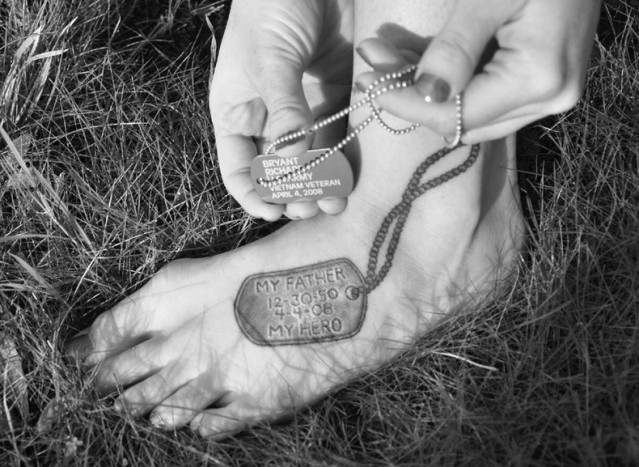
"caption": "A commemorative Army dog tag similar to the one worn by Caitlin's father, was designed by her aunt and passed out at Richard Bryants' funeral service. Caitlin recently had a tattoo artist replicate one on her foot. (Photo by: Margarita Brichkova)",
"description": "A commemorative Army dog tag similar to the one worn by Caitlin's father, was designed by her aunt and passed out at Richard Bryants' funeral service. Caitlin recently had a tattoo artist replicate one on her foot.",
"title": "Caitlin Bryant",
"credit": null,
"status": "inherit",
"isLoading": false,
"fetchFailed": false
},
"stateofhealth_13901": {
"type": "attachments",
"id": "stateofhealth_13901",
"meta": {
"index": "attachments_1716263798",
"site": "stateofhealth",
"id": "13901",
"found": true
},
"parent": 13900,
"imgSizes": {
"twentyfourteen-full-width": {
"file": "https://ww2.kqed.org/app/uploads/sites/27/2013/07/5436471236_a64b2a0245_b-e1375108767537-640x576.jpg",
"width": 640,
"mimeType": "image/jpeg",
"height": 576
},
"thumbnail": {
"file": "https://ww2.kqed.org/app/uploads/sites/27/2013/07/5436471236_a64b2a0245_b-e1375108767537-400x399.jpg",
"width": 400,
"mimeType": "image/jpeg",
"height": 399
},
"fd-sm": {
"file": "https://ww2.kqed.org/app/uploads/sites/27/2013/07/5436471236_a64b2a0245_b-e1375108767537-320x320.jpg",
"width": 320,
"mimeType": "image/jpeg",
"height": 320
},
"post-thumbnail": {
"file": "https://ww2.kqed.org/app/uploads/sites/27/2013/07/5436471236_a64b2a0245_b-e1375108767537-640x372.jpg",
"width": 640,
"mimeType": "image/jpeg",
"height": 372
},
"kqedFullSize": {
"file": "https://ww2.kqed.org/app/uploads/sites/27/2013/07/5436471236_a64b2a0245_b-e1375108767537.jpg",
"width": 640,
"height": 639
},
"guest-author-96": {
"file": "https://ww2.kqed.org/app/uploads/sites/27/2013/07/5436471236_a64b2a0245_b-e1375108767537-96x96.jpg",
"width": 96,
"mimeType": "image/jpeg",
"height": 96
},
"guest-author-64": {
"file": "https://ww2.kqed.org/app/uploads/sites/27/2013/07/5436471236_a64b2a0245_b-e1375108767537-64x64.jpg",
"width": 64,
"mimeType": "image/jpeg",
"height": 64
},
"detail": {
"file": "https://ww2.kqed.org/app/uploads/sites/27/2013/07/5436471236_a64b2a0245_b-e1375108767537-75x75.jpg",
"width": 75,
"mimeType": "image/jpeg",
"height": 75
},
"guest-author-32": {
"file": "https://ww2.kqed.org/app/uploads/sites/27/2013/07/5436471236_a64b2a0245_b-e1375108767537-32x32.jpg",
"width": 32,
"mimeType": "image/jpeg",
"height": 32
},
"guest-author-128": {
"file": "https://ww2.kqed.org/app/uploads/sites/27/2013/07/5436471236_a64b2a0245_b-e1375108767537-128x128.jpg",
"width": 128,
"mimeType": "image/jpeg",
"height": 128
}
},
"publishDate": 1375108745,
"modified": 1375108745,
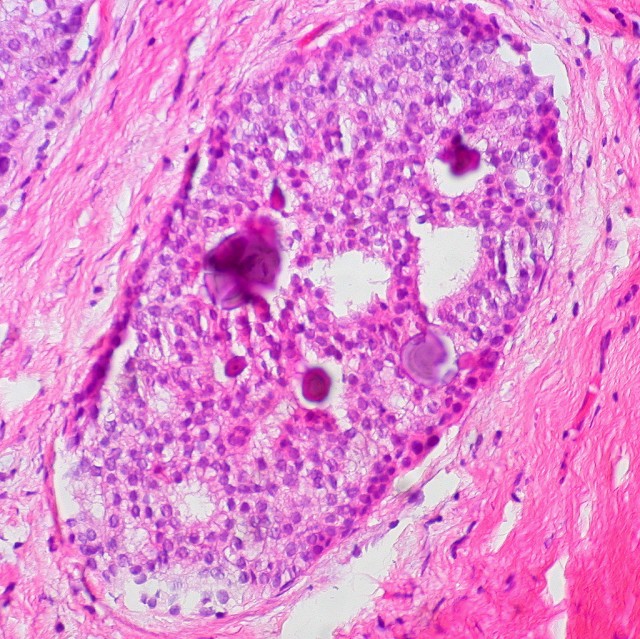
"caption": "Ductal carcinoma in situ seen under a microscope. While doctors also call it Stage 0 Breast Cancer, in an article Monday, doctors argue it should no longer be labelled \"cancer.\" (Ed Euthman/Flickr)",
"description": "ductal carcinoma in situ as seen under a microscope. ",
"title": "5436471236_a64b2a0245_b",
"credit": null,
"status": "inherit",
"isLoading": false,
"fetchFailed": false
},
"science_5903": {
"type": "attachments",
"id": "science_5903",
"meta": {
"index": "attachments_1716263798",
"site": "science",
"id": "5903",
"found": true
},
"parent": 5900,
"imgSizes": {
"kqedFullSize": {
"file": "https://ww2.kqed.org/app/uploads/sites/35/2013/07/MouseES-cells.jpg",
"width": 640,
"height": 360
}
},
"publishDate": 1374682682,
"modified": 1374682682,
"caption": "Scientists can now easily make mouse cells that act just like these mouse embryonic stem cells (in green). This opens the field wide open. Image courtesy of Wikimedia Commons.",
"description": null,
"title": "MouseES cells",
"credit": null,
"status": "inherit",
"isLoading": false,
"fetchFailed": false
},
"stateofhealth_13806": {
"type": "attachments",
"id": "stateofhealth_13806",
"meta": {
"index": "attachments_1716263798",
"site": "stateofhealth",
"id": "13806",
"found": true
},
"parent": 13725,
"imgSizes": {
"thumbnail": {
"file": "https://ww2.kqed.org/app/uploads/sites/27/2013/07/Abel-e1374599260792-400x300.jpg",
"width": 400,
"mimeType": "image/jpeg",
"height": 300
},
"fd-sm": {
"file": "https://ww2.kqed.org/app/uploads/sites/27/2013/07/Abel-e1374599260792-320x240.jpg",
"width": 320,
"mimeType": "image/jpeg",
"height": 240
},
"post-thumbnail": {
"file": "https://ww2.kqed.org/app/uploads/sites/27/2013/07/Abel-e1374599260792-640x372.jpg",
"width": 640,
"mimeType": "image/jpeg",
"height": 372
},
"kqedFullSize": {
"file": "https://ww2.kqed.org/app/uploads/sites/27/2013/07/Abel-e1374599260792.jpg",
"width": 640,
"height": 480
},
"guest-author-96": {
"file": "https://ww2.kqed.org/app/uploads/sites/27/2013/07/Abel-e1374599260792-96x96.jpg",
"width": 96,
"mimeType": "image/jpeg",
"height": 96
},
"guest-author-64": {
"file": "https://ww2.kqed.org/app/uploads/sites/27/2013/07/Abel-e1374599260792-64x64.jpg",
"width": 64,
"mimeType": "image/jpeg",
"height": 64
},
"detail": {
"file": "https://ww2.kqed.org/app/uploads/sites/27/2013/07/Abel-e1374599260792-75x75.jpg",
"width": 75,
"mimeType": "image/jpeg",
"height": 75
},
"guest-author-32": {
"file": "https://ww2.kqed.org/app/uploads/sites/27/2013/07/Abel-e1374599260792-32x32.jpg",
"width": 32,
"mimeType": "image/jpeg",
"height": 32
},
"guest-author-128": {
"file": "https://ww2.kqed.org/app/uploads/sites/27/2013/07/Abel-e1374599260792-128x128.jpg",
"width": 128,
"mimeType": "image/jpeg",
"height": 128
}
},
"publishDate": 1374599194,
"modified": 1374599194,
"caption": "Abel Corona having dinner in his Watsonville home. He is more careful about his diet since he was diagnosed with diabetes. (Vinnie Tong/KQED)",
"description": "Latino man having dinner",
"title": "Abel",
"credit": null,
"status": "inherit",
"isLoading": false,
"fetchFailed": false
},
"stateofhealth_13782": {
"type": "attachments",
"id": "stateofhealth_13782",
"meta": {
"index": "attachments_1716263798",
"site": "stateofhealth",
"id": "13782",
"found": true
},
"parent": 13778,
"imgSizes": {
"thumbnail": {
"file": "https://ww2.kqed.org/app/uploads/sites/27/2013/07/164022347-e1374517327508-400x266.jpg",
"width": 400,
"mimeType": "image/jpeg",
"height": 266
},
"fd-sm": {
"file": "https://ww2.kqed.org/app/uploads/sites/27/2013/07/164022347-e1374517327508-320x213.jpg",
"width": 320,
"mimeType": "image/jpeg",
"height": 213
},
"post-thumbnail": {
"file": "https://ww2.kqed.org/app/uploads/sites/27/2013/07/164022347-e1374517327508-641x372.jpg",
"width": 641,
"mimeType": "image/jpeg",
"height": 372
},
"kqedFullSize": {
"file": "https://ww2.kqed.org/app/uploads/sites/27/2013/07/164022347-e1374517327508.jpg",
"width": 641,
"height": 427
},
"guest-author-96": {
"file": "https://ww2.kqed.org/app/uploads/sites/27/2013/07/164022347-e1374517327508-96x96.jpg",
"width": 96,
"mimeType": "image/jpeg",
"height": 96
},
"guest-author-64": {
"file": "https://ww2.kqed.org/app/uploads/sites/27/2013/07/164022347-e1374517327508-64x64.jpg",
"width": 64,
"mimeType": "image/jpeg",
"height": 64
},
"detail": {
"file": "https://ww2.kqed.org/app/uploads/sites/27/2013/07/164022347-e1374517327508-75x75.jpg",
"width": 75,
"mimeType": "image/jpeg",
"height": 75
},
"guest-author-32": {
"file": "https://ww2.kqed.org/app/uploads/sites/27/2013/07/164022347-e1374517327508-32x32.jpg",
"width": 32,
"mimeType": "image/jpeg",
"height": 32
},
"guest-author-128": {
"file": "https://ww2.kqed.org/app/uploads/sites/27/2013/07/164022347-e1374517327508-128x128.jpg",
"width": 128,
"mimeType": "image/jpeg",
"height": 128
}
},
"publishDate": 1374517311,
"modified": 1374517311,
"caption": "It's easy to imagine how this baby could be hurt if the TV toppled over. (Getty Images)",
"description": "flat screen TV, baby",
"title": "164022347",
"credit": null,
"status": "inherit",
"isLoading": false,
"fetchFailed": false
},
"science_5689": {
"type": "attachments",
"id": "science_5689",
"meta": {
"index": "attachments_1716263798",
"site": "science",
"id": "5689",
"found": true
},
"parent": 5682,
"imgSizes": {
"kqedFullSize": {
"file": "https://ww2.kqed.org/app/uploads/sites/35/2013/07/Tues-Twilight-group.jpg",
"width": 640,
"height": 480
}
},
"publishDate": 1374109895,
"modified": 1374109895,
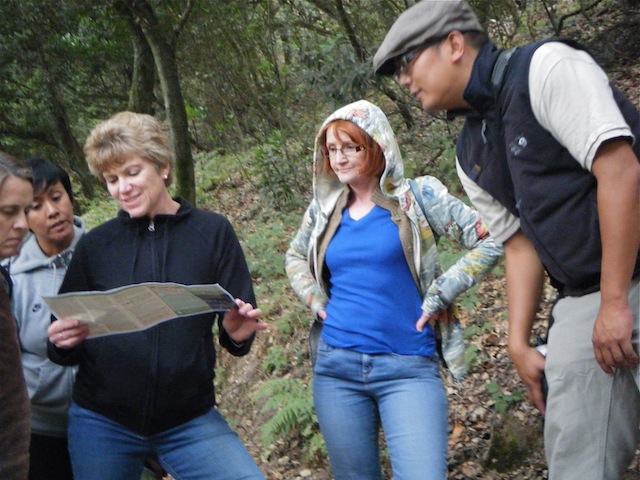
"caption": "Naturalist Francis Mendoza consults with hikers on the Tuesday Twilight program at Huckleberry Botanic Preserve.",
"description": null,
"title": "Tues Twilight group",
"credit": null,
"status": "inherit",
"isLoading": false,
"fetchFailed": false
},
"stateofhealth_13656": {
"type": "attachments",
"id": "stateofhealth_13656",
"meta": {
"index": "attachments_1716263798",
"site": "stateofhealth",
"id": "13656",
"found": true
},
"parent": 13654,
"imgSizes": {
"twentyfourteen-full-width": {
"file": "https://ww2.kqed.org/app/uploads/sites/27/2013/07/aspirin_ThinkStock-e1373933602980-620x576.jpg",
"width": 620,
"mimeType": "image/jpeg",
"height": 576
},
"thumbnail": {
"file": "https://ww2.kqed.org/app/uploads/sites/27/2013/07/aspirin_ThinkStock-e1373933602980-400x378.jpg",
"width": 400,
"mimeType": "image/jpeg",
"height": 378
},
"fd-sm": {
"file": "https://ww2.kqed.org/app/uploads/sites/27/2013/07/aspirin_ThinkStock-e1373933602980-320x302.jpg",
"width": 320,
"mimeType": "image/jpeg",
"height": 302
},
"post-thumbnail": {
"file": "https://ww2.kqed.org/app/uploads/sites/27/2013/07/aspirin_ThinkStock-e1373933602980-620x372.jpg",
"width": 620,
"mimeType": "image/jpeg",
"height": 372
},
"kqedFullSize": {
"file": "https://ww2.kqed.org/app/uploads/sites/27/2013/07/aspirin_ThinkStock-e1373933602980.jpg",
"width": 620,
"height": 586
},
"guest-author-96": {
"file": "https://ww2.kqed.org/app/uploads/sites/27/2013/07/aspirin_ThinkStock-e1373933602980-96x96.jpg",
"width": 96,
"mimeType": "image/jpeg",
"height": 96
},
"guest-author-64": {
"file": "https://ww2.kqed.org/app/uploads/sites/27/2013/07/aspirin_ThinkStock-e1373933602980-64x64.jpg",
"width": 64,
"mimeType": "image/jpeg",
"height": 64
},
"detail": {
"file": "https://ww2.kqed.org/app/uploads/sites/27/2013/07/aspirin_ThinkStock-e1373933602980-75x75.jpg",
"width": 75,
"mimeType": "image/jpeg",
"height": 75
},
"guest-author-32": {
"file": "https://ww2.kqed.org/app/uploads/sites/27/2013/07/aspirin_ThinkStock-e1373933602980-32x32.jpg",
"width": 32,
"mimeType": "image/jpeg",
"height": 32
},
"guest-author-128": {
"file": "https://ww2.kqed.org/app/uploads/sites/27/2013/07/aspirin_ThinkStock-e1373933602980-128x128.jpg",
"width": 128,
"mimeType": "image/jpeg",
"height": 128
}
},
"publishDate": 1373933585,
"modified": 1373933585,
"caption": "(Photo: Getty Images)",
"description": "generic aspirin bottle",
"title": "aspirin_ThinkStock",
"credit": null,
"status": "inherit",
"isLoading": false,
"fetchFailed": false
},
"science_5512": {
"type": "attachments",
"id": "science_5512",
"meta": {
"index": "attachments_1716263798",
"site": "science",
"id": "5512",
"found": true
},
"parent": 5510,
"imgSizes": {
"kqedFullSize": {
"file": "https://ww2.kqed.org/app/uploads/sites/35/2013/07/FatMouse.jpg",
"width": 639,
"height": 361
}
},
"publishDate": 1373644816,
"modified": 1373644816,
"caption": "The guy on the left is at higher risk for certain cancers. The bacteria in his gut may be to blame.",
"description": null,
"title": "FatMouse",
"credit": null,
"status": "inherit",
"isLoading": false,
"fetchFailed": false
}
},
"audioPlayerReducer": {
"postId": "stream_live",
"isPaused": true,
"isPlaying": false,
"pfsActive": false,
"pledgeModalIsOpen": true,
"playerDrawerIsOpen": false,
"liveAudioPlayStartedAt": 0,
"liveAudioPlayContext": ""
},
"authorsReducer": {
"katsnow": {
"type": "authors",
"id": "235",
"meta": {
"index": "authors_1716337520",
"id": "235",
"found": true
},
"name": "Katrin Snow",
"firstName": "Katrin",
"lastName": "Snow",
"slug": "katsnow",
"email": "ksnow@kqed.org",
"display_author_email": true,
"staff_mastheads": [
"science"
],
"title": "Senior Editor",
"bio": "Kat started in radio in 1985 at KMUN in Astoria, Oregon, where the Columbia River meets the sea. She worked several years protecting monarch butterfly habitat in California with the Xerces Society, an invertebrate conservation organization, before a love for radio news drew her back into journalism. Kat came to KQED in 2002, and before that was a reporter and news director at KUER in Salt Lake City, covering the state legislature, the environment and health. Kat coaches reporters and others in embodied narration and public speaking. She is a certified teacher of Soul Motion®, a conscious dance practice, and can sometimes be found in the Mojave desert or the Eastern Sierra.",
"avatar": "https://secure.gravatar.com/avatar/fa6bf8a74a2692973a5484e64ebd2b52?s=600&d=blank&r=g",
"twitter": "cosmologicalkat",
"facebook": null,
"instagram": null,
"linkedin": null,
"sites": [
{
"site": "arts",
"roles": [
"contributor"
]
},
{
"site": "news",
"roles": [
"editor"
]
},
{
"site": "futureofyou",
"roles": [
"editor"
]
},
{
"site": "science",
"roles": [
"editor"
]
}
],
"headData": {
"title": "Katrin Snow | KQED",
"description": "Senior Editor",
"ogImgSrc": "https://secure.gravatar.com/avatar/fa6bf8a74a2692973a5484e64ebd2b52?s=600&d=blank&r=g",
"twImgSrc": "https://secure.gravatar.com/avatar/fa6bf8a74a2692973a5484e64ebd2b52?s=600&d=blank&r=g"
},
"isLoading": false,
"link": "/author/katsnow"
},
"lisaaliferis": {
"type": "authors",
"id": "240",
"meta": {
"index": "authors_1716337520",
"id": "240",
"found": true
},
"name": "Lisa Aliferis",
"firstName": "Lisa",
"lastName": "Aliferis",
"slug": "lisaaliferis",
"email": "laliferis@kqed.org",
"display_author_email": false,
"staff_mastheads": [],
"title": "KQED Contributor",
"bio": "Lisa Aliferis is the founding editor of KQED's \u003cem>State of Health\u003c/em> blog. Since 2011, she's been writing and editing stories for the site. Before taking up blogging, she toiled for many years (more than we can count) producing health stories for television, including\u003cem> Dateline NBC\u003c/em> and San Francisco's CBS affiliate, KPIX-TV. She also wrote up a \u003ca title=\"http://www.kqed.org/news/health/obamacare/obamacare-guide.jsp\" href=\"http://www.kqed.org/news/health/obamacare/obamacare-guide.jsp\">handy guide to the Affordable Care Act\u003c/a>, especially for Californians. Her work has been honored for many awards. Most recently she was a finalist for \"Best Topical Reporting\" from the Online News Association. You can follow her on Twitter: \u003ca title=\"https://twitter.com/laliferis\" href=\"https://twitter.com/laliferis\">@laliferis\u003c/a>",
"avatar": "https://secure.gravatar.com/avatar/86c339d5cdcb0dcd2b6cf5d7c3f5886b?s=600&d=mm&r=g",
"twitter": "laliferis",
"facebook": null,
"instagram": null,
"linkedin": null,
"sites": [
{
"site": "news",
"roles": [
"subscriber"
]
},
{
"site": "futureofyou",
"roles": [
"subscriber"
]
},
{
"site": "stateofhealth",
"roles": [
"subscriber"
]
},
{
"site": "science",
"roles": [
"subscriber"
]
},
{
"site": "food",
"roles": []
}
],
"headData": {
"title": "Lisa Aliferis | KQED",
"description": "KQED Contributor",
"ogImgSrc": "https://secure.gravatar.com/avatar/86c339d5cdcb0dcd2b6cf5d7c3f5886b?s=600&d=mm&r=g",
"twImgSrc": "https://secure.gravatar.com/avatar/86c339d5cdcb0dcd2b6cf5d7c3f5886b?s=600&d=mm&r=g"
},
"isLoading": false,
"link": "/author/lisaaliferis"
},
"ryderdiaz": {
"type": "authors",
"id": "1462",
"meta": {
"index": "authors_1716337520",
"id": "1462",
"found": true
},
"name": "Ryder Diaz",
"firstName": "Ryder",
"lastName": "Diaz",
"slug": "ryderdiaz",
"email": "rdiaz@KQED.org",
"display_author_email": false,
"staff_mastheads": [],
"title": null,
"bio": null,
"avatar": "https://secure.gravatar.com/avatar/3a8471d4d33c9b4d34d5e5c60f7f8342?s=600&d=blank&r=g",
"twitter": null,
"facebook": null,
"instagram": null,
"linkedin": null,
"sites": [
{
"site": "news",
"roles": [
"subscriber"
]
},
{
"site": "stateofhealth",
"roles": [
"subscriber"
]
}
],
"headData": {
"title": "Ryder Diaz | KQED",
"description": null,
"ogImgSrc": "https://secure.gravatar.com/avatar/3a8471d4d33c9b4d34d5e5c60f7f8342?s=600&d=blank&r=g",
"twImgSrc": "https://secure.gravatar.com/avatar/3a8471d4d33c9b4d34d5e5c60f7f8342?s=600&d=blank&r=g"
},
"isLoading": false,
"link": "/author/ryderdiaz"
},
"dr-barry-starr": {
"type": "authors",
"id": "6177",
"meta": {
"index": "authors_1716337520",
"id": "6177",
"found": true
},
"name": "Dr. Barry Starr",
"firstName": "Dr. Barry",
"lastName": "Starr",
"slug": "dr-barry-starr",
"email": "bstarr@thetech.org",
"display_author_email": false,
"staff_mastheads": [],
"title": "KQED Contributor",
"bio": "Dr. Barry Starr (\u003ca href=\"https://twitter.com/geneticsboy\">@geneticsboy\u003c/a>) is a Geneticist-in-Residence at The Tech Museum of Innovation in San Jose, CA and runs their Stanford at The Tech program. The program is part of an ongoing collaboration between the \u003ca href=\"http://genetics.stanford.edu/\">Stanford Department of Genetics\u003c/a> and \u003ca href=\"http://www.thetech.org/\">The Tech Museum of Innovation\u003c/a>. Together these two partners created the \u003ca href=\"http://www.thetech.org/exhibits/permanent/index.php?sGalKey=gtwt&galKey=lt\">Genetics: Technology with a Twist\u003c/a> exhibition.\r\n\r\nYou can also see \u003ca href=\"https://ww2.kqed.org/science/author/dr-barry-starr/\">additional posts by Barry at KQED Science\u003c/a>, and read his \u003ca href=\"http://science.kqed.org/quest/author/dr-barry-starr/\">previous contributions\u003c/a> to \u003ca href=\"http://science.kqed.org/quest/\">QUEST\u003c/a>, a project dedicated to exploring the Science of Sustainability.",
"avatar": "https://secure.gravatar.com/avatar/4a5680e4c642ea0f0f3041af16018969?s=600&d=blank&r=g",
"twitter": "geneticsboy",
"facebook": null,
"instagram": null,
"linkedin": null,
"sites": [
{
"site": "futureofyou",
"roles": []
},
{
"site": "science",
"roles": [
"author"
]
},
{
"site": "quest",
"roles": [
"subscriber"
]
}
],
"headData": {
"title": "Dr. Barry Starr | KQED",
"description": "KQED Contributor",
"ogImgSrc": "https://secure.gravatar.com/avatar/4a5680e4c642ea0f0f3041af16018969?s=600&d=blank&r=g",
"twImgSrc": "https://secure.gravatar.com/avatar/4a5680e4c642ea0f0f3041af16018969?s=600&d=blank&r=g"
},
"isLoading": false,
"link": "/author/dr-barry-starr"
},
"sharolembry": {
"type": "authors",
"id": "6328",
"meta": {
"index": "authors_1716337520",
"id": "6328",
"found": true
},
"name": "Sharol Nelson-Embry",
"firstName": "Sharol",
"lastName": "Nelson-Embry",
"slug": "sharolembry",
"email": "bobsharol@gmail.com",
"display_author_email": false,
"staff_mastheads": [],
"title": "KQED Contributor",
"bio": "Sharol Nelson-Embry is the Supervising Naturalist at the Crab Cove Visitor Center & Aquarium on San Francisco Bay in Alameda. Crab Cove is part of the East Bay Regional Park District, one of the largest and oldest regional park agencies in the nation. She graduated from Cal Poly, San Luis Obispo with a degree in Natural Resources Management and an epiphany that connecting kids with nature was her destiny. She's been rooted in the Bay Area since 1991 after working at nature centers and outdoor science schools around our fair state. She loves the great variety of habitats stretching from the Bay shoreline to the redwoods, lakes, and hills. Sharol enjoys connecting people to nature with articles in local newspapers and online forums.\r\n\r\nRead her \u003ca href=\"http://science.kqed.org/quest/author/sharolembry/\">previous contributions\u003c/a> to \u003ca href=\"http://http://science.kqed.org/quest/\">QUEST\u003c/a>, a project dedicated to exploring the Science of Sustainability.",
"avatar": "https://secure.gravatar.com/avatar/7d0ffaf107f228c8293464f98d8aeecdc95cf55410e3481c2f4e9f5d0e415cec?s=600&d=blank&r=g",
"twitter": null,
"bluesky": null,
"facebook": null,
"instagram": null,
"linkedin": null,
"sites": [
{
"site": "science",
"roles": [
"subscriber"
]
},
{
"site": "quest",
"roles": [
"subscriber"
]
}
],
"headData": {
"title": "Sharol Nelson-Embry | KQED",
"description": "KQED Contributor",
"ogImgSrc": "https://secure.gravatar.com/avatar/7d0ffaf107f228c8293464f98d8aeecdc95cf55410e3481c2f4e9f5d0e415cec?s=600&d=blank&r=g",
"twImgSrc": "https://secure.gravatar.com/avatar/7d0ffaf107f228c8293464f98d8aeecdc95cf55410e3481c2f4e9f5d0e415cec?s=600&d=blank&r=g"
},
"isLoading": false,
"link": "/author/sharolembry"
},
"state-of-health": {
"type": "authors",
"id": "8344",
"meta": {
"index": "authors_1716337520",
"id": "8344",
"found": true
},
"name": "State of Health",
"firstName": "State of Health",
"lastName": null,
"slug": "state-of-health",
"email": "stateofhealth@kqed.org",
"display_author_email": false,
"staff_mastheads": [],
"title": null,
"bio": null,
"avatar": "https://secure.gravatar.com/avatar/66de4bf6d331fa7402bba1ffe8135e17?s=600&d=blank&r=g",
"twitter": null,
"facebook": null,
"instagram": null,
"linkedin": null,
"sites": [
{
"site": "arts",
"roles": [
"author"
]
},
{
"site": "stateofhealth",
"roles": [
"editor"
]
}
],
"headData": {
"title": "State of Health | KQED",
"description": null,
"ogImgSrc": "https://secure.gravatar.com/avatar/66de4bf6d331fa7402bba1ffe8135e17?s=600&d=blank&r=g",
"twImgSrc": "https://secure.gravatar.com/avatar/66de4bf6d331fa7402bba1ffe8135e17?s=600&d=blank&r=g"
},
"isLoading": false,
"link": "/author/state-of-health"
}
},
"pagesReducer": {
"science_category_health": {
"type": "terms",
"id": "science_39",
"meta": {
"index": "terms_1716263798",
"site": "science",
"id": "39",
"score": 10.889475
},
"featImg": null,
"name": "Health",
"description": null,
"taxonomy": "category",
"headData": {
"twImgId": null,
"twTitle": null,
"ogTitle": null,
"ogImgId": null,
"twDescription": null,
"description": null,
"title": "Health Archives | KQED Science",
"ogDescription": null
},
"ttid": 41,
"slug": "health",
"isLoading": false,
"title": "Health",
"pageMeta": {
"site": "science",
"WpPageTemplate": "page-topic-editorial",
"currentPage": 104
},
"blocks": [
{
"blockName": "kqed/post-list",
"attrs": {
"layout": "cardArticle2",
"query": "posts/science?category=health",
"seeMore": false,
"paginated": true,
"page": 104
}
},
{
"blockName": "kqed/ad"
}
]
}
},
"pfsSessionReducer": {},
"postsReducer": {
"stream_live": {
"type": "live",
"id": "stream_live",
"audioUrl": "https://streams.kqed.org/kqedradio",
"title": "Live Stream",
"excerpt": "Live Stream information currently unavailable.",
"link": "/radio",
"featImg": "",
"label": {
"name": "KQED Live",
"link": "/"
}
},
"stream_kqedNewscast": {
"type": "posts",
"id": "stream_kqedNewscast",
"audioUrl": "https://www.kqed.org/.stream/anon/radio/RDnews/newscast.mp3?_=1",
"title": "KQED Newscast",
"featImg": "",
"label": {
"name": "88.5 FM",
"link": "/"
}
},
"stateofhealth_14012": {
"type": "posts",
"id": "stateofhealth_14012",
"meta": {
"index": "posts_1716263798",
"site": "stateofhealth",
"id": "14012",
"score": null,
"sort": [
1375378277000
]
},
"parent": 0,
"labelTerm": {
"site": "stateofhealth"
},
"blocks": [],
"publishDate": 1375378277,
"format": "aside",
"disqusTitle": "More California Moms Are Breast-Feeding Their Babies",
"title": "More California Moms Are Breast-Feeding Their Babies",
"headTitle": "State of Health | KQED News",
"content": "\u003cfigure id=\"attachment_14016\" class=\"wp-caption aligncenter\" style=\"max-width: 620px\">\u003cimg class=\"size-large wp-image-14016\" title=\"\" src=\"http://ww2.kqed.org/stateofhealth/wp-content/uploads/sites/27/2013/08/78744816-620x412.jpg\" alt=\"California has 2nd highest rate of breast-feeding in the country. (Getty Images)\" width=\"620\" height=\"412\">\u003cfigcaption class=\"wp-caption-text\">California has 2nd highest rate of breast-feeding in the country. (Getty Images)\u003c/figcaption>\u003c/figure>\n\u003cp>Across the country, nearly 77 percent of mothers are breast-feeding their newborns, and nearly half are still at it when babies are six months.\u003c/p>\n\u003cp>Those \u003ca href=\"http://www.cdc.gov/breastfeeding/pdf/2013BreastfeedingReportCard.pdf\" target=\"_blank\">numbers\u003c/a> from the Centers for Disease Control were collected in 2010, and they reflect an increase in breast-feeding since 2000.\u003c/p>\n\u003cp>California moms are doing even better. More than 90 percent of mothers in the state have \"ever breast-fed\" their babies and 71 percent are still nursing at 6 months. (We're #2 to Idaho which just nudged California moms out on the stats.)\u003c/p>\n\u003cp>Breast-feeding has health benefits to babies, says Dr. Tom Frieden, CDC director, including lower risks of ear and gastrointestinal infections, diabetes and obesity. Plus mothers who breast-feed can reduce their own risk of breast and ovarian cancers.\u003c!--more-->\u003c/p>\n\u003cp>The American Academy of Pediatrics\u003ca href=\"http://www.aap.org/en-us/about-the-aap/aap-press-room/pages/AAP-Reaffirms-Breastfeeding-Guidelines.aspx?nfstatus=401&nftoken=00000000-0000-0000-0000-000000000000&nfstatusdescription=ERROR%3a+No+local+token&nfstatus=401&nftoken=00000000-0000-0000-0000-000000000000&nfstatusdescription=ERROR%3a+No+local+token\" target=\"_blank\"> recommends\u003c/a> exclusive breast-feeding for the first 6 months of a baby's life, when solid foods are introduced. The AAP says that moms should continue to complement the solid foods with breast-feeding until the baby is one year old. The World Health Organization \u003ca href=\"http://www.who.int/features/factfiles/breastfeeding/en/\" target=\"_blank\">recommends\u003c/a> breast-feeding up to two years of age.\u003c/p>\n\u003cp>[ad fullwidth]\u003c/p>\n\u003cp>Hospitals are critical settings for supporting moms in breast-feeding. Newborns who \"room-in\" with their mothers and have skin-to-skin contact (the newborn is placed directly on a mother's chest after birth) have a better chs a nce of latching on and successfully breast-feeding.\u003c/p>\n\u003cp>Here, too, California has strong policies to support these practices. Nearly 80 percent of hospitals in the state ensure that virtually all newborns have skin-to-skin contact with their mothers and about 72 percent of hospitals have rooming-in for babies.\u003c/p>\n\u003cp>Another indicator the CDC measures is whether infants are offered formula before two days of age. If a breast-feeding baby is offered supplemental formula, it can sabotage the baby's continued success in breast-feeding. Nationally, about 24 percent of breast-fed babies were given formula before they were two days old. In California, the rate was just under 17 percent.\u003c/p>\n\u003cp>\u003c/p>\n\u003cp>Finally, California also has \u003ca href=\"http://www.californiabreastfeeding.org/Laws.html\" target=\"_blank\">regulations\u003c/a> to support breast-feeding at work or school.\u003c/p>\n\n",
"disqusIdentifier": "14012 http://blogs.kqed.org/stateofhealth/?p=14012",
"disqusUrl": "https://ww2.kqed.org/stateofhealth/2013/08/01/more-california-moms-are-breast-feeding-their-babies/",
"stats": {
"hasVideo": false,
"hasChartOrMap": false,
"hasAudio": false,
"hasPolis": false,
"wordCount": 369,
"hasGoogleForm": false,
"hasGallery": false,
"hasHearkenModule": false,
"iframeSrcs": [],
"paragraphCount": 11
},
"modified": 1375414673,
"excerpt": "Nearly 77 percent of mothers are breast-feeding their newborns and nearly half are still at it when babies are six months.\r\n\r\nThose are national numbers from the Centers for Disease Control collected in 2010, and they reflect an increase in breast-feeding since 2000.\r\n\r\nCalifornia moms are doing even better. More than 90 percent of mothers in the state have \"ever breastfed\" their babies",
"headData": {
"twImgId": "",
"twTitle": "",
"ogTitle": "",
"ogImgId": "",
"twDescription": "",
"description": "Nearly 77 percent of mothers are breast-feeding their newborns and nearly half are still at it when babies are six months.\r\n\r\nThose are national numbers from the Centers for Disease Control collected in 2010, and they reflect an increase in breast-feeding since 2000.\r\n\r\nCalifornia moms are doing even better. More than 90 percent of mothers in the state have "ever breastfed" their babies",
"title": "More California Moms Are Breast-Feeding Their Babies | KQED",
"ogDescription": "",
"schema": {
"@context": "https://schema.org",
"@type": "Article",
"headline": "More California Moms Are Breast-Feeding Their Babies",
"datePublished": "2013-08-01T10:31:17-07:00",
"dateModified": "2013-08-01T20:37:53-07:00",
"image": "https://cdn.kqed.org/wp-content/uploads/2020/02/KQED-OG-Image@1x.png"
}
},
"guestAuthors": [],
"slug": "more-california-moms-are-breast-feeding-their-babies",
"status": "publish",
"path": "/stateofhealth/14012/more-california-moms-are-breast-feeding-their-babies",
"audioTrackLength": null,
"parsedContent": [
{
"type": "contentString",
"content": "\u003cdiv class=\"post-body\">\u003cp>\u003cfigure id=\"attachment_14016\" class=\"wp-caption aligncenter\" style=\"max-width: 620px\">\u003cimg class=\"size-large wp-image-14016\" title=\"\" src=\"http://ww2.kqed.org/stateofhealth/wp-content/uploads/sites/27/2013/08/78744816-620x412.jpg\" alt=\"California has 2nd highest rate of breast-feeding in the country. (Getty Images)\" width=\"620\" height=\"412\">\u003cfigcaption class=\"wp-caption-text\">California has 2nd highest rate of breast-feeding in the country. (Getty Images)\u003c/figcaption>\u003c/figure>\n\u003cp>Across the country, nearly 77 percent of mothers are breast-feeding their newborns, and nearly half are still at it when babies are six months.\u003c/p>\n\u003cp>Those \u003ca href=\"http://www.cdc.gov/breastfeeding/pdf/2013BreastfeedingReportCard.pdf\" target=\"_blank\">numbers\u003c/a> from the Centers for Disease Control were collected in 2010, and they reflect an increase in breast-feeding since 2000.\u003c/p>\n\u003cp>California moms are doing even better. More than 90 percent of mothers in the state have \"ever breast-fed\" their babies and 71 percent are still nursing at 6 months. (We're #2 to Idaho which just nudged California moms out on the stats.)\u003c/p>\n\u003cp>Breast-feeding has health benefits to babies, says Dr. Tom Frieden, CDC director, including lower risks of ear and gastrointestinal infections, diabetes and obesity. Plus mothers who breast-feed can reduce their own risk of breast and ovarian cancers.\u003c!--more-->\u003c/p>\n\u003cp>The American Academy of Pediatrics\u003ca href=\"http://www.aap.org/en-us/about-the-aap/aap-press-room/pages/AAP-Reaffirms-Breastfeeding-Guidelines.aspx?nfstatus=401&nftoken=00000000-0000-0000-0000-000000000000&nfstatusdescription=ERROR%3a+No+local+token&nfstatus=401&nftoken=00000000-0000-0000-0000-000000000000&nfstatusdescription=ERROR%3a+No+local+token\" target=\"_blank\"> recommends\u003c/a> exclusive breast-feeding for the first 6 months of a baby's life, when solid foods are introduced. The AAP says that moms should continue to complement the solid foods with breast-feeding until the baby is one year old. The World Health Organization \u003ca href=\"http://www.who.int/features/factfiles/breastfeeding/en/\" target=\"_blank\">recommends\u003c/a> breast-feeding up to two years of age.\u003c/p>\n\u003cp>\u003c/p>\u003c/div>",
"attributes": {
"named": {},
"numeric": []
}
},
{
"type": "component",
"content": "",
"name": "ad",
"attributes": {
"named": {
"label": "fullwidth"
},
"numeric": [
"fullwidth"
]
}
},
{
"type": "contentString",
"content": "\u003cdiv class=\"post-body\">\u003cp>\u003c/p>\n\u003cp>Hospitals are critical settings for supporting moms in breast-feeding. Newborns who \"room-in\" with their mothers and have skin-to-skin contact (the newborn is placed directly on a mother's chest after birth) have a better chs a nce of latching on and successfully breast-feeding.\u003c/p>\n\u003cp>Here, too, California has strong policies to support these practices. Nearly 80 percent of hospitals in the state ensure that virtually all newborns have skin-to-skin contact with their mothers and about 72 percent of hospitals have rooming-in for babies.\u003c/p>\n\u003cp>Another indicator the CDC measures is whether infants are offered formula before two days of age. If a breast-feeding baby is offered supplemental formula, it can sabotage the baby's continued success in breast-feeding. Nationally, about 24 percent of breast-fed babies were given formula before they were two days old. In California, the rate was just under 17 percent.\u003c/p>\n\u003cp>\u003c/p>\n\u003cp>Finally, California also has \u003ca href=\"http://www.californiabreastfeeding.org/Laws.html\" target=\"_blank\">regulations\u003c/a> to support breast-feeding at work or school.\u003c/p>\n\n\u003c/div>\u003c/p>",
"attributes": {
"named": {},
"numeric": []
}
}
],
"link": "/stateofhealth/14012/more-california-moms-are-breast-feeding-their-babies",
"authors": [
"240"
],
"categories": [
"stateofhealth_12"
],
"tags": [
"stateofhealth_461"
],
"featImg": "stateofhealth_14016",
"label": "stateofhealth"
},
"stateofhealth_13985": {
"type": "posts",
"id": "stateofhealth_13985",
"meta": {
"index": "posts_1716263798",
"site": "stateofhealth",
"id": "13985",
"score": null,
"sort": [
1375308181000
]
},
"parent": 0,
"labelTerm": {
"site": "stateofhealth"
},
"blocks": [],
"publishDate": 1375308181,
"format": "aside",
"disqusTitle": "Would You Get A Test Now That Confirmed a Fatal Illness Later?",
"title": "Would You Get A Test Now That Confirmed a Fatal Illness Later?",
"headTitle": "State of Health | KQED News",
"content": "\u003cfigure id=\"attachment_14009\" class=\"wp-caption aligncenter\" style=\"max-width: 620px\">\u003cimg class=\"size-large wp-image-14009\" title=\"\" src=\"http://ww2.kqed.org/stateofhealth/wp-content/uploads/sites/27/2013/07/Screen-Shot-2013-07-31-at-3.03.36-PM-620x415.png\" alt=\"A young Kristen Powers is held by her mother, Nicola, while her father looks on in the background. Nicola was later diagnosed with Huntington’s disease, a fatal illness. (Photo courtesy of Kristen Powers)\" width=\"620\" height=\"415\">\u003cfigcaption class=\"wp-caption-text\">A young Kristen Powers is held by her mother, Nicola, while her father looks on in the background. Nicola was later diagnosed with Huntington’s disease, a fatal illness. (Photo courtesy of Kristen Powers)\u003c/figcaption>\u003c/figure>\n\u003cp>\u003cstrong>By Ravali Reddy\u003c/strong>, \u003ca href=\"http://peninsulapress.com/2013/07/15/kristens-story-student-filmmaker-documents-a-life-forever-altered-by-genetics/\" target=\"_blank\">Peninsula Press\u003c/a>\u003c/p>\n\u003cp>If you had a 50-50 chance of inheriting a genetic disease, would you get tested to know? Or would you wait for fate to reveal itself years later?\u003c/p>\n\u003cp>Would your decision change if you knew the disease slowly takes away the ability to walk, talk, and even think?\u003c/p>\n\u003cp>What if there were no cure?\u003c/p>\n\u003caside class=\"pullquote alignleft\">\"I’ve always wanted to travel, and I knew that that was something I’d have to do earlier if I tested positive.”\u003c/aside>\n\u003cp>Kristen Powers posed those questions aloud and then let them hang in the air as she spoke to a dozen middle and high school students. The slender, 19-year-old Stanford University freshman was taking part in a program where undergraduates teach classes on topics of their choosing. Today’s class — “To Test or Not to Test? The Ethics Behind Genetically Inherited disease” — covers a subject that Kristen knows far too much about.\u003c/p>\n\u003cp>[ad fullwidth]\u003c/p>\n\u003cp>“How many of you know what Huntington’s disease is?” she asked, only to find herself met with a mostly blank faces.\u003c!--more-->\u003c/p>\n\u003cp>The response wasn’t surprising considering that the disease is uncommon, affecting about 1 in 10,000 people of European ancestry. She pointed at one of the few raised hands. “It’s a disease where your brain cells die, and you start to lose control of your body, and then you die,” said a ninth-grade girl. Kristen paused and nodded. After all, the girl was more or less correct.\u003c/p>\n\u003cp>Huntington’s disease (HD) is a neurodegenerative genetic disorder that, as it progresses, affects the ability to think, move and feel. Most patients begin to show symptoms between the ages of 30 and 50 and typically succumb to the disease 10 to 25 years after the first symptoms appear.\u003c/p>\n\u003cp>Each child of a person with HD has a 50-50 chance of inheriting the gene, making this a devastating family disease.\u003c/p>\n\u003cp>“My mum passed away from Huntington’s in 2011, when she was 45,” Kristen continued, quickly capturing the attention of her audience. The implications were clear to all in the room.\u003c/p>\n\u003cp>The rapt audience listened as Kristen described herself as \"information-needy,\" so when she turned 18, she decided to get tested for the gene.\u003c/p>\n\u003cp>“I knew I had to get tested because, if I had HD, I’d have to adjust my timeline for my life,\" Kristen said. \"I’ve always wanted to travel, and I knew that that was something I’d have to do earlier if I tested positive.”\u003c/p>\n\u003cp>The 9\u003csup>th\u003c/sup>-grader who had defined HD was now on the edge of her seat, eyes wide open. She looked terrified that her flippant response was predictive of Kristen’s fate.\u003c/p>\n\u003cp>“So last year I got tested, and I’m happy to say that I tested negative.”\u003c/p>\n\u003cp>And just like that, the tension in the room lifted.\u003c/p>\n\u003cp>\u003cstrong>Life after Testing\u003c/strong>\u003c/p>\n\u003cp>Kristen’s negative test result means she will never develop the disease that claimed her mother’s life, and she has no chance of passing it on if she has children.\u003c/p>\n\u003cp>“It’s actually really weird knowing that I’m never going to get Huntington’s,” Kristen said in a recent interview, “because up until I tested I always assumed that I would die of HD, and it was scary but at least that was certain. As soon as I tested negative I feel like my whole life changed because, all of a sudden, I had no idea what I was going to die of anymore.”\u003c/p>\n\u003cp>She laughed and continued, “I remember being really surprised and thinking ‘Wow, this is what normal people feel like!’”\u003c/p>\n\u003cp>Still, Huntington’s Disease remains a prominent part of Kristen’s life. She has devoted herself to raising awareness of the disease and doing what she can to help find a cure. She's a student researcher in a Huntington's project at Stanford and volunteers for the Huntington's Disease Society of America. Perhaps most importantly, she's making a documentary about her genetic testing process.\u003c/p>\n\u003cfigure id=\"attachment_13999\" class=\"wp-caption alignright\" style=\"max-width: 300px\">\u003cimg class=\"size-medium wp-image-13999\" title=\"\" src=\"http://ww2.kqed.org/stateofhealth/wp-content/uploads/sites/27/2013/07/133988_323296711101848_1189163778_o-300x225.jpg\" alt=\"Kristen Powers, second from left, with her freshman-year roommates at Stanford. (Courtesy: Kristen Powers)\" width=\"300\" height=\"225\">\u003cfigcaption class=\"wp-caption-text\">Kristen Powers, second from left, with her freshman-year roommates at Stanford. (Courtesy: Kristen Powers)\u003c/figcaption>\u003c/figure>\n\u003cp>She says documentaries like \"An Inconvenient Truth\" and \"Food, Inc\" inspired her as a \"cool way to raise awareness.\" She started thinking about producing a documentary as she approached her 18\u003csup>th\u003c/sup> birthday and was considering getting tested. Already she's raised $30,000. She's hired a film crew and editor, and works with them in between attending classes and hanging out with her Stanford roommates.\u003c/p>\n\u003cp>“School comes first,” she said with a smile. “I’m still trying to pick a major and figure all of that out, very normal college kid stuff.”\u003c/p>\n\u003cp>\u003cstrong>Picking up the Camera – Before the Documentary\u003c/strong>\u003c/p>\n\u003cp>Kristen was 7, living in Massachusetts, when her parents divorced and she moved in with her mother. It wasn’t long before Kristen started to notice symptoms of her mother’s disease. “I remember her walking around like she was drunk, but that was before we knew what was wrong with her.\" Kristen now says she can see that her mother had been showing signs of HD for a long time.\u003c/p>\n\u003cp>Her mother, Nicola Powers, wasn’t diagnosed with Huntington’s until two years later. Within months, her mother’s disease progressed rapidly. Kristen and her younger brother moved in with their dad. Her mother went to live first with her own parents, but soon was placed in a nursing home.\u003c/p>\n\u003cp>It was during this time that Kristen first brought out her video camera.\u003c/p>\n\u003cp>“I used to sneak the camera into the nursing home and secretly videotape her,” Kristen said. “My grandma wasn’t a fan of it.”\u003c/p>\n\u003cp>Her goal was simply to have footage to remember her mother, even if she was so ill. “It was incredibly weird to film,” she recalled. “I wasn’t sure what my mum was thinking of me secretly recording her. She couldn’t speak to tell me if it was weird.\"\u003c/p>\n\u003cp>Now, the footage serves as more than remembrance, as much of it has ended up in the documentary. She believes the film, when completed, will help explain and show the effects of Huntington’s Disease.\u003c/p>\n\u003cp>“I’m incredibly glad I did it,” Kristen said. “Families with terminally ill members should not be afraid to record memories with their loved ones.”\u003c/p>\n\u003cp>\u003cstrong>A Family Still At Risk\u003c/strong>\u003c/p>\n\u003cp>It is unsurprising that Kristen has continued to dedicate so much of her life to Huntington’s. Her 17-year-old brother, Nate, also has a 50-50 chance of having the gene.\u003c/p>\n\u003cp>Nate, a junior in high school, becomes eligible for genetic testing in March.\u003c/p>\n\u003cp>Despite initial hesitations, Nate is now strongly leaning towards getting tested. He said the test results would influence how he approaches certain aspects of his life, such as future relationships.\u003c/p>\n\u003cp>“I wouldn’t have kids if I tested positive,” he said. “I just know that’s something I wouldn’t want to do because then I might pass [the gene] on.”\u003c/p>\n\u003cp>Kristen says she is supportive of whatever decision Nate makes about testing, and in the meantime is keeping busy with school and her documentary.\u003c/p>\n\u003cp>[ad floatright]\u003c/p>\n\u003cp>“I still remember the genetic counselor coming in, and sitting down and saying ‘We have good news for you today,’” she said, smiling. “I heard that, and my dad started crying and I couldn’t really process anything. It was just an ‘Oh my god!” sort of moment, and, for now, I’m just going to hope that my family has that moment again.”\u003c/p>\n\n",
"disqusIdentifier": "13985 http://blogs.kqed.org/stateofhealth/?p=13985",
"disqusUrl": "https://ww2.kqed.org/stateofhealth/2013/07/31/would-you-get-a-test-now-that-confirmed-a-fatal-illness-later/",
"stats": {
"hasVideo": false,
"hasChartOrMap": false,
"hasAudio": false,
"hasPolis": false,
"wordCount": 1384,
"hasGoogleForm": false,
"hasGallery": false,
"hasHearkenModule": false,
"iframeSrcs": [],
"paragraphCount": 39
},
"modified": 1375384601,
"excerpt": "If you had a 50-50 chance of inheriting a genetic disease, would you get tested to know? Or would you wait for fate to reveal itself years later?\r\n\r\nWould your decision change if you knew the disease slowly takes away the ability to walk, talk, and even think?\r\n\r\nWhat if there was no cure?\r\n\r\nKristen Powers posed those questions aloud and then let them hang in the air as she spoke to a dozen middle and high school students.",
"headData": {
"twImgId": "",
"twTitle": "",
"ogTitle": "",
"ogImgId": "",
"twDescription": "",
"description": "If you had a 50-50 chance of inheriting a genetic disease, would you get tested to know? Or would you wait for fate to reveal itself years later?\r\n\r\nWould your decision change if you knew the disease slowly takes away the ability to walk, talk, and even think?\r\n\r\nWhat if there was no cure?\r\n\r\nKristen Powers posed those questions aloud and then let them hang in the air as she spoke to a dozen middle and high school students.",
"title": "Would You Get A Test Now That Confirmed a Fatal Illness Later? | KQED",
"ogDescription": "",
"schema": {
"@context": "https://schema.org",
"@type": "Article",
"headline": "Would You Get A Test Now That Confirmed a Fatal Illness Later?",
"datePublished": "2013-07-31T15:03:01-07:00",
"dateModified": "2013-08-01T12:16:41-07:00",
"image": "https://cdn.kqed.org/wp-content/uploads/2020/02/KQED-OG-Image@1x.png"
}
},
"guestAuthors": [],
"slug": "would-you-get-a-test-now-that-confirmed-a-fatal-illness-later",
"status": "publish",
"path": "/stateofhealth/13985/would-you-get-a-test-now-that-confirmed-a-fatal-illness-later",
"audioTrackLength": null,
"parsedContent": [
{
"type": "contentString",
"content": "\u003cdiv class=\"post-body\">\u003cp>\u003cfigure id=\"attachment_14009\" class=\"wp-caption aligncenter\" style=\"max-width: 620px\">\u003cimg class=\"size-large wp-image-14009\" title=\"\" src=\"http://ww2.kqed.org/stateofhealth/wp-content/uploads/sites/27/2013/07/Screen-Shot-2013-07-31-at-3.03.36-PM-620x415.png\" alt=\"A young Kristen Powers is held by her mother, Nicola, while her father looks on in the background. Nicola was later diagnosed with Huntington’s disease, a fatal illness. (Photo courtesy of Kristen Powers)\" width=\"620\" height=\"415\">\u003cfigcaption class=\"wp-caption-text\">A young Kristen Powers is held by her mother, Nicola, while her father looks on in the background. Nicola was later diagnosed with Huntington’s disease, a fatal illness. (Photo courtesy of Kristen Powers)\u003c/figcaption>\u003c/figure>\n\u003cp>\u003cstrong>By Ravali Reddy\u003c/strong>, \u003ca href=\"http://peninsulapress.com/2013/07/15/kristens-story-student-filmmaker-documents-a-life-forever-altered-by-genetics/\" target=\"_blank\">Peninsula Press\u003c/a>\u003c/p>\n\u003cp>If you had a 50-50 chance of inheriting a genetic disease, would you get tested to know? Or would you wait for fate to reveal itself years later?\u003c/p>\n\u003cp>Would your decision change if you knew the disease slowly takes away the ability to walk, talk, and even think?\u003c/p>\n\u003cp>What if there were no cure?\u003c/p>\n\u003caside class=\"pullquote alignleft\">\"I’ve always wanted to travel, and I knew that that was something I’d have to do earlier if I tested positive.”\u003c/aside>\n\u003cp>Kristen Powers posed those questions aloud and then let them hang in the air as she spoke to a dozen middle and high school students. The slender, 19-year-old Stanford University freshman was taking part in a program where undergraduates teach classes on topics of their choosing. Today’s class — “To Test or Not to Test? The Ethics Behind Genetically Inherited disease” — covers a subject that Kristen knows far too much about.\u003c/p>\n\u003cp>\u003c/p>\u003c/div>",
"attributes": {
"named": {},
"numeric": []
}
},
{
"type": "component",
"content": "",
"name": "ad",
"attributes": {
"named": {
"label": "fullwidth"
},
"numeric": [
"fullwidth"
]
}
},
{
"type": "contentString",
"content": "\u003cdiv class=\"post-body\">\u003cp>\u003c/p>\n\u003cp>“How many of you know what Huntington’s disease is?” she asked, only to find herself met with a mostly blank faces.\u003c!--more-->\u003c/p>\n\u003cp>The response wasn’t surprising considering that the disease is uncommon, affecting about 1 in 10,000 people of European ancestry. She pointed at one of the few raised hands. “It’s a disease where your brain cells die, and you start to lose control of your body, and then you die,” said a ninth-grade girl. Kristen paused and nodded. After all, the girl was more or less correct.\u003c/p>\n\u003cp>Huntington’s disease (HD) is a neurodegenerative genetic disorder that, as it progresses, affects the ability to think, move and feel. Most patients begin to show symptoms between the ages of 30 and 50 and typically succumb to the disease 10 to 25 years after the first symptoms appear.\u003c/p>\n\u003cp>Each child of a person with HD has a 50-50 chance of inheriting the gene, making this a devastating family disease.\u003c/p>\n\u003cp>“My mum passed away from Huntington’s in 2011, when she was 45,” Kristen continued, quickly capturing the attention of her audience. The implications were clear to all in the room.\u003c/p>\n\u003cp>The rapt audience listened as Kristen described herself as \"information-needy,\" so when she turned 18, she decided to get tested for the gene.\u003c/p>\n\u003cp>“I knew I had to get tested because, if I had HD, I’d have to adjust my timeline for my life,\" Kristen said. \"I’ve always wanted to travel, and I knew that that was something I’d have to do earlier if I tested positive.”\u003c/p>\n\u003cp>The 9\u003csup>th\u003c/sup>-grader who had defined HD was now on the edge of her seat, eyes wide open. She looked terrified that her flippant response was predictive of Kristen’s fate.\u003c/p>\n\u003cp>“So last year I got tested, and I’m happy to say that I tested negative.”\u003c/p>\n\u003cp>And just like that, the tension in the room lifted.\u003c/p>\n\u003cp>\u003cstrong>Life after Testing\u003c/strong>\u003c/p>\n\u003cp>Kristen’s negative test result means she will never develop the disease that claimed her mother’s life, and she has no chance of passing it on if she has children.\u003c/p>\n\u003cp>“It’s actually really weird knowing that I’m never going to get Huntington’s,” Kristen said in a recent interview, “because up until I tested I always assumed that I would die of HD, and it was scary but at least that was certain. As soon as I tested negative I feel like my whole life changed because, all of a sudden, I had no idea what I was going to die of anymore.”\u003c/p>\n\u003cp>She laughed and continued, “I remember being really surprised and thinking ‘Wow, this is what normal people feel like!’”\u003c/p>\n\u003cp>Still, Huntington’s Disease remains a prominent part of Kristen’s life. She has devoted herself to raising awareness of the disease and doing what she can to help find a cure. She's a student researcher in a Huntington's project at Stanford and volunteers for the Huntington's Disease Society of America. Perhaps most importantly, she's making a documentary about her genetic testing process.\u003c/p>\n\u003cfigure id=\"attachment_13999\" class=\"wp-caption alignright\" style=\"max-width: 300px\">\u003cimg class=\"size-medium wp-image-13999\" title=\"\" src=\"http://ww2.kqed.org/stateofhealth/wp-content/uploads/sites/27/2013/07/133988_323296711101848_1189163778_o-300x225.jpg\" alt=\"Kristen Powers, second from left, with her freshman-year roommates at Stanford. (Courtesy: Kristen Powers)\" width=\"300\" height=\"225\">\u003cfigcaption class=\"wp-caption-text\">Kristen Powers, second from left, with her freshman-year roommates at Stanford. (Courtesy: Kristen Powers)\u003c/figcaption>\u003c/figure>\n\u003cp>She says documentaries like \"An Inconvenient Truth\" and \"Food, Inc\" inspired her as a \"cool way to raise awareness.\" She started thinking about producing a documentary as she approached her 18\u003csup>th\u003c/sup> birthday and was considering getting tested. Already she's raised $30,000. She's hired a film crew and editor, and works with them in between attending classes and hanging out with her Stanford roommates.\u003c/p>\n\u003cp>“School comes first,” she said with a smile. “I’m still trying to pick a major and figure all of that out, very normal college kid stuff.”\u003c/p>\n\u003cp>\u003cstrong>Picking up the Camera – Before the Documentary\u003c/strong>\u003c/p>\n\u003cp>Kristen was 7, living in Massachusetts, when her parents divorced and she moved in with her mother. It wasn’t long before Kristen started to notice symptoms of her mother’s disease. “I remember her walking around like she was drunk, but that was before we knew what was wrong with her.\" Kristen now says she can see that her mother had been showing signs of HD for a long time.\u003c/p>\n\u003cp>Her mother, Nicola Powers, wasn’t diagnosed with Huntington’s until two years later. Within months, her mother’s disease progressed rapidly. Kristen and her younger brother moved in with their dad. Her mother went to live first with her own parents, but soon was placed in a nursing home.\u003c/p>\n\u003cp>It was during this time that Kristen first brought out her video camera.\u003c/p>\n\u003cp>“I used to sneak the camera into the nursing home and secretly videotape her,” Kristen said. “My grandma wasn’t a fan of it.”\u003c/p>\n\u003cp>Her goal was simply to have footage to remember her mother, even if she was so ill. “It was incredibly weird to film,” she recalled. “I wasn’t sure what my mum was thinking of me secretly recording her. She couldn’t speak to tell me if it was weird.\"\u003c/p>\n\u003cp>Now, the footage serves as more than remembrance, as much of it has ended up in the documentary. She believes the film, when completed, will help explain and show the effects of Huntington’s Disease.\u003c/p>\n\u003cp>“I’m incredibly glad I did it,” Kristen said. “Families with terminally ill members should not be afraid to record memories with their loved ones.”\u003c/p>\n\u003cp>\u003cstrong>A Family Still At Risk\u003c/strong>\u003c/p>\n\u003cp>It is unsurprising that Kristen has continued to dedicate so much of her life to Huntington’s. Her 17-year-old brother, Nate, also has a 50-50 chance of having the gene.\u003c/p>\n\u003cp>Nate, a junior in high school, becomes eligible for genetic testing in March.\u003c/p>\n\u003cp>Despite initial hesitations, Nate is now strongly leaning towards getting tested. He said the test results would influence how he approaches certain aspects of his life, such as future relationships.\u003c/p>\n\u003cp>“I wouldn’t have kids if I tested positive,” he said. “I just know that’s something I wouldn’t want to do because then I might pass [the gene] on.”\u003c/p>\n\u003cp>Kristen says she is supportive of whatever decision Nate makes about testing, and in the meantime is keeping busy with school and her documentary.\u003c/p>\n\u003cp>\u003c/p>\u003c/div>",
"attributes": {
"named": {},
"numeric": []
}
},
{
"type": "component",
"content": "",
"name": "ad",
"attributes": {
"named": {
"label": "floatright"
},
"numeric": [
"floatright"
]
}
},
{
"type": "contentString",
"content": "\u003cdiv class=\"post-body\">\u003cp>\u003c/p>\n\u003cp>“I still remember the genetic counselor coming in, and sitting down and saying ‘We have good news for you today,’” she said, smiling. “I heard that, and my dad started crying and I couldn’t really process anything. It was just an ‘Oh my god!” sort of moment, and, for now, I’m just going to hope that my family has that moment again.”\u003c/p>\n\n\u003c/div>\u003c/p>",
"attributes": {
"named": {},
"numeric": []
}
}
],
"link": "/stateofhealth/13985/would-you-get-a-test-now-that-confirmed-a-fatal-illness-later",
"authors": [
"8344"
],
"categories": [
"stateofhealth_13"
],
"tags": [
"stateofhealth_461"
],
"featImg": "stateofhealth_14009",
"label": "stateofhealth"
},
"science_6350": {
"type": "posts",
"id": "science_6350",
"meta": {
"index": "posts_1716263798",
"site": "science",
"id": "6350",
"score": null,
"sort": [
1375282321000
]
},
"parent": 0,
"labelTerm": {
"site": "science"
},
"blocks": [],
"publishDate": 1375282321,
"format": "aside",
"title": "Look for the Child, Then Lock the Car",
"headTitle": "Look for the Child, Then Lock the Car | KQED",
"content": "\u003cp>It’s not that hot in the Bay Area today, but for a child inside a closed car, it can quickly get hot enough to be deadly.\u003c/p>\n\u003cp>Already this year, heatstroke has claimed the lives of two children in California, and 24 nationwide.\u003c/p>\n\u003cp>Wednesday is National Heatstroke Prevention Day and experts like meteorologist Jan Null are reminding parents that anyone can make the mistake of forgetting they have a child in the car.\u003c/p>\n\u003cfigure id=\"attachment_6385\" class=\"wp-caption aligncenter\" style=\"max-width: 640px\">\u003ca href=\"http://ww2.kqed.org/science/wp-content/uploads/sites/35/2013/07/Carseat_TS168815025_web.jpg\" rel=\"attachment wp-att-6385\">\u003cimg loading=\"lazy\" decoding=\"async\" class=\"size-full wp-image-6385\" src=\"http://ww2.kqed.org/science/wp-content/uploads/sites/35/2013/07/Carseat_TS168815025_web.jpg\" alt=\"Closed cars can heat up faster than you might think.\" width=\"640\" height=\"360\">\u003c/a>\u003cfigcaption class=\"wp-caption-text\">Closed cars can heat up faster than you might think.\u003c/figcaption>\u003c/figure>\n\u003cp>“We’re talking about across the entire socioeconomic spectrum,” Null said. “There have been university professors, principals of schools, a director of a day care…”\u003c/p>\n\u003cp>In \u003ca href=\"http://www.fresnobee.com/2013/06/08/3334500/baby-dies-in-fresno-after-being.html\">Fresno last month\u003c/a>, a 15-month-old boy died when a couple returned home from errands, and each thought the other had brought him into the house.\u003c/p>\n\u003cp>[ad fullwidth]\u003c/p>\n\u003cp>It doesn’t take long for temperatures inside a closed car to skyrocket to dangerous levels. \u003ca href=\"http://ggweather.com/heat/#study\">Null conducted a study in 2002 \u003c/a>that documented the temperature inside closed cars over time, using a range of outdoor temperatures. He found that the car heated up at the same rate, whether the starting temperature was cooler or warmer.\u003c/p>\n\u003cfigure id=\"attachment_6352\" class=\"wp-caption aligncenter\" style=\"max-width: 600px\">\u003cimg loading=\"lazy\" decoding=\"async\" class=\"size-full wp-image-6352\" src=\"http://ww2.kqed.org/science/wp-content/uploads/sites/35/2013/07/temp-rise-e1375282079408.gif\" alt=\"Average temperature rise over time, inside a closed vehicle. (Jan Null/UCSF)\" width=\"600\" height=\"464\">\u003cfigcaption class=\"wp-caption-text\">Average temperature rise over time, inside a closed vehicle.\u003cbr>(Jan Null/UCSF)\u003c/figcaption>\u003c/figure>\n\u003cp>In just 10 minutes, it was 19 degrees hotter inside the car than outside. After 20 minutes, it was 29 degrees hotter inside the car. Null says infants and children overheat quickly.\u003c/p>\n\u003cp>“Their thermo-regulatory system — the way they perspire and cool themselves — is not as well developed as an adult’s,” he said. “Their body heats up three-to-five times faster than you or I would, sitting in a car that’s 100 degrees.”\u003c/p>\n\u003cp>In California, it’s illegal to leave a child of six or younger alone in a car when conditions in the car could threaten the child’s health or safety. But in the majority of cases – 52 percent — when children die of heatstroke in a car, the parents or caregivers are not flouting they law. They’ve simply forgotten the child is still in the car. In another 30 percent of cases, the child has gotten into the car on her own.\u003c/p>\n\u003cp>That’s why transportation safety experts are recommending all parents adopt \u003ca href=\"http://www.nhtsa.gov/safety/hyperthermia\">prevention tools\u003c/a>, like an automobile exit routine.\u003c/p>\n\u003cp>“Look before you lock,” is the slogan of the National Highway Traffic Safety Administration. The NHTSA recommends that parents walk around their car and look in all the windows before locking up. The agency also recommends putting something you need for the next stop – like a cell phone or purse – on the floor in front of the child’s car seat. That way you won’t get to work having forgotten to drop off the sleeping infant at daycare (because today isn’t your usual drop-off day, after all) and then just leave your car and scramble to the meeting you’re already late for.\u003c/p>\n\u003cp>Other prevention tools include asking the childcare provider to call within ten minutes if your child doesn’t show up as expected, always keeping your car locked, and teaching children never to play inside a car.\u003c/p>\n\u003cp>\u003c/p>\n\u003cp>When a child is lost, look first in any nearby pool or pond, and look second in any nearby cars, including the trunks, says \u003ca href=\"http://www.ots.ca.gov/Media_and_Research/Press_Room/2013/doc/OTS%20Heatstroke%20Prevention%20Day.pdf\">the state Office of Traffic Safety\u003c/a>. And if you see a child alone inside a car, experts say, don’t waste time trying to find the parent; a child can die too quickly in the heat. Call 911 immediately. The parent may be embarrassed when they discover what’s happened, but the child may still be alive.\u003c/p>\n\n",
"stats": {
"hasVideo": false,
"hasChartOrMap": false,
"hasAudio": false,
"hasPolis": false,
"wordCount": 642,
"hasGoogleForm": false,
"hasGallery": false,
"hasHearkenModule": false,
"iframeSrcs": [],
"paragraphCount": 15
},
"modified": 1704935380,
"excerpt": "In the majority of cases when a child dies inside a hot car, a parent or caregiver has either forgotten the child is there, or thinks the other parent got her out of the car seat.",
"headData": {
"twImgId": "",
"twTitle": "",
"ogTitle": "",
"ogImgId": "",
"twDescription": "",
"description": "In the majority of cases when a child dies inside a hot car, a parent or caregiver has either forgotten the child is there, or thinks the other parent got her out of the car seat.",
"title": "Look for the Child, Then Lock the Car | KQED",
"ogDescription": "",
"schema": {
"@context": "https://schema.org",
"@type": "Article",
"headline": "Look for the Child, Then Lock the Car",
"datePublished": "2013-07-31T07:52:01-07:00",
"dateModified": "2024-01-10T17:09:40-08:00",
"image": "https://cdn.kqed.org/wp-content/uploads/2020/02/KQED-OG-Image@1x.png"
}
},
"guestAuthors": [],
"slug": "look-for-the-child-then-lock-the-car",
"status": "publish",
"sticky": false,
"path": "/science/6350/look-for-the-child-then-lock-the-car",
"audioTrackLength": null,
"parsedContent": [
{
"type": "contentString",
"content": "\u003cdiv class=\"post-body\">\u003cp>\u003cp>It’s not that hot in the Bay Area today, but for a child inside a closed car, it can quickly get hot enough to be deadly.\u003c/p>\n\u003cp>Already this year, heatstroke has claimed the lives of two children in California, and 24 nationwide.\u003c/p>\n\u003cp>Wednesday is National Heatstroke Prevention Day and experts like meteorologist Jan Null are reminding parents that anyone can make the mistake of forgetting they have a child in the car.\u003c/p>\n\u003cfigure id=\"attachment_6385\" class=\"wp-caption aligncenter\" style=\"max-width: 640px\">\u003ca href=\"http://ww2.kqed.org/science/wp-content/uploads/sites/35/2013/07/Carseat_TS168815025_web.jpg\" rel=\"attachment wp-att-6385\">\u003cimg loading=\"lazy\" decoding=\"async\" class=\"size-full wp-image-6385\" src=\"http://ww2.kqed.org/science/wp-content/uploads/sites/35/2013/07/Carseat_TS168815025_web.jpg\" alt=\"Closed cars can heat up faster than you might think.\" width=\"640\" height=\"360\">\u003c/a>\u003cfigcaption class=\"wp-caption-text\">Closed cars can heat up faster than you might think.\u003c/figcaption>\u003c/figure>\n\u003cp>“We’re talking about across the entire socioeconomic spectrum,” Null said. “There have been university professors, principals of schools, a director of a day care…”\u003c/p>\n\u003cp>In \u003ca href=\"http://www.fresnobee.com/2013/06/08/3334500/baby-dies-in-fresno-after-being.html\">Fresno last month\u003c/a>, a 15-month-old boy died when a couple returned home from errands, and each thought the other had brought him into the house.\u003c/p>\n\u003cp>\u003c/p>\u003c/div>",
"attributes": {
"named": {},
"numeric": []
}
},
{
"type": "component",
"content": "",
"name": "ad",
"attributes": {
"named": {
"label": "fullwidth"
},
"numeric": [
"fullwidth"
]
}
},
{
"type": "contentString",
"content": "\u003cdiv class=\"post-body\">\u003cp>\u003c/p>\n\u003cp>It doesn’t take long for temperatures inside a closed car to skyrocket to dangerous levels. \u003ca href=\"http://ggweather.com/heat/#study\">Null conducted a study in 2002 \u003c/a>that documented the temperature inside closed cars over time, using a range of outdoor temperatures. He found that the car heated up at the same rate, whether the starting temperature was cooler or warmer.\u003c/p>\n\u003cfigure id=\"attachment_6352\" class=\"wp-caption aligncenter\" style=\"max-width: 600px\">\u003cimg loading=\"lazy\" decoding=\"async\" class=\"size-full wp-image-6352\" src=\"http://ww2.kqed.org/science/wp-content/uploads/sites/35/2013/07/temp-rise-e1375282079408.gif\" alt=\"Average temperature rise over time, inside a closed vehicle. (Jan Null/UCSF)\" width=\"600\" height=\"464\">\u003cfigcaption class=\"wp-caption-text\">Average temperature rise over time, inside a closed vehicle.\u003cbr>(Jan Null/UCSF)\u003c/figcaption>\u003c/figure>\n\u003cp>In just 10 minutes, it was 19 degrees hotter inside the car than outside. After 20 minutes, it was 29 degrees hotter inside the car. Null says infants and children overheat quickly.\u003c/p>\n\u003cp>“Their thermo-regulatory system — the way they perspire and cool themselves — is not as well developed as an adult’s,” he said. “Their body heats up three-to-five times faster than you or I would, sitting in a car that’s 100 degrees.”\u003c/p>\n\u003cp>In California, it’s illegal to leave a child of six or younger alone in a car when conditions in the car could threaten the child’s health or safety. But in the majority of cases – 52 percent — when children die of heatstroke in a car, the parents or caregivers are not flouting they law. They’ve simply forgotten the child is still in the car. In another 30 percent of cases, the child has gotten into the car on her own.\u003c/p>\n\u003cp>That’s why transportation safety experts are recommending all parents adopt \u003ca href=\"http://www.nhtsa.gov/safety/hyperthermia\">prevention tools\u003c/a>, like an automobile exit routine.\u003c/p>\n\u003cp>“Look before you lock,” is the slogan of the National Highway Traffic Safety Administration. The NHTSA recommends that parents walk around their car and look in all the windows before locking up. The agency also recommends putting something you need for the next stop – like a cell phone or purse – on the floor in front of the child’s car seat. That way you won’t get to work having forgotten to drop off the sleeping infant at daycare (because today isn’t your usual drop-off day, after all) and then just leave your car and scramble to the meeting you’re already late for.\u003c/p>\n\u003cp>Other prevention tools include asking the childcare provider to call within ten minutes if your child doesn’t show up as expected, always keeping your car locked, and teaching children never to play inside a car.\u003c/p>\n\u003cp>\u003c/p>\n\u003cp>When a child is lost, look first in any nearby pool or pond, and look second in any nearby cars, including the trunks, says \u003ca href=\"http://www.ots.ca.gov/Media_and_Research/Press_Room/2013/doc/OTS%20Heatstroke%20Prevention%20Day.pdf\">the state Office of Traffic Safety\u003c/a>. And if you see a child alone inside a car, experts say, don’t waste time trying to find the parent; a child can die too quickly in the heat. Call 911 immediately. The parent may be embarrassed when they discover what’s happened, but the child may still be alive.\u003c/p>\n\n\u003c/div>\u003c/p>",
"attributes": {
"named": {},
"numeric": []
}
}
],
"link": "/science/6350/look-for-the-child-then-lock-the-car",
"authors": [
"235"
],
"categories": [
"science_39",
"science_40"
],
"tags": [
"science_512",
"science_64"
],
"featImg": "science_6385",
"label": "science"
},
"stateofhealth_13923": {
"type": "posts",
"id": "stateofhealth_13923",
"meta": {
"index": "posts_1716263798",
"site": "stateofhealth",
"id": "13923",
"score": null,
"sort": [
1375135275000
]
},
"parent": 0,
"labelTerm": {
"site": "stateofhealth",
"term": 2363
},
"blocks": [],
"publishDate": 1375135275,
"format": "aside",
"disqusTitle": "A Daughter Struggles to Make Sense of PTSD",
"title": "A Daughter Struggles to Make Sense of PTSD",
"headTitle": "Vital Signs | State of Health | KQED News",
"content": "\u003cfigure id=\"attachment_13927\" class=\"wp-caption aligncenter\" style=\"max-width: 620px\">\u003cimg class=\"size-large wp-image-13927\" title=\"\" src=\"http://ww2.kqed.org/stateofhealth/wp-content/uploads/sites/27/2013/07/RS5740_Caitlin-Bryant.margo-scr-620x452.jpg\" alt=\"A commemorative Army dog tag similar to the one worn by Caitlin's father, was designed by her aunt and passed out at Richard Bryants' funeral service. Caitlin recently had a tattoo artist replicate one on her foot. (Photo by: Margarita Brichkova)\" width=\"620\" height=\"452\">\u003cfigcaption class=\"wp-caption-text\">A commemorative Army dog tag similar to the one worn by Caitlin's father, was designed by her aunt and passed out at Richard Bryants' funeral service. Caitlin recently had a tattoo artist replicate one on her foot. (Photo by: Margarita Brichkova)\u003c/figcaption>\u003c/figure>\n\u003cp>\u003cem>Twenty-one-year old Caitlin Bryant lost her father, Richard Lewis Bryant, to a heart attack in 2008. But she and her brother Mitchell had grown up watching him battle a war within himself after returning from serving in Vietnam. As part of our first-person series \u003ca href=\"http://www.californiareport.org/specialcoverage/whatsyourstory/index.jsp\" target=\"_blank\">What's Your Story\u003c/a>, Caitlin Bryant describes what her family's life was like, living with her father's illness.\u003c/em>\u003c/p>\n\u003cp>My dad suffered really badly from PTSD -– post-traumatic stress disorder. And that was due to the traumatic things that he had seen in the war and he never really sought proper treatment.\u003c/p>\n\u003caside class=\"pullquote alignleft\">“He tried committing suicide when I was 11 years old. And we saw it as a huge cry for help because he did it in the parking lot of the VA hospital.”\u003c/aside>\n\u003cp>He just never seemed comfortable. He never seemed at peace. He always seemed like he was trying to relax and he could never fully relax.\u003c/p>\n\u003cp>He started doing a lot of drugs –- specifically speed -– to kind of alter his reality and see a different side of things from the war.\u003c/p>\n\u003cp>He tried committing suicide when I was 11 years old. And we saw it as a huge cry for help because he did it in the parking lot of the VA hospital in Loma Linda.\u003c/p>\n\u003cp>[ad fullwidth]\u003c/p>\n\u003cp>They put him in the psychiatric unit of the hospital for a week. He kind of just tried to laugh it off and play it off with me and Mitchell saying, “Do you really think I belong with these crazy people here?” You know like, “Ha, ha ha.”\u003c!--more-->\u003c/p>\n\u003cp>It was really hard for us. We were really confused. And we knew how much my dad loved us, but we didn’t know that it still wouldn’t be enough for him to not want to go.\u003c/p>\n\u003cp>He tried to tell us that Mitchell and I were all that was keeping him alive. And I really believed him until that had happened. And he still tried saying even after that, you know, “I’m so sorry that this happened and I know now more than ever that you and Mitchell are my sole reasons to stay alive and to try and make it right in this world.”\u003c/p>\n\u003cp>But he was struggling. He never got the help that he needed.\u003c/p>\n\u003cp>My dad passed away about four years after that suicide attempt. His body was still messed up. It was more damaged than I think he realized or if he did know then he never shared with us.\u003c/p>\n\u003cp>But he knew. He told my Aunt Sue the very last Christmas we shared with him –- so in 2007 -– he told my Aunt Sue that he thought this Christmas was going to be his last Christmas. And he was absolutely right.\u003c/p>\n\u003cp>The following April of 2008 is when he had the heart attack. And I miss him every single day.\u003c/p>\n\u003cp>But the thing that makes me angry is that I don’t get to have my dad there when I walk down the aisle one day. I don’t get to have my dad there when I have my firstborn one day. And that’s the only thing that really makes me angry. Everything else I have made sense with and I have understood. And I’ve appreciated everything that’s come my way since then.\u003c/p>\n\u003cp>But the only thing I can get mad about now is him not being there in the future.\u003c/p>\n\u003cp>\u003c/p>\n\u003cp>\u003cem>This story was reported by Gina Scialabba\u003c/em>\u003c/p>\n\n",
"disqusIdentifier": "13923 http://blogs.kqed.org/stateofhealth/?p=13923",
"disqusUrl": "https://ww2.kqed.org/stateofhealth/2013/07/29/a-daughter-struggles-to-make-sense-of-ptsd/",
"stats": {
"hasVideo": false,
"hasChartOrMap": false,
"hasAudio": false,
"hasPolis": false,
"wordCount": 649,
"hasGoogleForm": false,
"hasGallery": false,
"hasHearkenModule": false,
"iframeSrcs": [],
"paragraphCount": 17
},
"modified": 1392158913,
"excerpt": "My dad suffered really badly from PTSD -– post-traumatic stress disorder. And that was due to the traumatic things that he had seen in the war and he never really sought proper treatment.\r\n\r\nHe just never seemed comfortable. He never seemed at peace. He always seemed like he was trying to relax and he could never fully relax.",
"headData": {
"twImgId": "",
"twTitle": "",
"ogTitle": "",
"ogImgId": "",
"twDescription": "",
"description": "My dad suffered really badly from PTSD -– post-traumatic stress disorder. And that was due to the traumatic things that he had seen in the war and he never really sought proper treatment.\r\n\r\nHe just never seemed comfortable. He never seemed at peace. He always seemed like he was trying to relax and he could never fully relax.",
"title": "A Daughter Struggles to Make Sense of PTSD | KQED",
"ogDescription": "",
"schema": {
"@context": "https://schema.org",
"@type": "Article",
"headline": "A Daughter Struggles to Make Sense of PTSD",
"datePublished": "2013-07-29T15:01:15-07:00",
"dateModified": "2014-02-11T14:48:33-08:00",
"image": "https://cdn.kqed.org/wp-content/uploads/2020/02/KQED-OG-Image@1x.png"
}
},
"guestAuthors": [],
"slug": "a-daughter-struggles-to-make-sense-of-ptsd",
"status": "publish",
"path": "/stateofhealth/13923/a-daughter-struggles-to-make-sense-of-ptsd",
"audioTrackLength": null,
"parsedContent": [
{
"type": "contentString",
"content": "\u003cdiv class=\"post-body\">\u003cp>\u003cfigure id=\"attachment_13927\" class=\"wp-caption aligncenter\" style=\"max-width: 620px\">\u003cimg class=\"size-large wp-image-13927\" title=\"\" src=\"http://ww2.kqed.org/stateofhealth/wp-content/uploads/sites/27/2013/07/RS5740_Caitlin-Bryant.margo-scr-620x452.jpg\" alt=\"A commemorative Army dog tag similar to the one worn by Caitlin's father, was designed by her aunt and passed out at Richard Bryants' funeral service. Caitlin recently had a tattoo artist replicate one on her foot. (Photo by: Margarita Brichkova)\" width=\"620\" height=\"452\">\u003cfigcaption class=\"wp-caption-text\">A commemorative Army dog tag similar to the one worn by Caitlin's father, was designed by her aunt and passed out at Richard Bryants' funeral service. Caitlin recently had a tattoo artist replicate one on her foot. (Photo by: Margarita Brichkova)\u003c/figcaption>\u003c/figure>\n\u003cp>\u003cem>Twenty-one-year old Caitlin Bryant lost her father, Richard Lewis Bryant, to a heart attack in 2008. But she and her brother Mitchell had grown up watching him battle a war within himself after returning from serving in Vietnam. As part of our first-person series \u003ca href=\"http://www.californiareport.org/specialcoverage/whatsyourstory/index.jsp\" target=\"_blank\">What's Your Story\u003c/a>, Caitlin Bryant describes what her family's life was like, living with her father's illness.\u003c/em>\u003c/p>\n\u003cp>My dad suffered really badly from PTSD -– post-traumatic stress disorder. And that was due to the traumatic things that he had seen in the war and he never really sought proper treatment.\u003c/p>\n\u003caside class=\"pullquote alignleft\">“He tried committing suicide when I was 11 years old. And we saw it as a huge cry for help because he did it in the parking lot of the VA hospital.”\u003c/aside>\n\u003cp>He just never seemed comfortable. He never seemed at peace. He always seemed like he was trying to relax and he could never fully relax.\u003c/p>\n\u003cp>He started doing a lot of drugs –- specifically speed -– to kind of alter his reality and see a different side of things from the war.\u003c/p>\n\u003cp>He tried committing suicide when I was 11 years old. And we saw it as a huge cry for help because he did it in the parking lot of the VA hospital in Loma Linda.\u003c/p>\n\u003cp>\u003c/p>\u003c/div>",
"attributes": {
"named": {},
"numeric": []
}
},
{
"type": "component",
"content": "",
"name": "ad",
"attributes": {
"named": {
"label": "fullwidth"
},
"numeric": [
"fullwidth"
]
}
},
{
"type": "contentString",
"content": "\u003cdiv class=\"post-body\">\u003cp>\u003c/p>\n\u003cp>They put him in the psychiatric unit of the hospital for a week. He kind of just tried to laugh it off and play it off with me and Mitchell saying, “Do you really think I belong with these crazy people here?” You know like, “Ha, ha ha.”\u003c!--more-->\u003c/p>\n\u003cp>It was really hard for us. We were really confused. And we knew how much my dad loved us, but we didn’t know that it still wouldn’t be enough for him to not want to go.\u003c/p>\n\u003cp>He tried to tell us that Mitchell and I were all that was keeping him alive. And I really believed him until that had happened. And he still tried saying even after that, you know, “I’m so sorry that this happened and I know now more than ever that you and Mitchell are my sole reasons to stay alive and to try and make it right in this world.”\u003c/p>\n\u003cp>But he was struggling. He never got the help that he needed.\u003c/p>\n\u003cp>My dad passed away about four years after that suicide attempt. His body was still messed up. It was more damaged than I think he realized or if he did know then he never shared with us.\u003c/p>\n\u003cp>But he knew. He told my Aunt Sue the very last Christmas we shared with him –- so in 2007 -– he told my Aunt Sue that he thought this Christmas was going to be his last Christmas. And he was absolutely right.\u003c/p>\n\u003cp>The following April of 2008 is when he had the heart attack. And I miss him every single day.\u003c/p>\n\u003cp>But the thing that makes me angry is that I don’t get to have my dad there when I walk down the aisle one day. I don’t get to have my dad there when I have my firstborn one day. And that’s the only thing that really makes me angry. Everything else I have made sense with and I have understood. And I’ve appreciated everything that’s come my way since then.\u003c/p>\n\u003cp>But the only thing I can get mad about now is him not being there in the future.\u003c/p>\n\u003cp>\u003c/p>\n\u003cp>\u003cem>This story was reported by Gina Scialabba\u003c/em>\u003c/p>\n\n\u003c/div>\u003c/p>",
"attributes": {
"named": {},
"numeric": []
}
}
],
"link": "/stateofhealth/13923/a-daughter-struggles-to-make-sense-of-ptsd",
"authors": [
"8344"
],
"series": [
"stateofhealth_2363"
],
"categories": [
"stateofhealth_11"
],
"tags": [
"stateofhealth_136",
"stateofhealth_461",
"stateofhealth_2373"
],
"featImg": "stateofhealth_13927",
"label": "stateofhealth_2363"
},
"stateofhealth_13900": {
"type": "posts",
"id": "stateofhealth_13900",
"meta": {
"index": "posts_1716263798",
"site": "stateofhealth",
"id": "13900",
"score": null,
"sort": [
1375120196000
]
},
"parent": 0,
"labelTerm": {
"site": "stateofhealth"
},
"blocks": [],
"publishDate": 1375120196,
"format": "aside",
"disqusTitle": "Cutting Down on Cancer Overdiagnosis: National Panel Weighs In",
"title": "Cutting Down on Cancer Overdiagnosis: National Panel Weighs In",
"headTitle": "State of Health | KQED News",
"content": "\u003cfigure id=\"attachment_13901\" class=\"wp-caption alignleft\" style=\"max-width: 300px\">\u003ca href=\"http://www.flickr.com/photos/78147607@N00/5436471236/in/photolist-9hpkuG-9xNuXm-9xKwS6-9xNuGy-9xKwK2-9xNuPm-9xKwFa-9xNuTL-dRanE5-4uDMsi-dRbiVo\">\u003cimg class=\"size-medium wp-image-13901\" title=\"\" src=\"http://ww2.kqed.org/stateofhealth/wp-content/uploads/sites/27/2013/07/5436471236_a64b2a0245_b-300x299.jpg\" alt='Ductal carcinoma in situ seen under a microscope. While doctors also call it Stage 0 Breast Cancer, in an article Monday, doctors argue it should no longer be labelled \"cancer.\" (Ed Euthman/Flickr)' width=\"300\" height=\"299\">\u003c/a>\u003cfigcaption class=\"wp-caption-text\">Ductal carcinoma in situ as seen under a microscope. Doctors also call D.C.I.S. \"Stage 0 Breast Cancer.\" But in an article Monday, a panel of national scientists argue it should no longer be labelled \"cancer.\" (Ed Euthman/Flickr)\u003c/figcaption>\u003c/figure>\n\u003cp>What power does a word have? If the word is “cancer,” for most people it packs a wallop of emotion ranging from general anxiety to abject terror. For the last 30 years, a large industry has grown and developed with a focus on awareness and screening. The goals were laudable: get screened; catch cancer early; early diagnosis means patients dodge a death sentence.\u003c/p>\n\u003cp>There’s just one problem. It’s not working. This notion of screening was dependent upon the understanding of cancer 30 years ago: that cancer started from a tiny seed and steadily grew and spread until – without treatment – it killed the patient.\u003c/p>\n\u003cp>But today scientists know that not all cancers behave this way. Some are fast-growing, some may grow slowly, but progressively. But others are “indolent,” so slow-growing, they will never cause the patient harm.\u003c/p>\n\u003cp>So what certain cancer screening tests have wrought (think \u003ca href=\"http://ww2.kqed.org/stateofhealth/2013/04/26/berkeley-journalist-takes-on-the-feel-good-war-on-breast-cancer/\">mammography\u003c/a>, \u003ca href=\"http://ww2.kqed.org/stateofhealth/jp/quick-read-stop-doing-the-psa-test-now/\">PSA tests\u003c/a>) is a dramatic increase in diagnosis of early-stage disease without a corresponding decline in death rates from cancer or diagnosis of late-stage disease. Many of these early stage patients are likely \"overdiagnosed\" and then \"overtreated\" -- for cancers that may never have grown and spread.\u003c/p>\n\u003caside class=\"pullquote alignright\">“We terrify (women) with D.C.I.S. thinking they have cancer. We could wait six months to see if something changes without making people hysterical.”\u003c/aside>\n\u003cp>Against this backdrop, the National Cancer Institute called together a group of nationally recognized cancer doctors and researchers to review the evidence on overdiagnosis. In a \u003ca href=\"http://jama.jamanetwork.com/article.aspx?articleid=1722196\" target=\"_blank\">Viewpoint\u003c/a> published Monday in JAMA, the panel calls for major changes in the way the medical world classifies and thinks of “cancer” and the way screening programs are designed.\u003c/p>\n\u003cp>[ad fullwidth]\u003c/p>\n\u003cp>“This article is really critical for laying the ground work for introducing what I hope will be groundbreaking changes in screening and prevention,” said lead author Dr. Laura Esserman, director of the breast care center at UC San Francisco.\u003c!--more-->\u003c/p>\n\u003cp>Esserman and her colleagues say the improved understanding of the behavior of various cancers provides an opportunity “to refocus screening on reducing disease mortality and lower the burden of cancer screening and treatments.”\u003c/p>\n\u003cp>\u003cstrong>Reserve the word “cancer” for cancers\u003c/strong>\u003c/p>\n\u003cp>For starters, the writers encourage saving the word “cancer” for those tumors with a “reasonable likelihood of lethal progression if left untreated.”\u003c/p>\n\u003cp>They call for dropping the word \"cancer\" from pre-cancerous conditions. The panel calls out two conditions specifically: prostatic intraephithelial neoplasia, currently classified as prostate cancer and D.C.I.S. -- ductal carcinoma in situ -- currently classified as breast cancer.\u003c/p>\n\u003cp>“We terrify (women) with D.C.I.S. thinking they have cancer,” Esserman says, adding that in many cases, “We could wait six months to see if something changes without making people hysterical.”\u003c/p>\n\u003cp>The panel also calls for the development of highly specialized diagnostic tests to identify these low risk tumors. Many \u003ca href=\"http://www.oncotypedx.com\">biotech companies\u003c/a> are already at work on these kinds of molecular diagnostic tools. It's part of the personalized medicine approach to treatment.\u003c/p>\n\u003cp>\u003cstrong>\"We need a 21st century definition of cancer\"\u003c/strong>\u003c/p>\n\u003cp>Dr. Otis Brawley, chief medical office of the American Cancer Society, said he was “largely in agreement” with the panel’s recommendations. In our call, he gave me a short biology lesson on medical science’s understanding of cancer, explaining that back in the 1840s Rudolf Virchow, a German pathologist, used an early microscope and identified cancer cells. Virchow then drew pictures that “profile what we use 160 years later” to diagnose cancer, Brawley says. He explained what while many other areas of medicine have advanced, our definitions of cancer still rely on what Virchow defined 160 years ago. (If you're as startled by this news as I was, check out Brawley’s \u003ca href=\"http://www.tedmed.com/talks/show?id=7295\">TedMed Talk\u003c/a>.)\u003c/p>\n\u003cp>Brawley credited a colleague who likened the way doctors classify cancers today to “’racial profiling’ -- something that 160 years ago looked like it would kill you.”\u003c/p>\n\u003cp>“We need a 21\u003csup>st\u003c/sup> century definition of cancer,” Brawley said. “It is my belief that papers like this are going to motivate people” to address problems in classifying cancers. The easiest way to get around the problem, he said -- in reference to ductal carcinoma in situ in particular -- is to “remove the word carcinoma.\"\u003c/p>\n\u003cp>Despite Esserman's desire to avoid what she called the \"rancorous debate\" that's been going on around cancer screening and detection, that debate is likely to continue.\u003c/p>\n\u003cp>Dr. Larry Norton, director of the breast center at New York's Memorial Sloan-Kettering Cancer Center \u003ca href=\"http://well.blogs.nytimes.com/2013/07/29/report-suggests-sweeping-changes-to-cancer-detection-and-treatment/?emc=eta1&_r=1\" target=\"_blank\">told the New York Times\u003c/a> that simply changing names doesn't solve the bigger problem that the technology isn't there yet to prove which cases of D.C.I.S. will grow and which ones won't. “I wish we knew that. We don’t have very accurate ways of looking at tissue and looking at tumors under the microscope and knowing with great certainty that it is a slow-growing cancer,” he told the Times.\u003c/p>\n\u003cp>\u003cstrong>Next steps\u003c/strong>\u003c/p>\n\u003cp>Writer and journalist Shannon Brownlee who literally \u003ca href=\"http://www.tedmed.com/talks/show?id=7295\">wrote the book\u003c/a> on overtreatment said she was “delighted” by the Viewpoint. She believes the next step is for medical groups such as the American Society of Clinical Oncology and the American College of Obstetricians and Gynecologists to rethink their own guidelines on screening and treatment. By moving beyond a belief that screening is the best way to attack cancer, she says, the recommendations “free us up intellectually to reduce deaths from cancer.”\u003c/p>\n\u003cp>\u003c/p>\n\u003cp>The Viewpoint writers call for an effort across medical disciplines, including pathology, surgery, imaging as well as advocates “to revise the taxonomy of lesions now called cancer.” They also call for the creations of \"observational registries\" to generate data so patients with conditions that are unlikely to become cancer can confidently select less invasive treatment options.\u003c/p>\n\n",
"disqusIdentifier": "13900 http://blogs.kqed.org/stateofhealth/?p=13900",
"disqusUrl": "https://ww2.kqed.org/stateofhealth/2013/07/29/cutting-down-on-cancer-overdiagnosis-national-panel-weighs-in/",
"stats": {
"hasVideo": false,
"hasChartOrMap": false,
"hasAudio": false,
"hasPolis": false,
"wordCount": 1054,
"hasGoogleForm": false,
"hasGallery": false,
"hasHearkenModule": false,
"iframeSrcs": [],
"paragraphCount": 23
},
"modified": 1375203852,
"excerpt": "What power does a word have? If the word is “cancer,” for most people it packs a wallop of emotion ranging from anxiety to abject terror. For the last 30 years, a large industry has grown and developed with a focus on awareness and screening. The goals were laudable: get screened; catch cancer early; it won’t be a death sentence.\r\n\r\nThere’s just one problem. It’s not working. This notion of screening was dependent upon the understanding of cancer 30 years ago: that cancer started from a tiny seed and steadily grew and spread until – without treatment – it killed the patient.",
"headData": {
"twImgId": "",
"twTitle": "",
"ogTitle": "",
"ogImgId": "",
"twDescription": "",
"description": "What power does a word have? If the word is “cancer,” for most people it packs a wallop of emotion ranging from anxiety to abject terror. For the last 30 years, a large industry has grown and developed with a focus on awareness and screening. The goals were laudable: get screened; catch cancer early; it won’t be a death sentence.\r\n\r\nThere’s just one problem. It’s not working. This notion of screening was dependent upon the understanding of cancer 30 years ago: that cancer started from a tiny seed and steadily grew and spread until – without treatment – it killed the patient.",
"title": "Cutting Down on Cancer Overdiagnosis: National Panel Weighs In | KQED",
"ogDescription": "",
"schema": {
"@context": "https://schema.org",
"@type": "Article",
"headline": "Cutting Down on Cancer Overdiagnosis: National Panel Weighs In",
"datePublished": "2013-07-29T10:49:56-07:00",
"dateModified": "2013-07-30T10:04:12-07:00",
"image": "https://cdn.kqed.org/wp-content/uploads/2020/02/KQED-OG-Image@1x.png"
}
},
"guestAuthors": [],
"slug": "cutting-down-on-cancer-overdiagnosis-national-panel-weighs-in",
"status": "publish",
"path": "/stateofhealth/13900/cutting-down-on-cancer-overdiagnosis-national-panel-weighs-in",
"audioTrackLength": null,
"parsedContent": [
{
"type": "contentString",
"content": "\u003cdiv class=\"post-body\">\u003cp>\u003cfigure id=\"attachment_13901\" class=\"wp-caption alignleft\" style=\"max-width: 300px\">\u003ca href=\"http://www.flickr.com/photos/78147607@N00/5436471236/in/photolist-9hpkuG-9xNuXm-9xKwS6-9xNuGy-9xKwK2-9xNuPm-9xKwFa-9xNuTL-dRanE5-4uDMsi-dRbiVo\">\u003cimg class=\"size-medium wp-image-13901\" title=\"\" src=\"http://ww2.kqed.org/stateofhealth/wp-content/uploads/sites/27/2013/07/5436471236_a64b2a0245_b-300x299.jpg\" alt='Ductal carcinoma in situ seen under a microscope. While doctors also call it Stage 0 Breast Cancer, in an article Monday, doctors argue it should no longer be labelled \"cancer.\" (Ed Euthman/Flickr)' width=\"300\" height=\"299\">\u003c/a>\u003cfigcaption class=\"wp-caption-text\">Ductal carcinoma in situ as seen under a microscope. Doctors also call D.C.I.S. \"Stage 0 Breast Cancer.\" But in an article Monday, a panel of national scientists argue it should no longer be labelled \"cancer.\" (Ed Euthman/Flickr)\u003c/figcaption>\u003c/figure>\n\u003cp>What power does a word have? If the word is “cancer,” for most people it packs a wallop of emotion ranging from general anxiety to abject terror. For the last 30 years, a large industry has grown and developed with a focus on awareness and screening. The goals were laudable: get screened; catch cancer early; early diagnosis means patients dodge a death sentence.\u003c/p>\n\u003cp>There’s just one problem. It’s not working. This notion of screening was dependent upon the understanding of cancer 30 years ago: that cancer started from a tiny seed and steadily grew and spread until – without treatment – it killed the patient.\u003c/p>\n\u003cp>But today scientists know that not all cancers behave this way. Some are fast-growing, some may grow slowly, but progressively. But others are “indolent,” so slow-growing, they will never cause the patient harm.\u003c/p>\n\u003cp>So what certain cancer screening tests have wrought (think \u003ca href=\"http://ww2.kqed.org/stateofhealth/2013/04/26/berkeley-journalist-takes-on-the-feel-good-war-on-breast-cancer/\">mammography\u003c/a>, \u003ca href=\"http://ww2.kqed.org/stateofhealth/jp/quick-read-stop-doing-the-psa-test-now/\">PSA tests\u003c/a>) is a dramatic increase in diagnosis of early-stage disease without a corresponding decline in death rates from cancer or diagnosis of late-stage disease. Many of these early stage patients are likely \"overdiagnosed\" and then \"overtreated\" -- for cancers that may never have grown and spread.\u003c/p>\n\u003caside class=\"pullquote alignright\">“We terrify (women) with D.C.I.S. thinking they have cancer. We could wait six months to see if something changes without making people hysterical.”\u003c/aside>\n\u003cp>Against this backdrop, the National Cancer Institute called together a group of nationally recognized cancer doctors and researchers to review the evidence on overdiagnosis. In a \u003ca href=\"http://jama.jamanetwork.com/article.aspx?articleid=1722196\" target=\"_blank\">Viewpoint\u003c/a> published Monday in JAMA, the panel calls for major changes in the way the medical world classifies and thinks of “cancer” and the way screening programs are designed.\u003c/p>\n\u003cp>\u003c/p>\u003c/div>",
"attributes": {
"named": {},
"numeric": []
}
},
{
"type": "component",
"content": "",
"name": "ad",
"attributes": {
"named": {
"label": "fullwidth"
},
"numeric": [
"fullwidth"
]
}
},
{
"type": "contentString",
"content": "\u003cdiv class=\"post-body\">\u003cp>\u003c/p>\n\u003cp>“This article is really critical for laying the ground work for introducing what I hope will be groundbreaking changes in screening and prevention,” said lead author Dr. Laura Esserman, director of the breast care center at UC San Francisco.\u003c!--more-->\u003c/p>\n\u003cp>Esserman and her colleagues say the improved understanding of the behavior of various cancers provides an opportunity “to refocus screening on reducing disease mortality and lower the burden of cancer screening and treatments.”\u003c/p>\n\u003cp>\u003cstrong>Reserve the word “cancer” for cancers\u003c/strong>\u003c/p>\n\u003cp>For starters, the writers encourage saving the word “cancer” for those tumors with a “reasonable likelihood of lethal progression if left untreated.”\u003c/p>\n\u003cp>They call for dropping the word \"cancer\" from pre-cancerous conditions. The panel calls out two conditions specifically: prostatic intraephithelial neoplasia, currently classified as prostate cancer and D.C.I.S. -- ductal carcinoma in situ -- currently classified as breast cancer.\u003c/p>\n\u003cp>“We terrify (women) with D.C.I.S. thinking they have cancer,” Esserman says, adding that in many cases, “We could wait six months to see if something changes without making people hysterical.”\u003c/p>\n\u003cp>The panel also calls for the development of highly specialized diagnostic tests to identify these low risk tumors. Many \u003ca href=\"http://www.oncotypedx.com\">biotech companies\u003c/a> are already at work on these kinds of molecular diagnostic tools. It's part of the personalized medicine approach to treatment.\u003c/p>\n\u003cp>\u003cstrong>\"We need a 21st century definition of cancer\"\u003c/strong>\u003c/p>\n\u003cp>Dr. Otis Brawley, chief medical office of the American Cancer Society, said he was “largely in agreement” with the panel’s recommendations. In our call, he gave me a short biology lesson on medical science’s understanding of cancer, explaining that back in the 1840s Rudolf Virchow, a German pathologist, used an early microscope and identified cancer cells. Virchow then drew pictures that “profile what we use 160 years later” to diagnose cancer, Brawley says. He explained what while many other areas of medicine have advanced, our definitions of cancer still rely on what Virchow defined 160 years ago. (If you're as startled by this news as I was, check out Brawley’s \u003ca href=\"http://www.tedmed.com/talks/show?id=7295\">TedMed Talk\u003c/a>.)\u003c/p>\n\u003cp>Brawley credited a colleague who likened the way doctors classify cancers today to “’racial profiling’ -- something that 160 years ago looked like it would kill you.”\u003c/p>\n\u003cp>“We need a 21\u003csup>st\u003c/sup> century definition of cancer,” Brawley said. “It is my belief that papers like this are going to motivate people” to address problems in classifying cancers. The easiest way to get around the problem, he said -- in reference to ductal carcinoma in situ in particular -- is to “remove the word carcinoma.\"\u003c/p>\n\u003cp>Despite Esserman's desire to avoid what she called the \"rancorous debate\" that's been going on around cancer screening and detection, that debate is likely to continue.\u003c/p>\n\u003cp>Dr. Larry Norton, director of the breast center at New York's Memorial Sloan-Kettering Cancer Center \u003ca href=\"http://well.blogs.nytimes.com/2013/07/29/report-suggests-sweeping-changes-to-cancer-detection-and-treatment/?emc=eta1&_r=1\" target=\"_blank\">told the New York Times\u003c/a> that simply changing names doesn't solve the bigger problem that the technology isn't there yet to prove which cases of D.C.I.S. will grow and which ones won't. “I wish we knew that. We don’t have very accurate ways of looking at tissue and looking at tumors under the microscope and knowing with great certainty that it is a slow-growing cancer,” he told the Times.\u003c/p>\n\u003cp>\u003cstrong>Next steps\u003c/strong>\u003c/p>\n\u003cp>Writer and journalist Shannon Brownlee who literally \u003ca href=\"http://www.tedmed.com/talks/show?id=7295\">wrote the book\u003c/a> on overtreatment said she was “delighted” by the Viewpoint. She believes the next step is for medical groups such as the American Society of Clinical Oncology and the American College of Obstetricians and Gynecologists to rethink their own guidelines on screening and treatment. By moving beyond a belief that screening is the best way to attack cancer, she says, the recommendations “free us up intellectually to reduce deaths from cancer.”\u003c/p>\n\u003cp>\u003c/p>\n\u003cp>The Viewpoint writers call for an effort across medical disciplines, including pathology, surgery, imaging as well as advocates “to revise the taxonomy of lesions now called cancer.” They also call for the creations of \"observational registries\" to generate data so patients with conditions that are unlikely to become cancer can confidently select less invasive treatment options.\u003c/p>\n\n\u003c/div>\u003c/p>",
"attributes": {
"named": {},
"numeric": []
}
}
],
"link": "/stateofhealth/13900/cutting-down-on-cancer-overdiagnosis-national-panel-weighs-in",
"authors": [
"240"
],
"categories": [
"stateofhealth_14",
"stateofhealth_13"
],
"tags": [
"stateofhealth_16",
"stateofhealth_176",
"stateofhealth_511",
"stateofhealth_235",
"stateofhealth_461"
],
"featImg": "stateofhealth_13901",
"label": "stateofhealth"
},
"science_5900": {
"type": "posts",
"id": "science_5900",
"meta": {
"index": "posts_1716263798",
"site": "science",
"id": "5900",
"score": null,
"sort": [
1375084830000
]
},
"parent": 0,
"labelTerm": {
"site": "science"
},
"blocks": [],
"publishDate": 1375084830,
"format": "aside",
"title": "Cancer-Free, Embryo-Like Stem Cells Without The Moral Baggage",
"headTitle": "Cancer-Free, Embryo-Like Stem Cells Without The Moral Baggage | KQED",
"content": "\u003cfigure id=\"attachment_5903\" class=\"wp-caption aligncenter\" style=\"max-width: 640px\">\u003ca href=\"http://ww2.kqed.org/science/wp-content/uploads/sites/35/2013/07/MouseES-cells.jpg\" rel=\"attachment wp-att-5903\">\u003cimg loading=\"lazy\" decoding=\"async\" class=\"size-full wp-image-5903\" src=\"http://ww2.kqed.org/science/wp-content/uploads/sites/35/2013/07/MouseES-cells.jpg\" alt=\"Scientists can now easily make mouse cells that act just like these mouse embryonic stem cells (in green). This opens the field wide open. Image courtesy of Wikimedia Commons.\" width=\"640\" height=\"360\">\u003c/a>\u003cfigcaption class=\"wp-caption-text\">Scientists can now easily make mouse cells that act just like these mouse embryonic stem cells (in green). This opens the field wide open. Image courtesy of \u003ca href=\"http://commons.wikimedia.org/wiki/File:Mouse_embryonic_stem_cells.jpg\">Wikimedia Commons\u003c/a>.\u003c/figcaption>\u003c/figure>\n\u003cp>A group of Chinese scientists has \u003ca href=\"http://www.ncbi.nlm.nih.gov/pubmed/23868920\">come up with a chemical way\u003c/a> to turn regular old mouse cells into cells that act just like embryonic stem (ES) cells. This finding has the potential to unleash the awesome potential of ES cells without any of the moral baggage and/or health risks usually associated with them. Since it is easy to standardize a procedure based on chemistry, this finding may take ES cells from the boutique to the factory floor. And any ES cell therapies that eventually come to fruition could become more widely available.\u003c/p>\n\u003cp>Embryonic stem (ES) cells have been touted as a potential treatment/cure for health issues as diverse as spinal cord injuries, diabetes and lots of things in between. ES cells are the ones found in an embryo that can go on to become every other kind of cell in an adult body.\u003c/p>\n\u003cp>The idea behind the utility of ES cells is that once we learn the tricks of transforming them into what we want, we can coax them into becoming cells that can replace diseased or damaged tissue. So we might turn ES cells into new \u003ca href=\"https://en.wikipedia.org/wiki/Islets_of_Langerhans\" target=\"_blank\" rel=\"noopener\">Islets of Langerhan\u003c/a> in the pancreases of people with Type 1 diabetes, or into new nerve tissue to repair a spine, or new heart tissue to heal a heart after a heart attack or…the sky is the limit!\u003c/p>\n\u003cp>Unfortunately, these finicky cells have failed to live up to the hype so far. Now this isn’t because they aren’t going to be useful one day. They will. It’s just really hard to figure out how to get ES cells to do what scientists want them to do. And this is made even more difficult by the limited funding ES cell research gets.\u003c/p>\n\u003cp>The reason funding is so scarce is that up until a few years ago, scientists needed to destroy an embryo to get ES cells for their research. Anyone who thinks that life begins at conception is obviously going to be opposed to this sort of research. Ending a life to save others is not a deal many people are willing to make.\u003c/p>\n\u003cp>[ad fullwidth]\u003c/p>\n\u003cp>Another problem with ES cells is that that they come from someone else. This means that anyone getting treated with ES cells would have all the problems that anyone with an organ transplant has. For example, they’d need to take drugs for the rest of their lives that weakened their immune system. Obviously better than being sick or dead but hardly ideal.\u003c/p>\n\u003cfigure id=\"attachment_5909\" class=\"wp-caption alignright\" style=\"max-width: 250px\">\u003ca href=\"http://ww2.kqed.org/science/wp-content/uploads/sites/35/2013/07/iPScellTherapy.jpg\" rel=\"attachment wp-att-5909\">\u003cimg loading=\"lazy\" decoding=\"async\" class=\"size-full wp-image-5909\" src=\"http://ww2.kqed.org/science/wp-content/uploads/sites/35/2013/07/iPScellTherapy.jpg\" alt=\"Here's how to make ES-like cells without destroying an embryo. Image courtesy of Wikimedia Commons.\" width=\"250\" height=\"249\">\u003c/a>\u003cfigcaption class=\"wp-caption-text\">Here’s how to make ES-like cells without destroying an embryo. Image courtesy of \u003ca href=\"http://commons.wikimedia.org/wiki/File:The_steps_of_regenerative_medicine..jpg\">Wikimedia Commons\u003c/a>.\u003c/figcaption>\u003c/figure>\n\u003cp>One way around this last problem is to simply clone the patient. You would grow the clone up to a few cells, harvest the ES cells and destroy the clone. You’d still have the problem of destroying an embryo (and somehow destroying a clone seems even worse), but you’d have personalized cells. Not surprisingly, this approach has yet to catch on.\u003c/p>\n\u003cp>In 2012, \u003ca href=\"http://science.kqed.org/quest/2012/10/08/sf-scientist-wins-nobel-for-stem-cell-breakthrough/\" target=\"_blank\" rel=\"noopener\">Dr. Shinya Yamanaka received a Nobel Prize\u003c/a> for showing us how to create personalized ES-like cells that did not involve destroying an embryo. His approach was to reprogram the DNA of an adult cell so that it reverted back to being an ES cell. To distinguish these cells from true ES ones, they were christened with the name induced pluripotent stem (iPS) cells.\u003c/p>\n\u003cp>He and members of his lab accomplished this by adding four genes to a mouse cell. Other scientists were able to show that the same thing worked in people. This is obviously groundbreaking stuff. Except for one little problem—these cells tend to turn cancerous when put into animals.\u003c/p>\n\u003cp>In some ways, this side effect isn’t surprising. The scientists added genes that were all incredibly powerful and known to be involved in cancer. But you need something that powerful to have such a profound effect on a cell.\u003c/p>\n\u003cp>Scientists have managed to tweak things a bit to make the process easier and a bit less dangerous. They found ways to add fewer genes and even managed to get it done with just the products of the four genes. But none of these were great options, which is why the latest study by \u003ca href=\"http://www.ncbi.nlm.nih.gov/pubmed/23868920\">Hou and coworkers\u003c/a> is such a big deal.\u003c/p>\n\u003cp>The four genes that scientists add to turn a cell into an iPS cell are already there. What Hou and coworkers did was to identify small chemical compounds that could turn these genes on for a short time. The idea is that you’d get a burst of activity from these genes which would reprogram the cells, but then the gene would shut off once the cells developed into the tissue you want. This mimics what happens in real ES cells and would hypothetically pose a much smaller risk for cancer. And this turned out to be true.\u003c/p>\n\u003cp>After screening over 10,000 compounds, the authors settled on a cocktail that was as good as any other established methods in turning adult cells into iPS cells. And when they were placed in a mouse embryo, they went on to become part of the mouse, developing into lots of different tissues. None of the cells derived from these iPS cells turned cancerous. We may finally have a safe way to make personalized ES cells.\u003c/p>\n\u003cp>\u003c/p>\n\u003cp>Since this is a chemical method, it should be pretty easy to standardize and do on a larger scale. That means that if this pans out in humans (and everything with iPS cells pretty much has so far), then personalized iPS cells may become something most everyone can get. Talk about a medical revolution.\u003c/p>\n\n",
"stats": {
"hasVideo": false,
"hasChartOrMap": false,
"hasAudio": false,
"hasPolis": false,
"wordCount": 986,
"hasGoogleForm": false,
"hasGallery": false,
"hasHearkenModule": false,
"iframeSrcs": [],
"paragraphCount": 16
},
"modified": 1704935398,
"excerpt": null,
"headData": {
"twImgId": "",
"twTitle": "",
"ogTitle": "",
"ogImgId": "",
"twDescription": "",
"description": "A group of Chinese scientists has come up with a chemical way to turn regular old mouse cells into cells that act just like embryonic stem (ES) cells. This finding has the potential to unleash the awesome potential of ES cells without any of the moral baggage and/or health risks usually associated with them. Since",
"title": "Cancer-Free, Embryo-Like Stem Cells Without The Moral Baggage | KQED",
"ogDescription": "",
"schema": {
"@context": "https://schema.org",
"@type": "Article",
"headline": "Cancer-Free, Embryo-Like Stem Cells Without The Moral Baggage",
"datePublished": "2013-07-29T01:00:30-07:00",
"dateModified": "2024-01-10T17:09:58-08:00",
"image": "https://cdn.kqed.org/wp-content/uploads/2020/02/KQED-OG-Image@1x.png"
}
},
"guestAuthors": [],
"slug": "cancer-free-embryo-like-stem-cells-without-the-moral-baggage",
"status": "publish",
"sticky": false,
"path": "/science/5900/cancer-free-embryo-like-stem-cells-without-the-moral-baggage",
"audioTrackLength": null,
"parsedContent": [
{
"type": "contentString",
"content": "\u003cdiv class=\"post-body\">\u003cp>\u003cfigure id=\"attachment_5903\" class=\"wp-caption aligncenter\" style=\"max-width: 640px\">\u003ca href=\"http://ww2.kqed.org/science/wp-content/uploads/sites/35/2013/07/MouseES-cells.jpg\" rel=\"attachment wp-att-5903\">\u003cimg loading=\"lazy\" decoding=\"async\" class=\"size-full wp-image-5903\" src=\"http://ww2.kqed.org/science/wp-content/uploads/sites/35/2013/07/MouseES-cells.jpg\" alt=\"Scientists can now easily make mouse cells that act just like these mouse embryonic stem cells (in green). This opens the field wide open. Image courtesy of Wikimedia Commons.\" width=\"640\" height=\"360\">\u003c/a>\u003cfigcaption class=\"wp-caption-text\">Scientists can now easily make mouse cells that act just like these mouse embryonic stem cells (in green). This opens the field wide open. Image courtesy of \u003ca href=\"http://commons.wikimedia.org/wiki/File:Mouse_embryonic_stem_cells.jpg\">Wikimedia Commons\u003c/a>.\u003c/figcaption>\u003c/figure>\n\u003cp>A group of Chinese scientists has \u003ca href=\"http://www.ncbi.nlm.nih.gov/pubmed/23868920\">come up with a chemical way\u003c/a> to turn regular old mouse cells into cells that act just like embryonic stem (ES) cells. This finding has the potential to unleash the awesome potential of ES cells without any of the moral baggage and/or health risks usually associated with them. Since it is easy to standardize a procedure based on chemistry, this finding may take ES cells from the boutique to the factory floor. And any ES cell therapies that eventually come to fruition could become more widely available.\u003c/p>\n\u003cp>Embryonic stem (ES) cells have been touted as a potential treatment/cure for health issues as diverse as spinal cord injuries, diabetes and lots of things in between. ES cells are the ones found in an embryo that can go on to become every other kind of cell in an adult body.\u003c/p>\n\u003cp>The idea behind the utility of ES cells is that once we learn the tricks of transforming them into what we want, we can coax them into becoming cells that can replace diseased or damaged tissue. So we might turn ES cells into new \u003ca href=\"https://en.wikipedia.org/wiki/Islets_of_Langerhans\" target=\"_blank\" rel=\"noopener\">Islets of Langerhan\u003c/a> in the pancreases of people with Type 1 diabetes, or into new nerve tissue to repair a spine, or new heart tissue to heal a heart after a heart attack or…the sky is the limit!\u003c/p>\n\u003cp>Unfortunately, these finicky cells have failed to live up to the hype so far. Now this isn’t because they aren’t going to be useful one day. They will. It’s just really hard to figure out how to get ES cells to do what scientists want them to do. And this is made even more difficult by the limited funding ES cell research gets.\u003c/p>\n\u003cp>The reason funding is so scarce is that up until a few years ago, scientists needed to destroy an embryo to get ES cells for their research. Anyone who thinks that life begins at conception is obviously going to be opposed to this sort of research. Ending a life to save others is not a deal many people are willing to make.\u003c/p>\n\u003cp>\u003c/p>\u003c/div>",
"attributes": {
"named": {},
"numeric": []
}
},
{
"type": "component",
"content": "",
"name": "ad",
"attributes": {
"named": {
"label": "fullwidth"
},
"numeric": [
"fullwidth"
]
}
},
{
"type": "contentString",
"content": "\u003cdiv class=\"post-body\">\u003cp>\u003c/p>\n\u003cp>Another problem with ES cells is that that they come from someone else. This means that anyone getting treated with ES cells would have all the problems that anyone with an organ transplant has. For example, they’d need to take drugs for the rest of their lives that weakened their immune system. Obviously better than being sick or dead but hardly ideal.\u003c/p>\n\u003cfigure id=\"attachment_5909\" class=\"wp-caption alignright\" style=\"max-width: 250px\">\u003ca href=\"http://ww2.kqed.org/science/wp-content/uploads/sites/35/2013/07/iPScellTherapy.jpg\" rel=\"attachment wp-att-5909\">\u003cimg loading=\"lazy\" decoding=\"async\" class=\"size-full wp-image-5909\" src=\"http://ww2.kqed.org/science/wp-content/uploads/sites/35/2013/07/iPScellTherapy.jpg\" alt=\"Here's how to make ES-like cells without destroying an embryo. Image courtesy of Wikimedia Commons.\" width=\"250\" height=\"249\">\u003c/a>\u003cfigcaption class=\"wp-caption-text\">Here’s how to make ES-like cells without destroying an embryo. Image courtesy of \u003ca href=\"http://commons.wikimedia.org/wiki/File:The_steps_of_regenerative_medicine..jpg\">Wikimedia Commons\u003c/a>.\u003c/figcaption>\u003c/figure>\n\u003cp>One way around this last problem is to simply clone the patient. You would grow the clone up to a few cells, harvest the ES cells and destroy the clone. You’d still have the problem of destroying an embryo (and somehow destroying a clone seems even worse), but you’d have personalized cells. Not surprisingly, this approach has yet to catch on.\u003c/p>\n\u003cp>In 2012, \u003ca href=\"http://science.kqed.org/quest/2012/10/08/sf-scientist-wins-nobel-for-stem-cell-breakthrough/\" target=\"_blank\" rel=\"noopener\">Dr. Shinya Yamanaka received a Nobel Prize\u003c/a> for showing us how to create personalized ES-like cells that did not involve destroying an embryo. His approach was to reprogram the DNA of an adult cell so that it reverted back to being an ES cell. To distinguish these cells from true ES ones, they were christened with the name induced pluripotent stem (iPS) cells.\u003c/p>\n\u003cp>He and members of his lab accomplished this by adding four genes to a mouse cell. Other scientists were able to show that the same thing worked in people. This is obviously groundbreaking stuff. Except for one little problem—these cells tend to turn cancerous when put into animals.\u003c/p>\n\u003cp>In some ways, this side effect isn’t surprising. The scientists added genes that were all incredibly powerful and known to be involved in cancer. But you need something that powerful to have such a profound effect on a cell.\u003c/p>\n\u003cp>Scientists have managed to tweak things a bit to make the process easier and a bit less dangerous. They found ways to add fewer genes and even managed to get it done with just the products of the four genes. But none of these were great options, which is why the latest study by \u003ca href=\"http://www.ncbi.nlm.nih.gov/pubmed/23868920\">Hou and coworkers\u003c/a> is such a big deal.\u003c/p>\n\u003cp>The four genes that scientists add to turn a cell into an iPS cell are already there. What Hou and coworkers did was to identify small chemical compounds that could turn these genes on for a short time. The idea is that you’d get a burst of activity from these genes which would reprogram the cells, but then the gene would shut off once the cells developed into the tissue you want. This mimics what happens in real ES cells and would hypothetically pose a much smaller risk for cancer. And this turned out to be true.\u003c/p>\n\u003cp>After screening over 10,000 compounds, the authors settled on a cocktail that was as good as any other established methods in turning adult cells into iPS cells. And when they were placed in a mouse embryo, they went on to become part of the mouse, developing into lots of different tissues. None of the cells derived from these iPS cells turned cancerous. We may finally have a safe way to make personalized ES cells.\u003c/p>\n\u003cp>\u003c/p>\n\u003cp>Since this is a chemical method, it should be pretty easy to standardize and do on a larger scale. That means that if this pans out in humans (and everything with iPS cells pretty much has so far), then personalized iPS cells may become something most everyone can get. Talk about a medical revolution.\u003c/p>\n\n\u003c/div>\u003c/p>",
"attributes": {
"named": {},
"numeric": []
}
}
],
"link": "/science/5900/cancer-free-embryo-like-stem-cells-without-the-moral-baggage",
"authors": [
"6177"
],
"categories": [
"science_30",
"science_39"
],
"featImg": "science_5903",
"label": "science"
},
"stateofhealth_13880": {
"type": "posts",
"id": "stateofhealth_13880",
"meta": {
"index": "posts_1716263798",
"site": "stateofhealth",
"id": "13880",
"score": null,
"sort": [
1374863221000
]
},
"parent": 0,
"labelTerm": {
"site": "stateofhealth"
},
"blocks": [],
"publishDate": 1374863221,
"format": "aside",
"disqusTitle": "Why Mosquitoes Love Us and How We Can Fight Back",
"title": "Why Mosquitoes Love Us and How We Can Fight Back",
"headTitle": "State of Health | KQED News",
"content": "\u003cfigure id=\"attachment_13885\" class=\"wp-caption aligncenter\" style=\"max-width: 620px\">\u003cimg class=\"size-large wp-image-13885 \" src=\"http://ww2.kqed.org/stateofhealth/wp-content/uploads/sites/27/2013/07/96977928-620x415.jpg\" alt=\"(Getty Images)\" width=\"620\" height=\"415\">\u003cfigcaption class=\"wp-caption-text\">Mosquitoes are especially attracted to pregnant women and people drinking alcohol. (Getty Images)\u003c/figcaption>\u003c/figure>\n\u003cp>The state \u003ca href=\"http://westnile.ca.gov\" target=\"_blank\">has confirmed\u003c/a> the second West Nile virus case this year, and the \u003ca href=\"http://www.latimes.com/local/lanow/la-me-ln-west-nile-20130725,0,3491766.post\" target=\"_blank\">Los Angeles Times \u003c/a>reports that county officials say two adults are hospitalized there with the virus as well.\u003c/p>\n\u003cp>Every summer, West Nile moves across California, spread by mosquitoes. The insects pick up the virus when they feed on infected birds -- then spread West Nile to humans when they munch on us.\u003c/p>\n\u003caside class=\"pullquote alignleft\">\"They will fly towards carbon dioxide, and so in a lot of cases in the backyard that's you and me.\"\u003c/aside>\n\u003cp>Avoiding mosquito bites is ideal for lots of reasons besides West Nile. What repellents are best? And why do mosquitoes seem to prefer some people over others? NPR's Shots blog posed those questions and more to Dr. Roger Nasci, chief of the branch of the Centers for Disease Control and Prevention that tracks insect-borne viruses. Here's the \u003ca href=\"http://www.npr.org/blogs/health/2013/07/25/205526533/why-mosquitoes-love-me-and-other-mysteries-revealed\" target=\"_blank\">Shots Q&A\u003c/a>:\u003c!--more-->\u003c/p>\n\u003cblockquote>\u003cp>\u003cstrong>Q:\u003c/strong> So why is it that backyard mosquitoes swarm and feast on some people, while others seem to be less palatable to them? Is there any truth to the claim that some blood is sweeter?\u003c/p>\n\u003cp>\u003cstrong>A:\u003c/strong> Well, first off, let's remember that here in the U.S. we have 175 species of mosquitoes, and a relatively small number of them feed on people. But they'll feed on anything that has blood.\u003c/p>\n\u003cp>The mosquitoes that feed on people are attracted to over 300 gases and other compounds emitted by human skin. And what's attractive for one mosquito species might not be attractive to another. The most well-known compound is carbon dioxide. They can detect that fairly far away, from about 35 to 40 feet. They will fly towards carbon dioxide, and so in a lot of cases in the backyard that's you and me.\u003c/p>\n\u003cp>Other compounds various mosquitoes like are lactic acid and water. So it can be the composition of the sweat you exude that makes you more attractive, but the research doesn't show that hygiene really has anything to do with it. We also know that pregnant women are a little more attractive, as are people drinking alcohol. But it's really a very complex set of cues that mosquitoes use, so it's hard to make gross generalizations.\u003c/p>\n\u003cp>\u003cstrong>Q:\u003c/strong> Sounds like that would make coming up with repellents very complicated.\u003c/p>\n\u003cp>\u003cstrong>A:\u003c/strong> Yes, it does.\u003c/p>\n\u003cp>\u003cstrong>Q:\u003c/strong> Has mosquito repellent been getting stronger over time?\u003c/p>\n\u003cp>\u003cstrong>A:\u003c/strong> No, we have had \u003ca href=\"http://www.rei.com/product/799528/sawyer-jungle-juice-100-pump-spray-insect-repellent-98-percent-deet-2-fl-oz\">Jungle Juice\u003c/a> – that stuff that's 90 to 100 percent DEET – for a long time.\u003c/p>\n\u003cp>\u003cstrong>Q:\u003c/strong> So what trends are you seeing around repellents?\u003c/p>\n\u003cp>\u003cstrong>A:\u003c/strong> We're seeing a real proliferation of new registered products that have different chemicals, and are giving consumers more choices. We've also seen significant advances in formulation chemistry – meaning how the active ingredients are packaged with other compounds. One innovation is time release, so low concentrations of DEET or other active ingredients that can provide long-lasting protection.\u003c/p>\n\u003cp>For example, the Department of Defense now sends soldiers out into the field with time-release DEET and uniforms treated with \u003ca href=\"http://www.epa.gov/oppsrrd1/REDs/factsheets/permethrin_fs.htm\" target=\"_blank\">permethrin\u003c/a>. There are actually a lot of treated clothing products available these days – the permethrin lasts even after several washings.\u003c/p>\n\u003cp>\u003cstrong>Q:\u003c/strong> Do you have any concerns about the repellents we use today?\u003c/p>\n\u003cp>\u003cstrong>A:\u003c/strong> There are two concerns I have about repellents. One is that there are products coming onto the marketplace that have not been demonstrated as effective. The products we recommend on \u003ca href=\"http://www.cdc.gov/westnile/faq/repellent.html\" target=\"_blank\">our website\u003c/a> are DEET, picaridin, IR3535 and some oil of lemon eucalyptus and para-menthane-diol products. There is a body of scientific literature showing these products to be effective. And they're \u003ca href=\"http://cfpub.epa.gov/oppref/insect/\">registered with the Environmental Protection Agency\u003c/a>.\u003c/p>\n\u003cp>The other trend that concerns me is people don't use repellents – they're underutilized, especially in \u003ca href=\"http://www.npr.org/blogs/health/2013/07/16/202749179/a-warm-winter-helped-fuel-west-nile-outbreak-in-dallas\" target=\"_blank\">outbreaks of mosquito-borne illnesses like West Nile virus\u003c/a>. Even when these outbreaks are publicized, we have not been successful at getting more people to use repellents effectively.\u003c/p>\n\u003cp>\u003cstrong>Q:\u003c/strong> Is there any evidence of mosquitoes becoming resistant to DEET or other products?\u003c/p>\n\u003cp>\u003cstrong>A:\u003c/strong> No, we're not seeing any evidence that mosquitoes are ignoring the repellents. The reason is that humans don't provide the primary blood source for mosquitoes — they mostly feed on animals, like birds. So we're not selecting for the behavior that would lead to resistance. DEET is still the gold standard.\u003c/p>\n\u003cp>\u003cstrong>Q\u003c/strong>: Does it matter whether your repellent is 5 percent or 30 percent DEET?\u003c/p>\n\u003cp>\u003cstrong>A:\u003c/strong> The amount of DEET can affect how long it lasts. But the research suggests that once you get about 50 percent DEET it's not going to make a lot of difference. The variable is how much you are putting on your skin.\u003c/p>\n\u003cp>\u003cstrong>Q:\u003c/strong> So how do you protect yourself from mosquitoes? Or, given that you're an expert on mosquito-borne diseases, do you just prefer to stay inside?\u003c/p>\n\u003cp>\u003cstrong>A:\u003c/strong> When I'm going camping and hiking in the Colorado mountains — and we actually can have a lot of mosquitoes up there — I am using a topical repellent for my skin and wearing treated clothing. With those two, you get optimum protection.\u003c/p>\u003c/blockquote>\n\u003cp>[ad fullwidth]\u003c/p>\u003cp>\u003c/p>\n",
"disqusIdentifier": "13880 http://blogs.kqed.org/stateofhealth/?p=13880",
"disqusUrl": "https://ww2.kqed.org/stateofhealth/2013/07/26/why-mosquitoes-love-us-and-how-we-can-fight-back/",
"stats": {
"hasVideo": false,
"hasChartOrMap": false,
"hasAudio": false,
"hasPolis": false,
"wordCount": 886,
"hasGoogleForm": false,
"hasGallery": false,
"hasHearkenModule": false,
"iframeSrcs": [],
"paragraphCount": 25
},
"modified": 1375020469,
"excerpt": null,
"headData": {
"twImgId": "",
"twTitle": "",
"ogTitle": "",
"ogImgId": "",
"twDescription": "",
"description": "The state has confirmed the second West Nile virus case this year, and the Los Angeles Times reports that county officials say two adults are hospitalized there with the virus as well. Every summer, West Nile moves across California, spread by mosquitoes. The insects pick up the virus when they feed on infected birds -- then",
"title": "Why Mosquitoes Love Us and How We Can Fight Back | KQED",
"ogDescription": "",
"schema": {
"@context": "https://schema.org",
"@type": "Article",
"headline": "Why Mosquitoes Love Us and How We Can Fight Back",
"datePublished": "2013-07-26T11:27:01-07:00",
"dateModified": "2013-07-28T07:07:49-07:00",
"image": "https://cdn.kqed.org/wp-content/uploads/2020/02/KQED-OG-Image@1x.png"
}
},
"guestAuthors": [],
"slug": "why-mosquitoes-love-us-and-how-we-can-fight-back",
"status": "publish",
"path": "/stateofhealth/13880/why-mosquitoes-love-us-and-how-we-can-fight-back",
"audioTrackLength": null,
"parsedContent": [
{
"type": "contentString",
"content": "\u003cdiv class=\"post-body\">\u003cp>\u003cfigure id=\"attachment_13885\" class=\"wp-caption aligncenter\" style=\"max-width: 620px\">\u003cimg class=\"size-large wp-image-13885 \" src=\"http://ww2.kqed.org/stateofhealth/wp-content/uploads/sites/27/2013/07/96977928-620x415.jpg\" alt=\"(Getty Images)\" width=\"620\" height=\"415\">\u003cfigcaption class=\"wp-caption-text\">Mosquitoes are especially attracted to pregnant women and people drinking alcohol. (Getty Images)\u003c/figcaption>\u003c/figure>\n\u003cp>The state \u003ca href=\"http://westnile.ca.gov\" target=\"_blank\">has confirmed\u003c/a> the second West Nile virus case this year, and the \u003ca href=\"http://www.latimes.com/local/lanow/la-me-ln-west-nile-20130725,0,3491766.post\" target=\"_blank\">Los Angeles Times \u003c/a>reports that county officials say two adults are hospitalized there with the virus as well.\u003c/p>\n\u003cp>Every summer, West Nile moves across California, spread by mosquitoes. The insects pick up the virus when they feed on infected birds -- then spread West Nile to humans when they munch on us.\u003c/p>\n\u003caside class=\"pullquote alignleft\">\"They will fly towards carbon dioxide, and so in a lot of cases in the backyard that's you and me.\"\u003c/aside>\n\u003cp>Avoiding mosquito bites is ideal for lots of reasons besides West Nile. What repellents are best? And why do mosquitoes seem to prefer some people over others? NPR's Shots blog posed those questions and more to Dr. Roger Nasci, chief of the branch of the Centers for Disease Control and Prevention that tracks insect-borne viruses. Here's the \u003ca href=\"http://www.npr.org/blogs/health/2013/07/25/205526533/why-mosquitoes-love-me-and-other-mysteries-revealed\" target=\"_blank\">Shots Q&A\u003c/a>:\u003c!--more-->\u003c/p>\n\u003cblockquote>\u003cp>\u003cstrong>Q:\u003c/strong> So why is it that backyard mosquitoes swarm and feast on some people, while others seem to be less palatable to them? Is there any truth to the claim that some blood is sweeter?\u003c/p>\n\u003cp>\u003cstrong>A:\u003c/strong> Well, first off, let's remember that here in the U.S. we have 175 species of mosquitoes, and a relatively small number of them feed on people. But they'll feed on anything that has blood.\u003c/p>\n\u003cp>The mosquitoes that feed on people are attracted to over 300 gases and other compounds emitted by human skin. And what's attractive for one mosquito species might not be attractive to another. The most well-known compound is carbon dioxide. They can detect that fairly far away, from about 35 to 40 feet. They will fly towards carbon dioxide, and so in a lot of cases in the backyard that's you and me.\u003c/p>\n\u003cp>Other compounds various mosquitoes like are lactic acid and water. So it can be the composition of the sweat you exude that makes you more attractive, but the research doesn't show that hygiene really has anything to do with it. We also know that pregnant women are a little more attractive, as are people drinking alcohol. But it's really a very complex set of cues that mosquitoes use, so it's hard to make gross generalizations.\u003c/p>\n\u003cp>\u003cstrong>Q:\u003c/strong> Sounds like that would make coming up with repellents very complicated.\u003c/p>\n\u003cp>\u003cstrong>A:\u003c/strong> Yes, it does.\u003c/p>\n\u003cp>\u003cstrong>Q:\u003c/strong> Has mosquito repellent been getting stronger over time?\u003c/p>\n\u003cp>\u003cstrong>A:\u003c/strong> No, we have had \u003ca href=\"http://www.rei.com/product/799528/sawyer-jungle-juice-100-pump-spray-insect-repellent-98-percent-deet-2-fl-oz\">Jungle Juice\u003c/a> – that stuff that's 90 to 100 percent DEET – for a long time.\u003c/p>\n\u003cp>\u003cstrong>Q:\u003c/strong> So what trends are you seeing around repellents?\u003c/p>\n\u003cp>\u003cstrong>A:\u003c/strong> We're seeing a real proliferation of new registered products that have different chemicals, and are giving consumers more choices. We've also seen significant advances in formulation chemistry – meaning how the active ingredients are packaged with other compounds. One innovation is time release, so low concentrations of DEET or other active ingredients that can provide long-lasting protection.\u003c/p>\n\u003cp>For example, the Department of Defense now sends soldiers out into the field with time-release DEET and uniforms treated with \u003ca href=\"http://www.epa.gov/oppsrrd1/REDs/factsheets/permethrin_fs.htm\" target=\"_blank\">permethrin\u003c/a>. There are actually a lot of treated clothing products available these days – the permethrin lasts even after several washings.\u003c/p>\n\u003cp>\u003cstrong>Q:\u003c/strong> Do you have any concerns about the repellents we use today?\u003c/p>\n\u003cp>\u003cstrong>A:\u003c/strong> There are two concerns I have about repellents. One is that there are products coming onto the marketplace that have not been demonstrated as effective. The products we recommend on \u003ca href=\"http://www.cdc.gov/westnile/faq/repellent.html\" target=\"_blank\">our website\u003c/a> are DEET, picaridin, IR3535 and some oil of lemon eucalyptus and para-menthane-diol products. There is a body of scientific literature showing these products to be effective. And they're \u003ca href=\"http://cfpub.epa.gov/oppref/insect/\">registered with the Environmental Protection Agency\u003c/a>.\u003c/p>\n\u003cp>The other trend that concerns me is people don't use repellents – they're underutilized, especially in \u003ca href=\"http://www.npr.org/blogs/health/2013/07/16/202749179/a-warm-winter-helped-fuel-west-nile-outbreak-in-dallas\" target=\"_blank\">outbreaks of mosquito-borne illnesses like West Nile virus\u003c/a>. Even when these outbreaks are publicized, we have not been successful at getting more people to use repellents effectively.\u003c/p>\n\u003cp>\u003cstrong>Q:\u003c/strong> Is there any evidence of mosquitoes becoming resistant to DEET or other products?\u003c/p>\n\u003cp>\u003cstrong>A:\u003c/strong> No, we're not seeing any evidence that mosquitoes are ignoring the repellents. The reason is that humans don't provide the primary blood source for mosquitoes — they mostly feed on animals, like birds. So we're not selecting for the behavior that would lead to resistance. DEET is still the gold standard.\u003c/p>\n\u003cp>\u003cstrong>Q\u003c/strong>: Does it matter whether your repellent is 5 percent or 30 percent DEET?\u003c/p>\n\u003cp>\u003cstrong>A:\u003c/strong> The amount of DEET can affect how long it lasts. But the research suggests that once you get about 50 percent DEET it's not going to make a lot of difference. The variable is how much you are putting on your skin.\u003c/p>\n\u003cp>\u003cstrong>Q:\u003c/strong> So how do you protect yourself from mosquitoes? Or, given that you're an expert on mosquito-borne diseases, do you just prefer to stay inside?\u003c/p>\n\u003cp>\u003cstrong>A:\u003c/strong> When I'm going camping and hiking in the Colorado mountains — and we actually can have a lot of mosquitoes up there — I am using a topical repellent for my skin and wearing treated clothing. With those two, you get optimum protection.\u003c/p>\u003c/blockquote>\n\u003cp>\u003c/p>\u003c/div>",
"attributes": {
"named": {},
"numeric": []
}
},
{
"type": "component",
"content": "",
"name": "ad",
"attributes": {
"named": {
"label": "fullwidth"
},
"numeric": [
"fullwidth"
]
}
},
{
"type": "contentString",
"content": "\u003cdiv class=\"post-body\">\u003cp>\u003c/p>\u003cp>\u003c/p>\n\u003c/div>\u003c/p>",
"attributes": {
"named": {},
"numeric": []
}
}
],
"link": "/stateofhealth/13880/why-mosquitoes-love-us-and-how-we-can-fight-back",
"authors": [
"240"
],
"categories": [
"stateofhealth_12"
],
"tags": [
"stateofhealth_461",
"stateofhealth_564"
],
"label": "stateofhealth"
},
"stateofhealth_13725": {
"type": "posts",
"id": "stateofhealth_13725",
"meta": {
"index": "posts_1716263798",
"site": "stateofhealth",
"id": "13725",
"score": null,
"sort": [
1374599762000
]
},
"parent": 0,
"labelTerm": {
"site": "stateofhealth"
},
"blocks": [],
"publishDate": 1374599762,
"format": "aside",
"disqusTitle": "How Watsonville Program Helps Latino Immigrants Manage Their Diabetes",
"title": "How Watsonville Program Helps Latino Immigrants Manage Their Diabetes",
"headTitle": "State of Health | KQED News",
"content": "\u003cp>\u003cstrong>By Vinnee Tong, KQED\u003c/strong>\u003c/p>\n\u003cfigure id=\"attachment_13806\" class=\"wp-caption alignleft\" style=\"max-width: 300px\">\u003cimg class=\"size-medium wp-image-13806 \" src=\"http://ww2.kqed.org/stateofhealth/wp-content/uploads/sites/27/2013/07/Abel-300x225.jpg\" alt=\"Abel Corona having dinner in his Watsonville home. He is more careful about his diet since he was diagnosed with diabetes. (Vinnie Tong/KQED)\" width=\"300\" height=\"225\">\u003cfigcaption class=\"wp-caption-text\">Abel Corona having dinner in his Watsonville home. He is more careful about his diet since he was diagnosed with diabetes. (Vinnee Tong/KQED)\u003c/figcaption>\u003c/figure>\n\u003cp>Abel Corona sat down to dinner and scrutinized the steak his wife had cooked for him.\u003c/p>\n\u003cp>“It’s hard to measure the portions,” he says in Spanish. The steak was extremely thin but still, he seemed to have a sense of guilt about it.\u003c/p>\n\u003cp>The focus on portion sizes comes, in part, as a result of his new efforts to manage his diabetes.\u003c/p>\n\u003cp>Corona, a Watsonville resident, was diagnosed about a dozen years ago, but didn't do much to improve his health until 18 months ago when he started seeing a new doctor and, perhaps most importantly, started attending weekly group classes in diabetes education.\u003c/p>\n\u003cp>[ad fullwidth]\u003c/p>\n\u003cp>That’s where he’s been hearing a lot about portion sizes.\u003c/p>\n\u003caside class=\"pullquote alignright\">In Santa Cruz County, home to Watsonville, diabetes rates are 75 percent higher for Latinos than than they are for whites.\u003c/aside>\n\u003cp>The class is run by a Watsonville health clinic, Salud Para la Gente – Health for the People -- as part of a program called Project Dulce. On a recent Thursday evening, Abel joined about a dozen others in a multi-purpose conference room at the nearby Muzzio Community Center.\u003c/p>\n\u003cp>Nick Sandoval conducts the classes in Spanish. Sandoval blends cultural references, like folk tales, with a dash of humor to teach the classes. One recent class touched on a variety of subjects, from hypertension to cholesterol and basic nutrition.\u003c!--more-->\u003c/p>\n\u003cp>For instance, Sandoval tells students to think about a deck of cards as a good size for a serving of meat. Or, if they don’t have cards, then to look at the palm of their hand. To drive home the concept, he breaks out in a familiar Spanish song, which translates as “In the palm of my hand, I had her heart.” Students laugh at this. Sandoval says it helps them to remember the lesson.\u003c/p>\n\u003cp>The class conveys information, but it also serves a more important purpose. It teaches students that diabetes is a manageable disease, and it gives them hope they can continue to earn a living.\u003c/p>\n\u003cp>In most cases, that need is critical. Sandoval cites one of his students as a typical example: a fieldworker married to a homemaker.\u003c/p>\n\u003cp>“He goes, ‘I’m the only breadwinner,' and he says, 'if something happens to me, then there goes my family,'” Sandoval says. The point of his class is to help people understand that diabetes is a manageable illness.\u003c/p>\n\u003cp>Watsonville is an agriculture town known mostly for strawberries, blueberries and raspberries, but in health circles the area is known for diabetes, too. Latinos suffer disproportionately. In Santa Cruz County, home to Watsonville, diabetes rates are 75 percent higher for Latinos than than they are for whites. Rates are also high in adjacent Monterey County.\u003c/p>\n\u003cp>Sandoval says all of the class participants have some kind of connection to the local agriculture industry. Corona is the typical diabetes patient for this area: He's Latino and a farmworker.\u003c/p>\n\u003cp>Corona moved here from Mexico as a teenager, and he works during the harvest season, supporting a family on what is basically seasonal work. He's built a life here. He and and his wife have five children and own their own home.\u003c/p>\n\u003cp>In his community, diabetes is all around him. He says his two brothers both have the disease, and so did his mother. “And I have friends who have diabetes,” he adds.\u003c/p>\n\u003cp>In Mexico, Corona says meals were home cooked and only occasionally included meat. When he first arrived in the U.S., he continued eating a Mexican diet, featuring a lot of beans. But eventually he says he grew accustomed to American fare, like pizza from places such as Domino’s and Round Table.\u003c/p>\n\u003cp>In Sandoval's class, Corona has learned how many carbohydrates there are in a pizza and the quick sugar hit it will give him.\u003c/p>\n\u003cp>Back at Corona's house, he said a meal like the one in front of him -- a thin steak, pinto beans boiled in water and a chopped salad -- was only an occasional treat back in Mexico. They’d eat it perhaps only once a week. That night at least, he was having a home-cooked meal, which included a salad of onions, cilantro, tomatoes and nopales -- a type of cactus that the Corona family grows in their backyard.\u003c/p>\n\u003cp>Corona seems acutely aware of his diet, and he says he has Sandoval’s class to thank.\u003c/p>\n\u003cp>The chief of the California Department of Public Health's Chronic Disease Prevention and Management Section, Majel Arnold, says classes like this help prevent the spread of the disease.\u003c/p>\n\u003cp>“The evidence has showed that when a person with diabetes is referred to these management education programs, that is does improve their ability to manage their diabetes,” Arnold says.\u003c/p>\n\u003cp>Sandoval says he sees that evidence in his classes.\u003c/p>\n\u003cp>“This work is really about having that type of an impact on them, so that people have a sense of hope, that they’re able to manage their own diabetes, and in so doing, feel that their family is safe,” Sandoval says. “Because some of the folks feel that it’s one of those types of diseases that ... is life threatening.”\u003c/p>\n\u003cp>Corona says in the few months he’s been attending Sandoval’s class, he has already started spreading around his newfound knowledge.\u003c/p>\n\u003cp>\u003c/p>\n\u003cp>“With my brothers, I share with them what I’ve been learning here,” he says. “And with my wife as well.”\u003c/p>\n\n",
"disqusIdentifier": "13725 http://blogs.kqed.org/stateofhealth/?p=13725",
"disqusUrl": "https://ww2.kqed.org/stateofhealth/2013/07/23/watsonville-program-helps-latino-immigrants-manage-their-diabetes/",
"stats": {
"hasVideo": false,
"hasChartOrMap": false,
"hasAudio": false,
"hasPolis": false,
"wordCount": 966,
"hasGoogleForm": false,
"hasGallery": false,
"hasHearkenModule": false,
"iframeSrcs": [],
"paragraphCount": 28
},
"modified": 1374691300,
"excerpt": "Abel Corona sat down to dinner and scrutinized the steak his wife had cooked for him.\r\n\r\n“It’s hard to measure the portions,” he says in Spanish. The steak was extremely thin but still, he seemed to have a sense of guilt about it.\r\n\r\nThe focus on portion sizes comes, in part, as a result of his new efforts to manage his diabetes.",
"headData": {
"twImgId": "",
"twTitle": "",
"ogTitle": "",
"ogImgId": "",
"twDescription": "",
"description": "Abel Corona sat down to dinner and scrutinized the steak his wife had cooked for him.\r\n\r\n“It’s hard to measure the portions,” he says in Spanish. The steak was extremely thin but still, he seemed to have a sense of guilt about it.\r\n\r\nThe focus on portion sizes comes, in part, as a result of his new efforts to manage his diabetes.",
"title": "How Watsonville Program Helps Latino Immigrants Manage Their Diabetes | KQED",
"ogDescription": "",
"schema": {
"@context": "https://schema.org",
"@type": "Article",
"headline": "How Watsonville Program Helps Latino Immigrants Manage Their Diabetes",
"datePublished": "2013-07-23T10:16:02-07:00",
"dateModified": "2013-07-24T11:41:40-07:00",
"image": "https://cdn.kqed.org/wp-content/uploads/2020/02/KQED-OG-Image@1x.png"
}
},
"guestAuthors": [],
"slug": "watsonville-program-helps-latino-immigrants-manage-their-diabetes",
"status": "publish",
"path": "/stateofhealth/13725/watsonville-program-helps-latino-immigrants-manage-their-diabetes",
"audioTrackLength": null,
"parsedContent": [
{
"type": "contentString",
"content": "\u003cdiv class=\"post-body\">\u003cp>\u003cp>\u003cstrong>By Vinnee Tong, KQED\u003c/strong>\u003c/p>\n\u003cfigure id=\"attachment_13806\" class=\"wp-caption alignleft\" style=\"max-width: 300px\">\u003cimg class=\"size-medium wp-image-13806 \" src=\"http://ww2.kqed.org/stateofhealth/wp-content/uploads/sites/27/2013/07/Abel-300x225.jpg\" alt=\"Abel Corona having dinner in his Watsonville home. He is more careful about his diet since he was diagnosed with diabetes. (Vinnie Tong/KQED)\" width=\"300\" height=\"225\">\u003cfigcaption class=\"wp-caption-text\">Abel Corona having dinner in his Watsonville home. He is more careful about his diet since he was diagnosed with diabetes. (Vinnee Tong/KQED)\u003c/figcaption>\u003c/figure>\n\u003cp>Abel Corona sat down to dinner and scrutinized the steak his wife had cooked for him.\u003c/p>\n\u003cp>“It’s hard to measure the portions,” he says in Spanish. The steak was extremely thin but still, he seemed to have a sense of guilt about it.\u003c/p>\n\u003cp>The focus on portion sizes comes, in part, as a result of his new efforts to manage his diabetes.\u003c/p>\n\u003cp>Corona, a Watsonville resident, was diagnosed about a dozen years ago, but didn't do much to improve his health until 18 months ago when he started seeing a new doctor and, perhaps most importantly, started attending weekly group classes in diabetes education.\u003c/p>\n\u003cp>\u003c/p>\u003c/div>",
"attributes": {
"named": {},
"numeric": []
}
},
{
"type": "component",
"content": "",
"name": "ad",
"attributes": {
"named": {
"label": "fullwidth"
},
"numeric": [
"fullwidth"
]
}
},
{
"type": "contentString",
"content": "\u003cdiv class=\"post-body\">\u003cp>\u003c/p>\n\u003cp>That’s where he’s been hearing a lot about portion sizes.\u003c/p>\n\u003caside class=\"pullquote alignright\">In Santa Cruz County, home to Watsonville, diabetes rates are 75 percent higher for Latinos than than they are for whites.\u003c/aside>\n\u003cp>The class is run by a Watsonville health clinic, Salud Para la Gente – Health for the People -- as part of a program called Project Dulce. On a recent Thursday evening, Abel joined about a dozen others in a multi-purpose conference room at the nearby Muzzio Community Center.\u003c/p>\n\u003cp>Nick Sandoval conducts the classes in Spanish. Sandoval blends cultural references, like folk tales, with a dash of humor to teach the classes. One recent class touched on a variety of subjects, from hypertension to cholesterol and basic nutrition.\u003c!--more-->\u003c/p>\n\u003cp>For instance, Sandoval tells students to think about a deck of cards as a good size for a serving of meat. Or, if they don’t have cards, then to look at the palm of their hand. To drive home the concept, he breaks out in a familiar Spanish song, which translates as “In the palm of my hand, I had her heart.” Students laugh at this. Sandoval says it helps them to remember the lesson.\u003c/p>\n\u003cp>The class conveys information, but it also serves a more important purpose. It teaches students that diabetes is a manageable disease, and it gives them hope they can continue to earn a living.\u003c/p>\n\u003cp>In most cases, that need is critical. Sandoval cites one of his students as a typical example: a fieldworker married to a homemaker.\u003c/p>\n\u003cp>“He goes, ‘I’m the only breadwinner,' and he says, 'if something happens to me, then there goes my family,'” Sandoval says. The point of his class is to help people understand that diabetes is a manageable illness.\u003c/p>\n\u003cp>Watsonville is an agriculture town known mostly for strawberries, blueberries and raspberries, but in health circles the area is known for diabetes, too. Latinos suffer disproportionately. In Santa Cruz County, home to Watsonville, diabetes rates are 75 percent higher for Latinos than than they are for whites. Rates are also high in adjacent Monterey County.\u003c/p>\n\u003cp>Sandoval says all of the class participants have some kind of connection to the local agriculture industry. Corona is the typical diabetes patient for this area: He's Latino and a farmworker.\u003c/p>\n\u003cp>Corona moved here from Mexico as a teenager, and he works during the harvest season, supporting a family on what is basically seasonal work. He's built a life here. He and and his wife have five children and own their own home.\u003c/p>\n\u003cp>In his community, diabetes is all around him. He says his two brothers both have the disease, and so did his mother. “And I have friends who have diabetes,” he adds.\u003c/p>\n\u003cp>In Mexico, Corona says meals were home cooked and only occasionally included meat. When he first arrived in the U.S., he continued eating a Mexican diet, featuring a lot of beans. But eventually he says he grew accustomed to American fare, like pizza from places such as Domino’s and Round Table.\u003c/p>\n\u003cp>In Sandoval's class, Corona has learned how many carbohydrates there are in a pizza and the quick sugar hit it will give him.\u003c/p>\n\u003cp>Back at Corona's house, he said a meal like the one in front of him -- a thin steak, pinto beans boiled in water and a chopped salad -- was only an occasional treat back in Mexico. They’d eat it perhaps only once a week. That night at least, he was having a home-cooked meal, which included a salad of onions, cilantro, tomatoes and nopales -- a type of cactus that the Corona family grows in their backyard.\u003c/p>\n\u003cp>Corona seems acutely aware of his diet, and he says he has Sandoval’s class to thank.\u003c/p>\n\u003cp>The chief of the California Department of Public Health's Chronic Disease Prevention and Management Section, Majel Arnold, says classes like this help prevent the spread of the disease.\u003c/p>\n\u003cp>“The evidence has showed that when a person with diabetes is referred to these management education programs, that is does improve their ability to manage their diabetes,” Arnold says.\u003c/p>\n\u003cp>Sandoval says he sees that evidence in his classes.\u003c/p>\n\u003cp>“This work is really about having that type of an impact on them, so that people have a sense of hope, that they’re able to manage their own diabetes, and in so doing, feel that their family is safe,” Sandoval says. “Because some of the folks feel that it’s one of those types of diseases that ... is life threatening.”\u003c/p>\n\u003cp>Corona says in the few months he’s been attending Sandoval’s class, he has already started spreading around his newfound knowledge.\u003c/p>\n\u003cp>\u003c/p>\n\u003cp>“With my brothers, I share with them what I’ve been learning here,” he says. “And with my wife as well.”\u003c/p>\n\n\u003c/div>\u003c/p>",
"attributes": {
"named": {},
"numeric": []
}
}
],
"link": "/stateofhealth/13725/watsonville-program-helps-latino-immigrants-manage-their-diabetes",
"authors": [
"8344"
],
"categories": [
"stateofhealth_12"
],
"tags": [
"stateofhealth_118",
"stateofhealth_461"
],
"featImg": "stateofhealth_13806",
"label": "stateofhealth"
},
"stateofhealth_13778": {
"type": "posts",
"id": "stateofhealth_13778",
"meta": {
"index": "posts_1716263798",
"site": "stateofhealth",
"id": "13778",
"score": null,
"sort": [
1374517415000
]
},
"parent": 0,
"labelTerm": {
"site": "stateofhealth"
},
"blocks": [],
"publishDate": 1374517415,
"format": "aside",
"disqusTitle": "How TVs Hurt Kids -- No, It's Not the Programming This Time",
"title": "How TVs Hurt Kids -- No, It's Not the Programming This Time",
"headTitle": "State of Health | KQED News",
"content": "\u003cfigure id=\"attachment_13782\" class=\"wp-caption aligncenter\" style=\"max-width: 640px\">\u003cimg class=\" wp-image-13782 \" src=\"http://ww2.kqed.org/stateofhealth/wp-content/uploads/sites/27/2013/07/164022347-620x413.jpg\" alt=\"It's easy to imagine how this baby could be hurt if the TV toppled over. (Getty Images)\" width=\"640\" height=\"413\">\u003cfigcaption class=\"wp-caption-text\">It's easy to imagine how this baby could be hurt if the TV toppled over. (Getty Images)\u003c/figcaption>\u003c/figure>\n\u003cp>As a parent I fret about what TV may be doing to my kids' minds. Now a study out Monday warns that TVs pose a risk to children's physical health, too.\u003c/p>\n\u003cp>Specifically, the problem is falling televisions. If you're wondering how it is that TVs fall over, researchers say it's because kids climb on them. Over a 20-year period, researchers say, nearly 200,000 children in the U.S. went to the emergency room because of an injury sustained from a falling TV. More than 200 children have died from these injuries during that time.\u003c/p>\n\u003cp>The study was published in the journal\u003ca href=\"http://pediatrics.aappublications.org/content/early/2013/07/17/peds.2013-1086.abstract\" target=\"_blank\"> Pediatrics\u003c/a>.\u003c/p>\n\u003cp>From the Associated Press:\u003c/p>\n\u003cblockquote>\u003cp>Doctors and safety experts say better awareness is needed about the dangers — especially the risks of putting heavier, older model TV sets on top of dressers and other furniture young children may try to climb on.\u003c/p>\n\u003cp>Most injuries are in kids under 5; head and neck injuries including concussions are the most common.\u003c/p>\n\u003cp>\"This is a problem that is increasing at an alarming rate,\" said lead author Dr. Gary Smith, a pediatric emergency specialist and president of the Child Injury Prevention Alliance in Columbus, Ohio.\u003c/p>\n\u003cp>Smith said it is unclear from the data what type of TV sets are involved in the accidents or whether older, heavier models are the most common culprit.\u003c!--more-->\u003c/p>\n\u003cp>In 2011, 12,300 children nationwide got ER treatment for TV-related injuries, compared with 5,455 in 1990. The injury rate nearly doubled, from 0.85 injuries per 10,000 children aged 17 and younger in 1990 to 1.66 per 10,000 in 2011, the study found.\u003c/p>\n\u003cp>The researchers examined national ER data on non-fatal television-related injuries to kids from 1990-2011. In many cases, the set had been placed on a dresser and the child used open drawers as stairs to climb up and reach the TV, toppling it.\u003c/p>\n\u003cp>Over those two decades, 215 children died from these injuries, government data show, and news reports indicate that since January 2012, at least six young children have been killed nationwide by falling TVs.\u003c/p>\n\u003cp> \u003c/p>\u003c/blockquote>\n\u003cp>Over at NPR's Shots blog, reporters wondered if flat screen TVs, being more sleek and lighter than the boxes of old, might be safer.\u003c/p>\n\u003cp>[ad fullwidth]\u003c/p>\n\u003cp>In a word, no. From \u003ca href=\"http://www.npr.org/blogs/health/2013/07/22/204512828/tvs-pose-a-danger-to-kids-but-not-the-way-you-might-think\" target=\"_blank\">Shots:\u003c/a>\u003c/p>\n\u003cblockquote>\u003cp>\"There is a myth that as flat screens were introduced in the marketplace, we would see a decrease in the number of TV-tip over related injuries to young children,\" Smith said. \"This study shows the opposite is true.\" ...\u003c/p>\n\u003cp>Smith thinks that one reason is that as flat screens entered the home, the older tube TVs were moved to bureaus, bookshelves and other pieces of furniture where they pose a risk to active, inquisitive youngsters.\u003c/p>\n\u003cp>Another problem could be that flat screens tend to carry their weight to the front of the screen, making it more likely the TV will tip forward, the study says.\u003c/p>\n\u003cp>\"Any TV that goes in the home needs to be attached to a wall,\" Smith says, \"regardless of whether it is a flat-screen or a CRT.\"\u003c/p>\u003c/blockquote>\n\u003cp>\u003c/p>\n\u003cp>Other kinds of furniture pose tip-over risks too. The American Academy of Pediatrics has details on \u003ca href=\"http://www.aap.org/en-us/about-the-aap/aap-press-room/news-features-and-safety-tips/Documents/Protecting_Kids_Furniture_TV_Tip-Overs.pdf\" target=\"_blank\">how to secure furniture\u003c/a> [PDF] and protect kids. (Bonus: taking these steps will protect you from furniture/TV tipovers in an earthquake, too.)\u003c/p>\n\n",
"disqusIdentifier": "13778 http://blogs.kqed.org/stateofhealth/?p=13778",
"disqusUrl": "https://ww2.kqed.org/stateofhealth/2013/07/22/how-tvs-hurt-kids-no-its-not-the-programming/",
"stats": {
"hasVideo": false,
"hasChartOrMap": false,
"hasAudio": false,
"hasPolis": false,
"wordCount": 583,
"hasGoogleForm": false,
"hasGallery": false,
"hasHearkenModule": false,
"iframeSrcs": [],
"paragraphCount": 20
},
"modified": 1374790026,
"excerpt": "As a parent I fret about what TV may be doing to my kids' minds. Now a study out Monday warns that TVs pose a risk to children's physical health, too.\r\n\r\nSpecifically, the problem is falling televisions. If you're wondering how it is that TVs fall over, researchers say it's because kids climb on them. Over a 20-year period, researchers say, nearly 200,000 children in the U.S. went to the emergency room because of an injury sustained from a falling TV. More than 200 children have died from these injuries during that time.",
"headData": {
"twImgId": "",
"twTitle": "",
"ogTitle": "",
"ogImgId": "",
"twDescription": "",
"description": "As a parent I fret about what TV may be doing to my kids' minds. Now a study out Monday warns that TVs pose a risk to children's physical health, too.\r\n\r\nSpecifically, the problem is falling televisions. If you're wondering how it is that TVs fall over, researchers say it's because kids climb on them. Over a 20-year period, researchers say, nearly 200,000 children in the U.S. went to the emergency room because of an injury sustained from a falling TV. More than 200 children have died from these injuries during that time.",
"title": "How TVs Hurt Kids -- No, It's Not the Programming This Time | KQED",
"ogDescription": "",
"schema": {
"@context": "https://schema.org",
"@type": "Article",
"headline": "How TVs Hurt Kids -- No, It's Not the Programming This Time",
"datePublished": "2013-07-22T11:23:35-07:00",
"dateModified": "2013-07-25T15:07:06-07:00",
"image": "https://cdn.kqed.org/wp-content/uploads/2020/02/KQED-OG-Image@1x.png"
}
},
"guestAuthors": [],
"slug": "how-tvs-hurt-kids-no-its-not-the-programming",
"status": "publish",
"path": "/stateofhealth/13778/how-tvs-hurt-kids-no-its-not-the-programming",
"audioTrackLength": null,
"parsedContent": [
{
"type": "contentString",
"content": "\u003cdiv class=\"post-body\">\u003cp>\u003cfigure id=\"attachment_13782\" class=\"wp-caption aligncenter\" style=\"max-width: 640px\">\u003cimg class=\" wp-image-13782 \" src=\"http://ww2.kqed.org/stateofhealth/wp-content/uploads/sites/27/2013/07/164022347-620x413.jpg\" alt=\"It's easy to imagine how this baby could be hurt if the TV toppled over. (Getty Images)\" width=\"640\" height=\"413\">\u003cfigcaption class=\"wp-caption-text\">It's easy to imagine how this baby could be hurt if the TV toppled over. (Getty Images)\u003c/figcaption>\u003c/figure>\n\u003cp>As a parent I fret about what TV may be doing to my kids' minds. Now a study out Monday warns that TVs pose a risk to children's physical health, too.\u003c/p>\n\u003cp>Specifically, the problem is falling televisions. If you're wondering how it is that TVs fall over, researchers say it's because kids climb on them. Over a 20-year period, researchers say, nearly 200,000 children in the U.S. went to the emergency room because of an injury sustained from a falling TV. More than 200 children have died from these injuries during that time.\u003c/p>\n\u003cp>The study was published in the journal\u003ca href=\"http://pediatrics.aappublications.org/content/early/2013/07/17/peds.2013-1086.abstract\" target=\"_blank\"> Pediatrics\u003c/a>.\u003c/p>\n\u003cp>From the Associated Press:\u003c/p>\n\u003cblockquote>\u003cp>Doctors and safety experts say better awareness is needed about the dangers — especially the risks of putting heavier, older model TV sets on top of dressers and other furniture young children may try to climb on.\u003c/p>\n\u003cp>Most injuries are in kids under 5; head and neck injuries including concussions are the most common.\u003c/p>\n\u003cp>\"This is a problem that is increasing at an alarming rate,\" said lead author Dr. Gary Smith, a pediatric emergency specialist and president of the Child Injury Prevention Alliance in Columbus, Ohio.\u003c/p>\n\u003cp>Smith said it is unclear from the data what type of TV sets are involved in the accidents or whether older, heavier models are the most common culprit.\u003c!--more-->\u003c/p>\n\u003cp>In 2011, 12,300 children nationwide got ER treatment for TV-related injuries, compared with 5,455 in 1990. The injury rate nearly doubled, from 0.85 injuries per 10,000 children aged 17 and younger in 1990 to 1.66 per 10,000 in 2011, the study found.\u003c/p>\n\u003cp>The researchers examined national ER data on non-fatal television-related injuries to kids from 1990-2011. In many cases, the set had been placed on a dresser and the child used open drawers as stairs to climb up and reach the TV, toppling it.\u003c/p>\n\u003cp>Over those two decades, 215 children died from these injuries, government data show, and news reports indicate that since January 2012, at least six young children have been killed nationwide by falling TVs.\u003c/p>\n\u003cp> \u003c/p>\u003c/blockquote>\n\u003cp>Over at NPR's Shots blog, reporters wondered if flat screen TVs, being more sleek and lighter than the boxes of old, might be safer.\u003c/p>\n\u003cp>\u003c/p>\u003c/div>",
"attributes": {
"named": {},
"numeric": []
}
},
{
"type": "component",
"content": "",
"name": "ad",
"attributes": {
"named": {
"label": "fullwidth"
},
"numeric": [
"fullwidth"
]
}
},
{
"type": "contentString",
"content": "\u003cdiv class=\"post-body\">\u003cp>\u003c/p>\n\u003cp>In a word, no. From \u003ca href=\"http://www.npr.org/blogs/health/2013/07/22/204512828/tvs-pose-a-danger-to-kids-but-not-the-way-you-might-think\" target=\"_blank\">Shots:\u003c/a>\u003c/p>\n\u003cblockquote>\u003cp>\"There is a myth that as flat screens were introduced in the marketplace, we would see a decrease in the number of TV-tip over related injuries to young children,\" Smith said. \"This study shows the opposite is true.\" ...\u003c/p>\n\u003cp>Smith thinks that one reason is that as flat screens entered the home, the older tube TVs were moved to bureaus, bookshelves and other pieces of furniture where they pose a risk to active, inquisitive youngsters.\u003c/p>\n\u003cp>Another problem could be that flat screens tend to carry their weight to the front of the screen, making it more likely the TV will tip forward, the study says.\u003c/p>\n\u003cp>\"Any TV that goes in the home needs to be attached to a wall,\" Smith says, \"regardless of whether it is a flat-screen or a CRT.\"\u003c/p>\u003c/blockquote>\n\u003cp>\u003c/p>\n\u003cp>Other kinds of furniture pose tip-over risks too. The American Academy of Pediatrics has details on \u003ca href=\"http://www.aap.org/en-us/about-the-aap/aap-press-room/news-features-and-safety-tips/Documents/Protecting_Kids_Furniture_TV_Tip-Overs.pdf\" target=\"_blank\">how to secure furniture\u003c/a> [PDF] and protect kids. (Bonus: taking these steps will protect you from furniture/TV tipovers in an earthquake, too.)\u003c/p>\n\n\u003c/div>\u003c/p>",
"attributes": {
"named": {},
"numeric": []
}
}
],
"link": "/stateofhealth/13778/how-tvs-hurt-kids-no-its-not-the-programming",
"authors": [
"240"
],
"categories": [
"stateofhealth_12"
],
"tags": [
"stateofhealth_96",
"stateofhealth_461"
],
"featImg": "stateofhealth_13782",
"label": "stateofhealth"
},
"science_5682": {
"type": "posts",
"id": "science_5682",
"meta": {
"index": "posts_1716263798",
"site": "science",
"id": "5682",
"score": null,
"sort": [
1374220832000
]
},
"parent": 0,
"labelTerm": {
"site": "science"
},
"blocks": [],
"publishDate": 1374220832,
"format": "aside",
"title": "The Bay Area's Healthy Parks, Healthy People Movement",
"headTitle": "The Bay Area’s Healthy Parks, Healthy People Movement | KQED",
"content": "\u003cfigure id=\"attachment_5689\" class=\"wp-caption aligncenter\" style=\"max-width: 640px\">\u003ca href=\"http://ww2.kqed.org/science/wp-content/uploads/sites/35/2013/07/Tues-Twilight-group.jpg\" rel=\"attachment wp-att-5689\">\u003cimg loading=\"lazy\" decoding=\"async\" class=\"size-full wp-image-5689\" src=\"http://ww2.kqed.org/science/wp-content/uploads/sites/35/2013/07/Tues-Twilight-group.jpg\" alt=\"Naturalist Francis Mendoza consults with hikers on the Tuesday Twilight program at Huckleberry Botanic Preserve.\" width=\"640\" height=\"480\">\u003c/a>\u003cfigcaption class=\"wp-caption-text\">Naturalist Francis Mendoza (right) helps hikers discover the local flora on the Tuesday Twilight program at Huckleberry Botanic Regional Preserve.\u003c/figcaption>\u003c/figure>\n\u003cp class=\"MsoNormal\">A group of hikers recently gathered at \u003ca title=\"EBRPD Huckleberry website\" href=\"http://www.ebparks.org/parks/huckleberry\" target=\"_blank\" rel=\"noopener\">Huckleberry Botanic Regional Preserve\u003c/a> for a Tuesday Twilight walk, part of a summer series offered by the naturalists at the East Bay Regional Park District. The fog rolled uphill from the Golden Gate Bridge and across the Bay, cooling the air and cutting off the top of Mount Diablo in the distance. The pungent bay trees’ musky perfume scented the moist air. While we hiked the three-mile loop, examining the unique native flora, folks shared their favorite hikes and chatted about staying healthy and hiking for fitness.\u003c/p>\n\u003cfigure id=\"attachment_5690\" class=\"wp-caption alignleft\" style=\"max-width: 216px\">\u003ca href=\"http://ww2.kqed.org/science/wp-content/uploads/sites/35/2013/07/Huckleberry-216x162.jpg\" rel=\"attachment wp-att-5690\">\u003cimg loading=\"lazy\" decoding=\"async\" class=\"size-medium wp-image-5690\" src=\"http://ww2.kqed.org/science/wp-content/uploads/sites/35/2013/07/Huckleberry-216x162.jpg\" alt=\"Huckleberries, found in the parks, were just coming to ripeness.\" width=\"216\" height=\"162\">\u003c/a>\u003cfigcaption class=\"wp-caption-text\">Huckleberries, found in the parks, were just coming to ripeness.\u003c/figcaption>\u003c/figure>\n\u003cp class=\"MsoNormal\">\u003ca title=\"Healthy Parks, Healthy People Central website\" href=\"http://www.hphpcentral.com/\" target=\"_blank\" rel=\"noopener\">Healthy Parks, Healthy People (HPHP)\u003c/a> is a national movement afoot in the Bay Area, bringing people out to the parks for a healthier lifestyle. Hoofing it in the parks can help people achieve their fitness goals as well as relax and improve their mental outlook. Spearheaded by the \u003ca title=\"East Bay Regional Park District HPHP website\" href=\"http://www.ebparks.org/activities/hphp\" target=\"_blank\" rel=\"noopener\">East Bay Regional Parks\u003c/a> and the \u003ca title=\"Institute at the Golden Gate HPHP website\" href=\"http://instituteatgoldengate.org/health\" target=\"_blank\" rel=\"noopener\">Institute at the Golden Gate\u003c/a>, 26 agencies are part of \u003ca title=\"HPHP Bay Area announcement\" href=\"http://www.ebparks.org/Assets/HPHP/HPHP+BayArea+Announcement.pdf\" target=\"_blank\" rel=\"noopener\">HPHP Bay Area\u003c/a> and include physicians and health care professionals. Daphne Miller, a local family physician and associate clinical professor at University of California San Francisco, wrote an article for the Washington Post, \u003ca title=\"Washinton Post article by Daphne Miller\" href=\"http://www.nps.gov/public_health/hp/hphp/press/Take%20a%20Hike%20and%20Call%20Me%20in%20the%20Morning.pdf\" target=\"_blank\" rel=\"noopener\">“Take a hike and call me in the morning.”\u003c/a> These “\u003ca href=\"http://science.kqed.org/quest/2007/11/20/nature-deficit-disorder/\" target=\"_blank\" rel=\"noopener\">nature prescriptions\u003c/a>” could really help adults and children struggling with obesity, diabetes, and other negative health trends resulting from our more sedentary lifestyles. Obesity and many of its associated chronic diseases, such as diabetes and heart disease, currently affects 1/3 of adults in the United States and, disturbingly, \u003ca href=\"http://science.kqed.org/quest/video/childhood-obesity-kids-fight-back/\" target=\"_blank\" rel=\"noopener\">17% of our nations children and adolescents\u003c/a>. Low-income, inner city areas are disproportionately affected with “1 out of 7 pre-school children obese and at risk for chronic disease,” according to the \u003ca title=\"Center for Disease Control data\" href=\"http://www.cdc.gov/obesity/data/childhood.html\">Centers for Disease Control\u003c/a>.\u003c/p>\n\u003cfigure id=\"attachment_5691\" class=\"wp-caption alignright\" style=\"max-width: 216px\">\u003ca href=\"http://ww2.kqed.org/science/wp-content/uploads/sites/35/2013/07/Monkey-Flower-216x162.jpg\" rel=\"attachment wp-att-5691\">\u003cimg loading=\"lazy\" decoding=\"async\" class=\"size-medium wp-image-5691\" src=\"http://ww2.kqed.org/science/wp-content/uploads/sites/35/2013/07/Monkey-Flower-216x162.jpg\" alt=\"Sticky monkey flowers lent summer color to the trail at Huckleberry Preserve.\" width=\"216\" height=\"162\">\u003c/a>\u003cfigcaption class=\"wp-caption-text\">Sticky monkey flowers lent summer color to the trail at Huckleberry Preserve.\u003c/figcaption>\u003c/figure>\n\u003cp class=\"MsoNormal\">One of the benefits of Healthy Parks, Healthy People, along with healthier living, is developing a new appreciation for our local outdoor spaces. This, in turn, could generate a new group of park supporters who advocate for preserving our nation’s natural resources. There are initiatives underway to create new interest in getting kids and adults back to nature and more active. Take the \u003ca title=\"Trails Challenge, Regional Parks Foundation website\" href=\"http://www.regionalparksfoundation.org/page.aspx?pid=582\" target=\"_blank\" rel=\"noopener\">Trails Challenge (East Bay Regional Parks)\u003c/a>, hike with \u003ca title=\"SF Rec and Park HPHP\" href=\"http://sfrecpark.org/sf-rec-and-park-launches-healthy-parks-healthy-people/\" target=\"_blank\" rel=\"noopener\">San Francisco Rec and Parks\u003c/a>, \u003ca title=\"US Forest Service, Discover the Forest website\" href=\"http://www.discovertheforest.org/\" target=\"_blank\" rel=\"noopener\">Discover the Forest\u003c/a> and participate in the \u003ca title=\"Let's Move website\" href=\"http://www.letsmove.gov/get-active\" target=\"_blank\" rel=\"noopener\">Let’s Move \u003c/a>initiative. Visit the \u003ca title=\"Healthy Parks, Healthy People Bay Area activities and announcements\" href=\"http://www.ebparks.org/activities/hphp/HPHPBayArea\" target=\"_blank\" rel=\"noopener\">Healthy Parks, Healthy People website\u003c/a> to get started with an easy hike or to find your next adventure.\u003c/p>\n\u003cp>[ad fullwidth]\u003c/p>\u003cp>\u003c/p>\n",
"stats": {
"hasVideo": false,
"hasChartOrMap": false,
"hasAudio": false,
"hasPolis": false,
"wordCount": 460,
"hasGoogleForm": false,
"hasGallery": false,
"hasHearkenModule": false,
"iframeSrcs": [],
"paragraphCount": 2
},
"modified": 1704935460,
"excerpt": null,
"headData": {
"twImgId": "",
"twTitle": "",
"ogTitle": "",
"ogImgId": "",
"twDescription": "",
"description": "A group of hikers recently gathered at Huckleberry Botanic Regional Preserve for a Tuesday Twilight walk, part of a summer series offered by the naturalists at the East Bay Regional Park District. The fog rolled uphill from the Golden Gate Bridge and across the Bay, cooling the air and cutting off the top of Mount Diablo",
"title": "The Bay Area's Healthy Parks, Healthy People Movement | KQED",
"ogDescription": "",
"schema": {
"@context": "https://schema.org",
"@type": "Article",
"headline": "The Bay Area's Healthy Parks, Healthy People Movement",
"datePublished": "2013-07-19T01:00:32-07:00",
"dateModified": "2024-01-10T17:11:00-08:00",
"image": "https://cdn.kqed.org/wp-content/uploads/2020/02/KQED-OG-Image@1x.png"
}
},
"guestAuthors": [],
"slug": "the-bay-areas-healthy-parks-healthy-people-movement",
"status": "publish",
"sticky": false,
"path": "/science/5682/the-bay-areas-healthy-parks-healthy-people-movement",
"audioTrackLength": null,
"parsedContent": [
{
"type": "contentString",
"content": "\u003cdiv class=\"post-body\">\u003cp>\u003cfigure id=\"attachment_5689\" class=\"wp-caption aligncenter\" style=\"max-width: 640px\">\u003ca href=\"http://ww2.kqed.org/science/wp-content/uploads/sites/35/2013/07/Tues-Twilight-group.jpg\" rel=\"attachment wp-att-5689\">\u003cimg loading=\"lazy\" decoding=\"async\" class=\"size-full wp-image-5689\" src=\"http://ww2.kqed.org/science/wp-content/uploads/sites/35/2013/07/Tues-Twilight-group.jpg\" alt=\"Naturalist Francis Mendoza consults with hikers on the Tuesday Twilight program at Huckleberry Botanic Preserve.\" width=\"640\" height=\"480\">\u003c/a>\u003cfigcaption class=\"wp-caption-text\">Naturalist Francis Mendoza (right) helps hikers discover the local flora on the Tuesday Twilight program at Huckleberry Botanic Regional Preserve.\u003c/figcaption>\u003c/figure>\n\u003cp class=\"MsoNormal\">A group of hikers recently gathered at \u003ca title=\"EBRPD Huckleberry website\" href=\"http://www.ebparks.org/parks/huckleberry\" target=\"_blank\" rel=\"noopener\">Huckleberry Botanic Regional Preserve\u003c/a> for a Tuesday Twilight walk, part of a summer series offered by the naturalists at the East Bay Regional Park District. The fog rolled uphill from the Golden Gate Bridge and across the Bay, cooling the air and cutting off the top of Mount Diablo in the distance. The pungent bay trees’ musky perfume scented the moist air. While we hiked the three-mile loop, examining the unique native flora, folks shared their favorite hikes and chatted about staying healthy and hiking for fitness.\u003c/p>\n\u003cfigure id=\"attachment_5690\" class=\"wp-caption alignleft\" style=\"max-width: 216px\">\u003ca href=\"http://ww2.kqed.org/science/wp-content/uploads/sites/35/2013/07/Huckleberry-216x162.jpg\" rel=\"attachment wp-att-5690\">\u003cimg loading=\"lazy\" decoding=\"async\" class=\"size-medium wp-image-5690\" src=\"http://ww2.kqed.org/science/wp-content/uploads/sites/35/2013/07/Huckleberry-216x162.jpg\" alt=\"Huckleberries, found in the parks, were just coming to ripeness.\" width=\"216\" height=\"162\">\u003c/a>\u003cfigcaption class=\"wp-caption-text\">Huckleberries, found in the parks, were just coming to ripeness.\u003c/figcaption>\u003c/figure>\n\u003cp class=\"MsoNormal\">\u003ca title=\"Healthy Parks, Healthy People Central website\" href=\"http://www.hphpcentral.com/\" target=\"_blank\" rel=\"noopener\">Healthy Parks, Healthy People (HPHP)\u003c/a> is a national movement afoot in the Bay Area, bringing people out to the parks for a healthier lifestyle. Hoofing it in the parks can help people achieve their fitness goals as well as relax and improve their mental outlook. Spearheaded by the \u003ca title=\"East Bay Regional Park District HPHP website\" href=\"http://www.ebparks.org/activities/hphp\" target=\"_blank\" rel=\"noopener\">East Bay Regional Parks\u003c/a> and the \u003ca title=\"Institute at the Golden Gate HPHP website\" href=\"http://instituteatgoldengate.org/health\" target=\"_blank\" rel=\"noopener\">Institute at the Golden Gate\u003c/a>, 26 agencies are part of \u003ca title=\"HPHP Bay Area announcement\" href=\"http://www.ebparks.org/Assets/HPHP/HPHP+BayArea+Announcement.pdf\" target=\"_blank\" rel=\"noopener\">HPHP Bay Area\u003c/a> and include physicians and health care professionals. Daphne Miller, a local family physician and associate clinical professor at University of California San Francisco, wrote an article for the Washington Post, \u003ca title=\"Washinton Post article by Daphne Miller\" href=\"http://www.nps.gov/public_health/hp/hphp/press/Take%20a%20Hike%20and%20Call%20Me%20in%20the%20Morning.pdf\" target=\"_blank\" rel=\"noopener\">“Take a hike and call me in the morning.”\u003c/a> These “\u003ca href=\"http://science.kqed.org/quest/2007/11/20/nature-deficit-disorder/\" target=\"_blank\" rel=\"noopener\">nature prescriptions\u003c/a>” could really help adults and children struggling with obesity, diabetes, and other negative health trends resulting from our more sedentary lifestyles. Obesity and many of its associated chronic diseases, such as diabetes and heart disease, currently affects 1/3 of adults in the United States and, disturbingly, \u003ca href=\"http://science.kqed.org/quest/video/childhood-obesity-kids-fight-back/\" target=\"_blank\" rel=\"noopener\">17% of our nations children and adolescents\u003c/a>. Low-income, inner city areas are disproportionately affected with “1 out of 7 pre-school children obese and at risk for chronic disease,” according to the \u003ca title=\"Center for Disease Control data\" href=\"http://www.cdc.gov/obesity/data/childhood.html\">Centers for Disease Control\u003c/a>.\u003c/p>\n\u003cfigure id=\"attachment_5691\" class=\"wp-caption alignright\" style=\"max-width: 216px\">\u003ca href=\"http://ww2.kqed.org/science/wp-content/uploads/sites/35/2013/07/Monkey-Flower-216x162.jpg\" rel=\"attachment wp-att-5691\">\u003cimg loading=\"lazy\" decoding=\"async\" class=\"size-medium wp-image-5691\" src=\"http://ww2.kqed.org/science/wp-content/uploads/sites/35/2013/07/Monkey-Flower-216x162.jpg\" alt=\"Sticky monkey flowers lent summer color to the trail at Huckleberry Preserve.\" width=\"216\" height=\"162\">\u003c/a>\u003cfigcaption class=\"wp-caption-text\">Sticky monkey flowers lent summer color to the trail at Huckleberry Preserve.\u003c/figcaption>\u003c/figure>\n\u003cp class=\"MsoNormal\">One of the benefits of Healthy Parks, Healthy People, along with healthier living, is developing a new appreciation for our local outdoor spaces. This, in turn, could generate a new group of park supporters who advocate for preserving our nation’s natural resources. There are initiatives underway to create new interest in getting kids and adults back to nature and more active. Take the \u003ca title=\"Trails Challenge, Regional Parks Foundation website\" href=\"http://www.regionalparksfoundation.org/page.aspx?pid=582\" target=\"_blank\" rel=\"noopener\">Trails Challenge (East Bay Regional Parks)\u003c/a>, hike with \u003ca title=\"SF Rec and Park HPHP\" href=\"http://sfrecpark.org/sf-rec-and-park-launches-healthy-parks-healthy-people/\" target=\"_blank\" rel=\"noopener\">San Francisco Rec and Parks\u003c/a>, \u003ca title=\"US Forest Service, Discover the Forest website\" href=\"http://www.discovertheforest.org/\" target=\"_blank\" rel=\"noopener\">Discover the Forest\u003c/a> and participate in the \u003ca title=\"Let's Move website\" href=\"http://www.letsmove.gov/get-active\" target=\"_blank\" rel=\"noopener\">Let’s Move \u003c/a>initiative. Visit the \u003ca title=\"Healthy Parks, Healthy People Bay Area activities and announcements\" href=\"http://www.ebparks.org/activities/hphp/HPHPBayArea\" target=\"_blank\" rel=\"noopener\">Healthy Parks, Healthy People website\u003c/a> to get started with an easy hike or to find your next adventure.\u003c/p>\n\u003cp>\u003c/p>\u003c/div>",
"attributes": {
"named": {},
"numeric": []
}
},
{
"type": "component",
"content": "",
"name": "ad",
"attributes": {
"named": {
"label": "fullwidth"
},
"numeric": [
"fullwidth"
]
}
},
{
"type": "contentString",
"content": "\u003cdiv class=\"post-body\">\u003cp>\u003c/p>\u003cp>\u003c/p>\n\u003c/div>\u003c/p>",
"attributes": {
"named": {},
"numeric": []
}
}
],
"link": "/science/5682/the-bay-areas-healthy-parks-healthy-people-movement",
"authors": [
"6328"
],
"categories": [
"science_35",
"science_39"
],
"tags": [
"science_454",
"science_5181",
"science_254",
"science_179"
],
"featImg": "science_5689",
"label": "science"
},
"stateofhealth_13654": {
"type": "posts",
"id": "stateofhealth_13654",
"meta": {
"index": "posts_1716263798",
"site": "stateofhealth",
"id": "13654",
"score": null,
"sort": [
1373933756000
]
},
"parent": 0,
"labelTerm": {
"site": "stateofhealth"
},
"blocks": [],
"publishDate": 1373933756,
"format": "aside",
"disqusTitle": "Headaches, Heart Disease, Stroke; Can Aspirin Prevent Cancer, Too?",
"title": "Headaches, Heart Disease, Stroke; Can Aspirin Prevent Cancer, Too?",
"headTitle": "State of Health | KQED News",
"content": "\u003cfigure id=\"attachment_13656\" class=\"wp-caption aligncenter\" style=\"max-width: 620px\">\u003cimg class=\"size-large wp-image-13656\" title=\"\" src=\"http://ww2.kqed.org/stateofhealth/wp-content/uploads/sites/27/2013/07/aspirin_ThinkStock-620x586.jpg\" alt=\"(Photo: Getty Images)\" width=\"620\" height=\"586\">\u003cfigcaption class=\"wp-caption-text\">(Photo: Getty Images)\u003c/figcaption>\u003c/figure>\n\u003cp>We've known for years that the lowly over-the-counter aspirin not only relieves headaches, but it can also reduce your risk of heart attack and stroke. Now researchers have demonstrated aspirin can do even more: it may prevent cancer, specifically colon cancer in women.\u003c/p>\n\u003cp>There has been mounting \u003ca href=\"http://www.ncbi.nlm.nih.gov/pubmed/22036019\" target=\"_blank\">evidence\u003c/a> that links aspirin use to lower rates of cancer, particularly gastrointestinal cancers like colon cancer. Yet, few studies have set out to directly ask whether aspirin actually reduces cases of cancer.\u003c/p>\n\u003caside class=\"pullquote alignleft\">Over the 18 year study, women who took aspirin reduced their risk of colon cancer by about 20 percent.\u003c/aside>\n\u003cp>Results from the \u003ca href=\"http://annals.org/article.aspx?articleid=1709803\" target=\"_blank\">Women’s Health Study\u003c/a> (WHS) released Monday is the first to examine how every-other-day use of low-dose aspirin specifically affects cancer in women, said Nancy Cook an author on the paper.\u003c/p>\n\u003cp>The researchers chose to use a low-dose of aspirin to minimize the drug’s side effects.\u003c/p>\n\u003cp>Until now, there has been little information about what dose of aspirin might be needed to prevent cancer.\u003c!--more-->\u003c/p>\n\u003cp>[ad fullwidth]\u003c/p>\n\u003cp>The WHS enrolled almost 40,000 women in a decade-long aspirin experiment. Half of the women took a low-dose of aspirin (100mg) every other day. The other half was given placebo. Over the 18 year study, women who took aspirin reduced their risk of colon cancer by about 20 percent.\u003c/p>\n\u003cp>At the end of 10 years, Cook and her colleagues \u003ca href=\"http://www.ncbi.nlm.nih.gov/pubmed/15998890\" target=\"_blank\">compared\u003c/a> the aspirin-takers with those that took the sugar pills. But they didn’t see any difference in cancer rates between the groups.\u003cstrong>\u003c/strong>\u003c/p>\n\u003cp>\u003cstrong>I\u003c/strong>n previous studies that hinted at a cancer-preventing role of aspirin, participants were often given high doses of the drug. Even then, many of those benefits came with a \u003ca href=\"http://www.ncbi.nlm.nih.gov/pubmed/21144578\">delay\u003c/a> -- 5 or 10 years after starting the regimen.\u003cstrong>\u003c/strong>\u003c/p>\n\u003cp>So the research team continued to follow 34,000 of the original women and tracked their health for roughly 8 more years. Then they did the comparison again.\u003c/p>\n\u003cp>“I wasn’t expecting to see [an] effect on colorectal cancer at all. Our initial results had been null,” said Cook, a professor at Boston's Brigham and Women’s Hospital and Harvard Medical School. But “right after we published the [initial] results of the trial, those curves begin to separate.”\u003c/p>\n\u003cp>Those results are published in this latest study. Among the group of women who took a low-dose of aspirin, there were fewer cases of colorectal cancer. “That was really surprising,” Cook added.\u003c/p>\n\u003cp>Katherine Van Loon, a gastrointestinal oncologist at UCSF sounded downright enthusiastic when I talked to her on the phone. The study is \"incredibly robust,\" she said. “The sample size [of nearly 40,000 women] and the long duration of follow up are really exceptional,” she added.\u003c/p>\n\u003cp>The jury is still out on aspirin’s effect on other cancers, including breast and lung. To date, research findings have been inconsistent and the WHS didn’t find any effect for other types of cancer.\u003c/p>\n\u003cp>Exactly how aspirin may prevent colon cancer is still a mystery, and scientists also don’t clearly understand the reason behind the delay.\u003c/p>\n\u003cp>“It seems that those [studies] with higher doses [of aspirin] tended to find the effect earlier,” said Cook.\u003c/p>\n\u003cp>But people wary of cancer may want to exercise caution before stocking up on a year’s supply of aspirin.\u003c/p>\n\u003cp>Higher doses of aspirin can lead to more side effects, and the study found that even a low dose of aspirin put people at greater risk of gastrointestinal bleeding and peptic ulcers.\u003c/p>\n\u003cp>In rare instances, aspirin can cause gastrointestinal hemorrhage, which could lead to hospitalization and blood transfusions, said Cook.\u003c/p>\n\u003cp>“Drugs that work come with a risk,” said Bruce Hammock, a professor in both UC Davis’ Comprehensive Cancer Center and the Entomology Department (it turns out chemical pathways in insects are very similar to those in humans). Doctors should ask patients if they have \"a tendency toward GI bleeding,\" Hammock said. “If you do, you would run away from aspirin.”\u003c/p>\n\u003cp>On the other hand are patients with a family history of colon cancer or a genetic pre-disposition to form gastrointestinal tumors. “These data say to me that that cohort of people would probably be a lot better off taking a baby aspirin,” said Hammock.\u003cstrong> \u003c/strong>\u003c/p>\n\u003cp>\u003c/p>\n\u003cp>In other words, each person must weigh the risks and benefits of their personal health history with their doctor and watch for possible complications when using any drug.\u003c/p>\n\n",
"disqusIdentifier": "13654 http://blogs.kqed.org/stateofhealth/?p=13654",
"disqusUrl": "https://ww2.kqed.org/stateofhealth/2013/07/15/headaches-heart-disease-stroke-can-aspirin-prevent-cancer-too/",
"stats": {
"hasVideo": false,
"hasChartOrMap": false,
"hasAudio": false,
"hasPolis": false,
"wordCount": 769,
"hasGoogleForm": false,
"hasGallery": false,
"hasHearkenModule": false,
"iframeSrcs": [],
"paragraphCount": 23
},
"modified": 1374605701,
"excerpt": "We've known for years that the lowly over-the-counter aspirin not only relieves headaches, but it can also reduce your risk of heart attack and stroke. Now researchers have demonstrated aspirin can do even more: it may prevent cancer, specifically colon cancer in women.\r\n\r\nThere has been mounting evidence that links aspirin use to lower rates of cancer, particularly gastrointestinal cancers like colon cancer. Yet, few studies have set out to directly ask whether aspirin actually reduces cases of cancer.\r\n",
"headData": {
"twImgId": "",
"twTitle": "",
"ogTitle": "",
"ogImgId": "",
"twDescription": "",
"description": "We've known for years that the lowly over-the-counter aspirin not only relieves headaches, but it can also reduce your risk of heart attack and stroke. Now researchers have demonstrated aspirin can do even more: it may prevent cancer, specifically colon cancer in women.\r\n\r\nThere has been mounting evidence that links aspirin use to lower rates of cancer, particularly gastrointestinal cancers like colon cancer. Yet, few studies have set out to directly ask whether aspirin actually reduces cases of cancer.\r\n",
"title": "Headaches, Heart Disease, Stroke; Can Aspirin Prevent Cancer, Too? | KQED",
"ogDescription": "",
"schema": {
"@context": "https://schema.org",
"@type": "Article",
"headline": "Headaches, Heart Disease, Stroke; Can Aspirin Prevent Cancer, Too?",
"datePublished": "2013-07-15T17:15:56-07:00",
"dateModified": "2013-07-23T11:55:01-07:00",
"image": "https://cdn.kqed.org/wp-content/uploads/2020/02/KQED-OG-Image@1x.png"
}
},
"guestAuthors": [],
"slug": "headaches-heart-disease-stroke-can-aspirin-prevent-cancer-too",
"status": "publish",
"path": "/stateofhealth/13654/headaches-heart-disease-stroke-can-aspirin-prevent-cancer-too",
"audioTrackLength": null,
"parsedContent": [
{
"type": "contentString",
"content": "\u003cdiv class=\"post-body\">\u003cp>\u003cfigure id=\"attachment_13656\" class=\"wp-caption aligncenter\" style=\"max-width: 620px\">\u003cimg class=\"size-large wp-image-13656\" title=\"\" src=\"http://ww2.kqed.org/stateofhealth/wp-content/uploads/sites/27/2013/07/aspirin_ThinkStock-620x586.jpg\" alt=\"(Photo: Getty Images)\" width=\"620\" height=\"586\">\u003cfigcaption class=\"wp-caption-text\">(Photo: Getty Images)\u003c/figcaption>\u003c/figure>\n\u003cp>We've known for years that the lowly over-the-counter aspirin not only relieves headaches, but it can also reduce your risk of heart attack and stroke. Now researchers have demonstrated aspirin can do even more: it may prevent cancer, specifically colon cancer in women.\u003c/p>\n\u003cp>There has been mounting \u003ca href=\"http://www.ncbi.nlm.nih.gov/pubmed/22036019\" target=\"_blank\">evidence\u003c/a> that links aspirin use to lower rates of cancer, particularly gastrointestinal cancers like colon cancer. Yet, few studies have set out to directly ask whether aspirin actually reduces cases of cancer.\u003c/p>\n\u003caside class=\"pullquote alignleft\">Over the 18 year study, women who took aspirin reduced their risk of colon cancer by about 20 percent.\u003c/aside>\n\u003cp>Results from the \u003ca href=\"http://annals.org/article.aspx?articleid=1709803\" target=\"_blank\">Women’s Health Study\u003c/a> (WHS) released Monday is the first to examine how every-other-day use of low-dose aspirin specifically affects cancer in women, said Nancy Cook an author on the paper.\u003c/p>\n\u003cp>The researchers chose to use a low-dose of aspirin to minimize the drug’s side effects.\u003c/p>\n\u003cp>Until now, there has been little information about what dose of aspirin might be needed to prevent cancer.\u003c!--more-->\u003c/p>\n\u003cp>\u003c/p>\u003c/div>",
"attributes": {
"named": {},
"numeric": []
}
},
{
"type": "component",
"content": "",
"name": "ad",
"attributes": {
"named": {
"label": "fullwidth"
},
"numeric": [
"fullwidth"
]
}
},
{
"type": "contentString",
"content": "\u003cdiv class=\"post-body\">\u003cp>\u003c/p>\n\u003cp>The WHS enrolled almost 40,000 women in a decade-long aspirin experiment. Half of the women took a low-dose of aspirin (100mg) every other day. The other half was given placebo. Over the 18 year study, women who took aspirin reduced their risk of colon cancer by about 20 percent.\u003c/p>\n\u003cp>At the end of 10 years, Cook and her colleagues \u003ca href=\"http://www.ncbi.nlm.nih.gov/pubmed/15998890\" target=\"_blank\">compared\u003c/a> the aspirin-takers with those that took the sugar pills. But they didn’t see any difference in cancer rates between the groups.\u003cstrong>\u003c/strong>\u003c/p>\n\u003cp>\u003cstrong>I\u003c/strong>n previous studies that hinted at a cancer-preventing role of aspirin, participants were often given high doses of the drug. Even then, many of those benefits came with a \u003ca href=\"http://www.ncbi.nlm.nih.gov/pubmed/21144578\">delay\u003c/a> -- 5 or 10 years after starting the regimen.\u003cstrong>\u003c/strong>\u003c/p>\n\u003cp>So the research team continued to follow 34,000 of the original women and tracked their health for roughly 8 more years. Then they did the comparison again.\u003c/p>\n\u003cp>“I wasn’t expecting to see [an] effect on colorectal cancer at all. Our initial results had been null,” said Cook, a professor at Boston's Brigham and Women’s Hospital and Harvard Medical School. But “right after we published the [initial] results of the trial, those curves begin to separate.”\u003c/p>\n\u003cp>Those results are published in this latest study. Among the group of women who took a low-dose of aspirin, there were fewer cases of colorectal cancer. “That was really surprising,” Cook added.\u003c/p>\n\u003cp>Katherine Van Loon, a gastrointestinal oncologist at UCSF sounded downright enthusiastic when I talked to her on the phone. The study is \"incredibly robust,\" she said. “The sample size [of nearly 40,000 women] and the long duration of follow up are really exceptional,” she added.\u003c/p>\n\u003cp>The jury is still out on aspirin’s effect on other cancers, including breast and lung. To date, research findings have been inconsistent and the WHS didn’t find any effect for other types of cancer.\u003c/p>\n\u003cp>Exactly how aspirin may prevent colon cancer is still a mystery, and scientists also don’t clearly understand the reason behind the delay.\u003c/p>\n\u003cp>“It seems that those [studies] with higher doses [of aspirin] tended to find the effect earlier,” said Cook.\u003c/p>\n\u003cp>But people wary of cancer may want to exercise caution before stocking up on a year’s supply of aspirin.\u003c/p>\n\u003cp>Higher doses of aspirin can lead to more side effects, and the study found that even a low dose of aspirin put people at greater risk of gastrointestinal bleeding and peptic ulcers.\u003c/p>\n\u003cp>In rare instances, aspirin can cause gastrointestinal hemorrhage, which could lead to hospitalization and blood transfusions, said Cook.\u003c/p>\n\u003cp>“Drugs that work come with a risk,” said Bruce Hammock, a professor in both UC Davis’ Comprehensive Cancer Center and the Entomology Department (it turns out chemical pathways in insects are very similar to those in humans). Doctors should ask patients if they have \"a tendency toward GI bleeding,\" Hammock said. “If you do, you would run away from aspirin.”\u003c/p>\n\u003cp>On the other hand are patients with a family history of colon cancer or a genetic pre-disposition to form gastrointestinal tumors. “These data say to me that that cohort of people would probably be a lot better off taking a baby aspirin,” said Hammock.\u003cstrong> \u003c/strong>\u003c/p>\n\u003cp>\u003c/p>\n\u003cp>In other words, each person must weigh the risks and benefits of their personal health history with their doctor and watch for possible complications when using any drug.\u003c/p>\n\n\u003c/div>\u003c/p>",
"attributes": {
"named": {},
"numeric": []
}
}
],
"link": "/stateofhealth/13654/headaches-heart-disease-stroke-can-aspirin-prevent-cancer-too",
"authors": [
"1462"
],
"categories": [
"stateofhealth_13"
],
"tags": [
"stateofhealth_193",
"stateofhealth_461"
],
"featImg": "stateofhealth_13656",
"label": "stateofhealth"
},
"science_5510": {
"type": "posts",
"id": "science_5510",
"meta": {
"index": "posts_1716263798",
"site": "science",
"id": "5510",
"score": null,
"sort": [
1373875273000
]
},
"parent": 0,
"labelTerm": {
"site": "science"
},
"blocks": [],
"publishDate": 1373875273,
"format": "aside",
"title": "How Gut Bacteria May Cause Cancer in Obese Individuals",
"headTitle": "How Gut Bacteria May Cause Cancer in Obese Individuals | KQED",
"content": "\u003cfigure id=\"attachment_5512\" class=\"wp-caption aligncenter\" style=\"max-width: 639px\">\u003ca href=\"http://ww2.kqed.org/science/wp-content/uploads/sites/35/2013/07/FatMouse.jpg\" rel=\"attachment wp-att-5512\">\u003cimg loading=\"lazy\" decoding=\"async\" src=\"http://ww2.kqed.org/science/wp-content/uploads/sites/35/2013/07/FatMouse.jpg\" alt=\"The guy on the left is at higher risk for certain cancers. The bacteria in his gut may be to blame.\" width=\"639\" height=\"361\" class=\"size-full wp-image-5512\">\u003c/a>\u003cfigcaption class=\"wp-caption-text\">The guy on the left is at higher risk for certain cancers. The bacteria in his gut may be to blame.Image courtesy of \u003ca href=\"http://commons.wikimedia.org/wiki/File:Fatmouse.jpg\">Wikimedia Commons\u003c/a>.\u003c/figcaption>\u003c/figure>\n\u003cp>For reasons that have remained unclear, obese people are at a much higher risk for developing cancer compared to their thinner friends. The National Cancer Institute (NCI) estimates that around \u003ca href=\"http://www.cancer.gov/cancertopics/factsheet/Risk/obesity\">85,000 new cancer cases\u003c/a> each year are a direct result of obesity. While not yet up to the \u003ca href=\"http://www.cdc.gov/tobacco/data_statistics/sgr/2004/highlights/cancer/index.htm\">171,000 or so new cases of lung cancer\u003c/a> caused by smoking, obesity-related cancers are catching up. And as the number of smokers go down and the number of obese people go up, there may come a time in the future when obesity-related cancers are the most preventable ones.\u003c/p>\n\u003cp>Ideally, we would want to prevent these cancers by having obese people lose weight (but we’ve seen how successful this has been so far.)\u003c/p>\n\u003cp>Another way to reduce these numbers might be to figure out how obesity causes cancer. If we can do that, then maybe we can block the process and keep these cancers from forming in the first place. People can have their cake and eat it too!\u003c/p>\n\u003cp>A \u003ca href=\"http://www.ncbi.nlm.nih.gov/pubmed/23803760\">new study\u003c/a> out in \u003cem>Nature\u003c/em> is a first step on this path (at least in mice). In this study, Yoshimoto and coworkers show that obesity by itself does not cause cancer in mice. Instead, bacteria specific to the gut of obese mice make certain cells more susceptible to getting cancer when exposed to carcinogens. Obesity makes the mice less able to deal with environmental insults. \u003c/p>\n\u003cp>The researchers first showed that in a protected environment, mice fed a high-fat diet were not at a higher risk for cancer compared to mice fed a low-fat diet. Both had about the same rates of cancer. So obesity itself does not directly cause cancer in these mice.\u003c/p>\n\u003cfigure id=\"attachment_5520\" class=\"wp-caption alignright\" style=\"max-width: 150px\">\u003ca href=\"http://ww2.kqed.org/science/wp-content/uploads/sites/35/2013/07/DCA.jpg\" rel=\"attachment wp-att-5520\">\u003cimg loading=\"lazy\" decoding=\"async\" src=\"http://ww2.kqed.org/science/wp-content/uploads/sites/35/2013/07/DCA.jpg\" alt=\"This chemical, DCA, makes liver tumors more likely in mice. It is produced by the bacteria in the gut of obese mice.\" width=\"150\" height=\"317\" class=\"size-full wp-image-5520\">\u003c/a>\u003cfigcaption class=\"wp-caption-text\">This chemical, DCA, makes liver tumors more likely in mice. It is produced by the bacteria in the gut of obese mice. Image courtesy of \u003ca href=\"http://commons.wikimedia.org/wiki/File:Deoxycholic_acid_3D_skeletal.png\">Wikimedia Commons\u003c/a>.\u003c/figcaption>\u003c/figure>\n\u003cp>The situation is very different if these two groups of mice are exposed to a carcinogen (DMBA) while still in the womb. In that case, only around 5% of the mice fed the low-fat diet ended up with cancer while 100% of the mice fed the high-fat diet did. And the two groups ended up with different cancers—the thinner mice got lung cancer while the obese ones got liver cancer. Clearly something about obesity was making the livers of obese mice much more susceptible to the effects of the carcinogen.\u003c/p>\n\u003cp>[ad fullwidth]\u003c/p>\n\u003cp>That something turned out to be bacteria specific to the guts of the obese mice. When the mice that were fed the high-fat diet were also given a cocktail of antibiotics, their number of liver tumors was reduced around fourfold. These mice were less likely to get cancer because the bacteria in their gut were changed.\u003c/p>\n\u003cp>A little more investigative work pointed to a chemical that a subset of these bacteria made called DCA. This chemical caused parts of the liver to look and behave older than they were—the cells had become senescent. When the researchers gave DCA to mice fed a low-fat diet, these mice developed liver cancer. And when the researchers decreased the number of older cells in the livers of obese mice, they developed less cancer.\u003c/p>\n\u003cp>Taken together, these data strongly suggest that one way that obesity causes cancer in mice is through some obese-specific gut bacteria. And if we get a similar result in people, then there may be some relatively simple ways to reduce cancers in obese people.\u003c/p>\n\u003cp>Maybe obese people could be given a set of antibiotics that prunes away harmful gut bacteria. Or what might be even better is if obese people underwent a fecal transplant from thinner people. This might swap out the bacteria of the thin with the bacteria of the obese and so decrease obese people’s cancer risk. \u003c/p>\n\u003cp>\u003c/p>\n\u003cp>While gross, this last idea has the advantage of not increasing antibiotic use (which is already a big problem.) It also wouldn’t make it so we had to fine tune the cocktail of antibiotics. We wouldn’t need to know all the beneficial or harmful bacteria–we’d simply swap thin for obese. This last idea also has the advantage that it is just creepy enough that it might spur people to lose weight. Better a bit of exercise and the occasional salad as opposed to a fecal transplant!\u003c/p>\n\n",
"stats": {
"hasVideo": false,
"hasChartOrMap": false,
"hasAudio": false,
"hasPolis": false,
"wordCount": 766,
"hasGoogleForm": false,
"hasGallery": false,
"hasHearkenModule": false,
"iframeSrcs": [],
"paragraphCount": 13
},
"modified": 1704935482,
"excerpt": "Scientists have been puzzled for years about why obese people are at a higher risk for certain cancers. A new study in mice suggests that gut bacteria specific to the obese may be to blame.",
"headData": {
"twImgId": "",
"twTitle": "",
"ogTitle": "",
"ogImgId": "",
"twDescription": "",
"description": "Scientists have been puzzled for years about why obese people are at a higher risk for certain cancers. A new study in mice suggests that gut bacteria specific to the obese may be to blame.",
"title": "How Gut Bacteria May Cause Cancer in Obese Individuals | KQED",
"ogDescription": "",
"schema": {
"@context": "https://schema.org",
"@type": "Article",
"headline": "How Gut Bacteria May Cause Cancer in Obese Individuals",
"datePublished": "2013-07-15T01:01:13-07:00",
"dateModified": "2024-01-10T17:11:22-08:00",
"image": "https://cdn.kqed.org/wp-content/uploads/2020/02/KQED-OG-Image@1x.png"
}
},
"guestAuthors": [],
"slug": "how-gut-bacteria-may-cause-cancer-in-obese-individuals",
"status": "publish",
"sticky": false,
"path": "/science/5510/how-gut-bacteria-may-cause-cancer-in-obese-individuals",
"audioTrackLength": null,
"parsedContent": [
{
"type": "contentString",
"content": "\u003cdiv class=\"post-body\">\u003cp>\u003cfigure id=\"attachment_5512\" class=\"wp-caption aligncenter\" style=\"max-width: 639px\">\u003ca href=\"http://ww2.kqed.org/science/wp-content/uploads/sites/35/2013/07/FatMouse.jpg\" rel=\"attachment wp-att-5512\">\u003cimg loading=\"lazy\" decoding=\"async\" src=\"http://ww2.kqed.org/science/wp-content/uploads/sites/35/2013/07/FatMouse.jpg\" alt=\"The guy on the left is at higher risk for certain cancers. The bacteria in his gut may be to blame.\" width=\"639\" height=\"361\" class=\"size-full wp-image-5512\">\u003c/a>\u003cfigcaption class=\"wp-caption-text\">The guy on the left is at higher risk for certain cancers. The bacteria in his gut may be to blame.Image courtesy of \u003ca href=\"http://commons.wikimedia.org/wiki/File:Fatmouse.jpg\">Wikimedia Commons\u003c/a>.\u003c/figcaption>\u003c/figure>\n\u003cp>For reasons that have remained unclear, obese people are at a much higher risk for developing cancer compared to their thinner friends. The National Cancer Institute (NCI) estimates that around \u003ca href=\"http://www.cancer.gov/cancertopics/factsheet/Risk/obesity\">85,000 new cancer cases\u003c/a> each year are a direct result of obesity. While not yet up to the \u003ca href=\"http://www.cdc.gov/tobacco/data_statistics/sgr/2004/highlights/cancer/index.htm\">171,000 or so new cases of lung cancer\u003c/a> caused by smoking, obesity-related cancers are catching up. And as the number of smokers go down and the number of obese people go up, there may come a time in the future when obesity-related cancers are the most preventable ones.\u003c/p>\n\u003cp>Ideally, we would want to prevent these cancers by having obese people lose weight (but we’ve seen how successful this has been so far.)\u003c/p>\n\u003cp>Another way to reduce these numbers might be to figure out how obesity causes cancer. If we can do that, then maybe we can block the process and keep these cancers from forming in the first place. People can have their cake and eat it too!\u003c/p>\n\u003cp>A \u003ca href=\"http://www.ncbi.nlm.nih.gov/pubmed/23803760\">new study\u003c/a> out in \u003cem>Nature\u003c/em> is a first step on this path (at least in mice). In this study, Yoshimoto and coworkers show that obesity by itself does not cause cancer in mice. Instead, bacteria specific to the gut of obese mice make certain cells more susceptible to getting cancer when exposed to carcinogens. Obesity makes the mice less able to deal with environmental insults. \u003c/p>\n\u003cp>The researchers first showed that in a protected environment, mice fed a high-fat diet were not at a higher risk for cancer compared to mice fed a low-fat diet. Both had about the same rates of cancer. So obesity itself does not directly cause cancer in these mice.\u003c/p>\n\u003cfigure id=\"attachment_5520\" class=\"wp-caption alignright\" style=\"max-width: 150px\">\u003ca href=\"http://ww2.kqed.org/science/wp-content/uploads/sites/35/2013/07/DCA.jpg\" rel=\"attachment wp-att-5520\">\u003cimg loading=\"lazy\" decoding=\"async\" src=\"http://ww2.kqed.org/science/wp-content/uploads/sites/35/2013/07/DCA.jpg\" alt=\"This chemical, DCA, makes liver tumors more likely in mice. It is produced by the bacteria in the gut of obese mice.\" width=\"150\" height=\"317\" class=\"size-full wp-image-5520\">\u003c/a>\u003cfigcaption class=\"wp-caption-text\">This chemical, DCA, makes liver tumors more likely in mice. It is produced by the bacteria in the gut of obese mice. Image courtesy of \u003ca href=\"http://commons.wikimedia.org/wiki/File:Deoxycholic_acid_3D_skeletal.png\">Wikimedia Commons\u003c/a>.\u003c/figcaption>\u003c/figure>\n\u003cp>The situation is very different if these two groups of mice are exposed to a carcinogen (DMBA) while still in the womb. In that case, only around 5% of the mice fed the low-fat diet ended up with cancer while 100% of the mice fed the high-fat diet did. And the two groups ended up with different cancers—the thinner mice got lung cancer while the obese ones got liver cancer. Clearly something about obesity was making the livers of obese mice much more susceptible to the effects of the carcinogen.\u003c/p>\n\u003cp>\u003c/p>\u003c/div>",
"attributes": {
"named": {},
"numeric": []
}
},
{
"type": "component",
"content": "",
"name": "ad",
"attributes": {
"named": {
"label": "fullwidth"
},
"numeric": [
"fullwidth"
]
}
},
{
"type": "contentString",
"content": "\u003cdiv class=\"post-body\">\u003cp>\u003c/p>\n\u003cp>That something turned out to be bacteria specific to the guts of the obese mice. When the mice that were fed the high-fat diet were also given a cocktail of antibiotics, their number of liver tumors was reduced around fourfold. These mice were less likely to get cancer because the bacteria in their gut were changed.\u003c/p>\n\u003cp>A little more investigative work pointed to a chemical that a subset of these bacteria made called DCA. This chemical caused parts of the liver to look and behave older than they were—the cells had become senescent. When the researchers gave DCA to mice fed a low-fat diet, these mice developed liver cancer. And when the researchers decreased the number of older cells in the livers of obese mice, they developed less cancer.\u003c/p>\n\u003cp>Taken together, these data strongly suggest that one way that obesity causes cancer in mice is through some obese-specific gut bacteria. And if we get a similar result in people, then there may be some relatively simple ways to reduce cancers in obese people.\u003c/p>\n\u003cp>Maybe obese people could be given a set of antibiotics that prunes away harmful gut bacteria. Or what might be even better is if obese people underwent a fecal transplant from thinner people. This might swap out the bacteria of the thin with the bacteria of the obese and so decrease obese people’s cancer risk. \u003c/p>\n\u003cp>\u003c/p>\n\u003cp>While gross, this last idea has the advantage of not increasing antibiotic use (which is already a big problem.) It also wouldn’t make it so we had to fine tune the cocktail of antibiotics. We wouldn’t need to know all the beneficial or harmful bacteria–we’d simply swap thin for obese. This last idea also has the advantage that it is just creepy enough that it might spur people to lose weight. Better a bit of exercise and the occasional salad as opposed to a fecal transplant!\u003c/p>\n\n\u003c/div>\u003c/p>",
"attributes": {
"named": {},
"numeric": []
}
}
],
"link": "/science/5510/how-gut-bacteria-may-cause-cancer-in-obese-individuals",
"authors": [
"6177"
],
"categories": [
"science_30",
"science_39"
],
"tags": [
"science_374"
],
"featImg": "science_5512",
"label": "science"
}
},
"podcastsReducer": {
"isFetching": false,
"fetchFailed": false,
"hasFetched": false,
"podcasts": {}
},
"radioProgramsReducer": {
"isFetching": false,
"fetchFailed": false,
"hasFetched": false,
"radioPrograms": {}
},
"radioSearchSegmentsReducer": {},
"programsReducer": {
"all-things-considered": {
"id": "all-things-considered",
"title": "All Things Considered",
"info": "Every weekday, \u003cem>All Things Considered\u003c/em> hosts Robert Siegel, Audie Cornish, Ari Shapiro, and Kelly McEvers present the program's trademark mix of news, interviews, commentaries, reviews, and offbeat features. Michel Martin hosts on the weekends.",
"airtime": "MON-FRI 1pm-2pm, 4:30pm-6:30pm\u003cbr />SAT-SUN 5pm-6pm",
"imageSrc": "https://cdn.kqed.org/wp-content/uploads/2024/04/All-Things-Considered-Podcast-Tile-360x360-1.jpg",
"officialWebsiteLink": "https://www.npr.org/programs/all-things-considered/",
"meta": {
"site": "news",
"source": "npr"
},
"link": "/radio/program/all-things-considered"
},
"american-suburb-podcast": {
"id": "american-suburb-podcast",
"title": "American Suburb: The Podcast",
"tagline": "The flip side of gentrification, told through one town",
"info": "Gentrification is changing cities across America, forcing people from neighborhoods they have long called home. Call them the displaced. Now those priced out of the Bay Area are looking for a better life in an unlikely place. American Suburb follows this migration to one California town along the Delta, 45 miles from San Francisco. But is this once sleepy suburb ready for them?",
"imageSrc": "https://cdn.kqed.org/wp-content/uploads/2024/04/American-Suburb-Podcast-Tile-703x703-1.jpg",
"officialWebsiteLink": "/news/series/american-suburb-podcast",
"meta": {
"site": "news",
"source": "kqed",
"order": 19
},
"link": "/news/series/american-suburb-podcast/",
"subscribe": {
"npr": "https://rpb3r.app.goo.gl/RBrW",
"apple": "https://itunes.apple.com/WebObjects/MZStore.woa/wa/viewPodcast?mt=2&id=1287748328",
"tuneIn": "https://tunein.com/radio/American-Suburb-p1086805/",
"rss": "https://ww2.kqed.org/news/series/american-suburb-podcast/feed/podcast",
"google": "https://podcasts.google.com/feed/aHR0cHM6Ly9mZWVkcy5tZWdhcGhvbmUuZm0vS1FJTkMzMDExODgxNjA5"
}
},
"baycurious": {
"id": "baycurious",
"title": "Bay Curious",
"tagline": "Exploring the Bay Area, one question at a time",
"info": "KQED’s new podcast, Bay Curious, gets to the bottom of the mysteries — both profound and peculiar — that give the Bay Area its unique identity. And we’ll do it with your help! You ask the questions. You decide what Bay Curious investigates. And you join us on the journey to find the answers.",
"imageSrc": "https://cdn.kqed.org/wp-content/uploads/2024/04/Bay-Curious-Podcast-Tile-703x703-1.jpg",
"imageAlt": "KQED Bay Curious",
"officialWebsiteLink": "/news/series/baycurious",
"meta": {
"site": "news",
"source": "kqed",
"order": 3
},
"link": "/podcasts/baycurious",
"subscribe": {
"apple": "https://podcasts.apple.com/us/podcast/bay-curious/id1172473406",
"npr": "https://www.npr.org/podcasts/500557090/bay-curious",
"rss": "https://ww2.kqed.org/news/category/bay-curious-podcast/feed/podcast",
"amazon": "https://music.amazon.com/podcasts/9a90d476-aa04-455d-9a4c-0871ed6216d4/bay-curious",
"stitcher": "https://www.stitcher.com/podcast/kqed/bay-curious",
"spotify": "https://open.spotify.com/show/6O76IdmhixfijmhTZLIJ8k"
}
},
"bbc-world-service": {
"id": "bbc-world-service",
"title": "BBC World Service",
"info": "The day's top stories from BBC News compiled twice daily in the week, once at weekends.",
"airtime": "MON-FRI 9pm-10pm, TUE-FRI 1am-2am",
"imageSrc": "https://cdn.kqed.org/wp-content/uploads/2024/04/BBC-World-Service-Podcast-Tile-360x360-1.jpg",
"officialWebsiteLink": "https://www.bbc.co.uk/sounds/play/live:bbc_world_service",
"meta": {
"site": "news",
"source": "BBC World Service"
},
"link": "/radio/program/bbc-world-service",
"subscribe": {
"apple": "https://itunes.apple.com/us/podcast/global-news-podcast/id135067274?mt=2",
"tuneIn": "https://tunein.com/radio/BBC-World-Service-p455581/",
"rss": "https://podcasts.files.bbci.co.uk/p02nq0gn.rss"
}
},
"californiareport": {
"id": "californiareport",
"title": "The California Report",
"tagline": "California, day by day",
"info": "KQED’s statewide radio news program providing daily coverage of issues, trends and public policy decisions.",
"imageSrc": "https://cdn.kqed.org/wp-content/uploads/2024/04/The-California-Report-Podcast-Tile-703x703-1.jpg",
"imageAlt": "KQED The California Report",
"officialWebsiteLink": "/californiareport",
"meta": {
"site": "news",
"source": "kqed",
"order": 8
},
"link": "/californiareport",
"subscribe": {
"apple": "https://podcasts.apple.com/us/podcast/kqeds-the-california-report/id79681292",
"amazon": "https://music.amazon.com/podcasts/26099305-72af-4542-9dde-ac1807fe36d5/kqed-s-the-california-report",
"npr": "https://www.npr.org/podcasts/432285393/the-california-report",
"stitcher": "https://www.stitcher.com/podcast/kqedfm-kqeds-the-california-report-podcast-8838",
"rss": "https://ww2.kqed.org/news/tag/tcram/feed/podcast"
}
},
"californiareportmagazine": {
"id": "californiareportmagazine",
"title": "The California Report Magazine",
"tagline": "Your state, your stories",
"info": "Every week, The California Report Magazine takes you on a road trip for the ears: to visit the places and meet the people who make California unique. The in-depth storytelling podcast from the California Report.",
"airtime": "FRI 4:30pm-5pm, 6:30pm-7pm, 11pm-11:30pm",
"imageSrc": "https://cdn.kqed.org/wp-content/uploads/2024/04/The-California-Report-Magazine-Podcast-Tile-703x703-1.jpg",
"imageAlt": "KQED The California Report Magazine",
"officialWebsiteLink": "/californiareportmagazine",
"meta": {
"site": "news",
"source": "kqed",
"order": 10
},
"link": "/californiareportmagazine",
"subscribe": {
"apple": "https://podcasts.apple.com/us/podcast/the-california-report-magazine/id1314750545",
"google": "https://podcasts.google.com/feed/aHR0cHM6Ly9mZWVkcy5tZWdhcGhvbmUuZm0vS1FJTkM3NjkwNjk1OTAz",
"npr": "https://www.npr.org/podcasts/564733126/the-california-report-magazine",
"stitcher": "https://www.stitcher.com/podcast/kqed/the-california-report-magazine",
"rss": "https://ww2.kqed.org/news/tag/tcrmag/feed/podcast"
}
},
"city-arts": {
"id": "city-arts",
"title": "City Arts & Lectures",
"info": "A one-hour radio program to hear celebrated writers, artists and thinkers address contemporary ideas and values, often discussing the creative process. Please note: tapes or transcripts are not available",
"imageSrc": "https://ww2.kqed.org/radio/wp-content/uploads/sites/50/2018/05/cityartsandlecture-300x300.jpg",
"officialWebsiteLink": "https://www.cityarts.net/",
"airtime": "SUN 1pm-2pm, TUE 10pm, WED 1am",
"meta": {
"site": "news",
"source": "City Arts & Lectures"
},
"link": "https://www.cityarts.net",
"subscribe": {
"tuneIn": "https://tunein.com/radio/City-Arts-and-Lectures-p692/",
"rss": "https://www.cityarts.net/feed/"
}
},
"closealltabs": {
"id": "closealltabs",
"title": "Close All Tabs",
"tagline": "Your irreverent guide to the trends redefining our world",
"info": "Close All Tabs breaks down how digital culture shapes our world through thoughtful insights and irreverent humor.",
"imageSrc": "https://cdn.kqed.org/wp-content/uploads/2025/02/CAT_2_Tile-scaled.jpg",
"imageAlt": "KQED Close All Tabs",
"officialWebsiteLink": "/podcasts/closealltabs",
"meta": {
"site": "news",
"source": "kqed",
"order": 1
},
"link": "/podcasts/closealltabs",
"subscribe": {
"apple": "https://podcasts.apple.com/us/podcast/close-all-tabs/id214663465",
"rss": "https://feeds.megaphone.fm/KQINC6993880386",
"amazon": "https://music.amazon.com/podcasts/92d9d4ac-67a3-4eed-b10a-fb45d45b1ef2/close-all-tabs",
"spotify": "https://open.spotify.com/show/6LAJFHnGK1pYXYzv6SIol6?si=deb0cae19813417c"
}
},
"code-switch-life-kit": {
"id": "code-switch-life-kit",
"title": "Code Switch / Life Kit",
"info": "\u003cem>Code Switch\u003c/em>, which listeners will hear in the first part of the hour, has fearless and much-needed conversations about race. Hosted by journalists of color, the show tackles the subject of race head-on, exploring how it impacts every part of society — from politics and pop culture to history, sports and more.\u003cbr />\u003cbr />\u003cem>Life Kit\u003c/em>, which will be in the second part of the hour, guides you through spaces and feelings no one prepares you for — from finances to mental health, from workplace microaggressions to imposter syndrome, from relationships to parenting. The show features experts with real world experience and shares their knowledge. Because everyone needs a little help being human.\u003cbr />\u003cbr />\u003ca href=\"https://www.npr.org/podcasts/510312/codeswitch\">\u003cem>Code Switch\u003c/em> offical site and podcast\u003c/a>\u003cbr />\u003ca href=\"https://www.npr.org/lifekit\">\u003cem>Life Kit\u003c/em> offical site and podcast\u003c/a>\u003cbr />",
"airtime": "SUN 9pm-10pm",
"imageSrc": "https://cdn.kqed.org/wp-content/uploads/2024/04/Code-Switch-Life-Kit-Podcast-Tile-360x360-1.jpg",
"meta": {
"site": "radio",
"source": "npr"
},
"link": "/radio/program/code-switch-life-kit",
"subscribe": {
"apple": "https://podcasts.apple.com/podcast/1112190608?mt=2&at=11l79Y&ct=nprdirectory",
"google": "https://podcasts.google.com/feed/aHR0cHM6Ly93d3cubnByLm9yZy9yc3MvcG9kY2FzdC5waHA_aWQ9NTEwMzEy",
"spotify": "https://open.spotify.com/show/3bExJ9JQpkwNhoHvaIIuyV",
"rss": "https://feeds.npr.org/510312/podcast.xml"
}
},
"commonwealth-club": {
"id": "commonwealth-club",
"title": "Commonwealth Club of California Podcast",
"info": "The Commonwealth Club of California is the nation's oldest and largest public affairs forum. As a non-partisan forum, The Club brings to the public airwaves diverse viewpoints on important topics. The Club's weekly radio broadcast - the oldest in the U.S., dating back to 1924 - is carried across the nation on public radio stations and is now podcasting. Our website archive features audio of our recent programs, as well as selected speeches from our long and distinguished history. This podcast feed is usually updated twice a week and is always un-edited.",
"airtime": "THU 10pm, FRI 1am",
"imageSrc": "https://cdn.kqed.org/wp-content/uploads/2024/04/Commonwealth-Club-Podcast-Tile-360x360-1.jpg",
"officialWebsiteLink": "https://www.commonwealthclub.org/podcasts",
"meta": {
"site": "news",
"source": "Commonwealth Club of California"
},
"link": "/radio/program/commonwealth-club",
"subscribe": {
"apple": "https://itunes.apple.com/us/podcast/commonwealth-club-of-california-podcast/id976334034?mt=2",
"google": "https://podcasts.google.com/feed/aHR0cDovL3d3dy5jb21tb253ZWFsdGhjbHViLm9yZy9hdWRpby9wb2RjYXN0L3dlZWtseS54bWw",
"tuneIn": "https://tunein.com/radio/Commonwealth-Club-of-California-p1060/"
}
},
"forum": {
"id": "forum",
"title": "Forum",
"tagline": "The conversation starts here",
"info": "KQED’s live call-in program discussing local, state, national and international issues, as well as in-depth interviews.",
"airtime": "MON-FRI 9am-11am, 10pm-11pm",
"imageSrc": "https://cdn.kqed.org/wp-content/uploads/2024/04/Forum-Podcast-Tile-703x703-1.jpg",
"imageAlt": "KQED Forum with Mina Kim and Alexis Madrigal",
"officialWebsiteLink": "/forum",
"meta": {
"site": "news",
"source": "kqed",
"order": 9
},
"link": "/forum",
"subscribe": {
"apple": "https://podcasts.apple.com/us/podcast/kqeds-forum/id73329719",
"google": "https://podcasts.google.com/feed/aHR0cHM6Ly9mZWVkcy5tZWdhcGhvbmUuZm0vS1FJTkM5NTU3MzgxNjMz",
"npr": "https://www.npr.org/podcasts/432307980/forum",
"stitcher": "https://www.stitcher.com/podcast/kqedfm-kqeds-forum-podcast",
"rss": "https://feeds.megaphone.fm/KQINC9557381633"
}
},
"freakonomics-radio": {
"id": "freakonomics-radio",
"title": "Freakonomics Radio",
"info": "Freakonomics Radio is a one-hour award-winning podcast and public-radio project hosted by Stephen Dubner, with co-author Steve Levitt as a regular guest. It is produced in partnership with WNYC.",
"imageSrc": "https://ww2.kqed.org/news/wp-content/uploads/sites/10/2018/05/freakonomicsRadio.png",
"officialWebsiteLink": "http://freakonomics.com/",
"airtime": "SUN 1am-2am, SAT 3pm-4pm",
"meta": {
"site": "radio",
"source": "WNYC"
},
"link": "/radio/program/freakonomics-radio",
"subscribe": {
"npr": "https://rpb3r.app.goo.gl/4s8b",
"apple": "https://itunes.apple.com/us/podcast/freakonomics-radio/id354668519",
"tuneIn": "https://tunein.com/podcasts/WNYC-Podcasts/Freakonomics-Radio-p272293/",
"rss": "https://feeds.feedburner.com/freakonomicsradio"
}
},
"fresh-air": {
"id": "fresh-air",
"title": "Fresh Air",
"info": "Hosted by Terry Gross, \u003cem>Fresh Air from WHYY\u003c/em> is the Peabody Award-winning weekday magazine of contemporary arts and issues. One of public radio's most popular programs, Fresh Air features intimate conversations with today's biggest luminaries.",
"airtime": "MON-FRI 7pm-8pm",
"imageSrc": "https://cdn.kqed.org/wp-content/uploads/2024/04/Fresh-Air-Podcast-Tile-360x360-1.jpg",
"officialWebsiteLink": "https://www.npr.org/programs/fresh-air/",
"meta": {
"site": "radio",
"source": "npr"
},
"link": "/radio/program/fresh-air",
"subscribe": {
"npr": "https://rpb3r.app.goo.gl/4s8b",
"apple": "https://itunes.apple.com/WebObjects/MZStore.woa/wa/viewPodcast?s=143441&mt=2&id=214089682&at=11l79Y&ct=nprdirectory",
"tuneIn": "https://tunein.com/radio/Fresh-Air-p17/",
"rss": "https://feeds.npr.org/381444908/podcast.xml"
}
},
"here-and-now": {
"id": "here-and-now",
"title": "Here & Now",
"info": "A live production of NPR and WBUR Boston, in collaboration with stations across the country, Here & Now reflects the fluid world of news as it's happening in the middle of the day, with timely, in-depth news, interviews and conversation. Hosted by Robin Young, Jeremy Hobson and Tonya Mosley.",
"airtime": "MON-THU 11am-12pm",
"imageSrc": "https://cdn.kqed.org/wp-content/uploads/2024/04/Here-And-Now-Podcast-Tile-360x360-1.jpg",
"officialWebsiteLink": "http://www.wbur.org/hereandnow",
"meta": {
"site": "news",
"source": "npr"
},
"link": "/radio/program/here-and-now",
"subsdcribe": {
"apple": "https://itunes.apple.com/WebObjects/MZStore.woa/wa/viewPodcast?mt=2&id=426698661",
"tuneIn": "https://tunein.com/radio/Here--Now-p211/",
"rss": "https://feeds.npr.org/510051/podcast.xml"
}
},
"hidden-brain": {
"id": "hidden-brain",
"title": "Hidden Brain",
"info": "Shankar Vedantam uses science and storytelling to reveal the unconscious patterns that drive human behavior, shape our choices and direct our relationships.",
"imageSrc": "https://ww2.kqed.org/radio/wp-content/uploads/sites/50/2018/05/hiddenbrain.jpg",
"officialWebsiteLink": "https://www.npr.org/series/423302056/hidden-brain",
"airtime": "SUN 7pm-8pm",
"meta": {
"site": "news",
"source": "NPR"
},
"link": "/radio/program/hidden-brain",
"subscribe": {
"apple": "https://itunes.apple.com/us/podcast/hidden-brain/id1028908750?mt=2",
"tuneIn": "https://tunein.com/podcasts/Science-Podcasts/Hidden-Brain-p787503/",
"rss": "https://feeds.npr.org/510308/podcast.xml"
}
},
"how-i-built-this": {
"id": "how-i-built-this",
"title": "How I Built This with Guy Raz",
"info": "Guy Raz dives into the stories behind some of the world's best known companies. How I Built This weaves a narrative journey about innovators, entrepreneurs and idealists—and the movements they built.",
"imageSrc": "https://ww2.kqed.org/news/wp-content/uploads/sites/10/2018/05/howIBuiltThis.png",
"officialWebsiteLink": "https://www.npr.org/podcasts/510313/how-i-built-this",
"airtime": "SUN 7:30pm-8pm",
"meta": {
"site": "news",
"source": "npr"
},
"link": "/radio/program/how-i-built-this",
"subscribe": {
"npr": "https://rpb3r.app.goo.gl/3zxy",
"apple": "https://itunes.apple.com/us/podcast/how-i-built-this-with-guy-raz/id1150510297?mt=2",
"tuneIn": "https://tunein.com/podcasts/Arts--Culture-Podcasts/How-I-Built-This-p910896/",
"rss": "https://feeds.npr.org/510313/podcast.xml"
}
},
"hyphenacion": {
"id": "hyphenacion",
"title": "Hyphenación",
"tagline": "Where conversation and cultura meet",
"info": "What kind of no sabo word is Hyphenación? For us, it’s about living within a hyphenation. Like being a third-gen Mexican-American from the Texas border now living that Bay Area Chicano life. Like Xorje! Each week we bring together a couple of hyphenated Latinos to talk all about personal life choices: family, careers, relationships, belonging … everything is on the table. ",
"imageSrc": "https://cdn.kqed.org/wp-content/uploads/2025/03/Hyphenacion_FinalAssets_PodcastTile.png",
"imageAlt": "KQED Hyphenación",
"officialWebsiteLink": "/podcasts/hyphenacion",
"meta": {
"site": "news",
"source": "kqed",
"order": 15
},
"link": "/podcasts/hyphenacion",
"subscribe": {
"apple": "https://podcasts.apple.com/us/podcast/hyphenaci%C3%B3n/id1191591838",
"spotify": "https://open.spotify.com/show/2p3Fifq96nw9BPcmFdIq0o?si=39209f7b25774f38",
"youtube": "https://www.youtube.com/c/kqedarts",
"amazon": "https://music.amazon.com/podcasts/6c3dd23c-93fb-4aab-97ba-1725fa6315f1/hyphenaci%C3%B3n",
"rss": "https://feeds.megaphone.fm/KQINC2275451163"
}
},
"jerrybrown": {
"id": "jerrybrown",
"title": "The Political Mind of Jerry Brown",
"tagline": "Lessons from a lifetime in politics",
"info": "The Political Mind of Jerry Brown brings listeners the wisdom of the former Governor, Mayor, and presidential candidate. Scott Shafer interviewed Brown for more than 40 hours, covering the former governor's life and half-century in the political game – and Brown has some lessons he'd like to share. ",
"imageSrc": "https://cdn.kqed.org/wp-content/uploads/2024/04/The-Political-Mind-of-Jerry-Brown-Podcast-Tile-703x703-1.jpg",
"imageAlt": "KQED The Political Mind of Jerry Brown",
"officialWebsiteLink": "/podcasts/jerrybrown",
"meta": {
"site": "news",
"source": "kqed",
"order": 18
},
"link": "/podcasts/jerrybrown",
"subscribe": {
"npr": "https://www.npr.org/podcasts/790253322/the-political-mind-of-jerry-brown",
"apple": "https://itunes.apple.com/us/podcast/id1492194549",
"rss": "https://ww2.kqed.org/news/series/jerrybrown/feed/podcast/",
"tuneIn": "http://tun.in/pjGcK",
"stitcher": "https://www.stitcher.com/podcast/kqed/the-political-mind-of-jerry-brown",
"spotify": "https://open.spotify.com/show/54C1dmuyFyKMFttY6X2j6r?si=K8SgRCoISNK6ZbjpXrX5-w",
"amazon": "https://music.amazon.com/podcasts/44420f75-3b0e-4301-ab3b-16da6b09e543/the-political-mind-of-jerry-brown"
}
},
"latino-usa": {
"id": "latino-usa",
"title": "Latino USA",
"airtime": "MON 1am-2am, SUN 6pm-7pm",
"info": "Latino USA, the radio journal of news and culture, is the only national, English-language radio program produced from a Latino perspective.",
"imageSrc": "https://ww2.kqed.org/radio/wp-content/uploads/sites/50/2018/04/latinoUsa.jpg",
"officialWebsiteLink": "http://latinousa.org/",
"meta": {
"site": "news",
"source": "npr"
},
"link": "/radio/program/latino-usa",
"subscribe": {
"npr": "https://rpb3r.app.goo.gl/xtTd",
"apple": "https://itunes.apple.com/WebObjects/MZStore.woa/wa/viewPodcast?s=143441&mt=2&id=79681317&at=11l79Y&ct=nprdirectory",
"tuneIn": "https://tunein.com/radio/Latino-USA-p621/",
"rss": "https://feeds.npr.org/510016/podcast.xml"
}
},
"marketplace": {
"id": "marketplace",
"title": "Marketplace",
"info": "Our flagship program, helmed by Kai Ryssdal, examines what the day in money delivered, through stories, conversations, newsworthy numbers and more. Updated Monday through Friday at about 3:30 p.m. PT.",
"airtime": "MON-FRI 4pm-4:30pm, MON-WED 6:30pm-7pm",
"imageSrc": "https://cdn.kqed.org/wp-content/uploads/2024/04/Marketplace-Podcast-Tile-360x360-1.jpg",
"officialWebsiteLink": "https://www.marketplace.org/",
"meta": {
"site": "news",
"source": "American Public Media"
},
"link": "/radio/program/marketplace",
"subscribe": {
"apple": "https://itunes.apple.com/WebObjects/MZStore.woa/wa/viewPodcast?s=143441&mt=2&id=201853034&at=11l79Y&ct=nprdirectory",
"tuneIn": "https://tunein.com/radio/APM-Marketplace-p88/",
"rss": "https://feeds.publicradio.org/public_feeds/marketplace-pm/rss/rss"
}
},
"masters-of-scale": {
"id": "masters-of-scale",
"title": "Masters of Scale",
"info": "Masters of Scale is an original podcast in which LinkedIn co-founder and Greylock Partner Reid Hoffman sets out to describe and prove theories that explain how great entrepreneurs take their companies from zero to a gazillion in ingenious fashion.",
"airtime": "Every other Wednesday June 12 through October 16 at 8pm (repeats Thursdays at 2am)",
"imageSrc": "https://cdn.kqed.org/wp-content/uploads/2024/04/Masters-of-Scale-Podcast-Tile-360x360-1.jpg",
"officialWebsiteLink": "https://mastersofscale.com/",
"meta": {
"site": "radio",
"source": "WaitWhat"
},
"link": "/radio/program/masters-of-scale",
"subscribe": {
"apple": "http://mastersofscale.app.link/",
"rss": "https://rss.art19.com/masters-of-scale"
}
},
"mindshift": {
"id": "mindshift",
"title": "MindShift",
"tagline": "A podcast about the future of learning and how we raise our kids",
"info": "The MindShift podcast explores the innovations in education that are shaping how kids learn. Hosts Ki Sung and Katrina Schwartz introduce listeners to educators, researchers, parents and students who are developing effective ways to improve how kids learn. We cover topics like how fed-up administrators are developing surprising tactics to deal with classroom disruptions; how listening to podcasts are helping kids develop reading skills; the consequences of overparenting; and why interdisciplinary learning can engage students on all ends of the traditional achievement spectrum. This podcast is part of the MindShift education site, a division of KQED News. KQED is an NPR/PBS member station based in San Francisco. You can also visit the MindShift website for episodes and supplemental blog posts or tweet us \u003ca href=\"https://twitter.com/MindShiftKQED\">@MindShiftKQED\u003c/a> or visit us at \u003ca href=\"/mindshift\">MindShift.KQED.org\u003c/a>",
"imageSrc": "https://cdn.kqed.org/wp-content/uploads/2024/04/Mindshift-Podcast-Tile-703x703-1.jpg",
"imageAlt": "KQED MindShift: How We Will Learn",
"officialWebsiteLink": "/mindshift/",
"meta": {
"site": "news",
"source": "kqed",
"order": 12
},
"link": "/podcasts/mindshift",
"subscribe": {
"apple": "https://podcasts.apple.com/us/podcast/mindshift-podcast/id1078765985",
"google": "https://podcasts.google.com/feed/aHR0cHM6Ly9mZWVkcy5tZWdhcGhvbmUuZm0vS1FJTkM1NzY0NjAwNDI5",
"npr": "https://www.npr.org/podcasts/464615685/mind-shift-podcast",
"stitcher": "https://www.stitcher.com/podcast/kqed/stories-teachers-share",
"spotify": "https://open.spotify.com/show/0MxSpNYZKNprFLCl7eEtyx"
}
},
"morning-edition": {
"id": "morning-edition",
"title": "Morning Edition",
"info": "\u003cem>Morning Edition\u003c/em> takes listeners around the country and the world with multi-faceted stories and commentaries every weekday. Hosts Steve Inskeep, David Greene and Rachel Martin bring you the latest breaking news and features to prepare you for the day.",
"airtime": "MON-FRI 3am-9am",
"imageSrc": "https://cdn.kqed.org/wp-content/uploads/2024/04/Morning-Edition-Podcast-Tile-360x360-1.jpg",
"officialWebsiteLink": "https://www.npr.org/programs/morning-edition/",
"meta": {
"site": "news",
"source": "npr"
},
"link": "/radio/program/morning-edition"
},
"onourwatch": {
"id": "onourwatch",
"title": "On Our Watch",
"tagline": "Deeply-reported investigative journalism",
"info": "For decades, the process for how police police themselves has been inconsistent – if not opaque. In some states, like California, these proceedings were completely hidden. After a new police transparency law unsealed scores of internal affairs files, our reporters set out to examine these cases and the shadow world of police discipline. On Our Watch brings listeners into the rooms where officers are questioned and witnesses are interrogated to find out who this system is really protecting. Is it the officers, or the public they've sworn to serve?",
"imageSrc": "https://cdn.kqed.org/wp-content/uploads/2024/04/On-Our-Watch-Podcast-Tile-703x703-1.jpg",
"imageAlt": "On Our Watch from NPR and KQED",
"officialWebsiteLink": "/podcasts/onourwatch",
"meta": {
"site": "news",
"source": "kqed",
"order": 11
},
"link": "/podcasts/onourwatch",
"subscribe": {
"apple": "https://podcasts.apple.com/podcast/id1567098962",
"google": "https://podcasts.google.com/feed/aHR0cHM6Ly9mZWVkcy5ucHIub3JnLzUxMDM2MC9wb2RjYXN0LnhtbD9zYz1nb29nbGVwb2RjYXN0cw",
"npr": "https://rpb3r.app.goo.gl/onourwatch",
"spotify": "https://open.spotify.com/show/0OLWoyizopu6tY1XiuX70x",
"tuneIn": "https://tunein.com/radio/On-Our-Watch-p1436229/",
"stitcher": "https://www.stitcher.com/show/on-our-watch",
"rss": "https://feeds.npr.org/510360/podcast.xml"
}
},
"on-the-media": {
"id": "on-the-media",
"title": "On The Media",
"info": "Our weekly podcast explores how the media 'sausage' is made, casts an incisive eye on fluctuations in the marketplace of ideas, and examines threats to the freedom of information and expression in America and abroad. For one hour a week, the show tries to lift the veil from the process of \"making media,\" especially news media, because it's through that lens that we see the world and the world sees us",
"airtime": "SUN 2pm-3pm, MON 12am-1am",
"imageSrc": "https://ww2.kqed.org/radio/wp-content/uploads/sites/50/2018/04/onTheMedia.png",
"officialWebsiteLink": "https://www.wnycstudios.org/shows/otm",
"meta": {
"site": "news",
"source": "wnyc"
},
"link": "/radio/program/on-the-media",
"subscribe": {
"apple": "https://itunes.apple.com/us/podcast/on-the-media/id73330715?mt=2",
"tuneIn": "https://tunein.com/radio/On-the-Media-p69/",
"rss": "http://feeds.wnyc.org/onthemedia"
}
},
"pbs-newshour": {
"id": "pbs-newshour",
"title": "PBS NewsHour",
"info": "Analysis, background reports and updates from the PBS NewsHour putting today's news in context.",
"airtime": "MON-FRI 3pm-4pm",
"imageSrc": "https://cdn.kqed.org/wp-content/uploads/2024/04/PBS-News-Hour-Podcast-Tile-360x360-1.jpg",
"officialWebsiteLink": "https://www.pbs.org/newshour/",
"meta": {
"site": "news",
"source": "pbs"
},
"link": "/radio/program/pbs-newshour",
"subscribe": {
"apple": "https://itunes.apple.com/us/podcast/pbs-newshour-full-show/id394432287?mt=2",
"tuneIn": "https://tunein.com/radio/PBS-NewsHour---Full-Show-p425698/",
"rss": "https://www.pbs.org/newshour/feeds/rss/podcasts/show"
}
},
"perspectives": {
"id": "perspectives",
"title": "Perspectives",
"tagline": "KQED's series of daily listener commentaries since 1991",
"info": "KQED's series of daily listener commentaries since 1991.",
"imageSrc": "https://cdn.kqed.org/wp-content/uploads/2025/01/Perspectives_Tile_Final.jpg",
"imageAlt": "KQED Perspectives",
"officialWebsiteLink": "/perspectives/",
"meta": {
"site": "radio",
"source": "kqed",
"order": 14
},
"link": "/perspectives",
"subscribe": {
"apple": "https://podcasts.apple.com/us/podcast/id73801135",
"npr": "https://www.npr.org/podcasts/432309616/perspectives",
"rss": "https://ww2.kqed.org/perspectives/category/perspectives/feed/",
"google": "https://podcasts.google.com/feed/aHR0cHM6Ly93dzIua3FlZC5vcmcvcGVyc3BlY3RpdmVzL2NhdGVnb3J5L3BlcnNwZWN0aXZlcy9mZWVkLw"
}
},
"planet-money": {
"id": "planet-money",
"title": "Planet Money",
"info": "The economy explained. Imagine you could call up a friend and say, Meet me at the bar and tell me what's going on with the economy. Now imagine that's actually a fun evening.",
"airtime": "SUN 3pm-4pm",
"imageSrc": "https://ww2.kqed.org/radio/wp-content/uploads/sites/50/2018/04/planetmoney.jpg",
"officialWebsiteLink": "https://www.npr.org/sections/money/",
"meta": {
"site": "news",
"source": "npr"
},
"link": "/radio/program/planet-money",
"subscribe": {
"npr": "https://rpb3r.app.goo.gl/M4f5",
"apple": "https://itunes.apple.com/us/podcast/planet-money/id290783428?mt=2",
"tuneIn": "https://tunein.com/podcasts/Business--Economics-Podcasts/Planet-Money-p164680/",
"rss": "https://feeds.npr.org/510289/podcast.xml"
}
},
"politicalbreakdown": {
"id": "politicalbreakdown",
"title": "Political Breakdown",
"tagline": "Politics from a personal perspective",
"info": "Political Breakdown is a new series that explores the political intersection of California and the nation. Each week hosts Scott Shafer and Marisa Lagos are joined with a new special guest to unpack politics -- with personality — and offer an insider’s glimpse at how politics happens.",
"airtime": "THU 6:30pm-7pm",
"imageSrc": "https://cdn.kqed.org/wp-content/uploads/2024/04/Political-Breakdown-2024-Podcast-Tile-703x703-1.jpg",
"imageAlt": "KQED Political Breakdown",
"officialWebsiteLink": "/podcasts/politicalbreakdown",
"meta": {
"site": "radio",
"source": "kqed",
"order": 5
},
"link": "/podcasts/politicalbreakdown",
"subscribe": {
"apple": "https://podcasts.apple.com/us/podcast/political-breakdown/id1327641087",
"amazon": "https://music.amazon.com/podcasts/e0c2d153-ad36-4c8d-901d-f1da6a724824/political-breakdown",
"npr": "https://www.npr.org/podcasts/572155894/political-breakdown",
"stitcher": "https://www.stitcher.com/podcast/kqed/political-breakdown",
"spotify": "https://open.spotify.com/show/07RVyIjIdk2WDuVehvBMoN",
"rss": "https://ww2.kqed.org/news/tag/political-breakdown/feed/podcast"
}
},
"possible": {
"id": "possible",
"title": "Possible",
"info": "Possible is hosted by entrepreneur Reid Hoffman and writer Aria Finger. Together in Possible, Hoffman and Finger lead enlightening discussions about building a brighter collective future. The show features interviews with visionary guests like Trevor Noah, Sam Altman and Janette Sadik-Khan. Possible paints an optimistic portrait of the world we can create through science, policy, business, art and our shared humanity. It asks: What if everything goes right for once? How can we get there? Each episode also includes a short fiction story generated by advanced AI GPT-4, serving as a thought-provoking springboard to speculate how humanity could leverage technology for good.",
"airtime": "SUN 2pm",
"imageSrc": "https://cdn.kqed.org/wp-content/uploads/2024/04/Possible-Podcast-Tile-360x360-1.jpg",
"officialWebsiteLink": "https://www.possible.fm/",
"meta": {
"site": "news",
"source": "Possible"
},
"link": "/radio/program/possible",
"subscribe": {
"apple": "https://podcasts.apple.com/us/podcast/possible/id1677184070",
"spotify": "https://open.spotify.com/show/730YpdUSNlMyPQwNnyjp4k"
}
},
"pri-the-world": {
"id": "pri-the-world",
"title": "PRI's The World: Latest Edition",
"info": "Each weekday, host Marco Werman and his team of producers bring you the world's most interesting stories in an hour of radio that reminds us just how small our planet really is.",
"airtime": "MON-FRI 2pm-3pm",
"imageSrc": "https://cdn.kqed.org/wp-content/uploads/2024/04/The-World-Podcast-Tile-360x360-1.jpg",
"officialWebsiteLink": "https://www.pri.org/programs/the-world",
"meta": {
"site": "news",
"source": "PRI"
},
"link": "/radio/program/pri-the-world",
"subscribe": {
"apple": "https://itunes.apple.com/us/podcast/pris-the-world-latest-edition/id278196007?mt=2",
"tuneIn": "https://tunein.com/podcasts/News--Politics-Podcasts/PRIs-The-World-p24/",
"rss": "http://feeds.feedburner.com/pri/theworld"
}
},
"radiolab": {
"id": "radiolab",
"title": "Radiolab",
"info": "A two-time Peabody Award-winner, Radiolab is an investigation told through sounds and stories, and centered around one big idea. In the Radiolab world, information sounds like music and science and culture collide. Hosted by Jad Abumrad and Robert Krulwich, the show is designed for listeners who demand skepticism, but appreciate wonder. WNYC Studios is the producer of other leading podcasts including Freakonomics Radio, Death, Sex & Money, On the Media and many more.",
"airtime": "SUN 12am-1am, SAT 2pm-3pm",
"imageSrc": "https://ww2.kqed.org/radio/wp-content/uploads/sites/50/2018/04/radiolab1400.png",
"officialWebsiteLink": "https://www.wnycstudios.org/shows/radiolab/",
"meta": {
"site": "science",
"source": "WNYC"
},
"link": "/radio/program/radiolab",
"subscribe": {
"apple": "https://itunes.apple.com/us/podcast/radiolab/id152249110?mt=2",
"tuneIn": "https://tunein.com/radio/RadioLab-p68032/",
"rss": "https://feeds.wnyc.org/radiolab"
}
},
"reveal": {
"id": "reveal",
"title": "Reveal",
"info": "Created by The Center for Investigative Reporting and PRX, Reveal is public radios first one-hour weekly radio show and podcast dedicated to investigative reporting. Credible, fact based and without a partisan agenda, Reveal combines the power and artistry of driveway moment storytelling with data-rich reporting on critically important issues. The result is stories that inform and inspire, arming our listeners with information to right injustices, hold the powerful accountable and improve lives.Reveal is hosted by Al Letson and showcases the award-winning work of CIR and newsrooms large and small across the nation. In a radio and podcast market crowded with choices, Reveal focuses on important and often surprising stories that illuminate the world for our listeners.",
"airtime": "SAT 4pm-5pm",
"imageSrc": "https://ww2.kqed.org/radio/wp-content/uploads/sites/50/2018/04/reveal300px.png",
"officialWebsiteLink": "https://www.revealnews.org/episodes/",
"meta": {
"site": "news",
"source": "npr"
},
"link": "/radio/program/reveal",
"subscribe": {
"apple": "https://itunes.apple.com/us/podcast/reveal/id886009669",
"tuneIn": "https://tunein.com/radio/Reveal-p679597/",
"rss": "http://feeds.revealradio.org/revealpodcast"
}
},
"rightnowish": {
"id": "rightnowish",
"title": "Rightnowish",
"tagline": "Art is where you find it",
"info": "Rightnowish digs into life in the Bay Area right now… ish. Journalist Pendarvis Harshaw takes us to galleries painted on the sides of liquor stores in West Oakland. We'll dance in warehouses in the Bayview, make smoothies with kids in South Berkeley, and listen to classical music in a 1984 Cutlass Supreme in Richmond. Every week, Pen talks to movers and shakers about how the Bay Area shapes what they create, and how they shape the place we call home.",
"imageSrc": "https://cdn.kqed.org/wp-content/uploads/2024/04/Rightnowish-Podcast-Tile-500x500-1.jpg",
"imageAlt": "KQED Rightnowish with Pendarvis Harshaw",
"officialWebsiteLink": "/podcasts/rightnowish",
"meta": {
"site": "arts",
"source": "kqed",
"order": 16
},
"link": "/podcasts/rightnowish",
"subscribe": {
"npr": "https://www.npr.org/podcasts/721590300/rightnowish",
"rss": "https://ww2.kqed.org/arts/programs/rightnowish/feed/podcast",
"apple": "https://podcasts.apple.com/us/podcast/rightnowish/id1482187648",
"stitcher": "https://www.stitcher.com/podcast/kqed/rightnowish",
"google": "https://podcasts.google.com/feed/aHR0cHM6Ly9mZWVkcy5tZWdhcGhvbmUuZm0vS1FJTkMxMjU5MTY3NDc4",
"spotify": "https://open.spotify.com/show/7kEJuafTzTVan7B78ttz1I"
}
},
"science-friday": {
"id": "science-friday",
"title": "Science Friday",
"info": "Science Friday is a weekly science talk show, broadcast live over public radio stations nationwide. Each week, the show focuses on science topics that are in the news and tries to bring an educated, balanced discussion to bear on the scientific issues at hand. Panels of expert guests join host Ira Flatow, a veteran science journalist, to discuss science and to take questions from listeners during the call-in portion of the program.",
"airtime": "FRI 11am-1pm",
"imageSrc": "https://cdn.kqed.org/wp-content/uploads/2024/04/Science-Friday-Podcast-Tile-360x360-1.jpg",
"officialWebsiteLink": "https://www.wnycstudios.org/shows/science-friday",
"meta": {
"site": "news",
"source": "npr"
},
"link": "/radio/program/science-friday",
"subscribe": {
"apple": "https://itunes.apple.com/WebObjects/MZStore.woa/wa/viewPodcast?s=143441&mt=2&id=73329284&at=11l79Y&ct=nprdirectory",
"tuneIn": "https://tunein.com/radio/Science-Friday-p394/",
"rss": "http://feeds.wnyc.org/science-friday"
}
},
"snap-judgment": {
"id": "snap-judgment",
"title": "Snap Judgment",
"tagline": "Real stories with killer beats",
"info": "The Snap Judgment radio show and podcast mixes real stories with killer beats to produce cinematic, dramatic radio. Snap's musical brand of storytelling dares listeners to see the world through the eyes of another. This is storytelling... with a BEAT!! Snap first aired on public radio stations nationwide in July 2010. Today, Snap Judgment airs on over 450 public radio stations and is brought to the airwaves by KQED & PRX.",
"airtime": "SAT 1pm-2pm, 9pm-10pm",
"imageSrc": "https://cdn.kqed.org/wp-content/uploads/2024/05/Snap-Judgment-Podcast-Tile-703x703-1.jpg",
"imageAlt": "KQED Snap Judgment",
"officialWebsiteLink": "https://snapjudgment.org",
"meta": {
"site": "arts",
"source": "kqed",
"order": 4
},
"link": "https://snapjudgment.org",
"subscribe": {
"apple": "https://podcasts.apple.com/us/podcast/snap-judgment/id283657561",
"npr": "https://www.npr.org/podcasts/449018144/snap-judgment",
"stitcher": "https://www.pandora.com/podcast/snap-judgment/PC:241?source=stitcher-sunset",
"spotify": "https://open.spotify.com/show/3Cct7ZWmxHNAtLgBTqjC5v",
"rss": "https://snap.feed.snapjudgment.org/"
}
},
"soldout": {
"id": "soldout",
"title": "SOLD OUT: Rethinking Housing in America",
"tagline": "A new future for housing",
"info": "Sold Out: Rethinking Housing in America",
"imageSrc": "https://cdn.kqed.org/wp-content/uploads/2024/04/Sold-Out-Podcast-Tile-703x703-1.jpg",
"imageAlt": "KQED Sold Out: Rethinking Housing in America",
"officialWebsiteLink": "/podcasts/soldout",
"meta": {
"site": "news",
"source": "kqed",
"order": 13
},
"link": "/podcasts/soldout",
"subscribe": {
"npr": "https://www.npr.org/podcasts/911586047/s-o-l-d-o-u-t-a-new-future-for-housing",
"apple": "https://podcasts.apple.com/us/podcast/introducing-sold-out-rethinking-housing-in-america/id1531354937",
"rss": "https://feeds.megaphone.fm/soldout",
"spotify": "https://open.spotify.com/show/38dTBSk2ISFoPiyYNoKn1X",
"stitcher": "https://www.stitcher.com/podcast/kqed/sold-out-rethinking-housing-in-america",
"tunein": "https://tunein.com/radio/SOLD-OUT-Rethinking-Housing-in-America-p1365871/"
}
},
"spooked": {
"id": "spooked",
"title": "Spooked",
"tagline": "True-life supernatural stories",
"info": "",
"imageSrc": "https://cdn.kqed.org/wp-content/uploads/2024/10/Spooked-Podcast-Tile-703x703-1.jpg",
"imageAlt": "KQED Spooked",
"officialWebsiteLink": "https://spookedpodcast.org/",
"meta": {
"site": "news",
"source": "kqed",
"order": 7
},
"link": "https://spookedpodcast.org/",
"subscribe": {
"apple": "https://podcasts.apple.com/us/podcast/spooked/id1279361017",
"npr": "https://www.npr.org/podcasts/549547848/snap-judgment-presents-spooked",
"spotify": "https://open.spotify.com/show/76571Rfl3m7PLJQZKQIGCT",
"rss": "https://feeds.simplecast.com/TBotaapn"
}
},
"tech-nation": {
"id": "tech-nation",
"title": "Tech Nation Radio Podcast",
"info": "Tech Nation is a weekly public radio program, hosted by Dr. Moira Gunn. Founded in 1993, it has grown from a simple interview show to a multi-faceted production, featuring conversations with noted technology and science leaders, and a weekly science and technology-related commentary.",
"airtime": "FRI 10pm",
"imageSrc": "https://cdn.kqed.org/wp-content/uploads/2024/04/Tech-Nation-Radio-Podcast-Tile-360x360-1.jpg",
"officialWebsiteLink": "http://technation.podomatic.com/",
"meta": {
"site": "science",
"source": "Tech Nation Media"
},
"link": "/radio/program/tech-nation",
"subscribe": {
"rss": "https://technation.podomatic.com/rss2.xml"
}
},
"ted-radio-hour": {
"id": "ted-radio-hour",
"title": "TED Radio Hour",
"info": "The TED Radio Hour is a journey through fascinating ideas, astonishing inventions, fresh approaches to old problems, and new ways to think and create.",
"airtime": "SUN 3pm-4pm, SAT 10pm-11pm",
"imageSrc": "https://ww2.kqed.org/radio/wp-content/uploads/sites/50/2018/04/tedRadioHour.jpg",
"officialWebsiteLink": "https://www.npr.org/programs/ted-radio-hour/?showDate=2018-06-22",
"meta": {
"site": "news",
"source": "npr"
},
"link": "/radio/program/ted-radio-hour",
"subscribe": {
"npr": "https://rpb3r.app.goo.gl/8vsS",
"apple": "https://itunes.apple.com/WebObjects/MZStore.woa/wa/viewPodcast?s=143441&mt=2&id=523121474&at=11l79Y&ct=nprdirectory",
"tuneIn": "https://tunein.com/radio/TED-Radio-Hour-p418021/",
"rss": "https://feeds.npr.org/510298/podcast.xml"
}
},
"thebay": {
"id": "thebay",
"title": "The Bay",
"tagline": "Local news to keep you rooted",
"info": "Host Devin Katayama walks you through the biggest story of the day with reporters and newsmakers.",
"imageSrc": "https://cdn.kqed.org/wp-content/uploads/2024/04/The-Bay-Podcast-Tile-703x703-1.jpg",
"imageAlt": "KQED The Bay",
"officialWebsiteLink": "/podcasts/thebay",
"meta": {
"site": "radio",
"source": "kqed",
"order": 2
},
"link": "/podcasts/thebay",
"subscribe": {
"apple": "https://podcasts.apple.com/us/podcast/the-bay/id1350043452",
"amazon": "https://music.amazon.com/podcasts/d800ea4c-7a2c-42f2-b861-edaf78a5db0b/the-bay",
"npr": "https://www.npr.org/podcasts/586725995/the-bay",
"stitcher": "https://www.stitcher.com/podcast/kqed/the-bay",
"spotify": "https://open.spotify.com/show/4BIKBKIujizLHlIlBNaAqQ",
"rss": "https://feeds.megaphone.fm/KQINC8259786327"
}
},
"thelatest": {
"id": "thelatest",
"title": "The Latest",
"tagline": "Trusted local news in real time",
"info": "",
"imageSrc": "https://cdn.kqed.org/wp-content/uploads/2025/05/The-Latest-2025-Podcast-Tile-703x703-1.jpg",
"imageAlt": "KQED The Latest",
"officialWebsiteLink": "/thelatest",
"meta": {
"site": "news",
"source": "kqed",
"order": 6
},
"link": "/thelatest",
"subscribe": {
"apple": "https://podcasts.apple.com/us/podcast/the-latest-from-kqed/id1197721799",
"npr": "https://www.npr.org/podcasts/1257949365/the-latest-from-k-q-e-d",
"spotify": "https://open.spotify.com/show/5KIIXMgM9GTi5AepwOYvIZ?si=bd3053fec7244dba",
"rss": "https://feeds.megaphone.fm/KQINC9137121918"
}
},
"theleap": {
"id": "theleap",
"title": "The Leap",
"tagline": "What if you closed your eyes, and jumped?",
"info": "Stories about people making dramatic, risky changes, told by award-winning public radio reporter Judy Campbell.",
"imageSrc": "https://cdn.kqed.org/wp-content/uploads/2024/04/The-Leap-Podcast-Tile-703x703-1.jpg",
"imageAlt": "KQED The Leap",
"officialWebsiteLink": "/podcasts/theleap",
"meta": {
"site": "news",
"source": "kqed",
"order": 17
},
"link": "/podcasts/theleap",
"subscribe": {
"apple": "https://podcasts.apple.com/us/podcast/the-leap/id1046668171",
"npr": "https://www.npr.org/podcasts/447248267/the-leap",
"stitcher": "https://www.stitcher.com/podcast/kqed/the-leap",
"spotify": "https://open.spotify.com/show/3sSlVHHzU0ytLwuGs1SD1U",
"rss": "https://ww2.kqed.org/news/programs/the-leap/feed/podcast"
}
},
"the-moth-radio-hour": {
"id": "the-moth-radio-hour",
"title": "The Moth Radio Hour",
"info": "Since its launch in 1997, The Moth has presented thousands of true stories, told live and without notes, to standing-room-only crowds worldwide. Moth storytellers stand alone, under a spotlight, with only a microphone and a roomful of strangers. The storyteller and the audience embark on a high-wire act of shared experience which is both terrifying and exhilarating. Since 2008, The Moth podcast has featured many of our favorite stories told live on Moth stages around the country. For information on all of our programs and live events, visit themoth.org.",
"airtime": "SAT 8pm-9pm and SUN 11am-12pm",
"imageSrc": "https://ww2.kqed.org/radio/wp-content/uploads/sites/50/2018/04/theMoth.jpg",
"officialWebsiteLink": "https://themoth.org/",
"meta": {
"site": "arts",
"source": "prx"
},
"link": "/radio/program/the-moth-radio-hour",
"subscribe": {
"apple": "https://itunes.apple.com/us/podcast/the-moth-podcast/id275699983?mt=2",
"tuneIn": "https://tunein.com/radio/The-Moth-p273888/",
"rss": "http://feeds.themoth.org/themothpodcast"
}
},
"the-new-yorker-radio-hour": {
"id": "the-new-yorker-radio-hour",
"title": "The New Yorker Radio Hour",
"info": "The New Yorker Radio Hour is a weekly program presented by the magazine's editor, David Remnick, and produced by WNYC Studios and The New Yorker. Each episode features a diverse mix of interviews, profiles, storytelling, and an occasional burst of humor inspired by the magazine, and shaped by its writers, artists, and editors. This isn't a radio version of a magazine, but something all its own, reflecting the rich possibilities of audio storytelling and conversation. Theme music for the show was composed and performed by Merrill Garbus of tUnE-YArDs.",
"airtime": "SAT 10am-11am",
"imageSrc": "https://cdn.kqed.org/wp-content/uploads/2024/04/The-New-Yorker-Podcast-Tile-360x360-1.jpg",
"officialWebsiteLink": "https://www.wnycstudios.org/shows/tnyradiohour",
"meta": {
"site": "arts",
"source": "WNYC"
},
"link": "/radio/program/the-new-yorker-radio-hour",
"subscribe": {
"apple": "https://itunes.apple.com/us/podcast/id1050430296",
"tuneIn": "https://tunein.com/podcasts/WNYC-Podcasts/New-Yorker-Radio-Hour-p803804/",
"rss": "https://feeds.feedburner.com/newyorkerradiohour"
}
},
"the-sam-sanders-show": {
"id": "the-sam-sanders-show",
"title": "The Sam Sanders Show",
"info": "One of public radio's most dynamic voices, Sam Sanders helped launch The NPR Politics Podcast and hosted NPR's hit show It's Been A Minute. Now, the award-winning host returns with something brand new, The Sam Sanders Show. Every week, Sam Sanders and friends dig into the culture that shapes our lives: what's driving the biggest trends, how artists really think, and even the memes you can't stop scrolling past. Sam is beloved for his way of unpacking the world and bringing you up close to fresh currents and engaging conversations. The Sam Sanders Show is smart, funny and always a good time.",
"airtime": "FRI 12-1pm AND SAT 11am-12pm",
"imageSrc": "https://cdn.kqed.org/wp-content/uploads/2025/11/The-Sam-Sanders-Show-Podcast-Tile-400x400-1.jpg",
"officialWebsiteLink": "https://www.kcrw.com/shows/the-sam-sanders-show/latest",
"meta": {
"site": "arts",
"source": "KCRW"
},
"link": "https://www.kcrw.com/shows/the-sam-sanders-show/latest",
"subscribe": {
"rss": "https://feed.cdnstream1.com/zjb/feed/download/ac/28/59/ac28594c-e1d0-4231-8728-61865cdc80e8.xml"
}
},
"the-splendid-table": {
"id": "the-splendid-table",
"title": "The Splendid Table",
"info": "\u003cem>The Splendid Table\u003c/em> hosts our nation's conversations about cooking, sustainability and food culture.",
"imageSrc": "https://cdn.kqed.org/wp-content/uploads/2024/04/The-Splendid-Table-Podcast-Tile-360x360-1.jpg",
"officialWebsiteLink": "https://www.splendidtable.org/",
"airtime": "SUN 10-11 pm",
"meta": {
"site": "radio",
"source": "npr"
},
"link": "/radio/program/the-splendid-table"
},
"this-american-life": {
"id": "this-american-life",
"title": "This American Life",
"info": "This American Life is a weekly public radio show, heard by 2.2 million people on more than 500 stations. Another 2.5 million people download the weekly podcast. It is hosted by Ira Glass, produced in collaboration with Chicago Public Media, delivered to stations by PRX The Public Radio Exchange, and has won all of the major broadcasting awards.",
"airtime": "SAT 12pm-1pm, 7pm-8pm",
"imageSrc": "https://ww2.kqed.org/radio/wp-content/uploads/sites/50/2018/04/thisAmericanLife.png",
"officialWebsiteLink": "https://www.thisamericanlife.org/",
"meta": {
"site": "news",
"source": "wbez"
},
"link": "/radio/program/this-american-life",
"subscribe": {
"apple": "https://itunes.apple.com/WebObjects/MZStore.woa/wa/viewPodcast?s=143441&mt=2&id=201671138&at=11l79Y&ct=nprdirectory",
"rss": "https://www.thisamericanlife.org/podcast/rss.xml"
}
},
"tinydeskradio": {
"id": "tinydeskradio",
"title": "Tiny Desk Radio",
"info": "We're bringing the best of Tiny Desk to the airwaves, only on public radio.",
"airtime": "SUN 8pm and SAT 9pm",
"imageSrc": "https://cdn.kqed.org/wp-content/uploads/2025/04/300x300-For-Member-Station-Logo-Tiny-Desk-Radio-@2x.png",
"officialWebsiteLink": "https://www.npr.org/series/g-s1-52030/tiny-desk-radio",
"meta": {
"site": "news",
"source": "npr"
},
"link": "/radio/program/tinydeskradio",
"subscribe": {
"rss": "https://feeds.npr.org/g-s1-52030/rss.xml"
}
},
"wait-wait-dont-tell-me": {
"id": "wait-wait-dont-tell-me",
"title": "Wait Wait... Don't Tell Me!",
"info": "Peter Sagal and Bill Kurtis host the weekly NPR News quiz show alongside some of the best and brightest news and entertainment personalities.",
"airtime": "SUN 10am-11am, SAT 11am-12pm, SAT 6pm-7pm",
"imageSrc": "https://cdn.kqed.org/wp-content/uploads/2024/04/Wait-Wait-Podcast-Tile-300x300-1.jpg",
"officialWebsiteLink": "https://www.npr.org/programs/wait-wait-dont-tell-me/",
"meta": {
"site": "news",
"source": "npr"
},
"link": "/radio/program/wait-wait-dont-tell-me",
"subscribe": {
"npr": "https://rpb3r.app.goo.gl/Xogv",
"apple": "https://itunes.apple.com/WebObjects/MZStore.woa/wa/viewPodcast?s=143441&mt=2&id=121493804&at=11l79Y&ct=nprdirectory",
"tuneIn": "https://tunein.com/radio/Wait-Wait-Dont-Tell-Me-p46/",
"rss": "https://feeds.npr.org/344098539/podcast.xml"
}
},
"weekend-edition-saturday": {
"id": "weekend-edition-saturday",
"title": "Weekend Edition Saturday",
"info": "Weekend Edition Saturday wraps up the week's news and offers a mix of analysis and features on a wide range of topics, including arts, sports, entertainment, and human interest stories. The two-hour program is hosted by NPR's Peabody Award-winning Scott Simon.",
"airtime": "SAT 5am-10am",
"imageSrc": "https://cdn.kqed.org/wp-content/uploads/2024/04/Weekend-Edition-Podcast-Tile-360x360-1.jpg",
"officialWebsiteLink": "https://www.npr.org/programs/weekend-edition-saturday/",
"meta": {
"site": "news",
"source": "npr"
},
"link": "/radio/program/weekend-edition-saturday"
},
"weekend-edition-sunday": {
"id": "weekend-edition-sunday",
"title": "Weekend Edition Sunday",
"info": "Weekend Edition Sunday features interviews with newsmakers, artists, scientists, politicians, musicians, writers, theologians and historians. The program has covered news events from Nelson Mandela's 1990 release from a South African prison to the capture of Saddam Hussein.",
"airtime": "SUN 5am-10am",
"imageSrc": "https://cdn.kqed.org/wp-content/uploads/2024/04/Weekend-Edition-Podcast-Tile-360x360-1.jpg",
"officialWebsiteLink": "https://www.npr.org/programs/weekend-edition-sunday/",
"meta": {
"site": "news",
"source": "npr"
},
"link": "/radio/program/weekend-edition-sunday"
}
},
"racesReducer": {},
"racesGenElectionReducer": {},
"racesGenElection2026Reducer": {},
"radioSchedulesReducer": {},
"listsReducer": {
"posts/science?category=health": {
"isFetching": false,
"latestQuery": {
"from": 1236,
"size": 12
},
"vitalsOnly": false,
"totalRequested": 12,
"isLoading": false,
"isLoadingMore": true,
"total": {
"value": 1299,
"relation": "eq"
},
"items": [
"stateofhealth_14012",
"stateofhealth_13985",
"science_6350",
"stateofhealth_13923",
"stateofhealth_13900",
"science_5900",
"stateofhealth_13880",
"stateofhealth_13725",
"stateofhealth_13778",
"science_5682",
"stateofhealth_13654",
"science_5510"
],
"complete": true
}
},
"recallGuideReducer": {
"intros": {},
"policy": {},
"candidates": {}
},
"savedArticleReducer": {
"articles": [],
"status": {}
},
"newslettersReducer": {
"isFetching": false,
"fetchFailed": false,
"hasFetched": false,
"newsletters": {},
"isSubscribing": false,
"isUnsubscribing": false,
"subscribedNewsletters": {}
},
"termsReducer": {
"about": {
"name": "About",
"type": "terms",
"id": "about",
"slug": "about",
"link": "/about",
"taxonomy": "site"
},
"arts": {
"name": "Arts & Culture",
"grouping": [
"arts",
"pop",
"trulyca"
],
"description": "KQED Arts provides daily in-depth coverage of the Bay Area's music, art, film, performing arts, literature and arts news, as well as cultural commentary and criticism.",
"type": "terms",
"id": "arts",
"slug": "arts",
"link": "/arts",
"taxonomy": "site"
},
"artschool": {
"name": "Art School",
"parent": "arts",
"type": "terms",
"id": "artschool",
"slug": "artschool",
"link": "/artschool",
"taxonomy": "site"
},
"bayareabites": {
"name": "KQED food",
"grouping": [
"food",
"bayareabites",
"checkplease"
],
"parent": "food",
"type": "terms",
"id": "bayareabites",
"slug": "bayareabites",
"link": "/food",
"taxonomy": "site"
},
"bayareahiphop": {
"name": "Bay Area Hiphop",
"type": "terms",
"id": "bayareahiphop",
"slug": "bayareahiphop",
"link": "/bayareahiphop",
"taxonomy": "site"
},
"campaign21": {
"name": "Campaign 21",
"type": "terms",
"id": "campaign21",
"slug": "campaign21",
"link": "/campaign21",
"taxonomy": "site"
},
"careers": {
"name": "Careers",
"type": "terms",
"id": "careers",
"slug": "careers",
"link": "/careers",
"taxonomy": "site"
},
"checkplease": {
"name": "KQED food",
"grouping": [
"food",
"bayareabites",
"checkplease"
],
"parent": "food",
"type": "terms",
"id": "checkplease",
"slug": "checkplease",
"link": "/food",
"taxonomy": "site"
},
"education": {
"name": "Education",
"grouping": [
"education"
],
"type": "terms",
"id": "education",
"slug": "education",
"link": "/education",
"taxonomy": "site"
},
"elections": {
"name": "Elections",
"type": "terms",
"id": "elections",
"slug": "elections",
"link": "/elections",
"taxonomy": "site"
},
"events": {
"name": "Events",
"type": "terms",
"id": "events",
"slug": "events",
"link": "/events",
"taxonomy": "site"
},
"event": {
"name": "Event",
"alias": "events",
"type": "terms",
"id": "event",
"slug": "event",
"link": "/event",
"taxonomy": "site"
},
"filmschoolshorts": {
"name": "Film School Shorts",
"type": "terms",
"id": "filmschoolshorts",
"slug": "filmschoolshorts",
"link": "/filmschoolshorts",
"taxonomy": "site"
},
"food": {
"name": "KQED food",
"grouping": [
"food",
"bayareabites",
"checkplease"
],
"type": "terms",
"id": "food",
"slug": "food",
"link": "/food",
"taxonomy": "site"
},
"forum": {
"name": "Forum",
"relatedContentQuery": "posts/forum?",
"parent": "news",
"type": "terms",
"id": "forum",
"slug": "forum",
"link": "/forum",
"taxonomy": "site"
},
"futureofyou": {
"name": "Future of You",
"grouping": [
"science",
"futureofyou"
],
"parent": "science",
"type": "terms",
"id": "futureofyou",
"slug": "futureofyou",
"link": "/futureofyou",
"taxonomy": "site"
},
"jpepinheart": {
"name": "KQED food",
"relatedContentQuery": "posts/food,bayareabites,checkplease",
"parent": "food",
"type": "terms",
"id": "jpepinheart",
"slug": "jpepinheart",
"link": "/food",
"taxonomy": "site"
},
"liveblog": {
"name": "Live Blog",
"type": "terms",
"id": "liveblog",
"slug": "liveblog",
"link": "/liveblog",
"taxonomy": "site"
},
"livetv": {
"name": "Live TV",
"parent": "tv",
"type": "terms",
"id": "livetv",
"slug": "livetv",
"link": "/livetv",
"taxonomy": "site"
},
"lowdown": {
"name": "The Lowdown",
"relatedContentQuery": "posts/lowdown?",
"parent": "news",
"type": "terms",
"id": "lowdown",
"slug": "lowdown",
"link": "/lowdown",
"taxonomy": "site"
},
"mindshift": {
"name": "Mindshift",
"parent": "news",
"description": "MindShift explores the future of education by highlighting the innovative – and sometimes counterintuitive – ways educators and parents are helping all children succeed.",
"type": "terms",
"id": "mindshift",
"slug": "mindshift",
"link": "/mindshift",
"taxonomy": "site"
},
"news": {
"name": "News",
"grouping": [
"news",
"forum"
],
"type": "terms",
"id": "news",
"slug": "news",
"link": "/news",
"taxonomy": "site"
},
"newsletters": {
"name": "newsletters",
"type": "terms",
"id": "newsletters",
"slug": "newsletters",
"link": "/newsletters",
"taxonomy": "site"
},
"perspectives": {
"name": "Perspectives",
"parent": "radio",
"type": "terms",
"id": "perspectives",
"slug": "perspectives",
"link": "/perspectives",
"taxonomy": "site"
},
"podcasts": {
"name": "Podcasts",
"type": "terms",
"id": "podcasts",
"slug": "podcasts",
"link": "/podcasts",
"taxonomy": "site"
},
"pop": {
"name": "Pop",
"parent": "arts",
"type": "terms",
"id": "pop",
"slug": "pop",
"link": "/pop",
"taxonomy": "site"
},
"pressroom": {
"name": "Pressroom",
"type": "terms",
"id": "pressroom",
"slug": "pressroom",
"link": "/pressroom",
"taxonomy": "site"
},
"quest": {
"name": "Quest",
"parent": "science",
"type": "terms",
"id": "quest",
"slug": "quest",
"link": "/quest",
"taxonomy": "site"
},
"radio": {
"name": "Radio",
"grouping": [
"forum",
"perspectives"
],
"description": "Listen to KQED Public Radio – home of Forum and The California Report – on 88.5 FM in San Francisco, 89.3 FM in Sacramento, 88.3 FM in Santa Rosa and 88.1 FM in Martinez.",
"type": "terms",
"id": "radio",
"slug": "radio",
"link": "/radio",
"taxonomy": "site"
},
"root": {
"name": "KQED",
"image": "https://ww2.kqed.org/app/uploads/2020/02/KQED-OG-Image@1x.png",
"imageWidth": 1200,
"imageHeight": 630,
"headData": {
"title": "KQED | News, Radio, Podcasts, TV | Public Media for Northern California",
"description": "KQED provides public radio, television, and independent reporting on issues that matter to the Bay Area. We’re the NPR and PBS member station for Northern California."
},
"type": "terms",
"id": "root",
"slug": "root",
"link": "/root",
"taxonomy": "site"
},
"science": {
"name": "Science",
"grouping": [
"science",
"futureofyou"
],
"description": "KQED Science brings you award-winning science and environment coverage from the Bay Area and beyond.",
"type": "terms",
"id": "science",
"slug": "science",
"link": "/science",
"taxonomy": "site"
},
"stateofhealth": {
"name": "State of Health",
"parent": "science",
"type": "terms",
"id": "stateofhealth",
"slug": "stateofhealth",
"link": "/stateofhealth",
"taxonomy": "site"
},
"support": {
"name": "Support",
"type": "terms",
"id": "support",
"slug": "support",
"link": "/support",
"taxonomy": "site"
},
"thedolist": {
"name": "The Do List",
"parent": "arts",
"type": "terms",
"id": "thedolist",
"slug": "thedolist",
"link": "/thedolist",
"taxonomy": "site"
},
"trulyca": {
"name": "Truly CA",
"grouping": [
"arts",
"pop",
"trulyca"
],
"parent": "arts",
"type": "terms",
"id": "trulyca",
"slug": "trulyca",
"link": "/trulyca",
"taxonomy": "site"
},
"tv": {
"name": "TV",
"type": "terms",
"id": "tv",
"slug": "tv",
"link": "/tv",
"taxonomy": "site"
},
"voterguide": {
"name": "Voter Guide",
"parent": "elections",
"alias": "elections",
"type": "terms",
"id": "voterguide",
"slug": "voterguide",
"link": "/voterguide",
"taxonomy": "site"
},
"guiaelectoral": {
"name": "Guia Electoral",
"parent": "elections",
"alias": "elections",
"type": "terms",
"id": "guiaelectoral",
"slug": "guiaelectoral",
"link": "/guiaelectoral",
"taxonomy": "site"
},
"science_category_health": {
"isLoading": true
},
"science_39": {
"type": "terms",
"id": "science_39",
"meta": {
"index": "terms_1716263798",
"site": "science",
"id": "39",
"found": true
},
"relationships": {},
"featImg": null,
"name": "Health",
"description": null,
"taxonomy": "category",
"headData": {
"twImgId": null,
"twTitle": null,
"ogTitle": null,
"ogImgId": null,
"twDescription": null,
"description": null,
"title": "Health Archives | KQED Science",
"ogDescription": null
},
"ttid": 41,
"slug": "health",
"isLoading": false,
"link": "/science/category/health"
},
"stateofhealth_12": {
"type": "terms",
"id": "stateofhealth_12",
"meta": {
"index": "terms_1716263798",
"site": "stateofhealth",
"id": "12",
"found": true
},
"relationships": {},
"featImg": null,
"name": "Living Healthy",
"description": "Health is about much more than medicine. We show you what's new to help you attain and maintain a healthy life",
"taxonomy": "category",
"headData": {
"twImgId": null,
"twTitle": null,
"ogTitle": null,
"ogImgId": null,
"twDescription": null,
"description": "Health is about much more than medicine. We show you what's new to help you attain and maintain a healthy life",
"title": "Living Healthy Archives | KQED Arts",
"ogDescription": null
},
"ttid": 12,
"slug": "living-healthy",
"isLoading": false,
"link": "/stateofhealth/category/living-healthy"
},
"stateofhealth_461": {
"type": "terms",
"id": "stateofhealth_461",
"meta": {
"index": "terms_1716263798",
"site": "stateofhealth",
"id": "461",
"found": true
},
"relationships": {},
"featImg": null,
"name": "Science",
"description": null,
"taxonomy": "tag",
"headData": {
"twImgId": null,
"twTitle": null,
"ogTitle": null,
"ogImgId": null,
"twDescription": null,
"description": null,
"title": "Science Archives | KQED Arts",
"ogDescription": null
},
"ttid": 462,
"slug": "science",
"isLoading": false,
"link": "/stateofhealth/tag/science"
},
"stateofhealth_13": {
"type": "terms",
"id": "stateofhealth_13",
"meta": {
"index": "terms_1716263798",
"site": "stateofhealth",
"id": "13",
"found": true
},
"relationships": {},
"featImg": null,
"name": "Tests & Treatments",
"description": "Information and new research about advances in discovering and treating diseases and conditions.",
"taxonomy": "category",
"headData": {
"twImgId": null,
"twTitle": null,
"ogTitle": null,
"ogImgId": null,
"twDescription": null,
"description": "Information and new research about advances in discovering and treating diseases and conditions.",
"title": "Tests & Treatments Archives | KQED Arts",
"ogDescription": null
},
"ttid": 13,
"slug": "tests-treatments",
"isLoading": false,
"link": "/stateofhealth/category/tests-treatments"
},
"science_40": {
"type": "terms",
"id": "science_40",
"meta": {
"index": "terms_1716263798",
"site": "science",
"id": "40",
"found": true
},
"relationships": {},
"featImg": null,
"name": "News",
"description": null,
"taxonomy": "category",
"headData": {
"twImgId": null,
"twTitle": null,
"ogTitle": null,
"ogImgId": null,
"twDescription": null,
"description": null,
"title": "News Archives | KQED Science",
"ogDescription": null
},
"ttid": 42,
"slug": "news",
"isLoading": false,
"link": "/science/category/news"
},
"science_512": {
"type": "terms",
"id": "science_512",
"meta": {
"index": "terms_1716263798",
"site": "science",
"id": "512",
"found": true
},
"relationships": {},
"featImg": null,
"name": "children",
"description": null,
"taxonomy": "tag",
"headData": {
"twImgId": null,
"twTitle": null,
"ogTitle": null,
"ogImgId": null,
"twDescription": null,
"description": null,
"title": "children Archives | KQED Science",
"ogDescription": null
},
"ttid": 518,
"slug": "children",
"isLoading": false,
"link": "/science/tag/children"
},
"science_64": {
"type": "terms",
"id": "science_64",
"meta": {
"index": "terms_1716263798",
"site": "science",
"id": "64",
"found": true
},
"relationships": {},
"featImg": null,
"name": "full-image",
"description": null,
"taxonomy": "tag",
"headData": {
"twImgId": null,
"twTitle": null,
"ogTitle": null,
"ogImgId": null,
"twDescription": null,
"description": null,
"title": "full-image Archives | KQED Science",
"ogDescription": null
},
"ttid": 67,
"slug": "full-image",
"isLoading": false,
"link": "/science/tag/full-image"
},
"stateofhealth_2363": {
"type": "terms",
"id": "stateofhealth_2363",
"meta": {
"index": "terms_1716263798",
"site": "stateofhealth",
"id": "2363",
"found": true
},
"relationships": {},
"featImg": null,
"name": "Vital Signs",
"description": "What does health look like for you, your family, and your neighborhood? Share your story about what your community needs to be healthy.\r\n\r\nIf you would like to learn more, please contact KQED's \u003ca href=\"mailto:fjhabvala@kqed.org\" target=\"_blank\">Farida Jhabvala Romero.\u003c/a>",
"taxonomy": "series",
"headData": {
"twImgId": null,
"twTitle": null,
"ogTitle": null,
"ogImgId": null,
"twDescription": null,
"description": "What does health look like for you, your family, and your neighborhood? Share your story about what your community needs to be healthy. If you would like to learn more, please contact KQED's Farida Jhabvala Romero.",
"title": "Vital Signs Archives | KQED Arts",
"ogDescription": null
},
"ttid": 722,
"slug": "vital-signs",
"isLoading": false,
"link": "/stateofhealth/series/vital-signs"
},
"stateofhealth_11": {
"type": "terms",
"id": "stateofhealth_11",
"meta": {
"index": "terms_1716263798",
"site": "stateofhealth",
"id": "11",
"found": true
},
"relationships": {},
"featImg": null,
"name": "Community Health",
"description": "\r\n\r\nFrom rural California to urban neighborhoods, where you live affects your health",
"taxonomy": "category",
"headData": {
"twImgId": null,
"twTitle": null,
"ogTitle": null,
"ogImgId": null,
"twDescription": null,
"description": "From rural California to urban neighborhoods, where you live affects your health",
"title": "Community Health Archives | KQED Arts",
"ogDescription": null
},
"ttid": 11,
"slug": "place-matters",
"isLoading": false,
"link": "/stateofhealth/category/place-matters"
},
"stateofhealth_136": {
"type": "terms",
"id": "stateofhealth_136",
"meta": {
"index": "terms_1716263798",
"site": "stateofhealth",
"id": "136",
"found": true
},
"relationships": {},
"featImg": null,
"name": "PTSD",
"description": null,
"taxonomy": "tag",
"headData": {
"twImgId": null,
"twTitle": null,
"ogTitle": null,
"ogImgId": null,
"twDescription": null,
"description": null,
"title": "PTSD Archives | KQED Arts",
"ogDescription": null
},
"ttid": 136,
"slug": "ptsd",
"isLoading": false,
"link": "/stateofhealth/tag/ptsd"
},
"stateofhealth_2373": {
"type": "terms",
"id": "stateofhealth_2373",
"meta": {
"index": "terms_1716263798",
"site": "stateofhealth",
"id": "2373",
"found": true
},
"relationships": {},
"featImg": null,
"name": "Vital Signs",
"description": null,
"taxonomy": "tag",
"headData": {
"twImgId": null,
"twTitle": null,
"ogTitle": null,
"ogImgId": null,
"twDescription": null,
"description": null,
"title": "Vital Signs Archives | KQED Arts",
"ogDescription": null
},
"ttid": 2384,
"slug": "vital-signs",
"isLoading": false,
"link": "/stateofhealth/tag/vital-signs"
},
"stateofhealth_14": {
"type": "terms",
"id": "stateofhealth_14",
"meta": {
"index": "terms_1716263798",
"site": "stateofhealth",
"id": "14",
"found": true
},
"relationships": {},
"featImg": null,
"name": "Policy",
"description": "Actions by people in power – lawmakers, regulators and the like – can make a difference to your health, for better or for worse. We keep you informed",
"taxonomy": "category",
"headData": {
"twImgId": null,
"twTitle": null,
"ogTitle": null,
"ogImgId": null,
"twDescription": null,
"description": "Actions by people in power – lawmakers, regulators and the like – can make a difference to your health, for better or for worse. We keep you informed",
"title": "Policy Archives | KQED Arts",
"ogDescription": null
},
"ttid": 14,
"slug": "policy",
"isLoading": false,
"link": "/stateofhealth/category/policy"
},
"stateofhealth_16": {
"type": "terms",
"id": "stateofhealth_16",
"meta": {
"index": "terms_1716263798",
"site": "stateofhealth",
"id": "16",
"found": true
},
"relationships": {},
"featImg": null,
"name": "cancer",
"description": null,
"taxonomy": "tag",
"headData": {
"twImgId": null,
"twTitle": null,
"ogTitle": null,
"ogImgId": null,
"twDescription": null,
"description": null,
"title": "cancer Archives | KQED Arts",
"ogDescription": null
},
"ttid": 16,
"slug": "cancer",
"isLoading": false,
"link": "/stateofhealth/tag/cancer"
},
"stateofhealth_176": {
"type": "terms",
"id": "stateofhealth_176",
"meta": {
"index": "terms_1716263798",
"site": "stateofhealth",
"id": "176",
"found": true
},
"relationships": {},
"featImg": null,
"name": "Mammograms",
"description": null,
"taxonomy": "tag",
"headData": {
"twImgId": null,
"twTitle": null,
"ogTitle": null,
"ogImgId": null,
"twDescription": null,
"description": null,
"title": "Mammograms Archives | KQED Arts",
"ogDescription": null
},
"ttid": 176,
"slug": "mammograms",
"isLoading": false,
"link": "/stateofhealth/tag/mammograms"
},
"stateofhealth_511": {
"type": "terms",
"id": "stateofhealth_511",
"meta": {
"index": "terms_1716263798",
"site": "stateofhealth",
"id": "511",
"found": true
},
"relationships": {},
"featImg": null,
"name": "Overdiagnosis",
"description": null,
"taxonomy": "tag",
"headData": {
"twImgId": null,
"twTitle": null,
"ogTitle": null,
"ogImgId": null,
"twDescription": null,
"description": null,
"title": "Overdiagnosis Archives | KQED Arts",
"ogDescription": null
},
"ttid": 512,
"slug": "overdiagnosis",
"isLoading": false,
"link": "/stateofhealth/tag/overdiagnosis"
},
"stateofhealth_235": {
"type": "terms",
"id": "stateofhealth_235",
"meta": {
"index": "terms_1716263798",
"site": "stateofhealth",
"id": "235",
"found": true
},
"relationships": {},
"featImg": null,
"name": "Overtreatment",
"description": null,
"taxonomy": "tag",
"headData": {
"twImgId": null,
"twTitle": null,
"ogTitle": null,
"ogImgId": null,
"twDescription": null,
"description": null,
"title": "Overtreatment Archives | KQED Arts",
"ogDescription": null
},
"ttid": 235,
"slug": "overtreatment",
"isLoading": false,
"link": "/stateofhealth/tag/overtreatment"
},
"science_30": {
"type": "terms",
"id": "science_30",
"meta": {
"index": "terms_1716263798",
"site": "science",
"id": "30",
"found": true
},
"relationships": {},
"featImg": null,
"name": "Biology",
"description": null,
"taxonomy": "category",
"headData": {
"twImgId": null,
"twTitle": null,
"ogTitle": null,
"ogImgId": null,
"twDescription": null,
"description": null,
"title": "Biology Archives | KQED Science",
"ogDescription": null
},
"ttid": 32,
"slug": "biology",
"isLoading": false,
"link": "/science/category/biology"
},
"stateofhealth_564": {
"type": "terms",
"id": "stateofhealth_564",
"meta": {
"index": "terms_1716263798",
"site": "stateofhealth",
"id": "564",
"found": true
},
"relationships": {},
"featImg": null,
"name": "West Nile virus",
"description": null,
"taxonomy": "tag",
"headData": {
"twImgId": null,
"twTitle": null,
"ogTitle": null,
"ogImgId": null,
"twDescription": null,
"description": null,
"title": "West Nile virus Archives | KQED Arts",
"ogDescription": null
},
"ttid": 565,
"slug": "west-nile-virus",
"isLoading": false,
"link": "/stateofhealth/tag/west-nile-virus"
},
"stateofhealth_118": {
"type": "terms",
"id": "stateofhealth_118",
"meta": {
"index": "terms_1716263798",
"site": "stateofhealth",
"id": "118",
"found": true
},
"relationships": {},
"featImg": null,
"name": "Diabetes",
"description": null,
"taxonomy": "tag",
"headData": {
"twImgId": null,
"twTitle": null,
"ogTitle": null,
"ogImgId": null,
"twDescription": null,
"description": null,
"title": "Diabetes Archives | KQED Arts",
"ogDescription": null
},
"ttid": 118,
"slug": "diabetes",
"isLoading": false,
"link": "/stateofhealth/tag/diabetes"
},
"stateofhealth_96": {
"type": "terms",
"id": "stateofhealth_96",
"meta": {
"index": "terms_1716263798",
"site": "stateofhealth",
"id": "96",
"found": true
},
"relationships": {},
"featImg": null,
"name": "Children's Health",
"description": null,
"taxonomy": "tag",
"headData": {
"twImgId": null,
"twTitle": null,
"ogTitle": null,
"ogImgId": null,
"twDescription": null,
"description": null,
"title": "Children's Health Archives | KQED Arts",
"ogDescription": null
},
"ttid": 96,
"slug": "childrens-health",
"isLoading": false,
"link": "/stateofhealth/tag/childrens-health"
},
"science_35": {
"type": "terms",
"id": "science_35",
"meta": {
"index": "terms_1716263798",
"site": "science",
"id": "35",
"found": true
},
"relationships": {},
"featImg": null,
"name": "Environment",
"description": null,
"taxonomy": "category",
"headData": {
"twImgId": null,
"twTitle": null,
"ogTitle": null,
"ogImgId": null,
"twDescription": null,
"description": null,
"title": "Environment Archives | KQED Science",
"ogDescription": null
},
"ttid": 37,
"slug": "environment",
"isLoading": false,
"link": "/science/category/environment"
},
"science_454": {
"type": "terms",
"id": "science_454",
"meta": {
"index": "terms_1716263798",
"site": "science",
"id": "454",
"found": true
},
"relationships": {},
"featImg": null,
"name": "east bay regional parks district",
"description": null,
"taxonomy": "tag",
"headData": {
"twImgId": null,
"twTitle": null,
"ogTitle": null,
"ogImgId": null,
"twDescription": null,
"description": null,
"title": "east bay regional parks district Archives | KQED Science",
"ogDescription": null
},
"ttid": 460,
"slug": "east-bay-regional-parks-district",
"isLoading": false,
"link": "/science/tag/east-bay-regional-parks-district"
},
"science_5181": {
"type": "terms",
"id": "science_5181",
"meta": {
"index": "terms_1716263798",
"site": "science",
"id": "5181",
"found": true
},
"relationships": {},
"featImg": null,
"name": "health",
"description": null,
"taxonomy": "tag",
"headData": {
"twImgId": null,
"twTitle": null,
"ogTitle": null,
"ogImgId": null,
"twDescription": null,
"description": null,
"title": "health Archives | KQED Science",
"ogDescription": null
},
"ttid": 5181,
"slug": "health",
"isLoading": false,
"link": "/science/tag/health"
},
"science_254": {
"type": "terms",
"id": "science_254",
"meta": {
"index": "terms_1716263798",
"site": "science",
"id": "254",
"found": true
},
"relationships": {},
"featImg": null,
"name": "hiking",
"description": null,
"taxonomy": "tag",
"headData": {
"twImgId": null,
"twTitle": null,
"ogTitle": null,
"ogImgId": null,
"twDescription": null,
"description": null,
"title": "hiking Archives | KQED Science",
"ogDescription": null
},
"ttid": 258,
"slug": "hiking",
"isLoading": false,
"link": "/science/tag/hiking"
},
"science_179": {
"type": "terms",
"id": "science_179",
"meta": {
"index": "terms_1716263798",
"site": "science",
"id": "179",
"found": true
},
"relationships": {},
"featImg": null,
"name": "nature",
"description": null,
"taxonomy": "tag",
"headData": {
"twImgId": null,
"twTitle": null,
"ogTitle": null,
"ogImgId": null,
"twDescription": null,
"description": null,
"title": "nature Archives | KQED Science",
"ogDescription": null
},
"ttid": 183,
"slug": "nature",
"isLoading": false,
"link": "/science/tag/nature"
},
"stateofhealth_193": {
"type": "terms",
"id": "stateofhealth_193",
"meta": {
"index": "terms_1716263798",
"site": "stateofhealth",
"id": "193",
"found": true
},
"relationships": {},
"featImg": null,
"name": "Colon Cancer",
"description": null,
"taxonomy": "tag",
"headData": {
"twImgId": null,
"twTitle": null,
"ogTitle": null,
"ogImgId": null,
"twDescription": null,
"description": null,
"title": "Colon Cancer Archives | KQED Arts",
"ogDescription": null
},
"ttid": 193,
"slug": "colon-cancer",
"isLoading": false,
"link": "/stateofhealth/tag/colon-cancer"
},
"science_374": {
"type": "terms",
"id": "science_374",
"meta": {
"index": "terms_1716263798",
"site": "science",
"id": "374",
"found": true
},
"relationships": {},
"featImg": null,
"name": "cancer",
"description": null,
"taxonomy": "tag",
"headData": {
"twImgId": null,
"twTitle": null,
"ogTitle": null,
"ogImgId": null,
"twDescription": null,
"description": null,
"title": "cancer Archives | KQED Science",
"ogDescription": null
},
"ttid": 380,
"slug": "cancer",
"isLoading": false,
"link": "/science/tag/cancer"
}
},
"userPermissionsReducer": {
"wpLoggedIn": false
},
"eventsReducer": {},
"fssReducer": {},
"tvDailyScheduleReducer": {},
"tvWeeklyScheduleReducer": {},
"tvPrimetimeScheduleReducer": {},
"tvMonthlyScheduleReducer": {},
"userAccountReducer": {
"user": {
"email": null,
"emailStatus": "EMAIL_UNVALIDATED",
"loggedStatus": "LOGGED_OUT",
"loggingChecked": false,
"articles": [],
"firstName": null,
"lastName": null,
"phoneNumber": null,
"fetchingMembership": false,
"membershipError": false,
"memberships": [
{
"id": null,
"startDate": null,
"firstName": null,
"lastName": null,
"familyNumber": null,
"memberNumber": null,
"memberSince": null,
"expirationDate": null,
"pfsEligible": false,
"isSustaining": false,
"membershipLevel": "Prospect",
"membershipStatus": "Non Member",
"lastGiftDate": null,
"renewalDate": null,
"lastDonationAmount": null
}
]
},
"authModal": {
"isOpen": false,
"view": "LANDING_VIEW"
},
"error": null
},
"youthMediaReducer": {},
"checkPleaseReducer": {
"filterData": {
"region": {
"key": "Restaurant Region",
"filters": [
"Any Region"
]
},
"cuisine": {
"key": "Restaurant Cuisine",
"filters": [
"Any Cuisine"
]
}
},
"restaurantDataById": {},
"restaurantIdsSorted": [],
"error": null
},
"userAgentReducer": {
"userAgent": "Mozilla/5.0 AppleWebKit/537.36 (KHTML, like Gecko; compatible; ClaudeBot/1.0; +claudebot@anthropic.com)",
"isBot": true
},
"requestOutcomesReducer": {
"notFound": []
}
}