window.__IS_SSR__=true
window.__INITIAL_STATE__={
"attachmentsReducer": {
"audio_0": {
"type": "attachments",
"id": "audio_0",
"imgSizes": {
"kqedFullSize": {
"file": "https://ww2.kqed.org/news/wp-content/themes/KQED-unified/img/audio_bgs/background0.jpg"
}
}
},
"audio_1": {
"type": "attachments",
"id": "audio_1",
"imgSizes": {
"kqedFullSize": {
"file": "https://ww2.kqed.org/news/wp-content/themes/KQED-unified/img/audio_bgs/background1.jpg"
}
}
},
"audio_2": {
"type": "attachments",
"id": "audio_2",
"imgSizes": {
"kqedFullSize": {
"file": "https://ww2.kqed.org/news/wp-content/themes/KQED-unified/img/audio_bgs/background2.jpg"
}
}
},
"audio_3": {
"type": "attachments",
"id": "audio_3",
"imgSizes": {
"kqedFullSize": {
"file": "https://ww2.kqed.org/news/wp-content/themes/KQED-unified/img/audio_bgs/background3.jpg"
}
}
},
"audio_4": {
"type": "attachments",
"id": "audio_4",
"imgSizes": {
"kqedFullSize": {
"file": "https://ww2.kqed.org/news/wp-content/themes/KQED-unified/img/audio_bgs/background4.jpg"
}
}
},
"placeholder": {
"type": "attachments",
"id": "placeholder",
"imgSizes": {
"thumbnail": {
"file": "https://cdn.kqed.org/wp-content/uploads/2024/12/KQED-Default-Image-816638274-2000x1333-1-160x107.jpg",
"width": 160,
"height": 107,
"mimeType": "image/jpeg"
},
"medium": {
"file": "https://cdn.kqed.org/wp-content/uploads/2024/12/KQED-Default-Image-816638274-2000x1333-1-800x533.jpg",
"width": 800,
"height": 533,
"mimeType": "image/jpeg"
},
"medium_large": {
"file": "https://cdn.kqed.org/wp-content/uploads/2024/12/KQED-Default-Image-816638274-2000x1333-1-768x512.jpg",
"width": 768,
"height": 512,
"mimeType": "image/jpeg"
},
"large": {
"file": "https://cdn.kqed.org/wp-content/uploads/2024/12/KQED-Default-Image-816638274-2000x1333-1-1020x680.jpg",
"width": 1020,
"height": 680,
"mimeType": "image/jpeg"
},
"1536x1536": {
"file": "https://cdn.kqed.org/wp-content/uploads/2024/12/KQED-Default-Image-816638274-2000x1333-1-1536x1024.jpg",
"width": 1536,
"height": 1024,
"mimeType": "image/jpeg"
},
"fd-lrg": {
"file": "https://cdn.kqed.org/wp-content/uploads/2024/12/KQED-Default-Image-816638274-2000x1333-1-1536x1024.jpg",
"width": 1536,
"height": 1024,
"mimeType": "image/jpeg"
},
"fd-med": {
"file": "https://cdn.kqed.org/wp-content/uploads/2024/12/KQED-Default-Image-816638274-2000x1333-1-1020x680.jpg",
"width": 1020,
"height": 680,
"mimeType": "image/jpeg"
},
"fd-sm": {
"file": "https://cdn.kqed.org/wp-content/uploads/2024/12/KQED-Default-Image-816638274-2000x1333-1-800x533.jpg",
"width": 800,
"height": 533,
"mimeType": "image/jpeg"
},
"post-thumbnail": {
"file": "https://cdn.kqed.org/wp-content/uploads/2024/12/KQED-Default-Image-816638274-2000x1333-1-672x372.jpg",
"width": 672,
"height": 372,
"mimeType": "image/jpeg"
},
"twentyfourteen-full-width": {
"file": "https://cdn.kqed.org/wp-content/uploads/2024/12/KQED-Default-Image-816638274-2000x1333-1-1038x576.jpg",
"width": 1038,
"height": 576,
"mimeType": "image/jpeg"
},
"xxsmall": {
"file": "https://cdn.kqed.org/wp-content/uploads/2024/12/KQED-Default-Image-816638274-2000x1333-1-160x107.jpg",
"width": 160,
"height": 107,
"mimeType": "image/jpeg"
},
"xsmall": {
"file": "https://cdn.kqed.org/wp-content/uploads/2024/12/KQED-Default-Image-816638274-2000x1333-1-672x372.jpg",
"width": 672,
"height": 372,
"mimeType": "image/jpeg"
},
"small": {
"file": "https://cdn.kqed.org/wp-content/uploads/2024/12/KQED-Default-Image-816638274-2000x1333-1-672x372.jpg",
"width": 672,
"height": 372,
"mimeType": "image/jpeg"
},
"xlarge": {
"file": "https://cdn.kqed.org/wp-content/uploads/2024/12/KQED-Default-Image-816638274-2000x1333-1-1020x680.jpg",
"width": 1020,
"height": 680,
"mimeType": "image/jpeg"
},
"full-width": {
"file": "https://cdn.kqed.org/wp-content/uploads/2024/12/KQED-Default-Image-816638274-2000x1333-1-1920x1280.jpg",
"width": 1920,
"height": 1280,
"mimeType": "image/jpeg"
},
"guest-author-32": {
"file": "https://cdn.kqed.org/wp-content/uploads/2025/01/KQED-Default-Image-816638274-1333x1333-1-160x160.jpg",
"width": 32,
"height": 32,
"mimeType": "image/jpeg"
},
"guest-author-50": {
"file": "https://cdn.kqed.org/wp-content/uploads/2025/01/KQED-Default-Image-816638274-1333x1333-1-160x160.jpg",
"width": 50,
"height": 50,
"mimeType": "image/jpeg"
},
"guest-author-64": {
"file": "https://cdn.kqed.org/wp-content/uploads/2025/01/KQED-Default-Image-816638274-1333x1333-1-160x160.jpg",
"width": 64,
"height": 64,
"mimeType": "image/jpeg"
},
"guest-author-96": {
"file": "https://cdn.kqed.org/wp-content/uploads/2025/01/KQED-Default-Image-816638274-1333x1333-1-160x160.jpg",
"width": 96,
"height": 96,
"mimeType": "image/jpeg"
},
"guest-author-128": {
"file": "https://cdn.kqed.org/wp-content/uploads/2025/01/KQED-Default-Image-816638274-1333x1333-1-160x160.jpg",
"width": 128,
"height": 128,
"mimeType": "image/jpeg"
},
"detail": {
"file": "https://cdn.kqed.org/wp-content/uploads/2025/01/KQED-Default-Image-816638274-1333x1333-1-160x160.jpg",
"width": 160,
"height": 160,
"mimeType": "image/jpeg"
},
"kqedFullSize": {
"file": "https://cdn.kqed.org/wp-content/uploads/2024/12/KQED-Default-Image-816638274-2000x1333-1.jpg",
"width": 2000,
"height": 1333
}
}
},
"stateofhealth_13620": {
"type": "attachments",
"id": "stateofhealth_13620",
"meta": {
"index": "attachments_1716263798",
"site": "stateofhealth",
"id": "13620",
"found": true
},
"parent": 13619,
"imgSizes": {
"thumbnail": {
"file": "https://ww2.kqed.org/app/uploads/sites/27/2013/07/20111003_stand_print_18_wide-c6aaf6b15b60078f8b79229e018bd908f54eb135-s40-e1373563084494-400x225.jpg",
"width": 400,
"mimeType": "image/jpeg",
"height": 225
},
"fd-sm": {
"file": "https://ww2.kqed.org/app/uploads/sites/27/2013/07/20111003_stand_print_18_wide-c6aaf6b15b60078f8b79229e018bd908f54eb135-s40-e1373563084494-320x180.jpg",
"width": 320,
"mimeType": "image/jpeg",
"height": 180
},
"kqedFullSize": {
"file": "https://ww2.kqed.org/app/uploads/sites/27/2013/07/20111003_stand_print_18_wide-c6aaf6b15b60078f8b79229e018bd908f54eb135-s40-e1373563084494.jpg",
"width": 620,
"height": 348
},
"guest-author-96": {
"file": "https://ww2.kqed.org/app/uploads/sites/27/2013/07/20111003_stand_print_18_wide-c6aaf6b15b60078f8b79229e018bd908f54eb135-s40-e1373563084494-96x96.jpg",
"width": 96,
"mimeType": "image/jpeg",
"height": 96
},
"guest-author-64": {
"file": "https://ww2.kqed.org/app/uploads/sites/27/2013/07/20111003_stand_print_18_wide-c6aaf6b15b60078f8b79229e018bd908f54eb135-s40-e1373563084494-64x64.jpg",
"width": 64,
"mimeType": "image/jpeg",
"height": 64
},
"detail": {
"file": "https://ww2.kqed.org/app/uploads/sites/27/2013/07/20111003_stand_print_18_wide-c6aaf6b15b60078f8b79229e018bd908f54eb135-s40-e1373563084494-75x75.jpg",
"width": 75,
"mimeType": "image/jpeg",
"height": 75
},
"guest-author-32": {
"file": "https://ww2.kqed.org/app/uploads/sites/27/2013/07/20111003_stand_print_18_wide-c6aaf6b15b60078f8b79229e018bd908f54eb135-s40-e1373563084494-32x32.jpg",
"width": 32,
"mimeType": "image/jpeg",
"height": 32
},
"guest-author-128": {
"file": "https://ww2.kqed.org/app/uploads/sites/27/2013/07/20111003_stand_print_18_wide-c6aaf6b15b60078f8b79229e018bd908f54eb135-s40-e1373563084494-128x128.jpg",
"width": 128,
"mimeType": "image/jpeg",
"height": 128
}
},
"publishDate": 1373563070,
"modified": 1373563070,
"caption": "The design, called Stand, is already in use in several European countries. (Ingus Bajars/Courtesy of Kaspar Jursons)",
"description": "The design, called Stand, is already in use in several European countries.",
"title": "20111003_stand_print_18",
"credit": null,
"status": "inherit",
"isLoading": false,
"fetchFailed": false
},
"science_5387": {
"type": "attachments",
"id": "science_5387",
"meta": {
"index": "attachments_1716263798",
"site": "science",
"id": "5387",
"found": true
},
"parent": 5296,
"imgSizes": {
"kqedFullSize": {
"file": "https://ww2.kqed.org/app/uploads/sites/35/2013/07/Pertussis.jpg",
"width": 640,
"height": 360
}
},
"publishDate": 1373396603,
"modified": 1373396603,
"caption": null,
"description": null,
"title": "Pertussis",
"credit": null,
"status": "inherit",
"isLoading": false,
"fetchFailed": false
},
"stateofhealth_10715": {
"type": "attachments",
"id": "stateofhealth_10715",
"meta": {
"index": "attachments_1716263798",
"site": "stateofhealth",
"id": "10715",
"found": true
},
"parent": 10710,
"imgSizes": {
"twentyfourteen-full-width": {
"file": "https://ww2.kqed.org/app/uploads/sites/27/2013/02/CT-scan-13-of-Clubs_Flickr-1024x576.jpg",
"width": 1024,
"mimeType": "image/jpeg",
"height": 576
},
"thumbnail": {
"file": "https://ww2.kqed.org/app/uploads/sites/27/2013/02/CT-scan-13-of-Clubs_Flickr-400x300.jpg",
"width": 400,
"mimeType": "image/jpeg",
"height": 300
},
"fd-sm": {
"file": "https://ww2.kqed.org/app/uploads/sites/27/2013/02/CT-scan-13-of-Clubs_Flickr-320x240.jpg",
"width": 320,
"mimeType": "image/jpeg",
"height": 240
},
"post-thumbnail": {
"file": "https://ww2.kqed.org/app/uploads/sites/27/2013/02/CT-scan-13-of-Clubs_Flickr-672x372.jpg",
"width": 672,
"mimeType": "image/jpeg",
"height": 372
},
"kqedFullSize": {
"file": "https://ww2.kqed.org/app/uploads/sites/27/2013/02/CT-scan-13-of-Clubs_Flickr.jpg",
"width": 1024,
"height": 768
},
"fd-med": {
"file": "https://ww2.kqed.org/app/uploads/sites/27/2013/02/CT-scan-13-of-Clubs_Flickr-768x576.jpg",
"width": 768,
"mimeType": "image/jpeg",
"height": 576
},
"guest-author-96": {
"file": "https://ww2.kqed.org/app/uploads/sites/27/2013/02/CT-scan-13-of-Clubs_Flickr-96x96.jpg",
"width": 96,
"mimeType": "image/jpeg",
"height": 96
},
"medium": {
"file": "https://ww2.kqed.org/app/uploads/sites/27/2013/02/CT-scan-13-of-Clubs_Flickr-800x600.jpg",
"width": 800,
"mimeType": "image/jpeg",
"height": 600
},
"guest-author-64": {
"file": "https://ww2.kqed.org/app/uploads/sites/27/2013/02/CT-scan-13-of-Clubs_Flickr-64x64.jpg",
"width": 64,
"mimeType": "image/jpeg",
"height": 64
},
"detail": {
"file": "https://ww2.kqed.org/app/uploads/sites/27/2013/02/CT-scan-13-of-Clubs_Flickr-75x75.jpg",
"width": 75,
"mimeType": "image/jpeg",
"height": 75
},
"guest-author-32": {
"file": "https://ww2.kqed.org/app/uploads/sites/27/2013/02/CT-scan-13-of-Clubs_Flickr-32x32.jpg",
"width": 32,
"mimeType": "image/jpeg",
"height": 32
},
"guest-author-128": {
"file": "https://ww2.kqed.org/app/uploads/sites/27/2013/02/CT-scan-13-of-Clubs_Flickr-128x128.jpg",
"width": 128,
"mimeType": "image/jpeg",
"height": 128
}
},
"publishDate": 1361483612,
"modified": 1361483612,
"caption": null,
"description": "CT scan",
"title": "CT scan 13 of Clubs_Flickr",
"credit": null,
"status": "inherit",
"isLoading": false,
"fetchFailed": false
},
"science_4972": {
"type": "attachments",
"id": "science_4972",
"meta": {
"index": "attachments_1716263798",
"site": "science",
"id": "4972",
"found": true
},
"parent": 0,
"imgSizes": {
"kqedFullSize": {
"file": "https://ww2.kqed.org/app/uploads/sites/35/2013/07/molerat-e1372699489543.jpg",
"width": 267,
"height": 200
}
},
"publishDate": 1372699455,
"modified": 1372699455,
"caption": null,
"description": null,
"title": "molerat",
"credit": null,
"status": "inherit",
"isLoading": false,
"fetchFailed": false
},
"science_5007": {
"type": "attachments",
"id": "science_5007",
"meta": {
"index": "attachments_1716263798",
"site": "science",
"id": "5007",
"found": true
},
"parent": 4822,
"imgSizes": {
"kqedFullSize": {
"file": "https://ww2.kqed.org/app/uploads/sites/35/2013/06/warning-4x3.jpg",
"width": 720,
"height": 540
}
},
"publishDate": 1372726471,
"modified": 1372726471,
"caption": null,
"description": null,
"title": "warning-4x3",
"credit": null,
"status": "inherit",
"isLoading": false,
"fetchFailed": false
},
"science_4404": {
"type": "attachments",
"id": "science_4404",
"meta": {
"index": "attachments_1716263798",
"site": "science",
"id": "4404",
"found": true
},
"parent": 4402,
"imgSizes": {
"kqedFullSize": {
"file": "https://ww2.kqed.org/app/uploads/sites/35/2013/06/ListeningWHeadphones_flickr7189627758_EditorB_640x360.jpg",
"width": 640,
"height": 360
}
},
"publishDate": 1371437639,
"modified": 1371437639,
"caption": "Photograph courtesy of Editor B via a Creative Commons license.",
"description": "Man listening with headphones.\n",
"title": "ListeningWHeadphones_flickr7189627758_EditorB_640x360",
"credit": null,
"status": "inherit",
"isLoading": false,
"fetchFailed": false
},
"stateofhealth_12294": {
"type": "attachments",
"id": "stateofhealth_12294",
"meta": {
"index": "attachments_1716263798",
"site": "stateofhealth",
"id": "12294",
"found": true
},
"parent": 12251,
"imgSizes": {
"thumbnail": {
"file": "https://ww2.kqed.org/app/uploads/sites/27/2013/04/AutoPollution_GettyImages-400x284.jpg",
"width": 400,
"mimeType": "image/jpeg",
"height": 284
},
"fd-sm": {
"file": "https://ww2.kqed.org/app/uploads/sites/27/2013/04/AutoPollution_GettyImages-320x227.jpg",
"width": 320,
"mimeType": "image/jpeg",
"height": 227
},
"kqedFullSize": {
"file": "https://ww2.kqed.org/app/uploads/sites/27/2013/04/AutoPollution_GettyImages.jpg",
"width": 491,
"height": 349
},
"guest-author-96": {
"file": "https://ww2.kqed.org/app/uploads/sites/27/2013/04/AutoPollution_GettyImages-96x96.jpg",
"width": 96,
"mimeType": "image/jpeg",
"height": 96
},
"guest-author-64": {
"file": "https://ww2.kqed.org/app/uploads/sites/27/2013/04/AutoPollution_GettyImages-64x64.jpg",
"width": 64,
"mimeType": "image/jpeg",
"height": 64
},
"detail": {
"file": "https://ww2.kqed.org/app/uploads/sites/27/2013/04/AutoPollution_GettyImages-75x75.jpg",
"width": 75,
"mimeType": "image/jpeg",
"height": 75
},
"guest-author-32": {
"file": "https://ww2.kqed.org/app/uploads/sites/27/2013/04/AutoPollution_GettyImages-32x32.jpg",
"width": 32,
"mimeType": "image/jpeg",
"height": 32
},
"guest-author-128": {
"file": "https://ww2.kqed.org/app/uploads/sites/27/2013/04/AutoPollution_GettyImages-128x128.jpg",
"width": 128,
"mimeType": "image/jpeg",
"height": 128
}
},
"publishDate": 1366677299,
"modified": 1366677299,
"caption": "(Getty Images/Thinkstock)",
"description": "traffic, auto pollution, exhaust",
"title": "AutoPollution_GettyImages",
"credit": null,
"status": "inherit",
"isLoading": false,
"fetchFailed": false
},
"stateofhealth_13314": {
"type": "attachments",
"id": "stateofhealth_13314",
"meta": {
"index": "attachments_1716263798",
"site": "stateofhealth",
"id": "13314",
"found": true
},
"parent": 13312,
"imgSizes": {
"thumbnail": {
"file": "https://ww2.kqed.org/app/uploads/sites/27/2013/06/122274215-e1371751249973-400x266.jpg",
"width": 400,
"mimeType": "image/jpeg",
"height": 266
},
"fd-sm": {
"file": "https://ww2.kqed.org/app/uploads/sites/27/2013/06/122274215-e1371751249973-320x213.jpg",
"width": 320,
"mimeType": "image/jpeg",
"height": 213
},
"post-thumbnail": {
"file": "https://ww2.kqed.org/app/uploads/sites/27/2013/06/122274215-e1371751249973-620x372.jpg",
"width": 620,
"mimeType": "image/jpeg",
"height": 372
},
"kqedFullSize": {
"file": "https://ww2.kqed.org/app/uploads/sites/27/2013/06/122274215-e1371751249973.jpg",
"width": 620,
"height": 413
},
"guest-author-96": {
"file": "https://ww2.kqed.org/app/uploads/sites/27/2013/06/122274215-e1371751249973-96x96.jpg",
"width": 96,
"mimeType": "image/jpeg",
"height": 96
},
"guest-author-64": {
"file": "https://ww2.kqed.org/app/uploads/sites/27/2013/06/122274215-e1371751249973-64x64.jpg",
"width": 64,
"mimeType": "image/jpeg",
"height": 64
},
"detail": {
"file": "https://ww2.kqed.org/app/uploads/sites/27/2013/06/122274215-e1371751249973-75x75.jpg",
"width": 75,
"mimeType": "image/jpeg",
"height": 75
},
"guest-author-32": {
"file": "https://ww2.kqed.org/app/uploads/sites/27/2013/06/122274215-e1371751249973-32x32.jpg",
"width": 32,
"mimeType": "image/jpeg",
"height": 32
},
"guest-author-128": {
"file": "https://ww2.kqed.org/app/uploads/sites/27/2013/06/122274215-e1371751249973-128x128.jpg",
"width": 128,
"mimeType": "image/jpeg",
"height": 128
}
},
"publishDate": 1371751220,
"modified": 1371751220,
"caption": "(Getty Images)",
"description": "Woman, Timer, time running out; thinkstock image",
"title": "122274215",
"credit": null,
"status": "inherit",
"isLoading": false,
"fetchFailed": false
},
"science_4362": {
"type": "attachments",
"id": "science_4362",
"meta": {
"index": "attachments_1716263798",
"site": "science",
"id": "4362",
"found": true
},
"parent": 4361,
"imgSizes": {
"kqedFullSize": {
"file": "https://ww2.kqed.org/app/uploads/sites/35/2013/06/DoubleHelix_GettyImages-300x200.jpg",
"width": 300,
"height": 200
}
},
"publishDate": 1371221980,
"modified": 1371221980,
"caption": "Getty Images",
"description": null,
"title": "DoubleHelix_GettyImages-300x200",
"credit": null,
"status": "inherit",
"isLoading": false,
"fetchFailed": false
},
"stateofhealth_13262": {
"type": "attachments",
"id": "stateofhealth_13262",
"meta": {
"index": "attachments_1716263798",
"site": "stateofhealth",
"id": "13262",
"found": true
},
"parent": 13223,
"imgSizes": {
"thumbnail": {
"file": "https://ww2.kqed.org/app/uploads/sites/27/2013/06/RS5070_81147632-scr-e1371231093101-400x244.jpg",
"width": 400,
"mimeType": "image/jpeg",
"height": 244
},
"fd-sm": {
"file": "https://ww2.kqed.org/app/uploads/sites/27/2013/06/RS5070_81147632-scr-e1371231093101-320x195.jpg",
"width": 320,
"mimeType": "image/jpeg",
"height": 195
},
"post-thumbnail": {
"file": "https://ww2.kqed.org/app/uploads/sites/27/2013/06/RS5070_81147632-scr-e1371231093101-620x372.jpg",
"width": 620,
"mimeType": "image/jpeg",
"height": 372
},
"kqedFullSize": {
"file": "https://ww2.kqed.org/app/uploads/sites/27/2013/06/RS5070_81147632-scr-e1371231093101.jpg",
"width": 620,
"height": 378
},
"guest-author-96": {
"file": "https://ww2.kqed.org/app/uploads/sites/27/2013/06/RS5070_81147632-scr-e1371231093101-96x96.jpg",
"width": 96,
"mimeType": "image/jpeg",
"height": 96
},
"guest-author-64": {
"file": "https://ww2.kqed.org/app/uploads/sites/27/2013/06/RS5070_81147632-scr-e1371231093101-64x64.jpg",
"width": 64,
"mimeType": "image/jpeg",
"height": 64
},
"detail": {
"file": "https://ww2.kqed.org/app/uploads/sites/27/2013/06/RS5070_81147632-scr-e1371231093101-75x75.jpg",
"width": 75,
"mimeType": "image/jpeg",
"height": 75
},
"guest-author-32": {
"file": "https://ww2.kqed.org/app/uploads/sites/27/2013/06/RS5070_81147632-scr-e1371231093101-32x32.jpg",
"width": 32,
"mimeType": "image/jpeg",
"height": 32
},
"guest-author-128": {
"file": "https://ww2.kqed.org/app/uploads/sites/27/2013/06/RS5070_81147632-scr-e1371231093101-128x128.jpg",
"width": 128,
"mimeType": "image/jpeg",
"height": 128
}
},
"publishDate": 1371231075,
"modified": 1371231075,
"caption": "(William West/AFP/Getty Images)",
"description": null,
"title": "RS5070_81147632-scr",
"credit": null,
"status": "inherit",
"isLoading": false,
"fetchFailed": false
},
"science_3746": {
"type": "attachments",
"id": "science_3746",
"meta": {
"index": "attachments_1716263798",
"site": "science",
"id": "3746",
"found": true
},
"parent": 3616,
"imgSizes": {
"kqedFullSize": {
"file": "https://ww2.kqed.org/app/uploads/sites/35/2013/05/Phage.jpg",
"width": 640,
"height": 359
}
},
"publishDate": 1370015736,
"modified": 1370015736,
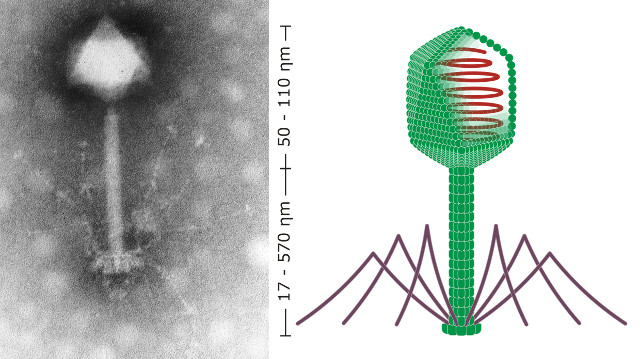
"caption": "Bacterial viruses (phages) like these may form a shield that protects us from the bacteria living in our gut. Image on left is a scanning electron micrograph of one of these phages and the image on the left is a diagram of a similar phage.",
"description": null,
"title": "Phage",
"credit": null,
"status": "inherit",
"isLoading": false,
"fetchFailed": false
},
"science_3769": {
"type": "attachments",
"id": "science_3769",
"meta": {
"index": "attachments_1716263798",
"site": "science",
"id": "3769",
"found": true
},
"parent": 3707,
"imgSizes": {
"kqedFullSize": {
"file": "https://ww2.kqed.org/app/uploads/sites/35/2013/05/KQED_CN-PTSD-AD_dts_Scaled.jpg",
"width": 640,
"height": 360
}
},
"publishDate": 1370019860,
"modified": 1370019860,
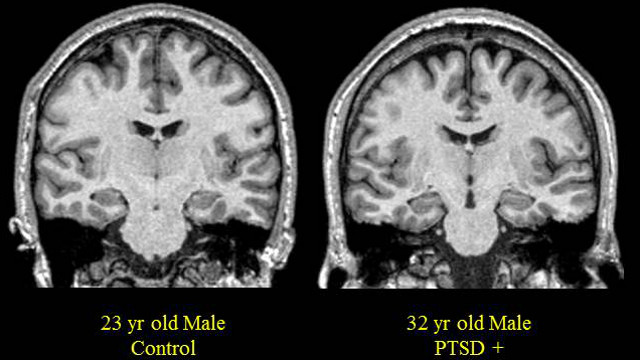
"caption": "MRIs of two brains show a slightly smaller amygdala in the brain of a man with PTSD. (Photo courtesy Michael Weiner)",
"description": null,
"title": "KQED_CN-PTSD-AD_dts_Scaled",
"credit": null,
"status": "inherit",
"isLoading": false,
"fetchFailed": false
}
},
"audioPlayerReducer": {
"postId": "stream_live",
"isPaused": true,
"isPlaying": false,
"pfsActive": false,
"pledgeModalIsOpen": true,
"playerDrawerIsOpen": false,
"liveAudioPlayStartedAt": 0,
"liveAudioPlayContext": ""
},
"authorsReducer": {
"mollysamuel": {
"type": "authors",
"id": "200",
"meta": {
"index": "authors_1716337520",
"id": "200",
"found": true
},
"name": "Molly Samuel",
"firstName": "Molly",
"lastName": "Samuel",
"slug": "mollysamuel",
"email": "msamuel@kqed.org",
"display_author_email": false,
"staff_mastheads": [],
"title": null,
"bio": "Molly Samuel joined KQED as an intern in 2007, and since then has worked here as a reporter, producer, director and blogger. Before becoming KQED Science’s Multimedia Producer, she was a producer for Climate Watch. Molly has also reported for NPR, KALW and High Country News, and has produced audio stories for The Encyclopedia of Life and the Oakland Museum of California. She was a fellow with the Middlebury Fellowships in Environmental Journalism and a journalist-in-residence at the National Evolutionary Synthesis Center. Molly has a degree in Ancient Greek from Oberlin College and is a co-founder of the record label True Panther Sounds.",
"avatar": "https://secure.gravatar.com/avatar/a6abd3b949a89fe5109fa9917631d0b6?s=600&d=blank&r=g",
"twitter": null,
"facebook": null,
"instagram": null,
"linkedin": null,
"sites": [
{
"site": "news",
"roles": [
"subscriber"
]
},
{
"site": "stateofhealth",
"roles": [
"subscriber"
]
},
{
"site": "science",
"roles": [
"subscriber"
]
},
{
"site": "quest",
"roles": [
"edit_users",
"subscriber"
]
}
],
"headData": {
"title": "Molly Samuel | KQED",
"description": null,
"ogImgSrc": "https://secure.gravatar.com/avatar/a6abd3b949a89fe5109fa9917631d0b6?s=600&d=blank&r=g",
"twImgSrc": "https://secure.gravatar.com/avatar/a6abd3b949a89fe5109fa9917631d0b6?s=600&d=blank&r=g"
},
"isLoading": false,
"link": "/author/mollysamuel"
},
"amystanden": {
"type": "authors",
"id": "210",
"meta": {
"index": "authors_1716337520",
"id": "210",
"found": true
},
"name": "Amy Standen",
"firstName": "Amy",
"lastName": "Standen",
"slug": "amystanden",
"email": "astanden@kqed.org",
"display_author_email": false,
"staff_mastheads": [],
"title": "KQED Contributor",
"bio": "Amy Standen (@amystanden) is co-host of #\u003ca href=\"https://ww2.kqed.org/news/programs/the-leap\">TheLeapPodcast\u003c/a> (subscribe on iTunes or Stitcher!) and host of KQED and PBSDigital Studios' science video series, \u003ca href=\"https://www.youtube.com/user/KQEDDeepLook\">Deep Look\u003c/a>. Her science radio stories appear on KQED and NPR.\r\n\r\nEmail her at astanden@kqed.org",
"avatar": "https://secure.gravatar.com/avatar/3d021b72de685a788b0487b059d0a6a1?s=600&d=blank&r=g",
"twitter": null,
"facebook": null,
"instagram": null,
"linkedin": null,
"sites": [
{
"site": "news",
"roles": [
"subscriber"
]
},
{
"site": "futureofyou",
"roles": [
"subscriber"
]
},
{
"site": "stateofhealth",
"roles": [
"subscriber"
]
},
{
"site": "science",
"roles": []
},
{
"site": "quest",
"roles": [
"subscriber"
]
}
],
"headData": {
"title": "Amy Standen | KQED",
"description": "KQED Contributor",
"ogImgSrc": "https://secure.gravatar.com/avatar/3d021b72de685a788b0487b059d0a6a1?s=600&d=blank&r=g",
"twImgSrc": "https://secure.gravatar.com/avatar/3d021b72de685a788b0487b059d0a6a1?s=600&d=blank&r=g"
},
"isLoading": false,
"link": "/author/amystanden"
},
"lisaaliferis": {
"type": "authors",
"id": "240",
"meta": {
"index": "authors_1716337520",
"id": "240",
"found": true
},
"name": "Lisa Aliferis",
"firstName": "Lisa",
"lastName": "Aliferis",
"slug": "lisaaliferis",
"email": "laliferis@kqed.org",
"display_author_email": false,
"staff_mastheads": [],
"title": "KQED Contributor",
"bio": "Lisa Aliferis is the founding editor of KQED's \u003cem>State of Health\u003c/em> blog. Since 2011, she's been writing and editing stories for the site. Before taking up blogging, she toiled for many years (more than we can count) producing health stories for television, including\u003cem> Dateline NBC\u003c/em> and San Francisco's CBS affiliate, KPIX-TV. She also wrote up a \u003ca title=\"http://www.kqed.org/news/health/obamacare/obamacare-guide.jsp\" href=\"http://www.kqed.org/news/health/obamacare/obamacare-guide.jsp\">handy guide to the Affordable Care Act\u003c/a>, especially for Californians. Her work has been honored for many awards. Most recently she was a finalist for \"Best Topical Reporting\" from the Online News Association. You can follow her on Twitter: \u003ca title=\"https://twitter.com/laliferis\" href=\"https://twitter.com/laliferis\">@laliferis\u003c/a>",
"avatar": "https://secure.gravatar.com/avatar/86c339d5cdcb0dcd2b6cf5d7c3f5886b?s=600&d=mm&r=g",
"twitter": "laliferis",
"facebook": null,
"instagram": null,
"linkedin": null,
"sites": [
{
"site": "news",
"roles": [
"subscriber"
]
},
{
"site": "futureofyou",
"roles": [
"subscriber"
]
},
{
"site": "stateofhealth",
"roles": [
"subscriber"
]
},
{
"site": "science",
"roles": [
"subscriber"
]
},
{
"site": "food",
"roles": []
}
],
"headData": {
"title": "Lisa Aliferis | KQED",
"description": "KQED Contributor",
"ogImgSrc": "https://secure.gravatar.com/avatar/86c339d5cdcb0dcd2b6cf5d7c3f5886b?s=600&d=mm&r=g",
"twImgSrc": "https://secure.gravatar.com/avatar/86c339d5cdcb0dcd2b6cf5d7c3f5886b?s=600&d=mm&r=g"
},
"isLoading": false,
"link": "/author/lisaaliferis"
},
"ryderdiaz": {
"type": "authors",
"id": "1462",
"meta": {
"index": "authors_1716337520",
"id": "1462",
"found": true
},
"name": "Ryder Diaz",
"firstName": "Ryder",
"lastName": "Diaz",
"slug": "ryderdiaz",
"email": "rdiaz@KQED.org",
"display_author_email": false,
"staff_mastheads": [],
"title": null,
"bio": null,
"avatar": "https://secure.gravatar.com/avatar/3a8471d4d33c9b4d34d5e5c60f7f8342?s=600&d=blank&r=g",
"twitter": null,
"facebook": null,
"instagram": null,
"linkedin": null,
"sites": [
{
"site": "news",
"roles": [
"subscriber"
]
},
{
"site": "stateofhealth",
"roles": [
"subscriber"
]
}
],
"headData": {
"title": "Ryder Diaz | KQED",
"description": null,
"ogImgSrc": "https://secure.gravatar.com/avatar/3a8471d4d33c9b4d34d5e5c60f7f8342?s=600&d=blank&r=g",
"twImgSrc": "https://secure.gravatar.com/avatar/3a8471d4d33c9b4d34d5e5c60f7f8342?s=600&d=blank&r=g"
},
"isLoading": false,
"link": "/author/ryderdiaz"
},
"dr-barry-starr": {
"type": "authors",
"id": "6177",
"meta": {
"index": "authors_1716337520",
"id": "6177",
"found": true
},
"name": "Dr. Barry Starr",
"firstName": "Dr. Barry",
"lastName": "Starr",
"slug": "dr-barry-starr",
"email": "bstarr@thetech.org",
"display_author_email": false,
"staff_mastheads": [],
"title": "KQED Contributor",
"bio": "Dr. Barry Starr (\u003ca href=\"https://twitter.com/geneticsboy\">@geneticsboy\u003c/a>) is a Geneticist-in-Residence at The Tech Museum of Innovation in San Jose, CA and runs their Stanford at The Tech program. The program is part of an ongoing collaboration between the \u003ca href=\"http://genetics.stanford.edu/\">Stanford Department of Genetics\u003c/a> and \u003ca href=\"http://www.thetech.org/\">The Tech Museum of Innovation\u003c/a>. Together these two partners created the \u003ca href=\"http://www.thetech.org/exhibits/permanent/index.php?sGalKey=gtwt&galKey=lt\">Genetics: Technology with a Twist\u003c/a> exhibition.\r\n\r\nYou can also see \u003ca href=\"https://ww2.kqed.org/science/author/dr-barry-starr/\">additional posts by Barry at KQED Science\u003c/a>, and read his \u003ca href=\"http://science.kqed.org/quest/author/dr-barry-starr/\">previous contributions\u003c/a> to \u003ca href=\"http://science.kqed.org/quest/\">QUEST\u003c/a>, a project dedicated to exploring the Science of Sustainability.",
"avatar": "https://secure.gravatar.com/avatar/4a5680e4c642ea0f0f3041af16018969?s=600&d=blank&r=g",
"twitter": "geneticsboy",
"facebook": null,
"instagram": null,
"linkedin": null,
"sites": [
{
"site": "futureofyou",
"roles": []
},
{
"site": "science",
"roles": [
"author"
]
},
{
"site": "quest",
"roles": [
"subscriber"
]
}
],
"headData": {
"title": "Dr. Barry Starr | KQED",
"description": "KQED Contributor",
"ogImgSrc": "https://secure.gravatar.com/avatar/4a5680e4c642ea0f0f3041af16018969?s=600&d=blank&r=g",
"twImgSrc": "https://secure.gravatar.com/avatar/4a5680e4c642ea0f0f3041af16018969?s=600&d=blank&r=g"
},
"isLoading": false,
"link": "/author/dr-barry-starr"
},
"lizagross": {
"type": "authors",
"id": "6322",
"meta": {
"index": "authors_1716337520",
"id": "6322",
"found": true
},
"name": "Liza Gross",
"firstName": "Liza",
"lastName": "Gross",
"slug": "lizagross",
"email": "lizagross@gmail.com",
"display_author_email": false,
"staff_mastheads": [],
"title": null,
"bio": "Liza Gross, an award-winning independent journalist and senior editor at the biomedical journal PLOS Biology, writes mostly about conservation and public and environmental health. She was a 2013 recipient of the NYU Reporting Award, a 2013 Dennis Hunt Health Journalism fellow and a 2015 USC Data Journalism fellow.\r\n\r\nRead her \u003ca href=\"http://science.kqed.org/quest/author/lizagross/\">previous contributions\u003c/a> to \u003ca href=\"science.kqed.org/quest/\">QUEST\u003c/a>, a project dedicated to exploring the Science of Sustainability.",
"avatar": "https://secure.gravatar.com/avatar/1f7d36efc78088d63466cef5f10c4c7a?s=600&d=blank&r=g",
"twitter": null,
"facebook": null,
"instagram": null,
"linkedin": null,
"sites": [
{
"site": "stateofhealth",
"roles": [
"author"
]
},
{
"site": "science",
"roles": [
"author"
]
},
{
"site": "quest",
"roles": [
"subscriber"
]
}
],
"headData": {
"title": "Liza Gross | KQED",
"description": null,
"ogImgSrc": "https://secure.gravatar.com/avatar/1f7d36efc78088d63466cef5f10c4c7a?s=600&d=blank&r=g",
"twImgSrc": "https://secure.gravatar.com/avatar/1f7d36efc78088d63466cef5f10c4c7a?s=600&d=blank&r=g"
},
"isLoading": false,
"link": "/author/lizagross"
},
"jenniferhuber": {
"type": "authors",
"id": "6360",
"meta": {
"index": "authors_1716337520",
"id": "6360",
"found": true
},
"name": "Jennifer Huber",
"firstName": "Jennifer",
"lastName": "Huber",
"slug": "jenniferhuber",
"email": "jshuber@lbl.gov",
"display_author_email": false,
"staff_mastheads": [],
"title": null,
"bio": "Jennifer Huber is a medical imaging scientist at the Lawrence Berkeley National Laboratory with more than 20 years of experience in academic science writing. She received her Ph.D. in Physics from the University of California Santa Barbara. She is also a freelance science writer, editor and blogger, as well as a science-writing instructor for the University of California Berkeley Extension. Jennifer has lived in the San Francisco Bay Area most of her life and she frequently enjoys the eclectic cultural, culinary and outdoor activities available in the area.\r\n\r\nRead her \u003ca href=\"http://science.kqed.org/quest/author/jenniferhuber/\">previous contributions\u003c/a> to \u003ci>QUEST\u003c/i>, a project dedicated to exploring the Science of Sustainability.",
"avatar": "https://secure.gravatar.com/avatar/ca897c62a710c0bf8c5f429c89331765?s=600&d=blank&r=g",
"twitter": null,
"facebook": null,
"instagram": null,
"linkedin": null,
"sites": [
{
"site": "science",
"roles": [
"author"
]
},
{
"site": "quest",
"roles": [
"subscriber"
]
}
],
"headData": {
"title": "Jennifer Huber | KQED",
"description": null,
"ogImgSrc": "https://secure.gravatar.com/avatar/ca897c62a710c0bf8c5f429c89331765?s=600&d=blank&r=g",
"twImgSrc": "https://secure.gravatar.com/avatar/ca897c62a710c0bf8c5f429c89331765?s=600&d=blank&r=g"
},
"isLoading": false,
"link": "/author/jenniferhuber"
},
"state-of-health": {
"type": "authors",
"id": "8344",
"meta": {
"index": "authors_1716337520",
"id": "8344",
"found": true
},
"name": "State of Health",
"firstName": "State of Health",
"lastName": null,
"slug": "state-of-health",
"email": "stateofhealth@kqed.org",
"display_author_email": false,
"staff_mastheads": [],
"title": null,
"bio": null,
"avatar": "https://secure.gravatar.com/avatar/66de4bf6d331fa7402bba1ffe8135e17?s=600&d=blank&r=g",
"twitter": null,
"facebook": null,
"instagram": null,
"linkedin": null,
"sites": [
{
"site": "arts",
"roles": [
"author"
]
},
{
"site": "stateofhealth",
"roles": [
"editor"
]
}
],
"headData": {
"title": "State of Health | KQED",
"description": null,
"ogImgSrc": "https://secure.gravatar.com/avatar/66de4bf6d331fa7402bba1ffe8135e17?s=600&d=blank&r=g",
"twImgSrc": "https://secure.gravatar.com/avatar/66de4bf6d331fa7402bba1ffe8135e17?s=600&d=blank&r=g"
},
"isLoading": false,
"link": "/author/state-of-health"
}
},
"pagesReducer": {
"science_category_health": {
"type": "terms",
"id": "science_39",
"meta": {
"index": "terms_1716263798",
"site": "science",
"id": "39",
"score": 10.889433
},
"featImg": null,
"name": "Health",
"description": null,
"taxonomy": "category",
"headData": {
"twImgId": null,
"twTitle": null,
"ogTitle": null,
"ogImgId": null,
"twDescription": null,
"description": null,
"title": "Health Archives | KQED Science",
"ogDescription": null
},
"ttid": 41,
"slug": "health",
"isLoading": false,
"title": "Health",
"pageMeta": {
"site": "science",
"WpPageTemplate": "page-topic-editorial",
"currentPage": 105
},
"blocks": [
{
"blockName": "kqed/post-list",
"attrs": {
"layout": "cardArticle2",
"query": "posts/science?category=health",
"seeMore": false,
"paginated": true,
"page": 105
}
},
{
"blockName": "kqed/ad"
}
]
}
},
"pfsSessionReducer": {},
"postsReducer": {
"stream_live": {
"type": "live",
"id": "stream_live",
"audioUrl": "https://streams.kqed.org/kqedradio",
"title": "Live Stream",
"excerpt": "Live Stream information currently unavailable.",
"link": "/radio",
"featImg": "",
"label": {
"name": "KQED Live",
"link": "/"
}
},
"stream_kqedNewscast": {
"type": "posts",
"id": "stream_kqedNewscast",
"audioUrl": "https://www.kqed.org/.stream/anon/radio/RDnews/newscast.mp3?_=1",
"title": "KQED Newscast",
"featImg": "",
"label": {
"name": "88.5 FM",
"link": "/"
}
},
"stateofhealth_13619": {
"type": "posts",
"id": "stateofhealth_13619",
"meta": {
"index": "posts_1716263798",
"site": "stateofhealth",
"id": "13619",
"score": null,
"sort": [
1373563502000
]
},
"parent": 0,
"labelTerm": {
"site": "stateofhealth"
},
"blocks": [],
"publishDate": 1373563502,
"format": "aside",
"disqusTitle": "The 'Sink-Urinal' Encourages Men to Wash Hands -- and Saves Water, Too!",
"title": "The 'Sink-Urinal' Encourages Men to Wash Hands -- and Saves Water, Too!",
"headTitle": "State of Health | KQED News",
"content": "\u003cp>\u003cstrong>By Elise Hu\u003c/strong>, \u003ca href=\"http://www.npr.org/blogs/alltechconsidered/2013/07/09/200367795/the-sink-urinal-saves-water-encourages-men-to-wash-hands\" target=\"_blank\">NPR\u003c/a>\u003c/p>\n\u003cfigure id=\"attachment_13620\" class=\"wp-caption aligncenter\" style=\"max-width: 620px\">\u003cimg class=\"size-large wp-image-13620\" title=\"\" src=\"http://ww2.kqed.org/stateofhealth/wp-content/uploads/sites/27/2013/07/20111003_stand_print_18_wide-c6aaf6b15b60078f8b79229e018bd908f54eb135-s40-620x348.jpg\" alt=\"The design, called Stand, is already in use in several European countries. (Ingus Bajars/Courtesy of Kaspar Jursons)\" width=\"620\" height=\"348\">\u003cfigcaption class=\"wp-caption-text\">The design, called Stand, is already in use in several European countries. (Ingus Bajars/Courtesy of Kaspar Jursons)\u003c/figcaption>\u003c/figure>\n\u003cp>A Latvian designer named Kaspars Jursons is trying to help solve European water shortages by redesigning the men's restroom. His new urinal design includes \u003ca href=\"http://www.standpage.com/en/stand/\">a tap and sink right over it\u003c/a>.\u003c/p>\n\u003cp>\"It's not just a fancy piece of art,\" he says. \"The idea is about function and consumption. You are washing your hands in the sink on top of the urinal, and the same water that's running is also used to flush. You don't have to use water twice, like when you use the urinal and wash your hands in separate sink.\"\u003c/p>\n\u003caside class=\"pullquote alignleft\">\"You are washing your hands in the sink on top of the urinal, and the same water that's running is also used to flush.\"\u003c/aside>\n\u003cp>The design, called Stand, sells for about $590 per unit. They're being manufactured on a small production line and have already sold to buyers in Norway, Germany, Russia, Poland and Jursons' home country, Latvia.\u003c/p>\n\u003cp>Several sink-urinals are currently installed in a concert venue in Riga, Latvia, where Jursons reports they have worked smoothly and saved thousands of liters of water.\u003c!--more-->\u003c/p>\n\u003cp>[ad fullwidth]\u003c/p>\n\u003cp>The tap is hands-free and sensor-activated, and Jursons says having the sink right over the urinal gives it another feature: an in-your-face reminder to wash your hands.\u003c/p>\n\u003cp>When asked whether folks might find the sink and the urinal a little too close for comfort, Jursons says, \"It is more suitable for hygiene than just a urinal and then guys who don't wash [their] hands.\"\u003c/p>\n\u003cp>\u003c/p>\n\u003cp>Ladies, if you think your restrooms deserve new design concepts too, stay tuned. Jursons says his next concept is a sink-toilet combo that not only saves water, but saves a lot of bathroom space.\u003c/p>\n\n",
"disqusIdentifier": "13619 http://blogs.kqed.org/stateofhealth/?p=13619",
"disqusUrl": "https://ww2.kqed.org/stateofhealth/2013/07/11/the-sink-urinal-encourages-men-to-wash-hands-and-saves-water/",
"stats": {
"hasVideo": false,
"hasChartOrMap": false,
"hasAudio": false,
"hasPolis": false,
"wordCount": 312,
"hasGoogleForm": false,
"hasGallery": false,
"hasHearkenModule": false,
"iframeSrcs": [],
"paragraphCount": 10
},
"modified": 1373665794,
"excerpt": "A Latvian designer named Kaspars Jursons is trying to help solve European water shortages by redesigning the men's restroom. His new urinal design includes a tap and sink right over it.\r\n\r\n\"It's not just a fancy piece of art,\" he says. \"The idea is about function and consumption. You are washing your hands in the sink on top of the urinal, and the same water that's running is also used to flush.",
"headData": {
"twImgId": "",
"twTitle": "",
"ogTitle": "",
"ogImgId": "",
"twDescription": "",
"description": "A Latvian designer named Kaspars Jursons is trying to help solve European water shortages by redesigning the men's restroom. His new urinal design includes a tap and sink right over it.\r\n\r\n"It's not just a fancy piece of art," he says. "The idea is about function and consumption. You are washing your hands in the sink on top of the urinal, and the same water that's running is also used to flush.",
"title": "The 'Sink-Urinal' Encourages Men to Wash Hands -- and Saves Water, Too! | KQED",
"ogDescription": "",
"schema": {
"@context": "https://schema.org",
"@type": "Article",
"headline": "The 'Sink-Urinal' Encourages Men to Wash Hands -- and Saves Water, Too!",
"datePublished": "2013-07-11T10:25:02-07:00",
"dateModified": "2013-07-12T14:49:54-07:00",
"image": "https://cdn.kqed.org/wp-content/uploads/2020/02/KQED-OG-Image@1x.png"
}
},
"guestAuthors": [],
"slug": "the-sink-urinal-encourages-men-to-wash-hands-and-saves-water",
"status": "publish",
"path": "/stateofhealth/13619/the-sink-urinal-encourages-men-to-wash-hands-and-saves-water",
"audioTrackLength": null,
"parsedContent": [
{
"type": "contentString",
"content": "\u003cdiv class=\"post-body\">\u003cp>\u003cp>\u003cstrong>By Elise Hu\u003c/strong>, \u003ca href=\"http://www.npr.org/blogs/alltechconsidered/2013/07/09/200367795/the-sink-urinal-saves-water-encourages-men-to-wash-hands\" target=\"_blank\">NPR\u003c/a>\u003c/p>\n\u003cfigure id=\"attachment_13620\" class=\"wp-caption aligncenter\" style=\"max-width: 620px\">\u003cimg class=\"size-large wp-image-13620\" title=\"\" src=\"http://ww2.kqed.org/stateofhealth/wp-content/uploads/sites/27/2013/07/20111003_stand_print_18_wide-c6aaf6b15b60078f8b79229e018bd908f54eb135-s40-620x348.jpg\" alt=\"The design, called Stand, is already in use in several European countries. (Ingus Bajars/Courtesy of Kaspar Jursons)\" width=\"620\" height=\"348\">\u003cfigcaption class=\"wp-caption-text\">The design, called Stand, is already in use in several European countries. (Ingus Bajars/Courtesy of Kaspar Jursons)\u003c/figcaption>\u003c/figure>\n\u003cp>A Latvian designer named Kaspars Jursons is trying to help solve European water shortages by redesigning the men's restroom. His new urinal design includes \u003ca href=\"http://www.standpage.com/en/stand/\">a tap and sink right over it\u003c/a>.\u003c/p>\n\u003cp>\"It's not just a fancy piece of art,\" he says. \"The idea is about function and consumption. You are washing your hands in the sink on top of the urinal, and the same water that's running is also used to flush. You don't have to use water twice, like when you use the urinal and wash your hands in separate sink.\"\u003c/p>\n\u003caside class=\"pullquote alignleft\">\"You are washing your hands in the sink on top of the urinal, and the same water that's running is also used to flush.\"\u003c/aside>\n\u003cp>The design, called Stand, sells for about $590 per unit. They're being manufactured on a small production line and have already sold to buyers in Norway, Germany, Russia, Poland and Jursons' home country, Latvia.\u003c/p>\n\u003cp>Several sink-urinals are currently installed in a concert venue in Riga, Latvia, where Jursons reports they have worked smoothly and saved thousands of liters of water.\u003c!--more-->\u003c/p>\n\u003cp>\u003c/p>\u003c/div>",
"attributes": {
"named": {},
"numeric": []
}
},
{
"type": "component",
"content": "",
"name": "ad",
"attributes": {
"named": {
"label": "fullwidth"
},
"numeric": [
"fullwidth"
]
}
},
{
"type": "contentString",
"content": "\u003cdiv class=\"post-body\">\u003cp>\u003c/p>\n\u003cp>The tap is hands-free and sensor-activated, and Jursons says having the sink right over the urinal gives it another feature: an in-your-face reminder to wash your hands.\u003c/p>\n\u003cp>When asked whether folks might find the sink and the urinal a little too close for comfort, Jursons says, \"It is more suitable for hygiene than just a urinal and then guys who don't wash [their] hands.\"\u003c/p>\n\u003cp>\u003c/p>\n\u003cp>Ladies, if you think your restrooms deserve new design concepts too, stay tuned. Jursons says his next concept is a sink-toilet combo that not only saves water, but saves a lot of bathroom space.\u003c/p>\n\n\u003c/div>\u003c/p>",
"attributes": {
"named": {},
"numeric": []
}
}
],
"link": "/stateofhealth/13619/the-sink-urinal-encourages-men-to-wash-hands-and-saves-water",
"authors": [
"8344"
],
"categories": [
"stateofhealth_12"
],
"tags": [
"stateofhealth_461"
],
"featImg": "stateofhealth_13620",
"label": "stateofhealth"
},
"science_5296": {
"type": "posts",
"id": "science_5296",
"meta": {
"index": "posts_1716263798",
"site": "science",
"id": "5296",
"score": null,
"sort": [
1373443249000
]
},
"parent": 0,
"labelTerm": {
"site": "science"
},
"blocks": [],
"publishDate": 1373443249,
"format": "aside",
"title": "Whooping Cough Staging Comeback in California",
"headTitle": "Whooping Cough Staging Comeback in California | KQED",
"content": "\u003cfigure id=\"attachment_5306\" class=\"wp-caption alignleft\" style=\"max-width: 209px\">\u003ca href=\"http://ww2.kqed.org/science/wp-content/uploads/sites/35/2013/07/childpertussis-209x162.jpg\">\u003cimg loading=\"lazy\" decoding=\"async\" src=\"http://ww2.kqed.org/science/wp-content/uploads/sites/35/2013/07/childpertussis-209x162.jpg\" alt=\"child with pertussis\" width=\"209\" height=\"162\" class=\"size-medium wp-image-5306\">\u003c/a>\u003cfigcaption class=\"wp-caption-text\">Credit: CDC\u003c/figcaption>\u003c/figure>\n\u003cp>It’s one of the frustrating ironies of modern vaccination campaigns. When widespread immunization works as intended, people tend to forget the trauma of infectious diseases. Long gone are the days when parents saw neighborhood kids paralyzed by polio or left with hearing loss or brain damage—if they survived—after contracting rubella, \u003ca href=\"http://www.cdc.gov/hi-disease/about/complications.html\">Hib meningitis\u003c/a> or \u003ca href=\"http://www.cdc.gov/measles/about/complications.html\">measles\u003c/a>. When memories of the suffering wrought by vaccine-preventable diseases fade, it’s easier to view vaccines as optional or to consider potentially life-threatening illnesses a childhood ritual.\u003c/p>\n\u003cp>Vaccination programs have proven so successful against once-common diseases that even doctors sometimes lose sight of their value. A \u003ca href=\"http://www.youtube.com/watch?v=fah4yOYTEYk\">2011 survey of 551 physicians\u003c/a> found that although doctors generally support vaccination, younger doctors were more likely than their older counterparts to question the safety and effectiveness of vaccines. Saad Omer, an infectious disease epidemiologist at Emory Vaccine Center who led the study, \u003ca href=\"http://newsatjama.jama.com/2011/10/20/studies-probe-attitudes-of-physicians-toward-vaccines-and-patients-who-shun-vaccines/\">suggested that some younger doctors’ perceptions of vaccines\u003c/a>, like those of contemporary parents, are shaded by their inexperience with the diseases they target. Vaccines, public health officials often lament, have become victims of their own success.\u003c/p>\n\u003cp>Still, maintaining that success requires constant vigilance. Whooping cough, one of the deadliest childhood diseases, has been increasing since the 1980s, with outbreaks peaking every three to five years. In 2010, the United States saw 27,550 pertussis cases, the most since 1959, when health officials logged 40,000 cases. Following the cyclical nature of the disease, incidence dropped the next year (with 18,719 cases reported) but then exploded to 41,000 in 2012, \u003ca href=\"http://www.cdc.gov/pertussis/outbreaks/trends.html\">when 49 states reported disease spikes\u003c/a>. \u003c/p>\n\u003cfigure id=\"attachment_5304\" class=\"wp-caption alignleft\" style=\"max-width: 1024px\">\u003ca href=\"http://ww2.kqed.org/science/wp-content/uploads/sites/35/2013/07/pertussisage-1024x695.jpg\" rel=\"attachment wp-att-5304\">\u003cimg loading=\"lazy\" decoding=\"async\" src=\"http://ww2.kqed.org/science/wp-content/uploads/sites/35/2013/07/pertussisage-1024x695.jpg\" alt=\"\" width=\"1024\" height=\"695\" class=\"size-large wp-image-5304\">\u003c/a>\u003cfigcaption class=\"wp-caption-text\">Most pertussis cases continue to occur in infants and children under 18 years old. But this year, the disease has infected more older adolescents (blue bars), based on reported cases, than it did during the epidemic in 2010 (black bars). (Source: California Department of Public Health)\u003c/figcaption>\u003c/figure>\n\u003cp>More than 9,000 Californians caught pertussis during the 2010 epidemic. Ten infants died. The latest figures from state health officials are not encouraging. As of the end of June, the state had recorded 739 cases—likely an underestimate due to reporting delays—up from the same time last year. Several San Francisco Bay Area counties have reported spikes in pertussis in recent months, but \u003ca href=\"http://www.cdph.ca.gov/programs/immunize/Documents/PertussisReport%202013-06-28.pdf\">Marin and Santa Clara\u003c/a> reported more cases than any other county in the state. \u003c/p>\n\u003cp>Tragically, the sporadic nature of these outbreaks—and that fact that epidemics affect tens of thousands rather than hundreds of thousands of people, thanks to vaccination—means that doctors who haven’t treated vaccine-preventable diseases can miss their symptoms. Last May, a couple in Michigan \u003ca href=\"http://www.dailymail.co.uk/news/article-2317767/Francesca-McNally-Heart-breaking-story-parents-baby-girl-died-whooping-cough-doctors-failed-recognise-didnt-jab.html\">lost their three-month-old daughter\u003c/a> to whooping cough after four doctors failed to recognize it.\u003c/p>\n\u003cp>[ad fullwidth]\u003c/p>\n\u003cp>\u003cstrong>Persisting despite vaccination\u003c/strong>\u003cbr>\nWhen vaccine coverage is generally high, infectious disease outbreaks tend to cluster in unprotected pockets, where parents choose not to vaccinate their children. Health officials blame vaccine refusal for the \u003ca href=\"http://online.wsj.com/article/SB10001424127887323820304578410473739308256.html\">measles outbreak in the United Kingdom\u003c/a> this year and the \u003ca href=\"http://health.usnews.com/health-news/family-health/childrens-health/articles/2011/10/20/unvaccinated-kids-behind-largest-us-measles-outbreak-in-years-study\">largest measles outbreak in 15 years in the United States\u003c/a> in 2011. But experts don’t think vaccine refusal is driving recent pertussis epidemics, although children who failed to receive all their shots are at \u003ca href=\"http://www.cdc.gov/pertussis/about/faqs.html#travelers\">least eight times more likel\u003c/a>y to get the disease. And it turns out that \u003cem>Bordetella pertussis\u003c/em>, the bacterium that causes pertussis, can persist even in the face of widespread vaccination. Experts think several factors may be at play. Vaccine-induced immunity to pertussis appears to weaken faster than expected. The vaccine might be targeting less prevalent strains of the bacterium. Or circulating strains could have adapted to the vaccine, allowing it to flourish even after vaccination. \u003c/p>\n\u003cp>Though more infants contract pertussis—and die of it—than any other age group, \u003ca href=\"http://www.ncbi.nlm.nih.gov/pmc/articles/PMC2680566/\">anyone can contract, and transmit,\u003c/a> the disease. But because pertussis tends to be milder in older children and adults, and can present with odd symptoms like disturbed sleep, sweats and sneezing attacks, it \u003ca href=\"http://www.ncbi.nlm.nih.gov/pubmed/16562532\">can be difficult to identify\u003c/a>, even for doctors familiar with the disease. As a result, undiagnosed older children and adults can pose a serious threat to infants too young to have received all five recommended vaccine doses. (\u003ca href=\"http://www.ncbi.nlm.nih.gov/pmc/articles/PMC2680566/\">Experts recommend that children receive five shots of the DTaP vaccine\u003c/a>, which inoculates against diphtheria, tetanus and pertussis, between the ages of two months and six years.) The Michigan mother who lost her baby girl to pertussis \u003ca href=\"http://www.mlive.com/health/index.ssf/2012/07/after_losing_their_baby_to_who.html\">told an online news site\u003c/a> that she may have unwittingly infected her daughter because she didn’t know a booster shot could have protected her baby. \u003c/p>\n\u003cp>\u003cstrong>The best protection\u003c/strong>\u003cbr>\nThe good news is that pertussis rates in California are much lower than those seen during the 2010 epidemic and no deaths have been reported since then. Still, the disease hit more kids between the ages of 12 and 17 this year than during the 2010 epidemic, according to state health records. And that’s just reported cases. It’s impossible to know how many adolescents or adults with persistent coughs remain undiagnosed—placing their baby brothers, sisters or other susceptible people at risk. And we’re just at the beginning of the next three- to five-year peak, which is why \u003ca href=\"http://www.cdph.ca.gov/healthinfo/discond/pages/pertussis.aspx\">state health officials\u003c/a> continue to urge parents to vaccinate their children.\u003c/p>\n\u003cp>But not all parents are heeding the call. The number of California kids going to kindergarten with all of their recommended vaccinations has \u003ca href=\"http://www.cdph.ca.gov/programs/immunize/Documents/2012-2013%20CA%20Kindergarten%20Immunization%20Assessment.pdf\">been declining steadily since 2008\u003c/a>–even for polio–state records show. That drop tracks another California trend: the percentage of parents securing a personal beliefs exemption has increased from 1.9% in the 2008-09 school year to 2.8% this year. That may explain why several Bay Area counties reported outbreaks in schools. In keeping with past trends, parents who send their kids to private schools were more likely to opt out of vaccination. Starting January 2014 \u003ca href=\"http://www.immunizeca.org/wp-content/uploads/2012/02/FactSheetAB2109-PersonalBeliefExemption.pdf\">a personal beliefs exemption will require a health care provider’s signature\u003c/a>, indicating that the parent understands the risks of refusing vaccination.\u003c/p>\n\u003cfigure id=\"attachment_5328\" class=\"wp-caption alignleft\" style=\"max-width: 1024px\">\u003ca href=\"http://ww2.kqed.org/science/wp-content/uploads/sites/35/2013/07/exemptions-1024x565.png\" rel=\"attachment wp-att-5328\">\u003cimg loading=\"lazy\" decoding=\"async\" src=\"http://ww2.kqed.org/science/wp-content/uploads/sites/35/2013/07/exemptions-1024x565.png\" alt='The percentage of students receiving a \"personal beliefs exemption\" in California has increased since the 2008-09 school year among all reporting schools, from 1.9% to 2.8% this school year. Public schools have consistently reported a lower percentage of students with personal beliefs exemptions compared with private schools. (Source: California Department of Public Health)' width=\"1024\" height=\"565\" class=\"size-large wp-image-5328\">\u003c/a>\u003cfigcaption class=\"wp-caption-text\">The percentage of students receiving a “personal beliefs exemption” has increased since the 2008-09 school year among all reporting schools, from 1.9% to 2.8% this school year. Public schools have consistently reported a lower percentage of students with personal beliefs exemptions compared with private schools. (Source: California Department of Public Health)\u003c/figcaption>\u003c/figure>\n\u003cp>The most recent state reports also show that vaccine coverage for pertussis among Bay Area kindergartners was generally high, except for Marin County, where \u003ca href=\"http://www.cdph.ca.gov/programs/immunize/Documents/2012-2013%20CA%20Kindergarten%20Immunization%20Assessment.pdf\">just 86 percent of kids\u003c/a> received their recommended shots. Marin has reported the second highest number of pertussis cases in the state this year, with 96. The only way to prevent pertussis and other infectious diseases is through vaccination. Those too young or sick to get vaccinated benefit from what’s called herd, or community, immunity, which requires a certain proportion of immunized people to stop the spread of disease from person to person. That threshold varies depending on how quickly a disease spreads. Pertussis has the highest threshold, \u003ca href=\"http://op12no2.me/stuff/herdhis.pdf\">requiring between 92 and 94 percent immunization\u003c/a> to block transmission. \u003c/p>\n\u003cp>The highly toxic, contagious and adaptable pertussis pathogen will easily exploit any holes in community immunity. No one can say for sure when the next epidemic might hit. But now’s the time to make sure your child is fully vaccinated. And if you spend time with young children, get a booster shot. I did.\u003c/p>\n\u003cp>****\u003c/p>\n\u003cp>\u003cstrong>How to Protect your Children From Pertussis\u003c/strong>\u003c/p>\n\u003cp>Vaccinate yourself. Protection after vaccination or infection wears off over time. Check with your doctor to see if you need a booster shot.\u003c/p>\n\u003cp>Vaccinate your children. Young children need five doses of DTaP (PDF) by kindergarten (ages 4-6). \u003c/p>\n\u003cp>Students in 7th grade in California need to have met the requirement for a Tdap (PDF) booster. (See http://shotsforschool.org.)\u003c/p>\n\u003cp>Pregnant women should receive a Tdap booster during their third trimester of each pregnancy, even if they got it before pregnancy.\u003c/p>\n\u003cp>Adults should also receive a Tdap booster, especially if they are in contact with infants or work in health care. Most adults have not yet received Tdap. \u003c/p>\n\u003cp>[ad floatright]\u003c/p>\n\u003cp>(Source: California Department of Public Health)\u003c/p>\n\n",
"stats": {
"hasVideo": false,
"hasChartOrMap": false,
"hasAudio": false,
"hasPolis": false,
"wordCount": 1377,
"hasGoogleForm": false,
"hasGallery": false,
"hasHearkenModule": false,
"iframeSrcs": [],
"paragraphCount": 21
},
"modified": 1704935507,
"excerpt": "Despite widespread vaccination, whooping cough continues to circulate among vaccinated populations, placing infants too young to be fully vaccinated at high risk of serious disease or death. ",
"headData": {
"twImgId": "",
"twTitle": "",
"ogTitle": "",
"ogImgId": "",
"twDescription": "",
"description": "Despite widespread vaccination, whooping cough continues to circulate among vaccinated populations, placing infants too young to be fully vaccinated at high risk of serious disease or death. ",
"title": "Whooping Cough Staging Comeback in California | KQED",
"ogDescription": "",
"schema": {
"@context": "https://schema.org",
"@type": "Article",
"headline": "Whooping Cough Staging Comeback in California",
"datePublished": "2013-07-10T01:00:49-07:00",
"dateModified": "2024-01-10T17:11:47-08:00",
"image": "https://cdn.kqed.org/wp-content/uploads/2020/02/KQED-OG-Image@1x.png"
}
},
"guestAuthors": [],
"slug": "whooping-cough-staging-comeback-in-california",
"status": "publish",
"sticky": false,
"path": "/science/5296/whooping-cough-staging-comeback-in-california",
"audioTrackLength": null,
"parsedContent": [
{
"type": "contentString",
"content": "\u003cdiv class=\"post-body\">\u003cp>\u003cfigure id=\"attachment_5306\" class=\"wp-caption alignleft\" style=\"max-width: 209px\">\u003ca href=\"http://ww2.kqed.org/science/wp-content/uploads/sites/35/2013/07/childpertussis-209x162.jpg\">\u003cimg loading=\"lazy\" decoding=\"async\" src=\"http://ww2.kqed.org/science/wp-content/uploads/sites/35/2013/07/childpertussis-209x162.jpg\" alt=\"child with pertussis\" width=\"209\" height=\"162\" class=\"size-medium wp-image-5306\">\u003c/a>\u003cfigcaption class=\"wp-caption-text\">Credit: CDC\u003c/figcaption>\u003c/figure>\n\u003cp>It’s one of the frustrating ironies of modern vaccination campaigns. When widespread immunization works as intended, people tend to forget the trauma of infectious diseases. Long gone are the days when parents saw neighborhood kids paralyzed by polio or left with hearing loss or brain damage—if they survived—after contracting rubella, \u003ca href=\"http://www.cdc.gov/hi-disease/about/complications.html\">Hib meningitis\u003c/a> or \u003ca href=\"http://www.cdc.gov/measles/about/complications.html\">measles\u003c/a>. When memories of the suffering wrought by vaccine-preventable diseases fade, it’s easier to view vaccines as optional or to consider potentially life-threatening illnesses a childhood ritual.\u003c/p>\n\u003cp>Vaccination programs have proven so successful against once-common diseases that even doctors sometimes lose sight of their value. A \u003ca href=\"http://www.youtube.com/watch?v=fah4yOYTEYk\">2011 survey of 551 physicians\u003c/a> found that although doctors generally support vaccination, younger doctors were more likely than their older counterparts to question the safety and effectiveness of vaccines. Saad Omer, an infectious disease epidemiologist at Emory Vaccine Center who led the study, \u003ca href=\"http://newsatjama.jama.com/2011/10/20/studies-probe-attitudes-of-physicians-toward-vaccines-and-patients-who-shun-vaccines/\">suggested that some younger doctors’ perceptions of vaccines\u003c/a>, like those of contemporary parents, are shaded by their inexperience with the diseases they target. Vaccines, public health officials often lament, have become victims of their own success.\u003c/p>\n\u003cp>Still, maintaining that success requires constant vigilance. Whooping cough, one of the deadliest childhood diseases, has been increasing since the 1980s, with outbreaks peaking every three to five years. In 2010, the United States saw 27,550 pertussis cases, the most since 1959, when health officials logged 40,000 cases. Following the cyclical nature of the disease, incidence dropped the next year (with 18,719 cases reported) but then exploded to 41,000 in 2012, \u003ca href=\"http://www.cdc.gov/pertussis/outbreaks/trends.html\">when 49 states reported disease spikes\u003c/a>. \u003c/p>\n\u003cfigure id=\"attachment_5304\" class=\"wp-caption alignleft\" style=\"max-width: 1024px\">\u003ca href=\"http://ww2.kqed.org/science/wp-content/uploads/sites/35/2013/07/pertussisage-1024x695.jpg\" rel=\"attachment wp-att-5304\">\u003cimg loading=\"lazy\" decoding=\"async\" src=\"http://ww2.kqed.org/science/wp-content/uploads/sites/35/2013/07/pertussisage-1024x695.jpg\" alt=\"\" width=\"1024\" height=\"695\" class=\"size-large wp-image-5304\">\u003c/a>\u003cfigcaption class=\"wp-caption-text\">Most pertussis cases continue to occur in infants and children under 18 years old. But this year, the disease has infected more older adolescents (blue bars), based on reported cases, than it did during the epidemic in 2010 (black bars). (Source: California Department of Public Health)\u003c/figcaption>\u003c/figure>\n\u003cp>More than 9,000 Californians caught pertussis during the 2010 epidemic. Ten infants died. The latest figures from state health officials are not encouraging. As of the end of June, the state had recorded 739 cases—likely an underestimate due to reporting delays—up from the same time last year. Several San Francisco Bay Area counties have reported spikes in pertussis in recent months, but \u003ca href=\"http://www.cdph.ca.gov/programs/immunize/Documents/PertussisReport%202013-06-28.pdf\">Marin and Santa Clara\u003c/a> reported more cases than any other county in the state. \u003c/p>\n\u003cp>Tragically, the sporadic nature of these outbreaks—and that fact that epidemics affect tens of thousands rather than hundreds of thousands of people, thanks to vaccination—means that doctors who haven’t treated vaccine-preventable diseases can miss their symptoms. Last May, a couple in Michigan \u003ca href=\"http://www.dailymail.co.uk/news/article-2317767/Francesca-McNally-Heart-breaking-story-parents-baby-girl-died-whooping-cough-doctors-failed-recognise-didnt-jab.html\">lost their three-month-old daughter\u003c/a> to whooping cough after four doctors failed to recognize it.\u003c/p>\n\u003cp>\u003c/p>\u003c/div>",
"attributes": {
"named": {},
"numeric": []
}
},
{
"type": "component",
"content": "",
"name": "ad",
"attributes": {
"named": {
"label": "fullwidth"
},
"numeric": [
"fullwidth"
]
}
},
{
"type": "contentString",
"content": "\u003cdiv class=\"post-body\">\u003cp>\u003c/p>\n\u003cp>\u003cstrong>Persisting despite vaccination\u003c/strong>\u003cbr>\nWhen vaccine coverage is generally high, infectious disease outbreaks tend to cluster in unprotected pockets, where parents choose not to vaccinate their children. Health officials blame vaccine refusal for the \u003ca href=\"http://online.wsj.com/article/SB10001424127887323820304578410473739308256.html\">measles outbreak in the United Kingdom\u003c/a> this year and the \u003ca href=\"http://health.usnews.com/health-news/family-health/childrens-health/articles/2011/10/20/unvaccinated-kids-behind-largest-us-measles-outbreak-in-years-study\">largest measles outbreak in 15 years in the United States\u003c/a> in 2011. But experts don’t think vaccine refusal is driving recent pertussis epidemics, although children who failed to receive all their shots are at \u003ca href=\"http://www.cdc.gov/pertussis/about/faqs.html#travelers\">least eight times more likel\u003c/a>y to get the disease. And it turns out that \u003cem>Bordetella pertussis\u003c/em>, the bacterium that causes pertussis, can persist even in the face of widespread vaccination. Experts think several factors may be at play. Vaccine-induced immunity to pertussis appears to weaken faster than expected. The vaccine might be targeting less prevalent strains of the bacterium. Or circulating strains could have adapted to the vaccine, allowing it to flourish even after vaccination. \u003c/p>\n\u003cp>Though more infants contract pertussis—and die of it—than any other age group, \u003ca href=\"http://www.ncbi.nlm.nih.gov/pmc/articles/PMC2680566/\">anyone can contract, and transmit,\u003c/a> the disease. But because pertussis tends to be milder in older children and adults, and can present with odd symptoms like disturbed sleep, sweats and sneezing attacks, it \u003ca href=\"http://www.ncbi.nlm.nih.gov/pubmed/16562532\">can be difficult to identify\u003c/a>, even for doctors familiar with the disease. As a result, undiagnosed older children and adults can pose a serious threat to infants too young to have received all five recommended vaccine doses. (\u003ca href=\"http://www.ncbi.nlm.nih.gov/pmc/articles/PMC2680566/\">Experts recommend that children receive five shots of the DTaP vaccine\u003c/a>, which inoculates against diphtheria, tetanus and pertussis, between the ages of two months and six years.) The Michigan mother who lost her baby girl to pertussis \u003ca href=\"http://www.mlive.com/health/index.ssf/2012/07/after_losing_their_baby_to_who.html\">told an online news site\u003c/a> that she may have unwittingly infected her daughter because she didn’t know a booster shot could have protected her baby. \u003c/p>\n\u003cp>\u003cstrong>The best protection\u003c/strong>\u003cbr>\nThe good news is that pertussis rates in California are much lower than those seen during the 2010 epidemic and no deaths have been reported since then. Still, the disease hit more kids between the ages of 12 and 17 this year than during the 2010 epidemic, according to state health records. And that’s just reported cases. It’s impossible to know how many adolescents or adults with persistent coughs remain undiagnosed—placing their baby brothers, sisters or other susceptible people at risk. And we’re just at the beginning of the next three- to five-year peak, which is why \u003ca href=\"http://www.cdph.ca.gov/healthinfo/discond/pages/pertussis.aspx\">state health officials\u003c/a> continue to urge parents to vaccinate their children.\u003c/p>\n\u003cp>But not all parents are heeding the call. The number of California kids going to kindergarten with all of their recommended vaccinations has \u003ca href=\"http://www.cdph.ca.gov/programs/immunize/Documents/2012-2013%20CA%20Kindergarten%20Immunization%20Assessment.pdf\">been declining steadily since 2008\u003c/a>–even for polio–state records show. That drop tracks another California trend: the percentage of parents securing a personal beliefs exemption has increased from 1.9% in the 2008-09 school year to 2.8% this year. That may explain why several Bay Area counties reported outbreaks in schools. In keeping with past trends, parents who send their kids to private schools were more likely to opt out of vaccination. Starting January 2014 \u003ca href=\"http://www.immunizeca.org/wp-content/uploads/2012/02/FactSheetAB2109-PersonalBeliefExemption.pdf\">a personal beliefs exemption will require a health care provider’s signature\u003c/a>, indicating that the parent understands the risks of refusing vaccination.\u003c/p>\n\u003cfigure id=\"attachment_5328\" class=\"wp-caption alignleft\" style=\"max-width: 1024px\">\u003ca href=\"http://ww2.kqed.org/science/wp-content/uploads/sites/35/2013/07/exemptions-1024x565.png\" rel=\"attachment wp-att-5328\">\u003cimg loading=\"lazy\" decoding=\"async\" src=\"http://ww2.kqed.org/science/wp-content/uploads/sites/35/2013/07/exemptions-1024x565.png\" alt='The percentage of students receiving a \"personal beliefs exemption\" in California has increased since the 2008-09 school year among all reporting schools, from 1.9% to 2.8% this school year. Public schools have consistently reported a lower percentage of students with personal beliefs exemptions compared with private schools. (Source: California Department of Public Health)' width=\"1024\" height=\"565\" class=\"size-large wp-image-5328\">\u003c/a>\u003cfigcaption class=\"wp-caption-text\">The percentage of students receiving a “personal beliefs exemption” has increased since the 2008-09 school year among all reporting schools, from 1.9% to 2.8% this school year. Public schools have consistently reported a lower percentage of students with personal beliefs exemptions compared with private schools. (Source: California Department of Public Health)\u003c/figcaption>\u003c/figure>\n\u003cp>The most recent state reports also show that vaccine coverage for pertussis among Bay Area kindergartners was generally high, except for Marin County, where \u003ca href=\"http://www.cdph.ca.gov/programs/immunize/Documents/2012-2013%20CA%20Kindergarten%20Immunization%20Assessment.pdf\">just 86 percent of kids\u003c/a> received their recommended shots. Marin has reported the second highest number of pertussis cases in the state this year, with 96. The only way to prevent pertussis and other infectious diseases is through vaccination. Those too young or sick to get vaccinated benefit from what’s called herd, or community, immunity, which requires a certain proportion of immunized people to stop the spread of disease from person to person. That threshold varies depending on how quickly a disease spreads. Pertussis has the highest threshold, \u003ca href=\"http://op12no2.me/stuff/herdhis.pdf\">requiring between 92 and 94 percent immunization\u003c/a> to block transmission. \u003c/p>\n\u003cp>The highly toxic, contagious and adaptable pertussis pathogen will easily exploit any holes in community immunity. No one can say for sure when the next epidemic might hit. But now’s the time to make sure your child is fully vaccinated. And if you spend time with young children, get a booster shot. I did.\u003c/p>\n\u003cp>****\u003c/p>\n\u003cp>\u003cstrong>How to Protect your Children From Pertussis\u003c/strong>\u003c/p>\n\u003cp>Vaccinate yourself. Protection after vaccination or infection wears off over time. Check with your doctor to see if you need a booster shot.\u003c/p>\n\u003cp>Vaccinate your children. Young children need five doses of DTaP (PDF) by kindergarten (ages 4-6). \u003c/p>\n\u003cp>Students in 7th grade in California need to have met the requirement for a Tdap (PDF) booster. (See http://shotsforschool.org.)\u003c/p>\n\u003cp>Pregnant women should receive a Tdap booster during their third trimester of each pregnancy, even if they got it before pregnancy.\u003c/p>\n\u003cp>Adults should also receive a Tdap booster, especially if they are in contact with infants or work in health care. Most adults have not yet received Tdap. \u003c/p>\n\u003cp>\u003c/p>\u003c/div>",
"attributes": {
"named": {},
"numeric": []
}
},
{
"type": "component",
"content": "",
"name": "ad",
"attributes": {
"named": {
"label": "floatright"
},
"numeric": [
"floatright"
]
}
},
{
"type": "contentString",
"content": "\u003cdiv class=\"post-body\">\u003cp>\u003c/p>\n\u003cp>(Source: California Department of Public Health)\u003c/p>\n\n\u003c/div>\u003c/p>",
"attributes": {
"named": {},
"numeric": []
}
}
],
"link": "/science/5296/whooping-cough-staging-comeback-in-california",
"authors": [
"6322"
],
"categories": [
"science_30",
"science_39"
],
"tags": [
"science_664",
"science_64",
"science_410"
],
"featImg": "science_5387",
"label": "science"
},
"stateofhealth_13534": {
"type": "posts",
"id": "stateofhealth_13534",
"meta": {
"index": "posts_1716263798",
"site": "stateofhealth",
"id": "13534",
"score": null,
"sort": [
1373306015000
]
},
"parent": 0,
"labelTerm": {
"site": "stateofhealth"
},
"blocks": [],
"publishDate": 1373306015,
"format": "aside",
"disqusTitle": "CT Scans and Kids: Parents Often Unaware of Risks",
"title": "CT Scans and Kids: Parents Often Unaware of Risks",
"headTitle": "State of Health | KQED News",
"content": "\u003cp>\u003cimg class=\"alignright size-medium wp-image-10715\" title=\"\" src=\"http://ww2.kqed.org/stateofhealth/wp-content/uploads/sites/27/2013/02/CT-scan-13-of-Clubs_Flickr-300x225.jpg\" alt=\"CT scan 13 of Clubs_Flickr\" width=\"300\" height=\"225\">Mary Kathryn Lynch stood next to her young son in a Lake Tahoe emergency room. The Oakland resident had rushed her 9-year-old to the hospital after a ski accident left him groggy, curled up in the fetal position, and speaking incoherently.\u003c/p>\n\u003cp>Nurses and hospital staff told Lynch that her son needed a CT scan of his head right away, she recalled.\u003c/p>\n\u003cp>While Lynch and her husband were both worried the accident may have caused brain damage, her husband was also weighing risks of the scan's radiation.\u003c/p>\n\u003cp>CT -- or computerized tomography -- combines a series of x-rays for a sophisticated image. In this case, doctors could use the scan to quickly detect internal bleeding or other injuries.\u003c/p>\n\u003cp>It is a powerful tool that has saved lives by discovering small problems before they’ve had the chance to get worse, says Andrew Phelps, a pediatric radiologist at UCSF. But the useful pictures come at a cost: CT scans expose patients to radiation levels that are higher than other types of imaging, like traditional x-rays or MRIs.\u003c/p>\n\u003cp>[ad fullwidth]\u003c/p>\n\u003cp>And exposure to high levels of radiation has been linked to cancer.\u003c!--more-->\u003c/p>\n\u003cp>Despite the potential dangers, fewer than half of the parents who bring their children into emergency rooms are aware of the cancer risks from CT scans, according to a \u003ca href=\"http://pediatrics.aappublications.org/content/early/2013/07/02/peds.2013-0378.abstract\">study\u003c/a> published today in the journal Pediatrics.\u003c/p>\n\u003cp>“Clearly there is a gap in the truth about the radiation risks and parental understanding,” said Phelps, who was not involved with the study.\u003c/p>\n\u003cp>Although the potential risk to any individual is small, multiple exposures or high doses of radiation may increase the risk of cancer later in life. What’s more, the developing bodies of children may be even more sensitive to radiation than adults.\u003c/p>\n\u003cp>In the study researchers surveyed parents arriving in Canadian emergency rooms with kids who had suffered head injuries. The researchers found that roughly 90 percent of parents were “very willing/willing” to have a CT scan done on their child.\u003c/p>\n\u003cp>The use of CT scans in diagnosing kids has grown dramatically in the past decades. One previous \u003ca href=\"http://archpedi.jamanetwork.com/article.aspx?articleid=1696279\">study\u003c/a> of U.S. health centers found that the number of scans in kids younger than age 5 had doubled from 1995 to 2005. During the same period, the number of scans tripled for children ages 5-14. Other research of CT scans in emergency rooms, has \u003ca href=\"http://radiology.rsna.org/content/early/2011/03/15/radiol.11101939.full\">found\u003c/a> that the increase was even higher: CT scans in kids increased fivefold from 1995 to 2008, growing from 0.33 to 1.65 million.\u003c/p>\n\u003cp>Since 2007, studies suggest that the use of CT in children has declined. At pediatric hospitals, more doctors are prescribing ultrasounds or MRIs, which are less risky, said Phelps.\u003c/p>\n\u003cp>“But about half of all pediatric imaging occurs in non-pediatric imaging centers,” he said, adding that children who get tests at places that cater to adults may not always be getting “kid-sized” doses.\u003c/p>\n\u003cp>Many physicians credit much of the decrease in the number of CT scans in recent years to the \u003ca href=\"http://www.pedrad.org/associations/5364/ig/\">Image Gently\u003c/a> campaign by the Alliance for Radiation Safety in Pediatric Imaging. The campaign advocates for doing tests only when they are medically necessary and then to use the smallest amount of radiation possible.\u003c/p>\n\u003cp>“The purpose is to educate the pediatricians and the general practitioners before you order a test,” said Bernice Law, a pediatric radiologist at California Pacific Medical Center.\u003c/p>\n\u003cp>The campaign encourages parents to be proactive and ask physicians if a test is medically necessary.\u003c/p>\n\u003cp>In the Canadian study, researchers found that a clear discussion of risks and benefits makes a difference to parents. After these conversations, the number of parents willing to approve a CT scan in their child dropped from 90 to almost 70 percent. In addition, more than 90 percent of all the parents -- including those who still wanted the scan -- wanted to know the risks before the tests were done.\u003c/p>\n\u003cp>Back in the emergency room at Lake Tahoe, Lynch didn’t know a lot about the risks of a CT scan but she did know that something was wrong with her son. “You can see that your kid is in distress,” she said. “Here’s an immediate problem versus a potential future problem.”\u003c/p>\n\u003cp>She and her husband asked the hospital staff about alternatives and ways to minimize the amount of radiation from the CT scan. But she says she felt pressure by some staff to do the test right away. “I will say that we really had to pull that information out of them,” Lynch says.\u003c/p>\n\u003cp>When a more senior doctor arrived in the emergency room, he explained the risks and benefits of the procedure with Lynch and her husband. “The doctor there was fabulous because he gave us a lot of information, and it felt like we were making a very informed decision,” said Lynch.\u003c/p>\n\u003cp>As Lynch was signing the paperwork to consent to the CT scan, her groggy son suddenly began to perk up. He started to uncurl his body and speak normally. In the end, he didn’t get a CT scan.\u003c/p>\n\u003cp>\u003c/p>\n\u003cp>But, like many parents in the Canadian study, Lynch said that she appreciated a doctor walking her through all the risks and benefits of the test.\u003c/p>\n\n",
"disqusIdentifier": "13534 http://blogs.kqed.org/stateofhealth/?p=13534",
"disqusUrl": "https://ww2.kqed.org/stateofhealth/2013/07/08/ct-scans-and-kids-parents-often-unaware-of-risks/",
"stats": {
"hasVideo": false,
"hasChartOrMap": false,
"hasAudio": false,
"hasPolis": false,
"wordCount": 899,
"hasGoogleForm": false,
"hasGallery": false,
"hasHearkenModule": false,
"iframeSrcs": [],
"paragraphCount": 24
},
"modified": 1373515349,
"excerpt": "Mary Kathryn Lynch stood next to her young son in a Lake Tahoe emergency room. The Oakland resident had rushed her 9-year-old to the hospital after a ski accident left him groggy, curled up in the fetal position, and speaking incoherently.\r\n\r\nNurses and hospital staff told Lynch that her son needed a CT scan of his head right away, she recalled.\r\n\r\nWhile Lynch and her husband were both worried the accident may have caused brain damage, her husband was also weighing risks of the scan's radiation.",
"headData": {
"twImgId": "",
"twTitle": "",
"ogTitle": "",
"ogImgId": "",
"twDescription": "",
"description": "Mary Kathryn Lynch stood next to her young son in a Lake Tahoe emergency room. The Oakland resident had rushed her 9-year-old to the hospital after a ski accident left him groggy, curled up in the fetal position, and speaking incoherently.\r\n\r\nNurses and hospital staff told Lynch that her son needed a CT scan of his head right away, she recalled.\r\n\r\nWhile Lynch and her husband were both worried the accident may have caused brain damage, her husband was also weighing risks of the scan's radiation.",
"title": "CT Scans and Kids: Parents Often Unaware of Risks | KQED",
"ogDescription": "",
"schema": {
"@context": "https://schema.org",
"@type": "Article",
"headline": "CT Scans and Kids: Parents Often Unaware of Risks",
"datePublished": "2013-07-08T10:53:35-07:00",
"dateModified": "2013-07-10T21:02:29-07:00",
"image": "https://cdn.kqed.org/wp-content/uploads/2020/02/KQED-OG-Image@1x.png"
}
},
"guestAuthors": [],
"slug": "ct-scans-and-kids-parents-often-unaware-of-risks",
"status": "publish",
"path": "/stateofhealth/13534/ct-scans-and-kids-parents-often-unaware-of-risks",
"audioTrackLength": null,
"parsedContent": [
{
"type": "contentString",
"content": "\u003cdiv class=\"post-body\">\u003cp>\u003cp>\u003cimg class=\"alignright size-medium wp-image-10715\" title=\"\" src=\"http://ww2.kqed.org/stateofhealth/wp-content/uploads/sites/27/2013/02/CT-scan-13-of-Clubs_Flickr-300x225.jpg\" alt=\"CT scan 13 of Clubs_Flickr\" width=\"300\" height=\"225\">Mary Kathryn Lynch stood next to her young son in a Lake Tahoe emergency room. The Oakland resident had rushed her 9-year-old to the hospital after a ski accident left him groggy, curled up in the fetal position, and speaking incoherently.\u003c/p>\n\u003cp>Nurses and hospital staff told Lynch that her son needed a CT scan of his head right away, she recalled.\u003c/p>\n\u003cp>While Lynch and her husband were both worried the accident may have caused brain damage, her husband was also weighing risks of the scan's radiation.\u003c/p>\n\u003cp>CT -- or computerized tomography -- combines a series of x-rays for a sophisticated image. In this case, doctors could use the scan to quickly detect internal bleeding or other injuries.\u003c/p>\n\u003cp>It is a powerful tool that has saved lives by discovering small problems before they’ve had the chance to get worse, says Andrew Phelps, a pediatric radiologist at UCSF. But the useful pictures come at a cost: CT scans expose patients to radiation levels that are higher than other types of imaging, like traditional x-rays or MRIs.\u003c/p>\n\u003cp>\u003c/p>\u003c/div>",
"attributes": {
"named": {},
"numeric": []
}
},
{
"type": "component",
"content": "",
"name": "ad",
"attributes": {
"named": {
"label": "fullwidth"
},
"numeric": [
"fullwidth"
]
}
},
{
"type": "contentString",
"content": "\u003cdiv class=\"post-body\">\u003cp>\u003c/p>\n\u003cp>And exposure to high levels of radiation has been linked to cancer.\u003c!--more-->\u003c/p>\n\u003cp>Despite the potential dangers, fewer than half of the parents who bring their children into emergency rooms are aware of the cancer risks from CT scans, according to a \u003ca href=\"http://pediatrics.aappublications.org/content/early/2013/07/02/peds.2013-0378.abstract\">study\u003c/a> published today in the journal Pediatrics.\u003c/p>\n\u003cp>“Clearly there is a gap in the truth about the radiation risks and parental understanding,” said Phelps, who was not involved with the study.\u003c/p>\n\u003cp>Although the potential risk to any individual is small, multiple exposures or high doses of radiation may increase the risk of cancer later in life. What’s more, the developing bodies of children may be even more sensitive to radiation than adults.\u003c/p>\n\u003cp>In the study researchers surveyed parents arriving in Canadian emergency rooms with kids who had suffered head injuries. The researchers found that roughly 90 percent of parents were “very willing/willing” to have a CT scan done on their child.\u003c/p>\n\u003cp>The use of CT scans in diagnosing kids has grown dramatically in the past decades. One previous \u003ca href=\"http://archpedi.jamanetwork.com/article.aspx?articleid=1696279\">study\u003c/a> of U.S. health centers found that the number of scans in kids younger than age 5 had doubled from 1995 to 2005. During the same period, the number of scans tripled for children ages 5-14. Other research of CT scans in emergency rooms, has \u003ca href=\"http://radiology.rsna.org/content/early/2011/03/15/radiol.11101939.full\">found\u003c/a> that the increase was even higher: CT scans in kids increased fivefold from 1995 to 2008, growing from 0.33 to 1.65 million.\u003c/p>\n\u003cp>Since 2007, studies suggest that the use of CT in children has declined. At pediatric hospitals, more doctors are prescribing ultrasounds or MRIs, which are less risky, said Phelps.\u003c/p>\n\u003cp>“But about half of all pediatric imaging occurs in non-pediatric imaging centers,” he said, adding that children who get tests at places that cater to adults may not always be getting “kid-sized” doses.\u003c/p>\n\u003cp>Many physicians credit much of the decrease in the number of CT scans in recent years to the \u003ca href=\"http://www.pedrad.org/associations/5364/ig/\">Image Gently\u003c/a> campaign by the Alliance for Radiation Safety in Pediatric Imaging. The campaign advocates for doing tests only when they are medically necessary and then to use the smallest amount of radiation possible.\u003c/p>\n\u003cp>“The purpose is to educate the pediatricians and the general practitioners before you order a test,” said Bernice Law, a pediatric radiologist at California Pacific Medical Center.\u003c/p>\n\u003cp>The campaign encourages parents to be proactive and ask physicians if a test is medically necessary.\u003c/p>\n\u003cp>In the Canadian study, researchers found that a clear discussion of risks and benefits makes a difference to parents. After these conversations, the number of parents willing to approve a CT scan in their child dropped from 90 to almost 70 percent. In addition, more than 90 percent of all the parents -- including those who still wanted the scan -- wanted to know the risks before the tests were done.\u003c/p>\n\u003cp>Back in the emergency room at Lake Tahoe, Lynch didn’t know a lot about the risks of a CT scan but she did know that something was wrong with her son. “You can see that your kid is in distress,” she said. “Here’s an immediate problem versus a potential future problem.”\u003c/p>\n\u003cp>She and her husband asked the hospital staff about alternatives and ways to minimize the amount of radiation from the CT scan. But she says she felt pressure by some staff to do the test right away. “I will say that we really had to pull that information out of them,” Lynch says.\u003c/p>\n\u003cp>When a more senior doctor arrived in the emergency room, he explained the risks and benefits of the procedure with Lynch and her husband. “The doctor there was fabulous because he gave us a lot of information, and it felt like we were making a very informed decision,” said Lynch.\u003c/p>\n\u003cp>As Lynch was signing the paperwork to consent to the CT scan, her groggy son suddenly began to perk up. He started to uncurl his body and speak normally. In the end, he didn’t get a CT scan.\u003c/p>\n\u003cp>\u003c/p>\n\u003cp>But, like many parents in the Canadian study, Lynch said that she appreciated a doctor walking her through all the risks and benefits of the test.\u003c/p>\n\n\u003c/div>\u003c/p>",
"attributes": {
"named": {},
"numeric": []
}
}
],
"link": "/stateofhealth/13534/ct-scans-and-kids-parents-often-unaware-of-risks",
"authors": [
"1462"
],
"categories": [
"stateofhealth_13"
],
"tags": [
"stateofhealth_96",
"stateofhealth_77",
"stateofhealth_461"
],
"featImg": "stateofhealth_10715",
"label": "stateofhealth"
},
"science_4839": {
"type": "posts",
"id": "science_4839",
"meta": {
"index": "posts_1716263798",
"site": "science",
"id": "4839",
"score": null,
"sort": [
1372674307000
]
},
"parent": 0,
"labelTerm": {
"site": "science"
},
"blocks": [],
"publishDate": 1372674307,
"format": "aside",
"title": "Mining Naked Mole Rats for New Cancer Therapies",
"headTitle": "Mining Naked Mole Rats for New Cancer Therapies | KQED",
"content": "\u003cp>\u003cstrong>Scientists Find Key Trigger in Keeping Naked Mole Rats Cancer-Free\u003c/strong>\u003c/p>\n\u003cfigure id=\"attachment_4842\" class=\"wp-caption alignleft\" style=\"max-width: 640px\">\u003ca href=\"http://ww2.kqed.org/science/wp-content/uploads/sites/35/2013/06/NakedMoleRat.jpg\" rel=\"attachment wp-att-4842\">\u003cimg loading=\"lazy\" decoding=\"async\" src=\"http://ww2.kqed.org/science/wp-content/uploads/sites/35/2013/06/NakedMoleRat.jpg\" alt=\"This little guy will never get cancer. Maybe he can teach us how so we can deal better with the cancers we get.\" width=\"640\" height=\"361\" class=\"size-full wp-image-4842\">\u003c/a>\u003cfigcaption class=\"wp-caption-text\">This little guy will never get cancer. Maybe he can teach us how so we can deal better with the cancers we get.\u003c/figcaption>\u003c/figure>\n\u003cp>Naked mole rats are these weird, ugly little beasts that burrow around East Africa. They are not the kinds of animals anyone would ever pay attention to (except maybe a few years ago when one was a sidekick on the Disney Channel show, \u003ca href=\"http://disneychannel.disney.com/kim-possible\">Kim Possible\u003c/a>). And yet, perhaps, we should notice them as they may help us understand and maybe even find new ways to combat cancer.\u003c/p>\n\u003cp>Naked mole rats are unique in the rodent world in that they don’t get cancer. While most rodents are riddled with the stuff within a few years (or even sooner), these animals live their thirty or so years cancer free. No one has yet reported a tumor in a naked mole rat. Ever.\u003c/p>\n\u003cp>Obviously scientists would love to figure out why this is. Not only will we learn something about cancer, but maybe we can translate what we learn in naked mole rats to people. These vile little creatures might point us in an unexpected direction that gives us a completely novel way to treat and maybe even prevent cancers.\u003c/p>\n\u003cfigure id=\"attachment_4845\" class=\"wp-caption alignright\" style=\"max-width: 200px\">\u003ca href=\"http://ww2.kqed.org/science/wp-content/uploads/sites/35/2013/06/TissueCulture.jpg\" rel=\"attachment wp-att-4845\">\u003cimg loading=\"lazy\" decoding=\"async\" src=\"http://ww2.kqed.org/science/wp-content/uploads/sites/35/2013/06/TissueCulture.jpg\" alt=\"A big reason the researchers stumbled on this anti-cancer molecule was because it slimed up their experiments and clogged the drains in their labs.\" width=\"200\" height=\"300\" class=\"size-full wp-image-4845\">\u003c/a>\u003cfigcaption class=\"wp-caption-text\">A big reason the researchers stumbled on this anti-cancer molecule was because it slimed up their experiments and clogged the drains in their labs.\u003c/figcaption>\u003c/figure>\n\u003cp>Some previous work done on naked mole rats showed that a key reason they don’t get cancer is because of something called early contact inhibition. Basically, if cells get too close together, they are sent a signal to stop growing. This applies to cancer cells too. When a cell turns cancerous and starts to divide like crazy, it stops once things get a bit crowded. This is apparently enough to keep the cancer at bay, at least in naked mole rats.\u003c/p>\n\u003cp>[ad fullwidth]\u003c/p>\n\u003cp>Mice, people and guinea pigs all have this form of inhibition too. It is just that the process is much stronger and nigh on impossible to shut off in naked mole rats. So the obvious next step for scientists was to figure out why this pathway is so much stronger in these cancer free rodents as compared to the rest of us. The results of a new study by \u003ca href=\"http://www.ncbi.nlm.nih.gov/pubmed/23783513\">Tian and coworkers\u003c/a> point to a chemical called hyaluronan (HA).\u003c/p>\n\u003cp>We all make HA but naked mole rats make lots more of a much larger version of this chemical. Through a series of clever experiments, these researchers were able to show that this HA is enough to keep cancer away in a naked mole rat cell.\u003c/p>\n\u003cp>The first step in figuring this out was to find the gene responsible for making this special HA. There are a number of genes responsible for making this chemical in a cell but the researchers quickly homed in on HAS2. The naked mole rat version had a couple of unique DNA differences not seen in any other mammals that scientists have looked at so far. They then showed that when they put this gene into human or mouse cells, they now made naked mole rat HA (called high molecular mass HA or HMM-HA). \u003c/p>\n\u003cp>The next step was to see if making this HA was enough to keep the cancer away. The way they did this was to add a couple of things to naked mole rat cells that prime mice and human cells to become cancerous. They then added these cells to a mouse and checked whether tumors formed. As expected, these cells did not turn cancerous.\u003c/p>\n\u003cfigure id=\"attachment_4848\" class=\"wp-caption alignleft\" style=\"max-width: 158px\">\u003ca href=\"http://ww2.kqed.org/science/wp-content/uploads/sites/35/2013/06/SharPei.jpg\" rel=\"attachment wp-att-4848\">\u003cimg loading=\"lazy\" decoding=\"async\" src=\"http://ww2.kqed.org/science/wp-content/uploads/sites/35/2013/06/SharPei.jpg\" alt=\"Shar Pei dogs are wrinkly because they make a lot of HA but they still get cancer. So just making a lot of HA isn't enough to keep cancer away. \" width=\"158\" height=\"267\" class=\"size-full wp-image-4848\">\u003c/a>\u003cfigcaption class=\"wp-caption-text\">Shar Pei dogs are wrinkly because they make a lot of HA but they still get cancer. So just making a lot of HA isn’t enough to keep cancer away. You might need to make a lot of the right kind.\u003c/figcaption>\u003c/figure>\n\u003cp>Things were very different, though, if the cells were coaxed into making less naked mole rat HA. Then these cells did form tumors. It looked like naked mole rat HA kept cells that should be cancerous from becoming cancerous.\u003c/p>\n\u003cp>Of course, there may be lots of other things going on in a naked mole rat cell that help the HA keep cancer at bay. To figure out if all a cell needs is this HA, scientists plan to substitute the naked mole rat HAS2 gene for the mouse HAS2 in a mouse and see if that engineered mouse ends up with cancer less often. If so, then this HA may be enough to prevent cancer on its own. If not, then they’ll need to figure out what else is going on in the naked mole rat cell.\u003c/p>\n\u003cp>In the future we probably don’t want to engineer humans to make this HA even if it does end up protecting mice from cancer. Scientists think that naked mole rats evolved this molecule not to keep cancer away but instead to give them the loose skin they need to wriggle and burrow in tight spaces. If we had its HAS2 gene we might end up looking like them!\u003c/p>\n\u003cp>The most likely way we’ll be able to use these results to help us fight cancer in people is to learn what pathways it activates and see if we can mimic this with some more pharmaceutical-like chemical. Then we can turn on cancer prevention and/or treatment without having to look so odd.\u003c/p>\n\u003cp>\u003c/p>\n\u003cp>This research also again points out the merits of basic research. If we focused on only applied research, we would never have learned that naked mole rats don’t get cancer. We never would have come across tis potential new cancer therapy without some scientist studying naked mole rats in Africa.\u003c/p>\n\n",
"stats": {
"hasVideo": false,
"hasChartOrMap": false,
"hasAudio": false,
"hasPolis": false,
"wordCount": 966,
"hasGoogleForm": false,
"hasGallery": false,
"hasHearkenModule": false,
"iframeSrcs": [],
"paragraphCount": 16
},
"modified": 1704935542,
"excerpt": "Naked mole rats never get cancer and now scientists have found one of the big reasons why. They hope to be able to translate this finding into new treatments for cancer.",
"headData": {
"twImgId": "",
"twTitle": "",
"ogTitle": "",
"ogImgId": "",
"twDescription": "",
"description": "Naked mole rats never get cancer and now scientists have found one of the big reasons why. They hope to be able to translate this finding into new treatments for cancer.",
"title": "Mining Naked Mole Rats for New Cancer Therapies | KQED",
"ogDescription": "",
"schema": {
"@context": "https://schema.org",
"@type": "Article",
"headline": "Mining Naked Mole Rats for New Cancer Therapies",
"datePublished": "2013-07-01T03:25:07-07:00",
"dateModified": "2024-01-10T17:12:22-08:00",
"image": "https://cdn.kqed.org/wp-content/uploads/2020/02/KQED-OG-Image@1x.png"
}
},
"guestAuthors": [],
"slug": "mining-naked-mole-rats-for-new-cancer-therapies",
"status": "publish",
"sticky": false,
"path": "/science/4839/mining-naked-mole-rats-for-new-cancer-therapies",
"audioTrackLength": null,
"parsedContent": [
{
"type": "contentString",
"content": "\u003cdiv class=\"post-body\">\u003cp>\u003cp>\u003cstrong>Scientists Find Key Trigger in Keeping Naked Mole Rats Cancer-Free\u003c/strong>\u003c/p>\n\u003cfigure id=\"attachment_4842\" class=\"wp-caption alignleft\" style=\"max-width: 640px\">\u003ca href=\"http://ww2.kqed.org/science/wp-content/uploads/sites/35/2013/06/NakedMoleRat.jpg\" rel=\"attachment wp-att-4842\">\u003cimg loading=\"lazy\" decoding=\"async\" src=\"http://ww2.kqed.org/science/wp-content/uploads/sites/35/2013/06/NakedMoleRat.jpg\" alt=\"This little guy will never get cancer. Maybe he can teach us how so we can deal better with the cancers we get.\" width=\"640\" height=\"361\" class=\"size-full wp-image-4842\">\u003c/a>\u003cfigcaption class=\"wp-caption-text\">This little guy will never get cancer. Maybe he can teach us how so we can deal better with the cancers we get.\u003c/figcaption>\u003c/figure>\n\u003cp>Naked mole rats are these weird, ugly little beasts that burrow around East Africa. They are not the kinds of animals anyone would ever pay attention to (except maybe a few years ago when one was a sidekick on the Disney Channel show, \u003ca href=\"http://disneychannel.disney.com/kim-possible\">Kim Possible\u003c/a>). And yet, perhaps, we should notice them as they may help us understand and maybe even find new ways to combat cancer.\u003c/p>\n\u003cp>Naked mole rats are unique in the rodent world in that they don’t get cancer. While most rodents are riddled with the stuff within a few years (or even sooner), these animals live their thirty or so years cancer free. No one has yet reported a tumor in a naked mole rat. Ever.\u003c/p>\n\u003cp>Obviously scientists would love to figure out why this is. Not only will we learn something about cancer, but maybe we can translate what we learn in naked mole rats to people. These vile little creatures might point us in an unexpected direction that gives us a completely novel way to treat and maybe even prevent cancers.\u003c/p>\n\u003cfigure id=\"attachment_4845\" class=\"wp-caption alignright\" style=\"max-width: 200px\">\u003ca href=\"http://ww2.kqed.org/science/wp-content/uploads/sites/35/2013/06/TissueCulture.jpg\" rel=\"attachment wp-att-4845\">\u003cimg loading=\"lazy\" decoding=\"async\" src=\"http://ww2.kqed.org/science/wp-content/uploads/sites/35/2013/06/TissueCulture.jpg\" alt=\"A big reason the researchers stumbled on this anti-cancer molecule was because it slimed up their experiments and clogged the drains in their labs.\" width=\"200\" height=\"300\" class=\"size-full wp-image-4845\">\u003c/a>\u003cfigcaption class=\"wp-caption-text\">A big reason the researchers stumbled on this anti-cancer molecule was because it slimed up their experiments and clogged the drains in their labs.\u003c/figcaption>\u003c/figure>\n\u003cp>Some previous work done on naked mole rats showed that a key reason they don’t get cancer is because of something called early contact inhibition. Basically, if cells get too close together, they are sent a signal to stop growing. This applies to cancer cells too. When a cell turns cancerous and starts to divide like crazy, it stops once things get a bit crowded. This is apparently enough to keep the cancer at bay, at least in naked mole rats.\u003c/p>\n\u003cp>\u003c/p>\u003c/div>",
"attributes": {
"named": {},
"numeric": []
}
},
{
"type": "component",
"content": "",
"name": "ad",
"attributes": {
"named": {
"label": "fullwidth"
},
"numeric": [
"fullwidth"
]
}
},
{
"type": "contentString",
"content": "\u003cdiv class=\"post-body\">\u003cp>\u003c/p>\n\u003cp>Mice, people and guinea pigs all have this form of inhibition too. It is just that the process is much stronger and nigh on impossible to shut off in naked mole rats. So the obvious next step for scientists was to figure out why this pathway is so much stronger in these cancer free rodents as compared to the rest of us. The results of a new study by \u003ca href=\"http://www.ncbi.nlm.nih.gov/pubmed/23783513\">Tian and coworkers\u003c/a> point to a chemical called hyaluronan (HA).\u003c/p>\n\u003cp>We all make HA but naked mole rats make lots more of a much larger version of this chemical. Through a series of clever experiments, these researchers were able to show that this HA is enough to keep cancer away in a naked mole rat cell.\u003c/p>\n\u003cp>The first step in figuring this out was to find the gene responsible for making this special HA. There are a number of genes responsible for making this chemical in a cell but the researchers quickly homed in on HAS2. The naked mole rat version had a couple of unique DNA differences not seen in any other mammals that scientists have looked at so far. They then showed that when they put this gene into human or mouse cells, they now made naked mole rat HA (called high molecular mass HA or HMM-HA). \u003c/p>\n\u003cp>The next step was to see if making this HA was enough to keep the cancer away. The way they did this was to add a couple of things to naked mole rat cells that prime mice and human cells to become cancerous. They then added these cells to a mouse and checked whether tumors formed. As expected, these cells did not turn cancerous.\u003c/p>\n\u003cfigure id=\"attachment_4848\" class=\"wp-caption alignleft\" style=\"max-width: 158px\">\u003ca href=\"http://ww2.kqed.org/science/wp-content/uploads/sites/35/2013/06/SharPei.jpg\" rel=\"attachment wp-att-4848\">\u003cimg loading=\"lazy\" decoding=\"async\" src=\"http://ww2.kqed.org/science/wp-content/uploads/sites/35/2013/06/SharPei.jpg\" alt=\"Shar Pei dogs are wrinkly because they make a lot of HA but they still get cancer. So just making a lot of HA isn't enough to keep cancer away. \" width=\"158\" height=\"267\" class=\"size-full wp-image-4848\">\u003c/a>\u003cfigcaption class=\"wp-caption-text\">Shar Pei dogs are wrinkly because they make a lot of HA but they still get cancer. So just making a lot of HA isn’t enough to keep cancer away. You might need to make a lot of the right kind.\u003c/figcaption>\u003c/figure>\n\u003cp>Things were very different, though, if the cells were coaxed into making less naked mole rat HA. Then these cells did form tumors. It looked like naked mole rat HA kept cells that should be cancerous from becoming cancerous.\u003c/p>\n\u003cp>Of course, there may be lots of other things going on in a naked mole rat cell that help the HA keep cancer at bay. To figure out if all a cell needs is this HA, scientists plan to substitute the naked mole rat HAS2 gene for the mouse HAS2 in a mouse and see if that engineered mouse ends up with cancer less often. If so, then this HA may be enough to prevent cancer on its own. If not, then they’ll need to figure out what else is going on in the naked mole rat cell.\u003c/p>\n\u003cp>In the future we probably don’t want to engineer humans to make this HA even if it does end up protecting mice from cancer. Scientists think that naked mole rats evolved this molecule not to keep cancer away but instead to give them the loose skin they need to wriggle and burrow in tight spaces. If we had its HAS2 gene we might end up looking like them!\u003c/p>\n\u003cp>The most likely way we’ll be able to use these results to help us fight cancer in people is to learn what pathways it activates and see if we can mimic this with some more pharmaceutical-like chemical. Then we can turn on cancer prevention and/or treatment without having to look so odd.\u003c/p>\n\u003cp>\u003c/p>\n\u003cp>This research also again points out the merits of basic research. If we focused on only applied research, we would never have learned that naked mole rats don’t get cancer. We never would have come across tis potential new cancer therapy without some scientist studying naked mole rats in Africa.\u003c/p>\n\n\u003c/div>\u003c/p>",
"attributes": {
"named": {},
"numeric": []
}
}
],
"link": "/science/4839/mining-naked-mole-rats-for-new-cancer-therapies",
"authors": [
"6177"
],
"categories": [
"science_30",
"science_39"
],
"tags": [
"science_374"
],
"featImg": "science_4972",
"label": "science"
},
"science_4822": {
"type": "posts",
"id": "science_4822",
"meta": {
"index": "posts_1716263798",
"site": "science",
"id": "4822",
"score": null,
"sort": [
1372464833000
]
},
"parent": 0,
"labelTerm": {
"site": "science"
},
"blocks": [],
"publishDate": 1372464833,
"format": "aside",
"title": "Who Profits from Proposition 65? (Part One)",
"headTitle": "Who Profits from Proposition 65? (Part One) | KQED",
"content": "\u003cdiv class=\"audio-wrap\">\n\u003ch2>Listen:\u003c/h2>\n\u003cp>http://www.kqed.org/.stream/anon/radio/science/2013/07/2013-07-01-science.mp3\u003c/p>\n\u003c/div>\n\u003cfigure id=\"attachment_4862\" class=\"wp-caption alignleft\" style=\"max-width: 355px\">\u003ca href=\"http://ww2.kqed.org/science/wp-content/uploads/sites/35/2013/06/Prop-65-warning-e1372446825599.jpg\" rel=\"attachment wp-att-4862\">\u003cimg loading=\"lazy\" decoding=\"async\" class=\"wp-image-4862 \" src=\"http://ww2.kqed.org/science/wp-content/uploads/sites/35/2013/06/Prop-65-warning-e1372446825599.jpg\" alt=\"Prop. 65 warning posted outside of a San Francisco auto parts store. (Mike Osborne/KQED)\" width=\"355\" height=\"200\">\u003c/a>\u003cfigcaption class=\"wp-caption-text\">Prop. 65 warning posted outside of a San Francisco auto parts store. (Mike Osborne/KQED)\u003c/figcaption>\u003c/figure>\n\u003cp>You’ve seen the signs all over California, on parking garages, gas stations, office buildings and convenience stores. “Warning,” they say, “this area contains a chemical known to cause cancer or birth defects.”\u003c/p>\n\u003cp>The signs are there because of a law called \u003ca href=\"http://www.oehha.ca.gov/prop65/background/p65plain.html\">Proposition 65\u003c/a>, passed by California voters in 1986 in order to reduce Californian’s exposure to toxic chemicals.\u003c/p>\n\u003cp>Now there’s an effort in Sacramento to revise the law, amid charges that Prop. 65 has prompted a flood of frivolous lawsuits that make millions of dollars for a select few and cause undue headaches for thousands of California businesses.\u003c/p>\n\u003cp>To really understand Proposition 65, consider an iceberg, says David Roe, who helped write the law when he was an attorney for the Environmental Defense Fund.\u003c/p>\n\u003cp>“Basically,” Roe says, “you don’t see 95 percent of the effect of Prop 65.”\u003c/p>\n\u003cp>[ad fullwidth]\u003c/p>\n\u003cp>Those warning signs, Roe says, are just the tip.\u003c/p>\n\u003cfigure id=\"attachment_4929\" class=\"wp-caption alignright\" style=\"max-width: 641px\">\u003ca href=\"http://ww2.kqed.org/science/wp-content/uploads/sites/35/2013/06/chemicals_rev2_12001-e1372464530473.png\">\u003cimg loading=\"lazy\" decoding=\"async\" src=\"http://ww2.kqed.org/science/wp-content/uploads/sites/35/2013/06/chemicals_rev2_12001-e1372464530473.png\" alt=\"Click to see larger image. (Produced by Mike Osborne, graphic by Yael Braha)\" width=\"641\" height=\"265\" class=\"size-full wp-image-4929\">\u003c/a>\u003cfigcaption class=\"wp-caption-text\">Click to see larger image. (Produced by Mike Osborne, graphic by Yael Braha)\u003c/figcaption>\u003c/figure>\n\u003cp>The real base of the iceberg is made up of places where we see no signs at all, places businesses said, as Roe puts it, “I don’t want to tell people there’s a cancer-causing chemical in my hair dye, so I’m going to take it out.”\u003c/p>\n\u003cp>Roe says this has happened to hundreds of products, everything from raincoats to CD cases and the caps on wine bottles. Companies didn’t want to put a Prop. 65 warning label on their product, so they reformulated it to take the toxic chemical out.\u003c/p>\n\u003cp>California is a big market. So rather than create a separate product stream, companies now sell\u003cbr>\nthese reformulated products nationwide. “In effect,” says Roe, “the whole country is benefiting from one state’s law.”\u003c/p>\n\u003caside class=\"pullquote alignleft\">Some attorneys have used Proposition 65 to extract quick, go-away settlements.\u003c/aside>\n\u003cp>But there have been other consequences, too, consequences that critics of Prop. 65 consider to be the base of the iceberg. Those have been getting a lot of attention these days.\u003c/p>\n\u003cp>In May, Governor Jerry Brown called for a \u003ca href=\"http://gov.ca.gov/news.php?id=18026\">broad reform\u003c/a> of Prop. 65, making warning signs more specific, revisiting the science of acceptable levels for some chemicals and taking steps to end what he called “frivolous shake-down lawsuits.”\u003c/p>\n\u003cp>Meanwhile, a more limited Prop. 65 reform bill – \u003ca href=\"http://www.asmdc.org/members/a43/press-releases/mike-gatto-s-bill-to-protect-small-businesses-clears-assembly-judiciary-committee\">AB 227\u003c/a> – is being considered by the state legislature. (In May, the State Assembly approved the bill by a 72-0 vote, and it is now making its way through the State Senate.)\u003c/p>\n\u003cp>AB 227 “seeks to correct some unintended consequences of an otherwise good law,” said its sponsor Mike Gatto, a Democratic assemblyman from LA, during a hearing in Sacramento last month.\u003c/p>\n\u003cp>“Some attorneys have used Proposition 65 to extract quick, go-away settlements from business owners who haven’t put up a sign, or simply haven’t put up the right sign, to warn people about everyday common household substances,” Gatto told fellow state legislators.\u003c/p>\n\u003cp>If passed, Gatto’s bill would give restaurants, parking garages and other businesses a 14-day grace period to put up a sign and pay a $500 fee before being hit with legal costs or hefty settlement bills.\u003c/p>\n\u003cp>It would give cover to people like Bette Kroening.\u003c/p>\n\u003cp>Kroening owns Bette’s Oceanview Diner, a cozy neighborhood place on Fourth Street in Berkeley, known for its pancakes. In July 2006, Kroening got a letter from a private law firm, saying that the diner was in violation of Prop. 65.\u003c/p>\n\u003cp>Kroening was taken off guard.\u003c/p>\n\u003cp>“I knew about Prop. 65 in terms of all the signs in the parking garages and all that kind of stuff,” she says. “I never imagined that applied to us.”\u003c/p>\n\u003cp>It did apply to them, specifically to a brand of old-timey soda the diner sold called Original Nehi Grape, which came in a glass bottle with an elaborate painted label.\u003c/p>\n\u003cp>Unbeknownst to Kroening, the paint contained a small amount of lead. Under Prop. 65, Kroenig should have had a warning sign on the cooler. She worried the violation could cost her thousands of dollars.\u003c/p>\n\u003cp>“I didn’t know how far it was going to go. I felt really threatened,” she says.\u003c/p>\n\u003cp>Right now, businesses have two choices when they get a letter like this: either settle with the law firm in an out-of-court settlement, or defend themselves against the charges.\u003c/p>\n\u003cp>Much of the time, businesses settle out of court, often paying tens of thousands of dollars in legal fees, in addition to an often smaller civil penalty that’s divided between the state and the “private enforcer,” who filed the 60-day notice through his or her law firm.\u003c/p>\n\u003cp>In 2013, for example, the grocery store Berkeley Bowl paid $22,000 in an out-of-court settlement over charges that it failed to post a Prop. 65 sign warning customers that grilled hamburgers can contain a variety of carcinogenic chemicals.\u003c/p>\n\u003cp>Of that payment, $21,000 went to the Berkeley-based law firm the Chanler Group, to cover what attorney Cliff Chanler described as costs related to testing the hamburger patties and consulting experts.\u003c/p>\n\u003cp>Berkeley Bowl also paid a $1,000 civil penalty, of which $750 went to the state and $250 to Chanler’s client, Whitney Leeman. (We’ll have more on the role of plaintiffs like Leeman in part two of this story, next week.)\u003c/p>\n\u003cp>But Kroenig decided to fight. She put a warning sign up on her cooler, then called her lawyer. Eventually the case was dropped. She was never sure why.\u003c/p>\n\u003cp>About a year later the state attorney general’s office sent a complaint \u003ca href=\"http://oag.ca.gov/sites/all/files/agweb/pdfs/prop65/Chanler_51107_letter.pdf?\">letter\u003c/a> to the private law firm, headed by Cliff Chanler, that had targeted Bette.\u003c/p>\n\u003cp>The letter said yes, the lead on the bottles was a problem. But it said the way the firm was pursuing this issue was not in the public interest.\u003c/p>\n\u003cp>According to the letter, the firm had turned this lead bottle issue into a cash cow. It had sent out more that 600 letters, like the one Bette Kroenig got, collecting $9 million in attorney’s fees over the course of just a few years.\u003c/p>\n\u003cp>This case and others like it “smack of shakedown lawsuits,” says John Coupal of the Howard Jarvis Taxpayers Association, “or at least leveraging people to comply with what may be very picayune violations of Prop. 65.”\u003c/p>\n\u003cp>To Cliff Chanler, terms like “frivolous” or “shakedown” are “only rhetoric or hyperbole from the other side.”\u003c/p>\n\u003cp>Chanler heads the Chanler Group. For over two decades, few, if any, law firms have \u003ca href=\"https://www.chanler.com/prop-65\">pursued\u003c/a> as many Prop. 65 cases as his.\u003c/p>\n\u003cp>Chanler says if he’s had a lot of cases, well, that’s because there are a lot of toxic chemicals in our midst, like all the Chinese imports that have flooded the market in recent years.\u003c/p>\n\u003cp>“We’re living in a — it might [sound like] hyperbole to say [it] — we’re living in a toxic cesspool. You would not believe the amount of toxics we find in everyday items,” he says.\u003c/p>\n\u003cp>As to the idea that these suits have become too profitable for his firm, and others like it? He says it’s the fair price for the work they do.\u003c/p>\n\u003cp>“The law is written so that if someone like my firm ends up promoting the public interest in a substantial manner, we’re able to go seek our hourly effort from the settling defendant.”\u003c/p>\n\u003cp>That cost of that hourly effort is part of what’s being discussed in Sacramento right now. And if Prop. 65 gets an overhaul, it’ll also affect another group of people: the “citizen enforcers.”\u003c/p>\n\u003cp>Next week we’ll meet some of these citizen enforcers, and find out what role they play in the Prop 65 debate.\u003c/p>\n\u003cp>[ad floatright]\u003c/p>\n\u003cp> \u003c/p>\n\n",
"stats": {
"hasVideo": false,
"hasChartOrMap": false,
"hasAudio": true,
"hasPolis": false,
"wordCount": 1401,
"hasGoogleForm": false,
"hasGallery": false,
"hasHearkenModule": false,
"iframeSrcs": [],
"paragraphCount": 42
},
"modified": 1704935548,
"excerpt": "Proposition 65 was passed by voters in order to reduce Californian's exposure to toxic chemicals. Now there's an effort in Sacramento to revise the law, amid charges that it's prompted a flood of frivolous lawsuits that make millions of dollars for a select few and cause undue headaches for thousands of California businesses.",
"headData": {
"twImgId": "",
"twTitle": "",
"ogTitle": "",
"ogImgId": "",
"twDescription": "",
"description": "Proposition 65 was passed by voters in order to reduce Californian's exposure to toxic chemicals. Now there's an effort in Sacramento to revise the law, amid charges that it's prompted a flood of frivolous lawsuits that make millions of dollars for a select few and cause undue headaches for thousands of California businesses.",
"title": "Who Profits from Proposition 65? (Part One) | KQED",
"ogDescription": "",
"schema": {
"@context": "https://schema.org",
"@type": "Article",
"headline": "Who Profits from Proposition 65? (Part One)",
"datePublished": "2013-06-28T17:13:53-07:00",
"dateModified": "2024-01-10T17:12:28-08:00",
"image": "https://cdn.kqed.org/wp-content/uploads/2020/02/KQED-OG-Image@1x.png"
}
},
"guestAuthors": [],
"slug": "who-profits-from-proposition-65-part-one",
"status": "publish",
"audioUrl": "http://www.kqed.org/.stream/anon/radio/science/2013/07/2013-07-01-science.mp3",
"sticky": false,
"path": "/science/4822/who-profits-from-proposition-65-part-one",
"audioTrackLength": null,
"parsedContent": [
{
"type": "contentString",
"content": "\u003cdiv class=\"post-body\">\u003cp>\u003cdiv class=\"audio-wrap\">\n\u003ch2>Listen:\u003c/h2>\n\u003cp>http://www.kqed.org/.stream/anon/radio/science/2013/07/2013-07-01-science.mp3\u003c/p>\n\u003c/div>\n\u003cfigure id=\"attachment_4862\" class=\"wp-caption alignleft\" style=\"max-width: 355px\">\u003ca href=\"http://ww2.kqed.org/science/wp-content/uploads/sites/35/2013/06/Prop-65-warning-e1372446825599.jpg\" rel=\"attachment wp-att-4862\">\u003cimg loading=\"lazy\" decoding=\"async\" class=\"wp-image-4862 \" src=\"http://ww2.kqed.org/science/wp-content/uploads/sites/35/2013/06/Prop-65-warning-e1372446825599.jpg\" alt=\"Prop. 65 warning posted outside of a San Francisco auto parts store. (Mike Osborne/KQED)\" width=\"355\" height=\"200\">\u003c/a>\u003cfigcaption class=\"wp-caption-text\">Prop. 65 warning posted outside of a San Francisco auto parts store. (Mike Osborne/KQED)\u003c/figcaption>\u003c/figure>\n\u003cp>You’ve seen the signs all over California, on parking garages, gas stations, office buildings and convenience stores. “Warning,” they say, “this area contains a chemical known to cause cancer or birth defects.”\u003c/p>\n\u003cp>The signs are there because of a law called \u003ca href=\"http://www.oehha.ca.gov/prop65/background/p65plain.html\">Proposition 65\u003c/a>, passed by California voters in 1986 in order to reduce Californian’s exposure to toxic chemicals.\u003c/p>\n\u003cp>Now there’s an effort in Sacramento to revise the law, amid charges that Prop. 65 has prompted a flood of frivolous lawsuits that make millions of dollars for a select few and cause undue headaches for thousands of California businesses.\u003c/p>\n\u003cp>To really understand Proposition 65, consider an iceberg, says David Roe, who helped write the law when he was an attorney for the Environmental Defense Fund.\u003c/p>\n\u003cp>“Basically,” Roe says, “you don’t see 95 percent of the effect of Prop 65.”\u003c/p>\n\u003cp>\u003c/p>\u003c/div>",
"attributes": {
"named": {},
"numeric": []
}
},
{
"type": "component",
"content": "",
"name": "ad",
"attributes": {
"named": {
"label": "fullwidth"
},
"numeric": [
"fullwidth"
]
}
},
{
"type": "contentString",
"content": "\u003cdiv class=\"post-body\">\u003cp>\u003c/p>\n\u003cp>Those warning signs, Roe says, are just the tip.\u003c/p>\n\u003cfigure id=\"attachment_4929\" class=\"wp-caption alignright\" style=\"max-width: 641px\">\u003ca href=\"http://ww2.kqed.org/science/wp-content/uploads/sites/35/2013/06/chemicals_rev2_12001-e1372464530473.png\">\u003cimg loading=\"lazy\" decoding=\"async\" src=\"http://ww2.kqed.org/science/wp-content/uploads/sites/35/2013/06/chemicals_rev2_12001-e1372464530473.png\" alt=\"Click to see larger image. (Produced by Mike Osborne, graphic by Yael Braha)\" width=\"641\" height=\"265\" class=\"size-full wp-image-4929\">\u003c/a>\u003cfigcaption class=\"wp-caption-text\">Click to see larger image. (Produced by Mike Osborne, graphic by Yael Braha)\u003c/figcaption>\u003c/figure>\n\u003cp>The real base of the iceberg is made up of places where we see no signs at all, places businesses said, as Roe puts it, “I don’t want to tell people there’s a cancer-causing chemical in my hair dye, so I’m going to take it out.”\u003c/p>\n\u003cp>Roe says this has happened to hundreds of products, everything from raincoats to CD cases and the caps on wine bottles. Companies didn’t want to put a Prop. 65 warning label on their product, so they reformulated it to take the toxic chemical out.\u003c/p>\n\u003cp>California is a big market. So rather than create a separate product stream, companies now sell\u003cbr>\nthese reformulated products nationwide. “In effect,” says Roe, “the whole country is benefiting from one state’s law.”\u003c/p>\n\u003caside class=\"pullquote alignleft\">Some attorneys have used Proposition 65 to extract quick, go-away settlements.\u003c/aside>\n\u003cp>But there have been other consequences, too, consequences that critics of Prop. 65 consider to be the base of the iceberg. Those have been getting a lot of attention these days.\u003c/p>\n\u003cp>In May, Governor Jerry Brown called for a \u003ca href=\"http://gov.ca.gov/news.php?id=18026\">broad reform\u003c/a> of Prop. 65, making warning signs more specific, revisiting the science of acceptable levels for some chemicals and taking steps to end what he called “frivolous shake-down lawsuits.”\u003c/p>\n\u003cp>Meanwhile, a more limited Prop. 65 reform bill – \u003ca href=\"http://www.asmdc.org/members/a43/press-releases/mike-gatto-s-bill-to-protect-small-businesses-clears-assembly-judiciary-committee\">AB 227\u003c/a> – is being considered by the state legislature. (In May, the State Assembly approved the bill by a 72-0 vote, and it is now making its way through the State Senate.)\u003c/p>\n\u003cp>AB 227 “seeks to correct some unintended consequences of an otherwise good law,” said its sponsor Mike Gatto, a Democratic assemblyman from LA, during a hearing in Sacramento last month.\u003c/p>\n\u003cp>“Some attorneys have used Proposition 65 to extract quick, go-away settlements from business owners who haven’t put up a sign, or simply haven’t put up the right sign, to warn people about everyday common household substances,” Gatto told fellow state legislators.\u003c/p>\n\u003cp>If passed, Gatto’s bill would give restaurants, parking garages and other businesses a 14-day grace period to put up a sign and pay a $500 fee before being hit with legal costs or hefty settlement bills.\u003c/p>\n\u003cp>It would give cover to people like Bette Kroening.\u003c/p>\n\u003cp>Kroening owns Bette’s Oceanview Diner, a cozy neighborhood place on Fourth Street in Berkeley, known for its pancakes. In July 2006, Kroening got a letter from a private law firm, saying that the diner was in violation of Prop. 65.\u003c/p>\n\u003cp>Kroening was taken off guard.\u003c/p>\n\u003cp>“I knew about Prop. 65 in terms of all the signs in the parking garages and all that kind of stuff,” she says. “I never imagined that applied to us.”\u003c/p>\n\u003cp>It did apply to them, specifically to a brand of old-timey soda the diner sold called Original Nehi Grape, which came in a glass bottle with an elaborate painted label.\u003c/p>\n\u003cp>Unbeknownst to Kroening, the paint contained a small amount of lead. Under Prop. 65, Kroenig should have had a warning sign on the cooler. She worried the violation could cost her thousands of dollars.\u003c/p>\n\u003cp>“I didn’t know how far it was going to go. I felt really threatened,” she says.\u003c/p>\n\u003cp>Right now, businesses have two choices when they get a letter like this: either settle with the law firm in an out-of-court settlement, or defend themselves against the charges.\u003c/p>\n\u003cp>Much of the time, businesses settle out of court, often paying tens of thousands of dollars in legal fees, in addition to an often smaller civil penalty that’s divided between the state and the “private enforcer,” who filed the 60-day notice through his or her law firm.\u003c/p>\n\u003cp>In 2013, for example, the grocery store Berkeley Bowl paid $22,000 in an out-of-court settlement over charges that it failed to post a Prop. 65 sign warning customers that grilled hamburgers can contain a variety of carcinogenic chemicals.\u003c/p>\n\u003cp>Of that payment, $21,000 went to the Berkeley-based law firm the Chanler Group, to cover what attorney Cliff Chanler described as costs related to testing the hamburger patties and consulting experts.\u003c/p>\n\u003cp>Berkeley Bowl also paid a $1,000 civil penalty, of which $750 went to the state and $250 to Chanler’s client, Whitney Leeman. (We’ll have more on the role of plaintiffs like Leeman in part two of this story, next week.)\u003c/p>\n\u003cp>But Kroenig decided to fight. She put a warning sign up on her cooler, then called her lawyer. Eventually the case was dropped. She was never sure why.\u003c/p>\n\u003cp>About a year later the state attorney general’s office sent a complaint \u003ca href=\"http://oag.ca.gov/sites/all/files/agweb/pdfs/prop65/Chanler_51107_letter.pdf?\">letter\u003c/a> to the private law firm, headed by Cliff Chanler, that had targeted Bette.\u003c/p>\n\u003cp>The letter said yes, the lead on the bottles was a problem. But it said the way the firm was pursuing this issue was not in the public interest.\u003c/p>\n\u003cp>According to the letter, the firm had turned this lead bottle issue into a cash cow. It had sent out more that 600 letters, like the one Bette Kroenig got, collecting $9 million in attorney’s fees over the course of just a few years.\u003c/p>\n\u003cp>This case and others like it “smack of shakedown lawsuits,” says John Coupal of the Howard Jarvis Taxpayers Association, “or at least leveraging people to comply with what may be very picayune violations of Prop. 65.”\u003c/p>\n\u003cp>To Cliff Chanler, terms like “frivolous” or “shakedown” are “only rhetoric or hyperbole from the other side.”\u003c/p>\n\u003cp>Chanler heads the Chanler Group. For over two decades, few, if any, law firms have \u003ca href=\"https://www.chanler.com/prop-65\">pursued\u003c/a> as many Prop. 65 cases as his.\u003c/p>\n\u003cp>Chanler says if he’s had a lot of cases, well, that’s because there are a lot of toxic chemicals in our midst, like all the Chinese imports that have flooded the market in recent years.\u003c/p>\n\u003cp>“We’re living in a — it might [sound like] hyperbole to say [it] — we’re living in a toxic cesspool. You would not believe the amount of toxics we find in everyday items,” he says.\u003c/p>\n\u003cp>As to the idea that these suits have become too profitable for his firm, and others like it? He says it’s the fair price for the work they do.\u003c/p>\n\u003cp>“The law is written so that if someone like my firm ends up promoting the public interest in a substantial manner, we’re able to go seek our hourly effort from the settling defendant.”\u003c/p>\n\u003cp>That cost of that hourly effort is part of what’s being discussed in Sacramento right now. And if Prop. 65 gets an overhaul, it’ll also affect another group of people: the “citizen enforcers.”\u003c/p>\n\u003cp>Next week we’ll meet some of these citizen enforcers, and find out what role they play in the Prop 65 debate.\u003c/p>\n\u003cp>\u003c/p>\u003c/div>",
"attributes": {
"named": {},
"numeric": []
}
},
{
"type": "component",
"content": "",
"name": "ad",
"attributes": {
"named": {
"label": "floatright"
},
"numeric": [
"floatright"
]
}
},
{
"type": "contentString",
"content": "\u003cdiv class=\"post-body\">\u003cp>\u003c/p>\n\u003cp> \u003c/p>\n\n\u003c/div>\u003c/p>",
"attributes": {
"named": {},
"numeric": []
}
}
],
"link": "/science/4822/who-profits-from-proposition-65-part-one",
"authors": [
"210"
],
"categories": [
"science_46",
"science_29",
"science_35",
"science_39",
"science_40",
"science_43"
],
"tags": [
"science_381"
],
"featImg": "science_5007",
"label": "science"
},
"science_4402": {
"type": "posts",
"id": "science_4402",
"meta": {
"index": "posts_1716263798",
"site": "science",
"id": "4402",
"score": null,
"sort": [
1372060818000
]
},
"parent": 0,
"labelTerm": {
"site": "science"
},
"blocks": [],
"publishDate": 1372060818,
"format": "aside",
"title": "Earworms: Intrusive Songs That Stick in Your Brain",
"headTitle": "Earworms: Intrusive Songs That Stick in Your Brain | KQED",
"content": "\u003cfigure id=\"attachment_4404\" class=\"wp-caption aligncenter\" style=\"max-width: 640px\">\u003ca href=\"http://ww2.kqed.org/science/wp-content/uploads/sites/35/2013/06/ListeningWHeadphones_flickr7189627758_EditorB_640x360.jpg\">\u003cimg loading=\"lazy\" decoding=\"async\" src=\"http://ww2.kqed.org/science/wp-content/uploads/sites/35/2013/06/ListeningWHeadphones_flickr7189627758_EditorB_640x360.jpg\" alt=\"Photograph courtesy of Editor B via a Creative Commons license.\" width=\"640\" height=\"360\" class=\"size-full wp-image-4404\">\u003c/a>\u003cfigcaption class=\"wp-caption-text\">Photograph courtesy of \u003ca href=\"http://www.flickr.com/photos/editor/7189627758/sizes/z/in/photolist-bXjHRh/\" target=\"_blank\" rel=\"noopener\">Editor B\u003c/a> via a Creative Commons license.\u003c/figcaption>\u003c/figure>\n\u003cp>If you could hear inside my sister’s head, it would often sound like, “Deck the halls with boughs of holly, Fa la la la la, la la la la.” For years, she has had this “earworm,” which is a song that plays in her head without control. Her mind acts like a broken record and repeatedly plays the same song again and again, especially during quiet times when she is alone. \u003c/p>\n\u003cp>Having a song stuck in your head is a common experience. \u003ca href=\"http://pom.sagepub.com/content/early/2011/09/17/0305735611418553.abstract\" title=\"How do “earworms” start? Classifying the everyday circumstances of Involuntary Musical Imagery\">Research\u003c/a> has shown that 92% of people experience earworms (or “involuntary musical imagery”) at least once a week and 26% experience them several times a day. \u003c/p>\n\u003cp>So it isn’t surprising that many myths exist about this common experience. One common belief is that annoying music is more likely to become stuck. Another is that certain music characteristics, such as simplicity and repetitiveness, cause songs to become intrusive. It is also thought that having earworms is more likely for certain types of people, including musicians and women. Finally, some people believe that interrupting a song creates a sense of incompleteness that leads the song to remain in the consciousness, making it more likely to become an earworm.\u003c/p>\n\u003cp>Researchers from the psychology department at Western Washington University have investigated these common beliefs about earworms, as reported in a \u003ca href=\"http://onlinelibrary.wiley.com/doi/10.1002/acp.2897/abstract\" title=\"Going Gaga: Investigating, Creating, and Manipulating the Song Stuck in My Head\">journal article\u003c/a> recently published in \u003cem>Applied Cognitive Psychology\u003c/em>. They conducted five studies on earworms: an online survey of 299 participants, an experimental diary study of 16 participants and three lab experiments with 89, 123 or 139 participants.\u003c/p>\n\u003cp>In the online survey, participants completed a 19-question survey. Ten questions asked for details about their most recent earworm, such as how frequently they heard the song, how well they knew it and what they thought triggered it. They also answered questions about their general music experience and basic demographics. The other research studies used methods to induce earworms. In the three lab experiments, participants evaluated three songs, completed a puzzle (maze, Sudoku or anagram) and then reported the extent to which they heard the songs playing in their heads while completing the puzzle. Participants completed either an easy or difficult puzzle.\u003c/p>\n\u003cp>[ad fullwidth]\u003c/p>\n\u003cp>Although annoying songs like advertising jingles can become stuck in someone’s head, this appears to be relatively rare. Researchers found that people generally know and like the songs that become intrusive. \u003c/p>\n\u003cp>They also found that the intrusive songs are virtually unique to each individual, which suggests that lists of the most potent earworms are misleading. Earworms are mainly formed from recent and repeated exposure to a song. So they are influenced by listening tastes, rather than particular music characteristics. This is supported by a \u003ca href=\"http://pom.sagepub.com/content/early/2011/09/17/0305735611418553.abstract\" title=\"How do “earworms” start? Classifying the everyday circumstances of Involuntary Musical Imagery\">previous study\u003c/a> that identified music exposure to be the primary trigger for earworms, followed by memory triggers.\u003c/p>\n\u003cp>Researchers found no gender difference in how earworms were experienced. However, musicians did report having earworms more frequently than non-musicians, as did people who listen to music constantly. So this may just reflect a greater music exposure, indicating that environmental cues can play a significant role in triggering earworms. \u003c/p>\n\u003cp>The researchers also interrupted some of the songs that they played, expecting the interrupted songs to trigger earworms more frequently than the songs played to completion. However, no difference was observed due to song interruption. \u003c/p>\n\u003cp>\u003c/p>\n\u003cp>Finally, they analyzed how participants responded to completing the different puzzle tasks. Researchers found that the best way to stop an earworm is to perform a verbal task: solve an anagram, have an engaging conversation or read an interesting book. But you don’t want the task to be too easy or too challenging, or your mind will wander and the earworm may return. I guess this means that I should give my sister some engrossing novels and a book of anagrams for her birthday?\u003c/p>\n\n",
"stats": {
"hasVideo": false,
"hasChartOrMap": false,
"hasAudio": false,
"hasPolis": false,
"wordCount": 654,
"hasGoogleForm": false,
"hasGallery": false,
"hasHearkenModule": false,
"iframeSrcs": [],
"paragraphCount": 12
},
"modified": 1704935582,
"excerpt": "Having a song stuck in your head is a common experience. Researchers from Western Washington University have investigated many common beliefs about these earworm phenomena. They have also determined the best way to stop an earworm.",
"headData": {
"twImgId": "",
"twTitle": "",
"ogTitle": "",
"ogImgId": "",
"twDescription": "",
"description": "Having a song stuck in your head is a common experience. Researchers from Western Washington University have investigated many common beliefs about these earworm phenomena. They have also determined the best way to stop an earworm.",
"title": "Earworms: Intrusive Songs That Stick in Your Brain | KQED",
"ogDescription": "",
"schema": {
"@context": "https://schema.org",
"@type": "Article",
"headline": "Earworms: Intrusive Songs That Stick in Your Brain",
"datePublished": "2013-06-24T01:00:18-07:00",
"dateModified": "2024-01-10T17:13:02-08:00",
"image": "https://cdn.kqed.org/wp-content/uploads/2020/02/KQED-OG-Image@1x.png"
}
},
"guestAuthors": [],
"slug": "earworms-intrusive-songs-that-stick-in-your-brain",
"status": "publish",
"sticky": false,
"path": "/science/4402/earworms-intrusive-songs-that-stick-in-your-brain",
"audioTrackLength": null,
"parsedContent": [
{
"type": "contentString",
"content": "\u003cdiv class=\"post-body\">\u003cp>\u003cfigure id=\"attachment_4404\" class=\"wp-caption aligncenter\" style=\"max-width: 640px\">\u003ca href=\"http://ww2.kqed.org/science/wp-content/uploads/sites/35/2013/06/ListeningWHeadphones_flickr7189627758_EditorB_640x360.jpg\">\u003cimg loading=\"lazy\" decoding=\"async\" src=\"http://ww2.kqed.org/science/wp-content/uploads/sites/35/2013/06/ListeningWHeadphones_flickr7189627758_EditorB_640x360.jpg\" alt=\"Photograph courtesy of Editor B via a Creative Commons license.\" width=\"640\" height=\"360\" class=\"size-full wp-image-4404\">\u003c/a>\u003cfigcaption class=\"wp-caption-text\">Photograph courtesy of \u003ca href=\"http://www.flickr.com/photos/editor/7189627758/sizes/z/in/photolist-bXjHRh/\" target=\"_blank\" rel=\"noopener\">Editor B\u003c/a> via a Creative Commons license.\u003c/figcaption>\u003c/figure>\n\u003cp>If you could hear inside my sister’s head, it would often sound like, “Deck the halls with boughs of holly, Fa la la la la, la la la la.” For years, she has had this “earworm,” which is a song that plays in her head without control. Her mind acts like a broken record and repeatedly plays the same song again and again, especially during quiet times when she is alone. \u003c/p>\n\u003cp>Having a song stuck in your head is a common experience. \u003ca href=\"http://pom.sagepub.com/content/early/2011/09/17/0305735611418553.abstract\" title=\"How do “earworms” start? Classifying the everyday circumstances of Involuntary Musical Imagery\">Research\u003c/a> has shown that 92% of people experience earworms (or “involuntary musical imagery”) at least once a week and 26% experience them several times a day. \u003c/p>\n\u003cp>So it isn’t surprising that many myths exist about this common experience. One common belief is that annoying music is more likely to become stuck. Another is that certain music characteristics, such as simplicity and repetitiveness, cause songs to become intrusive. It is also thought that having earworms is more likely for certain types of people, including musicians and women. Finally, some people believe that interrupting a song creates a sense of incompleteness that leads the song to remain in the consciousness, making it more likely to become an earworm.\u003c/p>\n\u003cp>Researchers from the psychology department at Western Washington University have investigated these common beliefs about earworms, as reported in a \u003ca href=\"http://onlinelibrary.wiley.com/doi/10.1002/acp.2897/abstract\" title=\"Going Gaga: Investigating, Creating, and Manipulating the Song Stuck in My Head\">journal article\u003c/a> recently published in \u003cem>Applied Cognitive Psychology\u003c/em>. They conducted five studies on earworms: an online survey of 299 participants, an experimental diary study of 16 participants and three lab experiments with 89, 123 or 139 participants.\u003c/p>\n\u003cp>In the online survey, participants completed a 19-question survey. Ten questions asked for details about their most recent earworm, such as how frequently they heard the song, how well they knew it and what they thought triggered it. They also answered questions about their general music experience and basic demographics. The other research studies used methods to induce earworms. In the three lab experiments, participants evaluated three songs, completed a puzzle (maze, Sudoku or anagram) and then reported the extent to which they heard the songs playing in their heads while completing the puzzle. Participants completed either an easy or difficult puzzle.\u003c/p>\n\u003cp>\u003c/p>\u003c/div>",
"attributes": {
"named": {},
"numeric": []
}
},
{
"type": "component",
"content": "",
"name": "ad",
"attributes": {
"named": {
"label": "fullwidth"
},
"numeric": [
"fullwidth"
]
}
},
{
"type": "contentString",
"content": "\u003cdiv class=\"post-body\">\u003cp>\u003c/p>\n\u003cp>Although annoying songs like advertising jingles can become stuck in someone’s head, this appears to be relatively rare. Researchers found that people generally know and like the songs that become intrusive. \u003c/p>\n\u003cp>They also found that the intrusive songs are virtually unique to each individual, which suggests that lists of the most potent earworms are misleading. Earworms are mainly formed from recent and repeated exposure to a song. So they are influenced by listening tastes, rather than particular music characteristics. This is supported by a \u003ca href=\"http://pom.sagepub.com/content/early/2011/09/17/0305735611418553.abstract\" title=\"How do “earworms” start? Classifying the everyday circumstances of Involuntary Musical Imagery\">previous study\u003c/a> that identified music exposure to be the primary trigger for earworms, followed by memory triggers.\u003c/p>\n\u003cp>Researchers found no gender difference in how earworms were experienced. However, musicians did report having earworms more frequently than non-musicians, as did people who listen to music constantly. So this may just reflect a greater music exposure, indicating that environmental cues can play a significant role in triggering earworms. \u003c/p>\n\u003cp>The researchers also interrupted some of the songs that they played, expecting the interrupted songs to trigger earworms more frequently than the songs played to completion. However, no difference was observed due to song interruption. \u003c/p>\n\u003cp>\u003c/p>\n\u003cp>Finally, they analyzed how participants responded to completing the different puzzle tasks. Researchers found that the best way to stop an earworm is to perform a verbal task: solve an anagram, have an engaging conversation or read an interesting book. But you don’t want the task to be too easy or too challenging, or your mind will wander and the earworm may return. I guess this means that I should give my sister some engrossing novels and a book of anagrams for her birthday?\u003c/p>\n\n\u003c/div>\u003c/p>",
"attributes": {
"named": {},
"numeric": []
}
}
],
"link": "/science/4402/earworms-intrusive-songs-that-stick-in-your-brain",
"authors": [
"6360"
],
"categories": [
"science_39"
],
"tags": [
"science_64"
],
"featImg": "science_4404",
"label": "science"
},
"stateofhealth_13334": {
"type": "posts",
"id": "stateofhealth_13334",
"meta": {
"index": "posts_1716263798",
"site": "stateofhealth",
"id": "13334",
"score": null,
"sort": [
1371831328000
]
},
"parent": 0,
"labelTerm": {
"site": "stateofhealth"
},
"blocks": [],
"publishDate": 1371831328,
"format": "aside",
"disqusTitle": "Can Air Pollution Cause Asthma in Kids? How About Autism?",
"title": "Can Air Pollution Cause Asthma in Kids? How About Autism?",
"headTitle": "State of Health | KQED News",
"content": "\u003cfigure id=\"attachment_12294\" class=\"wp-caption aligncenter\" style=\"max-width: 491px\">\u003cimg class=\"size-full wp-image-12294\" title=\"\" src=\"http://ww2.kqed.org/stateofhealth/wp-content/uploads/sites/27/2013/04/AutoPollution_GettyImages.jpg\" alt=\"(Getty Images/Thinkstock)\" width=\"491\" height=\"349\" srcset=\"https://ww2.kqed.org/app/uploads/sites/27/2013/04/AutoPollution_GettyImages.jpg 491w, https://ww2.kqed.org/app/uploads/sites/27/2013/04/AutoPollution_GettyImages-400x284.jpg 400w, https://ww2.kqed.org/app/uploads/sites/27/2013/04/AutoPollution_GettyImages-320x227.jpg 320w\" sizes=\"(max-width: 491px) 100vw, 491px\">\u003cfigcaption class=\"wp-caption-text\">(Getty Images/Thinkstock)\u003c/figcaption>\u003c/figure>\n\u003cp>We all know air pollution is not great for your health, but two new studies this week stressed just how bad it can be for children, infants and the developing fetus. Exposure to air pollution at a young age, these studies showed, can lead to an array of long-lasting health problems, including asthma and autism.\u003c/p>\n\u003cp>It's not just that polluted air can, say, trigger asthma attacks. Now, researchers are finding that exposure to air pollution may actually cause some diseases.\u003c/p>\n\u003cp>“We’re discovering some of the long-term effects of this air pollution: things like lung development in kids,” said Georges Benjamin, executive director of the American Public Health Association.\u003c/p>\n\u003caside class=\"pullquote alignleft\">\"Communities should be informed of what they’re breathing.” -- Paul Cort, Earthjustice \u003c/aside>\n\u003cp>A \u003ca href=\"http://europepmc.org/abstract/MED/23750510/reload=0;jsessionid=1gzFXIEMY9Op4KHZiWa1.6\">study\u003c/a> led by UCSF found that African American and Latino infants living in communities with high automobile exhaust are more likely to develop childhood asthma than those living with less pollution. This is significant because minority communities are more likely to live near congested roadways.\u003c/p>\n\u003cp>In California, African Americans and multi-racial people have some of the highest rates of asthma, according to the \u003ca href=\"http://www.cdc.gov/asthma/stateprofiles/Asthma_in_CA.pdf\">CDC\u003c/a>. But rigorous scientific studies that examine just how the lungs of minority children develop when swamped with car exhaust have been rare.\u003c!--more-->\u003c/p>\n\u003cp>[ad fullwidth]\u003c/p>\n\u003cp>In this new study, researchers followed more than 4,000 African American and Latino children in the Bay Area and other cities in the United States and Puerto Rico. It’s one of the largest studies of its kind.\u003c/p>\n\u003cp>They found that exposure to higher levels of nitrogen dioxide -- a pollutant found in automobile exhaust -- put healthy infants at a greater risk of developing asthma later in life.\u003c/p>\n\u003cp>This was despite the fact that the average amount of nitrogen dioxide infants were exposed to was almost 3 times lower than the limit set by the Environmental Protection Agency.\u003c/p>\n\u003cp>“We found an association even though all of these children were exposed to what the EPA would consider to be an acceptable level of air pollution,” said Katherine Nishimura, a UCSF researcher and lead author on the study.\u003c/p>\n\u003cp>Nishimura tracked pollution exposure for infants within their first years of life. This is a time when children’s lungs and immune system are developing, she said.\u003c/p>\n\u003cp>Even though factors other than pollution may also increase the risk of developing asthma -- like obesity, stress, and a family history -- the team’s results raise questions about whether the national standards for nitrogen dioxide are strong enough.\u003c/p>\n\u003cp>The problem hits home in California. This year, California cities dominated the top ten most air polluted cities in the nation, according to the American Lung Association's \u003ca href=\"http://www.stateoftheair.org/2013/city-rankings/most-polluted-cities.html\">State of the Air\u003c/a> report.\u003c/p>\n\u003cp>“The state has this golden reputation of being so far out in front in everything,” said Paul Cort, attorney at Earthjustice, a San Francisco-based environmental advocacy group that has pushed for tighter air pollution standards. “And yet we still have two of the most polluted air basins in the country.”\u003c/p>\n\u003cp>\u003cstrong>Stronger evidence that pollutants increase risk of autism\u003c/strong>\u003c/p>\n\u003cp>Other research out this week links air pollution to autism. Those findings suggest that public health officials might want to look at strengthening regulations for more than just nitrogen dioxide.\u003c/p>\n\u003cp>Diesel particulates and metals like lead, manganese, and mercury that are found in polluted air have been shown to disrupt brain development in babies in the womb.\u003c/p>\n\u003cp>Scientists from Harvard's School of Public Health \u003ca href=\"http://ehp.niehs.nih.gov/wp-content/uploads/121/6/ehp.1206187.pdf\">found\u003c/a> that pregnant women who were exposed to high levels of air pollution were up to two times more likely to have a child with autism when compared to pregnant women who lived in low pollution areas.\u003c/p>\n\u003cp>In the study, air pollution came from a variety of sources including automobiles, power plants, factories, incinerators and businesses. And greater levels of diesel, mercury, lead, manganese, methylene chloride, and a combination of metals found in the air were linked to higher rates of autism.\u003c/p>\n\u003cp>“New studies should begin the process of measuring metals and other pollutants in the blood of pregnant women or newborn children to provide stronger evidence that specific pollutants increase risk of autism,” Marc Weisskopf, a public health professor at Harvard and an author of the study said in a \u003ca href=\"http://www.hsph.harvard.edu/news/press-releases/exposure-to-high-pollution-levels-during-pregnancy-may-increase-risk-of-having-child-with-autism/\">press release\u003c/a>. “A better understanding of this can help to develop interventions to reduce pregnant women’s exposure.”\u003c/p>\n\u003cp>The researchers looked at more than 22,000 women who had children with and without autism. This was the first large national study to examine the effects of air pollution on pregnancy and autism, the authors said.\u003c/p>\n\u003cp>“Clearly the underserved communities are very affected,” said Benjamin. “Many times these [factories and] plants are put into communities where the land is fundamentally cheap.”\u003c/p>\n\u003cp>But air pollution has rarely been monitored in these communities, hindering advocates’ abilities to fully grasp and tackle the issue, said Cort. “These communities should be informed of what they’re breathing,” he said.\u003c/p>\n\u003cp>\u003c/p>\n\u003cp>Advocates hope that the flood of research on the effects of air pollution on children will bolster a case for tighter air pollution and car emission standards in the future.\u003c/p>\n\n",
"disqusIdentifier": "13334 http://blogs.kqed.org/stateofhealth/?p=13334",
"disqusUrl": "https://ww2.kqed.org/stateofhealth/2013/06/21/can-air-pollution-cause-asthma-in-kids-how-about-autism/",
"stats": {
"hasVideo": false,
"hasChartOrMap": false,
"hasAudio": false,
"hasPolis": false,
"wordCount": 878,
"hasGoogleForm": false,
"hasGallery": false,
"hasHearkenModule": false,
"iframeSrcs": [],
"paragraphCount": 25
},
"modified": 1371831336,
"excerpt": "We all know air pollution is not great for your health, but two new studies this week stressed just how bad it can be for children, infants and the developing fetus. Exposure to air pollution at a young age, these studies showed, can lead to an array of long-lasting health problems, including asthma and autism.\r\n\r\nIt's not just that polluted air can, say, trigger asthma attacks. Now, researchers are finding that exposure to air pollution may actually cause some diseases.\r\n\r\n“We’re discovering some of the long-term effects of this air pollution: things like lung development in kids,” said Georges Benjamin, executive director of the American Public Health Association.",
"headData": {
"twImgId": "",
"twTitle": "",
"ogTitle": "",
"ogImgId": "",
"twDescription": "",
"description": "We all know air pollution is not great for your health, but two new studies this week stressed just how bad it can be for children, infants and the developing fetus. Exposure to air pollution at a young age, these studies showed, can lead to an array of long-lasting health problems, including asthma and autism.\r\n\r\nIt's not just that polluted air can, say, trigger asthma attacks. Now, researchers are finding that exposure to air pollution may actually cause some diseases.\r\n\r\n“We’re discovering some of the long-term effects of this air pollution: things like lung development in kids,” said Georges Benjamin, executive director of the American Public Health Association.",
"title": "Can Air Pollution Cause Asthma in Kids? How About Autism? | KQED",
"ogDescription": "",
"schema": {
"@context": "https://schema.org",
"@type": "Article",
"headline": "Can Air Pollution Cause Asthma in Kids? How About Autism?",
"datePublished": "2013-06-21T09:15:28-07:00",
"dateModified": "2013-06-21T09:15:36-07:00",
"image": "https://cdn.kqed.org/wp-content/uploads/2020/02/KQED-OG-Image@1x.png"
}
},
"guestAuthors": [],
"slug": "can-air-pollution-cause-asthma-in-kids-how-about-autism",
"status": "publish",
"path": "/stateofhealth/13334/can-air-pollution-cause-asthma-in-kids-how-about-autism",
"audioTrackLength": null,
"parsedContent": [
{
"type": "contentString",
"content": "\u003cdiv class=\"post-body\">\u003cp>\u003cfigure id=\"attachment_12294\" class=\"wp-caption aligncenter\" style=\"max-width: 491px\">\u003cimg class=\"size-full wp-image-12294\" title=\"\" src=\"http://ww2.kqed.org/stateofhealth/wp-content/uploads/sites/27/2013/04/AutoPollution_GettyImages.jpg\" alt=\"(Getty Images/Thinkstock)\" width=\"491\" height=\"349\" srcset=\"https://ww2.kqed.org/app/uploads/sites/27/2013/04/AutoPollution_GettyImages.jpg 491w, https://ww2.kqed.org/app/uploads/sites/27/2013/04/AutoPollution_GettyImages-400x284.jpg 400w, https://ww2.kqed.org/app/uploads/sites/27/2013/04/AutoPollution_GettyImages-320x227.jpg 320w\" sizes=\"(max-width: 491px) 100vw, 491px\">\u003cfigcaption class=\"wp-caption-text\">(Getty Images/Thinkstock)\u003c/figcaption>\u003c/figure>\n\u003cp>We all know air pollution is not great for your health, but two new studies this week stressed just how bad it can be for children, infants and the developing fetus. Exposure to air pollution at a young age, these studies showed, can lead to an array of long-lasting health problems, including asthma and autism.\u003c/p>\n\u003cp>It's not just that polluted air can, say, trigger asthma attacks. Now, researchers are finding that exposure to air pollution may actually cause some diseases.\u003c/p>\n\u003cp>“We’re discovering some of the long-term effects of this air pollution: things like lung development in kids,” said Georges Benjamin, executive director of the American Public Health Association.\u003c/p>\n\u003caside class=\"pullquote alignleft\">\"Communities should be informed of what they’re breathing.” -- Paul Cort, Earthjustice \u003c/aside>\n\u003cp>A \u003ca href=\"http://europepmc.org/abstract/MED/23750510/reload=0;jsessionid=1gzFXIEMY9Op4KHZiWa1.6\">study\u003c/a> led by UCSF found that African American and Latino infants living in communities with high automobile exhaust are more likely to develop childhood asthma than those living with less pollution. This is significant because minority communities are more likely to live near congested roadways.\u003c/p>\n\u003cp>In California, African Americans and multi-racial people have some of the highest rates of asthma, according to the \u003ca href=\"http://www.cdc.gov/asthma/stateprofiles/Asthma_in_CA.pdf\">CDC\u003c/a>. But rigorous scientific studies that examine just how the lungs of minority children develop when swamped with car exhaust have been rare.\u003c!--more-->\u003c/p>\n\u003cp>\u003c/p>\u003c/div>",
"attributes": {
"named": {},
"numeric": []
}
},
{
"type": "component",
"content": "",
"name": "ad",
"attributes": {
"named": {
"label": "fullwidth"
},
"numeric": [
"fullwidth"
]
}
},
{
"type": "contentString",
"content": "\u003cdiv class=\"post-body\">\u003cp>\u003c/p>\n\u003cp>In this new study, researchers followed more than 4,000 African American and Latino children in the Bay Area and other cities in the United States and Puerto Rico. It’s one of the largest studies of its kind.\u003c/p>\n\u003cp>They found that exposure to higher levels of nitrogen dioxide -- a pollutant found in automobile exhaust -- put healthy infants at a greater risk of developing asthma later in life.\u003c/p>\n\u003cp>This was despite the fact that the average amount of nitrogen dioxide infants were exposed to was almost 3 times lower than the limit set by the Environmental Protection Agency.\u003c/p>\n\u003cp>“We found an association even though all of these children were exposed to what the EPA would consider to be an acceptable level of air pollution,” said Katherine Nishimura, a UCSF researcher and lead author on the study.\u003c/p>\n\u003cp>Nishimura tracked pollution exposure for infants within their first years of life. This is a time when children’s lungs and immune system are developing, she said.\u003c/p>\n\u003cp>Even though factors other than pollution may also increase the risk of developing asthma -- like obesity, stress, and a family history -- the team’s results raise questions about whether the national standards for nitrogen dioxide are strong enough.\u003c/p>\n\u003cp>The problem hits home in California. This year, California cities dominated the top ten most air polluted cities in the nation, according to the American Lung Association's \u003ca href=\"http://www.stateoftheair.org/2013/city-rankings/most-polluted-cities.html\">State of the Air\u003c/a> report.\u003c/p>\n\u003cp>“The state has this golden reputation of being so far out in front in everything,” said Paul Cort, attorney at Earthjustice, a San Francisco-based environmental advocacy group that has pushed for tighter air pollution standards. “And yet we still have two of the most polluted air basins in the country.”\u003c/p>\n\u003cp>\u003cstrong>Stronger evidence that pollutants increase risk of autism\u003c/strong>\u003c/p>\n\u003cp>Other research out this week links air pollution to autism. Those findings suggest that public health officials might want to look at strengthening regulations for more than just nitrogen dioxide.\u003c/p>\n\u003cp>Diesel particulates and metals like lead, manganese, and mercury that are found in polluted air have been shown to disrupt brain development in babies in the womb.\u003c/p>\n\u003cp>Scientists from Harvard's School of Public Health \u003ca href=\"http://ehp.niehs.nih.gov/wp-content/uploads/121/6/ehp.1206187.pdf\">found\u003c/a> that pregnant women who were exposed to high levels of air pollution were up to two times more likely to have a child with autism when compared to pregnant women who lived in low pollution areas.\u003c/p>\n\u003cp>In the study, air pollution came from a variety of sources including automobiles, power plants, factories, incinerators and businesses. And greater levels of diesel, mercury, lead, manganese, methylene chloride, and a combination of metals found in the air were linked to higher rates of autism.\u003c/p>\n\u003cp>“New studies should begin the process of measuring metals and other pollutants in the blood of pregnant women or newborn children to provide stronger evidence that specific pollutants increase risk of autism,” Marc Weisskopf, a public health professor at Harvard and an author of the study said in a \u003ca href=\"http://www.hsph.harvard.edu/news/press-releases/exposure-to-high-pollution-levels-during-pregnancy-may-increase-risk-of-having-child-with-autism/\">press release\u003c/a>. “A better understanding of this can help to develop interventions to reduce pregnant women’s exposure.”\u003c/p>\n\u003cp>The researchers looked at more than 22,000 women who had children with and without autism. This was the first large national study to examine the effects of air pollution on pregnancy and autism, the authors said.\u003c/p>\n\u003cp>“Clearly the underserved communities are very affected,” said Benjamin. “Many times these [factories and] plants are put into communities where the land is fundamentally cheap.”\u003c/p>\n\u003cp>But air pollution has rarely been monitored in these communities, hindering advocates’ abilities to fully grasp and tackle the issue, said Cort. “These communities should be informed of what they’re breathing,” he said.\u003c/p>\n\u003cp>\u003c/p>\n\u003cp>Advocates hope that the flood of research on the effects of air pollution on children will bolster a case for tighter air pollution and car emission standards in the future.\u003c/p>\n\n\u003c/div>\u003c/p>",
"attributes": {
"named": {},
"numeric": []
}
}
],
"link": "/stateofhealth/13334/can-air-pollution-cause-asthma-in-kids-how-about-autism",
"authors": [
"1462"
],
"categories": [
"stateofhealth_11"
],
"tags": [
"stateofhealth_21",
"stateofhealth_23",
"stateofhealth_155",
"stateofhealth_96",
"stateofhealth_461"
],
"featImg": "stateofhealth_12294",
"label": "stateofhealth"
},
"stateofhealth_13312": {
"type": "posts",
"id": "stateofhealth_13312",
"meta": {
"index": "posts_1716263798",
"site": "stateofhealth",
"id": "13312",
"score": null,
"sort": [
1371751400000
]
},
"parent": 0,
"labelTerm": {
"site": "stateofhealth"
},
"blocks": [],
"publishDate": 1371751400,
"format": "aside",
"disqusTitle": "'Baby Panic'? Women Over 35 May Be Quite Fertile After All",
"title": "'Baby Panic'? Women Over 35 May Be Quite Fertile After All",
"headTitle": "State of Health | KQED News",
"content": "\u003cfigure id=\"attachment_13314\" class=\"wp-caption aligncenter\" style=\"max-width: 620px\">\u003cimg class=\"size-large wp-image-13314\" title=\"\" src=\"http://ww2.kqed.org/stateofhealth/wp-content/uploads/sites/27/2013/06/122274215-620x413.jpg\" alt=\"(Getty Images)\" width=\"620\" height=\"413\">\u003cfigcaption class=\"wp-caption-text\">(Getty Images)\u003c/figcaption>\u003c/figure>\n\u003cp>I walked into the newsroom today startled to see the TV screen tuned to ABC's Good Morning America streaming (or screaming?) \"Baby Panic: How long can you wait to have a baby?\" across the bottom of the screen.\u003c/p>\n\u003cp>I wondered why this discussion was suddenly news again.\u003c/p>\n\u003cp>I hate the \"baby panic\" story. I got pregnant easily for the first time at 39. Right on my block, I can quickly count a number of women who also had their first child after 35. Many of us also had children in our 40s. Most of us did this without fertility treatments. I always thought baby panic was a way to get women to \"lean out\" of their careers.\u003c/p>\n\u003cp>So it was with some trepidation that I discovered \u003ca href=\"http://www.theatlantic.com/magazine/archive/2013/07/how-long-can-you-wait-to-have-a-baby/309374/?single_page=true\" target=\"_blank\">The Atlantic article\u003c/a> that appears to be driving this new media frenzy. But this article is different. It debunks the conventional wisdom about women over 35 facing a steep and rapid decline in fertility.\u003c/p>\n\u003cp>In her piece, Jean Twenge weaves in her personal story: divorced at 30, longing for children, worrying she'd never have them.\u003c/p>\n\u003cp>[ad fullwidth]\u003c/p>\n\u003cp>Then she dives into the data. For example, where does the statistic showing that one-third of women 35 to 39 will not be pregnant after a year of trying come from?\u003c!--more-->\u003c/p>\n\u003cp>French birth records from 1670 to 1830.\u003c/p>\n\u003cp>\"In other words,\" Twenge writes, \"millions of women are being told when to get pregnant based on statistics from a time before electricity, antibiotics or fertility treatment.\"\u003c/p>\n\u003cp>Back in 2007 I was thinking about statistics in a different way at the annual \u003ca href=\"http://healthjournalism.org/calendar-details.php?id=6\" target=\"_blank\">Health Journalism\u003c/a> conference in Los Angeles. At a session on \"Innovations in Reproductive Health,\" I listened as Dr. Richard Paulsen, director of USC Fertility, discussed the decline in fertility that happens to women over 35. I queried him after his talk, pointing out my own purely anecdotal observations in my neighborhood. He confirmed that we \"don't know the denominator.\" In other words, women who seek fertility treatments are by definition having trouble getting pregnant. There wasn't a lot of data looking at the population of women over 35, trying to get pregnant and succeeding.\u003c/p>\n\u003cp>But that's changing, as Twenge reports. While 21st century data on modern women who want to get pregnant are still \"sparse,\" she cited these:\u003c/p>\n\u003cul>\n\u003cli>\u003ca href=\"http://journals.lww.com/greenjournal/Fulltext/2004/01000/Increased_Infertility_With_Age_in_Men_and_Women.10.aspxYoublacklove\" target=\"_blank\">Obstetrics & Gynecology\u003c/a>: of couples having sex twice a week, 82 percent of 35-to-39 year old women conceive within a year vs. 86 percent of 27-to-34 year olds\u003c/li>\n\u003cli>\u003ca href=\"http://www.sciencedirect.com/science/article/pii/S0015028213003397\" target=\"_blank\">Fertility and Sterility\u003c/a>: of couples having sex during their fertile times, 78 percent of 35-to-40 year olds got pregnant within a year vs. 84 percent of 20-to-34 year olds\u003c/li>\n\u003c/ul>\n\u003cp>Again, these studies are limited, but they are starting to get at a better \"denominator\" that Dr. Paulsen and I discussed several years ago. There is a decline, but in this limited data set if appears to be much more gradual than has been widely reported. In addition, that decline \"is still of relatively limited use to individuals, given the large range of fertility found in healthy women,\" Allen Wilcox of the NIH tells Twenge.\u003c/p>\n\u003cp>In closing her piece, Twenge says the data, though imperfect, lead her to two conclusions:\u003c/p>\n\u003cblockquote>\u003cp>No. 1: fertility declines with age. No. 2, and much more relevant: the vast majority of women in their late 30s will be able to get pregnant on their own.\u003c/p>\u003c/blockquote>\n\u003cp>\u003cstrong>Learn more:\u003c/strong>\u003c/p>\n\u003cp>\u003c/p>\n\u003cp>\u003ca href=\"http://www.theatlantic.com/magazine/archive/2013/07/how-long-can-you-wait-to-have-a-baby/309374/?single_page=true\" target=\"_blank\">How Long Can You Wait to Have a Baby? \u003c/a>(The Atlantic)\u003c/p>\n\n",
"disqusIdentifier": "13312 http://blogs.kqed.org/stateofhealth/?p=13312",
"disqusUrl": "https://ww2.kqed.org/stateofhealth/2013/06/20/baby-panic-women-over-35-may-be-quite-fertile-after-all/",
"stats": {
"hasVideo": false,
"hasChartOrMap": false,
"hasAudio": false,
"hasPolis": false,
"wordCount": 592,
"hasGoogleForm": false,
"hasGallery": false,
"hasHearkenModule": false,
"iframeSrcs": [],
"paragraphCount": 17
},
"modified": 1371831516,
"excerpt": "I walked into the newsroom today startled to see the TV screen tuned to ABC's Good Morning America streaming (or screaming?) \"Baby Panic: How long can you wait to have a baby?\" across the bottom of the screen.\r\n\r\nI wondered why this discussion was suddenly news again.\r\n\r\nI hate the \"baby panic\" story. I got pregnant easily for the first time at 39. Right on my block, I can quickly count a number of women who also had their first child after 35. Many of us also had children in our 40s. Most of us did this without fertility treatments. I always thought baby panic was a way to get women to \"lean out\" of their careers.",
"headData": {
"twImgId": "",
"twTitle": "",
"ogTitle": "",
"ogImgId": "",
"twDescription": "",
"description": "I walked into the newsroom today startled to see the TV screen tuned to ABC's Good Morning America streaming (or screaming?) "Baby Panic: How long can you wait to have a baby?" across the bottom of the screen.\r\n\r\nI wondered why this discussion was suddenly news again.\r\n\r\nI hate the "baby panic" story. I got pregnant easily for the first time at 39. Right on my block, I can quickly count a number of women who also had their first child after 35. Many of us also had children in our 40s. Most of us did this without fertility treatments. I always thought baby panic was a way to get women to "lean out" of their careers.",
"title": "'Baby Panic'? Women Over 35 May Be Quite Fertile After All | KQED",
"ogDescription": "",
"schema": {
"@context": "https://schema.org",
"@type": "Article",
"headline": "'Baby Panic'? Women Over 35 May Be Quite Fertile After All",
"datePublished": "2013-06-20T11:03:20-07:00",
"dateModified": "2013-06-21T09:18:36-07:00",
"image": "https://cdn.kqed.org/wp-content/uploads/2020/02/KQED-OG-Image@1x.png"
}
},
"guestAuthors": [],
"slug": "baby-panic-women-over-35-may-be-quite-fertile-after-all",
"status": "publish",
"path": "/stateofhealth/13312/baby-panic-women-over-35-may-be-quite-fertile-after-all",
"audioTrackLength": null,
"parsedContent": [
{
"type": "contentString",
"content": "\u003cdiv class=\"post-body\">\u003cp>\u003cfigure id=\"attachment_13314\" class=\"wp-caption aligncenter\" style=\"max-width: 620px\">\u003cimg class=\"size-large wp-image-13314\" title=\"\" src=\"http://ww2.kqed.org/stateofhealth/wp-content/uploads/sites/27/2013/06/122274215-620x413.jpg\" alt=\"(Getty Images)\" width=\"620\" height=\"413\">\u003cfigcaption class=\"wp-caption-text\">(Getty Images)\u003c/figcaption>\u003c/figure>\n\u003cp>I walked into the newsroom today startled to see the TV screen tuned to ABC's Good Morning America streaming (or screaming?) \"Baby Panic: How long can you wait to have a baby?\" across the bottom of the screen.\u003c/p>\n\u003cp>I wondered why this discussion was suddenly news again.\u003c/p>\n\u003cp>I hate the \"baby panic\" story. I got pregnant easily for the first time at 39. Right on my block, I can quickly count a number of women who also had their first child after 35. Many of us also had children in our 40s. Most of us did this without fertility treatments. I always thought baby panic was a way to get women to \"lean out\" of their careers.\u003c/p>\n\u003cp>So it was with some trepidation that I discovered \u003ca href=\"http://www.theatlantic.com/magazine/archive/2013/07/how-long-can-you-wait-to-have-a-baby/309374/?single_page=true\" target=\"_blank\">The Atlantic article\u003c/a> that appears to be driving this new media frenzy. But this article is different. It debunks the conventional wisdom about women over 35 facing a steep and rapid decline in fertility.\u003c/p>\n\u003cp>In her piece, Jean Twenge weaves in her personal story: divorced at 30, longing for children, worrying she'd never have them.\u003c/p>\n\u003cp>\u003c/p>\u003c/div>",
"attributes": {
"named": {},
"numeric": []
}
},
{
"type": "component",
"content": "",
"name": "ad",
"attributes": {
"named": {
"label": "fullwidth"
},
"numeric": [
"fullwidth"
]
}
},
{
"type": "contentString",
"content": "\u003cdiv class=\"post-body\">\u003cp>\u003c/p>\n\u003cp>Then she dives into the data. For example, where does the statistic showing that one-third of women 35 to 39 will not be pregnant after a year of trying come from?\u003c!--more-->\u003c/p>\n\u003cp>French birth records from 1670 to 1830.\u003c/p>\n\u003cp>\"In other words,\" Twenge writes, \"millions of women are being told when to get pregnant based on statistics from a time before electricity, antibiotics or fertility treatment.\"\u003c/p>\n\u003cp>Back in 2007 I was thinking about statistics in a different way at the annual \u003ca href=\"http://healthjournalism.org/calendar-details.php?id=6\" target=\"_blank\">Health Journalism\u003c/a> conference in Los Angeles. At a session on \"Innovations in Reproductive Health,\" I listened as Dr. Richard Paulsen, director of USC Fertility, discussed the decline in fertility that happens to women over 35. I queried him after his talk, pointing out my own purely anecdotal observations in my neighborhood. He confirmed that we \"don't know the denominator.\" In other words, women who seek fertility treatments are by definition having trouble getting pregnant. There wasn't a lot of data looking at the population of women over 35, trying to get pregnant and succeeding.\u003c/p>\n\u003cp>But that's changing, as Twenge reports. While 21st century data on modern women who want to get pregnant are still \"sparse,\" she cited these:\u003c/p>\n\u003cul>\n\u003cli>\u003ca href=\"http://journals.lww.com/greenjournal/Fulltext/2004/01000/Increased_Infertility_With_Age_in_Men_and_Women.10.aspxYoublacklove\" target=\"_blank\">Obstetrics & Gynecology\u003c/a>: of couples having sex twice a week, 82 percent of 35-to-39 year old women conceive within a year vs. 86 percent of 27-to-34 year olds\u003c/li>\n\u003cli>\u003ca href=\"http://www.sciencedirect.com/science/article/pii/S0015028213003397\" target=\"_blank\">Fertility and Sterility\u003c/a>: of couples having sex during their fertile times, 78 percent of 35-to-40 year olds got pregnant within a year vs. 84 percent of 20-to-34 year olds\u003c/li>\n\u003c/ul>\n\u003cp>Again, these studies are limited, but they are starting to get at a better \"denominator\" that Dr. Paulsen and I discussed several years ago. There is a decline, but in this limited data set if appears to be much more gradual than has been widely reported. In addition, that decline \"is still of relatively limited use to individuals, given the large range of fertility found in healthy women,\" Allen Wilcox of the NIH tells Twenge.\u003c/p>\n\u003cp>In closing her piece, Twenge says the data, though imperfect, lead her to two conclusions:\u003c/p>\n\u003cblockquote>\u003cp>No. 1: fertility declines with age. No. 2, and much more relevant: the vast majority of women in their late 30s will be able to get pregnant on their own.\u003c/p>\u003c/blockquote>\n\u003cp>\u003cstrong>Learn more:\u003c/strong>\u003c/p>\n\u003cp>\u003c/p>\n\u003cp>\u003ca href=\"http://www.theatlantic.com/magazine/archive/2013/07/how-long-can-you-wait-to-have-a-baby/309374/?single_page=true\" target=\"_blank\">How Long Can You Wait to Have a Baby? \u003c/a>(The Atlantic)\u003c/p>\n\n\u003c/div>\u003c/p>",
"attributes": {
"named": {},
"numeric": []
}
}
],
"link": "/stateofhealth/13312/baby-panic-women-over-35-may-be-quite-fertile-after-all",
"authors": [
"240"
],
"categories": [
"stateofhealth_12"
],
"tags": [
"stateofhealth_349",
"stateofhealth_461"
],
"featImg": "stateofhealth_13314",
"label": "stateofhealth"
},
"science_4361": {
"type": "posts",
"id": "science_4361",
"meta": {
"index": "posts_1716263798",
"site": "science",
"id": "4361",
"score": null,
"sort": [
1371222310000
]
},
"parent": 0,
"labelTerm": {
"site": "science"
},
"blocks": [],
"publishDate": 1371222310,
"format": "aside",
"title": "Who Wins and Who Loses With the Supreme Court's Gene Patenting Decision?",
"headTitle": "Who Wins and Who Loses With the Supreme Court’s Gene Patenting Decision? | KQED",
"content": "\u003cfigure id=\"attachment_4362\" class=\"wp-caption alignleft\" style=\"max-width: 300px\">\u003cimg loading=\"lazy\" decoding=\"async\" class=\"size-full wp-image-4362\" src=\"http://ww2.kqed.org/science/wp-content/uploads/sites/35/2013/06/DoubleHelix_GettyImages-300x200.jpg\" alt=\"Getty Images\" width=\"300\" height=\"200\">\u003cfigcaption class=\"wp-caption-text\">Getty Images\u003c/figcaption>\u003c/figure>\n\u003cp>A US Supreme Court ruling issued Thursday has big implications for Bay Area biotech companies and medical researchers, not to mention patients who want genetic testing or gene-based therapies. The justices ruled that no one has the right to patent natural human genes, but synthetic DNA material can be patented.\u003c/p>\n\u003cp>KQED News anchor Stephanie Martin spoke with Jacob Sherkow, a fellow at the \u003ca href=\"http://www.law.stanford.edu/node/149619\">Center for Law and the Biosciences at Stanford\u003c/a> who studies the intersection of patent law and biotech.\u003c/p>\n\u003cp>\u003cstrong>Stephanie Martin: Let’s talk first about what the court means by naturally occurring genetic material. What does that cover?\u003c/strong>\u003c/p>\n\u003cp>Jacob Sherkow: It’s referring to human genes as they exist in the human chromosome. So, one of the things that \u003ca href=\"http://www.myriad.com/\">Myriad\u003c/a> attempted to patent was isolated genomic DNA. That is, those genes as they exist in human chromosomes, except as if they were cut out using a pair of molecular scissors.\u003c/p>\n\u003cp>\u003cstrong>SM: And we should mention that Myriad is the Utah-based company at the center of the case.\u003c/strong>\u003c/p>\n\u003cp>[ad fullwidth]\u003c/p>\n\u003cp>JS: Right, sorry. Myriad Genetics.\u003c/p>\n\u003cp>\u003cstrong>SM: And very briefly, what is the difference between synthetic DNA and naturally occurring DNA?\u003c/strong>\u003c/p>\n\u003cp>JS: So the type of synthetic DNA that the court was concerned with was something called cDNA, which stands for either complementary DNA or clone DNA. cDNA is a variant of the isolated genomic DNA that we just talked about. The major difference, however, is that all of the regions of the isolated genomic DNA that do not code for protein have been removed. So if you can imagine a sentence, for example, and if you were to remove all of the less meaningful words from it and creating a new sentence with only the meaningful ones, that’s kind of what cDNA is.\u003c/p>\n\u003cp>\u003cstrong>SM: So there are a lot of biotech companies and universities in the Bay Area who own patents on both of these types of DNA. Who wins and who loses with today’s decision?\u003c/strong>\u003c/p>\n\u003cp>JS: That’s actually a really difficult question to answer. I think in the biotech industry, you know, here in the Bay Area and around the country, you’re going to get a mixed bag of responses. There are going to be some companies that are going to laud the ability to get into this gene marketing space without having to be worried if they’re going to be sued for patent infringement. And you have some other companies that are going to be concerned that without patent protection to certain genes it’s going to be difficult for them to recoup the investments that they put in creating their technologies, and also to get funding as they move forward in their product life cycle.\u003c/p>\n\u003cp>\u003cstrong>SM: Now patient advocates are claiming this \u003ca href=\"http://blogs.kqed.org/stateofhealth/2013/06/13/san-francisco-breast-cancer-advocates-jubilant-over-supreme-court-human-genes-ruling/\">as a victory\u003c/a>, because they say that it’s a big win for competition in the marketplace and access to perhaps cheaper, and perhaps better, gene testing therapy in the future. But isn’t there also an argument that this ruling might hurt patients, because getting patents on naturally occurring genes, was there was a financial incentive behind it?\u003c/strong>\u003c/p>\n\u003cp>JS: So that’s actually a greater argument about the patent system. It takes a lot of research and time to be able to figure out which genes implicate which diseases, and which mutations in those genes have which effects. And the way that companies have traditionally been able to recoup those costs is by getting patents and by excluding other companies from the marketplace. And so the reality is that without some type of exclusionary system, like the patent system, it’s possible that we may see less research and development in the future in this space.\u003c/p>\n\u003cp>\u003cstrong>SM: Is there an argument that this Supreme Court ruling might put a damper on innovation?\u003c/strong>\u003c/p>\n\u003cp>JS: So I think it’s possible, but I think the on-the-ground reality is that because a lot of this work is funded publically by organizations such as the National Institute of Health, that we’re really not going to see this dampening on innovation that people have been saying that there’s going to be.\u003c/p>\n\u003cp>\u003c/p>\n\u003cp>\u003cem>Michael Osborne contributed to this article.\u003c/em>\u003c/p>\n\n",
"stats": {
"hasVideo": false,
"hasChartOrMap": false,
"hasAudio": false,
"hasPolis": false,
"wordCount": 719,
"hasGoogleForm": false,
"hasGallery": false,
"hasHearkenModule": false,
"iframeSrcs": [],
"paragraphCount": 17
},
"modified": 1704935625,
"excerpt": "A US Supreme Court ruling issued Thursday has big implications for Bay Area biotech companies and medical researchers, not to mention patients who want genetic testing or gene-based therapies. The Justices ruled that no one has the right to patent natural human genes, but synthetic DNA material can be patented.",
"headData": {
"twImgId": "",
"twTitle": "",
"ogTitle": "",
"ogImgId": "",
"twDescription": "",
"description": "A US Supreme Court ruling issued Thursday has big implications for Bay Area biotech companies and medical researchers, not to mention patients who want genetic testing or gene-based therapies. The Justices ruled that no one has the right to patent natural human genes, but synthetic DNA material can be patented.",
"title": "Who Wins and Who Loses With the Supreme Court's Gene Patenting Decision? | KQED",
"ogDescription": "",
"schema": {
"@context": "https://schema.org",
"@type": "Article",
"headline": "Who Wins and Who Loses With the Supreme Court's Gene Patenting Decision?",
"datePublished": "2013-06-14T08:05:10-07:00",
"dateModified": "2024-01-10T17:13:45-08:00",
"image": "https://cdn.kqed.org/wp-content/uploads/2020/02/KQED-OG-Image@1x.png"
}
},
"guestAuthors": [],
"slug": "who-wins-and-who-loses-with-the-supreme-courts-gene-patenting-decision",
"status": "publish",
"sticky": false,
"path": "/science/4361/who-wins-and-who-loses-with-the-supreme-courts-gene-patenting-decision",
"audioTrackLength": null,
"parsedContent": [
{
"type": "contentString",
"content": "\u003cdiv class=\"post-body\">\u003cp>\u003cfigure id=\"attachment_4362\" class=\"wp-caption alignleft\" style=\"max-width: 300px\">\u003cimg loading=\"lazy\" decoding=\"async\" class=\"size-full wp-image-4362\" src=\"http://ww2.kqed.org/science/wp-content/uploads/sites/35/2013/06/DoubleHelix_GettyImages-300x200.jpg\" alt=\"Getty Images\" width=\"300\" height=\"200\">\u003cfigcaption class=\"wp-caption-text\">Getty Images\u003c/figcaption>\u003c/figure>\n\u003cp>A US Supreme Court ruling issued Thursday has big implications for Bay Area biotech companies and medical researchers, not to mention patients who want genetic testing or gene-based therapies. The justices ruled that no one has the right to patent natural human genes, but synthetic DNA material can be patented.\u003c/p>\n\u003cp>KQED News anchor Stephanie Martin spoke with Jacob Sherkow, a fellow at the \u003ca href=\"http://www.law.stanford.edu/node/149619\">Center for Law and the Biosciences at Stanford\u003c/a> who studies the intersection of patent law and biotech.\u003c/p>\n\u003cp>\u003cstrong>Stephanie Martin: Let’s talk first about what the court means by naturally occurring genetic material. What does that cover?\u003c/strong>\u003c/p>\n\u003cp>Jacob Sherkow: It’s referring to human genes as they exist in the human chromosome. So, one of the things that \u003ca href=\"http://www.myriad.com/\">Myriad\u003c/a> attempted to patent was isolated genomic DNA. That is, those genes as they exist in human chromosomes, except as if they were cut out using a pair of molecular scissors.\u003c/p>\n\u003cp>\u003cstrong>SM: And we should mention that Myriad is the Utah-based company at the center of the case.\u003c/strong>\u003c/p>\n\u003cp>\u003c/p>\u003c/div>",
"attributes": {
"named": {},
"numeric": []
}
},
{
"type": "component",
"content": "",
"name": "ad",
"attributes": {
"named": {
"label": "fullwidth"
},
"numeric": [
"fullwidth"
]
}
},
{
"type": "contentString",
"content": "\u003cdiv class=\"post-body\">\u003cp>\u003c/p>\n\u003cp>JS: Right, sorry. Myriad Genetics.\u003c/p>\n\u003cp>\u003cstrong>SM: And very briefly, what is the difference between synthetic DNA and naturally occurring DNA?\u003c/strong>\u003c/p>\n\u003cp>JS: So the type of synthetic DNA that the court was concerned with was something called cDNA, which stands for either complementary DNA or clone DNA. cDNA is a variant of the isolated genomic DNA that we just talked about. The major difference, however, is that all of the regions of the isolated genomic DNA that do not code for protein have been removed. So if you can imagine a sentence, for example, and if you were to remove all of the less meaningful words from it and creating a new sentence with only the meaningful ones, that’s kind of what cDNA is.\u003c/p>\n\u003cp>\u003cstrong>SM: So there are a lot of biotech companies and universities in the Bay Area who own patents on both of these types of DNA. Who wins and who loses with today’s decision?\u003c/strong>\u003c/p>\n\u003cp>JS: That’s actually a really difficult question to answer. I think in the biotech industry, you know, here in the Bay Area and around the country, you’re going to get a mixed bag of responses. There are going to be some companies that are going to laud the ability to get into this gene marketing space without having to be worried if they’re going to be sued for patent infringement. And you have some other companies that are going to be concerned that without patent protection to certain genes it’s going to be difficult for them to recoup the investments that they put in creating their technologies, and also to get funding as they move forward in their product life cycle.\u003c/p>\n\u003cp>\u003cstrong>SM: Now patient advocates are claiming this \u003ca href=\"http://blogs.kqed.org/stateofhealth/2013/06/13/san-francisco-breast-cancer-advocates-jubilant-over-supreme-court-human-genes-ruling/\">as a victory\u003c/a>, because they say that it’s a big win for competition in the marketplace and access to perhaps cheaper, and perhaps better, gene testing therapy in the future. But isn’t there also an argument that this ruling might hurt patients, because getting patents on naturally occurring genes, was there was a financial incentive behind it?\u003c/strong>\u003c/p>\n\u003cp>JS: So that’s actually a greater argument about the patent system. It takes a lot of research and time to be able to figure out which genes implicate which diseases, and which mutations in those genes have which effects. And the way that companies have traditionally been able to recoup those costs is by getting patents and by excluding other companies from the marketplace. And so the reality is that without some type of exclusionary system, like the patent system, it’s possible that we may see less research and development in the future in this space.\u003c/p>\n\u003cp>\u003cstrong>SM: Is there an argument that this Supreme Court ruling might put a damper on innovation?\u003c/strong>\u003c/p>\n\u003cp>JS: So I think it’s possible, but I think the on-the-ground reality is that because a lot of this work is funded publically by organizations such as the National Institute of Health, that we’re really not going to see this dampening on innovation that people have been saying that there’s going to be.\u003c/p>\n\u003cp>\u003c/p>\n\u003cp>\u003cem>Michael Osborne contributed to this article.\u003c/em>\u003c/p>\n\n\u003c/div>\u003c/p>",
"attributes": {
"named": {},
"numeric": []
}
}
],
"link": "/science/4361/who-wins-and-who-loses-with-the-supreme-courts-gene-patenting-decision",
"authors": [
"200"
],
"categories": [
"science_30",
"science_39"
],
"tags": [
"science_327"
],
"featImg": "science_4362",
"label": "science"
},
"stateofhealth_13223": {
"type": "posts",
"id": "stateofhealth_13223",
"meta": {
"index": "posts_1716263798",
"site": "stateofhealth",
"id": "13223",
"score": null,
"sort": [
1371147653000
]
},
"parent": 0,
"labelTerm": {
"site": "stateofhealth"
},
"blocks": [],
"publishDate": 1371147653,
"format": "aside",
"disqusTitle": "San Francisco Breast Cancer Advocates Jubilant Over Supreme Court Human Genes Ruling",
"title": "San Francisco Breast Cancer Advocates Jubilant Over Supreme Court Human Genes Ruling",
"headTitle": "State of Health | KQED News",
"content": "\u003cfigure id=\"attachment_13262\" class=\"wp-caption aligncenter\" style=\"max-width: 620px\">\u003cimg class=\"size-large wp-image-13262\" title=\"\" src=\"http://ww2.kqed.org/stateofhealth/wp-content/uploads/sites/27/2013/06/RS5070_81147632-scr-620x377.jpg\" alt=\"(William West/AFP/Getty Images)\" width=\"620\" height=\"377\">\u003cfigcaption class=\"wp-caption-text\">(William West/AFP/Getty Images)\u003c/figcaption>\u003c/figure>\n\u003cp>In a unanimous decision, the U.S. Supreme Court ruled Thursday morning that \u003ca href=\"http://ww2.kqed.org/news/2013/06/13/supreme-court-rules-human-genes-cannot-be-patented/\" target=\"_blank\">human genes are not patentable\u003c/a>.\u003c/p>\n\u003cp>\u003ca href=\"http://science.kqed.org/quest/audio/bay-area-biotech-industry-braces-for-gene-patenting-court-case/\" target=\"_blank\">The case \u003c/a>centered around Myriad Genetics, the holder of patents on two genes, BRCA1 and BRCA2. \u003ca href=\"http://ww2.kqed.org/stateofhealth/2013/04/12/breast-cancer-gene-mutations-at-heart-of-supreme-court-case/\" target=\"_blank\">Some mutations of these genes\u003c/a> are associated with an increased risk of breast and ovarian cancer. For women with a strong family history of these cancers, the only place they could be tested was Myriad Genetics, which sometimes charged more than $3,000 for the test.\u003c/p>\n\u003cp>Breast Cancer Action, an advocacy group based in San Francisco, was a plaintiff in the case, and executive director Karuna Jaggar sounded jubilant in a phone call Thursday morning.\u003c/p>\n\u003cp>\"From our perspective, these patents never should have been granted in the first place,\" Jaggar said. \"There's no question that DNA is a product of nature, and so it's very affirming to see the court rule in our favor.\"\u003c/p>\n\u003cp>BRCA1 and 2 mutations became international news when actress \u003ca href=\"http://ww2.kqed.org/stateofhealth/2013/05/14/why-angelina-jolies-medical-choice-is-likely-not-yours/\" target=\"_blank\">Angelina Jolie\u003c/a> revealed that she'd had a preventive double mastectomy after testing showed that she had a specific mutation that put her at very high risk of developing breast cancer.\u003c/p>\n\u003cp>[ad fullwidth]\u003c/p>\n\u003cp>\u003c!--more-->\u003c/p>\n\u003cp>Breast Cancer Action has long argued against the high cost of the test, and said that the patent gave an unfair monopoly to Myriad Genetics, which is located in Salt Lake City. With the court's ruling, Jaggar believes that more companies will be able to offer a test to women.\u003c/p>\n\u003cp>\"They'll have access to new tests at lower costs and will have access to second opinions,\" Jaggar said. \"Currently Myriad offers the one and only test. It has not been peer reviewed; it has not been scientifically validated. New labs will now be able to offer new tests using new methodologies.\"\u003c/p>\n\u003cp>In a statement Myriad Genetics played down the magnitude of the decision, pointing to its 500 other valid patent claims as well as the BRCA test. The court upheld patent claims on what's known as synthetic DNA or \"cDNA.\" Synthetic DNA is man-made, not a \"product of nature,\" and is still patentable.\u003c/p>\n\u003cp>\"We believe the Court appropriately upheld our claims on cDNA,\" Myriad's CEO Peter Meldrum said in a release, \"ensuring strong intellectual property protection for our BRACAnalysis test moving forward.\"\u003c/p>\n\u003cp>But Breast Cancer Action insists the Supreme Court's decision opens the door to new options for women who worry about inherited risk of breast cancer. “Laboratories can conduct genetic testing without using cDNA and this means that Myriad no longer holds a monopoly on the BRCA genes,\" Jaggar said in a release this morning.\u003c/p>\n\u003cp>Roughly 5 to 10 percent of women carry a BRCA1 or 2 mutation, according to the National Cancer Institute. Not all mutations are harmful, but some can be devastating. Angelina Jolie said that she had a mutation that put her at an 87 percent risk of breast cancer.\u003c/p>\n\u003cp>\u003cstrong>Learn More:\u003c/strong>\u003c/p>\n\u003cp>\u003ca href=\"http://www.supremecourt.gov/opinions/12pdf/12-398_8njq.pdf\" target=\"_blank\">Read the decision: Association for Molecular Pathology v. Myriad Genetics, Inc.\u003c/a>\u003c/p>\n\u003cp> \u003c/p>\n\u003cp> \u003c/p>\n\u003cp>\u003c/p>\n\u003cp> \u003c/p>\n\n",
"disqusIdentifier": "13223 http://blogs.kqed.org/stateofhealth/?p=13223",
"disqusUrl": "https://ww2.kqed.org/stateofhealth/2013/06/13/san-francisco-breast-cancer-advocates-jubilant-over-supreme-court-human-genes-ruling/",
"stats": {
"hasVideo": false,
"hasChartOrMap": false,
"hasAudio": false,
"hasPolis": false,
"wordCount": 504,
"hasGoogleForm": false,
"hasGallery": false,
"hasHearkenModule": false,
"iframeSrcs": [],
"paragraphCount": 16
},
"modified": 1371231263,
"excerpt": "In a unanimous decision, the Supreme Court ruled Thursday morning that human genes are not patentable.\r\n\r\nThe case centered around Myriad Genetics, the holder of patents on two genes, BRCA 1 and BRCA 2. Some mutations of these genes are associated with an increased risk of breast and ovarian cancer. For women with a strong family history of these cancers, the only place they could be tested was Myriad Genetics, which sometimes charged more than $3,000 for the test.\r\n\r\nBreast Cancer Action, an advocacy group based in San Francisco, was a plaintiff in the case and executive director Karuna Jagger sounded jubilant in a phone call Thursday morning.",
"headData": {
"twImgId": "",
"twTitle": "",
"ogTitle": "",
"ogImgId": "",
"twDescription": "",
"description": "In a unanimous decision, the Supreme Court ruled Thursday morning that human genes are not patentable.\r\n\r\nThe case centered around Myriad Genetics, the holder of patents on two genes, BRCA 1 and BRCA 2. Some mutations of these genes are associated with an increased risk of breast and ovarian cancer. For women with a strong family history of these cancers, the only place they could be tested was Myriad Genetics, which sometimes charged more than $3,000 for the test.\r\n\r\nBreast Cancer Action, an advocacy group based in San Francisco, was a plaintiff in the case and executive director Karuna Jagger sounded jubilant in a phone call Thursday morning.",
"title": "San Francisco Breast Cancer Advocates Jubilant Over Supreme Court Human Genes Ruling | KQED",
"ogDescription": "",
"schema": {
"@context": "https://schema.org",
"@type": "Article",
"headline": "San Francisco Breast Cancer Advocates Jubilant Over Supreme Court Human Genes Ruling",
"datePublished": "2013-06-13T11:20:53-07:00",
"dateModified": "2013-06-14T10:34:23-07:00",
"image": "https://cdn.kqed.org/wp-content/uploads/2020/02/KQED-OG-Image@1x.png"
}
},
"guestAuthors": [],
"slug": "san-francisco-breast-cancer-advocates-jubilant-over-supreme-court-human-genes-ruling",
"status": "publish",
"path": "/stateofhealth/13223/san-francisco-breast-cancer-advocates-jubilant-over-supreme-court-human-genes-ruling",
"audioTrackLength": null,
"parsedContent": [
{
"type": "contentString",
"content": "\u003cdiv class=\"post-body\">\u003cp>\u003cfigure id=\"attachment_13262\" class=\"wp-caption aligncenter\" style=\"max-width: 620px\">\u003cimg class=\"size-large wp-image-13262\" title=\"\" src=\"http://ww2.kqed.org/stateofhealth/wp-content/uploads/sites/27/2013/06/RS5070_81147632-scr-620x377.jpg\" alt=\"(William West/AFP/Getty Images)\" width=\"620\" height=\"377\">\u003cfigcaption class=\"wp-caption-text\">(William West/AFP/Getty Images)\u003c/figcaption>\u003c/figure>\n\u003cp>In a unanimous decision, the U.S. Supreme Court ruled Thursday morning that \u003ca href=\"http://ww2.kqed.org/news/2013/06/13/supreme-court-rules-human-genes-cannot-be-patented/\" target=\"_blank\">human genes are not patentable\u003c/a>.\u003c/p>\n\u003cp>\u003ca href=\"http://science.kqed.org/quest/audio/bay-area-biotech-industry-braces-for-gene-patenting-court-case/\" target=\"_blank\">The case \u003c/a>centered around Myriad Genetics, the holder of patents on two genes, BRCA1 and BRCA2. \u003ca href=\"http://ww2.kqed.org/stateofhealth/2013/04/12/breast-cancer-gene-mutations-at-heart-of-supreme-court-case/\" target=\"_blank\">Some mutations of these genes\u003c/a> are associated with an increased risk of breast and ovarian cancer. For women with a strong family history of these cancers, the only place they could be tested was Myriad Genetics, which sometimes charged more than $3,000 for the test.\u003c/p>\n\u003cp>Breast Cancer Action, an advocacy group based in San Francisco, was a plaintiff in the case, and executive director Karuna Jaggar sounded jubilant in a phone call Thursday morning.\u003c/p>\n\u003cp>\"From our perspective, these patents never should have been granted in the first place,\" Jaggar said. \"There's no question that DNA is a product of nature, and so it's very affirming to see the court rule in our favor.\"\u003c/p>\n\u003cp>BRCA1 and 2 mutations became international news when actress \u003ca href=\"http://ww2.kqed.org/stateofhealth/2013/05/14/why-angelina-jolies-medical-choice-is-likely-not-yours/\" target=\"_blank\">Angelina Jolie\u003c/a> revealed that she'd had a preventive double mastectomy after testing showed that she had a specific mutation that put her at very high risk of developing breast cancer.\u003c/p>\n\u003cp>\u003c/p>\u003c/div>",
"attributes": {
"named": {},
"numeric": []
}
},
{
"type": "component",
"content": "",
"name": "ad",
"attributes": {
"named": {
"label": "fullwidth"
},
"numeric": [
"fullwidth"
]
}
},
{
"type": "contentString",
"content": "\u003cdiv class=\"post-body\">\u003cp>\u003c/p>\n\u003cp>\u003c!--more-->\u003c/p>\n\u003cp>Breast Cancer Action has long argued against the high cost of the test, and said that the patent gave an unfair monopoly to Myriad Genetics, which is located in Salt Lake City. With the court's ruling, Jaggar believes that more companies will be able to offer a test to women.\u003c/p>\n\u003cp>\"They'll have access to new tests at lower costs and will have access to second opinions,\" Jaggar said. \"Currently Myriad offers the one and only test. It has not been peer reviewed; it has not been scientifically validated. New labs will now be able to offer new tests using new methodologies.\"\u003c/p>\n\u003cp>In a statement Myriad Genetics played down the magnitude of the decision, pointing to its 500 other valid patent claims as well as the BRCA test. The court upheld patent claims on what's known as synthetic DNA or \"cDNA.\" Synthetic DNA is man-made, not a \"product of nature,\" and is still patentable.\u003c/p>\n\u003cp>\"We believe the Court appropriately upheld our claims on cDNA,\" Myriad's CEO Peter Meldrum said in a release, \"ensuring strong intellectual property protection for our BRACAnalysis test moving forward.\"\u003c/p>\n\u003cp>But Breast Cancer Action insists the Supreme Court's decision opens the door to new options for women who worry about inherited risk of breast cancer. “Laboratories can conduct genetic testing without using cDNA and this means that Myriad no longer holds a monopoly on the BRCA genes,\" Jaggar said in a release this morning.\u003c/p>\n\u003cp>Roughly 5 to 10 percent of women carry a BRCA1 or 2 mutation, according to the National Cancer Institute. Not all mutations are harmful, but some can be devastating. Angelina Jolie said that she had a mutation that put her at an 87 percent risk of breast cancer.\u003c/p>\n\u003cp>\u003cstrong>Learn More:\u003c/strong>\u003c/p>\n\u003cp>\u003ca href=\"http://www.supremecourt.gov/opinions/12pdf/12-398_8njq.pdf\" target=\"_blank\">Read the decision: Association for Molecular Pathology v. Myriad Genetics, Inc.\u003c/a>\u003c/p>\n\u003cp> \u003c/p>\n\u003cp> \u003c/p>\n\u003cp>\u003c/p>\n\u003cp> \u003c/p>\n\n\u003c/div>\u003c/p>",
"attributes": {
"named": {},
"numeric": []
}
}
],
"link": "/stateofhealth/13223/san-francisco-breast-cancer-advocates-jubilant-over-supreme-court-human-genes-ruling",
"authors": [
"240"
],
"categories": [
"stateofhealth_14"
],
"tags": [
"stateofhealth_46",
"stateofhealth_496",
"stateofhealth_461"
],
"featImg": "stateofhealth_13262",
"label": "stateofhealth"
},
"science_3616": {
"type": "posts",
"id": "science_3616",
"meta": {
"index": "posts_1716263798",
"site": "science",
"id": "3616",
"score": null,
"sort": [
1370246449000
]
},
"parent": 0,
"labelTerm": {
"site": "science"
},
"blocks": [],
"publishDate": 1370246449,
"format": "aside",
"title": "A Virus Shield That Protects Us From Our Own Bacteria",
"headTitle": "A Virus Shield That Protects Us From Our Own Bacteria | KQED",
"content": "\u003cfigure id=\"attachment_3746\" class=\"wp-caption aligncenter\" style=\"max-width: 640px\">\u003ca href=\"http://ww2.kqed.org/science/wp-content/uploads/sites/35/2013/05/Phage.jpg\" rel=\"attachment wp-att-3746\">\u003cimg loading=\"lazy\" decoding=\"async\" src=\"http://ww2.kqed.org/science/wp-content/uploads/sites/35/2013/05/Phage.jpg\" alt=\"Bacterial viruses (phages) like these may form a shield that protects us from the bacteria living in our gut. Image on left is a scanning electron micrograph of one of these phages and the image on the left is a diagram of a similar phage.\" width=\"640\" height=\"359\" class=\"size-full wp-image-3746\">\u003c/a>\u003cfigcaption class=\"wp-caption-text\">Bacterial viruses (phages) like these may form a shield that protects us from the bacteria living in our gut. \u003ca href=\"http://commons.wikimedia.org/wiki/File:Phage_S-PM2.png\">Image \u003c/a>on left is a scanning electron micrograph of one of these phages and the \u003ca href=\"http://commons.wikimedia.org/wiki/File:Head-tail_phage.svg\">image \u003c/a>on the right is a diagram of a similar phage.\u003c/figcaption>\u003c/figure>\n\u003cp>There has been a lot of news lately about the bacteria living in our gut—the human gut \u003ca href=\"http://science.kqed.org/quest/2013/05/03/the-human-microbiome-a-rogues-gallery/\">microbiome\u003c/a>. Researchers are learning which bacteria live there, who is naughty and who is nice and even a somewhat distasteful way to replace naughty with nice (a fecal transplant). \u003c/p>\n\u003cp>What gets lost in all of this is the fact that these bacteria are wild creatures whose only purpose is to divide and spread. If given half a chance, even those helpful bacteria would break free of the gut and spread through the body, eventually killing its host. To properly harness their power for good, we need to have ways to control them.\u003c/p>\n\u003cp>A new \u003ca href=\"http://www.ncbi.nlm.nih.gov/pubmed/23690590\">study \u003c/a>presents an unexpected way that we work with viruses to keep bacteria confined to the gut. The idea is based on the fact that the mucous which lines the inside of our gut is riddled with viruses that infect and destroy bacteria (these viruses are called phages). If a bacterium gets too far into this mucous layer, it meets with a phage that destroys it. It is like a minefield of viruses set to explode whenever they encounter a bacterium. Except that it is even better than that…it is a self-renewing minefield.\u003c/p>\n\u003cfigure id=\"attachment_3757\" class=\"wp-caption alignright\" style=\"max-width: 250px\">\u003ca href=\"http://ww2.kqed.org/science/wp-content/uploads/sites/35/2013/05/MicrobiomeColorSm.jpg\" rel=\"attachment wp-att-3757\">\u003cimg loading=\"lazy\" decoding=\"async\" src=\"http://ww2.kqed.org/science/wp-content/uploads/sites/35/2013/05/MicrobiomeColorSm.jpg\" alt=\"We need to keep bacteria like these under control.\" width=\"250\" height=\"141\" class=\"size-full wp-image-3757\">\u003c/a>\u003cfigcaption class=\"wp-caption-text\">We need to keep bacteria like these under control.\u003c/figcaption>\u003c/figure>\n\u003cp>When a phage infects a bacterium, it first hijacks the bacterium’s cellular machinery and forces it to crank out lots of new virus particles. Once the bacterium has made as many virus particles as it can, the bacterium then explodes releasing lots more phage into its surroundings. Now there are more phage that can infect any bacteria bold enough to venture where they shouldn’t.\u003c/p>\n\u003cp>This is a win-win for both the phages and us. We get to keep helpful bacteria confined to where they can do some good and the phage get a plentiful supply of bacteria. In fact, it is such a good deal for the viruses that they have evolved tails that can hook onto the ends of the mucin molecules in our mucous layer. This allows the viruses to linger for a longer time, increasing their chances of latching onto a bacterium.\u003c/p>\n\u003cp>[ad fullwidth]\u003c/p>\n\u003cp>So the mucous layer is like a huge three-dimensional forest of hooks with phages hanging off of them, waiting for passing bacteria. Well, this is almost the right analogy. The phage don’t stay on the hook for long but instead pause for a bit at each hook. The researchers hypothesize that these pauses are a big enough boost for finding bacteria that there has been a positive selection working on the phages for interacting with the mucins. Or in other words, those phage that could stick to the mucins did better than those that could not so that now the vast majority of phage have these sticky tails.\u003c/p>\n\u003cfigure id=\"attachment_3760\" class=\"wp-caption alignleft\" style=\"max-width: 250px\">\u003ca href=\"http://ww2.kqed.org/science/wp-content/uploads/sites/35/2013/05/VirusShield.jpg\" rel=\"attachment wp-att-3760\">\u003cimg loading=\"lazy\" decoding=\"async\" src=\"http://ww2.kqed.org/science/wp-content/uploads/sites/35/2013/05/VirusShield.jpg\" alt=\"Viral shields like this may be common in nature.\" width=\"250\" height=\"299\" class=\"size-full wp-image-3760\">\u003c/a>\u003cfigcaption class=\"wp-caption-text\">Viral shields like this may be common in nature.\u003c/figcaption>\u003c/figure>\n\u003cp>Now of course, nothing in biology is as simple as this. There are lots of different kinds of phage, each specific for a certain bacterial species. And the mucous layer isn’t as static as I have painted it here either. The cells lining the gut, the epithelium cells, are constantly making new mucins and the old ones are being sloughed off with phage being sloughed off along with them.\u003c/p>\n\u003cp>But even with all of this added complexity, what we have is a situation where viruses are potentially being helpful instead of harmful. And this probably isn’t true just in people either. Mucous layers in a wide variety of organisms from corals to mammals all seem to be enriched for phage as well.\u003c/p>\n\u003cp>It may be that this sort of primitive immune system is common in nature. In this system, creatures harness phages to destroy invaders instead of using their own genes to generate cells akin to our killer T cells. They use phages to create a non-host immune system.\u003c/p>\n\u003cp>\u003c/p>\n\u003cp>We’ll need to do a lot more research to see whether the phage in our gut really are a line of defense and how common this system really is in nature. But whatever the final answer, it has got us to thinking about immunity in a whole new way. This might \u003ca href=\"http://science.kqed.org/quest/2013/04/22/fund-basic-research-its-for-your-own-good/\">open up avenues of research\u003c/a> we hadn’t even thought about before.\u003c/p>\n\n",
"stats": {
"hasVideo": false,
"hasChartOrMap": false,
"hasAudio": false,
"hasPolis": false,
"wordCount": 775,
"hasGoogleForm": false,
"hasGallery": false,
"hasHearkenModule": false,
"iframeSrcs": [],
"paragraphCount": 12
},
"modified": 1704935681,
"excerpt": null,
"headData": {
"twImgId": "",
"twTitle": "",
"ogTitle": "",
"ogImgId": "",
"twDescription": "",
"description": "There has been a lot of news lately about the bacteria living in our gut—the human gut microbiome. Researchers are learning which bacteria live there, who is naughty and who is nice and even a somewhat distasteful way to replace naughty with nice (a fecal transplant). What gets lost in all of this is the",
"title": "A Virus Shield That Protects Us From Our Own Bacteria | KQED",
"ogDescription": "",
"schema": {
"@context": "https://schema.org",
"@type": "Article",
"headline": "A Virus Shield That Protects Us From Our Own Bacteria",
"datePublished": "2013-06-03T01:00:49-07:00",
"dateModified": "2024-01-10T17:14:41-08:00",
"image": "https://cdn.kqed.org/wp-content/uploads/2020/02/KQED-OG-Image@1x.png"
}
},
"guestAuthors": [],
"slug": "a-virus-shield-that-protects-us-from-our-own-bacteria",
"status": "publish",
"sticky": false,
"path": "/science/3616/a-virus-shield-that-protects-us-from-our-own-bacteria",
"audioTrackLength": null,
"parsedContent": [
{
"type": "contentString",
"content": "\u003cdiv class=\"post-body\">\u003cp>\u003cfigure id=\"attachment_3746\" class=\"wp-caption aligncenter\" style=\"max-width: 640px\">\u003ca href=\"http://ww2.kqed.org/science/wp-content/uploads/sites/35/2013/05/Phage.jpg\" rel=\"attachment wp-att-3746\">\u003cimg loading=\"lazy\" decoding=\"async\" src=\"http://ww2.kqed.org/science/wp-content/uploads/sites/35/2013/05/Phage.jpg\" alt=\"Bacterial viruses (phages) like these may form a shield that protects us from the bacteria living in our gut. Image on left is a scanning electron micrograph of one of these phages and the image on the left is a diagram of a similar phage.\" width=\"640\" height=\"359\" class=\"size-full wp-image-3746\">\u003c/a>\u003cfigcaption class=\"wp-caption-text\">Bacterial viruses (phages) like these may form a shield that protects us from the bacteria living in our gut. \u003ca href=\"http://commons.wikimedia.org/wiki/File:Phage_S-PM2.png\">Image \u003c/a>on left is a scanning electron micrograph of one of these phages and the \u003ca href=\"http://commons.wikimedia.org/wiki/File:Head-tail_phage.svg\">image \u003c/a>on the right is a diagram of a similar phage.\u003c/figcaption>\u003c/figure>\n\u003cp>There has been a lot of news lately about the bacteria living in our gut—the human gut \u003ca href=\"http://science.kqed.org/quest/2013/05/03/the-human-microbiome-a-rogues-gallery/\">microbiome\u003c/a>. Researchers are learning which bacteria live there, who is naughty and who is nice and even a somewhat distasteful way to replace naughty with nice (a fecal transplant). \u003c/p>\n\u003cp>What gets lost in all of this is the fact that these bacteria are wild creatures whose only purpose is to divide and spread. If given half a chance, even those helpful bacteria would break free of the gut and spread through the body, eventually killing its host. To properly harness their power for good, we need to have ways to control them.\u003c/p>\n\u003cp>A new \u003ca href=\"http://www.ncbi.nlm.nih.gov/pubmed/23690590\">study \u003c/a>presents an unexpected way that we work with viruses to keep bacteria confined to the gut. The idea is based on the fact that the mucous which lines the inside of our gut is riddled with viruses that infect and destroy bacteria (these viruses are called phages). If a bacterium gets too far into this mucous layer, it meets with a phage that destroys it. It is like a minefield of viruses set to explode whenever they encounter a bacterium. Except that it is even better than that…it is a self-renewing minefield.\u003c/p>\n\u003cfigure id=\"attachment_3757\" class=\"wp-caption alignright\" style=\"max-width: 250px\">\u003ca href=\"http://ww2.kqed.org/science/wp-content/uploads/sites/35/2013/05/MicrobiomeColorSm.jpg\" rel=\"attachment wp-att-3757\">\u003cimg loading=\"lazy\" decoding=\"async\" src=\"http://ww2.kqed.org/science/wp-content/uploads/sites/35/2013/05/MicrobiomeColorSm.jpg\" alt=\"We need to keep bacteria like these under control.\" width=\"250\" height=\"141\" class=\"size-full wp-image-3757\">\u003c/a>\u003cfigcaption class=\"wp-caption-text\">We need to keep bacteria like these under control.\u003c/figcaption>\u003c/figure>\n\u003cp>When a phage infects a bacterium, it first hijacks the bacterium’s cellular machinery and forces it to crank out lots of new virus particles. Once the bacterium has made as many virus particles as it can, the bacterium then explodes releasing lots more phage into its surroundings. Now there are more phage that can infect any bacteria bold enough to venture where they shouldn’t.\u003c/p>\n\u003cp>This is a win-win for both the phages and us. We get to keep helpful bacteria confined to where they can do some good and the phage get a plentiful supply of bacteria. In fact, it is such a good deal for the viruses that they have evolved tails that can hook onto the ends of the mucin molecules in our mucous layer. This allows the viruses to linger for a longer time, increasing their chances of latching onto a bacterium.\u003c/p>\n\u003cp>\u003c/p>\u003c/div>",
"attributes": {
"named": {},
"numeric": []
}
},
{
"type": "component",
"content": "",
"name": "ad",
"attributes": {
"named": {
"label": "fullwidth"
},
"numeric": [
"fullwidth"
]
}
},
{
"type": "contentString",
"content": "\u003cdiv class=\"post-body\">\u003cp>\u003c/p>\n\u003cp>So the mucous layer is like a huge three-dimensional forest of hooks with phages hanging off of them, waiting for passing bacteria. Well, this is almost the right analogy. The phage don’t stay on the hook for long but instead pause for a bit at each hook. The researchers hypothesize that these pauses are a big enough boost for finding bacteria that there has been a positive selection working on the phages for interacting with the mucins. Or in other words, those phage that could stick to the mucins did better than those that could not so that now the vast majority of phage have these sticky tails.\u003c/p>\n\u003cfigure id=\"attachment_3760\" class=\"wp-caption alignleft\" style=\"max-width: 250px\">\u003ca href=\"http://ww2.kqed.org/science/wp-content/uploads/sites/35/2013/05/VirusShield.jpg\" rel=\"attachment wp-att-3760\">\u003cimg loading=\"lazy\" decoding=\"async\" src=\"http://ww2.kqed.org/science/wp-content/uploads/sites/35/2013/05/VirusShield.jpg\" alt=\"Viral shields like this may be common in nature.\" width=\"250\" height=\"299\" class=\"size-full wp-image-3760\">\u003c/a>\u003cfigcaption class=\"wp-caption-text\">Viral shields like this may be common in nature.\u003c/figcaption>\u003c/figure>\n\u003cp>Now of course, nothing in biology is as simple as this. There are lots of different kinds of phage, each specific for a certain bacterial species. And the mucous layer isn’t as static as I have painted it here either. The cells lining the gut, the epithelium cells, are constantly making new mucins and the old ones are being sloughed off with phage being sloughed off along with them.\u003c/p>\n\u003cp>But even with all of this added complexity, what we have is a situation where viruses are potentially being helpful instead of harmful. And this probably isn’t true just in people either. Mucous layers in a wide variety of organisms from corals to mammals all seem to be enriched for phage as well.\u003c/p>\n\u003cp>It may be that this sort of primitive immune system is common in nature. In this system, creatures harness phages to destroy invaders instead of using their own genes to generate cells akin to our killer T cells. They use phages to create a non-host immune system.\u003c/p>\n\u003cp>\u003c/p>\n\u003cp>We’ll need to do a lot more research to see whether the phage in our gut really are a line of defense and how common this system really is in nature. But whatever the final answer, it has got us to thinking about immunity in a whole new way. This might \u003ca href=\"http://science.kqed.org/quest/2013/04/22/fund-basic-research-its-for-your-own-good/\">open up avenues of research\u003c/a> we hadn’t even thought about before.\u003c/p>\n\n\u003c/div>\u003c/p>",
"attributes": {
"named": {},
"numeric": []
}
}
],
"link": "/science/3616/a-virus-shield-that-protects-us-from-our-own-bacteria",
"authors": [
"6177"
],
"categories": [
"science_30",
"science_39"
],
"tags": [
"science_246"
],
"featImg": "science_3746",
"label": "science"
},
"science_3707": {
"type": "posts",
"id": "science_3707",
"meta": {
"index": "posts_1716263798",
"site": "science",
"id": "3707",
"score": null,
"sort": [
1370040384000
]
},
"parent": 0,
"labelTerm": {
"site": "science"
},
"blocks": [],
"publishDate": 1370040384,
"format": "aside",
"title": "When Will Mental Illness Be Diagnosed With a Lab Test?",
"headTitle": "When Will Mental Illness Be Diagnosed With a Lab Test? | KQED",
"content": "\u003cdiv class=\"audio-wrap\">\n\u003ch2>Listen:\u003c/h2>\n\u003cp>http://kqed02.streamguys.us/anon.kqed/radio/science/2013/06/2013-06-03-science.mp3\u003c/p>\n\u003c/div>\n\u003cfigure id=\"attachment_3769\" class=\"wp-caption alignnone\" style=\"max-width: 640px\">\u003ca href=\"http://ww2.kqed.org/science/wp-content/uploads/sites/35/2013/05/KQED_CN-PTSD-AD_dts_Scaled.jpg\" rel=\"attachment wp-att-3769\">\u003cimg loading=\"lazy\" decoding=\"async\" src=\"http://ww2.kqed.org/science/wp-content/uploads/sites/35/2013/05/KQED_CN-PTSD-AD_dts_Scaled.jpg\" alt=\"MRIs of two brains show a slightly smaller amygdala in the brain of a man with PTSD. (Photo courtesy Michael Weiner)\" width=\"640\" height=\"360\" class=\"size-full wp-image-3769\">\u003c/a>\u003cfigcaption class=\"wp-caption-text\">Two MRI scans show a slightly smaller amygdala in the brain of a man with PTSD. (Photo courtesy Michael Weiner)\u003c/figcaption>\u003c/figure>\n\u003cp>Say you’re a doctor and a patient comes in complaining of chest pains. You’d want to know what was causing them. So you’d run lab tests, looking for signs of a heart attack or some other problem.\u003c/p>\n\u003cp>That’s standard procedure across medicine, except in the case of mental illness. It’s the last area of medicine where there are virtually no lab tests to indicate what’s wrong. \u003c/p>\n\u003cp>This has become a major challenge across the field of psychiatry: to give those who suffer from mental illnesses like schizophrenia and depression the same sort of scientific certainty doctors have recently begun to provide to people with Alzheimer’s disease. \u003c/p>\n\u003cp>People like Robin Jones.\u003cbr>\n\u003cstrong>\u003cbr>\n“Something is different.”\u003c/strong>\u003c/p>\n\u003cp>In 2007, Jones found himself in a parking lot. He had no idea where his car was. This was unlike him. Jones is a scientist who used to work on nuclear power plants. He’s always been good with details. \u003c/p>\n\u003cp>[ad fullwidth]\u003c/p>\n\u003cp>“I’m the one who parked it there!” Jones recalls thinking. “Why can’t I remember?”\u003c/p>\n\u003cp>At work, he had a hard time finding the right words and making persuasive arguments to his colleagues. He’d come home and tell his wife, Anne, “Something’s different.” \u003c/p>\n\u003cp>“He would say his brain didn’t feel like it was working the same way it used to,” she recalls. “We said, ‘Well, why not talk to your primary care physician about it?’ And that started a cascade of events.”\u003c/p>\n\u003cp>Eventually, the Joneses made it to the \u003ca href=\"http://neurology.stanford.edu/memory/\">Stanford Center for Memory Disorders\u003c/a>, where Robin went through the standard run-up for Alzheimer’s disease, memorizing lists of words, and so on. But he did pretty well on them, says Mike Greicius, the center’s medical director, better than you’d expect from someone in the early stages of the disease. \u003c/p>\n\u003cp>“He didn’t fit neatly into this classic presentation of Alzheimer’s disease,” says Greicius. “That’s one of the reasons that, fairly early on, we started talking about biomarkers.”\u003c/p>\n\u003cp>These biomarkers refer to lab tests, and they’re a very recent development in Alzheimer’s disease care.\u003c/p>\n\u003cp>One test uses a PET scan that can detect amyloid, a protein that takes on an abnormal shape in the brains of Alzheimer’s patients. The second test requires a lumbar puncture to look for traces of amyloid and tau, another protein associated with Alzheimer’s disease, in the patient’s spinal fluid. \u003c/p>\n\u003cp>Robin chose the spinal fluid test. “It seemed to me it would sharpen up my understanding of what was happening,” he says.\u003cbr>\n\u003cstrong>\u003cbr>\nTests for Alzheimer’s disease signal changes across mental health\u003c/strong>\u003c/p>\n\u003cp>Until very recently, Alzheimer’s was diagnosed more or less the same way other mental illnesses, such as autism or schizophrenia, are diagnosed: by asking patients how they feel and observing how they behave. \u003c/p>\n\u003cp>That all changed when scientists discovered biomarkers for Alzheimer’s: the tau and amyloid proteins that are signatures of the disease. \u003c/p>\n\u003cp>Then, it was a matter of finding tests that could pick up those biomarkers. \u003c/p>\n\u003cp>Michael Weiner, who directs the \u003ca href=\"http://www.radiology.ucsf.edu/cind\">Center for Imaging of Neurodegenerative Diseases\u003c/a> at San Francisco’s VA Medical Center, says the same thing happened with heart disease a generation ago. \u003c/p>\n\u003cp>“When I was a medical student 40 years ago, patients would come in with chest pains and we’d spend a lot of time talking to them,” Weiner says. “‘Where is the pain in the chest? What’s going on? How does it radiate in your arm?’” \u003c/p>\n\u003cp>That whole process changed when scientists discovered biomarkers of heart disease, for example, certain enzymes that leak into the bloodstream when the heart is damaged. \u003c/p>\n\u003cp>“Nowadays,” says Weiner, “you draw blood enzymes. And if a person has a rise in certain enzymes, we say they had a heart attack. And if they didn’t, we say you didn’t have a heart attack.” \u003c/p>\n\u003cp>This is the name of the game in psychiatry today: to understand the underlying brain diseases behind mental illness and find ways to test for them.\u003cbr>\n\u003cstrong>\u003cbr>\nBetter tools for diagnosing PTSD\u003c/strong>\u003c/p>\n\u003cp>One of the biggest efforts is directed out of NYU’s \u003ca href=\"http://www.med.nyu.edu/\">Langone Medical Center\u003c/a>, where Charles Marmar chairs the psychiatry department and leads a $28 million dollar effort to look for biomarkers of post traumatic stress disorder and traumatic brain damage, diseases that are often under-reported and under-treated. \u003c/p>\n\u003cp>Marmar believes that one day — maybe within a decade or two — simple tests, much like home pregnancy tests, will indicate whether people are suffering from PTSD or possibly even autism or schizophrenia. \u003c/p>\n\u003cp>“Blood, urine and cerebral spinal fluid will, over time, have something very important to say about risks for psychiatric illness, the presence or absence of illness and the prognosis of a given depressive illness,” says Marmar. \u003c/p>\n\u003cp>And, importantly, he says, whether a treatment – be it talk therapy or drugs – is working. \u003c/p>\n\u003cp>In the case of PTSD, he says, the first step is to look for biomarkers, what he calls the “biological footprint of learned fear,” that could be detectable in a lab test. \u003c/p>\n\u003cp>\u003cstrong>Voice as a diagnostic tool\u003c/strong>\u003c/p>\n\u003cp>But these diseases may announce themselves in other ways, too, for example, in the way people talk. \u003c/p>\n\u003cp>At \u003ca href=\"http://www.sri.com/\">SRI International\u003c/a>, a non-profit research group in Menlo Park, scientists are developing computer algorithms to look for voice signatures of people with PTSD. \u003c/p>\n\u003cp>SRI’s Dimitra Vergyri plays a recording of three voices saying the word “no.” The first sounds disappointed, the second impatient, the third – with a happy laugh – sounds “entertained,” she explains.\u003c/p>\n\u003cp>\u003c!-- iframe plugin v.4.3 wordpress.org/plugins/iframe/ -->\u003cbr>\n\u003ciframe loading=\"lazy\" width=\"100%\" height=\"166\" scrolling=\"no\" frameborder=\"no\" src=\"https://w.soundcloud.com/player/?url=http%3A%2F%2Fapi.soundcloud.com%2Ftracks%2F94724399\" class=\"iframe-class\">\u003c/iframe>\u003c/p>\n\u003cp>“We want to show that there are features that we can extract automatically, measure them, and they can be an indicator of a very specific emotional state,” she says. \u003c/p>\n\u003cp>The idea here is that you could take voice recordings of, say, returning soldiers, and use the algorithm to flag which of them might be more at risk for psychological problems. Then, make sure they don’t slip through the cracks. \u003c/p>\n\u003cp>Charles Marmar, head of the NYU effort, believes tests like these will change the field of psychiatry.\u003c/p>\n\u003cp>“As we advance biomarkers, we will demystify and de-stigmatize psychiatric illness,” says Marmar. “We will make [mental health] part of normal care.”\u003c/p>\n\u003cp>\u003cstrong>The results come back \u003c/strong>\u003c/p>\n\u003cp>Slowly, that is what’s happening in Alzheimer’s disease, and in the case of Robin Jones. \u003c/p>\n\u003cp>Robin’s wife, Anne, was the first to learn the results of his Alzheimer’s test, which came back positive. \u003c/p>\n\u003cp>Her first reaction, she says, was simply sadness. But after that came “a certain amount of relief.” \u003c/p>\n\u003cp>“There’s relief knowing why your arm hurts, or why you have a bad cough. Knowing how to chart out the rest of our time together.” \u003c/p>\n\u003cp>Recently, Anne took a trip alone to Florence to see the great works of art she studied as an art history major in college. She left a note for Robin, reminding him where she had gone and thanking him for the opportunity. \u003c/p>\n\u003cp>Having a concrete diagnosis, she says, helped her recognize a window for such adventures, before her care-taking responsibilities begin to keep her closer to home. \u003c/p>\n\u003cp>[ad floatright]\u003c/p>\n\u003cp>The test, she says, gave them both certainty and the ability to focus on what lies ahead. \u003c/p>\n\n",
"stats": {
"hasVideo": false,
"hasChartOrMap": false,
"hasAudio": true,
"hasPolis": false,
"wordCount": 1334,
"hasGoogleForm": false,
"hasGallery": false,
"hasHearkenModule": false,
"iframeSrcs": [],
"paragraphCount": 45
},
"modified": 1704935683,
"excerpt": "Mental illness is the last area of medicine where there are virtually no lab tests to indicate what’s wrong. This has become a major challenge across the field of psychiatry: to give those who suffer from mental illnesses like schizophrenia and depression the same sort of scientific certainty doctors have recently begun to provide to people with Alzheimer’s disease. ",
"headData": {
"twImgId": "",
"twTitle": "",
"ogTitle": "",
"ogImgId": "",
"twDescription": "",
"description": "Mental illness is the last area of medicine where there are virtually no lab tests to indicate what’s wrong. This has become a major challenge across the field of psychiatry: to give those who suffer from mental illnesses like schizophrenia and depression the same sort of scientific certainty doctors have recently begun to provide to people with Alzheimer’s disease. ",
"title": "When Will Mental Illness Be Diagnosed With a Lab Test? | KQED",
"ogDescription": "",
"schema": {
"@context": "https://schema.org",
"@type": "Article",
"headline": "When Will Mental Illness Be Diagnosed With a Lab Test?",
"datePublished": "2013-05-31T15:46:24-07:00",
"dateModified": "2024-01-10T17:14:43-08:00",
"image": "https://cdn.kqed.org/wp-content/uploads/2020/02/KQED-OG-Image@1x.png"
}
},
"guestAuthors": [],
"slug": "when-will-mental-illness-be-diagnosed-with-a-lab-test",
"status": "publish",
"audioUrl": "http://kqed02.streamguys.us/anon.kqed/radio/science/2013/06/2013-06-03-science.mp3",
"sticky": false,
"path": "/science/3707/when-will-mental-illness-be-diagnosed-with-a-lab-test",
"audioTrackLength": null,
"parsedContent": [
{
"type": "contentString",
"content": "\u003cdiv class=\"post-body\">\u003cp>\u003cdiv class=\"audio-wrap\">\n\u003ch2>Listen:\u003c/h2>\n\u003cp>http://kqed02.streamguys.us/anon.kqed/radio/science/2013/06/2013-06-03-science.mp3\u003c/p>\n\u003c/div>\n\u003cfigure id=\"attachment_3769\" class=\"wp-caption alignnone\" style=\"max-width: 640px\">\u003ca href=\"http://ww2.kqed.org/science/wp-content/uploads/sites/35/2013/05/KQED_CN-PTSD-AD_dts_Scaled.jpg\" rel=\"attachment wp-att-3769\">\u003cimg loading=\"lazy\" decoding=\"async\" src=\"http://ww2.kqed.org/science/wp-content/uploads/sites/35/2013/05/KQED_CN-PTSD-AD_dts_Scaled.jpg\" alt=\"MRIs of two brains show a slightly smaller amygdala in the brain of a man with PTSD. (Photo courtesy Michael Weiner)\" width=\"640\" height=\"360\" class=\"size-full wp-image-3769\">\u003c/a>\u003cfigcaption class=\"wp-caption-text\">Two MRI scans show a slightly smaller amygdala in the brain of a man with PTSD. (Photo courtesy Michael Weiner)\u003c/figcaption>\u003c/figure>\n\u003cp>Say you’re a doctor and a patient comes in complaining of chest pains. You’d want to know what was causing them. So you’d run lab tests, looking for signs of a heart attack or some other problem.\u003c/p>\n\u003cp>That’s standard procedure across medicine, except in the case of mental illness. It’s the last area of medicine where there are virtually no lab tests to indicate what’s wrong. \u003c/p>\n\u003cp>This has become a major challenge across the field of psychiatry: to give those who suffer from mental illnesses like schizophrenia and depression the same sort of scientific certainty doctors have recently begun to provide to people with Alzheimer’s disease. \u003c/p>\n\u003cp>People like Robin Jones.\u003cbr>\n\u003cstrong>\u003cbr>\n“Something is different.”\u003c/strong>\u003c/p>\n\u003cp>In 2007, Jones found himself in a parking lot. He had no idea where his car was. This was unlike him. Jones is a scientist who used to work on nuclear power plants. He’s always been good with details. \u003c/p>\n\u003cp>\u003c/p>\u003c/div>",
"attributes": {
"named": {},
"numeric": []
}
},
{
"type": "component",
"content": "",
"name": "ad",
"attributes": {
"named": {
"label": "fullwidth"
},
"numeric": [
"fullwidth"
]
}
},
{
"type": "contentString",
"content": "\u003cdiv class=\"post-body\">\u003cp>\u003c/p>\n\u003cp>“I’m the one who parked it there!” Jones recalls thinking. “Why can’t I remember?”\u003c/p>\n\u003cp>At work, he had a hard time finding the right words and making persuasive arguments to his colleagues. He’d come home and tell his wife, Anne, “Something’s different.” \u003c/p>\n\u003cp>“He would say his brain didn’t feel like it was working the same way it used to,” she recalls. “We said, ‘Well, why not talk to your primary care physician about it?’ And that started a cascade of events.”\u003c/p>\n\u003cp>Eventually, the Joneses made it to the \u003ca href=\"http://neurology.stanford.edu/memory/\">Stanford Center for Memory Disorders\u003c/a>, where Robin went through the standard run-up for Alzheimer’s disease, memorizing lists of words, and so on. But he did pretty well on them, says Mike Greicius, the center’s medical director, better than you’d expect from someone in the early stages of the disease. \u003c/p>\n\u003cp>“He didn’t fit neatly into this classic presentation of Alzheimer’s disease,” says Greicius. “That’s one of the reasons that, fairly early on, we started talking about biomarkers.”\u003c/p>\n\u003cp>These biomarkers refer to lab tests, and they’re a very recent development in Alzheimer’s disease care.\u003c/p>\n\u003cp>One test uses a PET scan that can detect amyloid, a protein that takes on an abnormal shape in the brains of Alzheimer’s patients. The second test requires a lumbar puncture to look for traces of amyloid and tau, another protein associated with Alzheimer’s disease, in the patient’s spinal fluid. \u003c/p>\n\u003cp>Robin chose the spinal fluid test. “It seemed to me it would sharpen up my understanding of what was happening,” he says.\u003cbr>\n\u003cstrong>\u003cbr>\nTests for Alzheimer’s disease signal changes across mental health\u003c/strong>\u003c/p>\n\u003cp>Until very recently, Alzheimer’s was diagnosed more or less the same way other mental illnesses, such as autism or schizophrenia, are diagnosed: by asking patients how they feel and observing how they behave. \u003c/p>\n\u003cp>That all changed when scientists discovered biomarkers for Alzheimer’s: the tau and amyloid proteins that are signatures of the disease. \u003c/p>\n\u003cp>Then, it was a matter of finding tests that could pick up those biomarkers. \u003c/p>\n\u003cp>Michael Weiner, who directs the \u003ca href=\"http://www.radiology.ucsf.edu/cind\">Center for Imaging of Neurodegenerative Diseases\u003c/a> at San Francisco’s VA Medical Center, says the same thing happened with heart disease a generation ago. \u003c/p>\n\u003cp>“When I was a medical student 40 years ago, patients would come in with chest pains and we’d spend a lot of time talking to them,” Weiner says. “‘Where is the pain in the chest? What’s going on? How does it radiate in your arm?’” \u003c/p>\n\u003cp>That whole process changed when scientists discovered biomarkers of heart disease, for example, certain enzymes that leak into the bloodstream when the heart is damaged. \u003c/p>\n\u003cp>“Nowadays,” says Weiner, “you draw blood enzymes. And if a person has a rise in certain enzymes, we say they had a heart attack. And if they didn’t, we say you didn’t have a heart attack.” \u003c/p>\n\u003cp>This is the name of the game in psychiatry today: to understand the underlying brain diseases behind mental illness and find ways to test for them.\u003cbr>\n\u003cstrong>\u003cbr>\nBetter tools for diagnosing PTSD\u003c/strong>\u003c/p>\n\u003cp>One of the biggest efforts is directed out of NYU’s \u003ca href=\"http://www.med.nyu.edu/\">Langone Medical Center\u003c/a>, where Charles Marmar chairs the psychiatry department and leads a $28 million dollar effort to look for biomarkers of post traumatic stress disorder and traumatic brain damage, diseases that are often under-reported and under-treated. \u003c/p>\n\u003cp>Marmar believes that one day — maybe within a decade or two — simple tests, much like home pregnancy tests, will indicate whether people are suffering from PTSD or possibly even autism or schizophrenia. \u003c/p>\n\u003cp>“Blood, urine and cerebral spinal fluid will, over time, have something very important to say about risks for psychiatric illness, the presence or absence of illness and the prognosis of a given depressive illness,” says Marmar. \u003c/p>\n\u003cp>And, importantly, he says, whether a treatment – be it talk therapy or drugs – is working. \u003c/p>\n\u003cp>In the case of PTSD, he says, the first step is to look for biomarkers, what he calls the “biological footprint of learned fear,” that could be detectable in a lab test. \u003c/p>\n\u003cp>\u003cstrong>Voice as a diagnostic tool\u003c/strong>\u003c/p>\n\u003cp>But these diseases may announce themselves in other ways, too, for example, in the way people talk. \u003c/p>\n\u003cp>At \u003ca href=\"http://www.sri.com/\">SRI International\u003c/a>, a non-profit research group in Menlo Park, scientists are developing computer algorithms to look for voice signatures of people with PTSD. \u003c/p>\n\u003cp>SRI’s Dimitra Vergyri plays a recording of three voices saying the word “no.” The first sounds disappointed, the second impatient, the third – with a happy laugh – sounds “entertained,” she explains.\u003c/p>\n\u003cp>\u003c!-- iframe plugin v.4.3 wordpress.org/plugins/iframe/ -->\u003cbr>\n\u003ciframe loading=\"lazy\" width=\"100%\" height=\"166\" scrolling=\"no\" frameborder=\"no\" src=\"https://w.soundcloud.com/player/?url=http%3A%2F%2Fapi.soundcloud.com%2Ftracks%2F94724399\" class=\"iframe-class\">\u003c/iframe>\u003c/p>\n\u003cp>“We want to show that there are features that we can extract automatically, measure them, and they can be an indicator of a very specific emotional state,” she says. \u003c/p>\n\u003cp>The idea here is that you could take voice recordings of, say, returning soldiers, and use the algorithm to flag which of them might be more at risk for psychological problems. Then, make sure they don’t slip through the cracks. \u003c/p>\n\u003cp>Charles Marmar, head of the NYU effort, believes tests like these will change the field of psychiatry.\u003c/p>\n\u003cp>“As we advance biomarkers, we will demystify and de-stigmatize psychiatric illness,” says Marmar. “We will make [mental health] part of normal care.”\u003c/p>\n\u003cp>\u003cstrong>The results come back \u003c/strong>\u003c/p>\n\u003cp>Slowly, that is what’s happening in Alzheimer’s disease, and in the case of Robin Jones. \u003c/p>\n\u003cp>Robin’s wife, Anne, was the first to learn the results of his Alzheimer’s test, which came back positive. \u003c/p>\n\u003cp>Her first reaction, she says, was simply sadness. But after that came “a certain amount of relief.” \u003c/p>\n\u003cp>“There’s relief knowing why your arm hurts, or why you have a bad cough. Knowing how to chart out the rest of our time together.” \u003c/p>\n\u003cp>Recently, Anne took a trip alone to Florence to see the great works of art she studied as an art history major in college. She left a note for Robin, reminding him where she had gone and thanking him for the opportunity. \u003c/p>\n\u003cp>Having a concrete diagnosis, she says, helped her recognize a window for such adventures, before her care-taking responsibilities begin to keep her closer to home. \u003c/p>\n\u003cp>\u003c/p>\u003c/div>",
"attributes": {
"named": {},
"numeric": []
}
},
{
"type": "component",
"content": "",
"name": "ad",
"attributes": {
"named": {
"label": "floatright"
},
"numeric": [
"floatright"
]
}
},
{
"type": "contentString",
"content": "\u003cdiv class=\"post-body\">\u003cp>\u003c/p>\n\u003cp>The test, she says, gave them both certainty and the ability to focus on what lies ahead. \u003c/p>\n\n\u003c/div>\u003c/p>",
"attributes": {
"named": {},
"numeric": []
}
}
],
"link": "/science/3707/when-will-mental-illness-be-diagnosed-with-a-lab-test",
"authors": [
"210"
],
"categories": [
"science_46",
"science_30",
"science_39",
"science_40",
"science_43"
],
"tags": [
"science_235",
"science_249"
],
"featImg": "science_3769",
"label": "science"
}
},
"podcastsReducer": {
"isFetching": false,
"fetchFailed": false,
"hasFetched": false,
"podcasts": {}
},
"radioProgramsReducer": {
"isFetching": false,
"fetchFailed": false,
"hasFetched": false,
"radioPrograms": {}
},
"radioSearchSegmentsReducer": {},
"programsReducer": {
"all-things-considered": {
"id": "all-things-considered",
"title": "All Things Considered",
"info": "Every weekday, \u003cem>All Things Considered\u003c/em> hosts Robert Siegel, Audie Cornish, Ari Shapiro, and Kelly McEvers present the program's trademark mix of news, interviews, commentaries, reviews, and offbeat features. Michel Martin hosts on the weekends.",
"airtime": "MON-FRI 1pm-2pm, 4:30pm-6:30pm\u003cbr />SAT-SUN 5pm-6pm",
"imageSrc": "https://cdn.kqed.org/wp-content/uploads/2024/04/All-Things-Considered-Podcast-Tile-360x360-1.jpg",
"officialWebsiteLink": "https://www.npr.org/programs/all-things-considered/",
"meta": {
"site": "news",
"source": "npr"
},
"link": "/radio/program/all-things-considered"
},
"american-suburb-podcast": {
"id": "american-suburb-podcast",
"title": "American Suburb: The Podcast",
"tagline": "The flip side of gentrification, told through one town",
"info": "Gentrification is changing cities across America, forcing people from neighborhoods they have long called home. Call them the displaced. Now those priced out of the Bay Area are looking for a better life in an unlikely place. American Suburb follows this migration to one California town along the Delta, 45 miles from San Francisco. But is this once sleepy suburb ready for them?",
"imageSrc": "https://cdn.kqed.org/wp-content/uploads/2024/04/American-Suburb-Podcast-Tile-703x703-1.jpg",
"officialWebsiteLink": "/news/series/american-suburb-podcast",
"meta": {
"site": "news",
"source": "kqed",
"order": 19
},
"link": "/news/series/american-suburb-podcast/",
"subscribe": {
"npr": "https://rpb3r.app.goo.gl/RBrW",
"apple": "https://itunes.apple.com/WebObjects/MZStore.woa/wa/viewPodcast?mt=2&id=1287748328",
"tuneIn": "https://tunein.com/radio/American-Suburb-p1086805/",
"rss": "https://ww2.kqed.org/news/series/american-suburb-podcast/feed/podcast",
"google": "https://podcasts.google.com/feed/aHR0cHM6Ly9mZWVkcy5tZWdhcGhvbmUuZm0vS1FJTkMzMDExODgxNjA5"
}
},
"baycurious": {
"id": "baycurious",
"title": "Bay Curious",
"tagline": "Exploring the Bay Area, one question at a time",
"info": "KQED’s new podcast, Bay Curious, gets to the bottom of the mysteries — both profound and peculiar — that give the Bay Area its unique identity. And we’ll do it with your help! You ask the questions. You decide what Bay Curious investigates. And you join us on the journey to find the answers.",
"imageSrc": "https://cdn.kqed.org/wp-content/uploads/2024/04/Bay-Curious-Podcast-Tile-703x703-1.jpg",
"imageAlt": "KQED Bay Curious",
"officialWebsiteLink": "/news/series/baycurious",
"meta": {
"site": "news",
"source": "kqed",
"order": 3
},
"link": "/podcasts/baycurious",
"subscribe": {
"apple": "https://podcasts.apple.com/us/podcast/bay-curious/id1172473406",
"npr": "https://www.npr.org/podcasts/500557090/bay-curious",
"rss": "https://ww2.kqed.org/news/category/bay-curious-podcast/feed/podcast",
"amazon": "https://music.amazon.com/podcasts/9a90d476-aa04-455d-9a4c-0871ed6216d4/bay-curious",
"stitcher": "https://www.stitcher.com/podcast/kqed/bay-curious",
"spotify": "https://open.spotify.com/show/6O76IdmhixfijmhTZLIJ8k"
}
},
"bbc-world-service": {
"id": "bbc-world-service",
"title": "BBC World Service",
"info": "The day's top stories from BBC News compiled twice daily in the week, once at weekends.",
"airtime": "MON-FRI 9pm-10pm, TUE-FRI 1am-2am",
"imageSrc": "https://cdn.kqed.org/wp-content/uploads/2024/04/BBC-World-Service-Podcast-Tile-360x360-1.jpg",
"officialWebsiteLink": "https://www.bbc.co.uk/sounds/play/live:bbc_world_service",
"meta": {
"site": "news",
"source": "BBC World Service"
},
"link": "/radio/program/bbc-world-service",
"subscribe": {
"apple": "https://itunes.apple.com/us/podcast/global-news-podcast/id135067274?mt=2",
"tuneIn": "https://tunein.com/radio/BBC-World-Service-p455581/",
"rss": "https://podcasts.files.bbci.co.uk/p02nq0gn.rss"
}
},
"californiareport": {
"id": "californiareport",
"title": "The California Report",
"tagline": "California, day by day",
"info": "KQED’s statewide radio news program providing daily coverage of issues, trends and public policy decisions.",
"imageSrc": "https://cdn.kqed.org/wp-content/uploads/2024/04/The-California-Report-Podcast-Tile-703x703-1.jpg",
"imageAlt": "KQED The California Report",
"officialWebsiteLink": "/californiareport",
"meta": {
"site": "news",
"source": "kqed",
"order": 8
},
"link": "/californiareport",
"subscribe": {
"apple": "https://podcasts.apple.com/us/podcast/kqeds-the-california-report/id79681292",
"amazon": "https://music.amazon.com/podcasts/26099305-72af-4542-9dde-ac1807fe36d5/kqed-s-the-california-report",
"npr": "https://www.npr.org/podcasts/432285393/the-california-report",
"stitcher": "https://www.stitcher.com/podcast/kqedfm-kqeds-the-california-report-podcast-8838",
"rss": "https://ww2.kqed.org/news/tag/tcram/feed/podcast"
}
},
"californiareportmagazine": {
"id": "californiareportmagazine",
"title": "The California Report Magazine",
"tagline": "Your state, your stories",
"info": "Every week, The California Report Magazine takes you on a road trip for the ears: to visit the places and meet the people who make California unique. The in-depth storytelling podcast from the California Report.",
"airtime": "FRI 4:30pm-5pm, 6:30pm-7pm, 11pm-11:30pm",
"imageSrc": "https://cdn.kqed.org/wp-content/uploads/2024/04/The-California-Report-Magazine-Podcast-Tile-703x703-1.jpg",
"imageAlt": "KQED The California Report Magazine",
"officialWebsiteLink": "/californiareportmagazine",
"meta": {
"site": "news",
"source": "kqed",
"order": 10
},
"link": "/californiareportmagazine",
"subscribe": {
"apple": "https://podcasts.apple.com/us/podcast/the-california-report-magazine/id1314750545",
"google": "https://podcasts.google.com/feed/aHR0cHM6Ly9mZWVkcy5tZWdhcGhvbmUuZm0vS1FJTkM3NjkwNjk1OTAz",
"npr": "https://www.npr.org/podcasts/564733126/the-california-report-magazine",
"stitcher": "https://www.stitcher.com/podcast/kqed/the-california-report-magazine",
"rss": "https://ww2.kqed.org/news/tag/tcrmag/feed/podcast"
}
},
"city-arts": {
"id": "city-arts",
"title": "City Arts & Lectures",
"info": "A one-hour radio program to hear celebrated writers, artists and thinkers address contemporary ideas and values, often discussing the creative process. Please note: tapes or transcripts are not available",
"imageSrc": "https://ww2.kqed.org/radio/wp-content/uploads/sites/50/2018/05/cityartsandlecture-300x300.jpg",
"officialWebsiteLink": "https://www.cityarts.net/",
"airtime": "SUN 1pm-2pm, TUE 10pm, WED 1am",
"meta": {
"site": "news",
"source": "City Arts & Lectures"
},
"link": "https://www.cityarts.net",
"subscribe": {
"tuneIn": "https://tunein.com/radio/City-Arts-and-Lectures-p692/",
"rss": "https://www.cityarts.net/feed/"
}
},
"closealltabs": {
"id": "closealltabs",
"title": "Close All Tabs",
"tagline": "Your irreverent guide to the trends redefining our world",
"info": "Close All Tabs breaks down how digital culture shapes our world through thoughtful insights and irreverent humor.",
"imageSrc": "https://cdn.kqed.org/wp-content/uploads/2025/02/CAT_2_Tile-scaled.jpg",
"imageAlt": "KQED Close All Tabs",
"officialWebsiteLink": "/podcasts/closealltabs",
"meta": {
"site": "news",
"source": "kqed",
"order": 1
},
"link": "/podcasts/closealltabs",
"subscribe": {
"apple": "https://podcasts.apple.com/us/podcast/close-all-tabs/id214663465",
"rss": "https://feeds.megaphone.fm/KQINC6993880386",
"amazon": "https://music.amazon.com/podcasts/92d9d4ac-67a3-4eed-b10a-fb45d45b1ef2/close-all-tabs",
"spotify": "https://open.spotify.com/show/6LAJFHnGK1pYXYzv6SIol6?si=deb0cae19813417c"
}
},
"code-switch-life-kit": {
"id": "code-switch-life-kit",
"title": "Code Switch / Life Kit",
"info": "\u003cem>Code Switch\u003c/em>, which listeners will hear in the first part of the hour, has fearless and much-needed conversations about race. Hosted by journalists of color, the show tackles the subject of race head-on, exploring how it impacts every part of society — from politics and pop culture to history, sports and more.\u003cbr />\u003cbr />\u003cem>Life Kit\u003c/em>, which will be in the second part of the hour, guides you through spaces and feelings no one prepares you for — from finances to mental health, from workplace microaggressions to imposter syndrome, from relationships to parenting. The show features experts with real world experience and shares their knowledge. Because everyone needs a little help being human.\u003cbr />\u003cbr />\u003ca href=\"https://www.npr.org/podcasts/510312/codeswitch\">\u003cem>Code Switch\u003c/em> offical site and podcast\u003c/a>\u003cbr />\u003ca href=\"https://www.npr.org/lifekit\">\u003cem>Life Kit\u003c/em> offical site and podcast\u003c/a>\u003cbr />",
"airtime": "SUN 9pm-10pm",
"imageSrc": "https://cdn.kqed.org/wp-content/uploads/2024/04/Code-Switch-Life-Kit-Podcast-Tile-360x360-1.jpg",
"meta": {
"site": "radio",
"source": "npr"
},
"link": "/radio/program/code-switch-life-kit",
"subscribe": {
"apple": "https://podcasts.apple.com/podcast/1112190608?mt=2&at=11l79Y&ct=nprdirectory",
"google": "https://podcasts.google.com/feed/aHR0cHM6Ly93d3cubnByLm9yZy9yc3MvcG9kY2FzdC5waHA_aWQ9NTEwMzEy",
"spotify": "https://open.spotify.com/show/3bExJ9JQpkwNhoHvaIIuyV",
"rss": "https://feeds.npr.org/510312/podcast.xml"
}
},
"commonwealth-club": {
"id": "commonwealth-club",
"title": "Commonwealth Club of California Podcast",
"info": "The Commonwealth Club of California is the nation's oldest and largest public affairs forum. As a non-partisan forum, The Club brings to the public airwaves diverse viewpoints on important topics. The Club's weekly radio broadcast - the oldest in the U.S., dating back to 1924 - is carried across the nation on public radio stations and is now podcasting. Our website archive features audio of our recent programs, as well as selected speeches from our long and distinguished history. This podcast feed is usually updated twice a week and is always un-edited.",
"airtime": "THU 10pm, FRI 1am",
"imageSrc": "https://cdn.kqed.org/wp-content/uploads/2024/04/Commonwealth-Club-Podcast-Tile-360x360-1.jpg",
"officialWebsiteLink": "https://www.commonwealthclub.org/podcasts",
"meta": {
"site": "news",
"source": "Commonwealth Club of California"
},
"link": "/radio/program/commonwealth-club",
"subscribe": {
"apple": "https://itunes.apple.com/us/podcast/commonwealth-club-of-california-podcast/id976334034?mt=2",
"google": "https://podcasts.google.com/feed/aHR0cDovL3d3dy5jb21tb253ZWFsdGhjbHViLm9yZy9hdWRpby9wb2RjYXN0L3dlZWtseS54bWw",
"tuneIn": "https://tunein.com/radio/Commonwealth-Club-of-California-p1060/"
}
},
"forum": {
"id": "forum",
"title": "Forum",
"tagline": "The conversation starts here",
"info": "KQED’s live call-in program discussing local, state, national and international issues, as well as in-depth interviews.",
"airtime": "MON-FRI 9am-11am, 10pm-11pm",
"imageSrc": "https://cdn.kqed.org/wp-content/uploads/2024/04/Forum-Podcast-Tile-703x703-1.jpg",
"imageAlt": "KQED Forum with Mina Kim and Alexis Madrigal",
"officialWebsiteLink": "/forum",
"meta": {
"site": "news",
"source": "kqed",
"order": 9
},
"link": "/forum",
"subscribe": {
"apple": "https://podcasts.apple.com/us/podcast/kqeds-forum/id73329719",
"google": "https://podcasts.google.com/feed/aHR0cHM6Ly9mZWVkcy5tZWdhcGhvbmUuZm0vS1FJTkM5NTU3MzgxNjMz",
"npr": "https://www.npr.org/podcasts/432307980/forum",
"stitcher": "https://www.stitcher.com/podcast/kqedfm-kqeds-forum-podcast",
"rss": "https://feeds.megaphone.fm/KQINC9557381633"
}
},
"freakonomics-radio": {
"id": "freakonomics-radio",
"title": "Freakonomics Radio",
"info": "Freakonomics Radio is a one-hour award-winning podcast and public-radio project hosted by Stephen Dubner, with co-author Steve Levitt as a regular guest. It is produced in partnership with WNYC.",
"imageSrc": "https://ww2.kqed.org/news/wp-content/uploads/sites/10/2018/05/freakonomicsRadio.png",
"officialWebsiteLink": "http://freakonomics.com/",
"airtime": "SUN 1am-2am, SAT 3pm-4pm",
"meta": {
"site": "radio",
"source": "WNYC"
},
"link": "/radio/program/freakonomics-radio",
"subscribe": {
"npr": "https://rpb3r.app.goo.gl/4s8b",
"apple": "https://itunes.apple.com/us/podcast/freakonomics-radio/id354668519",
"tuneIn": "https://tunein.com/podcasts/WNYC-Podcasts/Freakonomics-Radio-p272293/",
"rss": "https://feeds.feedburner.com/freakonomicsradio"
}
},
"fresh-air": {
"id": "fresh-air",
"title": "Fresh Air",
"info": "Hosted by Terry Gross, \u003cem>Fresh Air from WHYY\u003c/em> is the Peabody Award-winning weekday magazine of contemporary arts and issues. One of public radio's most popular programs, Fresh Air features intimate conversations with today's biggest luminaries.",
"airtime": "MON-FRI 7pm-8pm",
"imageSrc": "https://cdn.kqed.org/wp-content/uploads/2024/04/Fresh-Air-Podcast-Tile-360x360-1.jpg",
"officialWebsiteLink": "https://www.npr.org/programs/fresh-air/",
"meta": {
"site": "radio",
"source": "npr"
},
"link": "/radio/program/fresh-air",
"subscribe": {
"npr": "https://rpb3r.app.goo.gl/4s8b",
"apple": "https://itunes.apple.com/WebObjects/MZStore.woa/wa/viewPodcast?s=143441&mt=2&id=214089682&at=11l79Y&ct=nprdirectory",
"tuneIn": "https://tunein.com/radio/Fresh-Air-p17/",
"rss": "https://feeds.npr.org/381444908/podcast.xml"
}
},
"here-and-now": {
"id": "here-and-now",
"title": "Here & Now",
"info": "A live production of NPR and WBUR Boston, in collaboration with stations across the country, Here & Now reflects the fluid world of news as it's happening in the middle of the day, with timely, in-depth news, interviews and conversation. Hosted by Robin Young, Jeremy Hobson and Tonya Mosley.",
"airtime": "MON-THU 11am-12pm",
"imageSrc": "https://cdn.kqed.org/wp-content/uploads/2024/04/Here-And-Now-Podcast-Tile-360x360-1.jpg",
"officialWebsiteLink": "http://www.wbur.org/hereandnow",
"meta": {
"site": "news",
"source": "npr"
},
"link": "/radio/program/here-and-now",
"subsdcribe": {
"apple": "https://itunes.apple.com/WebObjects/MZStore.woa/wa/viewPodcast?mt=2&id=426698661",
"tuneIn": "https://tunein.com/radio/Here--Now-p211/",
"rss": "https://feeds.npr.org/510051/podcast.xml"
}
},
"hidden-brain": {
"id": "hidden-brain",
"title": "Hidden Brain",
"info": "Shankar Vedantam uses science and storytelling to reveal the unconscious patterns that drive human behavior, shape our choices and direct our relationships.",
"imageSrc": "https://ww2.kqed.org/radio/wp-content/uploads/sites/50/2018/05/hiddenbrain.jpg",
"officialWebsiteLink": "https://www.npr.org/series/423302056/hidden-brain",
"airtime": "SUN 7pm-8pm",
"meta": {
"site": "news",
"source": "NPR"
},
"link": "/radio/program/hidden-brain",
"subscribe": {
"apple": "https://itunes.apple.com/us/podcast/hidden-brain/id1028908750?mt=2",
"tuneIn": "https://tunein.com/podcasts/Science-Podcasts/Hidden-Brain-p787503/",
"rss": "https://feeds.npr.org/510308/podcast.xml"
}
},
"how-i-built-this": {
"id": "how-i-built-this",
"title": "How I Built This with Guy Raz",
"info": "Guy Raz dives into the stories behind some of the world's best known companies. How I Built This weaves a narrative journey about innovators, entrepreneurs and idealists—and the movements they built.",
"imageSrc": "https://ww2.kqed.org/news/wp-content/uploads/sites/10/2018/05/howIBuiltThis.png",
"officialWebsiteLink": "https://www.npr.org/podcasts/510313/how-i-built-this",
"airtime": "SUN 7:30pm-8pm",
"meta": {
"site": "news",
"source": "npr"
},
"link": "/radio/program/how-i-built-this",
"subscribe": {
"npr": "https://rpb3r.app.goo.gl/3zxy",
"apple": "https://itunes.apple.com/us/podcast/how-i-built-this-with-guy-raz/id1150510297?mt=2",
"tuneIn": "https://tunein.com/podcasts/Arts--Culture-Podcasts/How-I-Built-This-p910896/",
"rss": "https://feeds.npr.org/510313/podcast.xml"
}
},
"hyphenacion": {
"id": "hyphenacion",
"title": "Hyphenación",
"tagline": "Where conversation and cultura meet",
"info": "What kind of no sabo word is Hyphenación? For us, it’s about living within a hyphenation. Like being a third-gen Mexican-American from the Texas border now living that Bay Area Chicano life. Like Xorje! Each week we bring together a couple of hyphenated Latinos to talk all about personal life choices: family, careers, relationships, belonging … everything is on the table. ",
"imageSrc": "https://cdn.kqed.org/wp-content/uploads/2025/03/Hyphenacion_FinalAssets_PodcastTile.png",
"imageAlt": "KQED Hyphenación",
"officialWebsiteLink": "/podcasts/hyphenacion",
"meta": {
"site": "news",
"source": "kqed",
"order": 15
},
"link": "/podcasts/hyphenacion",
"subscribe": {
"apple": "https://podcasts.apple.com/us/podcast/hyphenaci%C3%B3n/id1191591838",
"spotify": "https://open.spotify.com/show/2p3Fifq96nw9BPcmFdIq0o?si=39209f7b25774f38",
"youtube": "https://www.youtube.com/c/kqedarts",
"amazon": "https://music.amazon.com/podcasts/6c3dd23c-93fb-4aab-97ba-1725fa6315f1/hyphenaci%C3%B3n",
"rss": "https://feeds.megaphone.fm/KQINC2275451163"
}
},
"jerrybrown": {
"id": "jerrybrown",
"title": "The Political Mind of Jerry Brown",
"tagline": "Lessons from a lifetime in politics",
"info": "The Political Mind of Jerry Brown brings listeners the wisdom of the former Governor, Mayor, and presidential candidate. Scott Shafer interviewed Brown for more than 40 hours, covering the former governor's life and half-century in the political game – and Brown has some lessons he'd like to share. ",
"imageSrc": "https://cdn.kqed.org/wp-content/uploads/2024/04/The-Political-Mind-of-Jerry-Brown-Podcast-Tile-703x703-1.jpg",
"imageAlt": "KQED The Political Mind of Jerry Brown",
"officialWebsiteLink": "/podcasts/jerrybrown",
"meta": {
"site": "news",
"source": "kqed",
"order": 18
},
"link": "/podcasts/jerrybrown",
"subscribe": {
"npr": "https://www.npr.org/podcasts/790253322/the-political-mind-of-jerry-brown",
"apple": "https://itunes.apple.com/us/podcast/id1492194549",
"rss": "https://ww2.kqed.org/news/series/jerrybrown/feed/podcast/",
"tuneIn": "http://tun.in/pjGcK",
"stitcher": "https://www.stitcher.com/podcast/kqed/the-political-mind-of-jerry-brown",
"spotify": "https://open.spotify.com/show/54C1dmuyFyKMFttY6X2j6r?si=K8SgRCoISNK6ZbjpXrX5-w",
"amazon": "https://music.amazon.com/podcasts/44420f75-3b0e-4301-ab3b-16da6b09e543/the-political-mind-of-jerry-brown"
}
},
"latino-usa": {
"id": "latino-usa",
"title": "Latino USA",
"airtime": "MON 1am-2am, SUN 6pm-7pm",
"info": "Latino USA, the radio journal of news and culture, is the only national, English-language radio program produced from a Latino perspective.",
"imageSrc": "https://ww2.kqed.org/radio/wp-content/uploads/sites/50/2018/04/latinoUsa.jpg",
"officialWebsiteLink": "http://latinousa.org/",
"meta": {
"site": "news",
"source": "npr"
},
"link": "/radio/program/latino-usa",
"subscribe": {
"npr": "https://rpb3r.app.goo.gl/xtTd",
"apple": "https://itunes.apple.com/WebObjects/MZStore.woa/wa/viewPodcast?s=143441&mt=2&id=79681317&at=11l79Y&ct=nprdirectory",
"tuneIn": "https://tunein.com/radio/Latino-USA-p621/",
"rss": "https://feeds.npr.org/510016/podcast.xml"
}
},
"marketplace": {
"id": "marketplace",
"title": "Marketplace",
"info": "Our flagship program, helmed by Kai Ryssdal, examines what the day in money delivered, through stories, conversations, newsworthy numbers and more. Updated Monday through Friday at about 3:30 p.m. PT.",
"airtime": "MON-FRI 4pm-4:30pm, MON-WED 6:30pm-7pm",
"imageSrc": "https://cdn.kqed.org/wp-content/uploads/2024/04/Marketplace-Podcast-Tile-360x360-1.jpg",
"officialWebsiteLink": "https://www.marketplace.org/",
"meta": {
"site": "news",
"source": "American Public Media"
},
"link": "/radio/program/marketplace",
"subscribe": {
"apple": "https://itunes.apple.com/WebObjects/MZStore.woa/wa/viewPodcast?s=143441&mt=2&id=201853034&at=11l79Y&ct=nprdirectory",
"tuneIn": "https://tunein.com/radio/APM-Marketplace-p88/",
"rss": "https://feeds.publicradio.org/public_feeds/marketplace-pm/rss/rss"
}
},
"masters-of-scale": {
"id": "masters-of-scale",
"title": "Masters of Scale",
"info": "Masters of Scale is an original podcast in which LinkedIn co-founder and Greylock Partner Reid Hoffman sets out to describe and prove theories that explain how great entrepreneurs take their companies from zero to a gazillion in ingenious fashion.",
"airtime": "Every other Wednesday June 12 through October 16 at 8pm (repeats Thursdays at 2am)",
"imageSrc": "https://cdn.kqed.org/wp-content/uploads/2024/04/Masters-of-Scale-Podcast-Tile-360x360-1.jpg",
"officialWebsiteLink": "https://mastersofscale.com/",
"meta": {
"site": "radio",
"source": "WaitWhat"
},
"link": "/radio/program/masters-of-scale",
"subscribe": {
"apple": "http://mastersofscale.app.link/",
"rss": "https://rss.art19.com/masters-of-scale"
}
},
"mindshift": {
"id": "mindshift",
"title": "MindShift",
"tagline": "A podcast about the future of learning and how we raise our kids",
"info": "The MindShift podcast explores the innovations in education that are shaping how kids learn. Hosts Ki Sung and Katrina Schwartz introduce listeners to educators, researchers, parents and students who are developing effective ways to improve how kids learn. We cover topics like how fed-up administrators are developing surprising tactics to deal with classroom disruptions; how listening to podcasts are helping kids develop reading skills; the consequences of overparenting; and why interdisciplinary learning can engage students on all ends of the traditional achievement spectrum. This podcast is part of the MindShift education site, a division of KQED News. KQED is an NPR/PBS member station based in San Francisco. You can also visit the MindShift website for episodes and supplemental blog posts or tweet us \u003ca href=\"https://twitter.com/MindShiftKQED\">@MindShiftKQED\u003c/a> or visit us at \u003ca href=\"/mindshift\">MindShift.KQED.org\u003c/a>",
"imageSrc": "https://cdn.kqed.org/wp-content/uploads/2024/04/Mindshift-Podcast-Tile-703x703-1.jpg",
"imageAlt": "KQED MindShift: How We Will Learn",
"officialWebsiteLink": "/mindshift/",
"meta": {
"site": "news",
"source": "kqed",
"order": 12
},
"link": "/podcasts/mindshift",
"subscribe": {
"apple": "https://podcasts.apple.com/us/podcast/mindshift-podcast/id1078765985",
"google": "https://podcasts.google.com/feed/aHR0cHM6Ly9mZWVkcy5tZWdhcGhvbmUuZm0vS1FJTkM1NzY0NjAwNDI5",
"npr": "https://www.npr.org/podcasts/464615685/mind-shift-podcast",
"stitcher": "https://www.stitcher.com/podcast/kqed/stories-teachers-share",
"spotify": "https://open.spotify.com/show/0MxSpNYZKNprFLCl7eEtyx"
}
},
"morning-edition": {
"id": "morning-edition",
"title": "Morning Edition",
"info": "\u003cem>Morning Edition\u003c/em> takes listeners around the country and the world with multi-faceted stories and commentaries every weekday. Hosts Steve Inskeep, David Greene and Rachel Martin bring you the latest breaking news and features to prepare you for the day.",
"airtime": "MON-FRI 3am-9am",
"imageSrc": "https://cdn.kqed.org/wp-content/uploads/2024/04/Morning-Edition-Podcast-Tile-360x360-1.jpg",
"officialWebsiteLink": "https://www.npr.org/programs/morning-edition/",
"meta": {
"site": "news",
"source": "npr"
},
"link": "/radio/program/morning-edition"
},
"onourwatch": {
"id": "onourwatch",
"title": "On Our Watch",
"tagline": "Deeply-reported investigative journalism",
"info": "For decades, the process for how police police themselves has been inconsistent – if not opaque. In some states, like California, these proceedings were completely hidden. After a new police transparency law unsealed scores of internal affairs files, our reporters set out to examine these cases and the shadow world of police discipline. On Our Watch brings listeners into the rooms where officers are questioned and witnesses are interrogated to find out who this system is really protecting. Is it the officers, or the public they've sworn to serve?",
"imageSrc": "https://cdn.kqed.org/wp-content/uploads/2024/04/On-Our-Watch-Podcast-Tile-703x703-1.jpg",
"imageAlt": "On Our Watch from NPR and KQED",
"officialWebsiteLink": "/podcasts/onourwatch",
"meta": {
"site": "news",
"source": "kqed",
"order": 11
},
"link": "/podcasts/onourwatch",
"subscribe": {
"apple": "https://podcasts.apple.com/podcast/id1567098962",
"google": "https://podcasts.google.com/feed/aHR0cHM6Ly9mZWVkcy5ucHIub3JnLzUxMDM2MC9wb2RjYXN0LnhtbD9zYz1nb29nbGVwb2RjYXN0cw",
"npr": "https://rpb3r.app.goo.gl/onourwatch",
"spotify": "https://open.spotify.com/show/0OLWoyizopu6tY1XiuX70x",
"tuneIn": "https://tunein.com/radio/On-Our-Watch-p1436229/",
"stitcher": "https://www.stitcher.com/show/on-our-watch",
"rss": "https://feeds.npr.org/510360/podcast.xml"
}
},
"on-the-media": {
"id": "on-the-media",
"title": "On The Media",
"info": "Our weekly podcast explores how the media 'sausage' is made, casts an incisive eye on fluctuations in the marketplace of ideas, and examines threats to the freedom of information and expression in America and abroad. For one hour a week, the show tries to lift the veil from the process of \"making media,\" especially news media, because it's through that lens that we see the world and the world sees us",
"airtime": "SUN 2pm-3pm, MON 12am-1am",
"imageSrc": "https://ww2.kqed.org/radio/wp-content/uploads/sites/50/2018/04/onTheMedia.png",
"officialWebsiteLink": "https://www.wnycstudios.org/shows/otm",
"meta": {
"site": "news",
"source": "wnyc"
},
"link": "/radio/program/on-the-media",
"subscribe": {
"apple": "https://itunes.apple.com/us/podcast/on-the-media/id73330715?mt=2",
"tuneIn": "https://tunein.com/radio/On-the-Media-p69/",
"rss": "http://feeds.wnyc.org/onthemedia"
}
},
"pbs-newshour": {
"id": "pbs-newshour",
"title": "PBS NewsHour",
"info": "Analysis, background reports and updates from the PBS NewsHour putting today's news in context.",
"airtime": "MON-FRI 3pm-4pm",
"imageSrc": "https://cdn.kqed.org/wp-content/uploads/2024/04/PBS-News-Hour-Podcast-Tile-360x360-1.jpg",
"officialWebsiteLink": "https://www.pbs.org/newshour/",
"meta": {
"site": "news",
"source": "pbs"
},
"link": "/radio/program/pbs-newshour",
"subscribe": {
"apple": "https://itunes.apple.com/us/podcast/pbs-newshour-full-show/id394432287?mt=2",
"tuneIn": "https://tunein.com/radio/PBS-NewsHour---Full-Show-p425698/",
"rss": "https://www.pbs.org/newshour/feeds/rss/podcasts/show"
}
},
"perspectives": {
"id": "perspectives",
"title": "Perspectives",
"tagline": "KQED's series of daily listener commentaries since 1991",
"info": "KQED's series of daily listener commentaries since 1991.",
"imageSrc": "https://cdn.kqed.org/wp-content/uploads/2025/01/Perspectives_Tile_Final.jpg",
"imageAlt": "KQED Perspectives",
"officialWebsiteLink": "/perspectives/",
"meta": {
"site": "radio",
"source": "kqed",
"order": 14
},
"link": "/perspectives",
"subscribe": {
"apple": "https://podcasts.apple.com/us/podcast/id73801135",
"npr": "https://www.npr.org/podcasts/432309616/perspectives",
"rss": "https://ww2.kqed.org/perspectives/category/perspectives/feed/",
"google": "https://podcasts.google.com/feed/aHR0cHM6Ly93dzIua3FlZC5vcmcvcGVyc3BlY3RpdmVzL2NhdGVnb3J5L3BlcnNwZWN0aXZlcy9mZWVkLw"
}
},
"planet-money": {
"id": "planet-money",
"title": "Planet Money",
"info": "The economy explained. Imagine you could call up a friend and say, Meet me at the bar and tell me what's going on with the economy. Now imagine that's actually a fun evening.",
"airtime": "SUN 3pm-4pm",
"imageSrc": "https://ww2.kqed.org/radio/wp-content/uploads/sites/50/2018/04/planetmoney.jpg",
"officialWebsiteLink": "https://www.npr.org/sections/money/",
"meta": {
"site": "news",
"source": "npr"
},
"link": "/radio/program/planet-money",
"subscribe": {
"npr": "https://rpb3r.app.goo.gl/M4f5",
"apple": "https://itunes.apple.com/us/podcast/planet-money/id290783428?mt=2",
"tuneIn": "https://tunein.com/podcasts/Business--Economics-Podcasts/Planet-Money-p164680/",
"rss": "https://feeds.npr.org/510289/podcast.xml"
}
},
"politicalbreakdown": {
"id": "politicalbreakdown",
"title": "Political Breakdown",
"tagline": "Politics from a personal perspective",
"info": "Political Breakdown is a new series that explores the political intersection of California and the nation. Each week hosts Scott Shafer and Marisa Lagos are joined with a new special guest to unpack politics -- with personality — and offer an insider’s glimpse at how politics happens.",
"airtime": "THU 6:30pm-7pm",
"imageSrc": "https://cdn.kqed.org/wp-content/uploads/2024/04/Political-Breakdown-2024-Podcast-Tile-703x703-1.jpg",
"imageAlt": "KQED Political Breakdown",
"officialWebsiteLink": "/podcasts/politicalbreakdown",
"meta": {
"site": "radio",
"source": "kqed",
"order": 5
},
"link": "/podcasts/politicalbreakdown",
"subscribe": {
"apple": "https://podcasts.apple.com/us/podcast/political-breakdown/id1327641087",
"amazon": "https://music.amazon.com/podcasts/e0c2d153-ad36-4c8d-901d-f1da6a724824/political-breakdown",
"npr": "https://www.npr.org/podcasts/572155894/political-breakdown",
"stitcher": "https://www.stitcher.com/podcast/kqed/political-breakdown",
"spotify": "https://open.spotify.com/show/07RVyIjIdk2WDuVehvBMoN",
"rss": "https://ww2.kqed.org/news/tag/political-breakdown/feed/podcast"
}
},
"possible": {
"id": "possible",
"title": "Possible",
"info": "Possible is hosted by entrepreneur Reid Hoffman and writer Aria Finger. Together in Possible, Hoffman and Finger lead enlightening discussions about building a brighter collective future. The show features interviews with visionary guests like Trevor Noah, Sam Altman and Janette Sadik-Khan. Possible paints an optimistic portrait of the world we can create through science, policy, business, art and our shared humanity. It asks: What if everything goes right for once? How can we get there? Each episode also includes a short fiction story generated by advanced AI GPT-4, serving as a thought-provoking springboard to speculate how humanity could leverage technology for good.",
"airtime": "SUN 2pm",
"imageSrc": "https://cdn.kqed.org/wp-content/uploads/2024/04/Possible-Podcast-Tile-360x360-1.jpg",
"officialWebsiteLink": "https://www.possible.fm/",
"meta": {
"site": "news",
"source": "Possible"
},
"link": "/radio/program/possible",
"subscribe": {
"apple": "https://podcasts.apple.com/us/podcast/possible/id1677184070",
"spotify": "https://open.spotify.com/show/730YpdUSNlMyPQwNnyjp4k"
}
},
"pri-the-world": {
"id": "pri-the-world",
"title": "PRI's The World: Latest Edition",
"info": "Each weekday, host Marco Werman and his team of producers bring you the world's most interesting stories in an hour of radio that reminds us just how small our planet really is.",
"airtime": "MON-FRI 2pm-3pm",
"imageSrc": "https://cdn.kqed.org/wp-content/uploads/2024/04/The-World-Podcast-Tile-360x360-1.jpg",
"officialWebsiteLink": "https://www.pri.org/programs/the-world",
"meta": {
"site": "news",
"source": "PRI"
},
"link": "/radio/program/pri-the-world",
"subscribe": {
"apple": "https://itunes.apple.com/us/podcast/pris-the-world-latest-edition/id278196007?mt=2",
"tuneIn": "https://tunein.com/podcasts/News--Politics-Podcasts/PRIs-The-World-p24/",
"rss": "http://feeds.feedburner.com/pri/theworld"
}
},
"radiolab": {
"id": "radiolab",
"title": "Radiolab",
"info": "A two-time Peabody Award-winner, Radiolab is an investigation told through sounds and stories, and centered around one big idea. In the Radiolab world, information sounds like music and science and culture collide. Hosted by Jad Abumrad and Robert Krulwich, the show is designed for listeners who demand skepticism, but appreciate wonder. WNYC Studios is the producer of other leading podcasts including Freakonomics Radio, Death, Sex & Money, On the Media and many more.",
"airtime": "SUN 12am-1am, SAT 2pm-3pm",
"imageSrc": "https://ww2.kqed.org/radio/wp-content/uploads/sites/50/2018/04/radiolab1400.png",
"officialWebsiteLink": "https://www.wnycstudios.org/shows/radiolab/",
"meta": {
"site": "science",
"source": "WNYC"
},
"link": "/radio/program/radiolab",
"subscribe": {
"apple": "https://itunes.apple.com/us/podcast/radiolab/id152249110?mt=2",
"tuneIn": "https://tunein.com/radio/RadioLab-p68032/",
"rss": "https://feeds.wnyc.org/radiolab"
}
},
"reveal": {
"id": "reveal",
"title": "Reveal",
"info": "Created by The Center for Investigative Reporting and PRX, Reveal is public radios first one-hour weekly radio show and podcast dedicated to investigative reporting. Credible, fact based and without a partisan agenda, Reveal combines the power and artistry of driveway moment storytelling with data-rich reporting on critically important issues. The result is stories that inform and inspire, arming our listeners with information to right injustices, hold the powerful accountable and improve lives.Reveal is hosted by Al Letson and showcases the award-winning work of CIR and newsrooms large and small across the nation. In a radio and podcast market crowded with choices, Reveal focuses on important and often surprising stories that illuminate the world for our listeners.",
"airtime": "SAT 4pm-5pm",
"imageSrc": "https://ww2.kqed.org/radio/wp-content/uploads/sites/50/2018/04/reveal300px.png",
"officialWebsiteLink": "https://www.revealnews.org/episodes/",
"meta": {
"site": "news",
"source": "npr"
},
"link": "/radio/program/reveal",
"subscribe": {
"apple": "https://itunes.apple.com/us/podcast/reveal/id886009669",
"tuneIn": "https://tunein.com/radio/Reveal-p679597/",
"rss": "http://feeds.revealradio.org/revealpodcast"
}
},
"rightnowish": {
"id": "rightnowish",
"title": "Rightnowish",
"tagline": "Art is where you find it",
"info": "Rightnowish digs into life in the Bay Area right now… ish. Journalist Pendarvis Harshaw takes us to galleries painted on the sides of liquor stores in West Oakland. We'll dance in warehouses in the Bayview, make smoothies with kids in South Berkeley, and listen to classical music in a 1984 Cutlass Supreme in Richmond. Every week, Pen talks to movers and shakers about how the Bay Area shapes what they create, and how they shape the place we call home.",
"imageSrc": "https://cdn.kqed.org/wp-content/uploads/2024/04/Rightnowish-Podcast-Tile-500x500-1.jpg",
"imageAlt": "KQED Rightnowish with Pendarvis Harshaw",
"officialWebsiteLink": "/podcasts/rightnowish",
"meta": {
"site": "arts",
"source": "kqed",
"order": 16
},
"link": "/podcasts/rightnowish",
"subscribe": {
"npr": "https://www.npr.org/podcasts/721590300/rightnowish",
"rss": "https://ww2.kqed.org/arts/programs/rightnowish/feed/podcast",
"apple": "https://podcasts.apple.com/us/podcast/rightnowish/id1482187648",
"stitcher": "https://www.stitcher.com/podcast/kqed/rightnowish",
"google": "https://podcasts.google.com/feed/aHR0cHM6Ly9mZWVkcy5tZWdhcGhvbmUuZm0vS1FJTkMxMjU5MTY3NDc4",
"spotify": "https://open.spotify.com/show/7kEJuafTzTVan7B78ttz1I"
}
},
"science-friday": {
"id": "science-friday",
"title": "Science Friday",
"info": "Science Friday is a weekly science talk show, broadcast live over public radio stations nationwide. Each week, the show focuses on science topics that are in the news and tries to bring an educated, balanced discussion to bear on the scientific issues at hand. Panels of expert guests join host Ira Flatow, a veteran science journalist, to discuss science and to take questions from listeners during the call-in portion of the program.",
"airtime": "FRI 11am-1pm",
"imageSrc": "https://cdn.kqed.org/wp-content/uploads/2024/04/Science-Friday-Podcast-Tile-360x360-1.jpg",
"officialWebsiteLink": "https://www.wnycstudios.org/shows/science-friday",
"meta": {
"site": "news",
"source": "npr"
},
"link": "/radio/program/science-friday",
"subscribe": {
"apple": "https://itunes.apple.com/WebObjects/MZStore.woa/wa/viewPodcast?s=143441&mt=2&id=73329284&at=11l79Y&ct=nprdirectory",
"tuneIn": "https://tunein.com/radio/Science-Friday-p394/",
"rss": "http://feeds.wnyc.org/science-friday"
}
},
"snap-judgment": {
"id": "snap-judgment",
"title": "Snap Judgment",
"tagline": "Real stories with killer beats",
"info": "The Snap Judgment radio show and podcast mixes real stories with killer beats to produce cinematic, dramatic radio. Snap's musical brand of storytelling dares listeners to see the world through the eyes of another. This is storytelling... with a BEAT!! Snap first aired on public radio stations nationwide in July 2010. Today, Snap Judgment airs on over 450 public radio stations and is brought to the airwaves by KQED & PRX.",
"airtime": "SAT 1pm-2pm, 9pm-10pm",
"imageSrc": "https://cdn.kqed.org/wp-content/uploads/2024/05/Snap-Judgment-Podcast-Tile-703x703-1.jpg",
"imageAlt": "KQED Snap Judgment",
"officialWebsiteLink": "https://snapjudgment.org",
"meta": {
"site": "arts",
"source": "kqed",
"order": 4
},
"link": "https://snapjudgment.org",
"subscribe": {
"apple": "https://podcasts.apple.com/us/podcast/snap-judgment/id283657561",
"npr": "https://www.npr.org/podcasts/449018144/snap-judgment",
"stitcher": "https://www.pandora.com/podcast/snap-judgment/PC:241?source=stitcher-sunset",
"spotify": "https://open.spotify.com/show/3Cct7ZWmxHNAtLgBTqjC5v",
"rss": "https://snap.feed.snapjudgment.org/"
}
},
"soldout": {
"id": "soldout",
"title": "SOLD OUT: Rethinking Housing in America",
"tagline": "A new future for housing",
"info": "Sold Out: Rethinking Housing in America",
"imageSrc": "https://cdn.kqed.org/wp-content/uploads/2024/04/Sold-Out-Podcast-Tile-703x703-1.jpg",
"imageAlt": "KQED Sold Out: Rethinking Housing in America",
"officialWebsiteLink": "/podcasts/soldout",
"meta": {
"site": "news",
"source": "kqed",
"order": 13
},
"link": "/podcasts/soldout",
"subscribe": {
"npr": "https://www.npr.org/podcasts/911586047/s-o-l-d-o-u-t-a-new-future-for-housing",
"apple": "https://podcasts.apple.com/us/podcast/introducing-sold-out-rethinking-housing-in-america/id1531354937",
"rss": "https://feeds.megaphone.fm/soldout",
"spotify": "https://open.spotify.com/show/38dTBSk2ISFoPiyYNoKn1X",
"stitcher": "https://www.stitcher.com/podcast/kqed/sold-out-rethinking-housing-in-america",
"tunein": "https://tunein.com/radio/SOLD-OUT-Rethinking-Housing-in-America-p1365871/"
}
},
"spooked": {
"id": "spooked",
"title": "Spooked",
"tagline": "True-life supernatural stories",
"info": "",
"imageSrc": "https://cdn.kqed.org/wp-content/uploads/2024/10/Spooked-Podcast-Tile-703x703-1.jpg",
"imageAlt": "KQED Spooked",
"officialWebsiteLink": "https://spookedpodcast.org/",
"meta": {
"site": "news",
"source": "kqed",
"order": 7
},
"link": "https://spookedpodcast.org/",
"subscribe": {
"apple": "https://podcasts.apple.com/us/podcast/spooked/id1279361017",
"npr": "https://www.npr.org/podcasts/549547848/snap-judgment-presents-spooked",
"spotify": "https://open.spotify.com/show/76571Rfl3m7PLJQZKQIGCT",
"rss": "https://feeds.simplecast.com/TBotaapn"
}
},
"tech-nation": {
"id": "tech-nation",
"title": "Tech Nation Radio Podcast",
"info": "Tech Nation is a weekly public radio program, hosted by Dr. Moira Gunn. Founded in 1993, it has grown from a simple interview show to a multi-faceted production, featuring conversations with noted technology and science leaders, and a weekly science and technology-related commentary.",
"airtime": "FRI 10pm",
"imageSrc": "https://cdn.kqed.org/wp-content/uploads/2024/04/Tech-Nation-Radio-Podcast-Tile-360x360-1.jpg",
"officialWebsiteLink": "http://technation.podomatic.com/",
"meta": {
"site": "science",
"source": "Tech Nation Media"
},
"link": "/radio/program/tech-nation",
"subscribe": {
"rss": "https://technation.podomatic.com/rss2.xml"
}
},
"ted-radio-hour": {
"id": "ted-radio-hour",
"title": "TED Radio Hour",
"info": "The TED Radio Hour is a journey through fascinating ideas, astonishing inventions, fresh approaches to old problems, and new ways to think and create.",
"airtime": "SUN 3pm-4pm, SAT 10pm-11pm",
"imageSrc": "https://ww2.kqed.org/radio/wp-content/uploads/sites/50/2018/04/tedRadioHour.jpg",
"officialWebsiteLink": "https://www.npr.org/programs/ted-radio-hour/?showDate=2018-06-22",
"meta": {
"site": "news",
"source": "npr"
},
"link": "/radio/program/ted-radio-hour",
"subscribe": {
"npr": "https://rpb3r.app.goo.gl/8vsS",
"apple": "https://itunes.apple.com/WebObjects/MZStore.woa/wa/viewPodcast?s=143441&mt=2&id=523121474&at=11l79Y&ct=nprdirectory",
"tuneIn": "https://tunein.com/radio/TED-Radio-Hour-p418021/",
"rss": "https://feeds.npr.org/510298/podcast.xml"
}
},
"thebay": {
"id": "thebay",
"title": "The Bay",
"tagline": "Local news to keep you rooted",
"info": "Host Devin Katayama walks you through the biggest story of the day with reporters and newsmakers.",
"imageSrc": "https://cdn.kqed.org/wp-content/uploads/2024/04/The-Bay-Podcast-Tile-703x703-1.jpg",
"imageAlt": "KQED The Bay",
"officialWebsiteLink": "/podcasts/thebay",
"meta": {
"site": "radio",
"source": "kqed",
"order": 2
},
"link": "/podcasts/thebay",
"subscribe": {
"apple": "https://podcasts.apple.com/us/podcast/the-bay/id1350043452",
"amazon": "https://music.amazon.com/podcasts/d800ea4c-7a2c-42f2-b861-edaf78a5db0b/the-bay",
"npr": "https://www.npr.org/podcasts/586725995/the-bay",
"stitcher": "https://www.stitcher.com/podcast/kqed/the-bay",
"spotify": "https://open.spotify.com/show/4BIKBKIujizLHlIlBNaAqQ",
"rss": "https://feeds.megaphone.fm/KQINC8259786327"
}
},
"thelatest": {
"id": "thelatest",
"title": "The Latest",
"tagline": "Trusted local news in real time",
"info": "",
"imageSrc": "https://cdn.kqed.org/wp-content/uploads/2025/05/The-Latest-2025-Podcast-Tile-703x703-1.jpg",
"imageAlt": "KQED The Latest",
"officialWebsiteLink": "/thelatest",
"meta": {
"site": "news",
"source": "kqed",
"order": 6
},
"link": "/thelatest",
"subscribe": {
"apple": "https://podcasts.apple.com/us/podcast/the-latest-from-kqed/id1197721799",
"npr": "https://www.npr.org/podcasts/1257949365/the-latest-from-k-q-e-d",
"spotify": "https://open.spotify.com/show/5KIIXMgM9GTi5AepwOYvIZ?si=bd3053fec7244dba",
"rss": "https://feeds.megaphone.fm/KQINC9137121918"
}
},
"theleap": {
"id": "theleap",
"title": "The Leap",
"tagline": "What if you closed your eyes, and jumped?",
"info": "Stories about people making dramatic, risky changes, told by award-winning public radio reporter Judy Campbell.",
"imageSrc": "https://cdn.kqed.org/wp-content/uploads/2024/04/The-Leap-Podcast-Tile-703x703-1.jpg",
"imageAlt": "KQED The Leap",
"officialWebsiteLink": "/podcasts/theleap",
"meta": {
"site": "news",
"source": "kqed",
"order": 17
},
"link": "/podcasts/theleap",
"subscribe": {
"apple": "https://podcasts.apple.com/us/podcast/the-leap/id1046668171",
"npr": "https://www.npr.org/podcasts/447248267/the-leap",
"stitcher": "https://www.stitcher.com/podcast/kqed/the-leap",
"spotify": "https://open.spotify.com/show/3sSlVHHzU0ytLwuGs1SD1U",
"rss": "https://ww2.kqed.org/news/programs/the-leap/feed/podcast"
}
},
"the-moth-radio-hour": {
"id": "the-moth-radio-hour",
"title": "The Moth Radio Hour",
"info": "Since its launch in 1997, The Moth has presented thousands of true stories, told live and without notes, to standing-room-only crowds worldwide. Moth storytellers stand alone, under a spotlight, with only a microphone and a roomful of strangers. The storyteller and the audience embark on a high-wire act of shared experience which is both terrifying and exhilarating. Since 2008, The Moth podcast has featured many of our favorite stories told live on Moth stages around the country. For information on all of our programs and live events, visit themoth.org.",
"airtime": "SAT 8pm-9pm and SUN 11am-12pm",
"imageSrc": "https://ww2.kqed.org/radio/wp-content/uploads/sites/50/2018/04/theMoth.jpg",
"officialWebsiteLink": "https://themoth.org/",
"meta": {
"site": "arts",
"source": "prx"
},
"link": "/radio/program/the-moth-radio-hour",
"subscribe": {
"apple": "https://itunes.apple.com/us/podcast/the-moth-podcast/id275699983?mt=2",
"tuneIn": "https://tunein.com/radio/The-Moth-p273888/",
"rss": "http://feeds.themoth.org/themothpodcast"
}
},
"the-new-yorker-radio-hour": {
"id": "the-new-yorker-radio-hour",
"title": "The New Yorker Radio Hour",
"info": "The New Yorker Radio Hour is a weekly program presented by the magazine's editor, David Remnick, and produced by WNYC Studios and The New Yorker. Each episode features a diverse mix of interviews, profiles, storytelling, and an occasional burst of humor inspired by the magazine, and shaped by its writers, artists, and editors. This isn't a radio version of a magazine, but something all its own, reflecting the rich possibilities of audio storytelling and conversation. Theme music for the show was composed and performed by Merrill Garbus of tUnE-YArDs.",
"airtime": "SAT 10am-11am",
"imageSrc": "https://cdn.kqed.org/wp-content/uploads/2024/04/The-New-Yorker-Podcast-Tile-360x360-1.jpg",
"officialWebsiteLink": "https://www.wnycstudios.org/shows/tnyradiohour",
"meta": {
"site": "arts",
"source": "WNYC"
},
"link": "/radio/program/the-new-yorker-radio-hour",
"subscribe": {
"apple": "https://itunes.apple.com/us/podcast/id1050430296",
"tuneIn": "https://tunein.com/podcasts/WNYC-Podcasts/New-Yorker-Radio-Hour-p803804/",
"rss": "https://feeds.feedburner.com/newyorkerradiohour"
}
},
"the-sam-sanders-show": {
"id": "the-sam-sanders-show",
"title": "The Sam Sanders Show",
"info": "One of public radio's most dynamic voices, Sam Sanders helped launch The NPR Politics Podcast and hosted NPR's hit show It's Been A Minute. Now, the award-winning host returns with something brand new, The Sam Sanders Show. Every week, Sam Sanders and friends dig into the culture that shapes our lives: what's driving the biggest trends, how artists really think, and even the memes you can't stop scrolling past. Sam is beloved for his way of unpacking the world and bringing you up close to fresh currents and engaging conversations. The Sam Sanders Show is smart, funny and always a good time.",
"airtime": "FRI 12-1pm AND SAT 11am-12pm",
"imageSrc": "https://cdn.kqed.org/wp-content/uploads/2025/11/The-Sam-Sanders-Show-Podcast-Tile-400x400-1.jpg",
"officialWebsiteLink": "https://www.kcrw.com/shows/the-sam-sanders-show/latest",
"meta": {
"site": "arts",
"source": "KCRW"
},
"link": "https://www.kcrw.com/shows/the-sam-sanders-show/latest",
"subscribe": {
"rss": "https://feed.cdnstream1.com/zjb/feed/download/ac/28/59/ac28594c-e1d0-4231-8728-61865cdc80e8.xml"
}
},
"the-splendid-table": {
"id": "the-splendid-table",
"title": "The Splendid Table",
"info": "\u003cem>The Splendid Table\u003c/em> hosts our nation's conversations about cooking, sustainability and food culture.",
"imageSrc": "https://cdn.kqed.org/wp-content/uploads/2024/04/The-Splendid-Table-Podcast-Tile-360x360-1.jpg",
"officialWebsiteLink": "https://www.splendidtable.org/",
"airtime": "SUN 10-11 pm",
"meta": {
"site": "radio",
"source": "npr"
},
"link": "/radio/program/the-splendid-table"
},
"this-american-life": {
"id": "this-american-life",
"title": "This American Life",
"info": "This American Life is a weekly public radio show, heard by 2.2 million people on more than 500 stations. Another 2.5 million people download the weekly podcast. It is hosted by Ira Glass, produced in collaboration with Chicago Public Media, delivered to stations by PRX The Public Radio Exchange, and has won all of the major broadcasting awards.",
"airtime": "SAT 12pm-1pm, 7pm-8pm",
"imageSrc": "https://ww2.kqed.org/radio/wp-content/uploads/sites/50/2018/04/thisAmericanLife.png",
"officialWebsiteLink": "https://www.thisamericanlife.org/",
"meta": {
"site": "news",
"source": "wbez"
},
"link": "/radio/program/this-american-life",
"subscribe": {
"apple": "https://itunes.apple.com/WebObjects/MZStore.woa/wa/viewPodcast?s=143441&mt=2&id=201671138&at=11l79Y&ct=nprdirectory",
"rss": "https://www.thisamericanlife.org/podcast/rss.xml"
}
},
"tinydeskradio": {
"id": "tinydeskradio",
"title": "Tiny Desk Radio",
"info": "We're bringing the best of Tiny Desk to the airwaves, only on public radio.",
"airtime": "SUN 8pm and SAT 9pm",
"imageSrc": "https://cdn.kqed.org/wp-content/uploads/2025/04/300x300-For-Member-Station-Logo-Tiny-Desk-Radio-@2x.png",
"officialWebsiteLink": "https://www.npr.org/series/g-s1-52030/tiny-desk-radio",
"meta": {
"site": "news",
"source": "npr"
},
"link": "/radio/program/tinydeskradio",
"subscribe": {
"rss": "https://feeds.npr.org/g-s1-52030/rss.xml"
}
},
"wait-wait-dont-tell-me": {
"id": "wait-wait-dont-tell-me",
"title": "Wait Wait... Don't Tell Me!",
"info": "Peter Sagal and Bill Kurtis host the weekly NPR News quiz show alongside some of the best and brightest news and entertainment personalities.",
"airtime": "SUN 10am-11am, SAT 11am-12pm, SAT 6pm-7pm",
"imageSrc": "https://cdn.kqed.org/wp-content/uploads/2024/04/Wait-Wait-Podcast-Tile-300x300-1.jpg",
"officialWebsiteLink": "https://www.npr.org/programs/wait-wait-dont-tell-me/",
"meta": {
"site": "news",
"source": "npr"
},
"link": "/radio/program/wait-wait-dont-tell-me",
"subscribe": {
"npr": "https://rpb3r.app.goo.gl/Xogv",
"apple": "https://itunes.apple.com/WebObjects/MZStore.woa/wa/viewPodcast?s=143441&mt=2&id=121493804&at=11l79Y&ct=nprdirectory",
"tuneIn": "https://tunein.com/radio/Wait-Wait-Dont-Tell-Me-p46/",
"rss": "https://feeds.npr.org/344098539/podcast.xml"
}
},
"weekend-edition-saturday": {
"id": "weekend-edition-saturday",
"title": "Weekend Edition Saturday",
"info": "Weekend Edition Saturday wraps up the week's news and offers a mix of analysis and features on a wide range of topics, including arts, sports, entertainment, and human interest stories. The two-hour program is hosted by NPR's Peabody Award-winning Scott Simon.",
"airtime": "SAT 5am-10am",
"imageSrc": "https://cdn.kqed.org/wp-content/uploads/2024/04/Weekend-Edition-Podcast-Tile-360x360-1.jpg",
"officialWebsiteLink": "https://www.npr.org/programs/weekend-edition-saturday/",
"meta": {
"site": "news",
"source": "npr"
},
"link": "/radio/program/weekend-edition-saturday"
},
"weekend-edition-sunday": {
"id": "weekend-edition-sunday",
"title": "Weekend Edition Sunday",
"info": "Weekend Edition Sunday features interviews with newsmakers, artists, scientists, politicians, musicians, writers, theologians and historians. The program has covered news events from Nelson Mandela's 1990 release from a South African prison to the capture of Saddam Hussein.",
"airtime": "SUN 5am-10am",
"imageSrc": "https://cdn.kqed.org/wp-content/uploads/2024/04/Weekend-Edition-Podcast-Tile-360x360-1.jpg",
"officialWebsiteLink": "https://www.npr.org/programs/weekend-edition-sunday/",
"meta": {
"site": "news",
"source": "npr"
},
"link": "/radio/program/weekend-edition-sunday"
}
},
"racesReducer": {},
"racesGenElectionReducer": {},
"racesGenElection2026Reducer": {},
"radioSchedulesReducer": {},
"listsReducer": {
"posts/science?category=health": {
"isFetching": false,
"latestQuery": {
"from": 1248,
"size": 12
},
"vitalsOnly": false,
"totalRequested": 12,
"isLoading": false,
"isLoadingMore": true,
"total": {
"value": 1299,
"relation": "eq"
},
"items": [
"stateofhealth_13619",
"science_5296",
"stateofhealth_13534",
"science_4839",
"science_4822",
"science_4402",
"stateofhealth_13334",
"stateofhealth_13312",
"science_4361",
"stateofhealth_13223",
"science_3616",
"science_3707"
],
"complete": true
}
},
"recallGuideReducer": {
"intros": {},
"policy": {},
"candidates": {}
},
"savedArticleReducer": {
"articles": [],
"status": {}
},
"newslettersReducer": {
"isFetching": false,
"fetchFailed": false,
"hasFetched": false,
"newsletters": {},
"isSubscribing": false,
"isUnsubscribing": false,
"subscribedNewsletters": {}
},
"termsReducer": {
"about": {
"name": "About",
"type": "terms",
"id": "about",
"slug": "about",
"link": "/about",
"taxonomy": "site"
},
"arts": {
"name": "Arts & Culture",
"grouping": [
"arts",
"pop",
"trulyca"
],
"description": "KQED Arts provides daily in-depth coverage of the Bay Area's music, art, film, performing arts, literature and arts news, as well as cultural commentary and criticism.",
"type": "terms",
"id": "arts",
"slug": "arts",
"link": "/arts",
"taxonomy": "site"
},
"artschool": {
"name": "Art School",
"parent": "arts",
"type": "terms",
"id": "artschool",
"slug": "artschool",
"link": "/artschool",
"taxonomy": "site"
},
"bayareabites": {
"name": "KQED food",
"grouping": [
"food",
"bayareabites",
"checkplease"
],
"parent": "food",
"type": "terms",
"id": "bayareabites",
"slug": "bayareabites",
"link": "/food",
"taxonomy": "site"
},
"bayareahiphop": {
"name": "Bay Area Hiphop",
"type": "terms",
"id": "bayareahiphop",
"slug": "bayareahiphop",
"link": "/bayareahiphop",
"taxonomy": "site"
},
"campaign21": {
"name": "Campaign 21",
"type": "terms",
"id": "campaign21",
"slug": "campaign21",
"link": "/campaign21",
"taxonomy": "site"
},
"careers": {
"name": "Careers",
"type": "terms",
"id": "careers",
"slug": "careers",
"link": "/careers",
"taxonomy": "site"
},
"checkplease": {
"name": "KQED food",
"grouping": [
"food",
"bayareabites",
"checkplease"
],
"parent": "food",
"type": "terms",
"id": "checkplease",
"slug": "checkplease",
"link": "/food",
"taxonomy": "site"
},
"education": {
"name": "Education",
"grouping": [
"education"
],
"type": "terms",
"id": "education",
"slug": "education",
"link": "/education",
"taxonomy": "site"
},
"elections": {
"name": "Elections",
"type": "terms",
"id": "elections",
"slug": "elections",
"link": "/elections",
"taxonomy": "site"
},
"events": {
"name": "Events",
"type": "terms",
"id": "events",
"slug": "events",
"link": "/events",
"taxonomy": "site"
},
"event": {
"name": "Event",
"alias": "events",
"type": "terms",
"id": "event",
"slug": "event",
"link": "/event",
"taxonomy": "site"
},
"filmschoolshorts": {
"name": "Film School Shorts",
"type": "terms",
"id": "filmschoolshorts",
"slug": "filmschoolshorts",
"link": "/filmschoolshorts",
"taxonomy": "site"
},
"food": {
"name": "KQED food",
"grouping": [
"food",
"bayareabites",
"checkplease"
],
"type": "terms",
"id": "food",
"slug": "food",
"link": "/food",
"taxonomy": "site"
},
"forum": {
"name": "Forum",
"relatedContentQuery": "posts/forum?",
"parent": "news",
"type": "terms",
"id": "forum",
"slug": "forum",
"link": "/forum",
"taxonomy": "site"
},
"futureofyou": {
"name": "Future of You",
"grouping": [
"science",
"futureofyou"
],
"parent": "science",
"type": "terms",
"id": "futureofyou",
"slug": "futureofyou",
"link": "/futureofyou",
"taxonomy": "site"
},
"jpepinheart": {
"name": "KQED food",
"relatedContentQuery": "posts/food,bayareabites,checkplease",
"parent": "food",
"type": "terms",
"id": "jpepinheart",
"slug": "jpepinheart",
"link": "/food",
"taxonomy": "site"
},
"liveblog": {
"name": "Live Blog",
"type": "terms",
"id": "liveblog",
"slug": "liveblog",
"link": "/liveblog",
"taxonomy": "site"
},
"livetv": {
"name": "Live TV",
"parent": "tv",
"type": "terms",
"id": "livetv",
"slug": "livetv",
"link": "/livetv",
"taxonomy": "site"
},
"lowdown": {
"name": "The Lowdown",
"relatedContentQuery": "posts/lowdown?",
"parent": "news",
"type": "terms",
"id": "lowdown",
"slug": "lowdown",
"link": "/lowdown",
"taxonomy": "site"
},
"mindshift": {
"name": "Mindshift",
"parent": "news",
"description": "MindShift explores the future of education by highlighting the innovative – and sometimes counterintuitive – ways educators and parents are helping all children succeed.",
"type": "terms",
"id": "mindshift",
"slug": "mindshift",
"link": "/mindshift",
"taxonomy": "site"
},
"news": {
"name": "News",
"grouping": [
"news",
"forum"
],
"type": "terms",
"id": "news",
"slug": "news",
"link": "/news",
"taxonomy": "site"
},
"newsletters": {
"name": "newsletters",
"type": "terms",
"id": "newsletters",
"slug": "newsletters",
"link": "/newsletters",
"taxonomy": "site"
},
"perspectives": {
"name": "Perspectives",
"parent": "radio",
"type": "terms",
"id": "perspectives",
"slug": "perspectives",
"link": "/perspectives",
"taxonomy": "site"
},
"podcasts": {
"name": "Podcasts",
"type": "terms",
"id": "podcasts",
"slug": "podcasts",
"link": "/podcasts",
"taxonomy": "site"
},
"pop": {
"name": "Pop",
"parent": "arts",
"type": "terms",
"id": "pop",
"slug": "pop",
"link": "/pop",
"taxonomy": "site"
},
"pressroom": {
"name": "Pressroom",
"type": "terms",
"id": "pressroom",
"slug": "pressroom",
"link": "/pressroom",
"taxonomy": "site"
},
"quest": {
"name": "Quest",
"parent": "science",
"type": "terms",
"id": "quest",
"slug": "quest",
"link": "/quest",
"taxonomy": "site"
},
"radio": {
"name": "Radio",
"grouping": [
"forum",
"perspectives"
],
"description": "Listen to KQED Public Radio – home of Forum and The California Report – on 88.5 FM in San Francisco, 89.3 FM in Sacramento, 88.3 FM in Santa Rosa and 88.1 FM in Martinez.",
"type": "terms",
"id": "radio",
"slug": "radio",
"link": "/radio",
"taxonomy": "site"
},
"root": {
"name": "KQED",
"image": "https://ww2.kqed.org/app/uploads/2020/02/KQED-OG-Image@1x.png",
"imageWidth": 1200,
"imageHeight": 630,
"headData": {
"title": "KQED | News, Radio, Podcasts, TV | Public Media for Northern California",
"description": "KQED provides public radio, television, and independent reporting on issues that matter to the Bay Area. We’re the NPR and PBS member station for Northern California."
},
"type": "terms",
"id": "root",
"slug": "root",
"link": "/root",
"taxonomy": "site"
},
"science": {
"name": "Science",
"grouping": [
"science",
"futureofyou"
],
"description": "KQED Science brings you award-winning science and environment coverage from the Bay Area and beyond.",
"type": "terms",
"id": "science",
"slug": "science",
"link": "/science",
"taxonomy": "site"
},
"stateofhealth": {
"name": "State of Health",
"parent": "science",
"type": "terms",
"id": "stateofhealth",
"slug": "stateofhealth",
"link": "/stateofhealth",
"taxonomy": "site"
},
"support": {
"name": "Support",
"type": "terms",
"id": "support",
"slug": "support",
"link": "/support",
"taxonomy": "site"
},
"thedolist": {
"name": "The Do List",
"parent": "arts",
"type": "terms",
"id": "thedolist",
"slug": "thedolist",
"link": "/thedolist",
"taxonomy": "site"
},
"trulyca": {
"name": "Truly CA",
"grouping": [
"arts",
"pop",
"trulyca"
],
"parent": "arts",
"type": "terms",
"id": "trulyca",
"slug": "trulyca",
"link": "/trulyca",
"taxonomy": "site"
},
"tv": {
"name": "TV",
"type": "terms",
"id": "tv",
"slug": "tv",
"link": "/tv",
"taxonomy": "site"
},
"voterguide": {
"name": "Voter Guide",
"parent": "elections",
"alias": "elections",
"type": "terms",
"id": "voterguide",
"slug": "voterguide",
"link": "/voterguide",
"taxonomy": "site"
},
"guiaelectoral": {
"name": "Guia Electoral",
"parent": "elections",
"alias": "elections",
"type": "terms",
"id": "guiaelectoral",
"slug": "guiaelectoral",
"link": "/guiaelectoral",
"taxonomy": "site"
},
"science_category_health": {
"isLoading": true
},
"science_39": {
"type": "terms",
"id": "science_39",
"meta": {
"index": "terms_1716263798",
"site": "science",
"id": "39",
"found": true
},
"relationships": {},
"featImg": null,
"name": "Health",
"description": null,
"taxonomy": "category",
"headData": {
"twImgId": null,
"twTitle": null,
"ogTitle": null,
"ogImgId": null,
"twDescription": null,
"description": null,
"title": "Health Archives | KQED Science",
"ogDescription": null
},
"ttid": 41,
"slug": "health",
"isLoading": false,
"link": "/science/category/health"
},
"stateofhealth_12": {
"type": "terms",
"id": "stateofhealth_12",
"meta": {
"index": "terms_1716263798",
"site": "stateofhealth",
"id": "12",
"found": true
},
"relationships": {},
"featImg": null,
"name": "Living Healthy",
"description": "Health is about much more than medicine. We show you what's new to help you attain and maintain a healthy life",
"taxonomy": "category",
"headData": {
"twImgId": null,
"twTitle": null,
"ogTitle": null,
"ogImgId": null,
"twDescription": null,
"description": "Health is about much more than medicine. We show you what's new to help you attain and maintain a healthy life",
"title": "Living Healthy Archives | KQED Arts",
"ogDescription": null
},
"ttid": 12,
"slug": "living-healthy",
"isLoading": false,
"link": "/stateofhealth/category/living-healthy"
},
"stateofhealth_461": {
"type": "terms",
"id": "stateofhealth_461",
"meta": {
"index": "terms_1716263798",
"site": "stateofhealth",
"id": "461",
"found": true
},
"relationships": {},
"featImg": null,
"name": "Science",
"description": null,
"taxonomy": "tag",
"headData": {
"twImgId": null,
"twTitle": null,
"ogTitle": null,
"ogImgId": null,
"twDescription": null,
"description": null,
"title": "Science Archives | KQED Arts",
"ogDescription": null
},
"ttid": 462,
"slug": "science",
"isLoading": false,
"link": "/stateofhealth/tag/science"
},
"science_30": {
"type": "terms",
"id": "science_30",
"meta": {
"index": "terms_1716263798",
"site": "science",
"id": "30",
"found": true
},
"relationships": {},
"featImg": null,
"name": "Biology",
"description": null,
"taxonomy": "category",
"headData": {
"twImgId": null,
"twTitle": null,
"ogTitle": null,
"ogImgId": null,
"twDescription": null,
"description": null,
"title": "Biology Archives | KQED Science",
"ogDescription": null
},
"ttid": 32,
"slug": "biology",
"isLoading": false,
"link": "/science/category/biology"
},
"science_664": {
"type": "terms",
"id": "science_664",
"meta": {
"index": "terms_1716263798",
"site": "science",
"id": "664",
"found": true
},
"relationships": {},
"featImg": null,
"name": "disease",
"description": null,
"taxonomy": "tag",
"headData": {
"twImgId": null,
"twTitle": null,
"ogTitle": null,
"ogImgId": null,
"twDescription": null,
"description": null,
"title": "disease Archives | KQED Science",
"ogDescription": null
},
"ttid": 670,
"slug": "disease",
"isLoading": false,
"link": "/science/tag/disease"
},
"science_64": {
"type": "terms",
"id": "science_64",
"meta": {
"index": "terms_1716263798",
"site": "science",
"id": "64",
"found": true
},
"relationships": {},
"featImg": null,
"name": "full-image",
"description": null,
"taxonomy": "tag",
"headData": {
"twImgId": null,
"twTitle": null,
"ogTitle": null,
"ogImgId": null,
"twDescription": null,
"description": null,
"title": "full-image Archives | KQED Science",
"ogDescription": null
},
"ttid": 67,
"slug": "full-image",
"isLoading": false,
"link": "/science/tag/full-image"
},
"science_410": {
"type": "terms",
"id": "science_410",
"meta": {
"index": "terms_1716263798",
"site": "science",
"id": "410",
"found": true
},
"relationships": {},
"featImg": null,
"name": "vaccines",
"description": null,
"taxonomy": "tag",
"headData": {
"twImgId": null,
"twTitle": null,
"ogTitle": null,
"ogImgId": null,
"twDescription": null,
"description": null,
"title": "vaccines Archives | KQED Science",
"ogDescription": null
},
"ttid": 416,
"slug": "vaccines",
"isLoading": false,
"link": "/science/tag/vaccines"
},
"stateofhealth_13": {
"type": "terms",
"id": "stateofhealth_13",
"meta": {
"index": "terms_1716263798",
"site": "stateofhealth",
"id": "13",
"found": true
},
"relationships": {},
"featImg": null,
"name": "Tests & Treatments",
"description": "Information and new research about advances in discovering and treating diseases and conditions.",
"taxonomy": "category",
"headData": {
"twImgId": null,
"twTitle": null,
"ogTitle": null,
"ogImgId": null,
"twDescription": null,
"description": "Information and new research about advances in discovering and treating diseases and conditions.",
"title": "Tests & Treatments Archives | KQED Arts",
"ogDescription": null
},
"ttid": 13,
"slug": "tests-treatments",
"isLoading": false,
"link": "/stateofhealth/category/tests-treatments"
},
"stateofhealth_96": {
"type": "terms",
"id": "stateofhealth_96",
"meta": {
"index": "terms_1716263798",
"site": "stateofhealth",
"id": "96",
"found": true
},
"relationships": {},
"featImg": null,
"name": "Children's Health",
"description": null,
"taxonomy": "tag",
"headData": {
"twImgId": null,
"twTitle": null,
"ogTitle": null,
"ogImgId": null,
"twDescription": null,
"description": null,
"title": "Children's Health Archives | KQED Arts",
"ogDescription": null
},
"ttid": 96,
"slug": "childrens-health",
"isLoading": false,
"link": "/stateofhealth/tag/childrens-health"
},
"stateofhealth_77": {
"type": "terms",
"id": "stateofhealth_77",
"meta": {
"index": "terms_1716263798",
"site": "stateofhealth",
"id": "77",
"found": true
},
"relationships": {},
"featImg": null,
"name": "Informed Decision Making",
"description": null,
"taxonomy": "tag",
"headData": {
"twImgId": null,
"twTitle": null,
"ogTitle": null,
"ogImgId": null,
"twDescription": null,
"description": null,
"title": "Informed Decision Making Archives | KQED Arts",
"ogDescription": null
},
"ttid": 77,
"slug": "informed-decision-making",
"isLoading": false,
"link": "/stateofhealth/tag/informed-decision-making"
},
"science_374": {
"type": "terms",
"id": "science_374",
"meta": {
"index": "terms_1716263798",
"site": "science",
"id": "374",
"found": true
},
"relationships": {},
"featImg": null,
"name": "cancer",
"description": null,
"taxonomy": "tag",
"headData": {
"twImgId": null,
"twTitle": null,
"ogTitle": null,
"ogImgId": null,
"twDescription": null,
"description": null,
"title": "cancer Archives | KQED Science",
"ogDescription": null
},
"ttid": 380,
"slug": "cancer",
"isLoading": false,
"link": "/science/tag/cancer"
},
"science_46": {
"type": "terms",
"id": "science_46",
"meta": {
"index": "terms_1716263798",
"site": "science",
"id": "46",
"found": true
},
"relationships": {},
"featImg": null,
"name": "Audio",
"description": null,
"taxonomy": "category",
"headData": {
"twImgId": null,
"twTitle": null,
"ogTitle": null,
"ogImgId": null,
"twDescription": null,
"description": null,
"title": "Audio Archives | KQED Science",
"ogDescription": null
},
"ttid": 48,
"slug": "audio",
"isLoading": false,
"link": "/science/category/audio"
},
"science_29": {
"type": "terms",
"id": "science_29",
"meta": {
"index": "terms_1716263798",
"site": "science",
"id": "29",
"found": true
},
"relationships": {},
"featImg": null,
"name": "Chemistry",
"description": null,
"taxonomy": "category",
"headData": {
"twImgId": null,
"twTitle": null,
"ogTitle": null,
"ogImgId": null,
"twDescription": null,
"description": null,
"title": "Chemistry Archives | KQED Science",
"ogDescription": null
},
"ttid": 31,
"slug": "chemistry",
"isLoading": false,
"link": "/science/category/chemistry"
},
"science_35": {
"type": "terms",
"id": "science_35",
"meta": {
"index": "terms_1716263798",
"site": "science",
"id": "35",
"found": true
},
"relationships": {},
"featImg": null,
"name": "Environment",
"description": null,
"taxonomy": "category",
"headData": {
"twImgId": null,
"twTitle": null,
"ogTitle": null,
"ogImgId": null,
"twDescription": null,
"description": null,
"title": "Environment Archives | KQED Science",
"ogDescription": null
},
"ttid": 37,
"slug": "environment",
"isLoading": false,
"link": "/science/category/environment"
},
"science_40": {
"type": "terms",
"id": "science_40",
"meta": {
"index": "terms_1716263798",
"site": "science",
"id": "40",
"found": true
},
"relationships": {},
"featImg": null,
"name": "News",
"description": null,
"taxonomy": "category",
"headData": {
"twImgId": null,
"twTitle": null,
"ogTitle": null,
"ogImgId": null,
"twDescription": null,
"description": null,
"title": "News Archives | KQED Science",
"ogDescription": null
},
"ttid": 42,
"slug": "news",
"isLoading": false,
"link": "/science/category/news"
},
"science_43": {
"type": "terms",
"id": "science_43",
"meta": {
"index": "terms_1716263798",
"site": "science",
"id": "43",
"found": true
},
"relationships": {},
"featImg": null,
"name": "Radio",
"description": null,
"taxonomy": "category",
"headData": {
"twImgId": null,
"twTitle": null,
"ogTitle": null,
"ogImgId": null,
"twDescription": null,
"description": null,
"title": "Radio Archives | KQED Science",
"ogDescription": null
},
"ttid": 45,
"slug": "radio",
"isLoading": false,
"link": "/science/category/radio"
},
"science_381": {
"type": "terms",
"id": "science_381",
"meta": {
"index": "terms_1716263798",
"site": "science",
"id": "381",
"found": true
},
"relationships": {},
"featImg": null,
"name": "toxics",
"description": null,
"taxonomy": "tag",
"headData": {
"twImgId": null,
"twTitle": null,
"ogTitle": null,
"ogImgId": null,
"twDescription": null,
"description": null,
"title": "toxics Archives | KQED Science",
"ogDescription": null
},
"ttid": 387,
"slug": "toxics",
"isLoading": false,
"link": "/science/tag/toxics"
},
"stateofhealth_11": {
"type": "terms",
"id": "stateofhealth_11",
"meta": {
"index": "terms_1716263798",
"site": "stateofhealth",
"id": "11",
"found": true
},
"relationships": {},
"featImg": null,
"name": "Community Health",
"description": "\r\n\r\nFrom rural California to urban neighborhoods, where you live affects your health",
"taxonomy": "category",
"headData": {
"twImgId": null,
"twTitle": null,
"ogTitle": null,
"ogImgId": null,
"twDescription": null,
"description": "From rural California to urban neighborhoods, where you live affects your health",
"title": "Community Health Archives | KQED Arts",
"ogDescription": null
},
"ttid": 11,
"slug": "place-matters",
"isLoading": false,
"link": "/stateofhealth/category/place-matters"
},
"stateofhealth_21": {
"type": "terms",
"id": "stateofhealth_21",
"meta": {
"index": "terms_1716263798",
"site": "stateofhealth",
"id": "21",
"found": true
},
"relationships": {},
"featImg": null,
"name": "air pollution",
"description": null,
"taxonomy": "tag",
"headData": {
"twImgId": null,
"twTitle": null,
"ogTitle": null,
"ogImgId": null,
"twDescription": null,
"description": null,
"title": "air pollution Archives | KQED Arts",
"ogDescription": null
},
"ttid": 21,
"slug": "air-pollution",
"isLoading": false,
"link": "/stateofhealth/tag/air-pollution"
},
"stateofhealth_23": {
"type": "terms",
"id": "stateofhealth_23",
"meta": {
"index": "terms_1716263798",
"site": "stateofhealth",
"id": "23",
"found": true
},
"relationships": {},
"featImg": null,
"name": "asthma",
"description": null,
"taxonomy": "tag",
"headData": {
"twImgId": null,
"twTitle": null,
"ogTitle": null,
"ogImgId": null,
"twDescription": null,
"description": null,
"title": "asthma Archives | KQED Arts",
"ogDescription": null
},
"ttid": 23,
"slug": "asthma",
"isLoading": false,
"link": "/stateofhealth/tag/asthma"
},
"stateofhealth_155": {
"type": "terms",
"id": "stateofhealth_155",
"meta": {
"index": "terms_1716263798",
"site": "stateofhealth",
"id": "155",
"found": true
},
"relationships": {},
"featImg": null,
"name": "Autism",
"description": null,
"taxonomy": "tag",
"headData": {
"twImgId": null,
"twTitle": null,
"ogTitle": null,
"ogImgId": null,
"twDescription": null,
"description": null,
"title": "Autism Archives | KQED Arts",
"ogDescription": null
},
"ttid": 155,
"slug": "autism",
"isLoading": false,
"link": "/stateofhealth/tag/autism"
},
"stateofhealth_349": {
"type": "terms",
"id": "stateofhealth_349",
"meta": {
"index": "terms_1716263798",
"site": "stateofhealth",
"id": "349",
"found": true
},
"relationships": {},
"featImg": null,
"name": "Pregnancy",
"description": null,
"taxonomy": "tag",
"headData": {
"twImgId": null,
"twTitle": null,
"ogTitle": null,
"ogImgId": null,
"twDescription": null,
"description": null,
"title": "Pregnancy Archives | KQED Arts",
"ogDescription": null
},
"ttid": 350,
"slug": "pregnancy",
"isLoading": false,
"link": "/stateofhealth/tag/pregnancy"
},
"science_327": {
"type": "terms",
"id": "science_327",
"meta": {
"index": "terms_1716263798",
"site": "science",
"id": "327",
"found": true
},
"relationships": {},
"featImg": null,
"name": "genetics",
"description": null,
"taxonomy": "tag",
"headData": {
"twImgId": null,
"twTitle": null,
"ogTitle": null,
"ogImgId": null,
"twDescription": null,
"description": null,
"title": "genetics Archives | KQED Science",
"ogDescription": null
},
"ttid": 333,
"slug": "genetics",
"isLoading": false,
"link": "/science/tag/genetics"
},
"stateofhealth_14": {
"type": "terms",
"id": "stateofhealth_14",
"meta": {
"index": "terms_1716263798",
"site": "stateofhealth",
"id": "14",
"found": true
},
"relationships": {},
"featImg": null,
"name": "Policy",
"description": "Actions by people in power – lawmakers, regulators and the like – can make a difference to your health, for better or for worse. We keep you informed",
"taxonomy": "category",
"headData": {
"twImgId": null,
"twTitle": null,
"ogTitle": null,
"ogImgId": null,
"twDescription": null,
"description": "Actions by people in power – lawmakers, regulators and the like – can make a difference to your health, for better or for worse. We keep you informed",
"title": "Policy Archives | KQED Arts",
"ogDescription": null
},
"ttid": 14,
"slug": "policy",
"isLoading": false,
"link": "/stateofhealth/category/policy"
},
"stateofhealth_46": {
"type": "terms",
"id": "stateofhealth_46",
"meta": {
"index": "terms_1716263798",
"site": "stateofhealth",
"id": "46",
"found": true
},
"relationships": {},
"featImg": null,
"name": "Breast Cancer",
"description": null,
"taxonomy": "tag",
"headData": {
"twImgId": null,
"twTitle": null,
"ogTitle": null,
"ogImgId": null,
"twDescription": null,
"description": null,
"title": "Breast Cancer Archives | KQED Arts",
"ogDescription": null
},
"ttid": 46,
"slug": "breast-cancer",
"isLoading": false,
"link": "/stateofhealth/tag/breast-cancer"
},
"stateofhealth_496": {
"type": "terms",
"id": "stateofhealth_496",
"meta": {
"index": "terms_1716263798",
"site": "stateofhealth",
"id": "496",
"found": true
},
"relationships": {},
"featImg": null,
"name": "Breast Cancer Genes",
"description": null,
"taxonomy": "tag",
"headData": {
"twImgId": null,
"twTitle": null,
"ogTitle": null,
"ogImgId": null,
"twDescription": null,
"description": null,
"title": "Breast Cancer Genes Archives | KQED Arts",
"ogDescription": null
},
"ttid": 497,
"slug": "breast-cancer-genes",
"isLoading": false,
"link": "/stateofhealth/tag/breast-cancer-genes"
},
"science_246": {
"type": "terms",
"id": "science_246",
"meta": {
"index": "terms_1716263798",
"site": "science",
"id": "246",
"found": true
},
"relationships": {},
"featImg": null,
"name": "bacteria",
"description": null,
"taxonomy": "tag",
"headData": {
"twImgId": null,
"twTitle": null,
"ogTitle": null,
"ogImgId": null,
"twDescription": null,
"description": null,
"title": "bacteria Archives | KQED Science",
"ogDescription": null
},
"ttid": 250,
"slug": "bacteria",
"isLoading": false,
"link": "/science/tag/bacteria"
},
"science_235": {
"type": "terms",
"id": "science_235",
"meta": {
"index": "terms_1716263798",
"site": "science",
"id": "235",
"found": true
},
"relationships": {},
"featImg": null,
"name": "alzheimer's",
"description": null,
"taxonomy": "tag",
"headData": {
"twImgId": null,
"twTitle": null,
"ogTitle": null,
"ogImgId": null,
"twDescription": null,
"description": null,
"title": "alzheimer's Archives | KQED Science",
"ogDescription": null
},
"ttid": 239,
"slug": "alzheimers",
"isLoading": false,
"link": "/science/tag/alzheimers"
},
"science_249": {
"type": "terms",
"id": "science_249",
"meta": {
"index": "terms_1716263798",
"site": "science",
"id": "249",
"found": true
},
"relationships": {},
"featImg": null,
"name": "mental health",
"description": null,
"taxonomy": "tag",
"headData": {
"twImgId": null,
"twTitle": null,
"ogTitle": null,
"ogImgId": null,
"twDescription": null,
"description": null,
"title": "mental health Archives | KQED Science",
"ogDescription": null
},
"ttid": 253,
"slug": "mental-health",
"isLoading": false,
"link": "/science/tag/mental-health"
}
},
"userPermissionsReducer": {
"wpLoggedIn": false
},
"eventsReducer": {},
"fssReducer": {},
"tvDailyScheduleReducer": {},
"tvWeeklyScheduleReducer": {},
"tvPrimetimeScheduleReducer": {},
"tvMonthlyScheduleReducer": {},
"userAccountReducer": {
"user": {
"email": null,
"emailStatus": "EMAIL_UNVALIDATED",
"loggedStatus": "LOGGED_OUT",
"loggingChecked": false,
"articles": [],
"firstName": null,
"lastName": null,
"phoneNumber": null,
"fetchingMembership": false,
"membershipError": false,
"memberships": [
{
"id": null,
"startDate": null,
"firstName": null,
"lastName": null,
"familyNumber": null,
"memberNumber": null,
"memberSince": null,
"expirationDate": null,
"pfsEligible": false,
"isSustaining": false,
"membershipLevel": "Prospect",
"membershipStatus": "Non Member",
"lastGiftDate": null,
"renewalDate": null,
"lastDonationAmount": null
}
]
},
"authModal": {
"isOpen": false,
"view": "LANDING_VIEW"
},
"error": null
},
"youthMediaReducer": {},
"checkPleaseReducer": {
"filterData": {
"region": {
"key": "Restaurant Region",
"filters": [
"Any Region"
]
},
"cuisine": {
"key": "Restaurant Cuisine",
"filters": [
"Any Cuisine"
]
}
},
"restaurantDataById": {},
"restaurantIdsSorted": [],
"error": null
},
"userAgentReducer": {
"userAgent": "Mozilla/5.0 AppleWebKit/537.36 (KHTML, like Gecko; compatible; ClaudeBot/1.0; +claudebot@anthropic.com)",
"isBot": true
},
"requestOutcomesReducer": {
"notFound": []
}
}