window.__IS_SSR__=true
window.__INITIAL_STATE__={
"attachmentsReducer": {
"audio_0": {
"type": "attachments",
"id": "audio_0",
"imgSizes": {
"kqedFullSize": {
"file": "https://ww2.kqed.org/news/wp-content/themes/KQED-unified/img/audio_bgs/background0.jpg"
}
}
},
"audio_1": {
"type": "attachments",
"id": "audio_1",
"imgSizes": {
"kqedFullSize": {
"file": "https://ww2.kqed.org/news/wp-content/themes/KQED-unified/img/audio_bgs/background1.jpg"
}
}
},
"audio_2": {
"type": "attachments",
"id": "audio_2",
"imgSizes": {
"kqedFullSize": {
"file": "https://ww2.kqed.org/news/wp-content/themes/KQED-unified/img/audio_bgs/background2.jpg"
}
}
},
"audio_3": {
"type": "attachments",
"id": "audio_3",
"imgSizes": {
"kqedFullSize": {
"file": "https://ww2.kqed.org/news/wp-content/themes/KQED-unified/img/audio_bgs/background3.jpg"
}
}
},
"audio_4": {
"type": "attachments",
"id": "audio_4",
"imgSizes": {
"kqedFullSize": {
"file": "https://ww2.kqed.org/news/wp-content/themes/KQED-unified/img/audio_bgs/background4.jpg"
}
}
},
"placeholder": {
"type": "attachments",
"id": "placeholder",
"imgSizes": {
"thumbnail": {
"file": "https://cdn.kqed.org/wp-content/uploads/2024/12/KQED-Default-Image-816638274-2000x1333-1-160x107.jpg",
"width": 160,
"height": 107,
"mimeType": "image/jpeg"
},
"medium": {
"file": "https://cdn.kqed.org/wp-content/uploads/2024/12/KQED-Default-Image-816638274-2000x1333-1-800x533.jpg",
"width": 800,
"height": 533,
"mimeType": "image/jpeg"
},
"medium_large": {
"file": "https://cdn.kqed.org/wp-content/uploads/2024/12/KQED-Default-Image-816638274-2000x1333-1-768x512.jpg",
"width": 768,
"height": 512,
"mimeType": "image/jpeg"
},
"large": {
"file": "https://cdn.kqed.org/wp-content/uploads/2024/12/KQED-Default-Image-816638274-2000x1333-1-1020x680.jpg",
"width": 1020,
"height": 680,
"mimeType": "image/jpeg"
},
"1536x1536": {
"file": "https://cdn.kqed.org/wp-content/uploads/2024/12/KQED-Default-Image-816638274-2000x1333-1-1536x1024.jpg",
"width": 1536,
"height": 1024,
"mimeType": "image/jpeg"
},
"fd-lrg": {
"file": "https://cdn.kqed.org/wp-content/uploads/2024/12/KQED-Default-Image-816638274-2000x1333-1-1536x1024.jpg",
"width": 1536,
"height": 1024,
"mimeType": "image/jpeg"
},
"fd-med": {
"file": "https://cdn.kqed.org/wp-content/uploads/2024/12/KQED-Default-Image-816638274-2000x1333-1-1020x680.jpg",
"width": 1020,
"height": 680,
"mimeType": "image/jpeg"
},
"fd-sm": {
"file": "https://cdn.kqed.org/wp-content/uploads/2024/12/KQED-Default-Image-816638274-2000x1333-1-800x533.jpg",
"width": 800,
"height": 533,
"mimeType": "image/jpeg"
},
"post-thumbnail": {
"file": "https://cdn.kqed.org/wp-content/uploads/2024/12/KQED-Default-Image-816638274-2000x1333-1-672x372.jpg",
"width": 672,
"height": 372,
"mimeType": "image/jpeg"
},
"twentyfourteen-full-width": {
"file": "https://cdn.kqed.org/wp-content/uploads/2024/12/KQED-Default-Image-816638274-2000x1333-1-1038x576.jpg",
"width": 1038,
"height": 576,
"mimeType": "image/jpeg"
},
"xxsmall": {
"file": "https://cdn.kqed.org/wp-content/uploads/2024/12/KQED-Default-Image-816638274-2000x1333-1-160x107.jpg",
"width": 160,
"height": 107,
"mimeType": "image/jpeg"
},
"xsmall": {
"file": "https://cdn.kqed.org/wp-content/uploads/2024/12/KQED-Default-Image-816638274-2000x1333-1-672x372.jpg",
"width": 672,
"height": 372,
"mimeType": "image/jpeg"
},
"small": {
"file": "https://cdn.kqed.org/wp-content/uploads/2024/12/KQED-Default-Image-816638274-2000x1333-1-672x372.jpg",
"width": 672,
"height": 372,
"mimeType": "image/jpeg"
},
"xlarge": {
"file": "https://cdn.kqed.org/wp-content/uploads/2024/12/KQED-Default-Image-816638274-2000x1333-1-1020x680.jpg",
"width": 1020,
"height": 680,
"mimeType": "image/jpeg"
},
"full-width": {
"file": "https://cdn.kqed.org/wp-content/uploads/2024/12/KQED-Default-Image-816638274-2000x1333-1-1920x1280.jpg",
"width": 1920,
"height": 1280,
"mimeType": "image/jpeg"
},
"guest-author-32": {
"file": "https://cdn.kqed.org/wp-content/uploads/2025/01/KQED-Default-Image-816638274-1333x1333-1-160x160.jpg",
"width": 32,
"height": 32,
"mimeType": "image/jpeg"
},
"guest-author-50": {
"file": "https://cdn.kqed.org/wp-content/uploads/2025/01/KQED-Default-Image-816638274-1333x1333-1-160x160.jpg",
"width": 50,
"height": 50,
"mimeType": "image/jpeg"
},
"guest-author-64": {
"file": "https://cdn.kqed.org/wp-content/uploads/2025/01/KQED-Default-Image-816638274-1333x1333-1-160x160.jpg",
"width": 64,
"height": 64,
"mimeType": "image/jpeg"
},
"guest-author-96": {
"file": "https://cdn.kqed.org/wp-content/uploads/2025/01/KQED-Default-Image-816638274-1333x1333-1-160x160.jpg",
"width": 96,
"height": 96,
"mimeType": "image/jpeg"
},
"guest-author-128": {
"file": "https://cdn.kqed.org/wp-content/uploads/2025/01/KQED-Default-Image-816638274-1333x1333-1-160x160.jpg",
"width": 128,
"height": 128,
"mimeType": "image/jpeg"
},
"detail": {
"file": "https://cdn.kqed.org/wp-content/uploads/2025/01/KQED-Default-Image-816638274-1333x1333-1-160x160.jpg",
"width": 160,
"height": 160,
"mimeType": "image/jpeg"
},
"kqedFullSize": {
"file": "https://cdn.kqed.org/wp-content/uploads/2024/12/KQED-Default-Image-816638274-2000x1333-1.jpg",
"width": 2000,
"height": 1333
}
}
},
"science_1995302": {
"type": "attachments",
"id": "science_1995302",
"meta": {
"index": "attachments_1716263798",
"site": "science",
"id": "1995302",
"found": true
},
"title": "DEEP_1115_Beware_of_Flesh-eating_Sand_Piranhas_at_the_Beach_C_KQED",
"publishDate": 1733936702,
"status": "inherit",
"parent": 1995260,
"modified": 1733936702,
"caption": null,
"credit": null,
"altTag": null,
"description": null,
"imgSizes": {
"medium": {
"file": "https://cdn.kqed.org/wp-content/uploads/sites/35/2024/12/DEEP_1115_Beware_of_Flesh-eating_Sand_Piranhas_at_the_Beach_C_KQED-800x450.jpg",
"width": 800,
"height": 450,
"mimeType": "image/jpeg"
},
"large": {
"file": "https://cdn.kqed.org/wp-content/uploads/sites/35/2024/12/DEEP_1115_Beware_of_Flesh-eating_Sand_Piranhas_at_the_Beach_C_KQED-1020x574.jpg",
"width": 1020,
"height": 574,
"mimeType": "image/jpeg"
},
"thumbnail": {
"file": "https://cdn.kqed.org/wp-content/uploads/sites/35/2024/12/DEEP_1115_Beware_of_Flesh-eating_Sand_Piranhas_at_the_Beach_C_KQED-160x90.jpg",
"width": 160,
"height": 90,
"mimeType": "image/jpeg"
},
"medium_large": {
"file": "https://cdn.kqed.org/wp-content/uploads/sites/35/2024/12/DEEP_1115_Beware_of_Flesh-eating_Sand_Piranhas_at_the_Beach_C_KQED-768x432.jpg",
"width": 768,
"height": 432,
"mimeType": "image/jpeg"
},
"post-thumbnail": {
"file": "https://cdn.kqed.org/wp-content/uploads/sites/35/2024/12/DEEP_1115_Beware_of_Flesh-eating_Sand_Piranhas_at_the_Beach_C_KQED-672x372.jpg",
"width": 672,
"height": 372,
"mimeType": "image/jpeg"
},
"twentyfourteen-full-width": {
"file": "https://cdn.kqed.org/wp-content/uploads/sites/35/2024/12/DEEP_1115_Beware_of_Flesh-eating_Sand_Piranhas_at_the_Beach_C_KQED-1038x576.jpg",
"width": 1038,
"height": 576,
"mimeType": "image/jpeg"
},
"kqedFullSize": {
"file": "https://cdn.kqed.org/wp-content/uploads/sites/35/2024/12/DEEP_1115_Beware_of_Flesh-eating_Sand_Piranhas_at_the_Beach_C_KQED.jpg",
"width": 1440,
"height": 810
}
},
"isLoading": false,
"fetchFailed": false
},
"science_1996096": {
"type": "attachments",
"id": "science_1996096",
"meta": {
"index": "attachments_1716263798",
"site": "science",
"id": "1996096",
"found": true
},
"title": "DL1114_Lacewing-Bachelors-Vibrate-to-Find-a-Valentine_A_KQED",
"publishDate": 1739315315,
"status": "inherit",
"parent": 1995157,
"modified": 1739315438,
"caption": "The larvae of green lacewings are used as pest control. Adults like this one vibrate their bodies to attract a mate.",
"credit": null,
"altTag": null,
"description": null,
"imgSizes": {
"medium": {
"file": "https://cdn.kqed.org/wp-content/uploads/sites/35/2024/11/DL1114_Lacewing-Bachelors-Vibrate-to-Find-a-Valentine_A_KQED-800x450.jpg",
"width": 800,
"height": 450,
"mimeType": "image/jpeg"
},
"large": {
"file": "https://cdn.kqed.org/wp-content/uploads/sites/35/2024/11/DL1114_Lacewing-Bachelors-Vibrate-to-Find-a-Valentine_A_KQED-1020x574.jpg",
"width": 1020,
"height": 574,
"mimeType": "image/jpeg"
},
"thumbnail": {
"file": "https://cdn.kqed.org/wp-content/uploads/sites/35/2024/11/DL1114_Lacewing-Bachelors-Vibrate-to-Find-a-Valentine_A_KQED-160x90.jpg",
"width": 160,
"height": 90,
"mimeType": "image/jpeg"
},
"medium_large": {
"file": "https://cdn.kqed.org/wp-content/uploads/sites/35/2024/11/DL1114_Lacewing-Bachelors-Vibrate-to-Find-a-Valentine_A_KQED-768x432.jpg",
"width": 768,
"height": 432,
"mimeType": "image/jpeg"
},
"1536x1536": {
"file": "https://cdn.kqed.org/wp-content/uploads/sites/35/2024/11/DL1114_Lacewing-Bachelors-Vibrate-to-Find-a-Valentine_A_KQED-1536x864.jpg",
"width": 1536,
"height": 864,
"mimeType": "image/jpeg"
},
"post-thumbnail": {
"file": "https://cdn.kqed.org/wp-content/uploads/sites/35/2024/11/DL1114_Lacewing-Bachelors-Vibrate-to-Find-a-Valentine_A_KQED-672x372.jpg",
"width": 672,
"height": 372,
"mimeType": "image/jpeg"
},
"twentyfourteen-full-width": {
"file": "https://cdn.kqed.org/wp-content/uploads/sites/35/2024/11/DL1114_Lacewing-Bachelors-Vibrate-to-Find-a-Valentine_A_KQED-1038x576.jpg",
"width": 1038,
"height": 576,
"mimeType": "image/jpeg"
},
"kqedFullSize": {
"file": "https://cdn.kqed.org/wp-content/uploads/sites/35/2024/11/DL1114_Lacewing-Bachelors-Vibrate-to-Find-a-Valentine_A_KQED.jpg",
"width": 1920,
"height": 1080
}
},
"isLoading": false,
"fetchFailed": false
},
"science_1995142": {
"type": "attachments",
"id": "science_1995142",
"meta": {
"index": "attachments_1716263798",
"site": "science",
"id": "1995142",
"found": true
},
"title": "Election 2024 Trump",
"publishDate": 1731436898,
"status": "inherit",
"parent": 1995140,
"modified": 1743106536,
"caption": "President Donald Trump shakes hands with former Rep. Lee Zeldin, R-New York, during a roundtable at the Drexelbrook Catering & Event Center on Oct. 29, 2024, in Drexel Hill, Pennsylvania.",
"credit": "Julia Demaree Nikhinson/AP Photo",
"altTag": null,
"description": null,
"imgSizes": {
"medium": {
"file": "https://cdn.kqed.org/wp-content/uploads/sites/35/2024/11/TrumpLeeZeldinAP-800x533.jpg",
"width": 800,
"height": 533,
"mimeType": "image/jpeg"
},
"large": {
"file": "https://cdn.kqed.org/wp-content/uploads/sites/35/2024/11/TrumpLeeZeldinAP-1020x680.jpg",
"width": 1020,
"height": 680,
"mimeType": "image/jpeg"
},
"thumbnail": {
"file": "https://cdn.kqed.org/wp-content/uploads/sites/35/2024/11/TrumpLeeZeldinAP-160x107.jpg",
"width": 160,
"height": 107,
"mimeType": "image/jpeg"
},
"medium_large": {
"file": "https://cdn.kqed.org/wp-content/uploads/sites/35/2024/11/TrumpLeeZeldinAP-768x512.jpg",
"width": 768,
"height": 512,
"mimeType": "image/jpeg"
},
"1536x1536": {
"file": "https://cdn.kqed.org/wp-content/uploads/sites/35/2024/11/TrumpLeeZeldinAP-1536x1024.jpg",
"width": 1536,
"height": 1024,
"mimeType": "image/jpeg"
},
"post-thumbnail": {
"file": "https://cdn.kqed.org/wp-content/uploads/sites/35/2024/11/TrumpLeeZeldinAP-672x372.jpg",
"width": 672,
"height": 372,
"mimeType": "image/jpeg"
},
"twentyfourteen-full-width": {
"file": "https://cdn.kqed.org/wp-content/uploads/sites/35/2024/11/TrumpLeeZeldinAP-1038x576.jpg",
"width": 1038,
"height": 576,
"mimeType": "image/jpeg"
},
"full-width": {
"file": "https://cdn.kqed.org/wp-content/uploads/sites/35/2024/11/TrumpLeeZeldinAP-1920x1280.jpg",
"width": 1920,
"height": 1280,
"mimeType": "image/jpeg"
},
"kqedFullSize": {
"file": "https://cdn.kqed.org/wp-content/uploads/sites/35/2024/11/TrumpLeeZeldinAP.jpg",
"width": 2000,
"height": 1333
}
},
"isLoading": false,
"fetchFailed": false
},
"science_1995498": {
"type": "attachments",
"id": "science_1995498",
"meta": {
"index": "attachments_1716263798",
"site": "science",
"id": "1995498",
"found": true
},
"title": "DL1120_These-5-Bees-Are-Waaay-More-Than-Honey-and-Stingers_B",
"publishDate": 1738177297,
"status": "inherit",
"parent": 1995086,
"modified": 1738177297,
"caption": null,
"credit": null,
"altTag": null,
"description": null,
"imgSizes": {
"medium": {
"file": "https://cdn.kqed.org/wp-content/uploads/sites/35/2024/11/DL1120_These-5-Bees-Are-Waaay-More-Than-Honey-and-Stingers_B-800x450.jpg",
"width": 800,
"height": 450,
"mimeType": "image/jpeg"
},
"large": {
"file": "https://cdn.kqed.org/wp-content/uploads/sites/35/2024/11/DL1120_These-5-Bees-Are-Waaay-More-Than-Honey-and-Stingers_B-1020x574.jpg",
"width": 1020,
"height": 574,
"mimeType": "image/jpeg"
},
"thumbnail": {
"file": "https://cdn.kqed.org/wp-content/uploads/sites/35/2024/11/DL1120_These-5-Bees-Are-Waaay-More-Than-Honey-and-Stingers_B-160x90.jpg",
"width": 160,
"height": 90,
"mimeType": "image/jpeg"
},
"medium_large": {
"file": "https://cdn.kqed.org/wp-content/uploads/sites/35/2024/11/DL1120_These-5-Bees-Are-Waaay-More-Than-Honey-and-Stingers_B-768x432.jpg",
"width": 768,
"height": 432,
"mimeType": "image/jpeg"
},
"1536x1536": {
"file": "https://cdn.kqed.org/wp-content/uploads/sites/35/2024/11/DL1120_These-5-Bees-Are-Waaay-More-Than-Honey-and-Stingers_B-1536x864.jpg",
"width": 1536,
"height": 864,
"mimeType": "image/jpeg"
},
"2048x2048": {
"file": "https://cdn.kqed.org/wp-content/uploads/sites/35/2024/11/DL1120_These-5-Bees-Are-Waaay-More-Than-Honey-and-Stingers_B-2048x1152.jpg",
"width": 2048,
"height": 1152,
"mimeType": "image/jpeg"
},
"post-thumbnail": {
"file": "https://cdn.kqed.org/wp-content/uploads/sites/35/2024/11/DL1120_These-5-Bees-Are-Waaay-More-Than-Honey-and-Stingers_B-672x372.jpg",
"width": 672,
"height": 372,
"mimeType": "image/jpeg"
},
"twentyfourteen-full-width": {
"file": "https://cdn.kqed.org/wp-content/uploads/sites/35/2024/11/DL1120_These-5-Bees-Are-Waaay-More-Than-Honey-and-Stingers_B-1038x576.jpg",
"width": 1038,
"height": 576,
"mimeType": "image/jpeg"
},
"full-width": {
"file": "https://cdn.kqed.org/wp-content/uploads/sites/35/2024/11/DL1120_These-5-Bees-Are-Waaay-More-Than-Honey-and-Stingers_B-1920x1080.jpg",
"width": 1920,
"height": 1080,
"mimeType": "image/jpeg"
},
"kqedFullSize": {
"file": "https://cdn.kqed.org/wp-content/uploads/sites/35/2024/11/DL1120_These-5-Bees-Are-Waaay-More-Than-Honey-and-Stingers_B-scaled.jpg",
"width": 2560,
"height": 1440
}
},
"isLoading": false,
"fetchFailed": false
},
"science_1995006": {
"type": "attachments",
"id": "science_1995006",
"meta": {
"index": "attachments_1716263798",
"site": "science",
"id": "1995006",
"found": true
},
"title": "005_KQED_SanFrancisco_HalloweenDecorations_10302020_qed",
"publishDate": 1730183873,
"status": "inherit",
"parent": 1995002,
"modified": 1730183935,
"caption": "Halloween decorations at a house in Corona Heights in San Francisco on Oct. 30, 2020.",
"credit": "Beth LaBerge/KQED",
"altTag": null,
"description": null,
"imgSizes": {
"medium": {
"file": "https://cdn.kqed.org/wp-content/uploads/sites/35/2024/10/005_KQED_SanFrancisco_HalloweenDecorations_10302020_qed-800x533.jpg",
"width": 800,
"height": 533,
"mimeType": "image/jpeg"
},
"large": {
"file": "https://cdn.kqed.org/wp-content/uploads/sites/35/2024/10/005_KQED_SanFrancisco_HalloweenDecorations_10302020_qed-1020x680.jpg",
"width": 1020,
"height": 680,
"mimeType": "image/jpeg"
},
"thumbnail": {
"file": "https://cdn.kqed.org/wp-content/uploads/sites/35/2024/10/005_KQED_SanFrancisco_HalloweenDecorations_10302020_qed-160x107.jpg",
"width": 160,
"height": 107,
"mimeType": "image/jpeg"
},
"medium_large": {
"file": "https://cdn.kqed.org/wp-content/uploads/sites/35/2024/10/005_KQED_SanFrancisco_HalloweenDecorations_10302020_qed-768x512.jpg",
"width": 768,
"height": 512,
"mimeType": "image/jpeg"
},
"1536x1536": {
"file": "https://cdn.kqed.org/wp-content/uploads/sites/35/2024/10/005_KQED_SanFrancisco_HalloweenDecorations_10302020_qed-1536x1024.jpg",
"width": 1536,
"height": 1024,
"mimeType": "image/jpeg"
},
"post-thumbnail": {
"file": "https://cdn.kqed.org/wp-content/uploads/sites/35/2024/10/005_KQED_SanFrancisco_HalloweenDecorations_10302020_qed-672x372.jpg",
"width": 672,
"height": 372,
"mimeType": "image/jpeg"
},
"twentyfourteen-full-width": {
"file": "https://cdn.kqed.org/wp-content/uploads/sites/35/2024/10/005_KQED_SanFrancisco_HalloweenDecorations_10302020_qed-1038x576.jpg",
"width": 1038,
"height": 576,
"mimeType": "image/jpeg"
},
"full-width": {
"file": "https://cdn.kqed.org/wp-content/uploads/sites/35/2024/10/005_KQED_SanFrancisco_HalloweenDecorations_10302020_qed-1920x1280.jpg",
"width": 1920,
"height": 1280,
"mimeType": "image/jpeg"
},
"kqedFullSize": {
"file": "https://cdn.kqed.org/wp-content/uploads/sites/35/2024/10/005_KQED_SanFrancisco_HalloweenDecorations_10302020_qed.jpg",
"width": 1999,
"height": 1333
}
},
"isLoading": false,
"fetchFailed": false
},
"science_1978931": {
"type": "attachments",
"id": "science_1978931",
"meta": {
"index": "attachments_1716263798",
"site": "science",
"id": "1978931",
"found": true
},
"title": "controlled burn, wildfire",
"publishDate": 1648686708,
"status": "inherit",
"parent": 1978929,
"modified": 1729809830,
"caption": "A U.S. Forest Service forestry technician removes vegetation during a controlled burn along Highway 89 in the Christmas Valley area near South Lake Tahoe in September 2021. ",
"credit": "Jane Tyska/Digital First Media/East Bay Times via Getty Images",
"altTag": "A man in a hard hat, wearing heavy brown pants, a gold shirt and work gloves, is on the side of a two-lane highway with smoky air obscuring trees in the distance. He has just tossed a large branch toward a pile of branches as part of clearing vegetation during a controlled burn.",
"description": "A U.S. Forest Service forestry technician removes vegetation during a controlled burn along Highway 89 in the Christmas Valley area near South Lake Tahoe in September 2021. ",
"imgSizes": {
"medium": {
"file": "https://cdn.kqed.org/wp-content/uploads/sites/35/2022/03/RS54892_GettyImages-1338215530-qut-800x543.jpg",
"width": 800,
"height": 543,
"mimeType": "image/jpeg"
},
"large": {
"file": "https://cdn.kqed.org/wp-content/uploads/sites/35/2022/03/RS54892_GettyImages-1338215530-qut-1020x693.jpg",
"width": 1020,
"height": 693,
"mimeType": "image/jpeg"
},
"thumbnail": {
"file": "https://cdn.kqed.org/wp-content/uploads/sites/35/2022/03/RS54892_GettyImages-1338215530-qut-160x109.jpg",
"width": 160,
"height": 109,
"mimeType": "image/jpeg"
},
"medium_large": {
"file": "https://cdn.kqed.org/wp-content/uploads/sites/35/2022/03/RS54892_GettyImages-1338215530-qut-768x522.jpg",
"width": 768,
"height": 522,
"mimeType": "image/jpeg"
},
"1536x1536": {
"file": "https://cdn.kqed.org/wp-content/uploads/sites/35/2022/03/RS54892_GettyImages-1338215530-qut-1536x1043.jpg",
"width": 1536,
"height": 1043,
"mimeType": "image/jpeg"
},
"post-thumbnail": {
"file": "https://cdn.kqed.org/wp-content/uploads/sites/35/2022/03/RS54892_GettyImages-1338215530-qut-672x372.jpg",
"width": 672,
"height": 372,
"mimeType": "image/jpeg"
},
"twentyfourteen-full-width": {
"file": "https://cdn.kqed.org/wp-content/uploads/sites/35/2022/03/RS54892_GettyImages-1338215530-qut-1038x576.jpg",
"width": 1038,
"height": 576,
"mimeType": "image/jpeg"
},
"kqedFullSize": {
"file": "https://cdn.kqed.org/wp-content/uploads/sites/35/2022/03/RS54892_GettyImages-1338215530-qut.jpg",
"width": 1920,
"height": 1304
}
},
"isLoading": false,
"fetchFailed": false
},
"science_1994869": {
"type": "attachments",
"id": "science_1994869",
"meta": {
"index": "attachments_1716263798",
"site": "science",
"id": "1994869",
"found": true
},
"title": "image",
"publishDate": 1729281769,
"status": "inherit",
"parent": 1994867,
"modified": 1729281852,
"caption": "Rachel Traficante and her husband Mark Wolford talk in front of the charred remains of their sawmill outside of Chico, Butte County. ",
"credit": "Danielle Venton/KQED",
"altTag": null,
"description": null,
"imgSizes": {
"thumbnail": {
"file": "https://cdn.kqed.org/wp-content/uploads/sites/35/2024/10/image-160x107.png",
"width": 160,
"height": 107,
"mimeType": "image/png"
},
"post-thumbnail": {
"file": "https://cdn.kqed.org/wp-content/uploads/sites/35/2024/10/image-672x372.png",
"width": 672,
"height": 372,
"mimeType": "image/png"
},
"kqedFullSize": {
"file": "https://cdn.kqed.org/wp-content/uploads/sites/35/2024/10/image.png",
"width": 720,
"height": 480
}
},
"isLoading": false,
"fetchFailed": false
},
"science_1993743": {
"type": "attachments",
"id": "science_1993743",
"meta": {
"index": "attachments_1716263798",
"site": "science",
"id": "1993743",
"found": true
},
"title": "240729-GREEN THE CHURCH-MD-01-KQED",
"publishDate": 1722290727,
"status": "inherit",
"parent": 0,
"modified": 1722291825,
"caption": "Rev. Dr. Ambrose F. Carroll Sr. in the chapel at the Allen Temple Baptist Church in Oakland on July 29, 2024.",
"credit": "Martin do Nascimento/KQED",
"altTag": null,
"description": null,
"imgSizes": {
"medium": {
"file": "https://cdn.kqed.org/wp-content/uploads/sites/35/2024/07/240729-GREEN-THE-CHURCH-MD-01-KQED-800x533.jpg",
"width": 800,
"height": 533,
"mimeType": "image/jpeg"
},
"large": {
"file": "https://cdn.kqed.org/wp-content/uploads/sites/35/2024/07/240729-GREEN-THE-CHURCH-MD-01-KQED-1020x680.jpg",
"width": 1020,
"height": 680,
"mimeType": "image/jpeg"
},
"thumbnail": {
"file": "https://cdn.kqed.org/wp-content/uploads/sites/35/2024/07/240729-GREEN-THE-CHURCH-MD-01-KQED-160x107.jpg",
"width": 160,
"height": 107,
"mimeType": "image/jpeg"
},
"medium_large": {
"file": "https://cdn.kqed.org/wp-content/uploads/sites/35/2024/07/240729-GREEN-THE-CHURCH-MD-01-KQED-768x512.jpg",
"width": 768,
"height": 512,
"mimeType": "image/jpeg"
},
"1536x1536": {
"file": "https://cdn.kqed.org/wp-content/uploads/sites/35/2024/07/240729-GREEN-THE-CHURCH-MD-01-KQED-1536x1024.jpg",
"width": 1536,
"height": 1024,
"mimeType": "image/jpeg"
},
"post-thumbnail": {
"file": "https://cdn.kqed.org/wp-content/uploads/sites/35/2024/07/240729-GREEN-THE-CHURCH-MD-01-KQED-672x372.jpg",
"width": 672,
"height": 372,
"mimeType": "image/jpeg"
},
"twentyfourteen-full-width": {
"file": "https://cdn.kqed.org/wp-content/uploads/sites/35/2024/07/240729-GREEN-THE-CHURCH-MD-01-KQED-1038x576.jpg",
"width": 1038,
"height": 576,
"mimeType": "image/jpeg"
},
"full-width": {
"file": "https://cdn.kqed.org/wp-content/uploads/sites/35/2024/07/240729-GREEN-THE-CHURCH-MD-01-KQED-1920x1280.jpg",
"width": 1920,
"height": 1280,
"mimeType": "image/jpeg"
},
"kqedFullSize": {
"file": "https://cdn.kqed.org/wp-content/uploads/sites/35/2024/07/240729-GREEN-THE-CHURCH-MD-01-KQED.jpg",
"width": 2000,
"height": 1333
}
},
"isLoading": false,
"fetchFailed": false
},
"science_1994528": {
"type": "attachments",
"id": "science_1994528",
"meta": {
"index": "attachments_1716263798",
"site": "science",
"id": "1994528",
"found": true
},
"title": "004_KQED_BayviewBloodTesting_02252022_qed",
"publishDate": 1727370525,
"status": "inherit",
"parent": 1994526,
"modified": 1727370538,
"caption": "A view of the former Hunters Point Naval Shipyard from the Lennar at the Shipyard housing development on Feb. 25, 2022.",
"credit": "Beth LaBerge/KQED",
"altTag": null,
"description": null,
"imgSizes": {
"medium": {
"file": "https://cdn.kqed.org/wp-content/uploads/sites/35/2024/09/004_KQED_BayviewBloodTesting_02252022_qed-800x533.jpg",
"width": 800,
"height": 533,
"mimeType": "image/jpeg"
},
"large": {
"file": "https://cdn.kqed.org/wp-content/uploads/sites/35/2024/09/004_KQED_BayviewBloodTesting_02252022_qed-1020x680.jpg",
"width": 1020,
"height": 680,
"mimeType": "image/jpeg"
},
"thumbnail": {
"file": "https://cdn.kqed.org/wp-content/uploads/sites/35/2024/09/004_KQED_BayviewBloodTesting_02252022_qed-160x107.jpg",
"width": 160,
"height": 107,
"mimeType": "image/jpeg"
},
"medium_large": {
"file": "https://cdn.kqed.org/wp-content/uploads/sites/35/2024/09/004_KQED_BayviewBloodTesting_02252022_qed-768x512.jpg",
"width": 768,
"height": 512,
"mimeType": "image/jpeg"
},
"1536x1536": {
"file": "https://cdn.kqed.org/wp-content/uploads/sites/35/2024/09/004_KQED_BayviewBloodTesting_02252022_qed-1536x1024.jpg",
"width": 1536,
"height": 1024,
"mimeType": "image/jpeg"
},
"post-thumbnail": {
"file": "https://cdn.kqed.org/wp-content/uploads/sites/35/2024/09/004_KQED_BayviewBloodTesting_02252022_qed-672x372.jpg",
"width": 672,
"height": 372,
"mimeType": "image/jpeg"
},
"twentyfourteen-full-width": {
"file": "https://cdn.kqed.org/wp-content/uploads/sites/35/2024/09/004_KQED_BayviewBloodTesting_02252022_qed-1038x576.jpg",
"width": 1038,
"height": 576,
"mimeType": "image/jpeg"
},
"full-width": {
"file": "https://cdn.kqed.org/wp-content/uploads/sites/35/2024/09/004_KQED_BayviewBloodTesting_02252022_qed-1920x1280.jpg",
"width": 1920,
"height": 1280,
"mimeType": "image/jpeg"
},
"kqedFullSize": {
"file": "https://cdn.kqed.org/wp-content/uploads/sites/35/2024/09/004_KQED_BayviewBloodTesting_02252022_qed.jpg",
"width": 2000,
"height": 1333
}
},
"isLoading": false,
"fetchFailed": false
},
"science_1994504": {
"type": "attachments",
"id": "science_1994504",
"meta": {
"index": "attachments_1716263798",
"site": "science",
"id": "1994504",
"found": true
},
"title": "240910-ParkFireFolo-62-BL_qed",
"publishDate": 1727211236,
"status": "inherit",
"parent": 0,
"modified": 1727219815,
"caption": "Don Hankins, professor of geography and planning at California State University, Chico, stands in a burn scar from the Park Fire south of Forest Ranch along Route 32 on Sept. 10, 2024.",
"credit": "Beth LaBerge/KQED",
"altTag": "A man wearing a blue shirt stands on the road near trees.",
"description": null,
"imgSizes": {
"medium": {
"file": "https://cdn.kqed.org/wp-content/uploads/sites/35/2024/09/240910-ParkFireFolo-62-BL_qed-800x533.jpg",
"width": 800,
"height": 533,
"mimeType": "image/jpeg"
},
"large": {
"file": "https://cdn.kqed.org/wp-content/uploads/sites/35/2024/09/240910-ParkFireFolo-62-BL_qed-1020x680.jpg",
"width": 1020,
"height": 680,
"mimeType": "image/jpeg"
},
"thumbnail": {
"file": "https://cdn.kqed.org/wp-content/uploads/sites/35/2024/09/240910-ParkFireFolo-62-BL_qed-160x107.jpg",
"width": 160,
"height": 107,
"mimeType": "image/jpeg"
},
"medium_large": {
"file": "https://cdn.kqed.org/wp-content/uploads/sites/35/2024/09/240910-ParkFireFolo-62-BL_qed-768x512.jpg",
"width": 768,
"height": 512,
"mimeType": "image/jpeg"
},
"1536x1536": {
"file": "https://cdn.kqed.org/wp-content/uploads/sites/35/2024/09/240910-ParkFireFolo-62-BL_qed-1536x1024.jpg",
"width": 1536,
"height": 1024,
"mimeType": "image/jpeg"
},
"post-thumbnail": {
"file": "https://cdn.kqed.org/wp-content/uploads/sites/35/2024/09/240910-ParkFireFolo-62-BL_qed-672x372.jpg",
"width": 672,
"height": 372,
"mimeType": "image/jpeg"
},
"twentyfourteen-full-width": {
"file": "https://cdn.kqed.org/wp-content/uploads/sites/35/2024/09/240910-ParkFireFolo-62-BL_qed-1038x576.jpg",
"width": 1038,
"height": 576,
"mimeType": "image/jpeg"
},
"full-width": {
"file": "https://cdn.kqed.org/wp-content/uploads/sites/35/2024/09/240910-ParkFireFolo-62-BL_qed-1920x1280.jpg",
"width": 1920,
"height": 1280,
"mimeType": "image/jpeg"
},
"kqedFullSize": {
"file": "https://cdn.kqed.org/wp-content/uploads/sites/35/2024/09/240910-ParkFireFolo-62-BL_qed.jpg",
"width": 2000,
"height": 1333
}
},
"isLoading": false,
"fetchFailed": false
},
"science_1994301": {
"type": "attachments",
"id": "science_1994301",
"meta": {
"index": "attachments_1716263798",
"site": "science",
"id": "1994301",
"found": true
},
"title": "240910-PARKFIREFOLO-13-BL-KQED",
"publishDate": 1726015722,
"status": "inherit",
"parent": 0,
"modified": 1726164957,
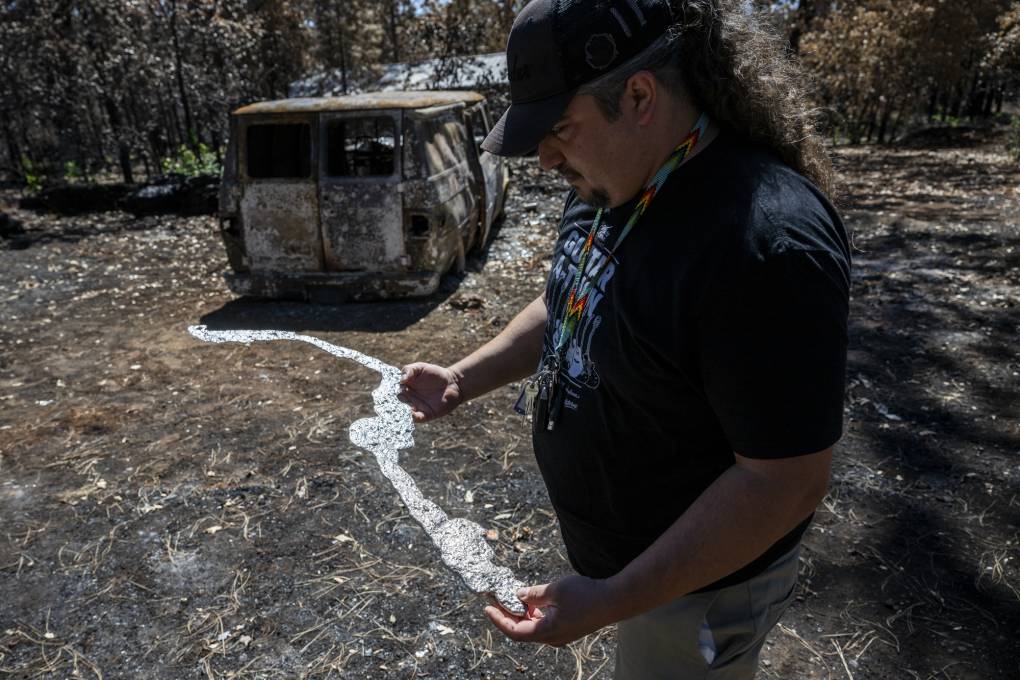
"caption": "Yahmo Ahqha holds a piece of metal from his truck that melted during the Park Fire on his property in Cohasset on Sept. 10, 2024. The Park Fire destroyed his home and scorched the trees on the property when it swept through the area on July 25.",
"credit": "Beth LaBerge/KQED",
"altTag": "A man with long hair flowing out from beneath a hat holds a piece of burned metal in his hands. In the background, a charred vehicle.",
"description": null,
"imgSizes": {
"medium": {
"file": "https://cdn.kqed.org/wp-content/uploads/sites/35/2024/09/240910-PARKFIREFOLO-13-BL-KQED-800x533.jpg",
"width": 800,
"height": 533,
"mimeType": "image/jpeg"
},
"large": {
"file": "https://cdn.kqed.org/wp-content/uploads/sites/35/2024/09/240910-PARKFIREFOLO-13-BL-KQED-1020x680.jpg",
"width": 1020,
"height": 680,
"mimeType": "image/jpeg"
},
"thumbnail": {
"file": "https://cdn.kqed.org/wp-content/uploads/sites/35/2024/09/240910-PARKFIREFOLO-13-BL-KQED-160x107.jpg",
"width": 160,
"height": 107,
"mimeType": "image/jpeg"
},
"medium_large": {
"file": "https://cdn.kqed.org/wp-content/uploads/sites/35/2024/09/240910-PARKFIREFOLO-13-BL-KQED-768x512.jpg",
"width": 768,
"height": 512,
"mimeType": "image/jpeg"
},
"1536x1536": {
"file": "https://cdn.kqed.org/wp-content/uploads/sites/35/2024/09/240910-PARKFIREFOLO-13-BL-KQED-1536x1024.jpg",
"width": 1536,
"height": 1024,
"mimeType": "image/jpeg"
},
"post-thumbnail": {
"file": "https://cdn.kqed.org/wp-content/uploads/sites/35/2024/09/240910-PARKFIREFOLO-13-BL-KQED-672x372.jpg",
"width": 672,
"height": 372,
"mimeType": "image/jpeg"
},
"twentyfourteen-full-width": {
"file": "https://cdn.kqed.org/wp-content/uploads/sites/35/2024/09/240910-PARKFIREFOLO-13-BL-KQED-1038x576.jpg",
"width": 1038,
"height": 576,
"mimeType": "image/jpeg"
},
"full-width": {
"file": "https://cdn.kqed.org/wp-content/uploads/sites/35/2024/09/240910-PARKFIREFOLO-13-BL-KQED-1920x1280.jpg",
"width": 1920,
"height": 1280,
"mimeType": "image/jpeg"
},
"kqedFullSize": {
"file": "https://cdn.kqed.org/wp-content/uploads/sites/35/2024/09/240910-PARKFIREFOLO-13-BL-KQED.jpg",
"width": 2000,
"height": 1333
}
},
"isLoading": false,
"fetchFailed": false
},
"science_1994212": {
"type": "attachments",
"id": "science_1994212",
"meta": {
"index": "attachments_1716263798",
"site": "science",
"id": "1994212",
"found": true
},
"title": "240820-PajaroFolo-112-BL-2",
"publishDate": 1725660060,
"status": "inherit",
"parent": 0,
"modified": 1725660086,
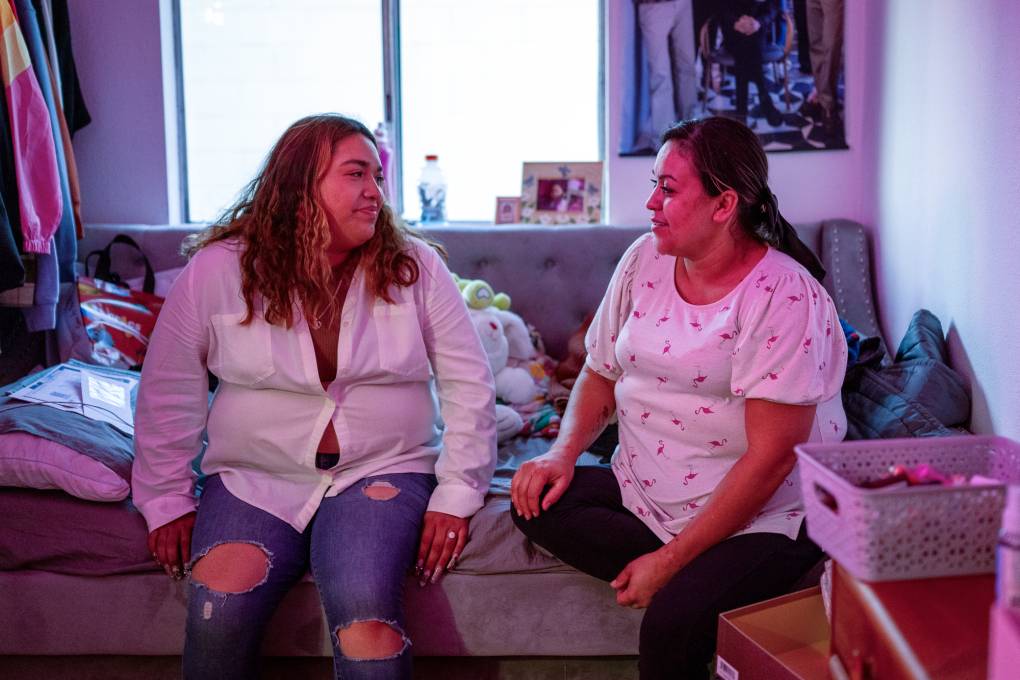
"caption": "Carla Escutia and her daughter, Denia, sit in Denia's new bedroom in Pajaro on Aug. 20, 2024.",
"credit": "Beth LaBerge/KQED",
"altTag": null,
"description": null,
"imgSizes": {
"medium": {
"file": "https://cdn.kqed.org/wp-content/uploads/sites/35/2024/09/240820-PajaroFolo-112-BL-2-800x533.jpg",
"width": 800,
"height": 533,
"mimeType": "image/jpeg"
},
"large": {
"file": "https://cdn.kqed.org/wp-content/uploads/sites/35/2024/09/240820-PajaroFolo-112-BL-2-1020x680.jpg",
"width": 1020,
"height": 680,
"mimeType": "image/jpeg"
},
"thumbnail": {
"file": "https://cdn.kqed.org/wp-content/uploads/sites/35/2024/09/240820-PajaroFolo-112-BL-2-160x107.jpg",
"width": 160,
"height": 107,
"mimeType": "image/jpeg"
},
"medium_large": {
"file": "https://cdn.kqed.org/wp-content/uploads/sites/35/2024/09/240820-PajaroFolo-112-BL-2-768x512.jpg",
"width": 768,
"height": 512,
"mimeType": "image/jpeg"
},
"1536x1536": {
"file": "https://cdn.kqed.org/wp-content/uploads/sites/35/2024/09/240820-PajaroFolo-112-BL-2-1536x1024.jpg",
"width": 1536,
"height": 1024,
"mimeType": "image/jpeg"
},
"post-thumbnail": {
"file": "https://cdn.kqed.org/wp-content/uploads/sites/35/2024/09/240820-PajaroFolo-112-BL-2-672x372.jpg",
"width": 672,
"height": 372,
"mimeType": "image/jpeg"
},
"twentyfourteen-full-width": {
"file": "https://cdn.kqed.org/wp-content/uploads/sites/35/2024/09/240820-PajaroFolo-112-BL-2-1038x576.jpg",
"width": 1038,
"height": 576,
"mimeType": "image/jpeg"
},
"full-width": {
"file": "https://cdn.kqed.org/wp-content/uploads/sites/35/2024/09/240820-PajaroFolo-112-BL-2-1920x1280.jpg",
"width": 1920,
"height": 1280,
"mimeType": "image/jpeg"
},
"kqedFullSize": {
"file": "https://cdn.kqed.org/wp-content/uploads/sites/35/2024/09/240820-PajaroFolo-112-BL-2.jpg",
"width": 2000,
"height": 1333
}
},
"isLoading": false,
"fetchFailed": false
}
},
"audioPlayerReducer": {
"postId": "stream_live",
"isPaused": true,
"isPlaying": false,
"pfsActive": false,
"pledgeModalIsOpen": true,
"playerDrawerIsOpen": false,
"liveAudioPlayStartedAt": 0,
"liveAudioPlayContext": ""
},
"authorsReducer": {
"gabriela-quiros": {
"type": "authors",
"id": "6186",
"meta": {
"index": "authors_1716337520",
"id": "6186",
"found": true
},
"name": "Gabriela Quirós",
"firstName": "Gabriela",
"lastName": "Quirós",
"slug": "gabriela-quiros",
"email": "gquiros@kqed.org",
"display_author_email": false,
"staff_mastheads": [],
"title": "Supervising Producer",
"bio": "Gabriela Quirós is the \u003cstrong>supervising producer for KQED's web science video series \u003ca href=\"https://www.kqed.org/deeplook\">Deep Look\u003c/a>\u003c/strong>. She joined KQED as a TV producer when its science series QUEST started in 2006 and has covered everything from Alzheimer’s to bee die-offs to dark energy.\r\n\r\nShe won a 2022 AAAS Kavli Science Journalism Award with a team of her Deep Look colleagues. She has won six regional Emmys as a video producer and has shared eight more as the coordinating producer of Deep Look. The episode she produced about \u003ca href=\"https://www.kqed.org/science/728086/how-mosquitoes-use-six-needles-to-suck-your-blood\">How Mosquitoes Use Six Needles to Suck Your Blood\u003c/a> won a Webby \"People's Voice\" award. She has also earned awards from the Jackson Hole Wildlife Film Festival, the Society of Professional Journalists and the Society of Environmental Journalists.\r\n\r\nHer videos for KQED have also aired on NOVA scienceNOW and the PBS NewsHour, and appeared on NPR.org.\r\n\r\nAs an independent filmmaker, she produced and directed the hour-long documentary \u003ca href=\"http://lpbp.org/beautiful-sin-qa-with-producer-gabriela-quiros/\">\u003cem>Beautiful Sin\u003c/em>\u003c/a>, about the surprising story of how Costa Rica became the only country in the world to outlaw in vitro fertilization. The film aired in 2015 on public television stations throughout the U.S., and in Costa Rica.\r\n\r\nShe started her journalism career as a newspaper reporter in Costa Rica, where she grew up. She won the National Science Journalism Award there for a series of articles about organic agriculture, and developed a life-long interest in health reporting. She moved to the Bay Area in 1996 to study documentary filmmaking at the University of California, Berkeley, where she received master’s degrees in journalism and Latin American studies.",
"avatar": "https://secure.gravatar.com/avatar/6d82c20152affd1b434c31a904c40809?s=600&d=blank&r=g",
"twitter": "gabrielaquirosr",
"facebook": null,
"instagram": null,
"linkedin": null,
"sites": [
{
"site": "science",
"roles": []
},
{
"site": "quest",
"roles": [
"ef_view_calendar",
"ef_view_story_budget"
]
}
],
"headData": {
"title": "Gabriela Quirós | KQED",
"description": "Supervising Producer",
"ogImgSrc": "https://secure.gravatar.com/avatar/6d82c20152affd1b434c31a904c40809?s=600&d=blank&r=g",
"twImgSrc": "https://secure.gravatar.com/avatar/6d82c20152affd1b434c31a904c40809?s=600&d=blank&r=g"
},
"isLoading": false,
"link": "/author/gabriela-quiros"
},
"lklivans": {
"type": "authors",
"id": "8648",
"meta": {
"index": "authors_1716337520",
"id": "8648",
"found": true
},
"name": "Laura Klivans",
"firstName": "Laura",
"lastName": "Klivans",
"slug": "lklivans",
"email": "lklivans@kqed.org",
"display_author_email": true,
"staff_mastheads": [
"news",
"science"
],
"title": "Reporter",
"bio": "Laura Klivans is an award-winning science reporter for KQED News, where she covers climate change with an eye on both groundbreaking progress and gaps in action. She is the former host of KQED's blockbuster video series about tiny, amazing animals, \u003cem>Deep Look\u003c/em>. Her work reaches national audiences through NPR, \u003cem>Here & Now, \u003c/em>PRI, and other major outlets. \r\n\r\nLaura’s won five Northern California Area Emmy Awards for Deep Look and First Place in the Greater Bay Area Journalism Awards for a podcast exploring how one Oakland neighborhood teamed up to reduce planet-heating pollution.\r\n\r\nBeyond her reporting, she hosts and moderates events. In the past, she taught audio storytelling at the UC Berkeley Graduate School of Journalism, led international education programs, worked with immigrants and refugees along the Thai-Burmese border, taught high schoolers sex ed, and was an actress. \r\n\r\nShe's a former UC Berkeley Human Rights Fellow, USC Center for Health Journalism's California Fellow and Coro Fellow in Public Affairs. Laura has a master’s in journalism from UC Berkeley, a master’s in education from Harvard, and an undergraduate degree from Northwestern University.\r\n\r\nShe loves trying to riddle the meaning out of vanity license plates.",
"avatar": "https://secure.gravatar.com/avatar/2d2ecd1550a494cc10ad4a503406965585902124739e775a9b3817eebf1d88be?s=600&d=blank&r=g",
"twitter": "lauraklivans",
"bluesky": null,
"facebook": null,
"instagram": null,
"linkedin": null,
"sites": [
{
"site": "news",
"roles": [
"editor"
]
},
{
"site": "stateofhealth",
"roles": [
"contributor",
"editor"
]
},
{
"site": "science",
"roles": [
"editor"
]
},
{
"site": "forum",
"roles": [
"editor"
]
}
],
"headData": {
"title": "Laura Klivans | KQED",
"description": "Reporter",
"ogImgSrc": "https://secure.gravatar.com/avatar/2d2ecd1550a494cc10ad4a503406965585902124739e775a9b3817eebf1d88be?s=600&d=blank&r=g",
"twImgSrc": "https://secure.gravatar.com/avatar/2d2ecd1550a494cc10ad4a503406965585902124739e775a9b3817eebf1d88be?s=600&d=blank&r=g"
},
"isLoading": false,
"link": "/author/lklivans"
},
"dventon": {
"type": "authors",
"id": "11088",
"meta": {
"index": "authors_1716337520",
"id": "11088",
"found": true
},
"name": "Danielle Venton",
"firstName": "Danielle",
"lastName": "Venton",
"slug": "dventon",
"email": "dventon@kqed.org",
"display_author_email": true,
"staff_mastheads": [
"science"
],
"title": "Science reporter",
"bio": "Danielle Venton is a reporter for KQED Science. She covers wildfires, space and oceans (though she is prone to sea sickness).\r\n\r\nBefore joining KQED in 2015, Danielle was a staff reporter at KRCB in Sonoma County and a freelancer. She studied science communication at UC Santa Cruz and formerly worked at CERN in Geneva, Switzerland where she wrote about computing. She lives in Sonoma County and enjoys backpacking.",
"avatar": "https://secure.gravatar.com/avatar/37b292b5c40c8d93959c4f48d73b5286f41b7abd8588277e941905a3ed4c801c?s=600&d=blank&r=g",
"twitter": "DanielleVenton",
"bluesky": null,
"facebook": null,
"instagram": null,
"linkedin": null,
"sites": [
{
"site": "arts",
"roles": [
"contributor"
]
},
{
"site": "news",
"roles": [
"editor"
]
},
{
"site": "futureofyou",
"roles": [
"editor"
]
},
{
"site": "science",
"roles": [
"editor"
]
},
{
"site": "liveblog",
"roles": [
"contributor"
]
}
],
"headData": {
"title": "Danielle Venton | KQED",
"description": "Science reporter",
"ogImgSrc": "https://secure.gravatar.com/avatar/37b292b5c40c8d93959c4f48d73b5286f41b7abd8588277e941905a3ed4c801c?s=600&d=blank&r=g",
"twImgSrc": "https://secure.gravatar.com/avatar/37b292b5c40c8d93959c4f48d73b5286f41b7abd8588277e941905a3ed4c801c?s=600&d=blank&r=g"
},
"isLoading": false,
"link": "/author/dventon"
},
"kevinstark": {
"type": "authors",
"id": "11608",
"meta": {
"index": "authors_1716337520",
"id": "11608",
"found": true
},
"name": "Kevin Stark",
"firstName": "Kevin",
"lastName": "Stark",
"slug": "kevinstark",
"email": "kstark@kqed.org",
"display_author_email": true,
"staff_mastheads": [
"science"
],
"title": "Senior Editor",
"bio": "Kevin is a senior editor for KQED Science, managing the station's health and climate desks. His journalism career began in the Pacific Northwest, and he later became a lead reporter for the San Francisco Public Press. His work has appeared in Pacific Standard magazine, the Energy News Network, the Center for Investigative Reporting's Reveal and WBEZ in Chicago. Kevin joined KQED in 2019, and has covered issues related to energy, wildfire, climate change and the environment.",
"avatar": "https://secure.gravatar.com/avatar/365aaa4b597d3a8374f67504ff0facd323d7906e8eb4be0a7efd2427408e802c?s=600&d=blank&r=g",
"twitter": "starkkev",
"bluesky": null,
"facebook": null,
"instagram": null,
"linkedin": null,
"sites": [
{
"site": "",
"roles": [
"editor"
]
},
{
"site": "news",
"roles": [
"editor"
]
},
{
"site": "science",
"roles": [
"administrator"
]
}
],
"headData": {
"title": "Kevin Stark | KQED",
"description": "Senior Editor",
"ogImgSrc": "https://secure.gravatar.com/avatar/365aaa4b597d3a8374f67504ff0facd323d7906e8eb4be0a7efd2427408e802c?s=600&d=blank&r=g",
"twImgSrc": "https://secure.gravatar.com/avatar/365aaa4b597d3a8374f67504ff0facd323d7906e8eb4be0a7efd2427408e802c?s=600&d=blank&r=g"
},
"isLoading": false,
"link": "/author/kevinstark"
},
"eromero": {
"type": "authors",
"id": "11746",
"meta": {
"index": "authors_1716337520",
"id": "11746",
"found": true
},
"name": "Ezra David Romero",
"firstName": "Ezra David",
"lastName": "Romero",
"slug": "eromero",
"email": "eromero@kqed.org",
"display_author_email": true,
"staff_mastheads": [
"news",
"science"
],
"title": "Climate Reporter",
"bio": "Ezra David Romero is a climate reporter for KQED News. He covers the absence and excess of water in the Bay Area — think sea level rise, flooding and drought. For nearly a decade he’s covered how warming temperatures are altering the lives of Californians. He’s reported on farmers worried their pistachio trees aren’t getting enough sleep, families desperate for water, scientists studying dying giant sequoias, and alongside firefighters containing wildfires. His work has appeared on local stations across California and nationally on public radio shows like Morning Edition, Here and Now, All Things Considered and Science Friday. ",
"avatar": "https://secure.gravatar.com/avatar/c76404d287c10ed40224227551ac36e24352c7306f106632caf6fead76f8801f?s=600&d=blank&r=g",
"twitter": "ezraromero",
"bluesky": null,
"facebook": null,
"instagram": null,
"linkedin": null,
"sites": [
{
"site": "arts",
"roles": [
"editor"
]
},
{
"site": "news",
"roles": [
"editor"
]
},
{
"site": "science",
"roles": [
"editor"
]
},
{
"site": "liveblog",
"roles": [
"author"
]
}
],
"headData": {
"title": "Ezra David Romero | KQED",
"description": "Climate Reporter",
"ogImgSrc": "https://secure.gravatar.com/avatar/c76404d287c10ed40224227551ac36e24352c7306f106632caf6fead76f8801f?s=600&d=blank&r=g",
"twImgSrc": "https://secure.gravatar.com/avatar/c76404d287c10ed40224227551ac36e24352c7306f106632caf6fead76f8801f?s=600&d=blank&r=g"
},
"isLoading": false,
"link": "/author/eromero"
},
"mschiffman": {
"type": "authors",
"id": "11833",
"meta": {
"index": "authors_1716337520",
"id": "11833",
"found": true
},
"name": "Mimi Schiffman",
"firstName": "Mimi",
"lastName": "Schiffman",
"slug": "mschiffman",
"email": "mschiffman@kqed.org",
"display_author_email": false,
"staff_mastheads": [],
"title": "KQED Contributor",
"bio": "Mimi Schiffman is a producer for Deep Look.\r\n\r\nPrior to joining the Deep Look team she made hundreds of stories over more than a decade as a producer, director of photography and/or editor. \r\n\r\nShe's filmed lemurs finger painting (a favorite pastime of the amazing Duke Lemur Center inhabitants), stayed awake for 36 hours while trailing the first person with dwarfism to complete an Ironman (shout out to John Young, aka \"The Hammer\") and got to interview the late, great Anthony Bourdain.\r\n \r\nFun facts: Mimi's first job was weighing foraminifera - single cell organisms - in tiny foil cups, and she once got a river designated as “Wild and scenic.” She’s passionate about animals in general but very specifically her rescue dog, Henry. And her kid, Sierra and husband, Peter.",
"avatar": "https://secure.gravatar.com/avatar/e8b898539bc6a47f47f94992f0f17948?s=600&d=blank&r=g",
"twitter": null,
"facebook": null,
"instagram": null,
"linkedin": null,
"sites": [
{
"site": "science",
"roles": [
"editor"
]
}
],
"headData": {
"title": "Mimi Schiffman | KQED",
"description": "KQED Contributor",
"ogImgSrc": "https://secure.gravatar.com/avatar/e8b898539bc6a47f47f94992f0f17948?s=600&d=blank&r=g",
"twImgSrc": "https://secure.gravatar.com/avatar/e8b898539bc6a47f47f94992f0f17948?s=600&d=blank&r=g"
},
"isLoading": false,
"link": "/author/mschiffman"
},
"rtuiran": {
"type": "authors",
"id": "11858",
"meta": {
"index": "authors_1716337520",
"id": "11858",
"found": true
},
"name": "Rosa Tuirán",
"firstName": "Rosa",
"lastName": "Tuirán",
"slug": "rtuiran",
"email": "rtuiran@kqed.org",
"display_author_email": false,
"staff_mastheads": [
"science"
],
"title": "Digital Video Producer ",
"bio": "Rosa Tuirán is a PBS Accelerator Fellow for Diverse Voices and a video producer for KQED's web science video series, Deep Look. Originally from Mexico City, she studied International Relations for her B.A. After graduating, she pursued her passion for underwater photography in South Africa and later worked as a video journalist for BuzzFeed News in New York City.\r\n\r\nIn 2020, she received her Master of Journalism from the University of California, Berkeley with a focus on documentary filmmaking. During the pandemic's early stages, she was a part of the COVID-19 California reporting initiative with The New York Times and the Investigative Reporting Program. \r\n\r\nHer work has been featured on PBS Frontline, PBS NOVA, CBS News, National Geographic, The Guardian and The New York Times.",
"avatar": "https://secure.gravatar.com/avatar/192c377dfd982c86993f2351bc0d6fb2?s=600&d=blank&r=g",
"twitter": null,
"facebook": null,
"instagram": null,
"linkedin": null,
"sites": [
{
"site": "science",
"roles": [
"editor"
]
}
],
"headData": {
"title": "Rosa Tuirán | KQED",
"description": "Digital Video Producer ",
"ogImgSrc": "https://secure.gravatar.com/avatar/192c377dfd982c86993f2351bc0d6fb2?s=600&d=blank&r=g",
"twImgSrc": "https://secure.gravatar.com/avatar/192c377dfd982c86993f2351bc0d6fb2?s=600&d=blank&r=g"
},
"isLoading": false,
"link": "/author/rtuiran"
}
},
"pagesReducer": {
"science_category_environment": {
"type": "terms",
"id": "science_35",
"meta": {
"index": "terms_1716263798",
"site": "science",
"id": "35",
"score": 12.138062
},
"featImg": null,
"name": "Environment",
"description": null,
"taxonomy": "category",
"headData": {
"twImgId": null,
"twTitle": null,
"ogTitle": null,
"ogImgId": null,
"twDescription": null,
"description": null,
"title": "Environment Archives | KQED Science",
"ogDescription": null
},
"ttid": 37,
"slug": "environment",
"isLoading": false,
"title": "Environment",
"pageMeta": {
"site": "science",
"WpPageTemplate": "page-topic-editorial",
"currentPage": 8
},
"blocks": [
{
"blockName": "kqed/post-list",
"attrs": {
"layout": "cardArticle2",
"query": "posts/science?category=environment",
"seeMore": false,
"paginated": true,
"page": 8
}
},
{
"blockName": "kqed/ad"
}
]
}
},
"pfsSessionReducer": {},
"postsReducer": {
"stream_live": {
"type": "live",
"id": "stream_live",
"audioUrl": "https://streams.kqed.org/kqedradio",
"title": "Live Stream",
"excerpt": "Live Stream information currently unavailable.",
"link": "/radio",
"featImg": "",
"label": {
"name": "KQED Live",
"link": "/"
}
},
"stream_kqedNewscast": {
"type": "posts",
"id": "stream_kqedNewscast",
"audioUrl": "https://www.kqed.org/.stream/anon/radio/RDnews/newscast.mp3?_=1",
"title": "KQED Newscast",
"featImg": "",
"label": {
"name": "88.5 FM",
"link": "/"
}
},
"science_1995260": {
"type": "posts",
"id": "science_1995260",
"meta": {
"index": "posts_1716263798",
"site": "science",
"id": "1995260",
"score": null,
"sort": [
1733846701000
]
},
"guestAuthors": [],
"slug": "beware-of-flesh-eating-sand-piranhas-at-the-beach",
"title": "Beware of Flesh-Eating Sand Piranhas at the Beach",
"publishDate": 1733846701,
"format": "video",
"headTitle": "Beware of Flesh-Eating Sand Piranhas at the Beach | KQED",
"labelTerm": {
"term": 1935,
"site": "science"
},
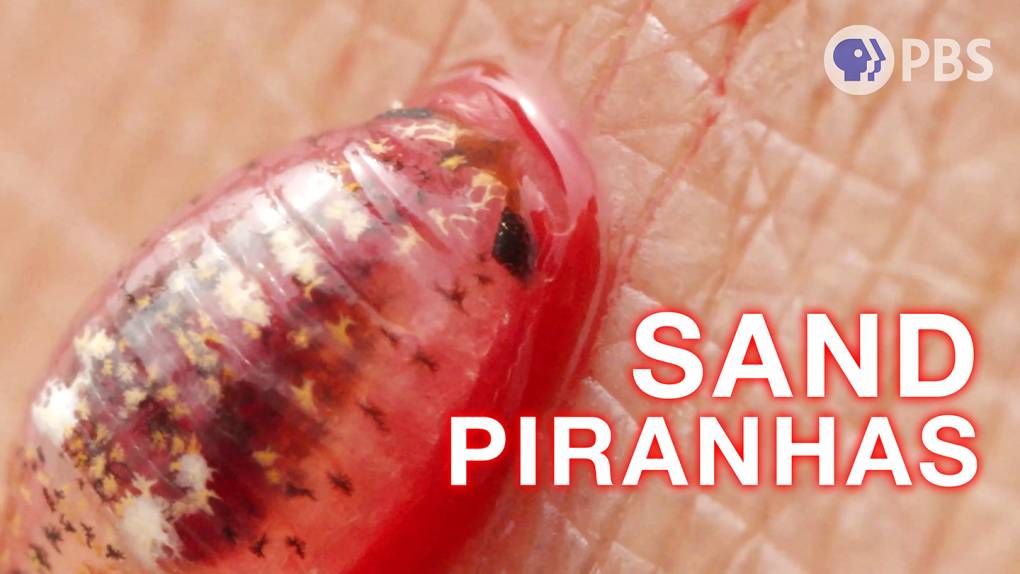
"content": "\u003cp>[dl_subscribe]\u003c/p>\n\u003cp>\u003cem>Known as sand piranhas, \u003cem>Excirolana chiltoni\u003c/em> are tiny crustaceans that nibble at your feet – and draw blood – if you hang out on the wet sand at the beach. They live on the Pacific coast of the U.S. and Canada, and the shorelines of Japan. Here’s how to keep them from ruining your vacation!\u003c/em>\u003c/p>\n\u003ch3>TRANSCRIPT\u003c/h3>\n\u003cp>Narrator:\u003cbr>\nWhat is this creature taking a bite out of your toe?\u003c/p>\n\u003cp>Beachgoer:\u003cbr>\n-Ow!\u003c/p>\n\u003cp>Narrator:\u003cbr>\nAnd ruining your day at the beach?\u003c/p>\n\u003cp>[ad fullwidth]\u003c/p>\n\u003cp>Some people call them sand piranhas. \u003c/p>\n\u003cp>Scientific name: \u003cem>Excirolana chiltoni\u003c/em>. \u003c/p>\n\u003cp>These tiny crustaceans are on the prowl for protein, and they don’t care where they get it.\u003c/p>\n\u003cp>From dead animals – like this pipefish – that washed up on the shore, to beachgoers’ flesh … in this case, your ankle.\u003c/p>\n\u003cp>One bite feels like the nick of a razor blade – sharp and then stinging. \u003c/p>\n\u003cp>But with enough time, a large group could likely clean the flesh straight off ya. \u003c/p>\n\u003cp>Here’s one, biting away at a foot, spinning in a full circle to get as much of you as it can.\u003c/p>\n\u003cp>They’re relatives of roly polies, which actually evolved from ocean animals.\u003c/p>\n\u003cp>\u003cem>Excirolana chiltoni\u003c/em> are found in shallow waters on the coasts of places like Canada, the United States, Japan, Taiwan and Hong Kong. \u003c/p>\n\u003cp>But because they’re tiny, travel in small groups and have sand-colored camouflage, they’re pretty easy to miss.\u003c/p>\n\u003cp>Sand piranhas live in the swash zone, where saturated sand is washed over by waves.\u003c/p>\n\u003cp>Out of the whole wide beach, they stay in a band about the width of a car.\u003c/p>\n\u003cp>Once in a while they get stuck in a tidepool, but mostly these crustaceans burrow in wet sand between waves, taking cover from predators like these shore birds. \u003c/p>\n\u003cp>The sand piranha digs in with some fearsome tools.\u003c/p>\n\u003cp>It holds steady with these hooks on its legs, then deploys this pair of mandibles. They scrape away at their meal.\u003c/p>\n\u003cp>And these front legs, called maxillipeds, sweep food into its piehole.\u003c/p>\n\u003cp>And right now, you’re on the menu.\u003c/p>\n\u003cp>It doesn’t even try to ease your pain with anesthetic.\u003c/p>\n\u003cp>How rude!\u003c/p>\n\u003cp>And once it’s down the hatch, there’s no hiding what it had for lunch.\u003c/p>\n\u003cp>Don’t worry! That’s not human blood.\u003c/p>\n\u003cp>This sand piranha is chowing down on something called a bloodworm, named for its bright red worm blood.\u003c/p>\n\u003cp>Sand piranhas travel up and down the beach as the tides change.\u003c/p>\n\u003cp>Few creatures can survive the rough-and-tumble life here in the swash zone.\u003c/p>\n\u003cp>So these crustaceans get priority access to whatever washes up. \u003c/p>\n\u003cp>They help clean up all kinds of wayward corpses … like this sea pickle.\u003c/p>\n\u003cp>Keeping your favorite beach a little less stinky.\u003c/p>\n\u003cp>Now, you don’t have to wait ‘til one of these tiny piranhas starts chomping on your foot to know they’re around.\u003c/p>\n\u003cp>Watch out for these distinctive scribbles in the sand.\u003c/p>\n\u003cp>If you see them, keep moving your feet through that swash zone.\u003c/p>\n\u003cp>\u003c/p>\n\u003cp>Or better yet – dive in.\u003c/p>\n\n",
"blocks": [],
"excerpt": "Known as sand piranhas, Excirolana chiltoni are tiny crustaceans that nibble at your feet – and draw blood – if you hang out on the wet sand at the beach. They live on the Pacific coast of the U.S. and Canada, and the shorelines of Japan. Here’s how to keep them from ruining your vacation!",
"status": "publish",
"parent": 0,
"modified": 1738873533,
"stats": {
"hasAudio": false,
"hasVideo": false,
"hasChartOrMap": false,
"iframeSrcs": [],
"hasGoogleForm": false,
"hasGallery": false,
"hasHearkenModule": false,
"hasPolis": false,
"paragraphCount": 38,
"wordCount": 528
},
"headData": {
"title": "Beware of Flesh-Eating Sand Piranhas at the Beach | KQED",
"description": "Known as sand piranhas, Excirolana chiltoni are tiny crustaceans that nibble at your feet – and draw blood – if you hang out on the wet sand at the beach. They live on the Pacific coast of the U.S. and Canada, and the shorelines of Japan. Here’s how to keep them from ruining your vacation!",
"ogTitle": "",
"ogDescription": "",
"ogImgId": "",
"twTitle": "",
"twDescription": "",
"twImgId": "",
"schema": {
"@context": "https://schema.org",
"@type": "Article",
"headline": "Beware of Flesh-Eating Sand Piranhas at the Beach",
"datePublished": "2024-12-10T08:05:01-08:00",
"dateModified": "2025-02-06T12:25:33-08:00",
"image": "https://cdn.kqed.org/wp-content/uploads/2020/02/KQED-OG-Image@1x.png"
}
},
"videoEmbed": "https://youtu.be/bPfl01alduc",
"pbsMediaId": "3097024700",
"sticky": false,
"excludeFromSiteSearch": "Include",
"articleAge": "0",
"path": "/science/1995260/beware-of-flesh-eating-sand-piranhas-at-the-beach",
"audioTrackLength": null,
"parsedContent": [
{
"type": "contentString",
"content": "\u003cdiv class=\"post-body\">\u003cp>\u003cp>\u003c/p>\u003c/div>",
"attributes": {
"named": {},
"numeric": []
}
},
{
"type": "component",
"content": "",
"name": "dl_subscribe",
"attributes": {
"named": {
"label": ""
},
"numeric": []
}
},
{
"type": "contentString",
"content": "\u003cdiv class=\"post-body\">\u003cp>\u003c/p>\n\u003cp>\u003cem>Known as sand piranhas, \u003cem>Excirolana chiltoni\u003c/em> are tiny crustaceans that nibble at your feet – and draw blood – if you hang out on the wet sand at the beach. They live on the Pacific coast of the U.S. and Canada, and the shorelines of Japan. Here’s how to keep them from ruining your vacation!\u003c/em>\u003c/p>\n\u003ch3>TRANSCRIPT\u003c/h3>\n\u003cp>Narrator:\u003cbr>\nWhat is this creature taking a bite out of your toe?\u003c/p>\n\u003cp>Beachgoer:\u003cbr>\n-Ow!\u003c/p>\n\u003cp>Narrator:\u003cbr>\nAnd ruining your day at the beach?\u003c/p>\n\u003cp>\u003c/p>\u003c/div>",
"attributes": {
"named": {},
"numeric": []
}
},
{
"type": "component",
"content": "",
"name": "ad",
"attributes": {
"named": {
"label": "fullwidth"
},
"numeric": [
"fullwidth"
]
}
},
{
"type": "contentString",
"content": "\u003cdiv class=\"post-body\">\u003cp>\u003c/p>\n\u003cp>Some people call them sand piranhas. \u003c/p>\n\u003cp>Scientific name: \u003cem>Excirolana chiltoni\u003c/em>. \u003c/p>\n\u003cp>These tiny crustaceans are on the prowl for protein, and they don’t care where they get it.\u003c/p>\n\u003cp>From dead animals – like this pipefish – that washed up on the shore, to beachgoers’ flesh … in this case, your ankle.\u003c/p>\n\u003cp>One bite feels like the nick of a razor blade – sharp and then stinging. \u003c/p>\n\u003cp>But with enough time, a large group could likely clean the flesh straight off ya. \u003c/p>\n\u003cp>Here’s one, biting away at a foot, spinning in a full circle to get as much of you as it can.\u003c/p>\n\u003cp>They’re relatives of roly polies, which actually evolved from ocean animals.\u003c/p>\n\u003cp>\u003cem>Excirolana chiltoni\u003c/em> are found in shallow waters on the coasts of places like Canada, the United States, Japan, Taiwan and Hong Kong. \u003c/p>\n\u003cp>But because they’re tiny, travel in small groups and have sand-colored camouflage, they’re pretty easy to miss.\u003c/p>\n\u003cp>Sand piranhas live in the swash zone, where saturated sand is washed over by waves.\u003c/p>\n\u003cp>Out of the whole wide beach, they stay in a band about the width of a car.\u003c/p>\n\u003cp>Once in a while they get stuck in a tidepool, but mostly these crustaceans burrow in wet sand between waves, taking cover from predators like these shore birds. \u003c/p>\n\u003cp>The sand piranha digs in with some fearsome tools.\u003c/p>\n\u003cp>It holds steady with these hooks on its legs, then deploys this pair of mandibles. They scrape away at their meal.\u003c/p>\n\u003cp>And these front legs, called maxillipeds, sweep food into its piehole.\u003c/p>\n\u003cp>And right now, you’re on the menu.\u003c/p>\n\u003cp>It doesn’t even try to ease your pain with anesthetic.\u003c/p>\n\u003cp>How rude!\u003c/p>\n\u003cp>And once it’s down the hatch, there’s no hiding what it had for lunch.\u003c/p>\n\u003cp>Don’t worry! That’s not human blood.\u003c/p>\n\u003cp>This sand piranha is chowing down on something called a bloodworm, named for its bright red worm blood.\u003c/p>\n\u003cp>Sand piranhas travel up and down the beach as the tides change.\u003c/p>\n\u003cp>Few creatures can survive the rough-and-tumble life here in the swash zone.\u003c/p>\n\u003cp>So these crustaceans get priority access to whatever washes up. \u003c/p>\n\u003cp>They help clean up all kinds of wayward corpses … like this sea pickle.\u003c/p>\n\u003cp>Keeping your favorite beach a little less stinky.\u003c/p>\n\u003cp>Now, you don’t have to wait ‘til one of these tiny piranhas starts chomping on your foot to know they’re around.\u003c/p>\n\u003cp>Watch out for these distinctive scribbles in the sand.\u003c/p>\n\u003cp>If you see them, keep moving your feet through that swash zone.\u003c/p>\n\u003cp>\u003c/p>\n\u003cp>Or better yet – dive in.\u003c/p>\n\n\u003c/div>\u003c/p>",
"attributes": {
"named": {},
"numeric": []
}
}
],
"link": "/science/1995260/beware-of-flesh-eating-sand-piranhas-at-the-beach",
"authors": [
"11833"
],
"series": [
"science_1935"
],
"categories": [
"science_2874",
"science_30",
"science_35",
"science_40",
"science_2873",
"science_4450",
"science_86"
],
"tags": [
"science_1120",
"science_1602",
"science_4414",
"science_843"
],
"featImg": "science_1995302",
"label": "science_1935"
},
"science_1995157": {
"type": "posts",
"id": "science_1995157",
"meta": {
"index": "posts_1716263798",
"site": "science",
"id": "1995157",
"score": null,
"sort": [
1732032024000
]
},
"guestAuthors": [],
"slug": "lacewing-love-is-noisier-than-you-think",
"title": "Lacewing Bachelors Vibrate to Find a Valentine",
"publishDate": 1732032024,
"format": "video",
"headTitle": "Lacewing Bachelors Vibrate to Find a Valentine | KQED",
"labelTerm": {
"term": 1935,
"site": "science"
},
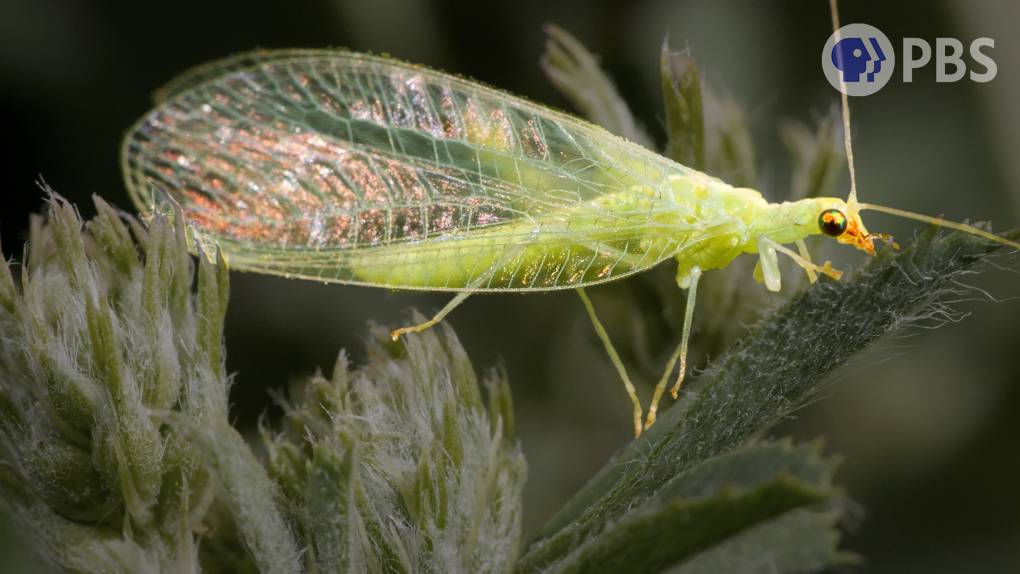
"content": "\u003cp>[dl_subscribe]\u003cbr>\n\u003cem>Lacewings have babies that are prized as pest control. But before they can mate, they have to vibrate their bodies and sing to each other, making noises like purring cats or growling stomachs.\u003c/em>\u003c/p>\n\u003ch3>TRANSCRIPT\u003c/h3>\n\u003cp>A mating call that pulses like a heartbeat. An alfalfa field full of potential. In the search for green lacewing love, which romances will bloom and which will wither?\u003c/p>\n\u003cp>Here in California’s Central Valley, this lacewing bachelor is single and ready to mingle. Sure, he’s a looker with those glassy wings and shimmering eyes. But it’s his vibes that really matter. Which we can hear because scientists have amplified them.\u003c/p>\n\u003cp>He shakes his abdomen to announce he’s on the market. His vibration travels through the plant he’s perched on. But no one’s around to appreciate it. He tries again on a different leaf. This time, she’s feeling it.\u003c/p>\n\u003cp>“Will you accept this vibration?”\u003c/p>\n\u003cp>[ad fullwidth]\u003c/p>\n\u003cp>“I will.”\u003c/p>\n\u003cp>But even when they find each other, their songs don’t guarantee they’re a match. Is she here for the right reasons? To find out, they enter this leafy fantasy suite. They touch antennae and taste each other. They’re headed for their most intimate moment yet. That escalated quickly!\u003c/p>\n\u003cp>But sometimes more than one lacewing responds to a call, and the drama heats up. With two ladies here, one is certainly going home. Please take a moment to say your goodbyes.\u003c/p>\n\u003cp>Male and female lacewings of the same species sing each other essentially the same romantic song. It’s encoded in their DNA. One lacewing species sounds a bit like a purring cat, another one more like a growling stomach.\u003c/p>\n\u003cp>A few weeks later, we catch up with the family. Look who’s arrived, a baby! Yes, it is theirs. It’s so cute? And so hungry. Each lacewing larva devours hundreds of aphids and other orchard pests each week. It liquefies their insides and slurps them up.\u003c/p>\n\u003cp>\u003c/p>\n\u003cp>That’s why gardeners and growers love these babies born of romantic vibrations. The larva will need that energy to transform into a beautiful adult, that will put its own heart, and vibration, on the line.\u003c/p>\n\n",
"blocks": [],
"excerpt": "Lacewings have babies that are prized as pest control. But before they can mate, they have to vibrate their bodies and sing to each other, making noises like purring cats or growling stomachs. \r\n",
"status": "publish",
"parent": 0,
"modified": 1739315660,
"stats": {
"hasAudio": false,
"hasVideo": false,
"hasChartOrMap": false,
"iframeSrcs": [],
"hasGoogleForm": false,
"hasGallery": false,
"hasHearkenModule": false,
"hasPolis": false,
"paragraphCount": 13,
"wordCount": 383
},
"headData": {
"title": "Lacewing Bachelors Vibrate to Find a Valentine | KQED",
"description": "Lacewings have babies that are prized as pest control. But before they can mate, they have to vibrate their bodies and sing to each other, making noises like purring cats or growling stomachs. \r\n",
"ogTitle": "",
"ogDescription": "",
"ogImgId": "",
"twTitle": "",
"twDescription": "",
"twImgId": "",
"schema": {
"@context": "https://schema.org",
"@type": "Article",
"headline": "Lacewing Bachelors Vibrate to Find a Valentine",
"datePublished": "2024-11-19T08:00:24-08:00",
"dateModified": "2025-02-11T15:14:20-08:00",
"image": "https://cdn.kqed.org/wp-content/uploads/2020/02/KQED-OG-Image@1x.png"
}
},
"videoEmbed": "https://www.youtube.com/watch?v=0TGewDrf_EM",
"pbsMediaId": "3096605823",
"sticky": false,
"nprStoryId": "kqed-1995157",
"excludeFromSiteSearch": "Include",
"articleAge": "0",
"path": "/science/1995157/lacewing-love-is-noisier-than-you-think",
"audioTrackLength": null,
"parsedContent": [
{
"type": "contentString",
"content": "\u003cdiv class=\"post-body\">\u003cp>\u003cp>\u003c/p>\u003c/div>",
"attributes": {
"named": {},
"numeric": []
}
},
{
"type": "component",
"content": "",
"name": "dl_subscribe",
"attributes": {
"named": {
"label": ""
},
"numeric": []
}
},
{
"type": "contentString",
"content": "\u003cdiv class=\"post-body\">\u003cp>\u003cbr>\n\u003cem>Lacewings have babies that are prized as pest control. But before they can mate, they have to vibrate their bodies and sing to each other, making noises like purring cats or growling stomachs.\u003c/em>\u003c/p>\n\u003ch3>TRANSCRIPT\u003c/h3>\n\u003cp>A mating call that pulses like a heartbeat. An alfalfa field full of potential. In the search for green lacewing love, which romances will bloom and which will wither?\u003c/p>\n\u003cp>Here in California’s Central Valley, this lacewing bachelor is single and ready to mingle. Sure, he’s a looker with those glassy wings and shimmering eyes. But it’s his vibes that really matter. Which we can hear because scientists have amplified them.\u003c/p>\n\u003cp>He shakes his abdomen to announce he’s on the market. His vibration travels through the plant he’s perched on. But no one’s around to appreciate it. He tries again on a different leaf. This time, she’s feeling it.\u003c/p>\n\u003cp>“Will you accept this vibration?”\u003c/p>\n\u003cp>\u003c/p>\u003c/div>",
"attributes": {
"named": {},
"numeric": []
}
},
{
"type": "component",
"content": "",
"name": "ad",
"attributes": {
"named": {
"label": "fullwidth"
},
"numeric": [
"fullwidth"
]
}
},
{
"type": "contentString",
"content": "\u003cdiv class=\"post-body\">\u003cp>\u003c/p>\n\u003cp>“I will.”\u003c/p>\n\u003cp>But even when they find each other, their songs don’t guarantee they’re a match. Is she here for the right reasons? To find out, they enter this leafy fantasy suite. They touch antennae and taste each other. They’re headed for their most intimate moment yet. That escalated quickly!\u003c/p>\n\u003cp>But sometimes more than one lacewing responds to a call, and the drama heats up. With two ladies here, one is certainly going home. Please take a moment to say your goodbyes.\u003c/p>\n\u003cp>Male and female lacewings of the same species sing each other essentially the same romantic song. It’s encoded in their DNA. One lacewing species sounds a bit like a purring cat, another one more like a growling stomach.\u003c/p>\n\u003cp>A few weeks later, we catch up with the family. Look who’s arrived, a baby! Yes, it is theirs. It’s so cute? And so hungry. Each lacewing larva devours hundreds of aphids and other orchard pests each week. It liquefies their insides and slurps them up.\u003c/p>\n\u003cp>\u003c/p>\n\u003cp>That’s why gardeners and growers love these babies born of romantic vibrations. The larva will need that energy to transform into a beautiful adult, that will put its own heart, and vibration, on the line.\u003c/p>\n\n\u003c/div>\u003c/p>",
"attributes": {
"named": {},
"numeric": []
}
}
],
"link": "/science/1995157/lacewing-love-is-noisier-than-you-think",
"authors": [
"11858"
],
"series": [
"science_1935"
],
"categories": [
"science_2874",
"science_30",
"science_35",
"science_4450",
"science_86"
],
"tags": [
"science_392",
"science_4414"
],
"featImg": "science_1996096",
"label": "science_1935"
},
"science_1995140": {
"type": "posts",
"id": "science_1995140",
"meta": {
"index": "posts_1716263798",
"site": "science",
"id": "1995140",
"score": null,
"sort": [
1731454272000
]
},
"guestAuthors": [],
"slug": "bay-area-environmentalists-criticize-trumps-pick-lead-epa",
"title": "Bay Area Environmentalists Criticize Trump’s Pick to Lead EPA",
"publishDate": 1731454272,
"format": "standard",
"headTitle": "Bay Area Environmentalists Criticize Trump’s Pick to Lead EPA | KQED",
"labelTerm": {
"site": "science"
},
"content": "\u003cp>Bay Area environmentalists are shaking their heads at \u003ca href=\"https://www.kqed.org/news/tag/donald-trump\">President-elect Donald Trump\u003c/a>’s tapping of a former New York congressman to run the federal Environmental Protection Agency with marching orders to ensure “fair and swift deregulatory decisions that will be enacted in a way to unleash the power of American businesses.”\u003c/p>\n\u003cp>His pick, Lee Zeldin, served four terms in the House, during which he was a vocal defender of Trump and sat on the Veterans’ Affairs, Foreign Affairs and Financial Services committees — but had little experience with environmental or climate-related issues.\u003c/p>\n\u003cp>He would take charge of the EPA as the incoming Trump administration is almost certain to \u003ca href=\"https://www.kqed.org/forum/2010101907787/what-the-trump-administration-could-mean-for-our-climate\">clash with California\u003c/a> over oil and gas regulation as well as rules meant to combat climate change and protect environmental resources.\u003c/p>\n\u003cp>Zeldin, in his own statement posted to social media, promised to “restore US energy dominance, revitalize our auto industry to bring back American jobs and make the US the global leader of AI. We will do so while protecting access to clean air and water.”\u003c/p>\n\u003cp>[ad fullwidth]\u003c/p>\n\u003cp>Environmental leaders expressed concern that Trump’s choice all but confirmed a deregulatory shift at the federal level.\u003c/p>\n\u003cp>“We are disappointed but not surprised,” Sejal Choksi-Chugh, executive director of San Francisco Baykeeper, told KQED. “[Zeldin] has very little environmental experience, but that also seems to be the reason he was chosen. It looks like he’s going to be very pro-fossil fuels, pro-pollution and just trying to get rid of the regulations that protect human health across the country.\u003c/p>\n\u003cfigure id=\"attachment_1994372\" class=\"wp-caption aligncenter\" style=\"max-width: 2000px\">\u003cimg loading=\"lazy\" decoding=\"async\" class=\"wp-image-1994372 size-full\" src=\"https://cdn.kqed.org/wp-content/uploads/sites/35/2024/09/MethaneFlaresScienceGetty1.jpg\" alt=\"\" width=\"2000\" height=\"1125\" srcset=\"https://cdn.kqed.org/wp-content/uploads/sites/35/2024/09/MethaneFlaresScienceGetty1.jpg 2000w, https://cdn.kqed.org/wp-content/uploads/sites/35/2024/09/MethaneFlaresScienceGetty1-800x450.jpg 800w, https://cdn.kqed.org/wp-content/uploads/sites/35/2024/09/MethaneFlaresScienceGetty1-1020x574.jpg 1020w, https://cdn.kqed.org/wp-content/uploads/sites/35/2024/09/MethaneFlaresScienceGetty1-160x90.jpg 160w, https://cdn.kqed.org/wp-content/uploads/sites/35/2024/09/MethaneFlaresScienceGetty1-768x432.jpg 768w, https://cdn.kqed.org/wp-content/uploads/sites/35/2024/09/MethaneFlaresScienceGetty1-1536x864.jpg 1536w, https://cdn.kqed.org/wp-content/uploads/sites/35/2024/09/MethaneFlaresScienceGetty1-1920x1080.jpg 1920w\" sizes=\"(max-width: 2000px) 100vw, 2000px\">\u003cfigcaption class=\"wp-caption-text\">Flames from a flaring pit near a well in the Bakken Oil Field. \u003ccite>(Orjan F. Ellingvag/Corbis via Getty Images)\u003c/cite>\u003c/figcaption>\u003c/figure>\n\u003cp>“We’re expecting from day one the administration [will propose] rollbacks and a lot of anti-climate deregulation that’s going to impact the entire country,” Choksi-Chugh said. “Every single person in the country is going to be harmed by the increased pollution that we’re going to see if they succeed in getting the oil industry to expand and in deregulating power plants. It’s just going to be a mess.”\u003c/p>\n\u003cp>The Oakland-based Sierra Club said in a statement that Zeldin is an unqualified and anti-American choice who will be terrible for the nation’s air and water.\u003c/p>\n\u003cp>“Our lives, our livelihoods, and our collective future cannot afford Lee Zeldin — or anyone who seeks to carry out a mission antithetical to the EPA’s mission,” the environmental organization said.\u003c/p>\n\u003cp>[aside postID=news_12014032 hero='https://cdn.kqed.org/wp-content/uploads/sites/10/2024/11/20161109_203307_qed-1020x765.jpg']\u003c/p>\n\u003cp>Local leaders have been discussing for several months what a second Trump term could mean for the Bay Area environment and are prepared for years of litigation to defend climate rules, Choksi-Chugh said.\u003c/p>\n\u003cp>During the first Trump administration, California was involved in dozens of major legal cases, most directly on issues of the environment, according to a \u003ca href=\"https://attorneysgeneral.org/multistate-lawsuits-vs-the-federal-government/\">tracker\u003c/a> developed by a Marquette University political scientist, including the federal government’s effort to roll back \u003ca href=\"https://www.kqed.org/science/1923269/california-sues-over-plan-to-scrap-car-emission-standards\">emission standards\u003c/a>, its \u003ca href=\"https://www.kqed.org/science/1956060/epa-rolls-back-obama-era-rules-protecting-rivers-and-wetlands\">justification for new water rules\u003c/a>, and its push to ease methane regulations, for example.\u003c/p>\n\u003cp>California won injunctions, policy reversals or other favorable rulings on the vast majority of its major environmental cases.\u003c/p>\n\u003cp>Mary Nichols, former chair of the California Air Resources Board, was the architect of much of California’s resistance to the Trump administration’s environmental deregulation.\u003c/p>\n\u003cp>She told KQED that “he was particularly focused on California as the enemy because we have been so out in front, both in terms of pollution regulation over many years, and also because we had taken a strong stand on climate change.”\u003c/p>\n\u003cp>Nichols noted that Trump’s victory this time is different because it puts numerous new clean-air rules in jeopardy, as the state is still awaiting waivers from federal regulators at the EPA.\u003c/p>\n\u003cp>“Unfortunately for the Trump agenda, it takes as much work to deregulate as it does to regulate,” she said. “You still have to go through a lot of hoops in order to make that happen. It won’t happen overnight.”\u003c/p>\n\u003cp>The nomination for EPA administrator will need confirmation from the Senate, where Republicans are poised to hold a majority of seats next term.\u003c/p>\n\u003cp>\u003c/p>\n",
"blocks": [],
"excerpt": "As President-elect Donald Trump tapped former Rep. Lee Zeldin, environmental leaders say they have been planning for months on how to push back against swift environmental deregulation.",
"status": "publish",
"parent": 0,
"modified": 1731458851,
"stats": {
"hasAudio": false,
"hasVideo": false,
"hasChartOrMap": false,
"iframeSrcs": [],
"hasGoogleForm": false,
"hasGallery": false,
"hasHearkenModule": false,
"hasPolis": false,
"paragraphCount": 20,
"wordCount": 739
},
"headData": {
"title": "Bay Area Environmentalists Criticize Trump’s Pick to Lead EPA | KQED",
"description": "As President-elect Donald Trump tapped former Rep. Lee Zeldin, environmental leaders say they have been planning for months on how to push back against swift environmental deregulation.",
"ogTitle": "",
"ogDescription": "",
"ogImgId": "",
"twTitle": "",
"twDescription": "",
"twImgId": "",
"schema": {
"@context": "https://schema.org",
"@type": "Article",
"headline": "Bay Area Environmentalists Criticize Trump’s Pick to Lead EPA",
"datePublished": "2024-11-12T15:31:12-08:00",
"dateModified": "2024-11-12T16:47:31-08:00",
"image": "https://cdn.kqed.org/wp-content/uploads/2020/02/KQED-OG-Image@1x.png"
}
},
"sticky": false,
"nprStoryId": "kqed-1995140",
"excludeFromSiteSearch": "Include",
"articleAge": "0",
"path": "/science/1995140/bay-area-environmentalists-criticize-trumps-pick-lead-epa",
"audioTrackLength": null,
"parsedContent": [
{
"type": "contentString",
"content": "\u003cdiv class=\"post-body\">\u003cp>\u003cp>Bay Area environmentalists are shaking their heads at \u003ca href=\"https://www.kqed.org/news/tag/donald-trump\">President-elect Donald Trump\u003c/a>’s tapping of a former New York congressman to run the federal Environmental Protection Agency with marching orders to ensure “fair and swift deregulatory decisions that will be enacted in a way to unleash the power of American businesses.”\u003c/p>\n\u003cp>His pick, Lee Zeldin, served four terms in the House, during which he was a vocal defender of Trump and sat on the Veterans’ Affairs, Foreign Affairs and Financial Services committees — but had little experience with environmental or climate-related issues.\u003c/p>\n\u003cp>He would take charge of the EPA as the incoming Trump administration is almost certain to \u003ca href=\"https://www.kqed.org/forum/2010101907787/what-the-trump-administration-could-mean-for-our-climate\">clash with California\u003c/a> over oil and gas regulation as well as rules meant to combat climate change and protect environmental resources.\u003c/p>\n\u003cp>Zeldin, in his own statement posted to social media, promised to “restore US energy dominance, revitalize our auto industry to bring back American jobs and make the US the global leader of AI. We will do so while protecting access to clean air and water.”\u003c/p>\n\u003cp>\u003c/p>\u003c/div>",
"attributes": {
"named": {},
"numeric": []
}
},
{
"type": "component",
"content": "",
"name": "ad",
"attributes": {
"named": {
"label": "fullwidth"
},
"numeric": [
"fullwidth"
]
}
},
{
"type": "contentString",
"content": "\u003cdiv class=\"post-body\">\u003cp>\u003c/p>\n\u003cp>Environmental leaders expressed concern that Trump’s choice all but confirmed a deregulatory shift at the federal level.\u003c/p>\n\u003cp>“We are disappointed but not surprised,” Sejal Choksi-Chugh, executive director of San Francisco Baykeeper, told KQED. “[Zeldin] has very little environmental experience, but that also seems to be the reason he was chosen. It looks like he’s going to be very pro-fossil fuels, pro-pollution and just trying to get rid of the regulations that protect human health across the country.\u003c/p>\n\u003cfigure id=\"attachment_1994372\" class=\"wp-caption aligncenter\" style=\"max-width: 2000px\">\u003cimg loading=\"lazy\" decoding=\"async\" class=\"wp-image-1994372 size-full\" src=\"https://cdn.kqed.org/wp-content/uploads/sites/35/2024/09/MethaneFlaresScienceGetty1.jpg\" alt=\"\" width=\"2000\" height=\"1125\" srcset=\"https://cdn.kqed.org/wp-content/uploads/sites/35/2024/09/MethaneFlaresScienceGetty1.jpg 2000w, https://cdn.kqed.org/wp-content/uploads/sites/35/2024/09/MethaneFlaresScienceGetty1-800x450.jpg 800w, https://cdn.kqed.org/wp-content/uploads/sites/35/2024/09/MethaneFlaresScienceGetty1-1020x574.jpg 1020w, https://cdn.kqed.org/wp-content/uploads/sites/35/2024/09/MethaneFlaresScienceGetty1-160x90.jpg 160w, https://cdn.kqed.org/wp-content/uploads/sites/35/2024/09/MethaneFlaresScienceGetty1-768x432.jpg 768w, https://cdn.kqed.org/wp-content/uploads/sites/35/2024/09/MethaneFlaresScienceGetty1-1536x864.jpg 1536w, https://cdn.kqed.org/wp-content/uploads/sites/35/2024/09/MethaneFlaresScienceGetty1-1920x1080.jpg 1920w\" sizes=\"(max-width: 2000px) 100vw, 2000px\">\u003cfigcaption class=\"wp-caption-text\">Flames from a flaring pit near a well in the Bakken Oil Field. \u003ccite>(Orjan F. Ellingvag/Corbis via Getty Images)\u003c/cite>\u003c/figcaption>\u003c/figure>\n\u003cp>“We’re expecting from day one the administration [will propose] rollbacks and a lot of anti-climate deregulation that’s going to impact the entire country,” Choksi-Chugh said. “Every single person in the country is going to be harmed by the increased pollution that we’re going to see if they succeed in getting the oil industry to expand and in deregulating power plants. It’s just going to be a mess.”\u003c/p>\n\u003cp>The Oakland-based Sierra Club said in a statement that Zeldin is an unqualified and anti-American choice who will be terrible for the nation’s air and water.\u003c/p>\n\u003cp>“Our lives, our livelihoods, and our collective future cannot afford Lee Zeldin — or anyone who seeks to carry out a mission antithetical to the EPA’s mission,” the environmental organization said.\u003c/p>\n\u003cp>\u003c/p>\u003c/div>",
"attributes": {
"named": {},
"numeric": []
}
},
{
"type": "component",
"content": "",
"name": "aside",
"attributes": {
"named": {
"postid": "news_12014032",
"hero": "https://cdn.kqed.org/wp-content/uploads/sites/10/2024/11/20161109_203307_qed-1020x765.jpg",
"label": ""
},
"numeric": []
}
},
{
"type": "contentString",
"content": "\u003cdiv class=\"post-body\">\u003cp>\u003c/p>\n\u003cp>Local leaders have been discussing for several months what a second Trump term could mean for the Bay Area environment and are prepared for years of litigation to defend climate rules, Choksi-Chugh said.\u003c/p>\n\u003cp>During the first Trump administration, California was involved in dozens of major legal cases, most directly on issues of the environment, according to a \u003ca href=\"https://attorneysgeneral.org/multistate-lawsuits-vs-the-federal-government/\">tracker\u003c/a> developed by a Marquette University political scientist, including the federal government’s effort to roll back \u003ca href=\"https://www.kqed.org/science/1923269/california-sues-over-plan-to-scrap-car-emission-standards\">emission standards\u003c/a>, its \u003ca href=\"https://www.kqed.org/science/1956060/epa-rolls-back-obama-era-rules-protecting-rivers-and-wetlands\">justification for new water rules\u003c/a>, and its push to ease methane regulations, for example.\u003c/p>\n\u003cp>California won injunctions, policy reversals or other favorable rulings on the vast majority of its major environmental cases.\u003c/p>\n\u003cp>Mary Nichols, former chair of the California Air Resources Board, was the architect of much of California’s resistance to the Trump administration’s environmental deregulation.\u003c/p>\n\u003cp>She told KQED that “he was particularly focused on California as the enemy because we have been so out in front, both in terms of pollution regulation over many years, and also because we had taken a strong stand on climate change.”\u003c/p>\n\u003cp>Nichols noted that Trump’s victory this time is different because it puts numerous new clean-air rules in jeopardy, as the state is still awaiting waivers from federal regulators at the EPA.\u003c/p>\n\u003cp>“Unfortunately for the Trump agenda, it takes as much work to deregulate as it does to regulate,” she said. “You still have to go through a lot of hoops in order to make that happen. It won’t happen overnight.”\u003c/p>\n\u003cp>The nomination for EPA administrator will need confirmation from the Senate, where Republicans are poised to hold a majority of seats next term.\u003c/p>\n\u003cp>\u003c/p>\n\u003c/div>\u003c/p>",
"attributes": {
"named": {},
"numeric": []
}
}
],
"link": "/science/1995140/bay-area-environmentalists-criticize-trumps-pick-lead-epa",
"authors": [
"11608"
],
"categories": [
"science_31",
"science_35",
"science_40"
],
"tags": [
"science_5178",
"science_182",
"science_194",
"science_3221",
"science_5383",
"science_192",
"science_2080",
"science_4417",
"science_4414",
"science_5375"
],
"featImg": "science_1995142",
"label": "science"
},
"science_1995086": {
"type": "posts",
"id": "science_1995086",
"meta": {
"index": "posts_1716263798",
"site": "science",
"id": "1995086",
"score": null,
"sort": [
1731427251000
]
},
"guestAuthors": [],
"slug": "these-bees-hustle-to-put-food-on-the-table",
"title": "These 5 Bees Are Waaay More Than Honey and Stingers",
"publishDate": 1731427251,
"format": "video",
"headTitle": "These 5 Bees Are Waaay More Than Honey and Stingers | KQED",
"labelTerm": {},
"content": "\u003cp>[dl_subscribe]\u003c/p>\n\u003cp>\u003cem>You know honeybees make honey, but did you know they make bread too? And four other types of bees are also dedicated chefs! Alfalfa leafcutting bees take a punch from a flower for your ice cream. Blue orchard bees bring you almonds and sweet cherries. Plus, stingless bees protect their tasty honey in creative ways. And bindweed bees’ way of gathering pollen deserves a fashion award.\u003c/em>\u003c/p>\n\u003ch3>TRANSCRIPT\u003c/h3>\n\u003cp>There are over 20 thousand species of bees on the planet, and each one is full of surprises. \u003c/p>\n\u003cp>These bees prove there’s more to bees than just honey and stingers … \u003c/p>\n\u003cp>Like, did you know that honeybees turn the pollen they collect into a special food called bee bread?\u003c/p>\n\u003cp>[ad fullwidth]\u003c/p>\n\u003cp>Check it out!\u003c/p>\n\u003ch2>Honeybees Make Honey … and Bread?\u003c/h2>\n\u003cp>OK, time to head to work.\u003c/p>\n\u003cp>But before this honeybee starts her commute, she’s prepping her tools.\u003c/p>\n\u003cp>Because honeybees collect pollen. You knew that.\u003c/p>\n\u003cp>But it’s not as simple as you might think.\u003c/p>\n\u003cp>Plants want the bees to carry the pollen away and spread it to other flowers. That’s pollination, how plants reproduce.\u003c/p>\n\u003cp>But bees also need to carry lots of it home – pollen is a protein-packed food for the hive.\u003c/p>\n\u003cp>Luckily, they have the right gear.\u003c/p>\n\u003cp>They’re hairy, like tiny flying teddy bears. She’s covered in 3 million hairs for trapping pollen. They’re even on her eyes.\u003c/p>\n\u003cp>Here on her legs, they’re shaped into spiky brushes and flat combs.\u003c/p>\n\u003cp>When she lands on a bloom, she really gets in there. \u003c/p>\n\u003cp>Nibbling on the flower’s anthers detaches the pollen.\u003c/p>\n\u003cp>Time to pack up her haul. \u003c/p>\n\u003cp>She cleans it off her eyes and antennae with those brushes on her front legs, like windshield wipers.\u003c/p>\n\u003cp>Here it is up close. \u003c/p>\n\u003cp>That leg wipes the pollen right off her eye.\u003c/p>\n\u003cp>Then she moves the pollen from leg to leg, like a conveyor belt – front to middle to back.\u003c/p>\n\u003cp>The bee does this super fast, while she flies from bloom to bloom, moving the pollen into special baskets on her back legs called corbiculae.\u003c/p>\n\u003cp>She bends her leg, using it to squish the pollen into a ball, packing it together with a little saliva and nectar.\u003c/p>\n\u003cp>She can get as many as 160,000 pollen grains into each ball. She’s hauling as much as one-third of her weight.\u003c/p>\n\u003cp>Back at the hive, meal prep is about to start.\u003c/p>\n\u003cp>But the pollen isn’t for making honey. \u003c/p>\n\u003cp>The honey, under this wax, is made from nectar. They eat it for its sugar.\u003c/p>\n\u003cp>Bees turn pollen into something completely different: bee bread. \u003c/p>\n\u003cp>That’s their source of protein.\u003c/p>\n\u003cp>Step one: Find an open spot.\u003c/p>\n\u003cp>Step two: Deposit your goods and pack them neatly.\u003c/p>\n\u003cp>Step three: Let the pollen “marinate” with a hint of honey.\u003c/p>\n\u003cp>And voilà! It’s ready.\u003c/p>\n\u003cp>The pantry is stocked – both for adult bees and the babies that are growing in the cells next door.\u003c/p>\n\u003cp>The adults pop in to drop off a special bee bread snack … a little home cooking for the hive’s future hardworking flyers.\u003c/p>\n\u003cp>Next time you enjoy an ice cream cone, thank an alfalfa leafcutting bee. \u003c/p>\n\u003cp>These bees are so tough, they get punched in the face by flowers.\u003c/p>\n\u003ch2>This Bee Gets Punched by Flowers For Your Ice Cream\u003c/h2>\n\u003cp>OK, this bee seems confused. \u003c/p>\n\u003cp>That leaf she’s gnawing on is no flower.\u003c/p>\n\u003cp>But this is an alfalfa leafcutting bee. \u003c/p>\n\u003cp>She needs hunks of leaves to build her nest.\u003c/p>\n\u003cp>A lot of them.\u003c/p>\n\u003cp>All this is her lacy handiwork.\u003c/p>\n\u003cp>She hauls the pieces back home. \u003c/p>\n\u003cp>Leafcutters use them to line the inside of their nest.\u003c/p>\n\u003cp>In nature, she might use a nook and cranny in a log.\u003c/p>\n\u003cp>But here, her nest is in what’s basically a bee apartment building. A high-rise made of Styrofoam.\u003c/p>\n\u003cp>These markings help the bee find her way back to her personal condo. You know, like, 7B.\u003c/p>\n\u003cp>And furnishing it takes a while, because, see that pile? These are the pieces they dropped.\u003c/p>\n\u003cp>The bees are here to work in this alfalfa field in California.\u003c/p>\n\u003cp>They’re from Europe originally, but farmers here use them because they have a real knack for pollinating alfalfa flowers, which grow tiny seeds inside these curly pods.\u003c/p>\n\u003cp>Farmers use the seeds to plant new fields of alfalfa … which is grown to make hay … to feed these gals.\u003c/p>\n\u003cp>So, really, your glass of milk comes courtesy of these bees.\u003c/p>\n\u003cp>But pollinating alfalfa flowers is a lot trickier than it looks.\u003c/p>\n\u003cp>Even honeybees can’t really hack it.\u003c/p>\n\u003cp>Here’s why.\u003c/p>\n\u003cp>Alfalfa keeps its pollen locked away inside its flowers.\u003c/p>\n\u003cp>To get it, the bees have to step on a spring-loaded petal called a keel petal.\u003c/p>\n\u003cp>Here’s how it works.\u003c/p>\n\u003cp>Pop! It releases this column that has the pollen at the end.\u003c/p>\n\u003cp>It’s called “tripping” the flower.\u003c/p>\n\u003cp>Here it is again. \u003c/p>\n\u003cp>The column has some force – the bee might get a good thwack in the face.\u003c/p>\n\u003cp>Leafcutting bees just don’t care; they can take a punch.\u003c/p>\n\u003cp>Pop. \u003c/p>\n\u003cp>Pop.\u003c/p>\n\u003cp>Honeybees don’t really like to tangle with that. They’ll usually step around gingerly, trying to sip nectar from the side without setting it off.\u003c/p>\n\u003cp>Leafcutting bees get coated in pollen and bring it back home to their nest so they can pack it in there to feed their growing babies.\u003c/p>\n\u003cp>Each one is bundled in a little leaf-wrapped bassinet.\u003c/p>\n\u003cp>Aw, there they are. The siblings all lined up together. \u003c/p>\n\u003cp>A new generation of the toughest little bees around.\u003c/p>\n\u003cp>Why would these bees be digging into the dirt? \u003c/p>\n\u003cp>Well, building your nest underground is a great way to protect it from invaders. \u003c/p>\n\u003cp>Unless, of course, freeloading flies torpedo the nest.\u003c/p>\n\u003ch2>This Fly Torpedoes a Bindweed Bee’s Nest\u003c/h2>\n\u003cp>Life for bindweed turret bees is violent and unfair.\u003c/p>\n\u003cp>It’s spring in California, and these male bees are in an all-out brawl, desperate to mate with the female trapped at the bottom of this pile.\u003c/p>\n\u003cp>Sometimes the fight is so intense that the female they’re going after gets crushed to death.\u003c/p>\n\u003cp>But if she survives … she and the winner steal away and mate.\u003c/p>\n\u003cp>Until another male wants in. Buzz kill!\u003c/p>\n\u003cp>Now she starts an epic dig, prepping a place to lay her eggs underground.\u003c/p>\n\u003cp>She tirelessly scoops earth with her mandibles, dousing it with nectar she collected earlier to soften it.\u003c/p>\n\u003cp>The majority of the world’s bee species – 70 percent – nest in the ground. These ones chose a dirt parking lot. Some nice folks cordoned it off to protect the bees.\u003c/p>\n\u003cp>Females work side by side. Each is “queen” of her own funky little castle.\u003c/p>\n\u003cp>They build turrets, but only some of them are vertical.\u003c/p>\n\u003cp>Many are tunnel-like, with a sideways entrance.\u003c/p>\n\u003cp>Others curve down.\u003c/p>\n\u003cp>You’ll see why that’s important in a bit.\u003c/p>\n\u003cp>Once the bees are done digging, they head off on another mission. They gather pollen from one plant only: morning glories, also known as bindweeds.\u003c/p>\n\u003cp>She rubs her shaggy legs all over that pollen.\u003c/p>\n\u003cp>And down she goes with her haul.\u003c/p>\n\u003cp>Pollen pants!\u003c/p>\n\u003cp>Inside her nest, she packs the pollen into neat balls – each one in its own chamber – and lays an egg on top.\u003c/p>\n\u003cp>When the egg hatches into a larva, it will live off the pollen.\u003c/p>\n\u003cp>As she toils, freeloaders show up.\u003c/p>\n\u003cp>They look like a bee, but their huge eyes give them away.\u003c/p>\n\u003cp>They’re called … wait for it … bee flies.\u003c/p>\n\u003cp>The fly doesn’t dig or gather pollen for her young. She just hovers over a bee’s nest and … yup, she’s dropping her own eggs in there. She’ll drop 200 eggs over her lifetime.\u003c/p>\n\u003cp>This is where those tunnels and curved turrets are useful. They make it harder for the flies to drop their eggs in from the air.\u003c/p>\n\u003cp>But when the fly does succeed, the fly’s egg hatches into a larva that digs tiny hooks into the bee larva.\u003c/p>\n\u003cp>As the bee eats the pollen and grows, the fly larva sucks it dry.\u003c/p>\n\u003cp>Sometimes the flies are so successful, they can nearly wipe out a population of bees.\u003c/p>\n\u003cp>But these bees don’t give up. \u003c/p>\n\u003cp>Two or three months of mating, foraging and warding off parasites come to an end when they seal up their nests with dirt.\u003c/p>\n\u003cp>Below ground, babies will grow.\u003c/p>\n\u003cp>The following spring, if the bees are lucky, a new tiny city will burst to life, full of bees persevering just as their mothers did before them.\u003c/p>\n\u003cp>Bees may be famous for their sting, but these stingless bees defend their delicious honey with barricades, bouncers and bites.\u003c/p>\n\u003cp>Take a look!\u003c/p>\n\u003ch2>Stingless Bees Guard Tasty Honey With Barricades, Bouncers and Bites\u003c/h2>\n\u003cp>At the break of dawn, in Oaxaca, Mexico, bees are tearing down the barrier they built last night to cover their nest entrance.\u003c/p>\n\u003cp>Another successful night protecting their honey and babies from thieving ants.\u003c/p>\n\u003cp>They make this lattice out of a blend of wax and a potent ant repellent. \u003c/p>\n\u003cp>More on that later.\u003c/p>\n\u003cp>They’re not eating the waxy material – they’re stashing it to reuse tonight.\u003c/p>\n\u003cp>Just like the honeybees that sweeten your tea, these honeymakers live in a colony.\u003c/p>\n\u003cp>But they’re smaller and don’t have stingers to protect the sweet stuff.\u003c/p>\n\u003cp>That’s why they’re known as stingless bees.\u003c/p>\n\u003cp>There are more than 600 species of them in the tropics around the world, mostly in the Americas. \u003c/p>\n\u003cp>And they’ve been around twice as long as honeybees.\u003c/p>\n\u003cp>No bee stingers? No bee suits needed!\u003c/p>\n\u003cp>Emilio Pérez is a stingless beekeeper in the highlands of Oaxaca, land inhabited by the Chinantec people.\u003c/p>\n\u003cp>This is \u003cem>Melipona beecheii\u003c/em>, one of the four bee species he keeps. \u003c/p>\n\u003cp>He only raises native bees. \u003c/p>\n\u003cp>Scientists say moving species around can spread diseases that harm them.\u003c/p>\n\u003cp>So, how do these teensy bees without stingers protect their honey?\u003c/p>\n\u003cp>By annoying you. \u003c/p>\n\u003cp>Some tangle in your hair … or eyebrow … and give you a bite.\u003c/p>\n\u003cp>It only feels like a pinprick. But they could summon a whole swarm of their sisters by releasing pheromones.\u003c/p>\n\u003cp>In any case, for these bees, the best offense is a good defense.\u003c/p>\n\u003cp>Guard bees stand watch at the nest entrance. \u003c/p>\n\u003cp>\u003cem>Melipona beecheii\u003c/em> has just one imposing guard, stationed on this ledge shaped like a flower.\u003c/p>\n\u003cp>Other species employ as many as 15 guards. \u003c/p>\n\u003cp>They cover the perimeter of trumpet-shaped entrances.\u003c/p>\n\u003cp>If an outsider tries to come in – like this bee from another colony – the guards sniff it out and kill it.\u003c/p>\n\u003cp>These peculiar structures also make great runways, as bees go off to work in the flowers.\u003c/p>\n\u003cp>They’re not picky. \u003c/p>\n\u003cp>They collect nectar and pollen from dozens of plants, which they pollinate in the process.\u003c/p>\n\u003cp>Stingless bees also collect resin.\u003c/p>\n\u003cp>It’s the sticky stuff that plants like this cedar make to keep out burrowing insects. \u003c/p>\n\u003cp>See how she stows the drops on her back legs?\u003c/p>\n\u003cp>Different plants have different hues of resin: yellow … white … red.\u003c/p>\n\u003cp>They mix the resin with wax to make a pliable building material called cerumen. \u003c/p>\n\u003cp>Your average honeybee just uses wax.\u003c/p>\n\u003cp>Stingless bees shape cerumen into little capsules for their offspring, and stack them like a tiered cake.\u003c/p>\n\u003cp>They also use the material to make their honey pots … these orbs. Yum!\u003c/p>\n\u003cp>It’s a freewheeling architectural style, compared to honeybees’ hexagonal cells.\u003c/p>\n\u003cp>Now, remember this protective barrier? \u003c/p>\n\u003cp>It’s made of cerumen. \u003c/p>\n\u003cp>The resin mixed in with the wax is what keeps the ants away. They hate the resin’s smell and stickiness.\u003c/p>\n\u003cp>Once a year, Emilio and his daughter Salustia collect honey from their nests.\u003c/p>\n\u003cp>Stingless bee colonies are smaller and usually make less honey than honeybees.\u003c/p>\n\u003cp>Each of their \u003cem>Melipona beecheii\u003c/em> colonies makes about nine pounds a year, just one seventh of what a honeybee hive produces.\u003c/p>\n\u003cp>Salustia: We’re having a honey tasting.\u003c/p>\n\u003cp>The \u003cem>Deep Look\u003c/em> team got to sample it.\u003c/p>\n\u003cp>Gabriela: A strong fermented flavor.\u003c/p>\n\u003cp>Josh: It tastes like SweeTarts. Yeah. Really good.\u003c/p>\n\u003cp>Stingless bee honey is sold as a health product to treat things like sore throats.\u003c/p>\n\u003cp>All honeys contain hydrogen peroxide, which is antimicrobial.\u003c/p>\n\u003cp>Stingless bees visit a variety of plants, many in the rainforest. \u003c/p>\n\u003cp>So, scientists are studying their honey and resins for chemicals that might have medicinal properties.\u003c/p>\n\u003cp>As the sun goes down, bees head in for the night and cover their nest entrance once again.\u003c/p>\n\u003cp>No effort is too great to protect the riches everyone is after.\u003c/p>\n\u003cp>These bees build nests out of mud that they pack with purple pollen for their young. \u003c/p>\n\u003cp>And in the process, they help us grow nuts and fruits.\u003c/p>\n\u003ch2>Watch This Bee Build Her Bee-jeweled Nest\u003c/h2>\n\u003cp>What’s this bee up to digging around in the mud? \u003c/p>\n\u003cp>This blue orchard bee is a mason, a builder. Her material is – you guessed it – mud. \u003c/p>\n\u003cp>And she works alone.\u003c/p>\n\u003cp>In fact, unlike those honeybee hives you might think of, most of the 4,000 types of bees in North America are solitary.\u003c/p>\n\u003cp>See how she scrapes the wet earth? She collects it with two huge pincerlike tools on her face called mandibles. \u003c/p>\n\u003cp>She’s gathering mud to make her nest.\u003c/p>\n\u003cp>The nest is long and thin. In nature, she goes into places like hollow twigs.\u003c/p>\n\u003cp>At the University of California, Davis, she uses a six-inch-long paper straw provided by researchers.\u003c/p>\n\u003cp>In this nest without a straw you can see how she builds a wall of mud.\u003c/p>\n\u003cp>Then she gathers food from spring flowers, but not only to feed herself.\u003c/p>\n\u003cp>See the pretty purple pollen on the anther of this flower?\u003c/p>\n\u003cp>She grabs the anthers with her legs and rubs the pollen onto hairs on her abdomen called scopa.\u003c/p>\n\u003cp>And while she’s at it, she sips a little nectar from the blooms.\u003c/p>\n\u003cp>When she climbs back into her nest, she turns the pollen and nectar into a sweet morsel next to the mud wall. \u003c/p>\n\u003cp>On this purple ball she lays a single egg.\u003c/p>\n\u003cp>She repeats this several times in her narrow nest. Egg. Wall. Egg. Wall. \u003c/p>\n\u003cp>When she’s done, she seals it all up with more mud.\u003c/p>\n\u003cp>A cross section of the nest shows her incredible craftsmanship: It looks like a piece of jewelry. \u003c/p>\n\u003cp>Soon, the eggs hatch. \u003c/p>\n\u003cp>The hungry larvae feed on their pollen provision, the purple lunchbox their mom packed for them.\u003c/p>\n\u003cp>Still in the safety of the nest, the well-fed larva spins a cocoon.\u003c/p>\n\u003cp>The following spring, the adult bee chews its way out.\u003c/p>\n\u003cp>Just like their name says, blue orchard bees love orchards: fields of almonds and sweet cherries. \u003c/p>\n\u003cp>And they’re really good at pollinating them.\u003c/p>\n\u003cp>A few hundred females can pollinate as many almonds as thousands of honeybees.\u003c/p>\n\u003cp>And their tube nest means they’re portable. \u003c/p>\n\u003cp>That makes it easy to distribute them to farmers.\u003c/p>\n\u003cp>So why haven’t they taken over the fields?\u003c/p>\n\u003cp>Well, they reproduce slowly. They only have 15 babies a year. \u003c/p>\n\u003cp>A queen honeybee has 500 … a day. \u003c/p>\n\u003cp>So there just aren’t that many blue orchard bees around.\u003c/p>\n\u003cp>But some farmers are enlisting them anyway, hoping they can provide some relief to their struggling honeybee cousins.\u003c/p>\n\u003cp>[ad floatright]\u003c/p>\n\u003cp>If you look carefully, you might just spot a blue orchard bee foraging out in a field, helping keep fruits and nuts on our plates.\u003c/p>\n\n",
"blocks": [],
"excerpt": "You know honeybees make honey, but did you know they make bread too? And four other types of bees are also dedicated chefs! Alfalfa leafcutting bees take a punch from a flower for your ice cream. Blue orchard bees bring you almonds and sweet cherries. Plus, stingless bees protect their tasty honey in creative ways. And bindweed bees’ way of gathering pollen deserves a fashion award.",
"status": "publish",
"parent": 0,
"modified": 1738873852,
"stats": {
"hasAudio": false,
"hasVideo": false,
"hasChartOrMap": false,
"iframeSrcs": [],
"hasGoogleForm": false,
"hasGallery": false,
"hasHearkenModule": false,
"hasPolis": false,
"paragraphCount": 198,
"wordCount": 2649
},
"headData": {
"title": "These 5 Bees Are Waaay More Than Honey and Stingers | KQED",
"description": "You know honeybees make honey, but did you know they make bread too? And four other types of bees are also dedicated chefs! Alfalfa leafcutting bees take a punch from a flower for your ice cream. Blue orchard bees bring you almonds and sweet cherries. Plus, stingless bees protect their tasty honey in creative ways. And bindweed bees’ way of gathering pollen deserves a fashion award.",
"ogTitle": "",
"ogDescription": "",
"ogImgId": "",
"twTitle": "",
"twDescription": "",
"twImgId": "",
"schema": {
"@context": "https://schema.org",
"@type": "Article",
"headline": "These 5 Bees Are Waaay More Than Honey and Stingers",
"datePublished": "2024-11-12T08:00:51-08:00",
"dateModified": "2025-02-06T12:30:52-08:00",
"image": "https://cdn.kqed.org/wp-content/uploads/2020/02/KQED-OG-Image@1x.png"
}
},
"videoEmbed": "https://youtu.be/WPT4IRrcBiw",
"pbsMediaId": "3096466017 ",
"source": "Food",
"sourceUrl": "https://www.kqed.org/food",
"sticky": false,
"nprStoryId": "kqed-1995086",
"excludeFromSiteSearch": "Include",
"articleAge": "0",
"path": "/science/1995086/these-bees-hustle-to-put-food-on-the-table",
"audioTrackLength": null,
"parsedContent": [
{
"type": "contentString",
"content": "\u003cdiv class=\"post-body\">\u003cp>\u003cp>\u003c/p>\u003c/div>",
"attributes": {
"named": {},
"numeric": []
}
},
{
"type": "component",
"content": "",
"name": "dl_subscribe",
"attributes": {
"named": {
"label": ""
},
"numeric": []
}
},
{
"type": "contentString",
"content": "\u003cdiv class=\"post-body\">\u003cp>\u003c/p>\n\u003cp>\u003cem>You know honeybees make honey, but did you know they make bread too? And four other types of bees are also dedicated chefs! Alfalfa leafcutting bees take a punch from a flower for your ice cream. Blue orchard bees bring you almonds and sweet cherries. Plus, stingless bees protect their tasty honey in creative ways. And bindweed bees’ way of gathering pollen deserves a fashion award.\u003c/em>\u003c/p>\n\u003ch3>TRANSCRIPT\u003c/h3>\n\u003cp>There are over 20 thousand species of bees on the planet, and each one is full of surprises. \u003c/p>\n\u003cp>These bees prove there’s more to bees than just honey and stingers … \u003c/p>\n\u003cp>Like, did you know that honeybees turn the pollen they collect into a special food called bee bread?\u003c/p>\n\u003cp>\u003c/p>\u003c/div>",
"attributes": {
"named": {},
"numeric": []
}
},
{
"type": "component",
"content": "",
"name": "ad",
"attributes": {
"named": {
"label": "fullwidth"
},
"numeric": [
"fullwidth"
]
}
},
{
"type": "contentString",
"content": "\u003cdiv class=\"post-body\">\u003cp>\u003c/p>\n\u003cp>Check it out!\u003c/p>\n\u003ch2>Honeybees Make Honey … and Bread?\u003c/h2>\n\u003cp>OK, time to head to work.\u003c/p>\n\u003cp>But before this honeybee starts her commute, she’s prepping her tools.\u003c/p>\n\u003cp>Because honeybees collect pollen. You knew that.\u003c/p>\n\u003cp>But it’s not as simple as you might think.\u003c/p>\n\u003cp>Plants want the bees to carry the pollen away and spread it to other flowers. That’s pollination, how plants reproduce.\u003c/p>\n\u003cp>But bees also need to carry lots of it home – pollen is a protein-packed food for the hive.\u003c/p>\n\u003cp>Luckily, they have the right gear.\u003c/p>\n\u003cp>They’re hairy, like tiny flying teddy bears. She’s covered in 3 million hairs for trapping pollen. They’re even on her eyes.\u003c/p>\n\u003cp>Here on her legs, they’re shaped into spiky brushes and flat combs.\u003c/p>\n\u003cp>When she lands on a bloom, she really gets in there. \u003c/p>\n\u003cp>Nibbling on the flower’s anthers detaches the pollen.\u003c/p>\n\u003cp>Time to pack up her haul. \u003c/p>\n\u003cp>She cleans it off her eyes and antennae with those brushes on her front legs, like windshield wipers.\u003c/p>\n\u003cp>Here it is up close. \u003c/p>\n\u003cp>That leg wipes the pollen right off her eye.\u003c/p>\n\u003cp>Then she moves the pollen from leg to leg, like a conveyor belt – front to middle to back.\u003c/p>\n\u003cp>The bee does this super fast, while she flies from bloom to bloom, moving the pollen into special baskets on her back legs called corbiculae.\u003c/p>\n\u003cp>She bends her leg, using it to squish the pollen into a ball, packing it together with a little saliva and nectar.\u003c/p>\n\u003cp>She can get as many as 160,000 pollen grains into each ball. She’s hauling as much as one-third of her weight.\u003c/p>\n\u003cp>Back at the hive, meal prep is about to start.\u003c/p>\n\u003cp>But the pollen isn’t for making honey. \u003c/p>\n\u003cp>The honey, under this wax, is made from nectar. They eat it for its sugar.\u003c/p>\n\u003cp>Bees turn pollen into something completely different: bee bread. \u003c/p>\n\u003cp>That’s their source of protein.\u003c/p>\n\u003cp>Step one: Find an open spot.\u003c/p>\n\u003cp>Step two: Deposit your goods and pack them neatly.\u003c/p>\n\u003cp>Step three: Let the pollen “marinate” with a hint of honey.\u003c/p>\n\u003cp>And voilà! It’s ready.\u003c/p>\n\u003cp>The pantry is stocked – both for adult bees and the babies that are growing in the cells next door.\u003c/p>\n\u003cp>The adults pop in to drop off a special bee bread snack … a little home cooking for the hive’s future hardworking flyers.\u003c/p>\n\u003cp>Next time you enjoy an ice cream cone, thank an alfalfa leafcutting bee. \u003c/p>\n\u003cp>These bees are so tough, they get punched in the face by flowers.\u003c/p>\n\u003ch2>This Bee Gets Punched by Flowers For Your Ice Cream\u003c/h2>\n\u003cp>OK, this bee seems confused. \u003c/p>\n\u003cp>That leaf she’s gnawing on is no flower.\u003c/p>\n\u003cp>But this is an alfalfa leafcutting bee. \u003c/p>\n\u003cp>She needs hunks of leaves to build her nest.\u003c/p>\n\u003cp>A lot of them.\u003c/p>\n\u003cp>All this is her lacy handiwork.\u003c/p>\n\u003cp>She hauls the pieces back home. \u003c/p>\n\u003cp>Leafcutters use them to line the inside of their nest.\u003c/p>\n\u003cp>In nature, she might use a nook and cranny in a log.\u003c/p>\n\u003cp>But here, her nest is in what’s basically a bee apartment building. A high-rise made of Styrofoam.\u003c/p>\n\u003cp>These markings help the bee find her way back to her personal condo. You know, like, 7B.\u003c/p>\n\u003cp>And furnishing it takes a while, because, see that pile? These are the pieces they dropped.\u003c/p>\n\u003cp>The bees are here to work in this alfalfa field in California.\u003c/p>\n\u003cp>They’re from Europe originally, but farmers here use them because they have a real knack for pollinating alfalfa flowers, which grow tiny seeds inside these curly pods.\u003c/p>\n\u003cp>Farmers use the seeds to plant new fields of alfalfa … which is grown to make hay … to feed these gals.\u003c/p>\n\u003cp>So, really, your glass of milk comes courtesy of these bees.\u003c/p>\n\u003cp>But pollinating alfalfa flowers is a lot trickier than it looks.\u003c/p>\n\u003cp>Even honeybees can’t really hack it.\u003c/p>\n\u003cp>Here’s why.\u003c/p>\n\u003cp>Alfalfa keeps its pollen locked away inside its flowers.\u003c/p>\n\u003cp>To get it, the bees have to step on a spring-loaded petal called a keel petal.\u003c/p>\n\u003cp>Here’s how it works.\u003c/p>\n\u003cp>Pop! It releases this column that has the pollen at the end.\u003c/p>\n\u003cp>It’s called “tripping” the flower.\u003c/p>\n\u003cp>Here it is again. \u003c/p>\n\u003cp>The column has some force – the bee might get a good thwack in the face.\u003c/p>\n\u003cp>Leafcutting bees just don’t care; they can take a punch.\u003c/p>\n\u003cp>Pop. \u003c/p>\n\u003cp>Pop.\u003c/p>\n\u003cp>Honeybees don’t really like to tangle with that. They’ll usually step around gingerly, trying to sip nectar from the side without setting it off.\u003c/p>\n\u003cp>Leafcutting bees get coated in pollen and bring it back home to their nest so they can pack it in there to feed their growing babies.\u003c/p>\n\u003cp>Each one is bundled in a little leaf-wrapped bassinet.\u003c/p>\n\u003cp>Aw, there they are. The siblings all lined up together. \u003c/p>\n\u003cp>A new generation of the toughest little bees around.\u003c/p>\n\u003cp>Why would these bees be digging into the dirt? \u003c/p>\n\u003cp>Well, building your nest underground is a great way to protect it from invaders. \u003c/p>\n\u003cp>Unless, of course, freeloading flies torpedo the nest.\u003c/p>\n\u003ch2>This Fly Torpedoes a Bindweed Bee’s Nest\u003c/h2>\n\u003cp>Life for bindweed turret bees is violent and unfair.\u003c/p>\n\u003cp>It’s spring in California, and these male bees are in an all-out brawl, desperate to mate with the female trapped at the bottom of this pile.\u003c/p>\n\u003cp>Sometimes the fight is so intense that the female they’re going after gets crushed to death.\u003c/p>\n\u003cp>But if she survives … she and the winner steal away and mate.\u003c/p>\n\u003cp>Until another male wants in. Buzz kill!\u003c/p>\n\u003cp>Now she starts an epic dig, prepping a place to lay her eggs underground.\u003c/p>\n\u003cp>She tirelessly scoops earth with her mandibles, dousing it with nectar she collected earlier to soften it.\u003c/p>\n\u003cp>The majority of the world’s bee species – 70 percent – nest in the ground. These ones chose a dirt parking lot. Some nice folks cordoned it off to protect the bees.\u003c/p>\n\u003cp>Females work side by side. Each is “queen” of her own funky little castle.\u003c/p>\n\u003cp>They build turrets, but only some of them are vertical.\u003c/p>\n\u003cp>Many are tunnel-like, with a sideways entrance.\u003c/p>\n\u003cp>Others curve down.\u003c/p>\n\u003cp>You’ll see why that’s important in a bit.\u003c/p>\n\u003cp>Once the bees are done digging, they head off on another mission. They gather pollen from one plant only: morning glories, also known as bindweeds.\u003c/p>\n\u003cp>She rubs her shaggy legs all over that pollen.\u003c/p>\n\u003cp>And down she goes with her haul.\u003c/p>\n\u003cp>Pollen pants!\u003c/p>\n\u003cp>Inside her nest, she packs the pollen into neat balls – each one in its own chamber – and lays an egg on top.\u003c/p>\n\u003cp>When the egg hatches into a larva, it will live off the pollen.\u003c/p>\n\u003cp>As she toils, freeloaders show up.\u003c/p>\n\u003cp>They look like a bee, but their huge eyes give them away.\u003c/p>\n\u003cp>They’re called … wait for it … bee flies.\u003c/p>\n\u003cp>The fly doesn’t dig or gather pollen for her young. She just hovers over a bee’s nest and … yup, she’s dropping her own eggs in there. She’ll drop 200 eggs over her lifetime.\u003c/p>\n\u003cp>This is where those tunnels and curved turrets are useful. They make it harder for the flies to drop their eggs in from the air.\u003c/p>\n\u003cp>But when the fly does succeed, the fly’s egg hatches into a larva that digs tiny hooks into the bee larva.\u003c/p>\n\u003cp>As the bee eats the pollen and grows, the fly larva sucks it dry.\u003c/p>\n\u003cp>Sometimes the flies are so successful, they can nearly wipe out a population of bees.\u003c/p>\n\u003cp>But these bees don’t give up. \u003c/p>\n\u003cp>Two or three months of mating, foraging and warding off parasites come to an end when they seal up their nests with dirt.\u003c/p>\n\u003cp>Below ground, babies will grow.\u003c/p>\n\u003cp>The following spring, if the bees are lucky, a new tiny city will burst to life, full of bees persevering just as their mothers did before them.\u003c/p>\n\u003cp>Bees may be famous for their sting, but these stingless bees defend their delicious honey with barricades, bouncers and bites.\u003c/p>\n\u003cp>Take a look!\u003c/p>\n\u003ch2>Stingless Bees Guard Tasty Honey With Barricades, Bouncers and Bites\u003c/h2>\n\u003cp>At the break of dawn, in Oaxaca, Mexico, bees are tearing down the barrier they built last night to cover their nest entrance.\u003c/p>\n\u003cp>Another successful night protecting their honey and babies from thieving ants.\u003c/p>\n\u003cp>They make this lattice out of a blend of wax and a potent ant repellent. \u003c/p>\n\u003cp>More on that later.\u003c/p>\n\u003cp>They’re not eating the waxy material – they’re stashing it to reuse tonight.\u003c/p>\n\u003cp>Just like the honeybees that sweeten your tea, these honeymakers live in a colony.\u003c/p>\n\u003cp>But they’re smaller and don’t have stingers to protect the sweet stuff.\u003c/p>\n\u003cp>That’s why they’re known as stingless bees.\u003c/p>\n\u003cp>There are more than 600 species of them in the tropics around the world, mostly in the Americas. \u003c/p>\n\u003cp>And they’ve been around twice as long as honeybees.\u003c/p>\n\u003cp>No bee stingers? No bee suits needed!\u003c/p>\n\u003cp>Emilio Pérez is a stingless beekeeper in the highlands of Oaxaca, land inhabited by the Chinantec people.\u003c/p>\n\u003cp>This is \u003cem>Melipona beecheii\u003c/em>, one of the four bee species he keeps. \u003c/p>\n\u003cp>He only raises native bees. \u003c/p>\n\u003cp>Scientists say moving species around can spread diseases that harm them.\u003c/p>\n\u003cp>So, how do these teensy bees without stingers protect their honey?\u003c/p>\n\u003cp>By annoying you. \u003c/p>\n\u003cp>Some tangle in your hair … or eyebrow … and give you a bite.\u003c/p>\n\u003cp>It only feels like a pinprick. But they could summon a whole swarm of their sisters by releasing pheromones.\u003c/p>\n\u003cp>In any case, for these bees, the best offense is a good defense.\u003c/p>\n\u003cp>Guard bees stand watch at the nest entrance. \u003c/p>\n\u003cp>\u003cem>Melipona beecheii\u003c/em> has just one imposing guard, stationed on this ledge shaped like a flower.\u003c/p>\n\u003cp>Other species employ as many as 15 guards. \u003c/p>\n\u003cp>They cover the perimeter of trumpet-shaped entrances.\u003c/p>\n\u003cp>If an outsider tries to come in – like this bee from another colony – the guards sniff it out and kill it.\u003c/p>\n\u003cp>These peculiar structures also make great runways, as bees go off to work in the flowers.\u003c/p>\n\u003cp>They’re not picky. \u003c/p>\n\u003cp>They collect nectar and pollen from dozens of plants, which they pollinate in the process.\u003c/p>\n\u003cp>Stingless bees also collect resin.\u003c/p>\n\u003cp>It’s the sticky stuff that plants like this cedar make to keep out burrowing insects. \u003c/p>\n\u003cp>See how she stows the drops on her back legs?\u003c/p>\n\u003cp>Different plants have different hues of resin: yellow … white … red.\u003c/p>\n\u003cp>They mix the resin with wax to make a pliable building material called cerumen. \u003c/p>\n\u003cp>Your average honeybee just uses wax.\u003c/p>\n\u003cp>Stingless bees shape cerumen into little capsules for their offspring, and stack them like a tiered cake.\u003c/p>\n\u003cp>They also use the material to make their honey pots … these orbs. Yum!\u003c/p>\n\u003cp>It’s a freewheeling architectural style, compared to honeybees’ hexagonal cells.\u003c/p>\n\u003cp>Now, remember this protective barrier? \u003c/p>\n\u003cp>It’s made of cerumen. \u003c/p>\n\u003cp>The resin mixed in with the wax is what keeps the ants away. They hate the resin’s smell and stickiness.\u003c/p>\n\u003cp>Once a year, Emilio and his daughter Salustia collect honey from their nests.\u003c/p>\n\u003cp>Stingless bee colonies are smaller and usually make less honey than honeybees.\u003c/p>\n\u003cp>Each of their \u003cem>Melipona beecheii\u003c/em> colonies makes about nine pounds a year, just one seventh of what a honeybee hive produces.\u003c/p>\n\u003cp>Salustia: We’re having a honey tasting.\u003c/p>\n\u003cp>The \u003cem>Deep Look\u003c/em> team got to sample it.\u003c/p>\n\u003cp>Gabriela: A strong fermented flavor.\u003c/p>\n\u003cp>Josh: It tastes like SweeTarts. Yeah. Really good.\u003c/p>\n\u003cp>Stingless bee honey is sold as a health product to treat things like sore throats.\u003c/p>\n\u003cp>All honeys contain hydrogen peroxide, which is antimicrobial.\u003c/p>\n\u003cp>Stingless bees visit a variety of plants, many in the rainforest. \u003c/p>\n\u003cp>So, scientists are studying their honey and resins for chemicals that might have medicinal properties.\u003c/p>\n\u003cp>As the sun goes down, bees head in for the night and cover their nest entrance once again.\u003c/p>\n\u003cp>No effort is too great to protect the riches everyone is after.\u003c/p>\n\u003cp>These bees build nests out of mud that they pack with purple pollen for their young. \u003c/p>\n\u003cp>And in the process, they help us grow nuts and fruits.\u003c/p>\n\u003ch2>Watch This Bee Build Her Bee-jeweled Nest\u003c/h2>\n\u003cp>What’s this bee up to digging around in the mud? \u003c/p>\n\u003cp>This blue orchard bee is a mason, a builder. Her material is – you guessed it – mud. \u003c/p>\n\u003cp>And she works alone.\u003c/p>\n\u003cp>In fact, unlike those honeybee hives you might think of, most of the 4,000 types of bees in North America are solitary.\u003c/p>\n\u003cp>See how she scrapes the wet earth? She collects it with two huge pincerlike tools on her face called mandibles. \u003c/p>\n\u003cp>She’s gathering mud to make her nest.\u003c/p>\n\u003cp>The nest is long and thin. In nature, she goes into places like hollow twigs.\u003c/p>\n\u003cp>At the University of California, Davis, she uses a six-inch-long paper straw provided by researchers.\u003c/p>\n\u003cp>In this nest without a straw you can see how she builds a wall of mud.\u003c/p>\n\u003cp>Then she gathers food from spring flowers, but not only to feed herself.\u003c/p>\n\u003cp>See the pretty purple pollen on the anther of this flower?\u003c/p>\n\u003cp>She grabs the anthers with her legs and rubs the pollen onto hairs on her abdomen called scopa.\u003c/p>\n\u003cp>And while she’s at it, she sips a little nectar from the blooms.\u003c/p>\n\u003cp>When she climbs back into her nest, she turns the pollen and nectar into a sweet morsel next to the mud wall. \u003c/p>\n\u003cp>On this purple ball she lays a single egg.\u003c/p>\n\u003cp>She repeats this several times in her narrow nest. Egg. Wall. Egg. Wall. \u003c/p>\n\u003cp>When she’s done, she seals it all up with more mud.\u003c/p>\n\u003cp>A cross section of the nest shows her incredible craftsmanship: It looks like a piece of jewelry. \u003c/p>\n\u003cp>Soon, the eggs hatch. \u003c/p>\n\u003cp>The hungry larvae feed on their pollen provision, the purple lunchbox their mom packed for them.\u003c/p>\n\u003cp>Still in the safety of the nest, the well-fed larva spins a cocoon.\u003c/p>\n\u003cp>The following spring, the adult bee chews its way out.\u003c/p>\n\u003cp>Just like their name says, blue orchard bees love orchards: fields of almonds and sweet cherries. \u003c/p>\n\u003cp>And they’re really good at pollinating them.\u003c/p>\n\u003cp>A few hundred females can pollinate as many almonds as thousands of honeybees.\u003c/p>\n\u003cp>And their tube nest means they’re portable. \u003c/p>\n\u003cp>That makes it easy to distribute them to farmers.\u003c/p>\n\u003cp>So why haven’t they taken over the fields?\u003c/p>\n\u003cp>Well, they reproduce slowly. They only have 15 babies a year. \u003c/p>\n\u003cp>A queen honeybee has 500 … a day. \u003c/p>\n\u003cp>So there just aren’t that many blue orchard bees around.\u003c/p>\n\u003cp>But some farmers are enlisting them anyway, hoping they can provide some relief to their struggling honeybee cousins.\u003c/p>\n\u003cp>\u003c/p>\u003c/div>",
"attributes": {
"named": {},
"numeric": []
}
},
{
"type": "component",
"content": "",
"name": "ad",
"attributes": {
"named": {
"label": "floatright"
},
"numeric": [
"floatright"
]
}
},
{
"type": "contentString",
"content": "\u003cdiv class=\"post-body\">\u003cp>\u003c/p>\n\u003cp>If you look carefully, you might just spot a blue orchard bee foraging out in a field, helping keep fruits and nuts on our plates.\u003c/p>\n\n\u003c/div>\u003c/p>",
"attributes": {
"named": {},
"numeric": []
}
}
],
"link": "/science/1995086/these-bees-hustle-to-put-food-on-the-table",
"authors": [
"6186"
],
"series": [
"science_1935"
],
"categories": [
"science_2874",
"science_30",
"science_35",
"science_36",
"science_40",
"science_4450",
"science_86"
],
"tags": [
"science_392",
"science_896",
"science_4414"
],
"featImg": "science_1995498",
"label": "source_science_1995086"
},
"science_1995002": {
"type": "posts",
"id": "science_1995002",
"meta": {
"index": "posts_1716263798",
"site": "science",
"id": "1995002",
"score": null,
"sort": [
1730212209000
]
},
"guestAuthors": [],
"slug": "chilling-halloween-forecast-bay-area-braces-for-coldest-week-since-may",
"title": "Chilling Halloween Forecast: Bay Area Braces for Coldest Week Since May",
"publishDate": 1730212209,
"format": "standard",
"headTitle": "Chilling Halloween Forecast: Bay Area Braces for Coldest Week Since May | KQED",
"labelTerm": {
"site": "science"
},
"content": "\u003cp>Gorilla costumes. Fleece-lined tights under a Poison Ivy costume. A yellow overcoat and long black wig mirroring Demi Moore’s character from The Substance. These options might keep ghouls and goblins warm on \u003ca href=\"https://www.kqed.org/arts/tag/halloween\">Halloween night\u003c/a>.\u003c/p>\n\u003cp>The National Weather Service reports this week will be the Bay Area’s coldest stretch of days since May, with nighttime lows in the 40s in some locations on All Hallows’ Eve.\u003c/p>\n\u003cp>“You might have to put a jacket over the Spider-Man costume this year,” said Dylan Flynn, a meteorologist with the weather service’s Bay Area office. “Some places will see their first 30-something-degree morning since about May.”\u003c/p>\n\u003cp>And it might not just be the cold trick-or-treaters will have to contend with. Flynn said a trio of storms will likely bring small amounts of rain across the Bay Area through Sunday as a strong cold front moves over the region from the Gulf of Alaska, dropping temperatures with a polar air mass. That will bring a 40% chance of rain on Halloween evening.\u003c/p>\n\u003cp>“We’re going to have some rain from San Jose north through the morning on Halloween,” Flynn said. “The good news is the probability of rain is decreasing through the day. But I can’t say that it will be dry for the trick-or-treaters.”\u003c/p>\n\u003cp>[ad fullwidth]\u003c/p>\n\u003cp>To beat the chill while knocking on doors for candy, bar-hopping or celebrating at an outdoor house party, costume designer Hester Michael of \u003ca href=\"http://www.hestersdesigns.com/\">Hester’s Designs\u003c/a> in the San Francisco Excelsior neighborhood cautions people to either pick a costume that’ll “keep you warm” or find a base layer to wear under a strappy fit.\u003c/p>\n\u003cp>“A gorilla suit might keep you warm,” she said. “I remember my mom having us wear sweaters under our costumes, and it was awful.”\u003c/p>\n\u003cp>So far this year, she’s created a yellow motorcycle look to mimic Kill Bill, a family of characters from the Hot Dog on a Stick mall stands and a Scream mask with kitten ears. She said on a cold night, people could get chilly even in complete get-ups and recommends “fuzzy lined tights that look like you’re wearing tights, or you can wear thermals as tops, leggings and bodysuits.”\u003c/p>\n\u003cp>Marty Van Der Vert, who owns the 38-year-old family-operated \u003ca href=\"https://www.facebook.com/p/SF-One-Stop-Party-Shop-100057630850422/\">One Stop Party Shop\u003c/a> in San Francisco’s Noe Valley neighborhood, doesn’t think “people are worried about” the cold or rain and will dress up however they want.\u003c/p>\n\u003cp>“They could use cloaks or capes to cover up,” she said. “I also have every mask from every movie you’ve ever seen. I’ve got [Michael Myers from] Halloween, but I think I only have some of those guys left. You name it. I have it.”\u003c/p>\n\u003cp>Over the next couple of days, Flynn said temperatures will peak in the 50s in most places.\u003c/p>\n\u003cp>“That’s pretty low for a high temperature, and then by the time the trick-or-treaters come out, it’s even going to be cooling off further,” he said.\u003c/p>\n\u003cp>\u003c/p>\n\u003cp>“Last week, we were about five degrees above normal; this week, we’re going to be about ten degrees below normal,” Flynn said.\u003c/p>\n\n",
"blocks": [],
"excerpt": "The Bay Area is forecast to have its coldest week since May — and a chance of rain — just in time for Halloween. From gorilla masks to capes, costume shop owners recommend ways to stay warm.\r\n",
"status": "publish",
"parent": 0,
"modified": 1730225438,
"stats": {
"hasAudio": false,
"hasVideo": false,
"hasChartOrMap": false,
"iframeSrcs": [],
"hasGoogleForm": false,
"hasGallery": false,
"hasHearkenModule": false,
"hasPolis": false,
"paragraphCount": 15,
"wordCount": 576
},
"headData": {
"title": "Chilling Halloween Forecast: Bay Area Braces for Coldest Week Since May | KQED",
"description": "The Bay Area is forecast to have its coldest week since May — and a chance of rain — just in time for Halloween. From gorilla masks to capes, costume shop owners recommend ways to stay warm.\r\n",
"ogTitle": "",
"ogDescription": "",
"ogImgId": "",
"twTitle": "",
"twDescription": "",
"twImgId": "",
"schema": {
"@context": "https://schema.org",
"@type": "Article",
"headline": "Chilling Halloween Forecast: Bay Area Braces for Coldest Week Since May",
"datePublished": "2024-10-29T07:30:09-07:00",
"dateModified": "2024-10-29T11:10:38-07:00",
"image": "https://cdn.kqed.org/wp-content/uploads/2020/02/KQED-OG-Image@1x.png"
}
},
"sticky": false,
"nprStoryId": "kqed-1995002",
"excludeFromSiteSearch": "Include",
"articleAge": "0",
"path": "/science/1995002/chilling-halloween-forecast-bay-area-braces-for-coldest-week-since-may",
"audioTrackLength": null,
"parsedContent": [
{
"type": "contentString",
"content": "\u003cdiv class=\"post-body\">\u003cp>\u003cp>Gorilla costumes. Fleece-lined tights under a Poison Ivy costume. A yellow overcoat and long black wig mirroring Demi Moore’s character from The Substance. These options might keep ghouls and goblins warm on \u003ca href=\"https://www.kqed.org/arts/tag/halloween\">Halloween night\u003c/a>.\u003c/p>\n\u003cp>The National Weather Service reports this week will be the Bay Area’s coldest stretch of days since May, with nighttime lows in the 40s in some locations on All Hallows’ Eve.\u003c/p>\n\u003cp>“You might have to put a jacket over the Spider-Man costume this year,” said Dylan Flynn, a meteorologist with the weather service’s Bay Area office. “Some places will see their first 30-something-degree morning since about May.”\u003c/p>\n\u003cp>And it might not just be the cold trick-or-treaters will have to contend with. Flynn said a trio of storms will likely bring small amounts of rain across the Bay Area through Sunday as a strong cold front moves over the region from the Gulf of Alaska, dropping temperatures with a polar air mass. That will bring a 40% chance of rain on Halloween evening.\u003c/p>\n\u003cp>“We’re going to have some rain from San Jose north through the morning on Halloween,” Flynn said. “The good news is the probability of rain is decreasing through the day. But I can’t say that it will be dry for the trick-or-treaters.”\u003c/p>\n\u003cp>\u003c/p>\u003c/div>",
"attributes": {
"named": {},
"numeric": []
}
},
{
"type": "component",
"content": "",
"name": "ad",
"attributes": {
"named": {
"label": "fullwidth"
},
"numeric": [
"fullwidth"
]
}
},
{
"type": "contentString",
"content": "\u003cdiv class=\"post-body\">\u003cp>\u003c/p>\n\u003cp>To beat the chill while knocking on doors for candy, bar-hopping or celebrating at an outdoor house party, costume designer Hester Michael of \u003ca href=\"http://www.hestersdesigns.com/\">Hester’s Designs\u003c/a> in the San Francisco Excelsior neighborhood cautions people to either pick a costume that’ll “keep you warm” or find a base layer to wear under a strappy fit.\u003c/p>\n\u003cp>“A gorilla suit might keep you warm,” she said. “I remember my mom having us wear sweaters under our costumes, and it was awful.”\u003c/p>\n\u003cp>So far this year, she’s created a yellow motorcycle look to mimic Kill Bill, a family of characters from the Hot Dog on a Stick mall stands and a Scream mask with kitten ears. She said on a cold night, people could get chilly even in complete get-ups and recommends “fuzzy lined tights that look like you’re wearing tights, or you can wear thermals as tops, leggings and bodysuits.”\u003c/p>\n\u003cp>Marty Van Der Vert, who owns the 38-year-old family-operated \u003ca href=\"https://www.facebook.com/p/SF-One-Stop-Party-Shop-100057630850422/\">One Stop Party Shop\u003c/a> in San Francisco’s Noe Valley neighborhood, doesn’t think “people are worried about” the cold or rain and will dress up however they want.\u003c/p>\n\u003cp>“They could use cloaks or capes to cover up,” she said. “I also have every mask from every movie you’ve ever seen. I’ve got [Michael Myers from] Halloween, but I think I only have some of those guys left. You name it. I have it.”\u003c/p>\n\u003cp>Over the next couple of days, Flynn said temperatures will peak in the 50s in most places.\u003c/p>\n\u003cp>“That’s pretty low for a high temperature, and then by the time the trick-or-treaters come out, it’s even going to be cooling off further,” he said.\u003c/p>\n\u003cp>\u003c/p>\n\u003cp>“Last week, we were about five degrees above normal; this week, we’re going to be about ten degrees below normal,” Flynn said.\u003c/p>\n\n\u003c/div>\u003c/p>",
"attributes": {
"named": {},
"numeric": []
}
}
],
"link": "/science/1995002/chilling-halloween-forecast-bay-area-braces-for-coldest-week-since-may",
"authors": [
"11746"
],
"categories": [
"science_31",
"science_35",
"science_4550",
"science_40",
"science_4450"
],
"tags": [
"science_2924",
"science_5245",
"science_4414",
"science_365"
],
"featImg": "science_1995006",
"label": "science"
},
"science_1994972": {
"type": "posts",
"id": "science_1994972",
"meta": {
"index": "posts_1716263798",
"site": "science",
"id": "1994972",
"score": null,
"sort": [
1729808926000
]
},
"guestAuthors": [],
"slug": "forest-service-halts-prescribed-burns-california-worth-risk",
"title": "Forest Service Halts Prescribed Burns in California. Is It Worth the Risk?",
"publishDate": 1729808926,
"format": "standard",
"headTitle": "Forest Service Halts Prescribed Burns in California. Is It Worth the Risk? | KQED",
"labelTerm": {
"site": "science"
},
"content": "\u003cp>\u003cem>\u003cstrong>[Jan. 10:\u003c/strong> \u003cstrong>This story was published in October. KQED followed up with \u003ca href=\"https://www.kqed.org/news/12021125/la-fires-renew-debate-over-prescribed-burns-and-fire-preparedness-in-california\">more reporting on prescribed burns\u003c/a> and why they likely would not have prevented January’s wildfires in Los Angeles\u003c/strong>.]\u003c/em>\u003c/p>\n\u003cp>This week, the U.S. Forest Service directed its employees in \u003ca href=\"https://www.kqed.org/news/tag/california\">California\u003c/a> to stop prescribed burning “for the foreseeable future,” a directive that officials said is meant to preserve staff and equipment to fight \u003ca href=\"https://www.kqed.org/wildfires\">wildfires\u003c/a> if needed.\u003c/p>\n\u003cp>The pause comes amid the crucial fall window for planned, controlled burns, which remove fuel and can protect homes from future wildfires — raising concerns that the move will increase long-term fire risks.\u003c/p>\n\u003cp>“There are two times in the year when it’s safe to do prescribed fire: in the fall right before the rains come, and in the spring when things are dry enough to burn but not dry enough to burn it in a dangerous way,” said Michael Wara, energy and climate expert at Stanford University. He worries half of the prescribed fire season on federal lands will be sacrificed because of this decision.\u003c/p>\n\u003cp>“There is a risk aversion here that’s really damaging. The reality is, if there are mistakes on prescribed fires, people are likely to face consequences, even when those mistakes turn out to be positive,” Wara said.\u003c/p>\n\u003cp>[ad fullwidth]\u003c/p>\n\u003cp>He pointed to the Caples fire, which started as an escaped prescribed burn in 2019 but then \u003ca href=\"https://sierranevada.ca.gov/good-fire-project-protects-caples-watershed-from-caldor-fire/\">protected the community of Kirkwood\u003c/a>, near Tahoe, from the Caldor fire in 2021.\u003c/p>\n\u003cp>“I think the Forest Service is worried about the risk of something bad happening [with a prescribed burn]. And they’re willing to trade that risk — which they will be blamed for — for increased risks on wildfires,” Wara said. In the event of a wildfire, “if something bad happens, they’re much less likely to be blamed because they can point the finger at Mother Nature.”\u003c/p>\n\u003cfigure id=\"attachment_1977052\" class=\"wp-caption aligncenter\" style=\"max-width: 1920px\">\u003cimg loading=\"lazy\" decoding=\"async\" class=\"size-full wp-image-1977052\" src=\"https://cdn.kqed.org/wp-content/uploads/sites/35/2021/10/RS51740_IMG_1817-1-qut.jpg\" alt=\"\" width=\"1920\" height=\"1280\" srcset=\"https://cdn.kqed.org/wp-content/uploads/sites/35/2021/10/RS51740_IMG_1817-1-qut.jpg 1920w, https://cdn.kqed.org/wp-content/uploads/sites/35/2021/10/RS51740_IMG_1817-1-qut-800x533.jpg 800w, https://cdn.kqed.org/wp-content/uploads/sites/35/2021/10/RS51740_IMG_1817-1-qut-1020x680.jpg 1020w, https://cdn.kqed.org/wp-content/uploads/sites/35/2021/10/RS51740_IMG_1817-1-qut-160x107.jpg 160w, https://cdn.kqed.org/wp-content/uploads/sites/35/2021/10/RS51740_IMG_1817-1-qut-768x512.jpg 768w, https://cdn.kqed.org/wp-content/uploads/sites/35/2021/10/RS51740_IMG_1817-1-qut-1536x1024.jpg 1536w\" sizes=\"auto, (max-width: 1920px) 100vw, 1920px\">\u003cfigcaption class=\"wp-caption-text\">Cut stumps in the forest near South Lake Tahoe show where preventative forest thinning took place before the Caldor Fire burned the area. \u003ccite>(Danielle Venton/KQED)\u003c/cite>\u003c/figcaption>\u003c/figure>\n\u003cp>A Forest Service spokesperson said that while the agency wanted to return to burning as soon as feasible, too many California-based crews were away fighting wildfires in other parts of the country to safely implement prescribed fire within the state.\u003c/p>\n\u003cp>“We’re hoping it’s a very temporary blip here. We just don’t have great climatic conditions right now,” said Adrienne Freeman, Region 5 public information officer.\u003c/p>\n\u003cp>While it’s not uncommon, nor especially disruptive, for individual planned burns to be put on pause due to weather conditions or lack of available resources, a blanket prohibition puts the stops on all federal work around the state. For some observers, that’s frustrating.\u003c/p>\n\u003cp>“It’s just a reminder that year after year, the Forest Service shuts down their prescribed fire program during really good burn windows,” said Lenya Quinn-Davidson, director of the University of California Ag and Natural Resources Fire Network.\u003c/p>\n\u003cp>[aside postID=science_1994867 hero='https://cdn.kqed.org/wp-content/uploads/sites/35/2024/10/image.png']\u003c/p>\n\u003cp>“Basically, everyone is burning, except for the feds right now. I’m looking around at my fire friends — the state is burning, the tribes are burning, the prescribed burn associations are burning. And we haven’t seen much from the federal agencies burning. And then to get this notice just seems almost laughable in the face of seeing what’s going on in the private sector.”\u003c/p>\n\u003cp>Long term, the risks to communities are much worse if we don’t see prescribed fire on the ground, Quinn-Davidson said.\u003c/p>\n\u003cp>As an example of the effectiveness of prescribed fire in protecting communities, Wara pointed to the burn done by Forest Service crews in the San Bernardino National Forest just five months before \u003ca href=\"https://www.vvdailypress.com/story/news/local/2024/10/20/preventative-efforts-helped-save-angelus-oaks-from-the-line-fire/75766982007/\">the Line Fire\u003c/a>, which threatened the community of Angelus Oaks last month.\u003c/p>\n\u003cp>In a post on Facebook this week, the Forest Service said that the burn “created a fuel break that helped slow the fire’s intensity.” With the work of fire crews, the Line Fire “never crossed any of the fuel breaks,” the agency said.\u003c/p>\n\u003cp>As recently as last week, it appeared that prescribed burning was forecast to go ahead as normal on federal land. On Oct. 16, the Forest Service Region 5, covering California and Hawaii, posted a \u003ca href=\"https://www.fs.usda.gov/detail/r5/news-events/?cid=FSEPRD1210479\">press release\u003c/a> on its website titled “U.S. Forest Service Poised to Start Fall Prescribed Burning.”\u003c/p>\n\u003cfigure id=\"attachment_1976585\" class=\"wp-caption aligncenter\" style=\"max-width: 1998px\">\u003cimg loading=\"lazy\" decoding=\"async\" class=\"size-full wp-image-1976585\" src=\"https://cdn.kqed.org/wp-content/uploads/sites/35/2021/08/winter-oak-woodland-burning-2b67dc9298069f3e95da35a79dcd1b2aa432876f.jpg\" alt=\"A firefighter lights a prescribed burn in Humboldt County to reduce the underbrush without killing trees.\" width=\"1998\" height=\"1499\" srcset=\"https://cdn.kqed.org/wp-content/uploads/sites/35/2021/08/winter-oak-woodland-burning-2b67dc9298069f3e95da35a79dcd1b2aa432876f.jpg 1998w, https://cdn.kqed.org/wp-content/uploads/sites/35/2021/08/winter-oak-woodland-burning-2b67dc9298069f3e95da35a79dcd1b2aa432876f-800x600.jpg 800w, https://cdn.kqed.org/wp-content/uploads/sites/35/2021/08/winter-oak-woodland-burning-2b67dc9298069f3e95da35a79dcd1b2aa432876f-1020x765.jpg 1020w, https://cdn.kqed.org/wp-content/uploads/sites/35/2021/08/winter-oak-woodland-burning-2b67dc9298069f3e95da35a79dcd1b2aa432876f-160x120.jpg 160w, https://cdn.kqed.org/wp-content/uploads/sites/35/2021/08/winter-oak-woodland-burning-2b67dc9298069f3e95da35a79dcd1b2aa432876f-768x576.jpg 768w, https://cdn.kqed.org/wp-content/uploads/sites/35/2021/08/winter-oak-woodland-burning-2b67dc9298069f3e95da35a79dcd1b2aa432876f-1536x1152.jpg 1536w, https://cdn.kqed.org/wp-content/uploads/sites/35/2021/08/winter-oak-woodland-burning-2b67dc9298069f3e95da35a79dcd1b2aa432876f-1920x1440.jpg 1920w\" sizes=\"auto, (max-width: 1998px) 100vw, 1998px\">\u003cfigcaption class=\"wp-caption-text\">Prescribed burns, like this one in Humboldt County, California, reduce the underbrush without destroying trees. \u003ccite>(Lenya Quinn-Davidson/NPR)\u003c/cite>\u003c/figcaption>\u003c/figure>\n\u003cp>“We set a record for number of prescribed acres burned last year, and we will continue to lead the way in accomplishing this important work,” Pacific Southwest Region Fire Director Jaime Gamboa said in the statement.\u003c/p>\n\u003cp>However, conditions don’t seem to have lined up with what the federal agency was expecting.\u003c/p>\n\u003cp>[aside postID=news_12010708 hero='https://cdn.kqed.org/wp-content/uploads/sites/10/2024/10/004_BoulderCreek_BigBasinRedwoods_08172021_qed-1020x680.jpg']\u003c/p>\n\u003cp>“I think we all expected a little more moisture last week,” Freeman said, noting that, with longer night hours, conditions for safe intentional burns were increasing while conditions for wildfires were decreasing. “We’re going to start to see that change. And everybody’s goal is to get on these [prescribed burn] projects just as quickly as possible.”\u003c/p>\n\u003cp>In the letter to employees dated Oct. 22, Deputy Regional Forester Kara Chadwick acknowledged this pause would affect accomplishments for the year but said, “The reality is that our national response capability is facing significant pressure for this time of year. Many of our resources are on emergency response outside the Region. We have a drawdown in resources both within and outside of the Region.”\u003c/p>\n\u003cp>The Forest Service emphasizes that its staff and equipment are shared nationally when needed. However, some prescribed fire advocates feel that cautious safeguarding means the agency will never be able to escape focusing on suppression in exchange for being proactive on forest resilience.\u003c/p>\n\u003cp>“They’re backed into a corner, but they’ve backed themselves into a corner,” Quinn-Davidson said. “They’re not leading, and it seems like they’re not capable of leading on prescribed fire, given the nature of politics and how they do business — always choosing short-term risk over long-term vision and strategy.”\u003c/p>\n\u003cp>She calls for a rethinking of how prescribed burns can be applied on federal lands.\u003c/p>\n\u003cp>“If the Forest Service is consistently not able to do the work, how can we lean on local resources — tribes and prescribed burn associations, for example — to get that work done?”\u003c/p>\n\u003cp>[ad floatright]\u003c/p>\n",
"blocks": [],
"excerpt": "Pausing the beneficial burns to keep crews available for wildfires merely delays and exacerbates fire risk to communities, critics say.",
"status": "publish",
"parent": 0,
"modified": 1736795195,
"stats": {
"hasAudio": false,
"hasVideo": false,
"hasChartOrMap": false,
"iframeSrcs": [],
"hasGoogleForm": false,
"hasGallery": false,
"hasHearkenModule": false,
"hasPolis": false,
"paragraphCount": 28,
"wordCount": 1155
},
"headData": {
"title": "Forest Service Halts Prescribed Burns in California. Is It Worth the Risk? | KQED",
"description": "Pausing the beneficial burns to keep crews available for wildfires merely delays and exacerbates fire risk to communities, critics say.",
"ogTitle": "",
"ogDescription": "",
"ogImgId": "",
"twTitle": "",
"twDescription": "",
"twImgId": "",
"schema": {
"@context": "https://schema.org",
"@type": "Article",
"headline": "Forest Service Halts Prescribed Burns in California. Is It Worth the Risk?",
"datePublished": "2024-10-24T15:28:46-07:00",
"dateModified": "2025-01-13T11:06:35-08:00",
"image": "https://cdn.kqed.org/wp-content/uploads/2020/02/KQED-OG-Image@1x.png"
}
},
"sticky": false,
"nprStoryId": "kqed-1994972",
"excludeFromSiteSearch": "Include",
"articleAge": "0",
"path": "/science/1994972/forest-service-halts-prescribed-burns-california-worth-risk",
"audioTrackLength": null,
"parsedContent": [
{
"type": "contentString",
"content": "\u003cdiv class=\"post-body\">\u003cp>\u003cp>\u003cem>\u003cstrong>[Jan. 10:\u003c/strong> \u003cstrong>This story was published in October. KQED followed up with \u003ca href=\"https://www.kqed.org/news/12021125/la-fires-renew-debate-over-prescribed-burns-and-fire-preparedness-in-california\">more reporting on prescribed burns\u003c/a> and why they likely would not have prevented January’s wildfires in Los Angeles\u003c/strong>.]\u003c/em>\u003c/p>\n\u003cp>This week, the U.S. Forest Service directed its employees in \u003ca href=\"https://www.kqed.org/news/tag/california\">California\u003c/a> to stop prescribed burning “for the foreseeable future,” a directive that officials said is meant to preserve staff and equipment to fight \u003ca href=\"https://www.kqed.org/wildfires\">wildfires\u003c/a> if needed.\u003c/p>\n\u003cp>The pause comes amid the crucial fall window for planned, controlled burns, which remove fuel and can protect homes from future wildfires — raising concerns that the move will increase long-term fire risks.\u003c/p>\n\u003cp>“There are two times in the year when it’s safe to do prescribed fire: in the fall right before the rains come, and in the spring when things are dry enough to burn but not dry enough to burn it in a dangerous way,” said Michael Wara, energy and climate expert at Stanford University. He worries half of the prescribed fire season on federal lands will be sacrificed because of this decision.\u003c/p>\n\u003cp>“There is a risk aversion here that’s really damaging. The reality is, if there are mistakes on prescribed fires, people are likely to face consequences, even when those mistakes turn out to be positive,” Wara said.\u003c/p>\n\u003cp>\u003c/p>\u003c/div>",
"attributes": {
"named": {},
"numeric": []
}
},
{
"type": "component",
"content": "",
"name": "ad",
"attributes": {
"named": {
"label": "fullwidth"
},
"numeric": [
"fullwidth"
]
}
},
{
"type": "contentString",
"content": "\u003cdiv class=\"post-body\">\u003cp>\u003c/p>\n\u003cp>He pointed to the Caples fire, which started as an escaped prescribed burn in 2019 but then \u003ca href=\"https://sierranevada.ca.gov/good-fire-project-protects-caples-watershed-from-caldor-fire/\">protected the community of Kirkwood\u003c/a>, near Tahoe, from the Caldor fire in 2021.\u003c/p>\n\u003cp>“I think the Forest Service is worried about the risk of something bad happening [with a prescribed burn]. And they’re willing to trade that risk — which they will be blamed for — for increased risks on wildfires,” Wara said. In the event of a wildfire, “if something bad happens, they’re much less likely to be blamed because they can point the finger at Mother Nature.”\u003c/p>\n\u003cfigure id=\"attachment_1977052\" class=\"wp-caption aligncenter\" style=\"max-width: 1920px\">\u003cimg loading=\"lazy\" decoding=\"async\" class=\"size-full wp-image-1977052\" src=\"https://cdn.kqed.org/wp-content/uploads/sites/35/2021/10/RS51740_IMG_1817-1-qut.jpg\" alt=\"\" width=\"1920\" height=\"1280\" srcset=\"https://cdn.kqed.org/wp-content/uploads/sites/35/2021/10/RS51740_IMG_1817-1-qut.jpg 1920w, https://cdn.kqed.org/wp-content/uploads/sites/35/2021/10/RS51740_IMG_1817-1-qut-800x533.jpg 800w, https://cdn.kqed.org/wp-content/uploads/sites/35/2021/10/RS51740_IMG_1817-1-qut-1020x680.jpg 1020w, https://cdn.kqed.org/wp-content/uploads/sites/35/2021/10/RS51740_IMG_1817-1-qut-160x107.jpg 160w, https://cdn.kqed.org/wp-content/uploads/sites/35/2021/10/RS51740_IMG_1817-1-qut-768x512.jpg 768w, https://cdn.kqed.org/wp-content/uploads/sites/35/2021/10/RS51740_IMG_1817-1-qut-1536x1024.jpg 1536w\" sizes=\"auto, (max-width: 1920px) 100vw, 1920px\">\u003cfigcaption class=\"wp-caption-text\">Cut stumps in the forest near South Lake Tahoe show where preventative forest thinning took place before the Caldor Fire burned the area. \u003ccite>(Danielle Venton/KQED)\u003c/cite>\u003c/figcaption>\u003c/figure>\n\u003cp>A Forest Service spokesperson said that while the agency wanted to return to burning as soon as feasible, too many California-based crews were away fighting wildfires in other parts of the country to safely implement prescribed fire within the state.\u003c/p>\n\u003cp>“We’re hoping it’s a very temporary blip here. We just don’t have great climatic conditions right now,” said Adrienne Freeman, Region 5 public information officer.\u003c/p>\n\u003cp>While it’s not uncommon, nor especially disruptive, for individual planned burns to be put on pause due to weather conditions or lack of available resources, a blanket prohibition puts the stops on all federal work around the state. For some observers, that’s frustrating.\u003c/p>\n\u003cp>“It’s just a reminder that year after year, the Forest Service shuts down their prescribed fire program during really good burn windows,” said Lenya Quinn-Davidson, director of the University of California Ag and Natural Resources Fire Network.\u003c/p>\n\u003cp>\u003c/p>\u003c/div>",
"attributes": {
"named": {},
"numeric": []
}
},
{
"type": "component",
"content": "",
"name": "aside",
"attributes": {
"named": {
"postid": "science_1994867",
"hero": "https://cdn.kqed.org/wp-content/uploads/sites/35/2024/10/image.png",
"label": ""
},
"numeric": []
}
},
{
"type": "contentString",
"content": "\u003cdiv class=\"post-body\">\u003cp>\u003c/p>\n\u003cp>“Basically, everyone is burning, except for the feds right now. I’m looking around at my fire friends — the state is burning, the tribes are burning, the prescribed burn associations are burning. And we haven’t seen much from the federal agencies burning. And then to get this notice just seems almost laughable in the face of seeing what’s going on in the private sector.”\u003c/p>\n\u003cp>Long term, the risks to communities are much worse if we don’t see prescribed fire on the ground, Quinn-Davidson said.\u003c/p>\n\u003cp>As an example of the effectiveness of prescribed fire in protecting communities, Wara pointed to the burn done by Forest Service crews in the San Bernardino National Forest just five months before \u003ca href=\"https://www.vvdailypress.com/story/news/local/2024/10/20/preventative-efforts-helped-save-angelus-oaks-from-the-line-fire/75766982007/\">the Line Fire\u003c/a>, which threatened the community of Angelus Oaks last month.\u003c/p>\n\u003cp>In a post on Facebook this week, the Forest Service said that the burn “created a fuel break that helped slow the fire’s intensity.” With the work of fire crews, the Line Fire “never crossed any of the fuel breaks,” the agency said.\u003c/p>\n\u003cp>As recently as last week, it appeared that prescribed burning was forecast to go ahead as normal on federal land. On Oct. 16, the Forest Service Region 5, covering California and Hawaii, posted a \u003ca href=\"https://www.fs.usda.gov/detail/r5/news-events/?cid=FSEPRD1210479\">press release\u003c/a> on its website titled “U.S. Forest Service Poised to Start Fall Prescribed Burning.”\u003c/p>\n\u003cfigure id=\"attachment_1976585\" class=\"wp-caption aligncenter\" style=\"max-width: 1998px\">\u003cimg loading=\"lazy\" decoding=\"async\" class=\"size-full wp-image-1976585\" src=\"https://cdn.kqed.org/wp-content/uploads/sites/35/2021/08/winter-oak-woodland-burning-2b67dc9298069f3e95da35a79dcd1b2aa432876f.jpg\" alt=\"A firefighter lights a prescribed burn in Humboldt County to reduce the underbrush without killing trees.\" width=\"1998\" height=\"1499\" srcset=\"https://cdn.kqed.org/wp-content/uploads/sites/35/2021/08/winter-oak-woodland-burning-2b67dc9298069f3e95da35a79dcd1b2aa432876f.jpg 1998w, https://cdn.kqed.org/wp-content/uploads/sites/35/2021/08/winter-oak-woodland-burning-2b67dc9298069f3e95da35a79dcd1b2aa432876f-800x600.jpg 800w, https://cdn.kqed.org/wp-content/uploads/sites/35/2021/08/winter-oak-woodland-burning-2b67dc9298069f3e95da35a79dcd1b2aa432876f-1020x765.jpg 1020w, https://cdn.kqed.org/wp-content/uploads/sites/35/2021/08/winter-oak-woodland-burning-2b67dc9298069f3e95da35a79dcd1b2aa432876f-160x120.jpg 160w, https://cdn.kqed.org/wp-content/uploads/sites/35/2021/08/winter-oak-woodland-burning-2b67dc9298069f3e95da35a79dcd1b2aa432876f-768x576.jpg 768w, https://cdn.kqed.org/wp-content/uploads/sites/35/2021/08/winter-oak-woodland-burning-2b67dc9298069f3e95da35a79dcd1b2aa432876f-1536x1152.jpg 1536w, https://cdn.kqed.org/wp-content/uploads/sites/35/2021/08/winter-oak-woodland-burning-2b67dc9298069f3e95da35a79dcd1b2aa432876f-1920x1440.jpg 1920w\" sizes=\"auto, (max-width: 1998px) 100vw, 1998px\">\u003cfigcaption class=\"wp-caption-text\">Prescribed burns, like this one in Humboldt County, California, reduce the underbrush without destroying trees. \u003ccite>(Lenya Quinn-Davidson/NPR)\u003c/cite>\u003c/figcaption>\u003c/figure>\n\u003cp>“We set a record for number of prescribed acres burned last year, and we will continue to lead the way in accomplishing this important work,” Pacific Southwest Region Fire Director Jaime Gamboa said in the statement.\u003c/p>\n\u003cp>However, conditions don’t seem to have lined up with what the federal agency was expecting.\u003c/p>\n\u003cp>\u003c/p>\u003c/div>",
"attributes": {
"named": {},
"numeric": []
}
},
{
"type": "component",
"content": "",
"name": "aside",
"attributes": {
"named": {
"postid": "news_12010708",
"hero": "https://cdn.kqed.org/wp-content/uploads/sites/10/2024/10/004_BoulderCreek_BigBasinRedwoods_08172021_qed-1020x680.jpg",
"label": ""
},
"numeric": []
}
},
{
"type": "contentString",
"content": "\u003cdiv class=\"post-body\">\u003cp>\u003c/p>\n\u003cp>“I think we all expected a little more moisture last week,” Freeman said, noting that, with longer night hours, conditions for safe intentional burns were increasing while conditions for wildfires were decreasing. “We’re going to start to see that change. And everybody’s goal is to get on these [prescribed burn] projects just as quickly as possible.”\u003c/p>\n\u003cp>In the letter to employees dated Oct. 22, Deputy Regional Forester Kara Chadwick acknowledged this pause would affect accomplishments for the year but said, “The reality is that our national response capability is facing significant pressure for this time of year. Many of our resources are on emergency response outside the Region. We have a drawdown in resources both within and outside of the Region.”\u003c/p>\n\u003cp>The Forest Service emphasizes that its staff and equipment are shared nationally when needed. However, some prescribed fire advocates feel that cautious safeguarding means the agency will never be able to escape focusing on suppression in exchange for being proactive on forest resilience.\u003c/p>\n\u003cp>“They’re backed into a corner, but they’ve backed themselves into a corner,” Quinn-Davidson said. “They’re not leading, and it seems like they’re not capable of leading on prescribed fire, given the nature of politics and how they do business — always choosing short-term risk over long-term vision and strategy.”\u003c/p>\n\u003cp>She calls for a rethinking of how prescribed burns can be applied on federal lands.\u003c/p>\n\u003cp>“If the Forest Service is consistently not able to do the work, how can we lean on local resources — tribes and prescribed burn associations, for example — to get that work done?”\u003c/p>\n\u003cp>\u003c/p>\u003c/div>",
"attributes": {
"named": {},
"numeric": []
}
},
{
"type": "component",
"content": "",
"name": "ad",
"attributes": {
"named": {
"label": "floatright"
},
"numeric": [
"floatright"
]
}
},
{
"type": "contentString",
"content": "\u003cdiv class=\"post-body\">\u003cp>\u003c/p>\n\u003c/div>\u003c/p>",
"attributes": {
"named": {},
"numeric": []
}
}
],
"link": "/science/1994972/forest-service-halts-prescribed-burns-california-worth-risk",
"authors": [
"11088"
],
"categories": [
"science_31",
"science_35",
"science_40",
"science_4450"
],
"tags": [
"science_5178",
"science_182",
"science_194",
"science_763",
"science_959",
"science_5347"
],
"featImg": "science_1978931",
"label": "science"
},
"science_1994867": {
"type": "posts",
"id": "science_1994867",
"meta": {
"index": "posts_1716263798",
"site": "science",
"id": "1994867",
"score": null,
"sort": [
1729508432000
]
},
"guestAuthors": [],
"slug": "butte-county-residents-hard-hit-by-the-park-fire-struggle-to-recover-without-insurance",
"title": "Butte County Residents Hard Hit by the Park Fire Struggle to Recover Without Insurance",
"publishDate": 1729508432,
"format": "standard",
"headTitle": "Butte County Residents Hard Hit by the Park Fire Struggle to Recover Without Insurance | KQED",
"labelTerm": {
"term": 5140,
"site": "science"
},
"content": "\u003cp>California’s twin crises of rampant wildfire and hard-to-get, unaffordable home insurance have collided in rural Butte County. Here, the fire-prone landscape has seen several record-breaking fires, including the 2020 North Complex, the million-acre 2021 Dixie Fire and the 2018 Camp Fire that took 85 lives and destroyed the town of Paradise. For those who live on the remaining unburned forested ridges of Butte County, full insurance can easily run over $10,000 a year.\u003c/p>\n\u003cp>In the last season of KQED’s podcast \u003ca href=\"https://www.kqed.org/podcasts/soldout\">Sold Out: Rethinking Housing in America\u003c/a>, we \u003ca href=\"https://www.kqed.org/science/1985175/insurance-in-california-is-changing-heres-how-it-may-affect-you\">examined the causes of California’s insurance crisis\u003c/a> and looked forward to what it might mean for homeowners. Now, a year later, as insurance has become more expensive and less available, we follow what happens when a fire moves through a community where many people and their homes aren’t covered.\u003cspan style=\"font-weight: 400\">\u003cbr>\n\u003c!-- iframe plugin v.4.3 wordpress.org/plugins/iframe/ -->\u003cbr>\n\u003ciframe loading=\"lazy\" frameborder=\"0\" height=\"200\" scrolling=\"no\" src=\"https://playlist.megaphone.fm?e=KQINC3534580718&light=true\" width=\"100%\" class=\"iframe-class\">\u003c/iframe>\u003cbr>\n\u003c/span>\u003c/p>\n\u003cp>In July, the Park Fire touched off in Bidwell Park in Chico after a man rolled a burning car into a forested gully. The flames quickly raced across the landscape, moving uphill toward the unincorporated communities of Cohasset and Forest Ranch. Cohasset was especially hard hit.\u003c/p>\n\u003cp>Rachel Traficante came to this community 25 years ago and made a life under the trees. She and her husband Mark spent the last few decades perfecting a three-story barn that housed horses on the ground floor and beautiful living apartments on the second and third floors.\u003c/p>\n\u003cfigure id=\"attachment_1994871\" class=\"wp-caption aligncenter\" style=\"max-width: 1999px\">\u003cimg loading=\"lazy\" decoding=\"async\" class=\"size-full wp-image-1994871\" src=\"https://cdn.kqed.org/wp-content/uploads/sites/35/2024/10/240726-ParkFire-100-BL_qed.jpg\" alt=\"\" width=\"1999\" height=\"1333\" srcset=\"https://cdn.kqed.org/wp-content/uploads/sites/35/2024/10/240726-ParkFire-100-BL_qed.jpg 1999w, https://cdn.kqed.org/wp-content/uploads/sites/35/2024/10/240726-ParkFire-100-BL_qed-800x533.jpg 800w, https://cdn.kqed.org/wp-content/uploads/sites/35/2024/10/240726-ParkFire-100-BL_qed-1020x680.jpg 1020w, https://cdn.kqed.org/wp-content/uploads/sites/35/2024/10/240726-ParkFire-100-BL_qed-160x107.jpg 160w, https://cdn.kqed.org/wp-content/uploads/sites/35/2024/10/240726-ParkFire-100-BL_qed-768x512.jpg 768w, https://cdn.kqed.org/wp-content/uploads/sites/35/2024/10/240726-ParkFire-100-BL_qed-1536x1024.jpg 1536w, https://cdn.kqed.org/wp-content/uploads/sites/35/2024/10/240726-ParkFire-100-BL_qed-1920x1280.jpg 1920w\" sizes=\"(max-width: 1999px) 100vw, 1999px\">\u003cfigcaption class=\"wp-caption-text\">A charred vehicle sits along Cohasset Road in Cohasset, outside of Chico, on July 26, 2024, after the Park Fire swept through the area the evening before. \u003ccite>(Beth LaBerge/KQED)\u003c/cite>\u003c/figcaption>\u003c/figure>\n\u003cp>“It was really sweet because, after 20 years, this barn that was always evolving was finally done,” Traficante said. “Then we just lost all of it.”\u003c/p>\n\u003cp>The Park Fire tore through her property, and the barn is now flattened, charred rubble. She didn’t have insurance for it, so there’s no ready payout available to help rebuild. She’s finding you need a lot of money right after a fire and is relying on a GoFundMe started by her dad.[aside postID=science_1985175 hero='https://cdn.kqed.org/wp-content/uploads/sites/35/2023/11/GettyImages-1177682057-qut.jpg']“We need the generator, we need the travel trailer. I gotta go buy hay because my $1,200 stack just got incinerated to the ground,” she said.\u003c/p>\n\u003cp>Her home was paid off, so insurance wasn’t required by a bank or lender. She’s far from alone. A report this year from the Consumer Federation of America estimated that 1 in 13 homeowners in the U.S. do not have coverage. Homeowners who make under $50,000 a year are twice as likely to be uninsured. The prevalence of noninsurance in Cohasset may be much more severe than nationally.\u003c/p>\n\u003cp>So, how do you recover from a fire when insurance is not an option? We look at Rachel’s story as she works with her husband, Mark, to get their lives back in order.\u003c/p>\n\u003cp>[ad fullwidth]\u003c/p>\n\u003cp>\u003c/p>\n",
"blocks": [],
"excerpt": "California's twin crises of rampant wildfire and hard-to-get, unaffordable home insurance have collided with Butte County’s Park Fire.",
"status": "publish",
"parent": 0,
"modified": 1729549664,
"stats": {
"hasAudio": true,
"hasVideo": false,
"hasChartOrMap": false,
"iframeSrcs": [],
"hasGoogleForm": false,
"hasGallery": false,
"hasHearkenModule": false,
"hasPolis": false,
"paragraphCount": 10,
"wordCount": 521
},
"headData": {
"title": "Butte County Residents Hard Hit by the Park Fire Struggle to Recover Without Insurance | KQED",
"description": "California's twin crises of rampant wildfire and hard-to-get, unaffordable home insurance have collided with Butte County’s Park Fire.",
"ogTitle": "",
"ogDescription": "",
"ogImgId": "",
"twTitle": "",
"twDescription": "",
"twImgId": "",
"schema": {
"@context": "https://schema.org",
"@type": "Article",
"headline": "Butte County Residents Hard Hit by the Park Fire Struggle to Recover Without Insurance",
"datePublished": "2024-10-21T04:00:32-07:00",
"dateModified": "2024-10-21T15:27:44-07:00",
"image": "https://cdn.kqed.org/wp-content/uploads/2020/02/KQED-OG-Image@1x.png"
}
},
"sticky": false,
"nprStoryId": "kqed-1994867",
"excludeFromSiteSearch": "Include",
"articleAge": "0",
"path": "/science/1994867/butte-county-residents-hard-hit-by-the-park-fire-struggle-to-recover-without-insurance",
"audioTrackLength": null,
"parsedContent": [
{
"type": "contentString",
"content": "\u003cdiv class=\"post-body\">\u003cp>\u003cp>California’s twin crises of rampant wildfire and hard-to-get, unaffordable home insurance have collided in rural Butte County. Here, the fire-prone landscape has seen several record-breaking fires, including the 2020 North Complex, the million-acre 2021 Dixie Fire and the 2018 Camp Fire that took 85 lives and destroyed the town of Paradise. For those who live on the remaining unburned forested ridges of Butte County, full insurance can easily run over $10,000 a year.\u003c/p>\n\u003cp>In the last season of KQED’s podcast \u003ca href=\"https://www.kqed.org/podcasts/soldout\">Sold Out: Rethinking Housing in America\u003c/a>, we \u003ca href=\"https://www.kqed.org/science/1985175/insurance-in-california-is-changing-heres-how-it-may-affect-you\">examined the causes of California’s insurance crisis\u003c/a> and looked forward to what it might mean for homeowners. Now, a year later, as insurance has become more expensive and less available, we follow what happens when a fire moves through a community where many people and their homes aren’t covered.\u003cspan style=\"font-weight: 400\">\u003cbr>\n\u003c!-- iframe plugin v.4.3 wordpress.org/plugins/iframe/ -->\u003cbr>\n\u003ciframe loading=\"lazy\" frameborder=\"0\" height=\"200\" scrolling=\"no\" src=\"https://playlist.megaphone.fm?e=KQINC3534580718&light=true\" width=\"100%\" class=\"iframe-class\">\u003c/iframe>\u003cbr>\n\u003c/span>\u003c/p>\n\u003cp>In July, the Park Fire touched off in Bidwell Park in Chico after a man rolled a burning car into a forested gully. The flames quickly raced across the landscape, moving uphill toward the unincorporated communities of Cohasset and Forest Ranch. Cohasset was especially hard hit.\u003c/p>\n\u003cp>Rachel Traficante came to this community 25 years ago and made a life under the trees. She and her husband Mark spent the last few decades perfecting a three-story barn that housed horses on the ground floor and beautiful living apartments on the second and third floors.\u003c/p>\n\u003cfigure id=\"attachment_1994871\" class=\"wp-caption aligncenter\" style=\"max-width: 1999px\">\u003cimg loading=\"lazy\" decoding=\"async\" class=\"size-full wp-image-1994871\" src=\"https://cdn.kqed.org/wp-content/uploads/sites/35/2024/10/240726-ParkFire-100-BL_qed.jpg\" alt=\"\" width=\"1999\" height=\"1333\" srcset=\"https://cdn.kqed.org/wp-content/uploads/sites/35/2024/10/240726-ParkFire-100-BL_qed.jpg 1999w, https://cdn.kqed.org/wp-content/uploads/sites/35/2024/10/240726-ParkFire-100-BL_qed-800x533.jpg 800w, https://cdn.kqed.org/wp-content/uploads/sites/35/2024/10/240726-ParkFire-100-BL_qed-1020x680.jpg 1020w, https://cdn.kqed.org/wp-content/uploads/sites/35/2024/10/240726-ParkFire-100-BL_qed-160x107.jpg 160w, https://cdn.kqed.org/wp-content/uploads/sites/35/2024/10/240726-ParkFire-100-BL_qed-768x512.jpg 768w, https://cdn.kqed.org/wp-content/uploads/sites/35/2024/10/240726-ParkFire-100-BL_qed-1536x1024.jpg 1536w, https://cdn.kqed.org/wp-content/uploads/sites/35/2024/10/240726-ParkFire-100-BL_qed-1920x1280.jpg 1920w\" sizes=\"(max-width: 1999px) 100vw, 1999px\">\u003cfigcaption class=\"wp-caption-text\">A charred vehicle sits along Cohasset Road in Cohasset, outside of Chico, on July 26, 2024, after the Park Fire swept through the area the evening before. \u003ccite>(Beth LaBerge/KQED)\u003c/cite>\u003c/figcaption>\u003c/figure>\n\u003cp>“It was really sweet because, after 20 years, this barn that was always evolving was finally done,” Traficante said. “Then we just lost all of it.”\u003c/p>\n\u003cp>The Park Fire tore through her property, and the barn is now flattened, charred rubble. She didn’t have insurance for it, so there’s no ready payout available to help rebuild. She’s finding you need a lot of money right after a fire and is relying on a GoFundMe started by her dad.\u003c/p>\u003c/div>",
"attributes": {
"named": {},
"numeric": []
}
},
{
"type": "component",
"content": "",
"name": "aside",
"attributes": {
"named": {
"postid": "science_1985175",
"hero": "https://cdn.kqed.org/wp-content/uploads/sites/35/2023/11/GettyImages-1177682057-qut.jpg",
"label": ""
},
"numeric": []
}
},
{
"type": "contentString",
"content": "\u003cdiv class=\"post-body\">\u003cp>“We need the generator, we need the travel trailer. I gotta go buy hay because my $1,200 stack just got incinerated to the ground,” she said.\u003c/p>\n\u003cp>Her home was paid off, so insurance wasn’t required by a bank or lender. She’s far from alone. A report this year from the Consumer Federation of America estimated that 1 in 13 homeowners in the U.S. do not have coverage. Homeowners who make under $50,000 a year are twice as likely to be uninsured. The prevalence of noninsurance in Cohasset may be much more severe than nationally.\u003c/p>\n\u003cp>So, how do you recover from a fire when insurance is not an option? We look at Rachel’s story as she works with her husband, Mark, to get their lives back in order.\u003c/p>\n\u003cp>\u003c/p>\u003c/div>",
"attributes": {
"named": {},
"numeric": []
}
},
{
"type": "component",
"content": "",
"name": "ad",
"attributes": {
"named": {
"label": "fullwidth"
},
"numeric": [
"fullwidth"
]
}
},
{
"type": "contentString",
"content": "\u003cdiv class=\"post-body\">\u003cp>\u003c/p>\n\u003cp>\u003c/p>\n\u003c/div>\u003c/p>",
"attributes": {
"named": {},
"numeric": []
}
}
],
"link": "/science/1994867/butte-county-residents-hard-hit-by-the-park-fire-struggle-to-recover-without-insurance",
"authors": [
"11088"
],
"programs": [
"science_5140"
],
"series": [
"science_5071"
],
"categories": [
"science_31",
"science_35",
"science_40",
"science_4450",
"science_3730"
],
"tags": [
"science_182",
"science_5274",
"science_3779",
"science_5072",
"science_5094",
"science_5073",
"science_113"
],
"featImg": "science_1994869",
"label": "science_5140"
},
"science_1994550": {
"type": "posts",
"id": "science_1994550",
"meta": {
"index": "posts_1716263798",
"site": "science",
"id": "1994550",
"score": null,
"sort": [
1727607602000
]
},
"guestAuthors": [],
"slug": "east-bay-churches-are-transforming-into-climate-resilience-hubs",
"title": "How Bay Area Churches Are Seeding a Community-Driven Climate Solution",
"publishDate": 1727607602,
"format": "audio",
"headTitle": "How Bay Area Churches Are Seeding a Community-Driven Climate Solution | KQED",
"labelTerm": {
"site": "science"
},
"content": "\u003cp>Cheri Whitehead knows about environmental justice.\u003c/p>\n\u003cp>She grew up as one of the many kids in West Oakland with asthma, in a neighborhood where diesel trucks spewed pollution as they paraded down her street to access the port. “You don’t realize how much dirt and grunge from the trucks just comes in,” she said.\u003c/p>\n\u003cp>But when neighborhood adults rallied for the trucks to change their route, even slightly, she was awed by the cleaner air and how she could breathe better.\u003c/p>\n\u003cp>[ad fullwidth]\u003c/p>\n\u003cp>Now Whitehead talks about composting at the Berkeley church, where she’s a member. She helps plant the garden. Her Christian faith charges her with taking care of the natural world around her.\u003c/p>\n\u003cp>But don’t call her an environmentalist. “I consider myself a steward, and I stay in that lane,” Whitehead said.\u003c/p>\n\u003cp>Whitehead represents a growing number of congregants in Black churches who are embracing environmental justice and taking climate action. Among other things, the churchgoers are transforming their houses of worship into “resilience hubs,” which are powered by solar panels and will be able to maintain power if there are blackouts thanks to backup batteries. They are places that can shelter the larger community on a day that’s excessively hot, cold or smoky.\u003c/p>\n\u003cp>It’s the kind of solution that can be a win-win-win. It starts in the community and addresses immediate needs, builds neighborhood resilience in the face of extreme weather, and cuts down on planet-warming pollution.\u003c/p>\n\u003cfigure id=\"attachment_1993748\" class=\"wp-caption aligncenter\" style=\"max-width: 2000px\">\u003cimg loading=\"lazy\" decoding=\"async\" class=\"size-full wp-image-1993748\" src=\"https://cdn.kqed.org/wp-content/uploads/sites/35/2024/07/240729-GREEN-THE-CHURCH-MD-12-KQED.jpg\" alt=\"\" width=\"2000\" height=\"1333\" srcset=\"https://cdn.kqed.org/wp-content/uploads/sites/35/2024/07/240729-GREEN-THE-CHURCH-MD-12-KQED.jpg 2000w, https://cdn.kqed.org/wp-content/uploads/sites/35/2024/07/240729-GREEN-THE-CHURCH-MD-12-KQED-800x533.jpg 800w, https://cdn.kqed.org/wp-content/uploads/sites/35/2024/07/240729-GREEN-THE-CHURCH-MD-12-KQED-1020x680.jpg 1020w, https://cdn.kqed.org/wp-content/uploads/sites/35/2024/07/240729-GREEN-THE-CHURCH-MD-12-KQED-160x107.jpg 160w, https://cdn.kqed.org/wp-content/uploads/sites/35/2024/07/240729-GREEN-THE-CHURCH-MD-12-KQED-768x512.jpg 768w, https://cdn.kqed.org/wp-content/uploads/sites/35/2024/07/240729-GREEN-THE-CHURCH-MD-12-KQED-1536x1024.jpg 1536w, https://cdn.kqed.org/wp-content/uploads/sites/35/2024/07/240729-GREEN-THE-CHURCH-MD-12-KQED-1920x1280.jpg 1920w\" sizes=\"(max-width: 2000px) 100vw, 2000px\">\u003cfigcaption class=\"wp-caption-text\">Allen Temple Baptist Church in Oakland on July 29, 2024. \u003ccite>(Martin do Nascimento/KQED)\u003c/cite>\u003c/figcaption>\u003c/figure>\n\u003ch2>\u003cstrong>Greening the Black church\u003c/strong>\u003c/h2>\n\u003cp>Whitehead was recently drawn to an event at Beth Eden Baptist Church in West Oakland, where dozens gathered in the bright sanctuary to learn about environmental justice and faith.\u003c/p>\n\u003cp>A clean air advocate, Margaret Gordon, spoke about the importance of clergy preaching about these issues from the pulpit, telling their community that they have a right to healthy environments and diseases that unequally burden communities of color. “You have a right for your child to not have asthma. You have a right not to have lung cancer,” she said.\u003c/p>\n\u003cp>The event was convened by \u003ca href=\"https://www.greenthechurch.org/\">Green The Church\u003c/a>, an organization merging the Black faith community and environmental justice. It was founded by Rev. Ambrose Carroll 14 years ago when he saw how hard it was to get Black religious leaders into the larger conversation about faith and the environment.\u003c/p>\n\u003cp>“When people are talking about saving the polar bears, that’s good. But we want to know that you care about our Cousin Pookie, not just the polar bear,” he said. “So there’s always been that estrangement. We felt that the Black church had to have its own table with its own language to talk about these issues.”\u003c/p>\n\u003cfigure id=\"attachment_1993744\" class=\"wp-caption aligncenter\" style=\"max-width: 2000px\">\u003cimg loading=\"lazy\" decoding=\"async\" class=\"size-full wp-image-1993744\" src=\"https://cdn.kqed.org/wp-content/uploads/sites/35/2024/07/240729-GREEN-THE-CHURCH-MD-06-KQED.jpg\" alt=\"\" width=\"2000\" height=\"1333\" srcset=\"https://cdn.kqed.org/wp-content/uploads/sites/35/2024/07/240729-GREEN-THE-CHURCH-MD-06-KQED.jpg 2000w, https://cdn.kqed.org/wp-content/uploads/sites/35/2024/07/240729-GREEN-THE-CHURCH-MD-06-KQED-800x533.jpg 800w, https://cdn.kqed.org/wp-content/uploads/sites/35/2024/07/240729-GREEN-THE-CHURCH-MD-06-KQED-1020x680.jpg 1020w, https://cdn.kqed.org/wp-content/uploads/sites/35/2024/07/240729-GREEN-THE-CHURCH-MD-06-KQED-160x107.jpg 160w, https://cdn.kqed.org/wp-content/uploads/sites/35/2024/07/240729-GREEN-THE-CHURCH-MD-06-KQED-768x512.jpg 768w, https://cdn.kqed.org/wp-content/uploads/sites/35/2024/07/240729-GREEN-THE-CHURCH-MD-06-KQED-1536x1024.jpg 1536w, https://cdn.kqed.org/wp-content/uploads/sites/35/2024/07/240729-GREEN-THE-CHURCH-MD-06-KQED-1920x1280.jpg 1920w\" sizes=\"(max-width: 2000px) 100vw, 2000px\">\u003cfigcaption class=\"wp-caption-text\">Allen Temple Baptist Church in Oakland on July 29, 2024. \u003ccite>(Martin do Nascimento/KQED)\u003c/cite>\u003c/figcaption>\u003c/figure>\n\u003cp>“We don’t always consider ourselves environmentalists, but we consider ourselves revivalist. We believe anything old or decrepit can be made brand new again,” Carroll said, including neighborhoods like East and West Oakland, which have been home to polluting industries for decades.\u003c/p>\n\u003cp>Instead of talking about “environmentalism,” Carroll and colleagues use words with greater meaning in the Black community and in scripture: revival, renewal, restoration, reparations and stewardship.\u003c/p>\n\u003cp>Green The Church is active in California, Georgia, Louisiana, Florida, Pennsylvania, Maryland, Virginia and Washington, D.C. The group has worked with roughly 3000 churches in some form or other through the years, from introducing recycling or composting to environmental justice organizing.\u003c/p>\n\u003ch2>\u003cstrong>Seeding solar\u003c/strong>\u003c/h2>\n\u003cp>An impressive array of solar panels blanket Allen Temple Baptist Church’s gym roof in East Oakland. Two years ago, the board of trustees green-lit a project to cover the flat roof with 240 panels. They installed large, humming backup batteries a few yards away. The project was fully funded through a grant from Tesla.\u003c/p>\n\u003cp>On a typical day, the panels power the church’s classrooms, industrial kitchen, offices, and gym. Excess energy is stored in batteries, which kick in to power the building when the sun goes down. Church trustees estimate they save $20,000 in utility bills annually.\u003c/p>\n\u003cp>And when there is extreme weather or a power outage, Allen Temple opens their doors for anyone in the community to come in and relax, to charge their cell phones, and to plug in medical equipment.\u003c/p>\n\u003cfigure id=\"attachment_1993745\" class=\"wp-caption aligncenter\" style=\"max-width: 2000px\">\u003cimg loading=\"lazy\" decoding=\"async\" class=\"size-full wp-image-1993745\" src=\"https://cdn.kqed.org/wp-content/uploads/sites/35/2024/07/240729-GREEN-THE-CHURCH-MD-08-KQED.jpg\" alt=\"\" width=\"2000\" height=\"1333\" srcset=\"https://cdn.kqed.org/wp-content/uploads/sites/35/2024/07/240729-GREEN-THE-CHURCH-MD-08-KQED.jpg 2000w, https://cdn.kqed.org/wp-content/uploads/sites/35/2024/07/240729-GREEN-THE-CHURCH-MD-08-KQED-800x533.jpg 800w, https://cdn.kqed.org/wp-content/uploads/sites/35/2024/07/240729-GREEN-THE-CHURCH-MD-08-KQED-1020x680.jpg 1020w, https://cdn.kqed.org/wp-content/uploads/sites/35/2024/07/240729-GREEN-THE-CHURCH-MD-08-KQED-160x107.jpg 160w, https://cdn.kqed.org/wp-content/uploads/sites/35/2024/07/240729-GREEN-THE-CHURCH-MD-08-KQED-768x512.jpg 768w, https://cdn.kqed.org/wp-content/uploads/sites/35/2024/07/240729-GREEN-THE-CHURCH-MD-08-KQED-1536x1024.jpg 1536w, https://cdn.kqed.org/wp-content/uploads/sites/35/2024/07/240729-GREEN-THE-CHURCH-MD-08-KQED-1920x1280.jpg 1920w\" sizes=\"(max-width: 2000px) 100vw, 2000px\">\u003cfigcaption class=\"wp-caption-text\">The batteries at Allen Temple Baptist Church in Oakland on July 29, 2024. \u003ccite>(Martin do Nascimento/KQED)\u003c/cite>\u003c/figcaption>\u003c/figure>\n\u003cp>Allen Temple’s solar panels, while invisible from below, have had an effect beyond their building.\u003c/p>\n\u003cp>The project “made us a model for other churches who were hesitating to pull the trigger or even enter this field,” said Rev. \u003ca href=\"https://www.allen-temple.org/pastoral-team/263-rev-jacqueline-a-thompson\">Jacqueline Thompson\u003c/a>, senior pastor of Allen Temple.\u003c/p>\n\u003cp>“But when they saw us navigate into the work, we were able to partner with a lot of folks,” Thompson said. “There are a number of ministries who just needed someone to take the first step that they could trust.”\u003c/p>\n\u003cp>Solar atop prominent nonresidential buildings like churches and schools can “seed” the idea for nearby residents to follow suit, according to \u003ca href=\"https://www.frontiersin.org/journals/sustainable-energy-policy/articles/10.3389/fsuep.2023.1203517/full\">research\u003c/a> from Lawrence Berkeley National Laboratory. For every church-based solar installation, the paper found, roughly four more installations would pop up on homes each year as a result.\u003c/p>\n\u003cp>“People have this idea about solar,” said Eric O’Shaughnessy, a research affiliate at the Lawrence Berkeley National Laboratory and lead author on the paper. “It’s like one day I wake up and just realize today is the day I’m going to adopt rooftop solar.”\u003c/p>\n\u003cp>“The research suggests that it’s not. It’s primarily an external motivation that prompts people to adopt. And a point that I often make is if you don’t have that external motivation, you probably are not going to adopt solar,” he said. Enter the church.\u003c/p>\n\u003cp>Houses of worship make up \u003ca href=\"https://url.us.m.mimecastprotect.com/s/ZhPfCpYzGliOpKYWCPf7CGV7pK?domain=eia.gov\">about 3%\u003c/a> of commercial building energy use in the U.S. Beyond seeding solar, they can also demonstrate other energy upgrades like building weatherization and installing heat pumps.\u003c/p>\n\u003cfigure id=\"attachment_1993742\" class=\"wp-caption aligncenter\" style=\"max-width: 2000px\">\u003cimg loading=\"lazy\" decoding=\"async\" class=\"size-full wp-image-1993742\" src=\"https://cdn.kqed.org/wp-content/uploads/sites/35/2024/07/240729-GREEN-THE-CHURCH-1.jpg\" alt=\"\" width=\"2000\" height=\"1500\" srcset=\"https://cdn.kqed.org/wp-content/uploads/sites/35/2024/07/240729-GREEN-THE-CHURCH-1.jpg 2000w, https://cdn.kqed.org/wp-content/uploads/sites/35/2024/07/240729-GREEN-THE-CHURCH-1-800x600.jpg 800w, https://cdn.kqed.org/wp-content/uploads/sites/35/2024/07/240729-GREEN-THE-CHURCH-1-1020x765.jpg 1020w, https://cdn.kqed.org/wp-content/uploads/sites/35/2024/07/240729-GREEN-THE-CHURCH-1-160x120.jpg 160w, https://cdn.kqed.org/wp-content/uploads/sites/35/2024/07/240729-GREEN-THE-CHURCH-1-768x576.jpg 768w, https://cdn.kqed.org/wp-content/uploads/sites/35/2024/07/240729-GREEN-THE-CHURCH-1-1536x1152.jpg 1536w, https://cdn.kqed.org/wp-content/uploads/sites/35/2024/07/240729-GREEN-THE-CHURCH-1-1920x1440.jpg 1920w\" sizes=\"(max-width: 2000px) 100vw, 2000px\">\u003cfigcaption class=\"wp-caption-text\">The solar panels installed on the roof of the Allen Temple Baptist Church’s Family Life Center building in Oakland on Aug. 24, 2022. \u003ccite>(Courtesy of Allen Temple Baptist Church)\u003c/cite>\u003c/figcaption>\u003c/figure>\n\u003ch2>\u003cstrong>2000 resilience hubs\u003c/strong>\u003c/h2>\n\u003cp>The federal government earmarked billions of dollars in the Bipartisan Infrastructure Law and the Inflation Reduction Act for disadvantaged communities. Carroll said this creates an opportunity for Green The Church.\u003c/p>\n\u003cp>His goal is to transform 2000 churches into resilience hubs nationally within the next few years — with solar panels, backup batteries, and even EV charging. That’s a step beyond Allen Temple’s current setup.\u003c/p>\n\u003cp>[aside label=\"Related Stories\" postID=\"science_1993091,science_1991404,science_1985611\"]\u003c/p>\n\u003cp>His organization received money from various sources, including the \u003ca href=\"https://www.energy.gov/eere/buildings/buildings-upgrade-prize-buildings\">Department of Energy\u003c/a>, private companies and local electricity providers, to upgrade Black churches. Expanded \u003ca href=\"https://www.whitehouse.gov/cleanenergy/directpay/\">tax credits\u003c/a> through the Inflation Reduction Act, the nation’s major climate legislation passed in 2022, have also incentivized houses of worship to get solar.\u003c/p>\n\u003cp>Beyond solar panels and batteries, Carroll helped churches swap out inefficient, natural gas HVAC systems for heat pumps, which run on electricity. He facilitated projects to install electric vehicle chargers in underutilized parking spaces, both for community members and as a tool for churches to generate income.\u003c/p>\n\u003cp>“Black folk just don’t own a lot of buildings,” he said. “We don’t own the soul food restaurant or the funeral home. So when it comes to what we can actually produce and where we have our faith buildings.”\u003c/p>\n\u003cp>“When we talk about billions of dollars that have to come to East 14th [in Oakland], how are they going to spend that money in the community and with the community if it’s not in the places that the community owns?” Carroll said.\u003c/p>\n\u003cp>Carroll plans to attend a ribbon cutting for one of the first full resilience hubs in Hayward in November at the Glad Tidings International Church. He has 28 other churches he’s working with in the Bay Area alone that are hoping to follow suit.\u003c/p>\n\u003cp>That will be good for cutting emissions and utility bills. Ultimately, though, Carroll said Black churches can elevate restoring the planet as a social issue, much like they did for civil rights in the 1960s.\u003c/p>\n\u003cp>“The planet is our responsibility, and we will come out with the same vigor and vitality that we did in the ’60s on this issue.”\u003c/p>\n\u003cp>[ad floatright]\u003c/p>\n",
"blocks": [],
"excerpt": "Reverend Ambrose Carroll has a vision: to bring sustainability and environmentalism to Black churches, both to revitalize our natural world, and create economic opportunities.",
"status": "publish",
"parent": 0,
"modified": 1728668276,
"stats": {
"hasAudio": false,
"hasVideo": false,
"hasChartOrMap": false,
"iframeSrcs": [],
"hasGoogleForm": false,
"hasGallery": false,
"hasHearkenModule": false,
"hasPolis": false,
"paragraphCount": 36,
"wordCount": 1464
},
"headData": {
"title": "How Bay Area Churches Are Seeding a Community-Driven Climate Solution | KQED",
"description": "Reverend Ambrose Carroll has a vision: to bring sustainability and environmentalism to Black churches, both to revitalize our natural world, and create economic opportunities.",
"ogTitle": "",
"ogDescription": "",
"ogImgId": "",
"twTitle": "",
"twDescription": "",
"twImgId": "",
"schema": {
"@context": "https://schema.org",
"@type": "Article",
"headline": "How Bay Area Churches Are Seeding a Community-Driven Climate Solution",
"datePublished": "2024-09-29T04:00:02-07:00",
"dateModified": "2024-10-11T10:37:56-07:00",
"image": "https://cdn.kqed.org/wp-content/uploads/2020/02/KQED-OG-Image@1x.png"
}
},
"audioUrl": "https://traffic.omny.fm/d/clips/0af137ef-751e-4b19-a055-aaef00d2d578/ffca7e9f-6831-4[…]f-aaef00f5a073/afb99965-311a-47c7-b9ea-b206010c4139/audio.mp3",
"sticky": false,
"nprStoryId": "kqed-1994550",
"excludeFromSiteSearch": "Include",
"articleAge": "0",
"path": "/science/1994550/east-bay-churches-are-transforming-into-climate-resilience-hubs",
"audioTrackLength": null,
"parsedContent": [
{
"type": "contentString",
"content": "\u003cdiv class=\"post-body\">\u003cp>\u003cp>Cheri Whitehead knows about environmental justice.\u003c/p>\n\u003cp>She grew up as one of the many kids in West Oakland with asthma, in a neighborhood where diesel trucks spewed pollution as they paraded down her street to access the port. “You don’t realize how much dirt and grunge from the trucks just comes in,” she said.\u003c/p>\n\u003cp>But when neighborhood adults rallied for the trucks to change their route, even slightly, she was awed by the cleaner air and how she could breathe better.\u003c/p>\n\u003cp>\u003c/p>\u003c/div>",
"attributes": {
"named": {},
"numeric": []
}
},
{
"type": "component",
"content": "",
"name": "ad",
"attributes": {
"named": {
"label": "fullwidth"
},
"numeric": [
"fullwidth"
]
}
},
{
"type": "contentString",
"content": "\u003cdiv class=\"post-body\">\u003cp>\u003c/p>\n\u003cp>Now Whitehead talks about composting at the Berkeley church, where she’s a member. She helps plant the garden. Her Christian faith charges her with taking care of the natural world around her.\u003c/p>\n\u003cp>But don’t call her an environmentalist. “I consider myself a steward, and I stay in that lane,” Whitehead said.\u003c/p>\n\u003cp>Whitehead represents a growing number of congregants in Black churches who are embracing environmental justice and taking climate action. Among other things, the churchgoers are transforming their houses of worship into “resilience hubs,” which are powered by solar panels and will be able to maintain power if there are blackouts thanks to backup batteries. They are places that can shelter the larger community on a day that’s excessively hot, cold or smoky.\u003c/p>\n\u003cp>It’s the kind of solution that can be a win-win-win. It starts in the community and addresses immediate needs, builds neighborhood resilience in the face of extreme weather, and cuts down on planet-warming pollution.\u003c/p>\n\u003cfigure id=\"attachment_1993748\" class=\"wp-caption aligncenter\" style=\"max-width: 2000px\">\u003cimg loading=\"lazy\" decoding=\"async\" class=\"size-full wp-image-1993748\" src=\"https://cdn.kqed.org/wp-content/uploads/sites/35/2024/07/240729-GREEN-THE-CHURCH-MD-12-KQED.jpg\" alt=\"\" width=\"2000\" height=\"1333\" srcset=\"https://cdn.kqed.org/wp-content/uploads/sites/35/2024/07/240729-GREEN-THE-CHURCH-MD-12-KQED.jpg 2000w, https://cdn.kqed.org/wp-content/uploads/sites/35/2024/07/240729-GREEN-THE-CHURCH-MD-12-KQED-800x533.jpg 800w, https://cdn.kqed.org/wp-content/uploads/sites/35/2024/07/240729-GREEN-THE-CHURCH-MD-12-KQED-1020x680.jpg 1020w, https://cdn.kqed.org/wp-content/uploads/sites/35/2024/07/240729-GREEN-THE-CHURCH-MD-12-KQED-160x107.jpg 160w, https://cdn.kqed.org/wp-content/uploads/sites/35/2024/07/240729-GREEN-THE-CHURCH-MD-12-KQED-768x512.jpg 768w, https://cdn.kqed.org/wp-content/uploads/sites/35/2024/07/240729-GREEN-THE-CHURCH-MD-12-KQED-1536x1024.jpg 1536w, https://cdn.kqed.org/wp-content/uploads/sites/35/2024/07/240729-GREEN-THE-CHURCH-MD-12-KQED-1920x1280.jpg 1920w\" sizes=\"(max-width: 2000px) 100vw, 2000px\">\u003cfigcaption class=\"wp-caption-text\">Allen Temple Baptist Church in Oakland on July 29, 2024. \u003ccite>(Martin do Nascimento/KQED)\u003c/cite>\u003c/figcaption>\u003c/figure>\n\u003ch2>\u003cstrong>Greening the Black church\u003c/strong>\u003c/h2>\n\u003cp>Whitehead was recently drawn to an event at Beth Eden Baptist Church in West Oakland, where dozens gathered in the bright sanctuary to learn about environmental justice and faith.\u003c/p>\n\u003cp>A clean air advocate, Margaret Gordon, spoke about the importance of clergy preaching about these issues from the pulpit, telling their community that they have a right to healthy environments and diseases that unequally burden communities of color. “You have a right for your child to not have asthma. You have a right not to have lung cancer,” she said.\u003c/p>\n\u003cp>The event was convened by \u003ca href=\"https://www.greenthechurch.org/\">Green The Church\u003c/a>, an organization merging the Black faith community and environmental justice. It was founded by Rev. Ambrose Carroll 14 years ago when he saw how hard it was to get Black religious leaders into the larger conversation about faith and the environment.\u003c/p>\n\u003cp>“When people are talking about saving the polar bears, that’s good. But we want to know that you care about our Cousin Pookie, not just the polar bear,” he said. “So there’s always been that estrangement. We felt that the Black church had to have its own table with its own language to talk about these issues.”\u003c/p>\n\u003cfigure id=\"attachment_1993744\" class=\"wp-caption aligncenter\" style=\"max-width: 2000px\">\u003cimg loading=\"lazy\" decoding=\"async\" class=\"size-full wp-image-1993744\" src=\"https://cdn.kqed.org/wp-content/uploads/sites/35/2024/07/240729-GREEN-THE-CHURCH-MD-06-KQED.jpg\" alt=\"\" width=\"2000\" height=\"1333\" srcset=\"https://cdn.kqed.org/wp-content/uploads/sites/35/2024/07/240729-GREEN-THE-CHURCH-MD-06-KQED.jpg 2000w, https://cdn.kqed.org/wp-content/uploads/sites/35/2024/07/240729-GREEN-THE-CHURCH-MD-06-KQED-800x533.jpg 800w, https://cdn.kqed.org/wp-content/uploads/sites/35/2024/07/240729-GREEN-THE-CHURCH-MD-06-KQED-1020x680.jpg 1020w, https://cdn.kqed.org/wp-content/uploads/sites/35/2024/07/240729-GREEN-THE-CHURCH-MD-06-KQED-160x107.jpg 160w, https://cdn.kqed.org/wp-content/uploads/sites/35/2024/07/240729-GREEN-THE-CHURCH-MD-06-KQED-768x512.jpg 768w, https://cdn.kqed.org/wp-content/uploads/sites/35/2024/07/240729-GREEN-THE-CHURCH-MD-06-KQED-1536x1024.jpg 1536w, https://cdn.kqed.org/wp-content/uploads/sites/35/2024/07/240729-GREEN-THE-CHURCH-MD-06-KQED-1920x1280.jpg 1920w\" sizes=\"(max-width: 2000px) 100vw, 2000px\">\u003cfigcaption class=\"wp-caption-text\">Allen Temple Baptist Church in Oakland on July 29, 2024. \u003ccite>(Martin do Nascimento/KQED)\u003c/cite>\u003c/figcaption>\u003c/figure>\n\u003cp>“We don’t always consider ourselves environmentalists, but we consider ourselves revivalist. We believe anything old or decrepit can be made brand new again,” Carroll said, including neighborhoods like East and West Oakland, which have been home to polluting industries for decades.\u003c/p>\n\u003cp>Instead of talking about “environmentalism,” Carroll and colleagues use words with greater meaning in the Black community and in scripture: revival, renewal, restoration, reparations and stewardship.\u003c/p>\n\u003cp>Green The Church is active in California, Georgia, Louisiana, Florida, Pennsylvania, Maryland, Virginia and Washington, D.C. The group has worked with roughly 3000 churches in some form or other through the years, from introducing recycling or composting to environmental justice organizing.\u003c/p>\n\u003ch2>\u003cstrong>Seeding solar\u003c/strong>\u003c/h2>\n\u003cp>An impressive array of solar panels blanket Allen Temple Baptist Church’s gym roof in East Oakland. Two years ago, the board of trustees green-lit a project to cover the flat roof with 240 panels. They installed large, humming backup batteries a few yards away. The project was fully funded through a grant from Tesla.\u003c/p>\n\u003cp>On a typical day, the panels power the church’s classrooms, industrial kitchen, offices, and gym. Excess energy is stored in batteries, which kick in to power the building when the sun goes down. Church trustees estimate they save $20,000 in utility bills annually.\u003c/p>\n\u003cp>And when there is extreme weather or a power outage, Allen Temple opens their doors for anyone in the community to come in and relax, to charge their cell phones, and to plug in medical equipment.\u003c/p>\n\u003cfigure id=\"attachment_1993745\" class=\"wp-caption aligncenter\" style=\"max-width: 2000px\">\u003cimg loading=\"lazy\" decoding=\"async\" class=\"size-full wp-image-1993745\" src=\"https://cdn.kqed.org/wp-content/uploads/sites/35/2024/07/240729-GREEN-THE-CHURCH-MD-08-KQED.jpg\" alt=\"\" width=\"2000\" height=\"1333\" srcset=\"https://cdn.kqed.org/wp-content/uploads/sites/35/2024/07/240729-GREEN-THE-CHURCH-MD-08-KQED.jpg 2000w, https://cdn.kqed.org/wp-content/uploads/sites/35/2024/07/240729-GREEN-THE-CHURCH-MD-08-KQED-800x533.jpg 800w, https://cdn.kqed.org/wp-content/uploads/sites/35/2024/07/240729-GREEN-THE-CHURCH-MD-08-KQED-1020x680.jpg 1020w, https://cdn.kqed.org/wp-content/uploads/sites/35/2024/07/240729-GREEN-THE-CHURCH-MD-08-KQED-160x107.jpg 160w, https://cdn.kqed.org/wp-content/uploads/sites/35/2024/07/240729-GREEN-THE-CHURCH-MD-08-KQED-768x512.jpg 768w, https://cdn.kqed.org/wp-content/uploads/sites/35/2024/07/240729-GREEN-THE-CHURCH-MD-08-KQED-1536x1024.jpg 1536w, https://cdn.kqed.org/wp-content/uploads/sites/35/2024/07/240729-GREEN-THE-CHURCH-MD-08-KQED-1920x1280.jpg 1920w\" sizes=\"(max-width: 2000px) 100vw, 2000px\">\u003cfigcaption class=\"wp-caption-text\">The batteries at Allen Temple Baptist Church in Oakland on July 29, 2024. \u003ccite>(Martin do Nascimento/KQED)\u003c/cite>\u003c/figcaption>\u003c/figure>\n\u003cp>Allen Temple’s solar panels, while invisible from below, have had an effect beyond their building.\u003c/p>\n\u003cp>The project “made us a model for other churches who were hesitating to pull the trigger or even enter this field,” said Rev. \u003ca href=\"https://www.allen-temple.org/pastoral-team/263-rev-jacqueline-a-thompson\">Jacqueline Thompson\u003c/a>, senior pastor of Allen Temple.\u003c/p>\n\u003cp>“But when they saw us navigate into the work, we were able to partner with a lot of folks,” Thompson said. “There are a number of ministries who just needed someone to take the first step that they could trust.”\u003c/p>\n\u003cp>Solar atop prominent nonresidential buildings like churches and schools can “seed” the idea for nearby residents to follow suit, according to \u003ca href=\"https://www.frontiersin.org/journals/sustainable-energy-policy/articles/10.3389/fsuep.2023.1203517/full\">research\u003c/a> from Lawrence Berkeley National Laboratory. For every church-based solar installation, the paper found, roughly four more installations would pop up on homes each year as a result.\u003c/p>\n\u003cp>“People have this idea about solar,” said Eric O’Shaughnessy, a research affiliate at the Lawrence Berkeley National Laboratory and lead author on the paper. “It’s like one day I wake up and just realize today is the day I’m going to adopt rooftop solar.”\u003c/p>\n\u003cp>“The research suggests that it’s not. It’s primarily an external motivation that prompts people to adopt. And a point that I often make is if you don’t have that external motivation, you probably are not going to adopt solar,” he said. Enter the church.\u003c/p>\n\u003cp>Houses of worship make up \u003ca href=\"https://url.us.m.mimecastprotect.com/s/ZhPfCpYzGliOpKYWCPf7CGV7pK?domain=eia.gov\">about 3%\u003c/a> of commercial building energy use in the U.S. Beyond seeding solar, they can also demonstrate other energy upgrades like building weatherization and installing heat pumps.\u003c/p>\n\u003cfigure id=\"attachment_1993742\" class=\"wp-caption aligncenter\" style=\"max-width: 2000px\">\u003cimg loading=\"lazy\" decoding=\"async\" class=\"size-full wp-image-1993742\" src=\"https://cdn.kqed.org/wp-content/uploads/sites/35/2024/07/240729-GREEN-THE-CHURCH-1.jpg\" alt=\"\" width=\"2000\" height=\"1500\" srcset=\"https://cdn.kqed.org/wp-content/uploads/sites/35/2024/07/240729-GREEN-THE-CHURCH-1.jpg 2000w, https://cdn.kqed.org/wp-content/uploads/sites/35/2024/07/240729-GREEN-THE-CHURCH-1-800x600.jpg 800w, https://cdn.kqed.org/wp-content/uploads/sites/35/2024/07/240729-GREEN-THE-CHURCH-1-1020x765.jpg 1020w, https://cdn.kqed.org/wp-content/uploads/sites/35/2024/07/240729-GREEN-THE-CHURCH-1-160x120.jpg 160w, https://cdn.kqed.org/wp-content/uploads/sites/35/2024/07/240729-GREEN-THE-CHURCH-1-768x576.jpg 768w, https://cdn.kqed.org/wp-content/uploads/sites/35/2024/07/240729-GREEN-THE-CHURCH-1-1536x1152.jpg 1536w, https://cdn.kqed.org/wp-content/uploads/sites/35/2024/07/240729-GREEN-THE-CHURCH-1-1920x1440.jpg 1920w\" sizes=\"(max-width: 2000px) 100vw, 2000px\">\u003cfigcaption class=\"wp-caption-text\">The solar panels installed on the roof of the Allen Temple Baptist Church’s Family Life Center building in Oakland on Aug. 24, 2022. \u003ccite>(Courtesy of Allen Temple Baptist Church)\u003c/cite>\u003c/figcaption>\u003c/figure>\n\u003ch2>\u003cstrong>2000 resilience hubs\u003c/strong>\u003c/h2>\n\u003cp>The federal government earmarked billions of dollars in the Bipartisan Infrastructure Law and the Inflation Reduction Act for disadvantaged communities. Carroll said this creates an opportunity for Green The Church.\u003c/p>\n\u003cp>His goal is to transform 2000 churches into resilience hubs nationally within the next few years — with solar panels, backup batteries, and even EV charging. That’s a step beyond Allen Temple’s current setup.\u003c/p>\n\u003cp>\u003c/p>\u003c/div>",
"attributes": {
"named": {},
"numeric": []
}
},
{
"type": "component",
"content": "",
"name": "aside",
"attributes": {
"named": {
"label": "Related Stories ",
"postid": "science_1993091,science_1991404,science_1985611"
},
"numeric": []
}
},
{
"type": "contentString",
"content": "\u003cdiv class=\"post-body\">\u003cp>\u003c/p>\n\u003cp>His organization received money from various sources, including the \u003ca href=\"https://www.energy.gov/eere/buildings/buildings-upgrade-prize-buildings\">Department of Energy\u003c/a>, private companies and local electricity providers, to upgrade Black churches. Expanded \u003ca href=\"https://www.whitehouse.gov/cleanenergy/directpay/\">tax credits\u003c/a> through the Inflation Reduction Act, the nation’s major climate legislation passed in 2022, have also incentivized houses of worship to get solar.\u003c/p>\n\u003cp>Beyond solar panels and batteries, Carroll helped churches swap out inefficient, natural gas HVAC systems for heat pumps, which run on electricity. He facilitated projects to install electric vehicle chargers in underutilized parking spaces, both for community members and as a tool for churches to generate income.\u003c/p>\n\u003cp>“Black folk just don’t own a lot of buildings,” he said. “We don’t own the soul food restaurant or the funeral home. So when it comes to what we can actually produce and where we have our faith buildings.”\u003c/p>\n\u003cp>“When we talk about billions of dollars that have to come to East 14th [in Oakland], how are they going to spend that money in the community and with the community if it’s not in the places that the community owns?” Carroll said.\u003c/p>\n\u003cp>Carroll plans to attend a ribbon cutting for one of the first full resilience hubs in Hayward in November at the Glad Tidings International Church. He has 28 other churches he’s working with in the Bay Area alone that are hoping to follow suit.\u003c/p>\n\u003cp>That will be good for cutting emissions and utility bills. Ultimately, though, Carroll said Black churches can elevate restoring the planet as a social issue, much like they did for civil rights in the 1960s.\u003c/p>\n\u003cp>“The planet is our responsibility, and we will come out with the same vigor and vitality that we did in the ’60s on this issue.”\u003c/p>\n\u003cp>\u003c/p>\u003c/div>",
"attributes": {
"named": {},
"numeric": []
}
},
{
"type": "component",
"content": "",
"name": "ad",
"attributes": {
"named": {
"label": "floatright"
},
"numeric": [
"floatright"
]
}
},
{
"type": "contentString",
"content": "\u003cdiv class=\"post-body\">\u003cp>\u003c/p>\n\u003c/div>\u003c/p>",
"attributes": {
"named": {},
"numeric": []
}
}
],
"link": "/science/1994550/east-bay-churches-are-transforming-into-climate-resilience-hubs",
"authors": [
"8648"
],
"categories": [
"science_31",
"science_33",
"science_35",
"science_4550",
"science_40",
"science_4450"
],
"tags": [
"science_2889",
"science_4417",
"science_4414",
"science_1066",
"science_1134"
],
"featImg": "science_1993743",
"label": "science"
},
"science_1994526": {
"type": "posts",
"id": "science_1994526",
"meta": {
"index": "posts_1716263798",
"site": "science",
"id": "1994526",
"score": null,
"sort": [
1727390908000
]
},
"guestAuthors": [],
"slug": "navys-hunters-point-shipyard-cleanup-in-san-francisco-moves-underwater",
"title": "Navy’s Hunters Point Shipyard Cleanup in San Francisco Moves Underwater",
"publishDate": 1727390908,
"format": "standard",
"headTitle": "Navy’s Hunters Point Shipyard Cleanup in San Francisco Moves Underwater | KQED",
"labelTerm": {
"site": "science"
},
"content": "\u003cp>The long-running cleanup of one of the nation’s most contaminated sites crossed a major hurdle on Thursday as officials announced the final phase of plans to remove radioactive and industrial waste from San Francisco’s former \u003ca href=\"https://www.kqed.org/news/12005257/the-hunters-point-cranes-legacy-is-both-majestic-and-troubling\">Hunters Point Naval Shipyard\u003c/a>.\u003c/p>\n\u003cp>This phase will take place underwater as the U.S. Navy and the Environmental Protection Agency address offshore pollution in the last of six areas that need environmental restoration.\u003c/p>\n\u003cp>The \u003ca href=\"https://www.epa.gov/newsreleases/epa-and-navy-announce-milestone-cleanup-hunters-point-superfund-site-san-francisco\">new plan allows the Navy\u003c/a>, which is responsible for cleaning up the site, to address contaminated underwater sediment from a 443-acre area of the San Francisco Bay around the shipyard, otherwise known as Parcel F. This is the underwater area that wraps around the base; other parts of the base are currently undergoing remediation.\u003c/p>\n\u003cp>“Although today is an important day for record signing and planning about what the remedy is, it’s not the end of the work,” said Martha Guzman, the EPA’s Pacific Southwest regional administrator. “The history of \u003ca href=\"https://www.kqed.org/science/1993505/cleanup-of-san-francisco-superfund-site-has-been-badly-mishandled-lawsuit-alleges\">this project has dealt with many hurdles\u003c/a>, so it’s exciting to be here today to mark, really, the final action on the final parcel.”\u003c/p>\n\u003cp>[ad fullwidth]\u003c/p>\n\u003cp>The cleanup will focus on select contaminants — polychlorinated biphenyls, copper, lead and mercury — left by the Navy when the base was active. The goal is to remove contaminants that endanger animals that live in bay mud, as well as birds and humans that eat the contaminated shellfish and fish harvested from the water around the site.\u003c/p>\n\u003cp>Community advocates have called the agreement a “back door deal” that doesn’t fully address the radioactive contamination the Navy left in the soil at the site.\u003c/p>\n\u003cfigure id=\"attachment_1991771\" class=\"wp-caption aligncenter\" style=\"max-width: 2000px\">\u003cimg loading=\"lazy\" decoding=\"async\" class=\"size-full wp-image-1991771\" src=\"https://cdn.kqed.org/wp-content/uploads/sites/35/2024/03/240306-HUNTERS-POINT-NAVAL-SHIPYARD-GRAPHIC-MD-3.jpg\" alt=\"Two side by side aerial maps of the Hunters Point Naval Shipyard. Dark blue circles are randomly spread out across the land showcasing where groundwater could emerge above the land surface in 2035 and 2065.\" width=\"2000\" height=\"952\" srcset=\"https://cdn.kqed.org/wp-content/uploads/sites/35/2024/03/240306-HUNTERS-POINT-NAVAL-SHIPYARD-GRAPHIC-MD-3.jpg 2000w, https://cdn.kqed.org/wp-content/uploads/sites/35/2024/03/240306-HUNTERS-POINT-NAVAL-SHIPYARD-GRAPHIC-MD-3-800x381.jpg 800w, https://cdn.kqed.org/wp-content/uploads/sites/35/2024/03/240306-HUNTERS-POINT-NAVAL-SHIPYARD-GRAPHIC-MD-3-1020x486.jpg 1020w, https://cdn.kqed.org/wp-content/uploads/sites/35/2024/03/240306-HUNTERS-POINT-NAVAL-SHIPYARD-GRAPHIC-MD-3-160x76.jpg 160w, https://cdn.kqed.org/wp-content/uploads/sites/35/2024/03/240306-HUNTERS-POINT-NAVAL-SHIPYARD-GRAPHIC-MD-3-768x366.jpg 768w, https://cdn.kqed.org/wp-content/uploads/sites/35/2024/03/240306-HUNTERS-POINT-NAVAL-SHIPYARD-GRAPHIC-MD-3-1536x731.jpg 1536w, https://cdn.kqed.org/wp-content/uploads/sites/35/2024/03/240306-HUNTERS-POINT-NAVAL-SHIPYARD-GRAPHIC-MD-3-1920x914.jpg 1920w\" sizes=\"(max-width: 2000px) 100vw, 2000px\">\u003cfigcaption class=\"wp-caption-text\">In a changing climate, the circled light blue areas depict where groundwater could emerge above ground at the Hunters Point Naval Shipyard by 2035 and 2065. \u003ccite>(Courtesy of U.S. Navy)\u003c/cite>\u003c/figcaption>\u003c/figure>\n\u003cp>Work won’t start until 2027 after the Navy completes remedial design and planning. It will take about two years to complete the more than $30 million project; the Navy has yet to select a contractor to carry out the work or landfill to dispose of the waste.\u003c/p>\n\u003cp>The polluted sediment could be removed or remediated with dredging, treatment in place, capping or natural processes that eradicate the contaminants over time. The U.S. EPA and the California EPA oversee and enforce the Navy’s cleanup actions.\u003c/p>\n\u003cp>The 866-acre Hunters Point Naval Shipyard site was home to a shipyard from 1945 to 1974 and the Naval Radiological Defense Laboratory from 1948 to 1960. By decontaminating ships after atomic bomb tests and other activities, the Navy contaminated shipyard soil and groundwater — as well as surface water and sediment in the San Francisco Bay — with radioactive chemicals, heavy metals and petroleum fuels. The base was declared one of the nation’s most contaminated sites in 1989.\u003c/p>\n\u003cp>The agencies overseeing the cleanup alongside the Navy spent at least six years figuring out the best way to clean up the underwater portion of the site because it poses a risk to people and wildlife.\u003c/p>\n\u003cp>Cleanup of the site began in 1996.\u003c/p>\n\u003cp>“You don’t have to be an engineer to do the math, but that’s 28 years,” said Eileen White, executive officer of the San Francisco Bay Regional Water Quality Control Board. “I want to thank the community who’s had to wait, but the end product is going to be great.”\u003c/p>\n\u003cp>The project is important as storms intensify because of human-caused climate change, said Michael Montgomery, director of the EPA’s Superfund and Emergency Management Division.\u003c/p>\n\u003cp>“Very large storms can cause disruption,” he said. “So, in terms of super storms, the remedy would help prevent contamination from shifting.”\u003c/p>\n\u003cp>Bayview residents, including Arieann Harrison, \u003ca href=\"https://www.kqed.org/science/1979614/for-these-black-bayview-hunters-point-residents-reparations-include-safeguarding-against-rising-toxic-contamination\" target=\"_blank\" rel=\"noopener\">have advocated for the complete cleanup of the site for decades\u003c/a>. Harrison, founder and CEO of the Marie Harrison Community Foundation, said community members felt blindsided by the plan.\u003c/p>\n\u003cp>[aside postID=news_12005257 hero='https://cdn.kqed.org/wp-content/uploads/sites/10/2024/09/240918-HUNTERSPOINTCRANE-16-BL-KQED-1020x680.jpg']\u003c/p>\n\u003cp>“None of us affected by the contamination have been allowed to see the plan before they signed it today, let alone have a say,” she said. “The decision appears to be woefully inadequate to protect the public and the environment.”\u003c/p>\n\u003cp>Harrison wants the Navy to include eradicating radioactive contamination in its new plan. However, the Navy insists it did not discover radioactive chemicals or objects during its recent testing of Parcel F.\u003c/p>\n\u003cp>Danielle Janda, bay closure manager for the former Hunter Point Naval Shipyard, said that doesn’t mean no radioactive objects are buried within the sediment.\u003c/p>\n\u003cp>“There’s no way to find every single one,” she said. “While we do the remediation, there’s going to have to be controls in place to make sure that people don’t encounter those.”\u003c/p>\n\u003cp>Janda said the agreement allows the Navy to design the cleanup to “ensure long-term public health and safety and protect the local environment.”\u003c/p>\n\u003cp>Community groups have alerted the Navy for years that the “refusal to undertake any cleanup of radionuclides is inappropriate,” according to a \u003ca href=\"https://www.committeetobridgethegap.org/wp-content/uploads/2019/12/CBG_Parcel_F_Comments.pdf\">2018 Committee to Bridge the Gap\u003c/a> analysis. The report suggests radioactive contamination on land could have migrated through stormwater runoff or sewer lines, and “it simply isn’t credible to assert no radioactive contamination in Parcel F.”\u003c/p>\n\u003cp>Thursday’s announcement is just the latest in a decades-long effort to clean up the contaminated site. Just last year, \u003ca href=\"https://www.kqed.org/science/1985646/radioactive-object-found-at-san-franciscos-hunters-point-naval-shipyard-raises-new-concerns\">the Navy unearthed two radioactive objects there\u003c/a>. Earlier this year, the Navy, for the first time, acknowledged what Bay Area climate scientists and residents had asked the agency to look into for years: in just over a decade, \u003ca href=\"https://www.kqed.org/science/1991758/u-s-navy-acknowledges-rising-toxic-groundwater-threat-at-sf-superfund-site\">potentially toxic groundwater could surface there\u003c/a> partly because of human-caused climate change.\u003c/p>\n\u003cp>The final remediation phase raises fresh questions about the city’s plans to build thousands of homes on what is an exceedingly complex and ongoing cleanup effort. When finished, the 693-acre Candlestick Point-Hunters Point Shipyard project — which the Superfund site is part of — could have more than 10,000 housing units. The development would include two new waterfront neighborhoods with housing, retail, and over 340 acres of parks and open space.\u003c/p>\n\u003cp>\u003c/p>\n",
"blocks": [],
"excerpt": "The U.S. Navy announced a large-scale plan on Thursday to address pollution offshore of the Hunters Point Naval Shipyard, the last of the six areas that need environmental restoration. ",
"status": "publish",
"parent": 0,
"modified": 1727394074,
"stats": {
"hasAudio": false,
"hasVideo": false,
"hasChartOrMap": false,
"iframeSrcs": [],
"hasGoogleForm": false,
"hasGallery": false,
"hasHearkenModule": false,
"hasPolis": false,
"paragraphCount": 26,
"wordCount": 1085
},
"headData": {
"title": "Navy’s Hunters Point Shipyard Cleanup in San Francisco Moves Underwater | KQED",
"description": "The U.S. Navy announced a large-scale plan on Thursday to address pollution offshore of the Hunters Point Naval Shipyard, the last of the six areas that need environmental restoration. ",
"ogTitle": "",
"ogDescription": "",
"ogImgId": "",
"twTitle": "",
"twDescription": "",
"twImgId": "",
"schema": {
"@context": "https://schema.org",
"@type": "Article",
"headline": "Navy’s Hunters Point Shipyard Cleanup in San Francisco Moves Underwater",
"datePublished": "2024-09-26T15:48:28-07:00",
"dateModified": "2024-09-26T16:41:14-07:00",
"image": "https://cdn.kqed.org/wp-content/uploads/2020/02/KQED-OG-Image@1x.png"
}
},
"sticky": false,
"nprStoryId": "kqed-1994526",
"excludeFromSiteSearch": "Include",
"articleAge": "0",
"path": "/science/1994526/navys-hunters-point-shipyard-cleanup-in-san-francisco-moves-underwater",
"audioTrackLength": null,
"parsedContent": [
{
"type": "contentString",
"content": "\u003cdiv class=\"post-body\">\u003cp>\u003cp>The long-running cleanup of one of the nation’s most contaminated sites crossed a major hurdle on Thursday as officials announced the final phase of plans to remove radioactive and industrial waste from San Francisco’s former \u003ca href=\"https://www.kqed.org/news/12005257/the-hunters-point-cranes-legacy-is-both-majestic-and-troubling\">Hunters Point Naval Shipyard\u003c/a>.\u003c/p>\n\u003cp>This phase will take place underwater as the U.S. Navy and the Environmental Protection Agency address offshore pollution in the last of six areas that need environmental restoration.\u003c/p>\n\u003cp>The \u003ca href=\"https://www.epa.gov/newsreleases/epa-and-navy-announce-milestone-cleanup-hunters-point-superfund-site-san-francisco\">new plan allows the Navy\u003c/a>, which is responsible for cleaning up the site, to address contaminated underwater sediment from a 443-acre area of the San Francisco Bay around the shipyard, otherwise known as Parcel F. This is the underwater area that wraps around the base; other parts of the base are currently undergoing remediation.\u003c/p>\n\u003cp>“Although today is an important day for record signing and planning about what the remedy is, it’s not the end of the work,” said Martha Guzman, the EPA’s Pacific Southwest regional administrator. “The history of \u003ca href=\"https://www.kqed.org/science/1993505/cleanup-of-san-francisco-superfund-site-has-been-badly-mishandled-lawsuit-alleges\">this project has dealt with many hurdles\u003c/a>, so it’s exciting to be here today to mark, really, the final action on the final parcel.”\u003c/p>\n\u003cp>\u003c/p>\u003c/div>",
"attributes": {
"named": {},
"numeric": []
}
},
{
"type": "component",
"content": "",
"name": "ad",
"attributes": {
"named": {
"label": "fullwidth"
},
"numeric": [
"fullwidth"
]
}
},
{
"type": "contentString",
"content": "\u003cdiv class=\"post-body\">\u003cp>\u003c/p>\n\u003cp>The cleanup will focus on select contaminants — polychlorinated biphenyls, copper, lead and mercury — left by the Navy when the base was active. The goal is to remove contaminants that endanger animals that live in bay mud, as well as birds and humans that eat the contaminated shellfish and fish harvested from the water around the site.\u003c/p>\n\u003cp>Community advocates have called the agreement a “back door deal” that doesn’t fully address the radioactive contamination the Navy left in the soil at the site.\u003c/p>\n\u003cfigure id=\"attachment_1991771\" class=\"wp-caption aligncenter\" style=\"max-width: 2000px\">\u003cimg loading=\"lazy\" decoding=\"async\" class=\"size-full wp-image-1991771\" src=\"https://cdn.kqed.org/wp-content/uploads/sites/35/2024/03/240306-HUNTERS-POINT-NAVAL-SHIPYARD-GRAPHIC-MD-3.jpg\" alt=\"Two side by side aerial maps of the Hunters Point Naval Shipyard. Dark blue circles are randomly spread out across the land showcasing where groundwater could emerge above the land surface in 2035 and 2065.\" width=\"2000\" height=\"952\" srcset=\"https://cdn.kqed.org/wp-content/uploads/sites/35/2024/03/240306-HUNTERS-POINT-NAVAL-SHIPYARD-GRAPHIC-MD-3.jpg 2000w, https://cdn.kqed.org/wp-content/uploads/sites/35/2024/03/240306-HUNTERS-POINT-NAVAL-SHIPYARD-GRAPHIC-MD-3-800x381.jpg 800w, https://cdn.kqed.org/wp-content/uploads/sites/35/2024/03/240306-HUNTERS-POINT-NAVAL-SHIPYARD-GRAPHIC-MD-3-1020x486.jpg 1020w, https://cdn.kqed.org/wp-content/uploads/sites/35/2024/03/240306-HUNTERS-POINT-NAVAL-SHIPYARD-GRAPHIC-MD-3-160x76.jpg 160w, https://cdn.kqed.org/wp-content/uploads/sites/35/2024/03/240306-HUNTERS-POINT-NAVAL-SHIPYARD-GRAPHIC-MD-3-768x366.jpg 768w, https://cdn.kqed.org/wp-content/uploads/sites/35/2024/03/240306-HUNTERS-POINT-NAVAL-SHIPYARD-GRAPHIC-MD-3-1536x731.jpg 1536w, https://cdn.kqed.org/wp-content/uploads/sites/35/2024/03/240306-HUNTERS-POINT-NAVAL-SHIPYARD-GRAPHIC-MD-3-1920x914.jpg 1920w\" sizes=\"(max-width: 2000px) 100vw, 2000px\">\u003cfigcaption class=\"wp-caption-text\">In a changing climate, the circled light blue areas depict where groundwater could emerge above ground at the Hunters Point Naval Shipyard by 2035 and 2065. \u003ccite>(Courtesy of U.S. Navy)\u003c/cite>\u003c/figcaption>\u003c/figure>\n\u003cp>Work won’t start until 2027 after the Navy completes remedial design and planning. It will take about two years to complete the more than $30 million project; the Navy has yet to select a contractor to carry out the work or landfill to dispose of the waste.\u003c/p>\n\u003cp>The polluted sediment could be removed or remediated with dredging, treatment in place, capping or natural processes that eradicate the contaminants over time. The U.S. EPA and the California EPA oversee and enforce the Navy’s cleanup actions.\u003c/p>\n\u003cp>The 866-acre Hunters Point Naval Shipyard site was home to a shipyard from 1945 to 1974 and the Naval Radiological Defense Laboratory from 1948 to 1960. By decontaminating ships after atomic bomb tests and other activities, the Navy contaminated shipyard soil and groundwater — as well as surface water and sediment in the San Francisco Bay — with radioactive chemicals, heavy metals and petroleum fuels. The base was declared one of the nation’s most contaminated sites in 1989.\u003c/p>\n\u003cp>The agencies overseeing the cleanup alongside the Navy spent at least six years figuring out the best way to clean up the underwater portion of the site because it poses a risk to people and wildlife.\u003c/p>\n\u003cp>Cleanup of the site began in 1996.\u003c/p>\n\u003cp>“You don’t have to be an engineer to do the math, but that’s 28 years,” said Eileen White, executive officer of the San Francisco Bay Regional Water Quality Control Board. “I want to thank the community who’s had to wait, but the end product is going to be great.”\u003c/p>\n\u003cp>The project is important as storms intensify because of human-caused climate change, said Michael Montgomery, director of the EPA’s Superfund and Emergency Management Division.\u003c/p>\n\u003cp>“Very large storms can cause disruption,” he said. “So, in terms of super storms, the remedy would help prevent contamination from shifting.”\u003c/p>\n\u003cp>Bayview residents, including Arieann Harrison, \u003ca href=\"https://www.kqed.org/science/1979614/for-these-black-bayview-hunters-point-residents-reparations-include-safeguarding-against-rising-toxic-contamination\" target=\"_blank\" rel=\"noopener\">have advocated for the complete cleanup of the site for decades\u003c/a>. Harrison, founder and CEO of the Marie Harrison Community Foundation, said community members felt blindsided by the plan.\u003c/p>\n\u003cp>\u003c/p>\u003c/div>",
"attributes": {
"named": {},
"numeric": []
}
},
{
"type": "component",
"content": "",
"name": "aside",
"attributes": {
"named": {
"postid": "news_12005257",
"hero": "https://cdn.kqed.org/wp-content/uploads/sites/10/2024/09/240918-HUNTERSPOINTCRANE-16-BL-KQED-1020x680.jpg",
"label": ""
},
"numeric": []
}
},
{
"type": "contentString",
"content": "\u003cdiv class=\"post-body\">\u003cp>\u003c/p>\n\u003cp>“None of us affected by the contamination have been allowed to see the plan before they signed it today, let alone have a say,” she said. “The decision appears to be woefully inadequate to protect the public and the environment.”\u003c/p>\n\u003cp>Harrison wants the Navy to include eradicating radioactive contamination in its new plan. However, the Navy insists it did not discover radioactive chemicals or objects during its recent testing of Parcel F.\u003c/p>\n\u003cp>Danielle Janda, bay closure manager for the former Hunter Point Naval Shipyard, said that doesn’t mean no radioactive objects are buried within the sediment.\u003c/p>\n\u003cp>“There’s no way to find every single one,” she said. “While we do the remediation, there’s going to have to be controls in place to make sure that people don’t encounter those.”\u003c/p>\n\u003cp>Janda said the agreement allows the Navy to design the cleanup to “ensure long-term public health and safety and protect the local environment.”\u003c/p>\n\u003cp>Community groups have alerted the Navy for years that the “refusal to undertake any cleanup of radionuclides is inappropriate,” according to a \u003ca href=\"https://www.committeetobridgethegap.org/wp-content/uploads/2019/12/CBG_Parcel_F_Comments.pdf\">2018 Committee to Bridge the Gap\u003c/a> analysis. The report suggests radioactive contamination on land could have migrated through stormwater runoff or sewer lines, and “it simply isn’t credible to assert no radioactive contamination in Parcel F.”\u003c/p>\n\u003cp>Thursday’s announcement is just the latest in a decades-long effort to clean up the contaminated site. Just last year, \u003ca href=\"https://www.kqed.org/science/1985646/radioactive-object-found-at-san-franciscos-hunters-point-naval-shipyard-raises-new-concerns\">the Navy unearthed two radioactive objects there\u003c/a>. Earlier this year, the Navy, for the first time, acknowledged what Bay Area climate scientists and residents had asked the agency to look into for years: in just over a decade, \u003ca href=\"https://www.kqed.org/science/1991758/u-s-navy-acknowledges-rising-toxic-groundwater-threat-at-sf-superfund-site\">potentially toxic groundwater could surface there\u003c/a> partly because of human-caused climate change.\u003c/p>\n\u003cp>The final remediation phase raises fresh questions about the city’s plans to build thousands of homes on what is an exceedingly complex and ongoing cleanup effort. When finished, the 693-acre Candlestick Point-Hunters Point Shipyard project — which the Superfund site is part of — could have more than 10,000 housing units. The development would include two new waterfront neighborhoods with housing, retail, and over 340 acres of parks and open space.\u003c/p>\n\u003cp>\u003c/p>\n\u003c/div>\u003c/p>",
"attributes": {
"named": {},
"numeric": []
}
}
],
"link": "/science/1994526/navys-hunters-point-shipyard-cleanup-in-san-francisco-moves-underwater",
"authors": [
"11746"
],
"categories": [
"science_35",
"science_40",
"science_4450"
],
"tags": [
"science_505",
"science_2080",
"science_3779",
"science_554",
"science_5183"
],
"featImg": "science_1994528",
"label": "science"
},
"science_1994505": {
"type": "posts",
"id": "science_1994505",
"meta": {
"index": "posts_1716263798",
"site": "science",
"id": "1994505",
"score": null,
"sort": [
1727262006000
]
},
"guestAuthors": [],
"slug": "park-fire-reveals-natures-resilience-at-chico-reserve",
"title": "After Park Fire Devastation, an Unexpected Boon for Butterflies",
"publishDate": 1727262006,
"format": "standard",
"headTitle": "After Park Fire Devastation, an Unexpected Boon for Butterflies | KQED",
"labelTerm": {
"site": "science"
},
"content": "\u003cp>Don Hankins examines a bright yellow-green patch in the meadow. The land all around is charred by fire. But here, there’s a sort of miracle at work. Native milkweed has sprung up and bloomed for the second time this year. This is not something these plants, \u003cem>Asclepias eriocarpa\u003c/em>, also known as Indian milkweed, are known to do.\u003c/p>\n\u003cp>They bloomed in late spring and early summer and had already done so this year when the Park Fire roared through. But the fire seemed to happen at just the right time to coax a second flowering, one that is likely to line up with the return migration of the monarch butterflies south to overwinter in Mexico. Monarchs rely on these flowers to complete their life cycle. For researcher Don Hankins, this is a surprise delight.\u003c/p>\n\u003cp>“We may be coming back into some knowledge here that hasn’t been practiced in a long time,” said Don Hankins, a professor at Chico State, who teaches classes in geography with a focus on fire. He is also a California Plains Miwok traditional cultural practitioner.\u003c/p>\n\u003cp>Native tribes of Central California tended milkweed with fire and used the plant’s fibers in feather belts, weaving the fibers together with feathers from important bird species into velvet-like textiles decorated in geometric patterns. While milkweed and such birds were once abundant, today, they are comparatively rare.\u003c/p>\n\u003cfigure id=\"attachment_1994502\" class=\"wp-caption aligncenter\" style=\"max-width: 2000px\">\u003ca href=\"https://cdn.kqed.org/wp-content/uploads/sites/35/2024/09/240924-Park-Fire-Forest-DV-03-KQED.jpg\">\u003cimg loading=\"lazy\" decoding=\"async\" class=\"size-full wp-image-1994502\" src=\"https://cdn.kqed.org/wp-content/uploads/sites/35/2024/09/240924-Park-Fire-Forest-DV-03-KQED.jpg\" alt=\"A man wearing a yellow safety helmet squats next a man wearing a red safety helmet with his hand in some plants.\" width=\"2000\" height=\"1333\" srcset=\"https://cdn.kqed.org/wp-content/uploads/sites/35/2024/09/240924-Park-Fire-Forest-DV-03-KQED.jpg 2000w, https://cdn.kqed.org/wp-content/uploads/sites/35/2024/09/240924-Park-Fire-Forest-DV-03-KQED-800x533.jpg 800w, https://cdn.kqed.org/wp-content/uploads/sites/35/2024/09/240924-Park-Fire-Forest-DV-03-KQED-1020x680.jpg 1020w, https://cdn.kqed.org/wp-content/uploads/sites/35/2024/09/240924-Park-Fire-Forest-DV-03-KQED-160x107.jpg 160w, https://cdn.kqed.org/wp-content/uploads/sites/35/2024/09/240924-Park-Fire-Forest-DV-03-KQED-768x512.jpg 768w, https://cdn.kqed.org/wp-content/uploads/sites/35/2024/09/240924-Park-Fire-Forest-DV-03-KQED-1536x1024.jpg 1536w, https://cdn.kqed.org/wp-content/uploads/sites/35/2024/09/240924-Park-Fire-Forest-DV-03-KQED-1920x1280.jpg 1920w\" sizes=\"(max-width: 2000px) 100vw, 2000px\">\u003c/a>\u003cfigcaption class=\"wp-caption-text\">Chico State professor Don Hankins (right) and Ian Colunga, land steward at the Big Chico Creek Ecological reserve, crouch amid a meadow of native milkweed that has resprouted and bloomed within the Park Fire footprint on Aug. 28, 2024. Milkweed is crucial to imperiled monarch butterflies and, in general, is only known to bloom once a year. \u003ccite>(Danielle Venton/KQED)\u003c/cite>\u003c/figcaption>\u003c/figure>\n\u003cp>Hankins’ research uses indigenous “eco-cultural” knowledge to detect signs of healthy landscapes and to draw lessons on how to steward. So he is fascinated that this year, the milkweed meadow at the Big Chico Creek Ecological Reserve will get another round of flowers and maybe another set of seeds. And the butterflies got an extra meal and a chance to lay eggs. Hankins suspects tribes knew how to time fires to achieve the same thing.\u003c/p>\n\u003cp>[ad fullwidth]\u003c/p>\n\u003cp>Monarch butterflies, painted in brilliant orange, black and white-spotted wings, are known for four main things. Their iconic, spectacular coloring advertises they are poisonous to eat. Each year, the butterflies migrate thousands of miles, overwintering in Mexico and California in large clusters of trees. Their larvae won’t survive \u003ca href=\"https://www.kqed.org/science/24004/efforts-to-restore-monarch-butterflies-milkweed-habitats-may-be-doing-more-harm-than-good\">on anything but milkweed.\u003c/a> Monarch butterflies are near the brink of extinction, their population having declined by 99.9 % since the 1980s. Increasing milkweed habitat is crucial to the species long-term future.\u003c/p>\n\u003cfigure id=\"attachment_1994501\" class=\"wp-caption aligncenter\" style=\"max-width: 2000px\">\u003ca href=\"https://cdn.kqed.org/wp-content/uploads/sites/35/2024/09/240924-Park-Fire-Forest-DV-02-KQED.jpg\">\u003cimg loading=\"lazy\" decoding=\"async\" class=\"size-full wp-image-1994501\" src=\"https://cdn.kqed.org/wp-content/uploads/sites/35/2024/09/240924-Park-Fire-Forest-DV-02-KQED.jpg\" alt=\"A hand holds a milkweed seedpod.\" width=\"2000\" height=\"1333\" srcset=\"https://cdn.kqed.org/wp-content/uploads/sites/35/2024/09/240924-Park-Fire-Forest-DV-02-KQED.jpg 2000w, https://cdn.kqed.org/wp-content/uploads/sites/35/2024/09/240924-Park-Fire-Forest-DV-02-KQED-800x533.jpg 800w, https://cdn.kqed.org/wp-content/uploads/sites/35/2024/09/240924-Park-Fire-Forest-DV-02-KQED-1020x680.jpg 1020w, https://cdn.kqed.org/wp-content/uploads/sites/35/2024/09/240924-Park-Fire-Forest-DV-02-KQED-160x107.jpg 160w, https://cdn.kqed.org/wp-content/uploads/sites/35/2024/09/240924-Park-Fire-Forest-DV-02-KQED-768x512.jpg 768w, https://cdn.kqed.org/wp-content/uploads/sites/35/2024/09/240924-Park-Fire-Forest-DV-02-KQED-1536x1024.jpg 1536w, https://cdn.kqed.org/wp-content/uploads/sites/35/2024/09/240924-Park-Fire-Forest-DV-02-KQED-1920x1280.jpg 1920w\" sizes=\"(max-width: 2000px) 100vw, 2000px\">\u003c/a>\u003cfigcaption class=\"wp-caption-text\">Don Hankins holds a milkweed seedpod on Aug. 28, 2024. Native tribes traditionally use the glossy, soft, cotton-like fibers. Weavers combined the fibers with bird feathers to make velvet-like textiles in rich geometric patterns. Hankins’ research uses indigenous knowledge to draw lessons about how to care for land. \u003ccite>(Danielle Venton/KQED)\u003c/cite>\u003c/figcaption>\u003c/figure>\n\u003cp>“I’m actually really excited to share this with folks, to understand it,” Hankins said, “because it’s really phenomenal to see [milkweed] resprouting so vigorously. It is by far the tallest thing out here at this point in time on the ground.”\u003c/p>\n\u003cp>Observers have already noticed monarch larvae on them.\u003c/p>\n\u003ch3>A phoenix landscape holds lessons\u003c/h3>\n\u003cp>The Park Fire, California’s fourth largest fire on record, scorched 430,000 acres and hundreds of homes in Butte and Tehama counties in late July and August. Some of those acres were in the Big Chico Creek Ecological Reserve, on which Hankins has conducted planned burns since 2009, intentionally lighting fires to clear vegetation and encourage native plant growth.\u003c/p>\n\u003cfigure id=\"attachment_1994500\" class=\"wp-caption aligncenter\" style=\"max-width: 2000px\">\u003ca href=\"https://cdn.kqed.org/wp-content/uploads/sites/35/2024/09/240924-Park-Fire-Forest-DV-01-KQED.jpg\">\u003cimg loading=\"lazy\" decoding=\"async\" class=\"size-full wp-image-1994500\" src=\"https://cdn.kqed.org/wp-content/uploads/sites/35/2024/09/240924-Park-Fire-Forest-DV-01-KQED.jpg\" alt=\"A charred landscape with some vegetation growing.\" width=\"2000\" height=\"1333\" srcset=\"https://cdn.kqed.org/wp-content/uploads/sites/35/2024/09/240924-Park-Fire-Forest-DV-01-KQED.jpg 2000w, https://cdn.kqed.org/wp-content/uploads/sites/35/2024/09/240924-Park-Fire-Forest-DV-01-KQED-800x533.jpg 800w, https://cdn.kqed.org/wp-content/uploads/sites/35/2024/09/240924-Park-Fire-Forest-DV-01-KQED-1020x680.jpg 1020w, https://cdn.kqed.org/wp-content/uploads/sites/35/2024/09/240924-Park-Fire-Forest-DV-01-KQED-160x107.jpg 160w, https://cdn.kqed.org/wp-content/uploads/sites/35/2024/09/240924-Park-Fire-Forest-DV-01-KQED-768x512.jpg 768w, https://cdn.kqed.org/wp-content/uploads/sites/35/2024/09/240924-Park-Fire-Forest-DV-01-KQED-1536x1024.jpg 1536w, https://cdn.kqed.org/wp-content/uploads/sites/35/2024/09/240924-Park-Fire-Forest-DV-01-KQED-1920x1280.jpg 1920w\" sizes=\"(max-width: 2000px) 100vw, 2000px\">\u003c/a>\u003cfigcaption class=\"wp-caption-text\">The Park Fire burned hot and extreme up through a canyon to Big Chico Creek Ecological Reserve. Despite the land’s scorched appearance plants, especially oaks and native grasses, are bounding back. \u003ccite>(Danielle Venton/KQED)\u003c/cite>\u003c/figcaption>\u003c/figure>\n\u003cp>The reserve was perhaps as prepared as anywhere else in the area. And yet, when Don Hankins first saw it, trees burned down to matchsticks, a canyon scorched on both sides, an 1870s barn where classes and community events gathered reduced to rubble, he was surprised at how much damage the fire left behind. It felt like a punch to the gut.\u003c/p>\n\u003cp>“Initially, I thought, ‘Wow, was the work that had gone into it, was it all in vain?'”\u003c/p>\n\u003cp>As he looked around at the fresh growth of native grasses, flowers and trees and saw instead success: a land that bounced back despite experiencing an extreme wildfire. There are areas where the fire calmed down, thanks to the burning he and his colleagues did. And if the rest of the watershed had been prepared in the same way, the entire fire would likely have been much less intense.\u003c/p>\n\u003cp>“It’s really a testament to the work that we’re doing here,” he said. “All this regrowth right off the cuff. It’s a real gem to be able to share with people.”\u003c/p>\n\u003cp>Prior to Spanish settlement, millions of acres a year burned in California, some fires ignited by lightning strikes, others by the indigenous inhabitants. Native people set these fires for scores of purposes, from reducing insect populations to encouraging the regrowth of basketry materials. However, one clear effect was that the more young trees, shrubs and grass were burned, the less fuel there was for future fires. In the hopes of bringing back some of that old-style fire protection, land agencies said they want to dramatically increase the use of prescribed fire.\u003c/p>\n\u003cfigure id=\"attachment_1994503\" class=\"wp-caption aligncenter\" style=\"max-width: 2000px\">\u003ca href=\"https://cdn.kqed.org/wp-content/uploads/sites/35/2024/09/240910-ParkFireFolo-60-BL_qed.jpg\">\u003cimg loading=\"lazy\" decoding=\"async\" class=\"size-full wp-image-1994503\" src=\"https://cdn.kqed.org/wp-content/uploads/sites/35/2024/09/240910-ParkFireFolo-60-BL_qed.jpg\" alt=\"A man wearing a blue shirt points towards burned land.\" width=\"2000\" height=\"1333\" srcset=\"https://cdn.kqed.org/wp-content/uploads/sites/35/2024/09/240910-ParkFireFolo-60-BL_qed.jpg 2000w, https://cdn.kqed.org/wp-content/uploads/sites/35/2024/09/240910-ParkFireFolo-60-BL_qed-800x533.jpg 800w, https://cdn.kqed.org/wp-content/uploads/sites/35/2024/09/240910-ParkFireFolo-60-BL_qed-1020x680.jpg 1020w, https://cdn.kqed.org/wp-content/uploads/sites/35/2024/09/240910-ParkFireFolo-60-BL_qed-160x107.jpg 160w, https://cdn.kqed.org/wp-content/uploads/sites/35/2024/09/240910-ParkFireFolo-60-BL_qed-768x512.jpg 768w, https://cdn.kqed.org/wp-content/uploads/sites/35/2024/09/240910-ParkFireFolo-60-BL_qed-1536x1024.jpg 1536w, https://cdn.kqed.org/wp-content/uploads/sites/35/2024/09/240910-ParkFireFolo-60-BL_qed-1920x1280.jpg 1920w\" sizes=\"(max-width: 2000px) 100vw, 2000px\">\u003c/a>\u003cfigcaption class=\"wp-caption-text\">Don Hankins, Professor of Geography and Planning at California State University, Chico, points to a burn scar from the Park Fire south of Forest Ranch along Route 32 on Sept. 10, 2024. \u003ccite>(Beth LaBerge/KQED)\u003c/cite>\u003c/figcaption>\u003c/figure>\n\u003cp>They have been slow to implement on a scale big enough to curb out-of-control wildfires. That’s true around the state, but Butte County has been especially hard hit by recent fires, including the Dixie, North Complex and Camp Fire, which destroyed the town of Paradise. And even when the land has recently burned in a planned fire, as it was at Big Chico Creek, mild wildfire is not a guarantee: topography and weather also get a vote in how a fire behaves.\u003c/p>\n\u003cp>“There’s places on the landscape where we know fire likes to flow. It’s kind of like water,” said wildfire mapping expert and analyst Zeke Lunder. Lunder is also a trained “burn boss,” qualified to run prescribed burns. “It flows over the landscape in kind of knowable ways.”\u003c/p>\n\u003cp>Hankins pointed to a field dotted with burned oak trees, sloping down toward a creek. Look at the ash and soil, he said, the color of which indicates how hot the fire was.\u003c/p>\n\u003cp>“We see areas here and there with red soil and white ash,” he said. That tells us it was really hot in those places. His research has shown that, as those areas recover, often “native plants are the only things that have survived deeper down in the seed bank.”\u003c/p>\n\u003cp>“We’re going to have a lot of native plants that maybe we haven’t seen in a few generations out here in those places,” Hankins said. “I’m really looking forward to that.”\u003c/p>\n\u003cp>In other patches, where ash is black, the fire burned less intensively. Perhaps ironically, that may lead to a longer-term recovery in those areas and more work for the 40 or so employees who take care of the reserve.\u003c/p>\n\u003cp>“Because of the timing of the fire, we’re probably going to have a lot of our invasive grasses and plants, like yellow star thistle, will come back mixed in with our native plants,” he said. If it had swept through in fall instead of summer, on the other hand, it would have likely favored natives over invasives. “Our ultimate stewardship out here is really focused on trying to get native plants to dominate again in the landscape.”\u003c/p>\n\u003cp>These effects run counter to the conventional, simple wisdom that hot fire is ecologically bad and low-intensity fire is ecologically good. Hankins stressed the situation and place are important when talking about fire. Here, the reserve is in the foothills of California’s Cascade Range and nonnative species abound. He has seen high-severity fires in other locations, such as at higher elevations in the mountains, which can be very harmful to native species. Fire is complex —\u003cbr>\nand the thing about complexity is that it’s complicated.\u003c/p>\n\u003cp>But there is also good news all around. [aside postID=\"science_1994339,news_12001405,news_11998783\" label=\"Related Stories\"]\u003c/p>\n\u003cp>In a meadow that gets burned every year, there is an early “green up” of native plants: blue wild rye, creeping wild rye and —\u003cbr>\nCalifornia’s state grass —\u003cbr>\npurple needle grass. The oaks all around are already greening, new sprouts shooting from their trunks or branches.\u003c/p>\n\u003cp>“This landscape evolved with fire. The structures that were here are just temporary,” Hankins said. “The only real guarantee we have is that fire is going to be here. So the real opportunity for us is to decide, what kind of fire do we want here?”\u003c/p>\n\u003cp>Imagine, he said, if there had been a checkerboard of burns in the footprint of the fire, if the tops of the ridges had been tended and prepared.\u003c/p>\n\u003cp>[ad floatright]\u003c/p>\n\u003cp>“That would have slowed, maybe even stopped the progression of this fire. But there was none of that.”\u003c/p>\n\n",
"blocks": [],
"excerpt": "At a reserve outside of Chico, California a landscape’s rebound following the Park Fire holds lessons for living with wildfire. ",
"status": "publish",
"parent": 0,
"modified": 1727270580,
"stats": {
"hasAudio": false,
"hasVideo": false,
"hasChartOrMap": false,
"iframeSrcs": [],
"hasGoogleForm": false,
"hasGallery": false,
"hasHearkenModule": false,
"hasPolis": false,
"paragraphCount": 29,
"wordCount": 1643
},
"headData": {
"title": "After Park Fire Devastation, an Unexpected Boon for Butterflies | KQED",
"description": "At a reserve outside of Chico, California a landscape’s rebound following the Park Fire holds lessons for living with wildfire. ",
"ogTitle": "",
"ogDescription": "",
"ogImgId": "",
"twTitle": "",
"twDescription": "",
"twImgId": "",
"schema": {
"@context": "https://schema.org",
"@type": "Article",
"headline": "After Park Fire Devastation, an Unexpected Boon for Butterflies",
"datePublished": "2024-09-25T04:00:06-07:00",
"dateModified": "2024-09-25T06:23:00-07:00",
"image": "https://cdn.kqed.org/wp-content/uploads/2020/02/KQED-OG-Image@1x.png"
}
},
"sticky": false,
"nprStoryId": "kqed-1994505",
"excludeFromSiteSearch": "Include",
"articleAge": "0",
"path": "/science/1994505/park-fire-reveals-natures-resilience-at-chico-reserve",
"audioTrackLength": null,
"parsedContent": [
{
"type": "contentString",
"content": "\u003cdiv class=\"post-body\">\u003cp>\u003cp>Don Hankins examines a bright yellow-green patch in the meadow. The land all around is charred by fire. But here, there’s a sort of miracle at work. Native milkweed has sprung up and bloomed for the second time this year. This is not something these plants, \u003cem>Asclepias eriocarpa\u003c/em>, also known as Indian milkweed, are known to do.\u003c/p>\n\u003cp>They bloomed in late spring and early summer and had already done so this year when the Park Fire roared through. But the fire seemed to happen at just the right time to coax a second flowering, one that is likely to line up with the return migration of the monarch butterflies south to overwinter in Mexico. Monarchs rely on these flowers to complete their life cycle. For researcher Don Hankins, this is a surprise delight.\u003c/p>\n\u003cp>“We may be coming back into some knowledge here that hasn’t been practiced in a long time,” said Don Hankins, a professor at Chico State, who teaches classes in geography with a focus on fire. He is also a California Plains Miwok traditional cultural practitioner.\u003c/p>\n\u003cp>Native tribes of Central California tended milkweed with fire and used the plant’s fibers in feather belts, weaving the fibers together with feathers from important bird species into velvet-like textiles decorated in geometric patterns. While milkweed and such birds were once abundant, today, they are comparatively rare.\u003c/p>\n\u003cfigure id=\"attachment_1994502\" class=\"wp-caption aligncenter\" style=\"max-width: 2000px\">\u003ca href=\"https://cdn.kqed.org/wp-content/uploads/sites/35/2024/09/240924-Park-Fire-Forest-DV-03-KQED.jpg\">\u003cimg loading=\"lazy\" decoding=\"async\" class=\"size-full wp-image-1994502\" src=\"https://cdn.kqed.org/wp-content/uploads/sites/35/2024/09/240924-Park-Fire-Forest-DV-03-KQED.jpg\" alt=\"A man wearing a yellow safety helmet squats next a man wearing a red safety helmet with his hand in some plants.\" width=\"2000\" height=\"1333\" srcset=\"https://cdn.kqed.org/wp-content/uploads/sites/35/2024/09/240924-Park-Fire-Forest-DV-03-KQED.jpg 2000w, https://cdn.kqed.org/wp-content/uploads/sites/35/2024/09/240924-Park-Fire-Forest-DV-03-KQED-800x533.jpg 800w, https://cdn.kqed.org/wp-content/uploads/sites/35/2024/09/240924-Park-Fire-Forest-DV-03-KQED-1020x680.jpg 1020w, https://cdn.kqed.org/wp-content/uploads/sites/35/2024/09/240924-Park-Fire-Forest-DV-03-KQED-160x107.jpg 160w, https://cdn.kqed.org/wp-content/uploads/sites/35/2024/09/240924-Park-Fire-Forest-DV-03-KQED-768x512.jpg 768w, https://cdn.kqed.org/wp-content/uploads/sites/35/2024/09/240924-Park-Fire-Forest-DV-03-KQED-1536x1024.jpg 1536w, https://cdn.kqed.org/wp-content/uploads/sites/35/2024/09/240924-Park-Fire-Forest-DV-03-KQED-1920x1280.jpg 1920w\" sizes=\"(max-width: 2000px) 100vw, 2000px\">\u003c/a>\u003cfigcaption class=\"wp-caption-text\">Chico State professor Don Hankins (right) and Ian Colunga, land steward at the Big Chico Creek Ecological reserve, crouch amid a meadow of native milkweed that has resprouted and bloomed within the Park Fire footprint on Aug. 28, 2024. Milkweed is crucial to imperiled monarch butterflies and, in general, is only known to bloom once a year. \u003ccite>(Danielle Venton/KQED)\u003c/cite>\u003c/figcaption>\u003c/figure>\n\u003cp>Hankins’ research uses indigenous “eco-cultural” knowledge to detect signs of healthy landscapes and to draw lessons on how to steward. So he is fascinated that this year, the milkweed meadow at the Big Chico Creek Ecological Reserve will get another round of flowers and maybe another set of seeds. And the butterflies got an extra meal and a chance to lay eggs. Hankins suspects tribes knew how to time fires to achieve the same thing.\u003c/p>\n\u003cp>\u003c/p>\u003c/div>",
"attributes": {
"named": {},
"numeric": []
}
},
{
"type": "component",
"content": "",
"name": "ad",
"attributes": {
"named": {
"label": "fullwidth"
},
"numeric": [
"fullwidth"
]
}
},
{
"type": "contentString",
"content": "\u003cdiv class=\"post-body\">\u003cp>\u003c/p>\n\u003cp>Monarch butterflies, painted in brilliant orange, black and white-spotted wings, are known for four main things. Their iconic, spectacular coloring advertises they are poisonous to eat. Each year, the butterflies migrate thousands of miles, overwintering in Mexico and California in large clusters of trees. Their larvae won’t survive \u003ca href=\"https://www.kqed.org/science/24004/efforts-to-restore-monarch-butterflies-milkweed-habitats-may-be-doing-more-harm-than-good\">on anything but milkweed.\u003c/a> Monarch butterflies are near the brink of extinction, their population having declined by 99.9 % since the 1980s. Increasing milkweed habitat is crucial to the species long-term future.\u003c/p>\n\u003cfigure id=\"attachment_1994501\" class=\"wp-caption aligncenter\" style=\"max-width: 2000px\">\u003ca href=\"https://cdn.kqed.org/wp-content/uploads/sites/35/2024/09/240924-Park-Fire-Forest-DV-02-KQED.jpg\">\u003cimg loading=\"lazy\" decoding=\"async\" class=\"size-full wp-image-1994501\" src=\"https://cdn.kqed.org/wp-content/uploads/sites/35/2024/09/240924-Park-Fire-Forest-DV-02-KQED.jpg\" alt=\"A hand holds a milkweed seedpod.\" width=\"2000\" height=\"1333\" srcset=\"https://cdn.kqed.org/wp-content/uploads/sites/35/2024/09/240924-Park-Fire-Forest-DV-02-KQED.jpg 2000w, https://cdn.kqed.org/wp-content/uploads/sites/35/2024/09/240924-Park-Fire-Forest-DV-02-KQED-800x533.jpg 800w, https://cdn.kqed.org/wp-content/uploads/sites/35/2024/09/240924-Park-Fire-Forest-DV-02-KQED-1020x680.jpg 1020w, https://cdn.kqed.org/wp-content/uploads/sites/35/2024/09/240924-Park-Fire-Forest-DV-02-KQED-160x107.jpg 160w, https://cdn.kqed.org/wp-content/uploads/sites/35/2024/09/240924-Park-Fire-Forest-DV-02-KQED-768x512.jpg 768w, https://cdn.kqed.org/wp-content/uploads/sites/35/2024/09/240924-Park-Fire-Forest-DV-02-KQED-1536x1024.jpg 1536w, https://cdn.kqed.org/wp-content/uploads/sites/35/2024/09/240924-Park-Fire-Forest-DV-02-KQED-1920x1280.jpg 1920w\" sizes=\"(max-width: 2000px) 100vw, 2000px\">\u003c/a>\u003cfigcaption class=\"wp-caption-text\">Don Hankins holds a milkweed seedpod on Aug. 28, 2024. Native tribes traditionally use the glossy, soft, cotton-like fibers. Weavers combined the fibers with bird feathers to make velvet-like textiles in rich geometric patterns. Hankins’ research uses indigenous knowledge to draw lessons about how to care for land. \u003ccite>(Danielle Venton/KQED)\u003c/cite>\u003c/figcaption>\u003c/figure>\n\u003cp>“I’m actually really excited to share this with folks, to understand it,” Hankins said, “because it’s really phenomenal to see [milkweed] resprouting so vigorously. It is by far the tallest thing out here at this point in time on the ground.”\u003c/p>\n\u003cp>Observers have already noticed monarch larvae on them.\u003c/p>\n\u003ch3>A phoenix landscape holds lessons\u003c/h3>\n\u003cp>The Park Fire, California’s fourth largest fire on record, scorched 430,000 acres and hundreds of homes in Butte and Tehama counties in late July and August. Some of those acres were in the Big Chico Creek Ecological Reserve, on which Hankins has conducted planned burns since 2009, intentionally lighting fires to clear vegetation and encourage native plant growth.\u003c/p>\n\u003cfigure id=\"attachment_1994500\" class=\"wp-caption aligncenter\" style=\"max-width: 2000px\">\u003ca href=\"https://cdn.kqed.org/wp-content/uploads/sites/35/2024/09/240924-Park-Fire-Forest-DV-01-KQED.jpg\">\u003cimg loading=\"lazy\" decoding=\"async\" class=\"size-full wp-image-1994500\" src=\"https://cdn.kqed.org/wp-content/uploads/sites/35/2024/09/240924-Park-Fire-Forest-DV-01-KQED.jpg\" alt=\"A charred landscape with some vegetation growing.\" width=\"2000\" height=\"1333\" srcset=\"https://cdn.kqed.org/wp-content/uploads/sites/35/2024/09/240924-Park-Fire-Forest-DV-01-KQED.jpg 2000w, https://cdn.kqed.org/wp-content/uploads/sites/35/2024/09/240924-Park-Fire-Forest-DV-01-KQED-800x533.jpg 800w, https://cdn.kqed.org/wp-content/uploads/sites/35/2024/09/240924-Park-Fire-Forest-DV-01-KQED-1020x680.jpg 1020w, https://cdn.kqed.org/wp-content/uploads/sites/35/2024/09/240924-Park-Fire-Forest-DV-01-KQED-160x107.jpg 160w, https://cdn.kqed.org/wp-content/uploads/sites/35/2024/09/240924-Park-Fire-Forest-DV-01-KQED-768x512.jpg 768w, https://cdn.kqed.org/wp-content/uploads/sites/35/2024/09/240924-Park-Fire-Forest-DV-01-KQED-1536x1024.jpg 1536w, https://cdn.kqed.org/wp-content/uploads/sites/35/2024/09/240924-Park-Fire-Forest-DV-01-KQED-1920x1280.jpg 1920w\" sizes=\"(max-width: 2000px) 100vw, 2000px\">\u003c/a>\u003cfigcaption class=\"wp-caption-text\">The Park Fire burned hot and extreme up through a canyon to Big Chico Creek Ecological Reserve. Despite the land’s scorched appearance plants, especially oaks and native grasses, are bounding back. \u003ccite>(Danielle Venton/KQED)\u003c/cite>\u003c/figcaption>\u003c/figure>\n\u003cp>The reserve was perhaps as prepared as anywhere else in the area. And yet, when Don Hankins first saw it, trees burned down to matchsticks, a canyon scorched on both sides, an 1870s barn where classes and community events gathered reduced to rubble, he was surprised at how much damage the fire left behind. It felt like a punch to the gut.\u003c/p>\n\u003cp>“Initially, I thought, ‘Wow, was the work that had gone into it, was it all in vain?'”\u003c/p>\n\u003cp>As he looked around at the fresh growth of native grasses, flowers and trees and saw instead success: a land that bounced back despite experiencing an extreme wildfire. There are areas where the fire calmed down, thanks to the burning he and his colleagues did. And if the rest of the watershed had been prepared in the same way, the entire fire would likely have been much less intense.\u003c/p>\n\u003cp>“It’s really a testament to the work that we’re doing here,” he said. “All this regrowth right off the cuff. It’s a real gem to be able to share with people.”\u003c/p>\n\u003cp>Prior to Spanish settlement, millions of acres a year burned in California, some fires ignited by lightning strikes, others by the indigenous inhabitants. Native people set these fires for scores of purposes, from reducing insect populations to encouraging the regrowth of basketry materials. However, one clear effect was that the more young trees, shrubs and grass were burned, the less fuel there was for future fires. In the hopes of bringing back some of that old-style fire protection, land agencies said they want to dramatically increase the use of prescribed fire.\u003c/p>\n\u003cfigure id=\"attachment_1994503\" class=\"wp-caption aligncenter\" style=\"max-width: 2000px\">\u003ca href=\"https://cdn.kqed.org/wp-content/uploads/sites/35/2024/09/240910-ParkFireFolo-60-BL_qed.jpg\">\u003cimg loading=\"lazy\" decoding=\"async\" class=\"size-full wp-image-1994503\" src=\"https://cdn.kqed.org/wp-content/uploads/sites/35/2024/09/240910-ParkFireFolo-60-BL_qed.jpg\" alt=\"A man wearing a blue shirt points towards burned land.\" width=\"2000\" height=\"1333\" srcset=\"https://cdn.kqed.org/wp-content/uploads/sites/35/2024/09/240910-ParkFireFolo-60-BL_qed.jpg 2000w, https://cdn.kqed.org/wp-content/uploads/sites/35/2024/09/240910-ParkFireFolo-60-BL_qed-800x533.jpg 800w, https://cdn.kqed.org/wp-content/uploads/sites/35/2024/09/240910-ParkFireFolo-60-BL_qed-1020x680.jpg 1020w, https://cdn.kqed.org/wp-content/uploads/sites/35/2024/09/240910-ParkFireFolo-60-BL_qed-160x107.jpg 160w, https://cdn.kqed.org/wp-content/uploads/sites/35/2024/09/240910-ParkFireFolo-60-BL_qed-768x512.jpg 768w, https://cdn.kqed.org/wp-content/uploads/sites/35/2024/09/240910-ParkFireFolo-60-BL_qed-1536x1024.jpg 1536w, https://cdn.kqed.org/wp-content/uploads/sites/35/2024/09/240910-ParkFireFolo-60-BL_qed-1920x1280.jpg 1920w\" sizes=\"(max-width: 2000px) 100vw, 2000px\">\u003c/a>\u003cfigcaption class=\"wp-caption-text\">Don Hankins, Professor of Geography and Planning at California State University, Chico, points to a burn scar from the Park Fire south of Forest Ranch along Route 32 on Sept. 10, 2024. \u003ccite>(Beth LaBerge/KQED)\u003c/cite>\u003c/figcaption>\u003c/figure>\n\u003cp>They have been slow to implement on a scale big enough to curb out-of-control wildfires. That’s true around the state, but Butte County has been especially hard hit by recent fires, including the Dixie, North Complex and Camp Fire, which destroyed the town of Paradise. And even when the land has recently burned in a planned fire, as it was at Big Chico Creek, mild wildfire is not a guarantee: topography and weather also get a vote in how a fire behaves.\u003c/p>\n\u003cp>“There’s places on the landscape where we know fire likes to flow. It’s kind of like water,” said wildfire mapping expert and analyst Zeke Lunder. Lunder is also a trained “burn boss,” qualified to run prescribed burns. “It flows over the landscape in kind of knowable ways.”\u003c/p>\n\u003cp>Hankins pointed to a field dotted with burned oak trees, sloping down toward a creek. Look at the ash and soil, he said, the color of which indicates how hot the fire was.\u003c/p>\n\u003cp>“We see areas here and there with red soil and white ash,” he said. That tells us it was really hot in those places. His research has shown that, as those areas recover, often “native plants are the only things that have survived deeper down in the seed bank.”\u003c/p>\n\u003cp>“We’re going to have a lot of native plants that maybe we haven’t seen in a few generations out here in those places,” Hankins said. “I’m really looking forward to that.”\u003c/p>\n\u003cp>In other patches, where ash is black, the fire burned less intensively. Perhaps ironically, that may lead to a longer-term recovery in those areas and more work for the 40 or so employees who take care of the reserve.\u003c/p>\n\u003cp>“Because of the timing of the fire, we’re probably going to have a lot of our invasive grasses and plants, like yellow star thistle, will come back mixed in with our native plants,” he said. If it had swept through in fall instead of summer, on the other hand, it would have likely favored natives over invasives. “Our ultimate stewardship out here is really focused on trying to get native plants to dominate again in the landscape.”\u003c/p>\n\u003cp>These effects run counter to the conventional, simple wisdom that hot fire is ecologically bad and low-intensity fire is ecologically good. Hankins stressed the situation and place are important when talking about fire. Here, the reserve is in the foothills of California’s Cascade Range and nonnative species abound. He has seen high-severity fires in other locations, such as at higher elevations in the mountains, which can be very harmful to native species. Fire is complex —\u003cbr>\nand the thing about complexity is that it’s complicated.\u003c/p>\n\u003cp>But there is also good news all around. \u003c/p>\u003c/div>",
"attributes": {
"named": {},
"numeric": []
}
},
{
"type": "component",
"content": "",
"name": "aside",
"attributes": {
"named": {
"postid": "science_1994339,news_12001405,news_11998783",
"label": "Related Stories "
},
"numeric": []
}
},
{
"type": "contentString",
"content": "\u003cdiv class=\"post-body\">\u003cp>\u003c/p>\n\u003cp>In a meadow that gets burned every year, there is an early “green up” of native plants: blue wild rye, creeping wild rye and —\u003cbr>\nCalifornia’s state grass —\u003cbr>\npurple needle grass. The oaks all around are already greening, new sprouts shooting from their trunks or branches.\u003c/p>\n\u003cp>“This landscape evolved with fire. The structures that were here are just temporary,” Hankins said. “The only real guarantee we have is that fire is going to be here. So the real opportunity for us is to decide, what kind of fire do we want here?”\u003c/p>\n\u003cp>Imagine, he said, if there had been a checkerboard of burns in the footprint of the fire, if the tops of the ridges had been tended and prepared.\u003c/p>\n\u003cp>\u003c/p>\u003c/div>",
"attributes": {
"named": {},
"numeric": []
}
},
{
"type": "component",
"content": "",
"name": "ad",
"attributes": {
"named": {
"label": "floatright"
},
"numeric": [
"floatright"
]
}
},
{
"type": "contentString",
"content": "\u003cdiv class=\"post-body\">\u003cp>\u003c/p>\n\u003cp>“That would have slowed, maybe even stopped the progression of this fire. But there was none of that.”\u003c/p>\n\n\u003c/div>\u003c/p>",
"attributes": {
"named": {},
"numeric": []
}
}
],
"link": "/science/1994505/park-fire-reveals-natures-resilience-at-chico-reserve",
"authors": [
"11088"
],
"categories": [
"science_31",
"science_35",
"science_40",
"science_4450"
],
"tags": [
"science_4414",
"science_1097",
"science_787",
"science_113"
],
"featImg": "science_1994504",
"label": "science"
},
"science_1994339": {
"type": "posts",
"id": "science_1994339",
"meta": {
"index": "posts_1716263798",
"site": "science",
"id": "1994339",
"score": null,
"sort": [
1726164944000
]
},
"guestAuthors": [],
"slug": "park-fire-survivors-stuck-in-recovery-limbo-as-officials-figure-out-what-to-do",
"title": "Park Fire Survivors Stuck in Recovery Limbo as Officials Figure Out What to Do",
"publishDate": 1726164944,
"format": "standard",
"headTitle": "Park Fire Survivors Stuck in Recovery Limbo as Officials Figure Out What to Do | KQED",
"labelTerm": {
"site": "science"
},
"content": "\u003cp>[dropcap]U[/dropcap]nder a low-slung ceiling of flashing disco lights, Yahmo Ahqha roared into the mic during his band’s practice.\u003c/p>\n\u003cp>The band, called Yahmo, is in the performance space of an independent radio station in Chico. They have shows coming up, want to record an album, and need to stay sharp.\u003c/p>\n\u003cp>It’s a moment of some normalcy in Ahqha’s week, doing what he loves. But outside of rehearsal, his life is one of uncertainty, anything but normal. Ahqha, like many of his friends, lost his Cohasset home in the hills north of Chico in the \u003ca href=\"https://www.kqed.org/news/tag/park-fire\">Park Fire,\u003c/a> which broke out on July 24.\u003c/p>\n\u003cp>Ahqha was playing with his 9-year-old son at their home when the fire touched off near Bidwell Park in Chico and roared up toward them. An alert to leave came through on his phone, and they jumped in a car and left.\u003c/p>\n\u003cp>“I’m still kind of processing, really,” he said. “I’m super happy to be alive, and my son, too.”\u003c/p>\n\u003cp>[ad fullwidth]\u003c/p>\n\u003cp>Like many affected by the Park Fire, he was uninsured. The disaster, as of right now, doesn’t clearly meet the Federal Emergency Management Agency’s threshold for aid: $73 million in structural losses. That’s when the president declares a major disaster and deems the incident beyond the combined capabilities of state and local governments to respond.\u003c/p>\n\u003cp>So, California is trying to negotiate with the federal government. But the result is that Ahqha and other survivors are left in a bureaucratic quagmire of uncertainty.\u003c/p>\n\u003cfigure id=\"attachment_1994305\" class=\"wp-caption aligncenter\" style=\"max-width: 2000px\">\u003cimg loading=\"lazy\" decoding=\"async\" class=\"size-full wp-image-1994305\" src=\"https://cdn.kqed.org/wp-content/uploads/sites/35/2024/09/240910-PARKFIREFOLO-33-BL-KQED.jpg\" alt=\"\" width=\"2000\" height=\"1333\" srcset=\"https://cdn.kqed.org/wp-content/uploads/sites/35/2024/09/240910-PARKFIREFOLO-33-BL-KQED.jpg 2000w, https://cdn.kqed.org/wp-content/uploads/sites/35/2024/09/240910-PARKFIREFOLO-33-BL-KQED-800x533.jpg 800w, https://cdn.kqed.org/wp-content/uploads/sites/35/2024/09/240910-PARKFIREFOLO-33-BL-KQED-1020x680.jpg 1020w, https://cdn.kqed.org/wp-content/uploads/sites/35/2024/09/240910-PARKFIREFOLO-33-BL-KQED-160x107.jpg 160w, https://cdn.kqed.org/wp-content/uploads/sites/35/2024/09/240910-PARKFIREFOLO-33-BL-KQED-768x512.jpg 768w, https://cdn.kqed.org/wp-content/uploads/sites/35/2024/09/240910-PARKFIREFOLO-33-BL-KQED-1536x1024.jpg 1536w, https://cdn.kqed.org/wp-content/uploads/sites/35/2024/09/240910-PARKFIREFOLO-33-BL-KQED-1920x1280.jpg 1920w\" sizes=\"(max-width: 2000px) 100vw, 2000px\">\u003cfigcaption class=\"wp-caption-text\">Yahmo Ahqha stands next to what remains of his destroyed home in Cohasset on Sept. 10. \u003ccite>(Beth LaBerge/KQED)\u003c/cite>\u003c/figcaption>\u003c/figure>\n\u003cp>With no clarity from the county, state or federal government about what victims should expect next, he is one of hundreds of survivors in a vortex of trying to help himself while asking for help through a GoFundMe, while helping others, while waiting for answers from officials.\u003c/p>\n\u003cp>It seems unbelievable, affected residents said, that after so many bad fires, there isn’t a set way to handle recovery.\u003c/p>\n\u003cp>“I’m grateful there’s a really good community here,” Ahqha said.“A lot of people are pulling together.”\u003c/p>\n\u003cp>But, he said, relief options are limited.\u003c/p>\n\u003cp>“So we’re, really, a lot of people, anybody uninsured, is in a pretty rough spot right now,” he said.\u003c/p>\n\u003cp>[aside postID=news_11998471]\u003c/p>\n\u003cp>Butte County Supervisor Doug Teeter, who represents the area affected by the Park Fire, said he understands why survivors are upset.\u003c/p>\n\u003cp>“The people don’t understand that [officials] are waiting for someone to figure out whose pocketbook this is coming out of. It’s a pretty crappy answer, isn’t it?”\u003c/p>\n\u003ch2>Officials at a loss for answers\u003c/h2>\n\u003cp>Residents of the heavily impacted community of Cohasset and nearby Forest Ranch are trying to figure out who, if anyone, will pick up the tab for even the first basic steps of recovery, like debris cleanup. Although the California Department of Toxic Substances Control has cleared many properties of immediate hazards.\u003c/p>\n\u003cp>Ahqha called his congressional representative, Doug LaMalfa, asking for his office to apply some pressure for some movement to get help.\u003c/p>\n\u003cp>“Right now, everybody is saying they’re waiting on the California Office of Emergency Services, they’re the ones responsible for validating the requirements for FEMA. It’s not my area of expertise, but I’m having a crash course in it,” Ahqha said. “It’s just a waiting game with bad odds.”\u003c/p>\n\u003cfigure id=\"attachment_1994300\" class=\"wp-caption aligncenter\" style=\"max-width: 2000px\">\u003cimg loading=\"lazy\" decoding=\"async\" class=\"size-full wp-image-1994300\" src=\"https://cdn.kqed.org/wp-content/uploads/sites/35/2024/09/240910-PARKFIREFOLO-11-BL-KQED.jpg\" alt=\"\" width=\"2000\" height=\"1333\" srcset=\"https://cdn.kqed.org/wp-content/uploads/sites/35/2024/09/240910-PARKFIREFOLO-11-BL-KQED.jpg 2000w, https://cdn.kqed.org/wp-content/uploads/sites/35/2024/09/240910-PARKFIREFOLO-11-BL-KQED-800x533.jpg 800w, https://cdn.kqed.org/wp-content/uploads/sites/35/2024/09/240910-PARKFIREFOLO-11-BL-KQED-1020x680.jpg 1020w, https://cdn.kqed.org/wp-content/uploads/sites/35/2024/09/240910-PARKFIREFOLO-11-BL-KQED-160x107.jpg 160w, https://cdn.kqed.org/wp-content/uploads/sites/35/2024/09/240910-PARKFIREFOLO-11-BL-KQED-768x512.jpg 768w, https://cdn.kqed.org/wp-content/uploads/sites/35/2024/09/240910-PARKFIREFOLO-11-BL-KQED-1536x1024.jpg 1536w, https://cdn.kqed.org/wp-content/uploads/sites/35/2024/09/240910-PARKFIREFOLO-11-BL-KQED-1920x1280.jpg 1920w\" sizes=\"(max-width: 2000px) 100vw, 2000px\">\u003cfigcaption class=\"wp-caption-text\">The remains of the garage on Yahmo Ahqha’s property in Cohasset. \u003ccite>(Beth LaBerge/KQED)\u003c/cite>\u003c/figcaption>\u003c/figure>\n\u003cp>The problem is that it is unclear what government organization will take responsibility for assistance. In personal conversations, on the Cohasset private Facebook group and in public community meetings, people are frustrated with being stuck in an information void.\u003c/p>\n\u003cp>CalOES did not respond to a KQED request for an interview.\u003c/p>\n\u003cp>Unlike the nearby 2018 Camp Fire, which \u003ca href=\"https://www.kqed.org/news/11789259/state-probe-says-pge-missed-deadly-flaw-on-line-that-sparked-camp-fire\">ignited from a PG&E transmission line\u003c/a>, officials believe the cause of the Park Fire was arson. Butte County prosecutors have charged Ronnie Dean Stout II with the crime, alleging that he pushed a flaming car off a cliff. He has told investigators that the car caught fire accidentally and that he fled the area because he was frightened. He \u003ca href=\"https://www.kqed.org/news/12001405/chico-man-pleads-not-guilty-to-starting-californias-massive-park-fire\">pled not guilty\u003c/a> in August.\u003c/p>\n\u003cp>“There’s no FEMA,” Ahqha said. “It’s not like we can sue PG&E.”\u003c/p>\n\u003cp>PG&E \u003ca href=\"https://www.norcalfirelawyers.com/pge-fire-settlements/\">settled for half a billion dollars in liabilities\u003c/a> stemming from the Camp Fire.\u003c/p>\n\u003ch2>Why isn’t there a plan that’s just ready to roll out?\u003c/h2>\n\u003cp>Supervisor Teeter, whose own home in Paradise was destroyed by the Camp Fire, said he hears the frustration.\u003c/p>\n\u003cp>“I was at the [Cohasset Community] meeting and they’re like: ‘You guys should have a plan. There’s been enough fires. You should have a plan that’s just ready to roll out,’” Teeter said.\u003c/p>\n\u003cp>Butte County has recovery plans from the Camp and North Complex fires, he explained. But if officials started doing residential waste cleanup themselves, it could risk making the county ineligible for state or federal aid because each fire is responded to uniquely depending on who is calling the shots at the time.\u003c/p>\n\u003cp>“It’s not like [agencies] go, ‘You do this, we’ll guarantee the money.’ They audit the heck out of you,” Teeter said. “So you can’t just go, ‘OK, we’re going to start, on the county dime, cleaning up these parcels and then just expect out of the blue FEMA’s going to fully fund it.”\u003c/p>\n\u003cp>It took until Wednesday, Sept. 11, for Butte County to announce they had received formal approval from CalOES to begin debris removal on private properties — almost 50 days after the fire broke out.\u003c/p>\n\u003cp>Residents do not yet have details on what that means for them.\u003c/p>\n\u003cp>“The County and State will work together to stand up the debris removal program. Information will be shared on the County website as it becomes available,” a press release said.\u003c/p>\n\u003cfigure id=\"attachment_1994303\" class=\"wp-caption aligncenter\" style=\"max-width: 2000px\">\u003cimg loading=\"lazy\" decoding=\"async\" class=\"size-full wp-image-1994303\" src=\"https://cdn.kqed.org/wp-content/uploads/sites/35/2024/09/240910-PARKFIREFOLO-30-BL-KQED.jpg\" alt=\"\" width=\"2000\" height=\"1333\" srcset=\"https://cdn.kqed.org/wp-content/uploads/sites/35/2024/09/240910-PARKFIREFOLO-30-BL-KQED.jpg 2000w, https://cdn.kqed.org/wp-content/uploads/sites/35/2024/09/240910-PARKFIREFOLO-30-BL-KQED-800x533.jpg 800w, https://cdn.kqed.org/wp-content/uploads/sites/35/2024/09/240910-PARKFIREFOLO-30-BL-KQED-1020x680.jpg 1020w, https://cdn.kqed.org/wp-content/uploads/sites/35/2024/09/240910-PARKFIREFOLO-30-BL-KQED-160x107.jpg 160w, https://cdn.kqed.org/wp-content/uploads/sites/35/2024/09/240910-PARKFIREFOLO-30-BL-KQED-768x512.jpg 768w, https://cdn.kqed.org/wp-content/uploads/sites/35/2024/09/240910-PARKFIREFOLO-30-BL-KQED-1536x1024.jpg 1536w, https://cdn.kqed.org/wp-content/uploads/sites/35/2024/09/240910-PARKFIREFOLO-30-BL-KQED-1920x1280.jpg 1920w\" sizes=\"(max-width: 2000px) 100vw, 2000px\">\u003cfigcaption class=\"wp-caption-text\">Yahmo Ahqha holds a photo of his home in Cohasset from before the Park Fire burned through the area. \u003ccite>(Beth LaBerge/KQED)\u003c/cite>\u003c/figcaption>\u003c/figure>\n\u003cp>Teeter’s belief, he said, is that state officials want to help, but they first want to exhaust all opportunities to get reimbursed by FEMA. So, the county wants the state to come in, and the state wants FEMA to come in. So that, “Ultimately, the feds are the ones on the hook for the dollars.” Currently, he does not know if FEMA will help.\u003c/p>\n\u003cp>For property owners without insurance, companies pay out money to cover debris removal. However, many homeowners use this money for other expenses, such as rebuilding costs, according to Amy Bach of United Policyholders, a nonprofit that helps people navigate insurance matters post-disaster. People might “need every dime of the insurance coverage that they have just to put their house back,” she said. “So often, the hope is that the debris removal is going to be funded by the government. That’s what people pray for, right?”\u003c/p>\n\u003cp>But there can be uncertainty, a worry that those people will be asked to pay some portion of their insurance payout back to whoever does the local cleanup. “And that’s a tricky dynamic.”\u003c/p>\n\u003cfigure id=\"attachment_1994312\" class=\"wp-caption aligncenter\" style=\"max-width: 2000px\">\u003cimg loading=\"lazy\" decoding=\"async\" class=\"size-full wp-image-1994312\" src=\"https://cdn.kqed.org/wp-content/uploads/sites/35/2024/09/240910-ParkFireFolo-17-BL.jpg\" alt=\"\" width=\"2000\" height=\"1333\" srcset=\"https://cdn.kqed.org/wp-content/uploads/sites/35/2024/09/240910-ParkFireFolo-17-BL.jpg 2000w, https://cdn.kqed.org/wp-content/uploads/sites/35/2024/09/240910-ParkFireFolo-17-BL-800x533.jpg 800w, https://cdn.kqed.org/wp-content/uploads/sites/35/2024/09/240910-ParkFireFolo-17-BL-1020x680.jpg 1020w, https://cdn.kqed.org/wp-content/uploads/sites/35/2024/09/240910-ParkFireFolo-17-BL-160x107.jpg 160w, https://cdn.kqed.org/wp-content/uploads/sites/35/2024/09/240910-ParkFireFolo-17-BL-768x512.jpg 768w, https://cdn.kqed.org/wp-content/uploads/sites/35/2024/09/240910-ParkFireFolo-17-BL-1536x1024.jpg 1536w, https://cdn.kqed.org/wp-content/uploads/sites/35/2024/09/240910-ParkFireFolo-17-BL-1920x1280.jpg 1920w\" sizes=\"(max-width: 2000px) 100vw, 2000px\">\u003cfigcaption class=\"wp-caption-text\">Yahmo Ahqha points to a pile of abalone shells in what remains of his garage in Cohasset on Sept. 10. His grandmother and mother found the abalone shells, and Ahqha, a descendent of the Pomo Nation, had planned to incorporate them into his regalia. \u003ccite>(Beth LaBerge/KQED)\u003c/cite>\u003c/figcaption>\u003c/figure>\n\u003cp>Adding to the general uncertainty and exasperation, at the moment, the county’s advice is that Park Fire survivors should not even return to their property to retrieve valuables or mementos that may have survived the flames. The county’s concern is that disturbing and spreading the ash could compromise people’s ability to be included in a government cleanup program.\u003c/p>\n\u003cp>“To me, that’s not acceptable,” Teeter said. “It’s not fair to people that believe they have stuff that they want to find, like jewelry or ceramics. That’s their right. That’s the biggest frustration that I want something solved ASAP on.”\u003c/p>\n\u003cp>Teeter has requested that CalOES issue a clear policy on retrievals, but that has not happened yet.\u003c/p>\n\u003ch2>Getting on their feet as best they can\u003c/h2>\n\u003cp>Survivors have received some aid. The American Red Cross responded quickly and set up an aid center at the invitation of the county. Several survivors spoke of receiving cash aid from the organization, which they used to pay bills, buy food or replace basic items.\u003c/p>\n\u003cp>Other community organizations have also aided in relief through gift cards, grants, food or supplies. Many, many survivors, particularly those who did not have personal or property insurance, have set up a GoFundMe online donation page.\u003c/p>\n\u003cp>“A lot of people have chipped in and helped me,” Ahqha said. “And I’m really super grateful. But that’s kind of the only thing I got going on other than some of these different organizations.”\u003c/p>\n\u003cfigure id=\"attachment_1994297\" class=\"wp-caption aligncenter\" style=\"max-width: 2000px\">\u003cimg loading=\"lazy\" decoding=\"async\" class=\"wp-image-1994297 size-full\" src=\"https://cdn.kqed.org/wp-content/uploads/sites/35/2024/09/240910-PARKFIREFOLO-01-BL-KQED.jpg\" alt=\"\" width=\"2000\" height=\"1333\" srcset=\"https://cdn.kqed.org/wp-content/uploads/sites/35/2024/09/240910-PARKFIREFOLO-01-BL-KQED.jpg 2000w, https://cdn.kqed.org/wp-content/uploads/sites/35/2024/09/240910-PARKFIREFOLO-01-BL-KQED-800x533.jpg 800w, https://cdn.kqed.org/wp-content/uploads/sites/35/2024/09/240910-PARKFIREFOLO-01-BL-KQED-1020x680.jpg 1020w, https://cdn.kqed.org/wp-content/uploads/sites/35/2024/09/240910-PARKFIREFOLO-01-BL-KQED-160x107.jpg 160w, https://cdn.kqed.org/wp-content/uploads/sites/35/2024/09/240910-PARKFIREFOLO-01-BL-KQED-768x512.jpg 768w, https://cdn.kqed.org/wp-content/uploads/sites/35/2024/09/240910-PARKFIREFOLO-01-BL-KQED-1536x1024.jpg 1536w, https://cdn.kqed.org/wp-content/uploads/sites/35/2024/09/240910-PARKFIREFOLO-01-BL-KQED-1920x1280.jpg 1920w\" sizes=\"(max-width: 2000px) 100vw, 2000px\">\u003cfigcaption class=\"wp-caption-text\">Yahmo Ahqha plays guitar in a practice space in Chico on Sept. 10, where he works giving music lessons. \u003ccite>(Beth LaBerge/KQED)\u003c/cite>\u003c/figcaption>\u003c/figure>\n\u003cp>The Sacramento Blues Society recently granted him $500. And he himself helped raise $8,000 through a \u003ca href=\"https://www.facebook.com/kaimusicandarts/\">local music and arts nonprofit\u003c/a> that put on a multiband fundraiser in Chico’s City Plaza. He helped pull together the musicians.\u003c/p>\n\u003cp>“Every single band was close personal friends of mine — some of the best bands in town. The opening band, particularly, are from Cohasset. They’re a bluegrass, country blues band named the Stump Jumpers. Virtually everybody in that band lost their house.”\u003c/p>\n\u003cp>The funds were donated to the Cohasset Community Association, which is helping organize recovery and distributing aid. Ahqha wants to help organize other fundraisers. “We’ve only got a short window, maybe a year,” before people lose interest. “If FEMA doesn’t come through in that time, it’s a small window of opportunity to try and get as much together as we can.”\u003c/p>\n\u003cp>[aside label='More Wildfire Coverage' tag='wildfires']\u003c/p>\n\u003cp>If FEMA came in, like it did after the Camp Fire destroyed the nearby town of Paradise, his life would immediately be easier. Ahqha had many friends who were affected by the Camp Fire and received thousands of dollars in the form of aid checks from FEMA.\u003c/p>\n\u003cp>“FEMA came through for pretty much every person, depending on the situation,” Ahqha recalled. “That would make a huge difference for me right now.”\u003c/p>\n\u003cp>It could allow him, for instance, to buy a vehicle. His ’93 Jeep and ’89 Toyota 4runner were lost in the fire. “They’re like the best vehicles you’d ever have living in Cohasset,” he said wistfully. He and his son drove out his dad’s car because it already had some musical equipment in it.\u003c/p>\n\u003cp>“[Now] I’m still borrowing my dad’s car and staying in my parent’s house,” he said. “So, not an ideal situation. I’m turning 40 this year. I’m like, how has this happened? How has this happened to me? I’m hoping FEMA can get it together. If not FEMA, the state.”\u003c/p>\n\u003cp>In the absence of certain aid, Ahqha relies on personal and community connections and determination.\u003c/p>\n\u003cfigure id=\"attachment_1994306\" class=\"wp-caption aligncenter\" style=\"max-width: 2000px\">\u003cimg loading=\"lazy\" decoding=\"async\" class=\"size-full wp-image-1994306\" src=\"https://cdn.kqed.org/wp-content/uploads/sites/35/2024/09/240910-PARKFIREFOLO-34-BL-KQED.jpg\" alt=\"\" width=\"2000\" height=\"1333\" srcset=\"https://cdn.kqed.org/wp-content/uploads/sites/35/2024/09/240910-PARKFIREFOLO-34-BL-KQED.jpg 2000w, https://cdn.kqed.org/wp-content/uploads/sites/35/2024/09/240910-PARKFIREFOLO-34-BL-KQED-800x533.jpg 800w, https://cdn.kqed.org/wp-content/uploads/sites/35/2024/09/240910-PARKFIREFOLO-34-BL-KQED-1020x680.jpg 1020w, https://cdn.kqed.org/wp-content/uploads/sites/35/2024/09/240910-PARKFIREFOLO-34-BL-KQED-160x107.jpg 160w, https://cdn.kqed.org/wp-content/uploads/sites/35/2024/09/240910-PARKFIREFOLO-34-BL-KQED-768x512.jpg 768w, https://cdn.kqed.org/wp-content/uploads/sites/35/2024/09/240910-PARKFIREFOLO-34-BL-KQED-1536x1024.jpg 1536w, https://cdn.kqed.org/wp-content/uploads/sites/35/2024/09/240910-PARKFIREFOLO-34-BL-KQED-1920x1280.jpg 1920w\" sizes=\"(max-width: 2000px) 100vw, 2000px\">\u003cfigcaption class=\"wp-caption-text\">Yahmo Ahqha stands next to his burned Jeep near his home in Cohasset on Sept. 10. \u003ccite>(Beth LaBerge/KQED)\u003c/cite>\u003c/figcaption>\u003c/figure>\n\u003cp>On the day of band practice, Ahqha had come from an interview for a job promotion. He teaches at a music store and was hoping to get a management position, to work more hours, make more money, get a vehicle, get his life moving again. But he was passed over for the job.\u003c/p>\n\u003cp>Prior to the fire, he was in the middle of recording an album, which he planned to use to apply for a SHIFT grant, a \u003ca href=\"https://www.nativeartsandcultures.org/programs/shift\">program for Indigenous artists that can lead to $100,000 in funding\u003c/a>. Ahqha is a descendant of the Pomo Nation. The loss of his home recording studio and musical equipment, drum sets, mic stands, cables and soundproofing is a major setback.\u003c/p>\n\u003cp>“I had things all dialed in for me to make things like this grant happen,” he said. “I felt like I was seeing light at the end of the tunnel, like, oh my god, I could really do this and make a living as a musician.”\u003c/p>\n\u003cp>[ad floatright]\u003c/p>\n\u003cp>Still, he is undaunted and \u003ca href=\"https://www.instagram.com/yahmoguitar/\">playing music\u003c/a>. The next fundraising concert will be on Oct. 19 at Maple Creek Ranch in Cohasset.\u003c/p>\n\n",
"blocks": [],
"excerpt": "You'd think we would be better at wildfire recovery by now.",
"status": "publish",
"parent": 0,
"modified": 1726172793,
"stats": {
"hasAudio": false,
"hasVideo": false,
"hasChartOrMap": false,
"iframeSrcs": [],
"hasGoogleForm": false,
"hasGallery": false,
"hasHearkenModule": false,
"hasPolis": false,
"paragraphCount": 54,
"wordCount": 2214
},
"headData": {
"title": "Park Fire Survivors Stuck in Recovery Limbo as Officials Figure Out What to Do | KQED",
"description": "You'd think we would be better at wildfire recovery by now.",
"ogTitle": "",
"ogDescription": "",
"ogImgId": "",
"twTitle": "",
"twDescription": "",
"twImgId": "",
"schema": {
"@context": "https://schema.org",
"@type": "Article",
"headline": "Park Fire Survivors Stuck in Recovery Limbo as Officials Figure Out What to Do",
"datePublished": "2024-09-12T11:15:44-07:00",
"dateModified": "2024-09-12T13:26:33-07:00",
"image": "https://cdn.kqed.org/wp-content/uploads/2020/02/KQED-OG-Image@1x.png"
}
},
"sticky": false,
"nprStoryId": "kqed-1994339",
"excludeFromSiteSearch": "Include",
"articleAge": "0",
"path": "/science/1994339/park-fire-survivors-stuck-in-recovery-limbo-as-officials-figure-out-what-to-do",
"audioTrackLength": null,
"parsedContent": [
{
"type": "contentString",
"content": "\u003cdiv class=\"post-body\">\u003cp>\u003cp>\u003c/p>\u003cp>\u003cspan class=\"utils-parseShortcode-shortcodes-__dropcapShortcode__dropcap\">U\u003c/span>\u003c/p>\u003cp>nder a low-slung ceiling of flashing disco lights, Yahmo Ahqha roared into the mic during his band’s practice.\u003c/p>\n\u003cp>The band, called Yahmo, is in the performance space of an independent radio station in Chico. They have shows coming up, want to record an album, and need to stay sharp.\u003c/p>\n\u003cp>It’s a moment of some normalcy in Ahqha’s week, doing what he loves. But outside of rehearsal, his life is one of uncertainty, anything but normal. Ahqha, like many of his friends, lost his Cohasset home in the hills north of Chico in the \u003ca href=\"https://www.kqed.org/news/tag/park-fire\">Park Fire,\u003c/a> which broke out on July 24.\u003c/p>\n\u003cp>Ahqha was playing with his 9-year-old son at their home when the fire touched off near Bidwell Park in Chico and roared up toward them. An alert to leave came through on his phone, and they jumped in a car and left.\u003c/p>\n\u003cp>“I’m still kind of processing, really,” he said. “I’m super happy to be alive, and my son, too.”\u003c/p>\n\u003cp>\u003c/p>\u003c/div>",
"attributes": {
"named": {},
"numeric": []
}
},
{
"type": "component",
"content": "",
"name": "ad",
"attributes": {
"named": {
"label": "fullwidth"
},
"numeric": [
"fullwidth"
]
}
},
{
"type": "contentString",
"content": "\u003cdiv class=\"post-body\">\u003cp>\u003c/p>\n\u003cp>Like many affected by the Park Fire, he was uninsured. The disaster, as of right now, doesn’t clearly meet the Federal Emergency Management Agency’s threshold for aid: $73 million in structural losses. That’s when the president declares a major disaster and deems the incident beyond the combined capabilities of state and local governments to respond.\u003c/p>\n\u003cp>So, California is trying to negotiate with the federal government. But the result is that Ahqha and other survivors are left in a bureaucratic quagmire of uncertainty.\u003c/p>\n\u003cfigure id=\"attachment_1994305\" class=\"wp-caption aligncenter\" style=\"max-width: 2000px\">\u003cimg loading=\"lazy\" decoding=\"async\" class=\"size-full wp-image-1994305\" src=\"https://cdn.kqed.org/wp-content/uploads/sites/35/2024/09/240910-PARKFIREFOLO-33-BL-KQED.jpg\" alt=\"\" width=\"2000\" height=\"1333\" srcset=\"https://cdn.kqed.org/wp-content/uploads/sites/35/2024/09/240910-PARKFIREFOLO-33-BL-KQED.jpg 2000w, https://cdn.kqed.org/wp-content/uploads/sites/35/2024/09/240910-PARKFIREFOLO-33-BL-KQED-800x533.jpg 800w, https://cdn.kqed.org/wp-content/uploads/sites/35/2024/09/240910-PARKFIREFOLO-33-BL-KQED-1020x680.jpg 1020w, https://cdn.kqed.org/wp-content/uploads/sites/35/2024/09/240910-PARKFIREFOLO-33-BL-KQED-160x107.jpg 160w, https://cdn.kqed.org/wp-content/uploads/sites/35/2024/09/240910-PARKFIREFOLO-33-BL-KQED-768x512.jpg 768w, https://cdn.kqed.org/wp-content/uploads/sites/35/2024/09/240910-PARKFIREFOLO-33-BL-KQED-1536x1024.jpg 1536w, https://cdn.kqed.org/wp-content/uploads/sites/35/2024/09/240910-PARKFIREFOLO-33-BL-KQED-1920x1280.jpg 1920w\" sizes=\"(max-width: 2000px) 100vw, 2000px\">\u003cfigcaption class=\"wp-caption-text\">Yahmo Ahqha stands next to what remains of his destroyed home in Cohasset on Sept. 10. \u003ccite>(Beth LaBerge/KQED)\u003c/cite>\u003c/figcaption>\u003c/figure>\n\u003cp>With no clarity from the county, state or federal government about what victims should expect next, he is one of hundreds of survivors in a vortex of trying to help himself while asking for help through a GoFundMe, while helping others, while waiting for answers from officials.\u003c/p>\n\u003cp>It seems unbelievable, affected residents said, that after so many bad fires, there isn’t a set way to handle recovery.\u003c/p>\n\u003cp>“I’m grateful there’s a really good community here,” Ahqha said.“A lot of people are pulling together.”\u003c/p>\n\u003cp>But, he said, relief options are limited.\u003c/p>\n\u003cp>“So we’re, really, a lot of people, anybody uninsured, is in a pretty rough spot right now,” he said.\u003c/p>\n\u003cp>\u003c/p>\u003c/div>",
"attributes": {
"named": {},
"numeric": []
}
},
{
"type": "component",
"content": "",
"name": "aside",
"attributes": {
"named": {
"postid": "news_11998471",
"label": ""
},
"numeric": []
}
},
{
"type": "contentString",
"content": "\u003cdiv class=\"post-body\">\u003cp>\u003c/p>\n\u003cp>Butte County Supervisor Doug Teeter, who represents the area affected by the Park Fire, said he understands why survivors are upset.\u003c/p>\n\u003cp>“The people don’t understand that [officials] are waiting for someone to figure out whose pocketbook this is coming out of. It’s a pretty crappy answer, isn’t it?”\u003c/p>\n\u003ch2>Officials at a loss for answers\u003c/h2>\n\u003cp>Residents of the heavily impacted community of Cohasset and nearby Forest Ranch are trying to figure out who, if anyone, will pick up the tab for even the first basic steps of recovery, like debris cleanup. Although the California Department of Toxic Substances Control has cleared many properties of immediate hazards.\u003c/p>\n\u003cp>Ahqha called his congressional representative, Doug LaMalfa, asking for his office to apply some pressure for some movement to get help.\u003c/p>\n\u003cp>“Right now, everybody is saying they’re waiting on the California Office of Emergency Services, they’re the ones responsible for validating the requirements for FEMA. It’s not my area of expertise, but I’m having a crash course in it,” Ahqha said. “It’s just a waiting game with bad odds.”\u003c/p>\n\u003cfigure id=\"attachment_1994300\" class=\"wp-caption aligncenter\" style=\"max-width: 2000px\">\u003cimg loading=\"lazy\" decoding=\"async\" class=\"size-full wp-image-1994300\" src=\"https://cdn.kqed.org/wp-content/uploads/sites/35/2024/09/240910-PARKFIREFOLO-11-BL-KQED.jpg\" alt=\"\" width=\"2000\" height=\"1333\" srcset=\"https://cdn.kqed.org/wp-content/uploads/sites/35/2024/09/240910-PARKFIREFOLO-11-BL-KQED.jpg 2000w, https://cdn.kqed.org/wp-content/uploads/sites/35/2024/09/240910-PARKFIREFOLO-11-BL-KQED-800x533.jpg 800w, https://cdn.kqed.org/wp-content/uploads/sites/35/2024/09/240910-PARKFIREFOLO-11-BL-KQED-1020x680.jpg 1020w, https://cdn.kqed.org/wp-content/uploads/sites/35/2024/09/240910-PARKFIREFOLO-11-BL-KQED-160x107.jpg 160w, https://cdn.kqed.org/wp-content/uploads/sites/35/2024/09/240910-PARKFIREFOLO-11-BL-KQED-768x512.jpg 768w, https://cdn.kqed.org/wp-content/uploads/sites/35/2024/09/240910-PARKFIREFOLO-11-BL-KQED-1536x1024.jpg 1536w, https://cdn.kqed.org/wp-content/uploads/sites/35/2024/09/240910-PARKFIREFOLO-11-BL-KQED-1920x1280.jpg 1920w\" sizes=\"(max-width: 2000px) 100vw, 2000px\">\u003cfigcaption class=\"wp-caption-text\">The remains of the garage on Yahmo Ahqha’s property in Cohasset. \u003ccite>(Beth LaBerge/KQED)\u003c/cite>\u003c/figcaption>\u003c/figure>\n\u003cp>The problem is that it is unclear what government organization will take responsibility for assistance. In personal conversations, on the Cohasset private Facebook group and in public community meetings, people are frustrated with being stuck in an information void.\u003c/p>\n\u003cp>CalOES did not respond to a KQED request for an interview.\u003c/p>\n\u003cp>Unlike the nearby 2018 Camp Fire, which \u003ca href=\"https://www.kqed.org/news/11789259/state-probe-says-pge-missed-deadly-flaw-on-line-that-sparked-camp-fire\">ignited from a PG&E transmission line\u003c/a>, officials believe the cause of the Park Fire was arson. Butte County prosecutors have charged Ronnie Dean Stout II with the crime, alleging that he pushed a flaming car off a cliff. He has told investigators that the car caught fire accidentally and that he fled the area because he was frightened. He \u003ca href=\"https://www.kqed.org/news/12001405/chico-man-pleads-not-guilty-to-starting-californias-massive-park-fire\">pled not guilty\u003c/a> in August.\u003c/p>\n\u003cp>“There’s no FEMA,” Ahqha said. “It’s not like we can sue PG&E.”\u003c/p>\n\u003cp>PG&E \u003ca href=\"https://www.norcalfirelawyers.com/pge-fire-settlements/\">settled for half a billion dollars in liabilities\u003c/a> stemming from the Camp Fire.\u003c/p>\n\u003ch2>Why isn’t there a plan that’s just ready to roll out?\u003c/h2>\n\u003cp>Supervisor Teeter, whose own home in Paradise was destroyed by the Camp Fire, said he hears the frustration.\u003c/p>\n\u003cp>“I was at the [Cohasset Community] meeting and they’re like: ‘You guys should have a plan. There’s been enough fires. You should have a plan that’s just ready to roll out,’” Teeter said.\u003c/p>\n\u003cp>Butte County has recovery plans from the Camp and North Complex fires, he explained. But if officials started doing residential waste cleanup themselves, it could risk making the county ineligible for state or federal aid because each fire is responded to uniquely depending on who is calling the shots at the time.\u003c/p>\n\u003cp>“It’s not like [agencies] go, ‘You do this, we’ll guarantee the money.’ They audit the heck out of you,” Teeter said. “So you can’t just go, ‘OK, we’re going to start, on the county dime, cleaning up these parcels and then just expect out of the blue FEMA’s going to fully fund it.”\u003c/p>\n\u003cp>It took until Wednesday, Sept. 11, for Butte County to announce they had received formal approval from CalOES to begin debris removal on private properties — almost 50 days after the fire broke out.\u003c/p>\n\u003cp>Residents do not yet have details on what that means for them.\u003c/p>\n\u003cp>“The County and State will work together to stand up the debris removal program. Information will be shared on the County website as it becomes available,” a press release said.\u003c/p>\n\u003cfigure id=\"attachment_1994303\" class=\"wp-caption aligncenter\" style=\"max-width: 2000px\">\u003cimg loading=\"lazy\" decoding=\"async\" class=\"size-full wp-image-1994303\" src=\"https://cdn.kqed.org/wp-content/uploads/sites/35/2024/09/240910-PARKFIREFOLO-30-BL-KQED.jpg\" alt=\"\" width=\"2000\" height=\"1333\" srcset=\"https://cdn.kqed.org/wp-content/uploads/sites/35/2024/09/240910-PARKFIREFOLO-30-BL-KQED.jpg 2000w, https://cdn.kqed.org/wp-content/uploads/sites/35/2024/09/240910-PARKFIREFOLO-30-BL-KQED-800x533.jpg 800w, https://cdn.kqed.org/wp-content/uploads/sites/35/2024/09/240910-PARKFIREFOLO-30-BL-KQED-1020x680.jpg 1020w, https://cdn.kqed.org/wp-content/uploads/sites/35/2024/09/240910-PARKFIREFOLO-30-BL-KQED-160x107.jpg 160w, https://cdn.kqed.org/wp-content/uploads/sites/35/2024/09/240910-PARKFIREFOLO-30-BL-KQED-768x512.jpg 768w, https://cdn.kqed.org/wp-content/uploads/sites/35/2024/09/240910-PARKFIREFOLO-30-BL-KQED-1536x1024.jpg 1536w, https://cdn.kqed.org/wp-content/uploads/sites/35/2024/09/240910-PARKFIREFOLO-30-BL-KQED-1920x1280.jpg 1920w\" sizes=\"(max-width: 2000px) 100vw, 2000px\">\u003cfigcaption class=\"wp-caption-text\">Yahmo Ahqha holds a photo of his home in Cohasset from before the Park Fire burned through the area. \u003ccite>(Beth LaBerge/KQED)\u003c/cite>\u003c/figcaption>\u003c/figure>\n\u003cp>Teeter’s belief, he said, is that state officials want to help, but they first want to exhaust all opportunities to get reimbursed by FEMA. So, the county wants the state to come in, and the state wants FEMA to come in. So that, “Ultimately, the feds are the ones on the hook for the dollars.” Currently, he does not know if FEMA will help.\u003c/p>\n\u003cp>For property owners without insurance, companies pay out money to cover debris removal. However, many homeowners use this money for other expenses, such as rebuilding costs, according to Amy Bach of United Policyholders, a nonprofit that helps people navigate insurance matters post-disaster. People might “need every dime of the insurance coverage that they have just to put their house back,” she said. “So often, the hope is that the debris removal is going to be funded by the government. That’s what people pray for, right?”\u003c/p>\n\u003cp>But there can be uncertainty, a worry that those people will be asked to pay some portion of their insurance payout back to whoever does the local cleanup. “And that’s a tricky dynamic.”\u003c/p>\n\u003cfigure id=\"attachment_1994312\" class=\"wp-caption aligncenter\" style=\"max-width: 2000px\">\u003cimg loading=\"lazy\" decoding=\"async\" class=\"size-full wp-image-1994312\" src=\"https://cdn.kqed.org/wp-content/uploads/sites/35/2024/09/240910-ParkFireFolo-17-BL.jpg\" alt=\"\" width=\"2000\" height=\"1333\" srcset=\"https://cdn.kqed.org/wp-content/uploads/sites/35/2024/09/240910-ParkFireFolo-17-BL.jpg 2000w, https://cdn.kqed.org/wp-content/uploads/sites/35/2024/09/240910-ParkFireFolo-17-BL-800x533.jpg 800w, https://cdn.kqed.org/wp-content/uploads/sites/35/2024/09/240910-ParkFireFolo-17-BL-1020x680.jpg 1020w, https://cdn.kqed.org/wp-content/uploads/sites/35/2024/09/240910-ParkFireFolo-17-BL-160x107.jpg 160w, https://cdn.kqed.org/wp-content/uploads/sites/35/2024/09/240910-ParkFireFolo-17-BL-768x512.jpg 768w, https://cdn.kqed.org/wp-content/uploads/sites/35/2024/09/240910-ParkFireFolo-17-BL-1536x1024.jpg 1536w, https://cdn.kqed.org/wp-content/uploads/sites/35/2024/09/240910-ParkFireFolo-17-BL-1920x1280.jpg 1920w\" sizes=\"(max-width: 2000px) 100vw, 2000px\">\u003cfigcaption class=\"wp-caption-text\">Yahmo Ahqha points to a pile of abalone shells in what remains of his garage in Cohasset on Sept. 10. His grandmother and mother found the abalone shells, and Ahqha, a descendent of the Pomo Nation, had planned to incorporate them into his regalia. \u003ccite>(Beth LaBerge/KQED)\u003c/cite>\u003c/figcaption>\u003c/figure>\n\u003cp>Adding to the general uncertainty and exasperation, at the moment, the county’s advice is that Park Fire survivors should not even return to their property to retrieve valuables or mementos that may have survived the flames. The county’s concern is that disturbing and spreading the ash could compromise people’s ability to be included in a government cleanup program.\u003c/p>\n\u003cp>“To me, that’s not acceptable,” Teeter said. “It’s not fair to people that believe they have stuff that they want to find, like jewelry or ceramics. That’s their right. That’s the biggest frustration that I want something solved ASAP on.”\u003c/p>\n\u003cp>Teeter has requested that CalOES issue a clear policy on retrievals, but that has not happened yet.\u003c/p>\n\u003ch2>Getting on their feet as best they can\u003c/h2>\n\u003cp>Survivors have received some aid. The American Red Cross responded quickly and set up an aid center at the invitation of the county. Several survivors spoke of receiving cash aid from the organization, which they used to pay bills, buy food or replace basic items.\u003c/p>\n\u003cp>Other community organizations have also aided in relief through gift cards, grants, food or supplies. Many, many survivors, particularly those who did not have personal or property insurance, have set up a GoFundMe online donation page.\u003c/p>\n\u003cp>“A lot of people have chipped in and helped me,” Ahqha said. “And I’m really super grateful. But that’s kind of the only thing I got going on other than some of these different organizations.”\u003c/p>\n\u003cfigure id=\"attachment_1994297\" class=\"wp-caption aligncenter\" style=\"max-width: 2000px\">\u003cimg loading=\"lazy\" decoding=\"async\" class=\"wp-image-1994297 size-full\" src=\"https://cdn.kqed.org/wp-content/uploads/sites/35/2024/09/240910-PARKFIREFOLO-01-BL-KQED.jpg\" alt=\"\" width=\"2000\" height=\"1333\" srcset=\"https://cdn.kqed.org/wp-content/uploads/sites/35/2024/09/240910-PARKFIREFOLO-01-BL-KQED.jpg 2000w, https://cdn.kqed.org/wp-content/uploads/sites/35/2024/09/240910-PARKFIREFOLO-01-BL-KQED-800x533.jpg 800w, https://cdn.kqed.org/wp-content/uploads/sites/35/2024/09/240910-PARKFIREFOLO-01-BL-KQED-1020x680.jpg 1020w, https://cdn.kqed.org/wp-content/uploads/sites/35/2024/09/240910-PARKFIREFOLO-01-BL-KQED-160x107.jpg 160w, https://cdn.kqed.org/wp-content/uploads/sites/35/2024/09/240910-PARKFIREFOLO-01-BL-KQED-768x512.jpg 768w, https://cdn.kqed.org/wp-content/uploads/sites/35/2024/09/240910-PARKFIREFOLO-01-BL-KQED-1536x1024.jpg 1536w, https://cdn.kqed.org/wp-content/uploads/sites/35/2024/09/240910-PARKFIREFOLO-01-BL-KQED-1920x1280.jpg 1920w\" sizes=\"(max-width: 2000px) 100vw, 2000px\">\u003cfigcaption class=\"wp-caption-text\">Yahmo Ahqha plays guitar in a practice space in Chico on Sept. 10, where he works giving music lessons. \u003ccite>(Beth LaBerge/KQED)\u003c/cite>\u003c/figcaption>\u003c/figure>\n\u003cp>The Sacramento Blues Society recently granted him $500. And he himself helped raise $8,000 through a \u003ca href=\"https://www.facebook.com/kaimusicandarts/\">local music and arts nonprofit\u003c/a> that put on a multiband fundraiser in Chico’s City Plaza. He helped pull together the musicians.\u003c/p>\n\u003cp>“Every single band was close personal friends of mine — some of the best bands in town. The opening band, particularly, are from Cohasset. They’re a bluegrass, country blues band named the Stump Jumpers. Virtually everybody in that band lost their house.”\u003c/p>\n\u003cp>The funds were donated to the Cohasset Community Association, which is helping organize recovery and distributing aid. Ahqha wants to help organize other fundraisers. “We’ve only got a short window, maybe a year,” before people lose interest. “If FEMA doesn’t come through in that time, it’s a small window of opportunity to try and get as much together as we can.”\u003c/p>\n\u003cp>\u003c/p>\u003c/div>",
"attributes": {
"named": {},
"numeric": []
}
},
{
"type": "component",
"content": "",
"name": "aside",
"attributes": {
"named": {
"label": "More Wildfire Coverage ",
"tag": "wildfires"
},
"numeric": []
}
},
{
"type": "contentString",
"content": "\u003cdiv class=\"post-body\">\u003cp>\u003c/p>\n\u003cp>If FEMA came in, like it did after the Camp Fire destroyed the nearby town of Paradise, his life would immediately be easier. Ahqha had many friends who were affected by the Camp Fire and received thousands of dollars in the form of aid checks from FEMA.\u003c/p>\n\u003cp>“FEMA came through for pretty much every person, depending on the situation,” Ahqha recalled. “That would make a huge difference for me right now.”\u003c/p>\n\u003cp>It could allow him, for instance, to buy a vehicle. His ’93 Jeep and ’89 Toyota 4runner were lost in the fire. “They’re like the best vehicles you’d ever have living in Cohasset,” he said wistfully. He and his son drove out his dad’s car because it already had some musical equipment in it.\u003c/p>\n\u003cp>“[Now] I’m still borrowing my dad’s car and staying in my parent’s house,” he said. “So, not an ideal situation. I’m turning 40 this year. I’m like, how has this happened? How has this happened to me? I’m hoping FEMA can get it together. If not FEMA, the state.”\u003c/p>\n\u003cp>In the absence of certain aid, Ahqha relies on personal and community connections and determination.\u003c/p>\n\u003cfigure id=\"attachment_1994306\" class=\"wp-caption aligncenter\" style=\"max-width: 2000px\">\u003cimg loading=\"lazy\" decoding=\"async\" class=\"size-full wp-image-1994306\" src=\"https://cdn.kqed.org/wp-content/uploads/sites/35/2024/09/240910-PARKFIREFOLO-34-BL-KQED.jpg\" alt=\"\" width=\"2000\" height=\"1333\" srcset=\"https://cdn.kqed.org/wp-content/uploads/sites/35/2024/09/240910-PARKFIREFOLO-34-BL-KQED.jpg 2000w, https://cdn.kqed.org/wp-content/uploads/sites/35/2024/09/240910-PARKFIREFOLO-34-BL-KQED-800x533.jpg 800w, https://cdn.kqed.org/wp-content/uploads/sites/35/2024/09/240910-PARKFIREFOLO-34-BL-KQED-1020x680.jpg 1020w, https://cdn.kqed.org/wp-content/uploads/sites/35/2024/09/240910-PARKFIREFOLO-34-BL-KQED-160x107.jpg 160w, https://cdn.kqed.org/wp-content/uploads/sites/35/2024/09/240910-PARKFIREFOLO-34-BL-KQED-768x512.jpg 768w, https://cdn.kqed.org/wp-content/uploads/sites/35/2024/09/240910-PARKFIREFOLO-34-BL-KQED-1536x1024.jpg 1536w, https://cdn.kqed.org/wp-content/uploads/sites/35/2024/09/240910-PARKFIREFOLO-34-BL-KQED-1920x1280.jpg 1920w\" sizes=\"(max-width: 2000px) 100vw, 2000px\">\u003cfigcaption class=\"wp-caption-text\">Yahmo Ahqha stands next to his burned Jeep near his home in Cohasset on Sept. 10. \u003ccite>(Beth LaBerge/KQED)\u003c/cite>\u003c/figcaption>\u003c/figure>\n\u003cp>On the day of band practice, Ahqha had come from an interview for a job promotion. He teaches at a music store and was hoping to get a management position, to work more hours, make more money, get a vehicle, get his life moving again. But he was passed over for the job.\u003c/p>\n\u003cp>Prior to the fire, he was in the middle of recording an album, which he planned to use to apply for a SHIFT grant, a \u003ca href=\"https://www.nativeartsandcultures.org/programs/shift\">program for Indigenous artists that can lead to $100,000 in funding\u003c/a>. Ahqha is a descendant of the Pomo Nation. The loss of his home recording studio and musical equipment, drum sets, mic stands, cables and soundproofing is a major setback.\u003c/p>\n\u003cp>“I had things all dialed in for me to make things like this grant happen,” he said. “I felt like I was seeing light at the end of the tunnel, like, oh my god, I could really do this and make a living as a musician.”\u003c/p>\n\u003cp>\u003c/p>\u003c/div>",
"attributes": {
"named": {},
"numeric": []
}
},
{
"type": "component",
"content": "",
"name": "ad",
"attributes": {
"named": {
"label": "floatright"
},
"numeric": [
"floatright"
]
}
},
{
"type": "contentString",
"content": "\u003cdiv class=\"post-body\">\u003cp>\u003c/p>\n\u003cp>Still, he is undaunted and \u003ca href=\"https://www.instagram.com/yahmoguitar/\">playing music\u003c/a>. The next fundraising concert will be on Oct. 19 at Maple Creek Ranch in Cohasset.\u003c/p>\n\n\u003c/div>\u003c/p>",
"attributes": {
"named": {},
"numeric": []
}
}
],
"link": "/science/1994339/park-fire-survivors-stuck-in-recovery-limbo-as-officials-figure-out-what-to-do",
"authors": [
"11088"
],
"categories": [
"science_35",
"science_40",
"science_4450",
"science_3730"
],
"tags": [
"science_4417",
"science_316",
"science_633",
"science_5375",
"science_5347"
],
"featImg": "science_1994301",
"label": "science"
},
"science_1994168": {
"type": "posts",
"id": "science_1994168",
"meta": {
"index": "posts_1716263798",
"site": "science",
"id": "1994168",
"score": null,
"sort": [
1725719405000
]
},
"guestAuthors": [],
"slug": "the-pajaro-flood-forced-them-to-flee-californias-high-rents-forced-them-to-return",
"title": "The Pajaro Flood Forced Them to Flee. California's High Rents Forced Them to Return",
"publishDate": 1725719405,
"format": "standard",
"headTitle": "The Pajaro Flood Forced Them to Flee. California’s High Rents Forced Them to Return | KQED",
"labelTerm": {
"site": "science"
},
"content": "\u003cp>[dropcap]C[/dropcap]arla Escutia fled with her three kids to the second story of an apartment building across the street when a storm burst an infamously weak levee outside their town of Pajaro in March 2023.\u003c/p>\n\u003cp>They huddled and watched in horror as chocolate milk-colored flood water swamped their beige home and rendered their cars inoperable. When the California National Guard rescued her family, crammed into military vehicles, they swore they’d find a new place to live on higher ground.\u003c/p>\n\u003cp>That was the beginning of what would turn into a 16-month odyssey to find an affordable two-bedroom apartment, which can cost more than $3,000 in the area around Monterey County. The family cycled through a shelter, a trailer, group homes, rentals and couches at other family members’ houses. Escutia, a custodian at UC Santa Cruz, encountered landlords who wouldn’t accept applicants from single parents like her with little kids and teenagers.\u003c/p>\n\u003cp>[ad fullwidth]\u003c/p>\n\u003cp>“They said little kids would destroy the property,” Escutia explained. Some of the apartments cost as much as $4,000. “It was difficult. The prices were really high, and I couldn’t pay that much.”\u003c/p>\n\u003cp>\u003c!-- iframe plugin v.4.3 wordpress.org/plugins/iframe/ -->\u003cbr>\n\u003ciframe loading=\"lazy\" frameborder=\"0\" height=\"200\" scrolling=\"no\" src=\"https://playlist.megaphone.fm?e=KQINC3448175992&light=true\" width=\"100%\" class=\"iframe-class\">\u003c/iframe>\u003c/p>\n\u003cp>The only affordable option Escutia, 42, could find was an apartment back in Pajaro, but she did not want to put her kids through that trauma again. “I wanted to find something far away,” she said. Authorities have reinforced the crumbled section of the levee, but they admit it is still too small to protect Pajaro, a community of many lower-income earners and farmworkers who harvest strawberries and other crops near Watsonville and Monterey County. The Army Corps of Engineers, along with the state and the local flood agency, plan to build a new levee, but that project won’t be completed until at least 2031.\u003c/p>\n\u003cp>“We left because we don’t want the same thing to happen again,” said her oldest daughter, Denia Escutia, who KQED profiled for the third season of its Sold Out podcast. The 19-year-old \u003ca href=\"https://www.kqed.org/science/1984643/reluctant-retreat-one-familys-fight-against-climate-induced-flooding\">deferred her dream of studying at UCLA\u003c/a> to help her mom, choosing to enroll in community college and working to help pay bills instead.\u003c/p>\n\u003cp>In April, the Escutias landed a spot for $1700 in a shared house with 12 people in Castroville, about 20 minutes from Watsonville. The family hated the cramped quarters and quickly resented their housemates who raided their bathroom for toilet paper.\u003c/p>\n\u003cfigure id=\"attachment_1994210\" class=\"wp-caption alignnone\" style=\"max-width: 2500px\">\u003cimg loading=\"lazy\" decoding=\"async\" class=\"size-full wp-image-1994210\" src=\"https://cdn.kqed.org/wp-content/uploads/sites/35/2024/09/Pajaro-Diptych-1.jpg\" alt=\"\" width=\"2500\" height=\"833\" srcset=\"https://cdn.kqed.org/wp-content/uploads/sites/35/2024/09/Pajaro-Diptych-1.jpg 2500w, https://cdn.kqed.org/wp-content/uploads/sites/35/2024/09/Pajaro-Diptych-1-800x267.jpg 800w, https://cdn.kqed.org/wp-content/uploads/sites/35/2024/09/Pajaro-Diptych-1-1020x340.jpg 1020w, https://cdn.kqed.org/wp-content/uploads/sites/35/2024/09/Pajaro-Diptych-1-160x53.jpg 160w, https://cdn.kqed.org/wp-content/uploads/sites/35/2024/09/Pajaro-Diptych-1-768x256.jpg 768w, https://cdn.kqed.org/wp-content/uploads/sites/35/2024/09/Pajaro-Diptych-1-1536x512.jpg 1536w, https://cdn.kqed.org/wp-content/uploads/sites/35/2024/09/Pajaro-Diptych-1-2048x682.jpg 2048w, https://cdn.kqed.org/wp-content/uploads/sites/35/2024/09/Pajaro-Diptych-1-1920x640.jpg 1920w\" sizes=\"auto, (max-width: 2500px) 100vw, 2500px\">\u003cfigcaption class=\"wp-caption-text\">Left: Denia Escutia stands for a portrait outside her mud-coated bedroom in Pajaro, on March 24, 2023. Right: Denia Escutia sits in her new bedroom in Pajaro on Aug. 20, 2024. \u003ccite>(Left: Kori Suzuki/KQED; Right: Beth LaBerge/KQED)\u003c/cite>\u003c/figcaption>\u003c/figure>\n\u003cp>“One family had a daughter who would go into our refrigerator and grab stuff,” said Denia Escutia, with shoulder-length chestnut brown hair and pearl-colored long acrylic nails. “We didn’t have our own space, and I was uncomfortable.”\u003c/p>\n\u003cp>In July, reality set in; Escutia wanted to get her three kids out. Beaten down by the reality of living in one of the most expensive areas in the country for rentals, she called the landlord in Pajaro and accepted the apartment.\u003c/p>\n\u003cp>The family would return to the floodplain.\u003c/p>\n\u003cp>Their nearly year-and-a-half-long housing search concluded right across the street from their old home in the same apartment complex where they had found refuge from the flood.\u003c/p>\n\u003cp>They moved in early August and now pay $1,900 for a freshly painted three-bedroom apartment. They knew the landlord and said he gave them a deal based on their relationship, and because of the flood risk, Escutia explained as she stirred sizzling chorizo and flipped homemade corn tortillas on a comal in her new thin galley kitchen.\u003c/p>\n\u003cp>“There were no options but this one,” Escutia said, her brown hair tied with a big black bow. “I am happy that I have my room and my kids have privacy.”\u003c/p>\n\u003cp>Her new address is just one number different from her previous home.\u003c/p>\n\u003cp>“I am scared the flooding might happen again, but I try to put it in the back of my head, telling myself it won’t happen for a few years and in a few years, we will probably not live here,” said Escutia, as she served her daughter a guava Jarritos soda.\u003c/p>\n\u003cp>Daily, she’s reminded of the flood and the toll on her family. From her upstairs bedroom window, she can see her former landlord slowly repairing the gutted tan house across the street.\u003c/p>\n\u003cp>“I miss that house,” she said. “When I see it, I feel sad they’re rebuilding the house, and it’s not for us.”\u003c/p>\n\u003cfigure id=\"attachment_1994204\" class=\"wp-caption alignnone\" style=\"max-width: 2000px\">\u003cimg loading=\"lazy\" decoding=\"async\" class=\"size-full wp-image-1994204\" src=\"https://cdn.kqed.org/wp-content/uploads/sites/35/2024/09/240820-PajaroFolo-60-BL_qed.jpg\" alt=\"\" width=\"2000\" height=\"1333\" srcset=\"https://cdn.kqed.org/wp-content/uploads/sites/35/2024/09/240820-PajaroFolo-60-BL_qed.jpg 2000w, https://cdn.kqed.org/wp-content/uploads/sites/35/2024/09/240820-PajaroFolo-60-BL_qed-800x533.jpg 800w, https://cdn.kqed.org/wp-content/uploads/sites/35/2024/09/240820-PajaroFolo-60-BL_qed-1020x680.jpg 1020w, https://cdn.kqed.org/wp-content/uploads/sites/35/2024/09/240820-PajaroFolo-60-BL_qed-160x107.jpg 160w, https://cdn.kqed.org/wp-content/uploads/sites/35/2024/09/240820-PajaroFolo-60-BL_qed-768x512.jpg 768w, https://cdn.kqed.org/wp-content/uploads/sites/35/2024/09/240820-PajaroFolo-60-BL_qed-1536x1024.jpg 1536w, https://cdn.kqed.org/wp-content/uploads/sites/35/2024/09/240820-PajaroFolo-60-BL_qed-1920x1280.jpg 1920w\" sizes=\"auto, (max-width: 2000px) 100vw, 2000px\">\u003cfigcaption class=\"wp-caption-text\">The house that Carla Escutia lived in for 19 years, which flooded in March 2023, can be seen from her bedroom window in the new apartment where she and her family live in Pajaro on Aug. 20, 2024. \u003ccite>(Beth LaBerge/KQED)\u003c/cite>\u003c/figcaption>\u003c/figure>\n\u003ch2>‘We’re taking that chance’\u003c/h2>\n\u003cp>The family now lives in a constant state of déjà vu, dwelling in the apartment complex they fled to when the debris-laden water ran up the walls of their home.\u003c/p>\n\u003cp>“If it floods again, where will we go when we just settled down? We’re taking that chance,” said Denia Escutia, who is in her third semester at Cabrillo Community College in Aptos.\u003c/p>\n\u003cp>The family’s choice — to return to the floodplain — is one other Californians will face as future storms intensify due to human-caused climate change. Thousands of miles of levees pen in rivers and streams across the state; much of that infrastructure, including the levee that protects Pajaro, is aging and is not built for these storms, which could cause major flooding in any given year. A \u003ca href=\"https://www.washingtonpost.com/weather/2024/08/19/connecticut-floods-nyc-nj-rain-weather/\">1-in-1000-year storm flooded the Connecticut area last month\u003c/a>, and a similarly rare storm \u003ca href=\"https://laist.com/news/climate-environment/atmospheric-river-la-storm-evacuations-damage-los-angeles-orange-riverside-san-bernardino-santa-barbara\">flooded parts of Los Angeles last February\u003c/a>.\u003c/p>\n\u003cfigure id=\"attachment_1994207\" class=\"wp-caption aligncenter\" style=\"max-width: 1024px\">\u003cimg loading=\"lazy\" decoding=\"async\" class=\"size-full wp-image-1994207\" src=\"https://cdn.kqed.org/wp-content/uploads/sites/35/2024/09/GettyImages-1248040358.jpg\" alt=\"\" width=\"1024\" height=\"615\" srcset=\"https://cdn.kqed.org/wp-content/uploads/sites/35/2024/09/GettyImages-1248040358.jpg 1024w, https://cdn.kqed.org/wp-content/uploads/sites/35/2024/09/GettyImages-1248040358-800x480.jpg 800w, https://cdn.kqed.org/wp-content/uploads/sites/35/2024/09/GettyImages-1248040358-1020x613.jpg 1020w, https://cdn.kqed.org/wp-content/uploads/sites/35/2024/09/GettyImages-1248040358-160x96.jpg 160w, https://cdn.kqed.org/wp-content/uploads/sites/35/2024/09/GettyImages-1248040358-768x461.jpg 768w\" sizes=\"auto, (max-width: 1024px) 100vw, 1024px\">\u003cfigcaption class=\"wp-caption-text\">An aerial view shows people making their way around a flooded neighborhood in the unincorporated community of Pajaro in Watsonville, Santa Cruz County on March 11, 2023. \u003ccite>(Josh Edelson/AFP via Getty Images)\u003c/cite>\u003c/figcaption>\u003c/figure>\n\u003cp>“Climate change is affecting these probabilities,” said Noah Diffenbaugh, professor of Earth system science at the Stanford Doerr School of Sustainability. “What is clear is that the probability of extreme wet conditions is going up.”\u003c/p>\n\u003cp>The storms that doused the region in 2023 were a small example of what Californians can expect, and they still oversaturated the system.\u003c/p>\n\u003cp>The 2023 Pajaro flood \u003ca href=\"https://hazards.colorado.edu/quick-response-report/toward-equitable-recovery-for-unincorporated-areas\">damaged 273 homes and destroyed five\u003c/a>. Most of the damaged homes were single-story, single-family residences, like the Escutias’, according to an assessment by Danielle Zoe Rivera, assistant professor of landscape architecture and environmental planning at UC Berkeley. She reviewed an early assessment of damaged structures from the Cal Fire Damage Inspection Program.\u003c/p>\n\u003cp>Rivera is trying to determine how many people moved back after the water receded. The Pájaro Valley Unified School District lost 2,043 of its 17,963 students between the 2022–23 and 2023–24 school years, which she said is a “hint at the scale of the displacement” but might not be due to the storm.\u003c/p>\n\u003cp>She also reviewed the U.S. Postal Service records and found very few people moved from Pajaro after 2023. She said residents, facing the high cost of housing, appear to have chosen to “live through flooding” instead of finding a new place to live.\u003c/p>\n\u003cp>“Maybe some people did leave, but the need for housing was so great in the region that people just instantly repopulated those flooded homes,” Rivera said.\u003c/p>\n\u003cfigure id=\"attachment_1994211\" class=\"wp-caption aligncenter\" style=\"max-width: 2500px\">\u003cimg loading=\"lazy\" decoding=\"async\" class=\"size-full wp-image-1994211\" src=\"https://cdn.kqed.org/wp-content/uploads/sites/35/2024/09/Pajaro-Diptych-2.jpg\" alt=\"\" width=\"2500\" height=\"833\" srcset=\"https://cdn.kqed.org/wp-content/uploads/sites/35/2024/09/Pajaro-Diptych-2.jpg 2500w, https://cdn.kqed.org/wp-content/uploads/sites/35/2024/09/Pajaro-Diptych-2-800x267.jpg 800w, https://cdn.kqed.org/wp-content/uploads/sites/35/2024/09/Pajaro-Diptych-2-1020x340.jpg 1020w, https://cdn.kqed.org/wp-content/uploads/sites/35/2024/09/Pajaro-Diptych-2-160x53.jpg 160w, https://cdn.kqed.org/wp-content/uploads/sites/35/2024/09/Pajaro-Diptych-2-768x256.jpg 768w, https://cdn.kqed.org/wp-content/uploads/sites/35/2024/09/Pajaro-Diptych-2-1536x512.jpg 1536w, https://cdn.kqed.org/wp-content/uploads/sites/35/2024/09/Pajaro-Diptych-2-2048x682.jpg 2048w, https://cdn.kqed.org/wp-content/uploads/sites/35/2024/09/Pajaro-Diptych-2-1920x640.jpg 1920w\" sizes=\"auto, (max-width: 2500px) 100vw, 2500px\">\u003cfigcaption class=\"wp-caption-text\">Left: An aerial view of the broken levee in Pajaro on March 13, 2023. Right: A construction project is underway to stabilize and add height to the Pajaro levee on Aug. 20, 2024, after a breach in the levee flooded the community of Pajaro in March of 2023. \u003ccite>(Left: Jennifer Cain/Getty Images; Right: Beth LaBerge/KQED)\u003c/cite>\u003c/figcaption>\u003c/figure>\n\u003ch2>‘An undersized levee system’\u003c/h2>\n\u003cp>Under pressure from lawmakers, the local flood agency quickly rebuilt the 400 feet of levee that ruptured. The restored section has the same amount of flood protection as the levee that failed, leaving Pajaro vulnerable.\u003c/p>\n\u003cp>“Residents still need to be a bit concerned because we are still living in a situation where we have an undersized levee system,” said Mark Strudley, executive director of the Pajaro Regional Flood Management Agency. “My hope is that if water starts touching this part of the levee system, we’re going to see less damage.”\u003c/p>\n\u003cp>Tommy Williams, chief of project management at the Army Corps in San Francisco, said the positive news is that the newly repaired section is “no longer the weakest link.” The bad news is that while crews frequently inspect the mostly earthen structure, the exact strength of the entire aging levee is nearly impossible to tell.\u003c/p>\n\u003cfigure id=\"attachment_1993960\" class=\"wp-caption alignnone\" style=\"max-width: 2000px\">\u003cimg loading=\"lazy\" decoding=\"async\" class=\"size-full wp-image-1993960\" src=\"https://cdn.kqed.org/wp-content/uploads/sites/35/2024/08/240820-PAJAROFOLO-33-BL-KQED.jpg\" alt=\"\" width=\"2000\" height=\"1333\" srcset=\"https://cdn.kqed.org/wp-content/uploads/sites/35/2024/08/240820-PAJAROFOLO-33-BL-KQED.jpg 2000w, https://cdn.kqed.org/wp-content/uploads/sites/35/2024/08/240820-PAJAROFOLO-33-BL-KQED-800x533.jpg 800w, https://cdn.kqed.org/wp-content/uploads/sites/35/2024/08/240820-PAJAROFOLO-33-BL-KQED-1020x680.jpg 1020w, https://cdn.kqed.org/wp-content/uploads/sites/35/2024/08/240820-PAJAROFOLO-33-BL-KQED-160x107.jpg 160w, https://cdn.kqed.org/wp-content/uploads/sites/35/2024/08/240820-PAJAROFOLO-33-BL-KQED-768x512.jpg 768w, https://cdn.kqed.org/wp-content/uploads/sites/35/2024/08/240820-PAJAROFOLO-33-BL-KQED-1536x1024.jpg 1536w, https://cdn.kqed.org/wp-content/uploads/sites/35/2024/08/240820-PAJAROFOLO-33-BL-KQED-1920x1280.jpg 1920w\" sizes=\"auto, (max-width: 2000px) 100vw, 2000px\">\u003cfigcaption class=\"wp-caption-text\">Mark Strudley, Executive Director of the Pajaro Regional Flood Management Agency, stands on the Pajaro levee on Aug. 20, 2024. A breach in the levee flooded the Pajaro community in March of 2023. \u003ccite>(Beth LaBerge/KQED)\u003c/cite>\u003c/figcaption>\u003c/figure>\n\u003cp>The Corps expects to break ground later this fall on a project to raise and widen nearly 14 miles of levee to strengthen it against future storms. Flood authorities won’t widen the main section that failed for several years, although Williams said the design work has started. They want to set the new levee back 100 feet from where it is today to give the river room to expand during storms.\u003c/p>\n\u003cp>Years before the recent flood, the Corps had officially rated the levee along the Pajaro River a “moderate” risk of flooding. The truth is that for decades, officials knew it needed repair but didn’t act. They determined that the town wasn’t worth protecting because property values were too low, according to levee records and interviews with several officials.\u003c/p>\n\u003cp>The Corps’ plan will prepare the most populated areas for a 1-in-100-year flood — some experts believe that is only half the needed protection. With that level of protection, \u003ca href=\"https://www.kqed.org/science/1982513/experts-call-for-doubled-levee-protection-to-battle-climate-change-in-california\">a house has a 25% chance of flooding\u003c/a> during a typical Pajaro homeowner’s 30-year mortgage.\u003c/p>\n\u003cp>Living behind a makeshift levee scares residents and leaders of community groups like Regeneración – Pájaro Valley Climate Action.\u003c/p>\n\u003cp>“It’s a ticking time bomb,” said Nancy Faulstich, director of the community group. “We all know there are vulnerabilities here, and with the acceleration of climate change, all bets are off.”\u003c/p>\n\u003cfigure id=\"attachment_1993958\" class=\"wp-caption alignnone\" style=\"max-width: 2000px\">\u003cimg loading=\"lazy\" decoding=\"async\" class=\"size-full wp-image-1993958\" src=\"https://cdn.kqed.org/wp-content/uploads/sites/35/2024/08/240820-PAJAROFOLO-12-BL-KQED.jpg\" alt=\"\" width=\"2000\" height=\"1333\" srcset=\"https://cdn.kqed.org/wp-content/uploads/sites/35/2024/08/240820-PAJAROFOLO-12-BL-KQED.jpg 2000w, https://cdn.kqed.org/wp-content/uploads/sites/35/2024/08/240820-PAJAROFOLO-12-BL-KQED-800x533.jpg 800w, https://cdn.kqed.org/wp-content/uploads/sites/35/2024/08/240820-PAJAROFOLO-12-BL-KQED-1020x680.jpg 1020w, https://cdn.kqed.org/wp-content/uploads/sites/35/2024/08/240820-PAJAROFOLO-12-BL-KQED-160x107.jpg 160w, https://cdn.kqed.org/wp-content/uploads/sites/35/2024/08/240820-PAJAROFOLO-12-BL-KQED-768x512.jpg 768w, https://cdn.kqed.org/wp-content/uploads/sites/35/2024/08/240820-PAJAROFOLO-12-BL-KQED-1536x1024.jpg 1536w, https://cdn.kqed.org/wp-content/uploads/sites/35/2024/08/240820-PAJAROFOLO-12-BL-KQED-1920x1280.jpg 1920w\" sizes=\"auto, (max-width: 2000px) 100vw, 2000px\">\u003cfigcaption class=\"wp-caption-text\">A construction project is underway to stabilize and add height to the Pajaro levee on Aug. 20, 2024, after a breach in the levee flooded the community of Pajaro in March of 2023. \u003ccite>(Beth LaBerge/KQED)\u003c/cite>\u003c/figcaption>\u003c/figure>\n\u003ch2>‘I fear we’ll have to leave this one, too’\u003c/h2>\n\u003cp>A Pajaro where all bets are off is a future the Escutias hope to escape. Denia Escutia wants to become a doctor and eventually buy “a big house or ranch where I can have my mom retire from her work.”\u003c/p>\n\u003cp>Unless the family’s financial situation changes, that could prove difficult. \u003ca href=\"https://nlihc.org/oor\">The Santa Cruz-Watsonville region is the most out-of-reach metropolitan area in the country for rental homes\u003c/a>, according to the latest report by the National Low Income Housing Coalition.\u003c/p>\n\u003cp>[aside label=\"Related Stories\" postID=\"science_1984643,news_11961759,news_11944295\"]\u003c/p>\n\u003cp>The 2024 study found a family like the Escutias would need a household hourly wage of $77.96 to afford a modest two-bedroom rental in this area without spending more than 30% of their income on housing.\u003c/p>\n\u003cp>“Most people would have to work nearly five full-time jobs, with a minimum wage of $16 an hour, to afford just a regular rental in our county,” said Miriam Greenberg, professor of sociology at UC Santa Cruz and co-director of the Center for Critical Urban and Environmental Studies.\u003c/p>\n\u003cp>Greenberg studies the intersection of housing and climate catastrophes. She said when a wildfire burns through a community, it displaces families and, in turn, can raise the rent price. She said the same thing happens when floods eliminate the number of rentals in a community and “compound an already dire situation for housing.”\u003c/p>\n\u003cp>Denia Escutia finds herself replaying the fear of flooding and displacement, even as she lays on her new trundle bed covered in lavender sheets surrounded by K-Pop posters and scissor-cut photos of her girlfriends.\u003c/p>\n\u003cp>“We were forced to leave one house, and now we have another house,” she said. “I fear we’ll have to leave this one, too, and we might not find anything.”\u003c/p>\n\u003cp>[ad floatright]\u003c/p>\n",
"blocks": [],
"excerpt": "KQED followed the Escutia family after they fled Pajaro following ferocious winter flooding. After struggling to find a place to live, they're back behind the levee — which won't be rebuilt for years. ",
"status": "publish",
"parent": 0,
"modified": 1738793190,
"stats": {
"hasAudio": true,
"hasVideo": false,
"hasChartOrMap": false,
"iframeSrcs": [],
"hasGoogleForm": false,
"hasGallery": false,
"hasHearkenModule": false,
"hasPolis": false,
"paragraphCount": 45,
"wordCount": 2170
},
"headData": {
"title": "The Pajaro Flood Forced Them to Flee. California's High Rents Forced Them to Return | KQED",
"description": "KQED followed the Escutia family after they fled Pajaro following ferocious winter flooding. After struggling to find a place to live, they're back behind the levee — which won't be rebuilt for years. ",
"ogTitle": "",
"ogDescription": "",
"ogImgId": "",
"twTitle": "",
"twDescription": "",
"twImgId": "",
"schema": {
"@context": "https://schema.org",
"@type": "Article",
"headline": "The Pajaro Flood Forced Them to Flee. California's High Rents Forced Them to Return",
"datePublished": "2024-09-07T07:30:05-07:00",
"dateModified": "2025-02-05T14:06:30-08:00",
"image": "https://cdn.kqed.org/wp-content/uploads/2020/02/KQED-OG-Image@1x.png"
}
},
"sticky": false,
"nprStoryId": "kqed-1994168",
"excludeFromSiteSearch": "Include",
"articleAge": "0",
"path": "/science/1994168/the-pajaro-flood-forced-them-to-flee-californias-high-rents-forced-them-to-return",
"audioTrackLength": null,
"parsedContent": [
{
"type": "contentString",
"content": "\u003cdiv class=\"post-body\">\u003cp>\u003cp>\u003c/p>\u003cp>\u003cspan class=\"utils-parseShortcode-shortcodes-__dropcapShortcode__dropcap\">C\u003c/span>\u003c/p>\u003cp>arla Escutia fled with her three kids to the second story of an apartment building across the street when a storm burst an infamously weak levee outside their town of Pajaro in March 2023.\u003c/p>\n\u003cp>They huddled and watched in horror as chocolate milk-colored flood water swamped their beige home and rendered their cars inoperable. When the California National Guard rescued her family, crammed into military vehicles, they swore they’d find a new place to live on higher ground.\u003c/p>\n\u003cp>That was the beginning of what would turn into a 16-month odyssey to find an affordable two-bedroom apartment, which can cost more than $3,000 in the area around Monterey County. The family cycled through a shelter, a trailer, group homes, rentals and couches at other family members’ houses. Escutia, a custodian at UC Santa Cruz, encountered landlords who wouldn’t accept applicants from single parents like her with little kids and teenagers.\u003c/p>\n\u003cp>\u003c/p>\u003c/div>",
"attributes": {
"named": {},
"numeric": []
}
},
{
"type": "component",
"content": "",
"name": "ad",
"attributes": {
"named": {
"label": "fullwidth"
},
"numeric": [
"fullwidth"
]
}
},
{
"type": "contentString",
"content": "\u003cdiv class=\"post-body\">\u003cp>\u003c/p>\n\u003cp>“They said little kids would destroy the property,” Escutia explained. Some of the apartments cost as much as $4,000. “It was difficult. The prices were really high, and I couldn’t pay that much.”\u003c/p>\n\u003cp>\u003c!-- iframe plugin v.4.3 wordpress.org/plugins/iframe/ -->\u003cbr>\n\u003ciframe loading=\"lazy\" frameborder=\"0\" height=\"200\" scrolling=\"no\" src=\"https://playlist.megaphone.fm?e=KQINC3448175992&light=true\" width=\"100%\" class=\"iframe-class\">\u003c/iframe>\u003c/p>\n\u003cp>The only affordable option Escutia, 42, could find was an apartment back in Pajaro, but she did not want to put her kids through that trauma again. “I wanted to find something far away,” she said. Authorities have reinforced the crumbled section of the levee, but they admit it is still too small to protect Pajaro, a community of many lower-income earners and farmworkers who harvest strawberries and other crops near Watsonville and Monterey County. The Army Corps of Engineers, along with the state and the local flood agency, plan to build a new levee, but that project won’t be completed until at least 2031.\u003c/p>\n\u003cp>“We left because we don’t want the same thing to happen again,” said her oldest daughter, Denia Escutia, who KQED profiled for the third season of its Sold Out podcast. The 19-year-old \u003ca href=\"https://www.kqed.org/science/1984643/reluctant-retreat-one-familys-fight-against-climate-induced-flooding\">deferred her dream of studying at UCLA\u003c/a> to help her mom, choosing to enroll in community college and working to help pay bills instead.\u003c/p>\n\u003cp>In April, the Escutias landed a spot for $1700 in a shared house with 12 people in Castroville, about 20 minutes from Watsonville. The family hated the cramped quarters and quickly resented their housemates who raided their bathroom for toilet paper.\u003c/p>\n\u003cfigure id=\"attachment_1994210\" class=\"wp-caption alignnone\" style=\"max-width: 2500px\">\u003cimg loading=\"lazy\" decoding=\"async\" class=\"size-full wp-image-1994210\" src=\"https://cdn.kqed.org/wp-content/uploads/sites/35/2024/09/Pajaro-Diptych-1.jpg\" alt=\"\" width=\"2500\" height=\"833\" srcset=\"https://cdn.kqed.org/wp-content/uploads/sites/35/2024/09/Pajaro-Diptych-1.jpg 2500w, https://cdn.kqed.org/wp-content/uploads/sites/35/2024/09/Pajaro-Diptych-1-800x267.jpg 800w, https://cdn.kqed.org/wp-content/uploads/sites/35/2024/09/Pajaro-Diptych-1-1020x340.jpg 1020w, https://cdn.kqed.org/wp-content/uploads/sites/35/2024/09/Pajaro-Diptych-1-160x53.jpg 160w, https://cdn.kqed.org/wp-content/uploads/sites/35/2024/09/Pajaro-Diptych-1-768x256.jpg 768w, https://cdn.kqed.org/wp-content/uploads/sites/35/2024/09/Pajaro-Diptych-1-1536x512.jpg 1536w, https://cdn.kqed.org/wp-content/uploads/sites/35/2024/09/Pajaro-Diptych-1-2048x682.jpg 2048w, https://cdn.kqed.org/wp-content/uploads/sites/35/2024/09/Pajaro-Diptych-1-1920x640.jpg 1920w\" sizes=\"auto, (max-width: 2500px) 100vw, 2500px\">\u003cfigcaption class=\"wp-caption-text\">Left: Denia Escutia stands for a portrait outside her mud-coated bedroom in Pajaro, on March 24, 2023. Right: Denia Escutia sits in her new bedroom in Pajaro on Aug. 20, 2024. \u003ccite>(Left: Kori Suzuki/KQED; Right: Beth LaBerge/KQED)\u003c/cite>\u003c/figcaption>\u003c/figure>\n\u003cp>“One family had a daughter who would go into our refrigerator and grab stuff,” said Denia Escutia, with shoulder-length chestnut brown hair and pearl-colored long acrylic nails. “We didn’t have our own space, and I was uncomfortable.”\u003c/p>\n\u003cp>In July, reality set in; Escutia wanted to get her three kids out. Beaten down by the reality of living in one of the most expensive areas in the country for rentals, she called the landlord in Pajaro and accepted the apartment.\u003c/p>\n\u003cp>The family would return to the floodplain.\u003c/p>\n\u003cp>Their nearly year-and-a-half-long housing search concluded right across the street from their old home in the same apartment complex where they had found refuge from the flood.\u003c/p>\n\u003cp>They moved in early August and now pay $1,900 for a freshly painted three-bedroom apartment. They knew the landlord and said he gave them a deal based on their relationship, and because of the flood risk, Escutia explained as she stirred sizzling chorizo and flipped homemade corn tortillas on a comal in her new thin galley kitchen.\u003c/p>\n\u003cp>“There were no options but this one,” Escutia said, her brown hair tied with a big black bow. “I am happy that I have my room and my kids have privacy.”\u003c/p>\n\u003cp>Her new address is just one number different from her previous home.\u003c/p>\n\u003cp>“I am scared the flooding might happen again, but I try to put it in the back of my head, telling myself it won’t happen for a few years and in a few years, we will probably not live here,” said Escutia, as she served her daughter a guava Jarritos soda.\u003c/p>\n\u003cp>Daily, she’s reminded of the flood and the toll on her family. From her upstairs bedroom window, she can see her former landlord slowly repairing the gutted tan house across the street.\u003c/p>\n\u003cp>“I miss that house,” she said. “When I see it, I feel sad they’re rebuilding the house, and it’s not for us.”\u003c/p>\n\u003cfigure id=\"attachment_1994204\" class=\"wp-caption alignnone\" style=\"max-width: 2000px\">\u003cimg loading=\"lazy\" decoding=\"async\" class=\"size-full wp-image-1994204\" src=\"https://cdn.kqed.org/wp-content/uploads/sites/35/2024/09/240820-PajaroFolo-60-BL_qed.jpg\" alt=\"\" width=\"2000\" height=\"1333\" srcset=\"https://cdn.kqed.org/wp-content/uploads/sites/35/2024/09/240820-PajaroFolo-60-BL_qed.jpg 2000w, https://cdn.kqed.org/wp-content/uploads/sites/35/2024/09/240820-PajaroFolo-60-BL_qed-800x533.jpg 800w, https://cdn.kqed.org/wp-content/uploads/sites/35/2024/09/240820-PajaroFolo-60-BL_qed-1020x680.jpg 1020w, https://cdn.kqed.org/wp-content/uploads/sites/35/2024/09/240820-PajaroFolo-60-BL_qed-160x107.jpg 160w, https://cdn.kqed.org/wp-content/uploads/sites/35/2024/09/240820-PajaroFolo-60-BL_qed-768x512.jpg 768w, https://cdn.kqed.org/wp-content/uploads/sites/35/2024/09/240820-PajaroFolo-60-BL_qed-1536x1024.jpg 1536w, https://cdn.kqed.org/wp-content/uploads/sites/35/2024/09/240820-PajaroFolo-60-BL_qed-1920x1280.jpg 1920w\" sizes=\"auto, (max-width: 2000px) 100vw, 2000px\">\u003cfigcaption class=\"wp-caption-text\">The house that Carla Escutia lived in for 19 years, which flooded in March 2023, can be seen from her bedroom window in the new apartment where she and her family live in Pajaro on Aug. 20, 2024. \u003ccite>(Beth LaBerge/KQED)\u003c/cite>\u003c/figcaption>\u003c/figure>\n\u003ch2>‘We’re taking that chance’\u003c/h2>\n\u003cp>The family now lives in a constant state of déjà vu, dwelling in the apartment complex they fled to when the debris-laden water ran up the walls of their home.\u003c/p>\n\u003cp>“If it floods again, where will we go when we just settled down? We’re taking that chance,” said Denia Escutia, who is in her third semester at Cabrillo Community College in Aptos.\u003c/p>\n\u003cp>The family’s choice — to return to the floodplain — is one other Californians will face as future storms intensify due to human-caused climate change. Thousands of miles of levees pen in rivers and streams across the state; much of that infrastructure, including the levee that protects Pajaro, is aging and is not built for these storms, which could cause major flooding in any given year. A \u003ca href=\"https://www.washingtonpost.com/weather/2024/08/19/connecticut-floods-nyc-nj-rain-weather/\">1-in-1000-year storm flooded the Connecticut area last month\u003c/a>, and a similarly rare storm \u003ca href=\"https://laist.com/news/climate-environment/atmospheric-river-la-storm-evacuations-damage-los-angeles-orange-riverside-san-bernardino-santa-barbara\">flooded parts of Los Angeles last February\u003c/a>.\u003c/p>\n\u003cfigure id=\"attachment_1994207\" class=\"wp-caption aligncenter\" style=\"max-width: 1024px\">\u003cimg loading=\"lazy\" decoding=\"async\" class=\"size-full wp-image-1994207\" src=\"https://cdn.kqed.org/wp-content/uploads/sites/35/2024/09/GettyImages-1248040358.jpg\" alt=\"\" width=\"1024\" height=\"615\" srcset=\"https://cdn.kqed.org/wp-content/uploads/sites/35/2024/09/GettyImages-1248040358.jpg 1024w, https://cdn.kqed.org/wp-content/uploads/sites/35/2024/09/GettyImages-1248040358-800x480.jpg 800w, https://cdn.kqed.org/wp-content/uploads/sites/35/2024/09/GettyImages-1248040358-1020x613.jpg 1020w, https://cdn.kqed.org/wp-content/uploads/sites/35/2024/09/GettyImages-1248040358-160x96.jpg 160w, https://cdn.kqed.org/wp-content/uploads/sites/35/2024/09/GettyImages-1248040358-768x461.jpg 768w\" sizes=\"auto, (max-width: 1024px) 100vw, 1024px\">\u003cfigcaption class=\"wp-caption-text\">An aerial view shows people making their way around a flooded neighborhood in the unincorporated community of Pajaro in Watsonville, Santa Cruz County on March 11, 2023. \u003ccite>(Josh Edelson/AFP via Getty Images)\u003c/cite>\u003c/figcaption>\u003c/figure>\n\u003cp>“Climate change is affecting these probabilities,” said Noah Diffenbaugh, professor of Earth system science at the Stanford Doerr School of Sustainability. “What is clear is that the probability of extreme wet conditions is going up.”\u003c/p>\n\u003cp>The storms that doused the region in 2023 were a small example of what Californians can expect, and they still oversaturated the system.\u003c/p>\n\u003cp>The 2023 Pajaro flood \u003ca href=\"https://hazards.colorado.edu/quick-response-report/toward-equitable-recovery-for-unincorporated-areas\">damaged 273 homes and destroyed five\u003c/a>. Most of the damaged homes were single-story, single-family residences, like the Escutias’, according to an assessment by Danielle Zoe Rivera, assistant professor of landscape architecture and environmental planning at UC Berkeley. She reviewed an early assessment of damaged structures from the Cal Fire Damage Inspection Program.\u003c/p>\n\u003cp>Rivera is trying to determine how many people moved back after the water receded. The Pájaro Valley Unified School District lost 2,043 of its 17,963 students between the 2022–23 and 2023–24 school years, which she said is a “hint at the scale of the displacement” but might not be due to the storm.\u003c/p>\n\u003cp>She also reviewed the U.S. Postal Service records and found very few people moved from Pajaro after 2023. She said residents, facing the high cost of housing, appear to have chosen to “live through flooding” instead of finding a new place to live.\u003c/p>\n\u003cp>“Maybe some people did leave, but the need for housing was so great in the region that people just instantly repopulated those flooded homes,” Rivera said.\u003c/p>\n\u003cfigure id=\"attachment_1994211\" class=\"wp-caption aligncenter\" style=\"max-width: 2500px\">\u003cimg loading=\"lazy\" decoding=\"async\" class=\"size-full wp-image-1994211\" src=\"https://cdn.kqed.org/wp-content/uploads/sites/35/2024/09/Pajaro-Diptych-2.jpg\" alt=\"\" width=\"2500\" height=\"833\" srcset=\"https://cdn.kqed.org/wp-content/uploads/sites/35/2024/09/Pajaro-Diptych-2.jpg 2500w, https://cdn.kqed.org/wp-content/uploads/sites/35/2024/09/Pajaro-Diptych-2-800x267.jpg 800w, https://cdn.kqed.org/wp-content/uploads/sites/35/2024/09/Pajaro-Diptych-2-1020x340.jpg 1020w, https://cdn.kqed.org/wp-content/uploads/sites/35/2024/09/Pajaro-Diptych-2-160x53.jpg 160w, https://cdn.kqed.org/wp-content/uploads/sites/35/2024/09/Pajaro-Diptych-2-768x256.jpg 768w, https://cdn.kqed.org/wp-content/uploads/sites/35/2024/09/Pajaro-Diptych-2-1536x512.jpg 1536w, https://cdn.kqed.org/wp-content/uploads/sites/35/2024/09/Pajaro-Diptych-2-2048x682.jpg 2048w, https://cdn.kqed.org/wp-content/uploads/sites/35/2024/09/Pajaro-Diptych-2-1920x640.jpg 1920w\" sizes=\"auto, (max-width: 2500px) 100vw, 2500px\">\u003cfigcaption class=\"wp-caption-text\">Left: An aerial view of the broken levee in Pajaro on March 13, 2023. Right: A construction project is underway to stabilize and add height to the Pajaro levee on Aug. 20, 2024, after a breach in the levee flooded the community of Pajaro in March of 2023. \u003ccite>(Left: Jennifer Cain/Getty Images; Right: Beth LaBerge/KQED)\u003c/cite>\u003c/figcaption>\u003c/figure>\n\u003ch2>‘An undersized levee system’\u003c/h2>\n\u003cp>Under pressure from lawmakers, the local flood agency quickly rebuilt the 400 feet of levee that ruptured. The restored section has the same amount of flood protection as the levee that failed, leaving Pajaro vulnerable.\u003c/p>\n\u003cp>“Residents still need to be a bit concerned because we are still living in a situation where we have an undersized levee system,” said Mark Strudley, executive director of the Pajaro Regional Flood Management Agency. “My hope is that if water starts touching this part of the levee system, we’re going to see less damage.”\u003c/p>\n\u003cp>Tommy Williams, chief of project management at the Army Corps in San Francisco, said the positive news is that the newly repaired section is “no longer the weakest link.” The bad news is that while crews frequently inspect the mostly earthen structure, the exact strength of the entire aging levee is nearly impossible to tell.\u003c/p>\n\u003cfigure id=\"attachment_1993960\" class=\"wp-caption alignnone\" style=\"max-width: 2000px\">\u003cimg loading=\"lazy\" decoding=\"async\" class=\"size-full wp-image-1993960\" src=\"https://cdn.kqed.org/wp-content/uploads/sites/35/2024/08/240820-PAJAROFOLO-33-BL-KQED.jpg\" alt=\"\" width=\"2000\" height=\"1333\" srcset=\"https://cdn.kqed.org/wp-content/uploads/sites/35/2024/08/240820-PAJAROFOLO-33-BL-KQED.jpg 2000w, https://cdn.kqed.org/wp-content/uploads/sites/35/2024/08/240820-PAJAROFOLO-33-BL-KQED-800x533.jpg 800w, https://cdn.kqed.org/wp-content/uploads/sites/35/2024/08/240820-PAJAROFOLO-33-BL-KQED-1020x680.jpg 1020w, https://cdn.kqed.org/wp-content/uploads/sites/35/2024/08/240820-PAJAROFOLO-33-BL-KQED-160x107.jpg 160w, https://cdn.kqed.org/wp-content/uploads/sites/35/2024/08/240820-PAJAROFOLO-33-BL-KQED-768x512.jpg 768w, https://cdn.kqed.org/wp-content/uploads/sites/35/2024/08/240820-PAJAROFOLO-33-BL-KQED-1536x1024.jpg 1536w, https://cdn.kqed.org/wp-content/uploads/sites/35/2024/08/240820-PAJAROFOLO-33-BL-KQED-1920x1280.jpg 1920w\" sizes=\"auto, (max-width: 2000px) 100vw, 2000px\">\u003cfigcaption class=\"wp-caption-text\">Mark Strudley, Executive Director of the Pajaro Regional Flood Management Agency, stands on the Pajaro levee on Aug. 20, 2024. A breach in the levee flooded the Pajaro community in March of 2023. \u003ccite>(Beth LaBerge/KQED)\u003c/cite>\u003c/figcaption>\u003c/figure>\n\u003cp>The Corps expects to break ground later this fall on a project to raise and widen nearly 14 miles of levee to strengthen it against future storms. Flood authorities won’t widen the main section that failed for several years, although Williams said the design work has started. They want to set the new levee back 100 feet from where it is today to give the river room to expand during storms.\u003c/p>\n\u003cp>Years before the recent flood, the Corps had officially rated the levee along the Pajaro River a “moderate” risk of flooding. The truth is that for decades, officials knew it needed repair but didn’t act. They determined that the town wasn’t worth protecting because property values were too low, according to levee records and interviews with several officials.\u003c/p>\n\u003cp>The Corps’ plan will prepare the most populated areas for a 1-in-100-year flood — some experts believe that is only half the needed protection. With that level of protection, \u003ca href=\"https://www.kqed.org/science/1982513/experts-call-for-doubled-levee-protection-to-battle-climate-change-in-california\">a house has a 25% chance of flooding\u003c/a> during a typical Pajaro homeowner’s 30-year mortgage.\u003c/p>\n\u003cp>Living behind a makeshift levee scares residents and leaders of community groups like Regeneración – Pájaro Valley Climate Action.\u003c/p>\n\u003cp>“It’s a ticking time bomb,” said Nancy Faulstich, director of the community group. “We all know there are vulnerabilities here, and with the acceleration of climate change, all bets are off.”\u003c/p>\n\u003cfigure id=\"attachment_1993958\" class=\"wp-caption alignnone\" style=\"max-width: 2000px\">\u003cimg loading=\"lazy\" decoding=\"async\" class=\"size-full wp-image-1993958\" src=\"https://cdn.kqed.org/wp-content/uploads/sites/35/2024/08/240820-PAJAROFOLO-12-BL-KQED.jpg\" alt=\"\" width=\"2000\" height=\"1333\" srcset=\"https://cdn.kqed.org/wp-content/uploads/sites/35/2024/08/240820-PAJAROFOLO-12-BL-KQED.jpg 2000w, https://cdn.kqed.org/wp-content/uploads/sites/35/2024/08/240820-PAJAROFOLO-12-BL-KQED-800x533.jpg 800w, https://cdn.kqed.org/wp-content/uploads/sites/35/2024/08/240820-PAJAROFOLO-12-BL-KQED-1020x680.jpg 1020w, https://cdn.kqed.org/wp-content/uploads/sites/35/2024/08/240820-PAJAROFOLO-12-BL-KQED-160x107.jpg 160w, https://cdn.kqed.org/wp-content/uploads/sites/35/2024/08/240820-PAJAROFOLO-12-BL-KQED-768x512.jpg 768w, https://cdn.kqed.org/wp-content/uploads/sites/35/2024/08/240820-PAJAROFOLO-12-BL-KQED-1536x1024.jpg 1536w, https://cdn.kqed.org/wp-content/uploads/sites/35/2024/08/240820-PAJAROFOLO-12-BL-KQED-1920x1280.jpg 1920w\" sizes=\"auto, (max-width: 2000px) 100vw, 2000px\">\u003cfigcaption class=\"wp-caption-text\">A construction project is underway to stabilize and add height to the Pajaro levee on Aug. 20, 2024, after a breach in the levee flooded the community of Pajaro in March of 2023. \u003ccite>(Beth LaBerge/KQED)\u003c/cite>\u003c/figcaption>\u003c/figure>\n\u003ch2>‘I fear we’ll have to leave this one, too’\u003c/h2>\n\u003cp>A Pajaro where all bets are off is a future the Escutias hope to escape. Denia Escutia wants to become a doctor and eventually buy “a big house or ranch where I can have my mom retire from her work.”\u003c/p>\n\u003cp>Unless the family’s financial situation changes, that could prove difficult. \u003ca href=\"https://nlihc.org/oor\">The Santa Cruz-Watsonville region is the most out-of-reach metropolitan area in the country for rental homes\u003c/a>, according to the latest report by the National Low Income Housing Coalition.\u003c/p>\n\u003cp>\u003c/p>\u003c/div>",
"attributes": {
"named": {},
"numeric": []
}
},
{
"type": "component",
"content": "",
"name": "aside",
"attributes": {
"named": {
"label": "Related Stories ",
"postid": "science_1984643,news_11961759,news_11944295"
},
"numeric": []
}
},
{
"type": "contentString",
"content": "\u003cdiv class=\"post-body\">\u003cp>\u003c/p>\n\u003cp>The 2024 study found a family like the Escutias would need a household hourly wage of $77.96 to afford a modest two-bedroom rental in this area without spending more than 30% of their income on housing.\u003c/p>\n\u003cp>“Most people would have to work nearly five full-time jobs, with a minimum wage of $16 an hour, to afford just a regular rental in our county,” said Miriam Greenberg, professor of sociology at UC Santa Cruz and co-director of the Center for Critical Urban and Environmental Studies.\u003c/p>\n\u003cp>Greenberg studies the intersection of housing and climate catastrophes. She said when a wildfire burns through a community, it displaces families and, in turn, can raise the rent price. She said the same thing happens when floods eliminate the number of rentals in a community and “compound an already dire situation for housing.”\u003c/p>\n\u003cp>Denia Escutia finds herself replaying the fear of flooding and displacement, even as she lays on her new trundle bed covered in lavender sheets surrounded by K-Pop posters and scissor-cut photos of her girlfriends.\u003c/p>\n\u003cp>“We were forced to leave one house, and now we have another house,” she said. “I fear we’ll have to leave this one, too, and we might not find anything.”\u003c/p>\n\u003cp>\u003c/p>\u003c/div>",
"attributes": {
"named": {},
"numeric": []
}
},
{
"type": "component",
"content": "",
"name": "ad",
"attributes": {
"named": {
"label": "floatright"
},
"numeric": [
"floatright"
]
}
},
{
"type": "contentString",
"content": "\u003cdiv class=\"post-body\">\u003cp>\u003c/p>\n\u003c/div>\u003c/p>",
"attributes": {
"named": {},
"numeric": []
}
}
],
"link": "/science/1994168/the-pajaro-flood-forced-them-to-flee-californias-high-rents-forced-them-to-return",
"authors": [
"11746"
],
"categories": [
"science_31",
"science_35",
"science_40",
"science_4450",
"science_98"
],
"tags": [
"science_182",
"science_4417",
"science_4414",
"science_2114",
"science_3779",
"science_2830",
"science_5379"
],
"featImg": "science_1994212",
"label": "science"
}
},
"podcastsReducer": {
"isFetching": false,
"fetchFailed": false,
"hasFetched": false,
"podcasts": {}
},
"radioProgramsReducer": {
"isFetching": false,
"fetchFailed": false,
"hasFetched": false,
"radioPrograms": {}
},
"radioSearchSegmentsReducer": {},
"programsReducer": {
"all-things-considered": {
"id": "all-things-considered",
"title": "All Things Considered",
"info": "Every weekday, \u003cem>All Things Considered\u003c/em> hosts Robert Siegel, Audie Cornish, Ari Shapiro, and Kelly McEvers present the program's trademark mix of news, interviews, commentaries, reviews, and offbeat features. Michel Martin hosts on the weekends.",
"airtime": "MON-FRI 1pm-2pm, 4:30pm-6:30pm\u003cbr />SAT-SUN 5pm-6pm",
"imageSrc": "https://cdn.kqed.org/wp-content/uploads/2024/04/All-Things-Considered-Podcast-Tile-360x360-1.jpg",
"officialWebsiteLink": "https://www.npr.org/programs/all-things-considered/",
"meta": {
"site": "news",
"source": "npr"
},
"link": "/radio/program/all-things-considered"
},
"american-suburb-podcast": {
"id": "american-suburb-podcast",
"title": "American Suburb: The Podcast",
"tagline": "The flip side of gentrification, told through one town",
"info": "Gentrification is changing cities across America, forcing people from neighborhoods they have long called home. Call them the displaced. Now those priced out of the Bay Area are looking for a better life in an unlikely place. American Suburb follows this migration to one California town along the Delta, 45 miles from San Francisco. But is this once sleepy suburb ready for them?",
"imageSrc": "https://cdn.kqed.org/wp-content/uploads/2024/04/American-Suburb-Podcast-Tile-703x703-1.jpg",
"officialWebsiteLink": "/news/series/american-suburb-podcast",
"meta": {
"site": "news",
"source": "kqed",
"order": 19
},
"link": "/news/series/american-suburb-podcast/",
"subscribe": {
"npr": "https://rpb3r.app.goo.gl/RBrW",
"apple": "https://itunes.apple.com/WebObjects/MZStore.woa/wa/viewPodcast?mt=2&id=1287748328",
"tuneIn": "https://tunein.com/radio/American-Suburb-p1086805/",
"rss": "https://ww2.kqed.org/news/series/american-suburb-podcast/feed/podcast",
"google": "https://podcasts.google.com/feed/aHR0cHM6Ly9mZWVkcy5tZWdhcGhvbmUuZm0vS1FJTkMzMDExODgxNjA5"
}
},
"baycurious": {
"id": "baycurious",
"title": "Bay Curious",
"tagline": "Exploring the Bay Area, one question at a time",
"info": "KQED’s new podcast, Bay Curious, gets to the bottom of the mysteries — both profound and peculiar — that give the Bay Area its unique identity. And we’ll do it with your help! You ask the questions. You decide what Bay Curious investigates. And you join us on the journey to find the answers.",
"imageSrc": "https://cdn.kqed.org/wp-content/uploads/2024/04/Bay-Curious-Podcast-Tile-703x703-1.jpg",
"imageAlt": "KQED Bay Curious",
"officialWebsiteLink": "/news/series/baycurious",
"meta": {
"site": "news",
"source": "kqed",
"order": 3
},
"link": "/podcasts/baycurious",
"subscribe": {
"apple": "https://podcasts.apple.com/us/podcast/bay-curious/id1172473406",
"npr": "https://www.npr.org/podcasts/500557090/bay-curious",
"rss": "https://ww2.kqed.org/news/category/bay-curious-podcast/feed/podcast",
"amazon": "https://music.amazon.com/podcasts/9a90d476-aa04-455d-9a4c-0871ed6216d4/bay-curious",
"stitcher": "https://www.stitcher.com/podcast/kqed/bay-curious",
"spotify": "https://open.spotify.com/show/6O76IdmhixfijmhTZLIJ8k"
}
},
"bbc-world-service": {
"id": "bbc-world-service",
"title": "BBC World Service",
"info": "The day's top stories from BBC News compiled twice daily in the week, once at weekends.",
"airtime": "MON-FRI 9pm-10pm, TUE-FRI 1am-2am",
"imageSrc": "https://cdn.kqed.org/wp-content/uploads/2024/04/BBC-World-Service-Podcast-Tile-360x360-1.jpg",
"officialWebsiteLink": "https://www.bbc.co.uk/sounds/play/live:bbc_world_service",
"meta": {
"site": "news",
"source": "BBC World Service"
},
"link": "/radio/program/bbc-world-service",
"subscribe": {
"apple": "https://itunes.apple.com/us/podcast/global-news-podcast/id135067274?mt=2",
"tuneIn": "https://tunein.com/radio/BBC-World-Service-p455581/",
"rss": "https://podcasts.files.bbci.co.uk/p02nq0gn.rss"
}
},
"californiareport": {
"id": "californiareport",
"title": "The California Report",
"tagline": "California, day by day",
"info": "KQED’s statewide radio news program providing daily coverage of issues, trends and public policy decisions.",
"imageSrc": "https://cdn.kqed.org/wp-content/uploads/2024/04/The-California-Report-Podcast-Tile-703x703-1.jpg",
"imageAlt": "KQED The California Report",
"officialWebsiteLink": "/californiareport",
"meta": {
"site": "news",
"source": "kqed",
"order": 8
},
"link": "/californiareport",
"subscribe": {
"apple": "https://podcasts.apple.com/us/podcast/kqeds-the-california-report/id79681292",
"amazon": "https://music.amazon.com/podcasts/26099305-72af-4542-9dde-ac1807fe36d5/kqed-s-the-california-report",
"npr": "https://www.npr.org/podcasts/432285393/the-california-report",
"stitcher": "https://www.stitcher.com/podcast/kqedfm-kqeds-the-california-report-podcast-8838",
"rss": "https://ww2.kqed.org/news/tag/tcram/feed/podcast"
}
},
"californiareportmagazine": {
"id": "californiareportmagazine",
"title": "The California Report Magazine",
"tagline": "Your state, your stories",
"info": "Every week, The California Report Magazine takes you on a road trip for the ears: to visit the places and meet the people who make California unique. The in-depth storytelling podcast from the California Report.",
"airtime": "FRI 4:30pm-5pm, 6:30pm-7pm, 11pm-11:30pm",
"imageSrc": "https://cdn.kqed.org/wp-content/uploads/2024/04/The-California-Report-Magazine-Podcast-Tile-703x703-1.jpg",
"imageAlt": "KQED The California Report Magazine",
"officialWebsiteLink": "/californiareportmagazine",
"meta": {
"site": "news",
"source": "kqed",
"order": 10
},
"link": "/californiareportmagazine",
"subscribe": {
"apple": "https://podcasts.apple.com/us/podcast/the-california-report-magazine/id1314750545",
"google": "https://podcasts.google.com/feed/aHR0cHM6Ly9mZWVkcy5tZWdhcGhvbmUuZm0vS1FJTkM3NjkwNjk1OTAz",
"npr": "https://www.npr.org/podcasts/564733126/the-california-report-magazine",
"stitcher": "https://www.stitcher.com/podcast/kqed/the-california-report-magazine",
"rss": "https://ww2.kqed.org/news/tag/tcrmag/feed/podcast"
}
},
"city-arts": {
"id": "city-arts",
"title": "City Arts & Lectures",
"info": "A one-hour radio program to hear celebrated writers, artists and thinkers address contemporary ideas and values, often discussing the creative process. Please note: tapes or transcripts are not available",
"imageSrc": "https://ww2.kqed.org/radio/wp-content/uploads/sites/50/2018/05/cityartsandlecture-300x300.jpg",
"officialWebsiteLink": "https://www.cityarts.net/",
"airtime": "SUN 1pm-2pm, TUE 10pm, WED 1am",
"meta": {
"site": "news",
"source": "City Arts & Lectures"
},
"link": "https://www.cityarts.net",
"subscribe": {
"tuneIn": "https://tunein.com/radio/City-Arts-and-Lectures-p692/",
"rss": "https://www.cityarts.net/feed/"
}
},
"closealltabs": {
"id": "closealltabs",
"title": "Close All Tabs",
"tagline": "Your irreverent guide to the trends redefining our world",
"info": "Close All Tabs breaks down how digital culture shapes our world through thoughtful insights and irreverent humor.",
"imageSrc": "https://cdn.kqed.org/wp-content/uploads/2025/02/CAT_2_Tile-scaled.jpg",
"imageAlt": "KQED Close All Tabs",
"officialWebsiteLink": "/podcasts/closealltabs",
"meta": {
"site": "news",
"source": "kqed",
"order": 1
},
"link": "/podcasts/closealltabs",
"subscribe": {
"apple": "https://podcasts.apple.com/us/podcast/close-all-tabs/id214663465",
"rss": "https://feeds.megaphone.fm/KQINC6993880386",
"amazon": "https://music.amazon.com/podcasts/92d9d4ac-67a3-4eed-b10a-fb45d45b1ef2/close-all-tabs",
"spotify": "https://open.spotify.com/show/6LAJFHnGK1pYXYzv6SIol6?si=deb0cae19813417c"
}
},
"code-switch-life-kit": {
"id": "code-switch-life-kit",
"title": "Code Switch / Life Kit",
"info": "\u003cem>Code Switch\u003c/em>, which listeners will hear in the first part of the hour, has fearless and much-needed conversations about race. Hosted by journalists of color, the show tackles the subject of race head-on, exploring how it impacts every part of society — from politics and pop culture to history, sports and more.\u003cbr />\u003cbr />\u003cem>Life Kit\u003c/em>, which will be in the second part of the hour, guides you through spaces and feelings no one prepares you for — from finances to mental health, from workplace microaggressions to imposter syndrome, from relationships to parenting. The show features experts with real world experience and shares their knowledge. Because everyone needs a little help being human.\u003cbr />\u003cbr />\u003ca href=\"https://www.npr.org/podcasts/510312/codeswitch\">\u003cem>Code Switch\u003c/em> offical site and podcast\u003c/a>\u003cbr />\u003ca href=\"https://www.npr.org/lifekit\">\u003cem>Life Kit\u003c/em> offical site and podcast\u003c/a>\u003cbr />",
"airtime": "SUN 9pm-10pm",
"imageSrc": "https://cdn.kqed.org/wp-content/uploads/2024/04/Code-Switch-Life-Kit-Podcast-Tile-360x360-1.jpg",
"meta": {
"site": "radio",
"source": "npr"
},
"link": "/radio/program/code-switch-life-kit",
"subscribe": {
"apple": "https://podcasts.apple.com/podcast/1112190608?mt=2&at=11l79Y&ct=nprdirectory",
"google": "https://podcasts.google.com/feed/aHR0cHM6Ly93d3cubnByLm9yZy9yc3MvcG9kY2FzdC5waHA_aWQ9NTEwMzEy",
"spotify": "https://open.spotify.com/show/3bExJ9JQpkwNhoHvaIIuyV",
"rss": "https://feeds.npr.org/510312/podcast.xml"
}
},
"commonwealth-club": {
"id": "commonwealth-club",
"title": "Commonwealth Club of California Podcast",
"info": "The Commonwealth Club of California is the nation's oldest and largest public affairs forum. As a non-partisan forum, The Club brings to the public airwaves diverse viewpoints on important topics. The Club's weekly radio broadcast - the oldest in the U.S., dating back to 1924 - is carried across the nation on public radio stations and is now podcasting. Our website archive features audio of our recent programs, as well as selected speeches from our long and distinguished history. This podcast feed is usually updated twice a week and is always un-edited.",
"airtime": "THU 10pm, FRI 1am",
"imageSrc": "https://cdn.kqed.org/wp-content/uploads/2024/04/Commonwealth-Club-Podcast-Tile-360x360-1.jpg",
"officialWebsiteLink": "https://www.commonwealthclub.org/podcasts",
"meta": {
"site": "news",
"source": "Commonwealth Club of California"
},
"link": "/radio/program/commonwealth-club",
"subscribe": {
"apple": "https://itunes.apple.com/us/podcast/commonwealth-club-of-california-podcast/id976334034?mt=2",
"google": "https://podcasts.google.com/feed/aHR0cDovL3d3dy5jb21tb253ZWFsdGhjbHViLm9yZy9hdWRpby9wb2RjYXN0L3dlZWtseS54bWw",
"tuneIn": "https://tunein.com/radio/Commonwealth-Club-of-California-p1060/"
}
},
"forum": {
"id": "forum",
"title": "Forum",
"tagline": "The conversation starts here",
"info": "KQED’s live call-in program discussing local, state, national and international issues, as well as in-depth interviews.",
"airtime": "MON-FRI 9am-11am, 10pm-11pm",
"imageSrc": "https://cdn.kqed.org/wp-content/uploads/2024/04/Forum-Podcast-Tile-703x703-1.jpg",
"imageAlt": "KQED Forum with Mina Kim and Alexis Madrigal",
"officialWebsiteLink": "/forum",
"meta": {
"site": "news",
"source": "kqed",
"order": 9
},
"link": "/forum",
"subscribe": {
"apple": "https://podcasts.apple.com/us/podcast/kqeds-forum/id73329719",
"google": "https://podcasts.google.com/feed/aHR0cHM6Ly9mZWVkcy5tZWdhcGhvbmUuZm0vS1FJTkM5NTU3MzgxNjMz",
"npr": "https://www.npr.org/podcasts/432307980/forum",
"stitcher": "https://www.stitcher.com/podcast/kqedfm-kqeds-forum-podcast",
"rss": "https://feeds.megaphone.fm/KQINC9557381633"
}
},
"freakonomics-radio": {
"id": "freakonomics-radio",
"title": "Freakonomics Radio",
"info": "Freakonomics Radio is a one-hour award-winning podcast and public-radio project hosted by Stephen Dubner, with co-author Steve Levitt as a regular guest. It is produced in partnership with WNYC.",
"imageSrc": "https://ww2.kqed.org/news/wp-content/uploads/sites/10/2018/05/freakonomicsRadio.png",
"officialWebsiteLink": "http://freakonomics.com/",
"airtime": "SUN 1am-2am, SAT 3pm-4pm",
"meta": {
"site": "radio",
"source": "WNYC"
},
"link": "/radio/program/freakonomics-radio",
"subscribe": {
"npr": "https://rpb3r.app.goo.gl/4s8b",
"apple": "https://itunes.apple.com/us/podcast/freakonomics-radio/id354668519",
"tuneIn": "https://tunein.com/podcasts/WNYC-Podcasts/Freakonomics-Radio-p272293/",
"rss": "https://feeds.feedburner.com/freakonomicsradio"
}
},
"fresh-air": {
"id": "fresh-air",
"title": "Fresh Air",
"info": "Hosted by Terry Gross, \u003cem>Fresh Air from WHYY\u003c/em> is the Peabody Award-winning weekday magazine of contemporary arts and issues. One of public radio's most popular programs, Fresh Air features intimate conversations with today's biggest luminaries.",
"airtime": "MON-FRI 7pm-8pm",
"imageSrc": "https://cdn.kqed.org/wp-content/uploads/2024/04/Fresh-Air-Podcast-Tile-360x360-1.jpg",
"officialWebsiteLink": "https://www.npr.org/programs/fresh-air/",
"meta": {
"site": "radio",
"source": "npr"
},
"link": "/radio/program/fresh-air",
"subscribe": {
"npr": "https://rpb3r.app.goo.gl/4s8b",
"apple": "https://itunes.apple.com/WebObjects/MZStore.woa/wa/viewPodcast?s=143441&mt=2&id=214089682&at=11l79Y&ct=nprdirectory",
"tuneIn": "https://tunein.com/radio/Fresh-Air-p17/",
"rss": "https://feeds.npr.org/381444908/podcast.xml"
}
},
"here-and-now": {
"id": "here-and-now",
"title": "Here & Now",
"info": "A live production of NPR and WBUR Boston, in collaboration with stations across the country, Here & Now reflects the fluid world of news as it's happening in the middle of the day, with timely, in-depth news, interviews and conversation. Hosted by Robin Young, Jeremy Hobson and Tonya Mosley.",
"airtime": "MON-THU 11am-12pm",
"imageSrc": "https://cdn.kqed.org/wp-content/uploads/2024/04/Here-And-Now-Podcast-Tile-360x360-1.jpg",
"officialWebsiteLink": "http://www.wbur.org/hereandnow",
"meta": {
"site": "news",
"source": "npr"
},
"link": "/radio/program/here-and-now",
"subsdcribe": {
"apple": "https://itunes.apple.com/WebObjects/MZStore.woa/wa/viewPodcast?mt=2&id=426698661",
"tuneIn": "https://tunein.com/radio/Here--Now-p211/",
"rss": "https://feeds.npr.org/510051/podcast.xml"
}
},
"hidden-brain": {
"id": "hidden-brain",
"title": "Hidden Brain",
"info": "Shankar Vedantam uses science and storytelling to reveal the unconscious patterns that drive human behavior, shape our choices and direct our relationships.",
"imageSrc": "https://ww2.kqed.org/radio/wp-content/uploads/sites/50/2018/05/hiddenbrain.jpg",
"officialWebsiteLink": "https://www.npr.org/series/423302056/hidden-brain",
"airtime": "SUN 7pm-8pm",
"meta": {
"site": "news",
"source": "NPR"
},
"link": "/radio/program/hidden-brain",
"subscribe": {
"apple": "https://itunes.apple.com/us/podcast/hidden-brain/id1028908750?mt=2",
"tuneIn": "https://tunein.com/podcasts/Science-Podcasts/Hidden-Brain-p787503/",
"rss": "https://feeds.npr.org/510308/podcast.xml"
}
},
"how-i-built-this": {
"id": "how-i-built-this",
"title": "How I Built This with Guy Raz",
"info": "Guy Raz dives into the stories behind some of the world's best known companies. How I Built This weaves a narrative journey about innovators, entrepreneurs and idealists—and the movements they built.",
"imageSrc": "https://ww2.kqed.org/news/wp-content/uploads/sites/10/2018/05/howIBuiltThis.png",
"officialWebsiteLink": "https://www.npr.org/podcasts/510313/how-i-built-this",
"airtime": "SUN 7:30pm-8pm",
"meta": {
"site": "news",
"source": "npr"
},
"link": "/radio/program/how-i-built-this",
"subscribe": {
"npr": "https://rpb3r.app.goo.gl/3zxy",
"apple": "https://itunes.apple.com/us/podcast/how-i-built-this-with-guy-raz/id1150510297?mt=2",
"tuneIn": "https://tunein.com/podcasts/Arts--Culture-Podcasts/How-I-Built-This-p910896/",
"rss": "https://feeds.npr.org/510313/podcast.xml"
}
},
"hyphenacion": {
"id": "hyphenacion",
"title": "Hyphenación",
"tagline": "Where conversation and cultura meet",
"info": "What kind of no sabo word is Hyphenación? For us, it’s about living within a hyphenation. Like being a third-gen Mexican-American from the Texas border now living that Bay Area Chicano life. Like Xorje! Each week we bring together a couple of hyphenated Latinos to talk all about personal life choices: family, careers, relationships, belonging … everything is on the table. ",
"imageSrc": "https://cdn.kqed.org/wp-content/uploads/2025/03/Hyphenacion_FinalAssets_PodcastTile.png",
"imageAlt": "KQED Hyphenación",
"officialWebsiteLink": "/podcasts/hyphenacion",
"meta": {
"site": "news",
"source": "kqed",
"order": 15
},
"link": "/podcasts/hyphenacion",
"subscribe": {
"apple": "https://podcasts.apple.com/us/podcast/hyphenaci%C3%B3n/id1191591838",
"spotify": "https://open.spotify.com/show/2p3Fifq96nw9BPcmFdIq0o?si=39209f7b25774f38",
"youtube": "https://www.youtube.com/c/kqedarts",
"amazon": "https://music.amazon.com/podcasts/6c3dd23c-93fb-4aab-97ba-1725fa6315f1/hyphenaci%C3%B3n",
"rss": "https://feeds.megaphone.fm/KQINC2275451163"
}
},
"jerrybrown": {
"id": "jerrybrown",
"title": "The Political Mind of Jerry Brown",
"tagline": "Lessons from a lifetime in politics",
"info": "The Political Mind of Jerry Brown brings listeners the wisdom of the former Governor, Mayor, and presidential candidate. Scott Shafer interviewed Brown for more than 40 hours, covering the former governor's life and half-century in the political game – and Brown has some lessons he'd like to share. ",
"imageSrc": "https://cdn.kqed.org/wp-content/uploads/2024/04/The-Political-Mind-of-Jerry-Brown-Podcast-Tile-703x703-1.jpg",
"imageAlt": "KQED The Political Mind of Jerry Brown",
"officialWebsiteLink": "/podcasts/jerrybrown",
"meta": {
"site": "news",
"source": "kqed",
"order": 18
},
"link": "/podcasts/jerrybrown",
"subscribe": {
"npr": "https://www.npr.org/podcasts/790253322/the-political-mind-of-jerry-brown",
"apple": "https://itunes.apple.com/us/podcast/id1492194549",
"rss": "https://ww2.kqed.org/news/series/jerrybrown/feed/podcast/",
"tuneIn": "http://tun.in/pjGcK",
"stitcher": "https://www.stitcher.com/podcast/kqed/the-political-mind-of-jerry-brown",
"spotify": "https://open.spotify.com/show/54C1dmuyFyKMFttY6X2j6r?si=K8SgRCoISNK6ZbjpXrX5-w",
"amazon": "https://music.amazon.com/podcasts/44420f75-3b0e-4301-ab3b-16da6b09e543/the-political-mind-of-jerry-brown"
}
},
"latino-usa": {
"id": "latino-usa",
"title": "Latino USA",
"airtime": "MON 1am-2am, SUN 6pm-7pm",
"info": "Latino USA, the radio journal of news and culture, is the only national, English-language radio program produced from a Latino perspective.",
"imageSrc": "https://ww2.kqed.org/radio/wp-content/uploads/sites/50/2018/04/latinoUsa.jpg",
"officialWebsiteLink": "http://latinousa.org/",
"meta": {
"site": "news",
"source": "npr"
},
"link": "/radio/program/latino-usa",
"subscribe": {
"npr": "https://rpb3r.app.goo.gl/xtTd",
"apple": "https://itunes.apple.com/WebObjects/MZStore.woa/wa/viewPodcast?s=143441&mt=2&id=79681317&at=11l79Y&ct=nprdirectory",
"tuneIn": "https://tunein.com/radio/Latino-USA-p621/",
"rss": "https://feeds.npr.org/510016/podcast.xml"
}
},
"marketplace": {
"id": "marketplace",
"title": "Marketplace",
"info": "Our flagship program, helmed by Kai Ryssdal, examines what the day in money delivered, through stories, conversations, newsworthy numbers and more. Updated Monday through Friday at about 3:30 p.m. PT.",
"airtime": "MON-FRI 4pm-4:30pm, MON-WED 6:30pm-7pm",
"imageSrc": "https://cdn.kqed.org/wp-content/uploads/2024/04/Marketplace-Podcast-Tile-360x360-1.jpg",
"officialWebsiteLink": "https://www.marketplace.org/",
"meta": {
"site": "news",
"source": "American Public Media"
},
"link": "/radio/program/marketplace",
"subscribe": {
"apple": "https://itunes.apple.com/WebObjects/MZStore.woa/wa/viewPodcast?s=143441&mt=2&id=201853034&at=11l79Y&ct=nprdirectory",
"tuneIn": "https://tunein.com/radio/APM-Marketplace-p88/",
"rss": "https://feeds.publicradio.org/public_feeds/marketplace-pm/rss/rss"
}
},
"masters-of-scale": {
"id": "masters-of-scale",
"title": "Masters of Scale",
"info": "Masters of Scale is an original podcast in which LinkedIn co-founder and Greylock Partner Reid Hoffman sets out to describe and prove theories that explain how great entrepreneurs take their companies from zero to a gazillion in ingenious fashion.",
"airtime": "Every other Wednesday June 12 through October 16 at 8pm (repeats Thursdays at 2am)",
"imageSrc": "https://cdn.kqed.org/wp-content/uploads/2024/04/Masters-of-Scale-Podcast-Tile-360x360-1.jpg",
"officialWebsiteLink": "https://mastersofscale.com/",
"meta": {
"site": "radio",
"source": "WaitWhat"
},
"link": "/radio/program/masters-of-scale",
"subscribe": {
"apple": "http://mastersofscale.app.link/",
"rss": "https://rss.art19.com/masters-of-scale"
}
},
"mindshift": {
"id": "mindshift",
"title": "MindShift",
"tagline": "A podcast about the future of learning and how we raise our kids",
"info": "The MindShift podcast explores the innovations in education that are shaping how kids learn. Hosts Ki Sung and Katrina Schwartz introduce listeners to educators, researchers, parents and students who are developing effective ways to improve how kids learn. We cover topics like how fed-up administrators are developing surprising tactics to deal with classroom disruptions; how listening to podcasts are helping kids develop reading skills; the consequences of overparenting; and why interdisciplinary learning can engage students on all ends of the traditional achievement spectrum. This podcast is part of the MindShift education site, a division of KQED News. KQED is an NPR/PBS member station based in San Francisco. You can also visit the MindShift website for episodes and supplemental blog posts or tweet us \u003ca href=\"https://twitter.com/MindShiftKQED\">@MindShiftKQED\u003c/a> or visit us at \u003ca href=\"/mindshift\">MindShift.KQED.org\u003c/a>",
"imageSrc": "https://cdn.kqed.org/wp-content/uploads/2024/04/Mindshift-Podcast-Tile-703x703-1.jpg",
"imageAlt": "KQED MindShift: How We Will Learn",
"officialWebsiteLink": "/mindshift/",
"meta": {
"site": "news",
"source": "kqed",
"order": 12
},
"link": "/podcasts/mindshift",
"subscribe": {
"apple": "https://podcasts.apple.com/us/podcast/mindshift-podcast/id1078765985",
"google": "https://podcasts.google.com/feed/aHR0cHM6Ly9mZWVkcy5tZWdhcGhvbmUuZm0vS1FJTkM1NzY0NjAwNDI5",
"npr": "https://www.npr.org/podcasts/464615685/mind-shift-podcast",
"stitcher": "https://www.stitcher.com/podcast/kqed/stories-teachers-share",
"spotify": "https://open.spotify.com/show/0MxSpNYZKNprFLCl7eEtyx"
}
},
"morning-edition": {
"id": "morning-edition",
"title": "Morning Edition",
"info": "\u003cem>Morning Edition\u003c/em> takes listeners around the country and the world with multi-faceted stories and commentaries every weekday. Hosts Steve Inskeep, David Greene and Rachel Martin bring you the latest breaking news and features to prepare you for the day.",
"airtime": "MON-FRI 3am-9am",
"imageSrc": "https://cdn.kqed.org/wp-content/uploads/2024/04/Morning-Edition-Podcast-Tile-360x360-1.jpg",
"officialWebsiteLink": "https://www.npr.org/programs/morning-edition/",
"meta": {
"site": "news",
"source": "npr"
},
"link": "/radio/program/morning-edition"
},
"onourwatch": {
"id": "onourwatch",
"title": "On Our Watch",
"tagline": "Deeply-reported investigative journalism",
"info": "For decades, the process for how police police themselves has been inconsistent – if not opaque. In some states, like California, these proceedings were completely hidden. After a new police transparency law unsealed scores of internal affairs files, our reporters set out to examine these cases and the shadow world of police discipline. On Our Watch brings listeners into the rooms where officers are questioned and witnesses are interrogated to find out who this system is really protecting. Is it the officers, or the public they've sworn to serve?",
"imageSrc": "https://cdn.kqed.org/wp-content/uploads/2024/04/On-Our-Watch-Podcast-Tile-703x703-1.jpg",
"imageAlt": "On Our Watch from NPR and KQED",
"officialWebsiteLink": "/podcasts/onourwatch",
"meta": {
"site": "news",
"source": "kqed",
"order": 11
},
"link": "/podcasts/onourwatch",
"subscribe": {
"apple": "https://podcasts.apple.com/podcast/id1567098962",
"google": "https://podcasts.google.com/feed/aHR0cHM6Ly9mZWVkcy5ucHIub3JnLzUxMDM2MC9wb2RjYXN0LnhtbD9zYz1nb29nbGVwb2RjYXN0cw",
"npr": "https://rpb3r.app.goo.gl/onourwatch",
"spotify": "https://open.spotify.com/show/0OLWoyizopu6tY1XiuX70x",
"tuneIn": "https://tunein.com/radio/On-Our-Watch-p1436229/",
"stitcher": "https://www.stitcher.com/show/on-our-watch",
"rss": "https://feeds.npr.org/510360/podcast.xml"
}
},
"on-the-media": {
"id": "on-the-media",
"title": "On The Media",
"info": "Our weekly podcast explores how the media 'sausage' is made, casts an incisive eye on fluctuations in the marketplace of ideas, and examines threats to the freedom of information and expression in America and abroad. For one hour a week, the show tries to lift the veil from the process of \"making media,\" especially news media, because it's through that lens that we see the world and the world sees us",
"airtime": "SUN 2pm-3pm, MON 12am-1am",
"imageSrc": "https://ww2.kqed.org/radio/wp-content/uploads/sites/50/2018/04/onTheMedia.png",
"officialWebsiteLink": "https://www.wnycstudios.org/shows/otm",
"meta": {
"site": "news",
"source": "wnyc"
},
"link": "/radio/program/on-the-media",
"subscribe": {
"apple": "https://itunes.apple.com/us/podcast/on-the-media/id73330715?mt=2",
"tuneIn": "https://tunein.com/radio/On-the-Media-p69/",
"rss": "http://feeds.wnyc.org/onthemedia"
}
},
"pbs-newshour": {
"id": "pbs-newshour",
"title": "PBS NewsHour",
"info": "Analysis, background reports and updates from the PBS NewsHour putting today's news in context.",
"airtime": "MON-FRI 3pm-4pm",
"imageSrc": "https://cdn.kqed.org/wp-content/uploads/2024/04/PBS-News-Hour-Podcast-Tile-360x360-1.jpg",
"officialWebsiteLink": "https://www.pbs.org/newshour/",
"meta": {
"site": "news",
"source": "pbs"
},
"link": "/radio/program/pbs-newshour",
"subscribe": {
"apple": "https://itunes.apple.com/us/podcast/pbs-newshour-full-show/id394432287?mt=2",
"tuneIn": "https://tunein.com/radio/PBS-NewsHour---Full-Show-p425698/",
"rss": "https://www.pbs.org/newshour/feeds/rss/podcasts/show"
}
},
"perspectives": {
"id": "perspectives",
"title": "Perspectives",
"tagline": "KQED's series of daily listener commentaries since 1991",
"info": "KQED's series of daily listener commentaries since 1991.",
"imageSrc": "https://cdn.kqed.org/wp-content/uploads/2025/01/Perspectives_Tile_Final.jpg",
"imageAlt": "KQED Perspectives",
"officialWebsiteLink": "/perspectives/",
"meta": {
"site": "radio",
"source": "kqed",
"order": 14
},
"link": "/perspectives",
"subscribe": {
"apple": "https://podcasts.apple.com/us/podcast/id73801135",
"npr": "https://www.npr.org/podcasts/432309616/perspectives",
"rss": "https://ww2.kqed.org/perspectives/category/perspectives/feed/",
"google": "https://podcasts.google.com/feed/aHR0cHM6Ly93dzIua3FlZC5vcmcvcGVyc3BlY3RpdmVzL2NhdGVnb3J5L3BlcnNwZWN0aXZlcy9mZWVkLw"
}
},
"planet-money": {
"id": "planet-money",
"title": "Planet Money",
"info": "The economy explained. Imagine you could call up a friend and say, Meet me at the bar and tell me what's going on with the economy. Now imagine that's actually a fun evening.",
"airtime": "SUN 3pm-4pm",
"imageSrc": "https://ww2.kqed.org/radio/wp-content/uploads/sites/50/2018/04/planetmoney.jpg",
"officialWebsiteLink": "https://www.npr.org/sections/money/",
"meta": {
"site": "news",
"source": "npr"
},
"link": "/radio/program/planet-money",
"subscribe": {
"npr": "https://rpb3r.app.goo.gl/M4f5",
"apple": "https://itunes.apple.com/us/podcast/planet-money/id290783428?mt=2",
"tuneIn": "https://tunein.com/podcasts/Business--Economics-Podcasts/Planet-Money-p164680/",
"rss": "https://feeds.npr.org/510289/podcast.xml"
}
},
"politicalbreakdown": {
"id": "politicalbreakdown",
"title": "Political Breakdown",
"tagline": "Politics from a personal perspective",
"info": "Political Breakdown is a new series that explores the political intersection of California and the nation. Each week hosts Scott Shafer and Marisa Lagos are joined with a new special guest to unpack politics -- with personality — and offer an insider’s glimpse at how politics happens.",
"airtime": "THU 6:30pm-7pm",
"imageSrc": "https://cdn.kqed.org/wp-content/uploads/2024/04/Political-Breakdown-2024-Podcast-Tile-703x703-1.jpg",
"imageAlt": "KQED Political Breakdown",
"officialWebsiteLink": "/podcasts/politicalbreakdown",
"meta": {
"site": "radio",
"source": "kqed",
"order": 5
},
"link": "/podcasts/politicalbreakdown",
"subscribe": {
"apple": "https://podcasts.apple.com/us/podcast/political-breakdown/id1327641087",
"amazon": "https://music.amazon.com/podcasts/e0c2d153-ad36-4c8d-901d-f1da6a724824/political-breakdown",
"npr": "https://www.npr.org/podcasts/572155894/political-breakdown",
"stitcher": "https://www.stitcher.com/podcast/kqed/political-breakdown",
"spotify": "https://open.spotify.com/show/07RVyIjIdk2WDuVehvBMoN",
"rss": "https://ww2.kqed.org/news/tag/political-breakdown/feed/podcast"
}
},
"possible": {
"id": "possible",
"title": "Possible",
"info": "Possible is hosted by entrepreneur Reid Hoffman and writer Aria Finger. Together in Possible, Hoffman and Finger lead enlightening discussions about building a brighter collective future. The show features interviews with visionary guests like Trevor Noah, Sam Altman and Janette Sadik-Khan. Possible paints an optimistic portrait of the world we can create through science, policy, business, art and our shared humanity. It asks: What if everything goes right for once? How can we get there? Each episode also includes a short fiction story generated by advanced AI GPT-4, serving as a thought-provoking springboard to speculate how humanity could leverage technology for good.",
"airtime": "SUN 2pm",
"imageSrc": "https://cdn.kqed.org/wp-content/uploads/2024/04/Possible-Podcast-Tile-360x360-1.jpg",
"officialWebsiteLink": "https://www.possible.fm/",
"meta": {
"site": "news",
"source": "Possible"
},
"link": "/radio/program/possible",
"subscribe": {
"apple": "https://podcasts.apple.com/us/podcast/possible/id1677184070",
"spotify": "https://open.spotify.com/show/730YpdUSNlMyPQwNnyjp4k"
}
},
"pri-the-world": {
"id": "pri-the-world",
"title": "PRI's The World: Latest Edition",
"info": "Each weekday, host Marco Werman and his team of producers bring you the world's most interesting stories in an hour of radio that reminds us just how small our planet really is.",
"airtime": "MON-FRI 2pm-3pm",
"imageSrc": "https://cdn.kqed.org/wp-content/uploads/2024/04/The-World-Podcast-Tile-360x360-1.jpg",
"officialWebsiteLink": "https://www.pri.org/programs/the-world",
"meta": {
"site": "news",
"source": "PRI"
},
"link": "/radio/program/pri-the-world",
"subscribe": {
"apple": "https://itunes.apple.com/us/podcast/pris-the-world-latest-edition/id278196007?mt=2",
"tuneIn": "https://tunein.com/podcasts/News--Politics-Podcasts/PRIs-The-World-p24/",
"rss": "http://feeds.feedburner.com/pri/theworld"
}
},
"radiolab": {
"id": "radiolab",
"title": "Radiolab",
"info": "A two-time Peabody Award-winner, Radiolab is an investigation told through sounds and stories, and centered around one big idea. In the Radiolab world, information sounds like music and science and culture collide. Hosted by Jad Abumrad and Robert Krulwich, the show is designed for listeners who demand skepticism, but appreciate wonder. WNYC Studios is the producer of other leading podcasts including Freakonomics Radio, Death, Sex & Money, On the Media and many more.",
"airtime": "SUN 12am-1am, SAT 2pm-3pm",
"imageSrc": "https://ww2.kqed.org/radio/wp-content/uploads/sites/50/2018/04/radiolab1400.png",
"officialWebsiteLink": "https://www.wnycstudios.org/shows/radiolab/",
"meta": {
"site": "science",
"source": "WNYC"
},
"link": "/radio/program/radiolab",
"subscribe": {
"apple": "https://itunes.apple.com/us/podcast/radiolab/id152249110?mt=2",
"tuneIn": "https://tunein.com/radio/RadioLab-p68032/",
"rss": "https://feeds.wnyc.org/radiolab"
}
},
"reveal": {
"id": "reveal",
"title": "Reveal",
"info": "Created by The Center for Investigative Reporting and PRX, Reveal is public radios first one-hour weekly radio show and podcast dedicated to investigative reporting. Credible, fact based and without a partisan agenda, Reveal combines the power and artistry of driveway moment storytelling with data-rich reporting on critically important issues. The result is stories that inform and inspire, arming our listeners with information to right injustices, hold the powerful accountable and improve lives.Reveal is hosted by Al Letson and showcases the award-winning work of CIR and newsrooms large and small across the nation. In a radio and podcast market crowded with choices, Reveal focuses on important and often surprising stories that illuminate the world for our listeners.",
"airtime": "SAT 4pm-5pm",
"imageSrc": "https://ww2.kqed.org/radio/wp-content/uploads/sites/50/2018/04/reveal300px.png",
"officialWebsiteLink": "https://www.revealnews.org/episodes/",
"meta": {
"site": "news",
"source": "npr"
},
"link": "/radio/program/reveal",
"subscribe": {
"apple": "https://itunes.apple.com/us/podcast/reveal/id886009669",
"tuneIn": "https://tunein.com/radio/Reveal-p679597/",
"rss": "http://feeds.revealradio.org/revealpodcast"
}
},
"rightnowish": {
"id": "rightnowish",
"title": "Rightnowish",
"tagline": "Art is where you find it",
"info": "Rightnowish digs into life in the Bay Area right now… ish. Journalist Pendarvis Harshaw takes us to galleries painted on the sides of liquor stores in West Oakland. We'll dance in warehouses in the Bayview, make smoothies with kids in South Berkeley, and listen to classical music in a 1984 Cutlass Supreme in Richmond. Every week, Pen talks to movers and shakers about how the Bay Area shapes what they create, and how they shape the place we call home.",
"imageSrc": "https://cdn.kqed.org/wp-content/uploads/2024/04/Rightnowish-Podcast-Tile-500x500-1.jpg",
"imageAlt": "KQED Rightnowish with Pendarvis Harshaw",
"officialWebsiteLink": "/podcasts/rightnowish",
"meta": {
"site": "arts",
"source": "kqed",
"order": 16
},
"link": "/podcasts/rightnowish",
"subscribe": {
"npr": "https://www.npr.org/podcasts/721590300/rightnowish",
"rss": "https://ww2.kqed.org/arts/programs/rightnowish/feed/podcast",
"apple": "https://podcasts.apple.com/us/podcast/rightnowish/id1482187648",
"stitcher": "https://www.stitcher.com/podcast/kqed/rightnowish",
"google": "https://podcasts.google.com/feed/aHR0cHM6Ly9mZWVkcy5tZWdhcGhvbmUuZm0vS1FJTkMxMjU5MTY3NDc4",
"spotify": "https://open.spotify.com/show/7kEJuafTzTVan7B78ttz1I"
}
},
"science-friday": {
"id": "science-friday",
"title": "Science Friday",
"info": "Science Friday is a weekly science talk show, broadcast live over public radio stations nationwide. Each week, the show focuses on science topics that are in the news and tries to bring an educated, balanced discussion to bear on the scientific issues at hand. Panels of expert guests join host Ira Flatow, a veteran science journalist, to discuss science and to take questions from listeners during the call-in portion of the program.",
"airtime": "FRI 11am-1pm",
"imageSrc": "https://cdn.kqed.org/wp-content/uploads/2024/04/Science-Friday-Podcast-Tile-360x360-1.jpg",
"officialWebsiteLink": "https://www.wnycstudios.org/shows/science-friday",
"meta": {
"site": "news",
"source": "npr"
},
"link": "/radio/program/science-friday",
"subscribe": {
"apple": "https://itunes.apple.com/WebObjects/MZStore.woa/wa/viewPodcast?s=143441&mt=2&id=73329284&at=11l79Y&ct=nprdirectory",
"tuneIn": "https://tunein.com/radio/Science-Friday-p394/",
"rss": "http://feeds.wnyc.org/science-friday"
}
},
"snap-judgment": {
"id": "snap-judgment",
"title": "Snap Judgment",
"tagline": "Real stories with killer beats",
"info": "The Snap Judgment radio show and podcast mixes real stories with killer beats to produce cinematic, dramatic radio. Snap's musical brand of storytelling dares listeners to see the world through the eyes of another. This is storytelling... with a BEAT!! Snap first aired on public radio stations nationwide in July 2010. Today, Snap Judgment airs on over 450 public radio stations and is brought to the airwaves by KQED & PRX.",
"airtime": "SAT 1pm-2pm, 9pm-10pm",
"imageSrc": "https://cdn.kqed.org/wp-content/uploads/2024/05/Snap-Judgment-Podcast-Tile-703x703-1.jpg",
"imageAlt": "KQED Snap Judgment",
"officialWebsiteLink": "https://snapjudgment.org",
"meta": {
"site": "arts",
"source": "kqed",
"order": 4
},
"link": "https://snapjudgment.org",
"subscribe": {
"apple": "https://podcasts.apple.com/us/podcast/snap-judgment/id283657561",
"npr": "https://www.npr.org/podcasts/449018144/snap-judgment",
"stitcher": "https://www.pandora.com/podcast/snap-judgment/PC:241?source=stitcher-sunset",
"spotify": "https://open.spotify.com/show/3Cct7ZWmxHNAtLgBTqjC5v",
"rss": "https://snap.feed.snapjudgment.org/"
}
},
"soldout": {
"id": "soldout",
"title": "SOLD OUT: Rethinking Housing in America",
"tagline": "A new future for housing",
"info": "Sold Out: Rethinking Housing in America",
"imageSrc": "https://cdn.kqed.org/wp-content/uploads/2024/04/Sold-Out-Podcast-Tile-703x703-1.jpg",
"imageAlt": "KQED Sold Out: Rethinking Housing in America",
"officialWebsiteLink": "/podcasts/soldout",
"meta": {
"site": "news",
"source": "kqed",
"order": 13
},
"link": "/podcasts/soldout",
"subscribe": {
"npr": "https://www.npr.org/podcasts/911586047/s-o-l-d-o-u-t-a-new-future-for-housing",
"apple": "https://podcasts.apple.com/us/podcast/introducing-sold-out-rethinking-housing-in-america/id1531354937",
"rss": "https://feeds.megaphone.fm/soldout",
"spotify": "https://open.spotify.com/show/38dTBSk2ISFoPiyYNoKn1X",
"stitcher": "https://www.stitcher.com/podcast/kqed/sold-out-rethinking-housing-in-america",
"tunein": "https://tunein.com/radio/SOLD-OUT-Rethinking-Housing-in-America-p1365871/"
}
},
"spooked": {
"id": "spooked",
"title": "Spooked",
"tagline": "True-life supernatural stories",
"info": "",
"imageSrc": "https://cdn.kqed.org/wp-content/uploads/2024/10/Spooked-Podcast-Tile-703x703-1.jpg",
"imageAlt": "KQED Spooked",
"officialWebsiteLink": "https://spookedpodcast.org/",
"meta": {
"site": "news",
"source": "kqed",
"order": 7
},
"link": "https://spookedpodcast.org/",
"subscribe": {
"apple": "https://podcasts.apple.com/us/podcast/spooked/id1279361017",
"npr": "https://www.npr.org/podcasts/549547848/snap-judgment-presents-spooked",
"spotify": "https://open.spotify.com/show/76571Rfl3m7PLJQZKQIGCT",
"rss": "https://feeds.simplecast.com/TBotaapn"
}
},
"tech-nation": {
"id": "tech-nation",
"title": "Tech Nation Radio Podcast",
"info": "Tech Nation is a weekly public radio program, hosted by Dr. Moira Gunn. Founded in 1993, it has grown from a simple interview show to a multi-faceted production, featuring conversations with noted technology and science leaders, and a weekly science and technology-related commentary.",
"airtime": "FRI 10pm",
"imageSrc": "https://cdn.kqed.org/wp-content/uploads/2024/04/Tech-Nation-Radio-Podcast-Tile-360x360-1.jpg",
"officialWebsiteLink": "http://technation.podomatic.com/",
"meta": {
"site": "science",
"source": "Tech Nation Media"
},
"link": "/radio/program/tech-nation",
"subscribe": {
"rss": "https://technation.podomatic.com/rss2.xml"
}
},
"ted-radio-hour": {
"id": "ted-radio-hour",
"title": "TED Radio Hour",
"info": "The TED Radio Hour is a journey through fascinating ideas, astonishing inventions, fresh approaches to old problems, and new ways to think and create.",
"airtime": "SUN 3pm-4pm, SAT 10pm-11pm",
"imageSrc": "https://ww2.kqed.org/radio/wp-content/uploads/sites/50/2018/04/tedRadioHour.jpg",
"officialWebsiteLink": "https://www.npr.org/programs/ted-radio-hour/?showDate=2018-06-22",
"meta": {
"site": "news",
"source": "npr"
},
"link": "/radio/program/ted-radio-hour",
"subscribe": {
"npr": "https://rpb3r.app.goo.gl/8vsS",
"apple": "https://itunes.apple.com/WebObjects/MZStore.woa/wa/viewPodcast?s=143441&mt=2&id=523121474&at=11l79Y&ct=nprdirectory",
"tuneIn": "https://tunein.com/radio/TED-Radio-Hour-p418021/",
"rss": "https://feeds.npr.org/510298/podcast.xml"
}
},
"thebay": {
"id": "thebay",
"title": "The Bay",
"tagline": "Local news to keep you rooted",
"info": "Host Devin Katayama walks you through the biggest story of the day with reporters and newsmakers.",
"imageSrc": "https://cdn.kqed.org/wp-content/uploads/2024/04/The-Bay-Podcast-Tile-703x703-1.jpg",
"imageAlt": "KQED The Bay",
"officialWebsiteLink": "/podcasts/thebay",
"meta": {
"site": "radio",
"source": "kqed",
"order": 2
},
"link": "/podcasts/thebay",
"subscribe": {
"apple": "https://podcasts.apple.com/us/podcast/the-bay/id1350043452",
"amazon": "https://music.amazon.com/podcasts/d800ea4c-7a2c-42f2-b861-edaf78a5db0b/the-bay",
"npr": "https://www.npr.org/podcasts/586725995/the-bay",
"stitcher": "https://www.stitcher.com/podcast/kqed/the-bay",
"spotify": "https://open.spotify.com/show/4BIKBKIujizLHlIlBNaAqQ",
"rss": "https://feeds.megaphone.fm/KQINC8259786327"
}
},
"thelatest": {
"id": "thelatest",
"title": "The Latest",
"tagline": "Trusted local news in real time",
"info": "",
"imageSrc": "https://cdn.kqed.org/wp-content/uploads/2025/05/The-Latest-2025-Podcast-Tile-703x703-1.jpg",
"imageAlt": "KQED The Latest",
"officialWebsiteLink": "/thelatest",
"meta": {
"site": "news",
"source": "kqed",
"order": 6
},
"link": "/thelatest",
"subscribe": {
"apple": "https://podcasts.apple.com/us/podcast/the-latest-from-kqed/id1197721799",
"npr": "https://www.npr.org/podcasts/1257949365/the-latest-from-k-q-e-d",
"spotify": "https://open.spotify.com/show/5KIIXMgM9GTi5AepwOYvIZ?si=bd3053fec7244dba",
"rss": "https://feeds.megaphone.fm/KQINC9137121918"
}
},
"theleap": {
"id": "theleap",
"title": "The Leap",
"tagline": "What if you closed your eyes, and jumped?",
"info": "Stories about people making dramatic, risky changes, told by award-winning public radio reporter Judy Campbell.",
"imageSrc": "https://cdn.kqed.org/wp-content/uploads/2024/04/The-Leap-Podcast-Tile-703x703-1.jpg",
"imageAlt": "KQED The Leap",
"officialWebsiteLink": "/podcasts/theleap",
"meta": {
"site": "news",
"source": "kqed",
"order": 17
},
"link": "/podcasts/theleap",
"subscribe": {
"apple": "https://podcasts.apple.com/us/podcast/the-leap/id1046668171",
"npr": "https://www.npr.org/podcasts/447248267/the-leap",
"stitcher": "https://www.stitcher.com/podcast/kqed/the-leap",
"spotify": "https://open.spotify.com/show/3sSlVHHzU0ytLwuGs1SD1U",
"rss": "https://ww2.kqed.org/news/programs/the-leap/feed/podcast"
}
},
"the-moth-radio-hour": {
"id": "the-moth-radio-hour",
"title": "The Moth Radio Hour",
"info": "Since its launch in 1997, The Moth has presented thousands of true stories, told live and without notes, to standing-room-only crowds worldwide. Moth storytellers stand alone, under a spotlight, with only a microphone and a roomful of strangers. The storyteller and the audience embark on a high-wire act of shared experience which is both terrifying and exhilarating. Since 2008, The Moth podcast has featured many of our favorite stories told live on Moth stages around the country. For information on all of our programs and live events, visit themoth.org.",
"airtime": "SAT 8pm-9pm and SUN 11am-12pm",
"imageSrc": "https://ww2.kqed.org/radio/wp-content/uploads/sites/50/2018/04/theMoth.jpg",
"officialWebsiteLink": "https://themoth.org/",
"meta": {
"site": "arts",
"source": "prx"
},
"link": "/radio/program/the-moth-radio-hour",
"subscribe": {
"apple": "https://itunes.apple.com/us/podcast/the-moth-podcast/id275699983?mt=2",
"tuneIn": "https://tunein.com/radio/The-Moth-p273888/",
"rss": "http://feeds.themoth.org/themothpodcast"
}
},
"the-new-yorker-radio-hour": {
"id": "the-new-yorker-radio-hour",
"title": "The New Yorker Radio Hour",
"info": "The New Yorker Radio Hour is a weekly program presented by the magazine's editor, David Remnick, and produced by WNYC Studios and The New Yorker. Each episode features a diverse mix of interviews, profiles, storytelling, and an occasional burst of humor inspired by the magazine, and shaped by its writers, artists, and editors. This isn't a radio version of a magazine, but something all its own, reflecting the rich possibilities of audio storytelling and conversation. Theme music for the show was composed and performed by Merrill Garbus of tUnE-YArDs.",
"airtime": "SAT 10am-11am",
"imageSrc": "https://cdn.kqed.org/wp-content/uploads/2024/04/The-New-Yorker-Podcast-Tile-360x360-1.jpg",
"officialWebsiteLink": "https://www.wnycstudios.org/shows/tnyradiohour",
"meta": {
"site": "arts",
"source": "WNYC"
},
"link": "/radio/program/the-new-yorker-radio-hour",
"subscribe": {
"apple": "https://itunes.apple.com/us/podcast/id1050430296",
"tuneIn": "https://tunein.com/podcasts/WNYC-Podcasts/New-Yorker-Radio-Hour-p803804/",
"rss": "https://feeds.feedburner.com/newyorkerradiohour"
}
},
"the-sam-sanders-show": {
"id": "the-sam-sanders-show",
"title": "The Sam Sanders Show",
"info": "One of public radio's most dynamic voices, Sam Sanders helped launch The NPR Politics Podcast and hosted NPR's hit show It's Been A Minute. Now, the award-winning host returns with something brand new, The Sam Sanders Show. Every week, Sam Sanders and friends dig into the culture that shapes our lives: what's driving the biggest trends, how artists really think, and even the memes you can't stop scrolling past. Sam is beloved for his way of unpacking the world and bringing you up close to fresh currents and engaging conversations. The Sam Sanders Show is smart, funny and always a good time.",
"airtime": "FRI 12-1pm AND SAT 11am-12pm",
"imageSrc": "https://cdn.kqed.org/wp-content/uploads/2025/11/The-Sam-Sanders-Show-Podcast-Tile-400x400-1.jpg",
"officialWebsiteLink": "https://www.kcrw.com/shows/the-sam-sanders-show/latest",
"meta": {
"site": "arts",
"source": "KCRW"
},
"link": "https://www.kcrw.com/shows/the-sam-sanders-show/latest",
"subscribe": {
"rss": "https://feed.cdnstream1.com/zjb/feed/download/ac/28/59/ac28594c-e1d0-4231-8728-61865cdc80e8.xml"
}
},
"the-splendid-table": {
"id": "the-splendid-table",
"title": "The Splendid Table",
"info": "\u003cem>The Splendid Table\u003c/em> hosts our nation's conversations about cooking, sustainability and food culture.",
"imageSrc": "https://cdn.kqed.org/wp-content/uploads/2024/04/The-Splendid-Table-Podcast-Tile-360x360-1.jpg",
"officialWebsiteLink": "https://www.splendidtable.org/",
"airtime": "SUN 10-11 pm",
"meta": {
"site": "radio",
"source": "npr"
},
"link": "/radio/program/the-splendid-table"
},
"this-american-life": {
"id": "this-american-life",
"title": "This American Life",
"info": "This American Life is a weekly public radio show, heard by 2.2 million people on more than 500 stations. Another 2.5 million people download the weekly podcast. It is hosted by Ira Glass, produced in collaboration with Chicago Public Media, delivered to stations by PRX The Public Radio Exchange, and has won all of the major broadcasting awards.",
"airtime": "SAT 12pm-1pm, 7pm-8pm",
"imageSrc": "https://ww2.kqed.org/radio/wp-content/uploads/sites/50/2018/04/thisAmericanLife.png",
"officialWebsiteLink": "https://www.thisamericanlife.org/",
"meta": {
"site": "news",
"source": "wbez"
},
"link": "/radio/program/this-american-life",
"subscribe": {
"apple": "https://itunes.apple.com/WebObjects/MZStore.woa/wa/viewPodcast?s=143441&mt=2&id=201671138&at=11l79Y&ct=nprdirectory",
"rss": "https://www.thisamericanlife.org/podcast/rss.xml"
}
},
"tinydeskradio": {
"id": "tinydeskradio",
"title": "Tiny Desk Radio",
"info": "We're bringing the best of Tiny Desk to the airwaves, only on public radio.",
"airtime": "SUN 8pm and SAT 9pm",
"imageSrc": "https://cdn.kqed.org/wp-content/uploads/2025/04/300x300-For-Member-Station-Logo-Tiny-Desk-Radio-@2x.png",
"officialWebsiteLink": "https://www.npr.org/series/g-s1-52030/tiny-desk-radio",
"meta": {
"site": "news",
"source": "npr"
},
"link": "/radio/program/tinydeskradio",
"subscribe": {
"rss": "https://feeds.npr.org/g-s1-52030/rss.xml"
}
},
"wait-wait-dont-tell-me": {
"id": "wait-wait-dont-tell-me",
"title": "Wait Wait... Don't Tell Me!",
"info": "Peter Sagal and Bill Kurtis host the weekly NPR News quiz show alongside some of the best and brightest news and entertainment personalities.",
"airtime": "SUN 10am-11am, SAT 11am-12pm, SAT 6pm-7pm",
"imageSrc": "https://cdn.kqed.org/wp-content/uploads/2024/04/Wait-Wait-Podcast-Tile-300x300-1.jpg",
"officialWebsiteLink": "https://www.npr.org/programs/wait-wait-dont-tell-me/",
"meta": {
"site": "news",
"source": "npr"
},
"link": "/radio/program/wait-wait-dont-tell-me",
"subscribe": {
"npr": "https://rpb3r.app.goo.gl/Xogv",
"apple": "https://itunes.apple.com/WebObjects/MZStore.woa/wa/viewPodcast?s=143441&mt=2&id=121493804&at=11l79Y&ct=nprdirectory",
"tuneIn": "https://tunein.com/radio/Wait-Wait-Dont-Tell-Me-p46/",
"rss": "https://feeds.npr.org/344098539/podcast.xml"
}
},
"weekend-edition-saturday": {
"id": "weekend-edition-saturday",
"title": "Weekend Edition Saturday",
"info": "Weekend Edition Saturday wraps up the week's news and offers a mix of analysis and features on a wide range of topics, including arts, sports, entertainment, and human interest stories. The two-hour program is hosted by NPR's Peabody Award-winning Scott Simon.",
"airtime": "SAT 5am-10am",
"imageSrc": "https://cdn.kqed.org/wp-content/uploads/2024/04/Weekend-Edition-Podcast-Tile-360x360-1.jpg",
"officialWebsiteLink": "https://www.npr.org/programs/weekend-edition-saturday/",
"meta": {
"site": "news",
"source": "npr"
},
"link": "/radio/program/weekend-edition-saturday"
},
"weekend-edition-sunday": {
"id": "weekend-edition-sunday",
"title": "Weekend Edition Sunday",
"info": "Weekend Edition Sunday features interviews with newsmakers, artists, scientists, politicians, musicians, writers, theologians and historians. The program has covered news events from Nelson Mandela's 1990 release from a South African prison to the capture of Saddam Hussein.",
"airtime": "SUN 5am-10am",
"imageSrc": "https://cdn.kqed.org/wp-content/uploads/2024/04/Weekend-Edition-Podcast-Tile-360x360-1.jpg",
"officialWebsiteLink": "https://www.npr.org/programs/weekend-edition-sunday/",
"meta": {
"site": "news",
"source": "npr"
},
"link": "/radio/program/weekend-edition-sunday"
}
},
"racesReducer": {},
"racesGenElectionReducer": {},
"racesGenElection2026Reducer": {},
"racesGenElection2026PresidentialReducer": {},
"radioSchedulesReducer": {},
"listsReducer": {
"posts/science?category=environment": {
"isFetching": false,
"latestQuery": {
"from": 84,
"size": 12
},
"vitalsOnly": false,
"totalRequested": 12,
"isLoading": false,
"isLoadingMore": true,
"total": {
"value": 2653,
"relation": "eq"
},
"items": [
"science_1995260",
"science_1995157",
"science_1995140",
"science_1995086",
"science_1995002",
"science_1994972",
"science_1994867",
"science_1994550",
"science_1994526",
"science_1994505",
"science_1994339",
"science_1994168"
],
"complete": true
}
},
"recallGuideReducer": {
"intros": {},
"policy": {},
"candidates": {}
},
"savedArticleReducer": {
"articles": [],
"status": {}
},
"newslettersReducer": {
"isFetching": false,
"fetchFailed": false,
"hasFetched": false,
"newsletters": {},
"isSubscribing": false,
"isUnsubscribing": false,
"subscribedNewsletters": {}
},
"termsReducer": {
"about": {
"name": "About",
"type": "terms",
"id": "about",
"slug": "about",
"link": "/about",
"taxonomy": "site"
},
"arts": {
"name": "Arts & Culture",
"grouping": [
"arts",
"pop",
"trulyca"
],
"description": "KQED Arts provides daily in-depth coverage of the Bay Area's music, art, film, performing arts, literature and arts news, as well as cultural commentary and criticism.",
"type": "terms",
"id": "arts",
"slug": "arts",
"link": "/arts",
"taxonomy": "site"
},
"artschool": {
"name": "Art School",
"parent": "arts",
"type": "terms",
"id": "artschool",
"slug": "artschool",
"link": "/artschool",
"taxonomy": "site"
},
"bayareabites": {
"name": "KQED food",
"grouping": [
"food",
"bayareabites",
"checkplease"
],
"parent": "food",
"type": "terms",
"id": "bayareabites",
"slug": "bayareabites",
"link": "/food",
"taxonomy": "site"
},
"bayareahiphop": {
"name": "Bay Area Hiphop",
"type": "terms",
"id": "bayareahiphop",
"slug": "bayareahiphop",
"link": "/bayareahiphop",
"taxonomy": "site"
},
"campaign21": {
"name": "Campaign 21",
"type": "terms",
"id": "campaign21",
"slug": "campaign21",
"link": "/campaign21",
"taxonomy": "site"
},
"careers": {
"name": "Careers",
"type": "terms",
"id": "careers",
"slug": "careers",
"link": "/careers",
"taxonomy": "site"
},
"checkplease": {
"name": "KQED food",
"grouping": [
"food",
"bayareabites",
"checkplease"
],
"parent": "food",
"type": "terms",
"id": "checkplease",
"slug": "checkplease",
"link": "/food",
"taxonomy": "site"
},
"education": {
"name": "Education",
"grouping": [
"education"
],
"type": "terms",
"id": "education",
"slug": "education",
"link": "/education",
"taxonomy": "site"
},
"elections": {
"name": "Elections",
"type": "terms",
"id": "elections",
"slug": "elections",
"link": "/elections",
"taxonomy": "site"
},
"events": {
"name": "Events",
"type": "terms",
"id": "events",
"slug": "events",
"link": "/events",
"taxonomy": "site"
},
"event": {
"name": "Event",
"alias": "events",
"type": "terms",
"id": "event",
"slug": "event",
"link": "/event",
"taxonomy": "site"
},
"filmschoolshorts": {
"name": "Film School Shorts",
"type": "terms",
"id": "filmschoolshorts",
"slug": "filmschoolshorts",
"link": "/filmschoolshorts",
"taxonomy": "site"
},
"food": {
"name": "KQED food",
"grouping": [
"food",
"bayareabites",
"checkplease"
],
"type": "terms",
"id": "food",
"slug": "food",
"link": "/food",
"taxonomy": "site"
},
"forum": {
"name": "Forum",
"relatedContentQuery": "posts/forum?",
"parent": "news",
"type": "terms",
"id": "forum",
"slug": "forum",
"link": "/forum",
"taxonomy": "site"
},
"futureofyou": {
"name": "Future of You",
"grouping": [
"science",
"futureofyou"
],
"parent": "science",
"type": "terms",
"id": "futureofyou",
"slug": "futureofyou",
"link": "/futureofyou",
"taxonomy": "site"
},
"jpepinheart": {
"name": "KQED food",
"relatedContentQuery": "posts/food,bayareabites,checkplease",
"parent": "food",
"type": "terms",
"id": "jpepinheart",
"slug": "jpepinheart",
"link": "/food",
"taxonomy": "site"
},
"liveblog": {
"name": "Live Blog",
"type": "terms",
"id": "liveblog",
"slug": "liveblog",
"link": "/liveblog",
"taxonomy": "site"
},
"livetv": {
"name": "Live TV",
"parent": "tv",
"type": "terms",
"id": "livetv",
"slug": "livetv",
"link": "/livetv",
"taxonomy": "site"
},
"lowdown": {
"name": "The Lowdown",
"relatedContentQuery": "posts/lowdown?",
"parent": "news",
"type": "terms",
"id": "lowdown",
"slug": "lowdown",
"link": "/lowdown",
"taxonomy": "site"
},
"mindshift": {
"name": "Mindshift",
"parent": "news",
"description": "MindShift explores the future of education by highlighting the innovative – and sometimes counterintuitive – ways educators and parents are helping all children succeed.",
"type": "terms",
"id": "mindshift",
"slug": "mindshift",
"link": "/mindshift",
"taxonomy": "site"
},
"news": {
"name": "News",
"grouping": [
"news",
"forum"
],
"type": "terms",
"id": "news",
"slug": "news",
"link": "/news",
"taxonomy": "site"
},
"newsletters": {
"name": "newsletters",
"type": "terms",
"id": "newsletters",
"slug": "newsletters",
"link": "/newsletters",
"taxonomy": "site"
},
"perspectives": {
"name": "Perspectives",
"parent": "radio",
"type": "terms",
"id": "perspectives",
"slug": "perspectives",
"link": "/perspectives",
"taxonomy": "site"
},
"podcasts": {
"name": "Podcasts",
"type": "terms",
"id": "podcasts",
"slug": "podcasts",
"link": "/podcasts",
"taxonomy": "site"
},
"pop": {
"name": "Pop",
"parent": "arts",
"type": "terms",
"id": "pop",
"slug": "pop",
"link": "/pop",
"taxonomy": "site"
},
"pressroom": {
"name": "Pressroom",
"type": "terms",
"id": "pressroom",
"slug": "pressroom",
"link": "/pressroom",
"taxonomy": "site"
},
"quest": {
"name": "Quest",
"parent": "science",
"type": "terms",
"id": "quest",
"slug": "quest",
"link": "/quest",
"taxonomy": "site"
},
"radio": {
"name": "Radio",
"grouping": [
"forum",
"perspectives"
],
"description": "Listen to KQED Public Radio – home of Forum and The California Report – on 88.5 FM in San Francisco, 89.3 FM in Sacramento, 88.3 FM in Santa Rosa and 88.1 FM in Martinez.",
"type": "terms",
"id": "radio",
"slug": "radio",
"link": "/radio",
"taxonomy": "site"
},
"root": {
"name": "KQED",
"image": "https://ww2.kqed.org/app/uploads/2020/02/KQED-OG-Image@1x.png",
"imageWidth": 1200,
"imageHeight": 630,
"headData": {
"title": "KQED | News, Radio, Podcasts, TV | Public Media for Northern California",
"description": "KQED provides public radio, television, and independent reporting on issues that matter to the Bay Area. We’re the NPR and PBS member station for Northern California."
},
"type": "terms",
"id": "root",
"slug": "root",
"link": "/root",
"taxonomy": "site"
},
"science": {
"name": "Science",
"grouping": [
"science",
"futureofyou"
],
"description": "KQED Science brings you award-winning science and environment coverage from the Bay Area and beyond.",
"type": "terms",
"id": "science",
"slug": "science",
"link": "/science",
"taxonomy": "site"
},
"stateofhealth": {
"name": "State of Health",
"parent": "science",
"type": "terms",
"id": "stateofhealth",
"slug": "stateofhealth",
"link": "/stateofhealth",
"taxonomy": "site"
},
"support": {
"name": "Support",
"type": "terms",
"id": "support",
"slug": "support",
"link": "/support",
"taxonomy": "site"
},
"thedolist": {
"name": "The Do List",
"parent": "arts",
"type": "terms",
"id": "thedolist",
"slug": "thedolist",
"link": "/thedolist",
"taxonomy": "site"
},
"trulyca": {
"name": "Truly CA",
"grouping": [
"arts",
"pop",
"trulyca"
],
"parent": "arts",
"type": "terms",
"id": "trulyca",
"slug": "trulyca",
"link": "/trulyca",
"taxonomy": "site"
},
"tv": {
"name": "TV",
"type": "terms",
"id": "tv",
"slug": "tv",
"link": "/tv",
"taxonomy": "site"
},
"voterguide": {
"name": "Voter Guide",
"parent": "elections",
"alias": "elections",
"type": "terms",
"id": "voterguide",
"slug": "voterguide",
"link": "/voterguide",
"taxonomy": "site"
},
"guiaelectoral": {
"name": "Guia Electoral",
"parent": "elections",
"alias": "elections",
"type": "terms",
"id": "guiaelectoral",
"slug": "guiaelectoral",
"link": "/guiaelectoral",
"taxonomy": "site"
},
"science_category_environment": {
"isLoading": true
},
"science_35": {
"type": "terms",
"id": "science_35",
"meta": {
"index": "terms_1716263798",
"site": "science",
"id": "35",
"found": true
},
"relationships": {},
"featImg": null,
"name": "Environment",
"description": null,
"taxonomy": "category",
"headData": {
"twImgId": null,
"twTitle": null,
"ogTitle": null,
"ogImgId": null,
"twDescription": null,
"description": null,
"title": "Environment Archives | KQED Science",
"ogDescription": null
},
"ttid": 37,
"slug": "environment",
"isLoading": false,
"link": "/science/category/environment"
},
"source_science_1995086": {
"type": "terms",
"id": "source_science_1995086",
"meta": {
"override": true
},
"name": "Food",
"link": "https://www.kqed.org/food",
"isLoading": false
},
"science_1935": {
"type": "terms",
"id": "science_1935",
"meta": {
"index": "terms_1716263798",
"site": "science",
"id": "1935",
"found": true
},
"relationships": {},
"featImg": null,
"name": "Deep Look",
"description": "[youtube https://www.youtube.com/watch?v=mpAc7SyETD4?rel=0&w=640&h=360]\r\n\r\n\u003cbr/>\r\n\r\n\u003ch2>About Deep Look\u003c/h2>\r\n\r\n[dl_subscribe]\r\n\r\n\u003cp>See the unseen at the very edge of our visible world. Get a new perspective on our place in the universe and meet extraordinary new friends. Explore big scientific mysteries by going incredibly small with Deep Look, a new ultra-HD (4K) short video series created by KQED San Francisco and presented by PBS Digital Studios.\u003c/p>\r\n\r\n\u003cp>Don't miss an episode! \u003ca href=\"http://goo.gl/8NwXqt\">SUBSCRIBE to Deep Look on YouTube.\u003c/a>\u003c/p>\r\n",
"taxonomy": "series",
"headData": {
"twImgId": null,
"twTitle": null,
"ogTitle": null,
"ogImgId": null,
"twDescription": null,
"description": "[youtube https://www.youtube.com/watch?v=mpAc7SyETD4?rel=0&w=640&h=360] About Deep Look [dl_subscribe] See the unseen at the very edge of our visible world. Get a new perspective on our place in the universe and meet extraordinary new friends. Explore big scientific mysteries by going incredibly small with Deep Look, a new ultra-HD (4K) short video series created by KQED San Francisco and presented by PBS Digital Studios. Don't miss an episode! SUBSCRIBE to Deep Look on YouTube.",
"title": "Deep Look Archives | KQED Science",
"ogDescription": null
},
"ttid": 1946,
"slug": "deep-look",
"isLoading": false,
"link": "/science/series/deep-look"
},
"science_2874": {
"type": "terms",
"id": "science_2874",
"meta": {
"index": "terms_1716263798",
"site": "science",
"id": "2874",
"found": true
},
"relationships": {},
"featImg": null,
"name": "Animals",
"description": null,
"taxonomy": "category",
"headData": {
"twImgId": null,
"twTitle": null,
"ogTitle": null,
"ogImgId": null,
"twDescription": null,
"description": null,
"title": "Animals Archives | KQED Science",
"ogDescription": null
},
"ttid": 2874,
"slug": "animals",
"isLoading": false,
"link": "/science/category/animals"
},
"science_30": {
"type": "terms",
"id": "science_30",
"meta": {
"index": "terms_1716263798",
"site": "science",
"id": "30",
"found": true
},
"relationships": {},
"featImg": null,
"name": "Biology",
"description": null,
"taxonomy": "category",
"headData": {
"twImgId": null,
"twTitle": null,
"ogTitle": null,
"ogImgId": null,
"twDescription": null,
"description": null,
"title": "Biology Archives | KQED Science",
"ogDescription": null
},
"ttid": 32,
"slug": "biology",
"isLoading": false,
"link": "/science/category/biology"
},
"science_40": {
"type": "terms",
"id": "science_40",
"meta": {
"index": "terms_1716263798",
"site": "science",
"id": "40",
"found": true
},
"relationships": {},
"featImg": null,
"name": "News",
"description": null,
"taxonomy": "category",
"headData": {
"twImgId": null,
"twTitle": null,
"ogTitle": null,
"ogImgId": null,
"twDescription": null,
"description": null,
"title": "News Archives | KQED Science",
"ogDescription": null
},
"ttid": 42,
"slug": "news",
"isLoading": false,
"link": "/science/category/news"
},
"science_2873": {
"type": "terms",
"id": "science_2873",
"meta": {
"index": "terms_1716263798",
"site": "science",
"id": "2873",
"found": true
},
"relationships": {},
"featImg": null,
"name": "Oceans",
"description": null,
"taxonomy": "category",
"headData": {
"twImgId": null,
"twTitle": null,
"ogTitle": null,
"ogImgId": null,
"twDescription": null,
"description": null,
"title": "Oceans Archives | KQED Science",
"ogDescription": null
},
"ttid": 2873,
"slug": "oceans",
"isLoading": false,
"link": "/science/category/oceans"
},
"science_4450": {
"type": "terms",
"id": "science_4450",
"meta": {
"index": "terms_1716263798",
"site": "science",
"id": "4450",
"found": true
},
"relationships": {},
"featImg": null,
"name": "Science",
"description": null,
"taxonomy": "category",
"headData": {
"twImgId": null,
"twTitle": null,
"ogTitle": null,
"ogImgId": null,
"twDescription": null,
"description": null,
"title": "Science Archives | KQED Science",
"ogDescription": null
},
"ttid": 4450,
"slug": "science",
"isLoading": false,
"link": "/science/category/science"
},
"science_86": {
"type": "terms",
"id": "science_86",
"meta": {
"index": "terms_1716263798",
"site": "science",
"id": "86",
"found": true
},
"relationships": {},
"featImg": null,
"name": "Video",
"description": null,
"taxonomy": "category",
"headData": {
"twImgId": null,
"twTitle": null,
"ogTitle": null,
"ogImgId": null,
"twDescription": null,
"description": null,
"title": "Video Archives | KQED Science",
"ogDescription": null
},
"ttid": 89,
"slug": "video",
"isLoading": false,
"link": "/science/category/video"
},
"science_1120": {
"type": "terms",
"id": "science_1120",
"meta": {
"index": "terms_1716263798",
"site": "science",
"id": "1120",
"found": true
},
"relationships": {},
"featImg": null,
"name": "animals",
"description": null,
"taxonomy": "tag",
"headData": {
"twImgId": null,
"twTitle": null,
"ogTitle": null,
"ogImgId": null,
"twDescription": null,
"description": null,
"title": "animals Archives | KQED Science",
"ogDescription": null
},
"ttid": 1128,
"slug": "animals",
"isLoading": false,
"link": "/science/tag/animals"
},
"science_1602": {
"type": "terms",
"id": "science_1602",
"meta": {
"index": "terms_1716263798",
"site": "science",
"id": "1602",
"found": true
},
"relationships": {},
"featImg": null,
"name": "beach",
"description": null,
"taxonomy": "tag",
"headData": {
"twImgId": null,
"twTitle": null,
"ogTitle": null,
"ogImgId": null,
"twDescription": null,
"description": null,
"title": "beach Archives | KQED Science",
"ogDescription": null
},
"ttid": 1611,
"slug": "beach",
"isLoading": false,
"link": "/science/tag/beach"
},
"science_4414": {
"type": "terms",
"id": "science_4414",
"meta": {
"index": "terms_1716263798",
"site": "science",
"id": "4414",
"found": true
},
"relationships": {},
"featImg": null,
"name": "featured-science",
"description": null,
"taxonomy": "tag",
"headData": {
"twImgId": null,
"twTitle": null,
"ogTitle": null,
"ogImgId": null,
"twDescription": null,
"description": null,
"title": "featured-science Archives | KQED Science",
"ogDescription": null
},
"ttid": 4414,
"slug": "featured-science",
"isLoading": false,
"link": "/science/tag/featured-science"
},
"science_843": {
"type": "terms",
"id": "science_843",
"meta": {
"index": "terms_1716263798",
"site": "science",
"id": "843",
"found": true
},
"relationships": {},
"featImg": null,
"name": "ocean",
"description": null,
"taxonomy": "tag",
"headData": {
"twImgId": null,
"twTitle": null,
"ogTitle": null,
"ogImgId": null,
"twDescription": null,
"description": null,
"title": "ocean Archives | KQED Science",
"ogDescription": null
},
"ttid": 849,
"slug": "ocean",
"isLoading": false,
"link": "/science/tag/ocean"
},
"science_5216": {
"type": "terms",
"id": "science_5216",
"meta": {
"index": "terms_1716263798",
"site": "science",
"id": "5216",
"found": true
},
"relationships": {},
"featImg": null,
"name": "Science",
"description": null,
"taxonomy": "interest",
"headData": {
"twImgId": null,
"twTitle": null,
"ogTitle": null,
"ogImgId": null,
"twDescription": null,
"description": null,
"title": "Science Archives | KQED Science",
"ogDescription": null
},
"ttid": 5216,
"slug": "science",
"isLoading": false,
"link": "/science/interest/science"
},
"science_392": {
"type": "terms",
"id": "science_392",
"meta": {
"index": "terms_1716263798",
"site": "science",
"id": "392",
"found": true
},
"relationships": {},
"featImg": null,
"name": "agriculture",
"description": null,
"taxonomy": "tag",
"headData": {
"twImgId": null,
"twTitle": null,
"ogTitle": null,
"ogImgId": null,
"twDescription": null,
"description": null,
"title": "agriculture Archives | KQED Science",
"ogDescription": null
},
"ttid": 398,
"slug": "agriculture",
"isLoading": false,
"link": "/science/tag/agriculture"
},
"science_31": {
"type": "terms",
"id": "science_31",
"meta": {
"index": "terms_1716263798",
"site": "science",
"id": "31",
"found": true
},
"relationships": {},
"featImg": null,
"name": "Climate",
"description": null,
"taxonomy": "category",
"headData": {
"twImgId": null,
"twTitle": null,
"ogTitle": null,
"ogImgId": null,
"twDescription": null,
"description": null,
"title": "Climate Archives | KQED Science",
"ogDescription": null
},
"ttid": 33,
"slug": "climate",
"isLoading": false,
"link": "/science/category/climate"
},
"science_5178": {
"type": "terms",
"id": "science_5178",
"meta": {
"index": "terms_1716263798",
"site": "science",
"id": "5178",
"found": true
},
"relationships": {},
"featImg": null,
"name": "California",
"description": null,
"taxonomy": "tag",
"headData": {
"twImgId": null,
"twTitle": null,
"ogTitle": null,
"ogImgId": null,
"twDescription": null,
"description": null,
"title": "California Archives | KQED Science",
"ogDescription": null
},
"ttid": 5178,
"slug": "california",
"isLoading": false,
"link": "/science/tag/california"
},
"science_182": {
"type": "terms",
"id": "science_182",
"meta": {
"index": "terms_1716263798",
"site": "science",
"id": "182",
"found": true
},
"relationships": {},
"featImg": null,
"name": "climate",
"description": null,
"taxonomy": "tag",
"headData": {
"twImgId": null,
"twTitle": null,
"ogTitle": null,
"ogImgId": null,
"twDescription": null,
"description": null,
"title": "climate Archives | KQED Science",
"ogDescription": null
},
"ttid": 186,
"slug": "climate-2",
"isLoading": false,
"link": "/science/tag/climate-2"
},
"science_194": {
"type": "terms",
"id": "science_194",
"meta": {
"index": "terms_1716263798",
"site": "science",
"id": "194",
"found": true
},
"relationships": {},
"featImg": null,
"name": "climate change",
"description": null,
"taxonomy": "tag",
"headData": {
"twImgId": null,
"twTitle": null,
"ogTitle": null,
"ogImgId": null,
"twDescription": null,
"description": null,
"title": "climate change Archives | KQED Science",
"ogDescription": null
},
"ttid": 198,
"slug": "climate-change",
"isLoading": false,
"link": "/science/tag/climate-change"
},
"science_3221": {
"type": "terms",
"id": "science_3221",
"meta": {
"index": "terms_1716263798",
"site": "science",
"id": "3221",
"found": true
},
"relationships": {},
"featImg": null,
"name": "Donald Trump",
"description": null,
"taxonomy": "tag",
"headData": {
"twImgId": null,
"twTitle": null,
"ogTitle": null,
"ogImgId": null,
"twDescription": null,
"description": null,
"title": "Donald Trump Archives | KQED Science",
"ogDescription": null
},
"ttid": 3221,
"slug": "donald-trump",
"isLoading": false,
"link": "/science/tag/donald-trump"
},
"science_5383": {
"type": "terms",
"id": "science_5383",
"meta": {
"index": "terms_1716263798",
"site": "science",
"id": "5383",
"found": true
},
"relationships": {},
"name": "Election 2024",
"slug": "election-2024",
"taxonomy": "tag",
"description": null,
"featImg": null,
"headData": {
"title": "Election 2024 | KQED Science",
"description": null,
"ogTitle": null,
"ogDescription": null,
"ogImgId": null,
"twTitle": null,
"twDescription": null,
"twImgId": null
},
"ttid": 5383,
"isLoading": false,
"link": "/science/tag/election-2024"
},
"science_192": {
"type": "terms",
"id": "science_192",
"meta": {
"index": "terms_1716263798",
"site": "science",
"id": "192",
"found": true
},
"relationships": {},
"featImg": null,
"name": "environment",
"description": null,
"taxonomy": "tag",
"headData": {
"twImgId": null,
"twTitle": null,
"ogTitle": null,
"ogImgId": null,
"twDescription": null,
"description": null,
"title": "environment Archives | KQED Science",
"ogDescription": null
},
"ttid": 196,
"slug": "environment-2",
"isLoading": false,
"link": "/science/tag/environment-2"
},
"science_2080": {
"type": "terms",
"id": "science_2080",
"meta": {
"index": "terms_1716263798",
"site": "science",
"id": "2080",
"found": true
},
"relationships": {},
"featImg": null,
"name": "EPA",
"description": null,
"taxonomy": "tag",
"headData": {
"twImgId": null,
"twTitle": null,
"ogTitle": null,
"ogImgId": null,
"twDescription": null,
"description": null,
"title": "EPA Archives | KQED Science",
"ogDescription": null
},
"ttid": 2091,
"slug": "epa",
"isLoading": false,
"link": "/science/tag/epa"
},
"science_4417": {
"type": "terms",
"id": "science_4417",
"meta": {
"index": "terms_1716263798",
"site": "science",
"id": "4417",
"found": true
},
"relationships": {},
"featImg": null,
"name": "featured-news",
"description": null,
"taxonomy": "tag",
"headData": {
"twImgId": null,
"twTitle": null,
"ogTitle": null,
"ogImgId": null,
"twDescription": null,
"description": null,
"title": "featured-news Archives | KQED Science",
"ogDescription": null
},
"ttid": 4417,
"slug": "featured-news",
"isLoading": false,
"link": "/science/tag/featured-news"
},
"science_5375": {
"type": "terms",
"id": "science_5375",
"meta": {
"index": "terms_1716263798",
"site": "science",
"id": "5375",
"found": true
},
"relationships": {},
"name": "politics",
"slug": "politics",
"taxonomy": "tag",
"description": null,
"featImg": null,
"headData": {
"title": "politics | KQED Science",
"description": null,
"ogTitle": null,
"ogDescription": null,
"ogImgId": null,
"twTitle": null,
"twDescription": null,
"twImgId": null
},
"ttid": 5375,
"isLoading": false,
"link": "/science/tag/politics"
},
"science_5217": {
"type": "terms",
"id": "science_5217",
"meta": {
"index": "terms_1716263798",
"site": "science",
"id": "5217",
"found": true
},
"relationships": {},
"featImg": null,
"name": "California",
"description": null,
"taxonomy": "interest",
"headData": {
"twImgId": null,
"twTitle": null,
"ogTitle": null,
"ogImgId": null,
"twDescription": null,
"description": null,
"title": "California Archives | KQED Science",
"ogDescription": null
},
"ttid": 5217,
"slug": "california",
"isLoading": false,
"link": "/science/interest/california"
},
"science_5213": {
"type": "terms",
"id": "science_5213",
"meta": {
"index": "terms_1716263798",
"site": "science",
"id": "5213",
"found": true
},
"relationships": {},
"featImg": null,
"name": "Local Politics",
"description": null,
"taxonomy": "interest",
"headData": {
"twImgId": null,
"twTitle": null,
"ogTitle": null,
"ogImgId": null,
"twDescription": null,
"description": null,
"title": "Local Politics Archives | KQED Science",
"ogDescription": null
},
"ttid": 5213,
"slug": "local-politics",
"isLoading": false,
"link": "/science/interest/local-politics"
},
"science_5212": {
"type": "terms",
"id": "science_5212",
"meta": {
"index": "terms_1716263798",
"site": "science",
"id": "5212",
"found": true
},
"relationships": {},
"featImg": null,
"name": "News",
"description": null,
"taxonomy": "interest",
"headData": {
"twImgId": null,
"twTitle": null,
"ogTitle": null,
"ogImgId": null,
"twDescription": null,
"description": null,
"title": "News Archives | KQED Science",
"ogDescription": null
},
"ttid": 5212,
"slug": "news",
"isLoading": false,
"link": "/science/interest/news"
},
"science_36": {
"type": "terms",
"id": "science_36",
"meta": {
"index": "terms_1716263798",
"site": "science",
"id": "36",
"found": true
},
"relationships": {},
"featImg": null,
"name": "Food",
"description": null,
"taxonomy": "category",
"headData": {
"twImgId": null,
"twTitle": null,
"ogTitle": null,
"ogImgId": null,
"twDescription": null,
"description": null,
"title": "Food Archives | KQED Science",
"ogDescription": null
},
"ttid": 38,
"slug": "food",
"isLoading": false,
"link": "/science/category/food"
},
"science_896": {
"type": "terms",
"id": "science_896",
"meta": {
"index": "terms_1716263798",
"site": "science",
"id": "896",
"found": true
},
"relationships": {},
"featImg": null,
"name": "Bees",
"description": null,
"taxonomy": "tag",
"headData": {
"twImgId": null,
"twTitle": null,
"ogTitle": null,
"ogImgId": null,
"twDescription": null,
"description": null,
"title": "Bees Archives | KQED Science",
"ogDescription": null
},
"ttid": 903,
"slug": "bees",
"isLoading": false,
"link": "/science/tag/bees"
},
"science_4550": {
"type": "terms",
"id": "science_4550",
"meta": {
"index": "terms_1716263798",
"site": "science",
"id": "4550",
"found": true
},
"relationships": {},
"featImg": null,
"name": "Local",
"description": null,
"taxonomy": "category",
"headData": {
"twImgId": null,
"twTitle": null,
"ogTitle": null,
"ogImgId": null,
"twDescription": null,
"description": null,
"title": "Local Archives | KQED Science",
"ogDescription": null
},
"ttid": 4550,
"slug": "local",
"isLoading": false,
"link": "/science/category/local"
},
"science_2924": {
"type": "terms",
"id": "science_2924",
"meta": {
"index": "terms_1716263798",
"site": "science",
"id": "2924",
"found": true
},
"relationships": {},
"featImg": null,
"name": "Bay Area weather",
"description": null,
"taxonomy": "tag",
"headData": {
"twImgId": null,
"twTitle": null,
"ogTitle": null,
"ogImgId": null,
"twDescription": null,
"description": null,
"title": "Bay Area weather Archives | KQED Science",
"ogDescription": null
},
"ttid": 2924,
"slug": "bay-area-weather",
"isLoading": false,
"link": "/science/tag/bay-area-weather"
},
"science_5245": {
"type": "terms",
"id": "science_5245",
"meta": {
"index": "terms_1716263798",
"site": "science",
"id": "5245",
"found": true
},
"relationships": {},
"featImg": null,
"name": "fall",
"description": null,
"taxonomy": "tag",
"headData": {
"twImgId": null,
"twTitle": null,
"ogTitle": null,
"ogImgId": null,
"twDescription": null,
"description": null,
"title": "fall Archives | KQED Science",
"ogDescription": null
},
"ttid": 5245,
"slug": "fall",
"isLoading": false,
"link": "/science/tag/fall"
},
"science_365": {
"type": "terms",
"id": "science_365",
"meta": {
"index": "terms_1716263798",
"site": "science",
"id": "365",
"found": true
},
"relationships": {},
"featImg": null,
"name": "weather",
"description": null,
"taxonomy": "tag",
"headData": {
"twImgId": null,
"twTitle": null,
"ogTitle": null,
"ogImgId": null,
"twDescription": null,
"description": null,
"title": "weather Archives | KQED Science",
"ogDescription": null
},
"ttid": 371,
"slug": "weather",
"isLoading": false,
"link": "/science/tag/weather"
},
"science_763": {
"type": "terms",
"id": "science_763",
"meta": {
"index": "terms_1716263798",
"site": "science",
"id": "763",
"found": true
},
"relationships": {},
"featImg": null,
"name": "forest service",
"description": null,
"taxonomy": "tag",
"headData": {
"twImgId": null,
"twTitle": null,
"ogTitle": null,
"ogImgId": null,
"twDescription": null,
"description": null,
"title": "forest service Archives | KQED Science",
"ogDescription": null
},
"ttid": 770,
"slug": "forest-service",
"isLoading": false,
"link": "/science/tag/forest-service"
},
"science_959": {
"type": "terms",
"id": "science_959",
"meta": {
"index": "terms_1716263798",
"site": "science",
"id": "959",
"found": true
},
"relationships": {},
"featImg": null,
"name": "prescribed burning",
"description": null,
"taxonomy": "tag",
"headData": {
"twImgId": null,
"twTitle": null,
"ogTitle": null,
"ogImgId": null,
"twDescription": null,
"description": null,
"title": "prescribed burning Archives | KQED Science",
"ogDescription": null
},
"ttid": 966,
"slug": "prescribed-burning",
"isLoading": false,
"link": "/science/tag/prescribed-burning"
},
"science_5347": {
"type": "terms",
"id": "science_5347",
"meta": {
"index": "terms_1716263798",
"site": "science",
"id": "5347",
"found": true
},
"relationships": {},
"name": "wildfires",
"slug": "wildfires",
"taxonomy": "tag",
"description": null,
"featImg": null,
"headData": {
"title": "wildfires Archives | KQED Science",
"description": null,
"ogTitle": null,
"ogDescription": null,
"ogImgId": null,
"twTitle": null,
"twDescription": null,
"twImgId": null
},
"ttid": 5347,
"isLoading": false,
"link": "/science/tag/wildfires"
},
"science_5229": {
"type": "terms",
"id": "science_5229",
"meta": {
"index": "terms_1716263798",
"site": "science",
"id": "5229",
"found": true
},
"relationships": {},
"featImg": null,
"name": "Climate",
"description": null,
"taxonomy": "interest",
"headData": {
"twImgId": null,
"twTitle": null,
"ogTitle": null,
"ogImgId": null,
"twDescription": null,
"description": null,
"title": "Climate Archives | KQED Science",
"ogDescription": null
},
"ttid": 5229,
"slug": "climate",
"isLoading": false,
"link": "/science/interest/climate"
},
"science_5140": {
"type": "terms",
"id": "science_5140",
"meta": {
"index": "terms_1716263798",
"site": "science",
"id": "5140",
"found": true
},
"relationships": {},
"featImg": null,
"name": "SOLD OUT",
"description": null,
"taxonomy": "program",
"headData": {
"twImgId": null,
"twTitle": null,
"ogTitle": null,
"ogImgId": null,
"twDescription": null,
"description": null,
"title": "SOLD OUT Archives | KQED Science",
"ogDescription": null
},
"ttid": 5140,
"slug": "sold-out",
"isLoading": false,
"link": "/science/program/sold-out"
},
"science_5071": {
"type": "terms",
"id": "science_5071",
"meta": {
"index": "terms_1716263798",
"site": "science",
"id": "5071",
"found": true
},
"relationships": {},
"featImg": null,
"name": "Sold Out",
"description": null,
"taxonomy": "series",
"headData": {
"twImgId": null,
"twTitle": null,
"ogTitle": null,
"ogImgId": null,
"twDescription": null,
"description": null,
"title": "Sold Out Archives | KQED Science",
"ogDescription": null
},
"ttid": 5071,
"slug": "sold-out",
"isLoading": false,
"link": "/science/series/sold-out"
},
"science_3730": {
"type": "terms",
"id": "science_3730",
"meta": {
"index": "terms_1716263798",
"site": "science",
"id": "3730",
"found": true
},
"relationships": {},
"featImg": null,
"name": "Wildfires",
"description": null,
"taxonomy": "category",
"headData": {
"twImgId": null,
"twTitle": null,
"ogTitle": null,
"ogImgId": null,
"twDescription": null,
"description": null,
"title": "Wildfires Archives | KQED Science",
"ogDescription": null
},
"ttid": 3730,
"slug": "wildfires",
"isLoading": false,
"link": "/science/category/wildfires"
},
"science_5274": {
"type": "terms",
"id": "science_5274",
"meta": {
"index": "terms_1716263798",
"site": "science",
"id": "5274",
"found": true
},
"relationships": {},
"featImg": null,
"name": "fire insurance",
"description": null,
"taxonomy": "tag",
"headData": {
"twImgId": null,
"twTitle": null,
"ogTitle": null,
"ogImgId": null,
"twDescription": null,
"description": null,
"title": "fire insurance Archives | KQED Science",
"ogDescription": null
},
"ttid": 5274,
"slug": "fire-insurance",
"isLoading": false,
"link": "/science/tag/fire-insurance"
},
"science_3779": {
"type": "terms",
"id": "science_3779",
"meta": {
"index": "terms_1716263798",
"site": "science",
"id": "3779",
"found": true
},
"relationships": {},
"featImg": null,
"name": "housing",
"description": null,
"taxonomy": "tag",
"headData": {
"twImgId": null,
"twTitle": null,
"ogTitle": null,
"ogImgId": null,
"twDescription": null,
"description": null,
"title": "housing Archives | KQED Science",
"ogDescription": null
},
"ttid": 3779,
"slug": "housing",
"isLoading": false,
"link": "/science/tag/housing"
},
"science_5072": {
"type": "terms",
"id": "science_5072",
"meta": {
"index": "terms_1716263798",
"site": "science",
"id": "5072",
"found": true
},
"relationships": {},
"featImg": null,
"name": "Sold Out",
"description": null,
"taxonomy": "tag",
"headData": {
"twImgId": null,
"twTitle": null,
"ogTitle": null,
"ogImgId": null,
"twDescription": null,
"description": null,
"title": "Sold Out Archives | KQED Science",
"ogDescription": null
},
"ttid": 5072,
"slug": "sold-out",
"isLoading": false,
"link": "/science/tag/sold-out"
},
"science_5094": {
"type": "terms",
"id": "science_5094",
"meta": {
"index": "terms_1716263798",
"site": "science",
"id": "5094",
"found": true
},
"relationships": {},
"featImg": null,
"name": "sold out season 3",
"description": null,
"taxonomy": "tag",
"headData": {
"twImgId": null,
"twTitle": null,
"ogTitle": null,
"ogImgId": null,
"twDescription": null,
"description": null,
"title": "sold out season 3 Archives | KQED Science",
"ogDescription": null
},
"ttid": 5094,
"slug": "sold-out-season-3",
"isLoading": false,
"link": "/science/tag/sold-out-season-3"
},
"science_5073": {
"type": "terms",
"id": "science_5073",
"meta": {
"index": "terms_1716263798",
"site": "science",
"id": "5073",
"found": true
},
"relationships": {},
"featImg": null,
"name": "soldout",
"description": null,
"taxonomy": "tag",
"headData": {
"twImgId": null,
"twTitle": null,
"ogTitle": null,
"ogImgId": null,
"twDescription": null,
"description": null,
"title": "soldout Archives | KQED Science",
"ogDescription": null
},
"ttid": 5073,
"slug": "soldout",
"isLoading": false,
"link": "/science/tag/soldout"
},
"science_113": {
"type": "terms",
"id": "science_113",
"meta": {
"index": "terms_1716263798",
"site": "science",
"id": "113",
"found": true
},
"relationships": {},
"featImg": null,
"name": "wildfire",
"description": null,
"taxonomy": "tag",
"headData": {
"twImgId": null,
"twTitle": null,
"ogTitle": null,
"ogImgId": null,
"twDescription": null,
"description": null,
"title": "wildfire Archives | KQED Science",
"ogDescription": null
},
"ttid": 117,
"slug": "wildfire",
"isLoading": false,
"link": "/science/tag/wildfire"
},
"science_5218": {
"type": "terms",
"id": "science_5218",
"meta": {
"index": "terms_1716263798",
"site": "science",
"id": "5218",
"found": true
},
"relationships": {},
"featImg": null,
"name": "Housing",
"description": null,
"taxonomy": "interest",
"headData": {
"twImgId": null,
"twTitle": null,
"ogTitle": null,
"ogImgId": null,
"twDescription": null,
"description": null,
"title": "Housing Archives | KQED Science",
"ogDescription": null
},
"ttid": 5218,
"slug": "housing",
"isLoading": false,
"link": "/science/interest/housing"
},
"science_33": {
"type": "terms",
"id": "science_33",
"meta": {
"index": "terms_1716263798",
"site": "science",
"id": "33",
"found": true
},
"relationships": {},
"featImg": null,
"name": "Energy",
"description": null,
"taxonomy": "category",
"headData": {
"twImgId": null,
"twTitle": null,
"ogTitle": null,
"ogImgId": null,
"twDescription": null,
"description": null,
"title": "Energy Archives | KQED Science",
"ogDescription": null
},
"ttid": 35,
"slug": "energy",
"isLoading": false,
"link": "/science/category/energy"
},
"science_2889": {
"type": "terms",
"id": "science_2889",
"meta": {
"index": "terms_1716263798",
"site": "science",
"id": "2889",
"found": true
},
"relationships": {},
"featImg": null,
"name": "clean energy",
"description": null,
"taxonomy": "tag",
"headData": {
"twImgId": null,
"twTitle": null,
"ogTitle": null,
"ogImgId": null,
"twDescription": null,
"description": null,
"title": "clean energy Archives | KQED Science",
"ogDescription": null
},
"ttid": 2889,
"slug": "clean-energy",
"isLoading": false,
"link": "/science/tag/clean-energy"
},
"science_1066": {
"type": "terms",
"id": "science_1066",
"meta": {
"index": "terms_1716263798",
"site": "science",
"id": "1066",
"found": true
},
"relationships": {},
"featImg": null,
"name": "solar energy",
"description": null,
"taxonomy": "tag",
"headData": {
"twImgId": null,
"twTitle": null,
"ogTitle": null,
"ogImgId": null,
"twDescription": null,
"description": null,
"title": "solar energy Archives | KQED Science",
"ogDescription": null
},
"ttid": 1074,
"slug": "solar-energy",
"isLoading": false,
"link": "/science/tag/solar-energy"
},
"science_1134": {
"type": "terms",
"id": "science_1134",
"meta": {
"index": "terms_1716263798",
"site": "science",
"id": "1134",
"found": true
},
"relationships": {},
"featImg": null,
"name": "solar power",
"description": null,
"taxonomy": "tag",
"headData": {
"twImgId": null,
"twTitle": null,
"ogTitle": null,
"ogImgId": null,
"twDescription": null,
"description": null,
"title": "solar power Archives | KQED Science",
"ogDescription": null
},
"ttid": 1142,
"slug": "solar-power",
"isLoading": false,
"link": "/science/tag/solar-power"
},
"science_5220": {
"type": "terms",
"id": "science_5220",
"meta": {
"index": "terms_1716263798",
"site": "science",
"id": "5220",
"found": true
},
"relationships": {},
"featImg": null,
"name": "East Bay",
"description": null,
"taxonomy": "interest",
"headData": {
"twImgId": null,
"twTitle": null,
"ogTitle": null,
"ogImgId": null,
"twDescription": null,
"description": null,
"title": "East Bay Archives | KQED Science",
"ogDescription": null
},
"ttid": 5220,
"slug": "east-bay",
"isLoading": false,
"link": "/science/interest/east-bay"
},
"science_5209": {
"type": "terms",
"id": "science_5209",
"meta": {
"index": "terms_1716263798",
"site": "science",
"id": "5209",
"found": true
},
"relationships": {},
"featImg": null,
"name": "Oakland",
"description": null,
"taxonomy": "interest",
"headData": {
"twImgId": null,
"twTitle": null,
"ogTitle": null,
"ogImgId": null,
"twDescription": null,
"description": null,
"title": "Oakland Archives | KQED Science",
"ogDescription": null
},
"ttid": 5209,
"slug": "oakland",
"isLoading": false,
"link": "/science/interest/oakland"
},
"science_505": {
"type": "terms",
"id": "science_505",
"meta": {
"index": "terms_1716263798",
"site": "science",
"id": "505",
"found": true
},
"relationships": {},
"featImg": null,
"name": "air pollution",
"description": null,
"taxonomy": "tag",
"headData": {
"twImgId": null,
"twTitle": null,
"ogTitle": null,
"ogImgId": null,
"twDescription": null,
"description": null,
"title": "air pollution Archives | KQED Science",
"ogDescription": null
},
"ttid": 511,
"slug": "air-pollution",
"isLoading": false,
"link": "/science/tag/air-pollution"
},
"science_554": {
"type": "terms",
"id": "science_554",
"meta": {
"index": "terms_1716263798",
"site": "science",
"id": "554",
"found": true
},
"relationships": {},
"featImg": null,
"name": "pollution",
"description": null,
"taxonomy": "tag",
"headData": {
"twImgId": null,
"twTitle": null,
"ogTitle": null,
"ogImgId": null,
"twDescription": null,
"description": null,
"title": "pollution Archives | KQED Science",
"ogDescription": null
},
"ttid": 560,
"slug": "pollution",
"isLoading": false,
"link": "/science/tag/pollution"
},
"science_5183": {
"type": "terms",
"id": "science_5183",
"meta": {
"index": "terms_1716263798",
"site": "science",
"id": "5183",
"found": true
},
"relationships": {},
"featImg": null,
"name": "San Francisco",
"description": null,
"taxonomy": "tag",
"headData": {
"twImgId": null,
"twTitle": null,
"ogTitle": null,
"ogImgId": null,
"twDescription": null,
"description": null,
"title": "San Francisco Archives | KQED Science",
"ogDescription": null
},
"ttid": 5183,
"slug": "san-francisco",
"isLoading": false,
"link": "/science/tag/san-francisco"
},
"science_5208": {
"type": "terms",
"id": "science_5208",
"meta": {
"index": "terms_1716263798",
"site": "science",
"id": "5208",
"found": true
},
"relationships": {},
"featImg": null,
"name": "San Francisco",
"description": null,
"taxonomy": "interest",
"headData": {
"twImgId": null,
"twTitle": null,
"ogTitle": null,
"ogImgId": null,
"twDescription": null,
"description": null,
"title": "San Francisco Archives | KQED Science",
"ogDescription": null
},
"ttid": 5208,
"slug": "san-francisco",
"isLoading": false,
"link": "/science/interest/san-francisco"
},
"science_1097": {
"type": "terms",
"id": "science_1097",
"meta": {
"index": "terms_1716263798",
"site": "science",
"id": "1097",
"found": true
},
"relationships": {},
"featImg": null,
"name": "Plants",
"description": null,
"taxonomy": "tag",
"headData": {
"twImgId": null,
"twTitle": null,
"ogTitle": null,
"ogImgId": null,
"twDescription": null,
"description": null,
"title": "Plants Archives | KQED Science",
"ogDescription": null
},
"ttid": 1105,
"slug": "plants",
"isLoading": false,
"link": "/science/tag/plants"
},
"science_787": {
"type": "terms",
"id": "science_787",
"meta": {
"index": "terms_1716263798",
"site": "science",
"id": "787",
"found": true
},
"relationships": {},
"featImg": null,
"name": "trees",
"description": null,
"taxonomy": "tag",
"headData": {
"twImgId": null,
"twTitle": null,
"ogTitle": null,
"ogImgId": null,
"twDescription": null,
"description": null,
"title": "trees Archives | KQED Science",
"ogDescription": null
},
"ttid": 794,
"slug": "trees",
"isLoading": false,
"link": "/science/tag/trees"
},
"science_316": {
"type": "terms",
"id": "science_316",
"meta": {
"index": "terms_1716263798",
"site": "science",
"id": "316",
"found": true
},
"relationships": {},
"featImg": null,
"name": "FEMA",
"description": null,
"taxonomy": "tag",
"headData": {
"twImgId": null,
"twTitle": null,
"ogTitle": null,
"ogImgId": null,
"twDescription": null,
"description": null,
"title": "FEMA Archives | KQED Science",
"ogDescription": null
},
"ttid": 322,
"slug": "fema",
"isLoading": false,
"link": "/science/tag/fema"
},
"science_633": {
"type": "terms",
"id": "science_633",
"meta": {
"index": "terms_1716263798",
"site": "science",
"id": "633",
"found": true
},
"relationships": {},
"featImg": null,
"name": "photography",
"description": null,
"taxonomy": "tag",
"headData": {
"twImgId": null,
"twTitle": null,
"ogTitle": null,
"ogImgId": null,
"twDescription": null,
"description": null,
"title": "photography Archives | KQED Science",
"ogDescription": null
},
"ttid": 639,
"slug": "photography",
"isLoading": false,
"link": "/science/tag/photography"
},
"science_98": {
"type": "terms",
"id": "science_98",
"meta": {
"index": "terms_1716263798",
"site": "science",
"id": "98",
"found": true
},
"relationships": {},
"featImg": null,
"name": "Water",
"description": null,
"taxonomy": "category",
"headData": {
"twImgId": null,
"twTitle": null,
"ogTitle": null,
"ogImgId": null,
"twDescription": null,
"description": null,
"title": "Water Archives | KQED Science",
"ogDescription": null
},
"ttid": 102,
"slug": "water",
"isLoading": false,
"link": "/science/category/water"
},
"science_2114": {
"type": "terms",
"id": "science_2114",
"meta": {
"index": "terms_1716263798",
"site": "science",
"id": "2114",
"found": true
},
"relationships": {},
"featImg": null,
"name": "flooding",
"description": null,
"taxonomy": "tag",
"headData": {
"twImgId": null,
"twTitle": null,
"ogTitle": null,
"ogImgId": null,
"twDescription": null,
"description": null,
"title": "flooding Archives | KQED Science",
"ogDescription": null
},
"ttid": 2125,
"slug": "flooding",
"isLoading": false,
"link": "/science/tag/flooding"
},
"science_2830": {
"type": "terms",
"id": "science_2830",
"meta": {
"index": "terms_1716263798",
"site": "science",
"id": "2830",
"found": true
},
"relationships": {},
"featImg": null,
"name": "levees",
"description": null,
"taxonomy": "tag",
"headData": {
"twImgId": null,
"twTitle": null,
"ogTitle": null,
"ogImgId": null,
"twDescription": null,
"description": null,
"title": "levees Archives | KQED Science",
"ogDescription": null
},
"ttid": 2830,
"slug": "levees",
"isLoading": false,
"link": "/science/tag/levees"
},
"science_5379": {
"type": "terms",
"id": "science_5379",
"meta": {
"index": "terms_1716263798",
"site": "science",
"id": "5379",
"found": true
},
"relationships": {},
"name": "pajaro",
"slug": "pajaro",
"taxonomy": "tag",
"description": null,
"featImg": null,
"headData": {
"title": "pajaro | KQED Science",
"description": null,
"ogTitle": null,
"ogDescription": null,
"ogImgId": null,
"twTitle": null,
"twDescription": null,
"twImgId": null
},
"ttid": 5379,
"isLoading": false,
"link": "/science/tag/pajaro"
}
},
"userPermissionsReducer": {
"wpLoggedIn": false
},
"eventsReducer": {},
"fssReducer": {},
"tvDailyScheduleReducer": {},
"tvWeeklyScheduleReducer": {},
"tvPrimetimeScheduleReducer": {},
"tvMonthlyScheduleReducer": {},
"userAccountReducer": {
"user": {
"email": null,
"emailStatus": "EMAIL_UNVALIDATED",
"loggedStatus": "LOGGED_OUT",
"loggingChecked": false,
"articles": [],
"firstName": null,
"lastName": null,
"phoneNumber": null,
"fetchingMembership": false,
"membershipError": false,
"memberships": [
{
"id": null,
"startDate": null,
"firstName": null,
"lastName": null,
"familyNumber": null,
"memberNumber": null,
"memberSince": null,
"expirationDate": null,
"pfsEligible": false,
"isSustaining": false,
"membershipLevel": "Prospect",
"membershipStatus": "Non Member",
"lastGiftDate": null,
"renewalDate": null,
"lastDonationAmount": null
}
]
},
"authModal": {
"isOpen": false,
"view": "LANDING_VIEW"
},
"error": null
},
"youthMediaReducer": {},
"checkPleaseReducer": {
"filterData": {
"region": {
"key": "Restaurant Region",
"filters": [
"Any Region"
]
},
"cuisine": {
"key": "Restaurant Cuisine",
"filters": [
"Any Cuisine"
]
}
},
"restaurantDataById": {},
"restaurantIdsSorted": [],
"error": null
},
"userAgentReducer": {
"userAgent": "Mozilla/5.0 AppleWebKit/537.36 (KHTML, like Gecko; compatible; ClaudeBot/1.0; +claudebot@anthropic.com)",
"isBot": true
},
"requestOutcomesReducer": {
"notFound": []
}
}