window.__IS_SSR__=true
window.__INITIAL_STATE__={
"attachmentsReducer": {
"audio_0": {
"type": "attachments",
"id": "audio_0",
"imgSizes": {
"kqedFullSize": {
"file": "https://ww2.kqed.org/news/wp-content/themes/KQED-unified/img/audio_bgs/background0.jpg"
}
}
},
"audio_1": {
"type": "attachments",
"id": "audio_1",
"imgSizes": {
"kqedFullSize": {
"file": "https://ww2.kqed.org/news/wp-content/themes/KQED-unified/img/audio_bgs/background1.jpg"
}
}
},
"audio_2": {
"type": "attachments",
"id": "audio_2",
"imgSizes": {
"kqedFullSize": {
"file": "https://ww2.kqed.org/news/wp-content/themes/KQED-unified/img/audio_bgs/background2.jpg"
}
}
},
"audio_3": {
"type": "attachments",
"id": "audio_3",
"imgSizes": {
"kqedFullSize": {
"file": "https://ww2.kqed.org/news/wp-content/themes/KQED-unified/img/audio_bgs/background3.jpg"
}
}
},
"audio_4": {
"type": "attachments",
"id": "audio_4",
"imgSizes": {
"kqedFullSize": {
"file": "https://ww2.kqed.org/news/wp-content/themes/KQED-unified/img/audio_bgs/background4.jpg"
}
}
},
"placeholder": {
"type": "attachments",
"id": "placeholder",
"imgSizes": {
"thumbnail": {
"file": "https://cdn.kqed.org/wp-content/uploads/2024/12/KQED-Default-Image-816638274-2000x1333-1-160x107.jpg",
"width": 160,
"height": 107,
"mimeType": "image/jpeg"
},
"medium": {
"file": "https://cdn.kqed.org/wp-content/uploads/2024/12/KQED-Default-Image-816638274-2000x1333-1-800x533.jpg",
"width": 800,
"height": 533,
"mimeType": "image/jpeg"
},
"medium_large": {
"file": "https://cdn.kqed.org/wp-content/uploads/2024/12/KQED-Default-Image-816638274-2000x1333-1-768x512.jpg",
"width": 768,
"height": 512,
"mimeType": "image/jpeg"
},
"large": {
"file": "https://cdn.kqed.org/wp-content/uploads/2024/12/KQED-Default-Image-816638274-2000x1333-1-1020x680.jpg",
"width": 1020,
"height": 680,
"mimeType": "image/jpeg"
},
"1536x1536": {
"file": "https://cdn.kqed.org/wp-content/uploads/2024/12/KQED-Default-Image-816638274-2000x1333-1-1536x1024.jpg",
"width": 1536,
"height": 1024,
"mimeType": "image/jpeg"
},
"fd-lrg": {
"file": "https://cdn.kqed.org/wp-content/uploads/2024/12/KQED-Default-Image-816638274-2000x1333-1-1536x1024.jpg",
"width": 1536,
"height": 1024,
"mimeType": "image/jpeg"
},
"fd-med": {
"file": "https://cdn.kqed.org/wp-content/uploads/2024/12/KQED-Default-Image-816638274-2000x1333-1-1020x680.jpg",
"width": 1020,
"height": 680,
"mimeType": "image/jpeg"
},
"fd-sm": {
"file": "https://cdn.kqed.org/wp-content/uploads/2024/12/KQED-Default-Image-816638274-2000x1333-1-800x533.jpg",
"width": 800,
"height": 533,
"mimeType": "image/jpeg"
},
"post-thumbnail": {
"file": "https://cdn.kqed.org/wp-content/uploads/2024/12/KQED-Default-Image-816638274-2000x1333-1-672x372.jpg",
"width": 672,
"height": 372,
"mimeType": "image/jpeg"
},
"twentyfourteen-full-width": {
"file": "https://cdn.kqed.org/wp-content/uploads/2024/12/KQED-Default-Image-816638274-2000x1333-1-1038x576.jpg",
"width": 1038,
"height": 576,
"mimeType": "image/jpeg"
},
"xxsmall": {
"file": "https://cdn.kqed.org/wp-content/uploads/2024/12/KQED-Default-Image-816638274-2000x1333-1-160x107.jpg",
"width": 160,
"height": 107,
"mimeType": "image/jpeg"
},
"xsmall": {
"file": "https://cdn.kqed.org/wp-content/uploads/2024/12/KQED-Default-Image-816638274-2000x1333-1-672x372.jpg",
"width": 672,
"height": 372,
"mimeType": "image/jpeg"
},
"small": {
"file": "https://cdn.kqed.org/wp-content/uploads/2024/12/KQED-Default-Image-816638274-2000x1333-1-672x372.jpg",
"width": 672,
"height": 372,
"mimeType": "image/jpeg"
},
"xlarge": {
"file": "https://cdn.kqed.org/wp-content/uploads/2024/12/KQED-Default-Image-816638274-2000x1333-1-1020x680.jpg",
"width": 1020,
"height": 680,
"mimeType": "image/jpeg"
},
"full-width": {
"file": "https://cdn.kqed.org/wp-content/uploads/2024/12/KQED-Default-Image-816638274-2000x1333-1-1920x1280.jpg",
"width": 1920,
"height": 1280,
"mimeType": "image/jpeg"
},
"guest-author-32": {
"file": "https://cdn.kqed.org/wp-content/uploads/2025/01/KQED-Default-Image-816638274-1333x1333-1-160x160.jpg",
"width": 32,
"height": 32,
"mimeType": "image/jpeg"
},
"guest-author-50": {
"file": "https://cdn.kqed.org/wp-content/uploads/2025/01/KQED-Default-Image-816638274-1333x1333-1-160x160.jpg",
"width": 50,
"height": 50,
"mimeType": "image/jpeg"
},
"guest-author-64": {
"file": "https://cdn.kqed.org/wp-content/uploads/2025/01/KQED-Default-Image-816638274-1333x1333-1-160x160.jpg",
"width": 64,
"height": 64,
"mimeType": "image/jpeg"
},
"guest-author-96": {
"file": "https://cdn.kqed.org/wp-content/uploads/2025/01/KQED-Default-Image-816638274-1333x1333-1-160x160.jpg",
"width": 96,
"height": 96,
"mimeType": "image/jpeg"
},
"guest-author-128": {
"file": "https://cdn.kqed.org/wp-content/uploads/2025/01/KQED-Default-Image-816638274-1333x1333-1-160x160.jpg",
"width": 128,
"height": 128,
"mimeType": "image/jpeg"
},
"detail": {
"file": "https://cdn.kqed.org/wp-content/uploads/2025/01/KQED-Default-Image-816638274-1333x1333-1-160x160.jpg",
"width": 160,
"height": 160,
"mimeType": "image/jpeg"
},
"kqedFullSize": {
"file": "https://cdn.kqed.org/wp-content/uploads/2024/12/KQED-Default-Image-816638274-2000x1333-1.jpg",
"width": 2000,
"height": 1333
}
}
},
"science_1972791": {
"type": "attachments",
"id": "science_1972791",
"meta": {
"index": "attachments_1716263798",
"site": "science",
"id": "1972791",
"found": true
},
"parent": 1972789,
"imgSizes": {
"twentyfourteen-full-width": {
"file": "https://ww2.kqed.org/app/uploads/sites/35/2021/02/RS47253_GettyImages-1210613578-qut-1-1038x576.jpg",
"width": 1038,
"mimeType": "image/jpeg",
"height": 576
},
"thumbnail": {
"file": "https://ww2.kqed.org/app/uploads/sites/35/2021/02/RS47253_GettyImages-1210613578-qut-1-160x99.jpg",
"width": 160,
"mimeType": "image/jpeg",
"height": 99
},
"post-thumbnail": {
"file": "https://ww2.kqed.org/app/uploads/sites/35/2021/02/RS47253_GettyImages-1210613578-qut-1-672x372.jpg",
"width": 672,
"mimeType": "image/jpeg",
"height": 372
},
"kqedFullSize": {
"file": "https://ww2.kqed.org/app/uploads/sites/35/2021/02/RS47253_GettyImages-1210613578-qut-1.jpg",
"width": 1920,
"height": 1183
},
"large": {
"file": "https://ww2.kqed.org/app/uploads/sites/35/2021/02/RS47253_GettyImages-1210613578-qut-1-1020x628.jpg",
"width": 1020,
"mimeType": "image/jpeg",
"height": 628
},
"1536x1536": {
"file": "https://ww2.kqed.org/app/uploads/sites/35/2021/02/RS47253_GettyImages-1210613578-qut-1-1536x946.jpg",
"width": 1536,
"mimeType": "image/jpeg",
"height": 946
},
"medium": {
"file": "https://ww2.kqed.org/app/uploads/sites/35/2021/02/RS47253_GettyImages-1210613578-qut-1-800x493.jpg",
"width": 800,
"mimeType": "image/jpeg",
"height": 493
},
"medium_large": {
"file": "https://ww2.kqed.org/app/uploads/sites/35/2021/02/RS47253_GettyImages-1210613578-qut-1-768x473.jpg",
"width": 768,
"mimeType": "image/jpeg",
"height": 473
}
},
"publishDate": 1613673149,
"modified": 1613684513,
"caption": "An oil pumpjack operates in Signal Hill, south of Los Angeles on April 21, 2020.",
"description": null,
"title": "TOPSHOT-US-HEALTH-VIRUS-OIL-ENERGY",
"credit": "Frederic J. Brown/AFP via Getty Images",
"status": "inherit",
"altTag": null,
"isLoading": false,
"fetchFailed": false
},
"science_1972728": {
"type": "attachments",
"id": "science_1972728",
"meta": {
"index": "attachments_1716263798",
"site": "science",
"id": "1972728",
"found": true
},
"parent": 1972725,
"imgSizes": {
"twentyfourteen-full-width": {
"file": "https://ww2.kqed.org/app/uploads/sites/35/2021/02/RS47192_GettyImages-1228427838-qut-1038x576.jpg",
"width": 1038,
"mimeType": "image/jpeg",
"height": 576
},
"thumbnail": {
"file": "https://ww2.kqed.org/app/uploads/sites/35/2021/02/RS47192_GettyImages-1228427838-qut-160x107.jpg",
"width": 160,
"mimeType": "image/jpeg",
"height": 107
},
"post-thumbnail": {
"file": "https://ww2.kqed.org/app/uploads/sites/35/2021/02/RS47192_GettyImages-1228427838-qut-672x372.jpg",
"width": 672,
"mimeType": "image/jpeg",
"height": 372
},
"kqedFullSize": {
"file": "https://ww2.kqed.org/app/uploads/sites/35/2021/02/RS47192_GettyImages-1228427838-qut.jpg",
"width": 1920,
"height": 1280
},
"large": {
"file": "https://ww2.kqed.org/app/uploads/sites/35/2021/02/RS47192_GettyImages-1228427838-qut-1020x680.jpg",
"width": 1020,
"mimeType": "image/jpeg",
"height": 680
},
"1536x1536": {
"file": "https://ww2.kqed.org/app/uploads/sites/35/2021/02/RS47192_GettyImages-1228427838-qut-1536x1024.jpg",
"width": 1536,
"mimeType": "image/jpeg",
"height": 1024
},
"medium": {
"file": "https://ww2.kqed.org/app/uploads/sites/35/2021/02/RS47192_GettyImages-1228427838-qut-800x533.jpg",
"width": 800,
"mimeType": "image/jpeg",
"height": 533
},
"medium_large": {
"file": "https://ww2.kqed.org/app/uploads/sites/35/2021/02/RS47192_GettyImages-1228427838-qut-768x512.jpg",
"width": 768,
"mimeType": "image/jpeg",
"height": 512
}
},
"publishDate": 1613073825,
"modified": 1613512574,
"caption": "An orange glow is seen over a darkened Howard Street as smoke from various wildfires burning across Northern California mixes with the marine layer on Sept. 9, 2020 in San Francisco, California. ",
"description": null,
"title": "wildfire smoke",
"credit": "Philip Pacheco/Getty Images",
"status": "inherit",
"altTag": null,
"isLoading": false,
"fetchFailed": false
},
"science_1972678": {
"type": "attachments",
"id": "science_1972678",
"meta": {
"index": "attachments_1716263798",
"site": "science",
"id": "1972678",
"found": true
},
"parent": 1972677,
"imgSizes": {
"twentyfourteen-full-width": {
"file": "https://ww2.kqed.org/app/uploads/sites/35/2021/02/RS47133_GettyImages-76412145-1-qut-1038x576.jpg",
"width": 1038,
"mimeType": "image/jpeg",
"height": 576
},
"thumbnail": {
"file": "https://ww2.kqed.org/app/uploads/sites/35/2021/02/RS47133_GettyImages-76412145-1-qut-160x109.jpg",
"width": 160,
"mimeType": "image/jpeg",
"height": 109
},
"post-thumbnail": {
"file": "https://ww2.kqed.org/app/uploads/sites/35/2021/02/RS47133_GettyImages-76412145-1-qut-672x372.jpg",
"width": 672,
"mimeType": "image/jpeg",
"height": 372
},
"kqedFullSize": {
"file": "https://ww2.kqed.org/app/uploads/sites/35/2021/02/RS47133_GettyImages-76412145-1-qut.jpg",
"width": 1920,
"height": 1309
},
"large": {
"file": "https://ww2.kqed.org/app/uploads/sites/35/2021/02/RS47133_GettyImages-76412145-1-qut-1020x695.jpg",
"width": 1020,
"mimeType": "image/jpeg",
"height": 695
},
"1536x1536": {
"file": "https://ww2.kqed.org/app/uploads/sites/35/2021/02/RS47133_GettyImages-76412145-1-qut-1536x1047.jpg",
"width": 1536,
"mimeType": "image/jpeg",
"height": 1047
},
"medium": {
"file": "https://ww2.kqed.org/app/uploads/sites/35/2021/02/RS47133_GettyImages-76412145-1-qut-800x545.jpg",
"width": 800,
"mimeType": "image/jpeg",
"height": 545
},
"medium_large": {
"file": "https://ww2.kqed.org/app/uploads/sites/35/2021/02/RS47133_GettyImages-76412145-1-qut-768x524.jpg",
"width": 768,
"mimeType": "image/jpeg",
"height": 524
}
},
"publishDate": 1612820573,
"modified": 1612906890,
"caption": "The sun shines over towers carrying electrical lines on Aug. 30, 2007, in South San Francisco, Calif. ",
"description": null,
"title": "California Power Grid Strained By Heat Wave",
"credit": "Justin Sullivan/Getty Images)",
"status": "inherit",
"altTag": null,
"isLoading": false,
"fetchFailed": false
},
"science_1972610": {
"type": "attachments",
"id": "science_1972610",
"meta": {
"index": "attachments_1716263798",
"site": "science",
"id": "1972610",
"found": true
},
"parent": 1972607,
"imgSizes": {
"twentyfourteen-full-width": {
"file": "https://ww2.kqed.org/app/uploads/sites/35/2021/02/RS47029_2021_02-03_AI_Snow_Survey-11-qut-1038x576.jpg",
"width": 1038,
"mimeType": "image/jpeg",
"height": 576
},
"thumbnail": {
"file": "https://ww2.kqed.org/app/uploads/sites/35/2021/02/RS47029_2021_02-03_AI_Snow_Survey-11-qut-160x106.jpg",
"width": 160,
"mimeType": "image/jpeg",
"height": 106
},
"post-thumbnail": {
"file": "https://ww2.kqed.org/app/uploads/sites/35/2021/02/RS47029_2021_02-03_AI_Snow_Survey-11-qut-672x372.jpg",
"width": 672,
"mimeType": "image/jpeg",
"height": 372
},
"kqedFullSize": {
"file": "https://ww2.kqed.org/app/uploads/sites/35/2021/02/RS47029_2021_02-03_AI_Snow_Survey-11-qut.jpg",
"width": 1920,
"height": 1270
},
"large": {
"file": "https://ww2.kqed.org/app/uploads/sites/35/2021/02/RS47029_2021_02-03_AI_Snow_Survey-11-qut-1020x675.jpg",
"width": 1020,
"mimeType": "image/jpeg",
"height": 675
},
"1536x1536": {
"file": "https://ww2.kqed.org/app/uploads/sites/35/2021/02/RS47029_2021_02-03_AI_Snow_Survey-11-qut-1536x1016.jpg",
"width": 1536,
"mimeType": "image/jpeg",
"height": 1016
},
"medium": {
"file": "https://ww2.kqed.org/app/uploads/sites/35/2021/02/RS47029_2021_02-03_AI_Snow_Survey-11-qut-800x529.jpg",
"width": 800,
"mimeType": "image/jpeg",
"height": 529
},
"medium_large": {
"file": "https://ww2.kqed.org/app/uploads/sites/35/2021/02/RS47029_2021_02-03_AI_Snow_Survey-11-qut-768x508.jpg",
"width": 768,
"mimeType": "image/jpeg",
"height": 508
}
},
"publishDate": 1612396101,
"modified": 1612404391,
"caption": "Nick Ellis, left, an electrical engineer for Statewide Monitoring Network Section, assists Sean de Guzman, chief of DWR's Snow Surveys and Water Supply Forecasting Section, as they evaluate a measurement during a snow survey at Phillips Station in the Sierra Nevada Mountains, about 90 miles east of Sacramento off Highway 50 in El Dorado County, on Feb. 3, 2021.\n\n",
"description": null,
"title": "RS47029_2021_02-03_AI_Snow_Survey-11-qut",
"credit": "Andrew Innerarity/California Department of Water Resources ",
"status": "inherit",
"altTag": null,
"isLoading": false,
"fetchFailed": false
},
"science_1972574": {
"type": "attachments",
"id": "science_1972574",
"meta": {
"index": "attachments_1716263798",
"site": "science",
"id": "1972574",
"found": true
},
"parent": 1972572,
"imgSizes": {
"twentyfourteen-full-width": {
"file": "https://ww2.kqed.org/app/uploads/sites/35/2021/02/RS47012_GettyImages-94117991-qut-1038x576.jpg",
"width": 1038,
"mimeType": "image/jpeg",
"height": 576
},
"thumbnail": {
"file": "https://ww2.kqed.org/app/uploads/sites/35/2021/02/RS47012_GettyImages-94117991-qut-160x107.jpg",
"width": 160,
"mimeType": "image/jpeg",
"height": 107
},
"post-thumbnail": {
"file": "https://ww2.kqed.org/app/uploads/sites/35/2021/02/RS47012_GettyImages-94117991-qut-672x372.jpg",
"width": 672,
"mimeType": "image/jpeg",
"height": 372
},
"kqedFullSize": {
"file": "https://ww2.kqed.org/app/uploads/sites/35/2021/02/RS47012_GettyImages-94117991-qut.jpg",
"width": 1920,
"height": 1280
},
"large": {
"file": "https://ww2.kqed.org/app/uploads/sites/35/2021/02/RS47012_GettyImages-94117991-qut-1020x680.jpg",
"width": 1020,
"mimeType": "image/jpeg",
"height": 680
},
"1536x1536": {
"file": "https://ww2.kqed.org/app/uploads/sites/35/2021/02/RS47012_GettyImages-94117991-qut-1536x1024.jpg",
"width": 1536,
"mimeType": "image/jpeg",
"height": 1024
},
"medium": {
"file": "https://ww2.kqed.org/app/uploads/sites/35/2021/02/RS47012_GettyImages-94117991-qut-800x533.jpg",
"width": 800,
"mimeType": "image/jpeg",
"height": 533
},
"medium_large": {
"file": "https://ww2.kqed.org/app/uploads/sites/35/2021/02/RS47012_GettyImages-94117991-qut-768x512.jpg",
"width": 768,
"mimeType": "image/jpeg",
"height": 512
}
},
"publishDate": 1612310249,
"modified": 1612386158,
"caption": "The exhaust pipe is seen on a truck on Dec. 7, 2009, in Davie, Florida.",
"description": null,
"title": "EPA Declares Greenhouse Gases A Danger To Human Health",
"credit": "Joe Raedle/Getty Images",
"status": "inherit",
"altTag": null,
"isLoading": false,
"fetchFailed": false
},
"science_1972526": {
"type": "attachments",
"id": "science_1972526",
"meta": {
"index": "attachments_1716263798",
"site": "science",
"id": "1972526",
"found": true
},
"parent": 1972525,
"imgSizes": {
"twentyfourteen-full-width": {
"file": "https://ww2.kqed.org/app/uploads/sites/35/2021/01/RS46964_GettyImages-1229316109-qut-1038x576.jpg",
"width": 1038,
"mimeType": "image/jpeg",
"height": 576
},
"thumbnail": {
"file": "https://ww2.kqed.org/app/uploads/sites/35/2021/01/RS46964_GettyImages-1229316109-qut-160x107.jpg",
"width": 160,
"mimeType": "image/jpeg",
"height": 107
},
"post-thumbnail": {
"file": "https://ww2.kqed.org/app/uploads/sites/35/2021/01/RS46964_GettyImages-1229316109-qut-672x372.jpg",
"width": 672,
"mimeType": "image/jpeg",
"height": 372
},
"kqedFullSize": {
"file": "https://ww2.kqed.org/app/uploads/sites/35/2021/01/RS46964_GettyImages-1229316109-qut.jpg",
"width": 1920,
"height": 1279
},
"large": {
"file": "https://ww2.kqed.org/app/uploads/sites/35/2021/01/RS46964_GettyImages-1229316109-qut-1020x679.jpg",
"width": 1020,
"mimeType": "image/jpeg",
"height": 679
},
"1536x1536": {
"file": "https://ww2.kqed.org/app/uploads/sites/35/2021/01/RS46964_GettyImages-1229316109-qut-1536x1023.jpg",
"width": 1536,
"mimeType": "image/jpeg",
"height": 1023
},
"medium": {
"file": "https://ww2.kqed.org/app/uploads/sites/35/2021/01/RS46964_GettyImages-1229316109-qut-800x533.jpg",
"width": 800,
"mimeType": "image/jpeg",
"height": 533
},
"medium_large": {
"file": "https://ww2.kqed.org/app/uploads/sites/35/2021/01/RS46964_GettyImages-1229316109-qut-768x512.jpg",
"width": 768,
"mimeType": "image/jpeg",
"height": 512
}
},
"publishDate": 1611970333,
"modified": 1612214612,
"caption": "Heat distorts the appearance of a firefighter setting a backfire to protect homes and to try to contain the Blue Ridge Fire on Oct. 27, 2020, in Chino Hills, Calif. ",
"description": null,
"title": null,
"credit": "David McNew/Getty Images",
"status": "inherit",
"altTag": null,
"isLoading": false,
"fetchFailed": false
},
"science_1972488": {
"type": "attachments",
"id": "science_1972488",
"meta": {
"index": "attachments_1716263798",
"site": "science",
"id": "1972488",
"found": true
},
"parent": 1972486,
"imgSizes": {
"twentyfourteen-full-width": {
"file": "https://ww2.kqed.org/app/uploads/sites/35/2021/01/RS46898_GettyImages-1005341936-qut-1038x576.jpg",
"width": 1038,
"mimeType": "image/jpeg",
"height": 576
},
"thumbnail": {
"file": "https://ww2.kqed.org/app/uploads/sites/35/2021/01/RS46898_GettyImages-1005341936-qut-160x108.jpg",
"width": 160,
"mimeType": "image/jpeg",
"height": 108
},
"post-thumbnail": {
"file": "https://ww2.kqed.org/app/uploads/sites/35/2021/01/RS46898_GettyImages-1005341936-qut-672x372.jpg",
"width": 672,
"mimeType": "image/jpeg",
"height": 372
},
"kqedFullSize": {
"file": "https://ww2.kqed.org/app/uploads/sites/35/2021/01/RS46898_GettyImages-1005341936-qut.jpg",
"width": 1920,
"height": 1299
},
"large": {
"file": "https://ww2.kqed.org/app/uploads/sites/35/2021/01/RS46898_GettyImages-1005341936-qut-1020x690.jpg",
"width": 1020,
"mimeType": "image/jpeg",
"height": 690
},
"1536x1536": {
"file": "https://ww2.kqed.org/app/uploads/sites/35/2021/01/RS46898_GettyImages-1005341936-qut-1536x1039.jpg",
"width": 1536,
"mimeType": "image/jpeg",
"height": 1039
},
"medium": {
"file": "https://ww2.kqed.org/app/uploads/sites/35/2021/01/RS46898_GettyImages-1005341936-qut-800x541.jpg",
"width": 800,
"mimeType": "image/jpeg",
"height": 541
},
"medium_large": {
"file": "https://ww2.kqed.org/app/uploads/sites/35/2021/01/RS46898_GettyImages-1005341936-qut-768x520.jpg",
"width": 768,
"mimeType": "image/jpeg",
"height": 520
}
},
"publishDate": 1611855112,
"modified": 1611865529,
"caption": "A view of a Chevrolet dealership on July 25, 2018, in Colma, Calif. General Motors plans to phase out the manufacturing of gasoline cars and trucks by 2035. ",
"description": null,
"title": "RS46898_GettyImages-1005341936-qut",
"credit": "Justin Sullivan/Getty Images",
"status": "inherit",
"altTag": null,
"isLoading": false,
"fetchFailed": false
},
"science_1972456": {
"type": "attachments",
"id": "science_1972456",
"meta": {
"index": "attachments_1716263798",
"site": "science",
"id": "1972456",
"found": true
},
"parent": 1972448,
"imgSizes": {
"twentyfourteen-full-width": {
"file": "https://ww2.kqed.org/app/uploads/sites/35/2021/01/RS46897_GettyImages-1273191900-qut-1038x576.jpg",
"width": 1038,
"mimeType": "image/jpeg",
"height": 576
},
"thumbnail": {
"file": "https://ww2.kqed.org/app/uploads/sites/35/2021/01/RS46897_GettyImages-1273191900-qut-160x107.jpg",
"width": 160,
"mimeType": "image/jpeg",
"height": 107
},
"post-thumbnail": {
"file": "https://ww2.kqed.org/app/uploads/sites/35/2021/01/RS46897_GettyImages-1273191900-qut-672x372.jpg",
"width": 672,
"mimeType": "image/jpeg",
"height": 372
},
"kqedFullSize": {
"file": "https://ww2.kqed.org/app/uploads/sites/35/2021/01/RS46897_GettyImages-1273191900-qut.jpg",
"width": 1920,
"height": 1280
},
"large": {
"file": "https://ww2.kqed.org/app/uploads/sites/35/2021/01/RS46897_GettyImages-1273191900-qut-1020x680.jpg",
"width": 1020,
"mimeType": "image/jpeg",
"height": 680
},
"1536x1536": {
"file": "https://ww2.kqed.org/app/uploads/sites/35/2021/01/RS46897_GettyImages-1273191900-qut-1536x1024.jpg",
"width": 1536,
"mimeType": "image/jpeg",
"height": 1024
},
"medium": {
"file": "https://ww2.kqed.org/app/uploads/sites/35/2021/01/RS46897_GettyImages-1273191900-qut-800x533.jpg",
"width": 800,
"mimeType": "image/jpeg",
"height": 533
},
"medium_large": {
"file": "https://ww2.kqed.org/app/uploads/sites/35/2021/01/RS46897_GettyImages-1273191900-qut-768x512.jpg",
"width": 768,
"mimeType": "image/jpeg",
"height": 512
}
},
"publishDate": 1611787101,
"modified": 1611787398,
"caption": "A FedEx truck makes deliveries in Manhattan in September 2020. The move from retail stores to online shopping has only grown during the COVID-19 pandemic, when many physical stores have closed. ",
"description": "A FedEx truck makes deliveries in Manhattan in September 2020. The move from retail stores to online shopping has only grown during the COVID-19 pandemic, when many physical stores have closed. ",
"title": "FedEx",
"credit": "Spencer Platt/Getty Images",
"status": "inherit",
"altTag": "A young woman with black hair in a ponytail walks three fluffy dogs on the sidewalk, across a cobbled street from a large FedEx truck. The photo is from New York City, September, 2020. The move from retail stores to online shopping has only grown during the COVID-19 pandemic, when many physical stores have closed.",
"isLoading": false,
"fetchFailed": false
},
"science_1972442": {
"type": "attachments",
"id": "science_1972442",
"meta": {
"index": "attachments_1716263798",
"site": "science",
"id": "1972442",
"found": true
},
"parent": 1972437,
"imgSizes": {
"twentyfourteen-full-width": {
"file": "https://ww2.kqed.org/app/uploads/sites/35/2021/01/RS46896_GettyImages-1230821142-qut-1038x576.jpg",
"width": 1038,
"mimeType": "image/jpeg",
"height": 576
},
"thumbnail": {
"file": "https://ww2.kqed.org/app/uploads/sites/35/2021/01/RS46896_GettyImages-1230821142-qut-160x107.jpg",
"width": 160,
"mimeType": "image/jpeg",
"height": 107
},
"post-thumbnail": {
"file": "https://ww2.kqed.org/app/uploads/sites/35/2021/01/RS46896_GettyImages-1230821142-qut-672x372.jpg",
"width": 672,
"mimeType": "image/jpeg",
"height": 372
},
"kqedFullSize": {
"file": "https://ww2.kqed.org/app/uploads/sites/35/2021/01/RS46896_GettyImages-1230821142-qut.jpg",
"width": 1920,
"height": 1280
},
"large": {
"file": "https://ww2.kqed.org/app/uploads/sites/35/2021/01/RS46896_GettyImages-1230821142-qut-1020x680.jpg",
"width": 1020,
"mimeType": "image/jpeg",
"height": 680
},
"1536x1536": {
"file": "https://ww2.kqed.org/app/uploads/sites/35/2021/01/RS46896_GettyImages-1230821142-qut-1536x1024.jpg",
"width": 1536,
"mimeType": "image/jpeg",
"height": 1024
},
"medium": {
"file": "https://ww2.kqed.org/app/uploads/sites/35/2021/01/RS46896_GettyImages-1230821142-qut-800x533.jpg",
"width": 800,
"mimeType": "image/jpeg",
"height": 533
},
"medium_large": {
"file": "https://ww2.kqed.org/app/uploads/sites/35/2021/01/RS46896_GettyImages-1230821142-qut-768x512.jpg",
"width": 768,
"mimeType": "image/jpeg",
"height": 512
}
},
"publishDate": 1611780876,
"modified": 1619566396,
"caption": "Vice President Kamala Harris and Special Presidential Envoy for Climate John Kerry watch as President Joe Biden signs executive orders after speaking about tackling climate change, creating jobs and restoring scientific integrity on Jan. 27, 2021, in Washington, D.C.",
"description": null,
"title": "RS46896_GettyImages-1230821142-qut",
"credit": "Mandel Ngan/AFP via Getty Images",
"status": "inherit",
"altTag": null,
"isLoading": false,
"fetchFailed": false
},
"science_1972267": {
"type": "attachments",
"id": "science_1972267",
"meta": {
"index": "attachments_1716263798",
"site": "science",
"id": "1972267",
"found": true
},
"parent": 1972266,
"imgSizes": {
"twentyfourteen-full-width": {
"file": "https://ww2.kqed.org/app/uploads/sites/35/2021/01/RS46651_GettyImages-1074333678-qut-1038x576.jpg",
"width": 1038,
"mimeType": "image/jpeg",
"height": 576
},
"thumbnail": {
"file": "https://ww2.kqed.org/app/uploads/sites/35/2021/01/RS46651_GettyImages-1074333678-qut-160x95.jpg",
"width": 160,
"mimeType": "image/jpeg",
"height": 95
},
"post-thumbnail": {
"file": "https://ww2.kqed.org/app/uploads/sites/35/2021/01/RS46651_GettyImages-1074333678-qut-672x372.jpg",
"width": 672,
"mimeType": "image/jpeg",
"height": 372
},
"kqedFullSize": {
"file": "https://ww2.kqed.org/app/uploads/sites/35/2021/01/RS46651_GettyImages-1074333678-qut.jpg",
"width": 1920,
"height": 1138
},
"large": {
"file": "https://ww2.kqed.org/app/uploads/sites/35/2021/01/RS46651_GettyImages-1074333678-qut-1020x605.jpg",
"width": 1020,
"mimeType": "image/jpeg",
"height": 605
},
"1536x1536": {
"file": "https://ww2.kqed.org/app/uploads/sites/35/2021/01/RS46651_GettyImages-1074333678-qut-1536x910.jpg",
"width": 1536,
"mimeType": "image/jpeg",
"height": 910
},
"medium": {
"file": "https://ww2.kqed.org/app/uploads/sites/35/2021/01/RS46651_GettyImages-1074333678-qut-800x474.jpg",
"width": 800,
"mimeType": "image/jpeg",
"height": 474
},
"medium_large": {
"file": "https://ww2.kqed.org/app/uploads/sites/35/2021/01/RS46651_GettyImages-1074333678-qut-768x455.jpg",
"width": 768,
"mimeType": "image/jpeg",
"height": 455
}
},
"publishDate": 1610761190,
"modified": 1611083440,
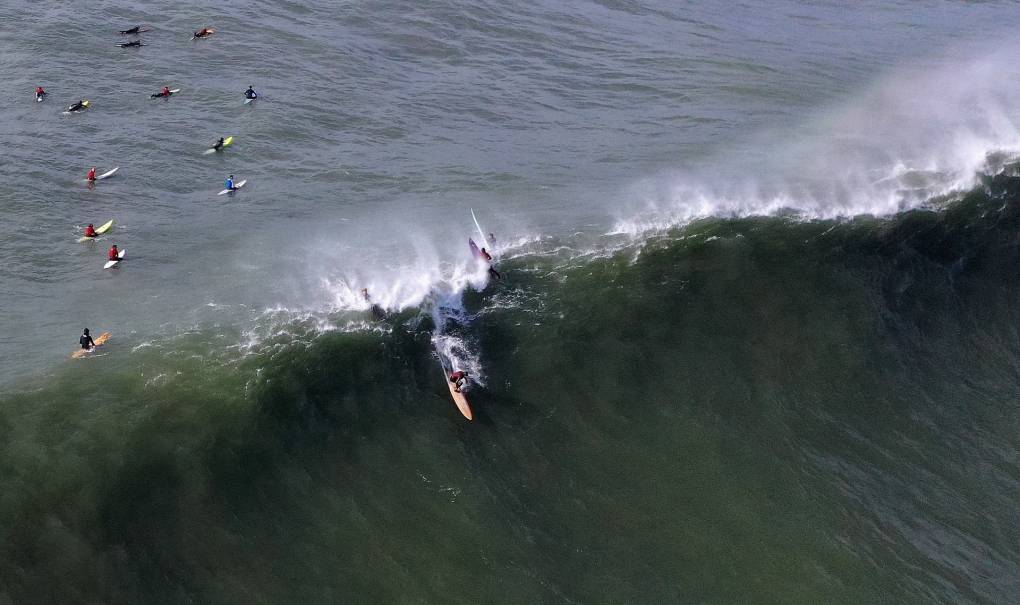
"caption": "A surfer rides a wave at Mavericks on Dec. 17, 2018, in Half Moon Bay, California.",
"description": null,
"title": "Giant Waves Hit Northern California",
"credit": "Ezra Shaw/Getty Images",
"status": "inherit",
"altTag": null,
"isLoading": false,
"fetchFailed": false
},
"science_1971855": {
"type": "attachments",
"id": "science_1971855",
"meta": {
"index": "attachments_1716263798",
"site": "science",
"id": "1971855",
"found": true
},
"parent": 1971853,
"imgSizes": {
"twentyfourteen-full-width": {
"file": "https://ww2.kqed.org/app/uploads/sites/35/2020/12/Image-12-18-20-at-5.24-PM-1038x576.jpg",
"width": 1038,
"mimeType": "image/jpeg",
"height": 576
},
"thumbnail": {
"file": "https://ww2.kqed.org/app/uploads/sites/35/2020/12/Image-12-18-20-at-5.24-PM-160x101.jpg",
"width": 160,
"mimeType": "image/jpeg",
"height": 101
},
"post-thumbnail": {
"file": "https://ww2.kqed.org/app/uploads/sites/35/2020/12/Image-12-18-20-at-5.24-PM-672x372.jpg",
"width": 672,
"mimeType": "image/jpeg",
"height": 372
},
"kqedFullSize": {
"file": "https://ww2.kqed.org/app/uploads/sites/35/2020/12/Image-12-18-20-at-5.24-PM.jpg",
"width": 1196,
"height": 755
},
"large": {
"file": "https://ww2.kqed.org/app/uploads/sites/35/2020/12/Image-12-18-20-at-5.24-PM-1020x644.jpg",
"width": 1020,
"mimeType": "image/jpeg",
"height": 644
},
"medium": {
"file": "https://ww2.kqed.org/app/uploads/sites/35/2020/12/Image-12-18-20-at-5.24-PM-800x505.jpg",
"width": 800,
"mimeType": "image/jpeg",
"height": 505
},
"medium_large": {
"file": "https://ww2.kqed.org/app/uploads/sites/35/2020/12/Image-12-18-20-at-5.24-PM-768x485.jpg",
"width": 768,
"mimeType": "image/jpeg",
"height": 485
}
},
"publishDate": 1608341223,
"modified": 1608587578,
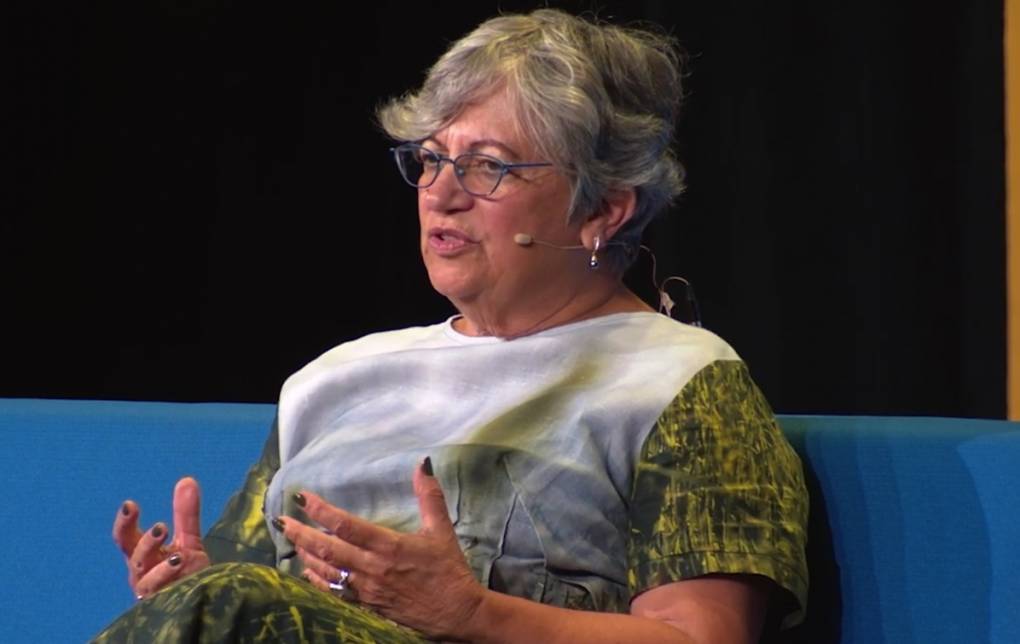
"caption": "A screen capture of Mary Nichols speaking to GreenBiz about the transition to a decarbonized transportation system.",
"description": null,
"title": "Image 12-18-20 at 5.24 PM",
"credit": "GreenBiz",
"status": "inherit",
"altTag": null,
"isLoading": false,
"fetchFailed": false
},
"science_1971798": {
"type": "attachments",
"id": "science_1971798",
"meta": {
"index": "attachments_1716263798",
"site": "science",
"id": "1971798",
"found": true
},
"parent": 1971791,
"imgSizes": {
"twentyfourteen-full-width": {
"file": "https://ww2.kqed.org/app/uploads/sites/35/2020/12/GettyImages-466895050-1-1038x576.jpg",
"width": 1038,
"mimeType": "image/jpeg",
"height": 576
},
"thumbnail": {
"file": "https://ww2.kqed.org/app/uploads/sites/35/2020/12/GettyImages-466895050-1-160x106.jpg",
"width": 160,
"mimeType": "image/jpeg",
"height": 106
},
"post-thumbnail": {
"file": "https://ww2.kqed.org/app/uploads/sites/35/2020/12/GettyImages-466895050-1-672x372.jpg",
"width": 672,
"mimeType": "image/jpeg",
"height": 372
},
"kqedFullSize": {
"file": "https://ww2.kqed.org/app/uploads/sites/35/2020/12/GettyImages-466895050-1-scaled.jpg",
"width": 2560,
"height": 1704
},
"2048x2048": {
"file": "https://ww2.kqed.org/app/uploads/sites/35/2020/12/GettyImages-466895050-1-2048x1363.jpg",
"width": 2048,
"mimeType": "image/jpeg",
"height": 1363
},
"large": {
"file": "https://ww2.kqed.org/app/uploads/sites/35/2020/12/GettyImages-466895050-1-1020x679.jpg",
"width": 1020,
"mimeType": "image/jpeg",
"height": 679
},
"1536x1536": {
"file": "https://ww2.kqed.org/app/uploads/sites/35/2020/12/GettyImages-466895050-1-1536x1022.jpg",
"width": 1536,
"mimeType": "image/jpeg",
"height": 1022
},
"full-width": {
"file": "https://ww2.kqed.org/app/uploads/sites/35/2020/12/GettyImages-466895050-1-1920x1278.jpg",
"width": 1920,
"mimeType": "image/jpeg",
"height": 1278
},
"medium": {
"file": "https://ww2.kqed.org/app/uploads/sites/35/2020/12/GettyImages-466895050-1-800x532.jpg",
"width": 800,
"mimeType": "image/jpeg",
"height": 532
},
"medium_large": {
"file": "https://ww2.kqed.org/app/uploads/sites/35/2020/12/GettyImages-466895050-1-768x511.jpg",
"width": 768,
"mimeType": "image/jpeg",
"height": 511
}
},
"publishDate": 1608248965,
"modified": 1608330162,
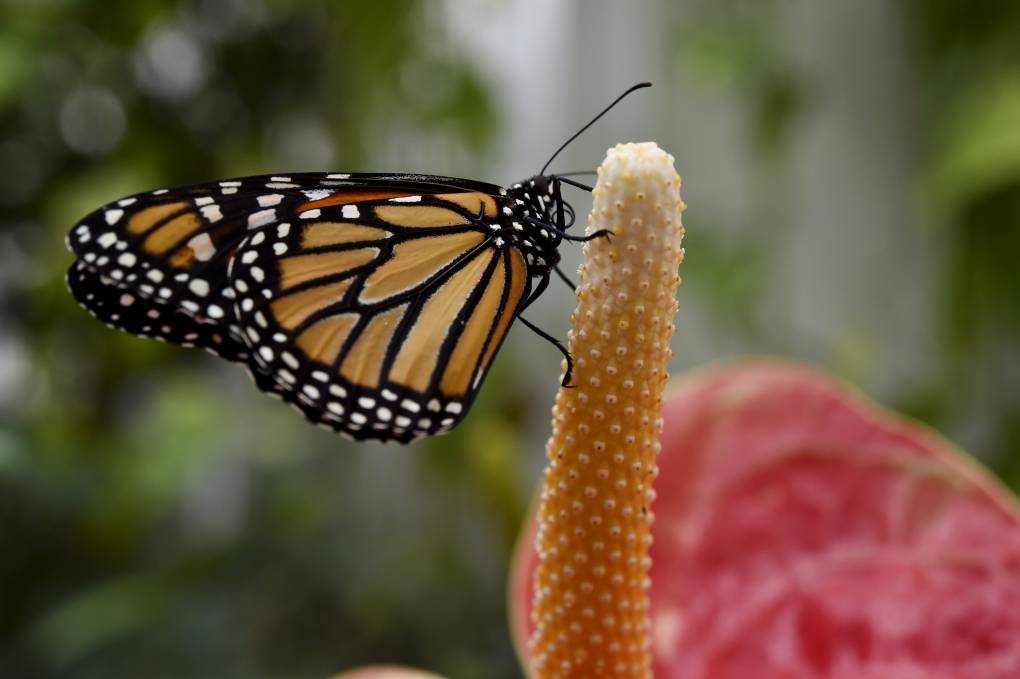
"caption": "Despite dwindling numbers, monarch butterflies still don't have endangered species status.",
"description": null,
"title": "MEXICO-NATURE-BUTTERFLIES",
"credit": "Yuri Cortez/AFP via Getty Images",
"status": "inherit",
"altTag": null,
"isLoading": false,
"fetchFailed": false
}
},
"audioPlayerReducer": {
"postId": "stream_live",
"isPaused": true,
"isPlaying": false,
"pfsActive": false,
"pledgeModalIsOpen": true,
"playerDrawerIsOpen": false,
"liveAudioPlayStartedAt": 0,
"liveAudioPlayContext": ""
},
"authorsReducer": {
"byline_science_1972789": {
"type": "authors",
"id": "byline_science_1972789",
"meta": {
"override": true
},
"slug": "byline_science_1972789",
"name": "Rachel Becker \u003cbr />Calmatters\u003cbr>",
"isLoading": false
},
"byline_science_1972437": {
"type": "authors",
"id": "byline_science_1972437",
"meta": {
"override": true
},
"slug": "byline_science_1972437",
"name": "Matthew Daly and Ellen Knickmeyer \u003cbr />AP\u003cbr>",
"isLoading": false
},
"kqedscience": {
"type": "authors",
"id": "6387",
"meta": {
"index": "authors_1716337520",
"id": "6387",
"found": true
},
"name": "KQED Science",
"firstName": "KQED",
"lastName": "Science",
"slug": "kqedscience",
"email": "kqedscience@gmail.com",
"display_author_email": false,
"staff_mastheads": [],
"title": null,
"bio": "KQED Science brings you award-winning science and environment coverage from the Bay Area and beyond by the flagship Northern California PBS and NPR affiliate.",
"avatar": "https://secure.gravatar.com/avatar/5a295ff49cf82a8c0f30937d3f788b2f?s=600&d=blank&r=g",
"twitter": null,
"facebook": null,
"instagram": null,
"linkedin": null,
"sites": [
{
"site": "science",
"roles": [
"contributor"
]
},
{
"site": "quest",
"roles": [
"editor"
]
},
{
"site": "food",
"roles": [
"contributor"
]
}
],
"headData": {
"title": "KQED Science | KQED",
"description": null,
"ogImgSrc": "https://secure.gravatar.com/avatar/5a295ff49cf82a8c0f30937d3f788b2f?s=600&d=blank&r=g",
"twImgSrc": "https://secure.gravatar.com/avatar/5a295ff49cf82a8c0f30937d3f788b2f?s=600&d=blank&r=g"
},
"isLoading": false,
"link": "/author/kqedscience"
},
"mpeterson": {
"type": "authors",
"id": "11223",
"meta": {
"index": "authors_1716337520",
"id": "11223",
"found": true
},
"name": "Molly Peterson",
"firstName": "Molly",
"lastName": "Peterson",
"slug": "mpeterson",
"email": "mpeterson@kqed.org",
"display_author_email": false,
"staff_mastheads": [],
"title": null,
"bio": "Molly Peterson reports for KQED science and news on climate change, catastrophe and risk. Previously she was environment correspondent at Southern California Public Radio. Her work has also appeared at The New York Times, The Guardian, on NPR, at High Country News, on Code Switch, and other national outlets. She has been honored with awards from Public Radio News Directors Incorporated, Investigative Reporters and Editors, the Society for Professional Journalists, the Los Angeles Press Club, and RTNDA Edward R. Murrow awards, among others.",
"avatar": "https://secure.gravatar.com/avatar/7908e2807131f776cc8165c649530b05?s=600&d=blank&r=g",
"twitter": "Mollydacious",
"facebook": null,
"instagram": "https://www.instagram.com/radiomolly/",
"linkedin": null,
"sites": [
{
"site": "news",
"roles": [
"subscriber"
]
},
{
"site": "futureofyou",
"roles": [
"editor"
]
},
{
"site": "science",
"roles": [
"editor"
]
}
],
"headData": {
"title": "Molly Peterson | KQED",
"description": null,
"ogImgSrc": "https://secure.gravatar.com/avatar/7908e2807131f776cc8165c649530b05?s=600&d=blank&r=g",
"twImgSrc": "https://secure.gravatar.com/avatar/7908e2807131f776cc8165c649530b05?s=600&d=blank&r=g"
},
"isLoading": false,
"link": "/author/mpeterson"
},
"parcuni": {
"type": "authors",
"id": "11368",
"meta": {
"index": "authors_1716337520",
"id": "11368",
"found": true
},
"name": "Peter Arcuni",
"firstName": "Peter",
"lastName": "Arcuni",
"slug": "parcuni",
"email": "parcuni@KQED.org",
"display_author_email": false,
"staff_mastheads": [
"science"
],
"title": "Reporter",
"bio": "Peter reports radio and online stories for \u003cem>KQED Science\u003c/em>. His work has also appeared on the \u003cem>The California Report\u003c/em> morning show and \u003cem>KQED News\u003c/em>. His production credits include \u003cem>The California Report, The California Report Magazine\u003c/em> and KQED's local news podcast \u003cem>The Bay\u003c/em>. Other credits include NPR's \u003cem>All Things Considered\u003c/em>, WNYC's \u003cem>Science Friday\u003c/em>, WBUR's \u003cem>Here & Now\u003c/em>, WIRED and SFGate. Peter graduated from Brown University and earned a master's degree in journalism from Stanford. He's covered everything from homelessness to wildfires, health, the environment, arts and Thanksgiving in San Quentin prison. In other lives, he played rock n roll music and studied neuroscience. You can email him at: parcuni@kqed.org",
"avatar": "https://secure.gravatar.com/avatar/d5032f6f27199d478af34ad2e1d98732?s=600&d=blank&r=g",
"twitter": "peterarcuni",
"facebook": null,
"instagram": null,
"linkedin": null,
"sites": [
{
"site": "news",
"roles": [
"editor"
]
},
{
"site": "science",
"roles": [
"editor"
]
}
],
"headData": {
"title": "Peter Arcuni | KQED",
"description": "Reporter",
"ogImgSrc": "https://secure.gravatar.com/avatar/d5032f6f27199d478af34ad2e1d98732?s=600&d=blank&r=g",
"twImgSrc": "https://secure.gravatar.com/avatar/d5032f6f27199d478af34ad2e1d98732?s=600&d=blank&r=g"
},
"isLoading": false,
"link": "/author/parcuni"
},
"kevinstark": {
"type": "authors",
"id": "11608",
"meta": {
"index": "authors_1716337520",
"id": "11608",
"found": true
},
"name": "Kevin Stark",
"firstName": "Kevin",
"lastName": "Stark",
"slug": "kevinstark",
"email": "kstark@kqed.org",
"display_author_email": true,
"staff_mastheads": [
"science"
],
"title": "Senior Editor",
"bio": "Kevin is a senior editor for KQED Science, managing the station's health and climate desks. His journalism career began in the Pacific Northwest, and he later became a lead reporter for the San Francisco Public Press. His work has appeared in Pacific Standard magazine, the Energy News Network, the Center for Investigative Reporting's Reveal and WBEZ in Chicago. Kevin joined KQED in 2019, and has covered issues related to energy, wildfire, climate change and the environment.",
"avatar": "https://secure.gravatar.com/avatar/365aaa4b597d3a8374f67504ff0facd323d7906e8eb4be0a7efd2427408e802c?s=600&d=blank&r=g",
"twitter": "starkkev",
"bluesky": null,
"facebook": null,
"instagram": null,
"linkedin": null,
"sites": [
{
"site": "",
"roles": [
"editor"
]
},
{
"site": "news",
"roles": [
"editor"
]
},
{
"site": "science",
"roles": [
"administrator"
]
}
],
"headData": {
"title": "Kevin Stark | KQED",
"description": "Senior Editor",
"ogImgSrc": "https://secure.gravatar.com/avatar/365aaa4b597d3a8374f67504ff0facd323d7906e8eb4be0a7efd2427408e802c?s=600&d=blank&r=g",
"twImgSrc": "https://secure.gravatar.com/avatar/365aaa4b597d3a8374f67504ff0facd323d7906e8eb4be0a7efd2427408e802c?s=600&d=blank&r=g"
},
"isLoading": false,
"link": "/author/kevinstark"
}
},
"pagesReducer": {
"science_category_environment": {
"type": "terms",
"id": "science_35",
"meta": {
"index": "terms_1716263798",
"site": "science",
"id": "35",
"score": 12.138271
},
"featImg": null,
"name": "Environment",
"description": null,
"taxonomy": "category",
"headData": {
"twImgId": null,
"twTitle": null,
"ogTitle": null,
"ogImgId": null,
"twDescription": null,
"description": null,
"title": "Environment Archives | KQED Science",
"ogDescription": null
},
"ttid": 37,
"slug": "environment",
"isLoading": false,
"title": "Environment",
"pageMeta": {
"site": "science",
"WpPageTemplate": "page-topic-editorial",
"currentPage": 28
},
"blocks": [
{
"blockName": "kqed/post-list",
"attrs": {
"layout": "cardArticle2",
"query": "posts/science?category=environment",
"seeMore": false,
"paginated": true,
"page": 28
}
},
{
"blockName": "kqed/ad"
}
]
}
},
"pfsSessionReducer": {},
"postsReducer": {
"stream_live": {
"type": "live",
"id": "stream_live",
"audioUrl": "https://streams.kqed.org/kqedradio",
"title": "Live Stream",
"excerpt": "Live Stream information currently unavailable.",
"link": "/radio",
"featImg": "",
"label": {
"name": "KQED Live",
"link": "/"
}
},
"stream_kqedNewscast": {
"type": "posts",
"id": "stream_kqedNewscast",
"audioUrl": "https://www.kqed.org/.stream/anon/radio/RDnews/newscast.mp3?_=1",
"title": "KQED Newscast",
"featImg": "",
"label": {
"name": "88.5 FM",
"link": "/"
}
},
"science_1972789": {
"type": "posts",
"id": "science_1972789",
"meta": {
"index": "posts_1716263798",
"site": "science",
"id": "1972789",
"score": null,
"sort": [
1613680809000
]
},
"parent": 0,
"labelTerm": {},
"blocks": [],
"publishDate": 1613680809,
"format": "standard",
"title": "California Says It Will Review Cap-and-Trade Amid Growing Criticism",
"headTitle": "California Says It Will Review Cap-and-Trade Amid Growing Criticism | KQED",
"content": "\u003cp>Newsom administration officials said this week that they will evaluate the role of California’s landmark cap-and-trade program as the state examines its strategies for tackling climate change over the next decade.\u003c/p>\n\u003cp>At an oversight hearing Tuesday, \u003ca href=\"https://calepa.ca.gov/about/bios/blumenfeld/\" target=\"_blank\" rel=\"noreferrer noopener\">Jared Blumenfeld,\u003c/a> secretary for environmental protection, and Air Resources Board Chair \u003ca href=\"https://ww2.arb.ca.gov/about/leadership/liane-m-randolph\" target=\"_blank\" rel=\"noreferrer noopener\">Liane Randolph\u003c/a> said the carbon trading program will be a key part of the conversation as California updates its climate road map, called a scoping plan, over the next two years.\u003c/p>\n\u003cp>Neither Blumenfeld nor Randolph, however, would say specifically what will be examined or how the program might change. “Any changes would need to be carefully thought through and accompanied by economic and environmental processes,” Blumenfeld said.\u003c/p>\n\u003caside class=\"scaip scaip-1 \">\u003c/aside>\n\u003cp>Launched in 2013, California’s cap-and-trade program is the nation’s first economy-wide \u003ca href=\"https://www.scientificamerican.com/article/california-reveals-terms-cap-and-trade/\" target=\"_blank\" rel=\"noreferrer noopener\">carbon market\u003c/a>. The program sets a declining cap on greenhouse gas emissions that polluters — including oil refineries, power plants and manufacturers — can meet by buying and trading carbon credits or updating their facilities.\u003c/p>\n\u003cp>\u003ca href=\"https://calmatters.org/environment/2018/05/checking-the-math-on-cap-and-trade-some-experts-say-its-not-adding-up/\" target=\"_blank\" rel=\"noopener noreferrer\">Independent experts\u003c/a> have raised concerns that the program might be too weak to achieve California’s ambitious climate goals.\u003c/p>\n\u003cp>[ad fullwidth]\u003c/p>\n\u003cp>In addition, environmental justice groups have long criticized \u003ca href=\"https://calmatters.org/environment/2020/12/mary-nichols-czar-legacy-skies-controversy/\" target=\"_blank\" rel=\"noopener noreferrer\">California’s carbon market\u003c/a>, saying that former air board chair Mary Nichols had done too little to protect vulnerable Californians living in the shadow of fossil fuel polluters such as oil refineries and power plants.\u003c/p>\n\u003cp>Randolph addressed those concerns at the hearing, but as market administrator of the cap-and-trade program, she was cautious about saying anything that might affect the market for carbon credits.\u003c/p>\n\u003cp>“This remains an important space for us to work directly with environmental justice and community organizations to ensure that their views are incorporated into our work,” Randolph said.\u003c/p>\n\u003cp>California \u003ca href=\"https://leginfo.legislature.ca.gov/faces/billNavClient.xhtml?bill_id=201520160SB32\" target=\"_blank\" rel=\"noreferrer noopener\">in 2016\u003c/a> pledged to cut its climate-warming pollution 40% over the next 10 years, and it is relying on the carbon trading program for nearly half of those reductions in 2030.\u003c/p>\n\u003cp>“We’re calling on all our existing climate policies to do more in the next decade. We have no choice but to accelerate the rate of emission reductions dramatically,” Blumenfeld said Tuesday.\u003c/p>\n\u003cp>No changes to the program would happen soon. The process will begin this spring, and the final plan is expected to be presented to the board in late 2022, Blumenfeld said.\u003c/p>\n\u003cp>“Opportunities to further strengthen the cap-and-trade program will begin as part of the public process to update the scoping plan. To do so now would be premature,” Blumenfeld said.\u003c/p>\n\u003cp>Today’s hearing was held by a \u003ca href=\"https://sbud.senate.ca.gov/subcommittee2\" target=\"_blank\" rel=\"noreferrer noopener\">Senate budget subcommittee\u003c/a> chaired by Sen. Bob Wieckowski, a Democrat from Fremont. Wieckowski asked \u003ca href=\"https://ww2.arb.ca.gov/about/leadership/liane-m-randolph\" target=\"_blank\" rel=\"noreferrer noopener\">Randolph\u003c/a>, who was appointed chair of the air board \u003ca href=\"https://www.gov.ca.gov/2020/12/09/governor-newsom-announces-liane-randolph-as-the-chair-of-the-air-resources-board/\" target=\"_blank\" rel=\"noreferrer noopener\">in December\u003c/a>, whether she planned to revisit the weight of cap and trade in the new scoping plan.\u003c/p>\n\u003cp>“Yes, basically, the answer is yes,” Randolph said. “The scoping plan process will rely on analyzing the existing programs and authorities to determine how to achieve reductions and then to determine what additional reductions need to be addressed by cap and trade.”\u003c/p>\n\u003cp>The statements at the hearing reaffirm Blumenfeld’s commitment \u003ca href=\"https://calmatters.org/environment/2020/06/california-climate-strategy-cap-trade/\" target=\"_blank\" rel=\"noopener noreferrer\">in a letter to Wieckowski over the summer\u003c/a> to weigh “the extent to which the state’s climate strategy should rely on the cap-and-trade program reductions relative to other approaches.”\u003c/p>\n\u003cp>The discussion met resistance from oil and gas producers, but was welcomed by environmental justice groups.\u003c/p>\n\u003cp>“Changing this market-based system now would only create economic uncertainty for businesses and raise costs for consumers, all at a time when the state’s overall economy is in a precarious position,” said Rock Zierman, CEO of the California Independent Petroleum Association, which represents independent crude oil and natural gas producers.\u003c/p>\n\u003cp>Kevin Slagle, a spokesperson for the Western States Petroleum Association, said “cap and trade is doing exactly what it was intended to do — driving innovation — which has helped the state meet its climate goals almost four years earlier than anticipated.”\u003c/p>\n\u003cp>California’s environmental justice advocates have long \u003ca href=\"https://calmatters.org/environment/2020/12/mary-nichols-czar-legacy-skies-controversy/\" target=\"_blank\" rel=\"noopener noreferrer\">opposed\u003c/a> the program because they say it comes at the expense of climate policies that would benefit low-income communities of color that are disproportionately burdened by air pollution.\u003c/p>\n\u003cp>“The upcoming CARB scoping plan update is an opportunity to address the bifurcation of climate and air pollution, and move towards a mechanism that will allow for direct emissions reductions,” said Neena Mohan, climate justice associate at the California Environmental Justice Alliance.\u003c/p>\n\u003cp>In January, the program entered a new phase that adds new requirements through 2030. These include doubling the rate at which the emissions cap drops and adding a price ceiling for credits to prevent costs for industries from increasing past a certain point.\u003c/p>\n\u003cp>Ross Brown with the Legislative Analyst’s Office, said at the hearing that California’s 2020 greenhouse gas target, which the state reached four years early, required cutting emissions by about 1% each year. To meet the 2030 goals, California would need to increase those cuts to roughly 4% each year, he said.\u003c/p>\n\u003cp>“Just having the program in place is not sufficient to ensure that the program is achieving the goals,” Brown said. “Implementation of the program and design of the program matters a lot.”\u003c/p>\n\u003cp>One concern that Brown \u003ca href=\"https://calmatters.org/environment/2018/05/checking-the-math-on-cap-and-trade-some-experts-say-its-not-adding-up/\" target=\"_blank\" rel=\"noopener noreferrer\">and others have raised\u003c/a> is that companies may be banking unused pollution credits, called allowances, to use later.\u003c/p>\n\u003cp>“It’s possible that when you get out into the later years up to 2030, that large bank of allowances could be used to comply with the program,” Brown said. “And as a result, the state might not be close to its ambitious emission targets out to 2030.”\u003c/p>\n\u003cp>Wieckowski said that problem haunts him. “I lose sleep at night, knowing that we were told that we couldn’t amend that bill, when staff and you in particular were saying that this allowance problem was a very big problem,” he said. “And now we have to deal with it.”\u003c/p>\n\u003cp>The Independent Emissions Market Advisory Committee, which is made up of researchers and academics appointed by the governor and leaders in the Legislature, has proposed metrics for tracking the bank of extra credits.\u003c/p>\n\u003cp>“I think we are going to see that the number of banked allowances is far in excess of what the board said in its previous rulemaking statement,” said \u003ca href=\"https://law.stanford.edu/directory/danny-cullenward/\" target=\"_blank\" rel=\"noreferrer noopener\">Danny Cullenward\u003c/a>, a lecturer at Stanford Law School and a member of the emissions advisory committee. He said an air board analysis of banked allowances is expected by the end of this year\u003c/p>\n\u003cp>The hearing comes one day before a cap-and-trade auction where companies and others can bid to purchase pollution credits. The timing raised red flags for oil companies covered by cap and trade.\u003c/p>\n\u003cp>“Our concern is that the hearing may unnecessarily create uncertainty about the cap-and-trade program that could affect the auction,” Slagle said.\u003c/p>\n\u003cp>Cullenward questioned, however, whether those concerns were justified. “Why is it not appropriate to ask questions about the performance of the program? If not now, when is it okay?” he said. “Neither the legislature nor the administration did anything in a way that would prejudice people’s behavior at the auction tomorrow.”\u003c/p>\n\u003cp>[ad floatright]\u003c/p>\n\u003cp>\u003cem>\u003ca href=\"http://calmatters.org/\">CalMatters.org\u003c/a> is a nonprofit, nonpartisan media venture explaining California policies and politics.\u003c/em>\u003c/p>\n\n",
"stats": {
"hasVideo": false,
"hasChartOrMap": false,
"hasAudio": false,
"hasPolis": false,
"wordCount": 1280,
"hasGoogleForm": false,
"hasGallery": false,
"hasHearkenModule": false,
"iframeSrcs": [],
"paragraphCount": 34
},
"modified": 1704846755,
"excerpt": "Experts say the state’s cap-and-trade program may be insufficient in meeting ambitious climate goals. And environmentalists have called the program unfair to polluted communities.",
"headData": {
"twImgId": "",
"twTitle": "",
"ogTitle": "",
"ogImgId": "",
"twDescription": "",
"description": "Experts say the state’s cap-and-trade program may be insufficient in meeting ambitious climate goals. And environmentalists have called the program unfair to polluted communities.",
"title": "California Says It Will Review Cap-and-Trade Amid Growing Criticism | KQED",
"ogDescription": "",
"schema": {
"@context": "https://schema.org",
"@type": "Article",
"headline": "California Says It Will Review Cap-and-Trade Amid Growing Criticism",
"datePublished": "2021-02-18T12:40:09-08:00",
"dateModified": "2024-01-09T16:32:35-08:00",
"image": "https://cdn.kqed.org/wp-content/uploads/2020/02/KQED-OG-Image@1x.png"
}
},
"guestAuthors": [],
"slug": "california-says-it-will-review-cap-and-trade-amid-growing-criticism",
"status": "publish",
"nprByline": "Rachel Becker \u003cbr />Calmatters\u003cbr>",
"sticky": false,
"source": "CalMatters",
"path": "/science/1972789/california-says-it-will-review-cap-and-trade-amid-growing-criticism",
"audioTrackLength": null,
"parsedContent": [
{
"type": "contentString",
"content": "\u003cdiv class=\"post-body\">\u003cp>\u003cp>Newsom administration officials said this week that they will evaluate the role of California’s landmark cap-and-trade program as the state examines its strategies for tackling climate change over the next decade.\u003c/p>\n\u003cp>At an oversight hearing Tuesday, \u003ca href=\"https://calepa.ca.gov/about/bios/blumenfeld/\" target=\"_blank\" rel=\"noreferrer noopener\">Jared Blumenfeld,\u003c/a> secretary for environmental protection, and Air Resources Board Chair \u003ca href=\"https://ww2.arb.ca.gov/about/leadership/liane-m-randolph\" target=\"_blank\" rel=\"noreferrer noopener\">Liane Randolph\u003c/a> said the carbon trading program will be a key part of the conversation as California updates its climate road map, called a scoping plan, over the next two years.\u003c/p>\n\u003cp>Neither Blumenfeld nor Randolph, however, would say specifically what will be examined or how the program might change. “Any changes would need to be carefully thought through and accompanied by economic and environmental processes,” Blumenfeld said.\u003c/p>\n\u003caside class=\"scaip scaip-1 \">\u003c/aside>\n\u003cp>Launched in 2013, California’s cap-and-trade program is the nation’s first economy-wide \u003ca href=\"https://www.scientificamerican.com/article/california-reveals-terms-cap-and-trade/\" target=\"_blank\" rel=\"noreferrer noopener\">carbon market\u003c/a>. The program sets a declining cap on greenhouse gas emissions that polluters — including oil refineries, power plants and manufacturers — can meet by buying and trading carbon credits or updating their facilities.\u003c/p>\n\u003cp>\u003ca href=\"https://calmatters.org/environment/2018/05/checking-the-math-on-cap-and-trade-some-experts-say-its-not-adding-up/\" target=\"_blank\" rel=\"noopener noreferrer\">Independent experts\u003c/a> have raised concerns that the program might be too weak to achieve California’s ambitious climate goals.\u003c/p>\n\u003cp>\u003c/p>\u003c/div>",
"attributes": {
"named": {},
"numeric": []
}
},
{
"type": "component",
"content": "",
"name": "ad",
"attributes": {
"named": {
"label": "fullwidth"
},
"numeric": [
"fullwidth"
]
}
},
{
"type": "contentString",
"content": "\u003cdiv class=\"post-body\">\u003cp>\u003c/p>\n\u003cp>In addition, environmental justice groups have long criticized \u003ca href=\"https://calmatters.org/environment/2020/12/mary-nichols-czar-legacy-skies-controversy/\" target=\"_blank\" rel=\"noopener noreferrer\">California’s carbon market\u003c/a>, saying that former air board chair Mary Nichols had done too little to protect vulnerable Californians living in the shadow of fossil fuel polluters such as oil refineries and power plants.\u003c/p>\n\u003cp>Randolph addressed those concerns at the hearing, but as market administrator of the cap-and-trade program, she was cautious about saying anything that might affect the market for carbon credits.\u003c/p>\n\u003cp>“This remains an important space for us to work directly with environmental justice and community organizations to ensure that their views are incorporated into our work,” Randolph said.\u003c/p>\n\u003cp>California \u003ca href=\"https://leginfo.legislature.ca.gov/faces/billNavClient.xhtml?bill_id=201520160SB32\" target=\"_blank\" rel=\"noreferrer noopener\">in 2016\u003c/a> pledged to cut its climate-warming pollution 40% over the next 10 years, and it is relying on the carbon trading program for nearly half of those reductions in 2030.\u003c/p>\n\u003cp>“We’re calling on all our existing climate policies to do more in the next decade. We have no choice but to accelerate the rate of emission reductions dramatically,” Blumenfeld said Tuesday.\u003c/p>\n\u003cp>No changes to the program would happen soon. The process will begin this spring, and the final plan is expected to be presented to the board in late 2022, Blumenfeld said.\u003c/p>\n\u003cp>“Opportunities to further strengthen the cap-and-trade program will begin as part of the public process to update the scoping plan. To do so now would be premature,” Blumenfeld said.\u003c/p>\n\u003cp>Today’s hearing was held by a \u003ca href=\"https://sbud.senate.ca.gov/subcommittee2\" target=\"_blank\" rel=\"noreferrer noopener\">Senate budget subcommittee\u003c/a> chaired by Sen. Bob Wieckowski, a Democrat from Fremont. Wieckowski asked \u003ca href=\"https://ww2.arb.ca.gov/about/leadership/liane-m-randolph\" target=\"_blank\" rel=\"noreferrer noopener\">Randolph\u003c/a>, who was appointed chair of the air board \u003ca href=\"https://www.gov.ca.gov/2020/12/09/governor-newsom-announces-liane-randolph-as-the-chair-of-the-air-resources-board/\" target=\"_blank\" rel=\"noreferrer noopener\">in December\u003c/a>, whether she planned to revisit the weight of cap and trade in the new scoping plan.\u003c/p>\n\u003cp>“Yes, basically, the answer is yes,” Randolph said. “The scoping plan process will rely on analyzing the existing programs and authorities to determine how to achieve reductions and then to determine what additional reductions need to be addressed by cap and trade.”\u003c/p>\n\u003cp>The statements at the hearing reaffirm Blumenfeld’s commitment \u003ca href=\"https://calmatters.org/environment/2020/06/california-climate-strategy-cap-trade/\" target=\"_blank\" rel=\"noopener noreferrer\">in a letter to Wieckowski over the summer\u003c/a> to weigh “the extent to which the state’s climate strategy should rely on the cap-and-trade program reductions relative to other approaches.”\u003c/p>\n\u003cp>The discussion met resistance from oil and gas producers, but was welcomed by environmental justice groups.\u003c/p>\n\u003cp>“Changing this market-based system now would only create economic uncertainty for businesses and raise costs for consumers, all at a time when the state’s overall economy is in a precarious position,” said Rock Zierman, CEO of the California Independent Petroleum Association, which represents independent crude oil and natural gas producers.\u003c/p>\n\u003cp>Kevin Slagle, a spokesperson for the Western States Petroleum Association, said “cap and trade is doing exactly what it was intended to do — driving innovation — which has helped the state meet its climate goals almost four years earlier than anticipated.”\u003c/p>\n\u003cp>California’s environmental justice advocates have long \u003ca href=\"https://calmatters.org/environment/2020/12/mary-nichols-czar-legacy-skies-controversy/\" target=\"_blank\" rel=\"noopener noreferrer\">opposed\u003c/a> the program because they say it comes at the expense of climate policies that would benefit low-income communities of color that are disproportionately burdened by air pollution.\u003c/p>\n\u003cp>“The upcoming CARB scoping plan update is an opportunity to address the bifurcation of climate and air pollution, and move towards a mechanism that will allow for direct emissions reductions,” said Neena Mohan, climate justice associate at the California Environmental Justice Alliance.\u003c/p>\n\u003cp>In January, the program entered a new phase that adds new requirements through 2030. These include doubling the rate at which the emissions cap drops and adding a price ceiling for credits to prevent costs for industries from increasing past a certain point.\u003c/p>\n\u003cp>Ross Brown with the Legislative Analyst’s Office, said at the hearing that California’s 2020 greenhouse gas target, which the state reached four years early, required cutting emissions by about 1% each year. To meet the 2030 goals, California would need to increase those cuts to roughly 4% each year, he said.\u003c/p>\n\u003cp>“Just having the program in place is not sufficient to ensure that the program is achieving the goals,” Brown said. “Implementation of the program and design of the program matters a lot.”\u003c/p>\n\u003cp>One concern that Brown \u003ca href=\"https://calmatters.org/environment/2018/05/checking-the-math-on-cap-and-trade-some-experts-say-its-not-adding-up/\" target=\"_blank\" rel=\"noopener noreferrer\">and others have raised\u003c/a> is that companies may be banking unused pollution credits, called allowances, to use later.\u003c/p>\n\u003cp>“It’s possible that when you get out into the later years up to 2030, that large bank of allowances could be used to comply with the program,” Brown said. “And as a result, the state might not be close to its ambitious emission targets out to 2030.”\u003c/p>\n\u003cp>Wieckowski said that problem haunts him. “I lose sleep at night, knowing that we were told that we couldn’t amend that bill, when staff and you in particular were saying that this allowance problem was a very big problem,” he said. “And now we have to deal with it.”\u003c/p>\n\u003cp>The Independent Emissions Market Advisory Committee, which is made up of researchers and academics appointed by the governor and leaders in the Legislature, has proposed metrics for tracking the bank of extra credits.\u003c/p>\n\u003cp>“I think we are going to see that the number of banked allowances is far in excess of what the board said in its previous rulemaking statement,” said \u003ca href=\"https://law.stanford.edu/directory/danny-cullenward/\" target=\"_blank\" rel=\"noreferrer noopener\">Danny Cullenward\u003c/a>, a lecturer at Stanford Law School and a member of the emissions advisory committee. He said an air board analysis of banked allowances is expected by the end of this year\u003c/p>\n\u003cp>The hearing comes one day before a cap-and-trade auction where companies and others can bid to purchase pollution credits. The timing raised red flags for oil companies covered by cap and trade.\u003c/p>\n\u003cp>“Our concern is that the hearing may unnecessarily create uncertainty about the cap-and-trade program that could affect the auction,” Slagle said.\u003c/p>\n\u003cp>Cullenward questioned, however, whether those concerns were justified. “Why is it not appropriate to ask questions about the performance of the program? If not now, when is it okay?” he said. “Neither the legislature nor the administration did anything in a way that would prejudice people’s behavior at the auction tomorrow.”\u003c/p>\n\u003cp>\u003c/p>\u003c/div>",
"attributes": {
"named": {},
"numeric": []
}
},
{
"type": "component",
"content": "",
"name": "ad",
"attributes": {
"named": {
"label": "floatright"
},
"numeric": [
"floatright"
]
}
},
{
"type": "contentString",
"content": "\u003cdiv class=\"post-body\">\u003cp>\u003c/p>\n\u003cp>\u003cem>\u003ca href=\"http://calmatters.org/\">CalMatters.org\u003c/a> is a nonprofit, nonpartisan media venture explaining California policies and politics.\u003c/em>\u003c/p>\n\n\u003c/div>\u003c/p>",
"attributes": {
"named": {},
"numeric": []
}
}
],
"link": "/science/1972789/california-says-it-will-review-cap-and-trade-amid-growing-criticism",
"authors": [
"byline_science_1972789"
],
"categories": [
"science_31",
"science_35",
"science_40",
"science_4450"
],
"tags": [
"science_3969",
"science_121",
"science_194",
"science_4414"
],
"featImg": "science_1972791",
"label": "source_science_1972789"
},
"science_1972725": {
"type": "posts",
"id": "science_1972725",
"meta": {
"index": "posts_1716263798",
"site": "science",
"id": "1972725",
"score": null,
"sort": [
1613507417000
]
},
"guestAuthors": [],
"slug": "wildfire-smoke-could-be-the-main-way-californians-experience-climate-change",
"title": "Wildfire Smoke Could Be the Main Way Californians Experience Climate Change",
"publishDate": 1613507417,
"format": "image",
"headTitle": "Wildfire Smoke Could Be the Main Way Californians Experience Climate Change | KQED",
"labelTerm": {},
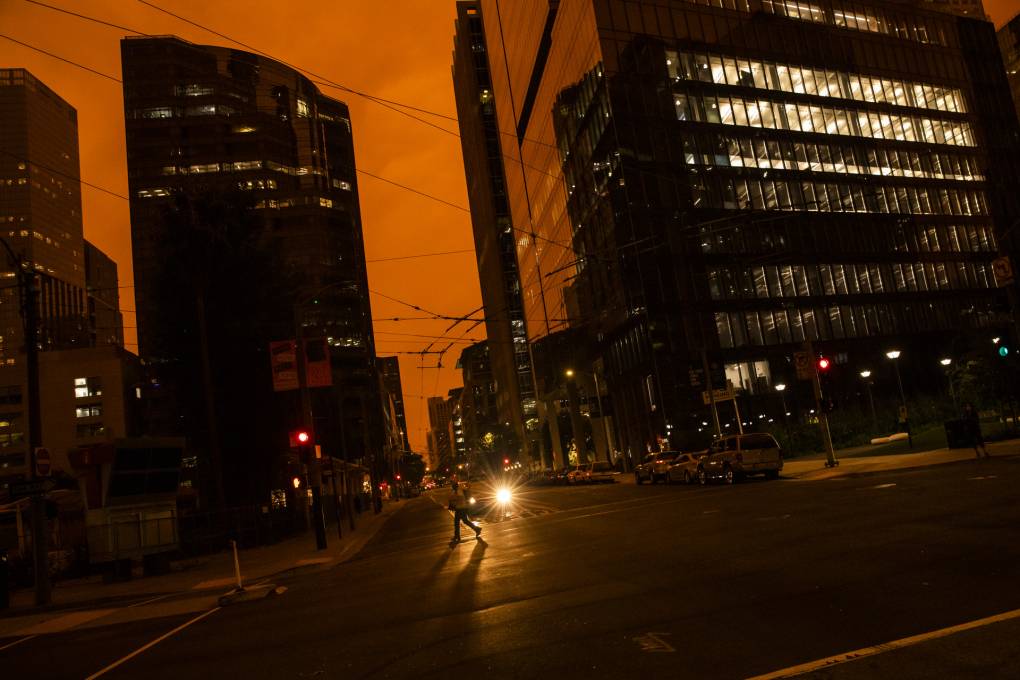
"content": "\u003cp>The rising threat from wildfire smoke was on full display last fall, when dense plumes from several fires burning across Northern California blocked out the sun, shrouding the Bay Area in orange-tinged darkness.\u003c/p>\n\u003cp>That smokestorm in August and September polluted Bay Area air for a \u003ca href=\"https://www.kqed.org/science/1969739/smoke-from-californias-record-wildfires-is-its-own-disaster\" target=\"_blank\" rel=\"noopener noreferrer\">\u003cspan class=\"s1\">record\u003c/span>\u003c/a> 30 straight days, at the apex of a fire season that saw more than 5 million acres burned up across the state.\u003c/p>\n\u003cp>Wildfire smoke now accounts for half of the fine-particle pollution that wafts across the West, according to a recent \u003ca href=\"https://www.pnas.org/content/118/2/e2011048118.abstract\" target=\"_blank\" rel=\"noopener noreferrer\">\u003cspan class=\"s1\">study\u003c/span>\u003c/a> led by \u003cstrong>Marshall Burke, an Earth scientist with Stanford University\u003c/strong>.\u003c/p>\n\u003cp>“In 2020, we saw roughly 60 days with wildfire smoke that was in the air that we breathed, up from 10 to 15 days just a decade ago,” Burke told KQED. “That’s a really dramatic increase in our exposure to wildfire smoke and is leading to measurable changes in the air quality in the Bay Area.”\u003c/p>\n\u003cp>Burke spoke last week with KQED’s Brian Watt about the increasing danger of wildfire smoke in California. The following excerpts are edited for length and clarity.\u003c/p>\n\u003cp>\u003cb>We know that wildfires are worse partly because of warming temperatures. How much worse could our air get? \u003c/b>\u003c/p>\n\u003cp class=\"p1\">\u003ci>Burke: \u003c/i>Projections suggest that climate change has increased wildfire risk by about 50% so far. It’s already had a large effect on the number and particularly the severity of the wildfires we’ve seen. And projections going forward suggest that we could see even a doubling on top of that — very, very large projected increases in future wildfire risk and in the associated smoke that comes with those wildfires if we don’t do anything about climate change.\u003c/p>\n\u003cp class=\"p1\">\u003cb>How do you think this problem of air pollution compares to other kinds of climate impacts like rising sea levels or the worsening wildfires themselves?\u003c/b>\u003c/p>\n\u003cp class=\"p1\">\u003ci>Burke: \u003c/i>This is something we look at in our research, and we find for much of the U.S. and particularly people in the West, exposure to wildfire smoke might be one of the main impacts of climate change they experience in their lives. Most of us don’t live right next to the coast. In the Bay Area, if we do, we might actually not be directly exposed to changes in sea level. The wildfires and really the smoke from wildfires can reach us in ways that many of the other climate impacts don’t. We see that as one of the main climate impacts we will experience as Californians.\u003c/p>\n\u003cp>[ad fullwidth]\u003c/p>\n\u003cp class=\"p1\">\u003cb>How will this impact people’s health?\u003c/b>\u003c/p>\n\u003cp class=\"p1\">\u003ci>Burke:\u003c/i> We have decades of research showing that breathing dirty air is very bad for a range of health problems: cardiovascular, respiratory, even things like cognitive function. Dirty air really hurts humans. What our research suggests is wildfires are contributing more and more key pollutants to our air, and that will likely get worse in the future as the climate changes.\u003c/p>\n\u003cp class=\"p1\">\u003cb>One of the solutions to these devastating wildfires is more controlled burning. Could that make a difference in air pollution as well?\u003cbr>\n\u003c/b>\u003c/p>\n\u003cp class=\"p1\">\u003ci>Burke:\u003c/i> An area that’s seen a controlled burn is less likely to actually burn in an extreme wildfire. And if a wildfire does come through, it’s likely to be lower intensity, unlikely to get up into the canopy of trees and lead to these very intense fires that generate a lot of smoke. So more controlled, or prescribed burns, as they’re called, are a very important tool for dealing with this problem. We think of controlled burns as “good” fire compared to “bad,” out-of-control and extreme wildfire. Having more good fire reduces the amount of bad fire we get. And evidence suggests it will also reduce the amount of overall air pollution. What it will mean is a little more low-level air pollution in seasons in which we do these prescribed burns. But the benefit will be a reduction in these really bad air quality events like the ones we saw in the Bay Area in the fall of 2020.\u003c/p>\n\u003cp class=\"p1\">\u003cb>What is the top solution you’d recommend to government leaders and forest managers? \u003c/b>\u003c/p>\n\u003cp class=\"p1\">\u003ci>Burke:\u003c/i> We can think of solutions at multiple levels. Number one, we know that climate change is really the leading cause of the increase in wildfire risk that we’ve seen in the last few years. Getting a handle on climate change as a whole is very important for dealing with this problem.\u003c/p>\n\u003cp class=\"p1\">Number two, managing our forests more actively and, in particular, doing much more prescribed burning than we’ve done in the past is really important. I’m optimistic that at the state level, the new administration is on this, proposing to rapidly expand the amount of prescribed burning done in the state.\u003c/p>\n\u003cp class=\"p1\">Finally, as individuals, we need to think about how to protect ourselves from wildfire smoke that does get into the air. We need to know when the air quality is bad. We need to stay indoors. If possible, we need to have ways to filter our indoor air. We have evidence that helps keep us safe.\u003c/p>\n\u003cp>\u003c/p>\n",
"blocks": [],
"excerpt": "Wildfire smoke now accounts for half of the fine-particle pollution that wafts across the West.",
"status": "publish",
"parent": 0,
"modified": 1725577056,
"stats": {
"hasAudio": false,
"hasVideo": false,
"hasChartOrMap": false,
"iframeSrcs": [],
"hasGoogleForm": false,
"hasGallery": false,
"hasHearkenModule": false,
"hasPolis": false,
"paragraphCount": 8,
"wordCount": 875
},
"headData": {
"title": "Wildfire Smoke Could Be the Main Way Californians Experience Climate Change | KQED",
"description": "Wildfire smoke now accounts for half of the fine-particle pollution that wafts across the West.",
"ogTitle": "",
"ogDescription": "",
"ogImgId": "",
"twTitle": "",
"twDescription": "",
"twImgId": "",
"schema": {
"@context": "https://schema.org",
"@type": "Article",
"headline": "Wildfire Smoke Could Be the Main Way Californians Experience Climate Change",
"datePublished": "2021-02-16T12:30:17-08:00",
"dateModified": "2024-09-05T15:57:36-07:00",
"image": "https://cdn.kqed.org/wp-content/uploads/2020/02/KQED-OG-Image@1x.png"
}
},
"source": "Wildfire Smoke",
"audioUrl": "https://traffic.omny.fm/d/clips/0af137ef-751e-4b19-a055-aaef00d2d578/ffca7e9f-6831-4[…]f-aaef00f5a073/a229341f-f155-4542-ba42-acd1014481af/audio.mp3",
"sticky": false,
"path": "/science/1972725/wildfire-smoke-could-be-the-main-way-californians-experience-climate-change",
"audioTrackLength": null,
"parsedContent": [
{
"type": "contentString",
"content": "\u003cdiv class=\"post-body\">\u003cp>\u003cp>The rising threat from wildfire smoke was on full display last fall, when dense plumes from several fires burning across Northern California blocked out the sun, shrouding the Bay Area in orange-tinged darkness.\u003c/p>\n\u003cp>That smokestorm in August and September polluted Bay Area air for a \u003ca href=\"https://www.kqed.org/science/1969739/smoke-from-californias-record-wildfires-is-its-own-disaster\" target=\"_blank\" rel=\"noopener noreferrer\">\u003cspan class=\"s1\">record\u003c/span>\u003c/a> 30 straight days, at the apex of a fire season that saw more than 5 million acres burned up across the state.\u003c/p>\n\u003cp>Wildfire smoke now accounts for half of the fine-particle pollution that wafts across the West, according to a recent \u003ca href=\"https://www.pnas.org/content/118/2/e2011048118.abstract\" target=\"_blank\" rel=\"noopener noreferrer\">\u003cspan class=\"s1\">study\u003c/span>\u003c/a> led by \u003cstrong>Marshall Burke, an Earth scientist with Stanford University\u003c/strong>.\u003c/p>\n\u003cp>“In 2020, we saw roughly 60 days with wildfire smoke that was in the air that we breathed, up from 10 to 15 days just a decade ago,” Burke told KQED. “That’s a really dramatic increase in our exposure to wildfire smoke and is leading to measurable changes in the air quality in the Bay Area.”\u003c/p>\n\u003cp>Burke spoke last week with KQED’s Brian Watt about the increasing danger of wildfire smoke in California. The following excerpts are edited for length and clarity.\u003c/p>\n\u003cp>\u003cb>We know that wildfires are worse partly because of warming temperatures. How much worse could our air get? \u003c/b>\u003c/p>\n\u003cp class=\"p1\">\u003ci>Burke: \u003c/i>Projections suggest that climate change has increased wildfire risk by about 50% so far. It’s already had a large effect on the number and particularly the severity of the wildfires we’ve seen. And projections going forward suggest that we could see even a doubling on top of that — very, very large projected increases in future wildfire risk and in the associated smoke that comes with those wildfires if we don’t do anything about climate change.\u003c/p>\n\u003cp class=\"p1\">\u003cb>How do you think this problem of air pollution compares to other kinds of climate impacts like rising sea levels or the worsening wildfires themselves?\u003c/b>\u003c/p>\n\u003cp class=\"p1\">\u003ci>Burke: \u003c/i>This is something we look at in our research, and we find for much of the U.S. and particularly people in the West, exposure to wildfire smoke might be one of the main impacts of climate change they experience in their lives. Most of us don’t live right next to the coast. In the Bay Area, if we do, we might actually not be directly exposed to changes in sea level. The wildfires and really the smoke from wildfires can reach us in ways that many of the other climate impacts don’t. We see that as one of the main climate impacts we will experience as Californians.\u003c/p>\n\u003cp>\u003c/p>\u003c/div>",
"attributes": {
"named": {},
"numeric": []
}
},
{
"type": "component",
"content": "",
"name": "ad",
"attributes": {
"named": {
"label": "fullwidth"
},
"numeric": [
"fullwidth"
]
}
},
{
"type": "contentString",
"content": "\u003cdiv class=\"post-body\">\u003cp>\u003c/p>\n\u003cp class=\"p1\">\u003cb>How will this impact people’s health?\u003c/b>\u003c/p>\n\u003cp class=\"p1\">\u003ci>Burke:\u003c/i> We have decades of research showing that breathing dirty air is very bad for a range of health problems: cardiovascular, respiratory, even things like cognitive function. Dirty air really hurts humans. What our research suggests is wildfires are contributing more and more key pollutants to our air, and that will likely get worse in the future as the climate changes.\u003c/p>\n\u003cp class=\"p1\">\u003cb>One of the solutions to these devastating wildfires is more controlled burning. Could that make a difference in air pollution as well?\u003cbr>\n\u003c/b>\u003c/p>\n\u003cp class=\"p1\">\u003ci>Burke:\u003c/i> An area that’s seen a controlled burn is less likely to actually burn in an extreme wildfire. And if a wildfire does come through, it’s likely to be lower intensity, unlikely to get up into the canopy of trees and lead to these very intense fires that generate a lot of smoke. So more controlled, or prescribed burns, as they’re called, are a very important tool for dealing with this problem. We think of controlled burns as “good” fire compared to “bad,” out-of-control and extreme wildfire. Having more good fire reduces the amount of bad fire we get. And evidence suggests it will also reduce the amount of overall air pollution. What it will mean is a little more low-level air pollution in seasons in which we do these prescribed burns. But the benefit will be a reduction in these really bad air quality events like the ones we saw in the Bay Area in the fall of 2020.\u003c/p>\n\u003cp class=\"p1\">\u003cb>What is the top solution you’d recommend to government leaders and forest managers? \u003c/b>\u003c/p>\n\u003cp class=\"p1\">\u003ci>Burke:\u003c/i> We can think of solutions at multiple levels. Number one, we know that climate change is really the leading cause of the increase in wildfire risk that we’ve seen in the last few years. Getting a handle on climate change as a whole is very important for dealing with this problem.\u003c/p>\n\u003cp class=\"p1\">Number two, managing our forests more actively and, in particular, doing much more prescribed burning than we’ve done in the past is really important. I’m optimistic that at the state level, the new administration is on this, proposing to rapidly expand the amount of prescribed burning done in the state.\u003c/p>\n\u003cp class=\"p1\">Finally, as individuals, we need to think about how to protect ourselves from wildfire smoke that does get into the air. We need to know when the air quality is bad. We need to stay indoors. If possible, we need to have ways to filter our indoor air. We have evidence that helps keep us safe.\u003c/p>\n\u003cp>\u003c/p>\n\u003c/div>\u003c/p>",
"attributes": {
"named": {},
"numeric": []
}
}
],
"link": "/science/1972725/wildfire-smoke-could-be-the-main-way-californians-experience-climate-change",
"authors": [
"11608"
],
"categories": [
"science_31",
"science_35",
"science_39",
"science_40",
"science_4450",
"science_3730"
],
"tags": [
"science_194",
"science_4414",
"science_3463",
"science_113"
],
"featImg": "science_1972728",
"label": "source_science_1972725"
},
"science_1972677": {
"type": "posts",
"id": "science_1972677",
"meta": {
"index": "posts_1716263798",
"site": "science",
"id": "1972677",
"score": null,
"sort": [
1612821921000
]
},
"parent": 0,
"labelTerm": {
"site": "science"
},
"blocks": [],
"publishDate": 1612821921,
"format": "standard",
"title": "Bay Area Community Power Providers Team Up in Quest for Cheaper Clean Energy",
"headTitle": "Bay Area Community Power Providers Team Up in Quest for Cheaper Clean Energy | KQED",
"content": "\u003cp>A coalition of California community power providers in the Bay Area and beyond are joining forces on bulk purchases of renewable energy.\u003c/p>\n\u003cp>East Bay Community Energy and other community choice aggregators, as the groups are called, buy cleaner power for their customers. Now, eight of these aggregators are combining to procure more clean energy and invest in battery farms, which store excess power harvested from the grid, at what they say will be a better price.\u003c/p>\n\u003cp>The group is already evaluating proposals to procure 500-megawatts of energy storage it hopes to bring online by 2026. That’s enough storage to keep the lights on in a neighborhood like West Oakland, with more than 9,000 homes, for an entire month.\u003c/p>\n\u003cp>The groups are mostly in the Bay Area; other communities like Santa Barbara and Humboldt County are also represented. All together, they cover more than 2.5 million customers and the equivalent of 40% of PG&E’s annual electricity load.\u003c/p>\n\u003cp>Jan Pepper, CEO of Peninsula Clean Energy, said the group’s members are “among the most ambitious [community choice aggregators] in pursuing clean power.”\u003c/p>\n\u003cp>[ad fullwidth]\u003c/p>\n\u003cp>She says the drive toward constant, 100% renewable energy, “won’t be possible without reliable long-term energy storage, so it’s important we are concentrating our early effort toward making that a reality.”\u003c/p>\n\u003cp>The group can bring costs down by leveraging “economies of scale” and by creating “better negotiating power” and shared risk, she said.\u003c/p>\n\u003cp>East Bay Community Energy and Peninsula Clean Energy are joined in the initiative by Central Coast Community Energy, MCE in the North and East Bay, Redwood Coast Energy Authority, San José Clean Energy, Silicon Valley Clean Energy and Sonoma Clean Power.\u003c/p>\n\u003cp>\u003c/p>\n\u003cp>CleanPowerSF, San Francisco’s aggregator, is also pursuing membership.\u003c/p>\n\n",
"stats": {
"hasVideo": false,
"hasChartOrMap": false,
"hasAudio": false,
"hasPolis": false,
"wordCount": 310,
"hasGoogleForm": false,
"hasGallery": false,
"hasHearkenModule": false,
"iframeSrcs": [],
"paragraphCount": 11
},
"modified": 1704846770,
"excerpt": "The group of community choice aggregators is evaluating proposals for a battery project with storage capacity to power a neighborhood the size of West Oakland for a month.",
"headData": {
"twImgId": "",
"twTitle": "",
"ogTitle": "",
"ogImgId": "",
"twDescription": "",
"description": "The group of community choice aggregators is evaluating proposals for a battery project with storage capacity to power a neighborhood the size of West Oakland for a month.",
"title": "Bay Area Community Power Providers Team Up in Quest for Cheaper Clean Energy | KQED",
"ogDescription": "",
"schema": {
"@context": "https://schema.org",
"@type": "Article",
"headline": "Bay Area Community Power Providers Team Up in Quest for Cheaper Clean Energy",
"datePublished": "2021-02-08T14:05:21-08:00",
"dateModified": "2024-01-09T16:32:50-08:00",
"image": "https://cdn.kqed.org/wp-content/uploads/2020/02/KQED-OG-Image@1x.png"
}
},
"guestAuthors": [],
"slug": "hoping-to-buy-cheaper-clean-energy-bay-area-community-power-providers-team-up",
"status": "publish",
"sticky": false,
"path": "/science/1972677/hoping-to-buy-cheaper-clean-energy-bay-area-community-power-providers-team-up",
"audioTrackLength": null,
"parsedContent": [
{
"type": "contentString",
"content": "\u003cdiv class=\"post-body\">\u003cp>\u003cp>A coalition of California community power providers in the Bay Area and beyond are joining forces on bulk purchases of renewable energy.\u003c/p>\n\u003cp>East Bay Community Energy and other community choice aggregators, as the groups are called, buy cleaner power for their customers. Now, eight of these aggregators are combining to procure more clean energy and invest in battery farms, which store excess power harvested from the grid, at what they say will be a better price.\u003c/p>\n\u003cp>The group is already evaluating proposals to procure 500-megawatts of energy storage it hopes to bring online by 2026. That’s enough storage to keep the lights on in a neighborhood like West Oakland, with more than 9,000 homes, for an entire month.\u003c/p>\n\u003cp>The groups are mostly in the Bay Area; other communities like Santa Barbara and Humboldt County are also represented. All together, they cover more than 2.5 million customers and the equivalent of 40% of PG&E’s annual electricity load.\u003c/p>\n\u003cp>Jan Pepper, CEO of Peninsula Clean Energy, said the group’s members are “among the most ambitious [community choice aggregators] in pursuing clean power.”\u003c/p>\n\u003cp>\u003c/p>\u003c/div>",
"attributes": {
"named": {},
"numeric": []
}
},
{
"type": "component",
"content": "",
"name": "ad",
"attributes": {
"named": {
"label": "fullwidth"
},
"numeric": [
"fullwidth"
]
}
},
{
"type": "contentString",
"content": "\u003cdiv class=\"post-body\">\u003cp>\u003c/p>\n\u003cp>She says the drive toward constant, 100% renewable energy, “won’t be possible without reliable long-term energy storage, so it’s important we are concentrating our early effort toward making that a reality.”\u003c/p>\n\u003cp>The group can bring costs down by leveraging “economies of scale” and by creating “better negotiating power” and shared risk, she said.\u003c/p>\n\u003cp>East Bay Community Energy and Peninsula Clean Energy are joined in the initiative by Central Coast Community Energy, MCE in the North and East Bay, Redwood Coast Energy Authority, San José Clean Energy, Silicon Valley Clean Energy and Sonoma Clean Power.\u003c/p>\n\u003cp>\u003c/p>\n\u003cp>CleanPowerSF, San Francisco’s aggregator, is also pursuing membership.\u003c/p>\n\n\u003c/div>\u003c/p>",
"attributes": {
"named": {},
"numeric": []
}
}
],
"link": "/science/1972677/hoping-to-buy-cheaper-clean-energy-bay-area-community-power-providers-team-up",
"authors": [
"11608"
],
"categories": [
"science_31",
"science_33",
"science_35",
"science_40",
"science_4450"
],
"tags": [
"science_194",
"science_134"
],
"featImg": "science_1972678",
"label": "science"
},
"science_1972607": {
"type": "posts",
"id": "science_1972607",
"meta": {
"index": "posts_1716263798",
"site": "science",
"id": "1972607",
"score": null,
"sort": [
1612400791000
]
},
"parent": 0,
"labelTerm": {},
"blocks": [],
"publishDate": 1612400791,
"format": "standard",
"title": "Sierra Snow Piles Up, But Snowpack Still Lagging",
"headTitle": "Sierra Snow Piles Up, But Snowpack Still Lagging | KQED",
"content": "\u003cp>California’s water supply is looking a lot more robust after an atmospheric river blanketed the Northern Sierra Nevada with snow.\u003c/p>\n\u003cp>Last week’s storm deluged Mammoth Mountain with nearly 9 feet of powder and enveloped Kirkwood, Alpine Meadows and Squaw Valley with about 7 feet of fresh snow.\u003c/p>\n\u003cp>https://twitter.com/NWSReno/status/1355616577106833410?s=20\u003c/p>\n\u003cp>But all that white stuff wasn’t quite enough to push the state’s snowpack above average for this time of year. That’s due to more than a year of dry weather. During rainy season in 2020, the state saw just 39% average rainfall the last three months of the year.\u003c/p>\n\u003cp>Measurements from officials with the California Department of Water Resources show the snowpack near Lake Tahoe at about 93% of February’s historical average.\u003c/p>\n\u003cp>[ad fullwidth]\u003c/p>\n\u003cp>Sean de Guzman, chief of DWR’s Snow Surveys and Water Supply Forecasting Section, recorded a snow depth of 63 inches and a snow-water content of 17 inches at Phillips Station snow course, south of Lake Tahoe.\u003c/p>\n\u003cp>The statewide automated snow sensor network as of Wednesday morning reported the snowpack at 70% of average.\u003c/p>\n\u003cp>\u003cem>“\u003c/em>The state has experienced a series of storms over the last couple of weeks that brought a significant amount of rain and snow,” de Guzman said. “However, these storms were not nearly enough to make up the deficit that we have accumulated over the last few months.”\u003c/p>\n\u003cp>A sustained La Niña, which is cold water on the surface of the Equatorial Pacific that affects weather across the globe, has stalled a ridge of high pressure over California and diverted storms that might normally have pelted the state over the Pacific Northwest instead.\u003c/p>\n\u003cp>Reporter Paul Rogers of the Mercury News \u003ca href=\"https://www.mercurynews.com/2021/02/02/sierra-snow-grows-but-bay-area-has-3rd-biggest-rainfall-deficit-since-1849/\" target=\"_blank\" rel=\"noopener noreferrer\">notes\u003c/a> California’s current water story needs to be told in two parts.\u003c/p>\n\u003cp>While the recent atmospheric river brought blizzard conditions across the Sierra, the Bay Area is “stuck in one of the worst two-year rainfall deficits seen since the 1849 Gold Rush,” Rogers writes.\u003c/p>\n\u003cp>At the beginning of February, San Francisco had received only about 17 inches of rain since July 1, 2019. From the Mercury News:\u003c/p>\n\u003cblockquote>\u003cp>… San Francisco is 20.13 inches behind normal for last winter, and this winter so far, combined. That makes the past 19 months the third-driest such period in San Francisco in 172 years, when records first began in 1849. …\u003c/p>\n\u003cp>The only two similar 19-month periods that were drier than the current one were from July 1975 to January 1977 — the middle of a historic drought — and July 1897 to January 1899. The rainfall deficit is drawing increasing attention from water managers, who say that unless February and March bring numerous major storms to boost reservoir levels, water restrictions may return to Northern California communities this summer.\u003c/p>\u003c/blockquote>\n\u003cp>“Last year we began digging a big hole. And this year we continued digging,” meteorologist Jan Null told Rogers. “We would need something monumental and probably catastrophic to get out of it.”\u003c/p>\n\u003cp>Meteorologists say California’s February rain outlook does not look good, with high pressure and a likely return to below average precipitation for two weeks, at least.\u003c/p>\n\u003cp>\u003c/p>\n\u003cp>https://twitter.com/weather_west/status/1355978523756830721?s=21\u003c/p>\n\n",
"stats": {
"hasVideo": false,
"hasChartOrMap": false,
"hasAudio": false,
"hasPolis": false,
"wordCount": 558,
"hasGoogleForm": false,
"hasGallery": false,
"hasHearkenModule": false,
"iframeSrcs": [],
"paragraphCount": 17
},
"modified": 1704846778,
"excerpt": "As of Wednesday morning, the state's snowpack was at 70% of average.",
"headData": {
"twImgId": "",
"twTitle": "",
"ogTitle": "",
"ogImgId": "",
"twDescription": "",
"description": "As of Wednesday morning, the state's snowpack was at 70% of average.",
"title": "Sierra Snow Piles Up, But Snowpack Still Lagging | KQED",
"ogDescription": "",
"schema": {
"@context": "https://schema.org",
"@type": "Article",
"headline": "Sierra Snow Piles Up, But Snowpack Still Lagging",
"datePublished": "2021-02-03T17:06:31-08:00",
"dateModified": "2024-01-09T16:32:58-08:00",
"image": "https://cdn.kqed.org/wp-content/uploads/2020/02/KQED-OG-Image@1x.png"
}
},
"guestAuthors": [],
"slug": "sierra-snow-piles-up-but-snowpack-still-lagging",
"status": "publish",
"sticky": false,
"source": "Water",
"path": "/science/1972607/sierra-snow-piles-up-but-snowpack-still-lagging",
"audioTrackLength": null,
"parsedContent": [
{
"type": "contentString",
"content": "\u003cdiv class=\"post-body\">\u003cp>\u003cp>California’s water supply is looking a lot more robust after an atmospheric river blanketed the Northern Sierra Nevada with snow.\u003c/p>\n\u003cp>Last week’s storm deluged Mammoth Mountain with nearly 9 feet of powder and enveloped Kirkwood, Alpine Meadows and Squaw Valley with about 7 feet of fresh snow.\u003c/p>\u003c/p>\u003c/div>",
"attributes": {
"named": {},
"numeric": []
}
},
{
"type": "component",
"content": "",
"name": "singleTwitterStatus",
"attributes": {
"named": {
"id": "1355616577106833410"
},
"numeric": []
}
},
{
"type": "contentString",
"content": "\u003cdiv class=\"post-body\">\u003cp>\n\u003cp>But all that white stuff wasn’t quite enough to push the state’s snowpack above average for this time of year. That’s due to more than a year of dry weather. During rainy season in 2020, the state saw just 39% average rainfall the last three months of the year.\u003c/p>\n\u003cp>Measurements from officials with the California Department of Water Resources show the snowpack near Lake Tahoe at about 93% of February’s historical average.\u003c/p>\n\u003cp>\u003c/p>\u003c/div>",
"attributes": {
"named": {},
"numeric": []
}
},
{
"type": "component",
"content": "",
"name": "ad",
"attributes": {
"named": {
"label": "fullwidth"
},
"numeric": [
"fullwidth"
]
}
},
{
"type": "contentString",
"content": "\u003cdiv class=\"post-body\">\u003cp>\u003c/p>\n\u003cp>Sean de Guzman, chief of DWR’s Snow Surveys and Water Supply Forecasting Section, recorded a snow depth of 63 inches and a snow-water content of 17 inches at Phillips Station snow course, south of Lake Tahoe.\u003c/p>\n\u003cp>The statewide automated snow sensor network as of Wednesday morning reported the snowpack at 70% of average.\u003c/p>\n\u003cp>\u003cem>“\u003c/em>The state has experienced a series of storms over the last couple of weeks that brought a significant amount of rain and snow,” de Guzman said. “However, these storms were not nearly enough to make up the deficit that we have accumulated over the last few months.”\u003c/p>\n\u003cp>A sustained La Niña, which is cold water on the surface of the Equatorial Pacific that affects weather across the globe, has stalled a ridge of high pressure over California and diverted storms that might normally have pelted the state over the Pacific Northwest instead.\u003c/p>\n\u003cp>Reporter Paul Rogers of the Mercury News \u003ca href=\"https://www.mercurynews.com/2021/02/02/sierra-snow-grows-but-bay-area-has-3rd-biggest-rainfall-deficit-since-1849/\" target=\"_blank\" rel=\"noopener noreferrer\">notes\u003c/a> California’s current water story needs to be told in two parts.\u003c/p>\n\u003cp>While the recent atmospheric river brought blizzard conditions across the Sierra, the Bay Area is “stuck in one of the worst two-year rainfall deficits seen since the 1849 Gold Rush,” Rogers writes.\u003c/p>\n\u003cp>At the beginning of February, San Francisco had received only about 17 inches of rain since July 1, 2019. From the Mercury News:\u003c/p>\n\u003cblockquote>\u003cp>… San Francisco is 20.13 inches behind normal for last winter, and this winter so far, combined. That makes the past 19 months the third-driest such period in San Francisco in 172 years, when records first began in 1849. …\u003c/p>\n\u003cp>The only two similar 19-month periods that were drier than the current one were from July 1975 to January 1977 — the middle of a historic drought — and July 1897 to January 1899. The rainfall deficit is drawing increasing attention from water managers, who say that unless February and March bring numerous major storms to boost reservoir levels, water restrictions may return to Northern California communities this summer.\u003c/p>\u003c/blockquote>\n\u003cp>“Last year we began digging a big hole. And this year we continued digging,” meteorologist Jan Null told Rogers. “We would need something monumental and probably catastrophic to get out of it.”\u003c/p>\n\u003cp>Meteorologists say California’s February rain outlook does not look good, with high pressure and a likely return to below average precipitation for two weeks, at least.\u003c/p>\n\u003cp>\u003c/p>\u003c/p>\u003c/div>",
"attributes": {
"named": {},
"numeric": []
}
},
{
"type": "component",
"content": "",
"name": "singleTwitterStatus",
"attributes": {
"named": {
"id": "1355978523756830721"
},
"numeric": []
}
},
{
"type": "contentString",
"content": "\u003cdiv class=\"post-body\">\u003cp>\n\n\u003c/div>\u003c/p>",
"attributes": {
"named": {},
"numeric": []
}
}
],
"link": "/science/1972607/sierra-snow-piles-up-but-snowpack-still-lagging",
"authors": [
"11608"
],
"categories": [
"science_31",
"science_35",
"science_40",
"science_4450",
"science_98",
"science_3730"
],
"tags": [
"science_1243",
"science_201"
],
"featImg": "science_1972610",
"label": "source_science_1972607"
},
"science_1972572": {
"type": "posts",
"id": "science_1972572",
"meta": {
"index": "posts_1716263798",
"site": "science",
"id": "1972572",
"score": null,
"sort": [
1612317598000
]
},
"parent": 0,
"labelTerm": {},
"blocks": [],
"publishDate": 1612317598,
"format": "standard",
"title": "California’s Air Regulator Not Impressed with GM’s Clean Car Commitments",
"headTitle": "California’s Air Regulator Not Impressed with GM’s Clean Car Commitments | KQED",
"content": "\u003cp>Last week, General Motors, the largest automaker in the U.S., \u003ca href=\"https://www.kqed.org/science/1972486/following-californias-mandate-gm-plans-to-stop-making-gasoline-cars-by-2035\">said\u003c/a> it would phase out the manufacturing of gas-powered cars by 2035, the same year California will no longer allow their sale, as stipulated in an \u003ca href=\"https://www.kqed.org/science/1969807/california-to-halt-sales-of-new-gas-cars-by-2035\">order\u003c/a> issued by Gov. Gavin Newsom in September.\u003c/p>\n\u003cp>Environmentalists cheered GM’s announcement, and The New York Times trumpeted it as a “\u003ca href=\"https://www.nytimes.com/2021/01/28/business/gm-zero-emission-vehicles.html\" target=\"_blank\" rel=\"noopener noreferrer\">seismic shift\u003c/a>” in the auto industry, claiming “the days of the internal combustion engine are numbered.”\u003c/p>\n\u003cp>In a series of tweets, Newsom called GM’s announcement a “game changer” and took a little credit for budging the company on the issue, through use of a popular internet meme.\u003c/p>\n\u003cp>https://twitter.com/GavinNewsom/status/1355207568805691392?s=20\u003c/p>\n\u003cp>Interestingly, though, the response of the person whom Newsom recently appointed as the chair of the California Air Resources Board was markedly less enthusiastic.\u003c/p>\n\u003cp>Liane Randolph took a glass half-empty view of GM’s announcement.\u003c/p>\n\u003cp>https://twitter.com/mslianeran/status/1354937568761057296?s=20\u003c/p>\n\u003cp>There’s a backstory to the agency’s chilly response.\u003c/p>\n\u003cp>When former President Donald Trump weakened federal auto emission standards set by the Obama administration, California kept enforcing its more stringent standards, suing the administration over the rollback.\u003c/p>\n\u003cp>Meanwhile, the state negotiated an agreement with Honda, Ford and three other major automakers for the companies to manufacture all cars sold in the U.S. using a stricter standard.\u003c/p>\n\u003cp>The Trump administration responded by issuing a rule that blocked California, as well as any other state, from setting their own car rules, revoking the federal waiver that allowed California to set stricter standards for tailpipe emissions. So, the state sued again.\u003c/p>\n\u003cp>Notably, GM, along with Toyota and other car companies, refused to sign on to California’s agreement and \u003ca href=\"https://www.nytimes.com/2019/10/28/climate/general-motors-california-emissions-trump.html\" target=\"_blank\" rel=\"noopener noreferrer\">sided\u003c/a> with the federal government in both legal fights.\u003c/p>\n\u003cp>The company’s public line was that California and the Trump administration should find common ground. But it also argued that only the federal government has the ultimate authority over fuel-emission standards.\u003c/p>\n\u003cp>A few weeks after Trump lost to Joe Biden, the automaker \u003ca href=\"https://www.nytimes.com/2019/10/28/climate/general-motors-california-emissions-trump.html\" target=\"_blank\" rel=\"noopener noreferrer\">abandoned\u003c/a> the legal fight over whether or not California can set its own rules. (On Tuesday several car companies, including Toyota and Fiat Chrysler, did likewise, \u003ca href=\"https://www.nytimes.com/2021/02/02/business/more-automakers-drop-their-support-of-trump-era-fuel-economy-standards.html\" target=\"_blank\" rel=\"noopener noreferrer\">dropping their support\u003c/a> for that lawsuit.)\u003c/p>\n\u003cp>Jessica James, a GM spokesperson, said in an email that the company is “open to working with California and the Biden Administration to achieve agreement on a national standard and complementary policies to accelerate the electrification of the light-duty transportation sector.”\u003c/p>\n\u003cp>But Randolph notes GM is still defending Trump’s diluted fuel-economy standard, even as the company says it will invest $27 billion in electric and autonomous cars in the next five years and offer 30 all-electric models worldwide by 2025.\u003c/p>\n\u003cp>[ad fullwidth]\u003c/p>\n\u003cp>\u003c/p>\n",
"stats": {
"hasVideo": false,
"hasChartOrMap": false,
"hasAudio": false,
"hasPolis": false,
"wordCount": 475,
"hasGoogleForm": false,
"hasGallery": false,
"hasHearkenModule": false,
"iframeSrcs": [],
"paragraphCount": 16
},
"modified": 1704846783,
"excerpt": "The state's top air regulator took a glass half-empty view of GM’s announcement.",
"headData": {
"twImgId": "",
"twTitle": "",
"ogTitle": "",
"ogImgId": "",
"twDescription": "",
"description": "The state's top air regulator took a glass half-empty view of GM’s announcement.",
"title": "California’s Air Regulator Not Impressed with GM’s Clean Car Commitments | KQED",
"ogDescription": "",
"schema": {
"@context": "https://schema.org",
"@type": "Article",
"headline": "California’s Air Regulator Not Impressed with GM’s Clean Car Commitments",
"datePublished": "2021-02-02T17:59:58-08:00",
"dateModified": "2024-01-09T16:33:03-08:00",
"image": "https://cdn.kqed.org/wp-content/uploads/2020/02/KQED-OG-Image@1x.png"
}
},
"guestAuthors": [],
"slug": "californias-air-regulator-not-impressed-with-gms-clean-car-commitments",
"status": "publish",
"sticky": false,
"source": "Climate Change",
"path": "/science/1972572/californias-air-regulator-not-impressed-with-gms-clean-car-commitments",
"audioTrackLength": null,
"parsedContent": [
{
"type": "contentString",
"content": "\u003cdiv class=\"post-body\">\u003cp>\u003cp>Last week, General Motors, the largest automaker in the U.S., \u003ca href=\"https://www.kqed.org/science/1972486/following-californias-mandate-gm-plans-to-stop-making-gasoline-cars-by-2035\">said\u003c/a> it would phase out the manufacturing of gas-powered cars by 2035, the same year California will no longer allow their sale, as stipulated in an \u003ca href=\"https://www.kqed.org/science/1969807/california-to-halt-sales-of-new-gas-cars-by-2035\">order\u003c/a> issued by Gov. Gavin Newsom in September.\u003c/p>\n\u003cp>Environmentalists cheered GM’s announcement, and The New York Times trumpeted it as a “\u003ca href=\"https://www.nytimes.com/2021/01/28/business/gm-zero-emission-vehicles.html\" target=\"_blank\" rel=\"noopener noreferrer\">seismic shift\u003c/a>” in the auto industry, claiming “the days of the internal combustion engine are numbered.”\u003c/p>\n\u003cp>In a series of tweets, Newsom called GM’s announcement a “game changer” and took a little credit for budging the company on the issue, through use of a popular internet meme.\u003c/p>\u003c/p>\u003c/div>",
"attributes": {
"named": {},
"numeric": []
}
},
{
"type": "component",
"content": "",
"name": "singleTwitterStatus",
"attributes": {
"named": {
"id": "1355207568805691392"
},
"numeric": []
}
},
{
"type": "contentString",
"content": "\u003cdiv class=\"post-body\">\u003cp>\n\u003cp>Interestingly, though, the response of the person whom Newsom recently appointed as the chair of the California Air Resources Board was markedly less enthusiastic.\u003c/p>\n\u003cp>Liane Randolph took a glass half-empty view of GM’s announcement.\u003c/p>\u003c/p>\u003c/div>",
"attributes": {
"named": {},
"numeric": []
}
},
{
"type": "component",
"content": "",
"name": "singleTwitterStatus",
"attributes": {
"named": {
"id": "1354937568761057296"
},
"numeric": []
}
},
{
"type": "contentString",
"content": "\u003cdiv class=\"post-body\">\u003cp>\n\u003cp>There’s a backstory to the agency’s chilly response.\u003c/p>\n\u003cp>When former President Donald Trump weakened federal auto emission standards set by the Obama administration, California kept enforcing its more stringent standards, suing the administration over the rollback.\u003c/p>\n\u003cp>Meanwhile, the state negotiated an agreement with Honda, Ford and three other major automakers for the companies to manufacture all cars sold in the U.S. using a stricter standard.\u003c/p>\n\u003cp>The Trump administration responded by issuing a rule that blocked California, as well as any other state, from setting their own car rules, revoking the federal waiver that allowed California to set stricter standards for tailpipe emissions. So, the state sued again.\u003c/p>\n\u003cp>Notably, GM, along with Toyota and other car companies, refused to sign on to California’s agreement and \u003ca href=\"https://www.nytimes.com/2019/10/28/climate/general-motors-california-emissions-trump.html\" target=\"_blank\" rel=\"noopener noreferrer\">sided\u003c/a> with the federal government in both legal fights.\u003c/p>\n\u003cp>The company’s public line was that California and the Trump administration should find common ground. But it also argued that only the federal government has the ultimate authority over fuel-emission standards.\u003c/p>\n\u003cp>A few weeks after Trump lost to Joe Biden, the automaker \u003ca href=\"https://www.nytimes.com/2019/10/28/climate/general-motors-california-emissions-trump.html\" target=\"_blank\" rel=\"noopener noreferrer\">abandoned\u003c/a> the legal fight over whether or not California can set its own rules. (On Tuesday several car companies, including Toyota and Fiat Chrysler, did likewise, \u003ca href=\"https://www.nytimes.com/2021/02/02/business/more-automakers-drop-their-support-of-trump-era-fuel-economy-standards.html\" target=\"_blank\" rel=\"noopener noreferrer\">dropping their support\u003c/a> for that lawsuit.)\u003c/p>\n\u003cp>Jessica James, a GM spokesperson, said in an email that the company is “open to working with California and the Biden Administration to achieve agreement on a national standard and complementary policies to accelerate the electrification of the light-duty transportation sector.”\u003c/p>\n\u003cp>But Randolph notes GM is still defending Trump’s diluted fuel-economy standard, even as the company says it will invest $27 billion in electric and autonomous cars in the next five years and offer 30 all-electric models worldwide by 2025.\u003c/p>\n\u003cp>\u003c/p>\u003c/div>",
"attributes": {
"named": {},
"numeric": []
}
},
{
"type": "component",
"content": "",
"name": "ad",
"attributes": {
"named": {
"label": "fullwidth"
},
"numeric": [
"fullwidth"
]
}
},
{
"type": "contentString",
"content": "\u003cdiv class=\"post-body\">\u003cp>\u003c/p>\n\u003cp>\u003c/p>\n\u003c/div>\u003c/p>",
"attributes": {
"named": {},
"numeric": []
}
}
],
"link": "/science/1972572/californias-air-regulator-not-impressed-with-gms-clean-car-commitments",
"authors": [
"11608"
],
"categories": [
"science_31",
"science_35",
"science_40",
"science_4450"
],
"tags": [
"science_4093",
"science_194"
],
"featImg": "science_1972574",
"label": "source_science_1972572"
},
"science_1972525": {
"type": "posts",
"id": "science_1972525",
"meta": {
"index": "posts_1716263798",
"site": "science",
"id": "1972525",
"score": null,
"sort": [
1612212056000
]
},
"parent": 0,
"labelTerm": {},
"blocks": [],
"publishDate": 1612212056,
"format": "image",
"title": "California Environmental Officials Switch to Offense as Biden Takes Charge",
"headTitle": "California Environmental Officials Switch to Offense as Biden Takes Charge | KQED",
"content": "\u003cp class=\"p1\">Sacramento, at least, is excited about Washington’s new climate direction.\u003c/p>\n\u003cp class=\"p1\">\u003cstrong>Jared Blumenfeld\u003c/strong> and \u003cstrong>Wade Crowfoot\u003c/strong> head California’s environmental protection and natural resources agencies, respectively. Last week, they discussed with KQED’s Kevin Stark what the change from the Trump to Biden administrations might mean for California.\u003c/p>\n\u003cp class=\"p1\">Blumenfeld says he and other California environmental leaders are “euphoric” about a flurry of Biden administration executive orders resetting U.S. climate policy and tearing up the environmental agenda of the Trump administration.\u003c/p>\n\u003cp>“We’re coming out of a hellish period in American environmental politics,” Blumenfeld said. “That euphoria really is based on the fact that the president is taking immediate action, and climate change is one of his top four priorities with equity and the pandemic and the economy.”\u003c/p>\n\u003cp>[pullquote]The heads of California’s natural resources and environmental protection agencies discuss climate policy, wildfire mitigation, fracking, and cap-and-trade in the context of the new president. [/pullquote]Biden has placed a temporary hold on new oil and gas leasing on federal lands, stating that his administration will seek to cut emissions from fossil fuels while doubling energy production from offshore wind turbines.\u003c/p>\n\u003cp>His order to U.S. agencies to review fuel efficiency standards will be one of the most impactful changes for California, initiating a bureaucratic process that Blumenfeld hopes will establish a set of federal cleaner car rules that match California’s \u003ca href=\"https://www.kqed.org/forum/2010101872390/california-strikes-emissions-deal-with-major-carmakers\">\u003cspan class=\"s1\">agreement \u003c/span>\u003c/a>with major auto manufacturers.\u003c/p>\n\u003cp>The president’s order to triple protected land and waterways across the country should also infuse the U.S. Forest Service and the Bureau of Land Management with badly needed funds. Crowfoot says he hopes Biden will use the money to rapidly increase prescribed burns and other ecologically driven fire-mitigation measures across the nearly 19 million acres of federal forest land in California.\u003c/p>\n\u003cp class=\"p1\">“It’s a new day of partnership between the state and federal government protecting our communities and natural places from catastrophic wildfire,” Crowfoot said. “I’m convinced we have good partners on the ground in the federal agencies in California, but they’ve been starved for resources from Washington, D.C., and we’re hopeful that’s going to change.”\u003c/p>\n\u003cp class=\"p3\">\u003cspan class=\"s2\">The following excerpts from the conversation have been edited for length and clarity.\u003c/span>\u003c/p>\n\u003cp>\u003cb>Newsom recently asked Biden to reissue the state’s \u003c/b>\u003ca href=\"https://www.kqed.org/science/1947538/can-he-do-that-lawyers-doubt-trump-can-kill-californias-clean-air-powers\">\u003cspan class=\"s1\">\u003cb>waiver to set its own clean car rules\u003c/b>\u003c/span>\u003c/a>\u003cb>, which was rescinded by the Trump administration. Do you expect Biden will grant the waiver?\u003c/b>\u003cspan class=\"s2\">\u003cbr>\n\u003c/span>\u003c/p>\n\u003cp class=\"p1\">\u003ci>Blumenfeld\u003c/i>: The president has talked to the governor explicitly about this issue, and it’s very top of mind for us to resolve, simply because it’s such a big part of California’s greenhouse gas emissions.\u003c/p>\n\u003cp class=\"p1\">California received special authorization more than 50 years ago, when the Clean Air Act was first created and signed into law, by of all people President Nixon. And the reason for that is L.A. smog was so bad that we knew we needed standards that went further than the rest of the nation. That’s continued year in, year out, as 50% of the state’s emissions are coming from the transportation sector. If we have any chance of getting rid of our dependency on fossil fuels, which we have to in the climate battle, we need to reduce demand. And that demand comes from vehicles. The Trump administration put on hold anything that California wanted to do. We sued them and that’s still working its way through the courts. But now we can leapfrog all that kind of ridiculousness and go right to working with the federal government.\u003c/p>\n\u003cp class=\"p1\">We have to have standards for new cars between now and 2026 because the Trump administration diluted those. And then [the federal government] needs to align with California’s goal of all new vehicles by 2035 being zero emission. This isn’t a choice at this point.\u003c/p>\n\u003cp class=\"p1\">\u003cb>Will California’s \u003ca href=\"https://www.kqed.org/science/1945609/california-and-carmakers-reach-clean-vehicle-agreement-rebuking-trump-administration\" target=\"_blank\" rel=\"noopener noreferrer\">agreement\u003c/a> with the car companies to abide by tougher standards on tailpipe emissions than Trump\u003cem> wanted\u003c/em> be the foundation for a new federal standard? \u003c/b>\u003c/p>\n\u003cp class=\"p1\">\u003ci>Blumenfeld\u003c/i>: We had Obama standards that harmonized California and the rest of the federal government. Trump then blew those up. We now need to come back to the table and work out what those national standards are. And we were really thrilled that folks like Ford and Honda and BMW and VW said, “We’re going to sign an agreement with California that no matter what the Trump administration says, we’re going to have national standards for the parts of the country that may not even care about this issue; we’re going to still give them cars that meet the California standards.” That’s what’s in place. We’re hoping that GM, Toyota, Chrysler and others will join us with that framework and move forward together with the Biden administration, to come out with one standard. A lot of the people who helped construct that are now in the Biden administration. We look forward to collaborating to solve this.\u003c/p>\n\u003cp>[ad fullwidth]\u003c/p>\n\u003cp class=\"p4\">\u003cb>Secretary Crowfoot, you said you want partnerships between states and the federal government on forest management and wildfire mitigation. What would be your top priority for this?\u003c/b>\u003c/p>\n\u003cp class=\"p1\">\u003ci>Crowfoot\u003c/i>: In California, our federal agencies own and manage 57% of our forests. We are not going to make a dent protecting California against catastrophic wildfire without scaled-up funding and priority from the federal government. And I think President Biden and Vice President Harris have made it very clear that they’re going to be much more proactive partners than the last administration.\u003c/p>\n\u003cp class=\"p1\">The top priority is to fund the U.S. Forest Service to actually do proactive forest resilience work. In recent decades, most of the Forest Service funding has been raided every year for fire response, [leaving] less and less on actually doing things like prescribed burns and ecologically sensitive treatments in the forest. And so we have to ensure that the federal government actually funds these federal agencies to get in there and do the ecologically based forest-health work that is needed, or else we’re just going to spend more and more responding. Federal funding will be an important indication of the new administration’s priority to help California combat wildfires.\u003c/p>\n\u003cp class=\"p5\">\u003cb>Newsom has called on legislators to develop legislation banning new fracking permits, but no proposal has yet emerged. Is the Newsom administration working on this?\u003c/b>\u003c/p>\n\u003cp class=\"p1\">\u003ci>Crowfoot:\u003c/i> This fall, the governor made clear that he does not see a future for fracking in California. And he explained that he would support legislation to phase it out. It’s our understanding that legislative members are developing a proposal to phase out fracking in California. And we look forward to talking to them and working with them ultimately to meet the vision that the governor set forth this fall.\u003c/p>\n\u003cp>\u003cb>Advocates are calling on the governor to set a date to phase out fossil fuels. Will that be part of any proposal that emerges?\u003c/b>\u003c/p>\n\u003cp class=\"p1\">\u003cem>Crowfoot\u003c/em>: Fossil fuel extraction in California was at its height in 1986, and it’s been reduced every year for the last few decades. At this point, we produce about 40% of that peak use. At the same time, our consumers use over 600 million barrels of oil each year in the form of gasoline to power cars and trucks.\u003c/p>\n\u003cp class=\"p1\">It is critical that we reduce our reliance and ultimately eliminate our reliance on fossil fuels. If no other barrel of oil came out of the ground in California but we don’t change our habits, we’ll simply be importing more oil from other parts of the world. We need to reduce and ultimately eliminate our demand if we’re going to meet the climate challenge.\u003c/p>\n\u003cp class=\"p1\">We’ve been clear that as we phase out our demand for fossil fuels, we will phase out the supply in our state. We anticipate this will happen in coming years, as we march toward the 2045 carbon neutrality goal. I do anticipate that there will be a clear trajectory for the phasing out of both demand and supply.\u003c/p>\n\u003cp class=\"p7\">\u003cspan class=\"s3\">\u003cb>Secretary Blumenfeld, in a letter to state senators you said the opportunity to revisit the cap-and-trade program, which has been criticized by the environmental justice community, exists as part of updating CARB’s Scoping Plan. How would you like to see cap-and-trade changed? \u003c/b>\u003cbr>\n\u003c/span>\u003cbr>\n\u003cem>Blumenfeld\u003c/em>: The cap-and-trade program is a market-based mechanism that basically does two things. Year after year, the amount of carbon that can exist under the cap goes down — that’s how you reduce greenhouse gas emissions. The second part is the trading of allowances in a market system, so that there’s an actual price on carbon; a lot of people talk nationally about the importance of putting a price on carbon.\u003c/p>\n\u003cp class=\"p7\">There are two criticisms of cap-and-trade. One is that there’s an overreliance on [the allowance] mechanism. So moving forward we need to do more regulation and less market-based. The second valid critique is related to environmental justice, where you’re living in\u003cspan class=\"Apple-converted-space\"> \u003c/span>low-income communities of color and say, “Well, someone shouldn’t be allowed to pay to emit more pollution in my community.” We’re going to look at both in terms of how we get to our 2030 targets. Then we have a state goal of getting to carbon neutrality by 2045; cap-and-trade will play a role but we all anticipate it will play a slightly smaller role than we originally thought. And we need to make sure that those equity concerns are brought to the forefront.\u003c/p>\n\u003cp>[ad floatright]\u003c/p>\n",
"stats": {
"hasVideo": false,
"hasChartOrMap": false,
"hasAudio": false,
"hasPolis": false,
"wordCount": 1663,
"hasGoogleForm": false,
"hasGallery": false,
"hasHearkenModule": false,
"iframeSrcs": [],
"paragraphCount": 8
},
"modified": 1704846786,
"excerpt": "Jared Blumenfeld, secretary for environmental protection, and Wade Crowfoot, who heads the natural resources agency, discuss climate policy, wildfire mitigation, fracking, and cap-and-trade in the context of the new president. ",
"headData": {
"twImgId": "",
"twTitle": "",
"ogTitle": "",
"ogImgId": "",
"twDescription": "",
"description": "Jared Blumenfeld, secretary for environmental protection, and Wade Crowfoot, who heads the natural resources agency, discuss climate policy, wildfire mitigation, fracking, and cap-and-trade in the context of the new president. ",
"title": "California Environmental Officials Switch to Offense as Biden Takes Charge | KQED",
"ogDescription": "",
"schema": {
"@context": "https://schema.org",
"@type": "Article",
"headline": "California Environmental Officials Switch to Offense as Biden Takes Charge",
"datePublished": "2021-02-01T12:40:56-08:00",
"dateModified": "2024-01-09T16:33:06-08:00",
"image": "https://cdn.kqed.org/wp-content/uploads/2020/02/KQED-OG-Image@1x.png"
}
},
"guestAuthors": [],
"slug": "california-environmental-officials-switch-to-offense-as-biden-takes-charge",
"status": "publish",
"sticky": false,
"source": "Climate Change",
"path": "/science/1972525/california-environmental-officials-switch-to-offense-as-biden-takes-charge",
"audioTrackLength": null,
"parsedContent": [
{
"type": "contentString",
"content": "\u003cdiv class=\"post-body\">\u003cp>\u003cp class=\"p1\">Sacramento, at least, is excited about Washington’s new climate direction.\u003c/p>\n\u003cp class=\"p1\">\u003cstrong>Jared Blumenfeld\u003c/strong> and \u003cstrong>Wade Crowfoot\u003c/strong> head California’s environmental protection and natural resources agencies, respectively. Last week, they discussed with KQED’s Kevin Stark what the change from the Trump to Biden administrations might mean for California.\u003c/p>\n\u003cp class=\"p1\">Blumenfeld says he and other California environmental leaders are “euphoric” about a flurry of Biden administration executive orders resetting U.S. climate policy and tearing up the environmental agenda of the Trump administration.\u003c/p>\n\u003cp>“We’re coming out of a hellish period in American environmental politics,” Blumenfeld said. “That euphoria really is based on the fact that the president is taking immediate action, and climate change is one of his top four priorities with equity and the pandemic and the economy.”\u003c/p>\n\u003cp>\u003c/p>\u003c/div>",
"attributes": {
"named": {},
"numeric": []
}
},
{
"type": "component",
"content": "The heads of California’s natural resources and environmental protection agencies discuss climate policy, wildfire mitigation, fracking, and cap-and-trade in the context of the new president. ",
"name": "pullquote",
"attributes": {
"named": {
"label": ""
},
"numeric": []
}
},
{
"type": "contentString",
"content": "\u003cdiv class=\"post-body\">\u003cp>Biden has placed a temporary hold on new oil and gas leasing on federal lands, stating that his administration will seek to cut emissions from fossil fuels while doubling energy production from offshore wind turbines.\u003c/p>\n\u003cp>His order to U.S. agencies to review fuel efficiency standards will be one of the most impactful changes for California, initiating a bureaucratic process that Blumenfeld hopes will establish a set of federal cleaner car rules that match California’s \u003ca href=\"https://www.kqed.org/forum/2010101872390/california-strikes-emissions-deal-with-major-carmakers\">\u003cspan class=\"s1\">agreement \u003c/span>\u003c/a>with major auto manufacturers.\u003c/p>\n\u003cp>The president’s order to triple protected land and waterways across the country should also infuse the U.S. Forest Service and the Bureau of Land Management with badly needed funds. Crowfoot says he hopes Biden will use the money to rapidly increase prescribed burns and other ecologically driven fire-mitigation measures across the nearly 19 million acres of federal forest land in California.\u003c/p>\n\u003cp class=\"p1\">“It’s a new day of partnership between the state and federal government protecting our communities and natural places from catastrophic wildfire,” Crowfoot said. “I’m convinced we have good partners on the ground in the federal agencies in California, but they’ve been starved for resources from Washington, D.C., and we’re hopeful that’s going to change.”\u003c/p>\n\u003cp class=\"p3\">\u003cspan class=\"s2\">The following excerpts from the conversation have been edited for length and clarity.\u003c/span>\u003c/p>\n\u003cp>\u003cb>Newsom recently asked Biden to reissue the state’s \u003c/b>\u003ca href=\"https://www.kqed.org/science/1947538/can-he-do-that-lawyers-doubt-trump-can-kill-californias-clean-air-powers\">\u003cspan class=\"s1\">\u003cb>waiver to set its own clean car rules\u003c/b>\u003c/span>\u003c/a>\u003cb>, which was rescinded by the Trump administration. Do you expect Biden will grant the waiver?\u003c/b>\u003cspan class=\"s2\">\u003cbr>\n\u003c/span>\u003c/p>\n\u003cp class=\"p1\">\u003ci>Blumenfeld\u003c/i>: The president has talked to the governor explicitly about this issue, and it’s very top of mind for us to resolve, simply because it’s such a big part of California’s greenhouse gas emissions.\u003c/p>\n\u003cp class=\"p1\">California received special authorization more than 50 years ago, when the Clean Air Act was first created and signed into law, by of all people President Nixon. And the reason for that is L.A. smog was so bad that we knew we needed standards that went further than the rest of the nation. That’s continued year in, year out, as 50% of the state’s emissions are coming from the transportation sector. If we have any chance of getting rid of our dependency on fossil fuels, which we have to in the climate battle, we need to reduce demand. And that demand comes from vehicles. The Trump administration put on hold anything that California wanted to do. We sued them and that’s still working its way through the courts. But now we can leapfrog all that kind of ridiculousness and go right to working with the federal government.\u003c/p>\n\u003cp class=\"p1\">We have to have standards for new cars between now and 2026 because the Trump administration diluted those. And then [the federal government] needs to align with California’s goal of all new vehicles by 2035 being zero emission. This isn’t a choice at this point.\u003c/p>\n\u003cp class=\"p1\">\u003cb>Will California’s \u003ca href=\"https://www.kqed.org/science/1945609/california-and-carmakers-reach-clean-vehicle-agreement-rebuking-trump-administration\" target=\"_blank\" rel=\"noopener noreferrer\">agreement\u003c/a> with the car companies to abide by tougher standards on tailpipe emissions than Trump\u003cem> wanted\u003c/em> be the foundation for a new federal standard? \u003c/b>\u003c/p>\n\u003cp class=\"p1\">\u003ci>Blumenfeld\u003c/i>: We had Obama standards that harmonized California and the rest of the federal government. Trump then blew those up. We now need to come back to the table and work out what those national standards are. And we were really thrilled that folks like Ford and Honda and BMW and VW said, “We’re going to sign an agreement with California that no matter what the Trump administration says, we’re going to have national standards for the parts of the country that may not even care about this issue; we’re going to still give them cars that meet the California standards.” That’s what’s in place. We’re hoping that GM, Toyota, Chrysler and others will join us with that framework and move forward together with the Biden administration, to come out with one standard. A lot of the people who helped construct that are now in the Biden administration. We look forward to collaborating to solve this.\u003c/p>\n\u003cp>\u003c/p>\u003c/div>",
"attributes": {
"named": {},
"numeric": []
}
},
{
"type": "component",
"content": "",
"name": "ad",
"attributes": {
"named": {
"label": "fullwidth"
},
"numeric": [
"fullwidth"
]
}
},
{
"type": "contentString",
"content": "\u003cdiv class=\"post-body\">\u003cp>\u003c/p>\n\u003cp class=\"p4\">\u003cb>Secretary Crowfoot, you said you want partnerships between states and the federal government on forest management and wildfire mitigation. What would be your top priority for this?\u003c/b>\u003c/p>\n\u003cp class=\"p1\">\u003ci>Crowfoot\u003c/i>: In California, our federal agencies own and manage 57% of our forests. We are not going to make a dent protecting California against catastrophic wildfire without scaled-up funding and priority from the federal government. And I think President Biden and Vice President Harris have made it very clear that they’re going to be much more proactive partners than the last administration.\u003c/p>\n\u003cp class=\"p1\">The top priority is to fund the U.S. Forest Service to actually do proactive forest resilience work. In recent decades, most of the Forest Service funding has been raided every year for fire response, [leaving] less and less on actually doing things like prescribed burns and ecologically sensitive treatments in the forest. And so we have to ensure that the federal government actually funds these federal agencies to get in there and do the ecologically based forest-health work that is needed, or else we’re just going to spend more and more responding. Federal funding will be an important indication of the new administration’s priority to help California combat wildfires.\u003c/p>\n\u003cp class=\"p5\">\u003cb>Newsom has called on legislators to develop legislation banning new fracking permits, but no proposal has yet emerged. Is the Newsom administration working on this?\u003c/b>\u003c/p>\n\u003cp class=\"p1\">\u003ci>Crowfoot:\u003c/i> This fall, the governor made clear that he does not see a future for fracking in California. And he explained that he would support legislation to phase it out. It’s our understanding that legislative members are developing a proposal to phase out fracking in California. And we look forward to talking to them and working with them ultimately to meet the vision that the governor set forth this fall.\u003c/p>\n\u003cp>\u003cb>Advocates are calling on the governor to set a date to phase out fossil fuels. Will that be part of any proposal that emerges?\u003c/b>\u003c/p>\n\u003cp class=\"p1\">\u003cem>Crowfoot\u003c/em>: Fossil fuel extraction in California was at its height in 1986, and it’s been reduced every year for the last few decades. At this point, we produce about 40% of that peak use. At the same time, our consumers use over 600 million barrels of oil each year in the form of gasoline to power cars and trucks.\u003c/p>\n\u003cp class=\"p1\">It is critical that we reduce our reliance and ultimately eliminate our reliance on fossil fuels. If no other barrel of oil came out of the ground in California but we don’t change our habits, we’ll simply be importing more oil from other parts of the world. We need to reduce and ultimately eliminate our demand if we’re going to meet the climate challenge.\u003c/p>\n\u003cp class=\"p1\">We’ve been clear that as we phase out our demand for fossil fuels, we will phase out the supply in our state. We anticipate this will happen in coming years, as we march toward the 2045 carbon neutrality goal. I do anticipate that there will be a clear trajectory for the phasing out of both demand and supply.\u003c/p>\n\u003cp class=\"p7\">\u003cspan class=\"s3\">\u003cb>Secretary Blumenfeld, in a letter to state senators you said the opportunity to revisit the cap-and-trade program, which has been criticized by the environmental justice community, exists as part of updating CARB’s Scoping Plan. How would you like to see cap-and-trade changed? \u003c/b>\u003cbr>\n\u003c/span>\u003cbr>\n\u003cem>Blumenfeld\u003c/em>: The cap-and-trade program is a market-based mechanism that basically does two things. Year after year, the amount of carbon that can exist under the cap goes down — that’s how you reduce greenhouse gas emissions. The second part is the trading of allowances in a market system, so that there’s an actual price on carbon; a lot of people talk nationally about the importance of putting a price on carbon.\u003c/p>\n\u003cp class=\"p7\">There are two criticisms of cap-and-trade. One is that there’s an overreliance on [the allowance] mechanism. So moving forward we need to do more regulation and less market-based. The second valid critique is related to environmental justice, where you’re living in\u003cspan class=\"Apple-converted-space\"> \u003c/span>low-income communities of color and say, “Well, someone shouldn’t be allowed to pay to emit more pollution in my community.” We’re going to look at both in terms of how we get to our 2030 targets. Then we have a state goal of getting to carbon neutrality by 2045; cap-and-trade will play a role but we all anticipate it will play a slightly smaller role than we originally thought. And we need to make sure that those equity concerns are brought to the forefront.\u003c/p>\n\u003cp>\u003c/p>\u003c/div>",
"attributes": {
"named": {},
"numeric": []
}
},
{
"type": "component",
"content": "",
"name": "ad",
"attributes": {
"named": {
"label": "floatright"
},
"numeric": [
"floatright"
]
}
},
{
"type": "contentString",
"content": "\u003cdiv class=\"post-body\">\u003cp>\u003c/p>\n\u003c/div>\u003c/p>",
"attributes": {
"named": {},
"numeric": []
}
}
],
"link": "/science/1972525/california-environmental-officials-switch-to-offense-as-biden-takes-charge",
"authors": [
"6387"
],
"categories": [
"science_31",
"science_35",
"science_40",
"science_4450"
],
"tags": [
"science_194",
"science_4414"
],
"featImg": "science_1972526",
"label": "source_science_1972525"
},
"science_1972486": {
"type": "posts",
"id": "science_1972486",
"meta": {
"index": "posts_1716263798",
"site": "science",
"id": "1972486",
"score": null,
"sort": [
1611857352000
]
},
"guestAuthors": [],
"slug": "following-californias-mandate-gm-plans-to-stop-making-gasoline-cars-by-2035",
"title": "GM Sets Goal of Producing Mostly Electric Cars By 2035",
"publishDate": 1611857352,
"format": "standard",
"headTitle": "GM Sets Goal of Producing Mostly Electric Cars By 2035 | KQED",
"labelTerm": {},
"content": "\u003cp class=\"Component-root-0-2-62 Component-p-0-2-53\">General Motors plans to phase out the manufacturing of new gasoline-powered cars, small trucks and SUVs, the company said Thursday.\u003c/p>\n\u003cp>GM’s goal is to make the vast majority of the vehicles it produces electric by the year 2035. It aims to make the entire company, including its operations, carbon neutral five years after that.\u003c/p>\n\u003cp>Chairman and CEO Mary Barra said in a LinkedIn \u003ca href=\"https://www.linkedin.com/pulse/general-motors-intends-lead-auto-industry-world-future-mary-barra?trk=public_profile_article_view\" target=\"_blank\" rel=\"noopener noreferrer\">post\u003c/a> that the company’s “aspiration” is to eliminate all of its tailpipe pollution.\u003c/p>\n\u003cp>\u003cspan style=\"font-weight: 400\">The announcement comes a few months after California \u003ca href=\"https://www.kqed.org/science/1969807/california-to-halt-sales-of-new-gas-cars-by-2035\" target=\"_blank\" rel=\"noopener noreferrer\">banned\u003c/a> the sale of new gasoline-powered vehicles by the same year, 2035, in a bid to encourage automakers to produce more electric cars.\u003c/span>\u003c/p>\n\u003cp>“California’s announcement, as well as other states in the U.S. and other countries, reinforces the commitment that exists for policymakers to do the things that will be necessary to enable this transition,” said Dane Parker, GM’s chief sustainability officer, in an early Thursday morning call with reporters. “And that commitment certainly is an important part of our enthusiasm for being able to make the statements that we’re making today.”\u003c/p>\n\u003cp>[ad fullwidth]\u003c/p>\n\u003cp>\u003cspan style=\"font-weight: 400\">GM, the largest carmaker in the U.S., is an early auto industry major player in following California’s example. Japan and the United Kingdom have made similar pledges, with the U.K.’s predating California. \u003c/span>\u003c/p>\n\u003cp>\u003cspan style=\"font-weight: 400\">The changes are a major shift for the company that a short time ago \u003ca href=\"https://www.nytimes.com/2019/10/28/climate/general-motors-california-emissions-trump.html\" target=\"_blank\" rel=\"noopener noreferrer\">sided with the Trump administration\u003c/a> in its clash with California over pollution standards.\u003c/span>\u003c/p>\n\u003cp>GM \u003ca href=\"https://www.kqed.org/science/1971224/gm-abandons-trumps-battle-with-california-over-clean-car-rules\" target=\"_blank\" rel=\"noopener noreferrer\">abandoned\u003c/a> that battle in November, and the Detroit automaker’s push into electric vehicles has gone into overdrive this year.\u003c/p>\n\u003cp class=\"Component-root-0-2-62 Component-p-0-2-53\">GM has already announced that it will invest $27 billion in electric and autonomous vehicles in the next five years, a 35% increase over plans made before the pandemic. It will offer 30 all-electric models worldwide by the middle of the decade. By the end of 2025, 40% of its U.S. models will be battery electric vehicles. The company plans to include crossovers, SUVs, sedans and trucks in its electric vehicle lineup.\u003c/p>\n\u003cp class=\"Component-root-0-2-62 Component-p-0-2-53\">GM said Thursday that it will source 100% renewable energy to power its U.S. sites by 2030 and global sites by 2035. That’s five years faster than its previously announced global goal.\u003c/p>\n\u003cp class=\"Component-root-0-2-62 Component-p-0-2-53\">And it has a goal of making all new light-duty vehicles, the vast majority of its fleet, fully electric within 14 years. The company will concentrate on offering zero-emissions vehicles in different price ranges. It’s also working with other organizations, including the Environmental Defense Fund, to build out the necessary infrastructure to power its electric vehicles and to promote their use.\u003c/p>\n\u003cp class=\"Component-root-0-2-62 Component-p-0-2-53\">To account for carbon emissions that it cannot eliminate, GM expects to invest in carbon credits or offsets\u003c/p>\n\u003cp class=\"Component-root-0-2-62 Component-p-0-2-53\">The 112-year-old auto giant unveiled a new corporate logo this month to signify its new direction as it openly pivots to electric vehicles. It wants to be seen as a clean vehicle company, rather than a builder of cloud-spewing gas-powered pickups and SUVs.\u003c/p>\n\u003cp class=\"Component-root-0-2-62 Component-p-0-2-53\">GM scrapped its old square blue logo for a lower case gm surrounded by rounded corners and an “m” that looks like an electrical plug.\u003c/p>\n\u003cp class=\"Component-root-0-2-62 Component-p-0-2-53\">It also announced a new partnership with Microsoft this month with hopes of accelerating its rollout of electric, self-driving cars.\u003c/p>\n\u003cp class=\"Component-root-0-2-62 Component-p-0-2-53\">GM’s push for carbon neutrality comes a day after President Biden signed \u003ca class=\"\" href=\"https://www.whitehouse.gov/briefing-room/presidential-actions/2021/01/27/executive-order-on-tackling-the-climate-crisis-at-home-and-abroad/\" target=\"_blank\" rel=\"noopener noreferrer\">executive orders\u003c/a> that include moving to an all-electric federal vehicle fleet. His goal is to transform the nation’s heavily fossil-fuel powered economy into a clean-burning one.\u003c/p>\n\u003cp class=\"Component-root-0-2-62 Component-p-0-2-53\">So far, Wall Street has cheered the shift by GM. Its shares this year have outpaced even high-flying Tesla, rising more than 20% to date. Shares rose almost 2% on Thursday.\u003c/p>\n\u003cp>\u003c/p>\n\u003cp>\u003cem>Michelle Chapman from the Associated Press contributed to this report. \u003c/em>\u003c/p>\n\u003cdiv class=\"ContentView-LeftRail\">\n\u003cdiv class=\"sticky-part\">\n\u003cdiv class=\"RelatedTopics\">\u003c/div>\n\u003c/div>\n\u003c/div>\n\u003cdiv class=\"Article\" data-key=\"article\">\n\u003cp class=\"Component-root-0-2-62 Component-p-0-2-53\">\n\u003c/p>\u003c/div>\n\n",
"blocks": [],
"excerpt": "GM says the vast majority of the vehicles it produces will be electric by the year 2035. It aims to make the entire company, including its operations, carbon neutral five years after that.",
"status": "publish",
"parent": 0,
"modified": 1725577060,
"stats": {
"hasAudio": false,
"hasVideo": false,
"hasChartOrMap": false,
"iframeSrcs": [],
"hasGoogleForm": false,
"hasGallery": false,
"hasHearkenModule": false,
"hasPolis": false,
"paragraphCount": 10,
"wordCount": 664
},
"headData": {
"title": "GM Sets Goal of Producing Mostly Electric Cars By 2035 | KQED",
"description": "GM says the vast majority of the vehicles it produces will be electric by the year 2035. It aims to make the entire company, including its operations, carbon neutral five years after that.",
"ogTitle": "",
"ogDescription": "",
"ogImgId": "",
"twTitle": "",
"twDescription": "",
"twImgId": "",
"schema": {
"@context": "https://schema.org",
"@type": "Article",
"headline": "GM Sets Goal of Producing Mostly Electric Cars By 2035",
"datePublished": "2021-01-28T10:09:12-08:00",
"dateModified": "2024-09-05T15:57:40-07:00",
"image": "https://cdn.kqed.org/wp-content/uploads/2020/02/KQED-OG-Image@1x.png"
}
},
"source": "Climate Change",
"sticky": false,
"path": "/science/1972486/following-californias-mandate-gm-plans-to-stop-making-gasoline-cars-by-2035",
"audioTrackLength": null,
"parsedContent": [
{
"type": "contentString",
"content": "\u003cdiv class=\"post-body\">\u003cp>\u003cp class=\"Component-root-0-2-62 Component-p-0-2-53\">General Motors plans to phase out the manufacturing of new gasoline-powered cars, small trucks and SUVs, the company said Thursday.\u003c/p>\n\u003cp>GM’s goal is to make the vast majority of the vehicles it produces electric by the year 2035. It aims to make the entire company, including its operations, carbon neutral five years after that.\u003c/p>\n\u003cp>Chairman and CEO Mary Barra said in a LinkedIn \u003ca href=\"https://www.linkedin.com/pulse/general-motors-intends-lead-auto-industry-world-future-mary-barra?trk=public_profile_article_view\" target=\"_blank\" rel=\"noopener noreferrer\">post\u003c/a> that the company’s “aspiration” is to eliminate all of its tailpipe pollution.\u003c/p>\n\u003cp>\u003cspan style=\"font-weight: 400\">The announcement comes a few months after California \u003ca href=\"https://www.kqed.org/science/1969807/california-to-halt-sales-of-new-gas-cars-by-2035\" target=\"_blank\" rel=\"noopener noreferrer\">banned\u003c/a> the sale of new gasoline-powered vehicles by the same year, 2035, in a bid to encourage automakers to produce more electric cars.\u003c/span>\u003c/p>\n\u003cp>“California’s announcement, as well as other states in the U.S. and other countries, reinforces the commitment that exists for policymakers to do the things that will be necessary to enable this transition,” said Dane Parker, GM’s chief sustainability officer, in an early Thursday morning call with reporters. “And that commitment certainly is an important part of our enthusiasm for being able to make the statements that we’re making today.”\u003c/p>\n\u003cp>\u003c/p>\u003c/div>",
"attributes": {
"named": {},
"numeric": []
}
},
{
"type": "component",
"content": "",
"name": "ad",
"attributes": {
"named": {
"label": "fullwidth"
},
"numeric": [
"fullwidth"
]
}
},
{
"type": "contentString",
"content": "\u003cdiv class=\"post-body\">\u003cp>\u003c/p>\n\u003cp>\u003cspan style=\"font-weight: 400\">GM, the largest carmaker in the U.S., is an early auto industry major player in following California’s example. Japan and the United Kingdom have made similar pledges, with the U.K.’s predating California. \u003c/span>\u003c/p>\n\u003cp>\u003cspan style=\"font-weight: 400\">The changes are a major shift for the company that a short time ago \u003ca href=\"https://www.nytimes.com/2019/10/28/climate/general-motors-california-emissions-trump.html\" target=\"_blank\" rel=\"noopener noreferrer\">sided with the Trump administration\u003c/a> in its clash with California over pollution standards.\u003c/span>\u003c/p>\n\u003cp>GM \u003ca href=\"https://www.kqed.org/science/1971224/gm-abandons-trumps-battle-with-california-over-clean-car-rules\" target=\"_blank\" rel=\"noopener noreferrer\">abandoned\u003c/a> that battle in November, and the Detroit automaker’s push into electric vehicles has gone into overdrive this year.\u003c/p>\n\u003cp class=\"Component-root-0-2-62 Component-p-0-2-53\">GM has already announced that it will invest $27 billion in electric and autonomous vehicles in the next five years, a 35% increase over plans made before the pandemic. It will offer 30 all-electric models worldwide by the middle of the decade. By the end of 2025, 40% of its U.S. models will be battery electric vehicles. The company plans to include crossovers, SUVs, sedans and trucks in its electric vehicle lineup.\u003c/p>\n\u003cp class=\"Component-root-0-2-62 Component-p-0-2-53\">GM said Thursday that it will source 100% renewable energy to power its U.S. sites by 2030 and global sites by 2035. That’s five years faster than its previously announced global goal.\u003c/p>\n\u003cp class=\"Component-root-0-2-62 Component-p-0-2-53\">And it has a goal of making all new light-duty vehicles, the vast majority of its fleet, fully electric within 14 years. The company will concentrate on offering zero-emissions vehicles in different price ranges. It’s also working with other organizations, including the Environmental Defense Fund, to build out the necessary infrastructure to power its electric vehicles and to promote their use.\u003c/p>\n\u003cp class=\"Component-root-0-2-62 Component-p-0-2-53\">To account for carbon emissions that it cannot eliminate, GM expects to invest in carbon credits or offsets\u003c/p>\n\u003cp class=\"Component-root-0-2-62 Component-p-0-2-53\">The 112-year-old auto giant unveiled a new corporate logo this month to signify its new direction as it openly pivots to electric vehicles. It wants to be seen as a clean vehicle company, rather than a builder of cloud-spewing gas-powered pickups and SUVs.\u003c/p>\n\u003cp class=\"Component-root-0-2-62 Component-p-0-2-53\">GM scrapped its old square blue logo for a lower case gm surrounded by rounded corners and an “m” that looks like an electrical plug.\u003c/p>\n\u003cp class=\"Component-root-0-2-62 Component-p-0-2-53\">It also announced a new partnership with Microsoft this month with hopes of accelerating its rollout of electric, self-driving cars.\u003c/p>\n\u003cp class=\"Component-root-0-2-62 Component-p-0-2-53\">GM’s push for carbon neutrality comes a day after President Biden signed \u003ca class=\"\" href=\"https://www.whitehouse.gov/briefing-room/presidential-actions/2021/01/27/executive-order-on-tackling-the-climate-crisis-at-home-and-abroad/\" target=\"_blank\" rel=\"noopener noreferrer\">executive orders\u003c/a> that include moving to an all-electric federal vehicle fleet. His goal is to transform the nation’s heavily fossil-fuel powered economy into a clean-burning one.\u003c/p>\n\u003cp class=\"Component-root-0-2-62 Component-p-0-2-53\">So far, Wall Street has cheered the shift by GM. Its shares this year have outpaced even high-flying Tesla, rising more than 20% to date. Shares rose almost 2% on Thursday.\u003c/p>\n\u003cp>\u003c/p>\n\u003cp>\u003cem>Michelle Chapman from the Associated Press contributed to this report. \u003c/em>\u003c/p>\n\u003cdiv class=\"ContentView-LeftRail\">\n\u003cdiv class=\"sticky-part\">\n\u003cdiv class=\"RelatedTopics\">\u003c/div>\n\u003c/div>\n\u003c/div>\n\u003cdiv class=\"Article\" data-key=\"article\">\n\u003cp class=\"Component-root-0-2-62 Component-p-0-2-53\">\n\u003c/p>\u003c/div>\n\n\u003c/div>\u003c/p>",
"attributes": {
"named": {},
"numeric": []
}
}
],
"link": "/science/1972486/following-californias-mandate-gm-plans-to-stop-making-gasoline-cars-by-2035",
"authors": [
"11608"
],
"categories": [
"science_31",
"science_33",
"science_35",
"science_40",
"science_4450"
],
"tags": [
"science_194",
"science_4414"
],
"featImg": "science_1972488",
"label": "source_science_1972486"
},
"science_1972448": {
"type": "posts",
"id": "science_1972448",
"meta": {
"index": "posts_1716263798",
"site": "science",
"id": "1972448",
"score": null,
"sort": [
1611806790000
]
},
"parent": 0,
"labelTerm": {
"site": "science"
},
"blocks": [],
"publishDate": 1611806790,
"format": "standard",
"title": "Groundbreaking Bill Would Require Large Companies To Track Carbon Emissions",
"headTitle": "Groundbreaking Bill Would Require Large Companies To Track Carbon Emissions | KQED",
"content": "\u003cp>Large companies doing business in California would have to inventory their carbon emissions and set science-based targets for cutting them, under legislation introduced at the state capitol Wednesday.\u003c/p>\n\u003cp>“If you want to do business in California, the public has a right to know what your carbon footprint is,” says state Sen. Scott Wiener, a San Francisco Democrat. “Climate change is an existential threat for our world, and we are nearing a tipping point where we’re not going to be able to pull back.”\u003c/p>\n\u003cp>The Climate Corporate Accountability Act, or SB 260, would apply to all companies making more than a billion dollars a year and doing business in California, regardless of where the company has headquarters. It would require these businesses to disclose a thorough inventory of their carbon emissions each year. That kind of deep accounting would include:\u003c/p>\n\u003cul>\n\u003cli>Direct emissions, such as burning fossil fuels at a refinery, or emissions from trucks and planes at a freight company;\u003c/li>\n\u003cli>Indirect emissions, caused by, for example, the electricity used to keep lights on in a building; and\u003c/li>\n\u003cli>Harder-to-measure secondary emissions, including the carbon footprint of business travel and employee commutes, and emissions produced in the company’s supply chain.\u003c/li>\n\u003c/ul>\n\u003cp>If the legislation passes, the California Air Resources Board would develop accounting rules giving major corporations three years to be transparent about their climate impacts, and one more year to take action. Companies would then report their carbon inventories annually.\u003c/p>\n\u003cp>Wiener says detailed climate emissions data could enable regulators to enforce limits for ozone, particulate matter, and cancer-causing air pollution.\u003c/p>\n\u003cp>[ad fullwidth]\u003c/p>\n\u003cp>“Once businesses are disclosing their comprehensive carbon footprint, not just their core operations, but also their electricity they’re using, their supply chains, their employee commutes and so forth, it creates accountability,” says Wiener.\u003c/p>\n\u003cp>The legislation comes as major investors and some corporations appear to be shifting attitudes toward accountability, if not transparency, around their contributions to climate change. Not long ago, the chief executive of the world’s biggest investment manager, BlackRock, \u003ca href=\"https://www.nytimes.com/2021/01/26/business/dealbook/larry-fink-letter-blackrock-climate.html\">called on\u003c/a> companies “to disclose a plan for how their business model will be compatible with a net-zero economy,” and \u003ca href=\"https://www.theguardian.com/business/2021/jan/26/asset-manager-blackrock-threatens-to-sell-shares-in-worst-climate-polluters\">threatened\u003c/a> to sell shares in the world’s worst climate polluters.\u003c/p>\n\u003cp>“When you go into fast-food restaurants in California, you know what the calories are, because the state said people have to be able to understand this in order to make decisions in a healthy and open way,” says Michael Schmitz, Carbon Accountable’s co-executive director. “In the climate area the need for that kind of data is the same, and we think that data should be public.”\u003c/p>\n\u003cp>Some sectors of the economy, including large carbon emitters from stationary sources, already disclose some emissions to state regulators, as part of California’s cap-and-trade program. Wiener says the legislation expands on that principle.\u003c/p>\n\u003cp>“Not that many companies do it and they don’t report a broad enough array of their carbon emissions,” Wiener says. “We already have a foundation and we’re building on that and making it more comprehensive and broader.”\u003c/p>\n\u003cp>\u003ca href=\"https://carbonaccountable.org/\">Carbon Accountable\u003c/a>, which worked with Wiener in crafting the legislation, says that as many 1,400 publicly-traded companies and 3,800 private ones might be subject to the proposed requirements, based on Dun & Bradstreet records. That includes a diverse array of companies from Facebook to FedEx.\u003c/p>\n\u003cp>“I think the key thing is making sure that we understand where the emissions are coming from in our goal of getting to zero emissions or carbon neutrality by 2045,” said EPA Secretary Jared Blumenfeld, who added, “we really need to move to an economy-wide program” to achieve that goal.\u003c/p>\n\u003cp>\u003c/p>\n\u003cp>No other state has required either full carbon-footprint transparency of companies, or science-based goals for reducing emissions. Carbon Accountable’s Schmitz says that, according to his research, SB 260 would be the first accountability rule of its kind in the country. The California League of Conservation Voters and Sunrise Bay Area also sponsor the bill.\u003c/p>\n\n",
"stats": {
"hasVideo": false,
"hasChartOrMap": false,
"hasAudio": false,
"hasPolis": false,
"wordCount": 700,
"hasGoogleForm": false,
"hasGallery": false,
"hasHearkenModule": false,
"iframeSrcs": [],
"paragraphCount": 15
},
"modified": 1704846792,
"excerpt": "“If you want to do business in California, the public has a right to know what your carbon footprint is,” says State Senator Scott Wiener, a San Francisco Democrat.",
"headData": {
"twImgId": "",
"twTitle": "",
"ogTitle": "",
"ogImgId": "",
"twDescription": "",
"description": "“If you want to do business in California, the public has a right to know what your carbon footprint is,” says State Senator Scott Wiener, a San Francisco Democrat.",
"title": "Groundbreaking Bill Would Require Large Companies To Track Carbon Emissions | KQED",
"ogDescription": "",
"schema": {
"@context": "https://schema.org",
"@type": "Article",
"headline": "Groundbreaking Bill Would Require Large Companies To Track Carbon Emissions",
"datePublished": "2021-01-27T20:06:30-08:00",
"dateModified": "2024-01-09T16:33:12-08:00",
"image": "https://cdn.kqed.org/wp-content/uploads/2020/02/KQED-OG-Image@1x.png"
}
},
"guestAuthors": [],
"slug": "groundbreaking-bill-would-require-large-companies-to-track-carbon-emissions",
"status": "publish",
"sticky": false,
"path": "/science/1972448/groundbreaking-bill-would-require-large-companies-to-track-carbon-emissions",
"audioTrackLength": null,
"parsedContent": [
{
"type": "contentString",
"content": "\u003cdiv class=\"post-body\">\u003cp>\u003cp>Large companies doing business in California would have to inventory their carbon emissions and set science-based targets for cutting them, under legislation introduced at the state capitol Wednesday.\u003c/p>\n\u003cp>“If you want to do business in California, the public has a right to know what your carbon footprint is,” says state Sen. Scott Wiener, a San Francisco Democrat. “Climate change is an existential threat for our world, and we are nearing a tipping point where we’re not going to be able to pull back.”\u003c/p>\n\u003cp>The Climate Corporate Accountability Act, or SB 260, would apply to all companies making more than a billion dollars a year and doing business in California, regardless of where the company has headquarters. It would require these businesses to disclose a thorough inventory of their carbon emissions each year. That kind of deep accounting would include:\u003c/p>\n\u003cul>\n\u003cli>Direct emissions, such as burning fossil fuels at a refinery, or emissions from trucks and planes at a freight company;\u003c/li>\n\u003cli>Indirect emissions, caused by, for example, the electricity used to keep lights on in a building; and\u003c/li>\n\u003cli>Harder-to-measure secondary emissions, including the carbon footprint of business travel and employee commutes, and emissions produced in the company’s supply chain.\u003c/li>\n\u003c/ul>\n\u003cp>If the legislation passes, the California Air Resources Board would develop accounting rules giving major corporations three years to be transparent about their climate impacts, and one more year to take action. Companies would then report their carbon inventories annually.\u003c/p>\n\u003cp>Wiener says detailed climate emissions data could enable regulators to enforce limits for ozone, particulate matter, and cancer-causing air pollution.\u003c/p>\n\u003cp>\u003c/p>\u003c/div>",
"attributes": {
"named": {},
"numeric": []
}
},
{
"type": "component",
"content": "",
"name": "ad",
"attributes": {
"named": {
"label": "fullwidth"
},
"numeric": [
"fullwidth"
]
}
},
{
"type": "contentString",
"content": "\u003cdiv class=\"post-body\">\u003cp>\u003c/p>\n\u003cp>“Once businesses are disclosing their comprehensive carbon footprint, not just their core operations, but also their electricity they’re using, their supply chains, their employee commutes and so forth, it creates accountability,” says Wiener.\u003c/p>\n\u003cp>The legislation comes as major investors and some corporations appear to be shifting attitudes toward accountability, if not transparency, around their contributions to climate change. Not long ago, the chief executive of the world’s biggest investment manager, BlackRock, \u003ca href=\"https://www.nytimes.com/2021/01/26/business/dealbook/larry-fink-letter-blackrock-climate.html\">called on\u003c/a> companies “to disclose a plan for how their business model will be compatible with a net-zero economy,” and \u003ca href=\"https://www.theguardian.com/business/2021/jan/26/asset-manager-blackrock-threatens-to-sell-shares-in-worst-climate-polluters\">threatened\u003c/a> to sell shares in the world’s worst climate polluters.\u003c/p>\n\u003cp>“When you go into fast-food restaurants in California, you know what the calories are, because the state said people have to be able to understand this in order to make decisions in a healthy and open way,” says Michael Schmitz, Carbon Accountable’s co-executive director. “In the climate area the need for that kind of data is the same, and we think that data should be public.”\u003c/p>\n\u003cp>Some sectors of the economy, including large carbon emitters from stationary sources, already disclose some emissions to state regulators, as part of California’s cap-and-trade program. Wiener says the legislation expands on that principle.\u003c/p>\n\u003cp>“Not that many companies do it and they don’t report a broad enough array of their carbon emissions,” Wiener says. “We already have a foundation and we’re building on that and making it more comprehensive and broader.”\u003c/p>\n\u003cp>\u003ca href=\"https://carbonaccountable.org/\">Carbon Accountable\u003c/a>, which worked with Wiener in crafting the legislation, says that as many 1,400 publicly-traded companies and 3,800 private ones might be subject to the proposed requirements, based on Dun & Bradstreet records. That includes a diverse array of companies from Facebook to FedEx.\u003c/p>\n\u003cp>“I think the key thing is making sure that we understand where the emissions are coming from in our goal of getting to zero emissions or carbon neutrality by 2045,” said EPA Secretary Jared Blumenfeld, who added, “we really need to move to an economy-wide program” to achieve that goal.\u003c/p>\n\u003cp>\u003c/p>\n\u003cp>No other state has required either full carbon-footprint transparency of companies, or science-based goals for reducing emissions. Carbon Accountable’s Schmitz says that, according to his research, SB 260 would be the first accountability rule of its kind in the country. The California League of Conservation Voters and Sunrise Bay Area also sponsor the bill.\u003c/p>\n\n\u003c/div>\u003c/p>",
"attributes": {
"named": {},
"numeric": []
}
}
],
"link": "/science/1972448/groundbreaking-bill-would-require-large-companies-to-track-carbon-emissions",
"authors": [
"11223"
],
"categories": [
"science_31",
"science_33",
"science_35",
"science_40",
"science_4450"
],
"tags": [
"science_182",
"science_4414"
],
"featImg": "science_1972456",
"label": "science"
},
"science_1972437": {
"type": "posts",
"id": "science_1972437",
"meta": {
"index": "posts_1716263798",
"site": "science",
"id": "1972437",
"score": null,
"sort": [
1611790274000
]
},
"guestAuthors": [],
"slug": "we-cant-wait-any-longer-biden-issues-sweeping-executive-orders-on-climate",
"title": "‘We Can’t Wait Any Longer’: Biden Issues Sweeping Executive Orders on Climate",
"publishDate": 1611790274,
"format": "aside",
"headTitle": "‘We Can’t Wait Any Longer’: Biden Issues Sweeping Executive Orders on Climate | KQED",
"labelTerm": {},
"content": "\u003cp class=\"Component-root-0-2-62 Component-p-0-2-53\">https://www.youtube.com/watch?v=2bpSkdYUtNU&feature=emb_logo\u003c/p>\n\u003cp>In the most ambitious U.S. effort to stave off the worst effects of climate change, President Biden issued executive orders Wednesday to cut oil, gas and coal emissions and double energy production from offshore wind turbines.\u003c/p>\n\u003cp class=\"Component-root-0-2-62 Component-p-0-2-53\">The orders target federal subsidies for oil and other fossil fuels and halt new oil and gas leases on federal lands and waters. They also aim to conserve 30% of the country’s lands and ocean waters in the next 10 years and move to an all-electric federal vehicle fleet.\u003c/p>\n\u003cp class=\"Component-root-0-2-62 Component-p-0-2-53\">Biden’s sweeping plan is aimed at slowing human-caused global warming, but it also carries political risk for the president and Democrats as oil- and coal-producing states face job losses from moves to sharply increase U.S. reliance on clean energy such as wind and solar power.\u003c/p>\n\u003cp class=\"Component-root-0-2-62 Component-p-0-2-53\">“We can’t wait any longer″ to address the climate crisis, Biden said at the White House. ”We see with our own eyes. We know it in our bones. It is time to act.″\u003c/p>\n\u003cp>[ad fullwidth]\u003c/p>\n\u003cp class=\"Component-root-0-2-62 Component-p-0-2-53\">He said his orders will “supercharge our administration’s ambitious plan to confront the existential threat of climate change.”\u003c/p>\n\u003cp class=\"Component-root-0-2-62 Component-p-0-2-53\">Biden has set a goal of eliminating pollution from fossil fuel in the power sector by 2035 and from the U.S. economy overall by 2050, speeding what is already a market-driven growth of solar and wind energy and lessening the country’s dependence on oil and gas. The aggressive plan is aimed at slowing human-caused global warming that is magnifying extreme weather events such as deadly wildfires in the West and drenching rains and hurricanes in the East.\u003c/p>\n\u003cp class=\"Component-root-0-2-62 Component-p-0-2-53\">Biden acknowledged the political risk, repeatedly stating that his approach would create jobs in the renewable energy and automotive sectors to offset any losses in oil, coal or natural gas.\u003c/p>\n\u003cp class=\"Component-root-0-2-62 Component-p-0-2-53\">“When I think of climate change and the answers to it, I think of jobs,” Biden said. “We’re going to put people to work. We’re not going to lose jobs. These aren’t pie-in-the-sky dreams. These are concrete actionable solutions. And we know how to do this.”\u003c/p>\n\u003cp class=\"Component-root-0-2-62 Component-p-0-2-53\">In a change from previous administrations of both parties, Biden also is directing agencies to focus help and investment on the low-income and minority communities that live closest to polluting refineries and other hazards, and the oil- and coal-patch towns that face job losses as the U.S. moves to sharply increase its reliance on wind, solar and other other energy sources that do not emit climate-warming greenhouse gases.\u003c/p>\n\u003cp class=\"Component-root-0-2-62 Component-p-0-2-53\">Biden pledged to create up to a million jobs building electric cars, as well as installing solar panels, wind turbines, “capping abandoned walls, reclaiming mines, turning old brownfield sites into the new hubs of economic growth.”\u003c/p>\n\u003cp class=\"Component-root-0-2-62 Component-p-0-2-53\">Even so, Republicans immediately criticized the plan as a job killer.\u003c/p>\n\u003cp class=\"Component-root-0-2-62 Component-p-0-2-53\">“Pie-in-the-sky government mandates and directives that restrict our mining, oil, and gas industries adversely impact our energy security and independence,” said Rep. Cathy McMorris Rodgers of Washington state, the top Republican on the House Energy and Commerce Committee.\u003c/p>\n\u003cp class=\"Component-root-0-2-62 Component-p-0-2-53\">“At a time when millions are struggling due to the COVID-19 pandemic, the last thing Americans need is big government destroying jobs, while costing the economy billions of dollars,” she said.\u003c/p>\n\u003cp class=\"Component-root-0-2-62 Component-p-0-2-53\">Biden also is elevating climate change to a national security priority. The conservation plan would set aside millions of acres for recreation, wildlife and climate efforts by 2030 as part of Biden’s campaign pledge for a $2 trillion program to slow global warming.\u003c/p>\n\u003cp class=\"Component-root-0-2-62 Component-p-0-2-53\">Former President Donald Trump, who ridiculed the science of climate change, withdrew the U.S. from the Paris global climate accord, opened more public lands to coal, gas and oil production and weakened regulation on fossil fuel emissions. Experts say these emissions are heating the Earth’s climate dangerously and worsening floods, droughts and other natural disasters.\u003c/p>\n\u003cp class=\"Component-root-0-2-62 Component-p-0-2-53\">Georgia Tech climate scientist Kim Cobb called the executive orders an “excellent start” for the new administration.\u003c/p>\n\u003cp class=\"Component-root-0-2-62 Component-p-0-2-53\">“If this Day 7 momentum is representative of this administration’s four-year term, there is every reason to believe that we might achieve carbon neutrality sooner than 2050,” even as key roadblocks lie ahead, Cobb said.\u003c/p>\n\u003cp class=\"Component-root-0-2-62 Component-p-0-2-53\">Biden’s actions came as his nominee for energy secretary, former Michigan Gov. Jennifer Granholm, faced deep skepticism from Republicans as she tried to pitch the president’s vision for a green economy.\u003c/p>\n\u003cp class=\"Component-root-0-2-62 Component-p-0-2-53\">“The last Democratic administration went on a regulatory rampage to slow or stop energy production,” said Wyoming Sen. John Barrasso, a leading Republican on the Senate Energy and Natural Resources Committee. “I’m not going to sit idly by … if the Biden administration enforces policies that threaten Wyoming’s economy.”\u003c/p>\n\u003cp class=\"Component-root-0-2-62 Component-p-0-2-53\">Granholm, as the leader of a state devastated by the 2008 recession, said she knew what it was like to “look in the eyes of men and women who have lost their jobs through no fault of their own.” She promoted emerging clean energy technologies, such as battery manufacturing, as an answer for jobs that will be lost as the U.S. transitions away from fossil fuels.\u003c/p>\n\u003cp class=\"Component-root-0-2-62 Component-p-0-2-53\">Granholm and other officials said the investment in cleaner energy nationally will net millions of jobs. But that probably will take years to happen, and the orders will face intense opposition from oil and gas and power plant industries, as well as from many Republican — and Democratic — lawmakers.\u003c/p>\n\u003cp class=\"Component-root-0-2-62 Component-p-0-2-53\">“The environmental left is leading the agenda at the White House when it comes to energy and environment issues,″ said Kathleen Sgamma, president of the Western Energy Alliance, which represents oil and gas drillers in Western states. The group filed a legal challenge soon after Biden signed the orders.\u003c/p>\n\u003cp class=\"Component-root-0-2-62 Component-p-0-2-53\">Biden is seeking to double energy production from offshore wind after the Trump administration slowed permit review of some giant offshore wind turbine projects. Significantly, he is directing agencies to eliminate spending that acts as subsidies for fossil fuel industries.\u003c/p>\n\u003cp class=\"Component-root-0-2-62 Component-p-0-2-53\">“The fossil fuel industry has inflicted tremendous damage on the planet. The administration’s review, if done correctly, will show that filthy fracking and drilling must end for good, everywhere,″ said Kierán Suckling, executive director at the Center for Biological Diversity, an environmental group that has pushed for the drilling pause.\u003c/p>\n\u003cp class=\"Component-root-0-2-62 Component-p-0-2-53\">Oil industry groups said Biden had already eliminated thousands of oil and gas jobs by killing \u003ca class=\"\" href=\"https://apnews.com/article/joe-biden-alberta-2fbcce48372f5c29c3ae6f6f93907a6d\">the Keystone XL oil pipeline\u003c/a> on his first day in office.\u003c/p>\n\u003cp class=\"Component-root-0-2-62 Component-p-0-2-53\">“Do not be fooled, this is a ban” on drilling, said Dan Naatz of the Independent Petroleum Association of America. “The Biden administration’s plan to obliterate the jobs of American oil and gas explorers and producers has been on clear display.”\u003c/p>\n\u003cp class=\"Component-root-0-2-62 Component-p-0-2-53\">The pause in onshore leasing is limited to federal lands and does not affect drilling on private lands, which is largely regulated by states. It also will not affect existing leases and could be further blunted by companies that stockpiled enough drilling permits in Trump’s final months to allow them to keep pumping oil and gas for years.\u003c/p>\n\u003cp class=\"Component-root-0-2-62 Component-p-0-2-53\">The order exempts tribal lands, mainly in the West, that are used for energy production.\u003c/p>\n\u003cp class=\"Component-root-0-2-62 Component-p-0-2-53\">Biden also will direct all U.S. agencies to use science and evidence-based decision-making in federal rule-making and announce a U.S.-hosted climate leaders summit on Earth Day, April 22.\u003c/p>\n\u003cp>[ad floatright]\u003c/p>\n\u003cp>\u003cem>Associated Press writers Alexandra Jaffe and Brian Slodysko contributed to this report.\u003c/em>\u003c/p>\n\n",
"blocks": [],
"excerpt": "President Joe Biden issued executive orders Wednesday to cut oil, gas and coal emissions and double energy production from offshore wind turbines.",
"status": "publish",
"parent": 0,
"modified": 1725577062,
"stats": {
"hasAudio": false,
"hasVideo": false,
"hasChartOrMap": false,
"iframeSrcs": [],
"hasGoogleForm": false,
"hasGallery": false,
"hasHearkenModule": false,
"hasPolis": false,
"paragraphCount": 4,
"wordCount": 1301
},
"headData": {
"title": "‘We Can’t Wait Any Longer’: Biden Issues Sweeping Executive Orders on Climate | KQED",
"description": "President Joe Biden issued executive orders Wednesday to cut oil, gas and coal emissions and double energy production from offshore wind turbines.",
"ogTitle": "",
"ogDescription": "",
"ogImgId": "",
"twTitle": "",
"twDescription": "",
"twImgId": "",
"schema": {
"@context": "https://schema.org",
"@type": "Article",
"headline": "‘We Can’t Wait Any Longer’: Biden Issues Sweeping Executive Orders on Climate",
"datePublished": "2021-01-27T15:31:14-08:00",
"dateModified": "2024-09-05T15:57:42-07:00",
"image": "https://cdn.kqed.org/wp-content/uploads/2020/02/KQED-OG-Image@1x.png"
}
},
"source": "Associated Press",
"sticky": false,
"nprByline": "Matthew Daly and Ellen Knickmeyer \u003cbr />AP\u003cbr>",
"path": "/science/1972437/we-cant-wait-any-longer-biden-issues-sweeping-executive-orders-on-climate",
"audioTrackLength": null,
"parsedContent": [
{
"type": "contentString",
"content": "\u003cdiv class=\"post-body\">\u003cp>\u003c/p>\u003cp>\u003cspan class='utils-parseShortcode-shortcodes-__youtubeShortcode__embedYoutube'>\n \u003cspan class='utils-parseShortcode-shortcodes-__youtubeShortcode__embedYoutubeInside'>\n \u003ciframe\n loading='lazy'\n class='utils-parseShortcode-shortcodes-__youtubeShortcode__youtubePlayer'\n type='text/html'\n src='//www.youtube.com/embed/2bpSkdYUtNU'\n title='//www.youtube.com/embed/2bpSkdYUtNU'\n allowfullscreen='true'\n style='border:0;'>\u003c/iframe>\n \u003c/span>\n \u003c/span>\u003c/p>\u003cp>\u003cp>In the most ambitious U.S. effort to stave off the worst effects of climate change, President Biden issued executive orders Wednesday to cut oil, gas and coal emissions and double energy production from offshore wind turbines.\u003c/p>\n\u003cp class=\"Component-root-0-2-62 Component-p-0-2-53\">The orders target federal subsidies for oil and other fossil fuels and halt new oil and gas leases on federal lands and waters. They also aim to conserve 30% of the country’s lands and ocean waters in the next 10 years and move to an all-electric federal vehicle fleet.\u003c/p>\n\u003cp class=\"Component-root-0-2-62 Component-p-0-2-53\">Biden’s sweeping plan is aimed at slowing human-caused global warming, but it also carries political risk for the president and Democrats as oil- and coal-producing states face job losses from moves to sharply increase U.S. reliance on clean energy such as wind and solar power.\u003c/p>\n\u003cp class=\"Component-root-0-2-62 Component-p-0-2-53\">“We can’t wait any longer″ to address the climate crisis, Biden said at the White House. ”We see with our own eyes. We know it in our bones. It is time to act.″\u003c/p>\n\u003cp>\u003c/p>\u003c/div>",
"attributes": {
"named": {},
"numeric": []
}
},
{
"type": "component",
"content": "",
"name": "ad",
"attributes": {
"named": {
"label": "fullwidth"
},
"numeric": [
"fullwidth"
]
}
},
{
"type": "contentString",
"content": "\u003cdiv class=\"post-body\">\u003cp>\u003c/p>\n\u003cp class=\"Component-root-0-2-62 Component-p-0-2-53\">He said his orders will “supercharge our administration’s ambitious plan to confront the existential threat of climate change.”\u003c/p>\n\u003cp class=\"Component-root-0-2-62 Component-p-0-2-53\">Biden has set a goal of eliminating pollution from fossil fuel in the power sector by 2035 and from the U.S. economy overall by 2050, speeding what is already a market-driven growth of solar and wind energy and lessening the country’s dependence on oil and gas. The aggressive plan is aimed at slowing human-caused global warming that is magnifying extreme weather events such as deadly wildfires in the West and drenching rains and hurricanes in the East.\u003c/p>\n\u003cp class=\"Component-root-0-2-62 Component-p-0-2-53\">Biden acknowledged the political risk, repeatedly stating that his approach would create jobs in the renewable energy and automotive sectors to offset any losses in oil, coal or natural gas.\u003c/p>\n\u003cp class=\"Component-root-0-2-62 Component-p-0-2-53\">“When I think of climate change and the answers to it, I think of jobs,” Biden said. “We’re going to put people to work. We’re not going to lose jobs. These aren’t pie-in-the-sky dreams. These are concrete actionable solutions. And we know how to do this.”\u003c/p>\n\u003cp class=\"Component-root-0-2-62 Component-p-0-2-53\">In a change from previous administrations of both parties, Biden also is directing agencies to focus help and investment on the low-income and minority communities that live closest to polluting refineries and other hazards, and the oil- and coal-patch towns that face job losses as the U.S. moves to sharply increase its reliance on wind, solar and other other energy sources that do not emit climate-warming greenhouse gases.\u003c/p>\n\u003cp class=\"Component-root-0-2-62 Component-p-0-2-53\">Biden pledged to create up to a million jobs building electric cars, as well as installing solar panels, wind turbines, “capping abandoned walls, reclaiming mines, turning old brownfield sites into the new hubs of economic growth.”\u003c/p>\n\u003cp class=\"Component-root-0-2-62 Component-p-0-2-53\">Even so, Republicans immediately criticized the plan as a job killer.\u003c/p>\n\u003cp class=\"Component-root-0-2-62 Component-p-0-2-53\">“Pie-in-the-sky government mandates and directives that restrict our mining, oil, and gas industries adversely impact our energy security and independence,” said Rep. Cathy McMorris Rodgers of Washington state, the top Republican on the House Energy and Commerce Committee.\u003c/p>\n\u003cp class=\"Component-root-0-2-62 Component-p-0-2-53\">“At a time when millions are struggling due to the COVID-19 pandemic, the last thing Americans need is big government destroying jobs, while costing the economy billions of dollars,” she said.\u003c/p>\n\u003cp class=\"Component-root-0-2-62 Component-p-0-2-53\">Biden also is elevating climate change to a national security priority. The conservation plan would set aside millions of acres for recreation, wildlife and climate efforts by 2030 as part of Biden’s campaign pledge for a $2 trillion program to slow global warming.\u003c/p>\n\u003cp class=\"Component-root-0-2-62 Component-p-0-2-53\">Former President Donald Trump, who ridiculed the science of climate change, withdrew the U.S. from the Paris global climate accord, opened more public lands to coal, gas and oil production and weakened regulation on fossil fuel emissions. Experts say these emissions are heating the Earth’s climate dangerously and worsening floods, droughts and other natural disasters.\u003c/p>\n\u003cp class=\"Component-root-0-2-62 Component-p-0-2-53\">Georgia Tech climate scientist Kim Cobb called the executive orders an “excellent start” for the new administration.\u003c/p>\n\u003cp class=\"Component-root-0-2-62 Component-p-0-2-53\">“If this Day 7 momentum is representative of this administration’s four-year term, there is every reason to believe that we might achieve carbon neutrality sooner than 2050,” even as key roadblocks lie ahead, Cobb said.\u003c/p>\n\u003cp class=\"Component-root-0-2-62 Component-p-0-2-53\">Biden’s actions came as his nominee for energy secretary, former Michigan Gov. Jennifer Granholm, faced deep skepticism from Republicans as she tried to pitch the president’s vision for a green economy.\u003c/p>\n\u003cp class=\"Component-root-0-2-62 Component-p-0-2-53\">“The last Democratic administration went on a regulatory rampage to slow or stop energy production,” said Wyoming Sen. John Barrasso, a leading Republican on the Senate Energy and Natural Resources Committee. “I’m not going to sit idly by … if the Biden administration enforces policies that threaten Wyoming’s economy.”\u003c/p>\n\u003cp class=\"Component-root-0-2-62 Component-p-0-2-53\">Granholm, as the leader of a state devastated by the 2008 recession, said she knew what it was like to “look in the eyes of men and women who have lost their jobs through no fault of their own.” She promoted emerging clean energy technologies, such as battery manufacturing, as an answer for jobs that will be lost as the U.S. transitions away from fossil fuels.\u003c/p>\n\u003cp class=\"Component-root-0-2-62 Component-p-0-2-53\">Granholm and other officials said the investment in cleaner energy nationally will net millions of jobs. But that probably will take years to happen, and the orders will face intense opposition from oil and gas and power plant industries, as well as from many Republican — and Democratic — lawmakers.\u003c/p>\n\u003cp class=\"Component-root-0-2-62 Component-p-0-2-53\">“The environmental left is leading the agenda at the White House when it comes to energy and environment issues,″ said Kathleen Sgamma, president of the Western Energy Alliance, which represents oil and gas drillers in Western states. The group filed a legal challenge soon after Biden signed the orders.\u003c/p>\n\u003cp class=\"Component-root-0-2-62 Component-p-0-2-53\">Biden is seeking to double energy production from offshore wind after the Trump administration slowed permit review of some giant offshore wind turbine projects. Significantly, he is directing agencies to eliminate spending that acts as subsidies for fossil fuel industries.\u003c/p>\n\u003cp class=\"Component-root-0-2-62 Component-p-0-2-53\">“The fossil fuel industry has inflicted tremendous damage on the planet. The administration’s review, if done correctly, will show that filthy fracking and drilling must end for good, everywhere,″ said Kierán Suckling, executive director at the Center for Biological Diversity, an environmental group that has pushed for the drilling pause.\u003c/p>\n\u003cp class=\"Component-root-0-2-62 Component-p-0-2-53\">Oil industry groups said Biden had already eliminated thousands of oil and gas jobs by killing \u003ca class=\"\" href=\"https://apnews.com/article/joe-biden-alberta-2fbcce48372f5c29c3ae6f6f93907a6d\">the Keystone XL oil pipeline\u003c/a> on his first day in office.\u003c/p>\n\u003cp class=\"Component-root-0-2-62 Component-p-0-2-53\">“Do not be fooled, this is a ban” on drilling, said Dan Naatz of the Independent Petroleum Association of America. “The Biden administration’s plan to obliterate the jobs of American oil and gas explorers and producers has been on clear display.”\u003c/p>\n\u003cp class=\"Component-root-0-2-62 Component-p-0-2-53\">The pause in onshore leasing is limited to federal lands and does not affect drilling on private lands, which is largely regulated by states. It also will not affect existing leases and could be further blunted by companies that stockpiled enough drilling permits in Trump’s final months to allow them to keep pumping oil and gas for years.\u003c/p>\n\u003cp class=\"Component-root-0-2-62 Component-p-0-2-53\">The order exempts tribal lands, mainly in the West, that are used for energy production.\u003c/p>\n\u003cp class=\"Component-root-0-2-62 Component-p-0-2-53\">Biden also will direct all U.S. agencies to use science and evidence-based decision-making in federal rule-making and announce a U.S.-hosted climate leaders summit on Earth Day, April 22.\u003c/p>\n\u003cp>\u003c/p>\u003c/div>",
"attributes": {
"named": {},
"numeric": []
}
},
{
"type": "component",
"content": "",
"name": "ad",
"attributes": {
"named": {
"label": "floatright"
},
"numeric": [
"floatright"
]
}
},
{
"type": "contentString",
"content": "\u003cdiv class=\"post-body\">\u003cp>\u003c/p>\n\u003cp>\u003cem>Associated Press writers Alexandra Jaffe and Brian Slodysko contributed to this report.\u003c/em>\u003c/p>\n\n\u003c/div>\u003c/p>",
"attributes": {
"named": {},
"numeric": []
}
}
],
"link": "/science/1972437/we-cant-wait-any-longer-biden-issues-sweeping-executive-orders-on-climate",
"authors": [
"byline_science_1972437"
],
"categories": [
"science_31",
"science_33",
"science_35",
"science_40",
"science_4450",
"science_3730"
],
"tags": [
"science_194",
"science_4414"
],
"featImg": "science_1972442",
"label": "source_science_1972437"
},
"science_1972266": {
"type": "posts",
"id": "science_1972266",
"meta": {
"index": "posts_1716263798",
"site": "science",
"id": "1972266",
"score": null,
"sort": [
1610765585000
]
},
"parent": 0,
"labelTerm": {},
"blocks": [],
"publishDate": 1610765585,
"format": "aside",
"title": "The Waves at Mavericks This Year Are Mind-blowingly Huge (Video)",
"headTitle": "The Waves at Mavericks This Year Are Mind-blowingly Huge (Video) | KQED",
"content": "\u003cp>https://www.youtube.com/watch?v=MpOpoLAZUL0&feature=emb_logo\u003c/p>\n\u003cp>Every fall, Brian Garcia briefs officials across the Bay Area counties on the winter weather outlook, what he calls “my traveling road show.”\u003c/p>\n\u003cp>In San Mateo County, people always ask Garcia, a National Weather Service meteorologist, if the thundering, big-wave surf spot near Half Moon Bay known as Mavericks will break. (The famous Mavericks surf competition has been cancelled \u003ca href=\"https://www.pressdemocrat.com/article/sports/californias-mavericks-surf-contest-canceled-indefinitely/?sba=AAS\" target=\"_blank\" rel=\"noopener noreferrer\">\u003cspan class=\"s1\">indefinitely.\u003c/span>\u003c/a>)\u003c/p>\n\u003cp>Most years, he can only guess. This year, his answer was unequivocal: Yes.\u003c/p>\n\u003cp class=\"p1\">And then some.\u003c/p>\n\u003cp>[ad fullwidth]\u003c/p>\n\u003cp class=\"p1\">“Break to the degree that it has?” he said. “God, I never would have been able to predict this at all.”\u003c/p>\n\u003cp class=\"p1\">Northern California surf spots are firing like crazy this winter, with beaches and reefs serving up a seemingly endless supply of pristine waves, from Big Sur to Santa Cruz, and along the Sonoma Coast and beyond.\u003c/p>\n\u003cp class=\"p1\">Anyone in Northern California who has been near the Pacific Ocean in the last month knows that the surf is pumping from swell-after-swell-after-swell.\u003c/p>\n\u003cp class=\"p1\">“It’s been a long time since I’ve seen glassy, perfect big swells like this with no wind,” said Shawn Rhodes, a longtime Northern California surfer and owner of Nor Cal Surf Shop in Pacifica. “You never get it.”\u003c/p>\n\u003cp class=\"p1\">At Mavericks, the waves rise as tall as apartment buildings and break so violently they can snap a surfboard like a toothpick. The break is only surfable under the right conditions; some years the right combination of swell, wind, and weather never materialize.\u003c/p>\n\u003cp>This year it did. Bianca Valenti, a San Francisco-based big wave surfer, says she paddled out to Mavericks nearly a dozen times in December and almost every single day of 2021 to date.\u003c/p>\n\u003cp>“It’s been an epic run,” she said. “Mind-blowing. This is the best winter that I can remember, ever.”\u003c/p>\n\u003cp>The conditions were so good at Mavericks on Dec. 8 — big waves, sunshine, no wind — that Surfline dubbed it the “\u003ca href=\"https://www.surfline.com/surf-news/mavericks-day-days/106147#:~:text=Dec%209th%2C%202020.\">\u003cspan class=\"s1\">day of days\u003c/span>\u003c/a>.” Grant Washburn, who’s kept a daily journal of conditions at the spot for nearly three decades, told the surf-forecasting and news website it was the “best dawn-to-dusk paddle day ever at Mav’s, ever.”\u003c/p>\n\u003cp class=\"p1\">Valenti says the waves have been huge and perfect and the conditions drew dozens of surfers and a gallery of photographers.\u003c/p>\n\u003cp class=\"p1\">“Whenever you would kick out of a wave, the whole group erupted,” she said. “The closest thing to a contest or a party since the pandemic began. Everyone was thrilled, it felt so good.”\u003c/p>\n\u003cp class=\"p1\">On Jan. 8, the swell was even larger, the waves faster, cresting higher than 50 feet.\u003c/p>\n\u003cp>“Every time a wave broke, it was like hearing a nuclear weapon explode,” Valenti said. At other times, a monster wave would roll in and “the whole horizon would just go black — you start paddling as fast as you can towards the boats and pray you don’t get caught.”\u003c/p>\n\u003cp>https://www.instagram.com/p/CIpPSzgHKlE/?utm_source=ig_web_button_share_sheet\u003c/p>\n\u003cp>She said a lot of people stayed off the waves that day “out of respect for the power. It being a local spot and knowing the reef paid off for me, and I actually caught five waves.”\u003c/p>\n\u003cp>\u003cem>Big wave surfer Kai Lenny, affixed a camera to his surfboard, and the footage is wild.\u003c/em>\u003c/p>\n\u003cp>https://www.youtube.com/watch?v=NgSBv6f-7Oo&feature=emb_logo\u003c/p>\n\u003cp>Santa Cruz local Peter Mel has been lighting up surf websites with highlight videos from Mavericks all winter; at 51, his performance on waves this big is all the more amazing.\u003c/p>\n\u003cp class=\"p1\">A longtime big-wave charger and owner of the Freeline Surf Shop in Capitola, Mel surfed a wave just about perfectly on the day-of-days. A month later, he fell after being towed into a wave on a jet ski and took a pounding from several 25-foot waves. He described his pummeling to Surfline as “the most intense rag-dolling you could ever imagine … it’s pretty much the ocean just trying to rip you to pieces.”\u003c/p>\n\u003cp>A few days later, on Jan. 8, Mel paddled into another bomb, a wave he described as his best of all time, and which some dubbed the “\u003ca href=\"https://www.surfline.com/surf-news/pete-mel-just-catch-wave-decade-mavericks/109178\">\u003cspan class=\"s1\">wave of the decade\u003c/span>\u003c/a>.”\u003c/p>\n\u003cp>https://www.youtube.com/watch?v=4SzNlJCHBU0&feature=youtu.be\u003c/p>\n\u003cp>“I’ve been seeing those types of waves my whole life, but I was never brave enough to do it,” he \u003cspan class=\"s1\">explained\u003c/span> to Surfline afterwards. “I’m actually depressed right now. … It’s like, ‘Oh my God. I’m 50 years old, did I just do that?’ But it’s like, ‘Now what? What do I look forward to now?’”\u003c/p>\n\u003cp>An employee at Mel’s shop said he wasn’t available for an interview. The reason?\u003c/p>\n\u003cp class=\"p1\">“He’s back out at Mav’s again,” she said.\u003c/p>\n\u003cp>\u003cb>La Niña Brings the Swell\u003c/b>\u003cbr>\n\u003cspan class=\"s4\">\u003cbr>\n\u003c/span>Surfers can in part thank La Niña, cold water on the surface of the Equatorial Pacific that affects weather across the globe, for the big waves, according to Garcia, the meteorologist.\u003c/p>\n\u003cp>This year’s La Niña has held a ridge of high pressure over California that has deflected storms that might normally have soaked the Bay Area to the north,\u003cspan class=\"Apple-converted-space\"> \u003c/span>pelting the Pacific Northwest with rain and snow instead.\u003c/p>\n\u003cp class=\"p1\">Wind from the storms is driving swells south, like the wake behind a boat expanding outward and aiming the waves directly at the Northern California coast, Garcia said.\u003c/p>\n\u003cp>La Niña can worsen dry conditions and drought in the West, and that also seems to be the case in California this year. The Bay Area has received about a third of its average annual precipitation to date, while rain is dumped across places like Portland, Oregon.\u003c/p>\n\u003cp>https://twitter.com/nwsportland/status/1349368160013545472?s=21\u003c/p>\n\u003cp>While the surf is great, Garcia warns that the conditions can be dangerous for hikers and people who are walking along the beach.\u003c/p>\n\u003cp>Four people died, including a father and his two children, after being swept out to sea along the Sonoma Coast earlier this month, the Press Democrat \u003ca href=\"https://www.pressdemocrat.com/article/news/new-year-tragedies-strike-two-families-during-weekend-outings-on-the-north/\">\u003cspan class=\"s1\">reported\u003c/span>\u003c/a>. Since October, the weather service has issued numerous beach hazard statements, high surf advisories and warnings.\u003c/p>\n\u003cp>“There is so much energy in the water right now,” he said. “It is moving. It is ripping. There are rips everywhere.”\u003c/p>\n\u003cp>U.S. Coast Guard officials say the increase in the frequency of big swells and sneaker waves has caught people off guard. Lieutenant Commander Matt Kroll says people should plan ahead and keep an eye on the ocean.\u003c/p>\n\u003cp>[ad floatright]\u003c/p>\n\u003cp>“With these swells, the water is very cold and very, very powerful,” he said. “Hypothermia is an added danger to the sheer force of getting swept off your feet, getting pulled into rocks or just getting pulled out into sea.”\u003c/p>\n\n",
"stats": {
"hasVideo": true,
"hasChartOrMap": false,
"hasAudio": false,
"hasPolis": false,
"wordCount": 1208,
"hasGoogleForm": false,
"hasGallery": false,
"hasHearkenModule": false,
"iframeSrcs": [],
"paragraphCount": 23
},
"modified": 1704846831,
"excerpt": "Northern California surf spots are firing like crazy this winter.",
"headData": {
"twImgId": "",
"twTitle": "",
"ogTitle": "",
"ogImgId": "",
"twDescription": "",
"description": "Northern California surf spots are firing like crazy this winter.",
"title": "The Waves at Mavericks This Year Are Mind-blowingly Huge (Video) | KQED",
"ogDescription": "",
"schema": {
"@context": "https://schema.org",
"@type": "Article",
"headline": "The Waves at Mavericks This Year Are Mind-blowingly Huge (Video)",
"datePublished": "2021-01-15T18:53:05-08:00",
"dateModified": "2024-01-09T16:33:51-08:00",
"image": "https://cdn.kqed.org/wp-content/uploads/2020/02/KQED-OG-Image@1x.png"
}
},
"guestAuthors": [],
"slug": "the-waves-at-mavericks-this-year-were-mindblowingly-huge-video",
"status": "publish",
"sticky": false,
"source": "Mavericks",
"path": "/science/1972266/the-waves-at-mavericks-this-year-were-mindblowingly-huge-video",
"audioTrackLength": null,
"parsedContent": [
{
"type": "contentString",
"content": "\u003cdiv class=\"post-body\">\u003cp>\u003c/p>\u003cp>\u003cspan class='utils-parseShortcode-shortcodes-__youtubeShortcode__embedYoutube'>\n \u003cspan class='utils-parseShortcode-shortcodes-__youtubeShortcode__embedYoutubeInside'>\n \u003ciframe\n loading='lazy'\n class='utils-parseShortcode-shortcodes-__youtubeShortcode__youtubePlayer'\n type='text/html'\n src='//www.youtube.com/embed/MpOpoLAZUL0'\n title='//www.youtube.com/embed/MpOpoLAZUL0'\n allowfullscreen='true'\n style='border:0;'>\u003c/iframe>\n \u003c/span>\n \u003c/span>\u003c/p>\u003cp>\u003cp>Every fall, Brian Garcia briefs officials across the Bay Area counties on the winter weather outlook, what he calls “my traveling road show.”\u003c/p>\n\u003cp>In San Mateo County, people always ask Garcia, a National Weather Service meteorologist, if the thundering, big-wave surf spot near Half Moon Bay known as Mavericks will break. (The famous Mavericks surf competition has been cancelled \u003ca href=\"https://www.pressdemocrat.com/article/sports/californias-mavericks-surf-contest-canceled-indefinitely/?sba=AAS\" target=\"_blank\" rel=\"noopener noreferrer\">\u003cspan class=\"s1\">indefinitely.\u003c/span>\u003c/a>)\u003c/p>\n\u003cp>Most years, he can only guess. This year, his answer was unequivocal: Yes.\u003c/p>\n\u003cp class=\"p1\">And then some.\u003c/p>\n\u003cp>\u003c/p>\u003c/div>",
"attributes": {
"named": {},
"numeric": []
}
},
{
"type": "component",
"content": "",
"name": "ad",
"attributes": {
"named": {
"label": "fullwidth"
},
"numeric": [
"fullwidth"
]
}
},
{
"type": "contentString",
"content": "\u003cdiv class=\"post-body\">\u003cp>\u003c/p>\n\u003cp class=\"p1\">“Break to the degree that it has?” he said. “God, I never would have been able to predict this at all.”\u003c/p>\n\u003cp class=\"p1\">Northern California surf spots are firing like crazy this winter, with beaches and reefs serving up a seemingly endless supply of pristine waves, from Big Sur to Santa Cruz, and along the Sonoma Coast and beyond.\u003c/p>\n\u003cp class=\"p1\">Anyone in Northern California who has been near the Pacific Ocean in the last month knows that the surf is pumping from swell-after-swell-after-swell.\u003c/p>\n\u003cp class=\"p1\">“It’s been a long time since I’ve seen glassy, perfect big swells like this with no wind,” said Shawn Rhodes, a longtime Northern California surfer and owner of Nor Cal Surf Shop in Pacifica. “You never get it.”\u003c/p>\n\u003cp class=\"p1\">At Mavericks, the waves rise as tall as apartment buildings and break so violently they can snap a surfboard like a toothpick. The break is only surfable under the right conditions; some years the right combination of swell, wind, and weather never materialize.\u003c/p>\n\u003cp>This year it did. Bianca Valenti, a San Francisco-based big wave surfer, says she paddled out to Mavericks nearly a dozen times in December and almost every single day of 2021 to date.\u003c/p>\n\u003cp>“It’s been an epic run,” she said. “Mind-blowing. This is the best winter that I can remember, ever.”\u003c/p>\n\u003cp>The conditions were so good at Mavericks on Dec. 8 — big waves, sunshine, no wind — that Surfline dubbed it the “\u003ca href=\"https://www.surfline.com/surf-news/mavericks-day-days/106147#:~:text=Dec%209th%2C%202020.\">\u003cspan class=\"s1\">day of days\u003c/span>\u003c/a>.” Grant Washburn, who’s kept a daily journal of conditions at the spot for nearly three decades, told the surf-forecasting and news website it was the “best dawn-to-dusk paddle day ever at Mav’s, ever.”\u003c/p>\n\u003cp class=\"p1\">Valenti says the waves have been huge and perfect and the conditions drew dozens of surfers and a gallery of photographers.\u003c/p>\n\u003cp class=\"p1\">“Whenever you would kick out of a wave, the whole group erupted,” she said. “The closest thing to a contest or a party since the pandemic began. Everyone was thrilled, it felt so good.”\u003c/p>\n\u003cp class=\"p1\">On Jan. 8, the swell was even larger, the waves faster, cresting higher than 50 feet.\u003c/p>\n\u003cp>“Every time a wave broke, it was like hearing a nuclear weapon explode,” Valenti said. At other times, a monster wave would roll in and “the whole horizon would just go black — you start paddling as fast as you can towards the boats and pray you don’t get caught.”\u003c/p>\u003c/p>\u003c/div>",
"attributes": {
"named": {},
"numeric": []
}
},
{
"type": "component",
"content": "",
"name": "instagramLink",
"attributes": {
"named": {
"instagramUrl": "https://www.instagram.com/p/CIpPSzgHKlE/?utm_source=ig_web_button_share_sheet"
},
"numeric": []
}
},
{
"type": "contentString",
"content": "\u003cdiv class=\"post-body\">\u003cp>\u003cp>She said a lot of people stayed off the waves that day “out of respect for the power. It being a local spot and knowing the reef paid off for me, and I actually caught five waves.”\u003c/p>\n\u003cp>\u003cem>Big wave surfer Kai Lenny, affixed a camera to his surfboard, and the footage is wild.\u003c/em>\u003c/p>\u003c/p>\u003cp>\u003cspan class='utils-parseShortcode-shortcodes-__youtubeShortcode__embedYoutube'>\n \u003cspan class='utils-parseShortcode-shortcodes-__youtubeShortcode__embedYoutubeInside'>\n \u003ciframe\n loading='lazy'\n class='utils-parseShortcode-shortcodes-__youtubeShortcode__youtubePlayer'\n type='text/html'\n src='//www.youtube.com/embed/NgSBv6f-7Oo'\n title='//www.youtube.com/embed/NgSBv6f-7Oo'\n allowfullscreen='true'\n style='border:0;'>\u003c/iframe>\n \u003c/span>\n \u003c/span>\u003c/p>\u003cp>\u003cp>Santa Cruz local Peter Mel has been lighting up surf websites with highlight videos from Mavericks all winter; at 51, his performance on waves this big is all the more amazing.\u003c/p>\n\u003cp class=\"p1\">A longtime big-wave charger and owner of the Freeline Surf Shop in Capitola, Mel surfed a wave just about perfectly on the day-of-days. A month later, he fell after being towed into a wave on a jet ski and took a pounding from several 25-foot waves. He described his pummeling to Surfline as “the most intense rag-dolling you could ever imagine … it’s pretty much the ocean just trying to rip you to pieces.”\u003c/p>\n\u003cp>A few days later, on Jan. 8, Mel paddled into another bomb, a wave he described as his best of all time, and which some dubbed the “\u003ca href=\"https://www.surfline.com/surf-news/pete-mel-just-catch-wave-decade-mavericks/109178\">\u003cspan class=\"s1\">wave of the decade\u003c/span>\u003c/a>.”\u003c/p>\u003c/p>\u003cp>\u003cspan class='utils-parseShortcode-shortcodes-__youtubeShortcode__embedYoutube'>\n \u003cspan class='utils-parseShortcode-shortcodes-__youtubeShortcode__embedYoutubeInside'>\n \u003ciframe\n loading='lazy'\n class='utils-parseShortcode-shortcodes-__youtubeShortcode__youtubePlayer'\n type='text/html'\n src='//www.youtube.com/embed/4SzNlJCHBU0'\n title='//www.youtube.com/embed/4SzNlJCHBU0'\n allowfullscreen='true'\n style='border:0;'>\u003c/iframe>\n \u003c/span>\n \u003c/span>\u003c/p>\u003cp>\u003cp>“I’ve been seeing those types of waves my whole life, but I was never brave enough to do it,” he \u003cspan class=\"s1\">explained\u003c/span> to Surfline afterwards. “I’m actually depressed right now. … It’s like, ‘Oh my God. I’m 50 years old, did I just do that?’ But it’s like, ‘Now what? What do I look forward to now?’”\u003c/p>\n\u003cp>An employee at Mel’s shop said he wasn’t available for an interview. The reason?\u003c/p>\n\u003cp class=\"p1\">“He’s back out at Mav’s again,” she said.\u003c/p>\n\u003cp>\u003cb>La Niña Brings the Swell\u003c/b>\u003cbr>\n\u003cspan class=\"s4\">\u003cbr>\n\u003c/span>Surfers can in part thank La Niña, cold water on the surface of the Equatorial Pacific that affects weather across the globe, for the big waves, according to Garcia, the meteorologist.\u003c/p>\n\u003cp>This year’s La Niña has held a ridge of high pressure over California that has deflected storms that might normally have soaked the Bay Area to the north,\u003cspan class=\"Apple-converted-space\"> \u003c/span>pelting the Pacific Northwest with rain and snow instead.\u003c/p>\n\u003cp class=\"p1\">Wind from the storms is driving swells south, like the wake behind a boat expanding outward and aiming the waves directly at the Northern California coast, Garcia said.\u003c/p>\n\u003cp>La Niña can worsen dry conditions and drought in the West, and that also seems to be the case in California this year. The Bay Area has received about a third of its average annual precipitation to date, while rain is dumped across places like Portland, Oregon.\u003c/p>\u003c/p>\u003c/div>",
"attributes": {
"named": {},
"numeric": []
}
},
{
"type": "component",
"content": "",
"name": "singleTwitterStatus",
"attributes": {
"named": {
"id": "1349368160013545472"
},
"numeric": []
}
},
{
"type": "contentString",
"content": "\u003cdiv class=\"post-body\">\u003cp>\n\u003cp>While the surf is great, Garcia warns that the conditions can be dangerous for hikers and people who are walking along the beach.\u003c/p>\n\u003cp>Four people died, including a father and his two children, after being swept out to sea along the Sonoma Coast earlier this month, the Press Democrat \u003ca href=\"https://www.pressdemocrat.com/article/news/new-year-tragedies-strike-two-families-during-weekend-outings-on-the-north/\">\u003cspan class=\"s1\">reported\u003c/span>\u003c/a>. Since October, the weather service has issued numerous beach hazard statements, high surf advisories and warnings.\u003c/p>\n\u003cp>“There is so much energy in the water right now,” he said. “It is moving. It is ripping. There are rips everywhere.”\u003c/p>\n\u003cp>U.S. Coast Guard officials say the increase in the frequency of big swells and sneaker waves has caught people off guard. Lieutenant Commander Matt Kroll says people should plan ahead and keep an eye on the ocean.\u003c/p>\n\u003cp>\u003c/p>\u003c/div>",
"attributes": {
"named": {},
"numeric": []
}
},
{
"type": "component",
"content": "",
"name": "ad",
"attributes": {
"named": {
"label": "floatright"
},
"numeric": [
"floatright"
]
}
},
{
"type": "contentString",
"content": "\u003cdiv class=\"post-body\">\u003cp>\u003c/p>\n\u003cp>“With these swells, the water is very cold and very, very powerful,” he said. “Hypothermia is an added danger to the sheer force of getting swept off your feet, getting pulled into rocks or just getting pulled out into sea.”\u003c/p>\n\n\u003c/div>\u003c/p>",
"attributes": {
"named": {},
"numeric": []
}
}
],
"link": "/science/1972266/the-waves-at-mavericks-this-year-were-mindblowingly-huge-video",
"authors": [
"11608"
],
"categories": [
"science_35",
"science_40",
"science_2873",
"science_4450",
"science_98"
],
"tags": [
"science_4414"
],
"featImg": "science_1972267",
"label": "source_science_1972266"
},
"science_1971853": {
"type": "posts",
"id": "science_1971853",
"meta": {
"index": "posts_1716263798",
"site": "science",
"id": "1971853",
"score": null,
"sort": [
1608585723000
]
},
"parent": 0,
"labelTerm": {},
"blocks": [],
"publishDate": 1608585723,
"format": "standard",
"title": "Mary Nichols, California's Great Environmental Warrior, Did Not Fight the Right Battles for Some",
"headTitle": "Mary Nichols, California’s Great Environmental Warrior, Did Not Fight the Right Battles for Some | KQED",
"content": "\u003cp>\u003cem>\u003cstrong>Arguably the country’s most experienced environmental official, Nichols was originally considered to be Biden’s top pick to lead the EPA. But after a complaint from environmental justice groups, she faded as a candidate.\u003c/strong>\u003c/em>\u003c/p>\n\u003cp class=\"p1\">California Air Resources Board Chair Mary Nichols, who would be considered an environmental radical in many states of the union, saw her candidacy to head the Environmental Protection Agency collapse not from the right, but the left, after a group of environmental justice advocates spoke out against her selection.\u003c/p>\n\u003cp class=\"p1\">In \u003ca href=\"https://www.kqed.org/science/1971774/biden-taps-north-carolina-environmental-official-to-run-epa\" target=\"_blank\" rel=\"noopener noreferrer\">\u003cspan class=\"s1\">choosing \u003c/span>\u003c/a> Michael Regan, North Carolina’s top environmental regular, to lead the EPA, President-Elect Joe Biden passed over Nichols, who will leave CARB at the end of the month.\u003c/p>\n\u003cp class=\"p1\">Arguably the country’s most experienced environmental official, Nichols was originally considered to be Biden’s top pick to run the agency.\u003c/p>\n\u003cp class=\"p1\">A \u003ca href=\"https://www.kqed.org/science/1971416/california-environmental-groups-tell-biden-not-to-pick-mary-nichols-for-epa\" target=\"_blank\" rel=\"noopener noreferrer\">\u003cspan class=\"s1\">letter\u003c/span>\u003c/a> from a coalition of California environmental justice leaders asking Biden’s transition team not to pick Nichols is what \u003ca href=\"https://www.nytimes.com/2020/12/17/climate/michael-regan-epa.html\" target=\"_blank\" rel=\"noopener noreferrer\">\u003cspan class=\"s1\">reportedly\u003c/span>\u003c/a> tanked her nomination.\u003c/p>\n\u003cp class=\"p1\">The groups effectively reduced Nichols’ career to two perceived faults: her track record on addressing environmental racism, which they called “bleak,” and her ideological bent toward market-based policies to reduce greenhouse gas emissions.\u003cspan class=\"Apple-converted-space\"> \u003c/span>\u003c/p>\n\u003cp>In the letter, the advocacy groups skewered California’s signature cap-and-trade policy for “further exacerbat[ing] pollution hotspots.”\u003c/p>\n\u003cp>“During Ms. Nichols’ tenure as Chair of CARB, she has staunchly pursued and defended carbon trading, while minimizing state policies that required direct emission reductions and other climate policy implementing programs that benefit environmental justice communities,” they wrote.\u003c/p>\n\u003cp>The New York Times \u003ca href=\"https://www.nytimes.com/2020/12/17/climate/michael-regan-epa.html\" target=\"_blank\" rel=\"noopener noreferrer\">\u003cspan class=\"s1\">reported\u003c/span>\u003c/a> the president-elect preferred Nichols, but was caught off guard by the intense criticism of the impact on poor communities from the cap-and-trade policies she helped design.\u003c/p>\n\u003cp>In a tweet, Nichols offered her \u003ca href=\"https://twitter.com/MaryNicholsCA/status/1339738544110112768\" target=\"_blank\" rel=\"noopener noreferrer\">support\u003c/a> to Regan, who made a name pursuing cleanups of industrial toxic substances and helping low-income and minority communities hit hardest by pollution.\u003c/p>\n\u003cp>\u003cb>Transforming CARB\u003c/b>\u003c/p>\n\u003cp>Over a four-decade career as one of the nation’s preeminent climate regulators, Nichols, who declined to be interviewed for this story, oversaw some of the strongest industrial regulations and most innovative environmental programs in the U.S.\u003c/p>\n\u003cp class=\"p1\">Next week she will end her second tour as chair of CARB, a position she’s held since 2007 after her appointment by Gov. Arnold Schwarzenegger.\u003c/p>\n\u003cp>During her tenure, she transformed the board from a subsidiary branch of the state’s environmental agency into a vanguard of climate change policy, banking more political clout in the world of environmental regulations than\u003cspan class=\"Apple-converted-space\"> \u003c/span>wielded by many governors and senators.\u003c/p>\n\u003cp class=\"p1\">In recent years, CARB operated as a powerful entity, sometimes to the frustration of the state’s elected leaders. Nichols is widely respected at the agency and among the state’s climate wonks, who praise her for her ability to work with a broad array of industry groups, policymakers and scientists to generate results.\u003c/p>\n\u003cp>“Mary operates with a mix of intellect, experience, and a fierceness that is often wrapped in a velvet glove,” said John Balmes, an air board member who served with Nichols for more than a decade.\u003c/p>\n\u003cp>“She knows her stuff,” said John Gioia, another board member from Contra Costa County. “In this field, knowledge counts. Because you can fight misinformation with accurate information. Mary knows how to work with industry and stand up to industry.”\u003c/p>\n\u003cp class=\"p1\">During the past decade, with Nichols serving as the state’s top air regulator, California cut back emissions of planet-warming gases to 1990 levels, an official climate goal the state leaped past in 2016, four years ahead of schedule.\u003c/p>\n\u003cp class=\"p1\">California also set strict limits on industrial pollution and established a \u003ca href=\"https://ww2.arb.ca.gov/our-work/programs/low-carbon-fuel-standard/about\" target=\"_blank\" rel=\"noopener noreferrer\">low-carbon fuel standard\u003c/a>.\u003c/p>\n\u003cp>Most recently, Nichols served as one of the principals in the state’s legal disputes with the Trump administration over climate and environmental policy. When President Trump sought to relax federal standards and revoke California’s waiver to set its own clean car rules, Nichols helped secure a commitment from five major automakers to follow California’s latest standard.\u003c/p>\n\u003cp>Many environmentalists credit Nichols with outflanking Trump on the issue and are hopeful California’s agreement with the companies will be adopted as a federal standard.\u003c/p>\n\u003cp>“California’s deal with the car companies is certainly a marker that people can use as a starting point to negotiate a single national rule,” said David Pettit, a senior climate attorney with the Natural Resources Defense Council.\u003c/p>\n\u003cp>In August, dry lightning storms sparked hundreds of wildfires that ripped across the state, blanketing the entire I-5 corridor from Seattle to San Diego in smoke and forcing millions of Californians to stay indoors for weeks.\u003c/p>\n\u003cp>With the public’s attention focused on the impacts of climate change, Gov. Gavin Newsom asked Nichols for policy ideas to accelerate the state’s transition away from fossil fuels.\u003c/p>\n\u003cp>Nichols’ team already had a state \u003cspan class=\"s1\">ban\u003c/span> on the sale of new gasoline cars in the works, the language of which she happily provided to Newsom. He quickly \u003ca href=\"https://www.kqed.org/science/1969807/california-to-halt-sales-of-new-gas-cars-by-2035\" target=\"_blank\" rel=\"noopener noreferrer\">issued\u003c/a> an executive order making the policy official.\u003c/p>\n\u003cp>In October, Nichols \u003ca href=\"https://www.kqed.org/science/1970449/nichols-devastating-wildfires-strengthened-support-for-ambitious-climate-agenda\" target=\"_blank\" rel=\"noopener noreferrer\">\u003cspan class=\"s1\">said\u003c/span>\u003c/a> a major lesson of the wildfire-intensive year is that California needs to “be all in on eliminating all the sources of pollution” and improve “the ability of our natural environment to be able to store and sequester carbon, as well.”\u003c/p>\n\u003cp class=\"p1\">\u003cb>Support From Arnold and Jerry\u003cbr>\n\u003c/b>\u003cbr>\nAs the transition team looked past Nichols, state leaders and California environmentalists kept pushing for her anyway.\u003c/p>\n\u003cp class=\"p1\">\u003cspan style=\"font-weight: 400\">After news outlets reported Biden’s team was looking for a candidate to replace Nichols, Schwarzenegger vouched for her during an online celebration of her career. The former governor said she did “an extraordinary job” in California and called her “a straight 10.” \u003c/span>\u003c/p>\n\u003cp>\u003cspan style=\"font-weight: 400\">Schwarzenegger, who once referred to Nichols as an “Alabama tick” — a creature difficult to get rid of once it’s fastened on to you — said the only “reason that is excusable for you to leave [CARB] is if you go to some higher position, which is to run the EPA in Washington.” He added that he was “pushing for that with everyone that I know.”\u003c/span>\u003c/p>\n\u003cp>In an interview with KQED, Jerry Brown said Nichols possesses a “unique package that is equaled nowhere else.”\u003c/p>\n\u003cp>“The whole list of factors that go into regulating climate change are matters that Mary Nichols, unlike few people in America, have had firsthand extensive knowledge,” Brown said. “And not just during the last 10 years, but stretching back to my first term as governor in the 1970s.”\u003c/p>\n\u003cp class=\"p1\">Between stints leading CARB, Nichols served as a deputy administrator for the EPA under President Bill Clinton. She was also a founding attorney for the Natural Resources Defense Council’s Los Angeles bureau.\u003c/p>\n\u003cp>https://twitter.com/greenlawchina/status/1338919811162619904?s=20\u003c/p>\n\u003cp>\u003cb>Sunk by Cap-and-Trade\u003c/b>\u003c/p>\n\u003cp class=\"p1\">The California cap-and-trade system that Nichols is associated with aims to fight climate change by setting limits on industry emissions of greenhouse gases and allowing businesses to buy and sell credits at quarterly state-sponsored auctions.\u003c/p>\n\u003cp>Businesses have generally supported this policy as an alternative to strict industrial regulations or a straight carbon tax, which are preferred by progressive environmentalists.\u003c/p>\n\u003cp>Schwarzenegger wouldn’t even allow discussion of a price on carbon, according to Balmes, who served on the board back then.\u003c/p>\n\u003cp>“It was literally against the rules,” he said. “Brown let us talk about it. But cap-and-trade had already been what California had committed to.”\u003c/p>\n\u003cp>Cap-and-trade allows industry to burn fossil fuels by paying others to reduce their own pollution, a trade-off known as “offsets” that are meant to reduce the overall carbon emitted into the atmosphere.\u003c/p>\n\u003cp>Some researchers who have \u003ca href=\"https://www.kqed.org/science/1946804/researchers-press-california-to-strengthen-landmark-climate-law\">\u003cspan class=\"s1\">examined\u003c/span>\u003c/a> the program found that California’s cap-and-trade program is not reducing emissions, and one \u003ca href=\"https://dornsife.usc.edu/pere/journal-enviro-equity-cap-trade-2018/\">\u003cspan class=\"s1\">study\u003c/span>\u003c/a> found that the policy has not produced any “improvements in environmental equity.”\u003c/p>\n\u003cp>The state’s air board vehemently defends cap-and-trade as an effective way to drive emissions down while generating money the state uses to fund other environmental programs.\u003c/p>\n\u003cp>The auctions have raised $13.6 billion with more than 50% of investments benefiting California’s most disadvantaged communities, according to CARB.\u003c/p>\n\u003cp>[ad fullwidth]\u003c/p>\n\u003cp>\u003cb>What’s Next for California Climate Policy? \u003c/b>\u003c/p>\n\u003cp class=\"p1\">\u003cspan class=\"s3\">With the \u003ca href=\"https://www.kqed.org/science/1971608/newsom-appoints-longtime-regulator-to-replace-nichols-as-top-calif-air-official\" target=\"_blank\" rel=\"noopener noreferrer\">appointment\u003c/a> of \u003c/span>Liane Randolph, a former regulator at the California Public Utilities Commission, to replace Nichols, Newsom\u003cbr>\ncould potentially shift the state away from cap-and-trade.\u003c/p>\n\u003cp>https://twitter.com/MaryNicholsCA/status/1337522436829376513?s=20\u003c/p>\n\u003cp> \u003c/p>\n\u003cp>Newsom’s picking a behind-the-scenes government regulator to replace a dominant and high-profile personality like Nichols could signal he wants to elevate the work of the entire board to stand out from that of its chair.\u003c/p>\n\u003cp class=\"p1\">One outstanding question about the post-Mary Nichols era in California: Did her power come from her position as the top climate regulator in the country’s most populous and economically powerful state, or was her position powerful because of some particular mastery?\u003c/p>\n\u003cp>Meanwhile, the same environmental justice groups who sank Nichols do not appear to be enthralled with Biden’s ultimate choice of Regan, who was not on their suggested list of alternatives. After Regan’s candidacy was announced, the groups issued a less than enthusiastic statement congratulating him, but also referencing several groups who “worked tirelessly to protect their land, water, air, and people from pipelines, logging, and toxic waste disposal in North Carolina, and experienced harm from Regan’s decisions.”\u003c/p>\n\u003cp>The statement said the organizations “appreciate that the Biden-Harris Administration took seriously their concerns” and hope Regan “will show courage and advance a transformational vision in standing up to big polluters and repair the harm they’ve done to communities in North Carolina and across the country.”\u003c/p>\n\u003cp>More mainstream environmental groups are \u003ca href=\"https://www.politico.com/states/california/story/2020/12/17/california-environmentalists-quietly-angry-at-activists-over-nichols-losing-epa-job-1348317\">\u003cspan class=\"s1\">reportedly \u003c/span>\u003c/a>seething over the activists’ letter and its successful torpedoing of Nichols’ nomination.\u003c/p>\n\u003cp>[ad floatright]\u003c/p>\n",
"stats": {
"hasVideo": false,
"hasChartOrMap": false,
"hasAudio": false,
"hasPolis": false,
"wordCount": 1720,
"hasGoogleForm": false,
"hasGallery": false,
"hasHearkenModule": false,
"iframeSrcs": [],
"paragraphCount": 35
},
"modified": 1704846862,
"excerpt": "Arguably the country’s most experienced environmental official, Nichols was originally considered to be Biden’s top pick to lead the EPA. But complaints from environmental justice groups seemed to derail her nomination.",
"headData": {
"twImgId": "",
"twTitle": "",
"ogTitle": "",
"ogImgId": "",
"twDescription": "",
"description": "Arguably the country’s most experienced environmental official, Nichols was originally considered to be Biden’s top pick to lead the EPA. But complaints from environmental justice groups seemed to derail her nomination.",
"title": "Mary Nichols, California's Great Environmental Warrior, Did Not Fight the Right Battles for Some | KQED",
"ogDescription": "",
"schema": {
"@context": "https://schema.org",
"@type": "Article",
"headline": "Mary Nichols, California's Great Environmental Warrior, Did Not Fight the Right Battles for Some",
"datePublished": "2020-12-21T13:22:03-08:00",
"dateModified": "2024-01-09T16:34:22-08:00",
"image": "https://cdn.kqed.org/wp-content/uploads/2020/02/KQED-OG-Image@1x.png"
}
},
"guestAuthors": [],
"slug": "mary-nichols-californias-great-environmental-warrior-did-not-fight-the-right-battles-to-some",
"status": "publish",
"sticky": false,
"source": "Climate Change",
"path": "/science/1971853/mary-nichols-californias-great-environmental-warrior-did-not-fight-the-right-battles-to-some",
"audioTrackLength": null,
"parsedContent": [
{
"type": "contentString",
"content": "\u003cdiv class=\"post-body\">\u003cp>\u003cp>\u003cem>\u003cstrong>Arguably the country’s most experienced environmental official, Nichols was originally considered to be Biden’s top pick to lead the EPA. But after a complaint from environmental justice groups, she faded as a candidate.\u003c/strong>\u003c/em>\u003c/p>\n\u003cp class=\"p1\">California Air Resources Board Chair Mary Nichols, who would be considered an environmental radical in many states of the union, saw her candidacy to head the Environmental Protection Agency collapse not from the right, but the left, after a group of environmental justice advocates spoke out against her selection.\u003c/p>\n\u003cp class=\"p1\">In \u003ca href=\"https://www.kqed.org/science/1971774/biden-taps-north-carolina-environmental-official-to-run-epa\" target=\"_blank\" rel=\"noopener noreferrer\">\u003cspan class=\"s1\">choosing \u003c/span>\u003c/a> Michael Regan, North Carolina’s top environmental regular, to lead the EPA, President-Elect Joe Biden passed over Nichols, who will leave CARB at the end of the month.\u003c/p>\n\u003cp class=\"p1\">Arguably the country’s most experienced environmental official, Nichols was originally considered to be Biden’s top pick to run the agency.\u003c/p>\n\u003cp class=\"p1\">A \u003ca href=\"https://www.kqed.org/science/1971416/california-environmental-groups-tell-biden-not-to-pick-mary-nichols-for-epa\" target=\"_blank\" rel=\"noopener noreferrer\">\u003cspan class=\"s1\">letter\u003c/span>\u003c/a> from a coalition of California environmental justice leaders asking Biden’s transition team not to pick Nichols is what \u003ca href=\"https://www.nytimes.com/2020/12/17/climate/michael-regan-epa.html\" target=\"_blank\" rel=\"noopener noreferrer\">\u003cspan class=\"s1\">reportedly\u003c/span>\u003c/a> tanked her nomination.\u003c/p>\n\u003cp class=\"p1\">The groups effectively reduced Nichols’ career to two perceived faults: her track record on addressing environmental racism, which they called “bleak,” and her ideological bent toward market-based policies to reduce greenhouse gas emissions.\u003cspan class=\"Apple-converted-space\"> \u003c/span>\u003c/p>\n\u003cp>In the letter, the advocacy groups skewered California’s signature cap-and-trade policy for “further exacerbat[ing] pollution hotspots.”\u003c/p>\n\u003cp>“During Ms. Nichols’ tenure as Chair of CARB, she has staunchly pursued and defended carbon trading, while minimizing state policies that required direct emission reductions and other climate policy implementing programs that benefit environmental justice communities,” they wrote.\u003c/p>\n\u003cp>The New York Times \u003ca href=\"https://www.nytimes.com/2020/12/17/climate/michael-regan-epa.html\" target=\"_blank\" rel=\"noopener noreferrer\">\u003cspan class=\"s1\">reported\u003c/span>\u003c/a> the president-elect preferred Nichols, but was caught off guard by the intense criticism of the impact on poor communities from the cap-and-trade policies she helped design.\u003c/p>\n\u003cp>In a tweet, Nichols offered her \u003ca href=\"https://twitter.com/MaryNicholsCA/status/1339738544110112768\" target=\"_blank\" rel=\"noopener noreferrer\">support\u003c/a> to Regan, who made a name pursuing cleanups of industrial toxic substances and helping low-income and minority communities hit hardest by pollution.\u003c/p>\n\u003cp>\u003cb>Transforming CARB\u003c/b>\u003c/p>\n\u003cp>Over a four-decade career as one of the nation’s preeminent climate regulators, Nichols, who declined to be interviewed for this story, oversaw some of the strongest industrial regulations and most innovative environmental programs in the U.S.\u003c/p>\n\u003cp class=\"p1\">Next week she will end her second tour as chair of CARB, a position she’s held since 2007 after her appointment by Gov. Arnold Schwarzenegger.\u003c/p>\n\u003cp>During her tenure, she transformed the board from a subsidiary branch of the state’s environmental agency into a vanguard of climate change policy, banking more political clout in the world of environmental regulations than\u003cspan class=\"Apple-converted-space\"> \u003c/span>wielded by many governors and senators.\u003c/p>\n\u003cp class=\"p1\">In recent years, CARB operated as a powerful entity, sometimes to the frustration of the state’s elected leaders. Nichols is widely respected at the agency and among the state’s climate wonks, who praise her for her ability to work with a broad array of industry groups, policymakers and scientists to generate results.\u003c/p>\n\u003cp>“Mary operates with a mix of intellect, experience, and a fierceness that is often wrapped in a velvet glove,” said John Balmes, an air board member who served with Nichols for more than a decade.\u003c/p>\n\u003cp>“She knows her stuff,” said John Gioia, another board member from Contra Costa County. “In this field, knowledge counts. Because you can fight misinformation with accurate information. Mary knows how to work with industry and stand up to industry.”\u003c/p>\n\u003cp class=\"p1\">During the past decade, with Nichols serving as the state’s top air regulator, California cut back emissions of planet-warming gases to 1990 levels, an official climate goal the state leaped past in 2016, four years ahead of schedule.\u003c/p>\n\u003cp class=\"p1\">California also set strict limits on industrial pollution and established a \u003ca href=\"https://ww2.arb.ca.gov/our-work/programs/low-carbon-fuel-standard/about\" target=\"_blank\" rel=\"noopener noreferrer\">low-carbon fuel standard\u003c/a>.\u003c/p>\n\u003cp>Most recently, Nichols served as one of the principals in the state’s legal disputes with the Trump administration over climate and environmental policy. When President Trump sought to relax federal standards and revoke California’s waiver to set its own clean car rules, Nichols helped secure a commitment from five major automakers to follow California’s latest standard.\u003c/p>\n\u003cp>Many environmentalists credit Nichols with outflanking Trump on the issue and are hopeful California’s agreement with the companies will be adopted as a federal standard.\u003c/p>\n\u003cp>“California’s deal with the car companies is certainly a marker that people can use as a starting point to negotiate a single national rule,” said David Pettit, a senior climate attorney with the Natural Resources Defense Council.\u003c/p>\n\u003cp>In August, dry lightning storms sparked hundreds of wildfires that ripped across the state, blanketing the entire I-5 corridor from Seattle to San Diego in smoke and forcing millions of Californians to stay indoors for weeks.\u003c/p>\n\u003cp>With the public’s attention focused on the impacts of climate change, Gov. Gavin Newsom asked Nichols for policy ideas to accelerate the state’s transition away from fossil fuels.\u003c/p>\n\u003cp>Nichols’ team already had a state \u003cspan class=\"s1\">ban\u003c/span> on the sale of new gasoline cars in the works, the language of which she happily provided to Newsom. He quickly \u003ca href=\"https://www.kqed.org/science/1969807/california-to-halt-sales-of-new-gas-cars-by-2035\" target=\"_blank\" rel=\"noopener noreferrer\">issued\u003c/a> an executive order making the policy official.\u003c/p>\n\u003cp>In October, Nichols \u003ca href=\"https://www.kqed.org/science/1970449/nichols-devastating-wildfires-strengthened-support-for-ambitious-climate-agenda\" target=\"_blank\" rel=\"noopener noreferrer\">\u003cspan class=\"s1\">said\u003c/span>\u003c/a> a major lesson of the wildfire-intensive year is that California needs to “be all in on eliminating all the sources of pollution” and improve “the ability of our natural environment to be able to store and sequester carbon, as well.”\u003c/p>\n\u003cp class=\"p1\">\u003cb>Support From Arnold and Jerry\u003cbr>\n\u003c/b>\u003cbr>\nAs the transition team looked past Nichols, state leaders and California environmentalists kept pushing for her anyway.\u003c/p>\n\u003cp class=\"p1\">\u003cspan style=\"font-weight: 400\">After news outlets reported Biden’s team was looking for a candidate to replace Nichols, Schwarzenegger vouched for her during an online celebration of her career. The former governor said she did “an extraordinary job” in California and called her “a straight 10.” \u003c/span>\u003c/p>\n\u003cp>\u003cspan style=\"font-weight: 400\">Schwarzenegger, who once referred to Nichols as an “Alabama tick” — a creature difficult to get rid of once it’s fastened on to you — said the only “reason that is excusable for you to leave [CARB] is if you go to some higher position, which is to run the EPA in Washington.” He added that he was “pushing for that with everyone that I know.”\u003c/span>\u003c/p>\n\u003cp>In an interview with KQED, Jerry Brown said Nichols possesses a “unique package that is equaled nowhere else.”\u003c/p>\n\u003cp>“The whole list of factors that go into regulating climate change are matters that Mary Nichols, unlike few people in America, have had firsthand extensive knowledge,” Brown said. “And not just during the last 10 years, but stretching back to my first term as governor in the 1970s.”\u003c/p>\n\u003cp class=\"p1\">Between stints leading CARB, Nichols served as a deputy administrator for the EPA under President Bill Clinton. She was also a founding attorney for the Natural Resources Defense Council’s Los Angeles bureau.\u003c/p>\u003c/p>\u003c/div>",
"attributes": {
"named": {},
"numeric": []
}
},
{
"type": "component",
"content": "",
"name": "singleTwitterStatus",
"attributes": {
"named": {
"id": "1338919811162619904"
},
"numeric": []
}
},
{
"type": "contentString",
"content": "\u003cdiv class=\"post-body\">\u003cp>\n\u003cp>\u003cb>Sunk by Cap-and-Trade\u003c/b>\u003c/p>\n\u003cp class=\"p1\">The California cap-and-trade system that Nichols is associated with aims to fight climate change by setting limits on industry emissions of greenhouse gases and allowing businesses to buy and sell credits at quarterly state-sponsored auctions.\u003c/p>\n\u003cp>Businesses have generally supported this policy as an alternative to strict industrial regulations or a straight carbon tax, which are preferred by progressive environmentalists.\u003c/p>\n\u003cp>Schwarzenegger wouldn’t even allow discussion of a price on carbon, according to Balmes, who served on the board back then.\u003c/p>\n\u003cp>“It was literally against the rules,” he said. “Brown let us talk about it. But cap-and-trade had already been what California had committed to.”\u003c/p>\n\u003cp>Cap-and-trade allows industry to burn fossil fuels by paying others to reduce their own pollution, a trade-off known as “offsets” that are meant to reduce the overall carbon emitted into the atmosphere.\u003c/p>\n\u003cp>Some researchers who have \u003ca href=\"https://www.kqed.org/science/1946804/researchers-press-california-to-strengthen-landmark-climate-law\">\u003cspan class=\"s1\">examined\u003c/span>\u003c/a> the program found that California’s cap-and-trade program is not reducing emissions, and one \u003ca href=\"https://dornsife.usc.edu/pere/journal-enviro-equity-cap-trade-2018/\">\u003cspan class=\"s1\">study\u003c/span>\u003c/a> found that the policy has not produced any “improvements in environmental equity.”\u003c/p>\n\u003cp>The state’s air board vehemently defends cap-and-trade as an effective way to drive emissions down while generating money the state uses to fund other environmental programs.\u003c/p>\n\u003cp>The auctions have raised $13.6 billion with more than 50% of investments benefiting California’s most disadvantaged communities, according to CARB.\u003c/p>\n\u003cp>\u003c/p>\u003c/div>",
"attributes": {
"named": {},
"numeric": []
}
},
{
"type": "component",
"content": "",
"name": "ad",
"attributes": {
"named": {
"label": "fullwidth"
},
"numeric": [
"fullwidth"
]
}
},
{
"type": "contentString",
"content": "\u003cdiv class=\"post-body\">\u003cp>\u003c/p>\n\u003cp>\u003cb>What’s Next for California Climate Policy? \u003c/b>\u003c/p>\n\u003cp class=\"p1\">\u003cspan class=\"s3\">With the \u003ca href=\"https://www.kqed.org/science/1971608/newsom-appoints-longtime-regulator-to-replace-nichols-as-top-calif-air-official\" target=\"_blank\" rel=\"noopener noreferrer\">appointment\u003c/a> of \u003c/span>Liane Randolph, a former regulator at the California Public Utilities Commission, to replace Nichols, Newsom\u003cbr>\ncould potentially shift the state away from cap-and-trade.\u003c/p>\u003c/p>\u003c/div>",
"attributes": {
"named": {},
"numeric": []
}
},
{
"type": "component",
"content": "",
"name": "singleTwitterStatus",
"attributes": {
"named": {
"id": "1337522436829376513"
},
"numeric": []
}
},
{
"type": "contentString",
"content": "\u003cdiv class=\"post-body\">\u003cp>\n\u003cp> \u003c/p>\n\u003cp>Newsom’s picking a behind-the-scenes government regulator to replace a dominant and high-profile personality like Nichols could signal he wants to elevate the work of the entire board to stand out from that of its chair.\u003c/p>\n\u003cp class=\"p1\">One outstanding question about the post-Mary Nichols era in California: Did her power come from her position as the top climate regulator in the country’s most populous and economically powerful state, or was her position powerful because of some particular mastery?\u003c/p>\n\u003cp>Meanwhile, the same environmental justice groups who sank Nichols do not appear to be enthralled with Biden’s ultimate choice of Regan, who was not on their suggested list of alternatives. After Regan’s candidacy was announced, the groups issued a less than enthusiastic statement congratulating him, but also referencing several groups who “worked tirelessly to protect their land, water, air, and people from pipelines, logging, and toxic waste disposal in North Carolina, and experienced harm from Regan’s decisions.”\u003c/p>\n\u003cp>The statement said the organizations “appreciate that the Biden-Harris Administration took seriously their concerns” and hope Regan “will show courage and advance a transformational vision in standing up to big polluters and repair the harm they’ve done to communities in North Carolina and across the country.”\u003c/p>\n\u003cp>More mainstream environmental groups are \u003ca href=\"https://www.politico.com/states/california/story/2020/12/17/california-environmentalists-quietly-angry-at-activists-over-nichols-losing-epa-job-1348317\">\u003cspan class=\"s1\">reportedly \u003c/span>\u003c/a>seething over the activists’ letter and its successful torpedoing of Nichols’ nomination.\u003c/p>\n\u003cp>\u003c/p>\u003c/div>",
"attributes": {
"named": {},
"numeric": []
}
},
{
"type": "component",
"content": "",
"name": "ad",
"attributes": {
"named": {
"label": "floatright"
},
"numeric": [
"floatright"
]
}
},
{
"type": "contentString",
"content": "\u003cdiv class=\"post-body\">\u003cp>\u003c/p>\n\u003c/div>\u003c/p>",
"attributes": {
"named": {},
"numeric": []
}
}
],
"link": "/science/1971853/mary-nichols-californias-great-environmental-warrior-did-not-fight-the-right-battles-to-some",
"authors": [
"11608"
],
"categories": [
"science_31",
"science_35",
"science_40",
"science_4450"
],
"tags": [
"science_4093",
"science_194",
"science_2080"
],
"featImg": "science_1971855",
"label": "source_science_1971853"
},
"science_1971791": {
"type": "posts",
"id": "science_1971791",
"meta": {
"index": "posts_1716263798",
"site": "science",
"id": "1971791",
"score": null,
"sort": [
1608250412000
]
},
"guestAuthors": [],
"slug": "only-2000-monarch-butterflies-remain-in-california-but-they-still-dont-have-protection",
"title": "Only 2,000 Monarch Butterflies Remain in California. But They Still Don’t Have Protection",
"publishDate": 1608250412,
"format": "image",
"headTitle": "Only 2,000 Monarch Butterflies Remain in California. But They Still Don’t Have Protection | KQED",
"labelTerm": {},
"content": "\u003cp>Federal wildlife officials announced this week that monarch butterflies qualify to be protected as an endangered species. But, the iconic insect won’t be receiving that status under the Endangered Species Act due to a backlog of other species in line for protection.\u003c/p>\n\u003cp>In California, where monarchs west of the Rocky Mountains mostly flock for the winter, numbers have dipped to a record low. Last year, the state’s annual Thanksgiving monarch count revealed less than 30,000 butterflies, down from millions in the 1980s. Early projections from the 2020 survey put the California population at a mere 2,000, approximately.\u003c/p>\n\u003cp>“We’re at 99.9 percent decline in the population. It’s kind of shocking even for us,” said Emma Pelton, a conservation biologist with the \u003ca href=\"https://xerces.org/western-monarch-call-to-action\" target=\"_blank\" rel=\"noopener noreferrer\">Xerces Society\u003c/a>, the nonprofit that runs the count. Pelton says a combination of habitat loss, pesticides, climate change and wildfire is driving the collapse.\u003c/p>\n\u003cp>“It’s definitely an example of death by a thousand cuts,” she said.\u003c/p>\n\u003cp>The monarch can’t be protected under the California Endangered Species Act, because a Sacramento Superior Court judge \u003ca href=\"https://www.xerces.org/blog/court-decision-undermines-state-of-californias-ability-to-protect-insects-under-its-endangered\" target=\"_blank\" rel=\"noopener noreferrer\">ruled in November\u003c/a> that the act does not cover insects. Pelton says that makes federal protection critical.\u003c/p>\n\u003cp>[ad fullwidth]\u003c/p>\n\u003cp>“It would really be kind of a lifeline to Western monarchs,” she said. “And I think at this point, that’s absolutely what we need\u003ci>.”\u003c/i>\u003c/p>\n\u003cp>The Golden State provides a safe haven for the orange- and black-winged butterfly to escape harsh temperatures while \u003ca href=\"https://monarchjointventure.org/monarch-biology/monarch-migration/overwintering\" target=\"_blank\" rel=\"noopener noreferrer\">overwintering\u003c/a> in coastal forest groves. In the spring, monarchs give birth to the next generation of butterflies, laying their eggs on native milkweed plants. Pelton says protecting this habitat is key for the insect’s survival.\u003c/p>\n\u003cp>A status assessment conducted by the U.S. Fish and Wildlife Service found that the Western population of monarchs has a 60% or more chance of going extinct within the next decade. While the Eastern migratory population has fared somewhat better, it’s experienced a 70% decline since the 1990s.\u003c/p>\n\u003cp>Fish and Wildlife published the \u003ca href=\"https://www.federalregister.gov/documents/2020/12/17/2020-27523/endangered-and-threatened-wildlife-and-plants-12-month-finding-for-the-monarch-butterfly\" target=\"_blank\" rel=\"noopener noreferrer\">results of its assessment\u003c/a>, which don’t account for this year’s precipitous drop in Western monarch populations, in the Federal Register on Thursday.\u003c/p>\n\u003cp>“We conducted an intensive, thorough review, using a rigorous, transparent science-based process and found that the monarch meets listing criteria under the Endangered Species Act,” said agency Director Aurelia Skipwith in a statement. “However, before we can propose listing, we must focus resources on our higher-priority listing actions.”\u003c/p>\n\u003cp>There are currently \u003ca href=\"https://www.fws.gov/endangered/esa-library/pdf/5-Year%20Listing%20Workplan%20May%20Version.pdf\" target=\"_blank\" rel=\"noopener noreferrer\">more than 160 species\u003c/a> in front of the monarch in line for listing, according to the agency. Officials attribute the delay to workload constraints and the critical status of other species.\u003c/p>\n\u003cp>“It gives no protection. That’s I think the biggest takeaway,” Pelton said of the decision. “It’s saying that we don’t have the capacity to deal with this right now.\u003c/p>\n\u003cp>Without legal protections, the survival of monarchs will, for now, hinge on grassroots conservation efforts from groups like the Xerces Society and others.\u003c/p>\n\u003cp>\u003ci>“\u003c/i>A little bit of a silver lining with monarchs is that all of the efforts to conserve the species across North America have made and continue to make a big difference,” said Charlie Wooley, Fish and Wildlife director for the Great Lakes region, at a press conference Tuesday. “We are just so impressed with the way the American public have raised their hands, gotten engaged in planting milkweed on their private properties in their backyards, developing wildflower gardens that help monarchs and other pollinators.”\u003c/p>\n\u003cp>\u003c/p>\n\u003cp>Unless the species rebounds, wildlife officials say, monarchs could receive endangered status in 2024.\u003c/p>\n\n",
"blocks": [],
"excerpt": "Federal wildlife officials say that monarch butterflies qualify to be protected as an endangered species but won't be receiving that protection for now.",
"status": "publish",
"parent": 0,
"modified": 1727135443,
"stats": {
"hasAudio": false,
"hasVideo": false,
"hasChartOrMap": false,
"iframeSrcs": [],
"hasGoogleForm": false,
"hasGallery": false,
"hasHearkenModule": false,
"hasPolis": false,
"paragraphCount": 17,
"wordCount": 630
},
"headData": {
"title": "Only 2,000 Monarch Butterflies Remain in California. But They Still Don’t Have Protection | KQED",
"description": "Federal wildlife officials say that monarch butterflies qualify to be protected as an endangered species but won't be receiving that protection for now.",
"ogTitle": "",
"ogDescription": "",
"ogImgId": "",
"twTitle": "",
"twDescription": "",
"twImgId": "",
"schema": {
"@context": "https://schema.org",
"@type": "Article",
"headline": "Only 2,000 Monarch Butterflies Remain in California. But They Still Don’t Have Protection",
"datePublished": "2020-12-17T16:13:32-08:00",
"dateModified": "2024-09-23T16:50:43-07:00",
"image": "https://cdn.kqed.org/wp-content/uploads/2020/02/KQED-OG-Image@1x.png"
}
},
"source": "Endangered Species",
"audioUrl": "https://traffic.omny.fm/d/clips/0af137ef-751e-4b19-a055-aaef00d2d578/ffca7e9f-6831-41c5-bcaf-aaef00f5a073/3dc1b252-32d5-46b0-94eb-ac9301227309/audio.mp3",
"sticky": false,
"templateType": "standard",
"featuredImageType": "standard",
"path": "/science/1971791/only-2000-monarch-butterflies-remain-in-california-but-they-still-dont-have-protection",
"audioDuration": 105000,
"audioTrackLength": null,
"parsedContent": [
{
"type": "contentString",
"content": "\u003cdiv class=\"post-body\">\u003cp>\u003cp>Federal wildlife officials announced this week that monarch butterflies qualify to be protected as an endangered species. But, the iconic insect won’t be receiving that status under the Endangered Species Act due to a backlog of other species in line for protection.\u003c/p>\n\u003cp>In California, where monarchs west of the Rocky Mountains mostly flock for the winter, numbers have dipped to a record low. Last year, the state’s annual Thanksgiving monarch count revealed less than 30,000 butterflies, down from millions in the 1980s. Early projections from the 2020 survey put the California population at a mere 2,000, approximately.\u003c/p>\n\u003cp>“We’re at 99.9 percent decline in the population. It’s kind of shocking even for us,” said Emma Pelton, a conservation biologist with the \u003ca href=\"https://xerces.org/western-monarch-call-to-action\" target=\"_blank\" rel=\"noopener noreferrer\">Xerces Society\u003c/a>, the nonprofit that runs the count. Pelton says a combination of habitat loss, pesticides, climate change and wildfire is driving the collapse.\u003c/p>\n\u003cp>“It’s definitely an example of death by a thousand cuts,” she said.\u003c/p>\n\u003cp>The monarch can’t be protected under the California Endangered Species Act, because a Sacramento Superior Court judge \u003ca href=\"https://www.xerces.org/blog/court-decision-undermines-state-of-californias-ability-to-protect-insects-under-its-endangered\" target=\"_blank\" rel=\"noopener noreferrer\">ruled in November\u003c/a> that the act does not cover insects. Pelton says that makes federal protection critical.\u003c/p>\n\u003cp>\u003c/p>\u003c/div>",
"attributes": {
"named": {},
"numeric": []
}
},
{
"type": "component",
"content": "",
"name": "ad",
"attributes": {
"named": {
"label": "fullwidth"
},
"numeric": [
"fullwidth"
]
}
},
{
"type": "contentString",
"content": "\u003cdiv class=\"post-body\">\u003cp>\u003c/p>\n\u003cp>“It would really be kind of a lifeline to Western monarchs,” she said. “And I think at this point, that’s absolutely what we need\u003ci>.”\u003c/i>\u003c/p>\n\u003cp>The Golden State provides a safe haven for the orange- and black-winged butterfly to escape harsh temperatures while \u003ca href=\"https://monarchjointventure.org/monarch-biology/monarch-migration/overwintering\" target=\"_blank\" rel=\"noopener noreferrer\">overwintering\u003c/a> in coastal forest groves. In the spring, monarchs give birth to the next generation of butterflies, laying their eggs on native milkweed plants. Pelton says protecting this habitat is key for the insect’s survival.\u003c/p>\n\u003cp>A status assessment conducted by the U.S. Fish and Wildlife Service found that the Western population of monarchs has a 60% or more chance of going extinct within the next decade. While the Eastern migratory population has fared somewhat better, it’s experienced a 70% decline since the 1990s.\u003c/p>\n\u003cp>Fish and Wildlife published the \u003ca href=\"https://www.federalregister.gov/documents/2020/12/17/2020-27523/endangered-and-threatened-wildlife-and-plants-12-month-finding-for-the-monarch-butterfly\" target=\"_blank\" rel=\"noopener noreferrer\">results of its assessment\u003c/a>, which don’t account for this year’s precipitous drop in Western monarch populations, in the Federal Register on Thursday.\u003c/p>\n\u003cp>“We conducted an intensive, thorough review, using a rigorous, transparent science-based process and found that the monarch meets listing criteria under the Endangered Species Act,” said agency Director Aurelia Skipwith in a statement. “However, before we can propose listing, we must focus resources on our higher-priority listing actions.”\u003c/p>\n\u003cp>There are currently \u003ca href=\"https://www.fws.gov/endangered/esa-library/pdf/5-Year%20Listing%20Workplan%20May%20Version.pdf\" target=\"_blank\" rel=\"noopener noreferrer\">more than 160 species\u003c/a> in front of the monarch in line for listing, according to the agency. Officials attribute the delay to workload constraints and the critical status of other species.\u003c/p>\n\u003cp>“It gives no protection. That’s I think the biggest takeaway,” Pelton said of the decision. “It’s saying that we don’t have the capacity to deal with this right now.\u003c/p>\n\u003cp>Without legal protections, the survival of monarchs will, for now, hinge on grassroots conservation efforts from groups like the Xerces Society and others.\u003c/p>\n\u003cp>\u003ci>“\u003c/i>A little bit of a silver lining with monarchs is that all of the efforts to conserve the species across North America have made and continue to make a big difference,” said Charlie Wooley, Fish and Wildlife director for the Great Lakes region, at a press conference Tuesday. “We are just so impressed with the way the American public have raised their hands, gotten engaged in planting milkweed on their private properties in their backyards, developing wildflower gardens that help monarchs and other pollinators.”\u003c/p>\n\u003cp>\u003c/p>\n\u003cp>Unless the species rebounds, wildlife officials say, monarchs could receive endangered status in 2024.\u003c/p>\n\n\u003c/div>\u003c/p>",
"attributes": {
"named": {},
"numeric": []
}
}
],
"link": "/science/1971791/only-2000-monarch-butterflies-remain-in-california-but-they-still-dont-have-protection",
"authors": [
"11368"
],
"programs": [
"science_5376"
],
"categories": [
"science_46",
"science_31",
"science_35",
"science_5141",
"science_4450",
"science_3423"
],
"tags": [
"science_194",
"science_261",
"science_4414",
"science_157",
"science_2053"
],
"featImg": "science_1971798",
"label": "source_science_1971791"
}
},
"podcastsReducer": {
"isFetching": false,
"fetchFailed": false,
"hasFetched": false,
"podcasts": {}
},
"radioProgramsReducer": {
"isFetching": false,
"fetchFailed": false,
"hasFetched": false,
"radioPrograms": {}
},
"radioSearchSegmentsReducer": {},
"programsReducer": {
"all-things-considered": {
"id": "all-things-considered",
"title": "All Things Considered",
"info": "Every weekday, \u003cem>All Things Considered\u003c/em> hosts Robert Siegel, Audie Cornish, Ari Shapiro, and Kelly McEvers present the program's trademark mix of news, interviews, commentaries, reviews, and offbeat features. Michel Martin hosts on the weekends.",
"airtime": "MON-FRI 1pm-2pm, 4:30pm-6:30pm\u003cbr />SAT-SUN 5pm-6pm",
"imageSrc": "https://cdn.kqed.org/wp-content/uploads/2024/04/All-Things-Considered-Podcast-Tile-360x360-1.jpg",
"officialWebsiteLink": "https://www.npr.org/programs/all-things-considered/",
"meta": {
"site": "news",
"source": "npr"
},
"link": "/radio/program/all-things-considered"
},
"american-suburb-podcast": {
"id": "american-suburb-podcast",
"title": "American Suburb: The Podcast",
"tagline": "The flip side of gentrification, told through one town",
"info": "Gentrification is changing cities across America, forcing people from neighborhoods they have long called home. Call them the displaced. Now those priced out of the Bay Area are looking for a better life in an unlikely place. American Suburb follows this migration to one California town along the Delta, 45 miles from San Francisco. But is this once sleepy suburb ready for them?",
"imageSrc": "https://cdn.kqed.org/wp-content/uploads/2024/04/American-Suburb-Podcast-Tile-703x703-1.jpg",
"officialWebsiteLink": "/news/series/american-suburb-podcast",
"meta": {
"site": "news",
"source": "kqed",
"order": 19
},
"link": "/news/series/american-suburb-podcast/",
"subscribe": {
"npr": "https://rpb3r.app.goo.gl/RBrW",
"apple": "https://itunes.apple.com/WebObjects/MZStore.woa/wa/viewPodcast?mt=2&id=1287748328",
"tuneIn": "https://tunein.com/radio/American-Suburb-p1086805/",
"rss": "https://ww2.kqed.org/news/series/american-suburb-podcast/feed/podcast",
"google": "https://podcasts.google.com/feed/aHR0cHM6Ly9mZWVkcy5tZWdhcGhvbmUuZm0vS1FJTkMzMDExODgxNjA5"
}
},
"baycurious": {
"id": "baycurious",
"title": "Bay Curious",
"tagline": "Exploring the Bay Area, one question at a time",
"info": "KQED’s new podcast, Bay Curious, gets to the bottom of the mysteries — both profound and peculiar — that give the Bay Area its unique identity. And we’ll do it with your help! You ask the questions. You decide what Bay Curious investigates. And you join us on the journey to find the answers.",
"imageSrc": "https://cdn.kqed.org/wp-content/uploads/2024/04/Bay-Curious-Podcast-Tile-703x703-1.jpg",
"imageAlt": "KQED Bay Curious",
"officialWebsiteLink": "/news/series/baycurious",
"meta": {
"site": "news",
"source": "kqed",
"order": 3
},
"link": "/podcasts/baycurious",
"subscribe": {
"apple": "https://podcasts.apple.com/us/podcast/bay-curious/id1172473406",
"npr": "https://www.npr.org/podcasts/500557090/bay-curious",
"rss": "https://ww2.kqed.org/news/category/bay-curious-podcast/feed/podcast",
"amazon": "https://music.amazon.com/podcasts/9a90d476-aa04-455d-9a4c-0871ed6216d4/bay-curious",
"stitcher": "https://www.stitcher.com/podcast/kqed/bay-curious",
"spotify": "https://open.spotify.com/show/6O76IdmhixfijmhTZLIJ8k"
}
},
"bbc-world-service": {
"id": "bbc-world-service",
"title": "BBC World Service",
"info": "The day's top stories from BBC News compiled twice daily in the week, once at weekends.",
"airtime": "MON-FRI 9pm-10pm, TUE-FRI 1am-2am",
"imageSrc": "https://cdn.kqed.org/wp-content/uploads/2024/04/BBC-World-Service-Podcast-Tile-360x360-1.jpg",
"officialWebsiteLink": "https://www.bbc.co.uk/sounds/play/live:bbc_world_service",
"meta": {
"site": "news",
"source": "BBC World Service"
},
"link": "/radio/program/bbc-world-service",
"subscribe": {
"apple": "https://itunes.apple.com/us/podcast/global-news-podcast/id135067274?mt=2",
"tuneIn": "https://tunein.com/radio/BBC-World-Service-p455581/",
"rss": "https://podcasts.files.bbci.co.uk/p02nq0gn.rss"
}
},
"californiareport": {
"id": "californiareport",
"title": "The California Report",
"tagline": "California, day by day",
"info": "KQED’s statewide radio news program providing daily coverage of issues, trends and public policy decisions.",
"imageSrc": "https://cdn.kqed.org/wp-content/uploads/2024/04/The-California-Report-Podcast-Tile-703x703-1.jpg",
"imageAlt": "KQED The California Report",
"officialWebsiteLink": "/californiareport",
"meta": {
"site": "news",
"source": "kqed",
"order": 8
},
"link": "/californiareport",
"subscribe": {
"apple": "https://podcasts.apple.com/us/podcast/kqeds-the-california-report/id79681292",
"amazon": "https://music.amazon.com/podcasts/26099305-72af-4542-9dde-ac1807fe36d5/kqed-s-the-california-report",
"npr": "https://www.npr.org/podcasts/432285393/the-california-report",
"stitcher": "https://www.stitcher.com/podcast/kqedfm-kqeds-the-california-report-podcast-8838",
"rss": "https://ww2.kqed.org/news/tag/tcram/feed/podcast"
}
},
"californiareportmagazine": {
"id": "californiareportmagazine",
"title": "The California Report Magazine",
"tagline": "Your state, your stories",
"info": "Every week, The California Report Magazine takes you on a road trip for the ears: to visit the places and meet the people who make California unique. The in-depth storytelling podcast from the California Report.",
"airtime": "FRI 4:30pm-5pm, 6:30pm-7pm, 11pm-11:30pm",
"imageSrc": "https://cdn.kqed.org/wp-content/uploads/2024/04/The-California-Report-Magazine-Podcast-Tile-703x703-1.jpg",
"imageAlt": "KQED The California Report Magazine",
"officialWebsiteLink": "/californiareportmagazine",
"meta": {
"site": "news",
"source": "kqed",
"order": 10
},
"link": "/californiareportmagazine",
"subscribe": {
"apple": "https://podcasts.apple.com/us/podcast/the-california-report-magazine/id1314750545",
"google": "https://podcasts.google.com/feed/aHR0cHM6Ly9mZWVkcy5tZWdhcGhvbmUuZm0vS1FJTkM3NjkwNjk1OTAz",
"npr": "https://www.npr.org/podcasts/564733126/the-california-report-magazine",
"stitcher": "https://www.stitcher.com/podcast/kqed/the-california-report-magazine",
"rss": "https://ww2.kqed.org/news/tag/tcrmag/feed/podcast"
}
},
"city-arts": {
"id": "city-arts",
"title": "City Arts & Lectures",
"info": "A one-hour radio program to hear celebrated writers, artists and thinkers address contemporary ideas and values, often discussing the creative process. Please note: tapes or transcripts are not available",
"imageSrc": "https://ww2.kqed.org/radio/wp-content/uploads/sites/50/2018/05/cityartsandlecture-300x300.jpg",
"officialWebsiteLink": "https://www.cityarts.net/",
"airtime": "SUN 1pm-2pm, TUE 10pm, WED 1am",
"meta": {
"site": "news",
"source": "City Arts & Lectures"
},
"link": "https://www.cityarts.net",
"subscribe": {
"tuneIn": "https://tunein.com/radio/City-Arts-and-Lectures-p692/",
"rss": "https://www.cityarts.net/feed/"
}
},
"closealltabs": {
"id": "closealltabs",
"title": "Close All Tabs",
"tagline": "Your irreverent guide to the trends redefining our world",
"info": "Close All Tabs breaks down how digital culture shapes our world through thoughtful insights and irreverent humor.",
"imageSrc": "https://cdn.kqed.org/wp-content/uploads/2025/02/CAT_2_Tile-scaled.jpg",
"imageAlt": "KQED Close All Tabs",
"officialWebsiteLink": "/podcasts/closealltabs",
"meta": {
"site": "news",
"source": "kqed",
"order": 1
},
"link": "/podcasts/closealltabs",
"subscribe": {
"apple": "https://podcasts.apple.com/us/podcast/close-all-tabs/id214663465",
"rss": "https://feeds.megaphone.fm/KQINC6993880386",
"amazon": "https://music.amazon.com/podcasts/92d9d4ac-67a3-4eed-b10a-fb45d45b1ef2/close-all-tabs",
"spotify": "https://open.spotify.com/show/6LAJFHnGK1pYXYzv6SIol6?si=deb0cae19813417c"
}
},
"code-switch-life-kit": {
"id": "code-switch-life-kit",
"title": "Code Switch / Life Kit",
"info": "\u003cem>Code Switch\u003c/em>, which listeners will hear in the first part of the hour, has fearless and much-needed conversations about race. Hosted by journalists of color, the show tackles the subject of race head-on, exploring how it impacts every part of society — from politics and pop culture to history, sports and more.\u003cbr />\u003cbr />\u003cem>Life Kit\u003c/em>, which will be in the second part of the hour, guides you through spaces and feelings no one prepares you for — from finances to mental health, from workplace microaggressions to imposter syndrome, from relationships to parenting. The show features experts with real world experience and shares their knowledge. Because everyone needs a little help being human.\u003cbr />\u003cbr />\u003ca href=\"https://www.npr.org/podcasts/510312/codeswitch\">\u003cem>Code Switch\u003c/em> offical site and podcast\u003c/a>\u003cbr />\u003ca href=\"https://www.npr.org/lifekit\">\u003cem>Life Kit\u003c/em> offical site and podcast\u003c/a>\u003cbr />",
"airtime": "SUN 9pm-10pm",
"imageSrc": "https://cdn.kqed.org/wp-content/uploads/2024/04/Code-Switch-Life-Kit-Podcast-Tile-360x360-1.jpg",
"meta": {
"site": "radio",
"source": "npr"
},
"link": "/radio/program/code-switch-life-kit",
"subscribe": {
"apple": "https://podcasts.apple.com/podcast/1112190608?mt=2&at=11l79Y&ct=nprdirectory",
"google": "https://podcasts.google.com/feed/aHR0cHM6Ly93d3cubnByLm9yZy9yc3MvcG9kY2FzdC5waHA_aWQ9NTEwMzEy",
"spotify": "https://open.spotify.com/show/3bExJ9JQpkwNhoHvaIIuyV",
"rss": "https://feeds.npr.org/510312/podcast.xml"
}
},
"commonwealth-club": {
"id": "commonwealth-club",
"title": "Commonwealth Club of California Podcast",
"info": "The Commonwealth Club of California is the nation's oldest and largest public affairs forum. As a non-partisan forum, The Club brings to the public airwaves diverse viewpoints on important topics. The Club's weekly radio broadcast - the oldest in the U.S., dating back to 1924 - is carried across the nation on public radio stations and is now podcasting. Our website archive features audio of our recent programs, as well as selected speeches from our long and distinguished history. This podcast feed is usually updated twice a week and is always un-edited.",
"airtime": "THU 10pm, FRI 1am",
"imageSrc": "https://cdn.kqed.org/wp-content/uploads/2024/04/Commonwealth-Club-Podcast-Tile-360x360-1.jpg",
"officialWebsiteLink": "https://www.commonwealthclub.org/podcasts",
"meta": {
"site": "news",
"source": "Commonwealth Club of California"
},
"link": "/radio/program/commonwealth-club",
"subscribe": {
"apple": "https://itunes.apple.com/us/podcast/commonwealth-club-of-california-podcast/id976334034?mt=2",
"google": "https://podcasts.google.com/feed/aHR0cDovL3d3dy5jb21tb253ZWFsdGhjbHViLm9yZy9hdWRpby9wb2RjYXN0L3dlZWtseS54bWw",
"tuneIn": "https://tunein.com/radio/Commonwealth-Club-of-California-p1060/"
}
},
"forum": {
"id": "forum",
"title": "Forum",
"tagline": "The conversation starts here",
"info": "KQED’s live call-in program discussing local, state, national and international issues, as well as in-depth interviews.",
"airtime": "MON-FRI 9am-11am, 10pm-11pm",
"imageSrc": "https://cdn.kqed.org/wp-content/uploads/2024/04/Forum-Podcast-Tile-703x703-1.jpg",
"imageAlt": "KQED Forum with Mina Kim and Alexis Madrigal",
"officialWebsiteLink": "/forum",
"meta": {
"site": "news",
"source": "kqed",
"order": 9
},
"link": "/forum",
"subscribe": {
"apple": "https://podcasts.apple.com/us/podcast/kqeds-forum/id73329719",
"google": "https://podcasts.google.com/feed/aHR0cHM6Ly9mZWVkcy5tZWdhcGhvbmUuZm0vS1FJTkM5NTU3MzgxNjMz",
"npr": "https://www.npr.org/podcasts/432307980/forum",
"stitcher": "https://www.stitcher.com/podcast/kqedfm-kqeds-forum-podcast",
"rss": "https://feeds.megaphone.fm/KQINC9557381633"
}
},
"freakonomics-radio": {
"id": "freakonomics-radio",
"title": "Freakonomics Radio",
"info": "Freakonomics Radio is a one-hour award-winning podcast and public-radio project hosted by Stephen Dubner, with co-author Steve Levitt as a regular guest. It is produced in partnership with WNYC.",
"imageSrc": "https://ww2.kqed.org/news/wp-content/uploads/sites/10/2018/05/freakonomicsRadio.png",
"officialWebsiteLink": "http://freakonomics.com/",
"airtime": "SUN 1am-2am, SAT 3pm-4pm",
"meta": {
"site": "radio",
"source": "WNYC"
},
"link": "/radio/program/freakonomics-radio",
"subscribe": {
"npr": "https://rpb3r.app.goo.gl/4s8b",
"apple": "https://itunes.apple.com/us/podcast/freakonomics-radio/id354668519",
"tuneIn": "https://tunein.com/podcasts/WNYC-Podcasts/Freakonomics-Radio-p272293/",
"rss": "https://feeds.feedburner.com/freakonomicsradio"
}
},
"fresh-air": {
"id": "fresh-air",
"title": "Fresh Air",
"info": "Hosted by Terry Gross, \u003cem>Fresh Air from WHYY\u003c/em> is the Peabody Award-winning weekday magazine of contemporary arts and issues. One of public radio's most popular programs, Fresh Air features intimate conversations with today's biggest luminaries.",
"airtime": "MON-FRI 7pm-8pm",
"imageSrc": "https://cdn.kqed.org/wp-content/uploads/2024/04/Fresh-Air-Podcast-Tile-360x360-1.jpg",
"officialWebsiteLink": "https://www.npr.org/programs/fresh-air/",
"meta": {
"site": "radio",
"source": "npr"
},
"link": "/radio/program/fresh-air",
"subscribe": {
"npr": "https://rpb3r.app.goo.gl/4s8b",
"apple": "https://itunes.apple.com/WebObjects/MZStore.woa/wa/viewPodcast?s=143441&mt=2&id=214089682&at=11l79Y&ct=nprdirectory",
"tuneIn": "https://tunein.com/radio/Fresh-Air-p17/",
"rss": "https://feeds.npr.org/381444908/podcast.xml"
}
},
"here-and-now": {
"id": "here-and-now",
"title": "Here & Now",
"info": "A live production of NPR and WBUR Boston, in collaboration with stations across the country, Here & Now reflects the fluid world of news as it's happening in the middle of the day, with timely, in-depth news, interviews and conversation. Hosted by Robin Young, Jeremy Hobson and Tonya Mosley.",
"airtime": "MON-THU 11am-12pm",
"imageSrc": "https://cdn.kqed.org/wp-content/uploads/2024/04/Here-And-Now-Podcast-Tile-360x360-1.jpg",
"officialWebsiteLink": "http://www.wbur.org/hereandnow",
"meta": {
"site": "news",
"source": "npr"
},
"link": "/radio/program/here-and-now",
"subsdcribe": {
"apple": "https://itunes.apple.com/WebObjects/MZStore.woa/wa/viewPodcast?mt=2&id=426698661",
"tuneIn": "https://tunein.com/radio/Here--Now-p211/",
"rss": "https://feeds.npr.org/510051/podcast.xml"
}
},
"hidden-brain": {
"id": "hidden-brain",
"title": "Hidden Brain",
"info": "Shankar Vedantam uses science and storytelling to reveal the unconscious patterns that drive human behavior, shape our choices and direct our relationships.",
"imageSrc": "https://ww2.kqed.org/radio/wp-content/uploads/sites/50/2018/05/hiddenbrain.jpg",
"officialWebsiteLink": "https://www.npr.org/series/423302056/hidden-brain",
"airtime": "SUN 7pm-8pm",
"meta": {
"site": "news",
"source": "NPR"
},
"link": "/radio/program/hidden-brain",
"subscribe": {
"apple": "https://itunes.apple.com/us/podcast/hidden-brain/id1028908750?mt=2",
"tuneIn": "https://tunein.com/podcasts/Science-Podcasts/Hidden-Brain-p787503/",
"rss": "https://feeds.npr.org/510308/podcast.xml"
}
},
"how-i-built-this": {
"id": "how-i-built-this",
"title": "How I Built This with Guy Raz",
"info": "Guy Raz dives into the stories behind some of the world's best known companies. How I Built This weaves a narrative journey about innovators, entrepreneurs and idealists—and the movements they built.",
"imageSrc": "https://ww2.kqed.org/news/wp-content/uploads/sites/10/2018/05/howIBuiltThis.png",
"officialWebsiteLink": "https://www.npr.org/podcasts/510313/how-i-built-this",
"airtime": "SUN 7:30pm-8pm",
"meta": {
"site": "news",
"source": "npr"
},
"link": "/radio/program/how-i-built-this",
"subscribe": {
"npr": "https://rpb3r.app.goo.gl/3zxy",
"apple": "https://itunes.apple.com/us/podcast/how-i-built-this-with-guy-raz/id1150510297?mt=2",
"tuneIn": "https://tunein.com/podcasts/Arts--Culture-Podcasts/How-I-Built-This-p910896/",
"rss": "https://feeds.npr.org/510313/podcast.xml"
}
},
"hyphenacion": {
"id": "hyphenacion",
"title": "Hyphenación",
"tagline": "Where conversation and cultura meet",
"info": "What kind of no sabo word is Hyphenación? For us, it’s about living within a hyphenation. Like being a third-gen Mexican-American from the Texas border now living that Bay Area Chicano life. Like Xorje! Each week we bring together a couple of hyphenated Latinos to talk all about personal life choices: family, careers, relationships, belonging … everything is on the table. ",
"imageSrc": "https://cdn.kqed.org/wp-content/uploads/2025/03/Hyphenacion_FinalAssets_PodcastTile.png",
"imageAlt": "KQED Hyphenación",
"officialWebsiteLink": "/podcasts/hyphenacion",
"meta": {
"site": "news",
"source": "kqed",
"order": 15
},
"link": "/podcasts/hyphenacion",
"subscribe": {
"apple": "https://podcasts.apple.com/us/podcast/hyphenaci%C3%B3n/id1191591838",
"spotify": "https://open.spotify.com/show/2p3Fifq96nw9BPcmFdIq0o?si=39209f7b25774f38",
"youtube": "https://www.youtube.com/c/kqedarts",
"amazon": "https://music.amazon.com/podcasts/6c3dd23c-93fb-4aab-97ba-1725fa6315f1/hyphenaci%C3%B3n",
"rss": "https://feeds.megaphone.fm/KQINC2275451163"
}
},
"jerrybrown": {
"id": "jerrybrown",
"title": "The Political Mind of Jerry Brown",
"tagline": "Lessons from a lifetime in politics",
"info": "The Political Mind of Jerry Brown brings listeners the wisdom of the former Governor, Mayor, and presidential candidate. Scott Shafer interviewed Brown for more than 40 hours, covering the former governor's life and half-century in the political game – and Brown has some lessons he'd like to share. ",
"imageSrc": "https://cdn.kqed.org/wp-content/uploads/2024/04/The-Political-Mind-of-Jerry-Brown-Podcast-Tile-703x703-1.jpg",
"imageAlt": "KQED The Political Mind of Jerry Brown",
"officialWebsiteLink": "/podcasts/jerrybrown",
"meta": {
"site": "news",
"source": "kqed",
"order": 18
},
"link": "/podcasts/jerrybrown",
"subscribe": {
"npr": "https://www.npr.org/podcasts/790253322/the-political-mind-of-jerry-brown",
"apple": "https://itunes.apple.com/us/podcast/id1492194549",
"rss": "https://ww2.kqed.org/news/series/jerrybrown/feed/podcast/",
"tuneIn": "http://tun.in/pjGcK",
"stitcher": "https://www.stitcher.com/podcast/kqed/the-political-mind-of-jerry-brown",
"spotify": "https://open.spotify.com/show/54C1dmuyFyKMFttY6X2j6r?si=K8SgRCoISNK6ZbjpXrX5-w",
"amazon": "https://music.amazon.com/podcasts/44420f75-3b0e-4301-ab3b-16da6b09e543/the-political-mind-of-jerry-brown"
}
},
"latino-usa": {
"id": "latino-usa",
"title": "Latino USA",
"airtime": "MON 1am-2am, SUN 6pm-7pm",
"info": "Latino USA, the radio journal of news and culture, is the only national, English-language radio program produced from a Latino perspective.",
"imageSrc": "https://ww2.kqed.org/radio/wp-content/uploads/sites/50/2018/04/latinoUsa.jpg",
"officialWebsiteLink": "http://latinousa.org/",
"meta": {
"site": "news",
"source": "npr"
},
"link": "/radio/program/latino-usa",
"subscribe": {
"npr": "https://rpb3r.app.goo.gl/xtTd",
"apple": "https://itunes.apple.com/WebObjects/MZStore.woa/wa/viewPodcast?s=143441&mt=2&id=79681317&at=11l79Y&ct=nprdirectory",
"tuneIn": "https://tunein.com/radio/Latino-USA-p621/",
"rss": "https://feeds.npr.org/510016/podcast.xml"
}
},
"marketplace": {
"id": "marketplace",
"title": "Marketplace",
"info": "Our flagship program, helmed by Kai Ryssdal, examines what the day in money delivered, through stories, conversations, newsworthy numbers and more. Updated Monday through Friday at about 3:30 p.m. PT.",
"airtime": "MON-FRI 4pm-4:30pm, MON-WED 6:30pm-7pm",
"imageSrc": "https://cdn.kqed.org/wp-content/uploads/2024/04/Marketplace-Podcast-Tile-360x360-1.jpg",
"officialWebsiteLink": "https://www.marketplace.org/",
"meta": {
"site": "news",
"source": "American Public Media"
},
"link": "/radio/program/marketplace",
"subscribe": {
"apple": "https://itunes.apple.com/WebObjects/MZStore.woa/wa/viewPodcast?s=143441&mt=2&id=201853034&at=11l79Y&ct=nprdirectory",
"tuneIn": "https://tunein.com/radio/APM-Marketplace-p88/",
"rss": "https://feeds.publicradio.org/public_feeds/marketplace-pm/rss/rss"
}
},
"masters-of-scale": {
"id": "masters-of-scale",
"title": "Masters of Scale",
"info": "Masters of Scale is an original podcast in which LinkedIn co-founder and Greylock Partner Reid Hoffman sets out to describe and prove theories that explain how great entrepreneurs take their companies from zero to a gazillion in ingenious fashion.",
"airtime": "Every other Wednesday June 12 through October 16 at 8pm (repeats Thursdays at 2am)",
"imageSrc": "https://cdn.kqed.org/wp-content/uploads/2024/04/Masters-of-Scale-Podcast-Tile-360x360-1.jpg",
"officialWebsiteLink": "https://mastersofscale.com/",
"meta": {
"site": "radio",
"source": "WaitWhat"
},
"link": "/radio/program/masters-of-scale",
"subscribe": {
"apple": "http://mastersofscale.app.link/",
"rss": "https://rss.art19.com/masters-of-scale"
}
},
"mindshift": {
"id": "mindshift",
"title": "MindShift",
"tagline": "A podcast about the future of learning and how we raise our kids",
"info": "The MindShift podcast explores the innovations in education that are shaping how kids learn. Hosts Ki Sung and Katrina Schwartz introduce listeners to educators, researchers, parents and students who are developing effective ways to improve how kids learn. We cover topics like how fed-up administrators are developing surprising tactics to deal with classroom disruptions; how listening to podcasts are helping kids develop reading skills; the consequences of overparenting; and why interdisciplinary learning can engage students on all ends of the traditional achievement spectrum. This podcast is part of the MindShift education site, a division of KQED News. KQED is an NPR/PBS member station based in San Francisco. You can also visit the MindShift website for episodes and supplemental blog posts or tweet us \u003ca href=\"https://twitter.com/MindShiftKQED\">@MindShiftKQED\u003c/a> or visit us at \u003ca href=\"/mindshift\">MindShift.KQED.org\u003c/a>",
"imageSrc": "https://cdn.kqed.org/wp-content/uploads/2024/04/Mindshift-Podcast-Tile-703x703-1.jpg",
"imageAlt": "KQED MindShift: How We Will Learn",
"officialWebsiteLink": "/mindshift/",
"meta": {
"site": "news",
"source": "kqed",
"order": 12
},
"link": "/podcasts/mindshift",
"subscribe": {
"apple": "https://podcasts.apple.com/us/podcast/mindshift-podcast/id1078765985",
"google": "https://podcasts.google.com/feed/aHR0cHM6Ly9mZWVkcy5tZWdhcGhvbmUuZm0vS1FJTkM1NzY0NjAwNDI5",
"npr": "https://www.npr.org/podcasts/464615685/mind-shift-podcast",
"stitcher": "https://www.stitcher.com/podcast/kqed/stories-teachers-share",
"spotify": "https://open.spotify.com/show/0MxSpNYZKNprFLCl7eEtyx"
}
},
"morning-edition": {
"id": "morning-edition",
"title": "Morning Edition",
"info": "\u003cem>Morning Edition\u003c/em> takes listeners around the country and the world with multi-faceted stories and commentaries every weekday. Hosts Steve Inskeep, David Greene and Rachel Martin bring you the latest breaking news and features to prepare you for the day.",
"airtime": "MON-FRI 3am-9am",
"imageSrc": "https://cdn.kqed.org/wp-content/uploads/2024/04/Morning-Edition-Podcast-Tile-360x360-1.jpg",
"officialWebsiteLink": "https://www.npr.org/programs/morning-edition/",
"meta": {
"site": "news",
"source": "npr"
},
"link": "/radio/program/morning-edition"
},
"onourwatch": {
"id": "onourwatch",
"title": "On Our Watch",
"tagline": "Deeply-reported investigative journalism",
"info": "For decades, the process for how police police themselves has been inconsistent – if not opaque. In some states, like California, these proceedings were completely hidden. After a new police transparency law unsealed scores of internal affairs files, our reporters set out to examine these cases and the shadow world of police discipline. On Our Watch brings listeners into the rooms where officers are questioned and witnesses are interrogated to find out who this system is really protecting. Is it the officers, or the public they've sworn to serve?",
"imageSrc": "https://cdn.kqed.org/wp-content/uploads/2024/04/On-Our-Watch-Podcast-Tile-703x703-1.jpg",
"imageAlt": "On Our Watch from NPR and KQED",
"officialWebsiteLink": "/podcasts/onourwatch",
"meta": {
"site": "news",
"source": "kqed",
"order": 11
},
"link": "/podcasts/onourwatch",
"subscribe": {
"apple": "https://podcasts.apple.com/podcast/id1567098962",
"google": "https://podcasts.google.com/feed/aHR0cHM6Ly9mZWVkcy5ucHIub3JnLzUxMDM2MC9wb2RjYXN0LnhtbD9zYz1nb29nbGVwb2RjYXN0cw",
"npr": "https://rpb3r.app.goo.gl/onourwatch",
"spotify": "https://open.spotify.com/show/0OLWoyizopu6tY1XiuX70x",
"tuneIn": "https://tunein.com/radio/On-Our-Watch-p1436229/",
"stitcher": "https://www.stitcher.com/show/on-our-watch",
"rss": "https://feeds.npr.org/510360/podcast.xml"
}
},
"on-the-media": {
"id": "on-the-media",
"title": "On The Media",
"info": "Our weekly podcast explores how the media 'sausage' is made, casts an incisive eye on fluctuations in the marketplace of ideas, and examines threats to the freedom of information and expression in America and abroad. For one hour a week, the show tries to lift the veil from the process of \"making media,\" especially news media, because it's through that lens that we see the world and the world sees us",
"airtime": "SUN 2pm-3pm, MON 12am-1am",
"imageSrc": "https://ww2.kqed.org/radio/wp-content/uploads/sites/50/2018/04/onTheMedia.png",
"officialWebsiteLink": "https://www.wnycstudios.org/shows/otm",
"meta": {
"site": "news",
"source": "wnyc"
},
"link": "/radio/program/on-the-media",
"subscribe": {
"apple": "https://itunes.apple.com/us/podcast/on-the-media/id73330715?mt=2",
"tuneIn": "https://tunein.com/radio/On-the-Media-p69/",
"rss": "http://feeds.wnyc.org/onthemedia"
}
},
"pbs-newshour": {
"id": "pbs-newshour",
"title": "PBS NewsHour",
"info": "Analysis, background reports and updates from the PBS NewsHour putting today's news in context.",
"airtime": "MON-FRI 3pm-4pm",
"imageSrc": "https://cdn.kqed.org/wp-content/uploads/2024/04/PBS-News-Hour-Podcast-Tile-360x360-1.jpg",
"officialWebsiteLink": "https://www.pbs.org/newshour/",
"meta": {
"site": "news",
"source": "pbs"
},
"link": "/radio/program/pbs-newshour",
"subscribe": {
"apple": "https://itunes.apple.com/us/podcast/pbs-newshour-full-show/id394432287?mt=2",
"tuneIn": "https://tunein.com/radio/PBS-NewsHour---Full-Show-p425698/",
"rss": "https://www.pbs.org/newshour/feeds/rss/podcasts/show"
}
},
"perspectives": {
"id": "perspectives",
"title": "Perspectives",
"tagline": "KQED's series of daily listener commentaries since 1991",
"info": "KQED's series of daily listener commentaries since 1991.",
"imageSrc": "https://cdn.kqed.org/wp-content/uploads/2025/01/Perspectives_Tile_Final.jpg",
"imageAlt": "KQED Perspectives",
"officialWebsiteLink": "/perspectives/",
"meta": {
"site": "radio",
"source": "kqed",
"order": 14
},
"link": "/perspectives",
"subscribe": {
"apple": "https://podcasts.apple.com/us/podcast/id73801135",
"npr": "https://www.npr.org/podcasts/432309616/perspectives",
"rss": "https://ww2.kqed.org/perspectives/category/perspectives/feed/",
"google": "https://podcasts.google.com/feed/aHR0cHM6Ly93dzIua3FlZC5vcmcvcGVyc3BlY3RpdmVzL2NhdGVnb3J5L3BlcnNwZWN0aXZlcy9mZWVkLw"
}
},
"planet-money": {
"id": "planet-money",
"title": "Planet Money",
"info": "The economy explained. Imagine you could call up a friend and say, Meet me at the bar and tell me what's going on with the economy. Now imagine that's actually a fun evening.",
"airtime": "SUN 3pm-4pm",
"imageSrc": "https://ww2.kqed.org/radio/wp-content/uploads/sites/50/2018/04/planetmoney.jpg",
"officialWebsiteLink": "https://www.npr.org/sections/money/",
"meta": {
"site": "news",
"source": "npr"
},
"link": "/radio/program/planet-money",
"subscribe": {
"npr": "https://rpb3r.app.goo.gl/M4f5",
"apple": "https://itunes.apple.com/us/podcast/planet-money/id290783428?mt=2",
"tuneIn": "https://tunein.com/podcasts/Business--Economics-Podcasts/Planet-Money-p164680/",
"rss": "https://feeds.npr.org/510289/podcast.xml"
}
},
"politicalbreakdown": {
"id": "politicalbreakdown",
"title": "Political Breakdown",
"tagline": "Politics from a personal perspective",
"info": "Political Breakdown is a new series that explores the political intersection of California and the nation. Each week hosts Scott Shafer and Marisa Lagos are joined with a new special guest to unpack politics -- with personality — and offer an insider’s glimpse at how politics happens.",
"airtime": "THU 6:30pm-7pm",
"imageSrc": "https://cdn.kqed.org/wp-content/uploads/2024/04/Political-Breakdown-2024-Podcast-Tile-703x703-1.jpg",
"imageAlt": "KQED Political Breakdown",
"officialWebsiteLink": "/podcasts/politicalbreakdown",
"meta": {
"site": "radio",
"source": "kqed",
"order": 5
},
"link": "/podcasts/politicalbreakdown",
"subscribe": {
"apple": "https://podcasts.apple.com/us/podcast/political-breakdown/id1327641087",
"amazon": "https://music.amazon.com/podcasts/e0c2d153-ad36-4c8d-901d-f1da6a724824/political-breakdown",
"npr": "https://www.npr.org/podcasts/572155894/political-breakdown",
"stitcher": "https://www.stitcher.com/podcast/kqed/political-breakdown",
"spotify": "https://open.spotify.com/show/07RVyIjIdk2WDuVehvBMoN",
"rss": "https://ww2.kqed.org/news/tag/political-breakdown/feed/podcast"
}
},
"possible": {
"id": "possible",
"title": "Possible",
"info": "Possible is hosted by entrepreneur Reid Hoffman and writer Aria Finger. Together in Possible, Hoffman and Finger lead enlightening discussions about building a brighter collective future. The show features interviews with visionary guests like Trevor Noah, Sam Altman and Janette Sadik-Khan. Possible paints an optimistic portrait of the world we can create through science, policy, business, art and our shared humanity. It asks: What if everything goes right for once? How can we get there? Each episode also includes a short fiction story generated by advanced AI GPT-4, serving as a thought-provoking springboard to speculate how humanity could leverage technology for good.",
"airtime": "SUN 2pm",
"imageSrc": "https://cdn.kqed.org/wp-content/uploads/2024/04/Possible-Podcast-Tile-360x360-1.jpg",
"officialWebsiteLink": "https://www.possible.fm/",
"meta": {
"site": "news",
"source": "Possible"
},
"link": "/radio/program/possible",
"subscribe": {
"apple": "https://podcasts.apple.com/us/podcast/possible/id1677184070",
"spotify": "https://open.spotify.com/show/730YpdUSNlMyPQwNnyjp4k"
}
},
"pri-the-world": {
"id": "pri-the-world",
"title": "PRI's The World: Latest Edition",
"info": "Each weekday, host Marco Werman and his team of producers bring you the world's most interesting stories in an hour of radio that reminds us just how small our planet really is.",
"airtime": "MON-FRI 2pm-3pm",
"imageSrc": "https://cdn.kqed.org/wp-content/uploads/2024/04/The-World-Podcast-Tile-360x360-1.jpg",
"officialWebsiteLink": "https://www.pri.org/programs/the-world",
"meta": {
"site": "news",
"source": "PRI"
},
"link": "/radio/program/pri-the-world",
"subscribe": {
"apple": "https://itunes.apple.com/us/podcast/pris-the-world-latest-edition/id278196007?mt=2",
"tuneIn": "https://tunein.com/podcasts/News--Politics-Podcasts/PRIs-The-World-p24/",
"rss": "http://feeds.feedburner.com/pri/theworld"
}
},
"radiolab": {
"id": "radiolab",
"title": "Radiolab",
"info": "A two-time Peabody Award-winner, Radiolab is an investigation told through sounds and stories, and centered around one big idea. In the Radiolab world, information sounds like music and science and culture collide. Hosted by Jad Abumrad and Robert Krulwich, the show is designed for listeners who demand skepticism, but appreciate wonder. WNYC Studios is the producer of other leading podcasts including Freakonomics Radio, Death, Sex & Money, On the Media and many more.",
"airtime": "SUN 12am-1am, SAT 2pm-3pm",
"imageSrc": "https://ww2.kqed.org/radio/wp-content/uploads/sites/50/2018/04/radiolab1400.png",
"officialWebsiteLink": "https://www.wnycstudios.org/shows/radiolab/",
"meta": {
"site": "science",
"source": "WNYC"
},
"link": "/radio/program/radiolab",
"subscribe": {
"apple": "https://itunes.apple.com/us/podcast/radiolab/id152249110?mt=2",
"tuneIn": "https://tunein.com/radio/RadioLab-p68032/",
"rss": "https://feeds.wnyc.org/radiolab"
}
},
"reveal": {
"id": "reveal",
"title": "Reveal",
"info": "Created by The Center for Investigative Reporting and PRX, Reveal is public radios first one-hour weekly radio show and podcast dedicated to investigative reporting. Credible, fact based and without a partisan agenda, Reveal combines the power and artistry of driveway moment storytelling with data-rich reporting on critically important issues. The result is stories that inform and inspire, arming our listeners with information to right injustices, hold the powerful accountable and improve lives.Reveal is hosted by Al Letson and showcases the award-winning work of CIR and newsrooms large and small across the nation. In a radio and podcast market crowded with choices, Reveal focuses on important and often surprising stories that illuminate the world for our listeners.",
"airtime": "SAT 4pm-5pm",
"imageSrc": "https://ww2.kqed.org/radio/wp-content/uploads/sites/50/2018/04/reveal300px.png",
"officialWebsiteLink": "https://www.revealnews.org/episodes/",
"meta": {
"site": "news",
"source": "npr"
},
"link": "/radio/program/reveal",
"subscribe": {
"apple": "https://itunes.apple.com/us/podcast/reveal/id886009669",
"tuneIn": "https://tunein.com/radio/Reveal-p679597/",
"rss": "http://feeds.revealradio.org/revealpodcast"
}
},
"rightnowish": {
"id": "rightnowish",
"title": "Rightnowish",
"tagline": "Art is where you find it",
"info": "Rightnowish digs into life in the Bay Area right now… ish. Journalist Pendarvis Harshaw takes us to galleries painted on the sides of liquor stores in West Oakland. We'll dance in warehouses in the Bayview, make smoothies with kids in South Berkeley, and listen to classical music in a 1984 Cutlass Supreme in Richmond. Every week, Pen talks to movers and shakers about how the Bay Area shapes what they create, and how they shape the place we call home.",
"imageSrc": "https://cdn.kqed.org/wp-content/uploads/2024/04/Rightnowish-Podcast-Tile-500x500-1.jpg",
"imageAlt": "KQED Rightnowish with Pendarvis Harshaw",
"officialWebsiteLink": "/podcasts/rightnowish",
"meta": {
"site": "arts",
"source": "kqed",
"order": 16
},
"link": "/podcasts/rightnowish",
"subscribe": {
"npr": "https://www.npr.org/podcasts/721590300/rightnowish",
"rss": "https://ww2.kqed.org/arts/programs/rightnowish/feed/podcast",
"apple": "https://podcasts.apple.com/us/podcast/rightnowish/id1482187648",
"stitcher": "https://www.stitcher.com/podcast/kqed/rightnowish",
"google": "https://podcasts.google.com/feed/aHR0cHM6Ly9mZWVkcy5tZWdhcGhvbmUuZm0vS1FJTkMxMjU5MTY3NDc4",
"spotify": "https://open.spotify.com/show/7kEJuafTzTVan7B78ttz1I"
}
},
"science-friday": {
"id": "science-friday",
"title": "Science Friday",
"info": "Science Friday is a weekly science talk show, broadcast live over public radio stations nationwide. Each week, the show focuses on science topics that are in the news and tries to bring an educated, balanced discussion to bear on the scientific issues at hand. Panels of expert guests join host Ira Flatow, a veteran science journalist, to discuss science and to take questions from listeners during the call-in portion of the program.",
"airtime": "FRI 11am-1pm",
"imageSrc": "https://cdn.kqed.org/wp-content/uploads/2024/04/Science-Friday-Podcast-Tile-360x360-1.jpg",
"officialWebsiteLink": "https://www.wnycstudios.org/shows/science-friday",
"meta": {
"site": "news",
"source": "npr"
},
"link": "/radio/program/science-friday",
"subscribe": {
"apple": "https://itunes.apple.com/WebObjects/MZStore.woa/wa/viewPodcast?s=143441&mt=2&id=73329284&at=11l79Y&ct=nprdirectory",
"tuneIn": "https://tunein.com/radio/Science-Friday-p394/",
"rss": "http://feeds.wnyc.org/science-friday"
}
},
"snap-judgment": {
"id": "snap-judgment",
"title": "Snap Judgment",
"tagline": "Real stories with killer beats",
"info": "The Snap Judgment radio show and podcast mixes real stories with killer beats to produce cinematic, dramatic radio. Snap's musical brand of storytelling dares listeners to see the world through the eyes of another. This is storytelling... with a BEAT!! Snap first aired on public radio stations nationwide in July 2010. Today, Snap Judgment airs on over 450 public radio stations and is brought to the airwaves by KQED & PRX.",
"airtime": "SAT 1pm-2pm, 9pm-10pm",
"imageSrc": "https://cdn.kqed.org/wp-content/uploads/2024/05/Snap-Judgment-Podcast-Tile-703x703-1.jpg",
"imageAlt": "KQED Snap Judgment",
"officialWebsiteLink": "https://snapjudgment.org",
"meta": {
"site": "arts",
"source": "kqed",
"order": 4
},
"link": "https://snapjudgment.org",
"subscribe": {
"apple": "https://podcasts.apple.com/us/podcast/snap-judgment/id283657561",
"npr": "https://www.npr.org/podcasts/449018144/snap-judgment",
"stitcher": "https://www.pandora.com/podcast/snap-judgment/PC:241?source=stitcher-sunset",
"spotify": "https://open.spotify.com/show/3Cct7ZWmxHNAtLgBTqjC5v",
"rss": "https://snap.feed.snapjudgment.org/"
}
},
"soldout": {
"id": "soldout",
"title": "SOLD OUT: Rethinking Housing in America",
"tagline": "A new future for housing",
"info": "Sold Out: Rethinking Housing in America",
"imageSrc": "https://cdn.kqed.org/wp-content/uploads/2024/04/Sold-Out-Podcast-Tile-703x703-1.jpg",
"imageAlt": "KQED Sold Out: Rethinking Housing in America",
"officialWebsiteLink": "/podcasts/soldout",
"meta": {
"site": "news",
"source": "kqed",
"order": 13
},
"link": "/podcasts/soldout",
"subscribe": {
"npr": "https://www.npr.org/podcasts/911586047/s-o-l-d-o-u-t-a-new-future-for-housing",
"apple": "https://podcasts.apple.com/us/podcast/introducing-sold-out-rethinking-housing-in-america/id1531354937",
"rss": "https://feeds.megaphone.fm/soldout",
"spotify": "https://open.spotify.com/show/38dTBSk2ISFoPiyYNoKn1X",
"stitcher": "https://www.stitcher.com/podcast/kqed/sold-out-rethinking-housing-in-america",
"tunein": "https://tunein.com/radio/SOLD-OUT-Rethinking-Housing-in-America-p1365871/"
}
},
"spooked": {
"id": "spooked",
"title": "Spooked",
"tagline": "True-life supernatural stories",
"info": "",
"imageSrc": "https://cdn.kqed.org/wp-content/uploads/2024/10/Spooked-Podcast-Tile-703x703-1.jpg",
"imageAlt": "KQED Spooked",
"officialWebsiteLink": "https://spookedpodcast.org/",
"meta": {
"site": "news",
"source": "kqed",
"order": 7
},
"link": "https://spookedpodcast.org/",
"subscribe": {
"apple": "https://podcasts.apple.com/us/podcast/spooked/id1279361017",
"npr": "https://www.npr.org/podcasts/549547848/snap-judgment-presents-spooked",
"spotify": "https://open.spotify.com/show/76571Rfl3m7PLJQZKQIGCT",
"rss": "https://feeds.simplecast.com/TBotaapn"
}
},
"tech-nation": {
"id": "tech-nation",
"title": "Tech Nation Radio Podcast",
"info": "Tech Nation is a weekly public radio program, hosted by Dr. Moira Gunn. Founded in 1993, it has grown from a simple interview show to a multi-faceted production, featuring conversations with noted technology and science leaders, and a weekly science and technology-related commentary.",
"airtime": "FRI 10pm",
"imageSrc": "https://cdn.kqed.org/wp-content/uploads/2024/04/Tech-Nation-Radio-Podcast-Tile-360x360-1.jpg",
"officialWebsiteLink": "http://technation.podomatic.com/",
"meta": {
"site": "science",
"source": "Tech Nation Media"
},
"link": "/radio/program/tech-nation",
"subscribe": {
"rss": "https://technation.podomatic.com/rss2.xml"
}
},
"ted-radio-hour": {
"id": "ted-radio-hour",
"title": "TED Radio Hour",
"info": "The TED Radio Hour is a journey through fascinating ideas, astonishing inventions, fresh approaches to old problems, and new ways to think and create.",
"airtime": "SUN 3pm-4pm, SAT 10pm-11pm",
"imageSrc": "https://ww2.kqed.org/radio/wp-content/uploads/sites/50/2018/04/tedRadioHour.jpg",
"officialWebsiteLink": "https://www.npr.org/programs/ted-radio-hour/?showDate=2018-06-22",
"meta": {
"site": "news",
"source": "npr"
},
"link": "/radio/program/ted-radio-hour",
"subscribe": {
"npr": "https://rpb3r.app.goo.gl/8vsS",
"apple": "https://itunes.apple.com/WebObjects/MZStore.woa/wa/viewPodcast?s=143441&mt=2&id=523121474&at=11l79Y&ct=nprdirectory",
"tuneIn": "https://tunein.com/radio/TED-Radio-Hour-p418021/",
"rss": "https://feeds.npr.org/510298/podcast.xml"
}
},
"thebay": {
"id": "thebay",
"title": "The Bay",
"tagline": "Local news to keep you rooted",
"info": "Host Devin Katayama walks you through the biggest story of the day with reporters and newsmakers.",
"imageSrc": "https://cdn.kqed.org/wp-content/uploads/2024/04/The-Bay-Podcast-Tile-703x703-1.jpg",
"imageAlt": "KQED The Bay",
"officialWebsiteLink": "/podcasts/thebay",
"meta": {
"site": "radio",
"source": "kqed",
"order": 2
},
"link": "/podcasts/thebay",
"subscribe": {
"apple": "https://podcasts.apple.com/us/podcast/the-bay/id1350043452",
"amazon": "https://music.amazon.com/podcasts/d800ea4c-7a2c-42f2-b861-edaf78a5db0b/the-bay",
"npr": "https://www.npr.org/podcasts/586725995/the-bay",
"stitcher": "https://www.stitcher.com/podcast/kqed/the-bay",
"spotify": "https://open.spotify.com/show/4BIKBKIujizLHlIlBNaAqQ",
"rss": "https://feeds.megaphone.fm/KQINC8259786327"
}
},
"thelatest": {
"id": "thelatest",
"title": "The Latest",
"tagline": "Trusted local news in real time",
"info": "",
"imageSrc": "https://cdn.kqed.org/wp-content/uploads/2025/05/The-Latest-2025-Podcast-Tile-703x703-1.jpg",
"imageAlt": "KQED The Latest",
"officialWebsiteLink": "/thelatest",
"meta": {
"site": "news",
"source": "kqed",
"order": 6
},
"link": "/thelatest",
"subscribe": {
"apple": "https://podcasts.apple.com/us/podcast/the-latest-from-kqed/id1197721799",
"npr": "https://www.npr.org/podcasts/1257949365/the-latest-from-k-q-e-d",
"spotify": "https://open.spotify.com/show/5KIIXMgM9GTi5AepwOYvIZ?si=bd3053fec7244dba",
"rss": "https://feeds.megaphone.fm/KQINC9137121918"
}
},
"theleap": {
"id": "theleap",
"title": "The Leap",
"tagline": "What if you closed your eyes, and jumped?",
"info": "Stories about people making dramatic, risky changes, told by award-winning public radio reporter Judy Campbell.",
"imageSrc": "https://cdn.kqed.org/wp-content/uploads/2024/04/The-Leap-Podcast-Tile-703x703-1.jpg",
"imageAlt": "KQED The Leap",
"officialWebsiteLink": "/podcasts/theleap",
"meta": {
"site": "news",
"source": "kqed",
"order": 17
},
"link": "/podcasts/theleap",
"subscribe": {
"apple": "https://podcasts.apple.com/us/podcast/the-leap/id1046668171",
"npr": "https://www.npr.org/podcasts/447248267/the-leap",
"stitcher": "https://www.stitcher.com/podcast/kqed/the-leap",
"spotify": "https://open.spotify.com/show/3sSlVHHzU0ytLwuGs1SD1U",
"rss": "https://ww2.kqed.org/news/programs/the-leap/feed/podcast"
}
},
"the-moth-radio-hour": {
"id": "the-moth-radio-hour",
"title": "The Moth Radio Hour",
"info": "Since its launch in 1997, The Moth has presented thousands of true stories, told live and without notes, to standing-room-only crowds worldwide. Moth storytellers stand alone, under a spotlight, with only a microphone and a roomful of strangers. The storyteller and the audience embark on a high-wire act of shared experience which is both terrifying and exhilarating. Since 2008, The Moth podcast has featured many of our favorite stories told live on Moth stages around the country. For information on all of our programs and live events, visit themoth.org.",
"airtime": "SAT 8pm-9pm and SUN 11am-12pm",
"imageSrc": "https://ww2.kqed.org/radio/wp-content/uploads/sites/50/2018/04/theMoth.jpg",
"officialWebsiteLink": "https://themoth.org/",
"meta": {
"site": "arts",
"source": "prx"
},
"link": "/radio/program/the-moth-radio-hour",
"subscribe": {
"apple": "https://itunes.apple.com/us/podcast/the-moth-podcast/id275699983?mt=2",
"tuneIn": "https://tunein.com/radio/The-Moth-p273888/",
"rss": "http://feeds.themoth.org/themothpodcast"
}
},
"the-new-yorker-radio-hour": {
"id": "the-new-yorker-radio-hour",
"title": "The New Yorker Radio Hour",
"info": "The New Yorker Radio Hour is a weekly program presented by the magazine's editor, David Remnick, and produced by WNYC Studios and The New Yorker. Each episode features a diverse mix of interviews, profiles, storytelling, and an occasional burst of humor inspired by the magazine, and shaped by its writers, artists, and editors. This isn't a radio version of a magazine, but something all its own, reflecting the rich possibilities of audio storytelling and conversation. Theme music for the show was composed and performed by Merrill Garbus of tUnE-YArDs.",
"airtime": "SAT 10am-11am",
"imageSrc": "https://cdn.kqed.org/wp-content/uploads/2024/04/The-New-Yorker-Podcast-Tile-360x360-1.jpg",
"officialWebsiteLink": "https://www.wnycstudios.org/shows/tnyradiohour",
"meta": {
"site": "arts",
"source": "WNYC"
},
"link": "/radio/program/the-new-yorker-radio-hour",
"subscribe": {
"apple": "https://itunes.apple.com/us/podcast/id1050430296",
"tuneIn": "https://tunein.com/podcasts/WNYC-Podcasts/New-Yorker-Radio-Hour-p803804/",
"rss": "https://feeds.feedburner.com/newyorkerradiohour"
}
},
"the-sam-sanders-show": {
"id": "the-sam-sanders-show",
"title": "The Sam Sanders Show",
"info": "One of public radio's most dynamic voices, Sam Sanders helped launch The NPR Politics Podcast and hosted NPR's hit show It's Been A Minute. Now, the award-winning host returns with something brand new, The Sam Sanders Show. Every week, Sam Sanders and friends dig into the culture that shapes our lives: what's driving the biggest trends, how artists really think, and even the memes you can't stop scrolling past. Sam is beloved for his way of unpacking the world and bringing you up close to fresh currents and engaging conversations. The Sam Sanders Show is smart, funny and always a good time.",
"airtime": "FRI 12-1pm AND SAT 11am-12pm",
"imageSrc": "https://cdn.kqed.org/wp-content/uploads/2025/11/The-Sam-Sanders-Show-Podcast-Tile-400x400-1.jpg",
"officialWebsiteLink": "https://www.kcrw.com/shows/the-sam-sanders-show/latest",
"meta": {
"site": "arts",
"source": "KCRW"
},
"link": "https://www.kcrw.com/shows/the-sam-sanders-show/latest",
"subscribe": {
"rss": "https://feed.cdnstream1.com/zjb/feed/download/ac/28/59/ac28594c-e1d0-4231-8728-61865cdc80e8.xml"
}
},
"the-splendid-table": {
"id": "the-splendid-table",
"title": "The Splendid Table",
"info": "\u003cem>The Splendid Table\u003c/em> hosts our nation's conversations about cooking, sustainability and food culture.",
"imageSrc": "https://cdn.kqed.org/wp-content/uploads/2024/04/The-Splendid-Table-Podcast-Tile-360x360-1.jpg",
"officialWebsiteLink": "https://www.splendidtable.org/",
"airtime": "SUN 10-11 pm",
"meta": {
"site": "radio",
"source": "npr"
},
"link": "/radio/program/the-splendid-table"
},
"this-american-life": {
"id": "this-american-life",
"title": "This American Life",
"info": "This American Life is a weekly public radio show, heard by 2.2 million people on more than 500 stations. Another 2.5 million people download the weekly podcast. It is hosted by Ira Glass, produced in collaboration with Chicago Public Media, delivered to stations by PRX The Public Radio Exchange, and has won all of the major broadcasting awards.",
"airtime": "SAT 12pm-1pm, 7pm-8pm",
"imageSrc": "https://ww2.kqed.org/radio/wp-content/uploads/sites/50/2018/04/thisAmericanLife.png",
"officialWebsiteLink": "https://www.thisamericanlife.org/",
"meta": {
"site": "news",
"source": "wbez"
},
"link": "/radio/program/this-american-life",
"subscribe": {
"apple": "https://itunes.apple.com/WebObjects/MZStore.woa/wa/viewPodcast?s=143441&mt=2&id=201671138&at=11l79Y&ct=nprdirectory",
"rss": "https://www.thisamericanlife.org/podcast/rss.xml"
}
},
"tinydeskradio": {
"id": "tinydeskradio",
"title": "Tiny Desk Radio",
"info": "We're bringing the best of Tiny Desk to the airwaves, only on public radio.",
"airtime": "SUN 8pm and SAT 9pm",
"imageSrc": "https://cdn.kqed.org/wp-content/uploads/2025/04/300x300-For-Member-Station-Logo-Tiny-Desk-Radio-@2x.png",
"officialWebsiteLink": "https://www.npr.org/series/g-s1-52030/tiny-desk-radio",
"meta": {
"site": "news",
"source": "npr"
},
"link": "/radio/program/tinydeskradio",
"subscribe": {
"rss": "https://feeds.npr.org/g-s1-52030/rss.xml"
}
},
"wait-wait-dont-tell-me": {
"id": "wait-wait-dont-tell-me",
"title": "Wait Wait... Don't Tell Me!",
"info": "Peter Sagal and Bill Kurtis host the weekly NPR News quiz show alongside some of the best and brightest news and entertainment personalities.",
"airtime": "SUN 10am-11am, SAT 11am-12pm, SAT 6pm-7pm",
"imageSrc": "https://cdn.kqed.org/wp-content/uploads/2024/04/Wait-Wait-Podcast-Tile-300x300-1.jpg",
"officialWebsiteLink": "https://www.npr.org/programs/wait-wait-dont-tell-me/",
"meta": {
"site": "news",
"source": "npr"
},
"link": "/radio/program/wait-wait-dont-tell-me",
"subscribe": {
"npr": "https://rpb3r.app.goo.gl/Xogv",
"apple": "https://itunes.apple.com/WebObjects/MZStore.woa/wa/viewPodcast?s=143441&mt=2&id=121493804&at=11l79Y&ct=nprdirectory",
"tuneIn": "https://tunein.com/radio/Wait-Wait-Dont-Tell-Me-p46/",
"rss": "https://feeds.npr.org/344098539/podcast.xml"
}
},
"weekend-edition-saturday": {
"id": "weekend-edition-saturday",
"title": "Weekend Edition Saturday",
"info": "Weekend Edition Saturday wraps up the week's news and offers a mix of analysis and features on a wide range of topics, including arts, sports, entertainment, and human interest stories. The two-hour program is hosted by NPR's Peabody Award-winning Scott Simon.",
"airtime": "SAT 5am-10am",
"imageSrc": "https://cdn.kqed.org/wp-content/uploads/2024/04/Weekend-Edition-Podcast-Tile-360x360-1.jpg",
"officialWebsiteLink": "https://www.npr.org/programs/weekend-edition-saturday/",
"meta": {
"site": "news",
"source": "npr"
},
"link": "/radio/program/weekend-edition-saturday"
},
"weekend-edition-sunday": {
"id": "weekend-edition-sunday",
"title": "Weekend Edition Sunday",
"info": "Weekend Edition Sunday features interviews with newsmakers, artists, scientists, politicians, musicians, writers, theologians and historians. The program has covered news events from Nelson Mandela's 1990 release from a South African prison to the capture of Saddam Hussein.",
"airtime": "SUN 5am-10am",
"imageSrc": "https://cdn.kqed.org/wp-content/uploads/2024/04/Weekend-Edition-Podcast-Tile-360x360-1.jpg",
"officialWebsiteLink": "https://www.npr.org/programs/weekend-edition-sunday/",
"meta": {
"site": "news",
"source": "npr"
},
"link": "/radio/program/weekend-edition-sunday"
}
},
"racesReducer": {},
"racesGenElectionReducer": {},
"racesGenElection2026Reducer": {},
"racesGenElection2026PresidentialReducer": {},
"radioSchedulesReducer": {},
"listsReducer": {
"posts/science?category=environment": {
"isFetching": false,
"latestQuery": {
"from": 324,
"size": 12
},
"vitalsOnly": false,
"totalRequested": 12,
"isLoading": false,
"isLoadingMore": true,
"total": {
"value": 2655,
"relation": "eq"
},
"items": [
"science_1972789",
"science_1972725",
"science_1972677",
"science_1972607",
"science_1972572",
"science_1972525",
"science_1972486",
"science_1972448",
"science_1972437",
"science_1972266",
"science_1971853",
"science_1971791"
],
"complete": true
}
},
"recallGuideReducer": {
"intros": {},
"policy": {},
"candidates": {}
},
"savedArticleReducer": {
"articles": [],
"status": {}
},
"newslettersReducer": {
"isFetching": false,
"fetchFailed": false,
"hasFetched": false,
"newsletters": {},
"isSubscribing": false,
"isUnsubscribing": false,
"subscribedNewsletters": {}
},
"termsReducer": {
"about": {
"name": "About",
"type": "terms",
"id": "about",
"slug": "about",
"link": "/about",
"taxonomy": "site"
},
"arts": {
"name": "Arts & Culture",
"grouping": [
"arts",
"pop",
"trulyca"
],
"description": "KQED Arts provides daily in-depth coverage of the Bay Area's music, art, film, performing arts, literature and arts news, as well as cultural commentary and criticism.",
"type": "terms",
"id": "arts",
"slug": "arts",
"link": "/arts",
"taxonomy": "site"
},
"artschool": {
"name": "Art School",
"parent": "arts",
"type": "terms",
"id": "artschool",
"slug": "artschool",
"link": "/artschool",
"taxonomy": "site"
},
"bayareabites": {
"name": "KQED food",
"grouping": [
"food",
"bayareabites",
"checkplease"
],
"parent": "food",
"type": "terms",
"id": "bayareabites",
"slug": "bayareabites",
"link": "/food",
"taxonomy": "site"
},
"bayareahiphop": {
"name": "Bay Area Hiphop",
"type": "terms",
"id": "bayareahiphop",
"slug": "bayareahiphop",
"link": "/bayareahiphop",
"taxonomy": "site"
},
"campaign21": {
"name": "Campaign 21",
"type": "terms",
"id": "campaign21",
"slug": "campaign21",
"link": "/campaign21",
"taxonomy": "site"
},
"careers": {
"name": "Careers",
"type": "terms",
"id": "careers",
"slug": "careers",
"link": "/careers",
"taxonomy": "site"
},
"checkplease": {
"name": "KQED food",
"grouping": [
"food",
"bayareabites",
"checkplease"
],
"parent": "food",
"type": "terms",
"id": "checkplease",
"slug": "checkplease",
"link": "/food",
"taxonomy": "site"
},
"education": {
"name": "Education",
"grouping": [
"education"
],
"type": "terms",
"id": "education",
"slug": "education",
"link": "/education",
"taxonomy": "site"
},
"elections": {
"name": "Elections",
"type": "terms",
"id": "elections",
"slug": "elections",
"link": "/elections",
"taxonomy": "site"
},
"events": {
"name": "Events",
"type": "terms",
"id": "events",
"slug": "events",
"link": "/events",
"taxonomy": "site"
},
"event": {
"name": "Event",
"alias": "events",
"type": "terms",
"id": "event",
"slug": "event",
"link": "/event",
"taxonomy": "site"
},
"filmschoolshorts": {
"name": "Film School Shorts",
"type": "terms",
"id": "filmschoolshorts",
"slug": "filmschoolshorts",
"link": "/filmschoolshorts",
"taxonomy": "site"
},
"food": {
"name": "KQED food",
"grouping": [
"food",
"bayareabites",
"checkplease"
],
"type": "terms",
"id": "food",
"slug": "food",
"link": "/food",
"taxonomy": "site"
},
"forum": {
"name": "Forum",
"relatedContentQuery": "posts/forum?",
"parent": "news",
"type": "terms",
"id": "forum",
"slug": "forum",
"link": "/forum",
"taxonomy": "site"
},
"futureofyou": {
"name": "Future of You",
"grouping": [
"science",
"futureofyou"
],
"parent": "science",
"type": "terms",
"id": "futureofyou",
"slug": "futureofyou",
"link": "/futureofyou",
"taxonomy": "site"
},
"jpepinheart": {
"name": "KQED food",
"relatedContentQuery": "posts/food,bayareabites,checkplease",
"parent": "food",
"type": "terms",
"id": "jpepinheart",
"slug": "jpepinheart",
"link": "/food",
"taxonomy": "site"
},
"liveblog": {
"name": "Live Blog",
"type": "terms",
"id": "liveblog",
"slug": "liveblog",
"link": "/liveblog",
"taxonomy": "site"
},
"livetv": {
"name": "Live TV",
"parent": "tv",
"type": "terms",
"id": "livetv",
"slug": "livetv",
"link": "/livetv",
"taxonomy": "site"
},
"lowdown": {
"name": "The Lowdown",
"relatedContentQuery": "posts/lowdown?",
"parent": "news",
"type": "terms",
"id": "lowdown",
"slug": "lowdown",
"link": "/lowdown",
"taxonomy": "site"
},
"mindshift": {
"name": "Mindshift",
"parent": "news",
"description": "MindShift explores the future of education by highlighting the innovative – and sometimes counterintuitive – ways educators and parents are helping all children succeed.",
"type": "terms",
"id": "mindshift",
"slug": "mindshift",
"link": "/mindshift",
"taxonomy": "site"
},
"news": {
"name": "News",
"grouping": [
"news",
"forum"
],
"type": "terms",
"id": "news",
"slug": "news",
"link": "/news",
"taxonomy": "site"
},
"newsletters": {
"name": "newsletters",
"type": "terms",
"id": "newsletters",
"slug": "newsletters",
"link": "/newsletters",
"taxonomy": "site"
},
"perspectives": {
"name": "Perspectives",
"parent": "radio",
"type": "terms",
"id": "perspectives",
"slug": "perspectives",
"link": "/perspectives",
"taxonomy": "site"
},
"podcasts": {
"name": "Podcasts",
"type": "terms",
"id": "podcasts",
"slug": "podcasts",
"link": "/podcasts",
"taxonomy": "site"
},
"pop": {
"name": "Pop",
"parent": "arts",
"type": "terms",
"id": "pop",
"slug": "pop",
"link": "/pop",
"taxonomy": "site"
},
"pressroom": {
"name": "Pressroom",
"type": "terms",
"id": "pressroom",
"slug": "pressroom",
"link": "/pressroom",
"taxonomy": "site"
},
"quest": {
"name": "Quest",
"parent": "science",
"type": "terms",
"id": "quest",
"slug": "quest",
"link": "/quest",
"taxonomy": "site"
},
"radio": {
"name": "Radio",
"grouping": [
"forum",
"perspectives"
],
"description": "Listen to KQED Public Radio – home of Forum and The California Report – on 88.5 FM in San Francisco, 89.3 FM in Sacramento, 88.3 FM in Santa Rosa and 88.1 FM in Martinez.",
"type": "terms",
"id": "radio",
"slug": "radio",
"link": "/radio",
"taxonomy": "site"
},
"root": {
"name": "KQED",
"image": "https://ww2.kqed.org/app/uploads/2020/02/KQED-OG-Image@1x.png",
"imageWidth": 1200,
"imageHeight": 630,
"headData": {
"title": "KQED | News, Radio, Podcasts, TV | Public Media for Northern California",
"description": "KQED provides public radio, television, and independent reporting on issues that matter to the Bay Area. We’re the NPR and PBS member station for Northern California."
},
"type": "terms",
"id": "root",
"slug": "root",
"link": "/root",
"taxonomy": "site"
},
"science": {
"name": "Science",
"grouping": [
"science",
"futureofyou"
],
"description": "KQED Science brings you award-winning science and environment coverage from the Bay Area and beyond.",
"type": "terms",
"id": "science",
"slug": "science",
"link": "/science",
"taxonomy": "site"
},
"stateofhealth": {
"name": "State of Health",
"parent": "science",
"type": "terms",
"id": "stateofhealth",
"slug": "stateofhealth",
"link": "/stateofhealth",
"taxonomy": "site"
},
"support": {
"name": "Support",
"type": "terms",
"id": "support",
"slug": "support",
"link": "/support",
"taxonomy": "site"
},
"thedolist": {
"name": "The Do List",
"parent": "arts",
"type": "terms",
"id": "thedolist",
"slug": "thedolist",
"link": "/thedolist",
"taxonomy": "site"
},
"trulyca": {
"name": "Truly CA",
"grouping": [
"arts",
"pop",
"trulyca"
],
"parent": "arts",
"type": "terms",
"id": "trulyca",
"slug": "trulyca",
"link": "/trulyca",
"taxonomy": "site"
},
"tv": {
"name": "TV",
"type": "terms",
"id": "tv",
"slug": "tv",
"link": "/tv",
"taxonomy": "site"
},
"voterguide": {
"name": "Voter Guide",
"parent": "elections",
"alias": "elections",
"type": "terms",
"id": "voterguide",
"slug": "voterguide",
"link": "/voterguide",
"taxonomy": "site"
},
"guiaelectoral": {
"name": "Guia Electoral",
"parent": "elections",
"alias": "elections",
"type": "terms",
"id": "guiaelectoral",
"slug": "guiaelectoral",
"link": "/guiaelectoral",
"taxonomy": "site"
},
"science_category_environment": {
"isLoading": true
},
"science_35": {
"type": "terms",
"id": "science_35",
"meta": {
"index": "terms_1716263798",
"site": "science",
"id": "35",
"found": true
},
"relationships": {},
"featImg": null,
"name": "Environment",
"description": null,
"taxonomy": "category",
"headData": {
"twImgId": null,
"twTitle": null,
"ogTitle": null,
"ogImgId": null,
"twDescription": null,
"description": null,
"title": "Environment Archives | KQED Science",
"ogDescription": null
},
"ttid": 37,
"slug": "environment",
"isLoading": false,
"link": "/science/category/environment"
},
"source_science_1972789": {
"type": "terms",
"id": "source_science_1972789",
"meta": {
"override": true
},
"name": "CalMatters",
"isLoading": false
},
"source_science_1972725": {
"type": "terms",
"id": "source_science_1972725",
"meta": {
"override": true
},
"name": "Wildfire Smoke",
"isLoading": false
},
"source_science_1972607": {
"type": "terms",
"id": "source_science_1972607",
"meta": {
"override": true
},
"name": "Water",
"isLoading": false
},
"source_science_1972572": {
"type": "terms",
"id": "source_science_1972572",
"meta": {
"override": true
},
"name": "Climate Change",
"isLoading": false
},
"source_science_1972525": {
"type": "terms",
"id": "source_science_1972525",
"meta": {
"override": true
},
"name": "Climate Change",
"isLoading": false
},
"source_science_1972486": {
"type": "terms",
"id": "source_science_1972486",
"meta": {
"override": true
},
"name": "Climate Change",
"isLoading": false
},
"source_science_1972437": {
"type": "terms",
"id": "source_science_1972437",
"meta": {
"override": true
},
"name": "Associated Press",
"isLoading": false
},
"source_science_1972266": {
"type": "terms",
"id": "source_science_1972266",
"meta": {
"override": true
},
"name": "Mavericks",
"isLoading": false
},
"source_science_1971853": {
"type": "terms",
"id": "source_science_1971853",
"meta": {
"override": true
},
"name": "Climate Change",
"isLoading": false
},
"source_science_1971791": {
"type": "terms",
"id": "source_science_1971791",
"meta": {
"override": true
},
"name": "Endangered Species",
"isLoading": false
},
"science_31": {
"type": "terms",
"id": "science_31",
"meta": {
"index": "terms_1716263798",
"site": "science",
"id": "31",
"found": true
},
"relationships": {},
"featImg": null,
"name": "Climate",
"description": null,
"taxonomy": "category",
"headData": {
"twImgId": null,
"twTitle": null,
"ogTitle": null,
"ogImgId": null,
"twDescription": null,
"description": null,
"title": "Climate Archives | KQED Science",
"ogDescription": null
},
"ttid": 33,
"slug": "climate",
"isLoading": false,
"link": "/science/category/climate"
},
"science_40": {
"type": "terms",
"id": "science_40",
"meta": {
"index": "terms_1716263798",
"site": "science",
"id": "40",
"found": true
},
"relationships": {},
"featImg": null,
"name": "News",
"description": null,
"taxonomy": "category",
"headData": {
"twImgId": null,
"twTitle": null,
"ogTitle": null,
"ogImgId": null,
"twDescription": null,
"description": null,
"title": "News Archives | KQED Science",
"ogDescription": null
},
"ttid": 42,
"slug": "news",
"isLoading": false,
"link": "/science/category/news"
},
"science_4450": {
"type": "terms",
"id": "science_4450",
"meta": {
"index": "terms_1716263798",
"site": "science",
"id": "4450",
"found": true
},
"relationships": {},
"featImg": null,
"name": "Science",
"description": null,
"taxonomy": "category",
"headData": {
"twImgId": null,
"twTitle": null,
"ogTitle": null,
"ogImgId": null,
"twDescription": null,
"description": null,
"title": "Science Archives | KQED Science",
"ogDescription": null
},
"ttid": 4450,
"slug": "science",
"isLoading": false,
"link": "/science/category/science"
},
"science_3969": {
"type": "terms",
"id": "science_3969",
"meta": {
"index": "terms_1716263798",
"site": "science",
"id": "3969",
"found": true
},
"relationships": {},
"featImg": null,
"name": "CALMATTERS",
"description": null,
"taxonomy": "tag",
"headData": {
"twImgId": null,
"twTitle": null,
"ogTitle": null,
"ogImgId": null,
"twDescription": null,
"description": null,
"title": "CALMATTERS Archives | KQED Science",
"ogDescription": null
},
"ttid": 3969,
"slug": "calmatters",
"isLoading": false,
"link": "/science/tag/calmatters"
},
"science_121": {
"type": "terms",
"id": "science_121",
"meta": {
"index": "terms_1716263798",
"site": "science",
"id": "121",
"found": true
},
"relationships": {},
"featImg": null,
"name": "cap and trade",
"description": null,
"taxonomy": "tag",
"headData": {
"twImgId": null,
"twTitle": null,
"ogTitle": null,
"ogImgId": null,
"twDescription": null,
"description": null,
"title": "cap and trade Archives | KQED Science",
"ogDescription": null
},
"ttid": 125,
"slug": "cap-and-trade",
"isLoading": false,
"link": "/science/tag/cap-and-trade"
},
"science_194": {
"type": "terms",
"id": "science_194",
"meta": {
"index": "terms_1716263798",
"site": "science",
"id": "194",
"found": true
},
"relationships": {},
"featImg": null,
"name": "climate change",
"description": null,
"taxonomy": "tag",
"headData": {
"twImgId": null,
"twTitle": null,
"ogTitle": null,
"ogImgId": null,
"twDescription": null,
"description": null,
"title": "climate change Archives | KQED Science",
"ogDescription": null
},
"ttid": 198,
"slug": "climate-change",
"isLoading": false,
"link": "/science/tag/climate-change"
},
"science_4414": {
"type": "terms",
"id": "science_4414",
"meta": {
"index": "terms_1716263798",
"site": "science",
"id": "4414",
"found": true
},
"relationships": {},
"featImg": null,
"name": "featured-science",
"description": null,
"taxonomy": "tag",
"headData": {
"twImgId": null,
"twTitle": null,
"ogTitle": null,
"ogImgId": null,
"twDescription": null,
"description": null,
"title": "featured-science Archives | KQED Science",
"ogDescription": null
},
"ttid": 4414,
"slug": "featured-science",
"isLoading": false,
"link": "/science/tag/featured-science"
},
"science_39": {
"type": "terms",
"id": "science_39",
"meta": {
"index": "terms_1716263798",
"site": "science",
"id": "39",
"found": true
},
"relationships": {},
"featImg": null,
"name": "Health",
"description": null,
"taxonomy": "category",
"headData": {
"twImgId": null,
"twTitle": null,
"ogTitle": null,
"ogImgId": null,
"twDescription": null,
"description": null,
"title": "Health Archives | KQED Science",
"ogDescription": null
},
"ttid": 41,
"slug": "health",
"isLoading": false,
"link": "/science/category/health"
},
"science_3730": {
"type": "terms",
"id": "science_3730",
"meta": {
"index": "terms_1716263798",
"site": "science",
"id": "3730",
"found": true
},
"relationships": {},
"featImg": null,
"name": "Wildfires",
"description": null,
"taxonomy": "category",
"headData": {
"twImgId": null,
"twTitle": null,
"ogTitle": null,
"ogImgId": null,
"twDescription": null,
"description": null,
"title": "Wildfires Archives | KQED Science",
"ogDescription": null
},
"ttid": 3730,
"slug": "wildfires",
"isLoading": false,
"link": "/science/category/wildfires"
},
"science_3463": {
"type": "terms",
"id": "science_3463",
"meta": {
"index": "terms_1716263798",
"site": "science",
"id": "3463",
"found": true
},
"relationships": {},
"featImg": null,
"name": "smoke",
"description": null,
"taxonomy": "tag",
"headData": {
"twImgId": null,
"twTitle": null,
"ogTitle": null,
"ogImgId": null,
"twDescription": null,
"description": null,
"title": "smoke Archives | KQED Science",
"ogDescription": null
},
"ttid": 3463,
"slug": "smoke",
"isLoading": false,
"link": "/science/tag/smoke"
},
"science_113": {
"type": "terms",
"id": "science_113",
"meta": {
"index": "terms_1716263798",
"site": "science",
"id": "113",
"found": true
},
"relationships": {},
"featImg": null,
"name": "wildfire",
"description": null,
"taxonomy": "tag",
"headData": {
"twImgId": null,
"twTitle": null,
"ogTitle": null,
"ogImgId": null,
"twDescription": null,
"description": null,
"title": "wildfire Archives | KQED Science",
"ogDescription": null
},
"ttid": 117,
"slug": "wildfire",
"isLoading": false,
"link": "/science/tag/wildfire"
},
"science_33": {
"type": "terms",
"id": "science_33",
"meta": {
"index": "terms_1716263798",
"site": "science",
"id": "33",
"found": true
},
"relationships": {},
"featImg": null,
"name": "Energy",
"description": null,
"taxonomy": "category",
"headData": {
"twImgId": null,
"twTitle": null,
"ogTitle": null,
"ogImgId": null,
"twDescription": null,
"description": null,
"title": "Energy Archives | KQED Science",
"ogDescription": null
},
"ttid": 35,
"slug": "energy",
"isLoading": false,
"link": "/science/category/energy"
},
"science_134": {
"type": "terms",
"id": "science_134",
"meta": {
"index": "terms_1716263798",
"site": "science",
"id": "134",
"found": true
},
"relationships": {},
"featImg": null,
"name": "energy",
"description": null,
"taxonomy": "tag",
"headData": {
"twImgId": null,
"twTitle": null,
"ogTitle": null,
"ogImgId": null,
"twDescription": null,
"description": null,
"title": "energy Archives | KQED Science",
"ogDescription": null
},
"ttid": 138,
"slug": "energy-2",
"isLoading": false,
"link": "/science/tag/energy-2"
},
"science_98": {
"type": "terms",
"id": "science_98",
"meta": {
"index": "terms_1716263798",
"site": "science",
"id": "98",
"found": true
},
"relationships": {},
"featImg": null,
"name": "Water",
"description": null,
"taxonomy": "category",
"headData": {
"twImgId": null,
"twTitle": null,
"ogTitle": null,
"ogImgId": null,
"twDescription": null,
"description": null,
"title": "Water Archives | KQED Science",
"ogDescription": null
},
"ttid": 102,
"slug": "water",
"isLoading": false,
"link": "/science/category/water"
},
"science_1243": {
"type": "terms",
"id": "science_1243",
"meta": {
"index": "terms_1716263798",
"site": "science",
"id": "1243",
"found": true
},
"relationships": {},
"featImg": null,
"name": "snow survey",
"description": null,
"taxonomy": "tag",
"headData": {
"twImgId": null,
"twTitle": null,
"ogTitle": null,
"ogImgId": null,
"twDescription": null,
"description": null,
"title": "snow survey Archives | KQED Science",
"ogDescription": null
},
"ttid": 1252,
"slug": "snow-survey",
"isLoading": false,
"link": "/science/tag/snow-survey"
},
"science_201": {
"type": "terms",
"id": "science_201",
"meta": {
"index": "terms_1716263798",
"site": "science",
"id": "201",
"found": true
},
"relationships": {},
"featImg": null,
"name": "water",
"description": null,
"taxonomy": "tag",
"headData": {
"twImgId": null,
"twTitle": null,
"ogTitle": null,
"ogImgId": null,
"twDescription": null,
"description": null,
"title": "water Archives | KQED Science",
"ogDescription": null
},
"ttid": 205,
"slug": "water-2",
"isLoading": false,
"link": "/science/tag/water-2"
},
"science_4093": {
"type": "terms",
"id": "science_4093",
"meta": {
"index": "terms_1716263798",
"site": "science",
"id": "4093",
"found": true
},
"relationships": {},
"featImg": null,
"name": "CARB",
"description": null,
"taxonomy": "tag",
"headData": {
"twImgId": null,
"twTitle": null,
"ogTitle": null,
"ogImgId": null,
"twDescription": null,
"description": null,
"title": "CARB Archives | KQED Science",
"ogDescription": null
},
"ttid": 4093,
"slug": "carb",
"isLoading": false,
"link": "/science/tag/carb"
},
"science_182": {
"type": "terms",
"id": "science_182",
"meta": {
"index": "terms_1716263798",
"site": "science",
"id": "182",
"found": true
},
"relationships": {},
"featImg": null,
"name": "climate",
"description": null,
"taxonomy": "tag",
"headData": {
"twImgId": null,
"twTitle": null,
"ogTitle": null,
"ogImgId": null,
"twDescription": null,
"description": null,
"title": "climate Archives | KQED Science",
"ogDescription": null
},
"ttid": 186,
"slug": "climate-2",
"isLoading": false,
"link": "/science/tag/climate-2"
},
"science_2873": {
"type": "terms",
"id": "science_2873",
"meta": {
"index": "terms_1716263798",
"site": "science",
"id": "2873",
"found": true
},
"relationships": {},
"featImg": null,
"name": "Oceans",
"description": null,
"taxonomy": "category",
"headData": {
"twImgId": null,
"twTitle": null,
"ogTitle": null,
"ogImgId": null,
"twDescription": null,
"description": null,
"title": "Oceans Archives | KQED Science",
"ogDescription": null
},
"ttid": 2873,
"slug": "oceans",
"isLoading": false,
"link": "/science/category/oceans"
},
"science_2080": {
"type": "terms",
"id": "science_2080",
"meta": {
"index": "terms_1716263798",
"site": "science",
"id": "2080",
"found": true
},
"relationships": {},
"featImg": null,
"name": "EPA",
"description": null,
"taxonomy": "tag",
"headData": {
"twImgId": null,
"twTitle": null,
"ogTitle": null,
"ogImgId": null,
"twDescription": null,
"description": null,
"title": "EPA Archives | KQED Science",
"ogDescription": null
},
"ttid": 2091,
"slug": "epa",
"isLoading": false,
"link": "/science/tag/epa"
},
"science_5376": {
"type": "terms",
"id": "science_5376",
"meta": {
"index": "terms_1716263798",
"site": "science",
"id": "5376",
"found": true
},
"relationships": {},
"name": "Science Podcast",
"slug": "science-podcast",
"taxonomy": "program",
"description": null,
"featImg": null,
"headData": {
"title": "Science Podcast | KQED Science",
"description": null,
"ogTitle": null,
"ogDescription": null,
"ogImgId": null,
"twTitle": null,
"twDescription": null,
"twImgId": null
},
"ttid": 5376,
"isLoading": false,
"link": "/science/program/science-podcast"
},
"science_46": {
"type": "terms",
"id": "science_46",
"meta": {
"index": "terms_1716263798",
"site": "science",
"id": "46",
"found": true
},
"relationships": {},
"featImg": null,
"name": "Audio",
"description": null,
"taxonomy": "category",
"headData": {
"twImgId": null,
"twTitle": null,
"ogTitle": null,
"ogImgId": null,
"twDescription": null,
"description": null,
"title": "Audio Archives | KQED Science",
"ogDescription": null
},
"ttid": 48,
"slug": "audio",
"isLoading": false,
"link": "/science/category/audio"
},
"science_5141": {
"type": "terms",
"id": "science_5141",
"meta": {
"index": "terms_1716263798",
"site": "science",
"id": "5141",
"found": true
},
"relationships": {},
"featImg": null,
"name": "Podcast",
"description": null,
"taxonomy": "category",
"headData": {
"twImgId": null,
"twTitle": null,
"ogTitle": null,
"ogImgId": null,
"twDescription": null,
"description": null,
"title": "Podcast Archives | KQED Science",
"ogDescription": null
},
"ttid": 5141,
"slug": "podcast",
"isLoading": false,
"link": "/science/category/podcast"
},
"science_3423": {
"type": "terms",
"id": "science_3423",
"meta": {
"index": "terms_1716263798",
"site": "science",
"id": "3423",
"found": true
},
"relationships": {},
"featImg": null,
"name": "Science Podcast",
"description": null,
"taxonomy": "category",
"headData": {
"twImgId": null,
"twTitle": null,
"socialTitle": "Bay Area Science: Stories & Insights with KQED's Science Podcasts",
"ogTitle": null,
"ogImgId": null,
"twDescription": null,
"description": "Our captivating podcasts take you on a journey through the Bay Area's vibrant scientific landscape. Discover groundbreaking research & hear expert insights.",
"title": "Bay Area Science: Stories & Insights with KQED's Science Podcasts",
"ogDescription": null
},
"ttid": 3423,
"slug": "science-podcast",
"isLoading": false,
"link": "/science/category/science-podcast"
},
"science_261": {
"type": "terms",
"id": "science_261",
"meta": {
"index": "terms_1716263798",
"site": "science",
"id": "261",
"found": true
},
"relationships": {},
"featImg": null,
"name": "endangered species",
"description": null,
"taxonomy": "tag",
"headData": {
"twImgId": null,
"twTitle": null,
"ogTitle": null,
"ogImgId": null,
"twDescription": null,
"description": null,
"title": "endangered species Archives | KQED Science",
"ogDescription": null
},
"ttid": 265,
"slug": "endangered-species",
"isLoading": false,
"link": "/science/tag/endangered-species"
},
"science_157": {
"type": "terms",
"id": "science_157",
"meta": {
"index": "terms_1716263798",
"site": "science",
"id": "157",
"found": true
},
"relationships": {},
"featImg": null,
"name": "insects",
"description": null,
"taxonomy": "tag",
"headData": {
"twImgId": null,
"twTitle": null,
"ogTitle": null,
"ogImgId": null,
"twDescription": null,
"description": null,
"title": "insects Archives | KQED Science",
"ogDescription": null
},
"ttid": 161,
"slug": "insects",
"isLoading": false,
"link": "/science/tag/insects"
},
"science_2053": {
"type": "terms",
"id": "science_2053",
"meta": {
"index": "terms_1716263798",
"site": "science",
"id": "2053",
"found": true
},
"relationships": {},
"featImg": null,
"name": "monarch butterflies",
"description": null,
"taxonomy": "tag",
"headData": {
"twImgId": null,
"twTitle": null,
"ogTitle": null,
"ogImgId": null,
"twDescription": null,
"description": null,
"title": "monarch butterflies Archives | KQED Science",
"ogDescription": null
},
"ttid": 2064,
"slug": "monarch-butterflies",
"isLoading": false,
"link": "/science/tag/monarch-butterflies"
}
},
"userPermissionsReducer": {
"wpLoggedIn": false
},
"eventsReducer": {},
"fssReducer": {},
"tvDailyScheduleReducer": {},
"tvWeeklyScheduleReducer": {},
"tvPrimetimeScheduleReducer": {},
"tvMonthlyScheduleReducer": {},
"userAccountReducer": {
"user": {
"email": null,
"emailStatus": "EMAIL_UNVALIDATED",
"loggedStatus": "LOGGED_OUT",
"loggingChecked": false,
"articles": [],
"firstName": null,
"lastName": null,
"phoneNumber": null,
"fetchingMembership": false,
"membershipError": false,
"memberships": [
{
"id": null,
"startDate": null,
"firstName": null,
"lastName": null,
"familyNumber": null,
"memberNumber": null,
"memberSince": null,
"expirationDate": null,
"pfsEligible": false,
"isSustaining": false,
"membershipLevel": "Prospect",
"membershipStatus": "Non Member",
"lastGiftDate": null,
"renewalDate": null,
"lastDonationAmount": null
}
]
},
"authModal": {
"isOpen": false,
"view": "LANDING_VIEW"
},
"error": null
},
"youthMediaReducer": {},
"checkPleaseReducer": {
"filterData": {
"region": {
"key": "Restaurant Region",
"filters": [
"Any Region"
]
},
"cuisine": {
"key": "Restaurant Cuisine",
"filters": [
"Any Cuisine"
]
}
},
"restaurantDataById": {},
"restaurantIdsSorted": [],
"error": null
},
"userAgentReducer": {
"userAgent": "Mozilla/5.0 AppleWebKit/537.36 (KHTML, like Gecko; compatible; ClaudeBot/1.0; +claudebot@anthropic.com)",
"isBot": true
},
"requestOutcomesReducer": {
"notFound": []
}
}