window.__IS_SSR__=true
window.__INITIAL_STATE__={
"attachmentsReducer": {
"audio_0": {
"type": "attachments",
"id": "audio_0",
"imgSizes": {
"kqedFullSize": {
"file": "https://ww2.kqed.org/news/wp-content/themes/KQED-unified/img/audio_bgs/background0.jpg"
}
}
},
"audio_1": {
"type": "attachments",
"id": "audio_1",
"imgSizes": {
"kqedFullSize": {
"file": "https://ww2.kqed.org/news/wp-content/themes/KQED-unified/img/audio_bgs/background1.jpg"
}
}
},
"audio_2": {
"type": "attachments",
"id": "audio_2",
"imgSizes": {
"kqedFullSize": {
"file": "https://ww2.kqed.org/news/wp-content/themes/KQED-unified/img/audio_bgs/background2.jpg"
}
}
},
"audio_3": {
"type": "attachments",
"id": "audio_3",
"imgSizes": {
"kqedFullSize": {
"file": "https://ww2.kqed.org/news/wp-content/themes/KQED-unified/img/audio_bgs/background3.jpg"
}
}
},
"audio_4": {
"type": "attachments",
"id": "audio_4",
"imgSizes": {
"kqedFullSize": {
"file": "https://ww2.kqed.org/news/wp-content/themes/KQED-unified/img/audio_bgs/background4.jpg"
}
}
},
"placeholder": {
"type": "attachments",
"id": "placeholder",
"imgSizes": {
"thumbnail": {
"file": "https://cdn.kqed.org/wp-content/uploads/2024/12/KQED-Default-Image-816638274-2000x1333-1-160x107.jpg",
"width": 160,
"height": 107,
"mimeType": "image/jpeg"
},
"medium": {
"file": "https://cdn.kqed.org/wp-content/uploads/2024/12/KQED-Default-Image-816638274-2000x1333-1-800x533.jpg",
"width": 800,
"height": 533,
"mimeType": "image/jpeg"
},
"medium_large": {
"file": "https://cdn.kqed.org/wp-content/uploads/2024/12/KQED-Default-Image-816638274-2000x1333-1-768x512.jpg",
"width": 768,
"height": 512,
"mimeType": "image/jpeg"
},
"large": {
"file": "https://cdn.kqed.org/wp-content/uploads/2024/12/KQED-Default-Image-816638274-2000x1333-1-1020x680.jpg",
"width": 1020,
"height": 680,
"mimeType": "image/jpeg"
},
"1536x1536": {
"file": "https://cdn.kqed.org/wp-content/uploads/2024/12/KQED-Default-Image-816638274-2000x1333-1-1536x1024.jpg",
"width": 1536,
"height": 1024,
"mimeType": "image/jpeg"
},
"fd-lrg": {
"file": "https://cdn.kqed.org/wp-content/uploads/2024/12/KQED-Default-Image-816638274-2000x1333-1-1536x1024.jpg",
"width": 1536,
"height": 1024,
"mimeType": "image/jpeg"
},
"fd-med": {
"file": "https://cdn.kqed.org/wp-content/uploads/2024/12/KQED-Default-Image-816638274-2000x1333-1-1020x680.jpg",
"width": 1020,
"height": 680,
"mimeType": "image/jpeg"
},
"fd-sm": {
"file": "https://cdn.kqed.org/wp-content/uploads/2024/12/KQED-Default-Image-816638274-2000x1333-1-800x533.jpg",
"width": 800,
"height": 533,
"mimeType": "image/jpeg"
},
"post-thumbnail": {
"file": "https://cdn.kqed.org/wp-content/uploads/2024/12/KQED-Default-Image-816638274-2000x1333-1-672x372.jpg",
"width": 672,
"height": 372,
"mimeType": "image/jpeg"
},
"twentyfourteen-full-width": {
"file": "https://cdn.kqed.org/wp-content/uploads/2024/12/KQED-Default-Image-816638274-2000x1333-1-1038x576.jpg",
"width": 1038,
"height": 576,
"mimeType": "image/jpeg"
},
"xxsmall": {
"file": "https://cdn.kqed.org/wp-content/uploads/2024/12/KQED-Default-Image-816638274-2000x1333-1-160x107.jpg",
"width": 160,
"height": 107,
"mimeType": "image/jpeg"
},
"xsmall": {
"file": "https://cdn.kqed.org/wp-content/uploads/2024/12/KQED-Default-Image-816638274-2000x1333-1-672x372.jpg",
"width": 672,
"height": 372,
"mimeType": "image/jpeg"
},
"small": {
"file": "https://cdn.kqed.org/wp-content/uploads/2024/12/KQED-Default-Image-816638274-2000x1333-1-672x372.jpg",
"width": 672,
"height": 372,
"mimeType": "image/jpeg"
},
"xlarge": {
"file": "https://cdn.kqed.org/wp-content/uploads/2024/12/KQED-Default-Image-816638274-2000x1333-1-1020x680.jpg",
"width": 1020,
"height": 680,
"mimeType": "image/jpeg"
},
"full-width": {
"file": "https://cdn.kqed.org/wp-content/uploads/2024/12/KQED-Default-Image-816638274-2000x1333-1-1920x1280.jpg",
"width": 1920,
"height": 1280,
"mimeType": "image/jpeg"
},
"guest-author-32": {
"file": "https://cdn.kqed.org/wp-content/uploads/2025/01/KQED-Default-Image-816638274-1333x1333-1-160x160.jpg",
"width": 32,
"height": 32,
"mimeType": "image/jpeg"
},
"guest-author-50": {
"file": "https://cdn.kqed.org/wp-content/uploads/2025/01/KQED-Default-Image-816638274-1333x1333-1-160x160.jpg",
"width": 50,
"height": 50,
"mimeType": "image/jpeg"
},
"guest-author-64": {
"file": "https://cdn.kqed.org/wp-content/uploads/2025/01/KQED-Default-Image-816638274-1333x1333-1-160x160.jpg",
"width": 64,
"height": 64,
"mimeType": "image/jpeg"
},
"guest-author-96": {
"file": "https://cdn.kqed.org/wp-content/uploads/2025/01/KQED-Default-Image-816638274-1333x1333-1-160x160.jpg",
"width": 96,
"height": 96,
"mimeType": "image/jpeg"
},
"guest-author-128": {
"file": "https://cdn.kqed.org/wp-content/uploads/2025/01/KQED-Default-Image-816638274-1333x1333-1-160x160.jpg",
"width": 128,
"height": 128,
"mimeType": "image/jpeg"
},
"detail": {
"file": "https://cdn.kqed.org/wp-content/uploads/2025/01/KQED-Default-Image-816638274-1333x1333-1-160x160.jpg",
"width": 160,
"height": 160,
"mimeType": "image/jpeg"
},
"kqedFullSize": {
"file": "https://cdn.kqed.org/wp-content/uploads/2024/12/KQED-Default-Image-816638274-2000x1333-1.jpg",
"width": 2000,
"height": 1333
}
}
},
"news_11066281": {
"type": "attachments",
"id": "news_11066281",
"meta": {
"index": "attachments_1716263798",
"site": "news",
"id": "11066281",
"found": true
},
"parent": 11066256,
"imgSizes": {
"twentyfourteen-full-width": {
"file": "https://ww2.kqed.org/app/uploads/sites/10/2016/08/BurnArea-1038x576.jpg",
"width": 1038,
"mimeType": "image/jpeg",
"height": 576
},
"thumbnail": {
"file": "https://ww2.kqed.org/app/uploads/sites/10/2016/08/BurnArea-400x267.jpg",
"width": 400,
"mimeType": "image/jpeg",
"height": 267
},
"fd-sm": {
"file": "https://ww2.kqed.org/app/uploads/sites/10/2016/08/BurnArea-960x641.jpg",
"width": 960,
"mimeType": "image/jpeg",
"height": 641
},
"post-thumbnail": {
"file": "https://ww2.kqed.org/app/uploads/sites/10/2016/08/BurnArea-672x372.jpg",
"width": 672,
"mimeType": "image/jpeg",
"height": 372
},
"kqedFullSize": {
"file": "https://ww2.kqed.org/app/uploads/sites/10/2016/08/BurnArea.jpg",
"width": 1920,
"height": 1281
},
"large": {
"file": "https://ww2.kqed.org/app/uploads/sites/10/2016/08/BurnArea-1920x1281.jpg",
"width": 1920,
"mimeType": "image/jpeg",
"height": 1281
},
"guest-author-50": {
"file": "https://ww2.kqed.org/app/uploads/sites/10/2016/08/BurnArea-50x50.jpg",
"width": 50,
"mimeType": "image/jpeg",
"height": 50
},
"guest-author-96": {
"file": "https://ww2.kqed.org/app/uploads/sites/10/2016/08/BurnArea-96x96.jpg",
"width": 96,
"mimeType": "image/jpeg",
"height": 96
},
"medium": {
"file": "https://ww2.kqed.org/app/uploads/sites/10/2016/08/BurnArea-800x534.jpg",
"width": 800,
"mimeType": "image/jpeg",
"height": 534
},
"guest-author-64": {
"file": "https://ww2.kqed.org/app/uploads/sites/10/2016/08/BurnArea-64x64.jpg",
"width": 64,
"mimeType": "image/jpeg",
"height": 64
},
"guest-author-32": {
"file": "https://ww2.kqed.org/app/uploads/sites/10/2016/08/BurnArea-32x32.jpg",
"width": 32,
"mimeType": "image/jpeg",
"height": 32
},
"jmtc-small-thumb": {
"file": "https://ww2.kqed.org/app/uploads/sites/10/2016/08/BurnArea-280x150.jpg",
"width": 280,
"mimeType": "image/jpeg",
"height": 150
},
"fd-lrg": {
"file": "https://ww2.kqed.org/app/uploads/sites/10/2016/08/BurnArea-1920x1281.jpg",
"width": 1920,
"mimeType": "image/jpeg",
"height": 1281
},
"fd-med": {
"file": "https://ww2.kqed.org/app/uploads/sites/10/2016/08/BurnArea-1180x787.jpg",
"width": 1180,
"mimeType": "image/jpeg",
"height": 787
},
"detail": {
"file": "https://ww2.kqed.org/app/uploads/sites/10/2016/08/BurnArea-150x150.jpg",
"width": 150,
"mimeType": "image/jpeg",
"height": 150
},
"guest-author-128": {
"file": "https://ww2.kqed.org/app/uploads/sites/10/2016/08/BurnArea-128x128.jpg",
"width": 128,
"mimeType": "image/jpeg",
"height": 128
}
},
"publishDate": 1472604041,
"modified": 1472683753,
"caption": "U.S. Forest Service crew members Paris Krause and Michael DeNicola walk along a high-intensity burn area (mostly dead Jeffrey pines and white firs) one year after the Lake Fire in the San Bernardino National Forest on July 20, 2016.",
"description": "U.S. Forest Service crew members Paris Krause and Michael DeNicola walk along a high intensity burn area (mostly dead Jeffrey pines and White firs) one year after the Lake Fire in the San Bernardino National Forest on July 20, 2016.",
"title": "BurnArea",
"credit": "Susanica Tam/KPCC",
"status": "inherit",
"isLoading": false,
"fetchFailed": false
},
"news_11065838": {
"type": "attachments",
"id": "news_11065838",
"meta": {
"index": "attachments_1716263798",
"site": "news",
"id": "11065838",
"found": true
},
"parent": 11065832,
"imgSizes": {
"twentyfourteen-full-width": {
"file": "https://ww2.kqed.org/app/uploads/sites/10/2016/08/AllenArray-1038x576.jpg",
"width": 1038,
"mimeType": "image/jpeg",
"height": 576
},
"thumbnail": {
"file": "https://ww2.kqed.org/app/uploads/sites/10/2016/08/AllenArray-400x242.jpg",
"width": 400,
"mimeType": "image/jpeg",
"height": 242
},
"fd-sm": {
"file": "https://ww2.kqed.org/app/uploads/sites/10/2016/08/AllenArray-960x580.jpg",
"width": 960,
"mimeType": "image/jpeg",
"height": 580
},
"post-thumbnail": {
"file": "https://ww2.kqed.org/app/uploads/sites/10/2016/08/AllenArray-672x372.jpg",
"width": 672,
"mimeType": "image/jpeg",
"height": 372
},
"kqedFullSize": {
"file": "https://ww2.kqed.org/app/uploads/sites/10/2016/08/AllenArray.jpg",
"width": 1920,
"height": 1160
},
"large": {
"file": "https://ww2.kqed.org/app/uploads/sites/10/2016/08/AllenArray-1920x1160.jpg",
"width": 1920,
"mimeType": "image/jpeg",
"height": 1160
},
"guest-author-50": {
"file": "https://ww2.kqed.org/app/uploads/sites/10/2016/08/AllenArray-50x50.jpg",
"width": 50,
"mimeType": "image/jpeg",
"height": 50
},
"guest-author-96": {
"file": "https://ww2.kqed.org/app/uploads/sites/10/2016/08/AllenArray-96x96.jpg",
"width": 96,
"mimeType": "image/jpeg",
"height": 96
},
"medium": {
"file": "https://ww2.kqed.org/app/uploads/sites/10/2016/08/AllenArray-800x483.jpg",
"width": 800,
"mimeType": "image/jpeg",
"height": 483
},
"guest-author-64": {
"file": "https://ww2.kqed.org/app/uploads/sites/10/2016/08/AllenArray-64x64.jpg",
"width": 64,
"mimeType": "image/jpeg",
"height": 64
},
"guest-author-32": {
"file": "https://ww2.kqed.org/app/uploads/sites/10/2016/08/AllenArray-32x32.jpg",
"width": 32,
"mimeType": "image/jpeg",
"height": 32
},
"jmtc-small-thumb": {
"file": "https://ww2.kqed.org/app/uploads/sites/10/2016/08/AllenArray-280x150.jpg",
"width": 280,
"mimeType": "image/jpeg",
"height": 150
},
"fd-lrg": {
"file": "https://ww2.kqed.org/app/uploads/sites/10/2016/08/AllenArray-1920x1160.jpg",
"width": 1920,
"mimeType": "image/jpeg",
"height": 1160
},
"fd-med": {
"file": "https://ww2.kqed.org/app/uploads/sites/10/2016/08/AllenArray-1180x713.jpg",
"width": 1180,
"mimeType": "image/jpeg",
"height": 713
},
"detail": {
"file": "https://ww2.kqed.org/app/uploads/sites/10/2016/08/AllenArray-150x150.jpg",
"width": 150,
"mimeType": "image/jpeg",
"height": 150
},
"guest-author-128": {
"file": "https://ww2.kqed.org/app/uploads/sites/10/2016/08/AllenArray-128x128.jpg",
"width": 128,
"mimeType": "image/jpeg",
"height": 128
}
},
"publishDate": 1472579510,
"modified": 1472579849,
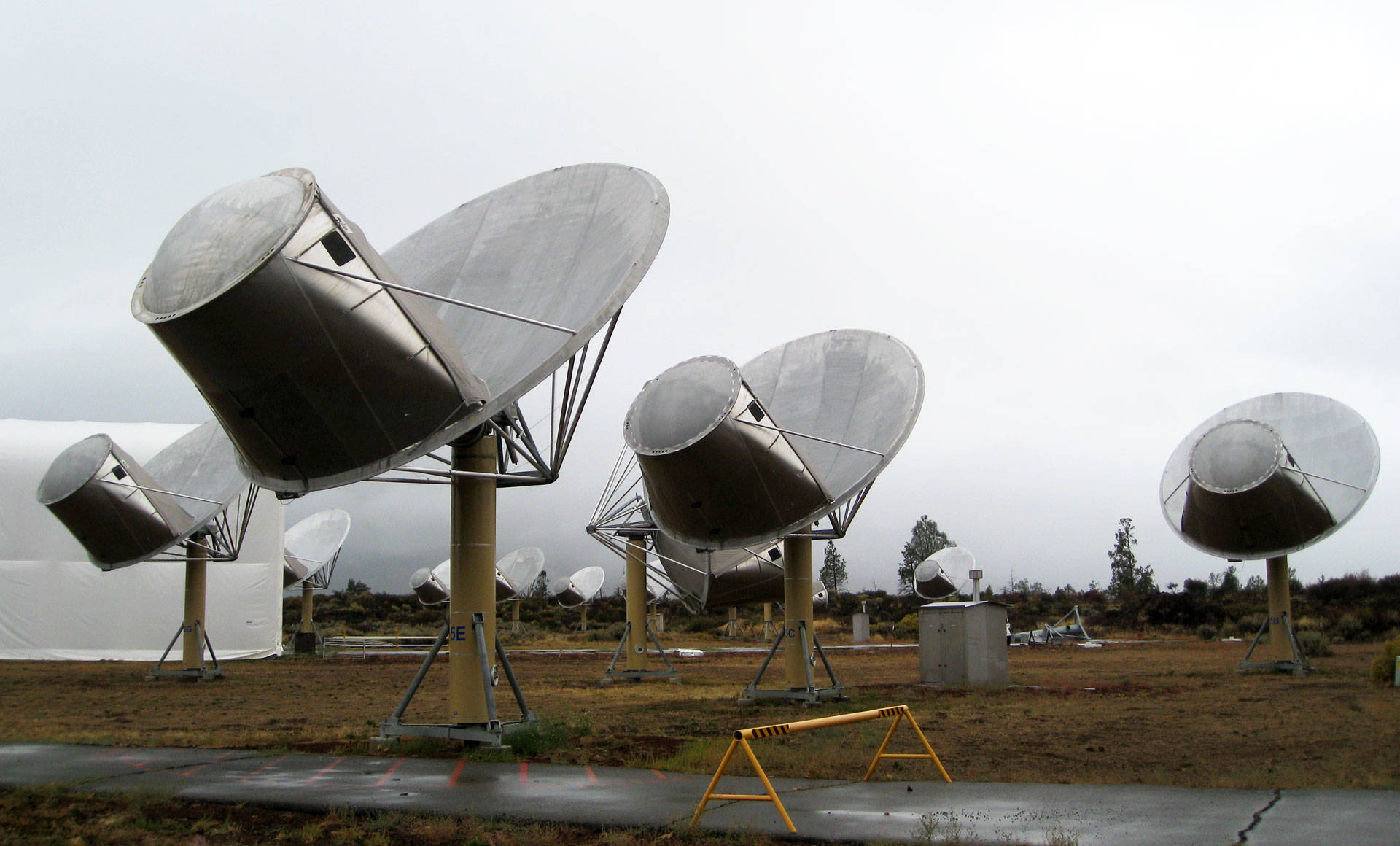
"caption": "The SETI Institute’s Allen Telescope Array in Hat Creek has been turned toward HD 164595 since Sunday evening, looking for a repeat of the signal.",
"description": "The SETI Institute’s Allen Telescope Array in Hat Creek has been turned toward HD 164595 since Sunday evening, looking for a repeat of the signal.",
"title": "AllenArray",
"credit": "J Brew/Flickr",
"status": "inherit",
"isLoading": false,
"fetchFailed": false
},
"news_11062455": {
"type": "attachments",
"id": "news_11062455",
"meta": {
"index": "attachments_1716263798",
"site": "news",
"id": "11062455",
"found": true
},
"parent": 11061702,
"imgSizes": {
"twentyfourteen-full-width": {
"file": "https://ww2.kqed.org/app/uploads/sites/10/2016/08/Pomona-1-1038x576.jpeg",
"width": 1038,
"mimeType": "image/jpeg",
"height": 576
},
"thumbnail": {
"file": "https://ww2.kqed.org/app/uploads/sites/10/2016/08/Pomona-1-400x252.jpeg",
"width": 400,
"mimeType": "image/jpeg",
"height": 252
},
"fd-sm": {
"file": "https://ww2.kqed.org/app/uploads/sites/10/2016/08/Pomona-1-960x606.jpeg",
"width": 960,
"mimeType": "image/jpeg",
"height": 606
},
"post-thumbnail": {
"file": "https://ww2.kqed.org/app/uploads/sites/10/2016/08/Pomona-1-672x372.jpeg",
"width": 672,
"mimeType": "image/jpeg",
"height": 372
},
"kqedFullSize": {
"file": "https://ww2.kqed.org/app/uploads/sites/10/2016/08/Pomona-1.jpeg",
"width": 2100,
"height": 1325
},
"large": {
"file": "https://ww2.kqed.org/app/uploads/sites/10/2016/08/Pomona-1-1920x1211.jpeg",
"width": 1920,
"mimeType": "image/jpeg",
"height": 1211
},
"guest-author-50": {
"file": "https://ww2.kqed.org/app/uploads/sites/10/2016/08/Pomona-1-50x50.jpeg",
"width": 50,
"mimeType": "image/jpeg",
"height": 50
},
"guest-author-96": {
"file": "https://ww2.kqed.org/app/uploads/sites/10/2016/08/Pomona-1-96x96.jpeg",
"width": 96,
"mimeType": "image/jpeg",
"height": 96
},
"medium": {
"file": "https://ww2.kqed.org/app/uploads/sites/10/2016/08/Pomona-1-800x505.jpeg",
"width": 800,
"mimeType": "image/jpeg",
"height": 505
},
"guest-author-64": {
"file": "https://ww2.kqed.org/app/uploads/sites/10/2016/08/Pomona-1-64x64.jpeg",
"width": 64,
"mimeType": "image/jpeg",
"height": 64
},
"guest-author-32": {
"file": "https://ww2.kqed.org/app/uploads/sites/10/2016/08/Pomona-1-32x32.jpeg",
"width": 32,
"mimeType": "image/jpeg",
"height": 32
},
"jmtc-small-thumb": {
"file": "https://ww2.kqed.org/app/uploads/sites/10/2016/08/Pomona-1-280x150.jpeg",
"width": 280,
"mimeType": "image/jpeg",
"height": 150
},
"fd-lrg": {
"file": "https://ww2.kqed.org/app/uploads/sites/10/2016/08/Pomona-1-1920x1211.jpeg",
"width": 1920,
"mimeType": "image/jpeg",
"height": 1211
},
"fd-med": {
"file": "https://ww2.kqed.org/app/uploads/sites/10/2016/08/Pomona-1-1180x745.jpeg",
"width": 1180,
"mimeType": "image/jpeg",
"height": 745
},
"detail": {
"file": "https://ww2.kqed.org/app/uploads/sites/10/2016/08/Pomona-1-150x150.jpeg",
"width": 150,
"mimeType": "image/jpeg",
"height": 150
},
"guest-author-128": {
"file": "https://ww2.kqed.org/app/uploads/sites/10/2016/08/Pomona-1-128x128.jpeg",
"width": 128,
"mimeType": "image/jpeg",
"height": 128
}
},
"publishDate": 1472263522,
"modified": 1472263580,
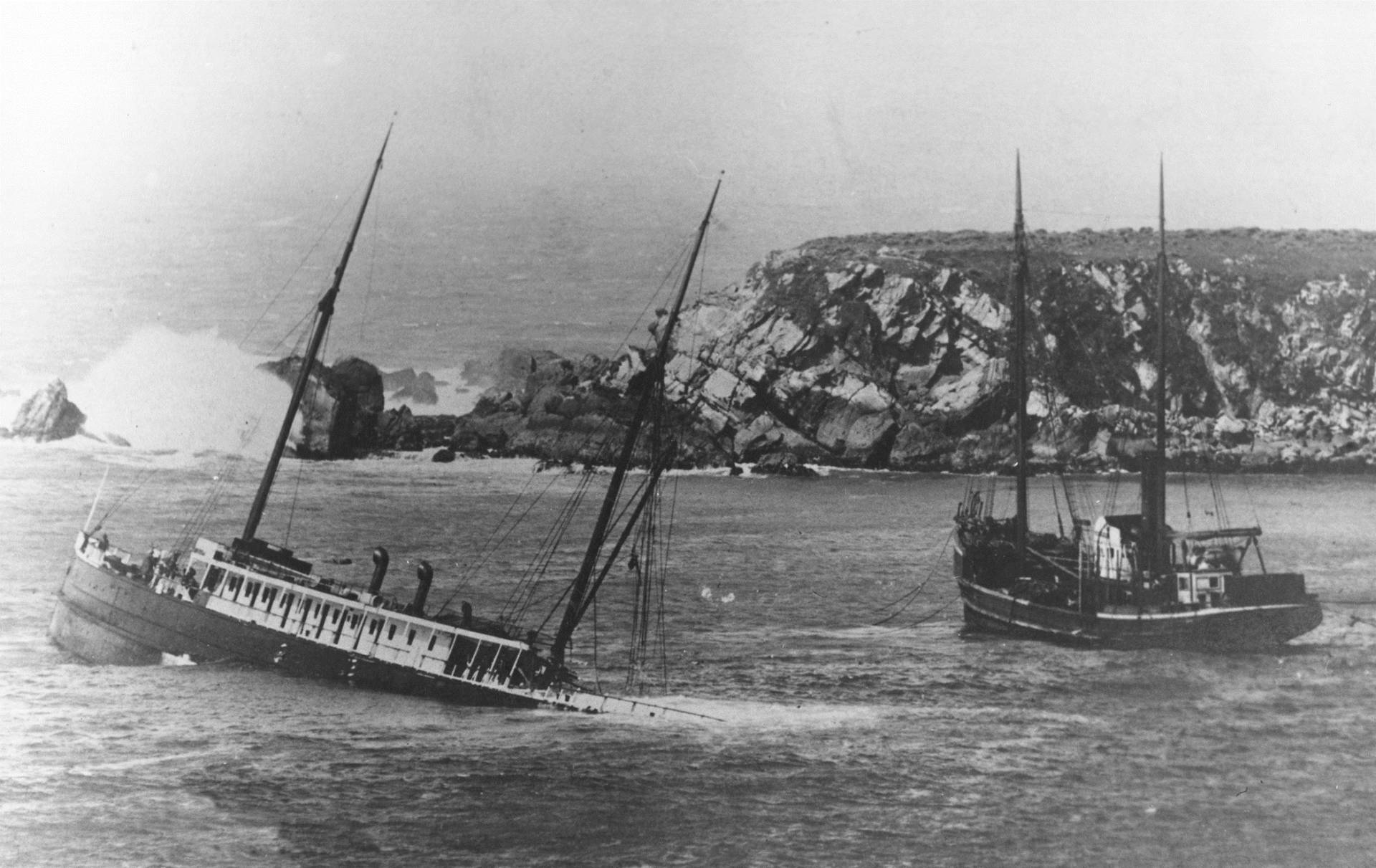
"caption": "The 225-foot long steel-hulled coastal steamship Pomona sinks off Fort Ross cove on March 17, 1908 after hitting a submerged pinnacle. ",
"description": "The 225-foot long steel-hulled coastal steamship Pomona sinks off Fort Ross cove on March 17, 1908 after hitting a submerged pinnacle. ",
"title": "Pomona",
"credit": "Fort Ross Conservancy",
"status": "inherit",
"isLoading": false,
"fetchFailed": false
},
"news_11061930": {
"type": "attachments",
"id": "news_11061930",
"meta": {
"index": "attachments_1716263798",
"site": "news",
"id": "11061930",
"found": true
},
"parent": 11060850,
"imgSizes": {
"twentyfourteen-full-width": {
"file": "https://ww2.kqed.org/app/uploads/sites/10/2016/08/Skidmores-1038x576.jpg",
"width": 1038,
"mimeType": "image/jpeg",
"height": 576
},
"thumbnail": {
"file": "https://ww2.kqed.org/app/uploads/sites/10/2016/08/Skidmores-400x262.jpg",
"width": 400,
"mimeType": "image/jpeg",
"height": 262
},
"fd-sm": {
"file": "https://ww2.kqed.org/app/uploads/sites/10/2016/08/Skidmores-960x628.jpg",
"width": 960,
"mimeType": "image/jpeg",
"height": 628
},
"post-thumbnail": {
"file": "https://ww2.kqed.org/app/uploads/sites/10/2016/08/Skidmores-672x372.jpg",
"width": 672,
"mimeType": "image/jpeg",
"height": 372
},
"kqedFullSize": {
"file": "https://ww2.kqed.org/app/uploads/sites/10/2016/08/Skidmores.jpg",
"width": 1920,
"height": 1256
},
"large": {
"file": "https://ww2.kqed.org/app/uploads/sites/10/2016/08/Skidmores-1920x1256.jpg",
"width": 1920,
"mimeType": "image/jpeg",
"height": 1256
},
"guest-author-50": {
"file": "https://ww2.kqed.org/app/uploads/sites/10/2016/08/Skidmores-50x50.jpg",
"width": 50,
"mimeType": "image/jpeg",
"height": 50
},
"guest-author-96": {
"file": "https://ww2.kqed.org/app/uploads/sites/10/2016/08/Skidmores-96x96.jpg",
"width": 96,
"mimeType": "image/jpeg",
"height": 96
},
"medium": {
"file": "https://ww2.kqed.org/app/uploads/sites/10/2016/08/Skidmores-800x523.jpg",
"width": 800,
"mimeType": "image/jpeg",
"height": 523
},
"guest-author-64": {
"file": "https://ww2.kqed.org/app/uploads/sites/10/2016/08/Skidmores-64x64.jpg",
"width": 64,
"mimeType": "image/jpeg",
"height": 64
},
"guest-author-32": {
"file": "https://ww2.kqed.org/app/uploads/sites/10/2016/08/Skidmores-32x32.jpg",
"width": 32,
"mimeType": "image/jpeg",
"height": 32
},
"jmtc-small-thumb": {
"file": "https://ww2.kqed.org/app/uploads/sites/10/2016/08/Skidmores-280x150.jpg",
"width": 280,
"mimeType": "image/jpeg",
"height": 150
},
"fd-lrg": {
"file": "https://ww2.kqed.org/app/uploads/sites/10/2016/08/Skidmores-1920x1256.jpg",
"width": 1920,
"mimeType": "image/jpeg",
"height": 1256
},
"fd-med": {
"file": "https://ww2.kqed.org/app/uploads/sites/10/2016/08/Skidmores-1180x772.jpg",
"width": 1180,
"mimeType": "image/jpeg",
"height": 772
},
"detail": {
"file": "https://ww2.kqed.org/app/uploads/sites/10/2016/08/Skidmores-150x150.jpg",
"width": 150,
"mimeType": "image/jpeg",
"height": 150
},
"guest-author-128": {
"file": "https://ww2.kqed.org/app/uploads/sites/10/2016/08/Skidmores-128x128.jpg",
"width": 128,
"mimeType": "image/jpeg",
"height": 128
}
},
"publishDate": 1472236260,
"modified": 1472236305,
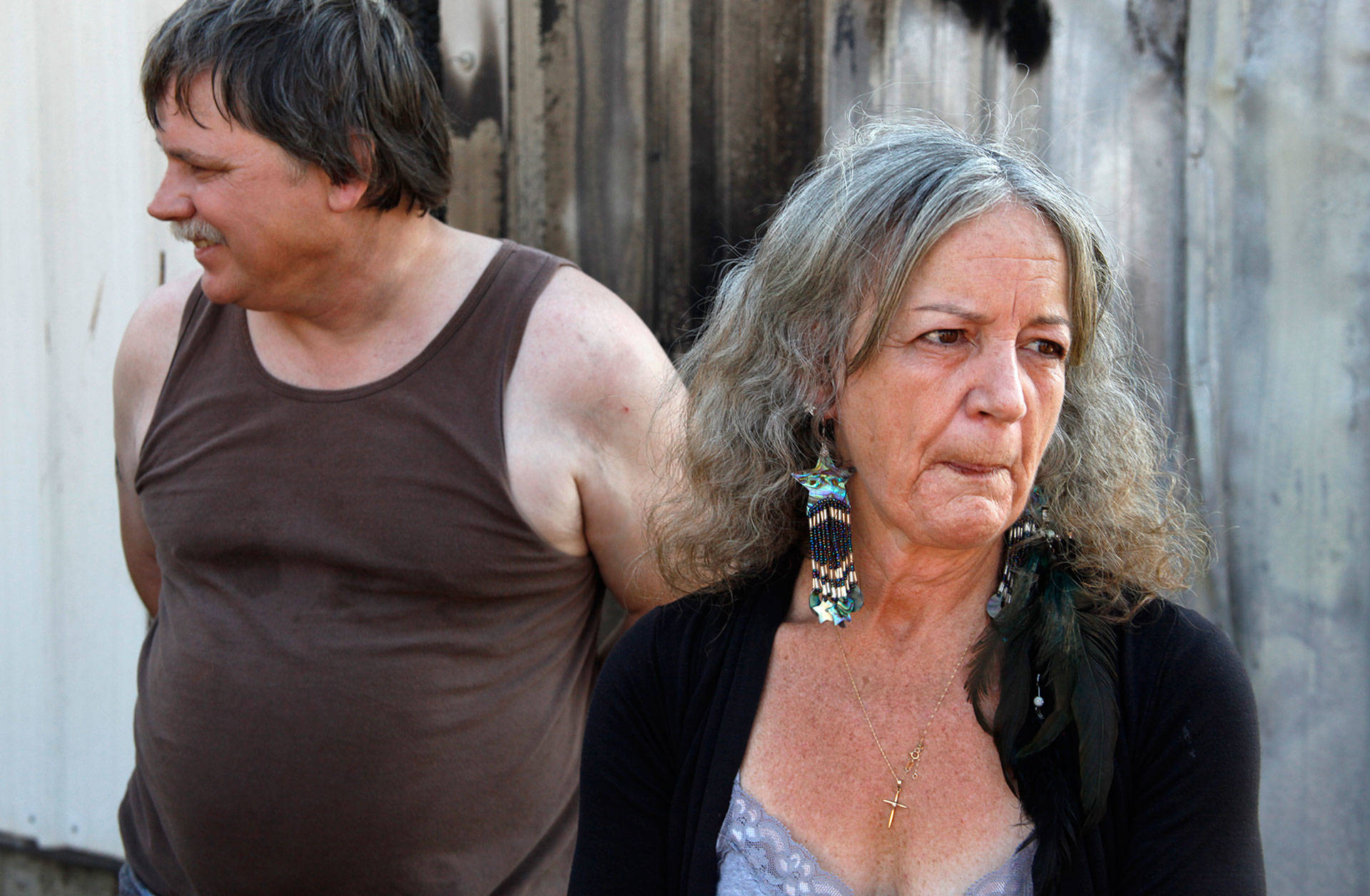
"caption": "Michael and Starr Skidmore, one day after fire swept through Lower Lake. Michael said the shorts and tank top he was wearing were the only clothing he had left. ",
"description": "Michael and Starr Skidmore, one day after fire swept through Lower Lake. Michael said the shorts and tank top he was wearing were the only clothing he had left. ",
"title": "Skidmores",
"credit": "Brittany Hosea-Small/KQED",
"status": "inherit",
"isLoading": false,
"fetchFailed": false
},
"science_946592": {
"type": "attachments",
"id": "science_946592",
"meta": {
"index": "attachments_1716263798",
"site": "science",
"id": "946592",
"found": true
},
"parent": 946591,
"imgSizes": {
"thumbnail": {
"file": "https://ww2.kqed.org/app/uploads/sites/35/2016/08/Capitol-sacramento-400x225.jpg",
"width": 400,
"mimeType": "image/jpeg",
"height": 225
},
"post-thumbnail": {
"file": "https://ww2.kqed.org/app/uploads/sites/35/2016/08/Capitol-sacramento-672x372.jpg",
"width": 672,
"mimeType": "image/jpeg",
"height": 372
},
"kqedFullSize": {
"file": "https://ww2.kqed.org/app/uploads/sites/35/2016/08/Capitol-sacramento.jpg",
"width": 720,
"height": 405
},
"guest-author-50": {
"file": "https://ww2.kqed.org/app/uploads/sites/35/2016/08/Capitol-sacramento-50x50.jpg",
"width": 50,
"mimeType": "image/jpeg",
"height": 50
},
"guest-author-96": {
"file": "https://ww2.kqed.org/app/uploads/sites/35/2016/08/Capitol-sacramento-96x96.jpg",
"width": 96,
"mimeType": "image/jpeg",
"height": 96
},
"guest-author-64": {
"file": "https://ww2.kqed.org/app/uploads/sites/35/2016/08/Capitol-sacramento-64x64.jpg",
"width": 64,
"mimeType": "image/jpeg",
"height": 64
},
"detail": {
"file": "https://ww2.kqed.org/app/uploads/sites/35/2016/08/Capitol-sacramento-150x150.jpg",
"width": 150,
"mimeType": "image/jpeg",
"height": 150
},
"guest-author-32": {
"file": "https://ww2.kqed.org/app/uploads/sites/35/2016/08/Capitol-sacramento-32x32.jpg",
"width": 32,
"mimeType": "image/jpeg",
"height": 32
},
"guest-author-128": {
"file": "https://ww2.kqed.org/app/uploads/sites/35/2016/08/Capitol-sacramento-128x128.jpg",
"width": 128,
"mimeType": "image/jpeg",
"height": 128
}
},
"publishDate": 1472237695,
"modified": 1472237724,
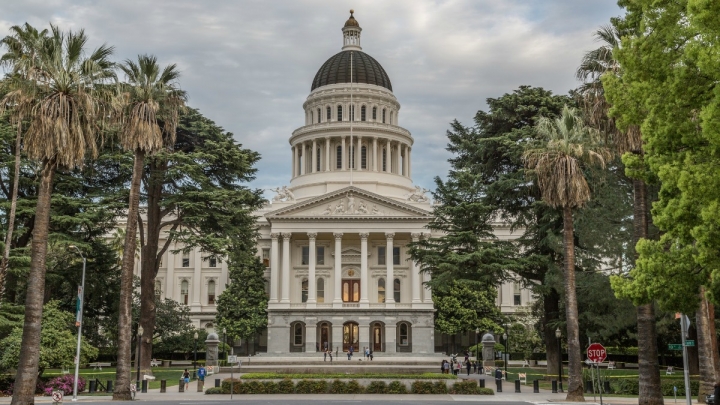
"caption": "California State Capitol in Sacramento.\n",
"description": null,
"title": "Capitol sacramento",
"credit": "Tony Webster/flickr",
"status": "inherit",
"isLoading": false,
"fetchFailed": false
},
"news_11061011": {
"type": "attachments",
"id": "news_11061011",
"meta": {
"index": "attachments_1716263798",
"site": "news",
"id": "11061011",
"found": true
},
"parent": 11060911,
"imgSizes": {
"twentyfourteen-full-width": {
"file": "https://ww2.kqed.org/app/uploads/sites/10/2016/08/Storm-Water-1038x576.jpg",
"width": 1038,
"mimeType": "image/jpeg",
"height": 576
},
"thumbnail": {
"file": "https://ww2.kqed.org/app/uploads/sites/10/2016/08/Storm-Water-400x300.jpg",
"width": 400,
"mimeType": "image/jpeg",
"height": 300
},
"fd-sm": {
"file": "https://ww2.kqed.org/app/uploads/sites/10/2016/08/Storm-Water-960x720.jpg",
"width": 960,
"mimeType": "image/jpeg",
"height": 720
},
"post-thumbnail": {
"file": "https://ww2.kqed.org/app/uploads/sites/10/2016/08/Storm-Water-672x372.jpg",
"width": 672,
"mimeType": "image/jpeg",
"height": 372
},
"kqedFullSize": {
"file": "https://ww2.kqed.org/app/uploads/sites/10/2016/08/Storm-Water.jpg",
"width": 1632,
"height": 1224
},
"guest-author-50": {
"file": "https://ww2.kqed.org/app/uploads/sites/10/2016/08/Storm-Water-50x50.jpg",
"width": 50,
"mimeType": "image/jpeg",
"height": 50
},
"guest-author-96": {
"file": "https://ww2.kqed.org/app/uploads/sites/10/2016/08/Storm-Water-96x96.jpg",
"width": 96,
"mimeType": "image/jpeg",
"height": 96
},
"medium": {
"file": "https://ww2.kqed.org/app/uploads/sites/10/2016/08/Storm-Water-800x600.jpg",
"width": 800,
"mimeType": "image/jpeg",
"height": 600
},
"guest-author-64": {
"file": "https://ww2.kqed.org/app/uploads/sites/10/2016/08/Storm-Water-64x64.jpg",
"width": 64,
"mimeType": "image/jpeg",
"height": 64
},
"guest-author-32": {
"file": "https://ww2.kqed.org/app/uploads/sites/10/2016/08/Storm-Water-32x32.jpg",
"width": 32,
"mimeType": "image/jpeg",
"height": 32
},
"jmtc-small-thumb": {
"file": "https://ww2.kqed.org/app/uploads/sites/10/2016/08/Storm-Water-280x150.jpg",
"width": 280,
"mimeType": "image/jpeg",
"height": 150
},
"fd-med": {
"file": "https://ww2.kqed.org/app/uploads/sites/10/2016/08/Storm-Water-1180x885.jpg",
"width": 1180,
"mimeType": "image/jpeg",
"height": 885
},
"detail": {
"file": "https://ww2.kqed.org/app/uploads/sites/10/2016/08/Storm-Water-150x150.jpg",
"width": 150,
"mimeType": "image/jpeg",
"height": 150
},
"guest-author-128": {
"file": "https://ww2.kqed.org/app/uploads/sites/10/2016/08/Storm-Water-128x128.jpg",
"width": 128,
"mimeType": "image/jpeg",
"height": 128
}
},
"publishDate": 1472162990,
"modified": 1472163037,
"caption": "Water backs up before entering a storm drain in Vallejo, after a rare downpour in February 2016.",
"description": null,
"title": "Storm Water",
"credit": "Craig Miller/KQED",
"status": "inherit",
"isLoading": false,
"fetchFailed": false
},
"science_945152": {
"type": "attachments",
"id": "science_945152",
"meta": {
"index": "attachments_1716263798",
"site": "science",
"id": "945152",
"found": true
},
"parent": 945149,
"imgSizes": {
"twentyfourteen-full-width": {
"file": "https://ww2.kqed.org/app/uploads/sites/35/2016/08/fish-1038x576.jpg",
"width": 1038,
"mimeType": "image/jpeg",
"height": 576
},
"thumbnail": {
"file": "https://ww2.kqed.org/app/uploads/sites/35/2016/08/fish-400x267.jpg",
"width": 400,
"mimeType": "image/jpeg",
"height": 267
},
"fd-sm": {
"file": "https://ww2.kqed.org/app/uploads/sites/35/2016/08/fish-960x640.jpg",
"width": 960,
"mimeType": "image/jpeg",
"height": 640
},
"post-thumbnail": {
"file": "https://ww2.kqed.org/app/uploads/sites/35/2016/08/fish-672x372.jpg",
"width": 672,
"mimeType": "image/jpeg",
"height": 372
},
"kqedFullSize": {
"file": "https://ww2.kqed.org/app/uploads/sites/35/2016/08/fish.jpg",
"width": 2100,
"height": 1401
},
"large": {
"file": "https://ww2.kqed.org/app/uploads/sites/35/2016/08/fish-1440x961.jpg",
"width": 1440,
"mimeType": "image/jpeg",
"height": 961
},
"guest-author-50": {
"file": "https://ww2.kqed.org/app/uploads/sites/35/2016/08/fish-50x50.jpg",
"width": 50,
"mimeType": "image/jpeg",
"height": 50
},
"guest-author-96": {
"file": "https://ww2.kqed.org/app/uploads/sites/35/2016/08/fish-96x96.jpg",
"width": 96,
"mimeType": "image/jpeg",
"height": 96
},
"medium": {
"file": "https://ww2.kqed.org/app/uploads/sites/35/2016/08/fish-800x534.jpg",
"width": 800,
"mimeType": "image/jpeg",
"height": 534
},
"guest-author-64": {
"file": "https://ww2.kqed.org/app/uploads/sites/35/2016/08/fish-64x64.jpg",
"width": 64,
"mimeType": "image/jpeg",
"height": 64
},
"guest-author-32": {
"file": "https://ww2.kqed.org/app/uploads/sites/35/2016/08/fish-32x32.jpg",
"width": 32,
"mimeType": "image/jpeg",
"height": 32
},
"fd-lrg": {
"file": "https://ww2.kqed.org/app/uploads/sites/35/2016/08/fish-1920x1281.jpg",
"width": 1920,
"mimeType": "image/jpeg",
"height": 1281
},
"fd-med": {
"file": "https://ww2.kqed.org/app/uploads/sites/35/2016/08/fish-1180x787.jpg",
"width": 1180,
"mimeType": "image/jpeg",
"height": 787
},
"detail": {
"file": "https://ww2.kqed.org/app/uploads/sites/35/2016/08/fish-150x150.jpg",
"width": 150,
"mimeType": "image/jpeg",
"height": 150
},
"medium_large": {
"file": "https://ww2.kqed.org/app/uploads/sites/35/2016/08/fish-768x512.jpg",
"width": 768,
"mimeType": "image/jpeg",
"height": 512
},
"guest-author-128": {
"file": "https://ww2.kqed.org/app/uploads/sites/35/2016/08/fish-128x128.jpg",
"width": 128,
"mimeType": "image/jpeg",
"height": 128
}
},
"publishDate": 1472186787,
"modified": 1472187072,
"caption": "Obama's planned expansion will quadruple the size of the Papahānaumokuākea Marine National Monument making more than twice the size of Texas.",
"description": null,
"title": "fish",
"credit": "James Watt",
"status": "inherit",
"isLoading": false,
"fetchFailed": false
},
"news_11060842": {
"type": "attachments",
"id": "news_11060842",
"meta": {
"index": "attachments_1716263798",
"site": "news",
"id": "11060842",
"found": true
},
"parent": 11059902,
"imgSizes": {
"jmtc-small-thumb": {
"file": "https://ww2.kqed.org/app/uploads/sites/10/2016/08/eric-meditating-280x150.png",
"width": 280,
"mimeType": "image/png",
"height": 150
},
"thumbnail": {
"file": "https://ww2.kqed.org/app/uploads/sites/10/2016/08/eric-meditating-400x225.png",
"width": 400,
"mimeType": "image/png",
"height": 225
},
"fd-sm": {
"file": "https://ww2.kqed.org/app/uploads/sites/10/2016/08/eric-meditating-960x540.png",
"width": 960,
"mimeType": "image/png",
"height": 540
},
"post-thumbnail": {
"file": "https://ww2.kqed.org/app/uploads/sites/10/2016/08/eric-meditating-672x372.png",
"width": 672,
"mimeType": "image/png",
"height": 372
},
"kqedFullSize": {
"file": "https://ww2.kqed.org/app/uploads/sites/10/2016/08/eric-meditating.png",
"width": 1000,
"height": 563
},
"guest-author-50": {
"file": "https://ww2.kqed.org/app/uploads/sites/10/2016/08/eric-meditating-50x50.png",
"width": 50,
"mimeType": "image/png",
"height": 50
},
"guest-author-96": {
"file": "https://ww2.kqed.org/app/uploads/sites/10/2016/08/eric-meditating-96x96.png",
"width": 96,
"mimeType": "image/png",
"height": 96
},
"medium": {
"file": "https://ww2.kqed.org/app/uploads/sites/10/2016/08/eric-meditating-800x450.png",
"width": 800,
"mimeType": "image/png",
"height": 450
},
"guest-author-64": {
"file": "https://ww2.kqed.org/app/uploads/sites/10/2016/08/eric-meditating-64x64.png",
"width": 64,
"mimeType": "image/png",
"height": 64
},
"detail": {
"file": "https://ww2.kqed.org/app/uploads/sites/10/2016/08/eric-meditating-150x150.png",
"width": 150,
"mimeType": "image/png",
"height": 150
},
"guest-author-32": {
"file": "https://ww2.kqed.org/app/uploads/sites/10/2016/08/eric-meditating-32x32.png",
"width": 32,
"mimeType": "image/png",
"height": 32
},
"guest-author-128": {
"file": "https://ww2.kqed.org/app/uploads/sites/10/2016/08/eric-meditating-128x128.png",
"width": 128,
"mimeType": "image/png",
"height": 128
}
},
"publishDate": 1472152485,
"modified": 1472152550,
"caption": "Eric Matzner does all kinds of things to try and upgrade his body and mind.",
"description": null,
"title": "eric meditating",
"credit": "Adam Grossberg/KQED",
"status": "inherit",
"isLoading": false,
"fetchFailed": false
},
"news_11060853": {
"type": "attachments",
"id": "news_11060853",
"meta": {
"index": "attachments_1716263798",
"site": "news",
"id": "11060853",
"found": true
},
"parent": 11060844,
"imgSizes": {
"twentyfourteen-full-width": {
"file": "https://ww2.kqed.org/app/uploads/sites/10/2016/08/ElonMusk-1038x576.jpg",
"width": 1038,
"mimeType": "image/jpeg",
"height": 576
},
"thumbnail": {
"file": "https://ww2.kqed.org/app/uploads/sites/10/2016/08/ElonMusk-400x267.jpg",
"width": 400,
"mimeType": "image/jpeg",
"height": 267
},
"fd-sm": {
"file": "https://ww2.kqed.org/app/uploads/sites/10/2016/08/ElonMusk-960x640.jpg",
"width": 960,
"mimeType": "image/jpeg",
"height": 640
},
"post-thumbnail": {
"file": "https://ww2.kqed.org/app/uploads/sites/10/2016/08/ElonMusk-672x372.jpg",
"width": 672,
"mimeType": "image/jpeg",
"height": 372
},
"kqedFullSize": {
"file": "https://ww2.kqed.org/app/uploads/sites/10/2016/08/ElonMusk.jpg",
"width": 1920,
"height": 1280
},
"large": {
"file": "https://ww2.kqed.org/app/uploads/sites/10/2016/08/ElonMusk-1920x1280.jpg",
"width": 1920,
"mimeType": "image/jpeg",
"height": 1280
},
"guest-author-50": {
"file": "https://ww2.kqed.org/app/uploads/sites/10/2016/08/ElonMusk-50x50.jpg",
"width": 50,
"mimeType": "image/jpeg",
"height": 50
},
"guest-author-96": {
"file": "https://ww2.kqed.org/app/uploads/sites/10/2016/08/ElonMusk-96x96.jpg",
"width": 96,
"mimeType": "image/jpeg",
"height": 96
},
"medium": {
"file": "https://ww2.kqed.org/app/uploads/sites/10/2016/08/ElonMusk-800x533.jpg",
"width": 800,
"mimeType": "image/jpeg",
"height": 533
},
"guest-author-64": {
"file": "https://ww2.kqed.org/app/uploads/sites/10/2016/08/ElonMusk-64x64.jpg",
"width": 64,
"mimeType": "image/jpeg",
"height": 64
},
"guest-author-32": {
"file": "https://ww2.kqed.org/app/uploads/sites/10/2016/08/ElonMusk-32x32.jpg",
"width": 32,
"mimeType": "image/jpeg",
"height": 32
},
"jmtc-small-thumb": {
"file": "https://ww2.kqed.org/app/uploads/sites/10/2016/08/ElonMusk-280x150.jpg",
"width": 280,
"mimeType": "image/jpeg",
"height": 150
},
"fd-lrg": {
"file": "https://ww2.kqed.org/app/uploads/sites/10/2016/08/ElonMusk-1920x1280.jpg",
"width": 1920,
"mimeType": "image/jpeg",
"height": 1280
},
"fd-med": {
"file": "https://ww2.kqed.org/app/uploads/sites/10/2016/08/ElonMusk-1180x787.jpg",
"width": 1180,
"mimeType": "image/jpeg",
"height": 787
},
"detail": {
"file": "https://ww2.kqed.org/app/uploads/sites/10/2016/08/ElonMusk-150x150.jpg",
"width": 150,
"mimeType": "image/jpeg",
"height": 150
},
"guest-author-128": {
"file": "https://ww2.kqed.org/app/uploads/sites/10/2016/08/ElonMusk-128x128.jpg",
"width": 128,
"mimeType": "image/jpeg",
"height": 128
}
},
"publishDate": 1472153185,
"modified": 1472153337,
"caption": "Tesla Motors CEO Elon Musk is also SolarCity's chairman and largest shareholder. Tesla says it wants to purchase the solar panel company to produce the renewable energy that could power its cars.",
"description": "Tesla Motors CEO Elon Musk is also SolarCity's chairman and largest shareholder. Tesla says it wants to purchase the solar panel company to produce the renewable energy that could power its cars.",
"title": "ElonMusk",
"credit": "Scott Olson/Getty Images",
"status": "inherit",
"isLoading": false,
"fetchFailed": false
},
"science_944018": {
"type": "attachments",
"id": "science_944018",
"meta": {
"index": "attachments_1716263798",
"site": "science",
"id": "944018",
"found": true
},
"parent": 944002,
"imgSizes": {
"thumbnail": {
"file": "https://ww2.kqed.org/app/uploads/sites/35/2016/08/8_24_16_Andrea_CC_coralcoring_720_480_s_c1_c_c-400x267.jpg",
"width": 400,
"mimeType": "image/jpeg",
"height": 267
},
"post-thumbnail": {
"file": "https://ww2.kqed.org/app/uploads/sites/35/2016/08/8_24_16_Andrea_CC_coralcoring_720_480_s_c1_c_c-672x372.jpg",
"width": 672,
"mimeType": "image/jpeg",
"height": 372
},
"kqedFullSize": {
"file": "https://ww2.kqed.org/app/uploads/sites/35/2016/08/8_24_16_Andrea_CC_coralcoring_720_480_s_c1_c_c.jpg",
"width": 720,
"height": 480
},
"guest-author-50": {
"file": "https://ww2.kqed.org/app/uploads/sites/35/2016/08/8_24_16_Andrea_CC_coralcoring_720_480_s_c1_c_c-50x50.jpg",
"width": 50,
"mimeType": "image/jpeg",
"height": 50
},
"guest-author-96": {
"file": "https://ww2.kqed.org/app/uploads/sites/35/2016/08/8_24_16_Andrea_CC_coralcoring_720_480_s_c1_c_c-96x96.jpg",
"width": 96,
"mimeType": "image/jpeg",
"height": 96
},
"guest-author-64": {
"file": "https://ww2.kqed.org/app/uploads/sites/35/2016/08/8_24_16_Andrea_CC_coralcoring_720_480_s_c1_c_c-64x64.jpg",
"width": 64,
"mimeType": "image/jpeg",
"height": 64
},
"detail": {
"file": "https://ww2.kqed.org/app/uploads/sites/35/2016/08/8_24_16_Andrea_CC_coralcoring_720_480_s_c1_c_c-150x150.jpg",
"width": 150,
"mimeType": "image/jpeg",
"height": 150
},
"guest-author-32": {
"file": "https://ww2.kqed.org/app/uploads/sites/35/2016/08/8_24_16_Andrea_CC_coralcoring_720_480_s_c1_c_c-32x32.jpg",
"width": 32,
"mimeType": "image/jpeg",
"height": 32
},
"guest-author-128": {
"file": "https://ww2.kqed.org/app/uploads/sites/35/2016/08/8_24_16_Andrea_CC_coralcoring_720_480_s_c1_c_c-128x128.jpg",
"width": 128,
"mimeType": "image/jpeg",
"height": 128
}
},
"publishDate": 1472148247,
"modified": 1472148298,
"caption": "Coring at a coral reef of the northwest coast of Australia.",
"description": "Coring at a coral reef of the northwest coast of Australia.",
"title": "8_24_16_Andrea_CC_coralcoring_720_480_s_c1_c_c",
"credit": "Eric Matson/AIMS ",
"status": "inherit",
"isLoading": false,
"fetchFailed": false
},
"science_943995": {
"type": "attachments",
"id": "science_943995",
"meta": {
"index": "attachments_1716263798",
"site": "science",
"id": "943995",
"found": true
},
"parent": 943904,
"imgSizes": {
"twentyfourteen-full-width": {
"file": "https://ww2.kqed.org/app/uploads/sites/35/2016/08/Pinnacles-1038x576.jpg",
"width": 1038,
"mimeType": "image/jpeg",
"height": 576
},
"thumbnail": {
"file": "https://ww2.kqed.org/app/uploads/sites/35/2016/08/Pinnacles-400x267.jpg",
"width": 400,
"mimeType": "image/jpeg",
"height": 267
},
"fd-sm": {
"file": "https://ww2.kqed.org/app/uploads/sites/35/2016/08/Pinnacles-960x640.jpg",
"width": 960,
"mimeType": "image/jpeg",
"height": 640
},
"post-thumbnail": {
"file": "https://ww2.kqed.org/app/uploads/sites/35/2016/08/Pinnacles-672x372.jpg",
"width": 672,
"mimeType": "image/jpeg",
"height": 372
},
"kqedFullSize": {
"file": "https://ww2.kqed.org/app/uploads/sites/35/2016/08/Pinnacles.jpg",
"width": 2048,
"height": 1365
},
"large": {
"file": "https://ww2.kqed.org/app/uploads/sites/35/2016/08/Pinnacles-1440x960.jpg",
"width": 1440,
"mimeType": "image/jpeg",
"height": 960
},
"guest-author-50": {
"file": "https://ww2.kqed.org/app/uploads/sites/35/2016/08/Pinnacles-50x50.jpg",
"width": 50,
"mimeType": "image/jpeg",
"height": 50
},
"guest-author-96": {
"file": "https://ww2.kqed.org/app/uploads/sites/35/2016/08/Pinnacles-96x96.jpg",
"width": 96,
"mimeType": "image/jpeg",
"height": 96
},
"medium": {
"file": "https://ww2.kqed.org/app/uploads/sites/35/2016/08/Pinnacles-800x533.jpg",
"width": 800,
"mimeType": "image/jpeg",
"height": 533
},
"guest-author-64": {
"file": "https://ww2.kqed.org/app/uploads/sites/35/2016/08/Pinnacles-64x64.jpg",
"width": 64,
"mimeType": "image/jpeg",
"height": 64
},
"guest-author-32": {
"file": "https://ww2.kqed.org/app/uploads/sites/35/2016/08/Pinnacles-32x32.jpg",
"width": 32,
"mimeType": "image/jpeg",
"height": 32
},
"fd-lrg": {
"file": "https://ww2.kqed.org/app/uploads/sites/35/2016/08/Pinnacles-1920x1280.jpg",
"width": 1920,
"mimeType": "image/jpeg",
"height": 1280
},
"fd-med": {
"file": "https://ww2.kqed.org/app/uploads/sites/35/2016/08/Pinnacles-1180x786.jpg",
"width": 1180,
"mimeType": "image/jpeg",
"height": 786
},
"detail": {
"file": "https://ww2.kqed.org/app/uploads/sites/35/2016/08/Pinnacles-150x150.jpg",
"width": 150,
"mimeType": "image/jpeg",
"height": 150
},
"medium_large": {
"file": "https://ww2.kqed.org/app/uploads/sites/35/2016/08/Pinnacles-768x512.jpg",
"width": 768,
"mimeType": "image/jpeg",
"height": 512
},
"guest-author-128": {
"file": "https://ww2.kqed.org/app/uploads/sites/35/2016/08/Pinnacles-128x128.jpg",
"width": 128,
"mimeType": "image/jpeg",
"height": 128
}
},
"publishDate": 1472145770,
"modified": 1472145973,
"caption": "Pinnacles National Park east of the Salinas Valley in Central California. By 2100 scientists predict that summers in Pinnacles will be like summers in southeast Georgia.",
"description": null,
"title": "Pinnacles",
"credit": "David Fulmer/flickr",
"status": "inherit",
"isLoading": false,
"fetchFailed": false
},
"news_11060752": {
"type": "attachments",
"id": "news_11060752",
"meta": {
"index": "attachments_1716263798",
"site": "news",
"id": "11060752",
"found": true
},
"parent": 11057974,
"imgSizes": {
"twentyfourteen-full-width": {
"file": "https://ww2.kqed.org/app/uploads/sites/10/2016/08/pills-1038x576.jpg",
"width": 1038,
"mimeType": "image/jpeg",
"height": 576
},
"thumbnail": {
"file": "https://ww2.kqed.org/app/uploads/sites/10/2016/08/pills-400x267.jpg",
"width": 400,
"mimeType": "image/jpeg",
"height": 267
},
"fd-sm": {
"file": "https://ww2.kqed.org/app/uploads/sites/10/2016/08/pills-960x640.jpg",
"width": 960,
"mimeType": "image/jpeg",
"height": 640
},
"post-thumbnail": {
"file": "https://ww2.kqed.org/app/uploads/sites/10/2016/08/pills-672x372.jpg",
"width": 672,
"mimeType": "image/jpeg",
"height": 372
},
"kqedFullSize": {
"file": "https://ww2.kqed.org/app/uploads/sites/10/2016/08/pills.jpg",
"width": 1620,
"height": 1080
},
"guest-author-50": {
"file": "https://ww2.kqed.org/app/uploads/sites/10/2016/08/pills-50x50.jpg",
"width": 50,
"mimeType": "image/jpeg",
"height": 50
},
"guest-author-96": {
"file": "https://ww2.kqed.org/app/uploads/sites/10/2016/08/pills-96x96.jpg",
"width": 96,
"mimeType": "image/jpeg",
"height": 96
},
"medium": {
"file": "https://ww2.kqed.org/app/uploads/sites/10/2016/08/pills-800x533.jpg",
"width": 800,
"mimeType": "image/jpeg",
"height": 533
},
"guest-author-64": {
"file": "https://ww2.kqed.org/app/uploads/sites/10/2016/08/pills-64x64.jpg",
"width": 64,
"mimeType": "image/jpeg",
"height": 64
},
"guest-author-32": {
"file": "https://ww2.kqed.org/app/uploads/sites/10/2016/08/pills-32x32.jpg",
"width": 32,
"mimeType": "image/jpeg",
"height": 32
},
"jmtc-small-thumb": {
"file": "https://ww2.kqed.org/app/uploads/sites/10/2016/08/pills-280x150.jpg",
"width": 280,
"mimeType": "image/jpeg",
"height": 150
},
"fd-med": {
"file": "https://ww2.kqed.org/app/uploads/sites/10/2016/08/pills-1180x787.jpg",
"width": 1180,
"mimeType": "image/jpeg",
"height": 787
},
"detail": {
"file": "https://ww2.kqed.org/app/uploads/sites/10/2016/08/pills-150x150.jpg",
"width": 150,
"mimeType": "image/jpeg",
"height": 150
},
"guest-author-128": {
"file": "https://ww2.kqed.org/app/uploads/sites/10/2016/08/pills-128x128.jpg",
"width": 128,
"mimeType": "image/jpeg",
"height": 128
}
},
"publishDate": 1472146581,
"modified": 1472146604,
"caption": "Nootropics are popular in Silicon Valley.",
"description": "Nootropics are popular in Silicon Valley.",
"title": "pills",
"credit": "Sam Harnett/KQED",
"status": "inherit",
"isLoading": false,
"fetchFailed": false
}
},
"audioPlayerReducer": {
"postId": "stream_live",
"isPaused": true,
"isPlaying": false,
"pfsActive": false,
"pledgeModalIsOpen": true,
"playerDrawerIsOpen": false,
"liveAudioPlayStartedAt": 0,
"liveAudioPlayContext": ""
},
"authorsReducer": {
"byline_news_11066256": {
"type": "authors",
"id": "byline_news_11066256",
"meta": {
"override": true
},
"slug": "byline_news_11066256",
"name": "\u003cstrong>\u003ca href=\"http://www.scpr.org/about/people/staff/sanden-totten\">Sanden Totten\u003c/a>\u003cbr>\u003ca href=\"http://www.scpr.org/\">KPCC\u003c/a>\u003c/strong>",
"isLoading": false
},
"byline_news_11065832": {
"type": "authors",
"id": "byline_news_11065832",
"meta": {
"override": true
},
"slug": "byline_news_11065832",
"name": "Camila Domonoske",
"isLoading": false
},
"byline_science_946591": {
"type": "authors",
"id": "byline_science_946591",
"meta": {
"override": true
},
"slug": "byline_science_946591",
"name": "John Upton\u003c/br> Climate Central",
"isLoading": false
},
"byline_science_945149": {
"type": "authors",
"id": "byline_science_945149",
"meta": {
"override": true
},
"slug": "byline_science_945149",
"name": "Kevin Freking\u003c/br>Associated Press",
"isLoading": false
},
"byline_news_11060844": {
"type": "authors",
"id": "byline_news_11060844",
"meta": {
"override": true
},
"slug": "byline_news_11060844",
"name": "Jason Slotkin",
"isLoading": false
},
"byline_science_944002": {
"type": "authors",
"id": "byline_science_944002",
"meta": {
"override": true
},
"slug": "byline_science_944002",
"name": "Andrea Thompson\u003c/br>Climate Central",
"isLoading": false
},
"byline_science_943904": {
"type": "authors",
"id": "byline_science_943904",
"meta": {
"override": true
},
"slug": "byline_science_943904",
"name": "Brian Kahn\u003c/br>Climate Central",
"isLoading": false
},
"cmiller": {
"type": "authors",
"id": "221",
"meta": {
"index": "authors_1716337520",
"id": "221",
"found": true
},
"name": "Craig Miller",
"firstName": "Craig",
"lastName": "Miller",
"slug": "cmiller",
"email": "craig@voxterra.net",
"display_author_email": false,
"staff_mastheads": [
"science"
],
"title": "Editor Emeritus, Science",
"bio": "Craig is a former KQED Science editor, specializing in weather, climate, water & energy issues, with a little seismology thrown in just to shake things up. Prior to that, he launched and led the station's award-winning multimedia project, Climate Watch. Craig is also an accomplished writer/producer of television documentaries, with a focus on natural resource issues.",
"avatar": "https://secure.gravatar.com/avatar/b91661df645e001a9cafe0861fa685f9?s=600&d=blank&r=g",
"twitter": "voxterra",
"facebook": null,
"instagram": null,
"linkedin": null,
"sites": [
{
"site": "news",
"roles": [
"author"
]
},
{
"site": "futureofyou",
"roles": [
"editor"
]
},
{
"site": "stateofhealth",
"roles": [
"author"
]
},
{
"site": "science",
"roles": [
"editor"
]
},
{
"site": "quest",
"roles": [
"editor"
]
}
],
"headData": {
"title": "Craig Miller | KQED",
"description": "Editor Emeritus, Science",
"ogImgSrc": "https://secure.gravatar.com/avatar/b91661df645e001a9cafe0861fa685f9?s=600&d=blank&r=g",
"twImgSrc": "https://secure.gravatar.com/avatar/b91661df645e001a9cafe0861fa685f9?s=600&d=blank&r=g"
},
"isLoading": false,
"link": "/author/cmiller"
},
"samharnett": {
"type": "authors",
"id": "253",
"meta": {
"index": "authors_1716337520",
"id": "253",
"found": true
},
"name": "Sam Harnett",
"firstName": "Sam",
"lastName": "Harnett",
"slug": "samharnett",
"email": "samharnett@gmail.com",
"display_author_email": false,
"staff_mastheads": [],
"title": "KQED Contributor",
"bio": "Sam Harnett covered tech and work at KQED. He is the co-creator of \u003cem>\u003ca href=\"http://www.theworldaccordingtosound.org\">The World According to Sound\u003c/a>,\u003c/em> a 90-second podcast that features different sounds and the stories behind them.\r\n\r\nBefore coming to KQED, Sam worked as an independent reporter who contributed regularly to \u003cem>The California Report, Marketplace,\u003c/em> \u003cem>The World \u003c/em>and NPR.",
"avatar": "https://secure.gravatar.com/avatar/2538b972ac02f2b9546c7a6c59a0f3d0?s=600&d=blank&r=g",
"twitter": "Samwharnett",
"facebook": null,
"instagram": null,
"linkedin": null,
"sites": [
{
"site": "news",
"roles": [
"edit_others_posts",
"subscriber"
]
},
{
"site": "stateofhealth",
"roles": [
"author"
]
},
{
"site": "science",
"roles": [
"editor"
]
},
{
"site": "quest",
"roles": [
"subscriber"
]
}
],
"headData": {
"title": "Sam Harnett | KQED",
"description": "KQED Contributor",
"ogImgSrc": "https://secure.gravatar.com/avatar/2538b972ac02f2b9546c7a6c59a0f3d0?s=600&d=blank&r=g",
"twImgSrc": "https://secure.gravatar.com/avatar/2538b972ac02f2b9546c7a6c59a0f3d0?s=600&d=blank&r=g"
},
"isLoading": false,
"link": "/author/samharnett"
},
"dventon": {
"type": "authors",
"id": "11088",
"meta": {
"index": "authors_1716337520",
"id": "11088",
"found": true
},
"name": "Danielle Venton",
"firstName": "Danielle",
"lastName": "Venton",
"slug": "dventon",
"email": "dventon@kqed.org",
"display_author_email": true,
"staff_mastheads": [
"science"
],
"title": "Science reporter",
"bio": "Danielle Venton is a reporter for KQED Science. She covers wildfires, space and oceans (though she is prone to sea sickness).\r\n\r\nBefore joining KQED in 2015, Danielle was a staff reporter at KRCB in Sonoma County and a freelancer. She studied science communication at UC Santa Cruz and formerly worked at CERN in Geneva, Switzerland where she wrote about computing. She lives in Sonoma County and enjoys backpacking.",
"avatar": "https://secure.gravatar.com/avatar/37b292b5c40c8d93959c4f48d73b5286f41b7abd8588277e941905a3ed4c801c?s=600&d=blank&r=g",
"twitter": "DanielleVenton",
"bluesky": null,
"facebook": null,
"instagram": null,
"linkedin": null,
"sites": [
{
"site": "arts",
"roles": [
"contributor"
]
},
{
"site": "news",
"roles": [
"editor"
]
},
{
"site": "futureofyou",
"roles": [
"editor"
]
},
{
"site": "science",
"roles": [
"editor"
]
},
{
"site": "liveblog",
"roles": [
"contributor"
]
}
],
"headData": {
"title": "Danielle Venton | KQED",
"description": "Science reporter",
"ogImgSrc": "https://secure.gravatar.com/avatar/37b292b5c40c8d93959c4f48d73b5286f41b7abd8588277e941905a3ed4c801c?s=600&d=blank&r=g",
"twImgSrc": "https://secure.gravatar.com/avatar/37b292b5c40c8d93959c4f48d73b5286f41b7abd8588277e941905a3ed4c801c?s=600&d=blank&r=g"
},
"isLoading": false,
"link": "/author/dventon"
},
"rlevi": {
"type": "authors",
"id": "11260",
"meta": {
"index": "authors_1716337520",
"id": "11260",
"found": true
},
"name": "Ryan Levi",
"firstName": "Ryan",
"lastName": "Levi",
"slug": "rlevi",
"email": "rlevi@KQED.org",
"display_author_email": false,
"staff_mastheads": [],
"title": "KQED Contributor",
"bio": "Ryan Levi was a reporter and podcast producer at KQED News from 2016-2019. He worked on \u003ca href=\"https://www.kqed.org/news/series/baycurious\">Bay Curious\u003c/a>, \u003ca href=\"https://www.kqed.org/news/tag/the-bay/\">The Bay, \u003c/a>and \u003ca href=\"https://podcasts.apple.com/us/podcast/the-california-report-magazine/id1314750545\">The California Report Magazine\u003c/a>, as well as hosting and producing the weekly \u003ca href=\"https://www.kqed.org/news/program/qedup/\">Q'ed Up podcast. \u003c/a>He also helped inaugurate KQED's weekend news coverage in 2017 as one of two original digital producers. Ryan holds degrees in multimedia journalism and Spanish from the University of Missouri.",
"avatar": "https://secure.gravatar.com/avatar/4cb2ddd028ac8807d1adf09609c5555d?s=600&d=blank&r=g",
"twitter": "ryan_levi",
"facebook": null,
"instagram": null,
"linkedin": null,
"sites": [
{
"site": "arts",
"roles": [
"editor"
]
},
{
"site": "news",
"roles": [
"subscriber"
]
},
{
"site": "stateofhealth",
"roles": [
"editor"
]
},
{
"site": "science",
"roles": [
"editor"
]
},
{
"site": "forum",
"roles": [
"administrator"
]
},
{
"site": "perspectives",
"roles": [
"administrator"
]
}
],
"headData": {
"title": "Ryan Levi | KQED",
"description": "KQED Contributor",
"ogImgSrc": "https://secure.gravatar.com/avatar/4cb2ddd028ac8807d1adf09609c5555d?s=600&d=blank&r=g",
"twImgSrc": "https://secure.gravatar.com/avatar/4cb2ddd028ac8807d1adf09609c5555d?s=600&d=blank&r=g"
},
"isLoading": false,
"link": "/author/rlevi"
}
},
"pagesReducer": {
"science_category_environment": {
"type": "terms",
"id": "science_35",
"meta": {
"index": "terms_1716263798",
"site": "science",
"id": "35",
"score": 12.138525
},
"featImg": null,
"name": "Environment",
"description": null,
"taxonomy": "category",
"headData": {
"twImgId": null,
"twTitle": null,
"ogTitle": null,
"ogImgId": null,
"twDescription": null,
"description": null,
"title": "Environment Archives | KQED Science",
"ogDescription": null
},
"ttid": 37,
"slug": "environment",
"isLoading": false,
"title": "Environment",
"pageMeta": {
"site": "science",
"WpPageTemplate": "page-topic-editorial",
"currentPage": 137
},
"blocks": [
{
"blockName": "kqed/post-list",
"attrs": {
"layout": "cardArticle2",
"query": "posts/science?category=environment",
"seeMore": false,
"paginated": true,
"page": 137
}
},
{
"blockName": "kqed/ad"
}
]
}
},
"pfsSessionReducer": {},
"postsReducer": {
"stream_live": {
"type": "live",
"id": "stream_live",
"audioUrl": "https://streams.kqed.org/kqedradio",
"title": "Live Stream",
"excerpt": "Live Stream information currently unavailable.",
"link": "/radio",
"featImg": "",
"label": {
"name": "KQED Live",
"link": "/"
}
},
"stream_kqedNewscast": {
"type": "posts",
"id": "stream_kqedNewscast",
"audioUrl": "https://www.kqed.org/.stream/anon/radio/RDnews/newscast.mp3?_=1",
"title": "KQED Newscast",
"featImg": "",
"label": {
"name": "88.5 FM",
"link": "/"
}
},
"news_11066256": {
"type": "posts",
"id": "news_11066256",
"meta": {
"index": "posts_1716263798",
"site": "news",
"id": "11066256",
"score": null,
"sort": [
1472631339000
]
},
"guestAuthors": [],
"slug": "why-climate-change-could-mean-more-explosive-southern-california-fires",
"title": "Why Climate Change Could Mean More Explosive Southern California Fires",
"publishDate": 1472631339,
"format": "standard",
"headTitle": "Why Climate Change Could Mean More Explosive Southern California Fires | KQED",
"labelTerm": {},
"content": "\u003cp>Southern California is home to some of the most diverse plant communities in the world, from coastal sage scrub and oak woodlands to conifer forests and inland chaparral.\u003c/p>\n\u003cp>But where biologists see ecological niches, fire officials see fuel sources for wildfire.\u003c/p>\n\u003cp>Many climate models predict that greenhouse gases will create a hotter, drier future for California over the next century. And that will likely amp up the potential for big blazes on these varying landscapes, creating new challenges for firefighters.\u003c/p>\n\u003cp>One plant community already feeling the heat is the high-elevation pine woodlands in places like Mount Baldy, Idyllwild and Big Bear.\u003c/p>\n\u003cp>“Here we have a lot of Jeffrey pines and a lot of white firs,” Paris Krause pointed out on a recent hike through the piney peaks of the San Bernardino Mountains.\u003c/p>\n\u003cp>[ad fullwidth]\u003c/p>\n\u003cp>She’s a contract botanist with the U.S. Forest Service, hired to study the aftermath of 2015’s Lake Fire near Big Bear.\u003c/p>\n\u003cfigure id=\"attachment_11066259\" class=\"wp-caption aligncenter\" style=\"max-width: 800px\">\u003cimg loading=\"lazy\" decoding=\"async\" class=\"size-medium wp-image-11066259\" src=\"http://ww2.kqed.org/news/wp-content/uploads/sites/10/2016/08/Paris-800x534.jpg\" alt=\"U.S. Forest Service crew member and botanist Paris Krause drives through moderate and high-intensity burn areas one year after the Lake Fire in the San Bernardino National Forest on July 20, 2016.\" width=\"800\" height=\"534\" srcset=\"https://cdn.kqed.org/wp-content/uploads/sites/10/2016/08/Paris-800x534.jpg 800w, https://cdn.kqed.org/wp-content/uploads/sites/10/2016/08/Paris-400x267.jpg 400w, https://cdn.kqed.org/wp-content/uploads/sites/10/2016/08/Paris.jpg 1920w, https://cdn.kqed.org/wp-content/uploads/sites/10/2016/08/Paris-1180x787.jpg 1180w, https://cdn.kqed.org/wp-content/uploads/sites/10/2016/08/Paris-960x641.jpg 960w\" sizes=\"(max-width: 800px) 100vw, 800px\">\u003cfigcaption class=\"wp-caption-text\">U.S. Forest Service crew member and botanist Paris Krause drives through moderate and high-intensity burn areas one year after the Lake Fire in the San Bernardino National Forest on July 20, 2016. \u003ccite>(Susanica Tam/KPCC)\u003c/cite>\u003c/figcaption>\u003c/figure>\n\u003cp>Thanks to extremely dry conditions, that fire quickly spread across 48 miles, reducing entire hillsides of pines to charred trunks.\u003c/p>\n\u003cp>“There are a few needles left on trees. Like this tree in front of us has four needles at the very peak,” she said.\u003c/p>\n\u003cp>Even with the needles, that tree and scores around it are dead. Krause said the fire was so intense it likely baked any seeds resting in the ground, making it hard for new trees to come back.\u003c/p>\n\u003cp>That opens the door for another plant community to move in.\u003c/p>\n\u003cp>“Right here this is a white thorn or a Ceanothus,” Krause says, pointing to a small green cluster of leaves. “And right over there, that is a baby Manzanita.”\u003c/p>\n\u003cfigure id=\"attachment_11066264\" class=\"wp-caption aligncenter\" style=\"max-width: 800px\">\u003cimg loading=\"lazy\" decoding=\"async\" class=\"size-medium wp-image-11066264\" src=\"http://ww2.kqed.org/news/wp-content/uploads/sites/10/2016/08/NewPlants-800x534.jpg\" alt=\"New chaparral whitethorn (L) and manzanita (R) grow on the forest floor one year after the Lake Fire in the San Bernardino National Forest on July 20, 2016.\" width=\"800\" height=\"534\" srcset=\"https://cdn.kqed.org/wp-content/uploads/sites/10/2016/08/NewPlants-800x534.jpg 800w, https://cdn.kqed.org/wp-content/uploads/sites/10/2016/08/NewPlants-400x267.jpg 400w, https://cdn.kqed.org/wp-content/uploads/sites/10/2016/08/NewPlants.jpg 1920w, https://cdn.kqed.org/wp-content/uploads/sites/10/2016/08/NewPlants-1180x787.jpg 1180w, https://cdn.kqed.org/wp-content/uploads/sites/10/2016/08/NewPlants-960x641.jpg 960w\" sizes=\"(max-width: 800px) 100vw, 800px\">\u003cfigcaption class=\"wp-caption-text\">New chaparral whitethorn (L) and manzanita (R) grow on the forest floor one year after the Lake Fire in the San Bernardino National Forest on July 20, 2016. \u003ccite>(Susanica Tam/KPCC)\u003c/cite>\u003c/figcaption>\u003c/figure>\n\u003cp>These are both common chaparral species that are now thriving in the wake of the Lake Fire.\u003c/p>\n\u003cp>“That’s actually a pattern that is quite familiar to us in California,” said James Thorne, a researcher with UC Davis.\u003c/p>\n\u003cp>He says chaparral often comes into piney areas right after a fire, but it doesn’t typically stick around as new saplings grow through it. But that could change.\u003c/p>\n\u003cp>Thorne and his team of researchers modeled future climate conditions in the state and found that if we don’t significantly curb greenhouse gases, it’s likely that areas now dominated by conifer forests may not be able to sustain them.\u003c/p>\n\u003cp>“It’ll become more suitable for the chaparral,” Thorne said.\u003c/p>\n\u003cp>That means in a hotter, drier future we may permanently lose our conifers to chaparral. For firefighters, that would mean a shift in approach.\u003c/p>\n\u003cp>http://i.imgur.com/JVCkGPP.gif\u003cbr>\n\u003cem>This GIF depicts areas of pine forests from 1981 to 2099. Blue areas show suitable conditions for these forests to thrive. Red areas show unsuitable conditions triggered by climate change. (Source: UC Davis)\u003cbr>\n\u003c/em>\u003c/p>\n\u003cp>“The problem with chaparral, and as we see an increase in it, is that it burns very hot and very rapidly,” said Mike Mohler from Cal Fire.\u003c/p>\n\u003cp>He says chaparral fires grow fast and out of control. Since so many Southern Californians live near chaparral, he says these are the fires that often destroy homes.\u003c/p>\n\u003cp>The recent Sand Fire was a textbook example: It torched more than 40,000 acres, claimed one life and burned nearly 20 structures.\u003c/p>\n\u003cp>Mohler says fires in pine forests are hard to fight up close, because there are often few roads and lots of trees. Instead, crews make fire breaks and back-burn to take away fuel as the fire advances.\u003c/p>\n\u003cp>Chaparral fires, on the other hand, are easier to attack head-on with hoses and hand crews, but that puts firefighters in more danger, he said.\u003c/p>\n\u003cp>http://imgur.com/vXLadxr\u003cbr>\n\u003cem>This GIF depicts areas of chaparral from 1981 to 2099. Blue areas show suitable conditions for chaparral. Red areas show unsuitable conditions because of climate change. (Source: UC Davis)\u003cbr>\n\u003c/em>\u003c/p>\n\u003cp>Still, even as chaparral threatens to take over pine forests, chaparral itself is at risk of being replaced by an even more flammable plant community, according to Rick Halsey.\u003c/p>\n\u003cp>Halsey runs the nonprofit Chaparral Institute, and he is full of facts on the benefits of this ever-present ecosystem. For instance, he says chaparral plants prevent erosion, help rainwater absorb deeper into soils and provide habitat for many animals.\u003c/p>\n\u003cp>Halsey said most people, though, just see chaparral as a fire waiting to happen.\u003c/p>\n\u003cp>“And so as a consequence they look at these areas as a place of fear and danger rather than an important part of California’s ecology,” he said.\u003c/p>\n\u003cp>Chaparral systems actually need fire every couple of decades to help certain plants germinate and to weed out others. But he adds that too many fires in too short a time means even these plants can disappear.\u003c/p>\n\u003cp>That happened on a hillside of the Del Dios Highlands Preserve in San Diego County where a fire struck in 1997 and another one hit 10 years later.\u003c/p>\n\u003cfigure id=\"attachment_11066277\" class=\"wp-caption aligncenter\" style=\"max-width: 800px\">\u003cimg loading=\"lazy\" decoding=\"async\" class=\"size-medium wp-image-11066277\" src=\"http://ww2.kqed.org/news/wp-content/uploads/sites/10/2016/08/Halsey-800x600.jpg\" alt=\"Rick Halsey researches the benefits of chaparral ecosystems and the threats facing these plant communities.\" width=\"800\" height=\"600\" srcset=\"https://cdn.kqed.org/wp-content/uploads/sites/10/2016/08/Halsey-800x600.jpg 800w, https://cdn.kqed.org/wp-content/uploads/sites/10/2016/08/Halsey-400x300.jpg 400w, https://cdn.kqed.org/wp-content/uploads/sites/10/2016/08/Halsey.jpg 1920w, https://cdn.kqed.org/wp-content/uploads/sites/10/2016/08/Halsey-1180x885.jpg 1180w, https://cdn.kqed.org/wp-content/uploads/sites/10/2016/08/Halsey-960x720.jpg 960w\" sizes=\"(max-width: 800px) 100vw, 800px\">\u003cfigcaption class=\"wp-caption-text\">Rick Halsey researches the benefits of chaparral ecosystems and the threats facing these plant communities. \u003ccite>(Sanden Totten/KPCC)\u003c/cite>\u003c/figcaption>\u003c/figure>\n\u003cp>Now the hillside is covered in non-native, weedy grasses.\u003c/p>\n\u003cp>“The point is there’s no shrubs, and they were here before. The frequency between the two fires eliminated the shrubs and allowed different species to come in.”\u003c/p>\n\u003cp>Halsey says the non-native grasses that are choking out the chaparral dry out easily and burn even faster than the native shrubs that were here before.\u003c/p>\n\u003cp>Grasslands aren’t new to California, says Cal Fire’s Mohler, but they may be the most dangerous of all the plant types because of how quickly a fire can shift.\u003c/p>\n\u003cp>“[The fire] can turn in a moment’s notice with just a minor wind shift, and come back against fire personnel, and cause massive burns,” Mohler said.\u003c/p>\n\u003cp>He said firefighters have to be on high alert when dealing with grass fires, but luckily they respond well to attacks from above with water- and retardant-dropping planes.\u003c/p>\n\u003cp>Mohler says firefighters and forest managers can work together to mitigate new fire risks from changing plant communities, but a lot of the changes expected from global warming can’t be stopped.\u003c/p>\n\u003cp>He and others worry that as these effects strengthen, explosive fires will be the new normal for every ecosystem in Southern California.\u003c/p>\n\u003cp>\u003cem>This story is part of \u003ca href=\"http://www.scpr.org/topics/forever-fire-season\" target=\"_blank\" rel=\"noopener\">Forever Fire Season\u003c/a>, KPCC’s in-depth coverage of the new reality of year-round fire season in Southern California. Over the next few weeks we’ll cover those affected by the summer’s destructive wildfires and efforts to develop better firefighting tools and reduce the risk of property damage.\u003c/em>\u003c/p>\n\u003cp>[ad floatright]\u003c/p>\n\u003cp>\u003cem>Let us know your thoughts and questions below in the comments section or \u003ca href=\"https://www.facebook.com/kpcc\">on KPCC’s Facebook page.\u003c/a>\u003c/em>\u003c/p>\n\n",
"blocks": [],
"excerpt": "A hotter, drier future could mean more chaparral where pine forests used to be — and eventually still more flammable grasses where chaparral used to be.",
"status": "publish",
"parent": 0,
"modified": 1726001881,
"stats": {
"hasAudio": false,
"hasVideo": false,
"hasChartOrMap": false,
"iframeSrcs": [],
"hasGoogleForm": false,
"hasGallery": false,
"hasHearkenModule": false,
"hasPolis": false,
"paragraphCount": 40,
"wordCount": 1216
},
"headData": {
"title": "Why Climate Change Could Mean More Explosive Southern California Fires | KQED",
"description": "A hotter, drier future could mean more chaparral where pine forests used to be — and eventually still more flammable grasses where chaparral used to be.",
"ogTitle": "",
"ogDescription": "",
"ogImgId": "",
"twTitle": "",
"twDescription": "",
"twImgId": "",
"schema": {
"@context": "https://schema.org",
"@type": "NewsArticle",
"headline": "Why Climate Change Could Mean More Explosive Southern California Fires",
"datePublished": "2016-08-31T01:15:39-07:00",
"dateModified": "2024-09-10T13:58:01-07:00",
"image": "https://cdn.kqed.org/wp-content/uploads/2020/02/KQED-OG-Image@1x.png",
"isAccessibleForFree": "True",
"publisher": {
"@type": "NewsMediaOrganization",
"@id": "https://www.kqed.org/#organization",
"name": "KQED",
"logo": "https://cdn.kqed.org/wp-content/uploads/2020/02/KQED-OG-Image@1x.png",
"url": "https://www.kqed.org",
"sameAs": [
"https://www.facebook.com/KQED",
"https://twitter.com/KQED",
"https://www.instagram.com/kqed/",
"https://www.tiktok.com/@kqedofficial",
"https://www.linkedin.com/company/kqed",
"https://www.youtube.com/channel/UCeC0IOo7i1P_61zVUWbJ4nw"
]
}
}
},
"source": "KPCC",
"sourceUrl": "http://www.scpr.org/",
"sticky": false,
"nprByline": "\u003cstrong>\u003ca href=\"http://www.scpr.org/about/people/staff/sanden-totten\">Sanden Totten\u003c/a>\u003cbr>\u003ca href=\"http://www.scpr.org/\">KPCC\u003c/a>\u003c/strong>",
"nprStoryId": "492053915",
"path": "/news/11066256/why-climate-change-could-mean-more-explosive-southern-california-fires",
"audioTrackLength": null,
"parsedContent": [
{
"type": "contentString",
"content": "\u003cdiv class=\"post-body\">\u003cp>\u003cp>Southern California is home to some of the most diverse plant communities in the world, from coastal sage scrub and oak woodlands to conifer forests and inland chaparral.\u003c/p>\n\u003cp>But where biologists see ecological niches, fire officials see fuel sources for wildfire.\u003c/p>\n\u003cp>Many climate models predict that greenhouse gases will create a hotter, drier future for California over the next century. And that will likely amp up the potential for big blazes on these varying landscapes, creating new challenges for firefighters.\u003c/p>\n\u003cp>One plant community already feeling the heat is the high-elevation pine woodlands in places like Mount Baldy, Idyllwild and Big Bear.\u003c/p>\n\u003cp>“Here we have a lot of Jeffrey pines and a lot of white firs,” Paris Krause pointed out on a recent hike through the piney peaks of the San Bernardino Mountains.\u003c/p>\n\u003cp>\u003c/p>\u003c/div>",
"attributes": {
"named": {},
"numeric": []
}
},
{
"type": "component",
"content": "",
"name": "ad",
"attributes": {
"named": {
"label": "fullwidth"
},
"numeric": [
"fullwidth"
]
}
},
{
"type": "contentString",
"content": "\u003cdiv class=\"post-body\">\u003cp>\u003c/p>\n\u003cp>She’s a contract botanist with the U.S. Forest Service, hired to study the aftermath of 2015’s Lake Fire near Big Bear.\u003c/p>\n\u003cfigure id=\"attachment_11066259\" class=\"wp-caption aligncenter\" style=\"max-width: 800px\">\u003cimg loading=\"lazy\" decoding=\"async\" class=\"size-medium wp-image-11066259\" src=\"http://ww2.kqed.org/news/wp-content/uploads/sites/10/2016/08/Paris-800x534.jpg\" alt=\"U.S. Forest Service crew member and botanist Paris Krause drives through moderate and high-intensity burn areas one year after the Lake Fire in the San Bernardino National Forest on July 20, 2016.\" width=\"800\" height=\"534\" srcset=\"https://cdn.kqed.org/wp-content/uploads/sites/10/2016/08/Paris-800x534.jpg 800w, https://cdn.kqed.org/wp-content/uploads/sites/10/2016/08/Paris-400x267.jpg 400w, https://cdn.kqed.org/wp-content/uploads/sites/10/2016/08/Paris.jpg 1920w, https://cdn.kqed.org/wp-content/uploads/sites/10/2016/08/Paris-1180x787.jpg 1180w, https://cdn.kqed.org/wp-content/uploads/sites/10/2016/08/Paris-960x641.jpg 960w\" sizes=\"(max-width: 800px) 100vw, 800px\">\u003cfigcaption class=\"wp-caption-text\">U.S. Forest Service crew member and botanist Paris Krause drives through moderate and high-intensity burn areas one year after the Lake Fire in the San Bernardino National Forest on July 20, 2016. \u003ccite>(Susanica Tam/KPCC)\u003c/cite>\u003c/figcaption>\u003c/figure>\n\u003cp>Thanks to extremely dry conditions, that fire quickly spread across 48 miles, reducing entire hillsides of pines to charred trunks.\u003c/p>\n\u003cp>“There are a few needles left on trees. Like this tree in front of us has four needles at the very peak,” she said.\u003c/p>\n\u003cp>Even with the needles, that tree and scores around it are dead. Krause said the fire was so intense it likely baked any seeds resting in the ground, making it hard for new trees to come back.\u003c/p>\n\u003cp>That opens the door for another plant community to move in.\u003c/p>\n\u003cp>“Right here this is a white thorn or a Ceanothus,” Krause says, pointing to a small green cluster of leaves. “And right over there, that is a baby Manzanita.”\u003c/p>\n\u003cfigure id=\"attachment_11066264\" class=\"wp-caption aligncenter\" style=\"max-width: 800px\">\u003cimg loading=\"lazy\" decoding=\"async\" class=\"size-medium wp-image-11066264\" src=\"http://ww2.kqed.org/news/wp-content/uploads/sites/10/2016/08/NewPlants-800x534.jpg\" alt=\"New chaparral whitethorn (L) and manzanita (R) grow on the forest floor one year after the Lake Fire in the San Bernardino National Forest on July 20, 2016.\" width=\"800\" height=\"534\" srcset=\"https://cdn.kqed.org/wp-content/uploads/sites/10/2016/08/NewPlants-800x534.jpg 800w, https://cdn.kqed.org/wp-content/uploads/sites/10/2016/08/NewPlants-400x267.jpg 400w, https://cdn.kqed.org/wp-content/uploads/sites/10/2016/08/NewPlants.jpg 1920w, https://cdn.kqed.org/wp-content/uploads/sites/10/2016/08/NewPlants-1180x787.jpg 1180w, https://cdn.kqed.org/wp-content/uploads/sites/10/2016/08/NewPlants-960x641.jpg 960w\" sizes=\"(max-width: 800px) 100vw, 800px\">\u003cfigcaption class=\"wp-caption-text\">New chaparral whitethorn (L) and manzanita (R) grow on the forest floor one year after the Lake Fire in the San Bernardino National Forest on July 20, 2016. \u003ccite>(Susanica Tam/KPCC)\u003c/cite>\u003c/figcaption>\u003c/figure>\n\u003cp>These are both common chaparral species that are now thriving in the wake of the Lake Fire.\u003c/p>\n\u003cp>“That’s actually a pattern that is quite familiar to us in California,” said James Thorne, a researcher with UC Davis.\u003c/p>\n\u003cp>He says chaparral often comes into piney areas right after a fire, but it doesn’t typically stick around as new saplings grow through it. But that could change.\u003c/p>\n\u003cp>Thorne and his team of researchers modeled future climate conditions in the state and found that if we don’t significantly curb greenhouse gases, it’s likely that areas now dominated by conifer forests may not be able to sustain them.\u003c/p>\n\u003cp>“It’ll become more suitable for the chaparral,” Thorne said.\u003c/p>\n\u003cp>That means in a hotter, drier future we may permanently lose our conifers to chaparral. For firefighters, that would mean a shift in approach.\u003c/p>\n\u003cp>http://i.imgur.com/JVCkGPP.gif\u003cbr>\n\u003cem>This GIF depicts areas of pine forests from 1981 to 2099. Blue areas show suitable conditions for these forests to thrive. Red areas show unsuitable conditions triggered by climate change. (Source: UC Davis)\u003cbr>\n\u003c/em>\u003c/p>\n\u003cp>“The problem with chaparral, and as we see an increase in it, is that it burns very hot and very rapidly,” said Mike Mohler from Cal Fire.\u003c/p>\n\u003cp>He says chaparral fires grow fast and out of control. Since so many Southern Californians live near chaparral, he says these are the fires that often destroy homes.\u003c/p>\n\u003cp>The recent Sand Fire was a textbook example: It torched more than 40,000 acres, claimed one life and burned nearly 20 structures.\u003c/p>\n\u003cp>Mohler says fires in pine forests are hard to fight up close, because there are often few roads and lots of trees. Instead, crews make fire breaks and back-burn to take away fuel as the fire advances.\u003c/p>\n\u003cp>Chaparral fires, on the other hand, are easier to attack head-on with hoses and hand crews, but that puts firefighters in more danger, he said.\u003c/p>\n\u003cp>http://imgur.com/vXLadxr\u003cbr>\n\u003cem>This GIF depicts areas of chaparral from 1981 to 2099. Blue areas show suitable conditions for chaparral. Red areas show unsuitable conditions because of climate change. (Source: UC Davis)\u003cbr>\n\u003c/em>\u003c/p>\n\u003cp>Still, even as chaparral threatens to take over pine forests, chaparral itself is at risk of being replaced by an even more flammable plant community, according to Rick Halsey.\u003c/p>\n\u003cp>Halsey runs the nonprofit Chaparral Institute, and he is full of facts on the benefits of this ever-present ecosystem. For instance, he says chaparral plants prevent erosion, help rainwater absorb deeper into soils and provide habitat for many animals.\u003c/p>\n\u003cp>Halsey said most people, though, just see chaparral as a fire waiting to happen.\u003c/p>\n\u003cp>“And so as a consequence they look at these areas as a place of fear and danger rather than an important part of California’s ecology,” he said.\u003c/p>\n\u003cp>Chaparral systems actually need fire every couple of decades to help certain plants germinate and to weed out others. But he adds that too many fires in too short a time means even these plants can disappear.\u003c/p>\n\u003cp>That happened on a hillside of the Del Dios Highlands Preserve in San Diego County where a fire struck in 1997 and another one hit 10 years later.\u003c/p>\n\u003cfigure id=\"attachment_11066277\" class=\"wp-caption aligncenter\" style=\"max-width: 800px\">\u003cimg loading=\"lazy\" decoding=\"async\" class=\"size-medium wp-image-11066277\" src=\"http://ww2.kqed.org/news/wp-content/uploads/sites/10/2016/08/Halsey-800x600.jpg\" alt=\"Rick Halsey researches the benefits of chaparral ecosystems and the threats facing these plant communities.\" width=\"800\" height=\"600\" srcset=\"https://cdn.kqed.org/wp-content/uploads/sites/10/2016/08/Halsey-800x600.jpg 800w, https://cdn.kqed.org/wp-content/uploads/sites/10/2016/08/Halsey-400x300.jpg 400w, https://cdn.kqed.org/wp-content/uploads/sites/10/2016/08/Halsey.jpg 1920w, https://cdn.kqed.org/wp-content/uploads/sites/10/2016/08/Halsey-1180x885.jpg 1180w, https://cdn.kqed.org/wp-content/uploads/sites/10/2016/08/Halsey-960x720.jpg 960w\" sizes=\"(max-width: 800px) 100vw, 800px\">\u003cfigcaption class=\"wp-caption-text\">Rick Halsey researches the benefits of chaparral ecosystems and the threats facing these plant communities. \u003ccite>(Sanden Totten/KPCC)\u003c/cite>\u003c/figcaption>\u003c/figure>\n\u003cp>Now the hillside is covered in non-native, weedy grasses.\u003c/p>\n\u003cp>“The point is there’s no shrubs, and they were here before. The frequency between the two fires eliminated the shrubs and allowed different species to come in.”\u003c/p>\n\u003cp>Halsey says the non-native grasses that are choking out the chaparral dry out easily and burn even faster than the native shrubs that were here before.\u003c/p>\n\u003cp>Grasslands aren’t new to California, says Cal Fire’s Mohler, but they may be the most dangerous of all the plant types because of how quickly a fire can shift.\u003c/p>\n\u003cp>“[The fire] can turn in a moment’s notice with just a minor wind shift, and come back against fire personnel, and cause massive burns,” Mohler said.\u003c/p>\n\u003cp>He said firefighters have to be on high alert when dealing with grass fires, but luckily they respond well to attacks from above with water- and retardant-dropping planes.\u003c/p>\n\u003cp>Mohler says firefighters and forest managers can work together to mitigate new fire risks from changing plant communities, but a lot of the changes expected from global warming can’t be stopped.\u003c/p>\n\u003cp>He and others worry that as these effects strengthen, explosive fires will be the new normal for every ecosystem in Southern California.\u003c/p>\n\u003cp>\u003cem>This story is part of \u003ca href=\"http://www.scpr.org/topics/forever-fire-season\" target=\"_blank\" rel=\"noopener\">Forever Fire Season\u003c/a>, KPCC’s in-depth coverage of the new reality of year-round fire season in Southern California. Over the next few weeks we’ll cover those affected by the summer’s destructive wildfires and efforts to develop better firefighting tools and reduce the risk of property damage.\u003c/em>\u003c/p>\n\u003cp>\u003c/p>\u003c/div>",
"attributes": {
"named": {},
"numeric": []
}
},
{
"type": "component",
"content": "",
"name": "ad",
"attributes": {
"named": {
"label": "floatright"
},
"numeric": [
"floatright"
]
}
},
{
"type": "contentString",
"content": "\u003cdiv class=\"post-body\">\u003cp>\u003c/p>\n\u003cp>\u003cem>Let us know your thoughts and questions below in the comments section or \u003ca href=\"https://www.facebook.com/kpcc\">on KPCC’s Facebook page.\u003c/a>\u003c/em>\u003c/p>\n\n\u003c/div>\u003c/p>",
"attributes": {
"named": {},
"numeric": []
}
}
],
"link": "/news/11066256/why-climate-change-could-mean-more-explosive-southern-california-fires",
"authors": [
"byline_news_11066256"
],
"programs": [
"news_72"
],
"categories": [
"news_34165",
"news_19906",
"news_8",
"news_356"
],
"tags": [
"news_255",
"news_17286",
"news_17041",
"news_4463"
],
"affiliates": [
"news_7055"
],
"featImg": "news_11066281",
"label": "source_news_11066256"
},
"news_11065832": {
"type": "posts",
"id": "news_11065832",
"meta": {
"index": "posts_1716263798",
"site": "news",
"id": "11065832",
"score": null,
"sort": [
1472580656000
]
},
"parent": 0,
"labelTerm": {},
"blocks": [],
"publishDate": 1472580656,
"format": "image",
"disqusTitle": "Scientists Looking for Alien Life Investigate 'Interesting' Signal From Space",
"title": "Scientists Looking for Alien Life Investigate 'Interesting' Signal From Space",
"headTitle": "The California Report | KQED News",
"content": "\u003cp>They aren't saying it's alien. But they are saying it's \"interesting.\"\u003c/p>\n\u003cp>The Mountain View-based \u003ca href=\"http://www.seti.org/\" target=\"_blank\">SETI Institute\u003c/a> — the private organization that looks for signals of extraterrestrial life — has announced that it is investigating reports of an unusual radio signal picked up by Russian astronomers.\u003c/p>\n\u003cp>The signal was detected on a much wider bandwidth than the SETI Institute uses in its searches, and the strength of the received signal was \"weak,\" SETI Institute astronomer Seth Shostak \u003ca href=\"http://www.seti.org/seti-institute/a-seti-signal\">wrote in a blog post\u003c/a>.\u003c/p>\n\u003cp>It was unusual, both in its design and its \"beam shape,\" he says.\u003c/p>\n\u003cp>The signal \u003cem>might\u003c/em> be coming from a solar system called HD 164595, some 94 light-years away from us, Shostak wrote. It seems to be coming from that direction, at any rate.\u003c/p>\n\u003cp>[ad fullwidth]\u003c/p>\n\u003cp>That system has a star similar to ours. There's one known planet circling that star, about the size of Neptune and very close to the star. That planet doesn't seem like a good candidate for hosting life, but other planets might also be in the system, Shostak wrote.\u003c/p>\n\u003cp>But there's no guarantee that the signal is, in fact, coming from the system. And even if it is, that doesn't mean it's definitely coming from intelligent life-forms.\u003c/p>\n\u003cp>Astronomer Nick Suntzeff \u003ca href=\"http://arstechnica.com/science/2016/08/seti-has-observed-a-strong-signal-that-may-originate-from-a-sun-like-star/\">told Ars Technica\u003c/a> that there's a \"significant chance\" it could be military — that is, coming from covert satellite communications instead of beaming to us from HD 164595.\u003c/p>\n\u003cp>And there are \"natural sources\" that could conceivably cause a wide-band signal like the one detected, Shostak \u003ca href=\"http://www.geekwire.com/2016/signal-seti-interest-hd164595/\">told GeekWire\u003c/a>.\u003c/p>\n\u003cp>Even the astronomers who first detected the signal, in May 2015, didn't immediately alert the scientific community and ask for help confirming the signal. That suggests they were not persuaded this was extraterrestrial life reaching out, he says.\u003c/p>\n\u003cp>And Shostak wrote on SETI's site that it's \"not terribly promising\" that this is a message from alien life-forms.\u003c/p>\n\u003cfigure id=\"attachment_11065885\" class=\"wp-caption aligncenter\" style=\"max-width: 800px\">\u003ca href=\"http://ww2.kqed.org/news/wp-content/uploads/sites/10/2016/08/Ratan600.jpg\">\u003cimg class=\"size-medium wp-image-11065885\" src=\"http://ww2.kqed.org/news/wp-content/uploads/sites/10/2016/08/Ratan600-800x550.jpg\" alt=\"The Russian RATAN-600 radio telescope, which detected the signal in May, 2015. \" width=\"800\" height=\"550\" srcset=\"https://ww2.kqed.org/app/uploads/sites/10/2016/08/Ratan600.jpg 800w, https://ww2.kqed.org/app/uploads/sites/10/2016/08/Ratan600-400x275.jpg 400w\" sizes=\"(max-width: 800px) 100vw, 800px\">\u003c/a>\u003cfigcaption class=\"wp-caption-text\">The Russian RATAN-600 radio telescope, which detected the signal in May 2015. \u003ccite>(SAO RAS)\u003c/cite>\u003c/figcaption>\u003c/figure>\n\u003cp>To put things in perspective, Eric Korpela, an astronomer at UC Berkeley who is a project scientist for the SETI@home project, notes that there are millions of \"potential signals\" that have been detected from space, and that this signal was detected only once out of 39 scans. \"I was unimpressed,\" he wrote \u003ca href=\"http://setiathome.berkeley.edu/forum_thread.php?nowrap=true&id=80193\">on a SETI forum\u003c/a>.\u003c/p>\n\u003cp>So now is not the time for either delight or panic, depending on your feelings about encountering alien life-forms.\u003c/p>\n\u003cp>But it \u003cem>is \u003c/em>time for more investigation, Shostak says. The SETI Institute's Allen Telescope Array in California has been turned toward HD 164595 since Sunday evening, looking for a repeat of the signal.\u003c/p>\n\u003cp>\u003ca href=\"http://meti.org/optical-seti\">METI International\u003c/a> is also using a Panama-based observatory to investigate in that direction, \u003ca href=\"http://www.geekwire.com/2016/signal-seti-interest-hd164595/\">GeekWire reports\u003c/a>.\u003c/p>\n\u003cp>You might remember that in 1977, \u003ca href=\"http://www.npr.org/sections/krulwich/2010/05/28/126510251/aliens-found-in-ohio-the-wow-signal\">astronomers detected the \"Wow\" signal\u003c/a>, an odd burst that might, possibly, have been sent by alien life-forms. But it has never been detected again, leaving scientists with little to work with.\u003c/p>\n\u003cp>If things are different this time around and one of the arrays finds a repeat of the new signal, that would \"immediately spur\" follow-up research, Shostak writes.\u003c/p>\n\u003cp>In the meantime, it has prompted speculation.\u003c/p>\n\u003cp>Again, astronomers are cautioning that this might easily be a false alarm. But if the signal \u003cem>were \u003c/em>sent from alien life in the HD 164595 system, what would that mean? There are two primary options, Shostak says.\u003c/p>\n\u003cp>One scenario is that the life-forms sent a powerful signal in all directions — a \"here I am\" sent to the universe in general. To reach us at its current strength, that would mean the planet had access to 100 billion watts of energy, \"hundreds of times more energy than all the sunlight falling on Earth,\" Shostak wrote, indicating a very advanced alien society, with capabilities far beyond ours.\u003c/p>\n\u003cp>Alternately, the message could have been directed at us. That's a lower energy requirement — about equal to \"the total energy consumption of all mankind.\"\u003c/p>\n\u003cp>But in that case, they'd have to know we're here. The system is too far away to have picked up any TV or radar from humans on Earth, \"and it's hard to understand why anyone would want to target our solar system,\" Shostak says.\u003c/p>\n\u003cp>\u003c/p>\n\u003cp>Copyright 2016 NPR. To see more, visit \u003ca href=\"http://www.npr.org/\" target=\"_blank\">NPR\u003c/a>.\u003c/p>\n\n",
"disqusIdentifier": "11065832 http://ww2.kqed.org/news/?p=11065832",
"disqusUrl": "https://ww2.kqed.org/news/2016/08/30/scientists-looking-for-alien-life-investigate-interesting-signal-from-space/",
"stats": {
"hasVideo": false,
"hasChartOrMap": false,
"hasAudio": false,
"hasPolis": false,
"wordCount": 730,
"hasGoogleForm": false,
"hasGallery": false,
"hasHearkenModule": false,
"iframeSrcs": [],
"paragraphCount": 25
},
"modified": 1472593317,
"excerpt": "Russian astronomers detected an unusual radio signal last year. The SETI Institute says it's too soon to say where the signal came from -- but researchers are checking it out.",
"headData": {
"twImgId": "",
"twTitle": "",
"ogTitle": "",
"ogImgId": "",
"twDescription": "",
"description": "Russian astronomers detected an unusual radio signal last year. The SETI Institute says it's too soon to say where the signal came from -- but researchers are checking it out.",
"title": "Scientists Looking for Alien Life Investigate 'Interesting' Signal From Space | KQED",
"ogDescription": "",
"schema": {
"@context": "https://schema.org",
"@type": "NewsArticle",
"headline": "Scientists Looking for Alien Life Investigate 'Interesting' Signal From Space",
"datePublished": "2016-08-30T11:10:56-07:00",
"dateModified": "2016-08-30T14:41:57-07:00",
"image": "https://cdn.kqed.org/wp-content/uploads/2020/02/KQED-OG-Image@1x.png",
"isAccessibleForFree": "True",
"publisher": {
"@type": "NewsMediaOrganization",
"@id": "https://www.kqed.org/#organization",
"name": "KQED",
"logo": "https://cdn.kqed.org/wp-content/uploads/2020/02/KQED-OG-Image@1x.png",
"url": "https://www.kqed.org",
"sameAs": [
"https://www.facebook.com/KQED",
"https://twitter.com/KQED",
"https://www.instagram.com/kqed/",
"https://www.tiktok.com/@kqedofficial",
"https://www.linkedin.com/company/kqed",
"https://www.youtube.com/channel/UCeC0IOo7i1P_61zVUWbJ4nw"
]
}
}
},
"guestAuthors": [],
"slug": "scientists-looking-for-alien-life-investigate-interesting-signal-from-space",
"status": "publish",
"sourceUrl": "http://www.npr.org/",
"nprApiLink": "http://api.npr.org/query?id=491924071&apiKey=MDAxOTAwOTE4MDEyMTkxMDAzNjczZDljZA004",
"nprByline": "Camila Domonoske",
"nprStoryDate": "Tue, 30 Aug 2016 10:38:00 -0400",
"nprLastModifiedDate": "Tue, 30 Aug 2016 12:59:44 -0400",
"nprHtmlLink": "http://www.npr.org/sections/thetwo-way/2016/08/30/491924071/scientists-looking-for-alien-life-investigate-interesting-signal-from-space?ft=nprml&f=491924071",
"nprImageAgency": "AP",
"nprImageCredit": "Ben Margot",
"source": "NPR",
"nprStoryId": "491924071",
"nprRetrievedStory": "1",
"nprPubDate": "Tue, 30 Aug 2016 12:59:00 -0400",
"path": "/news/11065832/scientists-looking-for-alien-life-investigate-interesting-signal-from-space",
"audioTrackLength": null,
"parsedContent": [
{
"type": "contentString",
"content": "\u003cdiv class=\"post-body\">\u003cp>\u003cp>They aren't saying it's alien. But they are saying it's \"interesting.\"\u003c/p>\n\u003cp>The Mountain View-based \u003ca href=\"http://www.seti.org/\" target=\"_blank\">SETI Institute\u003c/a> — the private organization that looks for signals of extraterrestrial life — has announced that it is investigating reports of an unusual radio signal picked up by Russian astronomers.\u003c/p>\n\u003cp>The signal was detected on a much wider bandwidth than the SETI Institute uses in its searches, and the strength of the received signal was \"weak,\" SETI Institute astronomer Seth Shostak \u003ca href=\"http://www.seti.org/seti-institute/a-seti-signal\">wrote in a blog post\u003c/a>.\u003c/p>\n\u003cp>It was unusual, both in its design and its \"beam shape,\" he says.\u003c/p>\n\u003cp>The signal \u003cem>might\u003c/em> be coming from a solar system called HD 164595, some 94 light-years away from us, Shostak wrote. It seems to be coming from that direction, at any rate.\u003c/p>\n\u003cp>\u003c/p>\u003c/div>",
"attributes": {
"named": {},
"numeric": []
}
},
{
"type": "component",
"content": "",
"name": "ad",
"attributes": {
"named": {
"label": "fullwidth"
},
"numeric": [
"fullwidth"
]
}
},
{
"type": "contentString",
"content": "\u003cdiv class=\"post-body\">\u003cp>\u003c/p>\n\u003cp>That system has a star similar to ours. There's one known planet circling that star, about the size of Neptune and very close to the star. That planet doesn't seem like a good candidate for hosting life, but other planets might also be in the system, Shostak wrote.\u003c/p>\n\u003cp>But there's no guarantee that the signal is, in fact, coming from the system. And even if it is, that doesn't mean it's definitely coming from intelligent life-forms.\u003c/p>\n\u003cp>Astronomer Nick Suntzeff \u003ca href=\"http://arstechnica.com/science/2016/08/seti-has-observed-a-strong-signal-that-may-originate-from-a-sun-like-star/\">told Ars Technica\u003c/a> that there's a \"significant chance\" it could be military — that is, coming from covert satellite communications instead of beaming to us from HD 164595.\u003c/p>\n\u003cp>And there are \"natural sources\" that could conceivably cause a wide-band signal like the one detected, Shostak \u003ca href=\"http://www.geekwire.com/2016/signal-seti-interest-hd164595/\">told GeekWire\u003c/a>.\u003c/p>\n\u003cp>Even the astronomers who first detected the signal, in May 2015, didn't immediately alert the scientific community and ask for help confirming the signal. That suggests they were not persuaded this was extraterrestrial life reaching out, he says.\u003c/p>\n\u003cp>And Shostak wrote on SETI's site that it's \"not terribly promising\" that this is a message from alien life-forms.\u003c/p>\n\u003cfigure id=\"attachment_11065885\" class=\"wp-caption aligncenter\" style=\"max-width: 800px\">\u003ca href=\"http://ww2.kqed.org/news/wp-content/uploads/sites/10/2016/08/Ratan600.jpg\">\u003cimg class=\"size-medium wp-image-11065885\" src=\"http://ww2.kqed.org/news/wp-content/uploads/sites/10/2016/08/Ratan600-800x550.jpg\" alt=\"The Russian RATAN-600 radio telescope, which detected the signal in May, 2015. \" width=\"800\" height=\"550\" srcset=\"https://ww2.kqed.org/app/uploads/sites/10/2016/08/Ratan600.jpg 800w, https://ww2.kqed.org/app/uploads/sites/10/2016/08/Ratan600-400x275.jpg 400w\" sizes=\"(max-width: 800px) 100vw, 800px\">\u003c/a>\u003cfigcaption class=\"wp-caption-text\">The Russian RATAN-600 radio telescope, which detected the signal in May 2015. \u003ccite>(SAO RAS)\u003c/cite>\u003c/figcaption>\u003c/figure>\n\u003cp>To put things in perspective, Eric Korpela, an astronomer at UC Berkeley who is a project scientist for the SETI@home project, notes that there are millions of \"potential signals\" that have been detected from space, and that this signal was detected only once out of 39 scans. \"I was unimpressed,\" he wrote \u003ca href=\"http://setiathome.berkeley.edu/forum_thread.php?nowrap=true&id=80193\">on a SETI forum\u003c/a>.\u003c/p>\n\u003cp>So now is not the time for either delight or panic, depending on your feelings about encountering alien life-forms.\u003c/p>\n\u003cp>But it \u003cem>is \u003c/em>time for more investigation, Shostak says. The SETI Institute's Allen Telescope Array in California has been turned toward HD 164595 since Sunday evening, looking for a repeat of the signal.\u003c/p>\n\u003cp>\u003ca href=\"http://meti.org/optical-seti\">METI International\u003c/a> is also using a Panama-based observatory to investigate in that direction, \u003ca href=\"http://www.geekwire.com/2016/signal-seti-interest-hd164595/\">GeekWire reports\u003c/a>.\u003c/p>\n\u003cp>You might remember that in 1977, \u003ca href=\"http://www.npr.org/sections/krulwich/2010/05/28/126510251/aliens-found-in-ohio-the-wow-signal\">astronomers detected the \"Wow\" signal\u003c/a>, an odd burst that might, possibly, have been sent by alien life-forms. But it has never been detected again, leaving scientists with little to work with.\u003c/p>\n\u003cp>If things are different this time around and one of the arrays finds a repeat of the new signal, that would \"immediately spur\" follow-up research, Shostak writes.\u003c/p>\n\u003cp>In the meantime, it has prompted speculation.\u003c/p>\n\u003cp>Again, astronomers are cautioning that this might easily be a false alarm. But if the signal \u003cem>were \u003c/em>sent from alien life in the HD 164595 system, what would that mean? There are two primary options, Shostak says.\u003c/p>\n\u003cp>One scenario is that the life-forms sent a powerful signal in all directions — a \"here I am\" sent to the universe in general. To reach us at its current strength, that would mean the planet had access to 100 billion watts of energy, \"hundreds of times more energy than all the sunlight falling on Earth,\" Shostak wrote, indicating a very advanced alien society, with capabilities far beyond ours.\u003c/p>\n\u003cp>Alternately, the message could have been directed at us. That's a lower energy requirement — about equal to \"the total energy consumption of all mankind.\"\u003c/p>\n\u003cp>But in that case, they'd have to know we're here. The system is too far away to have picked up any TV or radar from humans on Earth, \"and it's hard to understand why anyone would want to target our solar system,\" Shostak says.\u003c/p>\n\u003cp>\u003c/p>\n\u003cp>Copyright 2016 NPR. To see more, visit \u003ca href=\"http://www.npr.org/\" target=\"_blank\">NPR\u003c/a>.\u003c/p>\n\n\u003c/div>\u003c/p>",
"attributes": {
"named": {},
"numeric": []
}
}
],
"link": "/news/11065832/scientists-looking-for-alien-life-investigate-interesting-signal-from-space",
"authors": [
"byline_news_11065832"
],
"programs": [
"news_6944",
"news_72"
],
"categories": [
"news_8",
"news_356",
"news_248"
],
"tags": [
"news_442",
"news_1299",
"news_17286",
"news_17041"
],
"affiliates": [
"news_253"
],
"featImg": "news_11065838",
"label": "source_news_11065832"
},
"news_11061702": {
"type": "posts",
"id": "news_11061702",
"meta": {
"index": "posts_1716263798",
"site": "news",
"id": "11061702",
"score": null,
"sort": [
1472281529000
]
},
"parent": 0,
"labelTerm": {
"site": "news",
"term": 72
},
"blocks": [],
"publishDate": 1472281529,
"format": "image",
"disqusTitle": "Exploring Historic Shipwrecks Along California's Redwood Coast",
"title": "Exploring Historic Shipwrecks Along California's Redwood Coast",
"headTitle": "The California Report | KQED News",
"content": "\u003cp>Traveling along the seafloor, 2,600 feet beneath the surface, a remotely operated vessel approaches a shipwreck that’s not been seen in 65 years.\u003c/p>\n\u003cp>Swimming through the jellyfish and \u003ca href=\"http://faculty.washington.edu/cemills/Ctenophores.html\">ctenophore\u003c/a>-flecked waters, the ROV’s cameras focus on a ship, the \u003cem>\u003ca href=\"http://www.cvl-22.com/\" target=\"_blank\">USS Independence\u003c/a>\u003c/em>. It’s encrusted with sea life -- nature quickly colonizes all in its domain -- yet many features are still intact on the deck of this World War II-era aircraft carrier.\u003c/p>\n\u003cp>\u003cem>Independence\u003c/em> was part of the U.S. Pacific Fleet, and in October 1944 was part of\u003cspan class=\"s1\"> the \u003ca href=\"http://www.public.navy.mil/surflant/cg55/Pages/Battle.aspx\" target=\"_blank\">Battle of Leyte Gulf\u003c/a>, the largest naval battle in modern history. Fought to support the liberation of the Philippines from Japanese occupation, the battle was a decisive victory for the Allies against the Japanese Navy.\u003c/span>\u003c/p>\n\u003cp>After the war, the ship was used as a target in \u003cem>\u003ca href=\"http://www.atomicheritage.org/history/operation-crossroads\" target=\"_blank\">Operation Crossroads\u003c/a>,\u003c/em> to test the impacts of nuclear weapons at Bikini Atoll. The U.S. Navy scuttled the heavily damaged carrier in 1951, not far from the Farallon Islands. It has been there ever since.\u003c/p>\n\u003cp>\u003ca href=\"https://youtu.be/qZLNKc84YA4\">[youtube https://www.youtube.com/watch?v=qZLNKc84YA4&w=800&h=349]\u003c/a>\u003c/p>\n\u003cp>Finding and exploring \u003cem>Independence \u003c/em>was a joint project between the \u003ca href=\"http://www.oceanexplorationtrust.org/\" target=\"_blank\">Ocean Exploration Trust\u003c/a>, a Connecticut organization founded by famed underwater explorer Robert Ballard, the \u003ca href=\"http://www.noaa.gov/\" target=\"_blank\">National Oceanic and Atmospheric Administration\u003c/a>, and \u003ca href=\"http://www.navy.mil/local/navhist/\" target=\"_blank\">Naval History and Heritage Command\u003c/a>. The remotely operated vehicles \u003ca href=\"http://oceanexplorer.noaa.gov/technology/subs/hercules/hercules.html\" target=\"_blank\">\u003cem>Hercules\u003c/em>\u003c/a> and \u003ca href=\"http://www.nautiluslive.org/tech/rov-argus\" target=\"_blank\">\u003cem>Argus\u003c/em>\u003c/a> were both \u003ca href=\"http://ojhstreasure.weebly.com/the-rovs.html\" target=\"_blank\">part of the Titanic exploration\u003c/a>.\u003c/p>\n\u003cp>[ad fullwidth]\u003c/p>\n\u003cp>But this fresh look at \u003cem>Independence\u003c/em> has just been one part of the search for maritime artifacts along the Northern Californian coast this summer.\u003c/p>\n\u003cp>In early August, James Delgado, director of the NOAA's Maritime Heritage Program, stands on a bluff at \u003ca href=\"http://www.parks.ca.gov/?page_id=449\">Fort Ross Historic State Park\u003c/a>, about a three-hour drive north of San Francisco. It's an area that has long attracted people to the coastline.\u003c/p>\n\u003cp>[soundcloud url=\"https://api.soundcloud.com/tracks/280107851\" params=\"color=ff5500&auto_play=false&hide_related=false&show_comments=true&show_user=true&show_reposts=false\" width=\"100%\" height=\"166\" iframe=\"true\" /]\u003c/p>\n\u003cp>\"For thousands of years this environment has nurtured people,\" says Delgado. \"Its rich offshore nutrients have made the marine mammals thrive, along with fish. And so, for the Kashia (band of Pomo) and their ancestors, they certainly have used these waters. The Russians came by sea and settled here.\"\u003c/p>\n\u003cp>In the early 1800s, Russian settlers hunted marine mammals at Fort Ross, primarily selling otter pelts. By the middle of the century, though, otter populations crashed, and most Russians returned to their homeland. So, t\u003cspan class=\"s1\">he main industry became timber.\u003c/span>\u003c/p>\n\u003cfigure id=\"attachment_11062465\" class=\"wp-caption alignright\" style=\"max-width: 800px\">\u003ca href=\"http://ww2.kqed.org/news/wp-content/uploads/sites/10/2016/08/Poster.jpg\">\u003cimg src=\"http://ww2.kqed.org/news/wp-content/uploads/sites/10/2016/08/Poster-800x1075.jpg\" alt=\"A map of shipwrecks and doghole ports in Cordell Bank and Greater Farallones National Marine Sanctuaries.\" width=\"800\" height=\"1075\" class=\"size-medium wp-image-11062465\" srcset=\"https://ww2.kqed.org/app/uploads/sites/10/2016/08/Poster-800x1075.jpg 800w, https://ww2.kqed.org/app/uploads/sites/10/2016/08/Poster-400x537.jpg 400w, https://ww2.kqed.org/app/uploads/sites/10/2016/08/Poster.jpg 1920w, https://ww2.kqed.org/app/uploads/sites/10/2016/08/Poster-1180x1585.jpg 1180w, https://ww2.kqed.org/app/uploads/sites/10/2016/08/Poster-960x1290.jpg 960w\" sizes=\"(max-width: 800px) 100vw, 800px\">\u003c/a>\u003cfigcaption class=\"wp-caption-text\">A map of shipwrecks and doghole ports in Cordell Bank and Greater Farallones National Marine Sanctuaries. \u003ccite>(Robert Schwemmer, NOAA ONMS)\u003c/cite>\u003c/figcaption>\u003c/figure>\n\u003cp>\"I don't know if the average person realizes what an active area this was back in the 19th century and turn of the century,\" says Deborah Marx, a maritime archaeologist with NOAA. \"Schooners were traveling up and down the coast, shipping this lumber, mainly to San Francisco.\"\u003c/p>\n\u003cp>Sonoma and Mendocino redwood ended up around the globe, attractive because it is so resistant to rot.\u003c/p>\n\u003cp>\"It was moved onto larger vessels and shipped all over the world,\" says Marx. \"They shipped it to Hong Kong, China, Australia, South America. And so our lumber industry here really fueled the development of lots of these countries. It was essential for the building of the railroads. You wanted a very durable hardwood that would last especially in the hot humid conditions, in places like South America.\"\u003c/p>\n\u003cp>To support that industry, tiny ports known as \"doghole ports\" (so named because a dog could barely turn around in them) popped up along the coast: Duncans Mills, Timber Cove and Salt Point Landing are a few of the places still known today.\u003c/p>\n\u003cp>At the ports, loggers and mariners set up elaborate timber chutes to transfer cargo from the shore directly to the deck of a ship anchored near the coast at a mooring. It was easy for things to go wrong.\u003c/p>\n\u003cp>[gallery type=\"rectangular\" size=\"large\" ids=\"11062459,11062461\"]\u003c/p>\n\u003cp>\"If you're anchored in and a storm comes up, then you're going to get pushed into the rocks. And in that way a lot of these ships were lost,\" says Delgado.\u003c/p>\n\u003cp>Archaeologists searched the national archive, old news clippings and historical accounts to find sites of shipwrecks along the coast. Their underwater and land survey of ports this month searched for both old shipwrecks and old port infrastructure.\u003c/p>\n\u003cp>Divers searched the waters at four ports: Fort Ross, Gerstle Cove, Fisk Mill Cove and Duncan's Landing. They found old port infrastructure at Fort Ross and Gerstle, visited the remains of the steamship \u003ci>Pomona, \u003c/i>which sank in 1908 near Fort Ross and made exploratory dives to locate the schooner \u003ci>J. Eppinger\u003c/i>, bark \u003ci>Windermere\u003c/i> and steamship \u003ci>Whitelaw\u003c/i>. It seems that \u003cem>Eppinger\u003c/em>, \u003cem>Windermere\u003c/em> and \u003cem>Whitelaw \u003c/em>may be lost to time.\u003c/p>\n\u003cfigure id=\"attachment_11062475\" class=\"wp-caption aligncenter\" style=\"max-width: 800px\">\u003ca href=\"http://ww2.kqed.org/news/wp-content/uploads/sites/10/2016/08/Doghole3.jpg\">\u003cimg src=\"http://ww2.kqed.org/news/wp-content/uploads/sites/10/2016/08/Doghole3-800x497.jpg\" alt=\"A waiting schooner at a Timber Cove doghole port is moored at three points, perilously close to shore, to receive its cargo.\" width=\"800\" height=\"497\" class=\"size-medium wp-image-11062475\" srcset=\"https://ww2.kqed.org/app/uploads/sites/10/2016/08/Doghole3-800x497.jpg 800w, https://ww2.kqed.org/app/uploads/sites/10/2016/08/Doghole3-400x248.jpg 400w, https://ww2.kqed.org/app/uploads/sites/10/2016/08/Doghole3.jpg 1920w, https://ww2.kqed.org/app/uploads/sites/10/2016/08/Doghole3-1180x733.jpg 1180w, https://ww2.kqed.org/app/uploads/sites/10/2016/08/Doghole3-960x596.jpg 960w\" sizes=\"(max-width: 800px) 100vw, 800px\">\u003c/a>\u003cfigcaption class=\"wp-caption-text\">A waiting schooner at a Timber Cove doghole port is moored at three points, perilously close to shore, to receive its cargo. \u003ccite>(Fort Ross Conservancy)\u003c/cite>\u003c/figcaption>\u003c/figure>\n\u003cp>Searching for old shipwrecks, especially the ones that have been battered by storms and waves, isn’t like in the movies, explains Ken Kramer, diving safety officer for\u003ca href=\"https://www.parks.ca.gov/\" target=\"_blank\"> California State Parks\u003c/a> and one of the searchers.\u003c/p>\n\u003cp>\"Usually when you see these things, they're so encrusted with marine life and plant life that sometimes it's hard to tell submerged features just from parts of the reef,\" says Kramer.\u003c/p>\n\u003cp>\"It could simply be a piece of wood or a piece of iron or some other feature that now is almost unrecognizable until you do the homework and doing the investigation. You know, with the ruggedness of the coast, and the exposure to waves, it's very unlikely that you find anything fully intact or even partially intact.\"\u003c/p>\n\u003cp>\u003c/p>\n\u003cp>Footage from the dives and maps made with new uncovered information will be available to the public through the \u003ca href=\"http://farallones.noaa.gov/heritage/doghole.html\" target=\"_blank\">Greater Farallones National Marine Sanctuary\u003c/a> website in the coming months.\u003c/p>\n\n",
"disqusIdentifier": "11061702 http://ww2.kqed.org/news/?p=11061702",
"disqusUrl": "https://ww2.kqed.org/news/2016/08/27/mapping-shipwrecks-along-californias-redwood-coast/",
"stats": {
"hasVideo": true,
"hasChartOrMap": false,
"hasAudio": false,
"hasPolis": false,
"wordCount": 1021,
"hasGoogleForm": false,
"hasGallery": true,
"hasHearkenModule": false,
"iframeSrcs": [],
"paragraphCount": 26
},
"modified": 1472265238,
"excerpt": "To support the burgeoning timber industry in the late 1800s, tiny ‘doghole’ ports popped up along the rugged coast. But it was easy for things to go wrong.",
"headData": {
"twImgId": "",
"twTitle": "",
"ogTitle": "",
"ogImgId": "",
"twDescription": "",
"description": "To support the burgeoning timber industry in the late 1800s, tiny ‘doghole’ ports popped up along the rugged coast. But it was easy for things to go wrong.",
"title": "Exploring Historic Shipwrecks Along California's Redwood Coast | KQED",
"ogDescription": "",
"schema": {
"@context": "https://schema.org",
"@type": "NewsArticle",
"headline": "Exploring Historic Shipwrecks Along California's Redwood Coast",
"datePublished": "2016-08-27T00:05:29-07:00",
"dateModified": "2016-08-26T19:33:58-07:00",
"image": "https://cdn.kqed.org/wp-content/uploads/2020/02/KQED-OG-Image@1x.png",
"isAccessibleForFree": "True",
"publisher": {
"@type": "NewsMediaOrganization",
"@id": "https://www.kqed.org/#organization",
"name": "KQED",
"logo": "https://cdn.kqed.org/wp-content/uploads/2020/02/KQED-OG-Image@1x.png",
"url": "https://www.kqed.org",
"sameAs": [
"https://www.facebook.com/KQED",
"https://twitter.com/KQED",
"https://www.instagram.com/kqed/",
"https://www.tiktok.com/@kqedofficial",
"https://www.linkedin.com/company/kqed",
"https://www.youtube.com/channel/UCeC0IOo7i1P_61zVUWbJ4nw"
]
}
}
},
"guestAuthors": [],
"slug": "mapping-shipwrecks-along-californias-redwood-coast",
"status": "publish",
"path": "/news/11061702/mapping-shipwrecks-along-californias-redwood-coast",
"audioTrackLength": null,
"parsedContent": [
{
"type": "contentString",
"content": "\u003cdiv class=\"post-body\">\u003cp>\u003cp>Traveling along the seafloor, 2,600 feet beneath the surface, a remotely operated vessel approaches a shipwreck that’s not been seen in 65 years.\u003c/p>\n\u003cp>Swimming through the jellyfish and \u003ca href=\"http://faculty.washington.edu/cemills/Ctenophores.html\">ctenophore\u003c/a>-flecked waters, the ROV’s cameras focus on a ship, the \u003cem>\u003ca href=\"http://www.cvl-22.com/\" target=\"_blank\">USS Independence\u003c/a>\u003c/em>. It’s encrusted with sea life -- nature quickly colonizes all in its domain -- yet many features are still intact on the deck of this World War II-era aircraft carrier.\u003c/p>\n\u003cp>\u003cem>Independence\u003c/em> was part of the U.S. Pacific Fleet, and in October 1944 was part of\u003cspan class=\"s1\"> the \u003ca href=\"http://www.public.navy.mil/surflant/cg55/Pages/Battle.aspx\" target=\"_blank\">Battle of Leyte Gulf\u003c/a>, the largest naval battle in modern history. Fought to support the liberation of the Philippines from Japanese occupation, the battle was a decisive victory for the Allies against the Japanese Navy.\u003c/span>\u003c/p>\n\u003cp>After the war, the ship was used as a target in \u003cem>\u003ca href=\"http://www.atomicheritage.org/history/operation-crossroads\" target=\"_blank\">Operation Crossroads\u003c/a>,\u003c/em> to test the impacts of nuclear weapons at Bikini Atoll. The U.S. Navy scuttled the heavily damaged carrier in 1951, not far from the Farallon Islands. It has been there ever since.\u003c/p>\n\u003cp>\u003ca href=\"https://youtu.be/qZLNKc84YA4\">\u003c/p>\u003cp>\u003cspan class='utils-parseShortcode-shortcodes-__youtubeShortcode__embedYoutube'>\n \u003cspan class='utils-parseShortcode-shortcodes-__youtubeShortcode__embedYoutubeInside'>\n \u003ciframe\n loading='lazy'\n class='utils-parseShortcode-shortcodes-__youtubeShortcode__youtubePlayer'\n type='text/html'\n src='//www.youtube.com/embed/qZLNKc84YA4'\n title='//www.youtube.com/embed/qZLNKc84YA4'\n allowfullscreen='true'\n style='border:0;'>\u003c/iframe>\n \u003c/span>\n \u003c/span>\u003c/p>\u003cp>\u003c/a>\u003c/p>\n\u003cp>Finding and exploring \u003cem>Independence \u003c/em>was a joint project between the \u003ca href=\"http://www.oceanexplorationtrust.org/\" target=\"_blank\">Ocean Exploration Trust\u003c/a>, a Connecticut organization founded by famed underwater explorer Robert Ballard, the \u003ca href=\"http://www.noaa.gov/\" target=\"_blank\">National Oceanic and Atmospheric Administration\u003c/a>, and \u003ca href=\"http://www.navy.mil/local/navhist/\" target=\"_blank\">Naval History and Heritage Command\u003c/a>. The remotely operated vehicles \u003ca href=\"http://oceanexplorer.noaa.gov/technology/subs/hercules/hercules.html\" target=\"_blank\">\u003cem>Hercules\u003c/em>\u003c/a> and \u003ca href=\"http://www.nautiluslive.org/tech/rov-argus\" target=\"_blank\">\u003cem>Argus\u003c/em>\u003c/a> were both \u003ca href=\"http://ojhstreasure.weebly.com/the-rovs.html\" target=\"_blank\">part of the Titanic exploration\u003c/a>.\u003c/p>\n\u003cp>\u003c/p>\u003c/div>",
"attributes": {
"named": {},
"numeric": []
}
},
{
"type": "component",
"content": "",
"name": "ad",
"attributes": {
"named": {
"label": "fullwidth"
},
"numeric": [
"fullwidth"
]
}
},
{
"type": "contentString",
"content": "\u003cdiv class=\"post-body\">\u003cp>\u003c/p>\n\u003cp>But this fresh look at \u003cem>Independence\u003c/em> has just been one part of the search for maritime artifacts along the Northern Californian coast this summer.\u003c/p>\n\u003cp>In early August, James Delgado, director of the NOAA's Maritime Heritage Program, stands on a bluff at \u003ca href=\"http://www.parks.ca.gov/?page_id=449\">Fort Ross Historic State Park\u003c/a>, about a three-hour drive north of San Francisco. It's an area that has long attracted people to the coastline.\u003c/p>\n\u003cp>\u003c/p>\u003cp>\u003cdiv class='utils-parseShortcode-shortcodes-__shortcodes__shortcodeWrapper'>\n \u003ciframe width='100%' height='166'\n scrolling='no' frameborder='no'\n src='https://w.soundcloud.com/player/?url=https://api.soundcloud.com/tracks/280107851&visual=true&color=ff5500&auto_play=false&hide_related=false&show_comments=true&show_user=true&show_reposts=false'\n title='https://api.soundcloud.com/tracks/280107851'>\n \u003c/iframe>\n \u003c/div>\u003c/p>\u003cp>\u003c/p>\n\u003cp>\"For thousands of years this environment has nurtured people,\" says Delgado. \"Its rich offshore nutrients have made the marine mammals thrive, along with fish. And so, for the Kashia (band of Pomo) and their ancestors, they certainly have used these waters. The Russians came by sea and settled here.\"\u003c/p>\n\u003cp>In the early 1800s, Russian settlers hunted marine mammals at Fort Ross, primarily selling otter pelts. By the middle of the century, though, otter populations crashed, and most Russians returned to their homeland. So, t\u003cspan class=\"s1\">he main industry became timber.\u003c/span>\u003c/p>\n\u003cfigure id=\"attachment_11062465\" class=\"wp-caption alignright\" style=\"max-width: 800px\">\u003ca href=\"http://ww2.kqed.org/news/wp-content/uploads/sites/10/2016/08/Poster.jpg\">\u003cimg src=\"http://ww2.kqed.org/news/wp-content/uploads/sites/10/2016/08/Poster-800x1075.jpg\" alt=\"A map of shipwrecks and doghole ports in Cordell Bank and Greater Farallones National Marine Sanctuaries.\" width=\"800\" height=\"1075\" class=\"size-medium wp-image-11062465\" srcset=\"https://ww2.kqed.org/app/uploads/sites/10/2016/08/Poster-800x1075.jpg 800w, https://ww2.kqed.org/app/uploads/sites/10/2016/08/Poster-400x537.jpg 400w, https://ww2.kqed.org/app/uploads/sites/10/2016/08/Poster.jpg 1920w, https://ww2.kqed.org/app/uploads/sites/10/2016/08/Poster-1180x1585.jpg 1180w, https://ww2.kqed.org/app/uploads/sites/10/2016/08/Poster-960x1290.jpg 960w\" sizes=\"(max-width: 800px) 100vw, 800px\">\u003c/a>\u003cfigcaption class=\"wp-caption-text\">A map of shipwrecks and doghole ports in Cordell Bank and Greater Farallones National Marine Sanctuaries. \u003ccite>(Robert Schwemmer, NOAA ONMS)\u003c/cite>\u003c/figcaption>\u003c/figure>\n\u003cp>\"I don't know if the average person realizes what an active area this was back in the 19th century and turn of the century,\" says Deborah Marx, a maritime archaeologist with NOAA. \"Schooners were traveling up and down the coast, shipping this lumber, mainly to San Francisco.\"\u003c/p>\n\u003cp>Sonoma and Mendocino redwood ended up around the globe, attractive because it is so resistant to rot.\u003c/p>\n\u003cp>\"It was moved onto larger vessels and shipped all over the world,\" says Marx. \"They shipped it to Hong Kong, China, Australia, South America. And so our lumber industry here really fueled the development of lots of these countries. It was essential for the building of the railroads. You wanted a very durable hardwood that would last especially in the hot humid conditions, in places like South America.\"\u003c/p>\n\u003cp>To support that industry, tiny ports known as \"doghole ports\" (so named because a dog could barely turn around in them) popped up along the coast: Duncans Mills, Timber Cove and Salt Point Landing are a few of the places still known today.\u003c/p>\n\u003cp>At the ports, loggers and mariners set up elaborate timber chutes to transfer cargo from the shore directly to the deck of a ship anchored near the coast at a mooring. It was easy for things to go wrong.\u003c/p>\n\u003cp>\u003c/p>\u003c/div>",
"attributes": {
"named": {},
"numeric": []
}
},
{
"type": "component",
"content": "",
"name": "gallery",
"attributes": {
"named": {
"type": "rectangular",
"size": "large",
"ids": "11062459,11062461",
"label": ""
},
"numeric": []
}
},
{
"type": "contentString",
"content": "\u003cdiv class=\"post-body\">\u003cp>\u003c/p>\n\u003cp>\"If you're anchored in and a storm comes up, then you're going to get pushed into the rocks. And in that way a lot of these ships were lost,\" says Delgado.\u003c/p>\n\u003cp>Archaeologists searched the national archive, old news clippings and historical accounts to find sites of shipwrecks along the coast. Their underwater and land survey of ports this month searched for both old shipwrecks and old port infrastructure.\u003c/p>\n\u003cp>Divers searched the waters at four ports: Fort Ross, Gerstle Cove, Fisk Mill Cove and Duncan's Landing. They found old port infrastructure at Fort Ross and Gerstle, visited the remains of the steamship \u003ci>Pomona, \u003c/i>which sank in 1908 near Fort Ross and made exploratory dives to locate the schooner \u003ci>J. Eppinger\u003c/i>, bark \u003ci>Windermere\u003c/i> and steamship \u003ci>Whitelaw\u003c/i>. It seems that \u003cem>Eppinger\u003c/em>, \u003cem>Windermere\u003c/em> and \u003cem>Whitelaw \u003c/em>may be lost to time.\u003c/p>\n\u003cfigure id=\"attachment_11062475\" class=\"wp-caption aligncenter\" style=\"max-width: 800px\">\u003ca href=\"http://ww2.kqed.org/news/wp-content/uploads/sites/10/2016/08/Doghole3.jpg\">\u003cimg src=\"http://ww2.kqed.org/news/wp-content/uploads/sites/10/2016/08/Doghole3-800x497.jpg\" alt=\"A waiting schooner at a Timber Cove doghole port is moored at three points, perilously close to shore, to receive its cargo.\" width=\"800\" height=\"497\" class=\"size-medium wp-image-11062475\" srcset=\"https://ww2.kqed.org/app/uploads/sites/10/2016/08/Doghole3-800x497.jpg 800w, https://ww2.kqed.org/app/uploads/sites/10/2016/08/Doghole3-400x248.jpg 400w, https://ww2.kqed.org/app/uploads/sites/10/2016/08/Doghole3.jpg 1920w, https://ww2.kqed.org/app/uploads/sites/10/2016/08/Doghole3-1180x733.jpg 1180w, https://ww2.kqed.org/app/uploads/sites/10/2016/08/Doghole3-960x596.jpg 960w\" sizes=\"(max-width: 800px) 100vw, 800px\">\u003c/a>\u003cfigcaption class=\"wp-caption-text\">A waiting schooner at a Timber Cove doghole port is moored at three points, perilously close to shore, to receive its cargo. \u003ccite>(Fort Ross Conservancy)\u003c/cite>\u003c/figcaption>\u003c/figure>\n\u003cp>Searching for old shipwrecks, especially the ones that have been battered by storms and waves, isn’t like in the movies, explains Ken Kramer, diving safety officer for\u003ca href=\"https://www.parks.ca.gov/\" target=\"_blank\"> California State Parks\u003c/a> and one of the searchers.\u003c/p>\n\u003cp>\"Usually when you see these things, they're so encrusted with marine life and plant life that sometimes it's hard to tell submerged features just from parts of the reef,\" says Kramer.\u003c/p>\n\u003cp>\"It could simply be a piece of wood or a piece of iron or some other feature that now is almost unrecognizable until you do the homework and doing the investigation. You know, with the ruggedness of the coast, and the exposure to waves, it's very unlikely that you find anything fully intact or even partially intact.\"\u003c/p>\n\u003cp>\u003c/p>\n\u003cp>Footage from the dives and maps made with new uncovered information will be available to the public through the \u003ca href=\"http://farallones.noaa.gov/heritage/doghole.html\" target=\"_blank\">Greater Farallones National Marine Sanctuary\u003c/a> website in the coming months.\u003c/p>\n\n\u003c/div>\u003c/p>",
"attributes": {
"named": {},
"numeric": []
}
}
],
"link": "/news/11061702/mapping-shipwrecks-along-californias-redwood-coast",
"authors": [
"11088"
],
"programs": [
"news_6944",
"news_72"
],
"categories": [
"news_19906",
"news_8",
"news_356",
"news_1397"
],
"tags": [
"news_160",
"news_17286",
"news_17041"
],
"featImg": "news_11062455",
"label": "news_72"
},
"news_11060850": {
"type": "posts",
"id": "news_11060850",
"meta": {
"index": "posts_1716263798",
"site": "news",
"id": "11060850",
"score": null,
"sort": [
1472238434000
]
},
"parent": 0,
"labelTerm": {
"site": "news",
"term": 72
},
"blocks": [],
"publishDate": 1472238434,
"format": "image",
"disqusTitle": "In California's Burn Zones, 'Resilience' Is More Than a Buzzword",
"title": "In California's Burn Zones, 'Resilience' Is More Than a Buzzword",
"headTitle": "The California Report | KQED News",
"content": "\u003cp>LOWER LAKE, Lake County -- We hear a lot about “resilience” these days -- in the face of climate change, social injustice and, of course, it’s the common currency of official post-disaster sound bites.\u003c/p>\n\u003cp>\"This is a resilient community,\" declared Mark Ghilarducci, the head of California’s Office of Emergency Services, last week, after he'd surveyed the streets of Lower Lake, a tiny town in Lake County savaged by the recent \u003ca href=\"https://ww2.kqed.org/news/2016/08/14/clayton-fire-update-lake-county/\">Clayton Fire\u003c/a>. \"And collectively, we’re gonna work together to make it as good as it ever was in the past.\"\u003c/p>\n\u003cp>The resiliency bite seems like low-hanging fruit for an official surrounded by reporters — until you actually meet some of the people who embody this resilience.\u003c/p>\n\u003cp>[soundcloud url=\"https://api.soundcloud.com/tracks/280100933\" params=\"color=ff5500&auto_play=false&hide_related=false&show_comments=true&show_user=true&show_reposts=false\" width=\"100%\" height=\"166\" iframe=\"true\" /]\u003c/p>\n\u003cp>When I met the Skidmore family, fire crews were still hosing down hot spots on what remained of their property on Main Street.\u003c/p>\n\u003cp>[ad fullwidth]\u003c/p>\n\u003cp>“Welcome to Lower Lake!” was the first thing Michael Skidmore said to me. \"You’re about a week late. It was much nicer last week.\"\u003c/p>\n\u003cp>His sense of humor wasn’t the only thing intact. Surrounded by gray ruins after the Clayton Fire \u003ca href=\"https://ww2.kqed.org/news/2016/08/17/scenes-from-lake-county-after-the-clayton-fire/\">swept through his town\u003c/a> of about 1,300 people, his 4 Starr Auto Repair shop somehow remained standing with what looked like minor damage.\u003c/p>\n\u003cp>But up in back, the family home was simply gone, with little left among the ashes to even indicate \"home:\" the remains of a water heater, some metal chair frames and the skeleton of a pickup truck.\u003c/p>\n\u003cfigure id=\"attachment_11060865\" class=\"wp-caption aligncenter\" style=\"max-width: 1920px\">\u003cimg class=\"size-full wp-image-11060865\" src=\"http://ww2.kqed.org/news/wp-content/uploads/sites/10/2016/08/RS20770_160816_ClaytonFire_bhs27-qut.jpg\" alt=\"All that remained of the Skidmores' home and eight rental cabins after the Clayton Fire in mid-August.\" width=\"1920\" height=\"1280\" srcset=\"https://ww2.kqed.org/app/uploads/sites/10/2016/08/RS20770_160816_ClaytonFire_bhs27-qut.jpg 1920w, https://ww2.kqed.org/app/uploads/sites/10/2016/08/RS20770_160816_ClaytonFire_bhs27-qut-400x267.jpg 400w, https://ww2.kqed.org/app/uploads/sites/10/2016/08/RS20770_160816_ClaytonFire_bhs27-qut-800x533.jpg 800w, https://ww2.kqed.org/app/uploads/sites/10/2016/08/RS20770_160816_ClaytonFire_bhs27-qut-1180x787.jpg 1180w, https://ww2.kqed.org/app/uploads/sites/10/2016/08/RS20770_160816_ClaytonFire_bhs27-qut-960x640.jpg 960w\" sizes=\"(max-width: 1920px) 100vw, 1920px\">\u003cfigcaption class=\"wp-caption-text\">All that remained of the Skidmores' home and eight rental cabins after the Clayton Fire in mid-August. \u003ccite>(Brittany Hosea-Small/KQED)\u003c/cite>\u003c/figcaption>\u003c/figure>\n\u003cp>Also gone: eight cabins they rented out to other Lower Lake residents.\u003c/p>\n\u003cp>\"We worked really hard for five years to restore those cabins,\" reflected Michael’s wife, Starr. \"They were white with blue trim to match the shop and white picket fences around each one.\"\u003c/p>\n\u003cp>\"They’ve been here for about 100 years,\" added Michael. \"But dry cedar, boy howdy. I was running out the front door and these were popping into flames. It was scary.\"\u003c/p>\n\u003cp>Next door, both the home and business were a total loss. Formerly the local VW shop, the property was littered with the charred husks of cars, many trailing solidified silver puddles of melted aluminum wheels and engine blocks.\u003c/p>\n\u003cfigure id=\"attachment_11060957\" class=\"wp-caption aligncenter\" style=\"max-width: 2000px\">\u003cimg class=\"size-full wp-image-11060957\" src=\"http://ww2.kqed.org/news/wp-content/uploads/sites/10/2016/08/IMG_5667.jpg\" alt='The Clayton Fire was so intense in Lower Lake, firefighters say they had to \"cut and run\" from some locations.' width=\"2000\" height=\"1500\" srcset=\"https://ww2.kqed.org/app/uploads/sites/10/2016/08/IMG_5667.jpg 2000w, https://ww2.kqed.org/app/uploads/sites/10/2016/08/IMG_5667-400x300.jpg 400w, https://ww2.kqed.org/app/uploads/sites/10/2016/08/IMG_5667-800x600.jpg 800w, https://ww2.kqed.org/app/uploads/sites/10/2016/08/IMG_5667-1920x1440.jpg 1920w, https://ww2.kqed.org/app/uploads/sites/10/2016/08/IMG_5667-1180x885.jpg 1180w, https://ww2.kqed.org/app/uploads/sites/10/2016/08/IMG_5667-960x720.jpg 960w\" sizes=\"(max-width: 2000px) 100vw, 2000px\">\u003cfigcaption class=\"wp-caption-text\">The Clayton Fire was so intense in Lower Lake, firefighters say they had to \"cut and run\" from some locations. \u003ccite>(Craig Miller/KQED)\u003c/cite>\u003c/figcaption>\u003c/figure>\n\u003cp>Hours earlier, I had seen some firefighters sifting through the ashes next door. Joe Morrison and his Sonoma County team were among those who tried to save this block of Main Street.\u003c/p>\n\u003cp>\"This happened super-fast,\" said Morrison. \"We did our best to make a stand here and then, the heat was so intense, so fast -- we had to cut and run.\"\u003c/p>\n\u003cp>Looking around, Michael estimated that perhaps 70 percent of Lower Lake's commercial core was lost. Two doors down, even the local Habitat for Humanity office was gutted.\u003c/p>\n\u003cp>\"Everybody was trying to assure us that, no, it would not get down into Lower Lake,\" recalled the Skidmores' granddaughter, Grace, who lives with them.\u003c/p>\n\u003cp>\"They were gonna take control of it and the next thing you know, there’s a tree in the back that burst into flame, dropped on the ground and the fire was coming down the hill at us and we were running out of there.\"\u003c/p>\n\u003cfigure id=\"attachment_11060949\" class=\"wp-caption aligncenter\" style=\"max-width: 3264px\">\u003cimg class=\"size-full wp-image-11060949\" src=\"http://ww2.kqed.org/news/wp-content/uploads/sites/10/2016/08/IMG_5679.jpg\" alt=\"Even the local Habitat for Humanity office was destroyed when the Clayton Fire swept through Lower Lake, in Lake County.\" width=\"3264\" height=\"2448\" srcset=\"https://ww2.kqed.org/app/uploads/sites/10/2016/08/IMG_5679.jpg 3264w, https://ww2.kqed.org/app/uploads/sites/10/2016/08/IMG_5679-400x300.jpg 400w, https://ww2.kqed.org/app/uploads/sites/10/2016/08/IMG_5679-800x600.jpg 800w, https://ww2.kqed.org/app/uploads/sites/10/2016/08/IMG_5679-1920x1440.jpg 1920w, https://ww2.kqed.org/app/uploads/sites/10/2016/08/IMG_5679-1180x885.jpg 1180w, https://ww2.kqed.org/app/uploads/sites/10/2016/08/IMG_5679-960x720.jpg 960w\" sizes=\"(max-width: 3264px) 100vw, 3264px\">\u003cfigcaption class=\"wp-caption-text\">Even the local Habitat for Humanity office was destroyed when the Clayton Fire swept through Lower Lake, in Lake County. \u003ccite>(Craig Miller/KQED)\u003c/cite>\u003c/figcaption>\u003c/figure>\n\u003cp>Now, they were back, with the ruins still smoking, and Grace was looking for her three cats with a 15-year-old's optimism that no one wanted to dash.\u003c/p>\n\u003cp>\"I’m not gonna cry,\" said Michael, tapping a seemingly bottomless reservoir of energy.\u003c/p>\n\u003cp>\"No,\" he insisted. \"Gotta move on.\"\u003c/p>\n\u003cp>He doesn't mean that literally. For this family, “moving on” means staying put. It wasn’t even up for discussion.\u003c/p>\n\u003cp>\"I’ve got my job and I’m gonna keep working,\" Michael vowed, \"but ... where’s my customer base, you know? They’re ashes.\"\u003c/p>\n\u003caside class=\"alignright\">\n\u003ch3>\u003ca href=\"https://ww2.kqed.org/news/2016/08/17/scenes-from-lake-county-after-the-clayton-fire/\">Scenes From Lake County After the Clayton Fire\u003c/a>\u003c/h3>\n\u003cp>\u003ca href=\"https://ww2.kqed.org/news/2016/08/17/scenes-from-lake-county-after-the-clayton-fire/\">\u003cimg src=\"http://ww2.kqed.org/news/wp-content/uploads/sites/10/2016/08/FireAside.jpg\">\u003c/a>\u003c/p>\n\u003c/aside>\n\u003cp>And then, doubling down on his resolve: \"I gotta rebuild, and the funds gotta come from somewhere.\"\u003c/p>\n\u003cp>That will be challenging; the Skidmores say the insurance on the home and cabins might have lapsed. The shop survived, but it’s all they’ve got now. Michael said the shorts and brown tank top he had on were all that remained of his wardrobe. To even ask people like this where they get their pluck is to trivialize it.\u003c/p>\n\u003cp>\"Hey, it’s gonna take a lot of polishing to get that silver lining out of this — but it’s in there somewhere.\"\u003c/p>\n\u003cp>He found a thread: the nearby Wal-Mart was about to reopen, which meant he could buy some new clothes. It’s not hard to see where Grace, who has been raised by her grandparents since the age of 3, gets her buoyancy.\u003c/p>\n\u003cp>\"This is just gonna bring Lower Lake closer together,\" she insisted.\u003c/p>\n\u003cp>\"I mean, we were already pretty close from the Rocky Fire and the \u003ca href=\"http://www.latimes.com/local/california/la-me-what-happened-fire-20150920-story.html\">Valley Fire\u003c/a> [last year], but this is just another step to closeness.\"\u003c/p>\n\u003cp>As of a week after the fire, no cats had turned up. The three were still looking for long-term housing. But Grace was already readying her audition for the school play. And Starr, who appears on the brink of tears much of the time, said, “God’s got this.”\u003c/p>\n\u003cp>\u003c/p>\n\u003cp>\u003cem>\u003ca href=\"http://ww2.kqed.org/news/2016/08/16/clayton-fire-how-to-help/\">How to help\u003c/a> victims of the Clayton Fire in Lake County.\u003c/em>\u003c/p>\n\n",
"disqusIdentifier": "11060850 http://ww2.kqed.org/news/?p=11060850",
"disqusUrl": "https://ww2.kqed.org/news/2016/08/26/in-californias-burn-zones-resilience-is-more-than-a-buzzword/",
"stats": {
"hasVideo": false,
"hasChartOrMap": false,
"hasAudio": false,
"hasPolis": false,
"wordCount": 998,
"hasGoogleForm": false,
"hasGallery": false,
"hasHearkenModule": false,
"iframeSrcs": [],
"paragraphCount": 33
},
"modified": 1472259743,
"excerpt": "When wildfire takes nearly everything that you have -- as the Clayton Fire recently did to the Skidmore family -- that's when you find out what resilience really means.",
"headData": {
"twImgId": "",
"twTitle": "",
"ogTitle": "",
"ogImgId": "",
"twDescription": "",
"description": "When wildfire takes nearly everything that you have -- as the Clayton Fire recently did to the Skidmore family -- that's when you find out what resilience really means.",
"title": "In California's Burn Zones, 'Resilience' Is More Than a Buzzword | KQED",
"ogDescription": "",
"schema": {
"@context": "https://schema.org",
"@type": "NewsArticle",
"headline": "In California's Burn Zones, 'Resilience' Is More Than a Buzzword",
"datePublished": "2016-08-26T12:07:14-07:00",
"dateModified": "2016-08-26T18:02:23-07:00",
"image": "https://cdn.kqed.org/wp-content/uploads/2020/02/KQED-OG-Image@1x.png",
"isAccessibleForFree": "True",
"publisher": {
"@type": "NewsMediaOrganization",
"@id": "https://www.kqed.org/#organization",
"name": "KQED",
"logo": "https://cdn.kqed.org/wp-content/uploads/2020/02/KQED-OG-Image@1x.png",
"url": "https://www.kqed.org",
"sameAs": [
"https://www.facebook.com/KQED",
"https://twitter.com/KQED",
"https://www.instagram.com/kqed/",
"https://www.tiktok.com/@kqedofficial",
"https://www.linkedin.com/company/kqed",
"https://www.youtube.com/channel/UCeC0IOo7i1P_61zVUWbJ4nw"
]
}
}
},
"guestAuthors": [],
"slug": "in-californias-burn-zones-resilience-is-more-than-a-buzzword",
"status": "publish",
"path": "/news/11060850/in-californias-burn-zones-resilience-is-more-than-a-buzzword",
"audioTrackLength": null,
"parsedContent": [
{
"type": "contentString",
"content": "\u003cdiv class=\"post-body\">\u003cp>\u003cp>LOWER LAKE, Lake County -- We hear a lot about “resilience” these days -- in the face of climate change, social injustice and, of course, it’s the common currency of official post-disaster sound bites.\u003c/p>\n\u003cp>\"This is a resilient community,\" declared Mark Ghilarducci, the head of California’s Office of Emergency Services, last week, after he'd surveyed the streets of Lower Lake, a tiny town in Lake County savaged by the recent \u003ca href=\"https://ww2.kqed.org/news/2016/08/14/clayton-fire-update-lake-county/\">Clayton Fire\u003c/a>. \"And collectively, we’re gonna work together to make it as good as it ever was in the past.\"\u003c/p>\n\u003cp>The resiliency bite seems like low-hanging fruit for an official surrounded by reporters — until you actually meet some of the people who embody this resilience.\u003c/p>\n\u003cp>\u003c/p>\u003cp>\u003cdiv class='utils-parseShortcode-shortcodes-__shortcodes__shortcodeWrapper'>\n \u003ciframe width='100%' height='166'\n scrolling='no' frameborder='no'\n src='https://w.soundcloud.com/player/?url=https://api.soundcloud.com/tracks/280100933&visual=true&color=ff5500&auto_play=false&hide_related=false&show_comments=true&show_user=true&show_reposts=false'\n title='https://api.soundcloud.com/tracks/280100933'>\n \u003c/iframe>\n \u003c/div>\u003c/p>\u003cp>\u003c/p>\n\u003cp>When I met the Skidmore family, fire crews were still hosing down hot spots on what remained of their property on Main Street.\u003c/p>\n\u003cp>\u003c/p>\u003c/div>",
"attributes": {
"named": {},
"numeric": []
}
},
{
"type": "component",
"content": "",
"name": "ad",
"attributes": {
"named": {
"label": "fullwidth"
},
"numeric": [
"fullwidth"
]
}
},
{
"type": "contentString",
"content": "\u003cdiv class=\"post-body\">\u003cp>\u003c/p>\n\u003cp>“Welcome to Lower Lake!” was the first thing Michael Skidmore said to me. \"You’re about a week late. It was much nicer last week.\"\u003c/p>\n\u003cp>His sense of humor wasn’t the only thing intact. Surrounded by gray ruins after the Clayton Fire \u003ca href=\"https://ww2.kqed.org/news/2016/08/17/scenes-from-lake-county-after-the-clayton-fire/\">swept through his town\u003c/a> of about 1,300 people, his 4 Starr Auto Repair shop somehow remained standing with what looked like minor damage.\u003c/p>\n\u003cp>But up in back, the family home was simply gone, with little left among the ashes to even indicate \"home:\" the remains of a water heater, some metal chair frames and the skeleton of a pickup truck.\u003c/p>\n\u003cfigure id=\"attachment_11060865\" class=\"wp-caption aligncenter\" style=\"max-width: 1920px\">\u003cimg class=\"size-full wp-image-11060865\" src=\"http://ww2.kqed.org/news/wp-content/uploads/sites/10/2016/08/RS20770_160816_ClaytonFire_bhs27-qut.jpg\" alt=\"All that remained of the Skidmores' home and eight rental cabins after the Clayton Fire in mid-August.\" width=\"1920\" height=\"1280\" srcset=\"https://ww2.kqed.org/app/uploads/sites/10/2016/08/RS20770_160816_ClaytonFire_bhs27-qut.jpg 1920w, https://ww2.kqed.org/app/uploads/sites/10/2016/08/RS20770_160816_ClaytonFire_bhs27-qut-400x267.jpg 400w, https://ww2.kqed.org/app/uploads/sites/10/2016/08/RS20770_160816_ClaytonFire_bhs27-qut-800x533.jpg 800w, https://ww2.kqed.org/app/uploads/sites/10/2016/08/RS20770_160816_ClaytonFire_bhs27-qut-1180x787.jpg 1180w, https://ww2.kqed.org/app/uploads/sites/10/2016/08/RS20770_160816_ClaytonFire_bhs27-qut-960x640.jpg 960w\" sizes=\"(max-width: 1920px) 100vw, 1920px\">\u003cfigcaption class=\"wp-caption-text\">All that remained of the Skidmores' home and eight rental cabins after the Clayton Fire in mid-August. \u003ccite>(Brittany Hosea-Small/KQED)\u003c/cite>\u003c/figcaption>\u003c/figure>\n\u003cp>Also gone: eight cabins they rented out to other Lower Lake residents.\u003c/p>\n\u003cp>\"We worked really hard for five years to restore those cabins,\" reflected Michael’s wife, Starr. \"They were white with blue trim to match the shop and white picket fences around each one.\"\u003c/p>\n\u003cp>\"They’ve been here for about 100 years,\" added Michael. \"But dry cedar, boy howdy. I was running out the front door and these were popping into flames. It was scary.\"\u003c/p>\n\u003cp>Next door, both the home and business were a total loss. Formerly the local VW shop, the property was littered with the charred husks of cars, many trailing solidified silver puddles of melted aluminum wheels and engine blocks.\u003c/p>\n\u003cfigure id=\"attachment_11060957\" class=\"wp-caption aligncenter\" style=\"max-width: 2000px\">\u003cimg class=\"size-full wp-image-11060957\" src=\"http://ww2.kqed.org/news/wp-content/uploads/sites/10/2016/08/IMG_5667.jpg\" alt='The Clayton Fire was so intense in Lower Lake, firefighters say they had to \"cut and run\" from some locations.' width=\"2000\" height=\"1500\" srcset=\"https://ww2.kqed.org/app/uploads/sites/10/2016/08/IMG_5667.jpg 2000w, https://ww2.kqed.org/app/uploads/sites/10/2016/08/IMG_5667-400x300.jpg 400w, https://ww2.kqed.org/app/uploads/sites/10/2016/08/IMG_5667-800x600.jpg 800w, https://ww2.kqed.org/app/uploads/sites/10/2016/08/IMG_5667-1920x1440.jpg 1920w, https://ww2.kqed.org/app/uploads/sites/10/2016/08/IMG_5667-1180x885.jpg 1180w, https://ww2.kqed.org/app/uploads/sites/10/2016/08/IMG_5667-960x720.jpg 960w\" sizes=\"(max-width: 2000px) 100vw, 2000px\">\u003cfigcaption class=\"wp-caption-text\">The Clayton Fire was so intense in Lower Lake, firefighters say they had to \"cut and run\" from some locations. \u003ccite>(Craig Miller/KQED)\u003c/cite>\u003c/figcaption>\u003c/figure>\n\u003cp>Hours earlier, I had seen some firefighters sifting through the ashes next door. Joe Morrison and his Sonoma County team were among those who tried to save this block of Main Street.\u003c/p>\n\u003cp>\"This happened super-fast,\" said Morrison. \"We did our best to make a stand here and then, the heat was so intense, so fast -- we had to cut and run.\"\u003c/p>\n\u003cp>Looking around, Michael estimated that perhaps 70 percent of Lower Lake's commercial core was lost. Two doors down, even the local Habitat for Humanity office was gutted.\u003c/p>\n\u003cp>\"Everybody was trying to assure us that, no, it would not get down into Lower Lake,\" recalled the Skidmores' granddaughter, Grace, who lives with them.\u003c/p>\n\u003cp>\"They were gonna take control of it and the next thing you know, there’s a tree in the back that burst into flame, dropped on the ground and the fire was coming down the hill at us and we were running out of there.\"\u003c/p>\n\u003cfigure id=\"attachment_11060949\" class=\"wp-caption aligncenter\" style=\"max-width: 3264px\">\u003cimg class=\"size-full wp-image-11060949\" src=\"http://ww2.kqed.org/news/wp-content/uploads/sites/10/2016/08/IMG_5679.jpg\" alt=\"Even the local Habitat for Humanity office was destroyed when the Clayton Fire swept through Lower Lake, in Lake County.\" width=\"3264\" height=\"2448\" srcset=\"https://ww2.kqed.org/app/uploads/sites/10/2016/08/IMG_5679.jpg 3264w, https://ww2.kqed.org/app/uploads/sites/10/2016/08/IMG_5679-400x300.jpg 400w, https://ww2.kqed.org/app/uploads/sites/10/2016/08/IMG_5679-800x600.jpg 800w, https://ww2.kqed.org/app/uploads/sites/10/2016/08/IMG_5679-1920x1440.jpg 1920w, https://ww2.kqed.org/app/uploads/sites/10/2016/08/IMG_5679-1180x885.jpg 1180w, https://ww2.kqed.org/app/uploads/sites/10/2016/08/IMG_5679-960x720.jpg 960w\" sizes=\"(max-width: 3264px) 100vw, 3264px\">\u003cfigcaption class=\"wp-caption-text\">Even the local Habitat for Humanity office was destroyed when the Clayton Fire swept through Lower Lake, in Lake County. \u003ccite>(Craig Miller/KQED)\u003c/cite>\u003c/figcaption>\u003c/figure>\n\u003cp>Now, they were back, with the ruins still smoking, and Grace was looking for her three cats with a 15-year-old's optimism that no one wanted to dash.\u003c/p>\n\u003cp>\"I’m not gonna cry,\" said Michael, tapping a seemingly bottomless reservoir of energy.\u003c/p>\n\u003cp>\"No,\" he insisted. \"Gotta move on.\"\u003c/p>\n\u003cp>He doesn't mean that literally. For this family, “moving on” means staying put. It wasn’t even up for discussion.\u003c/p>\n\u003cp>\"I’ve got my job and I’m gonna keep working,\" Michael vowed, \"but ... where’s my customer base, you know? They’re ashes.\"\u003c/p>\n\u003caside class=\"alignright\">\n\u003ch3>\u003ca href=\"https://ww2.kqed.org/news/2016/08/17/scenes-from-lake-county-after-the-clayton-fire/\">Scenes From Lake County After the Clayton Fire\u003c/a>\u003c/h3>\n\u003cp>\u003ca href=\"https://ww2.kqed.org/news/2016/08/17/scenes-from-lake-county-after-the-clayton-fire/\">\u003cimg src=\"http://ww2.kqed.org/news/wp-content/uploads/sites/10/2016/08/FireAside.jpg\">\u003c/a>\u003c/p>\n\u003c/aside>\n\u003cp>And then, doubling down on his resolve: \"I gotta rebuild, and the funds gotta come from somewhere.\"\u003c/p>\n\u003cp>That will be challenging; the Skidmores say the insurance on the home and cabins might have lapsed. The shop survived, but it’s all they’ve got now. Michael said the shorts and brown tank top he had on were all that remained of his wardrobe. To even ask people like this where they get their pluck is to trivialize it.\u003c/p>\n\u003cp>\"Hey, it’s gonna take a lot of polishing to get that silver lining out of this — but it’s in there somewhere.\"\u003c/p>\n\u003cp>He found a thread: the nearby Wal-Mart was about to reopen, which meant he could buy some new clothes. It’s not hard to see where Grace, who has been raised by her grandparents since the age of 3, gets her buoyancy.\u003c/p>\n\u003cp>\"This is just gonna bring Lower Lake closer together,\" she insisted.\u003c/p>\n\u003cp>\"I mean, we were already pretty close from the Rocky Fire and the \u003ca href=\"http://www.latimes.com/local/california/la-me-what-happened-fire-20150920-story.html\">Valley Fire\u003c/a> [last year], but this is just another step to closeness.\"\u003c/p>\n\u003cp>As of a week after the fire, no cats had turned up. The three were still looking for long-term housing. But Grace was already readying her audition for the school play. And Starr, who appears on the brink of tears much of the time, said, “God’s got this.”\u003c/p>\n\u003cp>\u003c/p>\n\u003cp>\u003cem>\u003ca href=\"http://ww2.kqed.org/news/2016/08/16/clayton-fire-how-to-help/\">How to help\u003c/a> victims of the Clayton Fire in Lake County.\u003c/em>\u003c/p>\n\n\u003c/div>\u003c/p>",
"attributes": {
"named": {},
"numeric": []
}
}
],
"link": "/news/11060850/in-californias-burn-zones-resilience-is-more-than-a-buzzword",
"authors": [
"221"
],
"programs": [
"news_6944",
"news_72"
],
"categories": [
"news_6266",
"news_8",
"news_356"
],
"tags": [
"news_19800",
"news_19542",
"news_18411",
"news_19805",
"news_17286",
"news_17041",
"news_4463"
],
"featImg": "news_11061930",
"label": "news_72"
},
"science_946591": {
"type": "posts",
"id": "science_946591",
"meta": {
"index": "posts_1716263798",
"site": "science",
"id": "946591",
"score": null,
"sort": [
1472237923000
]
},
"parent": 0,
"labelTerm": {},
"blocks": [],
"publishDate": 1472237923,
"format": "standard",
"title": "California’s New Climate Rules, Explained",
"headTitle": "California’s New Climate Rules, Explained | KQED",
"content": "\u003cp>Following more than a year of legislative toing and froing, California’s leaders agreed this week on how ambitious the state will be in the fight against climate change after 2020.\u003c/p>\n\u003cp>Short answer: very.\u003c/p>\n\u003cp>A progressive culture and Silicon Valley-style innovation a decade ago thrust California toward the head of the worldwide pack when it comes to shifting away from polluting fossil fuels in favor of cleaner alternatives.\u003c/p>\n\u003cp>This week, the state Assembly and Senate ensured the state’s leadership will be strengthened when lawmakers approved two key bills.\u003c/p>\n\u003cp>The legislation will require Californian agencies take steps needed to reduce greenhouse gas pollution by 40 percent in 2030, compared with 1990 levels. Gov. Jerry Brown plans to sign it.\u003c/p>\n\u003cp>[ad fullwidth]\u003c/p>\n\u003cp>\u003cstrong>How do California’s Goals Stack Up?\u003c/strong>\u003c/p>\n\u003cp>The state’s new climate goals are far more ambitious than those of the U.S. overall, and they’re in line with ambitions in Europe, which is a world leader on climate action.\u003c/p>\n\u003cp>Both the European Union and California are shooting for 40 percent pollution reductions in 2030 compared with 1990 levels. The Europeans got off to an earlier start, setting a more ambitious target for 2020 than California. That means California will have to work harder to reach its goals for 2030.\u003c/p>\n\u003cp>“This is exactly the right goal for California,” said \u003ca href=\"http://energyinnovation.org/team-member/chris-busch/\">Chris Busch\u003c/a>, director of research at Energy Innovation, a policy think tank in California. “It’s strong but undeniably achievable and beneficial.”\u003c/p>\n\u003cp>\u003cstrong>Are any countries or states more ambitious than California?\u003c/strong>\u003c/p>\n\u003cp>Just as California is the star of climate action in the U.S., the European Union has its own big shot — Germany. Germany aims to reduce its climate impacts by 40 percent by 2020 compared with 1990 levels, which is something California and the EU aim to achieve a decade later.\u003c/p>\n\u003cp>Still, per person, Californians and Germans continue to be heavier polluters than most Europeans, releasing the equivalent of about \u003ca href=\"http://www.arb.ca.gov/newsrel/newsrelease.php?id=740\">12 tons each\u003c/a> of heat-trapping carbon dioxide in 2013. That’s a third more than the \u003ca href=\"http://ec.europa.eu/eurostat/tgm/table.do?tab=table&init=1&language=en&pcode=t2020_rd300&plugin=1\">European Union average\u003c/a>.\u003c/p>\n\u003cp>For comparison, the \u003ca href=\"http://data.worldbank.org/indicator/EN.ATM.CO2E.PC\">average Indian\u003c/a> releases less than 2 tons a year, a figure that is rising as the country’s economy grows.\u003c/p>\n\u003cp>\u003cstrong>How will California hit its goals?\u003c/strong>\u003c/p>\n\u003cp>California runs a number of programs that help it reduce its climate pollution, including financial support for electric vehicle purchases, mandates on biofuels and requirements that utilities source a substantial amount of their power from renewable sources.\u003c/p>\n\u003cp>The new legislation requires the California Air Resources Board to strengthen these programs, or roll out new ones, to ensure that the new targets are met.\u003c/p>\n\u003cp>California also was among the first in the world to set up a cap-and-trade program, which imposes a limit on the amount of pollution that industry can release each year. By selling tradeable allowances needed to pollute, the state raises money that reduces electricity bills and that funds programs that can reduce climate pollution.\u003c/p>\n\u003cp>\u003cstrong>How is the cap-and-trade program faring?\u003c/strong>\u003c/p>\n\u003cp>The cap-and-trade program is withering like a Californian tomato left out in the sun.\u003c/p>\n\u003cp>One problem is that California’s notoriously dysfunctional legislature can’t agree on how to spend more than $1 billion in cap-and-trade funds, meaning the money is just sitting around instead of being put to work.\u003c/p>\n\u003cp>“It’s not like a savings account that we put in the bank and wait for retirement,” a frustrated Sen. Fran Pavley \u003ca href=\"http://www.latimes.com/politics/la-pol-sac-cap-trade-cash-businesses-20160817-snap-htmlstory.html\">recently opined\u003c/a> to the L.A. Times.\u003c/p>\n\u003cp>The final legislative sessions for the year are planned for next week, ahead of elections scheduled for November. Many hope the spending will be approved before the break.\u003c/p>\n\u003cp>“We still have a few more days,” the Environmental Defense Fund’s \u003ca href=\"https://www.edf.org/people/erica-morehouse\">Erica Morehouse\u003c/a> optimistically pointed out\u003c/p>\n\u003cp>\u003cstrong>Is that the biggest problem for cap-and-trade?\u003c/strong>\u003c/p>\n\u003cp>Not even close.\u003c/p>\n\u003cp>A bigger problem is that the cap-and-trade program expires at the end of 2020. \u003ca href=\"http://www.climatecentral.org/news/legal-doubts-over-californias-cap-and-trade-20607\">Legal experts have concluded\u003c/a> that a two-thirds vote from the Assembly and Senate may be needed to extend the program after 2020.\u003c/p>\n\u003cp>That could see the program destroyed just when it’s needed the most — to help achieve increasingly ambitious climate goals.\u003c/p>\n\u003cp>“The important thing to recognize about the post-2020 market in California is that the level of effort fundamentally changes,” Stanford expert \u003ca href=\"https://law.stanford.edu/directory/michael-wara/\">Michael Wara\u003c/a> said.\u003c/p>\n\u003cp>The unlikelihood of supermajority lawmaker support for cap-and-trade may help to explain why just a small portion of pollution allowances were sold during California’s last two quarterly auctions, reducing anticipated funds flowing into California by nearly $1 billion.\u003c/p>\n\u003cp>\u003cstrong>Can California’s cap-and-trade program be saved?\u003c/strong>\u003c/p>\n\u003cp>California officials have been reluctant to even admit that the legal conundrum exists, perhaps wary of weakening their position in a future court battle. This week, though, senior Brown advisor \u003ca href=\"http://www.climatecentral.org/news/program-in-doubt-as-california-climate-bill-approved--20628\">Nancy McFadden\u003c/a> suggested a ballot measure might help circumvent the need for supermajority lawmaker support.\u003c/p>\n\u003cp>When a reporter asked Brown about the future of cap-and-trade on Wednesday, he said he expects California’s business community will eventually demand that lawmakers support it, because it would provide an efficient way of helping to comply with the new law.\u003c/p>\n\u003cp>“I think a lot of it’s going to be driven by the business interests themselves,” Brown said. “They’re going to plead for a market system called cap-and-trade.”\u003c/p>\n\u003cp>Independent experts also point out the program could probably continue operating after 2020 under current law, but only if it hands out the pollution allowances for free. Such an idea is likely be opposed as a handout by Californian lawmakers.\u003c/p>\n\u003cp>\u003c/p>\n\u003cp>\u003ca href=\"http://www.climatecentral.org/\">\u003cspan style=\"font-weight: 400\">Climate Central\u003c/span>\u003c/a> \u003ci>\u003cspan style=\"font-weight: 400\">is an independent organization that researches and reports on climate change.\u003c/span>\u003c/i>\u003c/p>\n\n",
"stats": {
"hasVideo": false,
"hasChartOrMap": false,
"hasAudio": false,
"hasPolis": false,
"wordCount": 981,
"hasGoogleForm": false,
"hasGallery": false,
"hasHearkenModule": false,
"iframeSrcs": [],
"paragraphCount": 37
},
"modified": 1704929707,
"excerpt": "A progressive culture and Silicon Valley-style innovation turned California into a climate leader.",
"headData": {
"twImgId": "",
"twTitle": "",
"ogTitle": "",
"ogImgId": "",
"twDescription": "",
"description": "A progressive culture and Silicon Valley-style innovation turned California into a climate leader.",
"title": "California’s New Climate Rules, Explained | KQED",
"ogDescription": "",
"schema": {
"@context": "https://schema.org",
"@type": "Article",
"headline": "California’s New Climate Rules, Explained",
"datePublished": "2016-08-26T11:58:43-07:00",
"dateModified": "2024-01-10T15:35:07-08:00",
"image": "https://cdn.kqed.org/wp-content/uploads/2020/02/KQED-OG-Image@1x.png"
}
},
"guestAuthors": [],
"slug": "californias-new-climate-rules-explained",
"status": "publish",
"sourceUrl": "http://www.climatecentral.org/",
"nprByline": "John Upton\u003c/br> Climate Central",
"sticky": false,
"source": "Climate Central",
"path": "/science/946591/californias-new-climate-rules-explained",
"audioTrackLength": null,
"parsedContent": [
{
"type": "contentString",
"content": "\u003cdiv class=\"post-body\">\u003cp>\u003cp>Following more than a year of legislative toing and froing, California’s leaders agreed this week on how ambitious the state will be in the fight against climate change after 2020.\u003c/p>\n\u003cp>Short answer: very.\u003c/p>\n\u003cp>A progressive culture and Silicon Valley-style innovation a decade ago thrust California toward the head of the worldwide pack when it comes to shifting away from polluting fossil fuels in favor of cleaner alternatives.\u003c/p>\n\u003cp>This week, the state Assembly and Senate ensured the state’s leadership will be strengthened when lawmakers approved two key bills.\u003c/p>\n\u003cp>The legislation will require Californian agencies take steps needed to reduce greenhouse gas pollution by 40 percent in 2030, compared with 1990 levels. Gov. Jerry Brown plans to sign it.\u003c/p>\n\u003cp>\u003c/p>\u003c/div>",
"attributes": {
"named": {},
"numeric": []
}
},
{
"type": "component",
"content": "",
"name": "ad",
"attributes": {
"named": {
"label": "fullwidth"
},
"numeric": [
"fullwidth"
]
}
},
{
"type": "contentString",
"content": "\u003cdiv class=\"post-body\">\u003cp>\u003c/p>\n\u003cp>\u003cstrong>How do California’s Goals Stack Up?\u003c/strong>\u003c/p>\n\u003cp>The state’s new climate goals are far more ambitious than those of the U.S. overall, and they’re in line with ambitions in Europe, which is a world leader on climate action.\u003c/p>\n\u003cp>Both the European Union and California are shooting for 40 percent pollution reductions in 2030 compared with 1990 levels. The Europeans got off to an earlier start, setting a more ambitious target for 2020 than California. That means California will have to work harder to reach its goals for 2030.\u003c/p>\n\u003cp>“This is exactly the right goal for California,” said \u003ca href=\"http://energyinnovation.org/team-member/chris-busch/\">Chris Busch\u003c/a>, director of research at Energy Innovation, a policy think tank in California. “It’s strong but undeniably achievable and beneficial.”\u003c/p>\n\u003cp>\u003cstrong>Are any countries or states more ambitious than California?\u003c/strong>\u003c/p>\n\u003cp>Just as California is the star of climate action in the U.S., the European Union has its own big shot — Germany. Germany aims to reduce its climate impacts by 40 percent by 2020 compared with 1990 levels, which is something California and the EU aim to achieve a decade later.\u003c/p>\n\u003cp>Still, per person, Californians and Germans continue to be heavier polluters than most Europeans, releasing the equivalent of about \u003ca href=\"http://www.arb.ca.gov/newsrel/newsrelease.php?id=740\">12 tons each\u003c/a> of heat-trapping carbon dioxide in 2013. That’s a third more than the \u003ca href=\"http://ec.europa.eu/eurostat/tgm/table.do?tab=table&init=1&language=en&pcode=t2020_rd300&plugin=1\">European Union average\u003c/a>.\u003c/p>\n\u003cp>For comparison, the \u003ca href=\"http://data.worldbank.org/indicator/EN.ATM.CO2E.PC\">average Indian\u003c/a> releases less than 2 tons a year, a figure that is rising as the country’s economy grows.\u003c/p>\n\u003cp>\u003cstrong>How will California hit its goals?\u003c/strong>\u003c/p>\n\u003cp>California runs a number of programs that help it reduce its climate pollution, including financial support for electric vehicle purchases, mandates on biofuels and requirements that utilities source a substantial amount of their power from renewable sources.\u003c/p>\n\u003cp>The new legislation requires the California Air Resources Board to strengthen these programs, or roll out new ones, to ensure that the new targets are met.\u003c/p>\n\u003cp>California also was among the first in the world to set up a cap-and-trade program, which imposes a limit on the amount of pollution that industry can release each year. By selling tradeable allowances needed to pollute, the state raises money that reduces electricity bills and that funds programs that can reduce climate pollution.\u003c/p>\n\u003cp>\u003cstrong>How is the cap-and-trade program faring?\u003c/strong>\u003c/p>\n\u003cp>The cap-and-trade program is withering like a Californian tomato left out in the sun.\u003c/p>\n\u003cp>One problem is that California’s notoriously dysfunctional legislature can’t agree on how to spend more than $1 billion in cap-and-trade funds, meaning the money is just sitting around instead of being put to work.\u003c/p>\n\u003cp>“It’s not like a savings account that we put in the bank and wait for retirement,” a frustrated Sen. Fran Pavley \u003ca href=\"http://www.latimes.com/politics/la-pol-sac-cap-trade-cash-businesses-20160817-snap-htmlstory.html\">recently opined\u003c/a> to the L.A. Times.\u003c/p>\n\u003cp>The final legislative sessions for the year are planned for next week, ahead of elections scheduled for November. Many hope the spending will be approved before the break.\u003c/p>\n\u003cp>“We still have a few more days,” the Environmental Defense Fund’s \u003ca href=\"https://www.edf.org/people/erica-morehouse\">Erica Morehouse\u003c/a> optimistically pointed out\u003c/p>\n\u003cp>\u003cstrong>Is that the biggest problem for cap-and-trade?\u003c/strong>\u003c/p>\n\u003cp>Not even close.\u003c/p>\n\u003cp>A bigger problem is that the cap-and-trade program expires at the end of 2020. \u003ca href=\"http://www.climatecentral.org/news/legal-doubts-over-californias-cap-and-trade-20607\">Legal experts have concluded\u003c/a> that a two-thirds vote from the Assembly and Senate may be needed to extend the program after 2020.\u003c/p>\n\u003cp>That could see the program destroyed just when it’s needed the most — to help achieve increasingly ambitious climate goals.\u003c/p>\n\u003cp>“The important thing to recognize about the post-2020 market in California is that the level of effort fundamentally changes,” Stanford expert \u003ca href=\"https://law.stanford.edu/directory/michael-wara/\">Michael Wara\u003c/a> said.\u003c/p>\n\u003cp>The unlikelihood of supermajority lawmaker support for cap-and-trade may help to explain why just a small portion of pollution allowances were sold during California’s last two quarterly auctions, reducing anticipated funds flowing into California by nearly $1 billion.\u003c/p>\n\u003cp>\u003cstrong>Can California’s cap-and-trade program be saved?\u003c/strong>\u003c/p>\n\u003cp>California officials have been reluctant to even admit that the legal conundrum exists, perhaps wary of weakening their position in a future court battle. This week, though, senior Brown advisor \u003ca href=\"http://www.climatecentral.org/news/program-in-doubt-as-california-climate-bill-approved--20628\">Nancy McFadden\u003c/a> suggested a ballot measure might help circumvent the need for supermajority lawmaker support.\u003c/p>\n\u003cp>When a reporter asked Brown about the future of cap-and-trade on Wednesday, he said he expects California’s business community will eventually demand that lawmakers support it, because it would provide an efficient way of helping to comply with the new law.\u003c/p>\n\u003cp>“I think a lot of it’s going to be driven by the business interests themselves,” Brown said. “They’re going to plead for a market system called cap-and-trade.”\u003c/p>\n\u003cp>Independent experts also point out the program could probably continue operating after 2020 under current law, but only if it hands out the pollution allowances for free. Such an idea is likely be opposed as a handout by Californian lawmakers.\u003c/p>\n\u003cp>\u003c/p>\n\u003cp>\u003ca href=\"http://www.climatecentral.org/\">\u003cspan style=\"font-weight: 400\">Climate Central\u003c/span>\u003c/a> \u003ci>\u003cspan style=\"font-weight: 400\">is an independent organization that researches and reports on climate change.\u003c/span>\u003c/i>\u003c/p>\n\n\u003c/div>\u003c/p>",
"attributes": {
"named": {},
"numeric": []
}
}
],
"link": "/science/946591/californias-new-climate-rules-explained",
"authors": [
"byline_science_946591"
],
"categories": [
"science_31",
"science_35",
"science_40"
],
"featImg": "science_946592",
"label": "source_science_946591"
},
"news_11060911": {
"type": "posts",
"id": "news_11060911",
"meta": {
"index": "posts_1716263798",
"site": "news",
"id": "11060911",
"score": null,
"sort": [
1472228294000
]
},
"parent": 0,
"labelTerm": {
"site": "news",
"term": 6944
},
"blocks": [],
"publishDate": 1472228294,
"format": "standard",
"disqusTitle": "Bay Area Cities Try to Revive PCB Pollution Case Against Monsanto",
"title": "Bay Area Cities Try to Revive PCB Pollution Case Against Monsanto",
"headTitle": "News Fix | KQED News",
"content": "\u003cp>San Jose, Oakland and Berkeley plan to refile water pollution lawsuits against Monsanto that a federal judge dismissed earlier this week.\u003c/p>\n\u003cp>The cities sued the St. Louis-based company over the presence of polychlorinated biphenyls -- more commonly known as PCBs -- that continue to pollute San Francisco Bay through storm runoff.\u003c/p>\n\u003cp>Monsanto was the only U.S. manufacturer of PCBs from the 1930s until the late 1970s, when \u003ca href=\"https://archive.epa.gov/epa/aboutepa/epa-bans-pcb-manufacture-phases-out-uses.html\" target=\"_blank\">a federal ban\u003c/a> took effect.\u003c/p>\n\u003cp>PCBs, a group of toxic chemicals that pose \u003ca href=\"http://www.atsdr.cdc.gov/csem/csem.asp?csem=30&po=10\" target=\"_blank\">a wide array of health hazards\u003c/a>, were used to insulate electrical transformers and in a variety of other applications, including paint, caulking, ink and lubricants.\u003c/p>\n\u003cp>The Bay Area cities each sued Monsanto, which now focuses on biotech and chemicals for the agricultural market, arguing the company should share in the cost they're required to pay to clean up PCB-polluted stormwater flowing into the bay.\u003c/p>\n\u003cp>[ad fullwidth]\u003c/p>\n\u003cp>To do that, the cities' complaints alleged that Monsanto was responsible for a public nuisance -- a claim that under California law would require the cities to own the stormwater passing through their pipes.\u003c/p>\n\u003cp>On Monday, U.S. District Court Judge Edward J. Davila \u003ca href=\"http://www.mercurynews.com/crime-courts/ci_30283980/judge-dismisses-bay-area-cities-suit-against-monsanto\">dismissed the cities' suits\u003c/a>, agreeing with Monsanto that California law makes stormwater the property of the state, not its municipalities.\u003c/p>\n\u003cp>\"The cities do not take ownership of stormwater merely because it flows through municipal pipes on its way to the bay,\" Davila wrote..\u003c/p>\n\u003cp>However, Davila is allowing the cities to amend and refile their lawsuit.\u003c/p>\n\u003cp>All three cities plan to take the judge up on that offer. They will try to prove that because the cities are tasked with various tasks related to stormwater -- including pollution control -- they do have a property right and should be able to sue.\u003c/p>\n\u003cp>\"It is unfair to the cities to say, 'You are being required to clean up all of this stormwater, but we're not going to let you bring a lawsuit when there's a third party responsible for polluting that stormwater,' \" said John Fiske, one of the attorneys representing the cities.\u003c/p>\n\u003cp>Fiske said there is a \"logical gap\" in state law that requires cities to clean up the stormwater but doesn't give them property rights to that same stormwater.\u003c/p>\n\u003cp>\"We're going to show Judge Davila why that gap should not exist in the law and why the cities do have standing to bring stormwater cases,\" Fiske said.\u003c/p>\n\u003cp>This case comes as the usefulness of \u003ca href=\"http://www.sfchronicle.com/opinion/editorials/article/Word-change-will-help-California-capture-storm-9174021.php\">stormwater is getting a closer look\u003c/a> as California continues to deal with a prolonged drought.\u003c/p>\n\u003cp>\"Cities and towns have traditionally treated stormwater as an annoyance,\" said Dave Owen, a professor at UC Hastings College of the Law who specializes in water law. \"A lot of the water that floods out of our cities, especially during heavy rainstorms, is a problem when we send it off as stormwater, but it could be really useful if we could somehow hold onto it and make use of it.\"\u003c/p>\n\u003cp>Owen said it's unclear whether cities own the stormwater that flows through their pipes or whether it belongs to the state and cities merely might have permission to use it, like a tenant who uses an apartment that a landlord actually owns.\u003c/p>\n\u003cp>The cities have until Sept. 13 to file their amended complaints.\u003c/p>\n\u003cp>\u003c/p>\n\u003cp>Monsanto did not respond to requests for comment. But in a statement issued after Davila delivered his ruling, the company was critical of the cities' litigation. From the Mercury News:\u003c/p>\n\u003cblockquote>\u003cp>\"The court's ruling confirms that there is no legal basis of the cities' claims,\" Scott Partridge, vice president of global strategy at Monsanto, said in a statement. \"The cities of San Jose, Berkeley and Oakland have been ill-served by the overly aggressive tactics of their contingency fee counsel, and we hope this ruling will conclude this matter.\"\u003c/p>\u003c/blockquote>\n\n",
"disqusIdentifier": "11060911 http://ww2.kqed.org/news/?p=11060911",
"disqusUrl": "https://ww2.kqed.org/news/2016/08/26/bay-area-cities-try-to-revive-pcb-pollution-case-against-monsanto/",
"stats": {
"hasVideo": false,
"hasChartOrMap": false,
"hasAudio": false,
"hasPolis": false,
"wordCount": 641,
"hasGoogleForm": false,
"hasGallery": false,
"hasHearkenModule": false,
"iframeSrcs": [],
"paragraphCount": 21
},
"modified": 1472249192,
"excerpt": "San Jose, Oakland and Berkeley want firm to pay to clean up water polluted by carcinogenic chemical.",
"headData": {
"twImgId": "",
"twTitle": "",
"ogTitle": "",
"ogImgId": "",
"twDescription": "",
"description": "San Jose, Oakland and Berkeley want firm to pay to clean up water polluted by carcinogenic chemical.",
"title": "Bay Area Cities Try to Revive PCB Pollution Case Against Monsanto | KQED",
"ogDescription": "",
"schema": {
"@context": "https://schema.org",
"@type": "NewsArticle",
"headline": "Bay Area Cities Try to Revive PCB Pollution Case Against Monsanto",
"datePublished": "2016-08-26T09:18:14-07:00",
"dateModified": "2016-08-26T15:06:32-07:00",
"image": "https://cdn.kqed.org/wp-content/uploads/2020/02/KQED-OG-Image@1x.png",
"isAccessibleForFree": "True",
"publisher": {
"@type": "NewsMediaOrganization",
"@id": "https://www.kqed.org/#organization",
"name": "KQED",
"logo": "https://cdn.kqed.org/wp-content/uploads/2020/02/KQED-OG-Image@1x.png",
"url": "https://www.kqed.org",
"sameAs": [
"https://www.facebook.com/KQED",
"https://twitter.com/KQED",
"https://www.instagram.com/kqed/",
"https://www.tiktok.com/@kqedofficial",
"https://www.linkedin.com/company/kqed",
"https://www.youtube.com/channel/UCeC0IOo7i1P_61zVUWbJ4nw"
]
}
}
},
"guestAuthors": [],
"slug": "bay-area-cities-try-to-revive-pcb-pollution-case-against-monsanto",
"status": "publish",
"path": "/news/11060911/bay-area-cities-try-to-revive-pcb-pollution-case-against-monsanto",
"audioTrackLength": null,
"parsedContent": [
{
"type": "contentString",
"content": "\u003cdiv class=\"post-body\">\u003cp>\u003cp>San Jose, Oakland and Berkeley plan to refile water pollution lawsuits against Monsanto that a federal judge dismissed earlier this week.\u003c/p>\n\u003cp>The cities sued the St. Louis-based company over the presence of polychlorinated biphenyls -- more commonly known as PCBs -- that continue to pollute San Francisco Bay through storm runoff.\u003c/p>\n\u003cp>Monsanto was the only U.S. manufacturer of PCBs from the 1930s until the late 1970s, when \u003ca href=\"https://archive.epa.gov/epa/aboutepa/epa-bans-pcb-manufacture-phases-out-uses.html\" target=\"_blank\">a federal ban\u003c/a> took effect.\u003c/p>\n\u003cp>PCBs, a group of toxic chemicals that pose \u003ca href=\"http://www.atsdr.cdc.gov/csem/csem.asp?csem=30&po=10\" target=\"_blank\">a wide array of health hazards\u003c/a>, were used to insulate electrical transformers and in a variety of other applications, including paint, caulking, ink and lubricants.\u003c/p>\n\u003cp>The Bay Area cities each sued Monsanto, which now focuses on biotech and chemicals for the agricultural market, arguing the company should share in the cost they're required to pay to clean up PCB-polluted stormwater flowing into the bay.\u003c/p>\n\u003cp>\u003c/p>\u003c/div>",
"attributes": {
"named": {},
"numeric": []
}
},
{
"type": "component",
"content": "",
"name": "ad",
"attributes": {
"named": {
"label": "fullwidth"
},
"numeric": [
"fullwidth"
]
}
},
{
"type": "contentString",
"content": "\u003cdiv class=\"post-body\">\u003cp>\u003c/p>\n\u003cp>To do that, the cities' complaints alleged that Monsanto was responsible for a public nuisance -- a claim that under California law would require the cities to own the stormwater passing through their pipes.\u003c/p>\n\u003cp>On Monday, U.S. District Court Judge Edward J. Davila \u003ca href=\"http://www.mercurynews.com/crime-courts/ci_30283980/judge-dismisses-bay-area-cities-suit-against-monsanto\">dismissed the cities' suits\u003c/a>, agreeing with Monsanto that California law makes stormwater the property of the state, not its municipalities.\u003c/p>\n\u003cp>\"The cities do not take ownership of stormwater merely because it flows through municipal pipes on its way to the bay,\" Davila wrote..\u003c/p>\n\u003cp>However, Davila is allowing the cities to amend and refile their lawsuit.\u003c/p>\n\u003cp>All three cities plan to take the judge up on that offer. They will try to prove that because the cities are tasked with various tasks related to stormwater -- including pollution control -- they do have a property right and should be able to sue.\u003c/p>\n\u003cp>\"It is unfair to the cities to say, 'You are being required to clean up all of this stormwater, but we're not going to let you bring a lawsuit when there's a third party responsible for polluting that stormwater,' \" said John Fiske, one of the attorneys representing the cities.\u003c/p>\n\u003cp>Fiske said there is a \"logical gap\" in state law that requires cities to clean up the stormwater but doesn't give them property rights to that same stormwater.\u003c/p>\n\u003cp>\"We're going to show Judge Davila why that gap should not exist in the law and why the cities do have standing to bring stormwater cases,\" Fiske said.\u003c/p>\n\u003cp>This case comes as the usefulness of \u003ca href=\"http://www.sfchronicle.com/opinion/editorials/article/Word-change-will-help-California-capture-storm-9174021.php\">stormwater is getting a closer look\u003c/a> as California continues to deal with a prolonged drought.\u003c/p>\n\u003cp>\"Cities and towns have traditionally treated stormwater as an annoyance,\" said Dave Owen, a professor at UC Hastings College of the Law who specializes in water law. \"A lot of the water that floods out of our cities, especially during heavy rainstorms, is a problem when we send it off as stormwater, but it could be really useful if we could somehow hold onto it and make use of it.\"\u003c/p>\n\u003cp>Owen said it's unclear whether cities own the stormwater that flows through their pipes or whether it belongs to the state and cities merely might have permission to use it, like a tenant who uses an apartment that a landlord actually owns.\u003c/p>\n\u003cp>The cities have until Sept. 13 to file their amended complaints.\u003c/p>\n\u003cp>\u003c/p>\n\u003cp>Monsanto did not respond to requests for comment. But in a statement issued after Davila delivered his ruling, the company was critical of the cities' litigation. From the Mercury News:\u003c/p>\n\u003cblockquote>\u003cp>\"The court's ruling confirms that there is no legal basis of the cities' claims,\" Scott Partridge, vice president of global strategy at Monsanto, said in a statement. \"The cities of San Jose, Berkeley and Oakland have been ill-served by the overly aggressive tactics of their contingency fee counsel, and we hope this ruling will conclude this matter.\"\u003c/p>\u003c/blockquote>\n\n\u003c/div>\u003c/p>",
"attributes": {
"named": {},
"numeric": []
}
}
],
"link": "/news/11060911/bay-area-cities-try-to-revive-pcb-pollution-case-against-monsanto",
"authors": [
"11260"
],
"programs": [
"news_6944"
],
"categories": [
"news_19906",
"news_457",
"news_356"
],
"tags": [
"news_129",
"news_18",
"news_18541"
],
"featImg": "news_11061011",
"label": "news_6944"
},
"science_945149": {
"type": "posts",
"id": "science_945149",
"meta": {
"index": "posts_1716263798",
"site": "science",
"id": "945149",
"score": null,
"sort": [
1472186937000
]
},
"parent": 0,
"labelTerm": {},
"blocks": [],
"publishDate": 1472186937,
"format": "standard",
"title": "Obama Plans to Create World's Largest Marine Protected Area",
"headTitle": "Obama Plans to Create World’s Largest Marine Protected Area | KQED",
"content": "\u003cp>The White House says that President Barack Obama will expand a national monument off the coast of Hawaii, creating the world’s largest marine protected area.\u003c/p>\n\u003caside class=\"pullquote alignright\">With the announcement, Obama will have created or expanded 26 national monuments.\u003c/aside>\n\u003cp>Obama’s proclamation will quadruple in size a monument originally created by President George W. Bush in 2006. The \u003ca href=\"http://www.papahanaumokuakea.gov/\" target=\"_blank\" rel=\"noopener\">Papahānaumokuākea Marine National Monument\u003c/a> will contain some 582,578 square miles, more than twice the size of Texas.\u003c/p>\n\u003cp>Obama will travel to the monument next week to mark the designation and cite the need to protect public lands and waters from climate change.\u003c/p>\n\u003cp>The designation bans commercial fishing and any new mining, as is the case within the existing monument. Recreational fishing will be allowed through a permit, as will be scientific research and the removal of fish and other resources for Native Hawaiian cultural practices. Some fishing groups have voiced concerns about what an expansion of the marine national monument would mean for their industry.\u003c/p>\n\u003cp>Sean Martin, the president of the Hawaii Longline Association, said he was “disappointed” by Hawaii Gov. David Ige’s decision to support expanding the monument. He said the monument’s expansion would be based on political and not scientific reasons.\u003c/p>\n\u003cp>[ad fullwidth]\u003c/p>\n\u003cp>Hawaii’s longline fishing fleet supplies a large portion of the fresh tuna and other fish consumed in Hawaii. Martin has previously estimated the fleet catches about 2 million pounds of fish annually from the proposed expansion area.\u003c/p>\n\u003cp>The White House is describing the expansion as helping to protect more than 7,000 species and improving the resiliency of an ecosystem dealing with ocean acidification and warming. A fact sheet previewing the announcement states that the expanded area is considered a sacred place for Native Hawaiians.\u003c/p>\n\u003cp>Shipwrecks and downed aircraft from the Battle of Midway in World War II dot the expansion area. The battle marked a major shift in the war. Obama will travel to the Midway Atoll to discuss the expansion.\u003c/p>\n\u003cp>With the announcement, Obama will have created or expanded 26 national monuments. The administration said Obama has protected more acreage through national monument designations than any other president.\u003c/p>\n\u003cp>\u003c/p>\n\u003cp>The White House said the expansion is a response to a proposal from Democratic Sen. Brian Schatz and prominent Native Hawaiian leaders. The federal government will also give Hawaii’s Department of Natural Resources and Office of Hawaiian Affairs a greater role in managing the monument, an arrangement requested by Schatz and Gov. David Ige.\u003c/p>\n\n",
"stats": {
"hasVideo": false,
"hasChartOrMap": false,
"hasAudio": false,
"hasPolis": false,
"wordCount": 423,
"hasGoogleForm": false,
"hasGallery": false,
"hasHearkenModule": false,
"iframeSrcs": [],
"paragraphCount": 12
},
"modified": 1704929709,
"excerpt": "On Tuesday the White House announced that President Barack Obama will expand a national monument off the coast of Hawaii, creating the world's largest marine protected area.",
"headData": {
"twImgId": "",
"twTitle": "",
"ogTitle": "",
"ogImgId": "",
"twDescription": "",
"description": "On Tuesday the White House announced that President Barack Obama will expand a national monument off the coast of Hawaii, creating the world's largest marine protected area.",
"title": "Obama Plans to Create World's Largest Marine Protected Area | KQED",
"ogDescription": "",
"schema": {
"@context": "https://schema.org",
"@type": "Article",
"headline": "Obama Plans to Create World's Largest Marine Protected Area",
"datePublished": "2016-08-25T21:48:57-07:00",
"dateModified": "2024-01-10T15:35:09-08:00",
"image": "https://cdn.kqed.org/wp-content/uploads/2020/02/KQED-OG-Image@1x.png"
}
},
"guestAuthors": [],
"slug": "obama-plans-to-create-worlds-largest-marine-protected-area",
"status": "publish",
"nprByline": "Kevin Freking\u003c/br>Associated Press",
"sticky": false,
"source": "Associated Press",
"path": "/science/945149/obama-plans-to-create-worlds-largest-marine-protected-area",
"audioTrackLength": null,
"parsedContent": [
{
"type": "contentString",
"content": "\u003cdiv class=\"post-body\">\u003cp>\u003cp>The White House says that President Barack Obama will expand a national monument off the coast of Hawaii, creating the world’s largest marine protected area.\u003c/p>\n\u003caside class=\"pullquote alignright\">With the announcement, Obama will have created or expanded 26 national monuments.\u003c/aside>\n\u003cp>Obama’s proclamation will quadruple in size a monument originally created by President George W. Bush in 2006. The \u003ca href=\"http://www.papahanaumokuakea.gov/\" target=\"_blank\" rel=\"noopener\">Papahānaumokuākea Marine National Monument\u003c/a> will contain some 582,578 square miles, more than twice the size of Texas.\u003c/p>\n\u003cp>Obama will travel to the monument next week to mark the designation and cite the need to protect public lands and waters from climate change.\u003c/p>\n\u003cp>The designation bans commercial fishing and any new mining, as is the case within the existing monument. Recreational fishing will be allowed through a permit, as will be scientific research and the removal of fish and other resources for Native Hawaiian cultural practices. Some fishing groups have voiced concerns about what an expansion of the marine national monument would mean for their industry.\u003c/p>\n\u003cp>Sean Martin, the president of the Hawaii Longline Association, said he was “disappointed” by Hawaii Gov. David Ige’s decision to support expanding the monument. He said the monument’s expansion would be based on political and not scientific reasons.\u003c/p>\n\u003cp>\u003c/p>\u003c/div>",
"attributes": {
"named": {},
"numeric": []
}
},
{
"type": "component",
"content": "",
"name": "ad",
"attributes": {
"named": {
"label": "fullwidth"
},
"numeric": [
"fullwidth"
]
}
},
{
"type": "contentString",
"content": "\u003cdiv class=\"post-body\">\u003cp>\u003c/p>\n\u003cp>Hawaii’s longline fishing fleet supplies a large portion of the fresh tuna and other fish consumed in Hawaii. Martin has previously estimated the fleet catches about 2 million pounds of fish annually from the proposed expansion area.\u003c/p>\n\u003cp>The White House is describing the expansion as helping to protect more than 7,000 species and improving the resiliency of an ecosystem dealing with ocean acidification and warming. A fact sheet previewing the announcement states that the expanded area is considered a sacred place for Native Hawaiians.\u003c/p>\n\u003cp>Shipwrecks and downed aircraft from the Battle of Midway in World War II dot the expansion area. The battle marked a major shift in the war. Obama will travel to the Midway Atoll to discuss the expansion.\u003c/p>\n\u003cp>With the announcement, Obama will have created or expanded 26 national monuments. The administration said Obama has protected more acreage through national monument designations than any other president.\u003c/p>\n\u003cp>\u003c/p>\n\u003cp>The White House said the expansion is a response to a proposal from Democratic Sen. Brian Schatz and prominent Native Hawaiian leaders. The federal government will also give Hawaii’s Department of Natural Resources and Office of Hawaiian Affairs a greater role in managing the monument, an arrangement requested by Schatz and Gov. David Ige.\u003c/p>\n\n\u003c/div>\u003c/p>",
"attributes": {
"named": {},
"numeric": []
}
}
],
"link": "/science/945149/obama-plans-to-create-worlds-largest-marine-protected-area",
"authors": [
"byline_science_945149"
],
"categories": [
"science_35",
"science_40",
"science_2873"
],
"featImg": "science_945152",
"label": "source_science_945149"
},
"news_11059902": {
"type": "posts",
"id": "news_11059902",
"meta": {
"index": "posts_1716263798",
"site": "news",
"id": "11059902",
"score": null,
"sort": [
1472170838000
]
},
"guestAuthors": [],
"slug": "looking-for-an-edge-the-life-of-a-biohacker",
"title": "Looking for an Edge: The Life of a Biohacker",
"publishDate": 1472170838,
"format": "standard",
"headTitle": "Looking for an Edge: The Life of a Biohacker | KQED",
"labelTerm": {
"term": 6944,
"site": "news"
},
"content": "\u003cp>In Silicon Valley there’s a growing community of biohackers — people who are trying to “upgrade” their bodies and minds. We asked biohacker Eric Matzner if we could film what he does every morning to increase his productivity. Here’s what he showed us.\u003c/p>\n\u003cp>https://youtu.be/Uh2DhcjrScs\u003c/p>\n\u003cp>Matzner is the founder of a company in San Francisco that sells nootropics — supplements that are marketed as “productivity” or “smart” pills. \u003ca href=\"https://ww2.kqed.org/news/2016/08/24/nootropics-biohacking-and-silicon-valleys-pursuit-of-productivity/\">You can read and listen to our two-part series on nootropics and Silicon Valley biohackers here.\u003c/a>\u003c/p>\n\u003cp>While working on these stories, I talked with biohackers who are trying different ways to up their productivity. The conversations often started off with basic things that most people have probably addressed at some point in their lives — like diet, exercise and sleep routines. But the list doesn’t stop there. Here are 10 tactics I heard about from biohackers. Which ones would you be comfortable trying?\u003c/p>\n\u003cp>\u003cstrong>10 Things Biohackers Do in Search of Productivity\u003c/strong>\u003c/p>\n\u003cp>[ad fullwidth]\u003c/p>\n\u003cp>1. \u003cstrong>Hack Sleep:\u003c/strong> Biohackers talk a lot about how to sleep more efficiently and productively, often with the goal of getting by with sleeping less. Some use devices that gather data on your sleep. Others wear amber-tinted glasses before bed, which are supposed to help if you’re staring at your computer screens late into the night.\u003c/p>\n\u003cp>[contextly_sidebar id=”8y4lkwp9qSEsaTfxOHTezWNyMgDow7jg”]\u003c/p>\n\u003cp>2. \u003cstrong>Become “Ketogenic”:\u003c/strong> This is the diet fad I heard about most often from biohackers. It’s a low-carb, high-fat regimen that’s supposed to make your body burn fat instead of sugar. Many biohackers boasted about having reached a total “ketosis,” where their body is running on fat. This diet is actually not new. It was invented in the 1920s and has come into fashion several times since then.\u003c/p>\n\u003cp>3. \u003cstrong>Meditate With Apps:\u003c/strong> There are a number of smartphone apps that promise to reduce stress through short, guided meditations. I spoke with a number of biohackers who did quick meditations to calm down or focus. You can see how Matzner meditates in the video above.\u003c/p>\n\u003cp>4. \u003cstrong>Fast:\u003c/strong> The idea is that fasting periodically will increase your ability to focus. I met a group that fasted once a week for 24 or even 36 hours. Others fast for most of the day and eat their meals in the span of a few hours. It’s thought that the hunger and lack of digestion make you mentally sharper and more aware.\u003c/p>\n\u003cp>5. \u003cstrong>Drink High-fat Coffee:\u003c/strong> Instead of mixing cream into their coffee, biohackers add things like butter, coconut oil, dark chocolate and collagen hydrosolate. The idea is that starting your day with the fat will make you more ketogenic. Some drink this in place of breakfast altogether, which many nutritionists have derided as a bad idea.\u003c/p>\n\u003cp>6. \u003cstrong>Take Nootropics and Other Supplements:\u003c/strong> The word “nootropic” is used to describe everything from caffeine and herbal supplements to chemicals concocted in a lab. The hope with nootropic blends is that they will make you sharper in the short run and have long-term brain benefits. The science on most of these substances is far from comprehensive or conclusive.\u003c/p>\n\u003cp>7. \u003cstrong>Use Prescription Drugs:\u003c/strong> Things like Adderall, Albuterol and Modafinil are popular in the biohacking world. Some doctors, like Vinh Ngo in San Francisco, will help patients get drugs that they want to use as a stimulant instead of for medical purposes. As someone who took Albuterol for asthma as a kid, I can attest that it does stimulate you. But I also know that my mother wouldn’t let me take Albuterol whenever I wanted.\u003c/p>\n\u003caside class=\"alignright noborder\">\n\u003c!-- iframe plugin v.4.3 wordpress.org/plugins/iframe/ -->\u003cbr>\n\u003ciframe loading=\"lazy\" src=\"//giphy.com/embed/l0MYH0XrdystEmfU4?html5=true\" width=\"480\" height=\"270\" frameborder=\"0\" class=\"giphy-embed\" scrolling=\"yes\">\u003c/iframe>\u003cbr>\n\u003c/aside>\n\u003cp>8. \u003cstrong>Drink Your Food:\u003c/strong> Companies like Soylent are making meals in a bottle, and the pitch is that you can save time by drinking instead of eating your food. The liquid-food approach to nourishment has become a bit of a trope to describe a productivity-obsessed atmosphere in Silicon Valley. Many biohackers I met had tried it. Some, at points, even relied solely on drinkable food for nourishment.\u003c/p>\n\u003cp>9. \u003cstrong>Microdose LSD:\u003c/strong> I did not meet anyone who had tried microdosing, but there’s a whole subreddit where people discuss it. The thought is that small doses of LSD make you more creative and productive. How many people are actually doing this is hard to say. You can hear the hosts of Reply All who gave it a shot in \u003ca href=\"https://gimletmedia.com/episode/44-shine-on-you-crazy-goldman/\">this episode\u003c/a> of their podcast.\u003c/p>\n\u003cp>10. \u003cstrong>Stimulate the Brain With Electricity:\u003c/strong> Transcranial Direct Current Stimulation, or tDCS, is the technical term. You basically hook electrodes up to your head and give your brain a little jolt. Now the voltage is super low, usually just a 9-volt battery. There are a bunch of companies that sell the devices direct to consumers. The idea is that it changes your brain state, and maybe makes you more creative or stimulated.\u003c/p>\n\u003cp>Dan Walsh, who works in marketing, sometimes uses tDCS, and he compared the buzz he got with eating a bar of dark chocolate.\u003c/p>\n\u003cp>“I approach it from a kind of kick in the pants kind of way,” Walsh says, “like I am really stuck on this creative problem and then zzzz, and let’s see what happens. Maybe it helps, maybe it doesn’t.”\u003c/p>\n\u003cp>But Walsh also mixes a bunch of biohacking techniques into his life. The following is Walsh’s self-described productivity regimen.\u003c/p>\n\u003cp>\u003cstrong>Daily\u003c/strong>\u003c/p>\n\u003cfigure id=\"attachment_11061021\" class=\"wp-caption alignright\" style=\"max-width: 800px\">\u003cimg loading=\"lazy\" decoding=\"async\" class=\"size-medium wp-image-11061021\" src=\"http://ww2.kqed.org/news/wp-content/uploads/sites/10/2016/08/nootropics-1-800x450.jpg\" alt=\"Dan Walsh works in marketing and started taking some nootropics in the morning a few years ago.\" width=\"800\" height=\"450\" srcset=\"https://cdn.kqed.org/wp-content/uploads/sites/10/2016/08/nootropics-1-800x450.jpg 800w, https://cdn.kqed.org/wp-content/uploads/sites/10/2016/08/nootropics-1-400x225.jpg 400w, https://cdn.kqed.org/wp-content/uploads/sites/10/2016/08/nootropics-1.jpg 1920w, https://cdn.kqed.org/wp-content/uploads/sites/10/2016/08/nootropics-1-1180x664.jpg 1180w, https://cdn.kqed.org/wp-content/uploads/sites/10/2016/08/nootropics-1-960x540.jpg 960w\" sizes=\"(max-width: 800px) 100vw, 800px\">\u003cfigcaption class=\"wp-caption-text\">Dan Walsh works in marketing and started taking some nootropics in the morning a few years ago. \u003ccite>(Sam Harnett/KQED)\u003c/cite>\u003c/figcaption>\u003c/figure>\n\u003cul>\n\u003cli>In the morning, he takes 500 mg Choline and 5 grams piracetam and 200 mg L-Theanine.\u003c/li>\n\u003cli>He also drinks high-fat coffee (16 ounces coffee, 2 tablespoons grass-fed butter, 1.25 ounces of 90 percent dark chocolate, 1 tablespoon coconut oil, and 12 grams collagen hydrolysate).\u003c/li>\n\u003cli>He takes 5 grams of creatine. If work has been really busy, he will start the day with 15 minutes of meditation to “get my head straight.”\u003c/li>\n\u003cli>He has a no-prep lunch of raw almonds, cheese, olives, 1.25 oz dark chocolate and black tea.\u003c/li>\n\u003cli>For dinner he makes a large batch of meats and vegetables to last from Monday through Friday.\u003c/li>\n\u003cli>Before bed he takes a cold shower to help quickly fall asleep and sleep well.\u003c/li>\n\u003c/ul>\n\u003cp>[ad floatright]\u003c/p>\n\u003cp>\u003cstrong>Weekly\u003c/strong>\u003c/p>\n\u003cul>\n\u003cli>Three times a week he runs 5 kilometers at 60 to 70 percent maximum heart rate.\u003c/li>\n\u003cli>One or two times per week he has a heavy weightlifting session followed by long meditations of one to two hours.\u003c/li>\n\u003cli>He typically augments his workout with 200 mg L-Theanine and 600 mg St. John’s Wort, and sometimes uses HeartMath and/or the Binaural Beats app.\u003c/li>\n\u003c/ul>\n\n",
"blocks": [],
"excerpt": "Biohackers are using a host of different techniques to hopefully boost productivity, from 'nootropics' to Transcranial Direct Current Stimulation.",
"status": "publish",
"parent": 0,
"modified": 1721151316,
"stats": {
"hasAudio": false,
"hasVideo": false,
"hasChartOrMap": true,
"iframeSrcs": [
"//giphy.com/embed/l0MYH0XrdystEmfU4"
],
"hasGoogleForm": false,
"hasGallery": false,
"hasHearkenModule": false,
"hasPolis": false,
"paragraphCount": 22,
"wordCount": 1175
},
"headData": {
"title": "Looking for an Edge: The Life of a Biohacker | KQED",
"description": "Biohackers are using a host of different techniques to hopefully boost productivity, from 'nootropics' to Transcranial Direct Current Stimulation.",
"ogTitle": "",
"ogDescription": "",
"ogImgId": "",
"twTitle": "",
"twDescription": "",
"twImgId": "",
"schema": {
"@context": "https://schema.org",
"@type": "NewsArticle",
"headline": "Looking for an Edge: The Life of a Biohacker",
"datePublished": "2016-08-25T17:20:38-07:00",
"dateModified": "2024-07-16T10:35:16-07:00",
"image": "https://cdn.kqed.org/wp-content/uploads/2020/02/KQED-OG-Image@1x.png",
"isAccessibleForFree": "True",
"publisher": {
"@type": "NewsMediaOrganization",
"@id": "https://www.kqed.org/#organization",
"name": "KQED",
"logo": "https://cdn.kqed.org/wp-content/uploads/2020/02/KQED-OG-Image@1x.png",
"url": "https://www.kqed.org",
"sameAs": [
"https://www.facebook.com/KQED",
"https://twitter.com/KQED",
"https://www.instagram.com/kqed/",
"https://www.tiktok.com/@kqedofficial",
"https://www.linkedin.com/company/kqed",
"https://www.youtube.com/channel/UCeC0IOo7i1P_61zVUWbJ4nw"
]
}
}
},
"sticky": false,
"path": "/news/11059902/looking-for-an-edge-the-life-of-a-biohacker",
"audioTrackLength": null,
"parsedContent": [
{
"type": "contentString",
"content": "\u003cdiv class=\"post-body\">\u003cp>\u003cp>In Silicon Valley there’s a growing community of biohackers — people who are trying to “upgrade” their bodies and minds. We asked biohacker Eric Matzner if we could film what he does every morning to increase his productivity. Here’s what he showed us.\u003c/p>\u003c/p>\u003cp>\u003cspan class='utils-parseShortcode-shortcodes-__youtubeShortcode__embedYoutube'>\n \u003cspan class='utils-parseShortcode-shortcodes-__youtubeShortcode__embedYoutubeInside'>\n \u003ciframe\n loading='lazy'\n class='utils-parseShortcode-shortcodes-__youtubeShortcode__youtubePlayer'\n type='text/html'\n src='//www.youtube.com/embed/Uh2DhcjrScs'\n title='//www.youtube.com/embed/Uh2DhcjrScs'\n allowfullscreen='true'\n style='border:0;'>\u003c/iframe>\n \u003c/span>\n \u003c/span>\u003c/p>\u003cp>\u003cp>Matzner is the founder of a company in San Francisco that sells nootropics — supplements that are marketed as “productivity” or “smart” pills. \u003ca href=\"https://ww2.kqed.org/news/2016/08/24/nootropics-biohacking-and-silicon-valleys-pursuit-of-productivity/\">You can read and listen to our two-part series on nootropics and Silicon Valley biohackers here.\u003c/a>\u003c/p>\n\u003cp>While working on these stories, I talked with biohackers who are trying different ways to up their productivity. The conversations often started off with basic things that most people have probably addressed at some point in their lives — like diet, exercise and sleep routines. But the list doesn’t stop there. Here are 10 tactics I heard about from biohackers. Which ones would you be comfortable trying?\u003c/p>\n\u003cp>\u003cstrong>10 Things Biohackers Do in Search of Productivity\u003c/strong>\u003c/p>\n\u003cp>\u003c/p>\u003c/div>",
"attributes": {
"named": {},
"numeric": []
}
},
{
"type": "component",
"content": "",
"name": "ad",
"attributes": {
"named": {
"label": "fullwidth"
},
"numeric": [
"fullwidth"
]
}
},
{
"type": "contentString",
"content": "\u003cdiv class=\"post-body\">\u003cp>\u003c/p>\n\u003cp>1. \u003cstrong>Hack Sleep:\u003c/strong> Biohackers talk a lot about how to sleep more efficiently and productively, often with the goal of getting by with sleeping less. Some use devices that gather data on your sleep. Others wear amber-tinted glasses before bed, which are supposed to help if you’re staring at your computer screens late into the night.\u003c/p>\n\u003cp>\u003c/p>\u003cp>\u003c/p>\u003cp>\u003c/p>\n\u003cp>2. \u003cstrong>Become “Ketogenic”:\u003c/strong> This is the diet fad I heard about most often from biohackers. It’s a low-carb, high-fat regimen that’s supposed to make your body burn fat instead of sugar. Many biohackers boasted about having reached a total “ketosis,” where their body is running on fat. This diet is actually not new. It was invented in the 1920s and has come into fashion several times since then.\u003c/p>\n\u003cp>3. \u003cstrong>Meditate With Apps:\u003c/strong> There are a number of smartphone apps that promise to reduce stress through short, guided meditations. I spoke with a number of biohackers who did quick meditations to calm down or focus. You can see how Matzner meditates in the video above.\u003c/p>\n\u003cp>4. \u003cstrong>Fast:\u003c/strong> The idea is that fasting periodically will increase your ability to focus. I met a group that fasted once a week for 24 or even 36 hours. Others fast for most of the day and eat their meals in the span of a few hours. It’s thought that the hunger and lack of digestion make you mentally sharper and more aware.\u003c/p>\n\u003cp>5. \u003cstrong>Drink High-fat Coffee:\u003c/strong> Instead of mixing cream into their coffee, biohackers add things like butter, coconut oil, dark chocolate and collagen hydrosolate. The idea is that starting your day with the fat will make you more ketogenic. Some drink this in place of breakfast altogether, which many nutritionists have derided as a bad idea.\u003c/p>\n\u003cp>6. \u003cstrong>Take Nootropics and Other Supplements:\u003c/strong> The word “nootropic” is used to describe everything from caffeine and herbal supplements to chemicals concocted in a lab. The hope with nootropic blends is that they will make you sharper in the short run and have long-term brain benefits. The science on most of these substances is far from comprehensive or conclusive.\u003c/p>\n\u003cp>7. \u003cstrong>Use Prescription Drugs:\u003c/strong> Things like Adderall, Albuterol and Modafinil are popular in the biohacking world. Some doctors, like Vinh Ngo in San Francisco, will help patients get drugs that they want to use as a stimulant instead of for medical purposes. As someone who took Albuterol for asthma as a kid, I can attest that it does stimulate you. But I also know that my mother wouldn’t let me take Albuterol whenever I wanted.\u003c/p>\n\u003caside class=\"alignright noborder\">\n\u003c!-- iframe plugin v.4.3 wordpress.org/plugins/iframe/ -->\u003cbr>\n\u003ciframe loading=\"lazy\" src=\"//giphy.com/embed/l0MYH0XrdystEmfU4?html5=true\" width=\"480\" height=\"270\" frameborder=\"0\" class=\"giphy-embed\" scrolling=\"yes\">\u003c/iframe>\u003cbr>\n\u003c/aside>\n\u003cp>8. \u003cstrong>Drink Your Food:\u003c/strong> Companies like Soylent are making meals in a bottle, and the pitch is that you can save time by drinking instead of eating your food. The liquid-food approach to nourishment has become a bit of a trope to describe a productivity-obsessed atmosphere in Silicon Valley. Many biohackers I met had tried it. Some, at points, even relied solely on drinkable food for nourishment.\u003c/p>\n\u003cp>9. \u003cstrong>Microdose LSD:\u003c/strong> I did not meet anyone who had tried microdosing, but there’s a whole subreddit where people discuss it. The thought is that small doses of LSD make you more creative and productive. How many people are actually doing this is hard to say. You can hear the hosts of Reply All who gave it a shot in \u003ca href=\"https://gimletmedia.com/episode/44-shine-on-you-crazy-goldman/\">this episode\u003c/a> of their podcast.\u003c/p>\n\u003cp>10. \u003cstrong>Stimulate the Brain With Electricity:\u003c/strong> Transcranial Direct Current Stimulation, or tDCS, is the technical term. You basically hook electrodes up to your head and give your brain a little jolt. Now the voltage is super low, usually just a 9-volt battery. There are a bunch of companies that sell the devices direct to consumers. The idea is that it changes your brain state, and maybe makes you more creative or stimulated.\u003c/p>\n\u003cp>Dan Walsh, who works in marketing, sometimes uses tDCS, and he compared the buzz he got with eating a bar of dark chocolate.\u003c/p>\n\u003cp>“I approach it from a kind of kick in the pants kind of way,” Walsh says, “like I am really stuck on this creative problem and then zzzz, and let’s see what happens. Maybe it helps, maybe it doesn’t.”\u003c/p>\n\u003cp>But Walsh also mixes a bunch of biohacking techniques into his life. The following is Walsh’s self-described productivity regimen.\u003c/p>\n\u003cp>\u003cstrong>Daily\u003c/strong>\u003c/p>\n\u003cfigure id=\"attachment_11061021\" class=\"wp-caption alignright\" style=\"max-width: 800px\">\u003cimg loading=\"lazy\" decoding=\"async\" class=\"size-medium wp-image-11061021\" src=\"http://ww2.kqed.org/news/wp-content/uploads/sites/10/2016/08/nootropics-1-800x450.jpg\" alt=\"Dan Walsh works in marketing and started taking some nootropics in the morning a few years ago.\" width=\"800\" height=\"450\" srcset=\"https://cdn.kqed.org/wp-content/uploads/sites/10/2016/08/nootropics-1-800x450.jpg 800w, https://cdn.kqed.org/wp-content/uploads/sites/10/2016/08/nootropics-1-400x225.jpg 400w, https://cdn.kqed.org/wp-content/uploads/sites/10/2016/08/nootropics-1.jpg 1920w, https://cdn.kqed.org/wp-content/uploads/sites/10/2016/08/nootropics-1-1180x664.jpg 1180w, https://cdn.kqed.org/wp-content/uploads/sites/10/2016/08/nootropics-1-960x540.jpg 960w\" sizes=\"(max-width: 800px) 100vw, 800px\">\u003cfigcaption class=\"wp-caption-text\">Dan Walsh works in marketing and started taking some nootropics in the morning a few years ago. \u003ccite>(Sam Harnett/KQED)\u003c/cite>\u003c/figcaption>\u003c/figure>\n\u003cul>\n\u003cli>In the morning, he takes 500 mg Choline and 5 grams piracetam and 200 mg L-Theanine.\u003c/li>\n\u003cli>He also drinks high-fat coffee (16 ounces coffee, 2 tablespoons grass-fed butter, 1.25 ounces of 90 percent dark chocolate, 1 tablespoon coconut oil, and 12 grams collagen hydrolysate).\u003c/li>\n\u003cli>He takes 5 grams of creatine. If work has been really busy, he will start the day with 15 minutes of meditation to “get my head straight.”\u003c/li>\n\u003cli>He has a no-prep lunch of raw almonds, cheese, olives, 1.25 oz dark chocolate and black tea.\u003c/li>\n\u003cli>For dinner he makes a large batch of meats and vegetables to last from Monday through Friday.\u003c/li>\n\u003cli>Before bed he takes a cold shower to help quickly fall asleep and sleep well.\u003c/li>\n\u003c/ul>\n\u003cp>\u003c/p>\u003c/div>",
"attributes": {
"named": {},
"numeric": []
}
},
{
"type": "component",
"content": "",
"name": "ad",
"attributes": {
"named": {
"label": "floatright"
},
"numeric": [
"floatright"
]
}
},
{
"type": "contentString",
"content": "\u003cdiv class=\"post-body\">\u003cp>\u003c/p>\n\u003cp>\u003cstrong>Weekly\u003c/strong>\u003c/p>\n\u003cul>\n\u003cli>Three times a week he runs 5 kilometers at 60 to 70 percent maximum heart rate.\u003c/li>\n\u003cli>One or two times per week he has a heavy weightlifting session followed by long meditations of one to two hours.\u003c/li>\n\u003cli>He typically augments his workout with 200 mg L-Theanine and 600 mg St. John’s Wort, and sometimes uses HeartMath and/or the Binaural Beats app.\u003c/li>\n\u003c/ul>\n\n\u003c/div>\u003c/p>",
"attributes": {
"named": {},
"numeric": []
}
}
],
"link": "/news/11059902/looking-for-an-edge-the-life-of-a-biohacker",
"authors": [
"253"
],
"programs": [
"news_6944"
],
"categories": [
"news_457",
"news_8",
"news_356"
],
"tags": [
"news_3187",
"news_1631"
],
"featImg": "news_11060842",
"label": "news_6944"
},
"news_11060844": {
"type": "posts",
"id": "news_11060844",
"meta": {
"index": "posts_1716263798",
"site": "news",
"id": "11060844",
"score": null,
"sort": [
1472153502000
]
},
"parent": 0,
"labelTerm": {},
"blocks": [],
"publishDate": 1472153502,
"format": "standard",
"disqusTitle": "Tesla Clears Antitrust Hurdle in $2.6 Billion Deal for SolarCity",
"title": "Tesla Clears Antitrust Hurdle in $2.6 Billion Deal for SolarCity",
"headTitle": "The California Report | KQED News",
"content": "\u003cp>Tesla Motors moved a step closer in its bid to buy SolarCity after federal regulators said the $2.6 billion deal doesn't present antitrust concerns.\u003c/p>\n\u003cp>Tesla announced plans to purchase the solar panel installer earlier this month, and Reuters says the Federal Trade Commission quickly signed off \"because the merging companies have few or no overlaps.\"\u003c/p>\n\u003cp>NPR's Jeff Brady has more on the deal:\u003c/p>\n\u003cblockquote>\u003cp>\"Tesla is pursing the acquisition because on top of building cars, the company says it wants to produce the renewable energy that could power them.\u003c/p>\n\u003cp>\"The deal comes as rooftop solar companies face pressure from competition and a changing regulatory landscape. Utility regulators across the country have begun reducing the subsidies designed to encourage new solar panel installations.\"\u003c/p>\u003c/blockquote>\n\u003cp>\u003ca href=\"http://blog.solarcity.com/tesla-and-solarcity-to-combine/\">SolarCity agreed to the deal\u003c/a> amid decreased expectations of growth for the company. \u003ca href=\"https://www.bloomberg.com/gadfly/articles/2016-08-09/solarcity-earnings-the-ultimate-tesla-takeover-pitch\">As Bloomberg Gadfly\u003c/a> columnist Liam Denning wrote shortly after:\u003c/p>\n\u003cblockquote>\u003cp>\"SolarCity's cash balance at the end of June was less than a third the level of a year earlier.\u003c/p>\n\u003cp>\"SolarCity blamed the rapid burn in the second quarter in part on Tesla's initial takeover announcement, saying it complicated getting some financing in the door by the end of June.\u003c/p>\n\u003cp>\"But that takeover offer is a lifeline, albeit a qualified one. Until Tesla made its announcement, SolarCity's stock had joined its peers in a downhill run this year.\"\u003c/p>\u003c/blockquote>\n\u003cp>In January, Brady reported that the company would \u003ca href=\"http://www.npr.org/2016/01/13/462883585/solar-firms-stop-selling-panels-in-nevada-to-protest-state-rule-change\">cut more than 500 jobs\u003c/a> after Nevada regulators \"increased a fee for solar customers and reduced how much utilities pay for excess power sold back to the grid.\" And just this week, SolarCity announced layoffs for 108 employees at two of its California offices in anticipation of the Tesla deal, \u003ca href=\"http://www.mercurynews.com/business/ci_30280720/solarcity-lay-off-108-workers-san-mateo-san\">the Mercury News\u003c/a> reports.\u003c/p>\n\u003cp>[ad fullwidth]\u003c/p>\n\u003cp>That report came a day after Tesla CEO Elon Musk — who is SolarCity's chairman, its largest shareholder and a cousin of founders Lyndon and Peter Rive — announced his plan to \u003ca href=\"http://www.reuters.com/article/us-solarcity-debt-idUSKCN10Y2G6\">purchase $65 million in bonds\u003c/a> from SolarCity.\u003c/p>\n\u003cp>\u003c/p>\n\u003cp>Copyright 2016 NPR. To see more, visit \u003ca href=\"http://www.npr.org/\" target=\"_blank\">NPR\u003c/a>.\u003c/p>\n\n",
"disqusIdentifier": "11060844 http://ww2.kqed.org/news/?p=11060844",
"disqusUrl": "https://ww2.kqed.org/news/2016/08/25/tesla-clears-antitrust-hurdle-in-2-6-billion-deal-for-solarcity/",
"stats": {
"hasVideo": false,
"hasChartOrMap": false,
"hasAudio": false,
"hasPolis": false,
"wordCount": 338,
"hasGoogleForm": false,
"hasGallery": false,
"hasHearkenModule": false,
"iframeSrcs": [],
"paragraphCount": 14
},
"modified": 1472159729,
"excerpt": "The Federal Trade Commission signed off on Tesla's plan to buy the solar panel installer. CEO Elon Musk is SolarCity's chairman and its largest shareholder.",
"headData": {
"twImgId": "",
"twTitle": "",
"ogTitle": "",
"ogImgId": "",
"twDescription": "",
"description": "The Federal Trade Commission signed off on Tesla's plan to buy the solar panel installer. CEO Elon Musk is SolarCity's chairman and its largest shareholder.",
"title": "Tesla Clears Antitrust Hurdle in $2.6 Billion Deal for SolarCity | KQED",
"ogDescription": "",
"schema": {
"@context": "https://schema.org",
"@type": "NewsArticle",
"headline": "Tesla Clears Antitrust Hurdle in $2.6 Billion Deal for SolarCity",
"datePublished": "2016-08-25T12:31:42-07:00",
"dateModified": "2016-08-25T14:15:29-07:00",
"image": "https://cdn.kqed.org/wp-content/uploads/2020/02/KQED-OG-Image@1x.png",
"isAccessibleForFree": "True",
"publisher": {
"@type": "NewsMediaOrganization",
"@id": "https://www.kqed.org/#organization",
"name": "KQED",
"logo": "https://cdn.kqed.org/wp-content/uploads/2020/02/KQED-OG-Image@1x.png",
"url": "https://www.kqed.org",
"sameAs": [
"https://www.facebook.com/KQED",
"https://twitter.com/KQED",
"https://www.instagram.com/kqed/",
"https://www.tiktok.com/@kqedofficial",
"https://www.linkedin.com/company/kqed",
"https://www.youtube.com/channel/UCeC0IOo7i1P_61zVUWbJ4nw"
]
}
}
},
"guestAuthors": [],
"slug": "tesla-clears-antitrust-hurdle-in-2-6-billion-deal-for-solarcity",
"status": "publish",
"sourceUrl": "http://www.npr.org/",
"nprApiLink": "http://api.npr.org/query?id=491352290&apiKey=MDAxOTAwOTE4MDEyMTkxMDAzNjczZDljZA004",
"nprByline": "Jason Slotkin",
"nprStoryDate": "Thu, 25 Aug 2016 14:40:00 -0400",
"nprLastModifiedDate": "Thu, 25 Aug 2016 14:53:38 -0400",
"nprHtmlLink": "http://www.npr.org/sections/thetwo-way/2016/08/25/491352290/tesla-clears-antitrust-hurdle-in-2-6-billion-deal-for-solarcity?ft=nprml&f=491352290",
"source": "NPR",
"nprStoryId": "491352290",
"nprRetrievedStory": "1",
"nprPubDate": "Thu, 25 Aug 2016 14:53:00 -0400",
"path": "/news/11060844/tesla-clears-antitrust-hurdle-in-2-6-billion-deal-for-solarcity",
"audioTrackLength": null,
"parsedContent": [
{
"type": "contentString",
"content": "\u003cdiv class=\"post-body\">\u003cp>\u003cp>Tesla Motors moved a step closer in its bid to buy SolarCity after federal regulators said the $2.6 billion deal doesn't present antitrust concerns.\u003c/p>\n\u003cp>Tesla announced plans to purchase the solar panel installer earlier this month, and Reuters says the Federal Trade Commission quickly signed off \"because the merging companies have few or no overlaps.\"\u003c/p>\n\u003cp>NPR's Jeff Brady has more on the deal:\u003c/p>\n\u003cblockquote>\u003cp>\"Tesla is pursing the acquisition because on top of building cars, the company says it wants to produce the renewable energy that could power them.\u003c/p>\n\u003cp>\"The deal comes as rooftop solar companies face pressure from competition and a changing regulatory landscape. Utility regulators across the country have begun reducing the subsidies designed to encourage new solar panel installations.\"\u003c/p>\u003c/blockquote>\n\u003cp>\u003ca href=\"http://blog.solarcity.com/tesla-and-solarcity-to-combine/\">SolarCity agreed to the deal\u003c/a> amid decreased expectations of growth for the company. \u003ca href=\"https://www.bloomberg.com/gadfly/articles/2016-08-09/solarcity-earnings-the-ultimate-tesla-takeover-pitch\">As Bloomberg Gadfly\u003c/a> columnist Liam Denning wrote shortly after:\u003c/p>\n\u003cblockquote>\u003cp>\"SolarCity's cash balance at the end of June was less than a third the level of a year earlier.\u003c/p>\n\u003cp>\"SolarCity blamed the rapid burn in the second quarter in part on Tesla's initial takeover announcement, saying it complicated getting some financing in the door by the end of June.\u003c/p>\n\u003cp>\"But that takeover offer is a lifeline, albeit a qualified one. Until Tesla made its announcement, SolarCity's stock had joined its peers in a downhill run this year.\"\u003c/p>\u003c/blockquote>\n\u003cp>In January, Brady reported that the company would \u003ca href=\"http://www.npr.org/2016/01/13/462883585/solar-firms-stop-selling-panels-in-nevada-to-protest-state-rule-change\">cut more than 500 jobs\u003c/a> after Nevada regulators \"increased a fee for solar customers and reduced how much utilities pay for excess power sold back to the grid.\" And just this week, SolarCity announced layoffs for 108 employees at two of its California offices in anticipation of the Tesla deal, \u003ca href=\"http://www.mercurynews.com/business/ci_30280720/solarcity-lay-off-108-workers-san-mateo-san\">the Mercury News\u003c/a> reports.\u003c/p>\n\u003cp>\u003c/p>\u003c/div>",
"attributes": {
"named": {},
"numeric": []
}
},
{
"type": "component",
"content": "",
"name": "ad",
"attributes": {
"named": {
"label": "fullwidth"
},
"numeric": [
"fullwidth"
]
}
},
{
"type": "contentString",
"content": "\u003cdiv class=\"post-body\">\u003cp>\u003c/p>\n\u003cp>That report came a day after Tesla CEO Elon Musk — who is SolarCity's chairman, its largest shareholder and a cousin of founders Lyndon and Peter Rive — announced his plan to \u003ca href=\"http://www.reuters.com/article/us-solarcity-debt-idUSKCN10Y2G6\">purchase $65 million in bonds\u003c/a> from SolarCity.\u003c/p>\n\u003cp>\u003c/p>\n\u003cp>Copyright 2016 NPR. To see more, visit \u003ca href=\"http://www.npr.org/\" target=\"_blank\">NPR\u003c/a>.\u003c/p>\n\n\u003c/div>\u003c/p>",
"attributes": {
"named": {},
"numeric": []
}
}
],
"link": "/news/11060844/tesla-clears-antitrust-hurdle-in-2-6-billion-deal-for-solarcity",
"authors": [
"byline_news_11060844"
],
"programs": [
"news_6944",
"news_72"
],
"categories": [
"news_1758",
"news_19906",
"news_8",
"news_356",
"news_248"
],
"tags": [
"news_394",
"news_17286",
"news_57"
],
"affiliates": [
"news_253"
],
"featImg": "news_11060853",
"label": "source_news_11060844"
},
"science_944002": {
"type": "posts",
"id": "science_944002",
"meta": {
"index": "posts_1716263798",
"site": "science",
"id": "944002",
"score": null,
"sort": [
1472150899000
]
},
"parent": 0,
"labelTerm": {
"site": "science"
},
"blocks": [],
"publishDate": 1472150899,
"format": "standard",
"title": "Human-Driven Global Warming Started as Early as the 1830s: Study",
"headTitle": "Human-Driven Global Warming Started as Early as the 1830s: Study | KQED",
"content": "\u003cp>To fully understand the warming of the planet that is being driven by human emissions of greenhouse gases, scientists need to examine the history of climate changes on Earth. Hampering this effort is the fact that direct measurements of temperature and other climate data only go back to about the late 19th century.\u003c/p>\n\u003cp>But by using records kept by the Earth itself, that history can be extended back hundreds or even thousands of years.\u003c/p>\n\u003cp>In a study published Wednesday in the journal Nature, a group of researchers has knitted together such natural records — found, for example, in coral reefs, ice sheets and caves. They used those records to trace the thread of human-driven warming back to what they say is its beginning, nearly 200 years ago, when the coal-burning that took off with the Industrial Revolution was still revving up.\u003c/p>\n\u003cp>Though the impact then on temperatures was small, it is measurable in certain regions, the researchers say.\u003c/p>\n\u003cp>Some climate scientists not involved in the research quibble with just how much of that early signal can actually be attributed to greenhouse gases. However, there is broad agreement that the study reinforces the importance of the starting point that is used when evaluating how much the Earth has already warmed and how close we are to breaching international climate goals.\u003c/p>\n\u003cfigure id=\"attachment_944019\" class=\"wp-caption aligncenter\" style=\"max-width: 400px\">\u003cimg loading=\"lazy\" decoding=\"async\" class=\"size-full wp-image-944019\" src=\"http://ww2.kqed.org/science/wp-content/uploads/sites/35/2016/08/8_24_16_Andrea_CC_icecore_400_533_s_c1_c_c.jpg\" alt=\"An ice core still sits inside a drill.\" width=\"400\" height=\"533\">\u003cfigcaption class=\"wp-caption-text\">An ice core still sits inside a drill. \u003ccite>(Nerilie Abram )\u003c/cite>\u003c/figcaption>\u003c/figure>\n\u003cp>“This early warming does mean that our instrumental records (which typically only begin in the 1880s) don’t allow us to see the picture of how humans have changed the climate,” study co-author Nerilie Abram, a paleoclimatologist at Australian National University, said in an email. “So when we are talking about targets of trying to limit climate warming to less than 1.5˚C, we are actually closer to that limit than what we would calculate from instrumental records alone.”\u003c/p>\n\u003ch3>\u003cstrong>What Is Pre-Industrial?\u003c/strong>\u003c/h3>\n\u003cp>When international negotiators forged an agreement last year on limiting temperature rise this century, they settled on a threshold of 2˚C from pre-industrial times (with some talk of tightening that limit to 1.5˚C). But exactly what period is picked to represent the pre-industrial era is key. Comparing temperatures today to the beginning of the instrumental record is problematic because at best that record goes back only to the 1880s, when some warming had likely already occurred.\u003c/p>\n\u003cp>[ad fullwidth]\u003c/p>\n\u003cp>But the Earth itself keeps records of how climate has changed over millennia, in the growth of coral reefs, the layers of ice laid down in glaciers, and the rings added each year to trees. The study authors worked with a consortium that has brought together records from different sources from spots all over the world and worked to put them together into a coherent picture of past climate change.\u003c/p>\n\u003cp>The record includes new reconstructions of sea surface temperatures, something often left out of such projects because of the difficulty of obtaining ocean records, Abram said.\u003c/p>\n\u003cp>The reconstruction allowed the group to examine global and regional temperature records going back 500 years. With that extended record, they picked the period 1622 to 1799 as their preindustrial era.\u003c/p>\n\u003cp>That period is “definitely before we really started burning any significant amount of fossil fuels,” NASA climate scientist Kate Marvel said.\u003c/p>\n\u003caside class=\"pullquote alignright\">‘The early warming is a small but detectable signal that can be explained by the small increases in greenhouse gases that were already happening in the mid 19th century.’\u003ccite>Nerilie Abram, Australian National University\u003c/cite>\u003c/aside>\n\u003cp>Using statistical analyses, the team picked out a small, but measureable, increase in temperatures as early as the 1830s for some regions, including the tropical oceans, as well as the Northern Hemisphere more broadly.\u003c/p>\n\u003cp>The findings are “further evidence that the climate has already changed significantly since the pre-industrial period,” Ed Hawkins, a climate scientist at the University of Reading in England, said in an email.\u003c/p>\n\u003ch3>\u003cstrong>Regional Differences\u003c/strong>\u003c/h3>\n\u003cp>These changes wouldn’t have been noticeable to people at the time. It was only in the 20th century that warming pushed the climate outside of what would be seen from natural variations. That natural variability also explains why the warming signal emerged first in the tropics — year-to-year variability in that region is very low, which means the signal is easier to tease out.\u003c/p>\n\u003cp>The study also found that the rate of warming of the tropical oceans was about the same as that of the continents in the Northern Hemisphere. Unsurprisingly, the Arctic showed the highest rate of warming.[contextly_sidebar id=”O7Ih1x43marWKs782O7VHmOuQ1dELSBB”]\u003c/p>\n\u003cp>Warming in the Southern Hemisphere, however, was delayed compared to the Northern Hemisphere in the reconstruction, though the researchers aren’t sure why, particularly as climate models don’t show that delay.\u003c/p>\n\u003cp>Some possible explanations include a higher variability of the Southern Hemisphere climate, as well as some unappreciated aspects of how sea ice might regulate the climate. There is also a relative dearth of data compared to the Northern Hemisphere.\u003c/p>\n\u003cp>More specifically, a clear warming signal has yet to emerge for Antarctica, which could be because the continent is somewhat isolated from broader climate changes by both atmospheric and oceanic currents that encircle it.\u003c/p>\n\u003cp>“Antarctica sort of does its own thing,” study co-author Nicholas McKay, a climatologist at Northern Arizona University, said.\u003c/p>\n\u003ch3>\u003cstrong>Baseline Matters\u003c/strong>\u003c/h3>\n\u003cp>The researchers were surprised that they found such an early onset of warming, both Abram and McKay said. At first they suspected that the initial warming was actually the climate rebounding from the cooling impact of two major volcanic eruptions in the early 1800s, and that greenhouse warming took over later.\u003c/p>\n\u003cp>“But by testing our methods, and by looking at when warming develops in climate model simulations where only greenhouse gases are changed, we were able to show that the early warming is a small but detectable signal that can be explained by the small increases in greenhouse gases that were already happening in the mid 19th century,” Abram said.\u003c/p>\n\u003cp>Michael Mann, a Penn State climatologist, who put together the famous “Hockey Stick” climate reconstruction, still thinks that more of that early warming is due to the rebound from volcanic cooling and that a more rigorous analysis is needed to tease out just how much warming can be attributed to greenhouse gas-driven warming.\u003c/p>\n\u003cfigure id=\"attachment_944020\" class=\"wp-caption aligncenter\" style=\"max-width: 800px\">\u003cimg loading=\"lazy\" decoding=\"async\" class=\"size-medium wp-image-944020\" src=\"http://ww2.kqed.org/science/wp-content/uploads/sites/35/2016/08/CC-hockeystickcurve_1050_727_s_c1_c_c-800x554.jpg\" alt='The so-called \"hockey stick\" graph, which shows temperatures both from the instrumental record (in red) and paleoclimate data.' width=\"800\" height=\"554\" srcset=\"https://cdn.kqed.org/wp-content/uploads/sites/35/2016/08/CC-hockeystickcurve_1050_727_s_c1_c_c-800x554.jpg 800w, https://cdn.kqed.org/wp-content/uploads/sites/35/2016/08/CC-hockeystickcurve_1050_727_s_c1_c_c-400x277.jpg 400w, https://cdn.kqed.org/wp-content/uploads/sites/35/2016/08/CC-hockeystickcurve_1050_727_s_c1_c_c-768x532.jpg 768w, https://cdn.kqed.org/wp-content/uploads/sites/35/2016/08/CC-hockeystickcurve_1050_727_s_c1_c_c-960x665.jpg 960w, https://cdn.kqed.org/wp-content/uploads/sites/35/2016/08/CC-hockeystickcurve_1050_727_s_c1_c_c.jpg 1050w\" sizes=\"(max-width: 800px) 100vw, 800px\">\u003cfigcaption class=\"wp-caption-text\">The so-called “hockey stick” graph, which shows temperatures both from the instrumental record (in red) and paleoclimate data. \u003ccite>(IPCC)\u003c/cite>\u003c/figcaption>\u003c/figure>\n\u003cp>In particular, Mann takes issue with a statement in the study that their findings indicate the Earth’s temperature may respond faster to changes in greenhouse gases levels than previously thought, which he says is “a really basic error in interpretation.”\u003c/p>\n\u003cp>Mann does agree, however, that warming goes back further than instrumental records can show and that today’s temperature rise should be compared to an earlier baseline than it currently is, or we risk underestimating warming. This was the point that other climate scientists said was the main contribution of the study.\u003c/p>\n\u003cp>[ad floatright]\u003c/p>\n\u003cp>\u003ca href=\"http://www.climatecentral.org/\">Climate Central\u003c/a> \u003cem>is an independent organization that researches and reports on climate change.\u003c/em>\u003c/p>\n\n",
"stats": {
"hasVideo": false,
"hasChartOrMap": false,
"hasAudio": false,
"hasPolis": false,
"wordCount": 1205,
"hasGoogleForm": false,
"hasGallery": false,
"hasHearkenModule": false,
"iframeSrcs": [],
"paragraphCount": 27
},
"modified": 1704929714,
"excerpt": "Climate models have been underestimating global warming, scientists say, in light of new research that shows an increase in temperatures as early as the 1830s for some regions.",
"headData": {
"twImgId": "",
"twTitle": "",
"ogTitle": "",
"ogImgId": "",
"twDescription": "",
"description": "Climate models have been underestimating global warming, scientists say, in light of new research that shows an increase in temperatures as early as the 1830s for some regions.",
"title": "Human-Driven Global Warming Started as Early as the 1830s: Study | KQED",
"ogDescription": "",
"schema": {
"@context": "https://schema.org",
"@type": "Article",
"headline": "Human-Driven Global Warming Started as Early as the 1830s: Study",
"datePublished": "2016-08-25T11:48:19-07:00",
"dateModified": "2024-01-10T15:35:14-08:00",
"image": "https://cdn.kqed.org/wp-content/uploads/2020/02/KQED-OG-Image@1x.png"
}
},
"guestAuthors": [],
"slug": "human-driven-global-warming-started-as-early-as-the-1830s-study",
"status": "publish",
"nprByline": "Andrea Thompson\u003c/br>Climate Central",
"sticky": false,
"path": "/science/944002/human-driven-global-warming-started-as-early-as-the-1830s-study",
"audioTrackLength": null,
"parsedContent": [
{
"type": "contentString",
"content": "\u003cdiv class=\"post-body\">\u003cp>\u003cp>To fully understand the warming of the planet that is being driven by human emissions of greenhouse gases, scientists need to examine the history of climate changes on Earth. Hampering this effort is the fact that direct measurements of temperature and other climate data only go back to about the late 19th century.\u003c/p>\n\u003cp>But by using records kept by the Earth itself, that history can be extended back hundreds or even thousands of years.\u003c/p>\n\u003cp>In a study published Wednesday in the journal Nature, a group of researchers has knitted together such natural records — found, for example, in coral reefs, ice sheets and caves. They used those records to trace the thread of human-driven warming back to what they say is its beginning, nearly 200 years ago, when the coal-burning that took off with the Industrial Revolution was still revving up.\u003c/p>\n\u003cp>Though the impact then on temperatures was small, it is measurable in certain regions, the researchers say.\u003c/p>\n\u003cp>Some climate scientists not involved in the research quibble with just how much of that early signal can actually be attributed to greenhouse gases. However, there is broad agreement that the study reinforces the importance of the starting point that is used when evaluating how much the Earth has already warmed and how close we are to breaching international climate goals.\u003c/p>\n\u003cfigure id=\"attachment_944019\" class=\"wp-caption aligncenter\" style=\"max-width: 400px\">\u003cimg loading=\"lazy\" decoding=\"async\" class=\"size-full wp-image-944019\" src=\"http://ww2.kqed.org/science/wp-content/uploads/sites/35/2016/08/8_24_16_Andrea_CC_icecore_400_533_s_c1_c_c.jpg\" alt=\"An ice core still sits inside a drill.\" width=\"400\" height=\"533\">\u003cfigcaption class=\"wp-caption-text\">An ice core still sits inside a drill. \u003ccite>(Nerilie Abram )\u003c/cite>\u003c/figcaption>\u003c/figure>\n\u003cp>“This early warming does mean that our instrumental records (which typically only begin in the 1880s) don’t allow us to see the picture of how humans have changed the climate,” study co-author Nerilie Abram, a paleoclimatologist at Australian National University, said in an email. “So when we are talking about targets of trying to limit climate warming to less than 1.5˚C, we are actually closer to that limit than what we would calculate from instrumental records alone.”\u003c/p>\n\u003ch3>\u003cstrong>What Is Pre-Industrial?\u003c/strong>\u003c/h3>\n\u003cp>When international negotiators forged an agreement last year on limiting temperature rise this century, they settled on a threshold of 2˚C from pre-industrial times (with some talk of tightening that limit to 1.5˚C). But exactly what period is picked to represent the pre-industrial era is key. Comparing temperatures today to the beginning of the instrumental record is problematic because at best that record goes back only to the 1880s, when some warming had likely already occurred.\u003c/p>\n\u003cp>\u003c/p>\u003c/div>",
"attributes": {
"named": {},
"numeric": []
}
},
{
"type": "component",
"content": "",
"name": "ad",
"attributes": {
"named": {
"label": "fullwidth"
},
"numeric": [
"fullwidth"
]
}
},
{
"type": "contentString",
"content": "\u003cdiv class=\"post-body\">\u003cp>\u003c/p>\n\u003cp>But the Earth itself keeps records of how climate has changed over millennia, in the growth of coral reefs, the layers of ice laid down in glaciers, and the rings added each year to trees. The study authors worked with a consortium that has brought together records from different sources from spots all over the world and worked to put them together into a coherent picture of past climate change.\u003c/p>\n\u003cp>The record includes new reconstructions of sea surface temperatures, something often left out of such projects because of the difficulty of obtaining ocean records, Abram said.\u003c/p>\n\u003cp>The reconstruction allowed the group to examine global and regional temperature records going back 500 years. With that extended record, they picked the period 1622 to 1799 as their preindustrial era.\u003c/p>\n\u003cp>That period is “definitely before we really started burning any significant amount of fossil fuels,” NASA climate scientist Kate Marvel said.\u003c/p>\n\u003caside class=\"pullquote alignright\">‘The early warming is a small but detectable signal that can be explained by the small increases in greenhouse gases that were already happening in the mid 19th century.’\u003ccite>Nerilie Abram, Australian National University\u003c/cite>\u003c/aside>\n\u003cp>Using statistical analyses, the team picked out a small, but measureable, increase in temperatures as early as the 1830s for some regions, including the tropical oceans, as well as the Northern Hemisphere more broadly.\u003c/p>\n\u003cp>The findings are “further evidence that the climate has already changed significantly since the pre-industrial period,” Ed Hawkins, a climate scientist at the University of Reading in England, said in an email.\u003c/p>\n\u003ch3>\u003cstrong>Regional Differences\u003c/strong>\u003c/h3>\n\u003cp>These changes wouldn’t have been noticeable to people at the time. It was only in the 20th century that warming pushed the climate outside of what would be seen from natural variations. That natural variability also explains why the warming signal emerged first in the tropics — year-to-year variability in that region is very low, which means the signal is easier to tease out.\u003c/p>\n\u003cp>The study also found that the rate of warming of the tropical oceans was about the same as that of the continents in the Northern Hemisphere. Unsurprisingly, the Arctic showed the highest rate of warming.\u003c/p>\u003cp>\u003c/p>\u003cp>\u003c/p>\n\u003cp>Warming in the Southern Hemisphere, however, was delayed compared to the Northern Hemisphere in the reconstruction, though the researchers aren’t sure why, particularly as climate models don’t show that delay.\u003c/p>\n\u003cp>Some possible explanations include a higher variability of the Southern Hemisphere climate, as well as some unappreciated aspects of how sea ice might regulate the climate. There is also a relative dearth of data compared to the Northern Hemisphere.\u003c/p>\n\u003cp>More specifically, a clear warming signal has yet to emerge for Antarctica, which could be because the continent is somewhat isolated from broader climate changes by both atmospheric and oceanic currents that encircle it.\u003c/p>\n\u003cp>“Antarctica sort of does its own thing,” study co-author Nicholas McKay, a climatologist at Northern Arizona University, said.\u003c/p>\n\u003ch3>\u003cstrong>Baseline Matters\u003c/strong>\u003c/h3>\n\u003cp>The researchers were surprised that they found such an early onset of warming, both Abram and McKay said. At first they suspected that the initial warming was actually the climate rebounding from the cooling impact of two major volcanic eruptions in the early 1800s, and that greenhouse warming took over later.\u003c/p>\n\u003cp>“But by testing our methods, and by looking at when warming develops in climate model simulations where only greenhouse gases are changed, we were able to show that the early warming is a small but detectable signal that can be explained by the small increases in greenhouse gases that were already happening in the mid 19th century,” Abram said.\u003c/p>\n\u003cp>Michael Mann, a Penn State climatologist, who put together the famous “Hockey Stick” climate reconstruction, still thinks that more of that early warming is due to the rebound from volcanic cooling and that a more rigorous analysis is needed to tease out just how much warming can be attributed to greenhouse gas-driven warming.\u003c/p>\n\u003cfigure id=\"attachment_944020\" class=\"wp-caption aligncenter\" style=\"max-width: 800px\">\u003cimg loading=\"lazy\" decoding=\"async\" class=\"size-medium wp-image-944020\" src=\"http://ww2.kqed.org/science/wp-content/uploads/sites/35/2016/08/CC-hockeystickcurve_1050_727_s_c1_c_c-800x554.jpg\" alt='The so-called \"hockey stick\" graph, which shows temperatures both from the instrumental record (in red) and paleoclimate data.' width=\"800\" height=\"554\" srcset=\"https://cdn.kqed.org/wp-content/uploads/sites/35/2016/08/CC-hockeystickcurve_1050_727_s_c1_c_c-800x554.jpg 800w, https://cdn.kqed.org/wp-content/uploads/sites/35/2016/08/CC-hockeystickcurve_1050_727_s_c1_c_c-400x277.jpg 400w, https://cdn.kqed.org/wp-content/uploads/sites/35/2016/08/CC-hockeystickcurve_1050_727_s_c1_c_c-768x532.jpg 768w, https://cdn.kqed.org/wp-content/uploads/sites/35/2016/08/CC-hockeystickcurve_1050_727_s_c1_c_c-960x665.jpg 960w, https://cdn.kqed.org/wp-content/uploads/sites/35/2016/08/CC-hockeystickcurve_1050_727_s_c1_c_c.jpg 1050w\" sizes=\"(max-width: 800px) 100vw, 800px\">\u003cfigcaption class=\"wp-caption-text\">The so-called “hockey stick” graph, which shows temperatures both from the instrumental record (in red) and paleoclimate data. \u003ccite>(IPCC)\u003c/cite>\u003c/figcaption>\u003c/figure>\n\u003cp>In particular, Mann takes issue with a statement in the study that their findings indicate the Earth’s temperature may respond faster to changes in greenhouse gases levels than previously thought, which he says is “a really basic error in interpretation.”\u003c/p>\n\u003cp>Mann does agree, however, that warming goes back further than instrumental records can show and that today’s temperature rise should be compared to an earlier baseline than it currently is, or we risk underestimating warming. This was the point that other climate scientists said was the main contribution of the study.\u003c/p>\n\u003cp>\u003c/p>\u003c/div>",
"attributes": {
"named": {},
"numeric": []
}
},
{
"type": "component",
"content": "",
"name": "ad",
"attributes": {
"named": {
"label": "floatright"
},
"numeric": [
"floatright"
]
}
},
{
"type": "contentString",
"content": "\u003cdiv class=\"post-body\">\u003cp>\u003c/p>\n\u003cp>\u003ca href=\"http://www.climatecentral.org/\">Climate Central\u003c/a> \u003cem>is an independent organization that researches and reports on climate change.\u003c/em>\u003c/p>\n\n\u003c/div>\u003c/p>",
"attributes": {
"named": {},
"numeric": []
}
}
],
"link": "/science/944002/human-driven-global-warming-started-as-early-as-the-1830s-study",
"authors": [
"byline_science_944002"
],
"categories": [
"science_31",
"science_35"
],
"tags": [
"science_194",
"science_556"
],
"featImg": "science_944018",
"label": "science"
},
"science_943904": {
"type": "posts",
"id": "science_943904",
"meta": {
"index": "posts_1716263798",
"site": "science",
"id": "943904",
"score": null,
"sort": [
1472146499000
]
},
"parent": 0,
"labelTerm": {},
"blocks": [],
"publishDate": 1472146499,
"format": "standard",
"title": "The Future of National Parks is Going to be a Lot Hotter",
"headTitle": "The Future of National Parks is Going to be a Lot Hotter | KQED",
"content": "\u003cp>Summertime is primetime for national parks. As snow melts, wildflowers bloom and waterfalls roar, generations of visitors have flocked to the natural wonders that dot the American landscape (to say nothing of all the amazing cultural sites the National Park Service protects).\u003c/p>\n\u003cp>The National Park Service was created a century ago — August 25, 1916 to be exact — to keep an eye on the growing treasure trove of national parks. It’s been a good century as more and more land has been set aside and annual visitors now number more than 300 million, but it’s also not been without challenges. Chief among them is \u003ca href=\"http://reports.climatecentral.org/nps/director/\">climate change\u003c/a>, which will drastically \u003ca href=\"http://reports.climatecentral.org/nps/quiz/\">alter national park landscapes\u003c/a> in the coming decades including cranking up the \u003ca href=\"http://www.climatecentral.org/gallery/graphics/100-years-of-warming-at-the-national-parks\">heat\u003c/a>.\u003c/p>\n\u003caside class=\"pullquote alignright\">Joshua Tree National Park in southern California will face the greatest geographical climate shift, with temperatures more like Abu Dhabi by 2100.\u003c/aside>\n\u003cp>As part of Climate Central’s ongoing \u003ca href=\"http://statesatrisk.org/\">States at Risk\u003c/a> project, we analyzed just how much hotter parks are projected to get later this century. We looked at the future summer temperatures in all the parks in the Lower 48 states except Dry Tortugas National Park (sorry, Fort Jefferson lovers!) assuming greenhouse gas emissions continue on their current trend.\u003c/p>\n\u003cp>The results could make you sweat. Parks are projected to have summers that are 8-12°F hotter by 2100. That means currently cool mountainous parks could be as hot as the plains. Parks in the Southeast, already a pretty hot place, will face even more extreme temperatures with a climate more like southern Texas. And otherworldly Joshua Tree National Park in southern California will face the greatest geographical climate shift, with temperatures more like Abu Dhabi by 2100.\u003c/p>\n\u003cp>We also analyzed how many more days with extreme heat the parks could face. \u003ca href=\"http://wxshift.com/climate-change/climate-indicators/extreme-heat\">Extreme heat\u003c/a> is a hallmark of global warming, and its impact will be most arresting in the national parks where people go, by design, to be outside in the summer. Like the rest of the country, parks are going to be seeing more dangerously hot days above 90°F, 95°F, and 100°F.\u003c/p>\n\u003cp>[ad fullwidth]\u003c/p>\n\u003cp>By 2100, the glaciers of Montana’s Glacier National Park \u003ca href=\"http://reports.climatecentral.org/nps/glacier/\">will be long gone\u003c/a> and rising temperatures will be one of the big reasons why. Visitors will not only have to contend with an ice-free landscape, but also hotter temperatures. Today the park sees an average of only one 90°F day each year. It could see 27 days with temperatures above 90°F by the end of the century.\u003c/p>\n\u003cp>Yosemite National Park, high in the Sierra Nevada mountains of California, currently sees about two weeks of 90°F weather every year. By 2050, it could see nearly a month of those temperatures, and by 2100 it could get nearly 50 such days each year.\u003c/p>\n\u003cp>And the Great Smoky Mountains, currently the most-visited National Park, could go from fewer than 10 days above 90°F each year, on average now, to three months with those scorching temperatures.\u003c/p>\n\u003cp>In numerous other parks, the number of days above 100°F is projected to skyrocket. Big Bend National Park in Texas could see more than 110 days above 100°F each year, on average. And Great Basin National Park in Nevada, which currently doesn’t have any days above 100°F in a typical year, could see a month of those temperatures each year by 2100.\u003c/p>\n\u003cp>It’s likely that parks on the more extreme end of the temperature scale will see a drop in summer visitation, but more visitors are \u003ca href=\"http://www.climatecentral.org/news/national-parks-warm-temps-19123\">likely to show up in fall\u003c/a> and spring when it won’t be fry-an-egg-on-the-sidewalk hot. That may stretch park resources thin as most parks are set up to handle summer crowds and quieter shoulder seasons. How parks deal with the change in visitation season is an open question.\u003c/p>\n\u003cp>And all this is to say nothing about the impacts extreme heat will have on the natural resources around which we created national parks in the first place. Joshua Tree could become too hot for its namesake trees and there’s evidence that extreme summer days could create more rockfalls in Yosemite, which could change the face of the stunning valley at the center of the park. \u003ca href=\"http://www.climatecentral.org/news/western-wildfires-climate-change-20475\">Wildfire risk\u003c/a> will also skyrocket across the West and could make summer park vacations not only more hot but \u003ca href=\"http://www.climatecentral.org/news/wildfires-national-park-service-birthday-19371\">more smoky\u003c/a>.\u003c/p>\n\u003cp>Those are just the most visible changes. Whole ecosystems are likely to be disrupted and there are consequences scientists probably haven’t even uncovered yet (those are the ones that \u003ca href=\"http://www.climatecentral.org/news/gradual-climate-changes-could-cause-sudden-impacts-16792\">could be the worst\u003c/a> since we’ll be least prepared).\u003c/p>\n\u003cp>Despite the daunting situation facing the National Park Service in its second century, there are signs it’s up for the challenge. It’s already addressing climate change from \u003ca href=\"http://reports.climatecentral.org/nps/new-york-parks-sea-level-rise/\">the coast\u003c/a> to the \u003ca href=\"http://reports.climatecentral.org/nps/glacier/\">high mountains\u003c/a> and has an \u003ca href=\"http://reports.climatecentral.org/nps/overview/\">A-Team team of experts\u003c/a> to help parks answer the gnarly questions they face.\u003c/p>\n\u003cp>There’s no denying that national parks will look a lot different by the end of the century, but that won’t make them any less a part of the fabric of American identity.\u003c/p>\n\u003cp>\u003ca href=\"http://www.climatecentral.org/\">Climate Central\u003c/a> \u003cem>is an independent organization that researches and reports on climate change.\u003c/em>\u003c/p>\n\u003cp>\u003cem>Analysis by James Bronzan and Alyson Kenward, PhD.\u003c/em>\u003c/p>\n\u003cp>\u003c/p>\n\u003cp>\u003cem>\u003cstrong>Methodology:\u003c/strong>\u003cem> Future temperatures for 47 National Parks were calculated based on the median of 29 spatially downscaled climate models (CMIP5) at 1/8 degree scale, then averaged within park boundaries. National parks in Alaska and Hawaii, along with Dry Tortugas National Park, were excluded because projections at this resolution were unavailable. Temperatures for 2050 are based on the 20-year average of 2041-2060 and for 2100 are based on the period 2080-2099. Projected temperatures assume that greenhouse gas emissions continue at their current rate (RCP8.5). The interactive map features the average summer daily high temperature (June-August), while days over 90\u003csup>o\u003c/sup>F, 95\u003csup>o\u003c/sup>F, and 100\u003csup>o\u003c/sup>F were counted annually. The current period values for parks and climate divisions are based on the 1991-2010 average calculated using a gridded observational dataset by Ed Maurer of Santa Clara University. \u003c/em>\u003c/em>\u003c/p>\n\n",
"stats": {
"hasVideo": false,
"hasChartOrMap": false,
"hasAudio": false,
"hasPolis": false,
"wordCount": 1049,
"hasGoogleForm": false,
"hasGallery": false,
"hasHearkenModule": false,
"iframeSrcs": [],
"paragraphCount": 19
},
"modified": 1704929716,
"excerpt": "National Parks' physical boundaries might not change, but their climate boundaries will as the world warms.",
"headData": {
"twImgId": "",
"twTitle": "",
"ogTitle": "",
"ogImgId": "",
"twDescription": "",
"description": "National Parks' physical boundaries might not change, but their climate boundaries will as the world warms.",
"title": "The Future of National Parks is Going to be a Lot Hotter | KQED",
"ogDescription": "",
"schema": {
"@context": "https://schema.org",
"@type": "Article",
"headline": "The Future of National Parks is Going to be a Lot Hotter",
"datePublished": "2016-08-25T10:34:59-07:00",
"dateModified": "2024-01-10T15:35:16-08:00",
"image": "https://cdn.kqed.org/wp-content/uploads/2020/02/KQED-OG-Image@1x.png"
}
},
"guestAuthors": [],
"slug": "the-future-of-national-parks-is-going-to-be-a-lot-hotter",
"status": "publish",
"sourceUrl": "http://www.climatecentral.org/",
"nprByline": "Brian Kahn\u003c/br>Climate Central",
"sticky": false,
"source": "Climate Central",
"path": "/science/943904/the-future-of-national-parks-is-going-to-be-a-lot-hotter",
"audioTrackLength": null,
"parsedContent": [
{
"type": "contentString",
"content": "\u003cdiv class=\"post-body\">\u003cp>\u003cp>Summertime is primetime for national parks. As snow melts, wildflowers bloom and waterfalls roar, generations of visitors have flocked to the natural wonders that dot the American landscape (to say nothing of all the amazing cultural sites the National Park Service protects).\u003c/p>\n\u003cp>The National Park Service was created a century ago — August 25, 1916 to be exact — to keep an eye on the growing treasure trove of national parks. It’s been a good century as more and more land has been set aside and annual visitors now number more than 300 million, but it’s also not been without challenges. Chief among them is \u003ca href=\"http://reports.climatecentral.org/nps/director/\">climate change\u003c/a>, which will drastically \u003ca href=\"http://reports.climatecentral.org/nps/quiz/\">alter national park landscapes\u003c/a> in the coming decades including cranking up the \u003ca href=\"http://www.climatecentral.org/gallery/graphics/100-years-of-warming-at-the-national-parks\">heat\u003c/a>.\u003c/p>\n\u003caside class=\"pullquote alignright\">Joshua Tree National Park in southern California will face the greatest geographical climate shift, with temperatures more like Abu Dhabi by 2100.\u003c/aside>\n\u003cp>As part of Climate Central’s ongoing \u003ca href=\"http://statesatrisk.org/\">States at Risk\u003c/a> project, we analyzed just how much hotter parks are projected to get later this century. We looked at the future summer temperatures in all the parks in the Lower 48 states except Dry Tortugas National Park (sorry, Fort Jefferson lovers!) assuming greenhouse gas emissions continue on their current trend.\u003c/p>\n\u003cp>The results could make you sweat. Parks are projected to have summers that are 8-12°F hotter by 2100. That means currently cool mountainous parks could be as hot as the plains. Parks in the Southeast, already a pretty hot place, will face even more extreme temperatures with a climate more like southern Texas. And otherworldly Joshua Tree National Park in southern California will face the greatest geographical climate shift, with temperatures more like Abu Dhabi by 2100.\u003c/p>\n\u003cp>We also analyzed how many more days with extreme heat the parks could face. \u003ca href=\"http://wxshift.com/climate-change/climate-indicators/extreme-heat\">Extreme heat\u003c/a> is a hallmark of global warming, and its impact will be most arresting in the national parks where people go, by design, to be outside in the summer. Like the rest of the country, parks are going to be seeing more dangerously hot days above 90°F, 95°F, and 100°F.\u003c/p>\n\u003cp>\u003c/p>\u003c/div>",
"attributes": {
"named": {},
"numeric": []
}
},
{
"type": "component",
"content": "",
"name": "ad",
"attributes": {
"named": {
"label": "fullwidth"
},
"numeric": [
"fullwidth"
]
}
},
{
"type": "contentString",
"content": "\u003cdiv class=\"post-body\">\u003cp>\u003c/p>\n\u003cp>By 2100, the glaciers of Montana’s Glacier National Park \u003ca href=\"http://reports.climatecentral.org/nps/glacier/\">will be long gone\u003c/a> and rising temperatures will be one of the big reasons why. Visitors will not only have to contend with an ice-free landscape, but also hotter temperatures. Today the park sees an average of only one 90°F day each year. It could see 27 days with temperatures above 90°F by the end of the century.\u003c/p>\n\u003cp>Yosemite National Park, high in the Sierra Nevada mountains of California, currently sees about two weeks of 90°F weather every year. By 2050, it could see nearly a month of those temperatures, and by 2100 it could get nearly 50 such days each year.\u003c/p>\n\u003cp>And the Great Smoky Mountains, currently the most-visited National Park, could go from fewer than 10 days above 90°F each year, on average now, to three months with those scorching temperatures.\u003c/p>\n\u003cp>In numerous other parks, the number of days above 100°F is projected to skyrocket. Big Bend National Park in Texas could see more than 110 days above 100°F each year, on average. And Great Basin National Park in Nevada, which currently doesn’t have any days above 100°F in a typical year, could see a month of those temperatures each year by 2100.\u003c/p>\n\u003cp>It’s likely that parks on the more extreme end of the temperature scale will see a drop in summer visitation, but more visitors are \u003ca href=\"http://www.climatecentral.org/news/national-parks-warm-temps-19123\">likely to show up in fall\u003c/a> and spring when it won’t be fry-an-egg-on-the-sidewalk hot. That may stretch park resources thin as most parks are set up to handle summer crowds and quieter shoulder seasons. How parks deal with the change in visitation season is an open question.\u003c/p>\n\u003cp>And all this is to say nothing about the impacts extreme heat will have on the natural resources around which we created national parks in the first place. Joshua Tree could become too hot for its namesake trees and there’s evidence that extreme summer days could create more rockfalls in Yosemite, which could change the face of the stunning valley at the center of the park. \u003ca href=\"http://www.climatecentral.org/news/western-wildfires-climate-change-20475\">Wildfire risk\u003c/a> will also skyrocket across the West and could make summer park vacations not only more hot but \u003ca href=\"http://www.climatecentral.org/news/wildfires-national-park-service-birthday-19371\">more smoky\u003c/a>.\u003c/p>\n\u003cp>Those are just the most visible changes. Whole ecosystems are likely to be disrupted and there are consequences scientists probably haven’t even uncovered yet (those are the ones that \u003ca href=\"http://www.climatecentral.org/news/gradual-climate-changes-could-cause-sudden-impacts-16792\">could be the worst\u003c/a> since we’ll be least prepared).\u003c/p>\n\u003cp>Despite the daunting situation facing the National Park Service in its second century, there are signs it’s up for the challenge. It’s already addressing climate change from \u003ca href=\"http://reports.climatecentral.org/nps/new-york-parks-sea-level-rise/\">the coast\u003c/a> to the \u003ca href=\"http://reports.climatecentral.org/nps/glacier/\">high mountains\u003c/a> and has an \u003ca href=\"http://reports.climatecentral.org/nps/overview/\">A-Team team of experts\u003c/a> to help parks answer the gnarly questions they face.\u003c/p>\n\u003cp>There’s no denying that national parks will look a lot different by the end of the century, but that won’t make them any less a part of the fabric of American identity.\u003c/p>\n\u003cp>\u003ca href=\"http://www.climatecentral.org/\">Climate Central\u003c/a> \u003cem>is an independent organization that researches and reports on climate change.\u003c/em>\u003c/p>\n\u003cp>\u003cem>Analysis by James Bronzan and Alyson Kenward, PhD.\u003c/em>\u003c/p>\n\u003cp>\u003c/p>\n\u003cp>\u003cem>\u003cstrong>Methodology:\u003c/strong>\u003cem> Future temperatures for 47 National Parks were calculated based on the median of 29 spatially downscaled climate models (CMIP5) at 1/8 degree scale, then averaged within park boundaries. National parks in Alaska and Hawaii, along with Dry Tortugas National Park, were excluded because projections at this resolution were unavailable. Temperatures for 2050 are based on the 20-year average of 2041-2060 and for 2100 are based on the period 2080-2099. Projected temperatures assume that greenhouse gas emissions continue at their current rate (RCP8.5). The interactive map features the average summer daily high temperature (June-August), while days over 90\u003csup>o\u003c/sup>F, 95\u003csup>o\u003c/sup>F, and 100\u003csup>o\u003c/sup>F were counted annually. The current period values for parks and climate divisions are based on the 1991-2010 average calculated using a gridded observational dataset by Ed Maurer of Santa Clara University. \u003c/em>\u003c/em>\u003c/p>\n\n\u003c/div>\u003c/p>",
"attributes": {
"named": {},
"numeric": []
}
}
],
"link": "/science/943904/the-future-of-national-parks-is-going-to-be-a-lot-hotter",
"authors": [
"byline_science_943904"
],
"series": [
"science_3081",
"science_3259"
],
"categories": [
"science_31",
"science_35",
"science_40"
],
"featImg": "science_943995",
"label": "source_science_943904"
},
"news_11057974": {
"type": "posts",
"id": "news_11057974",
"meta": {
"index": "posts_1716263798",
"site": "news",
"id": "11057974",
"score": null,
"sort": [
1472083090000
]
},
"guestAuthors": [],
"slug": "nootropics-biohacking-and-silicon-valleys-pursuit-of-productivity",
"title": "Nootropics, Biohacking and Silicon Valley's Pursuit of Productivity",
"publishDate": 1472083090,
"format": "video",
"headTitle": "Nootropics, Biohacking and Silicon Valley’s Pursuit of Productivity | KQED",
"labelTerm": {
"term": 6944,
"site": "news"
},
"content": "\u003cp>Nootropics are trending right now in Silicon Valley. \u003c/p>\n\u003cp>A crop of new companies are selling these so-called productivity pills to “biohackers” looking to get an edge in work and life.\u003c/p>\n\u003cp>Even if you don’t consider yourself a biohacker or have never even heard the word before, chances are you already take a nootropic. Caffeine. That’s right. Your cup of coffee or tea isn’t just a hot beverage you drink because it tastes nice. It’s a vehicle for a productivity-increasing, brain-boosting substance some are now calling a nootropic.\u003c/p>\n\u003cp>The word “nootropic” was coined in 1972 by a Romanian scientist. It refers to substances thought to improve cognitive function, like caffeine. But the term also includes things you probably haven’t heard of, like piracetam, a substance concocted in a lab, and Rhodiola rosea, an herb used in traditional Chinese medicine.\u003c/p>\n\u003cp>[soundcloud url=”https://api.soundcloud.com/playlists/253567649″ params=”color=ff5500&auto_play=false&hide_related=false&show_comments=true&show_user=true&show_reposts=false” width=”100%” height=”250″ iframe=”true” /]\u003c/p>\n\u003cp>Once a little-used piece of scientific jargon, the word “nootropic” has become a big-time marketing term. Companies are using it to sell all kinds of substances. There are claims of raised IQs and increased amounts of productive hours. Venture capitalist firms like \u003ca href=\"https://nootrobox.com/blog/2-million-financing-round-led-by-andreessen-horowitz/\">Andreessen Horowitz\u003c/a> are funding nootropics ventures. And business analysts are \u003ca href=\"http://www.forbes.com/sites/mikemontgomery/2016/01/19/better-strongerfaster-why-nootropics-will-be-big-business-in-2016/#17bd2d3976cd\">predicting the industry\u003c/a> is going to skyrocket.\u003c/p>\n\u003cp>[ad fullwidth]\u003c/p>\n\u003cp>An avid internet subculture lies at the root of the movement. Nootropic users have a lively\u003ca href=\"https://www.reddit.com/r/Nootropics/\"> subreddit\u003c/a> with around 75,000 readers. And to get advice you can watch any number of self-proclaimed experts on outlets like YouTube. Many, like this guy Steve Cronin, are psyched about nootropics.\u003c/p>\n\u003cp>https://youtu.be/RxzloVYcA1I\u003c/p>\n\u003cp>Cronin lists all kinds of substances, including drugs like Adderall and Modafinil, which is prescribed for people suffering from sleep disorders. But for most nootropics you don’t need a prescription. You can buy the supplements online from a growing number of nootropic startups. Many have been founded by aspiring tech entrepreneurs like Eric Matzner.\u003c/p>\n\u003cp>Matzner has a company based in San Francisco called Nootroo that sells two pills — one gold, one silver. They both have caffeine, along with less-known substances like Noopept. KQED Future of You spoke with Matzner about his products and what’s in them for \u003ca href=\"https://ww2.kqed.org/futureofyou/2016/03/31/silicon-valleys-quest-for-mental-super-powers-in-a-pill/\">this story\u003c/a> on the science behind nootropics. Matzner is proud of his formulas. He wears one of each pill in a necklace.\u003c/p>\n\u003cfigure id=\"attachment_11059399\" class=\"wp-caption alignright\" style=\"max-width: 800px\">\u003cimg loading=\"lazy\" decoding=\"async\" class=\"size-medium wp-image-11059399\" src=\"http://ww2.kqed.org/news/wp-content/uploads/sites/10/2016/08/Matzner-800x598.jpg\" alt=\"Eric Matzner wants more people to take a daily nootropic pill.\" width=\"800\" height=\"598\" srcset=\"https://cdn.kqed.org/wp-content/uploads/sites/10/2016/08/Matzner-800x598.jpg 800w, https://cdn.kqed.org/wp-content/uploads/sites/10/2016/08/Matzner-400x299.jpg 400w, https://cdn.kqed.org/wp-content/uploads/sites/10/2016/08/Matzner-1920x1434.jpg 1920w, https://cdn.kqed.org/wp-content/uploads/sites/10/2016/08/Matzner-1180x881.jpg 1180w, https://cdn.kqed.org/wp-content/uploads/sites/10/2016/08/Matzner-960x717.jpg 960w\" sizes=\"(max-width: 800px) 100vw, 800px\">\u003cfigcaption class=\"wp-caption-text\">Eric Matzner, founder of Nootroo, wants more people to take a daily nootropic pill. \u003ccite>(Sam Harnett/KQED)\u003c/cite>\u003c/figcaption>\u003c/figure>\n\u003cp>\u003cstrong>Research Purposes Only\u003c/strong>\u003c/p>\n\u003cp>Matzner encourages people to take his pills daily, but he says they are not dietary supplements. On the pill bottles, it says they are “for use in neuroscience research only.” Matzner says that’s to protect himself legally because there is not an FDA “category for substances that enhance the brains of healthy people.” The nootropics pills are not tested and reviewed by the FDA, and they wouldn’t be even if he sold them as supplements.\u003c/p>\n\u003cp>The FDA doesn’t regulate supplements the same way it does drugs. Back in the ’90s the supplement industry fought off moves for closer oversight. They ran TV ads like the one below. It shows a SWAT team breaking into a man’s house to arrest him and take away his vitamins.\u003c/p>\n\u003cp>[Spoiler alert: The man in the house is Mel Gibson. He delivers a line that became famous in the battle to deregulate supplements.]\u003c/p>\n\u003cp>https://youtu.be/FLGNm8_y6yU\u003c/p>\n\u003cp>Today, if a substance is generally recognized as safe, or GRAS, it’s relatively easy for a company to start selling it, says UC Berkeley nutritional scientist Marc Hellerstein. He thinks the brain-boosting benefits of most nootropics are totally unfounded.\u003c/p>\n\u003cp>“All you got to do is make a claim, read a few rat studies, and you can market stuff on shelves and make a lot of money,” Hellerstein says. “There is almost never a proper study that anyone in real medicine would accept as showing efficacy or benefit in human beings.”\u003c/p>\n\u003cp>\u003cstrong>Not Just for Biohackers\u003c/strong>\u003c/p>\n\u003cp>Many in the nootropics community would dispute the assessment that there’s no science behind their supplements. They arm themselves with studies and anecdotal evidence about the substances they take.\u003c/p>\n\u003cp>The fledgling nootropics companies are spurring the charge for legitimization. One San Francisco company called Nootrobox says it’s planning to do some testing on its products with a university in Europe. It’s part of the company’s push to make its products mainstream and reach more customers outside Silicon Valley’s biohacking community.\u003c/p>\n\u003cp>Nootrobox doesn’t just make and sell pills. It now has consumer-friendly chewable cubes with a familiar coffee taste. They’ve got three flavors: latte, mocha and drip. Geoff Woo, one of Nootrobox’s co-founders, says he hopes the cubes will one day be on sale near the cash registers at convenience stores.\u003c/p>\n\u003cp>Woo and his co-founder, Michael Brandt, are both Stanford computer science grads. They have a few million dollars in venture funding and grand ambitions.\u003c/p>\n\u003cp>Brandt says the company wants to rebrand work as something fun. Nootropics, Brandt says, can help people feel good on the job and make the daily grind more fulfilling and less grinding.\u003c/p>\n\u003cp>“I think if you actually flip the frame and think about work being incredible and you’re writing the next great American novel or you’re designing some app,” Brandt says, “then it’s very fun. You want to dig in more to it.”\u003c/p>\n\u003cp>But most workers aren’t writing the next great American novel or developing world-changing apps. They’re working to earn a living. Still, Brandt thinks his company can help make work fun and that everyday folks will add nootropics to their vocabulary and daily routine.\u003c/p>\n\u003cp>\u003cstrong>Beyond Nootropics\u003c/strong>\u003c/p>\n\u003cp>Companies like Nootrobox and Nootroo draw many of their customers from Silicon Valley’s community of biohackers. This is a group of people that does far more than pop nootropics to achieve maximum productivity. Take the case of Dan Wiggins.\u003c/p>\n\u003cfigure id=\"attachment_11059400\" class=\"wp-caption alignleft\" style=\"max-width: 800px\">\u003cimg loading=\"lazy\" decoding=\"async\" class=\"size-medium wp-image-11059400\" src=\"http://ww2.kqed.org/news/wp-content/uploads/sites/10/2016/08/IMG_0559-800x1071.jpg\" alt=\"Dan Wiggins has done far more than drink coffee to try and increase his productivity levels.\" width=\"800\" height=\"1071\" srcset=\"https://cdn.kqed.org/wp-content/uploads/sites/10/2016/08/IMG_0559-800x1071.jpg 800w, https://cdn.kqed.org/wp-content/uploads/sites/10/2016/08/IMG_0559-400x536.jpg 400w, https://cdn.kqed.org/wp-content/uploads/sites/10/2016/08/IMG_0559-1920x2571.jpg 1920w, https://cdn.kqed.org/wp-content/uploads/sites/10/2016/08/IMG_0559-1180x1580.jpg 1180w, https://cdn.kqed.org/wp-content/uploads/sites/10/2016/08/IMG_0559-960x1285.jpg 960w, https://cdn.kqed.org/wp-content/uploads/sites/10/2016/08/IMG_0559.jpg 1936w\" sizes=\"(max-width: 800px) 100vw, 800px\">\u003cfigcaption class=\"wp-caption-text\">Dan Wiggins has done far more than drink coffee to try and increase his productivity levels. \u003ccite>(Sam Harnett/KQED)\u003c/cite>\u003c/figcaption>\u003c/figure>\n\u003cp>I spoke with Wiggins at a weekly meetup of biohackers at a cafe in San Francisco. They come to trade tips and find solidarity as they try to hack their bodies. Many are fasting, which they say helps improves focus. Others, like Stephanie Haughey, are taking dozens of daily supplements — between 50 or 60 a day in her case. That’s known as a “stack” in biohacker lingo.\u003c/p>\n\u003cp>Biohacking has a range of definitions and includes a variety of activities. There is a more extreme wing where people are actually trying to augment their body with hardware. Some have implanted magnets and LED lights under their skin, and these will probably be some of the first images to pop up if you type biohacking into a search engine. Be prepared for glowing human body parts.\u003c/p>\n\u003cp>But Wiggins and the other self-described biohackers at this breakfast are not implanting hardware so they can glow in the dark or whatever it is that people want to do with magnets under their skin. No, people like Wiggins are trying to become more effective, especially at work. For Wiggins, the impetus to optimize came from the hypercompetitive tech startup world.\u003c/p>\n\u003cp>“It started about nine months ago when I was working on my own startup,” says Wiggins. “I was trying to figure out how do I get 10, 12, 14, 16 hours of productivity per day.”\u003c/p>\n\u003cp>\u003cstrong>How it Begins\u003c/strong>\u003c/p>\n\u003cp>Wiggins started with some measures that might seem familiar to anyone wanting to make a life change. First he altered his diet, exercise and sleep routines. Then he began taking supplements and experimented with prescription drugs like Adderall and Modafinil.\u003c/p>\n\u003cp>Modafinil, by the way, has become a hot drug in the tech world. There’s a whole subsection of the nootropics subreddit where people share questions and experiences about this drug. See in the photo below. Also, notice the pill-shaped “i” in the nootropics subreddit title — it’s a little testament to the group’s interest in capsulated compounds.\u003c/p>\n\u003cfigure id=\"attachment_11058122\" class=\"wp-caption aligncenter\" style=\"max-width: 547px\">\u003cimg loading=\"lazy\" decoding=\"async\" class=\"size-full wp-image-11058122\" src=\"http://ww2.kqed.org/news/wp-content/uploads/sites/10/2016/08/Screen-Shot-2016-08-22-at-2.51.09-PM.png\" alt=\"Directions for posting on the nootropics Subreddit\" width=\"547\" height=\"346\" srcset=\"https://cdn.kqed.org/wp-content/uploads/sites/10/2016/08/Screen-Shot-2016-08-22-at-2.51.09-PM.png 547w, https://cdn.kqed.org/wp-content/uploads/sites/10/2016/08/Screen-Shot-2016-08-22-at-2.51.09-PM-400x253.png 400w\" sizes=\"(max-width: 547px) 100vw, 547px\">\u003cfigcaption class=\"wp-caption-text\">Directions for posting on the nootropics Subreddit \u003ccite>(Screenshot)\u003c/cite>\u003c/figcaption>\u003c/figure>\n\u003cp>Biohacking can be a slippery slope. Just ask Dan Walsh. He works in marketing and started taking some nootropics in the morning a few years ago. “Then a heart rate monitor got involved,” Walsh says, “then different supplements started slipping in, and before you know it I was electrocuting myself.”\u003c/p>\n\u003cp>He means that literally. He hooks up electrodes to his head and shocks his brain.\u003c/p>\n\u003cp>Now we are not talking electroshock therapy here. It’s just a tiny 9-volt battery, very subtle. This is a thing. You can buy kits online to do it. Walsh says the kick is the same as eating a whole bar of dark chocolate. Although you aren’t eating chocolate. You’re jolting your brain.\u003c/p>\n\u003cp>“I approach it from a kind of kick in the pants kind of way,” Walsh says, “like I am really stuck on this creative problem and then zzzz, and let’s see what happens. Maybe it helps, maybe it doesn’t.”\u003c/p>\n\u003cp>\u003cb>Help With Hacking\u003c/b>\u003c/p>\n\u003cp>For extra help sorting out their different body hacks, some go to doctors like Vinh Ngo.\u003c/p>\n\u003cfigure id=\"attachment_11059401\" class=\"wp-caption alignright\" style=\"max-width: 800px\">\u003cimg loading=\"lazy\" decoding=\"async\" class=\"size-medium wp-image-11059401\" src=\"http://ww2.kqed.org/news/wp-content/uploads/sites/10/2016/08/IMG_0380-800x1071.jpg\" alt=\"Dr. Vinh Ngo helps patients get prescription drugs to try and increase their productivity. \" width=\"800\" height=\"1071\" srcset=\"https://cdn.kqed.org/wp-content/uploads/sites/10/2016/08/IMG_0380-800x1071.jpg 800w, https://cdn.kqed.org/wp-content/uploads/sites/10/2016/08/IMG_0380-400x536.jpg 400w, https://cdn.kqed.org/wp-content/uploads/sites/10/2016/08/IMG_0380-1920x2571.jpg 1920w, https://cdn.kqed.org/wp-content/uploads/sites/10/2016/08/IMG_0380-1180x1580.jpg 1180w, https://cdn.kqed.org/wp-content/uploads/sites/10/2016/08/IMG_0380-960x1285.jpg 960w, https://cdn.kqed.org/wp-content/uploads/sites/10/2016/08/IMG_0380.jpg 1936w\" sizes=\"(max-width: 800px) 100vw, 800px\">\u003cfigcaption class=\"wp-caption-text\">Dr. Vinh Ngo helps patients get prescription drugs to try and increase their productivity. \u003ccite>(Sam Harnett/KQED)\u003c/cite>\u003c/figcaption>\u003c/figure>\n\u003cp>Biohackers come to Ngo’s San Francisco office looking for an edge — an edge most doctors won’t give. “They’re coming in asking like, ‘Hey I am a CEO of this company, I sleep like 4 hours or less,’ ” Ngo says.\u003c/p>\n\u003cp>Ngo helps them get prescription drugs like Adderall and Albuterol, which is used for asthma. Ngo has some patients sign waivers acknowledging their behavior could be dangerous. Sometimes people lie to him to get drugs they think will make them more productive.\u003c/p>\n\u003cp>“So I’ll be like, ‘Look, you can be honest with me,’ ” Ngo says. “You can say, ‘I’m here to get ‘X’ drug and I’m doing it for this purpose.’ Then I can say, ‘OK, I’ve worked with people like this. Let’s do this safely.’ ”\u003c/p>\n\u003cp>\u003cstrong>Next-Generation Coffee\u003c/strong>\u003c/p>\n\u003cp>Most people who take nootropics aren’t going this far. Many, like Dawn Currin, just wanted to be a little more productive and feel a bit better at work. She’s a 33-year-old business analyst for an IT company in Washington, D.C. She doesn’t consider herself a biohacker, but she does takes nootropics every day. She thinks of them as her generation’s coffee.\u003c/p>\n\u003cp>“We went as far as we could with caffeine,” Currin says. “Everyone was getting tired of Red Bull. And we started drinking yerba mate. And someone was like, ‘Hey, nootropics. Let’s check what that’s all about.’ ”\u003c/p>\n\u003cp>[ad floatright]\u003c/p>\n\u003cp>This is the kind of insatiable quest for productivity-inducing substances that new nootropics companies are banking on. If all goes their way, in a not too distant future we’ll all be waking up in the morning and popping a few pills before we head off to work.\u003c/p>\n\n",
"blocks": [],
"excerpt": "Once a little-used piece of scientific jargon, the word 'nootropic' has become a big-time marketing term. Companies are using it to sell all kinds of substances. There are claims of raised IQs and increased amounts of productive hours. ",
"status": "publish",
"parent": 0,
"modified": 1721151321,
"stats": {
"hasAudio": false,
"hasVideo": false,
"hasChartOrMap": false,
"iframeSrcs": [],
"hasGoogleForm": false,
"hasGallery": false,
"hasHearkenModule": false,
"hasPolis": false,
"paragraphCount": 47,
"wordCount": 2048
},
"headData": {
"title": "Nootropics, Biohacking and Silicon Valley's Pursuit of Productivity | KQED",
"description": "Once a little-used piece of scientific jargon, the word 'nootropic' has become a big-time marketing term. Companies are using it to sell all kinds of substances. There are claims of raised IQs and increased amounts of productive hours. ",
"ogTitle": "",
"ogDescription": "",
"ogImgId": "",
"twTitle": "",
"twDescription": "",
"twImgId": "",
"schema": {
"@context": "https://schema.org",
"@type": "NewsArticle",
"headline": "Nootropics, Biohacking and Silicon Valley's Pursuit of Productivity",
"datePublished": "2016-08-24T16:58:10-07:00",
"dateModified": "2024-07-16T10:35:21-07:00",
"image": "https://cdn.kqed.org/wp-content/uploads/2020/02/KQED-OG-Image@1x.png",
"isAccessibleForFree": "True",
"publisher": {
"@type": "NewsMediaOrganization",
"@id": "https://www.kqed.org/#organization",
"name": "KQED",
"logo": "https://cdn.kqed.org/wp-content/uploads/2020/02/KQED-OG-Image@1x.png",
"url": "https://www.kqed.org",
"sameAs": [
"https://www.facebook.com/KQED",
"https://twitter.com/KQED",
"https://www.instagram.com/kqed/",
"https://www.tiktok.com/@kqedofficial",
"https://www.linkedin.com/company/kqed",
"https://www.youtube.com/channel/UCeC0IOo7i1P_61zVUWbJ4nw"
]
}
}
},
"videoEmbed": "https://youtu.be/Uh2DhcjrScs",
"sticky": false,
"path": "/news/11057974/nootropics-biohacking-and-silicon-valleys-pursuit-of-productivity",
"audioTrackLength": null,
"parsedContent": [
{
"type": "contentString",
"content": "\u003cdiv class=\"post-body\">\u003cp>\u003cp>Nootropics are trending right now in Silicon Valley. \u003c/p>\n\u003cp>A crop of new companies are selling these so-called productivity pills to “biohackers” looking to get an edge in work and life.\u003c/p>\n\u003cp>Even if you don’t consider yourself a biohacker or have never even heard the word before, chances are you already take a nootropic. Caffeine. That’s right. Your cup of coffee or tea isn’t just a hot beverage you drink because it tastes nice. It’s a vehicle for a productivity-increasing, brain-boosting substance some are now calling a nootropic.\u003c/p>\n\u003cp>The word “nootropic” was coined in 1972 by a Romanian scientist. It refers to substances thought to improve cognitive function, like caffeine. But the term also includes things you probably haven’t heard of, like piracetam, a substance concocted in a lab, and Rhodiola rosea, an herb used in traditional Chinese medicine.\u003c/p>\n\u003cp>\u003c/p>\u003cp>\u003cdiv class='utils-parseShortcode-shortcodes-__shortcodes__shortcodeWrapper'>\n \u003ciframe width='”100%”' height='”250″'\n scrolling='no' frameborder='no'\n src='https://w.soundcloud.com/player/?url=”https://api.soundcloud.com/playlists/253567649″&visual=true&”color=ff5500&auto_play=false&hide_related=false&show_comments=true&show_user=true&show_reposts=false”'\n title='”https://api.soundcloud.com/playlists/253567649″'>\n \u003c/iframe>\n \u003c/div>\u003c/p>\u003cp>\u003c/p>\n\u003cp>Once a little-used piece of scientific jargon, the word “nootropic” has become a big-time marketing term. Companies are using it to sell all kinds of substances. There are claims of raised IQs and increased amounts of productive hours. Venture capitalist firms like \u003ca href=\"https://nootrobox.com/blog/2-million-financing-round-led-by-andreessen-horowitz/\">Andreessen Horowitz\u003c/a> are funding nootropics ventures. And business analysts are \u003ca href=\"http://www.forbes.com/sites/mikemontgomery/2016/01/19/better-strongerfaster-why-nootropics-will-be-big-business-in-2016/#17bd2d3976cd\">predicting the industry\u003c/a> is going to skyrocket.\u003c/p>\n\u003cp>\u003c/p>\u003c/div>",
"attributes": {
"named": {},
"numeric": []
}
},
{
"type": "component",
"content": "",
"name": "ad",
"attributes": {
"named": {
"label": "fullwidth"
},
"numeric": [
"fullwidth"
]
}
},
{
"type": "contentString",
"content": "\u003cdiv class=\"post-body\">\u003cp>\u003c/p>\n\u003cp>An avid internet subculture lies at the root of the movement. Nootropic users have a lively\u003ca href=\"https://www.reddit.com/r/Nootropics/\"> subreddit\u003c/a> with around 75,000 readers. And to get advice you can watch any number of self-proclaimed experts on outlets like YouTube. Many, like this guy Steve Cronin, are psyched about nootropics.\u003c/p>\u003c/p>\u003cp>\u003cspan class='utils-parseShortcode-shortcodes-__youtubeShortcode__embedYoutube'>\n \u003cspan class='utils-parseShortcode-shortcodes-__youtubeShortcode__embedYoutubeInside'>\n \u003ciframe\n loading='lazy'\n class='utils-parseShortcode-shortcodes-__youtubeShortcode__youtubePlayer'\n type='text/html'\n src='//www.youtube.com/embed/RxzloVYcA1I'\n title='//www.youtube.com/embed/RxzloVYcA1I'\n allowfullscreen='true'\n style='border:0;'>\u003c/iframe>\n \u003c/span>\n \u003c/span>\u003c/p>\u003cp>\u003cp>Cronin lists all kinds of substances, including drugs like Adderall and Modafinil, which is prescribed for people suffering from sleep disorders. But for most nootropics you don’t need a prescription. You can buy the supplements online from a growing number of nootropic startups. Many have been founded by aspiring tech entrepreneurs like Eric Matzner.\u003c/p>\n\u003cp>Matzner has a company based in San Francisco called Nootroo that sells two pills — one gold, one silver. They both have caffeine, along with less-known substances like Noopept. KQED Future of You spoke with Matzner about his products and what’s in them for \u003ca href=\"https://ww2.kqed.org/futureofyou/2016/03/31/silicon-valleys-quest-for-mental-super-powers-in-a-pill/\">this story\u003c/a> on the science behind nootropics. Matzner is proud of his formulas. He wears one of each pill in a necklace.\u003c/p>\n\u003cfigure id=\"attachment_11059399\" class=\"wp-caption alignright\" style=\"max-width: 800px\">\u003cimg loading=\"lazy\" decoding=\"async\" class=\"size-medium wp-image-11059399\" src=\"http://ww2.kqed.org/news/wp-content/uploads/sites/10/2016/08/Matzner-800x598.jpg\" alt=\"Eric Matzner wants more people to take a daily nootropic pill.\" width=\"800\" height=\"598\" srcset=\"https://cdn.kqed.org/wp-content/uploads/sites/10/2016/08/Matzner-800x598.jpg 800w, https://cdn.kqed.org/wp-content/uploads/sites/10/2016/08/Matzner-400x299.jpg 400w, https://cdn.kqed.org/wp-content/uploads/sites/10/2016/08/Matzner-1920x1434.jpg 1920w, https://cdn.kqed.org/wp-content/uploads/sites/10/2016/08/Matzner-1180x881.jpg 1180w, https://cdn.kqed.org/wp-content/uploads/sites/10/2016/08/Matzner-960x717.jpg 960w\" sizes=\"(max-width: 800px) 100vw, 800px\">\u003cfigcaption class=\"wp-caption-text\">Eric Matzner, founder of Nootroo, wants more people to take a daily nootropic pill. \u003ccite>(Sam Harnett/KQED)\u003c/cite>\u003c/figcaption>\u003c/figure>\n\u003cp>\u003cstrong>Research Purposes Only\u003c/strong>\u003c/p>\n\u003cp>Matzner encourages people to take his pills daily, but he says they are not dietary supplements. On the pill bottles, it says they are “for use in neuroscience research only.” Matzner says that’s to protect himself legally because there is not an FDA “category for substances that enhance the brains of healthy people.” The nootropics pills are not tested and reviewed by the FDA, and they wouldn’t be even if he sold them as supplements.\u003c/p>\n\u003cp>The FDA doesn’t regulate supplements the same way it does drugs. Back in the ’90s the supplement industry fought off moves for closer oversight. They ran TV ads like the one below. It shows a SWAT team breaking into a man’s house to arrest him and take away his vitamins.\u003c/p>\n\u003cp>[Spoiler alert: The man in the house is Mel Gibson. He delivers a line that became famous in the battle to deregulate supplements.]\u003c/p>\u003c/p>\u003cp>\u003cspan class='utils-parseShortcode-shortcodes-__youtubeShortcode__embedYoutube'>\n \u003cspan class='utils-parseShortcode-shortcodes-__youtubeShortcode__embedYoutubeInside'>\n \u003ciframe\n loading='lazy'\n class='utils-parseShortcode-shortcodes-__youtubeShortcode__youtubePlayer'\n type='text/html'\n src='//www.youtube.com/embed/FLGNm8_y6yU'\n title='//www.youtube.com/embed/FLGNm8_y6yU'\n allowfullscreen='true'\n style='border:0;'>\u003c/iframe>\n \u003c/span>\n \u003c/span>\u003c/p>\u003cp>\u003cp>Today, if a substance is generally recognized as safe, or GRAS, it’s relatively easy for a company to start selling it, says UC Berkeley nutritional scientist Marc Hellerstein. He thinks the brain-boosting benefits of most nootropics are totally unfounded.\u003c/p>\n\u003cp>“All you got to do is make a claim, read a few rat studies, and you can market stuff on shelves and make a lot of money,” Hellerstein says. “There is almost never a proper study that anyone in real medicine would accept as showing efficacy or benefit in human beings.”\u003c/p>\n\u003cp>\u003cstrong>Not Just for Biohackers\u003c/strong>\u003c/p>\n\u003cp>Many in the nootropics community would dispute the assessment that there’s no science behind their supplements. They arm themselves with studies and anecdotal evidence about the substances they take.\u003c/p>\n\u003cp>The fledgling nootropics companies are spurring the charge for legitimization. One San Francisco company called Nootrobox says it’s planning to do some testing on its products with a university in Europe. It’s part of the company’s push to make its products mainstream and reach more customers outside Silicon Valley’s biohacking community.\u003c/p>\n\u003cp>Nootrobox doesn’t just make and sell pills. It now has consumer-friendly chewable cubes with a familiar coffee taste. They’ve got three flavors: latte, mocha and drip. Geoff Woo, one of Nootrobox’s co-founders, says he hopes the cubes will one day be on sale near the cash registers at convenience stores.\u003c/p>\n\u003cp>Woo and his co-founder, Michael Brandt, are both Stanford computer science grads. They have a few million dollars in venture funding and grand ambitions.\u003c/p>\n\u003cp>Brandt says the company wants to rebrand work as something fun. Nootropics, Brandt says, can help people feel good on the job and make the daily grind more fulfilling and less grinding.\u003c/p>\n\u003cp>“I think if you actually flip the frame and think about work being incredible and you’re writing the next great American novel or you’re designing some app,” Brandt says, “then it’s very fun. You want to dig in more to it.”\u003c/p>\n\u003cp>But most workers aren’t writing the next great American novel or developing world-changing apps. They’re working to earn a living. Still, Brandt thinks his company can help make work fun and that everyday folks will add nootropics to their vocabulary and daily routine.\u003c/p>\n\u003cp>\u003cstrong>Beyond Nootropics\u003c/strong>\u003c/p>\n\u003cp>Companies like Nootrobox and Nootroo draw many of their customers from Silicon Valley’s community of biohackers. This is a group of people that does far more than pop nootropics to achieve maximum productivity. Take the case of Dan Wiggins.\u003c/p>\n\u003cfigure id=\"attachment_11059400\" class=\"wp-caption alignleft\" style=\"max-width: 800px\">\u003cimg loading=\"lazy\" decoding=\"async\" class=\"size-medium wp-image-11059400\" src=\"http://ww2.kqed.org/news/wp-content/uploads/sites/10/2016/08/IMG_0559-800x1071.jpg\" alt=\"Dan Wiggins has done far more than drink coffee to try and increase his productivity levels.\" width=\"800\" height=\"1071\" srcset=\"https://cdn.kqed.org/wp-content/uploads/sites/10/2016/08/IMG_0559-800x1071.jpg 800w, https://cdn.kqed.org/wp-content/uploads/sites/10/2016/08/IMG_0559-400x536.jpg 400w, https://cdn.kqed.org/wp-content/uploads/sites/10/2016/08/IMG_0559-1920x2571.jpg 1920w, https://cdn.kqed.org/wp-content/uploads/sites/10/2016/08/IMG_0559-1180x1580.jpg 1180w, https://cdn.kqed.org/wp-content/uploads/sites/10/2016/08/IMG_0559-960x1285.jpg 960w, https://cdn.kqed.org/wp-content/uploads/sites/10/2016/08/IMG_0559.jpg 1936w\" sizes=\"(max-width: 800px) 100vw, 800px\">\u003cfigcaption class=\"wp-caption-text\">Dan Wiggins has done far more than drink coffee to try and increase his productivity levels. \u003ccite>(Sam Harnett/KQED)\u003c/cite>\u003c/figcaption>\u003c/figure>\n\u003cp>I spoke with Wiggins at a weekly meetup of biohackers at a cafe in San Francisco. They come to trade tips and find solidarity as they try to hack their bodies. Many are fasting, which they say helps improves focus. Others, like Stephanie Haughey, are taking dozens of daily supplements — between 50 or 60 a day in her case. That’s known as a “stack” in biohacker lingo.\u003c/p>\n\u003cp>Biohacking has a range of definitions and includes a variety of activities. There is a more extreme wing where people are actually trying to augment their body with hardware. Some have implanted magnets and LED lights under their skin, and these will probably be some of the first images to pop up if you type biohacking into a search engine. Be prepared for glowing human body parts.\u003c/p>\n\u003cp>But Wiggins and the other self-described biohackers at this breakfast are not implanting hardware so they can glow in the dark or whatever it is that people want to do with magnets under their skin. No, people like Wiggins are trying to become more effective, especially at work. For Wiggins, the impetus to optimize came from the hypercompetitive tech startup world.\u003c/p>\n\u003cp>“It started about nine months ago when I was working on my own startup,” says Wiggins. “I was trying to figure out how do I get 10, 12, 14, 16 hours of productivity per day.”\u003c/p>\n\u003cp>\u003cstrong>How it Begins\u003c/strong>\u003c/p>\n\u003cp>Wiggins started with some measures that might seem familiar to anyone wanting to make a life change. First he altered his diet, exercise and sleep routines. Then he began taking supplements and experimented with prescription drugs like Adderall and Modafinil.\u003c/p>\n\u003cp>Modafinil, by the way, has become a hot drug in the tech world. There’s a whole subsection of the nootropics subreddit where people share questions and experiences about this drug. See in the photo below. Also, notice the pill-shaped “i” in the nootropics subreddit title — it’s a little testament to the group’s interest in capsulated compounds.\u003c/p>\n\u003cfigure id=\"attachment_11058122\" class=\"wp-caption aligncenter\" style=\"max-width: 547px\">\u003cimg loading=\"lazy\" decoding=\"async\" class=\"size-full wp-image-11058122\" src=\"http://ww2.kqed.org/news/wp-content/uploads/sites/10/2016/08/Screen-Shot-2016-08-22-at-2.51.09-PM.png\" alt=\"Directions for posting on the nootropics Subreddit\" width=\"547\" height=\"346\" srcset=\"https://cdn.kqed.org/wp-content/uploads/sites/10/2016/08/Screen-Shot-2016-08-22-at-2.51.09-PM.png 547w, https://cdn.kqed.org/wp-content/uploads/sites/10/2016/08/Screen-Shot-2016-08-22-at-2.51.09-PM-400x253.png 400w\" sizes=\"(max-width: 547px) 100vw, 547px\">\u003cfigcaption class=\"wp-caption-text\">Directions for posting on the nootropics Subreddit \u003ccite>(Screenshot)\u003c/cite>\u003c/figcaption>\u003c/figure>\n\u003cp>Biohacking can be a slippery slope. Just ask Dan Walsh. He works in marketing and started taking some nootropics in the morning a few years ago. “Then a heart rate monitor got involved,” Walsh says, “then different supplements started slipping in, and before you know it I was electrocuting myself.”\u003c/p>\n\u003cp>He means that literally. He hooks up electrodes to his head and shocks his brain.\u003c/p>\n\u003cp>Now we are not talking electroshock therapy here. It’s just a tiny 9-volt battery, very subtle. This is a thing. You can buy kits online to do it. Walsh says the kick is the same as eating a whole bar of dark chocolate. Although you aren’t eating chocolate. You’re jolting your brain.\u003c/p>\n\u003cp>“I approach it from a kind of kick in the pants kind of way,” Walsh says, “like I am really stuck on this creative problem and then zzzz, and let’s see what happens. Maybe it helps, maybe it doesn’t.”\u003c/p>\n\u003cp>\u003cb>Help With Hacking\u003c/b>\u003c/p>\n\u003cp>For extra help sorting out their different body hacks, some go to doctors like Vinh Ngo.\u003c/p>\n\u003cfigure id=\"attachment_11059401\" class=\"wp-caption alignright\" style=\"max-width: 800px\">\u003cimg loading=\"lazy\" decoding=\"async\" class=\"size-medium wp-image-11059401\" src=\"http://ww2.kqed.org/news/wp-content/uploads/sites/10/2016/08/IMG_0380-800x1071.jpg\" alt=\"Dr. Vinh Ngo helps patients get prescription drugs to try and increase their productivity. \" width=\"800\" height=\"1071\" srcset=\"https://cdn.kqed.org/wp-content/uploads/sites/10/2016/08/IMG_0380-800x1071.jpg 800w, https://cdn.kqed.org/wp-content/uploads/sites/10/2016/08/IMG_0380-400x536.jpg 400w, https://cdn.kqed.org/wp-content/uploads/sites/10/2016/08/IMG_0380-1920x2571.jpg 1920w, https://cdn.kqed.org/wp-content/uploads/sites/10/2016/08/IMG_0380-1180x1580.jpg 1180w, https://cdn.kqed.org/wp-content/uploads/sites/10/2016/08/IMG_0380-960x1285.jpg 960w, https://cdn.kqed.org/wp-content/uploads/sites/10/2016/08/IMG_0380.jpg 1936w\" sizes=\"(max-width: 800px) 100vw, 800px\">\u003cfigcaption class=\"wp-caption-text\">Dr. Vinh Ngo helps patients get prescription drugs to try and increase their productivity. \u003ccite>(Sam Harnett/KQED)\u003c/cite>\u003c/figcaption>\u003c/figure>\n\u003cp>Biohackers come to Ngo’s San Francisco office looking for an edge — an edge most doctors won’t give. “They’re coming in asking like, ‘Hey I am a CEO of this company, I sleep like 4 hours or less,’ ” Ngo says.\u003c/p>\n\u003cp>Ngo helps them get prescription drugs like Adderall and Albuterol, which is used for asthma. Ngo has some patients sign waivers acknowledging their behavior could be dangerous. Sometimes people lie to him to get drugs they think will make them more productive.\u003c/p>\n\u003cp>“So I’ll be like, ‘Look, you can be honest with me,’ ” Ngo says. “You can say, ‘I’m here to get ‘X’ drug and I’m doing it for this purpose.’ Then I can say, ‘OK, I’ve worked with people like this. Let’s do this safely.’ ”\u003c/p>\n\u003cp>\u003cstrong>Next-Generation Coffee\u003c/strong>\u003c/p>\n\u003cp>Most people who take nootropics aren’t going this far. Many, like Dawn Currin, just wanted to be a little more productive and feel a bit better at work. She’s a 33-year-old business analyst for an IT company in Washington, D.C. She doesn’t consider herself a biohacker, but she does takes nootropics every day. She thinks of them as her generation’s coffee.\u003c/p>\n\u003cp>“We went as far as we could with caffeine,” Currin says. “Everyone was getting tired of Red Bull. And we started drinking yerba mate. And someone was like, ‘Hey, nootropics. Let’s check what that’s all about.’ ”\u003c/p>\n\u003cp>\u003c/p>\u003c/div>",
"attributes": {
"named": {},
"numeric": []
}
},
{
"type": "component",
"content": "",
"name": "ad",
"attributes": {
"named": {
"label": "floatright"
},
"numeric": [
"floatright"
]
}
},
{
"type": "contentString",
"content": "\u003cdiv class=\"post-body\">\u003cp>\u003c/p>\n\u003cp>This is the kind of insatiable quest for productivity-inducing substances that new nootropics companies are banking on. If all goes their way, in a not too distant future we’ll all be waking up in the morning and popping a few pills before we head off to work.\u003c/p>\n\n\u003c/div>\u003c/p>",
"attributes": {
"named": {},
"numeric": []
}
}
],
"link": "/news/11057974/nootropics-biohacking-and-silicon-valleys-pursuit-of-productivity",
"authors": [
"253"
],
"programs": [
"news_6944"
],
"categories": [
"news_457",
"news_8",
"news_356"
],
"tags": [
"news_19542"
],
"featImg": "news_11060752",
"label": "news_6944"
}
},
"podcastsReducer": {
"isFetching": false,
"fetchFailed": false,
"hasFetched": false,
"podcasts": {}
},
"radioProgramsReducer": {
"isFetching": false,
"fetchFailed": false,
"hasFetched": false,
"radioPrograms": {}
},
"radioSearchSegmentsReducer": {},
"programsReducer": {
"all-things-considered": {
"id": "all-things-considered",
"title": "All Things Considered",
"info": "Every weekday, \u003cem>All Things Considered\u003c/em> hosts Robert Siegel, Audie Cornish, Ari Shapiro, and Kelly McEvers present the program's trademark mix of news, interviews, commentaries, reviews, and offbeat features. Michel Martin hosts on the weekends.",
"airtime": "MON-FRI 1pm-2pm, 4:30pm-6:30pm\u003cbr />SAT-SUN 5pm-6pm",
"imageSrc": "https://cdn.kqed.org/wp-content/uploads/2024/04/All-Things-Considered-Podcast-Tile-360x360-1.jpg",
"officialWebsiteLink": "https://www.npr.org/programs/all-things-considered/",
"meta": {
"site": "news",
"source": "npr"
},
"link": "/radio/program/all-things-considered"
},
"american-suburb-podcast": {
"id": "american-suburb-podcast",
"title": "American Suburb: The Podcast",
"tagline": "The flip side of gentrification, told through one town",
"info": "Gentrification is changing cities across America, forcing people from neighborhoods they have long called home. Call them the displaced. Now those priced out of the Bay Area are looking for a better life in an unlikely place. American Suburb follows this migration to one California town along the Delta, 45 miles from San Francisco. But is this once sleepy suburb ready for them?",
"imageSrc": "https://cdn.kqed.org/wp-content/uploads/2024/04/American-Suburb-Podcast-Tile-703x703-1.jpg",
"officialWebsiteLink": "/news/series/american-suburb-podcast",
"meta": {
"site": "news",
"source": "kqed",
"order": 19
},
"link": "/news/series/american-suburb-podcast/",
"subscribe": {
"npr": "https://rpb3r.app.goo.gl/RBrW",
"apple": "https://itunes.apple.com/WebObjects/MZStore.woa/wa/viewPodcast?mt=2&id=1287748328",
"tuneIn": "https://tunein.com/radio/American-Suburb-p1086805/",
"rss": "https://ww2.kqed.org/news/series/american-suburb-podcast/feed/podcast",
"google": "https://podcasts.google.com/feed/aHR0cHM6Ly9mZWVkcy5tZWdhcGhvbmUuZm0vS1FJTkMzMDExODgxNjA5"
}
},
"baycurious": {
"id": "baycurious",
"title": "Bay Curious",
"tagline": "Exploring the Bay Area, one question at a time",
"info": "KQED’s new podcast, Bay Curious, gets to the bottom of the mysteries — both profound and peculiar — that give the Bay Area its unique identity. And we’ll do it with your help! You ask the questions. You decide what Bay Curious investigates. And you join us on the journey to find the answers.",
"imageSrc": "https://cdn.kqed.org/wp-content/uploads/2024/04/Bay-Curious-Podcast-Tile-703x703-1.jpg",
"imageAlt": "KQED Bay Curious",
"officialWebsiteLink": "/news/series/baycurious",
"meta": {
"site": "news",
"source": "kqed",
"order": 3
},
"link": "/podcasts/baycurious",
"subscribe": {
"apple": "https://podcasts.apple.com/us/podcast/bay-curious/id1172473406",
"npr": "https://www.npr.org/podcasts/500557090/bay-curious",
"rss": "https://ww2.kqed.org/news/category/bay-curious-podcast/feed/podcast",
"amazon": "https://music.amazon.com/podcasts/9a90d476-aa04-455d-9a4c-0871ed6216d4/bay-curious",
"stitcher": "https://www.stitcher.com/podcast/kqed/bay-curious",
"spotify": "https://open.spotify.com/show/6O76IdmhixfijmhTZLIJ8k"
}
},
"bbc-world-service": {
"id": "bbc-world-service",
"title": "BBC World Service",
"info": "The day's top stories from BBC News compiled twice daily in the week, once at weekends.",
"airtime": "MON-FRI 9pm-10pm, TUE-FRI 1am-2am",
"imageSrc": "https://cdn.kqed.org/wp-content/uploads/2024/04/BBC-World-Service-Podcast-Tile-360x360-1.jpg",
"officialWebsiteLink": "https://www.bbc.co.uk/sounds/play/live:bbc_world_service",
"meta": {
"site": "news",
"source": "BBC World Service"
},
"link": "/radio/program/bbc-world-service",
"subscribe": {
"apple": "https://itunes.apple.com/us/podcast/global-news-podcast/id135067274?mt=2",
"tuneIn": "https://tunein.com/radio/BBC-World-Service-p455581/",
"rss": "https://podcasts.files.bbci.co.uk/p02nq0gn.rss"
}
},
"californiareport": {
"id": "californiareport",
"title": "The California Report",
"tagline": "California, day by day",
"info": "KQED’s statewide radio news program providing daily coverage of issues, trends and public policy decisions.",
"imageSrc": "https://cdn.kqed.org/wp-content/uploads/2024/04/The-California-Report-Podcast-Tile-703x703-1.jpg",
"imageAlt": "KQED The California Report",
"officialWebsiteLink": "/californiareport",
"meta": {
"site": "news",
"source": "kqed",
"order": 8
},
"link": "/californiareport",
"subscribe": {
"apple": "https://podcasts.apple.com/us/podcast/kqeds-the-california-report/id79681292",
"amazon": "https://music.amazon.com/podcasts/26099305-72af-4542-9dde-ac1807fe36d5/kqed-s-the-california-report",
"npr": "https://www.npr.org/podcasts/432285393/the-california-report",
"stitcher": "https://www.stitcher.com/podcast/kqedfm-kqeds-the-california-report-podcast-8838",
"rss": "https://ww2.kqed.org/news/tag/tcram/feed/podcast"
}
},
"californiareportmagazine": {
"id": "californiareportmagazine",
"title": "The California Report Magazine",
"tagline": "Your state, your stories",
"info": "Every week, The California Report Magazine takes you on a road trip for the ears: to visit the places and meet the people who make California unique. The in-depth storytelling podcast from the California Report.",
"airtime": "FRI 4:30pm-5pm, 6:30pm-7pm, 11pm-11:30pm",
"imageSrc": "https://cdn.kqed.org/wp-content/uploads/2024/04/The-California-Report-Magazine-Podcast-Tile-703x703-1.jpg",
"imageAlt": "KQED The California Report Magazine",
"officialWebsiteLink": "/californiareportmagazine",
"meta": {
"site": "news",
"source": "kqed",
"order": 10
},
"link": "/californiareportmagazine",
"subscribe": {
"apple": "https://podcasts.apple.com/us/podcast/the-california-report-magazine/id1314750545",
"google": "https://podcasts.google.com/feed/aHR0cHM6Ly9mZWVkcy5tZWdhcGhvbmUuZm0vS1FJTkM3NjkwNjk1OTAz",
"npr": "https://www.npr.org/podcasts/564733126/the-california-report-magazine",
"stitcher": "https://www.stitcher.com/podcast/kqed/the-california-report-magazine",
"rss": "https://ww2.kqed.org/news/tag/tcrmag/feed/podcast"
}
},
"city-arts": {
"id": "city-arts",
"title": "City Arts & Lectures",
"info": "A one-hour radio program to hear celebrated writers, artists and thinkers address contemporary ideas and values, often discussing the creative process. Please note: tapes or transcripts are not available",
"imageSrc": "https://ww2.kqed.org/radio/wp-content/uploads/sites/50/2018/05/cityartsandlecture-300x300.jpg",
"officialWebsiteLink": "https://www.cityarts.net/",
"airtime": "SUN 1pm-2pm, TUE 10pm, WED 1am",
"meta": {
"site": "news",
"source": "City Arts & Lectures"
},
"link": "https://www.cityarts.net",
"subscribe": {
"tuneIn": "https://tunein.com/radio/City-Arts-and-Lectures-p692/",
"rss": "https://www.cityarts.net/feed/"
}
},
"closealltabs": {
"id": "closealltabs",
"title": "Close All Tabs",
"tagline": "Your irreverent guide to the trends redefining our world",
"info": "Close All Tabs breaks down how digital culture shapes our world through thoughtful insights and irreverent humor.",
"imageSrc": "https://cdn.kqed.org/wp-content/uploads/2025/02/CAT_2_Tile-scaled.jpg",
"imageAlt": "KQED Close All Tabs",
"officialWebsiteLink": "/podcasts/closealltabs",
"meta": {
"site": "news",
"source": "kqed",
"order": 1
},
"link": "/podcasts/closealltabs",
"subscribe": {
"apple": "https://podcasts.apple.com/us/podcast/close-all-tabs/id214663465",
"rss": "https://feeds.megaphone.fm/KQINC6993880386",
"amazon": "https://music.amazon.com/podcasts/92d9d4ac-67a3-4eed-b10a-fb45d45b1ef2/close-all-tabs",
"spotify": "https://open.spotify.com/show/6LAJFHnGK1pYXYzv6SIol6?si=deb0cae19813417c"
}
},
"code-switch-life-kit": {
"id": "code-switch-life-kit",
"title": "Code Switch / Life Kit",
"info": "\u003cem>Code Switch\u003c/em>, which listeners will hear in the first part of the hour, has fearless and much-needed conversations about race. Hosted by journalists of color, the show tackles the subject of race head-on, exploring how it impacts every part of society — from politics and pop culture to history, sports and more.\u003cbr />\u003cbr />\u003cem>Life Kit\u003c/em>, which will be in the second part of the hour, guides you through spaces and feelings no one prepares you for — from finances to mental health, from workplace microaggressions to imposter syndrome, from relationships to parenting. The show features experts with real world experience and shares their knowledge. Because everyone needs a little help being human.\u003cbr />\u003cbr />\u003ca href=\"https://www.npr.org/podcasts/510312/codeswitch\">\u003cem>Code Switch\u003c/em> offical site and podcast\u003c/a>\u003cbr />\u003ca href=\"https://www.npr.org/lifekit\">\u003cem>Life Kit\u003c/em> offical site and podcast\u003c/a>\u003cbr />",
"airtime": "SUN 9pm-10pm",
"imageSrc": "https://cdn.kqed.org/wp-content/uploads/2024/04/Code-Switch-Life-Kit-Podcast-Tile-360x360-1.jpg",
"meta": {
"site": "radio",
"source": "npr"
},
"link": "/radio/program/code-switch-life-kit",
"subscribe": {
"apple": "https://podcasts.apple.com/podcast/1112190608?mt=2&at=11l79Y&ct=nprdirectory",
"google": "https://podcasts.google.com/feed/aHR0cHM6Ly93d3cubnByLm9yZy9yc3MvcG9kY2FzdC5waHA_aWQ9NTEwMzEy",
"spotify": "https://open.spotify.com/show/3bExJ9JQpkwNhoHvaIIuyV",
"rss": "https://feeds.npr.org/510312/podcast.xml"
}
},
"commonwealth-club": {
"id": "commonwealth-club",
"title": "Commonwealth Club of California Podcast",
"info": "The Commonwealth Club of California is the nation's oldest and largest public affairs forum. As a non-partisan forum, The Club brings to the public airwaves diverse viewpoints on important topics. The Club's weekly radio broadcast - the oldest in the U.S., dating back to 1924 - is carried across the nation on public radio stations and is now podcasting. Our website archive features audio of our recent programs, as well as selected speeches from our long and distinguished history. This podcast feed is usually updated twice a week and is always un-edited.",
"airtime": "THU 10pm, FRI 1am",
"imageSrc": "https://cdn.kqed.org/wp-content/uploads/2024/04/Commonwealth-Club-Podcast-Tile-360x360-1.jpg",
"officialWebsiteLink": "https://www.commonwealthclub.org/podcasts",
"meta": {
"site": "news",
"source": "Commonwealth Club of California"
},
"link": "/radio/program/commonwealth-club",
"subscribe": {
"apple": "https://itunes.apple.com/us/podcast/commonwealth-club-of-california-podcast/id976334034?mt=2",
"google": "https://podcasts.google.com/feed/aHR0cDovL3d3dy5jb21tb253ZWFsdGhjbHViLm9yZy9hdWRpby9wb2RjYXN0L3dlZWtseS54bWw",
"tuneIn": "https://tunein.com/radio/Commonwealth-Club-of-California-p1060/"
}
},
"forum": {
"id": "forum",
"title": "Forum",
"tagline": "The conversation starts here",
"info": "KQED’s live call-in program discussing local, state, national and international issues, as well as in-depth interviews.",
"airtime": "MON-FRI 9am-11am, 10pm-11pm",
"imageSrc": "https://cdn.kqed.org/wp-content/uploads/2024/04/Forum-Podcast-Tile-703x703-1.jpg",
"imageAlt": "KQED Forum with Mina Kim and Alexis Madrigal",
"officialWebsiteLink": "/forum",
"meta": {
"site": "news",
"source": "kqed",
"order": 9
},
"link": "/forum",
"subscribe": {
"apple": "https://podcasts.apple.com/us/podcast/kqeds-forum/id73329719",
"google": "https://podcasts.google.com/feed/aHR0cHM6Ly9mZWVkcy5tZWdhcGhvbmUuZm0vS1FJTkM5NTU3MzgxNjMz",
"npr": "https://www.npr.org/podcasts/432307980/forum",
"stitcher": "https://www.stitcher.com/podcast/kqedfm-kqeds-forum-podcast",
"rss": "https://feeds.megaphone.fm/KQINC9557381633"
}
},
"freakonomics-radio": {
"id": "freakonomics-radio",
"title": "Freakonomics Radio",
"info": "Freakonomics Radio is a one-hour award-winning podcast and public-radio project hosted by Stephen Dubner, with co-author Steve Levitt as a regular guest. It is produced in partnership with WNYC.",
"imageSrc": "https://ww2.kqed.org/news/wp-content/uploads/sites/10/2018/05/freakonomicsRadio.png",
"officialWebsiteLink": "http://freakonomics.com/",
"airtime": "SUN 1am-2am, SAT 3pm-4pm",
"meta": {
"site": "radio",
"source": "WNYC"
},
"link": "/radio/program/freakonomics-radio",
"subscribe": {
"npr": "https://rpb3r.app.goo.gl/4s8b",
"apple": "https://itunes.apple.com/us/podcast/freakonomics-radio/id354668519",
"tuneIn": "https://tunein.com/podcasts/WNYC-Podcasts/Freakonomics-Radio-p272293/",
"rss": "https://feeds.feedburner.com/freakonomicsradio"
}
},
"fresh-air": {
"id": "fresh-air",
"title": "Fresh Air",
"info": "Hosted by Terry Gross, \u003cem>Fresh Air from WHYY\u003c/em> is the Peabody Award-winning weekday magazine of contemporary arts and issues. One of public radio's most popular programs, Fresh Air features intimate conversations with today's biggest luminaries.",
"airtime": "MON-FRI 7pm-8pm",
"imageSrc": "https://cdn.kqed.org/wp-content/uploads/2024/04/Fresh-Air-Podcast-Tile-360x360-1.jpg",
"officialWebsiteLink": "https://www.npr.org/programs/fresh-air/",
"meta": {
"site": "radio",
"source": "npr"
},
"link": "/radio/program/fresh-air",
"subscribe": {
"npr": "https://rpb3r.app.goo.gl/4s8b",
"apple": "https://itunes.apple.com/WebObjects/MZStore.woa/wa/viewPodcast?s=143441&mt=2&id=214089682&at=11l79Y&ct=nprdirectory",
"tuneIn": "https://tunein.com/radio/Fresh-Air-p17/",
"rss": "https://feeds.npr.org/381444908/podcast.xml"
}
},
"here-and-now": {
"id": "here-and-now",
"title": "Here & Now",
"info": "A live production of NPR and WBUR Boston, in collaboration with stations across the country, Here & Now reflects the fluid world of news as it's happening in the middle of the day, with timely, in-depth news, interviews and conversation. Hosted by Robin Young, Jeremy Hobson and Tonya Mosley.",
"airtime": "MON-THU 11am-12pm",
"imageSrc": "https://cdn.kqed.org/wp-content/uploads/2024/04/Here-And-Now-Podcast-Tile-360x360-1.jpg",
"officialWebsiteLink": "http://www.wbur.org/hereandnow",
"meta": {
"site": "news",
"source": "npr"
},
"link": "/radio/program/here-and-now",
"subsdcribe": {
"apple": "https://itunes.apple.com/WebObjects/MZStore.woa/wa/viewPodcast?mt=2&id=426698661",
"tuneIn": "https://tunein.com/radio/Here--Now-p211/",
"rss": "https://feeds.npr.org/510051/podcast.xml"
}
},
"hidden-brain": {
"id": "hidden-brain",
"title": "Hidden Brain",
"info": "Shankar Vedantam uses science and storytelling to reveal the unconscious patterns that drive human behavior, shape our choices and direct our relationships.",
"imageSrc": "https://ww2.kqed.org/radio/wp-content/uploads/sites/50/2018/05/hiddenbrain.jpg",
"officialWebsiteLink": "https://www.npr.org/series/423302056/hidden-brain",
"airtime": "SUN 7pm-8pm",
"meta": {
"site": "news",
"source": "NPR"
},
"link": "/radio/program/hidden-brain",
"subscribe": {
"apple": "https://itunes.apple.com/us/podcast/hidden-brain/id1028908750?mt=2",
"tuneIn": "https://tunein.com/podcasts/Science-Podcasts/Hidden-Brain-p787503/",
"rss": "https://feeds.npr.org/510308/podcast.xml"
}
},
"how-i-built-this": {
"id": "how-i-built-this",
"title": "How I Built This with Guy Raz",
"info": "Guy Raz dives into the stories behind some of the world's best known companies. How I Built This weaves a narrative journey about innovators, entrepreneurs and idealists—and the movements they built.",
"imageSrc": "https://ww2.kqed.org/news/wp-content/uploads/sites/10/2018/05/howIBuiltThis.png",
"officialWebsiteLink": "https://www.npr.org/podcasts/510313/how-i-built-this",
"airtime": "SUN 7:30pm-8pm",
"meta": {
"site": "news",
"source": "npr"
},
"link": "/radio/program/how-i-built-this",
"subscribe": {
"npr": "https://rpb3r.app.goo.gl/3zxy",
"apple": "https://itunes.apple.com/us/podcast/how-i-built-this-with-guy-raz/id1150510297?mt=2",
"tuneIn": "https://tunein.com/podcasts/Arts--Culture-Podcasts/How-I-Built-This-p910896/",
"rss": "https://feeds.npr.org/510313/podcast.xml"
}
},
"hyphenacion": {
"id": "hyphenacion",
"title": "Hyphenación",
"tagline": "Where conversation and cultura meet",
"info": "What kind of no sabo word is Hyphenación? For us, it’s about living within a hyphenation. Like being a third-gen Mexican-American from the Texas border now living that Bay Area Chicano life. Like Xorje! Each week we bring together a couple of hyphenated Latinos to talk all about personal life choices: family, careers, relationships, belonging … everything is on the table. ",
"imageSrc": "https://cdn.kqed.org/wp-content/uploads/2025/03/Hyphenacion_FinalAssets_PodcastTile.png",
"imageAlt": "KQED Hyphenación",
"officialWebsiteLink": "/podcasts/hyphenacion",
"meta": {
"site": "news",
"source": "kqed",
"order": 15
},
"link": "/podcasts/hyphenacion",
"subscribe": {
"apple": "https://podcasts.apple.com/us/podcast/hyphenaci%C3%B3n/id1191591838",
"spotify": "https://open.spotify.com/show/2p3Fifq96nw9BPcmFdIq0o?si=39209f7b25774f38",
"youtube": "https://www.youtube.com/c/kqedarts",
"amazon": "https://music.amazon.com/podcasts/6c3dd23c-93fb-4aab-97ba-1725fa6315f1/hyphenaci%C3%B3n",
"rss": "https://feeds.megaphone.fm/KQINC2275451163"
}
},
"jerrybrown": {
"id": "jerrybrown",
"title": "The Political Mind of Jerry Brown",
"tagline": "Lessons from a lifetime in politics",
"info": "The Political Mind of Jerry Brown brings listeners the wisdom of the former Governor, Mayor, and presidential candidate. Scott Shafer interviewed Brown for more than 40 hours, covering the former governor's life and half-century in the political game – and Brown has some lessons he'd like to share. ",
"imageSrc": "https://cdn.kqed.org/wp-content/uploads/2024/04/The-Political-Mind-of-Jerry-Brown-Podcast-Tile-703x703-1.jpg",
"imageAlt": "KQED The Political Mind of Jerry Brown",
"officialWebsiteLink": "/podcasts/jerrybrown",
"meta": {
"site": "news",
"source": "kqed",
"order": 18
},
"link": "/podcasts/jerrybrown",
"subscribe": {
"npr": "https://www.npr.org/podcasts/790253322/the-political-mind-of-jerry-brown",
"apple": "https://itunes.apple.com/us/podcast/id1492194549",
"rss": "https://ww2.kqed.org/news/series/jerrybrown/feed/podcast/",
"tuneIn": "http://tun.in/pjGcK",
"stitcher": "https://www.stitcher.com/podcast/kqed/the-political-mind-of-jerry-brown",
"spotify": "https://open.spotify.com/show/54C1dmuyFyKMFttY6X2j6r?si=K8SgRCoISNK6ZbjpXrX5-w",
"amazon": "https://music.amazon.com/podcasts/44420f75-3b0e-4301-ab3b-16da6b09e543/the-political-mind-of-jerry-brown"
}
},
"latino-usa": {
"id": "latino-usa",
"title": "Latino USA",
"airtime": "MON 1am-2am, SUN 6pm-7pm",
"info": "Latino USA, the radio journal of news and culture, is the only national, English-language radio program produced from a Latino perspective.",
"imageSrc": "https://ww2.kqed.org/radio/wp-content/uploads/sites/50/2018/04/latinoUsa.jpg",
"officialWebsiteLink": "http://latinousa.org/",
"meta": {
"site": "news",
"source": "npr"
},
"link": "/radio/program/latino-usa",
"subscribe": {
"npr": "https://rpb3r.app.goo.gl/xtTd",
"apple": "https://itunes.apple.com/WebObjects/MZStore.woa/wa/viewPodcast?s=143441&mt=2&id=79681317&at=11l79Y&ct=nprdirectory",
"tuneIn": "https://tunein.com/radio/Latino-USA-p621/",
"rss": "https://feeds.npr.org/510016/podcast.xml"
}
},
"marketplace": {
"id": "marketplace",
"title": "Marketplace",
"info": "Our flagship program, helmed by Kai Ryssdal, examines what the day in money delivered, through stories, conversations, newsworthy numbers and more. Updated Monday through Friday at about 3:30 p.m. PT.",
"airtime": "MON-FRI 4pm-4:30pm, MON-WED 6:30pm-7pm",
"imageSrc": "https://cdn.kqed.org/wp-content/uploads/2024/04/Marketplace-Podcast-Tile-360x360-1.jpg",
"officialWebsiteLink": "https://www.marketplace.org/",
"meta": {
"site": "news",
"source": "American Public Media"
},
"link": "/radio/program/marketplace",
"subscribe": {
"apple": "https://itunes.apple.com/WebObjects/MZStore.woa/wa/viewPodcast?s=143441&mt=2&id=201853034&at=11l79Y&ct=nprdirectory",
"tuneIn": "https://tunein.com/radio/APM-Marketplace-p88/",
"rss": "https://feeds.publicradio.org/public_feeds/marketplace-pm/rss/rss"
}
},
"masters-of-scale": {
"id": "masters-of-scale",
"title": "Masters of Scale",
"info": "Masters of Scale is an original podcast in which LinkedIn co-founder and Greylock Partner Reid Hoffman sets out to describe and prove theories that explain how great entrepreneurs take their companies from zero to a gazillion in ingenious fashion.",
"airtime": "Every other Wednesday June 12 through October 16 at 8pm (repeats Thursdays at 2am)",
"imageSrc": "https://cdn.kqed.org/wp-content/uploads/2024/04/Masters-of-Scale-Podcast-Tile-360x360-1.jpg",
"officialWebsiteLink": "https://mastersofscale.com/",
"meta": {
"site": "radio",
"source": "WaitWhat"
},
"link": "/radio/program/masters-of-scale",
"subscribe": {
"apple": "http://mastersofscale.app.link/",
"rss": "https://rss.art19.com/masters-of-scale"
}
},
"mindshift": {
"id": "mindshift",
"title": "MindShift",
"tagline": "A podcast about the future of learning and how we raise our kids",
"info": "The MindShift podcast explores the innovations in education that are shaping how kids learn. Hosts Ki Sung and Katrina Schwartz introduce listeners to educators, researchers, parents and students who are developing effective ways to improve how kids learn. We cover topics like how fed-up administrators are developing surprising tactics to deal with classroom disruptions; how listening to podcasts are helping kids develop reading skills; the consequences of overparenting; and why interdisciplinary learning can engage students on all ends of the traditional achievement spectrum. This podcast is part of the MindShift education site, a division of KQED News. KQED is an NPR/PBS member station based in San Francisco. You can also visit the MindShift website for episodes and supplemental blog posts or tweet us \u003ca href=\"https://twitter.com/MindShiftKQED\">@MindShiftKQED\u003c/a> or visit us at \u003ca href=\"/mindshift\">MindShift.KQED.org\u003c/a>",
"imageSrc": "https://cdn.kqed.org/wp-content/uploads/2024/04/Mindshift-Podcast-Tile-703x703-1.jpg",
"imageAlt": "KQED MindShift: How We Will Learn",
"officialWebsiteLink": "/mindshift/",
"meta": {
"site": "news",
"source": "kqed",
"order": 12
},
"link": "/podcasts/mindshift",
"subscribe": {
"apple": "https://podcasts.apple.com/us/podcast/mindshift-podcast/id1078765985",
"google": "https://podcasts.google.com/feed/aHR0cHM6Ly9mZWVkcy5tZWdhcGhvbmUuZm0vS1FJTkM1NzY0NjAwNDI5",
"npr": "https://www.npr.org/podcasts/464615685/mind-shift-podcast",
"stitcher": "https://www.stitcher.com/podcast/kqed/stories-teachers-share",
"spotify": "https://open.spotify.com/show/0MxSpNYZKNprFLCl7eEtyx"
}
},
"morning-edition": {
"id": "morning-edition",
"title": "Morning Edition",
"info": "\u003cem>Morning Edition\u003c/em> takes listeners around the country and the world with multi-faceted stories and commentaries every weekday. Hosts Steve Inskeep, David Greene and Rachel Martin bring you the latest breaking news and features to prepare you for the day.",
"airtime": "MON-FRI 3am-9am",
"imageSrc": "https://cdn.kqed.org/wp-content/uploads/2024/04/Morning-Edition-Podcast-Tile-360x360-1.jpg",
"officialWebsiteLink": "https://www.npr.org/programs/morning-edition/",
"meta": {
"site": "news",
"source": "npr"
},
"link": "/radio/program/morning-edition"
},
"onourwatch": {
"id": "onourwatch",
"title": "On Our Watch",
"tagline": "Deeply-reported investigative journalism",
"info": "For decades, the process for how police police themselves has been inconsistent – if not opaque. In some states, like California, these proceedings were completely hidden. After a new police transparency law unsealed scores of internal affairs files, our reporters set out to examine these cases and the shadow world of police discipline. On Our Watch brings listeners into the rooms where officers are questioned and witnesses are interrogated to find out who this system is really protecting. Is it the officers, or the public they've sworn to serve?",
"imageSrc": "https://cdn.kqed.org/wp-content/uploads/2024/04/On-Our-Watch-Podcast-Tile-703x703-1.jpg",
"imageAlt": "On Our Watch from NPR and KQED",
"officialWebsiteLink": "/podcasts/onourwatch",
"meta": {
"site": "news",
"source": "kqed",
"order": 11
},
"link": "/podcasts/onourwatch",
"subscribe": {
"apple": "https://podcasts.apple.com/podcast/id1567098962",
"google": "https://podcasts.google.com/feed/aHR0cHM6Ly9mZWVkcy5ucHIub3JnLzUxMDM2MC9wb2RjYXN0LnhtbD9zYz1nb29nbGVwb2RjYXN0cw",
"npr": "https://rpb3r.app.goo.gl/onourwatch",
"spotify": "https://open.spotify.com/show/0OLWoyizopu6tY1XiuX70x",
"tuneIn": "https://tunein.com/radio/On-Our-Watch-p1436229/",
"stitcher": "https://www.stitcher.com/show/on-our-watch",
"rss": "https://feeds.npr.org/510360/podcast.xml"
}
},
"on-the-media": {
"id": "on-the-media",
"title": "On The Media",
"info": "Our weekly podcast explores how the media 'sausage' is made, casts an incisive eye on fluctuations in the marketplace of ideas, and examines threats to the freedom of information and expression in America and abroad. For one hour a week, the show tries to lift the veil from the process of \"making media,\" especially news media, because it's through that lens that we see the world and the world sees us",
"airtime": "SUN 2pm-3pm, MON 12am-1am",
"imageSrc": "https://ww2.kqed.org/radio/wp-content/uploads/sites/50/2018/04/onTheMedia.png",
"officialWebsiteLink": "https://www.wnycstudios.org/shows/otm",
"meta": {
"site": "news",
"source": "wnyc"
},
"link": "/radio/program/on-the-media",
"subscribe": {
"apple": "https://itunes.apple.com/us/podcast/on-the-media/id73330715?mt=2",
"tuneIn": "https://tunein.com/radio/On-the-Media-p69/",
"rss": "http://feeds.wnyc.org/onthemedia"
}
},
"pbs-newshour": {
"id": "pbs-newshour",
"title": "PBS NewsHour",
"info": "Analysis, background reports and updates from the PBS NewsHour putting today's news in context.",
"airtime": "MON-FRI 3pm-4pm",
"imageSrc": "https://cdn.kqed.org/wp-content/uploads/2024/04/PBS-News-Hour-Podcast-Tile-360x360-1.jpg",
"officialWebsiteLink": "https://www.pbs.org/newshour/",
"meta": {
"site": "news",
"source": "pbs"
},
"link": "/radio/program/pbs-newshour",
"subscribe": {
"apple": "https://itunes.apple.com/us/podcast/pbs-newshour-full-show/id394432287?mt=2",
"tuneIn": "https://tunein.com/radio/PBS-NewsHour---Full-Show-p425698/",
"rss": "https://www.pbs.org/newshour/feeds/rss/podcasts/show"
}
},
"perspectives": {
"id": "perspectives",
"title": "Perspectives",
"tagline": "KQED's series of daily listener commentaries since 1991",
"info": "KQED's series of daily listener commentaries since 1991.",
"imageSrc": "https://cdn.kqed.org/wp-content/uploads/2025/01/Perspectives_Tile_Final.jpg",
"imageAlt": "KQED Perspectives",
"officialWebsiteLink": "/perspectives/",
"meta": {
"site": "radio",
"source": "kqed",
"order": 14
},
"link": "/perspectives",
"subscribe": {
"apple": "https://podcasts.apple.com/us/podcast/id73801135",
"npr": "https://www.npr.org/podcasts/432309616/perspectives",
"rss": "https://ww2.kqed.org/perspectives/category/perspectives/feed/",
"google": "https://podcasts.google.com/feed/aHR0cHM6Ly93dzIua3FlZC5vcmcvcGVyc3BlY3RpdmVzL2NhdGVnb3J5L3BlcnNwZWN0aXZlcy9mZWVkLw"
}
},
"planet-money": {
"id": "planet-money",
"title": "Planet Money",
"info": "The economy explained. Imagine you could call up a friend and say, Meet me at the bar and tell me what's going on with the economy. Now imagine that's actually a fun evening.",
"airtime": "SUN 3pm-4pm",
"imageSrc": "https://ww2.kqed.org/radio/wp-content/uploads/sites/50/2018/04/planetmoney.jpg",
"officialWebsiteLink": "https://www.npr.org/sections/money/",
"meta": {
"site": "news",
"source": "npr"
},
"link": "/radio/program/planet-money",
"subscribe": {
"npr": "https://rpb3r.app.goo.gl/M4f5",
"apple": "https://itunes.apple.com/us/podcast/planet-money/id290783428?mt=2",
"tuneIn": "https://tunein.com/podcasts/Business--Economics-Podcasts/Planet-Money-p164680/",
"rss": "https://feeds.npr.org/510289/podcast.xml"
}
},
"politicalbreakdown": {
"id": "politicalbreakdown",
"title": "Political Breakdown",
"tagline": "Politics from a personal perspective",
"info": "Political Breakdown is a new series that explores the political intersection of California and the nation. Each week hosts Scott Shafer and Marisa Lagos are joined with a new special guest to unpack politics -- with personality — and offer an insider’s glimpse at how politics happens.",
"airtime": "THU 6:30pm-7pm",
"imageSrc": "https://cdn.kqed.org/wp-content/uploads/2024/04/Political-Breakdown-2024-Podcast-Tile-703x703-1.jpg",
"imageAlt": "KQED Political Breakdown",
"officialWebsiteLink": "/podcasts/politicalbreakdown",
"meta": {
"site": "radio",
"source": "kqed",
"order": 5
},
"link": "/podcasts/politicalbreakdown",
"subscribe": {
"apple": "https://podcasts.apple.com/us/podcast/political-breakdown/id1327641087",
"amazon": "https://music.amazon.com/podcasts/e0c2d153-ad36-4c8d-901d-f1da6a724824/political-breakdown",
"npr": "https://www.npr.org/podcasts/572155894/political-breakdown",
"stitcher": "https://www.stitcher.com/podcast/kqed/political-breakdown",
"spotify": "https://open.spotify.com/show/07RVyIjIdk2WDuVehvBMoN",
"rss": "https://ww2.kqed.org/news/tag/political-breakdown/feed/podcast"
}
},
"possible": {
"id": "possible",
"title": "Possible",
"info": "Possible is hosted by entrepreneur Reid Hoffman and writer Aria Finger. Together in Possible, Hoffman and Finger lead enlightening discussions about building a brighter collective future. The show features interviews with visionary guests like Trevor Noah, Sam Altman and Janette Sadik-Khan. Possible paints an optimistic portrait of the world we can create through science, policy, business, art and our shared humanity. It asks: What if everything goes right for once? How can we get there? Each episode also includes a short fiction story generated by advanced AI GPT-4, serving as a thought-provoking springboard to speculate how humanity could leverage technology for good.",
"airtime": "SUN 2pm",
"imageSrc": "https://cdn.kqed.org/wp-content/uploads/2024/04/Possible-Podcast-Tile-360x360-1.jpg",
"officialWebsiteLink": "https://www.possible.fm/",
"meta": {
"site": "news",
"source": "Possible"
},
"link": "/radio/program/possible",
"subscribe": {
"apple": "https://podcasts.apple.com/us/podcast/possible/id1677184070",
"spotify": "https://open.spotify.com/show/730YpdUSNlMyPQwNnyjp4k"
}
},
"pri-the-world": {
"id": "pri-the-world",
"title": "PRI's The World: Latest Edition",
"info": "Each weekday, host Marco Werman and his team of producers bring you the world's most interesting stories in an hour of radio that reminds us just how small our planet really is.",
"airtime": "MON-FRI 2pm-3pm",
"imageSrc": "https://cdn.kqed.org/wp-content/uploads/2024/04/The-World-Podcast-Tile-360x360-1.jpg",
"officialWebsiteLink": "https://www.pri.org/programs/the-world",
"meta": {
"site": "news",
"source": "PRI"
},
"link": "/radio/program/pri-the-world",
"subscribe": {
"apple": "https://itunes.apple.com/us/podcast/pris-the-world-latest-edition/id278196007?mt=2",
"tuneIn": "https://tunein.com/podcasts/News--Politics-Podcasts/PRIs-The-World-p24/",
"rss": "http://feeds.feedburner.com/pri/theworld"
}
},
"radiolab": {
"id": "radiolab",
"title": "Radiolab",
"info": "A two-time Peabody Award-winner, Radiolab is an investigation told through sounds and stories, and centered around one big idea. In the Radiolab world, information sounds like music and science and culture collide. Hosted by Jad Abumrad and Robert Krulwich, the show is designed for listeners who demand skepticism, but appreciate wonder. WNYC Studios is the producer of other leading podcasts including Freakonomics Radio, Death, Sex & Money, On the Media and many more.",
"airtime": "SUN 12am-1am, SAT 2pm-3pm",
"imageSrc": "https://ww2.kqed.org/radio/wp-content/uploads/sites/50/2018/04/radiolab1400.png",
"officialWebsiteLink": "https://www.wnycstudios.org/shows/radiolab/",
"meta": {
"site": "science",
"source": "WNYC"
},
"link": "/radio/program/radiolab",
"subscribe": {
"apple": "https://itunes.apple.com/us/podcast/radiolab/id152249110?mt=2",
"tuneIn": "https://tunein.com/radio/RadioLab-p68032/",
"rss": "https://feeds.wnyc.org/radiolab"
}
},
"reveal": {
"id": "reveal",
"title": "Reveal",
"info": "Created by The Center for Investigative Reporting and PRX, Reveal is public radios first one-hour weekly radio show and podcast dedicated to investigative reporting. Credible, fact based and without a partisan agenda, Reveal combines the power and artistry of driveway moment storytelling with data-rich reporting on critically important issues. The result is stories that inform and inspire, arming our listeners with information to right injustices, hold the powerful accountable and improve lives.Reveal is hosted by Al Letson and showcases the award-winning work of CIR and newsrooms large and small across the nation. In a radio and podcast market crowded with choices, Reveal focuses on important and often surprising stories that illuminate the world for our listeners.",
"airtime": "SAT 4pm-5pm",
"imageSrc": "https://ww2.kqed.org/radio/wp-content/uploads/sites/50/2018/04/reveal300px.png",
"officialWebsiteLink": "https://www.revealnews.org/episodes/",
"meta": {
"site": "news",
"source": "npr"
},
"link": "/radio/program/reveal",
"subscribe": {
"apple": "https://itunes.apple.com/us/podcast/reveal/id886009669",
"tuneIn": "https://tunein.com/radio/Reveal-p679597/",
"rss": "http://feeds.revealradio.org/revealpodcast"
}
},
"rightnowish": {
"id": "rightnowish",
"title": "Rightnowish",
"tagline": "Art is where you find it",
"info": "Rightnowish digs into life in the Bay Area right now… ish. Journalist Pendarvis Harshaw takes us to galleries painted on the sides of liquor stores in West Oakland. We'll dance in warehouses in the Bayview, make smoothies with kids in South Berkeley, and listen to classical music in a 1984 Cutlass Supreme in Richmond. Every week, Pen talks to movers and shakers about how the Bay Area shapes what they create, and how they shape the place we call home.",
"imageSrc": "https://cdn.kqed.org/wp-content/uploads/2024/04/Rightnowish-Podcast-Tile-500x500-1.jpg",
"imageAlt": "KQED Rightnowish with Pendarvis Harshaw",
"officialWebsiteLink": "/podcasts/rightnowish",
"meta": {
"site": "arts",
"source": "kqed",
"order": 16
},
"link": "/podcasts/rightnowish",
"subscribe": {
"npr": "https://www.npr.org/podcasts/721590300/rightnowish",
"rss": "https://ww2.kqed.org/arts/programs/rightnowish/feed/podcast",
"apple": "https://podcasts.apple.com/us/podcast/rightnowish/id1482187648",
"stitcher": "https://www.stitcher.com/podcast/kqed/rightnowish",
"google": "https://podcasts.google.com/feed/aHR0cHM6Ly9mZWVkcy5tZWdhcGhvbmUuZm0vS1FJTkMxMjU5MTY3NDc4",
"spotify": "https://open.spotify.com/show/7kEJuafTzTVan7B78ttz1I"
}
},
"science-friday": {
"id": "science-friday",
"title": "Science Friday",
"info": "Science Friday is a weekly science talk show, broadcast live over public radio stations nationwide. Each week, the show focuses on science topics that are in the news and tries to bring an educated, balanced discussion to bear on the scientific issues at hand. Panels of expert guests join host Ira Flatow, a veteran science journalist, to discuss science and to take questions from listeners during the call-in portion of the program.",
"airtime": "FRI 11am-1pm",
"imageSrc": "https://cdn.kqed.org/wp-content/uploads/2024/04/Science-Friday-Podcast-Tile-360x360-1.jpg",
"officialWebsiteLink": "https://www.wnycstudios.org/shows/science-friday",
"meta": {
"site": "news",
"source": "npr"
},
"link": "/radio/program/science-friday",
"subscribe": {
"apple": "https://itunes.apple.com/WebObjects/MZStore.woa/wa/viewPodcast?s=143441&mt=2&id=73329284&at=11l79Y&ct=nprdirectory",
"tuneIn": "https://tunein.com/radio/Science-Friday-p394/",
"rss": "http://feeds.wnyc.org/science-friday"
}
},
"snap-judgment": {
"id": "snap-judgment",
"title": "Snap Judgment",
"tagline": "Real stories with killer beats",
"info": "The Snap Judgment radio show and podcast mixes real stories with killer beats to produce cinematic, dramatic radio. Snap's musical brand of storytelling dares listeners to see the world through the eyes of another. This is storytelling... with a BEAT!! Snap first aired on public radio stations nationwide in July 2010. Today, Snap Judgment airs on over 450 public radio stations and is brought to the airwaves by KQED & PRX.",
"airtime": "SAT 1pm-2pm, 9pm-10pm",
"imageSrc": "https://cdn.kqed.org/wp-content/uploads/2024/05/Snap-Judgment-Podcast-Tile-703x703-1.jpg",
"imageAlt": "KQED Snap Judgment",
"officialWebsiteLink": "https://snapjudgment.org",
"meta": {
"site": "arts",
"source": "kqed",
"order": 4
},
"link": "https://snapjudgment.org",
"subscribe": {
"apple": "https://podcasts.apple.com/us/podcast/snap-judgment/id283657561",
"npr": "https://www.npr.org/podcasts/449018144/snap-judgment",
"stitcher": "https://www.pandora.com/podcast/snap-judgment/PC:241?source=stitcher-sunset",
"spotify": "https://open.spotify.com/show/3Cct7ZWmxHNAtLgBTqjC5v",
"rss": "https://snap.feed.snapjudgment.org/"
}
},
"soldout": {
"id": "soldout",
"title": "SOLD OUT: Rethinking Housing in America",
"tagline": "A new future for housing",
"info": "Sold Out: Rethinking Housing in America",
"imageSrc": "https://cdn.kqed.org/wp-content/uploads/2024/04/Sold-Out-Podcast-Tile-703x703-1.jpg",
"imageAlt": "KQED Sold Out: Rethinking Housing in America",
"officialWebsiteLink": "/podcasts/soldout",
"meta": {
"site": "news",
"source": "kqed",
"order": 13
},
"link": "/podcasts/soldout",
"subscribe": {
"npr": "https://www.npr.org/podcasts/911586047/s-o-l-d-o-u-t-a-new-future-for-housing",
"apple": "https://podcasts.apple.com/us/podcast/introducing-sold-out-rethinking-housing-in-america/id1531354937",
"rss": "https://feeds.megaphone.fm/soldout",
"spotify": "https://open.spotify.com/show/38dTBSk2ISFoPiyYNoKn1X",
"stitcher": "https://www.stitcher.com/podcast/kqed/sold-out-rethinking-housing-in-america",
"tunein": "https://tunein.com/radio/SOLD-OUT-Rethinking-Housing-in-America-p1365871/"
}
},
"spooked": {
"id": "spooked",
"title": "Spooked",
"tagline": "True-life supernatural stories",
"info": "",
"imageSrc": "https://cdn.kqed.org/wp-content/uploads/2024/10/Spooked-Podcast-Tile-703x703-1.jpg",
"imageAlt": "KQED Spooked",
"officialWebsiteLink": "https://spookedpodcast.org/",
"meta": {
"site": "news",
"source": "kqed",
"order": 7
},
"link": "https://spookedpodcast.org/",
"subscribe": {
"apple": "https://podcasts.apple.com/us/podcast/spooked/id1279361017",
"npr": "https://www.npr.org/podcasts/549547848/snap-judgment-presents-spooked",
"spotify": "https://open.spotify.com/show/76571Rfl3m7PLJQZKQIGCT",
"rss": "https://feeds.simplecast.com/TBotaapn"
}
},
"tech-nation": {
"id": "tech-nation",
"title": "Tech Nation Radio Podcast",
"info": "Tech Nation is a weekly public radio program, hosted by Dr. Moira Gunn. Founded in 1993, it has grown from a simple interview show to a multi-faceted production, featuring conversations with noted technology and science leaders, and a weekly science and technology-related commentary.",
"airtime": "FRI 10pm",
"imageSrc": "https://cdn.kqed.org/wp-content/uploads/2024/04/Tech-Nation-Radio-Podcast-Tile-360x360-1.jpg",
"officialWebsiteLink": "http://technation.podomatic.com/",
"meta": {
"site": "science",
"source": "Tech Nation Media"
},
"link": "/radio/program/tech-nation",
"subscribe": {
"rss": "https://technation.podomatic.com/rss2.xml"
}
},
"ted-radio-hour": {
"id": "ted-radio-hour",
"title": "TED Radio Hour",
"info": "The TED Radio Hour is a journey through fascinating ideas, astonishing inventions, fresh approaches to old problems, and new ways to think and create.",
"airtime": "SUN 3pm-4pm, SAT 10pm-11pm",
"imageSrc": "https://ww2.kqed.org/radio/wp-content/uploads/sites/50/2018/04/tedRadioHour.jpg",
"officialWebsiteLink": "https://www.npr.org/programs/ted-radio-hour/?showDate=2018-06-22",
"meta": {
"site": "news",
"source": "npr"
},
"link": "/radio/program/ted-radio-hour",
"subscribe": {
"npr": "https://rpb3r.app.goo.gl/8vsS",
"apple": "https://itunes.apple.com/WebObjects/MZStore.woa/wa/viewPodcast?s=143441&mt=2&id=523121474&at=11l79Y&ct=nprdirectory",
"tuneIn": "https://tunein.com/radio/TED-Radio-Hour-p418021/",
"rss": "https://feeds.npr.org/510298/podcast.xml"
}
},
"thebay": {
"id": "thebay",
"title": "The Bay",
"tagline": "Local news to keep you rooted",
"info": "Host Devin Katayama walks you through the biggest story of the day with reporters and newsmakers.",
"imageSrc": "https://cdn.kqed.org/wp-content/uploads/2024/04/The-Bay-Podcast-Tile-703x703-1.jpg",
"imageAlt": "KQED The Bay",
"officialWebsiteLink": "/podcasts/thebay",
"meta": {
"site": "radio",
"source": "kqed",
"order": 2
},
"link": "/podcasts/thebay",
"subscribe": {
"apple": "https://podcasts.apple.com/us/podcast/the-bay/id1350043452",
"amazon": "https://music.amazon.com/podcasts/d800ea4c-7a2c-42f2-b861-edaf78a5db0b/the-bay",
"npr": "https://www.npr.org/podcasts/586725995/the-bay",
"stitcher": "https://www.stitcher.com/podcast/kqed/the-bay",
"spotify": "https://open.spotify.com/show/4BIKBKIujizLHlIlBNaAqQ",
"rss": "https://feeds.megaphone.fm/KQINC8259786327"
}
},
"thelatest": {
"id": "thelatest",
"title": "The Latest",
"tagline": "Trusted local news in real time",
"info": "",
"imageSrc": "https://cdn.kqed.org/wp-content/uploads/2025/05/The-Latest-2025-Podcast-Tile-703x703-1.jpg",
"imageAlt": "KQED The Latest",
"officialWebsiteLink": "/thelatest",
"meta": {
"site": "news",
"source": "kqed",
"order": 6
},
"link": "/thelatest",
"subscribe": {
"apple": "https://podcasts.apple.com/us/podcast/the-latest-from-kqed/id1197721799",
"npr": "https://www.npr.org/podcasts/1257949365/the-latest-from-k-q-e-d",
"spotify": "https://open.spotify.com/show/5KIIXMgM9GTi5AepwOYvIZ?si=bd3053fec7244dba",
"rss": "https://feeds.megaphone.fm/KQINC9137121918"
}
},
"theleap": {
"id": "theleap",
"title": "The Leap",
"tagline": "What if you closed your eyes, and jumped?",
"info": "Stories about people making dramatic, risky changes, told by award-winning public radio reporter Judy Campbell.",
"imageSrc": "https://cdn.kqed.org/wp-content/uploads/2024/04/The-Leap-Podcast-Tile-703x703-1.jpg",
"imageAlt": "KQED The Leap",
"officialWebsiteLink": "/podcasts/theleap",
"meta": {
"site": "news",
"source": "kqed",
"order": 17
},
"link": "/podcasts/theleap",
"subscribe": {
"apple": "https://podcasts.apple.com/us/podcast/the-leap/id1046668171",
"npr": "https://www.npr.org/podcasts/447248267/the-leap",
"stitcher": "https://www.stitcher.com/podcast/kqed/the-leap",
"spotify": "https://open.spotify.com/show/3sSlVHHzU0ytLwuGs1SD1U",
"rss": "https://ww2.kqed.org/news/programs/the-leap/feed/podcast"
}
},
"the-moth-radio-hour": {
"id": "the-moth-radio-hour",
"title": "The Moth Radio Hour",
"info": "Since its launch in 1997, The Moth has presented thousands of true stories, told live and without notes, to standing-room-only crowds worldwide. Moth storytellers stand alone, under a spotlight, with only a microphone and a roomful of strangers. The storyteller and the audience embark on a high-wire act of shared experience which is both terrifying and exhilarating. Since 2008, The Moth podcast has featured many of our favorite stories told live on Moth stages around the country. For information on all of our programs and live events, visit themoth.org.",
"airtime": "SAT 8pm-9pm and SUN 11am-12pm",
"imageSrc": "https://ww2.kqed.org/radio/wp-content/uploads/sites/50/2018/04/theMoth.jpg",
"officialWebsiteLink": "https://themoth.org/",
"meta": {
"site": "arts",
"source": "prx"
},
"link": "/radio/program/the-moth-radio-hour",
"subscribe": {
"apple": "https://itunes.apple.com/us/podcast/the-moth-podcast/id275699983?mt=2",
"tuneIn": "https://tunein.com/radio/The-Moth-p273888/",
"rss": "http://feeds.themoth.org/themothpodcast"
}
},
"the-new-yorker-radio-hour": {
"id": "the-new-yorker-radio-hour",
"title": "The New Yorker Radio Hour",
"info": "The New Yorker Radio Hour is a weekly program presented by the magazine's editor, David Remnick, and produced by WNYC Studios and The New Yorker. Each episode features a diverse mix of interviews, profiles, storytelling, and an occasional burst of humor inspired by the magazine, and shaped by its writers, artists, and editors. This isn't a radio version of a magazine, but something all its own, reflecting the rich possibilities of audio storytelling and conversation. Theme music for the show was composed and performed by Merrill Garbus of tUnE-YArDs.",
"airtime": "SAT 10am-11am",
"imageSrc": "https://cdn.kqed.org/wp-content/uploads/2024/04/The-New-Yorker-Podcast-Tile-360x360-1.jpg",
"officialWebsiteLink": "https://www.wnycstudios.org/shows/tnyradiohour",
"meta": {
"site": "arts",
"source": "WNYC"
},
"link": "/radio/program/the-new-yorker-radio-hour",
"subscribe": {
"apple": "https://itunes.apple.com/us/podcast/id1050430296",
"tuneIn": "https://tunein.com/podcasts/WNYC-Podcasts/New-Yorker-Radio-Hour-p803804/",
"rss": "https://feeds.feedburner.com/newyorkerradiohour"
}
},
"the-sam-sanders-show": {
"id": "the-sam-sanders-show",
"title": "The Sam Sanders Show",
"info": "One of public radio's most dynamic voices, Sam Sanders helped launch The NPR Politics Podcast and hosted NPR's hit show It's Been A Minute. Now, the award-winning host returns with something brand new, The Sam Sanders Show. Every week, Sam Sanders and friends dig into the culture that shapes our lives: what's driving the biggest trends, how artists really think, and even the memes you can't stop scrolling past. Sam is beloved for his way of unpacking the world and bringing you up close to fresh currents and engaging conversations. The Sam Sanders Show is smart, funny and always a good time.",
"airtime": "FRI 12-1pm AND SAT 11am-12pm",
"imageSrc": "https://cdn.kqed.org/wp-content/uploads/2025/11/The-Sam-Sanders-Show-Podcast-Tile-400x400-1.jpg",
"officialWebsiteLink": "https://www.kcrw.com/shows/the-sam-sanders-show/latest",
"meta": {
"site": "arts",
"source": "KCRW"
},
"link": "https://www.kcrw.com/shows/the-sam-sanders-show/latest",
"subscribe": {
"rss": "https://feed.cdnstream1.com/zjb/feed/download/ac/28/59/ac28594c-e1d0-4231-8728-61865cdc80e8.xml"
}
},
"the-splendid-table": {
"id": "the-splendid-table",
"title": "The Splendid Table",
"info": "\u003cem>The Splendid Table\u003c/em> hosts our nation's conversations about cooking, sustainability and food culture.",
"imageSrc": "https://cdn.kqed.org/wp-content/uploads/2024/04/The-Splendid-Table-Podcast-Tile-360x360-1.jpg",
"officialWebsiteLink": "https://www.splendidtable.org/",
"airtime": "SUN 10-11 pm",
"meta": {
"site": "radio",
"source": "npr"
},
"link": "/radio/program/the-splendid-table"
},
"this-american-life": {
"id": "this-american-life",
"title": "This American Life",
"info": "This American Life is a weekly public radio show, heard by 2.2 million people on more than 500 stations. Another 2.5 million people download the weekly podcast. It is hosted by Ira Glass, produced in collaboration with Chicago Public Media, delivered to stations by PRX The Public Radio Exchange, and has won all of the major broadcasting awards.",
"airtime": "SAT 12pm-1pm, 7pm-8pm",
"imageSrc": "https://ww2.kqed.org/radio/wp-content/uploads/sites/50/2018/04/thisAmericanLife.png",
"officialWebsiteLink": "https://www.thisamericanlife.org/",
"meta": {
"site": "news",
"source": "wbez"
},
"link": "/radio/program/this-american-life",
"subscribe": {
"apple": "https://itunes.apple.com/WebObjects/MZStore.woa/wa/viewPodcast?s=143441&mt=2&id=201671138&at=11l79Y&ct=nprdirectory",
"rss": "https://www.thisamericanlife.org/podcast/rss.xml"
}
},
"tinydeskradio": {
"id": "tinydeskradio",
"title": "Tiny Desk Radio",
"info": "We're bringing the best of Tiny Desk to the airwaves, only on public radio.",
"airtime": "SUN 8pm and SAT 9pm",
"imageSrc": "https://cdn.kqed.org/wp-content/uploads/2025/04/300x300-For-Member-Station-Logo-Tiny-Desk-Radio-@2x.png",
"officialWebsiteLink": "https://www.npr.org/series/g-s1-52030/tiny-desk-radio",
"meta": {
"site": "news",
"source": "npr"
},
"link": "/radio/program/tinydeskradio",
"subscribe": {
"rss": "https://feeds.npr.org/g-s1-52030/rss.xml"
}
},
"wait-wait-dont-tell-me": {
"id": "wait-wait-dont-tell-me",
"title": "Wait Wait... Don't Tell Me!",
"info": "Peter Sagal and Bill Kurtis host the weekly NPR News quiz show alongside some of the best and brightest news and entertainment personalities.",
"airtime": "SUN 10am-11am, SAT 11am-12pm, SAT 6pm-7pm",
"imageSrc": "https://cdn.kqed.org/wp-content/uploads/2024/04/Wait-Wait-Podcast-Tile-300x300-1.jpg",
"officialWebsiteLink": "https://www.npr.org/programs/wait-wait-dont-tell-me/",
"meta": {
"site": "news",
"source": "npr"
},
"link": "/radio/program/wait-wait-dont-tell-me",
"subscribe": {
"npr": "https://rpb3r.app.goo.gl/Xogv",
"apple": "https://itunes.apple.com/WebObjects/MZStore.woa/wa/viewPodcast?s=143441&mt=2&id=121493804&at=11l79Y&ct=nprdirectory",
"tuneIn": "https://tunein.com/radio/Wait-Wait-Dont-Tell-Me-p46/",
"rss": "https://feeds.npr.org/344098539/podcast.xml"
}
},
"weekend-edition-saturday": {
"id": "weekend-edition-saturday",
"title": "Weekend Edition Saturday",
"info": "Weekend Edition Saturday wraps up the week's news and offers a mix of analysis and features on a wide range of topics, including arts, sports, entertainment, and human interest stories. The two-hour program is hosted by NPR's Peabody Award-winning Scott Simon.",
"airtime": "SAT 5am-10am",
"imageSrc": "https://cdn.kqed.org/wp-content/uploads/2024/04/Weekend-Edition-Podcast-Tile-360x360-1.jpg",
"officialWebsiteLink": "https://www.npr.org/programs/weekend-edition-saturday/",
"meta": {
"site": "news",
"source": "npr"
},
"link": "/radio/program/weekend-edition-saturday"
},
"weekend-edition-sunday": {
"id": "weekend-edition-sunday",
"title": "Weekend Edition Sunday",
"info": "Weekend Edition Sunday features interviews with newsmakers, artists, scientists, politicians, musicians, writers, theologians and historians. The program has covered news events from Nelson Mandela's 1990 release from a South African prison to the capture of Saddam Hussein.",
"airtime": "SUN 5am-10am",
"imageSrc": "https://cdn.kqed.org/wp-content/uploads/2024/04/Weekend-Edition-Podcast-Tile-360x360-1.jpg",
"officialWebsiteLink": "https://www.npr.org/programs/weekend-edition-sunday/",
"meta": {
"site": "news",
"source": "npr"
},
"link": "/radio/program/weekend-edition-sunday"
}
},
"racesReducer": {},
"racesGenElectionReducer": {},
"racesGenElection2026Reducer": {},
"racesGenElection2026PresidentialReducer": {},
"radioSchedulesReducer": {},
"listsReducer": {
"posts/science?category=environment": {
"isFetching": false,
"latestQuery": {
"from": 1632,
"size": 12
},
"vitalsOnly": false,
"totalRequested": 12,
"isLoading": false,
"isLoadingMore": true,
"total": {
"value": 2655,
"relation": "eq"
},
"items": [
"news_11066256",
"news_11065832",
"news_11061702",
"news_11060850",
"science_946591",
"news_11060911",
"science_945149",
"news_11059902",
"news_11060844",
"science_944002",
"science_943904",
"news_11057974"
],
"complete": true
}
},
"recallGuideReducer": {
"intros": {},
"policy": {},
"candidates": {}
},
"savedArticleReducer": {
"articles": [],
"status": {}
},
"newslettersReducer": {
"isFetching": false,
"fetchFailed": false,
"hasFetched": false,
"newsletters": {},
"isSubscribing": false,
"isUnsubscribing": false,
"subscribedNewsletters": {}
},
"termsReducer": {
"about": {
"name": "About",
"type": "terms",
"id": "about",
"slug": "about",
"link": "/about",
"taxonomy": "site"
},
"arts": {
"name": "Arts & Culture",
"grouping": [
"arts",
"pop",
"trulyca"
],
"description": "KQED Arts provides daily in-depth coverage of the Bay Area's music, art, film, performing arts, literature and arts news, as well as cultural commentary and criticism.",
"type": "terms",
"id": "arts",
"slug": "arts",
"link": "/arts",
"taxonomy": "site"
},
"artschool": {
"name": "Art School",
"parent": "arts",
"type": "terms",
"id": "artschool",
"slug": "artschool",
"link": "/artschool",
"taxonomy": "site"
},
"bayareabites": {
"name": "KQED food",
"grouping": [
"food",
"bayareabites",
"checkplease"
],
"parent": "food",
"type": "terms",
"id": "bayareabites",
"slug": "bayareabites",
"link": "/food",
"taxonomy": "site"
},
"bayareahiphop": {
"name": "Bay Area Hiphop",
"type": "terms",
"id": "bayareahiphop",
"slug": "bayareahiphop",
"link": "/bayareahiphop",
"taxonomy": "site"
},
"campaign21": {
"name": "Campaign 21",
"type": "terms",
"id": "campaign21",
"slug": "campaign21",
"link": "/campaign21",
"taxonomy": "site"
},
"careers": {
"name": "Careers",
"type": "terms",
"id": "careers",
"slug": "careers",
"link": "/careers",
"taxonomy": "site"
},
"checkplease": {
"name": "KQED food",
"grouping": [
"food",
"bayareabites",
"checkplease"
],
"parent": "food",
"type": "terms",
"id": "checkplease",
"slug": "checkplease",
"link": "/food",
"taxonomy": "site"
},
"education": {
"name": "Education",
"grouping": [
"education"
],
"type": "terms",
"id": "education",
"slug": "education",
"link": "/education",
"taxonomy": "site"
},
"elections": {
"name": "Elections",
"type": "terms",
"id": "elections",
"slug": "elections",
"link": "/elections",
"taxonomy": "site"
},
"events": {
"name": "Events",
"type": "terms",
"id": "events",
"slug": "events",
"link": "/events",
"taxonomy": "site"
},
"event": {
"name": "Event",
"alias": "events",
"type": "terms",
"id": "event",
"slug": "event",
"link": "/event",
"taxonomy": "site"
},
"filmschoolshorts": {
"name": "Film School Shorts",
"type": "terms",
"id": "filmschoolshorts",
"slug": "filmschoolshorts",
"link": "/filmschoolshorts",
"taxonomy": "site"
},
"food": {
"name": "KQED food",
"grouping": [
"food",
"bayareabites",
"checkplease"
],
"type": "terms",
"id": "food",
"slug": "food",
"link": "/food",
"taxonomy": "site"
},
"forum": {
"name": "Forum",
"relatedContentQuery": "posts/forum?",
"parent": "news",
"type": "terms",
"id": "forum",
"slug": "forum",
"link": "/forum",
"taxonomy": "site"
},
"futureofyou": {
"name": "Future of You",
"grouping": [
"science",
"futureofyou"
],
"parent": "science",
"type": "terms",
"id": "futureofyou",
"slug": "futureofyou",
"link": "/futureofyou",
"taxonomy": "site"
},
"jpepinheart": {
"name": "KQED food",
"relatedContentQuery": "posts/food,bayareabites,checkplease",
"parent": "food",
"type": "terms",
"id": "jpepinheart",
"slug": "jpepinheart",
"link": "/food",
"taxonomy": "site"
},
"liveblog": {
"name": "Live Blog",
"type": "terms",
"id": "liveblog",
"slug": "liveblog",
"link": "/liveblog",
"taxonomy": "site"
},
"livetv": {
"name": "Live TV",
"parent": "tv",
"type": "terms",
"id": "livetv",
"slug": "livetv",
"link": "/livetv",
"taxonomy": "site"
},
"lowdown": {
"name": "The Lowdown",
"relatedContentQuery": "posts/lowdown?",
"parent": "news",
"type": "terms",
"id": "lowdown",
"slug": "lowdown",
"link": "/lowdown",
"taxonomy": "site"
},
"mindshift": {
"name": "Mindshift",
"parent": "news",
"description": "MindShift explores the future of education by highlighting the innovative – and sometimes counterintuitive – ways educators and parents are helping all children succeed.",
"type": "terms",
"id": "mindshift",
"slug": "mindshift",
"link": "/mindshift",
"taxonomy": "site"
},
"news": {
"name": "News",
"grouping": [
"news",
"forum"
],
"type": "terms",
"id": "news",
"slug": "news",
"link": "/news",
"taxonomy": "site"
},
"newsletters": {
"name": "newsletters",
"type": "terms",
"id": "newsletters",
"slug": "newsletters",
"link": "/newsletters",
"taxonomy": "site"
},
"perspectives": {
"name": "Perspectives",
"parent": "radio",
"type": "terms",
"id": "perspectives",
"slug": "perspectives",
"link": "/perspectives",
"taxonomy": "site"
},
"podcasts": {
"name": "Podcasts",
"type": "terms",
"id": "podcasts",
"slug": "podcasts",
"link": "/podcasts",
"taxonomy": "site"
},
"pop": {
"name": "Pop",
"parent": "arts",
"type": "terms",
"id": "pop",
"slug": "pop",
"link": "/pop",
"taxonomy": "site"
},
"pressroom": {
"name": "Pressroom",
"type": "terms",
"id": "pressroom",
"slug": "pressroom",
"link": "/pressroom",
"taxonomy": "site"
},
"quest": {
"name": "Quest",
"parent": "science",
"type": "terms",
"id": "quest",
"slug": "quest",
"link": "/quest",
"taxonomy": "site"
},
"radio": {
"name": "Radio",
"grouping": [
"forum",
"perspectives"
],
"description": "Listen to KQED Public Radio – home of Forum and The California Report – on 88.5 FM in San Francisco, 89.3 FM in Sacramento, 88.3 FM in Santa Rosa and 88.1 FM in Martinez.",
"type": "terms",
"id": "radio",
"slug": "radio",
"link": "/radio",
"taxonomy": "site"
},
"root": {
"name": "KQED",
"image": "https://ww2.kqed.org/app/uploads/2020/02/KQED-OG-Image@1x.png",
"imageWidth": 1200,
"imageHeight": 630,
"headData": {
"title": "KQED | News, Radio, Podcasts, TV | Public Media for Northern California",
"description": "KQED provides public radio, television, and independent reporting on issues that matter to the Bay Area. We’re the NPR and PBS member station for Northern California."
},
"type": "terms",
"id": "root",
"slug": "root",
"link": "/root",
"taxonomy": "site"
},
"science": {
"name": "Science",
"grouping": [
"science",
"futureofyou"
],
"description": "KQED Science brings you award-winning science and environment coverage from the Bay Area and beyond.",
"type": "terms",
"id": "science",
"slug": "science",
"link": "/science",
"taxonomy": "site"
},
"stateofhealth": {
"name": "State of Health",
"parent": "science",
"type": "terms",
"id": "stateofhealth",
"slug": "stateofhealth",
"link": "/stateofhealth",
"taxonomy": "site"
},
"support": {
"name": "Support",
"type": "terms",
"id": "support",
"slug": "support",
"link": "/support",
"taxonomy": "site"
},
"thedolist": {
"name": "The Do List",
"parent": "arts",
"type": "terms",
"id": "thedolist",
"slug": "thedolist",
"link": "/thedolist",
"taxonomy": "site"
},
"trulyca": {
"name": "Truly CA",
"grouping": [
"arts",
"pop",
"trulyca"
],
"parent": "arts",
"type": "terms",
"id": "trulyca",
"slug": "trulyca",
"link": "/trulyca",
"taxonomy": "site"
},
"tv": {
"name": "TV",
"type": "terms",
"id": "tv",
"slug": "tv",
"link": "/tv",
"taxonomy": "site"
},
"voterguide": {
"name": "Voter Guide",
"parent": "elections",
"alias": "elections",
"type": "terms",
"id": "voterguide",
"slug": "voterguide",
"link": "/voterguide",
"taxonomy": "site"
},
"guiaelectoral": {
"name": "Guia Electoral",
"parent": "elections",
"alias": "elections",
"type": "terms",
"id": "guiaelectoral",
"slug": "guiaelectoral",
"link": "/guiaelectoral",
"taxonomy": "site"
},
"science_category_environment": {
"isLoading": true
},
"science_35": {
"type": "terms",
"id": "science_35",
"meta": {
"index": "terms_1716263798",
"site": "science",
"id": "35",
"found": true
},
"relationships": {},
"featImg": null,
"name": "Environment",
"description": null,
"taxonomy": "category",
"headData": {
"twImgId": null,
"twTitle": null,
"ogTitle": null,
"ogImgId": null,
"twDescription": null,
"description": null,
"title": "Environment Archives | KQED Science",
"ogDescription": null
},
"ttid": 37,
"slug": "environment",
"isLoading": false,
"link": "/science/category/environment"
},
"source_news_11066256": {
"type": "terms",
"id": "source_news_11066256",
"meta": {
"override": true
},
"name": "KPCC",
"link": "http://www.scpr.org/",
"isLoading": false
},
"source_news_11065832": {
"type": "terms",
"id": "source_news_11065832",
"meta": {
"override": true
},
"name": "NPR",
"link": "http://www.npr.org/",
"isLoading": false
},
"source_science_946591": {
"type": "terms",
"id": "source_science_946591",
"meta": {
"override": true
},
"name": "Climate Central",
"link": "http://www.climatecentral.org/",
"isLoading": false
},
"source_science_945149": {
"type": "terms",
"id": "source_science_945149",
"meta": {
"override": true
},
"name": "Associated Press",
"isLoading": false
},
"source_news_11060844": {
"type": "terms",
"id": "source_news_11060844",
"meta": {
"override": true
},
"name": "NPR",
"link": "http://www.npr.org/",
"isLoading": false
},
"source_science_943904": {
"type": "terms",
"id": "source_science_943904",
"meta": {
"override": true
},
"name": "Climate Central",
"link": "http://www.climatecentral.org/",
"isLoading": false
},
"news_72": {
"type": "terms",
"id": "news_72",
"meta": {
"index": "terms_1716263798",
"site": "news",
"id": "72",
"found": true
},
"relationships": {},
"featImg": "https://ww2.kqed.org/app/uploads/sites/10/2014/10/TCR-2-Logo-Web-Banners-03.png",
"name": "The California Report",
"description": null,
"taxonomy": "program",
"headData": {
"twImgId": null,
"twTitle": null,
"ogTitle": null,
"ogImgId": null,
"twDescription": null,
"description": null,
"title": "The California Report Archives | KQED News",
"ogDescription": null
},
"ttid": 6969,
"slug": "the-california-report",
"isLoading": false,
"link": "/news/program/the-california-report"
},
"news_34165": {
"type": "terms",
"id": "news_34165",
"meta": {
"index": "terms_1716263798",
"site": "news",
"id": "34165",
"found": true
},
"relationships": {},
"name": "Climate",
"slug": "climate",
"taxonomy": "category",
"description": null,
"featImg": null,
"headData": {
"title": "Climate Archives | KQED News",
"description": null,
"ogTitle": null,
"ogDescription": null,
"ogImgId": null,
"twTitle": null,
"twDescription": null,
"twImgId": null
},
"ttid": 34182,
"isLoading": false,
"link": "/news/category/climate"
},
"news_19906": {
"type": "terms",
"id": "news_19906",
"meta": {
"index": "terms_1716263798",
"site": "news",
"id": "19906",
"found": true
},
"relationships": {},
"featImg": null,
"name": "Environment",
"description": null,
"taxonomy": "category",
"headData": {
"twImgId": null,
"twTitle": null,
"ogTitle": null,
"ogImgId": null,
"twDescription": null,
"description": null,
"title": "Environment Archives | KQED News",
"ogDescription": null
},
"ttid": 19923,
"slug": "environment",
"isLoading": false,
"link": "/news/category/environment"
},
"news_8": {
"type": "terms",
"id": "news_8",
"meta": {
"index": "terms_1716263798",
"site": "news",
"id": "8",
"found": true
},
"relationships": {},
"featImg": null,
"name": "News",
"description": null,
"taxonomy": "category",
"headData": {
"twImgId": null,
"twTitle": null,
"ogTitle": null,
"ogImgId": null,
"twDescription": null,
"description": null,
"title": "News Archives | KQED News",
"ogDescription": null
},
"ttid": 8,
"slug": "news",
"isLoading": false,
"link": "/news/category/news"
},
"news_356": {
"type": "terms",
"id": "news_356",
"meta": {
"index": "terms_1716263798",
"site": "news",
"id": "356",
"found": true
},
"relationships": {},
"featImg": null,
"name": "Science",
"description": null,
"taxonomy": "category",
"headData": {
"twImgId": null,
"twTitle": null,
"ogTitle": null,
"ogImgId": null,
"twDescription": null,
"description": null,
"title": "Science Archives | KQED News",
"ogDescription": null
},
"ttid": 364,
"slug": "science",
"isLoading": false,
"link": "/news/category/science"
},
"news_255": {
"type": "terms",
"id": "news_255",
"meta": {
"index": "terms_1716263798",
"site": "news",
"id": "255",
"found": true
},
"relationships": {},
"featImg": null,
"name": "climate change",
"description": null,
"taxonomy": "tag",
"headData": {
"twImgId": null,
"twTitle": null,
"ogTitle": null,
"ogImgId": null,
"twDescription": null,
"description": null,
"title": "climate change Archives | KQED News",
"ogDescription": null
},
"ttid": 263,
"slug": "climate-change",
"isLoading": false,
"link": "/news/tag/climate-change"
},
"news_17286": {
"type": "terms",
"id": "news_17286",
"meta": {
"index": "terms_1716263798",
"site": "news",
"id": "17286",
"found": true
},
"relationships": {},
"featImg": null,
"name": "tcr",
"description": null,
"taxonomy": "tag",
"headData": {
"twImgId": null,
"twTitle": null,
"ogTitle": null,
"ogImgId": null,
"twDescription": null,
"description": null,
"title": "tcr Archives | KQED News",
"ogDescription": null
},
"ttid": 17318,
"slug": "tcr",
"isLoading": false,
"link": "/news/tag/tcr"
},
"news_17041": {
"type": "terms",
"id": "news_17041",
"meta": {
"index": "terms_1716263798",
"site": "news",
"id": "17041",
"found": true
},
"relationships": {},
"featImg": null,
"name": "the-california-report-featured",
"description": null,
"taxonomy": "tag",
"headData": {
"twImgId": null,
"twTitle": null,
"ogTitle": null,
"ogImgId": null,
"twDescription": null,
"description": null,
"title": "the-california-report-featured Archives | KQED News",
"ogDescription": null
},
"ttid": 17067,
"slug": "the-california-report-featured",
"isLoading": false,
"link": "/news/tag/the-california-report-featured"
},
"news_4463": {
"type": "terms",
"id": "news_4463",
"meta": {
"index": "terms_1716263798",
"site": "news",
"id": "4463",
"found": true
},
"relationships": {},
"featImg": null,
"name": "wildfires",
"description": null,
"taxonomy": "tag",
"headData": {
"twImgId": null,
"twTitle": null,
"ogTitle": null,
"ogImgId": null,
"twDescription": null,
"description": null,
"title": "wildfires Archives | KQED News",
"ogDescription": null
},
"ttid": 4482,
"slug": "wildfires",
"isLoading": false,
"link": "/news/tag/wildfires"
},
"news_7055": {
"type": "terms",
"id": "news_7055",
"meta": {
"index": "terms_1716263798",
"site": "news",
"id": "7055",
"found": true
},
"relationships": {},
"featImg": null,
"name": "KPCC",
"description": null,
"taxonomy": "affiliate",
"headData": {
"twImgId": null,
"twTitle": null,
"ogTitle": null,
"ogImgId": null,
"twDescription": null,
"description": null,
"title": "KPCC Archives | KQED Arts",
"ogDescription": null
},
"ttid": 7082,
"slug": "kpcc",
"isLoading": false,
"link": "/news/affiliate/kpcc"
},
"news_6944": {
"type": "terms",
"id": "news_6944",
"meta": {
"index": "terms_1716263798",
"site": "news",
"id": "6944",
"found": true
},
"relationships": {},
"featImg": "https://ww2.kqed.org/app/uploads/sites/10/2014/10/News-Fix-Logo-Web-Banners-04.png",
"name": "News Fix",
"description": null,
"taxonomy": "program",
"headData": {
"twImgId": null,
"twTitle": null,
"ogTitle": null,
"ogImgId": null,
"twDescription": null,
"description": "The News Fix is a daily news podcast from KQED that breaks down the latest headlines and provides in-depth analysis of the stories that matter to the Bay Area.",
"title": "News Fix - Daily Dose of Bay Area News | KQED",
"ogDescription": null
},
"ttid": 6968,
"slug": "news-fix",
"isLoading": false,
"link": "/news/program/news-fix"
},
"news_248": {
"type": "terms",
"id": "news_248",
"meta": {
"index": "terms_1716263798",
"site": "news",
"id": "248",
"found": true
},
"relationships": {},
"featImg": null,
"name": "Technology",
"description": null,
"taxonomy": "category",
"headData": {
"twImgId": null,
"twTitle": null,
"ogTitle": null,
"ogImgId": null,
"twDescription": null,
"description": null,
"title": "Technology Archives | KQED News",
"ogDescription": null
},
"ttid": 256,
"slug": "technology",
"isLoading": false,
"link": "/news/category/technology"
},
"news_442": {
"type": "terms",
"id": "news_442",
"meta": {
"index": "terms_1716263798",
"site": "news",
"id": "442",
"found": true
},
"relationships": {},
"featImg": null,
"name": "astronomy",
"description": null,
"taxonomy": "tag",
"headData": {
"twImgId": null,
"twTitle": null,
"ogTitle": null,
"ogImgId": null,
"twDescription": null,
"description": null,
"title": "astronomy Archives | KQED News",
"ogDescription": null
},
"ttid": 451,
"slug": "astronomy",
"isLoading": false,
"link": "/news/tag/astronomy"
},
"news_1299": {
"type": "terms",
"id": "news_1299",
"meta": {
"index": "terms_1716263798",
"site": "news",
"id": "1299",
"found": true
},
"relationships": {},
"featImg": null,
"name": "SETI",
"description": null,
"taxonomy": "tag",
"headData": {
"twImgId": null,
"twTitle": null,
"ogTitle": null,
"ogImgId": null,
"twDescription": null,
"description": null,
"title": "SETI Archives | KQED News",
"ogDescription": null
},
"ttid": 1311,
"slug": "seti",
"isLoading": false,
"link": "/news/tag/seti"
},
"news_253": {
"type": "terms",
"id": "news_253",
"meta": {
"index": "terms_1716263798",
"site": "news",
"id": "253",
"found": true
},
"relationships": {},
"featImg": null,
"name": "NPR",
"description": null,
"taxonomy": "affiliate",
"headData": {
"twImgId": null,
"twTitle": null,
"ogTitle": null,
"ogImgId": null,
"twDescription": null,
"description": "KQED is the NPR station for the Bay Area, providing award-winning news, programming, and community engagement.",
"title": "NPR Archives - Get the Latest News and Reports from California | KQED",
"ogDescription": null
},
"ttid": 7083,
"slug": "npr",
"isLoading": false,
"link": "/news/affiliate/npr"
},
"news_1397": {
"type": "terms",
"id": "news_1397",
"meta": {
"index": "terms_1716263798",
"site": "news",
"id": "1397",
"found": true
},
"relationships": {},
"featImg": null,
"name": "Transportation",
"description": null,
"taxonomy": "category",
"headData": {
"twImgId": null,
"twTitle": null,
"ogTitle": null,
"ogImgId": null,
"twDescription": null,
"description": null,
"title": "Transportation Archives | KQED News",
"ogDescription": null
},
"ttid": 1409,
"slug": "transportation",
"isLoading": false,
"link": "/news/category/transportation"
},
"news_160": {
"type": "terms",
"id": "news_160",
"meta": {
"index": "terms_1716263798",
"site": "news",
"id": "160",
"found": true
},
"relationships": {},
"featImg": null,
"name": "history",
"description": null,
"taxonomy": "tag",
"headData": {
"twImgId": null,
"twTitle": null,
"ogTitle": null,
"ogImgId": null,
"twDescription": null,
"description": null,
"title": "history Archives | KQED News",
"ogDescription": null
},
"ttid": 167,
"slug": "history",
"isLoading": false,
"link": "/news/tag/history"
},
"news_6266": {
"type": "terms",
"id": "news_6266",
"meta": {
"index": "terms_1716263798",
"site": "news",
"id": "6266",
"found": true
},
"relationships": {},
"featImg": null,
"name": "Housing",
"description": null,
"taxonomy": "category",
"headData": {
"twImgId": null,
"twTitle": null,
"ogTitle": null,
"ogImgId": null,
"twDescription": null,
"description": null,
"title": "Housing Archives | KQED News",
"ogDescription": null
},
"ttid": 6290,
"slug": "housing",
"isLoading": false,
"link": "/news/category/housing"
},
"news_19800": {
"type": "terms",
"id": "news_19800",
"meta": {
"index": "terms_1716263798",
"site": "news",
"id": "19800",
"found": true
},
"relationships": {},
"featImg": null,
"name": "Clayton Fire",
"description": null,
"taxonomy": "tag",
"headData": {
"twImgId": null,
"twTitle": null,
"ogTitle": null,
"ogImgId": null,
"twDescription": null,
"description": null,
"title": "Clayton Fire Archives | KQED News",
"ogDescription": null
},
"ttid": 19817,
"slug": "clayton-fire",
"isLoading": false,
"link": "/news/tag/clayton-fire"
},
"news_19542": {
"type": "terms",
"id": "news_19542",
"meta": {
"index": "terms_1716263798",
"site": "news",
"id": "19542",
"found": true
},
"relationships": {},
"featImg": null,
"name": "featured",
"description": null,
"taxonomy": "tag",
"headData": {
"twImgId": null,
"twTitle": null,
"ogTitle": null,
"ogImgId": null,
"twDescription": null,
"description": null,
"title": "featured Archives | KQED News",
"ogDescription": null
},
"ttid": 19559,
"slug": "featured",
"isLoading": false,
"link": "/news/tag/featured"
},
"news_18411": {
"type": "terms",
"id": "news_18411",
"meta": {
"index": "terms_1716263798",
"site": "news",
"id": "18411",
"found": true
},
"relationships": {},
"featImg": null,
"name": "Lake County",
"description": null,
"taxonomy": "tag",
"headData": {
"twImgId": null,
"twTitle": null,
"ogTitle": null,
"ogImgId": null,
"twDescription": null,
"description": null,
"title": "Lake County Archives | KQED News",
"ogDescription": null
},
"ttid": 18445,
"slug": "lake-county",
"isLoading": false,
"link": "/news/tag/lake-county"
},
"news_19805": {
"type": "terms",
"id": "news_19805",
"meta": {
"index": "terms_1716263798",
"site": "news",
"id": "19805",
"found": true
},
"relationships": {},
"name": "Lower Lake",
"slug": "lower-lake",
"taxonomy": "tag",
"description": null,
"featImg": null,
"headData": {
"title": "Lower Lake | KQED News",
"description": null,
"ogTitle": null,
"ogDescription": null,
"ogImgId": null,
"twTitle": null,
"twDescription": null,
"twImgId": null,
"metaRobotsNoIndex": "noindex"
},
"ttid": 19822,
"isLoading": false,
"link": "/news/tag/lower-lake"
},
"science_31": {
"type": "terms",
"id": "science_31",
"meta": {
"index": "terms_1716263798",
"site": "science",
"id": "31",
"found": true
},
"relationships": {},
"featImg": null,
"name": "Climate",
"description": null,
"taxonomy": "category",
"headData": {
"twImgId": null,
"twTitle": null,
"ogTitle": null,
"ogImgId": null,
"twDescription": null,
"description": null,
"title": "Climate Archives | KQED Science",
"ogDescription": null
},
"ttid": 33,
"slug": "climate",
"isLoading": false,
"link": "/science/category/climate"
},
"science_40": {
"type": "terms",
"id": "science_40",
"meta": {
"index": "terms_1716263798",
"site": "science",
"id": "40",
"found": true
},
"relationships": {},
"featImg": null,
"name": "News",
"description": null,
"taxonomy": "category",
"headData": {
"twImgId": null,
"twTitle": null,
"ogTitle": null,
"ogImgId": null,
"twDescription": null,
"description": null,
"title": "News Archives | KQED Science",
"ogDescription": null
},
"ttid": 42,
"slug": "news",
"isLoading": false,
"link": "/science/category/news"
},
"news_457": {
"type": "terms",
"id": "news_457",
"meta": {
"index": "terms_1716263798",
"site": "news",
"id": "457",
"found": true
},
"relationships": {},
"featImg": null,
"name": "Health",
"description": null,
"taxonomy": "category",
"headData": {
"twImgId": null,
"twTitle": null,
"ogTitle": null,
"ogImgId": null,
"twDescription": null,
"description": null,
"title": "Health Archives | KQED News",
"ogDescription": null
},
"ttid": 16998,
"slug": "health",
"isLoading": false,
"link": "/news/category/health"
},
"news_129": {
"type": "terms",
"id": "news_129",
"meta": {
"index": "terms_1716263798",
"site": "news",
"id": "129",
"found": true
},
"relationships": {},
"featImg": null,
"name": "Berkeley",
"description": null,
"taxonomy": "tag",
"headData": {
"twImgId": null,
"twTitle": null,
"ogTitle": null,
"ogImgId": null,
"twDescription": null,
"description": null,
"title": "Berkeley Archives | KQED News",
"ogDescription": null
},
"ttid": 133,
"slug": "berkeley",
"isLoading": false,
"link": "/news/tag/berkeley"
},
"news_18541": {
"type": "terms",
"id": "news_18541",
"meta": {
"index": "terms_1716263798",
"site": "news",
"id": "18541",
"found": true
},
"relationships": {},
"featImg": null,
"name": "San Jose",
"description": null,
"taxonomy": "tag",
"headData": {
"twImgId": null,
"twTitle": null,
"ogTitle": null,
"ogImgId": null,
"twDescription": null,
"description": null,
"title": "San Jose Archives | KQED News",
"ogDescription": null
},
"ttid": 91,
"slug": "san-jose",
"isLoading": false,
"link": "/news/tag/san-jose"
},
"science_2873": {
"type": "terms",
"id": "science_2873",
"meta": {
"index": "terms_1716263798",
"site": "science",
"id": "2873",
"found": true
},
"relationships": {},
"featImg": null,
"name": "Oceans",
"description": null,
"taxonomy": "category",
"headData": {
"twImgId": null,
"twTitle": null,
"ogTitle": null,
"ogImgId": null,
"twDescription": null,
"description": null,
"title": "Oceans Archives | KQED Science",
"ogDescription": null
},
"ttid": 2873,
"slug": "oceans",
"isLoading": false,
"link": "/science/category/oceans"
},
"news_3187": {
"type": "terms",
"id": "news_3187",
"meta": {
"index": "terms_1716263798",
"site": "news",
"id": "3187",
"found": true
},
"relationships": {},
"featImg": null,
"name": "science",
"description": null,
"taxonomy": "tag",
"headData": {
"twImgId": null,
"twTitle": null,
"ogTitle": null,
"ogImgId": null,
"twDescription": null,
"description": null,
"title": "science Archives | KQED News",
"ogDescription": null
},
"ttid": 3205,
"slug": "science-2",
"isLoading": false,
"link": "/news/tag/science-2"
},
"news_1631": {
"type": "terms",
"id": "news_1631",
"meta": {
"index": "terms_1716263798",
"site": "news",
"id": "1631",
"found": true
},
"relationships": {},
"name": "Technology",
"slug": "technology",
"taxonomy": "tag",
"description": null,
"featImg": null,
"headData": {
"title": "Technology | KQED News",
"description": null,
"ogTitle": null,
"ogDescription": null,
"ogImgId": null,
"twTitle": null,
"twDescription": null,
"twImgId": null
},
"ttid": 1643,
"isLoading": false,
"link": "/news/tag/technology"
},
"news_1758": {
"type": "terms",
"id": "news_1758",
"meta": {
"index": "terms_1716263798",
"site": "news",
"id": "1758",
"found": true
},
"relationships": {},
"featImg": null,
"name": "Economy",
"description": null,
"taxonomy": "category",
"headData": {
"twImgId": null,
"twTitle": null,
"ogTitle": null,
"ogImgId": null,
"twDescription": null,
"description": "Full coverage of the economy",
"title": "Economy Archives | KQED News",
"ogDescription": null
},
"ttid": 2648,
"slug": "economy",
"isLoading": false,
"link": "/news/category/economy"
},
"news_394": {
"type": "terms",
"id": "news_394",
"meta": {
"index": "terms_1716263798",
"site": "news",
"id": "394",
"found": true
},
"relationships": {},
"featImg": null,
"name": "solar power",
"description": null,
"taxonomy": "tag",
"headData": {
"twImgId": null,
"twTitle": null,
"ogTitle": null,
"ogImgId": null,
"twDescription": null,
"description": null,
"title": "solar power Archives | KQED News",
"ogDescription": null
},
"ttid": 402,
"slug": "solar-power",
"isLoading": false,
"link": "/news/tag/solar-power"
},
"news_57": {
"type": "terms",
"id": "news_57",
"meta": {
"index": "terms_1716263798",
"site": "news",
"id": "57",
"found": true
},
"relationships": {},
"featImg": null,
"name": "Tesla",
"description": null,
"taxonomy": "tag",
"headData": {
"twImgId": null,
"twTitle": null,
"ogTitle": null,
"ogImgId": null,
"twDescription": null,
"description": null,
"title": "Tesla Archives | KQED News",
"ogDescription": null
},
"ttid": 57,
"slug": "tesla",
"isLoading": false,
"link": "/news/tag/tesla"
},
"science_194": {
"type": "terms",
"id": "science_194",
"meta": {
"index": "terms_1716263798",
"site": "science",
"id": "194",
"found": true
},
"relationships": {},
"featImg": null,
"name": "climate change",
"description": null,
"taxonomy": "tag",
"headData": {
"twImgId": null,
"twTitle": null,
"ogTitle": null,
"ogImgId": null,
"twDescription": null,
"description": null,
"title": "climate change Archives | KQED Science",
"ogDescription": null
},
"ttid": 198,
"slug": "climate-change",
"isLoading": false,
"link": "/science/tag/climate-change"
},
"science_556": {
"type": "terms",
"id": "science_556",
"meta": {
"index": "terms_1716263798",
"site": "science",
"id": "556",
"found": true
},
"relationships": {},
"featImg": null,
"name": "global warming",
"description": null,
"taxonomy": "tag",
"headData": {
"twImgId": null,
"twTitle": null,
"ogTitle": null,
"ogImgId": null,
"twDescription": null,
"description": null,
"title": "global warming Archives | KQED Science",
"ogDescription": null
},
"ttid": 562,
"slug": "global-warming",
"isLoading": false,
"link": "/science/tag/global-warming"
},
"science_3081": {
"type": "terms",
"id": "science_3081",
"meta": {
"index": "terms_1716263798",
"site": "science",
"id": "3081",
"found": true
},
"relationships": {},
"featImg": null,
"name": "National Parks",
"description": null,
"taxonomy": "series",
"headData": {
"twImgId": null,
"twTitle": null,
"ogTitle": null,
"ogImgId": null,
"twDescription": null,
"description": null,
"title": "National Parks Archives | KQED Science",
"ogDescription": null
},
"ttid": 3081,
"slug": "national-parks",
"isLoading": false,
"link": "/science/series/national-parks"
},
"science_3259": {
"type": "terms",
"id": "science_3259",
"meta": {
"index": "terms_1716263798",
"site": "science",
"id": "3259",
"found": true
},
"relationships": {},
"featImg": null,
"name": "PBS Nature Presents Yosemite",
"description": "\u003ciframe width=\"640\" height=\"470\" src=\"https://player.pbs.org/viralplayer/2365985049/?chapter=1\" frameborder=\"0\" marginwidth=\"0\" marginheight=\"0\" scrolling=\"no\" seamless allowfullscreen>\u003c/iframe>\r\n\r\nYosemite Valley is a land forged in wildfire and sculpted by water, the delicate balance of these two elements are essential to the creatures and trees that call this land their home. But with climates changing and temperatures rising, the Sierras are under siege. Water is scarcer and the threat of fire is more common. Join scientists, experts, and adventurers as they trudge through mountains of snow, climb trees as tall as buildings, and soar high in the air to spy just how these global changes are affecting one of America’s greatest wildernesses.\r\n\r\nPBS NATURE'S \u003cem>\u003cstrong>YOSEMITE\u003c/strong>\u003c/em> airs Wednesday, March 29 at 8PM on KQED 9.\r\n\r\n[youtube https://www.youtube.com/watch?v=HwMPQjTZFLg]\r\n\r\n\u003cstrong>Featured Stories\u003c/strong>",
"taxonomy": "series",
"headData": {
"twImgId": null,
"twTitle": null,
"ogTitle": null,
"ogImgId": null,
"twDescription": null,
"description": "Yosemite Valley is a land forged in wildfire and sculpted by water, the delicate balance of these two elements are essential to the creatures and trees that call this land their home. But with climates changing and temperatures rising, the Sierras are under siege. Water is scarcer and the threat of fire is more common. Join scientists, experts, and adventurers as they trudge through mountains of snow, climb trees as tall as buildings, and soar high in the air to spy just how these global changes are affecting one of America’s greatest wildernesses. PBS NATURE'S YOSEMITE airs Wednesday, March 29 at 8PM on KQED 9. [youtube https://www.youtube.com/watch?v=HwMPQjTZFLg] Featured Stories",
"title": "PBS Nature Presents Yosemite Archives | KQED Science",
"ogDescription": null
},
"ttid": 3259,
"slug": "yosemite",
"isLoading": false,
"link": "/science/series/yosemite"
}
},
"userPermissionsReducer": {
"wpLoggedIn": false
},
"eventsReducer": {},
"fssReducer": {},
"tvDailyScheduleReducer": {},
"tvWeeklyScheduleReducer": {},
"tvPrimetimeScheduleReducer": {},
"tvMonthlyScheduleReducer": {},
"userAccountReducer": {
"user": {
"email": null,
"emailStatus": "EMAIL_UNVALIDATED",
"loggedStatus": "LOGGED_OUT",
"loggingChecked": false,
"articles": [],
"firstName": null,
"lastName": null,
"phoneNumber": null,
"fetchingMembership": false,
"membershipError": false,
"memberships": [
{
"id": null,
"startDate": null,
"firstName": null,
"lastName": null,
"familyNumber": null,
"memberNumber": null,
"memberSince": null,
"expirationDate": null,
"pfsEligible": false,
"isSustaining": false,
"membershipLevel": "Prospect",
"membershipStatus": "Non Member",
"lastGiftDate": null,
"renewalDate": null,
"lastDonationAmount": null
}
]
},
"authModal": {
"isOpen": false,
"view": "LANDING_VIEW"
},
"error": null
},
"youthMediaReducer": {},
"checkPleaseReducer": {
"filterData": {
"region": {
"key": "Restaurant Region",
"filters": [
"Any Region"
]
},
"cuisine": {
"key": "Restaurant Cuisine",
"filters": [
"Any Cuisine"
]
}
},
"restaurantDataById": {},
"restaurantIdsSorted": [],
"error": null
},
"userAgentReducer": {
"userAgent": "Mozilla/5.0 AppleWebKit/537.36 (KHTML, like Gecko; compatible; ClaudeBot/1.0; +claudebot@anthropic.com)",
"isBot": true
},
"requestOutcomesReducer": {
"notFound": []
}
}