window.__IS_SSR__=true
window.__INITIAL_STATE__={
"attachmentsReducer": {
"audio_0": {
"type": "attachments",
"id": "audio_0",
"imgSizes": {
"kqedFullSize": {
"file": "https://ww2.kqed.org/news/wp-content/themes/KQED-unified/img/audio_bgs/background0.jpg"
}
}
},
"audio_1": {
"type": "attachments",
"id": "audio_1",
"imgSizes": {
"kqedFullSize": {
"file": "https://ww2.kqed.org/news/wp-content/themes/KQED-unified/img/audio_bgs/background1.jpg"
}
}
},
"audio_2": {
"type": "attachments",
"id": "audio_2",
"imgSizes": {
"kqedFullSize": {
"file": "https://ww2.kqed.org/news/wp-content/themes/KQED-unified/img/audio_bgs/background2.jpg"
}
}
},
"audio_3": {
"type": "attachments",
"id": "audio_3",
"imgSizes": {
"kqedFullSize": {
"file": "https://ww2.kqed.org/news/wp-content/themes/KQED-unified/img/audio_bgs/background3.jpg"
}
}
},
"audio_4": {
"type": "attachments",
"id": "audio_4",
"imgSizes": {
"kqedFullSize": {
"file": "https://ww2.kqed.org/news/wp-content/themes/KQED-unified/img/audio_bgs/background4.jpg"
}
}
},
"placeholder": {
"type": "attachments",
"id": "placeholder",
"imgSizes": {
"thumbnail": {
"file": "https://cdn.kqed.org/wp-content/uploads/2024/12/KQED-Default-Image-816638274-2000x1333-1-160x107.jpg",
"width": 160,
"height": 107,
"mimeType": "image/jpeg"
},
"medium": {
"file": "https://cdn.kqed.org/wp-content/uploads/2024/12/KQED-Default-Image-816638274-2000x1333-1-800x533.jpg",
"width": 800,
"height": 533,
"mimeType": "image/jpeg"
},
"medium_large": {
"file": "https://cdn.kqed.org/wp-content/uploads/2024/12/KQED-Default-Image-816638274-2000x1333-1-768x512.jpg",
"width": 768,
"height": 512,
"mimeType": "image/jpeg"
},
"large": {
"file": "https://cdn.kqed.org/wp-content/uploads/2024/12/KQED-Default-Image-816638274-2000x1333-1-1020x680.jpg",
"width": 1020,
"height": 680,
"mimeType": "image/jpeg"
},
"1536x1536": {
"file": "https://cdn.kqed.org/wp-content/uploads/2024/12/KQED-Default-Image-816638274-2000x1333-1-1536x1024.jpg",
"width": 1536,
"height": 1024,
"mimeType": "image/jpeg"
},
"fd-lrg": {
"file": "https://cdn.kqed.org/wp-content/uploads/2024/12/KQED-Default-Image-816638274-2000x1333-1-1536x1024.jpg",
"width": 1536,
"height": 1024,
"mimeType": "image/jpeg"
},
"fd-med": {
"file": "https://cdn.kqed.org/wp-content/uploads/2024/12/KQED-Default-Image-816638274-2000x1333-1-1020x680.jpg",
"width": 1020,
"height": 680,
"mimeType": "image/jpeg"
},
"fd-sm": {
"file": "https://cdn.kqed.org/wp-content/uploads/2024/12/KQED-Default-Image-816638274-2000x1333-1-800x533.jpg",
"width": 800,
"height": 533,
"mimeType": "image/jpeg"
},
"post-thumbnail": {
"file": "https://cdn.kqed.org/wp-content/uploads/2024/12/KQED-Default-Image-816638274-2000x1333-1-672x372.jpg",
"width": 672,
"height": 372,
"mimeType": "image/jpeg"
},
"twentyfourteen-full-width": {
"file": "https://cdn.kqed.org/wp-content/uploads/2024/12/KQED-Default-Image-816638274-2000x1333-1-1038x576.jpg",
"width": 1038,
"height": 576,
"mimeType": "image/jpeg"
},
"xxsmall": {
"file": "https://cdn.kqed.org/wp-content/uploads/2024/12/KQED-Default-Image-816638274-2000x1333-1-160x107.jpg",
"width": 160,
"height": 107,
"mimeType": "image/jpeg"
},
"xsmall": {
"file": "https://cdn.kqed.org/wp-content/uploads/2024/12/KQED-Default-Image-816638274-2000x1333-1-672x372.jpg",
"width": 672,
"height": 372,
"mimeType": "image/jpeg"
},
"small": {
"file": "https://cdn.kqed.org/wp-content/uploads/2024/12/KQED-Default-Image-816638274-2000x1333-1-672x372.jpg",
"width": 672,
"height": 372,
"mimeType": "image/jpeg"
},
"xlarge": {
"file": "https://cdn.kqed.org/wp-content/uploads/2024/12/KQED-Default-Image-816638274-2000x1333-1-1020x680.jpg",
"width": 1020,
"height": 680,
"mimeType": "image/jpeg"
},
"full-width": {
"file": "https://cdn.kqed.org/wp-content/uploads/2024/12/KQED-Default-Image-816638274-2000x1333-1-1920x1280.jpg",
"width": 1920,
"height": 1280,
"mimeType": "image/jpeg"
},
"guest-author-32": {
"file": "https://cdn.kqed.org/wp-content/uploads/2025/01/KQED-Default-Image-816638274-1333x1333-1-160x160.jpg",
"width": 32,
"height": 32,
"mimeType": "image/jpeg"
},
"guest-author-50": {
"file": "https://cdn.kqed.org/wp-content/uploads/2025/01/KQED-Default-Image-816638274-1333x1333-1-160x160.jpg",
"width": 50,
"height": 50,
"mimeType": "image/jpeg"
},
"guest-author-64": {
"file": "https://cdn.kqed.org/wp-content/uploads/2025/01/KQED-Default-Image-816638274-1333x1333-1-160x160.jpg",
"width": 64,
"height": 64,
"mimeType": "image/jpeg"
},
"guest-author-96": {
"file": "https://cdn.kqed.org/wp-content/uploads/2025/01/KQED-Default-Image-816638274-1333x1333-1-160x160.jpg",
"width": 96,
"height": 96,
"mimeType": "image/jpeg"
},
"guest-author-128": {
"file": "https://cdn.kqed.org/wp-content/uploads/2025/01/KQED-Default-Image-816638274-1333x1333-1-160x160.jpg",
"width": 128,
"height": 128,
"mimeType": "image/jpeg"
},
"detail": {
"file": "https://cdn.kqed.org/wp-content/uploads/2025/01/KQED-Default-Image-816638274-1333x1333-1-160x160.jpg",
"width": 160,
"height": 160,
"mimeType": "image/jpeg"
},
"kqedFullSize": {
"file": "https://cdn.kqed.org/wp-content/uploads/2024/12/KQED-Default-Image-816638274-2000x1333-1.jpg",
"width": 2000,
"height": 1333
}
}
},
"news_11127336": {
"type": "attachments",
"id": "news_11127336",
"meta": {
"index": "attachments_1716263798",
"site": "news",
"id": "11127336",
"found": true
},
"parent": 11127324,
"imgSizes": {
"twentyfourteen-full-width": {
"file": "https://ww2.kqed.org/app/uploads/sites/10/2016/10/StandingRock-1038x576.jpg",
"width": 1038,
"mimeType": "image/jpeg",
"height": 576
},
"thumbnail": {
"file": "https://ww2.kqed.org/app/uploads/sites/10/2016/10/StandingRock-400x247.jpg",
"width": 400,
"mimeType": "image/jpeg",
"height": 247
},
"fd-sm": {
"file": "https://ww2.kqed.org/app/uploads/sites/10/2016/10/StandingRock-960x592.jpg",
"width": 960,
"mimeType": "image/jpeg",
"height": 592
},
"post-thumbnail": {
"file": "https://ww2.kqed.org/app/uploads/sites/10/2016/10/StandingRock-672x372.jpg",
"width": 672,
"mimeType": "image/jpeg",
"height": 372
},
"kqedFullSize": {
"file": "https://ww2.kqed.org/app/uploads/sites/10/2016/10/StandingRock.jpg",
"width": 1920,
"height": 1184
},
"large": {
"file": "https://ww2.kqed.org/app/uploads/sites/10/2016/10/StandingRock-1920x1184.jpg",
"width": 1920,
"mimeType": "image/jpeg",
"height": 1184
},
"guest-author-50": {
"file": "https://ww2.kqed.org/app/uploads/sites/10/2016/10/StandingRock-50x50.jpg",
"width": 50,
"mimeType": "image/jpeg",
"height": 50
},
"guest-author-96": {
"file": "https://ww2.kqed.org/app/uploads/sites/10/2016/10/StandingRock-96x96.jpg",
"width": 96,
"mimeType": "image/jpeg",
"height": 96
},
"medium": {
"file": "https://ww2.kqed.org/app/uploads/sites/10/2016/10/StandingRock-800x493.jpg",
"width": 800,
"mimeType": "image/jpeg",
"height": 493
},
"guest-author-64": {
"file": "https://ww2.kqed.org/app/uploads/sites/10/2016/10/StandingRock-64x64.jpg",
"width": 64,
"mimeType": "image/jpeg",
"height": 64
},
"guest-author-32": {
"file": "https://ww2.kqed.org/app/uploads/sites/10/2016/10/StandingRock-32x32.jpg",
"width": 32,
"mimeType": "image/jpeg",
"height": 32
},
"jmtc-small-thumb": {
"file": "https://ww2.kqed.org/app/uploads/sites/10/2016/10/StandingRock-280x150.jpg",
"width": 280,
"mimeType": "image/jpeg",
"height": 150
},
"fd-lrg": {
"file": "https://ww2.kqed.org/app/uploads/sites/10/2016/10/StandingRock-1920x1184.jpg",
"width": 1920,
"mimeType": "image/jpeg",
"height": 1184
},
"fd-med": {
"file": "https://ww2.kqed.org/app/uploads/sites/10/2016/10/StandingRock-1180x728.jpg",
"width": 1180,
"mimeType": "image/jpeg",
"height": 728
},
"detail": {
"file": "https://ww2.kqed.org/app/uploads/sites/10/2016/10/StandingRock-150x150.jpg",
"width": 150,
"mimeType": "image/jpeg",
"height": 150
},
"guest-author-128": {
"file": "https://ww2.kqed.org/app/uploads/sites/10/2016/10/StandingRock-128x128.jpg",
"width": 128,
"mimeType": "image/jpeg",
"height": 128
}
},
"publishDate": 1476319696,
"modified": 1476396507,
"caption": "Native Americans march to a sacred burial ground site that was disturbed by bulldozers building the Dakota Access Pipeline, near the encampment where hundreds of people gathered to join the Standing Rock Sioux Tribe's protest of the oil pipeline that was slated to cross the Missouri River on Sept. 4, 2016.",
"description": "Native Americans march to a sacred burial ground site that was disturbed by bulldozers building the Dakota Access Pipeline, near the encampment where hundreds of people gathered to join the Standing Rock Sioux Tribe's protest of the oil pipeline that is slated to cross the Missouri River on September 4, 2016.",
"title": "StandingRock",
"credit": "Robyn Beck/AFP/Getty Images",
"status": "inherit",
"isLoading": false,
"fetchFailed": false
},
"science_1069762": {
"type": "attachments",
"id": "science_1069762",
"meta": {
"index": "attachments_1716263798",
"site": "science",
"id": "1069762",
"found": true
},
"parent": 1069638,
"imgSizes": {
"twentyfourteen-full-width": {
"file": "https://ww2.kqed.org/app/uploads/sites/35/2016/10/impossible-foods-2485-1038x576.jpg",
"width": 1038,
"mimeType": "image/jpeg",
"height": 576
},
"thumbnail": {
"file": "https://ww2.kqed.org/app/uploads/sites/35/2016/10/impossible-foods-2485-400x267.jpg",
"width": 400,
"mimeType": "image/jpeg",
"height": 267
},
"fd-sm": {
"file": "https://ww2.kqed.org/app/uploads/sites/35/2016/10/impossible-foods-2485-960x640.jpg",
"width": 960,
"mimeType": "image/jpeg",
"height": 640
},
"post-thumbnail": {
"file": "https://ww2.kqed.org/app/uploads/sites/35/2016/10/impossible-foods-2485-672x372.jpg",
"width": 672,
"mimeType": "image/jpeg",
"height": 372
},
"kqedFullSize": {
"file": "https://ww2.kqed.org/app/uploads/sites/35/2016/10/impossible-foods-2485.jpg",
"width": 6000,
"height": 4000
},
"large": {
"file": "https://ww2.kqed.org/app/uploads/sites/35/2016/10/impossible-foods-2485-1440x960.jpg",
"width": 1440,
"mimeType": "image/jpeg",
"height": 960
},
"guest-author-50": {
"file": "https://ww2.kqed.org/app/uploads/sites/35/2016/10/impossible-foods-2485-50x50.jpg",
"width": 50,
"mimeType": "image/jpeg",
"height": 50
},
"guest-author-96": {
"file": "https://ww2.kqed.org/app/uploads/sites/35/2016/10/impossible-foods-2485-96x96.jpg",
"width": 96,
"mimeType": "image/jpeg",
"height": 96
},
"medium": {
"file": "https://ww2.kqed.org/app/uploads/sites/35/2016/10/impossible-foods-2485-800x533.jpg",
"width": 800,
"mimeType": "image/jpeg",
"height": 533
},
"guest-author-64": {
"file": "https://ww2.kqed.org/app/uploads/sites/35/2016/10/impossible-foods-2485-64x64.jpg",
"width": 64,
"mimeType": "image/jpeg",
"height": 64
},
"guest-author-32": {
"file": "https://ww2.kqed.org/app/uploads/sites/35/2016/10/impossible-foods-2485-32x32.jpg",
"width": 32,
"mimeType": "image/jpeg",
"height": 32
},
"fd-lrg": {
"file": "https://ww2.kqed.org/app/uploads/sites/35/2016/10/impossible-foods-2485-1920x1280.jpg",
"width": 1920,
"mimeType": "image/jpeg",
"height": 1280
},
"fd-med": {
"file": "https://ww2.kqed.org/app/uploads/sites/35/2016/10/impossible-foods-2485-1180x787.jpg",
"width": 1180,
"mimeType": "image/jpeg",
"height": 787
},
"detail": {
"file": "https://ww2.kqed.org/app/uploads/sites/35/2016/10/impossible-foods-2485-150x150.jpg",
"width": 150,
"mimeType": "image/jpeg",
"height": 150
},
"medium_large": {
"file": "https://ww2.kqed.org/app/uploads/sites/35/2016/10/impossible-foods-2485-768x512.jpg",
"width": 768,
"mimeType": "image/jpeg",
"height": 512
},
"guest-author-128": {
"file": "https://ww2.kqed.org/app/uploads/sites/35/2016/10/impossible-foods-2485-128x128.jpg",
"width": 128,
"mimeType": "image/jpeg",
"height": 128
}
},
"publishDate": 1476281404,
"modified": 1476281460,
"caption": "A mini version of the Impossible burger cooked at its Redwood City headquarters in May.",
"description": null,
"title": "impossible-foods-2485",
"credit": "Maggie Carson Jurow",
"status": "inherit",
"isLoading": false,
"fetchFailed": false
},
"science_1065459": {
"type": "attachments",
"id": "science_1065459",
"meta": {
"index": "attachments_1716263798",
"site": "science",
"id": "1065459",
"found": true
},
"parent": 1065453,
"imgSizes": {
"thumbnail": {
"file": "https://ww2.kqed.org/app/uploads/sites/35/2016/10/upton_erskine_fire_climate_central-400x225.jpg",
"width": 400,
"mimeType": "image/jpeg",
"height": 225
},
"post-thumbnail": {
"file": "https://ww2.kqed.org/app/uploads/sites/35/2016/10/upton_erskine_fire_climate_central-672x372.jpg",
"width": 672,
"mimeType": "image/jpeg",
"height": 372
},
"kqedFullSize": {
"file": "https://ww2.kqed.org/app/uploads/sites/35/2016/10/upton_erskine_fire_climate_central.jpg",
"width": 720,
"height": 405
},
"guest-author-50": {
"file": "https://ww2.kqed.org/app/uploads/sites/35/2016/10/upton_erskine_fire_climate_central-50x50.jpg",
"width": 50,
"mimeType": "image/jpeg",
"height": 50
},
"guest-author-96": {
"file": "https://ww2.kqed.org/app/uploads/sites/35/2016/10/upton_erskine_fire_climate_central-96x96.jpg",
"width": 96,
"mimeType": "image/jpeg",
"height": 96
},
"guest-author-64": {
"file": "https://ww2.kqed.org/app/uploads/sites/35/2016/10/upton_erskine_fire_climate_central-64x64.jpg",
"width": 64,
"mimeType": "image/jpeg",
"height": 64
},
"detail": {
"file": "https://ww2.kqed.org/app/uploads/sites/35/2016/10/upton_erskine_fire_climate_central-150x150.jpg",
"width": 150,
"mimeType": "image/jpeg",
"height": 150
},
"guest-author-32": {
"file": "https://ww2.kqed.org/app/uploads/sites/35/2016/10/upton_erskine_fire_climate_central-32x32.jpg",
"width": 32,
"mimeType": "image/jpeg",
"height": 32
},
"guest-author-128": {
"file": "https://ww2.kqed.org/app/uploads/sites/35/2016/10/upton_erskine_fire_climate_central-128x128.jpg",
"width": 128,
"mimeType": "image/jpeg",
"height": 128
}
},
"publishDate": 1476142422,
"modified": 1476144532,
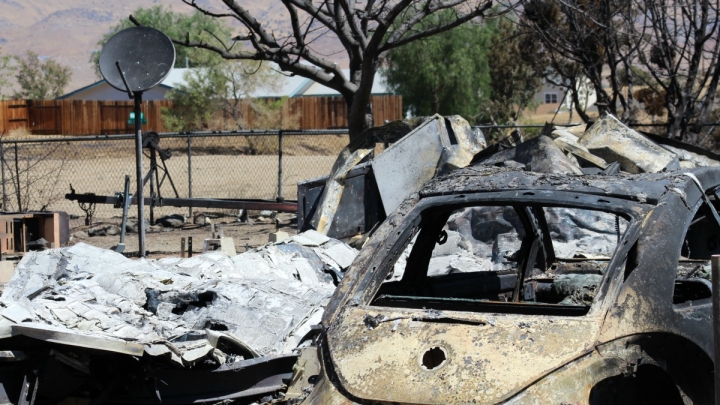
"caption": "The Erskine Fire spread so quickly in southern California earlier this year that some residents died before they could flee.",
"description": null,
"title": "upton_erskine_fire_climate_central",
"credit": "John Upton/Climate Central",
"status": "inherit",
"isLoading": false,
"fetchFailed": false
},
"news_10967212": {
"type": "attachments",
"id": "news_10967212",
"meta": {
"index": "attachments_1716263798",
"site": "news",
"id": "10967212",
"found": true
},
"parent": 10966238,
"imgSizes": {
"twentyfourteen-full-width": {
"file": "https://ww2.kqed.org/app/uploads/sites/10/2016/05/IMG_0612-1024x576.jpg",
"width": 1024,
"mimeType": "image/jpeg",
"height": 576
},
"thumbnail": {
"file": "https://ww2.kqed.org/app/uploads/sites/10/2016/05/IMG_0612-400x300.jpg",
"width": 400,
"mimeType": "image/jpeg",
"height": 300
},
"fd-sm": {
"file": "https://ww2.kqed.org/app/uploads/sites/10/2016/05/IMG_0612-960x720.jpg",
"width": 960,
"mimeType": "image/jpeg",
"height": 720
},
"post-thumbnail": {
"file": "https://ww2.kqed.org/app/uploads/sites/10/2016/05/IMG_0612-672x372.jpg",
"width": 672,
"mimeType": "image/jpeg",
"height": 372
},
"kqedFullSize": {
"file": "https://ww2.kqed.org/app/uploads/sites/10/2016/05/IMG_0612.jpg",
"width": 1024,
"height": 768
},
"guest-author-50": {
"file": "https://ww2.kqed.org/app/uploads/sites/10/2016/05/IMG_0612-50x50.jpg",
"width": 50,
"mimeType": "image/jpeg",
"height": 50
},
"guest-author-96": {
"file": "https://ww2.kqed.org/app/uploads/sites/10/2016/05/IMG_0612-96x96.jpg",
"width": 96,
"mimeType": "image/jpeg",
"height": 96
},
"medium": {
"file": "https://ww2.kqed.org/app/uploads/sites/10/2016/05/IMG_0612-800x600.jpg",
"width": 800,
"mimeType": "image/jpeg",
"height": 600
},
"guest-author-64": {
"file": "https://ww2.kqed.org/app/uploads/sites/10/2016/05/IMG_0612-64x64.jpg",
"width": 64,
"mimeType": "image/jpeg",
"height": 64
},
"guest-author-32": {
"file": "https://ww2.kqed.org/app/uploads/sites/10/2016/05/IMG_0612-32x32.jpg",
"width": 32,
"mimeType": "image/jpeg",
"height": 32
},
"jmtc-small-thumb": {
"file": "https://ww2.kqed.org/app/uploads/sites/10/2016/05/IMG_0612-280x150.jpg",
"width": 280,
"mimeType": "image/jpeg",
"height": 150
},
"detail": {
"file": "https://ww2.kqed.org/app/uploads/sites/10/2016/05/IMG_0612-150x150.jpg",
"width": 150,
"mimeType": "image/jpeg",
"height": 150
},
"guest-author-128": {
"file": "https://ww2.kqed.org/app/uploads/sites/10/2016/05/IMG_0612-128x128.jpg",
"width": 128,
"mimeType": "image/jpeg",
"height": 128
}
},
"publishDate": 1464199617,
"modified": 1475881630,
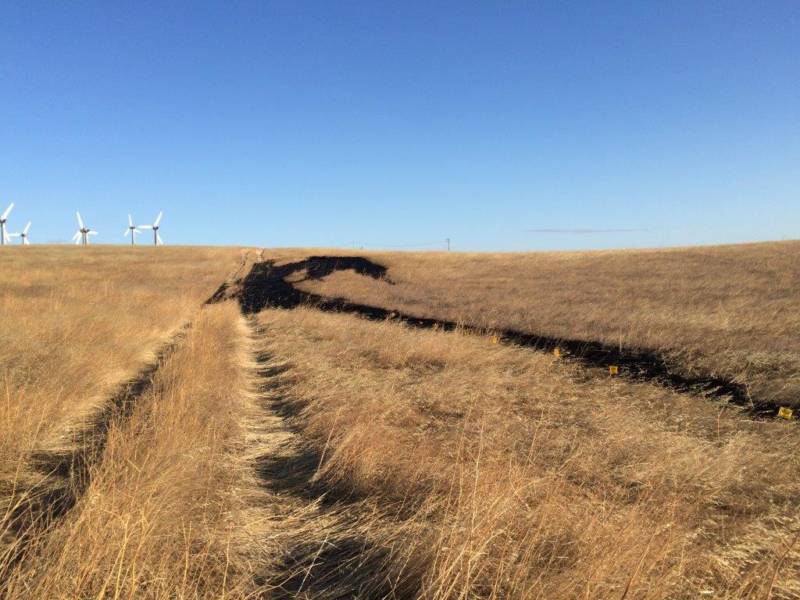
"caption": "A pipeline rupture released about 21,000 gallons of crude in the Altamont Pass near Tracy. The pipeline ruptured on May 20, 2016, and repairs to it were completed May 23.",
"description": null,
"title": "IMG_0612",
"credit": "Courtesy of the San Joaquin County Environmental Health Department",
"status": "inherit",
"isLoading": false,
"fetchFailed": false
},
"science_1054237": {
"type": "attachments",
"id": "science_1054237",
"meta": {
"index": "attachments_1716263798",
"site": "science",
"id": "1054237",
"found": true
},
"parent": 1054235,
"imgSizes": {
"twentyfourteen-full-width": {
"file": "https://ww2.kqed.org/app/uploads/sites/35/2016/10/Brian-Feeney-with-his-electric-car—photo-by-Iris-Schneider-1038x576.jpg",
"width": 1038,
"mimeType": "image/jpeg",
"height": 576
},
"thumbnail": {
"file": "https://ww2.kqed.org/app/uploads/sites/35/2016/10/Brian-Feeney-with-his-electric-car—photo-by-Iris-Schneider-400x237.jpg",
"width": 400,
"mimeType": "image/jpeg",
"height": 237
},
"fd-sm": {
"file": "https://ww2.kqed.org/app/uploads/sites/35/2016/10/Brian-Feeney-with-his-electric-car—photo-by-Iris-Schneider-960x568.jpg",
"width": 960,
"mimeType": "image/jpeg",
"height": 568
},
"post-thumbnail": {
"file": "https://ww2.kqed.org/app/uploads/sites/35/2016/10/Brian-Feeney-with-his-electric-car—photo-by-Iris-Schneider-672x372.jpg",
"width": 672,
"mimeType": "image/jpeg",
"height": 372
},
"kqedFullSize": {
"file": "https://ww2.kqed.org/app/uploads/sites/35/2016/10/Brian-Feeney-with-his-electric-car—photo-by-Iris-Schneider.jpg",
"width": 1568,
"height": 928
},
"large": {
"file": "https://ww2.kqed.org/app/uploads/sites/35/2016/10/Brian-Feeney-with-his-electric-car—photo-by-Iris-Schneider-1440x852.jpg",
"width": 1440,
"mimeType": "image/jpeg",
"height": 852
},
"guest-author-50": {
"file": "https://ww2.kqed.org/app/uploads/sites/35/2016/10/Brian-Feeney-with-his-electric-car—photo-by-Iris-Schneider-50x50.jpg",
"width": 50,
"mimeType": "image/jpeg",
"height": 50
},
"guest-author-96": {
"file": "https://ww2.kqed.org/app/uploads/sites/35/2016/10/Brian-Feeney-with-his-electric-car—photo-by-Iris-Schneider-96x96.jpg",
"width": 96,
"mimeType": "image/jpeg",
"height": 96
},
"medium": {
"file": "https://ww2.kqed.org/app/uploads/sites/35/2016/10/Brian-Feeney-with-his-electric-car—photo-by-Iris-Schneider-800x473.jpg",
"width": 800,
"mimeType": "image/jpeg",
"height": 473
},
"guest-author-64": {
"file": "https://ww2.kqed.org/app/uploads/sites/35/2016/10/Brian-Feeney-with-his-electric-car—photo-by-Iris-Schneider-64x64.jpg",
"width": 64,
"mimeType": "image/jpeg",
"height": 64
},
"guest-author-32": {
"file": "https://ww2.kqed.org/app/uploads/sites/35/2016/10/Brian-Feeney-with-his-electric-car—photo-by-Iris-Schneider-32x32.jpg",
"width": 32,
"mimeType": "image/jpeg",
"height": 32
},
"fd-med": {
"file": "https://ww2.kqed.org/app/uploads/sites/35/2016/10/Brian-Feeney-with-his-electric-car—photo-by-Iris-Schneider-1180x698.jpg",
"width": 1180,
"mimeType": "image/jpeg",
"height": 698
},
"detail": {
"file": "https://ww2.kqed.org/app/uploads/sites/35/2016/10/Brian-Feeney-with-his-electric-car—photo-by-Iris-Schneider-150x150.jpg",
"width": 150,
"mimeType": "image/jpeg",
"height": 150
},
"medium_large": {
"file": "https://ww2.kqed.org/app/uploads/sites/35/2016/10/Brian-Feeney-with-his-electric-car—photo-by-Iris-Schneider-768x455.jpg",
"width": 768,
"mimeType": "image/jpeg",
"height": 455
},
"guest-author-128": {
"file": "https://ww2.kqed.org/app/uploads/sites/35/2016/10/Brian-Feeney-with-his-electric-car—photo-by-Iris-Schneider-128x128.jpg",
"width": 128,
"mimeType": "image/jpeg",
"height": 128
}
},
"publishDate": 1475788353,
"modified": 1475862580,
"caption": "Brian Feeney with his new Nissan Leaf, an electric car.",
"description": "Brian Feeney with his new Nissan Leaf, an electric car.",
"title": "Brian Feeney with his electric car—photo by Iris Schneider",
"credit": "Iris Schneider/CALmatters",
"status": "inherit",
"isLoading": false,
"fetchFailed": false
},
"science_1053998": {
"type": "attachments",
"id": "science_1053998",
"meta": {
"index": "attachments_1716263798",
"site": "science",
"id": "1053998",
"found": true
},
"parent": 1053884,
"imgSizes": {
"twentyfourteen-full-width": {
"file": "https://ww2.kqed.org/app/uploads/sites/35/2016/10/Purified-water-1038x576.jpg",
"width": 1038,
"mimeType": "image/jpeg",
"height": 576
},
"thumbnail": {
"file": "https://ww2.kqed.org/app/uploads/sites/35/2016/10/Purified-water-400x267.jpg",
"width": 400,
"mimeType": "image/jpeg",
"height": 267
},
"fd-sm": {
"file": "https://ww2.kqed.org/app/uploads/sites/35/2016/10/Purified-water-960x641.jpg",
"width": 960,
"mimeType": "image/jpeg",
"height": 641
},
"post-thumbnail": {
"file": "https://ww2.kqed.org/app/uploads/sites/35/2016/10/Purified-water-672x372.jpg",
"width": 672,
"mimeType": "image/jpeg",
"height": 372
},
"kqedFullSize": {
"file": "https://ww2.kqed.org/app/uploads/sites/35/2016/10/Purified-water.jpg",
"width": 1800,
"height": 1202
},
"large": {
"file": "https://ww2.kqed.org/app/uploads/sites/35/2016/10/Purified-water-1440x962.jpg",
"width": 1440,
"mimeType": "image/jpeg",
"height": 962
},
"guest-author-50": {
"file": "https://ww2.kqed.org/app/uploads/sites/35/2016/10/Purified-water-50x50.jpg",
"width": 50,
"mimeType": "image/jpeg",
"height": 50
},
"guest-author-96": {
"file": "https://ww2.kqed.org/app/uploads/sites/35/2016/10/Purified-water-96x96.jpg",
"width": 96,
"mimeType": "image/jpeg",
"height": 96
},
"medium": {
"file": "https://ww2.kqed.org/app/uploads/sites/35/2016/10/Purified-water-800x534.jpg",
"width": 800,
"mimeType": "image/jpeg",
"height": 534
},
"guest-author-64": {
"file": "https://ww2.kqed.org/app/uploads/sites/35/2016/10/Purified-water-64x64.jpg",
"width": 64,
"mimeType": "image/jpeg",
"height": 64
},
"guest-author-32": {
"file": "https://ww2.kqed.org/app/uploads/sites/35/2016/10/Purified-water-32x32.jpg",
"width": 32,
"mimeType": "image/jpeg",
"height": 32
},
"fd-med": {
"file": "https://ww2.kqed.org/app/uploads/sites/35/2016/10/Purified-water-1180x788.jpg",
"width": 1180,
"mimeType": "image/jpeg",
"height": 788
},
"detail": {
"file": "https://ww2.kqed.org/app/uploads/sites/35/2016/10/Purified-water-150x150.jpg",
"width": 150,
"mimeType": "image/jpeg",
"height": 150
},
"medium_large": {
"file": "https://ww2.kqed.org/app/uploads/sites/35/2016/10/Purified-water-768x513.jpg",
"width": 768,
"mimeType": "image/jpeg",
"height": 513
},
"guest-author-128": {
"file": "https://ww2.kqed.org/app/uploads/sites/35/2016/10/Purified-water-128x128.jpg",
"width": 128,
"mimeType": "image/jpeg",
"height": 128
}
},
"publishDate": 1475778099,
"modified": 1475778129,
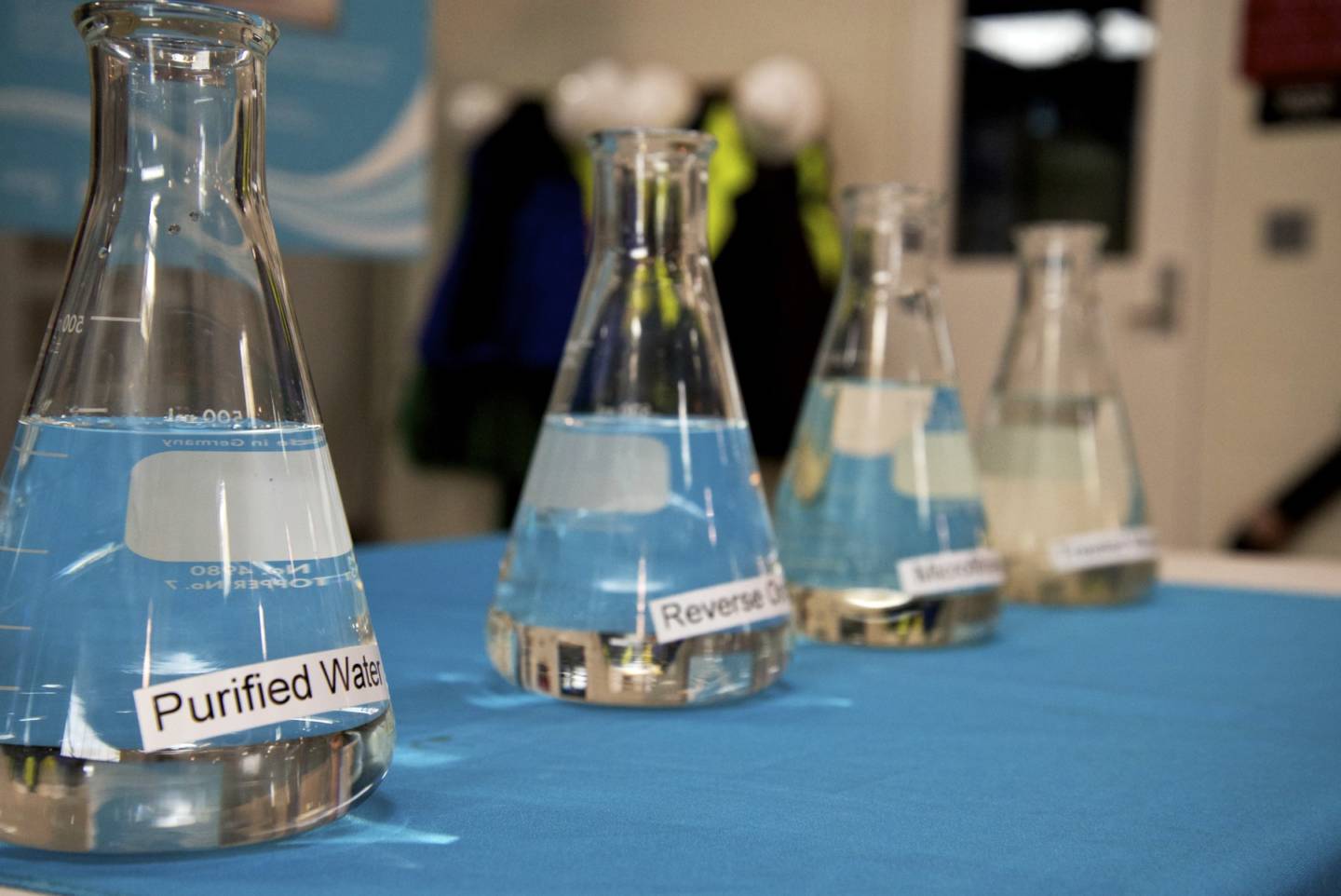
"caption": "Samples of the water purification process at the Silicon Valley Advanced Water Purification Center in San Jose, Calif.",
"description": "Samples of the water purification process at the Silicon Valley Advanced Water Purification Center in San Jose, Calif",
"title": "Purified water",
"credit": "Tara Lohan / Water Deeply",
"status": "inherit",
"isLoading": false,
"fetchFailed": false
},
"news_11117435": {
"type": "attachments",
"id": "news_11117435",
"meta": {
"index": "attachments_1716263798",
"site": "news",
"id": "11117435",
"found": true
},
"parent": 11117425,
"imgSizes": {
"twentyfourteen-full-width": {
"file": "https://ww2.kqed.org/app/uploads/sites/10/2016/10/drought-walnut-creek-1920-1038x576.jpg",
"width": 1038,
"mimeType": "image/jpeg",
"height": 576
},
"thumbnail": {
"file": "https://ww2.kqed.org/app/uploads/sites/10/2016/10/drought-walnut-creek-1920-400x267.jpg",
"width": 400,
"mimeType": "image/jpeg",
"height": 267
},
"fd-sm": {
"file": "https://ww2.kqed.org/app/uploads/sites/10/2016/10/drought-walnut-creek-1920-960x641.jpg",
"width": 960,
"mimeType": "image/jpeg",
"height": 641
},
"post-thumbnail": {
"file": "https://ww2.kqed.org/app/uploads/sites/10/2016/10/drought-walnut-creek-1920-672x372.jpg",
"width": 672,
"mimeType": "image/jpeg",
"height": 372
},
"kqedFullSize": {
"file": "https://ww2.kqed.org/app/uploads/sites/10/2016/10/drought-walnut-creek-1920.jpg",
"width": 1920,
"height": 1281
},
"large": {
"file": "https://ww2.kqed.org/app/uploads/sites/10/2016/10/drought-walnut-creek-1920-1920x1281.jpg",
"width": 1920,
"mimeType": "image/jpeg",
"height": 1281
},
"guest-author-50": {
"file": "https://ww2.kqed.org/app/uploads/sites/10/2016/10/drought-walnut-creek-1920-50x50.jpg",
"width": 50,
"mimeType": "image/jpeg",
"height": 50
},
"guest-author-96": {
"file": "https://ww2.kqed.org/app/uploads/sites/10/2016/10/drought-walnut-creek-1920-96x96.jpg",
"width": 96,
"mimeType": "image/jpeg",
"height": 96
},
"medium": {
"file": "https://ww2.kqed.org/app/uploads/sites/10/2016/10/drought-walnut-creek-1920-800x534.jpg",
"width": 800,
"mimeType": "image/jpeg",
"height": 534
},
"guest-author-64": {
"file": "https://ww2.kqed.org/app/uploads/sites/10/2016/10/drought-walnut-creek-1920-64x64.jpg",
"width": 64,
"mimeType": "image/jpeg",
"height": 64
},
"guest-author-32": {
"file": "https://ww2.kqed.org/app/uploads/sites/10/2016/10/drought-walnut-creek-1920-32x32.jpg",
"width": 32,
"mimeType": "image/jpeg",
"height": 32
},
"jmtc-small-thumb": {
"file": "https://ww2.kqed.org/app/uploads/sites/10/2016/10/drought-walnut-creek-1920-280x150.jpg",
"width": 280,
"mimeType": "image/jpeg",
"height": 150
},
"fd-lrg": {
"file": "https://ww2.kqed.org/app/uploads/sites/10/2016/10/drought-walnut-creek-1920-1920x1281.jpg",
"width": 1920,
"mimeType": "image/jpeg",
"height": 1281
},
"fd-med": {
"file": "https://ww2.kqed.org/app/uploads/sites/10/2016/10/drought-walnut-creek-1920-1180x787.jpg",
"width": 1180,
"mimeType": "image/jpeg",
"height": 787
},
"detail": {
"file": "https://ww2.kqed.org/app/uploads/sites/10/2016/10/drought-walnut-creek-1920-150x150.jpg",
"width": 150,
"mimeType": "image/jpeg",
"height": 150
},
"guest-author-128": {
"file": "https://ww2.kqed.org/app/uploads/sites/10/2016/10/drought-walnut-creek-1920-128x128.jpg",
"width": 128,
"mimeType": "image/jpeg",
"height": 128
}
},
"publishDate": 1475702686,
"modified": 1663681311,
"caption": null,
"description": " A sprinkler waters a lawn on April 7, 2015, in Walnut Creek.",
"title": "drought-walnut-creek-1920",
"credit": "Justin Sullivan/Getty Images",
"status": "inherit",
"altTag": "Drought water",
"isLoading": false,
"fetchFailed": false
},
"science_1046463": {
"type": "attachments",
"id": "science_1046463",
"meta": {
"index": "attachments_1716263798",
"site": "science",
"id": "1046463",
"found": true
},
"parent": 1046457,
"imgSizes": {
"twentyfourteen-full-width": {
"file": "https://ww2.kqed.org/app/uploads/sites/35/2016/10/yellow-legged-frog-1038x576.jpg",
"width": 1038,
"mimeType": "image/jpeg",
"height": 576
},
"thumbnail": {
"file": "https://ww2.kqed.org/app/uploads/sites/35/2016/10/yellow-legged-frog-400x215.jpg",
"width": 400,
"mimeType": "image/jpeg",
"height": 215
},
"fd-sm": {
"file": "https://ww2.kqed.org/app/uploads/sites/35/2016/10/yellow-legged-frog-960x516.jpg",
"width": 960,
"mimeType": "image/jpeg",
"height": 516
},
"post-thumbnail": {
"file": "https://ww2.kqed.org/app/uploads/sites/35/2016/10/yellow-legged-frog-672x372.jpg",
"width": 672,
"mimeType": "image/jpeg",
"height": 372
},
"kqedFullSize": {
"file": "https://ww2.kqed.org/app/uploads/sites/35/2016/10/yellow-legged-frog.jpg",
"width": 1440,
"height": 774
},
"large": {
"file": "https://ww2.kqed.org/app/uploads/sites/35/2016/10/yellow-legged-frog-1440x774.jpg",
"width": 1440,
"mimeType": "image/jpeg",
"height": 774
},
"guest-author-50": {
"file": "https://ww2.kqed.org/app/uploads/sites/35/2016/10/yellow-legged-frog-50x50.jpg",
"width": 50,
"mimeType": "image/jpeg",
"height": 50
},
"guest-author-96": {
"file": "https://ww2.kqed.org/app/uploads/sites/35/2016/10/yellow-legged-frog-96x96.jpg",
"width": 96,
"mimeType": "image/jpeg",
"height": 96
},
"medium": {
"file": "https://ww2.kqed.org/app/uploads/sites/35/2016/10/yellow-legged-frog-800x430.jpg",
"width": 800,
"mimeType": "image/jpeg",
"height": 430
},
"guest-author-64": {
"file": "https://ww2.kqed.org/app/uploads/sites/35/2016/10/yellow-legged-frog-64x64.jpg",
"width": 64,
"mimeType": "image/jpeg",
"height": 64
},
"guest-author-32": {
"file": "https://ww2.kqed.org/app/uploads/sites/35/2016/10/yellow-legged-frog-32x32.jpg",
"width": 32,
"mimeType": "image/jpeg",
"height": 32
},
"fd-med": {
"file": "https://ww2.kqed.org/app/uploads/sites/35/2016/10/yellow-legged-frog-1180x634.jpg",
"width": 1180,
"mimeType": "image/jpeg",
"height": 634
},
"detail": {
"file": "https://ww2.kqed.org/app/uploads/sites/35/2016/10/yellow-legged-frog-150x150.jpg",
"width": 150,
"mimeType": "image/jpeg",
"height": 150
},
"medium_large": {
"file": "https://ww2.kqed.org/app/uploads/sites/35/2016/10/yellow-legged-frog-768x413.jpg",
"width": 768,
"mimeType": "image/jpeg",
"height": 413
},
"guest-author-128": {
"file": "https://ww2.kqed.org/app/uploads/sites/35/2016/10/yellow-legged-frog-128x128.jpg",
"width": 128,
"mimeType": "image/jpeg",
"height": 128
}
},
"publishDate": 1475538713,
"modified": 1475538766,
"caption": "A mountain yellow-legged frog.",
"description": null,
"title": "yellow-legged frog",
"credit": "Lauren Sommer/KQED",
"status": "inherit",
"isLoading": false,
"fetchFailed": false
},
"news_11114857": {
"type": "attachments",
"id": "news_11114857",
"meta": {
"index": "attachments_1716263798",
"site": "news",
"id": "11114857",
"found": true
},
"parent": 11114787,
"imgSizes": {
"twentyfourteen-full-width": {
"file": "https://ww2.kqed.org/app/uploads/sites/10/2016/10/Fire1-1024x576.jpg",
"width": 1024,
"mimeType": "image/jpeg",
"height": 576
},
"thumbnail": {
"file": "https://ww2.kqed.org/app/uploads/sites/10/2016/10/Fire1-400x266.jpg",
"width": 400,
"mimeType": "image/jpeg",
"height": 266
},
"fd-sm": {
"file": "https://ww2.kqed.org/app/uploads/sites/10/2016/10/Fire1-960x639.jpg",
"width": 960,
"mimeType": "image/jpeg",
"height": 639
},
"post-thumbnail": {
"file": "https://ww2.kqed.org/app/uploads/sites/10/2016/10/Fire1-672x372.jpg",
"width": 672,
"mimeType": "image/jpeg",
"height": 372
},
"kqedFullSize": {
"file": "https://ww2.kqed.org/app/uploads/sites/10/2016/10/Fire1.jpg",
"width": 1024,
"height": 682
},
"guest-author-50": {
"file": "https://ww2.kqed.org/app/uploads/sites/10/2016/10/Fire1-50x50.jpg",
"width": 50,
"mimeType": "image/jpeg",
"height": 50
},
"guest-author-96": {
"file": "https://ww2.kqed.org/app/uploads/sites/10/2016/10/Fire1-96x96.jpg",
"width": 96,
"mimeType": "image/jpeg",
"height": 96
},
"medium": {
"file": "https://ww2.kqed.org/app/uploads/sites/10/2016/10/Fire1-800x533.jpg",
"width": 800,
"mimeType": "image/jpeg",
"height": 533
},
"guest-author-64": {
"file": "https://ww2.kqed.org/app/uploads/sites/10/2016/10/Fire1-64x64.jpg",
"width": 64,
"mimeType": "image/jpeg",
"height": 64
},
"guest-author-32": {
"file": "https://ww2.kqed.org/app/uploads/sites/10/2016/10/Fire1-32x32.jpg",
"width": 32,
"mimeType": "image/jpeg",
"height": 32
},
"jmtc-small-thumb": {
"file": "https://ww2.kqed.org/app/uploads/sites/10/2016/10/Fire1-280x150.jpg",
"width": 280,
"mimeType": "image/jpeg",
"height": 150
},
"detail": {
"file": "https://ww2.kqed.org/app/uploads/sites/10/2016/10/Fire1-150x150.jpg",
"width": 150,
"mimeType": "image/jpeg",
"height": 150
},
"guest-author-128": {
"file": "https://ww2.kqed.org/app/uploads/sites/10/2016/10/Fire1-128x128.jpg",
"width": 128,
"mimeType": "image/jpeg",
"height": 128
}
},
"publishDate": 1475531836,
"modified": 1475531999,
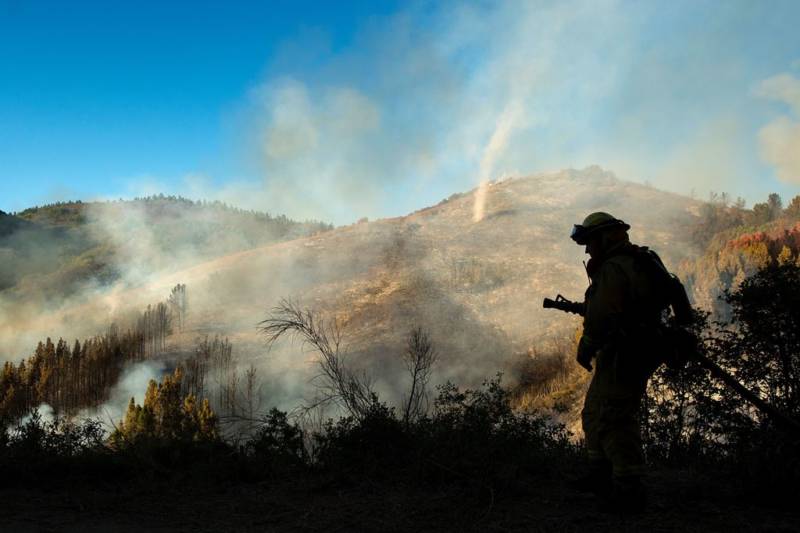
"caption": "A firefighter walks with a hose as a dust devil kicks up along a charred hillside in the Santa Cruz Mountains near Morgan Hill, California. ",
"description": null,
"title": null,
"credit": "Josh Edelson/AFP/Getty Images",
"status": "inherit",
"isLoading": false,
"fetchFailed": false
},
"science_1046219": {
"type": "attachments",
"id": "science_1046219",
"meta": {
"index": "attachments_1716263798",
"site": "science",
"id": "1046219",
"found": true
},
"parent": 1046215,
"imgSizes": {
"thumbnail": {
"file": "https://ww2.kqed.org/app/uploads/sites/35/2016/10/DearTomorrow_climate-central-400x300.jpg",
"width": 400,
"mimeType": "image/jpeg",
"height": 300
},
"post-thumbnail": {
"file": "https://ww2.kqed.org/app/uploads/sites/35/2016/10/DearTomorrow_climate-central-672x372.jpg",
"width": 672,
"mimeType": "image/jpeg",
"height": 372
},
"kqedFullSize": {
"file": "https://ww2.kqed.org/app/uploads/sites/35/2016/10/DearTomorrow_climate-central.jpg",
"width": 720,
"height": 540
},
"guest-author-50": {
"file": "https://ww2.kqed.org/app/uploads/sites/35/2016/10/DearTomorrow_climate-central-50x50.jpg",
"width": 50,
"mimeType": "image/jpeg",
"height": 50
},
"guest-author-96": {
"file": "https://ww2.kqed.org/app/uploads/sites/35/2016/10/DearTomorrow_climate-central-96x96.jpg",
"width": 96,
"mimeType": "image/jpeg",
"height": 96
},
"guest-author-64": {
"file": "https://ww2.kqed.org/app/uploads/sites/35/2016/10/DearTomorrow_climate-central-64x64.jpg",
"width": 64,
"mimeType": "image/jpeg",
"height": 64
},
"detail": {
"file": "https://ww2.kqed.org/app/uploads/sites/35/2016/10/DearTomorrow_climate-central-150x150.jpg",
"width": 150,
"mimeType": "image/jpeg",
"height": 150
},
"guest-author-32": {
"file": "https://ww2.kqed.org/app/uploads/sites/35/2016/10/DearTomorrow_climate-central-32x32.jpg",
"width": 32,
"mimeType": "image/jpeg",
"height": 32
},
"guest-author-128": {
"file": "https://ww2.kqed.org/app/uploads/sites/35/2016/10/DearTomorrow_climate-central-128x128.jpg",
"width": 128,
"mimeType": "image/jpeg",
"height": 128
}
},
"publishDate": 1475532101,
"modified": 1475532159,
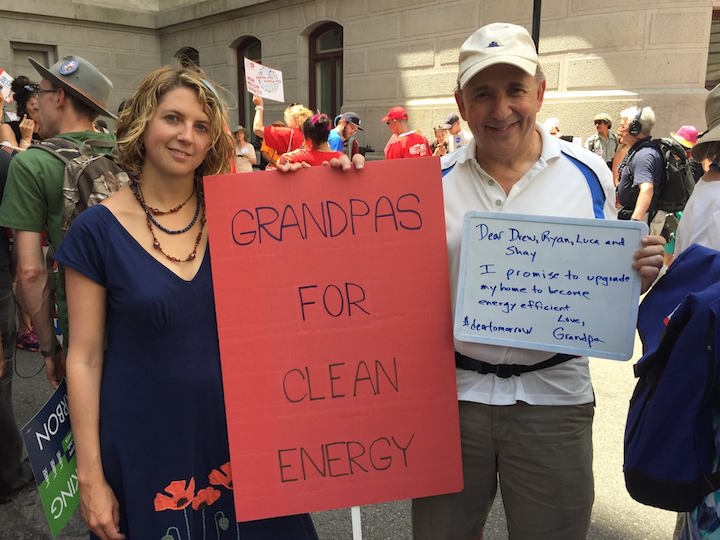
"caption": "A DearTomorrow message documented at the March for a Clean Energy Revolution in July 2016.\n",
"description": null,
"title": "DearTomorrow_climate central",
"credit": "\u003ca href=\"https://www.facebook.com/DearTomorrow/photos/a.1596655740588133.1073741828.1593032114283829/1730073390579700/?type=3&theater\">DearTomorrow\u003c/a>/Facebook",
"status": "inherit",
"isLoading": false,
"fetchFailed": false
},
"science_1046097": {
"type": "attachments",
"id": "science_1046097",
"meta": {
"index": "attachments_1716263798",
"site": "science",
"id": "1046097",
"found": true
},
"parent": 1046091,
"imgSizes": {
"twentyfourteen-full-width": {
"file": "https://ww2.kqed.org/app/uploads/sites/35/2016/10/yellow-faced-bee-1038x576.jpg",
"width": 1038,
"mimeType": "image/jpeg",
"height": 576
},
"thumbnail": {
"file": "https://ww2.kqed.org/app/uploads/sites/35/2016/10/yellow-faced-bee-400x300.jpg",
"width": 400,
"mimeType": "image/jpeg",
"height": 300
},
"fd-sm": {
"file": "https://ww2.kqed.org/app/uploads/sites/35/2016/10/yellow-faced-bee-960x720.jpg",
"width": 960,
"mimeType": "image/jpeg",
"height": 720
},
"post-thumbnail": {
"file": "https://ww2.kqed.org/app/uploads/sites/35/2016/10/yellow-faced-bee-672x372.jpg",
"width": 672,
"mimeType": "image/jpeg",
"height": 372
},
"kqedFullSize": {
"file": "https://ww2.kqed.org/app/uploads/sites/35/2016/10/yellow-faced-bee.jpg",
"width": 1600,
"height": 1200
},
"large": {
"file": "https://ww2.kqed.org/app/uploads/sites/35/2016/10/yellow-faced-bee-1440x1080.jpg",
"width": 1440,
"mimeType": "image/jpeg",
"height": 1080
},
"guest-author-50": {
"file": "https://ww2.kqed.org/app/uploads/sites/35/2016/10/yellow-faced-bee-50x50.jpg",
"width": 50,
"mimeType": "image/jpeg",
"height": 50
},
"guest-author-96": {
"file": "https://ww2.kqed.org/app/uploads/sites/35/2016/10/yellow-faced-bee-96x96.jpg",
"width": 96,
"mimeType": "image/jpeg",
"height": 96
},
"medium": {
"file": "https://ww2.kqed.org/app/uploads/sites/35/2016/10/yellow-faced-bee-800x600.jpg",
"width": 800,
"mimeType": "image/jpeg",
"height": 600
},
"guest-author-64": {
"file": "https://ww2.kqed.org/app/uploads/sites/35/2016/10/yellow-faced-bee-64x64.jpg",
"width": 64,
"mimeType": "image/jpeg",
"height": 64
},
"guest-author-32": {
"file": "https://ww2.kqed.org/app/uploads/sites/35/2016/10/yellow-faced-bee-32x32.jpg",
"width": 32,
"mimeType": "image/jpeg",
"height": 32
},
"fd-med": {
"file": "https://ww2.kqed.org/app/uploads/sites/35/2016/10/yellow-faced-bee-1180x885.jpg",
"width": 1180,
"mimeType": "image/jpeg",
"height": 885
},
"detail": {
"file": "https://ww2.kqed.org/app/uploads/sites/35/2016/10/yellow-faced-bee-150x150.jpg",
"width": 150,
"mimeType": "image/jpeg",
"height": 150
},
"medium_large": {
"file": "https://ww2.kqed.org/app/uploads/sites/35/2016/10/yellow-faced-bee-768x576.jpg",
"width": 768,
"mimeType": "image/jpeg",
"height": 576
},
"guest-author-128": {
"file": "https://ww2.kqed.org/app/uploads/sites/35/2016/10/yellow-faced-bee-128x128.jpg",
"width": 128,
"mimeType": "image/jpeg",
"height": 128
}
},
"publishDate": 1475527999,
"modified": 1475528217,
"caption": "A yellow-faced bee on a flower in Kauai, Hawaii.",
"description": null,
"title": "yellow faced bee",
"credit": "\u003ca href=\"https://www.flickr.com/photos/starr-environmental/23918680354/in/photolist-E1wKpH-Dc3MWN-EghxJ6-DGE5zj-DKaXV6-E1BGy1-DXpcDQ-DuRxgj-DN96VE-EcWexj-DaQXtJ-Eqg61u-DU6jrk-CrBumA-DYkQeN-EpvYQZ-EhMe8L-E1sKmy-EterRx-DU6neV-8UryGv-DscX6F-EsJPbe-Dd1xCV-EgmKRp-8oKiE3-EpvYtg-E7ASw5\" target=\"_blank\">Forest and Kim Starr/flickr\u003c/a>",
"status": "inherit",
"isLoading": false,
"fetchFailed": false
},
"news_11110782": {
"type": "attachments",
"id": "news_11110782",
"meta": {
"index": "attachments_1716263798",
"site": "news",
"id": "11110782",
"found": true
},
"parent": 11110781,
"imgSizes": {
"twentyfourteen-full-width": {
"file": "https://ww2.kqed.org/app/uploads/sites/10/2016/09/dental-infections-1_enl-521a1a825238b42fdbecff6c93bfac5ac4d25886-1038x576.jpg",
"width": 1038,
"mimeType": "image/jpeg",
"height": 576
},
"thumbnail": {
"file": "https://ww2.kqed.org/app/uploads/sites/10/2016/09/dental-infections-1_enl-521a1a825238b42fdbecff6c93bfac5ac4d25886-400x269.jpg",
"width": 400,
"mimeType": "image/jpeg",
"height": 269
},
"fd-sm": {
"file": "https://ww2.kqed.org/app/uploads/sites/10/2016/09/dental-infections-1_enl-521a1a825238b42fdbecff6c93bfac5ac4d25886-960x646.jpg",
"width": 960,
"mimeType": "image/jpeg",
"height": 646
},
"post-thumbnail": {
"file": "https://ww2.kqed.org/app/uploads/sites/10/2016/09/dental-infections-1_enl-521a1a825238b42fdbecff6c93bfac5ac4d25886-672x372.jpg",
"width": 672,
"mimeType": "image/jpeg",
"height": 372
},
"kqedFullSize": {
"file": "https://ww2.kqed.org/app/uploads/sites/10/2016/09/dental-infections-1_enl-521a1a825238b42fdbecff6c93bfac5ac4d25886.jpg",
"width": 1197,
"height": 805
},
"guest-author-50": {
"file": "https://ww2.kqed.org/app/uploads/sites/10/2016/09/dental-infections-1_enl-521a1a825238b42fdbecff6c93bfac5ac4d25886-50x50.jpg",
"width": 50,
"mimeType": "image/jpeg",
"height": 50
},
"guest-author-96": {
"file": "https://ww2.kqed.org/app/uploads/sites/10/2016/09/dental-infections-1_enl-521a1a825238b42fdbecff6c93bfac5ac4d25886-96x96.jpg",
"width": 96,
"mimeType": "image/jpeg",
"height": 96
},
"medium": {
"file": "https://ww2.kqed.org/app/uploads/sites/10/2016/09/dental-infections-1_enl-521a1a825238b42fdbecff6c93bfac5ac4d25886-800x538.jpg",
"width": 800,
"mimeType": "image/jpeg",
"height": 538
},
"guest-author-64": {
"file": "https://ww2.kqed.org/app/uploads/sites/10/2016/09/dental-infections-1_enl-521a1a825238b42fdbecff6c93bfac5ac4d25886-64x64.jpg",
"width": 64,
"mimeType": "image/jpeg",
"height": 64
},
"guest-author-32": {
"file": "https://ww2.kqed.org/app/uploads/sites/10/2016/09/dental-infections-1_enl-521a1a825238b42fdbecff6c93bfac5ac4d25886-32x32.jpg",
"width": 32,
"mimeType": "image/jpeg",
"height": 32
},
"jmtc-small-thumb": {
"file": "https://ww2.kqed.org/app/uploads/sites/10/2016/09/dental-infections-1_enl-521a1a825238b42fdbecff6c93bfac5ac4d25886-280x150.jpg",
"width": 280,
"mimeType": "image/jpeg",
"height": 150
},
"fd-med": {
"file": "https://ww2.kqed.org/app/uploads/sites/10/2016/09/dental-infections-1_enl-521a1a825238b42fdbecff6c93bfac5ac4d25886-1180x794.jpg",
"width": 1180,
"mimeType": "image/jpeg",
"height": 794
},
"detail": {
"file": "https://ww2.kqed.org/app/uploads/sites/10/2016/09/dental-infections-1_enl-521a1a825238b42fdbecff6c93bfac5ac4d25886-150x150.jpg",
"width": 150,
"mimeType": "image/jpeg",
"height": 150
},
"guest-author-128": {
"file": "https://ww2.kqed.org/app/uploads/sites/10/2016/09/dental-infections-1_enl-521a1a825238b42fdbecff6c93bfac5ac4d25886-128x128.jpg",
"width": 128,
"mimeType": "image/jpeg",
"height": 128
}
},
"publishDate": 1475260176,
"modified": 1475262415,
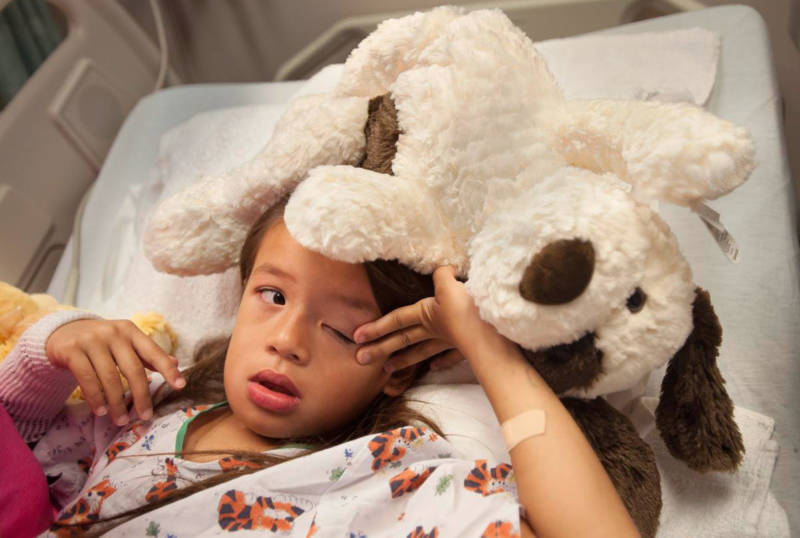
"caption": "Mimi Morales recovers in Children's Hospital of Orange Country in late September after surgery for a dental infection she contracted at Children's Dental Group in Anaheim, Calif. She had three permanent teeth, one baby tooth and part of her jawbone removed.",
"description": null,
"title": "dental-infections-1_enl-521a1a825238b42fdbecff6c93bfac5ac4d25886",
"credit": "Mindy Schauer/\u003ca href=\"http://www.ocregister.com/articles/mimi-730242-morales-children.html\">The Orange County Register\u003c/a>",
"status": "inherit",
"isLoading": false,
"fetchFailed": false
}
},
"audioPlayerReducer": {
"postId": "stream_live",
"isPaused": true,
"isPlaying": false,
"pfsActive": false,
"pledgeModalIsOpen": true,
"playerDrawerIsOpen": false,
"liveAudioPlayStartedAt": 0,
"liveAudioPlayContext": ""
},
"authorsReducer": {
"byline_news_11127324": {
"type": "authors",
"id": "byline_news_11127324",
"meta": {
"override": true
},
"slug": "byline_news_11127324",
"name": "Rebecca Hersher",
"isLoading": false
},
"byline_science_1065453": {
"type": "authors",
"id": "byline_science_1065453",
"meta": {
"override": true
},
"slug": "byline_science_1065453",
"name": "John Upton\u003c/br>Climate Central",
"isLoading": false
},
"byline_science_1054235": {
"type": "authors",
"id": "byline_science_1054235",
"meta": {
"override": true
},
"slug": "byline_science_1054235",
"name": "Julie Cart\u003c/br>CALmatters",
"isLoading": false
},
"byline_science_1053884": {
"type": "authors",
"id": "byline_science_1053884",
"meta": {
"override": true
},
"slug": "byline_science_1053884",
"name": "Tara Lohan \u003c/br> Water Deeply",
"isLoading": false
},
"byline_news_11117425": {
"type": "authors",
"id": "byline_news_11117425",
"meta": {
"override": true
},
"slug": "byline_news_11117425",
"name": "\u003cstrong>Scott Smith and Ellen Knickmeyer\u003cbr />Associated Press\u003c/strong>",
"isLoading": false
},
"byline_science_1046457": {
"type": "authors",
"id": "byline_science_1046457",
"meta": {
"override": true
},
"slug": "byline_science_1046457",
"name": "Scott Smith\u003c/br>Associated Press",
"isLoading": false
},
"byline_news_11114787": {
"type": "authors",
"id": "byline_news_11114787",
"meta": {
"override": true
},
"slug": "byline_news_11114787",
"name": "\u003cstrong>\u003ca href=\"http://www.npr.org/people/384067907/rebecca-hersher\">Rebecca Hersher\u003c/a>\u003cbr>\u003ca href=\"http://www.npr.org\">NPR\u003c/a>\u003c/strong>",
"isLoading": false
},
"byline_science_1046215": {
"type": "authors",
"id": "byline_science_1046215",
"meta": {
"override": true
},
"slug": "byline_science_1046215",
"name": "Brian Kahn\u003c/br>Climate Central",
"isLoading": false
},
"byline_science_1046091": {
"type": "authors",
"id": "byline_science_1046091",
"meta": {
"override": true
},
"slug": "byline_science_1046091",
"name": "Merrit Kennedy\u003c/br>NPR",
"isLoading": false
},
"byline_news_11110781": {
"type": "authors",
"id": "byline_news_11110781",
"meta": {
"override": true
},
"slug": "byline_news_11110781",
"name": "\u003cstrong>Erin Ross\u003c/strong>",
"isLoading": false
},
"tgoldberg": {
"type": "authors",
"id": "258",
"meta": {
"index": "authors_1716337520",
"id": "258",
"found": true
},
"name": "Ted Goldberg",
"firstName": "Ted",
"lastName": "Goldberg",
"slug": "tgoldberg",
"email": "tgoldberg@kqed.org",
"display_author_email": true,
"staff_mastheads": [
"news"
],
"title": "KQED Managing Editor, News and Newscasts",
"bio": "Ted Goldberg is Managing Editor of News and Newscasts at KQED. His main reporting beat is the Bay Area's oil refining industry.\r\n\r\nPrior to joining KQED in 2014, Ted worked at CBS News and WCBS AM in New York and Bay City News and KCBS Radio in San Francisco. He graduated from Oberlin College in Ohio in 1998.",
"avatar": "https://secure.gravatar.com/avatar/30ce2e4fe89135e104f89be2394d16225b9d36c121b5b3cb7651ce642978b96f?s=600&d=blank&r=g",
"twitter": "TedrickG",
"bluesky": null,
"facebook": null,
"instagram": null,
"linkedin": null,
"sites": [
{
"site": "news",
"roles": [
"editor"
]
},
{
"site": "science",
"roles": [
"editor"
]
}
],
"headData": {
"title": "Ted Goldberg | KQED",
"description": "KQED Managing Editor, News and Newscasts",
"ogImgSrc": "https://secure.gravatar.com/avatar/30ce2e4fe89135e104f89be2394d16225b9d36c121b5b3cb7651ce642978b96f?s=600&d=blank&r=g",
"twImgSrc": "https://secure.gravatar.com/avatar/30ce2e4fe89135e104f89be2394d16225b9d36c121b5b3cb7651ce642978b96f?s=600&d=blank&r=g"
},
"isLoading": false,
"link": "/author/tgoldberg"
},
"lindseyhoshaw": {
"type": "authors",
"id": "5432",
"meta": {
"index": "authors_1716337520",
"id": "5432",
"found": true
},
"name": "Lindsey Hoshaw",
"firstName": "Lindsey",
"lastName": "Hoshaw",
"slug": "lindseyhoshaw",
"email": "lhoshaw@kqed.org",
"display_author_email": false,
"staff_mastheads": [],
"title": "KQED Contributor",
"bio": "Lindsey Hoshaw is a former interactive producer for KQED Science. Before joining KQED, Lindsey was a science correspondent for The New York Times, The Boston Globe, Forbes and Scientific American. On Twitter @lindseyhoshaw",
"avatar": "https://secure.gravatar.com/avatar/274b07694c998eaa8f26cfabaa941186?s=600&d=mm&r=g",
"twitter": "lindseyhoshaw",
"facebook": "lindsey.hoshaw.9",
"instagram": null,
"linkedin": null,
"sites": [
{
"site": "arts",
"roles": [
"author"
]
},
{
"site": "news",
"roles": [
"subscriber"
]
},
{
"site": "futureofyou",
"roles": [
"editor"
]
},
{
"site": "bayareabites",
"roles": [
"contributor"
]
},
{
"site": "stateofhealth",
"roles": [
"author"
]
},
{
"site": "science",
"roles": [
"edit_theme_options",
"subscriber"
]
},
{
"site": "quest",
"roles": [
"edit_post_subscriptions",
"edit_usergroups",
"unfiltered_html",
"unfiltered_upload",
"leadcoordinator",
"editor"
]
},
{
"site": "food",
"roles": []
}
],
"headData": {
"title": "Lindsey Hoshaw | KQED",
"description": "KQED Contributor",
"ogImgSrc": "https://secure.gravatar.com/avatar/274b07694c998eaa8f26cfabaa941186?s=600&d=mm&r=g",
"twImgSrc": "https://secure.gravatar.com/avatar/274b07694c998eaa8f26cfabaa941186?s=600&d=mm&r=g"
},
"isLoading": false,
"link": "/author/lindseyhoshaw"
}
},
"pagesReducer": {
"science_category_environment": {
"type": "terms",
"id": "science_35",
"meta": {
"index": "terms_1716263798",
"site": "science",
"id": "35",
"score": 12.138481
},
"featImg": null,
"name": "Environment",
"description": null,
"taxonomy": "category",
"headData": {
"twImgId": null,
"twTitle": null,
"ogTitle": null,
"ogImgId": null,
"twDescription": null,
"description": null,
"title": "Environment Archives | KQED Science",
"ogDescription": null
},
"ttid": 37,
"slug": "environment",
"isLoading": false,
"title": "Environment",
"pageMeta": {
"site": "science",
"WpPageTemplate": "page-topic-editorial",
"currentPage": 133
},
"blocks": [
{
"blockName": "kqed/post-list",
"attrs": {
"layout": "cardArticle2",
"query": "posts/science?category=environment",
"seeMore": false,
"paginated": true,
"page": 133
}
},
{
"blockName": "kqed/ad"
}
]
}
},
"pfsSessionReducer": {},
"postsReducer": {
"stream_live": {
"type": "live",
"id": "stream_live",
"audioUrl": "https://streams.kqed.org/kqedradio",
"title": "Live Stream",
"excerpt": "Live Stream information currently unavailable.",
"link": "/radio",
"featImg": "",
"label": {
"name": "KQED Live",
"link": "/"
}
},
"stream_kqedNewscast": {
"type": "posts",
"id": "stream_kqedNewscast",
"audioUrl": "https://www.kqed.org/.stream/anon/radio/RDnews/newscast.mp3?_=1",
"title": "KQED Newscast",
"featImg": "",
"label": {
"name": "88.5 FM",
"link": "/"
}
},
"news_11127324": {
"type": "posts",
"id": "news_11127324",
"meta": {
"index": "posts_1716263798",
"site": "news",
"id": "11127324",
"score": null,
"sort": [
1476352848000
]
},
"guestAuthors": [],
"slug": "protests-disrupt-pipelines-across-the-west",
"title": "Protests Disrupt Pipelines Across the Northern U.S.",
"publishDate": 1476352848,
"format": "image",
"headTitle": "Protests Disrupt Pipelines Across the Northern U.S. | KQED",
"labelTerm": {},
"content": "\u003cp>The fight over transporting crude oil has spread across the northern U.S., with protesters disrupting pipelines that carry crude from Canada into the U.S. At least one protester has been injured and dozens have been arrested since Monday.\u003c/p>\n\u003cp>The unrest, in communities from Minnesota to Washington state, is connected in each case to the ongoing battle over an oil pipeline under construction in North Dakota. Since it was approved by the U.S. Army Corps of Engineers \u003ca href=\"http://www.npr.org/2016/08/25/491377956/native-americans-protest-new-oil-pipeline-in-north-dakota\">over the summer\u003c/a>, more than \u003ca href=\"http://www.npr.org/2016/09/12/493532162/n-d-pipeline-protester-its-about-our-rights-as-native-people\">1,000 people\u003c/a> have protested against the Dakota Access Pipeline — specifically the portion that is slated to run under a river near the Standing Rock Sioux Reservation in North Dakota.\u003c/p>\n\u003cp>The Standing Rock Sioux Tribe opposes the pipeline because they say the route crosses \u003ca href=\"https://www.documentcloud.org/documents/3098063-Mentz.html\">sacred sites and burial places\u003c/a>, and they are concerned that if the pipeline ruptures, an oil spill could pollute drinking water.\u003c/p>\n\u003cp>Construction had \u003ca href=\"https://www.documentcloud.org/documents/3097679-Standing-Rock-Sioux-Tribe-Army-Corps.html\">temporarily halted\u003c/a> while the courts reviewed the tribe’s complaints, but \u003ca href=\"http://www.pbs.org/newshour/rundown/weekend-court-decision-restarts-dakota-access-pipeline-construction-private-lands/\">on Sunday\u003c/a> a federal appeals court paved the way for building to resume.\u003c/p>\n\u003cp>That was when two days of clashes began.\u003c/p>\n\u003cp>[ad fullwidth]\u003c/p>\n\u003cp>https://twitter.com/NewsHour/status/786197730481827840\u003c/p>\n\u003cp>On Monday morning, the company building the Dakota Access Pipeline — Energy Transfer Partners — went ahead with construction, despite a \u003ca href=\"https://www.justice.gov/opa/pr/joint-statement-department-justice-department-army-and-department-interior-regarding-dc\">joint statement\u003c/a> from the U.S. Departments of Justice, Army and Interior requesting that they voluntarily pause until the Corps finishes its review of the pipeline’s entire route.\u003c/p>\n\u003cp>That day, 27 people near the Standing Rock Sioux Reservation were arrested for what the local sheriff called a “riot,” \u003ca href=\"http://bismarcktribune.com/news/state-and-regional/arrests-made-at-st-anthony-protest-sites/article_ba8d2aab-cf9c-5fa1-a268-46661bb51966.html\">according to the Bismarck Tribune\u003c/a>.\u003c/p>\n\u003cp>Meanwhile, a Columbus Day protest in Reno, Nevada, turned dangerous when a pickup truck barreled through a crowd of people demonstrating for Native American land rights, hurting several people and seriously injuring one woman, \u003ca href=\"https://www.google.com/url?sa=t&rct=j&q=&esrc=s&source=web&cd=1&cad=rja&uact=8&ved=0ahUKEwj20e6759XPAhXDVyYKHS-BBGYQqQIIHTAA&url=http%3A%2F%2Fwww.rgj.com%2Fstory%2Fnews%2Fcrime%2F2016%2F10%2F10%2Fdriver-plows-through-reno-protesters-under-arch%2F91883894%2F&usg=AFQjCNFXMBv7UAcU4LMGxDkfTL1zZHz3aQ&sig2=EoJiFfeZsfSuGBSXgeV9_w&bvm=bv.135475266,d.eWE\">according to the Reno Gazette-Journal\u003c/a>.\u003c/p>\n\u003cp>\u003ca href=\"https://www.facebook.com/100010016970938/videos/349103885433508/\">Audio from the scene appeared to capture\u003c/a> the pickup truck revving its engine before accelerating into a crosswalk. The Reno Police Department \u003ca href=\"https://www.google.com/url?sa=t&rct=j&q=&esrc=s&source=web&cd=4&cad=rja&uact=8&ved=0ahUKEwjGueGf8dXPAhWG6iYKHSqZBoIQFgglMAM&url=http%3A%2F%2Fwww.rgj.com%2Fstory%2Fnews%2Fcrime%2F2016%2F10%2F11%2Fupdate-reno-arch-incident%2F91903256%2F&usg=AFQjCNHzv31n3QOrzNPvnxKrM02hSDSs9Q&sig2=H43W5ErhK7sMrtvXN2aXJw&bvm=bv.135475266,d.eWE\">told the paper\u003c/a> they are investigating the incident and have not arrested the driver.\u003c/p>\n\u003cp>[contextly_sidebar id=”pDfklo2TQNITUAAaDuum19HIeiBU94eY”]\u003c/p>\n\u003cp>Then, on Tuesday, a group acting in support of Dakota Access Pipeline protesters carried out a coordinated protest that briefly shut down five pipelines that carry crude oil into the U.S. from Canada.\u003c/p>\n\u003cp>Climate Disobedience Action Fund \u003ca href=\"http://www.shutitdown.today/press\">said on its website\u003c/a> that a total of nine people affiliated with the group were arrested for tampering with two pipelines in Minnesota, and three others in Washington state, North Dakota and Montana.\u003c/p>\n\u003cp>The two Minnesota pipelines are run by the energy company Enbridge, which took to Twitter to condemn the protests as dangerous.\u003c/p>\n\u003cp>“We are aware of tampering that occurred on our infrastructure this morning — this action is incredibly dangerous and reckless,” \u003ca href=\"https://twitter.com/Enbridge?ref_src=twsrc%5Egoogle%7Ctwcamp%5Eserp%7Ctwgr%5Eauthor\">the company tweeted\u003c/a>. “Those involved claim to be protecting the environment, but their actions invite environmental incident and create a safety risk.”\u003c/p>\n\u003cp>https://twitter.com/Enbridge/status/785886797452771328\u003c/p>\n\u003cp>In Washington state, a spokesman for the Trans Mountain pipeline, Ali Hounsell, confirmed by email that three people were arrested after tampering with the Puget Sound portion of that pipeline.\u003c/p>\n\u003cp>The company echoed the concerns of other companies, calling the protesters “reckless.” A spokesman for the company’s Canadian operation told NPR the pipeline was not operating at the time, but that a line that feeds into the affected area was shut down as a precaution until the section could be inspected.\u003c/p>\n\u003cp>A spokesperson for Spectra Energy also confirmed a section of the company’s Express pipeline in Montana had been shut down on Tuesday after people tampered with a valve.\u003c/p>\n\u003cp>\u003c/p>\n\u003cp>The Association of Oil Pipe Lines, a trade group, released a statement calling for activists to “end their forms of dangerous protest,” and warning that “incorrectly closing a valve in the middle of a pipeline … could cause a pressure surge, rupture the pipeline and cause a spill.”\u003c/p>\n\u003cdiv class=\"fullattribution\">Copyright 2016 NPR. To see more, visit http://www.npr.org/.\u003cimg decoding=\"async\" src=\"http://www.google-analytics.com/__utm.gif?utmac=UA-5828686-4&utmdt=Protests+Disrupt+Pipelines+Across+The+West&utme=8(APIKey)9(MDAxOTAwOTE4MDEyMTkxMDAzNjczZDljZA004)\">\u003c/div>\n\n",
"blocks": [],
"excerpt": "On Tuesday activists targeted five pipelines carrying crude oil into the U.S. from Canada, as construction resumed on a North Dakota pipeline. The day before, 27 protesters were arrested.",
"status": "publish",
"parent": 0,
"modified": 1721109138,
"stats": {
"hasAudio": false,
"hasVideo": false,
"hasChartOrMap": false,
"iframeSrcs": [],
"hasGoogleForm": false,
"hasGallery": false,
"hasHearkenModule": false,
"hasPolis": false,
"paragraphCount": 20,
"wordCount": 674
},
"headData": {
"title": "Protests Disrupt Pipelines Across the Northern U.S. | KQED",
"description": "On Tuesday activists targeted five pipelines carrying crude oil into the U.S. from Canada, as construction resumed on a North Dakota pipeline. The day before, 27 protesters were arrested.",
"ogTitle": "",
"ogDescription": "",
"ogImgId": "",
"twTitle": "",
"twDescription": "",
"twImgId": "",
"schema": {
"@context": "https://schema.org",
"@type": "NewsArticle",
"headline": "Protests Disrupt Pipelines Across the Northern U.S.",
"datePublished": "2016-10-13T03:00:48-07:00",
"dateModified": "2024-07-15T22:52:18-07:00",
"image": "https://cdn.kqed.org/wp-content/uploads/2020/02/KQED-OG-Image@1x.png",
"isAccessibleForFree": "True",
"publisher": {
"@type": "NewsMediaOrganization",
"@id": "https://www.kqed.org/#organization",
"name": "KQED",
"logo": "https://cdn.kqed.org/wp-content/uploads/2020/02/KQED-OG-Image@1x.png",
"url": "https://www.kqed.org",
"sameAs": [
"https://www.facebook.com/KQED",
"https://twitter.com/KQED",
"https://www.instagram.com/kqed/",
"https://www.tiktok.com/@kqedofficial",
"https://www.linkedin.com/company/kqed",
"https://www.youtube.com/channel/UCeC0IOo7i1P_61zVUWbJ4nw"
]
}
}
},
"source": "NPR",
"sourceUrl": "http://www.npr.org/",
"sticky": false,
"nprByline": "Rebecca Hersher",
"nprImageAgency": "Andrew Cullen",
"nprStoryId": "497673866",
"nprApiLink": "http://api.npr.org/query?id=497673866&apiKey=MDAxOTAwOTE4MDEyMTkxMDAzNjczZDljZA004",
"nprHtmlLink": "http://www.npr.org/sections/thetwo-way/2016/10/12/497673866/protests-disrupt-pipelines-across-the-west?ft=nprml&f=497673866",
"nprRetrievedStory": "1",
"nprPubDate": "Wed, 12 Oct 2016 17:11:00 -0400",
"nprStoryDate": "Wed, 12 Oct 2016 17:08:00 -0400",
"nprLastModifiedDate": "Wed, 12 Oct 2016 17:11:36 -0400",
"path": "/news/11127324/protests-disrupt-pipelines-across-the-west",
"audioTrackLength": null,
"parsedContent": [
{
"type": "contentString",
"content": "\u003cdiv class=\"post-body\">\u003cp>\u003cp>The fight over transporting crude oil has spread across the northern U.S., with protesters disrupting pipelines that carry crude from Canada into the U.S. At least one protester has been injured and dozens have been arrested since Monday.\u003c/p>\n\u003cp>The unrest, in communities from Minnesota to Washington state, is connected in each case to the ongoing battle over an oil pipeline under construction in North Dakota. Since it was approved by the U.S. Army Corps of Engineers \u003ca href=\"http://www.npr.org/2016/08/25/491377956/native-americans-protest-new-oil-pipeline-in-north-dakota\">over the summer\u003c/a>, more than \u003ca href=\"http://www.npr.org/2016/09/12/493532162/n-d-pipeline-protester-its-about-our-rights-as-native-people\">1,000 people\u003c/a> have protested against the Dakota Access Pipeline — specifically the portion that is slated to run under a river near the Standing Rock Sioux Reservation in North Dakota.\u003c/p>\n\u003cp>The Standing Rock Sioux Tribe opposes the pipeline because they say the route crosses \u003ca href=\"https://www.documentcloud.org/documents/3098063-Mentz.html\">sacred sites and burial places\u003c/a>, and they are concerned that if the pipeline ruptures, an oil spill could pollute drinking water.\u003c/p>\n\u003cp>Construction had \u003ca href=\"https://www.documentcloud.org/documents/3097679-Standing-Rock-Sioux-Tribe-Army-Corps.html\">temporarily halted\u003c/a> while the courts reviewed the tribe’s complaints, but \u003ca href=\"http://www.pbs.org/newshour/rundown/weekend-court-decision-restarts-dakota-access-pipeline-construction-private-lands/\">on Sunday\u003c/a> a federal appeals court paved the way for building to resume.\u003c/p>\n\u003cp>That was when two days of clashes began.\u003c/p>\n\u003cp>\u003c/p>\u003c/div>",
"attributes": {
"named": {},
"numeric": []
}
},
{
"type": "component",
"content": "",
"name": "ad",
"attributes": {
"named": {
"label": "fullwidth"
},
"numeric": [
"fullwidth"
]
}
},
{
"type": "contentString",
"content": "\u003cdiv class=\"post-body\">\u003cp>\u003c/p>\u003c/p>\u003c/div>",
"attributes": {
"named": {},
"numeric": []
}
},
{
"type": "component",
"content": "",
"name": "singleTwitterStatus",
"attributes": {
"named": {
"id": "786197730481827840"
},
"numeric": []
}
},
{
"type": "contentString",
"content": "\u003cdiv class=\"post-body\">\u003cp>\n\u003cp>On Monday morning, the company building the Dakota Access Pipeline — Energy Transfer Partners — went ahead with construction, despite a \u003ca href=\"https://www.justice.gov/opa/pr/joint-statement-department-justice-department-army-and-department-interior-regarding-dc\">joint statement\u003c/a> from the U.S. Departments of Justice, Army and Interior requesting that they voluntarily pause until the Corps finishes its review of the pipeline’s entire route.\u003c/p>\n\u003cp>That day, 27 people near the Standing Rock Sioux Reservation were arrested for what the local sheriff called a “riot,” \u003ca href=\"http://bismarcktribune.com/news/state-and-regional/arrests-made-at-st-anthony-protest-sites/article_ba8d2aab-cf9c-5fa1-a268-46661bb51966.html\">according to the Bismarck Tribune\u003c/a>.\u003c/p>\n\u003cp>Meanwhile, a Columbus Day protest in Reno, Nevada, turned dangerous when a pickup truck barreled through a crowd of people demonstrating for Native American land rights, hurting several people and seriously injuring one woman, \u003ca href=\"https://www.google.com/url?sa=t&rct=j&q=&esrc=s&source=web&cd=1&cad=rja&uact=8&ved=0ahUKEwj20e6759XPAhXDVyYKHS-BBGYQqQIIHTAA&url=http%3A%2F%2Fwww.rgj.com%2Fstory%2Fnews%2Fcrime%2F2016%2F10%2F10%2Fdriver-plows-through-reno-protesters-under-arch%2F91883894%2F&usg=AFQjCNFXMBv7UAcU4LMGxDkfTL1zZHz3aQ&sig2=EoJiFfeZsfSuGBSXgeV9_w&bvm=bv.135475266,d.eWE\">according to the Reno Gazette-Journal\u003c/a>.\u003c/p>\n\u003cp>\u003ca href=\"https://www.facebook.com/100010016970938/videos/349103885433508/\">Audio from the scene appeared to capture\u003c/a> the pickup truck revving its engine before accelerating into a crosswalk. The Reno Police Department \u003ca href=\"https://www.google.com/url?sa=t&rct=j&q=&esrc=s&source=web&cd=4&cad=rja&uact=8&ved=0ahUKEwjGueGf8dXPAhWG6iYKHSqZBoIQFgglMAM&url=http%3A%2F%2Fwww.rgj.com%2Fstory%2Fnews%2Fcrime%2F2016%2F10%2F11%2Fupdate-reno-arch-incident%2F91903256%2F&usg=AFQjCNHzv31n3QOrzNPvnxKrM02hSDSs9Q&sig2=H43W5ErhK7sMrtvXN2aXJw&bvm=bv.135475266,d.eWE\">told the paper\u003c/a> they are investigating the incident and have not arrested the driver.\u003c/p>\n\u003cp>\u003c/p>\u003cp>\u003c/p>\u003cp>\u003c/p>\n\u003cp>Then, on Tuesday, a group acting in support of Dakota Access Pipeline protesters carried out a coordinated protest that briefly shut down five pipelines that carry crude oil into the U.S. from Canada.\u003c/p>\n\u003cp>Climate Disobedience Action Fund \u003ca href=\"http://www.shutitdown.today/press\">said on its website\u003c/a> that a total of nine people affiliated with the group were arrested for tampering with two pipelines in Minnesota, and three others in Washington state, North Dakota and Montana.\u003c/p>\n\u003cp>The two Minnesota pipelines are run by the energy company Enbridge, which took to Twitter to condemn the protests as dangerous.\u003c/p>\n\u003cp>“We are aware of tampering that occurred on our infrastructure this morning — this action is incredibly dangerous and reckless,” \u003ca href=\"https://twitter.com/Enbridge?ref_src=twsrc%5Egoogle%7Ctwcamp%5Eserp%7Ctwgr%5Eauthor\">the company tweeted\u003c/a>. “Those involved claim to be protecting the environment, but their actions invite environmental incident and create a safety risk.”\u003c/p>\u003c/p>\u003c/div>",
"attributes": {
"named": {},
"numeric": []
}
},
{
"type": "component",
"content": "",
"name": "singleTwitterStatus",
"attributes": {
"named": {
"id": "785886797452771328"
},
"numeric": []
}
},
{
"type": "contentString",
"content": "\u003cdiv class=\"post-body\">\u003cp>\n\u003cp>In Washington state, a spokesman for the Trans Mountain pipeline, Ali Hounsell, confirmed by email that three people were arrested after tampering with the Puget Sound portion of that pipeline.\u003c/p>\n\u003cp>The company echoed the concerns of other companies, calling the protesters “reckless.” A spokesman for the company’s Canadian operation told NPR the pipeline was not operating at the time, but that a line that feeds into the affected area was shut down as a precaution until the section could be inspected.\u003c/p>\n\u003cp>A spokesperson for Spectra Energy also confirmed a section of the company’s Express pipeline in Montana had been shut down on Tuesday after people tampered with a valve.\u003c/p>\n\u003cp>\u003c/p>\n\u003cp>The Association of Oil Pipe Lines, a trade group, released a statement calling for activists to “end their forms of dangerous protest,” and warning that “incorrectly closing a valve in the middle of a pipeline … could cause a pressure surge, rupture the pipeline and cause a spill.”\u003c/p>\n\u003cdiv class=\"fullattribution\">Copyright 2016 NPR. To see more, visit http://www.npr.org/.\u003cimg decoding=\"async\" src=\"http://www.google-analytics.com/__utm.gif?utmac=UA-5828686-4&utmdt=Protests+Disrupt+Pipelines+Across+The+West&utme=8(APIKey)9(MDAxOTAwOTE4MDEyMTkxMDAzNjczZDljZA004)\">\u003c/div>\n\n\u003c/div>\u003c/p>",
"attributes": {
"named": {},
"numeric": []
}
}
],
"link": "/news/11127324/protests-disrupt-pipelines-across-the-west",
"authors": [
"byline_news_11127324"
],
"programs": [
"news_6944",
"news_72"
],
"categories": [
"news_19906",
"news_8",
"news_356"
],
"tags": [
"news_3111",
"news_950",
"news_17286"
],
"affiliates": [
"news_253"
],
"featImg": "news_11127336",
"label": "source_news_11127324"
},
"science_1069638": {
"type": "posts",
"id": "science_1069638",
"meta": {
"index": "posts_1716263798",
"site": "science",
"id": "1069638",
"score": null,
"sort": [
1476297003000
]
},
"parent": 0,
"labelTerm": {},
"blocks": [],
"publishDate": 1476297003,
"format": "standard",
"title": "Bioengineered 'Plant Meat' Comes to S.F. and L.A. Restaurants",
"headTitle": "Bioengineered ‘Plant Meat’ Comes to S.F. and L.A. Restaurants | KQED",
"content": "\u003cp>On Wednesday, journalists swarmed a \u003ca href=\"http://www.tank18.com/#welcome2\" target=\"_blank\" rel=\"noopener\">SoMa wine bar\u003c/a> to hear which California restaurants would carry \u003ca href=\"http://impossiblefoods.com/\" target=\"_blank\" rel=\"noopener\">Impossible Foods\u003c/a>‘ planted-based Impossible burger.\u003c/p>\n\u003cp>Starting Thursday, three restaurants will begin selling the burger including \u003ca href=\"https://www.jardiniere.com/\" target=\"_blank\" rel=\"noopener\">Jardinière\u003c/a> and \u003ca href=\"http://cockscombsf.com/\" target=\"_blank\" rel=\"noopener\">Cockscomb\u003c/a> in San Francisco and \u003ca href=\"http://www.crossroadskitchen.com/\" target=\"_blank\" rel=\"noopener\">Crossroads Kitchen\u003c/a> in Los Angeles.\u003c/p>\n\u003cp>“The goal is to turn plants into meat much more sustainably and efficiently,” Impossible Foods founder and CEO Pat Brown said during the event.\u003c/p>\n\u003cfigure id=\"attachment_1070478\" class=\"wp-caption aligncenter\" style=\"max-width: 1632px\">\u003cimg loading=\"lazy\" decoding=\"async\" class=\"size-full wp-image-1070478\" src=\"http://ww2.kqed.org/science/wp-content/uploads/sites/35/2016/10/IMG_2745-1.jpg\" alt=\"Journalists at wine bar Tank18 in SoMa learn about the ingredients in the burger.\" width=\"1632\" height=\"1224\" srcset=\"https://cdn.kqed.org/wp-content/uploads/sites/35/2016/10/IMG_2745-1.jpg 1632w, https://cdn.kqed.org/wp-content/uploads/sites/35/2016/10/IMG_2745-1-400x300.jpg 400w, https://cdn.kqed.org/wp-content/uploads/sites/35/2016/10/IMG_2745-1-800x600.jpg 800w, https://cdn.kqed.org/wp-content/uploads/sites/35/2016/10/IMG_2745-1-768x576.jpg 768w, https://cdn.kqed.org/wp-content/uploads/sites/35/2016/10/IMG_2745-1-1440x1080.jpg 1440w, https://cdn.kqed.org/wp-content/uploads/sites/35/2016/10/IMG_2745-1-1180x885.jpg 1180w, https://cdn.kqed.org/wp-content/uploads/sites/35/2016/10/IMG_2745-1-960x720.jpg 960w\" sizes=\"(max-width: 1632px) 100vw, 1632px\">\u003cfigcaption class=\"wp-caption-text\">Journalists at wine bar Tank18 in SoMa learn about the ingredients in the burger. \u003ccite>(Lindsey Hoshaw/KQED)\u003c/cite>\u003c/figcaption>\u003c/figure>\n\u003cfigure id=\"attachment_1070479\" class=\"wp-caption aligncenter\" style=\"max-width: 1632px\">\u003cimg loading=\"lazy\" decoding=\"async\" class=\"size-full wp-image-1070479\" src=\"http://ww2.kqed.org/science/wp-content/uploads/sites/35/2016/10/IMG_2750.jpg\" alt='The burger contains wheat protein, potato protein and heme, the iron-containing molecule that gives beef its \"meaty\" flavor.' width=\"1632\" height=\"1224\" srcset=\"https://cdn.kqed.org/wp-content/uploads/sites/35/2016/10/IMG_2750.jpg 1632w, https://cdn.kqed.org/wp-content/uploads/sites/35/2016/10/IMG_2750-400x300.jpg 400w, https://cdn.kqed.org/wp-content/uploads/sites/35/2016/10/IMG_2750-800x600.jpg 800w, https://cdn.kqed.org/wp-content/uploads/sites/35/2016/10/IMG_2750-768x576.jpg 768w, https://cdn.kqed.org/wp-content/uploads/sites/35/2016/10/IMG_2750-1440x1080.jpg 1440w, https://cdn.kqed.org/wp-content/uploads/sites/35/2016/10/IMG_2750-1180x885.jpg 1180w, https://cdn.kqed.org/wp-content/uploads/sites/35/2016/10/IMG_2750-960x720.jpg 960w\" sizes=\"(max-width: 1632px) 100vw, 1632px\">\u003cfigcaption class=\"wp-caption-text\">The burger contains wheat protein, potato protein and heme, the iron-containing molecule that gives beef its “meaty” flavor. \u003ccite>(Lindsey Hoshaw/KQED)\u003c/cite>\u003c/figcaption>\u003c/figure>\n\u003cp>Chefs Traci Des Jardins, Chris Cosentino and Tal Ronnen joined Brown to talk about why they wanted to sell the burger.\u003c/p>\n\u003cp>“All the amino acids and the heme that come together in the taste, that’s what got me,” said Cosentino.\u003c/p>\n\u003cp>[ad fullwidth]\u003c/p>\n\u003cp>By genetically modifying yeast to produce heme, an iron-containing molecule in red meat, the company has created a “bloody” burger that’s pink when raw and turns brown when it’s cooked.\u003c/p>\n\u003cp>It’s bioengineered to mimic the taste, smell and mouthfeel of beef.\u003c/p>\n\u003cp>Textured wheat and potato protein form the base of the ground “meat” with flecks of coconut oil mixed in. The coconut oil stays solid until it hits the frying pan, where it begins to melt, just like beef fat.\u003c/p>\n\u003cfigure id=\"attachment_1069878\" class=\"wp-caption aligncenter\" style=\"max-width: 4834px\">\u003cimg loading=\"lazy\" decoding=\"async\" class=\"size-full wp-image-1069878\" src=\"http://ww2.kqed.org/science/wp-content/uploads/sites/35/2016/10/impossible-foods-2350.jpg\" alt=\"Plant meat shrouded in dry ice, which keeps the food cool. \" width=\"4834\" height=\"4000\" srcset=\"https://cdn.kqed.org/wp-content/uploads/sites/35/2016/10/impossible-foods-2350.jpg 4834w, https://cdn.kqed.org/wp-content/uploads/sites/35/2016/10/impossible-foods-2350-400x331.jpg 400w, https://cdn.kqed.org/wp-content/uploads/sites/35/2016/10/impossible-foods-2350-800x662.jpg 800w, https://cdn.kqed.org/wp-content/uploads/sites/35/2016/10/impossible-foods-2350-768x635.jpg 768w, https://cdn.kqed.org/wp-content/uploads/sites/35/2016/10/impossible-foods-2350-1440x1192.jpg 1440w, https://cdn.kqed.org/wp-content/uploads/sites/35/2016/10/impossible-foods-2350-1920x1589.jpg 1920w, https://cdn.kqed.org/wp-content/uploads/sites/35/2016/10/impossible-foods-2350-1180x976.jpg 1180w, https://cdn.kqed.org/wp-content/uploads/sites/35/2016/10/impossible-foods-2350-960x794.jpg 960w\" sizes=\"(max-width: 4834px) 100vw, 4834px\">\u003cfigcaption class=\"wp-caption-text\">Plant meat shrouded in dry ice, which keeps the food cool. \u003ccite>(Maggie Carson Jurow)\u003c/cite>\u003c/figcaption>\u003c/figure>\n\u003cfigure id=\"attachment_1069764\" class=\"wp-caption aligncenter\" style=\"max-width: 5726px\">\u003cimg loading=\"lazy\" decoding=\"async\" class=\"size-full wp-image-1069764\" src=\"http://ww2.kqed.org/science/wp-content/uploads/sites/35/2016/10/impossible-foods-2450.jpg\" alt=\"Coconut oil in the burgers mimics the consistency of beef fat. \" width=\"5726\" height=\"3507\" srcset=\"https://cdn.kqed.org/wp-content/uploads/sites/35/2016/10/impossible-foods-2450.jpg 5726w, https://cdn.kqed.org/wp-content/uploads/sites/35/2016/10/impossible-foods-2450-400x245.jpg 400w, https://cdn.kqed.org/wp-content/uploads/sites/35/2016/10/impossible-foods-2450-800x490.jpg 800w, https://cdn.kqed.org/wp-content/uploads/sites/35/2016/10/impossible-foods-2450-768x470.jpg 768w, https://cdn.kqed.org/wp-content/uploads/sites/35/2016/10/impossible-foods-2450-1440x882.jpg 1440w, https://cdn.kqed.org/wp-content/uploads/sites/35/2016/10/impossible-foods-2450-1920x1176.jpg 1920w, https://cdn.kqed.org/wp-content/uploads/sites/35/2016/10/impossible-foods-2450-1180x723.jpg 1180w, https://cdn.kqed.org/wp-content/uploads/sites/35/2016/10/impossible-foods-2450-960x588.jpg 960w\" sizes=\"(max-width: 5726px) 100vw, 5726px\">\u003cfigcaption class=\"wp-caption-text\">Coconut oil in the burgers mimics the consistency of beef fat. \u003ccite>(Maggie Carson Jurow)\u003c/cite>\u003c/figcaption>\u003c/figure>\n\u003cp>Brown, a former Stanford biochemist, said he wanted to give people the pleasure of eating meat without the environmental consequences.\u003c/p>\n\u003cp>“With seven billion people on the planet demanding meat, it’s really become an environmental disaster,” says Brown.\u003c/p>\n\u003cp>The Impossible burger uses 95 percent less land, 74 percent less water, and creates 87 percent fewer greenhouse gas emissions compared to cattle raised for beef. And eventually, Brown says, his company’s burger will cost less than hamburger patties in the grocery aisle.\u003c/p>\n\u003cp>But some critics say Americans don’t want genetically engineered “Frankenfood” and that environmentally-friendly reasons aren’t enough.\u003c/p>\n\u003cp>“I don’t think you’re going to get people to convert over,” says food analyst \u003ca href=\"https://www.linkedin.com/in/jeffreyblandsman\" target=\"_blank\" rel=\"noopener\">Jeffrey Landsman\u003c/a>.\u003c/p>\n\u003cp>“For example, you’re not going to get people to eat krill just because it’s plentiful and sustainable.”\u003c/p>\n\u003cfigure id=\"attachment_1069765\" class=\"wp-caption alignright\" style=\"max-width: 4000px\">\u003cimg loading=\"lazy\" decoding=\"async\" class=\"size-full wp-image-1069765\" src=\"http://ww2.kqed.org/science/wp-content/uploads/sites/35/2016/10/impossible-foods-2287.jpg\" alt=\"A large vat of heme, an iron-containing molecule and the "secret" ingredient in Impossible Foods' burgers.\" width=\"4000\" height=\"6000\" srcset=\"https://cdn.kqed.org/wp-content/uploads/sites/35/2016/10/impossible-foods-2287.jpg 4000w, https://cdn.kqed.org/wp-content/uploads/sites/35/2016/10/impossible-foods-2287-400x600.jpg 400w, https://cdn.kqed.org/wp-content/uploads/sites/35/2016/10/impossible-foods-2287-800x1200.jpg 800w, https://cdn.kqed.org/wp-content/uploads/sites/35/2016/10/impossible-foods-2287-768x1152.jpg 768w, https://cdn.kqed.org/wp-content/uploads/sites/35/2016/10/impossible-foods-2287-1440x2160.jpg 1440w, https://cdn.kqed.org/wp-content/uploads/sites/35/2016/10/impossible-foods-2287-1920x2880.jpg 1920w, https://cdn.kqed.org/wp-content/uploads/sites/35/2016/10/impossible-foods-2287-1180x1770.jpg 1180w, https://cdn.kqed.org/wp-content/uploads/sites/35/2016/10/impossible-foods-2287-960x1440.jpg 960w\" sizes=\"(max-width: 4000px) 100vw, 4000px\">\u003cfigcaption class=\"wp-caption-text\">A large vat of heme, an iron-containing molecule and the “secret” ingredient in Impossible Foods’ burgers. \u003ccite>(Maggie Carson Jurow)\u003c/cite>\u003c/figcaption>\u003c/figure>\n\u003cp>However, earlier this year, the company unveiled its burger to much \u003ca href=\"https://twitter.com/davidchang/status/758006915293118464\" target=\"_blank\" rel=\"noopener\">fanfare\u003c/a> at chef David Chang’s Momofuku Nishi in New York.\u003c/p>\n\u003cp>It has chosen restaurants over grocery stores partially to control the taste and dining experience. Award-winning chef and owner of San Francisco’s Jardinière, Traci Des Jardins, has helped the Redwood City-based company come up with complementary flavors for the burger.\u003c/p>\n\u003cp>Impossible’s competitor, Los Angeles-based Beyond Meat, has taken the opposite approach. This summer it started selling fresh patties in the meat aisle at Whole Foods in Boulder, Colorado and expanded to \u003ca href=\"http://www.beyondmeat.com/whats-new/view/beyondburger-distribution-update\" target=\"_blank\" rel=\"noopener\">six other states\u003c/a>, although it isn’t available in California yet.\u003c/p>\n\u003cp>\u003c/p>\n\u003cp>Just this week, chicken giant \u003ca href=\"http://www.nytimes.com/2016/10/11/business/tyson-foods-a-meat-leader-invests-in-protein-alternatives.html\" target=\"_blank\" rel=\"noopener\">Tyson Foods bought a stake\u003c/a> in Beyond Meat suggesting a growing market for the increasing number of faux meat companies.\u003c/p>\n\n",
"stats": {
"hasVideo": false,
"hasChartOrMap": false,
"hasAudio": false,
"hasPolis": false,
"wordCount": 604,
"hasGoogleForm": false,
"hasGallery": false,
"hasHearkenModule": false,
"iframeSrcs": [],
"paragraphCount": 20
},
"modified": 1704929535,
"excerpt": "After debuting on New York menus, Impossible Foods' bioengineered burger finally comes to California restaurants.\r\n",
"headData": {
"twImgId": "",
"twTitle": "",
"ogTitle": "",
"ogImgId": "",
"twDescription": "",
"description": "After debuting on New York menus, Impossible Foods' bioengineered burger finally comes to California restaurants.\r\n",
"title": "Bioengineered 'Plant Meat' Comes to S.F. and L.A. Restaurants | KQED",
"ogDescription": "",
"schema": {
"@context": "https://schema.org",
"@type": "Article",
"headline": "Bioengineered 'Plant Meat' Comes to S.F. and L.A. Restaurants",
"datePublished": "2016-10-12T11:30:03-07:00",
"dateModified": "2024-01-10T15:32:15-08:00",
"image": "https://cdn.kqed.org/wp-content/uploads/2020/02/KQED-OG-Image@1x.png"
}
},
"guestAuthors": [],
"slug": "bioengineered-plant-meat-comes-to-s-f-and-l-a-restaurants",
"status": "publish",
"sticky": false,
"path": "/science/1069638/bioengineered-plant-meat-comes-to-s-f-and-l-a-restaurants",
"audioTrackLength": null,
"parsedContent": [
{
"type": "contentString",
"content": "\u003cdiv class=\"post-body\">\u003cp>\u003cp>On Wednesday, journalists swarmed a \u003ca href=\"http://www.tank18.com/#welcome2\" target=\"_blank\" rel=\"noopener\">SoMa wine bar\u003c/a> to hear which California restaurants would carry \u003ca href=\"http://impossiblefoods.com/\" target=\"_blank\" rel=\"noopener\">Impossible Foods\u003c/a>‘ planted-based Impossible burger.\u003c/p>\n\u003cp>Starting Thursday, three restaurants will begin selling the burger including \u003ca href=\"https://www.jardiniere.com/\" target=\"_blank\" rel=\"noopener\">Jardinière\u003c/a> and \u003ca href=\"http://cockscombsf.com/\" target=\"_blank\" rel=\"noopener\">Cockscomb\u003c/a> in San Francisco and \u003ca href=\"http://www.crossroadskitchen.com/\" target=\"_blank\" rel=\"noopener\">Crossroads Kitchen\u003c/a> in Los Angeles.\u003c/p>\n\u003cp>“The goal is to turn plants into meat much more sustainably and efficiently,” Impossible Foods founder and CEO Pat Brown said during the event.\u003c/p>\n\u003cfigure id=\"attachment_1070478\" class=\"wp-caption aligncenter\" style=\"max-width: 1632px\">\u003cimg loading=\"lazy\" decoding=\"async\" class=\"size-full wp-image-1070478\" src=\"http://ww2.kqed.org/science/wp-content/uploads/sites/35/2016/10/IMG_2745-1.jpg\" alt=\"Journalists at wine bar Tank18 in SoMa learn about the ingredients in the burger.\" width=\"1632\" height=\"1224\" srcset=\"https://cdn.kqed.org/wp-content/uploads/sites/35/2016/10/IMG_2745-1.jpg 1632w, https://cdn.kqed.org/wp-content/uploads/sites/35/2016/10/IMG_2745-1-400x300.jpg 400w, https://cdn.kqed.org/wp-content/uploads/sites/35/2016/10/IMG_2745-1-800x600.jpg 800w, https://cdn.kqed.org/wp-content/uploads/sites/35/2016/10/IMG_2745-1-768x576.jpg 768w, https://cdn.kqed.org/wp-content/uploads/sites/35/2016/10/IMG_2745-1-1440x1080.jpg 1440w, https://cdn.kqed.org/wp-content/uploads/sites/35/2016/10/IMG_2745-1-1180x885.jpg 1180w, https://cdn.kqed.org/wp-content/uploads/sites/35/2016/10/IMG_2745-1-960x720.jpg 960w\" sizes=\"(max-width: 1632px) 100vw, 1632px\">\u003cfigcaption class=\"wp-caption-text\">Journalists at wine bar Tank18 in SoMa learn about the ingredients in the burger. \u003ccite>(Lindsey Hoshaw/KQED)\u003c/cite>\u003c/figcaption>\u003c/figure>\n\u003cfigure id=\"attachment_1070479\" class=\"wp-caption aligncenter\" style=\"max-width: 1632px\">\u003cimg loading=\"lazy\" decoding=\"async\" class=\"size-full wp-image-1070479\" src=\"http://ww2.kqed.org/science/wp-content/uploads/sites/35/2016/10/IMG_2750.jpg\" alt='The burger contains wheat protein, potato protein and heme, the iron-containing molecule that gives beef its \"meaty\" flavor.' width=\"1632\" height=\"1224\" srcset=\"https://cdn.kqed.org/wp-content/uploads/sites/35/2016/10/IMG_2750.jpg 1632w, https://cdn.kqed.org/wp-content/uploads/sites/35/2016/10/IMG_2750-400x300.jpg 400w, https://cdn.kqed.org/wp-content/uploads/sites/35/2016/10/IMG_2750-800x600.jpg 800w, https://cdn.kqed.org/wp-content/uploads/sites/35/2016/10/IMG_2750-768x576.jpg 768w, https://cdn.kqed.org/wp-content/uploads/sites/35/2016/10/IMG_2750-1440x1080.jpg 1440w, https://cdn.kqed.org/wp-content/uploads/sites/35/2016/10/IMG_2750-1180x885.jpg 1180w, https://cdn.kqed.org/wp-content/uploads/sites/35/2016/10/IMG_2750-960x720.jpg 960w\" sizes=\"(max-width: 1632px) 100vw, 1632px\">\u003cfigcaption class=\"wp-caption-text\">The burger contains wheat protein, potato protein and heme, the iron-containing molecule that gives beef its “meaty” flavor. \u003ccite>(Lindsey Hoshaw/KQED)\u003c/cite>\u003c/figcaption>\u003c/figure>\n\u003cp>Chefs Traci Des Jardins, Chris Cosentino and Tal Ronnen joined Brown to talk about why they wanted to sell the burger.\u003c/p>\n\u003cp>“All the amino acids and the heme that come together in the taste, that’s what got me,” said Cosentino.\u003c/p>\n\u003cp>\u003c/p>\u003c/div>",
"attributes": {
"named": {},
"numeric": []
}
},
{
"type": "component",
"content": "",
"name": "ad",
"attributes": {
"named": {
"label": "fullwidth"
},
"numeric": [
"fullwidth"
]
}
},
{
"type": "contentString",
"content": "\u003cdiv class=\"post-body\">\u003cp>\u003c/p>\n\u003cp>By genetically modifying yeast to produce heme, an iron-containing molecule in red meat, the company has created a “bloody” burger that’s pink when raw and turns brown when it’s cooked.\u003c/p>\n\u003cp>It’s bioengineered to mimic the taste, smell and mouthfeel of beef.\u003c/p>\n\u003cp>Textured wheat and potato protein form the base of the ground “meat” with flecks of coconut oil mixed in. The coconut oil stays solid until it hits the frying pan, where it begins to melt, just like beef fat.\u003c/p>\n\u003cfigure id=\"attachment_1069878\" class=\"wp-caption aligncenter\" style=\"max-width: 4834px\">\u003cimg loading=\"lazy\" decoding=\"async\" class=\"size-full wp-image-1069878\" src=\"http://ww2.kqed.org/science/wp-content/uploads/sites/35/2016/10/impossible-foods-2350.jpg\" alt=\"Plant meat shrouded in dry ice, which keeps the food cool. \" width=\"4834\" height=\"4000\" srcset=\"https://cdn.kqed.org/wp-content/uploads/sites/35/2016/10/impossible-foods-2350.jpg 4834w, https://cdn.kqed.org/wp-content/uploads/sites/35/2016/10/impossible-foods-2350-400x331.jpg 400w, https://cdn.kqed.org/wp-content/uploads/sites/35/2016/10/impossible-foods-2350-800x662.jpg 800w, https://cdn.kqed.org/wp-content/uploads/sites/35/2016/10/impossible-foods-2350-768x635.jpg 768w, https://cdn.kqed.org/wp-content/uploads/sites/35/2016/10/impossible-foods-2350-1440x1192.jpg 1440w, https://cdn.kqed.org/wp-content/uploads/sites/35/2016/10/impossible-foods-2350-1920x1589.jpg 1920w, https://cdn.kqed.org/wp-content/uploads/sites/35/2016/10/impossible-foods-2350-1180x976.jpg 1180w, https://cdn.kqed.org/wp-content/uploads/sites/35/2016/10/impossible-foods-2350-960x794.jpg 960w\" sizes=\"(max-width: 4834px) 100vw, 4834px\">\u003cfigcaption class=\"wp-caption-text\">Plant meat shrouded in dry ice, which keeps the food cool. \u003ccite>(Maggie Carson Jurow)\u003c/cite>\u003c/figcaption>\u003c/figure>\n\u003cfigure id=\"attachment_1069764\" class=\"wp-caption aligncenter\" style=\"max-width: 5726px\">\u003cimg loading=\"lazy\" decoding=\"async\" class=\"size-full wp-image-1069764\" src=\"http://ww2.kqed.org/science/wp-content/uploads/sites/35/2016/10/impossible-foods-2450.jpg\" alt=\"Coconut oil in the burgers mimics the consistency of beef fat. \" width=\"5726\" height=\"3507\" srcset=\"https://cdn.kqed.org/wp-content/uploads/sites/35/2016/10/impossible-foods-2450.jpg 5726w, https://cdn.kqed.org/wp-content/uploads/sites/35/2016/10/impossible-foods-2450-400x245.jpg 400w, https://cdn.kqed.org/wp-content/uploads/sites/35/2016/10/impossible-foods-2450-800x490.jpg 800w, https://cdn.kqed.org/wp-content/uploads/sites/35/2016/10/impossible-foods-2450-768x470.jpg 768w, https://cdn.kqed.org/wp-content/uploads/sites/35/2016/10/impossible-foods-2450-1440x882.jpg 1440w, https://cdn.kqed.org/wp-content/uploads/sites/35/2016/10/impossible-foods-2450-1920x1176.jpg 1920w, https://cdn.kqed.org/wp-content/uploads/sites/35/2016/10/impossible-foods-2450-1180x723.jpg 1180w, https://cdn.kqed.org/wp-content/uploads/sites/35/2016/10/impossible-foods-2450-960x588.jpg 960w\" sizes=\"(max-width: 5726px) 100vw, 5726px\">\u003cfigcaption class=\"wp-caption-text\">Coconut oil in the burgers mimics the consistency of beef fat. \u003ccite>(Maggie Carson Jurow)\u003c/cite>\u003c/figcaption>\u003c/figure>\n\u003cp>Brown, a former Stanford biochemist, said he wanted to give people the pleasure of eating meat without the environmental consequences.\u003c/p>\n\u003cp>“With seven billion people on the planet demanding meat, it’s really become an environmental disaster,” says Brown.\u003c/p>\n\u003cp>The Impossible burger uses 95 percent less land, 74 percent less water, and creates 87 percent fewer greenhouse gas emissions compared to cattle raised for beef. And eventually, Brown says, his company’s burger will cost less than hamburger patties in the grocery aisle.\u003c/p>\n\u003cp>But some critics say Americans don’t want genetically engineered “Frankenfood” and that environmentally-friendly reasons aren’t enough.\u003c/p>\n\u003cp>“I don’t think you’re going to get people to convert over,” says food analyst \u003ca href=\"https://www.linkedin.com/in/jeffreyblandsman\" target=\"_blank\" rel=\"noopener\">Jeffrey Landsman\u003c/a>.\u003c/p>\n\u003cp>“For example, you’re not going to get people to eat krill just because it’s plentiful and sustainable.”\u003c/p>\n\u003cfigure id=\"attachment_1069765\" class=\"wp-caption alignright\" style=\"max-width: 4000px\">\u003cimg loading=\"lazy\" decoding=\"async\" class=\"size-full wp-image-1069765\" src=\"http://ww2.kqed.org/science/wp-content/uploads/sites/35/2016/10/impossible-foods-2287.jpg\" alt=\"A large vat of heme, an iron-containing molecule and the "secret" ingredient in Impossible Foods' burgers.\" width=\"4000\" height=\"6000\" srcset=\"https://cdn.kqed.org/wp-content/uploads/sites/35/2016/10/impossible-foods-2287.jpg 4000w, https://cdn.kqed.org/wp-content/uploads/sites/35/2016/10/impossible-foods-2287-400x600.jpg 400w, https://cdn.kqed.org/wp-content/uploads/sites/35/2016/10/impossible-foods-2287-800x1200.jpg 800w, https://cdn.kqed.org/wp-content/uploads/sites/35/2016/10/impossible-foods-2287-768x1152.jpg 768w, https://cdn.kqed.org/wp-content/uploads/sites/35/2016/10/impossible-foods-2287-1440x2160.jpg 1440w, https://cdn.kqed.org/wp-content/uploads/sites/35/2016/10/impossible-foods-2287-1920x2880.jpg 1920w, https://cdn.kqed.org/wp-content/uploads/sites/35/2016/10/impossible-foods-2287-1180x1770.jpg 1180w, https://cdn.kqed.org/wp-content/uploads/sites/35/2016/10/impossible-foods-2287-960x1440.jpg 960w\" sizes=\"(max-width: 4000px) 100vw, 4000px\">\u003cfigcaption class=\"wp-caption-text\">A large vat of heme, an iron-containing molecule and the “secret” ingredient in Impossible Foods’ burgers. \u003ccite>(Maggie Carson Jurow)\u003c/cite>\u003c/figcaption>\u003c/figure>\n\u003cp>However, earlier this year, the company unveiled its burger to much \u003ca href=\"https://twitter.com/davidchang/status/758006915293118464\" target=\"_blank\" rel=\"noopener\">fanfare\u003c/a> at chef David Chang’s Momofuku Nishi in New York.\u003c/p>\n\u003cp>It has chosen restaurants over grocery stores partially to control the taste and dining experience. Award-winning chef and owner of San Francisco’s Jardinière, Traci Des Jardins, has helped the Redwood City-based company come up with complementary flavors for the burger.\u003c/p>\n\u003cp>Impossible’s competitor, Los Angeles-based Beyond Meat, has taken the opposite approach. This summer it started selling fresh patties in the meat aisle at Whole Foods in Boulder, Colorado and expanded to \u003ca href=\"http://www.beyondmeat.com/whats-new/view/beyondburger-distribution-update\" target=\"_blank\" rel=\"noopener\">six other states\u003c/a>, although it isn’t available in California yet.\u003c/p>\n\u003cp>\u003c/p>\n\u003cp>Just this week, chicken giant \u003ca href=\"http://www.nytimes.com/2016/10/11/business/tyson-foods-a-meat-leader-invests-in-protein-alternatives.html\" target=\"_blank\" rel=\"noopener\">Tyson Foods bought a stake\u003c/a> in Beyond Meat suggesting a growing market for the increasing number of faux meat companies.\u003c/p>\n\n\u003c/div>\u003c/p>",
"attributes": {
"named": {},
"numeric": []
}
}
],
"link": "/science/1069638/bioengineered-plant-meat-comes-to-s-f-and-l-a-restaurants",
"authors": [
"5432"
],
"categories": [
"science_35",
"science_36",
"science_40"
],
"featImg": "science_1069762",
"label": "science"
},
"science_1065453": {
"type": "posts",
"id": "science_1065453",
"meta": {
"index": "posts_1716263798",
"site": "science",
"id": "1065453",
"score": null,
"sort": [
1476190814000
]
},
"parent": 0,
"labelTerm": {},
"blocks": [],
"publishDate": 1476190814,
"format": "standard",
"title": "Scientists Report Climate Change Behind Surge in Western Wildfires",
"headTitle": "Scientists Report Climate Change Behind Surge in Western Wildfires | KQED",
"content": "\u003cp>Western firefighting veterans lamenting a “new normal” amid surging forest fires have received an explanation for the destructiveness they’ve been unable to quell. Rising temperatures are flatly to blame for recent fearsome fire seasons, leading scientists reported Monday.\u003c/p>\n\u003cp>The number of acres of forest burning yearly in large Western fires ballooned nine-fold from 1984 to 2015, with climate pollution and natural changes in the weather playing roughly equal roles in driving the deadly trend, research \u003ca href=\"http://www.pnas.org/content/early/2016/10/05/1607171113.abstract\">published in Proceedings of the National Academy of Sciences\u003c/a> concluded.\u003c/p>\n\u003caside class=\"pullquote alignright\">‘We need to re-examine where and how we build our communities, so that we can learn how to better coexist with wildfire.’\u003ccite>Max, Moritz,UC Berkeley fire ecologist\u003c/cite>\u003c/aside>\n\u003cp>The study showed that more than a century of fossil fuel burning, deforestation and farming has helped push the American West into an explosive new wildfire regime, and the findings suggest far worse could be ahead.\u003c/p>\n\u003cp>“The authors clearly demonstrate that a human influence on wildland fire as a consequence of global warming isn’t just a prediction for the future — it’s happening now,” said \u003ca href=\"http://www.u.arizona.edu/~kanchukaitis/people.html\">Kevin Anchukaitis\u003c/a>, a University of Arizona scientist who was not involved with the study.\u003c/p>\n\u003cp>Previous efforts to link Western wildfires with climate change have \u003ca href=\"http://www.climatecentral.org/news/climate-change-increases-wildfire-risks-in-california-19643\">hinted at a profound relationship\u003c/a> but led to unconvincing results, largely because long lists of factors influence ignition and wildfire properties.\u003c/p>\n\u003cp>[ad fullwidth]\u003c/p>\n\u003cp>Monday’s study focused on forest dryness, identifying the commanding role it has been playing in driving fires. The researchers relied on climate data and modeling to present a sweeping regional view of 30 years of worsening forest fires.\u003c/p>\n\u003cp>“The exact percentage of human contribution remains uncertain, but the overall relationship — an increase in fuel aridity, fire days, and fire extent — is clear and significant,” Anchukaitis said. “The statistical analysis is very convincing and elegantly done.”\u003c/p>\n\u003cp>\u003cimg loading=\"lazy\" decoding=\"async\" class=\"aligncenter size-full wp-image-1065463\" src=\"http://ww2.kqed.org/science/wp-content/uploads/sites/35/2016/10/Upton_wildfire_climatechange.jpg\" alt=\"Upton_wildfire_climatechange\" width=\"720\" height=\"492\" srcset=\"https://cdn.kqed.org/wp-content/uploads/sites/35/2016/10/Upton_wildfire_climatechange.jpg 720w, https://cdn.kqed.org/wp-content/uploads/sites/35/2016/10/Upton_wildfire_climatechange-400x273.jpg 400w\" sizes=\"(max-width: 720px) 100vw, 720px\">Western wildfires have been devouring forests parched by higher temperatures in recent years, draining federal and local firefighting funds, killing residents unable to flee fast-moving flames and filling skies with \u003ca href=\"http://www.climatecentral.org/news/western-fires-may-sicken-more-people-20621\">sometimes-crippling levels of air pollution\u003c/a>.\u003c/p>\n\u003cp>The new analysis showed temperature increases caused by rising levels of greenhouse gas pollution have had a drying effect on Western forests that caused 10.4 million acres to char in large fires during the three decades.\u003c/p>\n\u003cp>That suggests 44 percent of the forest area that burned during the three decades analyzed burned because of the effects of global warming. The finding was an estimate, with the researchers concluding global warming likely drove between 6 million acres and 16 million acres of forest fire.\u003c/p>\n\u003cp>Greenhouse gas pollution was also found to have extended fires seasons and caused additional days of severe fire danger.\u003c/p>\n\u003cp>The “compounding effects” of climate change and natural weather fluctuations are “giving rise to this remarkable increase in forest fire activity,” said \u003ca href=\"http://www.uidaho.edu/sci/geography/people/faculty/jabatzoglou\">John Abatzoglou\u003c/a>, a geographer at the University of Idaho who coauthored Monday’s paper.\u003c/p>\n\u003cp>Even as greenhouse gas pollution has warmed the planet’s surface in recent decades, warming rates across the West have been exceptionally rapid. That’s \u003ca href=\"http://www.climatecentral.org/news/west-coast-warming-natural-variability-18067\">largely because of the effects\u003c/a> of a slow-moving ocean cycle, the Pacific Decadal Oscillation, which influences the global climate.\u003c/p>\n\u003cp>Warming caused by natural climatic variation was blamed for the burning of 11.4 million acres of Western forests during the study period — slightly more than the effects of warming caused by humans.\u003c/p>\n\u003cp>The study focused on the heavy role that temperatures can play on forest fires, ignoring other kinds of wildfires, such as those afflicting grasslands, and ignoring other factors that can shape fire seasons. Fires need ignition sources to get started — these include lightning strikes, arsonists and campfires. They’re also affected by the thickness and type of vegetation that they consume, which in turn are shaped by weather, climate and wildfires.\u003c/p>\n\u003cp>“While this paper is an important contribution, we still face several open questions about other drivers of change on fire regimes,” said \u003ca href=\"https://ourenvironment.berkeley.edu/people/max-moritz\">Max Moritz\u003c/a>, a fire ecology and management scientist at the University of California, Berkeley. He was not involved with the research.\u003c/p>\n\u003cp>“We’re going to have more wildfire on many of these landscapes,” Moritz said. “We need to re-examine where and how we build our communities, so that we can learn how to better coexist with wildfire — similar to how we’ve adapted to other natural hazards.”\u003c/p>\n\u003cp>California Gov. Jerry Brown and Nevada Sen. Harry Reid have directly linked the “new normal” of Western wildfires with global warming. Monday’s findings lent scientific credence to these claims.\u003c/p>\n\u003cp>“The effect of warming on fire activity is actually exponential,” said \u003ca href=\"http://www.ldeo.columbia.edu/user/williams\">Park Williams\u003c/a>, a scientist at Columbia University who produced Monday’s study with Abatzoglou. “That means that every degree of warming has a bigger impact than the previous degree of warming.”\u003c/p>\n\u003cp>A United Nations climate treaty \u003ca href=\"http://www.climatecentral.org/news/landmark-paris-climate-pact-take-effect-30-days-20766\">will take force next month\u003c/a> that’s designed to spur nations to work together to reduce their impacts on the climate, such as by ditching coal energy in favor of cleaner alternatives. Exhaustive work and escalating political commitment will be needed if the civilization-saving potential of the Paris climate agreement is to be realized.\u003c/p>\n\u003cp>“Even though climate is changing gradually, the way that fire responds is not gradual,” Williams said. “As warming continues, there will probably be another leap, where fires are getting quite a bit more energetic — and quite a bit larger.”\u003c/p>\n\u003cp>\u003c/p>\n\u003cp>\u003ca href=\"http://www.climatecentral.org/\" target=\"_blank\" rel=\"noopener\">\u003cspan style=\"font-weight: 400\">Climate Central\u003c/span>\u003c/a> \u003ci>\u003cspan style=\"font-weight: 400\">is an independent organization that researches and reports on climate change.\u003c/span>\u003c/i>\u003c/p>\n\n",
"stats": {
"hasVideo": false,
"hasChartOrMap": false,
"hasAudio": false,
"hasPolis": false,
"wordCount": 956,
"hasGoogleForm": false,
"hasGallery": false,
"hasHearkenModule": false,
"iframeSrcs": [],
"paragraphCount": 24
},
"modified": 1704929537,
"excerpt": "Global warming is being blamed for 44 percent of the total area burned in Western forest fires since 1984.",
"headData": {
"twImgId": "",
"twTitle": "",
"ogTitle": "",
"ogImgId": "",
"twDescription": "",
"description": "Global warming is being blamed for 44 percent of the total area burned in Western forest fires since 1984.",
"title": "Scientists Report Climate Change Behind Surge in Western Wildfires | KQED",
"ogDescription": "",
"schema": {
"@context": "https://schema.org",
"@type": "Article",
"headline": "Scientists Report Climate Change Behind Surge in Western Wildfires",
"datePublished": "2016-10-11T06:00:14-07:00",
"dateModified": "2024-01-10T15:32:17-08:00",
"image": "https://cdn.kqed.org/wp-content/uploads/2020/02/KQED-OG-Image@1x.png"
}
},
"guestAuthors": [],
"slug": "scientists-report-climate-change-behind-surge-in-western-wildfires",
"status": "publish",
"sourceUrl": "http://www.climatecentral.org/",
"nprByline": "John Upton\u003c/br>Climate Central",
"sticky": false,
"source": "Climate Central",
"path": "/science/1065453/scientists-report-climate-change-behind-surge-in-western-wildfires",
"audioTrackLength": null,
"parsedContent": [
{
"type": "contentString",
"content": "\u003cdiv class=\"post-body\">\u003cp>\u003cp>Western firefighting veterans lamenting a “new normal” amid surging forest fires have received an explanation for the destructiveness they’ve been unable to quell. Rising temperatures are flatly to blame for recent fearsome fire seasons, leading scientists reported Monday.\u003c/p>\n\u003cp>The number of acres of forest burning yearly in large Western fires ballooned nine-fold from 1984 to 2015, with climate pollution and natural changes in the weather playing roughly equal roles in driving the deadly trend, research \u003ca href=\"http://www.pnas.org/content/early/2016/10/05/1607171113.abstract\">published in Proceedings of the National Academy of Sciences\u003c/a> concluded.\u003c/p>\n\u003caside class=\"pullquote alignright\">‘We need to re-examine where and how we build our communities, so that we can learn how to better coexist with wildfire.’\u003ccite>Max, Moritz,UC Berkeley fire ecologist\u003c/cite>\u003c/aside>\n\u003cp>The study showed that more than a century of fossil fuel burning, deforestation and farming has helped push the American West into an explosive new wildfire regime, and the findings suggest far worse could be ahead.\u003c/p>\n\u003cp>“The authors clearly demonstrate that a human influence on wildland fire as a consequence of global warming isn’t just a prediction for the future — it’s happening now,” said \u003ca href=\"http://www.u.arizona.edu/~kanchukaitis/people.html\">Kevin Anchukaitis\u003c/a>, a University of Arizona scientist who was not involved with the study.\u003c/p>\n\u003cp>Previous efforts to link Western wildfires with climate change have \u003ca href=\"http://www.climatecentral.org/news/climate-change-increases-wildfire-risks-in-california-19643\">hinted at a profound relationship\u003c/a> but led to unconvincing results, largely because long lists of factors influence ignition and wildfire properties.\u003c/p>\n\u003cp>\u003c/p>\u003c/div>",
"attributes": {
"named": {},
"numeric": []
}
},
{
"type": "component",
"content": "",
"name": "ad",
"attributes": {
"named": {
"label": "fullwidth"
},
"numeric": [
"fullwidth"
]
}
},
{
"type": "contentString",
"content": "\u003cdiv class=\"post-body\">\u003cp>\u003c/p>\n\u003cp>Monday’s study focused on forest dryness, identifying the commanding role it has been playing in driving fires. The researchers relied on climate data and modeling to present a sweeping regional view of 30 years of worsening forest fires.\u003c/p>\n\u003cp>“The exact percentage of human contribution remains uncertain, but the overall relationship — an increase in fuel aridity, fire days, and fire extent — is clear and significant,” Anchukaitis said. “The statistical analysis is very convincing and elegantly done.”\u003c/p>\n\u003cp>\u003cimg loading=\"lazy\" decoding=\"async\" class=\"aligncenter size-full wp-image-1065463\" src=\"http://ww2.kqed.org/science/wp-content/uploads/sites/35/2016/10/Upton_wildfire_climatechange.jpg\" alt=\"Upton_wildfire_climatechange\" width=\"720\" height=\"492\" srcset=\"https://cdn.kqed.org/wp-content/uploads/sites/35/2016/10/Upton_wildfire_climatechange.jpg 720w, https://cdn.kqed.org/wp-content/uploads/sites/35/2016/10/Upton_wildfire_climatechange-400x273.jpg 400w\" sizes=\"(max-width: 720px) 100vw, 720px\">Western wildfires have been devouring forests parched by higher temperatures in recent years, draining federal and local firefighting funds, killing residents unable to flee fast-moving flames and filling skies with \u003ca href=\"http://www.climatecentral.org/news/western-fires-may-sicken-more-people-20621\">sometimes-crippling levels of air pollution\u003c/a>.\u003c/p>\n\u003cp>The new analysis showed temperature increases caused by rising levels of greenhouse gas pollution have had a drying effect on Western forests that caused 10.4 million acres to char in large fires during the three decades.\u003c/p>\n\u003cp>That suggests 44 percent of the forest area that burned during the three decades analyzed burned because of the effects of global warming. The finding was an estimate, with the researchers concluding global warming likely drove between 6 million acres and 16 million acres of forest fire.\u003c/p>\n\u003cp>Greenhouse gas pollution was also found to have extended fires seasons and caused additional days of severe fire danger.\u003c/p>\n\u003cp>The “compounding effects” of climate change and natural weather fluctuations are “giving rise to this remarkable increase in forest fire activity,” said \u003ca href=\"http://www.uidaho.edu/sci/geography/people/faculty/jabatzoglou\">John Abatzoglou\u003c/a>, a geographer at the University of Idaho who coauthored Monday’s paper.\u003c/p>\n\u003cp>Even as greenhouse gas pollution has warmed the planet’s surface in recent decades, warming rates across the West have been exceptionally rapid. That’s \u003ca href=\"http://www.climatecentral.org/news/west-coast-warming-natural-variability-18067\">largely because of the effects\u003c/a> of a slow-moving ocean cycle, the Pacific Decadal Oscillation, which influences the global climate.\u003c/p>\n\u003cp>Warming caused by natural climatic variation was blamed for the burning of 11.4 million acres of Western forests during the study period — slightly more than the effects of warming caused by humans.\u003c/p>\n\u003cp>The study focused on the heavy role that temperatures can play on forest fires, ignoring other kinds of wildfires, such as those afflicting grasslands, and ignoring other factors that can shape fire seasons. Fires need ignition sources to get started — these include lightning strikes, arsonists and campfires. They’re also affected by the thickness and type of vegetation that they consume, which in turn are shaped by weather, climate and wildfires.\u003c/p>\n\u003cp>“While this paper is an important contribution, we still face several open questions about other drivers of change on fire regimes,” said \u003ca href=\"https://ourenvironment.berkeley.edu/people/max-moritz\">Max Moritz\u003c/a>, a fire ecology and management scientist at the University of California, Berkeley. He was not involved with the research.\u003c/p>\n\u003cp>“We’re going to have more wildfire on many of these landscapes,” Moritz said. “We need to re-examine where and how we build our communities, so that we can learn how to better coexist with wildfire — similar to how we’ve adapted to other natural hazards.”\u003c/p>\n\u003cp>California Gov. Jerry Brown and Nevada Sen. Harry Reid have directly linked the “new normal” of Western wildfires with global warming. Monday’s findings lent scientific credence to these claims.\u003c/p>\n\u003cp>“The effect of warming on fire activity is actually exponential,” said \u003ca href=\"http://www.ldeo.columbia.edu/user/williams\">Park Williams\u003c/a>, a scientist at Columbia University who produced Monday’s study with Abatzoglou. “That means that every degree of warming has a bigger impact than the previous degree of warming.”\u003c/p>\n\u003cp>A United Nations climate treaty \u003ca href=\"http://www.climatecentral.org/news/landmark-paris-climate-pact-take-effect-30-days-20766\">will take force next month\u003c/a> that’s designed to spur nations to work together to reduce their impacts on the climate, such as by ditching coal energy in favor of cleaner alternatives. Exhaustive work and escalating political commitment will be needed if the civilization-saving potential of the Paris climate agreement is to be realized.\u003c/p>\n\u003cp>“Even though climate is changing gradually, the way that fire responds is not gradual,” Williams said. “As warming continues, there will probably be another leap, where fires are getting quite a bit more energetic — and quite a bit larger.”\u003c/p>\n\u003cp>\u003c/p>\n\u003cp>\u003ca href=\"http://www.climatecentral.org/\" target=\"_blank\" rel=\"noopener\">\u003cspan style=\"font-weight: 400\">Climate Central\u003c/span>\u003c/a> \u003ci>\u003cspan style=\"font-weight: 400\">is an independent organization that researches and reports on climate change.\u003c/span>\u003c/i>\u003c/p>\n\n\u003c/div>\u003c/p>",
"attributes": {
"named": {},
"numeric": []
}
}
],
"link": "/science/1065453/scientists-report-climate-change-behind-surge-in-western-wildfires",
"authors": [
"byline_science_1065453"
],
"categories": [
"science_31",
"science_35",
"science_40"
],
"featImg": "science_1065459",
"label": "source_science_1065453"
},
"news_11074703": {
"type": "posts",
"id": "news_11074703",
"meta": {
"index": "posts_1716263798",
"site": "news",
"id": "11074703",
"score": null,
"sort": [
1476140135000
]
},
"guestAuthors": [],
"slug": "state-outsources-east-bay-pipeline-spill-investigation-to-oil-company",
"title": "Critics Question State Pipeline Oversight After 2 Altamont Oil Spills",
"publishDate": 1476140135,
"format": "standard",
"headTitle": "Critics Question State Pipeline Oversight After 2 Altamont Oil Spills | KQED",
"labelTerm": {
"term": 72,
"site": "news"
},
"content": "\u003cp>The San Bruno gas pipeline explosion of 2010 brought unprecedented scrutiny to the state’s network of natural gas pipelines.\u003c/p>\n\u003cp>Now, two breaks in an East Bay pipeline have sparked questions about whether the state office charged with overseeing oil pipeline safety is up to the job.\u003c/p>\n\u003cp>KQED has learned that the state investigation into the rupture of a 24-inch Shell Oil Co. pipeline on the eastern edge of the Bay Area in September 2015 relied heavily on the energy company’s own analysis of the incident — some critics say too heavily.\u003c/p>\n\u003cp>[soundcloud url=”https://api.soundcloud.com/tracks/287080575″ params=”auto_play=false&hide_related=false&show_comments=true&show_user=true&show_reposts=false&visual=true” width=”100%” height=”450″ iframe=”true” /]\u003c/p>\n\u003cp>The Office of the State Fire Marshal, a division of Cal Fire charged with investigating oil pipeline incidents inside the state, never took possession of the portion of the line that broke and did not conduct its own inspection of the line after it ruptured.\u003c/p>\n\u003cp>[ad fullwidth]\u003c/p>\n\u003cp>In assessing the rupture’s cause, the fire marshal’s \u003ca href=\"https://www.scribd.com/document/326788523/Office-of-the-State-Fire-Marchal-rport-on-the-Sept-17-2015-Pipeline-Rupture?secret_password=YNy3ioXbzWM9JJj6h5QD\" target=\"_blank\" rel=\"noopener\">report\u003c/a> merely quoted a three-sentence summary provided by a firm Shell hired to look into the incident. The fire marshal’s review failed to document when, where or by whom the pipe was manufactured or how it got to the West Coast decades ago — a trip that could have weakened the line.\u003c/p>\n\u003cp>The fire marshal’s office says the company did not violate state regulations in connection with the rupture and did not levy any penalties.\u003c/p>\n\u003cp>Eight months later, in May 2016, \u003ca href=\"https://ww2.kqed.org/news/2016/05/24/pipeline-at-center-of-altamont-pass-oil-spill-also-ruptured-last-september/\" target=\"_blank\" rel=\"noopener\">the Shell pipeline broke again\u003c/a> and spilled crude oil in the same area, just off Interstate 580 near Tracy.\u003c/p>\n\u003cfigure id=\"attachment_10974514\" class=\"wp-caption alignleft\" style=\"max-width: 669px\">\u003cimg loading=\"lazy\" decoding=\"async\" class=\"size-full wp-image-10974514\" src=\"http://ww2.kqed.org/news/wp-content/uploads/sites/10/2016/06/shellpipeline.png\" alt=\"Image from Central Valley Water Quality Control Board report on Shell Oil's May 20 pipeline break. Picture shows inactive older pipeline and newer pipeline that ruptured, spilling about 21,000 gallons of oil. \" width=\"669\" height=\"502\" srcset=\"https://cdn.kqed.org/wp-content/uploads/sites/10/2016/06/shellpipeline.png 669w, https://cdn.kqed.org/wp-content/uploads/sites/10/2016/06/shellpipeline-400x300.png 400w\" sizes=\"(max-width: 669px) 100vw, 669px\">\u003cfigcaption class=\"wp-caption-text\">Image from Central Valley Water Quality Control Board report on Shell Oil’s May 20 pipeline break. Picture shows inactive older pipeline and newer pipeline that ruptured, spilling about 21,000 gallons of oil. \u003ccite>(Central Valley Water Quality Control Board)\u003c/cite>\u003c/figcaption>\u003c/figure>\n\u003cp>Although state reports say the spills were cleaned up and “no water was affected,” each rupture along the company’s San Pablo Bay Pipeline, which brings crude oil from the Central Valley to the Bay Area, led to tens of thousands of gallons of crude to spill onto ranch land in the Altamont Pass, alarming environmentalists and prompting concern from at least one state lawmaker.\u003c/p>\n\u003cp>KQED obtained Shell’s analysis of the break and the fire marshal’s report on the incident through a California Public Records Act request, to learn more about the investigation into the Sept. 16, 2015, spill.\u003c/p>\n\u003cp>Pipeline experts, safety advocates and environmentalists who have reviewed those records say they reveal weaknesses in the way many crude pipelines in California are regulated. They also raise questions about whether the state fire marshal’s office is equipped to oversee this part of the oil industry.\u003c/p>\n\u003caside class=\"alignright\">[soundcloud url=”https://api.soundcloud.com/tracks/286469556?secret_token=s-0klrw” params=”color=ff5500&auto_play=false&hide_related=false&show_comments=true&show_user=true&show_reposts=false” width=”100%” height=”166″ iframe=”true” /]\u003c/aside>\n\u003cp>\u003cstrong>Inadequate Oversight\u003c/strong>\u003c/p>\n\u003cp>Cal Fire says 752 intrastate pipelines are under its jurisdiction. One of the nation’s leading experts on pipeline safety says that should change.\u003c/p>\n\u003cp>“Cal Fire does not have the appropriate tools to regulate and inspect something as sophisticated and intricate as a pipeline,” says Robert Bea, professor emeritus at the Center for Catastrophic Risk Management at UC Berkeley’s College of Engineering. “For us to turn to our heroes in Cal Fire and expect them to do this is not fair.”\u003c/p>\n\u003cp>Bea says the California Public Utilities Commission and the federal Pipeline and Hazardous Materials Safety Administration are better suited for such investigations.\u003c/p>\n\u003cp>“The understanding of cracking threats and what are the appropriate assessment methods may not be well understood by state regulators,” says Richard Kuprewicz, president of Accufacts Inc., a Redmond, Washington-based firm that specializes in pipeline investigations. He notes that part of the cause of the September break was a small crack in the line that expanded over time.\u003c/p>\n\u003cp>“The California fire marshal used to be considered one of the better state regulators in the country, and then they went through some funding issues,” says Carl Weimer, executive director of the Pipeline Safety Trust, a Bellingham, Washington-based nonprofit.\u003c/p>\n\u003cp>“They actually backed away from a lot of their regulatory authority,” Weimer says.\u003c/p>\n\u003cp>[contextly_sidebar id=”Dp2gwxfYC5m1m6DsMCLF7ieqAXGdfWoy”]\u003c/p>\n\u003cp>“Cal Fire seems to almost have completely outsourced the investigation into this very serious incident to Shell itself,” adds Patrick Sullivan, the climate media director with the activist Center for Biological Diversity.\u003c/p>\n\u003cp>“We have a pipeline here that has failed again and again,” Sullivan says. “The state ought to be taking a much harder look and do its own hands-on investigation to figure out what’s really going on here. Cal Fire doesn’t have enough staff, it doesn’t have enough resources and it does not have the will to really keep a close eye on pipelines.”\u003c/p>\n\u003cp>The state’s director of pipeline safety acknowledged after a major crude oil pipeline rupture last year near Santa Barbara that the agency has been \u003ca href=\"https://ww2.kqed.org/news/2015/05/30/patchwork-of-oversight-keep-tabs-of-californias-vast-network-of-oil-pipelines/\" target=\"_blank\" rel=\"noopener\">working with a minimum staff\u003c/a> for years — but Cal Fire emphasizes that its fire marshal’s office followed state regulations in investigating last September’s Altamont spill and note that Shell commissioned a well-respected third party to investigate the break.\u003c/p>\n\u003cp>Cal Fire argues that federal law calls for pipeline operators to analyze the cause of accidents involving their lines.\u003c/p>\n\u003cp>But according to the \u003ca href=\"http://osfm.fire.ca.gov/pipeline/pipeline\">fire marshal’s website\u003c/a>, the office’s Pipeline Safety Division “is also responsible for the investigation of all spills, ruptures, fires, or pipeline incidents for cause and determination of probable violations.”\u003c/p>\n\u003cp>Cal Fire spokeswoman Lynne Tolmachoff says because the September spill uncovered no violations, there was no need for state regulators to conduct their own inspection of the pipe afterward.\u003c/p>\n\u003cp>\u003cstrong>‘Cause for Alarm’\u003c/strong>\u003c/p>\n\u003cp>The \u003ca href=\"https://ww2.kqed.org/news/2016/05/24/pipeline-at-center-of-altamont-pass-oil-spill-also-ruptured-last-september/\" target=\"_blank\" rel=\"noopener\">two spills\u003c/a> took place at the border between Alameda and San Joaquin counties on a pipeline that stretches from Coalinga in Fresno County to Martinez.\u003c/p>\n\u003cp>\u003c!-- iframe plugin v.4.3 wordpress.org/plugins/iframe/ -->\u003cbr>\n\u003ciframe loading=\"lazy\" src=\"https://www.google.com/maps/d/embed?mid=1Y7CgYIFSHfCiilZXgjKY61Ggc14\" width=\"640\" height=\"480\" scrolling=\"yes\" class=\"iframe-class\" frameborder=\"0\">\u003c/iframe>\u003c/p>\n\u003cp>After learning of the two breaks, San Joaquin County Assemblywoman \u003ca href=\"https://ww2.kqed.org/news/2016/06/01/lawmaker-wants-answers-after-shell-crude-oil-pipeline-suffers-2nd-rupture-and-spill/\" target=\"_blank\" rel=\"noopener\">Susan Eggman met with Shell executives\u003c/a>.\u003c/p>\n\u003cp>“I think it’s really cause for alarm up and down that pipeline,” Eggman said following the meeting.\u003c/p>\n\u003cp>The fire marshal’s office is still investigating the most recent break, which occurred on May 20. That rupture spilled what Shell estimates to be at least 20,000 gallons of crude.\u003c/p>\n\u003caside class=\"alignright\">\n\u003cul>\n\u003cli>\u003ca href=\"https://www.scribd.com/document/326788136/Shell-Pipeline-Company-Sept-16-2015-Rupture-Report-and-Analysis?secret_password=C5CVRS7rs2jwjD5n7Fik\" target=\"_blank\" rel=\"noopener\">Read Shell’s analysis of the September 2015 pipeline rupture\u003c/a>\u003c/li>\n\u003cli>\u003ca href=\"https://www.scribd.com/document/326788848/Det-Norske-Veritas-Metallurgical-Analysis-of-the-September-2015-Shell-Oil-Pipeline-Rupture?secret_password=t8eHzUOnC3QEqnhrIckh\" target=\"_blank\" rel=\"noopener\">Read Det Norske Veritas’ analysis of the September 2015 pipeline rupture\u003c/a>\u003c/li>\n\u003cli>\u003ca href=\"https://www.scribd.com/document/326788523/Office-of-the-State-Fire-Marchal-Report-on-the-Sept-17-2015-Pipeline-Rupture?secret_password=YNy3ioXbzWM9JJj6h5QD\" target=\"_blank\" rel=\"noopener\">Read the Office of the State Fire Marshal analysis of the September 2015 pipeline rupture\u003c/a>\u003c/li>\n\u003c/ul>\n\u003c/aside>\n\u003cp>Initially, Shell said the September break spilled the same amount. Shell spokesman Ray Fisher wrote KQED in an email in late May that 500 barrels had spilled, a volume equivalent to 21,000 gallons. But Shell’s own investigative documents show that 900 barrels, or close to 38,000 gallons, spilled.\u003c/p>\n\u003cp>It’s common for oil companies to provide lower estimates on the amount of fuel lost in a pipeline break, according to Kuprewicz.\u003c/p>\n\u003cp>“When the number turns out to be way different than what you originally said without a good justifiable reason, credibility starts to get lost on all sides,” he says. “That’s a problem across the country.”\u003c/p>\n\u003cp>Fisher said the initial figure was based on engineering and field data in September. He said the company updated the estimate in its report to federal regulators in October.\u003c/p>\n\u003cp>The emergency response, cleanup and pipeline repairs stemming from the September spill cost $1.2 million, according to Shell.\u003c/p>\n\u003cp>\u003cstrong>Pipeline Had Safety Issues\u003c/strong>\u003c/p>\n\u003cp>After the first rupture the energy company hired a risk management firm, \u003ca href=\"https://www.scribd.com/document/326788848/Det-Norske-Veritas-Metallurgical-Analysis-of-the-September-2015-Shell-Oil-Pipeline-Rupture?secret_password=t8eHzUOnC3QEqnhrIckh\" target=\"_blank\" rel=\"noopener\">Det Norske Veritas (DNV)\u003c/a>, to investigate. According to DNV and Shell’s documents, the September and May spills were not the only dangerous incidents associated with the pipeline.\u003c/p>\n\u003cp>In 1998, less than a decade after the pipe was installed, an unspecified defect in the pipe caused a failure on the line. Forty feet of the pipe had to be replaced. Shell says it’s unable to find more information about the incident.\u003c/p>\n\u003cp>“Records were basic and did not have modern level of report detail,” Shell’s analysis said.\u003c/p>\n\u003cp>The 1998 incident, along with a spill the following year, prompted Cal Fire to place the pipeline on its list of “high-risk” lines, a classification that requires a different level of inspections. For the next several years, crews found possible dents, corrosion and grind marks on the pipeline.\u003c/p>\n\u003cp>Shell’s Fisher calls those kinds of observations normal and says the company’s willingness to point them out represents “proactive steps to preserve the integrity and reliability of the pipeline.”\u003c/p>\n\u003cp>In July 2004, the state removed the line from its list of high-risk pipes.\u003c/p>\n\u003cp>In May 2015, pumps connected to the pipeline were blocked, resulting in a fire. While Shell said that the fire was a significant event leading up to last September’s spill, company officials at the time determined that the fire “did not likely affect the pipeline from a heat or pressure perspective.”\u003c/p>\n\u003cp>\u003cstrong>An Industrywide Problem\u003c/strong>\u003c/p>\n\u003cp>According to Shell, the September 2015 rupture began at a pre-existing fatigue crack that was 36 inches long and 6 inches wide. A “longitudinal seam failure” grew over time in a corroded section of pipe and eventually ruptured after line pressure fluctuated to accommodate different grades of oil.\u003c/p>\n\u003cfigure id=\"attachment_11120004\" class=\"wp-caption aligncenter\" style=\"max-width: 800px\">\u003cimg loading=\"lazy\" decoding=\"async\" class=\"size-medium wp-image-11120004\" src=\"http://ww2.kqed.org/news/wp-content/uploads/sites/10/2016/10/pipeline-split-800x335.jpg\" alt=\"A photo of the pipeline longitudinal seam split from the September 2016 rupture.\" width=\"800\" height=\"335\" srcset=\"https://cdn.kqed.org/wp-content/uploads/sites/10/2016/10/pipeline-split-800x335.jpg 800w, https://cdn.kqed.org/wp-content/uploads/sites/10/2016/10/pipeline-split-400x167.jpg 400w, https://cdn.kqed.org/wp-content/uploads/sites/10/2016/10/pipeline-split.jpg 856w\" sizes=\"(max-width: 800px) 100vw, 800px\">\u003cfigcaption class=\"wp-caption-text\">A photo of the pipeline longitudinal seam split from the September 2016 rupture. \u003ccite>(Courtesy of Shell Oil Company)\u003c/cite>\u003c/figcaption>\u003c/figure>\n\u003cp>“The pipeline has been aggressively cycled in the last year of operation,” Shell’s report said.\u003c/p>\n\u003cp>Bea says the kind of cracking involved in the rupture is a common cause for pipeline breaks. “It is an industrywide problem,” he says.\u003c/p>\n\u003cp>“They are moving very heavy crude through this pipeline at very high temperatures and they’re doing it at very high pressures, and they’re alternating those pressures so they’re putting a ton of stress on this pipeline,” adds CBD’s Sullivan.\u003c/p>\n\u003cp>Shell says the needs of the market are responsible, in part, for the pressure cycling.\u003c/p>\n\u003cp>“Ideally, a pipeline would operate at a constant pressure,” Fisher wrote in an email. “However, customer demands, especially on common carrier pipelines, dictate loads on the pipeline. These resulting variations in load requirements result in pressure cycling.”\u003c/p>\n\u003cp>The September spill led Shell to take “steps to reduce the pressure cycling of this pipeline,” Fisher wrote.\u003c/p>\n\u003cp>Just over a month before the September spill, Shell crews conducted in-line inspections of the pipe and reported that there were no problems.\u003c/p>\n\u003cp>Shell’s analysis showed that the rupture took place four minutes after crews raised pressure on the pipeline in the middle of the night. More than eight hours later, the company confirmed that the rupture caused a spill with crude oil being released onto pasture land.\u003c/p>\n\u003cp>\u003cstrong>Holes in Pipe’s History\u003c/strong>\u003c/p>\n\u003cp>DNV’s report speculates that the crack could have developed from in-service operation or when the pipe was transported to the West Coast after it was manufactured, which Shell now says — contrary to its initial report — was in 1982.\u003c/p>\n\u003cp>In response to KQED inquiries, Shell provided several other details of the pipe’s history omitted from the report provided to — and relied upon by — the Office of the State Fire Marshal.\u003c/p>\n\u003cp>The original document said the pipe manufacturer was unknown, for instance. Company spokesman Ray Fisher said in a later email that the pipe was made by Houston’s Armco Steel Corp.\u003c/p>\n\u003cp>From there, Fisher and the company’s report says, the pipe took a circuitous route to California. After Armco made it, the pipe was apparently purchased by and shipped to Columbia Gas, a big East Coast provider of natural gas. For about six years, “the pipe sat in the yard exposed to elements in Delaware, Maryland or Pennsylvania,” the company’s report said.\u003c/p>\n\u003cp>Then Texaco bought the pipe, which Fisher says was shipped cross-country by rail to Coalinga. The 24-inch pipe, which had a wall thickness of about a quarter-inch, may have suffered a “transportation fatigue crack” when it was moved to Coalinga.\u003c/p>\n\u003cp>Shell’s lack of consistent paperwork is part of growing problem in the pipeline industry, according to Kuprewicz.\u003c/p>\n\u003cp>“We’re finding more and more companies that have undergone pipeline rupture failures where all of the sudden records have disappeared or they can’t find them,” said Kuprewicz.\u003c/p>\n\u003cp>Shoddy documentation involving a ruptured pipeline was an \u003ca href=\"http://www.kqed.org/news/story/2012/05/08/93305/feds_demand_accurate_gas_pipeline_safety_records?category=bay+area\" target=\"_blank\" rel=\"noopener\">issue that came to light\u003c/a> after PG&E’s San Bruno disaster in 2010. The incident involved a poorly welded natural gas pipeline, installed in the 1950s, that ruptured and exploded. The blast and subsequent fire killed eight people destroyed 38 homes.\u003c/p>\n\u003caside class=\"alignright\">[soundcloud url=”https://api.soundcloud.com/tracks/286470710?secret_token=s-TLok3″ params=”color=ff5500&auto_play=false&hide_related=false&show_comments=true&show_user=true&show_reposts=false” width=”100%” height=”166″ iframe=”true” /]\u003c/aside>\n\u003cp>\u003cstrong>Inspection Methods Questioned\u003c/strong>\u003c/p>\n\u003cp>Experts and safety advocates also expressed concern that Shell’s inspections did not reveal the crack that led to the rupture — all the more dangerous since a break took place eight months afterward.\u003c/p>\n\u003cp>The crack that eventually led to the September break could have been there in 1990, the year the pipe underwent its last hydrotest, when a section of a line is filled with water at high pressure to detect problems. The flaw was not detected then or in subsequent examinations using other inspection methods.\u003c/p>\n\u003cp>Before the September 2015 spill, Shell conducted inspections every two years on the line using electronic tools that seek pipeline defects, according to the company. Cal Fire says Shell has “historically” asked the office for permission to conduct inspections using in-line mechanical probes, instead of hydrotests.\u003c/p>\n\u003cp>State law requires pipelines considered high risk to be hydrotested every year. Pipelines that are at least 10 years old, like the San Pablo Bay Pipeline, are supposed to be hydrotested every three years, unless they get an exemption from the OSFM. In fact, the OSFM prefers the in-line inspections.\u003c/p>\n\u003cfigure id=\"attachment_11120103\" class=\"wp-caption alignright\" style=\"max-width: 579px\">\u003cimg loading=\"lazy\" decoding=\"async\" class=\"size-full wp-image-11120103\" src=\"http://ww2.kqed.org/news/wp-content/uploads/sites/10/2016/10/oil-spill-photo.jpg\" alt=\"Aerial view of the clean-up scene after the September 2015 oil pipeline rupture in the Altamont Pass near Tracy.\" width=\"579\" height=\"564\" srcset=\"https://cdn.kqed.org/wp-content/uploads/sites/10/2016/10/oil-spill-photo.jpg 579w, https://cdn.kqed.org/wp-content/uploads/sites/10/2016/10/oil-spill-photo-400x390.jpg 400w, https://cdn.kqed.org/wp-content/uploads/sites/10/2016/10/oil-spill-photo-32x32.jpg 32w, https://cdn.kqed.org/wp-content/uploads/sites/10/2016/10/oil-spill-photo-50x50.jpg 50w\" sizes=\"(max-width: 579px) 100vw, 579px\">\u003cfigcaption class=\"wp-caption-text\">Aerial view of the cleanup scene after the September 2015 oil pipeline rupture in the Altamont Pass near Tracy. \u003ccite>(Courtesy of the California Regional Water Quality Control Board)\u003c/cite>\u003c/figcaption>\u003c/figure>\n\u003cp>“Hydrotests only test the pipeline integrity at that moment in time,” says Cal Fire’s Tolmachoff. “In-line inspection tools are capable of detecting anomalies such as dents, gouges, mental loss, etc., that could lead to a release.”\u003c/p>\n\u003cp>But some experts say that the way in which the company is assessing risks on the pipe has not worked well.\u003c/p>\n\u003cp>“Those internal inspection computers they run through pipelines — it’s pretty well-known in the industry that they have a real hard time identifying this type of crack on those types of seam welds,” Weimer says.\u003c/p>\n\u003cp>“If the in-line inspection tool didn’t spot the crack and two months later or less it ruptured, something’s wrong here,” Kuprewicz says.\u003c/p>\n\u003cp>After the September spill, Shell conducted more in-line inspections of the pipeline, which found “no additional defects similar to that which caused the September release,” Fisher said.\u003c/p>\n\u003cp>But, in June, a month after the pipeline’s most recent rupture, Shell conducted a hydro test in the line, the first such exam on the pipe in more than 25 years, he said.\u003c/p>\n\u003cp>[ad floatright]\u003c/p>\n\u003cp>“Shell has had trouble with this pipeline before,” Bea says. “You can expect to see similar trouble with this same pipeline and with others like it again.”\u003c/p>\n\n",
"blocks": [],
"excerpt": "State fire officials, charged with ensuring oil pipeline safety, relied on company findings in assessing the first of two incidents near Tracy.",
"status": "publish",
"parent": 0,
"modified": 1721109117,
"stats": {
"hasAudio": false,
"hasVideo": false,
"hasChartOrMap": true,
"iframeSrcs": [
"https://www.google.com/maps/d/embed"
],
"hasGoogleForm": false,
"hasGallery": false,
"hasHearkenModule": false,
"hasPolis": false,
"paragraphCount": 77,
"wordCount": 2779
},
"headData": {
"title": "Critics Question State Pipeline Oversight After 2 Altamont Oil Spills | KQED",
"description": "State fire officials, charged with ensuring oil pipeline safety, relied on company findings in assessing the first of two incidents near Tracy.",
"ogTitle": "",
"ogDescription": "",
"ogImgId": "",
"twTitle": "",
"twDescription": "",
"twImgId": "",
"schema": {
"@context": "https://schema.org",
"@type": "NewsArticle",
"headline": "Critics Question State Pipeline Oversight After 2 Altamont Oil Spills",
"datePublished": "2016-10-10T15:55:35-07:00",
"dateModified": "2024-07-15T22:51:57-07:00",
"image": "https://cdn.kqed.org/wp-content/uploads/2020/02/KQED-OG-Image@1x.png",
"isAccessibleForFree": "True",
"publisher": {
"@type": "NewsMediaOrganization",
"@id": "https://www.kqed.org/#organization",
"name": "KQED",
"logo": "https://cdn.kqed.org/wp-content/uploads/2020/02/KQED-OG-Image@1x.png",
"url": "https://www.kqed.org",
"sameAs": [
"https://www.facebook.com/KQED",
"https://twitter.com/KQED",
"https://www.instagram.com/kqed/",
"https://www.tiktok.com/@kqedofficial",
"https://www.linkedin.com/company/kqed",
"https://www.youtube.com/channel/UCeC0IOo7i1P_61zVUWbJ4nw"
]
}
}
},
"sticky": false,
"path": "/news/11074703/state-outsources-east-bay-pipeline-spill-investigation-to-oil-company",
"audioTrackLength": null,
"parsedContent": [
{
"type": "contentString",
"content": "\u003cdiv class=\"post-body\">\u003cp>\u003cp>The San Bruno gas pipeline explosion of 2010 brought unprecedented scrutiny to the state’s network of natural gas pipelines.\u003c/p>\n\u003cp>Now, two breaks in an East Bay pipeline have sparked questions about whether the state office charged with overseeing oil pipeline safety is up to the job.\u003c/p>\n\u003cp>KQED has learned that the state investigation into the rupture of a 24-inch Shell Oil Co. pipeline on the eastern edge of the Bay Area in September 2015 relied heavily on the energy company’s own analysis of the incident — some critics say too heavily.\u003c/p>\n\u003cp>\u003c/p>\u003cp>\u003cdiv class='utils-parseShortcode-shortcodes-__shortcodes__shortcodeWrapper'>\n \u003ciframe width='”100%”' height='”450″'\n scrolling='no' frameborder='no'\n src='https://w.soundcloud.com/player/?url=”https://api.soundcloud.com/tracks/287080575″&visual=true&”auto_play=false&hide_related=false&show_comments=true&show_user=true&show_reposts=false&visual=true”'\n title='”https://api.soundcloud.com/tracks/287080575″'>\n \u003c/iframe>\n \u003c/div>\u003c/p>\u003cp>\u003c/p>\n\u003cp>The Office of the State Fire Marshal, a division of Cal Fire charged with investigating oil pipeline incidents inside the state, never took possession of the portion of the line that broke and did not conduct its own inspection of the line after it ruptured.\u003c/p>\n\u003cp>\u003c/p>\u003c/div>",
"attributes": {
"named": {},
"numeric": []
}
},
{
"type": "component",
"content": "",
"name": "ad",
"attributes": {
"named": {
"label": "fullwidth"
},
"numeric": [
"fullwidth"
]
}
},
{
"type": "contentString",
"content": "\u003cdiv class=\"post-body\">\u003cp>\u003c/p>\n\u003cp>In assessing the rupture’s cause, the fire marshal’s \u003ca href=\"https://www.scribd.com/document/326788523/Office-of-the-State-Fire-Marchal-rport-on-the-Sept-17-2015-Pipeline-Rupture?secret_password=YNy3ioXbzWM9JJj6h5QD\" target=\"_blank\" rel=\"noopener\">report\u003c/a> merely quoted a three-sentence summary provided by a firm Shell hired to look into the incident. The fire marshal’s review failed to document when, where or by whom the pipe was manufactured or how it got to the West Coast decades ago — a trip that could have weakened the line.\u003c/p>\n\u003cp>The fire marshal’s office says the company did not violate state regulations in connection with the rupture and did not levy any penalties.\u003c/p>\n\u003cp>Eight months later, in May 2016, \u003ca href=\"https://ww2.kqed.org/news/2016/05/24/pipeline-at-center-of-altamont-pass-oil-spill-also-ruptured-last-september/\" target=\"_blank\" rel=\"noopener\">the Shell pipeline broke again\u003c/a> and spilled crude oil in the same area, just off Interstate 580 near Tracy.\u003c/p>\n\u003cfigure id=\"attachment_10974514\" class=\"wp-caption alignleft\" style=\"max-width: 669px\">\u003cimg loading=\"lazy\" decoding=\"async\" class=\"size-full wp-image-10974514\" src=\"http://ww2.kqed.org/news/wp-content/uploads/sites/10/2016/06/shellpipeline.png\" alt=\"Image from Central Valley Water Quality Control Board report on Shell Oil's May 20 pipeline break. Picture shows inactive older pipeline and newer pipeline that ruptured, spilling about 21,000 gallons of oil. \" width=\"669\" height=\"502\" srcset=\"https://cdn.kqed.org/wp-content/uploads/sites/10/2016/06/shellpipeline.png 669w, https://cdn.kqed.org/wp-content/uploads/sites/10/2016/06/shellpipeline-400x300.png 400w\" sizes=\"(max-width: 669px) 100vw, 669px\">\u003cfigcaption class=\"wp-caption-text\">Image from Central Valley Water Quality Control Board report on Shell Oil’s May 20 pipeline break. Picture shows inactive older pipeline and newer pipeline that ruptured, spilling about 21,000 gallons of oil. \u003ccite>(Central Valley Water Quality Control Board)\u003c/cite>\u003c/figcaption>\u003c/figure>\n\u003cp>Although state reports say the spills were cleaned up and “no water was affected,” each rupture along the company’s San Pablo Bay Pipeline, which brings crude oil from the Central Valley to the Bay Area, led to tens of thousands of gallons of crude to spill onto ranch land in the Altamont Pass, alarming environmentalists and prompting concern from at least one state lawmaker.\u003c/p>\n\u003cp>KQED obtained Shell’s analysis of the break and the fire marshal’s report on the incident through a California Public Records Act request, to learn more about the investigation into the Sept. 16, 2015, spill.\u003c/p>\n\u003cp>Pipeline experts, safety advocates and environmentalists who have reviewed those records say they reveal weaknesses in the way many crude pipelines in California are regulated. They also raise questions about whether the state fire marshal’s office is equipped to oversee this part of the oil industry.\u003c/p>\n\u003caside class=\"alignright\">\u003c/p>\u003cp>\u003cdiv class='utils-parseShortcode-shortcodes-__shortcodes__shortcodeWrapper'>\n \u003ciframe width='”100%”' height='”166″'\n scrolling='no' frameborder='no'\n src='https://w.soundcloud.com/player/?url=”https://api.soundcloud.com/tracks/286469556?secret_token=s-0klrw”&visual=true&”color=ff5500&auto_play=false&hide_related=false&show_comments=true&show_user=true&show_reposts=false”'\n title='”https://api.soundcloud.com/tracks/286469556?secret_token=s-0klrw”'>\n \u003c/iframe>\n \u003c/div>\u003c/p>\u003cp>\u003c/aside>\n\u003cp>\u003cstrong>Inadequate Oversight\u003c/strong>\u003c/p>\n\u003cp>Cal Fire says 752 intrastate pipelines are under its jurisdiction. One of the nation’s leading experts on pipeline safety says that should change.\u003c/p>\n\u003cp>“Cal Fire does not have the appropriate tools to regulate and inspect something as sophisticated and intricate as a pipeline,” says Robert Bea, professor emeritus at the Center for Catastrophic Risk Management at UC Berkeley’s College of Engineering. “For us to turn to our heroes in Cal Fire and expect them to do this is not fair.”\u003c/p>\n\u003cp>Bea says the California Public Utilities Commission and the federal Pipeline and Hazardous Materials Safety Administration are better suited for such investigations.\u003c/p>\n\u003cp>“The understanding of cracking threats and what are the appropriate assessment methods may not be well understood by state regulators,” says Richard Kuprewicz, president of Accufacts Inc., a Redmond, Washington-based firm that specializes in pipeline investigations. He notes that part of the cause of the September break was a small crack in the line that expanded over time.\u003c/p>\n\u003cp>“The California fire marshal used to be considered one of the better state regulators in the country, and then they went through some funding issues,” says Carl Weimer, executive director of the Pipeline Safety Trust, a Bellingham, Washington-based nonprofit.\u003c/p>\n\u003cp>“They actually backed away from a lot of their regulatory authority,” Weimer says.\u003c/p>\n\u003cp>\u003c/p>\u003cp>\u003c/p>\u003cp>\u003c/p>\n\u003cp>“Cal Fire seems to almost have completely outsourced the investigation into this very serious incident to Shell itself,” adds Patrick Sullivan, the climate media director with the activist Center for Biological Diversity.\u003c/p>\n\u003cp>“We have a pipeline here that has failed again and again,” Sullivan says. “The state ought to be taking a much harder look and do its own hands-on investigation to figure out what’s really going on here. Cal Fire doesn’t have enough staff, it doesn’t have enough resources and it does not have the will to really keep a close eye on pipelines.”\u003c/p>\n\u003cp>The state’s director of pipeline safety acknowledged after a major crude oil pipeline rupture last year near Santa Barbara that the agency has been \u003ca href=\"https://ww2.kqed.org/news/2015/05/30/patchwork-of-oversight-keep-tabs-of-californias-vast-network-of-oil-pipelines/\" target=\"_blank\" rel=\"noopener\">working with a minimum staff\u003c/a> for years — but Cal Fire emphasizes that its fire marshal’s office followed state regulations in investigating last September’s Altamont spill and note that Shell commissioned a well-respected third party to investigate the break.\u003c/p>\n\u003cp>Cal Fire argues that federal law calls for pipeline operators to analyze the cause of accidents involving their lines.\u003c/p>\n\u003cp>But according to the \u003ca href=\"http://osfm.fire.ca.gov/pipeline/pipeline\">fire marshal’s website\u003c/a>, the office’s Pipeline Safety Division “is also responsible for the investigation of all spills, ruptures, fires, or pipeline incidents for cause and determination of probable violations.”\u003c/p>\n\u003cp>Cal Fire spokeswoman Lynne Tolmachoff says because the September spill uncovered no violations, there was no need for state regulators to conduct their own inspection of the pipe afterward.\u003c/p>\n\u003cp>\u003cstrong>‘Cause for Alarm’\u003c/strong>\u003c/p>\n\u003cp>The \u003ca href=\"https://ww2.kqed.org/news/2016/05/24/pipeline-at-center-of-altamont-pass-oil-spill-also-ruptured-last-september/\" target=\"_blank\" rel=\"noopener\">two spills\u003c/a> took place at the border between Alameda and San Joaquin counties on a pipeline that stretches from Coalinga in Fresno County to Martinez.\u003c/p>\n\u003cp>\u003c!-- iframe plugin v.4.3 wordpress.org/plugins/iframe/ -->\u003cbr>\n\u003ciframe loading=\"lazy\" src=\"https://www.google.com/maps/d/embed?mid=1Y7CgYIFSHfCiilZXgjKY61Ggc14\" width=\"640\" height=\"480\" scrolling=\"yes\" class=\"iframe-class\" frameborder=\"0\">\u003c/iframe>\u003c/p>\n\u003cp>After learning of the two breaks, San Joaquin County Assemblywoman \u003ca href=\"https://ww2.kqed.org/news/2016/06/01/lawmaker-wants-answers-after-shell-crude-oil-pipeline-suffers-2nd-rupture-and-spill/\" target=\"_blank\" rel=\"noopener\">Susan Eggman met with Shell executives\u003c/a>.\u003c/p>\n\u003cp>“I think it’s really cause for alarm up and down that pipeline,” Eggman said following the meeting.\u003c/p>\n\u003cp>The fire marshal’s office is still investigating the most recent break, which occurred on May 20. That rupture spilled what Shell estimates to be at least 20,000 gallons of crude.\u003c/p>\n\u003caside class=\"alignright\">\n\u003cul>\n\u003cli>\u003ca href=\"https://www.scribd.com/document/326788136/Shell-Pipeline-Company-Sept-16-2015-Rupture-Report-and-Analysis?secret_password=C5CVRS7rs2jwjD5n7Fik\" target=\"_blank\" rel=\"noopener\">Read Shell’s analysis of the September 2015 pipeline rupture\u003c/a>\u003c/li>\n\u003cli>\u003ca href=\"https://www.scribd.com/document/326788848/Det-Norske-Veritas-Metallurgical-Analysis-of-the-September-2015-Shell-Oil-Pipeline-Rupture?secret_password=t8eHzUOnC3QEqnhrIckh\" target=\"_blank\" rel=\"noopener\">Read Det Norske Veritas’ analysis of the September 2015 pipeline rupture\u003c/a>\u003c/li>\n\u003cli>\u003ca href=\"https://www.scribd.com/document/326788523/Office-of-the-State-Fire-Marchal-Report-on-the-Sept-17-2015-Pipeline-Rupture?secret_password=YNy3ioXbzWM9JJj6h5QD\" target=\"_blank\" rel=\"noopener\">Read the Office of the State Fire Marshal analysis of the September 2015 pipeline rupture\u003c/a>\u003c/li>\n\u003c/ul>\n\u003c/aside>\n\u003cp>Initially, Shell said the September break spilled the same amount. Shell spokesman Ray Fisher wrote KQED in an email in late May that 500 barrels had spilled, a volume equivalent to 21,000 gallons. But Shell’s own investigative documents show that 900 barrels, or close to 38,000 gallons, spilled.\u003c/p>\n\u003cp>It’s common for oil companies to provide lower estimates on the amount of fuel lost in a pipeline break, according to Kuprewicz.\u003c/p>\n\u003cp>“When the number turns out to be way different than what you originally said without a good justifiable reason, credibility starts to get lost on all sides,” he says. “That’s a problem across the country.”\u003c/p>\n\u003cp>Fisher said the initial figure was based on engineering and field data in September. He said the company updated the estimate in its report to federal regulators in October.\u003c/p>\n\u003cp>The emergency response, cleanup and pipeline repairs stemming from the September spill cost $1.2 million, according to Shell.\u003c/p>\n\u003cp>\u003cstrong>Pipeline Had Safety Issues\u003c/strong>\u003c/p>\n\u003cp>After the first rupture the energy company hired a risk management firm, \u003ca href=\"https://www.scribd.com/document/326788848/Det-Norske-Veritas-Metallurgical-Analysis-of-the-September-2015-Shell-Oil-Pipeline-Rupture?secret_password=t8eHzUOnC3QEqnhrIckh\" target=\"_blank\" rel=\"noopener\">Det Norske Veritas (DNV)\u003c/a>, to investigate. According to DNV and Shell’s documents, the September and May spills were not the only dangerous incidents associated with the pipeline.\u003c/p>\n\u003cp>In 1998, less than a decade after the pipe was installed, an unspecified defect in the pipe caused a failure on the line. Forty feet of the pipe had to be replaced. Shell says it’s unable to find more information about the incident.\u003c/p>\n\u003cp>“Records were basic and did not have modern level of report detail,” Shell’s analysis said.\u003c/p>\n\u003cp>The 1998 incident, along with a spill the following year, prompted Cal Fire to place the pipeline on its list of “high-risk” lines, a classification that requires a different level of inspections. For the next several years, crews found possible dents, corrosion and grind marks on the pipeline.\u003c/p>\n\u003cp>Shell’s Fisher calls those kinds of observations normal and says the company’s willingness to point them out represents “proactive steps to preserve the integrity and reliability of the pipeline.”\u003c/p>\n\u003cp>In July 2004, the state removed the line from its list of high-risk pipes.\u003c/p>\n\u003cp>In May 2015, pumps connected to the pipeline were blocked, resulting in a fire. While Shell said that the fire was a significant event leading up to last September’s spill, company officials at the time determined that the fire “did not likely affect the pipeline from a heat or pressure perspective.”\u003c/p>\n\u003cp>\u003cstrong>An Industrywide Problem\u003c/strong>\u003c/p>\n\u003cp>According to Shell, the September 2015 rupture began at a pre-existing fatigue crack that was 36 inches long and 6 inches wide. A “longitudinal seam failure” grew over time in a corroded section of pipe and eventually ruptured after line pressure fluctuated to accommodate different grades of oil.\u003c/p>\n\u003cfigure id=\"attachment_11120004\" class=\"wp-caption aligncenter\" style=\"max-width: 800px\">\u003cimg loading=\"lazy\" decoding=\"async\" class=\"size-medium wp-image-11120004\" src=\"http://ww2.kqed.org/news/wp-content/uploads/sites/10/2016/10/pipeline-split-800x335.jpg\" alt=\"A photo of the pipeline longitudinal seam split from the September 2016 rupture.\" width=\"800\" height=\"335\" srcset=\"https://cdn.kqed.org/wp-content/uploads/sites/10/2016/10/pipeline-split-800x335.jpg 800w, https://cdn.kqed.org/wp-content/uploads/sites/10/2016/10/pipeline-split-400x167.jpg 400w, https://cdn.kqed.org/wp-content/uploads/sites/10/2016/10/pipeline-split.jpg 856w\" sizes=\"(max-width: 800px) 100vw, 800px\">\u003cfigcaption class=\"wp-caption-text\">A photo of the pipeline longitudinal seam split from the September 2016 rupture. \u003ccite>(Courtesy of Shell Oil Company)\u003c/cite>\u003c/figcaption>\u003c/figure>\n\u003cp>“The pipeline has been aggressively cycled in the last year of operation,” Shell’s report said.\u003c/p>\n\u003cp>Bea says the kind of cracking involved in the rupture is a common cause for pipeline breaks. “It is an industrywide problem,” he says.\u003c/p>\n\u003cp>“They are moving very heavy crude through this pipeline at very high temperatures and they’re doing it at very high pressures, and they’re alternating those pressures so they’re putting a ton of stress on this pipeline,” adds CBD’s Sullivan.\u003c/p>\n\u003cp>Shell says the needs of the market are responsible, in part, for the pressure cycling.\u003c/p>\n\u003cp>“Ideally, a pipeline would operate at a constant pressure,” Fisher wrote in an email. “However, customer demands, especially on common carrier pipelines, dictate loads on the pipeline. These resulting variations in load requirements result in pressure cycling.”\u003c/p>\n\u003cp>The September spill led Shell to take “steps to reduce the pressure cycling of this pipeline,” Fisher wrote.\u003c/p>\n\u003cp>Just over a month before the September spill, Shell crews conducted in-line inspections of the pipe and reported that there were no problems.\u003c/p>\n\u003cp>Shell’s analysis showed that the rupture took place four minutes after crews raised pressure on the pipeline in the middle of the night. More than eight hours later, the company confirmed that the rupture caused a spill with crude oil being released onto pasture land.\u003c/p>\n\u003cp>\u003cstrong>Holes in Pipe’s History\u003c/strong>\u003c/p>\n\u003cp>DNV’s report speculates that the crack could have developed from in-service operation or when the pipe was transported to the West Coast after it was manufactured, which Shell now says — contrary to its initial report — was in 1982.\u003c/p>\n\u003cp>In response to KQED inquiries, Shell provided several other details of the pipe’s history omitted from the report provided to — and relied upon by — the Office of the State Fire Marshal.\u003c/p>\n\u003cp>The original document said the pipe manufacturer was unknown, for instance. Company spokesman Ray Fisher said in a later email that the pipe was made by Houston’s Armco Steel Corp.\u003c/p>\n\u003cp>From there, Fisher and the company’s report says, the pipe took a circuitous route to California. After Armco made it, the pipe was apparently purchased by and shipped to Columbia Gas, a big East Coast provider of natural gas. For about six years, “the pipe sat in the yard exposed to elements in Delaware, Maryland or Pennsylvania,” the company’s report said.\u003c/p>\n\u003cp>Then Texaco bought the pipe, which Fisher says was shipped cross-country by rail to Coalinga. The 24-inch pipe, which had a wall thickness of about a quarter-inch, may have suffered a “transportation fatigue crack” when it was moved to Coalinga.\u003c/p>\n\u003cp>Shell’s lack of consistent paperwork is part of growing problem in the pipeline industry, according to Kuprewicz.\u003c/p>\n\u003cp>“We’re finding more and more companies that have undergone pipeline rupture failures where all of the sudden records have disappeared or they can’t find them,” said Kuprewicz.\u003c/p>\n\u003cp>Shoddy documentation involving a ruptured pipeline was an \u003ca href=\"http://www.kqed.org/news/story/2012/05/08/93305/feds_demand_accurate_gas_pipeline_safety_records?category=bay+area\" target=\"_blank\" rel=\"noopener\">issue that came to light\u003c/a> after PG&E’s San Bruno disaster in 2010. The incident involved a poorly welded natural gas pipeline, installed in the 1950s, that ruptured and exploded. The blast and subsequent fire killed eight people destroyed 38 homes.\u003c/p>\n\u003caside class=\"alignright\">\u003c/p>\u003cp>\u003cdiv class='utils-parseShortcode-shortcodes-__shortcodes__shortcodeWrapper'>\n \u003ciframe width='”100%”' height='”166″'\n scrolling='no' frameborder='no'\n src='https://w.soundcloud.com/player/?url=”https://api.soundcloud.com/tracks/286470710?secret_token=s-TLok3″&visual=true&”color=ff5500&auto_play=false&hide_related=false&show_comments=true&show_user=true&show_reposts=false”'\n title='”https://api.soundcloud.com/tracks/286470710?secret_token=s-TLok3″'>\n \u003c/iframe>\n \u003c/div>\u003c/p>\u003cp>\u003c/aside>\n\u003cp>\u003cstrong>Inspection Methods Questioned\u003c/strong>\u003c/p>\n\u003cp>Experts and safety advocates also expressed concern that Shell’s inspections did not reveal the crack that led to the rupture — all the more dangerous since a break took place eight months afterward.\u003c/p>\n\u003cp>The crack that eventually led to the September break could have been there in 1990, the year the pipe underwent its last hydrotest, when a section of a line is filled with water at high pressure to detect problems. The flaw was not detected then or in subsequent examinations using other inspection methods.\u003c/p>\n\u003cp>Before the September 2015 spill, Shell conducted inspections every two years on the line using electronic tools that seek pipeline defects, according to the company. Cal Fire says Shell has “historically” asked the office for permission to conduct inspections using in-line mechanical probes, instead of hydrotests.\u003c/p>\n\u003cp>State law requires pipelines considered high risk to be hydrotested every year. Pipelines that are at least 10 years old, like the San Pablo Bay Pipeline, are supposed to be hydrotested every three years, unless they get an exemption from the OSFM. In fact, the OSFM prefers the in-line inspections.\u003c/p>\n\u003cfigure id=\"attachment_11120103\" class=\"wp-caption alignright\" style=\"max-width: 579px\">\u003cimg loading=\"lazy\" decoding=\"async\" class=\"size-full wp-image-11120103\" src=\"http://ww2.kqed.org/news/wp-content/uploads/sites/10/2016/10/oil-spill-photo.jpg\" alt=\"Aerial view of the clean-up scene after the September 2015 oil pipeline rupture in the Altamont Pass near Tracy.\" width=\"579\" height=\"564\" srcset=\"https://cdn.kqed.org/wp-content/uploads/sites/10/2016/10/oil-spill-photo.jpg 579w, https://cdn.kqed.org/wp-content/uploads/sites/10/2016/10/oil-spill-photo-400x390.jpg 400w, https://cdn.kqed.org/wp-content/uploads/sites/10/2016/10/oil-spill-photo-32x32.jpg 32w, https://cdn.kqed.org/wp-content/uploads/sites/10/2016/10/oil-spill-photo-50x50.jpg 50w\" sizes=\"(max-width: 579px) 100vw, 579px\">\u003cfigcaption class=\"wp-caption-text\">Aerial view of the cleanup scene after the September 2015 oil pipeline rupture in the Altamont Pass near Tracy. \u003ccite>(Courtesy of the California Regional Water Quality Control Board)\u003c/cite>\u003c/figcaption>\u003c/figure>\n\u003cp>“Hydrotests only test the pipeline integrity at that moment in time,” says Cal Fire’s Tolmachoff. “In-line inspection tools are capable of detecting anomalies such as dents, gouges, mental loss, etc., that could lead to a release.”\u003c/p>\n\u003cp>But some experts say that the way in which the company is assessing risks on the pipe has not worked well.\u003c/p>\n\u003cp>“Those internal inspection computers they run through pipelines — it’s pretty well-known in the industry that they have a real hard time identifying this type of crack on those types of seam welds,” Weimer says.\u003c/p>\n\u003cp>“If the in-line inspection tool didn’t spot the crack and two months later or less it ruptured, something’s wrong here,” Kuprewicz says.\u003c/p>\n\u003cp>After the September spill, Shell conducted more in-line inspections of the pipeline, which found “no additional defects similar to that which caused the September release,” Fisher said.\u003c/p>\n\u003cp>But, in June, a month after the pipeline’s most recent rupture, Shell conducted a hydro test in the line, the first such exam on the pipe in more than 25 years, he said.\u003c/p>\n\u003cp>\u003c/p>\u003c/div>",
"attributes": {
"named": {},
"numeric": []
}
},
{
"type": "component",
"content": "",
"name": "ad",
"attributes": {
"named": {
"label": "floatright"
},
"numeric": [
"floatright"
]
}
},
{
"type": "contentString",
"content": "\u003cdiv class=\"post-body\">\u003cp>\u003c/p>\n\u003cp>“Shell has had trouble with this pipeline before,” Bea says. “You can expect to see similar trouble with this same pipeline and with others like it again.”\u003c/p>\n\n\u003c/div>\u003c/p>",
"attributes": {
"named": {},
"numeric": []
}
}
],
"link": "/news/11074703/state-outsources-east-bay-pipeline-spill-investigation-to-oil-company",
"authors": [
"258"
],
"programs": [
"news_6944",
"news_72"
],
"categories": [
"news_19906",
"news_13",
"news_356"
],
"tags": [
"news_19542",
"news_3111",
"news_950"
],
"featImg": "news_10967212",
"label": "news_72"
},
"science_1054235": {
"type": "posts",
"id": "science_1054235",
"meta": {
"index": "posts_1716263798",
"site": "science",
"id": "1054235",
"score": null,
"sort": [
1475864044000
]
},
"parent": 0,
"labelTerm": {},
"blocks": [],
"publishDate": 1475864044,
"format": "standard",
"title": "Electric Car Sales Are Stalled In Nation's Biggest Market: California",
"headTitle": "Electric Car Sales Are Stalled In Nation’s Biggest Market: California | KQED",
"content": "\u003cp>The day Brian Feeney walked into a Palm Springs dealership to buy a new Nissan Leaf, he was fulfilling the dream of state policy-makers to entice Californians to break off their love affair with gas-guzzling cars. But the amount of meticulous research that went into Feeney’s purchase was identical to the amount of carbon emissions his all-electric Leaf would spew into the atmosphere: zero.\u003c/p>\n\u003cp>So, the salesman asked, how are you planning to get it home? Feeney blinked. His Pasadena house was more than 100 miles away—beyond the Leaf’s battery range.\u003c/p>\n\u003cp>In the end, his fun new car was delivered to his home hitched to the back of a tow truck.\u003c/p>\n\u003cp>The story is an apt metaphor for California’s similarly impulsive embrace of zero emission vehicles—and the logistical challenges of figuring out how to get from point of origin to ultimate destination. Like Feeney, the state knew little about the market for electric vehicles before mandating a widespread and expensive transportation reboot designed to dramatically cut tailpipe emissions. And, like Feeney’s foray, the state’s electric car adventure has gotten off to a shaky start.\u003c/p>\n\u003cp>Now, a half-dozen years into Gov. Jerry Brown’s futuristic vision of carbon-free transportation, California is encountering even more potholes along the electric highway — obstacles born from both practicalities and politics. Consumers, put off by high costs and concerned about limited range, just aren’t buying into the state’s ambitious aims. As a market share, hybrid electric and fully electric cars have been stuck at \u003ca href=\"http://drivingzev.com/sales\">only 3 percent\u003c/a> of new cars sold in the state. Undaunted, the state intends that by 2025, just nine years from now, zero-emission cars will make up 15 percent of California’s new car fleet—a five-fold increase.\u003c/p>\n\u003cp>[ad fullwidth]\u003c/p>\n\u003cp>While more electric cars are sold every day, \u003ca href=\"http://on.nrdc.org/2dhRUBE\">a study\u003c/a> for the Natural Resources Defense Council estimates that the state will meet only half the goal by 2025 unless vital changes are made.\u003c/p>\n\u003cp>\u003cimg loading=\"lazy\" decoding=\"async\" class=\"aligncenter size-full wp-image-1054470\" src=\"http://ww2.kqed.org/science/wp-content/uploads/sites/35/2016/10/NewCarSalesInCaliforniaGraphic.png\" alt=\"NewCarSalesInCaliforniaGraphic\" width=\"550\" height=\"1425\" srcset=\"https://cdn.kqed.org/wp-content/uploads/sites/35/2016/10/NewCarSalesInCaliforniaGraphic.png 550w, https://cdn.kqed.org/wp-content/uploads/sites/35/2016/10/NewCarSalesInCaliforniaGraphic-400x1036.png 400w\" sizes=\"(max-width: 550px) 100vw, 550px\">\u003c/p>\n\u003cp>\u003cstrong>Lawmakers Send Mixed Messages\u003cbr>\n\u003c/strong>\u003c/p>\n\u003cp>Exactly how this will happen is anybody’s guess. The state is relying on the requirements it’s placed on carmakers to get us there. The industry’s response: We can make the cars, but we can’t make people buy them. And car buyers? At the moment, most of them prefer bigger, fuel-slurping cars — especially with gasoline relatively cheap — and they’re put off by the larger price tags and smaller driving range of electric cars.\u003c/p>\n\u003cp>The state of California has exercised its own policy-making power to help overcome these practical problems: issuing financial incentives for the purchase of low-emission cars, encouraging entrepreneurs and utilities to build out a network of convenient charging stations, and rewarding carmakers for filling the market. But political support from the Legislature has been erratic.\u003c/p>\n\u003cp>The Legislature took until the last week of its session before finally topping up the funds in the state’s low-emissions vehicle rebate program. It also failed to approve a bill that would have codified the electric vehicle goals as law.\u003c/p>\n\u003cp>The maneuvering revealed a split among the Democrats who dominate the Legislature: environmentalist coastal lawmakers running up against resistance from moderate Democrats representing poorer districts. Many of those lawmakers have received major \u003ca href=\"https://calmatters.org/articles/oil-money-flows-for-black-and-latino-democrats/\">campaign contributions from the oil industry\u003c/a>. The pushback, which framed the debate around environmental justice issues, led lawmakers to agree to specific spending to make zero emission cars and charging stations more accessible for low income communities.\u003c/p>\n\u003cp>It may not be enough.\u003c/p>\n\u003cp>“Our trajectory for 2025 is OK,” said state Air Resources Board commissioner Hector de la Torre. “After 2025 is where we are not doing so great. There’s an order of magnitude to go beyond.”\u003c/p>\n\u003caside class=\"pullquote alignright\">As a market share, hybrid electric and fully electric cars have been stuck at only 3 percent of new cars sold in the state. Undaunted, the state intends that by 2025, just nine years from now, zero-emission cars will make up 15 percent of California’s new car fleet—a five-fold increase.\u003c/aside>\n\u003cp>Via a 2012 Executive Order, Gov. Brown called for 1.5 million zero-emission vehicles in operation statewide by 2025. That number today: about 220,000. The governor’s order also set a target that by 2050, “virtually all personal transportation in the state will be based on zero-emission vehicles.”\u003c/p>\n\u003cp>“We are way behind, we are really way behind,” said Michael Schneider, Chief Environmental Officer at San Diego Gas & Electric.\u003c/p>\n\u003cp>\u003cstrong>Low-Income Residents Left Behind\u003cbr>\n\u003c/strong>\u003c/p>\n\u003cp>Consumers often like the idea of buying an electric car, at least in theory. But purchasing still-emerging technology comes at a steep price. A Nissan Leaf runs about $30,000, a Chevrolet Volt about $35,000. That makes mid-sized electrics $5,000-$10,000 more expensive than comparable gasoline models. Tesla’s boutique models are in the “if you have to ask…” category, topping out at more than $137,000.\u003c/p>\n\u003cp>Although seven other states have joined California in establishing programs to juice sales of zero emission cars, California has lagged in expanding ownership much beyond wealthier coastal areas. Research shows that higher-income neighborhoods are buying these cars at ten times the rate of lower-income areas — a gap that’s widening.\u003c/p>\n\u003cp>Getting zero emission cars into garages in disadvantaged communities is enlightened self-interest for everyone: lower income Californians tend to live in areas with the worst air quality, are more likely to have longer commutes, and do so in older, more polluting cars. “If you are being realistic about meeting these targets, you need to target communities of color,” said Joel Espino, an attorney with the Greenlining Institute.\u003c/p>\n\u003cfigure id=\"attachment_713859\" class=\"wp-caption aligncenter\" style=\"max-width: 800px\">\u003cimg loading=\"lazy\" decoding=\"async\" class=\"size-medium wp-image-713859\" src=\"http://ww2.kqed.org/science/wp-content/uploads/sites/35/2016/05/IMG_0118-800x600.jpg\" alt=\"Scott Mercer and Abdellah Cherkaoui with the electric car charging service, Volta\" width=\"800\" height=\"600\" srcset=\"https://cdn.kqed.org/wp-content/uploads/sites/35/2016/05/IMG_0118-800x600.jpg 800w, https://cdn.kqed.org/wp-content/uploads/sites/35/2016/05/IMG_0118-400x300.jpg 400w, https://cdn.kqed.org/wp-content/uploads/sites/35/2016/05/IMG_0118-768x576.jpg 768w, https://cdn.kqed.org/wp-content/uploads/sites/35/2016/05/IMG_0118-1440x1080.jpg 1440w, https://cdn.kqed.org/wp-content/uploads/sites/35/2016/05/IMG_0118-1920x1440.jpg 1920w, https://cdn.kqed.org/wp-content/uploads/sites/35/2016/05/IMG_0118-1180x885.jpg 1180w, https://cdn.kqed.org/wp-content/uploads/sites/35/2016/05/IMG_0118-960x720.jpg 960w, https://cdn.kqed.org/wp-content/uploads/sites/35/2016/05/IMG_0118.jpg 2016w\" sizes=\"(max-width: 800px) 100vw, 800px\">\u003cfigcaption class=\"wp-caption-text\">Scott Mercer and Abdellah Cherkaoui with the electric car charging service, Volta \u003ccite>(Andrea Kissack/KQED)\u003c/cite>\u003c/figcaption>\u003c/figure>\n\u003cp>Officials are working on it. Need-based programs in parts of Los Angeles and the San Joaquin Valley provide rebates and low interest loans—as much as $13,500—to allow low-income drivers to buy low-emission vehicles.\u003c/p>\n\u003cp>Assemblyman Jim Cooper (D-Elk Grove) is a business-friendly Democrat who proposed a bill that would have expanded the rebate program into his district. The bill stalled, leaving Cooper fed up with the incentive program.\u003c/p>\n\u003cp>“We’re not meeting the goals right now of reaching the middle class and poor people,” he said. “People who are wealthy buy electric cars to drive in carpool lane and get to work quicker. Meanwhile, poor people are in their old clunkers. It’s crazy. Areas that really need the cleaner air—the ones that suffer the most—not much is being done. I’m really soured on the whole thing. I like electric vehicles but I am not supportive of welfare to the rich.”\u003c/p>\n\u003cp>\u003cstrong>Sustainability Not Included\u003cbr>\n\u003c/strong>\u003c/p>\n\u003cp>Since 2009 California has offered rebates to consumers: $5,000 for hydrogen fuel vehicles, $2,500 for full-battery electric cars, and $1,500 for plug-in hybrids. Added to a federal tax credit of up to $7,500, these incentives have kept the engine of the zero-emission car market ticking over.\u003c/p>\n\u003cp>But the federal incentive is set to phase out in 2019 and the state capped income eligibility at $250,000 a year.\u003c/p>\n\u003cp>Willing buyers are frustrated by the waiting list to receive state reimbursement, via a fund replenished by the Legislature’s 11\u003csup>th\u003c/sup> hour injection of $365 million from the proceeds of California’s cap-and-trade auctions. The changing landscape has led to what manufacturers describe as a “purchasing pause.”\u003c/p>\n\u003cp>Jamie Hall, who manages the advanced vehicle program at General Motors, said car makers “are no longer talking about incentives because it’s on-again off-again. This is creating confusion in the market.”\u003c/p>\n\u003cp>There’s also “range anxiety,” the newfangled term for concern that motorists will be stranded without a charge or made to wait for hours re-energizing their car’s battery. From the teeny Smart Car’s average range of 68 miles to the Leaf’s 107, affordable electric cars are limiting.[contextly_sidebar id=”iK2MkoDLeko8pkkHUfcBJytQu5m9L2am”]\u003c/p>\n\u003cp>“We need to build the rest of the machine,” said John Bozzella, president of Global Automakers, an industry group representing a dozen vehicle manufacturers. “If I am in a community and I don’t see a single charging station, my view will be that these technologies are still exotic. I’ll wait ten years.”\u003c/p>\n\u003cp>The state has only about 10,000 public charging stations—too few to service the anticipated surge of clean car sales, should a million more chargeable cars flood the roads.\u003c/p>\n\u003cp>\u003cstrong>The Cool Factor\u003cbr>\n\u003c/strong>\u003c/p>\n\u003cp>But public and private institutions are quickly adding stations, in part to comply with the state’s building code that requires new construction to be ‘charge ready.’\u003c/p>\n\u003cp>On the optimistic side, \u003ca href=\"http://www.hybridcars.com/california-plug-in-sales-led-us-last-year-with-nearly-five-times-greater-market-share/\">more than half\u003c/a> of the nation’s stock of battery electric, plug-in hybrid and hydrogen vehicles are sold in California. And more than two dozen different low-emission vehicle models are for sale here, with more on the way.\u003c/p>\n\u003cp>California has the bad timing to be goosing along electric cars at a time when gasoline prices have fallen, consumers are showing a stronger appetite for larger cars, and Millennials—a natural constituency for “cool cars”—seem more interested in ride-sharing than car-buying.\u003c/p>\n\u003cp>Yet more than 400,000 people have put down $1,000 deposits on Tesla’s Model 3, the company’s “affordable” $35,000 sedan, which is promised for delivery by the end of next year, and there is heightened consumer interest in the newly-released Chevy Bolt, an all-electric with a 230-mile range.\u003c/p>\n\u003cp>And those 20-somethings who use using ride-hailing services? Researchers say that the more frequently they ride in electric cars, the more likely they are to purchase one—and electrics are becoming more popular among Uber and Lyft drivers.\u003c/p>\n\u003cp>One of those Uber drivers is the semi-retired Feeney.\u003c/p>\n\u003cp>He’s on the waiting list for a Tesla.\u003c/p>\n\u003cp>[ad floatright]\u003c/p>\n\u003cp>\u003cem>CALmatters is a non-profit journalism venture dedicated to exploring state policies and politics. For more stories by Julie Cart go to \u003ca href=\"https://calmatters.org/about/staff/julie-cart/\">calmatters.org/about/staff/julie-cart \u003c/a> \u003c/em>\u003c/p>\n\n",
"stats": {
"hasVideo": false,
"hasChartOrMap": false,
"hasAudio": false,
"hasPolis": false,
"wordCount": 1788,
"hasGoogleForm": false,
"hasGallery": false,
"hasHearkenModule": false,
"iframeSrcs": [],
"paragraphCount": 42
},
"modified": 1704929544,
"excerpt": "Electric cars, including hybrids, make up only 3 percent of new cars sold in California, falling well short of state goals.",
"headData": {
"twImgId": "",
"twTitle": "",
"ogTitle": "",
"ogImgId": "",
"twDescription": "",
"description": "Electric cars, including hybrids, make up only 3 percent of new cars sold in California, falling well short of state goals.",
"title": "Electric Car Sales Are Stalled In Nation's Biggest Market: California | KQED",
"ogDescription": "",
"schema": {
"@context": "https://schema.org",
"@type": "Article",
"headline": "Electric Car Sales Are Stalled In Nation's Biggest Market: California",
"datePublished": "2016-10-07T11:14:04-07:00",
"dateModified": "2024-01-10T15:32:24-08:00",
"image": "https://cdn.kqed.org/wp-content/uploads/2020/02/KQED-OG-Image@1x.png"
}
},
"guestAuthors": [],
"slug": "electric-car-sales-are-stalled-in-nations-biggest-market-california",
"status": "publish",
"sourceUrl": "https://calmatters.org/",
"nprByline": "Julie Cart\u003c/br>CALmatters",
"sticky": false,
"source": "CALmatters",
"path": "/science/1054235/electric-car-sales-are-stalled-in-nations-biggest-market-california",
"audioTrackLength": null,
"parsedContent": [
{
"type": "contentString",
"content": "\u003cdiv class=\"post-body\">\u003cp>\u003cp>The day Brian Feeney walked into a Palm Springs dealership to buy a new Nissan Leaf, he was fulfilling the dream of state policy-makers to entice Californians to break off their love affair with gas-guzzling cars. But the amount of meticulous research that went into Feeney’s purchase was identical to the amount of carbon emissions his all-electric Leaf would spew into the atmosphere: zero.\u003c/p>\n\u003cp>So, the salesman asked, how are you planning to get it home? Feeney blinked. His Pasadena house was more than 100 miles away—beyond the Leaf’s battery range.\u003c/p>\n\u003cp>In the end, his fun new car was delivered to his home hitched to the back of a tow truck.\u003c/p>\n\u003cp>The story is an apt metaphor for California’s similarly impulsive embrace of zero emission vehicles—and the logistical challenges of figuring out how to get from point of origin to ultimate destination. Like Feeney, the state knew little about the market for electric vehicles before mandating a widespread and expensive transportation reboot designed to dramatically cut tailpipe emissions. And, like Feeney’s foray, the state’s electric car adventure has gotten off to a shaky start.\u003c/p>\n\u003cp>Now, a half-dozen years into Gov. Jerry Brown’s futuristic vision of carbon-free transportation, California is encountering even more potholes along the electric highway — obstacles born from both practicalities and politics. Consumers, put off by high costs and concerned about limited range, just aren’t buying into the state’s ambitious aims. As a market share, hybrid electric and fully electric cars have been stuck at \u003ca href=\"http://drivingzev.com/sales\">only 3 percent\u003c/a> of new cars sold in the state. Undaunted, the state intends that by 2025, just nine years from now, zero-emission cars will make up 15 percent of California’s new car fleet—a five-fold increase.\u003c/p>\n\u003cp>\u003c/p>\u003c/div>",
"attributes": {
"named": {},
"numeric": []
}
},
{
"type": "component",
"content": "",
"name": "ad",
"attributes": {
"named": {
"label": "fullwidth"
},
"numeric": [
"fullwidth"
]
}
},
{
"type": "contentString",
"content": "\u003cdiv class=\"post-body\">\u003cp>\u003c/p>\n\u003cp>While more electric cars are sold every day, \u003ca href=\"http://on.nrdc.org/2dhRUBE\">a study\u003c/a> for the Natural Resources Defense Council estimates that the state will meet only half the goal by 2025 unless vital changes are made.\u003c/p>\n\u003cp>\u003cimg loading=\"lazy\" decoding=\"async\" class=\"aligncenter size-full wp-image-1054470\" src=\"http://ww2.kqed.org/science/wp-content/uploads/sites/35/2016/10/NewCarSalesInCaliforniaGraphic.png\" alt=\"NewCarSalesInCaliforniaGraphic\" width=\"550\" height=\"1425\" srcset=\"https://cdn.kqed.org/wp-content/uploads/sites/35/2016/10/NewCarSalesInCaliforniaGraphic.png 550w, https://cdn.kqed.org/wp-content/uploads/sites/35/2016/10/NewCarSalesInCaliforniaGraphic-400x1036.png 400w\" sizes=\"(max-width: 550px) 100vw, 550px\">\u003c/p>\n\u003cp>\u003cstrong>Lawmakers Send Mixed Messages\u003cbr>\n\u003c/strong>\u003c/p>\n\u003cp>Exactly how this will happen is anybody’s guess. The state is relying on the requirements it’s placed on carmakers to get us there. The industry’s response: We can make the cars, but we can’t make people buy them. And car buyers? At the moment, most of them prefer bigger, fuel-slurping cars — especially with gasoline relatively cheap — and they’re put off by the larger price tags and smaller driving range of electric cars.\u003c/p>\n\u003cp>The state of California has exercised its own policy-making power to help overcome these practical problems: issuing financial incentives for the purchase of low-emission cars, encouraging entrepreneurs and utilities to build out a network of convenient charging stations, and rewarding carmakers for filling the market. But political support from the Legislature has been erratic.\u003c/p>\n\u003cp>The Legislature took until the last week of its session before finally topping up the funds in the state’s low-emissions vehicle rebate program. It also failed to approve a bill that would have codified the electric vehicle goals as law.\u003c/p>\n\u003cp>The maneuvering revealed a split among the Democrats who dominate the Legislature: environmentalist coastal lawmakers running up against resistance from moderate Democrats representing poorer districts. Many of those lawmakers have received major \u003ca href=\"https://calmatters.org/articles/oil-money-flows-for-black-and-latino-democrats/\">campaign contributions from the oil industry\u003c/a>. The pushback, which framed the debate around environmental justice issues, led lawmakers to agree to specific spending to make zero emission cars and charging stations more accessible for low income communities.\u003c/p>\n\u003cp>It may not be enough.\u003c/p>\n\u003cp>“Our trajectory for 2025 is OK,” said state Air Resources Board commissioner Hector de la Torre. “After 2025 is where we are not doing so great. There’s an order of magnitude to go beyond.”\u003c/p>\n\u003caside class=\"pullquote alignright\">As a market share, hybrid electric and fully electric cars have been stuck at only 3 percent of new cars sold in the state. Undaunted, the state intends that by 2025, just nine years from now, zero-emission cars will make up 15 percent of California’s new car fleet—a five-fold increase.\u003c/aside>\n\u003cp>Via a 2012 Executive Order, Gov. Brown called for 1.5 million zero-emission vehicles in operation statewide by 2025. That number today: about 220,000. The governor’s order also set a target that by 2050, “virtually all personal transportation in the state will be based on zero-emission vehicles.”\u003c/p>\n\u003cp>“We are way behind, we are really way behind,” said Michael Schneider, Chief Environmental Officer at San Diego Gas & Electric.\u003c/p>\n\u003cp>\u003cstrong>Low-Income Residents Left Behind\u003cbr>\n\u003c/strong>\u003c/p>\n\u003cp>Consumers often like the idea of buying an electric car, at least in theory. But purchasing still-emerging technology comes at a steep price. A Nissan Leaf runs about $30,000, a Chevrolet Volt about $35,000. That makes mid-sized electrics $5,000-$10,000 more expensive than comparable gasoline models. Tesla’s boutique models are in the “if you have to ask…” category, topping out at more than $137,000.\u003c/p>\n\u003cp>Although seven other states have joined California in establishing programs to juice sales of zero emission cars, California has lagged in expanding ownership much beyond wealthier coastal areas. Research shows that higher-income neighborhoods are buying these cars at ten times the rate of lower-income areas — a gap that’s widening.\u003c/p>\n\u003cp>Getting zero emission cars into garages in disadvantaged communities is enlightened self-interest for everyone: lower income Californians tend to live in areas with the worst air quality, are more likely to have longer commutes, and do so in older, more polluting cars. “If you are being realistic about meeting these targets, you need to target communities of color,” said Joel Espino, an attorney with the Greenlining Institute.\u003c/p>\n\u003cfigure id=\"attachment_713859\" class=\"wp-caption aligncenter\" style=\"max-width: 800px\">\u003cimg loading=\"lazy\" decoding=\"async\" class=\"size-medium wp-image-713859\" src=\"http://ww2.kqed.org/science/wp-content/uploads/sites/35/2016/05/IMG_0118-800x600.jpg\" alt=\"Scott Mercer and Abdellah Cherkaoui with the electric car charging service, Volta\" width=\"800\" height=\"600\" srcset=\"https://cdn.kqed.org/wp-content/uploads/sites/35/2016/05/IMG_0118-800x600.jpg 800w, https://cdn.kqed.org/wp-content/uploads/sites/35/2016/05/IMG_0118-400x300.jpg 400w, https://cdn.kqed.org/wp-content/uploads/sites/35/2016/05/IMG_0118-768x576.jpg 768w, https://cdn.kqed.org/wp-content/uploads/sites/35/2016/05/IMG_0118-1440x1080.jpg 1440w, https://cdn.kqed.org/wp-content/uploads/sites/35/2016/05/IMG_0118-1920x1440.jpg 1920w, https://cdn.kqed.org/wp-content/uploads/sites/35/2016/05/IMG_0118-1180x885.jpg 1180w, https://cdn.kqed.org/wp-content/uploads/sites/35/2016/05/IMG_0118-960x720.jpg 960w, https://cdn.kqed.org/wp-content/uploads/sites/35/2016/05/IMG_0118.jpg 2016w\" sizes=\"(max-width: 800px) 100vw, 800px\">\u003cfigcaption class=\"wp-caption-text\">Scott Mercer and Abdellah Cherkaoui with the electric car charging service, Volta \u003ccite>(Andrea Kissack/KQED)\u003c/cite>\u003c/figcaption>\u003c/figure>\n\u003cp>Officials are working on it. Need-based programs in parts of Los Angeles and the San Joaquin Valley provide rebates and low interest loans—as much as $13,500—to allow low-income drivers to buy low-emission vehicles.\u003c/p>\n\u003cp>Assemblyman Jim Cooper (D-Elk Grove) is a business-friendly Democrat who proposed a bill that would have expanded the rebate program into his district. The bill stalled, leaving Cooper fed up with the incentive program.\u003c/p>\n\u003cp>“We’re not meeting the goals right now of reaching the middle class and poor people,” he said. “People who are wealthy buy electric cars to drive in carpool lane and get to work quicker. Meanwhile, poor people are in their old clunkers. It’s crazy. Areas that really need the cleaner air—the ones that suffer the most—not much is being done. I’m really soured on the whole thing. I like electric vehicles but I am not supportive of welfare to the rich.”\u003c/p>\n\u003cp>\u003cstrong>Sustainability Not Included\u003cbr>\n\u003c/strong>\u003c/p>\n\u003cp>Since 2009 California has offered rebates to consumers: $5,000 for hydrogen fuel vehicles, $2,500 for full-battery electric cars, and $1,500 for plug-in hybrids. Added to a federal tax credit of up to $7,500, these incentives have kept the engine of the zero-emission car market ticking over.\u003c/p>\n\u003cp>But the federal incentive is set to phase out in 2019 and the state capped income eligibility at $250,000 a year.\u003c/p>\n\u003cp>Willing buyers are frustrated by the waiting list to receive state reimbursement, via a fund replenished by the Legislature’s 11\u003csup>th\u003c/sup> hour injection of $365 million from the proceeds of California’s cap-and-trade auctions. The changing landscape has led to what manufacturers describe as a “purchasing pause.”\u003c/p>\n\u003cp>Jamie Hall, who manages the advanced vehicle program at General Motors, said car makers “are no longer talking about incentives because it’s on-again off-again. This is creating confusion in the market.”\u003c/p>\n\u003cp>There’s also “range anxiety,” the newfangled term for concern that motorists will be stranded without a charge or made to wait for hours re-energizing their car’s battery. From the teeny Smart Car’s average range of 68 miles to the Leaf’s 107, affordable electric cars are limiting.\u003c/p>\u003cp>\u003c/p>\u003cp>\u003c/p>\n\u003cp>“We need to build the rest of the machine,” said John Bozzella, president of Global Automakers, an industry group representing a dozen vehicle manufacturers. “If I am in a community and I don’t see a single charging station, my view will be that these technologies are still exotic. I’ll wait ten years.”\u003c/p>\n\u003cp>The state has only about 10,000 public charging stations—too few to service the anticipated surge of clean car sales, should a million more chargeable cars flood the roads.\u003c/p>\n\u003cp>\u003cstrong>The Cool Factor\u003cbr>\n\u003c/strong>\u003c/p>\n\u003cp>But public and private institutions are quickly adding stations, in part to comply with the state’s building code that requires new construction to be ‘charge ready.’\u003c/p>\n\u003cp>On the optimistic side, \u003ca href=\"http://www.hybridcars.com/california-plug-in-sales-led-us-last-year-with-nearly-five-times-greater-market-share/\">more than half\u003c/a> of the nation’s stock of battery electric, plug-in hybrid and hydrogen vehicles are sold in California. And more than two dozen different low-emission vehicle models are for sale here, with more on the way.\u003c/p>\n\u003cp>California has the bad timing to be goosing along electric cars at a time when gasoline prices have fallen, consumers are showing a stronger appetite for larger cars, and Millennials—a natural constituency for “cool cars”—seem more interested in ride-sharing than car-buying.\u003c/p>\n\u003cp>Yet more than 400,000 people have put down $1,000 deposits on Tesla’s Model 3, the company’s “affordable” $35,000 sedan, which is promised for delivery by the end of next year, and there is heightened consumer interest in the newly-released Chevy Bolt, an all-electric with a 230-mile range.\u003c/p>\n\u003cp>And those 20-somethings who use using ride-hailing services? Researchers say that the more frequently they ride in electric cars, the more likely they are to purchase one—and electrics are becoming more popular among Uber and Lyft drivers.\u003c/p>\n\u003cp>One of those Uber drivers is the semi-retired Feeney.\u003c/p>\n\u003cp>He’s on the waiting list for a Tesla.\u003c/p>\n\u003cp>\u003c/p>\u003c/div>",
"attributes": {
"named": {},
"numeric": []
}
},
{
"type": "component",
"content": "",
"name": "ad",
"attributes": {
"named": {
"label": "floatright"
},
"numeric": [
"floatright"
]
}
},
{
"type": "contentString",
"content": "\u003cdiv class=\"post-body\">\u003cp>\u003c/p>\n\u003cp>\u003cem>CALmatters is a non-profit journalism venture dedicated to exploring state policies and politics. For more stories by Julie Cart go to \u003ca href=\"https://calmatters.org/about/staff/julie-cart/\">calmatters.org/about/staff/julie-cart \u003c/a> \u003c/em>\u003c/p>\n\n\u003c/div>\u003c/p>",
"attributes": {
"named": {},
"numeric": []
}
}
],
"link": "/science/1054235/electric-car-sales-are-stalled-in-nations-biggest-market-california",
"authors": [
"byline_science_1054235"
],
"categories": [
"science_35",
"science_40"
],
"tags": [
"science_3028",
"science_101"
],
"featImg": "science_1054237",
"label": "source_science_1054235"
},
"science_1053884": {
"type": "posts",
"id": "science_1053884",
"meta": {
"index": "posts_1716263798",
"site": "science",
"id": "1053884",
"score": null,
"sort": [
1475779647000
]
},
"parent": 0,
"labelTerm": {
"site": "science"
},
"blocks": [],
"publishDate": 1475779647,
"format": "standard",
"title": "How California Is Learning to Love Drinking Recycled Water",
"headTitle": "How California Is Learning to Love Drinking Recycled Water | KQED",
"content": "\u003cp>Would you rather drink a cup of recycled wastewater or advanced purified water?\u003c/p>\n\u003cp>Actually, that’s a trick question – both terms are often used to talk about the same thing. But when it comes to public acceptance of the practice, the language you use makes a big difference. And so does education about how the process works.\u003c/p>\n\u003cp>Those are some of the things that have helped shift attitudes in California around potable reuse (drinking wastewater that has been purified for drinking). But it’s been a long road to get there and a few bumps remain.\u003c/p>\n\u003cp>Decades ago, the idea of treating wastewater to drinking water standards was met with resistance and it earned the unfortunate moniker of “\u003ca href=\"http://www.kpbs.org/news/2010/aug/04/political-analysis-legacy-toilet-tap/\" target=\"_blank\" rel=\"noopener\">toilet to tap\u003c/a>” in 1995, which became widely touted in defeating proposals to purify recycled water for drinking in Southern California in the 1990s.\u003c/p>\n\u003cfigure id=\"attachment_620612\" class=\"wp-caption aligncenter\" style=\"max-width: 800px\">\u003cimg loading=\"lazy\" decoding=\"async\" class=\"size-medium wp-image-620612\" src=\"http://ww2.kqed.org/science/wp-content/uploads/sites/35/2016/04/purple-hydrant-800x534.jpg\" alt=\"A purple colored hydrant designates a recycled water fill station in Mountain View, California.\" width=\"800\" height=\"534\" srcset=\"https://cdn.kqed.org/wp-content/uploads/sites/35/2016/04/purple-hydrant-800x534.jpg 800w, https://cdn.kqed.org/wp-content/uploads/sites/35/2016/04/purple-hydrant-400x267.jpg 400w, https://cdn.kqed.org/wp-content/uploads/sites/35/2016/04/purple-hydrant-768x513.jpg 768w, https://cdn.kqed.org/wp-content/uploads/sites/35/2016/04/purple-hydrant-1440x961.jpg 1440w, https://cdn.kqed.org/wp-content/uploads/sites/35/2016/04/purple-hydrant-1920x1282.jpg 1920w, https://cdn.kqed.org/wp-content/uploads/sites/35/2016/04/purple-hydrant-1180x788.jpg 1180w, https://cdn.kqed.org/wp-content/uploads/sites/35/2016/04/purple-hydrant-960x641.jpg 960w, https://cdn.kqed.org/wp-content/uploads/sites/35/2016/04/purple-hydrant.jpg 2000w\" sizes=\"(max-width: 800px) 100vw, 800px\">\u003cfigcaption class=\"wp-caption-text\">A purple colored hydrant designates a recycled water fill station in Mountain View, California. \u003ccite>(Tara Lohan)\u003c/cite>\u003c/figcaption>\u003c/figure>\n\u003cp>But \u003ca href=\"http://www.ocwd.com/\" target=\"_blank\" rel=\"noopener\">Orange County\u003c/a> paved a different way forward for California by using indirect potable reuse – treating wastewater to drinking water standards and then putting it back underground to mingle with water in the aquifer before being pumped back out for drinking.\u003c/p>\n\u003cp>[ad fullwidth]\u003c/p>\n\u003cp>Add to the equation another multi-year drought (just entering year six) and increased pressure on water sources from climate change and competing interests, and many Californians now seem ready to welcome recycled water into their homes. \u003ca href=\"https://www.sandiego.gov/water/purewater/purewatersd\" target=\"_blank\" rel=\"noopener\">San Diego\u003c/a> and \u003ca href=\"http://www.valleywater.org/SVAWPC.aspx\" target=\"_blank\" rel=\"noopener\">Silicon Valley\u003c/a> are both on their way.\u003c/p>\n\u003cp>\u003cstrong>Just Don’t Call It Wastewater\u003cbr>\n\u003c/strong>\u003c/p>\n\u003cp>In January, the water technology company Xylem conducted a survey of 3,000 Californians to gauge their support of water recycling. Water recycling can mean water treated for non-potable purposes, such as industrial uses and irrigation, but in this survey it was defined to mean wastewater that had been treated and purified for drinking.\u003c/p>\n\u003cp>Of those surveyed, 42 percent were very willing to use recycled water in their everyday lives and 41 percent were somewhat willing. The numbers increase with more information. The survey found that 89 percent of people were willing to use recycled water after receiving information about how the treatment process works.\u003c/p>\n\u003cp>The findings are similar to what Santa Clara Valley Water District has found as they have tested their customers on the concept as well. The water district has a facility, the \u003ca href=\"http://www.valleywater.org/SVAWPC.aspx\" target=\"_blank\" rel=\"noopener\">Silicon Valley Advanced Water Purification Center\u003c/a>, that can treat wastewater to drinking water standards, but currently the water is only used to supplement recycled water for non-potable uses such as irrigation. In the near future (likely the next two to three years), the agency may be using the water for indirect potable reuse to supplement groundwater for drinking.\u003c/p>\n\u003caside class=\"pullquote alignright\">‘With enough information and education, you can change people’s understanding and perception.’\u003ccite>Marta Lugo, Santa Clara Valley Water District\u003c/cite>\u003c/aside>\n\u003cp>A survey the agency conducted in Santa Clara County in 2010 found that initially, people were pretty opposed to the idea of one day drinking recycled water – only 31 percent were in favor of it. But after being read information about how the treatment and purification process works, 53 percent were supportive. And then after being given additional information about why it’s good for the environment and helps support groundwater supplies, support rose to 69 percent.\u003c/p>\n\u003cp>“What we learned from that is with enough information and education you can change people’s understanding and perception,” said Marta Lugo, a public information representative of Santa Clara Valley Water District. Since education is key, in 2014 when the water district opened their water purification center, they immediately kicked off a public tour program.\u003c/p>\n\u003cp>\u003cstrong>Tasting is Believing\u003cbr>\n\u003c/strong>\u003c/p>\n\u003cp>If seeing is believing, then tasting usually seals the deal. Lugo said an open-house event last October drew 900 people from the community, and more than 90 percent took a taste test. “Many were surprised when they saw, smelled and tasted it,” said Lugo. “If people see their neighbors taking a taste, or their friends and peers, they get over a psychological barrier – it becomes normalized.”\u003c/p>\n\u003cp>She says that acceptance has also grown during California’s drought, and being in Silicon Valley, they are aided by having many tech-minded residents. But a 2014 survey found that the biggest factor driving public acceptance of drinking recycled water is actually concern for the environment — the fact that recycled water is good for rivers, streams, fish, plants and wildlife, she said.\u003c/p>\n\u003cp>The language is also important, said Lugo. People are more accepting when it is referred to as “highly” or “advanced purified water.” It’s not just semantics but an important distinction. Many Californians are already familiar with recycled water that is transported in purple pipes for irrigation and industrial uses.\u003c/p>\n\u003cfigure id=\"attachment_1054003\" class=\"wp-caption aligncenter\" style=\"max-width: 800px\">\u003cimg loading=\"lazy\" decoding=\"async\" class=\"size-medium wp-image-1054003\" src=\"http://ww2.kqed.org/science/wp-content/uploads/sites/35/2016/10/Santa-Clara-water-800x534.jpg\" alt=\"A view inside the Silicon Valley Advanced Water Purification Center in San Jose, Calif.\" width=\"800\" height=\"534\" srcset=\"https://cdn.kqed.org/wp-content/uploads/sites/35/2016/10/Santa-Clara-water-800x534.jpg 800w, https://cdn.kqed.org/wp-content/uploads/sites/35/2016/10/Santa-Clara-water-400x267.jpg 400w, https://cdn.kqed.org/wp-content/uploads/sites/35/2016/10/Santa-Clara-water-768x513.jpg 768w, https://cdn.kqed.org/wp-content/uploads/sites/35/2016/10/Santa-Clara-water-1180x788.jpg 1180w, https://cdn.kqed.org/wp-content/uploads/sites/35/2016/10/Santa-Clara-water-960x641.jpg 960w, https://cdn.kqed.org/wp-content/uploads/sites/35/2016/10/Santa-Clara-water.jpg 1400w\" sizes=\"(max-width: 800px) 100vw, 800px\">\u003cfigcaption class=\"wp-caption-text\">A view inside the Silicon Valley Advanced Water Purification Center in San Jose, Calif. \u003ccite>(Tara Lohan/Water Deeply)\u003c/cite>\u003c/figcaption>\u003c/figure>\n\u003cp>They are also repeatedly cautioned not to drink purple pipe water. “We had to find a way to disassociate from that, because even though we are recycling water, it is not the same water in the purple pipes. It’s a step ahead of that recycled water.”\u003c/p>\n\u003cp>Water from the Silicon Valley Advanced Water Purification Center goes through three main processes – microfiltration, reverse osmosis and ultraviolet light. If it was to be used for drinking water, it would also receive advanced oxidation.\u003c/p>\n\u003cp>Next year, the California legislature is likely to begin addressing regulations for \u003ca href=\"https://www.newsdeeply.com/water/articles/2016/09/20/wastewater-a-new-frontier-for-water-recycling\" target=\"_blank\" rel=\"noopener\">direct potable reuse\u003c/a>, which will give another boost to the idea of wastewater as part of the water supply. But it will likely be many more years before direct potable use is widespread.\u003c/p>\n\u003cp class=\"fin\">Water agencies like Santa Clara Valley Water District are moving slowly. “It’s not an overnight process, it’s taken years of education,” said Lugo. “It has only been in the last year and a half that we have moved to aggressively talking about recycled water for drinking water supplies – either for groundwater replenishment or for direct use. It’s a process, but for the most part, the community has been very supportive.”\u003c/p>\n\u003cp>[ad floatright]\u003c/p>\n\u003cp>\u003cem>This article originally appeared on Water Deeply, and you can find it \u003ca href=\"https://www.newsdeeply.com/water/articles/2016/10/06/how-california-is-learning-to-love-drinking-recycled-water\">here\u003c/a>. For important news about the California drought, you can sign up to the \u003ca href=\"http://waterdeeply.us5.list-manage.com/subscribe?u=8b78e9a34ff7443ec1e8c62c6&id=2947becb78\">Water Deeply email list\u003c/a>.\u003c/em>\u003c/p>\n\n",
"stats": {
"hasVideo": false,
"hasChartOrMap": false,
"hasAudio": false,
"hasPolis": false,
"wordCount": 1091,
"hasGoogleForm": false,
"hasGallery": false,
"hasHearkenModule": false,
"iframeSrcs": [],
"paragraphCount": 22
},
"modified": 1704929547,
"excerpt": "It wasn’t too long ago that the so-called “yuck factor” associated with recycled water was a deal breaker for many communities. But new research shows that Californians are warming to the concept.",
"headData": {
"twImgId": "",
"twTitle": "",
"ogTitle": "",
"ogImgId": "",
"twDescription": "",
"description": "It wasn’t too long ago that the so-called “yuck factor” associated with recycled water was a deal breaker for many communities. But new research shows that Californians are warming to the concept.",
"title": "How California Is Learning to Love Drinking Recycled Water | KQED",
"ogDescription": "",
"schema": {
"@context": "https://schema.org",
"@type": "Article",
"headline": "How California Is Learning to Love Drinking Recycled Water",
"datePublished": "2016-10-06T11:47:27-07:00",
"dateModified": "2024-01-10T15:32:27-08:00",
"image": "https://cdn.kqed.org/wp-content/uploads/2020/02/KQED-OG-Image@1x.png"
}
},
"guestAuthors": [],
"slug": "how-california-is-learning-to-love-drinking-recycled-water",
"status": "publish",
"nprByline": "Tara Lohan \u003c/br> Water Deeply",
"sticky": false,
"path": "/science/1053884/how-california-is-learning-to-love-drinking-recycled-water",
"audioTrackLength": null,
"parsedContent": [
{
"type": "contentString",
"content": "\u003cdiv class=\"post-body\">\u003cp>\u003cp>Would you rather drink a cup of recycled wastewater or advanced purified water?\u003c/p>\n\u003cp>Actually, that’s a trick question – both terms are often used to talk about the same thing. But when it comes to public acceptance of the practice, the language you use makes a big difference. And so does education about how the process works.\u003c/p>\n\u003cp>Those are some of the things that have helped shift attitudes in California around potable reuse (drinking wastewater that has been purified for drinking). But it’s been a long road to get there and a few bumps remain.\u003c/p>\n\u003cp>Decades ago, the idea of treating wastewater to drinking water standards was met with resistance and it earned the unfortunate moniker of “\u003ca href=\"http://www.kpbs.org/news/2010/aug/04/political-analysis-legacy-toilet-tap/\" target=\"_blank\" rel=\"noopener\">toilet to tap\u003c/a>” in 1995, which became widely touted in defeating proposals to purify recycled water for drinking in Southern California in the 1990s.\u003c/p>\n\u003cfigure id=\"attachment_620612\" class=\"wp-caption aligncenter\" style=\"max-width: 800px\">\u003cimg loading=\"lazy\" decoding=\"async\" class=\"size-medium wp-image-620612\" src=\"http://ww2.kqed.org/science/wp-content/uploads/sites/35/2016/04/purple-hydrant-800x534.jpg\" alt=\"A purple colored hydrant designates a recycled water fill station in Mountain View, California.\" width=\"800\" height=\"534\" srcset=\"https://cdn.kqed.org/wp-content/uploads/sites/35/2016/04/purple-hydrant-800x534.jpg 800w, https://cdn.kqed.org/wp-content/uploads/sites/35/2016/04/purple-hydrant-400x267.jpg 400w, https://cdn.kqed.org/wp-content/uploads/sites/35/2016/04/purple-hydrant-768x513.jpg 768w, https://cdn.kqed.org/wp-content/uploads/sites/35/2016/04/purple-hydrant-1440x961.jpg 1440w, https://cdn.kqed.org/wp-content/uploads/sites/35/2016/04/purple-hydrant-1920x1282.jpg 1920w, https://cdn.kqed.org/wp-content/uploads/sites/35/2016/04/purple-hydrant-1180x788.jpg 1180w, https://cdn.kqed.org/wp-content/uploads/sites/35/2016/04/purple-hydrant-960x641.jpg 960w, https://cdn.kqed.org/wp-content/uploads/sites/35/2016/04/purple-hydrant.jpg 2000w\" sizes=\"(max-width: 800px) 100vw, 800px\">\u003cfigcaption class=\"wp-caption-text\">A purple colored hydrant designates a recycled water fill station in Mountain View, California. \u003ccite>(Tara Lohan)\u003c/cite>\u003c/figcaption>\u003c/figure>\n\u003cp>But \u003ca href=\"http://www.ocwd.com/\" target=\"_blank\" rel=\"noopener\">Orange County\u003c/a> paved a different way forward for California by using indirect potable reuse – treating wastewater to drinking water standards and then putting it back underground to mingle with water in the aquifer before being pumped back out for drinking.\u003c/p>\n\u003cp>\u003c/p>\u003c/div>",
"attributes": {
"named": {},
"numeric": []
}
},
{
"type": "component",
"content": "",
"name": "ad",
"attributes": {
"named": {
"label": "fullwidth"
},
"numeric": [
"fullwidth"
]
}
},
{
"type": "contentString",
"content": "\u003cdiv class=\"post-body\">\u003cp>\u003c/p>\n\u003cp>Add to the equation another multi-year drought (just entering year six) and increased pressure on water sources from climate change and competing interests, and many Californians now seem ready to welcome recycled water into their homes. \u003ca href=\"https://www.sandiego.gov/water/purewater/purewatersd\" target=\"_blank\" rel=\"noopener\">San Diego\u003c/a> and \u003ca href=\"http://www.valleywater.org/SVAWPC.aspx\" target=\"_blank\" rel=\"noopener\">Silicon Valley\u003c/a> are both on their way.\u003c/p>\n\u003cp>\u003cstrong>Just Don’t Call It Wastewater\u003cbr>\n\u003c/strong>\u003c/p>\n\u003cp>In January, the water technology company Xylem conducted a survey of 3,000 Californians to gauge their support of water recycling. Water recycling can mean water treated for non-potable purposes, such as industrial uses and irrigation, but in this survey it was defined to mean wastewater that had been treated and purified for drinking.\u003c/p>\n\u003cp>Of those surveyed, 42 percent were very willing to use recycled water in their everyday lives and 41 percent were somewhat willing. The numbers increase with more information. The survey found that 89 percent of people were willing to use recycled water after receiving information about how the treatment process works.\u003c/p>\n\u003cp>The findings are similar to what Santa Clara Valley Water District has found as they have tested their customers on the concept as well. The water district has a facility, the \u003ca href=\"http://www.valleywater.org/SVAWPC.aspx\" target=\"_blank\" rel=\"noopener\">Silicon Valley Advanced Water Purification Center\u003c/a>, that can treat wastewater to drinking water standards, but currently the water is only used to supplement recycled water for non-potable uses such as irrigation. In the near future (likely the next two to three years), the agency may be using the water for indirect potable reuse to supplement groundwater for drinking.\u003c/p>\n\u003caside class=\"pullquote alignright\">‘With enough information and education, you can change people’s understanding and perception.’\u003ccite>Marta Lugo, Santa Clara Valley Water District\u003c/cite>\u003c/aside>\n\u003cp>A survey the agency conducted in Santa Clara County in 2010 found that initially, people were pretty opposed to the idea of one day drinking recycled water – only 31 percent were in favor of it. But after being read information about how the treatment and purification process works, 53 percent were supportive. And then after being given additional information about why it’s good for the environment and helps support groundwater supplies, support rose to 69 percent.\u003c/p>\n\u003cp>“What we learned from that is with enough information and education you can change people’s understanding and perception,” said Marta Lugo, a public information representative of Santa Clara Valley Water District. Since education is key, in 2014 when the water district opened their water purification center, they immediately kicked off a public tour program.\u003c/p>\n\u003cp>\u003cstrong>Tasting is Believing\u003cbr>\n\u003c/strong>\u003c/p>\n\u003cp>If seeing is believing, then tasting usually seals the deal. Lugo said an open-house event last October drew 900 people from the community, and more than 90 percent took a taste test. “Many were surprised when they saw, smelled and tasted it,” said Lugo. “If people see their neighbors taking a taste, or their friends and peers, they get over a psychological barrier – it becomes normalized.”\u003c/p>\n\u003cp>She says that acceptance has also grown during California’s drought, and being in Silicon Valley, they are aided by having many tech-minded residents. But a 2014 survey found that the biggest factor driving public acceptance of drinking recycled water is actually concern for the environment — the fact that recycled water is good for rivers, streams, fish, plants and wildlife, she said.\u003c/p>\n\u003cp>The language is also important, said Lugo. People are more accepting when it is referred to as “highly” or “advanced purified water.” It’s not just semantics but an important distinction. Many Californians are already familiar with recycled water that is transported in purple pipes for irrigation and industrial uses.\u003c/p>\n\u003cfigure id=\"attachment_1054003\" class=\"wp-caption aligncenter\" style=\"max-width: 800px\">\u003cimg loading=\"lazy\" decoding=\"async\" class=\"size-medium wp-image-1054003\" src=\"http://ww2.kqed.org/science/wp-content/uploads/sites/35/2016/10/Santa-Clara-water-800x534.jpg\" alt=\"A view inside the Silicon Valley Advanced Water Purification Center in San Jose, Calif.\" width=\"800\" height=\"534\" srcset=\"https://cdn.kqed.org/wp-content/uploads/sites/35/2016/10/Santa-Clara-water-800x534.jpg 800w, https://cdn.kqed.org/wp-content/uploads/sites/35/2016/10/Santa-Clara-water-400x267.jpg 400w, https://cdn.kqed.org/wp-content/uploads/sites/35/2016/10/Santa-Clara-water-768x513.jpg 768w, https://cdn.kqed.org/wp-content/uploads/sites/35/2016/10/Santa-Clara-water-1180x788.jpg 1180w, https://cdn.kqed.org/wp-content/uploads/sites/35/2016/10/Santa-Clara-water-960x641.jpg 960w, https://cdn.kqed.org/wp-content/uploads/sites/35/2016/10/Santa-Clara-water.jpg 1400w\" sizes=\"(max-width: 800px) 100vw, 800px\">\u003cfigcaption class=\"wp-caption-text\">A view inside the Silicon Valley Advanced Water Purification Center in San Jose, Calif. \u003ccite>(Tara Lohan/Water Deeply)\u003c/cite>\u003c/figcaption>\u003c/figure>\n\u003cp>They are also repeatedly cautioned not to drink purple pipe water. “We had to find a way to disassociate from that, because even though we are recycling water, it is not the same water in the purple pipes. It’s a step ahead of that recycled water.”\u003c/p>\n\u003cp>Water from the Silicon Valley Advanced Water Purification Center goes through three main processes – microfiltration, reverse osmosis and ultraviolet light. If it was to be used for drinking water, it would also receive advanced oxidation.\u003c/p>\n\u003cp>Next year, the California legislature is likely to begin addressing regulations for \u003ca href=\"https://www.newsdeeply.com/water/articles/2016/09/20/wastewater-a-new-frontier-for-water-recycling\" target=\"_blank\" rel=\"noopener\">direct potable reuse\u003c/a>, which will give another boost to the idea of wastewater as part of the water supply. But it will likely be many more years before direct potable use is widespread.\u003c/p>\n\u003cp class=\"fin\">Water agencies like Santa Clara Valley Water District are moving slowly. “It’s not an overnight process, it’s taken years of education,” said Lugo. “It has only been in the last year and a half that we have moved to aggressively talking about recycled water for drinking water supplies – either for groundwater replenishment or for direct use. It’s a process, but for the most part, the community has been very supportive.”\u003c/p>\n\u003cp>\u003c/p>\u003c/div>",
"attributes": {
"named": {},
"numeric": []
}
},
{
"type": "component",
"content": "",
"name": "ad",
"attributes": {
"named": {
"label": "floatright"
},
"numeric": [
"floatright"
]
}
},
{
"type": "contentString",
"content": "\u003cdiv class=\"post-body\">\u003cp>\u003c/p>\n\u003cp>\u003cem>This article originally appeared on Water Deeply, and you can find it \u003ca href=\"https://www.newsdeeply.com/water/articles/2016/10/06/how-california-is-learning-to-love-drinking-recycled-water\">here\u003c/a>. For important news about the California drought, you can sign up to the \u003ca href=\"http://waterdeeply.us5.list-manage.com/subscribe?u=8b78e9a34ff7443ec1e8c62c6&id=2947becb78\">Water Deeply email list\u003c/a>.\u003c/em>\u003c/p>\n\n\u003c/div>\u003c/p>",
"attributes": {
"named": {},
"numeric": []
}
}
],
"link": "/science/1053884/how-california-is-learning-to-love-drinking-recycled-water",
"authors": [
"byline_science_1053884"
],
"categories": [
"science_31",
"science_35",
"science_40",
"science_98"
],
"tags": [
"science_3180",
"science_2581"
],
"featImg": "science_1053998",
"label": "science"
},
"news_11117425": {
"type": "posts",
"id": "news_11117425",
"meta": {
"index": "posts_1716263798",
"site": "news",
"id": "11117425",
"score": null,
"sort": [
1475702899000
]
},
"parent": 0,
"labelTerm": {
"site": "news",
"term": 72
},
"blocks": [],
"publishDate": 1475702899,
"format": "standard",
"disqusTitle": "State Water Board Fears Water-Saving Has Been Abandoned",
"title": "State Water Board Fears Water-Saving Has Been Abandoned",
"headTitle": "The California Report | KQED News",
"content": "\u003cp>FRESNO -- New figures Wednesday show Californians' summer water use up by more than a third since the same time last year, making water regulators worry some areas have abandoned drought-time water savings since the state lifted mandatory conservation orders.\u003c/p>\n\u003cp>\"We're at yellow alert,\" said Felicia Marcus, chairwoman of the state Water Resources Control Board, as the board released August figures showing conservation by cities and towns dropping.\u003c/p>\n\u003cp>Water regulators would be looking closely at the causes for the increased water use, Marcus said. \"I'm not ready to go to red alert until we figure it out.\"\u003c/p>\n\u003cp>California is heading into a possible sixth consecutive year of drought with uncertainty of what this coming winter -- the rainy season in the state -- will do to ease the historic dry spell, officials said.\u003c/p>\n\u003cp>Last winter, a near-average amount of rain and snow fell in Northern California, prompting officials to relax conservation efforts statewide by turning over control to local water districts.\u003c/p>\n\u003cp>[ad fullwidth]\u003c/p>\n\u003cp>That may have been a mistake, said Tracy Quinn, a Southern California-based water expert with the Natural Resources Defense Council.\u003c/p>\n\u003cp>Ever since, Quinn said Wednesday, she notices more Californians have gone back to running water sprinklers full tilt, and hears friends and family expressing uncertainty whether the state is even in drought anymore.\u003c/p>\n\u003cp>\"It's very clear that at least in this drought, voluntary conservation hasn't been successful,\" Quinn said. \"What got us the savings we need is mandatory conservation throughout the state.\"\u003c/p>\n\u003cp>Overall, California cities and towns saved less than 18 percent on water in August, compared with the period before Gov. Jerry Brown declared a drought emergency. The amount saved was down 36 percent from August 2015, when urban Californians were under Brown's order to cut water use by 25 percent.\u003c/p>\n\u003cp>Water districts on the south coast were among the highest water users, state officials reported Wednesday.\u003c/p>\n\u003cp>Poor-performing districts include La Habra in Orange County, Casitas Municipal Water District in Ventura County, Lake Lee Water District in Riverside County and Norwalk, a city of just over 100,000 residents in Los Angeles County.\u003c/p>\n\u003cp>In Norwalk, city official Adriana Figueroa cited a record-keeping error by the local water supplier, and said the city still has all its drought-time water use restrictions in force.\u003c/p>\n\u003cp>Representatives for the other districts did not immediately respond to requests for comment by The Associated Press.\u003c/p>\n\u003cp>At least seven water districts used more water in August than before the drought, officials reported.\u003c/p>\n\u003cp>Officials highlighted 114 water districts, however, for saving more than 20 percent in August than before the drought. They include Sacramento, Alameda County Water District and San Gabriel Valley Water Company.\u003c/p>\n\u003cp>Some communities are doing a good job of conserving, but some aren't, said Max Gomberg, a senior climate scientist for the state water board, adding that in January regulators will consider returning to state-mandated water restrictions.\u003c/p>\n\u003cp>\u003c/p>\n\u003cp>\"We never know what the winter's going to bring,\" Gomberg said.\u003c/p>\n\n",
"disqusIdentifier": "11117425 http://ww2.kqed.org/news/?p=11117425",
"disqusUrl": "https://ww2.kqed.org/news/2016/10/05/state-water-board-fears-water-saving-has-been-abandoned/",
"stats": {
"hasVideo": false,
"hasChartOrMap": false,
"hasAudio": false,
"hasPolis": false,
"wordCount": 498,
"hasGoogleForm": false,
"hasGallery": false,
"hasHearkenModule": false,
"iframeSrcs": [],
"paragraphCount": 19
},
"modified": 1475706613,
"excerpt": "New figures show summer water use by Californians is up by more than a third since the same time last year, ",
"headData": {
"twImgId": "",
"twTitle": "",
"ogTitle": "",
"ogImgId": "",
"twDescription": "",
"description": "New figures show summer water use by Californians is up by more than a third since the same time last year, ",
"title": "State Water Board Fears Water-Saving Has Been Abandoned | KQED",
"ogDescription": "",
"schema": {
"@context": "https://schema.org",
"@type": "NewsArticle",
"headline": "State Water Board Fears Water-Saving Has Been Abandoned",
"datePublished": "2016-10-05T14:28:19-07:00",
"dateModified": "2016-10-05T15:30:13-07:00",
"image": "https://cdn.kqed.org/wp-content/uploads/2020/02/KQED-OG-Image@1x.png",
"isAccessibleForFree": "True",
"publisher": {
"@type": "NewsMediaOrganization",
"@id": "https://www.kqed.org/#organization",
"name": "KQED",
"logo": "https://cdn.kqed.org/wp-content/uploads/2020/02/KQED-OG-Image@1x.png",
"url": "https://www.kqed.org",
"sameAs": [
"https://www.facebook.com/KQED",
"https://twitter.com/KQED",
"https://www.instagram.com/kqed/",
"https://www.tiktok.com/@kqedofficial",
"https://www.linkedin.com/company/kqed",
"https://www.youtube.com/channel/UCeC0IOo7i1P_61zVUWbJ4nw"
]
}
}
},
"guestAuthors": [],
"slug": "state-water-board-fears-water-saving-has-been-abandoned",
"status": "publish",
"nprByline": "\u003cstrong>Scott Smith and Ellen Knickmeyer\u003cbr />Associated Press\u003c/strong>",
"nprStoryId": "496770471",
"path": "/news/11117425/state-water-board-fears-water-saving-has-been-abandoned",
"audioTrackLength": null,
"parsedContent": [
{
"type": "contentString",
"content": "\u003cdiv class=\"post-body\">\u003cp>\u003cp>FRESNO -- New figures Wednesday show Californians' summer water use up by more than a third since the same time last year, making water regulators worry some areas have abandoned drought-time water savings since the state lifted mandatory conservation orders.\u003c/p>\n\u003cp>\"We're at yellow alert,\" said Felicia Marcus, chairwoman of the state Water Resources Control Board, as the board released August figures showing conservation by cities and towns dropping.\u003c/p>\n\u003cp>Water regulators would be looking closely at the causes for the increased water use, Marcus said. \"I'm not ready to go to red alert until we figure it out.\"\u003c/p>\n\u003cp>California is heading into a possible sixth consecutive year of drought with uncertainty of what this coming winter -- the rainy season in the state -- will do to ease the historic dry spell, officials said.\u003c/p>\n\u003cp>Last winter, a near-average amount of rain and snow fell in Northern California, prompting officials to relax conservation efforts statewide by turning over control to local water districts.\u003c/p>\n\u003cp>\u003c/p>\u003c/div>",
"attributes": {
"named": {},
"numeric": []
}
},
{
"type": "component",
"content": "",
"name": "ad",
"attributes": {
"named": {
"label": "fullwidth"
},
"numeric": [
"fullwidth"
]
}
},
{
"type": "contentString",
"content": "\u003cdiv class=\"post-body\">\u003cp>\u003c/p>\n\u003cp>That may have been a mistake, said Tracy Quinn, a Southern California-based water expert with the Natural Resources Defense Council.\u003c/p>\n\u003cp>Ever since, Quinn said Wednesday, she notices more Californians have gone back to running water sprinklers full tilt, and hears friends and family expressing uncertainty whether the state is even in drought anymore.\u003c/p>\n\u003cp>\"It's very clear that at least in this drought, voluntary conservation hasn't been successful,\" Quinn said. \"What got us the savings we need is mandatory conservation throughout the state.\"\u003c/p>\n\u003cp>Overall, California cities and towns saved less than 18 percent on water in August, compared with the period before Gov. Jerry Brown declared a drought emergency. The amount saved was down 36 percent from August 2015, when urban Californians were under Brown's order to cut water use by 25 percent.\u003c/p>\n\u003cp>Water districts on the south coast were among the highest water users, state officials reported Wednesday.\u003c/p>\n\u003cp>Poor-performing districts include La Habra in Orange County, Casitas Municipal Water District in Ventura County, Lake Lee Water District in Riverside County and Norwalk, a city of just over 100,000 residents in Los Angeles County.\u003c/p>\n\u003cp>In Norwalk, city official Adriana Figueroa cited a record-keeping error by the local water supplier, and said the city still has all its drought-time water use restrictions in force.\u003c/p>\n\u003cp>Representatives for the other districts did not immediately respond to requests for comment by The Associated Press.\u003c/p>\n\u003cp>At least seven water districts used more water in August than before the drought, officials reported.\u003c/p>\n\u003cp>Officials highlighted 114 water districts, however, for saving more than 20 percent in August than before the drought. They include Sacramento, Alameda County Water District and San Gabriel Valley Water Company.\u003c/p>\n\u003cp>Some communities are doing a good job of conserving, but some aren't, said Max Gomberg, a senior climate scientist for the state water board, adding that in January regulators will consider returning to state-mandated water restrictions.\u003c/p>\n\u003cp>\u003c/p>\n\u003cp>\"We never know what the winter's going to bring,\" Gomberg said.\u003c/p>\n\n\u003c/div>\u003c/p>",
"attributes": {
"named": {},
"numeric": []
}
}
],
"link": "/news/11117425/state-water-board-fears-water-saving-has-been-abandoned",
"authors": [
"byline_news_11117425"
],
"programs": [
"news_6944",
"news_72"
],
"categories": [
"news_19906",
"news_8",
"news_356"
],
"tags": [
"news_17601",
"news_17286"
],
"featImg": "news_11117435",
"label": "news_72"
},
"science_1046457": {
"type": "posts",
"id": "science_1046457",
"meta": {
"index": "posts_1716263798",
"site": "science",
"id": "1046457",
"score": null,
"sort": [
1475538813000
]
},
"parent": 0,
"labelTerm": {},
"blocks": [],
"publishDate": 1475538813,
"format": "standard",
"title": "Endangered California Frog Rebounding in Yosemite",
"headTitle": "Endangered California Frog Rebounding in Yosemite | KQED",
"content": "\u003cp>A native California frog once on the brink of extinction is making an encouraging comeback in Yosemite National Park, raising hopes for amphibians like it worldwide that are dying off at an alarming rate, researchers said Monday.\u003c/p>\n\u003cp>The Sierra Nevada yellow-legged frog — little more than 3 inches long and known for the coloring under its hind legs — was once the most abundant amphibian in the mountain range.\u003c/p>\n\u003cp>[contextly_sidebar id=”GhXCbFrQe550VIrKoAcIH5ygS74JdmPh”]They were so numerous that they bounded by the dozens into lakes and streams with each step of an approaching person, says lead researcher Roland Knapp of the University of California Sierra Nevada Aquatic Research Laboratory.\u003c/p>\n\u003cp>Their numbers began to plummet roughly a century ago as they were gobbled up by non-native trout stocked for fishing. Disease later struck, removing them from 90 percent of their native habitat in the Sierra, scientists say.\u003c/p>\n\u003cp>Efforts to save the frog from extinction have led to a sevenfold increase in their numbers in Yosemite in the last 20 years, says Knapp, who charted the frog’s rebound in \u003ca href=\"http://www.pnas.org/content/early/2016/09/28/1600983113.abstract\" target=\"_blank\" rel=\"noopener\">a study published Monday\u003c/a> in the Proceedings of the National Academy of Sciences.\u003c/p>\n\u003cp>[ad fullwidth]\u003c/p>\n\u003cp>“It’s got a long way to go to get to where it was,” he says. “It’s certainly an important milestone.”\u003c/p>\n\u003cp>Park officials stopped stocking non-native fish in some Yosemite lakes, helping the comeback, and it appears that the frog has developed a resistance to the disease deadly to amphibians, called the chytrid fungus.\u003c/p>\n\u003cp>The disease has led to the extinction of more than 200 species of amphibians around the world in the last 30 years, Knapp said.\u003c/p>\n\u003cp>The frog’s ability to develop a resistance, combined with better management practices, could reverse the decline of amphibians elsewhere, researchers say.\u003c/p>\n\u003cp>The rebound of the yellow-legged frog is limited to Yosemite, which makes up 13 percent of its historical habitat in the Sierra. Researchers say that elsewhere in the range, the frog remains scarce.\u003c/p>\n\u003cp>It is still protected as a federally endangered species, and state wildlife officials consider it threatened in California.\u003c/p>\n\u003cp>Yosemite National Park called the rebound a rare success story in the world of endangered species, and one that made them hopeful the yellow-legged frog would eventually come off the endangered list.\u003c/p>\n\u003cp>“A lot of people think that species linger on this list in perpetuity and we very rarely see species coming off the list,” says Rob Grasso, the park’s aquatic ecologist.\u003c/p>\n\u003cp>\u003c/p>\n\u003cp>“This shows it can be done, and even such an imperiled species as the Sierra Nevada yellow-legged frog can recover when the odds are highly stacked against it,” Grasso says. “One day, it could be off the list. This gives us tremendous hope.”\u003c/p>\n\n",
"stats": {
"hasVideo": false,
"hasChartOrMap": false,
"hasAudio": false,
"hasPolis": false,
"wordCount": 473,
"hasGoogleForm": false,
"hasGallery": false,
"hasHearkenModule": false,
"iframeSrcs": [],
"paragraphCount": 16
},
"modified": 1704929554,
"excerpt": "Threatened by a deadly fungus, the yellow-legged frog is now making a comeback thanks to conservation efforts. ",
"headData": {
"twImgId": "",
"twTitle": "",
"ogTitle": "",
"ogImgId": "",
"twDescription": "",
"description": "Threatened by a deadly fungus, the yellow-legged frog is now making a comeback thanks to conservation efforts. ",
"title": "Endangered California Frog Rebounding in Yosemite | KQED",
"ogDescription": "",
"schema": {
"@context": "https://schema.org",
"@type": "Article",
"headline": "Endangered California Frog Rebounding in Yosemite",
"datePublished": "2016-10-03T16:53:33-07:00",
"dateModified": "2024-01-10T15:32:34-08:00",
"image": "https://cdn.kqed.org/wp-content/uploads/2020/02/KQED-OG-Image@1x.png"
}
},
"guestAuthors": [],
"slug": "endangered-california-frog-rebounding-in-yosemite",
"status": "publish",
"nprByline": "Scott Smith\u003c/br>Associated Press",
"sticky": false,
"source": "Associated Press",
"path": "/science/1046457/endangered-california-frog-rebounding-in-yosemite",
"audioTrackLength": null,
"parsedContent": [
{
"type": "contentString",
"content": "\u003cdiv class=\"post-body\">\u003cp>\u003cp>A native California frog once on the brink of extinction is making an encouraging comeback in Yosemite National Park, raising hopes for amphibians like it worldwide that are dying off at an alarming rate, researchers said Monday.\u003c/p>\n\u003cp>The Sierra Nevada yellow-legged frog — little more than 3 inches long and known for the coloring under its hind legs — was once the most abundant amphibian in the mountain range.\u003c/p>\n\u003cp>\u003c/p>\u003cp>\u003c/p>\u003cp>They were so numerous that they bounded by the dozens into lakes and streams with each step of an approaching person, says lead researcher Roland Knapp of the University of California Sierra Nevada Aquatic Research Laboratory.\u003c/p>\n\u003cp>Their numbers began to plummet roughly a century ago as they were gobbled up by non-native trout stocked for fishing. Disease later struck, removing them from 90 percent of their native habitat in the Sierra, scientists say.\u003c/p>\n\u003cp>Efforts to save the frog from extinction have led to a sevenfold increase in their numbers in Yosemite in the last 20 years, says Knapp, who charted the frog’s rebound in \u003ca href=\"http://www.pnas.org/content/early/2016/09/28/1600983113.abstract\" target=\"_blank\" rel=\"noopener\">a study published Monday\u003c/a> in the Proceedings of the National Academy of Sciences.\u003c/p>\n\u003cp>\u003c/p>\u003c/div>",
"attributes": {
"named": {},
"numeric": []
}
},
{
"type": "component",
"content": "",
"name": "ad",
"attributes": {
"named": {
"label": "fullwidth"
},
"numeric": [
"fullwidth"
]
}
},
{
"type": "contentString",
"content": "\u003cdiv class=\"post-body\">\u003cp>\u003c/p>\n\u003cp>“It’s got a long way to go to get to where it was,” he says. “It’s certainly an important milestone.”\u003c/p>\n\u003cp>Park officials stopped stocking non-native fish in some Yosemite lakes, helping the comeback, and it appears that the frog has developed a resistance to the disease deadly to amphibians, called the chytrid fungus.\u003c/p>\n\u003cp>The disease has led to the extinction of more than 200 species of amphibians around the world in the last 30 years, Knapp said.\u003c/p>\n\u003cp>The frog’s ability to develop a resistance, combined with better management practices, could reverse the decline of amphibians elsewhere, researchers say.\u003c/p>\n\u003cp>The rebound of the yellow-legged frog is limited to Yosemite, which makes up 13 percent of its historical habitat in the Sierra. Researchers say that elsewhere in the range, the frog remains scarce.\u003c/p>\n\u003cp>It is still protected as a federally endangered species, and state wildlife officials consider it threatened in California.\u003c/p>\n\u003cp>Yosemite National Park called the rebound a rare success story in the world of endangered species, and one that made them hopeful the yellow-legged frog would eventually come off the endangered list.\u003c/p>\n\u003cp>“A lot of people think that species linger on this list in perpetuity and we very rarely see species coming off the list,” says Rob Grasso, the park’s aquatic ecologist.\u003c/p>\n\u003cp>\u003c/p>\n\u003cp>“This shows it can be done, and even such an imperiled species as the Sierra Nevada yellow-legged frog can recover when the odds are highly stacked against it,” Grasso says. “One day, it could be off the list. This gives us tremendous hope.”\u003c/p>\n\n\u003c/div>\u003c/p>",
"attributes": {
"named": {},
"numeric": []
}
}
],
"link": "/science/1046457/endangered-california-frog-rebounding-in-yosemite",
"authors": [
"byline_science_1046457"
],
"categories": [
"science_2874",
"science_35",
"science_40"
],
"featImg": "science_1046463",
"label": "source_science_1046457"
},
"news_11114787": {
"type": "posts",
"id": "news_11114787",
"meta": {
"index": "posts_1716263798",
"site": "news",
"id": "11114787",
"score": null,
"sort": [
1475533379000
]
},
"parent": 0,
"labelTerm": {},
"blocks": [],
"publishDate": 1475533379,
"format": "standard",
"disqusTitle": "After Record Heat, California Fires Burn Into the Fall",
"title": "After Record Heat, California Fires Burn Into the Fall",
"headTitle": "The California Report | KQED News",
"content": "\u003cp>A wildfire in the mountains of Santa Clara County has destroyed a dozen homes and consumed about 4,400 acres of forest.\u003c/p>\n\u003cp>The Loma Fire has been burning in the Santa Cruz Mountains since Sept. 26, and although it is more than 60 percent contained, it still threatens more than 150 structures, \u003ca href=\"http://www.fire.ca.gov/current_incidents/incidentdetails/Index/1457\">according to Cal Fire\u003c/a>, the state agency in charge of wildfire efforts. Almost 2,000 personnel, including inmate fire crews, are fighting the blaze.\u003c/p>\n\u003cp>Bryan Martin of Cal Fire said the fire is difficult for firefighters because it's burning through \"steep, steep terrain and inaccessible areas.\"\u003c/p>\n\u003cp>Despite the remote area, the fire is \u003ca href=\"https://twitter.com/SJSU/status/780791842761768960\">visible from San Jose\u003c/a>. Evacuations are still in place for multiple areas around the blaze, and a local church is serving as a \u003ca href=\"http://www.fire.ca.gov/current_incidents/incidentdetails/Index/1457\">shelter\u003c/a>. Another option for residents is a nearby clothing-optional resort that has offered lodging to evacuated people and animals, \u003ca href=\"http://www.santacruzsentinel.com/general-news/20160930/nudist-resort-offers-aid-to-loma-fire-victims\">reports the Santa Cruz Sentinel\u003c/a>.\u003c/p>\n\u003cp>The Loma Fire is one of nine\u003ca href=\"https://www.google.com/maps/d/viewer?ll=37.055177%2C-120.454102&spn=17.505593%2C18.720703&hl=en&msa=0&z=5&source=embed&ie=UTF8&mid=1ZpcZ8OMZh1G1XwRmt9GaCwH6f-g\"> major active blazes\u003c/a> burning across California, after a \u003ca href=\"http://www.vcstar.com/story/weather/2016/09/26/high-temperatures-and-winds-tap-monday/91108924/\">record-breaking\u003c/a> heat wave last week and a weather phenomenon known as the \u003ca href=\"http://www.crh.noaa.gov/glossary.php?word=SANTA%20ANA%20WIND\">Santa Ana wind\u003c/a>, which brings hot, dusty air sweeping across the desiccated landscape of drought-ridden Southern California.\u003c/p>\n\u003cp>[ad fullwidth]\u003c/p>\n\u003cp>[http_redir]\u003c/p>\n\u003cp>\u003c!-- iframe plugin v.4.3 wordpress.org/plugins/iframe/ -->\u003cbr>\n\u003ciframe width=\"100%\" height=\"450\" scrolling=\"no\" frameborder=\"no\" src=\"http://firetracker.scpr.org/loma-fire-santa-clara-2016/embed/\" class=\"iframe-class\">\u003c/iframe>\u003c/p>\n\u003cp>Although September brings cooler temperatures to much of the country, much of the southwestern U.S. remains hot well into autumn. \"Most of CA's most damaging wildfires happen in fall,\" Cal Fire warned people on Twitter, \u003ca href=\"https://twitter.com/CAL_FIRE/status/781959324000149504\">posting a notice\u003c/a> that the top seven most destructive fires in the state's history all happened in September and October.\u003c/p>\n\u003cp>The costs associated with fighting wildfires in California are enormous. Farther south, the 130,000-acre \u003ca href=\"http://inciweb.nwcg.gov/incident/4888/\">Soberanes Fire\u003c/a> is still burning near Monterey. That blaze, which has been burning for two months, cost the most to fight of any fire in U.S. history at more than $200 million, according to a recent \u003ca href=\"https://ww2.kqed.org/news/2016/09/20/california-fire-becomes-costliest-in-u-s-history/\">report by The Associated Press\u003c/a>. The cost of battling the flames when the Soberanes Fire was at its most intense reached $8 million per day, the U.S. Forest Service told the wire service.\u003c/p>\n\u003cp>Emily Guerin of NPR member station KPCC \u003ca href=\"http://www.scpr.org/news/2016/08/19/63757/why-fighting-california-s-wildfires-cost-more-than/\">reported\u003c/a> the cost per acre for fighting wildfires in California is already high compared to other states, and it is still growing. She reported that, in 2016, Cal Fire expects to spend more on fighting fires than it has since at least 2000.\u003c/p>\n\u003cfigure id=\"attachment_11114861\" class=\"wp-caption aligncenter\" style=\"max-width: 800px\">\u003cimg class=\"size-medium wp-image-11114861\" src=\"http://ww2.kqed.org/news/wp-content/uploads/sites/10/2016/10/Fire2-800x533.jpg\" alt=\"Sampson Spence of Fremont Fire douses flames as they approach a road in the Santa Cruz Mountains near Loma Prieta, California\" width=\"800\" height=\"533\" srcset=\"https://ww2.kqed.org/app/uploads/sites/10/2016/10/Fire2-800x533.jpg 800w, https://ww2.kqed.org/app/uploads/sites/10/2016/10/Fire2-400x266.jpg 400w, https://ww2.kqed.org/app/uploads/sites/10/2016/10/Fire2-960x639.jpg 960w, https://ww2.kqed.org/app/uploads/sites/10/2016/10/Fire2.jpg 1024w\" sizes=\"(max-width: 800px) 100vw, 800px\">\u003cfigcaption class=\"wp-caption-text\">Sampson Spence of Fremont Fire douses flames as they approach a road in the Santa Cruz Mountains near Loma Prieta, California. \u003ccite>(Josh Edelson/AFP/Getty Images)\u003c/cite>\u003c/figcaption>\u003c/figure>\n\u003cp>\u003c/p>\n\u003cp>\u003ca href=\"http://www.scpr.org/news/2016/08/19/63757/why-fighting-california-s-wildfires-cost-more-than/\">Guerin reports\u003c/a> California's population density is one reason for the high cost:\u003c/p>\n\u003cblockquote>\u003cp>\"What makes California's wildfires so expensive? It's primarily that a lot of people live in the wilderness areas, according to Chris Mehl, policy director with the Montana-based nonprofit research group Headwaters Economics. Fire agencies often devote the majority of their resources to protecting homes: between 33 and 90 percent of the cost of suppressing fires is spent on structure protection, according to Mehl.\u003c/p>\n\u003cp>\"'So it's significant no matter what,' he said. 'But when you get a fire like [the \u003ca href=\"http://www.npr.org/sections/thetwo-way/2016/08/23/491093515/california-firefighters-contain-blue-cut-fire-grapple-with-other-blazes\">Blue Cut Fire in San Bernardino County\u003c/a>], that percentage goes way up because they're using all their resources to try to protect structures and people.'\u003c/p>\n\u003cp>\"Compare that to a wildfire, even a much larger one, burning in a remote wilderness area in Montana. Fire agencies may let those fires burn, flying over them a few times a day to monitor them, Mehl said. The idea is that fire is a natural part of the ecosystem, and if it can burn without threatening communities or infrastructure, it should be allowed to do so.\"\u003c/p>\u003c/blockquote>\n\u003cdiv class=\"fullattribution\">Copyright 2016 NPR. To see more, visit http://www.npr.org/.\u003cimg src=\"http://www.google-analytics.com/__utm.gif?utmac=UA-5828686-4&utmdt=After+Record+Heat%2C+California+Fires+Burn+Into+The+Fall&utme=8(APIKey)9(MDAxOTAwOTE4MDEyMTkxMDAzNjczZDljZA004)\">\u003c/div>\n\n",
"disqusIdentifier": "11114787 http://ww2.kqed.org/news/?p=11114787",
"disqusUrl": "https://ww2.kqed.org/news/2016/10/03/after-record-heat-california-fires-burn-into-the-fall/",
"stats": {
"hasVideo": false,
"hasChartOrMap": false,
"hasAudio": false,
"hasPolis": false,
"wordCount": 627,
"hasGoogleForm": false,
"hasGallery": false,
"hasHearkenModule": false,
"iframeSrcs": [],
"paragraphCount": 16
},
"modified": 1475539136,
"excerpt": "The Loma Fire in the Santa Cruz Mountains has destroyed a dozen homes, and threatens more than 150 structures. Meanwhile, the massive Soberanes Fire is still burning two months after it began.",
"headData": {
"twImgId": "",
"twTitle": "",
"ogTitle": "",
"ogImgId": "",
"twDescription": "",
"description": "The Loma Fire in the Santa Cruz Mountains has destroyed a dozen homes, and threatens more than 150 structures. Meanwhile, the massive Soberanes Fire is still burning two months after it began.",
"title": "After Record Heat, California Fires Burn Into the Fall | KQED",
"ogDescription": "",
"schema": {
"@context": "https://schema.org",
"@type": "NewsArticle",
"headline": "After Record Heat, California Fires Burn Into the Fall",
"datePublished": "2016-10-03T15:22:59-07:00",
"dateModified": "2016-10-03T16:58:56-07:00",
"image": "https://cdn.kqed.org/wp-content/uploads/2020/02/KQED-OG-Image@1x.png",
"isAccessibleForFree": "True",
"publisher": {
"@type": "NewsMediaOrganization",
"@id": "https://www.kqed.org/#organization",
"name": "KQED",
"logo": "https://cdn.kqed.org/wp-content/uploads/2020/02/KQED-OG-Image@1x.png",
"url": "https://www.kqed.org",
"sameAs": [
"https://www.facebook.com/KQED",
"https://twitter.com/KQED",
"https://www.instagram.com/kqed/",
"https://www.tiktok.com/@kqedofficial",
"https://www.linkedin.com/company/kqed",
"https://www.youtube.com/channel/UCeC0IOo7i1P_61zVUWbJ4nw"
]
}
}
},
"guestAuthors": [],
"slug": "after-record-heat-california-fires-burn-into-the-fall",
"status": "publish",
"sourceUrl": "http://www.npr.org/sections/thetwo-way/2016/10/02/496287981/after-record-heat-california-fires-burn-into-the-fall",
"nprApiLink": "http://api.npr.org/query?id=496287981&apiKey=MDAxOTAwOTE4MDEyMTkxMDAzNjczZDljZA004",
"nprByline": "\u003cstrong>\u003ca href=\"http://www.npr.org/people/384067907/rebecca-hersher\">Rebecca Hersher\u003c/a>\u003cbr>\u003ca href=\"http://www.npr.org\">NPR\u003c/a>\u003c/strong>",
"nprStoryDate": "Sun, 02 Oct 2016 11:20:00 -0400",
"nprLastModifiedDate": "Sun, 02 Oct 2016 11:42:57 -0400",
"nprHtmlLink": "http://www.npr.org/sections/thetwo-way/2016/10/02/496287981/after-record-heat-california-fires-burn-into-the-fall?ft=nprml&f=496287981",
"nprImageAgency": "AP",
"nprImageCredit": "Noah Berger",
"source": "NPR",
"nprStoryId": "496287981",
"nprRetrievedStory": "1",
"nprPubDate": "Sun, 02 Oct 2016 11:20:00 -0400",
"path": "/news/11114787/after-record-heat-california-fires-burn-into-the-fall",
"audioTrackLength": null,
"parsedContent": [
{
"type": "contentString",
"content": "\u003cdiv class=\"post-body\">\u003cp>\u003cp>A wildfire in the mountains of Santa Clara County has destroyed a dozen homes and consumed about 4,400 acres of forest.\u003c/p>\n\u003cp>The Loma Fire has been burning in the Santa Cruz Mountains since Sept. 26, and although it is more than 60 percent contained, it still threatens more than 150 structures, \u003ca href=\"http://www.fire.ca.gov/current_incidents/incidentdetails/Index/1457\">according to Cal Fire\u003c/a>, the state agency in charge of wildfire efforts. Almost 2,000 personnel, including inmate fire crews, are fighting the blaze.\u003c/p>\n\u003cp>Bryan Martin of Cal Fire said the fire is difficult for firefighters because it's burning through \"steep, steep terrain and inaccessible areas.\"\u003c/p>\n\u003cp>Despite the remote area, the fire is \u003ca href=\"https://twitter.com/SJSU/status/780791842761768960\">visible from San Jose\u003c/a>. Evacuations are still in place for multiple areas around the blaze, and a local church is serving as a \u003ca href=\"http://www.fire.ca.gov/current_incidents/incidentdetails/Index/1457\">shelter\u003c/a>. Another option for residents is a nearby clothing-optional resort that has offered lodging to evacuated people and animals, \u003ca href=\"http://www.santacruzsentinel.com/general-news/20160930/nudist-resort-offers-aid-to-loma-fire-victims\">reports the Santa Cruz Sentinel\u003c/a>.\u003c/p>\n\u003cp>The Loma Fire is one of nine\u003ca href=\"https://www.google.com/maps/d/viewer?ll=37.055177%2C-120.454102&spn=17.505593%2C18.720703&hl=en&msa=0&z=5&source=embed&ie=UTF8&mid=1ZpcZ8OMZh1G1XwRmt9GaCwH6f-g\"> major active blazes\u003c/a> burning across California, after a \u003ca href=\"http://www.vcstar.com/story/weather/2016/09/26/high-temperatures-and-winds-tap-monday/91108924/\">record-breaking\u003c/a> heat wave last week and a weather phenomenon known as the \u003ca href=\"http://www.crh.noaa.gov/glossary.php?word=SANTA%20ANA%20WIND\">Santa Ana wind\u003c/a>, which brings hot, dusty air sweeping across the desiccated landscape of drought-ridden Southern California.\u003c/p>\n\u003cp>\u003c/p>\u003c/div>",
"attributes": {
"named": {},
"numeric": []
}
},
{
"type": "component",
"content": "",
"name": "ad",
"attributes": {
"named": {
"label": "fullwidth"
},
"numeric": [
"fullwidth"
]
}
},
{
"type": "contentString",
"content": "\u003cdiv class=\"post-body\">\u003cp>\u003c/p>\n\u003cp>[http_redir]\u003c/p>\n\u003cp>\u003c!-- iframe plugin v.4.3 wordpress.org/plugins/iframe/ -->\u003cbr>\n\u003ciframe width=\"100%\" height=\"450\" scrolling=\"no\" frameborder=\"no\" src=\"http://firetracker.scpr.org/loma-fire-santa-clara-2016/embed/\" class=\"iframe-class\">\u003c/iframe>\u003c/p>\n\u003cp>Although September brings cooler temperatures to much of the country, much of the southwestern U.S. remains hot well into autumn. \"Most of CA's most damaging wildfires happen in fall,\" Cal Fire warned people on Twitter, \u003ca href=\"https://twitter.com/CAL_FIRE/status/781959324000149504\">posting a notice\u003c/a> that the top seven most destructive fires in the state's history all happened in September and October.\u003c/p>\n\u003cp>The costs associated with fighting wildfires in California are enormous. Farther south, the 130,000-acre \u003ca href=\"http://inciweb.nwcg.gov/incident/4888/\">Soberanes Fire\u003c/a> is still burning near Monterey. That blaze, which has been burning for two months, cost the most to fight of any fire in U.S. history at more than $200 million, according to a recent \u003ca href=\"https://ww2.kqed.org/news/2016/09/20/california-fire-becomes-costliest-in-u-s-history/\">report by The Associated Press\u003c/a>. The cost of battling the flames when the Soberanes Fire was at its most intense reached $8 million per day, the U.S. Forest Service told the wire service.\u003c/p>\n\u003cp>Emily Guerin of NPR member station KPCC \u003ca href=\"http://www.scpr.org/news/2016/08/19/63757/why-fighting-california-s-wildfires-cost-more-than/\">reported\u003c/a> the cost per acre for fighting wildfires in California is already high compared to other states, and it is still growing. She reported that, in 2016, Cal Fire expects to spend more on fighting fires than it has since at least 2000.\u003c/p>\n\u003cfigure id=\"attachment_11114861\" class=\"wp-caption aligncenter\" style=\"max-width: 800px\">\u003cimg class=\"size-medium wp-image-11114861\" src=\"http://ww2.kqed.org/news/wp-content/uploads/sites/10/2016/10/Fire2-800x533.jpg\" alt=\"Sampson Spence of Fremont Fire douses flames as they approach a road in the Santa Cruz Mountains near Loma Prieta, California\" width=\"800\" height=\"533\" srcset=\"https://ww2.kqed.org/app/uploads/sites/10/2016/10/Fire2-800x533.jpg 800w, https://ww2.kqed.org/app/uploads/sites/10/2016/10/Fire2-400x266.jpg 400w, https://ww2.kqed.org/app/uploads/sites/10/2016/10/Fire2-960x639.jpg 960w, https://ww2.kqed.org/app/uploads/sites/10/2016/10/Fire2.jpg 1024w\" sizes=\"(max-width: 800px) 100vw, 800px\">\u003cfigcaption class=\"wp-caption-text\">Sampson Spence of Fremont Fire douses flames as they approach a road in the Santa Cruz Mountains near Loma Prieta, California. \u003ccite>(Josh Edelson/AFP/Getty Images)\u003c/cite>\u003c/figcaption>\u003c/figure>\n\u003cp>\u003c/p>\n\u003cp>\u003ca href=\"http://www.scpr.org/news/2016/08/19/63757/why-fighting-california-s-wildfires-cost-more-than/\">Guerin reports\u003c/a> California's population density is one reason for the high cost:\u003c/p>\n\u003cblockquote>\u003cp>\"What makes California's wildfires so expensive? It's primarily that a lot of people live in the wilderness areas, according to Chris Mehl, policy director with the Montana-based nonprofit research group Headwaters Economics. Fire agencies often devote the majority of their resources to protecting homes: between 33 and 90 percent of the cost of suppressing fires is spent on structure protection, according to Mehl.\u003c/p>\n\u003cp>\"'So it's significant no matter what,' he said. 'But when you get a fire like [the \u003ca href=\"http://www.npr.org/sections/thetwo-way/2016/08/23/491093515/california-firefighters-contain-blue-cut-fire-grapple-with-other-blazes\">Blue Cut Fire in San Bernardino County\u003c/a>], that percentage goes way up because they're using all their resources to try to protect structures and people.'\u003c/p>\n\u003cp>\"Compare that to a wildfire, even a much larger one, burning in a remote wilderness area in Montana. Fire agencies may let those fires burn, flying over them a few times a day to monitor them, Mehl said. The idea is that fire is a natural part of the ecosystem, and if it can burn without threatening communities or infrastructure, it should be allowed to do so.\"\u003c/p>\u003c/blockquote>\n\u003cdiv class=\"fullattribution\">Copyright 2016 NPR. To see more, visit http://www.npr.org/.\u003cimg src=\"http://www.google-analytics.com/__utm.gif?utmac=UA-5828686-4&utmdt=After+Record+Heat%2C+California+Fires+Burn+Into+The+Fall&utme=8(APIKey)9(MDAxOTAwOTE4MDEyMTkxMDAzNjczZDljZA004)\">\u003c/div>\n\n\u003c/div>\u003c/p>",
"attributes": {
"named": {},
"numeric": []
}
}
],
"link": "/news/11114787/after-record-heat-california-fires-burn-into-the-fall",
"authors": [
"byline_news_11114787"
],
"programs": [
"news_6944",
"news_72"
],
"categories": [
"news_19906",
"news_8",
"news_356"
],
"tags": [
"news_212",
"news_17996",
"news_17286"
],
"featImg": "news_11114857",
"label": "source_news_11114787"
},
"science_1046215": {
"type": "posts",
"id": "science_1046215",
"meta": {
"index": "posts_1716263798",
"site": "science",
"id": "1046215",
"score": null,
"sort": [
1475532438000
]
},
"parent": 0,
"labelTerm": {},
"blocks": [],
"publishDate": 1475532438,
"format": "standard",
"title": "Will Writing Letters to Our Kids Spur Us to Act on Climate Change?",
"headTitle": "Will Writing Letters to Our Kids Spur Us to Act on Climate Change? | KQED",
"content": "\u003cp>Sitting there, with the cursor on your computer flickering, what words would you write to your child about this juncture in time, when we’re acutely aware that our \u003ca href=\"http://www.climatecentral.org/news/world-passes-400-ppm-threshold-permanently-20738\">carbon pollution is a problem\u003c/a>, but we have \u003ca href=\"http://www.climatecentral.org/news/un-climate-pact-closer-to-taking-effect-20721\">yet to take major actions\u003c/a> to reduce it?\u003c/p>\n\u003cp>What would you tell them about what you did to make sure their future isn’t lived in an environmental wasteland? Would writing those words, to be preserved for the next generation, inspire you to do more?\u003c/p>\n\u003cp>That’s the premise behind \u003ca href=\"http://www.deartomorrow.org/\">DearTomorrow\u003c/a>, a nascent project that’s archiving letters about climate change written by people to their future children, selves or family. Part social movement, part time capsule, DearTomorrow uses how much we care about future generations to get people engaged in dealing with climate change in the here and now.\u003c/p>\n\u003cp>The inspiration for the project hit DearTomorrow co-founder \u003ca href=\"https://twitter.com/harshtruism\">Trisha Shrum\u003c/a> after hearing former United Nation’s climate chief \u003ca href=\"https://twitter.com/CFigueres\">Christiana Figueres\u003c/a> talk about her concern that children from future generations would look at her and ask what she did to address climate change.\u003c/p>\n\u003cfigure id=\"attachment_1046223\" class=\"wp-caption alignright\" style=\"max-width: 400px\">\u003cimg loading=\"lazy\" decoding=\"async\" class=\"size-full wp-image-1046223\" src=\"http://ww2.kqed.org/science/wp-content/uploads/sites/35/2016/10/DearTomorrowFacebook_1.jpg\" alt=\"A DearTomorrow message documented at the Paris climate talks in December 2015.\" width=\"400\" height=\"533\">\u003cfigcaption class=\"wp-caption-text\">A DearTomorrow message documented at the Paris climate talks in December 2015. \u003ccite>(\u003ca href=\"https://www.facebook.com/DearTomorrow/photos/a.1596655740588133.1073741828.1593032114283829/1646020605651646/?type=3&theater\">DearTomorrow\u003c/a>/Facebook)\u003c/cite>\u003c/figcaption>\u003c/figure>\n\u003cp>Figueres words resonated with Shrum, making her wonder what she would tell her daughter who was 10 months old at the time. She confronted the blinking cursor, wrote a letter and in the process realized how much thinking about her daughter’s future was tied to her own present actions.\u003c/p>\n\u003cp>[ad fullwidth]\u003c/p>\n\u003cp>“To my child, I’m the most powerful people in her life,” Shrum said. “It’s my job to take care of her and do what I can to ensure she has a chance at a really great future.\u003c/p>\n\u003cp>“When it comes to being accountable to yourself, you can make excuses for why you don’t act on climate change. But any excuses you have to your child about why you didn’t do everything you could to protect them and their future is really, well, you can’t make those excuses. They fall flat.”\u003c/p>\n\u003cp>Writing a letter for her daughter to read in 2050 was a transformational moment in Shrum’s life and one she wanted to share with other people. She also knew that getting people to imagine a hopeful future for their children has the power to to disrupt how we view climate change, shifting it from an intractable problem to an opportunity to \u003ca href=\"http://www.climatecentral.org/news/eu-countries-renewable-goals-20021\">reshape our world\u003c/a>.\u003c/p>\n\u003cp>That’s because Shrum has a PhD in behavioral sciences and economics and is currently a postdoctoral researcher at the University of Colorado. The project’s conception and execution is grounded in the science of how humans think and what it takes to get people to act on big problems.\u003c/p>\n\u003cp>When it comes to climate change, the big problem is that most people see it as a massive issue beyond their control. But having people write a letter to their future self or loved ones makes it personal. DearTomorrow also asks letter writers to focus on positive themes and why they have hope for future generations.\u003c/p>\n\u003cp>“It’s easy to get apocalyptic about climate change, but we want to deliver a message of hope and empowerment not one of doom and despair,” Shrum said. “We see that reflected in our letters. There are so many sentences that begin or end with, ‘I hope.’”\u003c/p>\n\u003cp>Social science research indicates that positivity has value as well. Per Espen Stoknes, a Norwegian psychologist who has studied why climate change is such a tough issue for humans to address, wrote an entire book on the topic.\u003c/p>\n\u003cp>In a 2015 \u003ca href=\"http://e360.yale.edu/feature/how_can_we_make_people_care_about_climate_change/2892/\">interview with Yale E360\u003c/a>, Stoknes said, “Rather than something distant, communicators need to make climate change feel like something that is near, personal, and urgent. Rather than doom, we need to emphasize the opportunities that the crisis affords us.”\u003c/p>\n\u003cp>DearTomorrow is betting on the power of individuals to amplify that message even further. The other important aspect of the project is bridging the tribal divides we’ve built up (you only need to look at your Facebook newsfeed \u003ca href=\"http://www.climatecentral.org/news/presidential-debate-climate-change-20740\">this election season\u003c/a> to see them firsthand).\u003c/p>\n\u003cp>While our tribal nature has the power to divide, it can also bring people closer together. And when the messages are deeply personal, they can actually move people. Though the letters are addressed to future generations, the people who write them are free (and in fact encouraged) to share them with their current social networks.\u003c/p>\n\u003cp>“The power of this project is that we find people need to hear information from people they trust and in language they understand from people like them,” Shrum said. “When you share your reason for taking action on climate change in your voice, people can relate to it in a way that they might not if it was from (climate activist) Bill McKibben.”\u003c/p>\n\u003cp>The project has attracted hundreds of letters from everyday people. Companies such as Virgin have also gotten on board with letters from company leaders to their children. Shrum said she eventually wants to provide people with ways to turn what’s in their letters into concrete, meaningful actions to address climate change.\u003c/p>\n\u003cp>The timing of DearTomorrow couldn’t be better when it comes to climate communication. A recent joint Yale and George Mason University survey found that the number of Americans who discuss climate change with family and friends has steadily dropped over the past eight years, creating what researchers call a “\u003ca href=\"http://dotearth.blogs.nytimes.com/2016/09/30/as-warnings-build-is-there-a-spiral-of-silence-on-climate-change\">spiral of silence\u003c/a>.” As fewer people talk about it, fewer people still feel comfortable bringing it up.\u003c/p>\n\u003cp>That dynamic has to change and the public will have to be more engaged than ever with climate solutions if the world is to cut its fossil fuel habit. The letters of DearTomorrow will provide a snapshot for historians not just in 2050, but beyond, of the cultural mood in one of the \u003ca href=\"http://www.climatecentral.org/news/antarctica-co2-400-ppm-million-years-20451\">biggest periods of change in human history\u003c/a>.\u003c/p>\n\u003cp>“Archivists think in centuries and preservation,” Shrum said. “This is a special moment in history and we want to preserve that conversation at a transition point and what it was like to live when there was this massive change from this economy driven by fossil fuels to this one driven by clean energy.”\u003c/p>\n\u003cp>[ad floatright]\u003c/p>\n\u003cp>\u003ca href=\"http://www.climatecentral.org/\">\u003cspan style=\"font-weight: 400\">Climate Central\u003c/span>\u003c/a> \u003ci>\u003cspan style=\"font-weight: 400\">is an independent organization that researches and reports on climate change.\u003c/span>\u003c/i>\u003c/p>\n\n",
"stats": {
"hasVideo": false,
"hasChartOrMap": false,
"hasAudio": false,
"hasPolis": false,
"wordCount": 1093,
"hasGoogleForm": false,
"hasGallery": false,
"hasHearkenModule": false,
"iframeSrcs": [],
"paragraphCount": 23
},
"modified": 1704929557,
"excerpt": "A new project is archiving letters of climate hope from around the globe in an effort to spur climate action.",
"headData": {
"twImgId": "",
"twTitle": "",
"ogTitle": "",
"ogImgId": "",
"twDescription": "",
"description": "A new project is archiving letters of climate hope from around the globe in an effort to spur climate action.",
"title": "Will Writing Letters to Our Kids Spur Us to Act on Climate Change? | KQED",
"ogDescription": "",
"schema": {
"@context": "https://schema.org",
"@type": "Article",
"headline": "Will Writing Letters to Our Kids Spur Us to Act on Climate Change?",
"datePublished": "2016-10-03T15:07:18-07:00",
"dateModified": "2024-01-10T15:32:37-08:00",
"image": "https://cdn.kqed.org/wp-content/uploads/2020/02/KQED-OG-Image@1x.png"
}
},
"guestAuthors": [],
"slug": "will-writing-letters-to-our-kids-spur-us-to-act-on-climate-change",
"status": "publish",
"sourceUrl": "http://www.climatecentral.org/",
"nprByline": "Brian Kahn\u003c/br>Climate Central",
"sticky": false,
"source": "Climate Central",
"path": "/science/1046215/will-writing-letters-to-our-kids-spur-us-to-act-on-climate-change",
"audioTrackLength": null,
"parsedContent": [
{
"type": "contentString",
"content": "\u003cdiv class=\"post-body\">\u003cp>\u003cp>Sitting there, with the cursor on your computer flickering, what words would you write to your child about this juncture in time, when we’re acutely aware that our \u003ca href=\"http://www.climatecentral.org/news/world-passes-400-ppm-threshold-permanently-20738\">carbon pollution is a problem\u003c/a>, but we have \u003ca href=\"http://www.climatecentral.org/news/un-climate-pact-closer-to-taking-effect-20721\">yet to take major actions\u003c/a> to reduce it?\u003c/p>\n\u003cp>What would you tell them about what you did to make sure their future isn’t lived in an environmental wasteland? Would writing those words, to be preserved for the next generation, inspire you to do more?\u003c/p>\n\u003cp>That’s the premise behind \u003ca href=\"http://www.deartomorrow.org/\">DearTomorrow\u003c/a>, a nascent project that’s archiving letters about climate change written by people to their future children, selves or family. Part social movement, part time capsule, DearTomorrow uses how much we care about future generations to get people engaged in dealing with climate change in the here and now.\u003c/p>\n\u003cp>The inspiration for the project hit DearTomorrow co-founder \u003ca href=\"https://twitter.com/harshtruism\">Trisha Shrum\u003c/a> after hearing former United Nation’s climate chief \u003ca href=\"https://twitter.com/CFigueres\">Christiana Figueres\u003c/a> talk about her concern that children from future generations would look at her and ask what she did to address climate change.\u003c/p>\n\u003cfigure id=\"attachment_1046223\" class=\"wp-caption alignright\" style=\"max-width: 400px\">\u003cimg loading=\"lazy\" decoding=\"async\" class=\"size-full wp-image-1046223\" src=\"http://ww2.kqed.org/science/wp-content/uploads/sites/35/2016/10/DearTomorrowFacebook_1.jpg\" alt=\"A DearTomorrow message documented at the Paris climate talks in December 2015.\" width=\"400\" height=\"533\">\u003cfigcaption class=\"wp-caption-text\">A DearTomorrow message documented at the Paris climate talks in December 2015. \u003ccite>(\u003ca href=\"https://www.facebook.com/DearTomorrow/photos/a.1596655740588133.1073741828.1593032114283829/1646020605651646/?type=3&theater\">DearTomorrow\u003c/a>/Facebook)\u003c/cite>\u003c/figcaption>\u003c/figure>\n\u003cp>Figueres words resonated with Shrum, making her wonder what she would tell her daughter who was 10 months old at the time. She confronted the blinking cursor, wrote a letter and in the process realized how much thinking about her daughter’s future was tied to her own present actions.\u003c/p>\n\u003cp>\u003c/p>\u003c/div>",
"attributes": {
"named": {},
"numeric": []
}
},
{
"type": "component",
"content": "",
"name": "ad",
"attributes": {
"named": {
"label": "fullwidth"
},
"numeric": [
"fullwidth"
]
}
},
{
"type": "contentString",
"content": "\u003cdiv class=\"post-body\">\u003cp>\u003c/p>\n\u003cp>“To my child, I’m the most powerful people in her life,” Shrum said. “It’s my job to take care of her and do what I can to ensure she has a chance at a really great future.\u003c/p>\n\u003cp>“When it comes to being accountable to yourself, you can make excuses for why you don’t act on climate change. But any excuses you have to your child about why you didn’t do everything you could to protect them and their future is really, well, you can’t make those excuses. They fall flat.”\u003c/p>\n\u003cp>Writing a letter for her daughter to read in 2050 was a transformational moment in Shrum’s life and one she wanted to share with other people. She also knew that getting people to imagine a hopeful future for their children has the power to to disrupt how we view climate change, shifting it from an intractable problem to an opportunity to \u003ca href=\"http://www.climatecentral.org/news/eu-countries-renewable-goals-20021\">reshape our world\u003c/a>.\u003c/p>\n\u003cp>That’s because Shrum has a PhD in behavioral sciences and economics and is currently a postdoctoral researcher at the University of Colorado. The project’s conception and execution is grounded in the science of how humans think and what it takes to get people to act on big problems.\u003c/p>\n\u003cp>When it comes to climate change, the big problem is that most people see it as a massive issue beyond their control. But having people write a letter to their future self or loved ones makes it personal. DearTomorrow also asks letter writers to focus on positive themes and why they have hope for future generations.\u003c/p>\n\u003cp>“It’s easy to get apocalyptic about climate change, but we want to deliver a message of hope and empowerment not one of doom and despair,” Shrum said. “We see that reflected in our letters. There are so many sentences that begin or end with, ‘I hope.’”\u003c/p>\n\u003cp>Social science research indicates that positivity has value as well. Per Espen Stoknes, a Norwegian psychologist who has studied why climate change is such a tough issue for humans to address, wrote an entire book on the topic.\u003c/p>\n\u003cp>In a 2015 \u003ca href=\"http://e360.yale.edu/feature/how_can_we_make_people_care_about_climate_change/2892/\">interview with Yale E360\u003c/a>, Stoknes said, “Rather than something distant, communicators need to make climate change feel like something that is near, personal, and urgent. Rather than doom, we need to emphasize the opportunities that the crisis affords us.”\u003c/p>\n\u003cp>DearTomorrow is betting on the power of individuals to amplify that message even further. The other important aspect of the project is bridging the tribal divides we’ve built up (you only need to look at your Facebook newsfeed \u003ca href=\"http://www.climatecentral.org/news/presidential-debate-climate-change-20740\">this election season\u003c/a> to see them firsthand).\u003c/p>\n\u003cp>While our tribal nature has the power to divide, it can also bring people closer together. And when the messages are deeply personal, they can actually move people. Though the letters are addressed to future generations, the people who write them are free (and in fact encouraged) to share them with their current social networks.\u003c/p>\n\u003cp>“The power of this project is that we find people need to hear information from people they trust and in language they understand from people like them,” Shrum said. “When you share your reason for taking action on climate change in your voice, people can relate to it in a way that they might not if it was from (climate activist) Bill McKibben.”\u003c/p>\n\u003cp>The project has attracted hundreds of letters from everyday people. Companies such as Virgin have also gotten on board with letters from company leaders to their children. Shrum said she eventually wants to provide people with ways to turn what’s in their letters into concrete, meaningful actions to address climate change.\u003c/p>\n\u003cp>The timing of DearTomorrow couldn’t be better when it comes to climate communication. A recent joint Yale and George Mason University survey found that the number of Americans who discuss climate change with family and friends has steadily dropped over the past eight years, creating what researchers call a “\u003ca href=\"http://dotearth.blogs.nytimes.com/2016/09/30/as-warnings-build-is-there-a-spiral-of-silence-on-climate-change\">spiral of silence\u003c/a>.” As fewer people talk about it, fewer people still feel comfortable bringing it up.\u003c/p>\n\u003cp>That dynamic has to change and the public will have to be more engaged than ever with climate solutions if the world is to cut its fossil fuel habit. The letters of DearTomorrow will provide a snapshot for historians not just in 2050, but beyond, of the cultural mood in one of the \u003ca href=\"http://www.climatecentral.org/news/antarctica-co2-400-ppm-million-years-20451\">biggest periods of change in human history\u003c/a>.\u003c/p>\n\u003cp>“Archivists think in centuries and preservation,” Shrum said. “This is a special moment in history and we want to preserve that conversation at a transition point and what it was like to live when there was this massive change from this economy driven by fossil fuels to this one driven by clean energy.”\u003c/p>\n\u003cp>\u003c/p>\u003c/div>",
"attributes": {
"named": {},
"numeric": []
}
},
{
"type": "component",
"content": "",
"name": "ad",
"attributes": {
"named": {
"label": "floatright"
},
"numeric": [
"floatright"
]
}
},
{
"type": "contentString",
"content": "\u003cdiv class=\"post-body\">\u003cp>\u003c/p>\n\u003cp>\u003ca href=\"http://www.climatecentral.org/\">\u003cspan style=\"font-weight: 400\">Climate Central\u003c/span>\u003c/a> \u003ci>\u003cspan style=\"font-weight: 400\">is an independent organization that researches and reports on climate change.\u003c/span>\u003c/i>\u003c/p>\n\n\u003c/div>\u003c/p>",
"attributes": {
"named": {},
"numeric": []
}
}
],
"link": "/science/1046215/will-writing-letters-to-our-kids-spur-us-to-act-on-climate-change",
"authors": [
"byline_science_1046215"
],
"categories": [
"science_31",
"science_35",
"science_40"
],
"featImg": "science_1046219",
"label": "source_science_1046215"
},
"science_1046091": {
"type": "posts",
"id": "science_1046091",
"meta": {
"index": "posts_1716263798",
"site": "science",
"id": "1046091",
"score": null,
"sort": [
1475528144000
]
},
"parent": 0,
"labelTerm": {},
"blocks": [],
"publishDate": 1475528144,
"format": "standard",
"title": "Bees Added to U.S. Endangered Species List for First Time",
"headTitle": "Bees Added to U.S. Endangered Species List for First Time | KQED",
"content": "\u003cp>Finally — some good news for the bees of Hawaii.\u003c/p>\n\u003cp>The U.S. Fish and Wildlife Service has given endangered status to seven species of yellow-faced bees native to the islands. These are “the first bees in the country to be protected under the Endangered Species Act,” \u003ca href=\"http://www.xerces.org/blog/seven-bees-in-hawaii-added-to-us-endangered-species-list/\">according to the Xerces Society\u003c/a>, which advocated for the new designation.\u003c/p>\n\u003cp>The new rule designating protections for the bees, published Friday \u003ca href=\"https://www.gpo.gov/fdsys/pkg/FR-2016-09-30/pdf/2016-23112.pdf\">in the Federal Register\u003c/a>, states that yellow-faced bees are known “for their yellow-to-white facial markings.” They look like small wasps, according to the rule, except for their “plumose [branched] hairs on the body that are longest on the sides of the thorax, which readily distinguish them from wasps.”\u003c/p>\n\u003cp>The yellow-faced bee is the only bee native to Hawaii, meaning that it was able to reach the Hawaiian islands on its own, \u003ca href=\"http://www.ctahr.hawaii.edu/uhmg/news/V9-Magnacca-NativeBee.pdf\">according to a fact sheet\u003c/a> provided by the University of Hawai’i’s Master Gardner Program. “From that one original colonist they evolved into 63 known endemic species, about 10% of the world’s yellow-faced bees and more than are found in this genus in all of North America.”\u003c/p>\n\u003cp>But the populations of these seven species are getting smaller and smaller, according to Fish and Wildlife. For example, the \u003cem>Hylaeus anthracinus\u003c/em> was once found in dozens of locations around Hawaii but is now in only 15 — while \u003cem>Hylaeus hilaris\u003c/em> and \u003cem>Hylaeus kuakea\u003c/em> are each found only in one location.\u003c/p>\n\u003cp>[ad fullwidth]\u003c/p>\n\u003cp>The seven endangered species are impacted by a wide variety of threats, including habitat destruction because of urbanization or nonnative animals, the introduction of nonnative plant species, wildfires, nonnative predators and natural events such as hurricanes, tsunamis and drought.\u003c/p>\n\u003cp>The protected status “will allow authorities to implement recovery programs, access funding and limit their harm from outside sources,” as Gregory Koob of the Fish and Wildlife Service told The Associated Press. He added that “all federal agencies must consult with the Fish and Wildlife service when interacting with endangered species.”\u003c/p>\n\u003cp>The Xerces Society called the new rule “excellent news” but added that “there is much work that needs to be done to ensure that Hawaii’s bees thrive.”\u003c/p>\n\u003cp>“These bees are often found in small patches of habitat hemmed in by agricultural land or developments,” the group said. “Unfortunately, the [Fish and Wildlife Service] has not designated any ‘critical habitat’ areas of land of particular importance for the endangered bees.”\u003c/p>\n\u003cp>\u003ca href=\"http://www.npr.org/sections/thetwo-way/2016/02/26/468241649/report-more-pollinators-species-in-jeopardy-threatening-world-food-supply\">As we’ve reported\u003c/a>, pollinators are under threat around the world. A U.N.-sponsored report released in February found that “about 40 percent of invertebrate pollinator species (such as bees and butterflies) are facing extinction.” This could have major implications for world food supply, because “about 75 percent of the world’s food crops … depend at least partly on pollination.”\u003c/p>\n\u003cp>Despite the threats, the University of Hawaii says these bees “have managed to persist with amazing tenacity.” While this group of species is now endangered, new species of the genus are discovered regularly – “11 new native species have been found in the past 15 years.”\u003c/p>\n\u003cp>The rule, which goes into effect at the end of the month, also gives the endangered designation to 39 plant species found on the islands and to three other animals native to Hawaii – the band-rumped storm-petrel, the orangeblack Hawaiian damselfly, and the anchialine pool shrimp.\u003c/p>\n\u003cp>\u003c/p>\n\u003cp>The anchialine pool shrimp is known for its unusual longevity — \u003ca href=\"http://hawaiinaturejournal.weebly.com/hawaii-plants-and-animals-in-the-backyard-and-beyond/slipping-through-the-cracks-opae-ula-hawaiian-red-shrimp\">according to the Hawaii Nature Journal\u003c/a>, they can live for 10 to 15 years in the wild.\u003c/p>\n\u003cdiv class=\"fullattribution\">Copyright 2016 NPR. To see more, visit http://www.npr.org/.\u003cimg decoding=\"async\" src=\"http://www.google-analytics.com/__utm.gif?utmac=UA-5828686-4&utmdt=Bees+Added+To+U.S.+Endangered+Species+List+For+1st+Time&utme=8(APIKey)9(MDAxOTAwOTE4MDEyMTkxMDAzNjczZDljZA004)\">\u003c/div>\n\n",
"stats": {
"hasVideo": false,
"hasChartOrMap": false,
"hasAudio": false,
"hasPolis": false,
"wordCount": 638,
"hasGoogleForm": false,
"hasGallery": false,
"hasHearkenModule": false,
"iframeSrcs": [],
"paragraphCount": 15
},
"modified": 1704929560,
"excerpt": "Seven species of the yellow-faced bee, which is the only bee native to Hawaii, have been designated as endangered. They're known for their yellow-to-white facial markings.",
"headData": {
"twImgId": "",
"twTitle": "",
"ogTitle": "",
"ogImgId": "",
"twDescription": "",
"description": "Seven species of the yellow-faced bee, which is the only bee native to Hawaii, have been designated as endangered. They're known for their yellow-to-white facial markings.",
"title": "Bees Added to U.S. Endangered Species List for First Time | KQED",
"ogDescription": "",
"schema": {
"@context": "https://schema.org",
"@type": "Article",
"headline": "Bees Added to U.S. Endangered Species List for First Time",
"datePublished": "2016-10-03T13:55:44-07:00",
"dateModified": "2024-01-10T15:32:40-08:00",
"image": "https://cdn.kqed.org/wp-content/uploads/2020/02/KQED-OG-Image@1x.png"
}
},
"guestAuthors": [],
"slug": "bees-added-to-u-s-endangered-species-list-for-first-time",
"status": "publish",
"nprApiLink": "http://api.npr.org/query?id=496402620&apiKey=MDAxOTAwOTE4MDEyMTkxMDAzNjczZDljZA004",
"nprStoryDate": "Mon, 03 Oct 2016 13:58:00 -0400",
"nprLastModifiedDate": "Mon, 03 Oct 2016 14:01:29 -0400",
"nprHtmlLink": "http://www.npr.org/sections/thetwo-way/2016/10/03/496402620/bee-species-added-to-u-s-endangered-species-list-for-1st-time?ft=nprml&f=496402620",
"nprImageAgency": "AP",
"source": "NPR",
"nprStoryId": "496402620",
"sourceUrl": "http://www.npr.org/",
"nprByline": "Merrit Kennedy\u003c/br>NPR",
"sticky": false,
"nprImageCredit": "John Kaia",
"nprRetrievedStory": "1",
"nprPubDate": "Mon, 03 Oct 2016 13:59:00 -0400",
"path": "/science/1046091/bees-added-to-u-s-endangered-species-list-for-first-time",
"audioTrackLength": null,
"parsedContent": [
{
"type": "contentString",
"content": "\u003cdiv class=\"post-body\">\u003cp>\u003cp>Finally — some good news for the bees of Hawaii.\u003c/p>\n\u003cp>The U.S. Fish and Wildlife Service has given endangered status to seven species of yellow-faced bees native to the islands. These are “the first bees in the country to be protected under the Endangered Species Act,” \u003ca href=\"http://www.xerces.org/blog/seven-bees-in-hawaii-added-to-us-endangered-species-list/\">according to the Xerces Society\u003c/a>, which advocated for the new designation.\u003c/p>\n\u003cp>The new rule designating protections for the bees, published Friday \u003ca href=\"https://www.gpo.gov/fdsys/pkg/FR-2016-09-30/pdf/2016-23112.pdf\">in the Federal Register\u003c/a>, states that yellow-faced bees are known “for their yellow-to-white facial markings.” They look like small wasps, according to the rule, except for their “plumose [branched] hairs on the body that are longest on the sides of the thorax, which readily distinguish them from wasps.”\u003c/p>\n\u003cp>The yellow-faced bee is the only bee native to Hawaii, meaning that it was able to reach the Hawaiian islands on its own, \u003ca href=\"http://www.ctahr.hawaii.edu/uhmg/news/V9-Magnacca-NativeBee.pdf\">according to a fact sheet\u003c/a> provided by the University of Hawai’i’s Master Gardner Program. “From that one original colonist they evolved into 63 known endemic species, about 10% of the world’s yellow-faced bees and more than are found in this genus in all of North America.”\u003c/p>\n\u003cp>But the populations of these seven species are getting smaller and smaller, according to Fish and Wildlife. For example, the \u003cem>Hylaeus anthracinus\u003c/em> was once found in dozens of locations around Hawaii but is now in only 15 — while \u003cem>Hylaeus hilaris\u003c/em> and \u003cem>Hylaeus kuakea\u003c/em> are each found only in one location.\u003c/p>\n\u003cp>\u003c/p>\u003c/div>",
"attributes": {
"named": {},
"numeric": []
}
},
{
"type": "component",
"content": "",
"name": "ad",
"attributes": {
"named": {
"label": "fullwidth"
},
"numeric": [
"fullwidth"
]
}
},
{
"type": "contentString",
"content": "\u003cdiv class=\"post-body\">\u003cp>\u003c/p>\n\u003cp>The seven endangered species are impacted by a wide variety of threats, including habitat destruction because of urbanization or nonnative animals, the introduction of nonnative plant species, wildfires, nonnative predators and natural events such as hurricanes, tsunamis and drought.\u003c/p>\n\u003cp>The protected status “will allow authorities to implement recovery programs, access funding and limit their harm from outside sources,” as Gregory Koob of the Fish and Wildlife Service told The Associated Press. He added that “all federal agencies must consult with the Fish and Wildlife service when interacting with endangered species.”\u003c/p>\n\u003cp>The Xerces Society called the new rule “excellent news” but added that “there is much work that needs to be done to ensure that Hawaii’s bees thrive.”\u003c/p>\n\u003cp>“These bees are often found in small patches of habitat hemmed in by agricultural land or developments,” the group said. “Unfortunately, the [Fish and Wildlife Service] has not designated any ‘critical habitat’ areas of land of particular importance for the endangered bees.”\u003c/p>\n\u003cp>\u003ca href=\"http://www.npr.org/sections/thetwo-way/2016/02/26/468241649/report-more-pollinators-species-in-jeopardy-threatening-world-food-supply\">As we’ve reported\u003c/a>, pollinators are under threat around the world. A U.N.-sponsored report released in February found that “about 40 percent of invertebrate pollinator species (such as bees and butterflies) are facing extinction.” This could have major implications for world food supply, because “about 75 percent of the world’s food crops … depend at least partly on pollination.”\u003c/p>\n\u003cp>Despite the threats, the University of Hawaii says these bees “have managed to persist with amazing tenacity.” While this group of species is now endangered, new species of the genus are discovered regularly – “11 new native species have been found in the past 15 years.”\u003c/p>\n\u003cp>The rule, which goes into effect at the end of the month, also gives the endangered designation to 39 plant species found on the islands and to three other animals native to Hawaii – the band-rumped storm-petrel, the orangeblack Hawaiian damselfly, and the anchialine pool shrimp.\u003c/p>\n\u003cp>\u003c/p>\n\u003cp>The anchialine pool shrimp is known for its unusual longevity — \u003ca href=\"http://hawaiinaturejournal.weebly.com/hawaii-plants-and-animals-in-the-backyard-and-beyond/slipping-through-the-cracks-opae-ula-hawaiian-red-shrimp\">according to the Hawaii Nature Journal\u003c/a>, they can live for 10 to 15 years in the wild.\u003c/p>\n\u003cdiv class=\"fullattribution\">Copyright 2016 NPR. To see more, visit http://www.npr.org/.\u003cimg decoding=\"async\" src=\"http://www.google-analytics.com/__utm.gif?utmac=UA-5828686-4&utmdt=Bees+Added+To+U.S.+Endangered+Species+List+For+1st+Time&utme=8(APIKey)9(MDAxOTAwOTE4MDEyMTkxMDAzNjczZDljZA004)\">\u003c/div>\n\n\u003c/div>\u003c/p>",
"attributes": {
"named": {},
"numeric": []
}
}
],
"link": "/science/1046091/bees-added-to-u-s-endangered-species-list-for-first-time",
"authors": [
"byline_science_1046091"
],
"categories": [
"science_2874",
"science_35",
"science_40",
"science_2873"
],
"featImg": "science_1046097",
"label": "source_science_1046091"
},
"news_11110781": {
"type": "posts",
"id": "news_11110781",
"meta": {
"index": "posts_1716263798",
"site": "news",
"id": "11110781",
"score": null,
"sort": [
1475269662000
]
},
"parent": 0,
"labelTerm": {},
"blocks": [],
"publishDate": 1475269662,
"format": "standard",
"disqusTitle": "Infection Outbreak Shines Light on Water Risks at Dental Offices",
"title": "Infection Outbreak Shines Light on Water Risks at Dental Offices",
"headTitle": "The California Report | KQED News",
"content": "\u003cp>When people go to the dentist, they generally expect to leave in better health than when they walked in.\u003c/p>\n\u003cp>But the water dentists use to rinse teeth sometimes carries infectious bacteria.\u003c/p>\n\u003cp>The Orange County Health Care Agency \u003ca href=\"http://ochealthinfo.com/phs/about/dcepi/epi/disease/myco\">says\u003c/a> that nearly two dozen children who received so-called baby root canals, or pulpotomies, are thought to have developed dangerous bacterial infections. Dentists perform pulpotomies to remove infected pulp inside a baby tooth so the rest of the tooth can be spared.\u003c/p>\n\u003cp>The infections were caused by Mycobacterium abscessus, which the health department traced back to the water at Children's Dental Clinic of Anaheim.\u003c/p>\n\u003cp>\"The reason we're so concerned is this infection is very hard to treat with antibiotics,\" says Dr. Eric Handler, health officer with the Orange County Health Authority. Instead, the tissue is surgically removed. \"Treatment can be very traumatic and deforming.\"\u003c/p>\n\u003cp>[ad fullwidth]\u003c/p>\n\u003cp>As of Sept. 27, three confirmed and 19 probable infections have been linked to the clinic. In each case, the children had to be hospitalized. In an email to Shots, Children's Dental Group CEO Sam Gruenbaum said, \"I am currently devoting all of my time and energy to making certain our patients are taken care of.\"\u003c/p>\n\u003cp>In a Sept. 23 letter to patients, Gruenbaum asked the families of patients who have received pulpotomies since April 1 at the Anaheim clinic to come in and be examined for signs of infection. The letter said that the Orange County Health Care Agency had found abnormal levels of microbes in the water, and the clinic is no longer using office water for patient procedures.\u003c/p>\n\u003cp>Deepa Bharath and Courtney Perks at \u003cem>The Orange County Register\u003c/em> report that \u003ca href=\"http://www.ocregister.com/articles/children-729995-clinic-dental.html\">several children\u003c/a> have had surgery to treat infections, including a \u003ca href=\"http://www.ocregister.com/articles/mimi-730242-morales-children.html\">7-year-old girl\u003c/a> who had \"three permanent teeth, a baby tooth, and a part of her jawbone\" removed.\u003c/p>\n\u003cp>Although infections like these are rare, this isn't the first time Mycobacterium abscessu\u003cem>s\u003c/em> has been traced to a dental office. In \u003ca href=\"http://www.cdc.gov/mmwr/volumes/65/wr/mm6513a5.htm\">Georgia in 2015\u003c/a>, more than 20 children who had pulpotomies were later hospitalized with confirmed or suspected mycobacterium infections.\u003c/p>\n\u003cp>Still, according to the federal Centers for Disease Control and Prevention, the Georgia outbreak of dental mycobacteriuminfections is the only other one on record. The investigation into Georgia cases found that 1,386 children received pulpotomies and were potentially exposed to the bacteria. But only about 1 percent of them got sick.\u003c/p>\n\u003cp>\"Infections from mycobacterium are very rare,\" said Dr. Melissa Tobin-D'Angelo, a medical epidemiologist with the Georgia Department of Public Health who investigated the 2015 outbreak. \"We don't want to discourage parents from having their children see their dentists two times a year as recommended. The reason children had to have this procedure is because they had decay to begin with.\"\u003c/p>\n\u003cp>Investigators learned that the water supply to the building wasn't contaminated. Ultimately, they traced the infection to the dental unit waterlines — the flexible plastic tubes that carry water to the hoses that rinse your mouth.\u003c/p>\n\u003cp>The researchers weren't surprised that the tubes turned out to be the source of the problem. Keeping waterlines clean can be a challenge for dentists.\u003c/p>\n\u003cp>\u003cstrong>A Bacterial Incubator\u003c/strong>\u003c/p>\n\u003cp>Dental unit waterlines are very good at growing bacteria, says Dr. Nuala Porteous, an associate professor of dentistry at University of Texas Health Science Center Dental School in San Antonio. In her research, she looks at how to control infection risks in dental offices, including the microbes that live in waterlines.\u003c/p>\n\u003cp>\"If you think about the last time you went to the dentist, they only use the water sometimes,\" Porteous says. \"It's very start and stop. They work and then they rinse, so there's a lot of stagnant water.\"\u003c/p>\n\u003cp>And bacteria love to grow in stagnant water. How prevalent they are is hard to say. A study of dental waterlines in the U.S. found harmful bacteria \u003ca href=\"https://www.ncbi.nlm.nih.gov/pmc/articles/PMC167375/\">68 percent of the time\u003c/a>. Still, another study was reassuring, \u003ca href=\"http://www.nature.com/bdj/journal/v195/n10/full/4810735a.html\">barely finding\u003c/a> any contamination in dental offices in London and Northern Ireland.\u003c/p>\n\u003cp>Mycobacterium isn't the only kind of germ that can thrive in waterlines. Pseudomonas and legionella \u003ca href=\"http://dx.doi.org/10.1016/j.jdent.2007.06.002\">can\u003c/a>, too. Both types of bacteria can cause pneumonia-like illnesses. Despite studies showing that \u003ca href=\"http://aem.asm.org/content/61/4/1208.long\">dentists are more likely to have\u003c/a> antibodies for legionella than the general population, very few actual illnesses have been directly linked to dentistry.\u003c/p>\n\u003cp>\"These are organisms that are typically found in water and groundwater, things like that,\" says John Molinari, a microbiologist and professor emeritus at the University of Detroit Mercy School of Dentistry. \"They wouldn't normally get you sick. It's when you have high concentrations in a certain person that illness happens.\" The elderly and people with an underlying illness are most at risk.\u003c/p>\n\u003cp>\"With legionella, you're more likely to get sick when there's a lot of bacteria, like when you get biofilms,\" says Molinari.\u003c/p>\n\u003cp>\u003cstrong>Fighting Biofilms\u003c/strong>\u003c/p>\n\u003cp>A \u003ca href=\"http://cid.oxfordjournals.org/content/33/8/1387.full\">biofilm\u003c/a> is a group of microorganisms — typically bacteria, fungi or a mixture of microbes — that live in a colony. These microbes communicate with each other and even feed and protect each other. And that can make them very hard to remove.\u003c/p>\n\u003cp>\"Think of the plaque that grows on your teeth,\" says Molinari, \"That plaque is a biofilm. At first you can wash it off with water, but after 24 hours you need to brush your teeth and use chemicals to remove it. Even mouthwash alone isn't enough.\"\u003c/p>\n\u003cp>The biofilms in waterlines do the same thing. The outer layers might die as cleaning chemicals rush through the pipes, but the inner layers can survive.\u003c/p>\n\u003cp>A \u003ca href=\"http://dx.doi.org/10.1093/femspd/ftw094\">paper\u003c/a> published online Sept. 13 in the journal \u003cem>Pathogens and Disease\u003c/em> looked at dental practices using industry-standard sterilization techniques. \"We found fungi, bacteria, viruses and protozoa in dental unit waterlines. In our study, decontamination procedures worked but not completely,\" Damien Costa, at the University of Poitiers in France and the lead investigator on the study, told Shots in an email.\u003c/p>\n\u003cp>Costa says there aren't any set procedures for sterilizing waterline units in France, where his research was conducted. He hopes his study will provide data that will help the government create guidelines.\u003c/p>\n\u003cp>In the United States, the CDC says dentists should \"consult with the dental unit manufacturer for appropriate methods and equipment to maintain the recommended quality of dental water.\" Waterlines vary depending on the dental equipment, so a one-size-fits-all approach wouldn't be effective, a CDC spokesman told Shots.\u003c/p>\n\u003cp>Generally, dental offices use a combination of chemicals. Some are added continuously to the water in low concentrations, while other, stronger disinfectants are used intermittently. Filters and disinfectant cartridges can be added to the ends of lines, and the ADA recommends occasionally draining and purging the waterlines with air.\u003c/p>\n\u003cp>Dentists should be able to tell if the bacteria-killing maintenance for their equipment is working. Porteous says chairside kits that check for bacteria are available. Dentists can also send water samples to testing companies to make sure bacterial counts fall within CDC guidelines.\u003c/p>\n\u003cp>The CDC says that the \u003ca href=\"http://www.cdc.gov/oralhealth/infectioncontrol/pdf/safe-care.pdf\">water dentists use\u003c/a> should meet the same quality standards as drinking water. But the CDC and the American Dental Association don't say how often dentists should test their water.\u003c/p>\n\u003cp>\"Without water testing, it's impossible to tell if your treatment works,\" says Mark Frampton, owner of ProEdge Dental Products, a manufacturer of disinfectants for dental lines. Frampton's company also analyzes water quality for dentists. \"In our experience, about a third of the time people that have maintenance programs will still fail our tests because they don't always follow the treatment instructions. People don't always do everything perfectly.\"\u003c/p>\n\u003cp>Frampton recommends that dentists check their water quality at least quarterly, or more often depending on the treatment product they use.\u003c/p>\n\u003cp>University of Texas Health Science Center's Porteous recommends dentists check the water coming out of dental lines at least weekly. \"I would hope that all dentists take note of these cases that have been occurring recently in Georgia and under investigation in L.A.,\" she says. \"It's very sad, and I hope that it makes all dental institutions sit up and take note.\"\u003c/p>\n\u003cp>[ad floatright]\u003c/p>\n\u003cp>Back in California, the dental clinic linked to the mycobacterium infections isn't taking any chances. It will replace its entire water system.\u003c/p>\n\u003cdiv class=\"fullattribution\">Copyright 2016 NPR. To see more, visit http://www.npr.org/.\u003cimg src=\"http://www.google-analytics.com/__utm.gif?utmac=UA-5828686-4&utmdt=Infection+Outbreak+Shines+Light+On+Water+Risks+At+Dentists+Offices&utme=8(APIKey)9(MDAxOTAwOTE4MDEyMTkxMDAzNjczZDljZA004)\">\u003c/div>\n\n",
"disqusIdentifier": "11110781 http://ww2.kqed.org/news/?p=11110781",
"disqusUrl": "https://ww2.kqed.org/news/2016/09/30/infection-outbreak-shines-light-on-water-risks-at-dentists-offices/",
"stats": {
"hasVideo": false,
"hasChartOrMap": false,
"hasAudio": false,
"hasPolis": false,
"wordCount": 1400,
"hasGoogleForm": false,
"hasGallery": false,
"hasHearkenModule": false,
"iframeSrcs": [],
"paragraphCount": 36
},
"modified": 1475279467,
"excerpt": "Nearly two dozen children near Los Angeles have been hospitalized after developing infections traced to contaminated water.",
"headData": {
"twImgId": "",
"twTitle": "",
"ogTitle": "",
"ogImgId": "",
"twDescription": "",
"description": "Nearly two dozen children near Los Angeles have been hospitalized after developing infections traced to contaminated water.",
"title": "Infection Outbreak Shines Light on Water Risks at Dental Offices | KQED",
"ogDescription": "",
"schema": {
"@context": "https://schema.org",
"@type": "NewsArticle",
"headline": "Infection Outbreak Shines Light on Water Risks at Dental Offices",
"datePublished": "2016-09-30T14:07:42-07:00",
"dateModified": "2016-09-30T16:51:07-07:00",
"image": "https://cdn.kqed.org/wp-content/uploads/2020/02/KQED-OG-Image@1x.png",
"isAccessibleForFree": "True",
"publisher": {
"@type": "NewsMediaOrganization",
"@id": "https://www.kqed.org/#organization",
"name": "KQED",
"logo": "https://cdn.kqed.org/wp-content/uploads/2020/02/KQED-OG-Image@1x.png",
"url": "https://www.kqed.org",
"sameAs": [
"https://www.facebook.com/KQED",
"https://twitter.com/KQED",
"https://www.instagram.com/kqed/",
"https://www.tiktok.com/@kqedofficial",
"https://www.linkedin.com/company/kqed",
"https://www.youtube.com/channel/UCeC0IOo7i1P_61zVUWbJ4nw"
]
}
}
},
"guestAuthors": [],
"slug": "infection-outbreak-shines-light-on-water-risks-at-dentists-offices",
"status": "publish",
"nprApiLink": "http://api.npr.org/query?id=495802487&apiKey=MDAxOTAwOTE4MDEyMTkxMDAzNjczZDljZA004",
"nprByline": "\u003cstrong>Erin Ross\u003c/strong>",
"nprStoryDate": "Fri, 30 Sep 2016 12:03:16 -0400",
"nprLastModifiedDate": "Fri, 30 Sep 2016 12:03:16 -0400",
"nprHtmlLink": "http://www.npr.org/sections/health-shots/2016/09/30/495802487/infection-outbreak-shines-light-on-water-risks-at-dentists-offices?ft=nprml&f=495802487",
"nprImageAgency": "Courtesy of The Orange County Register",
"nprImageCredit": "Mindy Schauer",
"source": "NPR ",
"nprStoryId": "495802487",
"nprRetrievedStory": "1",
"nprPubDate": "Fri, 30 Sep 2016 12:03:00 -0400",
"path": "/news/11110781/infection-outbreak-shines-light-on-water-risks-at-dentists-offices",
"audioTrackLength": null,
"parsedContent": [
{
"type": "contentString",
"content": "\u003cdiv class=\"post-body\">\u003cp>\u003cp>When people go to the dentist, they generally expect to leave in better health than when they walked in.\u003c/p>\n\u003cp>But the water dentists use to rinse teeth sometimes carries infectious bacteria.\u003c/p>\n\u003cp>The Orange County Health Care Agency \u003ca href=\"http://ochealthinfo.com/phs/about/dcepi/epi/disease/myco\">says\u003c/a> that nearly two dozen children who received so-called baby root canals, or pulpotomies, are thought to have developed dangerous bacterial infections. Dentists perform pulpotomies to remove infected pulp inside a baby tooth so the rest of the tooth can be spared.\u003c/p>\n\u003cp>The infections were caused by Mycobacterium abscessus, which the health department traced back to the water at Children's Dental Clinic of Anaheim.\u003c/p>\n\u003cp>\"The reason we're so concerned is this infection is very hard to treat with antibiotics,\" says Dr. Eric Handler, health officer with the Orange County Health Authority. Instead, the tissue is surgically removed. \"Treatment can be very traumatic and deforming.\"\u003c/p>\n\u003cp>\u003c/p>\u003c/div>",
"attributes": {
"named": {},
"numeric": []
}
},
{
"type": "component",
"content": "",
"name": "ad",
"attributes": {
"named": {
"label": "fullwidth"
},
"numeric": [
"fullwidth"
]
}
},
{
"type": "contentString",
"content": "\u003cdiv class=\"post-body\">\u003cp>\u003c/p>\n\u003cp>As of Sept. 27, three confirmed and 19 probable infections have been linked to the clinic. In each case, the children had to be hospitalized. In an email to Shots, Children's Dental Group CEO Sam Gruenbaum said, \"I am currently devoting all of my time and energy to making certain our patients are taken care of.\"\u003c/p>\n\u003cp>In a Sept. 23 letter to patients, Gruenbaum asked the families of patients who have received pulpotomies since April 1 at the Anaheim clinic to come in and be examined for signs of infection. The letter said that the Orange County Health Care Agency had found abnormal levels of microbes in the water, and the clinic is no longer using office water for patient procedures.\u003c/p>\n\u003cp>Deepa Bharath and Courtney Perks at \u003cem>The Orange County Register\u003c/em> report that \u003ca href=\"http://www.ocregister.com/articles/children-729995-clinic-dental.html\">several children\u003c/a> have had surgery to treat infections, including a \u003ca href=\"http://www.ocregister.com/articles/mimi-730242-morales-children.html\">7-year-old girl\u003c/a> who had \"three permanent teeth, a baby tooth, and a part of her jawbone\" removed.\u003c/p>\n\u003cp>Although infections like these are rare, this isn't the first time Mycobacterium abscessu\u003cem>s\u003c/em> has been traced to a dental office. In \u003ca href=\"http://www.cdc.gov/mmwr/volumes/65/wr/mm6513a5.htm\">Georgia in 2015\u003c/a>, more than 20 children who had pulpotomies were later hospitalized with confirmed or suspected mycobacterium infections.\u003c/p>\n\u003cp>Still, according to the federal Centers for Disease Control and Prevention, the Georgia outbreak of dental mycobacteriuminfections is the only other one on record. The investigation into Georgia cases found that 1,386 children received pulpotomies and were potentially exposed to the bacteria. But only about 1 percent of them got sick.\u003c/p>\n\u003cp>\"Infections from mycobacterium are very rare,\" said Dr. Melissa Tobin-D'Angelo, a medical epidemiologist with the Georgia Department of Public Health who investigated the 2015 outbreak. \"We don't want to discourage parents from having their children see their dentists two times a year as recommended. The reason children had to have this procedure is because they had decay to begin with.\"\u003c/p>\n\u003cp>Investigators learned that the water supply to the building wasn't contaminated. Ultimately, they traced the infection to the dental unit waterlines — the flexible plastic tubes that carry water to the hoses that rinse your mouth.\u003c/p>\n\u003cp>The researchers weren't surprised that the tubes turned out to be the source of the problem. Keeping waterlines clean can be a challenge for dentists.\u003c/p>\n\u003cp>\u003cstrong>A Bacterial Incubator\u003c/strong>\u003c/p>\n\u003cp>Dental unit waterlines are very good at growing bacteria, says Dr. Nuala Porteous, an associate professor of dentistry at University of Texas Health Science Center Dental School in San Antonio. In her research, she looks at how to control infection risks in dental offices, including the microbes that live in waterlines.\u003c/p>\n\u003cp>\"If you think about the last time you went to the dentist, they only use the water sometimes,\" Porteous says. \"It's very start and stop. They work and then they rinse, so there's a lot of stagnant water.\"\u003c/p>\n\u003cp>And bacteria love to grow in stagnant water. How prevalent they are is hard to say. A study of dental waterlines in the U.S. found harmful bacteria \u003ca href=\"https://www.ncbi.nlm.nih.gov/pmc/articles/PMC167375/\">68 percent of the time\u003c/a>. Still, another study was reassuring, \u003ca href=\"http://www.nature.com/bdj/journal/v195/n10/full/4810735a.html\">barely finding\u003c/a> any contamination in dental offices in London and Northern Ireland.\u003c/p>\n\u003cp>Mycobacterium isn't the only kind of germ that can thrive in waterlines. Pseudomonas and legionella \u003ca href=\"http://dx.doi.org/10.1016/j.jdent.2007.06.002\">can\u003c/a>, too. Both types of bacteria can cause pneumonia-like illnesses. Despite studies showing that \u003ca href=\"http://aem.asm.org/content/61/4/1208.long\">dentists are more likely to have\u003c/a> antibodies for legionella than the general population, very few actual illnesses have been directly linked to dentistry.\u003c/p>\n\u003cp>\"These are organisms that are typically found in water and groundwater, things like that,\" says John Molinari, a microbiologist and professor emeritus at the University of Detroit Mercy School of Dentistry. \"They wouldn't normally get you sick. It's when you have high concentrations in a certain person that illness happens.\" The elderly and people with an underlying illness are most at risk.\u003c/p>\n\u003cp>\"With legionella, you're more likely to get sick when there's a lot of bacteria, like when you get biofilms,\" says Molinari.\u003c/p>\n\u003cp>\u003cstrong>Fighting Biofilms\u003c/strong>\u003c/p>\n\u003cp>A \u003ca href=\"http://cid.oxfordjournals.org/content/33/8/1387.full\">biofilm\u003c/a> is a group of microorganisms — typically bacteria, fungi or a mixture of microbes — that live in a colony. These microbes communicate with each other and even feed and protect each other. And that can make them very hard to remove.\u003c/p>\n\u003cp>\"Think of the plaque that grows on your teeth,\" says Molinari, \"That plaque is a biofilm. At first you can wash it off with water, but after 24 hours you need to brush your teeth and use chemicals to remove it. Even mouthwash alone isn't enough.\"\u003c/p>\n\u003cp>The biofilms in waterlines do the same thing. The outer layers might die as cleaning chemicals rush through the pipes, but the inner layers can survive.\u003c/p>\n\u003cp>A \u003ca href=\"http://dx.doi.org/10.1093/femspd/ftw094\">paper\u003c/a> published online Sept. 13 in the journal \u003cem>Pathogens and Disease\u003c/em> looked at dental practices using industry-standard sterilization techniques. \"We found fungi, bacteria, viruses and protozoa in dental unit waterlines. In our study, decontamination procedures worked but not completely,\" Damien Costa, at the University of Poitiers in France and the lead investigator on the study, told Shots in an email.\u003c/p>\n\u003cp>Costa says there aren't any set procedures for sterilizing waterline units in France, where his research was conducted. He hopes his study will provide data that will help the government create guidelines.\u003c/p>\n\u003cp>In the United States, the CDC says dentists should \"consult with the dental unit manufacturer for appropriate methods and equipment to maintain the recommended quality of dental water.\" Waterlines vary depending on the dental equipment, so a one-size-fits-all approach wouldn't be effective, a CDC spokesman told Shots.\u003c/p>\n\u003cp>Generally, dental offices use a combination of chemicals. Some are added continuously to the water in low concentrations, while other, stronger disinfectants are used intermittently. Filters and disinfectant cartridges can be added to the ends of lines, and the ADA recommends occasionally draining and purging the waterlines with air.\u003c/p>\n\u003cp>Dentists should be able to tell if the bacteria-killing maintenance for their equipment is working. Porteous says chairside kits that check for bacteria are available. Dentists can also send water samples to testing companies to make sure bacterial counts fall within CDC guidelines.\u003c/p>\n\u003cp>The CDC says that the \u003ca href=\"http://www.cdc.gov/oralhealth/infectioncontrol/pdf/safe-care.pdf\">water dentists use\u003c/a> should meet the same quality standards as drinking water. But the CDC and the American Dental Association don't say how often dentists should test their water.\u003c/p>\n\u003cp>\"Without water testing, it's impossible to tell if your treatment works,\" says Mark Frampton, owner of ProEdge Dental Products, a manufacturer of disinfectants for dental lines. Frampton's company also analyzes water quality for dentists. \"In our experience, about a third of the time people that have maintenance programs will still fail our tests because they don't always follow the treatment instructions. People don't always do everything perfectly.\"\u003c/p>\n\u003cp>Frampton recommends that dentists check their water quality at least quarterly, or more often depending on the treatment product they use.\u003c/p>\n\u003cp>University of Texas Health Science Center's Porteous recommends dentists check the water coming out of dental lines at least weekly. \"I would hope that all dentists take note of these cases that have been occurring recently in Georgia and under investigation in L.A.,\" she says. \"It's very sad, and I hope that it makes all dental institutions sit up and take note.\"\u003c/p>\n\u003cp>\u003c/p>\u003c/div>",
"attributes": {
"named": {},
"numeric": []
}
},
{
"type": "component",
"content": "",
"name": "ad",
"attributes": {
"named": {
"label": "floatright"
},
"numeric": [
"floatright"
]
}
},
{
"type": "contentString",
"content": "\u003cdiv class=\"post-body\">\u003cp>\u003c/p>\n\u003cp>Back in California, the dental clinic linked to the mycobacterium infections isn't taking any chances. It will replace its entire water system.\u003c/p>\n\u003cdiv class=\"fullattribution\">Copyright 2016 NPR. To see more, visit http://www.npr.org/.\u003cimg src=\"http://www.google-analytics.com/__utm.gif?utmac=UA-5828686-4&utmdt=Infection+Outbreak+Shines+Light+On+Water+Risks+At+Dentists+Offices&utme=8(APIKey)9(MDAxOTAwOTE4MDEyMTkxMDAzNjczZDljZA004)\">\u003c/div>\n\n\u003c/div>\u003c/p>",
"attributes": {
"named": {},
"numeric": []
}
}
],
"link": "/news/11110781/infection-outbreak-shines-light-on-water-risks-at-dentists-offices",
"authors": [
"byline_news_11110781"
],
"programs": [
"news_6944",
"news_72"
],
"categories": [
"news_457",
"news_8",
"news_356"
],
"featImg": "news_11110782",
"label": "source_news_11110781"
}
},
"podcastsReducer": {
"isFetching": false,
"fetchFailed": false,
"hasFetched": false,
"podcasts": {}
},
"radioProgramsReducer": {
"isFetching": false,
"fetchFailed": false,
"hasFetched": false,
"radioPrograms": {}
},
"radioSearchSegmentsReducer": {},
"programsReducer": {
"all-things-considered": {
"id": "all-things-considered",
"title": "All Things Considered",
"info": "Every weekday, \u003cem>All Things Considered\u003c/em> hosts Robert Siegel, Audie Cornish, Ari Shapiro, and Kelly McEvers present the program's trademark mix of news, interviews, commentaries, reviews, and offbeat features. Michel Martin hosts on the weekends.",
"airtime": "MON-FRI 1pm-2pm, 4:30pm-6:30pm\u003cbr />SAT-SUN 5pm-6pm",
"imageSrc": "https://cdn.kqed.org/wp-content/uploads/2024/04/All-Things-Considered-Podcast-Tile-360x360-1.jpg",
"officialWebsiteLink": "https://www.npr.org/programs/all-things-considered/",
"meta": {
"site": "news",
"source": "npr"
},
"link": "/radio/program/all-things-considered"
},
"american-suburb-podcast": {
"id": "american-suburb-podcast",
"title": "American Suburb: The Podcast",
"tagline": "The flip side of gentrification, told through one town",
"info": "Gentrification is changing cities across America, forcing people from neighborhoods they have long called home. Call them the displaced. Now those priced out of the Bay Area are looking for a better life in an unlikely place. American Suburb follows this migration to one California town along the Delta, 45 miles from San Francisco. But is this once sleepy suburb ready for them?",
"imageSrc": "https://cdn.kqed.org/wp-content/uploads/2024/04/American-Suburb-Podcast-Tile-703x703-1.jpg",
"officialWebsiteLink": "/news/series/american-suburb-podcast",
"meta": {
"site": "news",
"source": "kqed",
"order": 19
},
"link": "/news/series/american-suburb-podcast/",
"subscribe": {
"npr": "https://rpb3r.app.goo.gl/RBrW",
"apple": "https://itunes.apple.com/WebObjects/MZStore.woa/wa/viewPodcast?mt=2&id=1287748328",
"tuneIn": "https://tunein.com/radio/American-Suburb-p1086805/",
"rss": "https://ww2.kqed.org/news/series/american-suburb-podcast/feed/podcast",
"google": "https://podcasts.google.com/feed/aHR0cHM6Ly9mZWVkcy5tZWdhcGhvbmUuZm0vS1FJTkMzMDExODgxNjA5"
}
},
"baycurious": {
"id": "baycurious",
"title": "Bay Curious",
"tagline": "Exploring the Bay Area, one question at a time",
"info": "KQED’s new podcast, Bay Curious, gets to the bottom of the mysteries — both profound and peculiar — that give the Bay Area its unique identity. And we’ll do it with your help! You ask the questions. You decide what Bay Curious investigates. And you join us on the journey to find the answers.",
"imageSrc": "https://cdn.kqed.org/wp-content/uploads/2024/04/Bay-Curious-Podcast-Tile-703x703-1.jpg",
"imageAlt": "KQED Bay Curious",
"officialWebsiteLink": "/news/series/baycurious",
"meta": {
"site": "news",
"source": "kqed",
"order": 3
},
"link": "/podcasts/baycurious",
"subscribe": {
"apple": "https://podcasts.apple.com/us/podcast/bay-curious/id1172473406",
"npr": "https://www.npr.org/podcasts/500557090/bay-curious",
"rss": "https://ww2.kqed.org/news/category/bay-curious-podcast/feed/podcast",
"amazon": "https://music.amazon.com/podcasts/9a90d476-aa04-455d-9a4c-0871ed6216d4/bay-curious",
"stitcher": "https://www.stitcher.com/podcast/kqed/bay-curious",
"spotify": "https://open.spotify.com/show/6O76IdmhixfijmhTZLIJ8k"
}
},
"bbc-world-service": {
"id": "bbc-world-service",
"title": "BBC World Service",
"info": "The day's top stories from BBC News compiled twice daily in the week, once at weekends.",
"airtime": "MON-FRI 9pm-10pm, TUE-FRI 1am-2am",
"imageSrc": "https://cdn.kqed.org/wp-content/uploads/2024/04/BBC-World-Service-Podcast-Tile-360x360-1.jpg",
"officialWebsiteLink": "https://www.bbc.co.uk/sounds/play/live:bbc_world_service",
"meta": {
"site": "news",
"source": "BBC World Service"
},
"link": "/radio/program/bbc-world-service",
"subscribe": {
"apple": "https://itunes.apple.com/us/podcast/global-news-podcast/id135067274?mt=2",
"tuneIn": "https://tunein.com/radio/BBC-World-Service-p455581/",
"rss": "https://podcasts.files.bbci.co.uk/p02nq0gn.rss"
}
},
"californiareport": {
"id": "californiareport",
"title": "The California Report",
"tagline": "California, day by day",
"info": "KQED’s statewide radio news program providing daily coverage of issues, trends and public policy decisions.",
"imageSrc": "https://cdn.kqed.org/wp-content/uploads/2024/04/The-California-Report-Podcast-Tile-703x703-1.jpg",
"imageAlt": "KQED The California Report",
"officialWebsiteLink": "/californiareport",
"meta": {
"site": "news",
"source": "kqed",
"order": 8
},
"link": "/californiareport",
"subscribe": {
"apple": "https://podcasts.apple.com/us/podcast/kqeds-the-california-report/id79681292",
"amazon": "https://music.amazon.com/podcasts/26099305-72af-4542-9dde-ac1807fe36d5/kqed-s-the-california-report",
"npr": "https://www.npr.org/podcasts/432285393/the-california-report",
"stitcher": "https://www.stitcher.com/podcast/kqedfm-kqeds-the-california-report-podcast-8838",
"rss": "https://ww2.kqed.org/news/tag/tcram/feed/podcast"
}
},
"californiareportmagazine": {
"id": "californiareportmagazine",
"title": "The California Report Magazine",
"tagline": "Your state, your stories",
"info": "Every week, The California Report Magazine takes you on a road trip for the ears: to visit the places and meet the people who make California unique. The in-depth storytelling podcast from the California Report.",
"airtime": "FRI 4:30pm-5pm, 6:30pm-7pm, 11pm-11:30pm",
"imageSrc": "https://cdn.kqed.org/wp-content/uploads/2024/04/The-California-Report-Magazine-Podcast-Tile-703x703-1.jpg",
"imageAlt": "KQED The California Report Magazine",
"officialWebsiteLink": "/californiareportmagazine",
"meta": {
"site": "news",
"source": "kqed",
"order": 10
},
"link": "/californiareportmagazine",
"subscribe": {
"apple": "https://podcasts.apple.com/us/podcast/the-california-report-magazine/id1314750545",
"google": "https://podcasts.google.com/feed/aHR0cHM6Ly9mZWVkcy5tZWdhcGhvbmUuZm0vS1FJTkM3NjkwNjk1OTAz",
"npr": "https://www.npr.org/podcasts/564733126/the-california-report-magazine",
"stitcher": "https://www.stitcher.com/podcast/kqed/the-california-report-magazine",
"rss": "https://ww2.kqed.org/news/tag/tcrmag/feed/podcast"
}
},
"city-arts": {
"id": "city-arts",
"title": "City Arts & Lectures",
"info": "A one-hour radio program to hear celebrated writers, artists and thinkers address contemporary ideas and values, often discussing the creative process. Please note: tapes or transcripts are not available",
"imageSrc": "https://ww2.kqed.org/radio/wp-content/uploads/sites/50/2018/05/cityartsandlecture-300x300.jpg",
"officialWebsiteLink": "https://www.cityarts.net/",
"airtime": "SUN 1pm-2pm, TUE 10pm, WED 1am",
"meta": {
"site": "news",
"source": "City Arts & Lectures"
},
"link": "https://www.cityarts.net",
"subscribe": {
"tuneIn": "https://tunein.com/radio/City-Arts-and-Lectures-p692/",
"rss": "https://www.cityarts.net/feed/"
}
},
"closealltabs": {
"id": "closealltabs",
"title": "Close All Tabs",
"tagline": "Your irreverent guide to the trends redefining our world",
"info": "Close All Tabs breaks down how digital culture shapes our world through thoughtful insights and irreverent humor.",
"imageSrc": "https://cdn.kqed.org/wp-content/uploads/2025/02/CAT_2_Tile-scaled.jpg",
"imageAlt": "KQED Close All Tabs",
"officialWebsiteLink": "/podcasts/closealltabs",
"meta": {
"site": "news",
"source": "kqed",
"order": 1
},
"link": "/podcasts/closealltabs",
"subscribe": {
"apple": "https://podcasts.apple.com/us/podcast/close-all-tabs/id214663465",
"rss": "https://feeds.megaphone.fm/KQINC6993880386",
"amazon": "https://music.amazon.com/podcasts/92d9d4ac-67a3-4eed-b10a-fb45d45b1ef2/close-all-tabs",
"spotify": "https://open.spotify.com/show/6LAJFHnGK1pYXYzv6SIol6?si=deb0cae19813417c"
}
},
"code-switch-life-kit": {
"id": "code-switch-life-kit",
"title": "Code Switch / Life Kit",
"info": "\u003cem>Code Switch\u003c/em>, which listeners will hear in the first part of the hour, has fearless and much-needed conversations about race. Hosted by journalists of color, the show tackles the subject of race head-on, exploring how it impacts every part of society — from politics and pop culture to history, sports and more.\u003cbr />\u003cbr />\u003cem>Life Kit\u003c/em>, which will be in the second part of the hour, guides you through spaces and feelings no one prepares you for — from finances to mental health, from workplace microaggressions to imposter syndrome, from relationships to parenting. The show features experts with real world experience and shares their knowledge. Because everyone needs a little help being human.\u003cbr />\u003cbr />\u003ca href=\"https://www.npr.org/podcasts/510312/codeswitch\">\u003cem>Code Switch\u003c/em> offical site and podcast\u003c/a>\u003cbr />\u003ca href=\"https://www.npr.org/lifekit\">\u003cem>Life Kit\u003c/em> offical site and podcast\u003c/a>\u003cbr />",
"airtime": "SUN 9pm-10pm",
"imageSrc": "https://cdn.kqed.org/wp-content/uploads/2024/04/Code-Switch-Life-Kit-Podcast-Tile-360x360-1.jpg",
"meta": {
"site": "radio",
"source": "npr"
},
"link": "/radio/program/code-switch-life-kit",
"subscribe": {
"apple": "https://podcasts.apple.com/podcast/1112190608?mt=2&at=11l79Y&ct=nprdirectory",
"google": "https://podcasts.google.com/feed/aHR0cHM6Ly93d3cubnByLm9yZy9yc3MvcG9kY2FzdC5waHA_aWQ9NTEwMzEy",
"spotify": "https://open.spotify.com/show/3bExJ9JQpkwNhoHvaIIuyV",
"rss": "https://feeds.npr.org/510312/podcast.xml"
}
},
"commonwealth-club": {
"id": "commonwealth-club",
"title": "Commonwealth Club of California Podcast",
"info": "The Commonwealth Club of California is the nation's oldest and largest public affairs forum. As a non-partisan forum, The Club brings to the public airwaves diverse viewpoints on important topics. The Club's weekly radio broadcast - the oldest in the U.S., dating back to 1924 - is carried across the nation on public radio stations and is now podcasting. Our website archive features audio of our recent programs, as well as selected speeches from our long and distinguished history. This podcast feed is usually updated twice a week and is always un-edited.",
"airtime": "THU 10pm, FRI 1am",
"imageSrc": "https://cdn.kqed.org/wp-content/uploads/2024/04/Commonwealth-Club-Podcast-Tile-360x360-1.jpg",
"officialWebsiteLink": "https://www.commonwealthclub.org/podcasts",
"meta": {
"site": "news",
"source": "Commonwealth Club of California"
},
"link": "/radio/program/commonwealth-club",
"subscribe": {
"apple": "https://itunes.apple.com/us/podcast/commonwealth-club-of-california-podcast/id976334034?mt=2",
"google": "https://podcasts.google.com/feed/aHR0cDovL3d3dy5jb21tb253ZWFsdGhjbHViLm9yZy9hdWRpby9wb2RjYXN0L3dlZWtseS54bWw",
"tuneIn": "https://tunein.com/radio/Commonwealth-Club-of-California-p1060/"
}
},
"forum": {
"id": "forum",
"title": "Forum",
"tagline": "The conversation starts here",
"info": "KQED’s live call-in program discussing local, state, national and international issues, as well as in-depth interviews.",
"airtime": "MON-FRI 9am-11am, 10pm-11pm",
"imageSrc": "https://cdn.kqed.org/wp-content/uploads/2024/04/Forum-Podcast-Tile-703x703-1.jpg",
"imageAlt": "KQED Forum with Mina Kim and Alexis Madrigal",
"officialWebsiteLink": "/forum",
"meta": {
"site": "news",
"source": "kqed",
"order": 9
},
"link": "/forum",
"subscribe": {
"apple": "https://podcasts.apple.com/us/podcast/kqeds-forum/id73329719",
"google": "https://podcasts.google.com/feed/aHR0cHM6Ly9mZWVkcy5tZWdhcGhvbmUuZm0vS1FJTkM5NTU3MzgxNjMz",
"npr": "https://www.npr.org/podcasts/432307980/forum",
"stitcher": "https://www.stitcher.com/podcast/kqedfm-kqeds-forum-podcast",
"rss": "https://feeds.megaphone.fm/KQINC9557381633"
}
},
"freakonomics-radio": {
"id": "freakonomics-radio",
"title": "Freakonomics Radio",
"info": "Freakonomics Radio is a one-hour award-winning podcast and public-radio project hosted by Stephen Dubner, with co-author Steve Levitt as a regular guest. It is produced in partnership with WNYC.",
"imageSrc": "https://ww2.kqed.org/news/wp-content/uploads/sites/10/2018/05/freakonomicsRadio.png",
"officialWebsiteLink": "http://freakonomics.com/",
"airtime": "SUN 1am-2am, SAT 3pm-4pm",
"meta": {
"site": "radio",
"source": "WNYC"
},
"link": "/radio/program/freakonomics-radio",
"subscribe": {
"npr": "https://rpb3r.app.goo.gl/4s8b",
"apple": "https://itunes.apple.com/us/podcast/freakonomics-radio/id354668519",
"tuneIn": "https://tunein.com/podcasts/WNYC-Podcasts/Freakonomics-Radio-p272293/",
"rss": "https://feeds.feedburner.com/freakonomicsradio"
}
},
"fresh-air": {
"id": "fresh-air",
"title": "Fresh Air",
"info": "Hosted by Terry Gross, \u003cem>Fresh Air from WHYY\u003c/em> is the Peabody Award-winning weekday magazine of contemporary arts and issues. One of public radio's most popular programs, Fresh Air features intimate conversations with today's biggest luminaries.",
"airtime": "MON-FRI 7pm-8pm",
"imageSrc": "https://cdn.kqed.org/wp-content/uploads/2024/04/Fresh-Air-Podcast-Tile-360x360-1.jpg",
"officialWebsiteLink": "https://www.npr.org/programs/fresh-air/",
"meta": {
"site": "radio",
"source": "npr"
},
"link": "/radio/program/fresh-air",
"subscribe": {
"npr": "https://rpb3r.app.goo.gl/4s8b",
"apple": "https://itunes.apple.com/WebObjects/MZStore.woa/wa/viewPodcast?s=143441&mt=2&id=214089682&at=11l79Y&ct=nprdirectory",
"tuneIn": "https://tunein.com/radio/Fresh-Air-p17/",
"rss": "https://feeds.npr.org/381444908/podcast.xml"
}
},
"here-and-now": {
"id": "here-and-now",
"title": "Here & Now",
"info": "A live production of NPR and WBUR Boston, in collaboration with stations across the country, Here & Now reflects the fluid world of news as it's happening in the middle of the day, with timely, in-depth news, interviews and conversation. Hosted by Robin Young, Jeremy Hobson and Tonya Mosley.",
"airtime": "MON-THU 11am-12pm",
"imageSrc": "https://cdn.kqed.org/wp-content/uploads/2024/04/Here-And-Now-Podcast-Tile-360x360-1.jpg",
"officialWebsiteLink": "http://www.wbur.org/hereandnow",
"meta": {
"site": "news",
"source": "npr"
},
"link": "/radio/program/here-and-now",
"subsdcribe": {
"apple": "https://itunes.apple.com/WebObjects/MZStore.woa/wa/viewPodcast?mt=2&id=426698661",
"tuneIn": "https://tunein.com/radio/Here--Now-p211/",
"rss": "https://feeds.npr.org/510051/podcast.xml"
}
},
"hidden-brain": {
"id": "hidden-brain",
"title": "Hidden Brain",
"info": "Shankar Vedantam uses science and storytelling to reveal the unconscious patterns that drive human behavior, shape our choices and direct our relationships.",
"imageSrc": "https://ww2.kqed.org/radio/wp-content/uploads/sites/50/2018/05/hiddenbrain.jpg",
"officialWebsiteLink": "https://www.npr.org/series/423302056/hidden-brain",
"airtime": "SUN 7pm-8pm",
"meta": {
"site": "news",
"source": "NPR"
},
"link": "/radio/program/hidden-brain",
"subscribe": {
"apple": "https://itunes.apple.com/us/podcast/hidden-brain/id1028908750?mt=2",
"tuneIn": "https://tunein.com/podcasts/Science-Podcasts/Hidden-Brain-p787503/",
"rss": "https://feeds.npr.org/510308/podcast.xml"
}
},
"how-i-built-this": {
"id": "how-i-built-this",
"title": "How I Built This with Guy Raz",
"info": "Guy Raz dives into the stories behind some of the world's best known companies. How I Built This weaves a narrative journey about innovators, entrepreneurs and idealists—and the movements they built.",
"imageSrc": "https://ww2.kqed.org/news/wp-content/uploads/sites/10/2018/05/howIBuiltThis.png",
"officialWebsiteLink": "https://www.npr.org/podcasts/510313/how-i-built-this",
"airtime": "SUN 7:30pm-8pm",
"meta": {
"site": "news",
"source": "npr"
},
"link": "/radio/program/how-i-built-this",
"subscribe": {
"npr": "https://rpb3r.app.goo.gl/3zxy",
"apple": "https://itunes.apple.com/us/podcast/how-i-built-this-with-guy-raz/id1150510297?mt=2",
"tuneIn": "https://tunein.com/podcasts/Arts--Culture-Podcasts/How-I-Built-This-p910896/",
"rss": "https://feeds.npr.org/510313/podcast.xml"
}
},
"hyphenacion": {
"id": "hyphenacion",
"title": "Hyphenación",
"tagline": "Where conversation and cultura meet",
"info": "What kind of no sabo word is Hyphenación? For us, it’s about living within a hyphenation. Like being a third-gen Mexican-American from the Texas border now living that Bay Area Chicano life. Like Xorje! Each week we bring together a couple of hyphenated Latinos to talk all about personal life choices: family, careers, relationships, belonging … everything is on the table. ",
"imageSrc": "https://cdn.kqed.org/wp-content/uploads/2025/03/Hyphenacion_FinalAssets_PodcastTile.png",
"imageAlt": "KQED Hyphenación",
"officialWebsiteLink": "/podcasts/hyphenacion",
"meta": {
"site": "news",
"source": "kqed",
"order": 15
},
"link": "/podcasts/hyphenacion",
"subscribe": {
"apple": "https://podcasts.apple.com/us/podcast/hyphenaci%C3%B3n/id1191591838",
"spotify": "https://open.spotify.com/show/2p3Fifq96nw9BPcmFdIq0o?si=39209f7b25774f38",
"youtube": "https://www.youtube.com/c/kqedarts",
"amazon": "https://music.amazon.com/podcasts/6c3dd23c-93fb-4aab-97ba-1725fa6315f1/hyphenaci%C3%B3n",
"rss": "https://feeds.megaphone.fm/KQINC2275451163"
}
},
"jerrybrown": {
"id": "jerrybrown",
"title": "The Political Mind of Jerry Brown",
"tagline": "Lessons from a lifetime in politics",
"info": "The Political Mind of Jerry Brown brings listeners the wisdom of the former Governor, Mayor, and presidential candidate. Scott Shafer interviewed Brown for more than 40 hours, covering the former governor's life and half-century in the political game – and Brown has some lessons he'd like to share. ",
"imageSrc": "https://cdn.kqed.org/wp-content/uploads/2024/04/The-Political-Mind-of-Jerry-Brown-Podcast-Tile-703x703-1.jpg",
"imageAlt": "KQED The Political Mind of Jerry Brown",
"officialWebsiteLink": "/podcasts/jerrybrown",
"meta": {
"site": "news",
"source": "kqed",
"order": 18
},
"link": "/podcasts/jerrybrown",
"subscribe": {
"npr": "https://www.npr.org/podcasts/790253322/the-political-mind-of-jerry-brown",
"apple": "https://itunes.apple.com/us/podcast/id1492194549",
"rss": "https://ww2.kqed.org/news/series/jerrybrown/feed/podcast/",
"tuneIn": "http://tun.in/pjGcK",
"stitcher": "https://www.stitcher.com/podcast/kqed/the-political-mind-of-jerry-brown",
"spotify": "https://open.spotify.com/show/54C1dmuyFyKMFttY6X2j6r?si=K8SgRCoISNK6ZbjpXrX5-w",
"amazon": "https://music.amazon.com/podcasts/44420f75-3b0e-4301-ab3b-16da6b09e543/the-political-mind-of-jerry-brown"
}
},
"latino-usa": {
"id": "latino-usa",
"title": "Latino USA",
"airtime": "MON 1am-2am, SUN 6pm-7pm",
"info": "Latino USA, the radio journal of news and culture, is the only national, English-language radio program produced from a Latino perspective.",
"imageSrc": "https://ww2.kqed.org/radio/wp-content/uploads/sites/50/2018/04/latinoUsa.jpg",
"officialWebsiteLink": "http://latinousa.org/",
"meta": {
"site": "news",
"source": "npr"
},
"link": "/radio/program/latino-usa",
"subscribe": {
"npr": "https://rpb3r.app.goo.gl/xtTd",
"apple": "https://itunes.apple.com/WebObjects/MZStore.woa/wa/viewPodcast?s=143441&mt=2&id=79681317&at=11l79Y&ct=nprdirectory",
"tuneIn": "https://tunein.com/radio/Latino-USA-p621/",
"rss": "https://feeds.npr.org/510016/podcast.xml"
}
},
"marketplace": {
"id": "marketplace",
"title": "Marketplace",
"info": "Our flagship program, helmed by Kai Ryssdal, examines what the day in money delivered, through stories, conversations, newsworthy numbers and more. Updated Monday through Friday at about 3:30 p.m. PT.",
"airtime": "MON-FRI 4pm-4:30pm, MON-WED 6:30pm-7pm",
"imageSrc": "https://cdn.kqed.org/wp-content/uploads/2024/04/Marketplace-Podcast-Tile-360x360-1.jpg",
"officialWebsiteLink": "https://www.marketplace.org/",
"meta": {
"site": "news",
"source": "American Public Media"
},
"link": "/radio/program/marketplace",
"subscribe": {
"apple": "https://itunes.apple.com/WebObjects/MZStore.woa/wa/viewPodcast?s=143441&mt=2&id=201853034&at=11l79Y&ct=nprdirectory",
"tuneIn": "https://tunein.com/radio/APM-Marketplace-p88/",
"rss": "https://feeds.publicradio.org/public_feeds/marketplace-pm/rss/rss"
}
},
"masters-of-scale": {
"id": "masters-of-scale",
"title": "Masters of Scale",
"info": "Masters of Scale is an original podcast in which LinkedIn co-founder and Greylock Partner Reid Hoffman sets out to describe and prove theories that explain how great entrepreneurs take their companies from zero to a gazillion in ingenious fashion.",
"airtime": "Every other Wednesday June 12 through October 16 at 8pm (repeats Thursdays at 2am)",
"imageSrc": "https://cdn.kqed.org/wp-content/uploads/2024/04/Masters-of-Scale-Podcast-Tile-360x360-1.jpg",
"officialWebsiteLink": "https://mastersofscale.com/",
"meta": {
"site": "radio",
"source": "WaitWhat"
},
"link": "/radio/program/masters-of-scale",
"subscribe": {
"apple": "http://mastersofscale.app.link/",
"rss": "https://rss.art19.com/masters-of-scale"
}
},
"mindshift": {
"id": "mindshift",
"title": "MindShift",
"tagline": "A podcast about the future of learning and how we raise our kids",
"info": "The MindShift podcast explores the innovations in education that are shaping how kids learn. Hosts Ki Sung and Katrina Schwartz introduce listeners to educators, researchers, parents and students who are developing effective ways to improve how kids learn. We cover topics like how fed-up administrators are developing surprising tactics to deal with classroom disruptions; how listening to podcasts are helping kids develop reading skills; the consequences of overparenting; and why interdisciplinary learning can engage students on all ends of the traditional achievement spectrum. This podcast is part of the MindShift education site, a division of KQED News. KQED is an NPR/PBS member station based in San Francisco. You can also visit the MindShift website for episodes and supplemental blog posts or tweet us \u003ca href=\"https://twitter.com/MindShiftKQED\">@MindShiftKQED\u003c/a> or visit us at \u003ca href=\"/mindshift\">MindShift.KQED.org\u003c/a>",
"imageSrc": "https://cdn.kqed.org/wp-content/uploads/2024/04/Mindshift-Podcast-Tile-703x703-1.jpg",
"imageAlt": "KQED MindShift: How We Will Learn",
"officialWebsiteLink": "/mindshift/",
"meta": {
"site": "news",
"source": "kqed",
"order": 12
},
"link": "/podcasts/mindshift",
"subscribe": {
"apple": "https://podcasts.apple.com/us/podcast/mindshift-podcast/id1078765985",
"google": "https://podcasts.google.com/feed/aHR0cHM6Ly9mZWVkcy5tZWdhcGhvbmUuZm0vS1FJTkM1NzY0NjAwNDI5",
"npr": "https://www.npr.org/podcasts/464615685/mind-shift-podcast",
"stitcher": "https://www.stitcher.com/podcast/kqed/stories-teachers-share",
"spotify": "https://open.spotify.com/show/0MxSpNYZKNprFLCl7eEtyx"
}
},
"morning-edition": {
"id": "morning-edition",
"title": "Morning Edition",
"info": "\u003cem>Morning Edition\u003c/em> takes listeners around the country and the world with multi-faceted stories and commentaries every weekday. Hosts Steve Inskeep, David Greene and Rachel Martin bring you the latest breaking news and features to prepare you for the day.",
"airtime": "MON-FRI 3am-9am",
"imageSrc": "https://cdn.kqed.org/wp-content/uploads/2024/04/Morning-Edition-Podcast-Tile-360x360-1.jpg",
"officialWebsiteLink": "https://www.npr.org/programs/morning-edition/",
"meta": {
"site": "news",
"source": "npr"
},
"link": "/radio/program/morning-edition"
},
"onourwatch": {
"id": "onourwatch",
"title": "On Our Watch",
"tagline": "Deeply-reported investigative journalism",
"info": "For decades, the process for how police police themselves has been inconsistent – if not opaque. In some states, like California, these proceedings were completely hidden. After a new police transparency law unsealed scores of internal affairs files, our reporters set out to examine these cases and the shadow world of police discipline. On Our Watch brings listeners into the rooms where officers are questioned and witnesses are interrogated to find out who this system is really protecting. Is it the officers, or the public they've sworn to serve?",
"imageSrc": "https://cdn.kqed.org/wp-content/uploads/2024/04/On-Our-Watch-Podcast-Tile-703x703-1.jpg",
"imageAlt": "On Our Watch from NPR and KQED",
"officialWebsiteLink": "/podcasts/onourwatch",
"meta": {
"site": "news",
"source": "kqed",
"order": 11
},
"link": "/podcasts/onourwatch",
"subscribe": {
"apple": "https://podcasts.apple.com/podcast/id1567098962",
"google": "https://podcasts.google.com/feed/aHR0cHM6Ly9mZWVkcy5ucHIub3JnLzUxMDM2MC9wb2RjYXN0LnhtbD9zYz1nb29nbGVwb2RjYXN0cw",
"npr": "https://rpb3r.app.goo.gl/onourwatch",
"spotify": "https://open.spotify.com/show/0OLWoyizopu6tY1XiuX70x",
"tuneIn": "https://tunein.com/radio/On-Our-Watch-p1436229/",
"stitcher": "https://www.stitcher.com/show/on-our-watch",
"rss": "https://feeds.npr.org/510360/podcast.xml"
}
},
"on-the-media": {
"id": "on-the-media",
"title": "On The Media",
"info": "Our weekly podcast explores how the media 'sausage' is made, casts an incisive eye on fluctuations in the marketplace of ideas, and examines threats to the freedom of information and expression in America and abroad. For one hour a week, the show tries to lift the veil from the process of \"making media,\" especially news media, because it's through that lens that we see the world and the world sees us",
"airtime": "SUN 2pm-3pm, MON 12am-1am",
"imageSrc": "https://ww2.kqed.org/radio/wp-content/uploads/sites/50/2018/04/onTheMedia.png",
"officialWebsiteLink": "https://www.wnycstudios.org/shows/otm",
"meta": {
"site": "news",
"source": "wnyc"
},
"link": "/radio/program/on-the-media",
"subscribe": {
"apple": "https://itunes.apple.com/us/podcast/on-the-media/id73330715?mt=2",
"tuneIn": "https://tunein.com/radio/On-the-Media-p69/",
"rss": "http://feeds.wnyc.org/onthemedia"
}
},
"pbs-newshour": {
"id": "pbs-newshour",
"title": "PBS NewsHour",
"info": "Analysis, background reports and updates from the PBS NewsHour putting today's news in context.",
"airtime": "MON-FRI 3pm-4pm",
"imageSrc": "https://cdn.kqed.org/wp-content/uploads/2024/04/PBS-News-Hour-Podcast-Tile-360x360-1.jpg",
"officialWebsiteLink": "https://www.pbs.org/newshour/",
"meta": {
"site": "news",
"source": "pbs"
},
"link": "/radio/program/pbs-newshour",
"subscribe": {
"apple": "https://itunes.apple.com/us/podcast/pbs-newshour-full-show/id394432287?mt=2",
"tuneIn": "https://tunein.com/radio/PBS-NewsHour---Full-Show-p425698/",
"rss": "https://www.pbs.org/newshour/feeds/rss/podcasts/show"
}
},
"perspectives": {
"id": "perspectives",
"title": "Perspectives",
"tagline": "KQED's series of daily listener commentaries since 1991",
"info": "KQED's series of daily listener commentaries since 1991.",
"imageSrc": "https://cdn.kqed.org/wp-content/uploads/2025/01/Perspectives_Tile_Final.jpg",
"imageAlt": "KQED Perspectives",
"officialWebsiteLink": "/perspectives/",
"meta": {
"site": "radio",
"source": "kqed",
"order": 14
},
"link": "/perspectives",
"subscribe": {
"apple": "https://podcasts.apple.com/us/podcast/id73801135",
"npr": "https://www.npr.org/podcasts/432309616/perspectives",
"rss": "https://ww2.kqed.org/perspectives/category/perspectives/feed/",
"google": "https://podcasts.google.com/feed/aHR0cHM6Ly93dzIua3FlZC5vcmcvcGVyc3BlY3RpdmVzL2NhdGVnb3J5L3BlcnNwZWN0aXZlcy9mZWVkLw"
}
},
"planet-money": {
"id": "planet-money",
"title": "Planet Money",
"info": "The economy explained. Imagine you could call up a friend and say, Meet me at the bar and tell me what's going on with the economy. Now imagine that's actually a fun evening.",
"airtime": "SUN 3pm-4pm",
"imageSrc": "https://ww2.kqed.org/radio/wp-content/uploads/sites/50/2018/04/planetmoney.jpg",
"officialWebsiteLink": "https://www.npr.org/sections/money/",
"meta": {
"site": "news",
"source": "npr"
},
"link": "/radio/program/planet-money",
"subscribe": {
"npr": "https://rpb3r.app.goo.gl/M4f5",
"apple": "https://itunes.apple.com/us/podcast/planet-money/id290783428?mt=2",
"tuneIn": "https://tunein.com/podcasts/Business--Economics-Podcasts/Planet-Money-p164680/",
"rss": "https://feeds.npr.org/510289/podcast.xml"
}
},
"politicalbreakdown": {
"id": "politicalbreakdown",
"title": "Political Breakdown",
"tagline": "Politics from a personal perspective",
"info": "Political Breakdown is a new series that explores the political intersection of California and the nation. Each week hosts Scott Shafer and Marisa Lagos are joined with a new special guest to unpack politics -- with personality — and offer an insider’s glimpse at how politics happens.",
"airtime": "THU 6:30pm-7pm",
"imageSrc": "https://cdn.kqed.org/wp-content/uploads/2024/04/Political-Breakdown-2024-Podcast-Tile-703x703-1.jpg",
"imageAlt": "KQED Political Breakdown",
"officialWebsiteLink": "/podcasts/politicalbreakdown",
"meta": {
"site": "radio",
"source": "kqed",
"order": 5
},
"link": "/podcasts/politicalbreakdown",
"subscribe": {
"apple": "https://podcasts.apple.com/us/podcast/political-breakdown/id1327641087",
"amazon": "https://music.amazon.com/podcasts/e0c2d153-ad36-4c8d-901d-f1da6a724824/political-breakdown",
"npr": "https://www.npr.org/podcasts/572155894/political-breakdown",
"stitcher": "https://www.stitcher.com/podcast/kqed/political-breakdown",
"spotify": "https://open.spotify.com/show/07RVyIjIdk2WDuVehvBMoN",
"rss": "https://ww2.kqed.org/news/tag/political-breakdown/feed/podcast"
}
},
"possible": {
"id": "possible",
"title": "Possible",
"info": "Possible is hosted by entrepreneur Reid Hoffman and writer Aria Finger. Together in Possible, Hoffman and Finger lead enlightening discussions about building a brighter collective future. The show features interviews with visionary guests like Trevor Noah, Sam Altman and Janette Sadik-Khan. Possible paints an optimistic portrait of the world we can create through science, policy, business, art and our shared humanity. It asks: What if everything goes right for once? How can we get there? Each episode also includes a short fiction story generated by advanced AI GPT-4, serving as a thought-provoking springboard to speculate how humanity could leverage technology for good.",
"airtime": "SUN 2pm",
"imageSrc": "https://cdn.kqed.org/wp-content/uploads/2024/04/Possible-Podcast-Tile-360x360-1.jpg",
"officialWebsiteLink": "https://www.possible.fm/",
"meta": {
"site": "news",
"source": "Possible"
},
"link": "/radio/program/possible",
"subscribe": {
"apple": "https://podcasts.apple.com/us/podcast/possible/id1677184070",
"spotify": "https://open.spotify.com/show/730YpdUSNlMyPQwNnyjp4k"
}
},
"pri-the-world": {
"id": "pri-the-world",
"title": "PRI's The World: Latest Edition",
"info": "Each weekday, host Marco Werman and his team of producers bring you the world's most interesting stories in an hour of radio that reminds us just how small our planet really is.",
"airtime": "MON-FRI 2pm-3pm",
"imageSrc": "https://cdn.kqed.org/wp-content/uploads/2024/04/The-World-Podcast-Tile-360x360-1.jpg",
"officialWebsiteLink": "https://www.pri.org/programs/the-world",
"meta": {
"site": "news",
"source": "PRI"
},
"link": "/radio/program/pri-the-world",
"subscribe": {
"apple": "https://itunes.apple.com/us/podcast/pris-the-world-latest-edition/id278196007?mt=2",
"tuneIn": "https://tunein.com/podcasts/News--Politics-Podcasts/PRIs-The-World-p24/",
"rss": "http://feeds.feedburner.com/pri/theworld"
}
},
"radiolab": {
"id": "radiolab",
"title": "Radiolab",
"info": "A two-time Peabody Award-winner, Radiolab is an investigation told through sounds and stories, and centered around one big idea. In the Radiolab world, information sounds like music and science and culture collide. Hosted by Jad Abumrad and Robert Krulwich, the show is designed for listeners who demand skepticism, but appreciate wonder. WNYC Studios is the producer of other leading podcasts including Freakonomics Radio, Death, Sex & Money, On the Media and many more.",
"airtime": "SUN 12am-1am, SAT 2pm-3pm",
"imageSrc": "https://ww2.kqed.org/radio/wp-content/uploads/sites/50/2018/04/radiolab1400.png",
"officialWebsiteLink": "https://www.wnycstudios.org/shows/radiolab/",
"meta": {
"site": "science",
"source": "WNYC"
},
"link": "/radio/program/radiolab",
"subscribe": {
"apple": "https://itunes.apple.com/us/podcast/radiolab/id152249110?mt=2",
"tuneIn": "https://tunein.com/radio/RadioLab-p68032/",
"rss": "https://feeds.wnyc.org/radiolab"
}
},
"reveal": {
"id": "reveal",
"title": "Reveal",
"info": "Created by The Center for Investigative Reporting and PRX, Reveal is public radios first one-hour weekly radio show and podcast dedicated to investigative reporting. Credible, fact based and without a partisan agenda, Reveal combines the power and artistry of driveway moment storytelling with data-rich reporting on critically important issues. The result is stories that inform and inspire, arming our listeners with information to right injustices, hold the powerful accountable and improve lives.Reveal is hosted by Al Letson and showcases the award-winning work of CIR and newsrooms large and small across the nation. In a radio and podcast market crowded with choices, Reveal focuses on important and often surprising stories that illuminate the world for our listeners.",
"airtime": "SAT 4pm-5pm",
"imageSrc": "https://ww2.kqed.org/radio/wp-content/uploads/sites/50/2018/04/reveal300px.png",
"officialWebsiteLink": "https://www.revealnews.org/episodes/",
"meta": {
"site": "news",
"source": "npr"
},
"link": "/radio/program/reveal",
"subscribe": {
"apple": "https://itunes.apple.com/us/podcast/reveal/id886009669",
"tuneIn": "https://tunein.com/radio/Reveal-p679597/",
"rss": "http://feeds.revealradio.org/revealpodcast"
}
},
"rightnowish": {
"id": "rightnowish",
"title": "Rightnowish",
"tagline": "Art is where you find it",
"info": "Rightnowish digs into life in the Bay Area right now… ish. Journalist Pendarvis Harshaw takes us to galleries painted on the sides of liquor stores in West Oakland. We'll dance in warehouses in the Bayview, make smoothies with kids in South Berkeley, and listen to classical music in a 1984 Cutlass Supreme in Richmond. Every week, Pen talks to movers and shakers about how the Bay Area shapes what they create, and how they shape the place we call home.",
"imageSrc": "https://cdn.kqed.org/wp-content/uploads/2024/04/Rightnowish-Podcast-Tile-500x500-1.jpg",
"imageAlt": "KQED Rightnowish with Pendarvis Harshaw",
"officialWebsiteLink": "/podcasts/rightnowish",
"meta": {
"site": "arts",
"source": "kqed",
"order": 16
},
"link": "/podcasts/rightnowish",
"subscribe": {
"npr": "https://www.npr.org/podcasts/721590300/rightnowish",
"rss": "https://ww2.kqed.org/arts/programs/rightnowish/feed/podcast",
"apple": "https://podcasts.apple.com/us/podcast/rightnowish/id1482187648",
"stitcher": "https://www.stitcher.com/podcast/kqed/rightnowish",
"google": "https://podcasts.google.com/feed/aHR0cHM6Ly9mZWVkcy5tZWdhcGhvbmUuZm0vS1FJTkMxMjU5MTY3NDc4",
"spotify": "https://open.spotify.com/show/7kEJuafTzTVan7B78ttz1I"
}
},
"science-friday": {
"id": "science-friday",
"title": "Science Friday",
"info": "Science Friday is a weekly science talk show, broadcast live over public radio stations nationwide. Each week, the show focuses on science topics that are in the news and tries to bring an educated, balanced discussion to bear on the scientific issues at hand. Panels of expert guests join host Ira Flatow, a veteran science journalist, to discuss science and to take questions from listeners during the call-in portion of the program.",
"airtime": "FRI 11am-1pm",
"imageSrc": "https://cdn.kqed.org/wp-content/uploads/2024/04/Science-Friday-Podcast-Tile-360x360-1.jpg",
"officialWebsiteLink": "https://www.wnycstudios.org/shows/science-friday",
"meta": {
"site": "news",
"source": "npr"
},
"link": "/radio/program/science-friday",
"subscribe": {
"apple": "https://itunes.apple.com/WebObjects/MZStore.woa/wa/viewPodcast?s=143441&mt=2&id=73329284&at=11l79Y&ct=nprdirectory",
"tuneIn": "https://tunein.com/radio/Science-Friday-p394/",
"rss": "http://feeds.wnyc.org/science-friday"
}
},
"snap-judgment": {
"id": "snap-judgment",
"title": "Snap Judgment",
"tagline": "Real stories with killer beats",
"info": "The Snap Judgment radio show and podcast mixes real stories with killer beats to produce cinematic, dramatic radio. Snap's musical brand of storytelling dares listeners to see the world through the eyes of another. This is storytelling... with a BEAT!! Snap first aired on public radio stations nationwide in July 2010. Today, Snap Judgment airs on over 450 public radio stations and is brought to the airwaves by KQED & PRX.",
"airtime": "SAT 1pm-2pm, 9pm-10pm",
"imageSrc": "https://cdn.kqed.org/wp-content/uploads/2024/05/Snap-Judgment-Podcast-Tile-703x703-1.jpg",
"imageAlt": "KQED Snap Judgment",
"officialWebsiteLink": "https://snapjudgment.org",
"meta": {
"site": "arts",
"source": "kqed",
"order": 4
},
"link": "https://snapjudgment.org",
"subscribe": {
"apple": "https://podcasts.apple.com/us/podcast/snap-judgment/id283657561",
"npr": "https://www.npr.org/podcasts/449018144/snap-judgment",
"stitcher": "https://www.pandora.com/podcast/snap-judgment/PC:241?source=stitcher-sunset",
"spotify": "https://open.spotify.com/show/3Cct7ZWmxHNAtLgBTqjC5v",
"rss": "https://snap.feed.snapjudgment.org/"
}
},
"soldout": {
"id": "soldout",
"title": "SOLD OUT: Rethinking Housing in America",
"tagline": "A new future for housing",
"info": "Sold Out: Rethinking Housing in America",
"imageSrc": "https://cdn.kqed.org/wp-content/uploads/2024/04/Sold-Out-Podcast-Tile-703x703-1.jpg",
"imageAlt": "KQED Sold Out: Rethinking Housing in America",
"officialWebsiteLink": "/podcasts/soldout",
"meta": {
"site": "news",
"source": "kqed",
"order": 13
},
"link": "/podcasts/soldout",
"subscribe": {
"npr": "https://www.npr.org/podcasts/911586047/s-o-l-d-o-u-t-a-new-future-for-housing",
"apple": "https://podcasts.apple.com/us/podcast/introducing-sold-out-rethinking-housing-in-america/id1531354937",
"rss": "https://feeds.megaphone.fm/soldout",
"spotify": "https://open.spotify.com/show/38dTBSk2ISFoPiyYNoKn1X",
"stitcher": "https://www.stitcher.com/podcast/kqed/sold-out-rethinking-housing-in-america",
"tunein": "https://tunein.com/radio/SOLD-OUT-Rethinking-Housing-in-America-p1365871/"
}
},
"spooked": {
"id": "spooked",
"title": "Spooked",
"tagline": "True-life supernatural stories",
"info": "",
"imageSrc": "https://cdn.kqed.org/wp-content/uploads/2024/10/Spooked-Podcast-Tile-703x703-1.jpg",
"imageAlt": "KQED Spooked",
"officialWebsiteLink": "https://spookedpodcast.org/",
"meta": {
"site": "news",
"source": "kqed",
"order": 7
},
"link": "https://spookedpodcast.org/",
"subscribe": {
"apple": "https://podcasts.apple.com/us/podcast/spooked/id1279361017",
"npr": "https://www.npr.org/podcasts/549547848/snap-judgment-presents-spooked",
"spotify": "https://open.spotify.com/show/76571Rfl3m7PLJQZKQIGCT",
"rss": "https://feeds.simplecast.com/TBotaapn"
}
},
"tech-nation": {
"id": "tech-nation",
"title": "Tech Nation Radio Podcast",
"info": "Tech Nation is a weekly public radio program, hosted by Dr. Moira Gunn. Founded in 1993, it has grown from a simple interview show to a multi-faceted production, featuring conversations with noted technology and science leaders, and a weekly science and technology-related commentary.",
"airtime": "FRI 10pm",
"imageSrc": "https://cdn.kqed.org/wp-content/uploads/2024/04/Tech-Nation-Radio-Podcast-Tile-360x360-1.jpg",
"officialWebsiteLink": "http://technation.podomatic.com/",
"meta": {
"site": "science",
"source": "Tech Nation Media"
},
"link": "/radio/program/tech-nation",
"subscribe": {
"rss": "https://technation.podomatic.com/rss2.xml"
}
},
"ted-radio-hour": {
"id": "ted-radio-hour",
"title": "TED Radio Hour",
"info": "The TED Radio Hour is a journey through fascinating ideas, astonishing inventions, fresh approaches to old problems, and new ways to think and create.",
"airtime": "SUN 3pm-4pm, SAT 10pm-11pm",
"imageSrc": "https://ww2.kqed.org/radio/wp-content/uploads/sites/50/2018/04/tedRadioHour.jpg",
"officialWebsiteLink": "https://www.npr.org/programs/ted-radio-hour/?showDate=2018-06-22",
"meta": {
"site": "news",
"source": "npr"
},
"link": "/radio/program/ted-radio-hour",
"subscribe": {
"npr": "https://rpb3r.app.goo.gl/8vsS",
"apple": "https://itunes.apple.com/WebObjects/MZStore.woa/wa/viewPodcast?s=143441&mt=2&id=523121474&at=11l79Y&ct=nprdirectory",
"tuneIn": "https://tunein.com/radio/TED-Radio-Hour-p418021/",
"rss": "https://feeds.npr.org/510298/podcast.xml"
}
},
"thebay": {
"id": "thebay",
"title": "The Bay",
"tagline": "Local news to keep you rooted",
"info": "Host Devin Katayama walks you through the biggest story of the day with reporters and newsmakers.",
"imageSrc": "https://cdn.kqed.org/wp-content/uploads/2024/04/The-Bay-Podcast-Tile-703x703-1.jpg",
"imageAlt": "KQED The Bay",
"officialWebsiteLink": "/podcasts/thebay",
"meta": {
"site": "radio",
"source": "kqed",
"order": 2
},
"link": "/podcasts/thebay",
"subscribe": {
"apple": "https://podcasts.apple.com/us/podcast/the-bay/id1350043452",
"amazon": "https://music.amazon.com/podcasts/d800ea4c-7a2c-42f2-b861-edaf78a5db0b/the-bay",
"npr": "https://www.npr.org/podcasts/586725995/the-bay",
"stitcher": "https://www.stitcher.com/podcast/kqed/the-bay",
"spotify": "https://open.spotify.com/show/4BIKBKIujizLHlIlBNaAqQ",
"rss": "https://feeds.megaphone.fm/KQINC8259786327"
}
},
"thelatest": {
"id": "thelatest",
"title": "The Latest",
"tagline": "Trusted local news in real time",
"info": "",
"imageSrc": "https://cdn.kqed.org/wp-content/uploads/2025/05/The-Latest-2025-Podcast-Tile-703x703-1.jpg",
"imageAlt": "KQED The Latest",
"officialWebsiteLink": "/thelatest",
"meta": {
"site": "news",
"source": "kqed",
"order": 6
},
"link": "/thelatest",
"subscribe": {
"apple": "https://podcasts.apple.com/us/podcast/the-latest-from-kqed/id1197721799",
"npr": "https://www.npr.org/podcasts/1257949365/the-latest-from-k-q-e-d",
"spotify": "https://open.spotify.com/show/5KIIXMgM9GTi5AepwOYvIZ?si=bd3053fec7244dba",
"rss": "https://feeds.megaphone.fm/KQINC9137121918"
}
},
"theleap": {
"id": "theleap",
"title": "The Leap",
"tagline": "What if you closed your eyes, and jumped?",
"info": "Stories about people making dramatic, risky changes, told by award-winning public radio reporter Judy Campbell.",
"imageSrc": "https://cdn.kqed.org/wp-content/uploads/2024/04/The-Leap-Podcast-Tile-703x703-1.jpg",
"imageAlt": "KQED The Leap",
"officialWebsiteLink": "/podcasts/theleap",
"meta": {
"site": "news",
"source": "kqed",
"order": 17
},
"link": "/podcasts/theleap",
"subscribe": {
"apple": "https://podcasts.apple.com/us/podcast/the-leap/id1046668171",
"npr": "https://www.npr.org/podcasts/447248267/the-leap",
"stitcher": "https://www.stitcher.com/podcast/kqed/the-leap",
"spotify": "https://open.spotify.com/show/3sSlVHHzU0ytLwuGs1SD1U",
"rss": "https://ww2.kqed.org/news/programs/the-leap/feed/podcast"
}
},
"the-moth-radio-hour": {
"id": "the-moth-radio-hour",
"title": "The Moth Radio Hour",
"info": "Since its launch in 1997, The Moth has presented thousands of true stories, told live and without notes, to standing-room-only crowds worldwide. Moth storytellers stand alone, under a spotlight, with only a microphone and a roomful of strangers. The storyteller and the audience embark on a high-wire act of shared experience which is both terrifying and exhilarating. Since 2008, The Moth podcast has featured many of our favorite stories told live on Moth stages around the country. For information on all of our programs and live events, visit themoth.org.",
"airtime": "SAT 8pm-9pm and SUN 11am-12pm",
"imageSrc": "https://ww2.kqed.org/radio/wp-content/uploads/sites/50/2018/04/theMoth.jpg",
"officialWebsiteLink": "https://themoth.org/",
"meta": {
"site": "arts",
"source": "prx"
},
"link": "/radio/program/the-moth-radio-hour",
"subscribe": {
"apple": "https://itunes.apple.com/us/podcast/the-moth-podcast/id275699983?mt=2",
"tuneIn": "https://tunein.com/radio/The-Moth-p273888/",
"rss": "http://feeds.themoth.org/themothpodcast"
}
},
"the-new-yorker-radio-hour": {
"id": "the-new-yorker-radio-hour",
"title": "The New Yorker Radio Hour",
"info": "The New Yorker Radio Hour is a weekly program presented by the magazine's editor, David Remnick, and produced by WNYC Studios and The New Yorker. Each episode features a diverse mix of interviews, profiles, storytelling, and an occasional burst of humor inspired by the magazine, and shaped by its writers, artists, and editors. This isn't a radio version of a magazine, but something all its own, reflecting the rich possibilities of audio storytelling and conversation. Theme music for the show was composed and performed by Merrill Garbus of tUnE-YArDs.",
"airtime": "SAT 10am-11am",
"imageSrc": "https://cdn.kqed.org/wp-content/uploads/2024/04/The-New-Yorker-Podcast-Tile-360x360-1.jpg",
"officialWebsiteLink": "https://www.wnycstudios.org/shows/tnyradiohour",
"meta": {
"site": "arts",
"source": "WNYC"
},
"link": "/radio/program/the-new-yorker-radio-hour",
"subscribe": {
"apple": "https://itunes.apple.com/us/podcast/id1050430296",
"tuneIn": "https://tunein.com/podcasts/WNYC-Podcasts/New-Yorker-Radio-Hour-p803804/",
"rss": "https://feeds.feedburner.com/newyorkerradiohour"
}
},
"the-sam-sanders-show": {
"id": "the-sam-sanders-show",
"title": "The Sam Sanders Show",
"info": "One of public radio's most dynamic voices, Sam Sanders helped launch The NPR Politics Podcast and hosted NPR's hit show It's Been A Minute. Now, the award-winning host returns with something brand new, The Sam Sanders Show. Every week, Sam Sanders and friends dig into the culture that shapes our lives: what's driving the biggest trends, how artists really think, and even the memes you can't stop scrolling past. Sam is beloved for his way of unpacking the world and bringing you up close to fresh currents and engaging conversations. The Sam Sanders Show is smart, funny and always a good time.",
"airtime": "FRI 12-1pm AND SAT 11am-12pm",
"imageSrc": "https://cdn.kqed.org/wp-content/uploads/2025/11/The-Sam-Sanders-Show-Podcast-Tile-400x400-1.jpg",
"officialWebsiteLink": "https://www.kcrw.com/shows/the-sam-sanders-show/latest",
"meta": {
"site": "arts",
"source": "KCRW"
},
"link": "https://www.kcrw.com/shows/the-sam-sanders-show/latest",
"subscribe": {
"rss": "https://feed.cdnstream1.com/zjb/feed/download/ac/28/59/ac28594c-e1d0-4231-8728-61865cdc80e8.xml"
}
},
"the-splendid-table": {
"id": "the-splendid-table",
"title": "The Splendid Table",
"info": "\u003cem>The Splendid Table\u003c/em> hosts our nation's conversations about cooking, sustainability and food culture.",
"imageSrc": "https://cdn.kqed.org/wp-content/uploads/2024/04/The-Splendid-Table-Podcast-Tile-360x360-1.jpg",
"officialWebsiteLink": "https://www.splendidtable.org/",
"airtime": "SUN 10-11 pm",
"meta": {
"site": "radio",
"source": "npr"
},
"link": "/radio/program/the-splendid-table"
},
"this-american-life": {
"id": "this-american-life",
"title": "This American Life",
"info": "This American Life is a weekly public radio show, heard by 2.2 million people on more than 500 stations. Another 2.5 million people download the weekly podcast. It is hosted by Ira Glass, produced in collaboration with Chicago Public Media, delivered to stations by PRX The Public Radio Exchange, and has won all of the major broadcasting awards.",
"airtime": "SAT 12pm-1pm, 7pm-8pm",
"imageSrc": "https://ww2.kqed.org/radio/wp-content/uploads/sites/50/2018/04/thisAmericanLife.png",
"officialWebsiteLink": "https://www.thisamericanlife.org/",
"meta": {
"site": "news",
"source": "wbez"
},
"link": "/radio/program/this-american-life",
"subscribe": {
"apple": "https://itunes.apple.com/WebObjects/MZStore.woa/wa/viewPodcast?s=143441&mt=2&id=201671138&at=11l79Y&ct=nprdirectory",
"rss": "https://www.thisamericanlife.org/podcast/rss.xml"
}
},
"tinydeskradio": {
"id": "tinydeskradio",
"title": "Tiny Desk Radio",
"info": "We're bringing the best of Tiny Desk to the airwaves, only on public radio.",
"airtime": "SUN 8pm and SAT 9pm",
"imageSrc": "https://cdn.kqed.org/wp-content/uploads/2025/04/300x300-For-Member-Station-Logo-Tiny-Desk-Radio-@2x.png",
"officialWebsiteLink": "https://www.npr.org/series/g-s1-52030/tiny-desk-radio",
"meta": {
"site": "news",
"source": "npr"
},
"link": "/radio/program/tinydeskradio",
"subscribe": {
"rss": "https://feeds.npr.org/g-s1-52030/rss.xml"
}
},
"wait-wait-dont-tell-me": {
"id": "wait-wait-dont-tell-me",
"title": "Wait Wait... Don't Tell Me!",
"info": "Peter Sagal and Bill Kurtis host the weekly NPR News quiz show alongside some of the best and brightest news and entertainment personalities.",
"airtime": "SUN 10am-11am, SAT 11am-12pm, SAT 6pm-7pm",
"imageSrc": "https://cdn.kqed.org/wp-content/uploads/2024/04/Wait-Wait-Podcast-Tile-300x300-1.jpg",
"officialWebsiteLink": "https://www.npr.org/programs/wait-wait-dont-tell-me/",
"meta": {
"site": "news",
"source": "npr"
},
"link": "/radio/program/wait-wait-dont-tell-me",
"subscribe": {
"npr": "https://rpb3r.app.goo.gl/Xogv",
"apple": "https://itunes.apple.com/WebObjects/MZStore.woa/wa/viewPodcast?s=143441&mt=2&id=121493804&at=11l79Y&ct=nprdirectory",
"tuneIn": "https://tunein.com/radio/Wait-Wait-Dont-Tell-Me-p46/",
"rss": "https://feeds.npr.org/344098539/podcast.xml"
}
},
"weekend-edition-saturday": {
"id": "weekend-edition-saturday",
"title": "Weekend Edition Saturday",
"info": "Weekend Edition Saturday wraps up the week's news and offers a mix of analysis and features on a wide range of topics, including arts, sports, entertainment, and human interest stories. The two-hour program is hosted by NPR's Peabody Award-winning Scott Simon.",
"airtime": "SAT 5am-10am",
"imageSrc": "https://cdn.kqed.org/wp-content/uploads/2024/04/Weekend-Edition-Podcast-Tile-360x360-1.jpg",
"officialWebsiteLink": "https://www.npr.org/programs/weekend-edition-saturday/",
"meta": {
"site": "news",
"source": "npr"
},
"link": "/radio/program/weekend-edition-saturday"
},
"weekend-edition-sunday": {
"id": "weekend-edition-sunday",
"title": "Weekend Edition Sunday",
"info": "Weekend Edition Sunday features interviews with newsmakers, artists, scientists, politicians, musicians, writers, theologians and historians. The program has covered news events from Nelson Mandela's 1990 release from a South African prison to the capture of Saddam Hussein.",
"airtime": "SUN 5am-10am",
"imageSrc": "https://cdn.kqed.org/wp-content/uploads/2024/04/Weekend-Edition-Podcast-Tile-360x360-1.jpg",
"officialWebsiteLink": "https://www.npr.org/programs/weekend-edition-sunday/",
"meta": {
"site": "news",
"source": "npr"
},
"link": "/radio/program/weekend-edition-sunday"
}
},
"racesReducer": {},
"racesGenElectionReducer": {},
"racesGenElection2026Reducer": {},
"racesGenElection2026PresidentialReducer": {},
"radioSchedulesReducer": {},
"listsReducer": {
"posts/science?category=environment": {
"isFetching": false,
"latestQuery": {
"from": 1584,
"size": 12
},
"vitalsOnly": false,
"totalRequested": 12,
"isLoading": false,
"isLoadingMore": true,
"total": {
"value": 2655,
"relation": "eq"
},
"items": [
"news_11127324",
"science_1069638",
"science_1065453",
"news_11074703",
"science_1054235",
"science_1053884",
"news_11117425",
"science_1046457",
"news_11114787",
"science_1046215",
"science_1046091",
"news_11110781"
],
"complete": true
}
},
"recallGuideReducer": {
"intros": {},
"policy": {},
"candidates": {}
},
"savedArticleReducer": {
"articles": [],
"status": {}
},
"newslettersReducer": {
"isFetching": false,
"fetchFailed": false,
"hasFetched": false,
"newsletters": {},
"isSubscribing": false,
"isUnsubscribing": false,
"subscribedNewsletters": {}
},
"termsReducer": {
"about": {
"name": "About",
"type": "terms",
"id": "about",
"slug": "about",
"link": "/about",
"taxonomy": "site"
},
"arts": {
"name": "Arts & Culture",
"grouping": [
"arts",
"pop",
"trulyca"
],
"description": "KQED Arts provides daily in-depth coverage of the Bay Area's music, art, film, performing arts, literature and arts news, as well as cultural commentary and criticism.",
"type": "terms",
"id": "arts",
"slug": "arts",
"link": "/arts",
"taxonomy": "site"
},
"artschool": {
"name": "Art School",
"parent": "arts",
"type": "terms",
"id": "artschool",
"slug": "artschool",
"link": "/artschool",
"taxonomy": "site"
},
"bayareabites": {
"name": "KQED food",
"grouping": [
"food",
"bayareabites",
"checkplease"
],
"parent": "food",
"type": "terms",
"id": "bayareabites",
"slug": "bayareabites",
"link": "/food",
"taxonomy": "site"
},
"bayareahiphop": {
"name": "Bay Area Hiphop",
"type": "terms",
"id": "bayareahiphop",
"slug": "bayareahiphop",
"link": "/bayareahiphop",
"taxonomy": "site"
},
"campaign21": {
"name": "Campaign 21",
"type": "terms",
"id": "campaign21",
"slug": "campaign21",
"link": "/campaign21",
"taxonomy": "site"
},
"careers": {
"name": "Careers",
"type": "terms",
"id": "careers",
"slug": "careers",
"link": "/careers",
"taxonomy": "site"
},
"checkplease": {
"name": "KQED food",
"grouping": [
"food",
"bayareabites",
"checkplease"
],
"parent": "food",
"type": "terms",
"id": "checkplease",
"slug": "checkplease",
"link": "/food",
"taxonomy": "site"
},
"education": {
"name": "Education",
"grouping": [
"education"
],
"type": "terms",
"id": "education",
"slug": "education",
"link": "/education",
"taxonomy": "site"
},
"elections": {
"name": "Elections",
"type": "terms",
"id": "elections",
"slug": "elections",
"link": "/elections",
"taxonomy": "site"
},
"events": {
"name": "Events",
"type": "terms",
"id": "events",
"slug": "events",
"link": "/events",
"taxonomy": "site"
},
"event": {
"name": "Event",
"alias": "events",
"type": "terms",
"id": "event",
"slug": "event",
"link": "/event",
"taxonomy": "site"
},
"filmschoolshorts": {
"name": "Film School Shorts",
"type": "terms",
"id": "filmschoolshorts",
"slug": "filmschoolshorts",
"link": "/filmschoolshorts",
"taxonomy": "site"
},
"food": {
"name": "KQED food",
"grouping": [
"food",
"bayareabites",
"checkplease"
],
"type": "terms",
"id": "food",
"slug": "food",
"link": "/food",
"taxonomy": "site"
},
"forum": {
"name": "Forum",
"relatedContentQuery": "posts/forum?",
"parent": "news",
"type": "terms",
"id": "forum",
"slug": "forum",
"link": "/forum",
"taxonomy": "site"
},
"futureofyou": {
"name": "Future of You",
"grouping": [
"science",
"futureofyou"
],
"parent": "science",
"type": "terms",
"id": "futureofyou",
"slug": "futureofyou",
"link": "/futureofyou",
"taxonomy": "site"
},
"jpepinheart": {
"name": "KQED food",
"relatedContentQuery": "posts/food,bayareabites,checkplease",
"parent": "food",
"type": "terms",
"id": "jpepinheart",
"slug": "jpepinheart",
"link": "/food",
"taxonomy": "site"
},
"liveblog": {
"name": "Live Blog",
"type": "terms",
"id": "liveblog",
"slug": "liveblog",
"link": "/liveblog",
"taxonomy": "site"
},
"livetv": {
"name": "Live TV",
"parent": "tv",
"type": "terms",
"id": "livetv",
"slug": "livetv",
"link": "/livetv",
"taxonomy": "site"
},
"lowdown": {
"name": "The Lowdown",
"relatedContentQuery": "posts/lowdown?",
"parent": "news",
"type": "terms",
"id": "lowdown",
"slug": "lowdown",
"link": "/lowdown",
"taxonomy": "site"
},
"mindshift": {
"name": "Mindshift",
"parent": "news",
"description": "MindShift explores the future of education by highlighting the innovative – and sometimes counterintuitive – ways educators and parents are helping all children succeed.",
"type": "terms",
"id": "mindshift",
"slug": "mindshift",
"link": "/mindshift",
"taxonomy": "site"
},
"news": {
"name": "News",
"grouping": [
"news",
"forum"
],
"type": "terms",
"id": "news",
"slug": "news",
"link": "/news",
"taxonomy": "site"
},
"newsletters": {
"name": "newsletters",
"type": "terms",
"id": "newsletters",
"slug": "newsletters",
"link": "/newsletters",
"taxonomy": "site"
},
"perspectives": {
"name": "Perspectives",
"parent": "radio",
"type": "terms",
"id": "perspectives",
"slug": "perspectives",
"link": "/perspectives",
"taxonomy": "site"
},
"podcasts": {
"name": "Podcasts",
"type": "terms",
"id": "podcasts",
"slug": "podcasts",
"link": "/podcasts",
"taxonomy": "site"
},
"pop": {
"name": "Pop",
"parent": "arts",
"type": "terms",
"id": "pop",
"slug": "pop",
"link": "/pop",
"taxonomy": "site"
},
"pressroom": {
"name": "Pressroom",
"type": "terms",
"id": "pressroom",
"slug": "pressroom",
"link": "/pressroom",
"taxonomy": "site"
},
"quest": {
"name": "Quest",
"parent": "science",
"type": "terms",
"id": "quest",
"slug": "quest",
"link": "/quest",
"taxonomy": "site"
},
"radio": {
"name": "Radio",
"grouping": [
"forum",
"perspectives"
],
"description": "Listen to KQED Public Radio – home of Forum and The California Report – on 88.5 FM in San Francisco, 89.3 FM in Sacramento, 88.3 FM in Santa Rosa and 88.1 FM in Martinez.",
"type": "terms",
"id": "radio",
"slug": "radio",
"link": "/radio",
"taxonomy": "site"
},
"root": {
"name": "KQED",
"image": "https://ww2.kqed.org/app/uploads/2020/02/KQED-OG-Image@1x.png",
"imageWidth": 1200,
"imageHeight": 630,
"headData": {
"title": "KQED | News, Radio, Podcasts, TV | Public Media for Northern California",
"description": "KQED provides public radio, television, and independent reporting on issues that matter to the Bay Area. We’re the NPR and PBS member station for Northern California."
},
"type": "terms",
"id": "root",
"slug": "root",
"link": "/root",
"taxonomy": "site"
},
"science": {
"name": "Science",
"grouping": [
"science",
"futureofyou"
],
"description": "KQED Science brings you award-winning science and environment coverage from the Bay Area and beyond.",
"type": "terms",
"id": "science",
"slug": "science",
"link": "/science",
"taxonomy": "site"
},
"stateofhealth": {
"name": "State of Health",
"parent": "science",
"type": "terms",
"id": "stateofhealth",
"slug": "stateofhealth",
"link": "/stateofhealth",
"taxonomy": "site"
},
"support": {
"name": "Support",
"type": "terms",
"id": "support",
"slug": "support",
"link": "/support",
"taxonomy": "site"
},
"thedolist": {
"name": "The Do List",
"parent": "arts",
"type": "terms",
"id": "thedolist",
"slug": "thedolist",
"link": "/thedolist",
"taxonomy": "site"
},
"trulyca": {
"name": "Truly CA",
"grouping": [
"arts",
"pop",
"trulyca"
],
"parent": "arts",
"type": "terms",
"id": "trulyca",
"slug": "trulyca",
"link": "/trulyca",
"taxonomy": "site"
},
"tv": {
"name": "TV",
"type": "terms",
"id": "tv",
"slug": "tv",
"link": "/tv",
"taxonomy": "site"
},
"voterguide": {
"name": "Voter Guide",
"parent": "elections",
"alias": "elections",
"type": "terms",
"id": "voterguide",
"slug": "voterguide",
"link": "/voterguide",
"taxonomy": "site"
},
"guiaelectoral": {
"name": "Guia Electoral",
"parent": "elections",
"alias": "elections",
"type": "terms",
"id": "guiaelectoral",
"slug": "guiaelectoral",
"link": "/guiaelectoral",
"taxonomy": "site"
},
"science_category_environment": {
"isLoading": true
},
"science_35": {
"type": "terms",
"id": "science_35",
"meta": {
"index": "terms_1716263798",
"site": "science",
"id": "35",
"found": true
},
"relationships": {},
"featImg": null,
"name": "Environment",
"description": null,
"taxonomy": "category",
"headData": {
"twImgId": null,
"twTitle": null,
"ogTitle": null,
"ogImgId": null,
"twDescription": null,
"description": null,
"title": "Environment Archives | KQED Science",
"ogDescription": null
},
"ttid": 37,
"slug": "environment",
"isLoading": false,
"link": "/science/category/environment"
},
"source_news_11127324": {
"type": "terms",
"id": "source_news_11127324",
"meta": {
"override": true
},
"name": "NPR",
"link": "http://www.npr.org/",
"isLoading": false
},
"source_science_1065453": {
"type": "terms",
"id": "source_science_1065453",
"meta": {
"override": true
},
"name": "Climate Central",
"link": "http://www.climatecentral.org/",
"isLoading": false
},
"source_science_1054235": {
"type": "terms",
"id": "source_science_1054235",
"meta": {
"override": true
},
"name": "CALmatters",
"link": "https://calmatters.org/",
"isLoading": false
},
"source_science_1046457": {
"type": "terms",
"id": "source_science_1046457",
"meta": {
"override": true
},
"name": "Associated Press",
"isLoading": false
},
"source_news_11114787": {
"type": "terms",
"id": "source_news_11114787",
"meta": {
"override": true
},
"name": "NPR",
"link": "http://www.npr.org/sections/thetwo-way/2016/10/02/496287981/after-record-heat-california-fires-burn-into-the-fall",
"isLoading": false
},
"source_science_1046215": {
"type": "terms",
"id": "source_science_1046215",
"meta": {
"override": true
},
"name": "Climate Central",
"link": "http://www.climatecentral.org/",
"isLoading": false
},
"source_science_1046091": {
"type": "terms",
"id": "source_science_1046091",
"meta": {
"override": true
},
"name": "NPR",
"link": "http://www.npr.org/",
"isLoading": false
},
"source_news_11110781": {
"type": "terms",
"id": "source_news_11110781",
"meta": {
"override": true
},
"name": "NPR ",
"isLoading": false
},
"news_6944": {
"type": "terms",
"id": "news_6944",
"meta": {
"index": "terms_1716263798",
"site": "news",
"id": "6944",
"found": true
},
"relationships": {},
"featImg": "https://ww2.kqed.org/app/uploads/sites/10/2014/10/News-Fix-Logo-Web-Banners-04.png",
"name": "News Fix",
"description": null,
"taxonomy": "program",
"headData": {
"twImgId": null,
"twTitle": null,
"ogTitle": null,
"ogImgId": null,
"twDescription": null,
"description": "The News Fix is a daily news podcast from KQED that breaks down the latest headlines and provides in-depth analysis of the stories that matter to the Bay Area.",
"title": "News Fix - Daily Dose of Bay Area News | KQED",
"ogDescription": null
},
"ttid": 6968,
"slug": "news-fix",
"isLoading": false,
"link": "/news/program/news-fix"
},
"news_72": {
"type": "terms",
"id": "news_72",
"meta": {
"index": "terms_1716263798",
"site": "news",
"id": "72",
"found": true
},
"relationships": {},
"featImg": "https://ww2.kqed.org/app/uploads/sites/10/2014/10/TCR-2-Logo-Web-Banners-03.png",
"name": "The California Report",
"description": null,
"taxonomy": "program",
"headData": {
"twImgId": null,
"twTitle": null,
"ogTitle": null,
"ogImgId": null,
"twDescription": null,
"description": null,
"title": "The California Report Archives | KQED News",
"ogDescription": null
},
"ttid": 6969,
"slug": "the-california-report",
"isLoading": false,
"link": "/news/program/the-california-report"
},
"news_19906": {
"type": "terms",
"id": "news_19906",
"meta": {
"index": "terms_1716263798",
"site": "news",
"id": "19906",
"found": true
},
"relationships": {},
"featImg": null,
"name": "Environment",
"description": null,
"taxonomy": "category",
"headData": {
"twImgId": null,
"twTitle": null,
"ogTitle": null,
"ogImgId": null,
"twDescription": null,
"description": null,
"title": "Environment Archives | KQED News",
"ogDescription": null
},
"ttid": 19923,
"slug": "environment",
"isLoading": false,
"link": "/news/category/environment"
},
"news_8": {
"type": "terms",
"id": "news_8",
"meta": {
"index": "terms_1716263798",
"site": "news",
"id": "8",
"found": true
},
"relationships": {},
"featImg": null,
"name": "News",
"description": null,
"taxonomy": "category",
"headData": {
"twImgId": null,
"twTitle": null,
"ogTitle": null,
"ogImgId": null,
"twDescription": null,
"description": null,
"title": "News Archives | KQED News",
"ogDescription": null
},
"ttid": 8,
"slug": "news",
"isLoading": false,
"link": "/news/category/news"
},
"news_356": {
"type": "terms",
"id": "news_356",
"meta": {
"index": "terms_1716263798",
"site": "news",
"id": "356",
"found": true
},
"relationships": {},
"featImg": null,
"name": "Science",
"description": null,
"taxonomy": "category",
"headData": {
"twImgId": null,
"twTitle": null,
"ogTitle": null,
"ogImgId": null,
"twDescription": null,
"description": null,
"title": "Science Archives | KQED News",
"ogDescription": null
},
"ttid": 364,
"slug": "science",
"isLoading": false,
"link": "/news/category/science"
},
"news_3111": {
"type": "terms",
"id": "news_3111",
"meta": {
"index": "terms_1716263798",
"site": "news",
"id": "3111",
"found": true
},
"relationships": {},
"featImg": null,
"name": "oil",
"description": null,
"taxonomy": "tag",
"headData": {
"twImgId": null,
"twTitle": null,
"ogTitle": null,
"ogImgId": null,
"twDescription": null,
"description": null,
"title": "oil Archives | KQED News",
"ogDescription": null
},
"ttid": 3129,
"slug": "oil",
"isLoading": false,
"link": "/news/tag/oil"
},
"news_950": {
"type": "terms",
"id": "news_950",
"meta": {
"index": "terms_1716263798",
"site": "news",
"id": "950",
"found": true
},
"relationships": {},
"featImg": null,
"name": "pipelines",
"description": null,
"taxonomy": "tag",
"headData": {
"twImgId": null,
"twTitle": null,
"ogTitle": null,
"ogImgId": null,
"twDescription": null,
"description": null,
"title": "pipelines Archives | KQED News",
"ogDescription": null
},
"ttid": 960,
"slug": "pipelines",
"isLoading": false,
"link": "/news/tag/pipelines"
},
"news_17286": {
"type": "terms",
"id": "news_17286",
"meta": {
"index": "terms_1716263798",
"site": "news",
"id": "17286",
"found": true
},
"relationships": {},
"featImg": null,
"name": "tcr",
"description": null,
"taxonomy": "tag",
"headData": {
"twImgId": null,
"twTitle": null,
"ogTitle": null,
"ogImgId": null,
"twDescription": null,
"description": null,
"title": "tcr Archives | KQED News",
"ogDescription": null
},
"ttid": 17318,
"slug": "tcr",
"isLoading": false,
"link": "/news/tag/tcr"
},
"news_253": {
"type": "terms",
"id": "news_253",
"meta": {
"index": "terms_1716263798",
"site": "news",
"id": "253",
"found": true
},
"relationships": {},
"featImg": null,
"name": "NPR",
"description": null,
"taxonomy": "affiliate",
"headData": {
"twImgId": null,
"twTitle": null,
"ogTitle": null,
"ogImgId": null,
"twDescription": null,
"description": "KQED is the NPR station for the Bay Area, providing award-winning news, programming, and community engagement.",
"title": "NPR Archives - Get the Latest News and Reports from California | KQED",
"ogDescription": null
},
"ttid": 7083,
"slug": "npr",
"isLoading": false,
"link": "/news/affiliate/npr"
},
"science_36": {
"type": "terms",
"id": "science_36",
"meta": {
"index": "terms_1716263798",
"site": "science",
"id": "36",
"found": true
},
"relationships": {},
"featImg": null,
"name": "Food",
"description": null,
"taxonomy": "category",
"headData": {
"twImgId": null,
"twTitle": null,
"ogTitle": null,
"ogImgId": null,
"twDescription": null,
"description": null,
"title": "Food Archives | KQED Science",
"ogDescription": null
},
"ttid": 38,
"slug": "food",
"isLoading": false,
"link": "/science/category/food"
},
"science_40": {
"type": "terms",
"id": "science_40",
"meta": {
"index": "terms_1716263798",
"site": "science",
"id": "40",
"found": true
},
"relationships": {},
"featImg": null,
"name": "News",
"description": null,
"taxonomy": "category",
"headData": {
"twImgId": null,
"twTitle": null,
"ogTitle": null,
"ogImgId": null,
"twDescription": null,
"description": null,
"title": "News Archives | KQED Science",
"ogDescription": null
},
"ttid": 42,
"slug": "news",
"isLoading": false,
"link": "/science/category/news"
},
"science_31": {
"type": "terms",
"id": "science_31",
"meta": {
"index": "terms_1716263798",
"site": "science",
"id": "31",
"found": true
},
"relationships": {},
"featImg": null,
"name": "Climate",
"description": null,
"taxonomy": "category",
"headData": {
"twImgId": null,
"twTitle": null,
"ogTitle": null,
"ogImgId": null,
"twDescription": null,
"description": null,
"title": "Climate Archives | KQED Science",
"ogDescription": null
},
"ttid": 33,
"slug": "climate",
"isLoading": false,
"link": "/science/category/climate"
},
"news_13": {
"type": "terms",
"id": "news_13",
"meta": {
"index": "terms_1716263798",
"site": "news",
"id": "13",
"found": true
},
"relationships": {},
"name": "Politics",
"slug": "politics",
"taxonomy": "category",
"description": null,
"featImg": null,
"headData": {
"title": "Politics | KQED News",
"description": null,
"ogTitle": null,
"ogDescription": null,
"ogImgId": null,
"twTitle": null,
"twDescription": null,
"twImgId": null
},
"ttid": 13,
"isLoading": false,
"link": "/news/category/politics"
},
"news_19542": {
"type": "terms",
"id": "news_19542",
"meta": {
"index": "terms_1716263798",
"site": "news",
"id": "19542",
"found": true
},
"relationships": {},
"featImg": null,
"name": "featured",
"description": null,
"taxonomy": "tag",
"headData": {
"twImgId": null,
"twTitle": null,
"ogTitle": null,
"ogImgId": null,
"twDescription": null,
"description": null,
"title": "featured Archives | KQED News",
"ogDescription": null
},
"ttid": 19559,
"slug": "featured",
"isLoading": false,
"link": "/news/tag/featured"
},
"science_3028": {
"type": "terms",
"id": "science_3028",
"meta": {
"index": "terms_1716263798",
"site": "science",
"id": "3028",
"found": true
},
"relationships": {},
"featImg": null,
"name": "electric car",
"description": null,
"taxonomy": "tag",
"headData": {
"twImgId": null,
"twTitle": null,
"ogTitle": null,
"ogImgId": null,
"twDescription": null,
"description": null,
"title": "electric car Archives | KQED Science",
"ogDescription": null
},
"ttid": 3028,
"slug": "electric-car",
"isLoading": false,
"link": "/science/tag/electric-car"
},
"science_101": {
"type": "terms",
"id": "science_101",
"meta": {
"index": "terms_1716263798",
"site": "science",
"id": "101",
"found": true
},
"relationships": {},
"featImg": null,
"name": "Jerry Brown",
"description": null,
"taxonomy": "tag",
"headData": {
"twImgId": null,
"twTitle": null,
"ogTitle": null,
"ogImgId": null,
"twDescription": null,
"description": null,
"title": "Jerry Brown Archives | KQED Science",
"ogDescription": null
},
"ttid": 105,
"slug": "jerry-brown",
"isLoading": false,
"link": "/science/tag/jerry-brown"
},
"science_98": {
"type": "terms",
"id": "science_98",
"meta": {
"index": "terms_1716263798",
"site": "science",
"id": "98",
"found": true
},
"relationships": {},
"featImg": null,
"name": "Water",
"description": null,
"taxonomy": "category",
"headData": {
"twImgId": null,
"twTitle": null,
"ogTitle": null,
"ogImgId": null,
"twDescription": null,
"description": null,
"title": "Water Archives | KQED Science",
"ogDescription": null
},
"ttid": 102,
"slug": "water",
"isLoading": false,
"link": "/science/category/water"
},
"science_3180": {
"type": "terms",
"id": "science_3180",
"meta": {
"index": "terms_1716263798",
"site": "science",
"id": "3180",
"found": true
},
"relationships": {},
"featImg": null,
"name": "California water supply",
"description": null,
"taxonomy": "tag",
"headData": {
"twImgId": null,
"twTitle": null,
"ogTitle": null,
"ogImgId": null,
"twDescription": null,
"description": null,
"title": "California water supply Archives | KQED Science",
"ogDescription": null
},
"ttid": 3180,
"slug": "california-water-supply",
"isLoading": false,
"link": "/science/tag/california-water-supply"
},
"science_2581": {
"type": "terms",
"id": "science_2581",
"meta": {
"index": "terms_1716263798",
"site": "science",
"id": "2581",
"found": true
},
"relationships": {},
"featImg": null,
"name": "wastewater",
"description": null,
"taxonomy": "tag",
"headData": {
"twImgId": null,
"twTitle": null,
"ogTitle": null,
"ogImgId": null,
"twDescription": null,
"description": null,
"title": "wastewater Archives | KQED Science",
"ogDescription": null
},
"ttid": 2593,
"slug": "wastewater",
"isLoading": false,
"link": "/science/tag/wastewater"
},
"news_17601": {
"type": "terms",
"id": "news_17601",
"meta": {
"index": "terms_1716263798",
"site": "news",
"id": "17601",
"found": true
},
"relationships": {},
"featImg": null,
"name": "Drought",
"description": null,
"taxonomy": "tag",
"headData": {
"twImgId": null,
"twTitle": null,
"ogTitle": null,
"ogImgId": null,
"twDescription": null,
"description": null,
"title": "Drought Archives | KQED News",
"ogDescription": null
},
"ttid": 17635,
"slug": "drought",
"isLoading": false,
"link": "/news/tag/drought"
},
"science_2874": {
"type": "terms",
"id": "science_2874",
"meta": {
"index": "terms_1716263798",
"site": "science",
"id": "2874",
"found": true
},
"relationships": {},
"featImg": null,
"name": "Animals",
"description": null,
"taxonomy": "category",
"headData": {
"twImgId": null,
"twTitle": null,
"ogTitle": null,
"ogImgId": null,
"twDescription": null,
"description": null,
"title": "Animals Archives | KQED Science",
"ogDescription": null
},
"ttid": 2874,
"slug": "animals",
"isLoading": false,
"link": "/science/category/animals"
},
"news_212": {
"type": "terms",
"id": "news_212",
"meta": {
"index": "terms_1716263798",
"site": "news",
"id": "212",
"found": true
},
"relationships": {},
"featImg": null,
"name": "Fire",
"description": null,
"taxonomy": "tag",
"headData": {
"twImgId": null,
"twTitle": null,
"ogTitle": null,
"ogImgId": null,
"twDescription": null,
"description": null,
"title": "Fire Archives | KQED News",
"ogDescription": null
},
"ttid": 220,
"slug": "fire",
"isLoading": false,
"link": "/news/tag/fire"
},
"news_17996": {
"type": "terms",
"id": "news_17996",
"meta": {
"index": "terms_1716263798",
"site": "news",
"id": "17996",
"found": true
},
"relationships": {},
"featImg": null,
"name": "News",
"description": null,
"taxonomy": "tag",
"headData": {
"twImgId": null,
"twTitle": null,
"ogTitle": null,
"ogImgId": null,
"twDescription": null,
"description": null,
"title": "News Archives | KQED News",
"ogDescription": null
},
"ttid": 18030,
"slug": "news",
"isLoading": false,
"link": "/news/tag/news"
},
"science_2873": {
"type": "terms",
"id": "science_2873",
"meta": {
"index": "terms_1716263798",
"site": "science",
"id": "2873",
"found": true
},
"relationships": {},
"featImg": null,
"name": "Oceans",
"description": null,
"taxonomy": "category",
"headData": {
"twImgId": null,
"twTitle": null,
"ogTitle": null,
"ogImgId": null,
"twDescription": null,
"description": null,
"title": "Oceans Archives | KQED Science",
"ogDescription": null
},
"ttid": 2873,
"slug": "oceans",
"isLoading": false,
"link": "/science/category/oceans"
},
"news_457": {
"type": "terms",
"id": "news_457",
"meta": {
"index": "terms_1716263798",
"site": "news",
"id": "457",
"found": true
},
"relationships": {},
"featImg": null,
"name": "Health",
"description": null,
"taxonomy": "category",
"headData": {
"twImgId": null,
"twTitle": null,
"ogTitle": null,
"ogImgId": null,
"twDescription": null,
"description": null,
"title": "Health Archives | KQED News",
"ogDescription": null
},
"ttid": 16998,
"slug": "health",
"isLoading": false,
"link": "/news/category/health"
}
},
"userPermissionsReducer": {
"wpLoggedIn": false
},
"eventsReducer": {},
"fssReducer": {},
"tvDailyScheduleReducer": {},
"tvWeeklyScheduleReducer": {},
"tvPrimetimeScheduleReducer": {},
"tvMonthlyScheduleReducer": {},
"userAccountReducer": {
"user": {
"email": null,
"emailStatus": "EMAIL_UNVALIDATED",
"loggedStatus": "LOGGED_OUT",
"loggingChecked": false,
"articles": [],
"firstName": null,
"lastName": null,
"phoneNumber": null,
"fetchingMembership": false,
"membershipError": false,
"memberships": [
{
"id": null,
"startDate": null,
"firstName": null,
"lastName": null,
"familyNumber": null,
"memberNumber": null,
"memberSince": null,
"expirationDate": null,
"pfsEligible": false,
"isSustaining": false,
"membershipLevel": "Prospect",
"membershipStatus": "Non Member",
"lastGiftDate": null,
"renewalDate": null,
"lastDonationAmount": null
}
]
},
"authModal": {
"isOpen": false,
"view": "LANDING_VIEW"
},
"error": null
},
"youthMediaReducer": {},
"checkPleaseReducer": {
"filterData": {
"region": {
"key": "Restaurant Region",
"filters": [
"Any Region"
]
},
"cuisine": {
"key": "Restaurant Cuisine",
"filters": [
"Any Cuisine"
]
}
},
"restaurantDataById": {},
"restaurantIdsSorted": [],
"error": null
},
"userAgentReducer": {
"userAgent": "Mozilla/5.0 AppleWebKit/537.36 (KHTML, like Gecko; compatible; ClaudeBot/1.0; +claudebot@anthropic.com)",
"isBot": true
},
"requestOutcomesReducer": {
"notFound": []
}
}