window.__IS_SSR__=true
window.__INITIAL_STATE__={
"attachmentsReducer": {
"audio_0": {
"type": "attachments",
"id": "audio_0",
"imgSizes": {
"kqedFullSize": {
"file": "https://ww2.kqed.org/news/wp-content/themes/KQED-unified/img/audio_bgs/background0.jpg"
}
}
},
"audio_1": {
"type": "attachments",
"id": "audio_1",
"imgSizes": {
"kqedFullSize": {
"file": "https://ww2.kqed.org/news/wp-content/themes/KQED-unified/img/audio_bgs/background1.jpg"
}
}
},
"audio_2": {
"type": "attachments",
"id": "audio_2",
"imgSizes": {
"kqedFullSize": {
"file": "https://ww2.kqed.org/news/wp-content/themes/KQED-unified/img/audio_bgs/background2.jpg"
}
}
},
"audio_3": {
"type": "attachments",
"id": "audio_3",
"imgSizes": {
"kqedFullSize": {
"file": "https://ww2.kqed.org/news/wp-content/themes/KQED-unified/img/audio_bgs/background3.jpg"
}
}
},
"audio_4": {
"type": "attachments",
"id": "audio_4",
"imgSizes": {
"kqedFullSize": {
"file": "https://ww2.kqed.org/news/wp-content/themes/KQED-unified/img/audio_bgs/background4.jpg"
}
}
},
"placeholder": {
"type": "attachments",
"id": "placeholder",
"imgSizes": {
"thumbnail": {
"file": "https://cdn.kqed.org/wp-content/uploads/2024/12/KQED-Default-Image-816638274-2000x1333-1-160x107.jpg",
"width": 160,
"height": 107,
"mimeType": "image/jpeg"
},
"medium": {
"file": "https://cdn.kqed.org/wp-content/uploads/2024/12/KQED-Default-Image-816638274-2000x1333-1-800x533.jpg",
"width": 800,
"height": 533,
"mimeType": "image/jpeg"
},
"medium_large": {
"file": "https://cdn.kqed.org/wp-content/uploads/2024/12/KQED-Default-Image-816638274-2000x1333-1-768x512.jpg",
"width": 768,
"height": 512,
"mimeType": "image/jpeg"
},
"large": {
"file": "https://cdn.kqed.org/wp-content/uploads/2024/12/KQED-Default-Image-816638274-2000x1333-1-1020x680.jpg",
"width": 1020,
"height": 680,
"mimeType": "image/jpeg"
},
"1536x1536": {
"file": "https://cdn.kqed.org/wp-content/uploads/2024/12/KQED-Default-Image-816638274-2000x1333-1-1536x1024.jpg",
"width": 1536,
"height": 1024,
"mimeType": "image/jpeg"
},
"fd-lrg": {
"file": "https://cdn.kqed.org/wp-content/uploads/2024/12/KQED-Default-Image-816638274-2000x1333-1-1536x1024.jpg",
"width": 1536,
"height": 1024,
"mimeType": "image/jpeg"
},
"fd-med": {
"file": "https://cdn.kqed.org/wp-content/uploads/2024/12/KQED-Default-Image-816638274-2000x1333-1-1020x680.jpg",
"width": 1020,
"height": 680,
"mimeType": "image/jpeg"
},
"fd-sm": {
"file": "https://cdn.kqed.org/wp-content/uploads/2024/12/KQED-Default-Image-816638274-2000x1333-1-800x533.jpg",
"width": 800,
"height": 533,
"mimeType": "image/jpeg"
},
"post-thumbnail": {
"file": "https://cdn.kqed.org/wp-content/uploads/2024/12/KQED-Default-Image-816638274-2000x1333-1-672x372.jpg",
"width": 672,
"height": 372,
"mimeType": "image/jpeg"
},
"twentyfourteen-full-width": {
"file": "https://cdn.kqed.org/wp-content/uploads/2024/12/KQED-Default-Image-816638274-2000x1333-1-1038x576.jpg",
"width": 1038,
"height": 576,
"mimeType": "image/jpeg"
},
"xxsmall": {
"file": "https://cdn.kqed.org/wp-content/uploads/2024/12/KQED-Default-Image-816638274-2000x1333-1-160x107.jpg",
"width": 160,
"height": 107,
"mimeType": "image/jpeg"
},
"xsmall": {
"file": "https://cdn.kqed.org/wp-content/uploads/2024/12/KQED-Default-Image-816638274-2000x1333-1-672x372.jpg",
"width": 672,
"height": 372,
"mimeType": "image/jpeg"
},
"small": {
"file": "https://cdn.kqed.org/wp-content/uploads/2024/12/KQED-Default-Image-816638274-2000x1333-1-672x372.jpg",
"width": 672,
"height": 372,
"mimeType": "image/jpeg"
},
"xlarge": {
"file": "https://cdn.kqed.org/wp-content/uploads/2024/12/KQED-Default-Image-816638274-2000x1333-1-1020x680.jpg",
"width": 1020,
"height": 680,
"mimeType": "image/jpeg"
},
"full-width": {
"file": "https://cdn.kqed.org/wp-content/uploads/2024/12/KQED-Default-Image-816638274-2000x1333-1-1920x1280.jpg",
"width": 1920,
"height": 1280,
"mimeType": "image/jpeg"
},
"guest-author-32": {
"file": "https://cdn.kqed.org/wp-content/uploads/2025/01/KQED-Default-Image-816638274-1333x1333-1-160x160.jpg",
"width": 32,
"height": 32,
"mimeType": "image/jpeg"
},
"guest-author-50": {
"file": "https://cdn.kqed.org/wp-content/uploads/2025/01/KQED-Default-Image-816638274-1333x1333-1-160x160.jpg",
"width": 50,
"height": 50,
"mimeType": "image/jpeg"
},
"guest-author-64": {
"file": "https://cdn.kqed.org/wp-content/uploads/2025/01/KQED-Default-Image-816638274-1333x1333-1-160x160.jpg",
"width": 64,
"height": 64,
"mimeType": "image/jpeg"
},
"guest-author-96": {
"file": "https://cdn.kqed.org/wp-content/uploads/2025/01/KQED-Default-Image-816638274-1333x1333-1-160x160.jpg",
"width": 96,
"height": 96,
"mimeType": "image/jpeg"
},
"guest-author-128": {
"file": "https://cdn.kqed.org/wp-content/uploads/2025/01/KQED-Default-Image-816638274-1333x1333-1-160x160.jpg",
"width": 128,
"height": 128,
"mimeType": "image/jpeg"
},
"detail": {
"file": "https://cdn.kqed.org/wp-content/uploads/2025/01/KQED-Default-Image-816638274-1333x1333-1-160x160.jpg",
"width": 160,
"height": 160,
"mimeType": "image/jpeg"
},
"kqedFullSize": {
"file": "https://cdn.kqed.org/wp-content/uploads/2024/12/KQED-Default-Image-816638274-2000x1333-1.jpg",
"width": 2000,
"height": 1333
}
}
},
"science_1980810": {
"type": "attachments",
"id": "science_1980810",
"meta": {
"index": "attachments_1716263798",
"site": "science",
"id": "1980810",
"found": true
},
"parent": 1980809,
"imgSizes": {
"twentyfourteen-full-width": {
"file": "https://ww2.kqed.org/app/uploads/sites/35/2022/11/wildfirestoolkit_clinic_stmartin-1038x576.jpg",
"width": 1038,
"mimeType": "image/jpeg",
"height": 576
},
"thumbnail": {
"file": "https://ww2.kqed.org/app/uploads/sites/35/2022/11/wildfirestoolkit_clinic_stmartin-160x107.jpg",
"width": 160,
"mimeType": "image/jpeg",
"height": 107
},
"post-thumbnail": {
"file": "https://ww2.kqed.org/app/uploads/sites/35/2022/11/wildfirestoolkit_clinic_stmartin-672x372.jpg",
"width": 672,
"mimeType": "image/jpeg",
"height": 372
},
"kqedFullSize": {
"file": "https://ww2.kqed.org/app/uploads/sites/35/2022/11/wildfirestoolkit_clinic_stmartin.jpg",
"width": 1100,
"height": 734
},
"large": {
"file": "https://ww2.kqed.org/app/uploads/sites/35/2022/11/wildfirestoolkit_clinic_stmartin-1020x681.jpg",
"width": 1020,
"mimeType": "image/jpeg",
"height": 681
},
"medium": {
"file": "https://ww2.kqed.org/app/uploads/sites/35/2022/11/wildfirestoolkit_clinic_stmartin-800x534.jpg",
"width": 800,
"mimeType": "image/jpeg",
"height": 534
},
"medium_large": {
"file": "https://ww2.kqed.org/app/uploads/sites/35/2022/11/wildfirestoolkit_clinic_stmartin-768x512.jpg",
"width": 768,
"mimeType": "image/jpeg",
"height": 512
}
},
"publishDate": 1668624618,
"modified": 1668804292,
"caption": "Pascale Fisher, a family nurse practitioner, checks a baby's heartbeat at La Clínica's San Antonio Neighborhood Health Center in Oakland.",
"description": "Pascale Fisher, a family nurse practitioner, checks a baby’s heartbeat at La Clínica's San Antonio Neighborhood Health Center in Oakland.",
"title": "Pascale Fisher, a family nurse practitioner, checks a baby’s heartbeat at La Clínica's San Antonio Neighborhood Health Center in Oakland.",
"credit": "Ana Homonnay/La Clínica de La Raza",
"status": "inherit",
"altTag": "Pascale Fisher, a family nurse practitioner, checks a baby’s heartbeat at La Clínica's San Antonio Neighborhood Health Center in Oakland.",
"isLoading": false,
"fetchFailed": false
},
"science_1980794": {
"type": "attachments",
"id": "science_1980794",
"meta": {
"index": "attachments_1716263798",
"site": "science",
"id": "1980794",
"found": true
},
"parent": 1980792,
"imgSizes": {
"twentyfourteen-full-width": {
"file": "https://ww2.kqed.org/app/uploads/sites/35/2022/11/RS60159_GettyImages-94155086-qut-1038x576.jpg",
"width": 1038,
"mimeType": "image/jpeg",
"height": 576
},
"thumbnail": {
"file": "https://ww2.kqed.org/app/uploads/sites/35/2022/11/RS60159_GettyImages-94155086-qut-160x107.jpg",
"width": 160,
"mimeType": "image/jpeg",
"height": 107
},
"post-thumbnail": {
"file": "https://ww2.kqed.org/app/uploads/sites/35/2022/11/RS60159_GettyImages-94155086-qut-672x372.jpg",
"width": 672,
"mimeType": "image/jpeg",
"height": 372
},
"kqedFullSize": {
"file": "https://ww2.kqed.org/app/uploads/sites/35/2022/11/RS60159_GettyImages-94155086-qut.jpg",
"width": 1920,
"height": 1280
},
"large": {
"file": "https://ww2.kqed.org/app/uploads/sites/35/2022/11/RS60159_GettyImages-94155086-qut-1020x680.jpg",
"width": 1020,
"mimeType": "image/jpeg",
"height": 680
},
"1536x1536": {
"file": "https://ww2.kqed.org/app/uploads/sites/35/2022/11/RS60159_GettyImages-94155086-qut-1536x1024.jpg",
"width": 1536,
"mimeType": "image/jpeg",
"height": 1024
},
"medium": {
"file": "https://ww2.kqed.org/app/uploads/sites/35/2022/11/RS60159_GettyImages-94155086-qut-800x533.jpg",
"width": 800,
"mimeType": "image/jpeg",
"height": 533
},
"medium_large": {
"file": "https://ww2.kqed.org/app/uploads/sites/35/2022/11/RS60159_GettyImages-94155086-qut-768x512.jpg",
"width": 768,
"mimeType": "image/jpeg",
"height": 512
}
},
"publishDate": 1668579475,
"modified": 1668630661,
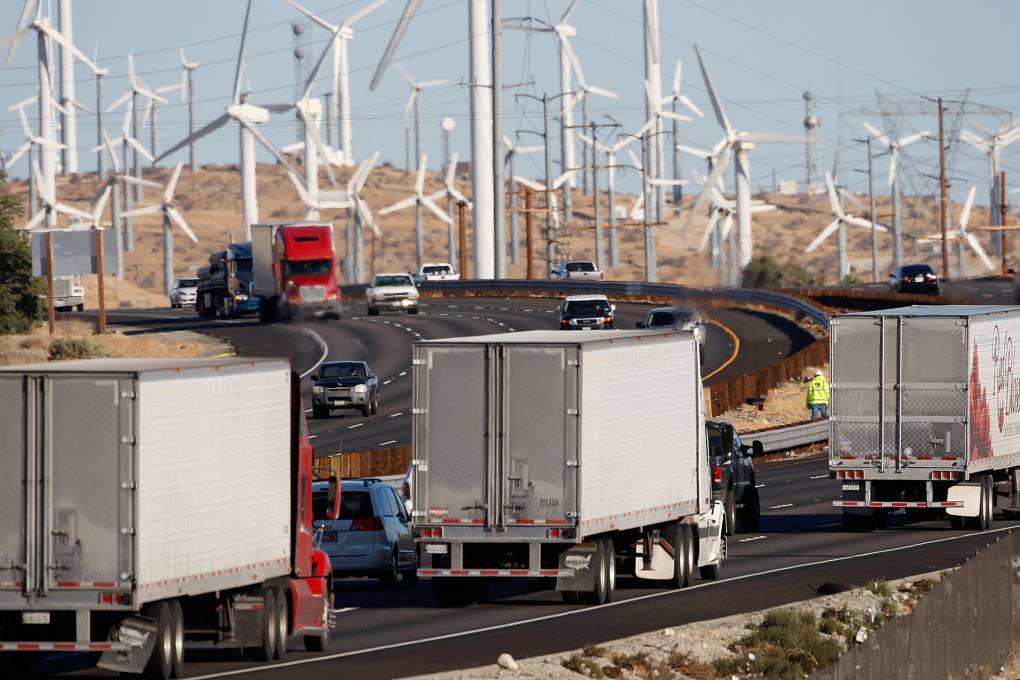
"caption": "Emissions-producing diesel trucks and cars pass non-polluting windmills along the 10 freeway on Dec. 8, 2009, near Banning. ",
"description": null,
"title": "New Climate Report Names Current Decade As Warmest On Record",
"credit": "David McNew/Getty Images",
"status": "inherit",
"altTag": "White wind turbnines in the background of a highway with big red semi-trucks.",
"isLoading": false,
"fetchFailed": false
},
"science_1980754": {
"type": "attachments",
"id": "science_1980754",
"meta": {
"index": "attachments_1716263798",
"site": "science",
"id": "1980754",
"found": true
},
"title": "Los Angeles Times",
"publishDate": 1667869249,
"status": "inherit",
"parent": 1980720,
"modified": 1752004261,
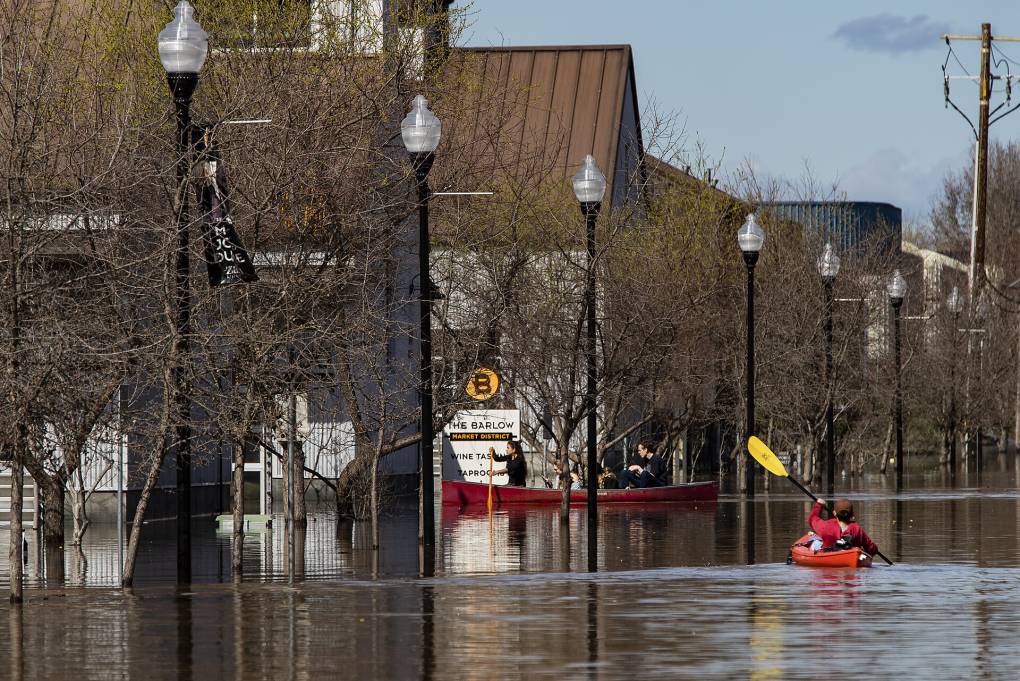
"caption": "A Sebastopol resident encounters fellow paddlers in a canoe as he paddles in the floodwaters surrounding market district, The Barlow, after the Russian River crested its banks on Feb. 28, 2019, in Sebastopol, California.",
"credit": "Gina Ferazzi/Los Angeles Times via Getty Images",
"altTag": "A kayaker in a red boat paddles down a flooded street alongside shops.",
"description": null,
"imgSizes": {
"medium": {
"file": "https://cdn.kqed.org/wp-content/uploads/sites/35/2022/11/RS59853_GettyImages-1128158019-qut-800x534.jpg",
"width": 800,
"height": 534,
"mimeType": "image/jpeg"
},
"large": {
"file": "https://cdn.kqed.org/wp-content/uploads/sites/35/2022/11/RS59853_GettyImages-1128158019-qut-1020x681.jpg",
"width": 1020,
"height": 681,
"mimeType": "image/jpeg"
},
"thumbnail": {
"file": "https://cdn.kqed.org/wp-content/uploads/sites/35/2022/11/RS59853_GettyImages-1128158019-qut-160x107.jpg",
"width": 160,
"height": 107,
"mimeType": "image/jpeg"
},
"medium_large": {
"file": "https://cdn.kqed.org/wp-content/uploads/sites/35/2022/11/RS59853_GettyImages-1128158019-qut-768x512.jpg",
"width": 768,
"height": 512,
"mimeType": "image/jpeg"
},
"1536x1536": {
"file": "https://cdn.kqed.org/wp-content/uploads/sites/35/2022/11/RS59853_GettyImages-1128158019-qut-1536x1025.jpg",
"width": 1536,
"height": 1025,
"mimeType": "image/jpeg"
},
"post-thumbnail": {
"file": "https://cdn.kqed.org/wp-content/uploads/sites/35/2022/11/RS59853_GettyImages-1128158019-qut-672x372.jpg",
"width": 672,
"height": 372,
"mimeType": "image/jpeg"
},
"twentyfourteen-full-width": {
"file": "https://cdn.kqed.org/wp-content/uploads/sites/35/2022/11/RS59853_GettyImages-1128158019-qut-1038x576.jpg",
"width": 1038,
"height": 576,
"mimeType": "image/jpeg"
},
"kqedFullSize": {
"file": "https://cdn.kqed.org/wp-content/uploads/sites/35/2022/11/RS59853_GettyImages-1128158019-qut.jpg",
"width": 1920,
"height": 1281
}
},
"isLoading": false,
"fetchFailed": false
},
"science_1980152": {
"type": "attachments",
"id": "science_1980152",
"meta": {
"index": "attachments_1716263798",
"site": "science",
"id": "1980152",
"found": true
},
"parent": 1980149,
"imgSizes": {
"twentyfourteen-full-width": {
"file": "https://ww2.kqed.org/app/uploads/sites/35/2022/08/GettyImages-1356860471-1038x576.jpg",
"width": 1038,
"mimeType": "image/jpeg",
"height": 576
},
"thumbnail": {
"file": "https://ww2.kqed.org/app/uploads/sites/35/2022/08/GettyImages-1356860471-160x106.jpg",
"width": 160,
"mimeType": "image/jpeg",
"height": 106
},
"post-thumbnail": {
"file": "https://ww2.kqed.org/app/uploads/sites/35/2022/08/GettyImages-1356860471-672x372.jpg",
"width": 672,
"mimeType": "image/jpeg",
"height": 372
},
"kqedFullSize": {
"file": "https://ww2.kqed.org/app/uploads/sites/35/2022/08/GettyImages-1356860471-scaled.jpg",
"width": 2560,
"height": 1700
},
"2048x2048": {
"file": "https://ww2.kqed.org/app/uploads/sites/35/2022/08/GettyImages-1356860471-2048x1360.jpg",
"width": 2048,
"mimeType": "image/jpeg",
"height": 1360
},
"large": {
"file": "https://ww2.kqed.org/app/uploads/sites/35/2022/08/GettyImages-1356860471-1020x677.jpg",
"width": 1020,
"mimeType": "image/jpeg",
"height": 677
},
"1536x1536": {
"file": "https://ww2.kqed.org/app/uploads/sites/35/2022/08/GettyImages-1356860471-1536x1020.jpg",
"width": 1536,
"mimeType": "image/jpeg",
"height": 1020
},
"full-width": {
"file": "https://ww2.kqed.org/app/uploads/sites/35/2022/08/GettyImages-1356860471-1920x1275.jpg",
"width": 1920,
"mimeType": "image/jpeg",
"height": 1275
},
"medium": {
"file": "https://ww2.kqed.org/app/uploads/sites/35/2022/08/GettyImages-1356860471-800x531.jpg",
"width": 800,
"mimeType": "image/jpeg",
"height": 531
},
"medium_large": {
"file": "https://ww2.kqed.org/app/uploads/sites/35/2022/08/GettyImages-1356860471-768x510.jpg",
"width": 768,
"mimeType": "image/jpeg",
"height": 510
}
},
"publishDate": 1661793736,
"modified": 1661813064,
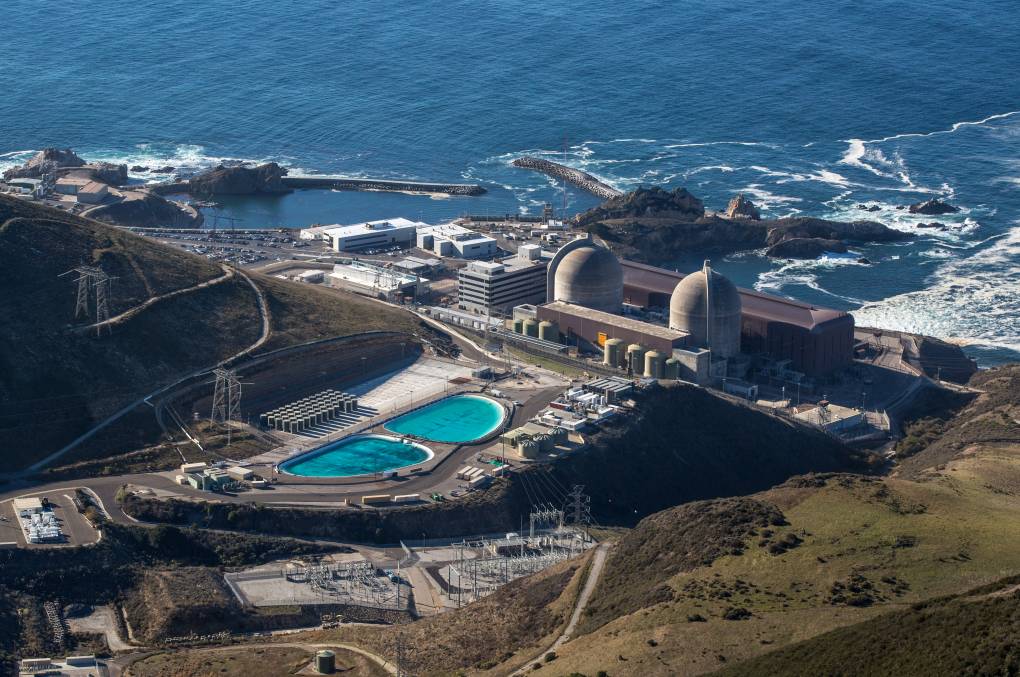
"caption": "Aerial view of Diablo Canyon Power Plant, the only operational nuclear plant left in California, in December 2021. Set on 1,000 acres of scenic coastal property just north and west of Avila Beach in San Luis Obispo County, the controversial power plant operated by Pacific Gas and Electric was commissioned in 1985.",
"description": "Aerial view of Diablo Canyon Power Plant, the only operational nuclear plant left in California, is an aerial photo taken in December 2021. Set on 1,000 acres of scenic coastal property just north and west of Avila Beach, the controversial power plant operated by Pacific Gas & Electric was commissioned in 1985. ",
"title": "Diablo Canyon nuclear plant",
"credit": "George Rose/Getty Images",
"status": "inherit",
"altTag": "The rounded towers of a nuclear power plant sit at the edge of the Pacific Ocean in the center right of the image. Multiple buildings border the plant and sit to the left of the towers. In the foreground are rolling brown hills with scrub brush and dry grasses, with curving roads along them, and electricity towers perched in various locations. In the center of the image are two turquoise pools. The ocean in the top of the image is steel blue.",
"isLoading": false,
"fetchFailed": false
},
"science_1979784": {
"type": "attachments",
"id": "science_1979784",
"meta": {
"index": "attachments_1716263798",
"site": "science",
"id": "1979784",
"found": true
},
"parent": 1979779,
"imgSizes": {
"twentyfourteen-full-width": {
"file": "https://ww2.kqed.org/app/uploads/sites/35/2022/06/RS57028_GettyImages-659168798-qut-1038x576.jpg",
"width": 1038,
"mimeType": "image/jpeg",
"height": 576
},
"thumbnail": {
"file": "https://ww2.kqed.org/app/uploads/sites/35/2022/06/RS57028_GettyImages-659168798-qut-160x99.jpg",
"width": 160,
"mimeType": "image/jpeg",
"height": 99
},
"post-thumbnail": {
"file": "https://ww2.kqed.org/app/uploads/sites/35/2022/06/RS57028_GettyImages-659168798-qut-672x372.jpg",
"width": 672,
"mimeType": "image/jpeg",
"height": 372
},
"kqedFullSize": {
"file": "https://ww2.kqed.org/app/uploads/sites/35/2022/06/RS57028_GettyImages-659168798-qut.jpg",
"width": 1920,
"height": 1190
},
"large": {
"file": "https://ww2.kqed.org/app/uploads/sites/35/2022/06/RS57028_GettyImages-659168798-qut-1020x632.jpg",
"width": 1020,
"mimeType": "image/jpeg",
"height": 632
},
"1536x1536": {
"file": "https://ww2.kqed.org/app/uploads/sites/35/2022/06/RS57028_GettyImages-659168798-qut-1536x952.jpg",
"width": 1536,
"mimeType": "image/jpeg",
"height": 952
},
"medium": {
"file": "https://ww2.kqed.org/app/uploads/sites/35/2022/06/RS57028_GettyImages-659168798-qut-800x496.jpg",
"width": 800,
"mimeType": "image/jpeg",
"height": 496
},
"medium_large": {
"file": "https://ww2.kqed.org/app/uploads/sites/35/2022/06/RS57028_GettyImages-659168798-qut-768x476.jpg",
"width": 768,
"mimeType": "image/jpeg",
"height": 476
}
},
"publishDate": 1656626197,
"modified": 1656633658,
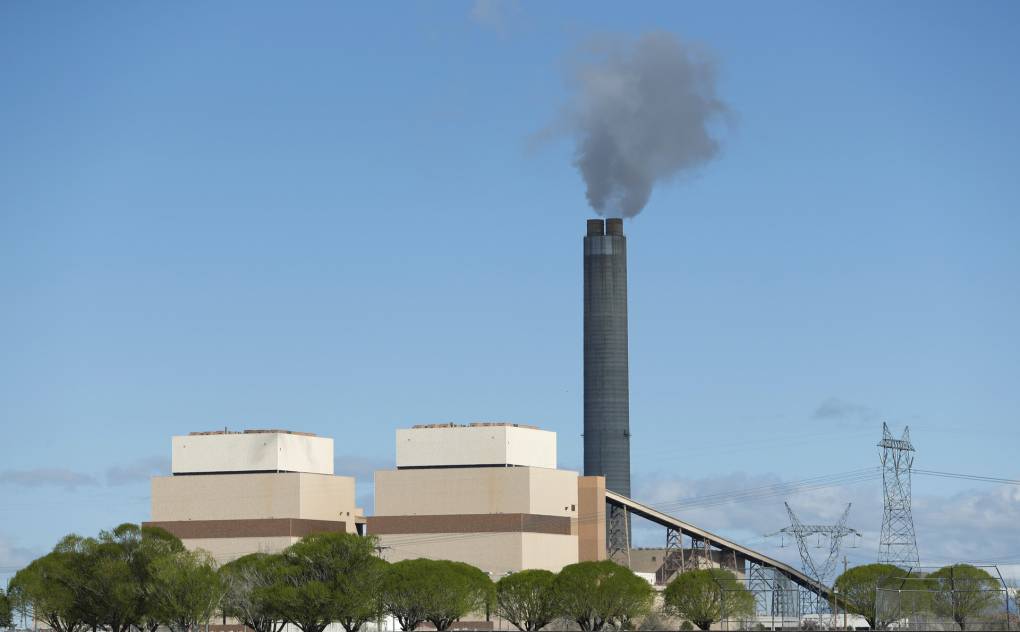
"caption": "The coal-fired Intermountain Power Plant is seen on March 28, 2016, outside Delta, Utah. ",
"description": null,
"title": "Coal Industry Hopes For A Boost As Trump Rolls Back Obama-Era Regulations",
"credit": "George Frey/Getty Images",
"status": "inherit",
"altTag": "Black smoke exits a tall grey smokestack.",
"isLoading": false,
"fetchFailed": false
},
"science_1979075": {
"type": "attachments",
"id": "science_1979075",
"meta": {
"index": "attachments_1716263798",
"site": "science",
"id": "1979075",
"found": true
},
"parent": 1979033,
"imgSizes": {
"twentyfourteen-full-width": {
"file": "https://ww2.kqed.org/app/uploads/sites/35/2022/04/RS54990_GettyImages-1357937189-qut-1038x576.jpg",
"width": 1038,
"mimeType": "image/jpeg",
"height": 576
},
"thumbnail": {
"file": "https://ww2.kqed.org/app/uploads/sites/35/2022/04/RS54990_GettyImages-1357937189-qut-160x107.jpg",
"width": 160,
"mimeType": "image/jpeg",
"height": 107
},
"post-thumbnail": {
"file": "https://ww2.kqed.org/app/uploads/sites/35/2022/04/RS54990_GettyImages-1357937189-qut-672x372.jpg",
"width": 672,
"mimeType": "image/jpeg",
"height": 372
},
"kqedFullSize": {
"file": "https://ww2.kqed.org/app/uploads/sites/35/2022/04/RS54990_GettyImages-1357937189-qut.jpg",
"width": 1920,
"height": 1280
},
"large": {
"file": "https://ww2.kqed.org/app/uploads/sites/35/2022/04/RS54990_GettyImages-1357937189-qut-1020x680.jpg",
"width": 1020,
"mimeType": "image/jpeg",
"height": 680
},
"1536x1536": {
"file": "https://ww2.kqed.org/app/uploads/sites/35/2022/04/RS54990_GettyImages-1357937189-qut-1536x1024.jpg",
"width": 1536,
"mimeType": "image/jpeg",
"height": 1024
},
"medium": {
"file": "https://ww2.kqed.org/app/uploads/sites/35/2022/04/RS54990_GettyImages-1357937189-qut-800x533.jpg",
"width": 800,
"mimeType": "image/jpeg",
"height": 533
},
"medium_large": {
"file": "https://ww2.kqed.org/app/uploads/sites/35/2022/04/RS54990_GettyImages-1357937189-qut-768x512.jpg",
"width": 768,
"mimeType": "image/jpeg",
"height": 512
}
},
"publishDate": 1649281701,
"modified": 1649376021,
"caption": "Vicki Hollub, CEO of Occidental Petroleum, speaks on a panel discussion during the 23rd World Petroleum Congress conference in December 2021 in Houston. The \ncongress returned to the United States for the first time in over 30 years, and was hosted in Houston, where government leaders, ministers of energy, C-suite executives and speakers from around the world gathered to discuss advancements and issues facing the oil and gas industry.",
"description": "Vicki Hollub, CEO of Occidental Petroleum, speaks on a panel discussion during the 23rd World Petroleum Congress conference in December 2021 in Houston, Texas. The 23rd World Petroleum Congress returned to the United States for the first time in over 30 years, and was hosted in Houston, where government leaders, ministers of energy, C-suite executives and expert speakers from all around the world gathered to discuss advancements and issues facing the oil and gas industry. ",
"title": "Occidental Petroleum",
"credit": "Brandon Bell/Getty Images",
"status": "inherit",
"altTag": "An older woman in a navy blue suit jacket and white shirt is at the far right of the photo. She has dark blond hair and is looking a woman in a blurred foreground to the left. The woman featured in the photograph is the CEO of Occidental Petroleum, Vicki Hollub.",
"isLoading": false,
"fetchFailed": false
},
"science_1978647": {
"type": "attachments",
"id": "science_1978647",
"meta": {
"index": "attachments_1716263798",
"site": "science",
"id": "1978647",
"found": true
},
"parent": 1978640,
"imgSizes": {
"twentyfourteen-full-width": {
"file": "https://ww2.kqed.org/app/uploads/sites/35/2022/03/Veronic-Young-and-Luverta-Cooper-2-e1646254990626-1038x576.jpg",
"width": 1038,
"mimeType": "image/jpeg",
"height": 576
},
"thumbnail": {
"file": "https://ww2.kqed.org/app/uploads/sites/35/2022/03/Veronic-Young-and-Luverta-Cooper-2-e1646254990626-160x109.jpg",
"width": 160,
"mimeType": "image/jpeg",
"height": 109
},
"post-thumbnail": {
"file": "https://ww2.kqed.org/app/uploads/sites/35/2022/03/Veronic-Young-and-Luverta-Cooper-2-e1646254990626-672x372.jpg",
"width": 672,
"mimeType": "image/jpeg",
"height": 372
},
"kqedFullSize": {
"file": "https://ww2.kqed.org/app/uploads/sites/35/2022/03/Veronic-Young-and-Luverta-Cooper-2-e1646254990626.jpg",
"width": 1703,
"height": 1164
},
"large": {
"file": "https://ww2.kqed.org/app/uploads/sites/35/2022/03/Veronic-Young-and-Luverta-Cooper-2-e1646254990626-1020x697.jpg",
"width": 1020,
"mimeType": "image/jpeg",
"height": 697
},
"1536x1536": {
"file": "https://ww2.kqed.org/app/uploads/sites/35/2022/03/Veronic-Young-and-Luverta-Cooper-2-e1646254990626-1536x1050.jpg",
"width": 1536,
"mimeType": "image/jpeg",
"height": 1050
},
"full-width": {
"file": "https://ww2.kqed.org/app/uploads/sites/35/2022/03/Veronic-Young-and-Luverta-Cooper-2-1920x1440.jpg",
"width": 1920,
"mimeType": "image/jpeg",
"height": 1440
},
"medium": {
"file": "https://ww2.kqed.org/app/uploads/sites/35/2022/03/Veronic-Young-and-Luverta-Cooper-2-e1646254990626-800x547.jpg",
"width": 800,
"mimeType": "image/jpeg",
"height": 547
},
"medium_large": {
"file": "https://ww2.kqed.org/app/uploads/sites/35/2022/03/Veronic-Young-and-Luverta-Cooper-2-e1646254990626-768x525.jpg",
"width": 768,
"mimeType": "image/jpeg",
"height": 525
}
},
"publishDate": 1646254804,
"modified": 1646261960,
"caption": "Veronica Young and Luverta Cooper, in front of their Richmond home in February 2022. They recently installed rooftop solar power, with a battery in the garage for storing extra energy. ",
"description": "Veronica Young and Luverta Cooper, in front of their Richmond home in February 2022. They recently installed rooftop solar power, with a battery in the garage for storing extra energy. ",
"title": "solar power",
"credit": "Raquel Maria Dillon/KQED",
"status": "inherit",
"altTag": "A mother and daughter, both African American, stand in a driveway in front of a ranch-style brick home. The daughter wears a red turtleneck sweater tunic with pink, green, and orange embroidered flowers down the front, over grey leggings. The mother wears a loose blue top over maroon pants. There's a wide green hedge along the driveway to the left.",
"isLoading": false,
"fetchFailed": false
},
"science_1978427": {
"type": "attachments",
"id": "science_1978427",
"meta": {
"index": "attachments_1716263798",
"site": "science",
"id": "1978427",
"found": true
},
"parent": 1978423,
"imgSizes": {
"twentyfourteen-full-width": {
"file": "https://ww2.kqed.org/app/uploads/sites/35/2022/02/RS25852_GettyImages-464555674-qut-1038x576.jpg",
"width": 1038,
"mimeType": "image/jpeg",
"height": 576
},
"thumbnail": {
"file": "https://ww2.kqed.org/app/uploads/sites/35/2022/02/RS25852_GettyImages-464555674-qut-160x105.jpg",
"width": 160,
"mimeType": "image/jpeg",
"height": 105
},
"post-thumbnail": {
"file": "https://ww2.kqed.org/app/uploads/sites/35/2022/02/RS25852_GettyImages-464555674-qut-672x372.jpg",
"width": 672,
"mimeType": "image/jpeg",
"height": 372
},
"kqedFullSize": {
"file": "https://ww2.kqed.org/app/uploads/sites/35/2022/02/RS25852_GettyImages-464555674-qut.jpg",
"width": 1920,
"height": 1260
},
"large": {
"file": "https://ww2.kqed.org/app/uploads/sites/35/2022/02/RS25852_GettyImages-464555674-qut-1020x669.jpg",
"width": 1020,
"mimeType": "image/jpeg",
"height": 669
},
"1536x1536": {
"file": "https://ww2.kqed.org/app/uploads/sites/35/2022/02/RS25852_GettyImages-464555674-qut-1536x1008.jpg",
"width": 1536,
"mimeType": "image/jpeg",
"height": 1008
},
"medium": {
"file": "https://ww2.kqed.org/app/uploads/sites/35/2022/02/RS25852_GettyImages-464555674-qut-800x525.jpg",
"width": 800,
"mimeType": "image/jpeg",
"height": 525
},
"medium_large": {
"file": "https://ww2.kqed.org/app/uploads/sites/35/2022/02/RS25852_GettyImages-464555674-qut-768x504.jpg",
"width": 768,
"mimeType": "image/jpeg",
"height": 504
}
},
"publishDate": 1644363181,
"modified": 1644370265,
"caption": "SolarCraft workers Joel Overly (left) and Craig Powell install a solar panel on the roof of a home in San Rafael in 2015. ",
"description": "SolarCraft workers Joel Overly (L) and Craig Powell (R) install a solar panel on the roof of a home in San Rafael in 2015. ",
"title": "Government Report Cites Solar Industry Supports More Jobs Than Coal Industry",
"credit": "Justin Sullivan/Getty Images",
"status": "inherit",
"altTag": "The sun glints off of a large, dark rectangular solar panel on a roof in San Rafael, with a large tree and blue sky in the background. Two workers hold a new panel at an angle to the roof, ready to slot it into place.",
"isLoading": false,
"fetchFailed": false
},
"science_1976799": {
"type": "attachments",
"id": "science_1976799",
"meta": {
"index": "attachments_1716263798",
"site": "science",
"id": "1976799",
"found": true
},
"parent": 1976798,
"imgSizes": {
"twentyfourteen-full-width": {
"file": "https://ww2.kqed.org/app/uploads/sites/35/2021/09/gettyimages-1282167602-2-a98e931b04ffe87e5c3b2592d41bc086d9d3efb4-1038x576.jpg",
"width": 1038,
"mimeType": "image/jpeg",
"height": 576
},
"thumbnail": {
"file": "https://ww2.kqed.org/app/uploads/sites/35/2021/09/gettyimages-1282167602-2-a98e931b04ffe87e5c3b2592d41bc086d9d3efb4-160x120.jpg",
"width": 160,
"mimeType": "image/jpeg",
"height": 120
},
"post-thumbnail": {
"file": "https://ww2.kqed.org/app/uploads/sites/35/2021/09/gettyimages-1282167602-2-a98e931b04ffe87e5c3b2592d41bc086d9d3efb4-672x372.jpg",
"width": 672,
"mimeType": "image/jpeg",
"height": 372
},
"kqedFullSize": {
"file": "https://ww2.kqed.org/app/uploads/sites/35/2021/09/gettyimages-1282167602-2-a98e931b04ffe87e5c3b2592d41bc086d9d3efb4.jpg",
"width": 1113,
"height": 834
},
"large": {
"file": "https://ww2.kqed.org/app/uploads/sites/35/2021/09/gettyimages-1282167602-2-a98e931b04ffe87e5c3b2592d41bc086d9d3efb4-1020x764.jpg",
"width": 1020,
"mimeType": "image/jpeg",
"height": 764
},
"medium": {
"file": "https://ww2.kqed.org/app/uploads/sites/35/2021/09/gettyimages-1282167602-2-a98e931b04ffe87e5c3b2592d41bc086d9d3efb4-800x599.jpg",
"width": 800,
"mimeType": "image/jpeg",
"height": 599
},
"medium_large": {
"file": "https://ww2.kqed.org/app/uploads/sites/35/2021/09/gettyimages-1282167602-2-a98e931b04ffe87e5c3b2592d41bc086d9d3efb4-768x575.jpg",
"width": 768,
"mimeType": "image/jpeg",
"height": 575
}
},
"publishDate": 1631656287,
"modified": 1640200324,
"caption": null,
"description": null,
"title": null,
"credit": "FG Trade/Getty Images",
"status": "inherit",
"altTag": "The hands of several children hold up a handmade sign with a painting of Earth and copy that reads \"There's No Planet B.\"",
"isLoading": false,
"fetchFailed": false
},
"science_1977588": {
"type": "attachments",
"id": "science_1977588",
"meta": {
"index": "attachments_1716263798",
"site": "science",
"id": "1977588",
"found": true
},
"parent": 1977587,
"imgSizes": {
"twentyfourteen-full-width": {
"file": "https://ww2.kqed.org/app/uploads/sites/35/2021/11/Snydacker-yellow_cropped_02-1-1038x576.jpg",
"width": 1038,
"mimeType": "image/jpeg",
"height": 576
},
"thumbnail": {
"file": "https://ww2.kqed.org/app/uploads/sites/35/2021/11/Snydacker-yellow_cropped_02-1-160x107.jpg",
"width": 160,
"mimeType": "image/jpeg",
"height": 107
},
"post-thumbnail": {
"file": "https://ww2.kqed.org/app/uploads/sites/35/2021/11/Snydacker-yellow_cropped_02-1-672x372.jpg",
"width": 672,
"mimeType": "image/jpeg",
"height": 372
},
"kqedFullSize": {
"file": "https://ww2.kqed.org/app/uploads/sites/35/2021/11/Snydacker-yellow_cropped_02-1.jpg",
"width": 1920,
"height": 1280
},
"large": {
"file": "https://ww2.kqed.org/app/uploads/sites/35/2021/11/Snydacker-yellow_cropped_02-1-1020x680.jpg",
"width": 1020,
"mimeType": "image/jpeg",
"height": 680
},
"1536x1536": {
"file": "https://ww2.kqed.org/app/uploads/sites/35/2021/11/Snydacker-yellow_cropped_02-1-1536x1024.jpg",
"width": 1536,
"mimeType": "image/jpeg",
"height": 1024
},
"medium": {
"file": "https://ww2.kqed.org/app/uploads/sites/35/2021/11/Snydacker-yellow_cropped_02-1-800x533.jpg",
"width": 800,
"mimeType": "image/jpeg",
"height": 533
},
"medium_large": {
"file": "https://ww2.kqed.org/app/uploads/sites/35/2021/11/Snydacker-yellow_cropped_02-1-768x512.jpg",
"width": 768,
"mimeType": "image/jpeg",
"height": 512
}
},
"publishDate": 1636055981,
"modified": 1636084388,
"caption": "Dave Snydacker is CEO of Lilac Solutions, an Oakland-based company working toward extracting lithium from underground saltwater to use in batteries. ",
"description": "Dave Snydacker is CEO of Lilac Solutions, a company working towards extracting lithium from underground saltwater to use in batteries. ",
"title": "Snydacker yellow_cropped_02 (1)",
"credit": "Andrew Waits",
"status": "inherit",
"altTag": "Man in blue business suit stands in warehouse",
"isLoading": false,
"fetchFailed": false
},
"science_1976454": {
"type": "attachments",
"id": "science_1976454",
"meta": {
"index": "attachments_1716263798",
"site": "science",
"id": "1976454",
"found": true
},
"parent": 1976451,
"imgSizes": {
"twentyfourteen-full-width": {
"file": "https://ww2.kqed.org/app/uploads/sites/35/2021/08/RS50918_022_Berkeley_LawrenceLaboratory_08202021-qut-1-1038x576.jpg",
"width": 1038,
"mimeType": "image/jpeg",
"height": 576
},
"thumbnail": {
"file": "https://ww2.kqed.org/app/uploads/sites/35/2021/08/RS50918_022_Berkeley_LawrenceLaboratory_08202021-qut-1-160x107.jpg",
"width": 160,
"mimeType": "image/jpeg",
"height": 107
},
"post-thumbnail": {
"file": "https://ww2.kqed.org/app/uploads/sites/35/2021/08/RS50918_022_Berkeley_LawrenceLaboratory_08202021-qut-1-672x372.jpg",
"width": 672,
"mimeType": "image/jpeg",
"height": 372
},
"kqedFullSize": {
"file": "https://ww2.kqed.org/app/uploads/sites/35/2021/08/RS50918_022_Berkeley_LawrenceLaboratory_08202021-qut-1.jpg",
"width": 1920,
"height": 1278
},
"large": {
"file": "https://ww2.kqed.org/app/uploads/sites/35/2021/08/RS50918_022_Berkeley_LawrenceLaboratory_08202021-qut-1-1020x679.jpg",
"width": 1020,
"mimeType": "image/jpeg",
"height": 679
},
"1536x1536": {
"file": "https://ww2.kqed.org/app/uploads/sites/35/2021/08/RS50918_022_Berkeley_LawrenceLaboratory_08202021-qut-1-1536x1022.jpg",
"width": 1536,
"mimeType": "image/jpeg",
"height": 1022
},
"medium": {
"file": "https://ww2.kqed.org/app/uploads/sites/35/2021/08/RS50918_022_Berkeley_LawrenceLaboratory_08202021-qut-1-800x533.jpg",
"width": 800,
"mimeType": "image/jpeg",
"height": 533
},
"medium_large": {
"file": "https://ww2.kqed.org/app/uploads/sites/35/2021/08/RS50918_022_Berkeley_LawrenceLaboratory_08202021-qut-1-768x511.jpg",
"width": 768,
"mimeType": "image/jpeg",
"height": 511
}
},
"publishDate": 1629750815,
"modified": 1629761994,
"caption": "U.S. Energy Secretary Jennifer Granholm at Lawrence Berkeley National Laboratory on Aug. 20, 2021.",
"description": null,
"title": "RS50918_022_Berkeley_LawrenceLaboratory_08202021-qut (1)",
"credit": "Beth LaBerge/KQED",
"status": "inherit",
"altTag": null,
"isLoading": false,
"fetchFailed": false
},
"science_1976215": {
"type": "attachments",
"id": "science_1976215",
"meta": {
"index": "attachments_1716263798",
"site": "science",
"id": "1976215",
"found": true
},
"parent": 1976213,
"imgSizes": {
"twentyfourteen-full-width": {
"file": "https://ww2.kqed.org/app/uploads/sites/35/2021/08/IMG_4468-1038x576.jpeg",
"width": 1038,
"mimeType": "image/jpeg",
"height": 576
},
"thumbnail": {
"file": "https://ww2.kqed.org/app/uploads/sites/35/2021/08/IMG_4468-160x120.jpeg",
"width": 160,
"mimeType": "image/jpeg",
"height": 120
},
"post-thumbnail": {
"file": "https://ww2.kqed.org/app/uploads/sites/35/2021/08/IMG_4468-672x372.jpeg",
"width": 672,
"mimeType": "image/jpeg",
"height": 372
},
"kqedFullSize": {
"file": "https://ww2.kqed.org/app/uploads/sites/35/2021/08/IMG_4468-scaled.jpeg",
"width": 2560,
"height": 1918
},
"2048x2048": {
"file": "https://ww2.kqed.org/app/uploads/sites/35/2021/08/IMG_4468-2048x1534.jpeg",
"width": 2048,
"mimeType": "image/jpeg",
"height": 1534
},
"large": {
"file": "https://ww2.kqed.org/app/uploads/sites/35/2021/08/IMG_4468-1020x764.jpeg",
"width": 1020,
"mimeType": "image/jpeg",
"height": 764
},
"1536x1536": {
"file": "https://ww2.kqed.org/app/uploads/sites/35/2021/08/IMG_4468-1536x1151.jpeg",
"width": 1536,
"mimeType": "image/jpeg",
"height": 1151
},
"full-width": {
"file": "https://ww2.kqed.org/app/uploads/sites/35/2021/08/IMG_4468-1920x1439.jpeg",
"width": 1920,
"mimeType": "image/jpeg",
"height": 1439
},
"medium": {
"file": "https://ww2.kqed.org/app/uploads/sites/35/2021/08/IMG_4468-800x599.jpeg",
"width": 800,
"mimeType": "image/jpeg",
"height": 599
},
"medium_large": {
"file": "https://ww2.kqed.org/app/uploads/sites/35/2021/08/IMG_4468-768x575.jpeg",
"width": 768,
"mimeType": "image/jpeg",
"height": 575
}
},
"publishDate": 1628639471,
"modified": 1628962391,
"caption": "Lauren Sanchez is Gov. Gavin Newsom's senior climate adviser. ",
"description": null,
"title": "Lauren Sanchez",
"credit": "Courtesy of Lauren Sanchez. ",
"status": "inherit",
"altTag": null,
"isLoading": false,
"fetchFailed": false
}
},
"audioPlayerReducer": {
"postId": "stream_live",
"isPaused": true,
"isPlaying": false,
"pfsActive": false,
"pledgeModalIsOpen": true,
"playerDrawerIsOpen": false,
"liveAudioPlayStartedAt": 0,
"liveAudioPlayContext": ""
},
"authorsReducer": {
"byline_science_1980809": {
"type": "authors",
"id": "byline_science_1980809",
"meta": {
"override": true
},
"slug": "byline_science_1980809",
"name": "Victoria St. Martin",
"isLoading": false
},
"byline_science_1980149": {
"type": "authors",
"id": "byline_science_1980149",
"meta": {
"override": true
},
"slug": "byline_science_1980149",
"name": "Michael R. Blood\u003cbr>The Associated Press",
"isLoading": false
},
"byline_science_1979779": {
"type": "authors",
"id": "byline_science_1979779",
"meta": {
"override": true
},
"slug": "byline_science_1979779",
"name": "Nadia Lopez \u003cbr />CalMatters\u003cbr>",
"isLoading": false
},
"byline_science_1979033": {
"type": "authors",
"id": "byline_science_1979033",
"meta": {
"override": true
},
"slug": "byline_science_1979033",
"name": "Nicholas Kusnetz",
"isLoading": false
},
"byline_science_1978423": {
"type": "authors",
"id": "byline_science_1978423",
"meta": {
"override": true
},
"slug": "byline_science_1978423",
"name": "Anne Marshall-Chalmers and Dan Gearino\u003cbr>Inside Climate News",
"isLoading": false
},
"lklivans": {
"type": "authors",
"id": "8648",
"meta": {
"index": "authors_1716337520",
"id": "8648",
"found": true
},
"name": "Laura Klivans",
"firstName": "Laura",
"lastName": "Klivans",
"slug": "lklivans",
"email": "lklivans@kqed.org",
"display_author_email": true,
"staff_mastheads": [
"news",
"science"
],
"title": "Reporter",
"bio": "Laura Klivans is an award-winning science reporter for KQED News, where she covers climate change with an eye on both groundbreaking progress and gaps in action. She is the former host of KQED's blockbuster video series about tiny, amazing animals, \u003cem>Deep Look\u003c/em>. Her work reaches national audiences through NPR, \u003cem>Here & Now, \u003c/em>PRI, and other major outlets. \r\n\r\nLaura’s won five Northern California Area Emmy Awards for Deep Look and First Place in the Greater Bay Area Journalism Awards for a podcast exploring how one Oakland neighborhood teamed up to reduce planet-heating pollution.\r\n\r\nBeyond her reporting, she hosts and moderates events. In the past, she taught audio storytelling at the UC Berkeley Graduate School of Journalism, led international education programs, worked with immigrants and refugees along the Thai-Burmese border, taught high schoolers sex ed, and was an actress. \r\n\r\nShe's a former UC Berkeley Human Rights Fellow, USC Center for Health Journalism's California Fellow and Coro Fellow in Public Affairs. Laura has a master’s in journalism from UC Berkeley, a master’s in education from Harvard, and an undergraduate degree from Northwestern University.\r\n\r\nShe loves trying to riddle the meaning out of vanity license plates.",
"avatar": "https://secure.gravatar.com/avatar/2d2ecd1550a494cc10ad4a503406965585902124739e775a9b3817eebf1d88be?s=600&d=blank&r=g",
"twitter": "lauraklivans",
"bluesky": null,
"facebook": null,
"instagram": null,
"linkedin": null,
"sites": [
{
"site": "news",
"roles": [
"editor"
]
},
{
"site": "stateofhealth",
"roles": [
"contributor",
"editor"
]
},
{
"site": "science",
"roles": [
"editor"
]
},
{
"site": "forum",
"roles": [
"editor"
]
}
],
"headData": {
"title": "Laura Klivans | KQED",
"description": "Reporter",
"ogImgSrc": "https://secure.gravatar.com/avatar/2d2ecd1550a494cc10ad4a503406965585902124739e775a9b3817eebf1d88be?s=600&d=blank&r=g",
"twImgSrc": "https://secure.gravatar.com/avatar/2d2ecd1550a494cc10ad4a503406965585902124739e775a9b3817eebf1d88be?s=600&d=blank&r=g"
},
"isLoading": false,
"link": "/author/lklivans"
},
"rdillon": {
"type": "authors",
"id": "11495",
"meta": {
"index": "authors_1716337520",
"id": "11495",
"found": true
},
"name": "Raquel Maria Dillon",
"firstName": "Raquel Maria",
"lastName": "Dillon",
"slug": "rdillon",
"email": "rdillon@kqed.org",
"display_author_email": false,
"staff_mastheads": [],
"title": null,
"bio": "Raquel Maria Dillon was a reporter and host for KQED News. Previously, she produced the daily statewide California Report, edited newscasts, and covered health and education stories. Before returning to the Bay Area in 2016, she worked in Los Angeles as a wire reporter and one-woman-band video journalist for the Associated Press, where she shot, edited and reported breaking news and features across the West. Her work has appeared online and in print around the globe, and also on NPR’s Morning Edition, All Things Considered, Here and Now, Marketplace, On The Media, and Studio 360. She previously edited and mentored up-and-coming reporters at KALW, produced social videos for Timeline.com, and was a local TV news videographer for KTVU and digital producer for KNTV. She got her start as a Radio News Trainee at KQED, produced a weekly public affairs roundtable show for OPB, and covered health and politics at New Hampshire Public Radio. She has a BA in political science from Barnard College and a MA in video journalism from UC Berkeley, where she was awarded the Faith Fancher Scholarship and a Student Emmy. She has received numerous local awards from the Associated Press and the Society of Professional Journalists.",
"avatar": "https://secure.gravatar.com/avatar/b8e02ae982913d0950df605910267c1b?s=600&d=blank&r=g",
"twitter": "RaquelMDillon",
"facebook": null,
"instagram": null,
"linkedin": null,
"sites": [
{
"site": "news",
"roles": [
"subscriber"
]
},
{
"site": "stateofhealth",
"roles": [
"editor"
]
},
{
"site": "science",
"roles": [
"editor"
]
},
{
"site": "forum",
"roles": [
"editor"
]
}
],
"headData": {
"title": "Raquel Maria Dillon | KQED",
"description": null,
"ogImgSrc": "https://secure.gravatar.com/avatar/b8e02ae982913d0950df605910267c1b?s=600&d=blank&r=g",
"twImgSrc": "https://secure.gravatar.com/avatar/b8e02ae982913d0950df605910267c1b?s=600&d=blank&r=g"
},
"isLoading": false,
"link": "/author/rdillon"
},
"kevinstark": {
"type": "authors",
"id": "11608",
"meta": {
"index": "authors_1716337520",
"id": "11608",
"found": true
},
"name": "Kevin Stark",
"firstName": "Kevin",
"lastName": "Stark",
"slug": "kevinstark",
"email": "kstark@kqed.org",
"display_author_email": true,
"staff_mastheads": [
"science"
],
"title": "Senior Editor",
"bio": "Kevin is a senior editor for KQED Science, managing the station's health and climate desks. His journalism career began in the Pacific Northwest, and he later became a lead reporter for the San Francisco Public Press. His work has appeared in Pacific Standard magazine, the Energy News Network, the Center for Investigative Reporting's Reveal and WBEZ in Chicago. Kevin joined KQED in 2019, and has covered issues related to energy, wildfire, climate change and the environment.",
"avatar": "https://secure.gravatar.com/avatar/365aaa4b597d3a8374f67504ff0facd323d7906e8eb4be0a7efd2427408e802c?s=600&d=blank&r=g",
"twitter": "starkkev",
"bluesky": null,
"facebook": null,
"instagram": null,
"linkedin": null,
"sites": [
{
"site": "",
"roles": [
"editor"
]
},
{
"site": "news",
"roles": [
"editor"
]
},
{
"site": "science",
"roles": [
"administrator"
]
}
],
"headData": {
"title": "Kevin Stark | KQED",
"description": "Senior Editor",
"ogImgSrc": "https://secure.gravatar.com/avatar/365aaa4b597d3a8374f67504ff0facd323d7906e8eb4be0a7efd2427408e802c?s=600&d=blank&r=g",
"twImgSrc": "https://secure.gravatar.com/avatar/365aaa4b597d3a8374f67504ff0facd323d7906e8eb4be0a7efd2427408e802c?s=600&d=blank&r=g"
},
"isLoading": false,
"link": "/author/kevinstark"
},
"eromero": {
"type": "authors",
"id": "11746",
"meta": {
"index": "authors_1716337520",
"id": "11746",
"found": true
},
"name": "Ezra David Romero",
"firstName": "Ezra David",
"lastName": "Romero",
"slug": "eromero",
"email": "eromero@kqed.org",
"display_author_email": true,
"staff_mastheads": [
"news",
"science"
],
"title": "Climate Reporter",
"bio": "Ezra David Romero is a climate reporter for KQED News. He covers the absence and excess of water in the Bay Area — think sea level rise, flooding and drought. For nearly a decade he’s covered how warming temperatures are altering the lives of Californians. He’s reported on farmers worried their pistachio trees aren’t getting enough sleep, families desperate for water, scientists studying dying giant sequoias, and alongside firefighters containing wildfires. His work has appeared on local stations across California and nationally on public radio shows like Morning Edition, Here and Now, All Things Considered and Science Friday. ",
"avatar": "https://secure.gravatar.com/avatar/c76404d287c10ed40224227551ac36e24352c7306f106632caf6fead76f8801f?s=600&d=blank&r=g",
"twitter": "ezraromero",
"bluesky": null,
"facebook": null,
"instagram": null,
"linkedin": null,
"sites": [
{
"site": "arts",
"roles": [
"editor"
]
},
{
"site": "news",
"roles": [
"editor"
]
},
{
"site": "science",
"roles": [
"editor"
]
},
{
"site": "liveblog",
"roles": [
"author"
]
}
],
"headData": {
"title": "Ezra David Romero | KQED",
"description": "Climate Reporter",
"ogImgSrc": "https://secure.gravatar.com/avatar/c76404d287c10ed40224227551ac36e24352c7306f106632caf6fead76f8801f?s=600&d=blank&r=g",
"twImgSrc": "https://secure.gravatar.com/avatar/c76404d287c10ed40224227551ac36e24352c7306f106632caf6fead76f8801f?s=600&d=blank&r=g"
},
"isLoading": false,
"link": "/author/eromero"
}
},
"pagesReducer": {
"science_category_energy": {
"type": "terms",
"id": "science_33",
"meta": {
"index": "terms_1716263798",
"site": "science",
"id": "33",
"score": 12.797518
},
"featImg": null,
"name": "Energy",
"description": null,
"taxonomy": "category",
"headData": {
"twImgId": null,
"twTitle": null,
"ogTitle": null,
"ogImgId": null,
"twDescription": null,
"description": null,
"title": "Energy Archives | KQED Science",
"ogDescription": null
},
"ttid": 35,
"slug": "energy",
"isLoading": false,
"title": "Energy",
"pageMeta": {
"site": "science",
"WpPageTemplate": "page-topic-editorial",
"currentPage": 4
},
"blocks": [
{
"blockName": "kqed/post-list",
"attrs": {
"layout": "cardArticle2",
"query": "posts/science?category=energy",
"seeMore": false,
"paginated": true,
"page": 4
}
},
{
"blockName": "kqed/ad"
}
]
}
},
"pfsSessionReducer": {},
"postsReducer": {
"stream_live": {
"type": "live",
"id": "stream_live",
"audioUrl": "https://streams.kqed.org/kqedradio",
"title": "Live Stream",
"excerpt": "Live Stream information currently unavailable.",
"link": "/radio",
"featImg": "",
"label": {
"name": "KQED Live",
"link": "/"
}
},
"stream_kqedNewscast": {
"type": "posts",
"id": "stream_kqedNewscast",
"audioUrl": "https://www.kqed.org/.stream/anon/radio/RDnews/newscast.mp3?_=1",
"title": "KQED Newscast",
"featImg": "",
"label": {
"name": "88.5 FM",
"link": "/"
}
},
"science_1980809": {
"type": "posts",
"id": "science_1980809",
"meta": {
"index": "posts_1716263798",
"site": "science",
"id": "1980809",
"score": null,
"sort": [
1668804861000
]
},
"parent": 0,
"labelTerm": {},
"blocks": [],
"publishDate": 1668804861,
"format": "standard",
"title": "New Toolkit Helps Patients and Care Providers Prepare for Climate Emergencies",
"headTitle": "New Toolkit Helps Patients and Care Providers Prepare for Climate Emergencies | KQED",
"content": "\u003cp>There was a moment a few years back when it seemed to Jessie Liu like the entire state of California was on fire. Mendocino, Shasta, Trinity, Lake and Santa Clara counties all endured the flames of the hellish wildfire season of 2020.\u003c/p>\n\u003cp>“It hit us so suddenly and abruptly,” said Liu, a physician at \u003ca href=\"https://laclinica.org/\">La Clínica de La Raza\u003c/a>, a health care facility that serves lower-income, uninsured and underinsured patients in Oakland. “It’s shocking how quickly that’s become the norm. It’s something that we are now expecting. We were very fortunate this year to have a relatively light — knock on wood — wildfire season. But we can’t expect to be this fortunate here and in the years to come.”\u003c/p>\n\u003cp>Liu and her patients have not yet faced evacuation because of the fires, but she figures it’s a question of when, not if. And when that moment comes, Liu will have a new tool to help ease the abruptness.\u003c/p>\n\u003cp>Climate experts at Harvard and officials with the nonprofit humanitarian relief agency Americares have prepared a first-of-its-kind series of open-source reference materials to help health care facilities successfully withstand a range of natural disasters.\u003c/p>\n\u003cp>The reference information, known as the \u003ca href=\"https://www.americares.org/what-we-do/community-health/climate-resilient-health-clinics/\">Climate Resilience for Frontline Clinics Toolkit\u003c/a>, contains detailed guidance for health care administrators, physicians and patients on topics ranging from dealing with power outages to crafting social media posts to managing the treatment of patients with such ailments as kidney disease, diabetes and asthma.\u003c/p>\n\u003cp>[ad fullwidth]\u003c/p>\n\u003cp>The information, which was largely compiled using survey data from clinic workers who were asked what they wish they knew about treating patients during natural disasters, is available as a series of downloadable PDFs at the \u003ca href=\"https://www.americares.org/what-we-do/community-health/climate-resilient-health-clinics/\">toolkit website\u003c/a>.\u003c/p>\n\u003cp>The first reference materials, which were released this summer, focused on helping facilities, doctors and their patients successfully navigate extreme heat events. Officials recently released guides focused on wildfires, and an informational module concerning hurricanes will soon be available to all.\u003c/p>\n\u003cp>The effort, a collaboration of the \u003ca href=\"https://www.hsph.harvard.edu/c-change/\">Center for Climate, Health, and the Global Environment\u003c/a> at the Harvard T.H. Chan School of Public Health, and the Harvard Global Health Institute, is specifically designed for use by free and charitable care health clinics. Biogen, the Massachusetts-based biotechnology company, has been a key sponsor of the project.\u003c/p>\n\u003cp>In future years, the designers of the toolkit hope to expand availability of the resources so they can be used by health care facilities in lower-income countries.\u003c/p>\n\u003cp>Designers of the toolkit said it occupies a unique position as a source of medical information that simultaneously provides resources both for those who work in hospitals and those who are treated in them. Policy manuals and communication plans are typically designed for health care administrators. Medical reference books are aimed at providers. And health care information pamphlets are usually reserved for patients. But with aspects of the toolkit designed for each of those audiences, its creators say it is distinctly able to serve all three of those groups.\u003c/p>\n\u003cp>“What we want to make sure we get is a crucial interface between health care systems and patients that is, potentially, uniquely able to keep people safe,” said Aaron Bernstein, director of the Harvard climate center.\u003c/p>\n\u003cp>Bernstein said that the information contained in the toolkit was designed with an eye toward anticipating potential issues and providing opportunities for planning and practical decision-making.\u003c/p>\n\u003cp>“If someone has serious medical problems and says, ‘You know, I really would like to evacuate. I just have no idea how I can do it. I don’t have a car or there’s nowhere for me to go,’” Bernstein said. “There’s a lot of folks who may not have thought as much about not only how they would and where they would evacuate to, but, again, critically, whether their medical conditions may make it so that it’s even more important for them to be proactive. And I think a provider can really underscore that.”\u003c/p>\n\u003cp>Being proactive is a chief concern for providers like Jessie Liu. She said the open-source nature of the toolkit — which keeps it free, adaptable and easy to access — is vital given that many of the patients she serves have lower incomes.\u003c/p>\n\u003cp>“In particular for our populations who are at greater risk because of their lower socioeconomic status, greater percentage of outdoor laborers, by way of being Black, brown, Native and living in communities and neighborhoods that have historically been marginalized and under-resourced, we are wanting to be able to provide culturally appropriate and easily accessible resources,” Liu said.\u003c/p>\n\u003cp>And the importance of providing that information goes beyond simply addressing medical concerns.\u003c/p>\n\u003cp>\u003c/p>\n\u003cp>“We are the bastions of health for our communities,” Liu said. “We’re at the front lines, and patients and communities come to us. They trust us. We have to … it’s our responsibility and our role to provide that information and that guidance, especially in these natural disasters that are known to have such great impacts on human health.”\u003c/p>\n\n",
"stats": {
"hasVideo": false,
"hasChartOrMap": false,
"hasAudio": false,
"hasPolis": false,
"wordCount": 875,
"hasGoogleForm": false,
"hasGallery": false,
"hasHearkenModule": false,
"iframeSrcs": [],
"paragraphCount": 19
},
"modified": 1704846152,
"excerpt": "A unique approach makes the information equally valuable to doctors, administrators and patients in communities that are most vulnerable to the impacts of global warming.",
"headData": {
"twImgId": "",
"twTitle": "",
"ogTitle": "",
"ogImgId": "",
"twDescription": "",
"description": "A unique approach makes the information equally valuable to doctors, administrators and patients in communities that are most vulnerable to the impacts of global warming.",
"socialDescription": "A unique approach makes the information equally valuable to doctors, administrators and patients in communities that are most vulnerable to the impacts of global warming.",
"title": "New Toolkit Helps Patients and Care Providers Prepare for Climate Emergencies | KQED",
"ogDescription": "",
"schema": {
"@context": "https://schema.org",
"@type": "Article",
"headline": "New Toolkit Helps Patients and Care Providers Prepare for Climate Emergencies",
"datePublished": "2022-11-18T12:54:21-08:00",
"dateModified": "2024-01-09T16:22:32-08:00",
"image": "https://cdn.kqed.org/wp-content/uploads/2020/02/KQED-OG-Image@1x.png"
}
},
"guestAuthors": [],
"slug": "new-toolkit-helps-patients-care-providers-on-the-frontlines-of-climate-change",
"status": "publish",
"nprByline": "Victoria St. Martin",
"excludeFromSiteSearch": "Include",
"sticky": false,
"source": "Inside Climate News",
"showOnAuthorArchivePages": "No",
"path": "/science/1980809/new-toolkit-helps-patients-care-providers-on-the-frontlines-of-climate-change",
"audioTrackLength": null,
"parsedContent": [
{
"type": "contentString",
"content": "\u003cdiv class=\"post-body\">\u003cp>\u003cp>There was a moment a few years back when it seemed to Jessie Liu like the entire state of California was on fire. Mendocino, Shasta, Trinity, Lake and Santa Clara counties all endured the flames of the hellish wildfire season of 2020.\u003c/p>\n\u003cp>“It hit us so suddenly and abruptly,” said Liu, a physician at \u003ca href=\"https://laclinica.org/\">La Clínica de La Raza\u003c/a>, a health care facility that serves lower-income, uninsured and underinsured patients in Oakland. “It’s shocking how quickly that’s become the norm. It’s something that we are now expecting. We were very fortunate this year to have a relatively light — knock on wood — wildfire season. But we can’t expect to be this fortunate here and in the years to come.”\u003c/p>\n\u003cp>Liu and her patients have not yet faced evacuation because of the fires, but she figures it’s a question of when, not if. And when that moment comes, Liu will have a new tool to help ease the abruptness.\u003c/p>\n\u003cp>Climate experts at Harvard and officials with the nonprofit humanitarian relief agency Americares have prepared a first-of-its-kind series of open-source reference materials to help health care facilities successfully withstand a range of natural disasters.\u003c/p>\n\u003cp>The reference information, known as the \u003ca href=\"https://www.americares.org/what-we-do/community-health/climate-resilient-health-clinics/\">Climate Resilience for Frontline Clinics Toolkit\u003c/a>, contains detailed guidance for health care administrators, physicians and patients on topics ranging from dealing with power outages to crafting social media posts to managing the treatment of patients with such ailments as kidney disease, diabetes and asthma.\u003c/p>\n\u003cp>\u003c/p>\u003c/div>",
"attributes": {
"named": {},
"numeric": []
}
},
{
"type": "component",
"content": "",
"name": "ad",
"attributes": {
"named": {
"label": "fullwidth"
},
"numeric": [
"fullwidth"
]
}
},
{
"type": "contentString",
"content": "\u003cdiv class=\"post-body\">\u003cp>\u003c/p>\n\u003cp>The information, which was largely compiled using survey data from clinic workers who were asked what they wish they knew about treating patients during natural disasters, is available as a series of downloadable PDFs at the \u003ca href=\"https://www.americares.org/what-we-do/community-health/climate-resilient-health-clinics/\">toolkit website\u003c/a>.\u003c/p>\n\u003cp>The first reference materials, which were released this summer, focused on helping facilities, doctors and their patients successfully navigate extreme heat events. Officials recently released guides focused on wildfires, and an informational module concerning hurricanes will soon be available to all.\u003c/p>\n\u003cp>The effort, a collaboration of the \u003ca href=\"https://www.hsph.harvard.edu/c-change/\">Center for Climate, Health, and the Global Environment\u003c/a> at the Harvard T.H. Chan School of Public Health, and the Harvard Global Health Institute, is specifically designed for use by free and charitable care health clinics. Biogen, the Massachusetts-based biotechnology company, has been a key sponsor of the project.\u003c/p>\n\u003cp>In future years, the designers of the toolkit hope to expand availability of the resources so they can be used by health care facilities in lower-income countries.\u003c/p>\n\u003cp>Designers of the toolkit said it occupies a unique position as a source of medical information that simultaneously provides resources both for those who work in hospitals and those who are treated in them. Policy manuals and communication plans are typically designed for health care administrators. Medical reference books are aimed at providers. And health care information pamphlets are usually reserved for patients. But with aspects of the toolkit designed for each of those audiences, its creators say it is distinctly able to serve all three of those groups.\u003c/p>\n\u003cp>“What we want to make sure we get is a crucial interface between health care systems and patients that is, potentially, uniquely able to keep people safe,” said Aaron Bernstein, director of the Harvard climate center.\u003c/p>\n\u003cp>Bernstein said that the information contained in the toolkit was designed with an eye toward anticipating potential issues and providing opportunities for planning and practical decision-making.\u003c/p>\n\u003cp>“If someone has serious medical problems and says, ‘You know, I really would like to evacuate. I just have no idea how I can do it. I don’t have a car or there’s nowhere for me to go,’” Bernstein said. “There’s a lot of folks who may not have thought as much about not only how they would and where they would evacuate to, but, again, critically, whether their medical conditions may make it so that it’s even more important for them to be proactive. And I think a provider can really underscore that.”\u003c/p>\n\u003cp>Being proactive is a chief concern for providers like Jessie Liu. She said the open-source nature of the toolkit — which keeps it free, adaptable and easy to access — is vital given that many of the patients she serves have lower incomes.\u003c/p>\n\u003cp>“In particular for our populations who are at greater risk because of their lower socioeconomic status, greater percentage of outdoor laborers, by way of being Black, brown, Native and living in communities and neighborhoods that have historically been marginalized and under-resourced, we are wanting to be able to provide culturally appropriate and easily accessible resources,” Liu said.\u003c/p>\n\u003cp>And the importance of providing that information goes beyond simply addressing medical concerns.\u003c/p>\n\u003cp>\u003c/p>\n\u003cp>“We are the bastions of health for our communities,” Liu said. “We’re at the front lines, and patients and communities come to us. They trust us. We have to … it’s our responsibility and our role to provide that information and that guidance, especially in these natural disasters that are known to have such great impacts on human health.”\u003c/p>\n\n\u003c/div>\u003c/p>",
"attributes": {
"named": {},
"numeric": []
}
}
],
"link": "/science/1980809/new-toolkit-helps-patients-care-providers-on-the-frontlines-of-climate-change",
"authors": [
"byline_science_1980809"
],
"categories": [
"science_31",
"science_33",
"science_35",
"science_40",
"science_4450"
],
"tags": [
"science_182",
"science_194"
],
"featImg": "science_1980810",
"label": "source_science_1980809"
},
"science_1980792": {
"type": "posts",
"id": "science_1980792",
"meta": {
"index": "posts_1716263798",
"site": "science",
"id": "1980792",
"score": null,
"sort": [
1668625289000
]
},
"parent": 0,
"labelTerm": {},
"blocks": [],
"publishDate": 1668625289,
"format": "standard",
"title": "California Releases Sweeping New Climate Action Plan to Reach Carbon Neutrality",
"headTitle": "California Releases Sweeping New Climate Action Plan to Reach Carbon Neutrality | KQED",
"content": "\u003cp>California air regulators on Wednesday released a final draft of the state’s new climate blueprint, charting an ambitious path to dramatically reduce planet-warming gas emissions over the next two decades.[pullquote size=\"medium\" align=\"right\" citation=\"Gov. Gavin Newsom\"]‘It’s the most ambitious set of climate goals of any jurisdiction in the world, and it’ll spur an economic transformation akin to the industrial revolution.’[/pullquote]\u003c/p>\n\u003cp>The plan would siphon down the state’s use of fossil fuels almost entirely and paints a not-too-distant picture of what Gov. Gavin Newsom said is a “pollution-free future.”\u003c/p>\n\u003cp>“It’s the most ambitious set of climate goals of any jurisdiction in the world, and if adopted, it’ll spur an economic transformation akin to the industrial revolution,” Newsom said in a statement emailed to reporters.\u003c/p>\n\u003cp>His administration is billing it as the world’s first “achievable roadmap to implement carbon neutrality,” from a major economy. But nothing in this document will be easy for California. Nor is it guaranteed to succeed.\u003c/p>\n\u003cp>The plan, drafted by the state Air Resources Board, calls for slashing greenhouse gas emissions below 1990 levels by 48% by the year 2030 and 85% by 2045 (so far, the state has cut its carbon pollution by just 3% — and recent research from a UCLA-led \u003ca href=\"https://www.sciencedirect.com/science/article/pii/S0269749122011022#:~:text=In%20this%20short%20communication%2C%20we,GHG)%20emission%20reductions%20since%202003.\">study suggests those gains might have been wiped out by the firestorms of 2020\u003c/a>).\u003c/p>\n\u003cp>California would need to add tens of millions of electric cars to its roads and be using a tenth of the liquid petroleum, gas and diesel it uses today in a little more than two decades.[aside postID=\"news_11930288,science_1980725\" label=\"Related Posts\"]State officials said the backbone of the transition is a “clean, affordable and reliable grid,” and the policy framework includes a commitment to build no new gas plants. Instead, the state will meet the increased demand for electricity with renewable energy. To do that, California will need to build more wind and solar at a highly expedited rate, quadrupling its current capacity.\u003c/p>\n\u003cp>To keep the lights on, California will need to double its existing electricity generation capacity. The state narrowly avoided rolling blackouts this year after electricity demand nearly surpassed supply during a heat wave that baked the state for 10 days in September.\u003c/p>\n\u003cp>Lauren Sanchez, the governor’s climate adviser, acknowledged on a call with reporters that “this plan will indeed be very difficult to achieve because of the scale of the task and the speed with which it needs to be delivered.”\u003c/p>\n\u003cp>But, she said, “the governor will not take failure as an option, and neither should any of us.”\u003c/p>\n\u003ch2>A more aggressive plan\u003c/h2>\n\u003cp>The state’s powerful air board circulated a preliminary draft of the plan early in the year with the goal of 40% emissions reductions by 2030, but Gov. Newsom asked the agency to be more aggressive.\u003c/p>\n\u003cp>While the board hashed out the details over the course of months, California passed regulations to phase out the sale of new gasoline-powered cars.\u003c/p>\n\u003cp>And Newsom signed a series of aggressive climate bills into law setting new targets for clean energy and carbon sequestration on natural and working lands, establishing new rules on existing oil wells near neighborhoods and schools and expanding carbon capture and removal.\u003c/p>\n\u003cp>The latest draft incorporates these new efforts and others on offshore wind, clean fuels and climate-friendly housing construction.\u003c/p>\n\u003cp>But advocates and environmentalists want the state to move even faster, and have pressed for more aggressive targets.\u003c/p>\n\u003cp>Ellie Cohen, CEO of policy nonprofit The Climate Center, and UC Berkeley professor Dan Kammen \u003ca href=\"https://calmatters.org/commentary/2022/11/california-climate-air-resources-board-scoping-plan/\">argued in an opinion piece\u003c/a> last week for California’s target to be “at least 55% below 1990 levels by 2030.”\u003c/p>\n\u003cp>They also criticized the state for what they said is “gambling on carbon capture and storage, a failed and expensive technology that perpetuates pollution in frontline communities.”\u003c/p>\n\u003cp>Reached by email on his way back from the COP27 climate summit in Egypt, Kammen said that the state’s latest version still relies too much on these technologies.\u003c/p>\n\u003ch2>‘The harsh grip of petroleum’\u003c/h2>\n\u003cp>In 2006, Republican Gov. Arnold Schwarzenegger signed AB 32, the Global Warming Solutions Act, into law, which mandated that the state produce a climate change road map every five years. The air board released the first plan in 2008, and this is its third update.\u003c/p>\n\u003cp>Board Chair Liane Randolph told reporters that this update “is far and away the most important and the one with the most ambitious targets.”\u003c/p>\n\u003cp>“We need to take action to reduce the worst impacts of a changing climate,” Randolph said. “And there is only one way to do that: Break forever our dependance on fossil fuels, the harsh grip of petroleum, and move as fast as we can to a clean energy economy. And that’s what this plan does. It delivers a massive reduction of climate-warming pollution.”\u003c/p>\n\u003cp>The state estimates it would cut air pollution by 71% and save Californians $200 billion in health costs due to pollution, while creating 4 million new jobs.\u003c/p>\n\u003cp>[ad fullwidth]\u003c/p>\n\u003cp>\u003c/p>\n",
"stats": {
"hasVideo": false,
"hasChartOrMap": false,
"hasAudio": false,
"hasPolis": false,
"wordCount": 884,
"hasGoogleForm": false,
"hasGallery": false,
"hasHearkenModule": false,
"iframeSrcs": [],
"paragraphCount": 23
},
"modified": 1704846156,
"excerpt": "The plan would siphon down the state's use of fossil fuels almost entirely by 2045.",
"headData": {
"twImgId": "",
"twTitle": "",
"ogTitle": "",
"ogImgId": "",
"twDescription": "",
"description": "The plan would siphon down the state's use of fossil fuels almost entirely by 2045.",
"title": "California Releases Sweeping New Climate Action Plan to Reach Carbon Neutrality | KQED",
"ogDescription": "",
"schema": {
"@context": "https://schema.org",
"@type": "Article",
"headline": "California Releases Sweeping New Climate Action Plan to Reach Carbon Neutrality",
"datePublished": "2022-11-16T11:01:29-08:00",
"dateModified": "2024-01-09T16:22:36-08:00",
"image": "https://cdn.kqed.org/wp-content/uploads/2020/02/KQED-OG-Image@1x.png"
}
},
"guestAuthors": [],
"slug": "a-roadmap-to-carbon-neutrality-california-releases-sweeping-new-climate-action-plan",
"status": "publish",
"audioUrl": "https://traffic.omny.fm/d/clips/0af137ef-751e-4b19-a055-aaef00d2d578/ffca7e9f-6831-41c5-bcaf-aaef00f5a073/10d4ec7a-fb41-46d3-8dcc-af5001193eaa/audio.mp3",
"excludeFromSiteSearch": "Include",
"sticky": false,
"source": "Climate Change",
"path": "/science/1980792/a-roadmap-to-carbon-neutrality-california-releases-sweeping-new-climate-action-plan",
"audioTrackLength": null,
"parsedContent": [
{
"type": "contentString",
"content": "\u003cdiv class=\"post-body\">\u003cp>\u003cp>California air regulators on Wednesday released a final draft of the state’s new climate blueprint, charting an ambitious path to dramatically reduce planet-warming gas emissions over the next two decades.\u003c/p>\u003c/div>",
"attributes": {
"named": {},
"numeric": []
}
},
{
"type": "component",
"content": "‘It’s the most ambitious set of climate goals of any jurisdiction in the world, and it’ll spur an economic transformation akin to the industrial revolution.’",
"name": "pullquote",
"attributes": {
"named": {
"size": "medium",
"align": "right",
"citation": "Gov. Gavin Newsom",
"label": ""
},
"numeric": []
}
},
{
"type": "contentString",
"content": "\u003cdiv class=\"post-body\">\u003cp>\u003c/p>\n\u003cp>The plan would siphon down the state’s use of fossil fuels almost entirely and paints a not-too-distant picture of what Gov. Gavin Newsom said is a “pollution-free future.”\u003c/p>\n\u003cp>“It’s the most ambitious set of climate goals of any jurisdiction in the world, and if adopted, it’ll spur an economic transformation akin to the industrial revolution,” Newsom said in a statement emailed to reporters.\u003c/p>\n\u003cp>His administration is billing it as the world’s first “achievable roadmap to implement carbon neutrality,” from a major economy. But nothing in this document will be easy for California. Nor is it guaranteed to succeed.\u003c/p>\n\u003cp>The plan, drafted by the state Air Resources Board, calls for slashing greenhouse gas emissions below 1990 levels by 48% by the year 2030 and 85% by 2045 (so far, the state has cut its carbon pollution by just 3% — and recent research from a UCLA-led \u003ca href=\"https://www.sciencedirect.com/science/article/pii/S0269749122011022#:~:text=In%20this%20short%20communication%2C%20we,GHG)%20emission%20reductions%20since%202003.\">study suggests those gains might have been wiped out by the firestorms of 2020\u003c/a>).\u003c/p>\n\u003cp>California would need to add tens of millions of electric cars to its roads and be using a tenth of the liquid petroleum, gas and diesel it uses today in a little more than two decades.\u003c/p>\u003c/div>",
"attributes": {
"named": {},
"numeric": []
}
},
{
"type": "component",
"content": "",
"name": "aside",
"attributes": {
"named": {
"postid": "news_11930288,science_1980725",
"label": "Related Posts "
},
"numeric": []
}
},
{
"type": "contentString",
"content": "\u003cdiv class=\"post-body\">\u003cp>State officials said the backbone of the transition is a “clean, affordable and reliable grid,” and the policy framework includes a commitment to build no new gas plants. Instead, the state will meet the increased demand for electricity with renewable energy. To do that, California will need to build more wind and solar at a highly expedited rate, quadrupling its current capacity.\u003c/p>\n\u003cp>To keep the lights on, California will need to double its existing electricity generation capacity. The state narrowly avoided rolling blackouts this year after electricity demand nearly surpassed supply during a heat wave that baked the state for 10 days in September.\u003c/p>\n\u003cp>Lauren Sanchez, the governor’s climate adviser, acknowledged on a call with reporters that “this plan will indeed be very difficult to achieve because of the scale of the task and the speed with which it needs to be delivered.”\u003c/p>\n\u003cp>But, she said, “the governor will not take failure as an option, and neither should any of us.”\u003c/p>\n\u003ch2>A more aggressive plan\u003c/h2>\n\u003cp>The state’s powerful air board circulated a preliminary draft of the plan early in the year with the goal of 40% emissions reductions by 2030, but Gov. Newsom asked the agency to be more aggressive.\u003c/p>\n\u003cp>While the board hashed out the details over the course of months, California passed regulations to phase out the sale of new gasoline-powered cars.\u003c/p>\n\u003cp>And Newsom signed a series of aggressive climate bills into law setting new targets for clean energy and carbon sequestration on natural and working lands, establishing new rules on existing oil wells near neighborhoods and schools and expanding carbon capture and removal.\u003c/p>\n\u003cp>The latest draft incorporates these new efforts and others on offshore wind, clean fuels and climate-friendly housing construction.\u003c/p>\n\u003cp>But advocates and environmentalists want the state to move even faster, and have pressed for more aggressive targets.\u003c/p>\n\u003cp>Ellie Cohen, CEO of policy nonprofit The Climate Center, and UC Berkeley professor Dan Kammen \u003ca href=\"https://calmatters.org/commentary/2022/11/california-climate-air-resources-board-scoping-plan/\">argued in an opinion piece\u003c/a> last week for California’s target to be “at least 55% below 1990 levels by 2030.”\u003c/p>\n\u003cp>They also criticized the state for what they said is “gambling on carbon capture and storage, a failed and expensive technology that perpetuates pollution in frontline communities.”\u003c/p>\n\u003cp>Reached by email on his way back from the COP27 climate summit in Egypt, Kammen said that the state’s latest version still relies too much on these technologies.\u003c/p>\n\u003ch2>‘The harsh grip of petroleum’\u003c/h2>\n\u003cp>In 2006, Republican Gov. Arnold Schwarzenegger signed AB 32, the Global Warming Solutions Act, into law, which mandated that the state produce a climate change road map every five years. The air board released the first plan in 2008, and this is its third update.\u003c/p>\n\u003cp>Board Chair Liane Randolph told reporters that this update “is far and away the most important and the one with the most ambitious targets.”\u003c/p>\n\u003cp>“We need to take action to reduce the worst impacts of a changing climate,” Randolph said. “And there is only one way to do that: Break forever our dependance on fossil fuels, the harsh grip of petroleum, and move as fast as we can to a clean energy economy. And that’s what this plan does. It delivers a massive reduction of climate-warming pollution.”\u003c/p>\n\u003cp>The state estimates it would cut air pollution by 71% and save Californians $200 billion in health costs due to pollution, while creating 4 million new jobs.\u003c/p>\n\u003cp>\u003c/p>\u003c/div>",
"attributes": {
"named": {},
"numeric": []
}
},
{
"type": "component",
"content": "",
"name": "ad",
"attributes": {
"named": {
"label": "fullwidth"
},
"numeric": [
"fullwidth"
]
}
},
{
"type": "contentString",
"content": "\u003cdiv class=\"post-body\">\u003cp>\u003c/p>\n\u003cp>\u003c/p>\n\u003c/div>\u003c/p>",
"attributes": {
"named": {},
"numeric": []
}
}
],
"link": "/science/1980792/a-roadmap-to-carbon-neutrality-california-releases-sweeping-new-climate-action-plan",
"authors": [
"11608"
],
"categories": [
"science_31",
"science_33",
"science_35",
"science_40",
"science_4450",
"science_3730"
],
"tags": [
"science_5178",
"science_194",
"science_134",
"science_4417"
],
"featImg": "science_1980794",
"label": "source_science_1980792"
},
"science_1980720": {
"type": "posts",
"id": "science_1980720",
"meta": {
"index": "posts_1716263798",
"site": "science",
"id": "1980720",
"score": null,
"sort": [
1668081617000
]
},
"parent": 0,
"labelTerm": {},
"blocks": [],
"publishDate": 1668081617,
"format": "standard",
"title": "Delegation From Disaster-Laden Sonoma County, a Test Kitchen for Climate Innovation, Attends COP27",
"headTitle": "Delegation From Disaster-Laden Sonoma County, a Test Kitchen for Climate Innovation, Attends COP27 | KQED",
"content": "\u003cp>A delegation of mayors, climate scientists, water officials and energy leaders from Sonoma County are representing the Bay Area at this year’s annual U.N. climate conference, known as COP27, underway in Egypt.\u003c/p>\n\u003cp>They are touting Sonoma County as one of the world’s testing grounds for big climate change solutions — including water-saving ideas and clean energy projects.\u003c/p>\n\u003cp>And they have a good argument to make. More than 85% of the electricity that powers homes and businesses in Sonoma County comes from renewable sources, according to county energy officials. \u003ca href=\"https://www.kqed.org/news/11929864/recycled-water-may-prove-crucial-for-northern-california-amid-ongoing-droughts-climate-change\">Towns like Santa Rosa recycle 98% of their wastewater\u003c/a>, and the Sonoma County Water Agency recently started monitoring the skies for catastrophic storms that could cause climate-induced flooding, using several radar units that predict flood risk with precision.\u003c/p>\n\u003cp>Earlier this year, \u003ca href=\"https://www.latimes.com/california/story/2022-07-11/california-cities-ban-new-gas-stations-amid-climate-change\">Rohnert Park banned the building of new gas stations\u003c/a>, a move meant to speed up the transition to electric vehicles. Jackie Elward, the city’s mayor, is in Egypt talking about that and what else Rohnert Park is doing to decrease greenhouse gas emissions, arguing that local adaptation solutions to climate change matter.\u003c/p>\n\u003cp>“We have been changing everything to follow the evolution of climate change,” she said. “As leaders, we are supposed to show people the way.”\u003c/p>\n\u003cp>[ad fullwidth]\u003c/p>\n\u003cp>Elward is from the Democratic Republic of Congo and will make her climate case on the world stage as an immigrant and Rohnert Park’s first Black mayor.\u003c/p>\n\u003cp>Sonoma County is dealing with its fair share of climate impacts: The same Russian River that \u003ca href=\"https://www.mercurynews.com/2019/02/28/as-skies-clear-guerneville-residents-assess-flood-damage/\">flooded 3,000 homes and businesses in Guerneville in 2019\u003c/a> nearly dried up this summer after years of drought; since 2017, eight big wildfires have devastated neighborhoods around Santa Rosa and destroyed wineries.\u003c/p>\n\u003cfigure id=\"attachment_1980742\" class=\"wp-caption aligncenter\" style=\"max-width: 800px\">\u003cimg loading=\"lazy\" decoding=\"async\" class=\"size-medium wp-image-1980742\" src=\"https://ww2.kqed.org/app/uploads/sites/35/2022/11/RS27514_GettyImages-860684916-qut-800x533.jpg\" alt=\"Row and after row of a suburban neighborhood lay in shambles. The homes are no longer intact. The plots are strewn about with debris and char from fire. Naked trees line each street.\" width=\"800\" height=\"533\" srcset=\"https://cdn.kqed.org/wp-content/uploads/sites/35/2022/11/RS27514_GettyImages-860684916-qut-800x533.jpg 800w, https://cdn.kqed.org/wp-content/uploads/sites/35/2022/11/RS27514_GettyImages-860684916-qut-1020x680.jpg 1020w, https://cdn.kqed.org/wp-content/uploads/sites/35/2022/11/RS27514_GettyImages-860684916-qut-160x107.jpg 160w, https://cdn.kqed.org/wp-content/uploads/sites/35/2022/11/RS27514_GettyImages-860684916-qut-768x512.jpg 768w, https://cdn.kqed.org/wp-content/uploads/sites/35/2022/11/RS27514_GettyImages-860684916-qut-1536x1024.jpg 1536w, https://cdn.kqed.org/wp-content/uploads/sites/35/2022/11/RS27514_GettyImages-860684916-qut.jpg 1920w\" sizes=\"(max-width: 800px) 100vw, 800px\">\u003cfigcaption class=\"wp-caption-text\">An aerial view shows burned properties in Santa Rosa on Oct. 12, 2017. \u003ccite>(Josh Edelson/AFP/Getty Images)\u003c/cite>\u003c/figcaption>\u003c/figure>\n\u003cp>Santa Rosa Mayor Chris Rogers will showcase his community, which is striding toward a fossil fuel-free economy after feeling “the sting of climate change.”\u003c/p>\n\u003cp>“We have boomeranged out of tragedy,” he said. “Our story is using the tragedy to build a better community and one that’s going to be more responsive and be a part of addressing climate change.”\u003c/p>\n\u003cp>\u003ca href=\"https://sonomacleanpower.org/\">Sonoma Clean Power\u003c/a> is the public power provider for both Santa Rosa and Rohnert Park. The power aggregator uses renewable energy as its default electricity, sourcing clean power for 87% of Sonoma and Mendocino counties. Geof Syphers, CEO for the agency, is not in Egypt but wants the team to relay a message to other local leaders: Take risks. Be a test kitchen for climate ideas.\u003c/p>\n\u003cp>“You don’t want to design your trillion-dollar program and have it fall on its face,” he said. “A big part of what I want to pitch is learning from these experiments and encouraging other local governments to run those experiments.”\u003c/p>\n\u003cp>[pullquote size='medium' align='left' citation='Chris Rogers, mayor of Santa Rosa']‘We have boomeranged out of tragedy. Our story is using the tragedy to build a better community and one that’s going to be more responsive and be a part of addressing climate change.’[/pullquote]\u003c/p>\n\u003cp>One of those experiments was to make the water system in the county 100% carbon-free by 2015; now, \u003ca href=\"https://www.sonomawater.org/carbon-free-water\">all of the power that Sonoma Water uses to gather and transport water throughout the region is generated by hydroelectric, wind, geothermal and solar sources\u003c/a>.\u003c/p>\n\u003cp>Sonoma’s carbon-free water system wouldn’t have been possible without the Regional Climate Protection Authority, a Sonoma-wide collaboration that was established in 2009 with \u003ca href=\"https://rcpa.ca.gov/\">a\u003c/a> \u003ca href=\"https://rcpa.ca.gov/\">countywide\u003c/a> \u003ca href=\"https://rcpa.ca.gov/\">mindset\u003c/a> for solving climate problems. It’s the state’s only regional climate authority; every city and agency in Sonoma County coordinates grants and other planning for climate protection and reducing greenhouse gas emissions.\u003c/p>\n\u003cp>“That model is worth exploring and sharing with other communities that are looking for a way forward,” said Grant Davis, general manager of Sonoma Water.\u003c/p>\n\u003cp>Representatives from the water agency, which supplies water to more than 600,000 people, will also share in Egypt how they are adapting to atmospheric rivers — big storms that can cause extreme flooding. According to recent research from Bay Area scientists, these storms are expected to get up to \u003ca href=\"https://www.sciencedirect.com/science/article/pii/S2212094722000275\">37% wetter by the end of the century\u003c/a>.\u003c/p>\n\u003cp>The team will take part in a session on atmospheric rivers, including how the agency is providing reservoir operators with near-term climate forecasts to inform their management decisions using a program called forecast-informed reservoir operations, or FIRO.\u003c/p>\n\u003cp>“If you don’t have enough atmospheric rivers in winter, you’ll slide towards drought. If you have too many, and they’re too big, you head towards flood,” said Marty Ralph, director of the Center for Western Weather and Water Extremes at Scripps Oceanography. Ralph is attending the conference in Egypt, too.\u003c/p>\n\u003cfigure id=\"attachment_1980721\" class=\"wp-caption alignright\" style=\"max-width: 2560px\">\u003cimg loading=\"lazy\" decoding=\"async\" class=\"size-full wp-image-1980721\" src=\"https://ww2.kqed.org/app/uploads/sites/35/2022/11/IMG_0863-scaled.jpg\" alt=\"A white radar unit points toward the sky. It looks like a mix between a mushroom and a spaceship. A bright blue sky with wispy clouds is in the background.\" width=\"2560\" height=\"1920\" srcset=\"https://cdn.kqed.org/wp-content/uploads/sites/35/2022/11/IMG_0863-scaled.jpg 2560w, https://cdn.kqed.org/wp-content/uploads/sites/35/2022/11/IMG_0863-800x600.jpg 800w, https://cdn.kqed.org/wp-content/uploads/sites/35/2022/11/IMG_0863-1020x765.jpg 1020w, https://cdn.kqed.org/wp-content/uploads/sites/35/2022/11/IMG_0863-160x120.jpg 160w, https://cdn.kqed.org/wp-content/uploads/sites/35/2022/11/IMG_0863-768x576.jpg 768w, https://cdn.kqed.org/wp-content/uploads/sites/35/2022/11/IMG_0863-1536x1152.jpg 1536w, https://cdn.kqed.org/wp-content/uploads/sites/35/2022/11/IMG_0863-2048x1536.jpg 2048w, https://cdn.kqed.org/wp-content/uploads/sites/35/2022/11/IMG_0863-1920x1440.jpg 1920w\" sizes=\"(max-width: 2560px) 100vw, 2560px\">\u003cfigcaption class=\"wp-caption-text\">A radar unit in Santa Rosa hunts for severe rain. \u003ccite>(Ezra David Romero/KQED News)\u003c/cite>\u003c/figcaption>\u003c/figure>\n\u003cp>Water managers at Lake Mendocino used to release water based on demand, independent of forecasted storms. Now, they mostly conserve and wait for a major rainstorm, releasing water from the reservoir at times when they know more is on the way.\u003c/p>\n\u003cp>The program “was able to save 20% of that reservoir’s capacity in a drought year because we were able to hold the water back when you know you don’t have rain coming,” said Brad Sherwood, assistant general manager for Sonoma Water, who is also attending the global conference.\u003c/p>\n\u003cp>Congress allowed the agencies to pilot this technology — really a new way of thinking about water management — at Lake Mendocino. But the idea has spread, and reservoir operators across the West Coast are experimenting with it.\u003c/p>\n\u003cp>In partnership with agencies across the region and state, Sonoma Water is creating a Bay Area-wide system of radar units that can better predict the characteristics of a storm, called the \u003ca href=\"https://www.sonomawater.org/aqpi\">Advanced Quantitative Precipitation Information system\u003c/a>, funded by the California Department of Water Resources.[pullquote size='medium' align='right' citation='Dale Roberts, principal engineer, Sonoma Water']‘We want to give people a heads-up to start preparing for storms sooner than they would and before it’s too late.’[/pullquote]It is a regional system of low-level radar units located in fields and on mountaintops. When fully built and synced up, they will generate local information about how dumping rains could affect the flooding of burn scars, highways, towns, streams and rivers.\u003c/p>\n\u003cp>“We’ll be able to help the community be prepared to, perhaps, evacuate, put up sandbags or perhaps weatherproof their houses,” said Dale Roberts, principal engineer for the agency.\u003c/p>\n\u003cp>The white radar units slowly spin, rising around 20 feet into the air and pointing up to the sky, looking like a cross between a mushroom and a spaceship. Agency officials want to understand a storm’s direction, moisture content and speed; they use the radar to hunt for rain that’s on its way within the next few hours.\u003c/p>\n\u003cp>Scientists can cross-reference that data against how fast streams or rivers are moving and other factors to forecast the severity of a storm on a community or highway. There are radar units in San José, Santa Rosa and Santa Cruz, but the scientists expect that number to grow to seven by the end of 2023, including one in the hills of Alameda County, one in San Mateo County, one facing the ocean in Marin County and another near Geyserville in Sonoma County.\u003c/p>\n\u003cp>[ad floatright]\u003c/p>\n\u003cp>“We want to give people a heads-up to start preparing for storms sooner than they would and before it’s too late,” Roberts said.\u003c/p>\n\n",
"stats": {
"hasVideo": false,
"hasChartOrMap": false,
"hasAudio": false,
"hasPolis": false,
"wordCount": 1323,
"hasGoogleForm": false,
"hasGallery": false,
"hasHearkenModule": false,
"iframeSrcs": [],
"paragraphCount": 28
},
"modified": 1704846158,
"excerpt": "A delegation from Sonoma County will represent the Bay Area at COP27.",
"headData": {
"twImgId": "",
"twTitle": "",
"ogTitle": "",
"ogImgId": "",
"twDescription": "",
"description": "A delegation from Sonoma County will represent the Bay Area at COP27.",
"title": "Delegation From Disaster-Laden Sonoma County, a Test Kitchen for Climate Innovation, Attends COP27 | KQED",
"ogDescription": "",
"schema": {
"@context": "https://schema.org",
"@type": "Article",
"headline": "Delegation From Disaster-Laden Sonoma County, a Test Kitchen for Climate Innovation, Attends COP27",
"datePublished": "2022-11-10T04:00:17-08:00",
"dateModified": "2024-01-09T16:22:38-08:00",
"image": "https://cdn.kqed.org/wp-content/uploads/2020/02/KQED-OG-Image@1x.png"
}
},
"guestAuthors": [],
"slug": "delegation-from-disaster-laden-sonoma-county-a-test-kitchen-for-climate-innovation-attends-cop27",
"status": "publish",
"excludeFromSiteSearch": "Include",
"sticky": false,
"source": "Climate Change",
"path": "/science/1980720/delegation-from-disaster-laden-sonoma-county-a-test-kitchen-for-climate-innovation-attends-cop27",
"audioTrackLength": null,
"parsedContent": [
{
"type": "contentString",
"content": "\u003cdiv class=\"post-body\">\u003cp>\u003cp>A delegation of mayors, climate scientists, water officials and energy leaders from Sonoma County are representing the Bay Area at this year’s annual U.N. climate conference, known as COP27, underway in Egypt.\u003c/p>\n\u003cp>They are touting Sonoma County as one of the world’s testing grounds for big climate change solutions — including water-saving ideas and clean energy projects.\u003c/p>\n\u003cp>And they have a good argument to make. More than 85% of the electricity that powers homes and businesses in Sonoma County comes from renewable sources, according to county energy officials. \u003ca href=\"https://www.kqed.org/news/11929864/recycled-water-may-prove-crucial-for-northern-california-amid-ongoing-droughts-climate-change\">Towns like Santa Rosa recycle 98% of their wastewater\u003c/a>, and the Sonoma County Water Agency recently started monitoring the skies for catastrophic storms that could cause climate-induced flooding, using several radar units that predict flood risk with precision.\u003c/p>\n\u003cp>Earlier this year, \u003ca href=\"https://www.latimes.com/california/story/2022-07-11/california-cities-ban-new-gas-stations-amid-climate-change\">Rohnert Park banned the building of new gas stations\u003c/a>, a move meant to speed up the transition to electric vehicles. Jackie Elward, the city’s mayor, is in Egypt talking about that and what else Rohnert Park is doing to decrease greenhouse gas emissions, arguing that local adaptation solutions to climate change matter.\u003c/p>\n\u003cp>“We have been changing everything to follow the evolution of climate change,” she said. “As leaders, we are supposed to show people the way.”\u003c/p>\n\u003cp>\u003c/p>\u003c/div>",
"attributes": {
"named": {},
"numeric": []
}
},
{
"type": "component",
"content": "",
"name": "ad",
"attributes": {
"named": {
"label": "fullwidth"
},
"numeric": [
"fullwidth"
]
}
},
{
"type": "contentString",
"content": "\u003cdiv class=\"post-body\">\u003cp>\u003c/p>\n\u003cp>Elward is from the Democratic Republic of Congo and will make her climate case on the world stage as an immigrant and Rohnert Park’s first Black mayor.\u003c/p>\n\u003cp>Sonoma County is dealing with its fair share of climate impacts: The same Russian River that \u003ca href=\"https://www.mercurynews.com/2019/02/28/as-skies-clear-guerneville-residents-assess-flood-damage/\">flooded 3,000 homes and businesses in Guerneville in 2019\u003c/a> nearly dried up this summer after years of drought; since 2017, eight big wildfires have devastated neighborhoods around Santa Rosa and destroyed wineries.\u003c/p>\n\u003cfigure id=\"attachment_1980742\" class=\"wp-caption aligncenter\" style=\"max-width: 800px\">\u003cimg loading=\"lazy\" decoding=\"async\" class=\"size-medium wp-image-1980742\" src=\"https://ww2.kqed.org/app/uploads/sites/35/2022/11/RS27514_GettyImages-860684916-qut-800x533.jpg\" alt=\"Row and after row of a suburban neighborhood lay in shambles. The homes are no longer intact. The plots are strewn about with debris and char from fire. Naked trees line each street.\" width=\"800\" height=\"533\" srcset=\"https://cdn.kqed.org/wp-content/uploads/sites/35/2022/11/RS27514_GettyImages-860684916-qut-800x533.jpg 800w, https://cdn.kqed.org/wp-content/uploads/sites/35/2022/11/RS27514_GettyImages-860684916-qut-1020x680.jpg 1020w, https://cdn.kqed.org/wp-content/uploads/sites/35/2022/11/RS27514_GettyImages-860684916-qut-160x107.jpg 160w, https://cdn.kqed.org/wp-content/uploads/sites/35/2022/11/RS27514_GettyImages-860684916-qut-768x512.jpg 768w, https://cdn.kqed.org/wp-content/uploads/sites/35/2022/11/RS27514_GettyImages-860684916-qut-1536x1024.jpg 1536w, https://cdn.kqed.org/wp-content/uploads/sites/35/2022/11/RS27514_GettyImages-860684916-qut.jpg 1920w\" sizes=\"(max-width: 800px) 100vw, 800px\">\u003cfigcaption class=\"wp-caption-text\">An aerial view shows burned properties in Santa Rosa on Oct. 12, 2017. \u003ccite>(Josh Edelson/AFP/Getty Images)\u003c/cite>\u003c/figcaption>\u003c/figure>\n\u003cp>Santa Rosa Mayor Chris Rogers will showcase his community, which is striding toward a fossil fuel-free economy after feeling “the sting of climate change.”\u003c/p>\n\u003cp>“We have boomeranged out of tragedy,” he said. “Our story is using the tragedy to build a better community and one that’s going to be more responsive and be a part of addressing climate change.”\u003c/p>\n\u003cp>\u003ca href=\"https://sonomacleanpower.org/\">Sonoma Clean Power\u003c/a> is the public power provider for both Santa Rosa and Rohnert Park. The power aggregator uses renewable energy as its default electricity, sourcing clean power for 87% of Sonoma and Mendocino counties. Geof Syphers, CEO for the agency, is not in Egypt but wants the team to relay a message to other local leaders: Take risks. Be a test kitchen for climate ideas.\u003c/p>\n\u003cp>“You don’t want to design your trillion-dollar program and have it fall on its face,” he said. “A big part of what I want to pitch is learning from these experiments and encouraging other local governments to run those experiments.”\u003c/p>\n\u003cp>\u003c/p>\u003c/div>",
"attributes": {
"named": {},
"numeric": []
}
},
{
"type": "component",
"content": "‘We have boomeranged out of tragedy. Our story is using the tragedy to build a better community and one that’s going to be more responsive and be a part of addressing climate change.’",
"name": "pullquote",
"attributes": {
"named": {
"size": "medium",
"align": "left",
"citation": "Chris Rogers, mayor of Santa Rosa",
"label": ""
},
"numeric": []
}
},
{
"type": "contentString",
"content": "\u003cdiv class=\"post-body\">\u003cp>\u003c/p>\n\u003cp>One of those experiments was to make the water system in the county 100% carbon-free by 2015; now, \u003ca href=\"https://www.sonomawater.org/carbon-free-water\">all of the power that Sonoma Water uses to gather and transport water throughout the region is generated by hydroelectric, wind, geothermal and solar sources\u003c/a>.\u003c/p>\n\u003cp>Sonoma’s carbon-free water system wouldn’t have been possible without the Regional Climate Protection Authority, a Sonoma-wide collaboration that was established in 2009 with \u003ca href=\"https://rcpa.ca.gov/\">a\u003c/a> \u003ca href=\"https://rcpa.ca.gov/\">countywide\u003c/a> \u003ca href=\"https://rcpa.ca.gov/\">mindset\u003c/a> for solving climate problems. It’s the state’s only regional climate authority; every city and agency in Sonoma County coordinates grants and other planning for climate protection and reducing greenhouse gas emissions.\u003c/p>\n\u003cp>“That model is worth exploring and sharing with other communities that are looking for a way forward,” said Grant Davis, general manager of Sonoma Water.\u003c/p>\n\u003cp>Representatives from the water agency, which supplies water to more than 600,000 people, will also share in Egypt how they are adapting to atmospheric rivers — big storms that can cause extreme flooding. According to recent research from Bay Area scientists, these storms are expected to get up to \u003ca href=\"https://www.sciencedirect.com/science/article/pii/S2212094722000275\">37% wetter by the end of the century\u003c/a>.\u003c/p>\n\u003cp>The team will take part in a session on atmospheric rivers, including how the agency is providing reservoir operators with near-term climate forecasts to inform their management decisions using a program called forecast-informed reservoir operations, or FIRO.\u003c/p>\n\u003cp>“If you don’t have enough atmospheric rivers in winter, you’ll slide towards drought. If you have too many, and they’re too big, you head towards flood,” said Marty Ralph, director of the Center for Western Weather and Water Extremes at Scripps Oceanography. Ralph is attending the conference in Egypt, too.\u003c/p>\n\u003cfigure id=\"attachment_1980721\" class=\"wp-caption alignright\" style=\"max-width: 2560px\">\u003cimg loading=\"lazy\" decoding=\"async\" class=\"size-full wp-image-1980721\" src=\"https://ww2.kqed.org/app/uploads/sites/35/2022/11/IMG_0863-scaled.jpg\" alt=\"A white radar unit points toward the sky. It looks like a mix between a mushroom and a spaceship. A bright blue sky with wispy clouds is in the background.\" width=\"2560\" height=\"1920\" srcset=\"https://cdn.kqed.org/wp-content/uploads/sites/35/2022/11/IMG_0863-scaled.jpg 2560w, https://cdn.kqed.org/wp-content/uploads/sites/35/2022/11/IMG_0863-800x600.jpg 800w, https://cdn.kqed.org/wp-content/uploads/sites/35/2022/11/IMG_0863-1020x765.jpg 1020w, https://cdn.kqed.org/wp-content/uploads/sites/35/2022/11/IMG_0863-160x120.jpg 160w, https://cdn.kqed.org/wp-content/uploads/sites/35/2022/11/IMG_0863-768x576.jpg 768w, https://cdn.kqed.org/wp-content/uploads/sites/35/2022/11/IMG_0863-1536x1152.jpg 1536w, https://cdn.kqed.org/wp-content/uploads/sites/35/2022/11/IMG_0863-2048x1536.jpg 2048w, https://cdn.kqed.org/wp-content/uploads/sites/35/2022/11/IMG_0863-1920x1440.jpg 1920w\" sizes=\"(max-width: 2560px) 100vw, 2560px\">\u003cfigcaption class=\"wp-caption-text\">A radar unit in Santa Rosa hunts for severe rain. \u003ccite>(Ezra David Romero/KQED News)\u003c/cite>\u003c/figcaption>\u003c/figure>\n\u003cp>Water managers at Lake Mendocino used to release water based on demand, independent of forecasted storms. Now, they mostly conserve and wait for a major rainstorm, releasing water from the reservoir at times when they know more is on the way.\u003c/p>\n\u003cp>The program “was able to save 20% of that reservoir’s capacity in a drought year because we were able to hold the water back when you know you don’t have rain coming,” said Brad Sherwood, assistant general manager for Sonoma Water, who is also attending the global conference.\u003c/p>\n\u003cp>Congress allowed the agencies to pilot this technology — really a new way of thinking about water management — at Lake Mendocino. But the idea has spread, and reservoir operators across the West Coast are experimenting with it.\u003c/p>\n\u003cp>In partnership with agencies across the region and state, Sonoma Water is creating a Bay Area-wide system of radar units that can better predict the characteristics of a storm, called the \u003ca href=\"https://www.sonomawater.org/aqpi\">Advanced Quantitative Precipitation Information system\u003c/a>, funded by the California Department of Water Resources.\u003c/p>\u003c/div>",
"attributes": {
"named": {},
"numeric": []
}
},
{
"type": "component",
"content": "‘We want to give people a heads-up to start preparing for storms sooner than they would and before it’s too late.’",
"name": "pullquote",
"attributes": {
"named": {
"size": "medium",
"align": "right",
"citation": "Dale Roberts, principal engineer, Sonoma Water",
"label": ""
},
"numeric": []
}
},
{
"type": "contentString",
"content": "\u003cdiv class=\"post-body\">\u003cp>It is a regional system of low-level radar units located in fields and on mountaintops. When fully built and synced up, they will generate local information about how dumping rains could affect the flooding of burn scars, highways, towns, streams and rivers.\u003c/p>\n\u003cp>“We’ll be able to help the community be prepared to, perhaps, evacuate, put up sandbags or perhaps weatherproof their houses,” said Dale Roberts, principal engineer for the agency.\u003c/p>\n\u003cp>The white radar units slowly spin, rising around 20 feet into the air and pointing up to the sky, looking like a cross between a mushroom and a spaceship. Agency officials want to understand a storm’s direction, moisture content and speed; they use the radar to hunt for rain that’s on its way within the next few hours.\u003c/p>\n\u003cp>Scientists can cross-reference that data against how fast streams or rivers are moving and other factors to forecast the severity of a storm on a community or highway. There are radar units in San José, Santa Rosa and Santa Cruz, but the scientists expect that number to grow to seven by the end of 2023, including one in the hills of Alameda County, one in San Mateo County, one facing the ocean in Marin County and another near Geyserville in Sonoma County.\u003c/p>\n\u003cp>\u003c/p>\u003c/div>",
"attributes": {
"named": {},
"numeric": []
}
},
{
"type": "component",
"content": "",
"name": "ad",
"attributes": {
"named": {
"label": "floatright"
},
"numeric": [
"floatright"
]
}
},
{
"type": "contentString",
"content": "\u003cdiv class=\"post-body\">\u003cp>\u003c/p>\n\u003cp>“We want to give people a heads-up to start preparing for storms sooner than they would and before it’s too late,” Roberts said.\u003c/p>\n\n\u003c/div>\u003c/p>",
"attributes": {
"named": {},
"numeric": []
}
}
],
"link": "/science/1980720/delegation-from-disaster-laden-sonoma-county-a-test-kitchen-for-climate-innovation-attends-cop27",
"authors": [
"11746"
],
"categories": [
"science_31",
"science_33",
"science_35",
"science_40",
"science_4450"
],
"tags": [
"science_2889",
"science_182",
"science_4414"
],
"featImg": "science_1980754",
"label": "source_science_1980720"
},
"science_1980149": {
"type": "posts",
"id": "science_1980149",
"meta": {
"index": "posts_1716263798",
"site": "science",
"id": "1980149",
"score": null,
"sort": [
1661802187000
]
},
"parent": 0,
"labelTerm": {},
"blocks": [],
"publishDate": 1661802187,
"format": "standard",
"title": "Decision on Diablo Canyon Nuclear Power Plant Could Be Postponed",
"headTitle": "Decision on Diablo Canyon Nuclear Power Plant Could Be Postponed | KQED",
"content": "\u003cp>California legislators and Gov. Gavin Newsom’s office are discussing a possible compromise over the future of the state’s last operating nuclear power plant that could allow operator Pacific Gas and Electric to seek federal funds for a longer lifespan for the reactors.\u003c/p>\n\u003cp>The tentative proposal would amount to a legislative placeholder, keeping the idea of an extended run for the Diablo Canyon Power Plant in play while giving the Legislature more time to consider earthquake safety, delayed maintenance and other issues at the site, located midway between Los Angeles and San Francisco.\u003c/p>\n\u003cp>The plan surfaced amid the chaotic, final days of the Legislature’s two-year session, which ends at midnight Wednesday.\u003c/p>\n\u003cp>On August 12, the Democratic governor proposed extending the plant’s operating run by five to 10 years beyond its scheduled closing by 2025. Newsom said extending the life of the plant is necessary to maintain reliable power supplies in the climate change era.\u003c/p>\n\u003cp>[aside postID='news_11922354,news_11917283']But legislators have complained about being bull-rushed at the last minute with a vastly complex plan, which would have had to be in print as a bill by late Sunday to be considered in this session.\u003c/p>\n\u003cp>At a state Senate Energy Committee meeting last week, Sen. John Laird, a Santa Cruz Democrat whose district includes the plant, raised the possibility of the Legislature doing what is “absolutely necessary” to allow investor-owned PG&E to seek the federal funds, while putting off other, more contentious questions tied to the future of the reactors until next year when the Legislature returns.\u003c/p>\n\u003cp>The Biden administration has established a $6 billion program to rescue nuclear plants at risk of closing, but to apply for the funds by the September 6 deadline, Diablo Canyon needs state legislation to show it has a pathway to continue operations beyond its planned shutdown.\u003c/p>\n\u003cp>At the hearing, a top Newsom administration official, Ana Matosantos, agreed that Laird’s proposal was a possibility to allow PG&E to seek the funds, among other options that could be considered. The state expects to know by January if the reactors would qualify for a share of the funding, which some critics have doubted.\u003c/p>\n\u003cp>“There is active conversation, and there will be bill language circulating at some point” on a possible compromise, Laird said in an interview after the hearing. With negotiations continuing, it wasn’t immediately clear what the final proposal would look like.\u003c/p>\n\u003cp>[ad fullwidth]\u003c/p>\n\u003cp>Newsom’s late-hour plan, which included a $1.4 billion forgivable loan for PG&E, also has seen resistance from other Democratic legislators, who have proposed an alternative that would speed up the development of solar and other renewable power sources but require the nuclear plant to close as scheduled.\u003c/p>\n\u003cp>Newsom’s proposal would attempt to unspool a complex 2016 agreement among environmentalists, plant worker unions and the utility to close the decades-old plant by 2025. The joint decision also was endorsed by California utility regulators, the Legislature and then-Democratic Gov. Jerry Brown.\u003c/p>\n\u003cp>In doing so, he’s restarted a long-running debate over seismic safety at the site, which has several earthquake faults in the vicinity, with one running 650 yards from the reactors.\u003c/p>\n\u003cp>Environmental groups depicted the move as a “dangerous” betrayal of the 2016 pact. Plant workers and pronuclear activists have supported an extended run for the plant, citing the need for its carbon-free power amid a warming climate.\u003c/p>\n\u003cp>There is little time to work out a compromise. PG&E CEO Patricia “Patti” Poppe told investors in a call last month that Newsom would have to sign state legislation by September to open the way for the utility to reverse course.\u003c/p>\n\u003cp>In an appearance in Los Angeles this week, Newsom expressed optimism his proposal would be approved.\u003c/p>\n\u003cp>“I’m confident we’ll land this,” he said.\u003c/p>\n\u003cp>PG&E also would have to obtain a new operating license from the Nuclear Regulatory Commission to run the plant beyond 2025. The utility is following two tracks: assessing the possibility of a longer run, while simultaneously continuing to plan for closing and dismantling the plant as scheduled.\u003c/p>\n\u003cp>PG&E Vice President Maureen Zawalick told the Diablo Canyon Decommissioning Engagement Panel this week that if the state enacts the needed legislation, “we would take immediate actions” to seek an extended license, while applying for the federal funding.\u003c/p>\n\u003cp>\u003c/p>\n",
"stats": {
"hasVideo": false,
"hasChartOrMap": false,
"hasAudio": false,
"hasPolis": false,
"wordCount": 757,
"hasGoogleForm": false,
"hasGallery": false,
"hasHearkenModule": false,
"iframeSrcs": [],
"paragraphCount": 20
},
"modified": 1704846205,
"excerpt": "California's last nuclear power plant is slated to close by 2025, but lawmakers and the governor are discussing a compromise to delay that.",
"headData": {
"twImgId": "",
"twTitle": "",
"ogTitle": "",
"ogImgId": "",
"twDescription": "",
"description": "California's last nuclear power plant is slated to close by 2025, but lawmakers and the governor are discussing a compromise to delay that.",
"title": "Decision on Diablo Canyon Nuclear Power Plant Could Be Postponed | KQED",
"ogDescription": "",
"schema": {
"@context": "https://schema.org",
"@type": "Article",
"headline": "Decision on Diablo Canyon Nuclear Power Plant Could Be Postponed",
"datePublished": "2022-08-29T12:43:07-07:00",
"dateModified": "2024-01-09T16:23:25-08:00",
"image": "https://cdn.kqed.org/wp-content/uploads/2020/02/KQED-OG-Image@1x.png"
}
},
"guestAuthors": [],
"slug": "decision-on-diablo-canyon-nuclear-power-plant-could-be-postponed",
"status": "publish",
"nprByline": "Michael R. Blood\u003cbr>The Associated Press",
"excludeFromSiteSearch": "Include",
"sticky": false,
"source": "News",
"showOnAuthorArchivePages": "No",
"path": "/science/1980149/decision-on-diablo-canyon-nuclear-power-plant-could-be-postponed",
"audioTrackLength": null,
"parsedContent": [
{
"type": "contentString",
"content": "\u003cdiv class=\"post-body\">\u003cp>\u003cp>California legislators and Gov. Gavin Newsom’s office are discussing a possible compromise over the future of the state’s last operating nuclear power plant that could allow operator Pacific Gas and Electric to seek federal funds for a longer lifespan for the reactors.\u003c/p>\n\u003cp>The tentative proposal would amount to a legislative placeholder, keeping the idea of an extended run for the Diablo Canyon Power Plant in play while giving the Legislature more time to consider earthquake safety, delayed maintenance and other issues at the site, located midway between Los Angeles and San Francisco.\u003c/p>\n\u003cp>The plan surfaced amid the chaotic, final days of the Legislature’s two-year session, which ends at midnight Wednesday.\u003c/p>\n\u003cp>On August 12, the Democratic governor proposed extending the plant’s operating run by five to 10 years beyond its scheduled closing by 2025. Newsom said extending the life of the plant is necessary to maintain reliable power supplies in the climate change era.\u003c/p>\n\u003cp>\u003c/p>\u003c/div>",
"attributes": {
"named": {},
"numeric": []
}
},
{
"type": "component",
"content": "",
"name": "aside",
"attributes": {
"named": {
"postid": "news_11922354,news_11917283",
"label": ""
},
"numeric": []
}
},
{
"type": "contentString",
"content": "\u003cdiv class=\"post-body\">\u003cp>But legislators have complained about being bull-rushed at the last minute with a vastly complex plan, which would have had to be in print as a bill by late Sunday to be considered in this session.\u003c/p>\n\u003cp>At a state Senate Energy Committee meeting last week, Sen. John Laird, a Santa Cruz Democrat whose district includes the plant, raised the possibility of the Legislature doing what is “absolutely necessary” to allow investor-owned PG&E to seek the federal funds, while putting off other, more contentious questions tied to the future of the reactors until next year when the Legislature returns.\u003c/p>\n\u003cp>The Biden administration has established a $6 billion program to rescue nuclear plants at risk of closing, but to apply for the funds by the September 6 deadline, Diablo Canyon needs state legislation to show it has a pathway to continue operations beyond its planned shutdown.\u003c/p>\n\u003cp>At the hearing, a top Newsom administration official, Ana Matosantos, agreed that Laird’s proposal was a possibility to allow PG&E to seek the funds, among other options that could be considered. The state expects to know by January if the reactors would qualify for a share of the funding, which some critics have doubted.\u003c/p>\n\u003cp>“There is active conversation, and there will be bill language circulating at some point” on a possible compromise, Laird said in an interview after the hearing. With negotiations continuing, it wasn’t immediately clear what the final proposal would look like.\u003c/p>\n\u003cp>\u003c/p>\u003c/div>",
"attributes": {
"named": {},
"numeric": []
}
},
{
"type": "component",
"content": "",
"name": "ad",
"attributes": {
"named": {
"label": "fullwidth"
},
"numeric": [
"fullwidth"
]
}
},
{
"type": "contentString",
"content": "\u003cdiv class=\"post-body\">\u003cp>\u003c/p>\n\u003cp>Newsom’s late-hour plan, which included a $1.4 billion forgivable loan for PG&E, also has seen resistance from other Democratic legislators, who have proposed an alternative that would speed up the development of solar and other renewable power sources but require the nuclear plant to close as scheduled.\u003c/p>\n\u003cp>Newsom’s proposal would attempt to unspool a complex 2016 agreement among environmentalists, plant worker unions and the utility to close the decades-old plant by 2025. The joint decision also was endorsed by California utility regulators, the Legislature and then-Democratic Gov. Jerry Brown.\u003c/p>\n\u003cp>In doing so, he’s restarted a long-running debate over seismic safety at the site, which has several earthquake faults in the vicinity, with one running 650 yards from the reactors.\u003c/p>\n\u003cp>Environmental groups depicted the move as a “dangerous” betrayal of the 2016 pact. Plant workers and pronuclear activists have supported an extended run for the plant, citing the need for its carbon-free power amid a warming climate.\u003c/p>\n\u003cp>There is little time to work out a compromise. PG&E CEO Patricia “Patti” Poppe told investors in a call last month that Newsom would have to sign state legislation by September to open the way for the utility to reverse course.\u003c/p>\n\u003cp>In an appearance in Los Angeles this week, Newsom expressed optimism his proposal would be approved.\u003c/p>\n\u003cp>“I’m confident we’ll land this,” he said.\u003c/p>\n\u003cp>PG&E also would have to obtain a new operating license from the Nuclear Regulatory Commission to run the plant beyond 2025. The utility is following two tracks: assessing the possibility of a longer run, while simultaneously continuing to plan for closing and dismantling the plant as scheduled.\u003c/p>\n\u003cp>PG&E Vice President Maureen Zawalick told the Diablo Canyon Decommissioning Engagement Panel this week that if the state enacts the needed legislation, “we would take immediate actions” to seek an extended license, while applying for the federal funding.\u003c/p>\n\u003cp>\u003c/p>\n\u003c/div>\u003c/p>",
"attributes": {
"named": {},
"numeric": []
}
}
],
"link": "/science/1980149/decision-on-diablo-canyon-nuclear-power-plant-could-be-postponed",
"authors": [
"byline_science_1980149"
],
"categories": [
"science_31",
"science_33",
"science_40",
"science_4450"
],
"tags": [
"science_135",
"science_134",
"science_4414",
"science_136"
],
"featImg": "science_1980152",
"label": "source_science_1980149"
},
"science_1979779": {
"type": "posts",
"id": "science_1979779",
"meta": {
"index": "posts_1716263798",
"site": "science",
"id": "1979779",
"score": null,
"sort": [
1656629681000
]
},
"parent": 0,
"labelTerm": {},
"blocks": [],
"publishDate": 1656629681,
"format": "standard",
"title": "California Climate Rules Won't Be Undercut by Supreme Court's Ruling, Experts Say",
"headTitle": "California Climate Rules Won’t Be Undercut by Supreme Court’s Ruling, Experts Say | KQED",
"content": "\u003cp>The \u003ca href=\"https://www.supremecourt.gov/opinions/21pdf/20-1530_n758.pdf\" target=\"_blank\" rel=\"noopener noreferrer\">U.S. Supreme Court’s decision on Thursday to drastically limit the power of the federal Environmental Protection Agency to regulate planet-warming emissions\u003c/a> upsets environmentalists, but experts say it doesn’t necessarily pose a threat to California’s ability to maintain its own stringent greenhouse gas reduction rules.\u003c/p>\n\u003cp>The 6-3 vote in the West Virginia v. EPA decision marks a significant change in how the federal EPA can exercise power to address climate change, making it clear that without approval from Congress, the agency is limited in how it can set national standards.\u003c/p>\n\u003cp>The bigger question now is how the ruling could affect the control all federal agencies have in imposing regulations and how states like California — which have historically taken a stronger approach to tackling climate change — could be affected.\u003c/p>\n\u003cp>California’s Air Resources Board, which oversees the state’s efforts to reduce air pollution, told CalMatters the agency agrees that the state’s policies and regulatory agencies now play an even more critical role in the fight against climate change.\u003c/p>\n\u003cp>Several experts say the ruling would not hinder the state’s efforts. Still, California’s efforts alone can’t solve a global problem, said attorney Sean Donahue, whose firm, Donahue, Goldberg & Littleton, wrote a brief in the case.\u003c/p>\n\u003cp>[ad fullwidth]\u003c/p>\n\u003cp>“California has its own state laws that are regulating carbon dioxide emissions, so in that respect, it matters less to California directly,” Donahue said. “However, we’re all affected by climate change. California is doing a lot to try to reduce its own emissions, but we won’t have a safe climate unless everybody pitches in, and the federal government’s efforts are really important there.”\u003c/p>\n\u003cp>The state’s authority to independently set stronger tailpipe emissions standards than those of the federal government was granted half a century ago, when Congress passed \u003ca href=\"https://www.epa.gov/clean-air-act-overview/evolution-clean-air-act\" target=\"_blank\" rel=\"noopener noreferrer\">the Clean Air Act in 1970\u003c/a>. The law included special conditions for California to help the state address its severe smog.\u003c/p>\n\u003cp>Some experts worry that Thursday’s ruling could lead federal agencies to take a more cautious and less effective approach to addressing major threats to public health and safety.\u003c/p>\n\u003cp>“The opinion takes away one of the EPA’s tools to address climate change going forward,” said UCLA law professor Blake Emerson. “But the broader significance is that it’s going to provide a precedent for both the Supreme Court itself and the lower courts to strike down federal regulations, both with regards to the environment and with regards to market regulation and public health and safety if those courts think that the agency has taken a really major policy position.”\u003c/p>\n\u003cp>[aside label='Climate Change Coverage' tag='climate-change']Cara Horowitz, co-executive director of the Emmett Institute on Climate Change and the Environment at UCLA School of Law, agreed, adding that “regulations that affect significant swaths of the economy that are not explicitly authorized by Congress with very specific and clear statutory language, are especially vulnerable.”\u003c/p>\n\u003cp>Several state leaders on Thursday maintained that California would continue to lead the nation in setting its own rules to reduce emissions, affirming that the ruling would not impede the state’s efforts to combat climate change.\u003c/p>\n\u003cp>“Today’s ruling makes it even more imperative that California and other states succeed in our efforts to combat the climate crisis,” Gov. Gavin Newsom said in a statement. “California will remain the tentpole for this movement with record investments and aggressive policies to reduce pollution, to protect people from extreme weather, and to leave our children and grandchildren a world that’s better off than we found it.”\u003c/p>\n\u003cp>Attorney General Rob Bonta called the Supreme Court’s decision “misguided and gravely disappointing.”\u003c/p>\n\u003cp>\u003c/p>\n\u003cp>“We are running out of time in the fight against climate change, and we need all levels of government working together to take action before it’s too late,” he said in a statement.\u003cstrong> \u003c/strong>“In California, we have strong programs in place to address climate change, and we will not go backwards. With the future of our planet at stake, our commitment to tackling the climate crisis cannot waver.”\u003c/p>\n\n",
"stats": {
"hasVideo": false,
"hasChartOrMap": false,
"hasAudio": false,
"hasPolis": false,
"wordCount": 731,
"hasGoogleForm": false,
"hasGallery": false,
"hasHearkenModule": false,
"iframeSrcs": [],
"paragraphCount": 16
},
"modified": 1704846242,
"excerpt": "The US Supreme Court's decision to limit federal environmental protection rules will have little to no effect on California's carbon-reduction policies, according to experts — and state leaders say they are doubling down on their climate commitment.",
"headData": {
"twImgId": "",
"twTitle": "",
"ogTitle": "",
"ogImgId": "",
"twDescription": "",
"description": "The US Supreme Court's decision to limit federal environmental protection rules will have little to no effect on California's carbon-reduction policies, according to experts — and state leaders say they are doubling down on their climate commitment.",
"title": "California Climate Rules Won't Be Undercut by Supreme Court's Ruling, Experts Say | KQED",
"ogDescription": "",
"schema": {
"@context": "https://schema.org",
"@type": "Article",
"headline": "California Climate Rules Won't Be Undercut by Supreme Court's Ruling, Experts Say",
"datePublished": "2022-06-30T15:54:41-07:00",
"dateModified": "2024-01-09T16:24:02-08:00",
"image": "https://cdn.kqed.org/wp-content/uploads/2020/02/KQED-OG-Image@1x.png"
}
},
"guestAuthors": [],
"slug": "california-climate-rules-wont-be-undercut-by-supreme-courts-ruling-experts-say",
"status": "publish",
"sourceUrl": "https://calmatters.org/",
"nprByline": "Nadia Lopez \u003cbr />CalMatters\u003cbr>",
"excludeFromSiteSearch": "Include",
"sticky": false,
"source": "CalMatters",
"showOnAuthorArchivePages": "No",
"path": "/science/1979779/california-climate-rules-wont-be-undercut-by-supreme-courts-ruling-experts-say",
"audioTrackLength": null,
"parsedContent": [
{
"type": "contentString",
"content": "\u003cdiv class=\"post-body\">\u003cp>\u003cp>The \u003ca href=\"https://www.supremecourt.gov/opinions/21pdf/20-1530_n758.pdf\" target=\"_blank\" rel=\"noopener noreferrer\">U.S. Supreme Court’s decision on Thursday to drastically limit the power of the federal Environmental Protection Agency to regulate planet-warming emissions\u003c/a> upsets environmentalists, but experts say it doesn’t necessarily pose a threat to California’s ability to maintain its own stringent greenhouse gas reduction rules.\u003c/p>\n\u003cp>The 6-3 vote in the West Virginia v. EPA decision marks a significant change in how the federal EPA can exercise power to address climate change, making it clear that without approval from Congress, the agency is limited in how it can set national standards.\u003c/p>\n\u003cp>The bigger question now is how the ruling could affect the control all federal agencies have in imposing regulations and how states like California — which have historically taken a stronger approach to tackling climate change — could be affected.\u003c/p>\n\u003cp>California’s Air Resources Board, which oversees the state’s efforts to reduce air pollution, told CalMatters the agency agrees that the state’s policies and regulatory agencies now play an even more critical role in the fight against climate change.\u003c/p>\n\u003cp>Several experts say the ruling would not hinder the state’s efforts. Still, California’s efforts alone can’t solve a global problem, said attorney Sean Donahue, whose firm, Donahue, Goldberg & Littleton, wrote a brief in the case.\u003c/p>\n\u003cp>\u003c/p>\u003c/div>",
"attributes": {
"named": {},
"numeric": []
}
},
{
"type": "component",
"content": "",
"name": "ad",
"attributes": {
"named": {
"label": "fullwidth"
},
"numeric": [
"fullwidth"
]
}
},
{
"type": "contentString",
"content": "\u003cdiv class=\"post-body\">\u003cp>\u003c/p>\n\u003cp>“California has its own state laws that are regulating carbon dioxide emissions, so in that respect, it matters less to California directly,” Donahue said. “However, we’re all affected by climate change. California is doing a lot to try to reduce its own emissions, but we won’t have a safe climate unless everybody pitches in, and the federal government’s efforts are really important there.”\u003c/p>\n\u003cp>The state’s authority to independently set stronger tailpipe emissions standards than those of the federal government was granted half a century ago, when Congress passed \u003ca href=\"https://www.epa.gov/clean-air-act-overview/evolution-clean-air-act\" target=\"_blank\" rel=\"noopener noreferrer\">the Clean Air Act in 1970\u003c/a>. The law included special conditions for California to help the state address its severe smog.\u003c/p>\n\u003cp>Some experts worry that Thursday’s ruling could lead federal agencies to take a more cautious and less effective approach to addressing major threats to public health and safety.\u003c/p>\n\u003cp>“The opinion takes away one of the EPA’s tools to address climate change going forward,” said UCLA law professor Blake Emerson. “But the broader significance is that it’s going to provide a precedent for both the Supreme Court itself and the lower courts to strike down federal regulations, both with regards to the environment and with regards to market regulation and public health and safety if those courts think that the agency has taken a really major policy position.”\u003c/p>\n\u003cp>\u003c/p>\u003c/div>",
"attributes": {
"named": {},
"numeric": []
}
},
{
"type": "component",
"content": "",
"name": "aside",
"attributes": {
"named": {
"label": "Climate Change Coverage ",
"tag": "climate-change"
},
"numeric": []
}
},
{
"type": "contentString",
"content": "\u003cdiv class=\"post-body\">\u003cp>Cara Horowitz, co-executive director of the Emmett Institute on Climate Change and the Environment at UCLA School of Law, agreed, adding that “regulations that affect significant swaths of the economy that are not explicitly authorized by Congress with very specific and clear statutory language, are especially vulnerable.”\u003c/p>\n\u003cp>Several state leaders on Thursday maintained that California would continue to lead the nation in setting its own rules to reduce emissions, affirming that the ruling would not impede the state’s efforts to combat climate change.\u003c/p>\n\u003cp>“Today’s ruling makes it even more imperative that California and other states succeed in our efforts to combat the climate crisis,” Gov. Gavin Newsom said in a statement. “California will remain the tentpole for this movement with record investments and aggressive policies to reduce pollution, to protect people from extreme weather, and to leave our children and grandchildren a world that’s better off than we found it.”\u003c/p>\n\u003cp>Attorney General Rob Bonta called the Supreme Court’s decision “misguided and gravely disappointing.”\u003c/p>\n\u003cp>\u003c/p>\n\u003cp>“We are running out of time in the fight against climate change, and we need all levels of government working together to take action before it’s too late,” he said in a statement.\u003cstrong> \u003c/strong>“In California, we have strong programs in place to address climate change, and we will not go backwards. With the future of our planet at stake, our commitment to tackling the climate crisis cannot waver.”\u003c/p>\n\n\u003c/div>\u003c/p>",
"attributes": {
"named": {},
"numeric": []
}
}
],
"link": "/science/1979779/california-climate-rules-wont-be-undercut-by-supreme-courts-ruling-experts-say",
"authors": [
"byline_science_1979779"
],
"categories": [
"science_31",
"science_33",
"science_35",
"science_40",
"science_4450"
],
"tags": [
"science_194",
"science_2080",
"science_2164"
],
"featImg": "science_1979784",
"label": "source_science_1979779"
},
"science_1979033": {
"type": "posts",
"id": "science_1979033",
"meta": {
"index": "posts_1716263798",
"site": "science",
"id": "1979033",
"score": null,
"sort": [
1649682132000
]
},
"parent": 0,
"labelTerm": {},
"blocks": [],
"publishDate": 1649682132,
"format": "standard",
"title": "Slick Business: Texas Oil Company Wants to Use California Clean Energy Credits to Extract More Oil",
"headTitle": "Slick Business: Texas Oil Company Wants to Use California Clean Energy Credits to Extract More Oil | KQED",
"content": "\u003cp>Occidental Petroleum is seeking to sell credits in California’s transportation carbon market to help finance the construction of what would be the world’s largest industrial carbon dioxide removal plant.\u003c/p>\n\u003cp>The operation would effectively invert what Occidental has done for a century, by taking carbon out of the air and sending it underground, even if on a relatively small scale.\u003c/p>\n\u003cp>But there’s a twist. Occidental has said it plans to use some or most of the carbon dioxide it captures from the Texas plant to squeeze more petroleum out of the ground, by pumping it into aging oil fields. As a result, the California carbon market, which is meant to help lower the climate emissions of transportation in the state, could supply tens of millions of dollars to help extract more oil, thereby contributing more emissions.\u003c/p>\n\u003cp>[pullquote size='small' align='right' citation='Danny Cullenward, CarbonPlan']‘There’s a holy war brewing in climate politics over these kinds of technologies and whether or not they’re a tool of the oil industry.’[/pullquote]Occidental’s plans raise one of environmental advocates’ biggest concerns about carbon removal technologies: that they will be used by oil companies to delay the far more urgent task of rapidly transitioning away from fossil fuels. By allowing companies to sell credits for captured carbon dioxide used to produce oil, some advocates warn, California’s program is poised to do just that.\u003c/p>\n\u003cp>Indeed, Chief Executive Vicki Hollub has said Occidental will expand oil production, rather than curtail it, using captured CO2 to produce what the company is audaciously branding as “net-zero oil.”\u003c/p>\n\u003cp>People familiar with Occidental’s plans say that accessing California’s transportation market is critical to financing the “direct air capture” plant, which the company has said would cost up to $1 billion and would initially pull half-a-million metric tons of the greenhouse gas out of the air every year.\u003c/p>\n\u003cp>Occidental says it will break ground this year in West Texas, near Odessa. If the project is completed as planned, it would mark a quantum leap for a technology that some scientists and advocates say could play an important role in meeting climate targets.\u003c/p>\n\u003cp>[ad fullwidth]\u003c/p>\n\u003cp>Pressed by a raft of climate disasters, regional and national governments across the globe are rushing to support carbon removal technologies. The bipartisan infrastructure bill that Congress passed last year included $3.5 billion to build direct air capture “hubs.” Meanwhile, New York and Washington, the European Union and others have enacted or are considering a range of possible incentives, from clean-fuel policies like California’s to government procurement programs for carbon dioxide removal.\u003c/p>\n\u003cp>But some environmental advocates say that many of the policies that are emerging, including California’s clean fuels market and a federal carbon capture tax credit, have been shaped by oil companies to their own advantage, diluting the climate benefits.\u003c/p>\n\u003cp>“There’s a holy war brewing in climate politics over these kinds of technologies and whether or not they’re a tool of the oil industry,” said Danny Cullenward, the policy director at CarbonPlan, a nonprofit that analyzes the integrity of carbon removal efforts. Cullenward said incentives like California’s are beginning to shape a new field, “and I don’t think it’s an accident that we’re seeing deployment aligned with industry priorities. Deployment is not aligning around pure climate objectives.”\u003c/p>\n\u003ch2>\u003cstrong>Getting to ‘net zero’\u003c/strong>\u003c/h2>\n\u003cp>The case for carbon removal emerged from the uncertain math of climate models. When climate scientists have tried to model pathways that limit warming to 1.5 degrees Celsius, nearly all of them have required some degree of removing carbon dioxide from the atmosphere. Many of the models require billions of tons of carbon removal per year by mid-century.\u003c/p>\n\u003cp>When accounting for sectors like agriculture and long-haul shipping, scientists and governments simply haven’t figured out how to get all the way to zero emissions fast enough. That leaves carbon removal to provide the “net” in “net zero.”\u003c/p>\n\u003cp>Few if any scientists or experts think direct air capture technology alone can achieve that scale. Natural carbon removal like reforestation will need to play a large role, and there are a suite of other techniques, like converting waste biomass into charcoal that can be mixed into the soil or tinkering with seawater to enhance its absorption of CO2. But all these approaches have their limits, risks and drawbacks, and increasingly, many people say direct air capture should be part of the mix.\u003c/p>\n\u003cp>\u003ca href=\"https://ww2.kqed.org/app/uploads/sites/35/2022/04/DirectAirCaptureStorage750px.png\">\u003cimg loading=\"lazy\" decoding=\"async\" class=\"aligncenter wp-image-1979076 size-full\" src=\"https://ww2.kqed.org/app/uploads/sites/35/2022/04/DirectAirCaptureStorage750px.png\" alt=\"Graphic titled "How An Oil Company Plans to Pull Carbon from the Air." It's a cartoon overhead view of the plant Occidental proposes building, with arrows and text bubble indicating what the various buildings, silos, etc., do, and how everything is connected.\" width=\"750\" height=\"700\" srcset=\"https://cdn.kqed.org/wp-content/uploads/sites/35/2022/04/DirectAirCaptureStorage750px.png 750w, https://cdn.kqed.org/wp-content/uploads/sites/35/2022/04/DirectAirCaptureStorage750px-160x149.png 160w\" sizes=\"(max-width: 750px) 100vw, 750px\">\u003c/a>\u003c/p>\n\u003cp>Still, the largest existing direct air capture plant, built by the Swiss start-up Climeworks, which has not partnered with oil companies, removes only 4,000 tons of carbon dioxide per year. Even if Occidental can realize its direct air capture ambitions to eventually remove 1 million tons annually at its Texas plant, the benefit would be minuscule on a planetary scale.\u003c/p>\n\u003cp>The International Energy Agency has said direct air capture capacity must reach roughly 85 million tons by 2030, a feat that would still represent less than three-tenths of 1% of current global energy-related emissions.\u003c/p>\n\u003cp>The hope, or prayer, is that capacity could rise sharply in the following two decades. By 2050, the Biden administration’s long-term strategy for reaching net-zero emissions is counting on direct air capture and other carbon removal technologies to make up nearly 10% of all emissions cuts.\u003c/p>\n\u003cp>The question now is whether the technology can be pursued in such a way that it doesn’t distract or detract from the urgent task of phasing out fossil fuels. And many advocates warn there’s little hope of achieving that goal if the emerging direct air capture industry is built by oil companies.\u003c/p>\n\u003ch2>\u003cstrong>Seeking access to California’s market \u003c/strong>\u003c/h2>\n\u003cp>California’s low-carbon fuel standard, or LCFS, aims to lower the state’s transportation emissions by setting a statewide benchmark for the carbon intensity of its fuels. In order to sell gasoline or diesel, which fall above that mark, a refiner must buy credits, which companies generate by selling low-carbon fuels like biodiesel.\u003c/p>\n\u003cp>Since 2018, oil refineries and biofuels plants also have been allowed to install carbon capture equipment to effectively lower the carbon intensity of their fuels. Direct air capture plants do not need to sell any fuel at all — they can simply generate and sell credits by capturing and storing carbon dioxide. They cannot, however, sell the oil they extract with the CO2 they capture as a low-carbon fuel. Any of these operations can be located outside California, but refiners or biofuels plants must sell their fuel in the state to access its carbon market.\u003c/p>\n\u003cp>The value of the credits fluctuates, but at the beginning of this year they averaged about $170 per metric ton of carbon dioxide, making the market extremely attractive for carbon capture and removal operations looking to cover their costs.\u003c/p>\n\u003cp>Robert Zeller, vice president of technology at Occidental’s low-carbon business, said in an interview last month that his company was working with regulators in California to gain access to the LCFS market for the Texas direct air capture plant. He did not elaborate on whether the company plans to sell credits for captured CO2 that is used for oil production, as opposed to pure storage. Occidental declined to answer questions for this article.\u003c/p>\n\u003cp>But the LCFS rules are clear: Companies are free to sell credits for carbon removal from the atmosphere, even if the carbon is used to extract more oil, and they are not required to account for the emissions that come from burning that oil when determining how many carbon credits they can sell.\u003c/p>\n\u003cp>Many environmental advocates say that system undermines the state’s larger climate goals.\u003c/p>\n\u003cp>“Giving a carbon capture project the same number of credits whether or not it helps produce additional oil makes no sense as a climate mitigation or a carbon removal policy,” said Cullenward, the policy director at CarbonPlan, in an email. “It only makes sense as a carbon capture technology subsidy that actively privileges oil and gas production over climate-safe applications.”\u003c/p>\n\u003cp>California’s equal treatment of carbon dioxide used for so-called “enhanced oil recovery” and that which is just stored is particularly problematic, Cullenward said, because each credit sold in the state represents an additional volume of gasoline or diesel that is burned in its cars and trucks. In other words, the removal comes instead of phasing out some amount of fossil fuels.\u003c/p>\n\u003cp>Jeremy Martin, director of fuels policy at the Union of Concerned Scientists, said he thinks the state should “adjust” how it treats enhanced oil recovery. Like many environmental advocates who support carbon removal technologies, Martin said their promise is in helping address emissions from certain sectors, like aviation and heavy industry, that are extremely difficult or expensive to reduce.\u003c/p>\n\u003cp>“But I think it’s also really important not to lose sight of the fact that using these technologies to maximize emissions reduction as we’re transitioning off of petroleum, that’s what makes sense to us, that’s what our analysis supports,” Martin said. “It does not support using these technologies as an alternative to ramping down petroleum.”\u003c/p>\n\u003cp>In March, the Environmental Justice Advisory Committee for California’s Air Resources Board, which administers the LCFS, submitted draft comments recommending that enhanced oil recovery projects be barred from the system, warning that allowing them increases emissions and extends the life of “highly polluting facilities.”\u003c/p>\n\u003cp>James Duffy, a staffer at the board’s LCFS program, said in an interview that his agency had developed robust regulations to ensure that carbon dioxide storage is safe and well monitored, even when it is injected in oil fields, but that any emissions that come from the oil produced are “not part of the accounting.”\u003c/p>\n\u003ch2>\u003cstrong>Occidental’s grand ambition \u003c/strong>\u003c/h2>\n\u003cp>At the CERAWeek energy conference last month in Houston, a couple of dozen men and women hailing mostly from the financial and energy sectors watched as Occidental unveiled a holographic animation of its direct air capture plant. The presentation showed a rectangular perimeter of giant fans sucking in vast volumes of virtual air.\u003c/p>\n\u003cp>The company has licensed technology from Carbon Engineering, a Canadian direct air capture start-up, that passes air over a mineral-laced liquid, which draws out the carbon. The display showed how this carbonated mineral would then be sent through a series of pipes and towers, which would mix it with another mineral before processing and heating it to eventually produce a concentrated stream of carbon dioxide.\u003c/p>\n\u003cfigure id=\"attachment_1979112\" class=\"wp-caption alignright\" style=\"max-width: 800px\">\u003ca href=\"https://ww2.kqed.org/app/uploads/sites/35/2022/04/DirectAirCaptureStorage.png\">\u003cimg loading=\"lazy\" decoding=\"async\" class=\"size-medium wp-image-1979112\" src=\"https://ww2.kqed.org/app/uploads/sites/35/2022/04/DirectAirCaptureStorage-800x596.png\" alt=\"An rendering of a plant to capture carbon from the air shows a long brown building running across the foreground, with large round fans inset along the roof of the building. The ground is brown and the sky is pale blue with puffy clouds.\" width=\"800\" height=\"596\" srcset=\"https://cdn.kqed.org/wp-content/uploads/sites/35/2022/04/DirectAirCaptureStorage-800x596.png 800w, https://cdn.kqed.org/wp-content/uploads/sites/35/2022/04/DirectAirCaptureStorage-1020x760.png 1020w, https://cdn.kqed.org/wp-content/uploads/sites/35/2022/04/DirectAirCaptureStorage-160x119.png 160w, https://cdn.kqed.org/wp-content/uploads/sites/35/2022/04/DirectAirCaptureStorage-768x572.png 768w, https://cdn.kqed.org/wp-content/uploads/sites/35/2022/04/DirectAirCaptureStorage.png 1062w\" sizes=\"(max-width: 800px) 100vw, 800px\">\u003c/a>\u003cfigcaption class=\"wp-caption-text\">A rendering of a planned direct air capture plant in Texas that would initially pull 500,000 tons of carbon dioxide out of the air annually. Occidental Petroleum, which is planning to build the plant, would use some or most of the carbon dioxide it captures to pump more oil out of depleted reservoirs. \u003ccite>(Carbon Engineering)\u003c/cite>\u003c/figcaption>\u003c/figure>\n\u003cp>The plant would be powered with a combination of renewable energy, generated specifically for its operation, and natural gas. Carbon Engineering’s designs include equipment to capture the emissions from burning the natural gas as part of the plant’s operations.\u003c/p>\n\u003cp>That morning, Hollub, Occidental’s CEO, told a ballroom full of people at the annual energy industry conference that “initially, this was solely a business focus for us.”\u003c/p>\n\u003cp>The company’s oil fields in the Permian Basin, beneath Texas and New Mexico, still hold about 2 billion barrels of oil, she said, but in order to pump the oil to the surface, Occidental must inject carbon dioxide into the reservoir to increase its pressure. That carbon dioxide had generally been mined from naturally occurring underground pools, but about a dozen years ago, Hollub said, they realized those pools were drying up. “There wasn’t sufficient CO2 to help us develop all of those reserves,” she said.\u003c/p>\n\u003cp>Perhaps carbon capture offered a solution, she recalled. Technologies to extract carbon dioxide from exhaust plumes had been used by industry for decades, and more recently, some scientists and companies had begun experimenting with ways to pull the gas straight from the air. Even when it is injected in oil fields, the vast majority of the carbon dioxide can be locked away underground, if it is monitored properly.\u003c/p>\n\u003cp>For both approaches, the chief obstacle to scaling the technology is not technical but financial, so Occidental set about trying to help tip the scales, and in 2018, two key pieces fell into place.\u003c/p>\n\u003cp>In Washington, Congress passed an expansion of a federal tax credit for carbon capture and storage, which Hollub said her company worked on with then-Sen. Heidi Heitkamp, a North Dakota Democrat and the bill’s sponsor. And in California, state regulators began allowing carbon capture and direct air capture plants to begin accessing its low-carbon fuels market, even if they were located outside the state.\u003c/p>\n\u003cp>Both changes drew lobbying and support from Occidental and other oil companies. And because carbon capture or direct air capture projects can combine, or “stack,” the two credits, a new market emerged.\u003c/p>\n\u003cp>To underscore the importance of the 2018 federal tax credit to his business, Zeller, the vice president at Occidental’s low-carbon business, told a CERAWeek panel, “That’s the reason I’m here today.”\u003c/p>\n\u003cp>In a call with investors late last month, Hollub and other executives said the company would build 70 direct air capture plants by 2035. But central to this plan is a strategy to produce what Occidental calls “net-zero oil.”\u003c/p>\n\u003cp>Over time, nearly all of the carbon dioxide injected for enhanced oil recovery can remain underground if it is monitored properly, and experts say it is possible to store more carbon dioxide than is emitted by the oil that’s produced. Compared to a conventional barrel of oil, the life-cycle emissions are substantially lower, and Hollub has made a spirited case for the environmental benefits of oil pumped with captured CO2, saying it is better than drilling new fields with new infrastructure.\u003c/p>\n\u003cp>In a March interview, Zeller said the company’s position has evolved, from focusing almost purely on producing oil to being open to other uses for the carbon dioxide. If a customer is willing to pay a premium to inject carbon dioxide for pure storage, he said, “sure, OK, we’ll do that.” If companies want to buy CO2 to make synthetic fuel, he said, “sure, no problem.”\u003c/p>\n\u003cp>But Zeller made it clear that Occidental’s plans haven’t strayed from oil, either.\u003c/p>\n\u003cp>“We’re trying to be listening to the market, and people aren’t ready for net-zero oil, really, they’re not,” he said, adding, “They will be, because it is going to be a high-value, low-cost answer, and people just need to get past the emotions of it, and they will. They have to.”\u003c/p>\n\u003cp>Over the last three weeks, Occidental has announced a flurry of activity around its direct air capture plans. Airbus, the European airplane manufacturer, said it would buy credits to remove 100,000 metric tons per year for four years from the Texas plant, coming on top of investments by United Airlines, Shopify and others.\u003c/p>\n\u003cp>One week later, Occidental announced a deal with a South Korean refiner to buy up to 200,000 barrels of oil squeezed out of the ground with CO2 captured by the Texas plant. In a press release, the companies boasted of a milestone in emissions reduction efforts, an “affordable, scalable” way to work toward their own climate goals, by buying and selling net-zero oil.\u003c/p>\n\u003cp>\u003ca href=\"https://protect-us.mimecast.com/s/pVpuCW682XuzAGmkurLDvW?domain=insideclimatenews.org\">\u003cem>InsideClimate News\u003c/em>\u003c/a>\u003cem> is a nonprofit, independent news organization that covers climate, energy and the environment. \u003ca href=\"https://protect-us.mimecast.com/s/bJVSCXDM32FBx0oJiEwEOr?domain=insideclimatenews.org\">Sign up for the ICN newsletter \u003c/a>\u003c/em>\u003cem>here.\u003c/em>\u003c/p>\n\u003cp>[ad floatright]\u003c/p>\n",
"stats": {
"hasVideo": false,
"hasChartOrMap": false,
"hasAudio": false,
"hasPolis": false,
"wordCount": 2718,
"hasGoogleForm": false,
"hasGallery": false,
"hasHearkenModule": false,
"iframeSrcs": [],
"paragraphCount": 50
},
"modified": 1704846274,
"excerpt": "The oil company plans on removing carbon from the atmosphere and pumping it into the ground to extract more oil in the Permian Basin. Climate activists fear the fossil fuel industry will use this new technology as a cover for continuing to sell oil.",
"headData": {
"twImgId": "",
"twTitle": "",
"ogTitle": "",
"ogImgId": "",
"twDescription": "",
"description": "The oil company plans on removing carbon from the atmosphere and pumping it into the ground to extract more oil in the Permian Basin. Climate activists fear the fossil fuel industry will use this new technology as a cover for continuing to sell oil.",
"title": "Slick Business: Texas Oil Company Wants to Use California Clean Energy Credits to Extract More Oil | KQED",
"ogDescription": "",
"schema": {
"@context": "https://schema.org",
"@type": "Article",
"headline": "Slick Business: Texas Oil Company Wants to Use California Clean Energy Credits to Extract More Oil",
"datePublished": "2022-04-11T06:02:12-07:00",
"dateModified": "2024-01-09T16:24:34-08:00",
"image": "https://cdn.kqed.org/wp-content/uploads/2020/02/KQED-OG-Image@1x.png"
}
},
"guestAuthors": [],
"slug": "slick-business-texas-oil-company-wants-to-use-california-clean-energy-credits-to-extract-more-oil",
"status": "publish",
"sourceUrl": "https://insideclimatenews.org/",
"nprByline": "Nicholas Kusnetz",
"excludeFromSiteSearch": "Include",
"sticky": false,
"source": "Inside Climate News",
"showOnAuthorArchivePages": "No",
"path": "/science/1979033/slick-business-texas-oil-company-wants-to-use-california-clean-energy-credits-to-extract-more-oil",
"audioTrackLength": null,
"parsedContent": [
{
"type": "contentString",
"content": "\u003cdiv class=\"post-body\">\u003cp>\u003cp>Occidental Petroleum is seeking to sell credits in California’s transportation carbon market to help finance the construction of what would be the world’s largest industrial carbon dioxide removal plant.\u003c/p>\n\u003cp>The operation would effectively invert what Occidental has done for a century, by taking carbon out of the air and sending it underground, even if on a relatively small scale.\u003c/p>\n\u003cp>But there’s a twist. Occidental has said it plans to use some or most of the carbon dioxide it captures from the Texas plant to squeeze more petroleum out of the ground, by pumping it into aging oil fields. As a result, the California carbon market, which is meant to help lower the climate emissions of transportation in the state, could supply tens of millions of dollars to help extract more oil, thereby contributing more emissions.\u003c/p>\n\u003cp>\u003c/p>\u003c/div>",
"attributes": {
"named": {},
"numeric": []
}
},
{
"type": "component",
"content": "‘There’s a holy war brewing in climate politics over these kinds of technologies and whether or not they’re a tool of the oil industry.’",
"name": "pullquote",
"attributes": {
"named": {
"size": "small",
"align": "right",
"citation": "Danny Cullenward, CarbonPlan",
"label": ""
},
"numeric": []
}
},
{
"type": "contentString",
"content": "\u003cdiv class=\"post-body\">\u003cp>Occidental’s plans raise one of environmental advocates’ biggest concerns about carbon removal technologies: that they will be used by oil companies to delay the far more urgent task of rapidly transitioning away from fossil fuels. By allowing companies to sell credits for captured carbon dioxide used to produce oil, some advocates warn, California’s program is poised to do just that.\u003c/p>\n\u003cp>Indeed, Chief Executive Vicki Hollub has said Occidental will expand oil production, rather than curtail it, using captured CO2 to produce what the company is audaciously branding as “net-zero oil.”\u003c/p>\n\u003cp>People familiar with Occidental’s plans say that accessing California’s transportation market is critical to financing the “direct air capture” plant, which the company has said would cost up to $1 billion and would initially pull half-a-million metric tons of the greenhouse gas out of the air every year.\u003c/p>\n\u003cp>Occidental says it will break ground this year in West Texas, near Odessa. If the project is completed as planned, it would mark a quantum leap for a technology that some scientists and advocates say could play an important role in meeting climate targets.\u003c/p>\n\u003cp>\u003c/p>\u003c/div>",
"attributes": {
"named": {},
"numeric": []
}
},
{
"type": "component",
"content": "",
"name": "ad",
"attributes": {
"named": {
"label": "fullwidth"
},
"numeric": [
"fullwidth"
]
}
},
{
"type": "contentString",
"content": "\u003cdiv class=\"post-body\">\u003cp>\u003c/p>\n\u003cp>Pressed by a raft of climate disasters, regional and national governments across the globe are rushing to support carbon removal technologies. The bipartisan infrastructure bill that Congress passed last year included $3.5 billion to build direct air capture “hubs.” Meanwhile, New York and Washington, the European Union and others have enacted or are considering a range of possible incentives, from clean-fuel policies like California’s to government procurement programs for carbon dioxide removal.\u003c/p>\n\u003cp>But some environmental advocates say that many of the policies that are emerging, including California’s clean fuels market and a federal carbon capture tax credit, have been shaped by oil companies to their own advantage, diluting the climate benefits.\u003c/p>\n\u003cp>“There’s a holy war brewing in climate politics over these kinds of technologies and whether or not they’re a tool of the oil industry,” said Danny Cullenward, the policy director at CarbonPlan, a nonprofit that analyzes the integrity of carbon removal efforts. Cullenward said incentives like California’s are beginning to shape a new field, “and I don’t think it’s an accident that we’re seeing deployment aligned with industry priorities. Deployment is not aligning around pure climate objectives.”\u003c/p>\n\u003ch2>\u003cstrong>Getting to ‘net zero’\u003c/strong>\u003c/h2>\n\u003cp>The case for carbon removal emerged from the uncertain math of climate models. When climate scientists have tried to model pathways that limit warming to 1.5 degrees Celsius, nearly all of them have required some degree of removing carbon dioxide from the atmosphere. Many of the models require billions of tons of carbon removal per year by mid-century.\u003c/p>\n\u003cp>When accounting for sectors like agriculture and long-haul shipping, scientists and governments simply haven’t figured out how to get all the way to zero emissions fast enough. That leaves carbon removal to provide the “net” in “net zero.”\u003c/p>\n\u003cp>Few if any scientists or experts think direct air capture technology alone can achieve that scale. Natural carbon removal like reforestation will need to play a large role, and there are a suite of other techniques, like converting waste biomass into charcoal that can be mixed into the soil or tinkering with seawater to enhance its absorption of CO2. But all these approaches have their limits, risks and drawbacks, and increasingly, many people say direct air capture should be part of the mix.\u003c/p>\n\u003cp>\u003ca href=\"https://ww2.kqed.org/app/uploads/sites/35/2022/04/DirectAirCaptureStorage750px.png\">\u003cimg loading=\"lazy\" decoding=\"async\" class=\"aligncenter wp-image-1979076 size-full\" src=\"https://ww2.kqed.org/app/uploads/sites/35/2022/04/DirectAirCaptureStorage750px.png\" alt=\"Graphic titled "How An Oil Company Plans to Pull Carbon from the Air." It's a cartoon overhead view of the plant Occidental proposes building, with arrows and text bubble indicating what the various buildings, silos, etc., do, and how everything is connected.\" width=\"750\" height=\"700\" srcset=\"https://cdn.kqed.org/wp-content/uploads/sites/35/2022/04/DirectAirCaptureStorage750px.png 750w, https://cdn.kqed.org/wp-content/uploads/sites/35/2022/04/DirectAirCaptureStorage750px-160x149.png 160w\" sizes=\"(max-width: 750px) 100vw, 750px\">\u003c/a>\u003c/p>\n\u003cp>Still, the largest existing direct air capture plant, built by the Swiss start-up Climeworks, which has not partnered with oil companies, removes only 4,000 tons of carbon dioxide per year. Even if Occidental can realize its direct air capture ambitions to eventually remove 1 million tons annually at its Texas plant, the benefit would be minuscule on a planetary scale.\u003c/p>\n\u003cp>The International Energy Agency has said direct air capture capacity must reach roughly 85 million tons by 2030, a feat that would still represent less than three-tenths of 1% of current global energy-related emissions.\u003c/p>\n\u003cp>The hope, or prayer, is that capacity could rise sharply in the following two decades. By 2050, the Biden administration’s long-term strategy for reaching net-zero emissions is counting on direct air capture and other carbon removal technologies to make up nearly 10% of all emissions cuts.\u003c/p>\n\u003cp>The question now is whether the technology can be pursued in such a way that it doesn’t distract or detract from the urgent task of phasing out fossil fuels. And many advocates warn there’s little hope of achieving that goal if the emerging direct air capture industry is built by oil companies.\u003c/p>\n\u003ch2>\u003cstrong>Seeking access to California’s market \u003c/strong>\u003c/h2>\n\u003cp>California’s low-carbon fuel standard, or LCFS, aims to lower the state’s transportation emissions by setting a statewide benchmark for the carbon intensity of its fuels. In order to sell gasoline or diesel, which fall above that mark, a refiner must buy credits, which companies generate by selling low-carbon fuels like biodiesel.\u003c/p>\n\u003cp>Since 2018, oil refineries and biofuels plants also have been allowed to install carbon capture equipment to effectively lower the carbon intensity of their fuels. Direct air capture plants do not need to sell any fuel at all — they can simply generate and sell credits by capturing and storing carbon dioxide. They cannot, however, sell the oil they extract with the CO2 they capture as a low-carbon fuel. Any of these operations can be located outside California, but refiners or biofuels plants must sell their fuel in the state to access its carbon market.\u003c/p>\n\u003cp>The value of the credits fluctuates, but at the beginning of this year they averaged about $170 per metric ton of carbon dioxide, making the market extremely attractive for carbon capture and removal operations looking to cover their costs.\u003c/p>\n\u003cp>Robert Zeller, vice president of technology at Occidental’s low-carbon business, said in an interview last month that his company was working with regulators in California to gain access to the LCFS market for the Texas direct air capture plant. He did not elaborate on whether the company plans to sell credits for captured CO2 that is used for oil production, as opposed to pure storage. Occidental declined to answer questions for this article.\u003c/p>\n\u003cp>But the LCFS rules are clear: Companies are free to sell credits for carbon removal from the atmosphere, even if the carbon is used to extract more oil, and they are not required to account for the emissions that come from burning that oil when determining how many carbon credits they can sell.\u003c/p>\n\u003cp>Many environmental advocates say that system undermines the state’s larger climate goals.\u003c/p>\n\u003cp>“Giving a carbon capture project the same number of credits whether or not it helps produce additional oil makes no sense as a climate mitigation or a carbon removal policy,” said Cullenward, the policy director at CarbonPlan, in an email. “It only makes sense as a carbon capture technology subsidy that actively privileges oil and gas production over climate-safe applications.”\u003c/p>\n\u003cp>California’s equal treatment of carbon dioxide used for so-called “enhanced oil recovery” and that which is just stored is particularly problematic, Cullenward said, because each credit sold in the state represents an additional volume of gasoline or diesel that is burned in its cars and trucks. In other words, the removal comes instead of phasing out some amount of fossil fuels.\u003c/p>\n\u003cp>Jeremy Martin, director of fuels policy at the Union of Concerned Scientists, said he thinks the state should “adjust” how it treats enhanced oil recovery. Like many environmental advocates who support carbon removal technologies, Martin said their promise is in helping address emissions from certain sectors, like aviation and heavy industry, that are extremely difficult or expensive to reduce.\u003c/p>\n\u003cp>“But I think it’s also really important not to lose sight of the fact that using these technologies to maximize emissions reduction as we’re transitioning off of petroleum, that’s what makes sense to us, that’s what our analysis supports,” Martin said. “It does not support using these technologies as an alternative to ramping down petroleum.”\u003c/p>\n\u003cp>In March, the Environmental Justice Advisory Committee for California’s Air Resources Board, which administers the LCFS, submitted draft comments recommending that enhanced oil recovery projects be barred from the system, warning that allowing them increases emissions and extends the life of “highly polluting facilities.”\u003c/p>\n\u003cp>James Duffy, a staffer at the board’s LCFS program, said in an interview that his agency had developed robust regulations to ensure that carbon dioxide storage is safe and well monitored, even when it is injected in oil fields, but that any emissions that come from the oil produced are “not part of the accounting.”\u003c/p>\n\u003ch2>\u003cstrong>Occidental’s grand ambition \u003c/strong>\u003c/h2>\n\u003cp>At the CERAWeek energy conference last month in Houston, a couple of dozen men and women hailing mostly from the financial and energy sectors watched as Occidental unveiled a holographic animation of its direct air capture plant. The presentation showed a rectangular perimeter of giant fans sucking in vast volumes of virtual air.\u003c/p>\n\u003cp>The company has licensed technology from Carbon Engineering, a Canadian direct air capture start-up, that passes air over a mineral-laced liquid, which draws out the carbon. The display showed how this carbonated mineral would then be sent through a series of pipes and towers, which would mix it with another mineral before processing and heating it to eventually produce a concentrated stream of carbon dioxide.\u003c/p>\n\u003cfigure id=\"attachment_1979112\" class=\"wp-caption alignright\" style=\"max-width: 800px\">\u003ca href=\"https://ww2.kqed.org/app/uploads/sites/35/2022/04/DirectAirCaptureStorage.png\">\u003cimg loading=\"lazy\" decoding=\"async\" class=\"size-medium wp-image-1979112\" src=\"https://ww2.kqed.org/app/uploads/sites/35/2022/04/DirectAirCaptureStorage-800x596.png\" alt=\"An rendering of a plant to capture carbon from the air shows a long brown building running across the foreground, with large round fans inset along the roof of the building. The ground is brown and the sky is pale blue with puffy clouds.\" width=\"800\" height=\"596\" srcset=\"https://cdn.kqed.org/wp-content/uploads/sites/35/2022/04/DirectAirCaptureStorage-800x596.png 800w, https://cdn.kqed.org/wp-content/uploads/sites/35/2022/04/DirectAirCaptureStorage-1020x760.png 1020w, https://cdn.kqed.org/wp-content/uploads/sites/35/2022/04/DirectAirCaptureStorage-160x119.png 160w, https://cdn.kqed.org/wp-content/uploads/sites/35/2022/04/DirectAirCaptureStorage-768x572.png 768w, https://cdn.kqed.org/wp-content/uploads/sites/35/2022/04/DirectAirCaptureStorage.png 1062w\" sizes=\"(max-width: 800px) 100vw, 800px\">\u003c/a>\u003cfigcaption class=\"wp-caption-text\">A rendering of a planned direct air capture plant in Texas that would initially pull 500,000 tons of carbon dioxide out of the air annually. Occidental Petroleum, which is planning to build the plant, would use some or most of the carbon dioxide it captures to pump more oil out of depleted reservoirs. \u003ccite>(Carbon Engineering)\u003c/cite>\u003c/figcaption>\u003c/figure>\n\u003cp>The plant would be powered with a combination of renewable energy, generated specifically for its operation, and natural gas. Carbon Engineering’s designs include equipment to capture the emissions from burning the natural gas as part of the plant’s operations.\u003c/p>\n\u003cp>That morning, Hollub, Occidental’s CEO, told a ballroom full of people at the annual energy industry conference that “initially, this was solely a business focus for us.”\u003c/p>\n\u003cp>The company’s oil fields in the Permian Basin, beneath Texas and New Mexico, still hold about 2 billion barrels of oil, she said, but in order to pump the oil to the surface, Occidental must inject carbon dioxide into the reservoir to increase its pressure. That carbon dioxide had generally been mined from naturally occurring underground pools, but about a dozen years ago, Hollub said, they realized those pools were drying up. “There wasn’t sufficient CO2 to help us develop all of those reserves,” she said.\u003c/p>\n\u003cp>Perhaps carbon capture offered a solution, she recalled. Technologies to extract carbon dioxide from exhaust plumes had been used by industry for decades, and more recently, some scientists and companies had begun experimenting with ways to pull the gas straight from the air. Even when it is injected in oil fields, the vast majority of the carbon dioxide can be locked away underground, if it is monitored properly.\u003c/p>\n\u003cp>For both approaches, the chief obstacle to scaling the technology is not technical but financial, so Occidental set about trying to help tip the scales, and in 2018, two key pieces fell into place.\u003c/p>\n\u003cp>In Washington, Congress passed an expansion of a federal tax credit for carbon capture and storage, which Hollub said her company worked on with then-Sen. Heidi Heitkamp, a North Dakota Democrat and the bill’s sponsor. And in California, state regulators began allowing carbon capture and direct air capture plants to begin accessing its low-carbon fuels market, even if they were located outside the state.\u003c/p>\n\u003cp>Both changes drew lobbying and support from Occidental and other oil companies. And because carbon capture or direct air capture projects can combine, or “stack,” the two credits, a new market emerged.\u003c/p>\n\u003cp>To underscore the importance of the 2018 federal tax credit to his business, Zeller, the vice president at Occidental’s low-carbon business, told a CERAWeek panel, “That’s the reason I’m here today.”\u003c/p>\n\u003cp>In a call with investors late last month, Hollub and other executives said the company would build 70 direct air capture plants by 2035. But central to this plan is a strategy to produce what Occidental calls “net-zero oil.”\u003c/p>\n\u003cp>Over time, nearly all of the carbon dioxide injected for enhanced oil recovery can remain underground if it is monitored properly, and experts say it is possible to store more carbon dioxide than is emitted by the oil that’s produced. Compared to a conventional barrel of oil, the life-cycle emissions are substantially lower, and Hollub has made a spirited case for the environmental benefits of oil pumped with captured CO2, saying it is better than drilling new fields with new infrastructure.\u003c/p>\n\u003cp>In a March interview, Zeller said the company’s position has evolved, from focusing almost purely on producing oil to being open to other uses for the carbon dioxide. If a customer is willing to pay a premium to inject carbon dioxide for pure storage, he said, “sure, OK, we’ll do that.” If companies want to buy CO2 to make synthetic fuel, he said, “sure, no problem.”\u003c/p>\n\u003cp>But Zeller made it clear that Occidental’s plans haven’t strayed from oil, either.\u003c/p>\n\u003cp>“We’re trying to be listening to the market, and people aren’t ready for net-zero oil, really, they’re not,” he said, adding, “They will be, because it is going to be a high-value, low-cost answer, and people just need to get past the emotions of it, and they will. They have to.”\u003c/p>\n\u003cp>Over the last three weeks, Occidental has announced a flurry of activity around its direct air capture plans. Airbus, the European airplane manufacturer, said it would buy credits to remove 100,000 metric tons per year for four years from the Texas plant, coming on top of investments by United Airlines, Shopify and others.\u003c/p>\n\u003cp>One week later, Occidental announced a deal with a South Korean refiner to buy up to 200,000 barrels of oil squeezed out of the ground with CO2 captured by the Texas plant. In a press release, the companies boasted of a milestone in emissions reduction efforts, an “affordable, scalable” way to work toward their own climate goals, by buying and selling net-zero oil.\u003c/p>\n\u003cp>\u003ca href=\"https://protect-us.mimecast.com/s/pVpuCW682XuzAGmkurLDvW?domain=insideclimatenews.org\">\u003cem>InsideClimate News\u003c/em>\u003c/a>\u003cem> is a nonprofit, independent news organization that covers climate, energy and the environment. \u003ca href=\"https://protect-us.mimecast.com/s/bJVSCXDM32FBx0oJiEwEOr?domain=insideclimatenews.org\">Sign up for the ICN newsletter \u003c/a>\u003c/em>\u003cem>here.\u003c/em>\u003c/p>\n\u003cp>\u003c/p>\u003c/div>",
"attributes": {
"named": {},
"numeric": []
}
},
{
"type": "component",
"content": "",
"name": "ad",
"attributes": {
"named": {
"label": "floatright"
},
"numeric": [
"floatright"
]
}
},
{
"type": "contentString",
"content": "\u003cdiv class=\"post-body\">\u003cp>\u003c/p>\n\u003c/div>\u003c/p>",
"attributes": {
"named": {},
"numeric": []
}
}
],
"link": "/science/1979033/slick-business-texas-oil-company-wants-to-use-california-clean-energy-credits-to-extract-more-oil",
"authors": [
"byline_science_1979033"
],
"categories": [
"science_31",
"science_33",
"science_40",
"science_4450"
],
"tags": [
"science_2856",
"science_182",
"science_4414",
"science_952"
],
"featImg": "science_1979075",
"label": "source_science_1979033"
},
"science_1978640": {
"type": "posts",
"id": "science_1978640",
"meta": {
"index": "posts_1716263798",
"site": "science",
"id": "1978640",
"score": null,
"sort": [
1646333760000
]
},
"parent": 0,
"labelTerm": {},
"blocks": [],
"publishDate": 1646333760,
"format": "standard",
"title": "California's Transition to Solar Energy Is at a Crossroads: What That Means for Equity and Your Energy Bill",
"headTitle": "California’s Transition to Solar Energy Is at a Crossroads: What That Means for Equity and Your Energy Bill | KQED",
"content": "\u003cp>\u003cspan style=\"font-weight: 400\">The pitched battle over rooftop solar regulations in California is at a momentary détente, with several vested interests hoping that Gov. Gavin Newsom will intervene to swing the new rules on solar incentives their way. \u003c/span>\u003c/p>\n\u003cp>\u003cspan style=\"font-weight: 400\">The proposed changes would affect subsidies for generating power with rooftop solar arrays. In January, they provoked an all-out revolt among solar installers and some environmentalists. But unions and utilities are on the other side. They want drastic changes, arguing that renters and people with lower incomes shouldn’t have to pay more than their fair share for power. \u003c/span>\u003c/p>\n\u003cp>\u003cspan style=\"font-weight: 400\">[pullquote size='small' citation='Veronica Young, Berkeley resident']‘We always had crazy-high electric and gas bills, so we used some of her retirement to essentially eliminate the worry about unpredictable energy bills.’[/pullquote]Environmental groups that usually agree on green energy are divided on the proposed changes, because they say the changes that are supposed to promote equity will jeopardize the state’s ability to reach its ambitious climate goals. \u003c/span>\u003c/p>\n\u003cp>\u003cspan style=\"font-weight: 400\">Luverta Cooper, a retired accountant, installed solar panels last year on the family’s 1963 ranch-style home in Richmond’s Hilltop neighborhood. If the proposed net-metering changes were in place, they would’ve changed her entire calculus on whether to install solar. \u003c/span>\u003c/p>\n\u003cp>\u003cspan style=\"font-weight: 400\">“It cost about $40,000. More than we were expecting, but we’re totally electrified now,” she said. “Our PG&E bill was running like $500 a month.” \u003c/span>\u003c/p>\n\u003cp>\u003cspan style=\"font-weight: 400\">The family went big: 19 panels, 320 watts, a battery in the garage to store power for blackouts, and a heat pump in the side yard to replace the gas heater and AC. Her daughter, Veronica Young, who takes care of her parents, helped with the research and decision-making, and said the savings means the investment will pay off in about 10 years. \u003c/span>\u003c/p>\n\u003cp>\u003cspan style=\"font-weight: 400\">“We always had crazy-high electric and gas bills, so we used some of her retirement to essentially eliminate the worry about unpredictable energy bills,” Young explained. \u003c/span>\u003c/p>\n\u003cp>\u003cspan style=\"font-weight: 400\">The utility bill went from about $500 per month to only $5 per month — a fee for the gas connection. And now PG&E pays the family for the excess electricity their system generates and transmits to the electrical grid. \u003c/span>\u003c/p>\n\u003cp>\u003cspan style=\"font-weight: 400\">[pullquote size='small' citation='Mark Toney, executive director, The Utility Reform Network (TURN)']‘We think it’s important that the cost of greening the grid does not mean that low-income families, that communities of color are cut off from solar because the prices are too doggone high.’[/pullquote]At issue are the rules that govern selling power back to the utilities. It’s been five years since state utility regulators last adjusted the incentives to go solar so people like the Coopers could make the change financially feasible. Experts say it’s high time for adjustments, because when the Coopers pay less for power, that means their neighbors pay more. \u003c/span>\u003c/p>\n\u003cp>\u003cspan style=\"font-weight: 400\">The utilities still have to maintain infrastructure, build new and greener power plants, and bury power lines so they don’t start wildfires. Those costs are built into the cost of energy per kilowatt. Customers with solar pay for fewer kilowatts, or maybe don’t pay at all if they can sell enough extra solar power back to the utility. That means rates go up for the rest of the utility’s customers. The utilities argue that \u003c/span>\u003ci>\u003cspan style=\"font-weight: 400\">someone \u003c/span>\u003c/i>\u003cspan style=\"font-weight: 400\">has to pay so the electrical grid functions. \u003c/span>\u003c/p>\n\u003cp>\u003cspan style=\"font-weight: 400\">“It’s the other electrical customers who pay the subsidies. The subsidies do not come from the utility companies, it comes from utility customers,” said Mark Toney, executive director of The Utility Reform Network, or TURN, a utility watchdog.\u003c/span>\u003c/p>\n\u003cp>\u003cspan style=\"font-weight: 400\">For once, TURN has found itself agreeing with the state’s investor-owned utilities. But TURN’s argument is about equity. The people who have a few extra thousand dollars to invest in rooftop solar aren’t representative of California as a whole, Toney said. \u003c/span>\u003c/p>\n\u003cfigure id=\"attachment_1972585\" class=\"wp-caption alignright\" style=\"max-width: 800px\">\u003ca href=\"https://ww2.kqed.org/app/uploads/sites/35/2021/02/gettyimages-527740276_custom-44a9fba694aee1e1f2cd4d4751a8498bea2e25f3-scaled.jpg\">\u003cimg loading=\"lazy\" decoding=\"async\" class=\"size-medium wp-image-1972585\" src=\"https://ww2.kqed.org/app/uploads/sites/35/2021/02/gettyimages-527740276_custom-44a9fba694aee1e1f2cd4d4751a8498bea2e25f3-800x551.jpg\" alt=\"\" width=\"800\" height=\"551\" srcset=\"https://cdn.kqed.org/wp-content/uploads/sites/35/2021/02/gettyimages-527740276_custom-44a9fba694aee1e1f2cd4d4751a8498bea2e25f3-800x551.jpg 800w, https://cdn.kqed.org/wp-content/uploads/sites/35/2021/02/gettyimages-527740276_custom-44a9fba694aee1e1f2cd4d4751a8498bea2e25f3-1020x702.jpg 1020w, https://cdn.kqed.org/wp-content/uploads/sites/35/2021/02/gettyimages-527740276_custom-44a9fba694aee1e1f2cd4d4751a8498bea2e25f3-160x110.jpg 160w, https://cdn.kqed.org/wp-content/uploads/sites/35/2021/02/gettyimages-527740276_custom-44a9fba694aee1e1f2cd4d4751a8498bea2e25f3-768x529.jpg 768w, https://cdn.kqed.org/wp-content/uploads/sites/35/2021/02/gettyimages-527740276_custom-44a9fba694aee1e1f2cd4d4751a8498bea2e25f3-1536x1057.jpg 1536w, https://cdn.kqed.org/wp-content/uploads/sites/35/2021/02/gettyimages-527740276_custom-44a9fba694aee1e1f2cd4d4751a8498bea2e25f3-2048x1410.jpg 2048w, https://cdn.kqed.org/wp-content/uploads/sites/35/2021/02/gettyimages-527740276_custom-44a9fba694aee1e1f2cd4d4751a8498bea2e25f3-1920x1322.jpg 1920w\" sizes=\"(max-width: 800px) 100vw, 800px\">\u003c/a>\u003cfigcaption class=\"wp-caption-text\">President Biden has set a goal of making the U.S. carbon neutral by 2050, which will require steeper emissions cuts than the US has ever achieved. To reach it, coal power would have to wane into a footnote, replaced by renewables like solar and wind. \u003ccite>(Alex Wong/Getty Images)\u003c/cite>\u003c/figcaption>\u003c/figure>\n\u003cp>\u003cspan style=\"font-weight: 400\">Solar adopters \u003c/span>\u003ca href=\"https://energyathaas.wordpress.com/2021/06/01/rooftop-solar-inequity/#:~:text=California%27s%20distributed%20solar%20policy%20hurts%20the%20poor.&text=As%20numerous%20EI%20blogs%20and,pumps%20kilowatts%20into%20the%20grid.\">\u003cspan style=\"font-weight: 400\">skew whiter and higher-income\u003c/span>\u003c/a>\u003cspan style=\"font-weight: 400\"> compared to California’s demographics, although their median incomes are dropping gradually. However, most renters — 45% of California residents — don’t even have a chance to go solar, he said. People who invested in solar should pay their fair share. \u003c/span>\u003c/p>\n\u003cp>\u003cspan style=\"font-weight: 400\">“It made sense for early adopters to receive a high subsidy rate. But the price of solar installation has dropped [by] more than 50% in the past several years. And the solar subsidies have tripled in that same time,” Toney said. \u003c/span>\u003c/p>\n\u003cp>\u003cspan style=\"font-weight: 400\">Some environmental justice advocates are pushing for a grid participation fee that would be reduced for homeowners with lower incomes, along with lower subsidies for future solar customers, in alignment with the reduced cost of actually installing solar, plus more incentives to install battery storage and funding to help lower-income homeowners install solar. \u003c/span>\u003c/p>\n\u003cp>\u003cspan style=\"font-weight: 400\">“We think it’s important that the cost of greening the grid does not mean that low-income families, that communities of color are cut off from solar because the prices are too doggone high,” he said. “We have to find a solution that provides the greatest amount of clean energy at the most economical prices. The fact is, utilities are awful at doing that in a cost-effective manner.”\u003c/span>\u003c/p>\n\u003cp>\u003cspan style=\"font-weight: 400\">On the environmental front, respected national organizations are split — with the Natural Resources Defense Council siding with the investor-owned utilities in the name of equity, and the Sierra Club lining up with the solar installers to keep things the same, so as not to jeopardize the state’s ambitious climate goals. \u003c/span>\u003c/p>\n\u003cp>\u003cspan style=\"font-weight: 400\">[pullquote size='small' citation='Ben Giustino, A1 Sun']‘People call it the solar coaster. It’s a disruptive technology. And so there’s a lot of larger powers that don’t really necessarily know what to do with it or like it because it challenges their way of doing business.’[/pullquote]The Public Utilities Commission proposal that went public in December would cut the rates that customers can get when they sell their excess solar power back to utilities. The proposal would also impose a new monthly fee to connect solar customers to the grid. Plus, it would set aside $600 million to help lower-income communities go solar and add battery storage for peak evening hours after the sun goes down, when electrical usage is still high.\u003c/span>\u003c/p>\n\u003cp>\u003cspan style=\"font-weight: 400\">There are two competing visions for what solar power generation will look like in California. Solar installers want it distributed, in small arrays on rooftops across the state. Utilities want to invest in large-scale arrays developed out in the desert and built by union labor. \u003c/span>\u003c/p>\n\u003cp>\u003cspan style=\"font-weight: 400\">Many environmentalists ask, why don’t we have both? \u003c/span>\u003c/p>\n\u003cp>\u003cspan style=\"font-weight: 400\">“It is going to be a tall order to build out all the resources we need to hit our climate targets. And California needs a thriving rooftop solar industry,” said Kate Ramsay, an attorney with the Sierra Club, one of the many parties that weighed in to ask state regulators to keep the subsidies. She says the fact that this discussion is going on at all means that California’s green energy industry is thriving and mature. \u003c/span>\u003c/p>\n\u003cp>\u003cspan style=\"font-weight: 400\">“We have greened many parts of our grid,” she said. “Now a lot of parties are trying to focus on decarbonizing those peak hours in the late afternoons and evenings, when we’re firing up our gas plants, particularly on the hottest days of the summer.”\u003c/span>\u003c/p>\n\u003cfigure id=\"attachment_1978645\" class=\"wp-caption alignright\" style=\"max-width: 800px\">\u003ca href=\"https://ww2.kqed.org/app/uploads/sites/35/2022/03/Ben-Giustino-scaled.jpg\">\u003cimg loading=\"lazy\" decoding=\"async\" class=\"size-medium wp-image-1978645\" src=\"https://ww2.kqed.org/app/uploads/sites/35/2022/03/Ben-Giustino-800x600.jpg\" alt=\"\" width=\"800\" height=\"600\" srcset=\"https://cdn.kqed.org/wp-content/uploads/sites/35/2022/03/Ben-Giustino-800x600.jpg 800w, https://cdn.kqed.org/wp-content/uploads/sites/35/2022/03/Ben-Giustino-1020x765.jpg 1020w, https://cdn.kqed.org/wp-content/uploads/sites/35/2022/03/Ben-Giustino-160x120.jpg 160w, https://cdn.kqed.org/wp-content/uploads/sites/35/2022/03/Ben-Giustino-768x576.jpg 768w, https://cdn.kqed.org/wp-content/uploads/sites/35/2022/03/Ben-Giustino-1536x1152.jpg 1536w, https://cdn.kqed.org/wp-content/uploads/sites/35/2022/03/Ben-Giustino-2048x1536.jpg 2048w, https://cdn.kqed.org/wp-content/uploads/sites/35/2022/03/Ben-Giustino-1920x1440.jpg 1920w\" sizes=\"(max-width: 800px) 100vw, 800px\">\u003c/a>\u003cfigcaption class=\"wp-caption-text\">Ben Giustino, owner of A1 Sun, shows off a packet of rooftop solar panels at his Berkeley business in February 2022. \u003ccite>(Raquel Maria Dillon)\u003c/cite>\u003c/figcaption>\u003c/figure>\n\u003cp>\u003cspan style=\"font-weight: 400\">Rooftop solar systems won’t solve that peak problem, unless more homeowners invest in battery storage. The proposed changes include incentives to install batteries. But they’ll also mean it’ll take longer for the savings on power bills to pay off after a home gets panels. \u003c/span>\u003c/p>\n\u003cp>\u003cspan style=\"font-weight: 400\">Ben Giustino, with A1 Sun, the Berkeley company that installed the Coopers’ panels and battery, says solar installers are in limbo, waiting for the PUC to reevaluate its proposal and wondering what to tell their customers and sales leads in the meantime. \u003c/span>\u003c/p>\n\u003cp>\u003cspan style=\"font-weight: 400\">Giustino’s father founded the company, which makes Ben the second generation in his family to work in solar. It’s a family-owned business, complete with a dog named Sunshine. He and his colleagues are riled up about what the Public Utilities Commission might do to their industry. But he says one thing he’s learned from watching his dad over the years is that solar is a threat to the status quo, which benefits investor-owned utilities. \u003c/span>\u003c/p>\n\u003cp>\u003cspan style=\"font-weight: 400\">“People call it the solar coaster. It’s a disruptive technology. And so there’s a lot of larger powers that don’t really necessarily know what to do with it or like it because it challenges their way of doing business,” Giustino said. He thinks the proposal before the Public Utilities Commission was bought and paid for by investor-owned utilities and jeopardizes the future of clean energy in California. \u003c/span>\u003c/p>\n\u003cp>\u003cspan style=\"font-weight: 400\">“There’s rooftops that can be used” to generate power, he said. “That benefits the homeowners, it benefits the grid, it reduces CO2 emissions. So the main gist of what investor-owned utilities are trying to do is pull the rug out from the competition so they can maintain monopoly.”\u003c/span>\u003c/p>\n\u003cp>\u003cspan style=\"font-weight: 400\">The California Solar and Storage Association, which represents installers and the 75,000 Californians who work in the solar industry, says the \u003c/span>\u003ca href=\"https://calssa.org/press-releases/2022/2/23/calssa-statement-on-california-energy-commissions-announcement-on-californias-clean-energy-progress\">\u003cspan style=\"font-weight: 400\">proposed changes to subsidies\u003c/span>\u003c/a>\u003cspan style=\"font-weight: 400\"> would cost thousands of jobs statewide. Giustino says they would jeopardize a dozen jobs at his company. But worse, he says, cutting subsidies and adding fees would make solar power a niche industry, like it was when his dad got into the business — only for tinkerers, off-grid homesteaders and devoted environmentalists. \u003c/span>\u003c/p>\n\u003cp>\u003cspan style=\"font-weight: 400\">“There’s still lots of people here who are probably going to install solar just because it’s the right thing to do,” he said. “But if you look across the state and across the industry, there’s no doubt that people will stop installing solar if it stops making financial sense for them.”\u003c/span>\u003c/p>\n\u003cp>\u003cspan style=\"font-weight: 400\">Since the proposal came out in December, it’s been busy at A1 Sun. Potential customers want to complete their solar projects and get grandfathered in before regulators make a decision. But even customers who already have rooftop arrays will lose their current rates eventually. Exactly when depends on what California utility regulators decide to do. \u003c/span>\u003c/p>\n\u003cp>\u003cspan style=\"font-weight: 400\">Under the much-criticized proposal that the PUC is reevaluating, Luverta Cooper will be grandfathered in and able to sell power for solar credits at current rates for the next 15 years, and then at dramatically lower rates. But Veronica Young is quick to admit that part of what inspired her and her family to go solar was that “we truly hate PG&E” because the company isn’t managing the environment and wildfire risk well.\u003c/span>\u003c/p>\n\u003cp>\u003cspan style=\"font-weight: 400\">“PG&E has not done what they should have,” she said. “And because of that, the customer is being punished. We’re the ones paying the lawsuits that they lost.” \u003c/span>\u003c/p>\n\u003cp>\u003cspan style=\"font-weight: 400\">Young and her mother don’t buy the arguments about equity, even though the family is African American. \u003c/span>\u003c/p>\n\u003cp>\u003cspan style=\"font-weight: 400\">“Veronica did not grow up poor, but I did. And so I do understand that part of it,” Cooper said. “I have family who couldn’t afford to do this, and I understand those issues, but I don’t feel like I need to be made responsible for what others are doing. I’m taking responsibility for my own situation.”\u003c/span>\u003c/p>\n\u003cp>\u003cspan style=\"font-weight: 400\">Cooper says she and her husband worked hard to buy this house back in 1984, so she could provide her daughter with all the privileges of a middle-class upbringing. She intends to keep her home updated so she can pass it on to her daughter and share the generational wealth she’s accumulated. \u003c/span>\u003c/p>\n\u003cp>\u003cspan style=\"font-weight: 400\">“A lot of the people who do solar aren’t exactly truly rich,” Young said. “I think they’re like us, who are [a] middle-class family who want to get off from paying unpredictable energy bills.”\u003c/span>\u003c/p>\n\u003cp>[ad fullwidth]\u003c/p>\n\u003cp>[ad floatright]\u003c/p>\n",
"stats": {
"hasVideo": false,
"hasChartOrMap": false,
"hasAudio": false,
"hasPolis": false,
"wordCount": 2187,
"hasGoogleForm": false,
"hasGallery": false,
"hasHearkenModule": false,
"iframeSrcs": [],
"paragraphCount": 38
},
"modified": 1704846306,
"excerpt": "Homeowners with rooftop solar arrays can sell excess energy back to the utility company. A proposal to change how that works has erupted in conflicts over fairness, jobs and the state's climate goals. ",
"headData": {
"twImgId": "",
"twTitle": "",
"ogTitle": "",
"ogImgId": "",
"twDescription": "",
"description": "Homeowners with rooftop solar arrays can sell excess energy back to the utility company. A proposal to change how that works has erupted in conflicts over fairness, jobs and the state's climate goals. ",
"title": "California's Transition to Solar Energy Is at a Crossroads: What That Means for Equity and Your Energy Bill | KQED",
"ogDescription": "",
"schema": {
"@context": "https://schema.org",
"@type": "Article",
"headline": "California's Transition to Solar Energy Is at a Crossroads: What That Means for Equity and Your Energy Bill",
"datePublished": "2022-03-03T10:56:00-08:00",
"dateModified": "2024-01-09T16:25:06-08:00",
"image": "https://cdn.kqed.org/wp-content/uploads/2020/02/KQED-OG-Image@1x.png"
}
},
"guestAuthors": [],
"slug": "californias-transition-to-solar-energy-is-at-a-crossroads-what-that-means-for-equity-and-your-energy-bill",
"status": "publish",
"excludeFromSiteSearch": "Include",
"sticky": false,
"source": "Climate",
"path": "/science/1978640/californias-transition-to-solar-energy-is-at-a-crossroads-what-that-means-for-equity-and-your-energy-bill",
"audioTrackLength": null,
"parsedContent": [
{
"type": "contentString",
"content": "\u003cdiv class=\"post-body\">\u003cp>\u003cp>\u003cspan style=\"font-weight: 400\">The pitched battle over rooftop solar regulations in California is at a momentary détente, with several vested interests hoping that Gov. Gavin Newsom will intervene to swing the new rules on solar incentives their way. \u003c/span>\u003c/p>\n\u003cp>\u003cspan style=\"font-weight: 400\">The proposed changes would affect subsidies for generating power with rooftop solar arrays. In January, they provoked an all-out revolt among solar installers and some environmentalists. But unions and utilities are on the other side. They want drastic changes, arguing that renters and people with lower incomes shouldn’t have to pay more than their fair share for power. \u003c/span>\u003c/p>\n\u003cp>\u003cspan style=\"font-weight: 400\">\u003c/p>\u003c/div>",
"attributes": {
"named": {},
"numeric": []
}
},
{
"type": "component",
"content": "‘We always had crazy-high electric and gas bills, so we used some of her retirement to essentially eliminate the worry about unpredictable energy bills.’",
"name": "pullquote",
"attributes": {
"named": {
"size": "small",
"citation": "Veronica Young, Berkeley resident",
"label": ""
},
"numeric": []
}
},
{
"type": "contentString",
"content": "\u003cdiv class=\"post-body\">\u003cp>Environmental groups that usually agree on green energy are divided on the proposed changes, because they say the changes that are supposed to promote equity will jeopardize the state’s ability to reach its ambitious climate goals. \u003c/span>\u003c/p>\n\u003cp>\u003cspan style=\"font-weight: 400\">Luverta Cooper, a retired accountant, installed solar panels last year on the family’s 1963 ranch-style home in Richmond’s Hilltop neighborhood. If the proposed net-metering changes were in place, they would’ve changed her entire calculus on whether to install solar. \u003c/span>\u003c/p>\n\u003cp>\u003cspan style=\"font-weight: 400\">“It cost about $40,000. More than we were expecting, but we’re totally electrified now,” she said. “Our PG&E bill was running like $500 a month.” \u003c/span>\u003c/p>\n\u003cp>\u003cspan style=\"font-weight: 400\">The family went big: 19 panels, 320 watts, a battery in the garage to store power for blackouts, and a heat pump in the side yard to replace the gas heater and AC. Her daughter, Veronica Young, who takes care of her parents, helped with the research and decision-making, and said the savings means the investment will pay off in about 10 years. \u003c/span>\u003c/p>\n\u003cp>\u003cspan style=\"font-weight: 400\">“We always had crazy-high electric and gas bills, so we used some of her retirement to essentially eliminate the worry about unpredictable energy bills,” Young explained. \u003c/span>\u003c/p>\n\u003cp>\u003cspan style=\"font-weight: 400\">The utility bill went from about $500 per month to only $5 per month — a fee for the gas connection. And now PG&E pays the family for the excess electricity their system generates and transmits to the electrical grid. \u003c/span>\u003c/p>\n\u003cp>\u003cspan style=\"font-weight: 400\">\u003c/p>\u003c/div>",
"attributes": {
"named": {},
"numeric": []
}
},
{
"type": "component",
"content": "‘We think it’s important that the cost of greening the grid does not mean that low-income families, that communities of color are cut off from solar because the prices are too doggone high.’",
"name": "pullquote",
"attributes": {
"named": {
"size": "small",
"citation": "Mark Toney, executive director, The Utility Reform Network (TURN)",
"label": ""
},
"numeric": []
}
},
{
"type": "contentString",
"content": "\u003cdiv class=\"post-body\">\u003cp>At issue are the rules that govern selling power back to the utilities. It’s been five years since state utility regulators last adjusted the incentives to go solar so people like the Coopers could make the change financially feasible. Experts say it’s high time for adjustments, because when the Coopers pay less for power, that means their neighbors pay more. \u003c/span>\u003c/p>\n\u003cp>\u003cspan style=\"font-weight: 400\">The utilities still have to maintain infrastructure, build new and greener power plants, and bury power lines so they don’t start wildfires. Those costs are built into the cost of energy per kilowatt. Customers with solar pay for fewer kilowatts, or maybe don’t pay at all if they can sell enough extra solar power back to the utility. That means rates go up for the rest of the utility’s customers. The utilities argue that \u003c/span>\u003ci>\u003cspan style=\"font-weight: 400\">someone \u003c/span>\u003c/i>\u003cspan style=\"font-weight: 400\">has to pay so the electrical grid functions. \u003c/span>\u003c/p>\n\u003cp>\u003cspan style=\"font-weight: 400\">“It’s the other electrical customers who pay the subsidies. The subsidies do not come from the utility companies, it comes from utility customers,” said Mark Toney, executive director of The Utility Reform Network, or TURN, a utility watchdog.\u003c/span>\u003c/p>\n\u003cp>\u003cspan style=\"font-weight: 400\">For once, TURN has found itself agreeing with the state’s investor-owned utilities. But TURN’s argument is about equity. The people who have a few extra thousand dollars to invest in rooftop solar aren’t representative of California as a whole, Toney said. \u003c/span>\u003c/p>\n\u003cfigure id=\"attachment_1972585\" class=\"wp-caption alignright\" style=\"max-width: 800px\">\u003ca href=\"https://ww2.kqed.org/app/uploads/sites/35/2021/02/gettyimages-527740276_custom-44a9fba694aee1e1f2cd4d4751a8498bea2e25f3-scaled.jpg\">\u003cimg loading=\"lazy\" decoding=\"async\" class=\"size-medium wp-image-1972585\" src=\"https://ww2.kqed.org/app/uploads/sites/35/2021/02/gettyimages-527740276_custom-44a9fba694aee1e1f2cd4d4751a8498bea2e25f3-800x551.jpg\" alt=\"\" width=\"800\" height=\"551\" srcset=\"https://cdn.kqed.org/wp-content/uploads/sites/35/2021/02/gettyimages-527740276_custom-44a9fba694aee1e1f2cd4d4751a8498bea2e25f3-800x551.jpg 800w, https://cdn.kqed.org/wp-content/uploads/sites/35/2021/02/gettyimages-527740276_custom-44a9fba694aee1e1f2cd4d4751a8498bea2e25f3-1020x702.jpg 1020w, https://cdn.kqed.org/wp-content/uploads/sites/35/2021/02/gettyimages-527740276_custom-44a9fba694aee1e1f2cd4d4751a8498bea2e25f3-160x110.jpg 160w, https://cdn.kqed.org/wp-content/uploads/sites/35/2021/02/gettyimages-527740276_custom-44a9fba694aee1e1f2cd4d4751a8498bea2e25f3-768x529.jpg 768w, https://cdn.kqed.org/wp-content/uploads/sites/35/2021/02/gettyimages-527740276_custom-44a9fba694aee1e1f2cd4d4751a8498bea2e25f3-1536x1057.jpg 1536w, https://cdn.kqed.org/wp-content/uploads/sites/35/2021/02/gettyimages-527740276_custom-44a9fba694aee1e1f2cd4d4751a8498bea2e25f3-2048x1410.jpg 2048w, https://cdn.kqed.org/wp-content/uploads/sites/35/2021/02/gettyimages-527740276_custom-44a9fba694aee1e1f2cd4d4751a8498bea2e25f3-1920x1322.jpg 1920w\" sizes=\"(max-width: 800px) 100vw, 800px\">\u003c/a>\u003cfigcaption class=\"wp-caption-text\">President Biden has set a goal of making the U.S. carbon neutral by 2050, which will require steeper emissions cuts than the US has ever achieved. To reach it, coal power would have to wane into a footnote, replaced by renewables like solar and wind. \u003ccite>(Alex Wong/Getty Images)\u003c/cite>\u003c/figcaption>\u003c/figure>\n\u003cp>\u003cspan style=\"font-weight: 400\">Solar adopters \u003c/span>\u003ca href=\"https://energyathaas.wordpress.com/2021/06/01/rooftop-solar-inequity/#:~:text=California%27s%20distributed%20solar%20policy%20hurts%20the%20poor.&text=As%20numerous%20EI%20blogs%20and,pumps%20kilowatts%20into%20the%20grid.\">\u003cspan style=\"font-weight: 400\">skew whiter and higher-income\u003c/span>\u003c/a>\u003cspan style=\"font-weight: 400\"> compared to California’s demographics, although their median incomes are dropping gradually. However, most renters — 45% of California residents — don’t even have a chance to go solar, he said. People who invested in solar should pay their fair share. \u003c/span>\u003c/p>\n\u003cp>\u003cspan style=\"font-weight: 400\">“It made sense for early adopters to receive a high subsidy rate. But the price of solar installation has dropped [by] more than 50% in the past several years. And the solar subsidies have tripled in that same time,” Toney said. \u003c/span>\u003c/p>\n\u003cp>\u003cspan style=\"font-weight: 400\">Some environmental justice advocates are pushing for a grid participation fee that would be reduced for homeowners with lower incomes, along with lower subsidies for future solar customers, in alignment with the reduced cost of actually installing solar, plus more incentives to install battery storage and funding to help lower-income homeowners install solar. \u003c/span>\u003c/p>\n\u003cp>\u003cspan style=\"font-weight: 400\">“We think it’s important that the cost of greening the grid does not mean that low-income families, that communities of color are cut off from solar because the prices are too doggone high,” he said. “We have to find a solution that provides the greatest amount of clean energy at the most economical prices. The fact is, utilities are awful at doing that in a cost-effective manner.”\u003c/span>\u003c/p>\n\u003cp>\u003cspan style=\"font-weight: 400\">On the environmental front, respected national organizations are split — with the Natural Resources Defense Council siding with the investor-owned utilities in the name of equity, and the Sierra Club lining up with the solar installers to keep things the same, so as not to jeopardize the state’s ambitious climate goals. \u003c/span>\u003c/p>\n\u003cp>\u003cspan style=\"font-weight: 400\">\u003c/p>\u003c/div>",
"attributes": {
"named": {},
"numeric": []
}
},
{
"type": "component",
"content": "‘People call it the solar coaster. It’s a disruptive technology. And so there’s a lot of larger powers that don’t really necessarily know what to do with it or like it because it challenges their way of doing business.’",
"name": "pullquote",
"attributes": {
"named": {
"size": "small",
"citation": "Ben Giustino, A1 Sun",
"label": ""
},
"numeric": []
}
},
{
"type": "contentString",
"content": "\u003cdiv class=\"post-body\">\u003cp>The Public Utilities Commission proposal that went public in December would cut the rates that customers can get when they sell their excess solar power back to utilities. The proposal would also impose a new monthly fee to connect solar customers to the grid. Plus, it would set aside $600 million to help lower-income communities go solar and add battery storage for peak evening hours after the sun goes down, when electrical usage is still high.\u003c/span>\u003c/p>\n\u003cp>\u003cspan style=\"font-weight: 400\">There are two competing visions for what solar power generation will look like in California. Solar installers want it distributed, in small arrays on rooftops across the state. Utilities want to invest in large-scale arrays developed out in the desert and built by union labor. \u003c/span>\u003c/p>\n\u003cp>\u003cspan style=\"font-weight: 400\">Many environmentalists ask, why don’t we have both? \u003c/span>\u003c/p>\n\u003cp>\u003cspan style=\"font-weight: 400\">“It is going to be a tall order to build out all the resources we need to hit our climate targets. And California needs a thriving rooftop solar industry,” said Kate Ramsay, an attorney with the Sierra Club, one of the many parties that weighed in to ask state regulators to keep the subsidies. She says the fact that this discussion is going on at all means that California’s green energy industry is thriving and mature. \u003c/span>\u003c/p>\n\u003cp>\u003cspan style=\"font-weight: 400\">“We have greened many parts of our grid,” she said. “Now a lot of parties are trying to focus on decarbonizing those peak hours in the late afternoons and evenings, when we’re firing up our gas plants, particularly on the hottest days of the summer.”\u003c/span>\u003c/p>\n\u003cfigure id=\"attachment_1978645\" class=\"wp-caption alignright\" style=\"max-width: 800px\">\u003ca href=\"https://ww2.kqed.org/app/uploads/sites/35/2022/03/Ben-Giustino-scaled.jpg\">\u003cimg loading=\"lazy\" decoding=\"async\" class=\"size-medium wp-image-1978645\" src=\"https://ww2.kqed.org/app/uploads/sites/35/2022/03/Ben-Giustino-800x600.jpg\" alt=\"\" width=\"800\" height=\"600\" srcset=\"https://cdn.kqed.org/wp-content/uploads/sites/35/2022/03/Ben-Giustino-800x600.jpg 800w, https://cdn.kqed.org/wp-content/uploads/sites/35/2022/03/Ben-Giustino-1020x765.jpg 1020w, https://cdn.kqed.org/wp-content/uploads/sites/35/2022/03/Ben-Giustino-160x120.jpg 160w, https://cdn.kqed.org/wp-content/uploads/sites/35/2022/03/Ben-Giustino-768x576.jpg 768w, https://cdn.kqed.org/wp-content/uploads/sites/35/2022/03/Ben-Giustino-1536x1152.jpg 1536w, https://cdn.kqed.org/wp-content/uploads/sites/35/2022/03/Ben-Giustino-2048x1536.jpg 2048w, https://cdn.kqed.org/wp-content/uploads/sites/35/2022/03/Ben-Giustino-1920x1440.jpg 1920w\" sizes=\"(max-width: 800px) 100vw, 800px\">\u003c/a>\u003cfigcaption class=\"wp-caption-text\">Ben Giustino, owner of A1 Sun, shows off a packet of rooftop solar panels at his Berkeley business in February 2022. \u003ccite>(Raquel Maria Dillon)\u003c/cite>\u003c/figcaption>\u003c/figure>\n\u003cp>\u003cspan style=\"font-weight: 400\">Rooftop solar systems won’t solve that peak problem, unless more homeowners invest in battery storage. The proposed changes include incentives to install batteries. But they’ll also mean it’ll take longer for the savings on power bills to pay off after a home gets panels. \u003c/span>\u003c/p>\n\u003cp>\u003cspan style=\"font-weight: 400\">Ben Giustino, with A1 Sun, the Berkeley company that installed the Coopers’ panels and battery, says solar installers are in limbo, waiting for the PUC to reevaluate its proposal and wondering what to tell their customers and sales leads in the meantime. \u003c/span>\u003c/p>\n\u003cp>\u003cspan style=\"font-weight: 400\">Giustino’s father founded the company, which makes Ben the second generation in his family to work in solar. It’s a family-owned business, complete with a dog named Sunshine. He and his colleagues are riled up about what the Public Utilities Commission might do to their industry. But he says one thing he’s learned from watching his dad over the years is that solar is a threat to the status quo, which benefits investor-owned utilities. \u003c/span>\u003c/p>\n\u003cp>\u003cspan style=\"font-weight: 400\">“People call it the solar coaster. It’s a disruptive technology. And so there’s a lot of larger powers that don’t really necessarily know what to do with it or like it because it challenges their way of doing business,” Giustino said. He thinks the proposal before the Public Utilities Commission was bought and paid for by investor-owned utilities and jeopardizes the future of clean energy in California. \u003c/span>\u003c/p>\n\u003cp>\u003cspan style=\"font-weight: 400\">“There’s rooftops that can be used” to generate power, he said. “That benefits the homeowners, it benefits the grid, it reduces CO2 emissions. So the main gist of what investor-owned utilities are trying to do is pull the rug out from the competition so they can maintain monopoly.”\u003c/span>\u003c/p>\n\u003cp>\u003cspan style=\"font-weight: 400\">The California Solar and Storage Association, which represents installers and the 75,000 Californians who work in the solar industry, says the \u003c/span>\u003ca href=\"https://calssa.org/press-releases/2022/2/23/calssa-statement-on-california-energy-commissions-announcement-on-californias-clean-energy-progress\">\u003cspan style=\"font-weight: 400\">proposed changes to subsidies\u003c/span>\u003c/a>\u003cspan style=\"font-weight: 400\"> would cost thousands of jobs statewide. Giustino says they would jeopardize a dozen jobs at his company. But worse, he says, cutting subsidies and adding fees would make solar power a niche industry, like it was when his dad got into the business — only for tinkerers, off-grid homesteaders and devoted environmentalists. \u003c/span>\u003c/p>\n\u003cp>\u003cspan style=\"font-weight: 400\">“There’s still lots of people here who are probably going to install solar just because it’s the right thing to do,” he said. “But if you look across the state and across the industry, there’s no doubt that people will stop installing solar if it stops making financial sense for them.”\u003c/span>\u003c/p>\n\u003cp>\u003cspan style=\"font-weight: 400\">Since the proposal came out in December, it’s been busy at A1 Sun. Potential customers want to complete their solar projects and get grandfathered in before regulators make a decision. But even customers who already have rooftop arrays will lose their current rates eventually. Exactly when depends on what California utility regulators decide to do. \u003c/span>\u003c/p>\n\u003cp>\u003cspan style=\"font-weight: 400\">Under the much-criticized proposal that the PUC is reevaluating, Luverta Cooper will be grandfathered in and able to sell power for solar credits at current rates for the next 15 years, and then at dramatically lower rates. But Veronica Young is quick to admit that part of what inspired her and her family to go solar was that “we truly hate PG&E” because the company isn’t managing the environment and wildfire risk well.\u003c/span>\u003c/p>\n\u003cp>\u003cspan style=\"font-weight: 400\">“PG&E has not done what they should have,” she said. “And because of that, the customer is being punished. We’re the ones paying the lawsuits that they lost.” \u003c/span>\u003c/p>\n\u003cp>\u003cspan style=\"font-weight: 400\">Young and her mother don’t buy the arguments about equity, even though the family is African American. \u003c/span>\u003c/p>\n\u003cp>\u003cspan style=\"font-weight: 400\">“Veronica did not grow up poor, but I did. And so I do understand that part of it,” Cooper said. “I have family who couldn’t afford to do this, and I understand those issues, but I don’t feel like I need to be made responsible for what others are doing. I’m taking responsibility for my own situation.”\u003c/span>\u003c/p>\n\u003cp>\u003cspan style=\"font-weight: 400\">Cooper says she and her husband worked hard to buy this house back in 1984, so she could provide her daughter with all the privileges of a middle-class upbringing. She intends to keep her home updated so she can pass it on to her daughter and share the generational wealth she’s accumulated. \u003c/span>\u003c/p>\n\u003cp>\u003cspan style=\"font-weight: 400\">“A lot of the people who do solar aren’t exactly truly rich,” Young said. “I think they’re like us, who are [a] middle-class family who want to get off from paying unpredictable energy bills.”\u003c/span>\u003c/p>\n\u003cp>\u003c/p>\u003c/div>",
"attributes": {
"named": {},
"numeric": []
}
},
{
"type": "component",
"content": "",
"name": "ad",
"attributes": {
"named": {
"label": "fullwidth"
},
"numeric": [
"fullwidth"
]
}
},
{
"type": "contentString",
"content": "\u003cdiv class=\"post-body\">\u003cp>\u003c/p>\n\u003cp>\u003c/p>\u003c/div>",
"attributes": {
"named": {},
"numeric": []
}
},
{
"type": "component",
"content": "",
"name": "ad",
"attributes": {
"named": {
"label": "floatright"
},
"numeric": [
"floatright"
]
}
},
{
"type": "contentString",
"content": "\u003cdiv class=\"post-body\">\u003cp>\u003c/p>\n\u003c/div>\u003c/p>",
"attributes": {
"named": {},
"numeric": []
}
}
],
"link": "/science/1978640/californias-transition-to-solar-energy-is-at-a-crossroads-what-that-means-for-equity-and-your-energy-bill",
"authors": [
"11495"
],
"categories": [
"science_31",
"science_33",
"science_40",
"science_43",
"science_4450"
],
"tags": [
"science_1134"
],
"featImg": "science_1978647",
"label": "source_science_1978640"
},
"science_1978423": {
"type": "posts",
"id": "science_1978423",
"meta": {
"index": "posts_1716263798",
"site": "science",
"id": "1978423",
"score": null,
"sort": [
1644415256000
]
},
"parent": 0,
"labelTerm": {
"site": "science"
},
"blocks": [],
"publishDate": 1644415256,
"format": "image",
"title": "California Utilities Have Donated $1.67 Million to Grassroots Groups Fighting Rooftop Solar Power",
"headTitle": "California Utilities Have Donated $1.67 Million to Grassroots Groups Fighting Rooftop Solar Power | KQED",
"content": "\u003cp>In the fight over California’s rooftop solar policy, a coalition that claims to represent lower-income consumers, seniors and environmental leaders is running ads warning about a cost shift that forces consumers to subsidize solar for people who live in mansions.\u003c/p>\n\u003cp>This message, from Affordable Clean Energy for All, is meant to influence the debate as California regulators consider rules that would sharply reduce the financial benefits of owning rooftop systems.\u003c/p>\n\u003cp>But Affordable Clean Energy for All is not a grassroots movement. It is a public relations campaign sponsored by big utility companies that stand to benefit from policies that hurt rooftop solar. Many of the 100-plus groups that make up the coalition have received charitable donations or other financial support from the utilities. Few of them wanted to talk about the campaign when contacted by Inside Climate News.\u003c/p>\n\u003cp>The utilities’ campaign is using what watchdog groups say is a familiar playbook from across the country, with community groups providing a relatable face for advocacy messages that align with those of the utilities. If the result is a policy that hurts rooftop solar, that could be a big setback for California’s push to get to net-zero emissions, an effort that is counting on a continued expansion of solar and other customer-owned energy systems.\u003c/p>\n\u003cp>But even as some environmentalists question the coalition’s motives, the group’s message resonates with some consumers because there is little dispute that upper- and middle-income households have gotten a disproportionately large share of solar subsidies.\u003c/p>\n\u003cp>[ad fullwidth]\u003c/p>\n\u003cp>Nonetheless, many community groups say inequities can be addressed in a way that accelerates building rooftop solar and energy storage, with an emphasis on helping people who struggle the most to pay utility bills and are more likely than others to feel the effects of a changing climate.\u003c/p>\n\u003cp>It is “poppycock” for the utilities to claim to be the ones standing up for equity, said the Rev. Ambrose Carroll, a pastor of an Oakland church and executive director of Green the Church, a nonprofit that works with Black churches on environmental issues.\u003c/p>\n\u003cp>“It is very disingenuous and it is a move of power to, on a whim, decide to co-sign for the name of equity and put its name onto something,” Carroll said.\u003c/p>\n\u003cp>His organization is one of the co-founders of the Coalition for Environmental Equity and Economics, or CEEE, which sees rooftop solar as an essential part of democratizing the energy system.\u003c/p>\n\u003cp>For groups like his, Affordable Clean Energy for All is pure “Astroturf,” or fake grassroots, and the latest of many examples of utilities using their philanthropy to nudge community groups to take stances that may be contrary to the groups’ interests.\u003c/p>\n\u003cp>\u003ca href=\"https://ww2.kqed.org/app/uploads/sites/35/2022/02/ICN_AffordableCleanEnergy-graphic.png\">\u003cimg loading=\"lazy\" decoding=\"async\" class=\"aligncenter size-full wp-image-1978425\" src=\"https://ww2.kqed.org/app/uploads/sites/35/2022/02/ICN_AffordableCleanEnergy-graphic.png\" alt=\"\" width=\"650\" height=\"678\" srcset=\"https://cdn.kqed.org/wp-content/uploads/sites/35/2022/02/ICN_AffordableCleanEnergy-graphic.png 650w, https://cdn.kqed.org/wp-content/uploads/sites/35/2022/02/ICN_AffordableCleanEnergy-graphic-160x167.png 160w\" sizes=\"(max-width: 650px) 100vw, 650px\">\u003c/a>\u003cbr>\nIndeed, there has been a pattern of groups who represent lower-income consumers and communities of color agreeing to sign on as supporters for utilities’ agendas, said Esperanza Vielma, executive director of the Environmental Justice Coalition for Water. Her organization is another co-founder of CEEE.\u003c/p>\n\u003cp>“I’m not blaming those people who are part of that coalition,” she said, about Affordable Clean Energy for All. “I am blaming [the utilities] for using them.”\u003c/p>\n\u003cp>In an emailed statement made on behalf of Affordable Clean Energy for All, spokesperson Kathy Fairbanks called the Astroturf label “ridiculous,” and said that each coalition member chose to join “based on the best interests of the constituencies they represent. To suggest otherwise is offensive and demeaning to these organizations.”\u003c/p>\n\u003cp>“Our coalition was established to educate and engage diverse organizations whose memberships are negatively impacted by the state’s 25-year-old rooftop subsidy,” Fairbanks said.\u003c/p>\n\u003cp>She added that the coalition’s members support rooftop solar. “This policy discussion has never been about whether rooftop solar will or should continue in California. It’s about how much the subsidies should be and who should pay for them,” she said.\u003c/p>\n\u003cp>Affordable Energy for All has sponsored television and radio ads, and a website, FixtheCostShift.com.\u003c/p>\n\u003cp>“A major flaw in California policy is forcing consumers who can’t afford rooftop solar to subsidize wealthier homeowners who can,” a narrator says in a television ad showing a mansion with solar panels, followed by images of beleaguered consumers.\u003c/p>\n\u003cp>The coalition spent nearly $840,000 on television and radio ads to air in California from mid-January through late February, according to data compiled by Kantar/CMAG. Christine Arena, a former public relations and marketing executive and founder of a social media impact company, said that figure isn’t unusual, but called it an “aggressive” messaging campaign.\u003c/p>\n\u003ch2>‘A big step backward’\u003c/h2>\n\u003cp>California is the nation’s leader in rooftop solar and home to influential solar business and advocacy groups.\u003c/p>\n\u003cp>The state helped to build its market for rooftop solar with decades of incentive programs. One long-standing incentive is “net metering,” which means that customers with rooftop solar can sell excess electricity back to the grid and receive a utility bill credit.\u003c/p>\n\u003cp>California utility regulators have said that the continued growth of rooftop solar has meant that consumers with solar are paying low utility bills, which leads to a shift in which non-solar customers are paying more to help cover the costs of maintaining the grid. The Public Advocates Office, an independent consumer advocate within the California Public Utilities Commission, has estimated that current solar policies lead to billions of dollars of subsidies for rooftop solar owners that are paid for by other consumers.\u003c/p>\n\u003cp>Most of the benefits have gone to middle- or upper-income households, but solar is becoming more accessible to people with lower incomes, according to several studies, including one issued last year by Lawrence Berkeley National Laboratory.\u003c/p>\n\u003cp>The California Public Utilities Commission has spent the last few years working on new rules that would aim to reduce or eliminate this cost shift. In December, the panel released a proposed decision that would cut the rates paid to rooftop solar owners for excess electricity and impose a new monthly charge on them that would be the highest in the country.\u003c/p>\n\u003cp>The proposal is in line with what the state’s major electric utilities — Pacific Gas & Electric, San Diego Gas & Electric and Southern California Edison — have long wanted. Utilities have campaigned against rooftop solar because they view it as competition.\u003c/p>\n\u003cp>But the backlash has been strong, with environmental and business groups saying the plan would decimate the rooftop solar industry and damage the push under California law to get to net-zero emissions by 2045. Former Gov. Arnold Schwarzenegger is among the people urging the commission to reject the proposal. In a recent New York Times op-ed, he said the PUC proposal would make “solar more expensive for everyone” and do “nothing to help our most vulnerable.” He also said it represented “a big step backward” in meeting the state’s emissions goals.\u003c/p>\n\u003cp>Groups representing the solar industry and environmental advocates have said in filings that the utilities and the Public Advocates Office are overestimating the cost shift and are not grasping the importance of rooftop solar as part of a broader strategy to reduce emissions. The solar and environmental groups have proposed their own revisions to net metering rules, which they say would reduce the cost shift while doing less harm to the solar industry.\u003c/p>\n\u003cp>The commission’s proposal would cause lasting damage to the industry. The market research firm Wood Mackenzie issued a report last month saying the California plan will make rooftop solar much more expensive for customers, which would cut the state’s rooftop solar market in half by 2024 compared to what it would have been otherwise.\u003c/p>\n\u003cp>Gov. Gavin Newsom said he has concerns about the commission’s proposal. He can’t order changes by the commission, which is an independent body, but he did appoint four of the five members, and his comments are likely to have an influence.\u003c/p>\n\u003cp>Last week, the commission said it would not vote on the proposal at its Feb. 10 meeting and that the issue was being put on hold until further notice. This is because one of the commissioners has asked for extra time to review the voluminous testimony and consider making changes to the plan.\u003c/p>\n\u003cp>It is in this context — a controversial proposal for rooftop solar in the place where rooftop solar is popular — that utilities are working to convince officials and the public that their side is the one standing up for people who struggle to pay utility bills, while the solar industry wants to protect its bottom line.\u003c/p>\n\u003ch2>Charitable donations worth $1.67 million to coalition members\u003c/h2>\n\u003cp>Affordable Clean Energy for All announced its formation in a news release on Feb. 24, 2021, describing itself as a “diverse group of clean energy, seniors, faith-based, community and business groups.”\u003c/p>\n\u003cp>The initial release quoted leaders of two groups in the coalition, the California Alliance for Retired Americans and Asians in Energy. It didn’t mention the names of the electricity utilities. (Susie Y. Wong, founder and president of Asians in Energy, said in an email that the organization was an early coalition supporter and is now “neutral” and listening to both sides of the debate.)\u003c/p>\n\u003cp>Gil Jaramillo, executive director of the Tulare Kings Hispanic Chamber of Commerce in California’s Central Valley, recalls that he started receiving emails from the coalition about a year ago. Its stated mission — to protect lower-income energy consumers — sounded worthy of support, so he signed on, he said.\u003c/p>\n\u003cp>Fairbanks, the spokesperson for Affordable Clean Energy, is a partner in a Sacramento public relations firm that says one of its specialties is “grassroots advocacy.” PG&E and Southern California Edison have paid the firm hundreds of thousands of dollars in the past two years, according to lobbying disclosure forms.\u003c/p>\n\u003cp>Affordable Clean Energy for All didn’t highlight its ties to utilities, but it didn’t hide them either. The three utilities were all listed as members of the organization, among a list of more than 100 organizations.\u003c/p>\n\u003cp>In a July hearing before the public utilities commission, Carla Peterman, an executive vice president for PG&E, said under cross-examination that she was aware of Affordable Clean Energy for All and that her company had donated to the group. Asked about donations by PG&E to the organizations that are members of the coalition, she said she didn’t have that information available.\u003c/p>\n\u003cp>But the donations are public record. A review of the most recent disclosures by utilities of their charitable giving, from 2020, shows that 71 members of the coalition received $1.67 million in donations or some other form of financial support from at least one of the electric utilities.\u003c/p>\n\u003cp>Fifty-three members did not receive money from the utilities, at least not in 2020.\u003c/p>\n\u003cp>The financial ties between the utilities and the members of the coalition are well known by organizations that are part of the case before the commission, and have been reported by the media, including in a Los Angeles Times story in November about the broader debate.\u003c/p>\n\u003cp>The number of members has fluctuated and now is about 125, which includes members listed on the coalition’s website and organizations that are not listed as members but whose leaders signed a Feb. 2 letter to the commission.\u003c/p>\n\u003cp>Contacted for comment, the utilities referred questions to Fairbanks.\u003c/p>\n\u003ch2>‘Voice to the voiceless’\u003c/h2>\n\u003cp>Over several days, Inside Climate News contacted nearly all of the social justice and community advocacy groups listed as coalition members. Most did not respond, though a few either said they didn’t want to discuss their involvement or referred requests for comment to Fairbanks.\u003c/p>\n\u003cp>The Rev. Frank Jackson Jr., chair and CEO of Village Solutions Foundation, a coalition member based in Southern California, emailed a statement saying Affordable Clean Energy for All provides a “voice to the voiceless,” adding that while his organization supports rooftop solar, “it’s wrong that people from low-income, our most vulnerable, least able to afford it, communities are paying more in their electric bills to cover the costs for who can, most afford, to take advantage of the benefits of solar panels.”\u003c/p>\n\u003cp>When asked whether Southern California Edison’s recent $50,000 donation to his group influenced his support for the coalition, Jackson said that it was not a factor and that his sole motivation for joining was to relieve the strain of rising utility bills on the lower-income and senior populations he serves.\u003c/p>\n\u003cp>Similarly, The Arc of Riverside County’s executive director, Erin Stream, stated in an email that her organization supports ideas that create a more affordable life for the developmentally disabled people they serve, adding that any further questions should go to Fairbanks.\u003c/p>\n\u003ch2>Disparate views on equity and energy\u003c/h2>\n\u003cp>In addition to community groups, Affordable Clean Energy for All includes heavyweights of the business community, like the California Chamber of Commerce, and labor unions, like the International Brotherhood of Electrical Workers, whose employees work for the utilities.\u003c/p>\n\u003cp>The coalition and the utilities are far from alone in supporting big changes to net metering. The Natural Resources Defense Council, a leading environmental advocacy organization, and The Utility Reform Network, a consumer advocate, are among the other prominent groups that say there is a harmful cost shift taking place.\u003c/p>\n\u003cp>On the other side are solar business groups and other environmental advocates, including the California Solar and Storage Association and the Sierra Club, and several coalitions of community groups. The largest coalition is Save California Solar, which includes hundreds of individuals and groups. (Fairbanks, in her emailed statement, noted that utility companies haven’t given only to Affordable Clean Energy for All members. Southern California Edison, she said, had contributed funding to three organizations aligned with Save California Solar.)\u003c/p>\n\u003cp>Both sides have made the case that their views would bring more equity to the energy system.\u003c/p>\n\u003cp>At the same time, some community organizations have not fully embraced either side and are talking in a more nuanced way about how to make the energy system more equitable.\u003c/p>\n\u003cp>“The communities we organize with and advocate alongside speak on their own behalf,” said a letter released last year by nine environmental justice organizations, including the California Environmental Justice Alliance. “Our voices will not be co-opted by external parties and interests that do not directly represent us or speak for us.”\u003c/p>\n\u003ch2>Hiding behind community groups?\u003c/h2>\n\u003cp>Utilities have shown a pattern of using charitable donations to encourage community groups to support the utilities’ policy priorities.\u003c/p>\n\u003cp>The Energy and Policy Institute, a watchdog group, has investigated these practices, including in a 2019 report, “Strings Attached: How Utilities Use Charitable Giving to Influence Politics and Increase Investor Profits.” The authors found dozens of examples of well-respected community groups that received money from utilities and then took actions to support the utilities.\u003c/p>\n\u003cp>The report did not look closely at California, but David Pomerantz, executive director of the Energy and Policy Institute, said he sees the signs of a familiar dynamic in the rooftop solar debate.\u003c/p>\n\u003cp>Utilities “hide behind groups whom they’re paying to speak on their behalf,” he said.\u003c/p>\n\u003cp>Ambrose Carroll, the executive director of Green the Church, said he and his organization view rooftop solar as essential for building a fairer energy system. But he added that solar policy is not near the top of the list of concerns in the Black church and Black communities.\u003c/p>\n\u003cp>“Nowhere in our conversation, nowhere on the ground level, are people looking around and saying, ‘Well, there are people in other communities getting solar and now our bills are going up.’”\u003c/p>\n\u003cp>He warns that any group should be careful about claiming to speak for a community, and that people should be skeptical when powerful companies are saying they are the ones who have a community’s best interests at heart.\u003c/p>\n\u003cp>[ad floatright]\u003c/p>\n\u003cp>\u003cem>\u003ca href=\"https://insideclimatenews.org/\">Inside Climate News\u003c/a> is a nonprofit, independent news organization that covers climate, energy and the environment. \u003ca href=\"https://insideclimatenews.org/newsletter/\">Sign up for the ICN newsletter here.\u003c/a>\u003c/em>\u003c/p>\n\n",
"stats": {
"hasVideo": false,
"hasChartOrMap": false,
"hasAudio": false,
"hasPolis": false,
"wordCount": 2756,
"hasGoogleForm": false,
"hasGallery": false,
"hasHearkenModule": false,
"iframeSrcs": [],
"paragraphCount": 61
},
"modified": 1704846316,
"excerpt": "Dozens of organizations in the coalition received charitable contributions in 2020 worth $1.67 million from big California utilities that see solar as the competition.",
"headData": {
"twImgId": "",
"twTitle": "",
"ogTitle": "",
"ogImgId": "",
"twDescription": "",
"description": "Dozens of organizations in the coalition received charitable contributions in 2020 worth $1.67 million from big California utilities that see solar as the competition.",
"title": "California Utilities Have Donated $1.67 Million to Grassroots Groups Fighting Rooftop Solar Power | KQED",
"ogDescription": "",
"schema": {
"@context": "https://schema.org",
"@type": "Article",
"headline": "California Utilities Have Donated $1.67 Million to Grassroots Groups Fighting Rooftop Solar Power",
"datePublished": "2022-02-09T06:00:56-08:00",
"dateModified": "2024-01-09T16:25:16-08:00",
"image": "https://cdn.kqed.org/wp-content/uploads/2020/02/KQED-OG-Image@1x.png"
}
},
"guestAuthors": [],
"slug": "california-utilities-have-donated-1-67-million-to-grassroots-groups-fighting-rooftop-solar-power",
"status": "publish",
"nprByline": "Anne Marshall-Chalmers and Dan Gearino\u003cbr>Inside Climate News",
"excludeFromSiteSearch": "Include",
"sticky": false,
"showOnAuthorArchivePages": "No",
"path": "/science/1978423/california-utilities-have-donated-1-67-million-to-grassroots-groups-fighting-rooftop-solar-power",
"audioTrackLength": null,
"parsedContent": [
{
"type": "contentString",
"content": "\u003cdiv class=\"post-body\">\u003cp>\u003cp>In the fight over California’s rooftop solar policy, a coalition that claims to represent lower-income consumers, seniors and environmental leaders is running ads warning about a cost shift that forces consumers to subsidize solar for people who live in mansions.\u003c/p>\n\u003cp>This message, from Affordable Clean Energy for All, is meant to influence the debate as California regulators consider rules that would sharply reduce the financial benefits of owning rooftop systems.\u003c/p>\n\u003cp>But Affordable Clean Energy for All is not a grassroots movement. It is a public relations campaign sponsored by big utility companies that stand to benefit from policies that hurt rooftop solar. Many of the 100-plus groups that make up the coalition have received charitable donations or other financial support from the utilities. Few of them wanted to talk about the campaign when contacted by Inside Climate News.\u003c/p>\n\u003cp>The utilities’ campaign is using what watchdog groups say is a familiar playbook from across the country, with community groups providing a relatable face for advocacy messages that align with those of the utilities. If the result is a policy that hurts rooftop solar, that could be a big setback for California’s push to get to net-zero emissions, an effort that is counting on a continued expansion of solar and other customer-owned energy systems.\u003c/p>\n\u003cp>But even as some environmentalists question the coalition’s motives, the group’s message resonates with some consumers because there is little dispute that upper- and middle-income households have gotten a disproportionately large share of solar subsidies.\u003c/p>\n\u003cp>\u003c/p>\u003c/div>",
"attributes": {
"named": {},
"numeric": []
}
},
{
"type": "component",
"content": "",
"name": "ad",
"attributes": {
"named": {
"label": "fullwidth"
},
"numeric": [
"fullwidth"
]
}
},
{
"type": "contentString",
"content": "\u003cdiv class=\"post-body\">\u003cp>\u003c/p>\n\u003cp>Nonetheless, many community groups say inequities can be addressed in a way that accelerates building rooftop solar and energy storage, with an emphasis on helping people who struggle the most to pay utility bills and are more likely than others to feel the effects of a changing climate.\u003c/p>\n\u003cp>It is “poppycock” for the utilities to claim to be the ones standing up for equity, said the Rev. Ambrose Carroll, a pastor of an Oakland church and executive director of Green the Church, a nonprofit that works with Black churches on environmental issues.\u003c/p>\n\u003cp>“It is very disingenuous and it is a move of power to, on a whim, decide to co-sign for the name of equity and put its name onto something,” Carroll said.\u003c/p>\n\u003cp>His organization is one of the co-founders of the Coalition for Environmental Equity and Economics, or CEEE, which sees rooftop solar as an essential part of democratizing the energy system.\u003c/p>\n\u003cp>For groups like his, Affordable Clean Energy for All is pure “Astroturf,” or fake grassroots, and the latest of many examples of utilities using their philanthropy to nudge community groups to take stances that may be contrary to the groups’ interests.\u003c/p>\n\u003cp>\u003ca href=\"https://ww2.kqed.org/app/uploads/sites/35/2022/02/ICN_AffordableCleanEnergy-graphic.png\">\u003cimg loading=\"lazy\" decoding=\"async\" class=\"aligncenter size-full wp-image-1978425\" src=\"https://ww2.kqed.org/app/uploads/sites/35/2022/02/ICN_AffordableCleanEnergy-graphic.png\" alt=\"\" width=\"650\" height=\"678\" srcset=\"https://cdn.kqed.org/wp-content/uploads/sites/35/2022/02/ICN_AffordableCleanEnergy-graphic.png 650w, https://cdn.kqed.org/wp-content/uploads/sites/35/2022/02/ICN_AffordableCleanEnergy-graphic-160x167.png 160w\" sizes=\"(max-width: 650px) 100vw, 650px\">\u003c/a>\u003cbr>\nIndeed, there has been a pattern of groups who represent lower-income consumers and communities of color agreeing to sign on as supporters for utilities’ agendas, said Esperanza Vielma, executive director of the Environmental Justice Coalition for Water. Her organization is another co-founder of CEEE.\u003c/p>\n\u003cp>“I’m not blaming those people who are part of that coalition,” she said, about Affordable Clean Energy for All. “I am blaming [the utilities] for using them.”\u003c/p>\n\u003cp>In an emailed statement made on behalf of Affordable Clean Energy for All, spokesperson Kathy Fairbanks called the Astroturf label “ridiculous,” and said that each coalition member chose to join “based on the best interests of the constituencies they represent. To suggest otherwise is offensive and demeaning to these organizations.”\u003c/p>\n\u003cp>“Our coalition was established to educate and engage diverse organizations whose memberships are negatively impacted by the state’s 25-year-old rooftop subsidy,” Fairbanks said.\u003c/p>\n\u003cp>She added that the coalition’s members support rooftop solar. “This policy discussion has never been about whether rooftop solar will or should continue in California. It’s about how much the subsidies should be and who should pay for them,” she said.\u003c/p>\n\u003cp>Affordable Energy for All has sponsored television and radio ads, and a website, FixtheCostShift.com.\u003c/p>\n\u003cp>“A major flaw in California policy is forcing consumers who can’t afford rooftop solar to subsidize wealthier homeowners who can,” a narrator says in a television ad showing a mansion with solar panels, followed by images of beleaguered consumers.\u003c/p>\n\u003cp>The coalition spent nearly $840,000 on television and radio ads to air in California from mid-January through late February, according to data compiled by Kantar/CMAG. Christine Arena, a former public relations and marketing executive and founder of a social media impact company, said that figure isn’t unusual, but called it an “aggressive” messaging campaign.\u003c/p>\n\u003ch2>‘A big step backward’\u003c/h2>\n\u003cp>California is the nation’s leader in rooftop solar and home to influential solar business and advocacy groups.\u003c/p>\n\u003cp>The state helped to build its market for rooftop solar with decades of incentive programs. One long-standing incentive is “net metering,” which means that customers with rooftop solar can sell excess electricity back to the grid and receive a utility bill credit.\u003c/p>\n\u003cp>California utility regulators have said that the continued growth of rooftop solar has meant that consumers with solar are paying low utility bills, which leads to a shift in which non-solar customers are paying more to help cover the costs of maintaining the grid. The Public Advocates Office, an independent consumer advocate within the California Public Utilities Commission, has estimated that current solar policies lead to billions of dollars of subsidies for rooftop solar owners that are paid for by other consumers.\u003c/p>\n\u003cp>Most of the benefits have gone to middle- or upper-income households, but solar is becoming more accessible to people with lower incomes, according to several studies, including one issued last year by Lawrence Berkeley National Laboratory.\u003c/p>\n\u003cp>The California Public Utilities Commission has spent the last few years working on new rules that would aim to reduce or eliminate this cost shift. In December, the panel released a proposed decision that would cut the rates paid to rooftop solar owners for excess electricity and impose a new monthly charge on them that would be the highest in the country.\u003c/p>\n\u003cp>The proposal is in line with what the state’s major electric utilities — Pacific Gas & Electric, San Diego Gas & Electric and Southern California Edison — have long wanted. Utilities have campaigned against rooftop solar because they view it as competition.\u003c/p>\n\u003cp>But the backlash has been strong, with environmental and business groups saying the plan would decimate the rooftop solar industry and damage the push under California law to get to net-zero emissions by 2045. Former Gov. Arnold Schwarzenegger is among the people urging the commission to reject the proposal. In a recent New York Times op-ed, he said the PUC proposal would make “solar more expensive for everyone” and do “nothing to help our most vulnerable.” He also said it represented “a big step backward” in meeting the state’s emissions goals.\u003c/p>\n\u003cp>Groups representing the solar industry and environmental advocates have said in filings that the utilities and the Public Advocates Office are overestimating the cost shift and are not grasping the importance of rooftop solar as part of a broader strategy to reduce emissions. The solar and environmental groups have proposed their own revisions to net metering rules, which they say would reduce the cost shift while doing less harm to the solar industry.\u003c/p>\n\u003cp>The commission’s proposal would cause lasting damage to the industry. The market research firm Wood Mackenzie issued a report last month saying the California plan will make rooftop solar much more expensive for customers, which would cut the state’s rooftop solar market in half by 2024 compared to what it would have been otherwise.\u003c/p>\n\u003cp>Gov. Gavin Newsom said he has concerns about the commission’s proposal. He can’t order changes by the commission, which is an independent body, but he did appoint four of the five members, and his comments are likely to have an influence.\u003c/p>\n\u003cp>Last week, the commission said it would not vote on the proposal at its Feb. 10 meeting and that the issue was being put on hold until further notice. This is because one of the commissioners has asked for extra time to review the voluminous testimony and consider making changes to the plan.\u003c/p>\n\u003cp>It is in this context — a controversial proposal for rooftop solar in the place where rooftop solar is popular — that utilities are working to convince officials and the public that their side is the one standing up for people who struggle to pay utility bills, while the solar industry wants to protect its bottom line.\u003c/p>\n\u003ch2>Charitable donations worth $1.67 million to coalition members\u003c/h2>\n\u003cp>Affordable Clean Energy for All announced its formation in a news release on Feb. 24, 2021, describing itself as a “diverse group of clean energy, seniors, faith-based, community and business groups.”\u003c/p>\n\u003cp>The initial release quoted leaders of two groups in the coalition, the California Alliance for Retired Americans and Asians in Energy. It didn’t mention the names of the electricity utilities. (Susie Y. Wong, founder and president of Asians in Energy, said in an email that the organization was an early coalition supporter and is now “neutral” and listening to both sides of the debate.)\u003c/p>\n\u003cp>Gil Jaramillo, executive director of the Tulare Kings Hispanic Chamber of Commerce in California’s Central Valley, recalls that he started receiving emails from the coalition about a year ago. Its stated mission — to protect lower-income energy consumers — sounded worthy of support, so he signed on, he said.\u003c/p>\n\u003cp>Fairbanks, the spokesperson for Affordable Clean Energy, is a partner in a Sacramento public relations firm that says one of its specialties is “grassroots advocacy.” PG&E and Southern California Edison have paid the firm hundreds of thousands of dollars in the past two years, according to lobbying disclosure forms.\u003c/p>\n\u003cp>Affordable Clean Energy for All didn’t highlight its ties to utilities, but it didn’t hide them either. The three utilities were all listed as members of the organization, among a list of more than 100 organizations.\u003c/p>\n\u003cp>In a July hearing before the public utilities commission, Carla Peterman, an executive vice president for PG&E, said under cross-examination that she was aware of Affordable Clean Energy for All and that her company had donated to the group. Asked about donations by PG&E to the organizations that are members of the coalition, she said she didn’t have that information available.\u003c/p>\n\u003cp>But the donations are public record. A review of the most recent disclosures by utilities of their charitable giving, from 2020, shows that 71 members of the coalition received $1.67 million in donations or some other form of financial support from at least one of the electric utilities.\u003c/p>\n\u003cp>Fifty-three members did not receive money from the utilities, at least not in 2020.\u003c/p>\n\u003cp>The financial ties between the utilities and the members of the coalition are well known by organizations that are part of the case before the commission, and have been reported by the media, including in a Los Angeles Times story in November about the broader debate.\u003c/p>\n\u003cp>The number of members has fluctuated and now is about 125, which includes members listed on the coalition’s website and organizations that are not listed as members but whose leaders signed a Feb. 2 letter to the commission.\u003c/p>\n\u003cp>Contacted for comment, the utilities referred questions to Fairbanks.\u003c/p>\n\u003ch2>‘Voice to the voiceless’\u003c/h2>\n\u003cp>Over several days, Inside Climate News contacted nearly all of the social justice and community advocacy groups listed as coalition members. Most did not respond, though a few either said they didn’t want to discuss their involvement or referred requests for comment to Fairbanks.\u003c/p>\n\u003cp>The Rev. Frank Jackson Jr., chair and CEO of Village Solutions Foundation, a coalition member based in Southern California, emailed a statement saying Affordable Clean Energy for All provides a “voice to the voiceless,” adding that while his organization supports rooftop solar, “it’s wrong that people from low-income, our most vulnerable, least able to afford it, communities are paying more in their electric bills to cover the costs for who can, most afford, to take advantage of the benefits of solar panels.”\u003c/p>\n\u003cp>When asked whether Southern California Edison’s recent $50,000 donation to his group influenced his support for the coalition, Jackson said that it was not a factor and that his sole motivation for joining was to relieve the strain of rising utility bills on the lower-income and senior populations he serves.\u003c/p>\n\u003cp>Similarly, The Arc of Riverside County’s executive director, Erin Stream, stated in an email that her organization supports ideas that create a more affordable life for the developmentally disabled people they serve, adding that any further questions should go to Fairbanks.\u003c/p>\n\u003ch2>Disparate views on equity and energy\u003c/h2>\n\u003cp>In addition to community groups, Affordable Clean Energy for All includes heavyweights of the business community, like the California Chamber of Commerce, and labor unions, like the International Brotherhood of Electrical Workers, whose employees work for the utilities.\u003c/p>\n\u003cp>The coalition and the utilities are far from alone in supporting big changes to net metering. The Natural Resources Defense Council, a leading environmental advocacy organization, and The Utility Reform Network, a consumer advocate, are among the other prominent groups that say there is a harmful cost shift taking place.\u003c/p>\n\u003cp>On the other side are solar business groups and other environmental advocates, including the California Solar and Storage Association and the Sierra Club, and several coalitions of community groups. The largest coalition is Save California Solar, which includes hundreds of individuals and groups. (Fairbanks, in her emailed statement, noted that utility companies haven’t given only to Affordable Clean Energy for All members. Southern California Edison, she said, had contributed funding to three organizations aligned with Save California Solar.)\u003c/p>\n\u003cp>Both sides have made the case that their views would bring more equity to the energy system.\u003c/p>\n\u003cp>At the same time, some community organizations have not fully embraced either side and are talking in a more nuanced way about how to make the energy system more equitable.\u003c/p>\n\u003cp>“The communities we organize with and advocate alongside speak on their own behalf,” said a letter released last year by nine environmental justice organizations, including the California Environmental Justice Alliance. “Our voices will not be co-opted by external parties and interests that do not directly represent us or speak for us.”\u003c/p>\n\u003ch2>Hiding behind community groups?\u003c/h2>\n\u003cp>Utilities have shown a pattern of using charitable donations to encourage community groups to support the utilities’ policy priorities.\u003c/p>\n\u003cp>The Energy and Policy Institute, a watchdog group, has investigated these practices, including in a 2019 report, “Strings Attached: How Utilities Use Charitable Giving to Influence Politics and Increase Investor Profits.” The authors found dozens of examples of well-respected community groups that received money from utilities and then took actions to support the utilities.\u003c/p>\n\u003cp>The report did not look closely at California, but David Pomerantz, executive director of the Energy and Policy Institute, said he sees the signs of a familiar dynamic in the rooftop solar debate.\u003c/p>\n\u003cp>Utilities “hide behind groups whom they’re paying to speak on their behalf,” he said.\u003c/p>\n\u003cp>Ambrose Carroll, the executive director of Green the Church, said he and his organization view rooftop solar as essential for building a fairer energy system. But he added that solar policy is not near the top of the list of concerns in the Black church and Black communities.\u003c/p>\n\u003cp>“Nowhere in our conversation, nowhere on the ground level, are people looking around and saying, ‘Well, there are people in other communities getting solar and now our bills are going up.’”\u003c/p>\n\u003cp>He warns that any group should be careful about claiming to speak for a community, and that people should be skeptical when powerful companies are saying they are the ones who have a community’s best interests at heart.\u003c/p>\n\u003cp>\u003c/p>\u003c/div>",
"attributes": {
"named": {},
"numeric": []
}
},
{
"type": "component",
"content": "",
"name": "ad",
"attributes": {
"named": {
"label": "floatright"
},
"numeric": [
"floatright"
]
}
},
{
"type": "contentString",
"content": "\u003cdiv class=\"post-body\">\u003cp>\u003c/p>\n\u003cp>\u003cem>\u003ca href=\"https://insideclimatenews.org/\">Inside Climate News\u003c/a> is a nonprofit, independent news organization that covers climate, energy and the environment. \u003ca href=\"https://insideclimatenews.org/newsletter/\">Sign up for the ICN newsletter here.\u003c/a>\u003c/em>\u003c/p>\n\n\u003c/div>\u003c/p>",
"attributes": {
"named": {},
"numeric": []
}
}
],
"link": "/science/1978423/california-utilities-have-donated-1-67-million-to-grassroots-groups-fighting-rooftop-solar-power",
"authors": [
"byline_science_1978423"
],
"categories": [
"science_31",
"science_33",
"science_16",
"science_40",
"science_4450"
],
"tags": [
"science_4414",
"science_4122",
"science_138",
"science_1066"
],
"featImg": "science_1978427",
"label": "science"
},
"science_1978046": {
"type": "posts",
"id": "science_1978046",
"meta": {
"index": "posts_1716263798",
"site": "science",
"id": "1978046",
"score": null,
"sort": [
1641061248000
]
},
"parent": 0,
"labelTerm": {},
"blocks": [],
"publishDate": 1641061248,
"format": "image",
"title": "2022 Promises Continued Climate Extremes, But Also A Glimmer of Hope for Californians",
"headTitle": "2022 Promises Continued Climate Extremes, But Also A Glimmer of Hope for Californians | KQED",
"content": "\u003cp>It’s a brand new year, and perhaps you have hopeful resolutions in mind—losing weight, getting politically active, leaving your house more often.\u003c/p>\n\u003cp>But when you look over your shoulder, the demon that was 2021 is lurking behind you. In its eyes is the pandemic that kept you in your house for way too long, on its breath are the flames that nearly burned down your favorite part of the Sierra, the sweltering heat from last summer, and the wildfire smoke choking out the space in your lungs.\u003c/p>\n\u003cp>[pullquote size='medium' align='right' citation='Kristina Hill, UC Berkeley']“We should be planning now while things are stable, instead of running around treating it as a disaster in 20 years.”[/pullquote]\u003c/p>\n\u003cp>We can’t promise 2022 will be that much better, but we can let you in on a little secret: There’s a lot of work happening and billions of dollars available to help Californians withstand the worst of climate change.\u003c/p>\n\u003cp>\u003ca href=\"https://lao.ca.gov/staff/AssignmentDetail/223\" target=\"_blank\" rel=\"noopener noreferrer\">Rachel Ehlers\u003c/a>, principal fiscal and policy analyst for the Legislative Analyst’s Office, says billions are set aside in the state budget over three years for adapting to climate change, including money for drought, wildfire, and environmental justice.\u003c/p>\n\u003cp>[ad fullwidth]\u003c/p>\n\u003cp>“What got climate on the front of everyone’s mind is that we had so many climate disasters last summer,” she said. “The silver lining is it is being taken as a big priority, to help avoid some of the bad impacts on the horizon.”\u003c/p>\n\u003cp>And there are impacts on the horizon. Stanford climate scientist \u003ca href=\"https://earth.stanford.edu/people/noah-diffenbaugh#gs.kvl2oc\" target=\"_blank\" rel=\"noopener noreferrer\">Noah Diffenbaugh\u003c/a> says Californians should get used to climate extremes like flooding, minimal snowpacks, and extreme heat.\u003c/p>\n\u003cp>“We are in a climate where we’ve had so much warming already that some of these factors are becoming much more reliable predictions,” he said.\u003c/p>\n\u003cp>With years of inclement weather and climate events, Ehlers says Californians know what’s coming.\u003c/p>\n\u003cp>“What can we do now to prepare,” she asked. “So, we don’t have people losing their homes in big wildfires or have significant health impacts because it’s too hot.”\u003c/p>\n\u003cp>[pullquote size='medium' align='right' citation='Michael Méndez, UC Irvine']‘If we really want to tackle climate change and our dependence on fossil fuel as an economy, directly addressing our oil production and oil imports is a key factor for our state.’[/pullquote] Ehlers says billions of dollars in the federal infrastructure bill could \u003ca href=\"https://www.whitehouse.gov/wp-content/uploads/2021/08/CALIFORNIA_The-Infrastructure-Investment-and-Jobs-Act-State-Fact-Sheet.pdf\" target=\"_blank\" rel=\"noopener noreferrer\">infuse California\u003c/a> with money to ready roads and bridges for a changing climate. There are also millions to protect infrastructure against wildfires, deliver clean drinking water to communities, and expand an electric vehicle charging network across the state.\u003c/p>\n\u003cp>Even with the infusion of cash, Ehlers cautions that throwing money at climate impacts isn’t a cure for the root cause of atmospheric warming — burning fossil fuels. And just because we have the dollars doesn’t preclude \u003ca class=\"c-link\" href=\"https://www.kqed.org/science/1977844/im-ready-to-act-on-climate-do-i-start-big-or-small\" target=\"_blank\" rel=\"noopener noreferrer\" data-stringify-link=\"https://www.kqed.org/science/1977844/im-ready-to-act-on-climate-do-i-start-big-or-small\" data-sk=\"tooltip_parent\" data-remove-tab-index=\"true\">actions each of us can take to calm the storm ahead of us\u003c/a>.\u003c/p>\n\u003cp>\u003ca href=\"http://www.michaelanthonymendez.com/\" target=\"_blank\" rel=\"noopener noreferrer\">Michael Méndez\u003c/a>, author of the book “\u003ca href=\"https://yalebooks.yale.edu/book/9780300232158/climate-change-streets\" target=\"_blank\" rel=\"noopener noreferrer\">Climate Change from the Streets\u003c/a>,” says people can vote and pressure local, state and federal leaders to act on climate change and phasing out fossil fuels.\u003c/p>\n\u003cp>“If people care about climate change and environmental issues, it’s important, they stay active and educated about who’s running for office,” he said. “Many people think that their vote doesn’t count, but we see it does count.”\u003c/p>\n\u003cp>For a glimpse of what 2022 holds for California climate-wise, click the links below.\u003cbr>\n\u003ca id=\"backtotop\">\u003c/a>\u003c/p>\n\u003ch2>\u003ca href=\"#question1\">Weather\u003c/a> | \u003ca href=\"#question2\">Drought\u003c/a> | \u003ca href=\"#question3\">Wildfire\u003c/a> | \u003ca href=\"#question4\">Environmental Justice\u003c/a> | \u003ca href=\"#question5\">Oil & Gas\u003c/a> | \u003ca href=\"#question6\">Energy\u003c/a>| \u003ca href=\"#question7\">Electric Cars\u003c/a> | \u003ca href=\"#question8\">Sea Level Rise\u003c/a>\u003c/h2>\n\u003cp> \u003c/p>\n\u003ch3>Weather\u003c/h3>\n\u003cfigure id=\"attachment_1978125\" class=\"wp-caption alignright\" style=\"max-width: 800px\">\u003ca href=\"https://ww2.kqed.org/app/uploads/sites/35/2021/12/GettyImages-1348746012-scaled.jpg\">\u003cimg loading=\"lazy\" decoding=\"async\" class=\"size-medium wp-image-1978125\" src=\"https://ww2.kqed.org/app/uploads/sites/35/2021/12/GettyImages-1348746012-800x529.jpg\" alt=\"Curtains of water spray up on both sides of a truck driving on a flooded street in October 2021 in Mill Valley. \" width=\"800\" height=\"529\" srcset=\"https://cdn.kqed.org/wp-content/uploads/sites/35/2021/12/GettyImages-1348746012-800x529.jpg 800w, https://cdn.kqed.org/wp-content/uploads/sites/35/2021/12/GettyImages-1348746012-1020x675.jpg 1020w, https://cdn.kqed.org/wp-content/uploads/sites/35/2021/12/GettyImages-1348746012-160x106.jpg 160w, https://cdn.kqed.org/wp-content/uploads/sites/35/2021/12/GettyImages-1348746012-768x508.jpg 768w, https://cdn.kqed.org/wp-content/uploads/sites/35/2021/12/GettyImages-1348746012-1536x1016.jpg 1536w, https://cdn.kqed.org/wp-content/uploads/sites/35/2021/12/GettyImages-1348746012-2048x1355.jpg 2048w, https://cdn.kqed.org/wp-content/uploads/sites/35/2021/12/GettyImages-1348746012-1920x1270.jpg 1920w\" sizes=\"(max-width: 800px) 100vw, 800px\">\u003c/a>\u003cfigcaption class=\"wp-caption-text\">Water kicks up as a truck drives on a flooded street in October 2021 in Mill Valley. A category 5 atmospheric river brought heavy precipitation, high winds and power outages to the San Francisco Bay Area. \u003ccite>(Justin Sullivan/Getty Images)\u003c/cite>\u003c/figcaption>\u003c/figure>\n\u003cp>2021 has been a year: A dry winter, the \u003ca href=\"https://www.latimes.com/california/story/2021-09-09/california-records-hottest-summer-amid-heat-wave-flex-alert\" target=\"_blank\" rel=\"noopener noreferrer\">hottest summer on record\u003c/a>, wildfires, and atmospheric rivers. Brian Garcia, a warning meteorologist for the National Weather Service’s \u003ca href=\"https://twitter.com/NWSBayArea\" target=\"_blank\" rel=\"noopener noreferrer\">Bay Area\u003c/a> office, says he’s excited to see California start the year soggy and wet.\u003c/p>\n\u003cp>“For 2022, I would expect much more normal conditions than we’ve seen over the past few years, but also expect a warmer-than-normal summer,” Garcia said. He also says long-term climate models signal a dry-out in late January or February.\u003c/p>\n\u003cp>But there may be less time to prepare for storms and heat waves. A \u003ca href=\"https://news.stanford.edu/2021/12/14/warming-makes-weather-less-predictable/\" target=\"_blank\" rel=\"noopener noreferrer\">recent study\u003c/a> from Stanford professor \u003ca href=\"https://profiles.stanford.edu/aditi-sheshadri\" target=\"_blank\" rel=\"noopener noreferrer\">Aditi Sheshadri\u003c/a> found warming is making it harder to predict 10-day forecasts accurately.\u003c/p>\n\u003cp>“So, if we know that the window of accurate predictability is going to reduce as we go forward, that is valuable knowledge for anyone who has to respond to changing weather conditions, whether it’s extreme or not,” she said.\u003cbr>\n\u003ca href=\"#backtotop\">Back to top\u003c/a>\u003cbr>\n\u003ca id=\"question2\">\u003c/a>\u003c/p>\n\u003ch3>Drought\u003c/h3>\n\u003cfigure id=\"attachment_1975263\" class=\"wp-caption alignright\" style=\"max-width: 640px\">\u003cimg loading=\"lazy\" decoding=\"async\" class=\"size-large wp-image-1975263\" src=\"https://ww2.kqed.org/app/uploads/sites/35/2021/06/oroville-drought_custom-21f30a6c6bd7d461408a015ffe94746ec6b5cd7e-1020x679.jpg\" alt=\"In an aerial view, low water levels are visible at Lake Oroville on April 27, 2021 in Oroville, California.\" width=\"640\" height=\"426\">\u003cfigcaption class=\"wp-caption-text\">Low water levels were visible at Lake Oroville on April 27, 2021. \u003ccite>(Photo: Justin Sullivan/Getty Images)\u003c/cite>\u003c/figcaption>\u003c/figure>\n\u003cp>While 2022 is starting as wet and balmy, California needs \u003ca href=\"https://www.kqed.org/science/1977196/newsom-declares-drought-emergency-across-california\" target=\"_blank\" rel=\"noopener noreferrer\">140% of average rain\u003c/a> and snow to get reservoir levels back to average. Even with recent rains, large reservoirs the state relies on for water supply, such as Lake Shasta and Lake Oroville, are still below average. But the rain has filled some small reservoirs to above-average levels; for example, Marin’s reservoir levels noticeably rise with each storm.\u003c/p>\n\u003cp>One person who’d like to see stricter drought restrictions this year is \u003ca href=\"https://waterinthewest.stanford.edu/about/people/newsha-ajami\" target=\"_blank\" rel=\"noopener noreferrer\">Newsha Ajami\u003c/a>. She’s the director of urban water policy for Stanford University’s Water in the West initiative. She says all the bouncing between weather extremes is just not working for California’s aging water system, built for a climate that does not exist anymore.\u003c/p>\n\u003cp>She’s concerned heat waves will melt the Sierra Nevada snowpack and dry out wildlands early. That’s a large part of what exacerbated the scale of the drought and wildfires in 2021.\u003c/p>\n\u003cp>“I’m looking into 2022, thinking, this is great, we are seeing another atmospheric river, lots of rain, some snow in the mountains, but I’m hoping and praying that we are not going to be hit with another heatwave that would melt all of this,” she said.\u003cbr>\n\u003ca href=\"#backtotop\">Back to top\u003c/a>\u003cbr>\n\u003ca id=\"question3\">\u003c/a>\u003c/p>\n\u003ch3>Wildfire\u003c/h3>\n\u003cfigure id=\"attachment_1975975\" class=\"wp-caption alignright\" style=\"max-width: 640px\">\u003cimg loading=\"lazy\" decoding=\"async\" class=\"size-large wp-image-1975975\" src=\"https://ww2.kqed.org/app/uploads/sites/35/2021/07/RS50400_GettyImages-1234171316-qut-1020x671.jpg\" alt=\"\" width=\"640\" height=\"421\" srcset=\"https://cdn.kqed.org/wp-content/uploads/sites/35/2021/07/RS50400_GettyImages-1234171316-qut-1020x671.jpg 1020w, https://cdn.kqed.org/wp-content/uploads/sites/35/2021/07/RS50400_GettyImages-1234171316-qut-800x526.jpg 800w, https://cdn.kqed.org/wp-content/uploads/sites/35/2021/07/RS50400_GettyImages-1234171316-qut-160x105.jpg 160w, https://cdn.kqed.org/wp-content/uploads/sites/35/2021/07/RS50400_GettyImages-1234171316-qut-768x505.jpg 768w, https://cdn.kqed.org/wp-content/uploads/sites/35/2021/07/RS50400_GettyImages-1234171316-qut-1536x1010.jpg 1536w, https://cdn.kqed.org/wp-content/uploads/sites/35/2021/07/RS50400_GettyImages-1234171316-qut.jpg 1920w\" sizes=\"(max-width: 640px) 100vw, 640px\">\u003cfigcaption class=\"wp-caption-text\">A home burns as flames from the Dixie fire tear through the Indian Falls neighborhood of unincorporated Plumas County, California on July 24, 2021. Rising temperatures are drying out forests, priming them for big fires. \u003ccite>(JOSH EDELSON/AFP via Getty Images)\u003c/cite>\u003c/figcaption>\u003c/figure>\n\u003cp>The 2021 fire season was truly ferocious, and over the past year, the sheer scale of the fires shifted the public consciousness. Californians realized how we fight wildfires isn’t working. As a result, state leaders created policy goals and \u003ca href=\"https://www.capradio.org/articles/2021/09/16/prescribed-burns-could-help-reduce-californias-wildfires-a-new-bill-could-help-make-planned-fires-more-frequent/\" target=\"_blank\" rel=\"noopener noreferrer\">laws\u003c/a> to make it easier for fire experts to light controlled \u003ca href=\"https://www.kqed.org/news/11887158/in-california-restoring-our-relationship-with-fire-is-possible\" target=\"_blank\" rel=\"noopener noreferrer\">good fires\u003c/a> that clear excess vegetation.\u003c/p>\n\u003cp>Wildfire experts are still concerned that large, impossible-to-control wildfires will ignite again in the early summer months through the fall. \u003ca href=\"https://www.eri.ucsb.edu/people/leila-m-v-carvalho\" target=\"_blank\" rel=\"noopener noreferrer\">Leila Carvalho\u003c/a>, a UC Santa Barbara professor of meteorology and climatology, says long-term climate trends—like heat waves drying out vegetation early in the year or drier springs—will continue throughout 2022.\u003c/p>\n\u003cp>“Major fires will happen,” she said. “The cycles tend to repeat when we have the right conditions of winds and ignitions.”\u003c/p>\n\u003cp>But Carvalho is hopeful for two significant reasons. First, the state has set aside more than a \u003ca href=\"https://apnews.com/article/business-health-fires-climate-california-eec48e6279099449851b3c7f150cda33\" target=\"_blank\" rel=\"noopener noreferrer\">billion dollars\u003c/a> to strategically remove brush and trees to rescue catastrophic wildfires. Second, so many scientists are studying the effects climate change and historic fire suppression has on drying wildland areas.\u003c/p>\n\u003cp>“People are trying to find solutions to mitigate and adapt because we have to deal with these swinging extremes in climate,” she said. “I’m hopeful that we are perhaps dealing with problems in ways we haven’t been doing before.”\u003cbr>\n\u003ca href=\"#backtotop\">Back to top\u003c/a>\u003cbr>\n\u003ca id=\"question4\">\u003c/a>\u003c/p>\n\u003ch3>Environmental Justice\u003c/h3>\n\u003cp>Communities already dealing with the effects of climate change stand to benefit from $100 million in state funds to establish community resilience hubs where people can go when climate emergencies strike. The hubs will be permanent neighborhood-based facilities — youth centers, churches, senior centers — that can provide emergency response, including backup power, food, economic assistance, internet services and a respite from smoke-filled air.[pullquote size='medium' align='right' citation='Alvaro Sanchez, Greenlining Institute']“The fact that we’re still hitting up against political barriers to make the progress that we need to make just indicates how hard this is and how much growth we still need to have when it comes to addressing these challenges head-on.”[/pullquote]Still, \u003ca href=\"https://greenlining.org/about/our-team/\" target=\"_blank\" rel=\"noopener noreferrer\">Alvaro Sanchez\u003c/a>, policy director for the Greenlining Institute, says the funds only “scratch the surface” of what’s needed for low-income communities as swings in weather increase.\u003c/p>\n\u003cp>He says the legislature failed to advance a bill that would have sped up meeting California’s climate goals.\u003c/p>\n\u003cp>“The fact that we’re still hitting up against political barriers to make the progress that we need to make just indicates how hard this is and how much growth we still need to have when it comes to addressing these challenges head-on,” he said.\u003c/p>\n\u003cp>Sanchez is excited that the state and two environmental justice-oriented groups are collaborating to develop a mapping platform that identifies the places most likely to flood, burn, dry out, etc. The maps will consider socioeconomic status, a factor that puts some populations at a greater risk.\u003c/p>\n\u003cp>“This is going to take some time to develop, but it’s going to be what keeps California in the forefront on the way that we’re addressing climate change and bringing intersectional perspectives into the climate conversation,” he said.\u003cbr>\n\u003ca href=\"#backtotop\">Back to top\u003c/a>\u003cbr>\n\u003ca id=\"question5\">\u003c/a>\u003c/p>\n\u003ch3>Oil & Gas\u003c/h3>\n\u003cfigure id=\"attachment_1946654\" class=\"wp-caption alignright\" style=\"max-width: 640px\">\u003cimg loading=\"lazy\" decoding=\"async\" class=\"size-large wp-image-1946654\" src=\"https://ww2.kqed.org/app/uploads/sites/35/2019/08/RS23868_GettyImages-3188665-qut-1020x701.jpg\" alt=\"\" width=\"640\" height=\"440\" srcset=\"https://cdn.kqed.org/wp-content/uploads/sites/35/2019/08/RS23868_GettyImages-3188665-qut-1020x701.jpg 1020w, https://cdn.kqed.org/wp-content/uploads/sites/35/2019/08/RS23868_GettyImages-3188665-qut-160x110.jpg 160w, https://cdn.kqed.org/wp-content/uploads/sites/35/2019/08/RS23868_GettyImages-3188665-qut-800x550.jpg 800w, https://cdn.kqed.org/wp-content/uploads/sites/35/2019/08/RS23868_GettyImages-3188665-qut-768x528.jpg 768w, https://cdn.kqed.org/wp-content/uploads/sites/35/2019/08/RS23868_GettyImages-3188665-qut-1200x824.jpg 1200w, https://cdn.kqed.org/wp-content/uploads/sites/35/2019/08/RS23868_GettyImages-3188665-qut.jpg 1920w\" sizes=\"(max-width: 640px) 100vw, 640px\">\u003cfigcaption class=\"wp-caption-text\">Smoke drifts away from a Shell Oil refinery April 1, 2004 in Martinez, California. \u003ccite>(Justin Sullivan/Getty Images)\u003c/cite>\u003c/figcaption>\u003c/figure>\n\u003cp>There were two milestones in 2021 for phasing out fossil fuels in California: Newsom \u003ca href=\"https://calmatters.org/environment/2021/04/newsom-ban-new-oil-fracking/\" target=\"_blank\" rel=\"noopener noreferrer\">banned new oil fracking by 2024\u003c/a> and \u003ca href=\"https://www.google.com/amp/s/www.independent.com/2021/12/06/oil-rig-setback-rule-doesnt-go-far-enough/%3famp=1\">drafted\u003c/a> a ban on new oil and gas wells sometime after 2023 within 3,200 feet of homes, schools, or healthcare facilities. Even so, Michael Méndez, an assistant professor of environmental planning and policy at UC Irvine, says California isn’t doing enough. The state is the 7th largest crude oil producer in the county.\u003c/p>\n\u003cp>“If we really want to tackle climate change and our dependence on fossil fuel as an economy, directly addressing our oil production and oil imports is a key factor for our state,” he said.\u003c/p>\n\u003cp>Méndez is also looking forward to California beginning a conversation about updating its climate roadmap this year. He says a crucial part of the plan will be ensuring that California’s \u003ca href=\"https://www.kqed.org/science/1972789/california-says-it-will-review-cap-and-trade-amid-growing-criticism\" target=\"_blank\" rel=\"noopener noreferrer\">cap-and-trade\u003c/a> system, which puts a price on carbon, actually lowers carbon emissions.\u003c/p>\n\u003cp>“I’m not sure if we should totally scrap the cap-and-trade program, but it needs a thorough public reevaluation in the legislature,” he said. “Are these market based systems happening at the expense of immediate public health outcomes and improvements for low-income communities of color?”\u003c/p>\n\u003cp>Méndez says there’s a growing concern that the cap-and-trade is an insufficient policy because it allows “polluting industries to pay to pollute in communities without changing their practices.” And a \u003ca href=\"https://www.kqed.org/science/1975164/california-not-doing-as-well-as-it-thinks-in-reducing-carbon-investigation-finds\">report\u003c/a> last summer found that millions of carbon credits from the program do not represent real reductions in planet-warming gas emissions.\u003cbr>\n\u003ca href=\"#backtotop\">Back to top\u003c/a>\u003cbr>\n\u003ca id=\"question6\">\u003c/a>\u003c/p>\n\u003ch3>Energy\u003c/h3>\n\u003cp>Decisions that both eased and further complicated renewable energy marked 2021—think of plans for offshore wind and reducing the rate at which homeowners can sell extra electricity from rooftop solar panels—and lots of work around holding PG&E accountable for starting wildfires.\u003c/p>\n\u003cp>[pullquote size='medium' align='right' citation='Meredith Fowlie Energy Institute, UC Berkeley’s Haas School of Business']‘More and more people are coming to understand the urgency of climate action, but we’re coming to terms with deep divides and social inequalities. The choices we make are going to determine how much it costs and who pays the prices.’[/pullquote]Energy experts say there will be a ramping up of greening the grid this year. California is also hosting an in-person offshore wind industry \u003ca href=\"https://www.offshorewindca.org/\" target=\"_blank\" rel=\"noopener noreferrer\">conference\u003c/a> in March in San Francisco.\u003c/p>\n\u003cp>\u003ca href=\"https://www.meredithfowlie.com/\" target=\"_blank\" rel=\"noopener noreferrer\">Meredith Fowlie\u003c/a>, faculty director of the Energy Institute at UC Berkeley’s Haas School of Business, says as the electricity sector further decarbonizes and renewable energy options expand in 2022, California needs to make sure the clean energy transition is equitable.\u003c/p>\n\u003cp>“More and more people are coming to understand the urgency of climate action, but we’re coming to terms with deep divides and social inequalities,” she said. “The choices we make are going to determine how much it costs and who pays the prices.”\u003c/p>\n\u003cp>As companies like PG&E put transmission lines underground to prevent catastrophic wildfires, the cost will likely extend to ratepayers, says \u003ca href=\"https://erg.berkeley.edu/people/callaway-duncan/\" target=\"_blank\" rel=\"noopener noreferrer\">Duncan Callaway\u003c/a>, an associate professor of Energy and Resources at UC Berkeley.\u003c/p>\n\u003cp>“It will be harder for customers to justify purchasing that new electrified appliance or car because the cost to charge or run their electric heat pump will be too high,” he said.\u003c/p>\n\u003cp>The last piece of exciting energy news to start off 2022 is that California is beginning to work on a Fifth Climate Assessment. \u003ca href=\"https://erg.berkeley.edu/people/andrew-d-jones/\" target=\"_blank\" rel=\"noopener noreferrer\">Andy Jones\u003c/a>, an earth scientist in the Energy and Resources Group at UC Berkeley, is helping build a tool to take the terabytes of data electricity companies and agencies have “about the future climate and extract useful knowledge from all of that.”\u003cbr>\n\u003ca href=\"#backtotop\">Back to top\u003c/a>\u003cbr>\n\u003ca id=\"question7\">\u003c/a>\u003c/p>\n\u003ch3>Electric Cars\u003c/h3>\n\u003cfigure id=\"attachment_1931178\" class=\"wp-caption alignright\" style=\"max-width: 640px\">\u003cimg loading=\"lazy\" decoding=\"async\" class=\"size-large wp-image-1931178\" src=\"https://ww2.kqed.org/app/uploads/sites/35/2018/09/ElectricCars_AW_06-1020x574.jpg\" alt=\"\" width=\"640\" height=\"360\" srcset=\"https://cdn.kqed.org/wp-content/uploads/sites/35/2018/09/ElectricCars_AW_06-1020x574.jpg 1020w, https://cdn.kqed.org/wp-content/uploads/sites/35/2018/09/ElectricCars_AW_06-160x90.jpg 160w, https://cdn.kqed.org/wp-content/uploads/sites/35/2018/09/ElectricCars_AW_06-800x450.jpg 800w, https://cdn.kqed.org/wp-content/uploads/sites/35/2018/09/ElectricCars_AW_06-768x432.jpg 768w, https://cdn.kqed.org/wp-content/uploads/sites/35/2018/09/ElectricCars_AW_06-1200x675.jpg 1200w, https://cdn.kqed.org/wp-content/uploads/sites/35/2018/09/ElectricCars_AW_06.jpg 1920w, https://cdn.kqed.org/wp-content/uploads/sites/35/2018/09/ElectricCars_AW_06-1180x664.jpg 1180w, https://cdn.kqed.org/wp-content/uploads/sites/35/2018/09/ElectricCars_AW_06-960x540.jpg 960w, https://cdn.kqed.org/wp-content/uploads/sites/35/2018/09/ElectricCars_AW_06-240x135.jpg 240w, https://cdn.kqed.org/wp-content/uploads/sites/35/2018/09/ElectricCars_AW_06-375x211.jpg 375w, https://cdn.kqed.org/wp-content/uploads/sites/35/2018/09/ElectricCars_AW_06-520x293.jpg 520w\" sizes=\"(max-width: 640px) 100vw, 640px\">\u003cfigcaption class=\"wp-caption-text\">Electric cars are growing in the Bay Area but are only 6 percent of new vehicle sales statewide. \u003ccite>(Anne Wernikoff)\u003c/cite>\u003c/figcaption>\u003c/figure>\n\u003cp>Petty much no one’s trying to kill the electric car these days— at least, not in California — and in 2022, Ford is even releasing an \u003ca href=\"https://media.ford.com/content/fordmedia/fna/us/en/news/2021/05/19/all-electric-ford-f-150-lightning.html\" target=\"_blank\" rel=\"noopener noreferrer\">electric version\u003c/a> of the popular Ford F-150.\u003c/p>\n\u003cp>“In the US, where we love trucks, it’s really important that people who drive those vehicles really want to drive the electric versions of them,” said \u003ca href=\"https://faculty.engineering.ucdavis.edu/kendall/\" target=\"_blank\" rel=\"noopener noreferrer\">Alissa Kendall\u003c/a>. She studies electric cars as chair of the Energy Graduate Group at UC Davis. “I think that’s what we’re going to see in 2022, a positive and exciting shift.”\u003c/p>\n\u003cp>But Kendall says what’s missing from the zero-emission vehicle conversation are ways to make electric vehicles accessible, affordable, and convenient for low-income people. A \u003ca href=\"https://calmatters.org/commentary/2021/11/california-must-ensure-ev-charging-access-for-all/\" target=\"_blank\" rel=\"noopener noreferrer\">coalition\u003c/a> of elected officials, companies, and advocacy groups want all new multi-unit family housing to come with electric vehicle charging.\u003c/p>\n\u003cp>Kendall thinks 2022 could be a year where there’s increased investment in charging stations in areas accessible to all Californians, not just for homeowners or businesses.\u003c/p>\n\u003cp>“We still have a big access issue,” she said of both electrified public transportation and electric cars. “How do we deliver transit that actually decreases the burdens of pollution on communities already experiencing disproportionate burdens?”\u003c/p>\n\u003cp>Kendall says California has a few big things to figure out in 2022, including what to do with car batteries at the end of their lives and how to source and produce materials to make batteries instate.\u003cbr>\n\u003ca href=\"#backtotop\">Back to top\u003c/a>\u003cbr>\n\u003ca id=\"question8\">\u003c/a>\u003c/p>\n\u003ch3>Sea Level Rise\u003c/h3>\n\u003cfigure id=\"attachment_1955614\" class=\"wp-caption alignright\" style=\"max-width: 640px\">\u003cimg loading=\"lazy\" decoding=\"async\" class=\"size-large wp-image-1955614\" src=\"https://ww2.kqed.org/app/uploads/sites/35/2020/01/kingtides-1020x679.jpg\" alt=\"King Tide along San Francisco's Embarcadero, in February 2011.\" width=\"640\" height=\"426\" srcset=\"https://cdn.kqed.org/wp-content/uploads/sites/35/2020/01/kingtides-1020x679.jpg 1020w, https://cdn.kqed.org/wp-content/uploads/sites/35/2020/01/kingtides-160x107.jpg 160w, https://cdn.kqed.org/wp-content/uploads/sites/35/2020/01/kingtides-800x533.jpg 800w, https://cdn.kqed.org/wp-content/uploads/sites/35/2020/01/kingtides-768x511.jpg 768w, https://cdn.kqed.org/wp-content/uploads/sites/35/2020/01/kingtides-1200x799.jpg 1200w, https://cdn.kqed.org/wp-content/uploads/sites/35/2020/01/kingtides.jpg 1920w\" sizes=\"(max-width: 640px) 100vw, 640px\">\u003cfigcaption class=\"wp-caption-text\">King Tide along San Francisco’s Embarcadero, in February 2011. \u003ccite>(Dave R/Flickr)\u003c/cite>\u003c/figcaption>\u003c/figure>\n\u003cp>Rising tides resulting from warming temperatures globally is a major climate impact the state can prepare for—even with the \u003ca href=\"https://www.cnn.com/2021/12/14/world/noaa-climate-change-arctic-report/index.html\" target=\"_blank\" rel=\"noopener noreferrer\">news\u003c/a> late last year that the Arctic is rapidly losing ice—because the worst effects won’t come for decades.\u003c/p>\n\u003cp>\u003ca href=\"https://ced.berkeley.edu/ced/faculty-staff/kristina-hill\" target=\"_blank\" rel=\"noopener noreferrer\">Kristina Hill\u003c/a>, director of the Institute for Urban and Regional Development at UC Berkeley, says it’s essential to plan now for sea-level rise; otherwise, the Bay Area will undergo similar devastation mountain communities are enduring from wildfires.\u003c/p>\n\u003cp>“We should be planning now while things are stable, instead of running around treating it as a disaster in 20 years, which it will be if we don’t plan ahead, because the rate of change is accelerating,” she said. “This is the last period when it’s going to feel slow. After this, it’s going to be fast for hundreds of years.”\u003c/p>\n\u003cp>But the Bay Area is beginning to prepare for rising tides. Counties, agencies, nonprofits and cities are collaborating \u003ca href=\"https://www.bayadapt.org/\" target=\"_blank\" rel=\"noopener noreferrer\">to prepare for sea level rise as one region\u003c/a>. San Mateo County is planning an entire \u003ca href=\"https://oneshoreline.org/\" target=\"_blank\" rel=\"noopener noreferrer\">shoreline protection project\u003c/a>, and university scientists are researching how to prepare the most vulnerable residents for \u003ca href=\"https://sites.google.com/berkeley.edu/toxictides\" target=\"_blank\" rel=\"noopener noreferrer\">rising water levels\u003c/a>\u003ca href=\"https://sites.google.com/berkeley.edu/toxictides\"> \u003c/a>(groundwater and the sea).\u003c/p>\n\u003cp>The one area Hill says needs to be taken seriously this year is that sea level rise can cause groundwater flooding and make existing contamination worse.\u003c/p>\n\u003cp>[ad floatright]\u003c/p>\n\u003cp>“We’re already seeing evidence of that water coming up out of manholes and Alameda and San Leandro,” she said. “That water is rising with the high tides, under contaminated sites. It’s entering sewer pipes, it’s going to cause impacts to infrastructure, and it’s going to expose people to more health risks, from contaminants that are moving in the groundwater.”\u003cbr>\n\u003ca href=\"#backtotop\">Back to top\u003c/a>\u003c/p>\n\n",
"stats": {
"hasVideo": false,
"hasChartOrMap": false,
"hasAudio": false,
"hasPolis": false,
"wordCount": 2979,
"hasGoogleForm": false,
"hasGallery": false,
"hasHearkenModule": false,
"iframeSrcs": [],
"paragraphCount": 59
},
"modified": 1704846340,
"excerpt": "Take a look back at big climate and environmental events of 2021, and some hopeful forecasts for 2022. ",
"headData": {
"twImgId": "",
"twTitle": "",
"ogTitle": "",
"ogImgId": "",
"twDescription": "",
"description": "Take a look back at big climate and environmental events of 2021, and some hopeful forecasts for 2022. ",
"title": "2022 Promises Continued Climate Extremes, But Also A Glimmer of Hope for Californians | KQED",
"ogDescription": "",
"schema": {
"@context": "https://schema.org",
"@type": "Article",
"headline": "2022 Promises Continued Climate Extremes, But Also A Glimmer of Hope for Californians",
"datePublished": "2022-01-01T10:20:48-08:00",
"dateModified": "2024-01-09T16:25:40-08:00",
"image": "https://cdn.kqed.org/wp-content/uploads/2020/02/KQED-OG-Image@1x.png"
}
},
"guestAuthors": [],
"slug": "2022-promises-continued-climate-extremes-but-also-a-glimmer-of-hope-for-californians",
"status": "publish",
"excludeFromSiteSearch": "Include",
"sticky": false,
"source": "Climate Change",
"path": "/science/1978046/2022-promises-continued-climate-extremes-but-also-a-glimmer-of-hope-for-californians",
"audioTrackLength": null,
"parsedContent": [
{
"type": "contentString",
"content": "\u003cdiv class=\"post-body\">\u003cp>\u003cp>It’s a brand new year, and perhaps you have hopeful resolutions in mind—losing weight, getting politically active, leaving your house more often.\u003c/p>\n\u003cp>But when you look over your shoulder, the demon that was 2021 is lurking behind you. In its eyes is the pandemic that kept you in your house for way too long, on its breath are the flames that nearly burned down your favorite part of the Sierra, the sweltering heat from last summer, and the wildfire smoke choking out the space in your lungs.\u003c/p>\n\u003cp>\u003c/p>\u003c/div>",
"attributes": {
"named": {},
"numeric": []
}
},
{
"type": "component",
"content": "“We should be planning now while things are stable, instead of running around treating it as a disaster in 20 years.”",
"name": "pullquote",
"attributes": {
"named": {
"size": "medium",
"align": "right",
"citation": "Kristina Hill, UC Berkeley",
"label": ""
},
"numeric": []
}
},
{
"type": "contentString",
"content": "\u003cdiv class=\"post-body\">\u003cp>\u003c/p>\n\u003cp>We can’t promise 2022 will be that much better, but we can let you in on a little secret: There’s a lot of work happening and billions of dollars available to help Californians withstand the worst of climate change.\u003c/p>\n\u003cp>\u003ca href=\"https://lao.ca.gov/staff/AssignmentDetail/223\" target=\"_blank\" rel=\"noopener noreferrer\">Rachel Ehlers\u003c/a>, principal fiscal and policy analyst for the Legislative Analyst’s Office, says billions are set aside in the state budget over three years for adapting to climate change, including money for drought, wildfire, and environmental justice.\u003c/p>\n\u003cp>\u003c/p>\u003c/div>",
"attributes": {
"named": {},
"numeric": []
}
},
{
"type": "component",
"content": "",
"name": "ad",
"attributes": {
"named": {
"label": "fullwidth"
},
"numeric": [
"fullwidth"
]
}
},
{
"type": "contentString",
"content": "\u003cdiv class=\"post-body\">\u003cp>\u003c/p>\n\u003cp>“What got climate on the front of everyone’s mind is that we had so many climate disasters last summer,” she said. “The silver lining is it is being taken as a big priority, to help avoid some of the bad impacts on the horizon.”\u003c/p>\n\u003cp>And there are impacts on the horizon. Stanford climate scientist \u003ca href=\"https://earth.stanford.edu/people/noah-diffenbaugh#gs.kvl2oc\" target=\"_blank\" rel=\"noopener noreferrer\">Noah Diffenbaugh\u003c/a> says Californians should get used to climate extremes like flooding, minimal snowpacks, and extreme heat.\u003c/p>\n\u003cp>“We are in a climate where we’ve had so much warming already that some of these factors are becoming much more reliable predictions,” he said.\u003c/p>\n\u003cp>With years of inclement weather and climate events, Ehlers says Californians know what’s coming.\u003c/p>\n\u003cp>“What can we do now to prepare,” she asked. “So, we don’t have people losing their homes in big wildfires or have significant health impacts because it’s too hot.”\u003c/p>\n\u003cp>\u003c/p>\u003c/div>",
"attributes": {
"named": {},
"numeric": []
}
},
{
"type": "component",
"content": "‘If we really want to tackle climate change and our dependence on fossil fuel as an economy, directly addressing our oil production and oil imports is a key factor for our state.’",
"name": "pullquote",
"attributes": {
"named": {
"size": "medium",
"align": "right",
"citation": "Michael Méndez, UC Irvine",
"label": ""
},
"numeric": []
}
},
{
"type": "contentString",
"content": "\u003cdiv class=\"post-body\">\u003cp> Ehlers says billions of dollars in the federal infrastructure bill could \u003ca href=\"https://www.whitehouse.gov/wp-content/uploads/2021/08/CALIFORNIA_The-Infrastructure-Investment-and-Jobs-Act-State-Fact-Sheet.pdf\" target=\"_blank\" rel=\"noopener noreferrer\">infuse California\u003c/a> with money to ready roads and bridges for a changing climate. There are also millions to protect infrastructure against wildfires, deliver clean drinking water to communities, and expand an electric vehicle charging network across the state.\u003c/p>\n\u003cp>Even with the infusion of cash, Ehlers cautions that throwing money at climate impacts isn’t a cure for the root cause of atmospheric warming — burning fossil fuels. And just because we have the dollars doesn’t preclude \u003ca class=\"c-link\" href=\"https://www.kqed.org/science/1977844/im-ready-to-act-on-climate-do-i-start-big-or-small\" target=\"_blank\" rel=\"noopener noreferrer\" data-stringify-link=\"https://www.kqed.org/science/1977844/im-ready-to-act-on-climate-do-i-start-big-or-small\" data-sk=\"tooltip_parent\" data-remove-tab-index=\"true\">actions each of us can take to calm the storm ahead of us\u003c/a>.\u003c/p>\n\u003cp>\u003ca href=\"http://www.michaelanthonymendez.com/\" target=\"_blank\" rel=\"noopener noreferrer\">Michael Méndez\u003c/a>, author of the book “\u003ca href=\"https://yalebooks.yale.edu/book/9780300232158/climate-change-streets\" target=\"_blank\" rel=\"noopener noreferrer\">Climate Change from the Streets\u003c/a>,” says people can vote and pressure local, state and federal leaders to act on climate change and phasing out fossil fuels.\u003c/p>\n\u003cp>“If people care about climate change and environmental issues, it’s important, they stay active and educated about who’s running for office,” he said. “Many people think that their vote doesn’t count, but we see it does count.”\u003c/p>\n\u003cp>For a glimpse of what 2022 holds for California climate-wise, click the links below.\u003cbr>\n\u003ca id=\"backtotop\">\u003c/a>\u003c/p>\n\u003ch2>\u003ca href=\"#question1\">Weather\u003c/a> | \u003ca href=\"#question2\">Drought\u003c/a> | \u003ca href=\"#question3\">Wildfire\u003c/a> | \u003ca href=\"#question4\">Environmental Justice\u003c/a> | \u003ca href=\"#question5\">Oil & Gas\u003c/a> | \u003ca href=\"#question6\">Energy\u003c/a>| \u003ca href=\"#question7\">Electric Cars\u003c/a> | \u003ca href=\"#question8\">Sea Level Rise\u003c/a>\u003c/h2>\n\u003cp> \u003c/p>\n\u003ch3>Weather\u003c/h3>\n\u003cfigure id=\"attachment_1978125\" class=\"wp-caption alignright\" style=\"max-width: 800px\">\u003ca href=\"https://ww2.kqed.org/app/uploads/sites/35/2021/12/GettyImages-1348746012-scaled.jpg\">\u003cimg loading=\"lazy\" decoding=\"async\" class=\"size-medium wp-image-1978125\" src=\"https://ww2.kqed.org/app/uploads/sites/35/2021/12/GettyImages-1348746012-800x529.jpg\" alt=\"Curtains of water spray up on both sides of a truck driving on a flooded street in October 2021 in Mill Valley. \" width=\"800\" height=\"529\" srcset=\"https://cdn.kqed.org/wp-content/uploads/sites/35/2021/12/GettyImages-1348746012-800x529.jpg 800w, https://cdn.kqed.org/wp-content/uploads/sites/35/2021/12/GettyImages-1348746012-1020x675.jpg 1020w, https://cdn.kqed.org/wp-content/uploads/sites/35/2021/12/GettyImages-1348746012-160x106.jpg 160w, https://cdn.kqed.org/wp-content/uploads/sites/35/2021/12/GettyImages-1348746012-768x508.jpg 768w, https://cdn.kqed.org/wp-content/uploads/sites/35/2021/12/GettyImages-1348746012-1536x1016.jpg 1536w, https://cdn.kqed.org/wp-content/uploads/sites/35/2021/12/GettyImages-1348746012-2048x1355.jpg 2048w, https://cdn.kqed.org/wp-content/uploads/sites/35/2021/12/GettyImages-1348746012-1920x1270.jpg 1920w\" sizes=\"(max-width: 800px) 100vw, 800px\">\u003c/a>\u003cfigcaption class=\"wp-caption-text\">Water kicks up as a truck drives on a flooded street in October 2021 in Mill Valley. A category 5 atmospheric river brought heavy precipitation, high winds and power outages to the San Francisco Bay Area. \u003ccite>(Justin Sullivan/Getty Images)\u003c/cite>\u003c/figcaption>\u003c/figure>\n\u003cp>2021 has been a year: A dry winter, the \u003ca href=\"https://www.latimes.com/california/story/2021-09-09/california-records-hottest-summer-amid-heat-wave-flex-alert\" target=\"_blank\" rel=\"noopener noreferrer\">hottest summer on record\u003c/a>, wildfires, and atmospheric rivers. Brian Garcia, a warning meteorologist for the National Weather Service’s \u003ca href=\"https://twitter.com/NWSBayArea\" target=\"_blank\" rel=\"noopener noreferrer\">Bay Area\u003c/a> office, says he’s excited to see California start the year soggy and wet.\u003c/p>\n\u003cp>“For 2022, I would expect much more normal conditions than we’ve seen over the past few years, but also expect a warmer-than-normal summer,” Garcia said. He also says long-term climate models signal a dry-out in late January or February.\u003c/p>\n\u003cp>But there may be less time to prepare for storms and heat waves. A \u003ca href=\"https://news.stanford.edu/2021/12/14/warming-makes-weather-less-predictable/\" target=\"_blank\" rel=\"noopener noreferrer\">recent study\u003c/a> from Stanford professor \u003ca href=\"https://profiles.stanford.edu/aditi-sheshadri\" target=\"_blank\" rel=\"noopener noreferrer\">Aditi Sheshadri\u003c/a> found warming is making it harder to predict 10-day forecasts accurately.\u003c/p>\n\u003cp>“So, if we know that the window of accurate predictability is going to reduce as we go forward, that is valuable knowledge for anyone who has to respond to changing weather conditions, whether it’s extreme or not,” she said.\u003cbr>\n\u003ca href=\"#backtotop\">Back to top\u003c/a>\u003cbr>\n\u003ca id=\"question2\">\u003c/a>\u003c/p>\n\u003ch3>Drought\u003c/h3>\n\u003cfigure id=\"attachment_1975263\" class=\"wp-caption alignright\" style=\"max-width: 640px\">\u003cimg loading=\"lazy\" decoding=\"async\" class=\"size-large wp-image-1975263\" src=\"https://ww2.kqed.org/app/uploads/sites/35/2021/06/oroville-drought_custom-21f30a6c6bd7d461408a015ffe94746ec6b5cd7e-1020x679.jpg\" alt=\"In an aerial view, low water levels are visible at Lake Oroville on April 27, 2021 in Oroville, California.\" width=\"640\" height=\"426\">\u003cfigcaption class=\"wp-caption-text\">Low water levels were visible at Lake Oroville on April 27, 2021. \u003ccite>(Photo: Justin Sullivan/Getty Images)\u003c/cite>\u003c/figcaption>\u003c/figure>\n\u003cp>While 2022 is starting as wet and balmy, California needs \u003ca href=\"https://www.kqed.org/science/1977196/newsom-declares-drought-emergency-across-california\" target=\"_blank\" rel=\"noopener noreferrer\">140% of average rain\u003c/a> and snow to get reservoir levels back to average. Even with recent rains, large reservoirs the state relies on for water supply, such as Lake Shasta and Lake Oroville, are still below average. But the rain has filled some small reservoirs to above-average levels; for example, Marin’s reservoir levels noticeably rise with each storm.\u003c/p>\n\u003cp>One person who’d like to see stricter drought restrictions this year is \u003ca href=\"https://waterinthewest.stanford.edu/about/people/newsha-ajami\" target=\"_blank\" rel=\"noopener noreferrer\">Newsha Ajami\u003c/a>. She’s the director of urban water policy for Stanford University’s Water in the West initiative. She says all the bouncing between weather extremes is just not working for California’s aging water system, built for a climate that does not exist anymore.\u003c/p>\n\u003cp>She’s concerned heat waves will melt the Sierra Nevada snowpack and dry out wildlands early. That’s a large part of what exacerbated the scale of the drought and wildfires in 2021.\u003c/p>\n\u003cp>“I’m looking into 2022, thinking, this is great, we are seeing another atmospheric river, lots of rain, some snow in the mountains, but I’m hoping and praying that we are not going to be hit with another heatwave that would melt all of this,” she said.\u003cbr>\n\u003ca href=\"#backtotop\">Back to top\u003c/a>\u003cbr>\n\u003ca id=\"question3\">\u003c/a>\u003c/p>\n\u003ch3>Wildfire\u003c/h3>\n\u003cfigure id=\"attachment_1975975\" class=\"wp-caption alignright\" style=\"max-width: 640px\">\u003cimg loading=\"lazy\" decoding=\"async\" class=\"size-large wp-image-1975975\" src=\"https://ww2.kqed.org/app/uploads/sites/35/2021/07/RS50400_GettyImages-1234171316-qut-1020x671.jpg\" alt=\"\" width=\"640\" height=\"421\" srcset=\"https://cdn.kqed.org/wp-content/uploads/sites/35/2021/07/RS50400_GettyImages-1234171316-qut-1020x671.jpg 1020w, https://cdn.kqed.org/wp-content/uploads/sites/35/2021/07/RS50400_GettyImages-1234171316-qut-800x526.jpg 800w, https://cdn.kqed.org/wp-content/uploads/sites/35/2021/07/RS50400_GettyImages-1234171316-qut-160x105.jpg 160w, https://cdn.kqed.org/wp-content/uploads/sites/35/2021/07/RS50400_GettyImages-1234171316-qut-768x505.jpg 768w, https://cdn.kqed.org/wp-content/uploads/sites/35/2021/07/RS50400_GettyImages-1234171316-qut-1536x1010.jpg 1536w, https://cdn.kqed.org/wp-content/uploads/sites/35/2021/07/RS50400_GettyImages-1234171316-qut.jpg 1920w\" sizes=\"(max-width: 640px) 100vw, 640px\">\u003cfigcaption class=\"wp-caption-text\">A home burns as flames from the Dixie fire tear through the Indian Falls neighborhood of unincorporated Plumas County, California on July 24, 2021. Rising temperatures are drying out forests, priming them for big fires. \u003ccite>(JOSH EDELSON/AFP via Getty Images)\u003c/cite>\u003c/figcaption>\u003c/figure>\n\u003cp>The 2021 fire season was truly ferocious, and over the past year, the sheer scale of the fires shifted the public consciousness. Californians realized how we fight wildfires isn’t working. As a result, state leaders created policy goals and \u003ca href=\"https://www.capradio.org/articles/2021/09/16/prescribed-burns-could-help-reduce-californias-wildfires-a-new-bill-could-help-make-planned-fires-more-frequent/\" target=\"_blank\" rel=\"noopener noreferrer\">laws\u003c/a> to make it easier for fire experts to light controlled \u003ca href=\"https://www.kqed.org/news/11887158/in-california-restoring-our-relationship-with-fire-is-possible\" target=\"_blank\" rel=\"noopener noreferrer\">good fires\u003c/a> that clear excess vegetation.\u003c/p>\n\u003cp>Wildfire experts are still concerned that large, impossible-to-control wildfires will ignite again in the early summer months through the fall. \u003ca href=\"https://www.eri.ucsb.edu/people/leila-m-v-carvalho\" target=\"_blank\" rel=\"noopener noreferrer\">Leila Carvalho\u003c/a>, a UC Santa Barbara professor of meteorology and climatology, says long-term climate trends—like heat waves drying out vegetation early in the year or drier springs—will continue throughout 2022.\u003c/p>\n\u003cp>“Major fires will happen,” she said. “The cycles tend to repeat when we have the right conditions of winds and ignitions.”\u003c/p>\n\u003cp>But Carvalho is hopeful for two significant reasons. First, the state has set aside more than a \u003ca href=\"https://apnews.com/article/business-health-fires-climate-california-eec48e6279099449851b3c7f150cda33\" target=\"_blank\" rel=\"noopener noreferrer\">billion dollars\u003c/a> to strategically remove brush and trees to rescue catastrophic wildfires. Second, so many scientists are studying the effects climate change and historic fire suppression has on drying wildland areas.\u003c/p>\n\u003cp>“People are trying to find solutions to mitigate and adapt because we have to deal with these swinging extremes in climate,” she said. “I’m hopeful that we are perhaps dealing with problems in ways we haven’t been doing before.”\u003cbr>\n\u003ca href=\"#backtotop\">Back to top\u003c/a>\u003cbr>\n\u003ca id=\"question4\">\u003c/a>\u003c/p>\n\u003ch3>Environmental Justice\u003c/h3>\n\u003cp>Communities already dealing with the effects of climate change stand to benefit from $100 million in state funds to establish community resilience hubs where people can go when climate emergencies strike. The hubs will be permanent neighborhood-based facilities — youth centers, churches, senior centers — that can provide emergency response, including backup power, food, economic assistance, internet services and a respite from smoke-filled air.\u003c/p>\u003c/div>",
"attributes": {
"named": {},
"numeric": []
}
},
{
"type": "component",
"content": "“The fact that we’re still hitting up against political barriers to make the progress that we need to make just indicates how hard this is and how much growth we still need to have when it comes to addressing these challenges head-on.”",
"name": "pullquote",
"attributes": {
"named": {
"size": "medium",
"align": "right",
"citation": "Alvaro Sanchez, Greenlining Institute",
"label": ""
},
"numeric": []
}
},
{
"type": "contentString",
"content": "\u003cdiv class=\"post-body\">\u003cp>Still, \u003ca href=\"https://greenlining.org/about/our-team/\" target=\"_blank\" rel=\"noopener noreferrer\">Alvaro Sanchez\u003c/a>, policy director for the Greenlining Institute, says the funds only “scratch the surface” of what’s needed for low-income communities as swings in weather increase.\u003c/p>\n\u003cp>He says the legislature failed to advance a bill that would have sped up meeting California’s climate goals.\u003c/p>\n\u003cp>“The fact that we’re still hitting up against political barriers to make the progress that we need to make just indicates how hard this is and how much growth we still need to have when it comes to addressing these challenges head-on,” he said.\u003c/p>\n\u003cp>Sanchez is excited that the state and two environmental justice-oriented groups are collaborating to develop a mapping platform that identifies the places most likely to flood, burn, dry out, etc. The maps will consider socioeconomic status, a factor that puts some populations at a greater risk.\u003c/p>\n\u003cp>“This is going to take some time to develop, but it’s going to be what keeps California in the forefront on the way that we’re addressing climate change and bringing intersectional perspectives into the climate conversation,” he said.\u003cbr>\n\u003ca href=\"#backtotop\">Back to top\u003c/a>\u003cbr>\n\u003ca id=\"question5\">\u003c/a>\u003c/p>\n\u003ch3>Oil & Gas\u003c/h3>\n\u003cfigure id=\"attachment_1946654\" class=\"wp-caption alignright\" style=\"max-width: 640px\">\u003cimg loading=\"lazy\" decoding=\"async\" class=\"size-large wp-image-1946654\" src=\"https://ww2.kqed.org/app/uploads/sites/35/2019/08/RS23868_GettyImages-3188665-qut-1020x701.jpg\" alt=\"\" width=\"640\" height=\"440\" srcset=\"https://cdn.kqed.org/wp-content/uploads/sites/35/2019/08/RS23868_GettyImages-3188665-qut-1020x701.jpg 1020w, https://cdn.kqed.org/wp-content/uploads/sites/35/2019/08/RS23868_GettyImages-3188665-qut-160x110.jpg 160w, https://cdn.kqed.org/wp-content/uploads/sites/35/2019/08/RS23868_GettyImages-3188665-qut-800x550.jpg 800w, https://cdn.kqed.org/wp-content/uploads/sites/35/2019/08/RS23868_GettyImages-3188665-qut-768x528.jpg 768w, https://cdn.kqed.org/wp-content/uploads/sites/35/2019/08/RS23868_GettyImages-3188665-qut-1200x824.jpg 1200w, https://cdn.kqed.org/wp-content/uploads/sites/35/2019/08/RS23868_GettyImages-3188665-qut.jpg 1920w\" sizes=\"(max-width: 640px) 100vw, 640px\">\u003cfigcaption class=\"wp-caption-text\">Smoke drifts away from a Shell Oil refinery April 1, 2004 in Martinez, California. \u003ccite>(Justin Sullivan/Getty Images)\u003c/cite>\u003c/figcaption>\u003c/figure>\n\u003cp>There were two milestones in 2021 for phasing out fossil fuels in California: Newsom \u003ca href=\"https://calmatters.org/environment/2021/04/newsom-ban-new-oil-fracking/\" target=\"_blank\" rel=\"noopener noreferrer\">banned new oil fracking by 2024\u003c/a> and \u003ca href=\"https://www.google.com/amp/s/www.independent.com/2021/12/06/oil-rig-setback-rule-doesnt-go-far-enough/%3famp=1\">drafted\u003c/a> a ban on new oil and gas wells sometime after 2023 within 3,200 feet of homes, schools, or healthcare facilities. Even so, Michael Méndez, an assistant professor of environmental planning and policy at UC Irvine, says California isn’t doing enough. The state is the 7th largest crude oil producer in the county.\u003c/p>\n\u003cp>“If we really want to tackle climate change and our dependence on fossil fuel as an economy, directly addressing our oil production and oil imports is a key factor for our state,” he said.\u003c/p>\n\u003cp>Méndez is also looking forward to California beginning a conversation about updating its climate roadmap this year. He says a crucial part of the plan will be ensuring that California’s \u003ca href=\"https://www.kqed.org/science/1972789/california-says-it-will-review-cap-and-trade-amid-growing-criticism\" target=\"_blank\" rel=\"noopener noreferrer\">cap-and-trade\u003c/a> system, which puts a price on carbon, actually lowers carbon emissions.\u003c/p>\n\u003cp>“I’m not sure if we should totally scrap the cap-and-trade program, but it needs a thorough public reevaluation in the legislature,” he said. “Are these market based systems happening at the expense of immediate public health outcomes and improvements for low-income communities of color?”\u003c/p>\n\u003cp>Méndez says there’s a growing concern that the cap-and-trade is an insufficient policy because it allows “polluting industries to pay to pollute in communities without changing their practices.” And a \u003ca href=\"https://www.kqed.org/science/1975164/california-not-doing-as-well-as-it-thinks-in-reducing-carbon-investigation-finds\">report\u003c/a> last summer found that millions of carbon credits from the program do not represent real reductions in planet-warming gas emissions.\u003cbr>\n\u003ca href=\"#backtotop\">Back to top\u003c/a>\u003cbr>\n\u003ca id=\"question6\">\u003c/a>\u003c/p>\n\u003ch3>Energy\u003c/h3>\n\u003cp>Decisions that both eased and further complicated renewable energy marked 2021—think of plans for offshore wind and reducing the rate at which homeowners can sell extra electricity from rooftop solar panels—and lots of work around holding PG&E accountable for starting wildfires.\u003c/p>\n\u003cp>\u003c/p>\u003c/div>",
"attributes": {
"named": {},
"numeric": []
}
},
{
"type": "component",
"content": "‘More and more people are coming to understand the urgency of climate action, but we’re coming to terms with deep divides and social inequalities. The choices we make are going to determine how much it costs and who pays the prices.’",
"name": "pullquote",
"attributes": {
"named": {
"size": "medium",
"align": "right",
"citation": "Meredith Fowlie Energy Institute, UC Berkeley’s Haas School of Business",
"label": ""
},
"numeric": []
}
},
{
"type": "contentString",
"content": "\u003cdiv class=\"post-body\">\u003cp>Energy experts say there will be a ramping up of greening the grid this year. California is also hosting an in-person offshore wind industry \u003ca href=\"https://www.offshorewindca.org/\" target=\"_blank\" rel=\"noopener noreferrer\">conference\u003c/a> in March in San Francisco.\u003c/p>\n\u003cp>\u003ca href=\"https://www.meredithfowlie.com/\" target=\"_blank\" rel=\"noopener noreferrer\">Meredith Fowlie\u003c/a>, faculty director of the Energy Institute at UC Berkeley’s Haas School of Business, says as the electricity sector further decarbonizes and renewable energy options expand in 2022, California needs to make sure the clean energy transition is equitable.\u003c/p>\n\u003cp>“More and more people are coming to understand the urgency of climate action, but we’re coming to terms with deep divides and social inequalities,” she said. “The choices we make are going to determine how much it costs and who pays the prices.”\u003c/p>\n\u003cp>As companies like PG&E put transmission lines underground to prevent catastrophic wildfires, the cost will likely extend to ratepayers, says \u003ca href=\"https://erg.berkeley.edu/people/callaway-duncan/\" target=\"_blank\" rel=\"noopener noreferrer\">Duncan Callaway\u003c/a>, an associate professor of Energy and Resources at UC Berkeley.\u003c/p>\n\u003cp>“It will be harder for customers to justify purchasing that new electrified appliance or car because the cost to charge or run their electric heat pump will be too high,” he said.\u003c/p>\n\u003cp>The last piece of exciting energy news to start off 2022 is that California is beginning to work on a Fifth Climate Assessment. \u003ca href=\"https://erg.berkeley.edu/people/andrew-d-jones/\" target=\"_blank\" rel=\"noopener noreferrer\">Andy Jones\u003c/a>, an earth scientist in the Energy and Resources Group at UC Berkeley, is helping build a tool to take the terabytes of data electricity companies and agencies have “about the future climate and extract useful knowledge from all of that.”\u003cbr>\n\u003ca href=\"#backtotop\">Back to top\u003c/a>\u003cbr>\n\u003ca id=\"question7\">\u003c/a>\u003c/p>\n\u003ch3>Electric Cars\u003c/h3>\n\u003cfigure id=\"attachment_1931178\" class=\"wp-caption alignright\" style=\"max-width: 640px\">\u003cimg loading=\"lazy\" decoding=\"async\" class=\"size-large wp-image-1931178\" src=\"https://ww2.kqed.org/app/uploads/sites/35/2018/09/ElectricCars_AW_06-1020x574.jpg\" alt=\"\" width=\"640\" height=\"360\" srcset=\"https://cdn.kqed.org/wp-content/uploads/sites/35/2018/09/ElectricCars_AW_06-1020x574.jpg 1020w, https://cdn.kqed.org/wp-content/uploads/sites/35/2018/09/ElectricCars_AW_06-160x90.jpg 160w, https://cdn.kqed.org/wp-content/uploads/sites/35/2018/09/ElectricCars_AW_06-800x450.jpg 800w, https://cdn.kqed.org/wp-content/uploads/sites/35/2018/09/ElectricCars_AW_06-768x432.jpg 768w, https://cdn.kqed.org/wp-content/uploads/sites/35/2018/09/ElectricCars_AW_06-1200x675.jpg 1200w, https://cdn.kqed.org/wp-content/uploads/sites/35/2018/09/ElectricCars_AW_06.jpg 1920w, https://cdn.kqed.org/wp-content/uploads/sites/35/2018/09/ElectricCars_AW_06-1180x664.jpg 1180w, https://cdn.kqed.org/wp-content/uploads/sites/35/2018/09/ElectricCars_AW_06-960x540.jpg 960w, https://cdn.kqed.org/wp-content/uploads/sites/35/2018/09/ElectricCars_AW_06-240x135.jpg 240w, https://cdn.kqed.org/wp-content/uploads/sites/35/2018/09/ElectricCars_AW_06-375x211.jpg 375w, https://cdn.kqed.org/wp-content/uploads/sites/35/2018/09/ElectricCars_AW_06-520x293.jpg 520w\" sizes=\"(max-width: 640px) 100vw, 640px\">\u003cfigcaption class=\"wp-caption-text\">Electric cars are growing in the Bay Area but are only 6 percent of new vehicle sales statewide. \u003ccite>(Anne Wernikoff)\u003c/cite>\u003c/figcaption>\u003c/figure>\n\u003cp>Petty much no one’s trying to kill the electric car these days— at least, not in California — and in 2022, Ford is even releasing an \u003ca href=\"https://media.ford.com/content/fordmedia/fna/us/en/news/2021/05/19/all-electric-ford-f-150-lightning.html\" target=\"_blank\" rel=\"noopener noreferrer\">electric version\u003c/a> of the popular Ford F-150.\u003c/p>\n\u003cp>“In the US, where we love trucks, it’s really important that people who drive those vehicles really want to drive the electric versions of them,” said \u003ca href=\"https://faculty.engineering.ucdavis.edu/kendall/\" target=\"_blank\" rel=\"noopener noreferrer\">Alissa Kendall\u003c/a>. She studies electric cars as chair of the Energy Graduate Group at UC Davis. “I think that’s what we’re going to see in 2022, a positive and exciting shift.”\u003c/p>\n\u003cp>But Kendall says what’s missing from the zero-emission vehicle conversation are ways to make electric vehicles accessible, affordable, and convenient for low-income people. A \u003ca href=\"https://calmatters.org/commentary/2021/11/california-must-ensure-ev-charging-access-for-all/\" target=\"_blank\" rel=\"noopener noreferrer\">coalition\u003c/a> of elected officials, companies, and advocacy groups want all new multi-unit family housing to come with electric vehicle charging.\u003c/p>\n\u003cp>Kendall thinks 2022 could be a year where there’s increased investment in charging stations in areas accessible to all Californians, not just for homeowners or businesses.\u003c/p>\n\u003cp>“We still have a big access issue,” she said of both electrified public transportation and electric cars. “How do we deliver transit that actually decreases the burdens of pollution on communities already experiencing disproportionate burdens?”\u003c/p>\n\u003cp>Kendall says California has a few big things to figure out in 2022, including what to do with car batteries at the end of their lives and how to source and produce materials to make batteries instate.\u003cbr>\n\u003ca href=\"#backtotop\">Back to top\u003c/a>\u003cbr>\n\u003ca id=\"question8\">\u003c/a>\u003c/p>\n\u003ch3>Sea Level Rise\u003c/h3>\n\u003cfigure id=\"attachment_1955614\" class=\"wp-caption alignright\" style=\"max-width: 640px\">\u003cimg loading=\"lazy\" decoding=\"async\" class=\"size-large wp-image-1955614\" src=\"https://ww2.kqed.org/app/uploads/sites/35/2020/01/kingtides-1020x679.jpg\" alt=\"King Tide along San Francisco's Embarcadero, in February 2011.\" width=\"640\" height=\"426\" srcset=\"https://cdn.kqed.org/wp-content/uploads/sites/35/2020/01/kingtides-1020x679.jpg 1020w, https://cdn.kqed.org/wp-content/uploads/sites/35/2020/01/kingtides-160x107.jpg 160w, https://cdn.kqed.org/wp-content/uploads/sites/35/2020/01/kingtides-800x533.jpg 800w, https://cdn.kqed.org/wp-content/uploads/sites/35/2020/01/kingtides-768x511.jpg 768w, https://cdn.kqed.org/wp-content/uploads/sites/35/2020/01/kingtides-1200x799.jpg 1200w, https://cdn.kqed.org/wp-content/uploads/sites/35/2020/01/kingtides.jpg 1920w\" sizes=\"(max-width: 640px) 100vw, 640px\">\u003cfigcaption class=\"wp-caption-text\">King Tide along San Francisco’s Embarcadero, in February 2011. \u003ccite>(Dave R/Flickr)\u003c/cite>\u003c/figcaption>\u003c/figure>\n\u003cp>Rising tides resulting from warming temperatures globally is a major climate impact the state can prepare for—even with the \u003ca href=\"https://www.cnn.com/2021/12/14/world/noaa-climate-change-arctic-report/index.html\" target=\"_blank\" rel=\"noopener noreferrer\">news\u003c/a> late last year that the Arctic is rapidly losing ice—because the worst effects won’t come for decades.\u003c/p>\n\u003cp>\u003ca href=\"https://ced.berkeley.edu/ced/faculty-staff/kristina-hill\" target=\"_blank\" rel=\"noopener noreferrer\">Kristina Hill\u003c/a>, director of the Institute for Urban and Regional Development at UC Berkeley, says it’s essential to plan now for sea-level rise; otherwise, the Bay Area will undergo similar devastation mountain communities are enduring from wildfires.\u003c/p>\n\u003cp>“We should be planning now while things are stable, instead of running around treating it as a disaster in 20 years, which it will be if we don’t plan ahead, because the rate of change is accelerating,” she said. “This is the last period when it’s going to feel slow. After this, it’s going to be fast for hundreds of years.”\u003c/p>\n\u003cp>But the Bay Area is beginning to prepare for rising tides. Counties, agencies, nonprofits and cities are collaborating \u003ca href=\"https://www.bayadapt.org/\" target=\"_blank\" rel=\"noopener noreferrer\">to prepare for sea level rise as one region\u003c/a>. San Mateo County is planning an entire \u003ca href=\"https://oneshoreline.org/\" target=\"_blank\" rel=\"noopener noreferrer\">shoreline protection project\u003c/a>, and university scientists are researching how to prepare the most vulnerable residents for \u003ca href=\"https://sites.google.com/berkeley.edu/toxictides\" target=\"_blank\" rel=\"noopener noreferrer\">rising water levels\u003c/a>\u003ca href=\"https://sites.google.com/berkeley.edu/toxictides\"> \u003c/a>(groundwater and the sea).\u003c/p>\n\u003cp>The one area Hill says needs to be taken seriously this year is that sea level rise can cause groundwater flooding and make existing contamination worse.\u003c/p>\n\u003cp>\u003c/p>\u003c/div>",
"attributes": {
"named": {},
"numeric": []
}
},
{
"type": "component",
"content": "",
"name": "ad",
"attributes": {
"named": {
"label": "floatright"
},
"numeric": [
"floatright"
]
}
},
{
"type": "contentString",
"content": "\u003cdiv class=\"post-body\">\u003cp>\u003c/p>\n\u003cp>“We’re already seeing evidence of that water coming up out of manholes and Alameda and San Leandro,” she said. “That water is rising with the high tides, under contaminated sites. It’s entering sewer pipes, it’s going to cause impacts to infrastructure, and it’s going to expose people to more health risks, from contaminants that are moving in the groundwater.”\u003cbr>\n\u003ca href=\"#backtotop\">Back to top\u003c/a>\u003c/p>\n\n\u003c/div>\u003c/p>",
"attributes": {
"named": {},
"numeric": []
}
}
],
"link": "/science/1978046/2022-promises-continued-climate-extremes-but-also-a-glimmer-of-hope-for-californians",
"authors": [
"11746"
],
"categories": [
"science_31",
"science_33",
"science_35",
"science_4550",
"science_40",
"science_4450",
"science_98",
"science_3730"
],
"tags": [
"science_2924",
"science_194",
"science_572",
"science_845",
"science_134",
"science_1754",
"science_4414",
"science_206",
"science_113"
],
"featImg": "science_1976799",
"label": "source_science_1978046"
},
"science_1977587": {
"type": "posts",
"id": "science_1977587",
"meta": {
"index": "posts_1716263798",
"site": "science",
"id": "1977587",
"score": null,
"sort": [
1636146633000
]
},
"parent": 0,
"labelTerm": {},
"blocks": [],
"publishDate": 1636146633,
"format": "audio",
"title": "California Deserts Could Hold The Key to a Future With Less Fossil Fuel (Hint: It's Lithium)",
"headTitle": "California Deserts Could Hold The Key to a Future With Less Fossil Fuel (Hint: It’s Lithium) | KQED",
"content": "\u003cp>\u003cstrong>\u003cem>The COP26 climate conference is underway in Glasgow, Scotland. Here in the Bay Area, KQED’s climate reporters are talking with locals who are working on solutions.\u003c/em>\u003c/strong>\u003c/p>\n\u003cp>There could be enough lithium stored across California and the West to supply all the batteries the U.S. demands, researchers \u003ca href=\"https://eesa.lbl.gov/event/media-roundtable-powering-a-sustainable-future-through-lithium-extraction-from-unconventional-sources/\" target=\"_blank\" rel=\"noopener noreferrer\">estimate\u003c/a>, plus more to export.\u003c/p>\n\u003cp>And that demand for lithium — a crucial part of the batteries that power electric cars and store extra energy from solar and wind — is heading in one direction: \u003ca href=\"https://onlinelibrary.wiley.com/doi/abs/10.1111/jiec.12949\" target=\"_blank\" rel=\"noopener noreferrer\">up\u003c/a>.\u003c/p>\n\u003cp>The problem is that California’s lithium is trapped in desert sediments, ocean water and deep underground, in natural deposits of saltwater called brine.\u003c/p>\n\u003cp>The state has a trove of the stuff beneath the Salton Sea in Southern California, but \u003ca href=\"https://calmatters.org/environment/2021/02/california-desert-lithium-valley/\" target=\"_blank\" rel=\"noopener noreferrer\">efforts to extract it are fledgling\u003c/a>.\u003c/p>\n\u003cp>[ad fullwidth]\u003c/p>\n\u003cp>Oakland-based \u003ca href=\"https://lilacsolutions.com/\" target=\"_blank\" rel=\"noopener noreferrer\">Lilac Solutions\u003c/a> is one of the companies trying to use domestic lithium to make batteries that could power the U.S. toward a future without fossil fuels.\u003c/p>\n\u003cp>Dave Snydacker, the company’s CEO, says a tricky part is to capture the lithium without damaging the environment.\u003c/p>\n\u003cp>“The environmental challenges associated with lithium production today relate to land use and water consumption,” he said.\u003c/p>\n\u003cp>Lithium extraction in South America and Australia has \u003ca href=\"https://www.wired.co.uk/article/lithium-batteries-environment-impact\" target=\"_blank\" rel=\"noopener noreferrer\">created serious environmental issues\u003c/a>. Advocates around the Salton Sea have \u003ca href=\"https://holtvilletribune.com/2021/08/06/guest-column-lithium-boom-needs-public-input/\" target=\"_blank\" rel=\"noopener noreferrer\">raised concerns\u003c/a> about harmful impacts and extra waste from extracting and processing lithium.\u003c/p>\n\u003cp>Lilac’s solution is vastly limiting the physical footprint of its lithium plant from “10,000 acres down to tens of acres, and that’s limited the surface impacts associated with lithium production,” Snydacker said.\u003c/p>\n\u003cp>He spoke with KQED climate reporter Laura Klivans during a tour of his manufacturing space in West Oakland.\u003c/p>\n\u003cp>The following has been lightly edited for length and clarity.\u003c/p>\n\u003cp>\u003cstrong>What climate problem are you trying to solve?\u003c/strong>\u003c/p>\n\u003cp>The big environmental problem that we’re addressing is gasoline. And to replace gasoline, we need to increase production of batteries, and lithium is now the critical bottleneck to battery production.\u003c/p>\n\u003cp>There is no way to meet climate targets without lithium, it’s essential.\u003c/p>\n\u003cp>\u003cstrong>What would success of your company mean for California’s economy?\u003c/strong>\u003c/p>\n\u003cp>The Salton Sea is a very large lithium resource capable of producing billions of dollars per year of lithium. That means hundreds of permanent jobs in the Salton Sea and permanent jobs here in Oakland as we scale up the technology.\u003c/p>\n\u003cp>\u003cstrong>What initially inspired you to get into this kind of work?\u003c/strong>\u003c/p>\n\u003cp>I grew up in Rhode Island, near the beach, where the ocean was a really important part of the community. Looking at forecasts for sea level rise as we lose the Greenland ice sheet was fairly shocking and horrifying. You think, OK, my entire community will be completely underwater by the time my children or my grandchildren are able to enjoy this place. And that’s just an unacceptable outcome.\u003c/p>\n\u003cp>\u003cstrong>How will what happens at COP affect your work?\u003c/strong>\u003c/p>\n\u003cp>If COP is successful, this will mean more demand for electric vehicles. But meeting that demand will only be possible with more lithium.\u003c/p>\n\u003cp>\u003cstrong>Even if things go south at COP, how’s that going to impact your company?\u003c/strong>\u003c/p>\n\u003cp>I’ve lost a lot of faith in the ability of the government to deliver solutions.\u003c/p>\n\u003cp>We’ve seen the private sector really step up, make big commitments to innovate toward electric vehicles, to finance the supply chain and to start new companies capable of making all that happen.\u003c/p>\n\u003cp>\u003c/p>\n\u003cp>I’m confident we will solve climate change and decarbonize the economy, the question in my mind is how fast does that happen? It needs to happen soon.\u003c/p>\n\n",
"stats": {
"hasVideo": false,
"hasChartOrMap": false,
"hasAudio": false,
"hasPolis": false,
"wordCount": 619,
"hasGoogleForm": false,
"hasGallery": false,
"hasHearkenModule": false,
"iframeSrcs": [],
"paragraphCount": 27
},
"modified": 1704846374,
"excerpt": "The COP26 climate conference is underway in Glasgow, Scotland. Here in the Bay Area, KQED’s climate reporters are talking with locals who are working on solutions.",
"headData": {
"twImgId": "",
"twTitle": "",
"ogTitle": "",
"ogImgId": "",
"twDescription": "",
"description": "The COP26 climate conference is underway in Glasgow, Scotland. Here in the Bay Area, KQED’s climate reporters are talking with locals who are working on solutions.",
"title": "California Deserts Could Hold The Key to a Future With Less Fossil Fuel (Hint: It's Lithium) | KQED",
"ogDescription": "",
"schema": {
"@context": "https://schema.org",
"@type": "Article",
"headline": "California Deserts Could Hold The Key to a Future With Less Fossil Fuel (Hint: It's Lithium)",
"datePublished": "2021-11-05T14:10:33-07:00",
"dateModified": "2024-01-09T16:26:14-08:00",
"image": "https://cdn.kqed.org/wp-content/uploads/2020/02/KQED-OG-Image@1x.png"
}
},
"guestAuthors": [],
"slug": "california-deserts-could-hold-the-key-to-a-future-with-less-fossil-fuel-hint-its-lithium",
"status": "publish",
"audioUrl": "https://traffic.omny.fm/d/clips/0af137ef-751e-4b19-a055-aaef00d2d578/ffca7e9f-6831-4[…]f-aaef00f5a073/bbfa8834-e134-40fb-a3ae-add5011afae8/audio.mp3",
"excludeFromSiteSearch": "Include",
"sticky": false,
"source": "Climate Change",
"path": "/science/1977587/california-deserts-could-hold-the-key-to-a-future-with-less-fossil-fuel-hint-its-lithium",
"audioTrackLength": null,
"parsedContent": [
{
"type": "contentString",
"content": "\u003cdiv class=\"post-body\">\u003cp>\u003cp>\u003cstrong>\u003cem>The COP26 climate conference is underway in Glasgow, Scotland. Here in the Bay Area, KQED’s climate reporters are talking with locals who are working on solutions.\u003c/em>\u003c/strong>\u003c/p>\n\u003cp>There could be enough lithium stored across California and the West to supply all the batteries the U.S. demands, researchers \u003ca href=\"https://eesa.lbl.gov/event/media-roundtable-powering-a-sustainable-future-through-lithium-extraction-from-unconventional-sources/\" target=\"_blank\" rel=\"noopener noreferrer\">estimate\u003c/a>, plus more to export.\u003c/p>\n\u003cp>And that demand for lithium — a crucial part of the batteries that power electric cars and store extra energy from solar and wind — is heading in one direction: \u003ca href=\"https://onlinelibrary.wiley.com/doi/abs/10.1111/jiec.12949\" target=\"_blank\" rel=\"noopener noreferrer\">up\u003c/a>.\u003c/p>\n\u003cp>The problem is that California’s lithium is trapped in desert sediments, ocean water and deep underground, in natural deposits of saltwater called brine.\u003c/p>\n\u003cp>The state has a trove of the stuff beneath the Salton Sea in Southern California, but \u003ca href=\"https://calmatters.org/environment/2021/02/california-desert-lithium-valley/\" target=\"_blank\" rel=\"noopener noreferrer\">efforts to extract it are fledgling\u003c/a>.\u003c/p>\n\u003cp>\u003c/p>\u003c/div>",
"attributes": {
"named": {},
"numeric": []
}
},
{
"type": "component",
"content": "",
"name": "ad",
"attributes": {
"named": {
"label": "fullwidth"
},
"numeric": [
"fullwidth"
]
}
},
{
"type": "contentString",
"content": "\u003cdiv class=\"post-body\">\u003cp>\u003c/p>\n\u003cp>Oakland-based \u003ca href=\"https://lilacsolutions.com/\" target=\"_blank\" rel=\"noopener noreferrer\">Lilac Solutions\u003c/a> is one of the companies trying to use domestic lithium to make batteries that could power the U.S. toward a future without fossil fuels.\u003c/p>\n\u003cp>Dave Snydacker, the company’s CEO, says a tricky part is to capture the lithium without damaging the environment.\u003c/p>\n\u003cp>“The environmental challenges associated with lithium production today relate to land use and water consumption,” he said.\u003c/p>\n\u003cp>Lithium extraction in South America and Australia has \u003ca href=\"https://www.wired.co.uk/article/lithium-batteries-environment-impact\" target=\"_blank\" rel=\"noopener noreferrer\">created serious environmental issues\u003c/a>. Advocates around the Salton Sea have \u003ca href=\"https://holtvilletribune.com/2021/08/06/guest-column-lithium-boom-needs-public-input/\" target=\"_blank\" rel=\"noopener noreferrer\">raised concerns\u003c/a> about harmful impacts and extra waste from extracting and processing lithium.\u003c/p>\n\u003cp>Lilac’s solution is vastly limiting the physical footprint of its lithium plant from “10,000 acres down to tens of acres, and that’s limited the surface impacts associated with lithium production,” Snydacker said.\u003c/p>\n\u003cp>He spoke with KQED climate reporter Laura Klivans during a tour of his manufacturing space in West Oakland.\u003c/p>\n\u003cp>The following has been lightly edited for length and clarity.\u003c/p>\n\u003cp>\u003cstrong>What climate problem are you trying to solve?\u003c/strong>\u003c/p>\n\u003cp>The big environmental problem that we’re addressing is gasoline. And to replace gasoline, we need to increase production of batteries, and lithium is now the critical bottleneck to battery production.\u003c/p>\n\u003cp>There is no way to meet climate targets without lithium, it’s essential.\u003c/p>\n\u003cp>\u003cstrong>What would success of your company mean for California’s economy?\u003c/strong>\u003c/p>\n\u003cp>The Salton Sea is a very large lithium resource capable of producing billions of dollars per year of lithium. That means hundreds of permanent jobs in the Salton Sea and permanent jobs here in Oakland as we scale up the technology.\u003c/p>\n\u003cp>\u003cstrong>What initially inspired you to get into this kind of work?\u003c/strong>\u003c/p>\n\u003cp>I grew up in Rhode Island, near the beach, where the ocean was a really important part of the community. Looking at forecasts for sea level rise as we lose the Greenland ice sheet was fairly shocking and horrifying. You think, OK, my entire community will be completely underwater by the time my children or my grandchildren are able to enjoy this place. And that’s just an unacceptable outcome.\u003c/p>\n\u003cp>\u003cstrong>How will what happens at COP affect your work?\u003c/strong>\u003c/p>\n\u003cp>If COP is successful, this will mean more demand for electric vehicles. But meeting that demand will only be possible with more lithium.\u003c/p>\n\u003cp>\u003cstrong>Even if things go south at COP, how’s that going to impact your company?\u003c/strong>\u003c/p>\n\u003cp>I’ve lost a lot of faith in the ability of the government to deliver solutions.\u003c/p>\n\u003cp>We’ve seen the private sector really step up, make big commitments to innovate toward electric vehicles, to finance the supply chain and to start new companies capable of making all that happen.\u003c/p>\n\u003cp>\u003c/p>\n\u003cp>I’m confident we will solve climate change and decarbonize the economy, the question in my mind is how fast does that happen? It needs to happen soon.\u003c/p>\n\n\u003c/div>\u003c/p>",
"attributes": {
"named": {},
"numeric": []
}
}
],
"link": "/science/1977587/california-deserts-could-hold-the-key-to-a-future-with-less-fossil-fuel-hint-its-lithium",
"authors": [
"8648"
],
"categories": [
"science_31",
"science_33",
"science_89",
"science_35",
"science_4450"
],
"tags": [
"science_188",
"science_4789",
"science_1133",
"science_4414"
],
"featImg": "science_1977588",
"label": "source_science_1977587"
},
"science_1976451": {
"type": "posts",
"id": "science_1976451",
"meta": {
"index": "posts_1716263798",
"site": "science",
"id": "1976451",
"score": null,
"sort": [
1629810043000
]
},
"parent": 0,
"labelTerm": {},
"blocks": [],
"publishDate": 1629810043,
"format": "standard",
"title": "In Berkeley Visit, U.S. Energy Secretary Granholm Says U.S. Must ‘Act With Urgency’ to Reduce Planet-Warming Emissions",
"headTitle": "In Berkeley Visit, U.S. Energy Secretary Granholm Says U.S. Must ‘Act With Urgency’ to Reduce Planet-Warming Emissions | KQED",
"content": "\u003cp>In her first official visit as the nation’s top energy official, U.S. Energy Secretary Jennifer Granholm returned to Berkeley last week to promote the Biden administration’s clean energy agenda.\u003c/p>\n\u003cp>Granholm, a UC Berkeley graduate and former scholar at the Goldman School of Public Policy, on Friday reviewed desalination and battery storage technology innovations at Lawrence Berkeley National Laboratory (Berkeley Lab), where she once worked as a project scientist.\u003c/p>\n\u003cp>“This lab is doing amazing research on some of the biggest problems facing California,” she said. “There’s research that they’re doing here that is directly applicable to people’s lives. We want to take these solutions to scale.”\u003c/p>\n\u003cp>In a subsequent interview with KQED, Granholm said the U.S. needs to “act with urgency” to reduce its massive consumption of fossil fuels that produce planet-warming gas emissions, sparking more frequent extreme weather events, like the devastating wildfires now burning across California and throughout the West.\u003c/p>\n\u003cp>Her visit, which included a tour of several solar-powered homes in Berkeley, also comes on the heels of the latest climate assessment from the U.N.’s Intergovernmental Panel on Climate Change (IPCC), \u003ca href=\"https://www.kqed.org/science/1976184/a-major-report-warns-climate-change-is-accelerating-and-humans-must-cut-emissions-now\" target=\"_blank\" rel=\"noopener noreferrer\">a major report \u003c/a>that details the dangerously accelerating pace of climate change and underscores the urgent need for humans to dramatically reduce emissions.\u003c/p>\n\u003cp>[ad fullwidth]\u003c/p>\n\u003cp>“The West is on fire, our hair should be on fire,” Granholm said. “If this [report] isn’t an exclamation point, if this isn’t a flashing code red on the fact that we have to act with urgency, I don’t know what is.”\u003c/p>\n\u003cp>A banner takeaway from the report, she noted: We still have time to stave off catastrophic warming this century. And doing so, she said, requires major infrastructure upgrades.\u003c/p>\n\u003cp>“We have got to get clean energy technology on our transmission grid,” Granholm said.\u003c/p>\n\u003cfigure id=\"attachment_1976455\" class=\"wp-caption aligncenter\" style=\"max-width: 1920px\">\u003cimg loading=\"lazy\" decoding=\"async\" class=\"wp-image-1976455 size-full\" src=\"https://ww2.kqed.org/app/uploads/sites/35/2021/08/RS50926_030_Berkeley_LawrenceLaboratory_08202021-qut.jpg\" alt=\"\" width=\"1920\" height=\"1278\" srcset=\"https://cdn.kqed.org/wp-content/uploads/sites/35/2021/08/RS50926_030_Berkeley_LawrenceLaboratory_08202021-qut.jpg 1920w, https://cdn.kqed.org/wp-content/uploads/sites/35/2021/08/RS50926_030_Berkeley_LawrenceLaboratory_08202021-qut-800x533.jpg 800w, https://cdn.kqed.org/wp-content/uploads/sites/35/2021/08/RS50926_030_Berkeley_LawrenceLaboratory_08202021-qut-1020x679.jpg 1020w, https://cdn.kqed.org/wp-content/uploads/sites/35/2021/08/RS50926_030_Berkeley_LawrenceLaboratory_08202021-qut-160x107.jpg 160w, https://cdn.kqed.org/wp-content/uploads/sites/35/2021/08/RS50926_030_Berkeley_LawrenceLaboratory_08202021-qut-768x511.jpg 768w, https://cdn.kqed.org/wp-content/uploads/sites/35/2021/08/RS50926_030_Berkeley_LawrenceLaboratory_08202021-qut-1536x1022.jpg 1536w\" sizes=\"(max-width: 1920px) 100vw, 1920px\">\u003cfigcaption class=\"wp-caption-text\">U.S. Energy Secretary Jennifer Granholm (third from right) and Rep. Barbara Lee, D-Oakland (third from left), speak with scientists at Lawrence Berkeley National Laboratory on Aug. 20, 2022. \u003ccite>(Beth LaBerge/KQED)\u003c/cite>\u003c/figcaption>\u003c/figure>\n\u003cp>Residential solar, she added, is crucial to meeting the Biden administration’s goal of 100% clean electricity by 2035.\u003c/p>\n\u003cp>“Solar is part of the lowest hanging fruit of how we’re going to deploy the number of gigawatts that the United States needs,” said Granholm, who visited California less than two weeks after the U.S. Senate passed a \u003ca href=\"https://www.npr.org/2021/08/10/1026081880/senate-passes-bipartisan-infrastructure-bill\">$1.2 trillion bipartisan infrastructure package\u003c/a> that would send billions of dollars to the state for highway, bridges, and public transportation projects.\u003c/p>\n\u003cp>The following interview has been lightly edited for length and clarity.\u003c/p>\n\u003cfigure id=\"attachment_1976456\" class=\"wp-caption aligncenter\" style=\"max-width: 1920px\">\u003cimg loading=\"lazy\" decoding=\"async\" class=\"wp-image-1976456 size-full\" src=\"https://ww2.kqed.org/app/uploads/sites/35/2021/08/RS50898_001_Berkeley_LawrenceLaboratory_08202021-qut.jpg\" alt=\"\" width=\"1920\" height=\"1280\" srcset=\"https://cdn.kqed.org/wp-content/uploads/sites/35/2021/08/RS50898_001_Berkeley_LawrenceLaboratory_08202021-qut.jpg 1920w, https://cdn.kqed.org/wp-content/uploads/sites/35/2021/08/RS50898_001_Berkeley_LawrenceLaboratory_08202021-qut-800x533.jpg 800w, https://cdn.kqed.org/wp-content/uploads/sites/35/2021/08/RS50898_001_Berkeley_LawrenceLaboratory_08202021-qut-1020x680.jpg 1020w, https://cdn.kqed.org/wp-content/uploads/sites/35/2021/08/RS50898_001_Berkeley_LawrenceLaboratory_08202021-qut-160x107.jpg 160w, https://cdn.kqed.org/wp-content/uploads/sites/35/2021/08/RS50898_001_Berkeley_LawrenceLaboratory_08202021-qut-768x512.jpg 768w, https://cdn.kqed.org/wp-content/uploads/sites/35/2021/08/RS50898_001_Berkeley_LawrenceLaboratory_08202021-qut-1536x1024.jpg 1536w\" sizes=\"(max-width: 1920px) 100vw, 1920px\">\u003cfigcaption class=\"wp-caption-text\">The Advanced Light Source (ALS), a scientific user facility at the Berkeley Lab. \u003ccite>(Beth LaBerge/KQED)\u003c/cite>\u003c/figcaption>\u003c/figure>\n\u003cp>\u003cstrong>Berkeley Lab estimates that 40% of U.S. electricity generation could come from solar by 2035. It’s roughly 3% today. How do we get from here to there?\u003c/strong>\u003c/p>\n\u003cp>We need to make sure that we have the level of resiliency and capacity on the electric grid, that it is able to take on that clean energy generation. We need to be able to empower people to be able to put solar on their homes, seamlessly and affordably, so that we have distributed electricity [on-site generation] through solar on people’s homes.\u003c/p>\n\u003cp>\u003cstrong>One of the most successful California climate policies is the \u003ca href=\"https://www.energy.ca.gov/programs-and-topics/programs/renewables-portfolio-standard\" target=\"_blank\" rel=\"noopener noreferrer\">Renewables Portfolio Standard\u003c/a>, which requires all utilities in the state to source half of their electricity sales from clean, renewable sources\u003ca href=\"https://www.energy.ca.gov/programs-and-topics/programs/renewables-portfolio-standard\">.\u003c/a> The U.S. Senate’s infrastructure bill left out a similar type of policy. Will the Biden administration support an infrastructure bill without a mandate for utilities to buy clean energy?\u003c/strong>\u003c/p>\n\u003cp>The president 100% supports a clean electricity standard that is similar to what you have in California. He could not get bipartisan agreement for it in the bipartisan bill. But there is a second step, which is the Build Back Better agenda, which is also known as reconciliation. Ridiculous word, but nonetheless, it is in that [Senate bill that can pass by a simple majority], and the president is very much pushing for a robust electricity standard.\u003c/p>\n\u003cp>He’s pushing for it because it’s great for the planet, but he also sees the economic opportunity for the country in that. All of the nation’s solar panels now that are on people’s roofs are made elsewhere. And we simply allowed that to happen. And the president is saying no more. We are not going to watch our manufacturing capability just walk away. Incentivizing through tax credits, solar, wind, clean energy technologies, so that we can be competitive globally and we can deploy those technologies in the United States, is all part of that agenda.\u003c/p>\n\u003cfigure id=\"attachment_1976457\" class=\"wp-caption aligncenter\" style=\"max-width: 1920px\">\u003cimg loading=\"lazy\" decoding=\"async\" class=\"wp-image-1976457 size-full\" src=\"https://ww2.kqed.org/app/uploads/sites/35/2021/08/RS50982_051_Berkeley_SolarHomeGranholmLee_08202021-qut-1.jpg\" alt=\"\" width=\"1920\" height=\"1280\" srcset=\"https://cdn.kqed.org/wp-content/uploads/sites/35/2021/08/RS50982_051_Berkeley_SolarHomeGranholmLee_08202021-qut-1.jpg 1920w, https://cdn.kqed.org/wp-content/uploads/sites/35/2021/08/RS50982_051_Berkeley_SolarHomeGranholmLee_08202021-qut-1-800x533.jpg 800w, https://cdn.kqed.org/wp-content/uploads/sites/35/2021/08/RS50982_051_Berkeley_SolarHomeGranholmLee_08202021-qut-1-1020x680.jpg 1020w, https://cdn.kqed.org/wp-content/uploads/sites/35/2021/08/RS50982_051_Berkeley_SolarHomeGranholmLee_08202021-qut-1-160x107.jpg 160w, https://cdn.kqed.org/wp-content/uploads/sites/35/2021/08/RS50982_051_Berkeley_SolarHomeGranholmLee_08202021-qut-1-768x512.jpg 768w, https://cdn.kqed.org/wp-content/uploads/sites/35/2021/08/RS50982_051_Berkeley_SolarHomeGranholmLee_08202021-qut-1-1536x1024.jpg 1536w\" sizes=\"(max-width: 1920px) 100vw, 1920px\">\u003cfigcaption class=\"wp-caption-text\">During a tour of a solar-powered Berkeley home on Aug. 20, 2021, U.S. Energy Secretary Jennifer Granholm discusses the Biden administration’s efforts to streamline the ability of local governments to approve residential solar installation permits. \u003ccite>(Beth LaBerge/KQED)\u003c/cite>\u003c/figcaption>\u003c/figure>\n\u003cp>\u003cb>Another item not in the Senate’s infrastructure bill is the Civilian Climate Corps. In June, California teenagers \u003c/b>\u003ca style=\"font-weight: bold\" href=\"https://www.kqed.org/science/1975362/young-activists-march-from-paradise-to-sf-in-100-degree-heat-to-protest-climate-crisis\" target=\"_blank\" rel=\"noopener noreferrer\">marched for weeks from Paradise to San Francisco\u003c/a>\u003cb>, demanding that Congress pass legislation by the end of summer 2021 to fund this initiative. What do you say to them?\u003c/b>\u003c/p>\n\u003cp>They are right and the president agrees with them. And that’s why that policy, too, is in this second step [reconciliation bill]. If a Civilian Climate Corps is funded, [Biden’s] goal is to put a whole new diverse generation of Americans to work conserving our public lands, our waters, to bolster community resilience, to advance environmental justice, all the while paving the way for good-paying union jobs. President Biden sees that as a fundamental element to the climate portions of his agenda. And he’s pushing for that in Congress as well.\u003c/p>\n\u003cp>\u003cstrong>The president signed an order pushing for 50% of vehicles sold in the U.S. to be electric by 2030. How do you sell folks on electric vehicles who see them as a lifestyle choice for wealthy city dwellers?\u003c/strong>\u003c/p>\n\u003cp>[aside label=\"related coverage\" tag=\"clean-energy\"]We need to make sure that these vehicles are affordable for people. And one of the strategies in doing that is at the point of purchase. When you go to a dealer, you don’t want this electric vehicle to be more expensive than a regular gas-powered vehicle. [People should] get a refundable tax credit right there, to bring down the cost so that there is parity between electric vehicle cost and regular gasoline vehicles.\u003c/p>\n\u003cp>You also have to make sure that people in all areas, in lower-income areas, in rural areas, have access to be able to fuel those vehicles. And that means charging stations. In that bipartisan bill that was passed by the Senate, there was $7.5 billion for electric vehicle charging stations. California, by the way, is going to get $384 million for electric vehicle charging out of that bill. The president is all in on making it easy for people.\u003c/p>\n\u003cp>\u003cstrong>Are you pushing for a sped up timeline on reducing U.S. carbon emissions based on the release of the IPCC’s latest climate report?\u003c/strong>\u003c/p>\n\u003cp>[ad floatright]\u003c/p>\n\u003cp>Yes, 1,000%. We have to act with urgency on eliminating methane emissions and carbon emissions. We have to act with urgency on deploying these technologies that are coming out of our labs and our private sector. We have got to get this clean energy technology on our transmission grid. The administration feels this sense of urgency, which is why the president has put out these big, hairy, audacious goals of getting to 100% clean electricity by 2035, getting to a net zero-carbon economy by 2050. And he wants to lead the world and demonstrate that we can do what we are calling others to do, which is, of course, to meet their global commitments to reduce greenhouse gas emissions.\u003c/p>\n\n",
"stats": {
"hasVideo": false,
"hasChartOrMap": false,
"hasAudio": false,
"hasPolis": false,
"wordCount": 1350,
"hasGoogleForm": false,
"hasGallery": false,
"hasHearkenModule": false,
"iframeSrcs": [],
"paragraphCount": 25
},
"modified": 1704846462,
"excerpt": "Calling the U.N.’s latest climate assessment a \"flashing code red,\" Granholm said the U.S. needs to immediately reduce carbon and methane emissions. ",
"headData": {
"twImgId": "",
"twTitle": "",
"ogTitle": "",
"ogImgId": "",
"twDescription": "",
"description": "Calling the U.N.’s latest climate assessment a "flashing code red," Granholm said the U.S. needs to immediately reduce carbon and methane emissions. ",
"title": "In Berkeley Visit, U.S. Energy Secretary Granholm Says U.S. Must ‘Act With Urgency’ to Reduce Planet-Warming Emissions | KQED",
"ogDescription": "",
"schema": {
"@context": "https://schema.org",
"@type": "Article",
"headline": "In Berkeley Visit, U.S. Energy Secretary Granholm Says U.S. Must ‘Act With Urgency’ to Reduce Planet-Warming Emissions",
"datePublished": "2021-08-24T06:00:43-07:00",
"dateModified": "2024-01-09T16:27:42-08:00",
"image": "https://cdn.kqed.org/wp-content/uploads/2020/02/KQED-OG-Image@1x.png"
}
},
"guestAuthors": [],
"slug": "in-berkeley-visit-u-s-energy-secretary-granholm-says-u-s-must-act-with-urgency-to-reduce-planet-warming-emissions",
"status": "publish",
"sticky": false,
"source": "Climate Change",
"path": "/science/1976451/in-berkeley-visit-u-s-energy-secretary-granholm-says-u-s-must-act-with-urgency-to-reduce-planet-warming-emissions",
"audioTrackLength": null,
"parsedContent": [
{
"type": "contentString",
"content": "\u003cdiv class=\"post-body\">\u003cp>\u003cp>In her first official visit as the nation’s top energy official, U.S. Energy Secretary Jennifer Granholm returned to Berkeley last week to promote the Biden administration’s clean energy agenda.\u003c/p>\n\u003cp>Granholm, a UC Berkeley graduate and former scholar at the Goldman School of Public Policy, on Friday reviewed desalination and battery storage technology innovations at Lawrence Berkeley National Laboratory (Berkeley Lab), where she once worked as a project scientist.\u003c/p>\n\u003cp>“This lab is doing amazing research on some of the biggest problems facing California,” she said. “There’s research that they’re doing here that is directly applicable to people’s lives. We want to take these solutions to scale.”\u003c/p>\n\u003cp>In a subsequent interview with KQED, Granholm said the U.S. needs to “act with urgency” to reduce its massive consumption of fossil fuels that produce planet-warming gas emissions, sparking more frequent extreme weather events, like the devastating wildfires now burning across California and throughout the West.\u003c/p>\n\u003cp>Her visit, which included a tour of several solar-powered homes in Berkeley, also comes on the heels of the latest climate assessment from the U.N.’s Intergovernmental Panel on Climate Change (IPCC), \u003ca href=\"https://www.kqed.org/science/1976184/a-major-report-warns-climate-change-is-accelerating-and-humans-must-cut-emissions-now\" target=\"_blank\" rel=\"noopener noreferrer\">a major report \u003c/a>that details the dangerously accelerating pace of climate change and underscores the urgent need for humans to dramatically reduce emissions.\u003c/p>\n\u003cp>\u003c/p>\u003c/div>",
"attributes": {
"named": {},
"numeric": []
}
},
{
"type": "component",
"content": "",
"name": "ad",
"attributes": {
"named": {
"label": "fullwidth"
},
"numeric": [
"fullwidth"
]
}
},
{
"type": "contentString",
"content": "\u003cdiv class=\"post-body\">\u003cp>\u003c/p>\n\u003cp>“The West is on fire, our hair should be on fire,” Granholm said. “If this [report] isn’t an exclamation point, if this isn’t a flashing code red on the fact that we have to act with urgency, I don’t know what is.”\u003c/p>\n\u003cp>A banner takeaway from the report, she noted: We still have time to stave off catastrophic warming this century. And doing so, she said, requires major infrastructure upgrades.\u003c/p>\n\u003cp>“We have got to get clean energy technology on our transmission grid,” Granholm said.\u003c/p>\n\u003cfigure id=\"attachment_1976455\" class=\"wp-caption aligncenter\" style=\"max-width: 1920px\">\u003cimg loading=\"lazy\" decoding=\"async\" class=\"wp-image-1976455 size-full\" src=\"https://ww2.kqed.org/app/uploads/sites/35/2021/08/RS50926_030_Berkeley_LawrenceLaboratory_08202021-qut.jpg\" alt=\"\" width=\"1920\" height=\"1278\" srcset=\"https://cdn.kqed.org/wp-content/uploads/sites/35/2021/08/RS50926_030_Berkeley_LawrenceLaboratory_08202021-qut.jpg 1920w, https://cdn.kqed.org/wp-content/uploads/sites/35/2021/08/RS50926_030_Berkeley_LawrenceLaboratory_08202021-qut-800x533.jpg 800w, https://cdn.kqed.org/wp-content/uploads/sites/35/2021/08/RS50926_030_Berkeley_LawrenceLaboratory_08202021-qut-1020x679.jpg 1020w, https://cdn.kqed.org/wp-content/uploads/sites/35/2021/08/RS50926_030_Berkeley_LawrenceLaboratory_08202021-qut-160x107.jpg 160w, https://cdn.kqed.org/wp-content/uploads/sites/35/2021/08/RS50926_030_Berkeley_LawrenceLaboratory_08202021-qut-768x511.jpg 768w, https://cdn.kqed.org/wp-content/uploads/sites/35/2021/08/RS50926_030_Berkeley_LawrenceLaboratory_08202021-qut-1536x1022.jpg 1536w\" sizes=\"(max-width: 1920px) 100vw, 1920px\">\u003cfigcaption class=\"wp-caption-text\">U.S. Energy Secretary Jennifer Granholm (third from right) and Rep. Barbara Lee, D-Oakland (third from left), speak with scientists at Lawrence Berkeley National Laboratory on Aug. 20, 2022. \u003ccite>(Beth LaBerge/KQED)\u003c/cite>\u003c/figcaption>\u003c/figure>\n\u003cp>Residential solar, she added, is crucial to meeting the Biden administration’s goal of 100% clean electricity by 2035.\u003c/p>\n\u003cp>“Solar is part of the lowest hanging fruit of how we’re going to deploy the number of gigawatts that the United States needs,” said Granholm, who visited California less than two weeks after the U.S. Senate passed a \u003ca href=\"https://www.npr.org/2021/08/10/1026081880/senate-passes-bipartisan-infrastructure-bill\">$1.2 trillion bipartisan infrastructure package\u003c/a> that would send billions of dollars to the state for highway, bridges, and public transportation projects.\u003c/p>\n\u003cp>The following interview has been lightly edited for length and clarity.\u003c/p>\n\u003cfigure id=\"attachment_1976456\" class=\"wp-caption aligncenter\" style=\"max-width: 1920px\">\u003cimg loading=\"lazy\" decoding=\"async\" class=\"wp-image-1976456 size-full\" src=\"https://ww2.kqed.org/app/uploads/sites/35/2021/08/RS50898_001_Berkeley_LawrenceLaboratory_08202021-qut.jpg\" alt=\"\" width=\"1920\" height=\"1280\" srcset=\"https://cdn.kqed.org/wp-content/uploads/sites/35/2021/08/RS50898_001_Berkeley_LawrenceLaboratory_08202021-qut.jpg 1920w, https://cdn.kqed.org/wp-content/uploads/sites/35/2021/08/RS50898_001_Berkeley_LawrenceLaboratory_08202021-qut-800x533.jpg 800w, https://cdn.kqed.org/wp-content/uploads/sites/35/2021/08/RS50898_001_Berkeley_LawrenceLaboratory_08202021-qut-1020x680.jpg 1020w, https://cdn.kqed.org/wp-content/uploads/sites/35/2021/08/RS50898_001_Berkeley_LawrenceLaboratory_08202021-qut-160x107.jpg 160w, https://cdn.kqed.org/wp-content/uploads/sites/35/2021/08/RS50898_001_Berkeley_LawrenceLaboratory_08202021-qut-768x512.jpg 768w, https://cdn.kqed.org/wp-content/uploads/sites/35/2021/08/RS50898_001_Berkeley_LawrenceLaboratory_08202021-qut-1536x1024.jpg 1536w\" sizes=\"(max-width: 1920px) 100vw, 1920px\">\u003cfigcaption class=\"wp-caption-text\">The Advanced Light Source (ALS), a scientific user facility at the Berkeley Lab. \u003ccite>(Beth LaBerge/KQED)\u003c/cite>\u003c/figcaption>\u003c/figure>\n\u003cp>\u003cstrong>Berkeley Lab estimates that 40% of U.S. electricity generation could come from solar by 2035. It’s roughly 3% today. How do we get from here to there?\u003c/strong>\u003c/p>\n\u003cp>We need to make sure that we have the level of resiliency and capacity on the electric grid, that it is able to take on that clean energy generation. We need to be able to empower people to be able to put solar on their homes, seamlessly and affordably, so that we have distributed electricity [on-site generation] through solar on people’s homes.\u003c/p>\n\u003cp>\u003cstrong>One of the most successful California climate policies is the \u003ca href=\"https://www.energy.ca.gov/programs-and-topics/programs/renewables-portfolio-standard\" target=\"_blank\" rel=\"noopener noreferrer\">Renewables Portfolio Standard\u003c/a>, which requires all utilities in the state to source half of their electricity sales from clean, renewable sources\u003ca href=\"https://www.energy.ca.gov/programs-and-topics/programs/renewables-portfolio-standard\">.\u003c/a> The U.S. Senate’s infrastructure bill left out a similar type of policy. Will the Biden administration support an infrastructure bill without a mandate for utilities to buy clean energy?\u003c/strong>\u003c/p>\n\u003cp>The president 100% supports a clean electricity standard that is similar to what you have in California. He could not get bipartisan agreement for it in the bipartisan bill. But there is a second step, which is the Build Back Better agenda, which is also known as reconciliation. Ridiculous word, but nonetheless, it is in that [Senate bill that can pass by a simple majority], and the president is very much pushing for a robust electricity standard.\u003c/p>\n\u003cp>He’s pushing for it because it’s great for the planet, but he also sees the economic opportunity for the country in that. All of the nation’s solar panels now that are on people’s roofs are made elsewhere. And we simply allowed that to happen. And the president is saying no more. We are not going to watch our manufacturing capability just walk away. Incentivizing through tax credits, solar, wind, clean energy technologies, so that we can be competitive globally and we can deploy those technologies in the United States, is all part of that agenda.\u003c/p>\n\u003cfigure id=\"attachment_1976457\" class=\"wp-caption aligncenter\" style=\"max-width: 1920px\">\u003cimg loading=\"lazy\" decoding=\"async\" class=\"wp-image-1976457 size-full\" src=\"https://ww2.kqed.org/app/uploads/sites/35/2021/08/RS50982_051_Berkeley_SolarHomeGranholmLee_08202021-qut-1.jpg\" alt=\"\" width=\"1920\" height=\"1280\" srcset=\"https://cdn.kqed.org/wp-content/uploads/sites/35/2021/08/RS50982_051_Berkeley_SolarHomeGranholmLee_08202021-qut-1.jpg 1920w, https://cdn.kqed.org/wp-content/uploads/sites/35/2021/08/RS50982_051_Berkeley_SolarHomeGranholmLee_08202021-qut-1-800x533.jpg 800w, https://cdn.kqed.org/wp-content/uploads/sites/35/2021/08/RS50982_051_Berkeley_SolarHomeGranholmLee_08202021-qut-1-1020x680.jpg 1020w, https://cdn.kqed.org/wp-content/uploads/sites/35/2021/08/RS50982_051_Berkeley_SolarHomeGranholmLee_08202021-qut-1-160x107.jpg 160w, https://cdn.kqed.org/wp-content/uploads/sites/35/2021/08/RS50982_051_Berkeley_SolarHomeGranholmLee_08202021-qut-1-768x512.jpg 768w, https://cdn.kqed.org/wp-content/uploads/sites/35/2021/08/RS50982_051_Berkeley_SolarHomeGranholmLee_08202021-qut-1-1536x1024.jpg 1536w\" sizes=\"(max-width: 1920px) 100vw, 1920px\">\u003cfigcaption class=\"wp-caption-text\">During a tour of a solar-powered Berkeley home on Aug. 20, 2021, U.S. Energy Secretary Jennifer Granholm discusses the Biden administration’s efforts to streamline the ability of local governments to approve residential solar installation permits. \u003ccite>(Beth LaBerge/KQED)\u003c/cite>\u003c/figcaption>\u003c/figure>\n\u003cp>\u003cb>Another item not in the Senate’s infrastructure bill is the Civilian Climate Corps. In June, California teenagers \u003c/b>\u003ca style=\"font-weight: bold\" href=\"https://www.kqed.org/science/1975362/young-activists-march-from-paradise-to-sf-in-100-degree-heat-to-protest-climate-crisis\" target=\"_blank\" rel=\"noopener noreferrer\">marched for weeks from Paradise to San Francisco\u003c/a>\u003cb>, demanding that Congress pass legislation by the end of summer 2021 to fund this initiative. What do you say to them?\u003c/b>\u003c/p>\n\u003cp>They are right and the president agrees with them. And that’s why that policy, too, is in this second step [reconciliation bill]. If a Civilian Climate Corps is funded, [Biden’s] goal is to put a whole new diverse generation of Americans to work conserving our public lands, our waters, to bolster community resilience, to advance environmental justice, all the while paving the way for good-paying union jobs. President Biden sees that as a fundamental element to the climate portions of his agenda. And he’s pushing for that in Congress as well.\u003c/p>\n\u003cp>\u003cstrong>The president signed an order pushing for 50% of vehicles sold in the U.S. to be electric by 2030. How do you sell folks on electric vehicles who see them as a lifestyle choice for wealthy city dwellers?\u003c/strong>\u003c/p>\n\u003cp>\u003c/p>\u003c/div>",
"attributes": {
"named": {},
"numeric": []
}
},
{
"type": "component",
"content": "",
"name": "aside",
"attributes": {
"named": {
"label": "related coverage ",
"tag": "clean-energy"
},
"numeric": []
}
},
{
"type": "contentString",
"content": "\u003cdiv class=\"post-body\">\u003cp>We need to make sure that these vehicles are affordable for people. And one of the strategies in doing that is at the point of purchase. When you go to a dealer, you don’t want this electric vehicle to be more expensive than a regular gas-powered vehicle. [People should] get a refundable tax credit right there, to bring down the cost so that there is parity between electric vehicle cost and regular gasoline vehicles.\u003c/p>\n\u003cp>You also have to make sure that people in all areas, in lower-income areas, in rural areas, have access to be able to fuel those vehicles. And that means charging stations. In that bipartisan bill that was passed by the Senate, there was $7.5 billion for electric vehicle charging stations. California, by the way, is going to get $384 million for electric vehicle charging out of that bill. The president is all in on making it easy for people.\u003c/p>\n\u003cp>\u003cstrong>Are you pushing for a sped up timeline on reducing U.S. carbon emissions based on the release of the IPCC’s latest climate report?\u003c/strong>\u003c/p>\n\u003cp>\u003c/p>\u003c/div>",
"attributes": {
"named": {},
"numeric": []
}
},
{
"type": "component",
"content": "",
"name": "ad",
"attributes": {
"named": {
"label": "floatright"
},
"numeric": [
"floatright"
]
}
},
{
"type": "contentString",
"content": "\u003cdiv class=\"post-body\">\u003cp>\u003c/p>\n\u003cp>Yes, 1,000%. We have to act with urgency on eliminating methane emissions and carbon emissions. We have to act with urgency on deploying these technologies that are coming out of our labs and our private sector. We have got to get this clean energy technology on our transmission grid. The administration feels this sense of urgency, which is why the president has put out these big, hairy, audacious goals of getting to 100% clean electricity by 2035, getting to a net zero-carbon economy by 2050. And he wants to lead the world and demonstrate that we can do what we are calling others to do, which is, of course, to meet their global commitments to reduce greenhouse gas emissions.\u003c/p>\n\n\u003c/div>\u003c/p>",
"attributes": {
"named": {},
"numeric": []
}
}
],
"link": "/science/1976451/in-berkeley-visit-u-s-energy-secretary-granholm-says-u-s-must-act-with-urgency-to-reduce-planet-warming-emissions",
"authors": [
"11608"
],
"categories": [
"science_31",
"science_33",
"science_40",
"science_4450"
],
"tags": [
"science_2889",
"science_194",
"science_134",
"science_4414",
"science_1460",
"science_138"
],
"featImg": "science_1976454",
"label": "source_science_1976451"
},
"science_1976213": {
"type": "posts",
"id": "science_1976213",
"meta": {
"index": "posts_1716263798",
"site": "science",
"id": "1976213",
"score": null,
"sort": [
1629145582000
]
},
"parent": 0,
"labelTerm": {},
"blocks": [],
"publishDate": 1629145582,
"format": "standard",
"title": "The Oakland Latina Who's Leading Newsom's Climate Agenda at 31",
"headTitle": "The Oakland Latina Who’s Leading Newsom’s Climate Agenda at 31 | KQED",
"content": "\u003cp>\u003ca href=\"https://twitter.com/lsanchez020\" target=\"_blank\" rel=\"noopener noreferrer\">Lauren Sanchez\u003c/a> has worked on climate change issues for about a decade. But the stakes of the crisis became a little more real for her when she received a call from her parents a few months ago during the \u003ca href=\"https://www.nytimes.com/interactive/2021/08/11/climate/deaths-pacific-northwest-heat-wave.html\" target=\"_blank\" rel=\"noopener noreferrer\">deadly Pacific Northwest heat wave\u003c/a>.\u003c/p>\n\u003cp>The temperature in their Seattle home rose so high that, in order to find respite from the baking heat, they slept outside on their deck.\u003c/p>\n\u003cp>“It was over 105 degrees,” she said. “When I was growing up it was barely ever over 80 . It really pulled me back to what I consider the front lines of climate change.”\u003c/p>\n\u003cp>Sanchez, 31, has been an Oakland resident since 2017. At the time of the phone call, she was serving as an adviser to John Kerry, who President Biden tapped to be the top U.S. climate diplomat and serve in a newly created Cabinet position.\u003c/p>\n\u003cp>\u003ca href=\"https://twitter.com/katenrg?ref_src=twsrc%5Egoogle%7Ctwcamp%5Eserp%7Ctwgr%5Eauthor\" target=\"_blank\" rel=\"noopener noreferrer\">Kate Gordon\u003c/a>, Gov. Gavin Newsom’s senior adviser on climate, had recently \u003ca href=\"https://www.opr.ca.gov/news/2021/06-17.html\" target=\"_blank\" rel=\"noopener noreferrer\">stepped down in June\u003c/a> to work in the U.S. Department of Energy.\u003c/p>\n\u003cp>[ad fullwidth]\u003c/p>\n\u003cp>Sanchez says she saw an opportunity to make change at the state level.\u003c/p>\n\u003cp>“[I] told the president, thank you. But I needed to come back and work for the governor,” she said. “We are experiencing climate impacts at an accelerating rate.”\u003c/p>\n\u003cp>Gordon, her predecessor, spent two decades working on climate, energy and economic policy, championing the idea that bold climate action is good for the economy.\u003c/p>\n\u003cp>She worked with Michael Bloomberg, former Treasury Secretary Hank Paulson, and California philanthropist Tom Steyer, to found the \u003ca href=\"https://riskybusiness.org/\" target=\"_blank\" rel=\"noopener noreferrer\">Risky Business Project.\u003c/a> An initiative that quantifies the economic impacts of climate change on things like crop yields, energy demands and human health.\u003c/p>\n\u003cp>As Newsom’s advisor, Gordon helped establish a \u003ca href=\"https://opr.ca.gov/wildfire/\" target=\"_blank\" rel=\"noopener noreferrer\">commission\u003c/a> on the catastrophic cost of wildfires. She also helped create the $12.5 billion “climate budget” Newsom proposed in 2020, which later was scaled back because of the COVID-19 crisis.\u003c/p>\n\u003cp>Sanchez is bringing something different, her global experience to California — which is often touted for its climate targets, rules and influential nature — and a focus on heavily impacted communities.\u003c/p>\n\u003cp>“[We are] already seeing how the most vulnerable are disproportionately impacted here in California,” she said.\u003c/p>\n\u003cfigure id=\"attachment_1976309\" class=\"wp-caption alignright\" style=\"max-width: 640px\">\u003cimg loading=\"lazy\" decoding=\"async\" class=\"wp-image-1976309 size-large\" src=\"https://ww2.kqed.org/app/uploads/sites/35/2021/08/lauren-sanchez-at-capital-1020x1360.jpg\" alt=\"\" width=\"640\" height=\"853\" srcset=\"https://cdn.kqed.org/wp-content/uploads/sites/35/2021/08/lauren-sanchez-at-capital-1020x1360.jpg 1020w, https://cdn.kqed.org/wp-content/uploads/sites/35/2021/08/lauren-sanchez-at-capital-800x1067.jpg 800w, https://cdn.kqed.org/wp-content/uploads/sites/35/2021/08/lauren-sanchez-at-capital-160x213.jpg 160w, https://cdn.kqed.org/wp-content/uploads/sites/35/2021/08/lauren-sanchez-at-capital-768x1024.jpg 768w, https://cdn.kqed.org/wp-content/uploads/sites/35/2021/08/lauren-sanchez-at-capital-1152x1536.jpg 1152w, https://cdn.kqed.org/wp-content/uploads/sites/35/2021/08/lauren-sanchez-at-capital-1536x2048.jpg 1536w, https://cdn.kqed.org/wp-content/uploads/sites/35/2021/08/lauren-sanchez-at-capital-scaled.jpg 1920w\" sizes=\"(max-width: 640px) 100vw, 640px\">\u003cfigcaption class=\"wp-caption-text\">Lauren Sanchez. \u003ccite>(Courtesy of Lauren Sanchez)\u003c/cite>\u003c/figcaption>\u003c/figure>\n\u003cp>She has worked in climate policy roles with the California Environmental Protection Agency and the California Air Resources Board. She also served on the Paris Agreement negotiation team with former President Barack Obama’s State Department.\u003c/p>\n\u003cp>“The state very much is the tip of the spear,” Sanchez said. “My heart is more energized, by sharpening the tip of that spear and continuing to push forward toward a climate safe future.”\u003c/p>\n\u003cp>KQED climate reporter Ezra David Romero spoke with Sanchez about how she plans to advise the governor. This interview has been slightly edited for length and clarity.\u003c/p>\n\u003cp>\u003cstrong>California has a spectrum of climate policies and big goals, but the state is a major producer of oil. What are you saying to the governor? \u003c/strong>\u003c/p>\n\u003cp>It’s clear that the world is not doing enough on this issue. We’ve also reached this inflection point. Californians are looking outside their window, and they know climate change is already happening.\u003c/p>\n\u003cp>The state has formed targets and ambitious goals, informed by the latest science. We are getting new science almost daily about the state of the climate and just how much more we all need to do collectively. It’s why the governor sent letters last month asking our agencies to turn over every rock [and] to look at what it would mean to accelerate our \u003ca href=\"https://ww2.arb.ca.gov/our-work/programs/carbon-neutrality\" target=\"_blank\" rel=\"noopener noreferrer\">big carbon neutrality target\u003c/a> and our \u003ca href=\"https://www.energy.ca.gov/news/2021-03/california-releases-report-charting-path-100-percent-clean-electricity\" target=\"_blank\" rel=\"noopener noreferrer\">clean energy targets\u003c/a> forward. Targets are incredibly important, but what really matters for Californians is what we’re doing today.\u003c/p>\n\u003cp>\u003cstrong>The climate crisis is brought on by carbon emissions from the burning of fossil fuels. How are you advising on the phaseout of fossil fuels?\u003c/strong>\u003c/p>\n\u003cp>First off, it’s critical to actually saving the planet. We’ve known for a long time sources of carbon pollution and how we need to tackle them. The governor put out a bold end date for oil production here in the state by 2045. We’ve heard from a number of communities that that’s too late. And so we’re very much looking at a path towards ending extraction.\u003c/p>\n\u003cp>A really key and critical part of that, which we take very seriously here in California, is the jobs of our clean energy future. For people in Kern County and in L.A. who are currently working at refineries, we know that there is a clean job for them in our carbon neutral future here in the state. We’re working very closely with industry and with communities to make sure that this just transition is something we can very much embrace here in California and model for the world.\u003c/p>\n\u003cp>\u003cstrong>As a Latina with one of the highest profile climate positions in California, how do you plan to represent the state’s communities of color?\u003c/strong>\u003c/p>\n\u003cp>I come at this from a personal angle. My \u003cem>abuelos\u003c/em> came here from Mexico and lived in L.A., where my father was stuck inside during recess because of smog issues. They lived in a redlined community, a front-line community next to sources of pollution. The fight for environmental justice, and climate justice is not something that I think about how I will check a box, but rather how I want to embody every single decision that I’m making, and every phone call and every interview and every budget line item.\u003c/p>\n\u003cp>We’re working with the California Legislature on climate investments. We have a statutory minimum that a certain amount of [that spending] be in disadvantaged communities. And I’m very proud that the state has exceeded that.\u003c/p>\n\u003cp>We know we need to not only right historical wrongs across the state and across the nation. But empowering communities of color to craft solutions and lead at the local level, may be our best chance for solving this issue.\u003c/p>\n\u003cp>\u003cstrong>What are your top goals as senior climate adviser to the governor? \u003c/strong>\u003c/p>\n\u003cp>Ninety percent of Californians connect wildfire and drought to climate change. They know climate change is happening, and it’s impacting them today. It’s not a 2045 or 2050 issue. One of my primary goals for this job is to help Californians feel like they are a part of our agenda.\u003c/p>\n\u003cp>We have a number of very concrete programs that we need to move forward towards on implementation so that we hit those ambitious targets. Simultaneously looking at if those targets are even enough, knowing what 2021 is, and what 2022 will bring.\u003c/p>\n\u003cp>We have a planning exercise, called the \u003ca href=\"https://ww2.arb.ca.gov/our-work/programs/ab-32-climate-change-scoping-plan\" target=\"_blank\" rel=\"noopener noreferrer\">scoping plan\u003c/a>, which will very much chart out how the state will become carbon neutral by 2045. And one of my primary goals is to make sure that we don’t drive up electricity rates or gas prices, or ask Californians to make economic and social trade-offs. But we’re centering equity, and moving to carbon neutrality, or net zero as quickly as possible.\u003c/p>\n\u003cp>California emits 1% of global climate emissions. [Even if we were] carbon negative tomorrow, we would still have to be preparing for drought and we would still be burning every year.\u003c/p>\n\u003cp>How do we build our climate agenda in a way that is a model for other states, countries and other big global emitters, so that they’re continuing to follow California’s lead?\u003c/p>\n\u003cp>\u003cstrong>What is your advice to the governor about equitably dealing with the impacts of climate change upon the state — heat waves, drought, and wildfire?\u003c/strong>\u003c/p>\n\u003cp>When we look at the data from across the country, Americans and Californians want the government to take care of climate change. We too often put the communities of color in an impossible trade-off between their health, their work and where their housing is. The role of government is to ensure environmental health; safe and affordable access to drinking water; and protections that create climate resilient communities in a way that isn’t asking them to sacrifice anything economically or socially.\u003c/p>\n\u003cp>[ad floatright]\u003c/p>\n\u003cp>There is a lot of long-term planning that we need to do to make sure we’re protecting the most vulnerable. In the context of the infrastructure plan and the influx of money; the feds set the target at 40% in disadvantaged communities, but here in California [it should be] as high as we possibly can set it. So that those communities that can’t afford an air filter when the air is [polluted with wildfire smoke] are still protected.\u003c/p>\n\n",
"stats": {
"hasVideo": false,
"hasChartOrMap": false,
"hasAudio": false,
"hasPolis": false,
"wordCount": 1483,
"hasGoogleForm": false,
"hasGallery": false,
"hasHearkenModule": false,
"iframeSrcs": [],
"paragraphCount": 36
},
"modified": 1704846471,
"excerpt": "Lauren Sanchez left the Biden administration to advise Gov. Newsom on climate change. ",
"headData": {
"twImgId": "",
"twTitle": "",
"ogTitle": "",
"ogImgId": "",
"twDescription": "",
"description": "Lauren Sanchez left the Biden administration to advise Gov. Newsom on climate change. ",
"title": "The Oakland Latina Who's Leading Newsom's Climate Agenda at 31 | KQED",
"ogDescription": "",
"schema": {
"@context": "https://schema.org",
"@type": "Article",
"headline": "The Oakland Latina Who's Leading Newsom's Climate Agenda at 31",
"datePublished": "2021-08-16T13:26:22-07:00",
"dateModified": "2024-01-09T16:27:51-08:00",
"image": "https://cdn.kqed.org/wp-content/uploads/2020/02/KQED-OG-Image@1x.png"
}
},
"guestAuthors": [],
"slug": "the-oakland-latina-whos-leading-newsoms-climate-agenda-at-31",
"status": "publish",
"sticky": false,
"source": "Climate Change",
"path": "/science/1976213/the-oakland-latina-whos-leading-newsoms-climate-agenda-at-31",
"audioTrackLength": null,
"parsedContent": [
{
"type": "contentString",
"content": "\u003cdiv class=\"post-body\">\u003cp>\u003cp>\u003ca href=\"https://twitter.com/lsanchez020\" target=\"_blank\" rel=\"noopener noreferrer\">Lauren Sanchez\u003c/a> has worked on climate change issues for about a decade. But the stakes of the crisis became a little more real for her when she received a call from her parents a few months ago during the \u003ca href=\"https://www.nytimes.com/interactive/2021/08/11/climate/deaths-pacific-northwest-heat-wave.html\" target=\"_blank\" rel=\"noopener noreferrer\">deadly Pacific Northwest heat wave\u003c/a>.\u003c/p>\n\u003cp>The temperature in their Seattle home rose so high that, in order to find respite from the baking heat, they slept outside on their deck.\u003c/p>\n\u003cp>“It was over 105 degrees,” she said. “When I was growing up it was barely ever over 80 . It really pulled me back to what I consider the front lines of climate change.”\u003c/p>\n\u003cp>Sanchez, 31, has been an Oakland resident since 2017. At the time of the phone call, she was serving as an adviser to John Kerry, who President Biden tapped to be the top U.S. climate diplomat and serve in a newly created Cabinet position.\u003c/p>\n\u003cp>\u003ca href=\"https://twitter.com/katenrg?ref_src=twsrc%5Egoogle%7Ctwcamp%5Eserp%7Ctwgr%5Eauthor\" target=\"_blank\" rel=\"noopener noreferrer\">Kate Gordon\u003c/a>, Gov. Gavin Newsom’s senior adviser on climate, had recently \u003ca href=\"https://www.opr.ca.gov/news/2021/06-17.html\" target=\"_blank\" rel=\"noopener noreferrer\">stepped down in June\u003c/a> to work in the U.S. Department of Energy.\u003c/p>\n\u003cp>\u003c/p>\u003c/div>",
"attributes": {
"named": {},
"numeric": []
}
},
{
"type": "component",
"content": "",
"name": "ad",
"attributes": {
"named": {
"label": "fullwidth"
},
"numeric": [
"fullwidth"
]
}
},
{
"type": "contentString",
"content": "\u003cdiv class=\"post-body\">\u003cp>\u003c/p>\n\u003cp>Sanchez says she saw an opportunity to make change at the state level.\u003c/p>\n\u003cp>“[I] told the president, thank you. But I needed to come back and work for the governor,” she said. “We are experiencing climate impacts at an accelerating rate.”\u003c/p>\n\u003cp>Gordon, her predecessor, spent two decades working on climate, energy and economic policy, championing the idea that bold climate action is good for the economy.\u003c/p>\n\u003cp>She worked with Michael Bloomberg, former Treasury Secretary Hank Paulson, and California philanthropist Tom Steyer, to found the \u003ca href=\"https://riskybusiness.org/\" target=\"_blank\" rel=\"noopener noreferrer\">Risky Business Project.\u003c/a> An initiative that quantifies the economic impacts of climate change on things like crop yields, energy demands and human health.\u003c/p>\n\u003cp>As Newsom’s advisor, Gordon helped establish a \u003ca href=\"https://opr.ca.gov/wildfire/\" target=\"_blank\" rel=\"noopener noreferrer\">commission\u003c/a> on the catastrophic cost of wildfires. She also helped create the $12.5 billion “climate budget” Newsom proposed in 2020, which later was scaled back because of the COVID-19 crisis.\u003c/p>\n\u003cp>Sanchez is bringing something different, her global experience to California — which is often touted for its climate targets, rules and influential nature — and a focus on heavily impacted communities.\u003c/p>\n\u003cp>“[We are] already seeing how the most vulnerable are disproportionately impacted here in California,” she said.\u003c/p>\n\u003cfigure id=\"attachment_1976309\" class=\"wp-caption alignright\" style=\"max-width: 640px\">\u003cimg loading=\"lazy\" decoding=\"async\" class=\"wp-image-1976309 size-large\" src=\"https://ww2.kqed.org/app/uploads/sites/35/2021/08/lauren-sanchez-at-capital-1020x1360.jpg\" alt=\"\" width=\"640\" height=\"853\" srcset=\"https://cdn.kqed.org/wp-content/uploads/sites/35/2021/08/lauren-sanchez-at-capital-1020x1360.jpg 1020w, https://cdn.kqed.org/wp-content/uploads/sites/35/2021/08/lauren-sanchez-at-capital-800x1067.jpg 800w, https://cdn.kqed.org/wp-content/uploads/sites/35/2021/08/lauren-sanchez-at-capital-160x213.jpg 160w, https://cdn.kqed.org/wp-content/uploads/sites/35/2021/08/lauren-sanchez-at-capital-768x1024.jpg 768w, https://cdn.kqed.org/wp-content/uploads/sites/35/2021/08/lauren-sanchez-at-capital-1152x1536.jpg 1152w, https://cdn.kqed.org/wp-content/uploads/sites/35/2021/08/lauren-sanchez-at-capital-1536x2048.jpg 1536w, https://cdn.kqed.org/wp-content/uploads/sites/35/2021/08/lauren-sanchez-at-capital-scaled.jpg 1920w\" sizes=\"(max-width: 640px) 100vw, 640px\">\u003cfigcaption class=\"wp-caption-text\">Lauren Sanchez. \u003ccite>(Courtesy of Lauren Sanchez)\u003c/cite>\u003c/figcaption>\u003c/figure>\n\u003cp>She has worked in climate policy roles with the California Environmental Protection Agency and the California Air Resources Board. She also served on the Paris Agreement negotiation team with former President Barack Obama’s State Department.\u003c/p>\n\u003cp>“The state very much is the tip of the spear,” Sanchez said. “My heart is more energized, by sharpening the tip of that spear and continuing to push forward toward a climate safe future.”\u003c/p>\n\u003cp>KQED climate reporter Ezra David Romero spoke with Sanchez about how she plans to advise the governor. This interview has been slightly edited for length and clarity.\u003c/p>\n\u003cp>\u003cstrong>California has a spectrum of climate policies and big goals, but the state is a major producer of oil. What are you saying to the governor? \u003c/strong>\u003c/p>\n\u003cp>It’s clear that the world is not doing enough on this issue. We’ve also reached this inflection point. Californians are looking outside their window, and they know climate change is already happening.\u003c/p>\n\u003cp>The state has formed targets and ambitious goals, informed by the latest science. We are getting new science almost daily about the state of the climate and just how much more we all need to do collectively. It’s why the governor sent letters last month asking our agencies to turn over every rock [and] to look at what it would mean to accelerate our \u003ca href=\"https://ww2.arb.ca.gov/our-work/programs/carbon-neutrality\" target=\"_blank\" rel=\"noopener noreferrer\">big carbon neutrality target\u003c/a> and our \u003ca href=\"https://www.energy.ca.gov/news/2021-03/california-releases-report-charting-path-100-percent-clean-electricity\" target=\"_blank\" rel=\"noopener noreferrer\">clean energy targets\u003c/a> forward. Targets are incredibly important, but what really matters for Californians is what we’re doing today.\u003c/p>\n\u003cp>\u003cstrong>The climate crisis is brought on by carbon emissions from the burning of fossil fuels. How are you advising on the phaseout of fossil fuels?\u003c/strong>\u003c/p>\n\u003cp>First off, it’s critical to actually saving the planet. We’ve known for a long time sources of carbon pollution and how we need to tackle them. The governor put out a bold end date for oil production here in the state by 2045. We’ve heard from a number of communities that that’s too late. And so we’re very much looking at a path towards ending extraction.\u003c/p>\n\u003cp>A really key and critical part of that, which we take very seriously here in California, is the jobs of our clean energy future. For people in Kern County and in L.A. who are currently working at refineries, we know that there is a clean job for them in our carbon neutral future here in the state. We’re working very closely with industry and with communities to make sure that this just transition is something we can very much embrace here in California and model for the world.\u003c/p>\n\u003cp>\u003cstrong>As a Latina with one of the highest profile climate positions in California, how do you plan to represent the state’s communities of color?\u003c/strong>\u003c/p>\n\u003cp>I come at this from a personal angle. My \u003cem>abuelos\u003c/em> came here from Mexico and lived in L.A., where my father was stuck inside during recess because of smog issues. They lived in a redlined community, a front-line community next to sources of pollution. The fight for environmental justice, and climate justice is not something that I think about how I will check a box, but rather how I want to embody every single decision that I’m making, and every phone call and every interview and every budget line item.\u003c/p>\n\u003cp>We’re working with the California Legislature on climate investments. We have a statutory minimum that a certain amount of [that spending] be in disadvantaged communities. And I’m very proud that the state has exceeded that.\u003c/p>\n\u003cp>We know we need to not only right historical wrongs across the state and across the nation. But empowering communities of color to craft solutions and lead at the local level, may be our best chance for solving this issue.\u003c/p>\n\u003cp>\u003cstrong>What are your top goals as senior climate adviser to the governor? \u003c/strong>\u003c/p>\n\u003cp>Ninety percent of Californians connect wildfire and drought to climate change. They know climate change is happening, and it’s impacting them today. It’s not a 2045 or 2050 issue. One of my primary goals for this job is to help Californians feel like they are a part of our agenda.\u003c/p>\n\u003cp>We have a number of very concrete programs that we need to move forward towards on implementation so that we hit those ambitious targets. Simultaneously looking at if those targets are even enough, knowing what 2021 is, and what 2022 will bring.\u003c/p>\n\u003cp>We have a planning exercise, called the \u003ca href=\"https://ww2.arb.ca.gov/our-work/programs/ab-32-climate-change-scoping-plan\" target=\"_blank\" rel=\"noopener noreferrer\">scoping plan\u003c/a>, which will very much chart out how the state will become carbon neutral by 2045. And one of my primary goals is to make sure that we don’t drive up electricity rates or gas prices, or ask Californians to make economic and social trade-offs. But we’re centering equity, and moving to carbon neutrality, or net zero as quickly as possible.\u003c/p>\n\u003cp>California emits 1% of global climate emissions. [Even if we were] carbon negative tomorrow, we would still have to be preparing for drought and we would still be burning every year.\u003c/p>\n\u003cp>How do we build our climate agenda in a way that is a model for other states, countries and other big global emitters, so that they’re continuing to follow California’s lead?\u003c/p>\n\u003cp>\u003cstrong>What is your advice to the governor about equitably dealing with the impacts of climate change upon the state — heat waves, drought, and wildfire?\u003c/strong>\u003c/p>\n\u003cp>When we look at the data from across the country, Americans and Californians want the government to take care of climate change. We too often put the communities of color in an impossible trade-off between their health, their work and where their housing is. The role of government is to ensure environmental health; safe and affordable access to drinking water; and protections that create climate resilient communities in a way that isn’t asking them to sacrifice anything economically or socially.\u003c/p>\n\u003cp>\u003c/p>\u003c/div>",
"attributes": {
"named": {},
"numeric": []
}
},
{
"type": "component",
"content": "",
"name": "ad",
"attributes": {
"named": {
"label": "floatright"
},
"numeric": [
"floatright"
]
}
},
{
"type": "contentString",
"content": "\u003cdiv class=\"post-body\">\u003cp>\u003c/p>\n\u003cp>There is a lot of long-term planning that we need to do to make sure we’re protecting the most vulnerable. In the context of the infrastructure plan and the influx of money; the feds set the target at 40% in disadvantaged communities, but here in California [it should be] as high as we possibly can set it. So that those communities that can’t afford an air filter when the air is [polluted with wildfire smoke] are still protected.\u003c/p>\n\n\u003c/div>\u003c/p>",
"attributes": {
"named": {},
"numeric": []
}
}
],
"link": "/science/1976213/the-oakland-latina-whos-leading-newsoms-climate-agenda-at-31",
"authors": [
"11746"
],
"categories": [
"science_31",
"science_33",
"science_35",
"science_40",
"science_4450"
],
"tags": [
"science_194",
"science_4414"
],
"featImg": "science_1976215",
"label": "source_science_1976213"
}
},
"podcastsReducer": {
"isFetching": false,
"fetchFailed": false,
"hasFetched": false,
"podcasts": {}
},
"radioProgramsReducer": {
"isFetching": false,
"fetchFailed": false,
"hasFetched": false,
"radioPrograms": {}
},
"radioSearchSegmentsReducer": {},
"programsReducer": {
"all-things-considered": {
"id": "all-things-considered",
"title": "All Things Considered",
"info": "Every weekday, \u003cem>All Things Considered\u003c/em> hosts Robert Siegel, Audie Cornish, Ari Shapiro, and Kelly McEvers present the program's trademark mix of news, interviews, commentaries, reviews, and offbeat features. Michel Martin hosts on the weekends.",
"airtime": "MON-FRI 1pm-2pm, 4:30pm-6:30pm\u003cbr />SAT-SUN 5pm-6pm",
"imageSrc": "https://cdn.kqed.org/wp-content/uploads/2024/04/All-Things-Considered-Podcast-Tile-360x360-1.jpg",
"officialWebsiteLink": "https://www.npr.org/programs/all-things-considered/",
"meta": {
"site": "news",
"source": "npr"
},
"link": "/radio/program/all-things-considered"
},
"american-suburb-podcast": {
"id": "american-suburb-podcast",
"title": "American Suburb: The Podcast",
"tagline": "The flip side of gentrification, told through one town",
"info": "Gentrification is changing cities across America, forcing people from neighborhoods they have long called home. Call them the displaced. Now those priced out of the Bay Area are looking for a better life in an unlikely place. American Suburb follows this migration to one California town along the Delta, 45 miles from San Francisco. But is this once sleepy suburb ready for them?",
"imageSrc": "https://cdn.kqed.org/wp-content/uploads/2024/04/American-Suburb-Podcast-Tile-703x703-1.jpg",
"officialWebsiteLink": "/news/series/american-suburb-podcast",
"meta": {
"site": "news",
"source": "kqed",
"order": 19
},
"link": "/news/series/american-suburb-podcast/",
"subscribe": {
"npr": "https://rpb3r.app.goo.gl/RBrW",
"apple": "https://itunes.apple.com/WebObjects/MZStore.woa/wa/viewPodcast?mt=2&id=1287748328",
"tuneIn": "https://tunein.com/radio/American-Suburb-p1086805/",
"rss": "https://ww2.kqed.org/news/series/american-suburb-podcast/feed/podcast",
"google": "https://podcasts.google.com/feed/aHR0cHM6Ly9mZWVkcy5tZWdhcGhvbmUuZm0vS1FJTkMzMDExODgxNjA5"
}
},
"baycurious": {
"id": "baycurious",
"title": "Bay Curious",
"tagline": "Exploring the Bay Area, one question at a time",
"info": "KQED’s new podcast, Bay Curious, gets to the bottom of the mysteries — both profound and peculiar — that give the Bay Area its unique identity. And we’ll do it with your help! You ask the questions. You decide what Bay Curious investigates. And you join us on the journey to find the answers.",
"imageSrc": "https://cdn.kqed.org/wp-content/uploads/2024/04/Bay-Curious-Podcast-Tile-703x703-1.jpg",
"imageAlt": "KQED Bay Curious",
"officialWebsiteLink": "/news/series/baycurious",
"meta": {
"site": "news",
"source": "kqed",
"order": 3
},
"link": "/podcasts/baycurious",
"subscribe": {
"apple": "https://podcasts.apple.com/us/podcast/bay-curious/id1172473406",
"npr": "https://www.npr.org/podcasts/500557090/bay-curious",
"rss": "https://ww2.kqed.org/news/category/bay-curious-podcast/feed/podcast",
"amazon": "https://music.amazon.com/podcasts/9a90d476-aa04-455d-9a4c-0871ed6216d4/bay-curious",
"stitcher": "https://www.stitcher.com/podcast/kqed/bay-curious",
"spotify": "https://open.spotify.com/show/6O76IdmhixfijmhTZLIJ8k"
}
},
"bbc-world-service": {
"id": "bbc-world-service",
"title": "BBC World Service",
"info": "The day's top stories from BBC News compiled twice daily in the week, once at weekends.",
"airtime": "MON-FRI 9pm-10pm, TUE-FRI 1am-2am",
"imageSrc": "https://cdn.kqed.org/wp-content/uploads/2024/04/BBC-World-Service-Podcast-Tile-360x360-1.jpg",
"officialWebsiteLink": "https://www.bbc.co.uk/sounds/play/live:bbc_world_service",
"meta": {
"site": "news",
"source": "BBC World Service"
},
"link": "/radio/program/bbc-world-service",
"subscribe": {
"apple": "https://itunes.apple.com/us/podcast/global-news-podcast/id135067274?mt=2",
"tuneIn": "https://tunein.com/radio/BBC-World-Service-p455581/",
"rss": "https://podcasts.files.bbci.co.uk/p02nq0gn.rss"
}
},
"californiareport": {
"id": "californiareport",
"title": "The California Report",
"tagline": "California, day by day",
"info": "KQED’s statewide radio news program providing daily coverage of issues, trends and public policy decisions.",
"imageSrc": "https://cdn.kqed.org/wp-content/uploads/2024/04/The-California-Report-Podcast-Tile-703x703-1.jpg",
"imageAlt": "KQED The California Report",
"officialWebsiteLink": "/californiareport",
"meta": {
"site": "news",
"source": "kqed",
"order": 8
},
"link": "/californiareport",
"subscribe": {
"apple": "https://podcasts.apple.com/us/podcast/kqeds-the-california-report/id79681292",
"amazon": "https://music.amazon.com/podcasts/26099305-72af-4542-9dde-ac1807fe36d5/kqed-s-the-california-report",
"npr": "https://www.npr.org/podcasts/432285393/the-california-report",
"stitcher": "https://www.stitcher.com/podcast/kqedfm-kqeds-the-california-report-podcast-8838",
"rss": "https://ww2.kqed.org/news/tag/tcram/feed/podcast"
}
},
"californiareportmagazine": {
"id": "californiareportmagazine",
"title": "The California Report Magazine",
"tagline": "Your state, your stories",
"info": "Every week, The California Report Magazine takes you on a road trip for the ears: to visit the places and meet the people who make California unique. The in-depth storytelling podcast from the California Report.",
"airtime": "FRI 4:30pm-5pm, 6:30pm-7pm, 11pm-11:30pm",
"imageSrc": "https://cdn.kqed.org/wp-content/uploads/2024/04/The-California-Report-Magazine-Podcast-Tile-703x703-1.jpg",
"imageAlt": "KQED The California Report Magazine",
"officialWebsiteLink": "/californiareportmagazine",
"meta": {
"site": "news",
"source": "kqed",
"order": 10
},
"link": "/californiareportmagazine",
"subscribe": {
"apple": "https://podcasts.apple.com/us/podcast/the-california-report-magazine/id1314750545",
"google": "https://podcasts.google.com/feed/aHR0cHM6Ly9mZWVkcy5tZWdhcGhvbmUuZm0vS1FJTkM3NjkwNjk1OTAz",
"npr": "https://www.npr.org/podcasts/564733126/the-california-report-magazine",
"stitcher": "https://www.stitcher.com/podcast/kqed/the-california-report-magazine",
"rss": "https://ww2.kqed.org/news/tag/tcrmag/feed/podcast"
}
},
"city-arts": {
"id": "city-arts",
"title": "City Arts & Lectures",
"info": "A one-hour radio program to hear celebrated writers, artists and thinkers address contemporary ideas and values, often discussing the creative process. Please note: tapes or transcripts are not available",
"imageSrc": "https://ww2.kqed.org/radio/wp-content/uploads/sites/50/2018/05/cityartsandlecture-300x300.jpg",
"officialWebsiteLink": "https://www.cityarts.net/",
"airtime": "SUN 1pm-2pm, TUE 10pm, WED 1am",
"meta": {
"site": "news",
"source": "City Arts & Lectures"
},
"link": "https://www.cityarts.net",
"subscribe": {
"tuneIn": "https://tunein.com/radio/City-Arts-and-Lectures-p692/",
"rss": "https://www.cityarts.net/feed/"
}
},
"closealltabs": {
"id": "closealltabs",
"title": "Close All Tabs",
"tagline": "Your irreverent guide to the trends redefining our world",
"info": "Close All Tabs breaks down how digital culture shapes our world through thoughtful insights and irreverent humor.",
"imageSrc": "https://cdn.kqed.org/wp-content/uploads/2025/02/CAT_2_Tile-scaled.jpg",
"imageAlt": "KQED Close All Tabs",
"officialWebsiteLink": "/podcasts/closealltabs",
"meta": {
"site": "news",
"source": "kqed",
"order": 1
},
"link": "/podcasts/closealltabs",
"subscribe": {
"apple": "https://podcasts.apple.com/us/podcast/close-all-tabs/id214663465",
"rss": "https://feeds.megaphone.fm/KQINC6993880386",
"amazon": "https://music.amazon.com/podcasts/92d9d4ac-67a3-4eed-b10a-fb45d45b1ef2/close-all-tabs",
"spotify": "https://open.spotify.com/show/6LAJFHnGK1pYXYzv6SIol6?si=deb0cae19813417c"
}
},
"code-switch-life-kit": {
"id": "code-switch-life-kit",
"title": "Code Switch / Life Kit",
"info": "\u003cem>Code Switch\u003c/em>, which listeners will hear in the first part of the hour, has fearless and much-needed conversations about race. Hosted by journalists of color, the show tackles the subject of race head-on, exploring how it impacts every part of society — from politics and pop culture to history, sports and more.\u003cbr />\u003cbr />\u003cem>Life Kit\u003c/em>, which will be in the second part of the hour, guides you through spaces and feelings no one prepares you for — from finances to mental health, from workplace microaggressions to imposter syndrome, from relationships to parenting. The show features experts with real world experience and shares their knowledge. Because everyone needs a little help being human.\u003cbr />\u003cbr />\u003ca href=\"https://www.npr.org/podcasts/510312/codeswitch\">\u003cem>Code Switch\u003c/em> offical site and podcast\u003c/a>\u003cbr />\u003ca href=\"https://www.npr.org/lifekit\">\u003cem>Life Kit\u003c/em> offical site and podcast\u003c/a>\u003cbr />",
"airtime": "SUN 9pm-10pm",
"imageSrc": "https://cdn.kqed.org/wp-content/uploads/2024/04/Code-Switch-Life-Kit-Podcast-Tile-360x360-1.jpg",
"meta": {
"site": "radio",
"source": "npr"
},
"link": "/radio/program/code-switch-life-kit",
"subscribe": {
"apple": "https://podcasts.apple.com/podcast/1112190608?mt=2&at=11l79Y&ct=nprdirectory",
"google": "https://podcasts.google.com/feed/aHR0cHM6Ly93d3cubnByLm9yZy9yc3MvcG9kY2FzdC5waHA_aWQ9NTEwMzEy",
"spotify": "https://open.spotify.com/show/3bExJ9JQpkwNhoHvaIIuyV",
"rss": "https://feeds.npr.org/510312/podcast.xml"
}
},
"commonwealth-club": {
"id": "commonwealth-club",
"title": "Commonwealth Club of California Podcast",
"info": "The Commonwealth Club of California is the nation's oldest and largest public affairs forum. As a non-partisan forum, The Club brings to the public airwaves diverse viewpoints on important topics. The Club's weekly radio broadcast - the oldest in the U.S., dating back to 1924 - is carried across the nation on public radio stations and is now podcasting. Our website archive features audio of our recent programs, as well as selected speeches from our long and distinguished history. This podcast feed is usually updated twice a week and is always un-edited.",
"airtime": "THU 10pm, FRI 1am",
"imageSrc": "https://cdn.kqed.org/wp-content/uploads/2024/04/Commonwealth-Club-Podcast-Tile-360x360-1.jpg",
"officialWebsiteLink": "https://www.commonwealthclub.org/podcasts",
"meta": {
"site": "news",
"source": "Commonwealth Club of California"
},
"link": "/radio/program/commonwealth-club",
"subscribe": {
"apple": "https://itunes.apple.com/us/podcast/commonwealth-club-of-california-podcast/id976334034?mt=2",
"google": "https://podcasts.google.com/feed/aHR0cDovL3d3dy5jb21tb253ZWFsdGhjbHViLm9yZy9hdWRpby9wb2RjYXN0L3dlZWtseS54bWw",
"tuneIn": "https://tunein.com/radio/Commonwealth-Club-of-California-p1060/"
}
},
"forum": {
"id": "forum",
"title": "Forum",
"tagline": "The conversation starts here",
"info": "KQED’s live call-in program discussing local, state, national and international issues, as well as in-depth interviews.",
"airtime": "MON-FRI 9am-11am, 10pm-11pm",
"imageSrc": "https://cdn.kqed.org/wp-content/uploads/2024/04/Forum-Podcast-Tile-703x703-1.jpg",
"imageAlt": "KQED Forum with Mina Kim and Alexis Madrigal",
"officialWebsiteLink": "/forum",
"meta": {
"site": "news",
"source": "kqed",
"order": 9
},
"link": "/forum",
"subscribe": {
"apple": "https://podcasts.apple.com/us/podcast/kqeds-forum/id73329719",
"google": "https://podcasts.google.com/feed/aHR0cHM6Ly9mZWVkcy5tZWdhcGhvbmUuZm0vS1FJTkM5NTU3MzgxNjMz",
"npr": "https://www.npr.org/podcasts/432307980/forum",
"stitcher": "https://www.stitcher.com/podcast/kqedfm-kqeds-forum-podcast",
"rss": "https://feeds.megaphone.fm/KQINC9557381633"
}
},
"freakonomics-radio": {
"id": "freakonomics-radio",
"title": "Freakonomics Radio",
"info": "Freakonomics Radio is a one-hour award-winning podcast and public-radio project hosted by Stephen Dubner, with co-author Steve Levitt as a regular guest. It is produced in partnership with WNYC.",
"imageSrc": "https://ww2.kqed.org/news/wp-content/uploads/sites/10/2018/05/freakonomicsRadio.png",
"officialWebsiteLink": "http://freakonomics.com/",
"airtime": "SUN 1am-2am, SAT 3pm-4pm",
"meta": {
"site": "radio",
"source": "WNYC"
},
"link": "/radio/program/freakonomics-radio",
"subscribe": {
"npr": "https://rpb3r.app.goo.gl/4s8b",
"apple": "https://itunes.apple.com/us/podcast/freakonomics-radio/id354668519",
"tuneIn": "https://tunein.com/podcasts/WNYC-Podcasts/Freakonomics-Radio-p272293/",
"rss": "https://feeds.feedburner.com/freakonomicsradio"
}
},
"fresh-air": {
"id": "fresh-air",
"title": "Fresh Air",
"info": "Hosted by Terry Gross, \u003cem>Fresh Air from WHYY\u003c/em> is the Peabody Award-winning weekday magazine of contemporary arts and issues. One of public radio's most popular programs, Fresh Air features intimate conversations with today's biggest luminaries.",
"airtime": "MON-FRI 7pm-8pm",
"imageSrc": "https://cdn.kqed.org/wp-content/uploads/2024/04/Fresh-Air-Podcast-Tile-360x360-1.jpg",
"officialWebsiteLink": "https://www.npr.org/programs/fresh-air/",
"meta": {
"site": "radio",
"source": "npr"
},
"link": "/radio/program/fresh-air",
"subscribe": {
"npr": "https://rpb3r.app.goo.gl/4s8b",
"apple": "https://itunes.apple.com/WebObjects/MZStore.woa/wa/viewPodcast?s=143441&mt=2&id=214089682&at=11l79Y&ct=nprdirectory",
"tuneIn": "https://tunein.com/radio/Fresh-Air-p17/",
"rss": "https://feeds.npr.org/381444908/podcast.xml"
}
},
"here-and-now": {
"id": "here-and-now",
"title": "Here & Now",
"info": "A live production of NPR and WBUR Boston, in collaboration with stations across the country, Here & Now reflects the fluid world of news as it's happening in the middle of the day, with timely, in-depth news, interviews and conversation. Hosted by Robin Young, Jeremy Hobson and Tonya Mosley.",
"airtime": "MON-THU 11am-12pm",
"imageSrc": "https://cdn.kqed.org/wp-content/uploads/2024/04/Here-And-Now-Podcast-Tile-360x360-1.jpg",
"officialWebsiteLink": "http://www.wbur.org/hereandnow",
"meta": {
"site": "news",
"source": "npr"
},
"link": "/radio/program/here-and-now",
"subsdcribe": {
"apple": "https://itunes.apple.com/WebObjects/MZStore.woa/wa/viewPodcast?mt=2&id=426698661",
"tuneIn": "https://tunein.com/radio/Here--Now-p211/",
"rss": "https://feeds.npr.org/510051/podcast.xml"
}
},
"hidden-brain": {
"id": "hidden-brain",
"title": "Hidden Brain",
"info": "Shankar Vedantam uses science and storytelling to reveal the unconscious patterns that drive human behavior, shape our choices and direct our relationships.",
"imageSrc": "https://ww2.kqed.org/radio/wp-content/uploads/sites/50/2018/05/hiddenbrain.jpg",
"officialWebsiteLink": "https://www.npr.org/series/423302056/hidden-brain",
"airtime": "SUN 7pm-8pm",
"meta": {
"site": "news",
"source": "NPR"
},
"link": "/radio/program/hidden-brain",
"subscribe": {
"apple": "https://itunes.apple.com/us/podcast/hidden-brain/id1028908750?mt=2",
"tuneIn": "https://tunein.com/podcasts/Science-Podcasts/Hidden-Brain-p787503/",
"rss": "https://feeds.npr.org/510308/podcast.xml"
}
},
"how-i-built-this": {
"id": "how-i-built-this",
"title": "How I Built This with Guy Raz",
"info": "Guy Raz dives into the stories behind some of the world's best known companies. How I Built This weaves a narrative journey about innovators, entrepreneurs and idealists—and the movements they built.",
"imageSrc": "https://ww2.kqed.org/news/wp-content/uploads/sites/10/2018/05/howIBuiltThis.png",
"officialWebsiteLink": "https://www.npr.org/podcasts/510313/how-i-built-this",
"airtime": "SUN 7:30pm-8pm",
"meta": {
"site": "news",
"source": "npr"
},
"link": "/radio/program/how-i-built-this",
"subscribe": {
"npr": "https://rpb3r.app.goo.gl/3zxy",
"apple": "https://itunes.apple.com/us/podcast/how-i-built-this-with-guy-raz/id1150510297?mt=2",
"tuneIn": "https://tunein.com/podcasts/Arts--Culture-Podcasts/How-I-Built-This-p910896/",
"rss": "https://feeds.npr.org/510313/podcast.xml"
}
},
"hyphenacion": {
"id": "hyphenacion",
"title": "Hyphenación",
"tagline": "Where conversation and cultura meet",
"info": "What kind of no sabo word is Hyphenación? For us, it’s about living within a hyphenation. Like being a third-gen Mexican-American from the Texas border now living that Bay Area Chicano life. Like Xorje! Each week we bring together a couple of hyphenated Latinos to talk all about personal life choices: family, careers, relationships, belonging … everything is on the table. ",
"imageSrc": "https://cdn.kqed.org/wp-content/uploads/2025/03/Hyphenacion_FinalAssets_PodcastTile.png",
"imageAlt": "KQED Hyphenación",
"officialWebsiteLink": "/podcasts/hyphenacion",
"meta": {
"site": "news",
"source": "kqed",
"order": 15
},
"link": "/podcasts/hyphenacion",
"subscribe": {
"apple": "https://podcasts.apple.com/us/podcast/hyphenaci%C3%B3n/id1191591838",
"spotify": "https://open.spotify.com/show/2p3Fifq96nw9BPcmFdIq0o?si=39209f7b25774f38",
"youtube": "https://www.youtube.com/c/kqedarts",
"amazon": "https://music.amazon.com/podcasts/6c3dd23c-93fb-4aab-97ba-1725fa6315f1/hyphenaci%C3%B3n",
"rss": "https://feeds.megaphone.fm/KQINC2275451163"
}
},
"jerrybrown": {
"id": "jerrybrown",
"title": "The Political Mind of Jerry Brown",
"tagline": "Lessons from a lifetime in politics",
"info": "The Political Mind of Jerry Brown brings listeners the wisdom of the former Governor, Mayor, and presidential candidate. Scott Shafer interviewed Brown for more than 40 hours, covering the former governor's life and half-century in the political game – and Brown has some lessons he'd like to share. ",
"imageSrc": "https://cdn.kqed.org/wp-content/uploads/2024/04/The-Political-Mind-of-Jerry-Brown-Podcast-Tile-703x703-1.jpg",
"imageAlt": "KQED The Political Mind of Jerry Brown",
"officialWebsiteLink": "/podcasts/jerrybrown",
"meta": {
"site": "news",
"source": "kqed",
"order": 18
},
"link": "/podcasts/jerrybrown",
"subscribe": {
"npr": "https://www.npr.org/podcasts/790253322/the-political-mind-of-jerry-brown",
"apple": "https://itunes.apple.com/us/podcast/id1492194549",
"rss": "https://ww2.kqed.org/news/series/jerrybrown/feed/podcast/",
"tuneIn": "http://tun.in/pjGcK",
"stitcher": "https://www.stitcher.com/podcast/kqed/the-political-mind-of-jerry-brown",
"spotify": "https://open.spotify.com/show/54C1dmuyFyKMFttY6X2j6r?si=K8SgRCoISNK6ZbjpXrX5-w",
"amazon": "https://music.amazon.com/podcasts/44420f75-3b0e-4301-ab3b-16da6b09e543/the-political-mind-of-jerry-brown"
}
},
"latino-usa": {
"id": "latino-usa",
"title": "Latino USA",
"airtime": "MON 1am-2am, SUN 6pm-7pm",
"info": "Latino USA, the radio journal of news and culture, is the only national, English-language radio program produced from a Latino perspective.",
"imageSrc": "https://ww2.kqed.org/radio/wp-content/uploads/sites/50/2018/04/latinoUsa.jpg",
"officialWebsiteLink": "http://latinousa.org/",
"meta": {
"site": "news",
"source": "npr"
},
"link": "/radio/program/latino-usa",
"subscribe": {
"npr": "https://rpb3r.app.goo.gl/xtTd",
"apple": "https://itunes.apple.com/WebObjects/MZStore.woa/wa/viewPodcast?s=143441&mt=2&id=79681317&at=11l79Y&ct=nprdirectory",
"tuneIn": "https://tunein.com/radio/Latino-USA-p621/",
"rss": "https://feeds.npr.org/510016/podcast.xml"
}
},
"marketplace": {
"id": "marketplace",
"title": "Marketplace",
"info": "Our flagship program, helmed by Kai Ryssdal, examines what the day in money delivered, through stories, conversations, newsworthy numbers and more. Updated Monday through Friday at about 3:30 p.m. PT.",
"airtime": "MON-FRI 4pm-4:30pm, MON-WED 6:30pm-7pm",
"imageSrc": "https://cdn.kqed.org/wp-content/uploads/2024/04/Marketplace-Podcast-Tile-360x360-1.jpg",
"officialWebsiteLink": "https://www.marketplace.org/",
"meta": {
"site": "news",
"source": "American Public Media"
},
"link": "/radio/program/marketplace",
"subscribe": {
"apple": "https://itunes.apple.com/WebObjects/MZStore.woa/wa/viewPodcast?s=143441&mt=2&id=201853034&at=11l79Y&ct=nprdirectory",
"tuneIn": "https://tunein.com/radio/APM-Marketplace-p88/",
"rss": "https://feeds.publicradio.org/public_feeds/marketplace-pm/rss/rss"
}
},
"masters-of-scale": {
"id": "masters-of-scale",
"title": "Masters of Scale",
"info": "Masters of Scale is an original podcast in which LinkedIn co-founder and Greylock Partner Reid Hoffman sets out to describe and prove theories that explain how great entrepreneurs take their companies from zero to a gazillion in ingenious fashion.",
"airtime": "Every other Wednesday June 12 through October 16 at 8pm (repeats Thursdays at 2am)",
"imageSrc": "https://cdn.kqed.org/wp-content/uploads/2024/04/Masters-of-Scale-Podcast-Tile-360x360-1.jpg",
"officialWebsiteLink": "https://mastersofscale.com/",
"meta": {
"site": "radio",
"source": "WaitWhat"
},
"link": "/radio/program/masters-of-scale",
"subscribe": {
"apple": "http://mastersofscale.app.link/",
"rss": "https://rss.art19.com/masters-of-scale"
}
},
"mindshift": {
"id": "mindshift",
"title": "MindShift",
"tagline": "A podcast about the future of learning and how we raise our kids",
"info": "The MindShift podcast explores the innovations in education that are shaping how kids learn. Hosts Ki Sung and Katrina Schwartz introduce listeners to educators, researchers, parents and students who are developing effective ways to improve how kids learn. We cover topics like how fed-up administrators are developing surprising tactics to deal with classroom disruptions; how listening to podcasts are helping kids develop reading skills; the consequences of overparenting; and why interdisciplinary learning can engage students on all ends of the traditional achievement spectrum. This podcast is part of the MindShift education site, a division of KQED News. KQED is an NPR/PBS member station based in San Francisco. You can also visit the MindShift website for episodes and supplemental blog posts or tweet us \u003ca href=\"https://twitter.com/MindShiftKQED\">@MindShiftKQED\u003c/a> or visit us at \u003ca href=\"/mindshift\">MindShift.KQED.org\u003c/a>",
"imageSrc": "https://cdn.kqed.org/wp-content/uploads/2024/04/Mindshift-Podcast-Tile-703x703-1.jpg",
"imageAlt": "KQED MindShift: How We Will Learn",
"officialWebsiteLink": "/mindshift/",
"meta": {
"site": "news",
"source": "kqed",
"order": 12
},
"link": "/podcasts/mindshift",
"subscribe": {
"apple": "https://podcasts.apple.com/us/podcast/mindshift-podcast/id1078765985",
"google": "https://podcasts.google.com/feed/aHR0cHM6Ly9mZWVkcy5tZWdhcGhvbmUuZm0vS1FJTkM1NzY0NjAwNDI5",
"npr": "https://www.npr.org/podcasts/464615685/mind-shift-podcast",
"stitcher": "https://www.stitcher.com/podcast/kqed/stories-teachers-share",
"spotify": "https://open.spotify.com/show/0MxSpNYZKNprFLCl7eEtyx"
}
},
"morning-edition": {
"id": "morning-edition",
"title": "Morning Edition",
"info": "\u003cem>Morning Edition\u003c/em> takes listeners around the country and the world with multi-faceted stories and commentaries every weekday. Hosts Steve Inskeep, David Greene and Rachel Martin bring you the latest breaking news and features to prepare you for the day.",
"airtime": "MON-FRI 3am-9am",
"imageSrc": "https://cdn.kqed.org/wp-content/uploads/2024/04/Morning-Edition-Podcast-Tile-360x360-1.jpg",
"officialWebsiteLink": "https://www.npr.org/programs/morning-edition/",
"meta": {
"site": "news",
"source": "npr"
},
"link": "/radio/program/morning-edition"
},
"onourwatch": {
"id": "onourwatch",
"title": "On Our Watch",
"tagline": "Deeply-reported investigative journalism",
"info": "For decades, the process for how police police themselves has been inconsistent – if not opaque. In some states, like California, these proceedings were completely hidden. After a new police transparency law unsealed scores of internal affairs files, our reporters set out to examine these cases and the shadow world of police discipline. On Our Watch brings listeners into the rooms where officers are questioned and witnesses are interrogated to find out who this system is really protecting. Is it the officers, or the public they've sworn to serve?",
"imageSrc": "https://cdn.kqed.org/wp-content/uploads/2024/04/On-Our-Watch-Podcast-Tile-703x703-1.jpg",
"imageAlt": "On Our Watch from NPR and KQED",
"officialWebsiteLink": "/podcasts/onourwatch",
"meta": {
"site": "news",
"source": "kqed",
"order": 11
},
"link": "/podcasts/onourwatch",
"subscribe": {
"apple": "https://podcasts.apple.com/podcast/id1567098962",
"google": "https://podcasts.google.com/feed/aHR0cHM6Ly9mZWVkcy5ucHIub3JnLzUxMDM2MC9wb2RjYXN0LnhtbD9zYz1nb29nbGVwb2RjYXN0cw",
"npr": "https://rpb3r.app.goo.gl/onourwatch",
"spotify": "https://open.spotify.com/show/0OLWoyizopu6tY1XiuX70x",
"tuneIn": "https://tunein.com/radio/On-Our-Watch-p1436229/",
"stitcher": "https://www.stitcher.com/show/on-our-watch",
"rss": "https://feeds.npr.org/510360/podcast.xml"
}
},
"on-the-media": {
"id": "on-the-media",
"title": "On The Media",
"info": "Our weekly podcast explores how the media 'sausage' is made, casts an incisive eye on fluctuations in the marketplace of ideas, and examines threats to the freedom of information and expression in America and abroad. For one hour a week, the show tries to lift the veil from the process of \"making media,\" especially news media, because it's through that lens that we see the world and the world sees us",
"airtime": "SUN 2pm-3pm, MON 12am-1am",
"imageSrc": "https://ww2.kqed.org/radio/wp-content/uploads/sites/50/2018/04/onTheMedia.png",
"officialWebsiteLink": "https://www.wnycstudios.org/shows/otm",
"meta": {
"site": "news",
"source": "wnyc"
},
"link": "/radio/program/on-the-media",
"subscribe": {
"apple": "https://itunes.apple.com/us/podcast/on-the-media/id73330715?mt=2",
"tuneIn": "https://tunein.com/radio/On-the-Media-p69/",
"rss": "http://feeds.wnyc.org/onthemedia"
}
},
"pbs-newshour": {
"id": "pbs-newshour",
"title": "PBS NewsHour",
"info": "Analysis, background reports and updates from the PBS NewsHour putting today's news in context.",
"airtime": "MON-FRI 3pm-4pm",
"imageSrc": "https://cdn.kqed.org/wp-content/uploads/2024/04/PBS-News-Hour-Podcast-Tile-360x360-1.jpg",
"officialWebsiteLink": "https://www.pbs.org/newshour/",
"meta": {
"site": "news",
"source": "pbs"
},
"link": "/radio/program/pbs-newshour",
"subscribe": {
"apple": "https://itunes.apple.com/us/podcast/pbs-newshour-full-show/id394432287?mt=2",
"tuneIn": "https://tunein.com/radio/PBS-NewsHour---Full-Show-p425698/",
"rss": "https://www.pbs.org/newshour/feeds/rss/podcasts/show"
}
},
"perspectives": {
"id": "perspectives",
"title": "Perspectives",
"tagline": "KQED's series of daily listener commentaries since 1991",
"info": "KQED's series of daily listener commentaries since 1991.",
"imageSrc": "https://cdn.kqed.org/wp-content/uploads/2025/01/Perspectives_Tile_Final.jpg",
"imageAlt": "KQED Perspectives",
"officialWebsiteLink": "/perspectives/",
"meta": {
"site": "radio",
"source": "kqed",
"order": 14
},
"link": "/perspectives",
"subscribe": {
"apple": "https://podcasts.apple.com/us/podcast/id73801135",
"npr": "https://www.npr.org/podcasts/432309616/perspectives",
"rss": "https://ww2.kqed.org/perspectives/category/perspectives/feed/",
"google": "https://podcasts.google.com/feed/aHR0cHM6Ly93dzIua3FlZC5vcmcvcGVyc3BlY3RpdmVzL2NhdGVnb3J5L3BlcnNwZWN0aXZlcy9mZWVkLw"
}
},
"planet-money": {
"id": "planet-money",
"title": "Planet Money",
"info": "The economy explained. Imagine you could call up a friend and say, Meet me at the bar and tell me what's going on with the economy. Now imagine that's actually a fun evening.",
"airtime": "SUN 3pm-4pm",
"imageSrc": "https://ww2.kqed.org/radio/wp-content/uploads/sites/50/2018/04/planetmoney.jpg",
"officialWebsiteLink": "https://www.npr.org/sections/money/",
"meta": {
"site": "news",
"source": "npr"
},
"link": "/radio/program/planet-money",
"subscribe": {
"npr": "https://rpb3r.app.goo.gl/M4f5",
"apple": "https://itunes.apple.com/us/podcast/planet-money/id290783428?mt=2",
"tuneIn": "https://tunein.com/podcasts/Business--Economics-Podcasts/Planet-Money-p164680/",
"rss": "https://feeds.npr.org/510289/podcast.xml"
}
},
"politicalbreakdown": {
"id": "politicalbreakdown",
"title": "Political Breakdown",
"tagline": "Politics from a personal perspective",
"info": "Political Breakdown is a new series that explores the political intersection of California and the nation. Each week hosts Scott Shafer and Marisa Lagos are joined with a new special guest to unpack politics -- with personality — and offer an insider’s glimpse at how politics happens.",
"airtime": "THU 6:30pm-7pm",
"imageSrc": "https://cdn.kqed.org/wp-content/uploads/2024/04/Political-Breakdown-2024-Podcast-Tile-703x703-1.jpg",
"imageAlt": "KQED Political Breakdown",
"officialWebsiteLink": "/podcasts/politicalbreakdown",
"meta": {
"site": "radio",
"source": "kqed",
"order": 5
},
"link": "/podcasts/politicalbreakdown",
"subscribe": {
"apple": "https://podcasts.apple.com/us/podcast/political-breakdown/id1327641087",
"amazon": "https://music.amazon.com/podcasts/e0c2d153-ad36-4c8d-901d-f1da6a724824/political-breakdown",
"npr": "https://www.npr.org/podcasts/572155894/political-breakdown",
"stitcher": "https://www.stitcher.com/podcast/kqed/political-breakdown",
"spotify": "https://open.spotify.com/show/07RVyIjIdk2WDuVehvBMoN",
"rss": "https://ww2.kqed.org/news/tag/political-breakdown/feed/podcast"
}
},
"possible": {
"id": "possible",
"title": "Possible",
"info": "Possible is hosted by entrepreneur Reid Hoffman and writer Aria Finger. Together in Possible, Hoffman and Finger lead enlightening discussions about building a brighter collective future. The show features interviews with visionary guests like Trevor Noah, Sam Altman and Janette Sadik-Khan. Possible paints an optimistic portrait of the world we can create through science, policy, business, art and our shared humanity. It asks: What if everything goes right for once? How can we get there? Each episode also includes a short fiction story generated by advanced AI GPT-4, serving as a thought-provoking springboard to speculate how humanity could leverage technology for good.",
"airtime": "SUN 2pm",
"imageSrc": "https://cdn.kqed.org/wp-content/uploads/2024/04/Possible-Podcast-Tile-360x360-1.jpg",
"officialWebsiteLink": "https://www.possible.fm/",
"meta": {
"site": "news",
"source": "Possible"
},
"link": "/radio/program/possible",
"subscribe": {
"apple": "https://podcasts.apple.com/us/podcast/possible/id1677184070",
"spotify": "https://open.spotify.com/show/730YpdUSNlMyPQwNnyjp4k"
}
},
"pri-the-world": {
"id": "pri-the-world",
"title": "PRI's The World: Latest Edition",
"info": "Each weekday, host Marco Werman and his team of producers bring you the world's most interesting stories in an hour of radio that reminds us just how small our planet really is.",
"airtime": "MON-FRI 2pm-3pm",
"imageSrc": "https://cdn.kqed.org/wp-content/uploads/2024/04/The-World-Podcast-Tile-360x360-1.jpg",
"officialWebsiteLink": "https://www.pri.org/programs/the-world",
"meta": {
"site": "news",
"source": "PRI"
},
"link": "/radio/program/pri-the-world",
"subscribe": {
"apple": "https://itunes.apple.com/us/podcast/pris-the-world-latest-edition/id278196007?mt=2",
"tuneIn": "https://tunein.com/podcasts/News--Politics-Podcasts/PRIs-The-World-p24/",
"rss": "http://feeds.feedburner.com/pri/theworld"
}
},
"radiolab": {
"id": "radiolab",
"title": "Radiolab",
"info": "A two-time Peabody Award-winner, Radiolab is an investigation told through sounds and stories, and centered around one big idea. In the Radiolab world, information sounds like music and science and culture collide. Hosted by Jad Abumrad and Robert Krulwich, the show is designed for listeners who demand skepticism, but appreciate wonder. WNYC Studios is the producer of other leading podcasts including Freakonomics Radio, Death, Sex & Money, On the Media and many more.",
"airtime": "SUN 12am-1am, SAT 2pm-3pm",
"imageSrc": "https://ww2.kqed.org/radio/wp-content/uploads/sites/50/2018/04/radiolab1400.png",
"officialWebsiteLink": "https://www.wnycstudios.org/shows/radiolab/",
"meta": {
"site": "science",
"source": "WNYC"
},
"link": "/radio/program/radiolab",
"subscribe": {
"apple": "https://itunes.apple.com/us/podcast/radiolab/id152249110?mt=2",
"tuneIn": "https://tunein.com/radio/RadioLab-p68032/",
"rss": "https://feeds.wnyc.org/radiolab"
}
},
"reveal": {
"id": "reveal",
"title": "Reveal",
"info": "Created by The Center for Investigative Reporting and PRX, Reveal is public radios first one-hour weekly radio show and podcast dedicated to investigative reporting. Credible, fact based and without a partisan agenda, Reveal combines the power and artistry of driveway moment storytelling with data-rich reporting on critically important issues. The result is stories that inform and inspire, arming our listeners with information to right injustices, hold the powerful accountable and improve lives.Reveal is hosted by Al Letson and showcases the award-winning work of CIR and newsrooms large and small across the nation. In a radio and podcast market crowded with choices, Reveal focuses on important and often surprising stories that illuminate the world for our listeners.",
"airtime": "SAT 4pm-5pm",
"imageSrc": "https://ww2.kqed.org/radio/wp-content/uploads/sites/50/2018/04/reveal300px.png",
"officialWebsiteLink": "https://www.revealnews.org/episodes/",
"meta": {
"site": "news",
"source": "npr"
},
"link": "/radio/program/reveal",
"subscribe": {
"apple": "https://itunes.apple.com/us/podcast/reveal/id886009669",
"tuneIn": "https://tunein.com/radio/Reveal-p679597/",
"rss": "http://feeds.revealradio.org/revealpodcast"
}
},
"rightnowish": {
"id": "rightnowish",
"title": "Rightnowish",
"tagline": "Art is where you find it",
"info": "Rightnowish digs into life in the Bay Area right now… ish. Journalist Pendarvis Harshaw takes us to galleries painted on the sides of liquor stores in West Oakland. We'll dance in warehouses in the Bayview, make smoothies with kids in South Berkeley, and listen to classical music in a 1984 Cutlass Supreme in Richmond. Every week, Pen talks to movers and shakers about how the Bay Area shapes what they create, and how they shape the place we call home.",
"imageSrc": "https://cdn.kqed.org/wp-content/uploads/2024/04/Rightnowish-Podcast-Tile-500x500-1.jpg",
"imageAlt": "KQED Rightnowish with Pendarvis Harshaw",
"officialWebsiteLink": "/podcasts/rightnowish",
"meta": {
"site": "arts",
"source": "kqed",
"order": 16
},
"link": "/podcasts/rightnowish",
"subscribe": {
"npr": "https://www.npr.org/podcasts/721590300/rightnowish",
"rss": "https://ww2.kqed.org/arts/programs/rightnowish/feed/podcast",
"apple": "https://podcasts.apple.com/us/podcast/rightnowish/id1482187648",
"stitcher": "https://www.stitcher.com/podcast/kqed/rightnowish",
"google": "https://podcasts.google.com/feed/aHR0cHM6Ly9mZWVkcy5tZWdhcGhvbmUuZm0vS1FJTkMxMjU5MTY3NDc4",
"spotify": "https://open.spotify.com/show/7kEJuafTzTVan7B78ttz1I"
}
},
"science-friday": {
"id": "science-friday",
"title": "Science Friday",
"info": "Science Friday is a weekly science talk show, broadcast live over public radio stations nationwide. Each week, the show focuses on science topics that are in the news and tries to bring an educated, balanced discussion to bear on the scientific issues at hand. Panels of expert guests join host Ira Flatow, a veteran science journalist, to discuss science and to take questions from listeners during the call-in portion of the program.",
"airtime": "FRI 11am-1pm",
"imageSrc": "https://cdn.kqed.org/wp-content/uploads/2024/04/Science-Friday-Podcast-Tile-360x360-1.jpg",
"officialWebsiteLink": "https://www.wnycstudios.org/shows/science-friday",
"meta": {
"site": "news",
"source": "npr"
},
"link": "/radio/program/science-friday",
"subscribe": {
"apple": "https://itunes.apple.com/WebObjects/MZStore.woa/wa/viewPodcast?s=143441&mt=2&id=73329284&at=11l79Y&ct=nprdirectory",
"tuneIn": "https://tunein.com/radio/Science-Friday-p394/",
"rss": "http://feeds.wnyc.org/science-friday"
}
},
"snap-judgment": {
"id": "snap-judgment",
"title": "Snap Judgment",
"tagline": "Real stories with killer beats",
"info": "The Snap Judgment radio show and podcast mixes real stories with killer beats to produce cinematic, dramatic radio. Snap's musical brand of storytelling dares listeners to see the world through the eyes of another. This is storytelling... with a BEAT!! Snap first aired on public radio stations nationwide in July 2010. Today, Snap Judgment airs on over 450 public radio stations and is brought to the airwaves by KQED & PRX.",
"airtime": "SAT 1pm-2pm, 9pm-10pm",
"imageSrc": "https://cdn.kqed.org/wp-content/uploads/2024/05/Snap-Judgment-Podcast-Tile-703x703-1.jpg",
"imageAlt": "KQED Snap Judgment",
"officialWebsiteLink": "https://snapjudgment.org",
"meta": {
"site": "arts",
"source": "kqed",
"order": 4
},
"link": "https://snapjudgment.org",
"subscribe": {
"apple": "https://podcasts.apple.com/us/podcast/snap-judgment/id283657561",
"npr": "https://www.npr.org/podcasts/449018144/snap-judgment",
"stitcher": "https://www.pandora.com/podcast/snap-judgment/PC:241?source=stitcher-sunset",
"spotify": "https://open.spotify.com/show/3Cct7ZWmxHNAtLgBTqjC5v",
"rss": "https://snap.feed.snapjudgment.org/"
}
},
"soldout": {
"id": "soldout",
"title": "SOLD OUT: Rethinking Housing in America",
"tagline": "A new future for housing",
"info": "Sold Out: Rethinking Housing in America",
"imageSrc": "https://cdn.kqed.org/wp-content/uploads/2024/04/Sold-Out-Podcast-Tile-703x703-1.jpg",
"imageAlt": "KQED Sold Out: Rethinking Housing in America",
"officialWebsiteLink": "/podcasts/soldout",
"meta": {
"site": "news",
"source": "kqed",
"order": 13
},
"link": "/podcasts/soldout",
"subscribe": {
"npr": "https://www.npr.org/podcasts/911586047/s-o-l-d-o-u-t-a-new-future-for-housing",
"apple": "https://podcasts.apple.com/us/podcast/introducing-sold-out-rethinking-housing-in-america/id1531354937",
"rss": "https://feeds.megaphone.fm/soldout",
"spotify": "https://open.spotify.com/show/38dTBSk2ISFoPiyYNoKn1X",
"stitcher": "https://www.stitcher.com/podcast/kqed/sold-out-rethinking-housing-in-america",
"tunein": "https://tunein.com/radio/SOLD-OUT-Rethinking-Housing-in-America-p1365871/"
}
},
"spooked": {
"id": "spooked",
"title": "Spooked",
"tagline": "True-life supernatural stories",
"info": "",
"imageSrc": "https://cdn.kqed.org/wp-content/uploads/2024/10/Spooked-Podcast-Tile-703x703-1.jpg",
"imageAlt": "KQED Spooked",
"officialWebsiteLink": "https://spookedpodcast.org/",
"meta": {
"site": "news",
"source": "kqed",
"order": 7
},
"link": "https://spookedpodcast.org/",
"subscribe": {
"apple": "https://podcasts.apple.com/us/podcast/spooked/id1279361017",
"npr": "https://www.npr.org/podcasts/549547848/snap-judgment-presents-spooked",
"spotify": "https://open.spotify.com/show/76571Rfl3m7PLJQZKQIGCT",
"rss": "https://feeds.simplecast.com/TBotaapn"
}
},
"tech-nation": {
"id": "tech-nation",
"title": "Tech Nation Radio Podcast",
"info": "Tech Nation is a weekly public radio program, hosted by Dr. Moira Gunn. Founded in 1993, it has grown from a simple interview show to a multi-faceted production, featuring conversations with noted technology and science leaders, and a weekly science and technology-related commentary.",
"airtime": "FRI 10pm",
"imageSrc": "https://cdn.kqed.org/wp-content/uploads/2024/04/Tech-Nation-Radio-Podcast-Tile-360x360-1.jpg",
"officialWebsiteLink": "http://technation.podomatic.com/",
"meta": {
"site": "science",
"source": "Tech Nation Media"
},
"link": "/radio/program/tech-nation",
"subscribe": {
"rss": "https://technation.podomatic.com/rss2.xml"
}
},
"ted-radio-hour": {
"id": "ted-radio-hour",
"title": "TED Radio Hour",
"info": "The TED Radio Hour is a journey through fascinating ideas, astonishing inventions, fresh approaches to old problems, and new ways to think and create.",
"airtime": "SUN 3pm-4pm, SAT 10pm-11pm",
"imageSrc": "https://ww2.kqed.org/radio/wp-content/uploads/sites/50/2018/04/tedRadioHour.jpg",
"officialWebsiteLink": "https://www.npr.org/programs/ted-radio-hour/?showDate=2018-06-22",
"meta": {
"site": "news",
"source": "npr"
},
"link": "/radio/program/ted-radio-hour",
"subscribe": {
"npr": "https://rpb3r.app.goo.gl/8vsS",
"apple": "https://itunes.apple.com/WebObjects/MZStore.woa/wa/viewPodcast?s=143441&mt=2&id=523121474&at=11l79Y&ct=nprdirectory",
"tuneIn": "https://tunein.com/radio/TED-Radio-Hour-p418021/",
"rss": "https://feeds.npr.org/510298/podcast.xml"
}
},
"thebay": {
"id": "thebay",
"title": "The Bay",
"tagline": "Local news to keep you rooted",
"info": "Host Devin Katayama walks you through the biggest story of the day with reporters and newsmakers.",
"imageSrc": "https://cdn.kqed.org/wp-content/uploads/2024/04/The-Bay-Podcast-Tile-703x703-1.jpg",
"imageAlt": "KQED The Bay",
"officialWebsiteLink": "/podcasts/thebay",
"meta": {
"site": "radio",
"source": "kqed",
"order": 2
},
"link": "/podcasts/thebay",
"subscribe": {
"apple": "https://podcasts.apple.com/us/podcast/the-bay/id1350043452",
"amazon": "https://music.amazon.com/podcasts/d800ea4c-7a2c-42f2-b861-edaf78a5db0b/the-bay",
"npr": "https://www.npr.org/podcasts/586725995/the-bay",
"stitcher": "https://www.stitcher.com/podcast/kqed/the-bay",
"spotify": "https://open.spotify.com/show/4BIKBKIujizLHlIlBNaAqQ",
"rss": "https://feeds.megaphone.fm/KQINC8259786327"
}
},
"thelatest": {
"id": "thelatest",
"title": "The Latest",
"tagline": "Trusted local news in real time",
"info": "",
"imageSrc": "https://cdn.kqed.org/wp-content/uploads/2025/05/The-Latest-2025-Podcast-Tile-703x703-1.jpg",
"imageAlt": "KQED The Latest",
"officialWebsiteLink": "/thelatest",
"meta": {
"site": "news",
"source": "kqed",
"order": 6
},
"link": "/thelatest",
"subscribe": {
"apple": "https://podcasts.apple.com/us/podcast/the-latest-from-kqed/id1197721799",
"npr": "https://www.npr.org/podcasts/1257949365/the-latest-from-k-q-e-d",
"spotify": "https://open.spotify.com/show/5KIIXMgM9GTi5AepwOYvIZ?si=bd3053fec7244dba",
"rss": "https://feeds.megaphone.fm/KQINC9137121918"
}
},
"theleap": {
"id": "theleap",
"title": "The Leap",
"tagline": "What if you closed your eyes, and jumped?",
"info": "Stories about people making dramatic, risky changes, told by award-winning public radio reporter Judy Campbell.",
"imageSrc": "https://cdn.kqed.org/wp-content/uploads/2024/04/The-Leap-Podcast-Tile-703x703-1.jpg",
"imageAlt": "KQED The Leap",
"officialWebsiteLink": "/podcasts/theleap",
"meta": {
"site": "news",
"source": "kqed",
"order": 17
},
"link": "/podcasts/theleap",
"subscribe": {
"apple": "https://podcasts.apple.com/us/podcast/the-leap/id1046668171",
"npr": "https://www.npr.org/podcasts/447248267/the-leap",
"stitcher": "https://www.stitcher.com/podcast/kqed/the-leap",
"spotify": "https://open.spotify.com/show/3sSlVHHzU0ytLwuGs1SD1U",
"rss": "https://ww2.kqed.org/news/programs/the-leap/feed/podcast"
}
},
"the-moth-radio-hour": {
"id": "the-moth-radio-hour",
"title": "The Moth Radio Hour",
"info": "Since its launch in 1997, The Moth has presented thousands of true stories, told live and without notes, to standing-room-only crowds worldwide. Moth storytellers stand alone, under a spotlight, with only a microphone and a roomful of strangers. The storyteller and the audience embark on a high-wire act of shared experience which is both terrifying and exhilarating. Since 2008, The Moth podcast has featured many of our favorite stories told live on Moth stages around the country. For information on all of our programs and live events, visit themoth.org.",
"airtime": "SAT 8pm-9pm and SUN 11am-12pm",
"imageSrc": "https://ww2.kqed.org/radio/wp-content/uploads/sites/50/2018/04/theMoth.jpg",
"officialWebsiteLink": "https://themoth.org/",
"meta": {
"site": "arts",
"source": "prx"
},
"link": "/radio/program/the-moth-radio-hour",
"subscribe": {
"apple": "https://itunes.apple.com/us/podcast/the-moth-podcast/id275699983?mt=2",
"tuneIn": "https://tunein.com/radio/The-Moth-p273888/",
"rss": "http://feeds.themoth.org/themothpodcast"
}
},
"the-new-yorker-radio-hour": {
"id": "the-new-yorker-radio-hour",
"title": "The New Yorker Radio Hour",
"info": "The New Yorker Radio Hour is a weekly program presented by the magazine's editor, David Remnick, and produced by WNYC Studios and The New Yorker. Each episode features a diverse mix of interviews, profiles, storytelling, and an occasional burst of humor inspired by the magazine, and shaped by its writers, artists, and editors. This isn't a radio version of a magazine, but something all its own, reflecting the rich possibilities of audio storytelling and conversation. Theme music for the show was composed and performed by Merrill Garbus of tUnE-YArDs.",
"airtime": "SAT 10am-11am",
"imageSrc": "https://cdn.kqed.org/wp-content/uploads/2024/04/The-New-Yorker-Podcast-Tile-360x360-1.jpg",
"officialWebsiteLink": "https://www.wnycstudios.org/shows/tnyradiohour",
"meta": {
"site": "arts",
"source": "WNYC"
},
"link": "/radio/program/the-new-yorker-radio-hour",
"subscribe": {
"apple": "https://itunes.apple.com/us/podcast/id1050430296",
"tuneIn": "https://tunein.com/podcasts/WNYC-Podcasts/New-Yorker-Radio-Hour-p803804/",
"rss": "https://feeds.feedburner.com/newyorkerradiohour"
}
},
"the-sam-sanders-show": {
"id": "the-sam-sanders-show",
"title": "The Sam Sanders Show",
"info": "One of public radio's most dynamic voices, Sam Sanders helped launch The NPR Politics Podcast and hosted NPR's hit show It's Been A Minute. Now, the award-winning host returns with something brand new, The Sam Sanders Show. Every week, Sam Sanders and friends dig into the culture that shapes our lives: what's driving the biggest trends, how artists really think, and even the memes you can't stop scrolling past. Sam is beloved for his way of unpacking the world and bringing you up close to fresh currents and engaging conversations. The Sam Sanders Show is smart, funny and always a good time.",
"airtime": "FRI 12-1pm AND SAT 11am-12pm",
"imageSrc": "https://cdn.kqed.org/wp-content/uploads/2025/11/The-Sam-Sanders-Show-Podcast-Tile-400x400-1.jpg",
"officialWebsiteLink": "https://www.kcrw.com/shows/the-sam-sanders-show/latest",
"meta": {
"site": "arts",
"source": "KCRW"
},
"link": "https://www.kcrw.com/shows/the-sam-sanders-show/latest",
"subscribe": {
"rss": "https://feed.cdnstream1.com/zjb/feed/download/ac/28/59/ac28594c-e1d0-4231-8728-61865cdc80e8.xml"
}
},
"the-splendid-table": {
"id": "the-splendid-table",
"title": "The Splendid Table",
"info": "\u003cem>The Splendid Table\u003c/em> hosts our nation's conversations about cooking, sustainability and food culture.",
"imageSrc": "https://cdn.kqed.org/wp-content/uploads/2024/04/The-Splendid-Table-Podcast-Tile-360x360-1.jpg",
"officialWebsiteLink": "https://www.splendidtable.org/",
"airtime": "SUN 10-11 pm",
"meta": {
"site": "radio",
"source": "npr"
},
"link": "/radio/program/the-splendid-table"
},
"this-american-life": {
"id": "this-american-life",
"title": "This American Life",
"info": "This American Life is a weekly public radio show, heard by 2.2 million people on more than 500 stations. Another 2.5 million people download the weekly podcast. It is hosted by Ira Glass, produced in collaboration with Chicago Public Media, delivered to stations by PRX The Public Radio Exchange, and has won all of the major broadcasting awards.",
"airtime": "SAT 12pm-1pm, 7pm-8pm",
"imageSrc": "https://ww2.kqed.org/radio/wp-content/uploads/sites/50/2018/04/thisAmericanLife.png",
"officialWebsiteLink": "https://www.thisamericanlife.org/",
"meta": {
"site": "news",
"source": "wbez"
},
"link": "/radio/program/this-american-life",
"subscribe": {
"apple": "https://itunes.apple.com/WebObjects/MZStore.woa/wa/viewPodcast?s=143441&mt=2&id=201671138&at=11l79Y&ct=nprdirectory",
"rss": "https://www.thisamericanlife.org/podcast/rss.xml"
}
},
"tinydeskradio": {
"id": "tinydeskradio",
"title": "Tiny Desk Radio",
"info": "We're bringing the best of Tiny Desk to the airwaves, only on public radio.",
"airtime": "SUN 8pm and SAT 9pm",
"imageSrc": "https://cdn.kqed.org/wp-content/uploads/2025/04/300x300-For-Member-Station-Logo-Tiny-Desk-Radio-@2x.png",
"officialWebsiteLink": "https://www.npr.org/series/g-s1-52030/tiny-desk-radio",
"meta": {
"site": "news",
"source": "npr"
},
"link": "/radio/program/tinydeskradio",
"subscribe": {
"rss": "https://feeds.npr.org/g-s1-52030/rss.xml"
}
},
"wait-wait-dont-tell-me": {
"id": "wait-wait-dont-tell-me",
"title": "Wait Wait... Don't Tell Me!",
"info": "Peter Sagal and Bill Kurtis host the weekly NPR News quiz show alongside some of the best and brightest news and entertainment personalities.",
"airtime": "SUN 10am-11am, SAT 11am-12pm, SAT 6pm-7pm",
"imageSrc": "https://cdn.kqed.org/wp-content/uploads/2024/04/Wait-Wait-Podcast-Tile-300x300-1.jpg",
"officialWebsiteLink": "https://www.npr.org/programs/wait-wait-dont-tell-me/",
"meta": {
"site": "news",
"source": "npr"
},
"link": "/radio/program/wait-wait-dont-tell-me",
"subscribe": {
"npr": "https://rpb3r.app.goo.gl/Xogv",
"apple": "https://itunes.apple.com/WebObjects/MZStore.woa/wa/viewPodcast?s=143441&mt=2&id=121493804&at=11l79Y&ct=nprdirectory",
"tuneIn": "https://tunein.com/radio/Wait-Wait-Dont-Tell-Me-p46/",
"rss": "https://feeds.npr.org/344098539/podcast.xml"
}
},
"weekend-edition-saturday": {
"id": "weekend-edition-saturday",
"title": "Weekend Edition Saturday",
"info": "Weekend Edition Saturday wraps up the week's news and offers a mix of analysis and features on a wide range of topics, including arts, sports, entertainment, and human interest stories. The two-hour program is hosted by NPR's Peabody Award-winning Scott Simon.",
"airtime": "SAT 5am-10am",
"imageSrc": "https://cdn.kqed.org/wp-content/uploads/2024/04/Weekend-Edition-Podcast-Tile-360x360-1.jpg",
"officialWebsiteLink": "https://www.npr.org/programs/weekend-edition-saturday/",
"meta": {
"site": "news",
"source": "npr"
},
"link": "/radio/program/weekend-edition-saturday"
},
"weekend-edition-sunday": {
"id": "weekend-edition-sunday",
"title": "Weekend Edition Sunday",
"info": "Weekend Edition Sunday features interviews with newsmakers, artists, scientists, politicians, musicians, writers, theologians and historians. The program has covered news events from Nelson Mandela's 1990 release from a South African prison to the capture of Saddam Hussein.",
"airtime": "SUN 5am-10am",
"imageSrc": "https://cdn.kqed.org/wp-content/uploads/2024/04/Weekend-Edition-Podcast-Tile-360x360-1.jpg",
"officialWebsiteLink": "https://www.npr.org/programs/weekend-edition-sunday/",
"meta": {
"site": "news",
"source": "npr"
},
"link": "/radio/program/weekend-edition-sunday"
}
},
"racesReducer": {},
"racesGenElectionReducer": {},
"racesGenElection2026Reducer": {},
"racesGenElection2026PresidentialReducer": {},
"radioSchedulesReducer": {},
"listsReducer": {
"posts/science?category=energy": {
"isFetching": false,
"latestQuery": {
"from": 36,
"size": 12
},
"vitalsOnly": false,
"totalRequested": 12,
"isLoading": false,
"isLoadingMore": true,
"total": {
"value": 409,
"relation": "eq"
},
"items": [
"science_1980809",
"science_1980792",
"science_1980720",
"science_1980149",
"science_1979779",
"science_1979033",
"science_1978640",
"science_1978423",
"science_1978046",
"science_1977587",
"science_1976451",
"science_1976213"
],
"complete": true
}
},
"recallGuideReducer": {
"intros": {},
"policy": {},
"candidates": {}
},
"savedArticleReducer": {
"articles": [],
"status": {}
},
"newslettersReducer": {
"isFetching": false,
"fetchFailed": false,
"hasFetched": false,
"newsletters": {},
"isSubscribing": false,
"isUnsubscribing": false,
"subscribedNewsletters": {}
},
"termsReducer": {
"about": {
"name": "About",
"type": "terms",
"id": "about",
"slug": "about",
"link": "/about",
"taxonomy": "site"
},
"arts": {
"name": "Arts & Culture",
"grouping": [
"arts",
"pop",
"trulyca"
],
"description": "KQED Arts provides daily in-depth coverage of the Bay Area's music, art, film, performing arts, literature and arts news, as well as cultural commentary and criticism.",
"type": "terms",
"id": "arts",
"slug": "arts",
"link": "/arts",
"taxonomy": "site"
},
"artschool": {
"name": "Art School",
"parent": "arts",
"type": "terms",
"id": "artschool",
"slug": "artschool",
"link": "/artschool",
"taxonomy": "site"
},
"bayareabites": {
"name": "KQED food",
"grouping": [
"food",
"bayareabites",
"checkplease"
],
"parent": "food",
"type": "terms",
"id": "bayareabites",
"slug": "bayareabites",
"link": "/food",
"taxonomy": "site"
},
"bayareahiphop": {
"name": "Bay Area Hiphop",
"type": "terms",
"id": "bayareahiphop",
"slug": "bayareahiphop",
"link": "/bayareahiphop",
"taxonomy": "site"
},
"campaign21": {
"name": "Campaign 21",
"type": "terms",
"id": "campaign21",
"slug": "campaign21",
"link": "/campaign21",
"taxonomy": "site"
},
"careers": {
"name": "Careers",
"type": "terms",
"id": "careers",
"slug": "careers",
"link": "/careers",
"taxonomy": "site"
},
"checkplease": {
"name": "KQED food",
"grouping": [
"food",
"bayareabites",
"checkplease"
],
"parent": "food",
"type": "terms",
"id": "checkplease",
"slug": "checkplease",
"link": "/food",
"taxonomy": "site"
},
"education": {
"name": "Education",
"grouping": [
"education"
],
"type": "terms",
"id": "education",
"slug": "education",
"link": "/education",
"taxonomy": "site"
},
"elections": {
"name": "Elections",
"type": "terms",
"id": "elections",
"slug": "elections",
"link": "/elections",
"taxonomy": "site"
},
"events": {
"name": "Events",
"type": "terms",
"id": "events",
"slug": "events",
"link": "/events",
"taxonomy": "site"
},
"event": {
"name": "Event",
"alias": "events",
"type": "terms",
"id": "event",
"slug": "event",
"link": "/event",
"taxonomy": "site"
},
"filmschoolshorts": {
"name": "Film School Shorts",
"type": "terms",
"id": "filmschoolshorts",
"slug": "filmschoolshorts",
"link": "/filmschoolshorts",
"taxonomy": "site"
},
"food": {
"name": "KQED food",
"grouping": [
"food",
"bayareabites",
"checkplease"
],
"type": "terms",
"id": "food",
"slug": "food",
"link": "/food",
"taxonomy": "site"
},
"forum": {
"name": "Forum",
"relatedContentQuery": "posts/forum?",
"parent": "news",
"type": "terms",
"id": "forum",
"slug": "forum",
"link": "/forum",
"taxonomy": "site"
},
"futureofyou": {
"name": "Future of You",
"grouping": [
"science",
"futureofyou"
],
"parent": "science",
"type": "terms",
"id": "futureofyou",
"slug": "futureofyou",
"link": "/futureofyou",
"taxonomy": "site"
},
"jpepinheart": {
"name": "KQED food",
"relatedContentQuery": "posts/food,bayareabites,checkplease",
"parent": "food",
"type": "terms",
"id": "jpepinheart",
"slug": "jpepinheart",
"link": "/food",
"taxonomy": "site"
},
"liveblog": {
"name": "Live Blog",
"type": "terms",
"id": "liveblog",
"slug": "liveblog",
"link": "/liveblog",
"taxonomy": "site"
},
"livetv": {
"name": "Live TV",
"parent": "tv",
"type": "terms",
"id": "livetv",
"slug": "livetv",
"link": "/livetv",
"taxonomy": "site"
},
"lowdown": {
"name": "The Lowdown",
"relatedContentQuery": "posts/lowdown?",
"parent": "news",
"type": "terms",
"id": "lowdown",
"slug": "lowdown",
"link": "/lowdown",
"taxonomy": "site"
},
"mindshift": {
"name": "Mindshift",
"parent": "news",
"description": "MindShift explores the future of education by highlighting the innovative – and sometimes counterintuitive – ways educators and parents are helping all children succeed.",
"type": "terms",
"id": "mindshift",
"slug": "mindshift",
"link": "/mindshift",
"taxonomy": "site"
},
"news": {
"name": "News",
"grouping": [
"news",
"forum"
],
"type": "terms",
"id": "news",
"slug": "news",
"link": "/news",
"taxonomy": "site"
},
"newsletters": {
"name": "newsletters",
"type": "terms",
"id": "newsletters",
"slug": "newsletters",
"link": "/newsletters",
"taxonomy": "site"
},
"perspectives": {
"name": "Perspectives",
"parent": "radio",
"type": "terms",
"id": "perspectives",
"slug": "perspectives",
"link": "/perspectives",
"taxonomy": "site"
},
"podcasts": {
"name": "Podcasts",
"type": "terms",
"id": "podcasts",
"slug": "podcasts",
"link": "/podcasts",
"taxonomy": "site"
},
"pop": {
"name": "Pop",
"parent": "arts",
"type": "terms",
"id": "pop",
"slug": "pop",
"link": "/pop",
"taxonomy": "site"
},
"pressroom": {
"name": "Pressroom",
"type": "terms",
"id": "pressroom",
"slug": "pressroom",
"link": "/pressroom",
"taxonomy": "site"
},
"quest": {
"name": "Quest",
"parent": "science",
"type": "terms",
"id": "quest",
"slug": "quest",
"link": "/quest",
"taxonomy": "site"
},
"radio": {
"name": "Radio",
"grouping": [
"forum",
"perspectives"
],
"description": "Listen to KQED Public Radio – home of Forum and The California Report – on 88.5 FM in San Francisco, 89.3 FM in Sacramento, 88.3 FM in Santa Rosa and 88.1 FM in Martinez.",
"type": "terms",
"id": "radio",
"slug": "radio",
"link": "/radio",
"taxonomy": "site"
},
"root": {
"name": "KQED",
"image": "https://ww2.kqed.org/app/uploads/2020/02/KQED-OG-Image@1x.png",
"imageWidth": 1200,
"imageHeight": 630,
"headData": {
"title": "KQED | News, Radio, Podcasts, TV | Public Media for Northern California",
"description": "KQED provides public radio, television, and independent reporting on issues that matter to the Bay Area. We’re the NPR and PBS member station for Northern California."
},
"type": "terms",
"id": "root",
"slug": "root",
"link": "/root",
"taxonomy": "site"
},
"science": {
"name": "Science",
"grouping": [
"science",
"futureofyou"
],
"description": "KQED Science brings you award-winning science and environment coverage from the Bay Area and beyond.",
"type": "terms",
"id": "science",
"slug": "science",
"link": "/science",
"taxonomy": "site"
},
"stateofhealth": {
"name": "State of Health",
"parent": "science",
"type": "terms",
"id": "stateofhealth",
"slug": "stateofhealth",
"link": "/stateofhealth",
"taxonomy": "site"
},
"support": {
"name": "Support",
"type": "terms",
"id": "support",
"slug": "support",
"link": "/support",
"taxonomy": "site"
},
"thedolist": {
"name": "The Do List",
"parent": "arts",
"type": "terms",
"id": "thedolist",
"slug": "thedolist",
"link": "/thedolist",
"taxonomy": "site"
},
"trulyca": {
"name": "Truly CA",
"grouping": [
"arts",
"pop",
"trulyca"
],
"parent": "arts",
"type": "terms",
"id": "trulyca",
"slug": "trulyca",
"link": "/trulyca",
"taxonomy": "site"
},
"tv": {
"name": "TV",
"type": "terms",
"id": "tv",
"slug": "tv",
"link": "/tv",
"taxonomy": "site"
},
"voterguide": {
"name": "Voter Guide",
"parent": "elections",
"alias": "elections",
"type": "terms",
"id": "voterguide",
"slug": "voterguide",
"link": "/voterguide",
"taxonomy": "site"
},
"guiaelectoral": {
"name": "Guia Electoral",
"parent": "elections",
"alias": "elections",
"type": "terms",
"id": "guiaelectoral",
"slug": "guiaelectoral",
"link": "/guiaelectoral",
"taxonomy": "site"
},
"science_category_energy": {
"isLoading": true
},
"science_33": {
"type": "terms",
"id": "science_33",
"meta": {
"index": "terms_1716263798",
"site": "science",
"id": "33",
"found": true
},
"relationships": {},
"featImg": null,
"name": "Energy",
"description": null,
"taxonomy": "category",
"headData": {
"twImgId": null,
"twTitle": null,
"ogTitle": null,
"ogImgId": null,
"twDescription": null,
"description": null,
"title": "Energy Archives | KQED Science",
"ogDescription": null
},
"ttid": 35,
"slug": "energy",
"isLoading": false,
"link": "/science/category/energy"
},
"source_science_1980809": {
"type": "terms",
"id": "source_science_1980809",
"meta": {
"override": true
},
"name": "Inside Climate News",
"isLoading": false
},
"source_science_1980792": {
"type": "terms",
"id": "source_science_1980792",
"meta": {
"override": true
},
"name": "Climate Change",
"isLoading": false
},
"source_science_1980720": {
"type": "terms",
"id": "source_science_1980720",
"meta": {
"override": true
},
"name": "Climate Change",
"isLoading": false
},
"source_science_1980149": {
"type": "terms",
"id": "source_science_1980149",
"meta": {
"override": true
},
"name": "News",
"isLoading": false
},
"source_science_1979779": {
"type": "terms",
"id": "source_science_1979779",
"meta": {
"override": true
},
"name": "CalMatters",
"link": "https://calmatters.org/",
"isLoading": false
},
"source_science_1979033": {
"type": "terms",
"id": "source_science_1979033",
"meta": {
"override": true
},
"name": "Inside Climate News",
"link": "https://insideclimatenews.org/",
"isLoading": false
},
"source_science_1978640": {
"type": "terms",
"id": "source_science_1978640",
"meta": {
"override": true
},
"name": "Climate",
"isLoading": false
},
"source_science_1978046": {
"type": "terms",
"id": "source_science_1978046",
"meta": {
"override": true
},
"name": "Climate Change",
"isLoading": false
},
"source_science_1977587": {
"type": "terms",
"id": "source_science_1977587",
"meta": {
"override": true
},
"name": "Climate Change",
"isLoading": false
},
"source_science_1976451": {
"type": "terms",
"id": "source_science_1976451",
"meta": {
"override": true
},
"name": "Climate Change",
"isLoading": false
},
"source_science_1976213": {
"type": "terms",
"id": "source_science_1976213",
"meta": {
"override": true
},
"name": "Climate Change",
"isLoading": false
},
"science_31": {
"type": "terms",
"id": "science_31",
"meta": {
"index": "terms_1716263798",
"site": "science",
"id": "31",
"found": true
},
"relationships": {},
"featImg": null,
"name": "Climate",
"description": null,
"taxonomy": "category",
"headData": {
"twImgId": null,
"twTitle": null,
"ogTitle": null,
"ogImgId": null,
"twDescription": null,
"description": null,
"title": "Climate Archives | KQED Science",
"ogDescription": null
},
"ttid": 33,
"slug": "climate",
"isLoading": false,
"link": "/science/category/climate"
},
"science_35": {
"type": "terms",
"id": "science_35",
"meta": {
"index": "terms_1716263798",
"site": "science",
"id": "35",
"found": true
},
"relationships": {},
"featImg": null,
"name": "Environment",
"description": null,
"taxonomy": "category",
"headData": {
"twImgId": null,
"twTitle": null,
"ogTitle": null,
"ogImgId": null,
"twDescription": null,
"description": null,
"title": "Environment Archives | KQED Science",
"ogDescription": null
},
"ttid": 37,
"slug": "environment",
"isLoading": false,
"link": "/science/category/environment"
},
"science_40": {
"type": "terms",
"id": "science_40",
"meta": {
"index": "terms_1716263798",
"site": "science",
"id": "40",
"found": true
},
"relationships": {},
"featImg": null,
"name": "News",
"description": null,
"taxonomy": "category",
"headData": {
"twImgId": null,
"twTitle": null,
"ogTitle": null,
"ogImgId": null,
"twDescription": null,
"description": null,
"title": "News Archives | KQED Science",
"ogDescription": null
},
"ttid": 42,
"slug": "news",
"isLoading": false,
"link": "/science/category/news"
},
"science_4450": {
"type": "terms",
"id": "science_4450",
"meta": {
"index": "terms_1716263798",
"site": "science",
"id": "4450",
"found": true
},
"relationships": {},
"featImg": null,
"name": "Science",
"description": null,
"taxonomy": "category",
"headData": {
"twImgId": null,
"twTitle": null,
"ogTitle": null,
"ogImgId": null,
"twDescription": null,
"description": null,
"title": "Science Archives | KQED Science",
"ogDescription": null
},
"ttid": 4450,
"slug": "science",
"isLoading": false,
"link": "/science/category/science"
},
"science_182": {
"type": "terms",
"id": "science_182",
"meta": {
"index": "terms_1716263798",
"site": "science",
"id": "182",
"found": true
},
"relationships": {},
"featImg": null,
"name": "climate",
"description": null,
"taxonomy": "tag",
"headData": {
"twImgId": null,
"twTitle": null,
"ogTitle": null,
"ogImgId": null,
"twDescription": null,
"description": null,
"title": "climate Archives | KQED Science",
"ogDescription": null
},
"ttid": 186,
"slug": "climate-2",
"isLoading": false,
"link": "/science/tag/climate-2"
},
"science_194": {
"type": "terms",
"id": "science_194",
"meta": {
"index": "terms_1716263798",
"site": "science",
"id": "194",
"found": true
},
"relationships": {},
"featImg": null,
"name": "climate change",
"description": null,
"taxonomy": "tag",
"headData": {
"twImgId": null,
"twTitle": null,
"ogTitle": null,
"ogImgId": null,
"twDescription": null,
"description": null,
"title": "climate change Archives | KQED Science",
"ogDescription": null
},
"ttid": 198,
"slug": "climate-change",
"isLoading": false,
"link": "/science/tag/climate-change"
},
"science_3730": {
"type": "terms",
"id": "science_3730",
"meta": {
"index": "terms_1716263798",
"site": "science",
"id": "3730",
"found": true
},
"relationships": {},
"featImg": null,
"name": "Wildfires",
"description": null,
"taxonomy": "category",
"headData": {
"twImgId": null,
"twTitle": null,
"ogTitle": null,
"ogImgId": null,
"twDescription": null,
"description": null,
"title": "Wildfires Archives | KQED Science",
"ogDescription": null
},
"ttid": 3730,
"slug": "wildfires",
"isLoading": false,
"link": "/science/category/wildfires"
},
"science_5178": {
"type": "terms",
"id": "science_5178",
"meta": {
"index": "terms_1716263798",
"site": "science",
"id": "5178",
"found": true
},
"relationships": {},
"featImg": null,
"name": "California",
"description": null,
"taxonomy": "tag",
"headData": {
"twImgId": null,
"twTitle": null,
"ogTitle": null,
"ogImgId": null,
"twDescription": null,
"description": null,
"title": "California Archives | KQED Science",
"ogDescription": null
},
"ttid": 5178,
"slug": "california",
"isLoading": false,
"link": "/science/tag/california"
},
"science_134": {
"type": "terms",
"id": "science_134",
"meta": {
"index": "terms_1716263798",
"site": "science",
"id": "134",
"found": true
},
"relationships": {},
"featImg": null,
"name": "energy",
"description": null,
"taxonomy": "tag",
"headData": {
"twImgId": null,
"twTitle": null,
"ogTitle": null,
"ogImgId": null,
"twDescription": null,
"description": null,
"title": "energy Archives | KQED Science",
"ogDescription": null
},
"ttid": 138,
"slug": "energy-2",
"isLoading": false,
"link": "/science/tag/energy-2"
},
"science_4417": {
"type": "terms",
"id": "science_4417",
"meta": {
"index": "terms_1716263798",
"site": "science",
"id": "4417",
"found": true
},
"relationships": {},
"featImg": null,
"name": "featured-news",
"description": null,
"taxonomy": "tag",
"headData": {
"twImgId": null,
"twTitle": null,
"ogTitle": null,
"ogImgId": null,
"twDescription": null,
"description": null,
"title": "featured-news Archives | KQED Science",
"ogDescription": null
},
"ttid": 4417,
"slug": "featured-news",
"isLoading": false,
"link": "/science/tag/featured-news"
},
"science_2889": {
"type": "terms",
"id": "science_2889",
"meta": {
"index": "terms_1716263798",
"site": "science",
"id": "2889",
"found": true
},
"relationships": {},
"featImg": null,
"name": "clean energy",
"description": null,
"taxonomy": "tag",
"headData": {
"twImgId": null,
"twTitle": null,
"ogTitle": null,
"ogImgId": null,
"twDescription": null,
"description": null,
"title": "clean energy Archives | KQED Science",
"ogDescription": null
},
"ttid": 2889,
"slug": "clean-energy",
"isLoading": false,
"link": "/science/tag/clean-energy"
},
"science_4414": {
"type": "terms",
"id": "science_4414",
"meta": {
"index": "terms_1716263798",
"site": "science",
"id": "4414",
"found": true
},
"relationships": {},
"featImg": null,
"name": "featured-science",
"description": null,
"taxonomy": "tag",
"headData": {
"twImgId": null,
"twTitle": null,
"ogTitle": null,
"ogImgId": null,
"twDescription": null,
"description": null,
"title": "featured-science Archives | KQED Science",
"ogDescription": null
},
"ttid": 4414,
"slug": "featured-science",
"isLoading": false,
"link": "/science/tag/featured-science"
},
"science_135": {
"type": "terms",
"id": "science_135",
"meta": {
"index": "terms_1716263798",
"site": "science",
"id": "135",
"found": true
},
"relationships": {},
"featImg": null,
"name": "electricity",
"description": null,
"taxonomy": "tag",
"headData": {
"twImgId": null,
"twTitle": null,
"ogTitle": null,
"ogImgId": null,
"twDescription": null,
"description": null,
"title": "electricity Archives | KQED Science",
"ogDescription": null
},
"ttid": 139,
"slug": "electricity",
"isLoading": false,
"link": "/science/tag/electricity"
},
"science_136": {
"type": "terms",
"id": "science_136",
"meta": {
"index": "terms_1716263798",
"site": "science",
"id": "136",
"found": true
},
"relationships": {},
"featImg": null,
"name": "PG&E",
"description": null,
"taxonomy": "tag",
"headData": {
"twImgId": null,
"twTitle": null,
"ogTitle": null,
"ogImgId": null,
"twDescription": null,
"description": null,
"title": "PG&E Archives | KQED Science",
"ogDescription": null
},
"ttid": 140,
"slug": "pge",
"isLoading": false,
"link": "/science/tag/pge"
},
"science_2080": {
"type": "terms",
"id": "science_2080",
"meta": {
"index": "terms_1716263798",
"site": "science",
"id": "2080",
"found": true
},
"relationships": {},
"featImg": null,
"name": "EPA",
"description": null,
"taxonomy": "tag",
"headData": {
"twImgId": null,
"twTitle": null,
"ogTitle": null,
"ogImgId": null,
"twDescription": null,
"description": null,
"title": "EPA Archives | KQED Science",
"ogDescription": null
},
"ttid": 2091,
"slug": "epa",
"isLoading": false,
"link": "/science/tag/epa"
},
"science_2164": {
"type": "terms",
"id": "science_2164",
"meta": {
"index": "terms_1716263798",
"site": "science",
"id": "2164",
"found": true
},
"relationships": {},
"featImg": null,
"name": "greenhouse gas emissions",
"description": null,
"taxonomy": "tag",
"headData": {
"twImgId": null,
"twTitle": null,
"ogTitle": null,
"ogImgId": null,
"twDescription": null,
"description": null,
"title": "greenhouse gas emissions Archives | KQED Science",
"ogDescription": null
},
"ttid": 2175,
"slug": "greenhouse-gas-emissions",
"isLoading": false,
"link": "/science/tag/greenhouse-gas-emissions"
},
"science_2856": {
"type": "terms",
"id": "science_2856",
"meta": {
"index": "terms_1716263798",
"site": "science",
"id": "2856",
"found": true
},
"relationships": {},
"featImg": null,
"name": "carbon capture",
"description": null,
"taxonomy": "tag",
"headData": {
"twImgId": null,
"twTitle": null,
"ogTitle": null,
"ogImgId": null,
"twDescription": null,
"description": null,
"title": "carbon capture Archives | KQED Science",
"ogDescription": null
},
"ttid": 2856,
"slug": "carbon-capture",
"isLoading": false,
"link": "/science/tag/carbon-capture"
},
"science_952": {
"type": "terms",
"id": "science_952",
"meta": {
"index": "terms_1716263798",
"site": "science",
"id": "952",
"found": true
},
"relationships": {},
"featImg": null,
"name": "oil",
"description": null,
"taxonomy": "tag",
"headData": {
"twImgId": null,
"twTitle": null,
"ogTitle": null,
"ogImgId": null,
"twDescription": null,
"description": null,
"title": "oil Archives | KQED Science",
"ogDescription": null
},
"ttid": 959,
"slug": "oil",
"isLoading": false,
"link": "/science/tag/oil"
},
"science_43": {
"type": "terms",
"id": "science_43",
"meta": {
"index": "terms_1716263798",
"site": "science",
"id": "43",
"found": true
},
"relationships": {},
"featImg": null,
"name": "Radio",
"description": null,
"taxonomy": "category",
"headData": {
"twImgId": null,
"twTitle": null,
"ogTitle": null,
"ogImgId": null,
"twDescription": null,
"description": null,
"title": "Radio Archives | KQED Science",
"ogDescription": null
},
"ttid": 45,
"slug": "radio",
"isLoading": false,
"link": "/science/category/radio"
},
"science_1134": {
"type": "terms",
"id": "science_1134",
"meta": {
"index": "terms_1716263798",
"site": "science",
"id": "1134",
"found": true
},
"relationships": {},
"featImg": null,
"name": "solar power",
"description": null,
"taxonomy": "tag",
"headData": {
"twImgId": null,
"twTitle": null,
"ogTitle": null,
"ogImgId": null,
"twDescription": null,
"description": null,
"title": "solar power Archives | KQED Science",
"ogDescription": null
},
"ttid": 1142,
"slug": "solar-power",
"isLoading": false,
"link": "/science/tag/solar-power"
},
"science_16": {
"type": "terms",
"id": "science_16",
"meta": {
"index": "terms_1716263798",
"site": "science",
"id": "16",
"found": true
},
"relationships": {},
"featImg": null,
"name": "Import",
"description": null,
"taxonomy": "category",
"headData": {
"twImgId": null,
"twTitle": null,
"ogTitle": null,
"ogImgId": null,
"twDescription": null,
"description": null,
"title": "Import Archives | KQED Science",
"ogDescription": null
},
"ttid": 17,
"slug": "import",
"isLoading": false,
"link": "/science/category/import"
},
"science_4122": {
"type": "terms",
"id": "science_4122",
"meta": {
"index": "terms_1716263798",
"site": "science",
"id": "4122",
"found": true
},
"relationships": {},
"featImg": null,
"name": "InsideClimate News",
"description": null,
"taxonomy": "tag",
"headData": {
"twImgId": null,
"twTitle": null,
"ogTitle": null,
"ogImgId": null,
"twDescription": null,
"description": null,
"title": "InsideClimate News Archives | KQED Science",
"ogDescription": null
},
"ttid": 4122,
"slug": "insideclimate-news",
"isLoading": false,
"link": "/science/tag/insideclimate-news"
},
"science_138": {
"type": "terms",
"id": "science_138",
"meta": {
"index": "terms_1716263798",
"site": "science",
"id": "138",
"found": true
},
"relationships": {},
"featImg": null,
"name": "solar",
"description": null,
"taxonomy": "tag",
"headData": {
"twImgId": null,
"twTitle": null,
"ogTitle": null,
"ogImgId": null,
"twDescription": null,
"description": null,
"title": "solar Archives | KQED Science",
"ogDescription": null
},
"ttid": 142,
"slug": "solar",
"isLoading": false,
"link": "/science/tag/solar"
},
"science_1066": {
"type": "terms",
"id": "science_1066",
"meta": {
"index": "terms_1716263798",
"site": "science",
"id": "1066",
"found": true
},
"relationships": {},
"featImg": null,
"name": "solar energy",
"description": null,
"taxonomy": "tag",
"headData": {
"twImgId": null,
"twTitle": null,
"ogTitle": null,
"ogImgId": null,
"twDescription": null,
"description": null,
"title": "solar energy Archives | KQED Science",
"ogDescription": null
},
"ttid": 1074,
"slug": "solar-energy",
"isLoading": false,
"link": "/science/tag/solar-energy"
},
"science_4550": {
"type": "terms",
"id": "science_4550",
"meta": {
"index": "terms_1716263798",
"site": "science",
"id": "4550",
"found": true
},
"relationships": {},
"featImg": null,
"name": "Local",
"description": null,
"taxonomy": "category",
"headData": {
"twImgId": null,
"twTitle": null,
"ogTitle": null,
"ogImgId": null,
"twDescription": null,
"description": null,
"title": "Local Archives | KQED Science",
"ogDescription": null
},
"ttid": 4550,
"slug": "local",
"isLoading": false,
"link": "/science/category/local"
},
"science_98": {
"type": "terms",
"id": "science_98",
"meta": {
"index": "terms_1716263798",
"site": "science",
"id": "98",
"found": true
},
"relationships": {},
"featImg": null,
"name": "Water",
"description": null,
"taxonomy": "category",
"headData": {
"twImgId": null,
"twTitle": null,
"ogTitle": null,
"ogImgId": null,
"twDescription": null,
"description": null,
"title": "Water Archives | KQED Science",
"ogDescription": null
},
"ttid": 102,
"slug": "water",
"isLoading": false,
"link": "/science/category/water"
},
"science_2924": {
"type": "terms",
"id": "science_2924",
"meta": {
"index": "terms_1716263798",
"site": "science",
"id": "2924",
"found": true
},
"relationships": {},
"featImg": null,
"name": "Bay Area weather",
"description": null,
"taxonomy": "tag",
"headData": {
"twImgId": null,
"twTitle": null,
"ogTitle": null,
"ogImgId": null,
"twDescription": null,
"description": null,
"title": "Bay Area weather Archives | KQED Science",
"ogDescription": null
},
"ttid": 2924,
"slug": "bay-area-weather",
"isLoading": false,
"link": "/science/tag/bay-area-weather"
},
"science_572": {
"type": "terms",
"id": "science_572",
"meta": {
"index": "terms_1716263798",
"site": "science",
"id": "572",
"found": true
},
"relationships": {},
"featImg": null,
"name": "drought",
"description": null,
"taxonomy": "tag",
"headData": {
"twImgId": null,
"twTitle": null,
"ogTitle": null,
"ogImgId": null,
"twDescription": null,
"description": null,
"title": "drought Archives | KQED Science",
"ogDescription": null
},
"ttid": 578,
"slug": "drought",
"isLoading": false,
"link": "/science/tag/drought"
},
"science_845": {
"type": "terms",
"id": "science_845",
"meta": {
"index": "terms_1716263798",
"site": "science",
"id": "845",
"found": true
},
"relationships": {},
"featImg": null,
"name": "electric cars",
"description": null,
"taxonomy": "tag",
"headData": {
"twImgId": null,
"twTitle": null,
"ogTitle": null,
"ogImgId": null,
"twDescription": null,
"description": null,
"title": "electric cars Archives | KQED Science",
"ogDescription": null
},
"ttid": 851,
"slug": "electric-cars",
"isLoading": false,
"link": "/science/tag/electric-cars"
},
"science_1754": {
"type": "terms",
"id": "science_1754",
"meta": {
"index": "terms_1716263798",
"site": "science",
"id": "1754",
"found": true
},
"relationships": {},
"featImg": null,
"name": "environmental justice",
"description": null,
"taxonomy": "tag",
"headData": {
"twImgId": null,
"twTitle": null,
"ogTitle": null,
"ogImgId": null,
"twDescription": null,
"description": null,
"title": "environmental justice Archives | KQED Science",
"ogDescription": null
},
"ttid": 1764,
"slug": "environmental-justice",
"isLoading": false,
"link": "/science/tag/environmental-justice"
},
"science_206": {
"type": "terms",
"id": "science_206",
"meta": {
"index": "terms_1716263798",
"site": "science",
"id": "206",
"found": true
},
"relationships": {},
"featImg": null,
"name": "sea level rise",
"description": null,
"taxonomy": "tag",
"headData": {
"twImgId": null,
"twTitle": null,
"ogTitle": null,
"ogImgId": null,
"twDescription": null,
"description": null,
"title": "sea level rise Archives | KQED Science",
"ogDescription": null
},
"ttid": 210,
"slug": "sea-level-rise",
"isLoading": false,
"link": "/science/tag/sea-level-rise"
},
"science_113": {
"type": "terms",
"id": "science_113",
"meta": {
"index": "terms_1716263798",
"site": "science",
"id": "113",
"found": true
},
"relationships": {},
"featImg": null,
"name": "wildfire",
"description": null,
"taxonomy": "tag",
"headData": {
"twImgId": null,
"twTitle": null,
"ogTitle": null,
"ogImgId": null,
"twDescription": null,
"description": null,
"title": "wildfire Archives | KQED Science",
"ogDescription": null
},
"ttid": 117,
"slug": "wildfire",
"isLoading": false,
"link": "/science/tag/wildfire"
},
"science_89": {
"type": "terms",
"id": "science_89",
"meta": {
"index": "terms_1716263798",
"site": "science",
"id": "89",
"found": true
},
"relationships": {},
"featImg": null,
"name": "Engineering",
"description": null,
"taxonomy": "category",
"headData": {
"twImgId": null,
"twTitle": null,
"ogTitle": null,
"ogImgId": null,
"twDescription": null,
"description": null,
"title": "Engineering Archives | KQED Science",
"ogDescription": null
},
"ttid": 92,
"slug": "engineering",
"isLoading": false,
"link": "/science/category/engineering"
},
"science_188": {
"type": "terms",
"id": "science_188",
"meta": {
"index": "terms_1716263798",
"site": "science",
"id": "188",
"found": true
},
"relationships": {},
"featImg": null,
"name": "batteries",
"description": null,
"taxonomy": "tag",
"headData": {
"twImgId": null,
"twTitle": null,
"ogTitle": null,
"ogImgId": null,
"twDescription": null,
"description": null,
"title": "batteries Archives | KQED Science",
"ogDescription": null
},
"ttid": 192,
"slug": "batteries",
"isLoading": false,
"link": "/science/tag/batteries"
},
"science_4789": {
"type": "terms",
"id": "science_4789",
"meta": {
"index": "terms_1716263798",
"site": "science",
"id": "4789",
"found": true
},
"relationships": {},
"featImg": null,
"name": "COP26",
"description": null,
"taxonomy": "tag",
"headData": {
"twImgId": null,
"twTitle": null,
"ogTitle": null,
"ogImgId": null,
"twDescription": null,
"description": null,
"title": "COP26 Archives | KQED Science",
"ogDescription": null
},
"ttid": 4789,
"slug": "cop26",
"isLoading": false,
"link": "/science/tag/cop26"
},
"science_1133": {
"type": "terms",
"id": "science_1133",
"meta": {
"index": "terms_1716263798",
"site": "science",
"id": "1133",
"found": true
},
"relationships": {},
"featImg": null,
"name": "electric vehicles",
"description": null,
"taxonomy": "tag",
"headData": {
"twImgId": null,
"twTitle": null,
"ogTitle": null,
"ogImgId": null,
"twDescription": null,
"description": null,
"title": "electric vehicles Archives | KQED Science",
"ogDescription": null
},
"ttid": 1141,
"slug": "electric-vehicles",
"isLoading": false,
"link": "/science/tag/electric-vehicles"
},
"science_1460": {
"type": "terms",
"id": "science_1460",
"meta": {
"index": "terms_1716263798",
"site": "science",
"id": "1460",
"found": true
},
"relationships": {},
"featImg": null,
"name": "ipcc",
"description": null,
"taxonomy": "tag",
"headData": {
"twImgId": null,
"twTitle": null,
"ogTitle": null,
"ogImgId": null,
"twDescription": null,
"description": null,
"title": "ipcc Archives | KQED Science",
"ogDescription": null
},
"ttid": 1469,
"slug": "ipcc",
"isLoading": false,
"link": "/science/tag/ipcc"
}
},
"userPermissionsReducer": {
"wpLoggedIn": false
},
"eventsReducer": {},
"fssReducer": {},
"tvDailyScheduleReducer": {},
"tvWeeklyScheduleReducer": {},
"tvPrimetimeScheduleReducer": {},
"tvMonthlyScheduleReducer": {},
"userAccountReducer": {
"user": {
"email": null,
"emailStatus": "EMAIL_UNVALIDATED",
"loggedStatus": "LOGGED_OUT",
"loggingChecked": false,
"articles": [],
"firstName": null,
"lastName": null,
"phoneNumber": null,
"fetchingMembership": false,
"membershipError": false,
"memberships": [
{
"id": null,
"startDate": null,
"firstName": null,
"lastName": null,
"familyNumber": null,
"memberNumber": null,
"memberSince": null,
"expirationDate": null,
"pfsEligible": false,
"isSustaining": false,
"membershipLevel": "Prospect",
"membershipStatus": "Non Member",
"lastGiftDate": null,
"renewalDate": null,
"lastDonationAmount": null
}
]
},
"authModal": {
"isOpen": false,
"view": "LANDING_VIEW"
},
"error": null
},
"youthMediaReducer": {},
"checkPleaseReducer": {
"filterData": {
"region": {
"key": "Restaurant Region",
"filters": [
"Any Region"
]
},
"cuisine": {
"key": "Restaurant Cuisine",
"filters": [
"Any Cuisine"
]
}
},
"restaurantDataById": {},
"restaurantIdsSorted": [],
"error": null
},
"userAgentReducer": {
"userAgent": "Mozilla/5.0 AppleWebKit/537.36 (KHTML, like Gecko; compatible; ClaudeBot/1.0; +claudebot@anthropic.com)",
"isBot": true
},
"requestOutcomesReducer": {
"notFound": []
}
}